The “analogical psychedelic eternalism” theory of religious founder figures & ahistoricity
Announcement: The Theory of Ahistoricity of Religious Founders, as Analogies for Psychedelic Experience of Non-Control and Pre-Existence of Control Thoughts
Sections in the 1997 Announcement Covering this Theory of Ahistoricity
Not applicable; Ahistoricity is part of the periphery theory, not part of the core theory – the Cybernetic theory – which is that article.
Sections in the 2006 Main Article Covering this Theory of Ahistoricity
The Theory of Lyrics Decoding in terms of analogical psychedelic eternalism
Rock Lyrics’ Mystery-Religion Revelation of Gnosis Fully Explained in Direct, Plainspoken, Loose-Cognitive Science Fashion
Sections in the 1997 Announcement Covering this Theory of Rock Lyrics
Sections in the 2006 Main Article Covering this Theory of Rock Lyrics
Sections at the Egodeath Site Covering this Theory of Rock Lyrics
egodeath.com pages about lyrics.
Postings at EgodeathYahooGroup Site Covering this Theory of Rock Lyrics
todo: link to decodings of songs in the Egodeath Yahoo Group postings,
Pages at the EgodeathTheory Site Covering this Theory of Rock Lyrics
See Also about this Theory of Rock Lyrics
A Story, of Casual IP Theft + Insult
I found IN A PUBLISHED ARTICLE, AN AUTHOR PLAGIARIZED MY DECODING OF THE SONG “HELP!” BY THE BEATLES, I CAUGHT HIM USING 3-4 OF MY ANALYSIS PHRASINGS.
I EMAILED THE EDITOR DEMANDING HE GIVE ME CREDIT AND LINK TO MY WORK, THE AUTHOR ADMITTED THAT HE GOT HIS IDEAS AND WORDING FROM ME, AND THE AUTHOR LINKED TO MY EGODEATH.COM SITE AND GAVE ME CREDIT.
Should I have announced with great fanfare some official “The Theory of Lyrics Decoding in terms of analogical psychedelic eternalism, as Applied and Demonstrated with the Song Help”, sending such a Theory announcement to some patent-office clerk to ensure that no one steals credit for my systematic formalization of interpreting acid-inspired Rock lyrics which — as I said in the email to the publication editor — I SPENT F*CKING *DECADES* OF INTENSIVE THEORY-DEVELOPMENT TO BE ABLE TO POST MY WEBPAGE decoding the song “Help!” (I gave her the specfic URL for my webpage) and then some careless magazine article author tkaes the fruit of my labor, and publishes an article showcasing MY work, without even mentioning my site where he copied my ideas from.
Assume it happened 2004. Assume I started working on the Egodeath theory 1985. Assume I started LYrics Decoding like Help!, 1988-1993… say 1991.
2004-1985 = 19 years.
2004 – 1991 = 13 years.
John Lennon’s Song “Help!” – The Real First LSD-Oriented Beatles Song http://www.egodeath.com/johnlennonhelp.htm what an idiot — there’s no date on this page! there is, but TOO WEAK, WAY WAY TOO WEAK!! AT BOTTOM:
Copyright (C) 2000, 2006 Michael Hoffman (unless other author indicated). All rights reserved. To quote, cite Michael Hoffman, Egodeath.com (or the detailed URL, as appropriate). To mirror the page, credit Michael Hoffman, Egodeath.com.
I do not take kindly to Joe Blow coming along, holding my explanation in his hands, and he comes to me, saying, “the Egodeath theory is ok, but it lacks the following: ” (and he presents my own theory, which *I* created and *I* published, as if HE thought of it). That’s being under assault! IP theft.
I don’t care how smiling and cheerful it is, or whether the low-IQ Joe Shmoe thinks of it as IP theft, it IS de facto, IP theft, of a painful, insulting type; insult + injury.
“It’s not IP theft, because I’m too dumb to realize that the successful explanation I’m bringing, I GOT FROM YOU AND YOU’VE BEEN PUBLISHING IT IN DETAIL FOR DECADES. Plus, I have a happy tone, so it’s ok.” Yeah I’m not falling for that sh*t.
Sections in the 1997 Announcement Covering this Egodeath Theory
Doesn’t apply; the 1997 announcement only covers the first half of the Egodeath theory: the core theory; the cybernetic theory — not the Mytheme theory.
Sections in the 2006 Main Article Covering this Egodeath Theory
The entire 2006 main article presents the entire Egodeath theory, including the cybernetic theory & the Mytheme theory.
the Phase 2 part of the Egodeath theory (1998-2007)
the Periphery theory (as opposed to the Core theory)
Scope Mismatch; Narrower Scope
the “Analogical Psychedelic Eternalism” Theory of Religious Mythology
The scope of that phrase is different than the scope of the entire whole Mytheme theory.
That phrase’s key word is “mythology“, therefore, that phrase is (mainly) scoped to only the mytheme decoding portion of the Mytheme theory,
not the rock lyrics portion
not the ahistoricity portion (well, partly)
not the entheogen history portion (well, partly).
Elements in that phrase, and whether they apply to the Egodeath theory as a whole, higher-level theory-bundle:
Analogical
Entirely within the Mytheme theory.
Psychedelic
The history-of-psychedelics aspect falls within the Mytheme theory.
The cognitive science of psychdelics falls instead within the Cybernetic theory.
Eternalism
Using analogies to describe eternalism is within the Mytheme theory.
The theory of eternalism is instead within the Cybernetic theory.
Religious mythology
Entirely within the Mytheme theory.
Relation of the Mytheme Theory to the Cybernetic Theory , Within the Egodeath Theory
The Phase 2 development period also includes 2008-2021, since the the cybernetic theory Phase 1 substance didn’t really change after 1997; any development of the Egodeath theory after 1997 was building-out the Mytheme theory, not changing the substance of the Cybernetic theory.
Justify having a broad umbrella 1999 theory, in contrast to the 1988 theory Core theory clearly was one thing.
Why are the 1999 expansions/additions/applications of the core theory, to ahistoricity , entheogen history, rock lyrics 1992, mytheme decoding — why are they grouped together, outside the core theory of 1988? Commonality: they are Not Core Theory.
The Mytheme theory is The Periphery Theory. rock lyrics , ahistoricity, By definition, anything in the Mytheme theory can be false, and the Core Theory (the cybernetic theory ) still stands.
The initial, Cybernetic theory is independent of the subsequent, Mytheme theory.
This coheres:
the Cybernetic theory
loose cognition – psychedelics (theory, not history)
the block universe
no-free-will
non-control
The following set of 4 topics coheres; and the Cybernetic theory is independent of the following, outer layer of the Egodeath theory:
the Mytheme theory – knowledge of mythemes, as applied to topics
mytheme decoding – knowledge of mythemes
entheogen history – psychedelics, apply knowledge of mythemes
ahistoricity – apply knowledge of mythemes
rock lyrics – precursor of mytheme decoding
“Theory of Mythemes” in a Broad and Narrow Sense
the Mytheme theory = broad theory concerning history and psychedelics and myths and lyrics
mytheme decoding = narrow theory about mapping religious mythology to the cybernetic theory; to things that are observed and experienced in the altered state.
rock lyrics – also falls within the broad theory that’s called, for short, “the Mytheme theory”
ahistoricity – “
entheogen history – “
Sections in the 1997 Announcement Covering this Mytheme Theory
Not applicable. The 1997 article strictly presents the Core theory; the Cybernetic theory only.
There’s almost no history or metaphor/analogy or mythemes in the 1997 article.
Sections in the 2006 Main Article Covering this Mytheme Theory
Aspects or sections of the article other than presentation of the Core theory (the Cybernetic theory).
This needs to only link to any sections that cover the set of all 4 topics, as an integrated set: mytheme decoding, entheogen history, ahistoricity, and rock lyrics.
todo: link
Sections at the Egodeath Site Covering this Mytheme Theory
todo: link to any major sections of home page that cover the set of all 4 topics, as an integrated set: mytheme decoding, entheogen history, ahistoricity, and rock lyrics. As an exercise toward that: link individually the 4 topics, below:
mythemes, metaphor, analogy
history of entheogens
ahistoricity
lyrics
Postings at EgodeathYahooGroup Site Covering this Mytheme Theory
todo: link to postings that are scoped to the set of all 4 topics of the Mytheme theory, but not the 4 topics of the Cybernetic theory. Maybe 2011 postings that established the distinction between my Phase 1 work and Phase 2 work. Intellectual Autobiography thread.
The scope treated by the present page is the full set of 4 topics; a higher-level bundling, of mytheme decoding; entheogen history; ahistoricity; and rock lyrics.
Pages at the EgodeathTheory Site Covering this Mytheme Theory
todo: link to any sections/pages of the present WordPress site that cover the entire set of 4 topics: mytheme decoding, entheogen history, ahistoricity, and rock lyrics.
the “eternalism-cybernetics” theory of ego transcendence
Not exactly: Transcendent Knowledge In full, Transcendent Knowledge includes metaphor; so, Transcendent Knowledge = entire scope of the Egodeath theory, not only the cybernetic theory.
Sections in the 1997 Announcement Covering this Cybernetic Theory
The entire 1997 article covers the scope of the cybernetic theory.
Sections in the 2006 Main Article Covering this Cybernetic Theory
The non-metaphor aspects of the 2006 main article cover the scope of the cybernetic theory. Using a 4-part outline of the Egodeath theory, the topics to link to are potentially:
Metaphor, analogy, entheogen history, rock lyrics (out of scope for the core, the cybernetic theory) The Entheogen Theory of Religion – the Summary section is relevant, aside from metaphor aspects
Sections at the Egodeath Site Covering this Cybernetic Theory
The relevant sections for the cybernetic theory rather than the Mytheme theory, at Egodeath.com: ignore sections about history or metaphor.
That comprehensive outline page doesn’t link to the main, 1997 theory-spec, below.
If it’s zoomed too big, press Command+[-] or Windows+[-] to shrink text.
Old email address: unit1 at cybtrans com
To create most of the pages at CybTrans.com, I broke up my huge Word file (often rearranged using Outline view) that contained all my writings in the early-mid 1990s.
The structuring at CybTrans.com represents a topical outline view of my giant idea-development Word file I worked-up from around 1988-1997.
Theory-Spec/Summary: Ego Death and Self-Control Cybernetics
including the final section, which was a separate post at PC site: The Egoic and Transcendent Mental Models and the Rationality of Ego Death
I wrote the article at CybTrans.com, and then copy/pasted to Principia Cybernetica. Strangely, the article is not listed in the main, detailed outline page.
2023 Declaration of Victory in the Overthrow of the Amanita Counterculture Paradigm by the Psilocybin Mainstream Paradigm
2023 Declaration of Victory in the Overthrow of the “Amanita/ Prohibition/ Suppression” Paradigm by the “Psilocybin/ Repeal/ Mainstream” Paradigm, aka Discrediting and Replacement of the Moderate by the Maximal Entheogen Theory of Religion, Declared 8:11 p.m. April 18, 2023; Completion; Closure and Effectuation, with the Branching-Message Mushroom Trees Article
Realized and announced at 1:15:00 in Egodeath Mystery Show Ep246c (date/time above).
Note that there is mushroom motif without tree/branching motif, and tree/branching motif without mushroom motif.
What started as the maximal entheogen theory of religion has now developed in to its final form, the theory of analogical psychedelic eternalism cybernetics, including branching-message mushroom trees, including handedness, motifs of stability, my Psilocybin Mainstream paradigm (my Psilocybin Eternalism Mainstream paradigm) has now achieved replacing — not fixing, not carrying forward, but replacing the Amanita Counterculture paradigm.
Narrower than “counterculture” sociology bad theory; expressed as Christianity:
replaced the Amanita Heresy paradigm by the Psilocybin Eucharist paradigm
replaced the Secret Amanita paradigm by the Psilocybin Eucharist paradigm
the Amanita/ Prohibition/ Suppression paradigm
the Psilocybin/ Repeal/ Mainstream paradigm
the Amanita Sect paradigm vs. the Psilocybin Eucharist paradigm <– good, means “counterculture vs. mainstream”.
the Amanita Counterculture paradigm
the Amanita Sect Counterculture paradigm
the Psilocybin Eucharist Mainstream paradigm
the Psilocybin Eucharist Mainstream paradigm has now replaced the Amanita Fetish/ Sect/ Counterculture Paradigm
the Amanita Fetish/ Sect/ Counterculture Paradigm
Goodbye, Secret Amanita Sect Paradigm (Promotes Perpetual Prohibition of Psilocybin)
The End of a Very Bad Era, discussed at 1:31:00 in Egodeath Mystery Show Ep246c, April 18, 2023.
The Amanita paradigm of entheogen scholarship is the source of everything bad.
Goodbye and Good Riddance, the Secret Amanita Sect paradigm, which inherently insists and presumes that the mainstream religion is required to prohibit psychedelics, and helps as much as possible to put people in jail.
The Secret Amanita Sect paradigm is a product of Prohibition, and it advocates & promotes perpetual Prohibition of Psilocybin.
Names of this Theory of Entheogens
The following sections were probably written January 8, 2021.
the analogical psychedelic eternalism theory of religion, especially of religious history. includes subtopics:
The maximal mushroom theory of Greek & Christian art.
[2023 caution: the word “mushroom” is deadly ambiguous; cannot build theory on that word]
the psilocybin mushroom theory of Mystery-Religion initiation
psilocybin mushrooms in Mystery-Religion & mixed-wine banqueting
the maximal entheogen theory of religion — read the 6-page and 14-page announcement postings.
What is asserted there? That the ongoing origin of our religion hellenistic and christendom religion is psilocybin mushrooms.
Sections in the 1997 Announcement Covering this Entheogen Theory
tbd
Sections in the 2006 Main Article Covering this Entheogen Theory
tbd
Sections at the Egodeath Site Covering this Entheogen Theory
tbd
Postings at EgodeathYahooGroup Site Covering this Entheogen Theory
link to my 2002-2003 6-page & 14-page Egodeath Yahoo Group postings
the following sections from idea development page 7 contain the links, but todo: put new links to separate WordPress site instead. After copy from the below linked sections into the present section.
Note: re: When did I read World Myth, isn’t it same as The maximal entheogen theory of religion? This “late” date, very late in this time period, … in this time period 1999-2003, within that, I read world mythology. Conclusion: When I was announcing the maximal entheogen theory of religion, in effect, folded into that, was announcement of my theory of religious mythology as analogies describing things that are observed and experienced in the altered state.
Pages at the EgodeathTheory Site Covering this Entheogen Theory
See Also about this Entheogen Theory
Psilocybin Mushrooms Is the Primary Reference Point for Greek & Christian Religious History – Psilocybin Mushrooms is the Spirit; {billowing cloth} = psil🍄cy⚡️bin ⛈mushr🍄🍄ms
pattern: inspiration effects mushrooms
The primary origin and reference point for Greek & Christian religion is things that are observed and experienced in the altered state, specifically from psilocybin mushrooms.
Not Sure if This Order Works: the the inspiration for religion is msh fx
Seems to work better if tag-on msh as an afterthought:
the inspiration for religion is fx (via mushrooms btw)
todo next, line up the those two constructions I made just made, what is the very different emph all about? I had to completely reword the guts experience tial pheny, when I moved mushrooms from last to first, afterthe leadin.
iem -~~
ime – The inspiration for Greek and Christian religion is psilocybin mushrooms, and their effects on experiencingperception & time & control-power & being a monolithic autonomous control-agent steering among possibilities branching into the open future.
pattern: effects mushrooms inspiration
The things that are observed and experienced in the altered state, specifically from psilocybin mushrooms, is the primary origin and reference point for Greek & Christian religious history.
that was my first pattern, in this session, and i wondered isn’t it reversed emph? 3 things to emphasize relatively:
inspiriation
mushrooms
effects
effects: In one arg you might want to hit with “effects”.
mushrooms: In a differnet arg, emph “No, it was mushrooms!”
inspriation: “No, even for Western greek & Christian religion!”
Why multi flexinaming of concepts is needed. Controlled Lexicon w/ flexy. Controlled Fleible Lexicon, Flexicon. the Egodeath theory includes a custom optimized terminology flexicon. Controlled and leveraged flexibly.
Multinaming of a concept, of a theory.
the theory of ego transcendence
the cybernetic theory of ego transcendence
the Egodeath theory
the cybernetic theory
the Mytheme theory
History-of-Devmt-driven outline, from [acro]/keyboard shortcuts:
the Egodeath theory
the cybernetic theory 1985-1999
loose cognition Oct 1985
the block universe Jan 1987 – Jan 1988
no-free-will Oct 1987-Jan 1988, 1999 Reformed
control cancellation – ~1987-1995
the Mytheme theory 1992 + 1999-2021
rock lyrics ~1992
THINGS I STARTED IN 1999: (Heinrich, Arthur, John C. King, final issues of Gnosis mag, Greco-Roman Religions book. posted at JesusMysteries and GnosticSomething Yahoo Groups. No Egodeath Yahoo Group until June 2001.) 2001 06 1999 01 2.5 yrs of JesusMysteries & Gnostic group posts, prior to the Egodeath Yahoo Group. about entheogen scholarship, ahistoricity, religious mythology by ~2002 … made many book lists at Amazon. Egodeath Amazon Profile https://www.amazon.com/gp/profile/amzn1.account.AGEWBY6US4LOLFW4JDHDPQHIYI4Q
ahistoricity – 1999 started
entheogen history – 1999 < i read entheogens before ahistoricity. not by much
mytheme decoding – 1999
If you put rock lyrics with Phase 1 work, all the remaining parts of my Phase 2 History/ Entheogens/ Scholarship/ Mytheme work, ALL BEGAN WITH HEINRICH BOOK IN 1999. AND JAMES ARTHUR MAYBE AFTER. I WROTE REVIEWS OF BOTH BOOKS AT AMAZ, CHECK DATES THERE.
pattern: inspiration mushrooms effects
The inspiration for Greek and Christian religion is psilocybin mushrooms, and their effects on experiencingperception & time & control-power & being a monolithic autonomous control-agent steering among possibilities branching into the open future.
The inspiration for Greek & Christian religion is psilocybin mushrooms showing things that are observed and experienced in the altered state. “showing” is odd
the inspiration for Greek & Christian religion is psilocybin, which causes the mind to observe and experience the things that are observed and experienced in the altered state. <– broken
experiencing of perception changes
experiencing of time changes
experiencing of exerting control-power changes
experiencing of self changes
experiencing of possibility-branching changes
The mental worldmodel of time, self, possibility, and control
The ASC from psilocybin mushrooms is the primary reference point for Greek & Christian religious history.
The ASC from psil🍄cybin mushr🍄🍄ms is the primary reference point for Greek & Christian religious history.
The ASC from psil🍄cy⚡️bin ⛈mushr🍄🍄ms is the primary reference point for Greek & Christian religious history.
The ASC from psil🍄cybin mushr🍄🍄ms is the primary source of Greek and Christian religion.
The ASC from psil🍄cybin mushr🍄🍄ms is the primary referent for the mytheme {wind}, invisible yet indirectly visible and palpable power.
You can’t see it, but it pushes you, exerts power you can feel and sense even though you cannot directly visually see the wind with your power of vision, wind is invisible to your perception except indirectly via billowing wind-blown
breeze wind breath spirit trails, {dove} trailed on by, pulling up the spirit and pushing down the soul husk garment, had to remove the ego article layer of clothing, in the process of teh spirit being lifted upward by the god level.
Final Resulting Set of Titles of Theories in Announcement Pages
the Egodeath theory The Egodeath Theory; Cybernetic Non-Control & Analogical Psychedelic Eternalism (Pre-Existence) nuked parens from annc-page title by adding subtitle: The Egodeath Theory including the Cybernetic theory & the Mytheme theory
the Cybernetic theory The Cybernetic Theory of Ego Transcendence
loose cognition The Theory of Psychedelics as Loose Cognitive Binding Revealing Pre-Existence of Control-Thoughts shorten “Loose Cognitive Binding” to “Loose Cognition”.
the block universe The “Timeless Block Universe” Theory, with Frozen, Pre-Existing Worldlines of Control-Thoughts
no-free-will The No-Free-Will Theory of Puppethood Revealed by Psychedelics
control cancellation The Theory of Non-Control as Ultimate Mystic Revelation
the Mytheme theory The Mytheme Theory; the “Analogical Psychedelic Eternalism” Theory of Religious Mythology todo: really, cram 2 titles (short; long) into page title?
rock lyrics The Theory of Rock Lyrics as Analogies Describing Psychedelic Pre-Existence & Non-Control
ahistoricity The Theory of Ahistoricity of Religious Founders, as Analogies for Psychedelic Experience of Non-Control and Pre-Existence of Control Thoughts
entheogen history The Maximal Entheogen Theory of Religion
mytheme decoding The Theory of Mytheme Decoding todo: add hint of analogical psychedelic eternalism, in page title
The 1+2+8 Component-Theory Announcement Pages, in Hierarchical Order
The “Analogical Psychedelic Pre-Existence” Theory of Ego Transcendence and Religious Mythology the “analogical psychedelic pre-existence” theory of ego transcendence and religious mythology
The Egodeath Theory the Egodeath theory
FROM IP:
the “analogical psychedelic pre-existence” theory of ego transcendence and religious mythology
the egodeath theory
the Cybernetic theory
ANALOGICAL PSYCHEDELIC ETERNALISM
analogical psychedelic eternalism
literalist ordinary-state possibilism
literalist, ordinary-state, possibility-branching
todo: is there a phrase group for this lvl
from idea development page 8:
The Cybernetic Theory of Ego Transcendence the Cybernetic Theory of Ego Transcendence
The Cybernetic Theory the Cybernetic theory
FROM IP:
the cybernetic theory of ego transcendence
The Cybernetic Theory the Cybernetic theory
loose cognition
FROM IP:
psychedelics and entheogens as the way loose mental functioning binding loose mental functioning binding , loose cognitive binding the loose cognitive binding model of psychedelics psychedelics as cognitive looseners
religious mythology as analogy for psychedelic control-cancellation and transformation, by perceiving pre-existence of control-thoughts
The Mytheme Theory the Mytheme theory
rock lyrics
ROCK LYRICS ARE DESCRIPTION-BY-ANALOGY OF REPEATEDLY TAKING PSYCHEDELICS, PRODUCING TRANSFORMATION OF THE EXPERIENTIAL MENTAL WORLDMODEL FROM LITERALIST ORDINARY-STATE POSSIBILITY-BRANCHING TO ANALOGICAL PSYCHEDELIC PRE-EXISTENCE.
analogical psychedelic eternalism in rock lyrics
The Theory of Rock Lyrics as Analogy for Psychedelic Pre-Existence
Rock Lyrics describing psychedelics-induced no-free-will block universe non-control
decoding lyrics theory of lyrics as description of analogical psychedelic eternalism
folded into the Mytheme theory? Its own theory? It’s kind of an alliance proposition: instead of Rock and Myth going it alone, they’d have more punch-through if they unite forces.
decision made: highlight the f out of the distinct theory, of Rock Lyrics. Same w/ no-free-will (mixed feeelings about that). Have to try it and see, making no-free-will a theory in its own right.
ahistoricity
The Theory of Ahistoricity of Experiential Analogy of Religious Founder Figures
the theory of ahistoricity of religious founders as analogies for psychedelic experience of non-control and the pre-existence of control thoughts
religious founder figures describe psychedelics revealing / transforming from literalist ordinary-state possibilism to analogical psychedelic eternalism.
The “analogical psychedelic eternalism” theory of religious founder figures & ahistoricity
The “psychedelic eternalism” theory of religious founder figures & ahistoricity
entheogen history
psilocybin mushrooms in mystery-religion & mixed-wine banqueting
Pmwb pmwb p mixed-wine banqueting Mystery-Religion initiation
Psilocybe in mixed-wine banqueting & Mystery-Religion initiation – specific, locks focus onto central points.
Psilocybe in mystery-religion initiation & mixed-wine banqueting
Psilocybe in Mystery-Religion & mixed-wine banqueting
Psilocybin Mushrooms in Mystery-Religion & mixed-wine banqueting psilocybin mushrooms in mystery-religion & mixed-wine banqueting pmmrmwb
Suppose I assert that ALL ESOTERIC INTIATIONS WERE PSILOCYBIN. What would be the weak point of such a theory, other than the detail that it’s not true? It is absolutely perfect to build an explanatory theory on. Abs specific, no bs possible, no blurring, no uncertainty about what theory is being asserted. There is no wishy washy in the Egodeath theory.
3 crystal-clear standard normal terms with no B.S. permitted.
psilocybin mushrooms <– clear
none are hard to pronounce, or hard to look up, or alien. any reader of the culture is expected to routinely read about
Mystery Religions
mixed wine
mixed-wine banqueting
psilocybin mushrooms
IT IS IMMEDIATELY CLEAR WHAT THEORY IS BEING ASSERTED:
psilocybin mushrooms in mystery-religion; mixed-wine banqueting; and esoteric Christianity
psilocybin mushrooms in esoteric religion <- ?
psilocybin mushrooms in esotericism <-???
Mystery Religions <– clear, normal, appropriate – BUT Mystery Religions DON’T EXIST ACCORDING TO GNOSIS MAG & ESO BOOKSHOPS.
THEOSOPHY STOMPED OUT Mystery Religions. GO INTO NEWAGE BKSTORE, buy a Mystery Religions book — good luck ul need.
mixed-wine banqueting <– pretty specific and clear, universal.
Mushrooms in Mystery-Religion & mixed-wine banqueting
Mushrooms in Western esoteric religion
Short = Vague, bs can slip in. solution: set of 3 len’s, considered as a set.
mushrooms in Western religion <– not wrong. short & vague, yet, it does cover the area. psil certainly is msh, and
mushrooms in Western esoteric religion <– narrows a lot, ‘esoteric’, helpfully?
no, adds confusion.
it’s vague but sounds definite yet is actually undefined and raises nothing but questions that I didn’t have until you helpfully added the confusion-clarifica , to confuse through clarficiation.
Added words CAN add correct clarity:
DON’T call this “long form”…. that misrepresents how very efficient this phrase is. In “only” x words, hugely focused, clear, yet broad.
no esoteric Christianity tho. not explicitly.
broad sense of ‘…. let us use ‘Mystery Religion’ in broad sense, it is wellknown that Christianity can be categorized as a Mystery Religion, that’s explicit, per Hellenistic Christianity
New Testament calls itself a Mystery, explicitly incorps Jewish-surface-styled themes with tons of Mystery Religion culture elements;
Classic Hellenistic Mystery Religion with Old Testament Jewish Backing of that data base of mythemes and instant acquisition of an Ancient Pedigree.
typical: snag the most primo key extreme spot, and forego centering the Egodeath theory on a more diffuse point of reference.
Caduceus = the Egodeath theory = psilocybin mushrooms in mystery-religion & mixed-wine banqueting
mytheme decoding
RELIGIOUS MYTHOLOGY IS DESCRIPTION-BY-ANALOGY OF REPEATEDLY TAKING PSYCHEDELICS, PRODUCING TRANSFORMATION OF THE EXPERIENTIAL MENTAL WORLDMODEL FROM LITERALIST ORDINARY-STATE POSSIBILITY-BRANCHING TO ANALOGICAL PSYCHEDELIC PRE-EXISTENCE.
Amanita, Christianity, Surface form, Low Esotericism to
Psilocybe, Greek+Christianity, Cognitive Effects, High Esotericism
The Dump – Junk That Was Cluttering Other Pages
note curious theory-design/packaging: refactoring data structures: package key mythemes into… make the Block Universe theory be capable of treated as modular standalone w/ good interfacing w/ other component-theories.
tentative 1-2-8 breakout. in any case, this tent breakout w/ home pages for each COMPONENTIZED MODULAR THEORY-SYTSMNE SYSTEM. MAKE EACH THEORY SURVIVABLE IN SIOLATION ISOLATION FROM the Egodeath theory. REASONABLY MODULAR, SO IT THE COMPOENT-THEORY component-theory [c-t]
the component-theory isn’t completely lost buried… compare the various outlines i have all over: all sites have various forms of equivalent outline; they all have loosecog, block, …. metaphor after 1998,
“bring out” the component-theories. What’s involved in packaging a theory? First is home page for the theory, listing in std outline, various places to look, to find clusters nost most of the time in most outlines that are spread through my sites. Any outline’s going to have always ls loose cognition / psychedelic / entheogens / fire/ spirit/ the altered state (loose cognitive binding) , block will asl be in every outline, noncontroll look for it in every outline -> what about no-free-will ? even if ultimately, no-free-will turns out not to be best theory-breakout to package and modularize, it’s pretty good to do: 1 top-level theory home page, 2 (nice mystic Y branching there) 2 mid-level halves (core and periph) ,8 leaf-node component-theories.
SO WHAT IM DOING IN THESE ANNouncement PAGES IS DRAWING BOUNDARIES, SYSTEM DESIGN, ALLOCATION OF FUNCTIONS TO SUBSYSTEM COMPONENT-THEORIES. DIAGRAM-out….
outline hierarchy isn’t the only way; diagramming another view of how to HOW TO BEST BREAKOUT, BEST COMPROMISE BALANCE, TO MAKE MODULAR, DISCUSSABLE SUBSETS.
1-2-8 HIER IS GOOD, WHAT’S THE DIAGRAM?
the Egodeath theory
the Cybernetic theory – home/naming/defining/resource/announce pg
loose cognition
the block universe
no-free-will
non-control; control cancellation; the ego death and transformation climax
the Mytheme theory
mytheme decoding
entheogen history
ahistoricity
rock lyrics
sure wish WordPress had Change Case, no good way to take existing allcaps and toggle it to lowercase. I’m going more toward heavy lowercase at ever opportunity, vs allcaps. not too fond of typiing overhead of caps, yet i’m constantly doing writing in titlecase, which is terribe typing efficiency. Various considerations, biased in favor of my own needs. This sure seems like a great … exercise, this is so not the only possible way to breakout. 1-2-8 has enough… I. IT IS A TENTATIVE DESIGN, THE 1-2-8 THEORY-BREAKOUT STREAM SEMI-STREAMLINED OUTLINE, A BALANCE, LIKE A MEDIUM-DETAILED THEORY-NAME. NOT PERFECTLY CLEAR, NOT ENTIRELY VAGUE OR JARGON.
METAPHORICAL ENTHEOGENIC ETERNALISM <- speak english fool. great solution, that is entirely composed of custom jargon, good job there.
totally clear except for the word, or rather, just three words are completely unclear:
‘metaphorical’ – same as simple ‘analogy’, except different in some complicated unspecifiable way
‘eternalism’ (impressively effective use of obscure jargon no one’s ever heard of, seems kinda like a TOTAL FAIL DOA – VERY IMPRESSIVE TO 3 PROPELLERHEAD BOFFINS, totally not the same guys as the Great Mystics of Egodeath
Dump from Todo Page
Junk To Extract Todo items from and move to idea development page
cleanup stratey: copy entire sections to here, then in todo page, strip down to action item; delete commentary.
Check email.
trying to find samorini article. plaincuourault. Brown and Cyberdisciple have it??
continue Search locally of Digests find when solved Heph = solved Hatsis Salam “dancing man”. digest 71 = halloween 2004, i had recently solved {snake} = worldline. iirc, solved snake in 2003. damnit i need an organized history log! I latered posted that date/link to the first post of salving snake. posts are the wrong forum/format. HOW DOES MY HISTORY OF Transcendent Knowledge development ” PAGE RELATE TO NEW “DISCOVERIES LOG” PAGE?
crap, i feel like i need 3 WordPress pages:
prose history longform
log for hot new incoming discoveries [note im on hiatus, – but get it started/set up maybe] THE LOG FILE HAS TO BE SUPER FAST TO ENTER EDIT MODE. NO DISTRACTIONS. PURELY EXCLUSIVELYU FOR LOGGING A SINGLE LINEAR STREAM OF CURRENT TIMEDATESTAMPS, ONLY. PRESENTATION IS A SEPARATE PAGE. LOG MUST BE A LINEAR , WELL, *LOG*. SHORTFORM. NO IDEA DEV ALLOWEED TO STATE STAY IN THE LOG FILE. SAVE LOG FILE AS PURELY AS A LIST OF SHORTFORM LOG ENTRIES ONLY. (WRITE A WEB APP).
timeline of major dates, for lookup. add as a new section in the “History of the Egodeath theory Transcendent Knowledge development” page? I KINDA WANTO TRY A FOCUSED NEW PAGE, NOT JUMBLE MULTIPLE FORMATS/STYLES IN ONE WordPress PAGE. TRY AND SEE, KEY DATES. URL NICE MAKE.
Site Map: copy 3 links meta-articles for the Criteria article. Those 3 links should appear together in two sections of Site Map page. done?
LEGO GREEK MYHTHS – HAS INDEX? HAS HEPHAESTUS, ? HAS Agraulos Herse Cecrops Athena Hephaestus GIRLS SEE SNAKE ROCK CLIFF SUICIDES?
IDEA DEVELOPMENT PAGE 8 LIST RETRIEVED BOOKS (COULD PHOTO THEM); LEGO GREEK MYTHS, THAGARD CSOS,
ADD COPR CROP IN ID8 PAGE, AND THEN IN MY “HISTORY OF DECODING the Canterbury Psalter “mushroom tree/ hanging/ sword” image” PAGE; DISCSUSS THAGARDESQUE ASPECTS OF TODAY’S DECODING. WAS MY PARADIGM/NEW THEORY “COMPLETE” OR “CORRECT ” AT 11 AM TODAY WHEN I STILL FAILED TO EXPLAIN UPWARD-PALM IN WEIRD TOUCHING OF HIS BLUE BOWL? IN WHAT SENSE WAS THE THEORY PUT AT RISK OF FAILURE BY THAT FAILURE, THAT INABILITY TO EXPLAIN AND TELL A COHERENT STORY ABOUT PINK’S DOUBLE DOSE? IF HE’S DBL DOSE, WHY — WTF IS UP WITH HIS NOT why is he not holding the bowl? danger danger the theory is in danger! FAILURE ALERT!” <– 11AM TODAY. NOON TODAY: success! theory corrobd! coherent compelling solution: why his hand arm is shown like that: SOLVED! CONFIRMED: DBL-DOSE. NOW W/ ADDITIONAL RECEIVED MESSAGE TRANSMISSION: I RECEIVED THE MESSAGE PORTION TRANSMITTED TO ME FROM 1000 A.D., THAT “I HAVE FINISHED INGESTING MY DOULBE DOSE, AND I AM SHOWING YOU THAT BY SHOWING YOU MY PALM, TOUCHING BLUE BOWL, TO ENCOURAGE YOU MAIDEN TO BEGIN INGESTING YOUR SINGLE DOSE.” [6:23 p.m. January 3, 2021]<– not the date of time of decoding; rather , meta: this is the teim time at whichi i explained hwo … the receiving of the transmission works, per meta theory of Communication within field of Cybernetics. That is, at 623pm rn, i successfully explained how the “Prolbme/ Risk/ Threat/ Challenge/ Hypoth-formation/Confirmation/Writeup” process ccyble cycle works, to confirm (that’s a matter of degree!) the New Thory. What does Kuhn-Thag say about “degrees of gradual increase of conformation of the New Theory”? Kuhn: 1) Revolutionary Science; articulate the hypothestized New Thoeyr / expl’y fwk. 2) Normal Science — in Kuhn’s 1st-order simplified model, during Nromal Science, the Expl’y Fwk aksa aka Paradigm is Certian and Estalbbished, Fixed, Proved; and now we are merely fleshing-in the skeleton.
1. Revolutionary Science: form the skeelton. Put it through the fire, see what part endures. Output/outcome: a fire-tested, firm durable skeleton, a Salamander. 2. Normal Science… blah blah. flesh.
1.5 <– HERE IS THE QUESTION;: WHAT HAPPENS, WHAT DYNAMICS, WHEN THE NEW THEORY IS NOT 100% CERTAIN.. YOU ARE ADJUSTING THE SKELETON (EXP’Y FWK) WHILE ALSO, IN CONJUNC, TRYING TO FLESH-IN THE SKELETON, WHICH IS UNDER FINE-TUNING. (I dunno, the Mytheme theory has always been so succesful, it’s hard to find exajples of me “adjusting” the New Theory. Athena my theory my the Mytheme theory , sprand FULLY FORMED fromthe head of Zeus — I NEVER NEEDED TO MAKE ANY ADJUSTMENTS. WHAT ABOUT Nov 23 2011 vs. Nov 29 2013? what kind of “adjustment to the Mytheme theory” was that? can’t say offhand;
RESEARCH PROJECT TO ASSIGN TO GRADSTUDENT SLAVE: DETERMINE WHAT KIND OF “THEORY DEVELOPMENT” OCCURRED NOV 23 2011 VS. NOV 29 2013.
LET BROWN KNOW I FOUND /GOT MY COPY HIS BOOK.
Criteria article: Add Ack section, maybe dedicate to Brown, or Dedication note.
Proof article: add dedic to brown note, or, in History article, ie Methologdy Decoding Canterbury Image article, list the History of that article. BETTER RECORD THE HISTORY NOW, WHILE FRESH.
DATE ON WHICH BROWN ASKED WHETHER WE DEFINED CRITERIA.
DATE I STARTED CRITERia ARITLCE.
DATE I ADDED CANTER TO CRITeria ARTICLE
DATE I MOVED CANTER SECTION 11 PAGES INTO SEP “PROOF” ARTICLE AFTER THE LITTLE SECTION GREW TO 11 PAGES AND RISING FAST. HOW MUCH HAD I SOLVED, THAT WAS LIKE 6 HOURS OF DECODING-WORK ON THE BLURRY YELLOW NO-CONTEXT CROP OF MUSHROOM TREE. HOW MANY DAYSS TO (MOSTLY) SOLVE TOP ROW? HOW MANY DAYS TO (MOSTLY) SOLVE WHOLE IMAGE EG HE’S DUMBER THAN AN OX. Too much work to accurately figure these durations! My logging, yeah, it’s a start. But… I need a more proper log! AS SUCH! I COULD reuse History page, but…… i dunno, i really better do a REAL LOG FILE AS SUCH!
Add latest Summary Statements
From local file ED_topost.md or ED_topost2.md.
Scope out what’s in those text files, including posts that didn’t make it into the digests of Egodeath Yahoo Group.
Objectives for the History Page, the Date Lookup Page, & the Log Page
Help answer the questions:
When did the Cybernetic theory transition from revolutionary science to normal science?
When did the Mytheme theory transition from revolutionary science to normal science?
P3: POLISH DECODING OF {LIMP KING}. NOTE THIS In the Log page. KINDA NEW CONCEPT FOR METATHEORY: DATE ON WHICH I LOGGED A MYTHEME DECODING PROBLEM TO *LATER* TAKE IT FROM 60% DECODING, TOWARD 100% DECODING. THE SCIENTIFIC METHOD, STAGE 6: LOG PROBLEMS TO BE MORE FULLY SOLVED WITHING THE NEW THEORY/ EXPL FWK. THIS IS “APPLYING” THE NEW THEORY, *NOT* DEVELOPING OR ADJUSTING THE NEW THEORY. THIS IS A CERTAIN *KIND* OF ACTIVITY WITHIN THE NEW THEROY, DOING “NORMAL CIE SCIENCE” BUT *EARLY* NORMAL SICEN.
1. THE HEAT OF FORMING NEW SKEL; EG 2003, FORMING THE the Mytheme theory.
2. NEW THEORY IS BRAND NEW EG … FEB 2014 AND PROVING ITSELF BY ITS ABILITY TO SOLVE PROBS L&R. NEITHER “REVOLUTIONARY SCIENCE” AT THE POAT AT THAT POINT; NOR YET BORING ULTRA STABLE “NORMAL SCIENCE”. NEW KUHN CONCEPT NOW: “SEMI-NORMAL SCIENEC”. WHAT YEARS OF the Egodeath theory DEVEOPMENT, WERE “REVOL SELF-CONTROL INSTABILITY” FCK. “REV [ACRO]/KEYBOARD SHORTCUTS !!! revolutionary science [rs] normal science [ns] test: revolutionary science revolutionary science revolutionary science revolutionary science nw normal science nw nw normal science normal science normal science revolutionary science revolutionary science revolutionary science normal science normal science normal science passed.
What years of Transcendent Knowledge development were “revolutionary science”, and what years were “normal science”?
what yrs the Cybernetic theory “revolutionary science” vs “normal science”?
what yrs the Mytheme theory was “revolutionary science”? “normal science”? If the Mytheme theory became “normal science” in….. …
When did the Mytheme theory become normal science? When did the Mytheme theory switch / transition from being revolutionary science to normal science? man, without my history longform article finsihed/ filled-in in such a way as to enable answering that question….
[Theory of Science] Theorize about a Transitional Point that’s 50% Revolutionary Science, 50% Normal Science
Kuhn talks about revolution vs normal science, BUT HOW DO YOU TRANSITION FROM REV TO NORM SCIENCE PHASE?
How does “ability to identify new problems” fit in? The New Theory is able to expose problems the “Old Theory” (ie, the old junk-heap non-theory) couldn’t perceive.
1988 the Cybernetic theory was 100% revolutionary science
1997 the Cybernetic theory was 50% revolutionary science, 50% normal science j<– coutnerarg: there were no changes to the Cybernetic theory after PrinCyb publication in feb 1997. question: was creation of the Mytheme theory, “filling-in” the Cybernetic theory???? usu I say the Egodeath theory = the Cybernetic theory + the Mytheme theory. so myaeb: maybe: the creation of the Mytheme theory around 2001, … rmember, in 1998, I was specifically literally trying to get Mr. Historical Jesus to confirm the Cybernetic theory. in 1997, the Cybernetic theory was fully formed and articulated. but in 1998, I expected Jesus to confirm the Cybernetic theory. next, Heinrich, King->Allegro (King taught me ahistoricity – i have book here now.) The first time I heard of ahistoricity was when I read King in library after looking up “allegro mushroms” or “Christ mushroom”. or “Christian mushroom” in online card cat at computer in univ grad lib, like 1998. after hein. Hein misled us/me; he said Allegro said Mr Jesus used mushrooms. so i went to library, wishing lib had allegro book about Mr jesus using mushrooms. Instead, King book, AT THAT time, i first heard of ahisty. BEFORE i firstahand read allegro. Not thru Hein; Hein f*cked it up. King got it right; Alleg’s positoin. assuming that was 1998…. it was gut says dec 1998. it was that was that library visit … I might Amazon prove when I obtained Hein. Then say 1 mo later, read King. too bad no Gnostic JM Yahoo groups to look up my first posting about Allegro/hist’y. So: I was bereft of Allegro’s book, but I read King’s book about ahisty/msh. IN ~1998-1999. a BIT OF A SHIFTING OF GEARS!!! 😄 I went to Jesus asking him to confirm my New Theory, the Cybernetic theory. Instead, turned out, No Jesus. Hm. ok. then I read every entheogen scholarship book. so:
1993: Rock Lyrics decoding analogies.
1998: Jesus please corrob my New Theory; the Cybernetic theory. but No Jesus.
1999-2000: read all entheogen scholarship books. 1998- or 1999-2000, Entheos issues 1 in 2001.
2002? 2003? I proposed and announced (6 pages, then 14 pages) the maximal entheogen theory of religion. but when did I create the Mytheme theory? what is the Mytheme theory?
1993 Rock Lyrics <– interesting: roots of the Mytheme theory (Phase 2) in the middle of the Cybernetic theory (Phase 1)
1999 ahisty
2002 I created the maximal entheogen theory of religion. IS THIS PRACTICALLY IDENTICAL WITH the Mytheme theory AS FAR AS ANNOUNCEMENT DATES ??? THE BIG Q: IS THERE A DATE ON WHICH I ANNOUNCED …. the Mytheme theory? OR DID the Mytheme theory “COME OUT GREADULALLY FROM THE MAXIMAL ENTHEOGEN THEORY OF RELIGION?? IN TERMS OF THEORY FORMULATION/DISCOVERY, WHAT THE HELL IS THE RELATION BETEEN MYUTHOLOGY-DECODING, AND THE MAXIMAL ENTHEOGEN THEORY OF RELIGION? DIDN’T I *USE* MYTHEME-DECODING IN ORDER TO SHOW THE IVAIBLITY VIABILITY OF THE PROPOSED BRAND NEW THEORY, THE MAXIMAL ENTHEOGEN THEORY OF RELIGION? IN THE INCEPTION OF THE MAXIMAL ENTHEOGEN THEORY OF RELIGION, ISN’T MYTHEM-DECODING INSEP’BLE??? YEH BUT…. GIVEN THAT I LACKED DECODING OF {SNAKE} AT THE TIME I ASNNOUNCED THE MAXIMAL ENTHEOGEN THEORY OF RELIGION, I’M INCLUDED INCLINED TO JUDGE, THAT I LACKED PASSABLE the Mytheme theory … FIRST, I GOT THE BRRICK, LYRIC-… YAH YEAH YEAH MY CREATION OF the Mytheme theory GOES BACK TO ROCK LYRICS! AHISTY. [dates in this page are rough; UNOFFICIAL UNLESS spec’y otherwise…(see, this is why I need a centralized, official date-registration page). SO: THESE ARE THE DATES I GOTT ADD RIGHT AWAY IN MY NEW “DATES LOOKUP PAGE”. TO ANSWER THE BIG KEY GOAL QUESTIONS THAT I WANT TO ANSWER NOW:
WHEN WAS the Cybernetic theory 100% REVOLUTIONARY SCIENCE ,
50% REVOLUTIONARY SCIENCE,
100% NORMAL SCIENCE;
WHEN WAS the Mytheme theory 100% REVOLUTIONARY SCIENCE; <– DIARY OF A MADMAN DURING PEAK MYSTIC LIGHTNING STORM ~1988-1989…. ~1993 BIG LYRICS DECODING PUSH (WELL BBS POSTINGS 1991, DO THEY HAVE LYRICS DECODINGS?)
WHEN DID I FIRST .. VERY VERY VERY RECENT! WHEN DID I FIRST HAVE THE CONCEPT NAME, “the Mytheme theory”? LAST WEEK. NOV 2020? BUT, I HAD “PHASE 2” TERM DEFEIND LIKE 2010… I DID HUGE AUTOBIO HISTORY THREAD STARTING WHEN? I ASK, BC WRITING THAT THREAD, LIKELY *DROVE* FORMALIZING MY CONCEPT, MY TIMELINES, … OF “PHASE 1 VS PHASE2”. SO: WHEN DID I FIRST HAVE THE CONCEPT OF “PHASE 1 VS. PHASE 2”, (HWIHC LATESLY I CALL “the Cybernetic theory VS the Mytheme theory) “? I REMEMBER i was I remember I was *very* amnesiac in year 20xx, that I woke to realize I had amnesia, around…. hiatus era, 2008-2011 (4 year hiatus from public posting of Transcendent Knowledge development). remember: in 2008, I awoke to realize with vertigo, due to sacrificing Transcendent Knowledge development in 2008, for engineering courses, that I had no memory of how I got here, having my December 2007 “finished” the Egodeath theory. In 2008, having stopped…. mayhbe (I have dates written in notebooks a la 1986, from 2008). Pretty sure, March 2008, I started … early 2008, I started a MAJOR project of amanesia recorvery to reconstruct history of Transcendent Knowledge development from 1985-2007. yep. Later after hiatus ended around Oct 2011, I started a major thread, “intellectual autobio of Transcendent Knowledge development.” (eg). Assume Oct 2011, I posted about “phase 1” and “phase 2”.
[placeholder push onto stack: Hephastus search of digests, at digest 138 found “limping king” (forgot that partially solved prob!) not yet found goal target: what date did I solve “right foot /leg/hip = eternalism-thinking “?)] yeah, i’m finding it! it’s coming into view, my decoding of “right foot = eternalism-thinking — you can see the solution forming in front of eyes!! digeest 139: 2015-11-16: can kinda see my success at largely decoding {limping king}: what about “right” or “left” tho? BUT CHECK IT OUT THE OTHER POST UNRELATED PROBLEM BEING SOLVED IN SAME DIGEST, *IS* ABOUT TURNING TO LOOK TO THE RIGHT!! WHAT DATE? GTHE VERY F*CKING NEXT DAY! NOW THE BIG QUESTION: DID I THAT WEEK JOIN TOGETHER “LIMPING KING /HEPH / TURN TO THE RIGHT?” OR , WAS I STUPID OR RATHER, DIDN’T YET POSSSESS THE EXPLANANDUM, NO ONE (TOM HATSIS — OR I READ SAMO’S ARTICLE IN 2007 W/ B/W BESTIARY SALAMADER) HAD HANDED ME THE PROBLEM YET, “DECODE GUY W/ LEFT FOOT IN AIR”. SUPPOSE I READ SAMO ARTI IN 2006. BELOW, 9 YEARS LATER, I’M WORKING ON “LIMINPING KING” AND “DEFORMED LEG OF LIMPING HEPH”. AND ALSO AT SAME TIME, WORKING ON “TURN TO THE LOOK TO THE RIGHT”. THESE ARE THE ROOTS OF MY NOV 2020 BIG BREAKTHRU, DECODING the Canterbury Psalter “mushroom tree/ hanging/ sword” image. WHICH SI COMP Which I truly completed today by solving that damened nagging annoying irritating problem, that threatned my theory, “twisted arm, palm up, at dbl-dose blue bowl”. at [Noon January 3, 2021] (current time: [7:55 p.m. January 3, 2021] ). I finished solving the Canterbury Psalter “mushroom tree/ hanging/ sword” image 8 hours ago. I must have seen b/w “dancing man” aorund 2006, since I mentioned Samo articles in my Letcher review (ah sht what year was Let review?)
Group: egodeath
Message: 7150
From: egodeath
Date: 16/11/2015
Subject: Re: Announcement: Deciphered Omphalos net trap navel rock
tripod = control stability and durable mental model. Check Michael Williams’ book The Immovable Race, which is about gnostic stability themes.
Apollo sits on the woven-net covered rock with tripod superimposed: entheogens, control, trap, fate, stability, Eternalism.
In the cave or holy of holies therefore this scene, a confluence of mythemes, diagrammatically depicts a climax that happens in loosecog peak window in an advanced loosecog session
thread = snake equals thread equals ivy equals weaving equals the fates weave your worldline
Something that is unstable is able to make change and fall down and collapse and fail.
Possibilism thinking is changeable, unstable, able to make fail, able to make fall down, it is not steadfast or constant, it is not reliable or a solid foundation.
Hephaetos is the steadfast god though ironically he is deformed, malformed , faulty, lame, and has a bad foundation.
The net is control seizure trap, the tripod is control stability and integrity that is even able to stand with in the altered state without shaking and falling down and failing.
The mortal rabbi seeing the angel falls down trembling, and the angel always says do not be afraid; stand up even in the presence of divinity, during comprehension and consciousness and perception of the terrifying threat of the divine. which can make you think anything in the future and it is preset so you have no power that could change it.
Your future world line is not in your control.
Like king Oedipus’, your control is not within your control.
This is a destabilizing realization that makes control, ordinary mortal temporary control configuration, fail.
It’s not durable when tested in the entheogen-induced loose cognitive association binding state.
Hephaestus was born deformed. Egoic thinking is premised on Possibilism, which is malformed, and thus our control power does not have the integrity or stability under duress that it should, that we expect it to.
Hephaestus was cast out of heaven by his parents when they noticed that he [poor wording: should have wrote “his leg/ left leg/ left foot/ foundation bassis” *not* just “his foundation”, vaguely. -mh2020] was imperfect.
Group: egodeath
Message: 7157
From: egodeath
Date: 17/11/2015
Subject: Deciphered: mirror = look back at thought-source
Evidence: Carpenter, Art and Myth, plate 160: servants carrying Andromeda’s mirror perfume and jewelry box. The servant looks back, the servant turns to the right to look back behind him so that he sees the mirror which he holds behind him.
{mirror} is equivalent to turning to the right to look back behind you remembering the source of thoughts.
In my dictionary of mythemes, group {mirror} with {turn to the right to look back behind you}.
A notation is possible such as the direct referent in square brackets = angle brackets list of mythemes with ; as a list-item delimiter:
[perceiving the source of thoughts being injected into you without your local control having effective control over that] = {look in a mirror; turn to the right to look back behind you}
or use more braces, such as:
[perceiving the source of thoughts being injected into you without your local control having effective control over that] = {look in a mirror}, {turn to the right to look back behind you}
The scare-quotes notation adheres closer to common conventions so it is clear without explanation which is the referent and which is the as-if metaphor analogy simile:
{perceiving the source of thoughts being injected into you without your local control having effective control over that} = “look in a mirror”, “turn to the right to look back behind you”
The mirror is to be interpreted as not looking at your face, but rather a rear-view mirror, looking at something else coming up behind you thoughts injected into your mind without your effective control over them.
What lies back behind your face when you look straight into the mirror, if you ignore the surface face and look behind the face that you see, what lies behind that in that direction is the source of thoughts, normally hidden.
Imagine that your face that you see in the mirror is your familiar layer of thoughts, but you’re looking back behind that familiar layer of thoughts, to see and perceive now its source, which is normally hidden.
Copyright (C) 2015 Michael S. Hoffman (Egodeath.com). All Rights Reserved.
50%;
100% NORMAL SCIENCE?
2002 read World Myth’y: ~2001, 2002. IDEA: USE AS A PROXY, THE YEAR OF DECODING {SNAKE}, AS THE “YEAR I CREATED the Mytheme theory PROPER” (ASIDE FROM Rock lrics, ahisty, the maximal entheogen theory of religion). rn, add these entreis to fill-in in DATE LOOKUP PAGE.
1998 (2006?) the Cybernetic theory was 100% normal science – consider: only after the Mytheme theory proved the merit/ applicbility of the Cybernetic theory , could the Cybernetic theory then be retro-deemed to have been normal science a few yrs earlier.
2000? 2002? the Mytheme theory was 100% revolutionary science
2005? 2007?? the Mytheme theory was 50% revolutionary science, 50% normal science
2006? 2011? 2013??? 2020???? the Mytheme theory was 100% normal science
Project: Track the Trajectory of the Announcement of Each Component-Theory of the Egodeath Theory
As soon as I sacrificed and halted Transcendent Knowledge development in Jan 2008, I realized I had amnesia of how I got here.
That was the start of … around March 2008, I started peak intensive work of reconstructing my memory, like back to high school in the run-up to working on the Egodeath theory.
The way memory works, you have to refresh it, but I’m always blasting ahead to an extreme, with minimal reviewing of my past path.
I end up separated from my own caravan of life.
By the time I resumed posting on Sep 18, 2011, I was able to post about my Phase 1 vs. Phase 2 years, in fair detail. thread “intellectual autobiography”.
Subject: Re: Intellectual autobiography & origins of Egodeath theory
Defining Eras of Transcendent Knowledge Development
It just occured to me, that there are two identifiable periods at the start of my Phase 2, the Mytheme theory work: the months here are sketchy:
January 1999-June 2003
July 2003-December 2007
The mid-2003 milestone-boundary, won’t be evident to obsevers, but it occurs to me, Ithat that because the whole period from 1999-2007 is formless, I can use the life transition time of mid 2003, to set boundaries as CLUES of when I figured out what. I know that my world-myth book readding, was prior to mid2003, beca but was 1999 at the earliest. I konw that my drafting … all between 1997 and 2007, I was drafting summary artiles, but, certainly my 2006 main article drafting occurred after mid-2003.
January 1999-June 2003
Strange Fruit
Msh & Mankind – Arthur
world myth books reading; most of my top-10 myth decoding was prior to mid-2003. Biggestion question of all: how is it that I was always announcing particular mytheme decodings, but didn’t package and announce a theory of mytheme decoding as such? Why did it take to LATE 2020, to really SPELL OUT and realize, what’s really involved? 2011-2013 I thought in terms of “instant complete decoding a mytheme”, but when I looked closer, incl in late 2020, and wrote more, and RE-DECODED and forgot and RE-DECODED the same … myteme, yes, my experiencee upon closer inspection, is more like the old problem of HOW TO REMEMBER THE INSIGHTS FOREVER. Figure out mytheme X, then forget it, then figure it out again… without even realizing this is the 2nd time I figured it out.
Wjhy did I make it look easy and straightforward to announce and define “the theory the maximal entheogen theory of religion “, yet, it was so much more piecemeal and incremental, to decode each mytheme, ie to identify the analogy with the progression of initiation to cause mental worldmodel transformation from possibilism to eternalism.
The maximal entheogen theory of religion was a point-in-time theory-announcement.
my theory of mytheme decoding was the opposite – why? Extremely fragmentary and piecemeal, like my experience holiday when we were solving a hard jigsaw puzzle (w/ Pro Football player family)
the maximal entheogen theory of religion announcements 2002-early 2003
July 2003-December 2007
reading eg astral ascent mysticism in prep for main article – the spirit: COMIFRMATION of hiemarmene (no-free-will) and entheogens in Esotericism history. I was able to confirm everything, sufficiently to make strong assertions in the main article.
peak library size
main article, 2006, tweak 2007,
Psychonautica podcast Aug 2007,
hiatus start dec 2007
Therefore, I can search the Egodeath Yahoo Group posts, with respect to the mid-2003 subtle boudnary, to track the trajectory of the announcement of each componentn-theory.
Announcement Pages for Each Component-Theory; Home Page for Each Theory
The URL contains the word ‘announcement’. These pages largely function as a home page for each theory.
I’m keeping ‘Announcement’ in the title & URL for my own purpose, the right mindset/perspective / POV, to package the parts of this the Egodeath theory outline (1-2-8 version of outline), as well as I did the the maximal entheogen theory of religion in 2002 & 2003.
For my own POV requirements, to help me name and scope the set of theories, I’m keeping ‘Announcement’ framing.
On an ongoing basis, the reader uses these pages as “Home page navigation” for each theory.
In my breakthrough of Jan. 11 1988, the idea of announcement is inherent.
My fav guy in Good Friday experiment is the escapee who announced a message to a pastor in another building.
Announced the Egodeath Theory in 1990, 30 Years Ago
I immediately planned an article to the Journal of Transpersonal Psychology, and started drafting that during 1988, titled such as The Theory of Ego Transcendence.
In 1986-1987, the plan was always to figure out self-control and correct the field, eg self-help spirituality, of the true nature of Transcendent Knowledge.
The plan was always (starting from 1 year in, after Oct 1985) to publish, which is to announce.
Figuring out, and publishing, go together, in knowledge development.
My 1990-1991 WELL BBS postings were announcements, too, more or less.
My 1995~ newsgroup posts were announcements, too.
So I’ve been announcing the Egodeath theory, ever since I had anything to report.
My WELL posts (hoff, ~1990 – I have full printouts) – were my first form of announcement.
My Bubble of Simulation article in the zine Crash Collusion in 1996, was a form of announcement of the Egodeath theory. http://www.egodeath.com/BubbleOfSimulation.htm I worked hard on edit passes for that article. I prefer faster, streamlined, informal writing, rather than casting into print like that.
So, in some sense, people have been reading my announcements of the Egodeath theory, since 1990 or 1991.
When Did I, in Effect, Announce My Mytheme Decoding Theory? Around 2002-2003
Late 2020, I made an advancement in my mytheme decoding theory: to decode a mytheme fully, rquires 4 types of mappings, copiously:
*not* simply a single mapping, from 1 mytheme to 1 referent like: {snake} = worldline
All those mappings are plural; a network of connections, that is never “complete”, or is complete in a limited sense.
In a limited sense, one can “fully understand” mytheme M, while also always able to make more connections; turn the gem and shine light on it and see ever more connections.
I did find today [January 13, 2021] that the maximal entheogen theory of religion was announced very late within the distinct period 1999-2003, which means, my theory of how to interpret mythology, was indeed well-developed by the time I announced the 14-page announcement of the maximal entheogen theory of religion, in 2003.
It turns out that 3 of 4 components of the Mytheme theory, all began at one moment in time: with basically, reading Heinrich’s book Strange Fruit, and soon after, — Heinrich failed to introduce me to ahistoricity, b/c he failed to understand ahistoricity and he wrote “Jesus used msh”.
Heinrich’s book, or similar books, showed me the start of entheogen history and mytheme decoding, …
I don’t know for sure if Heinrich was the first entheogen book I got. Tentative piecing-together my history, here.
Or James Arthur’s book.
In 1999, soon I found ahistoricity, by searching the univ lib c cat for “mushroom christ”, and found John King’s rebuttal book to Allegro, ; King’s book is tentatively definitely where I learned of Ahistoricity, around 1999 — o
I can certainly say: one way or another, around 1999, all at once, I started developing my views, my theory-set, on:
ahistoricity
entheogen history
mytheme decoding
It seems impossible to fully untangle those.
I present them as three distinct topics, within the broader Mytheme theory.
I already had my Rock lyrics interpretation theory.
My approach and theory of decoding Rock lyrics to map them to the Cybernetic Theory of Ego Transcendence, around 1992, led the way, to the full Mytheme theory including ahistoricity, entheogen history, & mytheme decoding.
Those 3 topics and focus-areas developed 1999-2003, all together, followed in the wake of my Rock lyrics decoding from around 1992.
Moving the Central Focus of the Field “Mushrooms in Western Religion” away from “Amanita in Christian History” to instead, “Psilocybin Mushrooms in Greek and Christian History”
Finally, at 37:40, in Transcendent Knowledge Podcast episode 22, Max stops talking about “Amanita, Amanita, Amanita“, and FINALLY says “psilocybin mushrooms”. Max officially lists an outline item at YT, as: Over-emphasis on amanita, under-emphasis on psilocybe in psychedelic scholarship
At time goes on in the episode, toward 45:00, Max and Cyb are increasingly against Amanita and for … I want to say, psilocybin mushrooms, not just wimpy “all entheogens”, as time goes on, Max and Cyb and I (in my commnetary) are — I like to think — more and more OUTRIGHT ANTI-AMANITA AND SPECIFICALLY PRO-PSILOCYBIN MUSHROOMS.
I also wish to read Max and Cyb as moving away from Christianity, toward a focus specifically on “Greek+Christian” religion, but can’t say that about them yet. I could fabricate evidence for that argument, by cherry-picking Cyb’s website. He’s heavily criticized similar mis-centering of focus, on Eleusis, removing entheogens from all other Greek religion.
INSTEAD, PSILOCYBIN MUSHROOMS INSTEAD, GREEK+CHRISTIAN RELIGIOUS HISTORY true, broad “hellenistic”; true, broad “christendom” — but, locking the specific center, is far more important than greedy but hazy boundary. INSTEAD, ALL MYSTERY RELIGION AND MIXED-WINE BANQUETING INSTEAD, ESOTERIC
Down with Amanita in Christian History; Up with Psilocybin Mushrooms in Greek and Christian History
STOP centering focus on Amanita! Don’t merely broaden focus; MOVE the focus. STOP centering focus on Christian history! Don’t merely broaden focus; MOVE the focus.
Center the focus INSTEAD on Psilocybin mushrooms. Move the focus from Amanita to Psilocybe instead. Center the focus INSTEAD on Greek & Christian history. Move the focus from Christian history, to Greek & Christian history instead.
I can’t believe how accepting and mild Max and I were, around episode 22 of Transcendent Knowledge podcast. Around 25:00.
Max says “Amanita” many times, without (as he should’ve) complaining that that is a conflation of ‘mushrooms’ and ‘Amanita’, shutting out Psilocybe.
We couldn’t see how narrow our thinking was, how very Amanita centric/obsessed. Letcher-Hatsis got that aspect right.
The problem is much worse than as Max says at 28:00, I disagree “any plant”; I strongly assert degree of focus of plant, with best plant (set of species) is psilocybin mushrooms.
So Max and Cyb, and my orig commentary, is off-base.
Don’t merely broaden from Amanita to entheogens/ psychedelics; REPLACE Amita (a blinding obsession that – despite Brown’s reassurance of me – really has totally dominated and wrecked the field.
I agree with Letcher-Hatsis on that point, that the field of mushrooms in Christian history has been wrecked by… “the Allegro-Amanita theory” (probably a horrible label that’s part of the problem).
We need to “throw away” current scholarship so far, that’s obsessed with Amanita & Christianity (as we can sort of credit Letcher-Hatsis for pointing out), and REPLACE that mono-focus NOT merely by a BROADER focus, but rather, MOVE focus AWAY FROM Amanita – stop writing about Amanita — and INSTEAD, write about psilocybin mushrooms.
STOP writing about “Christian history”; and instead, write about Greek+Christian history at the same time.
My original critique was insanely mild-mannered, merely saying it’s wrong to LIMIT entheogen scholarship to Amanita.
Now, I’m like, to HELL with Amanita.
Allegro and Amanita (much better, say “Allegro-Amanita”) have done nothing but harm and impede historical understanding.
Amanita-Allegro-Wasson needs to “GET THE HELL OUT OF THE DAMN WAY, you’re a false center” — not merely my original wimpy “pls don’t forget psilocybe“.
I do not merely want to broaden the approach, I want to SHIFT THE CENTRAL AXIS OF THE UNIVERSE OF ENTHEOGEN SCHOLARSHIP.
FORGET CHRISTIAN HISTORY. GREEK+CHRISTIAN HISTORY IS WHERE ITS AT; THE TRUE CENTER. ie hellenistic+christendom.
FORGET AMANITA (AND TRASHCAN WASSON & ALLEGRO –>🗑 WHILE YOU’RE AT IT; SAME THING) — PSIL🍄CYBIN MUSHR🍄🍄MS, *NOT* Amanita, is where its at; the TRUE CENTER.
[acro]/keyboard shortcuts – Capzn
PSILOCYBIN MUSHROOMS, PSIL🍄CYBIN MUSHR🍄🍄MS (worked! capzn of [acro]/keyboard shortcuts)
psilocybin mushrooms PSILOCYBIN MUSHROOMS
psil🍄cybin mushr🍄🍄ms PSIL🍄CYBIN MUSHR🍄🍄MS
psil🍄cy⚡️bin ⛈mushr🍄🍄ms PSIL🍄CY⚡️BIN ⛈MUSHR🍄🍄MS
I’ve Swung from Ineffectually Mild Critique of the Amanita Over-focus, to Outright Rejection of Amanita, as False Center, and Rejection of Christianity, as False Center of Field of Western entheogen scholarship, “Mushrooms in Western Religion”.
Replace “Amanita in Christian History” as the center of the field, by “Psilocybe in Greek & Christian Relgion” as the True Center of the Well-Formed Field
Podcast 22 – I Can’t Believe How Gentle I Was on Amanita, Merely Pleading “Don’t Forget Psil Too”; Now I’ve Swung Hardcore Anti-Amanita; Kick Out Amanita and Replace It by Psil Entheogen Scholarship
In my WordPress page on Transcendent Knowledge Podcast ep22, I added comments noting how softball / gentle / mild my critique was.
I merely originally complained “Amanita is too narrow”.
Now, I’m very different: Amanita is a False Center of Entheogen scholarship, and also, along with that, Christianity is a False Center of Entheogen scholarship, Christianity *must be replaced* by the True Center, of Greek+Christian.
The problem isn’t that people say Christianity = Amanita and that’s false.
The problem is, Amanita is a false center of the field of mushrooms in Wester religion. Psil is the true center of the field of mushrooms in Greek & Christian history. Isoating Christianity is also a kind of false centering. The center is Greek+Christian, not just Christian or just Greek.
How the Egodeath Theory Agrees with Kent, Kafei, Ball, Wilber, Allegro, Hatsis
The Egodeath theory often has a more explicit, consistent, forceful position-statement than most writers, who write evasively, like Wasson.
the Egodeath theory switches from one mental worldmodel to another. Sometimes 3 levels instead of 2 (arb breakout). Wilber is concerned with total history of psycho-spiritual devmt thru 12 stages.
Kafei and I reject “hang up the phone”. Mystics = entheogens not Contemplation. exp’g timelessness Which Kafei is in operation at the moment: #1 or 2? The one who has a rigid attachment to the particular term ‘the absolute’, or the other kafei, who knows it’s a syn of “ground of being”? The one who rightly says the Egodeath theory is timelessness, or the False Kafei who wrongly misrep’s the Egodeath theory as unfolding-in-time determinism? The Good and True Kafei, or the Evil and False Kafei? Kafei is two-headed, compare Letcher-Hatsis.
Transcendent Knowledge podcast about Ball lists points of similarity. same w/ McK, & Kent episodes.
Hatsis sells his position as “no msh in Christianity” but want more precise positioning. I’m against making Amanita the center, and against focusing on Christianity sep from Greek; I treat the two together. I’m against making Scopolamine the center. I advocate strategic psilocybin mushrooms single-plant fallacy. Hatsis position on Psilocybe in Greek religion? He knows little, and writes “perhaps”. Hasn’t looked into it enough to put forth a strong position statement. I say Greek religion is based on Psilocybe. not aman, cann, opium, scopol. possible a strain of ergot but only for Elsusis, so doesn’t count.
Ramifications of the Canterbury Psalter “Mushroom Tree/ Hanging/ Sword” Image
todo: copy present section to a support page for Canter article.
Canterbury Image high ROI. God bestowed the Canterbury Psalter “mushroom tree/ hanging/ sword” image, a powerful message and delivery, peak compelling.
The definition of Compelling Evidence in Support of a Theory and Evidence that is Highly Impactful when Transcribed.
communication from depth of Christian history, dead-center data to support and apply, prove and use the Egodeath theory
This image is like a magic key to Land of Mythemes, a magic help given to the hero by the god.
Data + Interpretation + Context = 70 Proven Psychoactive Mushroom Trees in the Very Center of Christian Art
The Canterbury Psalter “mushroom tree/ hanging/ sword” image brings together:
self-threatening. probe: when you depend on branching-thinnking, the blade corrects that, cuts that off.
Hard to communicate. Well-communicated here, very packed with intelligence. This is advanced presentation of advanced concepts in initiation, hard to get clear on and formulate, in a comic panel. Comic panel Forces careful focus on main points, clarity.
the Lesser Mysteries textbook training & safety training
do not harm the boy, sacrifice on rock altar the mushroom-ram that powerlessly caught itself in the mushroom-thicket.
Lesser Mysteries Full Textbook Training
Bonus Support for the Egodeath theory including the maximal Psilocybe theory of Western religion
Candidates for initiation are during Lesser Mysteries given as big of a head start as possible, equipping person to know what’s going on and resolve it with great fire transforming during waves of birth pains to become teleio, done. As in, the microswave cooking is done. The toast is done, state-changed.
Become state-changed, from naive possibilism-thinking to eternalism-thinking + qualified possibilism-thinking
from naive possibilism-thinking, to eternalism-thinking along with qualified possibilism-thinking
from naive possibilism-thinking to eternalism-thinking along with qualified possibilism-thinking
from Kore to Demeter + Persephone
double-emphasis of sword yourself happily, clear depiction of wrath and mercy,
instructions on control stability and being able to touch the sowrd of god not quit sure i played out that
I think I wrote about this somewhere alradready, “touching the blade of god, sword” with “left hand”.
announcement of mytheme decoding RED INITIATE [1:02 a.m. January 13, 2021] IS TOUCHING SWORD OF GOD LEFT HAND, while right hand touching the main debranched portion of the tree, which side is touching the sword of god.
angel pulled him up to that situation.
Red initiate is brought to touch the blade of god w/ his branching-thinking (left hand), caress of steel, the mind can be made to demonstrate …. is made to demonstrate the control system vulnerability death, and illusion-collapse.
virgine cybervirginity lost.
CYBERNETIC VIRGINITY LOST, FROM MAIDEN TO IMMORTAL
teleioó: to bring to an end, to complete, perfect
The Maximal Psilocybe Theory of Western Religion
multi breadth theory-scopes names. The above theory-name is medium specificity of a field and position. highly specific on left, medium specific on right. “Liberty Cap” or “Cubensis” is specific but overnarrow. overspecific.
the maximal entheogen theory of religion
the maximal Psilocybe theory of Western religion
psilocybin mushrooms in mystery-religion & mixed-wine banqueting
the maximal Psilocybe theory of Western religion todo: add that phrase to the Names section in the home page for entheogen history component-theory. “announcement” page for entheogen scholarship.
I’M TENDING TO READ THE VINE-TREES OF CANTER PSalter AS GRAPEVINE-TREES. Nonbranching trees. MUSHROOM = NONBRANCHING VINE
THAT DOES IT, with this image, I’m going to psil🍄cybin mushr🍄🍄ms all the way.
No more looking at silly kiddie-level red and white mushrooms pics, its strictly psil🍄cy⚡️bin ⛈mushr🍄🍄ms all the way baby,
down w amanita, it’s strictly psil🍄cy⚡️bin ⛈mushr🍄🍄ms all the way,
we are getting serious, by focusing entheogen scholarship on boring, adult-level psil🍄cybin mushr🍄🍄ms.
Mushroom reveals nonbranching vine snake ivy vein in marble.
VINE = NONBRANCHING.
MUSHROOM TREE = GRAPEVINE TREE = MUSHROOMSHOWSVINE; WORLDLINE.
Mushroom makes experientially visible the worldline of personal control-thoughts frozen in the rock block universe created by King Minkowski in 1908; the block universe is ruled and controlled by King Minkowski, the true controller of the rock in which worldline snakes are frozen,
future pre-decided,
get caught in ticking traps; detached and subdivided.
Conform or be cast out, opinions all provided
Rock Lyrics: Subdivisions, by Rush
for instructional use by the Great Mystics of Egodeath
Opinions all provided The future pre-decided Detached and subdivided
Conform or be cast out
Any escape might help to smooth the unattractive truth
The timeless old attraction [soul attraction]
Or lose the race to rats Get caught in ticking traps
data the Canterbury Psalter “mushroom tree/ hanging/ sword” image.
1987 Ratings of % Transformed from Egoic to Transcendent, Rationally Captured to Use and Explain
During 1987, Wrote Ratings of % Complete to Rationally Figuring Out the Personal Control System and Transform Thinking per the Book the Way of Zen by Alan Watts
teleioó: to bring to an end, to complete, perfect
teleio completed perfected done finished transformed … like my % ratings throughought 1987 , would be auming amusing to see.. I’ve never reviewed them, but I wrote them… the past me wrote them to make it possible for…. future, no, i wasn’t “recording for future… it was mainly scratchpad, sometimes noting my % transformed per what watts calls satori. Approx, expect:
mid-Apr 1987: Complete reset. Switch to binder sheets w/ acro’s. and lexicon. A new specialized, optimized lexicon for mystic sh*t translated into plain modern English, but brining together Minkowski block time, loose cog, mental worldmodel transformation a la Watts Satori, suddener is better, I am taking that right now if only Watts didn’t err and omit no-free-will.
I expect the following type of result; this is my recollection of my rating %’s tracking my progress toward figuring and fitting Satori into rational modern explicit plain communication.
My 2021 recollection of the ratings estimated %’s that I wroge in the binder sheets during 1987. todo or not:
see how the % ratings at the time, of my progress toward figuring out enlightenment to make sense of the Way of Zen by Alan Watts.
See how the %’s written in the binders match the following current recollection of my progress during 1987 toward rationally figuring out satori enlightenment sudden mental model transformation.
That’s how important no-free-will is: the lack of no-free-will topic coverage integration is the main problem flaw of the book The Way of Zen by Alan Watts.
woz = the Way of Zen by Alan Watts the Zen of [acro]/keyboard shortcuts
Main Flaw of the Way of Zen by Alan Watts: Fails to Incorporate No-free-will. I was able to make sense of the Way of Zen by Alan Watts Oct 1987-Jan 1988 and realize the solution to make sense of the book is to add what’s implied yet missing from the book: no-free-will.
block-universe eternalism ⚡️ no-free-will is the explanation of Satori in the Way of Zen by Alan Watts.
teleioó: to bring to an end, to complete, perfect
Announcing a Moratorium on Amanita Scholarship; Replace by Psilocybe-centric Entheogen Scholarship
Amanita, the low esotereicim mushroom associated with low esotericism
New Concept Lable: “Low Esotericism”, = exoteric eso’m esotericism exoteric [exo] exotericism [ex’m] <- look at the shorthand i use, base some [acro]/keyboard shortcuts off the actual natural shorthand that i use as when transcribing. esoteric [eso]
Shortcut types:
possibilism
pm
psilocybin mushrooms
psil🍄cybin mushr🍄🍄ms
psil🍄cy⚡️bin ⛈mushr🍄🍄ms
single-=word [acro]/keyboard shortcuts are a distinct group type i’ve held back on using, defining. most of my fast-typing shorthand is single-word, not my primary use-case of multiword phrases. for this type, instead of a letter per word, depends on context surrounding words to be meaningful; shorthand lecture notes are not supposed to be decipherable if a single abbrvd word seen in isolation.
The Code Book: The Science of Secrecy from Ancient Egypt to Quantum oooh
😗
Cryptography Simon Singh
No longer treat Amanita and Psilocybe as “same thing, mushrooms”.
Treat Amanita and Psilocybe as competing single-plant fallacies, or competing cneters of focusing the field of mushrooms in Greek & Christian religion.
Push Psilocybe as the solution to every mystery.
See Psilocybe everywhere.
Amanita means Psilocybe, not Amanita.
Put away your nursery-school kiddie pictures of red & white mushrooms, and do some grown-up, high entheogen scholarship: cognitive phenomenology of control-system vulnerability, and mental worldmodel transformation from possibilism to eternalism.
psil🍄cybin mushr🍄🍄ms
Announcing a Moratorium on Specifically Christian (or Greek) Entheogen Scholarship; Entheogen Scholarship Must Cover Hellenistic and Bible Religion Simultaneously
Where Podcast Says the Egodeath Theory Isn’t High Dose
Max: “Because whereas MH generally doesn’t really emphasize the idea of high dosing to achieve desired egodeath effects very much; he’s more reserved than that, and he says more like medium-high doses.
[vague, “medium-high” could mean 5 or 8 on scale of 1 to 10.
girl u should meet, she’s medium-high attractiveness]
🤔 🤨
scientifically pinpointed the optimal intensity level: Somewhere between 5 and 8 on a 10-scale. That specific range is called “medium-high intensity”.
good luck w/ that precision fear & trembling “i was aiming for medium-high, like 8, but overshot a little by 50%”
😱🤯🎉⚡️😵💥🍄🍝🗑😳😄😭🤼♂️🤸♀️🚀🛸🎢⚰️🕳💊🗝🚪🖼🕰🐍🐉🔥🔥⛈⛈💎🐉🐍🔥⛈💨
“Whereas Kent seems to say, kind of in the same vein as Terrence McKenna, that the really interesting effects happen at very very high doses, and the bad trips happen at very high doses.
“So he’s kind of warning people against taking too high doses of drgs, because those are the ones that have the ongoing effect, and the ones that might make you go crazy and cause the psychotic experience.
“But is Kent saying nobody should never have a bad trip?
“He’s equating a bad trip w/ harm, but he doesn’t spell out what the actual harm is, how it harms you other than what, lots of ppl go permly crazy ?
“He doesn’t really spell that out.
“He says how highly personally significant his own bad trip exp’c was, tho he regrets that.
“He had this bad trip experience that changed his life, but he’s feels bad about the fact that- he resents that fact that it changed his life so much, he’s trying to undo the harm of that in these negative, ten episodes.”
___
I don’t dare look at the Egodeath Yahoo Group, because every time I do, I see something I *have* to hang onto and comment on and link to.
I don’t dare read any myths, because guaranteed, every time, I’ll have to announce some new mapping-connection I just realized.
I don’t dare listen to any Transcendent Knowledge Podcast episodes, because I’ll for sure hear something more clearly than ever, or find some key passage I’ve been looking-out for.
Michael Hoffman’s egodeath theory as a new, ‘practically applicable’ religion
Parallels between Terence Mckenna’s theories and the Egodeath theory
What date was Transcendent Knowledge Podcast episode 17 – wow, recent, just the other day; less than a year ago: Episode 17, Jan 14, 2020 – James Kent (DoseNation) part 1 – I think the Web GUI for the Egodeath Yahoo Group was deleted and I wasn’t posting then.
2007 Podcast Topics Subsequent to the Article about the Plaincourault Farce
But check out this subsequent 2007 post, maybe related to Psychonautica or Martin Ball emails:
I had recently finished my main article & Plaincourault article and was completely skeptical about the value of the stupid ineffectual non-debate (farce) between Wasson & Allegro; my article said “This is all proxy pretext BS irrelevancy”;
STOP YOUR POINTLESS 60-YEAR SLAP-FIGHT OVER THE PROXY-PLAINCOURAULT AMANITA TREE, AN AVOIDANCE-TACTIC/ DIVERSION TACTIC, AND JUMP STRAIGHT TO ADDRESSING THE *ACTUAL* QUESTION, HEAD-ON:
oh god, must we? We must still do one last treatment of Wasson and Allegro, to clear them out of the damn way! Get out of the way! ffs
Why is Wasson so important? What if we subtract and ignore him?
Why is Allegro so important? What if we subtract and ignore him?
How was Wasson great? How did he limit or cripple the field?
How was Allegro great? How did he limit or cripple the field?
What will be retained of Wasson? What will be rejected of Wasson?
What will be retained of Allegro? What will be rejected of Allegro?
What evidence is there that the original Christians used drugs?
What arguments are there that the original Christians used drugs?
“There’s no need to assume drugs in primitive Christianity.” Discuss.
Why should anyone care about whether drugs were used in primitive Christianity?
Was early Christianity a drug cult?
To what extent were drugs used in the history of Christian practice?
Why bother setting the record straight on the errors of Wasson and the merit of some of Allegro’s ideas?
What is the current state of entheogen scholarship — has it stagnated? What’s the worst aspect, the greatest lack, of today’s state of entheogen scholarship?
Why are so few scholars working on the problem of drugs in Christian history? [not suggesting a coverup op]
Is Eastern religion based on drugs?
Can no-Jesus scholars safely ignore the question of drugs in Christian origins?
What are the differences between the theories or interests of Jan Irvin & Michael Hoffman?
[Irvin, unlike me, took entheogen scholars seriously enough to interview all of them, and discover, and leave the field.
I went walking daily, following along branching forest paths with branching trees, photographing mushroom patches, 2008-2014.]
How important is mystical enlightenment, without any consideration of political topics? [Why Is Transcendent Knowledge of Highest Value?]
Is New Testament Christianity more important than purely mystical Christianity, because of including a political vector on the mystical insights?
How does the Establishment treatment of topics shut-out coverage of entheogens in religious history?
What is the way forward so that the mainstream culture integrates the maximal entheogen theory of religion?
What should a book cover, that has chapters on Wasson and Allegro? [how about ripping out such chapters and burning them, to allow the field to move forward?]
What topics does the Astrotheology book need to cover more? [Adult topics. Replace your kiddie Amanita pictures by the most boring-shaped Psilocybe you can find.]
Should books and articles appeal to a popular audience or to a scholarly audience? [whatever, as long as it’s Psilocybe, not Amanita]
Are web-based scholars different than previous, print-based scholars?
Why bother spreading the truth about the nature of religion and religious origins? What’s the potential benefit? What’s to be gained, or what’s to be lost if ignorance continues?
How are mainstream Christian-history scholars going to be brought to start thinking about and conceptualizing the topic of drug use in Christian origins & history?
Are John Pilch, Jonanda Groenewald, Marcus Borg, and Stevan Davies on the right track? Can they be converted from their standard academic “alien social-psychology” theory of “alternate states of consciousness” to the simpler drug-use theory?
Exoteric vs. Esoteric Consistent Sets of Positions, from Pagels’ First Two Books
Duly noted in Updates of older pages, but pretty glad about having this consecutive point-by-point formatting for the first time, for Pagels’ first two books.
Motivation: To support doing a podcast episode about Exoteric/Esoteric.
eg I could go through my 1-2-8 outline of the Egodeath theory and check how my positions line up against the two outlines of positiion-sets that I extracted from her two books.
I want to then write a review of her book The Gnostic Gospels, tuned for the Great Mystics of Egodeath and then inflicted on Amazon readers. Maybe I could do a punchy list of contrasting positions with page number to prove it, for her most popular book, The Gnostic Gospels.
WordPress Bug Workarounds
Delete an entire section, then Undo. Box goes away.
Box-bug when editing WordPress – select text in the box, press Delete. Box finally goes away.
New Idea Development Sections Sometimes Placed Next to Related Sections Instead of Top of This Page
Takeaway: When creating a heading, put a [category prefix]. That way, you can have scattered placement of sections about X, findable.
The useful analytical idea of 3 positions (Amanita camp, Anti-Amanita camp, Psilocybe camp), within the field of mushrooms in Western religious history.
Amanita = Low Entheogen Scholarship, (includes the pop anti-Amanita camp).
Psilocybe = High Entheogen Scholarship.
That idea describes the sterling mediocrity of pop mushroom scholarship books.
I sure like these ideas, of dividing the field of mushroom Western entheogen scholarship, into 3 positions, roughly and generally called:
the Amanita-history camp (low; exoteric esotericism)
the anti-Amanita-history camp (low; exoteric esotericism)
the Psilocybe-history camp (high; esoteric esotericism)
Allegro’s book is popular – anti-Amanita (in Christian hist); he asserts Aman in orig Christianity (not during Christian hist). Motivation: discredit Christianity. Letcher’s book is popular – anti-Aman (in Christian hist) Hatsis’ PMT book is popular – anti-Amanita (claiming to be anti-msh, in Christian hist)
the pop, anti-amanita camp is to the pop amanita camp as atheists are to literalist Christians Switching from pop Amanita to against that, is merely a flip or inversion of attitude, within the same old framework or level of consciousness. There’s no actual gain in insight.
The Amanita Camp (in Christian History); Low Entheogen Scholarship
the Amanita guys = low entheogen theory, the low mushroom-religion theory
These sterling writers are great at what they do: shallow, physical, superficial, Amanita, planets, the mushroom is what’s revealed, the mushroom is the secret.
It’s all-Allegro, all the time, and Allegro = Amanita.
ALLEGRO != PSILOCYBE.
Sterling Mediocrity
Ruck; exoteric esotericism. Great job! (so far as it goes…)
Brilliant treatment! – except for the little detail, of lacking non-control transformation cognitive phenomenology, which is the center of esotericism, and the main thing that is revealed by the visionary plants. Oops, left that bit out.
Learned, learned!
Not wrong,
The Anti-Amanita Camp (in Christian History); Still Low Entheogen Scholarship
Hatsis’ title-word “Conspiracy” is regarding Amanita.
When the anti-mushroom camp pictures mushrooms, they picture mushr🍄🍄ms.
In their denials, Psilocybe is, if remembered at all, tacked on as an afterthought to also deny, like we see in Hatsis’ video “no msh in Christianity”.
the anti-Amanita guys = Panofsky, Wasson, Letcher, Hatsis. Hatsis is more truly anti-Amanita, than anti-Mushroom.
Evidence: Hatsis’ vid that claims to prove no “mushrooms” in Christian history, but which in fact revolves strangely pointedly, around Amanita, instead.
Every time I expect him to say “mushrooms”, he instead reaches for the bizarrely specific word ‘Amanita’.
Hatsis’ position negatively orbits around Allegro-Amanita-Irvin.
Hatsis may think he defines himself as anti-mushroom (in Christian history), but Hatsis actually defines himself as anti-Amanita (in Christian history).
The anti-Amanita crowd focuses on Christianity, and ignores the question of mushrooms in Mystery-Religion initiation & mixed-wine banqueting; Hellenistic.
Especially, they ignore psil🍄cybin mushr🍄🍄ms, in Greek & Christian together.
The anti-Amanita crowd hermetically isolates Hellenistic & Christendom religion.
This group of writers may *claim* to be “anti-mushrooms” (in Christian history), but in practice, they are more anti-Amanita; eg the Grand Proxy for All Mushrooms in Christian Art, is Plaincourault, which is Amanita.
The Psilocybe Camp (in Greek & Christian History); High Entheogen Scholarship
Check Ruck’s position on:
Psilocybe in Greek & hellenistic religion.
Psilocybe in Christendom.
M. Hoffman = non-pop/ high entheogen scholarship/ Psilocybe/ esoteric.
Brown = non-pop/ high entheogen scholarship/ Psilocybe/ esoteric*.
*Or at least, the upper end of “exoteric esotericism”, based on his aptitude/ mentality for mytheme decoding without falling into the usual non-cognitive pit of mapping physical plant to physical star, as if entheogens are all about things that are observed and experienced in the ordinary state.
The Psilocybin guys re: psilocybin mushrooms in Greek and Christian History, slice the field better, they (should) group (as I do, producing great success) Hellenistic with broadly Christian religion.
Brown, the Egodeath theory.
I justify placing Brown in this my category “the Psil msh camp”:
He shows aptitude for mytheme decoding in terms of exp’l cog pheny.
He replied to my email, explaining how the actual 20th C history of mushroom entheogen scholarship was *NOT* Amanita-centered, but was balanced.
Brown does note, corroborating my frust’d obsv’n, that scholars place Psil in the Americas, and place Aman in Europe (along w/ other 3rd-rate, objectively non-ideal, quasi-entheogens).
He doesn’t obsess on Plaincourault (the universal Amanita proxy), but casts a properly wide net to include Psil.
Relatively to the Amanita-obsessed pop crowd (re: msh in Christian history) and the pop detractors of it (Panofsky, Wasson, Letcher, Hatsis), Brown and I have a balanced view covering Psil & Aman, against the overly Amanita-focused pop crowd. So, RELATIVELY, we are focused on Psil instead of Aman.
Stumbling over a log can simulate the effects of psilocybin.
Hitting your thumb with a hammer can simulate the effects of psilocybin.
Repeatedly smashing your head against a wall can simulate the effects of psilocybin.
Mis-using language can simulate the effects of psilocybin.
variations of the Wasson theory, including considerable departures from it
iow, all entheogen theories.
except, of course Lash’s entheogen theory, which is somehow exempt from the above universal set of all entheogen theories, every last one of which is a variation of the Wasson theory.
Especially the theories which appear to be a considerable departure from the Wasson theory — those are extra-much a variation, they’re like peak variation, — of the Wasson theory.
Because Wasson owns the entire field.
Except for Lash’s theory of course, which is somehow, uniquely, not a “considerable departure included in variations of the Wasson theory”.
the set {variations of a theory including considerable departures from that theory} iow the universal set … (except for Lash’s theory)
just what we need, as a conceptual construction for Scientific Historiography of Western entheogen esotericism scholarship – Hanegraaff selling-out some cred from the word ‘entheogens’ to cover the Meditation Hucksters & Salvation Salesmen. “Be sure to try our product too!”
must be referring to domino-chain determinism in some way, through block-universe eternalism
The two having been defined two minutes earlier as mutually exclusive.
If that combination doesn’t kill you, we don’t know what will – a 1-2 punch that completely cancels-out virtual egoic control power, in two contradictory ways at once!
Causing ego death through sheer force of bafflegab.
Below link: [January 11, 2021] I wrote a nice summary analysis of the two contradictory Kafeis: he’s alternating between two methodologies, one good, one bad – I really feel like this explains everything, in a nutshell.
My nutshell summary/ explanation/ solution corroborates Strange Loop, who doesn’t believe the root cause is confusion over the word ‘determinism’. Max said “Interesting – some psychological explanation then, of the block to his consistently understanding the Egodeath theory.”
This image shows the elevation+fall idea: as the mind is pulled up by god-mode thinking, the lower part falls back down, separating-out eternalism-thinking (pulled up) and possibilism-thinking (pulled down).
Historical Trajectory of my Decoding {non-branching}
2010, Nov 2011, 2012, 2013, Canterbury 2020.
Announcement postings, article sections, website sections covering this cluster of mythemes.
non-branching is more general than snake, ivy/ vine, thread.
How might my content split out among sites?
3 short names set of: 3 short site names:
the Egodeath site Egodeath.com
the EgodeathTheory site egodeaththeory.wordpress.com
the EgodeathYahooGroup site egodeathyahoogroup.wordpress.com
ahistoricity = egodeath.com
mythessmes – main article at egodeeath.com,
rock lyrics: egodeeath.com + postings. little needed at WordPress pages. Covered there.
WordPress – … by not having lyrics or ahistoricity at WordPress [terms: “WordPress site” means present site, NOT the Egodeath Yahoo Group WordPress site. That’s other WordPress site is called “the Egodeath Yahoo Group”.
while we’re all on about multi-naming,
the EgodeathTheory WordPress site
the Egodeath Theory WordPress site
the EgodeathTheory WordPress site
the EgodeathTheory site <- short, yet conveys we mean WordPress site
the EgodeathYahooGroup site
the EgodeathYahooGroup WordPress site
Best Passages of Discussion of Key Topics Among the Great Mystics of Egodeath
todo:
find a couple good passages I haven’t transcribed yet, from the 5 episodes.
log the start time and what’s in the clip, same as latest convetion of headings 2-part headings:
25:61 Mystery-Religion Revelation of Gnosis Fully Explained in Direct, Plainspoken, Loose-Cognitive Science Fashion
transcribe a couple passages
Note the start time of passages that are good to listen and transcribe and clean up presentation as a set. Time where there are good passages.
Transcribe some of the Best Passages from Kafei Episodes. Set up page for both pure listening passages (and for transcribed and cleaned up passages.
Assume some slop/cleanup / smoothing, in the transcription; hear the time range specified.
Tune the page for a random combination of:
listening to time ranges, and
reading transcription, like my slop transcriptions. It’s Lecture Notes and
my commentary and
resources added.
inventory of good passages about highest matters done so far, URLs for those page-sections.
Not Just Podcast “Commentaries”: Transcriptions of Discussion of Key Topics Among Three Great Mystics of Egodeath; Running Outline Notes, Timestamps
Comments
Transcriptions of Discussion of Key Topics Among Three Great Mystics of Egodeath
Running Outline Notes (class lecture notes)
Timestamps
Hyperlinks
Images
Book Resources
etc.
Understand how competing Explanatory Frameworks works; use perspective broader than eg:
Perennialism vs. Atheism, <– a small beans subtopic within some (more or less ignored) gigantic competing framework, context-setting. or maybe a component of a large-scale assumption-system framework — an attitude-set as much as an a.. an attitude- and assumption-set. a competinging exply param fwk with
an attitude- and assumption-set AND a competing explanatory framework, an assumption system, a set of attitudes and assumptions.
Supernatural vs. Rationalizing
[Supernatural vs. Rationalizing? ‘Rationaliizing’ is rather, Reductionism to OSC referents instead of ASC/transformation referents;
Instead of “Supernatural vs. Rationalizing”, I’d set up other contrasts, including this contrast:
ALTERED STATE (LOOSE COGNITIVE BINDING)-based explanations vs.
OSC-based explanations such as Reductionist Astrotheology that mis-focus the ultimate target onto mundane OSC experiential state; things that are observed and experienced in the altered state is where its at. Take a shallow entheogen theory:
Amanita = Low Entheogen Theory; Psilocybe = High Entheogen Theory
Low Entheogen Theory covers Visionary Plants from an OSC-based Perspective; the referent of religious myth is things that are observed and experienced in the ordinary state. The physical plant is connected to the physical star. A Reductionist Elevationism. Everything he touches turns to Ordinary State. Typically associated with Amanita, due to its childlike colorful physical form.
High Entheogen Theory covers the Altered State from an ASC-based Perspective; the referent of religious myth is things that are observed and experienced in the altered state. Typically associated with Psilocybe, due to its visually relatively boring form.
A shallow entheogen theory is a theory which claims that the primary referent of mythemes is things that are observed and experienced in the ordinary state.
James Arthur (Mushrooms & Mankind) told me on the phone that he agrees with all my whole entire systemic set of assertions. Even if his book is Low Entheogen Theory, his views upon hearing the Egodeath theory were High Entheogen Theory.
The systemic set of positions, the Egodeath theory as of ~2001, is corroborated by Valentinus per Pagels by 1974 reviewed and analyzed for this systematicity, ED the Egodeath theory 2001 LINED RIGHT UP WITH VALENTINUS PER PAGELS FIRST 3 , 1970S BOOKS, around 2001, as a coherent set of positions.
Page number citations are available on all these points that line up, and many such citations are provided in my reviews around 2001.
Actually one with page numbers maybe was the very recent (2013) book review I wrote of Pagels’ other …. but … I should finish todo Write a Book Review of Pagel’s 3rd book, The Gnostic Gospels (her terms “Gnostics vs. Orthodox” = normal “Eso Exo”.
Write a Critical Book Review of Pagels’ Book The Gnostic Gospels A Review That’s Tuned for the Great Mystics of Egodeath
Memorizing Which Passage Is in Episode 16, and Which Is in Episode 26 (in Order to Quote a Great Mystic)
Episode 16, at 58:53: “Everything is already there at all times; you may disagree, but how much have you taken? That’s what I couldn’t see in his writing.”
“Everything is already there at all times; you may disagree, but how much have you taken? That’s what I couldn’t see in his writing.”
“Not that it’s unfolding in time; everything is already there at all times. You may disagree, but I would argue, how much psychedelics have you taken? That’s what I couldn’t see in his writing and interviews, I couldn’t see it; his experience: I couldn’t see it.”
Conflates:
I couldn’t see his view as “everything is already there” vs.
I couldn’t see how much experience.
Kafei effectively concludes and reasons, from that conflation: I couldn’t see how much experience, therefore we disagree, therefore the Egodeath theory asserts unfolding-in-time determinism.
I Hold to My Assessment: Obsessed with Detecting High Dose, Instead of Caring About the Words Defining the Metaphysical Position Asserted by the Egodeath Theory
Reading my (partial) transcriptions, while listening to (instead) all of the words that Kafei says, I hold to my assessment:
Kafei has a fused, conflated, single idea, “the absolute high dose”. Max pushed back on that.
Kafei is obsessed with high dose and believes that high dose is, in effect and in practice, the same thing as having gnosis and having experience of Transcendent Knowledge.
That’s why Kafei lets “detection of high dose” override the words of the Egodeath theory.
Episode 26, at 13:47: “Ramesh and Michael conclude the same; so Michael must be referring to causal determinism in some way, through the block universe.”
Exact transcription: “I well the reason that you said, you mentioned, ’cause you said that uh, you mentioned that Ramesh and Michael Hoffman are concluding the same exact point, so I kind of, you know, figured that maybe, you know, Michael was referring to, uh uh, causal determinism in some way, through the block universe, but you know that yes, everything’s determined, we have, you know, in the psychedelic experience itself, you don’t, you know, the mystic no longer identifies with the material body, because they see themselves as all events, occurring, you know, all time past and future collapsed into the moment, and so, you know, they have no identific…”
Generating a Good Paraphrase
“Ramesh and Michael conclude the same; so Michael must be referring to causal determinism in some way, through the block universe.”
Good Page Subsections to Read, About the Implicit 3-Tier Model of: OSC; Low Dose ASC; and High Dose ASC
In the present page (Idea development page 9), the ~9 sections below the present section.
Episode 16 exact quote, except condensed: “It’s not some revelation that its unfolding in time; it’s that the ultimate thing that everyone could realize, is the godhead, of everything already being there at all times, and you may disagree with that, but I would argue, man, how much psychedelics have you taken? That’s what I couldn’t see in Hoffman’s writing, and listening to his interviews, I couldn’t see it; I don’t know if he’s trying to brush off his … experience, but I couldn’t see it.”
How can anyone be unable to see that the Egodeath theory asserts “everything already being there at all times”?
That’s the whole point of the 2006 main article, which is clearly written (except replace ‘determinism’ by ‘eternalism’).
How could anyone read any of my writing and listen to any of my interviews, while being unable to see that the whole, central point and thesis and foundation and basis of the Egodeath theory, is asserting “everything already being there at all times” and is rejecting “unfolding in time“?
It is hard to believe that Kafei read any of my writing, or listened to any of my interviews, given that in them, he claims “I couldn’t see it”.
Kafei couldn’t see what, in the writings and interviews of the Egodeath theory?
This is why the word “it” is the worst word in the world; the word ‘it’ is *the* abstract meaningless pointer/indirection word.
Kafei says multiple times, “I couldn’t see it”, without specifying what he has in mind by “it” — he waffles whether by “it” he means High Dose, or “everything already being there at all times” as opposed to “unfolding in time“.
Inconsistently Exempts Great Mystics from His Requirement to Advocate High Dose, to Be Let into the Club of Timeless Metaphysics
He Inconsistently Exempts the Great Mystics from Having to Advocate High Dose, While Permitting Them into His Timeless-Experiencing Club (and He Doesn’t Try to Force Them to Have the Opposite of Their Stated Position, Like He Does to the Egodeath Theory)
My latest realization/point: Does he “see it/that” in the Great Mystics’ writings, that he quotes?
If not, how does he allow them to assert the correct metaphysical position, of timelessness, while he refuses to allow me the correct metaphysical position, of timelessness?
How does he hold the Great Mystics to a different standard than he holds me to?
And his bad methodology holds writers to inconsistent standards: maybe he’s frustrated, because none of his Great Mystics’ quotes include high dose.
He holds them to a different standard than the Egodeath theory; he grants Great Mystics membership into the exclusive club, “The Absolute High Dose Timelessness Position”.
Did he detect high dose in their writings?
LET’S HEAR YOU QUOTE THE GREAT MYSTICS REGARDING HIGH DOSE, if that’s the standard you use – a standard that quite evidently overrides mere position-statement words.
If you can’t quote the Great Mystics loudly advocating high dose, then you need to be fair and consistent, and attribute to them, like to me, the very opposite of the timelessness position which their mere position-statement words assert.
He’s Clear and Specific, That “I Couldn’t See It/That” Means High Dose (not the Timelessness Position)
Kafei is actually clear and specific what he’s referring to by “That’s what I couldn’t see in the Egodeath theory; I couldn’t see it.”
He’s all too clear, that he’s trying to see high dose, instead of trying to see my word-based statements of my position.
He *is* reading my word-based position-statements, and then discarding, denying, and ignoring my word-based position-statements, based on his giving ultimate weight to detecting high dose.
That’s a terrible methodology, with terrible and harmful, injurious results (180-degrees misrepresenting the Egodeath theory as the very opposite of its position).
And his bad methodology is high-risk.
And his bad methodology produces self-contradictory, inconsistent results.
The concept “High Dose” is not visible in the Egodeath theory, because the Egodeath theory uses a simple 2-tier model, of tight vs loose cognition. Not a 3-tier model like Kafei seems to inchoately be trying to form.
You’d have to be completely blind to read or listen to the Egodeath theory and be unable to see, that the Egodeath theory asserts “everything already being there at all times” and that the Egodeath theory rejects “unfolding in time“.
That’s the whole point and basis and brilliance (claim to fame) of the Egodeath theory:
Experientially perceiving the pre-existence of control-thoughts in the loose cognitive state, per Minkowski’s Block Time model, completely cancels egoic thinking, incomparably surpassing how “ego transcendence” is conceived of by Ken Wilber’s Integral Theory and by the field and Journal of Transpersonal Psychology.
— my motivating idea of mid-January 1988, for my theory: the cybernetic theory of ego transcendence – a new model of ego transcendence. The Theory of Ego Transcendence.
Identifying the Root Cause of “I couldn’t see it”; if ‘it’ Were Taken as Referring to the Egodeath Theory Asserting “Everything is already there at all times” and Rejecting “Unfolding in time”
Listen to Kafei’s words, don’t just read my incomplete transcription. The words he says, near “I couldn’t see it” definitely, explicitly refers to a high dose, not to a metaphysical model.
My best explanation of the Root Cause of the failure to understand:
When Kafei applies his own, home-made, non-standard, bad methodology, Kafei is only looking for High Dose, and is not listening to or reading any of the words that define the Egodeath theory.
Kafei is inconsistent and contradicts himself regarding the Egodeath theory’s supposed position, because he’s overly relying on trying to detect high dose, as a replacement for paying attention to words and respecting the meaning of the words as defined in the Egodeath theory.
Kafei is trying to characterize the Egodeath theory’s position on the sole basis of his attempted assessment of the presence or absence of high dose.
Kafei’s claimed characterization of the Egodeath theory’s position that results from his bad methodology is contradicted by the stated position of the Egodeath theory.
Kafei is reading the words that define the Egodeath theory for the wrong purpose, from a bad methodology: to look for high dose, and then deduce the Egodeath theory’s postition from that binary assessment of whether or not high dose is present – instead of reading and respecting the meaning of the words that state the Egodeath theory’s position.
It’s as if Kafei understands the meaning of the words that define the Egodeath theory’s position, but he denies that the theory holds the position that it states, because he doesn’t detect high dose.
His bad methodology – his conflation of metaphysical positions with the supposed presence or absence of high dose – leads to Kafei’s inconsistent characterization of the Egodeath theory’s position.
One moment, Kafei accurately characterizes the Egodeath theory’s position (based on his respecting the words that state the Egodeath theory’s position); the next moment, Kafei attributes to the Egodeath theory the exact opposite of the position which it asserts – based on his faulty assumptions and methodology regarding high dose.
Episode 25, 1:04:47, Strange Loop surmises that the problem with Kafei’s inconsistent description of block-universe determinism in the Egodeath theory, is not a matter of accurately defining ‘determinism’. I’m starting to agree; my analysis of Kafei’s inconsistency agrees with Strange Loop.
1:03:00 Max: “Acausal determinism.
“The major mistake that Jimmy made in episode 16 was that he was too eager to use the word determinism and then mistake it for the bad, misleading, ego-level version of determinism, which is causal temporal determinism, where it’s like a chain of dominos, where one domino falling, causes the next domino to fall in the line.
“That is emphatically not what MH means when he uses the word ‘determinism’.
“So he [MH] abandoned the word ‘determinism’, because it has that problem built into it.
“And he replaced it with the word ‘eternalism’, which eliminates that problem and expands the explanatory scope of what he’s trying to talk about.
“… the progression of optimality in the vocabulary you’re using.”
SL: “… I don’t think that would have made or break Jimmy’s understanding of the theory however. … Jimmy has blinders on and he’s getting confused in terminology that if that was clarified I still think he would find something else, there’s just some kind of blinders on that, I don’t think the clarification of ‘eternalism’ would break down the walls for him.”
Max: “Interesting, I see, there’s more to it with him than just a simple mistake of using the wrong word. There’s this blindness, like a psychological thing that he has, rather than simply choosing the wrong word.”
My analysis and explanation is that Kafei is trying to employ, alternatively, a good, standard methodology, which accurately states the Egodeath theory’s position, alternating with a bad, non-standard methodology, which states the Egodeath theory’s position as the opposite of the theory’s stated position.
The good methodology which returns the correct result, is normal reading of position statements.
The bad methodology, which returns the opposite, incorrect result, is: attempting to detect binary presence or absense of high dose, and assume that the detected presence of high dose means that the Theory asserts timelessness, and that the failure to detect high dose NECESSARILY MEANS THAT THE THEORY CANNOT BE ASSERTING TIMELESSNESS.
Even though the normal good methodology which Kafei alternatively uses, correctly represents the theory’s timelessness position.
Kafei is not consistently reading and listening to the Egodeath theory focusing on looking for the Egodeath theory asserting “everything already being there at all times” and rejecting “unfolding in time” — if he were, he’d see the assertion of timeless pre-existence, totally emphasized, plainly and clearly, as the Egodeath theory’s entire MAIN POINT.
Or: If Kafei is reading and truly understanding the Egodeath theory’s position, he is stating that position accurately, but then after that, he is being inconsistent and self-contradictory — explaining his stammering in Episode 26, at 13:47: “Ramesh and Michael conclude the same; so Michael must be referring to causal determinism in some way, through the block universe.” — because he also wants to use a bad methodology, of trying to assess for the binary presence or absence of high dose, and letting that assumed assessment then dictate, in his mind, in his bad methodology, dictate and define what position the Egodeath theory “actually” holds.
This is how we end up with the battle of the two Kafeis:
Kafei #1 reads and understands the Egodeath theory’s position, and he discusses it with Max intelligently, and he accurately states the Egodeath theory’s position. This Kafei (Kafei #1) understands that the term ‘the Absolute’ is a synonym for ‘the ground of being’, ‘the One’, ‘timeless frozen block-universe eternalism’, and ‘the preexisting world’.
Kafei #2 attempts to probe the Egodeath theory for high dose. If high dose is found, Kafei #2 “concludes” that the Egodeath theory has the correct, timeless version of block-universe eternalism. If high dose is not detected, Kaei #2 “concludes” that the Egodeath theory must have the incorrect, unfolding-in-time version of block-universe eternalism. This Kafei (Kafei #2) rigidly insists on the particular magic phrase “the Absolute”. This Kafei mischaracterizes the Egodeath theory as holding the exact opposite of its plainly and emphatically stated position.
The resulting, two-headed Kafei, ends up stammering, trying to jam a square peg into a round hole: “I kind of figured that maybe Michael was referring to causal determinism in some way, through the block universe.”
https://www.youtube.com/watch?v=cZ-xfMkHyuQ&t=827s – Exact transcription: Kafei: “I well the reason that you said, you mentioned, ’cause you said that uh, you mentioned that Ramesh and Michael Hoffman are concluding the same exact point, so I kind of, you know, figured that maybe, you know, Michael was referring to, uh uh, causal determinism in some way, through the block universe, but you know that yes, everything’s determined, we have, you know, in the psychedelic experience itself … all time past and future collapsed into the moment …”
The subsequent conversation, Max tries to structure (around two, carefully contrasted, opposing, mutually exclusive positions), but it is hopeless, because ultimately, the star that Kafei steers by, is his bad methodology, of:
Insistent conflation of ‘detected high dose’ with a particular metaphysical position (timeless frozen block-universe eternalism)
Insistent conflation of ‘lack of detected high dose’ with a particular metaphysical position (unfolding-in-time determinism; domino-chain determinism; temporal causal-chain determinism).
Kafei’s jumbling of two methodologies – good and bad – produces a directionless, formless conversation, with good description of experience, but hopelessly bereft of explicitly structured conversation.
Max does a heroic job of trying to bring structure, but the conversation with the two battling Kafeis is beyond salvaging.
The reason why Kafei is strikingly and noticeably unable to conduct a structured, constructive conversation with Max around this point, is because Kafei is trying to simultaneously characterize the Egodeath theory’s position as two opposite positions, based on his combining good methodology with bad methodology.
Kafei #1 is the “good methodology” Kafei. Kafei #2 is the “bad methodology” Kafei.
In the end, it’s as if Kafei is *only* listening for “High Dose”, and applying his inchoate, implicit, 3-tier model: OSC; Low Dose ASC; High Dose ASC, and trying to place the Egodeath theory into the middle tier, like I effectively do with Sam Harris.
Max did everything possible to correct the contrast of two positions, and Max tried to dissuade Kafei from conflation of 3 topics:
More precisely, he is, sometimes, reading the meaning of the words that define the Egodeath theory’s position, but he’s then overriding that meaning, based on his bad assumptions around high dose; detecting high dose; and associating “detected high dose” alone with a particular metaphysical position.
The Theory’s words say X (timeless frozen block-universe eternalism), but high dose isn’t detected, and high dose = position X, “therefore” the Theory must, “in some way”, be asserting position X’ (causal-chain determinism; temporal causal-chain determinism; unfolding-in-time determinism), even though the words (mere words) of the Theory assert X.
KAFEI SIMPLY CANNOT COUNTENANCE THE IDEA OF SOMEONE HOLDING “HIS” PRECIOUS BELOVED HIGH-DOSE-INSPIRED ATEMPORAL POSITION (WHICH IS “OWNED” BY THE GREAT, HIGH-DOSE MYSTICS & HIMSELF), WITHOUT USING HIGH DOSE AND LOUDLY ADVERTISING & PROMOTING THE USE OF HIGH DOSE.
YET SOMEHOW, HE EXEMPTS THE GREAT MYSTICS FROM HAVING TO ADVERTISE HIGH DOSE. HE SIMPLY ASSUMES THAT HIS GREAT MYSTICS HIGH DOSE.
It’s no wonder that Kafei is so desperate to find high dose in the Egodeath theory, because he utterly and frustratingly fails to find high dose, as he expects and is forced to merely *assume*, in any of his quotes of Great Mystics.
It’s no great added surprise to see such inconsistencies (his exemption of Great Mystics’ writings from having to advertise high dose), in such a terrible, failed methodology that produces garbage results – results which harm the Egodeath theory, by 180-degrees misrepresenting its position.
IF YOU DON’T CONFLATE HIGH DOSE WITH ATEMPORAL METAPHYSICS LIKE HE DOES, YOU MUST NOT BE ALLOWED INTO HIS CLUB, NO MATTER WHAT WORDS YOU ASSERT, that clearly define your position as atemporal.
Kafei reasons that there’s no way that the Egodeath Theory can actually be asserting position X (timeless frozen block-universe eternalism), “because” high dose is not detected by him.
So, although the Egodeath theory, by its words that define the theory, asserts position X (timeless frozen block-universe eternalism), the Theory “cannot” actually assert X, but instead, “must” be holding the position X’ (temporal causal-chain determinism; unfolding-in-time determinism; domino-chain determinism) – “because” high dose wasn’t detected.
That’s conflation, of high dose with a given metaphysical position. There are countless people who high dose and fail to transform thinking to timeless frozen block-universe eternalism.
Bottom-Line Conclusion of My Analysis of Kafei’s Bad Reasoning
Kafei’s bad reasoning is: If you don’t high dose, and you don’t loudly advocate high dose, and you are not a Great Mystic (which we simply assume means high dose, and frequently), then your metaphysical position must betemporal metaphysics, even though your words clearly and plainly assert atemporal metaphysics.
This is a perfect example of conflation, of simple-mindedly, rigidly equating and overly locking-together, two things which are generally correlated but not absolutely correlated to the extent that the one can stand-in for the other, as Kafei attempts to do, with nonsensical and contradictory, waffling results. High dose detection and advocacy, cannot – as Kafei relies on – stand-in for a theory’s holding atemporal metaphysics or not.
The Kafei Conflation
High dose, and advocacy of high dose, is the same thing as holding the atemporal position and experiencing the Absolute.
High dose necessarily and always implies atemporal experiencing, and holding that metaphysical position.
Great Mystics must be assumed to high dose, and are exempted from having to advertise high dose.
Lack of high dose, and lack of advocacy of high dose, is the same thing as holding the temporal position, and not experiencing the Absolute.
Lack of high dose necessarily and always implies temporal-only experiencing, and holding that metaphysical position.
Regardless of the Egodeath theory’s emphatic, innovative, clear, foundational, & explicit words to the contrary. That is, regardless of the Egodeath theory’s whole, point!
The whole point of the Egodeath theory is:
The ASC gives the experience of timeless frozen block-universe eternalism, which absolutely cancels egoic delusion and egoic control power.
The Elect Mind Is Made to Observe & Probe the Personal Control System, the Illusion-Screen Collapse, and then Be Given Stability, Vulnerability Demonstrated, Made to Rely on Non-branching Possibilities
Perceive the Remaining Child-mode Possibilism-Thinking
Become Adult, an Initiate, Immortal, Non-Dying, Eternal Life
Kafei (sometimes) knows that perfectly well, that that’s the Transcendent Knowledge position/ the Egodeath theory position; but he, inconsistently, overrides that comprehension, by his insistence on the “high dose = atemporal” conflation.
The result is that Kafei (half the time) grossly mis-represents the Egodeath theory as the exact opposite of its position, and denies the Egodeath theory’s innovative clarifying of the two metaphysics.
The false star that Kafei steers by, half the time, is his rigid conflation: “high dose = the atemporal metaphysics position = experiencing the Absolute”, which he yet excuses the Great Mystics’ quotes from having to advocate high dose, by simply assuming that they hold his high-dose views, his conflation.
This conflation reminds me of Letcher’s book Shroom, which is a massive exercise in conflation of some 5-7 distinct questions and positions.
Sam Harris (not Egodeath theory) Has Middle-Tier, Self-Contradictory, Egoic/ Transcendent Blend; {impurity, pollution, half-birthed}
Sam Harris (not the Egodeath theory) Has Middle-Tier, Self-Contradictory, Egoic/ Transcendent Blend; {impurity, pollution, half-birthed, mis-seeing people like trees}
Kafei must be applying his inchoate, implicit, 3-tier model: OSC; Low Dose ASC; High Dose ASC, and trying to place the Egodeath theory into the middle tier, like I effectively do with Sam Harris:
Although Harris asserts no-free-will and advocates entheogens, I’d characterize Harris like Kafei tries to characterize the Egodeath theory:
Harris fails to assert “everything already being there at all times” and reject “unfolding in time“; Harris still holds the egoic conception of determinism, like Kafei’s quotes do describe well Harris’ mental model:
It would almost be a sensible assessment, if Kafei wrote of Sam Harris:
“maybe, you know, Sam Harris was referring to causal determinism in some way, through the block universe“
“maybe Sam Harris was referring to causal determinism in some way, through his way of understanding ‘no-free-will'”.
I’d agree that Sam Harris (not the Egodeath theory) has a half-baked notion of no-free-will and entheogens, that has much pollution and impurity; with lots of freewill-premised, egoic, in-time, unfolding-in-time determinism/ causality, still baked into Harris’ thinking.
Kafei really seems like he’s describing Harris’ view, not the Egodeath theory.
I read Harris’ no-free-will book and his pro-entheogen spirituality book. I’d have to check his detect wheth how his
Detect Sam Harris’ Degree of Transformation: 18%
Harris is 18% of the way from possibilism-thinking to eternalism-thinking. He found the starting gate.
🎉
level up
I literally tracked by estimated position toward scientically figuring out my % toward satori figured out and read into my highly structured mind, with can-do rapid figure-out, force gnosis (comes naturally) into proper normal modern scientific thinking mathetmatical communication. I could show photographs of % rankings from ~0% to ~100% during 1987 reading especially The Way of Zen intensively, interrogatingly, Watts failure is lack of the thopc topic no-free-will.
Max emphasizes that no-free-will is a very important topic in the Egodeath theory
i was gonna ditch it, footnote it into the underworld oblivion, but giving it a shot, = a home page for the no-free-will theory – ie “announcement” page for no-free-will. w a heap of names of that theory.
Over the years, what is the trajectory of my work on no-free-will? The announcement page format is fill-in balanks like that. simply find where … 1 link in egodeath site, 1 posting at the Egodeath Yahoo Group, one mention in 1997 article especially, one mention in main article especially,
IN EACH COMPONENT-THEORY’S HOME PAGE (“ANNOUNCEMENT”), AT LEAST PROVIDE A SEARCH URL FOR the Egodeath Yahoo Group POSTINGS.
podcast 14 – Takeaway Questions About Effective Conversion of People to the the Egodeath Theory
Max wants to collect takeaway points, about conversion to the Egodeath theory.
In my Commentary on Episode 14, I added, from the Start of the show, two main takeaway questions.
Or, after more analysis: Kafei seems to be forming a 3-tier system, thinks the Egodeath theory is semi-OSC-based, sort of like Ramesh. The Egodeath theory doesn’t advocate High Dose, therefore, the Egodeath theory must be Low Dose, and therefore, must mean in some way, a domino-chain causality version of the block universe. Exact quote:
“maybe, you know, Michael was referring to, uh uh, causal determinism in some way, through the block universe“
Kafei really reveals here, that he hasn’t done the reading assignment – he’s just guessing what the Egodeath theory asserts, since he hasn’t read the main article.
Whichever 20% of the Egodeath.com website Kafei has read — or machine-searched for ‘the absolute’ and ‘high dose’ – it’s evident that he hasn’t read the main article.
Or Kafei is trying to form a 3-tier model:
OSC
Low Dose ASC (unfolding-in-time causality) (in effect, Kafei tries to place Ramesh & the Egodeath theory in this middle tier he’s implicitly created; I’d put Sam Harris in such an unstable, oil-and-water position.)
High Dose ASC (holistic pre-existing acausal)
Takeaway, Lessons Learned: Future podcast should open making 2 points:
Point 1 to Open With: The Egodeath Theory Uses a Binary OSC/ASC Model and Is Based in the ASC
POINT 1 TO OPEN WITH: The Egodeath theory is ASC-based, not OSC-based! The Egodeath theory asserts a simple 2-level, binary model, not a 3-tier matter of degree like Kafei’s attempts to gauge levels of intensity, “if you don’t see the world timelessly like I do, how much have you taken?” Listen at 59:00 in Episode 16 for all of the exact words.
Episode 16, 58:53 – “It’s not some revelation that its unfolding in time; it’s that the ultimate thing that everyone could realize, is the godhead of everything already being there at all times, and you may disagree with that, but I would argue, man, how much psychedelics have you taken?”
His rhetorical question “how much“, suggests a 3-tier model, not a 2-tier model of “OSC vs. ASC”, “tightcog vs. loosecog”, like in the Egodeath theory.
Ramesh’s no-free-will concept was along with his own OSC-based experience, but that does not imply that {the no-free-will concept} or {the block universe concept} in the Egodeath theory is OSC-based.
Kafei seems to be holding a (inchoate) 3-tier model, against the Egodeath theory’s defined 2-tier model.
That was a good, relevant, interesting passage where Kafei discussed Ramesh’s OSC-based 2nd-hand understanding of no-free-will, vs. the ASC-based guru.
Stop turning attention away from the Core Concepts of the Egodeath theory and turning attention to Great Mystics.
This is not the “Great Mystics’ Quotations Show” (focusing on the limitations of Ramesh’s 2nd-hand, OSC-based knowledge of no-free-will); this is the “Transcendent Knowledge as Modeled by the Egodeath Theory” show.
Kafei seems to place Ramesh and the Egodeath theory in the middle tier of an implicit, un-stated, 3-tier model.
The Egodeath theory is ASC-based, yet Kafei says “I don’t see it” – blind? Looking for the way-wrong thing?
Looking for “the absolute” (with citations of Great Mystics), and looking for “high dose”, but “I just didn’t see it”, so Kafei concludes that “therefore”, the version of block universe that is held by the Egodeath theory “must be, in some way”, domino-chain determinism; unfolding-in-time determinism; causal-chain determinism – despite the Egodeath theory’s many clear & emphatic words to the contrary.
Point 2 to Open With: The Egodeath Theory Asserts Timeless, Pre-existing, Block-universe Eternalism, not Domino-Chain, Unfolding-in-Time Determinism
POINT 2 TO OPEN WITH: The type of determinism in the Egodeath theory is timeless frozen block universe eternalism; pre-existing, holistic, all-at-once – not unfolding-in-time determinism! The block universe concept and the determinism concept in the Egodeath theory are the exclusive exact opposite of causal-chain determinism , domino-chain determinism, unfolding-in-time determinism.
Use the exact terms phrases which Max carefully defined, or realize the danger of freely making variant phrases. Strive for a controlled lexicon (balanced with the practical need for variable, flexible phrasing).
Max defined “causal-chain determinism”, but Kafei said “causal determinism”.
Max defined “block universe determinism”, but Kafei said “block universe”
Then, having abandoned Max’s defined, opposed pair of terms, Kafei equated variants of Max’s two, opposed terms: “causal determinism – block universe”
Exact quote: “maybe, you know, Michael was referring to, uh uh, causal determinism in some way, through the block universe“
What can be communicated to effectively shut-out the misreading of the Egodeath theory as domino-chain determinism; unfolding-in-time determinism; causal-chain determinism?
Answer/solution:
Focus on and rebut the fallacy conflation, “high dose = experiencing the Absolute = the timeless metaphysical position”.
Tons of ppl high-dose w/o insight into timelessness.
Normal is standard and effective; high-dose is counterproductive and a waste of time.
It doesn’t work, to simply equate high-dose with the metaphysical position of timelessness; that’s conflation, a garbage methodology that produces garbage results (ie the “garbage-in, garbage out” epithet)
Point 3 to Open With: Great Mystics’ Quotes Don’t Advocate High Dose, Yet He Allows Them into the “Experiencing Timelessness” Club, But Excludes the Egodeath Theory: Why the Inconsistency?
Point out that the Great Mystics’ quotes fail to loudly advocate high dose.
It’s inconsistent to “allow the Great Mystics to have” the timeless position, yet “disallow the Egodeath theory to have” the timeless position.
The Great Mystics’ quotes assert the timeless position.
The Great Mystics’ quotes fail to advocate high dose.
The Great Mystics are “permitted to have” the timeless position.
The Egodeath theory’s words assert the timeless position.
The Egodeath theory’s words fail to advocate high dose.
The Egodeath theory is “notpermitted to have” the timeless position.
How do you justify this arbitrary, inconsistent “allowing” or “disallowing”?
On what basis do you “conclude” that the Great Mystics assert experiencing timelessness but the Egodeath theory asserts experiencing unfolding-in-time, given that:
The words of the Great Mystics and of the Egodeath theory both assert timeless metaphysics. (The Egodeath theory does so, more clearly.)
Neither the Great Mystics nor the Egodeath theory advocate high dose.
Max and Cyb, and Kafei, discussed the problem that ‘determinism’ has domino-chain hopelessly built-in, so I switched to tech-term ‘eternalism’, and in common parlance, I switched to phrases such as “pre-existing control thoughts“; “Pre-Existing Worldlines of Control-Thoughts Frozen into the Block Universe”
The above long phrase is from the heading in the present page: Alternating Between the Term ‘Eternalism‘ & More Verbose Wording Such as “Pre-Existing Worldlines of Control-Thoughts Frozen into the Block Universe“
Kafei wasn’t focused on bad trip of worldlines; but rather, bad trip of closer to nondual unity oneness awareness, specifically, bad trip of pre-existence of all events & actions.
Use Tech-term ‘Eternalism’ as Opposed to ‘Determinism’ (a 1-for-1 Swap/ Replacement Term)
The term ‘eternalism’ is no more technical than ‘determinism’; ‘eternalism’ is a replacement word on directly the same level of technicality; an exact suitable replacement word.
Global search/replace swap out ‘determinism’ -> ‘eternalism’.
“causal-chain” determinism is ambiguous wording, “domino-chain” is unambiguous
The phrase “causal chain”, in “causal-chain determinism”, is problematic, because it is ambiguous, it can mean either of two distinct types of chain.
This picture shows a vertical, hierarchical, possibly holistic causal chain, vs. domino-chain control of the future, unfolding in time from left to right, “horizontally”.
God the Creator outside of the fate-controlled world, controls the heimarmene sphere of the fixed stars.
The fate-controlled world controls the creatures (personal control-thoughts).
Creatures (personal control-thoughts).
This image depicts the “vertical, hierarchical chain” type of determinism or control, not the “horizontal, causal-chain (domino chain), unfolding-in-time” type of determinism or control.
NOT domino-chain determinism; NOT causal-chain determinism; depicts vertical, holistic, levels-based “chain of control”. Hierarchical “CHAIN” of control, not the causal in-time causal “CHAIN” of control; that’s why the super-concrete phrase “domino-chain determinism” is unambigious, while the phrase “causal-chain determinism” is ambiguous. “domino-chain” determinism is unambiguous. “causal-chain” determinism is ambiguous.
One would expect Kafei to fully understand and recognize the “not unfolding-in-time determinism” of the Egodeath theory’s “block universe” concept, given that he bad-tripped on the pre-existence of everything.
The block universe = pre-existence = eternalism = opposite of domino-chain determinism; opposite of unfolding-in-time determinism; opposite of causal-chain determinism.
How does Kafei not recognize the timelessness of the block universe position of the Egodeath theory, given his own experience of bad-tripping on the pre-existence of everything?
Terms to Forcefully Communicate the Position of the Egodeath theory
“domino-chain determinism” vs. “block-universe eternalism”
“domino-chain causality” vs. “holistic timeless causality”
Eternalism has a vertical causal chain, so you cannot say “the block universe doesn’t have causal chain”.
It doesn’t work, trying to contrast “the block universe” vs. “causal chain”, because there are distinct senses or structures of “causal chain” metaphysical models of causality.
We have to contrast two opposed models of causality, both have “chains”; “chain” is a variable metaphor. In practice, ambiguities are minimized by the contrasting phrases:
“domino-chain causality” vs. “holistic timeless vertical causality” or “domino-chain determinism” vs. “block-universe eternalism”
In Praise of Amanita
the field of mushrooms in Greek and Christian History
I don’t care that Amanita is exaggerated; all the myths can be true, I don’t care much. Rah rah Amanita, but, you ain’t the Reference.
In an absolute sense, more study of Amanita in Western entheogen scholarship would be good. Not at the expense of Psilocybin though.
Psil is ideal and is a perfect fit: raw dried alone wine bread, ideal, the gold standard in targeted effectiveness.
with psilocybin as the reference, EVERYTHING ELSE IS LESS PSYCHEDELIC BY DEGREES.
Maybe Amanita is frikkin awesome, but Amanita is not the Reference standard, Psilo is the ideal Reference standard.
Amanita is a bit of a sideshow, not the Standard Ideal Reference, which is universal.
I resent the way everyone is trying so hard to spot psil🍄cybin mushr🍄🍄ms in the Americas, while associating lesser plants in Europe.
All the attention to Amanita is too much ignoring psil🍄cybin mushr🍄🍄ms. The world is in denial of psil🍄cybin mushr🍄🍄ms in western esoteric religion.
Psil is the 1st Choice Standard Universal Reference.
Psil is *the* entheogen. Psil is the universal standard ideal reference, ever-relevant.
Amanita whatever, Amanita is a sideshow, a curiosity, not the Reference.
People entheogen scholarship ought to see Amanita everywhere but keep it in perspective and pay more attention to psil🍄cybin mushr🍄🍄ms
New Shortcut type: emojiacros
Defining a set of [acro]/keyboard shortcuts — how many emojis, is controlled by how many e’s:
psilocybin mushrooms [pm]
psil🍄cybin mushr🍄🍄ms [pme]
psil🍄cy⚡️bin ⛈mushr🍄🍄ms [pmee]
test:
psilocybin mushrooms
psil🍄cybin mushr🍄🍄ms
psil🍄cy⚡️bin ⛈mushr🍄🍄ms
wine-mixing krater emoji:
🏆
There’s no fountain chalice bird-bath emoji. Saucer w/ stem.
Motivation: Creating this separate website separates the Search results, for regular, 2020+ WordPress posts/pages, vs. the 2001-2020 the Egodeath Yahoo Group.
Status: Done
Created 183 of 183 pages, 1 per html digest file.
Filled pages 1-183 out of 183 with the postings content.
June 10, 2001-Dec. 15, 2020 postings are copied-over.
My Bodies of Writing
Egodeath.com: 1988-2007 writings
Including a copy of the Egodeath Yahoo Group June 10, 2001-Feb. 14, 2004 (a very good & complete period, but missing the dates, which is of top importance to me)
Postings June 10, 2001 – December 15, 2020 = the Egodeath Yahoo Group WordPress site. 183 HTML digest files.
Pole (upright wooden pole in the ground) — I just deciphered and cracked another mytheme: An upright (wooden) pole stuck in the ground. Picture it as a slightly imperfect, somewhat crooked, branch-derived pole. Consider a mushroom-tree with stub branched: a possibility-tree or control-tree with no real branches. A wooden pole is a tree with no branches. Therefore ‘pole’ is equivalent to, or is a member of the family of snake/tree combinations, some of them ironic like the pole, which is a “branchless possibility-branching tree”.
Tree — possibility-branching. Snake — branchlessness. Hydra — ironic. a snake with branching. Pole — ironic. a branching-tree with only a single possibility-branch path. Mushroom tree with branch-stubs — ironic. branchlessness.
Thus, ‘pole’ exactly equals ‘mushroom tree with branch-stubs’; both are ironic: start with a figure that represents the concept of a possibility branching-tree, but eliminate all but one branch. Jesus is hung on a pole or a tree (and a snake hovers nearby that symbol), because pole and tree both allude to the concept ‘possibility branching-tree’: a tree shows branching and a pole shows no-branching. The meaning-action happens or resides in the *contrast* between branching and no-branching, snake *versus* tree, wooden pole *versus* tree, snake *versus* hydra, mushroom *versus* branching tree.
Crossroads — these are sacred because you are forced to make a decision even though, as everyone knows, who has been initiated in mushroom-wine banqueting, that there’s no free will, and there is only a single, pre-existing, pre-set future. It is only possible for you to take that path which Controller X (the Creator, the Fates) have already made you take. Thus a crossroads is an illusion: although it appears that you “can” take either fork in the forking path, in fact, it is impossible for you to take that fork which you are not predestined and forced to take.
Decision and steering are sacred, whether ship or chariot, helmsman, charioteer, or governor (ruler). We are, above all, decision-agents, control-agents, with decision and control being secretly directed by Heimarmene, which we can perceive when Heimarmene leads us to and forces us to ingest mushroom wine. The initiate says “God made me ingest the mushrooms; I had no forceful choice in the matter.” When the pirates take the helm to steer, Dionysus’ Heimarmene-vines grow all over the ship: you do not steer; you will steer only where Dionysus makes you — has made you, timelessly — steer.
Moses’ brass snake on a pole: asserts that a cybernetic (control, decision, steering) possibility-tree only has a single real possibility. Imagine a possibility-tree where we trace only the single path that is to actually happen. Cut off all other branches. We are left with a single jagged line — topologically equivalent to a pole or snake. A brass snake on a pole represents: a frozen worldline on a possibility-tree that only has a single possibility-path.
— Michael Hoffman, original research and theory-development, November 25, 2012 Copyright (C) 2012, Michael Hoffman, Egodeath.com. All Rights Reserved.
Defining the True Structure of the Core Theory (posting from 9 years ago)
Subject: Defining the True Structure of the Core Theory
the True Structure of the Core Theory of Transcendent Knowledge
Self-Control Cybernetics [=Cybernetics] … The strange loop of personal control … Dissociative destabilization of self-control cybernetics … Inability to act: puppet-mode … Inability to restrain: transcendence of guidance systems … Restabilization principles
The Virtual Ego [=Cybernetics] … Virtual ego … Ego death … Moral control system … Levels of control … Reconciling levels of control
Timeless Block-Universe Determinism [=Fatedness] … Practical freedom and metaphysical freedom … Fatalism, or block-universe determinism … Change … Pre-set choice, will, and thoughts … Cross-time control
Mental Construct Processing [=Loosecog] … Loose mental-construct binding … Dissociative-state perception and epistemology … Loss of control of cognition in the dissociative state … Loss of control of self in the dissociative state … Religion and the dissociative state … The egoic and transcendent mental models
___
the correct Priority Sequence a theory of religion (or of Transcendent Knowledge) must have: 1) Cybernetics 2) Fatedness 3) Loosecog
/ end of excerpts from 2011 posting
Two Consecutive Posts 3 Years Apart, During 2008-2011 Hiatus
I have proposed that the sacred marriage in Christianity is between the mind’s lower, freewillist thinking, now recognized, redeemed, and justified, and the mind’s higher, determinist worldmodel, newly revealed by the Holy Spirit that resides in the entheogenic sacrament of redemption. This view is not incompatible with Nelson Pike’s experiential explanation of bridechamber mysticism.
Bridechamber mysticism is mentioned in the New Testament and is explained in terms of experiential phenomena in the book Mystic Union: An Essay in the Phenomenology of Mysticism (http://www.amazon.com/exec/obidos/ASIN/0801499690). Nelson Pike, May 1994.
How is mystic experiencing like sex? The Ground of Being penetrates and enwraps the mystic. The mystic is active and passive, and is stimulated and excited, even drawn into full union against their will as the will is consciously taken over by the Ground.
This Middle Ages mysticism moves from the prayer of quiet, to rapture, to full union.
o In the prayer of quiet, the mystic senses the nearness of Christ or God.
o In Rapture, the mystic experiences uniting dualistically with the Ground, mutually interpenetrating (like a sponge saturating with water) but retaining a distinction between individual and God/Ground.
o In Full Union, dualistic interpenetration gives way to the experience of unity and oneness; individual and God seem as one — but it is doctrinally debatable whether they are, or become, one.
These three types or degrees of mystic experiencing can all be called “theistic mysticism”, against Zaehner who tries to assert that real Christians characteristically have theistic *experiences* while non-Christians characteristically have the deist or cosmic nondual type of mystic experiences. Pike shows that orthodox Christian mystics have both theistic and nondual mystic experiences.
Zaehner finds Aldous Huxley’s entheogenic (mescaline) mystic experiencing abhorrent because it does not require moral effort — supporting my thesis that low religion is concerned with conventional moralism, while high religion is concerned with transcending conventional thinking about moral agency.
The Block Universe No-Free-Will Problem vs. The Quantum Freewill Restoration Project
Minkowski’s 1908 Block Universe model is comprehensible and no-free-will. Which is why William James disliked the “iron block universe”. Quantum Physics is deliberately, gleefully, by design, incomprehensible and a refuge or smokescreen to support egoic freewill thinking.
That’s true for almost all interpretations of QM, other than the “timeless nonlocal hidden variables” version, which I like.
I also consider the Multiverse concept to be a freewill branching-future project, the implied covert idea being, I have the power to steer among the branching multiverses to create my future experienced worldline.
I’ve seen how some QM advocates reason and fudge. Generally, people who advocate QM have bad motives: they desire to prop up freewill, and they revel in incomprehensibility; the inability to picture. They loathe “the iron block universe”. That kind of person, mentality, is the same as those who love “the ineffable”, “Transcendent Knowledge is ineffable.” And who would recoil at the Egodeath theory and no-free-will and Ramesh.
Against the “Ineffable Quantum Freewill” crowd, I assert: Transcendent Knowledge is effable: Transcendent Knowledge means no-free-will, noncontrol; the future timelessly pre-exists.
Books supporting my view: James T. Cushing’s books.
Posting: Against “Transcendent Knowledge is Ineffable”
[podcast 9] The Egodeath theory = Bad News; PR vs. Truth; Hide No-Free-Will
38:00 Max: timewave 0 is determinist, McKenna weakly defends freewill thinking – for PR? Give ppl good news about what the psychedelic revelation’s about. That you have no self-control.
40:00
Max: Wanted to give good news, rather than the bad news. Hoffman’s posting “Why pop spirituality tries to say the grand truth is impossible to say, ineffable” [found one post, subject: “Gnosis communicable”], McKenna asserted what’s revealed is beyond words“. McKenna’s motive for claiming that the mystic truth is ineffable, per Hoffman who implies:
40:26 Hoffman says “Here is, a systematic model of what enlightenment spiritual metaphysical understanding is all about.” (Even if negative); the Egodeath theory explicitly talks about what others claim (due to conflict of interest) is “ineffable”; the Egodeath theory says “you might not like it, but this is what it is anyway.”
“Because pop spirituality is motivated by selling things to people … That would be a, provide a motivation for them [Pop Sike advocates such as McKenna] to keep the terrifying truth a secret and to try to claim to the adherents of that worldview that it is actually ineffable and impossible to talk about, it’s because you’re going to end up turning away your audience,
[41:14]
“Nobody wants to hear that when you become enlightened, you actually find out that you’re a puppet slave of God, and that all your actions are eternally set in stone in the block universe.
“So we see the potential overlap of a motivation between McKenna and Pop Sike, the desire to cast spiritual metaphysical understanding in a positive light, to make people desire it and be attracted towards it, rather than putting people off in the first place by saying,
“Look, there’s this one thing you’re going to discover, which is a horrifying experience of psychotic loss of control, which is then going to permanently, you’re going to permanently realize from this point on, that your free will is essentially some kind of illusion, that it [the experience of freewill] just abides during the duration of the ordinary state of consciousness, but it’s not fixed permanent bedrock of reality, and actually the true face of reality is control loss, ego death.
“… McKenna … tepidly defending freewill, hiding the real truth, hiding the core of esoteric knowledge, which is … no-free-will, eternalistic determinism.”
45:30 Golden Gate jumping stats (distracting; bracket that off)
Quick Check: Can I Find in Digests of the Egodeath Yahoo Group, my orig Commentary posting about on Podcast Episode 9? todo. Found some junk in Digest 177 (not uploaded to WordPress), below.
Alcohol Can Produce Psilocybin Effects, and the Word ‘Can’ Can Be Made Totally Meaningless
I FOUND A GOOD posting about “broad/narrow” “entheogens”, below.
Here’s my original inadequate reply re: inconsistent Broad/Narrrow the maximal entheogen theory of religion & single-plant emphasis:
LSD and psilocybin mushrooms are the exemplary paradigmatic entheogens. LSD for recent times, psilocybin throughout all history.
Some other plants are classic entheogens (4 HO DiPT/4ACE).
Some other plants are deliriants, not classic psychedelics. Opium.
Cannabis causes flights of ideation, and is a potentiator of entheogens.
— Michael Hoffman, Egodeath.com
The above posting should discuss the pros and cons of focusing on center vs. outer boundary of the set “entheogens”, eg Aspirin “can” simulate psilocybin to a degree (specifically, a 0% degree). True can be False. Black can be white. Non-drug entheogens can be entheogenic. Alcohol can simulate psilocybin. Alcohol can be used in an entheogenic context (indeed consider here, what you’ve often pointed out in podcast: placebo wine/cracker/ grape juice in Eucharist ritual).
PIGS CAN FLY. PIGS CAN BE USED IN AN ANIMALS-WITH-FLIGHT CONTEXT.
The ordinary state of consciousness can simulate the altered state.
Posting about Broad vs. Narrow Definition of “Can Be Entheogenic”
Transcendent Knowledge Podcast episode 9 (McKenna part 2) = March 8, 2017.
I have increasingly been concerned to narrow the definition of bona fide ‘entheogens’ and not permit the broadening of the term ‘entheogen’ beyond Ott’s definition, which is strictly psychedelic chemicals.
Etymological flexibility is not enough to allow valid redefinition.
The term ‘entheogen’ was created specifically to describe drugs, NOT meditation or other nondrug, falsely purported “equivalent” (or “original”, “traditional nondrug”) methods of accessing loosecog.
The only valid tradition of loosecog is the psychedelic drug method. Other purported methods are pretenders stealing credit.
All credit goes to ingesting the flesh of the savior, alone. Only through ingesting the psychedelic drug chemical Eucharist are we saved.
I have become a stringent gatekeeper narrowing the valid use of the term ‘entheogen’, ever since Hanegraaff pushed Ott off a cliff and violated Ott’s specific definition of ‘entheogen’ as psychedelic drugs, and started writing falsehoods about “entheogens in the broad sense include sober meditation”, and since spotting this as a false meme springing up among other writers too, who are jealous of the popularity of ‘entheogen’ and want to hop on (steal onto) that train, in me-too fashion.
Meditation and MDMA are a faux entheogen — thieves and trespassers stealing credit, which belongs exclusively to ingesting psychedelic chemicals per the esoteric psychedelic sacramental tradition intertwined in all exoteric religions.
Exoteric religions (like sober meditation) come from immature, degenerated authentic esoteric psychedelic religion, which is alone True Religion.
There are no true entheogens other than LSD, psilocybin, and closely similar classic-effects-inducing psychedelic chemicals.
Cannabis via stomach might be borderline entheogenic.
MDMA is a substitute to avoid loose cognitive terror and the accompanying glorious enlightenment.
Meditation is an anti-entheogen, an avoidance mechanism *pretending* to pursue soul-shattering enlightenment, a phony, ersatz substitute to prevent enlightenment and experiential transformation.
— Michael Hoffman, Egodeath.com
3 Competing Positions in the Field: Amanita; No Mushrooms; Psilocybe
The more I reflect on the Letcher-Hatsis pop book writing formula, it seems that in effect, there are 3 competing positions.
Practically, Letcher-Hatsis implies there are two positions:
The Allegro-Amanita theory (an ill-advised theory-name, that’s part of the problem)
No mushrooms in Western religious history
Actually, there are, in effect, 3 positions:
Amanita
No mushrooms
Psilocybe
Amanita — Letcher-Hatsis centers the focus here
No mushrooms – Letcher-Hatsis asserts this position, along with McKenna
Psilocybe — I center the focus here
The maximal entheogen theory of religion, in Western/ Greek/ Hellenistic/ Christian/ Christendom religion, places psilocybin mushrooms as the Reference plant (many species).
The maximal entheogen theory of religion explicitly rejects Amanita as the central reference plant.
This emphasis on Psilocybe rather than Amanita as the Reference Entheogen, is consistent with my writings about the maximal entheogen theory of religion, which have always placed Psilocybe, not Amanita, as the central reference point.
Amanita is less of an entheogen than Psilocybin. Psilocybe is effective raw, dried, alone, in wine, or in bread.
Most Writers About Mushrooms in Greek & Christian History Chronically Commit the Fallacy of Placing Amanita, not Psilocybe, as the Center of the Field
Most Writers About Mushrooms in Greek & Christian History Chronically Commit the Fallacy of Placing Amanita, not Psilocybe, as the Center of the Field: Brinkmann, Ramsbottom, Rolfe, Panofsky, Brightman, Wasson, Allegro, Ruck, Irvin, Letcher, Hatsis
Need Psilocybe Emoji Dammit! The Mis-centering of the Field on Amanita Is Everywhere! 😱 🍄
One Required Perspective: Announcing a Theory by Name; Another (Opposite) Perspective: Mentioning a Theory in Mid-Sentence with High Context Present
The Theory of A B C as D E F
The T Theory
The T Theory; A B C as D E F
Hoffman’s T theory
Ken Wilber’s Theory of Everything
Transpersonal Psychology
Integral Theory(TM)
Wilber’s Integral Theory
as the Great Mystic Ken Wilber wrote, “Blah blah… Integral Theory blah blah…
the Egodeath theory
the Cybernetic theory
the Cybernetic Theory of Ego Transcendence
the Theory of Ego Transcendence – genero, not branded, no hints to characterize this particular explanatory theory. That’s like the name of a field or subject, explanandum, as opposed to a name of a particular theory in a field, name of an explanation.
do I name the field, or do I provide named explanations of the field?
the name of the field: Egodeath; religious mythology; ego transcendence
the name of my explanation solution to explain the field: the Cybernetic Theory of Ego Transcendence the theory of ego transcendence
if I lowercase my expansion-strings for [acro]/keyboard shortcuts, i can blast allcaps:
the cybernetic theory of ego transcendence
THE CYBERNETIC THEORY OF EGO TRANSCENDENCE
look how modest i am:
the cybernetic theory of ego transcendence
I AM THE AUTHORITY:
THE CYBERNETIC THEORY OF EGO TRANSCENDENCE
but lose init-caps. have to bandaid:
the cybernetic theory of ego transcendence unless I define an init-caps sep version … that would work:
the cybernetic theory of ego transcendence [ctet] <– supports allcaps too the Cybernetic Theory of Ego Transcendence [cteti] <– define hardcoded as initcaps.
TEST OF TWO [ACRO]/KEYBOARD SHORTCUTS: (FIRST PAIR USES CAPSLOCK OR NOT):
the cybernetic theory of ego transcendence THE CYBERNETIC THEORY OF EGO TRANSCENDENCE
the Cybernetic Theory of Ego Transcendence
THE APPROACH WORKS. Two shortcuts cover 3 capitalizations.
__
The 1988 photographed name of my theory: genero: tet i don’t even have [acro]/keyboard shortcuts for it. TET – probably used in my 1988 writings. the theory of ego transcendence [tet] test:
let’s have a tet-a-tet –>
let’s have a the theory of ego transcendence-a-the theory of ego transcendence
Long multi-format appropriate
Announcement: The Theory of Mytheme Decoding: Religious Myth as Analogies for Psychedelic Eternalism
(that multipattern is like: medium name: long name )
The Theory of
Mytheme Decoding:
The Theory of
Religious Myth as Analogies for Psychedelic Eternalism
Ultra-short format appropriate
In “Hoffman’s theory of Mythemes“, blah blah…
As the Great Mystic Hoffman wrote in his theory of mythemes, blah blah…
As the Great Mystic Hoffman wrote, in the Mytheme theory, blah blah…
Reasons Why Naming Theories in a System of Theories Is Hard
3 complexities making it difficult to name a set of theories:
Need multiple lengths. As I vividly learned lately re: [acro]/keyboard shortcuts, YOU CAN NEVER HAVE ENOUGH VARIANTS to provide the needed flexibility within statement-constructions.
Need multiple different outline-breakouts of the same overall theory.
2006 main article: 1 title, 4 verbose-named sections, 4 terse area-words. “metaphor” covered what I lately list as (see 1-2-8 below).
The component-theory names are a system/set. Given one breakout of overall theory, within a given outline-breakout of the overall theory-system (system of theories), you can’t simply consider the “correct naming” of a single component-theory; you have to take into account the holistic context. similarly, coming up with a Mot Juste for a single concept in the Egodeath theory is oversimplistic; FORMING A LEXICON SYSTEM, A SYSTEMIC COHERENT LEXICON-SYSTEM/ LEX.. A LEXICON IS NOT A HEAP OR FLAT LIST OF TERMS; A LEXICON IS ACTUALLY AN ORGANIZED STRUCTURE.
Terse 1-2-8 Outline of the Egodeath Theory-System
the Egodeath theory
the Cybernetic theory
loose cognition
the block universe
no-free-will
control cancellation
the Mytheme theory
rock lyrics
ahistoricity
entheogen history
mytheme decoding
How the 2006 Main Article’s Breakout of 4 Thematic Areas Fits into the 1-2-8 Outline of the Egodeath Theory-System
the Egodeath theory
the Cybernetic theory
loose cognition – DISSOCIATION
the block universe – DETERMINISM
no-free-will – determinism
control cancellation – CYBERNETICS
the Mytheme theory
rock lyrics – metaphor
ahistoricity – metaphor
entheogen history – dissociation
mytheme decoding – METAPHOR
2006 aritlce/theory name: The Entheogen Theory of Religion and Ego Death
Cirou Curioou Curiously, the title “The Entheogen Theory of Religion and Ego Death” is used as a synonym or name of entire the Egodeath theory . My Announcement page for overall the Egodeath theory , reads: … [moved around]
Podcast Topics – Partial, Half-Baked ASC, re: Models of Time
Philosophy of Time, Causality, & Determinism
Ep8, 55:10 Max: “Philosophy of Time and Determinism. On a later podcast, I would like to systematically list the different ways that time can be modeled, and the different ways that determinism can be understood and conceived of, and relating the different ways to different thinkers, and saying how different people modeled time, causality, and determinism.”
Ramesh – a “temporal atemporal” model? OSC-based, informed by ASC second-hand.
Sam Harris – a “temporal” model of no-free-will, with a dash of ASC pop spirituality?
Parmenides – ASC-based, how well-articulated?
Minkowski – lacks ASC experiential?
the Egodeath theory – 2-tier OSC/ASC (not 3-tier, but such would be interesting, middle = non-completed intiates; {woman during pregnancy harrassed by serpent})
Final Chapter of William James book is “Eternalism”
Alternating Between the Term ‘Eternalism’ & More Verbose Wording Such as “Pre-Existing Worldlines of Control-Thoughts Frozen into the Block Universe”
The word ‘Eternalism’ is useful for not communication to newbies, but is very useful in controlled-length theory-titles eg. in theory-announcement URLs.
Book: The Illusion of Will, Self, and Time: William James’s Reluctant Guide to Enlightenment Bricklin, 2016 http://amzn.com/143845628X SUNY Series in Transpersonal and Humanistic Psychology
[podcast] False Dichotomy, Mis-Centering the Field of Mushrooms in Western History; McKenna & Big Bad Prohibitionist Catholic Church
copied this entire section to main Podcast page (so do not edit this copy)
McKenna says there are two models, “Allegro vs orthodoxy”.
Max: “and then people ask McKenna, So what do you think about psychedelics and the origins of religion?
“McKenna employed a clear strategy, which is very common, we see this in a lot of different writers: a dichotomy between Allegro or Orthodoxy, as if those are the two great [ie, the only options] monolithic interpretations of, two great axiomatic ways, of interpreting Christianity, in particular.”
Cyberdisciple: “By ‘orthodoxy’, do you mean the received idea that there is no drug use in Christianity, there’s no psychedelics in Christianity?”
Max: “Well it’s two things, that’s one of them: that the history of Christianity is 2000 years of absolute drug prohibition. But in addition, the second idea, is historicity, of Jesus in particular, and the orthodox story that Christianity came as a big bang out of the life of this one man, Jesus of Nazareth, who said a load of things and did a load of things, and got crucified, and then somehow this religion came out, this very prohibitionist religion came out of it, and went on to dominate the world for 2000 years.”
2:06:46
Max: “So it’s those two points, that you have Allegro vs. Orthodoxy, on those two points: Allegro thinks that Jesus didn’t exist as a singular historical individual, and Christianity at least in its very early days, its foundational era, it was a hidden drug cult.
“And then the Orthodoxy will say, in counter to that: Don’t be ridiculous, of course Jesus existed, that’s a given, you don’t even need to question whether or not there was a historical person named Jesus, that’s the only possible explanation of Christianity, and Jesus wasn’t into drugs, and Christianity has never been about taking drugs, and the Eucharist is just alcohol and bread, it has nothing to do with mushrooms and Ayahuasca or anything like that; there’s no psychedelic connotation behind the Eucharist.”
Cyberdisciple: “… transubstantiation …”
Max: “the body and blood of Jesus the historical man. …
“so McKenna stands on the side of Orthodox (as he defined their anti-drug position) rather than with Allegro … Eleusinian Mystery-cult… [todo: should transcribe, substantive]
2:10:03
“that was McKenna’s picture he painted, of Allegro vs. Orthodoxy, McKenna mocks Allegro as childish; of course the orthodox picture of historicity and drug prohibition is the accurate one. …
“McKenna also, re: Good Friday experiment, McKenna emphasizing pure negativity to idea that drugs could have started ORGANIZED religion, doctrinal religion, scripture based religion in the Western tradition.
“McKenna excused Good Friday as forced interpretation from suggestibility, not from the mushrooms.
“Pure blindness to the entheogenic Eucharist.
“McKenna totally missed out on that, both for history retrieval, and for strategy of drug policy reform.”
__
listen to that podcast passage. “Hoffman made all the above points. Terrible strategic error by McKenna.”
2:13:07
Hoffman’s commentary
not master copy; don’t edit
The terrible idea that there’s such a thing as “the Allegro theory”; the terrible field-definition of entheogen scholarship conceptualized as centered exactly on Allegro-Amanita.
How to badly mis-define a field: the mushroom aspect of entheogen scholarship, let’s define that with Allegro-Amamita, or “Amanita per Allegro”, at the exact center.
All topics within entheogen scholarship (specifically, mushroom scholarship), shall be defined in relation to “Amanita per Allegro”.
That is the exact WORST way to define and scope and center the field.
PRINCIPLE: “SCOPING” A FIELD IS LESS IMPORTANT THAN RIGHTLY *CENTERING* A FIELD.
Rightly picking the center of a field (making the single-plant “fallacy” as a strategic move), is more important than circumscribing the scope-boundary edge of a field.
We could do a great job of “entheogen scholarship”, if we greedily throw the net as wide as possible “how to use aspirin as an entheogen”, AS LONG AS we get the center spot-on correct. The center being, psilocybin mushrooms.
I wouldn’t be terribly bothered by such poppycock as “aspirin as entheogen” or Hannegraaffesque lying-through-bafflegab such as “non-drug entheogens”, as long as we commit to defining the dead center of the vaguely named “entheogen scholarship” field as specifically the no-bullsh*t-permitted, “psilocybin mushrooms”. Not centering the field on “Amanita per Allegro“!
The False Dichotomy of Two Options, and the Correct, Third Option
Option 1) The Orthodox theory (reductionist scientism + literalist religionism)
Option 2) “Amanita per Allegro“
Option 3) the 3rd alternative: the Egodeath theory: subtopic/field/position: psilocybin mushrooms in greek & christian religious history. The field of Western “entheogen” scholarship, as specifically centered on psilocybin mushrooms.
/ end of section copied to main Podcast page (that’s the master copy; don’t edit the above)
The Hubris Olympics
Why don’t you just climb atop a hill during a lightning storm and lift up a metal spear, shaking it at the heavens?
⚡️
Contestants
Brian Muraresku – Jurassic Park meets Mystery Religion
“Today’s scientists have now solved the critical flaws of religion, somehow doing what the Greek and Christian Mysteries were never able to accomplish in antiquity: delivering the most profound mystical experience, with safety, reliability, and scalability.
“The technology is all there: a safe, pharmaceutical-grade hallucinogen and a finely-tuned protocol to provide maximum spiritual breakthrough, with minimum risk.”
Blaspheming the Mysteries as a bunch of inept fools is considered “minimising risk”? Tell that to the gods, heros, and monsters you’ve just infuriated.
The most chickensh*t smokescreen little word ever written: delivering “a” profound mystical experience?
Muraresku chickened-out and wrote ‘a profound’, I changed that to ‘the most profound’, above, since he’s extremely bragging about “having solved the critical flaws of religion” etc. If you’re going to extremely brag, be consistent about it.
“We’re going to go through the wormhole gateway, BUT ONLY A LITTLE BIT THROUGH IT. THAT’LL WORK, and will suffice.”
Grow some balls and go for broke, in your HUBRIS-TO-THE-SKIES: claim “the most” profound experience, not merely your wuss-out, cop-out “a” profound.
Mr. Brag-to-the-Skies, sneaks into the wuss-out C.Y.A. mode, by wimping out and merely bragging that we provide “a” profound mystical experience.
NO ONE GIVES A SH*T ABOUT MERELY “A” PROFOUND MYSTICAL EXPERIENCE: WE *ONLY* CARE ABOUT *ONE THING*: WE ARE ATTRACTED TO *THE MOST* PROFOUND MYSTICAL EXPERIENCE.
“Scholars of the history of Western Esotericism should use a non-Religionist, Scientific Historiographical approach.
“What scholars of Western esotericism need is the conceptual category of non-drug entheogens.”
Podcast Guest Joe S.
“Only I, along with the Famous Mystics, have first-hand experience with the non- unfolding-in-time perspective, due to my superior, high dose / high ego approach. As Famous Mystic X wrote, “Blah, blah…
Amateur History Blogger
“There are no mushrooms in Christian history. Trust me, I’m a real witch historian.”
Charles Upton
todo: add some of his “blaspheme the Holy Spirit of psychedelics” doozies from his article to the “Hall of Shame Quotes” page.
The Absolute Overdose
combine “the Absolute” + “high dose” to form my sequence of idea-labels:
the Absolute High Dose
the Absolute High Dose Overdose
the Absolute High Dose OD
the Absolute Overdose
😵
Formatting Considered Harmful, for Idea Development
You think my Idea Development text formatting is hard to read? Check out 1987:
FROM NOW ON, all my writing will be in the below format.
1 month before the January 11, 1988 breakthrough. At this point, Nov/Dec 1987, I was figuring out that the book The Way of Zen was missing a solution to explain Satori: no-free-will.
Apparently I was using notation ***abc*** instead of [abc] to define [acro]/keyboard shortcuts. why? Why use ***abc*** instead of [abc]? b/c an attempt at making not look at all like regular text like sq brks.
This is a test sentence [ts] to demonstrate visibility of defining an acro.
This is a test sentence ***ts*** to demonstrate visibility of defining an acro.
Mixed-case was alien to me; everything was allcaps in those days. Classmates most used allcaps.
My laptop w/ big split keyboard 2011-2013 heavy posting the Egodeath Yahoo Group period, used an authoring mode like the below: always composed in text editor, no fonts, to post plain-text emails. Used whitespace but NO fonts.
Hanegraaff’s Proposed “Non-Drug Entheogens” = “Non-Entheogenic Entheogens” – Mistaking the Bull Sh*t for the Mushrooms that Grow on It 🐄💩 != 🍄
[podcast 9] Maximal Entheogen Theory Has Narrow & Broad Plants, with Psilocybe as the Ideal (a Matter of Degree)
done: copied the below 3-4 sections to main Podcast page, section 9.
[podcast 9] The Maximal Entheogen Theory religion has narrow and broad range of plants, a matter of degree, locked to psilocybin as the ideal
The more that a plant is like psilocybin, the more that plant is an entheogen.
[podcast 9] – Walter Pahnke’s Good Friday Experiment
Walter Pahnke’s Good Friday Experiment (Max says “Leary’s experiment)
wik: “The Marsh Chapel Experiment, also called the “Good Friday Experiment”, was a 1962 experiment conducted on Good Friday at Boston University’s Marsh Chapel.
“Walter N. Pahnke, a graduate student in theology at Harvard Divinity School, designed the experiment under the supervision of Timothy Leary, Richard Alpert, and the Harvard Psilocybin Project.
Ratsch – Alcohol Used in an Entheogenic Context 10:36
Max: “Sometimes the maximal entheogen theory of religion seems more inclusive toward broad boundary of wide-net plants, Christian Ratsch’s idea that anything can be used in the entheogenic way, the religious or self-control seizure type of dynamic.
“Sometimes the maximal entheogen theory of religion seems to be limiting the potential for full the self-control seizure and full psychedelic ego death and worldmodel transformation to psil & l25.”
How Far Do You Want to Overstretch the Definition of ‘Entheogen’ Until the Word Has No Implication of Efficacy, but Is Pure Placebo?
Do you agree? —
Aspirin can be used to simulate psilocybin.
Tobacco can be used to simulate psilocybin.
Nutmeg can be used to simulate psilocybin.
Alcohol can be used to simulate psilocybin.
Grape juice can be used to simulate psilocybin.
Crackers can be used to simulate psilocybin.
30 years of sitting meditation can be used to simulate psilocybin.
Sitting in a dark cave can be used to simulate psilocybin.
Spinning in circles can be used to simulate psilocybin.
Holding closed your left nostril while breathing hard can be used to simulate psilocybin.
Reading bullsh*t writings that misuse the word ‘can’ to deceive and to cover-up the inefficacy of non-entheogenic entheogens can be used to simulate psilocybin.
[podcast 9] McKenna Is Far from Understanding Metaphorical Entheogenic Eternalism
Max: “the main idea: Religion being a metaphorical description of dissociated cognition and eternalistic control-loss experience. That’s the main point of esotericism. McKenna was far from that. Limitations.
Max is using the ~2016 phrase-pair:
metaphorical entheogenic eternalism
literalist non-drug possibilism
Podcast Episode 9 11:22
5:22 episode 9
Max: “McKenna is guarding the gate into systematic transcendent eternalistic understanding
“McKenna is guarding the gate into metaphorical entheogeniceternalism.”
/ end of podcast content
Hanegraaff Proposes “Non-Drug Entheogens”; My Answer: Absolutely Not! Totally Unacceptable! That’s the Whole Problem!
Retort to Hanegraaff: What Scientific Historiography of Western Esotericism Needs Is the Conceptual Category “Non-Entheogenic Entheogens“
Hanegraaff’s “Non-Drug Entheogens” Can Simulate the Effects of Psilocybin – Mistaking the Bull Sh*t for the Mushrooms that Grow on It 🐄💩 != 🍄
My Extreme, Indignant Objection to Hanegraaff’s Outrageous & Satanic Proposal of the Conceptual Category “Non-Drug Entheogens” – His Proposal Is the Merely Rebranded, All-Too-Familiar Old Substitution-by-Placebo Approach, a Theft of Efficacy from Entheogens
“Non-Drug Entheogens” Is Lying & Theft; “I’ll just take half from you (then elevate myself over you)”
My Response to Hanegraaff’s Proposal of the Conceptual Category of “Non-Drug Entheogens” – *HELL* frikkin NO! OVER MY DEAD BODY!! THIEF! LIAR! DECEIVER!
He also drew the following image, which includes Parasols of Victory, and Italian Pines. (I had the experts help me identify which is which.) Samorini & Panofsky & Wasson explain, that dumb folk artists such as Sam Gray draw mushroom shapes, but don’t realize it.
The excuses which the scholars fabricate for their cover-up of mushrooms in Christian art are just plain insulting to everyone’s intelligence!
I’m not saying that there was a church “conspiracy”, and it’s insulting and retarded to use that word in a title of the forthcoming bad book of mushroom pseudo-scholarship.
God I am cringing in anticipation of that book, my IQ is plummeting just thinking about it.
The cover-up operation is on the part of recent scholars and book writers, not the big bad church:
Brinckmann 1906
Panofsky 1952
Wasson 1957
Letcher 2006
Hatsis 2015, 2022
Hanegraaff Is the Problem: He Proposes the Usual, SUBSTITUTION Replacement of Entheogens by Non-Entheogens Falsely Branded as “Non-Drug Entheogens” — I Extremely and Angrily Reject Hanegraaff’s Worst Possible Proposal
OPIUM? YEAH, I AGREE, TOBACCO AND ASPIRIN *CAN BE* USED AS AN ENTHEOGEN … GO AHEAD SIGN ONBOARD W/ HANEGRAAFF’S GREAT IDEA, (HIS MONSTROSITY SAME-OL SAME-OL THEFT-ATTEMPT, SAME-OL SUBSTITUTE-GRATIFICATION ATTEMPT; OF SUBSTITUTION FOR TRANSCENDENCE).
Per Jonathan Ott’s book Natural Paradises / Angels Dictionary, ‘NON-DRUG ENTHEOGEN’ IS A DIRECT CONTRADICTION IN TERMS.
entheogenic means visionary plants.
‘entheogneic’ is not a generic-use adjective based on an etymology-based argument, “whatever the hell happens to cause a god experience, like a bird tweet”.
Bird tweets can simulate the effects of psilocybin.
Are you selling dehydrated water? 4-sided circles?
“Non-drug entheogenic methods” is a direct self-contradiction and misuse of the word ‘entheogen’, don’t pull that cheap trick of moving away from definition to etymology.
Etymology means less than definition.
The Hanegraaff Atman Project: Pursuing Transcendent Knowledge in Ways that Prevent and Avoid Transcendent Knowledge: “Non-Drug Entheogens”
How to use entheogens without being bothered by Transcendent Knowledge: use Hanegraaff’s authentic product, ask for it by name, “Non-Drug Entheogens”.
THE ATMAN PROJECT OF SUBSTITUTION, PURSUING Transcendent Knowledge IN WAYS THAT PREVENT IT
“NON-ENTHEOGEN ENTHEOGENS” EG TRADITIONAL CAVE MEDITATION-CONTEMPLATION.
WE’VE BEEN SOLD THIS BILL-OF-GOODS BEFORE! THIS BUNK PRODUCT.
HANEGRAAFF, YOUR PRODUCT IS BUNK. JUST LIKE THE OTHER GUYS’: THE MEDITATION HUCKSTERS & SALVATION SALESMEN.
The Problem with the Greedy Approach ie “the Outer Boundary approach”, vs. the Centerpoint approach/strategy.
The Ideal-Case, “Ideal-Candidate” Strategy vs. The Long-Shot, “Non-Ideal Candidate” Strategy
If entheogen scholarship & explanatory power is a game of “single-plant fallacy”, I wed psilocybin mushrooms.
Psilocybin mushrooms is the dead-center of the action, where there is no uncertainty about effects & reliability & forms (raw; dried; alone; wine; bread).
Anything “Can” Be “Used as an Entheogen”; the Further You Drift from Psilocybin Mushrooms, the Weaker the Explanatory Power
Mandrake Can Be Used as an Entheogen
Cannabis Can Be Used as an Entheogen
Alcohol Can Be Used as an Entheogen
Opium Can Be Used as an Entheogen
Tobacco Can Be Used as an Entheogen
Aspirin Can Be Used as an Entheogen
Hanegraaff’s “Non-Drug Entheogens” Can Be Used as an Entheogen
Breathing Hard While Holding Left Nostril Can Be Used as an Entheogen
Non-Drug Meditation Can Be Used as an Entheogen
Going to Catholic Mass Can Be Used as an Entheogen
Dreaming Can Be Used as an Entheogen
Now Replace “Can Be Used as an Entheogen” by “Can Be Used to Simulate Psilocybin”, Let’s See How That Works Out (Result: Meaningless, Totally Arbitrary, Brain-Dead Gibberish)
Anything Can Be Used to Simulate Psilocybin
Not completely false; only ~100% false.
not 100% false; only infinitesimally approaching 100% false
Mandrake Can Be Used to Simulate Psilocybin
Cannabis Can Be Used to Simulate Psilocybin
Alcohol Can Be Used to Simulate Psilocybin
Opium Can Be Used to Simulate Psilocybin
Tobacco Can Be Used to Simulate Psilocybin
Aspirin Can Be Used to Simulate Psilocybin
Hanegraaff’s “Non-Drug Entheogens” Can Be Used to Simulate Psilocybin
Breathing Hard While Holding Left Nostril Can Be Used to Simulate Psilocybin
Non-Drug Meditation Can Be Used to Simulate Psilocybin
Going to Catholic Mass Can Be Used to Simulate Psilocybin
Dreaming Can Be Used to Simulate Psilocybin
Contrast Those Failed Comparisons to Legit Valid Comparisons
L-25 Can Be Used to Simulate Psilocybin – simply, highly true
Acacia Rue (swallowed DMT) Can Be Used to Simulate Psilocybin – highly true
Salvia Can Be Used to Simulate Psilocybin – not far from truth
Ayahuasca Can Be Used to Simulate Psilocybin – pretty true
Cannabis Can Be Used to Simulate Psilocybin – debatable, some limited truth to that
Amanita Can Be Used to Simulate Psilocybin – sorta, not entirely false
Mandrake Can Be Used to Simulate Psilocybin – kinda, maybe; not unreasonable
In Defense of the Single-Plant Fallacy, Strategically, in the Case of Psilocybin Mushrooms; KISS Theorizing by Assuming the Known-Ideal Entheogen
The #1 problem in the field right now, the field of Mushrooms in Greek & Christian History, is that the field is mis-centered on Amanita instead of Psilocybe.
At this time, strategically, hyperbole (that is, the strategic employment of the single-plant fallacy) is required, to vigorously break the thinking and force the corrective re-centering of the field; currently, the word ‘mushroom’ is severely conflated with ‘Amanita’.
We see the current pop field’s conflation of ‘mushroom’ with ‘Amanita’ (shutting out Psilocybe), to an extreme degree in the video by an amateur history blogger, which is titled like “proof there’s no mushrooms in Christian history”, but which bizarrely leaps to reaching for the over-specific word ‘Amanita’.
Actually many, multiple species of mushrooms contain psilocybin, so “single-plant” technically doesn’t apply; “single-plant” does apply well for amanita, pretty well for cannabis, well for opium, … not very well for scopalamine plants;
Is Hatsis “selling” (as his pet explanatory theory) the 4-5 scopalamine plants, or specifically Mandrake?
Go ahead, make me cry: accuse me of committing the “single-plant fallacy” – that plant being psilocybin mushrooms.
I’ll just take-away all the psilocybin mushrooms over into my explanatory-theory-ghetto, all by my lonesome, leaving YOU guys holding the Amanita, scopolamine, cannabis, & opium.
YOUR CHOICE! MAY YOU GET YOUR WISH.
A “Shut-Out-the-Bullsh*t” Theorizing-Strategy, Well-Suited for this Letcher-Hatsis era of Peak Bullsh*t – Settle for Only Having the Best, Completely Ideal, Candidate
You Guys Can Have the 3rd-rate, Undesirable, Unproven Candidate Plants.
Mandrake & Cannabis – good luck w that speculation of fx.
Amanita? PASS!
CANNABIS? HIGH SCHOOL.
OPIUM? YEAH, I AGREE, TOBACCO AND ASPIRIN *CAN BE* USED AS AN ENTHEOGEN … GO AHEAD SIGN ONBOARD W/ HANEGRAAFF’S GREAT IDEA (HIS MONSTROSITY SAME-OL SAME-OL THEFT-ATTEMPT, SAME-OL SUBSTITUTE-GRATIFICATION ATTEMPT; OF SUBSTITUTION FOR TRANSCENDENCE).
“entheogen” = the greed approach; driven by hazy outer boundary “psilocybin mushrooms” = the centerpoint approach; driven by the focused ideal case
Strategy: do not be driven by the outer boundary (entheogens); instead, target the bullseye center.
Check that I defined ‘mushrooms’ as primarily meaning psilocybin mushrooms, at the bottom of the Core Concepts page:
My Usage of the Word ‘Mushroom’ — “‘mushroom’ means psychoactive, probably non-Amanita, mushroom species, ingested deliberately for the purpose of inducing mystical religious altered state.”
Change “probably” to “primarily and mainly and centrally”; state Amanita = secondary, minor, not central.
No; fully rewrite the section, to put a VERY POWERFUL EMPHASIS ON psilocybin mushrooms, with CONDEMNATION OF Amanita. Done, below:
Rewritten Section “My Usage of the Word ‘Mushroom'”
My use of the word ‘mushroom’ means psilocybin mushrooms, not Amanita.
This is a time of peak bullsh*t, centering around Amanita, with people using the weakest Amanita theories they can dredge-up and fixate on, to participate in the scholarly cover-up of mushrooms in Greek & Christian history.
The #1 problem right now in the field of mushrooms in Greek & Christian history, is the mis-centering of the field around Amanita instead of Psilocybe.
My use of the word ‘mushroom’ mean primarily, mainly, normally, and centrally psilocybin mushrooms, not Amanita.
Amanita in art and texts mainly represents the use of Psilocybe, not Amanita.
‘Mushrooms’ means psychoactive mushrooms ingested deliberately to induce the mystical religious altered state. Read “psychoactive mushrooms” there as Psilocybin mushrooms, as opposed to Amanita.
Given that the current #1 problem in the field is mis-centering the field on Amanita, I cannot use the unqualified word ‘mushroom’ in many places I normally would.
I am forced to counter-conflate the word ‘mushroom’ to be a synonym of ‘psilocybin mushrooms’ and shut-out Amanita.
I will rarely write just ‘mushroom’, and I am forced to use every opportunity to narrowly specify “psilocybin mushrooms”.
That is required, to force the re-centering of the field of mushrooms in Greek & Christian history from Amanita to psilocybin mushrooms, where the focus belongs.
/ end of rewritten definition of how I use the word ‘mushroom’
An End-Run Around Stupid Unproductive Debate in Terms of Amanita
If I’m willing to push that definition connotations, can use simple ‘mushrooms’ not a word hard to pronounce what’s the harm if public thinks Amanita pictures in head? Clarify later?
The flexibility of the bucket “entheogens” allows you to cram into it even Amanita. Amanita’s a lower-grade psychedelic.
Psilocybe is locking focus onto the ideal case. Vaguer word “mushroom” allows-in too much bullsh*t.
Jettison all that by exclusively theorizing assuming Psilocybin mushrooms. Agree — THERE IS MAXIMUM BULLSH*T RIGHT NOW SURROUDNGIN FKKING AMANITA.
CUT OFF ALL THAT BS BY CLAIM STAKING THE CLAIM: IDGAF ABOUT WHO GETS TO HAVE AMANITA.
I FOREGO AMANITA, IN ORDER TO LOCK CLAIM , OWN THE MOST IMPORTANT THING: PSILOCYBIN MUSHROOMS.
QUIBBLE ALL YOU WANT, ALL YOU GUYS, OVER “WAS TOO AMANITA” “WAS NOT AMANITA” “WAS TOO!” “WAS NOT! THERE WERE NO MUSHROMS IN Christian HISTORY”.
F ALL THAT. F THE LOT OF YOU.
I DK WHAT THE F YOU’RE ON ABOUT FISTICUFFS OVER AMANITA, IDGAF.
ALLS I KNOW IS: I GOT THE PSIL MUSHROOMS, AS EXPLANATORY TOOL. EDIBLE RAW OR DRIED, ALONE OR IN WINE OR IN BREAD.
THE MOST WELL-KNOWN FACT IN THE WORLD, IS THAT PSIL MSH PRODUCE THE CLASSIC EXPEIRENCES.
AMANITA IS SURROUNDED BY QUESTION MARKS.
THERE ARE NO QUESTION MARKS AROUND PSILSOCYBIN MUSSHROOMS. MANDR SCOPOLAMINE = ????
CANNABIS = ?????? OPIUM = ??????????????? LONG SHOT!!
WHAT ARE THE UNCERTAINTIES AROUND THE WHETHER PSIL MSH INDUCE THE CLASSIC ENTHEOGENS EXP’C? *NONE*.
I LOCK CLAIM TO THAT PLANT SPECIES-SET WHICH HAS *NO* QUESITONS, *NO* UNCERTAINTIES, *ZERO SPECULATION* REQUIRED, WITH PSIL MSH.
THIS IS NOT EXACTLY A “SINGLE PLANT” FALLACY; MANY SPECIES OF MSH HAVE PSILCYBIN.
“ACKSHUALLY, PSILOCIN” <– NOPE, THAT ARG IS CRAP; I AM WILLING TO ABANDON AMATIA, OPIUM, CANN, PSILOCIN, & SCOPALOAMINE, AND ERGOT – and along with abandoning Amanita, psilocin, scopolamine, and ergot, abandon all the weakness and debate and uncertainty and unreliablility of all those explanations. My chosen strategy of arg’n is *narrow*, almost brushing with the single-plant fallacy, in order to gain 100% focus and gain 100% certainty that MY single-plant fallacy, that I wed, is “the perfect single-plant fallacy”.
Hoffman = the psilocybin mushrooms single-plant fallacy – call me a loser, i cry all the way to the [explanatory-theory-success] bank. Can you believe that idiot Hoffman, he commits the single-plant fallacy, w/ his mono-focus on psilocybin mushrooms. 😭 What a terrible idea, becuase it’s not even certain their effects… oh wait. well WE HAVE TO GRANT HIM THAT; at least the Hoffman single-plant fallacy is the 100% *perfect* definer of the proven classic effects and 100% ergonomic (fresh or dried; alone or wine or bread).
Chris Bennett = cannabis single-plant fallacy
Hatsis = mandrake / scop single-plant fallacy
Allegro-Wasson = amanita single-plant fallacy
__ = opium single-plant fallacy
LIST OF PLANTS THAT CAUSE THE CLASSIC PSYCHEDELIC LOOSECOG: Ranking scheme: 10 = known to reliably induce classic loose cognition effects; 1 = unclear whether can ever produce classic loose cognition effects.
If we assume that all Mystery-Religion initiation & mixed-wine banqueting = Amanita, that proposal has inherently weak uncertainty built-in.
An explanation that is EXCLUSIVELY couched as “psilocybin mushrooms” has 100% explanatory power.
10 psilocybin mushrooms <– I own this explanation.
9 psilocin mushrooms
7 amanita
7 scopalamine
6 cannabis
2 opium
Do psilocybin mushrooms reliably produce mythic effects? Yes, paradigmatically; certainly.
Do psilocin mushrooms reliably produce mythic effects? Debatable, less than certain of a characterization.
Does amanita reliably produce mythic effects? Debatable, less than certain of a characterization.
Does scopolamine reliably produce mythic effects? Debatable, less than certain of a characterization.
Does cannabis reliably produce mythic effects? Debatable, less than certain of a characterization.
Does opium reliably produce mythic effects? Highly debatable, less than certain of a characterization.
The word ‘psilocybin mushrooms’ is crystal clear and specific and covers the primary, core case, and doesn’t permit avoidance of the core, normal, best case.
Mystery-Religion initiation including mixed-wine banqueting is the engine running throughout, venue of myth-telling
Psilocybe in mixed-wine banqueting & mystery-religion initiation <– feels bkwds, like a sound in reverse, odd, unnatural.
Remember What the Amateur History Blogger Said: “There Are No Mushrooms in Christian History”
Parasol of Victory or Italian Pine? Experts feud over which.
HELP THEM DECIDE: IS THE RIGHT-HAND ONE A PARASOL OF VICTORY, OR AN ITALIAN PINE? WHICH IS IT?
BE SURE TO PICK THE CORRECT IDENTIFICATION: EITHER PARASOL OF VICTORY, OR ITALIAN PINE. Which is it? Which one of these is the correct identification?
SELECT THE CORRECT ANSWER:
A. ITALIAN PINE (TEAM PANOFSKY)
B. PARASOL OF VICTORY (TEAM HATSIS)
Be sure to pick the correct universal identification for all mushroom shapes that haunt us professional art studiers who are promoting literalist ordinary-state possibilism; against analogical psychedelic eternalism.
C. WE JUST CAN’T KNOW – PROBABLY ALIEN CULTURAL PSYCHOLOGY, THEY TRIPPED BECAUSE SOCIAL DINING BLEW THEIR MINDS WITH ITS RITUAL (i couldn’t make this sht up, i don’t write fiction, a book made this argument. i heard cyb mention author) who tries to write about xn the altered state (loose cognitive binding) in Christianity without touching …. while adhering to the ABD theory. anything but drgs, is to be considered “acceptable” as a solution, even tho its sht. Full of holes. Obvious hot air and rubbish, a smoke screen, like saying
a placebo can simulate the effects of psilocybin
up can be down
an entheogen could be a non-drug entheogen
What’s in the Banquet Bowls? We Have No Way to Know, and There Are No Candidate Suggestions Offered in the Image
Also, on an unrelated note, any candidates for what’s in their bowl before angel pulls them to God? I got nothin’.
Maybe, mandrake? cannabis? bread? I’m drawing a blank.
🤔
I got nothin’ to go by. We just can’t know what could be in their bowl.
Best guess: either parasols of victory, or italian pines, fills their bowl. Which is to say, possibly mandrake or cannabis, but those are purely a guess (and those plants aren’t ideal for inducing the experience of self-threatening or mental instailbity leading to sword-of-god type disaster.
Mandrake & cannabis are not evidenced whatsoever (they aren’t depicted, and they don’t reliably cause self-threatening and self-cancellation and losing balance and falling onto God’s sword).
There’s no mandrake or cannabis in the entire image.
WHAT COULD POSSIBLY BE IN THEIR BOWLS?
THATS A HARD ONE, CAN’T THINK OF ANY GOOD CANDIDATE EDIBLE THINGS TO FILL THEIR BOWLS, IN THIS RELIGIOUS IMAGE.
THE AMATEUR, HATSIS, SAYS THEIR BOWLS ARE FILLED WITH PARASOLS OF VICTORY. THE EXPERT, PANOFSKY, SAYS THEIR BOWLS ARE FILLED WITH ITALIAN PINES. WHICH EXPERT IS CORRECT: HATSIS, OR PANOFSKY???
Whether a Theory-Name Should Say “in Mystery-Religion Initiation“, or Just “in Mystery Religion“
Top-contender theory name: or theory-proposal name:
psilocybin mushrooms in mystery-religion & mixed-wine banqueting
In the terse version of the theory-name, every word carries huge weight and each word adds focus, far more than adding questions.
Adds lot of focus, while only adding a little question.
High ratio of focus -to-question-raising. It resolves more questions than it raises. In contrast, when you add the word ‘initiation’ — questions shoot upwards.
psilocybin mushrooms in mystery-religion initiation & mixed-wine banqueting – adds complexity, NO GAIN.
Mystery-Religion initiation is certainly Western religion
mixed-wine banqueting is not quite understood as Western *religion*
the label does suffice, vague as it is. it’s just, unfocused.
[podcast 4] I Didn’t Read His Work. Yes You Did, You Wrote an Article About It
podcast episode 4 20:00 a little classic moment:
19:24
Cyberdisciple – “the anthropological religious history approach of, initiated by wasson, and continued for several decades by Carl Ruck; Clark Heinrich is another name associated with this, …”
Max: “Benny Shanon has phenomenology of ayahuasca. There are some very interesting links [to esoteric Christian history].”
___
Max: “I was going to mention Scott Testworth.”
Cyberdisciple: “No, I’m not familiar with him.“
Max: “Yeah you are, you’ve written about his book, Krishna in the Sky with Diamonds.”
Cyberdisciple: “Yes OK, I am familiar with that.”
Cerberus Guard Dog Snakes
nice puppy pls no frz freeze away the impurities i went to go through the gate to exit Hades underworld, had to get past this guard.
jeez, i was thinking about joking about feeding the guard sleep potion isomoriphacally with the python that guards the tree of golden fleece/apples in garden of hesperides potion from Media’s bowl of potion.
“In the Aeneid, Cerberus was made to fall asleep after being tricked into eating drugged cakes and Orpheus put the creature to sleep with his music. Capturing Cerberus alive was the twelfth and final labour of Heracles.”
(NEED RUCKS NEW BOOK – MEDEA PHARMAKON)
{awaken the furies of the guard and bring toward and block/prevent} = !{make guard fall asleep and turn away and let pass/allow}
Cista Mystica Snake Basket Revealed at Wine-Horn Banquet
the Mytheme theory the analogical psychedelic eternalism theory of religious mythology
REAL SNAPPY.
the theory of
religious mythology as
analogies describing
psychedelic pre-existing non-control.
analogical psychedelic eternalism
the title “the Cybernetic Theory of Ego Transcendence” is a midway point, not discussed enough: short name, medium name, long name. the Cybernetic Theory of Ego Transcendence is a medium-accurate name: why doesn’t it say loosecog in the name of the theory?
3 NAMES: SHORT MED LONG.
and, to complicate the hell out of it, 3 SCHEMES OF BREAKING-OUT OUTLINE.
Established Theory-Names
QUICK LIST OF MY THEORIES:
I HAVE A THEORY OF EGO TRANSCENDENCE: EGO TRANSCENDENCE IS ABOUT BLOCK UNIV NO-FREE-WILL , NONCONTROL, & LOOSECOG.
I HAVE A THEORY OF ENTHEOGEN HISTORY: THE MAXIMAL ENTHEOGEN THEORY OF RELIGION
I HAVE A THEORY OF MYTHEME DECODING: RELIGIOUS MYTHOLOGY IS DESCRIPTION-BY-ANALOGY OF REPEATEDLY TAKING PSYCHEDELICS, PRODUCING TRANSFORMATION OF THE EXPERIENTIAL MENTAL WORLDMODEL FROM LITERALIST ORDINARY-STATE POSSIBILITY-BRANCHING TO ANALOGICAL PSYCHEDELIC PRE-EXISTENCE.
I HAVE A THEORY OF ROCK LYRICS: ROCK LYRICS ARE DESCRIPTION-BY-ANALOGY OF REPEATEDLY TAKING PSYCHEDELICS, PRODUCING TRANSFORMATION OF THE EXPERIENTIAL MENTAL WORLDMODEL FROM LITERALIST ORDINARY-STATE POSSIBILITY-BRANCHING TO ANALOGICAL PSYCHEDELIC PRE-EXISTENCE.
the Egodeath theory x x
the Cybernetic theory x x
loose cognition x x
the block universe x x
no-free-will x x
control cancellation x x
the Mytheme theory x x
rock lyrics x x
ahistoricity x x
entheogen history x x
mytheme decoding x X
3 names per theory. try w/o “the theory of” too. short focused explicit words.
The “Analogical Psychedelic Eternalism” Theory of Ego Transcendence
the branching-possibilities mental worldmodel of time and control
the “eternalism” mental worldmodel the possibilism mental worldmodel
the Egodeath theory
the “possibilism” mental worldmodel of time, self, possibility, and control
the “eternalism” mental worldmodel
the “possibilism” mental worldmodel the “possibilism” mental worldmodel the “eternalism” mental worldmodel
link to “theory names” section of Core Concepts page:
exercise: put # in front of each line — to use in names of theories. # notation: 10 = good, 1 = bad.
Transcendent Knowledge – vague
the “secret Amanita cult” theory – n/a
2 the “veiled Psilocybin Eucharist” theory – bleh, narrow, who cares re: veiled.
9 the Egodeath theory <- 1-4 words
the Cybernetic theory
8 the Cybernetic Theory of Ego Transcendence – half-clear; half-specific; a compromise middle-ground.
the “psychedelic eternalism” theory of myth — no-free-will control seizure self-control climax self-control transgression vulnerability attractor.
“no mushrooms in Christianity” theory
literalist ordinary-state possibilism
literalist, ordinary-state, possibility-branching
analogical psychedelic eternalism
analogical psychedelic pre-existence
analogical psychedelic pre-setness
analogy-described, psychedelics-revealed, pre-existence of control-thoughts
the analogical psychedelic eternalism theory of religious mythology
religious mythology as analogy for psychedelic control-cancellation and transformation, by perceiving pre-existence of control-thoughts
the “eternalism-cybernetics” theory of ego transcendence
the “analogical psychedelic pre-existence” theory of religious mythology
Theory Summaries
Religious mythology is analogy describing psychedelic transformation of the mental worldmodel from possibilism to eternalism.
the “possibilism” mental worldmodel of time, self, possibility, and control
the “possibility branching possibilities” mental worldmodel of time, self, possibility, and control
the “possibility non-branching possibilities” mental worldmodel of time, self, possibility, and control
the “preexisting control-thoughts” model of control and time
the “pre-existing control-thoughts” model the “branching control-thoughts” model
Religious mythology describes psychedelic transformation of the mental worldmodel from possibilism to eternalism.
Religious mythology describes psychedelic transformation of the mental worldmodel from branching possibilities to pre-existing block universe.
Religious mythology is description-by-analogy of repeatedly taking psychedelics, producing transformation of the experiential mental worldmodel from literalist ordinary-state possibility-branching to analogical psychedelic pre-existence.
mythology describes psychedelics revealing eternalism and non-control
/ end of Core Concepts Theory Names sections
Fast-Entering Edit Mode Here
Fast Edit setup – I could probably cut out 1-2 more steps, to quickly enter Edit mode in this particular page. I could really speed things up if I keep multiple pages open for edit but I really like focus on 1 thing at a time – reducing tabs count tabs openin the browser, never have to wonder which tab is which/where, if
It’s a pretty good strategy to free-form at the editing various pages – ie write about about h whatever, whereever regardless i am file presently and forget what section – trample the sections. doesn’t matter what paragraph, section, page I HAPPEn to be in.
ha ha i could demonstrate 1987 text file style [see binder photo in present page] . I think I … here’s enough sample to determine how dumbed down the format is, don’t let any structuring be present to get in the way. It’s nice that I can read those 1987 text files, the characters are legible.
Aiming for Samorini levels of … Cramorini formatting. Mushroom Trees article (2nd of 2)required shoehorns, italian & english.
Shortcut to Immediately Open this Page in Edit Mode
Success: One-Click Edit Mode for this Page
This new technique/ shortcut is in Testing phase now.
Technique:
Enter Edit mode of a WordPress page.
Save bookmark into shortcuts bar.
Close browser tabs.
Start a new tab.
Click the bookmark in the shortcuts bar. -> Page immed opens in edit mode.
[podcast 7] Spiritual Progeny of Isaac; Spiritual Israel
done: copied these ep7 sections to main Podcast page
ep7 45:00 Imperial Context eg Rome. Roman context of New Testament [hellenistic] context.
Being a spiritual offspring of Isaac. Jesus dies w/o children, in contrast with Isaac’s offspring.
The Chrurch becomes the mother of everyone
Jesus is the husband and the Church is the Bride. the borotherhood of Xst. Christ.
Church Fathers context trying to convert pagans in roman empire. contrast the churche’s brotherood with empire’s.
Different slicings of “insider / outsiders”.
52:00
ego vs transcendent controller in loving form loves the ego and isn’t going to destroy it. econ & social arrangements in primitive and early Jerome 5th C AD wealthy old widows, convert & give estate to church.
[podcast 7] Planned Topics for Podcasts
main article 2006 leverage Christianity in this way but limited, context so different. stand up to prohibition, create non-prohibition based social arrangement.
beln blending together , separate out into themes –
drug pol reform – vs prohibition repeal
exoteric/eso contest
connections between that language.
4 ep’s planned
pop sike exposure & critical deconstruction
plan “an entire episode” – prophecy: 2 ep’s to give McFakea a fair hearing.
narrow the entire entheogen theory of religion to “Allegro”.
psychotherapy using entheogens is like coat check and not going into the show.
57:00 Max: “McKenna is the final frontier before you get to the real, core, important stuff of the Egodeath theory.”
Words of folly:
Max: “We’ll do all the other episodes, also quantumFoo, and finally do the entire McKenna episode.”
Cyb says yes we will do one entire episode on McKenna.
FACT-CHECK: BULLSH*T.
They end up covering McKenna in two episodes, soon; not one episode, later.
[podcast 7] Substitution, Atman Project: Pursuing Transcendence in Ways that Prevent Transcendence
https://www.goodreads.com/book/show/1151103.The_Atman_Project “Jan 25, 1980 · The Atman Project denotes the attempt to find Spirit in ways that prevent it and force substitute gratifications in space and time through grasping and despairing. This book describes awareness beginning at the pre-personal level through the transpersonal state.”
Mytheme {kill serpent with spear}
Book: Brick Greek Myths: The Stories of Heracles, Athena, Pandora, Poseidon, and Other Ancient Heroes of Mount Olympus Amanda Brack, Monica Sweeney, Becky Thomas 2014 http://amzn.com/162914522X
[January 7, 2021]
“Apollo sought the serpent that had chased Leto during her pregnancy and killed it with his spear.”
The person is speared and ego-killed by the snake-shaped worldline. How is the serpent killed by the hero assisted by the god? Or, by the god (Apollo)? By a spear.
[January 8, 2021]
Jeez, dudes, do I need to spell it out for you? I have grad-student slaves to do this kind of thing for me:
Re-telling the basics/ fundamentals pays off, below, with added mapping-connections of the mytheme {kill serpent} –
but it wasn’t just during writing-out the next 2 mytheme-decoding paragraphs that I had a little breakthrough on this mytheme – it was when idly reading my previous… no,
The main “I UNDERSTAND THE ANALOGY NOW!” moment was actually while I was reading the girl-authors’ LEGO book wording, which I have no respect for, because I assume they aren’t initiates.
During this Modern era, don’t I learn all myths via non-initiates? No. The two 2013 images for my Nov 29 2013 breakthrough (Power of Myth: half of Eve at Eden tree; Fritz Graf: kylix w/ Jason/serpent/Athena) were made long ago; same w/ Canterbury images.
The English texts I read that recount myths, like the short texts in the Brick Greek Myths book, are recent, uncomprehending, superficial, literalist.
The Lego photos by those non-initiate maidens are also not produced with comprehension.
Mytheme {snake/dragon harassed woman during pregnancy; kill serpent after new birth}
The authors of Brick Greek Myths wrote:
“Apollo sought the serpent that had chased Leto during her pregnancy and killed it with his spear.”
Decoding {snake harassed pregnant woman during her pregnancy; kill it when give birth} – AS ALWAYS, THIS APPLIES AT ONCE TO GREEK & Christian MYTH.
While the mind is undergoing a series of immersions in loose cognition, the personal control system wrestles with its foe, the control vortex, involving the threatening serpent guardian dragon monster, loss of control due to perceiving the pre-existing worldlines of control-thoughts frozen into the block universe.
The mind eventually constructs the “eternalism” mental worldmodel and thus is reborn, gives birth to the new self-in-world model, after battling against the snake, so, [10:16 p.m. January 8, 2021] to kill the serpent/dragon monster, is to pass through the gate, is to undergo completed transformation of the mental worldmodel from possibilism to eternalism.
The mind is no longer battling the snake to gain the treasure of gnosis (mental worldmodel transformation); so, by that definition, “the serpent has been killed”.
This minor but significant breakthrough warrants looking again at Brick Greek Myths, where the serpent is chasing and harassing the pregnant woman Leto BECAUSE I WAS TOO STUPID TO GRASP THE ANALOGY YESTERDAY WHILE READING THE BOOK. I had to step back away and look afresh at the out-of-context sentence I typed-in yesterday:
“Apollo sought the serpent that had chased Leto during her pregnancy and killed it with his spear.”
I *did* think about some aspects; I did think “Weird story, I never heard of Apollo going back to get revenge on the snake”; while I was reading the story, I was in “dumb blind quasi-literalist mode”, whereas in contrast, when I looked (it’s now 10:51 p.m., 51-16 = 35 minutes later) again at the sentence I typed yesterday, “it clicked” <– crappy inarticulate theorizing about Theory of Science.
The meaning which I failed to grasp yesterday when typing that sentence, I now grasped, half-hour ago, looking at my copied-in sentence again.
I recently speed-read the Book of Revelation, and there too, I FAILED TO THINK “THE WOMAN DURING HER PREGNANCY PERIOD, WAS HARASSED BY the dragon”.
Also, I was busy doing a more general analysis of {killing serpent with spear}, as in various esoteric images and Michael archangel. So I *was* somewhat in mytheme-decoding frame of mind, but can’t do all decodings at the same time. I wasn’t, yesterday, thinking mythemically about {period of pregnancy as context for battling serpent/dragon}.
{pregnancy period} = series of loose cognition sessions where the attractive problem of control-loss and frozen worldline is perceived but mental worldmodel not transformed yet; impure thinking still, need more time in the ASC flames cutting away the perishable part, winnowing the wheat from chaff/straw/husk, as mind is drawn upward, casting-off the lower to the underworld.
“Leto’s pregnancy had been difficult. Hera had been jealous of her relationship with Zeus and had sent a serpent to chase and harass Leto.”
“The serpent followed Leto across the earth, preventing her from finding a safe place to rest and bear her children.”
“Apollo sought the serpent that had chased Leto during her pregnancy and killed it with his spear.”
Critique of Mystics’ Books: Against Mystics’ Writings
I Created the Egodeath Theory Because No Writers Properly Explain Transcendent Knowledge
All books that tried to explain mystic knowledge, were and are wholly inadequate, irrelevant, and unhelpful. If that weren’t the case, I wouldn’t have created the Egodeath theory, starting in 1985.
In 1985, I read the field of spiritual self-help and enlightenment books, and it was all too clear, that none of the explanations came anywhere near to what they should have been.
No writers on enlightenment were holding relevant, correct objectives or approaches. That was true in 1985 and remains true in 2021 (aside from my 1988 Cybernetic theory and my 2003 Mytheme theory).
That is why I rolled up my sleeves and said:
“Step aside; I need this knowledge.
“I’m sure Transcendent Knowledge exists to be found and figured out and explained clearly and properly, per modern, direct scientific and engineering explanation, with clear systematization.
“I’ll have to figure out Transcendent Knowledge myself.
“Afterwards, I’ll have to formulate Transcendent Knowledge myself, for everyone.
“I will figure out Transcendent Knowledge and then explain it properly.”
To figure out Transcendent Knowledge, starting in 1986, I read Ken Wilber and Alan Watts.
The Wilber & Watts books were given to me by my father, around 1985.
I also read a handful of other books that my father gave me, or that I got from the university bookstore.
In late 1987 and early 1988, I corrected the malformed explanations provided by Ken Wilber and Alan Watts.
light-hearted Major key: transcription by Michael Hoffman, for instruction of mystics
YOU NEVER IMAGINED SUCH A FATE COULD FOLLOW YOU YOU NEVER THOUGHT IT WAS TRUE! AND WHEN IT’S YOUR TIME, I WON,-DER HOW, ⚡️ YOU’LL DO (I, WON, DER, HOW, YOU’LL, DO) YOUR KIND OF TROUB,LE’S RUNNING DEEPER THAN THE SEA (I WONDER WHAT YOU’RE GONNA DO, ⚡️ ABOUT IT) YOU BROKE (THE RULE) YOU’VE BEEN (A FOOL) THE LITTLE DOLL IS YOU, YEAH!
NOWHERE TO RUN ⚡️ YOUR FATE IS IN HIS HANDS YOUR TIME HAS COME ⚡️ YOU’LL LIVE TO HIS COMMAND I’M WARNING YOU ⚡️ THE WORST IS YET TO COME THE KILLER WHO ⚡️ REMAINS A MYSTERY
Over the Top
Reading stacks of Mystics’ books, reverently parrotting mystics’ writings by heart.
Ludicrously over-the-top mushroom valuation – immature & foolhardy extremism, “more is always better”; trying to bust into the Famous Mystics Club by sheer brute-force of extreme OD.
If you meet him, you’ll know it: he’ll loudly ask you, first thing: “Have you done massive dosage like I always do?? As the famous Mystic X said, blah blah…”
My Two-Word Critique of All Systems of Transcendent Theology
not wrong,
The So-Profound Writings of the “Great Mystics” –> 🗑
In early 1988, after my breakthrough, I said: I need to read the WORTHLESS JUNK, WHAT PASSES FOR “WRITING ABOUT ENLIGHTENMENT IN 1988”, in order to communicate to people what enlightenment is REALLY about.
Contrast that with the worshipful, reverent attitude of people who fanboy the writings of Professional Certified Mystics –> 🗑
… fervently reading the so-profound, writings, of the Famous Professional Mystics, and reciting them by heart, taking EVERY OPPORTUNITY to cite the Great Mystics (pffft!) — and criticizing websites as, THIS EGODEATH WEBSITE IS SO TERRIBLE, BECAUSE IT FAILS TO GIVE CITATIONS FOR MY GLORIOUS MYSTIC-SH*T WRITERS!! 😭
ROFL!
😂 😂 😂
Books Retrieved
My present library consists of just the following books: apologies to those who mistakenly think that the Famous Professional Mystics have written anything worth reading, unfortunately I am not able to cite them at the present time; check back in: Never.
I heard that the Egodeath website has a few book-citations of that mystic sh*t – sry about that, I’ll try to get around to deleting those.
🎉 The Psychedelic Gospels
🎉 The Illusion of Will, Self, and Time <– William James finally accepted the “Iron Block Universe” at end of life.
🎉 Brick Greek Myths (lego, large format)
🎉 A Christian View of the Mushroom Myth – King.
🎉 Ruck et al – The Hidden World (fairytales)
🎉 Art and Myth in Ancient Greece – Carpenter
🎉 Thagard – The Cognitive Science of Science
🎉 Rush – Entheogens and the Development of Culture
🎉 Jesus: Neither God nor Man: The Case for a Mythical Jesus – Doherty’s 2nd Ed. thick book.
The Code Book: The Science of Secrecy from Ancient Egypt to Quantum Cryptography
The Gnostic New Age: How a Countercultural Spirituality Revolutionized Religion from Antiquity to Today
What’s So Great About Christianity
Spiritual Disciplines – Eranos Yearbooks Bollingen Series XXX 4 <– got from free library at the Auto Dealer Service shop 😍🚘🛠📚💕 has a Sun & Moon Light Reflection article that helped mytheme decoding. Fav activity is finding good books in odd memorable quirky places
Augustine – A Very Short Introduction – as far as i can tell (low certainty; hypothesis, but I think Leighton Flowers said this sequence): The battle of the Fake Augustines: “Early-period” = no-free-will “Mid-period” = freewill “Late-period” = no-free-will
How to Write Short
Moira : Fate, Good, and Evil in Greek Thought – compare the new new books at Ancient Esotericism website, one written by the book reviewer there (see a previous idea development page).
Western Esotericism: A Brief History of Secret Knowledge
From Religion to Philosophy – A Study in the Origins of Western Speculation
The Golden Thread: The Ageless Wisdom of the Western Mystery Traditions Theosophical Publishing House = WHY BLIND TO Mystery Religions? APPARENTLY CONFIRMS CYB’S Cricitique… 1 sentence about Eleusis; Mithraism is a mere interjection in support of the Christianity section; WHY ARE THE Mystery Religions CENSORED OUT OF HISTORY???? LIKE ENTHEOGEN books in (literally) the esoteric bookshop (I asked theosophical manager, he explained that there’s no psychedelics books in the store (false!) because psychedelics burn a hole in your spirit-body), they are scattered to the winds, hidden and scattered —
NO “PSYCHEDELICS” OR ENTHEOGENS SECTION IN ANY ESOTERIC BOOKSHOP; AND,
NO Mystery Religions SECTION IN ANY NEWAGE ESTOERIC BOOKSHOP. ASK HANEGRAAFF WHY THAT IS. What few Mystery Religion and psychedelics books there are, hidden in the bookshop, are all dissolved into other sections, footnoted, buried in the Underworld of Footnotes, FOLDED-TO-DEATH INTO OTHER TOPICS.
F THAT! per Cyberdisciple’s Revolution of the Footnotes, MAKE CHAPTERS 1-3 CALLED “THE GREAT MUSHROOM Mystery Religions INITIATIONS & the Mushroom Banqueting Symposium Tradition”.
My 1999 sequence /trajectory, pivotal around King’s book – Look at King’s Book to see how it gave rise to my Phase 2 work: the Mytheme theory.
Book: A Christian View of the Mushroom Myth John King
imagine: I came to King’s Book for Literalist Expectation/ Thinking (after Strange Fruit), but I left King’s book now having Mythic Thinking/ Expectation. King’s Book Is the Moment I Switched to Mythic Thinking. King’s Book Transformed My Thinking from Literalist to Mythemic.
Compare Doherty’s Neither God Nor Man, & Carrier’s Jesus from Outer Space. King’s book conversion, Immediatley post-Heinrich Strange Fruit & post- friend-gave Mystery Religions book – which (Mystery Religions) isn’t covered by Gnosis Mag (nor Eso/ Metaphysical Newage bookshops) wtff! After King’s book conversion from Literalist-Historicist to Mythemist, F&G Book Came Out, Jesus Mysteries then World Mythology books, and (afterwrards???) announce the maximal entheogen theory of religion. todo: glean from the Egodeath Yahoo Group whether I read World Mythology books before announcing the maximal entheogen theory of religion (added to todo list at top of idea development page 8).
Did I read World Mythology books before, or after, I announced THE MAXIMAL ENTHEOGEN THEORY OF RELIGION?
1986: What psychedelic is the scroll eaten in Revelation?
1988: the Cybernetic Theory of Ego Transcendence.
1992: Rock Lyrics mapped to the Cybernetic theory.
1997: Published the Cybernetic Theory of Ego Transcendence in condensed outline/summary spec form.
1998: I was given my first book on Roman(?) Mystery Religions. (Determine which book.)
We are debating how much that friend gets credit for making me enter my Phase 2 theory development; Transcendent Knowledge development.
I had read Gnosis mag — which was putting out its final, Spring 1999 issue just after I was given that book, but, Historical Newage Esotericm like Gnosis magazine fails to cover Mystery Religions.
1998: How does Jesus corroborates the Cybernetic Theory of Ego Transcendence? But why did he get himself crucified?
1999: Heinrich Strange Fruit: Allegro said Jesus used mushrooms. scroll in Rev = Amanita.
1999 grad library: look up: to learn more to research more about Jesus using mushrooms, and Amanita scrolls in Revelation, look up “mushroom christian” in computer card catalog in the grad lib.
The university’s library system had no Allegro book, but found King’s book.
I read King’s book: “Allegro said Jesus IS mushrooms.”
🤔 🤔 🤔 <– moment of conversion from Literalist Historicist to Mythicist / Mythemeist. Re-look at King’s book now from POV of: THIS BOOK (after a fashion) CONVERTED ME FROM “TRY TO CONFIRM THAT MR JESUS CONFIRMS the Egodeath theory – (BUT WHY DID JESUS – THE IDEAL RATIONAL PERSON – GET HIMSELF CRUC’D??)” TO “MYTHIC JESUS CONFIRMS the Egodeath theory”
I expected Jesus to confirm the Cybernetic Theory of Ego Transcendence. Why did he deliberately get himself crucified?
There is no Jesus. Jesus is analogy. Jesus as analogy confirms the Cybernetic Theory of Ego Transcendence.
todo: confirm: Does the whole university library system REALLY lack Allegro’s book? I know they did lack it! I’m sure none of the libs had it – Yet they have King’s RESPONSE book about Allegro’s book?!
When did I finally get Allegro’s book The Sacred Mushroom and the Cross?
Hypothesis: ALLEGRO’S BOOK HAD NO direct INFLUENCE ON ME, only *through* King’s book; ie by the time I got Allegro’s book, the idea of mushrooms + ahistoricity had already been digested by me to change the Egodeath theory, via King’s book,
and via some Peter / Paul ahisty’ book in lib too at some year in that ~2000 era.
I don’t think I recorded my log of book reading dates.
IT WOULD BE NICE IF I HAD LOGGED MY BOOK READING YEARS. EG IN TRANSITIONAL PERIOD FROM PHASE 1 TO 2, AROUND 1997-2001.
Allegro’s book was 100% disappointing and irrelevant & worthless, by the time I finally got it; it turned out to be just some stupid shallow anthropology-philology book w/ NOTHING TO CONTRIBUTE beyond King’s book’s ideas.
King’s book about Allegro’s book — or rather, about the idea of ahistoricity + mushrooms – transformed my world.
Allegro’s book (read directly) was nothing but an annoyance, a let-down, and an obstacle to the field of {entheogen scholarship – and- mythemes}.
The best-case ideas are ahist + mushroms.
The worst-case expression of those ideas, is Allegro’s book.
Allegro’s book is the worst-possible packaging, of the best-possible ideas.
1999-2000 post to JesusMysteris & Gnost yahoo groups. (Gnostm group name: see Digest 1 of the Egodeath Yahoo Group.)
2001: Met w/ F&G (Jesus Mysteries). todo: email Freke. review list of his books. Which of his books do I have? TFW no card catalog 😞 I could probably sketch that outline rn off top of my head. especially if i see his books list.
Quick Exercise: Below, I have highlighted Mystery Religions, in Salmon.
Confirmed, Mystery Religions never existed, according to Gnosis mag; but in the modern era (only), Psychedelics exist.
Gnosis #1 (Fall-Winter ’85-’86) Gnosticism: Ancient & Modern <– start of mag = start of the Egodeath theory dev’mt, Back to the Future OCT 26 1985. the LIFESPAN OF NGOSI GNOSIS MAG EXATLY EXACTLY MATCHEDS MY PHASE 1 WORK OCT 1987-1997, I HAD A LOW-KEY VISION OF LABYRINTH — MILD YET SPOT-ON PROFOUND, BRACKETED AT SOME POINT WITHIN 86-87 ACADEMIC YEAR, LIKE SEP 96-DEC 97. (PHASE 2 WORK/PRECURSOR, AT END OF PHASE 1). 1998-1999-2000 IS DEFINITELY START OF MY PHASE 2; BY 2002-2003, WAS HUMP OF LOCKING-ONTO PHASE 2 WORK,
PHASE 2 HYPOTHESIS-ANNOUNCEMENTS AROUND 2002-2003.
PHASE 2 SUMMARY WAS PUBLISHED 2006,
HIATUS DEC 2007-SEP 2011.
PRECURSOR PHASE 2 WORK DURING PHASE 1 (WHICH IS 1985-1997)
REV’N SCROLL WONDERING, WAS WITHIN [JUN 1986- MAY 1987].
ROCK LYRICS DECODING ~1992.
MONOCOURSAL-LABYRINTH VISION WAS WITHIN [SEPTEMBER 1996-DECEMBER 1997]
Includes the Mysterious Revelations of Philip K. Dick, an interview with Gnostic scholar Gilles Quispel, and David Fideler and Stephan Hoeller on the Gnostic myths, more. Available as high quality photocopy reprint.
Gnosis #2 (Spring-Summer ’86) Magic & Tradition Includes “Magic & Religion: Hidden Partners?,” magical autobiographies, an interview about magic and healing with Diane di Prima, and Joscelyn Godwin on Hermetic academia, more.
Gnosis #3 (Fall-Winter ’86-’87) Kabbalah Includes an overview of Kabbalah and Jewish Mysticism, interview with Reb Zalman Schachter-Shalomi, Stan Tenan’s higher geometry of Genesis, a reader’s guide to Kabbalah, more.
Gnosis #4 (Spring-Summer ’87) Heresies and Heretics Includes June Singer on Jung’s gnosticism and contemporary gnosis, the legend of the Cathars, an interview with J. Gordon Melton, and a new Islamic heresy, more.
Gnosis #5 (Fall ’87) Oracles & Channeling Includes recognizing inner teachers, pitfalls of A Course in Miracles, interview with medium Ann Toth, the Oracle of Apollo, Philip K. Dick short story, Jewish oracles, the Chaldean Oracles, the Enochian Calls, more. Available as high quality photocopy reprint.
Gnosis #6 (Winter ’87-’88) Secret Societies Includes Robert Anton Wilson on the Priory of Sion, an interview with a Great Druid, Christopher McIntosh on the Rosicrucians, R.A. Gilbert on Freemasonry, plus Invocation of the Black Sun, more.Available as high quality photocopy reprint.
Gnosis #7 (Spring ’88) Esoteric Spirituality Includes a critical look at Rene Guenon and Traditionalism, the “Work” of the Sufis, esoteric teachings of Rudolf Steiner, Schwaller de Lubicz, Ibn ‘Arabi, and Murat Yagan interview, more.Available as high quality photocopy reprint.
Gnosis #8 (Summer ’88) Alchemy Includes an interview with working alchemist Art Kunkin, Robert Anton Wilson on sexual alchemy, Stephan Hoeller on Jung and alchemy, David Fideler on the Rose Garden of the Philosophers, more.Available as high quality photocopy reprint.
Gnosis #9 (Fall ’88) Northern Mysteries Includes Edred Thorsson on Runes and Woden, Celtic spirituality, John and Caitlin Matthews on the Grail, a look at writings about occult influences on the Third Reich, more. Available as high quality photocopy reprint.
Gnosis #10 (Winter ’88-’89) Jung & the Unconscious Includes an interview with June Singer, Stephan Hoeller on Jung and the occult, Dennis Stillings on “Invasion of the Archetypes,” Robert Anton Wilson on synchronicity, more. Available as high quality photocopy reprint.
Gnosis #11 (Spring ’89) Ritual Includes “Why Ritual Works” according to Hawaiian Huna, an interview with Colin Wilson, whirling dervishes, wilderness rites of passage, Stephan Hoeller on the Mass, the esoteric significance of baseball, more. Available as high quality photocopy reprint.
Gnosis #12 (Summer ’89) Sects & Schisms Includes a look at the current Satanism scare, articles on Scientology, Rosicrucians, wandering bishops, and the amazing story of the Moorish Science Temple, more.
Gnosis #13 (Fall ’89) The Goddess Includes modern Goddess worship, Michael Grosso on visions of Mary, Caitlin Matthews on Sophia, Dawn Kolokithas on the Muse, the Black Goddess, “Goddess in the Metropolis,” more.
Gnosis #14 (Winter ’89-’90) The Dark Side Includes examinations of Julius Evola’s uneasy mix of Fascism and the esoteric, Peter Lamborn Wilson on the Yezidis of Iran, critiques of Foucault’s Pendulum, “Darkness on the Path,” and an interview with kahunas, more.
Gnosis #15 (Spring ’90) Ancient Civilizations Includes Peter Balan on the Maya, interviews with Bika Reed and John Michell, articles on Catal Huyuk, the Kushite kingdom of Meroe, the Delphic Oracle, and the spirit of Egypt, more.
Gnosis #16 (Summer ’90) Orthodoxy Includes John Garvey on Eastern Orthodoxy and esotericism, interviews with Orthodox abbot Father Herman, Rabbi Shlomo Carlebach, and Roger Garaudy, and a look at the Russian mystic Soloviev, more.
Gnosis #17 (Fall ’90) Sex & Spirituality Includes the path of Aphrodite, the history of sex magick, coitus reservatus and mystical sex, an Islamic perspective on sexuality and marriage, and the relevance of Wilhelm Reich, more. Available as high quality photocopy reprint.
Gnosis #18 (Winter ’91) The Middle Ages Includes looks at medieval mystics Meister Eckhart, Raymond Lully, and Abraham Abulafia, Tarot origins, the esoteric twelfth century, and Ezra Pound’s research into the Cathars and troubadours, more. Available as high quality photocopy reprint.
Gnosis #19 (Spring ’91) The Trickster Includes the Fool and the Jester, West Africa’s trickster god Eshu, Dr. Gene Scott profile, Khezr the “green man,” Paul Krassner, and eight pages of Illuminati satire, more.
Gnosis #20 (Summer ’91) Gurdjieff & the Fourth Way Includes “The Fourth Way and Inner Transformation,” an interview with Jacob Needleman, Kathleen Speeth, Fourth Way cosmology, the Work today, Gurdjieff and Kabbalah, and possible sources of Gurdjieff’s teaching, more. Available as high quality photocopy reprint.
Gnosis #21 (Fall ’91) Holy War Includes articles on the Crusades, the Islamic concept of jihad, an interview with Elizabeth Clare Prophet, Hildegard of Bingen, Orthodox Christianity on internal warfare,”No Peaceful Warriors!” and more.
Gnosis #22 (Winter ’92) Dreams Includes Sufi teachings about dreams, shared dreaming, Fred Alan Wolf on dreams and quantum physics, a Celtic view of dreams, the ethics of dreamwork, and profile of Karlfried Graf von Durckheim, more.
Gnosis #23 (Spring ’92) Gnosticism Revisited Includes Stephan Hoeller on definitions of Gnosticism, a view of ancient Gnostics and sacramental sex, Gnosticism and social action, Peter Lamborn Wilson on spiritual anarchy in colonial America, Kathleen Raine interview, more.
Gnosis #24 (Summer ’92) Saints & Scoundrels Includes interview with David Steindl-Rast on saints and the contemplative life, the Hell-Fire Club, Cagliostro, Aleister Crowley, Tsar Nicholas, the cranky saints of Ireland, more.
Gnosis #25 (Fall ’92) Groups & Communities Includes critique of Robert Bly, history of the Black Muslims, the Brethren of the Common Life, Kabir Helminski on Sufi groups, symposium on the Spirituality of the Future, more.
Gnosis #26 (Winter ’93) Psychedelics & the Path Includes interview with Ram Dass, psychedelic trips by Jean-Paul Sartre and Adele Davis, Roger Walsh on “Mysticism: Contemplative and Chemical,” Bruce Eisner on Ecstasy, more.
Gnosis #27 (Spring ’93) Sacred Art & Music Includes cathedral symbolism, “Orpheus and the Mysteries of Harmony,” healing sound and color, Rudolf Steiner’s Eurythmy, Orthodox icons, the art of tattoos, more. Available as high quality photocopy reprint.
Gnosis #28 (Summer ’93) One God or Many? Includes Charles Tart interview, Mme. Blavatsky’s Mahatmas, the gods of the African diaspora, the meaning of tree myths, and Gnosticism vs. conservative Christianity, more.
Gnosis #29 (Fall ’93) The Body Includes the subtle bodies, interview with Michael Murphy, Self Observation, Moshe Feldenkrais, ancient Egyptian view of embodiment, a pagan defense of hunting, more.
Gnosis #30 (Winter ’94) Sufism Includes history of Sufism in North America, Sufism and psychology, readers’ guide, women and Sufism, Murat Yagan on the Source of Sufism, Sufi poetry, and interview with Refik Algan, more.
Gnosis #31 (Spring ’94) Russia and Eastern Europe Includes underground spiritual schools now surfacing in Russia, a look at the Bogomil Gnostics of Bulgaria, a history of Russian esotericism, Slavic shamans, more.
Gnosis #32 (Summer ’94) Pop Culture & the EsotericPOP CULT Includes looks at creators of comics, SF, and rock music who have esoteric intentions, interview with Helen Palmer, examination of the occult in romance novels, more.
Gnosis #33 (Fall ’94) The Earth Includes power spots, interview with Sterling Bunnell, shamanism in Ecuador, Peter Lamborn Wilson on “Chaos, Eros, Earth, and Old Night,” Steiner’s cosmology, geomancy, more.
Gnosis #34 (Winter ’95) Healing Includes interview with Barbara Brennan, the art of psychic healing, animal totems, reflexology, Richard Grossinger’s critique of holistic healing, and Thomas Keating’s Centering Prayer, more.
Gnosis #35 (Spring ’95) The Spirituality of America Includes interview with Karen Armstrong, the New England Transcendentalists, the surprising occult roots of Joseph Smith, Alison Hawthorne Deming on the Puritans, Quetzalcoatl, more.
Gnosis #36 (Summer ’95) The Inner Planes Includes interview with Dolores Ashcroft-Nowicki, Siobhan Houston on Chaos Magic, Murat Yagan’s Kebzeh teachings, John Dee, Emanuel Swedenborg, Kabbalah, more.
Gnosis #37 (Fall ’95) Tenth Anniversary Issue Includes interviews with Huston Smith and Seyyed Hossein Nasr, contemplative prayer, the Stoics, the Lovecraft Mythos, and a symposium on the present state of Esotericism, more.
Gnosis #38 (Winter ’96) The StarsASTRAL ASCENT MYSTICISM Includes interview with Graham Hancock, Is Astrology True?, critique of ET channeling, interview with Robert Powell on Sophia, Star-gods of Neoplatonism, C.C. Zain, Robert Hand on Ancient Astrology, more.
Gnosis #39 (Spring ’96) East Meets West Includes Guru lowdown, Advaita and Western Seekers, interviews with the Big Kahuna and Tarthang Tulku, Quakers and Buddhists, Ananda K. Coomaraswamy, Pagan Dharma, Peter Lamborn Wilson on pilgrimages, more.
Gnosis #40 (Summer ’96) Hermeticism Includes Alchemy, Hermes, Renaissance Hermeticism, interview with a French alchemist, Swordsmanship as Western martial art, the Enochian Apocalypse, new Emerald Tablet translation, and secret Knights of Malta manuscript, more.
Gnosis #41 (Fall ’96) The Cosmic Joke Includes J. Gordon Melton on Ramtha, an interview with Claudio Naranjo, The Wizard of Oz, as allegory for the soul’s way home, the PR problems of Christianity today, Agnosis parody, more.
Gnosis #43 (Spring ’97) Love, Sacred & Profane Includes interviews with John Welwood and Z’ev ben Shimon Halevi, the War Against Love, S&M’s spiritual implications, Walt Whitman, Jacob Needleman, Golden Dawn Sex Magick.
Gnosis #44 (Summer ’97) Freemasonry Includes the initiatic symbolism of Masonry, Masonry vs. Catholicism, Arturo Reghini, was George Washington a Satanist?, an interview with Christopher Knight, a bibliography of Masonry.
Gnosis #45 (Fall ’97) Esoteric ChristianityESO Christianity Includes Father Origen of Alexandria, Jacob Boehme, an interview with Nicholas Whitehead, Celtic Christianity, the Penitent Brothers of New Mexico.
Gnosis #46 (Winter ’98) Divination Includes Mary Greer on new oracles, Tarot origins, astrology, the I Ching, Geomancy, Gurdjieff on Inner Animals and an interview with Liza Wiemer.
Gnosis #48 (Summer ’98) Witchcraft & Paganism Includes Chas Clifton on the nature of Paganism, Starhawk and Carol Christ interview, the surprising (and recent) origin of Wicca, the Goddess movement, an exposé of some recent “Celtic spirituality” books, more.
Gnosis #49 (Fall ’98) The New Age Includes D. Patrick Miller on the media’s view of alternative spirituality, José and Lloydine Argüelles interview, Bob Banner on leaving a spiritual community, Carole Brooks Platt on inner voices, Robin Robertson on active imagination, more.
Gnosis #50 (Winter ’99) Good & Evil Includes an interview with Robert Anton Wilson, Stephan A. Hoeller on the Gnostic view of evil, Jack Boulware on Anton LaVey and the Church of Satan, a Satanic perspective on doing good, sex abuse by spiritual teachers, more.
Gnosis #51 (Spring ’99) The Grail Includes interview with R.J. Stewart, John Matthews on Healing the Wounded King, Ean Begg on Jung and the Grail, the Priory of Sion Hoax, and much more.
What Years I Had Tiny Library vs. Huge Library
Intellectual Autobiography Reconstruction – re: What Books Did I Have When
Tiny Library, No Reading
Band House Aug 1982-July 1983
Cottage + Dorm Aug 83 – Jun 84?
Cottage Jun 84-Dec 85
Tiny Library, Moderate Reading
Jan 86 – June 86 Cottage + Dorm 1st floor
Cottage + Dorm 3rd floor June 86-June 87
Apt + Cottage June 87-early Jan 88
Tiny Library, Heavy Reading
Jan 88-July 88 cottage
aug 88-june 89 townhouse + cottage
late 89-1990 cottage
1990-1991 apt – small brick shelves – therefore, at this surprisingly late date, I must have still had very few books; therefore most of my “explosion of reading books” through this era (starting 1988) was still library usage, *not* personal library; my own lib must have been still, TINY.
In early 1988, after my breakthrough, I said: I need to read the WORTHLESS JUNK, WHAT PASSES FOR “WRITING ABOUT ENLIGHTENMENT IN 1988”, in order to communicate to people what enlightenment is REALLY about.
Big Library, Heavy Reading
🪄 *bing* Instantly a Big Library Appears
1991-1996 big house at big university – bought first – Personal Library – Huge Sudden Acquisition of Many Books, Seemingly Overnight Instantly, Oak bookcases
1996-1997 med house at big university
Bigger Library, Heavy Reading
1999-2002 bigger lib
Huge Lib, Heavy Reading
2003-2007 HUGE lib
Huge Lib, Little Reading
2008-2009 huge lib , little reading
Small Lib, Med Reading
2010-2014
Small Lib, Little/Moderate Reading
2015-Oct 2019
Tiny Lib, No Reading
Nov 2019-Dec 2020
jan 2 2021 retrieved handful of books listed here.
Books I Didn’t Know I Had
Just the titles: most happy about, first: ….
Earlier Notes of Finding Books
i’ll list some 15 books retrieved, later.
Funny! – I wanted to purchase Ruck’s book about Fairytales and King’s book about Allegro – turns out, I already have them!
Man, my library needs a database. My book boxes are actually highly organized.
And I have Thagard: The Cognitive Science of Science, who knew?
New Age Gnosticism, April D deConick – I read it cover to cover, but gotta review these/this stuff.
Glanced through Irvin/Rutajit again — books – sorry, but Zzz 😴 superficial, limited. Sorry, just doesn’t inspire much. I try; I look through them, I do read them. Books like these are why the world needs the Egodeath theory, to provide the missing main course of edification, the engine for the plane.
There Is Not a Special Class of People to Whom the Egodeath Theory Doesn’t Apply
People Who Know the Egodeath Theory, Rightly Say that the Egodeath Theory Applies to Everyone; the Egodeath Theory Has Never Asserted that There’s a Special Class to Whom the Egodeath Theory Doesn’t Apply
If there’s anyone who is trying to make Transcendent Knowledge exclusive, it’s not the people who know the Egodeath theory.
The people who know the Egodeath theory do not try to make Transcendent Knowledge exclusive.
Some people were hearing “the Egodeath theory doesn’t apply to mystics”, and I found a place where hyperbole was said, that did indeed – when heard out of context – give the impression that the Egodeath theory doesn’t apply to mystics.
I was glad to hear all of the people who know the Egodeath theory, saying clearly, that the Egodeath theory applies to everyone.
There is no special class of people to whom the Egodeath theory or Transcendent Knowledge doesn’t apply.
Such a concept or construct (the existence of a special class of people to whom the Egodeath theory doesn’t apply), plays no part in the Egodeath theory –
Neither in the Phase 1 Core theory (the Cybernetic theory; the Cybernetic Theory of Ego Transcendence),
Nor in the Phase 2, Mytheme theory (the “analogical psychedelic pre-existence” theory of religious mythology).
Against Explanations in Terms of “Psychology”. Here’s My Explanation in Terms of Psychology
I deny that I’m talking about any particular person. This website never discusses particular people. But I find this explanatory hypothesis interesting.
The following is a Psychological explanation, which is therefore bunk, because the field of Psychology is hokum. But let us play that game.
Suppose Joe S. wants to elevate himself over other people; that’s his motivation — a reasonable motivation with much merit, as long as you avoid cheating and malformed reasoning. I’m all about elevating people.
Joe S. wants to elevate himself up into the Club of the Mystics, by deliberately picking and *only*, exclusively using the search term “the Absolute”, precisely *because* he knows that no one else (the commoners) uses that term.
Joe S. is a *expert* on the phrase “ground of being” — in fact, he’s such an expert, he’ll rattle off at the drop of a hat, the etymological historiographical derivation of the phraseology “the ground of all being”, that it was coined in 1928 while Paul Tillich was driving to a breakfast meeting, the eggs were salted a bit much that morning…
THEN IF YOU’RE SUCH AN EXPERT ON THE PHRASE “THE GROUND OF BEING” that you chastise the show-host “Don’t you know, the phrase “the ground of being” is simply a synonym for “the Absolute”?”
😲 🤯 😵
At this point, we all expect the show-host to grab the guest by the collar and shake him so vigorously his eyeballs rattle, and scream back SO WHY DIDN’T YOU SEARCH ON THE SYNONYMOUS PHRASE “the ground of being”?????? ARE U INSANE? WHATS WRONG WITH YOU?!”
My explanation: “Because [in a tone of disdain] THAT phrase is used by commoners; it’s not exclusive to us Special People, us Mystics.”
https://www.dictionary.com/browse/mystic — “A person who claims to attain, or believes in the possibility of attaining, insight into mysteries transcending ordinary human knowledge, as by direct communication with the divine, or immediate intuition in a state of spiritual ecstasy. A person initiated into religious mysteries.”
Joe S. wants to elevate himself over other, ordinary people. So as his strategy, he finds deliberately a term which almost no one else uses, “the Absolute” (which is the exact “same thing” (in his mind) as the most-precious, precious phrase “high dose”).
Lowly, ordinary people, mere commoners (those ignorant “unfolding in time” people), use the popular term “the ground of being”. So let’s exclusively use, attach oneself to, and magically charge-up, the term “the Absolute”, and identify with that rarely used term, because it’s rarely used.
And then exclaim how strange it is that almost no other smart people use that specific, exclusive, magically charged term.
(‘magically’ — see, I’m employing “explanation through Psychology theory”, which is hokum and bunk. But let us do this exercise, to form this interesting explanatory hypothesis.)
Let us designate a Special Class of Superior, Essentially Different People, called, “Mystics”. Let us then associate & identify oneself with this Special Class of Different, Elevated People.
It becomes then CRUCIALLY IMPORTANT to detect and determine who’s in the club, and who’s out. You accomplish that by loudly and immediately interrogating everyone you meet, “Are you in the Absolute High Dose club?”
And you accomplish that elite membership-detection by machine-searching the Web for the particular phrase “the absolute high dose” and seeing with glee that almost no hits are returned – thus demonstrating how exclusive the Club of the Mystics is.
Then, it follows from logic & Reason, that “who’s in the exclusive elite club” is the same thing as “those who take the absolute high dose (preferably frequently)”.
To get into the exclusive elite club of The Mystics, requires passing through the narrow gateway that’s guarded by a dragon-serpent-angel, wielding fire-blades; that gateway being, “specifically”, taking the absolute high dose.
Several elements of that distorted model are correct.
A well-formed model is that there are “two races” metaphorically speaking: possibilism-thinking vs. eternalism-thinking .
Desiring to elevate “Mystics” into a Special Class and identify with that class; and deliberately picking a search-term which almost no one else uses (“the Absolute”); and conflating the particular concept-label “the Absolute” with “high dose”, to such a complete extent that you form a fused concept “the Absolute High Dose”, AMOUNTS TO A POORLY FORMED VERSION OF CORRECT THINKING — correct thinking which is, the “two races” or “two classes of people” realization, which is pretty true.
Ordinary, exoteric people indeed have unfolding-in-time, naive possibilism-thinking; while the mystic, esoteric elite have timeless, eternalism-thinking (along with qualified possibilism-thinking).
Though, against Valentinus, I ask: this bit of your metaphor-based model is rough, it doesn’t quite cohere: when a person converts from possibilism-thinking to eternalism-thinking, do they then “switch races”????
A Malformed Version of Correct Thinking
Desiring to elevate “Mystics” into a Special Class and identify with that class.
Deliberately picking a search-term which almost no one else uses (“the Absolute”).
Conflating the particular concept-label “the Absolute” with “high dose”, to such a complete extent that you form a fused, undifferentiated concept “the Absolute High Dose“, and then use that fused-concept to drive your thinking, values, and argumentation.
Extra, Bonus Bunk Pseudo-Explanation
While we’re on the subject of bunk, Psychology-based, pseudo-explanations, here’s another one of mine:
All this attention lately, this propagandized media-machine hyping of “low dose”, has spawned its monstrous nemesis and opponent, “the absolute high dose”.
If my theory is correct, then we can expect to see, and predict the existence of, podcast episodes that scathingly disparage and demonize this hyped new concept of “low dose”, and swing to the opposite extreme overshoot, of enthusing instead, about “tripping really, really hard.” https://www.youtube.com/watch?v=cZ-xfMkHyuQ&t=1374s
Religious mythology is description-by-analogy of repeatedly taking psychedelics, producing transformation of the experiential mental worldmodel from literalist ordinary-state possibility-branching to analogical psychedelic pre-existence.
Dates of Developing Each Component-Theory of the Egodeath Theory
That’s a mid-complexity, mid-detail outline. Not “12 principles”. w/ Terse entries/names.
It’s really easy to align that outline in order, with my intellectual history of developing the Egodeath theory; for example:
the Egodeath theory
the Cybernetic theory
1985-1987 – loose cognition
1987-1988 – the block universe
1987-1988 – no-free-will
1986-1996 – control cancellation
the Mytheme theory
1988-1993 – rock lyrics
1999-2006 – ahistoricity
1999-2007 – entheogen history
2000-2014 – mytheme decoding
History of Developing the Egodeath theory and All of Its Innovative Component Theories
See History page – I’ve been developing and refining and publishing the Egodeath theory and all of its component breakthrough theories, since 1985.
High-Level Outline of My Innovative Breakthrough System of Theories Across Many Fields
probably refresh/replace the below by copying from idea development page 8:
todo: [January 4, 2021] fit the outline of Core Concept phrases into the outline of phase 1 4 items + phase 2 4 items
the Egodeath theory <– my umbrella theory incorporating all of my breakthrough explanatory theories
the Cybernetic theory <– 1997 announcement at Principia Cybernetica, also 2006 main article at popular website Egodeath.com, and tracked with datetime stamps in the Egodeath Yahoo Group June 10, 2001 to December 15, 2020, which is archived on hundreds of computers
loose cognition
block universe
no-free-will
control cancellation
the Mytheme theory <– announced on world-wide web, very popular website Egodeath.com, 2006
Rock lyrics
ahistoricity
entheogen history <– my innovative, hard-won, officially announced theory (around 2002), titled/named “the maximal entheogen theory of religion” (& variants)
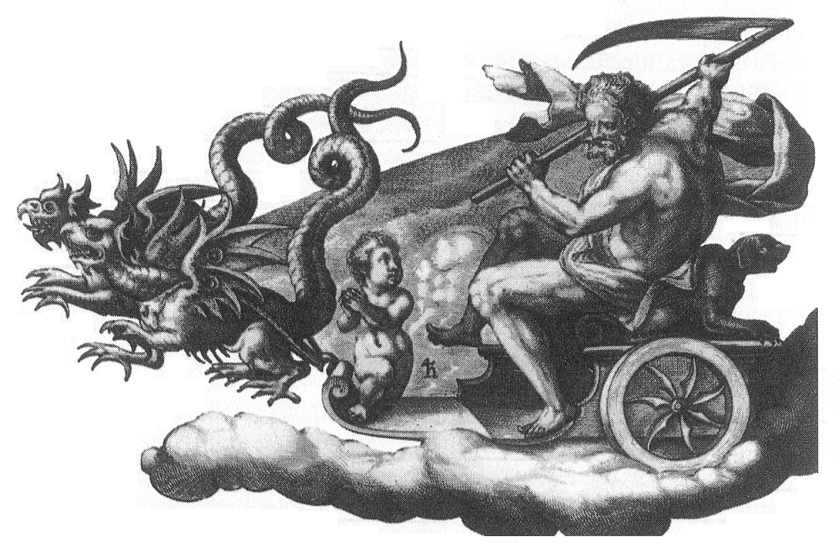
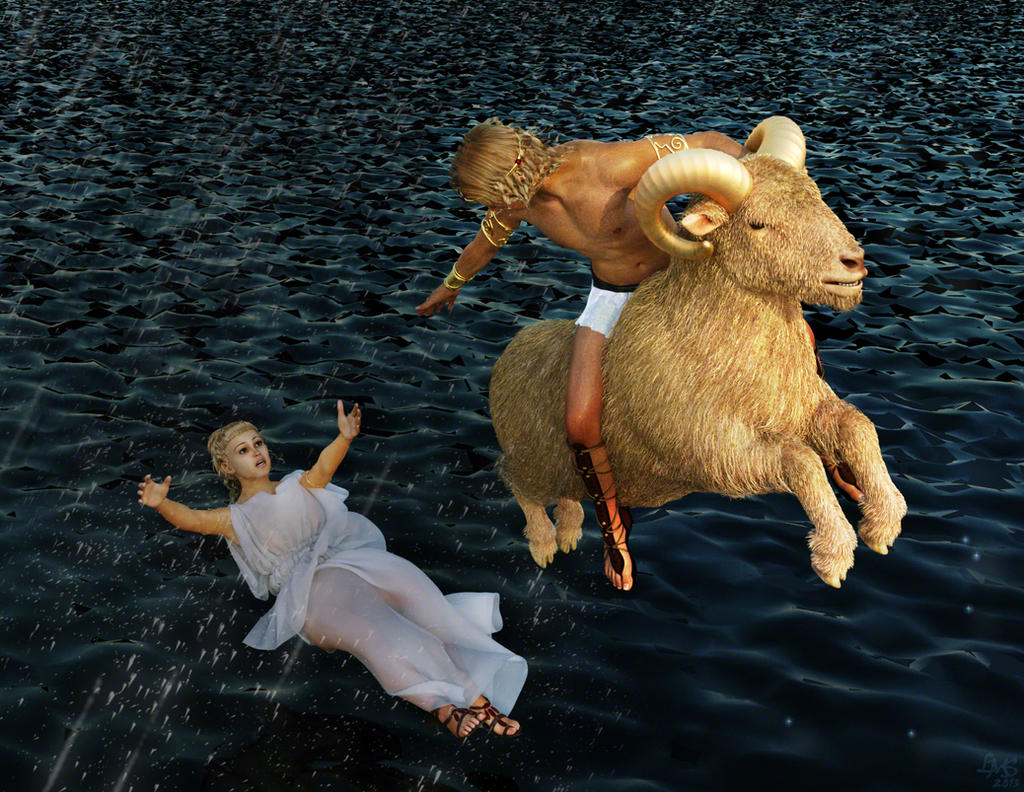
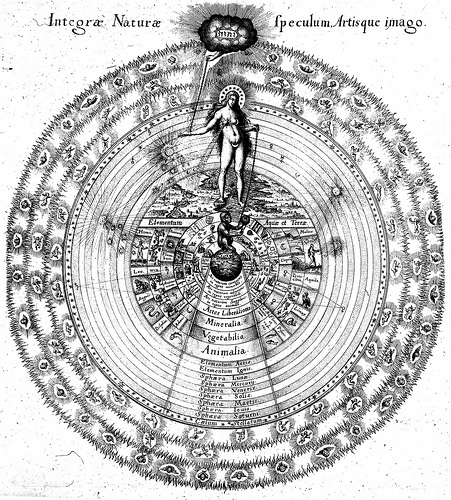
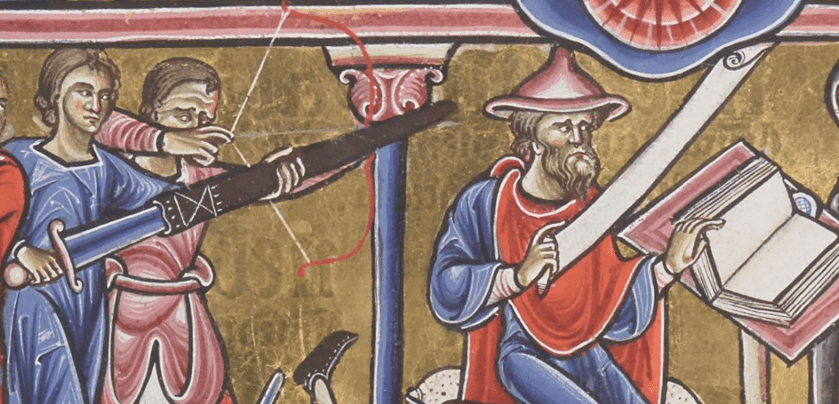
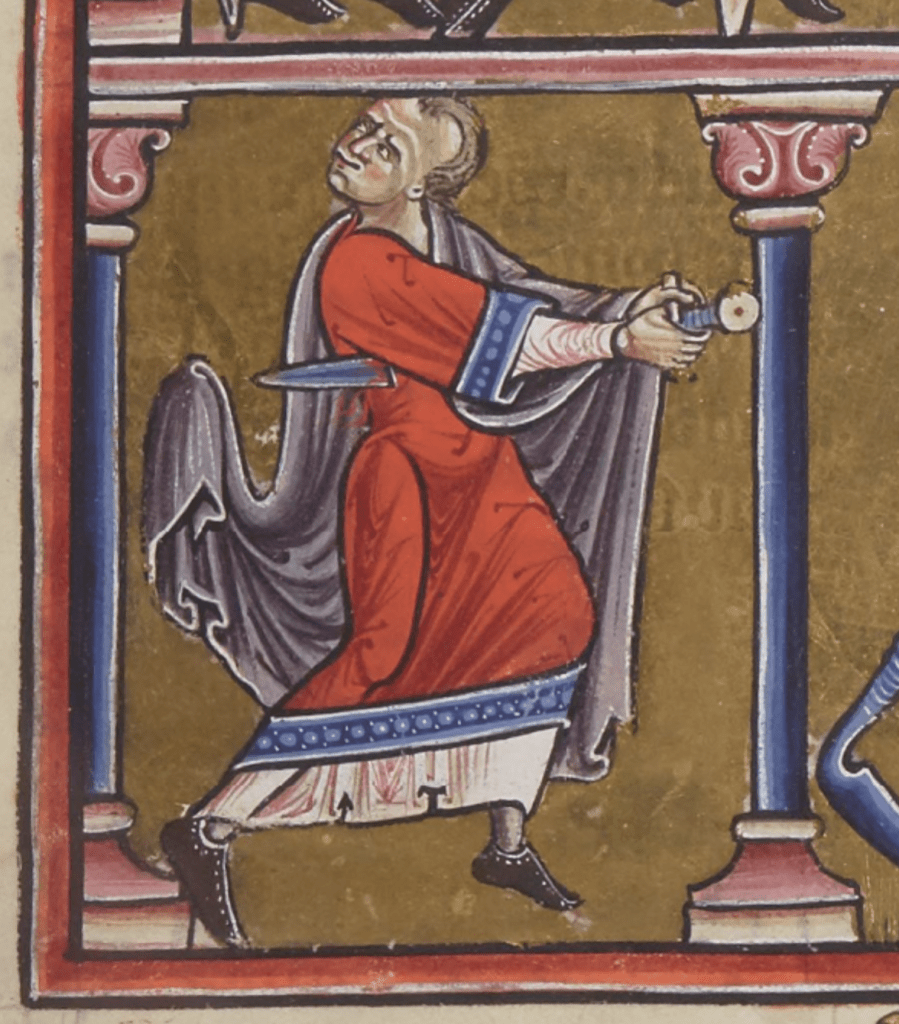
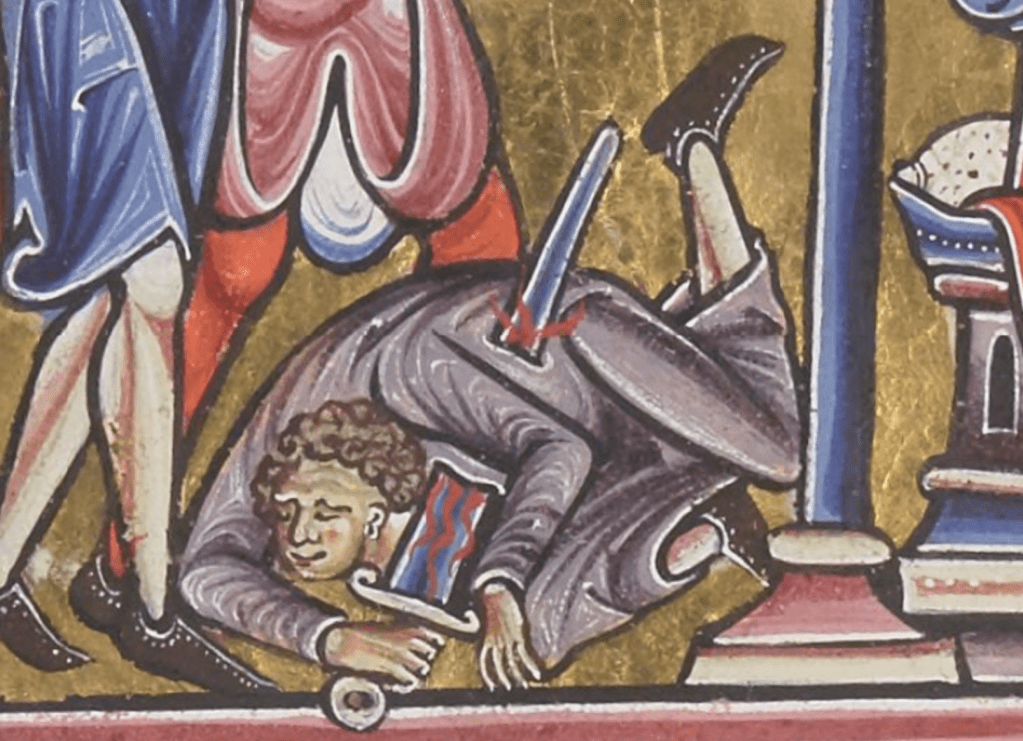




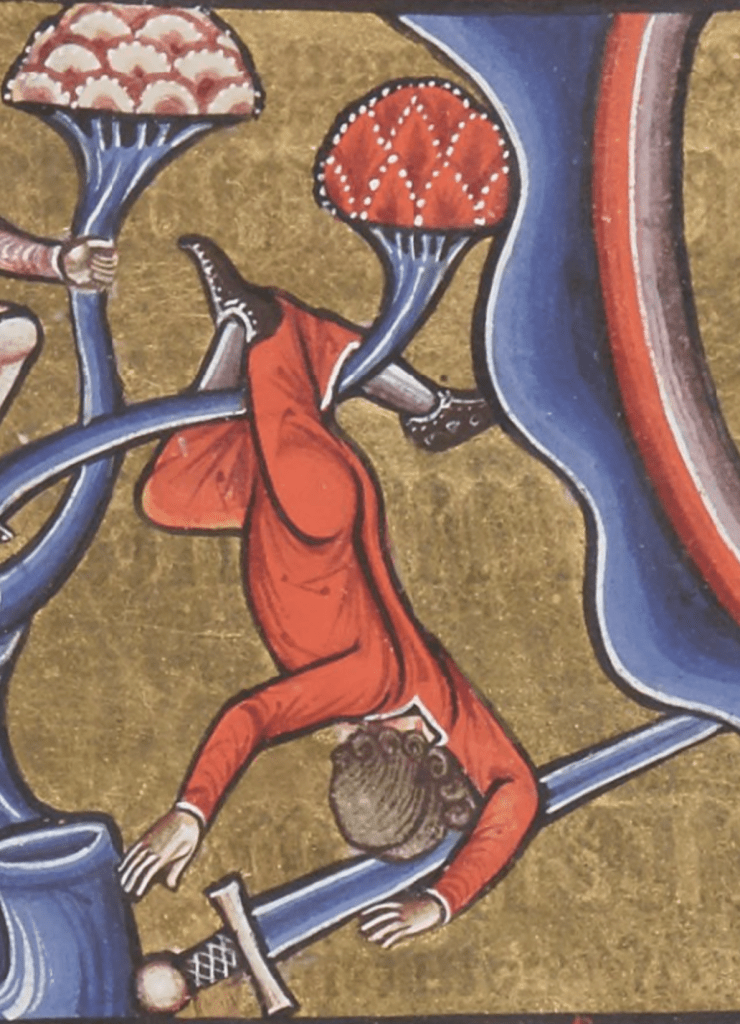
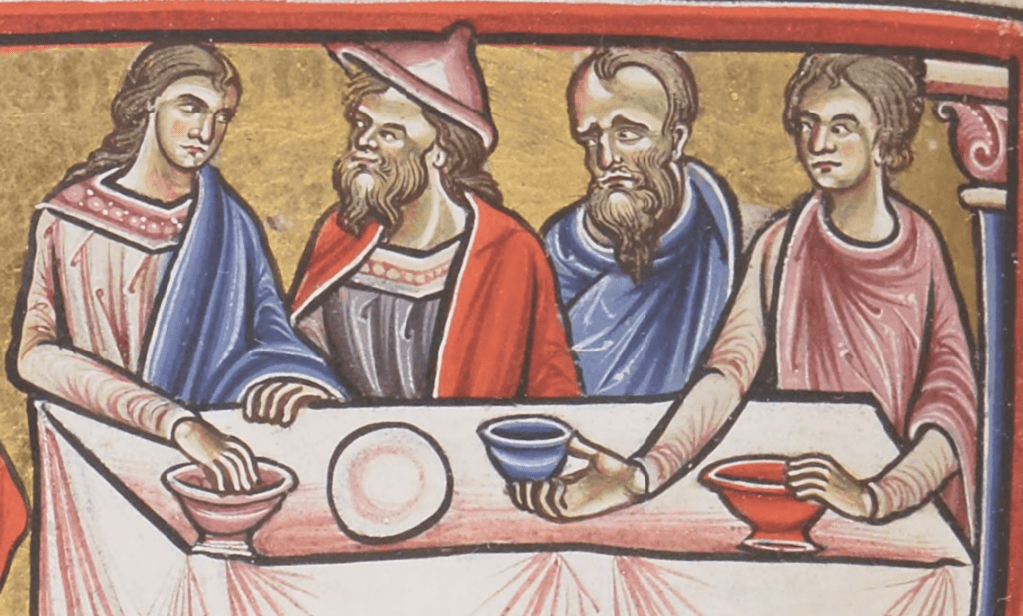
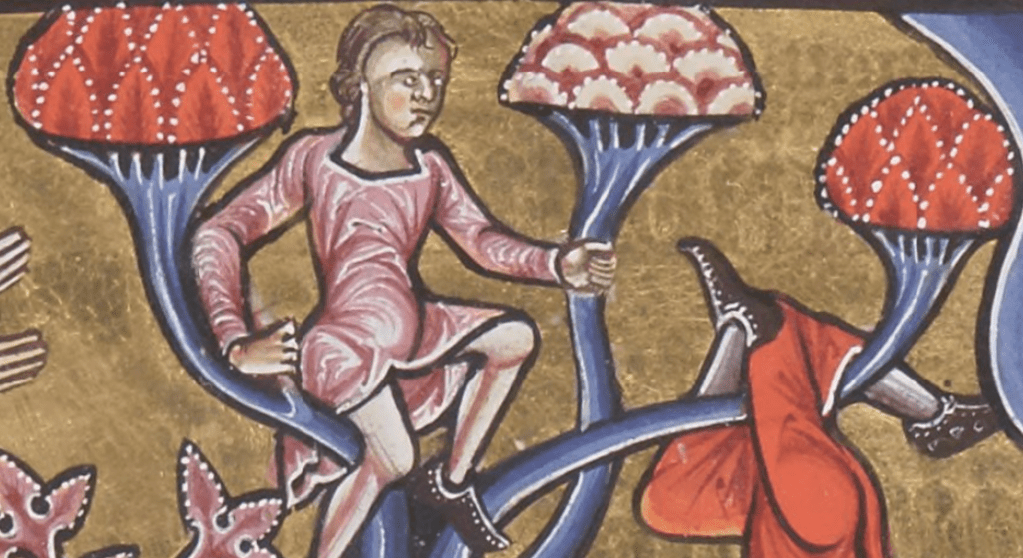
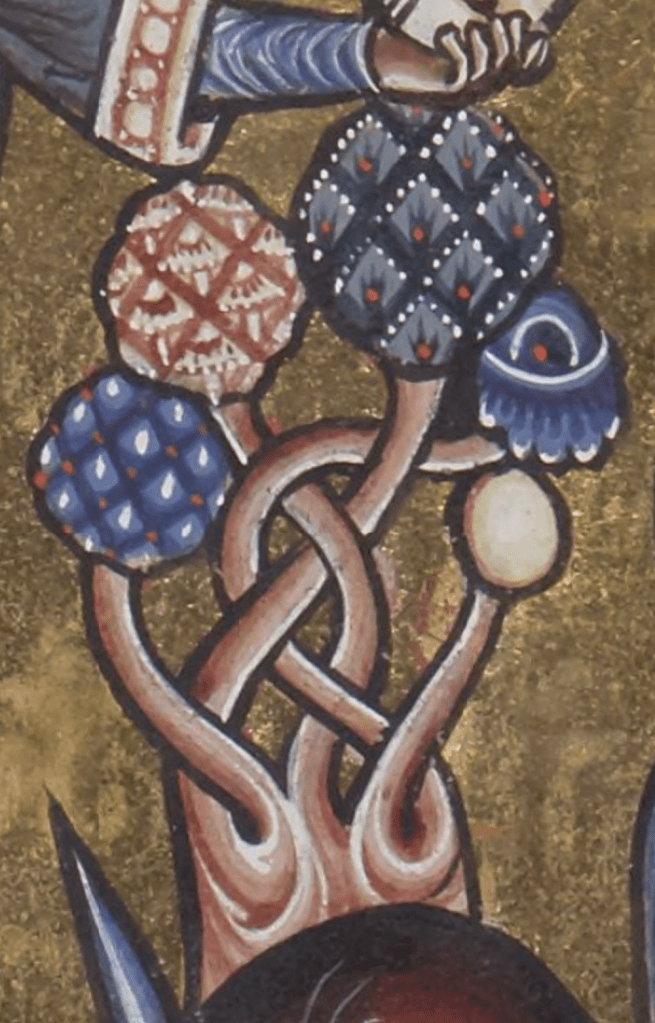


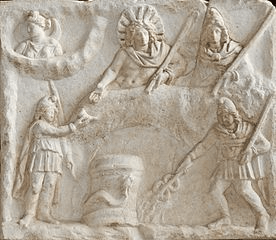

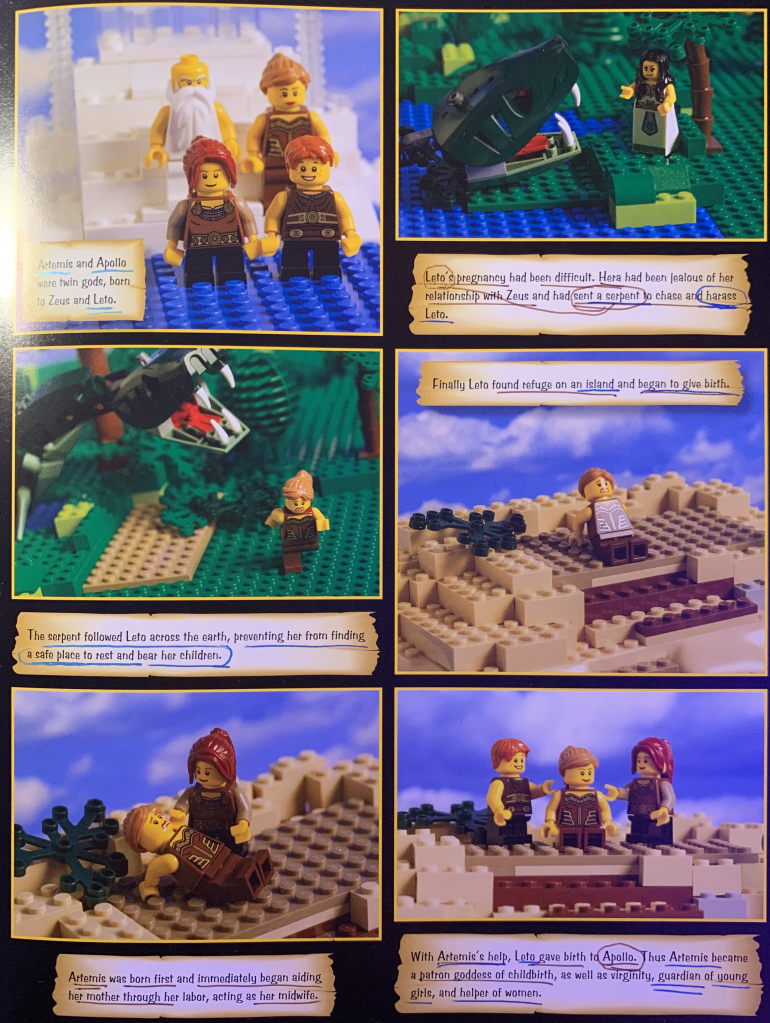

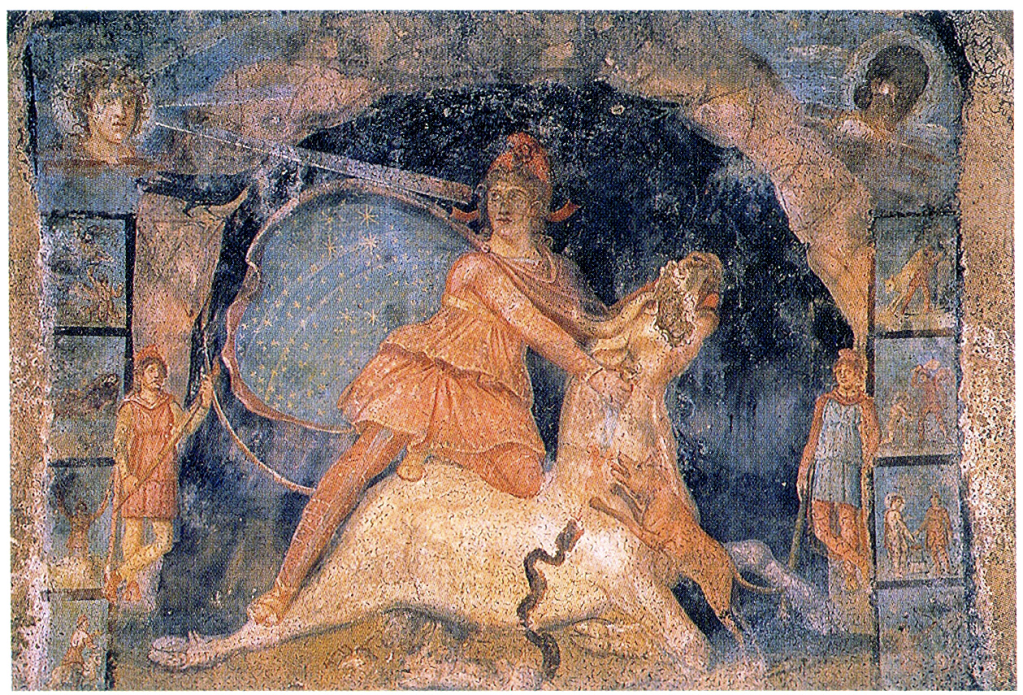
 The Egodeath theory

