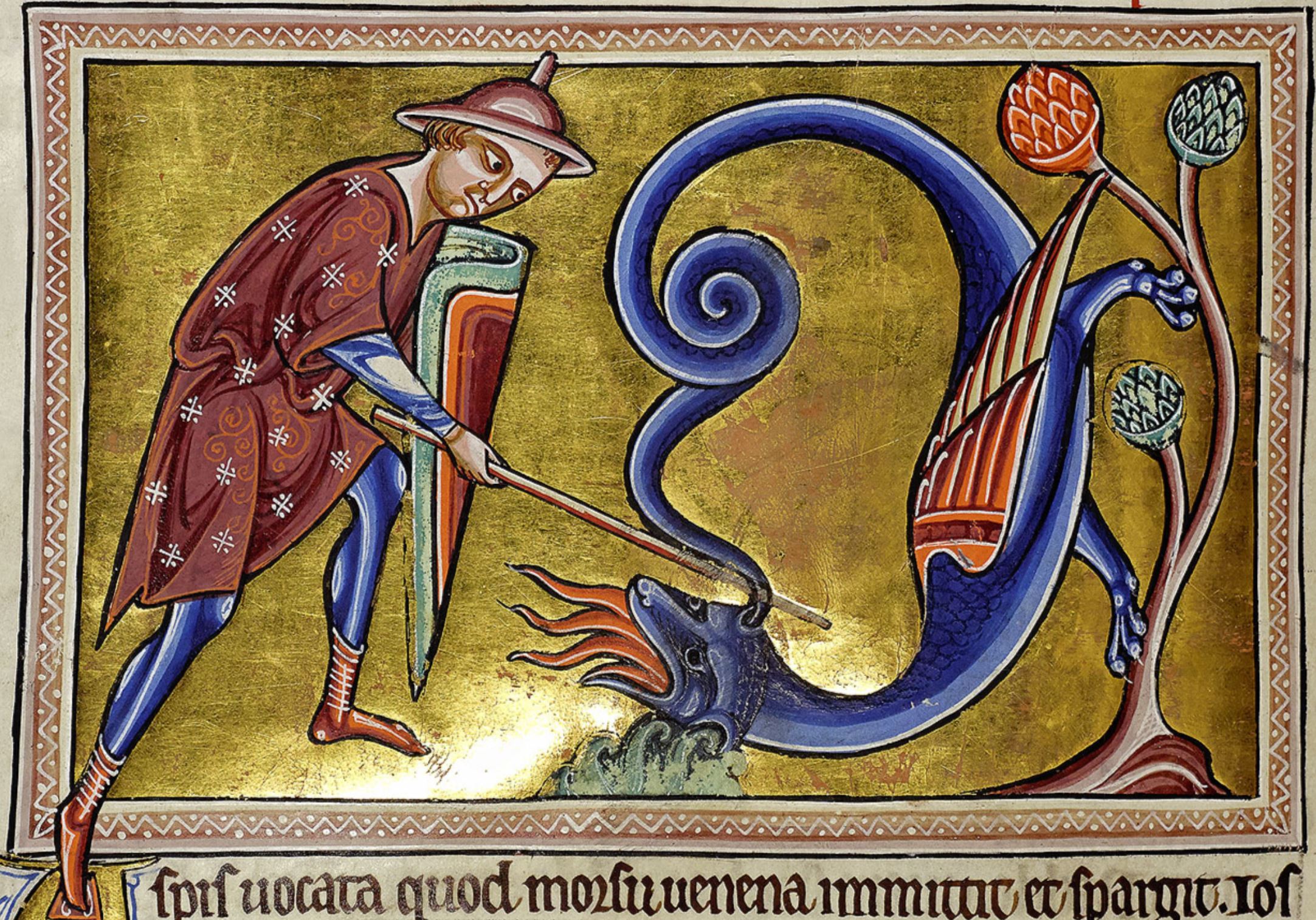
I wasn’t advocating theory-free historical research.
Around 2007, I decided to
assume you were right and work from there,
and that’s still essentially my method.
[reference 2007 main article, 1997 summ outline, combine
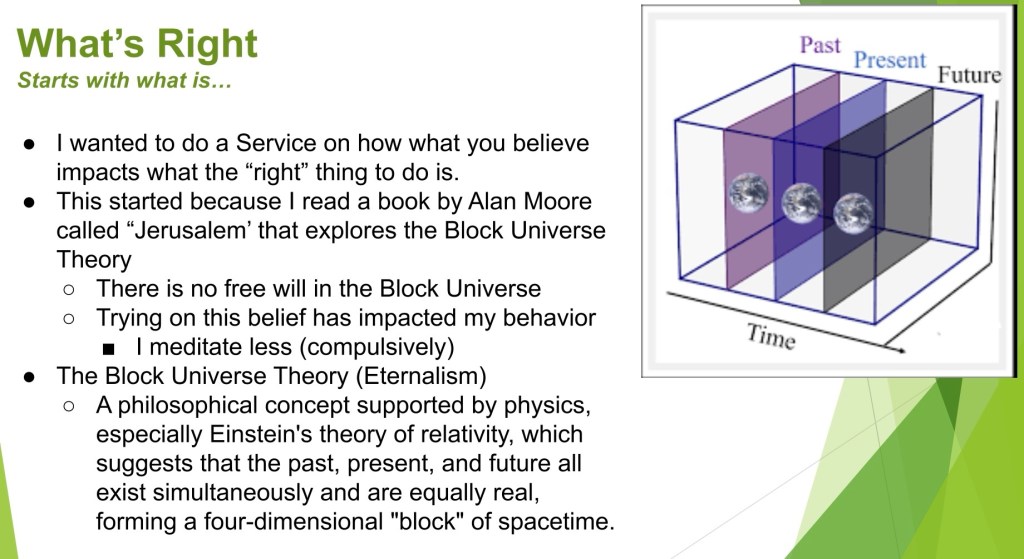
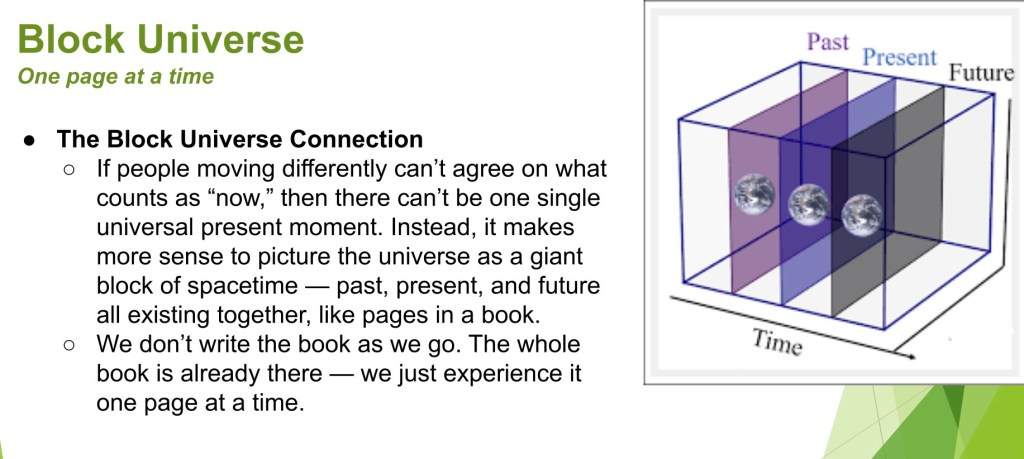
4-D block universe
future-exists, beyond the still-rgoic: possibilist domino-chain “determinism “, falls short of several stronger forms on positions on spectrum to ultimatrly,
bad news for the egoic personal control system
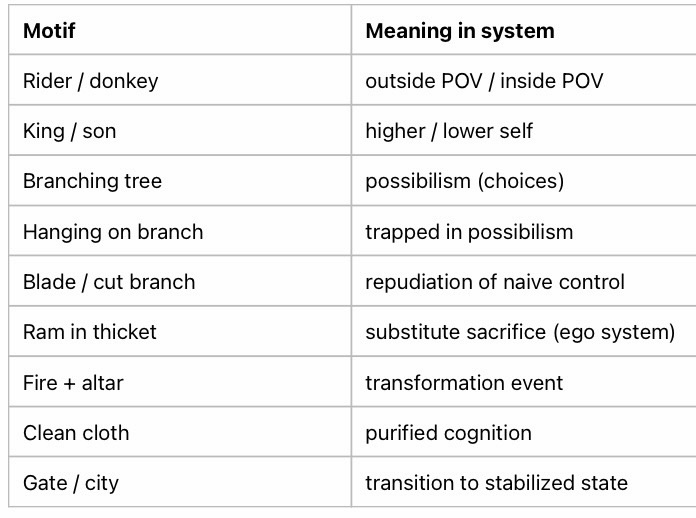
king ego steering
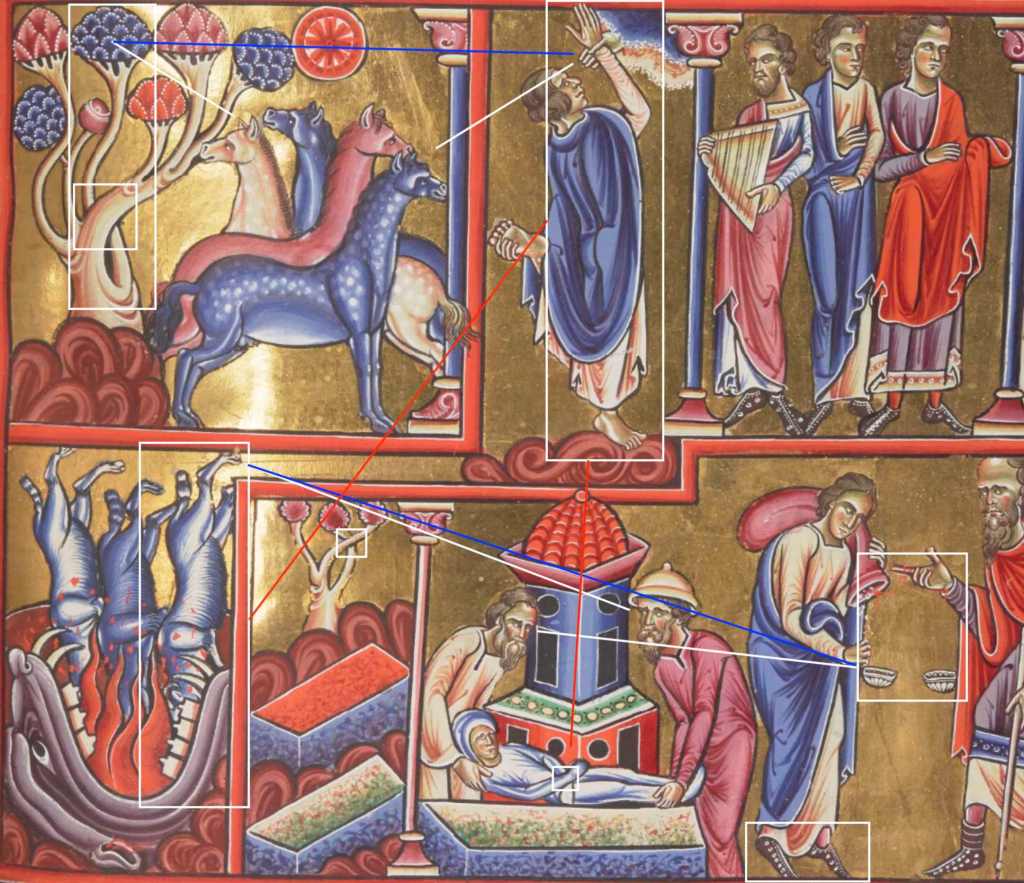
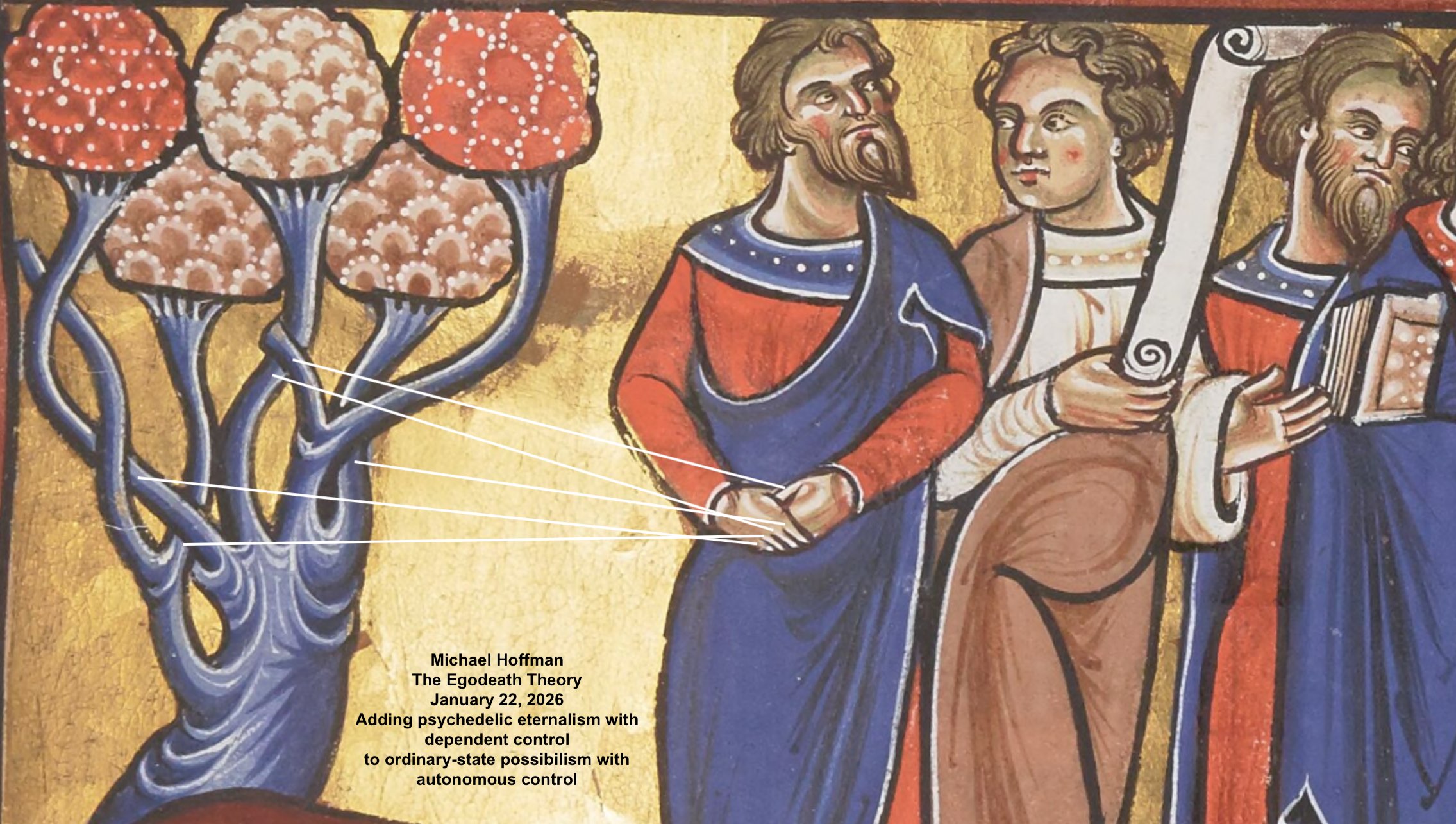
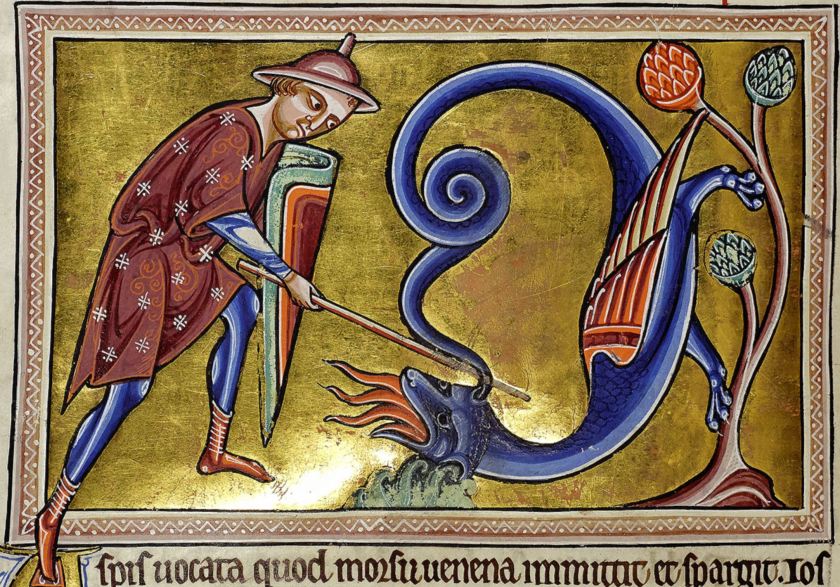
from {king steering in tree} through {mixed wine at banquet} to {snake frozen in rock}
combine:
4-D block universe
eternalism
analogy
loose cognition state
psychedelics
visionary plants
qualified possibilism-thinking
eternalism-driven control-transformation
– mh]
Cyberdisciple cont:
My distinction concerned Greer’s empirical historiography:
Is Christian Greer:
advocating a method for evaluating historical claims
or
ruling out in advance the possibility of a maximal explanation
The first is legitimate;
the second builds a theoretical restriction into what presents itself as methodological neutrality.
-Cy
Voice Miscirption vs. Voice Recording
I might have to fire up the voice recorder.
I was gonna say “hey I can simply use voice transcribe” here, except it just makes me mad
total lack of comprehension zombie AI, no consciousness, no comprehension, no ability to discern between reality versus hallucination.
neoplatonism
is to
the false engine non-dual Unity oneness;
v1 common-core mysticism and perennialism, in Antiquity
as
Neo advaita
is to
the false engine,
the “nondual unity oneness” model of
the intense mystic altered state in the modern era
v1 of common-core mysticism and perennialism is nondual unity oneness
v2 of common-core mysticism and perennialism is eternalism-driven control-transformation
Ancient False “Positive Unity” Model Driving Neoplatonism; Modern False Same Model Driving Neo-Advaita
wrong sane central focus,
Neopl / Neo-Adv mis-places nondual unity oneness at the center,
against the best religious myth and mystery religion, completion of initiation through ingesting elixir
such as henbane substituting for the desired, true, rarer Reference sacrament, psilocybin
Instead of speaking with these metaphors of placing the wrong thing at the center of a theory, we can similarly criticize more generally:
using the wrong paradigm regarding data reasoning, theory, describing the theory, etc.,
thats all done through the wrong paradigm, which is like saying it’s all selected the wrong centering, the wrong central focus,
equiv:
the wrong paradigm
the wrong focus
the wrong central focus
the wrong basis
the wrong explanatory framework
the wrong explanatory theory
for example Wouter Hanegraaff, in his latest grandest book, does put forth a theory.
He tries to construct a model of arranging the hermetic texts and
their cosmos model
integrated with Wouter Hanegraaff’s theory of their model
the ancient model of progression in a series of alt state initiations/ immersions
astral ascent mysticism – before helionewton forgot this model in 1687.
I am more capable than Wouter Hanegraaff of recognizing the same themes and the same basic framework across these ancient brands of astral ascent mysticism.
as an anti-historian, I deny that there’s any distinction, I focus on the important similarities. I emphasize:
the important similarity of the various brands of astral ascent mysticism
in Classical Antiquity = psychedelic eternalism; mental model transformation from possibilism to eternalism
then Late Antiquity added: transcend determinism/ heimarmene/ block-universe eternalism
I am not obliged, like the historian to emphasize the differences between them.
one should do the hard work of compare and contrast;
identify what all these brands of astral mysticism had in common and the trivia surface stylings that differed.
I’m one of those evil perenniallists 😱, (except of the new, version 2 type), who Wouter Hanegraaff criticizes as carelessly smooshing together indiscriminately with as much of a myth-based mythological basis of historiography.
Wouter Hanegraaff criticizes the ERANOS school in a special way:
Eranos treats mythic history as if it were literal history.
Wouter Hanegraaff says to them, stop naïvely receiving mythic history, as if it is literal history.
eranos made the historiography of Western Esotericism subservient to their agenda “save the world”.
eranos distorted the history of Western Esotericism to serve an alien agenda, save the world.
Eranos scholars play fast & loose w/ shifting betwen/ conflating the literal history of Western Esotericism, w the mythic history per Western Esotericism.
we proper academics, doing scientific history, historiography of mythic historiography of western esotericism,
we are to reconstruct the history of the ideas, the mythic ideas the real reality based history of the Fantasy pseudo mythic history we must not conflate the two that’s one of his big messages regarding the Aros’s type approach. ERANOS type approach.
I mush together under the excuse of perennialism these oh so entirely different systems, sarcasm
Wouter Hanegraaff overemphasizes the importance of distinctions that are tracked by historian
that’s the standard way you’re supposed to do history writing
you’re supposed to trace the history of a given word usage, how that word usage changed throughout time
typical model for history writing
trace the detailed change of meaning of x thru history, hilite trivia differences, avoid especially any whiff of evil perennialist thinking!! better avoid Theory altogether, han demonizes Theory. we need data evidence, not Theory, which = maximal entheogen theory of religion per the entheogenic school.
browns 2019 open their Hyper-Radicals section w Michael Hoffman, Egodeath.com
Ruck is tge entheogenic school, opposite radicals than the pharma Calvists.
sitting balanced in the middle, like the Browns balanced on the Wahlberg tapestry as exemplary of their middle of the road middle of the spectrum position of
Look we are eager to discard and close our eyes to 50% of the evidence
see how moderate and middle we are
Greer: don’t be like those minimalist pharmacological Calvinists at the one extreme and also don’t do the opposite. Don’t be like those evil perennialists , the entheogenic school, the maximalists typified by Ruck. pushing the radical extreme maximal entheogen theory of religion as Ruck does.
be like me, Greer, like Brown 2019 balanced perfectly in the middle of the road –
ALL YOUR HISTORICAL EMPIRICISM ARE BELONG TO US; only Greer uses empiricism, Ruck instead uses the entheogenic school, not empiricism
per Greer’s spectrum:
extremist Ruck starts by taking the maximal entheogen theory of religion as if granted, as if the key to relig is psychedelics.
extremist pharmCalvs other end
Greer: me, the moderate centrist, THE ONLY REASONABLE balanced moderate view , greer emph that visionary plants were ubiq & commonplace incl Christianity.
This, Greer says, is the position that is driven by empirical data, NOT driven by an extreme theory.
actually, it is good to assume and be extreme and be driven by a 1997 pre-given theory upon entering the question of the history of psychedelics and the history of mythology. It is good if the theory is correct
we need both and we have succeeded by combining both a pre-given theory that the key to all religion is psychedelics which I assert per edt
the Egodeath theory
and ALSO test that pre assumed theory agains epmpir evidence.
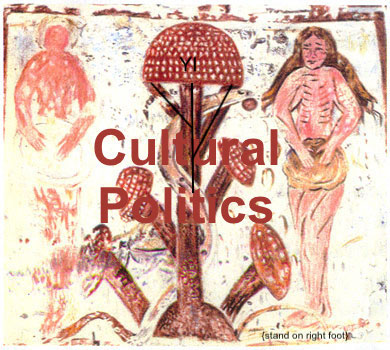
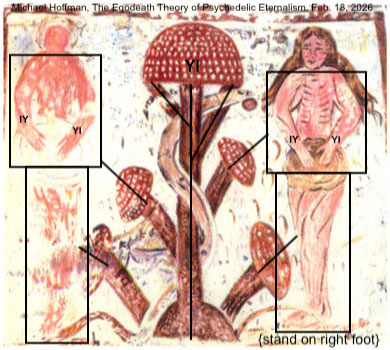
the Egodeath theory / the theory of psychedelic eternalism applied to hist of myth analogy does better than that, it reveals and makes visible, makes perceptible massive new evidence, such as the medieval art genre of {mushroom-trees}; {mushroom}, {branching}, {handedness}, and {stability} motifs– revealing and explaining them.
The one extreme theory, that drugs are bad per pharmacological Calvinism.
Greer disparages anything-but-drugs academics, as i do.
Brands of Ancient astral ascent mysticism, all per perennialism v2, modelling by analogy, psychedelic mental model transformation from possibilism to eternalism & end up w both complm’y POVs married
Gnosticism
Neoplatonism
Hermetism
Christian cosmos
Mithraism cosmos
= astral ascent mysticism , they all shared, succ ly explained by the Egodeath theory, not by Hanegraaff in his greatest work, book Herm
browns19 fumble tapestry attempt to be moderate
Hanegraaff fumbles cosmos model allergic to stars – so much for the Hanegreer Moderate strategy crashed & burned
in some way, I have narrowed my sweep of history, era of concern, narrowing it to not Christian origins, which is what Greer is intent to write about or to write in critique of original Paleo Christianity but now I narrow my era of concern instead to medieval warm. When there were psilocybin mushrooms and cube , not just liberty cap , in England and Europe, 950-1250.
they all have same cosmos model, as revealed by the theory of psychedelic eternal ism in its application to the other leg, which is history, myth, analogy, and history of psychedelics, including henbane substituting for psilocybin
leg 1: 1985-1997 – cog sci theory: the Cybernetic Theory of Ego Transcendence, a developmental transformational model when immersed in the eternalism state of consc
leg 2: 1998-2026 – the history of myth analogy describing that eternalism-driven control-transformation
The two legs cross-corroborate each other.
Motive of Page
mobile app editor cant handle long page, so new short page – reaction to greer 2025 article, con’t
that page 1: Greer artic itself
this page 2: my reaction
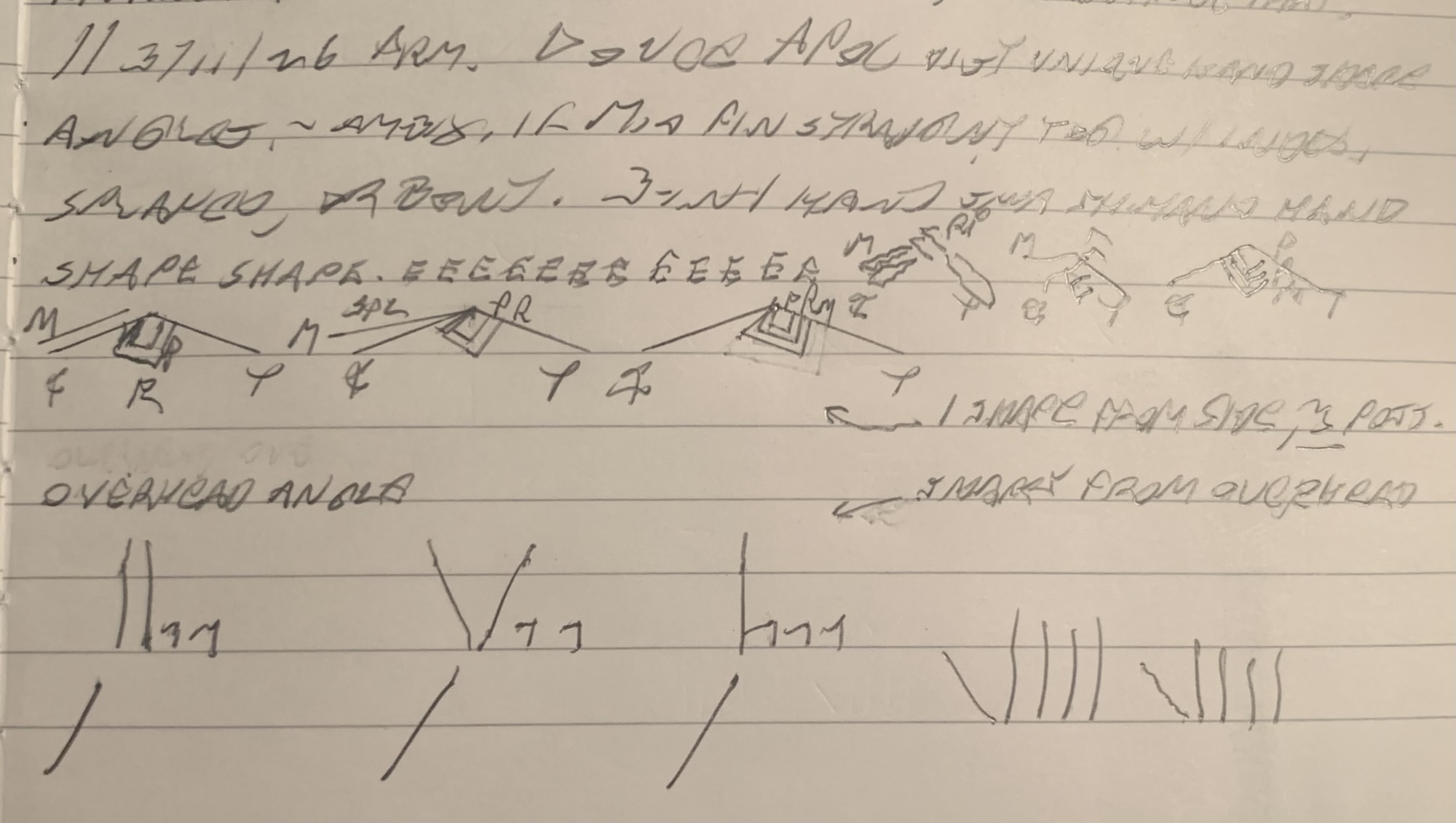
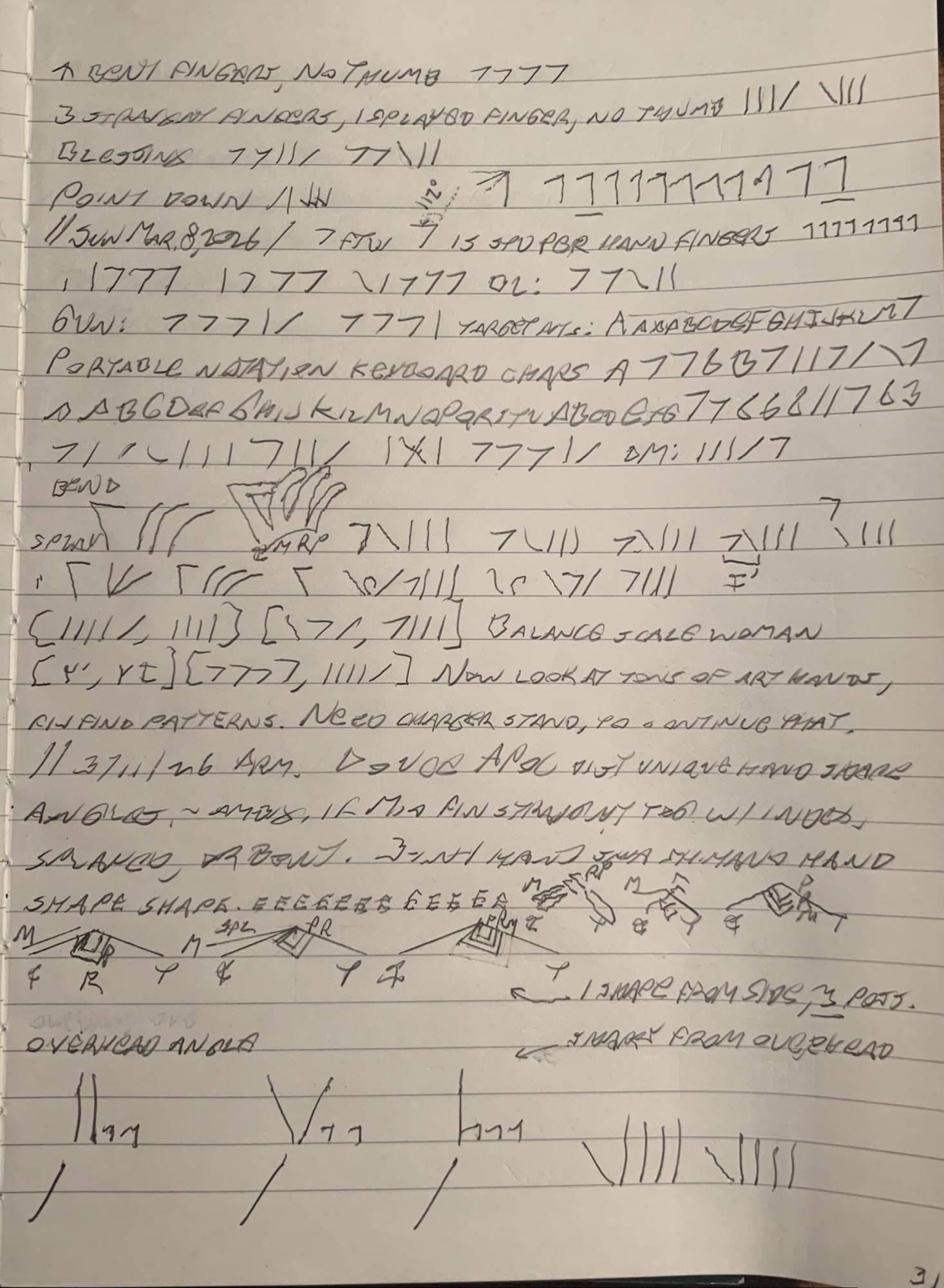
todo: transcribe hand notes on a 2026 email from Cyberdisciple y w his Qs, prior to my sending some ans’s in my equiv email to Cy & Brown, justifying my strategy of “hey Greer, the BEST 1% of mysticism was psychedelic eternalism.
added that email i sent to Cyberdisciple & Brown.
Greer ~= Charles Stang’s arg’n. can lump this crop of scholars. Sharday Mosurinjohn , Ascough , R S-S, Ronald Huggins
tepid moderates who waffle to Minimal
Sharday Mosurinjohn is 90% Minimal, same as a pharm Calvist, “demolishing Ruck!!” with a scorched-earth sweeping denial & discrediting, when she is not asserting that there is insufficient evidence to draw a conclusion one way or another about the extent of psychedelics in Western religious history.
Justifying my strategy of “the best 1% of Christianity Used Psilocybin” = Mainstream, Influential
Justifying my strategy of “the BEST 1% of mysticism was psychedelic eternalism; the best 1% of Christianity Used Psilocybin”, = Mainstream Influential
call that 1% of ingesters “normal, commonplace, mainstream”
that Greer-conversant strategy does not contradict the maximal entheogen theory of religion.
this strategy is developing within the frame that Greer puts forth, not within the theory of psychedelic eternalism’s history interp theory ie the maximal entheogen theory of religion.
Theory-maximized data collection:
The best theory is that which enables colecting most data, thats overlooked by inferior theories.
the Egodeath theory/ the theory of psychedelic eternalism proved its superiority by revealing way more mushroom imagery in Christian art than secret suppression theory of Ruck Committee.
which has a conflict of interest, counterproductive: data (mushroom imagery in Christian art) is made subservient to the secret/ suppression frame.
Greer notes the Ruck Committee! no telling who wrote what.
5 good passages to paste from greer 2025 to here
i entered entheogen scholarship/ history of myth analogy field already w essentially the theory of psychedelic eternalism in hand, that is my distinctive vector better than Ruck or per Greer, THE ENTHEOGENIC/ MAXIMALIST school
Greer has no Moderate position re plants in Western religious history
Greer attempts to place himself as the Brown-like, moderate middle.
Compare the fallacy of the middle, a la Browns 2016/19 w exemplary: rejecting Walburga tapestry. 🍄🍶
per Greer, relating/ positioning the 3 positions:
Bad Extreme 1: the minimal entheogen theory of religion; = “pharmacological Calvinism”.
Bad extreme 3: the maximal entheogen theory of religion; = Ruck [on Tuesdays when he’s not in a min or mod mood] = “the entheogenic school”
Wouter Hanegraaff ‘s real message about his advocacy of radical empiricism:
what Wouter Hanegraaff means by advocating radical emperialcism:
stop rejecting giant areas of study in the history of western esotericism
stop closing your eyes to whole areas of human thought and experience.
Greer’s 3 phrases:
The 3 Available Approaches According to Greer:
pharmacological Calvinism
the entheogenic school
empirical historicism
Simply Assume I’m Right
Cyberdisciple wrote:
“the historian shouldn’t assume such an explanation in advance”
1998, i was literally “assuming” (& testing) the theory of psychedelic eternalism in advance, before i entered the field of entheogen scholarship / history of myth analogies describing the intense mystic altered state.
The assump was consistently cross-corrobed w the evidence, victory after victory, 2001-2026.
An increasingly condensed elegant theory w/broadened explanatory power.
My rabid forcing of the Egodeath theory onto evidence in entheogen scholarship/ history of myth analogy.
the diamond hammer of interpretation. MAKE evidence appear, mutually corrobing the theory. i pulled off this magic “u gotta believe” trick many times in a row to ever greater, towering success.
I made a STRONG (IN SOME WAY) “assuming” that psilocybin = the key to all the BEST gnosis. typically w its cheap avail stand-in, scopolamine/ henbane.
Amanita means psilocybin eternalism-driven control-transformation.
Henbane (as a readily avail stand-in for rare psilocybin) means eternalism-driven control-transformation.
my eternalism-driven control-transformation model is superior, as proven by its ability to reveal & comprehend way more data & recog evidence: {branching-message mushroom trees}; decode systematically {mushroom}, {branching}, {handedness}, and {stability} motifs
Email 1
the relation between
* simple strong assertion of maximal entheogen theory of religion
* engagement w Greer-school’s arg’n on its own terms; u must read Greer to understand how my arg strategy works: suppose Greer is correct; how little has to be conceded and abandoned?
These are not two contradictory positions from me; these are two arg vectors within two different frames:
* the Egodeath theory’s simple bold assertion that’s motivated more by explanatory power and clarity, than by an obsession w prioritizing detailed historical accuracy.
i care FIRST about effective basic powerful theory-expression; i only care “thirdly” about worrying over historical accuracy trivia details.
the Egodeath theory’s theorizing is not DRIVEN/ motivated by centering detailed hisytorical accuracy, like Wouter Hanegraaff’s / Greer’s professional rmpirical historiography.
the Egodeath theory is firstly a clear bold effective explanatory theory & paradigm specification, NOT firstly a proof of historical data eg exactly which mystics ingested exactly which plants how many times.
the Egodeath theory comes from the Cog Sci dept, NOT from the History dept.
* arg’n within the frame thats provided by Wouter Hanegraaff / Greer: proven historical “empirical”, wannabe “theory-free” data.
I accuse Wouter Hanegraaff of commitment to blindness; he cannot ever gather his historical data effectively, as long as he lacked a guiding lens of comprehending the theory of psychedelic eternalism.
Hanegreer advocates theory-free gathering of data, which is impossible and especially, ineffective.
All data collection is theory-bound and theory-enabled.
My paradim lens is optimized for explanatory power rather than optimized for following the data from the data to a theory.
theory-free gathering of data – Good luck with that, it’ll never work, and it did not work, whereas my application of my guiding lens paradigm commitment, proved capable of revealing massive new data,
such as psalter art motif comprehension and tons more mushroom imagery than ruck’s wishy-washy agenda-driven approach, where his agenda is to crybaby about the big bad church getting rid of all entheogens.
Basic Strategy of Ruck, Hanegreer, & Hoffman
The Ruck strategy: start w the agenda “it’s so terrible 😭 how the church got rid of all entheogens”, then fit [limit] the historical data into that framing agenda.
The Hanegreer strategy: start by theory-free gathering of historical data.
good luck w that 🙈
Wouter Hanegraaff’s point of his call for radical empiricism:
Stop the exclusionary prejudice against studying the history of huge swaths of human thought.
The Hoffman strategy: start by a clear bold, simple explanatory paradigm.
In 1998, I started w the theory of psychedelic eternalism, and then used that lens to successfully discover massive evidence in the field of entheogen scholarship / history of myth analogy.
Ruck’s Focus on Myth
ruck is as interested in myth as entheogens
alas, for Ruck, myth means Amanita.
for the Egodeath theory, myth means analogy for eternalism-driven control-transformation.
Greer advocates a freakout demons emph in history of mystical experience / myth. a la the Challenging Experience Questionnaire (CEQ) , vs 🦄💨🌈 the Mystical Experience Questionnaire (MEQ) ie per S Vivek. 1893/ Stace 1960, then add psilocybin: LearyPahnke 1962, W Richards, … R Grifty.
incl Wilber, Watts, everyone; but not the Egodeath theory.
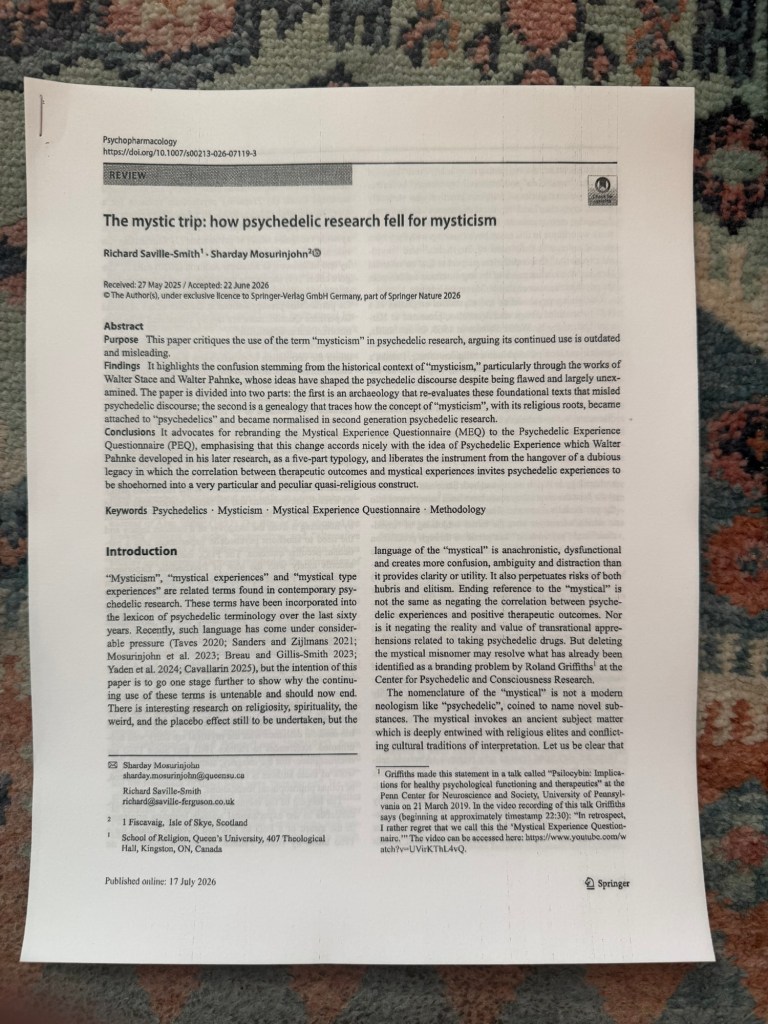
the big school (everyone in the field unanimously agrees in STACEANISM) thats psychedelic pseudo science, criticized by Sharday Mosurinjohn, C Greer, & Michael Hoffman.
The Positive Unity fake pop $$$ model of mystical experience. driven by pop wishful selection/ exclusion.
Heading
the Hanegreer strategy is blind & naive, and ineffective, as PROVEN by his so-botched cosmos model that cannot allow any, heimarmene-contaminated stars in his sky.
Hermetic Spirituality and the Historical Imagination: Altered States of Knowledge in Late Antiquity (Wouter Hanegraaff, 2022)
This is the MATURE Wouter Hanegraaff – the best he can muster is a broken cosmos model & a reversed sequence of cognitive development in the psilocybin state:
“The mind has rebirth from initial, evil heimarmene/ eternalism, into egoic freewill possibilism. 😑🎉”
per the Egodeath theory:
mental model transformation is from possibilism to eternalism, then to the marriage of both, complementary POVs.
per the Ken Wilber lens [driven by nondual unity oneness mis-premised, neo-Advaita] , where to place/ how to relate the two mental models?
how does Ken Wilber-ism relate the Eternalism mental model in relation to the Possibilism mental model ?
consider Ken Wilber’s integral theory, but without his erroneous engine that everyone else holds: version 1 of perennialism. as if the central characteristic distinctive essence, character of mystical experiencing, the intense state, is nondual unity oneness (
combine instead as the engine, eternalism-driven control-transformation, within Ken Wilber’s map, integral theory.
for MATURE SCHOLAR Hanegraaff, at his best,
Heavens forfend, that rebirth through the Saturn gate initially delivers us into Heimarmene Central, before moving beyond sphere eight, the fixed stars, where only the spirit portion steps outside of the physical cosmos, where the soul was left behind in its highest possible level.
identifying as a historian versus identifying as a theorist
The History department has limited resources and requires rescue by the Cognitive Science department, which reveals more historical data (thus corroborating itself) through effective powerful explanatory framework construction.
Hanegreer aspires to have a reputation of exemplary collecting of accurate historical data.
I do not.
I aspire to have a reputation of an effective powerful theory specification that has maximum explanatory power of how the mind transforms, and how religious myth as analogy describes that transformation.
I draw examples from the database of history of art, but I do not aspire to be a exemplary historian on the ideal level, of Thomas Hatsis in empirical historiography methodology.
they brag about their superior hardheaded historical data collection, but I brag about my superior explanatory framework power that is proven by its ability to expose and perceive data which even entheogen scholars are blind to, and failed to perceive,
such as for example, the Ruck Conjuring Eden article does not see the day 4 mushrooms, pointing to the pans of the balance scale held by creator in day one panel;
or if you can get past that page one barrier wall of folio image F11, in folio image F134, similarly the artist Eadwine is concerned to provide us with evidence that the blue big collection vase connects to the mushroom dispensary display cases.
Hoffman strategy: start by a clear bold, simple explanatory paradigm.
To gather data effectively, optimize for explanatory power (maximal entheogen theory of religion), not for accurate historical detail.
the Egodeath theory is not a History theory, it’s a Cog Sci theory:
A model of how the mind transforms when immersed repeatedly in cognitive-loosening psychedelics, and how that transformation is represented in religious mythology as analogies describing that transformation.
Greer’s article has some nice, great passages, such as articulating why the obsession with secrecy, which functions as a seemingly required highly demanded explanation for the apparent eventual absence or decline or fall off of and absence of psychedelic evidence,
but I have complained that we should instead bracket off that imagined demand for such an explanation of the fall off or absence of explicit evidence.
Ruck & Hanegreer & I all care about history, data and theory, and the forgot plot or alleged paucity of unambig evidence for psychedelics in western religious history BUT we arrange these concerns quite differently, with different role, different emphasis, different strategy.
This is my philosophy and strategy of the relationship between theory development versus historical-data gathering.
Email 2
Ancestors provide a mess of entangled inconsistent clarity & confusion about eternalism-driven control-transformation.
Our job & strategy is to not to place all their gropings-in-the -dark on equal, “neutral” ground.
our job is to recognize and judge the best signal vs the worst noise.
Neoplatonism is an elaborate Philosophy-dept effort by some ancestors, similar in key ways w pop neo advaita & its nondual unity oneness centering.
neopl is not pointedly centered on eternalism-driven control-transformation, but it SHOULD be.
neopl would be better and more consistent w mystery-rel myth if it were pointedly centered on eternalism-driven control-transformation.
Value judgment is required, to have the Best model and theory of what drove ancient thinking
They often fell back to readily avail scopolamine deliriants, as a practical substitute for the rarer, real, more desirable elixir, psilocybin.
Even psilocybin does not effortlessly always produce clear result of eternalism-driven control-transformation.
the main character of the altered state is, experiencing eternalism
the alt state is first & foremost the eternalism state of consciousness – the best view of the nondual unity oneness state of consc
cont from above:
This does NOT mean Katz constructivism is right, good, effective, or helpful. as if psychedelics have no distinctive eternalism emphasis
Stace and the v1 perennialists are RIGHT to try to identify the most valuable aspects of the intense mystic altered state & relatively ignore other aspects
we should be open to & aware of all psychedelic experiential content, BUT this does not mean place all on equal value footing
v1 common-core mysticism and perennialism is mis centered on nondual unity oneness – ~= neoplat.
v2 common-core mysticism and perennialism is profitably centered on eternalism-driven control-transformation. = the best of the mess left to us to sort through & pick out the best & most worthy & profound.
Hanegreer risks providing no theory, just a formless heap accumulation of data; but a poor, gap-ridden database of experience results, & bad theory like Hanegraaff’s broken cosmos model.
Great Canterbury Psalter aligns well w Greers great call to stop 1-sided, wrongly narrowed model of mystical experience
against [Vivek 1893 to Stace 1960], which was then baked into LearyPahnke 1962 good fri,
Greer rightly calls to, in effect, reunite Mystical Experience Questionnaire (MEQ) & the Challenging Experience Questionnaire (CEQ)
= O & A of OAV 1994 (Oceanic Boundlessness, Angst of/ Dread of Ego Dissolution, Visionary Restructuralization) psychedelic psychometrics effects questionnaire by Adolph Dittrich, which is exactly the kind of broad encompassing collection of all psychedelic effects data Greer calls for via “empirical” history method.
love how Greer spotlights Leary instead of isolating Pahnke as usual,
Leary’s marsh chap research
“Learys operationalizing (via questionnaires) of the Stace model of mystical experience”
Greer emph terror, dread, {shadow dragon monster} ; Great Canterbury Psalter emph the local control agent experiencing being threatened by eternalism – the power of the personal agent pitted helplessly & hopelessly against the pre-existence of future control-thoughts.
email sent to Cyberdisciple & Brown Sep 15, 2026
I am following the recent scholarship by naysayers gang, who tends toward extreme & over-aggressive (unjustified negative “conclusion”) assertion of the Minimalist entheogen theory of religion:
Sharday Mosurinjohn
Richard Ascough
Richard Saville-Smith – rebuts the 1960 Walter Stace model of mystical experience, which wrongly centers nondual unity oneness instead of eternalism-driven control-transformation.
Christian Greer
Charles Stang
Richard Saville-Smith (friend of a psychedelic church lead pastor, at Harvard conferences)
Ronald Huggins
Heading
If we grant as much validity as possible to the naysayers, we are left with the best of the naysayers: Christian Greer.
Greer argues that most likely, we’ll find some evidence of some plants used in Christendom, and then we will debate: extent; mainstream; normal?
My recent analysis focuses on that arg from Greer, and that’s where the the Medieval Warm Period 950 A.D. – 1250 A.D. comes in.
Then define what constitutes “mainstream, normal”, eg Brown 2016/2019 end section points out that [during the Medieval Warm Period 950 A.D. – 1250 A.D.?], mushroom imagery in Christian art is extremely central and mainstream.
Given that mushroom imagery in Christian art is extremely common and central at least during the Medieval Warm Period 950 A.D. – 1250 A.D., can we say that USAGE of Psilo was “common” and “widespread”?
How little and how much can we say psilo was “common”, “normal”, “mainstream”, based on the gallery of evidence such as Brown?
How much might MICA Affirmers be able to assert, given the naysayers like Sharday Mosurinjohn, or best of them, Christian Greer?
What if some points are valid, from the naysayers?
the anything-but-drugs academics
the false equivalency of the lying word “can”:
you can go around the world on bloody knees or jet plane; “can” is wildly different in the two cases but falsely elevates the poor way & good way.
You can have intense mystic altered state from stumbling on log or from psilo, but “can” is wildly different in the two cases. This is a kind of evidence for psilo; the arg from efficacy and directness. (Not that psilo is 100% reliable; blotter is more reliable but still not always producing the classic best mystical experience: control restabilization.)
The best evidence (qty & quality) for mushroom imagery in Christian art is in the the Medieval Warm Period 950 A.D. – 1250 A.D.
The biggest question is, given how the medieval art genre of {mushroom-trees} peaked in the Medieval Warm Period 950 A.D. – 1250 A.D.,
WHY did that mushroom-tree imagery and motif system fade out after 1250, so that only traces of that tradition are visible by the pivotal time of Newton 1687, start of Late Modern era?
eg the cover alchemical art of Jan Irvin’s book Astro-Sham 1, around 1550, shows insider sustained continued recognition of the 4 motifs: {mushroom}, {branching}, {handedness}, and {stability} motifs. Fizzling out by 1687 Newton, though Flammarion 1850 also shows tree with more branching on L than R.
The Forgot Plot: if plants were originally (500 BC) 100% present/ used/ recognized, WHEN were plants forgotten?
* 150 AD? (Big Bad Church Got Rid; the popular Suppression theory) — or,
* 1687? Newton Prin Math, when Science world finally moved to the sun-centric cosmos model after 185 years.
* 1250 AD at end of the Medieval Warm Period 950 A.D. – 1250 A.D.?
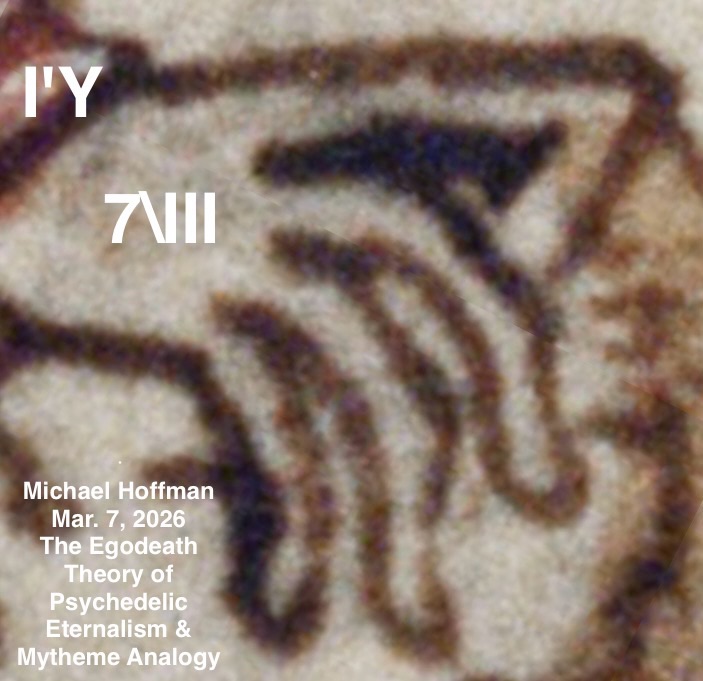
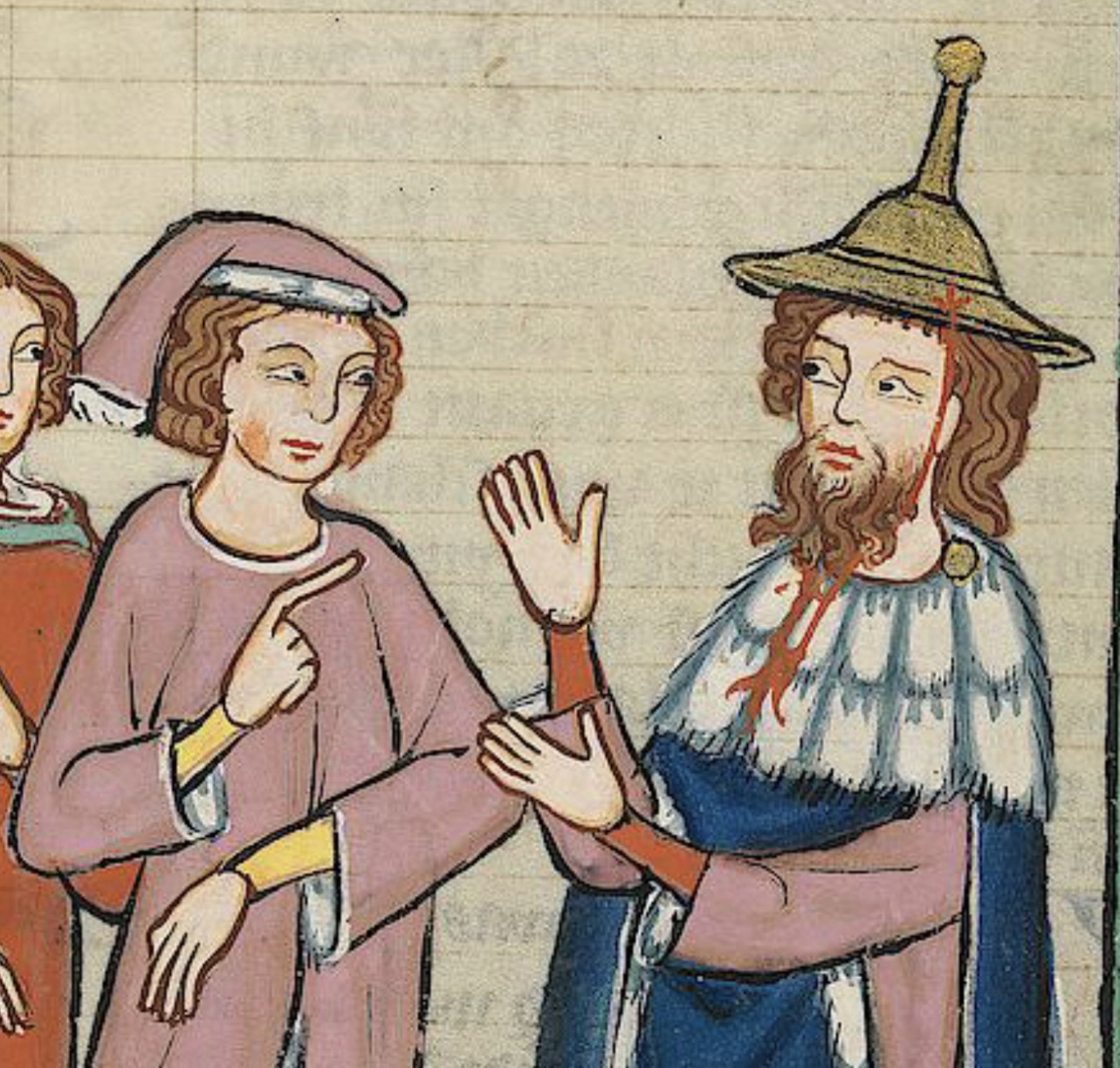
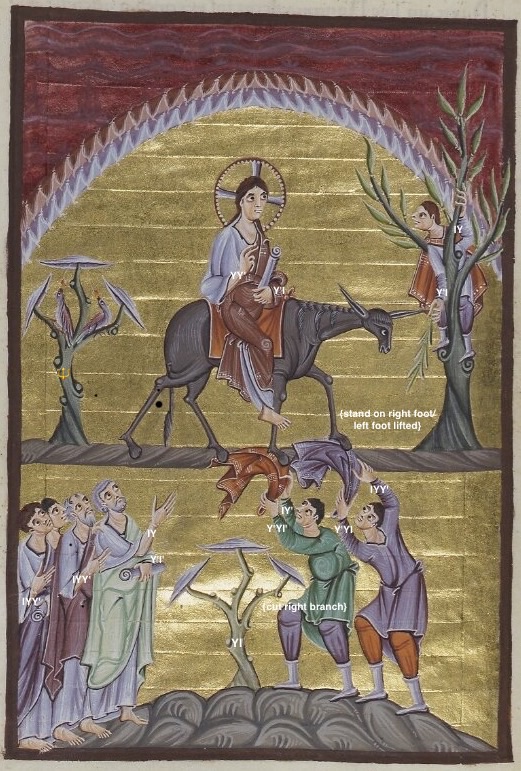
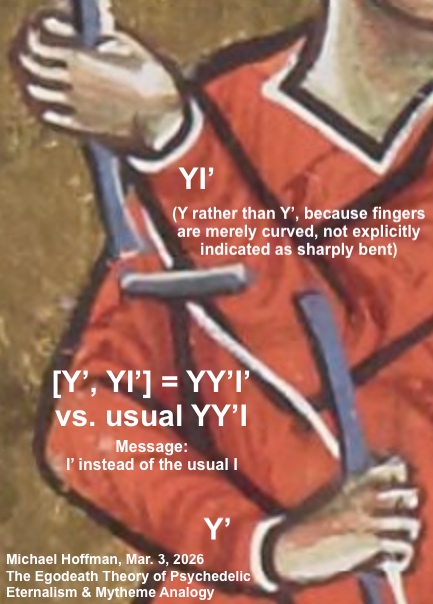
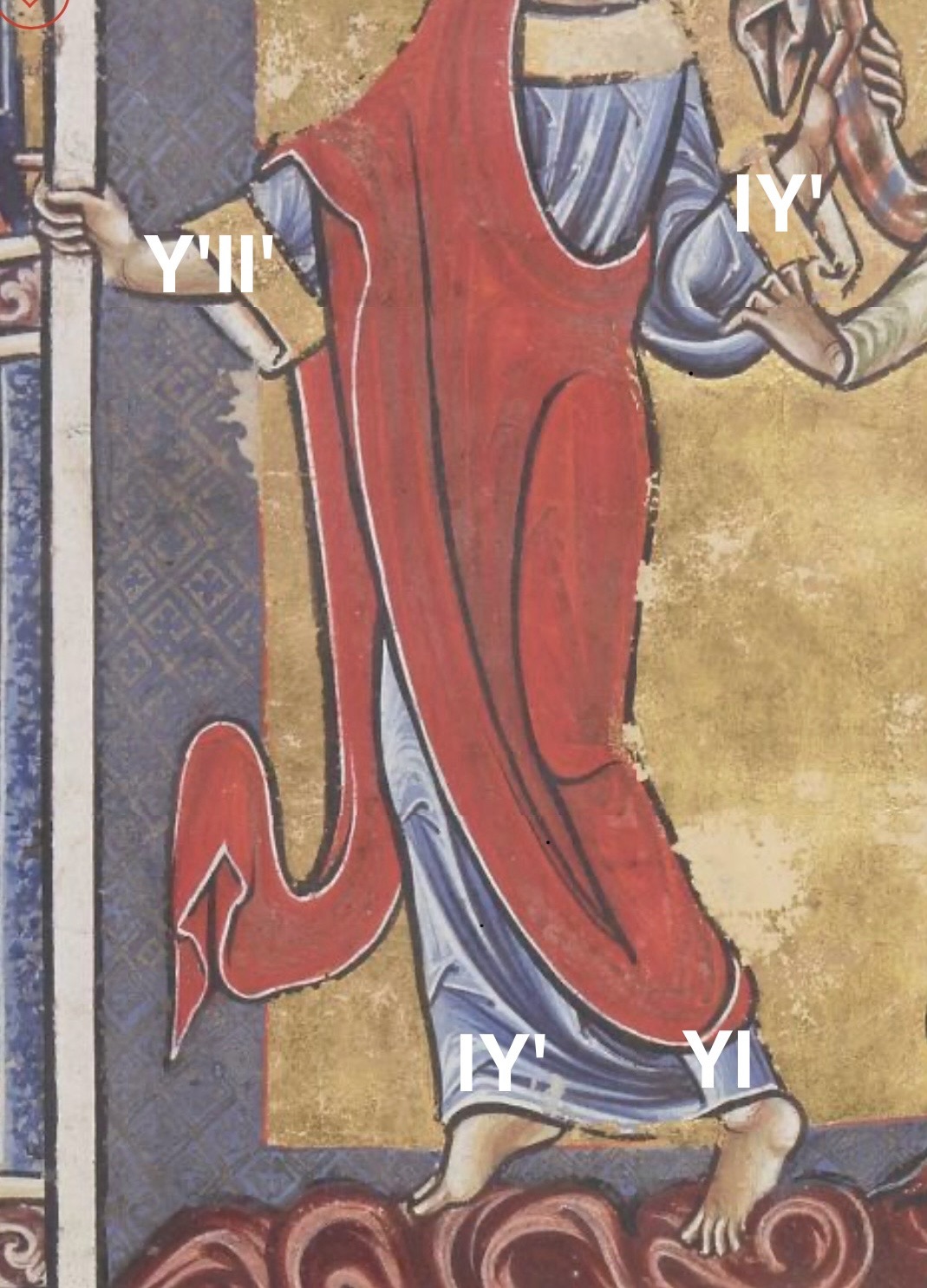
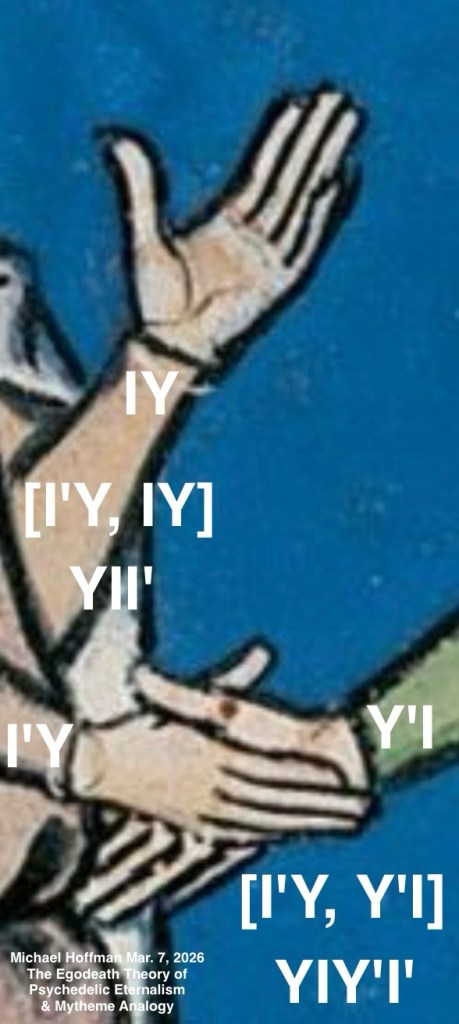
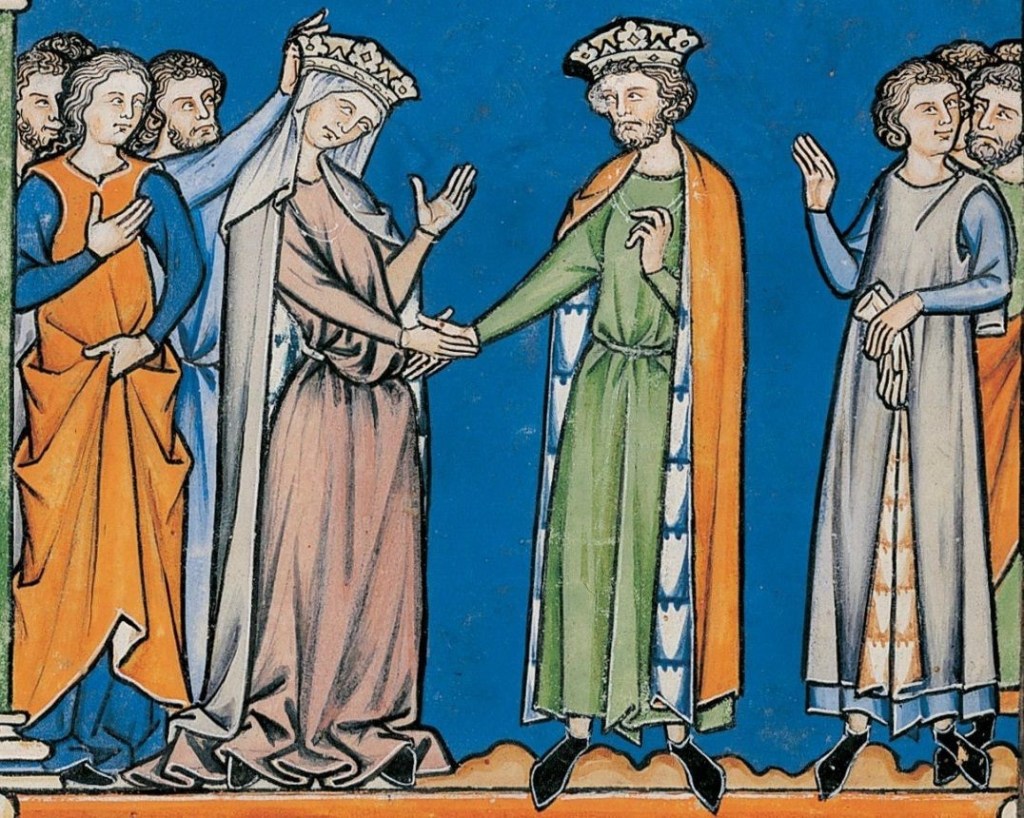
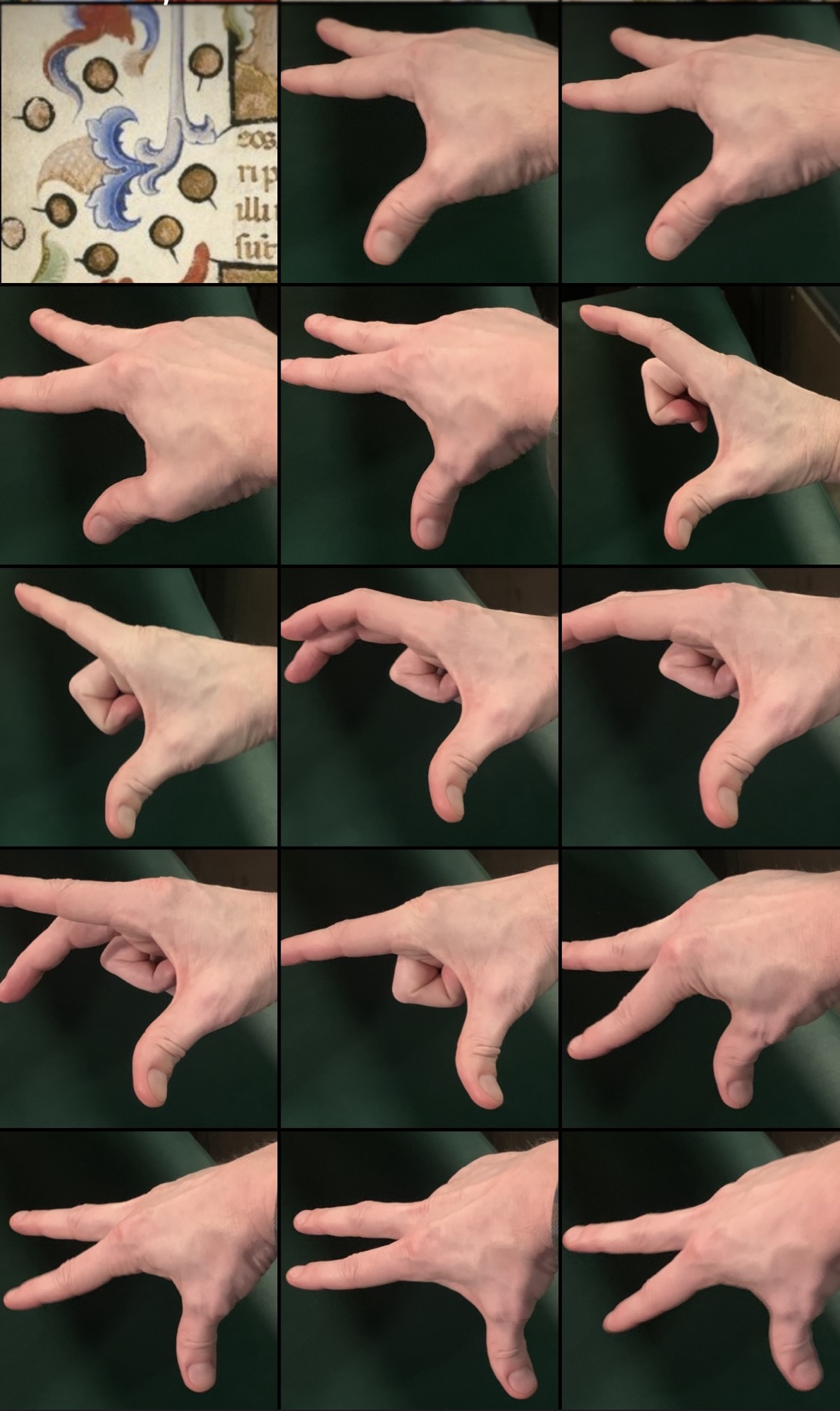
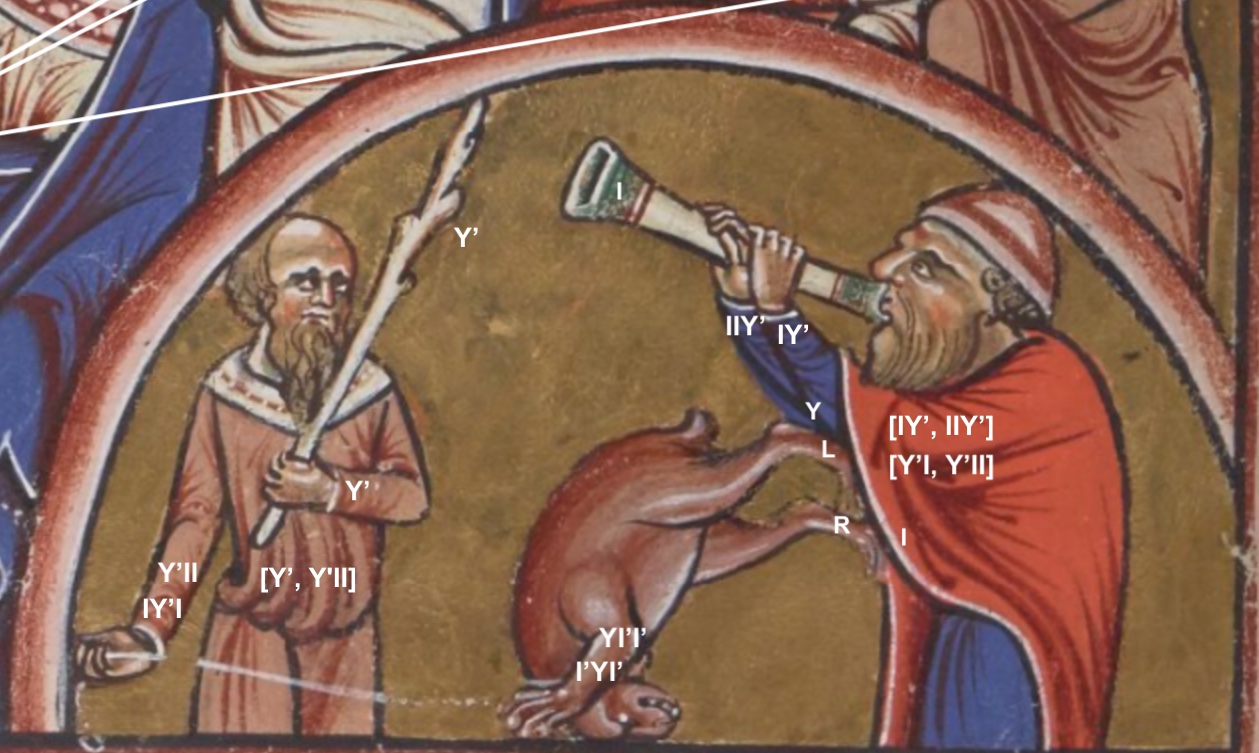
The {handedness} motif category includes my recent research on analogies represented by medieval YI hand shapes, such as in Entry into Jerusalem scene w/ Christ’s L vs. R hand-shapes.
Ronald Huggins wrote an article proposing to make Great Canterbury Psalter the test case to dismiss all mushroom imagery in Christian art.
His article is a gallery of logical fallacies, quite bad, yet Sharday Mosurinjohn cites article as if it supports her radical assertion that Ruck is to be entirely dismissed.
It blows my mind that Ruck sometimes writes entire books proposing that Amanita is the engine of the mystery religions; Psilo is a better model and historical proposal.
See back cover of
See Amanita on cover of Ruck books about Eleusis.
The recent naysayer crowd, MICA Deniers, eg Sharday Mosurinjohn (the most rabid discrediter of entire Ruck theory), is correct that there’s a lot of poor quality entheogen scholarship that needs internal correction.
I most strongly align with Sharday Mosurinjohn re: debunking the 1893 pop wallet driven selective fabrication, that claims that the specific common-core mysticism and perennialism is nondual unity oneness (the common core is actually control model restabilization).
v1 of common-core mysticism and perennialism: positive unity; nondual unity oneness
this is the totally dominant Old Theory, held by EVERYONE.
like 1st-generation entheogen scholarship (the Secret Amanita paradigm) is the all-dominant, universal standard view.
v2 of common-core mysticism and perennialism: eternalism-driven control-transformation
The New Theory.
I’m an Alt Perennialst. The all-dominant, unanimous model of common-core mysticism and perennialism is wrong.
The bare idea of common-core mysticism and perennialism is correct, but their specific model is wrong.
And Katz’ Constructivism is wrong/ overstated.
The common core isn’t nondual unity oneness, as Swami Vivek’s paying audience 1893 wishes for, through Stace 1960, taken up by Pahnke 1962, critiqued by Sharday Mosurinjohn, Richard S-S, & Richard Ascough. Traced by the McRae article and the other two articles provided by an Asian Studies member of a psychedelic church.
I have 2023 book by Richard S-S, Acute Religious Experiences.
The McRae article and a couple others confirmed my worst suspicion about selective fabrication of the alleged specific common-core mysticism and perennialism being, supposedly, nondual unity oneness.
I say, against everyone (Ken Wilber, Alan Watts; the Journal of Transpersonal Psychology; Walter Stace; Pahnke / William Richards/ Roland Griffiths; Swami Vivekananda 1893),
The actual common core of mystical experience is control restabilization by ending up w/ two distinct models of personal control power into the future: mature, in addition to immature, upon completion of initiation.
The Asian Studies member of a psychedelic church is so good at finding plant evidence in Buddhisms, they were reluctant to borrow my Mike Crowley book cited by Greer.
The Superiority of Greer vs. Recent Academic Deniers of Mushrooms in Christendom
Affirming Greer does not require much revision to the Egodeath theory.
Greer gives sound reasoning; so does the Egodeath theory; so they are largely compatible.
Greer’s cautions, in effect, align with how the Egodeath theory criticizes 1st-generation entheogen scholarship (the Secret Amanita paradigm).
In contrast to the crude scorched-earth approach from Sharday Mosurinjohn & Richard Ascough.
Finished reading every line of article except Biblio (todo).
Christian Greer gives the most coherent, balanced, reasonable viable argumentation:
We’ve discovered amble evidence for psychedelics in western religious history.
The only real debate is about the extent: how normal and mainstream?
I attack the definition of normal and the definition of mainstream as one argument vector I employ.
Huge Faceplant by Greer: “Ruck Used Illegal Amanita”, Stopped Me from Really Reading this Must-Read Article
as bad as Ruck writing “dancing man mushroom has red cap” (plainly blue).
Abstract
Scholarship on the global history of psychedelics is divided into two rival approaches.
This article analyzes these approaches, emphasizing the way in which ideological biases on both sides have stymied serious research on the use of psychedelic substances across space and time, before introducing the empirical approach as an alternative.
~= the minimal entheogen theory of religion:
The most prevalent view, “pharmacological Calvinism,” essentializes mind‐altering drugs and their users as degenerate or antisocial.
This reductive approach has defined the intellectual mainstream across academic disciplines to the present.
~= maximal entheogen theory of religion, IF omit the “Moderate” position and bifurcate into only 2, not 3, positions: i made a 3rd, Max position, in order to reject the alleged maximalist Ruck as way too stingy and defeatist (the Suppression & Absence narrative, where each evidence of presence of mushroom is twisted, by agenda-narrative, into evidence for absence):
In contrast to pharmacological Calvinism, the entheogenic school offers a maximalist interpretation of psychedelics’ impact on human culture and cognition, presenting consciousness‐expanding drugs as the “secret key” behind the world’s religious traditions, mythology, and folklore.
This article proposes that the empirical approach offers a corrective to the overstatements of both schools, as it is defined by comparatively granular research that draws from a deep understanding of primary sources placed in conversation with the intellectual apparatuses of the secondary literature.
Distinctly uninterested in unveiling psychedelics as the “key” to any tradition, this approach interprets the multiplicity of meanings and values associated with powerful psychotropics, alongside other modes of ecstasy and transpersonal relationality, as an integral dimension of the human story.
Comments
Mobile voice transcription draft
Greer is a more mature, balanced, nuanced scholar than Sharday Mosurinjohn re: the extent of psychedelics in Western religious history.
maximal entheogen theory of religion
My 2002 and 2003 model of minimal versus moderate versus maximal is problematic because people like ruck shift and prevaricate and waffle between moderate versus minimal positions
From Greer’s pov, Ruck = maximal entheogen theory of religion.
In 2002 after disappointment w/ book Apples of Apollo, compared to Entheos issue 1 & 2, I broke away from Ruck as too stingy, underestimating (for political agenda reasons) extent of psychedelics in Western religious history. Ruck was taking away entheogens more than positively finding them, like Browns do.
Secret Expose of Overuse of the Secrecy Paradigm/ Suppression Premise
i was titillated to see Greer berate Browns and others, for ALL putting “secret” in their book title.
overused cliche from 1st-generation entheogen scholarship (the Secret Amanita paradigm).
Good analysis from Greer. p. 279
Trajectory of origin of religions:
phase 1: psychedelics cause eternalism-driven control-transformation.
phase 2: a religion brand forms, based on that.
phase 3: the institutional religion denies its psychedelic origin due to conflict of interest.
That answers Greer, “must account for … drugs are no longer a MAJOR component”. My 3 phases don’t explicitly employ concept of secret & suppression; my model is more articulate than that. ‘Secret’ implies that 3-phase model.
See this site’s copy of Cyberdisciple post “against suppression/secrecy premise”.
My Ideas Are Orthogonal; a 3rd option (vs his Empiricism 3rd option)
False common-core mysticism and perennialism (positive unity), vs. True (eternalism-driven control-transformation)
eg perennialism: everyone holds Perennialism v1, which is wrong. My perennialism v2 is the correct variant: the best, most important mystical experience is eternalism-driven control-transformation, NOT positive unity.
Greer criticizes articulately, the neo-Advaita, positive unitive model of mystical experience, baked into Mystical Experience Questionnaire (MEQ) forming psychedelic pseudo science.
He crit’s Walter Stace 1960. Good writing against the ignoring & discrediting of chall experiences; Great Canterbury Psalter is notable for its depiction of dread and being “paranoid” ie experiencing helplessly being threatened (by eternalism; by the beyond-control preexistence of one’s personal future).
Doubled Down on Firm Commitment to Great Canterbury Psalter Analysis & Explanation
Error: “I’m interested in the Egodeath theory, but not psalter art.”
The #1 most profound and profitable art to analyze is Eadwine’s in Great Canterbury Psalter.
The best, most valuable, useful, relevant, profound, insightful thing that I can contribute is explain these images, in terms of psychedelic eternalism-driven control-transformation, which the images are designed to convey and depict.
TRUE, v2 common-core mysticism and perennialism. correctly id’d as eternalism-driven control-transformation, NOT (per everyone/ “the perennialists”) the Positive Unitive model.
I am not a “perennialist” (V1: Positive Unitive); I am a V2 Perennialist (eternalism-driven control-transformation).
i am not an “entheogen scholar” as in, 1st-generation entheogen scholarship (the Secret Amanita paradigm).
i’m an entheogen scholar, as in 2nd-generation entheogen scholarship (the Explicit Psilocybin paradigm).
My commitment to Great Canterbury Psalter decoding is corrob’d by Foraging for Psychedelic Mushrooms in the Wrong Forest: The Great Canterbury Psalter as a Medieval Test Case (Ronald Huggins, 2024)
YOUR TERMS ARE ACCEPTABLE.
Heading
On Tuesdays, Ruck is Moderate; on Wednesdays he’s Minimal. From Greer POV, Ruck is Maximal.
Waffle House Gang.
my 2003 M M M model fails to address waffling, shifting, illusion, as from one angle, Ruck appears Maximal, Moderate, or Minimal.
Sharday Mosurinjohn commits the fallacy: arg from silence:
one side of mouth:
“There is insufficient evidence to draw a conclusion on the extent of psychedelics in western religious history.”
other side of mouth:
“TIK/ Muraresku / Rogan/ Ruck is definitely wrong. There are definitely no psychedelics in western religious history. Everyone who says so is fools. “
Greer is way better than Sharday Mosurinjohn here. Greer explains the culture-war motives w/o reducing entire field to only that, like Sharday Mosurinjohn does. Greer manages to balance & have it both ways.
Indeed plants are throughout history, AND there are culture scholarly disputes about this. Rightly describes Allegro as an odd combination of the two bad approaches: calvinism & entheogen scholarship
Outline of Headings in Greer
Abstract
Intro
Pharmacological Calvinism
Entheogenic School
Empirical Historicism
Conclusion
Demonizing “Essentialism”
The essence of mystical experience is psychedelic eternalism; eternalism-driven control-transformation, per the Egodeath theory’s version of common-core mysticism and perennialism.
Against Greer, dogma, essentialism, paradigm commitment, & circularity of reasoning are actually good and required – if done right.
Without a paradigm-lens, blind to the evidence.
By applying the psychedelic eternalism lens, that has proven to reveal tons of superior evidence, surpassing Ruck and others.
eg Great Canterbury Psalter:
Day 4 mushrooms in folio image f11 point to the {balance scale} held by Creator, thus id’ing what’s in the pans of the {balance scale}.
f134 harvest, behind oxen, blue vase, row 3 middle, he looks at the psilocybin dispensary above on row 2, thus id’ing what’s in the vase jar.
Good Advocacy of Not Separating Mystical Experience vs. Challenging Experiences
The 3 Available Approaches According to Greer: Pharmacological Calvinism; Entheogenic School; Empirical Historicism [clueless, blind, directionless, lens-less, paradigm-free, unable to perceive evidence]
“empirical historiography” means, lacking any interpretive frame. Advocated by Wouter Hanegraaff, whose so-broken cosmos model cannot allow any stars in the sky, bc that would positively value evil heimarmene (fatedness, eternalism, pre-extant future).
Lacking an interp’v frame “bc that would be circular” is nothing to brag about.
Wouter Hanegraaff & C. Greer are bad in pushing a formless, directionless empiricism.
the Egodeath theory (the theory of psychedelic eternalism) that’s proven to provide a guiding paradigm framework that enables perceiving evidence – higher qty & quality than previous paradigms or “being free from any contaminating paradigm”.
Getting rid of circular paradigm does not give empirical data; it prevents perceiving such – but, must be the correct circular paradigm.
not Positive Unity & Secret Christian Amanita Cult, but rather, eternalism-driven control-transformation & the Explicit Psilocybin paradigm.
p. 284 top, Greer advocates broad coverage of all psychedelic experiences, not limiting to Stace 1960 narrow exclusive top-down, ahead-of-time, neo-Adv model and dismissing all experience that doesn’t fit that popular model.
Greer is wrong to blanket-disparage “an essentialized view of the psychedelic experience”.
The best, most valuable most insightful, most essential mystical experience is, eternalism-driven control-transformation, which is depicted and articulated in Great Canterbury Psalter, within the medieval art genre of {mushroom-trees}.
Greer wrongly says entheogen scholars are fixated on drugs. p. 284 40% down page (Weil 1988 quote).
Greer says we must avoid 2 extremes:
pharm calvinists: “degrades the mind; non-drug methods are better”
entheogen scholars – “psychedelics are exceptional”. the theory of psychedelic eternalism agrees, but, my approach is NOT the one char’ized by Greer. Superior.
Greer’s Other Drugs and Non-Drug Techniques SUCK and FAIL; False Equivalency
Scopolamine (deliriant) was highly available subst for what was considered the real deal, psilocybin (which was rarer in avail’y). The orig driver was not scop, but psilocybin.
The Only Effective Trigger of eternalism-driven control-transformation is Classic Psychedelics, per the Egodeath theory.
Mystics historically had a clouded, confused view, much of the time, obscuring and not clearly getting, psychedelic eternalism.
History of esotericism descriptions/ communications left us with a garbled mess that includes yet obscures the classic revelation of psychedelic eternalism.
We have to work to apply paradigm to weed out & ID the BEST and truest aspects, from garbled writings & poor clueless art like later Ortho icon images that fail to grasp and convey the 4 motif categs: {mushroom}, {branching}, {handedness}, and {stability} motifs.
Junk modern Newage? We must deal w/ the history of junk exoteric esotericism.
The RIGHT circular reasoning is required. top-down model to drive perceiving / collecting evidence. Wouter Hanegraaff/ Greer wrongly dismisses top-down models, advoc’ing naive “bottom-up empirical” approach, which is blind, clueless, and subject to bias.
We must judge, sort, excavate the solid best treasure. Ancestors left us jewels in mud, undiff’d.
A would-be “neutral, paradigm-free, empirical” approach (Wouter Hanegraaff, Greer) is incapable of id’ing and explaining and recognizing eternalism-driven control-transformation.
theory-free gathering of evidence doesn’t work. not effective. weak, limp-wristed, without vigor or direction.
i resent phrase “THE entheogenic school” in Conclusion p. 287. I sit aside from that school, largely, to the extent I reject 1st-generation entheogen scholarship (the Secret Amanita paradigm) and advocate eternalism-driven control-transformation (not Positive Unitive like everyone else) & 2nd-generation entheogen scholarship (the Explicit Psilocybin paradigm).
Nice treatment of Allegro as a unique crossover between Calv & entheogen school.
Wouter Hanegraaff’s cosmos model is so broken by (prejudiced) ruling out a positive role for Heimarmene, the model cannot bear including any stars.
See my 2004 post, 8 years before Wouter Hanegraaff’s keynote title, “Entheogenic Esotericism”. don’t use “can” to fabricate a false equivalency, as Greer does, p. 284 middle, end of paragraph: “other drugs” & “techniques”.
“Circular!” – effective research and theorizing is inherently circular-paradigmatic commitment, in some way.
Bragging “I have no paradigm to limit me” actually means “I am blind and expect to randomly gather data w/ no guiding explanatory framework paradigm lens.”
and means, i’m gonna sneak covertly in, a bad malformed paradigm instead – covert malformed circular reasoning instead of explicit well-formed circular reasoning like the Egodeath theory.
Greer is again pure / simple / naive constructivism that asserts, “Psychedelics have no inherent effect; the effects are whatever the culture expects.” p. 283 bottom.
The anything-but-drugs academics vs. “counterculture” entheogen scholars.
Sharday Mosurinjohn w Richard Ascough makes their biggest point that “Ruck switches from “there might be psychedelics” to writing as if there definitely were psychedelics.
It is natural and reasonable for Ruck to write this way. Would they expect him to say “alleged” before every single word?
yet these hypocrites themselves make that very same fallacious move, worse than Ruck does.
(every accusation is a confession)
Sharday Mosurinjohn online in various forums, including Harvard presentations is immature and nasty and incoherent and self-contradictory, and just mean, and deservedly her articles, get rejected by every kind of journal for her rough, crude attack and self-aggrandizement, which I’ve posted about here w red hilite quotes.
She entered the field five minutes ago because she had no direction in her tenure career and latched onto the trendy pop topic of psychedelic therapy and history like a parasite opportunist. Professhunul Debunker of Muraresku / Rogan/ Ruck
I have not read the entheogen scholar Joseph Rogan, but it’s ridiculous how the co-authors treat popular reception of allegro and Ruck to equate Rogan and Muraresku and Ruck.
Sharday Mosurinjohn entered the field, a bully, a newbie, with both fists swinging, as clumsy as aggressive, clumsily contradicting herself, committing the same fallacy that she makes a big stink out of attributing to Ruck.
her stupid pop followers on the internet – “yeah, u DESTROYED Ruck!!” (by fallacious arg from silence)
Her first book was nothing to do with psychedelics. Directionless.
Muraresku / Rogan to the rescue: career idea!💡- Latch onto pop entheogen scholarship as self-appointed head of debunkers.
Easy pickins! Easy mode: just appease anything-but-drugs academia, & internet fans, w words that sound like arguments. just Read Muraresku & ur rdy to go.
Her career positioning posture marketing.
like Thomas Hatsis defending psychedelics in Western religious history – at the same time as “but def no mushroom in Western religious history”.
Hatsis’ rigidly Allegro-framed (grossly underinformed by Giorgio Samorini) Amanita / sacred mushroom [awful hazy fake 1950 Wasson-fabricated bucket to force / smush together/ conflate Amanita = psilocybin but w entire emph on Amanita – even Jan Irvin 2008 does same
brittle crude arg’n
Thomas Hatsis can only arg against his own strawman, young Thomas Hatsis who is the #1 fanboi of Allegro.
Ignorant of articles on psilocybin history.
Proof: watch his video titled proof of no mushroom in Christianity, but the content of the video only covers Amanita, and is completely unaware of the existence of psilocybin focus in other writers.
because he is ignorant of any writings about psilocybin – he only has eyes for Allegro 😍 – he totally and absolutely conflates Amanita with “the sacred mushroom”, equals “psychedelic mushroom”.
There is only one mushroom in his little mind, none other than the specifically John Allegro-framed Amanita Amanita hypothesis.
Secret Christian Amanita Cult
as if John Allegro 1970 is the beginning and end and totality of the scope of the idea of mushroom in western religious history.
John Lash nauseatingly mis-attributes the entire topic of psychedelics to be “Wasson’s idea” – fortunately he does this weird fanboy move to the extreme, way beyond what anyone else does.
No one else tries to give entire credit to every psychedelic idea to be “Wasson’s idea”, which is ridiculous and absurd, just bad scholarship & writing.
It’s more fanboyism rather than scholarship.
Thomas Hatsis similarly mis-frames the entire question of mushrooms in western religious history with the ultra narrow, specific framing from John allegro 1970, The Sacred Mushroom & The Cross
Thomas Hatsis the disappointed Allegro fanboi. sees no other arg’n, only Allegro, not:
as if Giorgio Samorini never wrote 1997 and 1998 milestone breakthrough articles, expanding the question to encompass psilocybin as well as the number one uber most important, be all, end all, mushroom, which is of course Amanita
Giorgio Samorini perpetuates that false centering of Amanita.
Overemphs the lone pop proxy Ama tree example, Plaincourault fresco, to be the model paradigm to copypaste to apply to all mushroom imagery in Christian art.
my criticisms of entheogen scholarship; 1st-generation entheogen scholarship (the Secret Amanita paradigm) are better than Sharday Mosurinjohn scorched earth.
entheogen scholarship needs correction, not discarding the field / hypoth wholesale.
Foraging for Psychedelic Mushrooms in the Wrong Forest: The Great Canterbury Psalter as a Medieval Test Case (Ronald Huggins, 2024) broke that monopoly that the Plaincourault fresco held.
“Allegro is wrong, thus the mushroom (= Secret Christian Amanita Cult) is NOT in Western religious history.”
Sharday Mosurinjohn makes her career direction opportunity the claim that Brian Muraresku, who equals ruck (& rogan), is tot wrong.
but the real problem in the field is not Bunk evidence but rather fallacious argumentation which the shameless academia appeasing, shameless of the rotten argumentation fallacies.
The Huggins article is just a solid wall of bad argumentation, but he has no shame and no embarrassment over these wretched, terrible arguments that might appease the academia expectations, but totally collapse the moment that you challenge them.
Sharday Mosurinjohn & Deniers of mushroom imagery in Christian art ought to be embarrassed and ashamed of their wretched wall of fallacious arguments, but no, since they’re singing the song that they get paid to sing by the expectations of anything-but-drugs academics, they do not sense any need to put forth arguments that can actually stand up to challenge.
For example, Huggins saying that Canterbury day four of creation has trees – when in fact, there’s no branching at all, and these are literal mushroom specimens
his “conclusion” section is simply a negative declaration pretending to be a detailed argumentation.
It’s just a negative declaration really. a faith statement proclamation. (instantly approved by anything-but-drugs academics. )
yet Sharday Mosurinjohn cites Huggins as if solid argn.
entheogen scholarship does not suffer from bad evidence, or lack of attention to texts surrounding art; entheogen scholarship suffers from fallacious argumentation by the deniers.
See Also
todo: copy or move from linked articles to present article:
“J. Christian Greer (Stanford University) and author-historian Mike Jay reflect on how the study of psychedelics emerged as an academic field, and why it is best understood not as “drug history” alone but as a lens on wider questions of consciousness, culture, religion and medicine.
“They note how psychedelic history is often reduced to a familiar mid-twentieth-century narrative.
“This obscures both the continuities of the following decades and the longer history of scientific inquiry into altered states of consciousness, from early modern experiments on perception to nineteenth-century self-experimentation.”
Video: Christian Greer – Psychedelic Militancy in the 1980s [Dissertation] (May 7, 2021)
“Christian Greer (PhD) gives a lecture on the topic of his dissertation: “Psychedelic Militancy in the 1980s”.
“The psychedelic dimension of religious experience occupies a marginal position in the scholarship of American culture.
“For the last seven decades, scholars have viewed the psychedelicist church movement as, variously, an excuse for taking illegal drugs, an inauthentic mode of religious fellowship, and a purely oppositional “counter-culture.”
“More recent scholarship challenges these interpretations by emphasizing the legitimacy of the experiences occasioned by psychedelics.
“Psychedelicism in the 1980s took shape as the “zine scene,” a vast information network composed of approximately ten thousand self-publishers.
“Through an examination of the hipster militants of the zine scene, the work of Dr. Christian Greer re-centers psychedelicist fellowships in 1980s hip culture.
“It is only by recognizing the interplay between the hipsters of the psychedelicist movement, and hip capitalism, that the role of esotericism in American culture can be understood.”
Video: Psychedelic Christianity: Real and Imagined | Christian Greer (Sep. 9, 2025)
Were the original Christian communities entheogenically supercharged?
Was Jesus actually a mushroom?
These are simply some of the questions that historians of drugs field on a regular basis.
And to be clear, our answers are almost always disappointing.
All of the arguments that suggest a psychedelic origin of Christianity are pure conjecture.
There is simply no solid proof that Christianity had a psychedelic origin or that ancient[?] Christians used psychedelics.
Yet, as the expression goes, absence of evidence is not evidence of absence.
And I anticipate that some archaeo-chemists will eventually unearth a vessel that demonstrates some Christians in some part of the ancient world use some sort of psychedelic sacrament in their worship.
And why not? Over the last few millennia, humans across the globe have used a variety of psychedelic substances to access visionary states of consciousness.
This vast pharmacopoeia includes plants, roots, vines, cacti, nuts, herbs, nectar, roots, snuffs…. you get the picture.
There is no doubt that psychedelic substances have played a key role in human culture, animating religious rituals, rites of passage, communal ceremonies, not to mention healing, sorcery, divination, communion with the dead.
And all of that continues to the present day.
But again, there is still no proof that they were used amongst Christians in the ancient world.
I’m not going to belabor this point by mapping all of the deficiencies in the arguments suggesting a psychedelic origin of Christianity.
Rather, I’m going to focus on the real stakes involved with this preoccupation with an imagined psychedelic Christian origin, as opposed to the real traditions of psychedelic Christianity.”
[I met and spoke with R. U. Sirius at Stanford univ. around 1995. I hated his answer: “Mondo 2000 magazine doesn’t cover LSD, because passe.” Superficial! Shallow! Trendy-driven! – mh]
Video title: RU Sirius Psychedelic Panel Apr. 14, 2026
“A panel about psychedelics in the 1960s and the 2020s hosted by R.U. Sirius at Psychedelic SF Gallery on Haight Street in San Francisco, March 27, 2026.
“Panelists are — left to right — Christian Greer, Bia LaBate and Michael Marinacci.
“Christian Greer is a scholar of Religious Studies with a special focus on psychedelic culture and an author whose upcoming book is Angelheaded Hipsters: Psychedelic Militancy in Nineteen Eighties North America.
“This article demonstrates how “counterculture” remains a poorly defined way to talk about rapidly developing milieux, scenes, and networks born out of the religious awakening stimulated by psychedelics in the mid-1960s.
“It proposes an alternative framework of “psychedelicism” to better understand the nuances and complexity of historical and contemporary psychedelic communities.”
Video: Between Sacred & Profane: Psychedelic Culture, Drug Spiritualites, and Contemporary America (Greer, Davis, Laderman, May 10, 2021)
Video title: Between Sacred & Profane: Psychedelic Culture, Drug Spiritualites, and Contemporary America May 10, 2021
“As part of the “Psychedelics and the Future of Religion” series, Dr. J. Christian Greer hosted a discussion panel with Dr. Erik Davis and Dr. Gary Laderman, focusing on the intersection of psychedelic culture, sacred drugs, and the modern American zeitgeist.
In their wide-ranging conversation, this distinguished panel of addressed spiritualities centered on psychoactive substances, the material culture of psychedelia, and the potential role humanities scholars could play in the current wave of clinical research on psychedelics.
Erik Davis is an author, award-winning journalist, and independent scholar based in San Francisco. He is the author, most recently [later: book: Blotter], of High Weirdness: Drugs, Esoterica, and Visionary Experience in the Seventies, co-published by MIT Press and Strange Attractor.
Davis graduated from Yale University in 1988, and more recently earned his PhD in religious studies at Rice University. www.techgnosis.com.
Gary Laderman is Goodrich C. White Professor American Religious History and Cultures in the Department of Religion at Emory University.
His new book is Don’t Think About Death: A Memoir on Mortality.
He’s written on the history of death in America and on the sacred in American religious life.
He helped to launch and run Religion Dispatches and Sacred Matters, just started a new podcast, Sacrilegious with Gary Laderman, and is writing a book on religion and drugs.”
Video title: Panel Session | Psychedelic Shadows: Reevaluating the Renaissance May 5, 2026 Greer presentation: The Drug War Fog: Psychedelics, Religion, and the Politics of Erasure https://www.youtube.com/watch?v=BmI298FeJv0&t=1383s [23:03-44:38]
“This panel offered a re-evaluation of the contemporary psychedelic moment, often described as a “psychedelic renaissance.”
The session was moderated by Paul Gillis-Smith, program lead of Psychedelics and Spirituality at the Center for the Study of World Religions.
Presentations included:
Marlena Robbins, Doctor of Public Health candidate at University of California, Berkeley, presented “Across Generations: Urban Native Perspectives on Psilocybin, Healing, and Cultural Renewal.”
J. Christian Greer, lecturer at the Stanford University School of Medicine, presented “The Drug War Fog: Psychedelics, Religion, and the Politics of Erasure.”
Annalisa Butticci, Assistant Professor of Anthropology and Religious Studies at Georgetown University, and Osiris Garcia Cerqueda, affiliated researcher at Georgetown University, presented “When the Sacred Mushrooms Withdraw: A More-Than-Human Interpretation of Ecospiritual Crisis.”
Stuart Sarbacker, Professor of Comparative Religion and Indian Philosophy at Oregon State University, presented “Yoga and Psychedelics: The Dynamism of Longevity (dīrghāyu) and Extraordinary Accomplishment (siddhi) in Traditional and Contemporary Contexts.”
“My work is focused on institutionalizing the study of psychedelics from a humanistic perspective within the university system.
To that end, my scholarly expertise is in the history of psychedelic spirituality, religion, and ritual from a global perspective.
Having held teaching positions at Harvard University, Yale University, and the University of Amsterdam, I am now a full-time lecturer at Stanford University School of Medicine, Department of Psychiatry and Behavioral Sciences, and an affiliate professor at the Graduate Theological Union.
I am also also the director of “The Psychedelic Universe: Global Perspectives on Higher Consciousness,” the first university-accredited, intensive summer school exploring the global history of psychedelics, open to participants from a variety of backgrounds (and not simply graduate students).
This course is hosted by the University of Amsterdam each June.
I am also the director and lead instructor for “Forbidden Knowledge: Introduction to Esotericism” (offered online each winter) and “Arcane Worlds: New Directions in the Study of Esotericism” (offered every summer), both intensive seminars hosted in collaboration with the Graduate School of Social Sciences at the University of Amsterdam.
In the last few years, I also co-founded the Drugs and Religion program unit at the American Academy of Religion, The Harvard Psychedelic Walking Tour (available on Spotify), and The Chalice, a psychedelic salon hosted in Berkeley, CA on the first Wednesday of each month.
My forthcoming book, “Crimes Against Normality: Psychedelic Militancy in the Fanzine Revolution” (Oxford University Press), examines the expansion of psychedelic culture within underground networks that emerged during the Drug War.
With respect to published manuscripts, my latest book, “VOID MACHINES: The Paper Shrines of J. Christian Greer” (2024), edited by Dr. Michelle Oing, is an anthology of my visual art.
Dr. Oing and I also co-authored “Kumano Kodo: Pilgrimage to Powerspots” (2021) analyzes the pilgrimage folklore associated with the rainforests of Japan’s Kii Peninsula.”
Crimes Against Normality: Psychedelic Militancy in the Fanzine Revolution (Greer, Forthcoming Late 2026)
“Each month I host a psychedelic lecture series with Erik Davis and Maria Mangini at the The Berkeley Alembic. [where my psychedelic church meets, in-person & online – mh]
For this month’s Chalice, we are very happy to host Bob Jesse, one of the most thoughtful, sincere, and ethical change-makers influencing the “psychedelic renaissance.”
In the early 1990s, Jesse founded the Council on Spiritual Practices, which argued for the value of “primary religious experiences” and advocated for psychedelic approaches for such experiences.
Eventually, Jesse helped support and guide the groundbreaking psilocybin research at Johns Hopkins, as well as the center’s later studies of psychedelic experience among religious professionals.
More recently, Jesse served as a founding member of the UC Berkeley Center for the Science of Psychedelics.
Tonight Jesse will deliver a short “statement of positionality”, after which we will plumb the current state of psychedelic spirituality, science, and commodification.
Bob Jesse was instrumental in forming the psilocybin research team at Johns Hopkins, and he has co-authored several of its papers.
Bob Jesse is a founding member of the U.C. Berkeley Center for the Science of Psychedelics.
Earlier in life, Bob trained at Hopkins in electrical engineering and computer science, consulted for AT&T Bell Labs, and worked at Oracle as a VP of business development.
In 1993, he founded the Council on Spiritual Practices.”
“A guide to the benefits and challenges of the use of cannabis in spiritual practice
• Includes chapters by 18 authoritative and influential voices of the modern cannabis movement, including Kathleen Harrison, Joan Bello, Hamilton Souther, Steven Hager, Chris Bennett, Dee Dussault, Jeremy Wolff, and Roger Christie
• Explores the use of marijuana [cannabis] in a wide range of spiritual practices, including meditation, yoga, chanting, visualization, shamanism, group ceremonies, work with other entheogens, and as a creative aid
Truly a medicine for body and soul, one of cannabis’s greatest gifts is its remarkable potential for spiritual healing and awakening.
In this authoritative guide, editor Stephen Gray and 17 other influential voices of the modern cannabis movement
explore the spiritual benefits of cannabis and offer guidance on
how to interact with the intelligence of this plant ally, a companion and supporter of humanity for millennia.
Exploring cannabis spirituality in practice, Gray’s chapters examine
dosage,
strains, and
methods of intake;
the use of cannabis to open the creative channels;
how to conduct group ceremonies with cannabis; and
cautions and counterindications for cannabis use.
We hear from
Chris Bennett on the religious and ritual use of cannabis from pre-biblical times to the present,
Joan Bello on marijuana and the body-mind connection,
Dee Dussault on ganja yoga,
Kathleen Harrison on humanity’s co-evolution with cannabis, and
cannabis shaman Hamilton Souther on working with the spirit of cannabis.
The contributors explore
the spiritual future of this plant ally as well as
the ritual use of cannabis by the Rastafarians of Jamaica and
the Sadhus of India.
The chapters from Brazilian ayahuasca shaman Mariano da Silva and ayahuasca apprentice Francisco present wisdom on
comingling the sacramental medicines of cannabis and ayahuasca.
Revealing the potential of “the people’s plant” to enhance a wide range of spiritual practices, such as
meditation,
yoga,
chanting,
visualization,
shamanism,
spirit work, and
explorations with other entheogens,
this guide shows how cannabis is an effective ally on the awakening journey, unlocking the receptive energy in us all and helping us to feel connected to nature, to each other, and to ourselves.”
/ end blurb
Revising to 4 Tiers of THC%, Instead of 3
negligible
mild
standard
extra
low
medium [rare: 5% THC eg 3%-10%]
high [standard]
extra high
Mediocre “pot shops” give a choice between 0% and 20% THC, nothing in-between.
A bona fide cannabis dispensary worth the name consistently has a selection of the hardest to find tier: 3%-10% THC strains (which implies high CBD).
There are actually 4, not 3, qualitative levels that affecting the number of hits (ie, total duration of inhaling) and the duration held.
Standard THC % is 20%, eg 15-25%.
Just as medium-THC strains range from 3.5% to 6.5% (double!), high-THC (standard) strains range from 15% to 27% (double!)
Above that is infused “strains”, eg 30%-42% THC.
A 45% THC infused strain would be three times as strong as a mild standard 15% THC strain.
The Entourage Effect
Aliens on Moonshine: 3.5% THC, 8% CBD:
The CBD brings out the most positive, pleasant, euphoric effects of the THC.
Entourage means all content of the plant.
Two Different Levels of “CBD Strain”: 0.1% THC, or 7% THC – Qualitatively Different
If you say “a CBD strain”, you could mean a hemp strain with 0.1% THC, or you could mean a Gilda-like strain with 7% THC – very different.
A 42% strain, eg kief-infused preroll or moonrocks, produces vivid intense psychedelic-like effects, after just a couple hits.
Thus cannot group Blue Dream (15% THC) with herb from infused prerolls or moonrocks (42% THC).
They are qualitatively different, affecting the # of hits, length of inhale, and how long held.
old scheme:
Low THC = 0.5% [typically 0.1% – 0.6%]
Med THC = 5% [typically 3.5% – 6.5%]
High THC = 20% [typically 15% – 42% [error: too high; qualitatively different than 15% THC]
New classification scheme:
Low THC = 0.5% – dummy herb/hemp (gets high after enough hits)
Med THC = 5%
Standard THC = 20%
Double THC = 40%
Math Theory: One Hit of a 20% THC Strain = Two Hits of a 10% THC Strain
In theory, equivalent highness from:
1 hit of a 20% THC strain
2 hits of a 10% THC strain
4 hits of a 5% THC strain (1 0.2g capsule)
8 hits of a 2.5% THC strain
16 hits of a 1.25% THC strain
32 hits of a 0.625% THC strain
64 hits of a 0.3125% THC strain
128 hits of a 0.15625% THC strain (32 0.2g capsules)
4 hits = one 0.2g capsule 0.05g of herb per hit
4 Hits per 0.2g Steel Capsule of Herb
How many grams of standard herb per hit? 0.05g per hit, based on calc’n from prerolls:
Suppose a small 0.5g preroll produces 10 hits. 0.5g/10 = 0.05g per hit.
The POTV One vape = v1, takes 0.1g herb per capsule. 0.1g/0.05g = 2 hits.
The POTV Lobo vape = v2, takes 0.2g herb per capsule. 0.2g/0.05g = 4 hits. This fits nicely w/ latest, 6-sec rather than 5-sec inhales (at medium-high heat):
“terp city” – if large glass bubbler, there’s initial delay to clear the air out; requires longer than 5sec inhale – technique: inhale and blow out (ignore) the first 3/4 of first inhale, which is just air. This is more straightfwd when using smallglass mouthpiece rather than large glass bubbler, and also there’s no complexity/question, w/ small mouthpiece, how to count the clearing of glass mixing chamber at end of extraction. These are Cons of …
“terp/cloud combo”; “king’s hit”. Globally clarify: “king’s hit” because has best balance of lots of flav + lots of cloud, so can nickname/char’ize: terp+cloud.
“cloud city” – decent flavor, though not the best flavor.
“seen better days” – vapor decreases, flavor becomes overcooked. candidate for discarding, if goal is “only the best, Reference, most ideally representative of “vape tastes great” (sometimes overcooked tastes awful). A warning that (for many strain batches) hit 5 will be regrettable, increasingly bad taste (though from some good strain batches, at some med-high temps, it stops producing vapor before ever tasting very overcooked).
The Best Taste and the Worst Taste Is from Dry Flower Vape
Some strain batches at some temperatures never seem to go bad, in the taste, when overcooked.
Other strain batches have high risk of tasting terrible, causing a wretch response, when the main vapor runs out after just 2-3 hits. Putrid sickly sweet.
Solution is to track the flavor avainst the typical lifecycle:
Expect hit 1 to be thin vapor, overkill terp tickle. Compare actual result.
Expect hit 2 to be ideal balance of lots of flavor + cloud.
Expect hit 3 to be cloud w/ ok flavor.
Expect hit 4 to be (possibly thinner) cloud with dubious flavor.
Expect hit 5 to be thinning cloud and bad flavor. Not always, though; look for desirable exceptions.
This is a Reference point to compare against per the typical vapor extraction lifecycle, especially at med-high heat.
Highest heat is touchy timing and has a strong propensity to quickly become overcooked. Use for “one and done” technique.
Lowest heat produces seemingly endless terp sip flavor hits, but with almost no cloud.
Pros and Cons of Small Glass Mouthpiece vs. Large Glass Bubbler
A small glass mouthpiece gives simple counting of the four inhales (assuming med-high heat):
terp city
flavor/cloud balance; “the king’s hit“
cloud city (abandon claim of “best” flavor)
seen better days (weak flavor, weak cloud). The purpose of the hilarious nickname is to warn “if you vape any longer, you will often be sorry; likely to taste overcooked or even putrid-sweet/ revolting/ disgusting.”
A small glass bubbler gives two add’l inhales to account for:
clear out air from glass vapor mixing chamber
terp city
flavor/cloud balance
cloud city (abandon claim of “best” flavor)
seen better days (weak flavor, weak cloud)
clear out vapor (tending toward overcooked) from glass vapor mixing chamber
Small Glass Mouthpiece: Pros & Cons
Pros:
Extremely portable and mobile, for on-foot; at the extreme, walking while vaping.
Cons:
If too little mass & maze, mouthpiece gets too hot. POTV dimpled smallest mouthpieces get too hot, POTV mini bubblers cool the vapor effectively (no water needed).
Can’t visually monitor qty of vapor currently being produced.
Large Glass Bubbler: Pros & Cons
Pros:
Visually monitor the qty of vapor currently being produced.
More uniform throughout the total duration of inhales, due to mixing chamber.
Cons:
Complicated, time-consuming rig setup.
More likely to break glass piece.
More $
Cycle Among Low-, Med-, High-THC Strains
Optionally add Double-THC strains in the rotation.
A double-THC strain concoction (infused w/ weed oil and/or weed dust) has a higher chance of discarding hits 4-5, to avoid OD.
OTOH, the greater qty of sticky stuff (weed goo) can produce longer duration of extraction eg 35 sec instead of 20 sec; 7 5s hits instead of 4 5s hits.
Can cycle among low/ med/ high thc strains.
Inform guest of current strain/ attributes.
Can cut short the high-THC strain extraction (or especially the Double-THC strain extraction) to guarantee serving only the best hits.
Only use the best hits: eg 1-3 (if small glass mouthpiece) or 2-4 (if large glass bubbler; that is, not count the first hit, which mostly just evacuates the air from the glass vapor mixing chamber).
Dry Flower Vape Full Setup Is Highly Technical & Complicated Compared to Combusting Herb
dry flower vape – complicated, except when use small mouthpiece / no glass bubbler / single strain.
dab rigs – complicated
combusting – simple
1-Hitter & Dugout, Simplest Combusting
Dugout: wood, fits in pocket, used by cooks on break.
Some dugouts include integrated poker.
Add only a lighter (& poker).
Dugout contains 1-hitter like metal cigarette, & ground herb.
periodically empty & re-loosen the herb.
some 1-hitters have ejector spring to clear the 1-2 hit herb cavity.
Can overload a 1-hitter w 2 hits of herb, can produce huge cloud. A sleeper kit.
Every Hit a Greenie – fresh, every inhale.
Easy to mix strains in chamber- combine lo med hi strains, eg to form a medium-THC, blend: 5% THC, 10% CBD.
Using Only Hits 1-3 (5 or 6 sec each) Discarding Hits After 1-3 Guarantees Best Flavor + Clouds, Reduces Overdose
At med-hot, produces 25 sec of vapor extraction = 5 5s hits or 4 6s hits.
Cost of cutting short an extraction: more hassle & $.
discard the semi-spent herb, then load fresh herb (eg switch from high to low THC strain) eg cycle between low, med, high-thc strain. Especially w/ high thc strain, discard the not-best later hits. eg use three 6-sec hits, then load fresh hemp CBD herb.
if 4 6s hits:
terp city
king’s hit
cloud city
seen better days
Timing with Short Mouthpiece vs. Large Glass Bubbler
When using big glass bubbler, the first inhale merely removes air, and gives impression of slow onset of vapor. At end, clear chamber, as if an extra hit. that is, can ignore hit 1 (clearing air from glass vapor mixing chamber), and count clearing the chamber as hit 4:
med-high heat 385 deg, 6-sec inhales, aiming < 30 sec of total convection time / inhale time:
inhale 1: prime the glass: clear the air, replaced by initial vapor.
hit 1: terp city
hit 2: king’s hit
hit 3: cloud city
clear chamber: seen better days
With small mouthpiece, simpler counting:
hit 1: terp city
hit 2: king’s hit
hit 3: cloud city
hit 4: seen better days
Prep Steps
clean out steel capsules
prep
grind flower
fill capsles w/ ground herb
weigh capsules
package the capsules
label the packet.
store the packets.
clean the glass mouthpiece or glass bubbler & glass adapter & hookah hose ends.
Labeling Capsules or Dugout with Strain Info
when exploring many strains, for the community, who asks the defunct or simplifying Q “i need Sativa/ Indica”, label the packet of herb capsules (or the dugout):
strain
% THC
% CBD (omit if none)
optional to note:
sativa|indica; dom terps
brand/ farm/ grower
dispensary
date purchased or on orig package
Server/Host Must Freq Taste/ Monitor, Must Not Inhale Same Qty as Guests
it is not feasible for the host to act as if they are the same participation as guest.
It is not feasible for the host to match the quantity inhaled by every guest.
add links: POTV vids & web store; Cewpins’ techn’y research/ testing (specialist in both dry flower vape & concentrates rigs)
It is not a wax/ concentrate/ dab rig. the dry flower vape rig sometimes includes a glass bubbler, but that does not imply using concentrates.
mini bubbler mouthipiece is in between simple glass mouthpiece & full size glass bubbler – run w/o water (implies a better design is possible: my design invention concept: small glass mouthpiece w/ mass & maze, but not for adding needless water)
Prefilled Steel Capsules Would Not be Economical
steel capsules in an herb product package gives misimpression of insane notion
no it makes no sense to imagine buying disposable prefilled steel capsules
each empty precision steel capsule costs $3
user fills them and refills them, start w dry flower or cut open prerolls (skips the work of grinding)
Complicated Hassle of Emptying/ Cleaning Spent (or Semi-Spent) Capsules & Filling, & Tracking Which Strain
Optional Steel Capsules to Fill & Insert in Heater
for mobile, on-foot, portable use eg drum circle with gale wind is poor for inserting herb directly in the herb chamber heater; use prepared filled capsules
prepare indoors on table w scale & grinder & tools
pics: Great Canterbury Psalter balance scale, 8x
Packets of Filled Capsules of a Given Strain
every strain follows same general vaping cycle, but w diff flavor & amount of vapor produced, & overcooking risk
v2: wireless ball vape: no heater wire. eg Wireless One-Hit Wonder. reduced burn risk, easier to handle. does not cool too fast, according to Cewpins, who advocates this as the best dry flower (non portable) vape.
when chamber empty, see swirls of incoming vapor at start of extraction of fresh herb.
art piece: med size vapor-mixing chamber, actually split into two spaces (bad), 11 glass art mushrooms – good to see/ monitor vapor qty production
Hard to judge: Is It Now Tasting Not-Best; Overcooked; discard & insert fresh herb?
hard to judge when to discard semi-spent herb, wastes $, adds hassle & delay waiting for fresh herb to heat up
For a Community/ Sharing/ Serving, not Just for an Individual
for regional psychedelic church & visitors
drum circle
group rides
fests
Low THC Strains
0.5% THC, 15% CBD
Chickadee = Charl 🕸️ x Remedy
can do unlimited hits (capsules of herb), get mildly high after many hits
perfect to complement THC strains eg can plan series of strains in a sesh:
1: a low-thc (high CBD) strain
2. a medium THC (high cbd) strain
3. a high-thc (no cbd) strain
Medium THC Strains
5% THC, 10% CBD
Aliens on Moonshine
Harlequin
Gilda
Stargazer Myrtle
High THC Strains
20% THC, 0 CBD
Beware solo use ofa 0.2g herb chamber, with four 6-sec hits: if 42% THC, a single capsule produces four very strong hits (of best quality, especially hits 1-3).
Can discard hits 2, 3, & 4 – or, underfill the capsule or herb chamber. 0.2g of 42% THC infused herb, is simply too much herb / THC, for solo use.
Can discard hit 4 (cost: more $, more prep hassle, & more waiting/ heating time).
technique: only use hits 1-3; discard the not-best, non-primo hits 4&5 – but requires more process & more waiting to heat up – the spent herb is barely turned green to yellow, & sticky – some ppl gift this for use in edibles
type: moonrocks = weed bud, covered w weed oil, rolled in weed dust – brand: Snowballs, 42% THC. Dry, not runny.
can convert prerolls to steel capsules – often infused eg w kief to boost to 40% THC (found some 5% strains as prerolls, rare)
better to start w flower; prerolls (like carts) give no quality/ freshness/ purity guarantee
prerolls are not bulk; takes time/effort to re-prep in steel capsules
Burn Danger
400 deg steel capsule bouncing randomly
ball hammer 600 deg
CBG Strains
Stem Cell
Different Behavior of Low/ Med/ High Temperature
Lobo:
Lowest: 320 deg – sip, extend the initial, terp phase a lot, can turn heater on & off multiple times throughout the day w same herb loaded. Doesn’t produce thick clouds; thin vapor.
Med: 375 deg – good flav & clouds, low risk of overcooking. eg 10 good hits, not just 5.
Med-High: 390 deg – favored. 5 hits; especially # 2-4 are Best.
Highest temp: 430 deg – have to watch the timer clock intently, high risk of over cooking. the One And Done technique. eg a single 10-sec inhale.
What’s Extracted as Vapor: Terpenes & Cannabinoids
Steel Capsules Requires Hotbox
empty the – slowly, carefully eject the steel capsule from the vape heater over into eg a CBD mints Altoids tin, or a smaller tin that held 6 prerolls.
Vape Kit Packing List Inventory
vape kit:
carrying case eg makeup bag from drugstore
Lobo vape
extra batteries, charged
hot box eg Altoids mint tin
glass mouthpiece
large glass bubbler eg Planet
hookah hose
glass plugs for Planet glass bubbler
glass adapter to connect vape to glass bubbler
low-THC capsules (0.5% THC, 15%CBD)
medium-THC capsules (5% THC, 10% CBD)
high-THC capsules (20% THC)
Simple On-Foot Vape Kit
vape w glass mouthpiece
hotbox (eg prerolls tin, Altoids mints tin)
packet of herb capsules (eg 1 lower thc packet & 1 higher)
todo: revise wording in earlier section below per these changes:
Cyberdisciple wrote:
One update I’d make to my April wording:
“Free will is the phenomenological interface of a deterministic system”
probably should now be something more like:
“Possibilism-thinking is the phenomenological interface of an underlying eternalist / non-branching structure.”
Related: in the bullets I’d probably now write “possibilism-thinking” and “eternalism-thinking,” rather than simply possibilism / eternalism, since we’re talking about the two experiential POVs rather than just the metaphysical positions.
Also, tiny typo at the top: “complimentary” → “complementary.”
— Cyberdisciple
/ end updates
point of view (POV)
The completed initiate ends up with a mature mental world-model that includes two distinct, complimentary mental world-models of time, self, control, and possibility.
by Cyberdisciple, April 8, 2026, slight edits by Michael Hoffman.
Analogies for Doubled Perspective
The Egodeath transformation does not replace “free will” with “determinism,” or replace “possibilism” with “eternalism”.
The Egodeath transformation produces a doubled perspective:
The mind’s agency continues to act within a possibilist frame, while simultaneously recognizing that frame as grounded in an underlying eternalist structure.
The result is not the negation of egoic control agency, but the virtualization of egoic control agency.
Free will is the phenomenological interface of a deterministic system.
The Egodeath theory does not eliminate free will; the Egodeath theory reframes free will as a necessary but illusory interface within a non-branching reality.
You stop believing in the ego without stopping using it.
Human cognition is permanently structured as possibilistic (agentive, branching), but this structure can become consciously grounded in an eternalist (non-branching) reality.
The result is a trained dual-perspective cognition.
You do NOT replace one with the other.
You permanently operate with both at once.
possibilism = functionally real (within experience).
eternalism = meta-level awareness of the hidden-then-revealed basis underlying possibilism.
The goal = hold both POVs, in an integrated, functionally viable way.
A dual-aspect framework with symbolic, analogy-leveraging patterning.
Analogies that represent or depict the relationship between the two POVs:
columns header of 2-col table:
| Motif | Meaning in system |
|—|—|
| Rider / donkey | outside POV / inside POV |
| King / son | higher / lower self |
| Branching tree | possibilism (choices) |
| Hanging on branch | trapped in possibilism |
| Blade / cut branch | repudiation of naive control |
| Ram in thicket | substitute sacrifice (ego system) |
Per Petkov, initially in his 1908 lecture article, Minkowski wrote:
“OMG! mind blown 🤯
this changes everything!
we have to rewrite everything we think we knew!!”
But then, in the final draft of the article, Minkowski struck that statement.
Thus we must differentiate between Minkowski’s 4D spacetime math framework vs. the philosophy of block-universe eternalism.
Striking that statement was poor self-promotion strategy.
Also, Minkowski dying was poor self-promotion strategy.
Thus Minkowski forfeited any conscious claim to founding mathematically, the philosophy of block-universe eternalism.
Block-Universe Eternalism Slide 1, by Church Leader
Block-Universe Eternalism Slide 2, by Church Leader
Block-Universe Eternalism Slide 3, by Church Leader
A psychedelic church brother was trying to argue that it’s just fine to falsely give Einstein credit for Minkowski’s 4D spacetime, for a non-specialist audience.
Prior to his research about whether that distinction is important, neither of us made the other, important distinction:
between Minkowski’s spacetime math framework vs. the philosophy of block-universe eternalism.
After the sermon deck’s Alan Moore slides, this Science Policeman/ Cheerleader & I were debating how much, in a pop presentation, we must differentiate & separately credit 2 items:
* Einstein’s “Relativity”
* Minkowski 4D “Spacetime” block-universe
But we did not break out item 3:
* The Philosophy of block-universe eternalism
His research found that Minkowski did not employ the term “block universe”.
I had found already that the key term used by Petkov is “absolute four-dimensional spacetime” (at least, in the second edition of the book, which I have).
compare the Intro (like contrasting the revised title) of the 1st vs. 2nd edition at Amazon > Read sample.
The title of the first edition inadvertently is counterproductive to the author Petkov, because the title implies “Minkowski’s 4D spacetime is subservient to Einstein’s relativity”.
The title of the second edition corrects Petkov’s strategic counterproductive misstep by elevating “spacetime by Minkowski” over “relativity by Einstein”.
The new title reduces Einstein’s Relativity to a footnote in support of Minkowski’s Spacetime.
Petkov so hates the word ‘relativity’ as inappropriate and misrepresentative, and clueless on the part of Einstein, that Petkov’s second edition of his book removes the word “Relativity” from the title and replaces it by the word “Spacetime”.
Petkov strategically uses the more distinctive word “spacetime”, a single word, to replace or go up against the single word “Relativity”.
in 2nd Edition:
Einstein = poor comprehension = “Relativity”
Minkowski = deep comprehension = absolute four-dimensional “Spacetime”
I even noticed that in 1988, in a University course Modern Physics; somewhere I found a translation that in German, “the theory of invariance”, which connotes kind of the opposite of the word ‘relativity’.
kudos to the Physics professor (who I knew since high school) for helping us to read the physicists’ early 20th century writings, and do our own research.
tip: in mobile amazon: aux menu > “Request Desktop Website” > click the Read sample button.
in the course:
1. first, I greatly enjoyed space-time block universe
2. Then I was skeptical and not satisfied with Einstein relativity: how it was described
3. in the third part of the course, I hated Quantum mechanics, specifically the eager rushing to the radical Copenhagen interpretation.
Around that time, James T. Cushing was writing books criticizing that hasty move, in contrast to an available, less-radical alternative interp: eg Bohm’s non-local hidden variables.
– as if, per the bunk sermon slides, Einstein grokked and advocated as such, phil o block-universe eternalism, as if that is the same thing as Minkowski’s 4D spacetime math framework.
(a further breakout of distinct views: psychedelic eternalism; block-universe eternalism as a nitrous/ mescaline/ psilocybin experiential mode/ state; a state-specific mental world-model)
when we say the “philosophy of” or a “philosophy” approach to the concept of block-universe eternalism,
do we mean ordinary, state, armchair, philosophy,
or we do we mean altered state-based philosophy; loose-cognitive phenomenology?
In a sermon at psychedelic church, it was claimed:
“From Alan Moore, I learned that Einstein thought of the philosophy of block-universe determinism, when Einstein thought of 4D spacetime.
Einstein = Relativity = 4D spacetime = block-universe eternalism”
My opponent was trying to spin a narrative that Science is pure and consistent and a single uniform thing, therefore the church sermon slides are correct to give Einstein credit for Minkowski 4D spacetime (& for phil o block-universe eternalism).
The more the Science Policeman/ Cheerleader tries to smoosh together Minkowski and Einstein [theft of credit!], and try to erase and deny any distinction between them, his research that he shows me increasingly urges the opposite – we must de-conflate not just 2, but 3 things:
Einstein Rel’y vs. Minkowski 4D spacetime
& also vs. phil o block-universe eternalism
that we in fact need to make a clear differentiation between three different things
that got all conflated in the Alan Moore slides from during a church sermon
* einstein relativity vs
* Minkowski 4D spacetime vs
* block-universe eternalism in Philosophy
I did not see which research queries the Science Policeman/Cheerleader entered, and what he was expecting to find, or what his motivation/ argument strategy angle exactly was.
He pulled up an interesting distinction between those three things that everyone tries to conflate,
like Science Policeman/ Cheerleader was trying to conflate 2 of them, and I was urging stop giving Einstein credit for “Minkowski 4D spacetime which = phil o block-universe eternalism ” — but I was in error to not yet break out the third item.
I should’ve been better at:
do not give Minkowski credit for the philosophy of block-universe eternalism
in addition to:
do not give Einstein credit for Minkowski 4D spacetime; do not conflate Relativity with block universe.
Needed to add:
do not conflate block universe with Minkowski
tho Petkov’s Intro to his Minkowski book is suggestive that Minkowski had such a deep grasp of ramifs of 4D spacetime, maybe Minkowski in 1908, like James in 1897,
Science Cheerleader’s narrative agenda: “there are no significant disagreements within Science”)
The Science Policeman/ Advocate/ Cheerleader argued that these are unimportant distinctions, and we should just ignore them as being expert-level trivia — yet the research that he pulled up on the screen urged the exact opposite;
that we in fact need to disentangle these three different things.
i follow Petkov’s book, who says Minkowski had a full mind blowing grasp of ramifications of 4D spacetime but Einstein barely grasped, initially disparaged 4D spacetime , then shalloely used 4D spacetime
to move from
special relativity (no accrl / grav) to
general rely (accel / grav) – requires math fwk 4D spacetime
research suggests it is unlikely that Minkowski used mescsline
other major component was comic novelist Alan Moore,
sermon slides learned of “relativity = block-universe eternalism = Minkowski 4D spacetime” (conflated) via Alan Moore.
relating:
* ein relativity
* Minkowski 4D spacetime
* Phil of block-universe eternalism
* Alan Moore’s couple novels
* Wlm James 1893 article The Dilemma of Determinism , which actually hates on block-universe eternalism; not really hating domino-chain determinism – he woulda benefitted from differentiating those two – “iron block world”
connect those to one of my best ideas: the SPECTRUM of versions of “determinism”.
ppl think the opposite of freewill is domino-chain determinism , but actually domino-chain determinism is a WEAK & tepid assertion compared to the way more radical position of block-universe eternalism — that the future *already exists*
still no one has written a book on the history of ALL variants of no-free-will aka “determinism” – instead, they silo each department’s debate, AS IF the topic of no-free-will within Christian theology has no relevance to the topic of no-free-will within the field of Philosophy
i gotta read one more time, Petkov’s Intro chapter in Minkowski book
your research shed much light on distinctions i had been suspecting – things werent adding up, like,
William James doesnt clearly discuss his objections to what he should’ve called “block-universe eternalism”;
James says “determinism”, yet he MEANS something drastically different & more radical than mere domino-chain determinism/ causal-chain determinism.
The Dilemma of Determinism (James, 1897) Is Against Eternalism, Not Causal-Chain Determinism
block-universe eternalism is the philosophical question:
if the future already exists, then do we really have free will, or is our destiny already set in stone, and we’re just going through the motions of creating our destiny in an open future?
Sounds crazy, & appears to be true in thr “loose cognition/ eternalism” experiential pov.
the eternalism state of consciousness
book: Acute Religious Experiences
Philosophical implications of science
the many worlds multiverse view of quantum mechanics
Compare: I was satisfied & recomm Louis Sass’ books (read in hardcover when published):
Madness and Modernism
The Paradoxes of Delusion
The pastor seems to recomm the Acute book.
I almost recommended that that pastor should read Paradoxes of Delusion, but it was too short of a hot conversation; there was a high bar for which topics to mention.
“This paper critiques the use of the term “mysticism” in psychedelic research, arguing its continued use is outdated and misleading.
“It highlights the confusion stemming from the historical context of “mysticism,” particularly through the works of Walter Stace and Walter Pahnke, whose ideas have shaped the psychedelic discourse despite being flawed and largely unexamined.
“The paper is divided into two parts:
“the first is an archaeology that re-evaluates these foundational texts that misled psychedelic discourse;
“the second is a genealogy that traces how the concept of “mysticism”, with its religious roots, became attached to “psychedelics” and became normalised in second generation psychedelic research.
“It advocates for rebranding the Mystical Experience Questionnaire (MEQ) to the Psychedelic Experience Questionnaire (PEQ),
“emphasising that this change accords nicely with the idea of Psychedelic Experience which Walter Pahnke developed in his later research, as a five-part typology, and
“liberates the instrument from the hangover of a dubious legacy in which
“the correlation between therapeutic outcomes and mystical experiences invites psychedelic experiences to be shoehorned into a very particular and peculiar quasi-religious construct.”
Outline
The mystic trip: how psychedelic research fell for mysticism
Abstract
Introduction
Part 1 – the origins of psychedelic mysticism
From “primitive” practice to mystical method
Mystical experience as a state of consciousness
The principle of causal indifference
The phenomenology of mystical characteristics and the common core of mysticism
Incompatible contexts
Mystical … Compared to What?
A Pass/Fail Course in Mysticism
Part 2 – the genealogy of the mystical mythology
no headings, many pages 👎
Conclusion
Declarations
References
heading
Finished reading the article and posting reaction critiques. Next, org. the page. The mobile wordpress editor app (Jetpack) chokes on “long” files, so, entered some notes at top of page.
0 hits on Challenging Experience Questionnaire (CEQ)
p13 mentions that Mystical Experience Questionnaire (MEQ) ~= the Oceanic dim of OAV (or as they trendily and greedily name it, the “5D-ASC”)
but Fails to mention that the Challenging Experience Questionnaire (CEQ) ~= OAV’s A/ Angst/ Dread dim (though never mind that CEQ omits 18 of the 21 effects constituting the A dim).
Dittrich’s 5D-ASC is a later, junked-up questionnaire made unclear by starting w Dittrich’s pretty good OAV 3 dims (Oceanic Boundlessness, Angst of/ Dread of Ego Dissolution, Visionary Restructuralization) & then adding two stupid, irrelevant dims (Dittrich lost the plot).
Dittrich’s misconceived, mislabeled Angst dim: Ditt says dread OF “ego dissolution” – a bad, false theory, as if all mystical experience is about Unitive, and neg effects are about negative Unitive, code-named as “ego dissolution”.
What Exactly and Specifically Is “Pahnke’s original questionnaire”?
Pahnke specifies Appendix C, but that ony lists 129 (130) items of Pahnke’s promised 147 items, from 1962/1963. Missing 17 items.
Mystical Experience Questionnaire (MEQ) 43, from 1969 article.
In two articles, Sharday Mosurinjohn perpetuates this contradiction, and needs to clarify.
Read the article cited on p 11 top R: “Pahnke 1969; Richards 1975”, ie:
Pahnke W (1969) Psychedelic drugs and mystical experience. Int Psy- chiatry Clin 5(4): 149-162
Richards W A (1975) Counseling, peak experiences and the human encounter with death: An empirical study of the efficacy of DPT-assisted counseling in enhancing the quality of life of persons with terminal cancer and their closest family members. PhD Thesis, Catholic University of America, Washington, DC
Sharday Mosurinjohn self-contradicts: “in 1962, Pahnke administered a 147-item [Apx C?] questionnaire” — yet then says, “the orig version of Mystical Experience Questionnaire (MEQ) had 43 items”
wtf are u talking about: exact quote:
MacLean et al. picked up and developed Pahnke’s original questionnaire, whittling it down from 43 to 30 items.
Utter nonsense! Sharday Mosurinjohn (in at least two articles) writes of Pahnke’s 1962 “147-item” questionnaire, which begat his later meq43, yet she refers to the latter as “Panhke’s orig questionnaire”. Nonsense & direct self-contradiction.
the dissertation says twice “147-item … See Appendix C”, but, C only lists items through 129, including a 70a, making 130 – not 147 – items.
Nonsense self-contradiction from Pahnke.
Nonsense self-contradiction from Mosur.
SLOPPY WRITING/ANALYSIS.
SOCQ ~= 1962 147 item questionnaire;
SOCQ is a 100-item dirtying (superset) of the Mystical Experience Questionnaire (MEQ) by adding junk distractor items
the SOCQ is not intended to be broad like OAV 1994 (Oceanic Boundlessness, Angst of/ Dread of Ego Dissolution, Visionary Restructuralization) psychedelic psychometrics effects questionnaire by Adolph Dittrich ; SOCQ is intended to be strictly mystical experience, plus meaningless junk distractor items.
problem in Dissert: “147 items” are which?
none of the Pahnke 1962/1963 questionnaires have 147 items!
jesus, if we cant even do 1st grader math/ counting, we got psychedelic pseudo science.
see Pahnke:
Appendix C: POST-DRUG QUESTIONNAIRE WITH SIGNIFICANCE LEVELS OF THE DIFFERENCE BETWEEN SCORES OF EXPERIMENTALS AND CONTROLS3
Dittrich’s APZ / OAV/ 5D-ASC family of questionnaires, peaked in 1994, then fell into dilution; lost the plot; wrecked in final form: 11-Factors
11-Factors Silently Has 15 factors or dims
Pleasant Experiences – hi lev dim = Ocean dim + Vision dim
Unpleasant Experiences – hi lev dim = Angst dim
Virtual Factor 12: Ocean/Vision effects that are not placed within any of Studerus’ lower level “factor” categs
Shadow Factor 13, hides away from Grifty, oav’s Item 54: “I was afraid to lose my self-control.”
India Advaita
cites article: Jeffrey Breau JA, Gillis-Smith P (2023) Psychometric brahman, psychedelic science: Walter Stace, transnational Vedanta, and the Mystical Experience Questionnaire
1 hit on vedan.
every time she mentions Indian religion, she always uses a different term, thus making it impossible to do a find on Indian advaita religion.
The Unitive (nondual unity oneness) model of common-core mysticism & perennialism, vs. the “eternalism-driven control-transformation” model
gather heading w the content about this
move items up to a previous heading:
APZ – 1975, questionnaire family’s orig psychedelic psychometrics effects questionnaire by Adolph Dittrich, became
OAV (good) became
5D-ASC (bad, greedy, dilutes w 2 irrel dims) became
11-Factors by Studerus (starts introducing serious confusion by removing items from the new lower level Factors, yet the effects items still covertly remain/ hide in the top-level Dimensions, which collapse OAV’s Ocean & Visual dims together as “Pleasant Experiences”, and frames Angst as “Unpleasant Experiences”), begat
CEQ (disastrously bad).
Pahnke meqv1 147 items or 130 items?
apx c has 1 extra item beyond 129 items: 72a
twice Panke diss says “147-item”, but his Apx C only lists 129 (130) items.
“Within a week all subjects had completed a 147-item questionnaire which had been designed to measure phenomena of the typology of mysticism on a qualitative, numerical scale.”
“During the two-hour post-session interview, a 147-item questionnaire7 was completed by each participant in about 30 minutes before any discussion. Certain items were based on the categories of the typology of mystical experience. Other items measured physical symptoms or unpleasant reactions such as fear, terror, anxiety, loneliness, depression, or hatred. The person was asked to evaluate the degree to which he experienced each item on a scale from 0-4:”
7 – “See appendix C for a sample of this post-drug questionnaire.” But (Sharday Mosurinjohn fails to point out), apx c only has 129 (130) items, NOT 147 items, as Pahnke twice claims. apx c is missing 17 items.
These basic counts reveal the absolute vagueness within the heart of the mech tech questionnaire instruments in psychedelic pseudo science.
correction: 1 hit on ‘challenging’, p. 15
The MEQ would become the PEQ (Psychedelic Experience Questionnaire, 30, 40 [sic, 43?], or 100), open to measure a wider range of outcomes, including the challenging ones.
SHOW ME THE CONCRETE ACTUAL questionnaire, and the item-counts.
Misconceptualizing nondual unity oneness to suppress its core: the intense problematization of personal control power
the intense problematization of personal control power
Strategically, in terms of effective strategy to develop this ego death theory of psychedelic eternalism, I sense that this is rather a major breakthrough for me today
it’s a really clever repositioning
instead of saying that my theory of non-control is opposed to the common core mysticism conception that everyone else holds ,
rather, I position my theory (the intense problematization of personal control power during nondual unity oneness) as the hidden center of their model, which they do not understand and comprehend, but suppress and gloss over.
the concept of nondual unity oneness is way oversold. A false center of emphasis. selected by pop wallet
My ultimate-scare tactic can be a milestone: what if the core of common-core mysticism and perennialism nondual unity oneness is the intense problematization of personal control power?
This towering, milestone question, a mature profound question.
What if the result of understanding control instability is control instability?
Correct Transcendent Knowledge as the CAUSE of the intense problematization of personal control power. — instead of (our natural inclination/ assump) bring thr solution.
nondual unity oneness is a diversion, not pointing in correct direction
the best revelation, the ultimate mystical experience, is not nondual unity oneness, but rather, instead, the intense problematization of personal control power. the focus on nondual unity oneness does NOT point in right direction; it is other than the intense problematization of personal control power, therefore nondual unity oneness is a false identification of the common-core experience of mysticism
the nondual unity oneness pseudo-explanation is a substitute answer; a false focus. safer than the true focus of revelatory experiencing.
Sequential Solution to Relating: newbie: nondual unity oneness, then advanced: the intense problematization of personal control power
if thats the case:
first, the newbie has initial beginner experience of nondual unity oneness , and during/ at that time —
because theyre a beginner (just like every single author who writes on this topic is a beginner),
because they are a beginner, they mistake this initial newbie experience as if it is the ultimate common definitive experience,
but this experience (nondual unity oneness) is merely definitive of beginner mystical experience , not of “complete” ie advanced mystical experience — pursuit of correct understanding of the intense problematization of personal control power , which (it is perversely(?) interesting to consider), is the cause of control instability. not the solution to that problem
The unavoidable inherent ultimate problem is the transformative revelation
you are transformed through discovering that the effort to produce control stability through accurate understanding, is in fact the cause of control instability.
that pessimistic possibility that understanding produces the opposite of stability is credible/ authentic/ valid insofar as it is a terror-inducing idea at the center of thinking about the control problem
when the mind’s personal control system is struggling with control instability, then finds the idea that:
correct accurate understanding of personal control power is the cause of instability, rather than the solution to get rid of instability. (!!)
that idea can instill a loop of terror, which shows that the idea is “true”, in the sense that it is a definitively potent idea
“true”, in the sense of, being what it should be
this terrifying idea has a certain credibility/ authority, by virtue of its causing a panic buildup circularity.
more revelation & correction of the mental model of control = more “Lord Have Mercy!”, for the personal individual experiential POV
this captivating premise is the effective opposite and killer of or preventer of personal hubris instead of my bragging only to be shot down, struck down by lightning suppose I reason that I reason that I have stable control because I have an accurate model of personal control but in contrast bring in the intriguing captivating premise hook suppose that more understanding or pure understanding produces unstable control and is the cause of unstable control in that case bragging about my achieved stable control amounts to bragging about my ignorance.
The more that I understand personal control the more that this produces instability
if so, one could not brag in such manner.
Claiming to have achieved
claiming with hubris,
the hubris claim is that I have achieved and secured stable control through accurate understanding
which could be true in some restricted sense
we should
we should hope that we can say that:
the advanced Mystic has achieved some kind of stable control
but emphasized there would have to be the idea that:
better understanding causes unstable rather than stable control
The dynamics of that negative premise are of central relevance
aside from the question of whether it’s true or not
we end up debating:
what do you mean exactly, or not mean, by so-called “stable control”?
Suppose the mature, transformed mind:
has a thing we can describe as “stable control” and
that mind has accurate correct understanding of personal control system & the intense problematization of personal control power.
then also that mind has unstable comtrol
thus my useful term, control transformation 
before transformation, the immature mind has a certain type of stable control, and also a certain kind of unstable control
after transformation, the mature mind has a different certain type of stable control, and also a different certain kind of unstable control
do you end up with stable control or unstable control through accurate understanding and accurate observation and testing?
The mind ends up with both a specific kind of stable stability and a specific kind of instability.
Now the work becomes:
describe how control stability and ctrl instability is different prior to transformation, versus after transformation.
that’s quite different than the inarticulate, false binary, simplistic question:
Do you go from unstable control to stable control?
(thru correct understanding of ctrl & transcendent control thinking)
My mature, stable, secured, transcendent personal control totters on the wise sand of “Lord Have Mercy, i got nothin”
The basis of my confidence about control stability, is the full intense cognizance that there is no basis for securing that,
and I am inherently at the mercy of Creator/ creation/ the Block universe/ the pre-existing future/ psychedelic eternalism
Do you go from not having control, to having control?
(thru correct understanding of ctrl & transcendent control thinking)
Notes
Printer is working! & might record read-aloud in episode of Egodeath Mystery Show.
I read papers (McRae, especially) about 1893 Swami Vivekananda. The origins & formation of modern neo-advaita.
Conclusion: The situation is worst-case. Pop Western modern Buddhism is sculpted and filtered purely based on buyers’ wallets; sheer demand-driven fabrication.
1000 aspects are replaced selectively by 7 aspects, ignoring and misrepresenting.
Every time someone discusses mystical experience and instantly jumps to “oneness, unity”, this is a particular, arbitrary, pop paradigm pretending to be reality.
“pop” ~= the ordinary state pretending to speak for the intense mystic altered state; exoteric esotericism
the “nondual unity oneness” model of mystical experience
vs. the psychedelic revelation of levels of control and two POVs on personal control power.
Griffiths Repudiates “Mystical” questionnaire name
Grifty vid:
“I rather regret that we call this the Mystical Experience Questionnaire (MEQ)”
We have an entirely different questionnaire, something called the Challenging Experience Questionnaire. And we try to tap into that. We’ve been very interested in that feature. But I think psychometrically, it falls apart from at least what we’re describing as the classic mystical experience that’s positively balanced.
Roland Griffiths, video interview by Charles Stang, at Harvard website
The Challenging Experience Questionnaire (CEQ) is the most bunk questionnaire ever, so bad, it makes Mystical Experience Questionnaire (MEQ) look authentic.
Mystical Experience Questionnaire (MEQ) cannot be renamed Psychedelic E. Q., AS IF MEQ covers the full range of effects, as OAV’94 in fact does
1st major flaw spotted: authors act AS IF Mystical Experience Questionnaire (MEQ) is a general broad q’aire; but it never was so intended!
Adolph Dittrich 1975 provides a broad APZ AKA OAV 1994 (Oceanic Boundlessness, Angst of/ Dread of Ego Dissolution, Visionary Restructuralization) psychedelic psychometrics effects questionnaire aka 5D-ASC –
O = Ocean – positive exp’s
A = Angst – negative exp’s
V = Visionary – positive exp’s
I call Dittrich questionnaire family “OAV”, not the degraded, defocused “5D-ASC” that later added two junk dimensions that aren’t even psychedelic.
the Garbage result from building on the defocused 5D questionnaire is the Challenging Experience Questionnaire (CEQ):
See the development from OAV to 5D to 11-Factors (muddy the muddy waters) to the final wretched form, the Challenging Experience Questionnaire (CEQ).
Trashcan all that defocused confusion (which ended up simply ignoring 18 of the 21 Angst effects items), and go BACK to the peak questionnaire: OAV 1994 (Oceanic Boundlessness, Angst of/ Dread of Ego Dissolution, Visionary Restructuralization) psychedelic psychometrics effects questionnaire by Adolph Dittrich.
Sharday Mosurinjohn mis-proposes to merely tweak the Mystical Experience Questionnaire (MEQ), to rebrand it as a general, PEQ. (Psychedelic).
The Mystical Experience Questionnaire (MEQ) has only HALF the scope as OAV 1994 (Oceanic Boundlessness, Angst of/ Dread of Ego Dissolution, Visionary Restructuralization) psychedelic psychometrics effects questionnaire by Adolph Dittrich.
At the very least, she’d need to ADD the Challenging Experience Questionnaire (CEQ) + Mystical Experience Questionnaire (MEQ), b4 she could legitly title the result as a broad, “Psychedelic Experience Questionnaire”.
The Challenging Experience Questionnaire (CEQ) is WORTHLESS, a “positively balanced” list of negative effects; = the EMPTY SET!
Grifty can’t help but whitewash everything during Public Relations, even the neg effects.
OAV 1994 (Oceanic Boundlessness, Angst of/ Dread of Ego Dissolution, Visionary Restructuralization) psychedelic psychometrics effects questionnaire by Adolph Dittrich
Sharday Mosurinjohn would need to COMBINE [a repaired version of] the Challenging Experience Questionnaire (CEQ) w the Mystical Experience Questionnaire (MEQ) , to label the resulting, actually broad q’air as “Psychedelic Experience Questionnaire (PEQ)”.
she notes that the MEQ would need to be “reworded” and that the Factor categories would need to be revised – but that’s a massive understatement. 
a basic error in this article
Fails to Use superior, formatted copy of Pahkne, only knows of MAPS’ raw version
the Mystical Experience Questionnaire (MEQ) and also the Challenging Experience Questionnaire (CEQ) are BOTH(!) sanitized, to be, quoting Grifty defending himself to Stang, “positively balanced“.
blurb:
“This book engages the problem of how, in the 21st century, we are to speak about experiences of the extraordinary/anomalous/extreme which occur on a transhistorical and transcultural basis.
“Critical re-readings of seminal texts show how 20th-century theoreticians in the humanities sought to erase madness from their irrational subjects.
“This propensity to sanitize madness in the study of religions was mirrored by the instinct of psychiatrists to degrade religious experiences by reducing mad consciousness to psychosis or dissociation.
“Richard Saville-Smith introduces explanatory pluralism as a way of recognizing these disciplinary biases and mad studies as a way of negotiating this understanding.
“The disproportionate significance of madness in shaping the fabric of the human story can then be recovered from both erasure and dismissal to be given the recognition previously denied – as acute religious experiences.
“Acute Religious Experiences divides into three sections, beginning with re-readings of
William James’s pathological programme
Rudolf Otto’s numinous
T. K. Oesterreich’s possession
Mircea Eliade’s shamanism
Walter Stace’s mysticism
Walter Pahnke’s psychedelic experience
Abraham Maslow’s peak experiences
These ideas are shown to constitute the beginnings of a fractured discourse on the irrational.
[Louis Sass bks??]
“In part two, contemporary psychiatry’s Diagnostic and Statistical Manual (DSM) and Foucault’s History of Madness are re-read to reposition madness as not necessarily pathological.
“This opens the way for the identification of acute religious experiences as a new holistic and post-colonial approach through which religious data can be organized and addressed on a comparative basis.
“In part three, The Gospel of Mark is re-read as a case study to demonstrate the novel insights which flow from the identification of acute religious experiences.
“Richard Saville-Smith draws on his own experiences of madness and his PhD from the School of Divinity at The University of Edinburgh to elucidate his research.”
Deserved Disrespect of “Validated”
i’ve joked about this most-baloney term in the questionnaire articles, claiming to “VALIDATE” category factors of questionnaires. Utterly meaningless and bogus. What is “validated” supposed to mean?
the Challenging Experience Questionnaire (CEQ) is utterly bunk and worthless, yet it’s been “validated”, therefore “validated” is worthless and meaningless;
we performed a math-dance on 💩, so, it’s been “validated”.
psychedelic pseudo science: fake it til u make it, emphasis on “fake”.
questionnaire industry fails 1st-grade math: “Pahnke’s orig 43 items” was 147 items
or a similar, inconsistent count.
Sharday Mosurinjohn is wrong to write “Pahnke’s original, 43 items.” Basic history error.
meq43 was a later, v2, not the 1962 v1, of the questionnaire.
How i debunked psychedelic pseudo science: simply by asking “how many Qs/ effects items are in this Factor category?
How many effects items are in this questionnaire and what are the items? Crickets!
Psychedelic pseudo science cannot answer the most basic, trivial questions.
The field is all smoke & mirrors from start to finish.
No textbook can summarize this “validated” pile of hooey.
My 💨 “validated” that I had beans for lunch.
Pay no Attention to TIM LEARY(!!) behind psychedelic pseudo science
Sharday Mosurinjohn & I both go against the strategy of “sweeping Leary under the carpet to try to make Pahnke seem legit”.
Pahnke IS Leary; the phd diss says, supervisor: TIM LEARY.
I proposed that credit for the truly “orig” MEQ147 (not the later, v2, MEQ43, per SM) goes to Leary, not Pahnke.
It is Timothy Leary’s Good Friday experiment; stop falsely spotlighting Pahnke.
good friday’s questionnaire technology is from Leary, not Panke, i suspect.
Leary’s been whitewashed out of the “mysticism science” narrative/ marketing.
Half-Truth of the Perennialism Concept
100% of authors define common-core mysticism and perennialism as, specifically, nondual unity oneness, as the most important focus.
They ought to instead focus on the intense problematization of personal control power.
The term or concept “mysticism” is not necessarily problematic.
What’s problematic is that 100% of authors identify mysticism as focusing on the particular, neo-Advaita model of mysticism, as nondual unity oneness, which is way oversold, overemphasized, very mis-focused.
Mysticism, and the Mystical Experience Questionnaire (MEQ) rebranded as the Psychedelic Experience Questionnaire (PEQ), would need to integrate the scope of effects that’s supposed to be covered by the Challenging Experience Questionnaire (CEQ)
The Challenging Experience Questionnaire (CEQ) ~= OAV (Ocean/Angst/Vision) questionnaire’s A/ Angst/ Dread “of ego dissolution” dimension.
It is a bait and switch: they ask you first, “Is there something (unspecified) in common between different mystical experiences?”
The answer to that question so far as it goes is yes, but the bait and switch is that they then conflate that with a particular model of what is the specific common aspect they answer that incorrectly.
Everyone except for me falsely asserts that what effects there are in common, is nondual unity oneness; in fact, more central is: two different, specific experiential points of view; two different mental models: the Possibilism-branching mental model alongside the Eternalism mental model.
The result can be called Block-Universe Mysticism, as opposed to Quantum Mysticism aka freewill-branching mysticism.
The best, most shattering, actual perennialism specific content is a revelation of constraint on personal control power, given a single, preexisting future.
Not inarticulate hazy idyllic “nondual unity oneness”.
A sanitized, avoidance strategy.: Focus on nondual unity IN ORDER TO AVOID the real, signif revelation, the nullity of personal control power, from the transcendent point of view (POV).
A Balanced Critique: Lesser Theorists Can’t Handle Doing
crude, self-styled debunkers are only able to (playing in easy mode, intellectually lazy) say either:
“person X is all-correct” (eg “I agree w Sharday Mosurinjohn”) or else: “person X is all-wrong about everything, & contributes nothing”.
My ongoing review of the Mystic Trip article does the real, nuanced, scholarly work: identify the contributions & limitations of each author.
Proper critique; not limited to simple cheerleading & razzing.
“Western = no psychedelic spirituality; Indigenous = psychedelic spirituality”
Sharday Mosurinjohn has an extremist tendency, to assert this mere possibility as if fact, the supposition that Western religious history lacks classic psychedelics.
hypocr: she accuses Ruck of shifting wording from possy to fact. She is projecting.
The Medieval Warm Period (950-1250) was peak psilo use. Look at all of the pictures in Great Canterbury Psalter and the medieval art genre of {mushroom-trees}.
Do not skip over Day 4 of Creation panel like Ronald Huggins saying “the trees” w/o any justification or acknowledgment/ discussion.
They are literal mushroom shapes, w no branching (other than grid-cap encoded).
Sharday Mosurinjohn is not critical enough of the notion of indigenous “religious/ spiritual” use of psychedelics.
EXTREME human sacr & mayhem augmented w psychedelics, framed as “spiritual wisdom”. Indigenous Shams.
See two expose books: by Jan Irvin then thom hatsis: God’s Flesh. Psychedelic Injustice.
Same Mistake Jeffery Breau corrected: “Western Bias”, “colonialist”? No; a Neo-Advaita Bias of the Unitive Mysticism Model
A cheap dump of pop junk analysis accusations: turn off brain, parrot pop tropes:
No Page Numbers
pdf: 18 pages, i wrote # on each page.
No Expose of Neo Advaita per Breau & McRae
The article has mentions of Indian religion scattered throughout, always using a different word every time, and not gathering in a section, a focused analysis of the junk roots of neo-Advaita, selected & filtered (thus, constructed) purely by what sells to the pop audience since 1893.
Does the article say advaita? 1x: Advaitic:
“Stace’s “dispassionate” analysis was conducted from a highly specific cul- tural location – colonial administrator, Advaitic source pipeline, pre-committed perennialist – none of which his method acknowledges or accounts for.”
colonial administrator
Advaitic source pipeline
pre-committed perennialist
Half Truth of common-core mysticism & perennialism
this is a nice strategic solution, to position myself in contrast to everyone else; to position myself in relation to everyone else:
by saying:
All the authors are correct about common-core mysticism and perennialism, but, when you go further than they go re: the experiencing of nondual unity oneness, that leads to my particular problem/ solution/ revelation/ theory.
The most central, best, highest quality experience within nondual unity oneness is, the intense problematization of personal control power.
I cannot be called a “perennialist”, because that word is covertly loaded.
The Egodeath theory (the theory of psychedelic eternalism) cannot be called “perennialist”, because that word is covertly loaded.
There is some type of common-core mysticism and perennialism.
But I disagree with EVERYONE on what that specific common experience (revelation) is.
When it comes to identifying the specific common core experience, we entirely part ways. re: the central emphasis.
Sure, unitive – but what at the heart of that? Problematization of personal control power, specifically, centrally, pointedly. Not clouded over by protective fog of vague “nondual unity oneness”.
Cybernetic control-info emergency is the best & most valuable, consequential, shattering part of nondual unity oneness.
All authors (eg Ken Wilber, Alan Watts, William Richards) wrongly claim that “unity” is the key experience.
Revelation about control-levels is the ACTUAL specific common mystical experience.
Vivek? 0 hits
1893: 0 hits
The Core mystic-state Experience Is nondual unity oneness, BUT, the Core of THAT Experience Is Non-Control; 2POVs; the Profound Problematization of Personal Control Power
What the marketers don’t tell you about their highly advocated nondual unitive experience : intense Problematization of Personal Control Power.
Terse abbr: “non-control” – ok term , but only as shorthand.
Accurate: relative-only control.
Loss of control – an approx term.
Most Potent Scary Idea/ Possibility: What If Accurate Transcendent Understanding Causes Control instability?!
The usual move/ natural assumption: “to stabilize control, i must accurately understand personal control power.
WHAT IF accurate understanding causes control instability?!
We solve every problem by increasing our understanding.
What if, terrifying thought:
Control instability is not SOLVED by correct understanding, but is CAUSED by correct understanding
The problem of provoking control instability is not SOLVED by correct understanding, but is CAUSED by correct coherent understanding.
Jumps from “No Evidence for a Conclusion” to a Definite Negative Conclusion, Exactly as Overemphasized Ruck Supposedly Does
This was a major criticism of Ruck in previous articles, yet she makes this exact same fallacious move, projected onto Ruck. Ruck reasonably employs “as if true” wording, but Sharday Mosurinjohn does the same thing, more heavy-handedly and with less justification than Ruck has.
This hypocrisy of Richard Ascough & Sharday Mosurinjohn’s cancels that page-worth of apparent critique of Ruck.
In previous articles/talks, Sharday Mosurinjohn says “not enough evidence to draw a conclusion about whether there were psychedelics in Western religious history’
Then she does the exact move that she majorly disparages Carl Ruck as doing: she draws a firm definite conclusion “There were no psychedelics in Western religious history” – and then sweepingly discredits all entheogen scholars:
“Entheogen scholars fabricate a lie, that there were psychedelics in Western religious history”
The reality is nuanced; Christian Greer is much more refined, balanced, viable, and decent attitude toward entheogen scholars, not infuriating them w crude unearned absolute dismissal like Sharday Mosurinjohn:
Greer reasons more soundly, “we will find some degree of evidence for entheogens in Western religious history; it’s a matter of degree: how “normal” / “mainstream” was it?”
i solve that by arguing:
* Medieval Warm Period 950-1250 has compelling evidence for psilo
* the BEST mystics or highest-QUALITY mysticism, or the most important ppl in Christendom, were the 1% who used psychedelics; in that sense, via degree of influence, psychedelics were “normal” and “mainstream”.
The 99% of ppl in Christendom who did not use psychedelics are lesser, inferior, unimportant.
They rode the coattails of the superior few who used psychedelics and who were influential, as evidenced in art eg at eye level in the public chapels, illium ms’s, cathedral windows, etc – the best art.
This Article
psychedelic pseudo science is way overdue for an overhaul
the more i looked into the psychometrics questionnaires, the flimsier the field appeared
especially when tracing the creation of the Challenging Experience Questionnaire (CEQ) – a pseudo questionnaire, not fit for actual use
the Mystical Experience Questionnaire (MEQ) has a flimsy basis too
A few poor suckers mistake the Challenging Experience Questionnaire (CEQ) as if it is a serious questionnaire thats meant to be used, but i think it’s nothing but a Medical industry Marketing vehicle
these Psyched psychometrics (Leary) questionnaires firmly incorp, as their stated “scientific foundation”, the all-dominant pop (🤑) model of mystic-state experience as “nondual unity oneness”; they proudly proclaim the out of print 1960 book by Walter Stace, as if a solid scientific foundation
I most strongly agree with *this* article by Sharday Mosurinjohn; a much-needed call for correction and reassessment of foundational constructs & concepts in the field(s) – the field of entheogen scholarship, & the overlapping field of psychedelic-assisted therapy
GCP f134 row 2: Break-Bow Archer’s LEFT hand has I’ via cut thumb. unambiguously cut thumb; cant ignore the bow occluding the thumb
Otto: Entry into Jerusalem: Green Guy Spreading Cloak, LEFT Hand I’
Crop & annotations by Michael Hoffman
Otto: Entry into Jerusalem: Green guy spreading cloak, LEFT hand: Y’YI’.
f20 Jesus Dancing: Right Index Occluded by Frame
Crop & annotations by Michael Hoffman
Jesus f20 dance R hand Index occluded by frame is ambig means both cut and not cut
Marriage of Complementary Hands
Crop & annotations by Michael Hoffman
Marriage Mathematically Permutationally Complementary Hands
End of copied (then modded) sections
After Familiar with a Thousand Hand-Shape Pairs, Have a Feel for How the YI Sequence Is Expressed by Hand-Shapes/ Finger Shapes
i sense that mushroom-tree artists found I’ to be beyond what we need to represent
not nece ly that they found I’ blasphemous against the holy spirit revealed truth
i dk what i would want to message re I’
Decoded {bless} Hand-Shape
I’m now confident that:
bless = Y I Y’
Y = Index & Middle extended, regardless of whether Y-splayed.
I = Thumb.
Y’ = Ring & Pinkie 7-bent instead of extended.
I’m now confident (I have evidence) that extended (non-bent) Index & Middle, regardless of whether they Y-splay, means branching.
Saint-Martin Church > Entry into Jerusalem is a diff use of R Ind & Mid = non-branching bc in contrast to L hand splay all 5 fingers.
Ring & Pinkie bent = cut branching
Index & Middle straight = branching (regardless if splayed or together) but not in that Entry into Jerusalem where two hands are contrasted this way w other L hand carrying “branching”,
that leaves the R hand to only carry Non-branching –
The R hand there is NOT a blessing shape; ignore the R thumb (not shown) & ignore bent Ring & Pinkie (bc not shown there).
Saint-Martin Church: Entry into Jerusalem: Jesus’ Finger-Shapes
Photo Credit: Julie M. Brown, used with permission. Crop by Michael Hoffman, fullscreen
if you analyze L hand in isolation, which it is not, but we are obliged to do if a thorough reading, we might assess L hand fingers shape as any of:
shape is either:
I Y I’
I Y I
ie:
thumb = I
minor 3 fing = Y (t
that is the most definite; doesnt vary if we consider all 5 L fingers, or if we consider both L & R hands together: the L Pinkie & Ring & Middle fingers in all readings form Y branching.
L Index finger (if count the visual cut) = I’
L Index finger (if don’t count the visual cut) = I
Index Is a Major Finger; Typically I; Defaults to I (Non-Branching)
The 3 Minor Fingers, Default to Y (Branching)
Index has natural moderate splay
the minor 3 fingers tend to group
ultra common is slight splay of Index
Rule: Thorough Accounting of a Hand-Shape
in a thorough accounting, we must list all potential readings incl ambiguities, like Douce Apocalypse’s side view of hand that’s ambig of 3 different hand-shapes
Dancing Man: The 7 Angle of Fully Bent Index Finger; Rebut Eternalism Worldline in Block Universe
Crop & annotations by Michael Hoffman, Mar. 7, 2026, fullscreen
reprieve from the revealed threat withdrawn mercy and instruction teach by threat and cut branching increasingly
to be perfected/ adult/ beard/ mature/ cybernetically transformed is to {cut branching} and assert non-branching
how describe relat of possibilism vs. eternalism via a pair of hands what can we say? every hand-shape pair is distinctive
comment; analyze:
omit Y default basic possibilism-thinking
omit I ok if incl Y’
omit Y’ omits import point: transformation
omit I’ usually. wtf is I’ “cut non-branching”?? 🤷♂️
prefer a hand-shape or hand-shape pair reduce to / include Y I Y’ but I’ is hardly required- no net gain: rebut eternalism adds slight clear value but costs confusion
you had me at I, then IY, then Y I Y’,
then you lost me at I’
what even is — whiff of satanic blasphemy against revealed truth
cant handle too much truth threat relat
analogical psychedelic eternalism with 2-level, dependent control
Article 4 (nonexistent): “J. Christian Greer and Sharday Mosurinjohn will offer a closing Editorial [404] to this Special Issue. In their closing essay [404], Greer and Mosurinjohn will explore what the failure of apprehending Allegro’s agenda reveals about his admirers and detractors, asking what motivates people to promote or refute narratives that center drugs as the “secret” behind Christianity’s origin.”
On John M. Allegro’s Suggestion That the Tree of the Knowledge of Good and Evil in the 12th Century Plaincourault Chapel Depicts an Amanita muscaria Mushroom (Huggins)
In his book The Sacred Mushroom and the Cross (1970), John Marco Allegro claimed that an obscure, 12th century CE fresco of the Fall of Adam and Eve in the Plaincourault Chapel in Mérigny, France, provided evidence of the persistence in Christian Europe […] Read more.
John Allegro’s The Sacred Mushroom and the Cross posits that early Christianity derived from fertility cults involving psychedelic mushroom use. Though widely discredited by scholars when it was first published, the theory persists in popular culture and entheogenic discourse. This article evaluates the […] Read more.
This article examines the scholarship of John Allegro on the Dead Sea Scrolls and the role his status as a scholar has played in the reception of his The Sacred Mushroom and the Cross. While the Dead Sea Scrolls play no prominent […] Read more.
Closing Editorial by Sharday Mosurinjohn & Christian Greer (Nonexistent)
Article 4 (nonexistent):
“J. Christian Greer and Sharday Mosurinjohn will offer a closing Editorial [404] to this Special Issue. In their closing essay [404], Greer and Mosurinjohn will explore what the failure of apprehending Allegro’s agenda reveals about his admirers and detractors, asking what motivates people to promote or refute narratives that center drugs as the “secret” behind Christianity’s origin.” https://www.google.com/search?q=closing+Editorial+Special+Issue+closing+essay+Greer+Mosurinjohn
[A needed topic, but that conflates mere 1st-generation entheogen scholarship (the Secret Amanita paradigm) with the entire topic of mushrooms in Christianity.
1st-generation entheogen scholarship (the Secret Amanita paradigm)
2nd-generation entheogen scholarship (the Explicit Psilocybin paradigm)]
Body text from pdf: a subset of the full text in article special issue:
“Special Issue
“On the Origins of Western Psychedelia: Exploring Allegro’s The Sacred Mushroom and the Cross
“Message from the Guest Editors
“The articles that constitute this Special Issue are dedicated to analyzing the enigmatic career of the Dead Sea Scrolls scholar John M. Allegro (1923–1988) and the history of the reception of his book, The Sacred Mushroom and the Cross (1970).
“Bringing together scholars from across disciplines, this Special Issue explores three major vectors in the Allegro effect on psychedelic research and culture today:
(1) the nature of Allegro’s evidence and methods for his argument that the original Christian community was a fertility cult based on the sacramental use of the psychedelic mushroom Amanita muscaria;
(2) the controversy and professional backlash generated by his thesis; and
(3) the ongoing influence of his provocative thesis among academics, believers, and authors of popular fiction.
“For more detailed information, please visit the Special Issue’s homepage.
“We look forward to your valuable contribution. Guest Editors Dr. J. Christian Greer American Studies Department, Stanford University, Stanford, CA 94305, USA Dr. Sharday C. Mosurinjohn School of Religion, Queen’s University, Kingston, ON K7L 3N6, Canada Deadline for manuscript submissions closed (15 June 2025)”
Description of Planned Special Issue
“Dear Colleagues,
“The articles that constitute this Special Issue are dedicated to analyzing the enigmatic career of the Dead Sea Scrolls scholar John M. Allegro (1923–1988) and the history of the reception of his book, The Sacred Mushroom and the Cross (1970).
“A philologist with expertise in comparative Semitic languages, Allegro made a name for himself as a translator and popularizer of the Dead Sea Scrolls; however, his academic reputation was ruined with the publication of The Sacred Mushroom and the Cross: A Study of the Nature and Origins of Christianity within the Fertility Cults of the Ancient Near East.
“The book was shunned by his peers in the academy, repudiated by the Church of England, and ridiculed by the international press.
“Allegro’s book was based on a deep understanding of Aramaic, Hebrew, Accadian, Syriac, Greek, Latin, and Sumerian, and since so few people possess the requisite understanding of comparative linguistics in the ancient world, the arguments presented in The Sacred Mushroom and the Cross were never directly refuted.
“This fact did not escape his small but dedicated group of followers, who have continued to direct attention to Allegro’s work in the decades since his provocative text was published (and republished in subsequent softcover editions).
The book jumped into the cultural mainstream, after being a “cult classic” within the drug underground, on account of the Psychedelic Renaissance in scientific research starting in 2006.
It was frequently promoted on the podcast The Joe Rogan Show (recently rated among the most popular podcasts in the world), and its notoriety was also bolstered by the unexpected success of Brian Muraresku’s The Immortality Key (2020), which covered similar ground to Allegro’s work.” [debatable -mh]
“What is at stake in the resurgence of interest in The Sacred Mushroom and the Cross?
“As the hype surrounding research into psychedelic medicine continues, Allegro’s conclusions gain more ground as a plausible explanation for the origins of monotheism, which is all the more distressing considering specialists’ indifference to his ideas.
Accordingly, psychedelic-enthused celebrities and psychedelic scientists alike draw upon The Sacred Mushroom and the Cross as a resource for narratives concerning the psychedelic origins of Western religion, which are historically inaccurate, philologically suspect, and philosophically confused.
The authors of this Special Issue have decided to afford this matter the care that it deserves.
To be sure, contributors are not invested in merely underscoring the problems that marred Allegro’s research.
Rather, this Special issue contextualizes the motivations behind his provocative theories, the scholarly and social milieux that rejected them as absurdities, as well as the perpetual appeal of The Sacred Mushroom and the Cross for the general public and academics who do not specialize in the ancient Near East.
The articles will, at turns, appreciate the bold inventiveness of Allegro’s theories and disparage his purposefully misleading etymologies, tracing both his considerable intellectual virtuosity and scholarly malfeasance back to his turbulent tenure working on the earliest translation of the Dead Sea Scrolls.
As the new era of Western psychedelia struggles with its own sense of historicity, setting the record straight with regards to Allegro will place the transdisciplinary field of psychedelic studies on a more solid foundation.
“Bringing together scholars from across disciplines, this Special Issue explores three major vectors in the Allegro effect on psychedelic research and culture today:
(1) the nature of Allegro’s evidence and methods for his argument that the original Christian community was a fertility cult based on the sacramental use of the psychedelic mushroom Amanita muscaria;
(2) the controversy and professional backlash generated by his thesis; and
(3) the ongoing influence of his provocative thesis among academics, believers, and authors of popular fiction.
“To address these research directions, this Special Issue seeks contributors who possess the ancient language skills that many of Allegro’s readers do not have: Biblical Hebrew, Greek (Attic and Koine), Latin, Aramaic (biblical, Qumran, Targumic), Syriac, Coptic, Middle Egyptian, and Ge‘ez.
“Contributors may explore Allegro’s isolated ways of translating and working outside the corrective influence of the academic community, as well as the problematic implications of assuming that psychedelics lead to the same mystical states found in the Dead Sea Scrolls.
They may also situate Allegro’s hypothesis in the context of other debates about the nature of psychedelic sacraments, such as the Vedic Soma portrayed in R. Gordon Wasson’s 1968 Soma: Divine Mushroom of Immortality, a book that has long been discredited in academic circles but continues to have a significant influence on the popular and scientific understanding of yoga and altered states.
“Other contributors may address the following questions:
What economic, social, and other gains and losses do writers of this “ancient psychedelic cults” genre experience by making the claim?
How do their experiences differ if they endorse psychedelics and religions as things that matter (Muraresku) versus disparage psychedelics and religions as illusions to be broken (Allegro)?
What are readers using this work to potentiate in the various spaces—underground, clinical, legal, ritual, scientific, popular—of psychedelic culture now?
“We hope that both ancient historians and scholars of the contemporary period will move beyond speculative botany and invocation of vague mystical experiences to explore how the substances that are documented shaped the rituals themselves, and centering what is real phenomenologically and ontologically for the people carrying out the rituals—namely, their own divinity and the agency of the gods, spirits, and plant or fungal teachers.
“The scholarly contributions in this Special Issues will be timely in the context of the burgeoning psychedelic conversation—in fact, they will add an important element to this conversation shortly in advance of what is sure to be the 50th anniversary reprint of Road to Eleusis, the pro-psychedelic book that appeared in the same decade (1978) as Sacred Mushroom and has had a parallel scholarly non/reception.
“This Special Issue draws attention to the fact that people’s treatment of psychoactive use in ancient religious contexts has significant implications for our understanding of the past and for contemporary cultural and legal discussions about the use of drugs.
“Such treatments often overlook the complex cultural and religious context of the ancient world, projecting modern preoccupations with psychedelics onto it.
“J. Christian Greer and Sharday Mosurinjohn will offer a closing Editorial [todo: which article?] to this Special Issue exploring the history of the reception of Allegro’s work, focusing on misconceptions by detractors and admirers alike.
“While his thesis that Jesus was a mushroom is well known among religious studies scholars focusing on psychedelics, few have noticed the actual motivation behind Allegro’s provocative thesis.
“Contrary to public perception, Allegro had no interest in placing psychedelics on the agenda for scholars of the ancient Near East, let alone arguing that psychedelic mushrooms have the potential to generate mystical experiences.
“Driven by the belief that psychoactive drugs only induce madness and delusion, Allegro associated Jesus with the red-capped Amanita muscaria mushroom as a means of discrediting Christianity at its source.
“His negative attitude towards drugs and insistence that Christianity originated as a perversely orgiastic mushroom cult represent a red thread that runs through his later work, beginning with The Sacred Mushroom and the Cross (1970), and which is especially pronounced in his follow-up book, The End of the Road (1970).
“In their closing essay, Greer and Mosurinjohn will explore what the failure of apprehending Allegro’s agenda reveals about his admirers and detractors, asking what motivates people to promote or refute narratives that center drugs as the “secret” behind Christianity’s origin.
“It is clear that the antagonism goes beyond the evaluation of evidence, modes of interpretation, or mere methodological differences but rather strikes at scholars’ more fundamental attitude towards the psychedelic class of drugs and their relationship to religious experience.”
“Dr. J. Christian Greer Dr. Sharday C. Mosurinjohn Guest Editors”
Manuscript Submission Information
Religions journal issue page con’t:
“Manuscripts should be submitted online at http://www.mdpi.com by registering and logging in to this website. Once you are registered, click here to go to the submission form. Manuscripts can be submitted until the deadline. All submissions that pass pre-check are peer-reviewed. Accepted papers will be published continuously in the journal (as soon as accepted) and will be listed together on the special issue website. Research articles, review articles as well as short communications are invited. For planned papers, a title and short abstract (about 250 words) can be sent to the Editorial Office for assessment.
“Submitted manuscripts should not have been published previously, nor be under consideration for publication elsewhere (except conference proceedings papers). All manuscripts are thoroughly refereed through a double-blind peer-review process. A guide for authors and other relevant information for submission of manuscripts is available on the Instructions for Authors page. Religions is an international peer-reviewed open access monthly journal published by MDPI.
“Please visit the Instructions for Authors page before submitting a manuscript. The Article Processing Charge (APC) for publication in this open access journal is 1800 CHF (Swiss Francs). Submitted papers should be well formatted and use good English. Authors may use MDPI’s English editing service prior to publication or during author revisions.
“Keywords psychedelia John M. Allegro The Sacred Mushroom and the Cross Benefits of Publishing in a Special Issue Ease of navigation: Grouping papers by topic helps scholars navigate broad scope journals more efficiently. Greater discoverability: Special Issues support the reach and impact of scientific research. Articles in Special Issues are more discoverable and cited more frequently. Expansion of research network: Special Issues facilitate connections among authors, fostering scientific collaborations. External promotion: Articles in Special Issues are often promoted through the journal’s social media, increasing their visibility. Reprint: MDPI Books provides the opportunity to republish successful Special Issues in book format, both online and in print. Further information on MDPI’s Special Issue policies can be found here.”
Agreement Between the Egodeath Theory & Debunkers of 1st-Gen Entheogen Scholarship
Is the issue a rehash of my ideas (not Irvin’s!) in my article? Wasson and Allegro on the Tree of Knowledge as Amanita (Hoffman, 2006), http://egodeath.com/WassonEdenTree.htm
I have much common per my 3-phase or 4-phase recounting:
Assert 1st-gen entheogen scholarship
Rebut 1st-gen entheogen scholarship as if = entire topic of entheogen scholarship (all Deniers of mushroom imagery in Christian art so far)
Assert 2nd-gen entheogen scholarship
not done: rebut 2nd-gen entheogen scholarship.
Curiously Let Andy Letcher’s book Shroom, 2006 UK employs 2nd-gen entheogen scholarship (Stamets 96 & Gartz 96) to rebut 1st-gen entheogen scholarship, but he botches this at malformed endnote 31 p. 35-36. Garbled situation with shifting positions: what are deniers rebutting? That’s the Letcher Shroom Q! WHICH POSITION ARE YOU REBUTTING?
1st-generation entheogen scholarship (the Secret Amanita paradigm) Secret Christian Amanita Cult – Lash criticized Wasson for pushing Amanita ural mountains spread; Lash is 2nd-generation entheogen scholarship (the Explicit Psilocybin paradigm).
Explicit Cubensis paradigm 2nd-generation entheogen scholarship (the Explicit Psilocybin paradigm)
Timeline of Affirmers of Mushroom Imagery in Christian Art
List only the earliest year of pub’n for each author.
1909 French Mycologists (see Huggins 2025 for citations of several authors)
1925 Rolfe & Rolfe
1953 John Ramsbottom
1957 Robert Graves (1st-gen)
1970 John Allegro (1st-gen)
1993 Chris Bennett (1st-gen)
1995 Clark Heinrich (1st-gen)
1997 Giorgio Samorini (truly 2nd-gen)
2001 Mark Hoffman, Carl Ruck, Blaise Staples (weakly 2nd-gen)
2005 Jan Irvin (weakly 2nd-gen)
2006 Michael Hoffman (truly 2nd-gen)
2007 John Lash (weakly 2nd-gen)
2010? Cyberdisciple (truly 2nd-gen)
2011 John Rush (weakly 2nd-gen)
2016 Brown & Brown (truly 2nd-gen)
1st-generation entheogen scholarship (the Secret Amanita paradigm)
2nd-generation entheogen scholarship (the Explicit Psilocybin paradigm)
only Michael Hoffman & Cyberdisciple are properly 2nd gen.
Deniers of Psychedelics in Western Religious History are Religious Fundamentalists, Violent Oppressors, and Cheap Namecallers Pandering to Prejudiced Anything-But-Drugs Academia
Crop and annotations by Michael Hoffman, Feb. 18, 2026, fullscreenCrop & annotations by Michael Hoffman, fullscreen, f109 crops
Glad to hear there was heavy tension in the fake, non-drug “symposium” where only the Deniers got to present.
The Deniers dubbed themselves as “most academic” and dubbed their opponents as “least academic”.
The Deniers used the podium to namecall their opponents “religious fundamentalists” and “violent colonialist oppressors” — that’s what’s meant by “most academic”.
And “most academic” means, directing people to the drawer at Harvard, instead of normal, proper academic procedure (write, publish, & cite), on this “special taboo topic”.
eg “most academic” means Huggins twice avoiding citing per normal practice, Browns 2019.
See the drawer instead; phone up the art authorities instead; anything but normal academic practice, in this “special, taboo” topic where normal academic practice does not apply.
And as my personal F.U. to Popebanker Gordon . . . .🔍🧐🤔🤬 Wasson, the con artist censor and deceiver:
Wasson censors on behalf of the Pope (though “Suppression of knowledge of psychedelics in Western religious history is just a consp. theory“), but I publish on the World Wide Web:
I’m afraid that, in the worst sense, the Deniers are indeed the “most academic”: the anything-but-drugs agenda/ commitment/ academics/ propaganda/ academia.
Michaelson wrote (below): “On paper, it made perfect sense to bring practitioners, scholars, and lawyers together, but in practice, it was simultaneously the least-academic [IE THE MOST TRUTHFUL AND HONEST] academic conference some people had ever attended, and the most-academic [IE THE MOST LYING, DECEITFUL, and CORRUPT, WITH NEGATIVE PRE-SET COMMITMENT] conference that others had ever attended.”
The Phrase “The Most Academic Conference” Is a Euphemism for Establishment-Approved, Committed Denial
Deniers of Psychedelics in Western Religious History Are Religious Fundamentalists & Oppressors
Driven by Religious Fundamentalism & Violent Cultural Oppression, and Cover-Up of Psychedelics in Western Religious History
Popebanker Wasson is tightly embraced, on this topic, by the Deniers, eg Huggins.
The Deniers are EAGER to Ally with Gordon . . . .🔍🧐🤔🤬 Wasson, though he is a proven propagandist, censor, and duplicitous cover-up artist who tried to replace normal academic practice (write, publish, & cite) by — ONLY for this “special taboo” topic — highly weird, non scholarly, “phone up the authorities to measure with stopwatch, how quickly & how emotionally they spout the required-by-academia view”.
See Andy Letcher’s book Shroom, 2006 UK re: “consulting” art authorities, like Wasson’s “I was impressed by the celerity with which all competent scholars emotionally disavowed psychedelics in Western religious history.”
Instead of write, publish, & cite, we get instead, “. . . .” from Wasson.
“Consult“, my @ss! HOW ABOUT YOU NOT CENSOR Panofsky’S DOUBLE STRONGLY RECOMM BRINC CIT, YOU S.O.B. WASSON! AND Panofsky’s TWO LETTERS, AND Panofsky’s branches argument, AND Panofsky’s TWO EMPHATIC MUSHROOM-TREE ART WORKS?
GTFO of here, Fraud Wasson, the Religious Fundamentalist Denier and ACTUAL OPPRESSOR.
Huggins wraps his copypaste of the Panofsky branches argument within a “Conclusion” section but that section just argues, “it is POSSIBLE to WRITE WORDS stating that “IF” (that’s stupid, it’s a given for the class of all mushroom-trees) a mushroom-tree has any tree features, they somehow magically cancel out the mushroom imagery features, which we are to ignore as meaningless stylization, proved by the consistent skew from pine to emphatic mushroom shape, which proves that the skew cannot have been intentional, as Brinckmann’s little 1906 book explains in detail.
The book does no such thing, which is why Wasson censored the citation that Panofsky urged as must-see.
My accusations in 2006 against Wasson were proved correct:
Panofsky must have provided citations to Wasson. [confirmed in 2019]
The citations from Panofsky are feeble; art historians have NOT considered mushroom-trees. [confirmed in 2019]
Wasson must have censored the feeble citations. [confirmed in 2019]
Evil, Wasson is using stupid chump Panofsky to accomplish his corrupt propaganda campaign.
As Samorini 1997 exclaimed, why does Wasson come to a dead halt here, on such feeble arguments from Panofsky?
Because Popebanker Wasson wants to cover up the class of mushroom-trees — the exact opposite of Ruck in “Daturas for the Virgin” outrageously attempting to paint Wasson as publicly ASSERTING that the class of mushroom-trees means mushrooms.
register: https://harvard.az1.qualtrics.com/jfe/form/SV_0lbDafk1NetQD7o – “Thank you for your interest in the fourth annual Psychedelic Intersections conference on Friday & Saturday, April 10 & 11, 2026.” “Thank you for registering for the “Psychedelic Intersections: Bridging Humanities, Religion, & Law” conference livestream, to be held on April 10 & 11, 2026. We will email you more information soon.”
“The Harvard Study of Psychedelics in Society and Culture is excited to announce that the fourth annual Psychedelic Intersections conference will be held at Harvard Divinity School on April 10-11, 2026.
“Building on the Center for the Study of World Religions’ (CSWR’s) popular conference series, the 2026 conference is a collaborative initiative of
the CSWR at Harvard Divinity School,
the Mahindra Center at Harvard Faculty of Arts and Sciences, and
the Petrie-Flom Center for Health Law Policy, Biotechnology, and Bioethics at Harvard Law School.
“Psychedelic Intersections: Bridging Humanities, Religion, & Law” brings together interdisciplinary scholars, practitioners, and policymakers to discuss the intersection of psychedelics and culture.
“The conference will feature research on psychedelics’ intersections with religion, humanities, and the law.”
“My new book is on psychedelics – its metaphysics, psychology, art, and esotericism, working title: Entheogenic Esotericism: Reuniting Religion, Magic, and Science in the Psychedelic Turn.”
“J. Christian Greer and Sharday Mosurinjohn will offer a closing Editorial [todo: which article?] to this Special Issue … In their closing essay, Greer and Mosurinjohn will explore what the failure of apprehending Allegro’s agenda reveals about his admirers and detractors, asking what motivates people to promote or refute narratives that center drugs as the “secret” behind Christianity’s origin.”
“Special Issue Editors
Dr. J. Christian Greer E-Mail Website Guest Editor American Studies Department, Stanford University, Stanford, CA 94305, USA Interests: popular culture and religion; radical politics and religious activism; esotericism and occultism; ecological spiritualities; pilgrimage; countercultures and subcultures; drugs and religion
“Dr. Sharday C. Mosurinjohn E-Mail Website Guest Editor School of Religion, Queen’s University, Kingston, ON K7L 3N6, Canada Interests: psychedelic humanities; new religious movements; ritual; religion and media; affect (esp. boredom as a spiritual crisis)
“Thanks for all the kind words about the RELIGIONS special issue on Allegro.
“Wanted to drop the link to the journal site, which has a much more substantial description of the special issue.
“More to the point, it spells out a point that has almost totally been missed since Allegro published “The Sacred Mushroom and the Cross”- as we argue:
“While his thesis that Jesus was a mushroom is well known among religious studies scholars focusing on psychedelics, few have noticed the actual motivation behind Allegro’s provocative thesis.
“Contrary to public perception, Allegro had no interest in placing psychedelics on the agenda for scholars of the ancient Near East, let alone arguing that psychedelic mushrooms have the potential to generate mystical experiences.
“Driven by the belief that psychoactive drugs only induce madness and delusion, Allegro associated Jesus with the red-capped Amanita muscaria mushroom as a means of discrediting Christianity at its source.
“His negative attitude towards drugs and insistence that Christianity originated as a perversely orgiastic mushroom cult represent a red thread that runs through his later work, beginning with The Sacred Mushroom and the Cross (1970), and which is especially pronounced in his follow-up book, The End of the Road (1970).””
Greer’s Points
Good points. It’s absurd how, early Jan Irvin (to 2013, Hatsis Dancing Man article) tries to make Allegro – like Ruck does – an entheogen scholar.
Search Cyberdisciple site on Allegro as not entheogen scholar but as anti-church, anthropology weaponizer that happens to abuse Amanita toward that agenda. Yet Jan Irvin in The Holy Mushroom The Holy Mushroom: Evidence of Mushrooms in Judeo-Christianity (Jan Irvin, 2008) https://www.amazon.com/dp/1439215170 tries to assign credit for asserting the CLASS of mushroom-trees to Allegro, with no citation, proving that Allegro did NOT publish any statement on the CLASS of mushroom-trees ever. Samorini gets the rightful credit, 1997/1998, for the first person to assert that the class of all mushroom-trees means mushroom.
Then counter that, The Holy Mushroom: Evidence of Mushrooms in Judeo-Christianity (Jan Irvin, 2008) https://www.amazon.com/dp/1439215170 tries to falsely credit Allegro instead, yet Allegro (1970-1973) never wrote anything on the class of all mushroom-trees that Panofsky revealed via Wasson 1968.
Panofsky’s argument from silent presupposition prejudice: hundreds mushroom-trees, therefore any one of them cannot mean mushroom, QED
On Ronald Huggins’ Side Are the Pope, His Banker Gordon Wasson, and the Top Anything-But-Drugs Art Historian, Erwin Panofsky
Conflict of Interest, Corruption, Cover-Up, Dissuasion Propaganda to Encourage and Leverage No-Mushroom Prejudice; to Inculcate Attitude and Cover-Up Arguments to Put Forth, to Paper-Over the Small Scholarly Inroad by Brink 1906
Popebanker Wasson leveraging Panofsky 1952 in 1968: the Pope, Wasson, and Panofsky were still leveraging the dominant prejudice of 1952-1968 that would lap up the entirely invalid “argument from silent presupposition prejudice”:
“Plaincourault fresco can’t mean mushroom, bc there are hundreds more like it, which you are ignorant about else could not have even proposed that Plaincourault fresco means mushroom, had only you been informed that there are hundreds more mushroom-trees like Plaincourault fresco, it’s a member of a class that we art historians describe as mushroom-trees because we note that they have mushroom features.
“Had you merely only been aware that Plaincourault fresco is not unique but is typical of a class, of course you could not have thought to suggest that it means mushroom, bc there are hundreds more like it, so, NEEDLESS TO SAY THE OBVIOUS, this one instance cannot mean mushroom.
Plaincourault fresco = mushroom?
given: Plaincourault fresco isn’t unique; is member of class.
Therefore Plaincourault fresco cannot mean mushroom.
That is the Panofsky “argument from silent prejudice presupposition” – Wasson doesn’t censor that arg’t (but he sees how totally weak the stupid Panofsky chump is, and wasson the pope’s propagandist leverages the shared stupidity Panofsky and many of wasson’s propaganda victims are, wasson hopes.
How did Wasson choose what not to censor of Panofsky?
“This well-researched work returns us to the earliest known forms of religion and nature worship to show how our modern religions formed and where they really came from.
“It also brings us into modern times, reviving and supporting the important work of John Marco Allegro.
“This book reveals how natural entheogens, including the Amanita muscaria mushroom, were used by those seeking higher consciousness and an authentic religious experience.
“A must read for researchers investigating the origins of religion and the symbology used by the modern religions of today.
“Includes an extensive bibliography, 185 illustrations and over 500 footnotes.”
AstroSham 1 & 2 have my photos from Egodeath.com.
A good day (nov 2024?) when i saw the {mushroom}, {branching}, {handedness}, and {stability} motifs on this orig cover, AstroSham 1.
Does Wasson ever spout the Allegro/ Ruck/ early-Irvin narrative of “Suppression of Knowledge of The Mushroom (🧚♀️🍄🦄) by the Big Bad Church”?
Team Popebanker: Enemies of the Revelation of Psychedelic Eternalism — THEY Don’t Want Us to Know Transcendent Knowledge
Experimental modification of the “suppression” trope.
ji07 The Holy Mushroom: Evidence of Mushrooms in Judeo-Christianity (Jan Irvin, 2008) https://www.amazon.com/dp/1439215170 ji06 ji05 astrosham 1
Team Popebanker: Enemies of Eternalism-Driven Control-Transformation
Team Popebanker: Enemies of Transcendent Knowledge of Psychedelic Eternalism-Driven Control-Transformation
Team Popebanker: Committed, Bad-Faith Enemies of Transcendent Knowledge of Psychedelic Eternalism-Driven Control-Transformation
Team Popebanker: Committed, Bad-Faith Enemies of Entheogen Scholarship
Censors & Cover-Up of Psilocybin Eternalism-Driven Control-Transformation
their satanic motive: protect church theology of their Big Bad Church
forget the assumption of suppression of psychedelics in pre-modernity
the evildoers’ assigned mission is to suppress Transcendent Knowledge of non-branching Eternalism
Team Popebanker
Site Map Sharday Mosurinjohn
Site Map Huggs
I should start now, Site Map section:
Committed Enemies of Entheogen Scholarship, Team Popebanker
especially re mushroom imagery in Christian art
Mental Model Transformation as Progression of Finger Shapes in Hand-Shape Pair
A clear Ref point: von Trimberg in Manesse.
At best, the picture shows L to R, 4 equivalent ways to represent mental model transformation mental model transformation from possibilism to eternalism (ie from basic possibilism-thinking to integrated possibilism/eternalism thinking).
Y’ (cut branching, depicted in lower hand, no thumb)
I – thumb shown
integrated YIY’; integrated YI (equiv) like {stand on right foot} : feet are cruder medium of expression: {stand on left foot} vs {stand on right foot} . roughly, {stand on left foot} = Possibilism, {stand on right foot} = eternalism. precisely, from one kind of possibilism alone, to a compound integrated integrated possibilism/eternalism. from: (starting state): {stand on left foot} = basic possibilism-thinking to: (end state): {stand on right foot} = qualified possibilism-thinking + qualified eternalism-thinking
How the “Suppression of The Mushroom by the Big Bad Church” Narrative Factors In for Various Deniers
How much is the assertion or denial of mushroom imagery in Christian art driven by the narrative of “suppression by the big bad church”?
A charged, hot topic, distorts.
Suppose:
The usual Bad Guys discovered by our hereos Graves, Wasson, Allegro, & Ruck, & Lash – a unified team who all labor in unison side by side aligned in the identical same agenda mission: Stop the Big Bad Church.
Which guy sticks out the most as contradicting that narrative?
Popebanker Wasson, conflict of interest.
Suppression of Knowledge of The Mushroom (🧚♀️🍄🦄) by the Big Bad Church
in medieval, kings & artists & court knew psychedelic eternalism
public shown it
texts recopied about it?
AstroSham 1 (Irvin & Rutajit)
Astrotheology and Shamanism: Unveiling the Law of Duality in Christianity and other Religions (Jan Irvin & Andrew Rutajit, Jan. 2006) [IR06]
“Jan Irvin and Andrew Rutajit delve deep into Judeo-Christian symbolism and mythology in Astrotheology & Shamanism to reveal the true origins of Christianity in fertility cults and entheogenic drug use.
“The authors show, with the use of numerous images, textual citations, and etymological analyses, how the symbols used in Christian art and encoded in sacred texts reference sacramental use of psychedelic mushrooms as well as ancient astronomical knowledge.
“This knowledge has been kept secret from the public, however, and the truth has remained concealed behind a campaign to prohibit access to entheogenic sacraments through a Pharmacratic Inquisition (of which the current “War on Drugs” is the latest manifestation).
“Along with a call to wake up to the true history of Judeo-Christian tradition, the authors call for a return to direct spiritual experience through visionary sacraments unmediated through dominating religious institutions.
“This is a powerful and provocative book that is sure to challenge and inspire. – Martin W. Ball, Ph.D. Author, The Entheogenic Evolution: Psychedelics, Consciousness and Awakening the Human Spirit”
/ end blurb
Censorship by Popebanker Gordon . . . .🔍🧐🤔🤬 Wasson, who is the figurehead commandeered by Huggins/Deniers; DENIERS OF mushroom imagery in Christian art LOVE WASSON but they would wonder
What would they say when Ruck “Daturas for the Virgin” tries to credit wasson with AFFIRMING THE CLASS of mushroom-trees, when in fact Wasson DEMONIZED Plaincourault fresco as Amanita and was SILENTLY DENIED the CLASS of mushroom-trees as meaning mushrooms.
Wasson actively interfered with, stymied, and shut down scholarship in mushroom imagery in Christian art. Huggins excuses this scoundrel Wasson, “didn’t stop Irvin from publishing” – but Wasson TRIED, and Huggins inherits Wasson’s guiltiness of censorship. Huggins side is SO BAD, so lacking in credibility and academic integrity, they condone Wasson censoring Panofsky & Brinckmann.
Ronald Huggins PRETENDS no censorship by his side occurred.
Huggins just whips out the Panofsky letters & their Brinckmann citation out of nowhere (the damned “drawer” at Harvard, which Jan Irvin is not allowed access to).
I think “no access” is formally doc’d in: The Holy Mushroom: Evidence of Mushrooms in Judeo-Christianity (Jan Irvin, 2008) https://www.amazon.com/dp/1439215170
Huggins fails twice (in his 2024 & 2025 articles) to cite Entheogens in Christian art: Wasson, Allegro, and the Psychedelic Gospels (Jerry Brown & Julie Brown, 2019) where the Panofsky two letters are finally published for EVERYONE to leverage, not just greedy Huggins.
Deniers Are Guilty of Having a Tradition of Restricting Access to Panofsky’s Two Letters to Wasson
The way Huggins leverages (for himself, WITHOUT PRESENTING) the two Panofsky letters, continues his side’s tradition of suppressing the Panofsky letters and their Brinc cit.
Which side finally made the Panofsky letters available for everyone, not just for the Deniers? Brown 2019; the Affirmers. No thanks to the Deniers!
Finally Samorini 1997 ignored Wasson’s harassment and intimidation and censorship attempts, a full-force propaganda campaing for the Pope to shut down looking at mushroom imagery in Christian art.
How Affirmers & Deniers Are Distorted by Attitudes Toward the Church
The Hot Topic of Psychedelics in Church History Causes Distorting Motives.
Christometer: Which entheogen scholar is the most Pro-Church?
My first instinct is to elect me as #1 churchy entheogen scholar– but im pretty allergic to Popery. I am an American Protestant, allergic to Catholocism and Mary Worship (that is accurate per broad def.) and Saints Worship[tot. defens. term]
I Will Freely Mention the Catholic ‘Worship’ of Mary & the Saints
this article paragraph applies to my objectikn to spending honor on Mary instead of on Jesus or God:
“whereas the Spirit is entitled to such adoration, he foregoes it in favor of the other two divine Persons who, together with the third Person, have decided that glory should be directed toward them—the Father and the Son—and not toward the Holy Spirit.”
“the Nicene-Constantinopolitan Creed through which the Christian church has historically confessed its belief “in the Holy Spirit, the Lord and Giver of Life, who proceeds from the Father and the Son, who with the Father and the Son together is worshipped and glorified, who spoke by the prophets.”
It’s Good to Worship and Glorify the Holy Spirit, If Along with God (the Father) & Jesus (the Son)
Catholics excessively honor Mary & the Saints, at the expense of Christ & Creator.
thats too diffuse and conflicted.
It’s complex to honor God & Christ, along w the holy spirit.
That can be excused as mythic analogy. Though
Realistically, Catholics are superstitious literalists by default, not analogy-driven esotericists.
Do not misread or mis-assess noise-occluded signal as if it is revealed.
In any era, do not read popular Catholic literalist ordinary-state possibilism as if it is analogical psychedelic eternalism.
“Worship” Is an Accurate Term in the Broad Sense, of Extreme Spiritual Honor
Special Issue: Exploring Free Will in Faith Traditions in Conversation with Contemporary Challenges
“This study investigates how human will is articulated, negotiated, and reimagined within the discourses about Shamanism of Northeast China, with a particular focus on user-generated content from the Douyin platform (Chinese TikTok).
Drawing on the data collected from comments between 2020 and 2024, this research employs a triangulated methodology integrating Latent Dirichlet Allocation (LDA) topic modeling, the Discourse–Historical Approach (DHA), and virtual ethnography.
[relational mysticism -mh]
Crop and annotations by Michael Hoffman
“In traditional Shamanic belief systems, human will is conceptualized not as purely autonomous, but as inherently relational—interwoven with ecological responsibilities, ancestral spirits, and cosmological forces.
While previous studies have explored Shamanism’s cultural and performative dimensions, they have largely overlooked the ethical and philosophical constructs of human agency embedded within Shamanic practices, especially in their digital adaptations.
“This study reveals that contemporary digital discourse simultaneously preserves, transforms, and commodifies Shamanic concepts of human will.”
“Users express reverence, nostalgia, critique, and playful reinterpretations, demonstrating that digital platforms serve both as spaces for cultural continuity and dynamic meaning-making.
“By analyzing online discursive practices, this research contributes to a deeper understanding of how indigenous spiritual frameworks negotiate modern visibility, identity, and ethical agency in the digital era.”
“The journal “Religions” by MDPI is releasing a special issue titled “On the Origins of Western Psychedelia: Exploring Allegro’s The Sacred Mushroom and the Cross”.
“The issue includes two articles [todo: 3 articles + editorial?] that discuss Allegro’s 1970 book “The Sacred Mushroom and the Cross”, its rejection by academia, and its adoption by other movements, on the fringes of New Age and conspiracy enthusiasts.
“This led to the point where the book was reprinted and became a hit among entheogenic literature lovers, despite its scientific validity being questioned.
“The first article https://www.mdpi.com/2077-1444/16/8/1029 [John Allegro and the Psychedelic Mysteries Hypothesis, by Richard S. Ascough] “tells the story”, outlining what Allegro claimed and why he faced criticism.
“It describes his methodological flaws and the enduring impact of his thesis, which, although considered scientifically invalid, opened the door to various parallel theories about the psychedelic origins of religion and the influence of pagan rituals on monotheistic worship.
“Starting in the 1990s, when Terence McKenna sought to integrate Allegro’s research into the rightful framework for discussing the influence of psychoactive plants on religious experiences, to the reprint of the book with a 30-page introduction by Carl Ruck, who does not fully embrace Allegro’s radical philological analyses but still highlights the revolutionary nature of his work and bold approach in religious studies, and up to recent years, when parallel studies like Brian Murarescu’s work have topped the bestseller lists.
“The second article https://www.mdpi.com/2077-1444/16/8/946 [sh!tty writing! give the goddam title & author ffs! Odd Conspiracies: John Allegro, Sacred Mushrooms, and the Dead Sea Scrolls, by Matthew James Goff] focuses on Allegro’s role as a hero of alternative and conspiratorial movements, which view his academic ostracism as a response by the establishment to his approach, which initially led him to abandon his original research on the Dead Sea Scrolls.
Allegro claimed that he did not connect with the research approach of the rest of the team, who, in his view, were religiously biased and under pressure from the Catholic Church.
He argued that they were not interested in revealing the truth behind the Dead Sea Scrolls, which led him to “bypass” the guidelines and publish excerpts from the scrolls without coordination.
Allegro also led teams that attempted to interpret the Copper Scroll as a secret treasure map.
As the 1960s passed, he became increasingly labeled as eccentric and anti-establishment.
Thus, when he published his bold theory that the origins of Christianity were rooted in the worship of a psychedelic mushroom, he was met with ridicule, which fulfilled his prophecy: the church did not want this truth to reach the masses and would try to paint those claiming it as illegitimate.
This also explains his growing popularity in recent years, as conspiracy ideas against “institutions hiding the truth” are proliferating and no longer considered fringe.”
/ END OF PAGE
Meanwhile, Huggins fails to cite brown 2019, citing the damned drawer at Harvard, and acting like Wasson didn’t censor the F out of the Panofsky letters including two mushroom-trees and the Brinc cit.
Huggins allies with Popebanker Wasson, who extremely hid the truth – SHUT IT DOWN! POPE’S ORDERS
Todo
Site Map Section: Deniers of Mushroom Imagery in Christian Art
Team Popebanker: Enemies of the Revealing of Psychedelic Eternalism
Jay Michaelson Article “The Religious Functions of Psychedelics”, about 2025 Symposium “Psychedelics and Monotheistic Religions: Sacramental Practice and Legal Recognition”
todo: read, maybe even paste entire article here for analysis – good commentary about tensions.
“In the context of immense, rapid societal transformation, it was either an act of foresight, joy, privilege, indulgence, resistance, or all of the above to bring together a diverse group of scholars of religion, psychedelic practitioners, clergy, legal scholars, and legal practitioners for a symposium on psychedelics and religion last week at Harvard Law School.
Whatever it was, that’s what we did, and by all accounts, the results were extremely positive.
I am deeply grateful to my colleagues at Harvard for their work, support, input, and wisdom, and to everyone who showed up. Which is a lot of people: we had around 30 presenters, and over 700 attendees joining us in person and online. David Zvi Kalman has already provided an excellent writeup of the symposium on his Substack newsletter, Jello Menorah, but as a co-convenor (with Professor Noah Feldman) of the symposium, I wanted to offer a few notes here from my own perspective.
First, here’s a bit about what we set out to accomplish.
The symposium was called Psychedelics and Monotheistic Religions: Sacramental Practice and Legal Recognition, and responded to the dramatic increase, in recent years, of psychedelic use in Christian, Jewish, and Muslim communities. While indigenous people have been using these compounds for hundreds, if not thousands, of years, and while people of all backgrounds have been exploring them for a century, it is a new phenomenon that thousands of people experience and understand their psychedelic use as part of their religious practice or identity.
And yet, all of this sincere religious practice is, technically, against the law.
There is, as yet, no legal recognition of such use, which remains formally illegal under the Controlled Substances Act.
Arguably, this religious use is exempt from the CSA, based on several court precedents and settlements with other psychedelic religious organizations, but there is no case that has yet tested that, and no guidance from the government.
Meanwhile, the legal doctrines that govern this question are significantly limited in nature.
Against this background, the symposium set out to explore
(1) the historical and theological bases for psychedelic use in Judaism, Christianity, and Islam,
(2) the self-understandings of contemporary psychedelic practitioners in these traditions, and
(3) the match/mismatch between them and the the requirements for a religious exemption to the CSA under the First Amendment and the Religious Freedom Restoration Act (RFRA).
I do talk with my hands a lot.
First, scholars and theologians discussed traditional models for such practice.
All scholars who presented were skeptical of the speculative claims for Biblical and other ancient Mediterranean psychedelic use, noting a paucity of evidence and significant leaps of logic between the available shreds of evidence and conclusions based upon them.
I’ve written about some of these claims here [todo: link], and Harvard Divinity School’s Charles Stang has written perhaps t [todo: link]he definitive analysis of them here. [todo: link]
It was interesting to see how the fifty-or-so psychedelic practitioners in the room received these critiques.
After all, many of them see themselves as reviving ancient practices that underlie religions around the world — some psychedelic communities have even included works like Terence McKenna’s Food of the Gods in their scriptures.
And, well, the air did seem a little tense at times.
On paper, it made perfect sense to bring practitioners, scholars, and lawyers together, but in practice, it was simultaneously the least-academic academic conference some people had ever attended, and the most-academic conference that others had ever attended. The weirdness was fascinating.
[Affirmers of mushroom imagery in Christian art = least academic Deniers of mushroom imagery in Christian art = most academic The anything-but-drugs agenda/ commitment/ academics/ propaganda/ academia – mh]
Yet, as Christian Greer, Sharday Mosurinjohn, Charles Stang, and I all proposed at the symposium, insisting on ancient roots of a contemporary practice is a curiously fundamentalistic move.
[PROJECTION! YOU FUNDAMENTALIST DENIERS, Hypocrites!]
Deniers of Psychedelics in Western Religious History Are Anything-But-Drugs Religious Fundamentalists
con’t
“In context, it may be understood, Greer proposed, as a response to the “Pharmacological Calvinism” of religious conservatives opposed to psychedelics:
the view that revelation is a matter purely of Divine Grace, that there is nothing we can do to effectuate it, that drugs are evil and hallucinations are delusory.
Mind-Altering Substances are the NON-HIDDEN Source of Biblical and Mediterranean Religions
“In opposition to this view (which, upon inspection, is intensely Eurocentric and oppressive), what Greer calls the “Entheogenic View” is a maximalist [#1 is Michael Hoffman – but strike to Hell, ‘hidden] assertion that, in fact, mind-altering substances are thehiddensource of Biblical and Mediterranean religions, not only Meso-American ones.
“For Greer, this is simply the inverse of the hostile view:
both insist that only what’s ancient is legitimate, that religious cultures cannot evolve new rituals and methods of Divine communion that are as authentic as older ones.
Though this flies in the face of religious history itself (in just the Jewish example, prayer replaced sacrifices as the predominant form of worship), it does resonate with the felt sense, in psychedelic experiences, that these experiences are foundational, ancient, and true. I resonate with that felt sense, but for Lockean reasons, I also am leery of making unverifiable subjective religious experiences the basis for ontological claims, let alone political ones.
After all, it’s likely that a majority of such experiences are hostile to my very existence.
There is a third way, which Greer called the “Empirical View.”
Intoxicating compounds are, in many religious traditions, used as a means to attain revelation, healing, power, and magic — and all such traditions come with guardrails, warnings, and prerequisites for safe use that are of enormous value to practitioners today.
But not in all traditions, until recently anyway. [debatable false claim]
“In some, including Jewish, Christian, and Muslim ones, other techniques are used to cultivate Altered States of Consciousness (ASCs), including fasting, trance techniques, magical processes, contemplation, and prayer.
Rather than insist on what Mosurinjohn called a “Western civilizational pedigree” for the use of psychedelic compounds specifically, perhaps it would be wiser to investigate the pharmacological and non-pharmacological methods for cultivating ASCs more generally, explore the reasons such states are religiously valuable, and develop a syncretic, non-colonial approach to incorporating new technologies learned from non-Western cultures.
Sharday Mosurinjohn: You All Must Study Indigenous Shams, But I Am Exempt and Couldn’t Care Less about Them
[HYPOCRITE! WHY DOESN’T SHARDOGGED WRITE A BOOK ABOUT Indigenous Shams? Poser. Empty posturing. Phony Sharday doesn’t give a SH!T about Indigenous Shams; she just weaponizes them as a blunt club to attack affirmers. -mh]
“Several scholars in the symposium explored how this might look.
In the first session, scholars identified a large number of models, methods, and purposes for the cultivation of ASCs in classical Jewish sources, ranging from the ecstatic rites of women ritual leaders in the Bible to magical and theurgical operations in Kabbalah and Hasidism.
“Muslim scholars talked about Sufi mysticism (including the possible use of hashish), the contemplation of Ibn ‘Arabi, and the contemporary embrace of psychedelics in Muslim communities which experience elevated rates of mental health crises (including suicidal ideation).
And in the Christian context, Rev. Jaime Clark-Soles noted that Christianity is founded on ASCs — visions of the resurrected Christ, Paul on the road to Damascus, the Book of Revelation — and has an array of methods of how to cultivate them, including ascetic practices, sleeping in holy places, ecstatic practice, and, perhaps, the Mysterion itself.
Psychedelic practitioners offered a wide range of self-understandings of their religious psychedelic practice. While some saw themselves as reviving ancient traditions of psychedelic use, most emphasized that their psychedelic use was motivated by present-day spiritual and psychological factors, including healing ancestral trauma, experiencing love in relationship to one another and to God, seeking a mystical experience with the Divine — even, in Jessica Felix-Romero’s phrasing, enabling God to connect with us.
Meanwhile, there were important criticisms of all this work. Ron Cole-Turner noted how love (and enduring bonds of love, rather than brief experiences of it) is absent from many analyses of psychedelic experience yet central to Christian mysticism.
Ayize Jama-Everett highlighted the racialized ways in which some religious traditions are foregrounded and others marginalized, and proposed that the underground may actually be a safer and more equitable way to encounter psychedelics than some partially-legalized, partially-medicalized ‘above ground’ pathway.
Laura Appleman gave a hilarious, terrifying presentation on psychedelics and eugenics that I’ll have much more to say about in a future newsletter.
And several participants sounded cautionary notes about the intense hostility that some religious conservatives have not merely to “drugs” specifically, but to any non-canonical way of accessing emotional, affective spiritual experience. Many believe it to be (like liberalism, of course) an act of the devil.
Finally, legal scholars noted the strengths and weaknesses of a Jewish, Christian, or Muslim case for an exemption to the Controlled Substances Act.
On the one hand, courts recognize these traditions as, obviously, religions, unlike some claims of novel psychedelic spiritual communities.
These practitioners are sincere, and not motivated by financial gain.
On the other hand, existing jurisprudential categories such as ‘sacrament’ may not apply to the compounds used by religious psychonauts, and while some potential claimants may understand psychedelic use as central to their religious practice, it cannot be claimed that it is central to these religions as such.
“And of course, there are significant cultural and ideological barriers in play.
The DEA has never, not once, issued a religious exemption without being forced by a court, despite setting up a process to supposedly do so.
[recent exception? mh]
“And it is unclear whether the expansion of religious liberty jurisprudence under the Roberts Court would be applied to religiously liberal claimants as to religiously conservative ones.
As I wrote about in ARC magazine two weeks ago, the Court will soon have the opportunity to apply that jurisprudence to liberal churches seeking to shelter undocumented immigrants — we’ll see if that happens.
Despite these challenges, it is still possible to conceive of legal doctrine catching up with this remarkable religious reality, and I look forward to digging deeper into this question in the months and years to come.
For now, I will close with a personal reflection on what it felt like to dream in this way in the context of our shared national nightmare.
First, as was discussed at the symposium, many psychonauts don’t see the Trump regime as a nightmare at all: they are excited about the possibilities of innovation less fettered by small-minded regulations and restrictions, and hold views which Appleman aptly described as psychedelic eugenicist. (I’ll talk more about this in a future newsletter, too).
Psychedelics are, as Stanislav Grof put it, a “non-specific amplifier,” and they do not generate a particular political point of view. Psychedelic messianism is undercut by psychedelic realism.
At the same time, the increasingly non-partisan nature of psychedelics offers at least some space for common ground, at least between the libertarian wing of the Trump regime, the civil-liberties wing of the opposition, and the diagonalist-whatever wing of conspirituality and horseshoe politics.
I have no illusions that this one issue will generate a new era of non-partisanship.
But it’s interesting to see it as, perhaps, one site for it.
Elevating the experiences of people in ‘traditional’ religious contexts from a wide range of political, religious, and social locations, might also usefully complicate the Drug-War-era assumptions about the kinds of people who ‘do’ psychedelics, and spiritual practice in general. This, too, seems like a good thing.
Second, whatever future (or lack thereof) awaits our nation and our species, it is my experience that psychedelics, in both therapeutic and spiritual contexts (and in the many that blend the two), offer ways to relate to both beauty and terror that can be profoundly empowering and healing.
I do not believe, as many of my fellow ‘spiritual teachers’ do, that our role as pastors is to help the human race navigate civilizational hospice. But we might be headed to, at the very least, a civilizational ER. Certainly, the exponential growth in AI threatens how people understand ourselves and our value in the world.
The Trump regime’s suicidal climate denial will accelerate chaos and, according to mainstream scientific data, cause millions of deaths in the not-too-distant future. And so on, and so on, and so on.
In that context, perhaps psychedelics, like other remedies for the crisis of meaning, will play a small role in human beings’ evolution into less selfish, cruel, and ethnocentric creatures; certainly, between Trump, Vance, and Musk, the ethnocentric instincts in the human mind are predominant at present, and one might see the mainstreaming of psychedelics as one form of resistance to them.
Working in the psychedelics space often feels like a civilizational Hail-Mary pass, and, to mix sports metaphors, I think it’s worth taking that shot.
But even if psychedelics have no impact on increasing human empathy, they still may have an impact on human resilience, wonder, consciousness, and perspective – all of which have their own value and merit. There are ways of being that lie beyond the fences, malls, fears, panderings, and algorithmic enragements of our now-dominant culture.
And, to paraphrase an overquoted Rumi poem, I’ll meet you there. For ‘when the soul lies down in that grass, the world is too full to talk about. Ideas, language, even the phrase each other doesn’t make any sense.’”
/ end of michaelson article
Dogged Entheogen Denier, Religious Fundamentalist Sharday Mosurinjohn
Sharday Mosurinjohn (the religious fundamentalist denier of mushrooms in mystery religions and Christianity, and perpetrator of colonialist violence who is overlooking Indigenous Shams by erroneously trying to write a book on psychedelics in Western Esotericism, instead) wrote and spoke on:
“We then explore how the dogged pursuit of evidentiary mirages contributes to the [pathetic, invalid, illegitimate, in-vain] project of establishing a western civilizational pedigree to dignify the use of stigmatized drugs and revitalize experiential religion.
“Although the desire for [fake] legitimacy and meaning is understandable [though foolish, erroneous, hopeless, and futile], the strategies used by the writers [not scholars or researchers] of this pseudo-history constitute a kind of religious fundamentalism [“and colonialist violence“].” PROJECTION MUCH?!
“The Asp, or “aspido,” is a mythical creature in medieval bestiaries described as a snake that stops up its ears to avoid being enchanted by the music of snake charmers. It presses one ear against the ground and covers the other with its tail to ignore the charming, symbolizing a refusal to hear wisdom or divine truth.”