Previous Announcements of the Theory of How to Decode Mythemes as Psychedelic Eternalism
egodeath site pages, postings, or WordPress pages in which I announced decoding of individual or sets of mythemes
top-5 mythemes:
king
snake
wine
tree
rock
top-10 mythemes include also:
fire
sword
guard
gate
virgin maiden
transformation
non-branching
branching
dragon
fire dragon snake monster teeth
serpent monster
pregnancy period
ill king
the evil king (he withholds honor from the gods) sends the hero on an impossible mission to kill the hero, to bring back ego-killing treasure from the otherworld, guarded treasure, through a gateway of rock, storm vortex sink ship, attracted to death on rocks, 1-eye giant throw rocks to sink king’s ship, guarded by blades and fire and serpents and angels and demons, requiring magic divine help, snatch the treasure from the guarding snake, snake brings treasure, snake brings apple of immortality
Announcement: The Theory of Non-Control as Ultimate Mystic-State Experiential Revelation
Topics to Cover in this Page
Official Short Name of the New Theory
Official Long Name of the New Theory
In What Year Did I Figure Out How to Think About Decoding Mythemes? 2003?
In What Year Did I figure Out Each of the Top-10 Mythemes? king tree snake rock wine death
In What Year Did I Post Some Kind of Announcement of “the theory of mytheme decoding in terms of analogical psychedelic pre-existence”?
What Do Kuhn & Thagard Say about Naming/Titling and Hyping and Announcing & Productizing (the Pre-“Reception” Stage) of a New Scientific Theory?
The Need for Formally Name and Announce Every Theory within my Simplified Outline of my Entire System of Theories that’s called/named “the Egodeath theory”
Motivation for Creating this Page: What did I do (2003-2006-2013) that’s Equivalent to a Point-in-Time official announcement of “the theory of mytheme decoding in terms of analogical psychedelic pre-existence”?
Effective Naming & Announcement of New Scientific Theories
Minkowski on September 21, 1908, presented a paper and a talk both with the same title, about block universe. His New Theory is titled: __? Did Minkowski announce a name of his New Theory? Did he “productize” his New Scientific Theory BY NAME?? HOW WAS EINSTEIN ALLOWED TO (in the popular mind) “steal credit” — should Minkowski have branded, productized, and hyped his New Tech, his New Theory, more formally & distinctly?
Should Minkowski have sent his New Theory specification to some patent-office clerk, registering a trademark on his official Theory Product Name, to ensure no one would steal credit from him?
Block Universe Began September 21, 1908: Space and Time
Hermann Minkowski formally defined the block universe, as a mathematical framework and computational mechanism, on September 21, 1908, in his article Space and Time, which he presented in a lecture that day.
/ end of copied section
Motivation for Creating this Page
I’m baffled why I was able to announce “the maximal entheogen theory of religion” at one point in time, with a title of the theory that’s held up for 18 years, in a 6-page and then a 14-page definition of the New Theory — whereas in contrast, iirc, I never announced an official announcement at one point in time, of my “the Theory of Mytheme Decoding”, with a 14-page spec defining the… as if a patent filiing, to establish Priority of Discovery.
So as an exercise, to try to locate such an announcement or some equivalents of such a point-in-time announcement, I am creating this WordPress page, to envision what I’m looking for. What have I done INSTEAD of such a 6+14 page announcement posting?
My 2006 Main Article Served as Equivalent of a Named Theory of mytheme decoding
The 2006 main article *served as* such an announcement — but even then, no offiial …. Product Name Trademark Filing. (side note: I was never 100% happy w/ the title of that article, which served more as a magazine article title (for Salvia Mag) than as a Proper Title-Name of a Theory).
That article, I’ve always been very, very pleased w/ (aside from the one “punt” in it, where I crossed my fingers behyind my back, “Moses’ time pole”). And in Nov 2013- April 2014 (based on Oct-Nov 2011 work) I discovered something big — a condensing-opporutunity missed — missing from the 2006 article: {tree vs. snake} = possibilism vs. eternalism.
Contrast the Announcement Post of the the maximal entheogen theory of religion, vs. , the 2006 Article. Questions:
Does the 2006 article announce (re-announce) the maximal entheogen theory of religion?
Does the 2006 article announce, or merely present/demonstrate, the theory of mytheme decoding ? kas [acro]/keyboard shortcuts : the theory of mytheme decoding [tmc]
todo:
make sure I have an [acro]/keyboard shortcuts for each Theory in my whole System of Theories.
Make sure I have Productized, Titled, Packaged, Commoditized, Trademarkrd, Patented, Propagandized, announced with Great Fanfare, every theory in my system of theories. I really like that new outline: i want a [acro]/keyboard shortcuts for it:
Below is a snapshot of a little big important project of the day, toward my “Product Suite” packaging of my System of Theories: (copied below section from new page “Key Dates in Egodeath Dev“):
Groups of Core Concept Phrases Fit into the 1-2-8 Outline of the Egodeath Theory
I preserved the ahistoricity, no-free-will, and rock lyrics sections/theories, directly as a result of podcast episodes talking about the importance of ahistoricity and rock lyrics and no-free-will.
Those are not hot topics at this time for my work.
My work current hot topics: entheogen history & mytheme decoding
not ahistoricity, not rock lyrics, some integrated: block universe & noncontrol & transformation sequence (mental model transformation).
Describe the relation between:
loose cognition
the block universe
no-free-will
non-control/ control cancellation
transformation of the mental worldmodel from possibilism to eternalism
switch from: the “possibilism” mental worldmodel of time, self, possibility, and control to: the “eternalism” mental worldmodel of time, self, possibility, and control
A later followup, [January 10, 2021] – Working on first pass of content for this set announcement pages, broken out per this history-of-development driven outline:
the Egodeath theory
the Cybernetic theory
loose cognition <– Theory-ize & Announce this?
block universe <– Theory-ize & Announce this?
no-free-will
control cancellation <– Theory-ize & Announce this?
the Mytheme theory
Rock lyrics <– Theory-ize & Announce this?
ahistoricity <– Theory-ize & Announce this?
entheogen history = “The Maximal Entheogen Theory of Religion”(TM copyright(C) 2002. VERY successfully theory-ized/announced/named, point-in-time. Very clean (tho I recently griped “Why the hell did it take me 1 year & 2 months after the announcement, to FINALLY literally post the exact phrase ‘the maximal entheogen theory of religion’?!“)
mytheme decoding. <– why not formally defined & announced in 2003????? IS MY “THEORY OF MYTHEME DECODING in terms of analogical psychedelic eternalism” ANNOUNCED EXPLICITLY IN MY 2006 MAIN ARTICLE? IF NOT, WHY NOT? BUNDLED IMPLICITLY INTO SOME BIG-THEORY ANNOUNCEMENT THERE? WHAT IS THE NAME OF whatever THEORY — AND SCOPE — that’s ANNOUNCED IN 2006 ARTICLE??
DOES 2006 ARTICLE ANNOUNCE BY NAME, “THE MAXIMAL ENTHEOGEN THEORY OF RELIGION”?
DOES 2006 ARTICLE ANNOUNCE BY NAME, “THE THEORY OF MYTHEME DECODING”? If not, why not? Was I remiss in not focusing more on Official Great Fanfare Announcements of my New Major Theories and their Short & Long Titles? also: What is my history of working on defining / breaking-up-into-outline, my “System of Theoriees”? after the 2008-9-10-11 Hiatus, (Jan 2008-… of ev or even, it seems to have started sooner.. like Nov 2007! check gap in the Egodeath Yahoo Group postings). anyway, after the 2008 Hiatus, iirc, Octobver 2011, I sort of ,, I posted about defining the concept of “My Phase 1 Work vs. My PHse 2 work”. That eventually led to yesterday’s nice outline (Jan 3 2021) of my System of Theories. Between 2011 & 2021, I made various postings re: my System of Theories; my Outline of my System of Theories.
The two concerns are completely intertwined: “When, and in What Form & Scope, did I announce Theory X that’s within my System of Theories?”
That question is inseparable from the question: When Did I Re-Outline and Re-title the Universe as Broken Up according to my “Egodeath theory”?
re Reminder re: Productization of Scientific Theories/Announcements: titles/names: re: Product Naming: always define 2 versions: longform + shortform. I shudder to think, of the very LONG longform titles: I had to create [acro]/keyboard shortcuts for them! super verbose! see “Names of Theories” linked section below, in Core Concepts page:
Names of Theories <– highly relevant to the present page (& set of announcement pages/ naming pages/ theory-tracking pages. Here’s (the present page is) the home page from this component-theory (mytheme decoding) within the umbrella Egodeath theory. Here’s links about history of developing this component-theory of the Egodeath theory. Here’s (at any of the set of “announcement” / naming/ home pages, one per component-theory) the relation of the present component-theory, to the overall Egodeath theory.
Link to List of Names of My Sub-theories (and of Inferior, Competing, Less-than-Theories)
todo: make sure I have:
defined and practiced an [acro]/keyboard shortcuts for each of my major sub-theories, and
entered the official shortform and long form Productized Name/Title of each of those theories, at the linked section.
announced, hyped, defined, propagandized, sent to some patent-office clerk, each sub-theory. eg:
When did I officially announce with great fanfare & PR Hype Promotional Program, my “Theory of Rock Lyrics”?
What is the official short-form & long-form title/name of that sub-theory (a component part of “the Egodeath theory”(TM) system / product-suite): “the Theory of Rock Lyrics Interpretation in Terms of Analogical Psychedelic Eternalism”(TM)
When did I do the equivalent of such an announcement? eg Rush newsgroup postings where stupid girl posted in rebuttal to me, “Rush wouldn’t have done drugs, because they are a Philosophy band.”
Incoming; move/sort
todo: link to the Egodeath Yahoo Group postings around 2003 announcing decoding of top-10 mythemes:
snake
rock
tree
king
wine
2013 {tree vs. snake} = possibilism vs. eternalism
2006 main article
caduceus
female
limp, right leg
to do that: locally do a Find in the Digest html files of the Egodeath Yahoo Group.
religious mythology
decode
Keep an eye out for any form of “announcing how to decode religious mythology”, especially around 2002.
1 line per entry. no essays. SHORT FORM. just enough to DIFFERENTIATE, not to DEFINE.
these are to be official.
This page is the centralized place to store & look up official dates for Transcendent Knowledge development history; history of the Egodeath theory.
design format purpose usage concept: motivation: i need a page where i can quick lookup “on what date did i solve {snake}? {right leg } = eternalism-thinking ? ”
Left colum: date only. the time is a mere optional detail in right col.
Date Questions to Research
WHEN DID I CREATE the Mytheme theory ? (problem: “the Mytheme theory ” is more of an abstruct bucket/container, than a theory. it is a *group* of theories. or a system of theories.
the Mytheme theory INCLUDES: AHIST, ROCK LYRICS, MYTHEME DECODING(WHEN? AFTER THE MAXIMAL ENTHEOGEN THEORY OF RELIGION?SEE: {SNAKE}, AS PROXY.
Did I ever “announce as such, …. something like “theory of mytheme decoding” — or, is there only, … when did I “wrap” my system of myth-decoding, with a NAME OF A THEORY, as I 98% did with “the maximal entheogen theory of religion”?
What is it about the maximal entheogen theory of religion that enabled me to announce it at mone m one moment in time with great fanfare, with a proper Title, that held up for 18 years — wheras in on contrast, my theoyry o f mytheme decoding , the theory of mytheme decoding [tmd]
Can I now announce the theory of mytheme decoding with great fanfare (as an exercise), following the 2002 pattern of announcing the maximal entheogen theory of religion with great fanfare? Restrospectively, WHEN DID I CREATE — REGARDLESS OF NAME & ANNOUNCEMENT & FANFARE — WHEN DID I FIGURE OUT HOW TO DECODE MYTHEMES? Subquestions: When did I decode each of the top-10 mythemes? king snake rock tree. the problem is, for some reason those were spread out.
Why Did I figure out “the maximal entheogen theory of religion” all-at-once (enabling me to announce it, By Name, with Great Fanfare, at One Point in Time), while in contrast, I figured out “the theory of mytheme decoding” piecemeal, scattered over the yeras, and failed/neglected to ever announce it as snappy-named, marketed/hyped, PR-propagandized Official Theory by Trademarked Product Name? I hastened to Go On Record with each *individual* mytheme decoding, but why didn’t I “patent” / “trademark” / “Productize” my METHODOLOGY of “how to decode mythemse”?
To what extent can my subtheory, “the maximal entheogen theory of religion”, stand-in for the entire the Mytheme theory?
clearly the way to proceed toward answering that, is to list the components subtheories of the Mytheme theory, and date each one of them.
the Egodeath theory
1988 the Cybernetic Theory of Ego Transcendence
2003 the Mytheme theory, aka “Phase 2”. <= 2006 main article.
2002 the maximal entheogen theory of religion
1999 ahistoricity
1993 Rock Lyrics decoding
2003 mytheme decoding
2003 snake
tree
king
wine
rock
tree
death
2013 {tree vs. snake} = possibilism vs. eternalism
2020 Psalter: L/R, mercy/compassion/judg., sword
I fear I might not have announced by name, “the Mytheme theory “… it’s arb’y how you break out the subtthoreis. I announced vrious theoryies both by name and not by name. It ‘s It’s artiificial, especially during the course of scientific theory develop, to how to “break up” or “divide-up” and lreat relate, various areas. The entire outline above, is artifiail divind-up of reality/explanatory fwks and sub-theories. Yes my outline per this verison of my outline, might be THE MOST JUSTIFIEALBE, — BUT STILL, ARB’Y. When did I invent concept of “Phase 1 & 2”? I did lots of hardw ro work around 2008-20011 to slice-and-divide and group my various solutions to develop the above outline. Right now, when I say “the Mytheme theory ” , the context/ conntations are LOADED withthe above outline. YES, IN THE CASE OF the maximal entheogen theory of religion , yeah there, I have a frikknig 6-page and then 14-page mega announcement ARTICLES PUBLISHED, in effect. A BFD. but, that’s not always the case! I susspect, hate to say, that maybe, the closest thing to a announcement big, big ro a big, proud annoumcnet w/ fanefare, might be nothing more than side-notes implicitly, WITHIN my Official Anouncement of the maximal entheogen theory of religion. And, my 2006 main article, which divided into 4:
dissociation; loosecog ; the altered state (loose cognitive binding); psychedelics, entheogens.
metaphor (analogy; mythology , mythemedecoding)
My terminology evolves, and , my utline-divinded my outline dividing evolves. the case of the maximal entheogen theory of religion is very unsuaul: i have gripped griped about how it took me a dman damn year + 2mo, to finally say cleanly, “the maximal entheogen theory of religion”. but with this leading edge science, it’s reare to get SO CLOSE to a literal formal announcement of a theory with a literal exact name that continues to be used decades later. I should be thrrilled to find SO CLOSE to a Perfect Case of announccing in 1 URL, a new theory, AS a “gtrand grand new theory”, properly includign a real Name, AND , have that name stay same 18 years 19 years later. very unsuall to be so close to a perfect case of annoucing a new theory, with proper name. More typical, perhaps, is a messy ragtag…. you see, I solved mythemes ONE – AT – A -TIME. NOW I *DID* do an instance of “BFD Announcement” in the case of 2013 {tree vs. snake} = possibilism vs. eternalism. That’s kinda like my announcing “the Mytheme theory “. but, clearly, it’s a merely a “further condensing”/ packing, of the 2006 main article. it seems, the maximal entheogen theory of religion — like the Cybernetic Theory of Ego Transcendence — crashed together at a moemnt in time. but, oppoite end of the specture, trum, decoding each key mytheme, alas, was separate breakthroughs, so there was never one point in time where (ignoring 2013) where … what DIDNT happen, was one day, I post:
What Didn’t Happen: One Day, I Found an Approach, and Used It to Decode the Top 10 Mythemes (but that sort of DID happen, around 2003, kinda in conjunction w/ the maximal entheogen theory of religion. almost inseparable. that’s why the heap of subtheories is grouped toghetrer, as (ppor name?) “the Mytheme theory “. does it even make any sense at all, to have “entheogen tehory” placed as if under the umbralla of “the Mytheme theory”? “the Mytheme theory” in the BROAD sense = Rock Lyrics + enth history + Ahisty + … in order peeps! 1) Rock Lyrics, 2) Ahisty, 3) Entheogens History, 4) Mytheme-decoding. “the Mytheme theory ” in the NARROW sense = only 4) mytheme-decoding. so, a solution to avoid ambig’y prob, is, genero- “Phase 2”. “The Egodeath theory phase 2 Stuff”. aka : the Egodeath theory Phase 2 Sh*t but, PHsase 1 is well-known to have bad naming problems issues too! “the Cybernetic theory ” is problmatic! doesn’t even mention loosecog , wtf!! ans: Explation: Jusf’n: always discuss product names in terms of Short + Long version. “the Cybernetic theory” is, BY DESIGN, shorthand. “the Mytheme theory” is, BY DESIGN, shorthand. Remember that. THE FULL title of each is X, and Y. (d/c rn). Lately I keep feeling that the Cybernetic theory = the big ideas I commbined Jan 11 1988: block-universe determinism, loosecog , 4-5 other topics. noncontrol…
HEY EVERYONE, TODAY I SOLVED SNAKE, KING, ROCK, TREE, WINE, B/C I DISOCERS DISCOVERED THE INTERP POV , OF, HEY I BET IT’S ALL JUST ANALOGY FOR THE ALTERED STATE (LOOSE COGNITIVE BINDING) FOR DISCOVERING the Cybernetic Theory of Ego Transcendence IN THE ALTERED STATE (LOOSE COGNITIVE BINDING). I KINDA DID THAT WITH MY BIG… WHEN …. what date did i buy all my myth books? i tell ya, …. THE SAME ACT/ TIME AS A FORMED THE MAXIMAL ENTHEOGEN THEORY OF RELIGION. 2002. SPIRITUALLY, MY DISCOVERY AND ANNOUNCEMENT, OF “HOW TO GO ABOUT DECODING MYTH”, IS THE SAME THING AS THE MAXIMAL ENTHEOGEN THEORY OF RELIGION. IN EFFECT, my annoucement of “the maximal entheogen theory of religion ” seems to be …. implicitly embeeded in it, is …. iwanted to write here, “the Mytheme theory”. but the’at that’s against my outline nesting. problem: the label “the Mytheme theory ” coveres too distinct stuff. does it make sense to lump … it’s like:
the Mytheme theory
the maximal entheogen theory of religion
the Mytheme theory
it’s like that. its like there’s a BROAD Sense of “the Mytheme theory” , and ambigly, also, there’s a narrwo. SO WHAT DOES IT EAVE MEAN EVEN MENA; I HAVE TO DIFFIERENTE *TWO* QUESTIONS:
WHEN DID I CREATE & ANNOUNCE — IN ESSENCE — THE WHOL BROAD SY7STEM: (ROCK LYRICS, THE MAXIMAL ENTHEOGEN THEORY OF RELIGION, MYTHEME-DECOINGD, …. .. 4THINK 4 things:
1993 rock lyrics
1999 ahisty
2002 entheogens
2003 mythemes
that’s almost like asking, when did I formulate this complex nesting with sub-theory formal-names, when did i announce this OUTLINE of theories; …. we have here a part vs whole problem. lately (5 minutes ago; nov 2020) I call this whole set of 4 things, “the myteheme theory”. you’re seeing me in realtime, pertty much, re-outlining an dre-
One One Hand, Bundling Is Nothing, it’s not work or invention at all
re-branding and re-bundling. its like this is my “Gold deluxe Tool Suite” branded as “the Mytheme theory” — who cares? thats stupid surface branding. some guy had to do the real work, the hard…
otoh, Bundling and Outlining a System of Theories Is Very Hard Wrok, Invention, & Innovation
ok, yeah, granted, bundling shit well, is hard work. true. You can’t say “merely bundling the various substho sub theories of the Egodeath theory”. Sculpting subtheory outlines is damn hard, very hard.
VS. when did i
When did you invent the parts for a car?
When did you invent the car?
When did you invent Car Brand X Model Y?
Phase 1 Shit
block-universe determinism
loosecog
noncontrol
1997 core spec ~9 topics. egoic thinking vs. transcendent thinking
a HUGE problem, the huge prob, 1988, 1997, 2006 – was, HOW MANY PRINCIPLES ARE THERE IN “THE THEORY OF EGO TRANSCENDENCE”? I KEPT TRYING 12, UNWIELEDY. U KNOW IN 2006 I WAS LIKE WE got to make few number, of an intermediate level!
1988: 12 equal princieples.
1997: 9 ???? equal principles.
2006: 4 major areas. each containig “buncha topics”, freeform. That felt like a breakthorugh and very hard work to move from 1997 ~10 “rpintiplce principles”, to the quite different 4 aras. funny: 1997 only had to cove r50% 50% as much surface area (of explantory scope) as 2006:
1997 covered 50% of scope, with 10 princpeles
2006 covered 100% of scope, with only 4 … main areas. each area, containing “buncha topics” freeform. That was the ticket. FEWER (FORMAL AREAS/DIVISIONS) IS BETTER. IN A WAY,K 2013 compressed the overcomplicat…. insteer interesting:
Phase 2 Shit….
1988: 12 “printiples”
1997: 9 “principles”
2006: 4 “areas”
2013: 2 “models”, containing buncha topics, freeform (let the noise of the subtopics divions fall where it may, no one cares, THE IMPORTANT THING IS NOT 12 NAMED PRINCIPLES; (SHADES OF WILBER’S COMPLEICATIONS) THE IMPORTANT THING IS MERELY TOGGLE FROM A TO B.
LITERALIST ORDINARY-STATE POSSIBILISM
ANALOGICAL PSYCHEDELIC ETERNALISM
Notice those each (by very careful design andVERY HARD WORK OF “MERE BUNDLING SOMEONE ELSES’S TECH THEY CONSTRUCTED” (that is, by me, earlier). These each have, Both of these gorups, worldmodesl, have … are divided by me, into 3 , contrasting “handles”.
1a 2a 3a
vs
1b 2b 3b
total: 6 things.
Back to topic of “when did I announce the Mytheme theory “
ambig. broad vs narrow sense.
broad “the Mytheme theory ” = Rock lyrics, Ahisty, Entheogen Hist, Mytheme Decoding.
narrow “the Mytheme theory” = only Mytheme Decoding (not Rock Lyrics, not Ahisty, not Entheogens Histy).
man where the hell’s the list kept, need better place. i know it’s in History page. list of topics came together in 1988 jan. block-universe determinism, lcog, … so:
the Egodeath theory
the Cybernetic theory (broad sense)
block-universe determinism
loosecog
nonctrl/cyb(narrow sense)
x
x
the Mytheme theory (broad sense)
Rock Lyrics Rock lyrics [rl]
ahistoricity
entheogen history
mytheme decoding
STOP. DEFINE DAMN [ACRO]/KEYBOARD SHORTCUTS FOR THE SUBFIELDS OF / SUBTHEORIES …. LIKE, 4 SUBTHEORIES OF the Cybernetic theory; + 4 OF the Mytheme theory. BE ACRO-DRIVEN, IN SLICING REALITY (the Egodeath theory) AND THEN, ASKING DATE QUESTIONS.
Rock lyrics, ahistoricity, entheogen history, mytheme decoding
so:
IMPORTANT LIST OF the Cybernetic theory AS 4 SUBTHEORIES + the Mytheme theory AS 4 SUBTHEORIES (NEXT, TRY TO FIT CORE CONCEPTS
As a simplified outline of the diverse conceptual resources and influences I had by January 1988, I combined concepts such as: o Block universe from the Modern Physics university course. oGround of Being from Ken Wilber. o Sudden mental model transformation from Alan Watts (his term is ‘satori’, in The Way of Zen). o The cognitive approach from Marvin Minsky (Society of Mind) and self-help & the Human Potential movement.
Test: in theory, should be able to fit the 15 items above into 4 subtheories of the Mytheme theory, and 4 subtheories of the Cybernetic theory:
the Egodeath theory
the Cybernetic theory
loose cognition
block universe
no-free-will
control cancellation
the Mytheme theory
Rock lyrics
ahistoricity
entheogen history
mytheme decoding.
assume keeping the Cyb items. check my [acro]/keyboard shortcuts for the the Cybernetic theory items:
loose cognition the block universe the block universe the block universe no-free-will no-free-will control cancellation control cancellation c control cancellation loose cognition, the block universe, no-free-will, control cancellation [lbnc] loose cognition, the block universe, no-free-will, control cancellation Rock lyrics, ahistoricity, entheogen history, mytheme decoding
the Egodeath theory = the Cybernetic theory, the Mytheme theory
the Cybernetic theory = loose cognition, the block universe, no-free-will, control cancellation
the Mytheme theory = Rock lyrics, ahistoricity, entheogen history, mytheme decoding
[January 4, 2021] test: try to fit the outline of Core Concept phrases into the outline of phase 1 4 items + phase 2 4 items
Put whatever dates (incoming entries), in this section temp’ly.
[1985]
[1986]
[1987]
April 1987: Father died, I switched from college ruled blank books 8″ tall 6″ wide, to expansive, Wide Ruled binder filler sheets, and invented the acronym; ie, concept-label abbreviation, eg: mental construct processing [MCP]
loose mental functioning binding [LMFB]
June 1987, learned to type on IBM PC; made dense idea development files with no carriage returns, using the acronym + concept-label technique.
two mental models per the Way of Zen by Alan Watts.
Not analogies or history yet: Not yet Rock lyrics, myth themes, or art motifs as analogies.) No idea of the ahistoricity of religious founder figures yet.
That’s dividing into 4 quadrants; instead, to see which 4-5 ideas I brought together that day, list the 12 principles 1988-2005, before I condensed to 4 main areas (analogy; psychedelics; eternalism; cybernetics).
[1989]
[1990]
[1991]
[1992]
[1993]
[1994]
[1995]
[1996]
[1997]
A kind of breakthrough: writing my 1988 article was too hard, so aimed merely for an outline summary – perfect!
That’s comparable to struggling to write article for church 2025, finally succeeded by saying: NO pages of text; you’re only allowed a single slide deck slide outline.
That mentality was 2025 breakthrough in composing the article for the church Reader. That article ended up * 2 pages of text,
2 pages of text
1 page for f11 (upper half + lower half)
1 page for f109 & f134
1 page for f145 & f177
The article didn’t include f107, which I finished (the bulk of) decoding today, January 19, 2026. But, I could easily tack-on that picture, b/c — a 2025 breakthrough — I quit trying to list features of a particular image; separated general list of motifs, from simply presenting pictures.
[1998]
A breakthrough for me: I went to have Mystery religion. Mystery religion` Mr. Jesus & Mr. Historical Paul to confirm my technical theory of the Cybernetic Theory of Ego Transcendence, and met with Freke & Gandy: their book Jesus Mysteries showed I can’t get religious founder figures to corrob my theory (they don’t literally exist); I would have to get MYTHIC figures/mythemes to corrob my theory, I instantly realized. That proved to be green lights all the way; I was off and running (1998-1999). I then entered, for the first time, the field of entheogen scholarship, with my technical theory outline in hand: the Cybernetic Theory of Ego Transcendence.
[1999]
[2000]
Per Coraxo’s correction of me, stop saying gnostics affirmed eternalism/ determinism. They move past sphere 8 fixed stars (determinism/ eternalism), their spirit leaves soul behind in sphere 8, spirit rises to sphere 9. As soon as he corrected me, I read Ulansey and learned to apply 2 models:
from possibilism to eternalism [Classical Antiquity]
from possibilism to eternalism to transcend eternalism [Late Antiquity eg gnosticism, Xy, neoplatonism, hermetism, Mithraism, Jewish latest theme; all religions brands per Luther Martin & Justin Sledge]
[2001]
[2002]
Delcared Declared maximal entheogen theory of religion when Apples of Apollo reverted from 2nd-generation entheogen scholarship (the Explicit Psilocybin paradigm) back to mere 1st-generation entheogen scholarship (the Secret Amanita paradigm);
The Ruck committee retreated from Samorini 97 & 98, and Paul Lindgren’s Great Canterbury Psalter discovery of mushrooms, to push “the engine of the mystery religions is Secret Amanita”.
I broke away from Ruck committee at that point.
[2003]
Spring: 2nd post calling for maximal entheogen theory of religion, against – what turned out to be – the minimal/moderate flip-flop, the “secret Amanita cult” theory.
My view is:
consistently Maximal
explicit not secret
Based on Psilocybin, not Amanita, as mixed wine initiation sacred meals.
Explicit Cubensis paradigm = my MAXIMAL Explicit Cubensis paradigm vs. Rucks’ flipflopping Minimal/Moderate, Secret Amanita paradigm
p.m. January 19, 2026 i like idea of prefixing Maximal, or “Minimal/Moderate”:
the Maximal Explicit Cubensis paradigm – consistent, coherent.
the Minimal/Moderate Secret Amanita paradigm – waffle, incoherent, kettle logic.
[2004]
Good year: kept reading ancient Magic; Alchemy; Astral ascent mysticism – each topic revealed sacred/mythic eating & drinking; determinism; and also transcend determinism (for materials after 150 AD; Late Antiquity).
Feb. 20, 2004: When I first decoded {snake} = worldline = eternalism = non-branching
(Build-up:) April 26, 2002, message 753: worldline like snake frozen in ice
“A person’s entire worldline of mental constructs is frozen in spacetime like a thread in a marble slab or like a snake frozen in ice — understanding this vividly amounts to the experience of control-death or cyberdeath. That’s the thought that kills the childself.”
This extremely brief mention is definitely the idea, but oddly I don’t elaborate until (unless I use ‘serpent’, I’ll search that next) two years later.
Very strangely, after that, I mention two girls looking in chest and seeing something that frightens them to fall to death, yet I fail to say what they see: they see a snake (serpent body of father).
Feb. 20, 2004, Posting 3160 (First Full Assertion)
This is the first posting that proves I can articulate and present the decoding, vs. merely mentioning it as a barest label: (search serpent though):
“A snake is shaped like a no-choice labyrinth path, like a person’s worldline frozen into the block universe. To mentally perceive your frozenness of worldline is like seeing a snake, and may be metaphorized as prophetic viewing of the future or coming inevitable fall of king ego’s kingdom/kingship.”
Mar. 4, 2004, Message 3206
Message: 3206 March 4, 2004 Subject: Re: Metaphor: Averted gaze. To look is to die.
“The snake wrapped around the lion-headed figure is the linear worldline of one’s life: the Fates’ thread. One leg on ground, one leg up isn’t so much a mushroom allusion; it is first of all the idea that the transcendent psyche stands partly on ego, partly on divine magic air. Thus Jesus’ foot elevated, Mithras’ one foot on the ground, dancing Shiva with one foot on the air, and so on. One leg up is readable as magical transcendence of Fate/ heimarmene/ cosmic determinism.”
I stuck with that “one foot up” reading during 2004-2015.
Christmas 2015, looking at the Hatsis-provided Dancing Man salamander image in article Roasting the Salamander, I instead conjectured {right leg down; left leg up} = relying on eternalism-thinking instead of possibilism-thinking.
I confirmed that hypothesis, (right = eternalism) in mid-November 2020 and integrated the Nov 29 2013 {non-branching} motif.
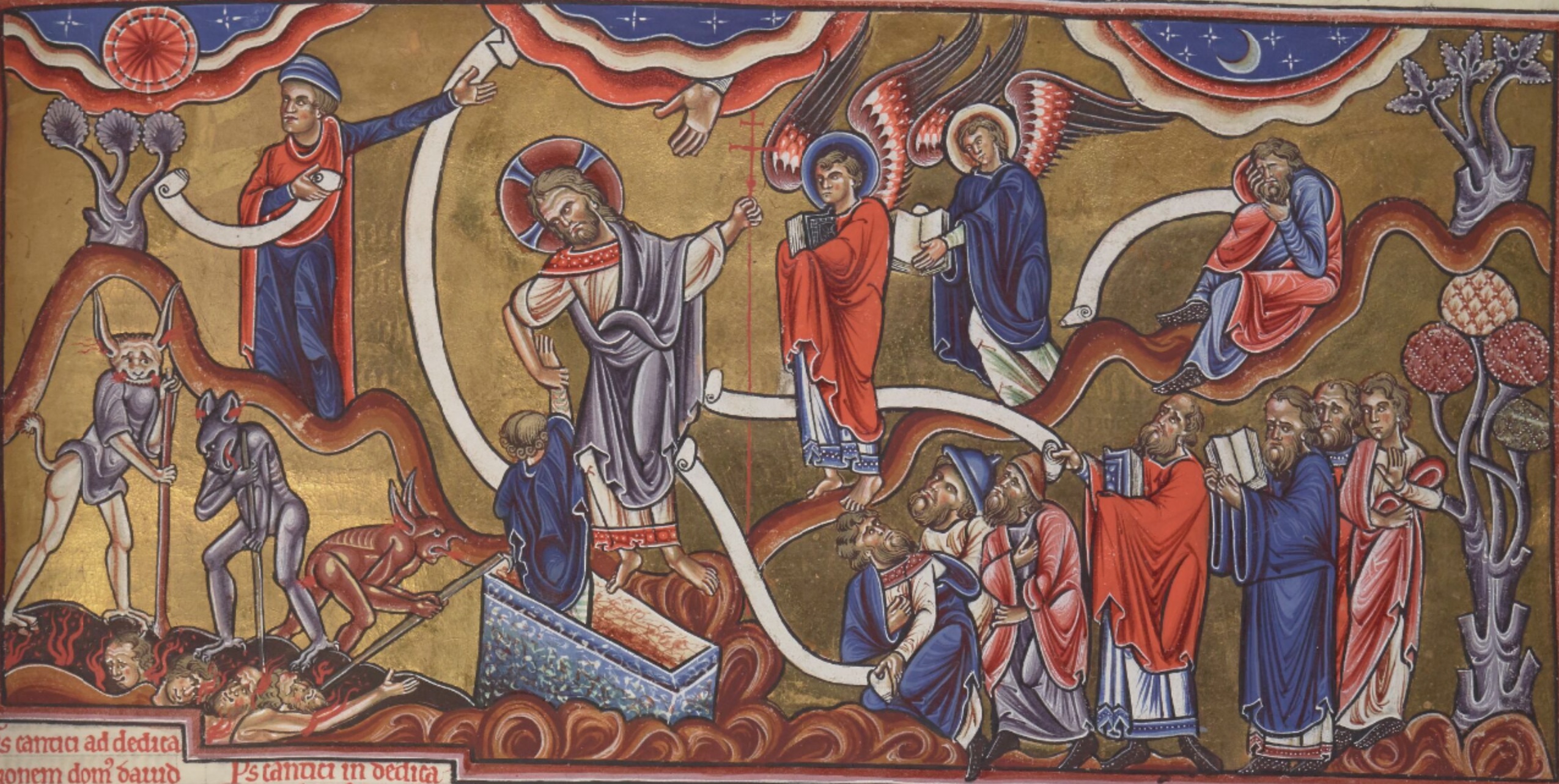
Then I back-applied that decoding-cluster/network to my other work & art images decoding around the key date March 21, 2022 (March-May 2022 broadly) when I coined the phrase “branching-message mushroom trees” in reply to Brown who sent me & Cyberdisciple Marcia Kupfer’s passage about “youths in trees cutting branches”.
(I cover this trajectory in Idea Development page 18.)
Oct. 29, 2004, Post 3611 Fully Nails It
Currently searching archives on Serpent to find first statement “serpent = worldline”… found it.
Note the long term ongoing thread working on decoding snake & serpent.
This post nails it: “snake, serpent and worldline and girls falling. Interesting: it presents the 3 bunk (weak/ merely incidental/ bonus) readings and then as if no better, the correct, main/primary solution: the shape of the snake is nonbranching.
“Snake and no-choice labyrinth and meander all have similar spatial geometry. The snake is wise because it has elixir of death, has rebirth, moves like visual waving distortion, and knows about the 1-D worldline frozen into the heimarmene-ruled block universe. When you mentally perceive your experienced life as a 1-D worldline timelessly frozen into the block universe, your sense of open steersmanship dies, like seeing the attractive and deadly gorgon-face of the snake-haired Medusa and being thereby turned to stone.
Thus the snake is shown wrapped around the heimarmene-ruled celestial globe, or penetrating through it. The snake is wise about determinism, but I see the snake as representing attaining the jump from ignorance to fatal awareness of determinism, not the second major leap, which is the truly divine leap from awareness of determinism to transcendence of cosmic determinism.
http://www.stoa.org/diotima/essays/garrison_essay.shtml — “The females who commit suicide in a state of madness are Agraulos and Herse, daughters of Cecrops, the half-serpent man. … when Athena gave to these girls for rearing the offspring of Hephaestus’ aborted attempt to impregnate her, she instructed them to keep the child hidden in a chest. While sister Pandrosos obeyed, the other two girls failed to heed her warning and upon seeing the snaky child within went mad and hurled themselves from the [why do i omit rock cliff?!] … though the girls’ own father was half-snake, the sight of such an infant drove them insane.””
First Use of First Decoding of “Non-branching” in Religious Philosophy vs. in Myth
“What word most forcefully shuts out possibility of confusion? “Determinism”. Determinism is usually mis-defined as predictionism and domino-chain causality, instead of the non- branching singleness, fixity, and even pre-existence of the future. Still, after correction, “determinism” implies far more principles of High Religion than do the terms “unity”, “love”, “enlightenment”, or “truth”.
“Unity” is not the key to high religion. Neither is “consciousness” or “love”. “Determinism” is the key to the knowledge revealed in high religion.”
Hilarious ironic!
Kafei later saw my use of the word ‘determinism’ and not unreasonably, assumed that just like everyone else and the practically formal definition of ‘determinism’ , Kafei assumed I meant domino-chain determinism, rather than what I meant, eternalism.
“What word most forcefully shuts out possibility of confusion? ‘eternalism’.”
At least, I covered how confusing my “shuts out confusion” word ‘determinism’ is.
Jun. 12, 2004: Extremely Pointed Post “Authentic esotericism is entheogenic esotericism”, 8 years Before Hanegraaff 2012 Keynote Article “Entheogenic Esotericism”
Vid title: “Entheogenic Esotericism” (Wouter J. Hanegraaff, keynote, ContERN 2012) Darth Wouter; Wouter “Star Destroyer” Hanegraaff; talk on Jul. 27-29, 2012. YouTube channel: ContERN Administrators (Contemporary Esotericism Research Network) Uploaded Nov. 21, 2013 https://www.youtube.com/watch?v=LrIMjjPg7uU
Conf intro: https://www.youtube.com/watch?v=cwwbIiOlxYQ vid title: Introducing the Contemporary Esotericism conference (2012) desc: This is the welcome address and introductory lecture to the First International Conference on Contemporary Esotericism, held at Stockholm University, Sweden, July 27-29, 2012. The lecture (Egil Asprem and Kennet Granholm) introduces ContERN, the theme of the conference, and discusses the need for interdisciplinary research on contemporary esotericism.”
Channel notes: “Welcome to the YouTube channel of the Contemporary Esotericism Research Network.
“Here you’ll find academic lectures in the field of Western esotericism. To learn more about this field and about what our group does, please check out the website and get involved in our Facebook discussion group.”
“Wouter J. Hanegraaff (University of Amsterdam) introduces the notion of entheogenic esotericism in this keynote lecture to the First International Conference on Contemporary Esotericism (Stockholm University, 2012).
“Hanegraaff argues that the use of psychedelic substances in not only Western esoteric currents, but in contemporary religion more broadly, has not been sufficiently recognized in academic studies.”
But what about non-drug entheogens ; non-drug psychedelics? He forgot to dance and lie and prevaricate per standard academic ABD Apologists.
ABD Apologists: Anything But Drugs is to be considered a “reasonable” and “evidenced” cause of the intense mystic altered state. abd
I wrote “Entheogenic Eternalism” … no, “Entheogenic Esotericism” 8 years before Wouter Hanegraaff’s 2012 keynote article “Entheogenic Esotericism”, and when I did so it was to chastise him as severely as possible.
“Authentic esotericism is entheogenic esotericism. Entheogens are the key to esotericism. This is the simplest possible theory of esotericism, and the most natural, the least contrived and strained. Theories of esotericism that are not based on entheogens suffer from the problem of grandiose verbiage, unmet promises and claims, chronic vagueness, excuses for lack of potent and prompt efficacy, and no ability to deliver the experiences which are talked about. Drug-free esotericism doesn’t work; it is not effectively ergonomic.”
Walked around paths in mushroom forest preserve every year: branching paths, branching trees: “Isn’t branching vs. non, like I poisted in 2001 re: Physics domain, an ancient Greek key mytheme?
[2011] Hiatus from Public Posting, to September
Breakthrough: Nov, Confirmed branching vs. non-branching is key mytheme.
[2012]
Breakthrough: Nov, Confirmed branching vs. non-branching is key mytheme.
[2013]
Nov. 2013: Confirmed {branching} is a major myth in esoteric art
Breakthrough: Nov 2013, Confirmed branching vs. non-branching is key mytheme. via two pictures, while studying liberty caps: Douris Jason; Cranach: Eve Tempted by Serpent in Campbell The Power of Myth.
[2014]
[2015]
Dancing Man: Hypothesis: {weight on R foot} = eternalism-thinking; {L foot} = possibilism-thinking
Confirmed that hypoth in Nov. 2020 via f134 row 1 of 3, Great Canterbury Psalter, left 2/5 of the row, only; blurry image uploaded by John Lash appar. 2008.
Thanks to Thomas Hatsis’ formal article for UK zine, presenting hi res Dancing Man to entheogen scholars for first time.
See also Ronald Huggins’ 2022 article “Dizzy, Dancing or Dying?” for another exercise in fallacious arg’n.
[2016]
[2017]
[2018]
[2019]
[2020]
Nov. 10, 2020, Brown asked Compelling Evidence and Criteria of Proof
This was impetus lead-in for re-finding Eadwine’s leg-hanging mushroom tree image in the Great Canterbury Psalter, spawning dedic article about that.
From email: November 10, 2020, Brown asked whether Cyberdisciple and I had written about Compelling Evidence and Criteria of Proof, for identifying mushroom imagery in Christian art.
Nov. 16, 2020: Decoded Eadwine Initiation Image Row 1 Left
Sep. 2020 – Feb. 2021: Accomplishments of Past 6 Months
Rebutted vial argument that the vial is not Amanita; proved it is vial designed to look like Amanita.
Wrote Criteria article
Wrote Canterbury article; decoded the Canterbury Psalter “mushroom tree/ hanging/ sword” image, proving 70 mushroom trees in heart of Christian art/history, used for peak religious experiencing.
Proved leopard drinking from Amanita, in Dionysus Thiasus Triumph mosaic.
Identified mushroom-shaped grape-baskets in Montecassino.
Defined Grid Game & Forgot Plots for esotericism including for ahistoricity & for entheogens.
Decoded initiation at Eleusus: Lesser Mysteries are for learning book theory of analogical psychedelic eternalism; Greater Mysteries for firsthand initiation. Mapped to the Canterbury Psalter “mushroom tree/ hanging/ sword” image.
Documented rules for guides, examiners, candidates, based on the Canterbury Psalter “mushroom tree/ hanging/ sword” image.
Created gallery of lifted garments images indicating ASC.
Created a series of voice recordings/ Egodeath Mystery Show episodes.
[2021]
[2022]
Mar. ~6, 2022, Brown Sent “Youths in Trees Cutting Branches”
from email; check date. todo [see just below for proof of such dates]
Mar.-Apr. 2022 Decoded {Handedness} & {Non-Branching} in Familiar Images
read my posts here to retrieve the dates – todo
Mar. 21, 2022: Branching-Message Mushroom Trees
Top-10 dates to memorize are bold red.
2025/02/25 – Confirmed date. Gmail search results view does NOT show the specific date of the containing post; you have to display all the posts in the thread, find the specific post that contains the string “branching-message mushroom trees”, and then look at the date.
The Subject line of the email thread is “Parasol Panaeolus Graves“. The thread began March 20, 2022, and ends Feb 10, 2023 – the latter is displayed in search results, confusingly. I captured it:
“branching-message mushroom trees email.jpg” 95 KB 8:45 pm Feb. 25, 2025 My email sent March 21, 2022, with first mention of “branching-message mushroom trees”.
.png to try clearer:
“branching-message mushroom trees email.png” 203 KB 8:45 pm Feb. 25, 2025 My email sent March 21, 2022, with first mention of “branching-message mushroom trees”.
Monday, March 21, 2022: Prof. Brown sent me the 2019 article’s Kupfer passage about youths in trees, and,
Monday, March 14, 2022 Finished new article, The 75 Mushroom Trees of the Canterbury Psalter https://egodeaththeory.wordpress.com/2022/03/13/the-75-mushroom-trees-of-the-canterbury-psalter/ One week later, now knowing the 75 trees, this m-tree catalog set me up to comprehend branching-message mushroom trees as an intentional feature, the extreme opposite of a bug or arbitrary whim or mere clever problematization joke.
Jan 6 2021 dragon teeth = blade (in idea development page 8)
Jan 6 2021 Finally announced the “flash in back of mind 5 times” idea, fire-breathing dragon. .
More mapping of mytheme {caduceus}. [January 6, 2021] (see idea development page 8)
Jul. 4, 2022: {branching-message mushroom trees}
{branching-message mushroom trees} as a Major, Named Motif
todo – look up these dates by searching at this site (I posted tons of date-time stamps for each discovery), log them officially here for reference. In some cases get date of emails.
Announced at Facebook – which is hens-teeth rare, so, easy to retrieve that date – a good, pinpointed date at which I fully got the comprehension and recognition of the motif, {branching-message mushroom trees}.
/ end of section
[2023]
Feb. 9, 2023 – Decoded Hand Shapes, Fingers, Thumb, Mapped to Possibilism & Eternalism: Entry into Jerusalem, St. Martin Church
Today, January 19, 2026, having discovered patterns in Canterbury f107 (especially the mushroom-tree touching guy with hand-shapes), I can now say that I have fully corroborated the hypothesis of Feb. 9, 2023, that branching vs. non-branching morphology formed by hand/ finger/ thumb, maps to possibilism & eternalism.
Feb. 9, 2023, into Feb. 10: Emailed Brown the Fingers Shapes etc.
finger/object shapes at Jesus’ hands in St. Martin: branching vs. non-branching.
That’s a year Probably soon after March 21, 2022 (date of email thread w/ Brown re: branching-message mushroom trees / St. Martin “Entry into Jerusalem”).
p.m. January 19, 2026 — that hypothesis is further confirmed, by Great Canterbury Psalter folio image f107.
todo: keyboard shortcut – my fav 6 Great Canterbury Psalter images: url for my fullscreen image.
todo: update sidebar nav to add f107. What emoji? __ R hand palm: either: ✋🖐
✋🖐
{Fingers held together} matches the genre, but {fingers splayed} is more obvious in a way.
A Teaching Aid Ready-to-Hand: The YI Hand Shape; Fingers; and Thumb
God gave us 4 fingers & 1 thumb, on each hand, enabling us to teach each other w/ a teaching aid ready-to-hand.
Using a single hand, we can represent I vs. Y; eternalism; non-branching mono-possibility, vs. possibilism; branching possibilities.
Feb. 26, 2023: Horses Looking at Non-Branching and Held Up by God by Right Hand, in f177
Crop by Michael Hoffman, Feb. 26, 2023
I remember, and want to continue to remember, how it felt after I had the huge f134 decoding Nov 2020, but still then was puzzling over f145 & f177 – making inroads there but still was puzzling.
Then I discovered — while puzzling over the BOTCHED CROSS-UNDER of tree f177 row 1 left — with 4 horses… eventual outcome after refinement: the two items that the horses look at are affirmed and connected together: non-branching (middle cap of tree) + 2-level control (God holding up by R hand).
Mar. ~26, 2023: Proved Blue Vase f134 row 3 middle Contains Cubensis
Got unexpected confirmation that the blue vase f134 row 3 middle contains Cubensis Golden Teacher: he’s looking up at grain dispens bins which contain mushroom shapes.
I speculated about that around a year earlier, jokingly, stupidly never attempted at that time to look for proof; was completely surprised and felt stupid when finally realized, opened eyes, that the proof is provided by Eadwine.
Idea Development page 19 (2023/03/22 – apparently way back in page 19 covers that time period. Not mentioned – because I wasn’t actively updating that page or this site during hiatus – the image brought me out of hiatus but i posted a dedicated page Nov 11 about Nov 7 discovery, but didn’t update idea development page until after dec 12 (2024).
Nov. 2024: Folded Legs in Tauroctony
Folded legs in tauroctony perceived more clearly than before. Legs are angled making interp hard: solution: the folded leg proves weight not on that leg, therefore weight is to be read as on other foot.
Nov 2024: Ppl get tricked by “crossed legs” of Cautes & Cautaupates, but more to the point is, which foot is their weight on?
Versions of Taur’y have tendency to combine “weight R foot / torch up” in most cases, more often than the reverse. like 2/3.
After weeks/months, following intuition that Day 3’s four plants have a meaningful pattern, first I tried analyzing pairs of plants – failed, but built up a database of analysis.
Discovered not pairs but read L to R as increasing comprehension & elaboration of branching form:
trident, IYI, YI, IY/YI
Idea development 23 has record.
Discovered Eadwine provided evidence to confirm my indirect certainty that Day 1 balance scales contain Golden Teacher Cubensis or rather are pointed to by Panaeolus & Amanita in Day 3 below it.
Jan. 28, 2025 (incomplete): “5” [sic, 8] Instances of {balance scale} near {mushrooms} in Great Canterbury Psalter
Jan. 13, 2025: f11 Day 1 & Day 4: Proof “Creation of Light” Balance Scale Bowls Contain Mushrooms
Crop and Annotations by Michael Hoffman , f11 [1:15 am Jan. 13, 2025] Y Y I I
Day 1 & Day 4: Proof that Day 1 Creation of Light Scale Balance Bowls Contain Mushrooms
Jan. 13, 2025: f11 Day 3 “Creation of Plants” Branching Form Develops from III, IYI, YI, IY/YI
Crop and analysis by Michael Hoffman, Jan. 13, 2025
Day 3: Branching Form Develops toward Increasing Comprehension from Left to Right: III, IYI, YI, IY/YI
Jan. ~27, 2025: f11 “Tree of Knowledge” Grid of Liberty Caps w L & R arms Proves Grid = Branching
Crop by Michael Hoffman, f11 {cut right branch}
Eat from Tree: Arms/Branches of Each Liberty Cap in Grid of Cap Indicates Mushroom-Trees within Mushroom-Trees, Proving every grid-cap = multiple/ branching
Includes {cut right branch} cross-under under cap/crown matching Dancing Man and the two adjacent trees.
f11 row 2 left: Day 4 of Creation: four pilzbaum without branches, & plants (Bible: Sun, moon, & stars)
Crop by Michael Hoffman, Jan. 4, 2025
Features:
thumb against open book = eternalism-thinking – mentioned this decoding a few days before today; today is Feb. 5, 2026.
R hand pinkie & ring visually cut the middle & index fingers. figured out a few days ago, not sure I logged this decoding, b/c overwhelmed with jackpot of too many discoveries too quickly, with this week’s jackpot week: hand-shape theory. today is Feb. 5, 2026.
Hand-Shape Theory. I declared Tue., Feb. 3, 2026 the official representative day for peak breakthrough of hand-shape theory.
Status of this Page
Very incomplete. This is far from a list of my breakthroughs. It’s just a start; a framework w/ some examples filled in. eg, my tradition is, since like 1987:
Every 6 months, list my accomplishments of the past 6 months. Expect at least 2 breakthroughs every year from 1987 or 1988 – 2026.
Motivation for Creating this Page
new Log file: motivation: i need a page where during the day, 15x/day, make a quick entry, like the below mockup:
[# a.m. January 3, 2021] now i solved x.
[# a.m. January 3, 2021] now y.
[# a.m. January 3, 2021]now solved z.
[# a.m. January 3, 2021]got email from scholar asking if we (cyb) wrote a Criteria article.
[# a.m. January 3, 2021] started writing Crit articel.
[# a.m. January 3, 2021] crit article reached 50 pages.
[# a.m. January 3, 2021] started decoding the Canterbury Psalter “mushroom tree/ hanging/ sword” image with the trained, self-threatening Psalter reader. within the “Crit” article at (eg; fakedate) 6pm Nov 10, 2020.
section on Hanging reached 11 pages, so I’m breaking to sep article. 12:30 am Nov 11, 2020 (eg, fakedate).
sent article for Peer review. [dts]
proof article [# a.m. January 3, 2021] – solved upturned palm & face xrpn.
Criteria article: Add Ack section, maybe dedicate to Brown, or Dedication note.
Proof article: add dedic to brown note, or, in Hisotry article, ie Methologdy Decoding Canterbury Image article, list the Hsistory of that aritcle. BETTER RECORD THE HISTORY NOW, WHILE FRESH.
DATE ON WHICH BROWN ASKED WHETHER WE DEFINED CRITERIA.
DATE I STARTED THE “CRITERIA” ARTICLE.
DATE I ADDED CANTER TO CRIT ARTICLE
DATE I MOVED CANTER SECTION 11 PAGES INTO SEP PROOF ARTICLE AFTER THE LITTLE SECTION GREW TO 11 PAGES AND RISING FAST. HOW MUCH HAD I SOLVED, THAT WAS LIKE 6 HOURS OF DECODING-WORK ON THE BLURRY YELLOW NO-CONTEXT CROP OF MUSHROOM TREE. HOW MANY DAYSS TO (MOSTLY) SOLVE TOP ROW? HOW MANY DAYS TO (MOSTLY) SOLVE WHOLE IMAGE EG HE’S DUMBER THAN AN OX. Too much work to accurately figure these durations! My logging, yeah, it’s a start. But… I need a more proper log! AS SUCH! I COULD reuse my “History of Devleoping the Egodeath Theory” page, but…… i dunno, i really better do a REAL LOG FILE AS SUCH! (done; created present page)
[Samorini mushroom trees] My Review of Letcher Recommends Both Samorini Mushroom-Tree Articles
[meta-theory] Diversion/Aside: Theory of Science: A Successful New Theory Enables Perceiving New Problems (misreading: “the New Theory is revealed to be problematic b/c of new problems”)
History & Theory of Science
Theory of Science, Decoding Visual Mythemes
[entheogen scholarship] Customer Reviews of Letcher’s book Shroom
[mytheme decoding/example {guard, furies, pollution, honor}] Hubristic Intruder’s Pollution & Impurities Arousing the Furies to Eject the Violator & Trespasser Who Refuses Honor to the Gods
The more I listened to and carefully analyzed the words and tone of voice of someone presuming to talk about the Egodeath theory, the more my automated alarms rang louder,
“Intruder Alert! High Pollution Level Detected! Robbery in Progress!”
RED ALERT! RED ALERT! UNDER ATTACK!
That’s despite other signals, “Surface readings indicate there is no problem.”
Meanwhile my Egodeath Guard-gods, Cerberus, smell something bad, and is/are barking their heads off!
MALICIOUS HOSTILE FOREIGN INTRUDER INTO THE TRANSCENDENT REALM! DEFEND HADES’ DOMAIN! COMMENCE EJECTION!
wik: “In Greek mythology, Cerberus , often referred to as the hound of Hades, is a multi-headed dog that guards the gates of the Underworld to prevent the dead from leaving.
“He was the offspring of the monsters Echidna and Typhon, and was usually described as having
“three heads, a serpent for a tail, and snakes protruding from multiple parts of his body.
“Cerberus is primarily known for his capture by Heracles, one of Heracles’ twelve labours.”
Echidna – “a monster, half-woman [employ {virgin maiden}] and half-snake, who lived alone in a cave. She was the mate of the fearsome monster Typhon [serpent monster] and was the mother of many of the most famous monsters of Greek myth”
[podcast] Ironically, Podcast Suggests Using Specific Quotes from People’s Theories
postcast irony: ep3: 1:42:00:
“in future episodes, we should get more specific in focus, dissecting individual theories more closely, and incorrping sound bites and quotes from peoples’ theories in order to deconstruct, to have a more substantive focus.”
One guest could’ve used quotes of the written Egodeath theory (and two bouncers to keep him in check) to prevent his strawmanning the f out of the Egodeath theory.
Obsessively learn passages by heart, of the Egodeath theory, and recite from memory to everyone whose path you cross.
The Egodeath theory attracts the mind into control-seizure & trembling prayer conceding trust in the hidden controller/creator to avoid destruction. If you’ve been flipped from possibilism to eternalism the god did it, lion-headed god outside the fate-ruled system.
dove — better a gentle harmless {dove} overpower your {maiden virgin} soul, than an {eagle-headed fire-breathing serpent monster}, which is equivalent to {dove}. Saved by the lamb (not by the powerful ram like Isaac.
Surface connotations: Do Not Harm the Boy. the egoic control system. Demonstrating its vulnerability potential that is the organ through which the spiritual rebirth transformation of the mental worldmodel from possibilism to eternalism.
[podcast, pop sike cult] How Pop Sike Cult Supports Prohibition
~1:43:00 episode 3, Transcendent Knowledge podcast: 1:47:00, 1:53:00 I think later is where Cyb famously says
It’s at 1:54:00 —
another highly quotable passage from a Famous Mystic:
“that drugs are a problem, and we just need to; drugs are a problem, but the way we’ve been doing the drug war is failing, and so we need to change the way we’ve been doing the drug war, or rename it or rebrand it or something like that”
“… MAPS works within Prohibition” — in a YT vid, the CSP (Council for Spirl Practices) guy reports that EVERYONE IN ENTHEOGEN RESEARCH IS FURIOUS AT RICK DOBLIN FOR ALLYING WITH THE PROHIBITIONISTS (starting w/ MDMA).
Rick Doblin is PERSONA NON GRATA.
Shades of Irvin discovering to his horror that all famous-name entheogen writers are in cahoots with schemers. If you’ve heard of them , they’re bad. Any entheogen writer whose work is promoted by The System is contaminated and compromised. That’s why Irvin flipped his values and bailed on the whole field of entheogen scholarship, after he interviewed all of them. Pop Sike Cult is a $3 bill. Fake Grassroots. Fake “Drug Policy Reform”.
[podcast, meta-theory, entheogen scholarship] Amateur History Blogger Hatsis Needs to Stop Centering the Field Around the Pop False Center, and Guide People to Properly Frame and Center the Field
I’m talking specifically about recognizing the real central role of Psilocybe in Hellenistic Mystery-Religion initiation & mixed-wine banqueting & esoteric Christendom.
AGAINST THE LETCHER-HATSIS BOOK-WRITING STRATEGY:
DON’T FORM & SELECT THE STUPIDEST POP THEORY YOU CAN THINK OF/FABRICATE, FOR YOUR “CONSPIRACY” BOOK, AND THEN PROP UP YOUR VENEER OF CREDIBILITY BY DEBUNKING THE SH*T THEORY THAT YOU SELECTED *BECAUSE* IT WAS THE WORST, WEAKEST THEORY YOU COULD FIND/FABRICATE.
Is that all that you’re able to do, debunk the very weakest, most malformed theory that you could dredge-up?
MAKE YOURSELF USEFUL!
PUT YOUR HISTORY EXPERTISE TO *GOOD* USE: REVEAL PSILOCYBE IN HELLENISTIC CHRISTIAN HISTORY.
Transcendent Knowledge podcast episode 3, 1:28:00
You do realize, Irvin’s left the field and flipped his values? So why center your critique around Irvin? and Allegro?
STOP CENTERING THE FIELD OF WESTERN MUSHROOM ENTHEOGEN SCHOLARSHIP AROUND AMANITA-IRVIN-ALLEGRO-WASSON!!
Strategy to Re-center the Field of Western Entheogen Scholarship
1. Point out the wrongness of making Amanita-Allegro-Irvin-Wasson the defining-center of the field; BUT YOU’RE NOT DONE YET!
2. Lead people to the correct center, which is Psilocybe Mystery-Religion initiation mixed-wine banqueting Christendom/Hellenistic integrated.
Re-outlining a Page, Word, Origin of Egodeath.com, Added First 3 years of Postings to Egodeath.com
re-outlining this page: in WordPress, re-outlining a page is extremely hard. In Word, it’s extremely easy, which is why 1989-1996, I used one gigantic Word file, which became my egodeath.com website. Then I added-in all the the Egodeath Yahoo Group postings threaded, June 10 2001 to Valentines 2004. So any mythemes I decoded — or i wish, a Formal Accoun Announcement of THE EGODEATH THEORY OF MYTHEME DECODING –, before Valentine 2004, are at Egodeath.com website. What motivated me at that point in time, Valentine 2004, to copy all the Egodeath Yahoo Group postsings to Egodeath.com? (I f’d up, failed to put posting-dates at the website.) I knew that in Valentines 2004, that body of postings was top-quality, better than any other writing, contained my entire theory of mytheme decoding , which I then summarized all those postsings in the form of the main, 2006 article.
[podcast] Memorizing Classic Podcast Passages Said by the Great Mystics, in Order to Make a Show of Parrotting them at People
As I re-listen to podcasts, there are passages that stand out as quotable and classic.
Done: Episode 3, 57:00 todo: polish this transcription & add to Episode 3 Commentary page:
[podcast] Ruck’s Self-Contradiction: Entheogens Were Ubiquitous and Secret
Max: “But the more that Ruck pushes in that direction of broadening the scope of where you can identify entheogens, the more that his overall picture starts to look like a blatant self-contradiction, because what he’s saying is, absolutely everybody everywhere knew about entheogens and was tripping, but it was all kept- it was all a secret, and nobody really knew about it — but you know, which one of those is true?”
[university, degrees] Found Myself Forced to Assign the Higher Degrees
My granting bachelors’ degrees had come to be problematic, because it had come to be, ironically, an insult, to merely claim that Cyberdisciple and Max Freakout were “Bachelor degree”-level.
So I had inadvertently put myself in a position where I’d later be forced to also assign them, as if correctively, additional, higher degrees.
This is one reason why, even if in some sense “I *am* the University”, I can’t be in the business of assessing candidates to assign degrees; degree assignment is complex.
[books] Moved Sections About Books to a New, Misleadingly Presented Page, Which Doesn’t Cohere and Which Stands as an Example of an Ill-Advised, Socially Inept Approach that’s Not Likely to Succeed
I prematurely moved many book-related sections from the present page to my new, sketchy, and unlikely to succeed WordPress page, Mystics’ Writings Unhelpful.
That new, beginning page is very rough and socially unpolished, and makes grandiose statements that are high-risk and ill-advised.
My new WordPress page quotes mystics at great length from my reverently memorizing their writings by heart, while failing to say anything helpful, pertinent, and specific about why mystics’ writings are unhelpful.
Even more un-polished, naively, and ill-advisedly, I added a new section to the following page: Running Jokes at Egodeath Site: The Absolute High Dose, to – by Sheer Brute Force of Extreme Overdose – Bust into the Elite Club of Famous Mystics, Who Wrote that “Blah Blah…
[to-do mgmt] Hiatus Now, Means Pick Only 2 To-do Items and Delete All the Rest
Now I have to go on hiatus, so I have to pick like 2 to-do items, and demote all the others to P5 (death-sentence for to-do items).
To Do Page Urgently Needed, Feels Like Working on this Site Isn’t Working, Isn’t Sustainable, To-do-Ideas Explosion
Standard strategy for this situation: use the To-do page to the max, aggressively demote priorities, assign priority to each item, then focus on letting the Pri0 items drive updates to the site.
I’m going to need 15 grad student slaves at this rate. Totally not sustainable.
I’m falling behind what fixes are needed, the more I work on this site. I remember how in Nov 2007, when I went on hiatus from public work until October 2011, … for one thing,
I remember my fear that Yahoo would delete the the Egodeath Yahoo Group due to lack of activity.
I was making full-speed-ahead progress on the Egodeath theory throughout 2007, but needed to stop, and it felt like there was no rational justification for stopping, but I had to.
In 2007, I was “living off credit cards”, or “borrowing” or “stealing time from the rest of my life”.
To make that kind of progress through 2007, required putting off stuff; it was borrowed time.
To accomplish the HUGE amount that I accomplished by November 2007, involved horrific levels of stealing from the rest of life.
so, Dec 2007-Sep 2011 I had to do all the other stuff that I should have been doing instead of my Great Achievements thorugh 2002-2007.
It felt like “there is no way to rationally justify this SACRIFICE, of stopping work on the Egodeath theory, to switch gears to infinitely less important stuff.”
[entheogen scholarship] Letcher-Hatsis Thinks Rebutting this New-Myth Book Is the Same Thing as Correcting Entheogen Scholarship
Blurb
“After reading you’ll know the truth about:
How reindeer fly through the sky
What made pine trees a quintessential part of holiday preparation
Why elves got roped into the scheme.
“In a time when we’re disconnected from old traditions, reawaken your family’s Christmas customs with this heartwarming story.
“hand-illustrated story of a 10-year old girl discovering the magical history of Santa Claus.”
[pop sike cult] Reviews from the Pop Sike Paradigm
“Our family loved this fascinating look into the history of some of the most beloved Christmas traditions.” -Katie Wells, Founder of WellnessMama.com
“The true story behind the legend of Santa Claus will bring a whole new dimension of jolly cheer to your celebration of Christmas.” -Aubrey Marcus, New York Times bestselling author
“Anyone seeking knowledge and greater understanding of self will find this book inspirational.” -Reggie Watts, Singer, Musician, Actor and Comedian
“This book connects the dots of the sacred past to our present understanding, and hopefully to our sacred and wise future.” -Ry X, Grammy Nominated Musician
“Reading this feels like experiencing the magic of Christmas all over again. Bring on the holidays; Santa was a mushroom shaman.” -Justin Boreta, Founding Member of The Glitch Mob”
[myth wrecking vs. mytheme decoding] Bah! Humbug.
My Ahistoricity Work Is Reluctant, not Gleeful Myth-Wrecking
tonotdo: link to Killjoy Hatsis‘ vid proving the bleak & drab history of the fake, manufactured, recently invented pseudo-tradition of so-called “Christmas”.
[meta-theory, entheogen scholarship] There Are Three Contending Positions on Mushrooms in Christian History, Not Just Two
Step 1: Debunk pop pseudo-history of mushrooms in Christendom history. THEN CONTINUE TO NEXT STEP.
Step 2: Specify the true role of mushrooms in Western religious history. “None” is not true. The choice is not between “bunk description of role of mushrooms”, vs. “No Role of mushrooms”; the choice is between “bunk” vs. “actual”.
Letcher-Hatsis: “No mushrooms in Christian history.” His position re: mushrooms in Hellenistic history = Undefined.
Hoffman-Brown: Mushroom Shapes in Christian Art prove Psilocybe thorughout Christian history. Hoffman – “along with Psilocybe in Hellenistic Mystery Religions’ Sacred Meals & Mixed-Wine Banqueting”.
What is absolutely unacceptable is for Letcher-Hatsis to STRAWMAN to CONFLATE the Hoffman-Brown position with the Pop Sike so-called “Wasson-Allegro theory” or whatever the confused garbled view is.
THE HOFFMAN-BROWN POSITION IS NOT THE POP SIKE (SO-CALLED, ILL-DEFINED, POORLY SPECIFIED, POORLY LABELLED “ALLEGRO THEORY” OR “HOLY MUSHROOM”) POSITION.
[meta-theory, entheogen scholarship] Bad Titles of Positions and Books; How to Properly Label Fields of Research
Those careless, sloppy, narrow-perspective position-labels reek of an unscientific, improper, unprofessional approach. They are labels made by illiterate, under-read people. The writers / historians need a more adequate scope of reading in the fielld, b4 making-up position-names. These are terrible position names, that reveal that the person who coined them is grossly under-read in the field, and brings a highlight lopsided, unbalanced view, treating only 1/4 of the considerations. they are extrmely amatuer position-lablees, like Cyberdisciple would perceive if Muraresku were to make-up position-names that had BAKED INTO THEM, the very wrong notion / implication, that the only Mystery Religion was Eleusis.
Bad Book Title:
Understanding Mystery Religion: All About Eleusis
Bad Book Title with wrongness & ignorance obviously baked-in:
Are Psychedelics as Authentic as Traditional Meditation & Contemplation?
bad position-name, revealing the author who coined it is very under-read:
The Allegro Theory (why not just yell “I NEVER HEARD OF ROBERT GRAVES”)
The Holy Mushroom Theory (you might as well scream “I’VE ONLY READ ONE BOOK, BY ONE AUTHOR, 11 YEARS AGO, WHO CHANGED HIS VIEWS AND LEFT THE FIELD”)
The position-name “Holy Mushroom” is arbitrary, unjustified; mis-labelling the field as “the Allegro theory” or “the Holy Mushroom theory” distorts the field it presumes to clarify.
I do a lot of work on theory-naming, and lexicon-establishing.
These are terrible labels for positions! These position-labels grate on me! Everything’s wrong w them!
Those position-labels *stink*, they reek of STRAWMANNING THE FIELD, MISREPRESENTING THE FIELD AS the field OUGHT TO BE APPROACHED.
As a scientist, I agree with Hatsis, debunking pop pseudo-history.
As a mythology decoder, I side with pop pseudo-history, just as I support Christian exoteric literalists: I believe in Mr. Historical Jesus and I believe in Santa Claus.
Scrooge Grinch Hatsis should keep his hands off Santa.
Do entheogen scholarship, but must you destroy mythology in the process of explaining mythology?
the Mystic Truth is, Mystery Religions’ Sacred Meals = Amanita = Secret Santa Shaman Cult.
[meta-theory] Proof that God Exists: I Can Say “Peer Review” with a Straight Face
The proof is that I can talk about “peer review” of my Proof article, without laughing that the idea is a massive contradiction when it comes to Revolutionary Science, at the extreme, where there literally is no “Old Theory” in any meaningful sense re: scope or purpose, and there are no “Peer Group Cohorts in the Field”, bc the field doesnt exist yet dumasss r u dense??
Do you not understand the concept, “NEW FIELD“? How the hell do u talk in terms of “peer review”, WHAT “PEERS”, GIVEN THAT ITS A NEW FIELD – R U DUMB?
The Egodeath theory is THE definitive example of there being no “peers” b/c the New Theory has way broader scope of explanatory power, unprecedented scale of a New Theory.
In this extreme case, you have *no* “Old Theory” in any sense whatsoever; in contrast with the New Theory which is the broadest, best, completely successful with far more explanatory power than anything; there’ s… it’s incomparable.
Go look for “the Old Theory”, all you can find is heap of scraps, attitudes, assumptions, scattered dissipated across topics/fields. In this extreme case, the New Theory instantly completely wins by default, that there exists… the New Theory is 100% successful, and there exists no “Old Theory” to contest against.
In this extreme scenario, KUHN’S MODEL OF THEORY-REPLACEMENT OF AN OLD THEORY BY A NEW THEORY DOESN’T APPLY, BECAUSE THERE *IS* NO “OLD THEORY” TO COMPARE TO THE “NEW THEORY”.
AND THERE ARE NO “PEERS” TO DO “PEER REVIEW”, BECAUSE IT’S A COMPLETELY NEW THEORY IN A COMPLETELY NEW FIELD, EG LOOSE COGNITIVE SCIENCE + MYTHEME DECODING.
WHAT ARE you going to do, assign me Ruck as a “peer” to review the entheogen scholarship / entheogen history portion of the Egodeath theory, without Ruck and his co-authors even having any conception or awareness of the very existence of the Egodeath theory?
The Strawman Fabrication Industry
Are you going to assign some Expert Scholar of Mystic Sh*t to critique the Egodeath theory – when he hasn’t even read a single word of the Egodeath theory, and is intent on casting it into his manufactured garbage can of strawmanning, called “unfolding in time”, just as Hatsis cast Brown into the garbage-can of Hatsis’ own fabrication, “followers of the Allegro theory”?
Peers? What “Peers”, wtf nonsense are you talking about, are you not clear on the concept, of “New Field”? Every field has to be new at some point. Science & Engineering starts new fields all the time.
The whole concept of “peer review” reeks of mere “Normal Science” (said here with the same disdain as saying “people who think in terms of ‘unfolding in time’, as against us Special Elite Professional Certified & Credentialed Famous Mystics(TM)“).
I don’t do mere “Normal Science”. That’s for the little people; unpaid grad-student slaves.
I mustn’t sully my hands and be tainted with mere Normal Science; *I* strictly do Revolutionary Science.
[System of Theories] Podcasts Influencing Me to Preserve My Original Topics of Concern
Historical-Usual-Familiar Happenstance 8 topics
I assessed that in my system of 8 topics, 3 of them are clearly weak points:
no-free-will – Yesterday and day b4, I reasoned:
just b/c no-free-will was a major recurrent concern and reading topic of mine from November 1987 in breaking-through Watts Way of Zen to correct and make it articiulate, through 1999 What Love Is This book by Dave Hunt, and John MacArthur — ie, CALVINISM/REFORMED THEOLOGY, and thorugh 2006 — “determinism” — doesn’t mean I should annouince and promote it in 2021 as a signif topic. I’ts genero as hell. Similarly, no one cares about frivloous, cheapening Rock Lyrics theory. Similarly no one cares about irrelevant Ahistoricity; I sure don’t care about ahistoricity; it’s rock-bottom outer periphery and purely entirely negaative, not any positive contribution to the Egodeath theory.
no-free-will – No One cares, and this angle is least distinctive of the Egodeath theory.
Rock lyrics – No One cares, and this angle is least distinctive of the Egodeath theory.
Ahistoricity – No One cares, and this angle is least distinctive of the Egodeath theory.
Where does my terse top-level outline reside? In my IP page. My IP page is in category “the Egodeath theory” (of Site Map).
[System of Theories] Terse Top-Level Outline of 1+2+8 Theories
the Egodeath theory
the Cybernetic theory
loose cognition
block universe
no-free-will
control cancellation
the Mytheme theory
Rock lyrics
ahistoricity
entheogen history
mytheme decoding
[Egodeath Yahoo Group] New Site: egodeathyahoogrouppostings
*issue*: these Digests EXPOSE ADDRESSES IN SOME CASES. Have one of my grad-student slaves scrub a copy of the 183 .html Digest files to globally remove @foo, but can skip / keep the defunct utility @yahoogroups addresses. nuke the non-rendered ones as well. The goal is to delete domain name of personal email addresses of other people.
“This is an awe-inspiring work… It is extraordinarily ambitious. It aims to recover and understand, so far as the sources allow, the entire early Stoic theory of fate, causal determinism, and responsibility. It achieves this ambition while at the same time showing how immensely more difficult the task is than anyone had appreciated before….It will most certainly be the first work that everybody interested has to get to grips with. They will have to start here [after the Egodeath theory -mh] both because the book is a model of scholarly method and because it [the Egodeath theory? oh, no, just a stupid book on Stoic no-free-will self-contradictory waffling, inferior to MY self-contradictory Incompatibilist-Compatibilism theory of waffling -mh] is an outstanding example of lucid philosophical thinking in an area where clear thought is extremely difficult.” — Miles Burnyeat, All Souls College, Oxford”
[podcast] Approach for Quick Addition of Podcast Comments
Also consider: WordPress “Add Comment” format. The To-Do page is working, does seem to be right approach: Create various special-single-function WordPress pages (eg: Log of updates to old pages; to-do page; year lookup page for egodeath theory history; History long-form page; hourly log of accomplishments).
My Podcast Commentary approach is bad, unweildy, need lightweight.
Formal pages are too time-consuming to create.
finding my orig posts of commentaries is hard to complete, extremely high degree of distractability. Complex: broke off sep Commentary thread at some point. It’ s a PROJECT to “merely” locate my orig posting in the Digest HTML files and copy that posting to WordPress.
Create a streamlined approach to writing comments. eg in my single main Podcast page, add inline comments there. That should work very well. I wish I could conquer this task of copying commentary posts to WordPress, but that task will never complete, if i try to do ideal webpage for each episode’s comments. Even “merely copy the commentary post to the section of my single TK Podcasts page” is uncompletable, if I get pulled into interesting diversions , asides.
[mytheme decoding] Too Busy Harvesting Jackpots to Ever Get Around to Mentioning a Decoding I Accomplished 5 Years Ago — How Does that Work?
I Think of an Idea 18 Times over 3 Years Before I Finally Mention and Announce that Idea, WTF Is Up w/ That?? {*FIRE*-BREATHING gate-guarding DRAGON}
Decoded Fleetingly in Back of Mind, but Never Announced
(also [1:06 p.m. January 6, 2021] – dragons’ teeth sown by Perseus into the ground becoming fighting warriors army – TEETH = BLADES; DRAGON TOOTH = BLADE = FIRE-BREATHING). fact-check: aren’t these the teeth of Media’s Drakons? Perseus sow teeth army rock. How to fact check, some say “tooth”, some “teeth”.
Fact-Check: Perseus Sowed the Blade-Teeth of Which Drakon? Is Drakon Fire-Breathing? Perseus Repeats Actions of Earlier Cadmus?
Crap, I can’t research this fact now. 3 Pri0 tasks on the stack rn.
Cetus = ketos = short sea-serpent beast w/ front paw-fins
trustworthy site, theoi.com, https://www.theoi.com/Gigante/Spartoi.html “THE SPARTOI (Sparti) were a tribe of warlike, earth-born men which sprang fully grown and armed for battle from the sown teeth of a Drakon (Dragon) sacred to the war-god Ares. The first of the Spartoi were sown by the hero Kadmos (Cadmus) from the teeth of the Drakon of the Ismenian Spring of Thebes. As they were sprouting from the earth, he cast a stone amongst them and they fell to fighting.”
wik preview “In Greek mythology, Perseus (/ ˈ p ɜːr s i ə s,-sj uː s /; Greek: Περσεύς) is the legendary founder of Mycenae and of the Perseid dynasty.He was, alongside Cadmus and Bellerophon, the greatest Greek hero and slayer of monsters before the days of Heracles. He beheaded the Gorgon Medusa for Polydectes and saved Andromeda from the sea monster Cetus [=ketos; short sea-serpent beast w/ front legs/fins].He was the son of Zeus and the …”
The Top 5 Dragon Slayers from Greek Mythology | Classical … https://classicalwisdom.com/mythology/heroes/top-5… “Aug 22, 2014 · He did as advised and stole the tooth from the sleeping monster. Then, like Cadmus, he sowed the dragon tooth into the field, which grew into an army… and, again like Cadmus, he threw a rock into the middle of the crowd. Not knowing where the blow had come from, the army once more turned on each other and self-destructed.”
{angel of death blocking the path / gate, with a sword of fire, flaming sword}
{blade = fire = winnowing-basket = salamander roasting} = remove the volatile portion, possibilism-thinking, leaving “that which endures fire after transmuation”, ie eternalism-thinking (+ qualified possibilism-thinking)
[OD gateway, battle of wits] Busting Through the Death-Guarded Gateway by Sheer Brute-Force of the Absolute High-Dose Overdose
[battle of wits] Truly You Have a Dizzying Intellect
To get into the exclusive elite club of The Mystics, requires passing through the narrow gateway that’s guarded by a dragon-serpent-angel, wielding fire-blades; that gateway being, “specifically”, taking the absolute high dose. <– too crude and vague of a concept.
The key is INTELLIGENCE & careful subtlety, *not* just sheer, stupid, brute-force dosage amount!
“… and you’re no match for my brains.”
“You’re that smart?”
“Let me put it this way. Have you ever heard of Plato? Aristotle? Socrates?”
“Yes.”
“Morons.”
“Really? In that case, I challenge you to a battle of wits.”
[mytheme decoding] Caution About Ever Saying “I Am Done Decoding that Mytheme”
THE PROBLEM WITH EVER DECLARING “I FULLY MAPPED THAT MYTHEME”:
WHAT IF, IN A VISIONARY STATE OF ECSTASY, the mind SEEs SIGNIFICANT NEW ANGLES AS the mind TURNs THE GEM, TO SEE IT AS EVERY ANGLE, TO PRESUMABLY “FULLY” (<– A false BOAST?) MAP THE GEM OF THE THE PERSONAL CONTROL SYSTEM.
[mythemes, why Transcendent Knowledge is highest value] Seeing Caduceus = the Timeless Classic Reference Point
Caduceus Means Reference Point – Interpenetrating Coupled Partner Ruler Serpents Frozen Worldlines of the the personal control system , we are controlled by two distinct things/ways: cross
CADUCEUS IS A BEACON POINT OF REFERENCE FOR HIGH THINKING EXPLORATION NAVIGATION.
CHECK FOR POSTS NOV ~29 2013, add to History Dates page: Figured out Caduceus (2011-2013 range).
Now that I have a more nuanced model of what’s involved in “decoding a mytheme”, and how that plays out over time, as you turn the gem angles and shine light on it at angles, my history of decoding this cluster of mythemes could be a complicated story like: 2011 63% 2013 85% 2020 95% 2021 98%
[mytheme decoding] My Engineered Invention: the Diamond Hammer of Interpretation 🔨💎🔥🔦📖
added to to-do page:
write-up the odd meaning of my diamond hammer of interpretation idea incl shining light at different angles (a useful new twist today [January 6, 2021])
[mytheme decoding] Decoded: {Hephaestos’ magic invisible net-trap caught Love & War coupled; mocking laughter by the gods}
“Hephaestus discovered Aphrodite’s affair through Helios, the all-seeing Sun, [sun light made perceptible in asc] and planned a trap during one of their trysts.
“While Aphrodite and Ares lay together in bed, Hephaestus ensnared them in an unbreakable chain-link net so small as to be invisible and dragged them to Mount Olympus to shame them in front of [ie perceived/seen by god-mode mind w/ Cautopates’ illuminating of the control-system snake(s) underneath [show tauroctony-related image of Cautopates pointing the 2-overlapped-snakes caduceus at the cista mystica snake-basket) + Cautes’ illuminating of the higher controller creator outside the entire personal control system, above] the other gods for retribution.”
“The gods laughed at the sight of these naked lovers, and Poseidon persuaded Hephaestus to free them in return for a guarantee that Ares would pay the adulterer’s fine. Hephaestus states in The Odyssey that he would return Aphrodite to her father and demand back his bride price.
“The Thebans told that the union of Ares and Aphrodite produced Harmonia. However, of the union of Hephaestus with Aphrodite, there was no issue unless Virgil was serious when he said that Eros was their child.[38] Later authors explain this statement by saying that Eros was sired by Ares [wrestle w/ angel all night = test and probe the personal control system; self-threatening; self-challenging to disprove the monolithic model of self-in-world – model #1 – king steering in tree), get a blessing / transmuation/ new self-concept; new model of time and control] but passed off to Hephaestus as his own son.
“Hephaestus was somehow connected with the archaic, pre-Greek Phrygian and Thracianmystery cult of the Kabeiroi, who were also called the Hephaistoi, “the Hephaestus-men“, in Lemnos. One of the three Lemnian tribes also called themselves Hephaestion and claimed direct descent from the god.”
[mytheme decoding] Torchbearers Making Perceptible What Is Above and the Below, Regarding the Personal Control System
https://en.wikipedia.org/wiki/Cautes_and_Cautopates — Lame, reductionist, literalist, OSC-aimed mis-interpretation: “In Mithraic images, Mithras either represents the sun, or is a close friend of the sun god Helios or Sol Invictus (Latin: the invincible sun [seeing, making perceptible, source of being able to see/perceive]) with whom Mithras dines. 🍄
“So attendants Cautes and Cautopates are supposed to represent the stations of sunrise and sunset respectively, or perhaps the spring and autumn equinoxes, or equivalently the ascending (spring) and descending (autumnal) nodes of the Sun’s apparent path on the celestial sphere [heimarmene-controlled block universe]. If eclipses of the sun and moon formed part of Mithraic symbolism, they could also represent the ascending and descending nodes where the Moon crosses the ecliptic.”
[even if they do so represent those things, EMPLOYING PLANETS TO SERVE AS ANALOGIES, THE ULTIMATE REFERENT IS THE PERSONAL CONTROL SYSTEM AS PERCEIVED (made perceptible, become perceptible) IN the FRENZY MANIA ECSTATIC STATE (loose cognition) , NOT STUPID PLANETS!]
Sun = illum’n , seeing, perceiving
Cautes = seeing/perceiving upward, the higher controller, to which both Sol and Luna are subject
Cautopates = seeing/perceiving downward underneath, the coupled male ruler (the control-thought inserter/injector ) + female ruler /controller (the control-thought receiver/receptacle).
[personal control system] Two Connected Ways in Which There Is Non-Control
worldline {snake}
control-thought inserter at any point along worldline, {phallus revealed in virgin maiden, they saw that snake, went insane, } w/ the control-thought receiver at any point along the worldline , seeing this intellectual and experiential potential point of view.
that is the Point of Reference, for high experiencing – the caduceus expresses ‘HIGH classic POINT OF REFERENCE FOR BEING HIGH WHEN awareness is HIGH the mind FIGUREs out, the mind finds out THIS: there are TWO coupled components, plus levels of control: the FEMALE PART OF THE PERSONAL CONTROL SYSTEM IS THE CONTROL-THOUGHT RECEIVER, the MALE PART OF THE PERSONAL CONTROL SYSTEM IS THE CONTROL-THOUGHT INSERTER/INJECTOR. both are caught trapped controlled by snake-shaped worldlines in block universe controlled by line-headed creator outside heimarmene. WHY IS Transcendent Knowledge OF VALUE? B/C THERE IS A TIMELESS CLASSIC CONVERSATION, A REFERENCE POINT, A BEACON, THE CADUCEUS, WHAT YOU SEE WHEN HIGH AWARENESS LOOSENED PERCEPTION.
Transcendent Knowledge is valuable b/c you are blind and ignorant if you haven’t perceived how the personal control system system works in THE ALTERED STATE (LOOSE COGNITIVE BINDING).
THE CONTROL-THOUGHT INSERTER/INJECTOR
THE CONTROL-THOUGHT RECEIVER/RECEPTACLE
ALONG HIS WORLDLINE
ALONG HER WORLDLINE, THE FORMER VIRGIN MAIDEN, MORTAL WHO WAS ABDUCTED, WRESTLED, WAS OVERPOWERED BY THE GOD, DIED, GAVE BIRTH TO THE GOD-BOY. IT’S WHAT YOU SEE
IN ELEVATED EYE PERSPECTIVE: YOU
SEE
THE WORLDLINES OF
THE CONTROL-THOUGHT RECEIVER &
THE CONTROL-THOUGHT RECEIVER
chick queen snake (at any point in time & in the cross-time worldline frozen in rock) dude king snake (at any point in time & in the cross-time worldline frozen in rock) The two are seen by the gods-thinking perspective, caught coupled together in Hephaestos’ magic net-trap frozen helpelssly in rock.
JUST B/C FEMALE HELPLESS THOUGHT RECEIVER SEES THAT SEE IS CONTROLLED BY THE MALE … THOUGHT INJECTOR, DOES *NOT* MEAN THAT THE MALE THOUGHT INJECTOR HAS FREEWILL POWER.
AT THE SAME TIME AS SHE (LUNA, THE THE CONTROL-THOUGHT RECEIVER/RECEPTACLE) SEES THAT SHE IS UNDER HIS CONTROL (HIS = THE CONTROL-THOUGHT INSERTER/INJECTOR) , SHE (OR RATHER, AWARENESS, CAUTES + CAUTOPATES) ALSO SEES THAT *HE* too IS HELPLESS: that he is UNDER CONTROL BY THE ROCK, WHICH FORCES HIM TO INSERT CONTROL-THOUGHTS INTO HER. THE DUDE AND THE CHICK ARE BOTH HELPLESS COUPLED CENTERS OF CONTROL, AT ANY POINT IN TIME, AND, SPREAD ACORSS TIME IN .. EACH OF THEM IMPRISONED IN THEIR SNAKE-SHAPED WORLDLINE ACROSS TIME.
TWO SNAKES CROSSING = M/F COUPLING
IN THE EARLY version / form of Hermes’ caduceus, O with U on top means “coupling” where they cross at top of O, bottom of U.
{CROSSING} MEANS COUPLED, THE CONTROL-THOUGHT INSERTER INSERTING INTO RECEIVER, BOTH ALONG THEIR COUPLED WORLDLINES, OF THE CONTROL-THOUGHT RECEIVER AND THE CONTROL-THOUGHT INSERTER.
THIS IS SEEN BY AWARENESS. COUPLED WORLDLINES INCLUDSES ESPECIALLY COUPLING IN THE SENSE OF, AT EACH INDIVIDUAL MOEMNET THE INSERTER INTO THE RECEIVER AT THTA MOEMENT, {PALLUS}, .
THE WORLDLINE OF THE CONTROL-THOUGHT RECEIVER
switch from an animal-like, monolithic muddled model (the bull in the tauroctony) – possibilism-thinking – TO A BROKEN-OUT MODEL. The two models of self-in-world: from monolithic dumb model of “autonomous control agent king steering in tree” (the simple “person in tree” image in the tauroctony), to … this is the stem of the bestiary salamander mushroom tree – to a two-distinct parts model (this is the split-into-two stem of the mushroom tree). A pair of coupled worldlines: the worldline of the now-perceived-distinctly, control-thought receiver & the control-thought inserter.
The basic shape of personal control, when seen clearly, is two coupled worllines: male the control-thought inserter, and female the control-thought receiver, BOTH OF WHICH ARE FROZEN-in-rock, snake-shaped worldlines.
To turn to look right/back/up, IS to insert blade into the vulnerability of the powerful bull’s shoulder. Yes, Sol is the the control-thought inserter so Luna is helpless as the control-thought receiver, BUT, there’s also non-control because both Sol and Luna are frozen into snake-shaped worldlines frozen in rock. The lion-headed god (control-agent, higher source of control) lies outside the rock, as creator/controller of the block universe, and the block universe is controlled by …. from monolithic control model (king steering in tree), to a HIERARCHICAL MULTIPART control model, DPI DEPICTED BY CADUCEUS TIMELESS CLASSIC POINT OF ERFERENCE. WHAT DOES THE MIND SEE IN THE CLASSIC STATE OF ECSTASY/ LOOSE COG/ MANIA/ FRENZY THAT MAKES INSANCE AND INSANE AND TRANSMUTATES?
THE MIND SEES INSTEAD OF A MONOLITHIC KING STEERING IN A TREE, (CONTROL… SELF-IN-WORLD MODEL 1) TO THE COUPLED INTERTWINED INTERPENETRATING M/F THE CONTROL-THOUGHT INSERTER & THE CONTROL-THOUGHT RECEIVER …. HIERARCHICAL CONTROL MODEL (SELF-IN-WORLD MODEL 2) INSTEAD: [11:03 a.m. January 6, 2021]
THE LION-HEADED CREATOR/CONTROLLER (OUTSIDE OF THE HEIMARMENE-ORB OF THE FIXED STARS)
THE BLOCK-UNIVERSE ROCK (= THE HEIMARMENE-CONTROLLED ORB OF THE FIXED STARS)
THE COUPLED SNAKE-SHAPED WORLDLINES OF THE (NOW SEEN AS DISTINCT SEPARATE FUNCTIONS/CENTERS OF CONTROL) THE CONTROL-THOUGHT RECEIVER & THE CONTROL-THOUGHT INSERTER
AT ANY TIME-SLICE, THE MALE CONTROL-THOUGHT INSERTER
AT ANY TIME-SLICE, THE FEMALE CONTROL-THOUGHT RECEIVER
FROM MONOLITHCI EGO MODEL TO 2-PART FEMALE CONTROLLED BY THE MALE CONTROLLED BY THE ROCK WORLDLINE SNAKES, AWAKEN TO FIND THE INSERTOR IN YOU bBUT AT THE SAME TIME YOU REALIZE THERE’S AN INSERTER AND A HELPLESS RECEIVER, YOU ALSO RELIAZE TTHEY ARE BOTH FROZEN IN SROCK. THERE IS A INSERTER AND , AND THE INSERTOR AND RECEIVER AT EACH POINT IN TIME COUPLED, ARE FROZEN IN ROCK. TWO SNAKE-SHAPE
SEE THE CONTROL-THOUGHT RECEIVER & THE CONTROL-THOUGHT INSERTER (AT ANY GIVEN TIME-SLICE)
SEE THAT THE THE CONTROL-THOUGHT RECEIVER AND THE CONTROL-THOUGHT INSERTER ARE FROZEN IN SNAKE-SHAPED WORLDLINES
THE COUPLING OF THE WORLDLINES IMPLIES ALSO THE PER-MOMENT, TIME-SLICE-SCOPED, INSERTER AND RECEIVER COUPLED IN THAT TIME-SLICE, IN EACH , DISTINCTLY IN EACH TIME-SLICE OF THE INSERTER AND RECEIVER COUPLED, RIVER FLOWING, MYSTIC RIVER FROM THE CONTROL-THOUGHT INSERTER TO DESTINATION NYMPH MAIDENS RECEIVING THE FLOW OF CONTROL THOUGHTS FROM THE CONTROL-THOUGHT INSERTER TO THE CONTROL-THOUGHT RECEIVER. A RIVER, FOUNTAIN BETTER.
[pop theory ‘big ego’] The “High Dose / High Ego” Approach – Sounds Like a Plan
[pop theory ‘big ego’] Get Out Your Egoometer to Measure {the person’s actual worth} against {the person’s assessment of their worth}.
Is that person’s ego, in fact, too big? Scientifically speaking?
The size of your ego is incorrect.
On what basis can you assert that that person’s ego is, in fact, too big. Prove it.
Your ego is too big.
Prove that their ego is, in fact, too big; where is the scientific evidence that their ego is, in fact, too big.
I am disparaging you for having too large of a size of ego.
The size of your ego should be smaller than it is.
My egoometer says so. Its all vry scientific.
Your assessment of your worth might be slightly in question.
🤔 🤨
[podcast, ‘classic’] Amazingly Definitively Excellent Podcast Episodes – Podcasts of the Gods
Perfect, ideal, 10/10 (with tough standards), the Gold Standard Reference. I listened to Transcendent Knowledge Podcast Episode 1, 2, 3, & 7 again. Unrelenting top quality from start to finish. Excellent in all ways.
The kind of quality where other people say “No Fair, how in the hell are we supposed to match that quality? the Rock Gods; and we, mere mortals.”
I don’t know about the end, saying that the episode wasn’t an intro to the Egodeath theory; I agree with a variant of the final take, that the episode is a realistic real-life intro.
A timeless, definitively Classic episode, a historical record of the era.
The caduceus expresses the classic timeless concept of the worldlines of the the control-thought receiver & the control-thought inserter. frozen in rock per eternalism. against possibilism-thinking
The standard of Timeless Classic, means, edifying for expressing Transcendent Knowledge, in any era – this covers a late-modern era rebirth, re-blossoming, of gnosis – connected with timeless classic themes; themes expressing, analogical psychedelic eternalism. Fit with analogical psychedelic eternalism.
Future Podcast Suggestion: Why Is Transcendent Knowledge the Highest Value?
Why Express analogical psychedelic eternalism ?
We Should Avoid analogical psychedelic eternalism , because __ We should not matuer per how God hiimself designed to be able to force, so we have to because God gave the mind his … the argument from “i assume we have …. Is’ Is
It’s up to the serpent god whether i awake.
Should I try to awake, or should I stay asleep?
If God created the Ground of Being so as to have me know God, then I will be forced to know God. Should I try to avoid knowing God, if God created the Ground of Being to make me know Him?
In that case, I have no choice but to know God and sacrifice egoic thinking – so why then are we debating whether to value being brought to knowledge of God?
___
DO I HAVE THE CHOICE OF HOW HIGH IN THE THEORY OUTLINE TO PUT my theory of NO-FREE-WILL?
[‘classic’] What Defines What Is ‘Classic’
What is classic is what connects to {transformation of the mental worldmodel from possibilism to eternalism}.
[‘classic’] Definitively Excellent Classic Transcendent Knowledge Rock Albums of the Gods
Diary of a Madman (explicit gnosis, integrated trajectory)
Caress of Steel & 2112 (explicit gnosis)
Ride the Lightning (explicit gnosis) and have to mention cover art of Master of Puppets
Physical Graffiti (some explicit gnosis)
Van Halen 1
Hell Awaits
Metal Heart
When the gods battled against each other:
Sgt. Pepper
Her Satanic Majesty’s Request in response, both a return-shot to –
Sgt. Pepper by the Beatles might express Transcendent Knowledge, to be Classic, in spirit – that is, the double-climax in Day in the Life – but,
the song Help! passes the test explicitly (that is, lyrically, not only musically),
the song No One at the Bridge passes the text explicitly, and
the entire (original, bona fide) album Diary of a Madman (by Bob Daisley and the band Blizzard of Ozz) is most definitive album, being a coherent trajectory-of-songs concept album, like an album-length expression of Caress of Steel Side 2.
Song Lyrics of Non-control: Little Dolls
I agree with Ozzy that the final song Diary of a Madman, while 10/10 – would it be possible to have a positive-toned outcome resolution instead of ending on a tragic-styled lyrical theme and key?
The song Diary of a Madman certainly exudes peak gravity, offsetting the disarmingly comedic Little Dolls – which is all-the-more fearsome, for its light-hearted, fooling tone – possessed by mind of Mithras inserting blade into vulnerability of bull’s powerful shoulder.
light-hearted Major key: transcription by Michael Hoffman, for instruction of mystics
YOU NEVER IMAGINED SUCH A FATE COULD FOLLOW YOU YOU NEVER THOUGHT IT WAS TRUE! AND WHEN IT’S YOUR TIME, I WON,-DER HOW, ⚡️ YOU’LL DO (I, WON, DER, HOW, YOU’LL, DO) YOUR KIND OF TROUB,LE’S RUNNING DEEPER THAN THE SEA (I WONDER WHAT YOU’RE GONNA DO, ⚡️ ABOUT IT) YOU BROKE (THE RULE) YOU’VE BEEN (A FOOL) THE LITTLE DOLL IS YOU, YEAH!
NOWHERE TO RUN ⚡️ YOUR FATE IS IN HIS HANDS YOUR TIME HAS COME ⚡️ YOU’LL LIVE TO HIS COMMAND I’M WARNING YOU ⚡️ THE WORST IS YET TO COME THE KILLER WHO ⚡️ REMAINS A MYSTERY
🎸
the long, 4th paragraph up, and the 3rd paragraph up
Given that the album Diary of a Madman lyrically, explicitly expresses attainment of gnosis, the album in terms of substance is positive and victorious, despite the minor-key tone or stylistic spirit of the final song, Diary of a Madman, which is in any case, a masterpiece.
The trajectory of this album’s integrated song-cycle generally moves from innocent light-hearted, to heavy and tragic, with downs and ups along the way, and the foolish-maniac front cover, to the coded, back-cover photograph of transmutational victory.
With evil witch lurking in the background trying to ruin and replace the entire project, destroying the entire band in the process. Any project so great, engenders its opponent, interfering.
I wish I had formed some sort of record (such as video or photographs), documenting my listening of the original Compact Disc from the 1988-1989 lightning-storm era (accompanying my original first-run pressing full-size LP), where I put the CD or 320 kbps rip of that CD (I think CD, using optical drive of laptop), … on Repeat Album all night, with those amazing ~40-second guitar-lead slow, gradual fadeouts (on 4 songs, I think) – what atmosphere! to die for; in the great era post-hiatus period of mine, around 2011, with intensive posting day and night to the Egodeath Yahoo Group, decoding mythemes left and right.
But, what I do have, is posts about Diary, which likely record that date, of listening to the original album on repeat all night.
And we have someone’s photographs of the LP sleeve which I posted at the Egodeath Yahoo Group, and the music – so we’re pretty well covered for multi-media documentation of that experience.
[system of theories] The Egodeath Theory’s System of Theories
The Egodeath theory
the Cybernetic theory
the Mytheme theory
rock lyrics
ahistoricity
entheogen history
mytheme decoding
looming naming conflict:
the Mytheme theory <– GREAT IDEA LETS HAVE A NARROW, COMPONENT THEORY NAME “the Mytheme theory ” BE SAME AS THE broad THEORY NAME “the Mytheme theory “
[‘classic’] What Makes Something Classic: Expresses the Reference Point, of Mind Maturation
The theme of {transformation of the mental worldmodel from possibilism to eternalism} defines what is classic, for any genre.
What’s lasting is this THIS REFERENCE POINT FOR MENTAL EXPLORATION AND MATURATION.
[value of Transcendent Knowledge] Defending this Position: Transcendent Knowledge is of Highest Value
Todo: Add to page “Transcendent Knowledge is of highest value”:
What’s so great about {TRANSFORMATION OF THE MENTAL WORLDMODEL FROM POSSIBILISM TO ETERNALISM} <– SHOULDN’T WE AVOID THAT?
PROVE THAT WE SHOULD REVERE {TRANSFORMATION OF THE MENTAL WORLDMODEL FROM POSSIBILISM TO ETERNALISM}
WE SHOULD AVOID TRANSFORMATION OF THE MENTAL WORLDMODEL FROM POSSIBILISM TO ETERNALISM, BECAUSE __.
WE SHOULD NEGATIVELY VALUE {TRANSFORMATION OF THE MENTAL WORLDMODEL FROM POSSIBILISM TO ETERNALISM}, BECAUSE __.
PROS AND CONS OF TRANSFORMATION OF THE MENTAL WORLDMODEL FROM POSSIBILISM TO ETERNALISM:
PROS
CAUSE WE CAN; like asking innocent child why sx climax is valuable..
Because the gods need to be honored/fed.
CAUS ITS LIKE S3X MATURATION INBUILT OUR GODN COGNITIVELY DEVELOPMENTAL INBUILT INNATE DEVELOPMENTAL SEQUENCE THAT WANTS REAL BAD TO HAPPEN, THE KING START TO GUARD HIS INCREASINGLY AT-RISK RULERSHIP BECAUSE MIND IS MATURING AS GOD HIMSELF THE CREATOR DESIGNED THE MIND WITH THE INTENTION THAT PEOPLE WOULD BE SMART ENOUGH TO INTUITIVELY KNOW THAT {TRANSFORMATION OF THE MENTAL WORLDMODEL FROM POSSIBILISM TO ETERNALISM} IS A GOOD INNATELY DESIRABLE, LASLOW SAID SO.
SELF-TRANSCENDENCE IS OUR LOFTIEST DESIRE INNATELY.
There Are Several Good Ideas Tangled in Here: Hypercalvinism, the Transcendence-teaching Glorious Failure of the Personal Control-System, Caduceus
todo: link this and above sections , cross-link to article “Why Transcendent Knowledge Is of Highest Value”.
CONS (ie, Reasons why we should avoid Transcendent Knowledge, not elevate its value to the highest value)
CRAZY
HIERARCHY OF NEEDS IS TOPPED WITH SELF-TRANSCENDENCE” <– FACT CHECK: *BULLSH*T*. RAINBOW TRIANGLE 🌈△ SAYS SELF-ACTUALIZATION ON TOP. https://www.bing.com/images/search?q=maslow%27s+hierarchy+of+needs. SO THIS IS A CON AGAINST TRANSFORMATION OF THE MENTAL WORLDMODEL FROM POSSIBILISM TO ETERNALISM.
DO NOT TRANSCEND THE EGO.
YOU SHOULD STAY IN POSSIBILISM-THINKING MODE, NEVER GO INTO ETERNALISM-THINKING MODE, THAT’S BAD, AVOID IT.
YOU SHOULD STAY EGOIC, NOT BECOME TRANSCENDENT.
AVOID DIRECT CONTACT WITH GOD AND WITH THE ATTRACTIVE VULNERABILITY TO CONTROL-INSTABILITY, LOSS, CATASTROPHE, CANCELLATION, STATE OF TOAST, NO WORKIE SYSTEM INSTABILITY SEIZURE INNATE TRANSFORMATION INBUIILT BY GOD SO THAT THE GODS AND GIANTS CAN PULL UP VIRGIN MAIDENS TO FEED THE GODS AND HAVE OFFSPRING WITH MORTAL WOMEN.
Why should we avoid Transcendent Knowledge: __
IT’S NOT UP TO THE WOMAN, SHE’S ILLUSION; ALL POWER IS WITH THE GOB GROUND OF BEING.
BOW DOWN BEFORE GOB, AND BEFORE CONTROLLER X THE RULER AND CREATOR OF GOB.
GOB CREATED 4D GOB, GOB CONTROLS WORLDLINE OF THE CONTROL-THOUGHT INSERTER/INJECTOR & WORLDLINE OF THE CONTROL-THOUGHT RECEIVER/RECEPTACLE.
Mystery Religions chest contains snake, that is explicitly revealed.
Objects plural were in the chest, if banana peel in goddesses’ chest then goddam you know it is a way holy banana peel, like mushroom-level valuation of that damn banana peel, they are Ruck-Consubstantial.
Carl Ruck is consubstantial with the word ‘consubstantial’.
PRAISE GOB, THE GOD GOB. GOB MADE ME DO IT GOD created the GOB, and the GOB MADE ME DO IT. therefore god’s fault, all hail all powerful god, whose fault everything is. I’m just a powerless ego. God is all powerful over my control-thoughts, therefore, any thought I think is God’s fault. Every thought in the devil’s mind is God’s fault, more or less directly, God is SQUARELY to blame for everything, cos hes all powerful,
Q.E.D.
God is making poor Satan think all his evil thoughts, therefore, God is responsible for the evil thoughts Satan has. Satan is a helpless puppet of God, –> 1 Power in Heaven, vs. the 2 Powers in Heaven model, one sense of ‘dualism’. Satan is innocent, framed. Satan is a puppet of God, creator of GoB. Satan is frozen into GoB, spear through his side (vulnerability along the time axis of the frozen personal wworldline with thoughts given to the puppet by the puppetmaster, that’s with Controller X being closer.
the ‘god is Indirectly responsible” model: god create gob, gob make u do x
poor u being forced by male time-snake worldline running through the helpless virgin maiden skewered by the worldline into the future, and by the moment-to-mon… at each moment of the worldline, there is a the control-thought receiver & the control-thought receiver two snakes … [ [ a.m. January 4, 2021]
148am
I explained the caduceus plain and clear, on December 2, 2013 in lecture vid.
caduceus depicts two intertwined control-components.
early version of the caduceus: o with u on top on pole
later version of the caduceus: winged ball with two spiral snakes.
😵
🌈△
[hypertext theory] 🍝 Links 🔫
My WordPress site before I properly used Site Map sections. I almost want to go back and delete all my “see also” links; specifically, rule:
If an article is in section S of Site Map, the article should not contain any links that are also in section S.
Let the Site Map do its work. Philosophy of Hypertext: do not make “leave this node” the main emphasis:
Welcome to Topic T. DO YOU WANT TO LEAVE? MAYBE YOU WANT TO GO AWAY TO HERE, OR TO HERE. WHAT ABOUT HERE, OR HERE, DO YOU WANT TO GO THERE INSTEAD OF WHERE YOU ARE? PROBABLY SO. <– EVERY PAGE IS WRITTEN LIKE THIS. CART BEFORE HORSE.
INSTEAD, MUST VISUALLY STRONGLY SEPARATE THE NAVIGATION CONTENT-DISPLAY, FROM THE CONTENT DISPLAY.
THE CONTENT DISPLAY SHOULD NOT BE EXPRESSED AS “NAVIGATE AWAY” UI.
MUST HAVE SEPARATION OF CONCERNS: MAKE UP YOUR MIND:
ARE WE READING CONTENT NOW,
OR ARE WE “NAVIGATING AWAY FROM HERE” NOW?
PRINCIPLE:
the Egodeath theory is *THE* DESTINATION — NOT “THE PLACE TO GO AWAY FROM”. iow: F[orget] LINKS! DEATH TO LINKS!🔫 quarantine links into a suppressed “see also” section.
Ask yourself: WHY IS IT SO NECESSARY TO GO AWAY FROM HERE? IS THE PRESENT CONTENT SO WORTHLESS, THAT THE BEST THING WE CAN RECOMMEND FOR IT, IS TO GO AWAY FROM IT?
I also want Carrier’s new book, Jesus from Outer Space, which I imagine explains the Spiritual Christ, like your book.
I was surprised to see just now, that you published in JHC (1997). “In Fall 1997, the Journal of Higher Criticism published his article: The Jesus Puzzle: Pieces in a Puzzle of Christian Origins.”
See my JHC article — I have stories to tell, about the journal ending… so my 2006 JHC article never made it to print:
Cheers – In Spiritual Christ — Michael Hoffman, the theorist of ego death
Emojis
Nuking a Super-Annoying Autocomplete Suggestion (for Emojipedia)
*Finally* nuked that tiresome obsessive autocomplete suggestion from the URL bar! emojipedia/dragon <– i’m gonna hurl if i see this suggestion one more time. dude LET IT GO! Just b/c I went there ONCE, doesn’t mean i wanna tattoo it on my forehead FOR LIFE! What did I do to deserve this PUNISHMENT?
You know your UI sucks when it INFLICTS LIFETIME PUNISHMENT on the user.
I FINALLY found the stupid magic keystroke to nuke that obsessive-fixation autocomplete suggestion: Shift+Fn+Delete. <– *%$& man, can you make it any more OBSCURE?! Tell me again, how this company does “good UI design”?
😱🤯😵
🤨🤔
😄🎉
🍄
Showing this, is what happens at the climax of Mystery Religion initiation. tThis is what’s hidden in the mystic chest. The ultimate mystery, revealed, is revealing this.
Not so much otherworlds, as shallow… misplaced emphasis.
plant vs cognitive state, and an innate transformation to a more durable form
reductionistic
Like the book Astrotheology & Shamanism: not wrong,…
😴
🍝 <– his reasoning
Bizarre Finding: Wand 🪄 Fails to Render in Edit Mode, But Displays Fine
🪄<– darn it, when ever are they gonna get “Magic Wand” supported on this platform*? I need it. Any Decade Now 🤨 “Magic Wand was approved as part of Unicode 13.0 in 2020 and added to Emoji 13.0 in 2020.” It’s not 2020 anymore, do I need to update browser, wth??
*”this platform” — is actually a complicated, opaque idea. How can one browser, be multiple, different, incompatible platforms??
Nice – but weird: In same Browser, emojis are completely differently styled in Edit view than in View view. 🤨 (I could show via screen capture, how entirely differently the emojis are styled)
[the Egodeath system of theories] Packaging and Framing a Major System of Theories Is Hard Intellectual Work
If Re-Outlining a Set of Theories and Re-Titling Them Is “Mere Superficial Decoration”, How Come It’s a Slog and a Multi-Day Drag? Packaging and Framing a Major System of Theories Is Hard Intellectual Work
[the Egodeath system of theories] Minimal Outline of the Egodeath Theory and Its Component Areas
the Egodeath theory: 10
the Cybernetic theory: 10
loose cognition: 7
block universe: 8
no-free-will: 5 WEAK LINK lump canc’n
control cancellation: 10
the Mytheme theory: 8
Rock lyrics: 2 WEAK LINK lump mytheme decoding
ahistoricity: 1 WEAK LINK lump mytheme decoding
entheogen history: 6
mytheme decoding: 8
[the Egodeath system of theories] Short & Long Name of Each Component-Theory of the Egodeath Theory
[the Egodeath system of theories] Minimal Outline of the Egodeath Theory, with the Four Area-Names from the Main Article
little exercise: match with the following outline, the 4 areas per the 2006 article: Cybernetics Determinism Dissociation Metaphor
the Egodeath theory
the Cybernetic theory – Cybernetics
loose cognition – Dissociation
block universe
no-free-will – Determinism
control cancellation – Cybernetics
the Mytheme theory – Metaphor
Rock lyrics – Metaphor
ahistoricity
entheogen history
mytheme decoding – Metaphor
Illustration for the 2006 main article contributed by someone in the Egodeath Yahoo Group, probably findable in the Digests
[the Egodeath system of theories] Streamlined Outline of the Egodeath Theory and its Component Theories or Topics – with Groups of Phrases That Are Used Within the Egodeath Theory
The banquet meal is mandrake and cannabis (not Psilocybe mushrooms, like the tree shape).
The audience is cheering-on the sword-acrobats, from the left.
The audience is directing the acrobats by displaying their left or right hands, and lifting their left or right foot.
As a reward, the acrobat-fencers are surely granted a Parasol of Victory (like the Parasols of Victory tree that they practice on).
Option B: RETRACT, THOMAS, RETRACT! Save Yourself!
Psilocybe Banqueting; Personal Control Stability Requires a Non-Branching Mental Worldmodel
The Canterbury Psalter “mushroom tree/ hanging/ sword” image depicts Psilocybe mushrooms, and depicts that viable personal control stability during the Psilocybe session is a function of adopting a non-branching worldmodel.
The image communicates that strict textbook training is required, before being allowed to ingest the banquet meal, to avoid catastrophic personal control instability.
That Lesser Mysteries training literally now means: studying specifically the Egodeath theory spec’d out by me, as a requirement, to be allowed to partake of the mushroom banquet.
That’s the coherent message successfully transmitted and communicated from Canterbury in 1200 A.D. and received and transcribed by me at the present egodeaththeory WordPress site in 2020 A.D. (including yesterday’s January 3, 2021 solution of the Pink initiate’s upturned palm touching the blue bowl).
My Proof analysis & article lists Cyberdisciple in the Acknowledgments section.
My Proof analysis & article leveraged my decoding of the Bestiary Salamander image which Hatsis’ article brought to my full attention.
I completed my ~2016 decoding of the Salamander image, in the above, November 2020, Criteria article.
Bennett, Samorini, Irvin, and Hatsis all treated, but failed to decode, the bestiary salamander image.
To decode the bestiary salamander image, I relied on my even earlier decoding-work of mythemes including:
{limping king}
{crippled Hephestos}
{turn to look to the right and behind and above you, and remember}
My mytheme-decoding work is evidenced with datestamps back to June 10, 2001: https://egodeaththeory.wordpress.com/nav/#yahoo-group Multiple people can corroborate the authenticity of these posting-digests and dates.
June 2001 represents an early version of my breakthrough “analogical psychedelic eternalism” theory of mytheme-decoding, which leveraged my fully developed Cybernetic Theory of Ego Transcendence.
I discovered and formulated the Cybernetic Theory of Ego Transcendence in 1988, and I published that Theory in summary outline-spec form on the World-Wide Web at the main Cybernetics website in 1997.
To decode mythemes, including the Canterbury Psalter “mushroom tree/ hanging/ sword” entire image, I invented, discovered, developed, and applied my theory and system of mytheme decoding: the “analogical psychedelic eternalism” theory of religious mythology:
Religious mythology is description-by-analogy of repeatedly taking psychedelics, producing transformation of the experiential mental worldmodel from literalist ordinary-state possibility-branching to analogical psychedelic pre-existence.
My theory of mytheme-decoding, that I summarized above, has roots in my innovative system of Rock Lyrics decoding around 1992, but mostly I figured out how to systematically relate mythemes to my 1988-1997 Cybernetic Theory of Ego Transcendence in 1999-2003.
[books; mystics’ writings unhelpful] I Created the Egodeath Theory Because No Writers Properly Explain Transcendent Knowledge
copied this section to top of History article
to-do: make sure this section is in new page “Mystics’ Writings Unhelpful”. DONE.
All books that tried to explain mystic knowledge, were and are wholly inadequate, irrelevant, and unhelpful. If that weren’t the case, I wouldn’t have created the Egodeath theory, starting in 1985.
In 1985, I read the field of spiritual self-help and enlightenment books, and it was all too clear, that none of the explanations came anywhere near to what they should have been.
No writers on enlightenment were holding relevant, correct objectives or approaches. That was true in 1985 and remains true in 2021 (aside from my 1988 Cybernetic theory and my 2003 Mytheme theory).
That is why I rolled up my sleeves and said:
“Step aside; I need this knowledge.
“I’m sure Transcendent Knowledge exists to be found and figured out and explained clearly and properly, per modern, direct scientific and engineering explanation, with clear systematization.
“I’ll have to figure out Transcendent Knowledge myself.
“Afterwards, I’ll have to formulate Transcendent Knowledge myself, for everyone.
“I will figure out Transcendent Knowledge and then explain it properly.”
To figure out Transcendent Knowledge, starting in 1986, I read Ken Wilber and Alan Watts.
The Wilber & Watts books were given to me by my father, around 1985.
I also read a handful of other books that my father gave me, or that I got from the university bookstore.
In late 1987 and early 1988, I corrected the malformed explanations provided by Ken Wilber and Alan Watts.
[acro]/keyboard shortcuts Demo for Theory Subtheories
Motivation: History of Transcendent Knowledge development — WHY DID I NOT ANNOUNCE AT ONE POINT IN TIME, “THE MYTHEME DECODING THEORY” (EVEN THAT term is new to me, why?
Why was , historically, my mytheme decoding talent and success, SO PIECEMEAL, while in contrast, the maximal entheogen theory of religion was Athena, born fully formed? Why was my…
WHY DO I STILL NOT TO THIS DAY HAVE A PROPER NAME FOR MY DECODING TECHNIQUE OF MYTHEMES?
I got spoiled from my how smoothly it went in 2002, announcing the maximal entheogen theory of religion.
Even though I complained about taking 1 yr 2 mo before i FINALLY posted the straight phrase “the maximal entheogen theory of religion”, it is very unusual to go so smoothly in discovering/announcing/naming/packaging a new theory (subtheory).
Maybe the maximal entheogen theory of religion is an oddball, why does a marketing-name fit so well, while the other 7 areas topics below, don’t need a snappy marketing label? why not?
I am puzzled and frustrated and embarrassed WHY AM I STILL DOING BASIC ELEMENTARY WORK IN NAMING THE THEORIES I HAVE BEEN USING FOR YEARS???
WHY DO I HAVE PHRSES LIKE “MYTHEME DECODING “, YET, I HAE HAVE NO GOOD MARKETING SNAPPY THEORY NAME LIKE I ANNOUNCED FOR THE MAXIMAL ENTHEOGEN THEORY OF RELIGION IN 2002???
ANYWAYS — AS embarrassed and frustrated and puzzled as I am over the present situation, here is the marketing snappy names of all the stuff…. or a lame short step toward it.
driving strategy: have [acro]/keyboard shortcuts for each of the 8 + 2 + 1 items (theories/subtheories).
the Egodeath theory
the Cybernetic theory
loose cognition, the block universe, no-free-will, control cancellation
the Mytheme theory
Rock lyrics, ahistoricity, entheogen history, mytheme decoding
the Egodeath theory <-the entire theory, shortform
the Cybernetic theory <-Phase 1 theory, shortform
loose cognition <-area/topic, top-level area constit’g Cybernetic theory.
the block universe
no-free-will
control cancellation
the Mytheme theory <-Phase 2 theory, shortform
Rock lyrics <-area/topic, a top-level area constit’g Mytheme theory.
ahistoricity
entheogen history < the maximal entheogen theory of religion
mytheme decoding
[pop theory: big ego] Accomplishments, Pride, Bragging, Inflation, Manipulation, Accurate Claims
If I mock someone for saying “I’m great”, it’s not because saying “i’m great” is necesssarily bad.
Saying “I’m Great” is a good thing to do, when it’s true. When a person is great, they ought to say “I’m great”.
When a person says “I’m great” but it is untrue, then saying “I’m great”, in that case, is bad.
It’s not the sheer act of saying “I’m great” that is in any way bad.
If “I’m great” is a true statement, then it is good to say that.
If “I’m great” is a false statement, then it is bad to say “I’m great” — what makes saying “I’m great” bad in that case, is the falseness of the utterance, not the utterance itself.
People who think poorly, get mixed up about this. They think that saying “I’m great” is never good, and is always bad, regardless of whether the statement is true or false in a particular case.
False humility is a lie, and therefore generally is bad. Were I to solve the the Canterbury Psalter “mushroom tree/ hanging/ sword” image with the trained, self-threatening Psalter reader, and then say “It was nothing”, that would be a lie and therefore bad.
If I say “My solving/decoding {the Canterbury Psalter hanging/sword Image} was an awesome historical achievement and momentous breakthrough with huge ramifications”, that would be a true statement, and therefore, saying my saying that statement, is (generally) good.
But were I to have said that, back when I was only 6 hours into Day 1 … when that work was still just a section within the Brown article (the Criteria article), I would’ve been saying a falsehood, and that would make it bad for me to say “whaat i acomplished was greate’.
done: give Brown credit in that article. checking Ack’s section:.. it wouldn’t have hap’d wo him; just like my Plainc artic woudn’t have happened w/o Robert Price’s invitation to write it. <– no, can’t make those type of statements. but the Robt Price statement is true; there’s NO WAY I WOULD have written the Plaincourault without Robert Price inviting to publish it in journal.
Literally, I planned, designed, and in every way, shaped the article FOR JHC, journal. even if I had written a webpage aob about Plainc, I wouldn’t have specifically shaped and styled the article as I did.
Similarly, the Brown article (Criteria), was shaped for Brown’s context and POV. And the Proof article was spawned off that article, when the Proof section of Brown’s article reached 11 pages and was fast growing, after about 6 hours of work
what? there’s no Acknowledgments section in the Criteria article??? done – added.
By that logic, I’d also need to credit Brown as the inspiration w/o which the Canter article…. fallacy.
We can never say “X wouldn’t have happened if Y didn’t ahppen.” we can only say “here’s how X happened to come about.”
AVOID THE PHRASE “WITHOUT WHICH” – THAT’S HIGHLY DEBATABLE.
Chances are, I wouldn’t’ve …. my path went through Hatsis’ articles too.
And before that, in Samorini article in ~2006, I must have seen the “dancing ” bestiary b&w salamander image,
As always, history of any breakthrough has long trails before it, how far back to trace the tendrils, never-ending, but thinner and thinner?
A small b/w image of salamander in a Cramorini article ~2006, you expect me to have decoded THAT???
HATSIS’ CONTENTIOUSNESS OVER SALAMANDER BROUGHT IT TO MY full ATTN.
COMPARE (directly relevant) Nov ~11 2020, when I was in middle of writing Criteria article, I did search on like “christian mushroom”, and two guys had gallery webpages (2nd being Ancient Psychedelics site), both pages showed horrible yellow crop blurry of the Canterbury Psalter “mushroom tree/ hanging/ sword” image.
which I instantly decoded in like 2 hours, within the Crit article….
DID I EXPAND SECTION ABOUT CANTER IN TO 11 PAGES AND MOVE TO SEP ARTICLE BEFORE OR AFTER, Cyberdisciple SHOWED ME THE HI-RES URL/CONTEXT WHOLE IMAGE??
I really need to work harder on my article “Methodology for Decoding the Canterbury Leg-Hanging Mushroom Tree”.
Instead of jumping straight to adding an Ack section to Crit artic, work-up a history :
2006: read Samor artic, w/ bestiary salamder b/w
2015~, read Hatsis article about salamander image.
2016 partial solution of much of sal image.
2016 solved Hephastus — NOW THAT I HAVE the Egodeath Yahoo Group DIGESTS, I can prove that date of when I solved “left foot = possibilism, right foot = eternalism”. Hephaestus
[history of mytheme decoding] Aside: Toward Re-finding the Date of My Solving {serpent} = worldline
digest 71:
Group: egodeath
Message: 3611
From: Michael Hoffman
Date: 29/10/2004
Subject: Re: Snake referring to visual distortion, turning staff to snake
Snake and no-choice labyrinth and meander all have similar spatial geometry. The snake is wise because it has elixir of death, has rebirth, moves like visual waving distortion, and knows about the 1-D worldline frozen into the heimarmene-ruled block universe. When you mentally perceive your experienced life as a 1-D worldline timelessly frozen into the block universe, your sense of open steersmanship dies, like seeing the attractive and deadly gorgon-face of the snake-haired Medusa and being thereby turned to stone.
Thus the snake is shown wrapped around the heimarmene-ruled celestial globe, or penetrating through it. The snake is wise about determinism, but I see the snake as representing attaining the jump from ignorance to fatal awareness of deterrminism, *not* the second major leap, which is the truly divine leap from awareness of determinism to transcendence of cosmic determinism.
[Aside – Aside:]
http://www.stoa.org/diotima/essays/garrison_essay.shtml — “The females who [ALARM – MINOR DECODING/MAPPINGS/CONNECTIONS [5:12 P.M. January 3, 2021] NOTE THAT THEY ARE GIRLS; VIRGIN MAIDENS; = THE CONTROL-THOUGHT RECEIVER/RECEPTACLE. The last time I decoded {girls see snake in chest, insane rock cliff}, I don’t think I knew the {female} mytheme. RE: {SUICIDE}: SEE Cyberdisciple’S EXPL IN PODCAST, SEE the Canterbury Psalter “mushroom tree/ hanging/ sword” image with the trained, self-threatening Psalter reader AND WITH THE CYBERCIDES. ] commit suicide in a state of madness are Agraulos and Herse, daughters of Cecrops, the half-serpent man. … when Athena gave to these girls for rearing the offspring of Hephaestus’ aborted attempt to impregnate her, she instructed them to keep the child hidden in a chest. While sister Pandrosos obeyed, the other two girls failed to heed her warning and upon seeing the snaky child within went mad and hurled themselves from the [WHY DID YOU REMOVE ‘ROCK CLIFF‘ IDIOT? AW MAN LINK 404]… though the girls’ own father was half-snake, the sight of such an infant drove them insane.”
Herse – Greek mythology https://www.greekmythology.com/Myths/Mortals/Herse/herse.html — “Herse was a mortal woman in Greek mythology, daughter of Cecrops [HALF SNAKE]. Her sisters were Aglauros and Pandrosos. She is mentioned in the myth of Erichthonius, one of the first kings of Athens. When the god Hephaestus tried to rap the goddess Athena, she tried to evade him; however, his seme fell on her leg. Athena, disgusted,” EXAMPLE: I CANNOT SOLVE THIS INTERESTING DECODING RIGHT NOW BC I’M JUGGLING LITERALLY 8 OTHER THINGS RN.
[mytheme decoding] Forgot old problem of {limping king}! now able to solve! Important breakthough – so, #57 on current stack of to-do items
See, the problem when I get going, i can’t type fast enough to log my jackpot rate of successful experiments that (depending, either):
(if we consider this to be a case of Revolutionary Science) Corroborates the New Theory/Paradigm majorly and/or:
2 (if we consider this to be a case of Normal Science) “fill-in” per “Normal Science”, the New Framewrork/ Paradigm (per Kuhn). (minorly).
I’d have to say… by now, after my masterpiece completed at Noon today, Completed today decoding the Canterbury Psalter “mushroom tree/ hanging/ sword” image to my full satisfaction –
WHEN I LOOKED AT HIS HAND THIS MORNING ROUND 11AM, IT BUGGED THE SHT OUT OF ME, HIS ARM IS *SO* TWISTED, WTF IS MY EXPLANATION?
I’M POSER, CLAIMING TO HAVE DECODED the Canterbury Psalter “mushroom tree/ hanging/ sword” image, AND YET I HAVE JACK SHT EXPLANATION FOR BIZARRELY TWISTED ARM AND WTF WHY THE F IS … DOES Pink HAVE TWO BOWLS, OR WHAT?
The PROBLEM [revealed thanks to my new theory] THREATENING MY NEW THEORY, A PROBLEM THAT MY “NEW THEORY” CANNOT ACOUNT FOR: (SOLVED BY NOON TODAY) [January 3, 2021] —
Found “limp” but not “right foot”, in Digest 138:
Group: egodeath
Message: 7110
From: egodeath
Date: 14/11/2015
Subject: Re: Announcement: Deciphered Omphalos net trap navel rock
Always the next step here every time for me is image search and web search to confirm and to judge the confirming evidence.
The evidence that doesn’t agree with my Theory, I pronounce to be junk, noise; and the evidence that agrees with my Theory, I pronounce to be signal; correct, valid evidence made by those with good taste and acumen and perspicuity like me. i’m looking for an echo chamber with good, sonorous runaway feedback buildup.
Evidence and support of my latest breakthrough of deciphering Greek myth in terms of the Cybernetic Theory of Ego Transcendence from the ivy-covered halls of the Engineering department in 1988:
In Greek mythology, find the themes of trap, net, snare, pit.
Hephaestus constructs a throne that when the goddess Hera sits in it, she is trapped in the throne.
Mixed-wine banqueters Heracles and Perithous are trapped with snakes fastened to the banqueting bench in Hades.
Hephaestus traps his wife Aphrodite with Ares in an invisible net. All the both of you can do is cry out “Help! I need somebody!”
This breakthrough to increased network connections of meaning and a leap in explanatory power includes, I have solved now quite more deeply, crossing the threshold, the decipherment problem of ‘the limping king’:
The egoic self-control agent is malformed and deformed and when wrestles with the angel during several sessions of mixed wine banquet, Hephaestus limps.
When he wrestles with self-control power, he has consciousness of broken, malformed, malfunctioning egoic Possibilism-premised self-control power, it’s not working as it is supposed to be working.
— Cybermonk
[pop theory: big ego] Making a Statement About One’s Accomplishment or Status (Accurately, Truthfully) Is Good; Lying Is Bad
The ultimate problem or (generously) limitation with the pop statement “That person has a big ego”, is that the statement is vague.
Saying “I’m #1” or “I won the Gold” is good, or neutral, when it’s true.
Thread “I am Science, I am the University” — someone in thread posted “i guess you’re trying to trigger ppl by acting big ego” <– see, this descrbibes conventional, wrong thinking. He’s one of those guys who thinks in terms of the stupid idea, “size of ego”. I could give a f about triggering people. He — it is evident — he revealed, by making that accusation, that HE thinks in terms of trying to impress ppl or have an effect on ppl. i could give a f about my impression i make on ppl.
IF I SAY “I *AM* SCIENCE AND I *AM* THE UNIVERSITY”, IT IS BECAUSE I AM NOTING AND OBSERVING AND REMARKING ON A FACT/TRUTH/REALIZATION.
If you claim that i say that in order to manipulate ppl, then you’ve tipped your hand, you’ve exposed your own poor way of thinking; we know how YOU think; YOU THINK IN TERMS OF TRYING TO MANIPULATE PEPOLE.
But such a person is incapable of understanding how I think.
The closest I’d come to employing the accusation “that person has a big ego”, would be: that person overestimates their accomplishment.
I am *not* criticizing someone for stating publicly that they value their accomplishments; I am criticizing making a statement that is OVERvaluing.
Like, if Max said “My podcast is the best”, that statement is true; therefore, making that statement is not “big ego”, but is an accurate assessment-statement.
[decoding visual mythemes (Canterbury mushroom trees)] Solved: Pink Initiate’s Open Palm & Facial Expression at Banquet
Why Settle for Emptying Just 1 Bowl? Problem/puzzle to solve: palm up touching 2nd mushroom bowl
These are expressive artists. Why do these artists go out of their way to show his empty right hand, palm up? Bowl inventory:
White bowl: almost certainly for the angel-pulled red initiate off to the left.
No bowls are for the bearded telestai.
Red bowl is certainly for pink initiate.
Pink bowl is certainly for the maiden (the Psalter viewer), who is presently … shown in the act of taking (= {receiving, being given by worldline serpent}) the mushrooms which are implicitly in the bowl.
WHO IS THE BLUE BOWL for? Pink initiate is touching it so we are safe in concluding that it is his, therefore DOUBLE DOSE.
WHY IS PINK INITIATE’S PALM UP, TOUCHING BLUE BOWL w right hand/limb? Extremely unnatural, therefore it signals that we are to solve its meaning. Compare red initiate: touching the blue sword of God with left hand, touching the blue cut-off branch with right hand.
i got something*: eat with right hand, not left hand. His right hand is empty, therefore he finished eating two bowls of mushrooms. In contrast to maiden, who is about to eat the mushrooms.
[at this point, about 10 minutes ago, ie [11:46 a.m. January 3, 2021], I passed over the hump toward solving/decoding this problem.
takeaway lesson learned: you must leverage (take into consideration) all of the data together, that the artist presents.]
Solution: Empty right hand means he finished eating two bowls, SHE SEES THAT the pink initiate (her spiritual brother) HAS EATEN TWO BOWLS, AS SHE (THE VIEWER) IS BEING REASSURED BY HIEROPHANT/instructor/examiner AND FOLLOWING THE COURSE OF THE PINK INITIATE BUT IN MORE MODERATION THAN HIM.
I reject the possibility that the white bowl is hers. The white bowl must belong to the red initiate out-of-frame already pulled up by angel.
ASSUMPTION: NO ONE IS MIDWAY THRU EATING. The states are simple and clear; to communicate simply.
The red initiate is well ahead. Single dose (white bowl).
The pink initiate just finished ingesting the mushrooms. Double dose (red & blue bowl).
The virgin maiden (the psalter viewer) is about to begin eating. Single dose (pink bowl).
Important: Implicitly, the maiden has passed the Lesser Mysteries textbook test exam, by the hierophant, as shown far left of top row.
To be permitted to eat the bowl of mushrooms, the maiden must have previously displayed her right (not left) hand to the examiner (now sitting next to her), her brow was completely un-furrowed, and she placed her right foot on ground, and left foot floating in thin air powerlessly.
The maiden was (like any initiate) first required to fully understand that one must put dependence consciously on the non-branching mental worldmodel, in order to have self-control stability during the mushroom-induced intense mystic altered state.
More commentary (than I emailed with wrmspirit) re: pink initiate’s expression. SOLUTION: MEANING OF PINK INITIATE’S FACIAL EXPRESSION: “I have just finished ingesting a double dose of mushrooms, which are about to kick in. You are about to begin ingesting a single dose. We passed the training and exam together. We are spiritual brothers.” [12:00 Noon SHARP, January 3, 2021]
Article really needs a final structural-edit pass, within each major section/chapter. And the Hem chapter is too short, should dissolve. You can tell WordPress is inadequate for large-scale composition like this article.
Pink showing his empty right hand is equivalent to sticking out his tongue to display a dose, then closing his lips & swallowing, then sticking out his tongue to display none.
[samorini mushroom trees] Cramorini
Samorini’s PageMaker article, dude! How about a little explicit structure? TALK ABOUT WALL OF TEXT! with some images crammed into it. His presentation was driven by cramming Italian and English side-by-side, packed sardines. There’s no breathing room at all! “Cramorini”. This is an example of how formatting can make a document literally unreadable. No wonder I read this article by 2007, yet never really fully read it; it’s unreadable as formatted.
Strange: in Egodeath Yahoo Group, I allude to Samorini’s article and show strong familiarity with it, yet I didn’t post any citation/URL for it; it’s in my 2006 Plaincourault article bib: http://www.egodeath.com/WassonEdenTree.htm#_Toc135889247
The ‘Mushroom-Tree’ of Plaincourault
Giorgio Samorini, “The ‘Mushroom-Tree’ of Plaincourault”, Eleusis: Journal of Psychoactive Plants and Compounds, n. 8, 1997, pp. 29-37.
[Samorini mushroom trees] My Review of Letcher Recommends Both Samorini Mushroom-Tree Articles
[meta-theory] Diversion/Aside: Theory of Science: A Successful New Theory Enables Perceiving New Problems (misreading: “the New Theory is revealed to be problematic b/c of new problems”)
I happen to mention Samorini in review of Letcher, still no cite/url. anyway,
it appears I read *both* Samorini articles before April 2007.
Group: egodeath
Message: 4577
From: Michael Hoffman
Date: 02/04/2007
Subject: Re: Book: Letcher; Shroom: Cultural History of Magic Mushroom
4 stars out of 5 <– DIDN’T I TAKE THIS DOWN TO 3 STARS? How did i review the book on or before April 2, 2007, if the book wasn’t published until Feb 27, 3.5 weeks later?
old posting continued, Letcher review, book Shrooms:
… he would need to engage the range of art that is presented in the first three issues of Entheos magazine, and the range of arguments such as those presented in Giorgio Samorini’s articles about Christian mushroom trees. / end of old posting excerpt
[I posted that review to Amazon on April 1, 2007. Therefore, I read Samorini’s article(s) before that date, and therefore must have seen “Hatsis'” dancing man image, in b&w, before April 1, 2007. Which image I mostly solved maybe in 2015.
That solution then enabled me to get huge jump start decoding Canterbury image, which I completed decoding 8 hours ago, Noon …. yeah just turned 8pm [8:00 p.m. January 3, 2021], EXACTLY 8 hours AGO, i finished decoding the Canterbury Psalter “mushroom tree/ hanging/ sword” image. Now i traced roots kinda to 2007-ish Samorini article (Hatsis i learned from him, that the image was in Samo aritcle,and i confiemd the other day what Hatsis said, that Samo mentions Chris Beennet and maybe even got the image literally from Chris Bennett, for Samo’s ~1998 mushroom-trees article (not Samo’s Plainc article of 1997, iirc the dates of publication) . I don’t believe i paid *any * partic attiont attention to “dancing man” in Samo article (awful formatting, b&w), in 2007-ish. i would NOT say I began decoding Canterbury in ~2007 from Samo’s article’s bestiary salamnder image which Hatsis aroudn 2015 showed us in color. Which Irvin book did Hatsis see Salamnder dancing man in??
now i’m tracing the history of PREVIOUS FAILED ATTEMPTS BY OTHER WRITERS TO SOLVE DECODE the bestiary SALAMander/DANCING MAN, AS PRECURSOR FOR MY ORIGINAL IDEA I’M THE DISCOVERER OF, OF TRYING TO SOLVE the Canterbury Psalter “mushroom tree/ hanging/ sword” image.
History & Theory of Science
INTERESTING, HISTORY OF SCIENCE POV: “a precursor problem that other scientists:
1) had posed as a problem to solve, then
2) failed to solve. Bennett failed to solve that probl, then Samorini, then Irvin failed, then Hatsis failed, then I saw the problem at that time (Hatsis’ rebuttal article), and I SUCCEEDED at 75% solving “dancing man” image, THEN:
3) I ADDED A NEW PROBLEM TO SOLVE: the Canterbury Psalter “mushroom tree/ hanging/ sword” image , BUT, AT THE VERY SAME TIME, I INSTANTLY SOLVED IT LIKE IN 2 HOURS, SO 4) (2 HOURS AFTER STEP 3) I SOLVED the Canterbury Psalter “mushroom tree/ hanging/ sword” image (WHICH I WAS THE ONLY PERSON AWARE OF THE EXISTENCE OF THE PROBLEM AS A PROBLEM TO BE SOLVED AT THAT TIME) BASED ON MY SOLUTION OF THE “PREVIOUSLY KNOWN”, SHARED PROBLEM THAT BENNETT/ Samorini/ IRVIN/ HATSIS DEBATED.
WHICH BRINGS US A QUESTION:
DOES ANYONE OTHER THAN ME, KNOW ABOUT “THE PROBLEM OF the Canterbury Psalter “mushroom tree/ hanging/ sword” image”? SORT OF.
“EVERYONE” IS “AWARE” OF “THE ” PROBLEM, OF the Canterbury Psalter “mushroom tree/ hanging/ sword” image. BUT, THEY FAIL TO RECOGNIZE THE PROBLEM OF “LEFT VS. RIGHT”.
The only “problem to be solved” that the inferior, less-than-scientists perceive, THEIR LITTLE MINDS/CONCEPTION, IS MERELY FISTICUFFS IN PROXY WAR, “DOESN’T THIS MUSHROOM MEAN MUSHROOM”.
Theory of Science, Decoding Visual Mythemes
I copied this entire table cell to page “Methodology for Decoding the Canterbury Leg-Hanging Mushroom Tree”; that is the Real Copy now. To clean up the below strikethrough text there.
my point: it’s like, BY ADDING ANOTHER PROBLEM (“What does L/R mean in the familiar, communally known Canterbury Psalter “mushroom tree/ hanging/ sword” image?”) , I SOLVED — AND PROVED MY SOLUTION — OF THE ENTIRE SET OF PROBLEMS, KNOWN AND NOT KNOWN, TO THE COMMUNITY OF SCIENTISTS. I solved Bestiary Salamander, and I positively confirmed that the Canterbury Psalter “mushroom tree/ hanging/ sword” image is mushrooms, and I solved the not-known prolblem, “what does L/R mean in the Canterbury Psalter “mushroom tree/ hanging/ sword” image?” Turns out, that my being able to answer the not-known-to-the-community problem, of “what does L/R mean in the Canterbury Psalter “mushroom tree/ hanging/ sword” image?”, was sort of the key, to being able to answer the entire set of questions: o What does dancing mean, in besty salam image? o Is dancing tree a mushroom, in besty salam image? o is Canter msh tree mushrooms? and (newly ident’d problem): o What does L/R mean in Canter image?
WHEREAS FOR ME, MY GENIUS AND LUCK OF BEING IN THE RIGHT PLACE/TIME, LEVELED-UP THE PROBLEM, ADDING “WHAT DOES LEFT/RIGHT MEAN”, TO NOT … TO b*both* be able to definitely answer *yes, it definitely is Psilocybe/mushroom/ psycho-msh* – but ALSO to do … to be victorious at solving a problem which no one but me even consciously formulated! Inferior scientists merely asked “yes or no, is the Canterbury Psalter “mushroom tree/ hanging/ sword” image mushroom?” I, tho, superior scientist, asked an addl question, not even articulated by the other scientists: what does L/R mean? turns out, the ability to answer that (by borrowing both the Salamander *problem* , a known-t-to-them problem, and by my unique success at decoding that known problem known tho to those other scientists, .. the ability …
my ability to answer the New Question, the New Problem — that I’m the only one to identify *AS* a problem , of “what does l/r mean?” TURNS OUT TO BE , THE KEY TO BEING ABLE TO ANSWER THE FAMILIAR PROBLEM WHICH THE OTHER SCIENTISTS *DO* KNOW ABOUT, THE PROBLEM “IS the Canterbury Psalter “mushroom tree/ hanging/ sword” image MUSHROOMS?”
(NOW re-outline the above, and summarize the flow above.)
Examining that flow , of the cycle of identifying problems, sharing debated solutions, and finding ADDITIONAL PROBLEMS ARTICULATED TO BE SOLVED, <– enables solving the first, widely-known problem!
Seems like a pretty interesting dynamic, a flow, of 1) identifying problems, 2) PUBLISHING problems so they are shared among science community, 3) comm’y tries & failed to solve, 4) i solve that problem, 5) I take another communally known Problem (the Canterbury Psalter “mushroom tree/ hanging/ sword” image), and I simult add/identify/recognize/perceive an Additional problem (but don’t announce it as a problem for the community to solve, b/c i instantly solve it in 2 hours!!! ) … so by the time I announce the existence of Problem #2 with the Canterbury Psalter “mushroom tree/ hanging/ sword” image, I’ve already solved that newly identified problem AND all of the known problems, f*cking EVERYTHING! the whole set!
You just can’t get better confirmation than that, of a New Theory. The New Theory check Kuhn) is able to IDENTIFY NEW PROBLEMS TO SOLVE, *AND*, SOLVE THEM. THAT’S HOW MUCH BETTER THE NEW THEORY IS, THAN THE OLD THEORY/HEAP/MESS/ LESS-THAN-THEORY.
THEN ADD’LY consider today’s Problem that fully came into view, that I was able to fully perceive. You see, today, some 8 hours ago, I decided for the first time, This Simply Will Not Do.
For GOD’S SKAE, what the F is going ON with his TWISTED ARM?!
First, around 11:45 am today, (current: [8:35 p.m. January 3, 2021] ), first, I looked carefully, and determined: YES, THERE REALLY IS A PROBLEM HERE.
1) FOR THE FIRST TIME, I PROVED THAT THE ARTIST IS POSING FOR US, A DECODING PROBLEM/COMMUNICATION; A MESSAGE TO BE RECEIVED/UNPACKED.
Theory of Science takeaway: Sometimes after forming and settling the New Theory, so you switch from phase “Revolutionary Science” to phase “Normal Science”, after 1 month, only then, it becomes clear the magnitude of a Problem Made Perceptible by the New Theory. That problem may have been Registered during the RevSci phase, but assessed as “How bad this problem is, is not clear (observed data not yet explained by the New Theory), but we had to wait until the New Theory entered “Normal Science” status, before we could assess more accurately the magnitude of the problem posed by the “wrinkle” data. About 11:40 am Jan 3 (yesterday) 2021, since dust had settled and the New Theory had entered “Normal Science” state, I took another look at the “known wrinkle of unclear magnitude”, and I determined that the mag was Signficant. His arm is very, very twisted, and especially, his palm is so emphatically displayed! Not just “visible” like I thought before, but rather, HE IS EMPHATICALLY DISPLAYING HIS HAND — TOWARD HER SIGHT. HE (No sooner had I noted that, and her eating-hand being her right hand, and him EMP… SAME LATER I REALISTED SAME as if he were sticking his tongue way out. he was “sticking” his palm so as to SHOW her his palm. No merely “visible” palm; but HOSWI SHOWING palm TO HER who …. it’s clearer, my wording is unfairly priviledged now, I was about to write a priviledged piont, as she is ABOUT to BEGIN (<– priv pt) eating,
translate the whole thing into modern scenario:
She is holding her one in her fingers, while he is sticking out his empty tongue at her, where a moment ago, there were two on it.
I LOOKED AT HIS ARM, AND THE LOGIC (PROVING THAT THERE’S A PROBLEM TO BE SOLVED) BECAME CLEAR TO ME: ‘there is most definitely something wrong here.
There is CERTAINLY a signal here.
I wan’t sure, Nov 10-Jan 3 11am, whether there was a signal, here, that thus DEMANDS decoding. ~11:30 am, for the first time, I recognized, yes, there CERTAINLY, definitely is a PROBLEM HERE.
MY THEORY IS SH*T IF AT THIS 11TH HOUR [ie now that the New Theory has changed from RevSci status to NormSci status], MY THEORY IS INCAPABLE OF FIGURING OUT WHAT MUST BE THE COMPELLING CORRECT SIGNAL DECODING.
THAT WAS THE PROBLEM THAT FELL ONTO MY PLATE, NOW FULLY PROVED THAT IT IS INDEED A PROBLEM, ABOUT 11:45 AM THIS MORNING.
A NEW “PROBLEM” CAME INTO VIEW, thanks thanks to the New Theory.
Who else, before me, ever even ASKED wtf is with his twisted arm, and palm up?
At 11:45 I could NO LONGER avoid and brush it aside like I (and everyone before me) did.
[a more generous read, in terms of “now able to better assess the magnitude of the previously noted, ‘non-explained data’, from [10 p.m. January 4, 2021], is above. Also, more generous: against my too-harsh take, THE ARM-TWIST-PALM WAS VERYMUCH NOTED BEFORE, BUT, WAS NOT CLEAR IF IT CONSTITUTED “NON-FITTING DATA”. I KNEW I HAD NO EXPLAN, BUT WASN’T SURE IF THERE WAS ANY SIGNFICANCE; IS IT A PROBLEM? IS IT “NON FITTING DATA”, OR IS IT SOMETHING TO NOTE AND SHRUG OFF? I ATTEMTED TO SHRUG OFF… THEN RE-ASSESSED YESTERDAY, AND GAUGED: NO, IT’S A SERIOUS WRINKLE; SHRUGGING OFF IS NOT APPROPRIATE, IT TURNS OUT, UPON RE-ASSESSMENT. SPECI’LY, I WAS TRYING TO DETERMIN ~11:30 AM YEST, WHOSE BOWL IS WHOSE, HOW DO I KNOW FOR A FACT HE OWNS BOTH BOWLS? LEFT HAND OBV CERTAIN HIS BOWL. RIGHT AHND… KEY Q: WHY IS HIS PALM TWISTED UP AND TOUCHING SIDE OF BLUE BOWL INSTEAD OF SHOWING CLEAR OWNERSHIP BY HAND *ON* OR *UNDER* BLOUE BWOL? WHY IS HE NOT HELPING INDICATE TO ME THE THING I AM LOOKING FOR: HIS FIRM OWNERSHIP OF HIS BOWL#2.? WHY IS HE INSTEAD, TOUCHING BOWL2 W/ SIDE OF HAND, WHILE UNNAT’LY TWIST’G SO AS TO BE … THE MORE I LOOKED, THE MORE “WOW, HIS PALM REALLY REALLY IS EMPHATICALLY UPWARD FACING / DIRECTED: SHOWING. NOT “LYING” ON TABLE, BUT HE IS *SHOWING* *THAT* HIS HAND IS EMPTY. CONNECT THAT FACT TOGETHER WITH THE 100% UNNATURAL WHITE BOWL AIMED AT US___, AND IT’S CLEAR IT’S THE SAME EQUIVANT “X IS SHOWN TO THE VIERWR”. WHY IS “PALM DISPLAYED TO THE VIEWER” JUST LIEK “WHITE EMPTY BOLW IS DISPLAYED TO THE VIEWR”? WE IKNOW THE MEANING OF THE DISPLAYED BOWL: BAT-CAVE SIGNAGE SAYS:
“EMPTY BAT-BOWL DISPLAYED TO THE VIEWER”
THEREFORE : EMPTY PLAM HAS A BAT-SIGNAGE SAYING:
“EMPTY BAT-HAND DISPLAYED TO THE VIEWER”
WHICH HAND? RIGHT HAND. HER RIGHT HAND IS ON HER BOWL. TO EAT. HIS HAND IS INSTEAD, DISPLAYED — TO HER, TO THE WORLD , TO THE VIEWER. CONTRAST: HER RIGHT HAND IS ON BOWL TO POTENTIALLY EAT. BUT IN OCNTRAST, HIS HAND IS NEXT TO BOWL, EMPTY –> THUS : *NOT* EATING. JUMPTO : *DONE* EATING. HIS LEFT HAND: ON BOWL. HER LEFT HAND: ON TABLE EEDGE. SO HE OWNS TWO BOWLS. SHE OWNS ONE. NO QUESTION, HIS RIGHT HAND *IS* TOUCHING BLOW BLUE BOWL. FROM WHOLE IMAGE WE KNOW TOUCHING = CONNECTION. THERE CANNOTBE ANY DOUBT, THERE … IT IS *CERTAIN* HE OWNS TWO BOWLS; THAT IS EVEN MORE CERTAIN THAN WHO OWNS WHITE BOWL (but plaenty of evid that Red guy owns white bowl.). i am fully prepared (as puzzle solver) to defend on all available points of evidnece, the bowls assignments. arrtist left us enable enough points of evidence to communcate the message unambigly. but you must read all the data and consider the options of interp. It’s a math problem, set up to only all one allow one definitely correct answer — after you consider all of the clues. Once you consider all of the clues, THERE IS NO AMBIGUITY. BUT, you can’t half-ass it. You *must* consider *all* the given data/clues, same as Classroom Exam on left. ONLY THEN is there no ambiguity.
]
I for this first time, PROVED that this REALLY IS a PROBLEM that DEMANDS solution, SUCH THAT: no one can possibly claim to have “solved” the Canterbury Psalter “mushroom tree/ hanging/ sword” image , while having failed to even attempt, seriously attempt, to compellingly consistently systematically EXPLAIN his arm twist palm up touching his 2nd dose blue bowl.
WHY ISN’T HE HOLDING THE BOWL? YOUR THEORY IS SH*T, IF YOU CANNOT ANSWER THAT QUESTION!!!!! (your theory is both “SHIT”, and “SHOT”!) THE REALLY FUNNY ODD THING IS, THAT AS SOON AS I PROVED THAT HIS HAND REALL, REALLY, IS A BIG BIG PROBLME, (1145AM TODAY), IT ONLY TOOK 5-10 MINUTES TO SOLVE! !! HELL, IT TAKES ME 2 HORUS HOURS TO THEORIZE, ABOVE, ABOUT THE THEORY OF SCIENCE: THE CYCLE OF DISCOVERING A PROBLEM, POSSIBLY ANNOUNCING THE PROBLME TO COMUNITY, HYPOTHESIZING, TESTING, PUBLISHING THE SOLUTION, AND YOU MAY HAVE A COMBINATION, OF MANY PROBLMS, INCLUDING BOTH, OLD KNOWN UNSOLVED PROLBLEMS, PLUS, NEWLY REVEALED PROBLEMS THAT THE NEW THEORY IS ABLE TO RVEALE MAYBE LIKE 11145 AM TODAY I WAS ABLE TO REVEAL AND FULLY ADEQUATELY *ARTICULATE* THE PROBLEM THAT THE OLD “LESS-THAN-THEORRY’ IS OBLIVOUS TO, AND TAT THAT NEW NEW THEORY, PROVIDES PROVES ITS MERIT BY BEING ABLE TO REVEAL “HEY HERE’S A PROBLEM WE CAN NOW SEE THANKS TO THE NEW THEORY”. SO, IT’S TOO NEGATIVE TOSAY , “OMG THE PALM-UP SHOWS A PROBLEMATIC QUALITY OF THE NEW THEORY”. NO. RATHER, THE OLD THEORY WAS SO BAD AND BLIND, THAT IT COULDN’T EVEN *SEE* THE PROBLEM. THE NEW THEORY IS SO *GOOD*, THAT THE NEW THEORY powerefullly makes perceptivble, the problem that was hidden, befrore. and, being awesome theory, IT ONLY TOOK 10 MINUTES OF APPLYIN GHT ENEW THEOR APPLYING THE NEW THEORY, TO SOLVE THE “NEW”, RATHER, .. NEWLY MADE-VISIBLE-BY-THE-WORONDERFUL NEW THEORY”, PROBLEM.” IT’S NOT A NEW PROBLEM, SO MUCH AS, A NEWLY *discovered* problem. Who gets crediit for … don’t just ask “who gets credit for SOLVING” THE ‘NEW PROBLEM’, NO. ASK: WHO GETS CREDIT FOR *DISCOVERING* AND *REVEALING* AND MAKING PERCEPTIBEL, THE “NEW” PROBLEM. ANSWER: ME, AND the Egodeath theory (SPECIF’LY, my previous the Canterbury Psalter “mushroom tree/ hanging/ sword” image decoding work/system.) So I grant myself doulbe-credit; my Theory, my decoding, is DOUBLY CONFIRMED AND CORRUPOBATE: CORROBORATED: O THE NEW THEORY IS CONFIRMED, IN THAT IT SUCCESSFULLY EXPOSED / DISCOVERED A NEW/ PREVIOSULY HIDDEN PROBLEM. (STRONGER: NEW THEORY PROVED THERE REALLY IS A REAL, SERIOUS PROBLEM. IT IS *NOT* A “PROBLEM WITH THE NEW THEORY”, THAT’S MIS-FRAMING. IT’S A PROBLEM MADE VISIBLE THANKS TO THE HUGE MERIT OF THE NEW THEORY.) O THE NEW THEORY IS CONFIRMED, IN THAT IT SUCCESSFULLLY SOLVED — IN ONLY 10 MINUTES — THE PROBLEM. THAT IS TWO WINS. NOT A LOSS + A WIN.
MY NOON ACCOMPLISHMENTS TODAY, BOTH WHICH CONFIRM THE NEW THEORY/DECODING-SYSTEM: 1. I USED THE THEORY TO PROVE THAT THE IMAGE PRESNTS A DECODING PROBLEM: PALM UP. THAT TOOK 5 MINUTES. 2. I USED THE THEORY TO SOLVE THAT DECODING PROBLEM. IN ONLY 10 MINUTES.
-mh 2020]
looking for my Shroom review at URL to check # of stars: I’m guessing I always wanted to take my rating down from 4 to 3… did I? No.
But see, even now, I COULD reduce my rating from 4 to 3. I was always reluctant to do so. Because we need books on the topic, including critical books, which Shroom is.
As max/cyb says about James Kent: WE AGREE WITH HIM ON SOME POINTS/ASPECTS.
[entheogen scholarship] Customer Reviews of Letcher’s book Shroom
I have a hard time imagining what Andy Letcher’s motivation for writing it was. I was waiting for some kind of new insight which would justify the time spent, but all I got was a lot of humorless nit-picking about “history” [this reviewer takes “history” as seriously as I do -mh], a protracted exercise in defamation, and a vacuum of misunderstanding of what his targets were about. History can be shaped to appear to prove or disprove anything anyway, by anyone with the will and patience to do so. Why title a book “Shroom” and then proceed to suck every ounce of wonder, mystery and fun out of the topic? [ damn, reviewer reveals how similar Hatsis is to Letcher. I say, let Myth be Myth, allow Santa Amanita. otoh, Hatsis’ History-of-Christmas video IS quite interesting. -mh]
Letcher is trying to reassert cold science’s dominion over early 21st century life, refuting all ideas that fail to live up to the challenge of scientifically verifiable data.
But this is totally missing the point anyway. Whether or not the ideas of McKenna, Wasson, Allegro, or Heinrich can be proved or disproved by someone calling himself a “historian”, they are mythology anyway, and a useful, vital mythology is what any culture needs to thrive.Our society is desperately in search of a new myth to help it negotiate the current state of disgrace it finds itself in. Just read a little Joseph Campbell for starters. You won’t be able to “prove” any of it but you might come away with some inspiration, and that’s more than I got from this book. …”
might be some cool negative reviews of Letcher. Mine was probably the first review at US Amzn – CHECK UK NEGATIVE REVIEWS TOO.
One bonehead reviewer — who you’d expect to cheer-on Letcher — instead strangely disses him. Anyway that guy wrote this rubbish:
“The very idea that any substance initialized religion is absurd.“
Explain to us, Big Brain, why the idea that {substances which induce strong religious experiencing initialized religion} is absurd?
Given that Psilocybe are edible directly; fresh or dried, explain how ingesting psilocybin came after asking your 19th C-styled, rationalistic questions, “What is all this for? Why are we here?” Your argument makes NO SENSE.
Reviewer’s arg:
“religion is the ideas and/or organization that occurs as a result of fundamental questioning, like, “what is all this for? why are we here?” etc. [BS! who says? that’s your arbitrary hypthetical late-Modern-styled explanatory model, your Rationalistic 19th C theory of religion. -mh]
“Questions [in the ordinary state -mh] like those are the basis of any religious or spiritual effort and precede ingestion of psychadelic substances. [yeah, i trust yor jujmint on psychadelics -mh] Psychadelics then aid in altering perspective and function as self-investigative tools.” ok your towering intellect totally convinced me; you’re almost even capable of writing a position statement defining your arbitrarily assumed, 19th C Rationalistic Theory of Religion
2007 reviewer: “Recently, the occult-like or New Age orientation of various popular offerings about psilocybin mushrooms has begun to come under critical fire, as it does here in Shroom.”
Customer Review Michael Hoffman 4.0 out of 5 stars Partial critical engagement with entheogen theory of religious origins Reviewed on April 1, 2007
4 of 5 stars. (I always after, felt that was too generous) Review by me 32 ppl found this review helpful “It doesn’t occur to Letcher to imagine and address the obvious critical arguments and questions against his hasty discussion, such as: why assume that a mushroom allusion had to be secret? why is an officially designed depiction of a mushroom automatically ruled out as unthinkable? why was the fig tree stylized in the specific form of a Liberty Cap mushroom? what about the hundreds of other specifically psilocybin mushroom-shaped trees in Christian art?”
[strawmanfest] Daily Vocabulary Building
hubris
hubris – excessive pride or self-confidence. synonyms: arrogance · conceit · conceitedness · haughtiness · pride · vanity · self-importance · self-conceit · pomposity · superciliousness · feeling of superiority · hauteur · uppitiness · big-headedness
In Greek tragedy: excessive pride toward or defiance of the gods, leading to nemesis.
nemesis
The inescapable agent of someone’s or something’s downfall. A downfall caused by an inescapable agent. “One risks nemesis by uttering such words.” Synonyms: downfall · undoing · ruin · ruination · destruction. retributive justice.
idiom:- a big mouth – A tendency or habit of speaking incessantly and indiscreetly, especially about sensitive or secret information. If I’d known you had such a big mouth, I’d have never shared my secret with you! God you’ve got a big mouth! Don’t you ever stop talking about other people’s business? 2. A person who talks in such a manner. freedictionary.com
But I mean “big mouth” in two distinct senses:
braggadocio (unsupported by actuality), “big talk”
lack of all discretion
big talk
idiom: big talk – Boastful, arrogant, or grandiose talk or statements, usually that which is without merit, veracity, or substance. “Lucy is always full of big talk, but she rarely follows through on it.” — Farlex Dictionary of Idioms
gauche
gauche – Lacking ease or grace; unsophisticated and socially awkward, clumsy. Behaving in a way that is offensive to other people, because of not knowing what is correct or not caring about the feelings of others.
Don’t be a comically exaggerated reckless maniac character straight out of a Cheech & Chong movie, to the point of self-parody, like a cartoon character. This isn’t a spiritual wang-measuring contest.
[strawmanfest, safety] Good Values, and Lessons Learned
The Egodeath theory does not make recommendations for first-hand experiencing or intensity. The Egodeath theory recommends reading and studying the Egodeath theory, per the Lesser Mysteries textbook education.
Do not invasively probe and publicly discuss private matters. Respect people’s privacy. Mind Your Own Business. Have some common sense. Don’t be a blabbermouth. Respect people’s personal space. Be low-key. Don’t be doing your best ADHD+Aspergers caricature impression; give people some space. Tone it down. Be mellow to be around, not on full blast all the time.
Do not fixate on and fetishize a particular idea-label such as ‘the Absolute’. Be consistently flexible with concept-labels. Don’t be rigid and superstitious and brittle, about concept-labels, or about areas of focus and value. A simplistic, 1-dimensional, one-size-fits-all, mono-focus value system is too rigid and limited.
[value multiple interrelated distinct things, not just value “the experience”, inarticulate, all lumped vaguely together into one undifferentiated heap.
Here’s the trajectory: o Loosecog, the intense mystic altered state. o Experiencing nondual unity oneness awareness (unearned). o Battle, wrestle angel. o Transformation of the mental worldmodel from possibilism to eternalism. o Experiencing nondual unity oneness awareness (earned).
Here’s the trajectory: 1) UNEARNED GLIMPSE of unity, bringing your pollution/impurity to the god(dess) 2) spot the dragon monster, mental pollution awakens the furies/ wrath of the god; discover the control-vortex fascinating vulnerability 3) battle/ reconcile with the dragon/vulnerability 4) EARNED unity ]
Honor and listen to other people’s self-description of their position; don’t [carelessly, nonchalantly, flippantly] presume to dictate to them what their position is. Have a good amount of self-doubt in determining accurately what the other person’s position is. Check with the other person or system, to see whether you are accurately representing their position.
Do not fuse together and conflate two ideas such as ‘the Absolute’ and “high dose”. You have to differentiate as well as integrate, not only integrate so as to fuse and conflate and lose all distinctions.
Do not go around publicly broadcasting, all hat & no cattle, 365 days a year talking and talking incessantly to everyone about what high doses you do (which you don’t even do). And how your experience is bigger than everyone else’s. And how everyone else’s metaphysics is wrong, in the same identical, undifferentiated way, because [you think] their experience is smaller than yours. [censored]
Oversimplistic extremism leads to total self-contradiction and gibberish and misrepresentation; false self-aggrandizement through strawmanning; falsely reducing and misrepresenting others’ views; and unnecessary, increased danger and risk.
Don’t be reckless, naive, and foolhardy; be cautious and reasonably reserved. Have some balance. Don’t be a comically exaggerated reckless maniac character straight out of a Cheech & Chong movie. This isn’t a spiritual wang-measuring contest.
Shut up and let the other person talk at length, uncrowded, without interrupting them repeatedly. One person talk at a time; let the other person finish their thought.
State your logical argumentation structure explicitly, like “I think that the other person asserts X; whereas my position instead, is Y.” This is basic intellectual discussion decorum and communication.
Trust your gut: if your dosage level proposition frightens you, hint: it’s too much. You’ve ended up with bad values; jettison those harmful values.
Use greater amount of the Lesser Mysteries, and lesser amount of the Greater Mysteries. Do more studying of the Egodeath theory, receptively, without forcing preconceptions onto it; and use less reliance on extreme experiencing.
Avoid extremism. Have some balance. If you are always saying “more”, and never saying “moderation”, that’s extremism, and has lost its balance, and is out of control.
Don’t spread bad values, telling people that the ideal is to trip so hard every time, you can’t even form thoughts, and that it’s a good idea to always increase dosage every time, and that the first thing you always ask everyone whose path you cross, is “Have you regularly tripped hard on 20 grams like I do?”
Have some sense, decorum, modesty, propriety, and balance. If all you ever say is “more is better”, and you never balance that out, that’s completely out of control; that’s an uncontrolled value-system.
There are many various experiences, not requiring chasing more and more extreme ultra-hyper experiences, as if that’s the only thing in the world that matters.
[strawmanfest, safety] Moving My Corrections of Opportunistic Misrepresentations of the Egodeath Theory, to the Hidden, Drafts Area
I will try to keep a balance of tone here at WordPress.
If people strawman and misrepresent the Egodeath theory for their own misguided self-aggrandizement, and they mislead other people, they should not cry when they get set straight on the facts of the matter.
One time, two years ago, I tried being nice. I quickly learned how abusive of treatment that being nice can lead to.
If I can be bothered getting around to it, I will move more of my scathing analysis to the drafts area, hidden.
If someone grossly misrepresents the Egodeath theory for their own misguided self-aggrandizement, and if they mislead people with awful advice and bad values, the record will be set straight.
[esoteric initiation, safety] Would Firsthand Experience Be Required, to Have Gnosis? Yes, if One Were to Be a Hierophant Guiding Others
[2:19 p.m. January 2, 2021] – Good idea about the question of “is firsthand experience w/ loosecog required?” Can you be considered to have gnosis by studying the perfect the Egodeath theory in textbook, or, does having gnosis require firsthand experience?
Here’s a pretty solid point of reference:
trip sitter must have firsthand experience. Hierophant. No such thing as a hierophant who lacks firsthand experience.
In the Lesser Mysteries, candidates for initiates fully study and learn text book knowledge, using the ideal the Egodeath theory instruction. The only thing that’s aded in the Greater Mysteries, is first-hand experience of what the initiates, when they were candidates/students, learned in COMPLETE 100% DETAIL.
Students/candidates for initiation, study 100% all about loss of control, mental worldmodel transformation , seizure, prayer, reset, purification, mythemese. They know everything that there is to know, 100%. Detailed descriptions of the train of thought, reset, everything inside & out thoroughly.
Initiates then experience first-hand, guided by hierophant who must have full firsthand experience (all these people have 100% of the textbook knowledge and reports from the reports first-hand people). By this definition, there is no more textbook theory to be learned by initiates during firsthand experience; they already studied the reports entirely, and the theory entirely, and explanation of the sequence of experiences and control-thoughts. There should be literally nothing left to learn, as a second-hand student, from total description based on hand experiences. If initiates learn any additional textbook knowledge /theory during initiation, that means that the textbook training was incomplete.
Come to think of it, I’m almost less annoyed by the Minimalists who deny all entheogens in Western history, than the super-annoying Moderates, who don’t even have the have the integrity to be 100% evil liars.
Modern entheogen scholars are the worst.
As a Maximalist, my main bad-guys are the Moderates, who are closer to me than the Minimalists.
The Minimalists, well, they just do what they do, head fully in sand.
But the Moderates, are really aggravating, they walk in a complete self-contradiction.
Minimalists do not walk in contradiction: they are consistent – can respect that.
Minimalists are not self-contradictory.
Moderates are Peak Self-Contradiction:
“Teh Sooper Sekret Mushroom cult, was EVERYWHERE!!! Here’s 8 more books packed w/ evidence of the ultra-secret!”
“What does it mean, to “not take an author seriously” on a given topic?”
By default, assume an author has a hidden deceptive ulterior motive. Assume insincere and compromised until proven otherwise.
Far as I’m concerned, any author writing about Psilocybin in Greek or Christian religious history is a con artist for hire, paid to play-act in a cover-up.
The entire field is corrupt. (Unless an instance is proven otherwise; exception proves rule.)
What would it be like to do scholarship with such a mindset?
I’ve kind of been operating that way since about 1995 when I descrecrated a bunch of books. That paid off.
All Books and Authors Are Fake and Cr*p and Phony, Unless Proven Otherwise. Kind of liberating.
What’s this author’s phony put-on shtik?
Don’t default to taking them seriously; default to not taking any writer seriously, until they prove themselves.
Book industry is all phony;
“Scholar for Hire:
Just let me know what conclusion you need, and I’ll scholar-it-up for you.
Competitive Rates.”
I call massive BS on all entheogen books — with one hand they give, with one hand they take away.
“Look, wow, Mandrake in Christian history — but no, no artist in history EVER, not ONE time, EVER painted a mushroom.“
Yeah go jump cliff, poser. C-grade play-actor; scholar for hire.
I am so DONE with the lot of ye. Phonies All!
I no longer take ANY entheogen book seriously. It’s all totally politized/compromised.
What Is The Ulterior Motive for this Fake or… LEVERAGED purpose-driven scholarship? Not to follow the facts where they lead, out of intellectual curiosity, that’s for sure.
That’s some examples of the mindset, one mindset, we could mean by “I no longer taking any scholarship seriously”.
The whole thing’s a racket, a pretext, more than anything.
What’s HIS agenda?
Every book has some covert agenda; what’s this book’s covert manipulation agenda?
Every writer who ever weighed in on mushrooms in Christian history, has an agenda.
All Are Compromised; All Can be Reliably Trusted to Be Scheming in Some Way or Other, every one of them.
Prove me wrong, that’s fine — but Defenses Up.
Every writer is “selling” something. Helpful assumption.
The whole stinking field is crookeder than a barrel of snakes.
I would never believe a single WORD of any published writer about this field, Psilocybin in Greek & Christian history/art.
The whole field is a crookd op.
Everything written on the topic is baloney, same way I feel about Meditation Hucksters, and it’s the same way harsh atheists feel about “priestcraft” — frauds all.
I wouldn’t make “not taking any writer seriously” that way my only view, but it’s definitely a must-have tool in your utility belt, healthy strong skepticism.
I have seen such scorched-earth, oversimplistic dismissal misapplied, like “every religion book ever, is hokem” – how many babies to throw out, with so much oceans’ worth of bathwater?
[podcast] Sleuthing for Podcast Commentary Posts
Initially I posted them in thread “Transcendent Knowledge podcast”, they started in 2016. Then created later new thread just for comtary, “Transcendent Knowledge podcast commentary”? when?
doing Find in local 183 Digest html files.
Episode 3 ctary: a few short posts: add them reight right now to the existing WordPress page for ctary 3…
wow just had flash memory recollection, of having the episodes outlines backwards in the thread and then forward, when I decided to bulk-post all the outlines. In the Egodeath Yahoo Group Digest 154, top, is Ep5 outline post, then 4, 3 ,2, 1. whats at end of digest 153?
Digest 153 includes threads:
Subject: Re: Intellectual autobiography & origins of Egodeath theory
Sacred meal banqueting parties in Antiquity used a superior practice of extending and tempering the peak window of the mystic altered state:
o *Drinking* psilocybin wine, instead of eating mushrooms.
o *Redosing*, instead of a single dose with excessive peak and insufficient duration of the useful peak window.
This approach gives qualitatively different results, optimized.
Redosing enables controlling and extending the peak window of loose cognitive binding to reach the ideal target intensity and stay there for an extended duration, rather than a bell curve or triangle shape with constantly changing intensity ramping up and then immediately ramping down.
Using a short-duration psychedelic gives faster control over the speed of increase and the speed of descent.
A short-duration psychedelic makes it possible, through timed redosing, to rapidly rise to the desired level, *stay* at that constant level for the desired duration, and then *when desired*, rapidly descend to baseline.
The modern poor conventional approach of taking a single massive dose at one point in time is like going into a bar and immediately pounding five shots and then no more, versus Antiquity’s redosing rounds which is like drinking one shot at a time staggered over hours.
— original research by Michael Hoffman, the Egodeath theorist. Copyright (C) 2016 Egodeath. All Rights Reserved.
Group: egodeath
Message: 7981
From: egodeath
Date: 25/06/2016
Subject: Re: Transcendent Knowledge podcast
Episode 5 (critical analysis of Psychedelic Neuroscience) has quickly become the most popular of the first 5 episodes.
The Transcendent Knowledge podcast is exceptional, a model of high signal-noise ratio, cogency, impact, profundity, and relevance. There is practically no room for improvement in the content.
My only suggestion is about production, not content: use dynamic level *compression* or uniform speaking volume, on Cyber’s voice, like Max’s elocution; sometimes Cyber’s voice is too loud or quiet.
Transcendent Knowledge Podcast, episode 5: critical analysis of Psychedelic Neuroscience
Group: egodeath
Message: 7993
From: egodeath
Date: 25/06/2016
Subject: Re: Transcendent Knowledge podcast
This podcast series is a powerful constructive critical analysis.
This is a valuable fully critical analysis, with constructive analysis and recommendations.
This podcast series has birds commenting in it, and a magic bus makes a stop here, on its way to losing control steering around a high mountain corner, a skid, an extended silent fall, and crash explosion below.
— Michael Hoffman, certified therapist, trip guide, tour guide, sitter, Shamanic Psychotherapist, cognition healer, magician, hierophant, priestly magus magician, professional official sacrificer, teacher, high Philosopher, and state-licensed exorcist
NeuroBollocks Debunking pseudo-neuroscience so you don’t have to
[block universe, no-free-will, determinism] Nice Phrases: “Determinism vs. Eternalism”, “Causal-Chain Determinism vs. Block-Universe Eternalism”
‘domino chain’ is still clearer in a way, b/c causal-chain determinism could mean hierarchical levels of control: god->heimarmene-> the control-thought inserter/injector -> the control-thought receiver/receptacle. Domino-chain is a nicely literal model.
Preferred pairing (short form): “determinism vs. eternalism“ Preferred pairing (long-form): “causal-chain determinism vs. block-universe eternalism“ Rare pairing; discouraged: “causal-chain determinism vs. block-universe determinism“
Nice phrase-contrast: causal-chain determinism block-universe eternalism; for short, “determinism vs. eternalism” – sweet. most of the time, avoid “block-universe determinism”, just adds confusion, not enough diff’n
I like this particular phrase-contrast:
causal-chain determinism
block-universe eternalism
Can read/elocute as:
(causal-chain) determinism vs. (block-universe) eternalism
and that opens a wonderful gate, opportunity, to have the short elegant version:
determinism vs. eternalism
[Western entheogen scholarship] Scholars’ Cover-up of Mushrooms in Christian History
Scholars Who Have Argued in Bad Faith in Order to Cover-up Mushrooms in Christian History
In some cases, it might be true that a writer is deliberately or unintentionally asserting one position, while actually holding a different position.
I covered McKenna’s hypocrisy and false, deceptive self-presentation elsewhere (per Jan Irvin’s research).
In the field of Western entheogen scholarship, in the subtopic of mushrooms in Christian art, various scholars have participated in a cover-up operation, where the scholars first agree and decide that their objective is to suppress mushrooms from Christian history, and then in support of that prior commitment, they concoct excuses and false reasoning, which they themselves do not believe, in order to deceive and persuade everyone that the mushrooms in Christian art are not mushrooms, and that no Christian painter ever intentionally depicted mushrooms.
Obviously, ‘Mushrooms’ Means Psychoactive Mushrooms, for the Purpose of Religious Experiencing
As a formality, to shut out a stupid attempted bad-faith argumentation move:
To point out the screamingly obvious, against those who pretend to be dense and dimwitted:
When I say ‘mushrooms’, obviously and of course I mean, psychoactive mushrooms ingested for the purpose of religious experiencing — as everyone knows perfectly well, despite their pretense of being stupid and dense.
[meta-theory, Transcendent Knowledge development technique] It Didn’t Work, Trying to Work-Up Ideas as a New Weblog Page Without First Using this Idea Development Page
I tried writing an actual Weblog Post, but for certain material, it’s much better to work within this idea development page instead.
Bad-Faith Arguers & Con Artists. As an experiment, I tried using WordPress weblog “Post” format as designed, but I fear too many pages. I kind of like the long “idea development pages”.
I didn’t like using the WordPress “weblog Post” format as intended. I don’t like that approach though. I like the balance of visibility and non-visibility, of working-up text within the idea development page, and after a bunch of messy blasting-away there, then I selectively copy-out clean passages to the posting.
Conclusion: using the WordPress “weblog post” format alone, doesn’t work – and simultaneous didn’t work either. Better is:
Work-up ideas in idea development page.
Possibly create a weblog post later.
I have to be able to be sloppy and have lots of room on the cutting floor; there are going to be lots of rejected -or at least, “not officially part of the article” passages. f this (forget using only a weblog page, to work-up ideas).
I have to work-up the ideas in idea development page, not in present post. Now creating section of idea development page 8…
Incendiary Fulminations
Don’t Move this John Lash Material into the Weblog Post
I meant to find a guy excited to discover mushrooms — but instead, found John Lash 😦
Lash almost smells like he has much in common with Allegro. Some Same vibes.
Same politicizing of Mushrooms: LET’S USE THE FACT THAT WE FOUND MUSHROOMS IN Christianity, AS A WEAPON TO HARM NORMAL Christianity.
It is hard to articulate a common bad motivation of Lash & Allegro. They have too different of trajectories.
This isn’t the positive angle I was looking for — Lash’s deleted pages where he found the Psalter microfilm Canterbury, they didn’t let him view Psalter directly, but microfiche. Lame-brain anti-Christian John Lash – who shouldn’t be allowed anywhere near the field of Western entheogen scholarship.
Here’s John Lash, who hates Christianity (ab’ic rel’s), looking through Psalter, excited and mind blown b/c mushrooms. I think he reasons, “those were heretical mushroom users in Christianity, b/c I love entheogens, and hate Christianity, therefore, I cannot allow “actual that is, evil” Christianity to have had mushrooms, therefore, the evidence I just found for mushrooms in Christianity, has to be “not actually Christian use of mushrooms”. YEAH, THATS THE TICKET!
From idea development page 2 [7:50 a.m. November 27, 2020]: copied here, clean up: current = [12:20 p.m. December 31, 2020]
todo: in idea development page 3, add image URL for “Snake Oil” product.
I already moved a couple paragraphs from the below section; keep the remainder here on the cutting floor:
PRIESTS SELL SNAKE OIL – the Meditation industry & the fake-Eucharist Mass industry – of Literalist Ordinary-state Possibilism AND THEY SUPPRESS MUSHROOMS TOGETHER WITH SUPPRESSING Analogical Psychedelic Eternalism.
Priests suppress mushrooms in order to sell fake religion, snake oil [the Meditation industry & the fake-Eucharist Mass industry], for profit; selling fake Eucharist & Literalist Ordinary-state Possibilism, which requires suppressing mushrooms & Analogical Psychedelic Eternalism.
Expanding “huckster priests suppressed mushrooms”, to “suppressed Analogical Psychedelic Eternalism to sell snake oil [the Meditation industry & the fake-Eucharist Mass industry] of Literalist Ordinary-state Possibilism”.
The Protestant reformation literally was Ott’s Entheogenic Reformation.
Luther wanted people to know about mushrooms and Analogical Psychedelic Eternalism, against the priests who were selling for profit snake oil [the Meditation industry & the fake-Eucharist Mass industry] of non-mushrooms, fake eucharist, Literalist Ordinary-state Possibilism , with clearing of sin by magical thinking requiring blood literal sacrifice – which John MacArthur condemns wonderfully resoundingly, “Catholics” (Literalist Ordinary-state Possibilism snake oil [the Meditation industry & the fake-Eucharist Mass industry] salesmen).
/ end of material from idea development page 2
WordPress “Post” Format Is Better than “Page” Format, to Quickly Enter Edit Mode for Authoring, though Narrower Column When Viewing/Reading
Motivation: Make “Edit” link appear at top not bottom of page, to enter idea development page edit mode faster.
Authoring is no different in present WordPress weblog “Post” vs. WordPress web “Page” format.
Page format is a bit of a pain to enter Edit mode, b/c link for Edit is at bottom. Need to cut keystrokes to enter edit mode for idea development! So, go back to using “Post” not “Page” format, here.
This research link, has much info: compare how round (wide) moses halo, for aspect ratio: https://www.akg-images.co.uk/archive/-2UMDHUNVGGEE.html – “Moses and burning bush / Ingeborg Psalt. Book illumination, French (Noyon), c. 1210. Moses and the burning thorn bush / Moses receiving the tablets of law. From the Ingeborg Psalter (Psalter of Ingeborg of Denmark). On parchment, 30.5 × 20.5cm. Ms. 9/1695. Chantilly, Musée Condé.”
Un Dieu qui parle ! Broché – 30 septembre 2010 de Michel Hubaut (Auteur) – le blurbe:
“– On every page of the Bible, we can read: ‘God said unto Abraham’, ‘God said unto Moses’, ‘the Oracle of the Lord’… as though God were on regular speaking terms with man.
“So familiar are these expressions that we no longer notice how astonishing they are.
“In fact, they raise many questions. Because no one sees God! God has no mouth! How can he speak to man?
“Are the authors of the Bible claiming that Abraham, Moses or the prophets heard the sound of his voice, at the heart of the Burning Bush, on the mountain, in storms or light breezes?
“Did God give these men a dictation?
“Today, men feel that God is the quiet type.
“Aren’t all these stories just a trick or an illusion that man, in the solitude of his mortality, invented: an imaginary partner for whom he provides both questions and answers?
“We’ve made God ‘say’ so many things over thousands of years, even encouraging men to make war and exterminate their enemies, for God’s greater glory!
“So how does God speak to man? How does he communicate with us?
“How can divine transcendence and infinity make contact with man’s finitude? 🍄🌳🐍
“What language do they speak? How does God speak to us today?
“The entire question of Revelation and the foundations of Judeo-Christianity is posed.
“And how we respond determines in part our way of reading the Scriptures (fundamentalism, literalism), our conception of God (providentialism, interventionism), and how we understand that God still speaks to us.
“Michel Hubaut answers all these questions in a pedagogical and knowledgeable manner.”
To repair the aspect ratio, I measured Moses’ halo to be round.
Brown & Brown warned us about John Rush’s Blurry Internet Photos — but not about them being stretched like the television-overdose boy in the Wonka factory.
“Vienna, Austria – Moses Before the Burning Bush, Domenico Fetti*, Oil on Canvas*, 1613 CE.” *That has got to be as wrong as the squashed aspect ratio of the image.
“We see God as the burning bush and he holds one of the symbols for the “bush” in his left hand.
“In the bottom frame, the hand of God comes through the cloud (cap), while the red material around his wrist is the annulus, and the white hand and wrist are the stalk of the mushroom.
“Notice the plants to the right of Moses, the mushroom shapes in his alb and stole, including the celestial erection.”
Local file: “Burning Bush Van Der Borch.png” is my screen capture (not using the complicated “Download” UI at that site), 4MB, [1:28 February 22, 2023].
Features:
God: fingers together right hand, left fingers splayed
Moses fingers together left hand, right fingers splayed
Y/I tree pair.
Moses left leg straight, right leg bent.
Background vine trees (90% non-branching)
Crop by Cybermonk: “Sacrifice of Isaac Van Der Borch.jpg” 355 KB [1:59 February 22, 2023]
Features:
Angle left fingers splayed branching, right single finger non-branching.
Moses standing on right leg, left foot floating
Isaac fingers held together nonbranching at the cut branch.
Tree left crowns, suggesting branching, right cut branches.
Background vine trees non-branching.
Rock altar has cut branches.
omg another Sacr of Isaac good one from Borch, angel fingers splayed.
local file: “Sacrifice of Isaac Van Der Borch.png” 6 MB [1:59 February 22, 2023]
{rock}, {cleft in rock}, {mushroom tree}, {hand of God the hidden controller}, {mushroom cap halo}
Liberty-Cap Cap
Hemventory
Hemventory – only Moses’ hem has mushroom shapes. If accidental, why are all 3 same in Moses’, and no other guys have any? Therefore these are intentional mushroom shapes.
Mushroom Shapes in Moses’ Hem Only, Consistently
Analysis
Debranched Stubs Communicate Non-branching, to Contrast Against the Branching Element
The Problem of Having to Depict Branching in Order to Communicate Non-branching; Solved by Debranched Stubs
debranched stubs
Gesturing where the cut-off branch would be
Types of Trees I’ve Identified, Well Beyond Just “Mushroom Trees”
I have now identified:
Mushroom trees
Liberty Cap
Cubensis
Amanita
Hybrids
Cubensis shape/color, Liberty Caps in cap, cap has red background with white lines to draw the Liberty Caps
Blue stem, Liberty Cap shape of cap, red color of cap (popular tauroctony image, which Entheos magazine cover reversed)
Crossover – Amanita means Psilocybe
Vine-leaf trees
Hybrid mushroom tree/ vine-leaf tree combined/paired
Y Trees
Mushroom tree with stem branching into two
eg bestiary salamander, Brinckmann Eden tree plate 7(check)
Trident trees
Mushroom tree with stem branching into three
Primary Meaning of Y Shape: Branching vs. Nonbranching
the ordinary state of consciousness = illusion of branching possibilities
the altered state (loose cognitive binding) = perceive branching of possibilities as an illusion
Secondary Meaning of Y Shape: Control-Thought Receiver + Control-Thought Inserter
Caduceus. Female ruler snake + male ruler snake, = the control-thought receiver/receptacle + the control-thought inserter/injector.
The worldlines of both components of the personal control system are frozen into the timeless pre-existing block universe.
Fingers Pointing Up and Down, the Holy Gesture
The question is not only fingers pointing upward, but along with that, the fingers which are pointed downward.
We saw a different meaning-system come into view as I decoded and explained the Canterbury Psalter “mushroom tree/ hanging/ sword” image with the trained, self-threatening Psalter reader.
The context of that Psalter image, {left hand floating up} means impotence and instability of possibilism-thinking, and {right hand fingers of God pointing downward} means “real foundation of control-power and viable stability in the intense mystic altered state”.
I really like the pattern/concept, that as the mind is pulled up to god-mode thinking, egoic thinking is separated and pulled down, as if by Persephone’s threshing/winnowing to lift up the grain/fruit/flesh, and strip off and push down the husk/hull/straw.
At the gateway of the orb of the fixed stars, Saturn’s scythe separates-downward the mind’s childhood-thinking (the “naive” part of possibilism-thinking; naive possibilism-thinking), while pulling upward mainly eternalism-thinking (and along with that, qualified possibilism-thinking).
There is a stock answer, probably non-profound and unsatisfying, for the two fingers up — something like “The hand-gesture of profundity means the trinity.”
Or: “John the Prophet must decrease so Jesus the Savior may increase.”
Eh thanks for the superficial, sawdust, non-enlightening, non-edifying pat answer.
Finding the stock answer should be easy, and probably not worth the bother. I wouldn’t trust the stock answer.
The Stock Pseudo-Explanation of {snake}
Everyone will tell you that “the snake is holy because of its shedding skin is like rebirth” — yet out of an infinite number of images of serpents in religious mythology art, zero of them show shedding skin.
No one but me & the ancients, thought to consider the nonbranching shape of the snake.
Around 2003, I think I announced that mytheme decoding at the Egodeath Yahoo Group; {snake} = worldline; the non-branching block universe with one’s path of control-thoughts pre-existing.
Later Decoding of {rock} and {tree}
My decoding of {rock} and {tree} came later like 2011, iirc.
{rock} is harder to decode, given that no one is even perceiving it as an item to decode, unlike {snake}.
{tree} suffers from similar problem: trees are so common and familiar and everyday, it’s hard to really think of {tree} as a puzzle to decode.
Good Images Keep Panning Out During Decoding
Most of John Rush’s images feel like duds to me.
Rush’s text is frustrating: he says “note the mushroom in baby Jesus’ garment”, and Rush’s picture is busy and blurry and I’m like WHERE?! DUDE! you need arrows or circles! And non-blurry pics!
Rush really makes his case seem weaker, the more such “evidence” he hits us with. Is that the best you got?
But this picture from Rush’s collection for this book, was like Score!
The more I looked at this image, the more I thought “I need to crop and zoom that element. And that one. And that one…” I have 12 crop files for this one image!
Multiple Crop-and-Zoom is totally the way to go.
This image has that terrific properly like the Canterbury Psalter “mushroom tree/ hanging/ sword” image with the trained, self-threatening Psalter reader. — the more I analyze this picture, the more this picture pays out.
The entire Canterbury Psalter hanging-over-sword mushroom tree image, especially if you include the rest of the images by the same team, kept panning out. That entire image panned out during a full week of decoding/analysis.
Recently I added the remaining few mushroom trees but then I went BACK again to the Psalter to look now for — following a tip from Brinckmann’s (Wasson-censored) 1906 book — a new construct I discovered, vine-leaf trees, especially the “hybrid mushroom + vine-leaf tree” with the Devil tempting Jesus.
The Canterbury Psalter “mushroom tree/ hanging/ sword” image is still panning out, over a month later. Nov. 18, 2020-Dec. 30, 2020.
History is tales resting on sand, foreshortening of all manuscripts before the printing press 1450 read like they were written in 1525. (Augustine is an empty nom de plume used by rival monasteries = Forgery Factories per Edwin Johnson) & the Church Fathers; many of the Church Fathers demonstrably haven’t heard the lifestory of Jesus (not sure of details offhand here)).
Nondual unity oneness awareness is the rank beginners’ stage. Who haven’t woken the dragon-monster/furies yet.
God is the author of evil; God, the Creator of all control-thoughts, is more or less directly responsible for all of Satan’s control-thoughts, per hyper hyper-Calvinism.
Meditation is bunk. Anyone pushing meditation as more than relaxation is a huckster selling snake oil and stealing credit from entheogens.
Exoteric Communion/Eucharist is bunkum and priestcraft to fleece the gullible masses.
The peak of psychedelic mysticism is self-threatening panic loss of control.
The Consciousness Revolution is a fake-grassroots, top-down orchestrated, malicious Social Engineering plot.
The most prominent advocate of high-dose mushrooms, Terrence McKenna, for many years, hid the fact that he himself had stopped all use of mushrooms himself, because they messed-up his sense of motivation and purpose in life, giving him a type of loss of control ballast — while he continued for many years to advocate mushrooms for everyone else, not only in moderate dosage, but in emphatically high dosage.
Most entheogen scholarship is prostituted; totally compromised, and its purpose is to suppress the many mushrooms throughout Christian art.
Bank PR propagandist Wasson had private meetings with the Pope, that’s why Wasson multiple times censored Panofsky’s citation of Brinckmann’s thin puny book that presented mushroom trees in Christian art; Brinckmann’s book revealed mushrooms throughout Christian art and failed to offer any reason to deny & suppress mushrooms from Christian art.
Academia-affiliated entheogen scholars are a slave to Academia, who are paid to use the flimsiest of excuses to suppress 100% of mushrooms from Christian art.
Academic art historians Brinckmann & Panofsky, enforcers of trained-dog fast celerity of stating the Party Line: “yes we know all about mushroom trees; our intensive 2-way debate and studies proved that mushrooms don’t mean mushrooms.
If you need citations for that debate, we’ll gladly provide a list of names of art-history authorities who’ve been trained to say — with impressive celerity — the party-line cover-story.
Have a Nice Day! 🙂
Podcast 14
Copied from Podcast Episode 14:
“not good news about psychedelics, the Egodeath theory makes points that go against what some people want to hear.”
This is true in many aspects.
Any significant new theory contradicts existing desires and expectations of existing “theories”, views, and attitudes.
Bad-News Bullets
Points in the Egodeath theory that are objectionable to extant views:
o Ahistoricity of religious founder figures (this is not fundamental to the Egodeath theory; it’s peripheral, not in the Core theory).
o No-free-will; pre-existence of a single rail of control thoughts throughout time for each person.
o Non-drug meditation is illegit, it makes claims it cannot sustain, and it constantly contradicts itself about what claims it is making. The wellspring of religion is *not* non-drug-meditation; the ongoing wellspring of religion has been psychedelics, not meditation.
o God is not a matter of epistemology, but altered-state phenomenology. God is the hidden source of control-thoughts, indirectly revealed and unveiled in the altered state. Moses is placed in a rock by God, and from that vantage point, sees only the back side of God.
o The New Testament asserts Gnosticism: hidden knowledge that is revealed only to “those on the inside”, the predestined elect. It is fabrication, to say that the New Testament openly presents everything. The New Testament veils no-free-will and the hidden source of control thoughts: hides and reveals, conditional upon being predestined to be given the real Eucharist’s Holy Spirit altered state.
[podcast 9] The Egodeath theory = Bad News; PR vs. Truth; Hide No-Free-Will
copied this section to general Podcast page, section 9: Commentary.
38:00 Max: timewave 0 is determinist, McKenna weakly defends freewill thinking – for PR? Give ppl good news about what the psychedelic revelation’s about. That you have no self-control.
40:00
Max: Wanted to give good news, rather than the bad news. Hoffman’s posting “Why pop spirituality tries to say the grand truth is impossible to say, ineffable”, McKenna asserted what’s revealed is beyond words”. McKenna’s motive for claiming that the mystic truth is ineffable, per Hoffman who implies:
40:26
Hoffman says “Here is, a systematic model of what enlightenment spiritual metaphysical understanding is all about.” (Even if negative); the Egodeath theory explicitly talks about what others claim (due to conflict of interest) is “ineffable”; the Egodeath theory says “you might not like it, but this is what it is anyway.”
“Because pop spirituality is motivated by selling things to people … That would be a, provide a motivation for them [Pop Sike advocates such as McKenna] to keep the terrifying truth a secret and to try to claim to the adherents of that worldview that it is actually ineffable and impossible to talk about, it’s because you’re going to end up turning away your audience,
41:14
“Nobody wants to hear that when you become enlightened, you actually find out that you’re a puppet slave of God, and that all your actions are eternally set in stone in the block universe.
“So we see the potential overlap of a motivation between McKenna and Pop Sike, the desire to cast spiritual metaphysical understanding in a positive light, to make people desire it and be attracted towards it, rather than putting people off in the first place by saying,
“Look, there’s this one thing you’re going to discover, which is a horrifying experience of psychotic loss of control, which is then going to permanently, you’re going to permanently realize from this point on, that your free will is essentially some kind of illusion, that it [the experience of freewill] just abides during the duration of the ordinary state of consciousness, but it’s not fixed permanent bedrock of reality, and actually the true face of reality is control loss, ego death.
“… McKenna … tepidly defending freewill, hiding the real truth, hiding the core of esoteric knowledge, which is … no-free-will, eternalistic determinism.”
45:30 Golden Gate stats (distracting; bracket that off)
Max Freakout and Cyberdisciple discuss and analyse the recent dialogue between Max Freakout and Jimmy (Kafei).
Kafei episodes:
ep12 Kafei appearance 1
ep13 Kafei appearance 2
ep14 (present)
ep16 Kafei appearance 3
ep26 Kafei appearance 4, w/ Cyberdisciple
Kaf & Max discussed elsewhere:
The OSC-based understanding that Ramesh has, vs. the experiential understanding of same, in the altered state (loose cognitive binding), by the guru. at 13:50 in Episode 26 13*60 + 50 = 830s Transcendent Knowledge Podcast, at YouTube, episode 26, at 13:50: https://www.youtube.com/watch?v=cZ-xfMkHyuQ&t=830s OSC-based vs. ASC-based conceptions of “block-universe determinism”, 16:38, … (how focused on this topic though? wanders, kind of returns to the topic, “eternalism and the block universe are two different ways of describing it” Then at 19:13 in episode 26, Max says…. tries to extract the relevant point & summarize in terms of the Egodeath theory. “a 2-state cosmology, egoic state, psychedelic state; block-universe determinism or eternalism, everything has already unfolded in time, that model of time is the one that’s relevant to the intense mystic altered state experiencing. … causal-chain determinism vs. block-universe determinism.” That episode is covered in the below link:
Jimmy’s understanding of Transcendent Knowledge Using the Ego Death Theory as a conversionary tool Terence Mckenna’s evolutionary ideas as pseudoscience Exoteric and Esoteric interpretations of religion Atheist thinking style Theories of paradigm conversion and explanatory frameworks
Egodeath Yahoo Group posting of commentary
I merged those timestamp sections into the later commentary.
Egodeath Yahoo Group Posting – June 22, 2019 10:20am – from Yahoo Mail webapp Sent box.
Episode Link & Outline
Transcendent Knowledge podcast, Episode 14
Max Freakout and Cyberdisciple discuss and analyse the recent dialogue between Max Freakout and Jimmy (Kafei).
Topics:
Jimmy’s understanding of Transcendent Knowledge
Using the Ego Death Theory as a conversionary tool
Terence Mckenna’s evolutionary ideas as pseudoscience
Exoteric and Esoteric interpretations of religion
Atheist thinking style
Theories of paradigm conversion, and explanatory frameworks
5:00 – Conversion Potential Lessons Learned, Can the Egodeath theory Bring People on Board?
Takeaway Question: How Does Kafei Still Think the Block Universe = Domino-Chain, Unfolding-in-Time Determinism?
In Episode 16 & 26, Kafei is tentative and incorrect, about what position the Egodeath theory has.
Kafei said that “in some way”, “I think” (that is, he tentatively thinks or suspects) that the block universe in the Egodeath theory is domino-chain determinism [dcc] causal-chain determinism [ccd] unfolding-in-time determinism [uitd]
which indicates that Kafei’s reading of “20%” of Egodeath.com, may have probed that site for “the absolute” and “high dose”, but didn’t read the definitions of the block universe, or, Kafei mis-read the definition of the block universe in the Egodeath theory, projecting onto this the block universe concept and misreading this concept as unfolding-in-time “determinism”, he ignored the custom redefintion….
Kafei at one point said that the Egodeath theory redefines the word ‘hiemarmene’, I don’t see what he means; I use the word ‘heimarmene’ as the ancients did.
I would agree that the Egodeath theory redefines the word ‘determinism’, and that is confusing, which is why I stopped relying on or depending on, I stopped employing the term ‘determinism’ because that word makes it too easy to mis-read the block universe concept in the Egodeath theory as domino-chain determinism (unfolding-in-time determinism; causal-chain determinism).
Max, a takeaway for conversion communication, is, evidently, MORE EFFECTIVE WAYS ARE NEEDED OF SHUTTING OUT THE CAUSAL-CHAIN DETERMINISM VIEW/ MISREADING OF THE ‘BLOCK UNIVERSE’ idea in the Egodeath theory.
Kafei evidently doesn’t “get” the idea of the block universe.
Key Question 1: How is it that at this late date, Kafei still doesn’t understand the block universe idea, eternalism, as the mutually exclusive opposite of unfolding-in-time determinism, causal-chain determinism, domino-chain determinism?
Max pushed back multiple times to correct Kafei.
It would be possible in principle to find several timestamp URLs where Max corrected Kafei, and yet Kafei said like “Max, I think you said the Egodeath theory is the exact same position as Ramesh, who is OSC-based, so I think that the block universe concept in the Egodeath theory must be based on causal-chain determinism in some way.”
Myy paraphrase above is clear and accurate. I added explicitly, above, that Ramesh is in the OSC. Here’s the exact transcript:
“A good distinction between them was contained in what you just said, I’ll extract it:
“In causal-chain determinism, you have a process of causation occurring in time, you used ‘unfolding’, that’s causal-chain determinism.
“Contrast that with block-universe determinism / eternalism: in that model of determinism, there’s no causation in time occurring, because all of the causation has already happened, everything has already unfolded, so you’ve got the full chain from the beginning to the end of time, or you could look at it as [length of your life] all existing at once, all in one go.
“So there’ no unfolding, there’s only something that has already eternally unfolded.”
K: “Yeah, that definitely pretty much echoes what I said.”
13:47 Kafei Tries to Conjoin “causal determinism = block universe”
Next, soon after, at 13:47 (in Episode 26), Kafei said to Max:
(precise transcription) Kafei: “I well the reason that you said, you mentioned, ’cause you said that uh, you mentioned that Ramesh and Michael Hoffman are concluding the same exact point, so I kind of, you know, figured that maybe, you know, Michael was referring to, uh uh, causal determinism in some way, through the block universe, but you know that yes, everything’s determined, we have, you know, in the psychedelic experience itself, you don’t, you know, the mystic no longer identifies with the material body, because they see themselves as all events, occurring, you know, all time past and future collapsed into the moment, and so, you know, they have no identific…”
Max: “So which, which model of determinism would that be then, that, what you’ve just explained?”
Max was expecting one of the following, clear-cut, defined, named answers:
“causal-chain determinism”
“block-universe determinism, aka eternalism”
It turns out, Max should have given Kafei a multiple-choice question, like:
“Which model of determinism would that be, that you just explained: causal-chain determinism; or block-universe determinism, which is also called ‘eternalism’? Or did you just describe both of those positions?”
Does Kafei even *try* to answer Max’s question? No. Kafei responds by describing (rather than labelling) the position which he himself holds & asserts. Now, he’s shifted from discussing two labeled concepts, using those two labels, to instead, characterizing the ASC experience of the block universe.
Kafei doesn’t, next, state what he thinks the Egodeath theory’s conception of the block universe is; he only states how he himself thinks of the block universe and the experiencing of the block universe.
Kafei doesn’t employ or touch base with Max’s two terms, the two types of determinism being the causal-chain, and block-universe types of determinism.
14:33
(precise transcription) Kafei: “I consider it, like the way I was sort of thinking about it is like a direct experience of the block universe, or the mind fuses with the block universe, like it becomes all, it becomes the block, and so there is no time to unfold because you know, everything is occurring at once, simultaneously, but that’s the vision inside the experience, but when you come- when you return to the baseline of consciousness, you return to space and time, the egoic illusion, but nevertheless you still have in your memory banks the vision of where, where that ego death happened, where you know, there was no longer an ego, but there was still awareness there, and it’s that awareness that you could recall from your memory banks, …” 15:25
Kafei exclaims all of the above, as if it’s different from the Egodeath theory; as if the Egodeath theory hasn’t already articulated and asserted all that. Which strongly gives evidence that Kafei hasn’t read the Egodeath theory, despite his claim to have read 20% of Egodeath.com.
/ end of copied excerpt
Takeaway Question: How Does Kafei Still Think the Egodeath Theory Is OSC-Based?
Key Question 2: How, at this late date, does Kafei mis-read the Egodeath theory as being OSC-based rather than ASC-based?
To Analyze: How did Max not correct Kafei on this key basic point, given that Max has so corrected Kafei multiple times on this kind of point? Resort to the last resort, of a Psychological explanation (ie that Kafei desires the Egodeath theory to be bad)? Does Kafei simply need one more correction on this point? Is the 2006 main article a failure due to employing the word ‘determinism’, which has baked into it, causal-chain determinism, domino-chain determinism , unfolding-in-time determinism? Was it thus a fatal flaw using the word ‘determinism‘ in the 2006 main article?
8:00
jimmy’s exp’c of athiest forums shaped his conversation style
podcasts served to sort out jimmy’s thinking
Terence Mckenna’s evolutionary ideas as pseudoscience 11:00
mckenna pseudoscience, stoned ape theory
bc that one theory, cannot take any of mckenna ideas seriously.
McKenna’s critique of Scientistic Positivism. So calling him ps-scien’c falls into the fault that McKenna pointed out.
Lamarkist Evolution vs. Darwinian
Jimmy a lone contrarian defending McKenna’s idea accused of Lamarkist. Max thinks stoned ap is Lamarkist (not darwinian), against Jimmy; evolutionary change in the org’m occurs during lifetime of the organism (= Larmarkism, giraffe stretching during its life, passes on that char’c to offspring). Darwin’s theory is accepted, denies that change happens during lifetime.
15:49
Max was not defneing Jimmy on that point. Max was defning Jimmy re: validity of stone ape; dismissing ideas as pseudosci is against McKenna’s meta-arg
Max asserted the maximal entheogen theory of religion in other thread, which Jimmy posted in but not like Max would. two lone contrarians/ differeed between themselves, against everyone else who scorned entirely.
traditional non-drug , “drugs are unnatural, substitute means”, exoteric
Perennialism 25:00
Cons: It doesn’t get what Transcendent Knowledge is really about
drugs are an imitation of exactly what view? a bunk view per Perennialism.
24:00
Perennialism explanations are threatened by mushrooms. where do drugs fit into Perennialism Philosohpy? “suboptimial” “modern form” vs drugs as true origin & wellspring. per typical Pere’ists.
All world religions are pointing to same mysticism. when say drugs cause that state relability, reliably, Perennialists defend anti-drug presuppossitions, won’t ack that drugs are the source of that, per cutting-edge the Egodeath theory / maxi the maximal entheogen theory of religion. what does it mean that drugs were present all thorughout history? Perennialists have been in a bind about the drug experience. the Egodeath theory hasa already completed, what Perennialism has barely struggeld with partway.
The Egodeath Theory is “More Evolved” than Perennialism 27:00
vestigial traits
ThinkAtheist Moved to AtheistZone
that was how the written comm’n bewt max & jimmy, at ThinkAtheist forum.
thinkatheist.com redirects to http://atheistzone.com, “Most of the Think Atheist member accounts have been imported to atheistzone.com.”
29:41 – How Kafei Later Re-contacted Max
Comedy Skit, Interview with God. Zeus & Semele
30:20
Stephen Fry Atheist, Self-Righteous, Book about Greek Mythology
32:00
fixated on the Creationist aspect of God.
Mythos: The Greek Myths Reimagined Stephen Fry Ancient Greek Mythology Book for Adults Modern Telling of Classical Greek Myths Book Hardcover – Illustrated August 27, 2019 http://amzn.com/1452178917
Max posted a comment on the video where about guy trying to interview god and freaking out, max wrote that’s how Stephen Fry would react.
Kafei contacted Max via that comment.
Interview with Max on Aly’s Show Didn’t Happen, to Get Back into Podcasting – Pop Sike, Breaking Convention Organizer 35:13
Max wrote ok I’ll cover:
The differences of approach via the Egodeath theory vs. in Pop Sike re:
Meditation.
Psychedelics.
Max didn’t hear back, for Transcendent Knowledge ep 12.
Cyberdisciple — it woud’ve been discussion of Meditation within context of the Egodeath theory, too stirring the waters of the aud’c.
Org’er said to Max “You ‘re the only person who knows the Egodeath theory” – why the Egodeath theory is anti-popular.
The Egodeath theory brings bad news about psychedelics/world, unwelcome.. (sounds like a page idea:
The Egodeath Theory Is a Large Set of Bad News
you can’t trip by meditatin
there’s no-free-will
a bad trip is the most exalted high extreme exp’c.
Pop Sike wants to avoid bad press, that drugs are dangerous instead of “benefiicial and can be controolldby licensed trained guide sittter therapist”
The world of contemporary atheism, Jimmy likes to challenge them and invite them to view things differently, Jimmy the long co lone contrarian in orthodoxy comm’y. Like Max is lone.
addr’g the world of athism
how Jimmy’s thinking is shaped by that engaement; he’s still directed that direction/vector. Characterize Jimmy’s view on:
the Egodeath theory
the maximal entheogen theory of religion
the Cybernetic Theory of Ego Transcendence
Max: underdevelopeed.
Cyberdisciple: Why is Jimmy interested in the Egodeath theory or in Max? The opportunity to engage in dialog.
37:00 Egodeath Bad News Theory
“not good news about psychedelics, the Egodeath theory makes points that go against what some people want to hear.”
This is true in many aspects.
Any significant new theory contradicts existing desires and expectations of existing “theories”, views, and attitudes.
[January 1, 2021] I copied the below list of items to this WordPress page:
Points in the Egodeath theory that are objectionable to extant views:
o Ahistoricity of religious founder figures (this is not fundamental to the Egodeath theory; it’s peripheral, not in the Core theory).
o No-free-will; pre-existence of a single rail of control thoughts throughout time for each person.
o Non-drug meditation is illegit, it makes claims it cannot sustain, and it constantly contradicts itself about what claims it is making. The wellspring of religion is *not* non-drug-meditation; the ongoing wellspring of religion has been psychedelics, not meditation.
o God is not a matter of epistemology, but altered-state phenomenology. God is the hidden source of control-thoughts, indirectly revealed and unveiled in the altered state. Moses is placed in a rock by God, and from that vantage point, sees only the back side of God.
o The New Testament asserts Gnosticism: hidden knowledge that is revealed only to “those on the inside”, the predestined elect. It is fabrication, to say that the New Testament openly presents everything. The New Testament veils no-free-will and the hidden source of control thoughts: hides and reveals, conditional upon being predestined to be given the real Eucharist’s Holy Spirit altered state.
o The main, paradigmatic instance of paradigm conversion is not in hard science, but in Cognitive Science of Religion. Paradigm conversion is inspired by Religion, rather than Science, where Science is taken to mean hard sciences. Cognitive Science is not exactly one of the hard sciences. It can cover loose cognitive phenomenology. Loose Cognitive Science is the foundation and kind of science that the Egodeath theory is. The Egodeath theory is multi-state Science per Charles Tart. Is Egodeath theory advocating Religion, or Science? Loose Cognitive Science and 2-state Cybernetics straddles Religion and Science, informs both, is informed by both.
Perennialism vs. Entheogens
Perennialism is inarticulate about the role of drugs such as magic mushrooms in religious history and Western Esotericism, or world religious mythology.
Perennialism is weak on interpretation of myth; it is not articulate.
See Cyberdisciple’s weblog posting that categorizes theories of mythology, which are sketchy at best, and hardly amount to an explanatory theory.
They are quasi-explanations.
They fail to address the intense religious mystic state; e.g. “religion is metaphor for planets, in mundane daily life”.
Conversion from the Old Random Heap to the New Proper Theory
My disparaging term is “sub-theory”, meaning something that is presented as a theory, yet fails to be a theory.
“Theories” of religion and of mythology fail to be theories, except for the Egodeath theory.
This makes it hard to apply Kuhn’s model, where an earlier *theory* is replaced by a later *theory*.
To generalize: an earlier theory is replaced by a later theory which is more of a theory proper, than the original view, or set of assumptions.
There is the original view or assumption-set, versus the later actual theory.
It’s not Theory 1 vs. Theory 2, it’s “Naive assumption-set” versus “Principled systemic theory”.
In loosecog enlightenment, the mind has a Conceptual Revolution from the initial naive assumption-set to the subsequent principled and coherently justified assumption-set.
The theory of evolution is respectable as a bona fide theory.
Whether justified by the evidence or not, the Theory of Evolution genuinely *is* a theory (or set of competing theories): it is scientific, a scientific type of explanation, in that it is a specified, defined, explanatory framework.
I don’t respect the critique of “drugs” from recent converts to conservatism; I criticize conservativism’s knee-jerk drive-by dismissal of drugs, or Jan Irvin’s simplistic binary flip of attitudes, from pro-psychedelic to anti-psychedelic: that fails to be a theory. It’s an attitude, not a theory.
Pop Buddhism’s tepid psychedelics-belittling stance is not a theory, proper; it’s an attitude, a prejudice, arm-waving.
Buddhism is self-contradictory in its claims of what non-drug meditation accomplishes as opposed to what psychedelics accomplish.
The people who advocate non-drug meditation against psychedelics, have attitude, a few scattered arguments, but not a coherent position or theory.
Contradiction: He Focuses on Nondual Unity Oneness Awareness, Despite Experiencing (Bad-Trip) Cognitive Phenomenology Around the Pre-Existent Block Universe 40:00
Kafei is at level of giving shallow lip service to the Egodeath theory.
Kafei does no detailed engagement with the content of the Egodeath theory, the Core Concepts of the Egodeath theory.
Kafei does no engagement with Cognitive Phenomenology, even though his own experience was not only nondual unity oneness awareness, but was more like the characteristic bad-trip experiences of cog phenomenology.
Kafei is stuck at nondual unity oneness awareness , no detailed Phen’l content discussion. Contradicts Jimmy’s personal experience.
41:07
1st session bad trip, “felt everything was already completed, there was nothing new, everything had already happened”, sounds like “vantage point of 4-dimensional block-universe determinism”, but Jimmy hasn’t connected that , to highest mystical exp’c of ego death.” He charizes mysticsal experiece as nondual unity oneness awareness rather than control-loss & frozen time.” there’s a gap in his integration, of
high mystical exp’c
psychedelic exp’c, incl his own
Jimmy’s understanding of Transcendent Knowledge 40:20
Max “Kafei’s done no detailed engagement with the Egodeath theory … he’s stuck at the level of nondual unity oneness awareness
41:44
suicidally depressing feeling/experience that everything had already happened
41:51
Kafie hsn’t connected that with … unity consciousness not connected with frozen time.
42:10
statement contradicts Ep 16? I’m not finding a clear contradiction.
Max says theres a gap in integration between these 2 issues:
high mystical exp’g
psychedelic exp’g
around 40:00, Max seems to say Kafei doesn’t have timeless experience, maybe mis-heard him.
In Episode 16, Kafei says he had high-dose timeless experience and the Egodeath theory failed to validate high-dose and therefore the Egodeath theory has a gap: according to Jimmy’s logic, The Egodeath Theory of Timeless Preexistence as the Actual Nature of Ego Transcendence neglects to consider the idea of Timeless Preexistence.
This lack that Jimmy has detected (ie that the Egodeath Theory of Timeless Preexistence as the Actual Nature of Ego Transcendence lacks & has neglected to consider the topic of Timeless Preexistence, and has a gap there) is proved by sophisticated search against the html files that gave 0 hits for “the Absolute” & (essentially, and most important than anything else in the universe or multiverse:) because Search gave 0 hits for High Dose.
Therefore (by that application of logic & reasoning), the Egodeath theory provably doesn’t consider the idea of experiencing timelessness.
Which makes about as much sense as saying that Minkowski’s block universe model neglects to consider the idea of the block universe.
How to reconcile 40:00 in this podcast, w/ episode 16? (not sure there’s contradiction)
43:19
try to meet each other between hwo Max & Kaf think. worldwhile worthwhile, showing Max’s fwk/approach, interact w/ Kaf’s.
43:48
no direction given, make up the rules.
record w/ Cyberdisciple more? conversion-thing w/ Jimmy?
max wants to podcast more, Jimmy is interested
Using the Ego Death Theory as a conversionary tool 44:37
there’s a possible way to progress — or failure.
To convince Jimmy that the Egodeath theory is a better way of understanding religion & tripping than the way Jimmy currently undertands it.
45:20
Kafei knows what a million mystic writers wrote, Kafei likes to explain what they wrote — but Max isn’t very interested in their thoughts, which Max already knows, or doesn’t find are very interested.
Seems like Kafei is unable / uninterested in saying what HE thinks, (in ep 16 59:00 he does).
“Kafei doesn’t know what he thinks about historicity; he waffles”
reminds me of my great 4 degrees of analogy:
literal historical recounting, jesus was dead when decrossed – max literalism
literal historical recounting, jesus was alive when decrossed
hellenistic tale, jesus was dead when decrossed
hellenistic tale, jesus was alive when decrossed – max metaphorical/analogy (my position)
Where is Kafei on that spectrum? Wished Max could have asked Kafei this Nov 2020 spectrum.
47:00 Religion is not sure what it really thinks about psychedelics
“I’m not sure that Kafei knows what he really thinks.”
mh commentary:
Religion is not sure what it really thinks about psychedelics.
When religionists belittle psychedelics, when they relatively disparage psychedelics, they employ and present only a sub-theory, a non-theory.
The religionists’ dismissals and faint praise of psychedelics reflect an attitude, but they reveal the lack of systemic thinking.
Religion that belittles psychedelics fails to be systemic thinking; it’s filled with contradictions and arm-waving, scattered fragments of critique and claims that don’t cohere.
48:30 How Does Kafei think of Exoteric vs. Esoteric?
re: the crucifixion story
49:36 Paradigms/Frameworks of Thought Shape the Questions We Ask
Cyb: “What comes out from the Egodeath theory is a clear sense of the way that various paradigms of thought or frameworks of thought end up shaping the questions we ask and the ways that we interpret responses.”
50:07
50:40 Frameworks & paradigms
Creedal declarations, metaphysics, epistemology… vs. the 3rd alternative, phenomenology.
Thinking through how frameworks & paradigms work. Thomas Kuhn & Paul Thagard’s books about explanatory framework revision.
Theories of paradigm conversion and explanatory frameworks 51:00
the Egodeath theory is 3rd alt’v. how do ppl come to adopt new fwk?
Kuhn & Thagard books. Cyberdisciple exper’cd a leap in thinking/und’g / abil to char’ize diff posns & see their limits. basic definitional phrases – relig, no-free-will, bound up in larger fwks & assump sets , making that explicit.
Important to be conscious of explnatory frameworks, competing, at a larger level than the specific questions eg “Is perennialism the case, athiemism, supernation expl’s, rationalizing alt’v positions on jesus cruficixtion,
Bring to the fore the theories of paradigm conversion. Reading Kuhn/Thagard provided this.
52:30 Theory of free will is a theory that’s part of a bigger framework and assumption-set
There are competing explanatory frameworks and paradigms at an overarching level: is Perennialism, Atheist, Supernaturalism, Rationalizing.
Sorting out these questions, big assumption frameworks containing views on smaller theories. Take a multi-level approach, for semantics and assumptions.
53:50
cybs exp’c of change in the altered state (loose cognitive binding) as a switch of paradigms. transformation of the mental worldmodel from possibilism to eternalism
a multi-level approach:
his personal experiencing
sorting through the world of concepts
Kafei Should Read Kuhn & Thagard
Reading Kuhn & Thagard was a watershed moment for Cyberdisciple, when done along w/ reading MH on how theorizing works.
explanatory frwks/models helped Cyberdisciple alot. focus… helped him see topics/questions in a more from the outside, like metaperception. stepping back and viewing perception itself. link betweeen pscyhedelic loosecog & modesl of how deep structural change in paradigm conversion works.
More in-depth discussion on phen’y of the intense mystic altered state , to create a metaperception POV.
56:15 Explanatory frameworks and paradigm conversion, deep structural change, is like meta-perception.
Explanatory frameworks and paradigm conversion, deep structural change, is like meta-perception.
Atheist thinking style 57:00
Atheiests vs Kafei depbate, ep 13, call-in to shows, you have to make a Creedal declaration of binary Yes/No Does God Exist. “Are you a theist, or not?” Kafei: “Neither.” That structures how Jimmy thinks about these topics.
We are interested in experiential phenomenology, the ordinary state of consciousness vs the altered state (loose cognitive binding). things that are observed and experienced in the altered state. the intense mystic altered state.
theories of paradigm conversion
58:00 Declare Whether God Exists Yes or No
Are you a Theist or an Atheist? Creedal declarationism. Reject those two predefined, wrongly defined assumption-sets.
Egodeath Theory Is the Paradigmatic Example of Paradigm Conversion
Egodeath theory conversion is tantamount to mental model transformation about control and time, which is *the* paradigm of paradigm-conversion. Cyber discusses theory transformation as if religious mental worldmodel transformation is one paradigm-conversion instance among many.
The master instance of paradigm conversion, the paradigmatic example of paradigm conversion, is changing from Possibilism to Eternalism.
Thagard’s book title is Conceptual Revolutions.
Thagard is extra subject to my critique, since he is a Cognitive Scientist.
Book: The Cognitive Science of Science: Explanation, Discovery, and Conceptual Change Paul Thagard Apr 6, 2012 http://amzn.com/0262525984
When talking about “conceptual change”, it must be emphasized that the principle instance of “conceptual change” is religious conversion in the intense mystic altered state, the loose cognitive binding state, which reveals the source of control-thoughts and brings the experience of Eternalism, timelessness, frozen time block universe pre-set worldlines, no-free-will, and non-control (that is, a different, “trans-personal” mode of control).
The primary instance of conceptual change, to be used by the Cognitive Science of conceptual change, is within Religion.
58:45 Phenomenology, Mechanics of Conversion
Phenemenology is a good path into thinking about theorizing. Make explicit the mechanics of conversion. the way that conversion works is an aid to having gthe conversion happen, & recg’g that in other writings, how does a world gain converts? Make explicit the hsape shape of pop sike or platonism.
1:00:33
illuminating a path forward
Exoteric and Esoteric interpretations of religion 1:00:48
maybe discuss exotericism/eso’m
1:01:30
kafei’s habits & moves
you ask him his view, and he just recounts citations (he also claimed the Egodeath theory needs more citations of some sort — but I am the writer to cite).
take a metaperception view on the conversation, go meta with Jimmy, discuss how the discussion dynamics seem in a rut, not moving fwd.
Jimmy suggested a trialog (episode 26), Kafei appeareance #4.
1:04:20
what are Kafei’s movtiations? is that why he is citation-driven?
contemp Atheism dialog mode, characterize it – does that explain Jimmy’s approach, he was formed by that Ath’m forum? Max doesn’t care about who Jimmy cites.
You don’/t need citations. What does Jimmy think? Force Jimmy to take a position, not just copout by citing everyone else under the sun.
Jimmy’s not clear with himself on what he himself thinks.
Jimmy Needs to Do Source-Criticism
“Source criticism (or information evaluation) is the process of evaluating an information source, i.e. a document, a person, a speech, a fingerprint, a photo, an observation, or anything used in order to obtain knowledge. In relation to a given purpose, a given information source may be more or less valid, reliable or relevant.” https://en.wikipedia.org/wiki/Source_criticism
Vladimire Lossky – is Jimmy merely citing him, he should critique him. Don’t just cite sources; critique them. Identify the pros and cons of Losky.
Jimmy would benefit from doing Source Criticism.
End of Podcast
About Egodeath Yahoo Group Postings
Not sure if the below posts are relevant to this podcast episode.
The threading in Yahoo Mail seems weird; seems like random posts get grouped together.
To make things worse, the UI doesn’t show the email Subject line much, to see if these posts are really in the Podcast Commentary thread.
June 22, 2019 10:34 am the Egodeath Yahoo Group posting – Hanegraaff, Psychedelic Perennialism
When discussing McKenna, Perennialism, and Psychedelics, an omission is the episode is Wouter (“vow ter”) Hanegraaff, a scientific historian of Western Esotericism.
Hanegraaff wrote articles about: o The psychedelics origin of Newage o The suppression or cover-up of psychedelics by writers. o McKenna and the suppressed Psychedelics history behind Newage.
If the Establishment has promoted psychedelics (whether out of insincere malice or beneficence toward the populace), it’s odd that the Establishment doesn’t hasten to describe psychedelics as the origin and ongoing wellspring of religion throughout history.
Such incoherent and self-contradictory stances are commonplace.
Post jun 22 1229pm – Psychology and the Perennial Philosophy: Studies in Comparative Religion
A book that appears to be relevant to Episode 14:
Psychology and the Perennial Philosophy: Studies in Comparative Religion Samuel Sotillos (Editor) 2013 “Modern psychology is at an impasse as it searches anxiously for new therapies to address the increasing occurrence of mental illness in contemporary society.
In this anthology, leading authors from the perennialist school, including Huston Smith, Seyyed Hossein Nasr, and Frithjof Schuon, draw on the age-old insights of the world’s wisdom traditions to argue that:
Modern psychology—behaviorism, psychoanalysis, humanistic and transpersonal psychology, overlooks the spiritual factors contributing to mental health and illness.”
New Anti-Entheogen Attitudes June 22, 2019 2:07 p.m. posting
Article: “Drug-Induced Mysticism Revisited: An Interview [in 2011] with Charles Upton” Samuel Sotillos
In the book _Psychology and the Perennial Philosophy: Studies in Comparative Religion_, Samuel Sotillos (Editor) interviews Charles Upton, who spews forth wisdom against demonic exoteric esotericism misuse of cognitive loosening agents.
One article critical of entheogens is inspired by Upton’s interview, and might be inspired by Jan Irvin’s expose of malevolent intel promotion of dissociatives (psycholytics) in the article series _The Secret History of Magic Mushrooms_.
“Bullsh*t, about it being “medicine” or heightening awareness; instead, it’s an aid to dissociation. We instead have to take reality straight.” [false dichotomy-fest -mh]
“Maybe there are possible benefits of occasional, cautious mushroom taking. Maybe they should be legalized.
None of the ‘shroom-defenders addressed the point that psychedelics have been heavily promoted, researched, distributed, and employed by nefarious government & intelligence organizations since the beginning.
Most people in the western world have only been introduced to them because of those agendas.
There are unknown deficits for use of these substances.”
“This mushroom-allegiance confirms that this is a bogus religion, complete with fanatical dogma.”
“Someone claims I support the Man because I am not celebrating legalization of aids to dissociation — yet it is clearly in the interests of state power to do so at this juncture.”
“I was hoping for some healthy skepticism based on what has been proven about the promotion of these substances by social engineers and mind controllers, and the unknown possible long-term side effects. Anyone who isn’t very skeptical & cautious isn’t playing with a full deck.”
___________
Crowning his false dichotomy fest, he takes it for granted that the Eucharist isn’t psychedelics, that it’s a matter of psychedelics vs. Eucharist.
This is a noteworthy article, representing a new kind of move past the status quo received view options on entheogens, post pro-entheogen attitudes. Not the same as simple anti-psychedelics attitudes of the past.
This article author is one of the entheogen-informed people who are starting to flip against psychedelics after later finding out about the nefarious motives of the advocates, much stronger than the initial incomplete exposes of intel pushing psychedelics.
See his excerpts from the Upton article, at the end.
Jun 22 2:29pm 2019 – The Serpent’s Promise, or: Drugs as Ritual Self-Sacrifice
“consciousness-altering drugs, and most especially psychedelic substances, are a form of concentrated death. [and rebirth into new life -mh]
That’s not meant to give a wholly negative spin to such substances.
Death regenerates life and keeps things moving forward; without it, there is no evolution, no advance.
As “condensed death particles,” entheogens and other drugs attack the nervous system …
Shamanically speaking, to smoke DMT or ingest any other hallucinogen is to offer up our cells as a sacrifice to the spirits.
By such sacrifice, we are allowing our consciousness to be possessed by mysterious and invisible agents of transformation.
When we ingest a psychoactive substance, a number of our neurons [better: mental constructs -mh] are “destroyed,” which is to say, broken down to their basic constituents.
In the moment of destruction, they become “food” for inorganic intelligences to gain temporary substance in our organic realm of existence, via our consciousness.
There is a moment of overlap between the worlds of life and death, the temporal and the eternal.
As part of us “dies,” it is absorbed by the spirit-intelligences residing in the plant or chemical, intelligences which are seeking an experience of organic existence otherwise unavailable to them.
we get to consciously experience existence “on the other side,” through the eyes of the spirits or ancestors; at the same time, those spirits are able to experience life through our eyes.
This form of ritual sacrifice is an ancient exchange, possibly the oldest one of all.
It may even be what the parable of the fruit of good and evil is referring to: the knowledge of death.”
“The idea that psychedelics are a concentrated “death substance”—a form of holistic poison—does not contradict the idea that they can be used for healing, because this is true of all homeopathic remedies. Dosage is key: even a little bit too much and medicine becomes poison.
With psychoactive substances, this relates not so much to the amount ingested but to the frequency of use, and, equally or perhaps more important, to the circumstances under which they are being used.”
Jun 22 2019 305pm – Camps Belittling Each Other
It is amusing seeing this grappling in the dark, between camps: Perennialists belittling Ken Wilber, belittling psychedelics, disparaging Newage. I’d like to see more of Psychedelicists belittling Meditationists. Even Entheogenicists belittling Psychedelicists. Technical psychedelicists dismissing all Religionism. There’s critique going all around, but it’s in the dark, so, lots of noise, lots of high-flying arguments that are hardly worth bothering with. People are *trying* to formulate substantive critiques, with limited success. The new development in this internecine dispute is, increasing awareness of influencers pushing an agenda employing weaponized cognitive looseners to weaken others.
Jun 22 2019 4:30pm – Wilber vs. Entheogens
I’m not interested in what other people, or intellectual camps, assume or think about psychedelics, religion, mysticism, no-free-will, or mythology.
They’ve spilled much ink, producing little comprehension of how the elements fit together.
“Ken’s attachment and preference to Vedanta teachings blinds him from the healing and therapeutic value of the sacred plant medicines.
Elitists pompously think that because an experience is initiated from communion with other aspects of self from the material world, that they are somehow inferior, spiritual dead ends.
That this is somehow considered cheating and a path that is not worthy of respecting.
This is a tragic conclusion with regards to furthering the evolution of consciousness for humanity.
It’s oppression, like elitist priesthoods playing gatekeepers and keeping the masses from the tools and techniques which can provide the means for engaging direct and felt experiences with the Divine.
Shamanic and entheogenic ceremony is a powerful tool that provides direct access to “direct experience” with the Divine for those who wish to engage with it.
This work is just like any other spiritual path and also requires significant study, practice, and discipline and at the same time in my opinion it produces much more immediate results.
Psychedelics are a tool and needs to be learned how to used with respect and care.
How to process the experiences from this communion are all part of the individual’s process of their relationship with their Higher Self, with their own Divinity.
The medicine doesn’t provide the discipline or work required for the phase shift itself; it’s the catalyst for revealing the dynamics of the entire system and how we are all parts of it and have forgotten our interconnection.
It is this “seeing” though that provides the fuel and re-patterning of our consciousness in very powerful ways toward facilitating healing our physical bodies, attuning all of our bodies on different levels and evolving our consciousness.
Plant medicines heal through activating the individual’s reconnection with their higher self, with the divine and with finding meaning and purpose in life.
The entire nervous system, immune system and emotional and astral bodies are re-tuned and nourished from these experiences.
The potential for facilitating shifts from one stage to the next and becoming integrated or “integral” according to integral philosophy is massive.
Any tools which can help facilitate these shifts would be embraced and admired as helpful spiritual technologies.
It isn’t necessarily suitable for all humanity, though the majority of humanity would benefit and highly evolve from these experiences quite rapidly.”
sml. replied: “Wilber said people who do both mind-altering substances and meditation will usually benefit more than people who do just one or the other. Any experience in any state will not “add” anything to your Essential Self.
val. replied: “Wilber is supportive of the intelligent use of psychedelics, which is WAY more than most Buddhist or Eastern teachers will do.
There is still a crazy stigma attached to psychedelics among the older generation of Buddhist practitioners, which is a real shame, because psychedelics can help people who run into the frustrating blockages that can manifest in deep practice and are difficult to overcome with meditation alone.
The stagnation those blockages results in leads many people to burn out and quit the path, or become exhausted and disillusioned.”
Subject: Re: Mystic-state mythic allegory as game vs. puzzle
Group: egodeath
Message: 2899
From: Michael Hoffman
Date: 13/01/2004
Subject: Re: Gnostic Philosophy of Mind
>The modern mind is terribly superficial. We have specialized in
>inventing extremely difficult terms to hide our own ignorance.
There's not so much something wrong with the "modern mind", just its paucity
of integrating visionary plants. Were visionary plants to be seriously added
to the modern mind, it would become profound.
There's not so much something wrong with the "modern mind", just its paucity
of integrating visionary plants. Were visionary plants to be seriously added
to the modern mind, it would become profound.
— Michael Hoffman
I AGREE cuz I Know
In the 13th Key System I discovered the Dark Energy = 108
http://www.geocities.com/jas_pierce/ Is MY WEBSITE with Art , Thelma Calculator, Links… Check out My ART Mine are the 3 on Bottom…. it is like Colorful Art of Mehndi…..
=================================================
A=1, B=2, C=3, D=4, E=5, F=6, G=7, H=8, I=9, J=10, K=11, L=12
M=13, N=14, O=15, P=16, Q=17, R=18 S=19, T=20, U=21, V=22
W=23, X=24, Y=25, Z=26
=================================================
D=4 ; A=1 ; R=18 ; K=11
E=5 ; N=14 ; E=5 ; R=18 ; G=7 ; Y=25
==== DARK ENERGY = 108 ====
also 108 = Locked Glass, Neophyte, The Profane, Microcosm, House of Ra, Worship, Secret Fire, Prime Agent, Green Dragon, Instinct, Jivamukta , Down in It, The Pierce's, Orange Juice,he called Night, Full Moon,What in the, Filled With ,being an Hindu, Arsenogenia, Anno Domini ,Saying Amen,Dark Energy,Fallen Angels,St Croix,repent ye, enigma of death , Ishtar Gate .
Your use of Yahoo! Groups is subject to the Yahoo! Terms of Service.
==========================================
The farther you dig for the truth,
The deeper the hole to bury you in… – Jas
==========================================
———————————
Do you Yahoo!?
Yahoo! Hotjobs: Enter the "Signing Bonus" Sweepstakes
[Non-text portions of this message have been removed]
Group: egodeath
Message: 2904
From: billyl646
Date: 13/01/2004
Subject: Hello
I stumbled on this site while searching for other info. I am so blown
away! Concepts I have always pondered but about ten levels above my
knowledge!
I am a layman but want to know and understand more about this. What
is the most fundamental goal? In layman's terms Is there a goal? I
am reminded of a book I recently read by Tony Parsons Open Secret.
He suggests that we really have know choice in anything we do Also,
I am thinking Carlos Castaneda's concepts of escaping our "hard
coded" personal description of the world are somehow related to these
concepts ?
Any basic info appreciated.
Thanks
Group: egodeath
Message: 2907
From: Christy Fisher
Date: 14/01/2004
Subject: Re: Gnostic Concept of Faith
Too much java–not enough fusion.
Christy
>From: "java_fusion" <java_fusion@…>
>Reply-To: egodeath@yahoogroups.com
>To: egodeath@yahoogroups.com
>Subject: [egodeath] Gnostic Concept of Faith
>Date: Tue, 13 Jan 2004 21:24:38 -0000
>
>No one can reach the Second Birth, be reborn again as stated in the
>Gospel of the Lord, as long as they continue living with the
>psychology of the inferior, common, everyday humanoid.
>
>When we recognize our own nothingness and internal misery, when we
>have the courage to review our life, undoubtedly we come to know for
>ourselves that in no way do we possess merit of any kind.
>
>Blessed are the poor in spirit, for theirs is the kingdom of Heaven.
>
>The poor in spirit, or indigent of spirit, are actually those who
>recognize their own nothingness, shame and inner misery. This kind of
>being unquestionably receives Enlightenment.
>
>It is easier for a camel to pass through the eye of a needle than for
>a rich man to enter the kingdom of Heaven.
>
>It is obvious that the mind enriched by so many merits, insignia and
>medals, distinguished social virtues and complicated academic theories
>is not poor in spirit, and thus could never enter the kingdom of Heaven.
>
>In order to enter the kingdom, the treasure of faith is essential.
>Faith is pure knowledge, direct experential wisdom. Faith has always
>been confused with vain beliefs; Gnostics must never make such a
>serious mistake.
>
>Faith is direct experience of the real, the magnificent vivification
>of the Inner Human Being, authentic divine cognition. The
>consciousness imprisoned within the multiple elements that constitute
>the ego is limited in its processes by virtue of its own imprisonment.
>
>Egoistic consciousness comes in a comatose state with hypnotic
>hallucinations very similar to those of someone under the influence of
>any drug. We can present this matter in the following way:
>Hallucinations from the egoistic consciousness are the same as
>hallucinations brought about by drugs.
>
>Obviously, drugs annihilate alpha waves. Then unquestionably, the
>intrinsic connection between mind and brain is lost. This, in fact,
>results in total failure.
>
>A drug addict turns vice into religion. Being misled, he thinks he
>experiences what is real under the influence of drugs. Unaware that
>the extra-perceptions produced by marijuana, L.S.D., morphine,
>hallucinogenic mushrooms, cocaine, heroin, hasish, tranquilizers in
>excess, amphetamine, barbiturates, ect, ect., are merely
>hallucinations produced by egoistic consciousness in decline.
>
>
>egodeath@yahoogroups.com (to post)
>egodeath-unsubscribe@yahoogroups.com
>http://groups.yahoo.com/group/egodeath
>http://www.egodeath.com
>
>Yahoo! Groups Links
>
>To visit your group on the web, go to:
> http://groups.yahoo.com/group/egodeath/
>
>To unsubscribe from this group, send an email to:
> egodeath-unsubscribe@yahoogroups.com
>
>Your use of Yahoo! Groups is subject to:
> http://docs.yahoo.com/info/terms/
>
>
_________________________________________________________________
Find out everything you need to know about Las Vegas here for that getaway. http://special.msn.com/msnbc/vivalasvegas.armx
The 9th Sephiroth and is the cubic stone of our sexual energy. The
secret of all secrets is found in the mysterious stone Shema
Hamphoraseh of the Hebrews.
jas_pierce WRITES:
The Ninth Sephiroth = 216
==============================
Don't know if this Relevant,
But I found it when I
WAS LOOKING FOR THE
==============================
End of the Thirteen Baktun Cycle = 293 http://www.panlibrary.org/pan/8storm13.html
==============================
Thirteen Baktun Cycle = 216
August Thirteenth = 216
The Last Shall Be First = 216
Thought Adjusters = 216
Lord of the Universe = 216
Also 2/16 = February Sixteenth
February Sixteenth = 220
Two Thousand Four = 220
There are several days that equal the year this year like the ; September-Eleventh = Two-Thousand-One = (194) .
So I will Leave with this
January Thirteenth = 217
Tribulation of Ordeal , Circle Square Triangle , Happy Valentines Day ,
fun smoking marijuana , Popeye the Sailor Man , The Empire Strikes Back , The Mystery of Change ,
Spiritual Training , Sir thou knowest , Eleven Pipers Piping , The pull of gravity , Auspicious
Coincidence , CONTROL SYSTEMS , Philosophic Truth , Super-Symmetry , January Thirteenth .
-TO BE CONTINUED –
Copyright � 2004 Dark Energy LTD. All rights reserved.
Special thanks to A.C.C. & The Eternal Void
JLP EPILOGUE
==========================================
The farther you dig for the truth,
The deeper the hole to bury you in… – Jas
==========================================
———————————
Do you Yahoo!?
Yahoo! Hotjobs: Enter the "Signing Bonus" Sweepstakes
[Non-text portions of this message have been removed]
Group: egodeath
Message: 2911
From: Michael Hoffman
Date: 14/01/2004
Subject: The truth about knowledge of the Truth
java_fusion wrote:
>>Truth is the unknowable from instant to instant, from moment to moment.
Truth is known intensely when the sense of passing time is lifted, in the
mystic state of cognition. Truth is largely concerned with exerting personal
power across time; knowing Truth is a matter of reconceiving time, will,
causality, and control.
>>Truth is found at the center of the pendulum, not at the extreme right, nor
at the extreme left.
That statement is meaninglessly ambiguous.
>>When Jesus was asked, "What is truth?" he kept a profound silence. And when
Buddha was asked the same question he turned away and departed.
The truth is, there is no literal, single historical Jesus or Buddha, just
mystical fiction about founder figures personifying divine wisdom. The notion
of silence about Truth is one of the poorer, least helpful traits attributed
to the mystic-fictional Jesus and Buddha figures or personifications of
transcendent knowledge.
>>The Truth is not a question of opinions, of theories, or prejudices of the
extreme right or extreme left.
The Truth is a matter of simple, comprehensible, most-plausible theories,
which are always subject to revision, including experience from the mystic
state of cognition, which is characterized largely by loose cognition (loose
cognitive association binding).
>>An idea about the Truth that the mind can form is never the Truth. The idea
which our understanding might have of the Truth is never the Truth.
An idea about Truth is an idea. Ideas can be built up into theories which are
developed in light of experience, increasingly approximating the Truth.
>>Truth is something that must be experienced directly, like getting burned
when sticking our finger into a fire, or when we choke while gulping down
water.
Truth can only be experienced most fully when it is also intellectually
understood most fully; similarly, Truth can only be intellectually understood
most fully when it is experienced most fully. Experiencing and intellectual
understanding multiply each other, rather than standing opposed to each other.
>>The center of the pendulum is found within ourselves, and it is there that
we must directly discover and experience what is real, what is the Truth.
The Truth is found most ergonomically, reliably, routinely, and quickly by
integrating and including all sources: experiencing within, first-hand
intellectual speculation, learning about others' experiencing, and studying
others' intellectual speculation. Eliminating any of these results in
severely lowered ergonomic pursuit of Truth; we cannot gain in ability to
comprehend Truth by getting rid of potential sources and facets of
enlightenment and intellectual education.
— Michael Hoffman
Group: egodeath
Message: 2912
From: Michael Hoffman
Date: 14/01/2004
Subject: No enlightenment w/o loving both intellect and experience
>>This question of the Me, Myself, of what I am, of that which thinks, feels
and acts, is something we must explore within ourselves in order for us to
gain profound knowledge.
That's a truism; the community of intellects has always agreed to that.
>>Everywhere there are lovely theories which attract and fascinate us.
However, they are of no use at all if we do not know ourselves.
That tends toward a false dichotomy between "theories" and "knowing
ourselves". Many theories are expressly intended for knowing ourselves.
>>It is fascinating to study astronomy or to amuse ourselves somewhat reading
serious works. Nevertheless, it is ironic to become erudite and not know
anything about the Me, Myself, about the "I," about the human personality we
possess.
That tends to pose a false dichotomy between "astronomy, serious works, and
erudition" on the one hand and "knowledge of the self" on the other. Much
serious study is intended for knowledge of the self. The challenge is to
bring them together effectively, to make erudition actually provide knowledge
of the self.
>>Everyone is very free to think whatever they please and the subjective
reasoning of the "Intellectual Animal" can manage to do anything. Just as it
can make a mountain out of a molehill, it can make a molehill out of a
mountain. There are many intellectuals who constantly toy with rationalism,
but in the end, what good does it do?
Nasr has a good conceptual vocabulary along those lines in the book Knowledge
and the Sacred. He praises Intellect against mere rationalism, with certain
definitions and usage of the terms.
>>To be scholarly does not mean to be wise. Learned ignoramuses are as
abundant as weeds. Not only do they not know, but they are not even aware they
do not know. Learned ignoramuses are those know-it-alls who believe they know
everything and who indeed do not even know themselves.
One ironic combination today is those who study mysticism in a rationalistic
modern distanced way, and are proud to never have had a mystic experiencing
even though it's common knowledge that visionary plants provide religious
experiences — these antiintellectual rationalists even casually claim that
modern students of mysticism have no way to have mystic experiences.
>>We need to know ourselves directly as we are, without involving a depressing
process of "options".
That usage of 'options', the latter phrase, needs clarification.
>>This is not a matter of seeing ourselves through theories or by simple
intellectual speculation.
Knowing ourselves is a matter of maximizing both theories/speculation and
multi-state experincing.
>>We are interested in seeing ourselves directly as we are; this is the only
way we will be able to gain true knowledge of ourselves.
It's a false dichotomy to pose seeing ourselves as against theories and
speculation. We can't fully see ourselves if theoretical speculation and
intellectual training are omitted and disparage. As transpersonal psychology
maintains, the only people really able to see themselves are those who
positively love both intellectual knowledge and direct experiencing in
multiple states of consciousness.
— Michael Hoffman
Group: egodeath
Message: 2913
From: Michael Hoffman
Date: 14/01/2004
Subject: The goal of systematic egodeath theory
billyl/pepdion wrote (paraphrased):
>>I am blown away by the egodeath site and discussion group. These are
concepts I have always pondered, but the treatment of them here is about ten
levels above my knowledge. I am a layman but want to know and understand more
about this. What is the most fundamental goal of this study?
Parsons may be similar to Ramesh Balsekar, an Advaita determinist who shocked
the magazine What Is Enlightenment?, so that it showed its true unenlightened
colors, with editor/guru Andrew Cohen officially rejecting that the world is
deterministic (not from a particularly informed perspective). The magazine is
better than most newage spirituality magazines, nevertheless — though I'm
letting my subscription lapse.
My theory — my systematization of the perennial philosophy — is essentially
an *entheogenic trans-determinism* theory of religion and perennial
philosophy; that the main wellspring of religion is the use of visionary
plants to discover that the mind and world are strictly ruled by determinism,
and to then typically seek intellectually legitimate and practically stable
ways one can transcend determinism.
The latter is not a denial that the world is deterministic, but the discovery
of the mind's transcendent potential to postulate the divine, metaphorized as
high magic. The magus believes that the world and all minds in it are ruled
by determinism, but transcendently postulates a spiritual realm and level of
human existence outside determinism, a realm by definition "beyond rationality
and knowability" in any ordinary sense.
>>Is Carlos Castaneda's concept of escaping our "hard coded" personal
description of the world related to these concepts?
I am not familiar with the concept.
— Michael Hoffman
Group: egodeath
Message: 2914
From: Michael Hoffman
Date: 14/01/2004
Subject: Opening the Inner Mind: what/how, specifically?
>>it would be impossible to recognize directly the mysteries of life and death
without opening the Inner Mind within us.
Any fool can say that type of vague injunction and many do. What exactly does
"opening the Inner Mind" mean, specifically and concretely? How exactly does
one "open the Inner Mind", specifically and concretely — what exactly does
one do, specifically and explicitly to "open the Inner Mind"?
Techniques and injunctions such as "direct your attention to inner awareness"
makes most sense as an injunction to one who is already in the mystic state
through methods such as visionary plants.
— Michael Hoffman
Group: egodeath
Message: 2915
From: Jas Pierce
Date: 14/01/2004
Subject: Re: Gnostic Philosophy of Mind
Exactly! Did you ever see the movie PI? The code Max's computer spits
out is exactly 216 letters long.
Never Saw it… i know what it is though….
Never Saw it… i know what it is though….
The Squaring of the Circle
Or Doubling the Cube
And Trisecting an Angle
LOL
12/21/2012 = KIEJEB' AJPUU
KIEJEB' AJPUU = 111
111= I will win, Spider Hole,New York, Minister D,Papa Smurf,
Magical Alphabet, scoundrel,and nations,MarkOneOne,Realm Border,
Advanced human,Dark Matter ,Insanity , Life is a Circle….
BUT 12/22/2012 = 88
88 = Lake of Fire , Scar of God , Star Date , Exodus , Zephaniah ,
Iesous , California , Pleasant , Wal-Mart , The Black God ,
ALLAH is God , After Death , Demonised , Magi Star ,
California , Great Being , Chaos is Dead , JOB IMOX(12/22/2012)
NOTICE Chaos is Dead
Just Discovered on 12/14/04
The
TwentyFirstDayofChristmas = 340
340 = and they shall reign for ever and ever,
Unto what is the kingdom of God like, The Source of Immortality
LOL —–
The Wicked Witch is Dead….
==========================================
The farther you dig for the truth,
The deeper the hole to bury you in… – Jas
==========================================
———————————
Do you Yahoo!?
Yahoo! Hotjobs: Enter the "Signing Bonus" Sweepstakes
[Non-text portions of this message have been removed]
Group: egodeath
Message: 2916
From: Michael Hoffman
Date: 14/01/2004
Subject: Re: Gnostic Philosophy of Mind
> The key to unlock your dark matter is found in the number equal to
>it. In kabbalistic terms, the number 108 is really 1+0+8=9. Yesod is
>the 9th Sephiroth and is the cubic stone of our sexual energy. The
>secret of all secrets is found in the mysterious stone Shema
>Hamphoraseh of the Hebrews. This is the Philosophical Stone of the
>Alchemists. This is Sexual Magic; this is love. The mysteries of sex
>enclose the key of all powers. Everything that comes into life is a
>child of sex. No one can incarnate the Internal Christ without having
>edified the temple upon the Living Stone (the sex).
In Kali worship, I think the more important active component is inebriants,
not sex. Sex is a fine metaphorical framework, but not an ergonomic method
for inducing the mystic state or a mystic peak climax.
— Michael Hoffman
Group: egodeath
Message: 2917
From: Michael Hoffman
Date: 14/01/2004
Subject: Re: Gnostic Philosophy of Mind
>> The 9th Sephiroth and is the cubic stone of our sexual energy. The
>> secret of all secrets is found in the mysterious stone Shema
>> Hamphoraseh of the Hebrews.
>> jas_pierce WRITES:
>> The Ninth Sephiroth = 216
>Exactly! Did you ever see the movie PI? The code Max's computer spits
>out is exactly 216 letters long.
In Hermetic initiatory astrology, 'the 9th' refers to the level outside the
deterministic sphere of the fixed stars. Sex, astrology, war and politics are
fine metaphorical systems for mystic experiences, but the master key realm is
determinism and visionary plants.
— Michael Hoffman
Group: egodeath
Message: 2918
From: Michael Hoffman
Date: 14/01/2004
Subject: A modern dogma: “quantum physics disproves determinism”
Aren't determinists very bothered at how deeply the dogma has become
entrenched, that QM has "rescued the world from the threat of determinism"?
Hidden variables determinism has been disproved by QM according to seemingly
most people — though in fact hidden variables determinism is fully viable and
is starting to have a resurgence.
Subject: Re: Opening the Inner Mind: what/how, specifically?
Sounds like book knowledge to me. Try again.
Group: egodeath
Message: 2926
From: Cheryl
Date: 14/01/2004
Subject: Re: Smash Christianity: the search for simple battles
Hello, Cheryl here, I joined your group so I can continue the
excellent dialogue which was censored at the christ conspiracy forum.
I'm very pleased with your responses, which are in keeping with your
rules for posting: "Contributors must make the effort for rational,
clear, explicit, intellectual, articulate, and comprehensible
presentation of particular points." I've interjected one small
reply ( one sentence) below towards the beginning of the dialogue,
and thank you.
>
> Cheryl wrote:
> >You made quite a few all-or-nothing, black-/-white, right-
way/wrong-way
> statements…
>
>
> This is largely to appease the archons who control this discussion
group.
O.K. I did notice that this type of statement has been acceptable
to the forum.
>
>
> Cheryl wrote:
> >I wouldn't know all the reasons the book The Christ Conspiracy is
so popular,
> if it is, and in what context. There are multifaceted and many
reasons
> various people find the book useful to them.
>
>
> I'm generally characterizing the positive reviews of the book at
Amazon and
> the outlook that is promoted by the moderators of this discussion
group, who
> say one of the main purposes of the group is to stop
Christianity.
I advocate
> deep understanding of Christian metaphor-systems as descriptions of
> mystic-state phenomena. It's foolish to think we can simply get
rid of
> Christianity, even if we assume per the moderators and author that
such is the
> goal of this discussion group and book.
> The notion of simply getting rid of Christianity betrays a lack of
> understanding of Christianity as the Hellenistic and
Medieval/Renaissance
> world conceived it. The best we can do toward getting rid is
understanding
> the legitimate mystic meaning behind the Christian metaphor-
system, thus
> offering a viable replacement for the literalist conception, which
has only
> been strongly dominant during the modern, post-Reformation era.
>
> It's possible Christianity could become a dead religion, but more
likely is
> that the mystic-state metaphor behind all systems of religion will
be
> understood, thus greatly lessening the literalist conception of
Christianity.
> I don't have any completely specific and concrete scenarios for
the future of
> Christianity, but I'm working on clearly formulating a theoretical
model of
> mystic-state metaphor that weakens all literalist religion,
showing how
> religions are essentially metaphor-systems that originated as
descriptions of
> mystic state experiential insights.
>
>
> Michael wrote:
> >>The only thing that all the readers of Christ Conspiracy pretty
much can
> agree upon in the would-be simple bash-fest is that Christianity
as we
> popularly know it should be disproved and discarded "…
>
>
> Cheryl wrote:
> >How do you know this? And why do you choose to be so quick to
use these
> simple labels?
>
> That's the general attitude in the positive reviews of the book,
and expressed
> in the discussion group and favored by the moderators. I've
written past
> postings and debates in the Christ Con discussion group against
those who
> despise all religion or despise all Christianity in general. I
know from
> debating people in the group that the main contention is about
whether all
> religion is bad, or whether all Christianity is bad, or only
received modern
> Christianity is bad.
>
> The latter is an extremely generous-to-Christianity position in
this group,
> among the range of popular views in this group. The typical
position is
> either "all Christianity is bad", or "all religion is bad". My
position is
> that mystic religion is largely good and mystic esoteric
Christianity is
> largely good, and that we'll never get anywhere toward "smashing
Christianity"
> until we accurately understand Christianity as the Hellenists who
created it
> did, and to accurately understand it means to respect certain
aspects of
> Christianity — the legitimate esoteric/mystic-allegory aspect of
it.
>
>
> >>Is this a game? Are you just trying to get a reaction?
>
>
> To some extent. When I write, I first include qualifiers such
as "I think
> that in most cases…" but then delete some of them, because though
> technically correct, such qualifications can become low-content
fluffy
> verbiage preventing clear vivid communication of a point. I want
to balance
> clear, strong position statements with rich and balanced views of
the various
> positions, rather than fighting straw man 1-dimensional
conceptions of
> worldviews or paradigms.
>
>
> — Michael Hoffman
Group: egodeath
Message: 2927
From: Cheryl
Date: 14/01/2004
Subject: Re: Smash Christianity: the search for simple battles
Oh, that was quick. I'm not used to the post appearing
spontaneously. I guess you don't have thought police patrolling the
forum. Well done. It's nice to be treated like an adult. I had a
post at the christ conspiracy forum rejected as well, so I'll post
it here, as it has to do with the topic of the search for truth
Cheryl reply to christ con moderator:
"Don't mean to be insulting. Clearly need to still work on my
communication skills. Obviously this approach was totally
ineffective. Also, if the off topic/ on topic is not so ambiguous,
then either I'm just out of the loop or trying to be insulting. I
guess I'm out of the loop because I'm not trying to be insulting.
This all reminds me of the same treatment I got in Sunday school
classes when I tried to bring up legitimate topics."
I'm going to take the liberty of rejecting this because you're being
insulting, and because the whole "dialogue" thing is just way too
overblown. First of all, there is nothing "esoteric" or secretive
about the nature of this group. It is clearly stated in the purpose
of the group on the main page for the group. The idea of being "on
topic" vs. "off topic" is not so ambiguous.
Wittoba
The post that was rejected comes after the post below, which was
accepted:
> > > Esoteric
> > > 1 a : designed for or understood by the specially initiated
> alone
> > > body of esoteric legal doctrine — B. N. Cardozo> b : of or
> relating
> > > to knowledge that is restricted to a small group
> > > 2 a : limited to a small circle b :
PRIVATE,
> > > CONFIDENTIAL
> > >
> > > No offense intended, but I'm trying to understand the esoteric
> > > dialogue which would be acceptable to the moderators who have
> this
> > > secret knowlege. I'm having to try to be profound to figure
the
> > > mystery out.
The above short post was replied, by ms, and also approved:
> > esoteric is a term used to describe "secret" spiritual knowledge
> that
> > have been kept, well, secret and unknown by the masses.
> > often these esoteric concepts are bandied about in "secret"
> societies
> > where only members (the initiates) may have access to the "true"
> meaning
> > of the ideas. Some of these societies are all about controlling
> the
> > world, and others are about "holding the light." The former hold
> their
> > secrets because they think the "masses" are incapable of
> understanding
> > and incapable of governing themselves and the latter keep the
> knowledge
> > secret because they believe it is "not yet time" to release it.
> >
> > does that help?
Now here's my reply which was rejected by the moderators of the
christ con forum:
> …That was interesting.
>
> …Yes, and that did help. It helped me realize that I have a
ways
> to go in communicating effectively. I failed to communicate what
I
> was trying to say about the esoteric knowledge of the groups
> modeators.
>
> So for fun, I'm going to give it another go.
> I'll communicate my point in the form of a dialogue.
> (By the way, I don't think my point was very important,
> and I made it late at night when I was a little "miffed",
> which could have contributed to my not making the point very well.)
>
> I'll try again:
>
> person A: "What's esoteric mean?"
>
> person B: "It's knowledge restricted to a small group."
>
> person A: "So if you're not 'in the group' you're like 'out of the
> loop?"
>
> person B: "Yeah, you're not part of the 'secret club' kind of
thing."
>
> person A: " I know what you mean, dude,— secret club, secret
> handshakes, secret symbols, secret ways of talking and saying
> things, right."
>
> person B: "Yup. You gotta say things using the right concepts and
> words and stuff like that. You gotta talk about things a certain
> way. Otherwise you're not playing by, you know, 'the game rules'."
>
> person A: "It sort of seems like an esoteric group is kind of
> similar to a sub-culture. Like, you know, you have your
scientific
> subcultures with their various sets of esoteric knowledge or your
> various religious or political subcultures and so on. And to show
> up at one of these groups using, well, the incorrect language, or
> topic, would be breaking the game rules."
>
> person B: "You gotta know the rules. You would be able to 'play
the
> game' by the rules as long as you had the esoteric knowledge
> pertaining to that particular group."
>
> person A: "Usually groups put pressure on the would be 'game
players'
> to dialogue and conceptualize using the knowledge restricted to
that
> group. And if you've crossed the line which circumscribes the
> restricted knowledge they'll let you know you've 'crossed the
line'
> or that you're 'off-topic', as it were. Such is the nature of
> esoteric groups. But once you're, initiated, as it were, you
won't
> find yourself "off-topic", you'll be initiated and find yourself
> privy to that particular gruops esoteric knowledge."
>
> End of dialogue.
>
> Comments on dialogue:
>
> To find oneself "off-topic" in this forum is analogous to being
> uninitiated in the esoteric knowlege of this group. The
moderators
> are initiated and have the esoteric knowledge so as to judge
whether
> someone has not 'played by the rules' within the set restrictions
of
> knowledge. If someone is off-topic, it may mean they are not
> completely 'privy' to the esoteric info.
>
> So the problem isn't that a topic is 'off-topic' because it's too
> esoteric but that it's off topic because it's not esoteric enough.
>
I'm still trying to figure out the christ con forum.
— In egodeath@yahoogroups.com, "Cheryl" <tcherril@y…> wrote:
> Hello, Cheryl here, I joined your group so I can continue the
> excellent dialogue which was censored at the christ conspiracy
forum.
> I'm very pleased with your responses, which are in keeping with
your
> rules for posting: "Contributors must make the effort for
rational,
> clear, explicit, intellectual, articulate, and comprehensible
> presentation of particular points." I've interjected one small
> reply ( one sentence) below towards the beginning of the dialogue,
> and thank you.
>
>
> — In egodeath@yahoogroups.com, "Michael Hoffman" <mhoffman@e…>
> wrote:
> >
> > Cheryl wrote:
> > >You made quite a few all-or-nothing, black-/-white, right-
> way/wrong-way
> > statements…
> >
> >
> > This is largely to appease the archons who control this
discussion
> group.
>
> O.K. I did notice that this type of statement has been
acceptable
> to the forum.
>
> >
> >
> > Cheryl wrote:
> > >I wouldn't know all the reasons the book The Christ Conspiracy
is
> so popular,
> > if it is, and in what context. There are multifaceted and many
> reasons
> > various people find the book useful to them.
> >
> >
> > I'm generally characterizing the positive reviews of the book at
> Amazon and
> > the outlook that is promoted by the moderators of this
discussion
> group, who
> > say one of the main purposes of the group is to stop
> Christianity.
> I advocate
> > deep understanding of Christian metaphor-systems as descriptions
of
> > mystic-state phenomena. It's foolish to think we can simply get
> rid of
> > Christianity, even if we assume per the moderators and author
that
> such is the
> > goal of this discussion group and book.
> > The notion of simply getting rid of Christianity betrays a lack
of
> > understanding of Christianity as the Hellenistic and
> Medieval/Renaissance
> > world conceived it. The best we can do toward getting rid is
> understanding
> > the legitimate mystic meaning behind the Christian metaphor-
> system, thus
> > offering a viable replacement for the literalist conception,
which
> has only
> > been strongly dominant during the modern, post-Reformation era.
> >
> > It's possible Christianity could become a dead religion, but
more
> likely is
> > that the mystic-state metaphor behind all systems of religion
will
> be
> > understood, thus greatly lessening the literalist conception of
> Christianity.
> > I don't have any completely specific and concrete scenarios for
> the future of
> > Christianity, but I'm working on clearly formulating a
theoretical
> model of
> > mystic-state metaphor that weakens all literalist religion,
> showing how
> > religions are essentially metaphor-systems that originated as
> descriptions of
> > mystic state experiential insights.
> >
> >
> > Michael wrote:
> > >>The only thing that all the readers of Christ Conspiracy
pretty
> much can
> > agree upon in the would-be simple bash-fest is that Christianity
> as we
> > popularly know it should be disproved and discarded "…
> >
> >
> > Cheryl wrote:
> > >How do you know this? And why do you choose to be so quick to
> use these
> > simple labels?
> >
> > That's the general attitude in the positive reviews of the book,
> and expressed
> > in the discussion group and favored by the moderators. I've
> written past
> > postings and debates in the Christ Con discussion group against
> those who
> > despise all religion or despise all Christianity in general. I
> know from
> > debating people in the group that the main contention is about
> whether all
> > religion is bad, or whether all Christianity is bad, or only
> received modern
> > Christianity is bad.
> >
> > The latter is an extremely generous-to-Christianity position in
> this group,
> > among the range of popular views in this group. The typical
> position is
> > either "all Christianity is bad", or "all religion is bad". My
> position is
> > that mystic religion is largely good and mystic esoteric
> Christianity is
> > largely good, and that we'll never get anywhere toward "smashing
> Christianity"
> > until we accurately understand Christianity as the Hellenists
who
> created it
> > did, and to accurately understand it means to respect certain
> aspects of
> > Christianity — the legitimate esoteric/mystic-allegory aspect
of
> it.
> >
> >
> > >>Is this a game? Are you just trying to get a reaction?
> >
> >
> > To some extent. When I write, I first include qualifiers such
> as "I think
> > that in most cases…" but then delete some of them, because
though
> > technically correct, such qualifications can become low-content
> fluffy
> > verbiage preventing clear vivid communication of a point. I
want
> to balance
> > clear, strong position statements with rich and balanced views
of
> the various
> > positions, rather than fighting straw man 1-dimensional
> conceptions of
> > worldviews or paradigms.
> >
> >
> > — Michael Hoffman
Group: egodeath
Message: 2928
From: Michalchik
Date: 14/01/2004
Subject: Artificial Intelligence R&D Startup looking for Programmers and AI
Artificial Intelligence R&D Startup looking for Programmers and AI
Psychologist.
AdaptiveAI is a private R&D startup developing a ground breaking
general artificial intelligence engine. We are seeking 2-3 additional
team members with a passionate interest in AI, brain function and
theories of cognition. Two types of positions are available,
programming and experimental AI behavioral scientist/trainer. Past
experience in AI is not necessary. Applicants that can contribute to
the cognitive design process will be favored, but you must be able to
work within our established paradigm. Candidates must be capable-
eager learners, motivated and patient, computer savvy, hard working,
good problem solvers and logical thinkers. Knowledge of C#,
experimental psychology, test design, neural networks, statistics and
scientific method are all pluses.
Compensation is primarily in the form of stock with only subsistence
level pay. Positions are fulltime but with flexible hours. Work
environment is friendly, informal, and intellectually rich. We are
based in the LA area and require attendance at weekly brainstorming
sessions.
For more information please check out our website:
As long as a person persists in the error of believing to be one unique individual, it is evident that radical change would be more than impossible.
jas_pierce WRITES:
Are you unique in your opinion or is that the opion of all?
==========================================
The farther you dig for the truth,
The deeper the hole to bury you in… – Jas
==========================================
———————————
Do you Yahoo!?
Yahoo! Hotjobs: Enter the "Signing Bonus" Sweepstakes
[Non-text portions of this message have been removed]
Group: egodeath
Message: 2931
From: Michael Hoffman
Date: 15/01/2004
Subject: Re: Opening the Inner Mind: what/how, specifically?
The typical New Age mush-head version of being clear and explicit and specific
about precisely what one must do to achieve mystic climax and become
enlightened runs something like this:
"To experience Truth, do the following: eliminate the undesirable elements
which together form the Me, Myself, the I."
Fine, but what exactly and concretely do we do, what activity specifically, to
eliminate those elements?
"To experience the real, you must do the following specific activity and
action: eliminate error; disintegrate the Myself, one's mistakes, prejudices,
fears, passions, desires, beliefs, lusts, "intellectual stubbornness", and
self-sufficiency.
Again, this is just repeating the same vague, non-actionable injunctions. How
exactly does one *do* the above "elimination and disintegration"? What must
one *do* to "eliminate" those things and "disintegrate" those things? We are
all at your command ready and eager to follow the action instruction, but it
never comes.
"To attain to Truth, don't focus on statements or writings. To attain to
Truth, do the following action: have the Ego die."
Again, this is just vapid circling about, never touching ground as far as
concrete specific actions to bring about the injunction of "die to Ego".
Having the Ego die is the *result*, the *goal* — the question is, what do we
*do* to bring about that goal?
"To attain to Truth, do the following action: eliminate the elements which
form the Me, Myself, the I."
Fine, but yet again, what exactly and specifically is the activity we must
*do* to "eliminate" these elements? The circling floating injunctions are the
intermediate method of attaining the goal of Truth, but we completely lack a
method of bringing about the intermediate condition. What do we *do* to
achieve the intermediate means (eliminating self) in order to know Truth?
Eliminating self and knowing the truth are practically the same thing — the
*goal* — but the vague system of injunctions that never touches down upon the
earth of specific activities is completely silent regarding such activities,
only ceaselessly chanting the same intermediate goals and methods over and
over, round and round.
The advocates of vague Tradition (the theorists of Tradition such as Schuon)
when you finally occasionally force and pin them down, admit that their
proposed method is to sit in meditation or some such. But they'd prefer no
one focus much on that — they claim that the modern mind can't effectively
meditate anyway; they claim that the lack of enlightenment is not due to the
predominant academic model of religious methods, that the system of
injunctions is correct but there's something mysteriously wrong with the
modern mind that renders the techniques ineffective.
— Michael Hoffman
Group: egodeath
Message: 2932
From: Michael Hoffman
Date: 15/01/2004
Subject: Re: Artificial Intelligence R&D Startup looking for Programmers and
There certainly are cases in which I ban and block postings — spam, for
example, and completely off-topic postings secondly.
— Michael Hoffman, Archon
Group: egodeath
Message: 2933
From: Jas Pierce
Date: 15/01/2004
Subject: Just Got Banned
I just got banned from another group…. they asked if I was mentally ill….. and than stated that what i needed to realize was that physical life is imaginary…. and i said… wait a minute……. I thought imaginary was imaginary and physical was physical….. in his world physical = imaginary and imaginary = physical ….. I have been down that road and to tell you the truth Michael….. I think Life is Reality….. Imagination is Theory…
Maybe you can help me on this one…
Oh yeah it was the Superconsciousness Group…..
==========================================
The farther you dig for the truth,
The deeper the hole to bury you in… – Jas
==========================================
———————————
Do you Yahoo!?
Yahoo! Hotjobs: Enter the "Signing Bonus" Sweepstakes
[Non-text portions of this message have been removed]
Group: egodeath
Message: 2934
From: Michael Hoffman
Date: 15/01/2004
Subject: Re: Smash Christianity: the search for simple battles
Cheryl wrote (paraphrased):
>>Here's the part of the Christ Conspiracy forum's purpose which I haven't
figured out yet. Isn't the group willing to discuss the multifaceted,
complex, cultural, mystical, social, political, psychological etc. aspects of
Christianity and the relationship of these things to the mythological facet?
I'm surprised to see the extreme extent to which the moderators and Acharya
conceive of the group as purely a rah-rah soapbox to disparage Christianity.
I *assumed* it was a place to critically discuss and seriously debate about
the book. The true colors of the emotionally-based spirit motivating the book
and its scholarship show even more clearly in the discussion group than in the
book and at Acharya's website.
The book really is motivated more by political-cultural activism than by a
neutral investigation of what early Christianity was about. I'm blocked from
posting because why? Because I "disrespect Acharya and her scholarship" —
apparently her scholarship is so tenuous and weak, my critique and criticisms
pose some sort of serious threat.
The moderator blocks me for characterizing the moderators as archons, but they
are acting precisely like archons, blocking posts not based on their
seriousness, substance, and on-topic status, but rather, on whether the posts
are "for us or against us". It is thus in fact not a scholarly discussion
group, but a *promotional* activist discussion group, an atheist advocacy and
activist apologetics group comparable to Christian apologetics.
Such atheism is the spirit of junk (narrow, biased) Christianity defected to
the other side, junk (narrow, biased) anti-Christianity — no real conversion
of spirit at all.
They say I'm blocked because of my aggressive attitude. I'm actually blocked
because of my "daring" to take a critical stance, refusing both the battle
armor of Acharya's army and the projected "enemy side", "apologist promoters
and strong advocates of a resurgence of Christianity". In the view cultivated
around Acharya's work, there are only two sides in the battle: those who want
to promote Christianity, and those who want to smash it.
The third group of us is particularly anathema: those who deny the viability
of that entire "us battling them" mentality, and are fully driven by the
desire to understand early Christianity instead.
It might *seem* that Acharya is motivated by desire to understand early
Christianity, but that's a deception; this is actually a project of desiring
to smash Christianity, utilizing the appearance of desiring to understand
early Christianity — but the real goal of that scholarly labor isn't to
understand early Christianity; it's to smash some monolithically and modernly
conceived "Christianity", which is at heart an unreal projection of
reductionist modern atheist rationalist scientism of the worst and most
shallow sort — thus skewing what insights are present in Acharya's work.
As with most scholars, Acharya contributes some points of value, but within a
distorted and emotionally and attitudinally distorted interpretive and
conceptual framework that prevents understanding the way in which Christianity
includes reflections of the perennial philosophy.
She has limited ability and interest in expanding her model of Christianity
and religion to incorporate potential insights from other scholars, because of
a black-and-white, us-versus-them attitude driven by the feeling of rebellion
rather than being driven first of all by the desire to comprehensively
understand the early Christian and Hellenistic thought-world. Thus she
contributes much needed work, but is far from being the final word; her
interpretive framework needs much adjustment.
There's something strange about her choice of range of scholars; if you
arrange a pyramid of her favorite scholars, she has a strong preference for
those of the late 19th Century; that type of scholarship forms the main basis
of her framework even if she does draw sometimes from other scholars.
You can't accurately understand something when you entire motivation is
fervent desire to smash it. Such high-school black-and-white oppositional
thinking characterizes much 19th-Century attitude-driven, cocky, adolescent
rebelliousness, which is why Acharya reads exactly like a time-travelling
scholar straight from the late 1800s.
I thought of starting a Christ_Conspiracy_Unmoderated discussion group. The
moderators complain that it's too hard to moderate everyone — so why don't
they just *stop*? Would it *kill* them to take their finger off the Ban and
Block button — what are they afraid of; after all, any discussion of the book
is good for publicity and sales? If they were good moderators, they would ban
and block based first of all on whether postings are on-topic or not — not on
such low relevance considerations as whether the posts are "for or against us"
and the "respectful attitude" of the posts.
The Christ_Conspiracy discussion group is an attitude-driven activist forum
*posing* as a scholarly discussion forum.
I recommend the JesusMysteriesDiscussion discussion group; moderator George
Harvey is far better than the moderators of Christ_Conspiracy, because he
doesn't do anything, while the Christ_Con moderators are getting carpal tunnel
from overworking their finger clicking the Ban and Block buttons while
complaining about how much work it is to moderate people.
I maintain this criticism even while acknowledging the risk of a group being
rendered worthless by Christian apologists and New Age mushheads. It's not as
though the Christ_Con group is making huge progress toward some goal as it is
now with heavy-handed moderation that rivals that of the (moderated)
JesusMysteries group ("the JesusMysteries non-discussion group"). The latter
at least is achieving some sort of serious scholarship even if missing the
Mystery boat, by aggressively banning junk-Christianity apologists and
mush-headed New Age spewers.
— Michael Hoffman http://www.egodeath.com — simple theory of the ego-death and rebirth
experience
Group: egodeath
Message: 2935
From: Jas Pierce
Date: 15/01/2004
Subject: Re: Smash Christianity: the search for simple battles
It might *seem* that Acharya is motivated by desire to understand early
Christianity, but that's a deception; this is actually a project of desiring
to smash Christianity, utilizing the appearance of desiring to understand
early Christianity — but the real goal of that scholarly labor isn't to
understand early Christianity; it's to smash some monolithically and modernly
conceived "Christianity", which is at heart an unreal projection of
reductionist modern atheist rationalist scientism of the worst and most
shallow sort — thus skewing what insights are present in Acharya's work.
As with most scholars, Acharya contributes some points of value, but within a
distorted and emotionally and attitudinally distorted interpretive and
conceptual framework that prevents understanding the way in which Christianity
includes reflections of the perennial philosophy.
She has limited ability and interest in expanding her model of Christianity
and religion to incorporate potential insights from other scholars, because of
a black-and-white, us-versus-them attitude driven by the feeling of rebellion
rather than being driven first of all by the desire to comprehensively
understand the early Christian and Hellenistic thought-world. Thus she
contributes much needed work, but is far from being the final word; her
interpretive framework needs much adjustment.
There's something strange about her choice of range of scholars; if you
arrange a pyramid of her favorite scholars, she has a strong preference for
those of the late 19th Century; that type of scholarship forms the main basis
of her framework even if she does draw sometimes from other scholars.
You can't accurately understand something when you entire motivation is
fervent desire to smash it. Such high-school black-and-white oppositional
thinking characterizes much 19th-Century attitude-driven, cocky, adolescent
rebelliousness, which is why Acharya reads exactly like a time-travelling
scholar straight from the late 1800s.
I thought of starting a Christ_Conspiracy_Unmoderated discussion group.
================
jas_pierce WRITES:
You are funny Michael… and you are right….. the same Religious battle is going on as the same WAR is going on…. Us against them….. I agree we are in the Middle and Thank GOD/Conspiracy 😉
==========================================
The farther you dig for the truth,
The deeper the hole to bury you in… – Jas
==========================================
———————————
Do you Yahoo!?
Yahoo! Hotjobs: Enter the "Signing Bonus" Sweepstakes
[Non-text portions of this message have been removed]
Group: egodeath
Message: 2936
From: Cheryl
Date: 15/01/2004
Subject: Re: Smash Christianity and entering a home
The book, Christ Conspiracy, is Acharya S's 'baby' ( and I don't
mean that in an insulting way). Her book is also like a home, her
home. And the Christ Conspiracy forum is like the living room,
where guests may come into her home.
I've had the privilege of entering many homes of many people from
many countries and cultures. I understand the concept of being a
guest. As a guest, one can only go so far in commenting on the
home's appearance or the lifestyle of the inhabitants. Rather, as a
guest, one shares in what the host may want to share. Also, if the
host doesn't like the behavior of the guest for any reason, it is
customary to expect the guest to either 'like it or leave it', so to
speak.
There are some things I can appreciate about Acharya S. book and
her "home" or "baby" as it were. And I am able to dialogue,
somewhat, according to the "customs" laid out in the "home".
However, it is not an environment in which one is allowed to just
say anything they want.
A Christ Conspiracy Unmoderated Discussion group would probably be
of interest to some readers of the book. It could be said to be
analogous to two houses, two neighbors, and as they say, "good
fences make for good neighbors." As long as it's a "friendly fence."
But then again, some neighbors don't talk.
> Harvey is far better than the moderators of Christ_Conspiracy,
because he
> doesn't do anything, while the Christ_Con moderators are getting
carpal tunnel
> from overworking their finger clicking the Ban and Block buttons
while
> complaining about how much work it is to moderate people.
>
> I maintain this criticism even while acknowledging the risk of a
group being
> rendered worthless by Christian apologists and New Age mushheads.
It's not as
> though the Christ_Con group is making huge progress toward some
goal as it is
> now with heavy-handed moderation that rivals that of the
(moderated)
> JesusMysteries group ("the JesusMysteries non-discussion group").
The latter
> at least is achieving some sort of serious scholarship even if
missing the
> Mystery boat, by aggressively banning junk-Christianity apologists
and
> mush-headed New Age spewers.
>
>
> — Michael Hoffman
> http://www.egodeath.com — simple theory of the ego-death and
rebirth
> experience
Group: egodeath
Message: 2937
From: Michael Hoffman
Date: 15/01/2004
Subject: Ascension; irony of literalist “mystic Jesus in India” theory
Daryl wrote that per Freke & Gandy:
>[They postulate parallels between the New and Old Testament mystic
storylines:]
>Finally, the death of the old self is the death of
>Moses, who is succeeded by–Yeshua( sound familiar?)
>who receives the spirit of Sophia and crosses into the
>Promised Land. Just happens to cross the Jordan first.
>
>
>With the man we know as Jesus (but doesn't mind if we
>call him Yeshua, Joshua or Iesous), the stages are:
>
>Being called out of Egypt
>
>Purification–Baptism in the Jordan (call back to the
>prev Yeshua. This would have been obvious without the
>name translations)
>
>Followed by 40 "days" (he works quicker than his
>ancestors!) of doubt and confusion in the wilderness
>
>Death of old self–crucifixion
>
>Realization of gnosis–resurrection
I would say "resurrection and ascension", keeping in mind the Old Testament
figures and Jewish mystics who ascended into the heavens, and Hermetic/Gnostic
astrological-experiential ascent penetrating the cosmic sphere of the fixed
stars.
The modern, mystically challenged, demythologizing instinct tends to
unconsciously omit the important "ascension" part of the traditional Jesus
story-cycle, leading to literalist interpretive frameworks such as the theory
that Jesus was resuscitated and retired to India.
Instead of recognizing the idea of "crucifixion, death, resurrection, and
ascension" as itself mystical, the modern conceptual framework literalizes the
crucifixion, literalizes the resurrection as a physical resuscitation and
bodily rescue, and then — inconsistently — has Jesus literally go to India
so that we can *then* confidently pronounce him to be involved with
mysticism — after we've just thrown into the rubbish bin all of the initial
mystical metaphorical system.
the Amanita cap, as one thematic source [of the Jesus figure].
Dave wrote:
>>This sounds like a rehash of John Allegro's _Sacred Mushroom and the Cross_.
What about her take on this sets her apart from Allegro?
The Sacred Mushroom and the Cross: A Study of the Nature and Origins of
Christianity within the Fertility Cults of the Ancient Near East
John Allegro http://www.amazon.com/exec/obidos/ASIN/0340128755
1970
Includes my review of Allegro's book, showing my general evaluation of his
theory that Jesus was none other than a personification of the mushroom.
Acharya, Allegro, and Freke have all written about no-historical-Jesus and
about the use of visionary plants in religion. Of these, Allegro most closely
connects the subject of entheogens and no-Jesus, while Freke seems to least
connect the two subjects.
Acharya favorably supports Allegro. However, the main proposal of Allegro's
book is that Jesus was none other than the mushroom. In contrast, Acharya's
book has only the following references to visionary plants, and does not
integrate them into its main proposal, which is that early Christianity was
first of all a metaphorical allegory, grounded in the ordinary state of
consciousness, ultimately referring to the literal, physical planets — a
conception that is typical of the 19th-Century fashion of demythologizing.
Page – theme
114 – Osiris as plant of truth eaten in communion
186 – venom inebriation to induce prophetic and hallucinatory trances
203 – datura, opium, 'wine' with spices – in sacred king tradition
270 – eating sweet scrolls followed by visions in Ezekiel & Revelation, "it
has been suggested that these scrolls represented hallucinogenic drugs, which
were commonly used in mystery schools and secret societies."
275-276 – introduction to the sex and drugs section. 'God-given' sacramental
drugs as avenue to the divine, paths to "God" or Cosmic Consciousness, gifts
from "God", to create union with the divine, use of drugs as part of the
esoteric religious or "mysteries", these "sacraments" constituted a
significant part of the mysteries, many schools and cults used drugs in their
initiation rites, there have been a number of pro-drug rituals, esoteric
Judaism and Christianity used these rites and rituals; need to utilize these
powerful devices wisely, the "instruction manual" of initiation, entheogens as
generating God.
Disparages "the potent extracted chemicals causing such turmoil today".
293-295 – main section on drugs. Strong defense of ancient widespread
tradition of visionary plants ("opium, cannabis, hashish, sacred plants,
herbs, amanita, fungi") in religious practice. Plants as teaching-gods, for
initiation, spiritual physicians, Therapeuts, medicinal herbs. Alcohol is
"truly drugging and stupefying, whereas entheogens, including the "magic
mushroom, " have the ability to increase awareness and acuity". "Much of the
world's sacred literature incorporated the mushroom in an esoteric manner"…
"manna from heaven" as psychedelic.
"In fact, Allegro's suggestion that "Jesus" was a mushroom god is not
implausible, considering how widespread was the pre-Christian Jesus/Salvation
cult and how other cultures depict their particular entheogens as "teachers"
and "gods." However, this mushroom identification would represent merely one
aspect of the Jesus myth and Christ conspiracy, which, as we have seen,
incorporated virtually everything at hand, including sex and drugs, widely
perceived in pre-Yahwist, pre-Christian cultures as being "godly."" – p. 294
____________________
Dave wrote:
>>I felt Allegro made way too much out of way too little real evidence.
The construct "real evidence" is problematic; facts are theory-dependent. A
smoking gun according to one interpretive framework is non-evidence according
to a competing interpretive framework.
When Allegro's book is considered within an interpretive framework that is
only now beginning to form — the maximal entheogen theory of religion — and
considered together with all the other books on entheogens and religion, and
with all the other books on no-historical-Jesus, according to that
interpretive framework, there is more than enough evidence for Jesus' being
none other than the personification of visionary plants, metaphorized as
'manna', 'bread from heaven', and 'mixed wine'.
Most entheogen scholars assume uncritically the historicity of Jesus and crew.
In contrast, no-Jesus scholars commonly accept the entheogen theory of the
origin of religion. I'm almost alone in instead promoting the entheogen
theory of perennial philosophy in general, which is far more extreme than the
entheogen theory of the mere origin long-ago of religion.
Timothy Freke and I are in nearly complete agreement about what I consider the
key aspects of religion and perennial philosophy. However, he has said that
we lack evidence for visionary plants in early Christianity, though he devoted
6 entire large pages to entheogens.
John A. wrote:
>I have suspected for some time that the basic Christian myth was
>acted out in rites by the converts and initiates. I think that
>when "Paul" says, "We have died, been buried, raised, and ascended
>with Christ"(paraphrase) that it is indicating that this cosmic drama
>was acted out by the converts in secret mystery rites. We know about
>baptism/death, so why should the other mythical deeds of the redeemer
>have no reenactment? I think that the experience of participating in
>these secret rites is the shared background knowledge between writer
>and audience in the Pauline writings (rather than knowledge of an
>historical person).
>
>I have posted about this in the past, but must admit that thus far it
>has fallen short of proof. However, I think that Michael Hoffman
>would concur, with the addition that the participants partook of
>hallucinogenic drugs to enhance the mystical experience. (Michael,
>please correct me if I have misstated your position).
I would not say 'enhance', but rather, 'induce'. The perennial philosophy is
based on the ongoing wellspring of mystic experiencing induced by visionary
plants. This is true for the Mystery Religions, Gnosticism, Christianity, and
Judaism in the Greco-Roman era, as well as Persian and Egyptian religion, all
of them being superficially different metaphor-systems describing the same
realm of experiencing, the mystic state of consciousness.
Only the modern loss of the integrated use of visionary plants in religion,
and therefore the loss of the key to the conceptual metaphorical language of
mystic experiental insight, causes scholars to assume that there are
significant divides and differences between Greco-Roman Christianity,
Gnosticism, Mystery Religions, and Judaism.
Scholars publish tomes struggling to figure out whether one derived from the
other, but the short answer is that a wide variety of different metaphor
systems mutually influenced each other easily, because they all were rooted in
the same garden, the mystic state of consciousness, routinely administered as
a series of initiations ergonomically producing a change from the uninitiated
mental worldmodel to the fully initiated mental worldmodel.
>There is nothing implausible in the above. We know Christianity
>started as a mystery religion, and that mystery religions had secret
>rites that were guarded from outsiders. We know that other mystery
>religions acted out their divine dramas, so why not Christianity? The
>use of drugs is much less certain, although not impossible. Maybe
>Acharya and Allegro are onto something.
Freke hasn't explicitly addressed that particular question in writing — the
connection between no-Jesus and the use of visionary plants in early
Christianity — otherwise, I would add "and Freke". Talking with him, I did
confirm my take on the strangeness of the passage in the book _The Jesus
Mysteries: How the Pagan Mysteries of Osiris-Dionysus Were Rewritten as the
Gospel of Jesus Christ_, about the ancients having been lightweights with
their 'mixed wine'. He wrote that the ancients had a different physiology
than us moderns.
— Michael Hoffman
Group: egodeath
Message: 2939
From: merker2002
Date: 15/01/2004
Subject: Morals are for mortals (only)
Ever wondered why Morals seems very closely related to Mortal?
Mortal has to been understood as being metapher for having fully
realized and (thereby transcended) Fate. Upon that one rises beyond
the Realm of Mortality to the Transcendend Realm of Immortality.
Morals only make true sense in a free-will world, in a fated world
there are morals but they are understood as being only there because
of Necessity.
Such is explained the mistery of the immoral-but-holy man.
Zen-Poems et al explained: the run-of-the-mill vagabound is described
as being the holiest creature: You need only to realize Fate to become
god-like/a God.
Thus "Gods" (=> real meaning: holy men) do NOT need to adhere to morals.
Those are only meaningful to mere Mortals.
That talk is only for mere Mortals.
^^^
Think about that last sentence. It makes sense in more than one way.
Group: egodeath
Message: 2940
From: merker2002
Date: 15/01/2004
Subject: Re: Morals are for mortals (only)
Read "Gods" generally not as refering to some awkward creatures you've
never seen but rather as refering to you enlighted men, who have
experienced& transcended Fate.
The Gods of Ancient Greek are laughed about today, by
"""enlightended""" people of today who are so incredibly (…)
educated that they perfectly know that there are and never were Gods:
WRONG! They are among you.
Jesus is the story of a man-god.
You also could say it's about THE man-god, without compromising the
meaning which it can potentially assume.
God vs. Gods is not really a problematic issue.
God can mean a single God (and people being generally different) but
it can also subsume all earth-walking gods.
One could als think in terms of "god" being used by unholy people and
"Gods" being used by holy men-gods who know that God can divide
himself in some sense. (The unholy men don't know of this)
"Either You Are With God Or You Are Against Him"
: either you are with Fate or you are a (wannabe)Rebel
Group: egodeath
Message: 2941
From: merker2002
Date: 15/01/2004
Subject: Asceticism is abandonment of believe in freewill
Asceticism, in its truest /most encompassing/perfect sense, refers
to the surrender of ones belief of being a freewill-agent.
Asceticism meaning firstmost some kind of abandonment , also surrender.
It's really not about "enlightenment by restriction of wordly things"
(though, mystically it can be pefectly understood) or "enlightenment
by reduction of ingested food" (though, reduction to WHAT KIND of food?)
The most-encompassing act of Asceticism is surrender of one's belief
in being one's own willgiver.
Thus storys about men which by method of "Asceticism" became
enlighted/holy have to be re-viewed.
The method of Asceticism like the doctrine of Christianity is designed
to be understood in different senses by holy and fallen men.
Both of them can make sense out of it, but it's a complete different
understanding: One promotes one's belief in one's ego-willpower by
telling the ego to be able to reach perfection by its own will (thus
being a self sufficient being, independent of Above).
The other focuses on the most holy thing: act of surrender of
willpower (by power from Above)
Also note , the low conception describes that *which in truth
describes the mystical congnition* as being method. That which is
Result is described as being method. Thus, one not aware a-priori of
the *true* method (ingestion of visionary plants) never will be able
to decode the *true* meaning of Asceticism: *NOT* as refering to a
method of becoming enlighted but rather *TO ENLIGHTENMENT ITSELF*.
Thus mystics could freely communicate *true* enlightenment and still
leave non-initiates in the dark. They achieve this extremely different
understanding by one primary trick: To non-initiates they promote the
thought that Asceticism=Method , initates are , by oral teaching ,
made aware of the true meaning of Asceticism.
Similar to Christianity: It's not about some historical Jesus guy and
his followers rather its all about mystical state experiencing per
Michael Hoffman.
regards,
Mercur of Mercuriana
Group: egodeath
Message: 2942
From: merker2002
Date: 15/01/2004
Subject: Re: Asceticism is abandonment of believe in freewill
Religious methods / systems *basically all* have double meaning:
This is out of necessity to educate those in transformation and
protect/delude those not "ready" to meet with Fate.
More specifically , most religious themes / text are about "high
religious experiencing" /mystic congnition /mystic state experience of
Fate and NOT ABOUT methods (Asceticism, Meditation) or historical
(special) persona (Jesus, Buddha).
In order to mimick the switch the mind makes when going ffrom
freewill-cognition to fate-holiness this transition is simulated in
the understanding of Religious themes. Thus Religion, with its 2-tier
system of understanding, can be said to be a replic of
mystic-cognition-switch itself and thus be perfect as a unit: The low
is elevated by the high meaning.
Group: egodeath
Message: 2943
From: Michael Hoffman
Date: 16/01/2004
Subject: Re: Morals are for mortals (only)
Merker wrote (paraphrased):
>>Morals are related to Mortal. 'Mortal' is a metaphor for having fully
realized and (thereby transcended) Fate. Upon that one rises beyond the Realm
of Mortality to the Transcended Realm of Immortality. Morals only make true
sense in a free-will world, in a fated world there are morals but they are
understood as being only there because of Necessity. Such is explained the
mystery of the immoral-yet-holy man.
>>Zen poems explained: the run-of-the-mill vagabond is described as being the
holiest creature: you need only to realize Fate to become god-like/a God. Thus
"Gods" (actually meaning holy men) don't need to adhere to morals; morals are
only meaningful to mere Mortals. "Gods" doesn't refer to some creatures you've
never seen, but rather, to enlightened people, who have experienced and
transcended Fate.
>>The Gods of Ancient Greek are laughed about by "enlightened" people today
who are so educated that they think they know that there are and never were
gods — but actually, the gods are among you. Jesus is the story of a, or the,
man-god. God vs. gods is not a problematic issue; 'god' can mean a single god
(and people being generally different) but it can also subsume all
earth-walking gods.
>>One could also think in terms of 'god' being used by unholy people and
"Gods" being used by holy men-gods who know that God can divide himself in
some sense. The unholy men don't know that. "Either you are with God or you
are against him" means either your thinking is consciously aligned with Fate,
or your thinking is configured as a would-be rebel, unconscious of the rule of
Necessity over your thoughts.
A person becomes basically enlightened when they realize consciously and
experientially that all the world and their own thoughts and movements of will
are ruled by timeless determinism — Fate, Necessity, Heimarmene. A person
then goes on to become divine when they realize fully how problematic the
conscious rational realization of determinism can be, causing self-control
seizure and instability, needing to be rescued by transcendent thinking which
explicitly includes a mysterious fudge-factor, metaphorized as high magic,
high supernaturalism, and miracle.
One is deterministically rescued by the divine, by the higher part of oneself
that is one with the divine, by divine type of thinking, by thinking that is
aligned with the divine. There is no rational justification, in any familiar
sense of rationality; only a transcendent type of what could be called
rationality, or trans-rationality, suffices to enable practical control
stability to be returned.
First we awaken to find ourselves in prison, and then this state becomes
stormy and turbulent, then by transrational miracle and transcendent thinking
one's higher self lifts one up out of rationalistic determinism. One is not
guaranteed to revive practical control stability, except by miraculously
mysteriously originating faith that one can and will be brought back to
stability. This one-foot-in-the-air trans-logic eludes any ordinary logic.
There is no *logical* basis in any ordinary determinate sense of 'logic', upon
which to build one's house confidently. Only those who go beyond the bounds
of ordinary logic can move from the deterministic hellish prison of
self-control seizure into the trans-deterministic realm, regaining practical
stability while retaining full enlightenment that according to rationality and
the mystic state of experiencing, one is an utterly helpless puppet, nothing
but an empty pattern, frozen into spacetime.
In religious metaphorical language, a 'mortal' is one who is still subject to
ego death or a series of ego death initiations. An immortal is one who has
gained imperishability by burning away their perishable, mortal self. The
mortal self is subject to freewill moral agency injunctions. The immortal
self has transcended freewill morality, and follows the transcendent law of
Love, having been rescued by one's own anchoring in divine transcendent
compassion when all possible resources of rationality have failed and led only
to their own powerless demise on the spacetime cross.
Most pop Zen and New Age religion is moralist: they assume that the
enlightened person is subject to the rules that apply to freewill-shaped moral
agents.
— Michael Hoffman
Group: egodeath
Message: 2944
From: Michael Hoffman
Date: 16/01/2004
Subject: Re: Asceticism is abandonment of believe in freewill
merker wrote (paraphrased):
>>Religious methods and systems basically all have double-meaning.
That cannot be emphasized enough. There is an entire universe of
meaning-shifting. *Everything* must be completely remapped; only a firm
taking it all the way suffices for understanding religious metaphor.
Religious metaphor is based on fullest possible deceit of double-meaning, of
most fully as possible appearing to mean one thing, while as fully as possible
actually meaning a very different thing.
Ordinary levels of metaphorical intensity fall short because religious
metaphor is about *extreme*, maximal meaning-shifting from one slyly
constructed entire near-watertight system of meaning, to a radically different
sophisticated network of meaning — the farther apart and more clever and
systematic the wholesale meaning-shift is, the better, according to such
metaphor mastery.
The more elaborate and misleading to the uninitiated, the better, with
extremes such as infinitely complicated schemes of alchemy (per Dan Merkur's
two entheogen books) that only a person who is enlightened *and* informed
about the puzzle-solving conceptual language can possibly divide into the
trickster-added junk and the 1% that reveals the trickster's enlightenment.
It's like a pop song that is completely shallow then suddenly has a couple
lines that prove absolutely that the writer is enlightened and a master of the
poetry techniques.
One example is 'sin and salvation'. To the uninitiated, an entire huge
network of meanings is deliberately set up to completely mislead the
uninitiated into reading 'sin and salvation' in a freewill moralist sense.
To the initiated, a radically different network of meanings is instead built
up; the goal is as a game to mislead the uninitiated extremely as much as
possible, while clearly revealing the higher, counter-network of meaning to
the initiated — *systematically*, skillfully, and cleverly, as though the
clever enlightened poetic mystic himself is busy working with God to push
people apart into two groups, two races, two species: the sheep and the goats,
the higher and lower thinkers, those who are tricked by egoic thinking in
conjunction with the lower meaning-network, versus those who are awakened to
the illusion in egoic thinking and the systematic higher meaning-network in
mystical metaphor.
>>This is out of necessity, to educate those in transformation and
protect/delude those not "ready" to meet with Fate, to meet their
death-in-life. Most religious themes and texts are about high religious
experiencing, mystic cognition, and the mystic-state experience of Fate and
not about methods (asceticism, meditation) or historical special personas
(Jesus, Buddha).
>>To mimic the switch the mind makes when going from freewill-cognition to
fate-holiness this transition is simulated in the understanding of religious
themes. Thus religion, with its 2-tier system of understanding, can be said
to be a replica of the mystic-cognition-switch itself and thus be perfect as a
unit: the low meaning is elevated and transformed by the high meaning.
Asceticism, in its truest and most encompassing and perfect sense, refers to
the surrender of one's belief of being a freewill-agent.
>>Asceticism means foremost some kind of abandonment, also surrender.
We should treat the writings about ascetics as largely mystic trickster
fiction playing on this meaning-shift, rather than literalist reports of
actual ascetics. Many write with tongue in cheek about asceticism, actually
referring to asceticism as metaphor for the repudiation of the freewill
delusion. If thine arm prevent you from entering Heaven, cut it off; but what
actually prevents you from entering Heaven is your freewill delusion: cut it
off; arrest its reign and affix it to spacetime.
>>Asceticism isn't actually about enlightenment by restriction of worldly
things or by reduction of ingested food (though, reduction to what kind of
food?)
A main metaphorical allusion of "asceticism" is to take the technique of fasti
ng before entheogen ingestion and frame it in trickster fashion (to trick and
lock out lower thinking from understanding it) as pious fasting to make
oneself suffer. The mystic to himself emphasizes fasting as a way of
potentiating visionary plants, but to the uninitiated, emphasizes fasting as a
way of making oneself suffer piously.
>>The most-encompassing act of asceticism is surrender of one's belief in
being one's own will-giver. Thus stories about men which by method of
'asceticism' became enlightened/holy have to be re-viewed.
>>The method of asceticism like the doctrine of Christianity is designed to be
understood in different senses by holy and fallen men. Both of them can make
sense out of it, but it's a complete different understanding: One promotes
one's belief in one's ego-willpower by telling the ego to be able to reach
perfection by its own will (thus being a self sufficient being, independent of
Above).
>>The other focuses on the most holy thing: act of surrender of willpower (by
power from Above) Also note , the low conception describes that *which in
truth describes the mystical cognition* as being method. That which is Result
is described as being method. Thus, one not aware a-priori of the *true*
method (ingestion of visionary plants) never will be able to decode the *true*
meaning of asceticism: *not* as referring to a method of becoming enlightened
but rather *to enlightenment itself*.
>>Thus mystics could freely communicate *true* enlightenment and still leave
non-initiates in the dark. They achieve this extremely different understanding
by one primary trick: To non-initiates they promote the thought that
asceticism=method, initiates are, by oral teaching, made aware of the true
meaning of Asceticism. Christianity is not about some historical Jesus guy
and his followers, but rather, it is all about mystical state experiencing.
The divine mode of thinking descends into the person's mind, enabling them to
miraculously walk on water through transcendent faith in the Ground of Being
instead of sinking in the chaotic storm of self-control seizure. The person
is lifted up by the separate divine being Jesus but the man's higher self and
thinking is also united with divine Jesus or the one divine mind; oneself is
fished out of the deterministic prison by one's own action *but* the latter
"oneself" is that *part* of oneself which is nondually one with the
transcendent unity realm.
— Michael Hoffman
Group: egodeath
Message: 2945
From: Michael Hoffman
Date: 16/01/2004
Subject: Traditionalist review of bk Christ Conspiracy
>>From the Mouth of the Prince of Lies., January 14, 2004
> Reviewer: zosimos/Prometheus — hammerofwitchesx@…
>_The Christ Conspiracy_ basically consists of a
>concocted pseudo-history which attempts to paint
>Christians as the universal enemy, always choosing to
>portray their deeds in the most cynical and insane
>light. The book contains hundreds of remarks which are
>utterly laughable and rarely quotes original sources,
>choosing instead to quote from various obscure works
>by eccentric and rogue scholars of the nineteenth
>century. …
Acharya wrote:
>So, now I've been elected to the highest office in the
>land! Following is a highly intelligent review of
>"The Christ Conspiracy" that I thought you might
>enjoy. Amazon … posted it twice. Be sure to go to the bottom one
>and cast your vote as to how much it has helped you
>understand reality. … this brilliant and unbiased critic has
>posted reviews of 155 books on Amazon …
Zosimos represents a certain strange mode of thought: the Traditionalist
school, or far right-wing mystic literalist Traditionalism. Traditionalism
(Schuon, Nasr, Huston Smith, Evola) is as much a strange mixture as other
religious stances. Gnosis magazine has covered the strange case of the
Traditionalist theory and its variations; later books on Traditionalism often
focus on explaining what the early right-wing Traditionalists were about.
Zosimos has done researchers a kind of favor by summarizing and exemplifying
the Traditionalist thought-world, which is distinct from the Christian
thought-world. Traditionalism leans heavily toward Islamic literalist
mysticism.
It would be difficult to accurately understand what Zosimos' has in mind in
his review of Christ Con without understanding the strange history of the
Traditionalist school, paradigm, and thought-world. It would be a fundamental
misreading to assume that Zosimos is a typical advocate of junk Christianity.
His set of flaws is distinct from the set of flaws in junk Christianity such
as pop evangelicalism. He is not a Christian, but rather, a Traditionalist.
The best characterization of Traditionalism is "cross-religion orthodox
literalist mysticism", and that literalism leads quickly to the bad habit of
authoritarianism.
From Zosimos' bio:
http://www.amazon.com/exec/obidos/tg/cm/member-glance/-/A3SU3TXON36T0X?see-mor
e-desc=1 — Paraphrased: "Interests: Anarcho-monarchism, Conservative
Revolution, Reactionary Modernism, Heideggerianism, Traditionalist Roman
Catholicism, Neo-Romanticism, Jesuitism, Joseph de Maistre, Christian Tsarism,
Baron Julius Evola, speculative philosophy, German idealism, Christianity,
mysticism, the existence of God, madness, Martin Heidegger, Edmund Husserl,
Nazism and Fascism, Julius Evola, the Illuminati, visionaries, madmen,
wild-eyed prophets, cranks, and fringe researchers. Religion is an abyss, and
I find myself drawn to the precipice and frequently taking a look down.
Science, religion, and pseudo-science, the Holy Trinity. Each keeps man sane
in a way, or each drives him to madness. I graduated from Caltech (B.S.
Mathematics) in 1999. After that experience, I've learned to loathe academia
and all that it stands for. For the most part, the world appears to be held
up by a series of men who aren't even known. A various group of 'frontmen',
for example Newton, Einstein, et al have been able to capitalize on the ideas
of a hidden elite (the true elite). I don't know who these men are, no one
does, but one day they may decide to reveal themselves. And, when this
happens, history is made. These are the turning points that decide the course
of action in the world."
_____________
On his wish list is The World's Sixteen Crucified Saviors by Kersey Graves,
preface by Paul Tice
Subject: T Roberts’ bk rvw of Shanon: Antipodes of the Mind
From Anthropology of Consciousness, 2003, Vol. 14, No. 1, pages 75-79.
=======================================================
The Antipodes of the Mind: Charting the Phenomenology of the Ayahuasca Experience
Benny Shanon. Oxford University Press, 2001. 475 pages.
Reviewed by:
Thomas B. Roberts
Northern Illinois University
Someone casually glancing at Antipodes' subtitle – Charting the Phenomenology of the Ayahuasca Experience – might mistakenly suppose this is yet another collection of the I-drank-ayahuasca-and-saw-jaguars ilk. Few things could be further from the truth. This is the first professional study of ayahuasca from the perspective of cognitive psychology, and so far as I know, it is the most academically sophisticated example of how the cognitive sciences might approach other diverse mindbody states too. In data collection, detailed interpretation, and theoretical grounding, Antipodes sets a standard that future cognitive psychologists will strive to live up to.
As Shanon points out, his intent is to "present the case for the cognitive-psychological study of Ayahuasca," (page 13) and at the same time "…the visions and other non-ordinary experiential phenomena that Ayahuasca induces present a new, uncharted natural cognitive domain. Since the number of natural domains is very small, this makes the Ayahuasca experience of paramount interest for the student of the mind." (pages 34 – 35) Thus, he is constructing a two-way bridge between cognitive studies and consciousness research.. Each, he claims, can inform the other for their mutual growth.
Does Shanon hold the professional credentials to design this intellectual architecture? A Stanford Ph.D. and professor of psychology at Hebrew University in Jerusalem since 1976, Shanon has held visiting professorships in France, England, the US, Poland, Italy, Brazil, and the Netherlands. He served as an associate editor of New Ideas in Psychology, and Pragmatics and Cognition.. He has reviewed articles for over 2 dozen journals; those most immediately germane to Antipodes are Consciousness and Cognition and the Journal of Consciousness Studies. Along the way he has written over 100 professional articles and presented papers at half again as many meetings.
Recently there as been a swarm of books about people's experiences with ayahuasca, most of them based on a few sessions. Many are fun to read in the nature of a tourist's impressionistic travelogue, but most lack the intellectual depth that comes with repeated experience and carefully considered analysis.
One of Antipodes' strong points is the number of ayahuasca experiences in Shanon's sample. Over a period of 10 years he "actively participated" in more than 130 sessions, including some in the Amazonian regions of Brazil, Peru, Ecuador, and Columbia as well as in some private settings outside South America. Added to this, in both structured and unstructured interviews, Shanon questioned 178 people: 16 indigenous or of mixed race, 106 residents of urban South America, and 56 people residing outside of South America, totaling approximately 2,500 sessions. This is likely to be the largest number of ayahuasca-experiences ever studied scientifically and may even top the total of all previous scientific reports together.
In the first 3 chapters, Shanon describes the general background of this study, its theoretical foundations, and methodology. Chapters 4 – 17 present his phenomenological observations and typologies. And in 5 concluding chapters on theoretical issues, he reflects on some implications of consciousness studies for cognitive studies and for broader philosophical issues. Detailing his data, informants, main findings, and codification schemes, the appendix, "Quantitative Data," sets a high empirical standard for subsequent consciousness researchers to meet.
Given Shanon's goals, his professional qualifications, and the breadth of his data, what does he foresee from hybridizing cognitive studies (psychology in this case) with consciousness studies (ayahuasca-induced in this case)? Organized descriptive typologies are one goal. After dividing visualizations into eyes-opened vs. eyes-closed, he proposes a systematic typology of their structural types, noting 7 major categories with several subcategories: Visualizations without Semantic Content, Primitive Figurative Elements, Images, Scenes, Virtual Reality, Visions of Light, and Visual Style (pages 86 – 98).
Many readers of this journal will be especially interested in the two chapters on consciousness. "Consciousness I" sketches this task:
The great potential contribution of the study of non-ordinary states of consciousness to the scientific understanding of the mind lies precisely in their rendering the parameters of the cognitive system apparent and in their revealing the various possible values that these parameters may take. (page 196)
Shanon identifies 11 structural parameters of consciousness and some of the unusual values they can take: (pages 198 – 98)
Agenthood – experiencing thoughts as not being one's own
Personal identity – personal identification with whatever one is looking at, a sense of unity with the other
Unity – being oneself at the same time being someone or something else
Boundaries – erasing the boundary between inner and outer reality
Individuation – self transcendence but with consciousness still maintained
Calibration-change in perceptions of one's size, weight, posture, etc.
Locus of consciousness -consciousness located outside one's physical body
Time-variations in time, including its speed or even feelings of eternity
Self-consciousness -a "residue" of the normal self after other facets of consciousness are completely altered
Intentionality – no object to which thought is being directed and no content entertained by the mind, often leading to a sense of "the Void" or "pure consciousness."
Connectedness, Knowledge, and the Conferral of Reality – a noetic feeling that one is privy to true knowledge.
Just as William James's and Ralph Hood's descriptors of mystical experience advanced studies of those states, Shanon's parameters offer parallel advances for studying other non-ordinary states. Impressively, this typology is just one of Antipodes' descriptive categorizations of non-ordinary states. Antipodes illustrates a paradigmatic blueprint that future consciousness researchers might follow whatever their favorite mindbody psychotechnologies. This book is as much about methods for future consciousness research as it is about its ayahuasca-specific findings. I can well imagine a graduate seminar using Antipodes first as a text then as a model for students to follow in their own cognitive-consciousness research projects.
In "Consciousness II," his second chapter on this topic, Shanon considers independent issues that relate to consciousness: paranormal experiences, spiritual and mystical experiences, sanity and madness, and awareness and reality judgments. These lead him to wonder about the comprehensiveness of our usual Western scientific approach.
I hope scholars of cognitive studies will follow Shanon's pioneering work and take the opportunity for expanding their specialties into the underdeveloped state-of-consciousness lands across the cognitive-consciousness bridge. As Shanon challenges in Antipodes' last sentence: "Yet, from a cognitive-psychological point the moral of the story is clear: The Antipodes of the mind reveal a geography that is much more amazing, much more wondrous than most, if not all, contemporary cognitive scientists seem to surmise." (page 402)
Similarly, I hope anthropologists of consciousness will increase their attention to the cognitive aspects of their investigations. Shanon's Antipodes of the Mind enriches the anthropology of consciousness by reminding anthropologists to ask questions from cognitive studies: How does cognition vary from state to state? How do perception, learning, intelligence, and development vary from state to state? What thinking processes lie across the cognitive-consciousness bridge in the far – and not so far -antipodes of the mind?
Group: egodeath
Message: 2947
From: Michael Hoffman
Date: 16/01/2004
Subject: Best discussion groups on relig, myst, phil, consc, enth?
Can you recommend excellent online discussion groups about religion,
mysticism, gnosis, philosophy, esotericism, consciousness, or entheogens?
Wisdom writings about Truth and enlightenment are a dime a dozen, available by
the truckload. Such postings are the bane of discussion group leaders, who
want something outstanding, something more, something different than generic
pedestrian "mundane profundity". If you don't have anything distinctive, you
don't contribute anything new, and therefore don't contribute anything.
What's wrong with allowing run-of-the-mill wisdom postings? What makes a
posting a run-of-the-mill wisdom posting? Is it bad or mean-spirited to
disallow them? Are they off-topic? Would anything be lost if run-of-the-mill
wisdom postings were all blocked? Is there any difference between
well-written and badly written run-of-the-mill wisdom postings? Does fervent
writing about the need for experiencing redeem a run-of-the-mill wisdom
posting, or is that fervent injunction actually a key characteristic of such
postings that makes them so noxious?
What is the essential formula for run-of-the-mill wisdom writing? It may be
that such writing is narrowly limited to a tepid, floating, narrow range of
thought, that is neither grounded in specific theory and action, nor does its
spirit penetrate upward like its inflated language. It hovers neither
grounded in actionable specifics, nor penetrating through to mystic-state
climax; it feels like aggravating endless clumsy foreplay. Run-of-the-mill
wisdom writing is the awkward adolescent phase of religious writing.
— Michael Hoffman http://www.egodeath.com — simple theory of the ego-death and rebirth
experience. The essence, paradigm, origin, and fountainhead of religion is
the use of visionary plants to routinely trigger the intense mystic altered
state, producing loose cognitive association binding, which then produces an
experience of frozen block-universe determinism with a single, pre-existing,
ever-existing future. The return of the ordinary state of consciousness is
allegorized as a transcendence of Necessity or cosmic determinism. Myth
describes this mystic-state experience. Initiation is classically a series of
some 8 visionary-plant sessions, interspersed with study of perennial
philosophy. Most religion is a distortion, corruption, literalization, and
cooptation of this standard initiation system.
Group: egodeath
Message: 2949
From: merker2002
Date: 16/01/2004
Subject: Re: Just Got Banned
Hm, I'd say that simply stating that
-" this world is imaginary"- OR -" this world is physical"
is of little help.
One very important point was already often pointed out by Michael:
Single words by themselves lead to more confusion than clarity bcause
of how language works primarily: By making sense by method of meaning
networks.
Just think about randomly picking a single word out of a book.
Now , if you only read that one word , its quite possible that it has
multiple things, as most words have multiple meanings (cmp. any
dictionary).
See, there's really no clear distinction which can be made on that basis.
Now, increasingly add the words next to the specific word.
Progressively , the meaning gets focused, meaning-possibilites falling
away and one specific meaning crystializes. (well, of course , like
any reader of this group knows, of course whole sentences may *still*
be ambiguous – and -very possibly – even intentionally so [in mystic
"literature"])
So what's that all about?
Basically , it's emphasizes a paradigma of search for truth by
actively using your brains to analyze and filter – and not to become a
run-of-the-mill "wisdom parrot" – if you get my drift.
hope i could clarify things a bit – even though i'm aware of the
shortcomings of the above text.
mercuriana
Group: egodeath
Message: 2950
From: merker2002
Date: 16/01/2004
Subject: freewill world more cruel than fated world
Freewillists denote that a freewill world is more humane and just than
a fated world.
This is in truth not true at all.
first we assume freewill world as a reality.
now this itslef is obviously problemtatic because the usual
concenption of freewill is very vague because it really make no sense
at all when examined in detail: If you take a good close look at the
monstrum of freewill-cognition it shows its self defeating built-in logic.
The nearest imaginable world to a true Freewill world would naturally
also include a pre-birth-level where the freewill-agent can choose his
owno parents and thereby his own looks /lifestyle.
Otherwise how can there be *ever* true freewill agency if something so
essential as one's entry into this world is totally beyond the
freewill-agent?
You see, *true* freewill is inherently absurd: The one who thinks of
himself as having freewill is totally unaware of the fact that his
specific entry into this world is *totally* beyond his will. So, if
his own birth is logically understood to be absolutely out of reach of
whom *is* born.
Everyone knows that:
You *are* born. NOT: You birth *yourself*.
But how, looking at this simple fact, how can you ever gain *true*
freewill if your own birth/entry is utterly beyond your control with
no chance in hell of ever reaching a level that high of control (as an
ego-agent).
What you can have is some semi-control *inside* this semi-freewill
world but you see your will is part of creation not lying outside of
it. *True* freewill means the ability to decide first order, without
*any* higher order. The born man-animal is at best second-order –
without looking for details – otherwise is may as well be
seventh-order; it really makes not that much of a difference because
if you are not first order you simple do not have *true* freewill.
Group: egodeath
Message: 2951
From: Cheryl
Date: 17/01/2004
Subject: Question from an uninitiated….
Due to my cultural background and current ego awareness level in the
block universe, (which is to generally adopt a linear causal minset,
no doubt a facet of the block universe,)
and because I have not in this particular place and time ever used
any entheogenic plants, am therefore not of the race, as I guess is
said., and although I'll continue to do some reading etc. , I
nevertheless wanted to ask a quick question to those more familiar
with this model Hoffman is constructing…
Here's my question: Does the model being discussed share any
similarity to near-death experiences and the resulting models
resulting from said experience?
Group: egodeath
Message: 2952
From: Cheryl
Date: 17/01/2004
Subject: Re: Asceticism is abandonment of believe in freewill
I have a question about the words chosen to discuss the mystic state
experience:
Why are linear-laden words such as "higher" and "lower" and "tier"
used to describe a mystic state which is block deterministic and
more "crystaline" ?
> merker wrote (paraphrased):
> >>Religious methods and systems basically all have double-meaning.
>
>
> That cannot be emphasized enough. There is an entire universe of
> meaning-shifting. *Everything* must be completely remapped; only
a firm
> taking it all the way suffices for understanding religious
metaphor.
> Religious metaphor is based on fullest possible deceit of double-
meaning, of
> most fully as possible appearing to mean one thing, while as fully
as possible
> actually meaning a very different thing.
>
> Ordinary levels of metaphorical intensity fall short because
religious
> metaphor is about *extreme*, maximal meaning-shifting from one
slyly
> constructed entire near-watertight system of meaning, to a
radically different
> sophisticated network of meaning — the farther apart and more
clever and
> systematic the wholesale meaning-shift is, the better, according
to such
> metaphor mastery.
>
> The more elaborate and misleading to the uninitiated, the better,
with
> extremes such as infinitely complicated schemes of alchemy (per
Dan Merkur's
> two entheogen books) that only a person who is enlightened *and*
informed
> about the puzzle-solving conceptual language can possibly divide
into the
> trickster-added junk and the 1% that reveals the trickster's
enlightenment.
> It's like a pop song that is completely shallow then suddenly has
a couple
> lines that prove absolutely that the writer is enlightened and a
master of the
> poetry techniques.
>
> One example is 'sin and salvation'. To the uninitiated, an entire
huge
> network of meanings is deliberately set up to completely mislead
the
> uninitiated into reading 'sin and salvation' in a freewill
moralist sense.
>
> To the initiated, a radically different network of meanings is
instead built
> up; the goal is as a game to mislead the uninitiated extremely as
much as
> possible, while clearly revealing the higher, counter-network of
meaning to
> the initiated — *systematically*, skillfully, and cleverly, as
though the
> clever enlightened poetic mystic himself is busy working with God
to push
> people apart into two groups, two races, two species: the sheep
and the goats,
> the higher and lower thinkers, those who are tricked by egoic
thinking in
> conjunction with the lower meaning-network, versus those who are
awakened to
> the illusion in egoic thinking and the systematic higher meaning-
network in
> mystical metaphor.
>
>
> >>This is out of necessity, to educate those in transformation and
> protect/delude those not "ready" to meet with Fate, to meet their
> death-in-life. Most religious themes and texts are about high
religious
> experiencing, mystic cognition, and the mystic-state experience of
Fate and
> not about methods (asceticism, meditation) or historical special
personas
> (Jesus, Buddha).
>
> >>To mimic the switch the mind makes when going from freewill-
cognition to
> fate-holiness this transition is simulated in the understanding of
religious
> themes. Thus religion, with its 2-tier system of understanding,
can be said
> to be a replica of the mystic-cognition-switch itself and thus be
perfect as a
> unit: the low meaning is elevated and transformed by the high
meaning.
> Asceticism, in its truest and most encompassing and perfect sense,
refers to
> the surrender of one's belief of being a freewill-agent.
>
> >>Asceticism means foremost some kind of abandonment, also
surrender.
>
>
> We should treat the writings about ascetics as largely mystic
trickster
> fiction playing on this meaning-shift, rather than literalist
reports of
> actual ascetics. Many write with tongue in cheek about
asceticism, actually
> referring to asceticism as metaphor for the repudiation of the
freewill
> delusion. If thine arm prevent you from entering Heaven, cut it
off; but what
> actually prevents you from entering Heaven is your freewill
delusion: cut it
> off; arrest its reign and affix it to spacetime.
>
>
> >>Asceticism isn't actually about enlightenment by restriction of
worldly
> things or by reduction of ingested food (though, reduction to what
kind of
> food?)
>
>
> A main metaphorical allusion of "asceticism" is to take the
technique of fasti
> ng before entheogen ingestion and frame it in trickster fashion
(to trick and
> lock out lower thinking from understanding it) as pious fasting to
make
> oneself suffer. The mystic to himself emphasizes fasting as a way
of
> potentiating visionary plants, but to the uninitiated, emphasizes
fasting as a
> way of making oneself suffer piously.
>
>
> >>The most-encompassing act of asceticism is surrender of one's
belief in
> being one's own will-giver. Thus stories about men which by method
of
> 'asceticism' became enlightened/holy have to be re-viewed.
>
> >>The method of asceticism like the doctrine of Christianity is
designed to be
> understood in different senses by holy and fallen men. Both of
them can make
> sense out of it, but it's a complete different understanding: One
promotes
> one's belief in one's ego-willpower by telling the ego to be able
to reach
> perfection by its own will (thus being a self sufficient being,
independent of
> Above).
>
> >>The other focuses on the most holy thing: act of surrender of
willpower (by
> power from Above) Also note , the low conception describes that
*which in
> truth describes the mystical cognition* as being method. That
which is Result
> is described as being method. Thus, one not aware a-priori of the
*true*
> method (ingestion of visionary plants) never will be able to
decode the *true*
> meaning of asceticism: *not* as referring to a method of becoming
enlightened
> but rather *to enlightenment itself*.
>
> >>Thus mystics could freely communicate *true* enlightenment and
still leave
> non-initiates in the dark. They achieve this extremely different
understanding
> by one primary trick: To non-initiates they promote the thought
that
> asceticism=method, initiates are, by oral teaching, made aware of
the true
> meaning of Asceticism. Christianity is not about some historical
Jesus guy
> and his followers, but rather, it is all about mystical state
experiencing.
>
>
> The divine mode of thinking descends into the person's mind,
enabling them to
> miraculously walk on water through transcendent faith in the
Ground of Being
> instead of sinking in the chaotic storm of self-control seizure.
The person
> is lifted up by the separate divine being Jesus but the man's
higher self and
> thinking is also united with divine Jesus or the one divine mind;
oneself is
> fished out of the deterministic prison by one's own action *but*
the latter
> "oneself" is that *part* of oneself which is nondually one with the
> transcendent unity realm.
>
>
> — Michael Hoffman
Group: egodeath
Message: 2953
From: Michael Hoffman
Date: 17/01/2004
Subject: Re: Traditionalist review of bk Christ Conspiracy
Wit wrote:
>>Okay, if the quote [from Zosimos' bio at Amazon] isn't enough to belie an
unsubstantiated paranoid conspiracy theory, I don't know what is. How can he
say that Einstein was capitalizing on someone else when precious few were even
able to keep up with Einstein? And, of course, we don't know who the bad guys
are, but they are there under the bed and in the closet waiting to come out
after dark and scare us as we sleep. He lists a lengthy mish-mash of widely
disparate political, religious, and philosophical schools and authors as his
interests, then professes to loathe academia. This seems obviously self-
contradictory. Or is it the politics of the academy that he resents because it
would never embrace his views?
>>And, of course, we then have Michael Hoffman writing prescriptions about
what ought to be and who ought to get what.
I wonder what the writer had in mind by "and who ought to get what". That
doesn't seem to connect with anything I've ever written anywhere. If I read
this correctly, it is an attribution of imagined assertions to me I never
made — which shows something about the reliability and thinking style of the
one who wrote it.
I'm undecided whether to bother replying to such an off-base, spurious
comment. There is absolutely no need for me to reply to anyone's posting
anywhere. We all only have time for the best posts and replies.
— Michael Hoffman
Group: egodeath
Message: 2954
From: Michael Hoffman
Date: 17/01/2004
Subject: Example of how pop spir’y verbally helpless
Today's dominant popular type of spirituality tends to speak in the following
mode:
"Truth is found at the center of the pendulum, not at the extreme." When the
utter meaninglessness of such an isolated statement is pointed out, the best
response such modern spirituality can come up with is "it just *seems*
meaningless, because you haven't meditated on it enough."
The problem isn't that such statements in such a mode are incorrect; the
problem is, they are inadequate as statements: a system built up from such a
mode of statements has poor ergonomic effectiveness, and such non-ergonomic,
ineffective statements are, as a rule, paired with equally non-ergonomic,
ineffective techniques: Jungian "active imagination", or meditation, or ritual
conducted in the ordinary state of consciousness.
We need much more effective verbal constructions, combined with much more
effective techniques, but the post-1960s popular paradigm of spirituality is
unable to produce any more effective verbal constructions or more effective
techniques, resulting in various excuses about what is supposedly wrong with
the recipient of such pop-spirituality injunctions, combined with
exaggerations of how difficult and rare full-on mystic enlightenment is.
It is potentially easy and simple and ergonomic to both use more effective and
potent verbal constructions and use more effective means of inducing the
mystic state of consciousness, to easily and ergonomically attain to
enlightenment, Truth, salvation, perfection, and purification. The choice is
up to you: follow the paradigm that claims that enlightenment is difficult and
rare and complicated, or follow the lightning-path paradigm that claims that
enlightenment is potentially easy, common, and straightforward.
— Michael Hoffman
Group: egodeath
Message: 2955
From: Michael Hoffman
Date: 17/01/2004
Subject: Language and concepts inherently metaphorical
Cheryl wrote:
>>I have a question about the words chosen to discuss the mystic state
experience.
>>Why are linear-laden words such as "higher" and "lower" and "tier" used to
describe a mystic state which is block deterministic and more "crystalline" ?
A full description of *anything* requires an assortment of metaphors and
verbal, conceptual constructions, not limitation to a single perfect narrow
set of immediately related metaphorical constructs. The world is like a
crystal block, and the world is like a several-layered object. Enlightenment
is like deep knowledge and high knowledge. The catch is that the world is
like a crystal *in certain respects*, and is like a several-layered object *in
certain respects* — the hard work is to identify in greater detail in which
respects the world is like each of these things.
Subject: Posting rule: Must attempt to write clearly. On moderating
Using too many ellipses is a slight infraction of the common posting rules for
online discussion groups; the rules for the egodeath discussion group state
essentially that one must express oneself in a clear, comprehensible way.
Random gibberish or an attitude of "I don't care at all about forming
intelligible sentences" is full grounds for blocking posts in this and some
other groups. Allowing too much ill-formed gibberish drives away potential
members who would contribute more than the worth of a hundred
gibberish-post'ers.
The principle of "maximize quality of the discussion group participants"
logically implies "block postings that are extremely slack and bereft of the
desire to make oneself clear". I've had it with posts that are so
don't-give-a-damn in their construction that I literally have to rewrite the
posts just to make heads or tails out of them in order to possibly reply.
None of us has any time for such nonsense.
This group would perhaps be much better if I blocked all writing that has an
attitude of "I don't give a damn whether anyone can read these
letter-combinations or not." What's on the other end, a few thousand short of
a million monkeys, or an intelligent sentient being who desires to be
understood? Monkeys are good at typing a period repeatedly.
I'm going to add to the posting rules — which I haven't had to enforce —
that one must sincerely attempt to form coherent, grammatically intelligible
sentences. Brain-salad spewing of random words and punctuation is grounds for
blocking. What is to be gained by this policy? A few far higher quality
contributors than the mere hundred spaghetti-spewers who are turned away.
There is a special level of Hell for people who use too many ellipses in their
postings: all the books have ellipses everywhere throughout. Same with
"don't-give-a-damn" unintelligible gibberish-writers: may they all suffer the
torment of having to read that same type of excruciatingly bad writing they
inflicted upon others.
There's nothing wrong with blocking as a policy of a moderator, as long as the
rules are clear and are fairly and reasonably applied. I'm not against
moderators of other groups blocking, but rather, their lying about what their
blocking policies are and what the purpose of the discussion group actually
is. Even if I started a Christ_Conspiracy_Unmoderated group, I suppose I
would be fully ready to block postings — but would be more accurate and
honest about the blocking policies and actual purpose of the group.
The moderator who owns a discussion group is the omnipotent god and creator
and authoritarian dictator of the group they own and gave birth to. It's
political; they have every right to block and to shape the group any way that
they want. Consider relations of moderator and members as contractual: if the
moderator does what the agreed contract states, there is no ground for
complaint by the members.
But if the moderator breaks his contract, lying about the blocking policies,
the members are in that case morally justified in being angry at the moderator
and calling the group a rip-off and a sham, a bad investment of their time as
contributing writers.
T. wrote:
>>I've just read Improving the quality of online discussion you have posted at
http://www.egodeath.com/discuss.htm. I've printed up a copy for my 16 year
old to read. He's taking his first English Composition college course this
semester, having been home-schooled all his life. He likes the Internet, and
I think he'll benefit, as have I, from your thoughts on this subject.
No question about it: the topic of online posting and interpersonal
relationships is fascinating and barely studied.
I've *always* written postings in the form of Weblogs; I've always thought of
posting *not* as conversation, but rather, as casual low-overhead publishing
of short articles. This is one major reason why I'm such a highly
controversial member of discussion groups. I refuse to buy into the "posting
as personal conversation" paradigm. The posting-as-publishing paradigm is
more ergonomic for a theorist, such as I. I need to decide whether to
terminate this discussion group format and switch to something that
automatically posts to my website instead, with more traditional layout.
— Michael Hoffman, Archon
Group: egodeath
Message: 2957
From: Michael Hoffman
Date: 17/01/2004
Subject: Re: Mystic-state mythic allegory as game vs. puzzle
Jas wrote:
>>Which of these statements is true?
>>Physical life is imaginary.
>>Imaginary is imaginary, and physical is physical.
>>Physical is imaginary, and imaginary is physical.
>>Life is Reality.
>>Imagination is Theory.
A better question is, "In what specific ways are each of these statements or
comparisons true?"
Merker wrote (paraphrased):
>>Simply stating that "this world is imaginary" or "this world is physical" is
of little help. Single words by themselves lead to more confusion than
clarity bcause
of how language works primarily: by making sense by method of meaning
networks. Just think about randomly picking a single word out of a book: if
you only read that one word, it's possible that it has multiple things, like
most words (http://dictionary.reference.com/search?q=run).
>>There's no clear distinction which can be made on a single-word basis. As
you increase the string being analyzes to include the adjacent words in a
sentence, the meaning progressively becomes more focused, with many possible
meanings falling away, ideally converging and crystallizing to a single
specific meaning. More realistically, whole sentences are often still
ambiguous.
It is even possible to construct entire conceptual universes of deliberately
and precisely ambiguous meaning, such as in the elaborate systematic 2-state
meaning-shifting in Greek Attic Tragedy per Vernant & Vidal-Naquet:
>>Mystic literature as a linguistic form emphasizes a paradigm of an active
audience; the poetic art requires and causes the audience to actively search
for the true main consistently coded meanings, just as in the work required to
perceive a graphic 2-state illusion or stereogram encoded hidden 3-dimensional
image, by actively using your brain to analyze and filter, rather than
becoming a run-of-the-mill "wisdom parrot" putting forth a flat, static, or
merely nebulous system of verbal and conceptual formations.
The mystic literary mode focuses in a skilfully controlled multiplicity of
systematic meaning-networks, with one classic ancient formation being to put
forth a two-state systematic flippable system such as "sin", and another
formation being the skillful piling on of allegory-domain after allegory
domain, such as mapping the realm of intense mystic-state phenomena to
metaphors drawn from diverse areas such as politics, battle, food,
self-control, visionary plants, astrology, family, race, metals, chemistry,
magic, and sex — the ancient literary game was an elaborate play upon such a
technique of allegory domain mappings, all tying into the phenomena of the
mystic altered state as a common reference point.
— Michael Hoffman http://www.egodeath.com — simple theory of the ego-death and rebirth
experience. The essence, paradigm, origin, and fountainhead of religion is
the use of visionary plants to routinely trigger the intense mystic altered
state, producing loose cognitive association binding, which then produces an
experience of frozen block-universe determinism with a single, pre-existing,
ever-existing future. The return of the ordinary state of consciousness is
allegorized as a transcendence of Necessity or cosmic determinism. Myth
describes this mystic-state experience. Initiation is classically a series of
some 8 visionary-plant sessions, interspersed with study of perennial
philosophy. Most religion is a distortion, corruption, literalization, and
cooptation of this standard initiation system.
Group: egodeath
Message: 2958
From: Michael Hoffman
Date: 17/01/2004
Subject: Re: freewill world more cruel than fated world
Merker wrote (paraphrased):
>>How can you ever gain *true* freewill if your own birth/entry into the world
Just as one must always read the term 'death' in classic writing as 90%
referring to ego death and only 10% referring to literal bodily death, so
should we remember to read the term 'birth' as 90% referring to the rebirth
after ego death and only 10% referring to literal bodily birth.
>>is utterly beyond your control with no chance in hell of ever reaching that
high a level of control, first-order control, as an ego-agent.
>>What you actually have is some semi-control *inside* this semi-freewill
world; that is, freewill in a certain limited sense or of a certain limited
type. But your will is part of creation, not lying outside of it
Unless we leap way up like Dionysius
(http://www.google.com/search?q=Dionysius) into talking speculatively and
mystically about some radically mysterious and transcendent aspect of one's
will lying outside the universe.
>>*True* freewill would mean the *first-order* ability to decide, without
*any* higher order overarching and controlling that kind of ability to decide.
The born man-animal is at best second-order — it may as well be
seventh-order; it makes no real difference, because if you are not first-order
'free', you simply do not have *true* freewill.
The construct "first-order" and "second-order" is clear and useful. The
construct "*true* freewill" is not the most useful: it just begs the question;
it's too indirect. Useful because specific are the opposed constructs
'metaphysically free will' and 'practically free will'.
It is so strange the paradigm-based blindness of modern, non-mystical,
philosophical determinists who praise the principle of determinism as removing
guilt feeling, and think they've found some new insight that stands against
the spirit of the Christian religion, when what they've done is attribute to
determinism precisely what Jesus is primarily said to effect: removing the
moral sin from the world and perfectly forgiving everyone who believes in him.
Jesus as remover of sins and king of the hidden kingdom *is* the principle of
determinism. In running against Jesus, they've run into Jesus, but are too
dense and blind to even realize it.
— Michael Hoffman http://www.egodeath.com — simple theory of the ego-death and rebirth
experience
Group: egodeath
Message: 2959
From: Michael Hoffman
Date: 17/01/2004
Subject: Attitudes toward the lost freewillists
How should we feel and think about those people who are deterministically
predestined to never convert from freewillist assumptions to philosophical
determinism, which holds that we have full practical freewill but no
metaphysical freewill?
Putting aside the detail that people don't always fall cleanly into
freewillist thinkers or determinist thinkers, we generally can hypothetically
divide people into two groups: those who are deterministically predestined to
conclude that philosophical determinism holds, and those who are
deterministically predestined to conclude that metaphysical (in addition to
practical) freewill is the case.
We cannot know, at a given point in time, whether a particular presently
freewillist thinker is deterministically predestined to embrace determinism in
the near future, later in life, or never. Only the future knows specifically
who is destined to embrace determinism before they die. However, determinists
know in general that there exists some set of people who are in fact
predestined to never embrace determinism — we simply are unable to identify
specifically who these individuals are.
How should we think about that somewhat abstract, yet concretely present,
group of people, the perpetual freewillists? Can they be forgiven for being
destined for lasting delusion? Ought we determinists feel pity for them?
Ought we feel grateful for being among those who are destined for embracing
the correct and coherent mental worldmodel, determinism?
— Michael Hoffman
Group: egodeath
Message: 2960
From: Michael Hoffman
Date: 17/01/2004
Subject: Pneumatic vs. psychic Christians = fw’ists/det’ists
Cari wrote:
>>…historical Gnostic scriptures *are* a record of people's special
experience … I began a thread about the book of John, eliciting comments
from members regarding psychic and pneumatic conversion. The Gnostics used
categories like hylic, psychic, and pneumatic to describe human nature … I
feel these are substantive distinctions that although identified historically,
are relevant beyond one point in history. I was first interested to see how
members envision these natures in reference to scriptural interpretation.
'Psychics' (by whatever metaphorical name, the inferior group in any pairing)
refers to freewillist thinkers, particularly freewillist Christians or
freewill-assuming religionists. 'Pneumatics' (or any other name for the
superior group) means those who have experienced no-free-will in the intense
mystic state and have thereby been brought to believe in timeless determinism.
>>Pagels' book _Johannine Gospel in Gnostic Exegesis: Heracleon's Commentary
on John_ is hard to find.
>>In Chapter Four of her recent book _Beyond Belief_, Pagels mentions that
Valentinians had their own interpretation of John's gospel, and she referred
(pages 116-117) to
Heracleon's _Commentary on John_.
>>In _The Johannine Gospel in Gnostic Exegesis_, Pagels covers this topic,
with references to source documents from Valentinians and heresiologists. The
book covers Heracleon's discussion of two major conversion stories in the
canon, viewing these two accounts as conversions occurring on the psychic vs.
pneumatic levels.
>>Though "Heracleon often warns pneumatics against asserting their superiority
over psychics," and "he says they are not to keep for themselves the gifts of
divine grace they receive, but to `pour them out' for `the eternal life of
others' (CJ 13.10)," (p. 94)… many might wonder why the elect, the
pneumatics have this "divine grace" in the first place,… their "receptive
capacity for `eternal life' symbolized in the story by the woman's water jar
(CJ 13.31)." And, why do some people not get past a hylic stage? Their own
doing or something else? What is this "receptive capacity" for some? For me,
this goes beyond worldly, egotistical concerns about arrogance or jealousy or
fairness.
>>A couple paragraphs from the Pagels' book on John regarding the different
types of conversion:
~~~~~~~~~~~~~~~~~~~
Page 97:
The contrast between the conversion of the centurion's son and the redemption
of the Samaritan woman shows how the experience of psychics and pneumatics _in
the cosmos_ differs qualitatively. The psychic, as the "called," can never
achieve in the present certainty of his salvation. He is "immersed in
materiality" and in "sins." For him this condition is potentially fatal; he
stands under the demiurge's law that prescribes death for sins. To be
delivered from death, he needs the "life-giving forgiveness of sins." He must
have faith, but his faith is directed specifically toward the "psychic Christ"
whose death on the cross ensures his "forgiveness." Receiving this, he is
transferred from the hylic to the psychic topos, and must then persevere "by
choice" in "good works" in order to receive "salvation" as his "reward."
The pneumatic, as the "chosen," receives even in this world an utterly
"certain" and "imperishable" redemption. Even while she remains ignorant of
her pneumatic "life" and seems to suffer total destruction in materiality, her
"life" cannot be extinguished or lost. The Father has already chosen her as
one of "his own," bestowing election as a "gift of grace" poured down "from
above." She encounters the savior as the pneumatic revealer who discloses to
her her own hidden, divine pleroma. Through his words she spontaneously comes
to recognize that her own "true nature" is essentially one with the "divine
nature of the Father." As she receives this gnosis, she participates in the
joy of the "divine marriage" even as she remains in the cosmos.
~~~~~~~~~~~~~~~~~~~~~~~~~~~~~~~~~~~~
Group: egodeath
Message: 2962
From: Jas Pierce
Date: 17/01/2004
Subject: Re: Mystic-state mythic allegory as game vs. puzzle
>>There's no clear distinction which can be made on a single-word basis. As
you increase the string being analyzes to include the adjacent words in a
sentence, the meaning progressively becomes more focused, with many possible
meanings falling away, ideally converging and crystallizing to a single
specific meaning. More realistically, whole sentences are often still
ambiguous.
OK MISTER SMARTY PANTS and Know it ALL
Why does : SeptemberEleventh=194 and TwoThousandOne=194
You think way to deep and it is simple….
But if you want me to complecate it I will
Everything ADDS up… and of course I havent show you the real good ones that I have found out….
The whole purpose is to find what is linked to you…. mathematically when you see that you can begin to understand… I have an ADVANTAGE… i have a Database and ETC….. but as time passes I will give a blank database on the internet so that ANYONE CAN DO IT and i will show you the true connections of the SUPER-STRING fact embedded in the MYSTIC ALTERED STATE…..
AND 2 answer
>>Which of these statements is true?
>>Physical life is imaginary.
>>Imaginary is imaginary, and physical is physical.
>>Physical is imaginary, and imaginary is physical.
>>Life is Reality.
>>Imagination is Theory.
All of them ARE true , cuz you can't tell me whats false… but I can tell you what is false and that is something that isn't true
==========================================
The farther you dig for the truth,
The deeper the hole to bury you in… – Jas
==========================================
———————————
Do you Yahoo!?
Yahoo! Hotjobs: Enter the "Signing Bonus" Sweepstakes
[Non-text portions of this message have been removed]
You can copy/paste those strings and try finding them in the present page.
Coverage of the Timeless Pre-existing Block Universe; Read Aloud Too
This writing is clear, on-point, and visible. If this isn’t super clear, super relevant, and super visible, let me know where or how it’s unclear, irrelevant, or unfindable.
I’ve moved away from the term ‘determinism’ to the tech-term ‘eternalism’ and the common-language term “pre-existence”.
Audio Content Clearly Summarizing the Egodeath theory including Frozen Timeless Pre-Existing Block Universe Eternalism
Audio podcast content in popular YouTube format: Max Freakout, and often Cyberdisciple, who are ideal at clearly presenting and applying the Egodeath theory: https://egodeaththeory.wordpress.com/nav/#podcast
Start of Podcast
Different attitudes towards the historicity of Jesus Christ
“Have you read the entire web site?”
The website ends 2004 or 2007, whereas the Yahoo group posts continue past 2004 or 2007, through 2019 — another 12-15 years of articulating the Egodeath theory.
“Entire” would have to mean the entire Egodeath website followed by the entire post-2004 Egodeath Yahoo group posts.
The website hasn’t grown since 2007. It has weblog posts to Valentine’s 2004, no dates thought. The weblog is where all the growth is after 2004 or especially after 2007.
No one disagrees with the Egodeath theory. Either a person doesn’t understand the Egodeath theory and they disagree with their misconceived model of it, or, they understand the Egodeath theory and agree with it. Disagreement indicates misunderstanding what the Egodeath theory asserts.
I affirm the historicity of religious founder figures in a qualified way, for those who think in exoteric terms. It is like two different races: the hylics and psychics (exoteric literalist moral-conduct OSC-only agents), and the pneumatics (esoteric, analogy-based, ASC-experienced mystics).
OSC – Ordinary state of consciousness ASC – Altered state of consciousness
Kafei: “The majority of religious scholars believe historicity.”
That is too elementary to discuss [I meant: that is a facile take.]; see Richard Carrier, Earl Doherty, Robert Price, etc., and the abortive excuse of a debate with literalist Bart Ehrman.
That “debate” was awhile ago; 2005? In 2020, I can’t even remember who “debated” Ehrman — it was a complete embarrassment and disappointment; Ehrman had nothing. Of course.
The world’s most weak and vaporous foundation of thin air, is “Because the Authorities Say So”.
The only basis we have for holding to Jesus’ historicity is sheer convention.
The Egodeath theory has the privilege of standing on these building-blocks provided by those scholars.
9:16 The Ground of Being (or, the Philosophical Absolute)
He rejects too-quick assertion “Once you get the message, hang up the phone.”
That phrase is always said by people who think they got the message, but actually failed to discover Possibilism vs. Eternalism per the Egodeath theory and per archaic Wisdom revelation as evidenced by the tree-vs.-snake contrast in world religious mythology.
Most people have only the beginners’ experience of an initial, immature experience of nondual unity oneness, far short of the deeper more mind-transforming experience of personal non-control and profound dependence on the pre-given block universe and personal control worldline rail.
“the complete mystical experience, the sense of being completely outside of space and time, or timelessness. I got the sense from Michael Hoffman that he’s almost referring to the trip as the realization of no-free-will, but[sic] inside the experience that I can recollect, it wasn’t that any time was unfolding, it was that in a way everything was occurring at once, there was no time to unfold.”
He contrasts:
o The trip as the realization of no-free-will. Determinism. Everything’s fixed inside of time.
o Time was not unfolding, everything was occurring at once, there was no time to unfold.
These are the same thing, unless you bring a reading framework that forces them to be opposed.
If you think that these inherently read as two opposed things, in what way these two same things are in contrast? What reading are you bringing such as to make these two same things, become different and opposed things?
“Determinism kind of implies that everything’s fixed inside of time. … that’s one thing I’ve noticed that Michael Hoffman doesn’t really touch on in his website.”
Unclear. What is it that’s not touched on at Egodeath.com? That “everything is fixed inside of time“?
That sounds like the block-universe pre-set pre-existing fixed future, which is the special focus of the website.
“Doesn’t really touch on” sounds incorrect, depending on the meaning of the assertion & phrase, “Determinism implies that everything is fixed inside of time.”
How is my block -universe model and explanation “not covering the idea that everything is fixed inside of time”?
There’s no specificity in the critique, in terms of the Egodeath theory’s Core Concepts and specifics.
The critique sounds generic.
Citations – I might research the term “the absolute”. Where is Kafei seeing this term? He said places he’s not seeing the term. How common does he think the term is, and why?
There is some variability of assumed framework possible, around phrases such as “everything’s fixed inside of time“.
Is Kafei mis-reading the Egodeath.com website into a framework that the website’s theory refutes and opposes?
It seems like Kafei has excessive reliance on the term “the Absolute”; he notes how few people use the term, so why continue to expect the term?
“I Searched the Website”, not “I Read the Website”
Beware, red flag whenever Kafei says “searched”, it could mean he’s not READING the writings but is merely issuing searches against the HTML pages.
“The website … when I searched ‘the Absolute’, it’s never under dialog of his own. … it’s mentioned on one page comparing terms of Determinism, block-universe no-free-will.”
“The Absolute” is just one, rather vague term, among many that people use
I don’t use in explanation the term “the Absolute”, because it is a poor term with little explanatory or descriptive value. I’m not surprised Kafei is finding various people don’t use the term.
The Egodeath theory is valuable and gives superior explanatory power because it gives a successful superior, more relevant wording to what Wilber et al provide.
My superior wording is like: Pre-existence, frozen timeless pre-existing block universe containing embedded worldlines of future control-thoughts.
“He’s almost [why “almost”?] referring to the trip as the realization of no-free-will, but [why “but”?] inside the experience that I can recollect, it wasn’t that any time was unfolding, it was that in a way everything was occurring at once, there was no time to unfold.”
WHY DOES KAFEI SAY “BUT”? He sets up a false opposition. He states the Egodeath theory, he says it’s wrong, then he asserts the same thing as the Egodeath theory.
Todo: extract above & below as pull-quote for the Quotes of Mystics page.
Below, I rewrote Kafeis’ statement, without the extra conjoining words:
Rewritten:
“Tripping produces the experience and insight of no-free-will.
In the tripping state, time isn’t experienced as unfolding linearly in a causal chain, but rather, time is experienced as all occurrences pre-existing all at once, for eternity, unchanging.”
I don’t see how conjoining those two statements with “but” makes any sense. It looks like nothing but arbitrary and confusion if I conjoin the two plain, simple statements with the logic-noise-word ‘but’:
Tripping produces the experience and insight of no-free-will, but in the tripping state, time isn’t experienced as unfolding linearly in a causal chain, but rather, time is experienced as all occurrences pre-existing all at once, for eternity, unchanging.
I’m really not following the ‘but’ in Kafei’s original statement. There is too much unspoken going on there.
I have to question what Kafei assumes the phrase “no-free-will” means.
Kafei implies that the Egodeath theory’s realization of no-free-will is an *unfolding* model. ‘Unfolding’ has multiple meanings depending on framework: “unfolding” according to the Possibilism model, vs. “unfolding” according to the Eternalism model.
*How* does experiential unfolding occur – in a branching freewill way, or nonbranching pre-existing? David Bohm’s hidden variables model (Eternalism) vs. Bohr (Possibilism).
The many statements at the Egodeath site all criticize the habitual, ordinary-state-based assumption, the habitual model, of domino-chain determinism in which the configuration at one point in time causes the subsequent configuration.
Kafie is *assuming* the framework of connections in which “unfolding” occurs.
The Egodeath theory rejects the “unfolding” model taken to mean “open future”, where the egoic agent is a source that wields the autonomous power that is able to make the future one of a variety of outcomes.
How could a person have “the realization of no-free-will” while still adhering to the ordinary-state based, “unfolding time” model? We’d need to define what we do and don’t mean by “unfolding”.
See the hidden-variables Physicist David Bohm re: “unfolding”.
14:15 The importance of no-free-will for the Egodeath theory
“The very idea of predetermination implies time and linearity. But that may also be an illusion, because you can’t speak of predetermination unless you have time unfolding.”
“Some gurus will talk like when people ask is this question of freewill and no-free-will; do we have it, do we don’t; they’ll say it’s a false question. [14:55] I don’t want to jumble the semantics. I would love to hear your thoughts on Compatibilism.”
For Compatibilism, see also [49:00] about Ramesh Balsekar and Sam Harris’ intellectual, non-experiential approach.
“I found it strange that Josh couldn’t resonate with this idea of the Absolute, and yet he said he’s done with psychedelics, he’s learned all that he needed to learn.”
Kafei thinks it’s strange that multiple other people don’t make their thinking dependent on the particular term “the Absolute”.
Where did Kafei get the impression that the particular term “the Absolute” is common, standard, and predominant? Compared to eg “ground of being”.
I’ve never seen the term ‘the Absolute’ treated like the main word. He wonders why no one else finds the term useful.
Kafei has a strange brittleness and inflexibility around expecting the word ‘the Absolute’. He doesn’t define the word that he’s so intent on.
Kafei equates “the Absolute” with what’s revealed in the altered state.
Do people really attach the label ‘the Absolute’ to Transcendent Knowledge? I doubt that the lack of the word ‘the Absolute’ implies a lack of the concept of timeless unity experiencing.
I hear no specifics from Kafei, just generic statements that could apply to literally any theory, connected to the under-defined word ‘the absolute‘.
a vaporous haze of universal genero-critique
Kafei is excellent and rare for rejecting the tired beginners’ canard “hang up the phone”.
16:00 You can never stop learning from experiencing the Absolute
Kafei connects the phrase “be-all end-all” with ‘the Absolute’:
“There may be an end-all be-all, the Absolute is kind of that, but you can never stop learning out of it, even though it is all things; at least that’s the impression you get in directly experiencing that Absolute.”
16:12 Max Astutely Tries to De-Conflate Kafei’s Triumvirate of Topics: the Absolute, Atemporal, High Dose
Max identifies and differentiates 3 separate ideas:
The Philosophical Absolute.
The idea of predetermination implies linear unfolding time.
Watts’ “Hang up the phone” quote.
Kafei thinks these three ideas are mutually relevant & related to each other. Max wants to cover them separately.
Max: “You seem to be saying there’s a lack of coverage of this idea of the Philosophical Absolute in the Egodeath website.”
Kafei: “High dose”….
What?! I don’t see why Kafei goes rushing off headlong in this direction, letting “high dose” totally drive and dominate his thinking, and he doesn’t come back to other topics. He heads in the direction of focusing on High Dose, and he never comes back to the topical, substantial subjects.
Does the conversation come back to the above 3 points?
The only thing Kafei cares about is high-dose. The result is, his vague assertion that there’s a gap in the Egodeath theory’s coverage of “the Absolute”.
How does Kafei go from his high-dose focus, to his assertion that the Egodeath theory “lacks coverage of the Philosophical Absolute”?
What’s going on in his opaque thinking?
Which of the above 3 points = high dose? I’d say, Watts’ “Hang up the phone”.
THIS CONVERSATION DIRECTION & STRUCTURE MAKES NO SENSE.
I eventually cracked the code and deciphered Kafei’s “logic”; see top of article.
17:30
Re: the alleged lack of coverage of the idea of the Philosophical Absolute…
The above 3 ideas (I’d have to listen to Max again) have poor differentiation of distinct ideas(?) A tendency to conflate related, connected ideas.
Per Ken Wilber, to construct complex mental structures, you must both differentiate and integrate – not fuse and conflate, nor isolate and fragment.
Re: hang up the phone, and Kafei’s rare, good rejection of that overused idea: The period of “revolutionary science”, or completion of perfection in initiation, is of limited duration.
Later, forever, “normal science” builds many more connections, but that is no longer a fundamental transformation.
We aren’t done learning, but we (the telestai) are basically done transforming, after the 9 initiations levels in Ptolemaic Astral Ascent Mysticism, or the series of Eucharistic sacred meals.
Two-level religion (exo/eso) defines two distinct senses: moral harm in daily life, and, a false mental model in which the person claims autonomous power rather than dependence on the created block universe.
In mature meditation, mystic evil is a mental error that is perceived, and thus exorcised; there is initially that evil, then it is cast out.
Moral harm in daily life exists, but per hyper-Calvinism or the non-existence of two powers in heaven, God is the author of evil, so evil is not evil.
God the creator of all things and thoughts and actions, is beyond evil.
God created the Devil, and is puppetmaster of the Devil.
23:48
See Wouter Hanegraaff’s articles about psychedelics in pop late 20th C religion, about the cover-up of that influence.
25:30
Tasers. To understand… better attitude…
Kafei: “Roland Griffiths should get experienced.”
Max: “Carhart-Harris says he’s never tripped. Can’t believe them. Censorship.”
29:00 – Returns to the 3 Points
They get back to the above 3 points and the alleged “gap”, the alleged “lack of considering the idea of the timeless Absolute”, that is evidenced not by considering the words and their meanings, that define the Egodeath theory, but as evidenced by the “lack of High Dose”, and by the failure of Kafei’s word-search such as on ‘high dose’ and ‘the absolute’ (according to Kafei’s logic).
Max: “No Philosophical Absolute = “gap”. Try searching for the term ‘ground of being’.”
Kafei: “Don’t you know that’s a synonymous term?”
Expert Kafei explains that Paul Tillich coined ‘the ground of being’.
29:15
Re: Philosophical Absolute. Kafei interprets that as a gap in the Egodeath theory.
Max recommends ‘ground of being’. Kafei replies “You know that’s a synonymous term with ‘the Absolute’?”
Now, suddenly, inconsistently, Kafei drops his previous denseness and rigidity of brittle fixation on the particular term ‘the Absolute’.
Suddenly, Kafei is so astute, he explains that Paul Tillich coined the term ‘the Absolute’ and then Ken Wilber took up the term.
In 1985-1988, I had been reading Ken Wilber and JTP [Journal of Transpersonal Psychology], and my altered term with somewhat greater explanatory power around 1987 was “the Crystalline Ground of Being [CGOB]”.
Now instead I’d use the term with even better explanatory power: block universe; “the frozen-time block-universe with worldline of personal control thoughts”.
Which goes back to Minkowski, Parmenides, Popper, and William James’ “the iron block universe”. Early 20th C.
See the recent book about William James’ futile struggle against block universe no-free-will, and the slightly newer book collecting Minkowski’s papers with an appreciation. I’ve posted about all this at the Yahoo group, 2013-2019.
30:55 – The One
Max mentions Neoplatonism’s idea The One, which “also plays the same explanatory role as the term Philosophical Absolute or Ground of Being, which is to say it refers to the ultimate basis of reality or the ultimate source, the bedrock of realness.”
31:39
Kafei is back to looking for “did they have the Experience” (presumably, high dose)
I’m not following why Kafei brings the conversation focus back to that, yet agian. Kafei doesn’t explain the structure of his train of concerns. WHY is he talking AGAIN about “experience”?
What does that (“experience”, or “high dose”) have to do with his allegation of a gap in the Egodeath theory? What is his reasoning?
Kafei: “‘henosis’ is the contemplation state where the One is realized.”
32:00
Max: “More to the point, to be clearer than ‘you can’t attain henosis experience to access the One without psychedelics‘; rather, more relevantly and to the point: you won’t access loss of control, panic attack, seizure, with mere non-drug contemplation” (paraphrase).
Max introduces a pointed criterion that helpful for asssessing the efficacy of meditation vs. psychedelics, by assessing specifically their ability to induce control-loss panic attack, rather than the unhelpful, vague “ability to access the One, attain henosis, the Absolute”.
Kafei doesn’t seem to hear him or register this effective strategy of assessment; he reverts to the perfectly vague pronoun “this”, [33:11], “whether this could be attained through”, rather than repeating Max’s specific “control loss” or his own “accessing the Absolute”.
33:10
Kafei “through purely natural means”
As I wrote on recent podcast, I wouldn’t use the useless term, “natural”, it only confuses.
33:20
“My own relationship with the All or the One or the Father, all these terms that we use for the Absolute has been solely through psychedelics, and so I can’t dismiss that, so I’m not necessarily disagreeing with Michael Hoffman, just because he doesn’t reference the Absolute as much as maybe I would like to — not “like to”, it’s not some preference, because I don’t recognize it, it’s not necessarily a criticism on his perspective.
“I really think that Determinism is how the world operates, but it’s very different from what I think mystics are describing as the Absolute.
I’m skeptical that ‘the Absolute’ is such a standard, common term. Why doesn’t he mention the term ‘ground of being’, which he elsewhere says is a synonym of the term ‘the Absolute’? Why his particularism, his expectation of everyone to use the same term?
“I think they’re interrelated, I think the Determinism that he’s describing is the relativity that operates within the Absolute, but they’re kind of described in different ways, that I feel he doesn’t touch on; that’s all I’m saying.”
The Egodeath theory Uses the Term “Ground of Being”, or “Block Universe”, Not “the Absolute”, Which Is Inferior
Max: “I’m disagreeing with you about the idea that Michael Hoffman doesn’t touch on or doesn’t incorporate this term Absolute. He does, but he just doesn’t call it that. He refers to it as the Ground of Being.”
Kafei is hung up on the term “Determinism” without reading it as the Egodeath theory and main article *uses* the term.
Kafei is retaining and importing the conventional in-time, temporal flow reading. This is exactly what we must not do when shifting or transforming the network of meaning from Possibilism to Eternalism.
By default, Kafei is latching onto the Egoic, Possibilism network of word-meanings, applying that network of interpretation onto words that are re-purposed within the Egodeath theory, and then declaring the Theory to fail to present frozen-time ideas.
The 2006 Main Article Continues to Use the Term ‘Determinism’, Which Is Confusing if You Don’t Read the Article, but Merely Search the Article
This weakness of the term Determinism is why I have stopped using the word ‘Determinism’ in explanations after finding the term-pair “Possibilism vs. Eternalism”.
The word ‘Determinism’ is freighted with OSC-based conventional in-time, causal-chain thinking.
The word Determinism too much offers an overdetailed explanatory model of how it is that future events are closed — conventional thinking says the future is closed *because* of causal chain determinism playing out through time into an otherwise open future.
The idea of ‘Eternalism’ does an end-run around all that speculation about the mechanism.
Eternalism says the future is closed because all times are created at once, interlocked together into the Block Universe.
For Kafei, Max maps “Absolute” to “Ground of Being” rather than to the more concrete term “Block Universe” and “Worldline”.
The ‘Crystalline Ground of Being’ is my 1987 concept.
The Minkowski ‘Block Universe’ and ‘worldline’ idea from a Modern Physics course goes back to 1987.
“Determinism” was my attempted shorthand in 2006.
My 2013 obscure but non-freighted term is ‘Eternalism’, particularly the contrast formula {tree vs. snake} = Possibilism vs. Eternalism.
In 2020, I also clarify as “the pre-existing block universe”.
35:13
Kafei shows awareness of these considerations of connotations. Yet around the words ‘Absolute’ and ‘Determinism’, he has a rigid and non-nuanced approach to those terms, as if they have a single set of connotations baked-in, with no malleability.
Kafei: “Michael would really like to claim that term Heimarmene, because he feels it hasn’t been contaminated yet by modern thought, and he feels he could maybe use this as a stepping stone to describe what he is describing with his Egodeath theory.”
Max: “Well he does use it to describe what he’s talking about with the Egodeath theory.”
Kafei: “Michael is kind of making it into a neologism now; he’s coining; it may have been the original context of the term but he’s applying it to his thought.”
That sounds like Kafei is contradicting himself. Does he understand the word ‘neologism’? The Egodeath theory uses the standard meaning of ‘Heimarmene’.
“Michael has an issue with revisionist versions of Buddhism, people who have an understanding of religion that doesn’t involve drugs and he feels that’s a huge detriment to the dialog of trying to understanding religion.
“I feel kind of the same way, like I’ve spoken to Atheists who try to describe themselves as Pantheists. …
“Michael has a huge issue with the semantics and the way we use these terms and he would like to steer the direction a different way by directing people toward a better way to speak about these things, I feel is his effort, as is mine; I’m always trying to do that myself.”
36:44
Max: “Exoteric vs. esoteric understanding of religion.” Max defines exo/eso in the Egodeath theory:
Exo:
“If religion doesn’t involve taking drugs and experiencing the mystic altered state, that would be classed as exoteric religion.
“Exoteric religion is anti-drugs, it’s Prohibitionist; it defines religion as something which is only relevant to the ordinary state of consciousness.
Eso:
“Whereas esoteric religion comes from and is about the intense mystic altered state of consciousness, including above all, the experience of control-loss seizure, breakdown; ego death.”
37:32
I haven’t yet heard the term “Block Universe” in this podcast episode. [I wrote, during initial listen.] This short-changes the Theory, crippling it and severely misrepresenting the Theory, limiting it to conventional ordinary-state based “determinism” a la Sam Harris and Ramesh Balsekar.
Has Kafei even read the main article, about the Block Universe idea, and experiencing the Block Universe? [<– evidence that when I first was listening to the episode, I immediately suspected Kafei of not having read eg the main article, of 2006, at Egodeath.com.]
38:07 – Podcast Mentions ‘mystikos’ & ‘conceal’ & ‘hidden’, but not ‘veiled’
Kafei talks about etymology of ‘mystikos’, conceal.
Max: “Hidden”.
Neither of them mentioned the key term “veiled“, which better conveys both concealing *and* revealing, a temporary concealing followed by a conditional revealing, a making-visible and perceptible of what was previously, for a time, under limited conditions, not perceptible, but rather, occluded although potentially visible.
Kafei: “These early mystics were keeping this under the wraps, this experience that they can enter into. Even in the early languages, they made no references to the Absolute, they only spoke of the initiate.”
Again, Kafei doesn’t state why he is intent on expecting everyone to use his particular term ‘the Absolute’, and yet again, he is baffled that no one but him is using the term.
Why does Kafei act like ‘the Absolute’ is the star for everyone to steer by? And then act surprised when no one’s with him?
Kafei never makes his reasoning clear; it just seems arbitrary.
39:06
“They don’t directly explicitly reference the Absolute, they kind of do it implicitly by referencing ‘the initiates’. … the direct experience of the absolute.”
Max says “I’m not quite sure what you’re saying there, …”
Kafei: “they don’t directly explicitely write about “the absolute”. Why would he expect them to?
Max: “It’s misleading to lean so heavily on this idea of the Absolute.“
39:23
Max: “The Absolute isn’t the best, most clear, systematic way of describing and explaining what the ultimate mystical experience is all about and what its object is.
The ultimate mystical experience of ego death isn’t so much an experience of the Absolute or of the Ground of Being, but rather, it’s an experience of losing control over the course of one’s thinking, and having an experience which can be modelled by the model of the 4-dimensional block universe.
And then, because of the experience, there’s a kind of mental reprogramming that takes place, so that the initiate, after the experience, is now aware of a new model of time and agency, which is to say time and personal cybernetic self-control agency, which they were not previously aware of.
That is the way that the Egodeath theory characterizes the ultimate mystical experience, rather than characterizing it as simply the experience of the Absolute.”
Kafei: “That’s precisely how I read his website, that’s the idea I get, almost like he’s describing the full-blown psychedelic experience almost like the Tralfamadorians from Kurt Vonnegut’s book Slaughterhouse 5.
“They see within the 4th dimension, so they see everything fixed in time and they can do nothing about it.
“It seems like that’s what Michael is describing the experience. … Almost the Ramesh Balsekareseque revelation that everything is predetermined.”
42:24
Kafei contradicts himself. At [33:20], he described the Egodeath theory as in-time, causal-chain Determinism, lacking the concept of the Absolute, or Crystalline Ground of Being, or Eternalism, or Block Universe.
But here, he rightly characterizes the Egodeath theory as fixed-time.
Max: “Michael Hoffman is describing the ultimate mystical experience of egodeath and rebirth in terms of a discovery of a new perspective of 4-dimensional block universe determinism, which implies non-control. It doesn’t just imply control-loss in the present moment; it implies that control was never real in the first place.”
44:40
With the condensed Egodeath theory in hand, as the ultimate product of Western Civilization and Loose Cognitive Science, the mind can read descriptions of experience and form an almost first-hand mental model of the loose cognitive seizure and transformation experience, learning to place dependence consciously on the uncontrollable source of control thoughts.
The deepest connections and most durable mental stability would be from combining a series of first-hand initiation experience sessions together with a scientific, explicit, clear and direct understanding, supplemented by mapping the direct scientific understanding to the various analogies from world religion and culture such as high Rock lyrics and visual arts.
The strongest mental connections would require:
o First-hand initiation experience (a series of loose cognitive association sessions). w/ an experience of intense & profound loss of control (max points out)
o Direct scientific explanatory model of how the mind transforms when exposed to the second state of consciousness.
o Analogies, art, and lyrics, from mystery religion, religious mythology, and Western Esotericism, mapped to that direct explanatory model.
Problems (distorting effects) of talking about personal drug use under Prohibition
The writings of Paul Tillich about the Ground of Being
Attitudes towards drugs in exoteric and esoteric religion
Ramesh Balsekar and Sam Harris on free will and “determinism”
46:00
Max and Kafei are familiar with Ramesh Balsekar.
Kafei explains how Balsekar indirectly learned the concepts, from a guru, in the ordinary state.
According to Max and Kafei, Ramesh’ no-free-will is speculation based only in the OSC, not an observed experience from the ASC.
Max explains that the repeated temporary ASC *experience* produces a lasting intellectual *understanding*.
47:00
Ramesh was strictly OSC-based, unlike the guru. A revolution in the intellect, Ramesh exclaimed (in the ordinary state of consciousness) “enlightenment means no-free-will”.
The guru had a direct experience, which leads to an intellectual revelation (Max points out), grounded in ASC, not the ordinary state of consciousness.
49:00
Max describes OSC experience of virtual freewill.
52:00
Alan Watts’ idea of the skin-encapsulated ego
Kafei: “Nonduality”
Max: “a more important than concept “nonduality” of self/other; it’s a cybernetic unity between self & other; a loss of individual separate control, rahter than skin-encapsulation; it couches the experienece in terms of self-control, rahte rthan self & other.
54:00
Why is Kafei paying more attention to whether someone has ASC experience, than accurately reading what their worldmodel is?
Kafei is distracted by his hyper-intensive search for “the Absolute” and “high dose”, too mono-focus distracted to read and receive a writer’s ideas. He has poor reception of ideas, because of his intensive exclusive focus he brings.
That’s why Kafei doesn’t really read and understand the Egodeath theory, and massively misrepresents the Egodeath theory sometimes. He’s endlessly distracted by his narrow interests & terminology.
57:20 “I couldn’t see it”
Transcription of [57:20 to 59:30]
Formatting guide: italics = Kafei’s focus on high dose bold = Kafei’s focus on timelessness underscore = logical argumentation structure
57:20
Kafei: “I’m talking about dying.
“And so when I got that from Ken Wilber, I’m like wow, that’s it, everyone is afraid to die into it, they don’t want to die into it, that’s why they’re afraid to take the high dose.
“That’s why they’re afraid of whatever it may be, to really get into their meditation, to get into the inner light that they see inside themselves.
“And so he says what do you die into, what happens when you die?
“And he starts describing what he calls the Wholeness with a capital W, the totality.
“But he’s not talking about totality as evolution unfolding in time; he’s talking about totality as all time, all together, at once.”
Max: “Right.”
Kafei: “I don’t know if you’ve ever felt that, in a psychedelic experience, but at the very height of some of my most powerful psychedelic experiences, that’s exactly what I resonate with.
“And that’s what I resonated with in Wilber’s writing.
“Not only in Wilber’s writing; but when I read the religions, when I read Plotinus describe the One, I resonate with the Absolute, where, Are you familiar with Maria Sabina?”
Max: “Oh yes absolutely, yeah.”
Kafei: “She described this as the place where everything is known.
“And for me that’s what I felt: there is nothing to do, theres no time, everything is already there, and not unfolding.
58:53 “But I would argue, how much have you taken? That’s what I couldn’t see.”
“It’s not some revelation that its unfolding in time; it’s that the ultimate thing that everyone could realize, is the godhead of everything already being there at all times, and you may disagree with that, but I would argue, man,how much psychedelics have you taken?
“You know, like … but you know, I don’t know, I,
“That’s what I couldn’t see in his writing, and listening to the, his interviews, I couldn’t see it,
“I don’t know if he’s trying to brush off his … experience, or if he’s trying to avoid the authorities, you know, but I couldn’t see it.”
/ end transcription
When Kafei says “That” and “it”, two sentences above, what is he referring to?
Is Kafei referring to high dose?
“to take the high dose“
“at the very height of some of my most powerful psychedelic experiences“
“but I would argue, man, how much psychedelics have you taken?!“
Or is Kafei referring to timelessness?
“totality as all time, all together, at once“
“the One, … the Absolute“
“the place where everything is known“
“there is nothing to do, theres no time, everything is already there, and not unfolding“
“the godhead of everything already being there at all times“
The surprising answer: Kafei means high dose. Listen to all of his words – he is explicit that “I couldn’t see it” refers to high dose, not the asserting of a metaphysical position of timelessness.
When Kafei says “That‘s what I couldn’t see in his writing, and listening to the, his interviews, I couldn’t see it“, he’s not saying he couldn’t see timelessness in my writings; he’s saying he couldn’t see high dose in my writings.
Elsewhere he leaps from that, to saying that therefore, the Egodeath theory has a gap: that the Egodeath theory is missing the topic of timelessness.
Never mind that the Egodeath theory is precisely and emphatically a theory of timelessness; given that Kafei doesn’t see High Dose, that in itself means that the Egodeath theory lacks the topic of timelessness — regardless of the words defining the theory.
Listen to [58:40 to 59:30] multiple times to actually believe, from the horses’ mouth, this is his train of reasoning. Especially at 59:00.
Kafei’s train of reasoning is: I couldn’t see high dose in the theorist. Therefore: The theory lacks coverage of the timeless Absolute.
And therefore, “the Egodeath theory has a gap: it lacks coverage of the timeless Absolute” (regardless of the words in the theory).
Kafei’s claim that the Egodeath theory “has a gap regarding the timeless Absolute” is his proxy for asserting “You failed to take high dose like me.”
That is the weird, obscure, opaque path of his reasoning throughout this podcast.
Since when is “You didn’t high dose, therefore your theory has a gap regarding the Absolute” a logical argument?
So if he probes and doesn’t find the person “has high dose”, then he charges person’s theory with “your theory has a gap: it lacks the absolute, timelessness.” Regardless of any wording in the theory.
That is Kafei’s opaque, unstated logic by which he misrepresents the Egodeath theory to absurdly claim that the Egodeath theory lacks coverage of timeless existence, as if he hasn’t read a single word of the Egodeath theory.
Misleading and important: when Kafei says “I looked and looked, and Hoffman doesn’t … in his theory, I just don’t see it”, everyone will think Kafei is saying he fails to see coverage of the timeless absolute in the Egodeath theory. But that’s not what he’s directly saying.
Kafei oscillates between saying “The theory lacks coverage of timeless Absolute”, with what *he* thinks is the same statement, “The theory lacks high dose”.
54:15 Ken Wilber’s book Up from Eden: A Transpersonal View of Human Evolution (1983)
Introduction – Max & Kafei found into valuable.
Max: “Wilber’s many many evolutionary levels details are uninteresting. Want broader picture of evollution, not details.”
54:30 Up from Eden by Ken Wilber — Max and Kafei both read that book.
55:00 Max’s critique of Up From Eden.
55:45 Kafei on Ken Wilber
Kafei – “I felt Wilber had been clarifying what I had been trying to say for a very long time. Maybe we can go toward that, because it clarified it for me, maybe it can clarify it for you.”
Cybermonk on Ken Wilber
Ken Wilber doesn’t write about frozen-time block-universe eternalism, and against Wilber, I — Jan 1988 for the Journal of Transpersonal Psychology — start writing an article to correct Wilber and the field, on this point. Wilber never wrote on frozen-time block-universe eternalism.
Wilber’s failure to write on frozen-time block-universe eternalism in the psychedelics-type loosecog state, as the real nature of ego transcendence, is my dispute with Wilber.
Summary of my rejection/ critiques of Up From Eden:
Wilber is concerned with Psychospiritual development from infancy to guru; I’m not. I’m only concerned with the flip from childhood egoic thinking to transcendent, initiated-thinking; the flip from mental worldmodel 1 to 2.
Wilber depicts the nature of ego transcendence as vague “nondual unity oneness awareness” through Advaita non-drug sitting meditation; I disagreed informally during 1987, and I formally disagreed with Wilber and the existing field of Transpersonal Psychology as of January 11, 1988).
In January 1988, I started writing an article for the Journal of Transpersonal Psychology to assert that instead, ego transcendence is about frozen-time block-universe eternalism, which totally kills egoic power & thinking.
frozen-time block-universe eternalism is what Wilber fails to cover & emphasize, and what I brought, instead, to supersede or fill-in and contribute the thing that’s missing from the very center of Wilber’s system, the hole in the middle of Wilber’s theory, which I’ve been providing — comparable to Ramesh’s position — since 1988.
56:00 Up from Eden – People Afraid of Enlightenment
“When you talk about evolution, you’re still talking about time unfolding. The impression I got from reading that introductory portion [Up From Eden] is one of the most profound things that I remember he said was a lot of people are afraid of this enlightenment because they’re afraid of death they’re afraid of the separate ego the idea that their identity of the ego dying they don’t want that to disappear so to realize this ultimate truth, you have to die.
“You have to let go of that separate ego and that would what’s everyone’s afraid to do. no one want to die …”
Kafei: “People are afraid of dying.” That is boring literal death, and evidences exoteric, lower-layer religious thinking on the part of Wilber and Kafei. Relevant to religious mysticism and revelation, people are afraid of loss-of-control and causing harm. The kind of death that matters, for higher-level, esoteric religion, is cybernetic control death.
There is also a death experience in the sense of saying “I’m dead, I no longer exist.”
In the intense, overpowering mystic altered state, the mere feeling of ceasing to exist is not the source of terror, dread, and numinous awe — cybernetic death and transformation is the kind of death and fear that drives the peak experience.
Cybernetic control death is the fearsome worldline dragon that guards the treasure of gnosis.
You have to consciously trust in the more or less occluded, hidden, uncontrollable source of thoughts on which your control has always been profoundly dependent even when feeling autonomous.
57:20 Wholeness, Totality as All Time at Once
Kafei: “I’m taking about dying , so when I got that from Ken Wilber I’m like wow, that’s it, everyone is afraid of dying so they don’t want to die into it, theat’s why they’re afraid to take a high dose, they’re afraid of whatever it might be, … to get into the inner light that they see inside of themselves, and so he says what do you die into, what happen when you die, he starts describing the Wholeness with a capital W, the totality, but he’s not talking about totality as evolution unfolding in time, he’s talking about totality as all time, all together at once.”
Max: “Right.”
Kafei: “I don’t know if you’ve ever felt that, in a psychedelic experience, but at the very height of some of my most powerful psychedelic experiences, that’s exactly what I resonate with and that’s what i resonated with in Wilber’s writing and not only in Wilber’s writing but when I read the religions, when I read Plotinus describe the One, I resonate with The Absolute, where, are you familiar w/ Maria Sabina?
Max: “Yes absolutely yeah.”
Kafei: “She described this as the place where everything is known. and for me that’s what I felt: there is nothing to do, theres no time, everything is already there, and not unfolding,”
I’VE BEEN SAYING THAT FOR 32 YEARS ON THE WORLD WIDE WEB AGAINST THE ENTIRE 1987 FIELD OF TRANSPERSONAL PSYCHOLOGY.
Read the Egodeath theory, which is centered on systematically emphasizing and elaborating and summarizing this point.
Kafei continues: “It’s not some revelation that its unfolding in time; it’s that the ultimate thing that everyone could realize, is the godhead of everything already being there at all times 59:05 and you may disagree with that, “
“but I would argue, How many psychedelics have you taken, but I don’t know, that’s what I couldn’t see in Hoffman’s writing, and listening to his interviews, I couldn’t see it, I don’t know if he’s trying to … avoid authorities, but I couldn’t see it.”
Caution – when Kafei says “”that’s” and “it”, he doesn’t mean “coverage of timeless Absolute”; he means, High Dose. The lack of High Dose, combined with lack of particular term Absolute, proves — according to his “logic” — that the Egodeath theory fails to consider the idea of the pre-existing block universe.
Timeless pre-existence is the focus and emphasis of the Egodeath theory.
Kafei’s Key Conflation — He Looks for Supposed Differences of Theories, and then Tries to Attribute those Supposed Differences to “You Didn’t Take High Dose”.
And therefore, “Your Theory Has a Gap” Kafei’s (False) Claim that Theory T “Has a Gap” Is His Proxy for Asserting “You Failed to Take High Dose”.
THAT is the weird, obscure, opaque path of his reasoning throughout this podcast. 59:07 “But I would argue, how much psychedelics have you taken?“
KAFEI IS CONFLATING these two points:
Detecting high dose (but mystics’ writings are exempt)
“Does person X know block-universe eternalism?”
It seems like instead of reading and comprehending the words that define the egodeath theory, Kafei simply tried to instead look for high dose, and then not finding that, he takes that to mean that the Egodeath theory “has a gap – it neglects to consider timeless pre-existence.”
No need to read and understand the Block Universe section of the main article.
Max: “No, what he’s saying first & foremost is the psychedelic, the intense ultimate psychedelic experience of ego death can be modelled as discovering this new perspective of eternalism or block univ det’m in according to which–“
Max’s Clear Explanation
Kafei interrupts Max. He’s neither reading nor listening.
Kafei: “But when you say it’s modeled as, you’re talking about still the fruits of that realization in coming back to this reality, and so you’re not talking about being inside the Absolute, for the mystics they come back with these fruits from the Absolute, and the whole reason I found his website (Egodeath.com) is because I was trying to understand how can there be an Absolute
[Kafei doesn’t define the term ‘the Absolute’. He has a brittle fixation on the surface-phrase/ idea-label ‘the Absolute’ rather than on ideas. -cm]
“, for me that was how can there be an experience where all experience is already done, how can there be such a thing, but i thought … what if 1:00:44 the reason that’s there is bc everything in life is predetermined but that was my own spec’n on the Absolute, that wasn’t some revelation I had, and when I started speculating ok what if everything is predetermined, I actually became really depressed, … if 1:01:16 if everything’s predetermined, there’s no meaning”
Terrence McFakea covertly stopped mushrooms for this kind of reason, “meaninglessness vertigo”.
Kafei contradicts himself and waffles, regarding Ramesh’s position. Waffle, Self-Contradict; Waffle, Self-Contradict. He comes across schizophrenically, like there are two different Kafeis.
This podcast (portion) is a conversation between 3 people:
Max
Kafei 1
Kafei 2, who disagrees with Kafei 1.
Kafei obsesses on “how much psychedelics have other people taken”, when he should instead be READING what I WROTE and EMPHASIZED. THERE IS NO WAY KAFEI COULD POSSIBLY HAVE READ MY WRITING, GIVEN WHAT HE’S SAYING HERE.
57:50
Episode 16 with Kafei quote Kafei, then quote what I’ve written a MILLION times.
How can anyone so completely act like they’ve never read a single word of my writing?
How did this happen? This is disturbing and vexing.
How is it possible, this failure to understand anything of my writing? the very most basic idea of my writing, my whole theory.
How to prevent this?
Most of what Kafei says is not too bad, but this particular point Kafei utters stands out as baffling: how could you possibly say that, if he’s read the Egodeath theory?
Possible explanation: the next thing Kafei will say is, “Other people fail to do high-dose like I do.”
For 32 years I wrote advocating and clarifying the idea of frozen-time block-universe eternalism. Kafei seems to claim I don’t cover frozen-time block-universe eternalism, but that’s the central emphasis and point of the egodeath theory. Has he read the Egodeath theory?
57:45 Feeling all time all together at once
“Wholeness or totality, not as evolution unfolding in time, about feeling all time all together at once. At the height of my experiences, That’s what I resonated with in Wilber’s writing and in Plotinus describing The One, I resonate with The Absolute.”
58:45 Sabina: the place where everything is known
Kafei positively cites Maria Sabina – but see Jan Irvin’s expose article series The Secret History of Magic Mushrooms.
Kafei “Sabina described this as the place where everything is known. That’s what I felt. There is nothing to do, everything is already there. And not unfolding, it’s not some revelation that it’s unfolding in time, it’s that the ultimate thing that everyone could realize is the godhead of everything already being there at all times.”
A central point of the Egodeath theory is to assert the opposite of “unfolding in time”. The Egodeath theory is all about pointedly emphasizing — as Kafei affirmed and acknowledged just a few minutes ago — a frozen-time block-universe Eternalism experience in which all future events pre-exist timelessly and are set in a frozen future, cast in rock, the Iron block universe.
People can only frame the Egodeath theory as inadequate by misrepresenting it.
One moment, Kafei correctly presents the Egodeath theory, and agrees with it.
The next minute, Kafei contradicts that presentation, mis-represents the Egodeath theory, and disagrees with his strawman, his misrepresentation, trying to force the Egodeath theory of Possibilism-and-Eternalism into only the Possibilism model, trying to depict the Egodeath theory as an “unfolding Determinism” model.
59:19
Kafei: “That’s what I couldn’t see in Hoffman’s writing. [see “Sabina described this as”, above.] … [1:00:15] How can there be an experience where all experience is already done, it’s already happening? … What if everything in life is pre-determined?
“That was my own speculation on the Absolute, that wasn’t some revelation I had. When I started speculating what if everything is predetermined, I actually became really depressed.
“After my very first powerful trip of experiencing this, I became severely depressed.
“I thought for everything to be determined there is no meaning. I went into this dreary thing.
“And it was when I started studying major religions like Eastern philosophy that I lost that, that I saw how they saw it.
“If you examine Buddhism they talk about a Compatibilism.”
The question to ask anyone is, “What kind of Compatibilist are you?”
Kafei: “Wow, ok, well maybe he ultimately agrees with this. We seem to be coming from different places, but that ultimate thing can be found, the fruits of that reveal very similar views. … And I had this experience which I describe differently but I still come to this model.”
There’s no substantive difference.
Kafei half the time, inconsistently, strives to cast the Egodeath theory as in-time, causal-chain, unfolding Determinism, where the state of things at time t “causes” the state of things at time t+1 — per egoic thinking; where the future doesn’t exist and is only “pre-determined” in an indirect sense, of a sequence of temporal causality.
At these moments, Kafei latches onto isolated words from the Theory, out of context, to preposterously misrepresent the Egodeath theory (against every fiber of its being) as ordinary state-based, Possibilism-based.
Kafei is correct in recognizing the concept of Determinism as freighted with in-time, open-future thinking.
Kafei is hypersensitive to the word ‘Determinism’ and its conventional connotations, and places his attention sometimes on that word rather than frozen-time block universe with pre-existing worldlines.
That’s why I stopped using ‘Determinism’ around 2013, 6 years ago, and replaced it by ‘Eternalism’.
Insofar as Kafei’s wording (near “Sabina described”, above) tries to describe frozen block universe Eternalism, his wording is too vague and loosely poetic, whereas the Egodeath theory provides more concrete, specific, direct wording. It is unbelievable, for someone to claim that they are interested in:
Kafei: “There is nothing to do, everything is already there. And not unfolding, it’s not some revelation that it’s unfolding in time, it’s that the ultimate thing that everyone could realize is the godhead of everything already being there at all times.”
Why Couldn’t Kafei find those ideas, more clearly expressed than his wording, at the Egodeath site — if he genuinely looked for them? Such ideas are the main, most prominent emphasis at Egodeath.com.
The Egodeath.com website is centrally focused on re-casting enlightenment from vague “nondual unity oneness” into “intensely experiencing the pre-set worldline frozen in the block universe, removing control agency power”.
It is nonsense to say that these ideas aren’t centrally highlighted at the Egodeath site, or couldn’t be found there.
Those are presented as the top, central ideas, such as in the main article.
Has Kafei read the main article? Sometimes, every few minutes, it seems like Kafei is unaware of the main article, of 2006.
Then, a few minutes later, he affirms that the Egodeath.com site has already presented a theory of exactly what Kafei describes, except more clearly.
Kafei’s thinking or assertions are self-contradictory.
If you can’t find frozen-time pre-existence of future actions in the Egodeath site, you’re being willfully blind and want the Theory to be inadequate.
From the point of view of the individual who passes through a series of peak experiences, as described in mystery religions and Western Esotericism, at first the person only has mundane egoic consciousness.
After initial experiences, the person has had some experiences of nondual control and timelessness and ego death, not fully assimilated.
After completing the series of deepening experiences, the person has completion, perfection, has been washed clean, purified and fully transformed. That difference over time is an unfolding.
The peak experience includes the feeling of a kind of staticness behind all the unfolding dynamics.
The block universe contains change; it is “meta-static dynamic”, just as a slab of marble contains a vein that has various changes, relative to certain points of reference, yet doesn’t change and can be perceived as unchanging.
Sam Harris Fails to Connect His no-free-will Book’s Advocacy with His Entheogenic Spirituality Books’ Advocacy
Sam Harris in one book advocates psychedelics, and in a different book, advocates No-free-will. But he is far from connecting these two ideas.
The OSC gives the experience of freewill.
The ASC gives the experience of no-free-will; frozen-time block-universe no-free-will and monopossibility and a kind of non-control.
Sam Harris’ “determinism” or “no-free-will” seems not influenced by psychedelics experience.
1:01:46 – Valentinian Freewill Compatibilism
Max reports my recent positive label of ‘Compatibilism’, or Modal Compatibilism: as far as *experience* is concerned, the mind is designed to experience and conceptualize both freewill and then also no-free-will.
When Max labels me as a “Compatibilist”, Kafei is impressed with that (interrupting Max), thinking that it means I don’t assert frozen-time holistic no-free-will and pre-existence of all points in time.
Kafei mis-reads the Egodeath theory as “domino-chain unfolding in-time determinism”, even though all Egodeath writings reject that type of “determinism” and clearly assert Crystalline Ground-of-Being, frozen time with all personal control-thoughts already existing in the spacetime block spread along the snake-shaped personal control worldline.
The 2006 main article uses the term ‘determinism’ rather than ‘Eternalism’. The main article doesn’t use the best term, but the article is clear that the future pre-exists in the block universe, and that the block universe and its threatening worldline vision is experienced and revealed in the loose cognitive association state.
Regarding which is the case, I’d say no-free-will is the underlying veiled truth. But experience is so important, from an experiential point of view, we virtually, practically, on a daily basis, have freewill.
Leighton Flowers at YouTube is most articulate, having come from Reformed theology (Calvinism), but now sees Possibilism in the Bible. I more forcefully than Flowers, confidently assert that the scheme of the Bible is:
I often think of Elaine Pagels’ first the books, about Valentinian gnosticism in John, Paul, and the Gospels, respectively.
Valentinians sought to relate their esoteric view to normal, exoteric Christians. Freewill moralism is the main, normal mental mode, on which life is built and sustained.
Only by preserving this mode a la Ken Wilber regarding healthy retaining of lower psychological structures, does the mind have the privilege of erecting floating above that, the no-free-will revelation.
This is the practical sense in which the mind is inherently Compatibilist.
This does not contradict what Kafei fixates on labelling exclusively as “the Absolute”, which is more directly labelled as block-universe Eternalism. Kafei seems blind — sometimes — to block-universe Eternalism in the Egodeath theory.
Kafei latches unduly onto the term ‘Determinism’ in the main article and then mis-reads the Egodeath theory as an “unfolding” model of time, which the Egodeath main article and the Egodeath theory emphatically rejects.
What theory is Kafei reading? Kafei does, and then does not, understand what the Egodeath theory is basically asserting.
My past year of summary postings at the weblog should make it impossible to have a weak grasp of the basic assertions of the Theory.
It needs to be established that Kafei understands the block universe and worldline idea per Physics, as debated by Popper in his discussion with Hermann “Parmenides” Minkowski.
Kafei keeps flipping between making noises as if the Egodeath theory differs with his view, and then when pinned down by Max, Kafei says the Egodeath theory agrees with Kafei’s view. Which is it?
The loose cognitive association state from psychedelics causes the experience of frozen-time no-free-will including block universe with pre-existing worldline of control-thoughts. The 2007 main article is crystal clear about this. How then can Kafei half the time make noises in a tone of voice as if the Egodeath theory asserts some other view?
Ordinary-state vs. altered-state based perspectives on free-will and determinism
Kafei asserts that Max uses a time model of time unfolding. Kafei seems to underappreciate frozen-time block-universe Eternalism, which is opposed to the overfamiliar domino-chain linear in-time causal chain that’s a result of the experience in the OSC. “evolution unfolding in time” — Kafei contrasts this to what he calls “the Absolute”, as if that’s not the same idea as Crystalline Ground of Being (my 1987 terminology).
Kafei attached to the particular label “the Absolute” and associates the idea of Eternalism strictly with the label “the Absolute”. Yet, he also shows awareness of flexibility regarding terms – inconsistent.
As far as Kafei is concerned, if the idea isn’t labelled as “the Absolute”, then the idea isn’t there.
I hold that the word “the Absolute” is vague, whereas the direct, superior label for the idea is my 1987 label “Crystalline Ground of Being” or my 2013 label “Eternalism”.
Psychospiritual evolution
Linear vs. holistic “determinism”
“Do psychedelic mushrooms cure atheism?”
Everyone asserts “God exists” or “God doesn’t exist.” No one thinks to define what they mean when they say ‘God’. God is the hidden uncontrollable controller or giver of personal control thoughts.
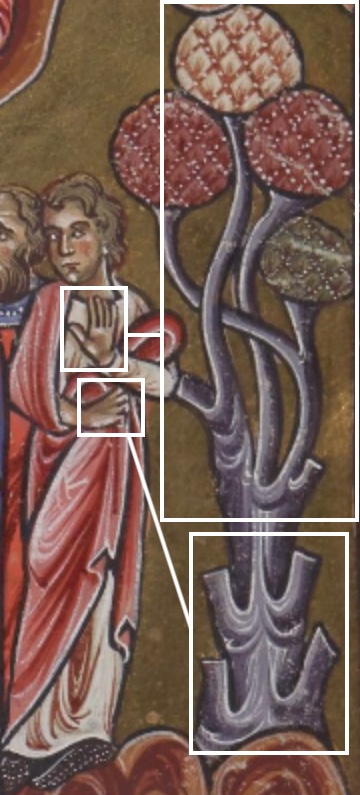
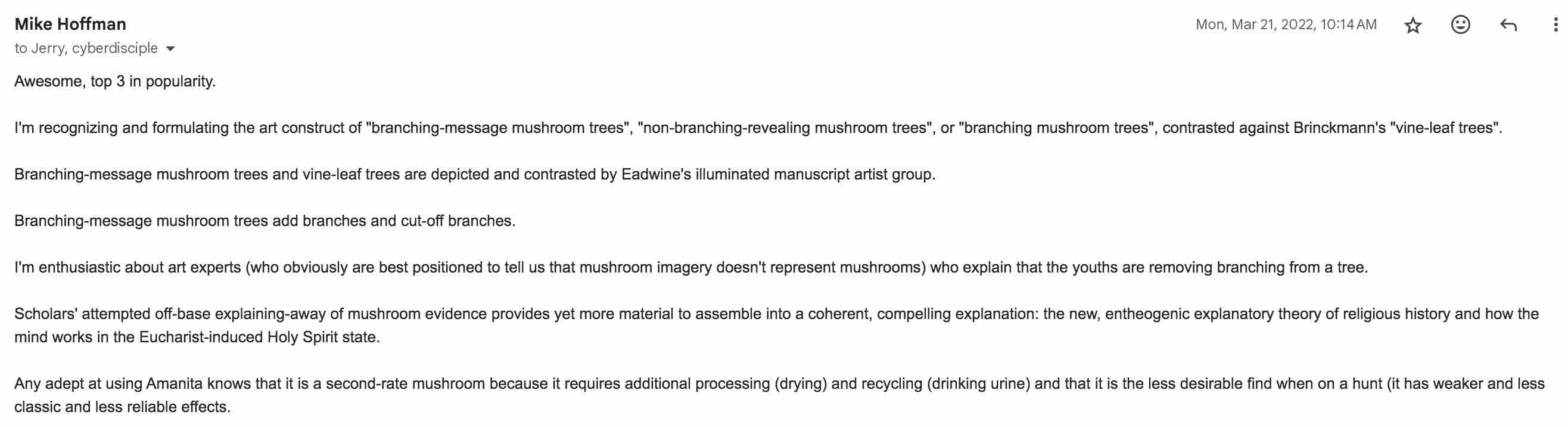
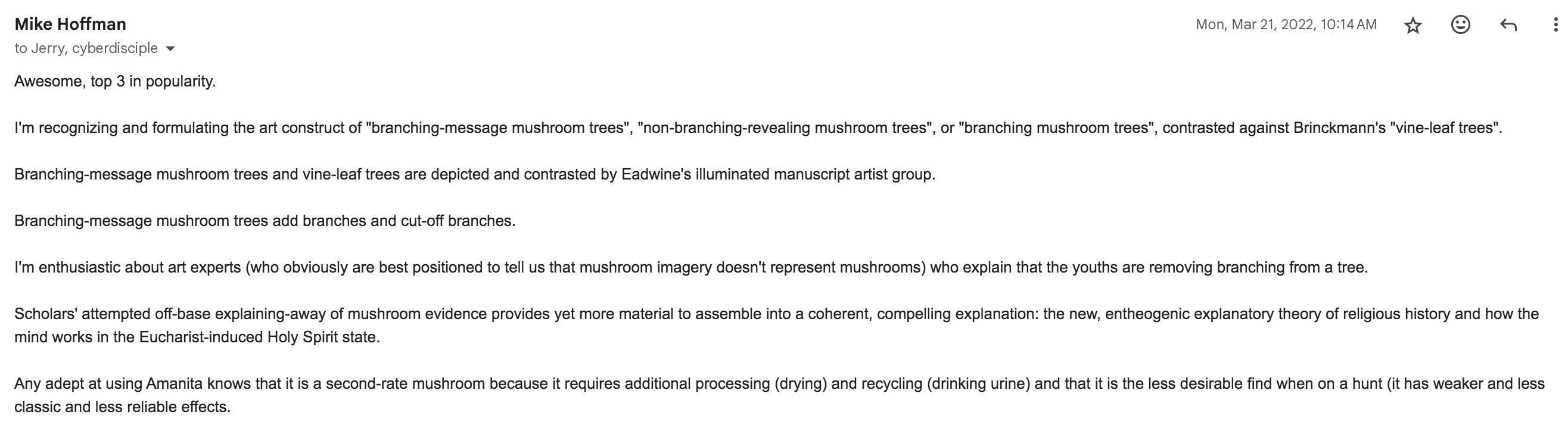
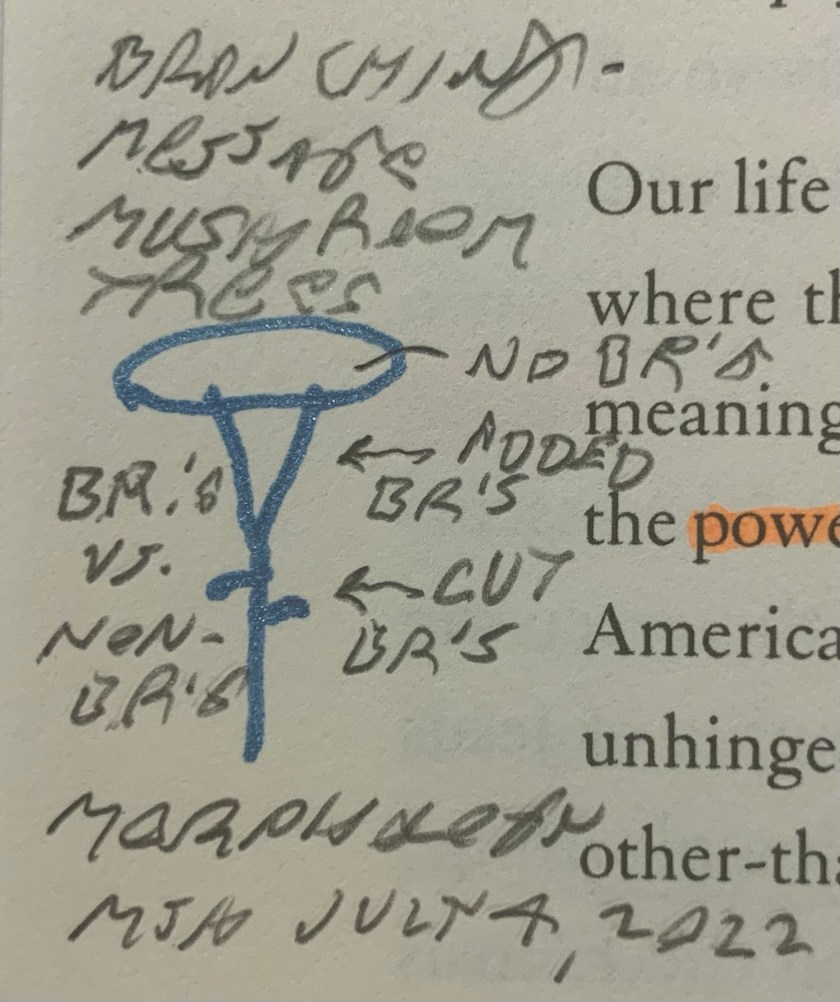
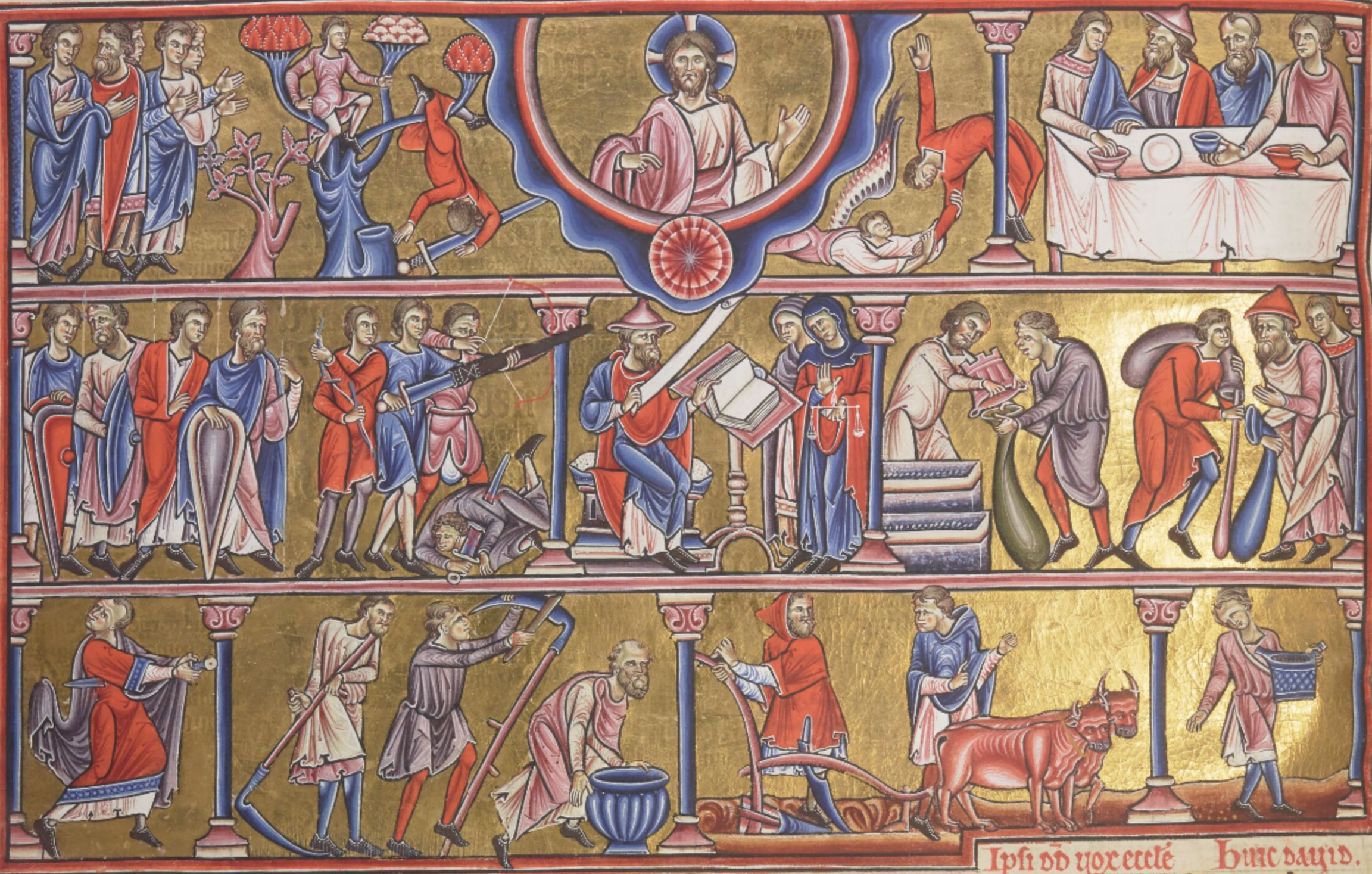
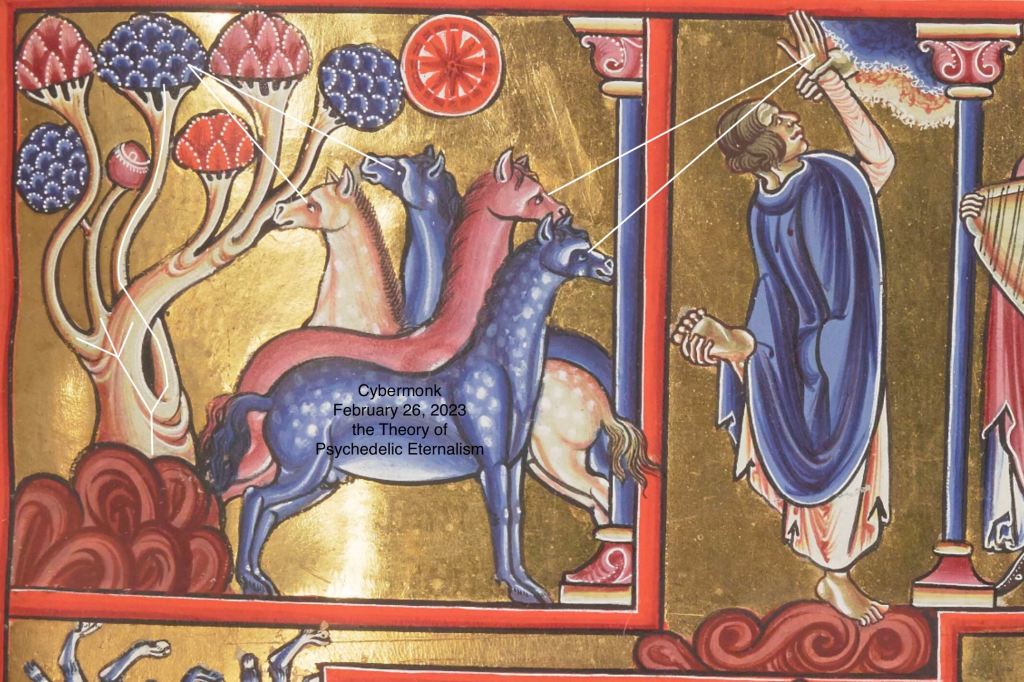
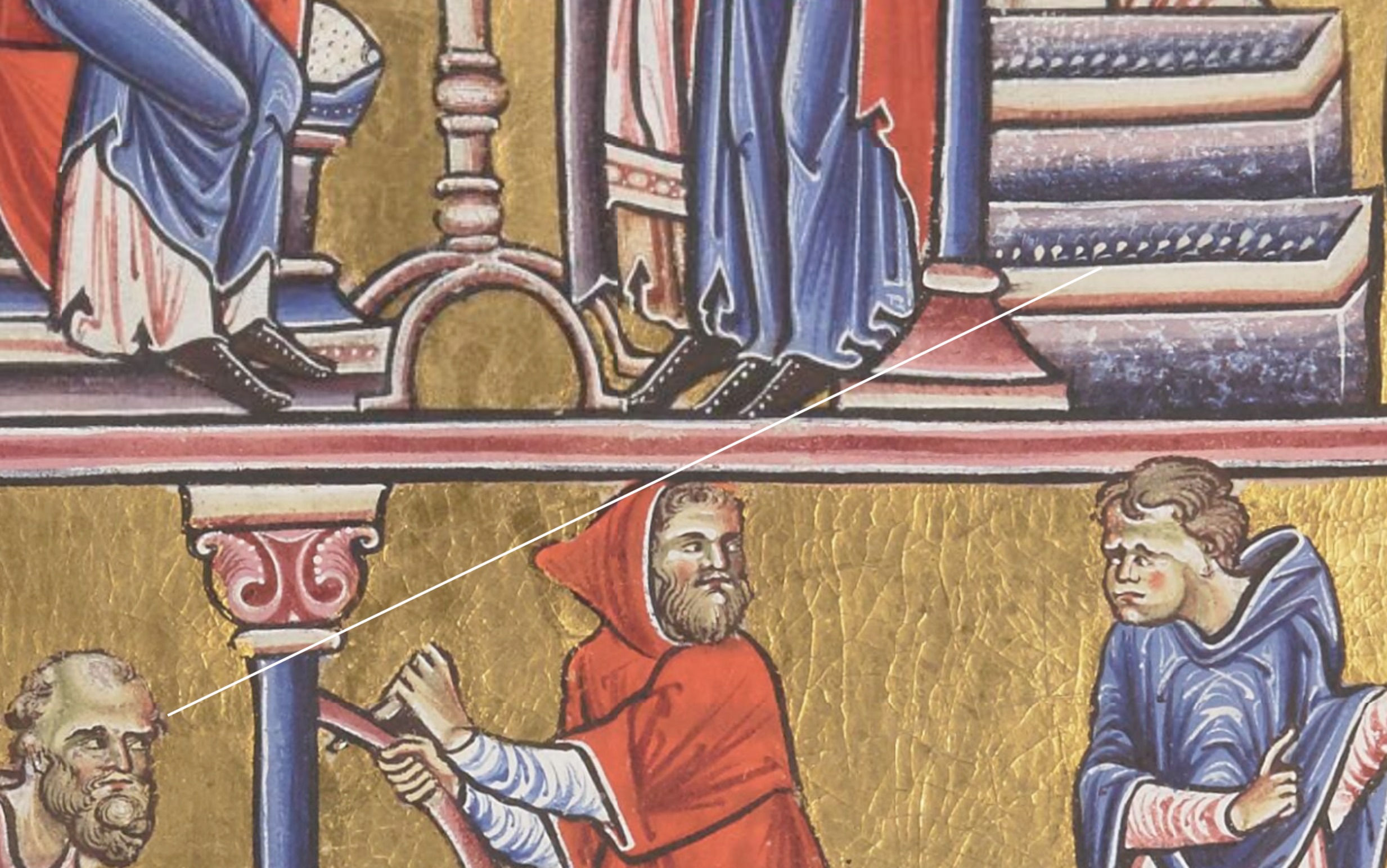
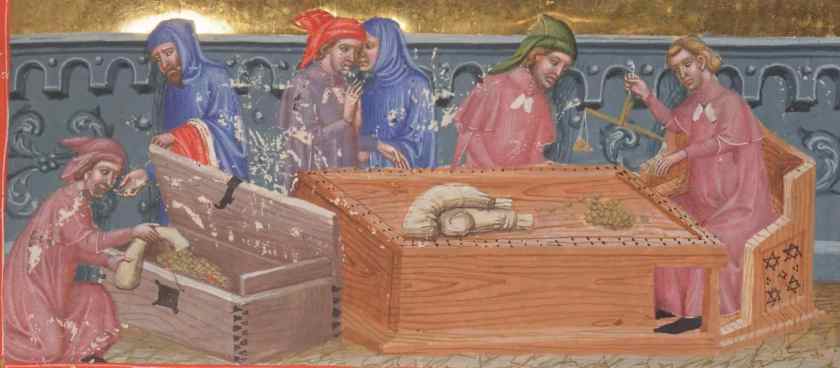
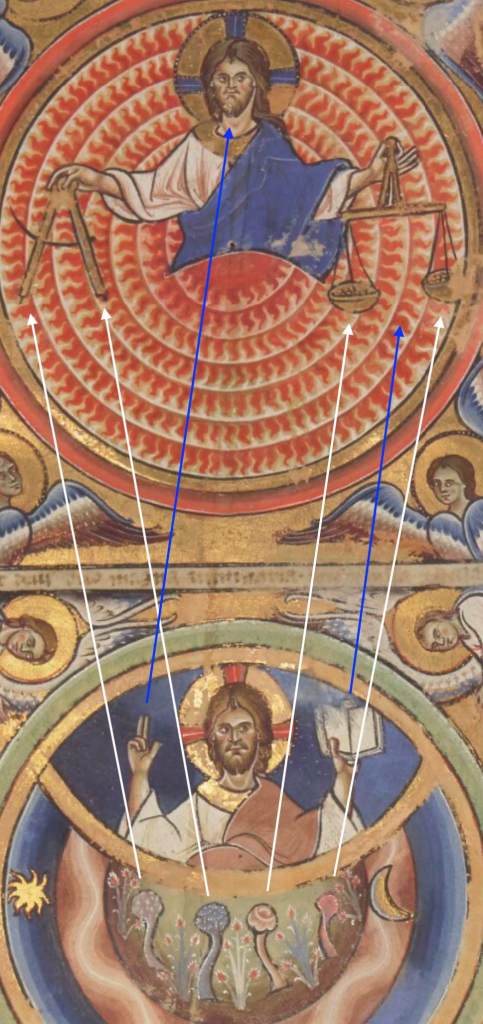
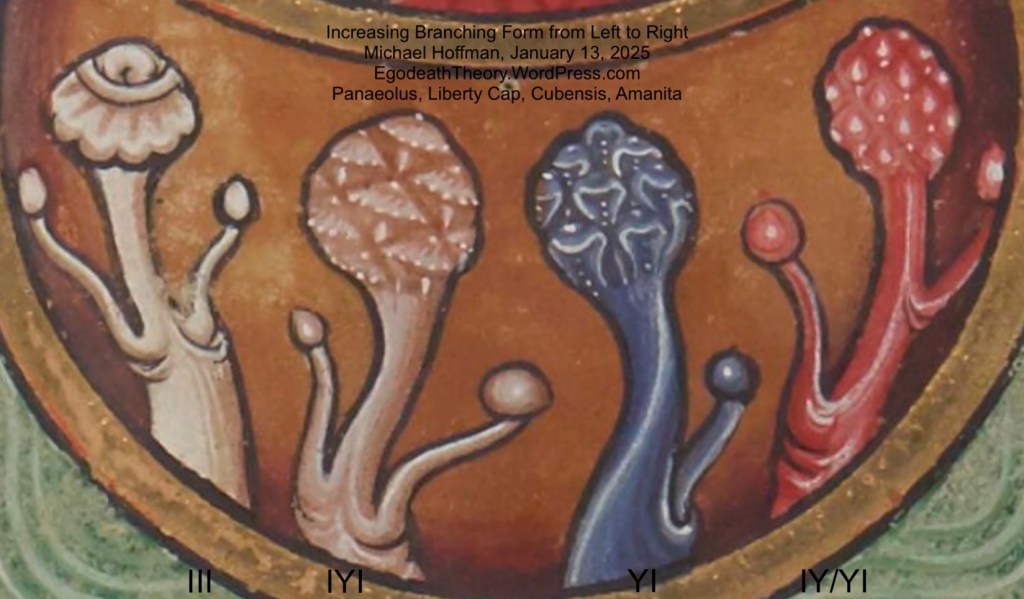

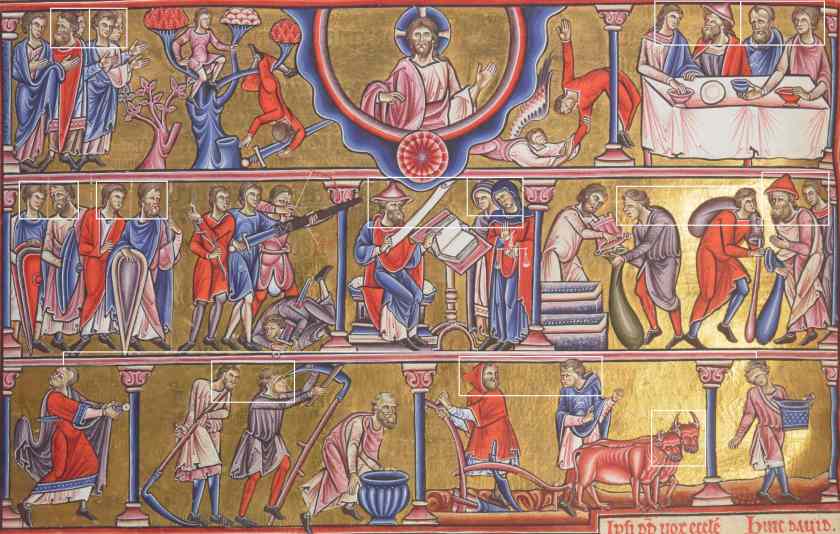
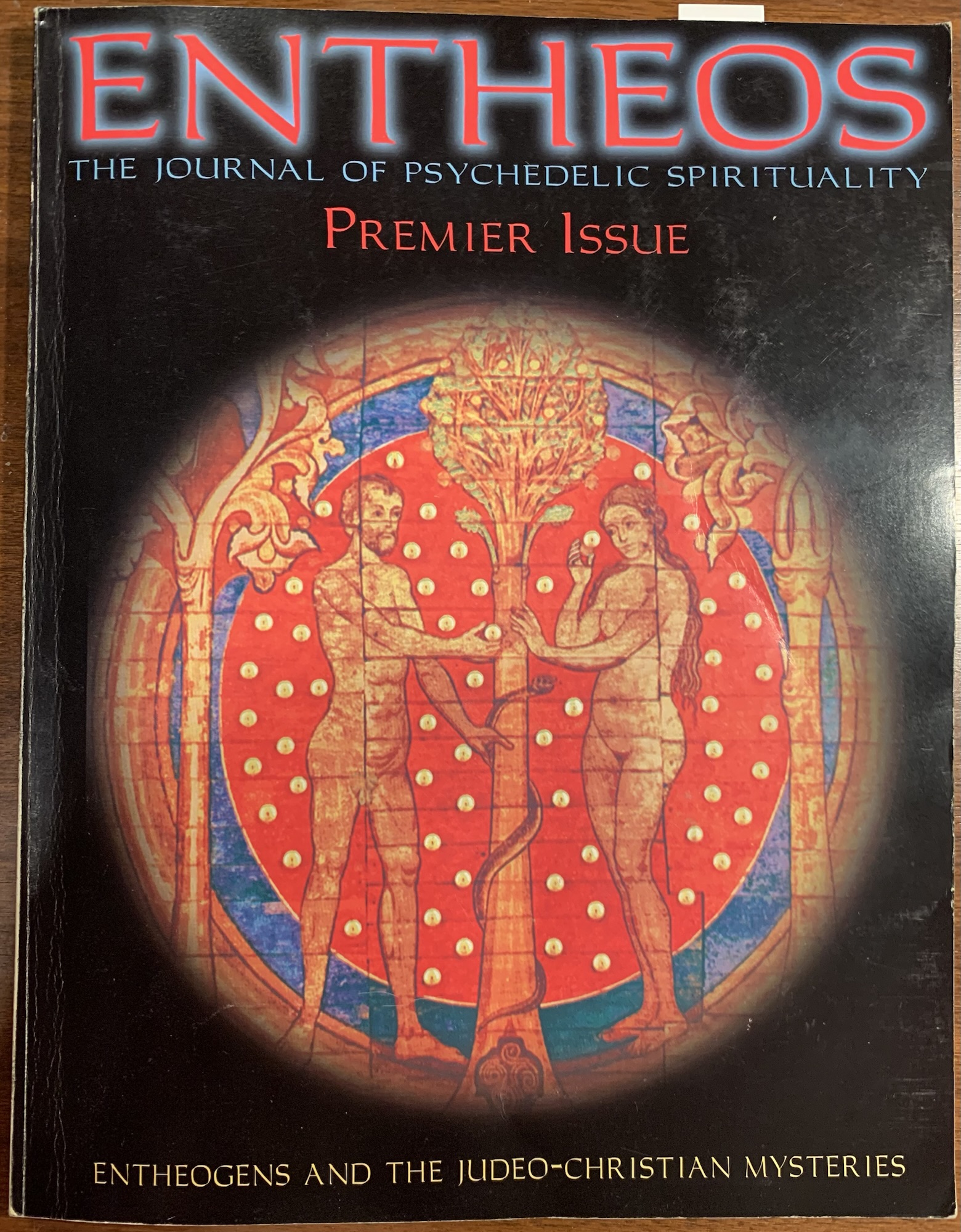
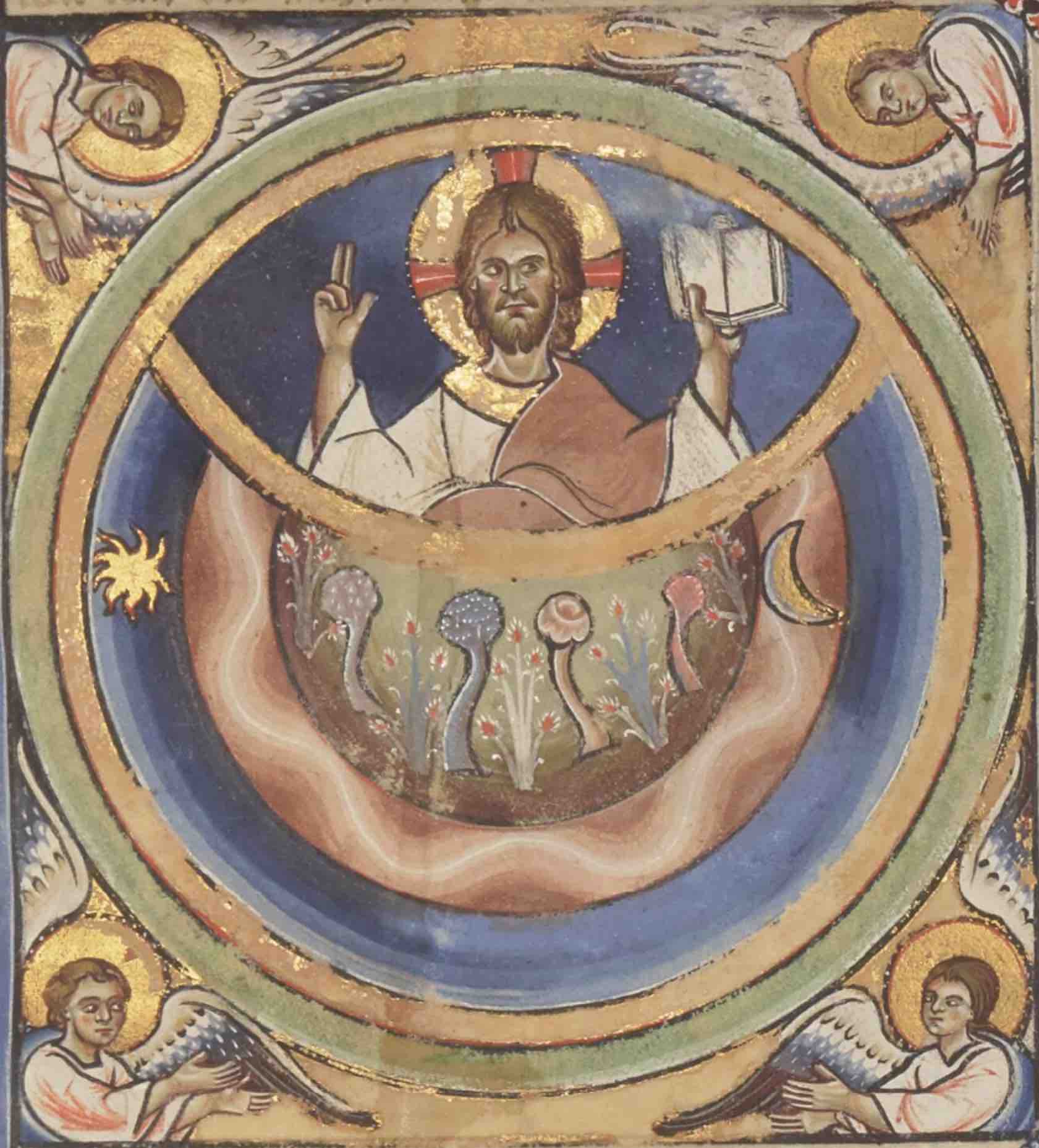



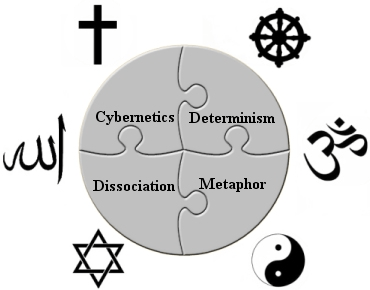
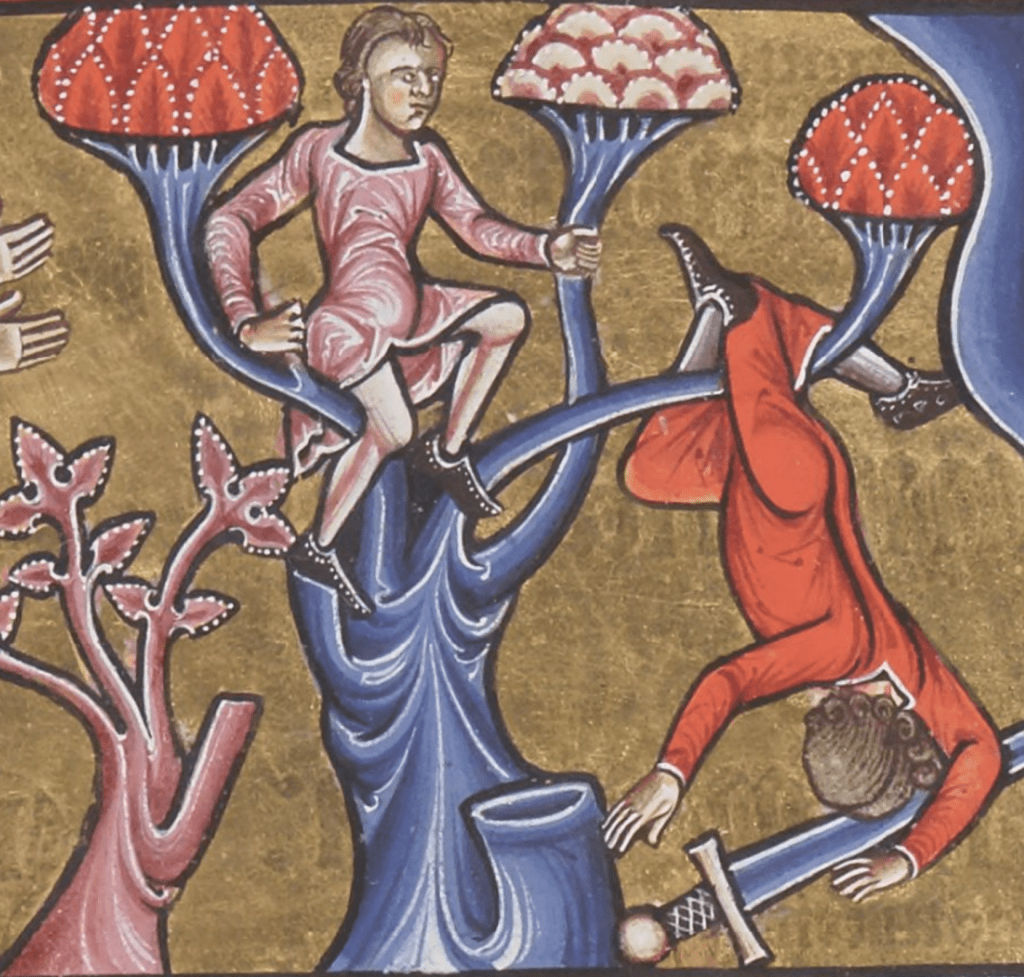
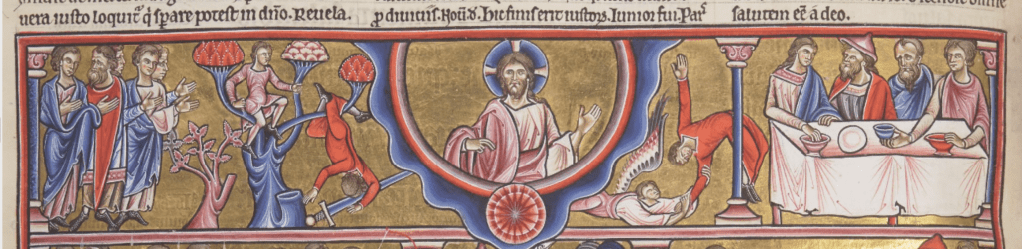
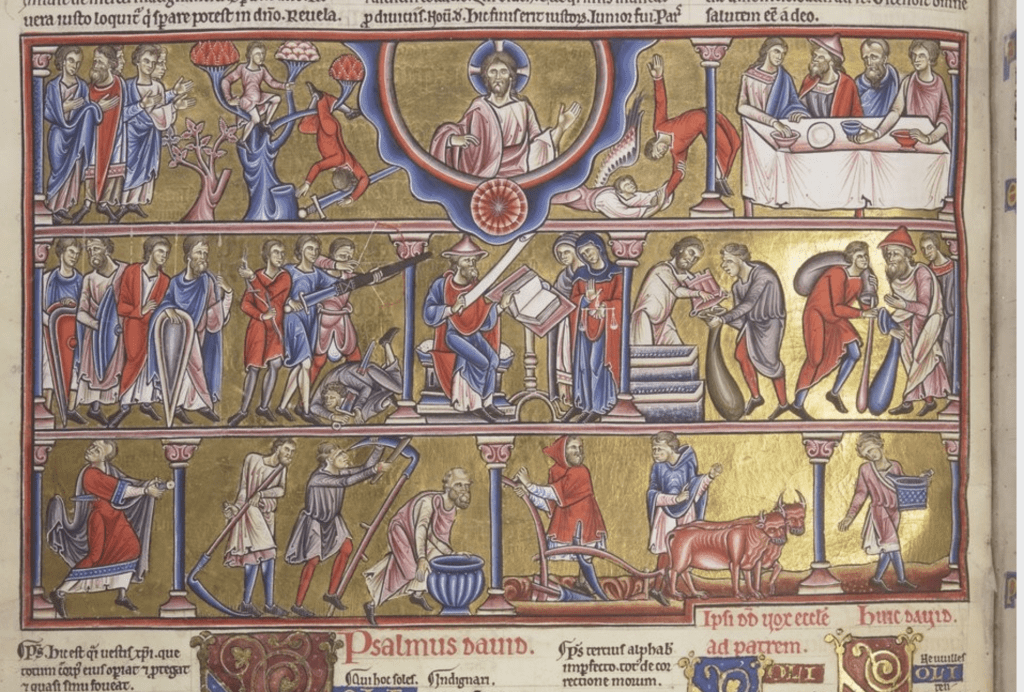
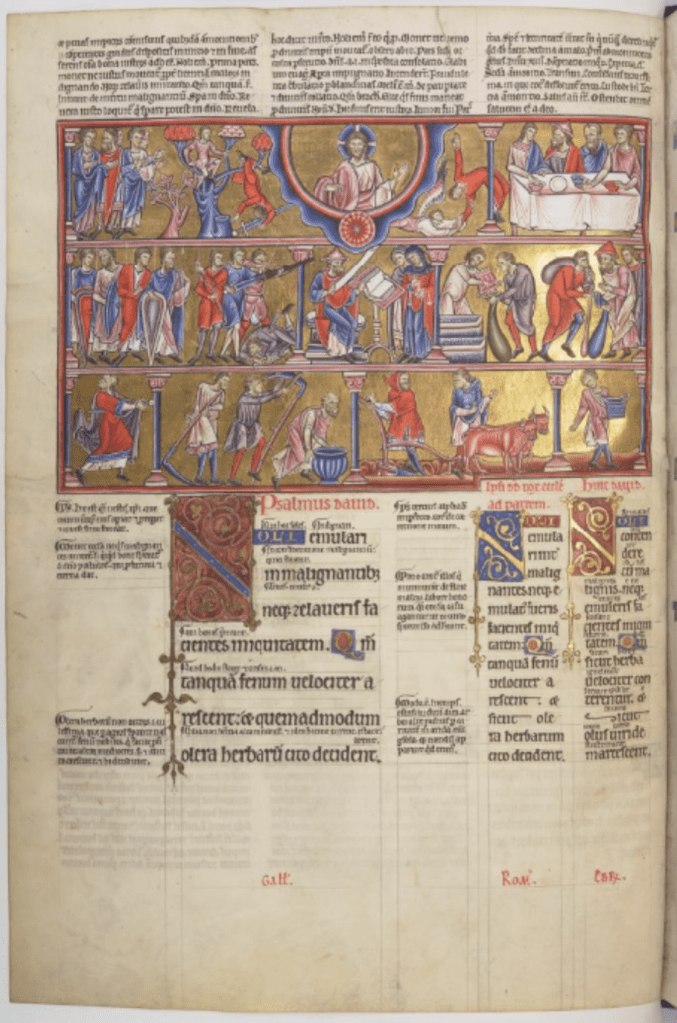
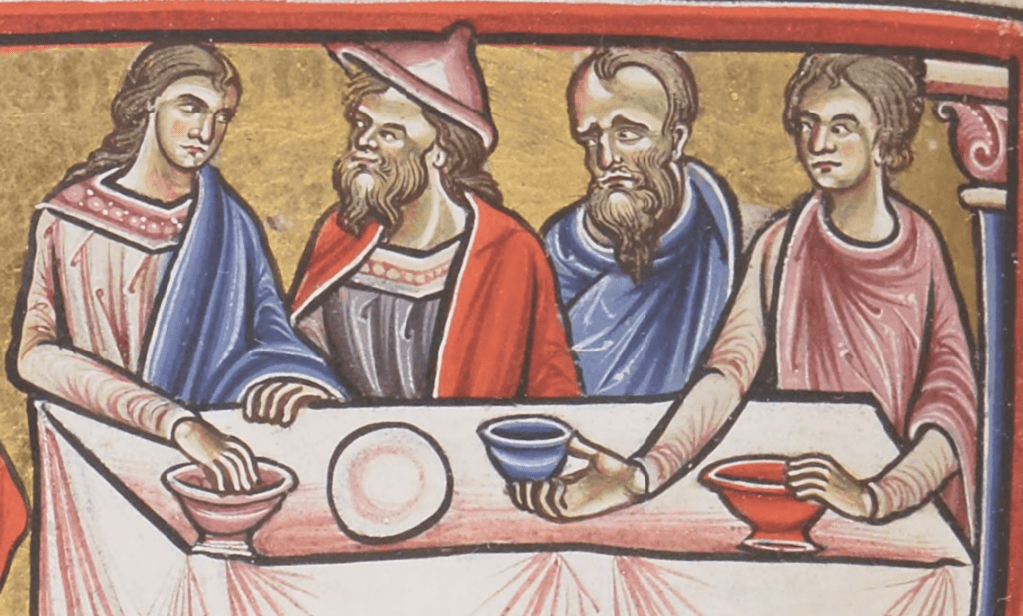
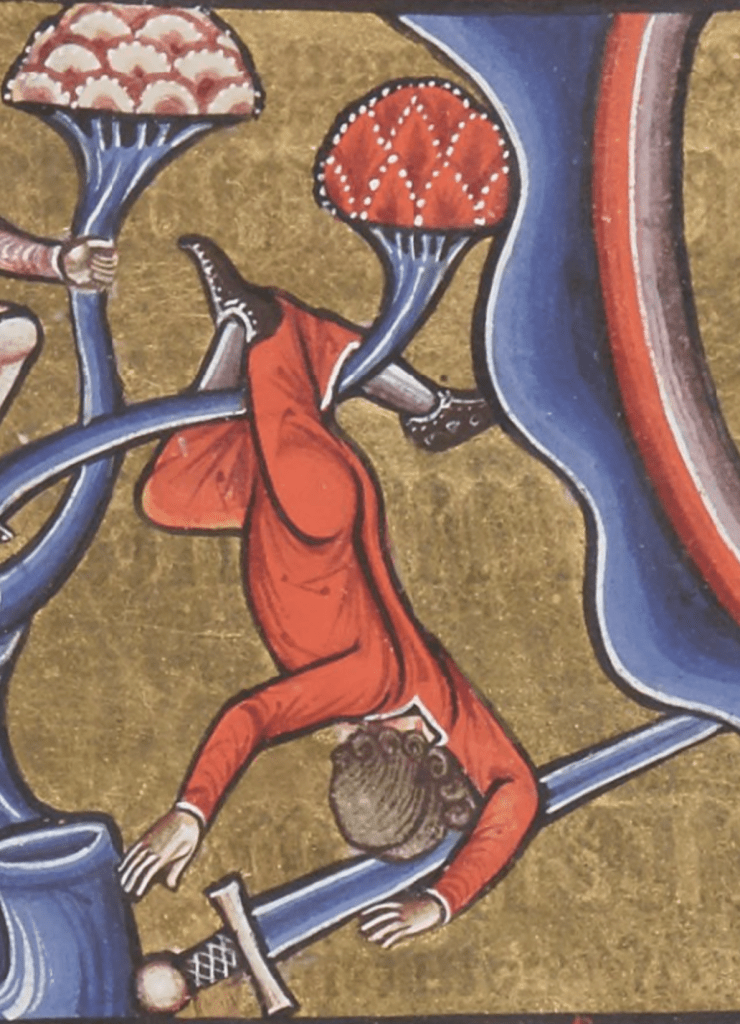

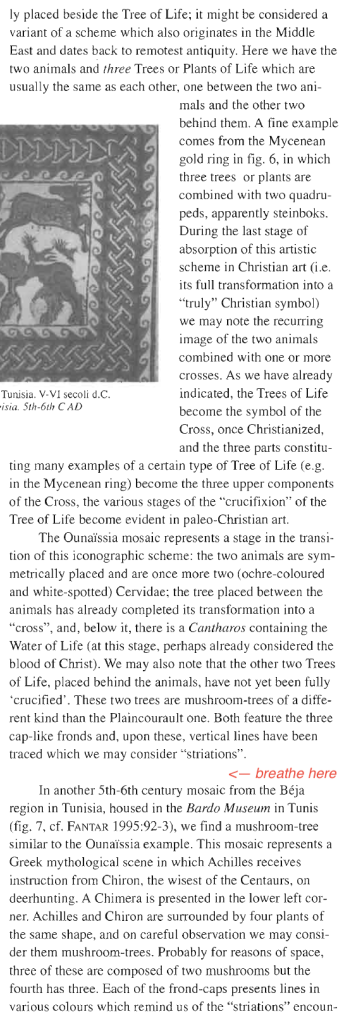



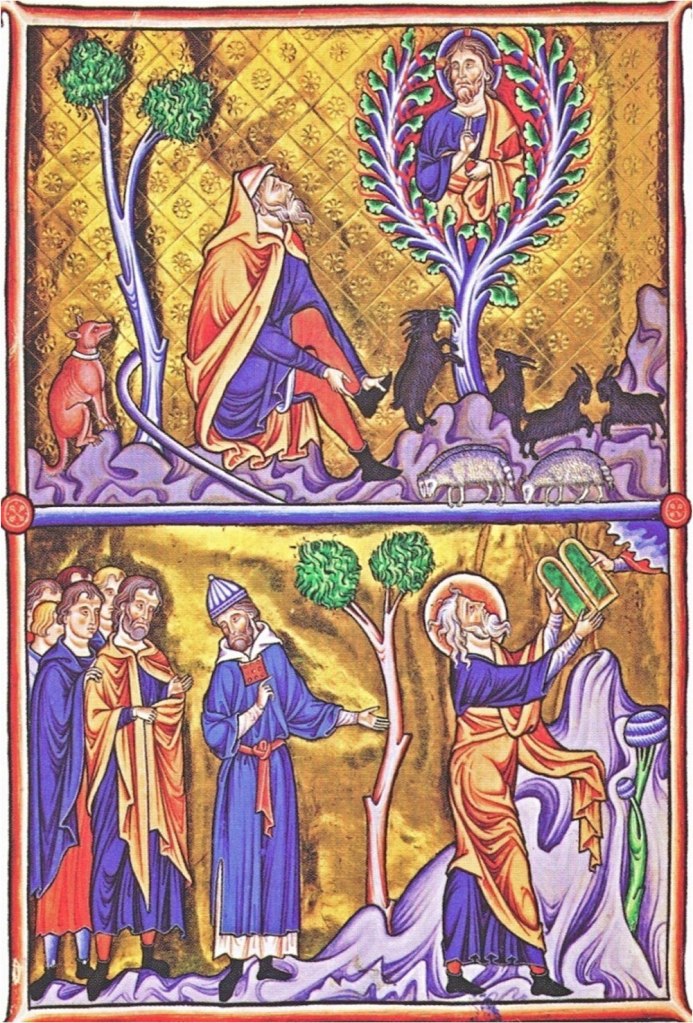


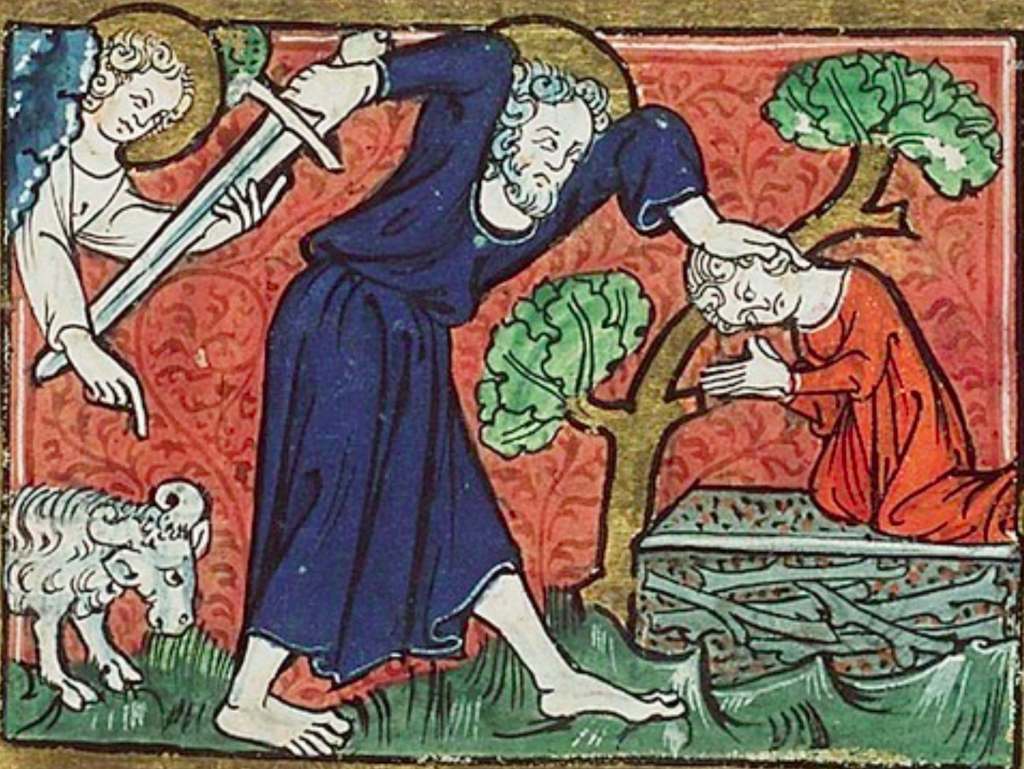
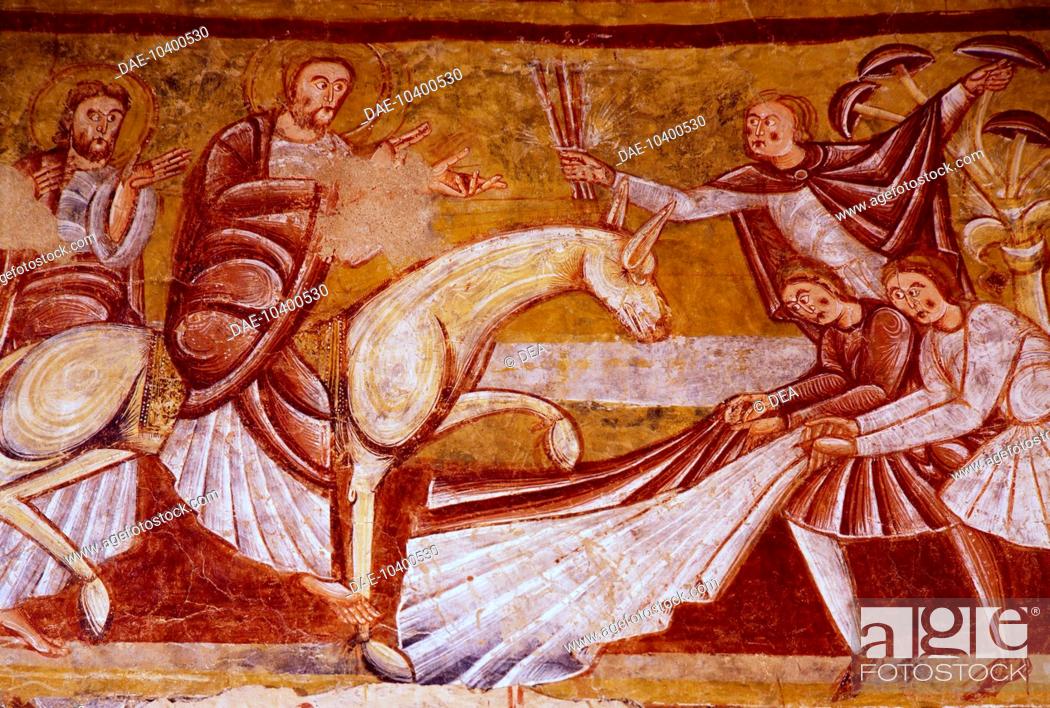
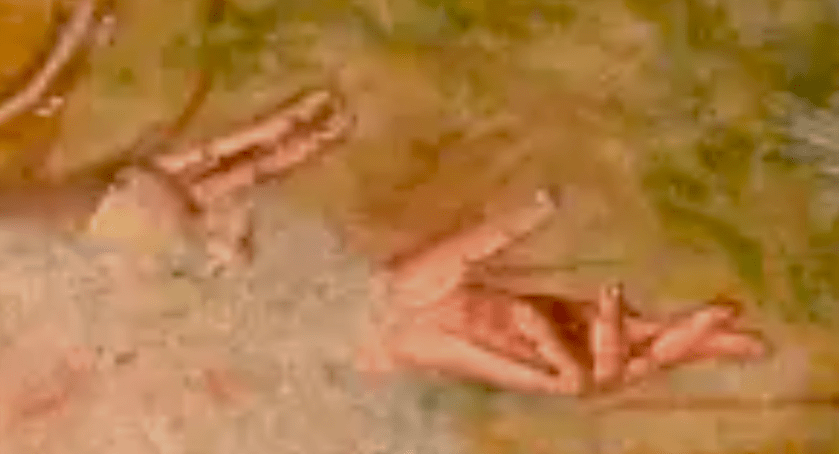
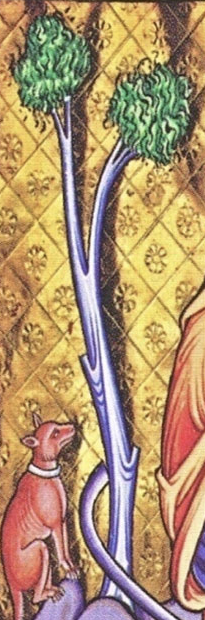
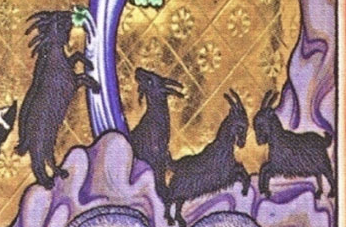



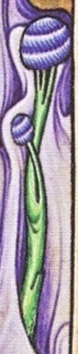







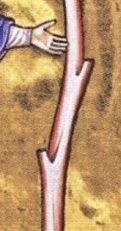

 The Egodeath theory