Some Table of Contents entries and commentary. The ToC entries are for you to project onto them what you’d ideally expect them to cover; imagine high, keep expectations low.
Psychedelics Come to Western Culture 57 — the first time psychedelics arrived in Western culture was 1943. Never mind 800 B.C.-1942 A.D.Bow down in worship to mythmakers Hofmann, Huxley, & Wasson; ignore Jan Irvin’s article series “The Secret History of Magic Mushrooms” https://logosmedia.com/SecretHistoryMagicMushroomsProject.
Surrendering Mindset 118
Maps of Consciousness: World Mythologies 211 – Campbell, Star Wars, the Matrix, Heroic Journey – Jan Irvin wrote skeptically against that Heroic Journey mythmaking as social engineering. Irvin is cynical & skeptical about the pushing, the motivation for promoting this “hero’s journey propaganda”. Scorched-earth rejecting the entire ‘entheogen’ concept & narrative implies rejecting the hero’s journey narrative.
“The facilitator [trip guide] shared teachings about [Norse Mythology] before the medicine journey. During the meditation experience, she offered guided imagery as a prompt and map for a journey of awareness and insight. [& battle of demonic mythic terror & panic? gotta get your money’s worth, like in Philip K. Dick’s Total Recall.] Norse mythology envisions a world tree (the Ash tree, Yggdrasill) on which the gods … travel. The image of a tree with limbs branching above … seems to resonate deeply within many of us.”
Bottom of p. 211: “Jason and the Argonauts, and Lord of the Rings. In The Rebirth of the Hero: Mythology as a Guide to Spiritual Transformation, Keiron LeGrice uses many popular films…”
p. 212: list of films’ heroic journey features:
“A call to adventure.
Refusing the call – the hero at first does not want to face what they must do.
Circumstances of fate pulling the hero into the journey.
Meeting strange characters, some trustworthy, some betraying, and often some animal familiars.
A time of confusion of illness (setbacks).
The need to surrender (face failure) in order to “cross the final threshold”.
Finding the treasure and bringing it home, not just for you but also for everyone.”
I could force my October 1985-January 1988 high adventure into this mold, for a strict scientific modern version of transcendence.
I could by force, map the Hero’s Journey to my 1985-1996 journey. Although I formulated the Cybernetic Theory of Ego Transcendence in 1988, around 1996, I mentally profoundly relaxed and then remembered and re-saw the threat and bowed trembling ecstatic, recognizing the freewill power still haunting and bedevilling my thinking, formally recognizing fully that freewill-thinking habit, and thus being able finally to fully renounce that mental pollution, with vision of control-loss vulnerability, and of vicarious salvific crucifixion sacrifice of Mr. Historical Jesus, in a present, Christoform mental space, met up in the air.
Or I could by force, map the Hero’s Journey to my 1985-2013, to attain proper full understanding of archaic mythemes (tree vs. snake), rediscovered in the late-modern era from within a culture that largely lost and forgot its mythology language tradition.
____________
How to Distinguish Between Spiritual Emergence and Psychosis – This section cites Grof again. And Agosin’s article “Mysticism and Psychosis”: see p. 221, a list of key cognitive phenomenology. See bottom of p. 222-223, list of differences between the two. Ken Wilber similarly writes about failure of transcendence vs. “preserve and transcend” a mental structure. “Integration” book continues, p. 225: “The distinction between mysticism and psychosis is definitely not either/or.”
____________
Chapter 9: The Shadow Side
Why Do We Talk About Shadow with Psychedelics?
Collective Shadow
The History of Psychedelics and Shadow – 800 B.C.? No, History begins in 1943.
Now Your Turn – “The little doll is you, yeah, And when it’s your time, I wonder how you’ll do, Your kind of trouble’s running deeper than the sea“
Cultural Shadow and the Psychedelic Renaissance – the entire chapter appears to attribute “the shadow” to external, societal fears, not that there’s something lurking hidden in the mind, some hidden dragon destined to disempower the core of personal control. author is so far off-base, he is groping in the dark. Fails to leverage thousands of years of religious mythology describing the threat and resolving it. Mentions chapter 4: Bad trips.
What Underlies the Negative Cultural Projections into Psychedelics?
“Promethea is a comic book series created by Alan Moore, J. H. Williams III and Mick Gray, published by America’s Best Comics/WildStorm.
“It tells the story of Sophie Bangs, a college student from an alternate futuristic New York City in 1999, who embodies the powerful entity known as Promethea whose task it is to bring the Apocalypse.
“Originally published as 32 issues from 1999 to 2005, the series has been re-published into five graphic novels and one hard-back issue. Moore weaves in elements of magic and mysticism along with superhero mythology and action, spirituality and the afterlife (in particular the Tree of Life) and science-fiction. Promethea includes wide-ranging experimentation with visual styles and art.”
The Son Conceived in Drunkenness: Magical Plants in the World of the Greek Hero Carl Ruck, December 2017 http://amzn.com/1587904241
Publisher’s description:
“An essential aspect of the traditional stories or myths about the Greek heroes has been intentionally overlooked in the study of Classical literature and religion, specifically, the pivotal role accorded to magical plants and religious sacraments derived from psychoactive botanical and venomous animal sources, serpents, reptiles, and the like. The Son Conceived in Drunkenness remedies this oversight.
“Toward the end of the great expansion of consciousness now known as the Psychedelic Revolution of the 60s and 70s, Dr. Ruck proposed a new word for such mind-altering substances to free them from the implications of irreverent recreational abuse and the irresponsible marketplace of New Age pseudo-scientific theologies. This word is entheogen, a substance that allows the deity to reside within the human. The most direct mode of access is the simple ingestion or other method of application of the sacrament so that the entheogen forms the mediating pathway between the human and the divine.
“Ultimately, this magical club that is the hero’s weapon of choice will emerge as the rod of Asklepios, wielded by the modern profession of medicine in the battle waged with drugs and toxins on the frontier of the battle between life and death.”
Is book knowledge of the Egodeath theory sufficient qualification to be a hierophant, or must an authorized hierophant have personally undergone the control–{battle} with the worldline {dragon} in the {rock} block universe?
Ruck’s Notation
Carl Ruck smartly does similar in his book on mythology. The World of Classical Myth: Gods and Goddesses, Heroines and Heroes https://amzn.com/0890895759
My 1987 Acronym Approach Accelerated My Writing-Thinking, Leading to the 1988 Breakthrough
My April 1987 Creation of an Acronym and Concept-Label Approach Accelerated Writing-Thinking, to Quickly Discover and Create the Cybernetic Theory of Ego Transcendence
I invented a format convention somewhat similar to Ruck, starting suddenly in April 1987 when I vigorously reset my idea-development approach and made an innovative approach to using pencil and paper.
My father was dying then, and I was studying Relativity & Quantum Physics & nth-semester Calculus.
My attempts at gaining posi-control, an expected transcendent level of self-control across time, were not clearly working, after Oct. 1985-April 1985 intensive attempts.
I felt I was onto something, and had to become more effective and analytical with better technology. I felt an intense mental capability, with on-demand flights of intellectual progress in any 2-hour session of trying to make progress on The Problem.
I got rid of my conventional blank book notebooks (about 6″x8″) that used a series of regular sentences.
I switched to expansive 8.5″x11″ ruled sheets in binders, and started using acronyms defined in square brackets, like:
loose cognitive association matrix [LCAM]
1988 example: Transcendent Construct Processing/Realize Intention Set [TCP/RIS]
I listen to each episode many times. I commented on many episodes in posts at the Egodeath Yahoo Group. I wish to copy some of those commentaries to this WordPress site.
todo: link to the Egodeath Yahoo Group digest pages posts.
Rules for Unruly Guests at Banquet – for the Horses (Bouncers)
You know how academic symposiums are; there has to be guards to kick out the unruly academics who’ve had too much at the wine bar.
Any discussion or speculation about my personal info is out of bounds.
Strap the guest to chair, force-feed the guest selected paragraphs from the main article, with a spoon, when they try to grossly misrepresent the Egodeath theory and lump every philosophical position in the universe into a giant dismissive undifferentiated heap. Discuss SPECIFIC WRITTEN PASSAGES especially from the “official published” articles. (Acknowledgments: wrmspirit’s idea)
Try searching WordPress for “episode 3” or another episode, with quotes; eg this prefab link: https://egodeaththeory.wordpress.com/?s=%22episode+3%22 Be sure to note the date of the podcast, to help pick a search-hit. For example, Episode 3 is:
Date Formats
May 8, 2016 Monthname daynumber, year. YouTube format.
08/05/2016 Digest posting-header format. Within a Digest page.
2016-05-08 Digest page-title format. Returned by WordPress Search.
05/08/2016 – U.S. format, not used. mm/dd/yyyy.
The the Egodeath Yahoo Group thread consistently has subject line “Transcendent Knowledge podcast commentary” so you can try Search at WordPress with quotes around that; the prefab link to issue that search is below:
So far (March 18, 2022) my commentary is in the form of two .mp3 files that were temporarily available (I’m still able to re-upload them): I played the podcast, paused, commented (in my poor, hoarse, weak, evening voice), then resumed.
Then I made a 2nd .mp3 which was only my own speech excerpts from the above recording. I find the 2nd, excerpts-only recording hard to listen to, without the context that I’m commenting on, combined with weak, hoarse evening voice which impedes communication.
I have inserted just a few short comments in the transcription, so far. The transcription lacks timestamps and doesn’t indicate who is speaking, Max or Cyb.
Planning my next podcast, on the confluence of 3 top topics:
Basics of the Phase 1 Core Egodeath theory (not analogical; just Psychedelic Eternalism & Control transformation).
Phase 2 Egodeath theory (metaphor, religious history; especially the “analogical” of APEC’ ie the first component of “Analogical Psychedelic Eternalism & Control-transformation”).
The future of entheogen scholarship.
Check Idea Development page 13.
Episode 27, January 31, 2021 – Mystics
Transcendent Knowledge Podcast, episode 27
The Mystic Episode – Issues that came up after the last podcast with Cyberdisciple and Jimmy. Topics:
The meaning of the word ‘mystic’
Precise definition of mystical transformation
Setting the bar for attaining mystichood
How special are mystics?
Idealisation of mystics
The relevance of mystics to the egodeath theory
Mystics tripping frequently
Comparable concepts such as gnostics, hierophants and prophets
Verbal communication compared to written communication
The relevance of Ramesh Balsekar’s thinking compared to other self-help gurus
Fusing the two states of consciousness; joining vs blending
Hesychasm as a natural means of accessing the altered state
The incompatibility between Jimmy’s book knowledge and his experiential knowledge
My commentary
AGGGHH ~46:20, uses ‘natural’ to mean non-drg. SEE JONATHAN OTT’S BOOK The Angels’ Dictionary. <– Ott defines this as natural. Isn’t this usage, employed by Max, an entheogen diminishment fallacy?
~33:50 “ancient mystics who trip by natural means” <– the word ‘natural’ is highly ambiguous, I don’t know what’s being said, by “NATURAL”. ??? 35:30 contradicts, he says “forest ancients who trip”. is max saying they (Kafei’s fantastical notion of ‘mystics’) are “natural”, or that they “trip”?
The word ‘gnostic’ is recently controverted. April D. DeConick defends its use, in her book The Gnostic New Age. Reclaiming and redefining it better.
Like Max said here, I too have a tepid idea about the usefulness of the term ‘mystics’, it’s kind of a joke, not a respected concept to me.
~”none of them impress me that much. … What’s impressive [re: brands of mysticism] when you’ve got the Egodeath theory ? … Ramesh weak compared to.” 24:44 quotable 24*60 + 44 = 1484s https://www.youtube.com/watch?v=HkmpbFAAJXI&t=1484s
“jimmy is a mega advanced mystic” ~29:00 “but i don’t like the concept of ‘mystic’”
Max Freakout and Cyberdisciple conclude their discussion about psychedelic journalist James Kent, in particular the recent ‘Final 10’ DoseNation podcast series.
Western tradition of psychedelic drug use
Mushrooms and religion
Mushrooms as religious sacrament
Minimal, moderate and maximal theories of psychedelic religion
John Allegro and the cult of Amanita Muscaria
Gordon Wasson and the identity of Soma
Amanita mushroom references in Christian art and the ‘where’s Waldo?’ project
James Arthur and Jack Herer’s psychedelic scholarship
Over-emphasis on amanita, under-emphasis on psilocybe in psychedelic scholarship
The unpopularity of amanita mushrooms as a recreational drug
Mono-plant fallacy
Elite priestcraft conspiracy theory of mushrooms in Christianity
Andrew Letcher’s debunking of mushroom Christianity
Irrelevance of identifying a particular plant as religious sacrament
Does anyone really care about amanita mushrooms?
Metaphorical interpretation of the holy grail causing immortality
Rejection of pop-psychedelia
James Kent’s failure to integrate the ego death theory
Realistic expectations of psychedelic drugs
Direction of initiation and psychological progression
Lack of clear initiation ritual context in modern society
Max Freakout and Cyberdisciple continue their discussion about psychedelic journalist James Kent, in particular the recent ‘Final 10’ DoseNation podcast series.
Incompatibility between modern culture and psychedelic tripping
Insincerity of prohibitionism
The rhetoric of psychedelic legitimisation
Psychedelic saviour syndrome
Benefits of psychedelic tripping
Egoic and transcendent senses of ‘benefit’
The difference between James Kent’s and Michael Hoffman’s intellectual background
Science mentality vs engineering mentality
Kent’s thinking about Aldous Huxley’s ‘reducing valve’ concept
Kent’s blindness to mystic metaphor
Loosening of cognitive associations as the basic psychedelic mechanism
Ken Wilber’s distinction between states and stages
Permanent and impermanent elements of psychedelic revelation
Episode 20, February 9, 2020 – James Kent (DoseNation) part 4
Max Freakout and Cyberdisciple continue their discussion about psychedelic journalist James Kent, in particular the recent ‘Final 10’ DoseNation podcast series.
South American ayahuasca shamanism Shamans, gurus and the master-student relationship The role of the shaman in a psychedelic ceremony mis-placed focus in the psychedelic shamanism scene away from the altered state phenomenology Magical thinking in shamanism, its lack of official accreditation The uncomfortable, non-recreational nature of ayahuasca compared to other psychedelics Shamanism as primitive psychotherapy Ayahuasca as poisonous and hallucination-inducing False promises and inflated expectations of ayahuasca, such as cancer treatment Psychedelics as a treatment for anxiety in terminal illness Fear of death and ego death experience Benny Shanon’s writing about ayahuasca phenomenology Horrific violent occurrences in ayahuasca ceremonies Uncovering the primal, unpredictable nature of the self during intense tripping Kent’s warning about the extreme dangers of taking psychedelics Prohibitionism characterised as ‘safety culture’
Episode 19, Feb 2, 2020 – James Kent (DoseNation) part 3
Max Freakout and Cyberdisciple continue their discussion about psychedelic journalist James Kent, in particular the recent ‘Final 10’ DoseNation podcast series.
South American ayahuasca shamanism Shamans, gurus and the master-student relationship The role of the shaman in a psychedelic ceremony mis-placed focus in the psychedelic shamanism scene away from the altered state phenomenology Magical thinking in shamanism, its lack of official accreditation The uncomfortable, non-recreational nature of ayahuasca compared to other psychedelics Shamanism as primitive psychotherapy Ayahuasca as poisonous and hallucination-inducing False promises and inflated expectations of ayahuasca, such as cancer treatment Psychedelics as a treatment for anxiety in terminal illness Fear of death and ego death experience Benny Shanon’s writing about ayahuasca phenomenology Horrific violent occurrences in ayahuasca ceremonies Uncovering the primal, unpredictable nature of the self during intense tripping Kent’s warning about the extreme dangers of taking psychedelics Prohibitionism characterised as ‘safety culture’
Episode 18, Jan 24, 2020 – James Kent (DoseNation) part 2
Max Freakout and Cyberdisciple continue their discussion about psychedelic journalist James Kent, in particular the recent ‘Final 10’ DoseNation podcast series.
Tim Leary’s allegorical interpretation of the Tibetan book of the dead Kent’s contradictory attitude towards psychotic bad trips Albert Hofmann’s discovery of LSD and subsequent research into visionary plant based religion Kent’s strikingly vilifying characterisation of Albert Hofmann’s motives during his psychedelic writing career Kent’s insistent use of ‘unpleasant = unmystical’ fallacy Kent’s thinking about the role of cybernetic agency in psychedelic tripping Comparing atheism to the ego death theory Albert Hofmann’s concept of healing collective Western neurosis Interpretations of ‘healing’ in psychedelic shamanism Albert Hofmann’s cognitive phenomenological model of ‘sender receiver’
Episode 17, Jan 14, 2020 – James Kent (DoseNation) part 1
Max Freakout and Cyberdisciple talk about psychedelic journalist James Kent, in particular the recent ‘Final 10’ DoseNation podcast series. DoseNation 10 of 10
Kent’s critique of popular psychedelic discourse, especially the strategy of psychedelic drug-legitimization. Kent’s dismissive attitude towards the idea of psychedelic religion. Kent’s uncritical use of ‘unpleasant = unmystical’ fallacy Possible motivations behind Kent’s scorched-earth style thinking. Kent’s alarmist rhetoric about psychotic psychedelic experiences. Kent’s Prohibitionist attitude, the incompatibility of psychedelia with modern western values. Kent’s anthropological theory about evolving societies inevitably abandoning psychedelic ritual. The word ‘hallucinogen’ as de-legitimizing psychedelic drugs. The role of multi-state theorizing. Kent’s attitude towards using psychedelic drugs in psychotherapeutic and ‘party’ contexts. Party drug-use as ideologically pure. Terence Mckenna’s role in psychedelic legitimzation. Kent’s omission of crucial subject of mystic-state allegory in religious mythology and rock music lyrics. Kent’s regrets about his psychedelic career and taking drugs too seriously, instead of going to psychotherapy.
Episode 16 (2019-11-17) Kafei (appearance 3), Max Freakout
Different attitudes towards the historicity of Jesus Christ The Ground of Being (or Philosophical Absolute) The importance of no-freewill for the egodeath theory Problems of talking about personal drug use under prohibition The writing of Paul Tilloch about the Ground of Being Attitudes towards drugs in exoteric and esoteric religion Ramesh Balsekar and Sam Harris on free-will and determinism Ordinary state vs Altered state based perspectives on free-will and determinism Alan Watts’ idea of the skin encapsulated ego Ken Wilber’s book Up From Eden Psychospiritual evolution Linear vs holistic determinism
Max Freakout and Cyberdisciple talk about basic techniques in mushroom cultivation.
Creating fungus cakes with rice flour and vermiculite Acquiring Psilocybe Cubensis mushroom spores The importance of cleanliness and sterility, aseptic technique Transference and Incubation How to deal with bacteria and mould contamination
Episode 14, June 18, 2019 – Max Freakout & Cyberdisciple re: Kafei
Max Freakout and Cyberdisciple discuss and analyse the recent dialogue between Max Freakout and Jimmy (Kafei).
Jimmy’s understanding of Transcendent Knowledge Using the Ego Death Theory as a conversionary tool Terence Mckenna’s evolutionary ideas as pseudoscience Exoteric and Esoteric interpretations of religion Atheist thinking style Theories of paradigm conversion and explanatory frameworks
Conversation between Max Freakout and Jimmy (Kafei) about perennialism, psychedelia and ego death theory.
Different interpretations of Jesus’ crucifixion and resurrection. Supernaturalist and non-supernaturalist interpretations of bible stories. Psychotherapeutic use of psychedelic drugs to treat anxiety in cancer patients. Theoria in ancient Christian mysticism. The difference between historicist, non-historicist and mythicist interpretations of Jesus. Atheism, theism and agnosticism. Interpreting religion in light of the Ego Death Theory. Metaphysical vs phenomenological treatment of religion. Phenomenology of religious/mystical experience. Perception of frozen time during mystical experience. The effect of intense mystical experience on a person’s thinking. Failure to recognise the significance of mystical experience by atheists. Using analogy to illustrate the difference between exoteric and esoteric religion.
Conversation between Max Freakout and Jimmy (Kafei) about perennialism, psychedelia and ego death theory.
Popular atheist thinking Atheist attitudes to psychedelic tripping Terence Mckenna’s ideas Belief-based religion vs experience-based religion The Neoplatonist philosopher Hypatia Her perennialist thinking and her gruesome death at the hands of Christians Modern Christian attitudes towards mystical and psychedelic experiences The possibility of tripping without taking drugs Literal and non-literal interpretations of the crucifixion of Jesus Historicity and ahistoricity Interpretation of mystical writing The writing of Vladimir Lossky Higher truth embedded in religious scripture Universality of mystical experience The meaning of Christianity and being a christian
Max Freakout and Cyber Disciple further discuss Terence Mckenna’s ideas.
The pathway from Mckennaism towards metaphorical psychedelic eternalism Reconciling Terence Mckenna’s ideas with the ego death theory Terence’s understanding of esoteric religion Terence’s tepid defence of free will Different motives for defending free will and determinism Undesirability of the no free will position David Hilman’s problems with official academia when presenting psychedelic theories of ancient Greek culture The process of scientific advancement, Kuhn and Popper versus Feyerabend Michael Hoffman’s engineering background, his focus on model building and practical problem solving Terence Mckenna’s criticism of scientific reasoning and inductivist logic Terence’s status as a radical and critical thinker Exotericism and sober meditation as substitute wish-fulfilment Terence’s attitudes towards sober meditation Michael Hoffman’s characterisation of psychedelic tripping as loosened cognition Max Freakout’s process of intellectual development from Terence Mckenna to Michael Hoffman’s ego death theory Mono-plant fallacy in Terence’s thinking, Terence’s dismissal of LSD The entertaining quality of Terence’s thought Lack of metaphor awareness in Terence’s thought Modifying Terence’s ideas with metaphorical interpretive lense, similarity to Christianity
My Episode 9 Commentary/Transcription/Notes
[podcast 9] The Egodeath theory = Bad News; PR vs. Truth; Hide No-Free-Will
copied this section from page “The Egodeath Theory as a Large Set of Bad News”
38:00 Max: timewave 0 is determinist, McKenna weakly defends freewill thinking – for PR? Give ppl good news about what the psychedelic revelation’s about. That you have no self-control.
40:00
Max: Wanted to give good news, rather than the bad news. Hoffman’s posting “Why pop spirituality tries to say the grand truth is impossible to say, ineffable”, McKenna asserted what’s revealed is beyond words”. McKenna’s motive for claiming that the mystic truth is ineffable, per Hoffman who implies:
40:26
Hoffman says “Here is, a systematic model of what enlightenment spiritual metaphysical understanding is all about.” (Even if negative); the Egodeath theory explicitly talks about what others claim (due to conflict of interest) is “ineffable”; the Egodeath theory says “you might not like it, but this is what it is anyway.”
“Because pop spirituality is motivated by selling things to people … That would be a, provide a motivation for them [Pop Sike advocates such as McKenna] to keep the terrifying truth a secret and to try to claim to the adherents of that worldview that it is actually ineffable and impossible to talk about, it’s because you’re going to end up turning away your audience,
41:14
“Nobody wants to hear that when you become enlightened, you actually find out that you’re a puppet slave of God, and that all your actions are eternally set in stone in the block universe.
“So we see the potential overlap of a motivation between McKenna and Pop Sike, the desire to cast spiritual metaphysical understanding in a positive light, to make people desire it and be attracted towards it, rather than putting people off in the first place by saying,
“Look, there’s this one thing you’re going to discover, which is a horrifying experience of psychotic loss of control, which is then going to permanently, you’re going to permanently realize from this point on, that your free will is essentially some kind of illusion, that it [the experience of freewill] just abides during the duration of the ordinary state of consciousness, but it’s not fixed permanent bedrock of reality, and actually the true face of reality is control loss, ego death.
“… McKenna … tepidly defending freewill, hiding the real truth, hiding the core of esoteric knowledge, which is … no-free-will, eternalistic determinism.”
45:30 Golden Gate stats (distracting; bracket that off)
[podcast 9] Maximal Entheogen Theory Has Narrow & Broad Plants, with Psilocybe as the Ideal (a Matter of Degree)
[podcast 9] The Maximal Entheogen Theory religion has narrow and broad range of plants, a matter of degree, locked to psilocybin as the ideal
The more that a plant is like psilocybin, the more that plant is an entheogen.
[podcast 9] – Walter Pahnke’s Good Friday Experiment
Walter Pahnke’s Good Friday Experiment (Max says “Leary’s experiment)
wik: “The Marsh Chapel Experiment, also called the “Good Friday Experiment”, was a 1962 experiment conducted on Good Friday at Boston University’s Marsh Chapel.
“Walter N. Pahnke, a graduate student in theology at Harvard Divinity School, designed the experiment under the supervision of Timothy Leary, Richard Alpert, and the Harvard Psilocybin Project.
Ratsch – Alcohol Used in an Entheogenic Context 10:36
Max: “Sometimes the maximal entheogen theory of religion seems more inclusive toward broad boundary of wide-net plants, Christian Ratsch’s idea that anything can be used in the entheogenic way, the religious or self-control seizure type of dynamic.
“Sometimes the maximal entheogen theory of religion seems to be limiting the potential for full the self-control seizure and full psychedelic ego death and worldmodel transformation to psil & l25.”
How Far Do You Want to Overstretch the Definition of ‘Entheogen’ Until the Word Has No Implication of Efficacy, but Is Pure Placebo?
Do you agree? –
Aspirin can be used to simulate psilocybin.
Tobacco can be used to simulate psilocybin.
Nutmeg can be used to simulate psilocybin.
Alcohol can be used to simulate psilocybin.
Grape juice can be used to simulate psilocybin.
Crackers can be used to simulate psilocybin.
30 years of sitting meditation can be used to simulate psilocybin.
Sitting in a dark cave can be used to simulate psilocybin.
Spinning in circles can be used to simulate psilocybin.
Holding closed your left nostril while breathing hard can be used to simulate psilocybin.
Reading bullsh*t writings that misuse the word ‘can’ to deceive and to cover-up the inefficacy of non-entheogenic entheogens can be used to simulate psilocybin.
[podcast 9] McKenna Is Far from Understanding Metaphorical Entheogenic Eternalism
Max: “the main idea: Religion being a metaphorical description of dissociated cognition and eternalistic control-loss experience. That’s the main point of esotericism. McKenna was far from that. Limitations.
Max is using the ~2016 phrase-pair:
metaphorical entheogenic eternalism
literalist non-drug possibilism
Podcast Episode 9 11:22
5:22 episode 9
Max: “McKenna is guarding the gate into systematic transcendent eternalistic understanding
“McKenna is guarding the gate into metaphorical entheogeniceternalism.”
Max Freakout and Cyber Disciple discuss Terence Mckenna.
Comparison between Terence Mckenna and Tim Leary Tension between metaphorical and literal interpretation of Mckenna’s ideas Mckenna’s ‘Stoned Ape’ theory of human evolution Brian Aker’s Lamarckist criticism of stoned ape theory Differing views of Mckenna’s motivations Mckenna’s criticism of scientism Mckenna’s emphasis on natural drugs and dismissal of LSD Mckenna’s feminist ideals Mckenna’s analogical model of psychedelic cognition (explicit representationalism) Mckenna’s model of time and reverse-causality and its relation to 4D block-universe determinism Mckenna’s ‘timewave zero’ equation 2012 as teleological eschaton Mckenna’s idea of accelerating ingression into novelty Scientistic reliance on inductivist logic Mckenna’s DMT induced ‘Machine Elves’, comparisons with religious myths such as prophet Jacob’s wrestling with an angel Mckenna’s concept of telepathic communication Mckenna’s rejection of psychedelic Christianity via dismissal of John Allegro and Leary’s Good Friday experiment
Transcription, Timestamps, Commentary – Podcast 8
The False Dichotomy and Mis-Centering of the Field of Mushrooms in Western Entheogen Scholarship. McKenna & the Big Bad Omnipotent Prohibitionist Catholic Church
Transcendent Knowledge Podcast episode 8
2:05:00
McKenna says there are two models, “Allegro vs orthodoxy”.
Max: “and then people ask McKenna, So what do you think about psychedelics and the origins of religion?
“McKenna employed a clear strategy, which is very common, we see this in a lot of different writers: a dichotomy between Allegro or Orthodoxy, as if those are the two great [ie, the only options] monolithic interpretations of, two great axiomatic ways, of interpreting Christianity, in particular.”
Cyberdisciple: “By ‘orthodoxy’, do you mean the received idea that there is no drug use in Christianity, there’s no psychedelics in Christianity?”
Max: “Well it’s two things, that’s one of them: that the history of Christianity is 2000 years of absolute drug prohibition. But in addition, the second idea, is historicity, of Jesus in particular, and the orthodox story that Christianity came as a big bang out of the life of this one man, Jesus of Nazareth, who said a load of things and did a load of things, and got crucified, and then somehow this religion came out, this very prohibitionist religion came out of it, and went on to dominate the world for 2000 years.”
2:06:46
Max: “So it’s those two points, that you have Allegro vs. Orthodoxy, on those two points: Allegro thinks that Jesus didn’t exist as a singular historical individual, and Christianity at least in its very early days, its foundational era, it was a hidden drug cult.
“And then the Orthodoxy will say, in counter to that: Don’t be ridiculous, of course Jesus existed, that’s a given, you don’t even need to question whether or not there was a historical person named Jesus, that’s the only possible explanation of Christianity, and Jesus wasn’t into drugs, and Christianity has never been about taking drugs, and the Eucharist is just alcohol and bread, it has nothing to do with mushrooms and Ayahuasca or anything like that, there’s no psychedelic connotation behind the Eucharist.”
Cyberdisciple: “transubstantiation”
Max: “the body and blood of Jesus the historical man. …
“so McKenna stands on the side of Orthodox (as he defined their anti-drug position) rather than with Allegro … Eleusinian Mystery-cult… [todo: should transcribe, substantive]
2:10:03
“that was McKenna’s picture he painted, of Allegro vs. Orthodoxy, McKenna mocks Allegro as childish; of course the orthodox picture of historicity and drug prohibition is the accurate one. …
“McKenna also, re: Good Friday experiment, McKenna emphasizing pure negativity to idea that drugs could have started ORGANIZED religion, doctrinal religion, scripture based religion in the Western tradition.
“McKenna excused Good Friday as forced interpretation from suggestibility, not from the mushrooms.
“Pure blindness to the entheogenic Eucharist.
“McKenna totally missed out on that, both for history retrieval, and for strategy of drug policy reform.”
__
listen to that podcast passage. “Hoffman made all the above points. Terrible strategic error by McKenna.”
2:13:07
Ep. 8 2:25:00 Thread “Decoded: The Forbidden Fruit”
The terrible idea that there’s such a thing as “the Allegro theory”; the terrible field-definition of entheogen scholarship conceptualized as centered exactly on Allegro-Amanita.
How to badly mis-define a field: the mushroom aspect of entheogen scholarship, let’s define that with Allegro-Amamita, or “Amanita per Allegro”, at the exact center.
All topics within entheogen scholarship (specifically, mushroom scholarship), shall be defined in relation to “Amanita per Allegro”.
That is the exact WORST way to define and scope and center the field.
PRINCIPLE: “SCOPING” A FIELD IS LESS IMPORTANT THAN RIGHTLY *CENTERING* A FIELD.
Rightly picking the center of a field (making the single-plant “fallacy” as a strategic move), is more important than circumscribing the scope-boundary edge of a field.
We could do a great job of “entheogen scholarship”, if we greedily throw the net as wide as possible “how to use aspirin as an entheogen”, AS LONG AS we get the center spot-on correct. The center being, psilocybin mushrooms.
I wouldn’t be terribly bothered by such poppycock as “aspirin as entheogen” or Hannegraaffesque lying-through-bafflegab such as “non-drug entheogens”, as long as we commit to defining the dead center of the vaguely named “entheogen scholarship” field as specifically the no-bullsh*t-permitted, “psilocybin mushrooms”. Not centering the field on “Amanita per Allegro“!
The False Dichotomy of Two Options, and the Correct, Third Option
Option 1) The Orthodox theory (reductionist scientism + literalist religionism)
Option 2) “Amanita per Allegro“
Option 3) the 3rd alternative: the Egodeath theory: subtopic/field/position: psilocybin mushrooms in greek & christian religious history. The field of Western “entheogen” scholarship, as specifically centered on psilocybin mushrooms.
Max Freakout and Cyber Disciple discuss subjects for future podcast episodes.
The various modern approaches towards psychedelia Esotericism and exotericism The similarity between plant-spirit shamanism (such as Santo Daime) and esoteric Christianity Entheogenic and placebo eucharist The link between exotericism and prohibitionism The legal position of ayahuasca churches Drug policy reform and prohibition repeal Corrupt dishonest nature of drug prohibition Exotericist drive to perpetually delay control-seizure and transcendent enlightenment Awareness of entheogenic eucharist in modern churches Insidern/Outsider dynamic in Christianity Different attitudes towards conversion among exoteric religions Determinism/free-will contradiction in exoteric religion Terence Mckenna’s psychedelic ideas, his progressive and trippy thinking and his limitations New age attitudes towards psychedelia Quantum woo-woo Psychedelic culture and social tolerance compared to LGBT lifestyle Nese Devenot’s Mckenna-inspired writing Psychedelic psychotherapy and its relevance to the egodeath theory Personal and transpersonal issues Freud’s concept of substitute wish fulfilment and how it can be used to analyse exotericism Freud’s theory of mythological interpretation, Oedipus and Electra
My Commentary on Episode 7
from idea development page 9. [January 8, 2021]
[podcast 7] Spiritual Progeny of Isaac; Spiritual Israel
ep7 45:00 Imperial Context eg Rome. Roman context of New Testament [hellenistic] context.
Being a spiritual offspring of Isaac. Jesus dies w/o children, in contrast with Isaac’s offspring.
The Chrurch becomes the mother of everyone
Jesus is the husband and the Church is the Bride. the borotherhood of Xst. Christ.
Church Fathers context trying to convert pagans in roman empire. contrast the churche’s brotherood with empire’s.
Different slicings of “insider / outsiders”.
52:00
ego vs transcendent controller in loving form loves the ego and isn’t going to destroy it. econ & social arrangements in primitive and early Jerome 5th C AD wealthy old widows, convert & give estate to church.
[podcast 7] Planned Topics for Podcasts
main article 2006 leverage Christianity in this way but limited, context so different. stand up to prohibition, create non-prohibition based social arrangement.
beln blending together , separate out into themes –
drug pol reform – vs prohibition repeal
exoteric/eso contest
connections between that language.
4 ep’s planned
pop sike exposure & critical deconstruction
plan “an entire episode” – prophecy: 2 ep’s to give McFakea a fair hearing.
narrow the entire entheogen theory of religion to “Allegro”.
psychotherapy using entheogens is like coat check and not going into the show.
57:00 Max: “McKenna is the final frontier before you get to the real, core, important stuff of the Egodeath theory.”
Words of folly:
Max: “We’ll do all the other episodes, also quantumFoo, and finally do the entire McKenna episode.”
Cyb says yes we will do one entire episode on McKenna.
FACT-CHECK: BULLSH*T.
They end up covering McKenna in two episodes, soon; not one episode, later.
[podcast 7] Substitution, Atman Project: Pursuing Transcendence in Ways that Prevent Transcendence
https://www.goodreads.com/book/show/1151103.The_Atman_Project “Jan 25, 1980 · The Atman Project denotes the attempt to find Spirit in ways that prevent it and force substitute gratifications in space and time through grasping and despairing. This book describes awareness beginning at the pre-personal level through the transpersonal state.”
Episode 6, Jul 9, 2016 – Psychedelic Neuroscience, part 2
Max Freakout and Cyber Disciple. Part 2 of a two-part analysis of neuroscience and its metaphysical basis. They discuss the philosophical issue of mind/matter substance dualism.
Dosage levels in Carhart-Harris’ psychedelic neuroscience study Benny Shanon’s research into psychedelic phenomenology The philosophy of mind/body dualism The materialist and ordinary-state basis of the academic worldview Negative academic attitudes towards metaphysical idealism per George Berkeley’s philosophy Descartes’ conception of substance dualism Deliberate ambiguity towards noumenal unreality (immateriality) in Kantian philososphy Egoic self-negation in the intense altered state (ego death experience) Virtual environment and the bubble of simulation Schopenhauer’s idealism Platonic idealism Ordinary-state based category errors in commentaries on ancient philosophers like Plato Donald Davidson’s philosophy of rational agency Psychedelic metaperception and idealism Mediated and unmediated perception, representation and referent Tacit implications of Frank Jackson’s seminal paper ‘What Mary didn’t know’ Incomplete thinking in Andrew Letcher and Frank Jackson Comparing Jackson’s neuroscientist Mary to Robin Carhart-Harris Michael Rinella’s suggestion that Plato held a negative attitude towards altered-state revelation Description of transcendent thought-injection in Plato’s dialogue with Ion Comparing MRI brain scans to Kirlian photography depicting auras
Episode 5, Jun 20, 2016 – Psychedelic Neuroscience, part 1
Max Freakout and Cyber Disciple. This is part 1 of a two-part analysis of neuroscience and its metaphysical basis. They discuss neuroscientific research into psychedelic drugs, in particular the recent research from Robin Carhart-Harris of Imperial College London.
Materialist assumptions behind neuroscience The prominence of materialism Methodological limitations of neuroscience (MRI scanners) in light of the sheer complexity of brain matter Explanatory power of neuroscience – claims vs. reality Neuroscience compared to cognitive science De-emphasis of subjective phenomenology by neuroscience, objectivity of scientific theories Misleading conflation of neurophysics with cognitive phenomenology in Carhart-Harris’ research Comparing blobs of colour on images of brains The explanatory role of the ‘Default-Mode-Network’ in Carhart-Harris research Literal, physical instantiation of cognitive models (materialist literalism) Overlap of neuroscience research with psychotherapeutic concerns (such as treating depression) Negative attitudes towards “recreational” drug use among scientific researchers Amanda Fielding’s involvement with psychedelic research, and her negative attitudes towards Tim Leary and drug users in the 1960’s Professor David Nutt’s role in neuroscience research, and his previous work with the British government Lack of practical (altered-state) relevance of psychedelic neuroscience Static, rudimentary nature of neuroscience research, lack of consideration for transforming mental worldmodels over multiple psychedelic sessions Serotonergism of psychedelic drugs (affinity for 5-HT2 receptors) Complications of legal scientific access to otherwise illegal substances Marketable pop-gloss of current neuroscience research
Max Freakout and Cyber Disciple discuss Martin Ball’s entheological paradigm – his model of entheogenic ego transcendence, and how it relates to the ego death theory.
Review of the various explanatory paradigms in pop-psychedelia Martin Ball’s various activities, and his attitude of public openness towards entheogens Ball’s entheological paradigm, its relation to religion and new age systems of thought Ball’s critiques of entheogen scholars such as Terence Mckenna, his opinions about Mckenna’s 2012 prophecy and reification of DMT machine elves Ball’s concept of spatial non-duality and its relation to block universe determinism/eternalism and cybernetics Ball’s concept of energy and its relation to loosened cognition Ball’s concepts of “ego” Mental representation and perceiving the true nature of reality in the altered state Propositional/epistemological truth compared to accurate modelling Michael Hoffman’s theory of dual mental worldmodels Cultivating mindful states of awareness Martin Ball’s entheogenic yoga postures Ken Wilber’s non-entheogenic model of non-duality Expectations of what enlightenment ought to be Potential for disappointment with altered state eternalistic enlightenment Indigenous shamanistic interpretations of entheogens and their potential to heal or benefit Ego-as-agent and ego-as-awareness Platonist philosophy and its relation to the ego death theory Martin Ball’s treatment of control loss and bad trips Pros and cons of smoking tryptamines instead of oral ingestion Ramifications of Martin Ball’s excessive focus on 5-meo-dmt Inaccuracy of scientific claims about DMT being present in the brain Intellectual commitment to the entheological paradigm Ball’s lack of metaphor-savviness Meaning of letting go or surrendering in the altered state Ball’s hands-on entheogenic therapy sessions
Psychonautica001 – Feb 23, 2007 “Drop your shrooms and fasten your safety belts for a mindblowing ride into the alternative conciousness otherwise known as Psychonautica! In Dopefiend.co.uk’s incredible new series, KMO and Max Freakout introduce you to a parallel world of hallucinogenic delights, discussing the origins of the terms “entheogen” and “psychedelic”, the science of memetics and the internet as a psychedelic tool, and the different benefits of natural substances versus synthetics.”
https://dopecast.libsyn.com/psychonautica12 – jul 27 2007 “In this episode of Psychonautica, entheo-pundit Max Freakout recaps on the last two episodes, dealing with the issues that arose from them, and brings to a close the trip report competition started in episode 10, everyone’s a winner! Max clarifies some points from the ego-death/freewill podcast (episode 11), such as his use of the word ‘religion’ and the concept of affirming and then then transcending ‘no free-will’ in the dissociative cognitive state. Max talks about the controversial debate between psychedelics and meditation/yoga as effective spiritual practises, trying to be as even-handed as possible, then discusses the concept of synergy, and corrects an error he previously made concerning average LSD dosages. The psychedelic properties of cannabis are discussed, then finally Max recommends some psychedelic web-links including a video documenting the Hungarian psychonaut scene, to finish off there’s a public service announcement about medical marijuana from fellow podcaster Zandor and a song about picking mushrooms in the wild.” http://forum.thegrowreport.com/
https://dopecast.libsyn.com/psychonautica013 – Aug 10, 2007 – “In this fortnight’s edition of psychonautica, Max Freakout interviews Michael Hoffman, author of the Egodeath theory and the Entheogen Theory of Religion, and the man behind Egodeath.com. They discuss the nature of free-will and the idea of transcending it, the concept of block-universe determinism and its role for facilitating an understanding of the Egodeath theory, and the role of the shaman as the tribal healer. Also, the controversies concerning Hoffman’s outspoken views on drug-free meditation and drug-war activism are covered. Finer details of the theory are also discussed, including the idea of myth-as-metaphor, and Hoffman’s criticism of Mckenna’s stoned ape theory of evolution.
Finally, Max gives a run-down of the competition winners with their prizes in the post, and a shout to the team at www.realitysandwich.com. … Psychedelic community hanging out at the forum.”
“In this week’s installment of Psychonautica, Max Freakout discusses the philosophical issue of free-will and how it relates to entheogens, with reference to Michael Hoffman’s website, Egodeath.com. This issue broadly involves subjects like the entheogenic origin of world religion, and refutation of the common ‘entheogen diminishment fallacies‘ aimed at downplaying the role of entheogenic experiences in an individual’s spiritual development. Max talks about the hypocrisy involved at the higher levels of the ‘war on drugs’, mass-media doublespeak, and the problems of remaining impartial when considering the pros and cons of psychedelic drugs.”
The show covers the Egodeath theory largely as a whole. It doesn’t mention the following points.
* The theme of *affirming yet transcending* determinism, in religion and myth. Crossing the boundary of the sphere of the fixed stars, into heaven or into the higher level of heaven. …
Psychonautica 100 Jan 17, 2014 (just after 2013 {tree vs. snake} = possibilism vs. eternalism) – “Max Freakout returns to Psychonautica for the 100th episode. Max, KMO and Olga talk about the very temporary demise of Silk Road and how technology and the Dark Web have made psychedelic chemicals more easily available than ever before regardless of the law. They weigh the virtues of traveling to the Amazon to drink…”
Psychonautica082 – Dec 25 2009 “In the Christmas day special episode of Psychonautica, Max Freakout plays the final installment of Stanislav Grof’s seminar ‘Psychospiritual death and rebirth, a visionary journey’ from the World Psychedelic forum. Grof talks about Einstein’s astrological transits and how they correspond to different parts of his scientific career, the importance in astrology of knowing your time of birth accurately, how to construct and interpret a natal chart, how to identify archetypal energies that affect your life from an astrological chart, the meaning of planetary and lunar transits, the eliptical orbit of Pluto, the astrological charts of famous people, the role of non-ordinary states and astrology in the future of psychiatry, the importance of correct diagnosis in medicine for appropriate treatment, the controversial nature of psychiatric diagnosis, psychiatric conditions like schizophrenia and natural kinds, differing opinions among psychiatrists about the correct choice of treatment to use in a given situation, changes in psychiatric diagnosis between subsequent editions of the DSM, diagnosis of hysteria in Freud’s time compared to now, the recent epidemic of multiple-personality disorder, the implications of multiple personality and dissociation for the mind/body problem, the different perspectives of Jung and Freud, and their relation to their astrological charts, different kinds of therapists attracting different kinds of patient, the lack of clearly defined diagnostic categories and universal opinions within psychiatry, a joke about behaviourists having sex, the extreme importance of the death/rebirth experience for the spiritual life of humanity, the occurence of the theme in shamanism and rites of passage, the theme of death and rebirth in world religion and mythology, the conversation between Nicodemus and Jesus about the second birth, the theme of the twice-born in Hinduism, the use of perinatal themes in political propaganda, George Bush’s religiosity, the reduction of personal freedoms during the cold war and war on terror, and how to get started training in holotropic breathwork techniques. Afterwards, Max plays a short comedy sketch from Dave Chappelle talking about living with a crack-addict landlord, taking drugs in old-age, weed as a ‘background substance’ and Chappelle’s trip to the barber on mushrooms. A very happy Christmas to everyone, email Max at maxfreakout, and hang out with the friendly psychonauts at http://www.thegrowreport.com.”
Psychonautica080 – nov 13 2009 – In this week’s installment of Psychonautica, Max Freakout plays the seventh part of a day-long seminar by Stanislav Grof, from the world psychedelic forum, entitled ‘psychospiritual death and rebirth, a visionary journey’. Grof talks about choosing between lightness and darkness in altered-states, the role of astrological transits in determining the outcome of a trip, sinking into the depths of hopelessness, the importance of having a sober trip-sitter, psychotic acting-out during trips, experiential features of ego death such as fearing insanity, an experience of seeming to change gender during a trip, combing bodywork and breathwork with tripping, feelings of profound loss during ego death, impermanence and insecurity, the implications of incubators and blood transfusions for the psychology of the baby, the importance for healing of age-regression during trips and resistance to astrology and psychedelics from the scientific community.
Psychonautica067 – Feb 14, 2009 – “Max Freakout talks about a forthcoming float-tank episode with fan5tastic, a Datura trip report and the effects of Datura, the origin of Pilsner beer, Plato’s allegory of the cave and its psychedelic interpretation, Salvia Divinorum trips and shared language, the correct way to dose with amanita Muscaria mushrooms, psychedelic alienation, the war on drugs and bringing up children, taking MDMA to socialise, the popularity of alcohol, the absurdity of illegal plants and the negative effects of drug prohibition.”
Some images show one or multiple of the following: o Jonas’ torso coming forth from the serpent’s mouth, a quite common theme in mythic art – or the comedic reverse of that art mytheme: Jonas’ legs protruding from the serpent’s mouth. The book of Jonah has o sea-serpent with looped tail o ivy-shaped vinous gourd plant that gives shade to Jonah on land o mushroom tree (as a stylized image) & thus a mushroom cap in serpent’s mouth: https://www.flickr.com/photos/renzodionigi/3426153383
“Ketos, Sea Monster of Divine Retribution — Today’s Monster Monday is the ketos, an ancient sea monster from Greek and Biblical mythology. This is the monster that Poseidon sent to eat Andromeda, and that Perseus petrified with Medusa’s severed head. The ketos is also frequently shown as the sea monster that swallowed Jonah in late classical and medieval depictions of the story. In both cases, it is a monster sent by a deity to punish the impious by eating someone. [Painting: Andromeda liberated by Perseus, at Wikimedia]
“Herakles, appropriating the myth of Perseus and Andromeda, apparently also rescued a princess from a ketos, doing so in true herculean fashion by leaping into its mouth and slaying it from within. In 58 BC, the Romans put the bones of what they believed to be the ketos that Perseus slew on display during gladiatorial games.”
God, you are the controller and creator of all thoughts.
Please have mercy on me and guide me to full higher knowledge, without harm, leading to well-being in all ways.
The price for full gnosis has already been paid for me by the sacrifice of your Son, Jesus Christ, the king fastened helplessly to the tree, reborn out from the tomb of rock.
Prayers
God, thank you for the Catholic leadership of [online show host], and for turning other content creators to Jesus and Christianity, which is gaining increasing respect in traditionalist online communities.
God, please guide new Christian, [online show host], in his new Sunday-edition show, teach him to lead in prayer, and bring his followers to Christianity.
God, please enable more Christianity within the traditionalist YT channels, without divisiveness between the advocates of various views on religions.
Lord, please protect people during the new time of partly repealing 🍄 Prohibition, such as after the initiatives passed in Oregon and DC, and bring them to you.
Michael the Archangel, protect us, and let all hidden things be revealed.
Jonah’s prayer from within the ketos (short sea serpent)
Ketos in art – In art depicting Jonah, the ketos is a short sea-serpent, shorter than a sea-serpent, longer than Perseus’ cetus with beast torso with tail.
Then Jonah prayed unto the Lord his God out of the fish’s belly:
And said, I cried by reason of mine affliction unto the Lord, and he heard me; out of the belly of hell cried I, and thou heardest my voice.
For thou hadst cast me into the deep, in the midst of the seas; and the floods compassed me about: all thy billows and thy waves passed over me.
Then I said, I am cast out of thy sight; yet I will look again toward thy holy temple.
The waters compassed me about, even to the soul: the depth closed me round about, the weeds were wrapped about my head.
I went down to the bottoms of the mountains; the earth with her bars was about me for ever: yet hast thou brought up my life from corruption, O Lord my God.
When my soul fainted within me I remembered the Lord: and my prayer came in unto thee, into thine holy temple.
They that observe lying vanities forsake their own mercy.
But I will sacrifice unto thee with the voice of thanksgiving; I will pay that that I have vowed. Salvation is of the Lord.
And the Lord spake unto the fish, and it spewed out Jonah upon the dry land.
From inside the fish Jonah prayed to the Lord his God. 2 He said:
“In my distress I called to the Lord, and he answered me. From deep in the realm of the dead I called for help, and you listened to my cry. 3 You hurled me into the depths, into the very heart of the seas, and the currents swirled about me; all your waves and breakers swept over me. 4 I said, ‘I have been banished from your sight; yet I will look again toward your holy temple.’ 5 The engulfing waters threatened me,[b] the deep surrounded me; seaweed was wrapped around my head. 6 To the roots of the mountains I sank down; the earth beneath barred me in forever. But you, Lord my God, brought my life up from the pit.
7 “When my life was ebbing away, I remembered you, Lord, and my prayer rose to you, to your holy temple.
8 “Those who cling to worthless idols turn away from God’s love for them. 9 But I, with shouts of grateful praise, will sacrifice to you. What I have vowed I will make good. I will say, ‘Salvation comes from the Lord.’”
10 And the Lord commanded the fish, and it spewed Jonah onto dry land.
1 Lord, do not rebuke me in your anger or discipline me in your wrath. 2 Have mercy on me, Lord, for I am faint; heal me, Lord, for my bones are in agony. 3 My soul is in deep anguish. How long, Lord, how long?
4 Turn, Lord, and deliver me; save me because of your unfailing love. 5 Among the dead no one proclaims your name. Who praises you from the grave?
6 I am worn out from my groaning.
All night long I flood my bed with weeping and drench my couch with tears. 7 My eyes grow weak with sorrow; they fail because of all my foes.
8 Away from me, all you who do evil, for the Lord has heard my weeping. 9 The Lord has heard my cry for mercy; the Lord accepts my prayer. 10 All my enemies will be overwhelmed with shame and anguish; they will turn back and suddenly be put to shame.
Apocalypse Revelation 10, 12, 22
Similar “eating scroll” verses in the Old Testament, Ezekiel 3:
3 And he said to me, “Son of man, eat what is before you, eat this scroll; then go and speak to the people of Israel.” 2 So I opened my mouth, and he gave me the scroll to eat.
3 Then he said to me, “Son of man, eat this scroll I am giving you and fill your stomach with it.” So I ate it, and it tasted as sweet as honey in my mouth.
4 He then said to me: “Son of man, go now to the people of Israel and speak my words to them. 5 You are not being sent to a people of obscure speech and strange language, but to the people of Israel— 6 not to many peoples of obscure speech and strange language, whose words you cannot understand. … they are a rebellious people.”
10 And he said to me, “Son of man, listen carefully and take to heart all the words I speak to you. 11 Go now to your people in exile and speak to them. Say to them, ‘This is what the Sovereign Lord says,’ whether they listen or fail to listen.”
12 Then the Spirit lifted me up, … 14 The Spirit then lifted me up and took me away, and I went in bitterness and in the anger of my spirit, with the strong hand of the Lord on me. …
24 Then the Spirit came into me and raised me to my feet. He spoke to me …
10 Then I saw another mighty angel coming down from heaven. He was robed in a cloud, with a rainbow above his head; his face was like the sun, and his legs were like fiery pillars. 2 He was holding a little scroll🍄, which lay open in his hand. He planted his right foot on the sea and his left foot on the land, 3 and he gave a loud shout like the roar of a lion. When he shouted, the voices of the seven thunders spoke. 4 And when the seven thunders spoke, I was about to write; but I heard a voice from heaven say, “Seal up what the seven thunders have said and do not write it down.”
5 Then the angel I had seen standing on the sea and on the land raised his right hand to heaven. 6 And he swore by him who lives for ever and ever, who created the heavens and all that is in them, the earth and all that is in it, and the sea and all that is in it, and said, “There will be no more delay! [KJV: “that there should be time no longer“] 7 But in the days when the seventh angel is about to sound his trumpet, the mystery of God will be accomplished [KJV: “finished“], just as he announced to his servants the prophets.”
8 Then the voice that I had heard from heaven spoke to me once more: “Go, take the scroll that lies open in the hand of the angel who is standing on the sea and on the land.”
9 So I went to the angel and asked him to give me the little scroll🍄. He said to me, “Take it and eat it. It will turn your stomach sour, but ‘in your mouth it will be as sweet as honey.’[a]” 10 I took the little scroll from the angel’s hand and ate it. It tasted as sweet as honey in my mouth, but when I had eaten it, my stomach turned sour. 11 Then I was told, “You must prophesy again about many peoples, nations, languages and kings.”
12 And there appeared a great wonder in heaven; a woman clothed with the sun, and the moon under her feet, and upon her head a crown of twelve stars:
2 And she being with child cried, travailing in birth, and pained to be delivered.
3 And there appeared another wonder in heaven; and behold a great red dragon, having seven heads and ten horns, and seven crowns upon his heads. …
5 And she brought forth a man child, who was to rule all nations with a rod of iron: and her child was caught up unto God, and to his throne. …
7 And there was war in heaven: Michael and his angels fought against the dragon; and the dragon fought and his angels,
8 And prevailed not; neither was their place found any more in heaven.
9 And the great dragon was cast out, that old serpent, called the Devil, and Satan, which deceiveth the whole world: he was cast out into the earth, and his angels were cast out with him.
10 And I heard a loud voice saying in heaven, Now is come salvation, and strength, and the kingdom of our God, and the power of his Christ: for the accuser of our brethren is cast down, which accused them before our God day and night.
11 And they overcame him by the blood of the Lamb[compare Abraham’s bramble-caught ram in place of Isaac], and by the word of their testimony; and they loved not their lives unto the death.
12 Therefore rejoice, ye heavens, and ye that dwell in them. Woe to the inhabiters of the earth and of the sea! for the devil is come down unto you, having great wrath, because he knoweth that he hath but a short time.
13 And when the dragon saw that he was cast unto the earth, he persecuted the woman which brought forth the man child.
14 And to the woman were given two wings of a great eagle, that she might fly into the wilderness, into her place, where she is nourished for a time, and times, and half a time, from the face of the serpent.
15 And the serpent cast out of his mouth water as a flood after the woman, that he might cause her to be carried away of the flood.
16 And the earth helped the woman, and the earth opened her mouth, and swallowed up the flood which the dragon cast out of his mouth.
17 And the dragon was wroth with the woman, and went to make war with the remnant of her seed, which keep the commandments of God, and have the testimony of Jesus Christ.
2 Then the angel showed me the river of the water of life, as clear as crystal, flowing from the throne of God and of the Lamb 2 down the middle of the great street of the city. On each side of the river stood the tree of life, bearing twelve crops of fruit, yielding its fruit every month. And the leaves of the tree are for the healing of the nations. 3 No longer will there be any curse. The throne of God and of the Lamb will be in the city, and his servants will serve him. 4 They will see his face, and his name will be on their foreheads. 5 There will be no more night. They will not need the light of a lamp or the light of the sun, for the Lord God will give them light. And they will reign for ever and ever.
6 The angel said to me, “These words are trustworthy and true. The Lord, the God who inspires the prophets, sent his angel to show his servants the things that must soon take place.”
7 “Look, I am coming soon! Blessed is the one who keeps the words of the prophecy written in this scroll🍄.”
8 I, John, am the one who heard and saw these things. And when I had heard and seen them, I fell down to worship at the feet of the angel who had been showing them to me. 9 But he said to me, “Don’t do that! I am a fellow servant with you and with your fellow prophets and with all who keep the words of this scroll. Worship God!” …
14 “Blessed are those who wash their robes, that they may have the right to the tree of life🍄 and may go through the gates into the city. 15 Outside are the dogs, those who practice magic arts, the sexually immoral, the murderers, the idolaters and everyone who loves and practices falsehood.
16 “I, Jesus, have sent my angel to give you[a]this testimony for the churches. I am the Root and the Offspring of David, and the bright Morning Star.”
17 The Spirit and the bride say, “Come!” And let the one who hears say, “Come!” Let the one who is thirsty come; and let the one who wishes take the free gift of the water of life.
18 I warn everyone who hears the words of the prophecy of this scroll: If anyone adds anything to them, God will add to that person the plagues described in this scroll. 19 And if anyone takes words away from this scroll of prophecy, God will take away from that person any share in the tree of life and in the Holy City, which are described in this scroll.
20 He who testifies to these things says, “Yes, I am coming soon.”
Amen. Come, Lord Jesus.
21 The grace of the Lord Jesus be with God’s people. Amen.
“Not only the general public, but even students of physics appear to believe that the physics concept of spacetime was introduced by Einstein.
“This is both unfortunate and unfair.
“It was Hermann Minkowski (Einstein’s mathematics professor) who announced the new four-dimensional (spacetime) view of the world in 1908, which he deduced from experimental physics by decoding the profound message hidden in the failed experiments designed to discover absolute motion.
“Minkowski realized that the images coming from our senses, which seem to represent an evolving three-dimensional world, are only glimpses of a higher four-dimensional reality that is not divided into past, present, and future since space and all moments of time form an inseparable entity (spacetime).
“Einstein’s initial reaction to Minkowski’s view of spacetime and the associated with it four-dimensional physics (also introduced by Minkowski) was not quite favorable: “Since the mathematicians have invaded the relativity theory, I do not understand it myself any more.“
“However, later Einstein adopted not only Minkowski’s spacetime physics (which was crucial for Einstein’s revolutionary theory of gravity as curvature of spacetime), but also Minkowski’s world view as evident from Einstein’s letter of condolences to the widow of his longtime friend Besso:
“Now Besso has departed from this strange world a little ahead of me.
“That means nothing. People like us, who believe in physics, know that the distinction between past, present and future is only a stubbornly persistent illusion.”
/ end letter re: Besso
Besso left this world on 15 March 1955; Einstein followed him on 18 April 1955.
“This volume contains Hermann Minkowski’s four works, which laid the foundations of spacetime physics.
“In some sense it can be regarded as a second expanded edition of the first book published by the Minkowski Institute Press – H. Minkowski, Space and Time: Minkowski’s papers on relativity (Minkowski Institute Press, Montreal 2012) – which included Minkowski’s three papers published by him.
“Now, in addition to those papers, this volume also contains Minkowski’s fourth paper assembled and published by Minkowski’s student Max Born in 1910 “A Derivation of the Fundamental Equations for the Electromagnetic Processes in Moving Bodies from the Standpoint of the Theory of Electrons”.”
/ end of blurb
Block Universe Began September 21, 1908: Space and Time
Hermann Minkowski formally defined the block universe, as a mathematical framework and computational mechanism, on September 21, 1908, in his article Space and Time, which he presented in a lecture that day.
The Block Universe and Worldlines in Terms of the Egodeath Theory
The 4D-spacetime block universe is rock-like, containing frozen embedded worm- or snake-shaped worldlines. The block universe contains all time and change, so the block universe is frozen and does not itself change.
A worldline is your linear stream of subjective mental content, including your personal control-thoughts, spread across time from the past into a single, pre-existing future.
The future is single, pre-existing, and non-branching, even though in the ordinary state of consciousness, it feels like we are steering through a tree of branching possibilities.
Your pre-existing, non-changing worldline is like a dark vein that runs through a white marble slab. The vein in the marble slab may “change” in a certain sense — it might “become” wider at one spot than another — yet the vein overall doesn’t change.
Per the Egodeath theory, in the mystic altered state from visionary plants, the mind has the capacity to experience the frozen block universe, along with experiencing a kind of non-control. There’s always control, but the mind experiences control differently, in the mystic altered state.
Religious mythology describes, using analogy, ingesting visionary plants and then experiencing the block universe and non-control.
Experiencing the block universe and the accompanying type of non-control causes transformation of the mental model of time and control, described by key analogies such as {wine, king, tree, death, snake, dragon, treasure, rock, sacrifice, and rebirth}.
Key mythological analogies that describe the block universe experience and concept are: {snake} = worldline, and {rock} = block universe, as contrasted with the ordinary-state experience of being like a {king} {steering} in a {tree}.
Petkov’s Book Gathering Minkowski’s Papers
Space and Time: Minkowski’s Papers on Relativity (2012), Vesselin Petkov (Ed.) Use “Look inside” and read the first section of the Introduction: “The not-fully-appreciated Minkowski”. The main reason for publishing this book is “to correct an injustice”: to rightly reduce credit to Einstein and increase credit to Minkowski.
Spacetime: Minkowski’s Papers on Spacetime Physics (March 2020 2nd Ed.) Has “Look inside” with Kindle (ebook) layout. This edition places the Space and Time article first, to highlight it, before Minkowski’s earlier Relativity and Moving Bodies papers. This edition adds a 4th, posthumous, Derivation article.
Improvements in the Book Title
o The 1st Ed. used the term “Relativity”, but for Minkowski’s block universe concept, the more relevant term is “Spacetime Physics”. Counter-argument: Minkowski’s first article is Relativity.
o The 1st Ed. used the phrase “Space and Time”, as separate words, but the whole idea of Minkowski was to conjoin space and time as four calculation-equivalent dimensions, so Petkov changed it to “Spacetime”. Counter-argument: the title of the lecture and paper is Space and Time.
Both of these changes to the title may be motivated by striving to correct the balancing of credit attribution, by reducing the focus on Einstein and increasing the focus on Minkowski’s contributions.
“Vesselin Petkov with his wife Svetla Petkova during the excursion to Cape Kaliakra with colleagues after the Third Minkowski Meeting in the famous Black Sea resort Albena (near Varna), Bulgaria (11-14 September 2023).
“He received a graduate degree in physics from Sofia University, a doctorate in philosophy (on Minkowski spacetime) from the Institute for Philosophical Research of the Bulgarian Academy of Sciences, and a doctorate in theoretical physics from Concordia University in Montreal.
“He taught at Sofia University and Concordia University, and held a research position at the Physics Department of the Johannes Kepler University of Linz, Austria, before settling in Montreal in 1990.
“He is one of the founding members of the Minkowski Institute, whose most distinct feature is the employment and development of a research strategy based on the successful methods behind the greatest discoveries in physics. In this sense, the Minkowski Institute is without a counterpart in the world.”
Vesslin Petkov Institute for Foundational Studies “Hermann Minkowski” (Minkowski Institute) Montreal, Quebec, Canada https://minkowskiinstitute.com mail vpetkov — minkowskiinstitute.com vpetkov — vesselinpetkov.com
The Egodeath Theory Is the Brand of Transcendent Knowledge That’s Associated with Minkowski
The Egodeath Theory (the Theory of Psychedelic Eternalism) is the Official Brand of Transcendent Knowledge (Block-Universe Mysticism) Associated with Minkowski Absolute Four-Dimensional Spacetime
Book Review by Michael Hoffman
got posted for Paperback not Hardcover; doesn’t say “confirmed purchase” – might re-post review from hardcover page
Spacetime: Minkowski’s Papers on Spacetime Physics, edited by Vesselin Petkov, 2021, has a great Preface & Introduction chapter by Petkov, worth the hardcover price. Even if you delay engaging the details of the 4 papers, it takes some time to read the Preface and Intro chapters, and they are worth getting the book for.
I probably should’ve immediately gotten the original, 2012 edition instead of waiting, but anyway, I’m glad I ended up with the expanded, 2nd edition, which changes the title from “Relativity” to “Spacetime”. The title of the 1st edition was “Space and Time: Minkowski’s Papers on Relativity”. I shouldn’t have waited so long to get this book. It’s a great, interesting book, more than meeting my hopes.
Amazingly, these 3 (and now 4) papers were not available in English, or in German, or the translations lacked the important statements from Minkowski about Einstein.
Minkowski had a more profound, “mind blown” comprehension of the ramifications of absolute four-dimensional spacetime (block-universe eternalism) than Einstein. This is emancipating for me now at the end of my theory’s development, as it was in Jan. 1988, at my beginning. We do not need to be limited to Einstein’s view of “Relativity”, but we can broaden out to the more profound, Minkowski view of “absolute four-dimensional spacetime” (block-universe eternalism).
I studied the topics of the four math papers, in a university Modern Physics course, in 1988 when I discovered 4D spacetime block-universe mysticism. In January 1988, Minkowski (not Einstein), inspired my theory, the Cybernetic Theory of Ego Transcendence, now named in 2026 the Egodeath Theory of Altered-State Eternalism & Mytheme Analogy.
I noticed that in Physics, there’s been a consistent skew of emphasis away from Minkowski’s block-universe eternalism, toward Bohr, Everett manyworlds branching, and the most woo interpretations of Quantum Physics. My rejoinder to Quantum Mysticism is, instead, the road not taken: Block-Universe Mysticism, which per Petkov I should probably specify as Minkowski Block-Universe Mysticism.
In the university course in Modern Physics, first we studied Minkowski’s block-universe eternalism, absolute four-dimensional spacetime. That was inspiring. Then we studied Einstein’s relativity. That was ok. Then we studied Quantum Physics: I hated the values driving which of the interpretations we used; “the particle has no position until the observer measures it” – an unnecessary, radical notion, per James T. Cushing’s books, such as Quantum Mechanics: Historical Contingency and the Copenhagen Hegemony.
I felt something was “off” about Einstein’s presentation of “Relativity”. I would probably relate more to Minkowski’s view and approach, “absolute four-dimensional spacetime”, which comes closer to considering a certain nullity of personal control that’s implied by block-universe eternalism. Petkov confirms that Minkowski had a more profound understanding of absolute four-dimensional spacetime (block-universe eternalism) than Einstein.
— Michael Hoffman, the Egodeath Theory of Altered-State Eternalism & Mytheme Analogy, based on Minkowski’s 4D spacetime block universe
Title of Theory with Euphemism: The Egodeath Theory of Altered-State Eternalism & Mytheme Analogy
the Egodeath Theory of Psychedelic Eternalism & Mytheme Analogy
the Egodeath Theory of Altered-State Eternalism & Mytheme Analogy
the Egodeath theory of altered-state eternalism
Motivation for euphemism: I want to post my latest theory-name in my Amazon review, but don’t really want “psychedelic” within a Physics book review.
todo: add to recent “titles of theory” page.
For parallelism in the the Egodeath theory lexicon, recently I sometimes used the term “altered-state” (vs. ordinary-state) instead of the term “psychedelic” – not to avoid ‘psychedelic’, but to parallel “ordinary-state”, and to put emph not on particulars of the psychedelic state in particular, but rather, when I want the point to be:
In the ordinary state, the experiential mode is possibilism.
In the altered state, the experiential mode is eternalism.
Were I to say instead:
In the psychedelic state, the experiential mode is eternalism.
That makes a different set of points, distracting from the above, general point.
Quantum Mechanics: Historical Contingency and the Copenhagen Hegemony (Cushing, 1994)
“Why does one theory “succeed” while another, possibly clearer interpretation, fails?
“By exploring two observationally equivalent yet conceptually incompatible views of quantum mechanics, James T. Cushing shows how historical contingency can be crucial to determining a theory’s construction and its position among competing views.
“Since the late 1920s, the theory formulated by Niels Bohr and his colleagues at Copenhagen has been the dominant interpretation of quantum mechanics.
“Yet an alternative interpretation, rooted in the work of Louis de Broglie in the early 1920s and reformulated and extended by David Bohm in the 1950s, equally well explains the observational data.
“Through a detailed historical and sociological study of the physicists who developed different theories of quantum mechanics, the debates within and between opposing camps, and the receptions given to each theory, Cushing shows that despite the preeminence of the Copenhagen view, the Bohm interpretation cannot be ignored.
“Cushing contends that the Copenhagen interpretation became widely accepted not because it is a better explanation of subatomic phenomena than is Bohm’s, but because it happened to appear first.
“Focusing on the philosophical, social, and cultural forces that shaped one of the most important developments in modern physics, this provocative book examines the role that timing can play in the establishment of theory and explanation.”
Philosophical Concepts in Physics: The Historical Relation between Philosophy and Scientific Theories (Cushing, 1998)
“This book examines a selection of philosophical issues in the context of specific episodes in the development of physical theories and presents scientific advances within their historical and philosophical contexts.
“Philosophical considerations have played an essential and ineliminable role in the actual practice of science.
“The book begins with some necessary introduction to the history of ancient and early modern science, but emphasizes the two great watersheds of twentieth-century physics: relativity and quantum mechanics.
“At times the term “construction” may seem more appropriate than “discovery” for the way theories have developed and, especially in later chapters, the discussion focuses on the influence of historical, philosophical and even social factors on the form and content of scientific theories.”
Email to Petkov Mar. 10, 2026
Hi Vesselin Petkov,
Am I the first and only theory of mystical experience that’s based on Minkowski’s absolute four-dimensional spacetime / block-universe eternalism? In Jan. 1988
The original, 1988 name of my theory: The Cybernetic Theory of Ego Transcendence – vs. the Popular Neo-Advaita theory per Ken Wilber, the Journal of Transpersonal Psychology, etc.
Block-Universe Mysticism (per James & Minkowski) is vs. the overly popular, Quantum Mysticism https://en.wikipedia.org/wiki/Quantum_mysticism which I associate with branching (bad) rather than Minkowski non-branching (good).
The Egodeath Theory of Psychedelic Eternalism & Mytheme Analogy is the official brand of Transcendent Knowledge that’s based on Minkowski. In 1200, everyone so loved Minkowski’s spacetime, they used the shape of the hand to contrast two models of time, possibility, and control:
Possibilism vs. Eternalism =
Y vs. I
{branching} vs. {non-branching}
{tree} vs. {snake}
fingers vs. thumb, index, or pinkie
many worlds vs. single block-universe
Standard Error in Philosophy of Time
They wrongly contrast: Presentism vs. Eternalism; they should instead, per timeless tradition, contrast Possibilism vs. Eternalism.
Stanford Ency. Phil. comes THIS CLOSE to drawing a tree vs. a snake in their 3 diagrams.
I have my 1988 textbook for Modern Physics, at University.
I could double-check, but as I experienced, Minkowski was credited fully and accurately, not misrepresented in the course.
There was no doubt that we were studying the Minkowski math framework – not some “Einstein framework”.
“One thing was crystal clear: the American public is ready for drug reform. Drug reform initiatives went nine for nine on Tuesday. With successful marijuana legalization initiatives in two of the reddest of the red states to a groundbreaking drug decriminalization initiative and the first voter-approved psychedelic liberalization initiatives, we can see the erosion of drug prohibition happening right before our eyes.”
Oregon Becomes First State to Decriminalize All Drugs, Allow for Psilocybin Therapy
“The therapeutic psilocbyin initative, Measure 109, is winning with 56%. – the Psilocybin Services Act would create a program to allow the administration of psilocybin products, such as magic mushrooms, to adults 21 and over for therapeutic purposes. People would be allowed to buy, possess, and consume psilocybin at a psilocybin services center, but only after undergoing a preparation session and under the supervision of a psilocybin service facilitator.
“… a controlled substance in Schedule I is a Class A misdemeanor if the person possesses: (A) Forty or more user units of a mixture or substance containing a detectable amount of lysergic acid diethylamide; or (B) Twelve grams or more of a mixture or substance containing a detectable amount of psilocybin or psilocin.”
Vague and arbitrary wording.
Resuming the psmith article:
“The drug-decriminalizing Measure 110 is winning with 59% of the vote – decriminalizes the possession of personal use amounts of all drugs. People caught with drugs could either pay a $100 fine or complete a health assessment. Distribution of such drugs would remain criminalized.
“Today’s victory is a landmark declaration that the time has come to stop criminalizing people for drug use,” said Kassandra Frederique, Executive Director of the Drug Policy Alliance. “Measure 110 is arguably the biggest blow to the war on drugs to date. It shifts the focus where it belongs–on people and public health–and removes one of the most common justifications for law enforcement to harass, arrest, prosecute, incarcerate, and deport people. As we saw with the domino effect of marijuana legalization, we expect this victory to inspire other states to enact their own drug decriminalization policies that prioritize health over punishment.”
“… decriminalizing possession of all drugs for personal use, Measure 110 will greatly expand access to evidence-informed drug treatment, peer support, housing, and harm reduction services, without raising taxes. Services will be funded through excess marijuana tax revenue and savings from no longer arresting, incarcerating, and prosecuting people for drug possession.”
“Tonight, in a historic victory, Oregon voters approved Measure 110, the nation’s first all-drug decriminalization measure. This win represents a substantial shift in public perception and support in favor of treating drug use as a matter of public health, best met with access to treatment and other health services, rather than criminalization. The initiative was spearheaded by Drug Policy Action, the advocacy and political arm of Drug Policy Alliance, the nation’s preeminent drug policy reform organization”
“in Congress, where DPA has released a federal framework for drug decriminalization. The effort, outlined in a proposal, Dismantling the Federal Drug War: A Comprehensive Drug Decriminalization Framework, unveiled by the organization in August 2020, provides a roadmap for policymakers to effectively end the criminalization of people who use drugs”
DC 81 – Natural entheogens; plants or fungus, in any form, containing ibogaine, dimethyltryptamine, mescaline, psilocybin, or psilocyn
The initiative doesn’t explicitly state up front whether synthetic ibogaine, dimethyltryptamine, mescaline, psilocybin, or psilocyn is decriminalized.
An optimal, probably compliant “form” might be ground-up bulk mushrooms in capsules, for consistent, ergonomic dosage. That’s as close as possible to perhaps the most consistent form, which might be capsules of synthetic psilocybin. A cluster of mushrooms can vary in potency tenfold, from one mushroom to the next. Compare natural cannabis extracts, in states which “legalized” cannabis, vs. synthetic THC.
https://decrimnaturedc.org/initiative-81/ — “entheogenic plant and fungus” means any plant or fungus of any speciesin which there is naturally occurring any of the following substances in any form which would cause such plant or fungus to be described in D.C. Official Code §48-902.04(3): ibogaine, dimethyltryptamine, mescaline, psilocybin or psilocyn“
“Voters in the nation’s capital have overwhelmingly approved an initiative to effectively decriminalize the cultivation, use, possession, and distribution of natural psychedelics, such as ayahuasca, magic mushrooms, and peyote. According to unofficial election results, the measure was winning with 76% of the vote.
“Initiative 81, the Entheogenic Plant and Fungi Policy Act of 2020, would have police treat natural plant medicines (entheogens) as their lowest law enforcement priority. The measure also asks the city’s top prosecutor and its US Attorney to not prosecute such cases.
“Initiative 81’s success was driven by grassroots support from D.C. voters. We are thrilled that D.C. residents voted to support common sense drug policy reforms that help end part of the war on drugs while ensuring that D.C. residents benefiting from plant and fungi medicines are not police targets,” Decriminalize Nature D.C. Chairwoman Melissa Lavasani said in a press release.”
Congrats David Borden, of DRCNet
Subject: Congrats on 109, 110, 81. Entheogens in Western religious tradition
Hi David,
Congratulations on Oregon 109, Oregon 110, and DC 81, regarding visionary plants in religion and throughout Western religious history (including normal, non-deviant, “orthodox” Christianity) & throughout World religious history.
You and I met & conversed in person.
Reference:
Brown & Brown’s book The Psychedelic Gospels, which references my work (my historical research & theory development). The Psychedelic Gospels: The Secret History of Hallucinogens in Christianity
Tom Hatsis has a later, 2018 book (same publisher), including the usage of visionary plants throughout “orthodox” Christian history. Psychedelic Mystery Traditions: Spirit Plants, Magical Practices, and Ecstatic States
In 1957 (63 years ago), famous poet Robert Graves discovered the mushroom basis of ancient Greek religious mythology & Mystery Religion, summarized in his widely, ever-popular book Greek Myths, in the Foreward. His original article around 1957 is “What Food the Centaurs Ate” (which is, Amanita & psilocybin mushrooms).
____________
My Egodeath theory not only extends that field of work in entheogen scholarly history to form the Maximal Entheogen Theory of Religion (around 2001), but also unifies religious mythology with my modern, scientific, plainspoken, summarizable theory of how the mind works across the two cognitive states (normal tight association binding, & loose cognitive association binding).
That earlier, Core, Cognitive Phenomenology theory, I call the Cybernetic Theory of Ego Transcendence, which I discovered in 1988 and summarized on the Web in 1997 at the Principia Cybernetica website.
http://egodeath.com – my main, 2006 summary article & article on Wasson vs. Allegro.
https://egodeaththeory.wordpress.com – some of my recent writings on entheogens in religion, including mentions of my big 2013 breakthrough in ancient mythology which contrasts the two states of consciousness as “tree vs. snake”.
Congratulations on the success of initiatives including Oregon 109, Oregon 110, and DC 81.
These initiatives make more available the visionary plants which have been used in religion and throughout Western religious history (including normal, non-deviant, “orthodox” Christianity) & throughout World religious history.
To mitigate dangers, prayer to a higher controller has been used throughout religious history. My Egodeath theory describes the struggle or “spiritual emergency” (Stan Grof’s term) and how it is resolved through prayer and consciously trusting a higher controller or a hidden creator of all thoughts.
Reference: Books and articles about the history of visionary plants throughout all religions, including the Eucharistic meal within normal Christianity
Brown & Brown’s book – The Psychedelic Gospels: The Secret History of Hallucinogens in Christianity.
Tom Hatsis’ book – Psychedelic Mystery Traditions: Spirit Plants, Magical Practices, and Ecstatic States. Covers the usage of visionary plants throughout normal Christian historical practice.
In 1957 (63 years ago), famous poet Robert Graves discovered the mushroom basis of ancient Greek religious mythology & Mystery Religion. His early discovery is summarized in his widely, ever-popular book Greek Myths, in the Foreward.
His original article around 1957 is “What Food the Centaurs Ate” (which is, Amanita & psilocybin mushrooms).
Books and articles by: Clark Heinrich Carl Ruck James Arthur Jan Irvin Blaise Staples Christian Ratsch Mark Hoffman John Rush and numerous other pioneering entheogen historians.
I’m a Restorationist Christian, per the Stone/Campbell Churches of Christ. Restorationist Christianity strives to ignore Church Fathers, ignore Catholic history, ignore Protestant creeds, be only Bible-based, and worship only per the New Testament.
Generally, agreement on this subject is not essential to the Egodeath Core theory. Adherents to the Egodeath theory can have different views on religions.
Restorationism has to be listed as an alternative to the others, so:
Ally the based/trad/healthy version of Cath/Prot/Rest/Orth.
Stone/Campbell Restorationism (those independent Churches of Christ) is historically an offshoot of Presbyterianism, which is a denomination of Protestantism.
Restorationism rejected not only Catholic additions to the Bible, but also rejected Protestant additions, that is, creedalism (reciting Protestant doctrines to adhere to).
Restorationism is not meant to be negatively defined (though they have a negative defining self-description like “Neither Protestant nor Catholic nor Orthodox”). Restorationist Christianity is intended to be positively “based on the Bible only”, without later traditions’ additions, as a strategy for enabling unity among all brands of Christianity.
I’m not an exoteric Restorationist, though; I’m an esoteric Restorationist, by background & inclination. I “affirm and support” literalist Christianity — but I don’t believe literalist Christianity. I agree with Valentinian Gnostics per Elaine Pagels’ first 3 books, as summarized in Freke & Gandy’s book The Jesus Mysteries.
I believe esoteric Christianity metaphysically, together with the mundane sexual-regulation moral values (vs. de-generacy which is infertile). I am not only an esotericist; I embrace mundane moral conduct of life, for prosperity of a nation, like Abraham’s numerous offspring.
A few men should be dedicated to religion, not marriage. This is well-supported in the New Testament.
I also advocate for the Pagan wisdom like Platonism and Greek Mystery Religion; as an esotericist and cultural historian/traditionalist of Western Civilization, I don’t consider Paganism & Christianity to be simply mutually exclusive. So:
Ally healthy Pag/Ath/Orth/Cath/Rest/Prot.
I’m least supportive of “Atheism” – atheists are just ignorant, uninformed, impoverished, don’t understand the real nature of religious mythology and the mystic altered state. As an esoteric Christian, I am more supportive of Paganism than Atheism.
As a possible ranking of valuation of brands of religion:
esoteric Christianity > esoteric Paganism > exoteric Christianity > world religious mythology > Atheism
‘>’ means “is better than”. ‘Paganism’ means Ancient Mediterranean Paganism & Northern European Paganism.
I covered Mediterranean Paganism relatively thoroughly. My writings have only covered Northern European Paganism to the same extent as non-Western religious mythology; as part of World Religious Mythology.
All brands of religion must ally the healthy version of each, against the unhealthy version of each, to lead to thriving fecundity like Abraham’s descendants.
Defining ‘church’ and ‘catholic’
I support traditionalist Catholics — but in the bible verse, the word ‘this’ refers to Jesus, not Peter, as the foundation of “the church”. Peter or the apostles as “holders of the key to Heaven’s gate” doesn’t mean that only the Catholic Church(TM) is valid.
The word ‘church’ means “multiple disciples of Christ worshipping together”, not the Catholic Church(TM) institution. I believe in the lowercase catholic (universal) church, not the exclusive institutional uppercase Catholic Church(TM).
“TM” indicates “trademark”; a joke meaning the official, institutional, top-down controlled Catholic Church, as a powerful political hierarchical institution which has the power to excommunicate and to not share their official Eucharist meal (and its salvation) with outsiders, even though those outsiders consider themselves real Christians. It is exclusive; anyone outside that official, legal, political, institutional church is considered by the Catholic Church as accursed.
As opposed to house-church, legally or ecclesiastically informal, grassroots gatherings of Christians, which are part of the inclusive, broader, lowercase “catholic church”.
The word ‘catholic’ means universal, whole, wide variety; all-embracing. The word ‘catholic’ is derived from the Greek word katholikos; ‘universal’, from kata ‘in respect of’ + holos ‘whole’: “in respect of the whole”.
‘catholic’ = katholikos = kata holos = regarding the whole = the whole church = all gatherings of disciples of Christ = all followers of the Way of Jesus.
The word’s emphasis is inverted in the Catholic(TM) Church, where ‘whole’ comes to mean “excluding all other brands of Christianity”.
“The” papacy and “the” Catholic Church, are historically misleading phrases. Multiple competing popes excommunicated entire competing organizations, so that any Catholic was excommunicated by one simultaneous pope or another. Sermon video: Roman Catholic False Gospel John MacArthur. In Catholic Church history, the word ‘whole’ was used to exclude.
Supporting People Moving from Exoteric to Esoteric Christianity
People might need guidance in moving from (deeply felt) exoteric literalist religion to (deeply felt) esoteric analogy-based religion. It is not a matter of doing away with their religion and replacing it by different religion — it’s a matter of transforming exo to eso, preserving the lower level and yet transcending it, per Ken Wilber — not destroying the lower level.
Esoteric Christianity does not scorched-earth “destroy” exoteric Christianity. I would not say “Everything you know about Christianity is wrong.” Literalist Christianity is virtually true, and esoteric Christianity is the full development and destination of literalist Christianity.
Literalist Christianity tends to shut-out esoteric Christianity, and that aspect of literalism must be done away with. We must “break” and sacrifice that aspect of literalism which tries to prevent transformation upward to esoteric, analogy-based Christianity.
See Max’s 2020 video debate about this, probably Transcendent Knowledge Podcast, Episode 16 with Jimmy (Kafei) on “Different attitudes towards the historicity of Jesus Christ”.
I don’t know much about literalist Christianity, I didn’t come up through, or grow up with, intensive religion of any type. It was a spread of weak Jewish religion, minimal exposure to fundamentalist literalist Restorationist Church of Christ, moderate cultural Christendom in various churches occasionally, moderate exposure to New Age, Occult, & Human Potential. A cafeteria plan.
Catholicism is a different religion than the mostly Protestant-type exposure I had, occasionally sitting in varied church services and Sunday school. I don’t even know the denominations I was taken to; somewhat Orthodox, maybe Episcopal; a changing assortment of mainline denominations but never a Catholic mass.
I fully support literalist Christianity — but I don’t know it well, how people view and experience and think of their literalist Christianity.

 Episode – Issues that came up after the last podcast with Cyberdisciple and Jimmy. Topics:
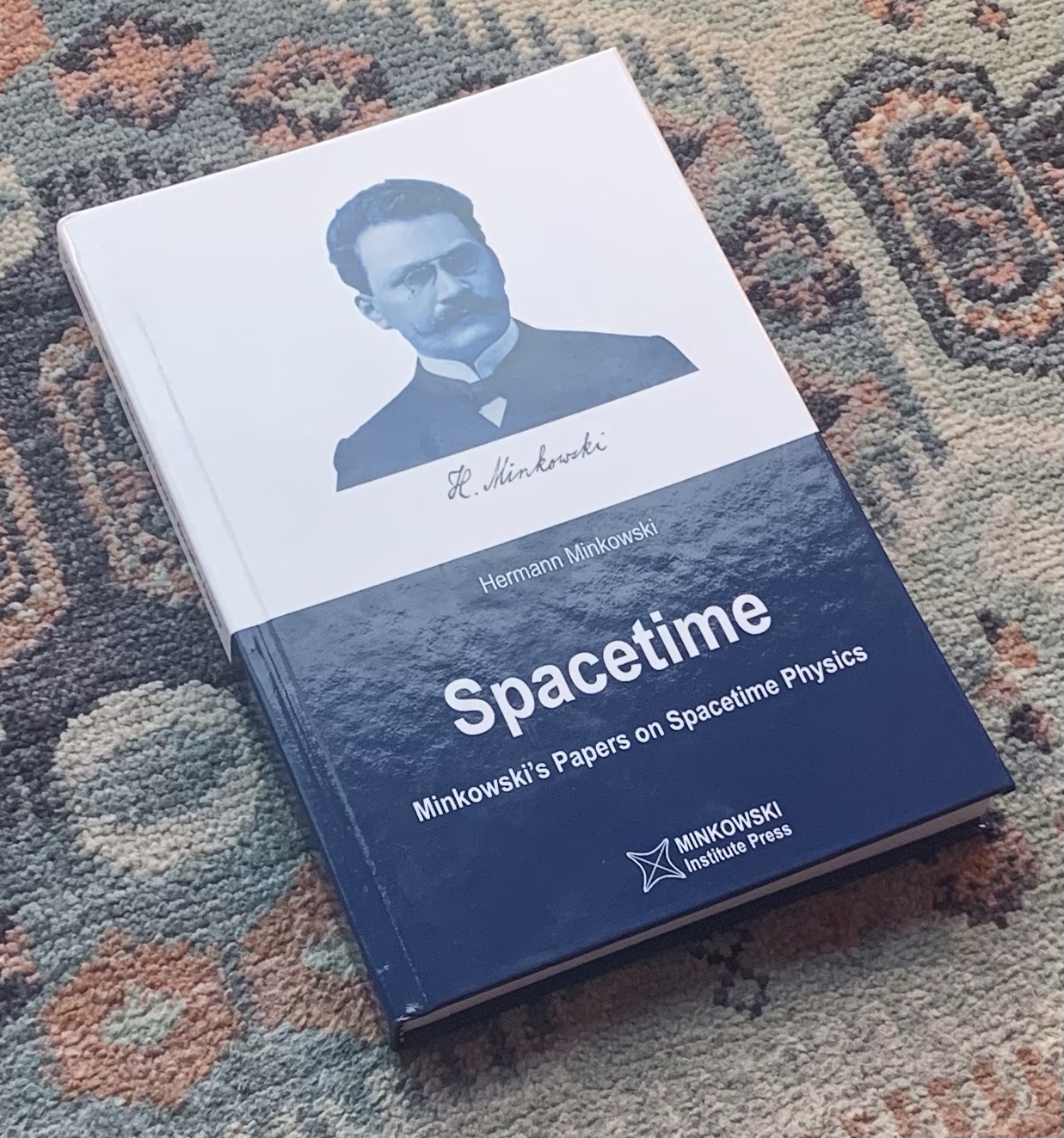

 The Egodeath theory