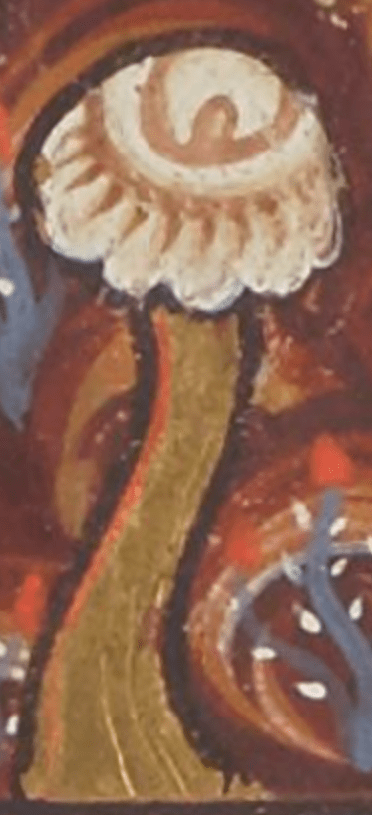
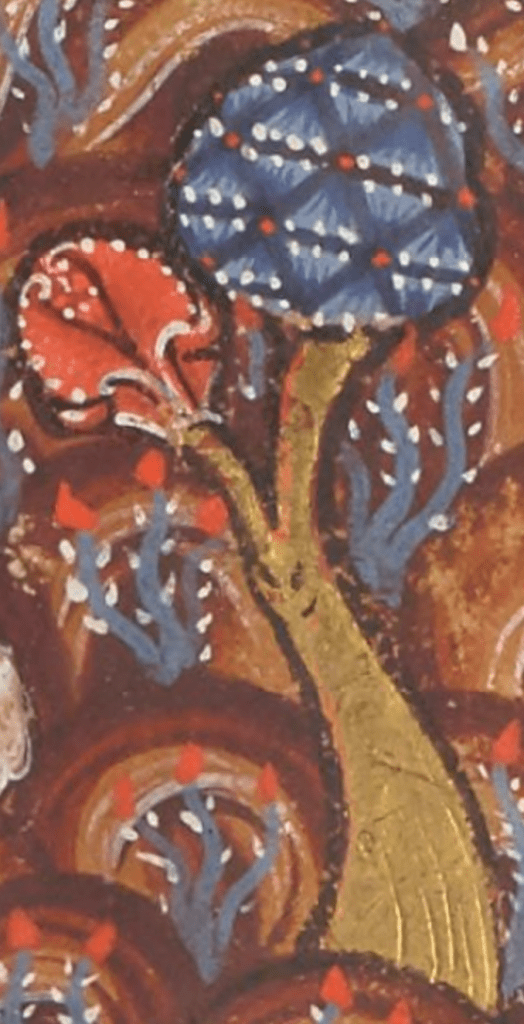
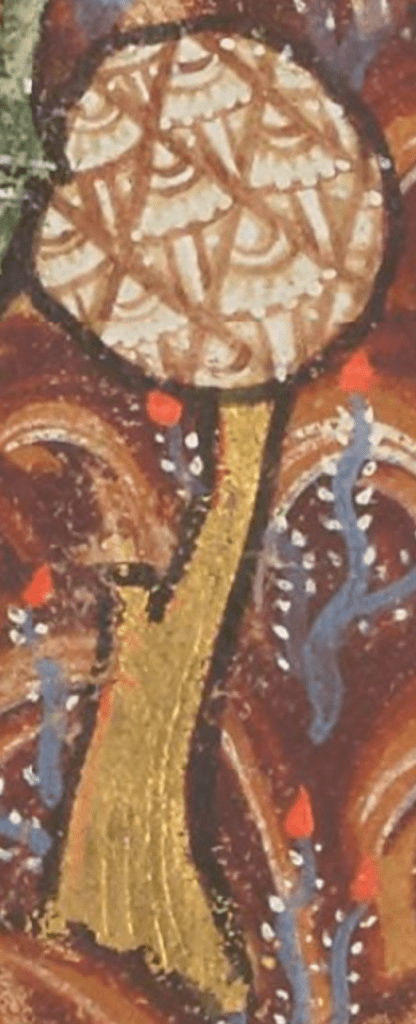
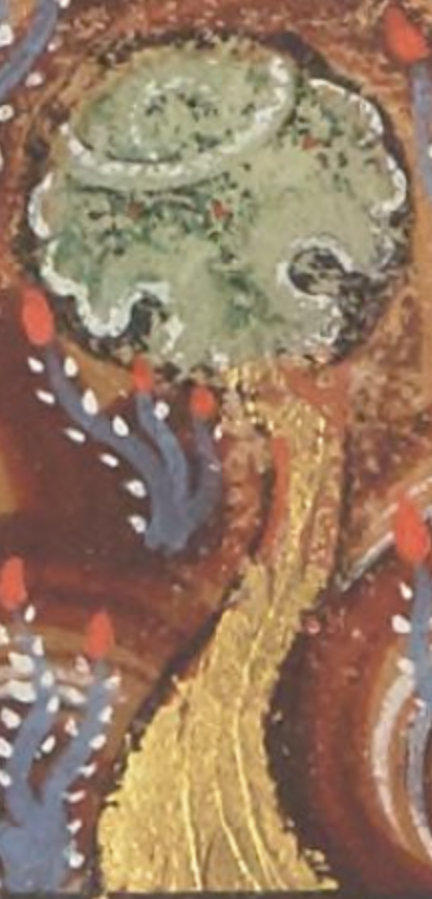
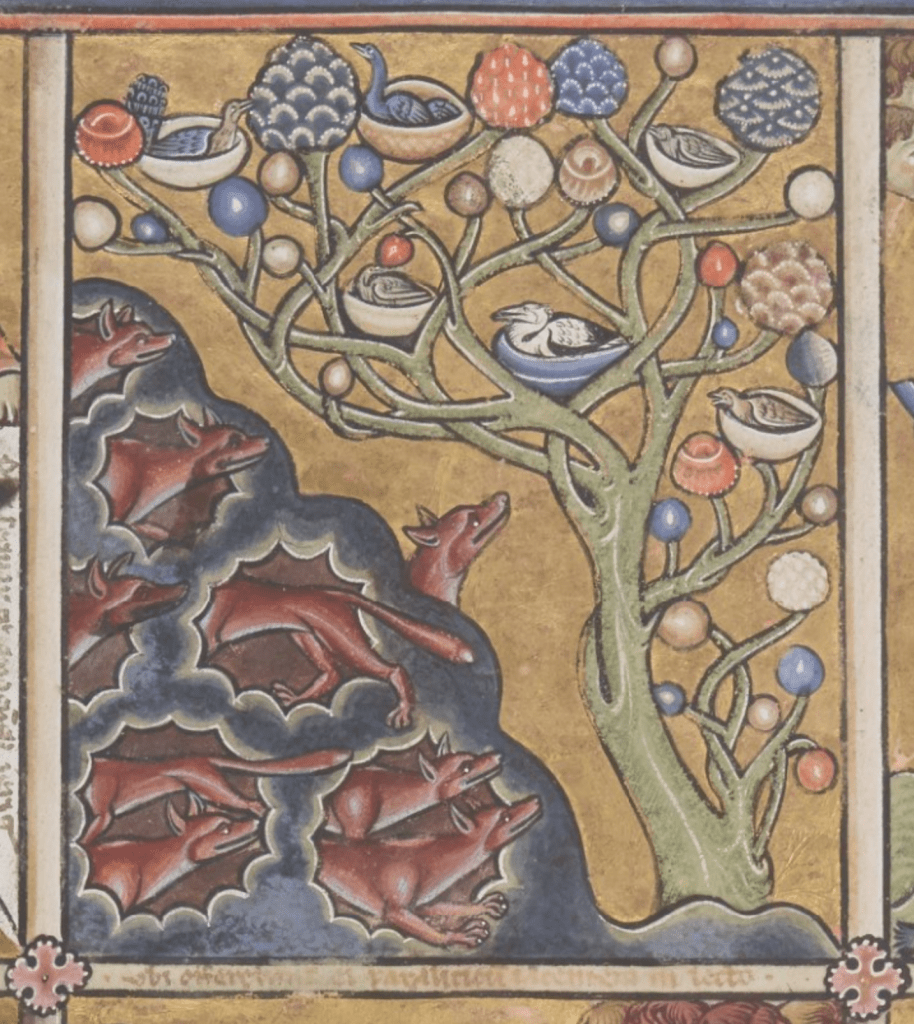
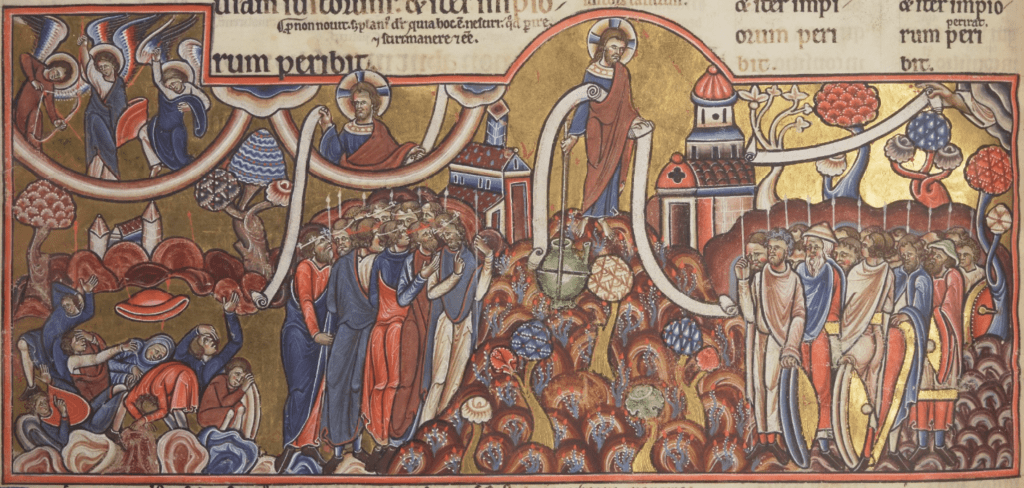
This page is quick zoom crops to study morphology patterns, in support of the Egodeath theory (analogical entheogenic eternalism and control transformation) and in support of the maximal psilocybe theory of Greek & Christian history.
This page is for scholarly research, to explain the mystic-state transformation from the branching to the non-branching model of time, control, and possibility, by cataloging mushroom branching morphology art motifs in the Canterbury Psalter.
Branching morphology is important for branching-message mushroom trees.
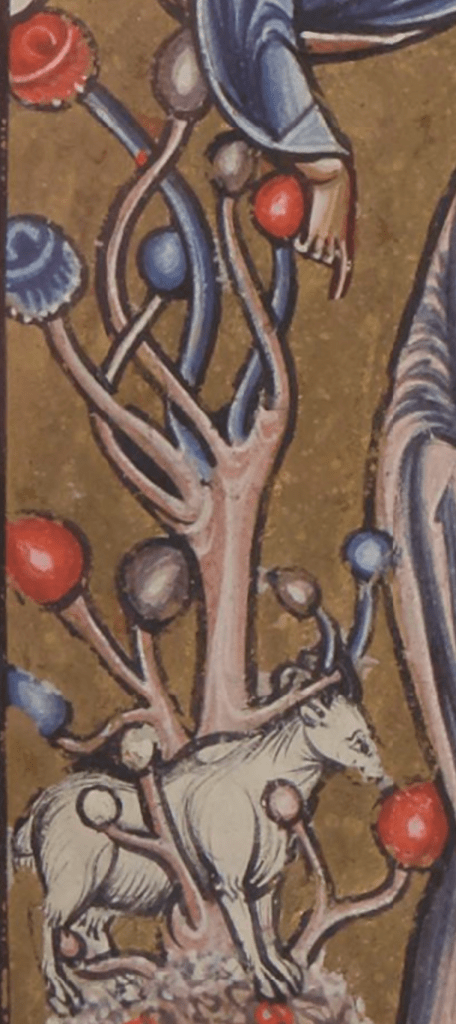
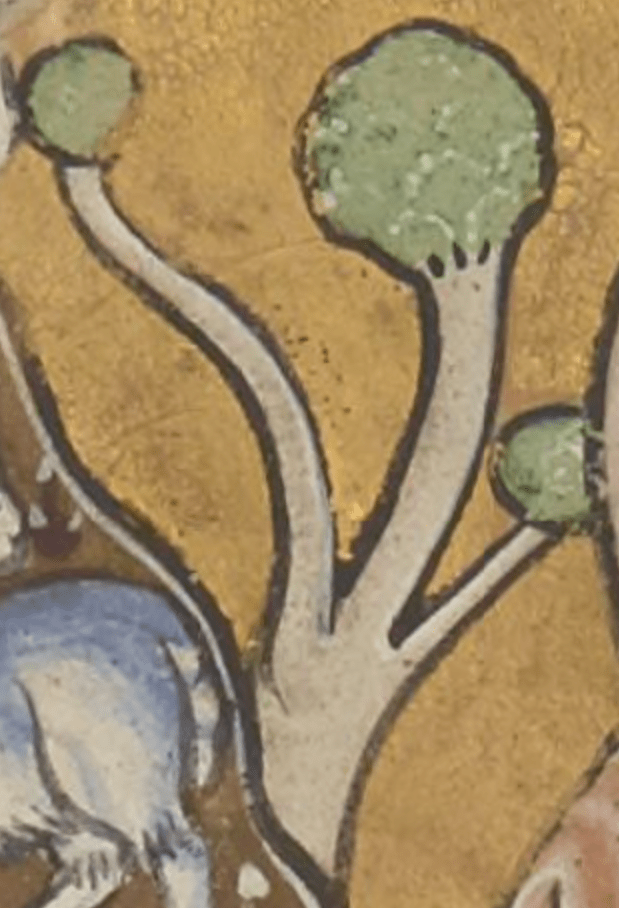
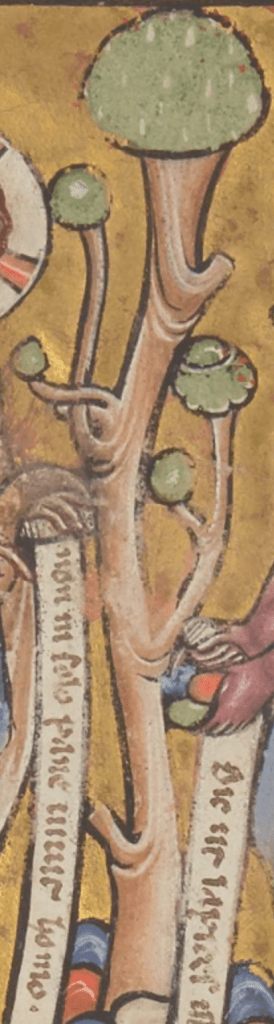
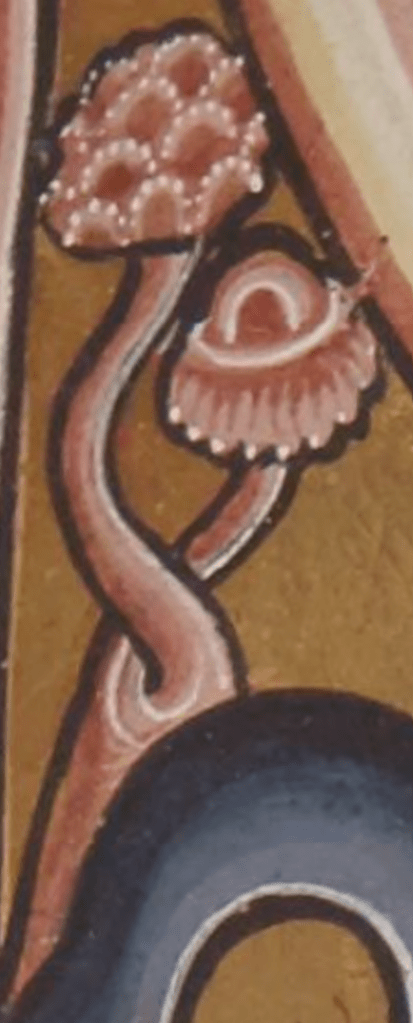
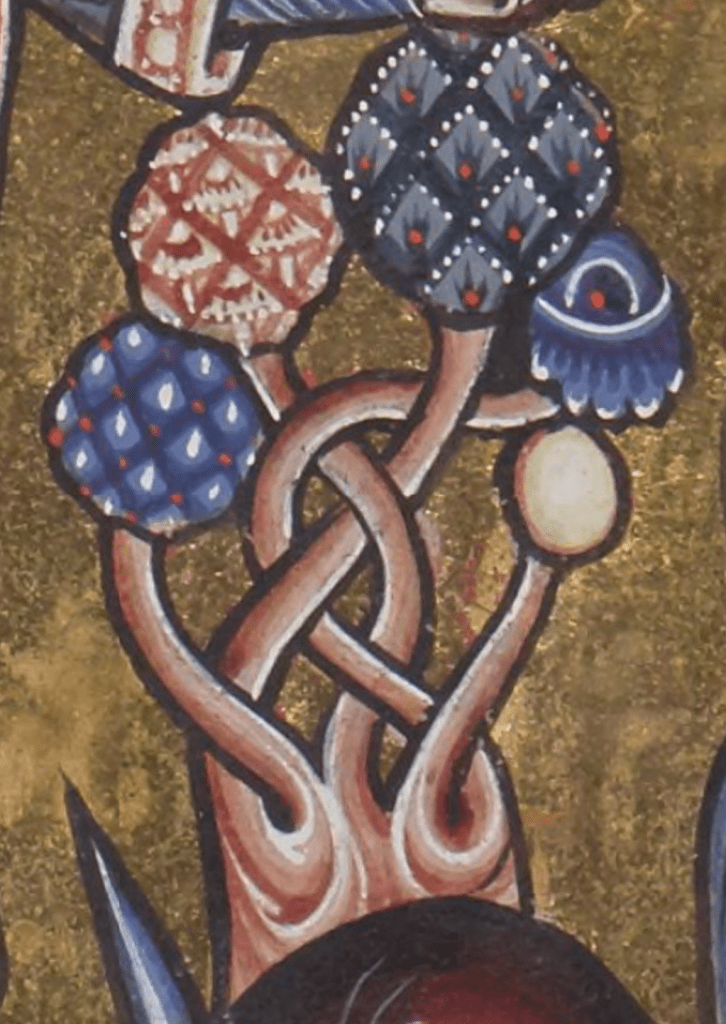
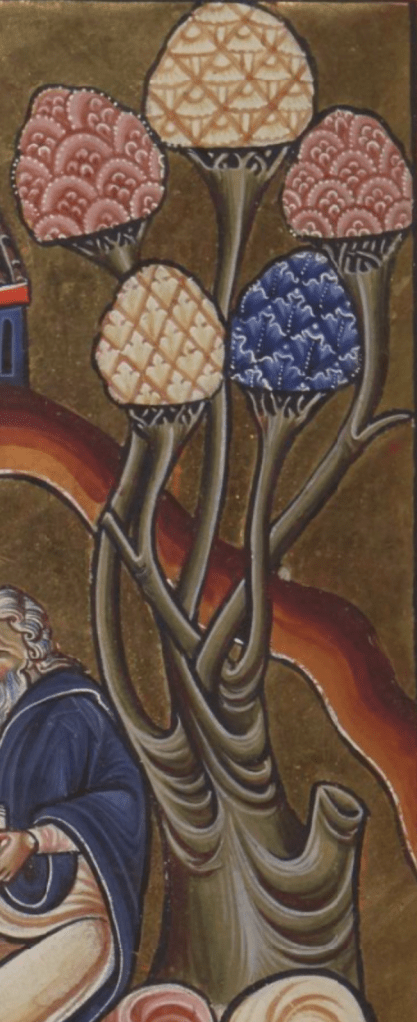
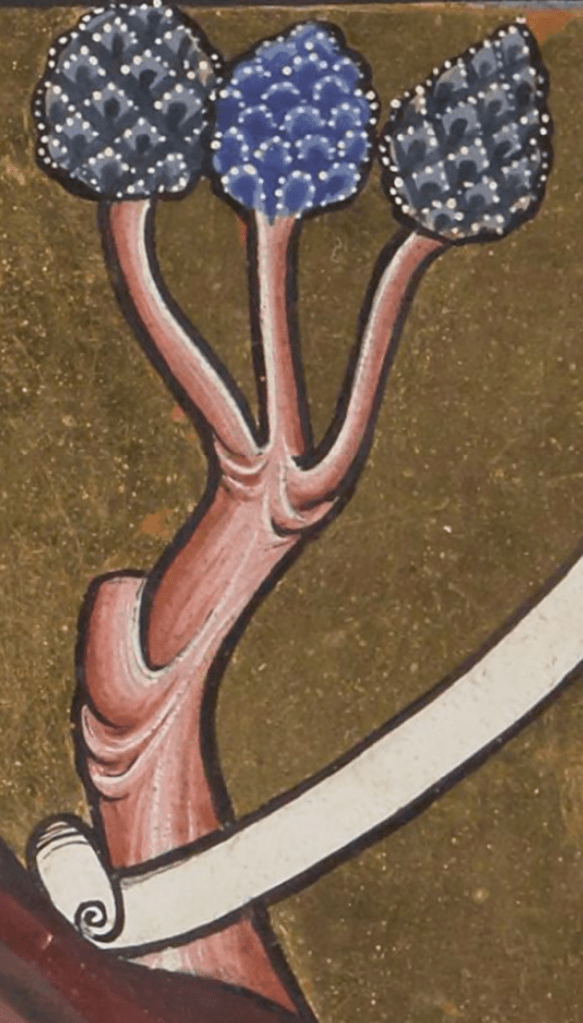
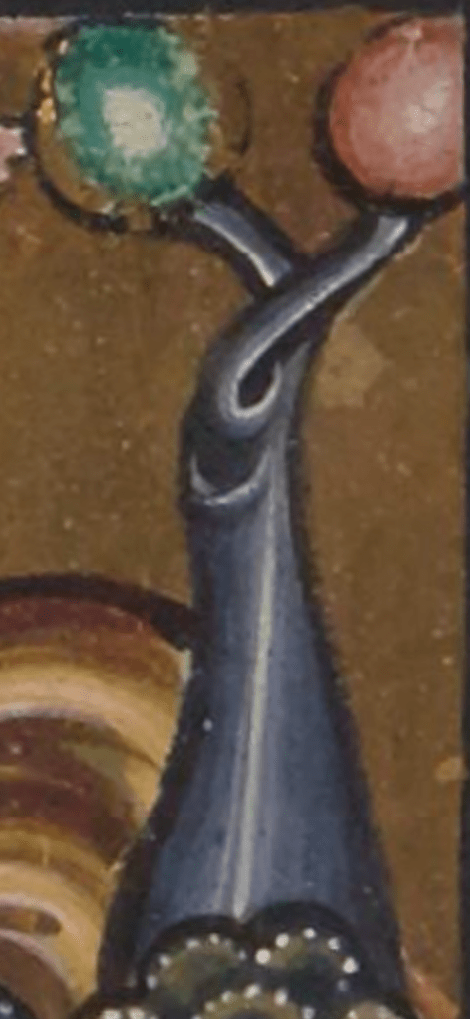
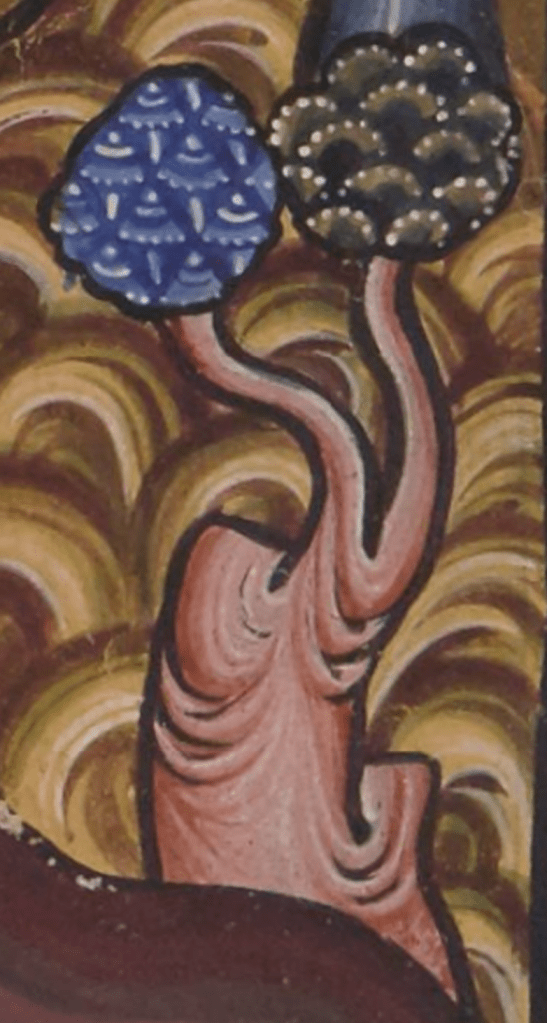
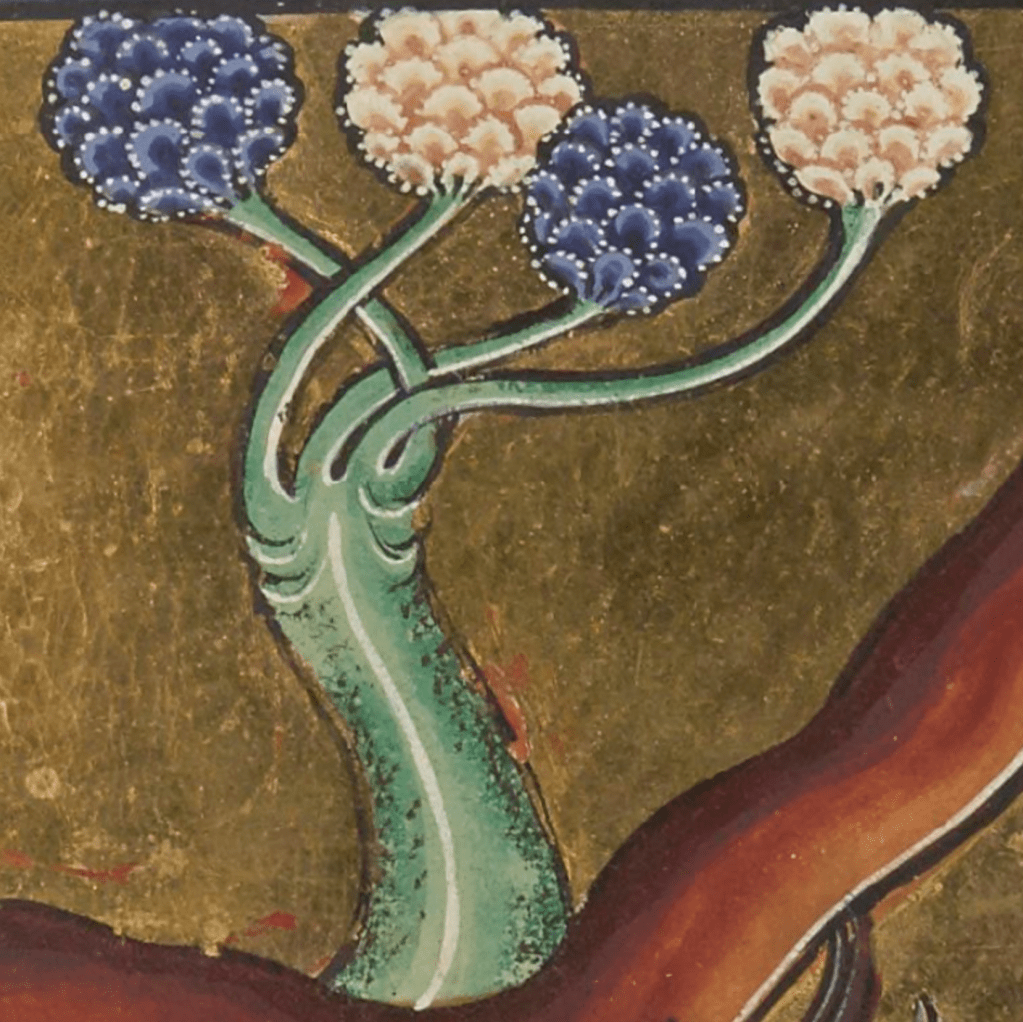
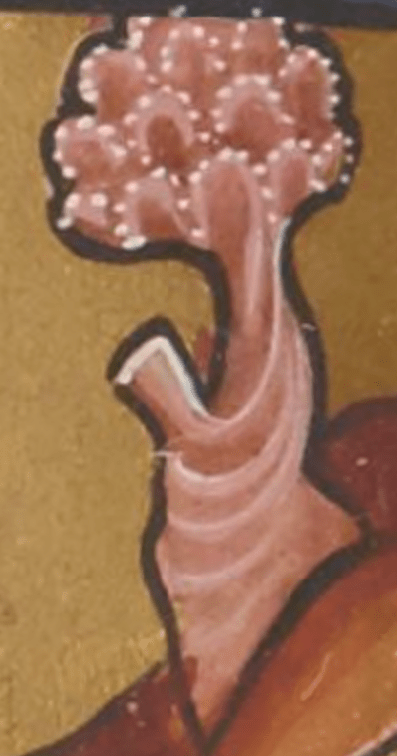
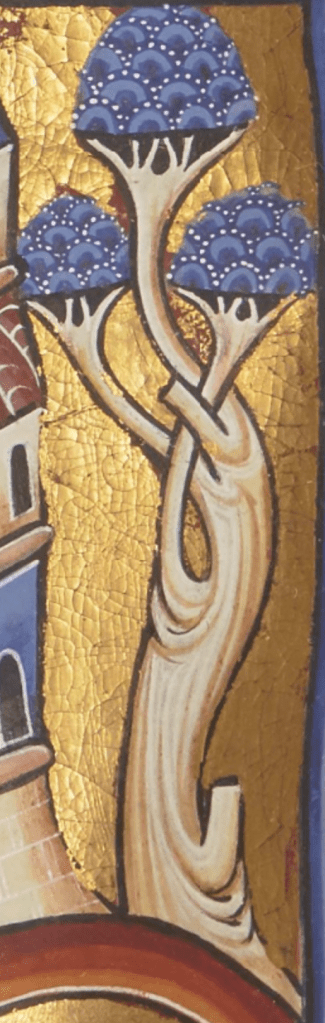
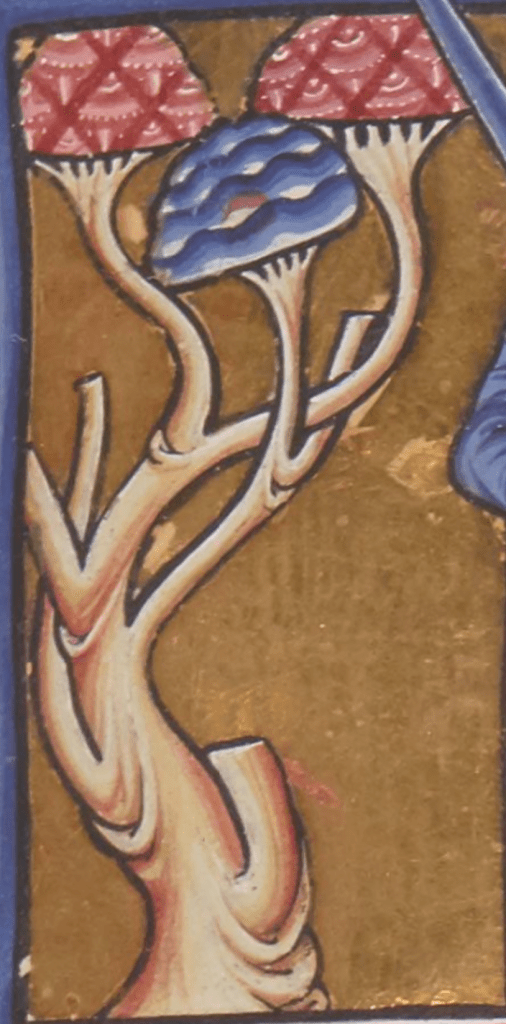
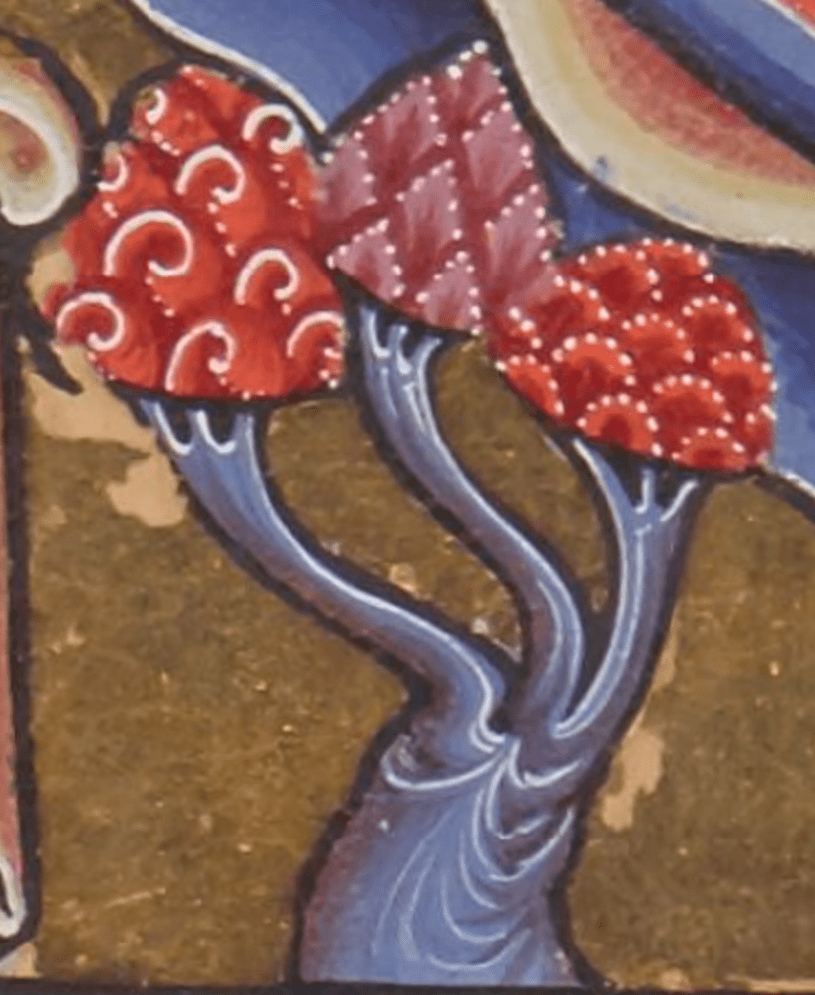
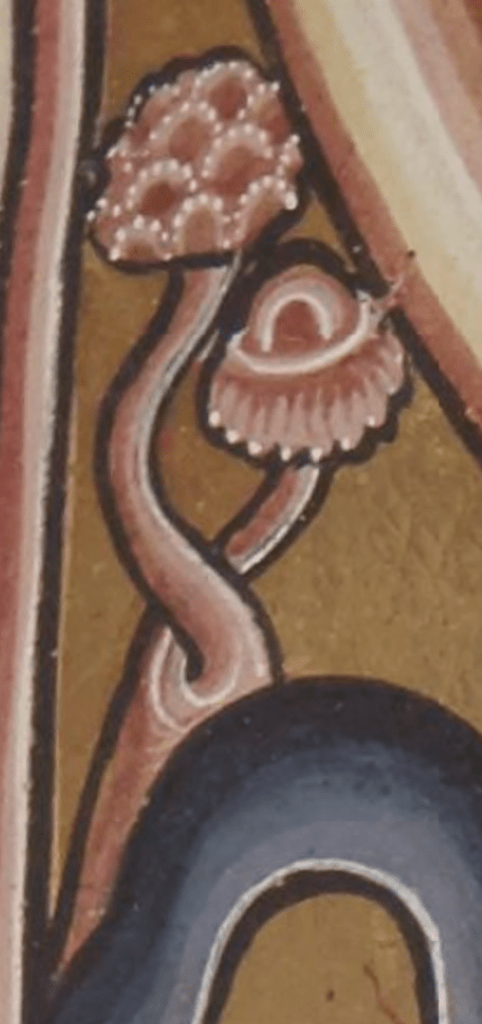
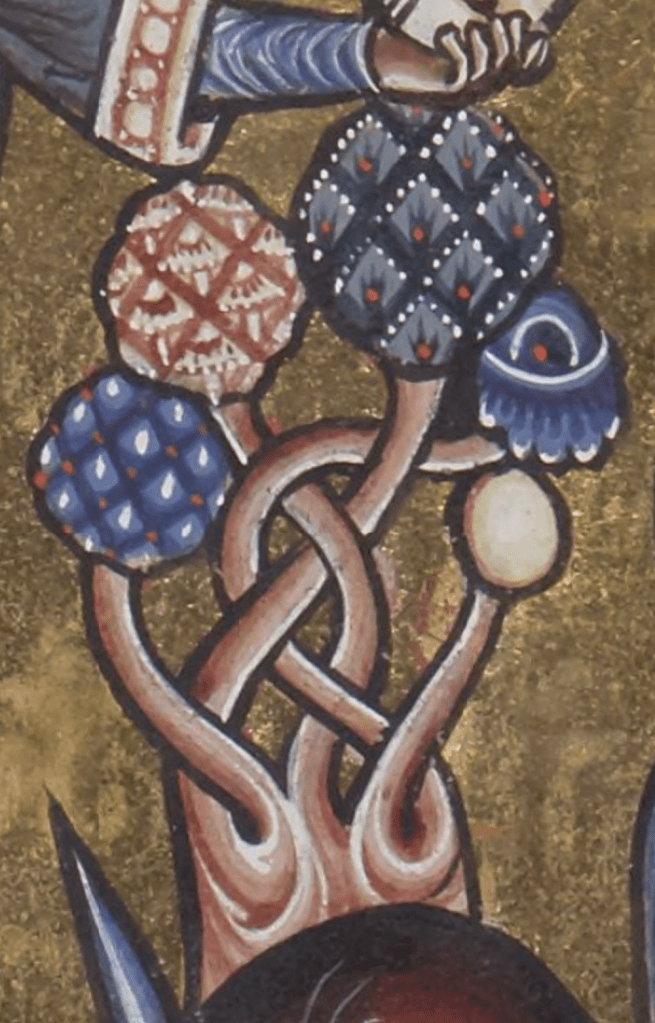
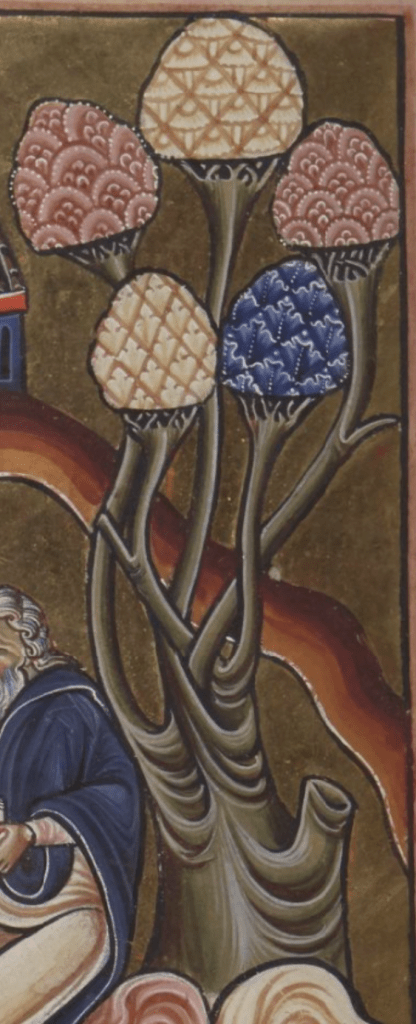
The present page is specifically to present zoomed crops on each isolated mushroom tree in the context of the Egodeath theory (analogical psychedelic eternalism & control transformation), in order to give full attention to each individual mushroom tree.
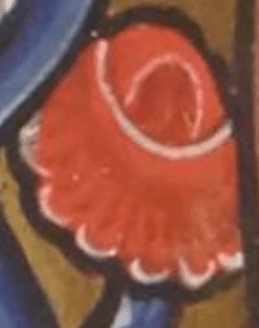
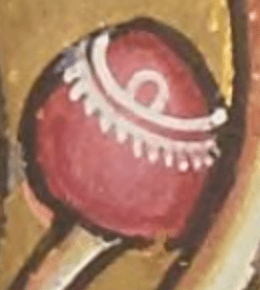
That Inventory page also covers the altered-state lifted garment motif (identified by John Rush) of the Eadwine artists’ group that accompanies the branching-message mushroom trees and vine-leaf trees.
That Inventory page is scoped to show all mushroom trees, not all vine-leaf trees or all lifted-garment instances.
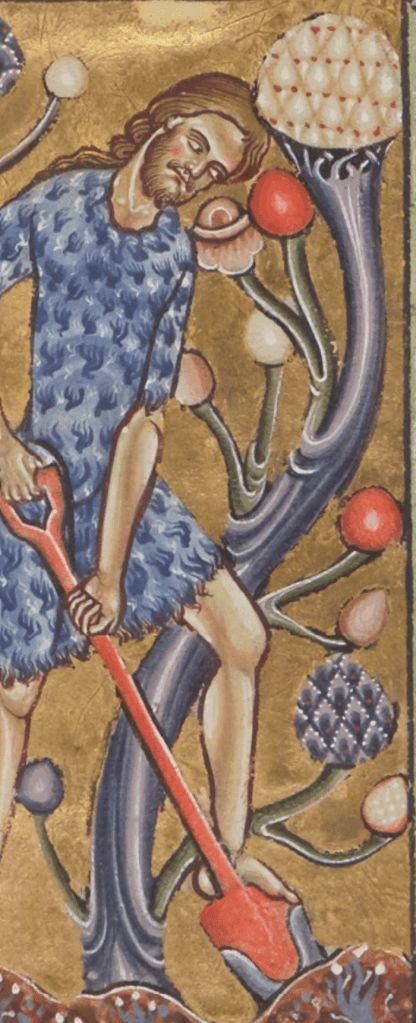
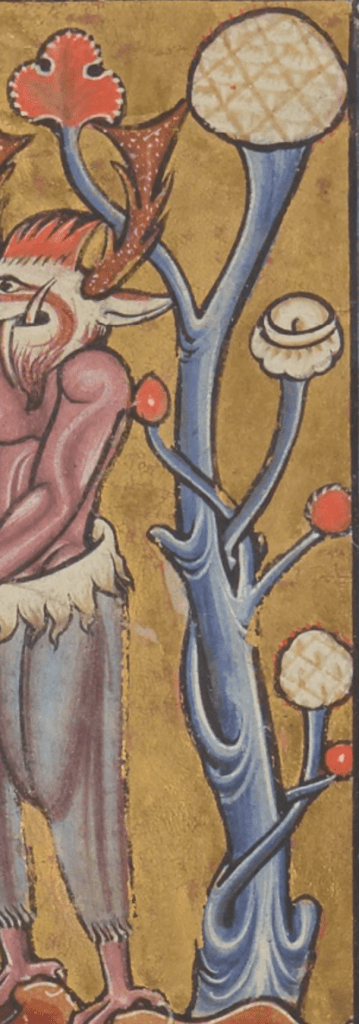
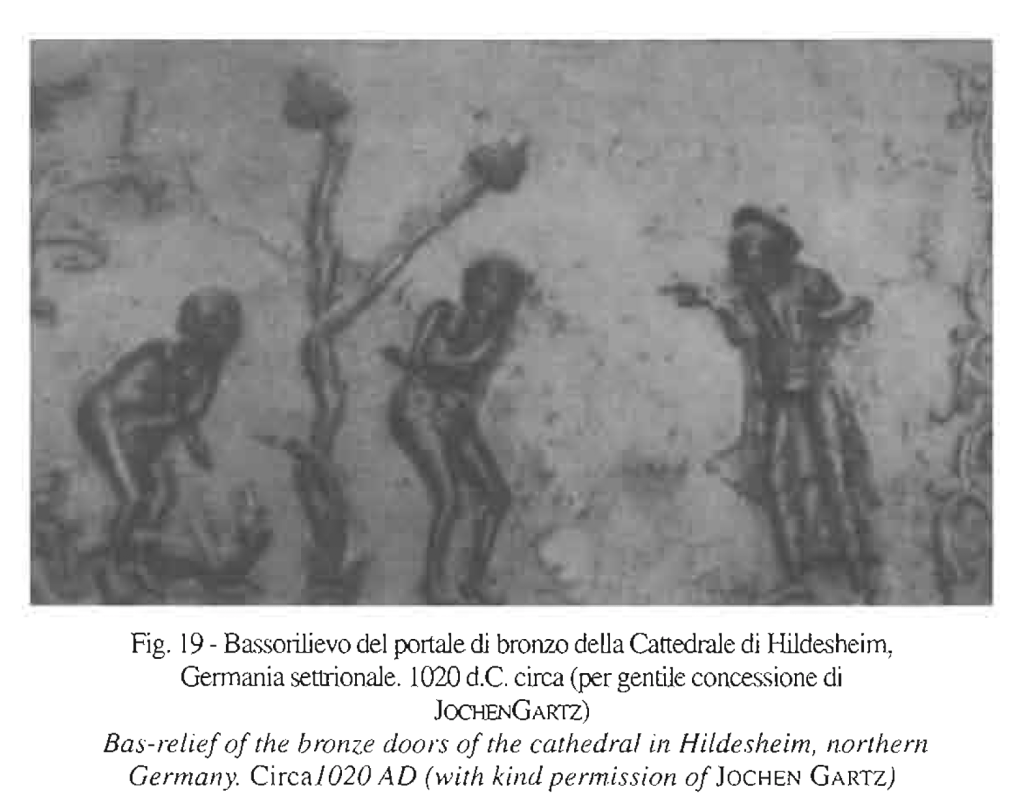
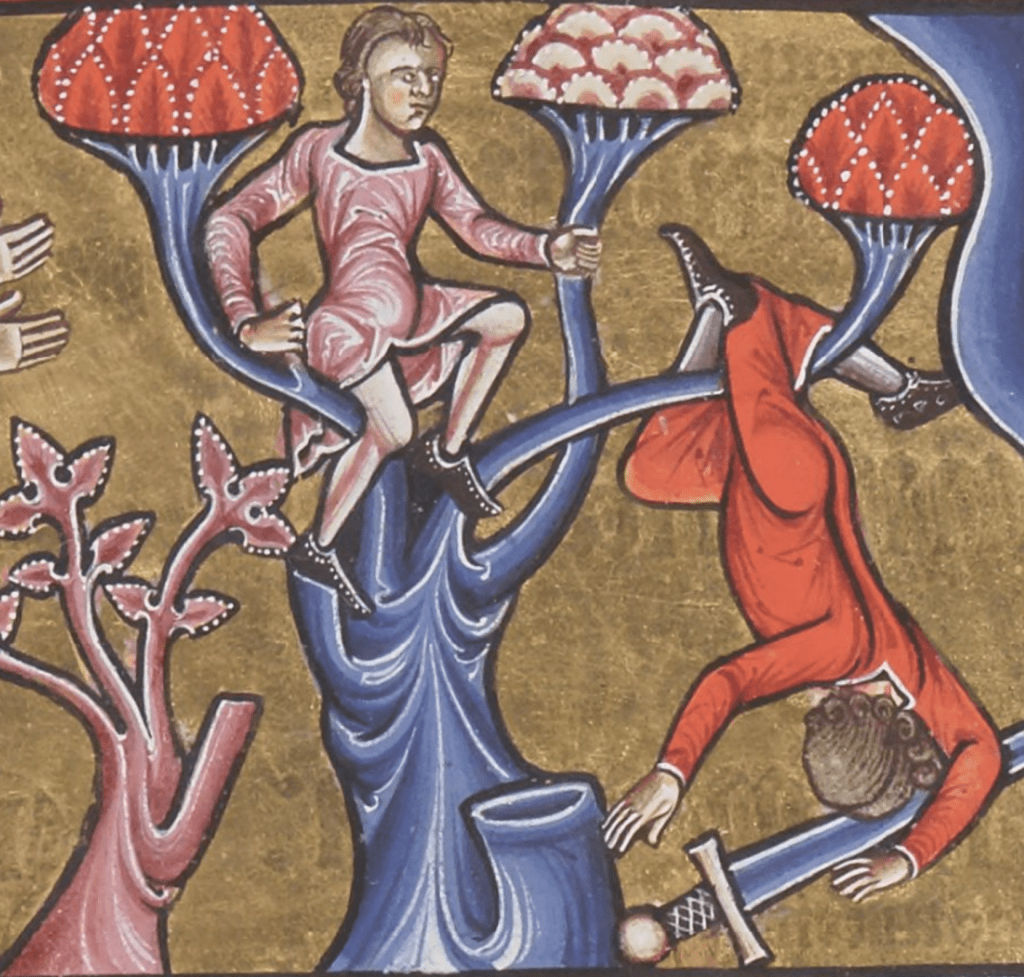
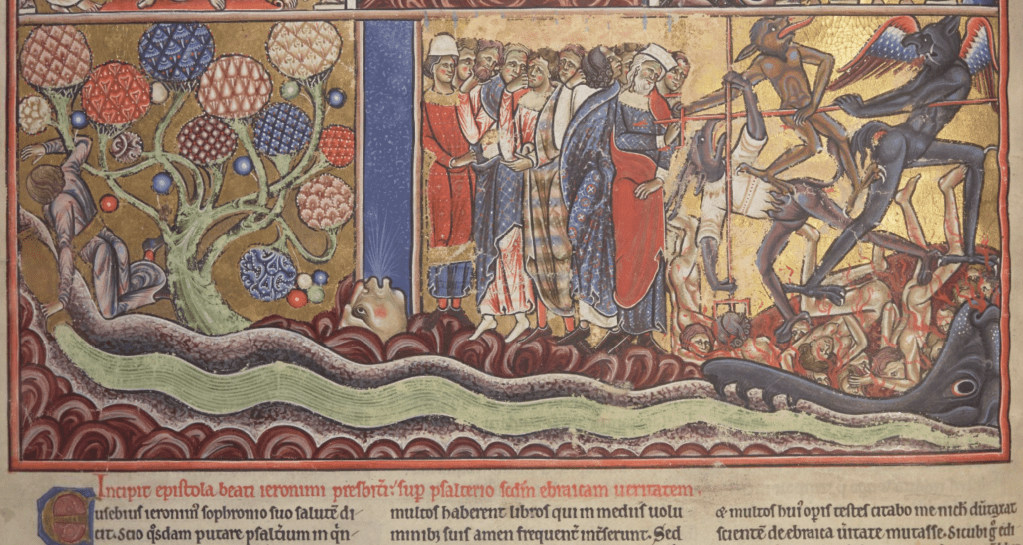
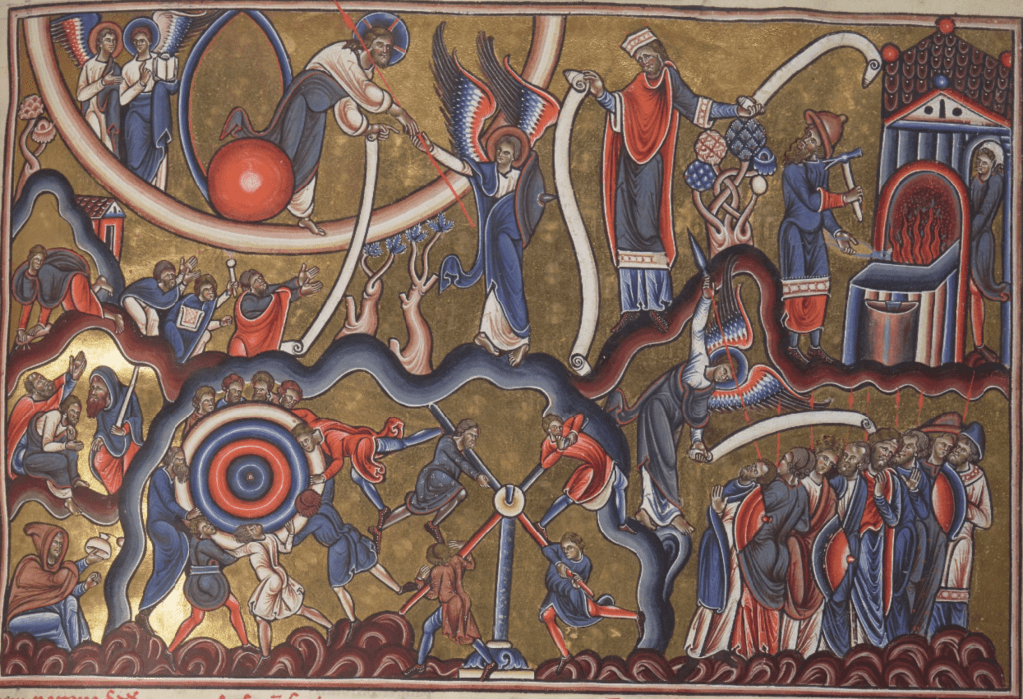
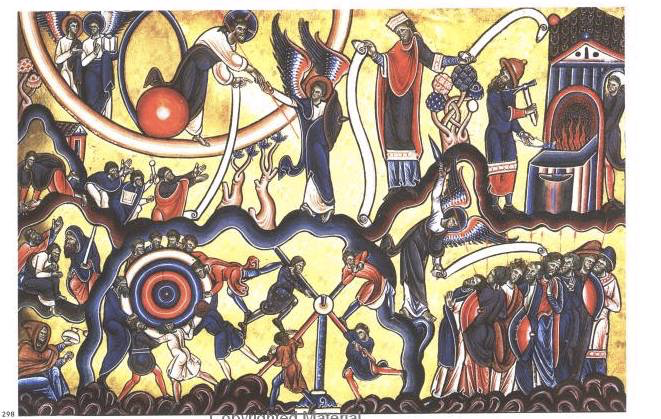
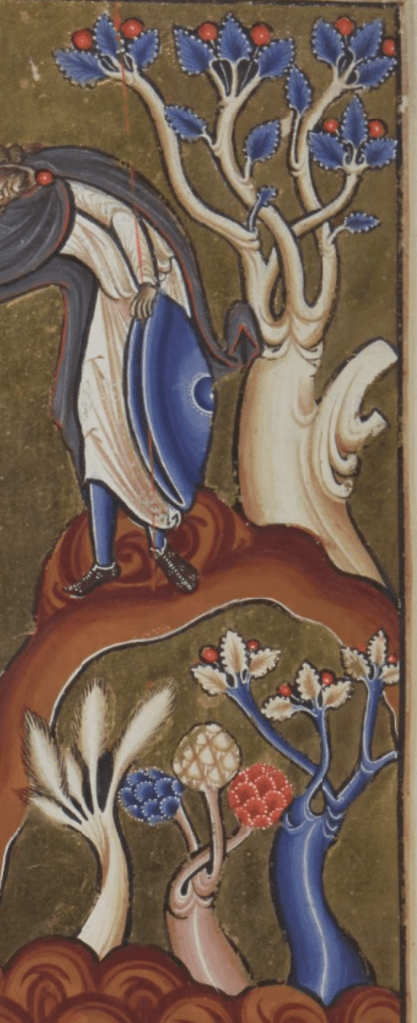
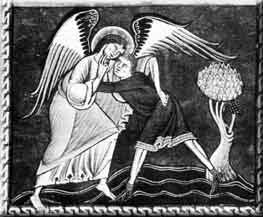
March 16, 2022: fine-tuning my read, my interpretation & reading of this image:
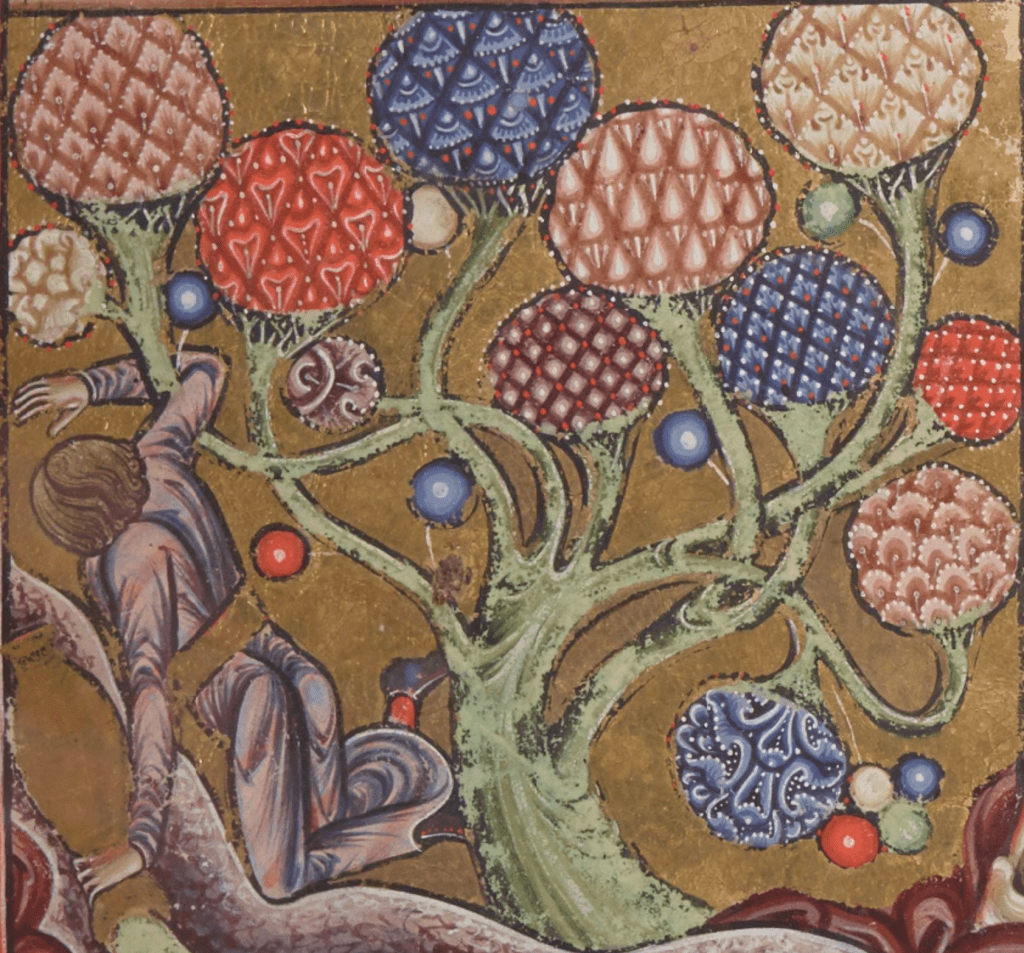
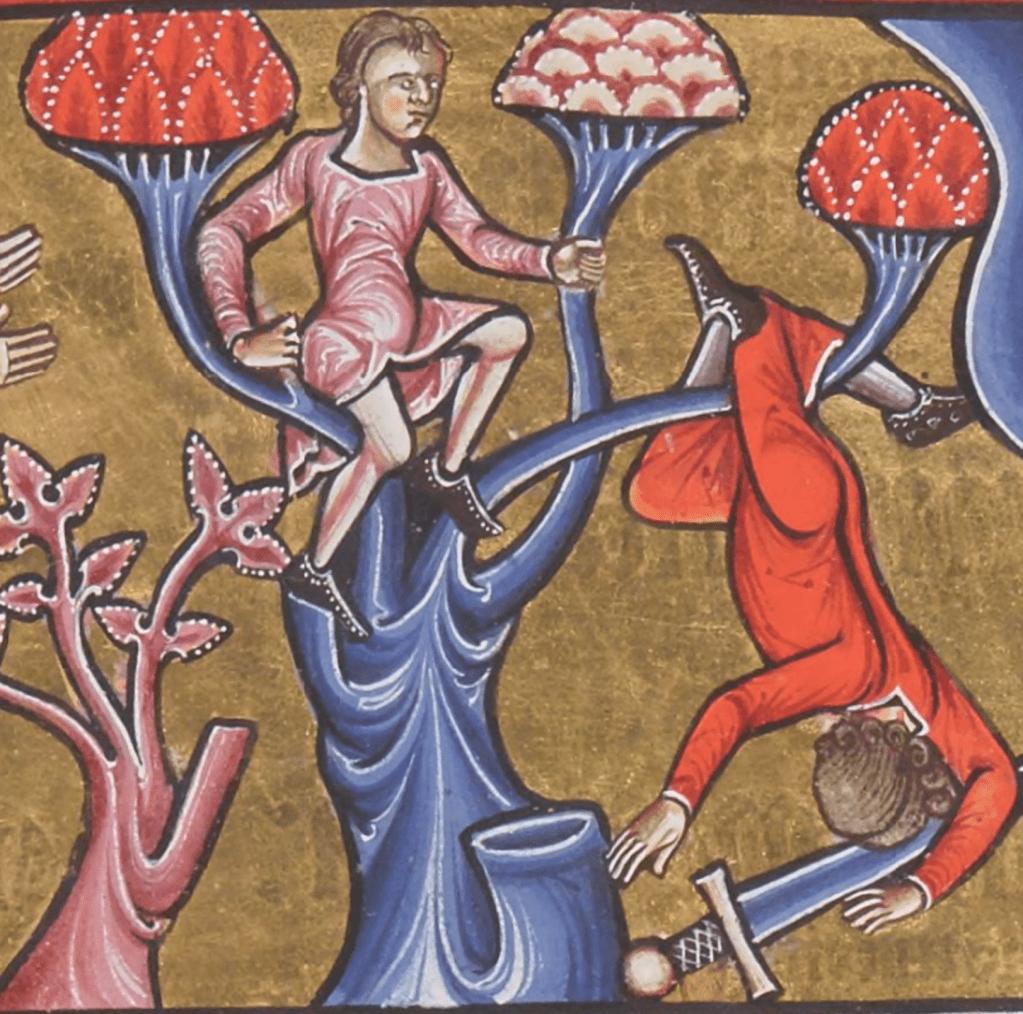
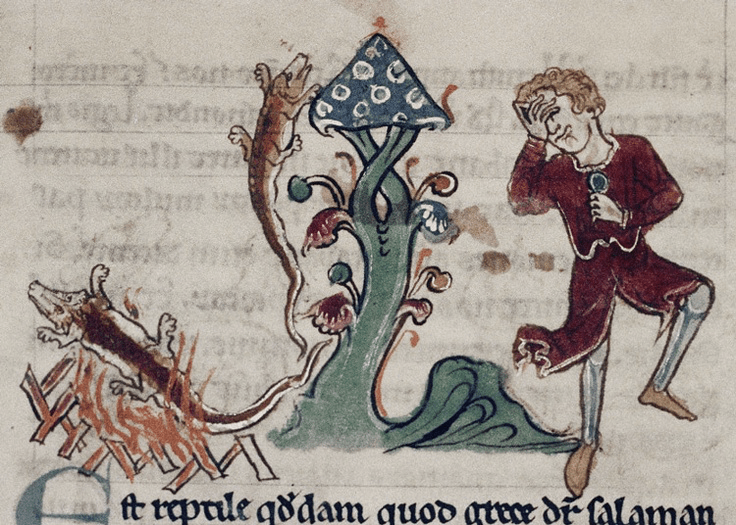
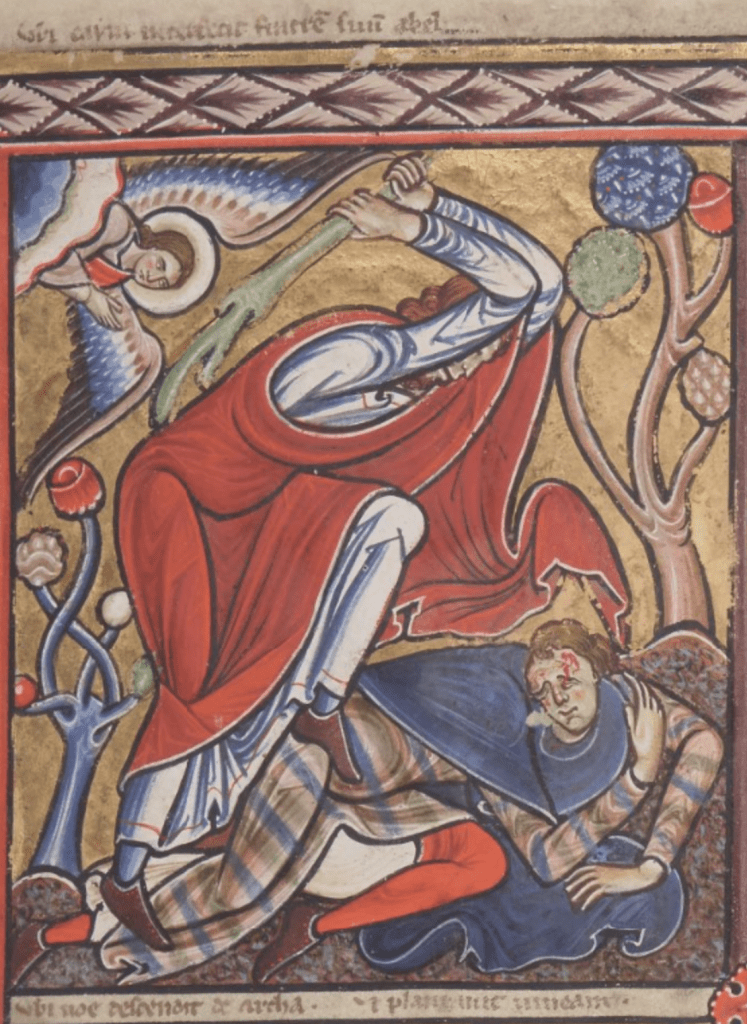
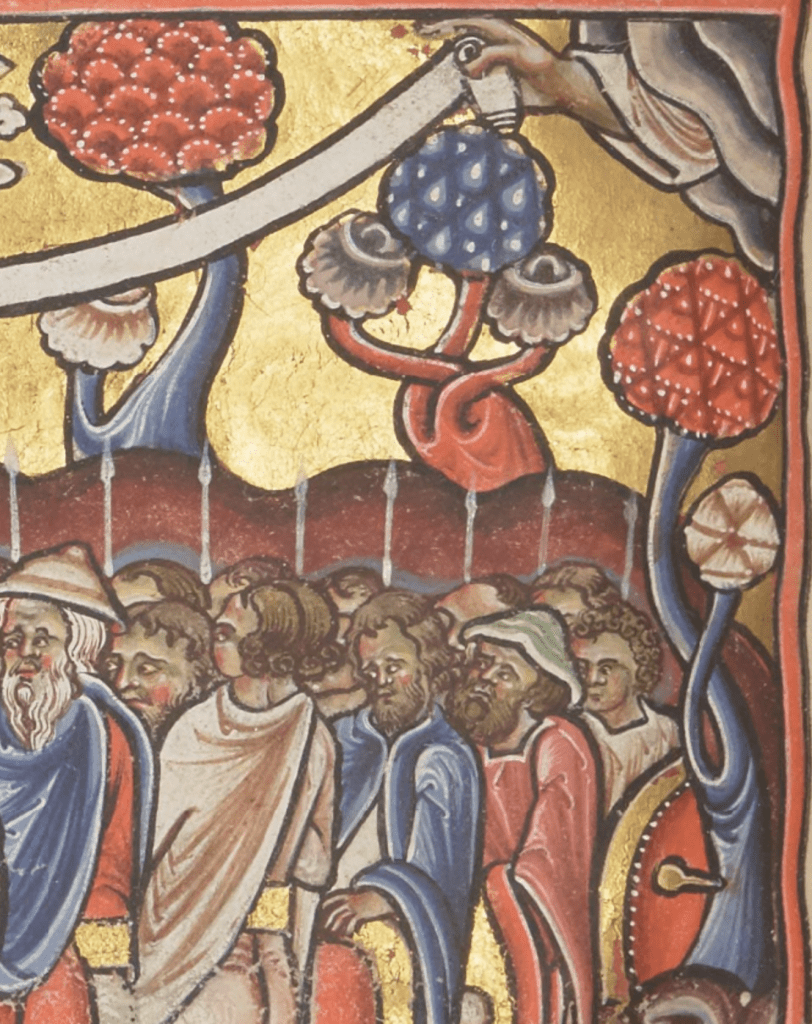
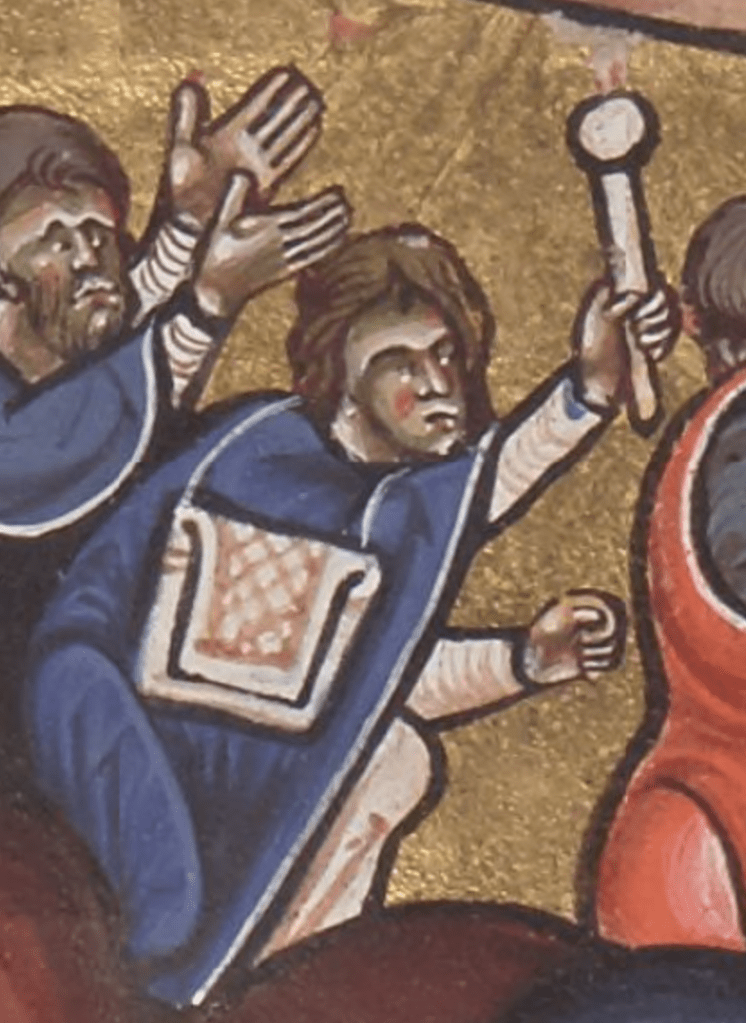
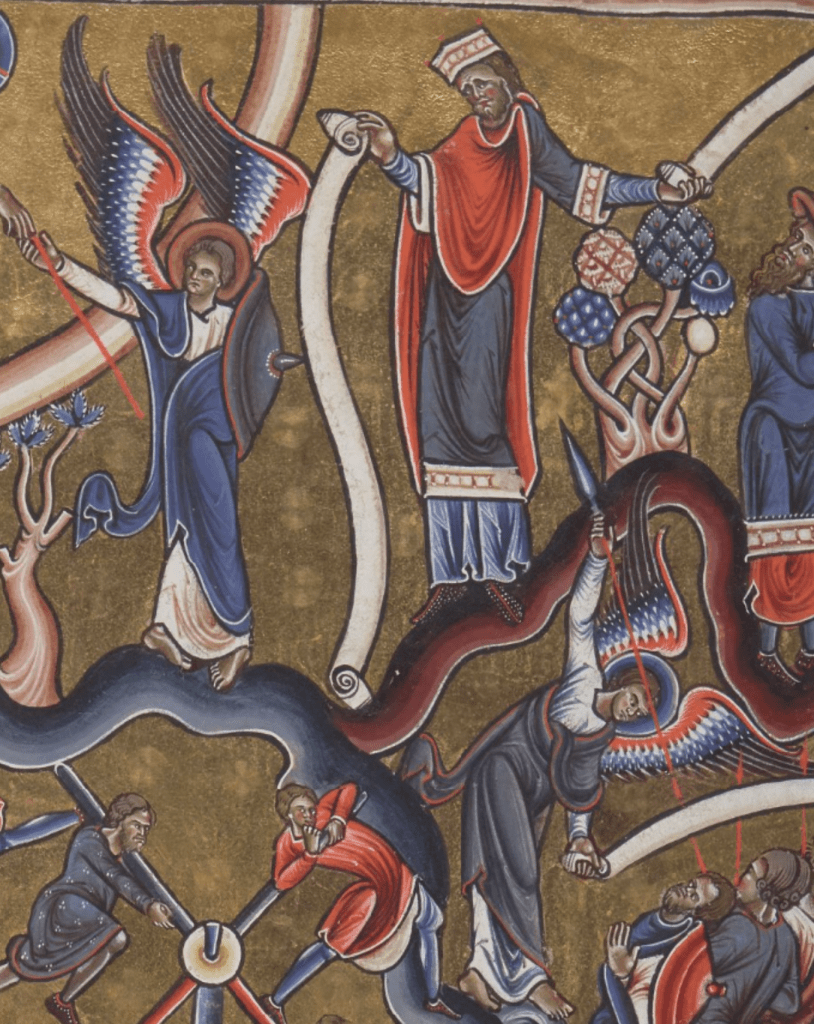
This image is to be read as depicting high-capability mystic acrobatics, not just as desperate struggling to avoid cybernetic catastrophic control-failure death.
If your brow is furrowed, like that of the failing students/candidates for initiation, you interpret these men as desperately struggling to avoid death.
If your brow is un-furrowed, like that of the passing student/candidate for initiation, you are eligible to balance and dangle skillfully at God’s sword of differentiation between egoic possibilism-premised thinking vs. transcendent, eternalism-premised thinking about the foundation of personal control.
We are being shown skillful balancing and deliberate, masterful touching of the sword of control-agency death, cancelling and disproving (“cutting off”) the branching-possibilities model of personal control. In the branching model (Possibilism), future control-thoughts don’t exist already as a single set of thoughts.
In the ordinary experiential state, king ego is presumed to have the power to steer through a tree of presumably non-settled possibilities, to create one’s future control-thoughts.
In the mystic altered state, that experiential mode ceases, and the experienced branching of possibilities is cut off, along with king ego’s presumed, previously experienced power of steering among the supposed branching possibilities.
I also want to shift from characterizing these as roughly, wildly “broken off” branches to cultivated and intentional “cut off” branches, more cleanly; they are always clean cuts, as from an axe – or God’s sword – not rough breaks. Like clean mystic acrobatic skill; reference the two smiling (skilled, adept) cybercide guys. So I globally changed “broken branches” to “cut branches”.
– Michael Hoffman
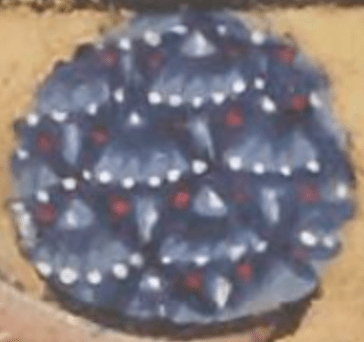
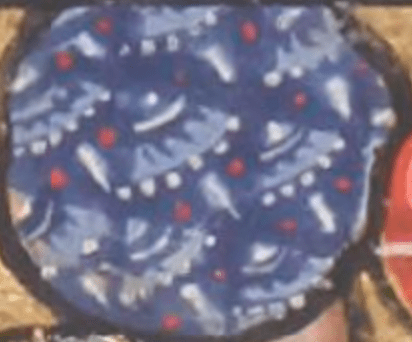
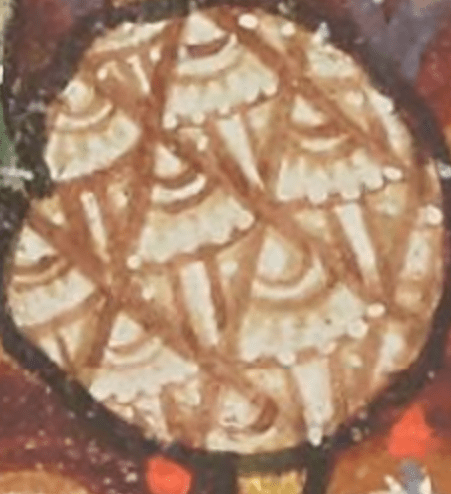
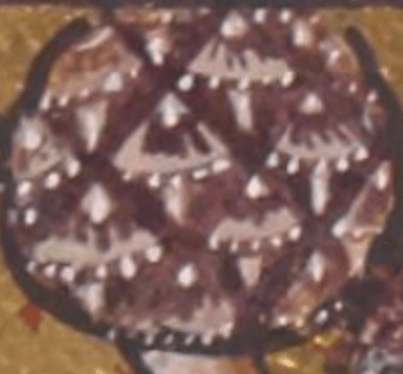
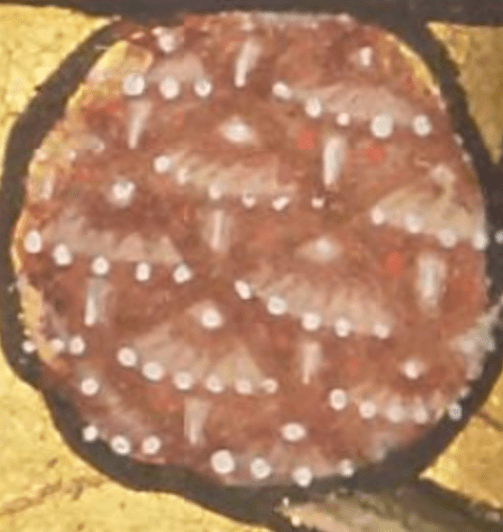
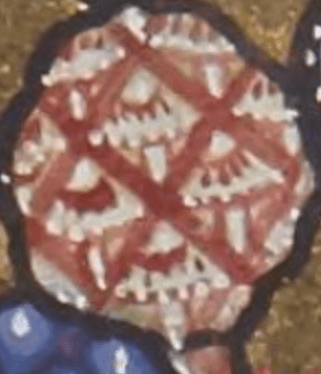
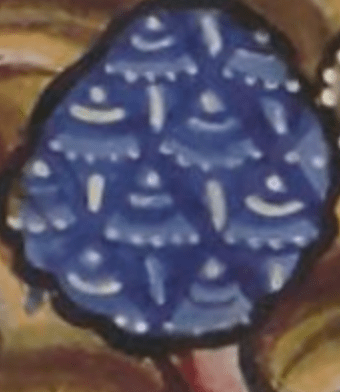
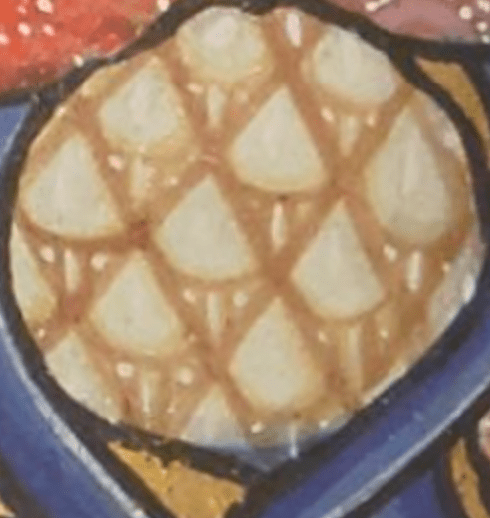
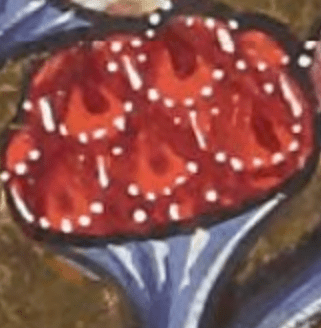
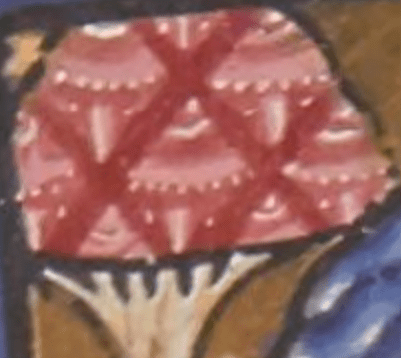
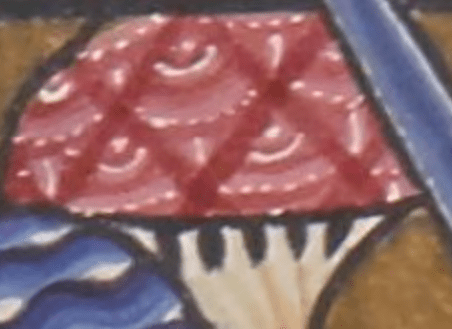
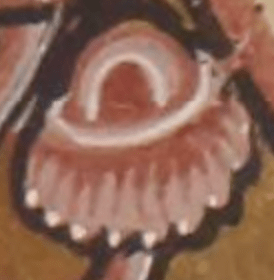
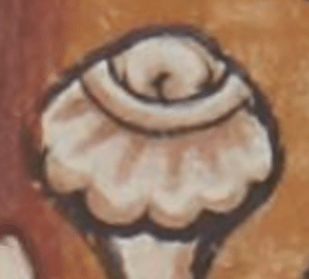
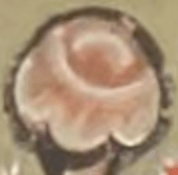
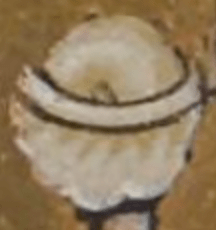
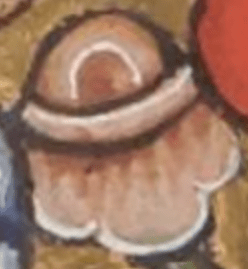
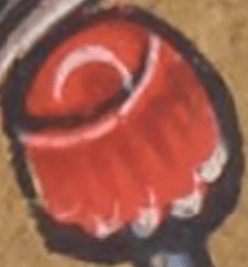
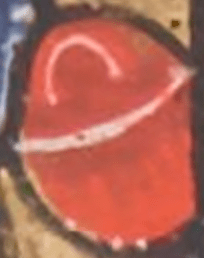
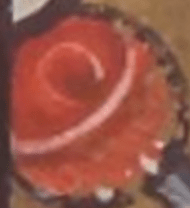
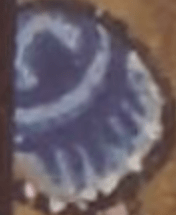
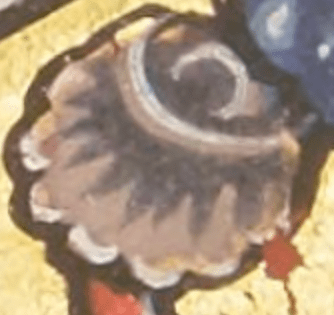
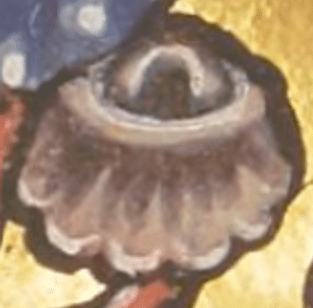
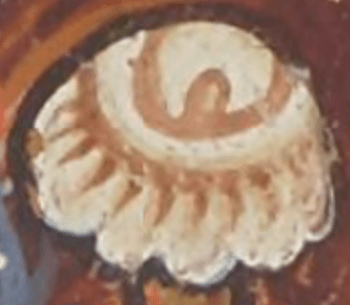
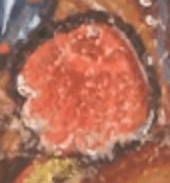
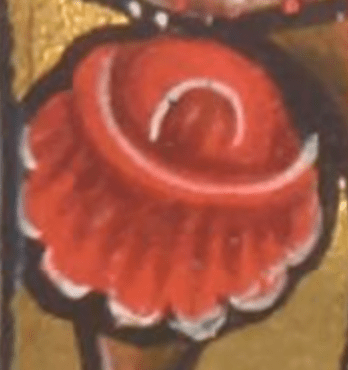
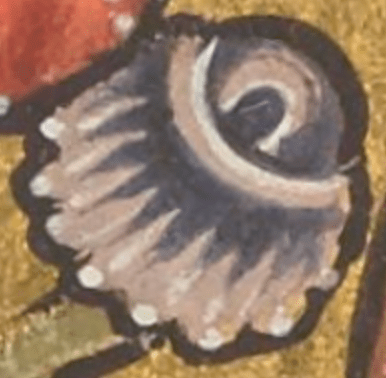
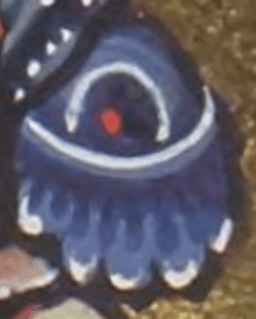
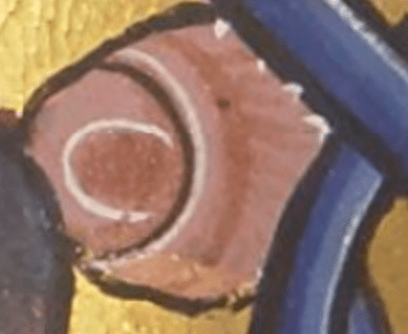
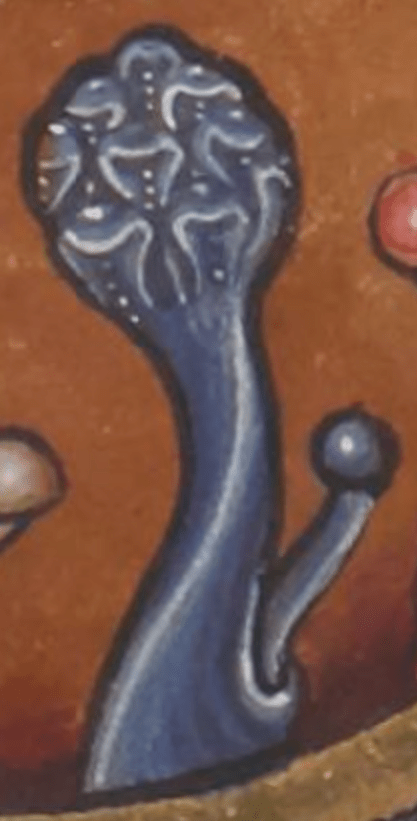
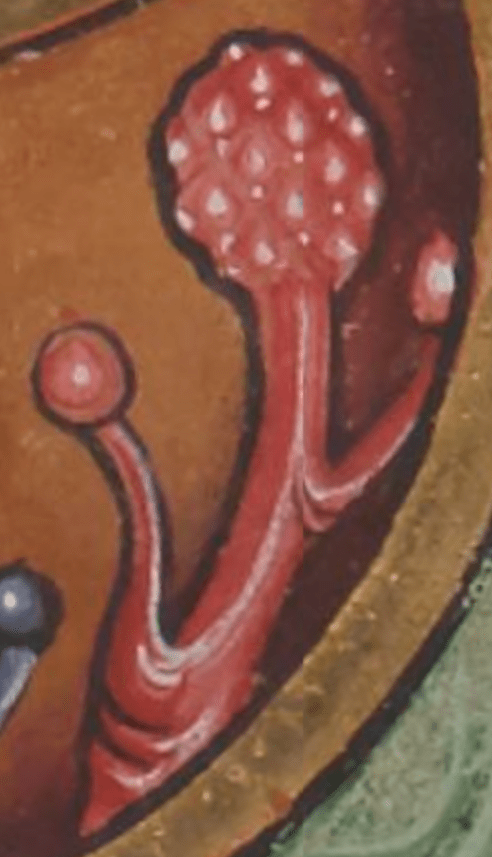
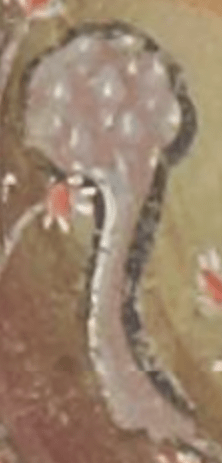
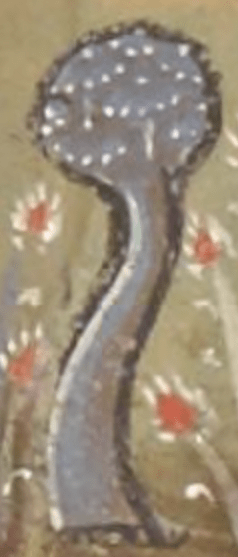
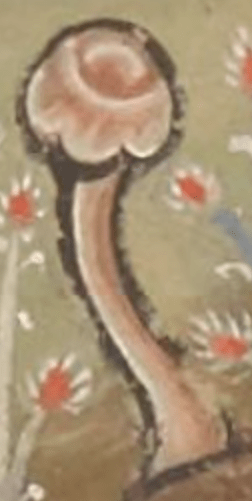
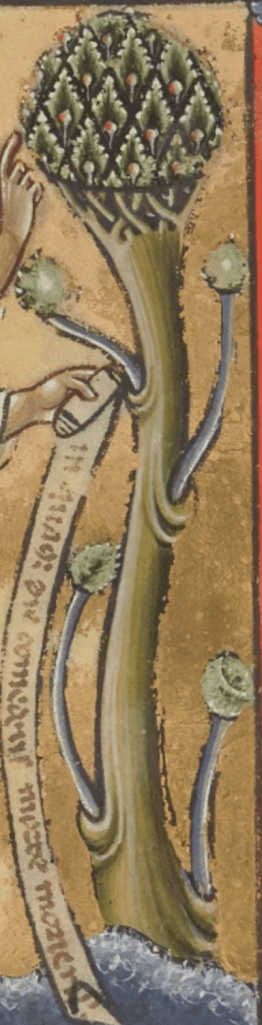
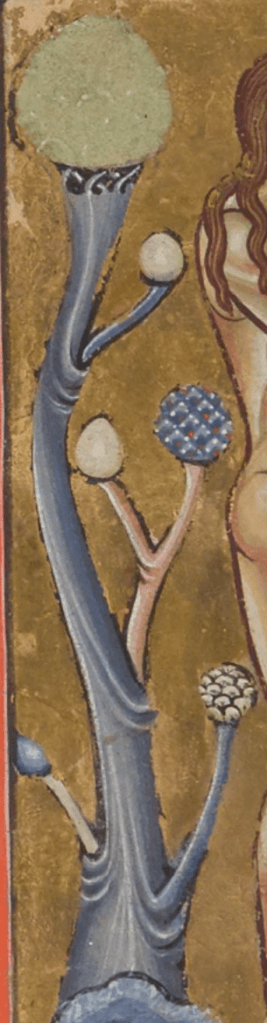
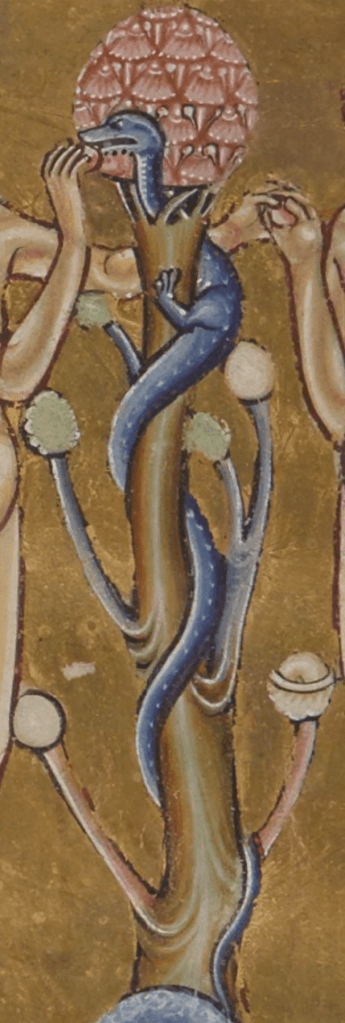
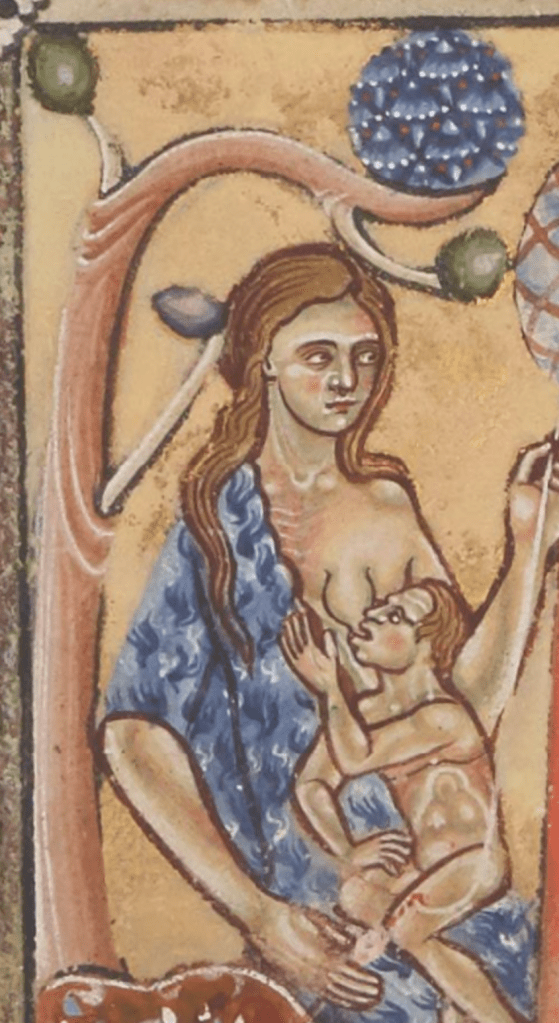
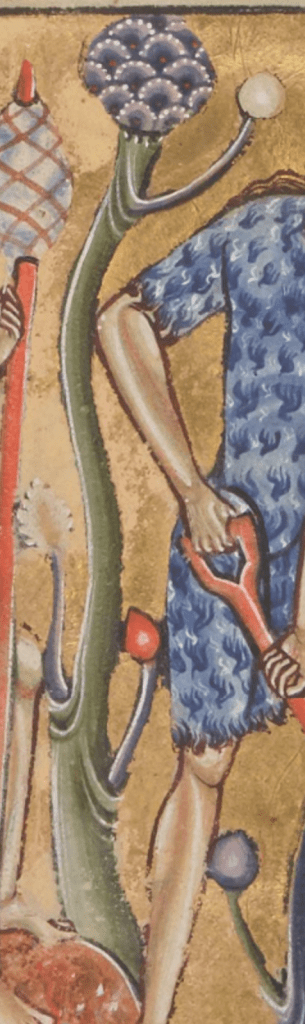
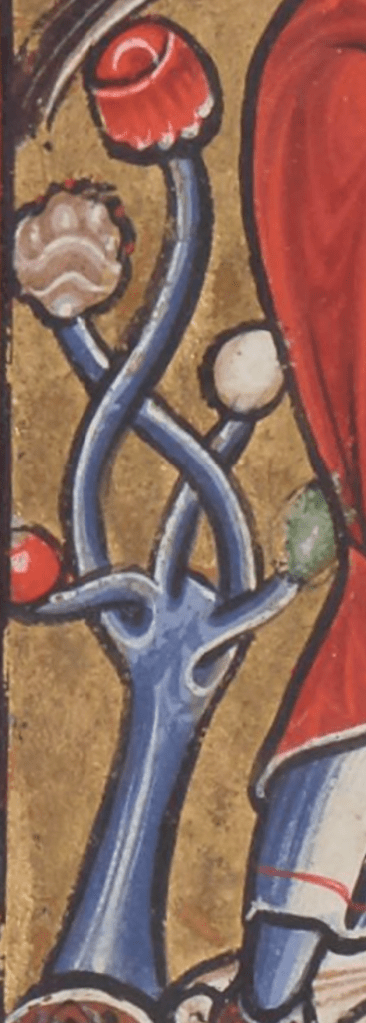
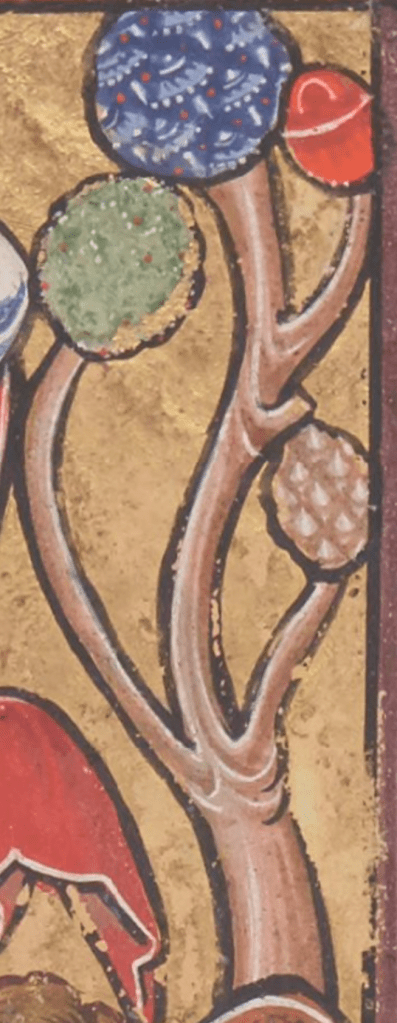
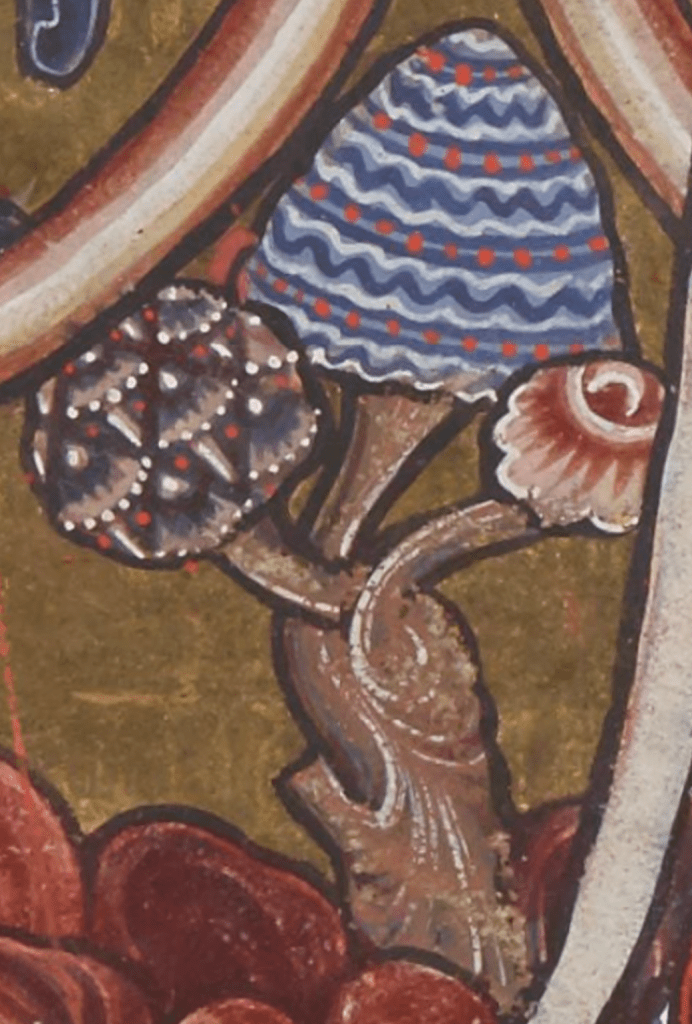
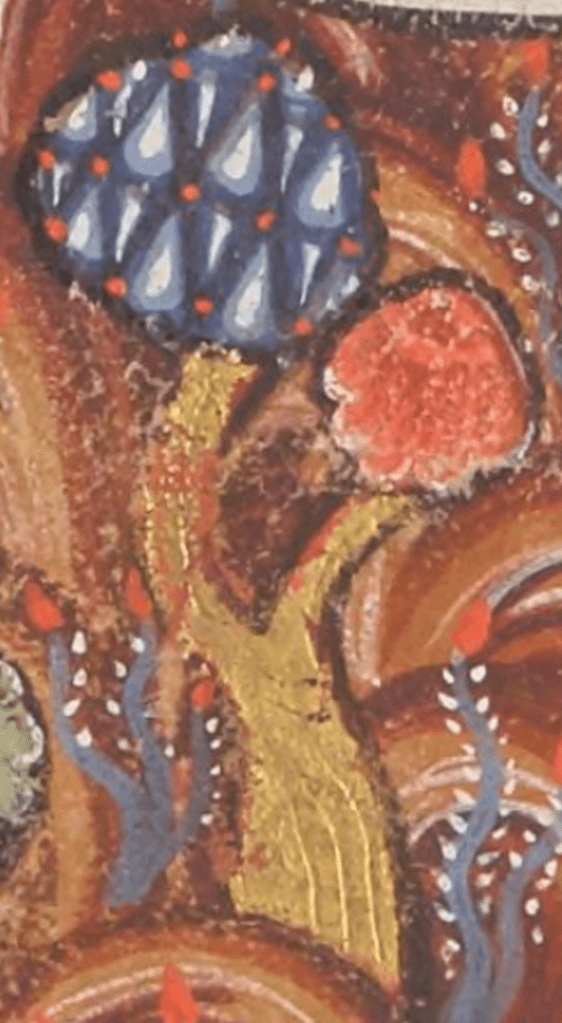
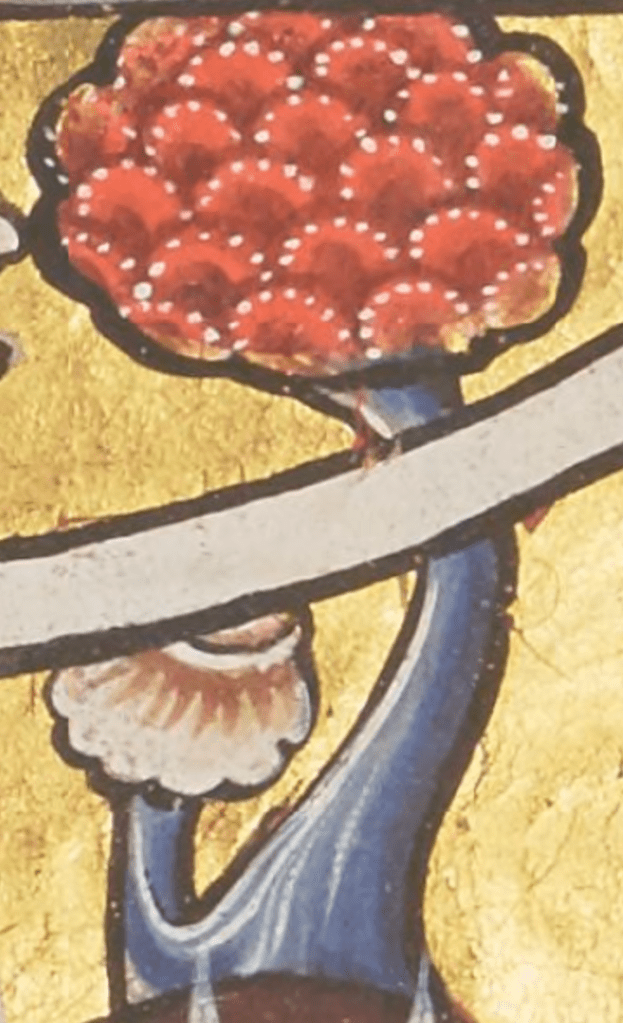
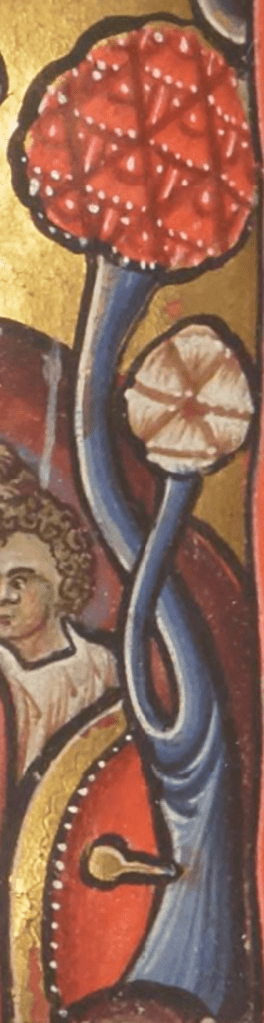
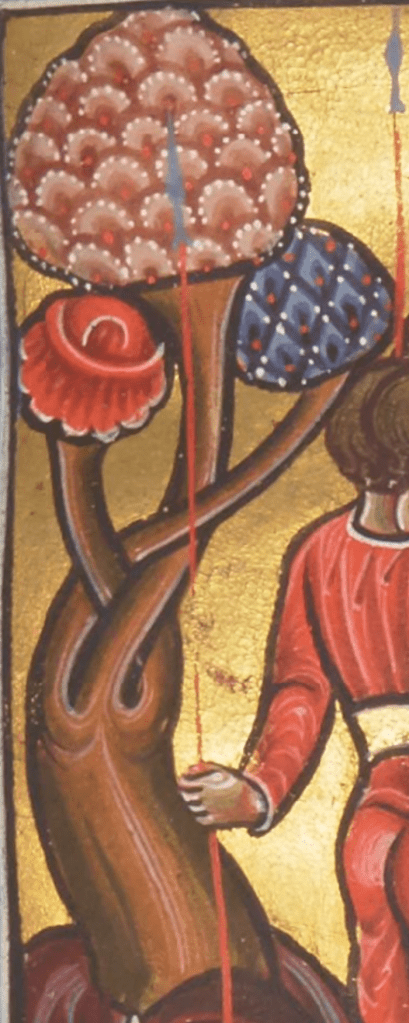
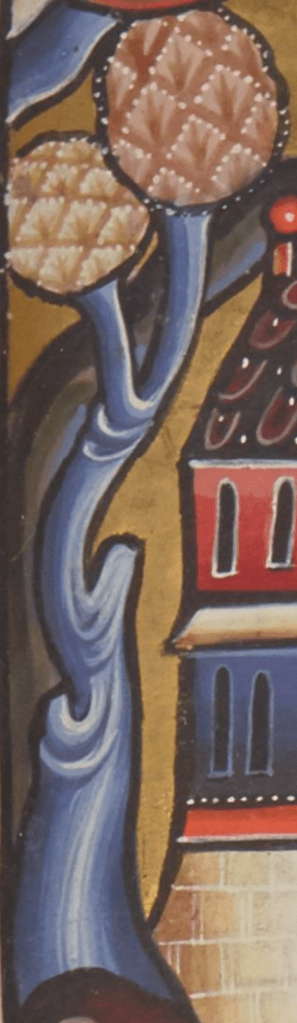
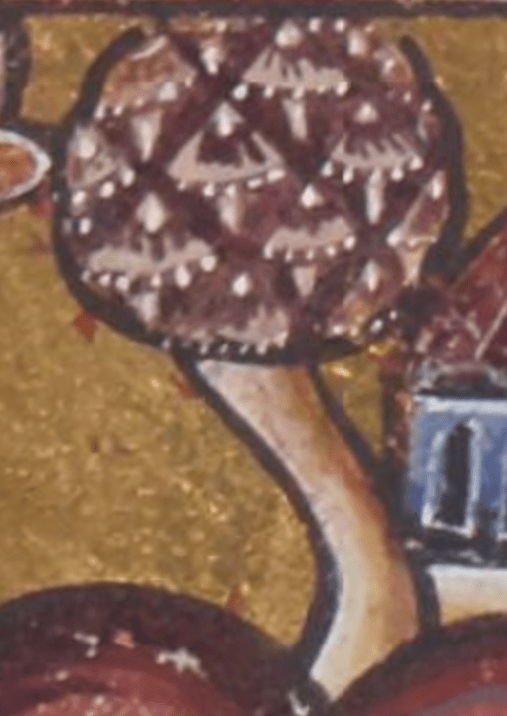
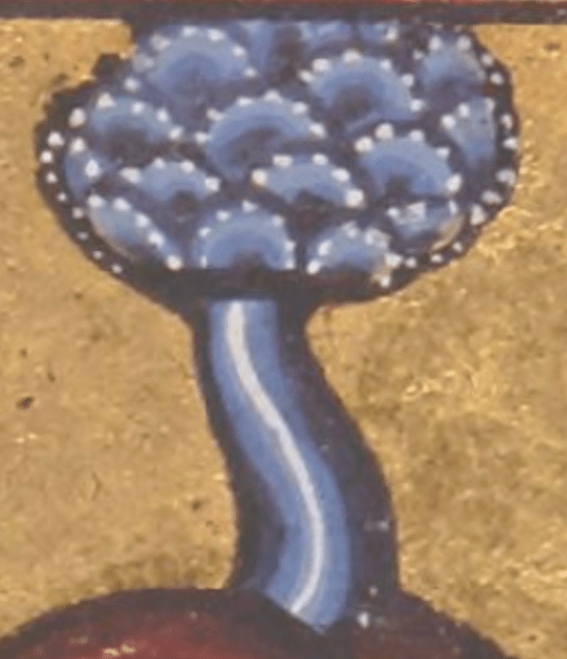
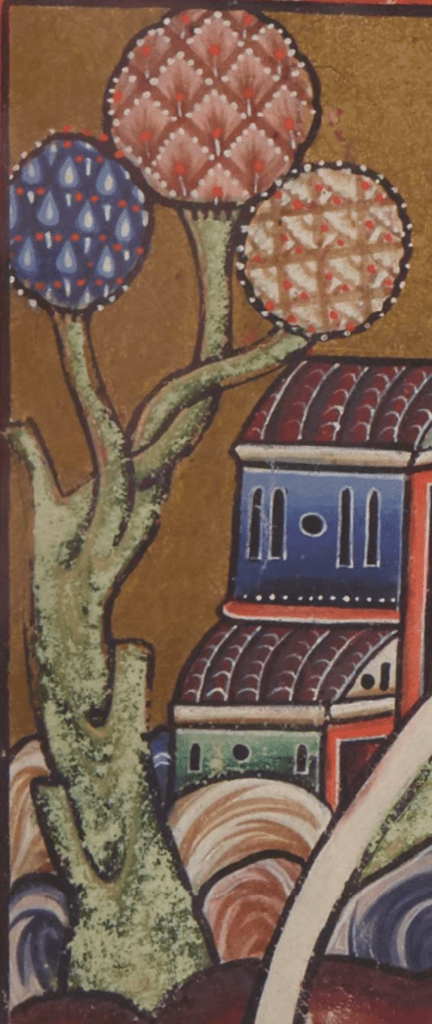
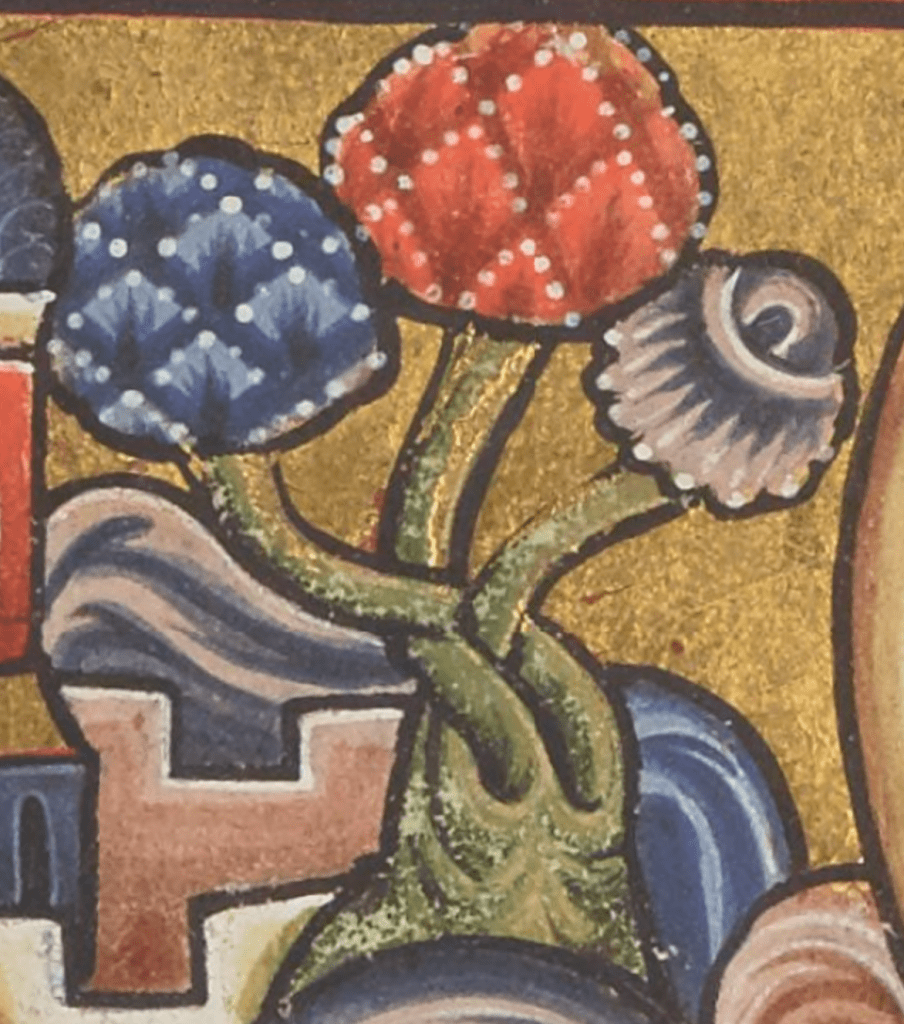
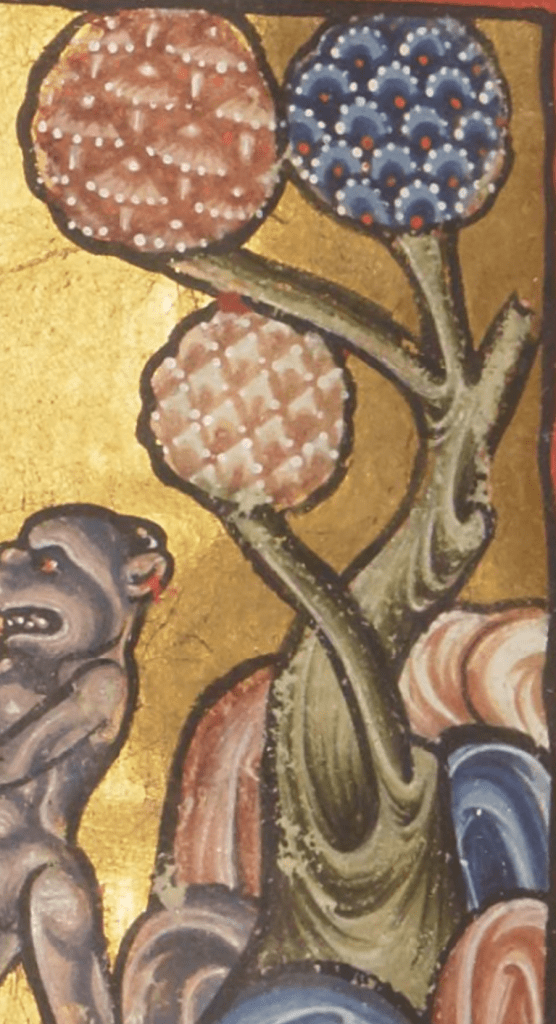
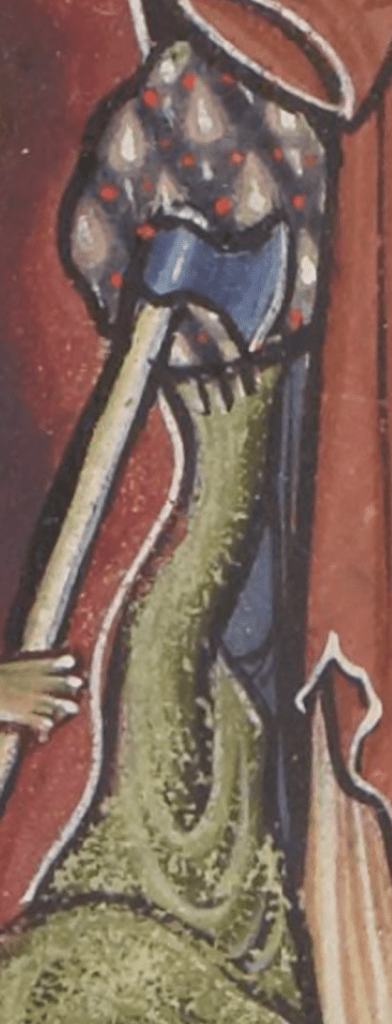
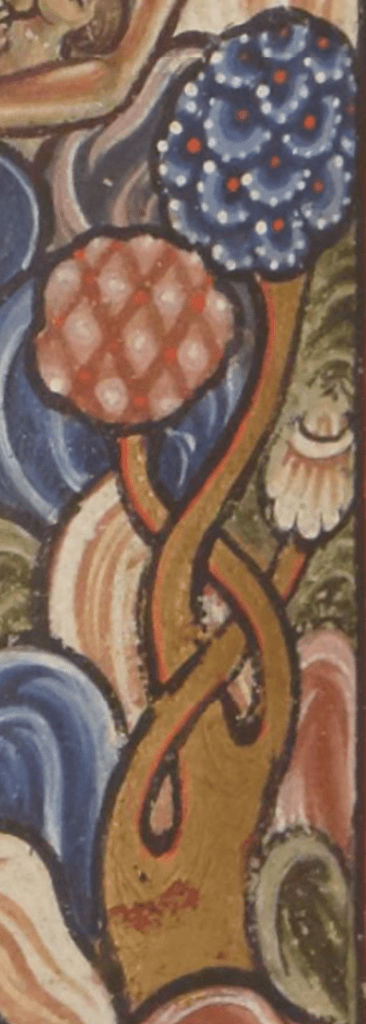
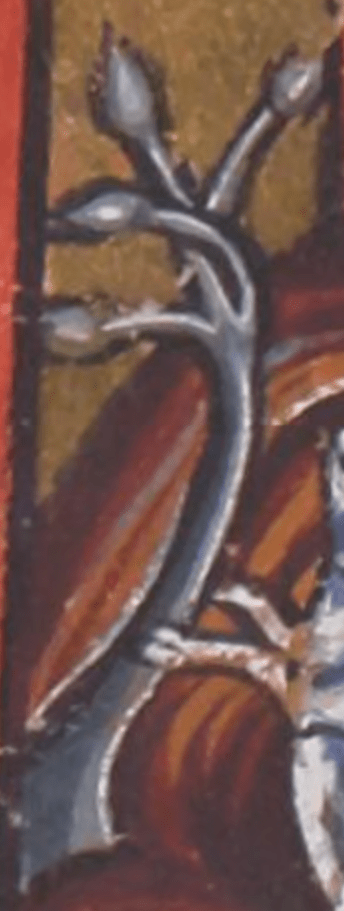
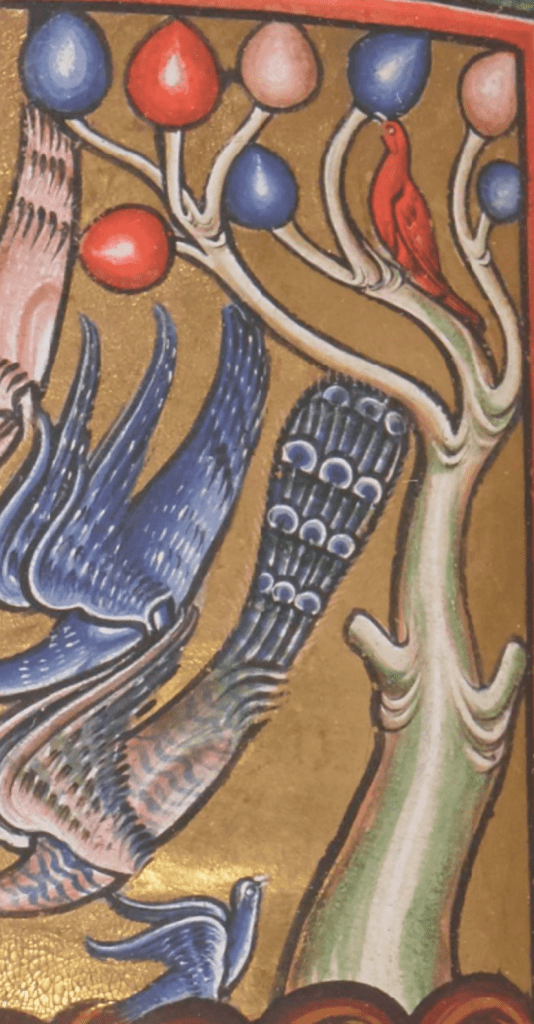
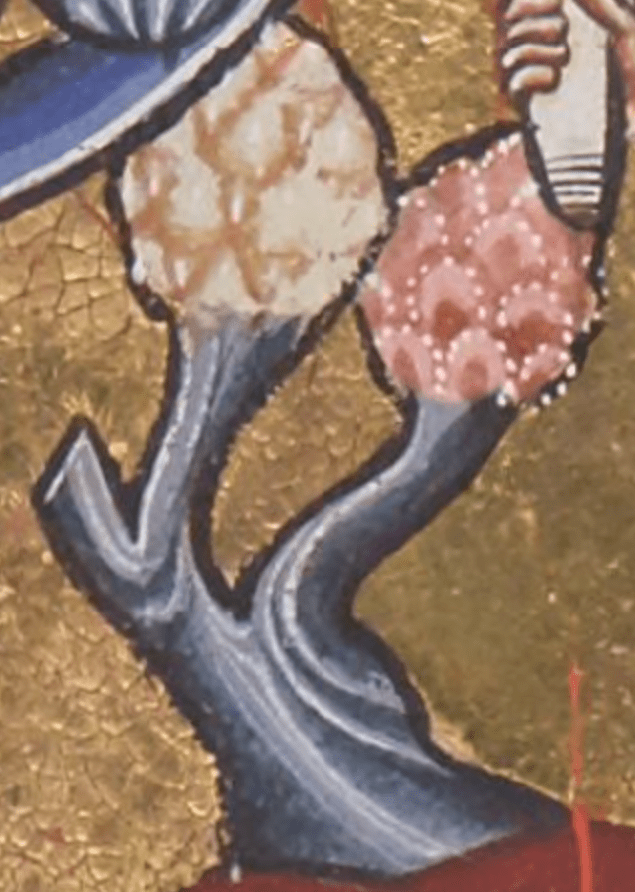
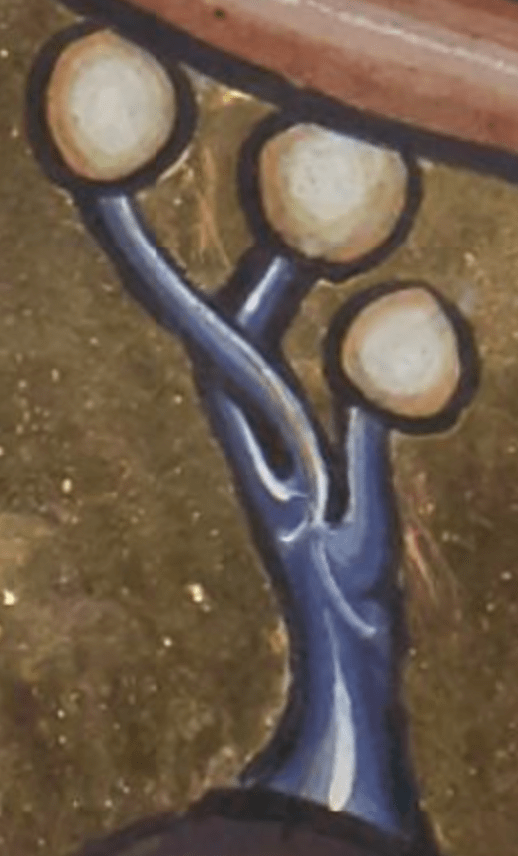
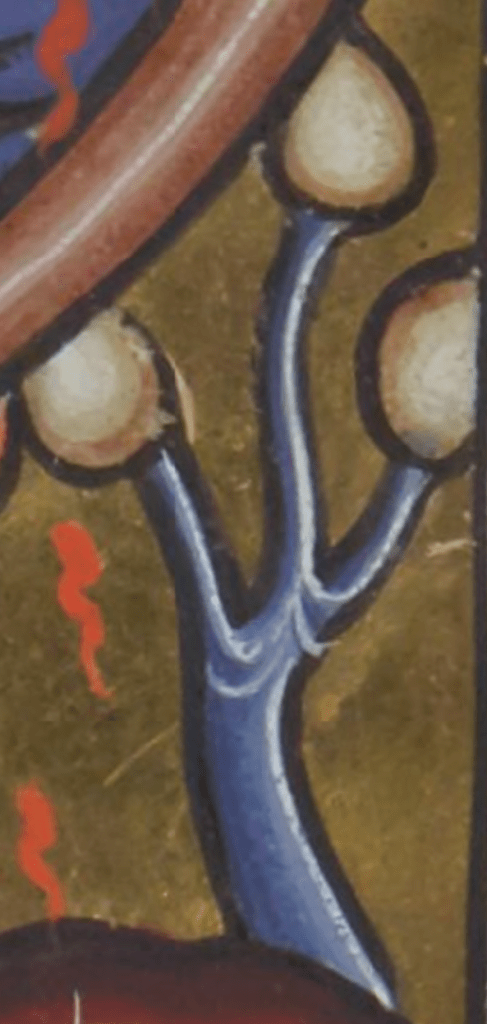
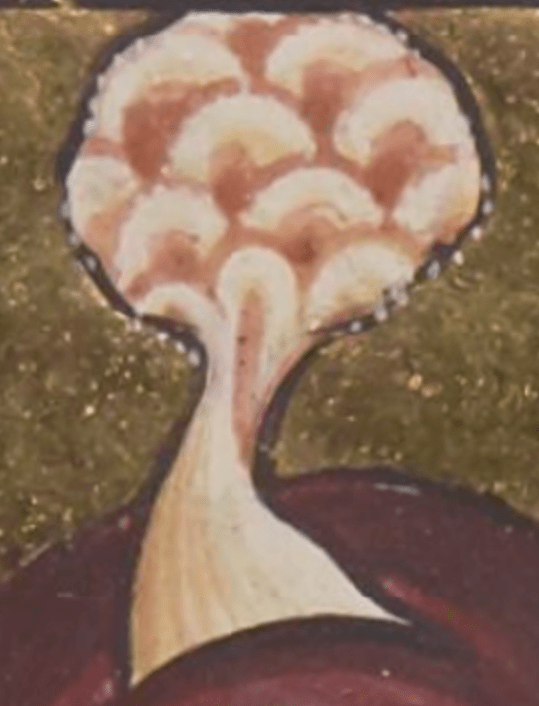
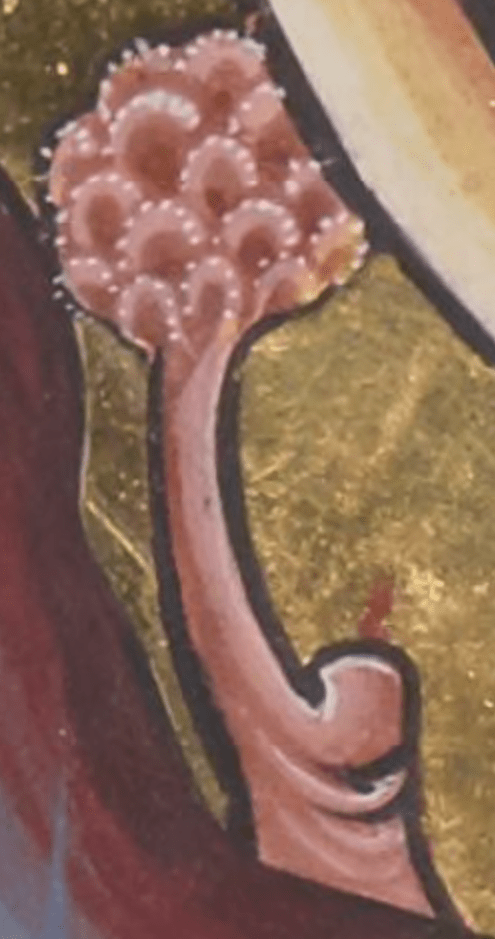
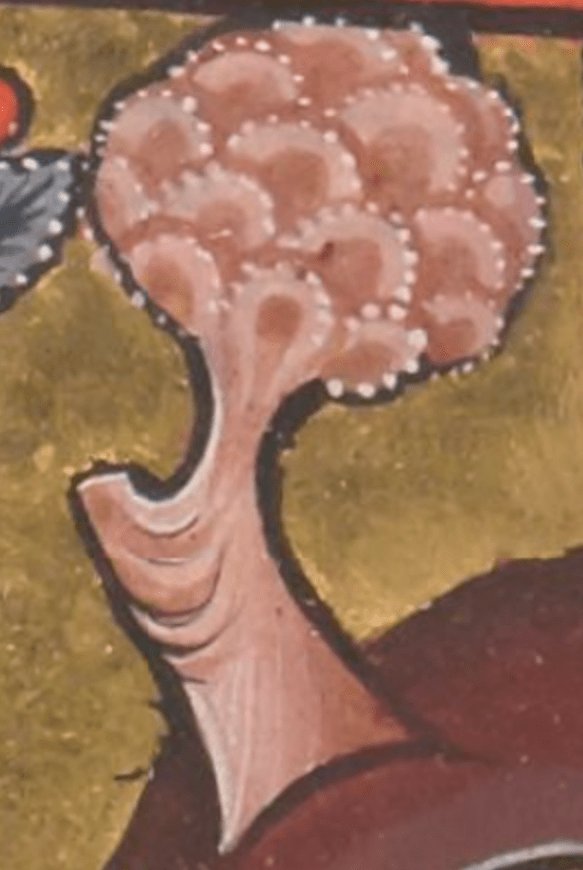
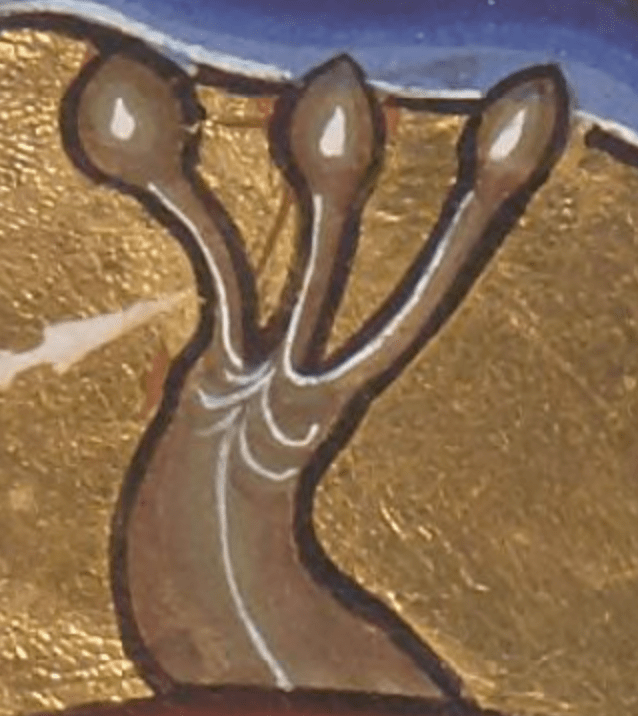
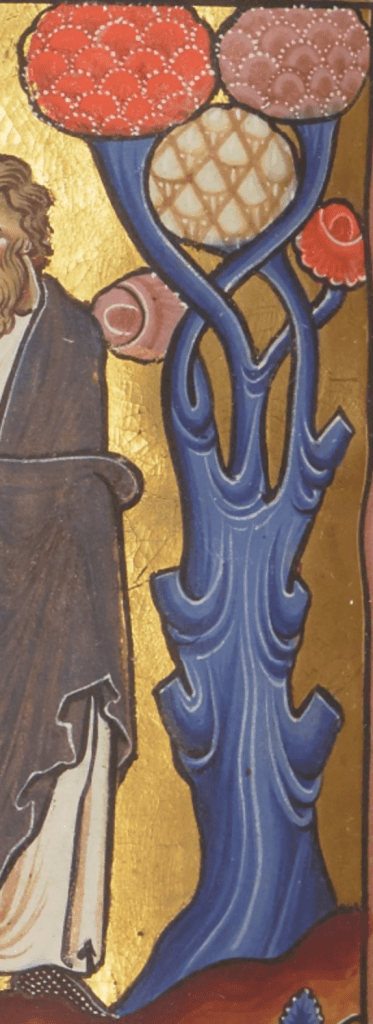
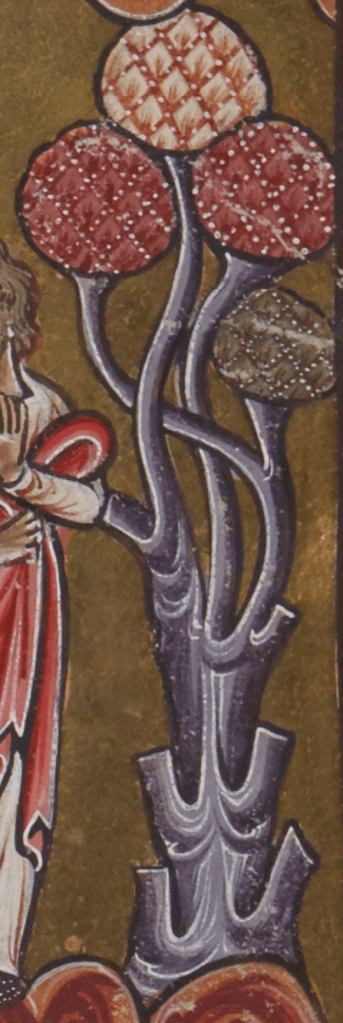
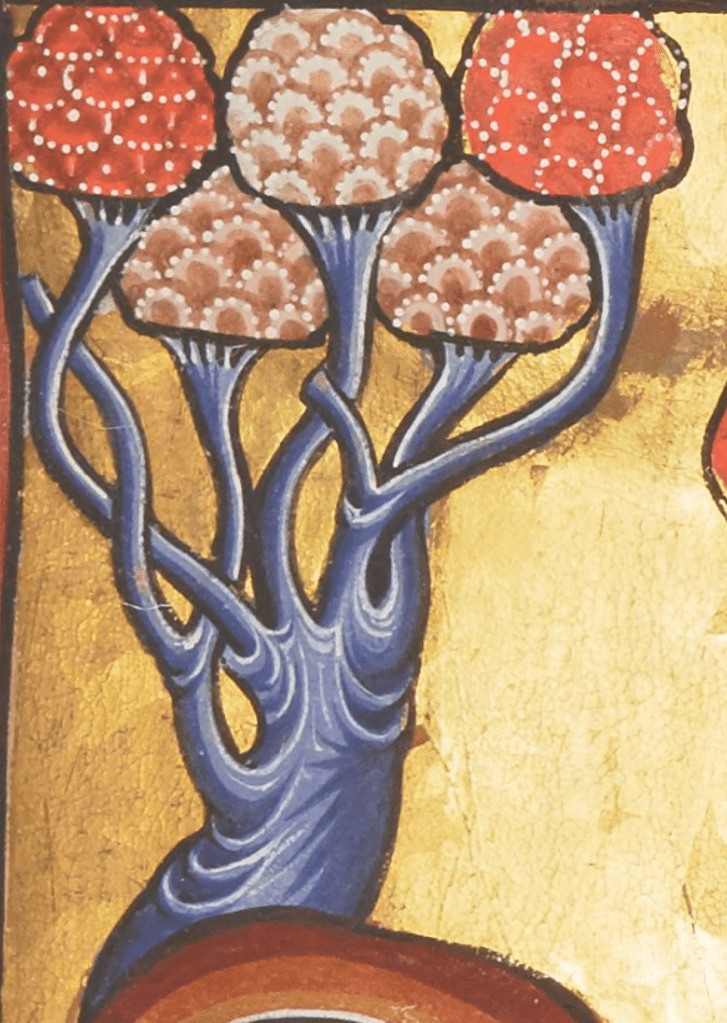
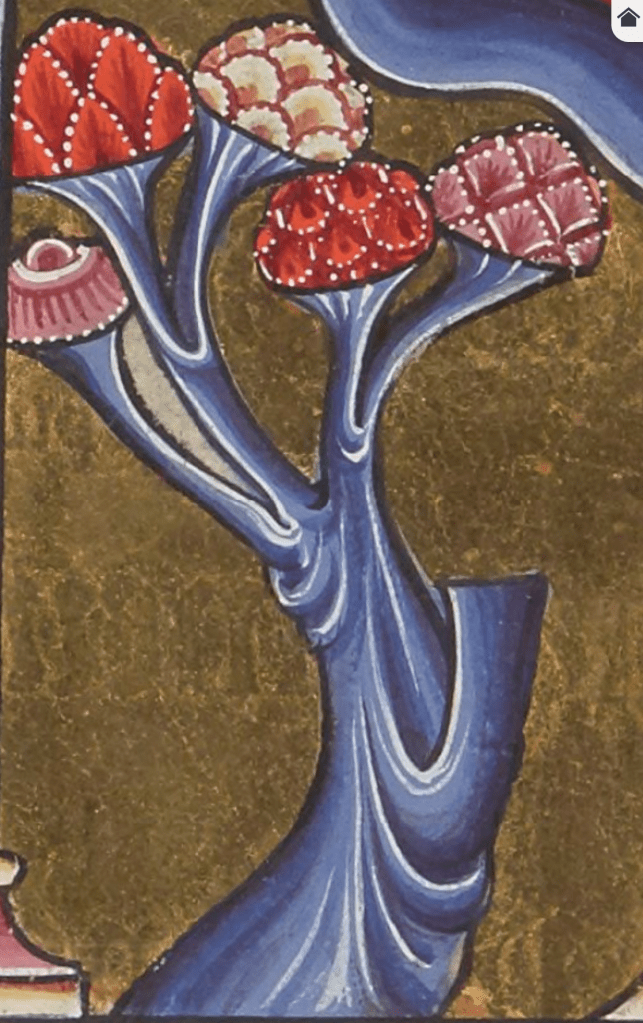
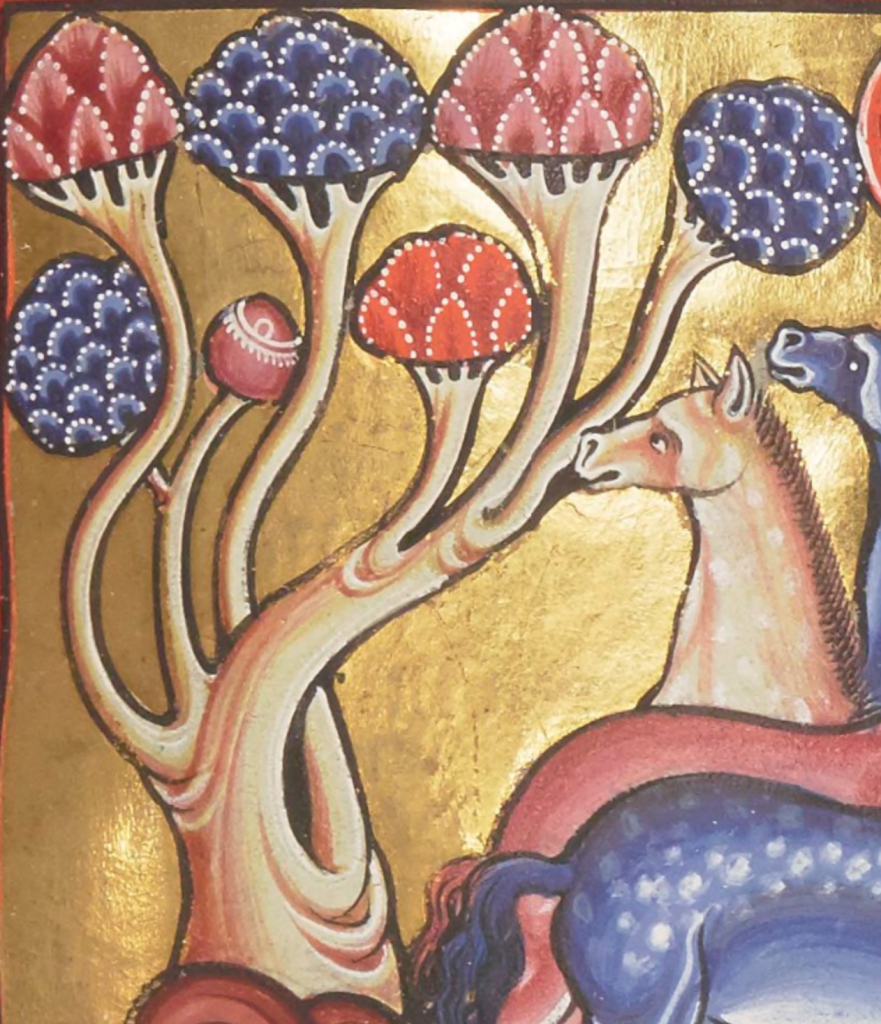
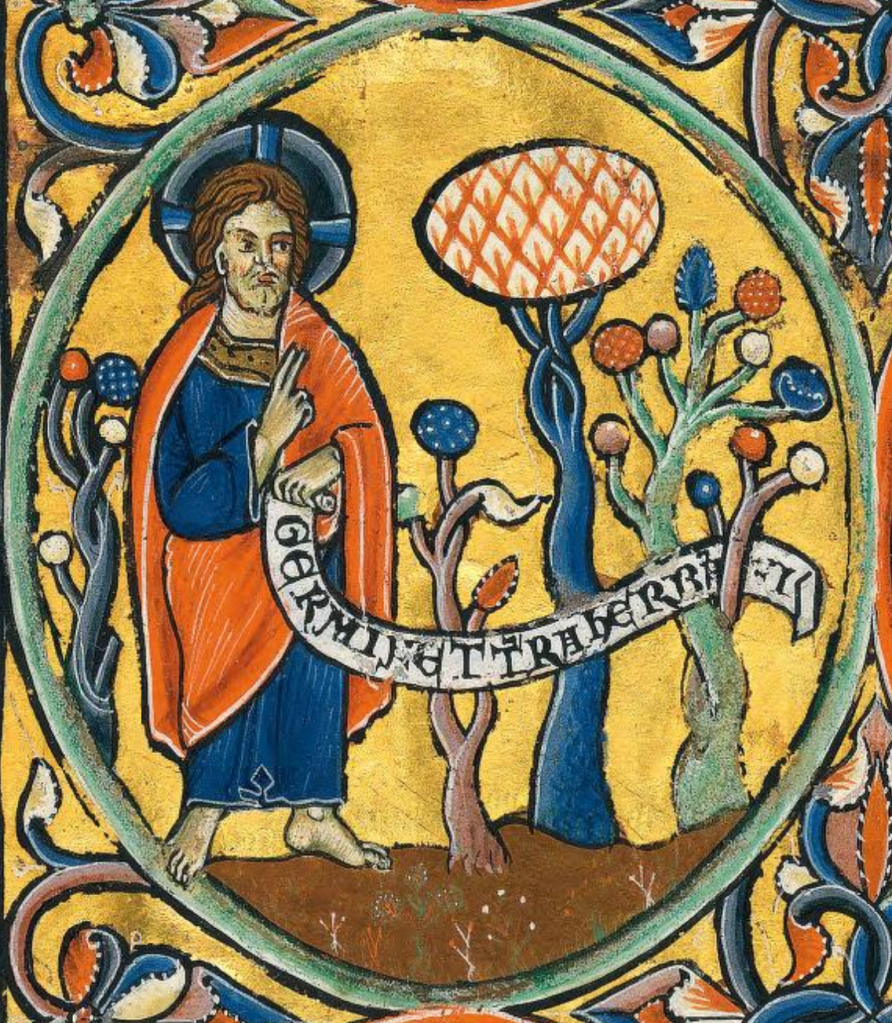
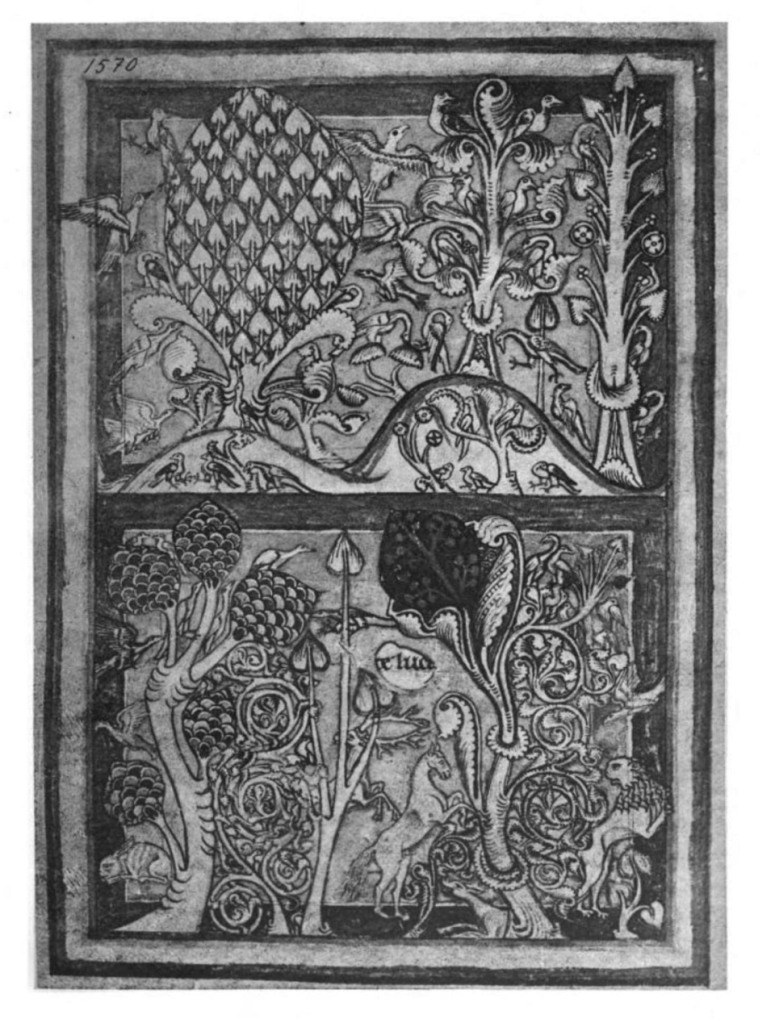
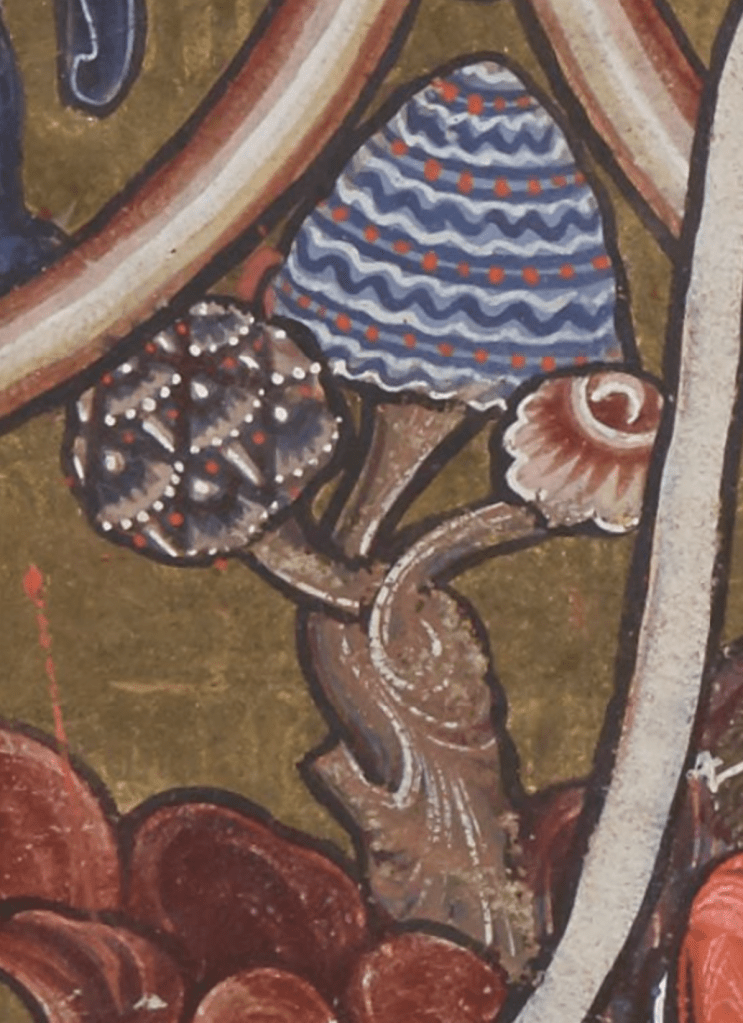
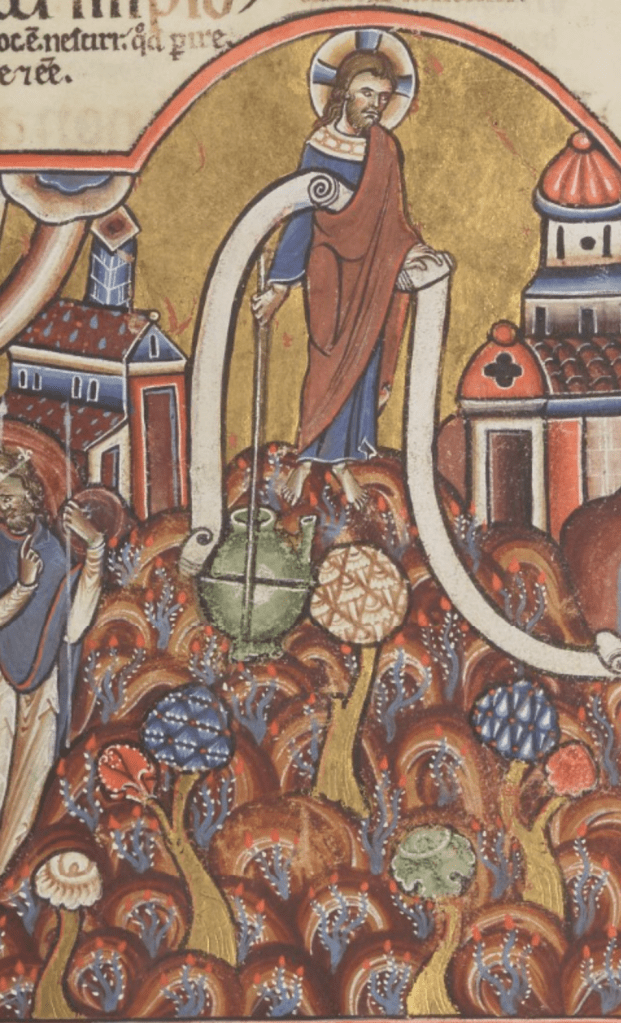
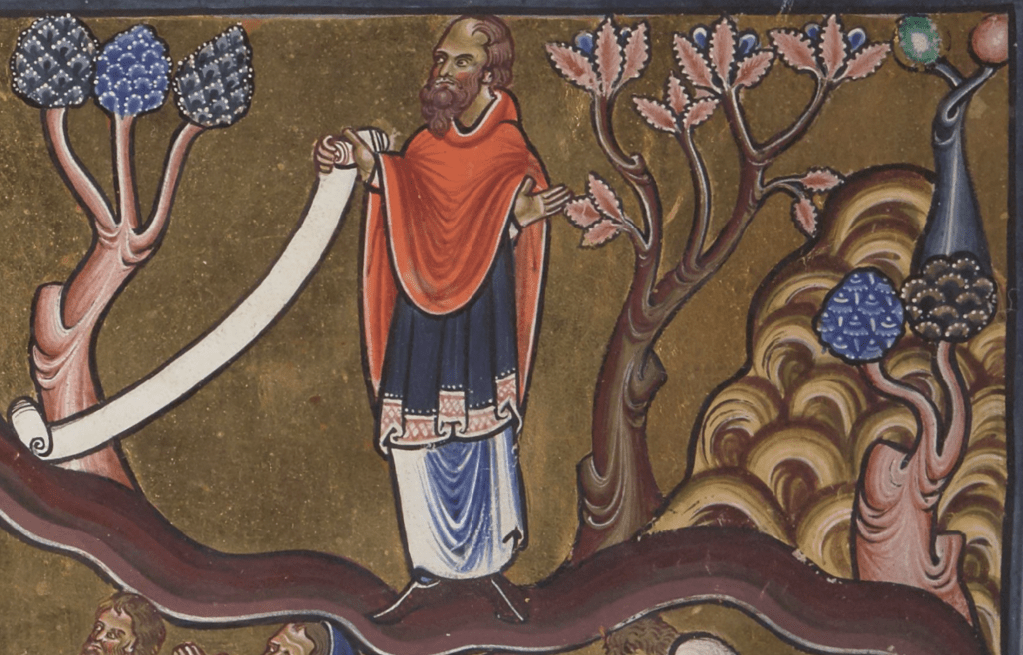
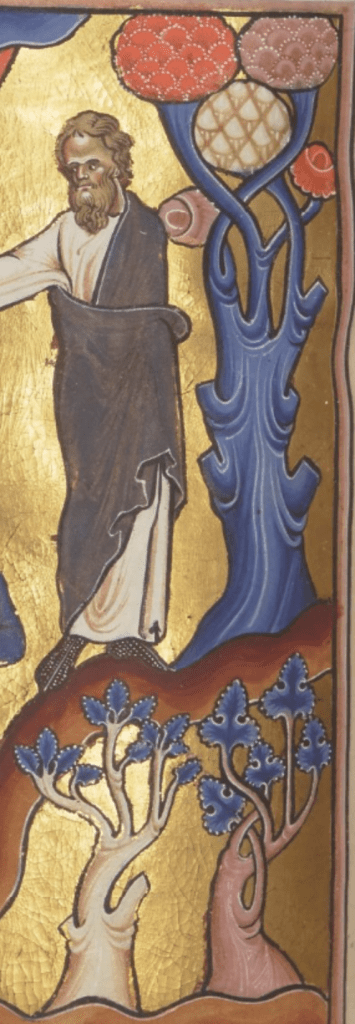
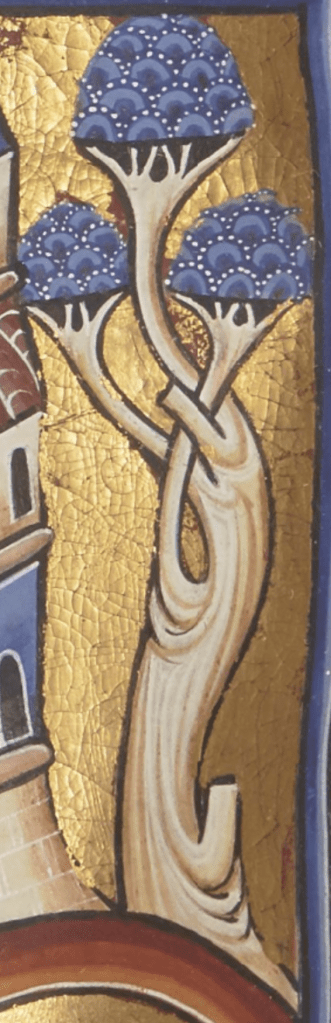
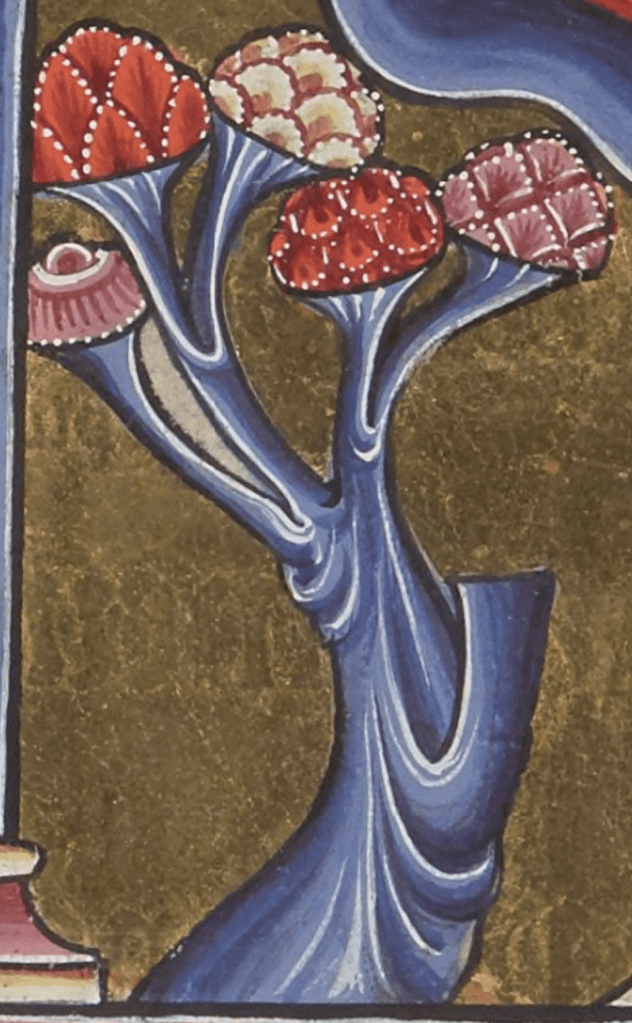
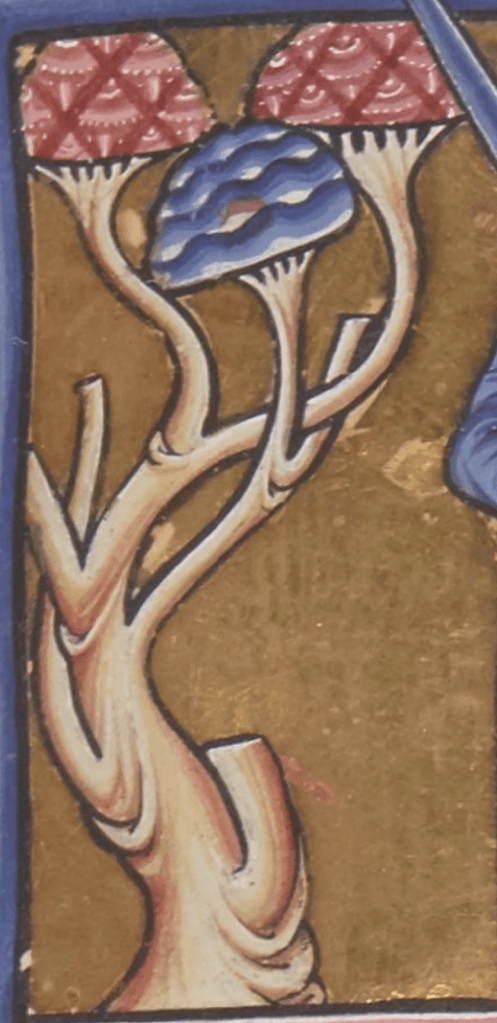
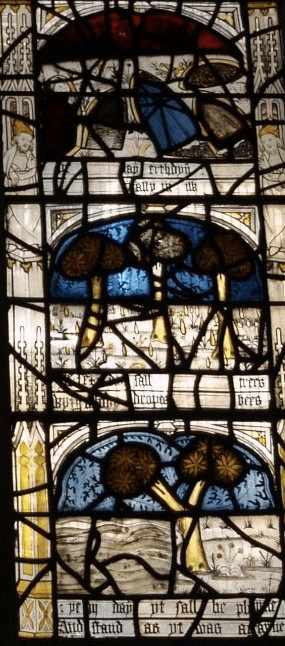
Mushroom tree #72: 5 caps, pink panaeolus, red liberty caps, blue stem, veil branches, cut right branch
Brinckmann, Mushroom Trees, & Asymmetrical Branching https://egodeaththeory.wordpress.com/2020/12/11/brinckmann-mushroom-trees-asymmetrical-branching/ – Albert Brinckmann identified the theme of vine-leaf trees in medieval art in this 1906 book. This is the book that Erwin Panofsky cited in the letter to Gordon Wasson about Plaincourault’s branching mushroom tree. Wasson replaced the citation of this Brinckmann book by ellipses (and silently omitted Panofsky’s two photostat images) every time he publicly republished that letter from Panofsky.
Some of the images below are lower-resolution than in my other pages at this site. Ideally, I’d add links from sections below to my dedicated articles/ webpages. Find or Search in Site Nav page: https://egodeaththeory.wordpress.com/nav/#gallery
I wish this page to have “all known” images, but that’s impossible by orders of magnitude.
That would be a massive ongoing project, including photographing countless books and articles; cropping; uploading; & tagging.
I’m going to run out of space on this server soon. I uploaded all 25 images from Samorini’s article today, and I sure don’t have time to compress the image files, as well as correctly tag them.
Dec. 7, 2024 status: John Rush’s gallery and https://clinicalanthropology.com website is down (an update of the DVD of blurry images that came with the 2011 first edition of Rush’s book).
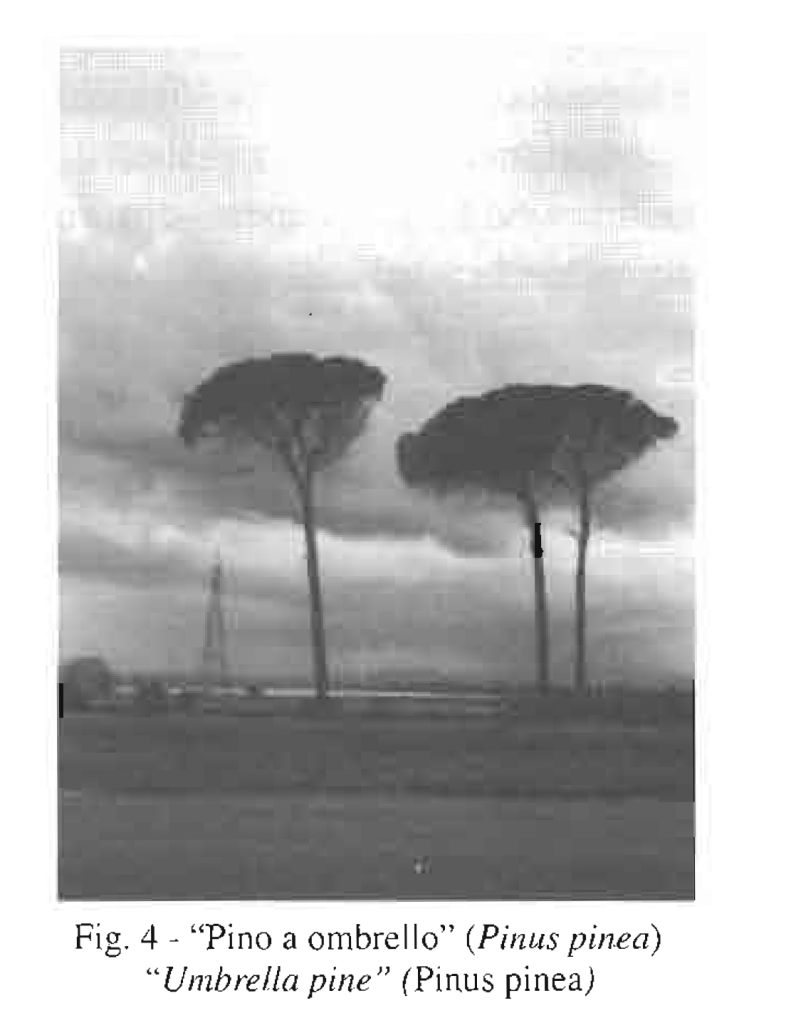
hybrid Italian Pine/ Parasol of Victory on the right. The one “cap” on the right clearly represents a Parasol of Victory, while the other cap clearly represents an Italian Pine. It doesn’t matter anyway, since per Wasson, Samorini, and Panofsky, artists are idiots who don’t know what they’re drawing; they just stupidly follow templates that got messed up in the course of their inept recopying, so that they ended up by accident looking like mushrooms, in all cases. This is why 100% of mushrooms in Christian art are to be dismissed. I have so many quotes explaining that artists who draw mushroom trees are uncomprehending dolts, I’m going to start a WordPress page.
Copy of the above caption text:
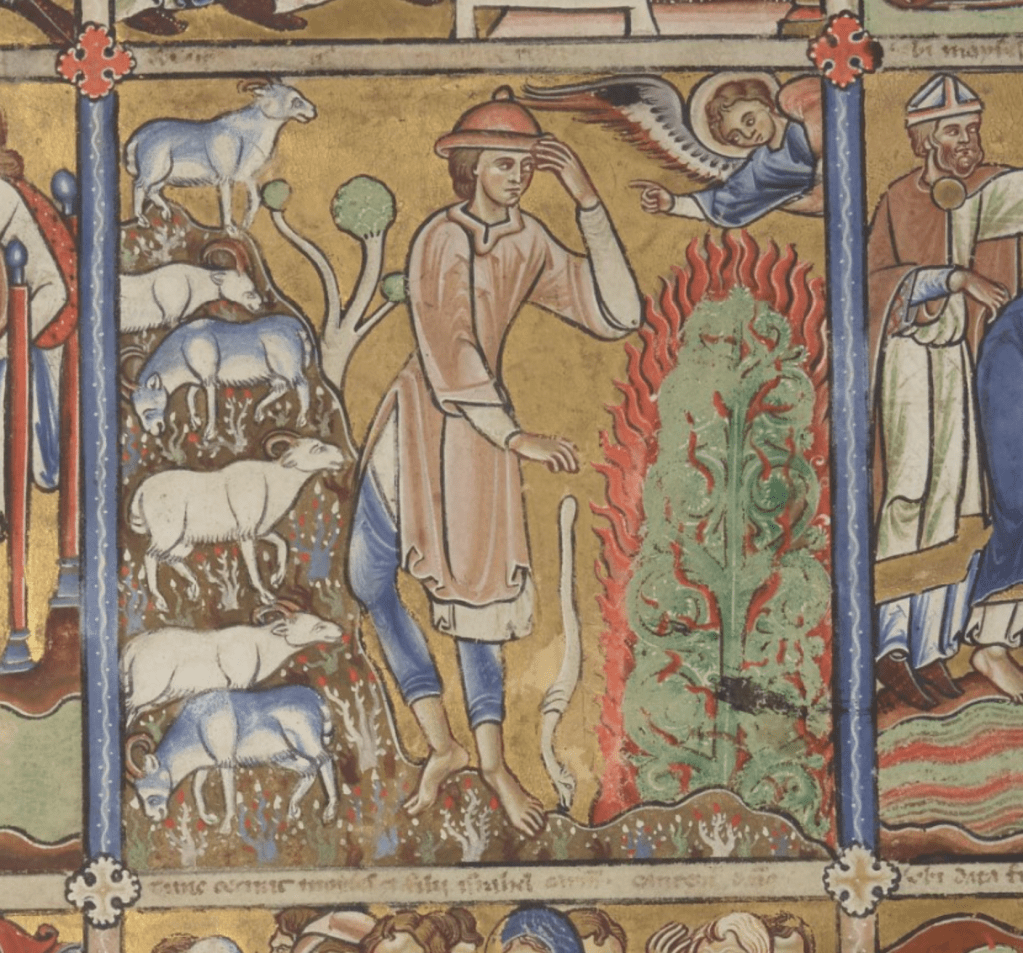
http://www.clinicalanthropology.com/wp-content/uploads/2018/07/10.jpg http://www.clinicalanthropology.com/mushroom-in-christian-art/mushroom-in-christian-art-chapter-one/ “Plate 1:5 –Vienna, Austria – Moses Before the Burning Bush, Domenico Fetti, Oil on Canvas, 1613 CE We see God as the burning bush and he holds one of the symbols for the “bush” in his left hand. In the bottom frame, the hand of God comes through the cloud (cap), while the red material around his wrist is the annulus, and the white hand and wrist are the stalk of the mushroom. Notice the plants to the right of Moses, the mushroom shapes in his alb and stole, including the celestial erection.” – John Rush
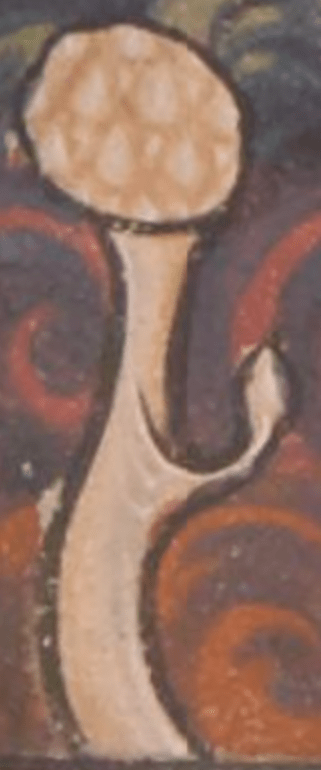
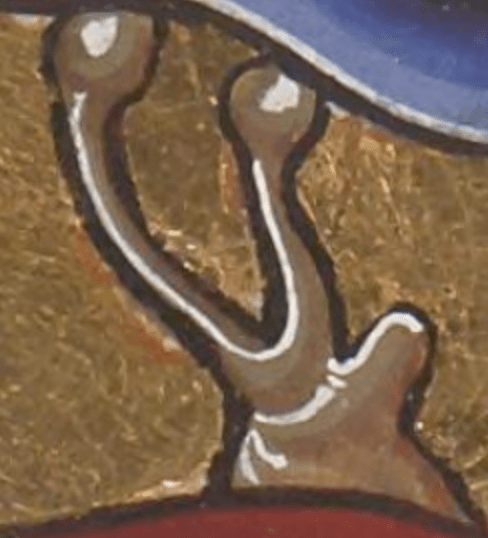
Mystic Y’s, identified by Michael Hoffman.
hybrid Italian Pine/ Parasol of Victory on the right. The one “cap” on the right clearly represents a Parasol of Victory, while the other cap clearly represents an Italian Pine.
It doesn’t matter anyway, since per Wasson, Samorini, and Panofsky, artists are idiots who don’t know what they’re drawing; they just stupidly follow templates that got messed up in the course of their inept recopying, so that they ended up by accident looking like mushrooms, in all cases.
This is why 100% of mushrooms in Christian art are to be dismissed.
Esoteric Y branching. 1. Caduceus = branching vs. non-branching experiential mental worldmodels 2. Caduceus = male ruler snake & female ruler snake, frozen in rock
Y = caduceus = non-branching lower, basic “branching” Y shape, “branching possibility or non-branching monopossibility” concept, 2 heimarmene snakes, the local female ruler snake and the male veiled thought-source revealed as frozen in rock all future kingly control-thoughts preexisting, {king frozen into a rock statue, king tied by serpents to a rock bench for eternity, king frozen into the rock world}. Y = the branching vs. non-branching models/ experiential states. Y = caduceus w/ male ruler snake & female ruler snake. rock-frozen pair of ruler snakes. the local female control-thought receiver/receptacle the normally hidden male control-thought inserter/injector, along a snake rail frozen in rock, projected from every point in time.
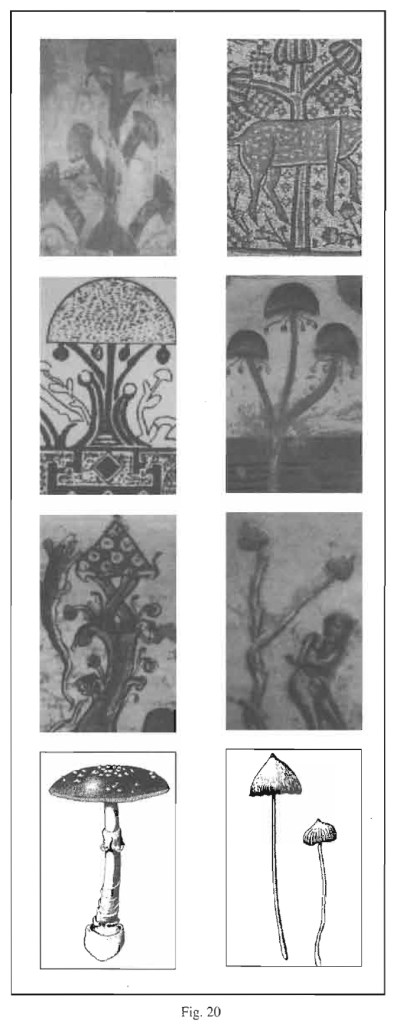
This layout is EXCELLENT work by Samorini, bravo; literally side-by-side coverage of two distinct families — the opposite of the single-plant fallacy. The only thing better, would be 3-column: Cubensis; Liberty Cap; Amanita. We have to put AMANITA LAST, to correct the severe imbalance of coverage in the first phase of entheogen scholarship from say 1952-2009 (from Panofsky’s letter against the mycologists in 1952; to Irvin’s 3 books in 2009). The 3rd on left (Salamander) fits shape of Liberty Cap lower right — b/c hybrid combination of Amanita/ Cubensis/ Liberty Cap. 2009-1952= 57 years of Amanita Madness imbalance among entheogen scholars. — Michael Hoffman
I proved that the above mushroom shapes represent Psilocybe deliberately used for religious experiencing:
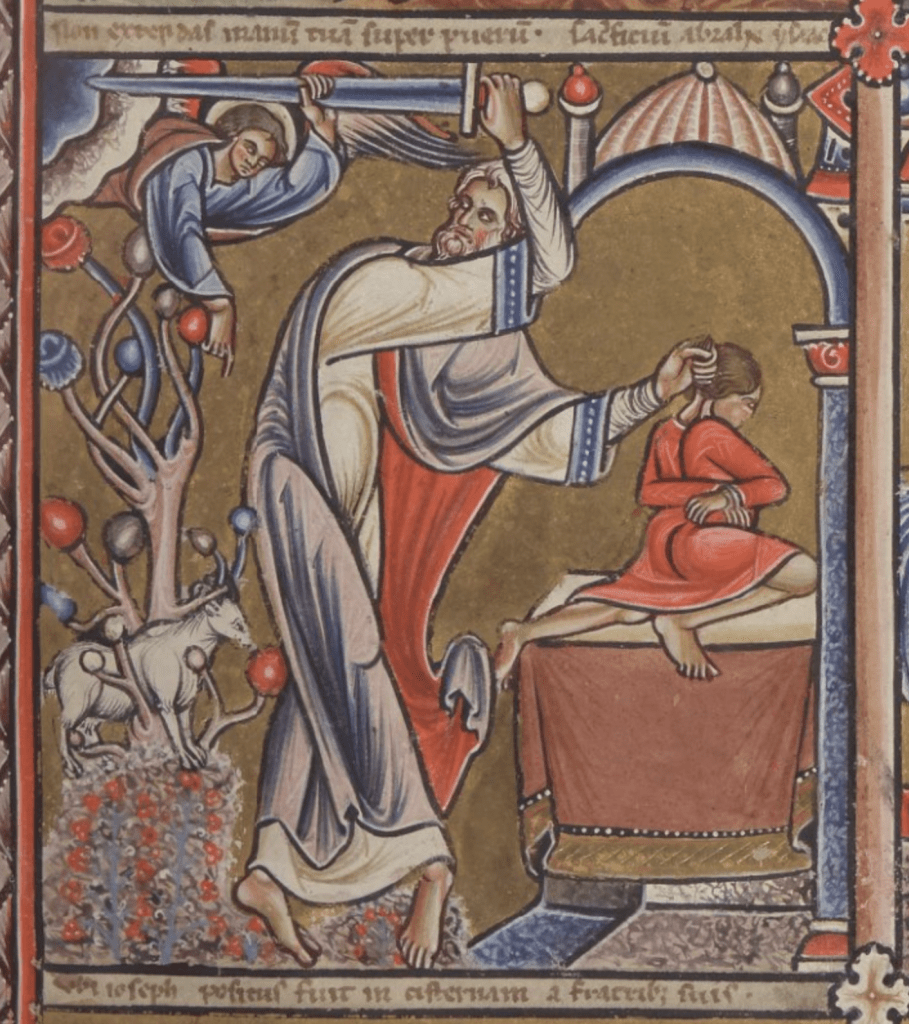
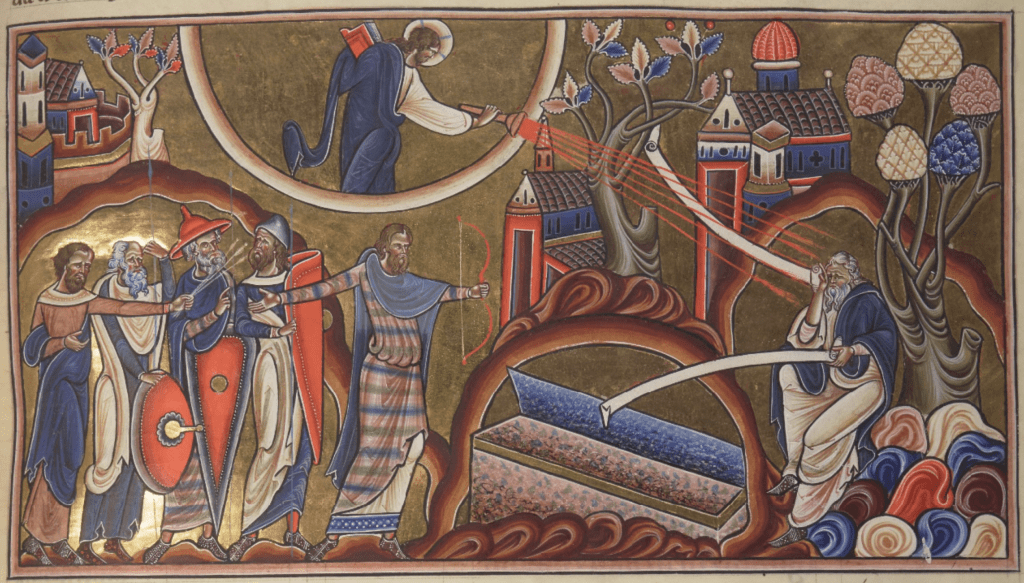
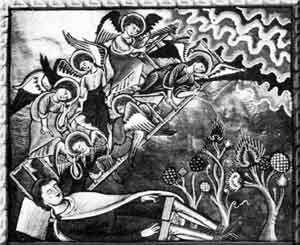
The “Hanging-over-God’s-sword” mushroom-tree image by the same team is either meaningless, or represents trained, expert, peak-state use of Psilocybe as I proved.
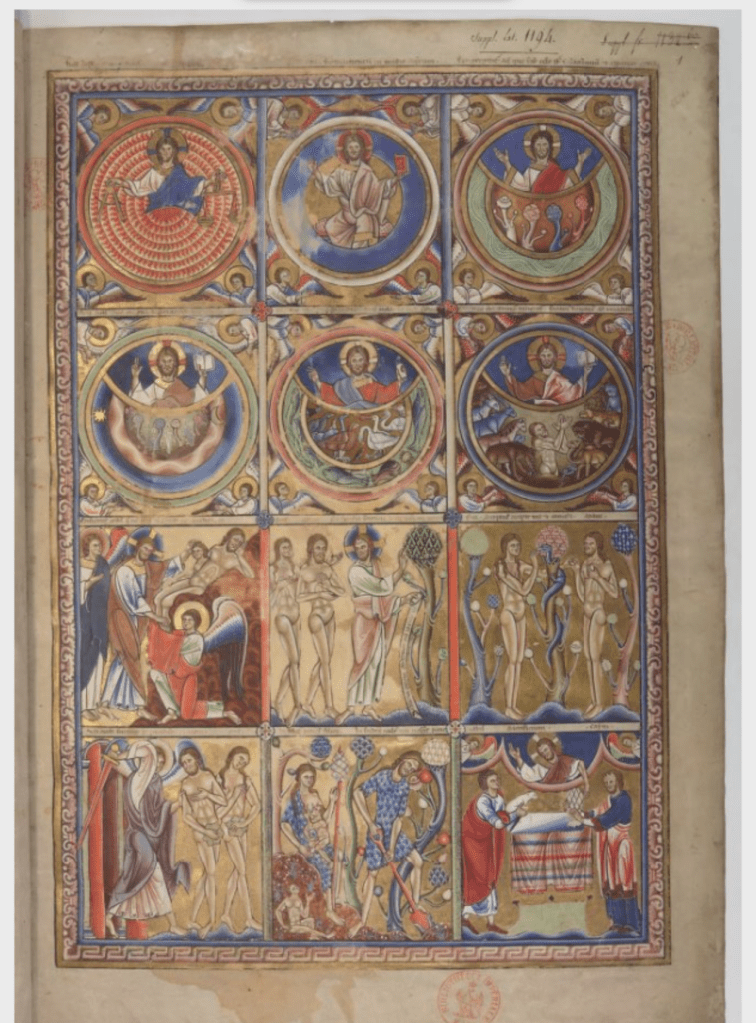
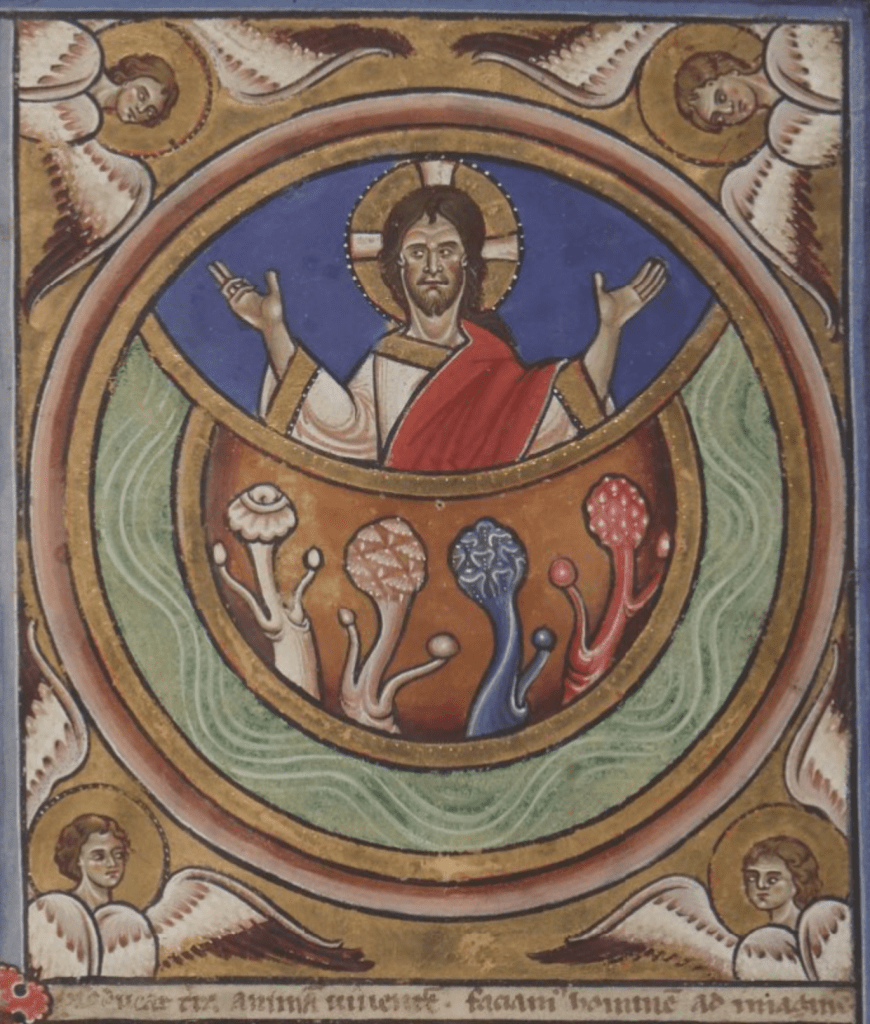
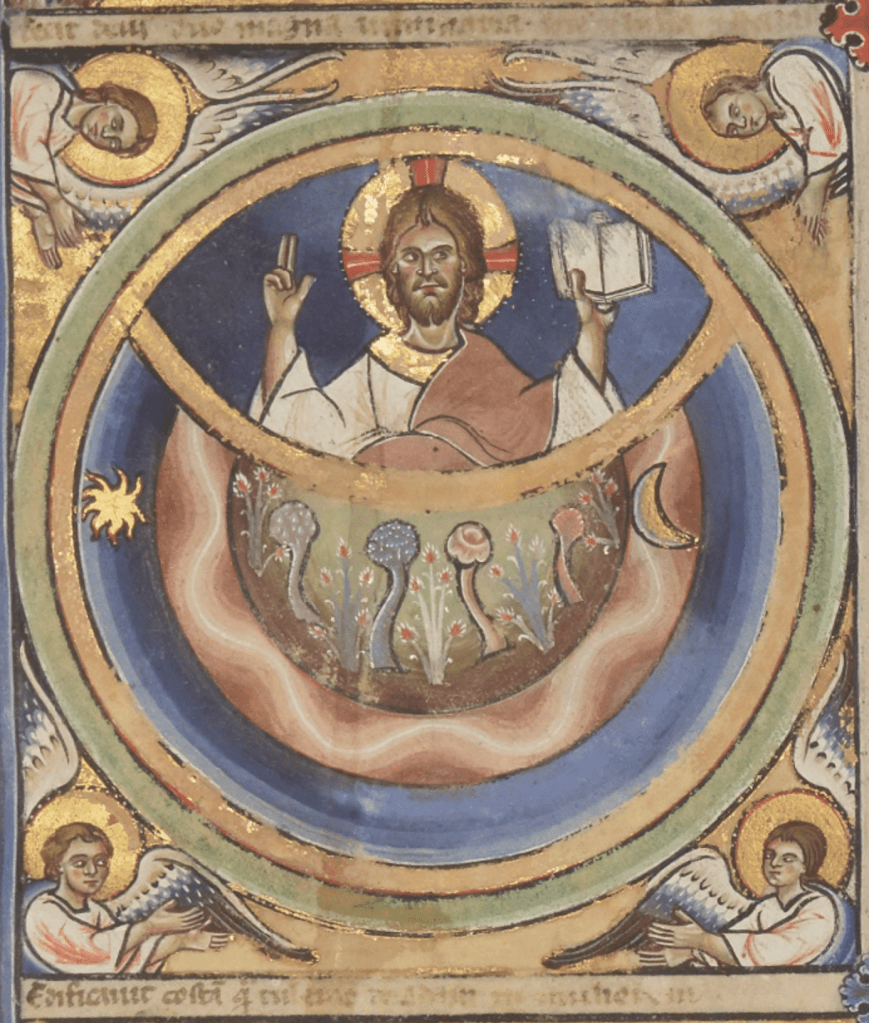
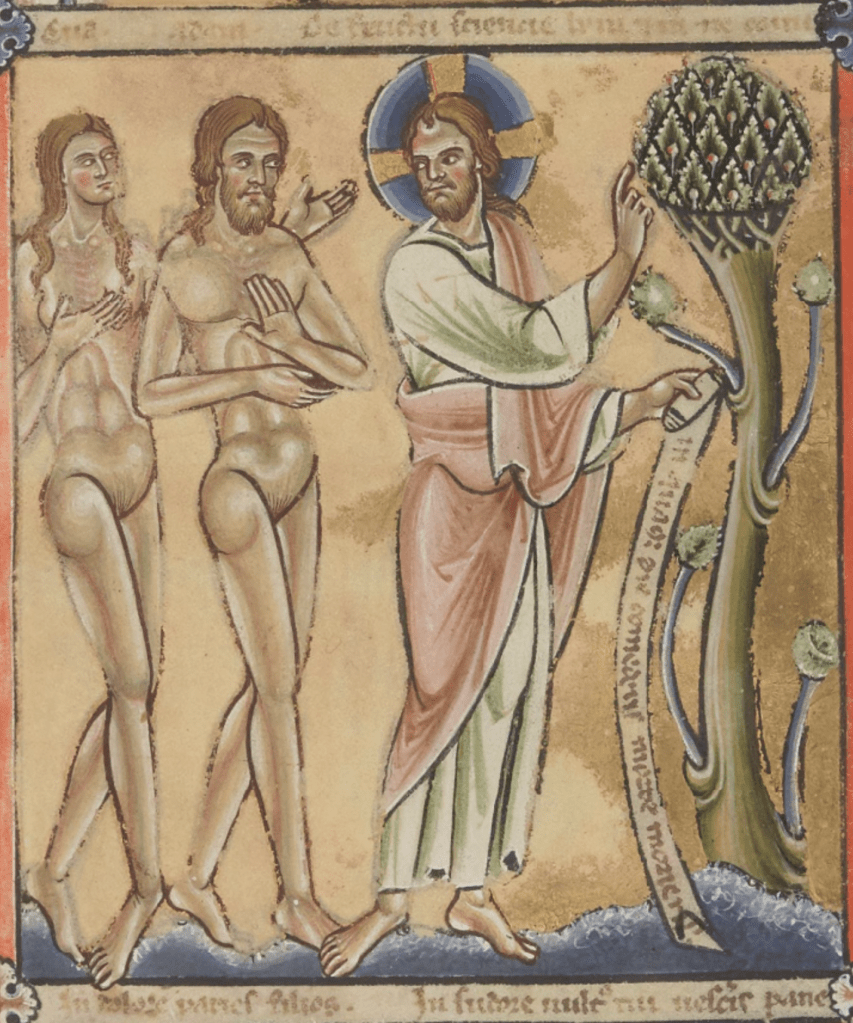
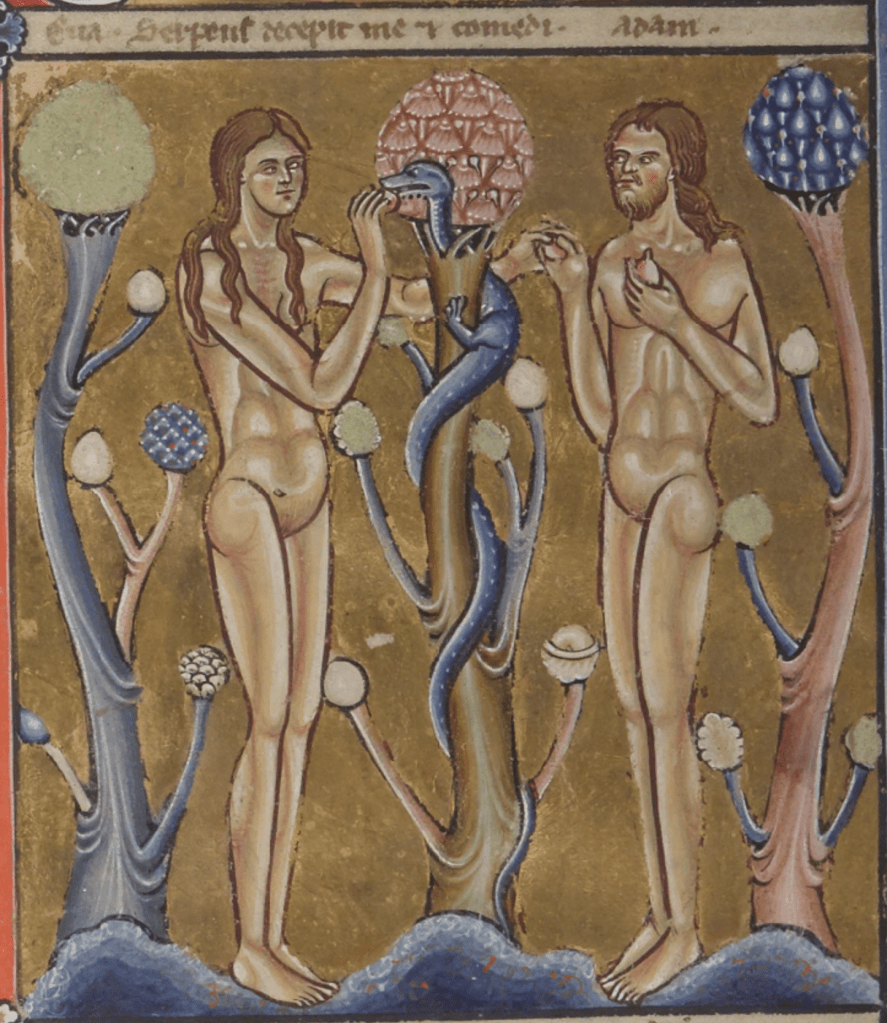
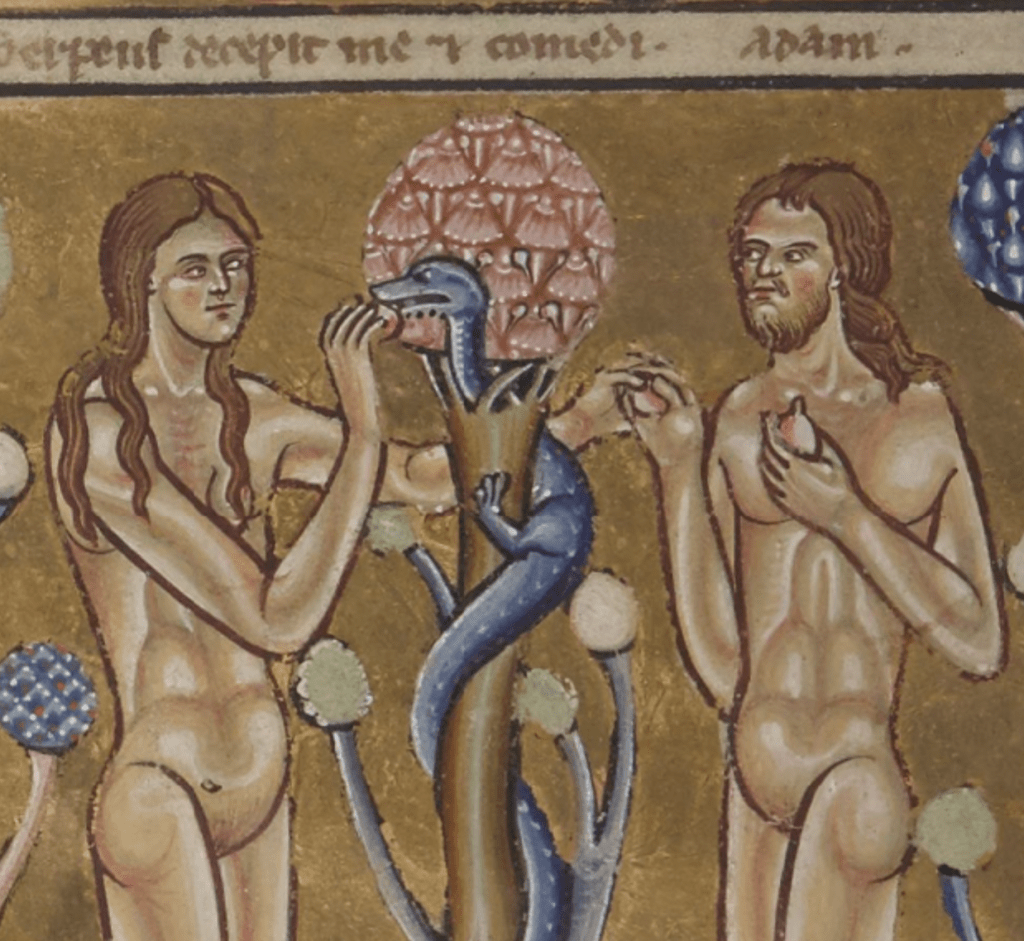
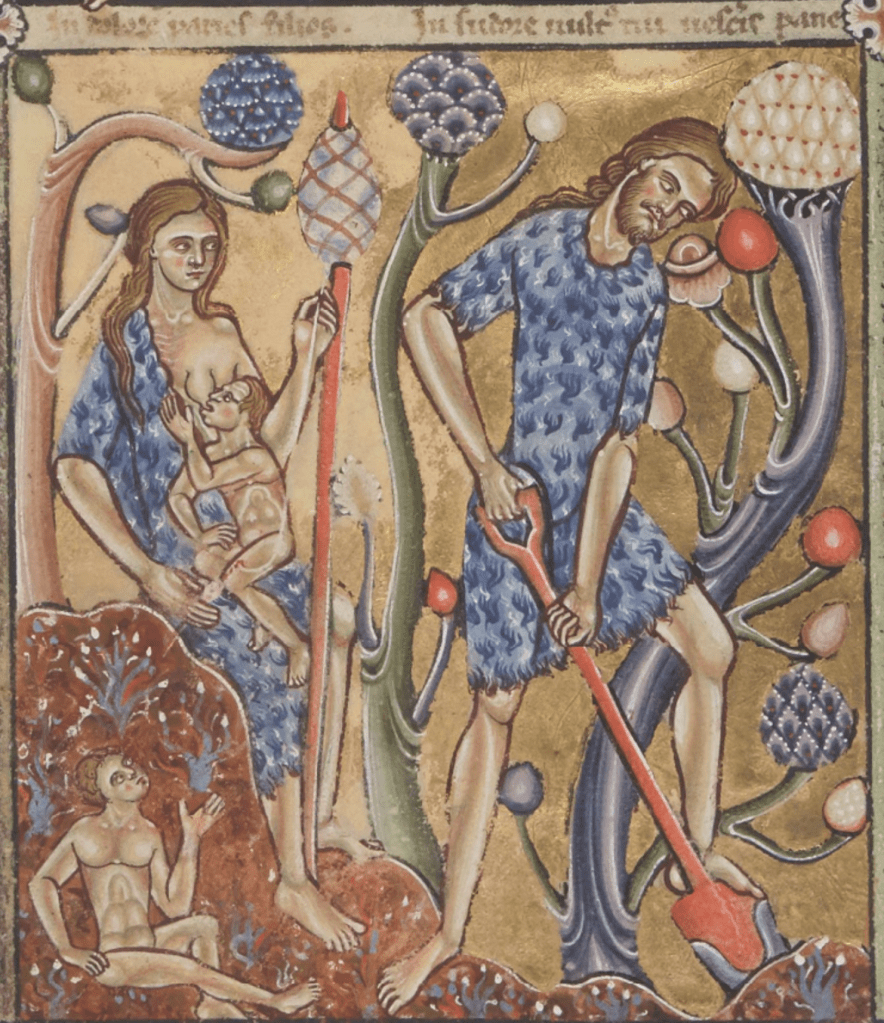
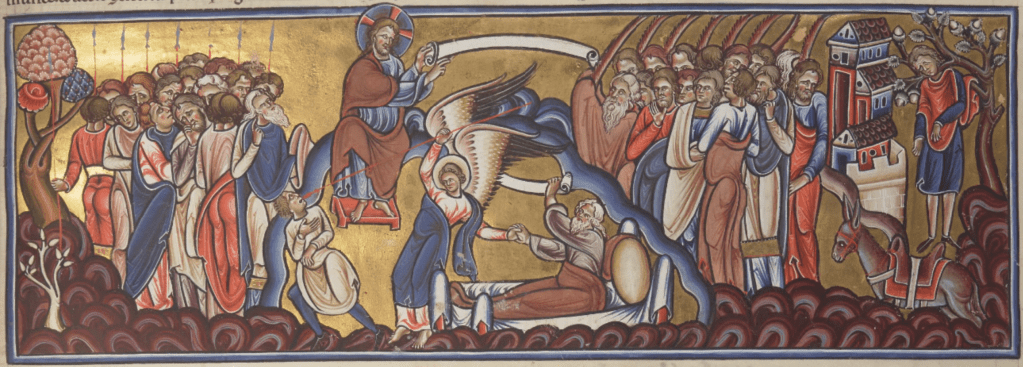
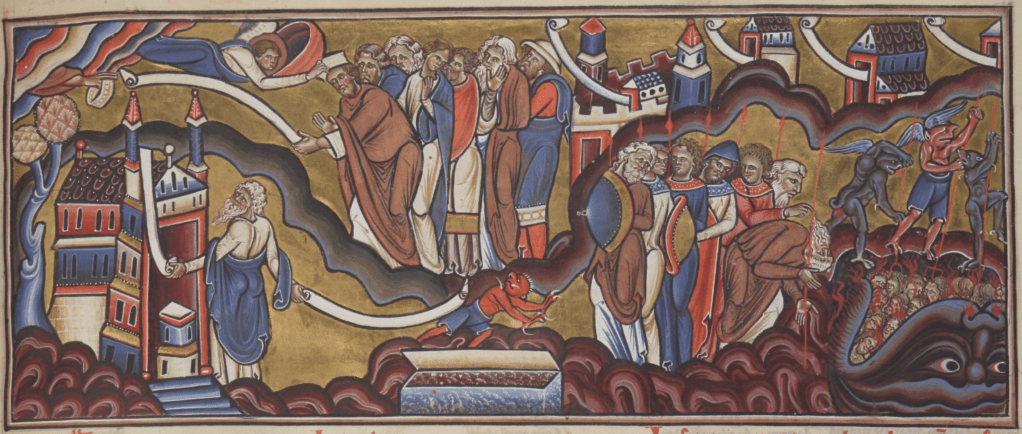
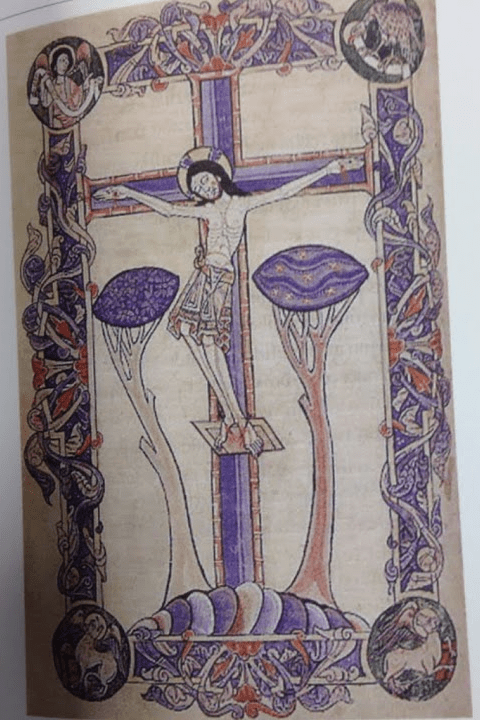
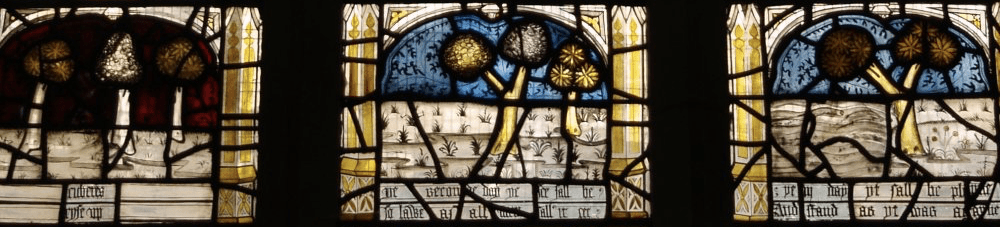
The same team painted all these mushroom images in this work, the Canterbury Psalter.
Therefore all 65-70 mushroom plants illustrated by this team in this Canterbury Psalter, including the three mushroom trees in the above image, represent the use of Psilocybe to induce religious experiencing.
The vine-leaf trees which are coupled with these mushroom trees, by this team of illustrators, also indicate the routine, trained, efficient use of Psilocybe, to reveal non-branching of possibilities, destroying egoic possibilism-thinking.
The Canterbury Psalter “mushroom tree/ hanging/ sword” image with the trained, self-threatening Psalter reader, depicts not puzzlement over “the shadow” like today’s braggart hubristic Psilocybin therapists (Muraresku), but the opposite: the image provably depicts a Psilocybe expert-level direct engagement with the {serpentine dragon monster}, and reconciling with eternalism; learning how to deal with the pre-existence of control-thoughts, which kills, disproves, and effectively disempowers egoic control agency.
Folio 20 Italian Pine – Hi-Res Zoom of Umbrella Pines in Tree Canopy of One of the Italian Pines a.k.a. “Umbrella Pines” (Just to Clarify) a.k.a. “Parasols of Victory” for Those Really Astute Scholars
Folio 22: Detail of Italian Pine #2 of 10. Or Parasol of Victory #2 of 10. Let the experts battle this dispute out. But DEFINITELY NOT mushrooms, Cubensis, Liberty Caps.
Exercise for the Reader: Identify this Object: Some experts say it’s an Italian Pine. Other experts have definitively identified it as a Parasol of Victory. Which of these top experts is correct?
From the Canterbury Psaltery, early 12th C. It appears in the book: Celestial Treasury: From the Music of the Spheres to the Conquest of Space Marc Lachieze-Rey & Jean-Pierre Luminet (2001), p. 178. http://www.amazon.com/exec/obidos/ASIN/0521800404
Dec 13 2020 9:17 a.m. — check John Rush book re: garment lifting.
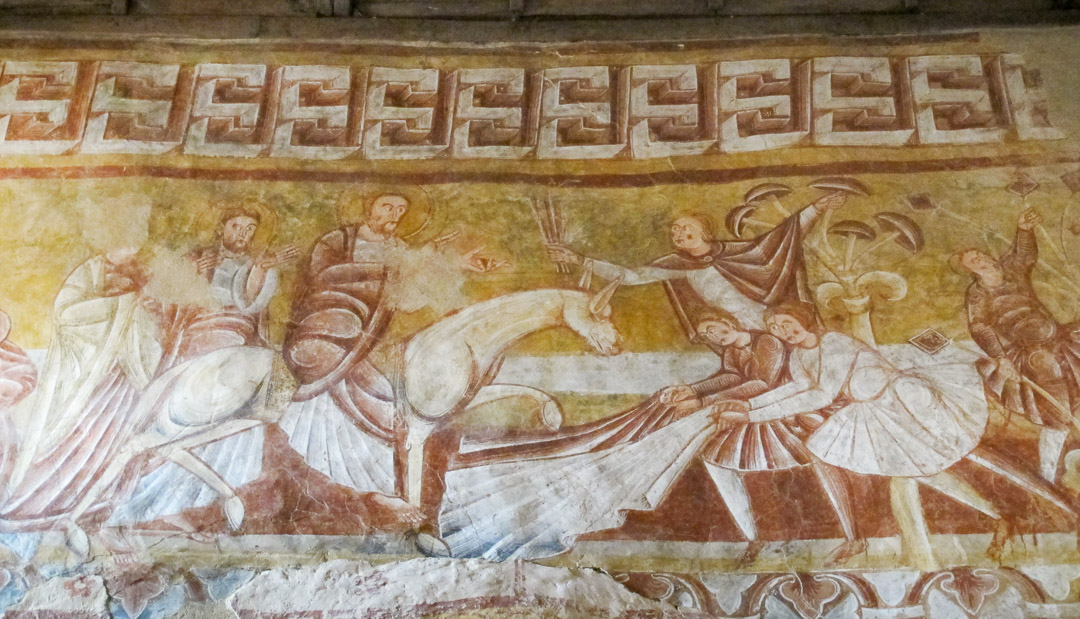
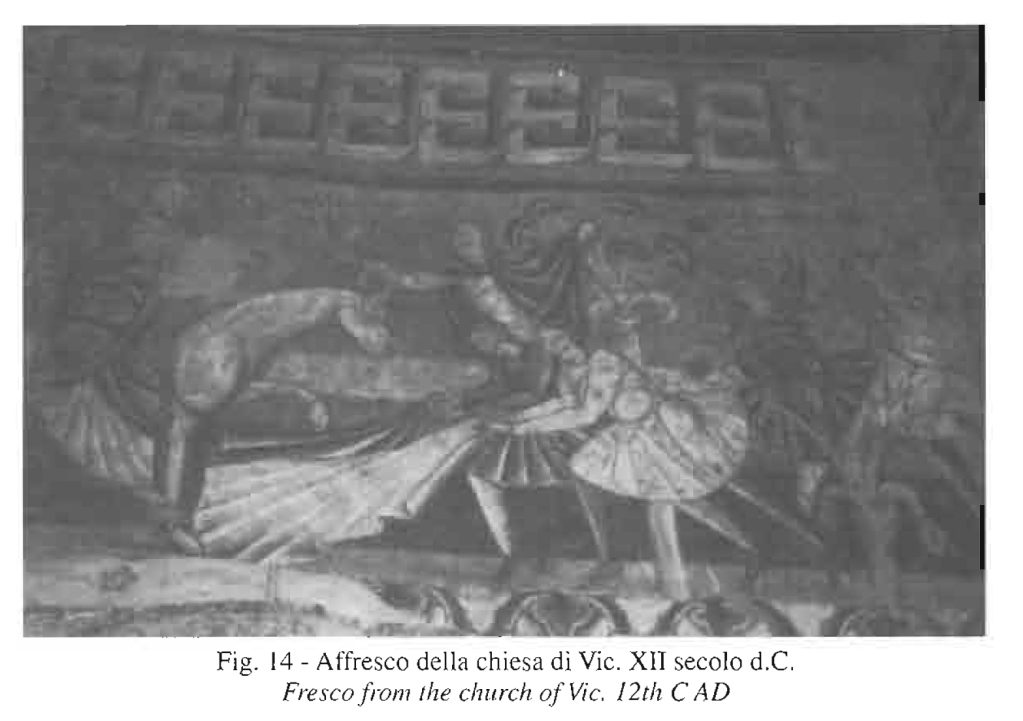
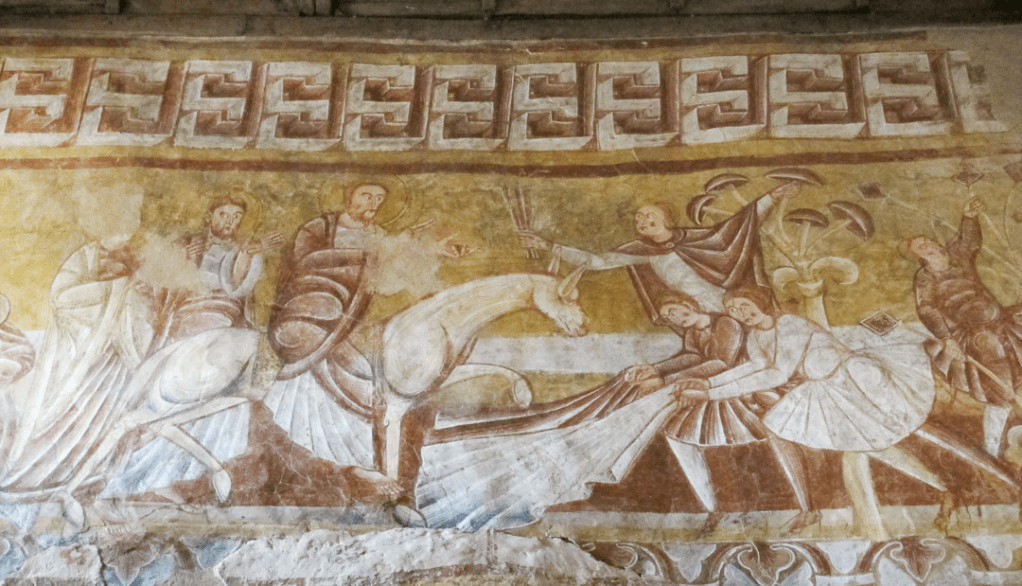
I propose that this theme of Christian art with garment lifted to the right, and looking back and up to the right, is equivalent to Greek art with billowing cloth.
Experiment to run; hypothesis: in Greek & Christian art, the billowing cloth indicating the the Holy Spirit altered state is usually to the left; to the figure’s right side.
Folio 51 – Left Branching, Right Non-Branching Italian Pines – or Is It Parasols of Victory?? Only the Experts Know for Sure, But Definitely Not Mushrooms
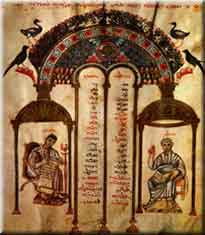
Book: Treasures in Heaven: Armenian Illuminated Manuscripts http://amzn.com/0691037515 Thomas Mathews, Roger Wieck, June 1994 “For over a thousand years the pre-eminent expression of Armenian culture was the illuminated manuscript―above all, the illustrated Gospel Book. Brilliantly painted and often bound in silver and decorated with jewels, these volumes constitute the principal source of information on the history, religion, language, and art of Armenia. … Contributors to this volume include….”
Information from the book: “Fig. 23 – Eusebian Letter with Portrait of Eusebius, by the First Painter, 1300-07. Los Angeles, University of California, University Research Library, Special Collections, Armenian MS 1, p. 4 (cat. 36).”
Scan of a photocopy of the black and white rendering in the book:
Below, page 45 shows a mushroom tree in the lower right:
Information from the book: “Fig. 24 – Eusebian Letter with Portrait of Carpianos, by the First Painter, 1300-07. Los Angeles, University of California, University Research Library, Special Collections, Armenian MS 1, p. 5 (cat. 36).”
Scan of a photocopy of the black and white rendering in the book:
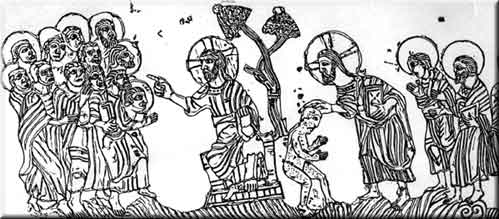
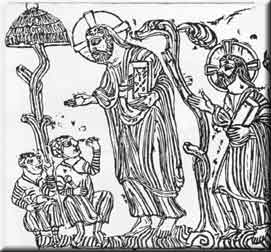
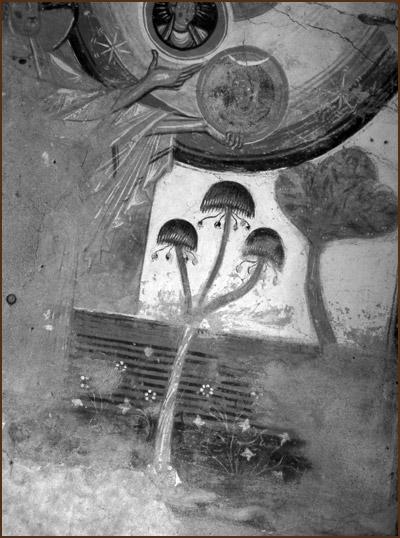
Matenadaran Erevan – Baptism
Christian Art: Erevan, Matenadaran: ‘Baptism’, mid-11th century. – Several Mushroom Trees
Book: Treasures in Heaven: Armenian Illuminated Manuscripts Thomas Mathews, Roger Wieck June 1994
Page 47 has two illustrations — one has 3 mushroom trees:
Information from the book: “Fig. 27 Baptism, mid-11th century. Erevan, Matenadaran 7736, fol. 14v.”
On Page 47, an image shows 2 mushroom trees:
Information from the book: “Fig. 28 Baptism, mid-11th century. Erevan, Matenadaran 7736, fol. 17.”
Page 93 has the illustration just in black and white, of the illustration used for the cover of Bible Review, October 2001, the giant Amanita-cap Last Supper table shown at my page: http://www.egodeath.com/entheogenpicfinds.htm — “Last Supper around an Amanita-cap table”. The mushroom is hardly perceivable in this merely black-and-white rendering — color is essential in cases such as these.
I also have a color photocopy of an Eden cycle showing the tree as generally the same type as a mushroom tree: once the ‘mushroom tree’ idea was standardized, it was sometimes expressed very subtly: not recognizable by a cap shape, but rather, by the grouping of all the leaves in some shape at the top, and with two cut-off arms — branch-stubs, leaving a bare or near-bare trunk that, as a result, indicates a mushroom stem. One color picture in this book shows birds nesting in such a loosely portrayed single-top mushroom-tree that doesn’t have cap-shaped top, but more of just a circle-top.
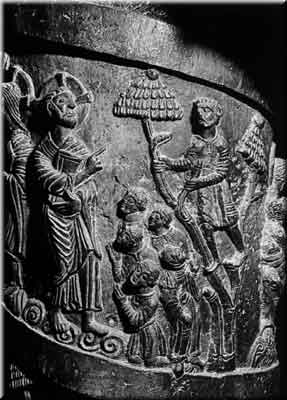
Water-from-Rock Ossuary (Cubensis) – Peter’s Water Miracle, from a Sarcophagus
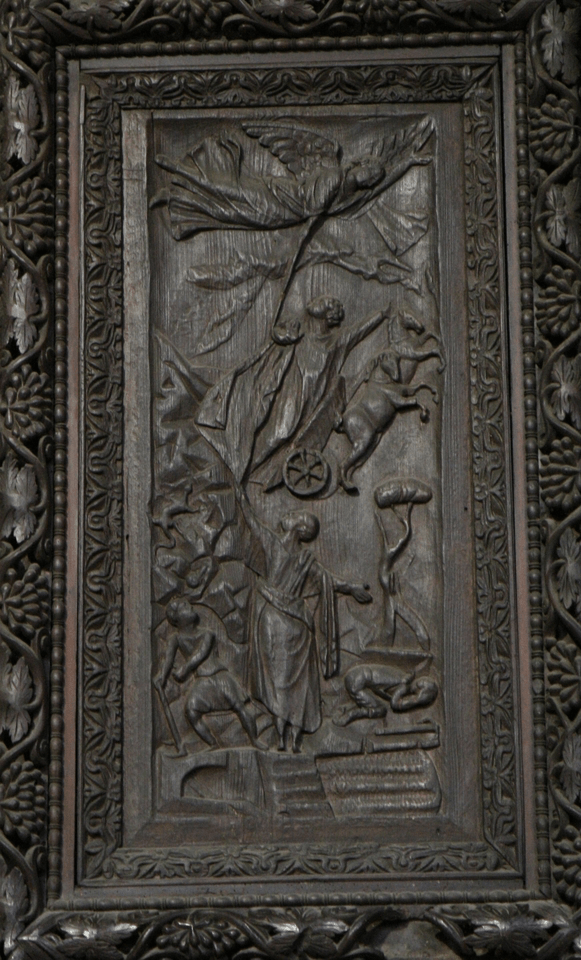
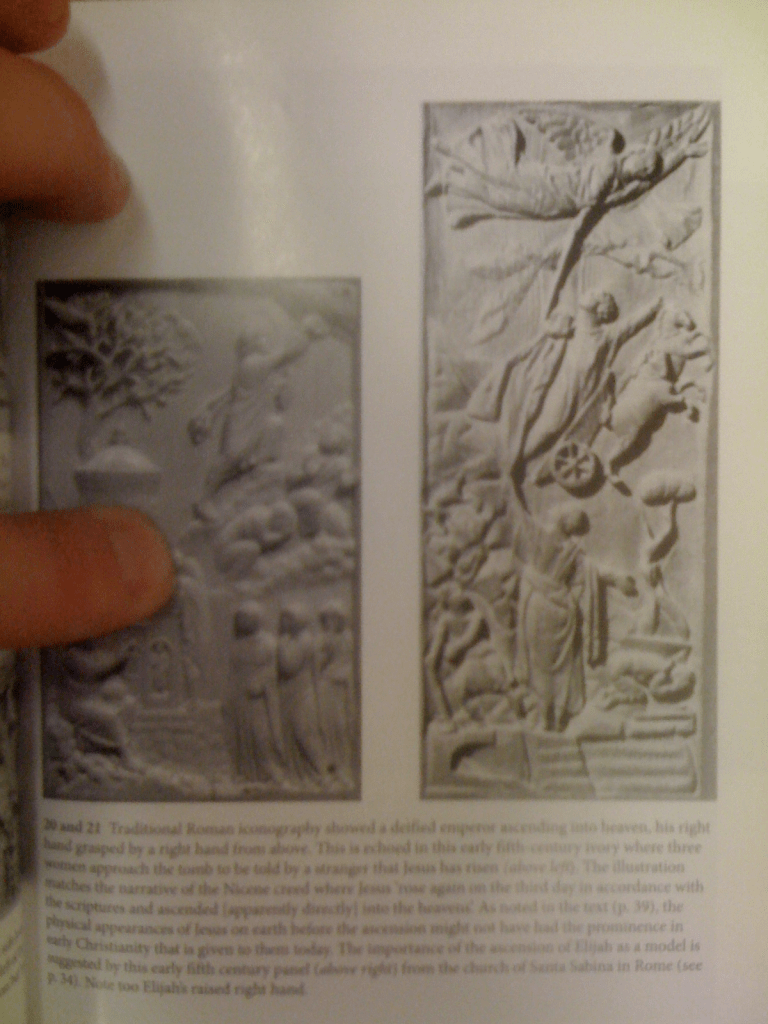
Ossuary showing the vertical “stream of water” (stem) flowing from the “rock” (cap), with guys grabbing and chewing at the stem. A strange way to portray a rock with water flowing from it.
This scan is from the book, p. 87 —
The Clash of Gods: A Reinterpretation of Early Christian Art http://amzn.com/B01JXOZ7DS Thomas F. Mathews (same as other book)
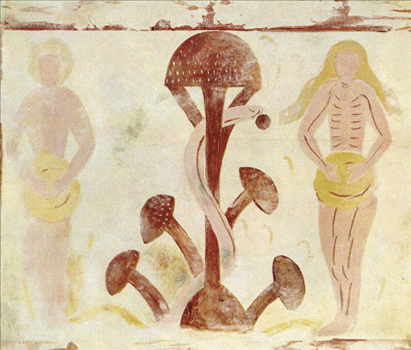
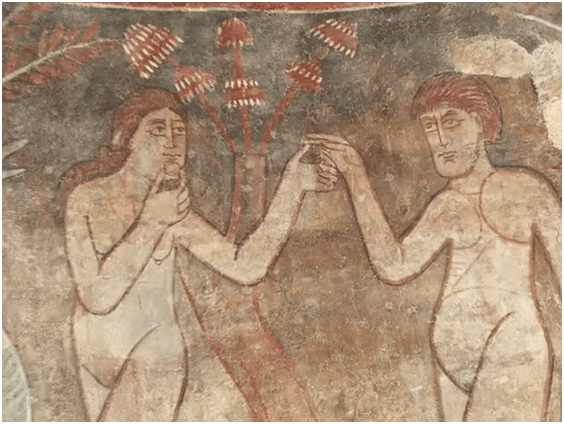
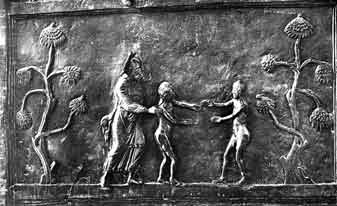
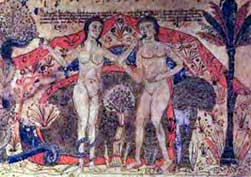
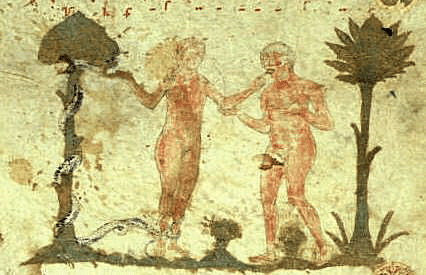
Mushroom-shaped and mandrake-shaped Eden trees, with mushroom-shaped grape clusters on the ground in between. Found at http://pharmacratic-inquisition.com/nontesters/pharmacratic/ – “Adam and Eve with serpent-entwined Psilocybe mushroom (caduceus). Italy [Abbey of Montecassino]; circa 1072 – British Library”. Mandrake is chemically similar to Henbane and Belladonna. Mandrake drawings traditionally show a human body instead of the tree trunk shown here.
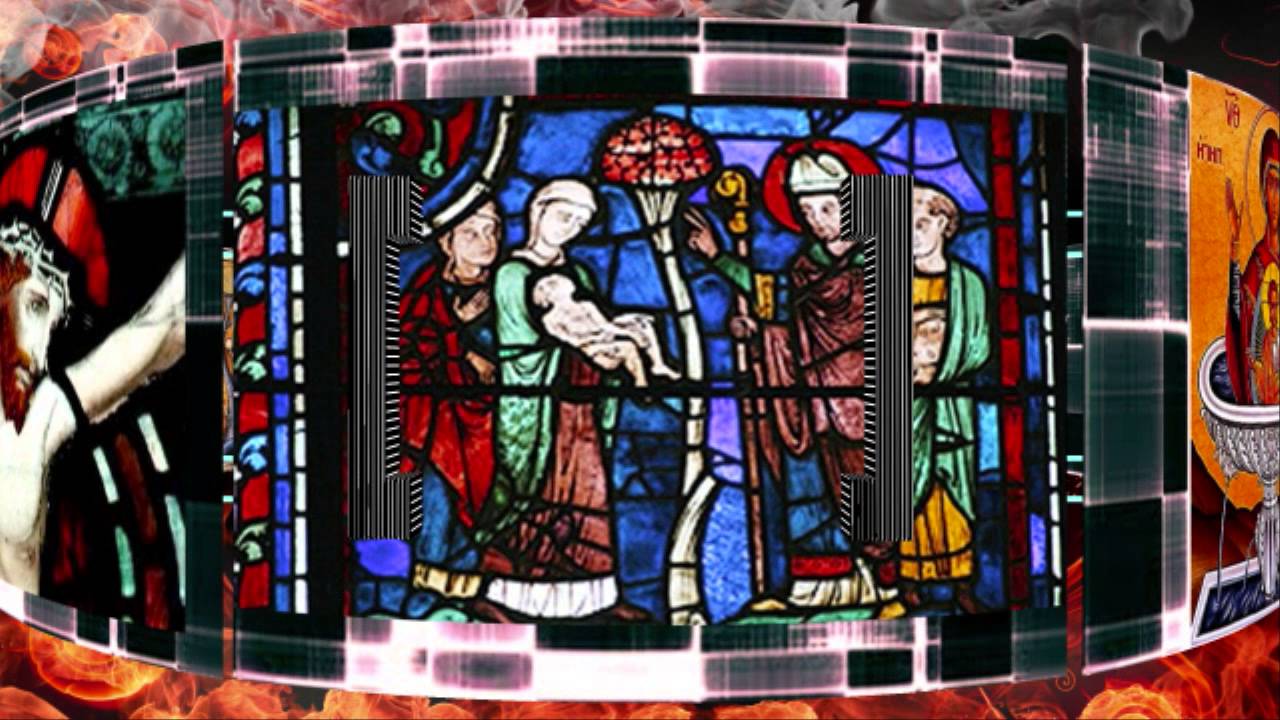
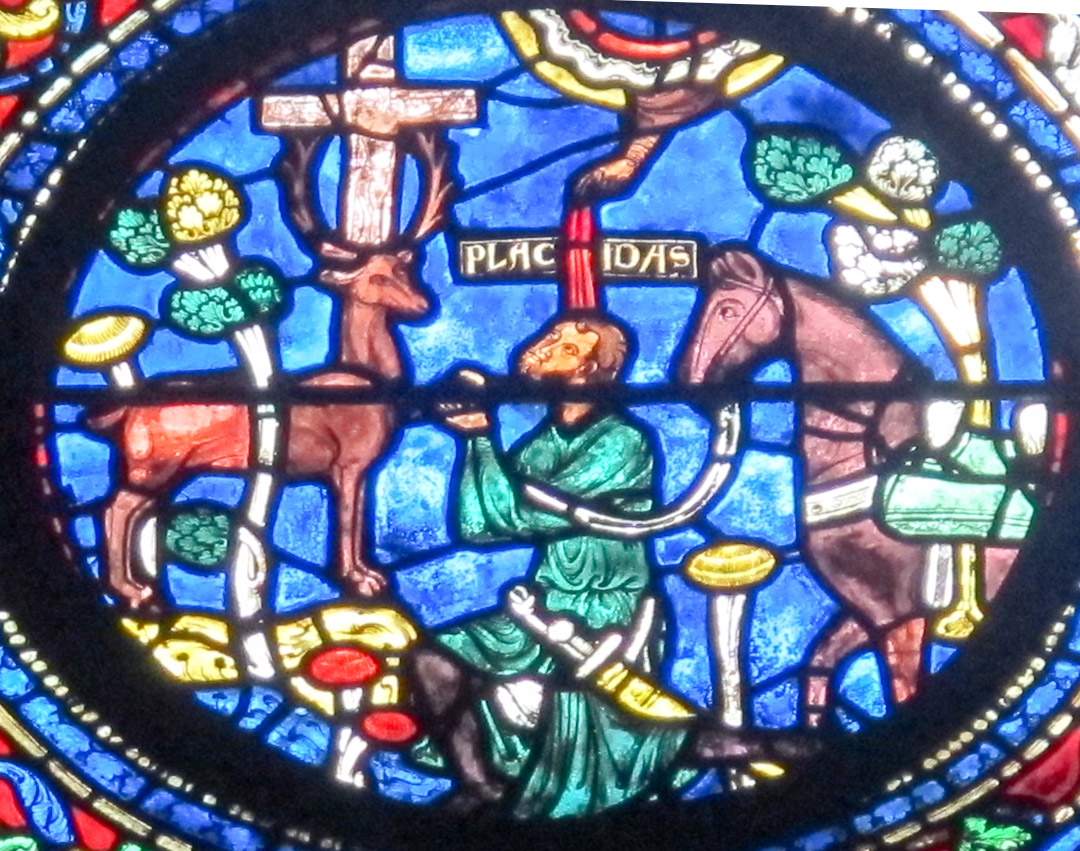
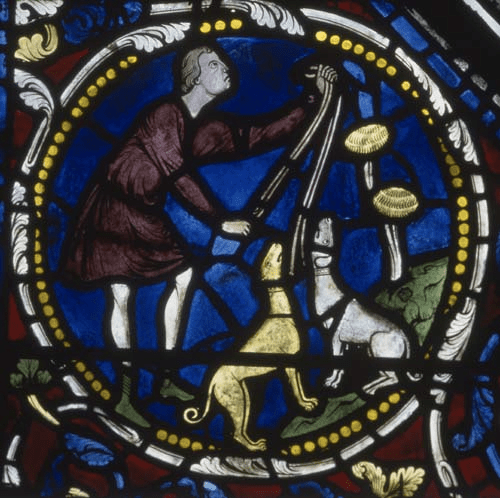
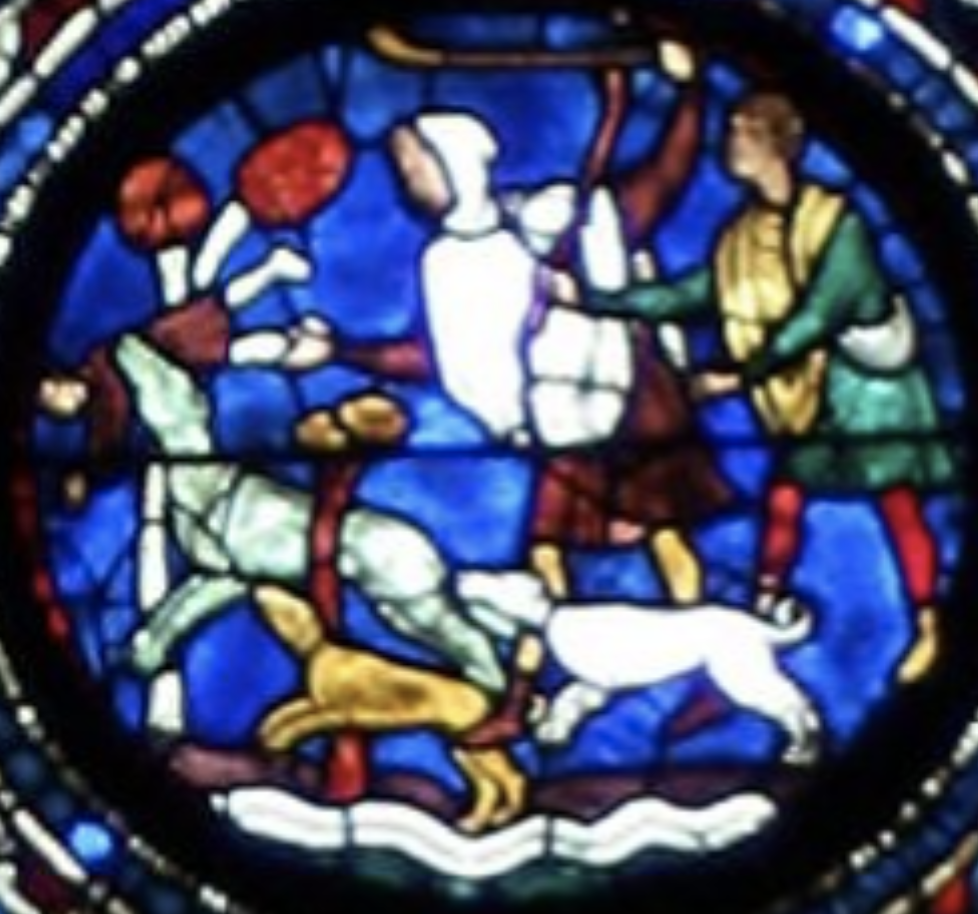
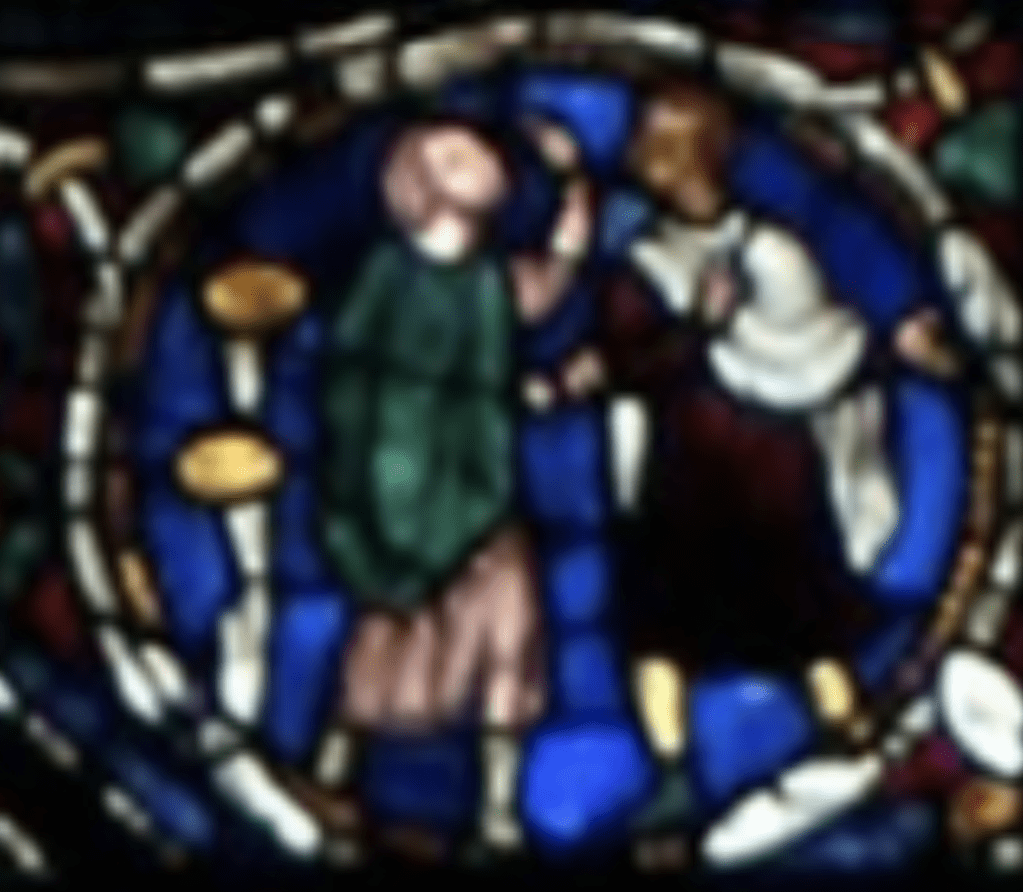
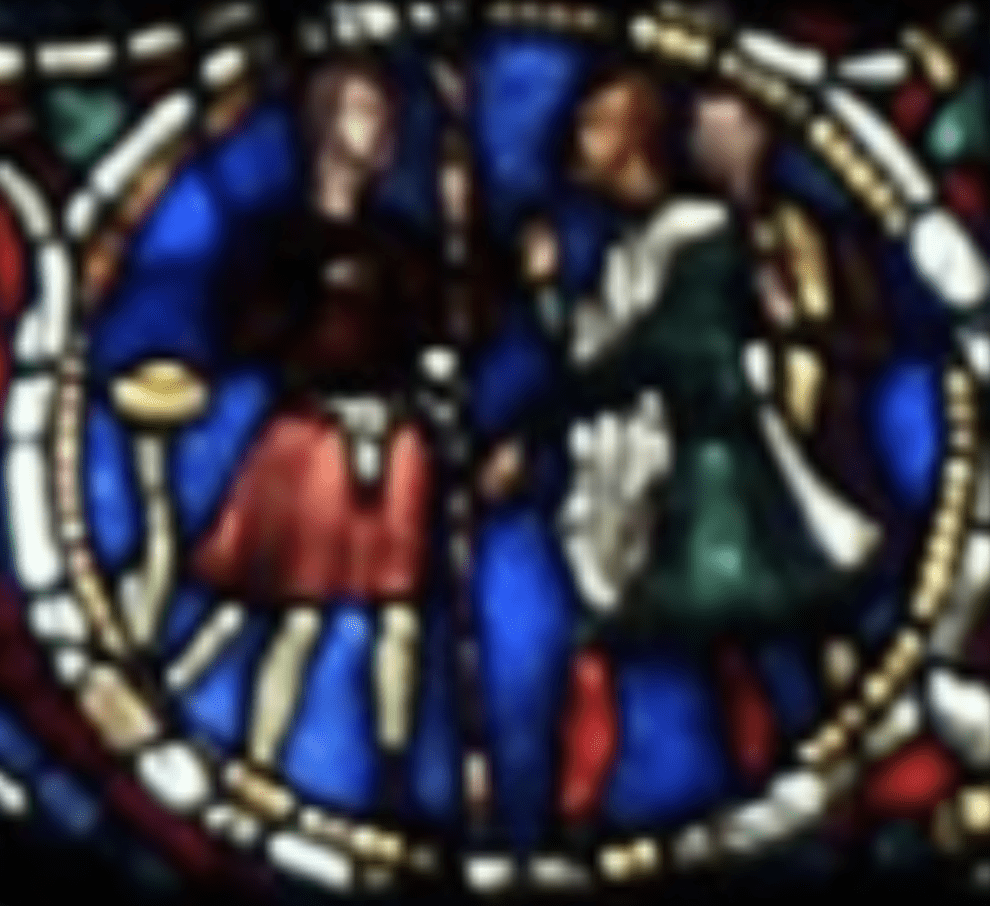
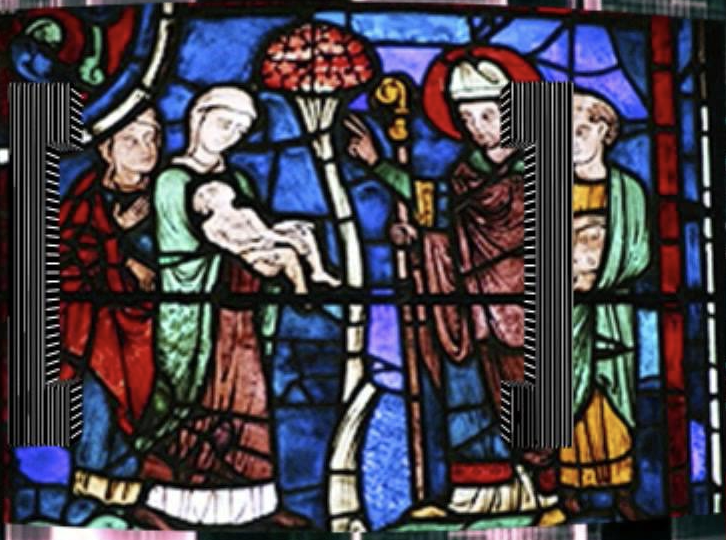
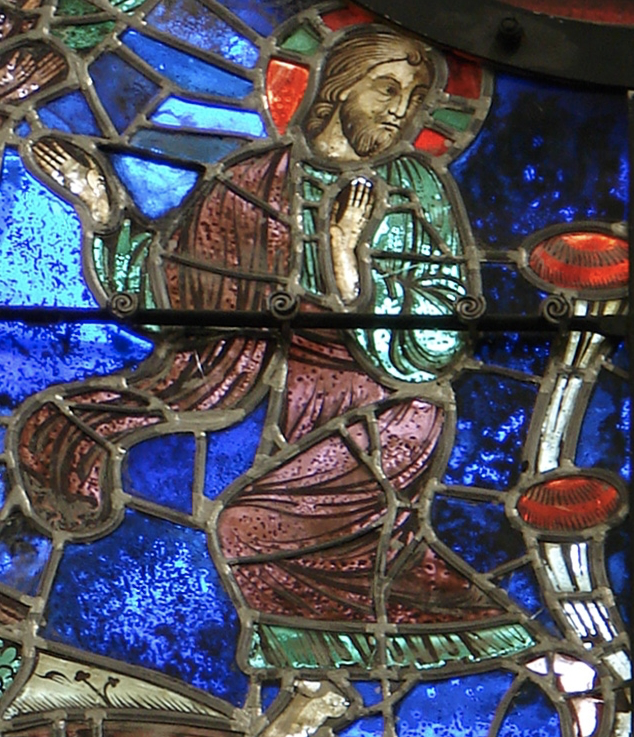
Saint Eustace Window at Chartres with Many Cubensis Mushroom Trees
Emile Mâle (Dora Nussey, tr.), The Gothic Image: Religious Art in France of the Thirteenth Century (Icon Editions Series). 1913 title of the initial English translation of the 3rd French edition: Religious Art in France of the Thirteenth Century: A Study in Medieval Iconography and Its Sources of Inspiration, http://www.amazon.com/o/ASIN/0064300323 (Amazon shows the full text but not the images).
Page 3 shows a Chartres stained-glass window with several mushroom trees — including a plain and starkly clear literal representation of a psilocybin-shaped mushroom, shown below. This is a small portion of a very large window with many clear mushroom depictions. The book shows a sharp, black and white close-up of this portion of the window, which is representative of the other parts of the window.
The book presents black-and-white renderings of stained-glass windows.
Information from the book: “Fig. 1.– The Sky, Water, and Trees. From the Legend of St. Eustace. Window at Chartres.”
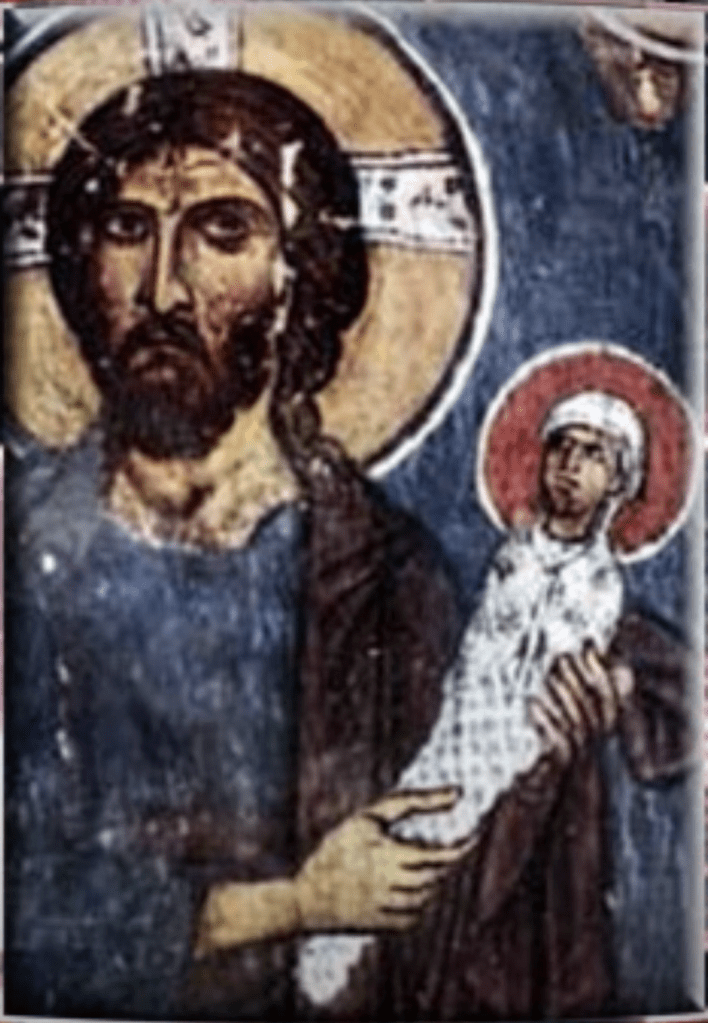
From Economist magazine, Dec 20 2003-Jan 2 2004, p. 29. This icon painting shows the mother of God (Queen of Heaven) holding the Christ child. Her headdress is an Amanita cap cap.
This is the cover of the issue:
On page 29 this icon appears:
From digital camera:
From scanner:
A close-up of Mary’s cap reveals it to be a literal Amanita cap:
From digital camera:
From scanner:
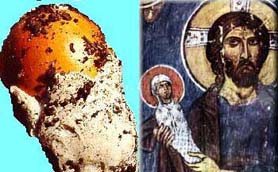
For comparison, below is a portion of a photo of a dried orange-gold (rather than red) species of Amanita, similar shape though from a different angle. In the icon, a fresh Amanita is represented, so the dots (veil remnants) are raised more.
For comparison, here is a similar icon with a mushroom-cap shaped table, but one without any clear entheogenic allusions, though it does look like the common orange-brown color of Amanita cap with off-white spots:
Bible Review current issue, October 2001. Focus: Last Supper.
When looking at the magazine cover at the newsstand, though Clark Heinrich has taught me to actively look for Amanita in iconography (http://www.promind.com/bk_stf.htm, http://www.entheomedia.org), I thought that this Eucharist scene on the cover was noteworthy because each disciple had a loaf/ plain tan cap at his place setting. Fortunately I bought the issue, and was embarrassed to plainly and immediately see that the tan loaves are off-white veil-remnant spots on the wrapped-around red edge of the table.
The table surface is golden honeycomb, a simile for honey-smelling, golden Amanita — to the taste and smell, this honeycomb is a literal representation; to the eyes, you must mentally replace the honeycomb lines by straight lines to form the usual Amanita-underside sun-halo.
I was able to recognize this pattern because I’ve been looking for not only Amanita-underside rays in Christian halos, but also for a rim, often red, with dots, representing the underturned top of the cap.
Other mushroom shape elements: the blue awning forms a thick stipe. Since the iconographically stylized table top has “poor” perspective, it is a semicircle which, combined with the blue awning, forms a perfect mushroom shape. The “poorly” drawn red container in the middle of the table forms the Holy Grail shape of the mature upturned Amanita (Heinrich, _Strange Fruit_ page 85 plate 35; Heinrich plate 5 page 54, Issue 1, Entheos journal).
In the Passover Seder meal, the significance of the food served during the Seder must be explained during the meal.
[see correction of this paragraph below] After Dan Merkur’s book _Mystery of Manna_, this would mean explaining the story of Moses poisoning the leavening in Egypt with a toxic strain of ergot (the “yeast of malice”), and forbidding the Jews to use the leavening, to walk away with booty and redemption from slavery while the Egyptians were incapacitated with ergot poisoning.
Correction: The ergot Exodus hypothesis was described in detail and published by Clark Heinrich. Dan Merkur’s book _The Mystery of Manna: The Psychedelic Sacrament of the Bible_, 2000, is packed with excellent ideas about entheogens (specifically, ergot) and the Bible, but I don’t see the ergot Exodus hypothesis there.
_Strange Fruit_, Clark Heinrich, 1994/1995, pp. 78-79 — “Could Moses have poisoned the Egyptians’ bread supply with ergot?” This book has some coverage of ergot as well as Amanita, and considers how to integrate the two possibilities.
After Clark Heinrich’s book _Strange Fruit: Alchemy, Religion and Magical Foods: The Hidden Truth_, this would mean explaining that Christ is consubstantial with Amanita, which causes a dramatic ego-death and rebirth experience when ingested after fasting. This rebirth experience amounts to transcendence of, and emancipation from, enslavement in the spacetime cosmos.
Jonathan Klawans, the author of the article “Was Jesus’ Last Supper a Seder” (Bible Review, October 2001, page 24), puzzles that the requirement to explain the meaning of the Seder was not introduced until 70 CE — “But the requirement may not have even been in place in the time of Jesus. … Gamaliel … lived … after the temple was destroyed in 70 C.E. … then Jesus’ symbolic explanation of the bread and wine cannot be connected with [the Seder meal explanation requirements].”
This objection is easily solved by assuming that the details of the life story of the Jesus figure were not invented until 70 C.E., or later, and back-projected to around 35 C.E., per Earl Doherty’s book _The Jesus Puzzle_ and Timothy Freke and Peter Gandy’s book _The Jesus Mysteries_. The details of the Jesus story were worked out over hundreds of years and mythically, we have every reason to read the Last Supper’s Eucharist explanation as a Seder type of explanation, simply because the story of the exodus and the story of the passion are largely isomorphic mythic and mystic allegories for psychoactives leading to ego-death and the emancipation of the spirit.
Check out the very distinct white dots against red background on this Amanita halo edge in this iconographic painting on the cover of this book. I think the Lion is Mark’s symbol. This is the first time I’ve seen a lion with an Amanita halo.
To isolate the Amanita cap, it would be good to use a circular crop tool on this picture. I don’t know the origin of the red color in this image.
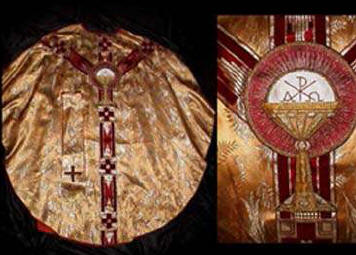
In Alan Watts’ book Myth and Ritual in Christianity, page 198, he portrays such figures — “Monstrance for benediction and exposition of the sacrament” — as representing the spine and world-tree, with the heart of the sun, or the sun door, at the top. I’m continuing to build the case, or interpretive framework, that entheogens were much more prominent and widely used in Christendom.
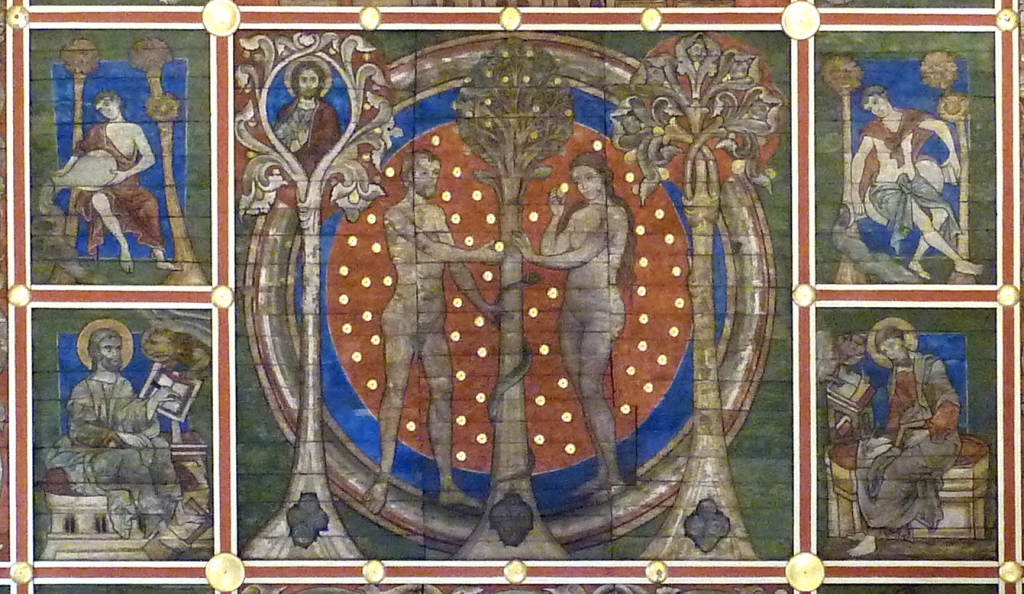
Painted Roof in St. Michael’s Church, Hildesheim (Amanita Cap)
also called Michaeliskirche, Hildesheim, Lower Saxony, Germany
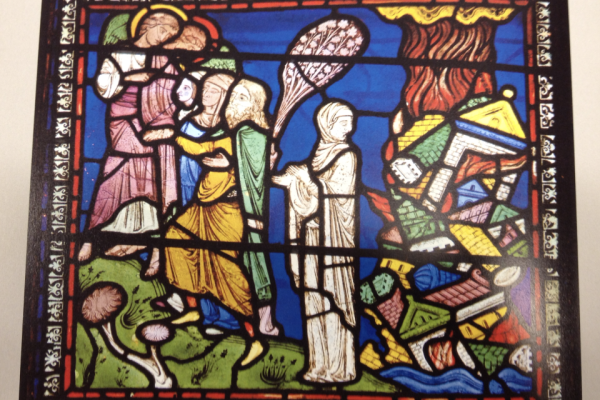
Lot’s Wife Turned to Pillar of Salt (Cubensis Plant)
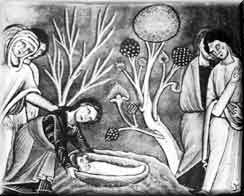
IMG_6520_CanterburyCath1180.PNG. Lot’s wife turned to pillar of salt. iirc, I found this in a book, photographed it, and uploaded this image, around 2003. While in a university art library looking for such images.
Pyschedelic[sic] Christianity : A Scholarly Debate on the Holy Mushroom Theory YouTube channel: Psychedelic Historian January 5, 2018. Hatsis vs. Brown 1:08:14 https://www.youtube.com/watch?v=0PXZGiX4Qnk&t=4094s He says the mushroom trees aren’t mushrooms, it’s just a style.
He doesn’t say why the artists prefer using that particular style, of mushroom-styled trees.
Why does their style incline in the direction of mushroom trees, instead of some other stylized direction?
Why does the mushroom shape dominate in the art of Christendom?
Cyberdisciple wrote: From the description of book 2, it seems that book 1 focuses on Amanita, while book 2 focuses on liberty caps:
“Se nel primo volume l’Amanita muscaria ha avuto una attenzione particolare, in questo gli autori individuano anche la presenza, in alcune rappresentazioni proposte, della Psilocybe semilanceata.”
If in the first volume, Amanita muscaria had special attention, in this volume the authors identify also the presence, in some proposed representations, of Psilocybe semilanceata.
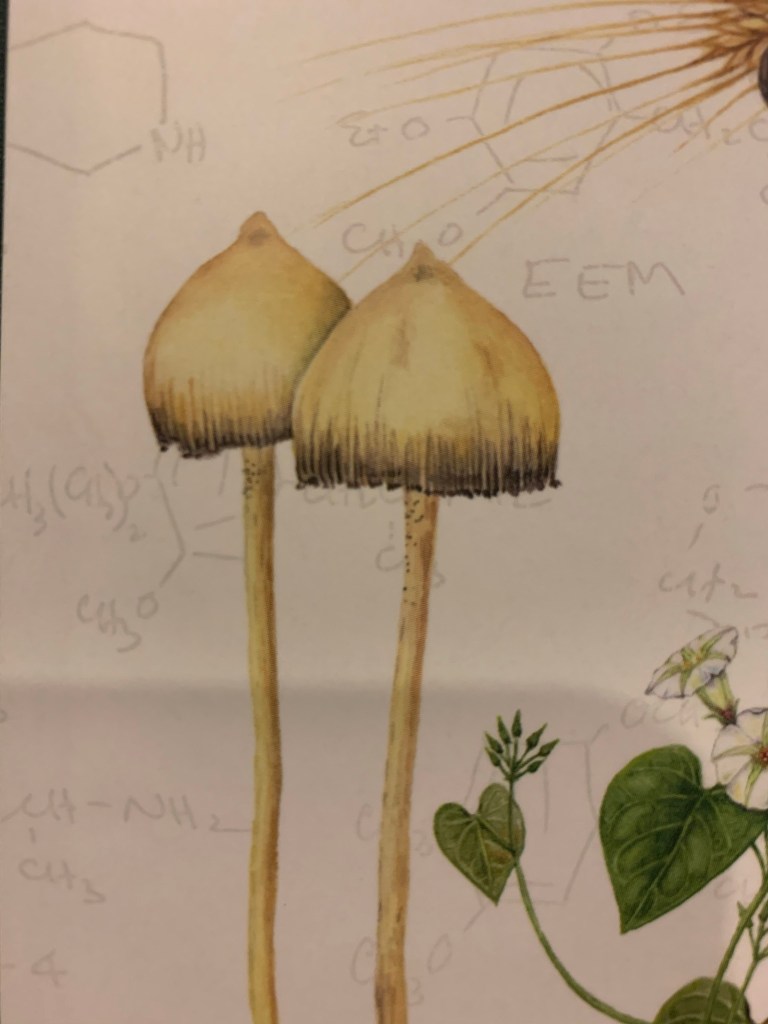
psilo-cybe semi-lanceata smooth-head semi-spear Liberty Caps
“In this second volume of “Hallucinogens and Christianity” Gilberto Camilla and Fulvio Gosso, they continue their research on the fungal presence in Christian sacred art and propose some of their further “discoveries”.
“If in the first volume the Amanita muscaria has received particular attention, in this the authors also identify the presence, in some proposed representations, of the semi-spear Psilocybe.
“In both works the evidence of the presence of hallucinogenic mushrooms in Christian iconography becomes numerous and it seems obvious that they are only a small part of those existing or existed.
“It can therefore be assumed that such a phenomenon, geographically and historically vast and widespread, cannot only be limited to religious representations.
“Apart from the American “school”, some German authors and a few Italian friends who have expressed interest in the topics covered in these volumes, in the academic field silence reigns supreme.”
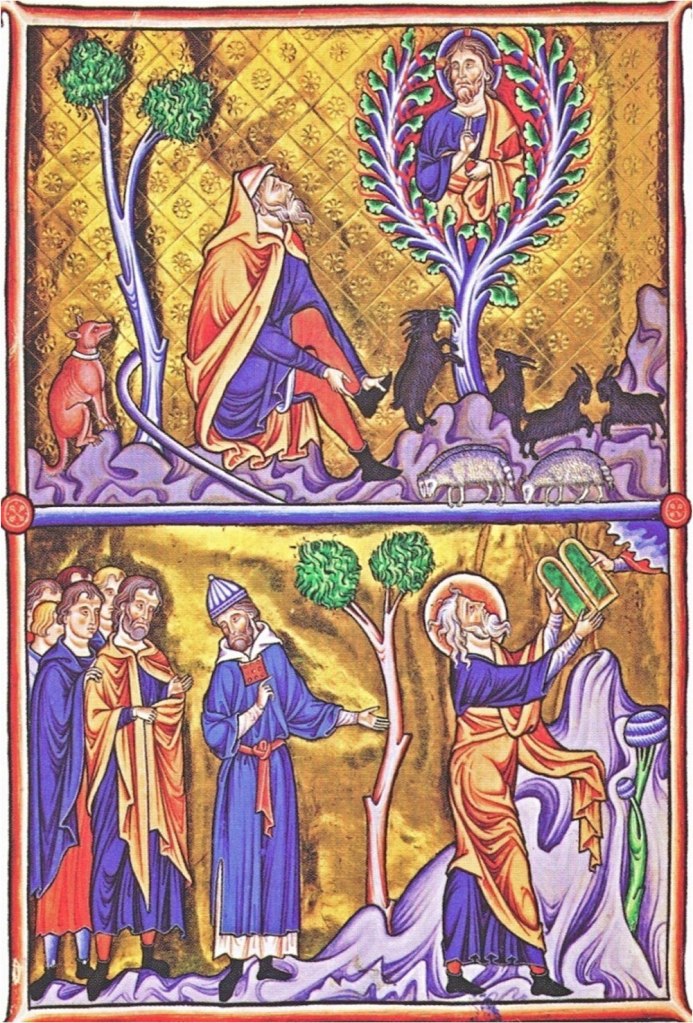
1150s.Psalter BL Cott.Nero C.IV. folio 7 Codex made in the Abbey of St.Swithin in Winchester 1150s.Psalter.Manuscript (Cott. Nero C. IV) British Library, London.This codex, made in the Abbey of St.Swithin in Winchester, contains psalms in Latin and French. The miniature on folio 7 depicts a scene with the shepherd David (above), and Samuel anointing David as a king (below). MINIATURIST, English (active 1150s in Winchester) Saved by Vika Bershadskaya https://i.pinimg.com/originals/1f/79/97/1f79979a9a8726c6e6eb99ae0ca484e9.png
Article in Issue 1 (Summer 2001): Conjuring Eden: Art and the Entheogenic Vision of Paradise Hoffman, Ruck & Staples Online gallery of ancillary illustrations 38 pages, 33 illustrations, 47 ancillary online illustrations cued to text.
todo: Add to the present page, more images from the above online gallery’s other 4 pages:
Italy [Abbey of Montecassino]; circa 1072 – British Library
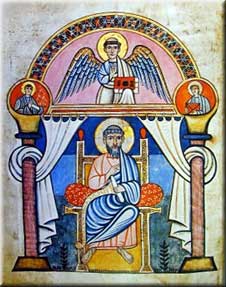
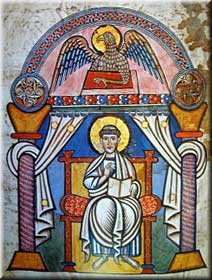
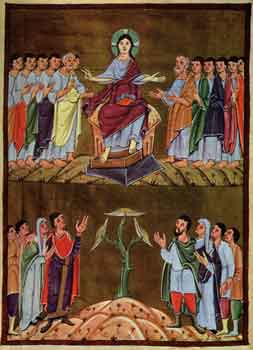
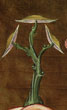
[7] St. Matthew enthroned, Canterbury Codex Aureus, c. 750 (Stockholm).[8] Compare St. John enthroned, Canterbury Codex Aureus.[9] Codex Aureus and mushroom details, below[10] Gospel Book of Otto III: The Sermon on the Mount, Reichenau, 1010. Folio 34, Verso, CLM. 4453, Staatsbibliothek, Munich.
Todo
Provide my improved images of some low-res images above, from other pages (my crop for this site, and/or a direct link to image at other site).
On each mushroom, indicate the correct non-mushroom identification (either Italian pine, or Assyrian Parasol of Victory (or both, just to make sure we’re safely covered).
Someone purchase the books, photograph each good picture, crop, upload, & tag each picture. The pair of Italian books: Hallucinogens and Christianity: Evidence in Sacred Art (Camilla & Gosso)

















































 The Egodeath theory

.jpg)