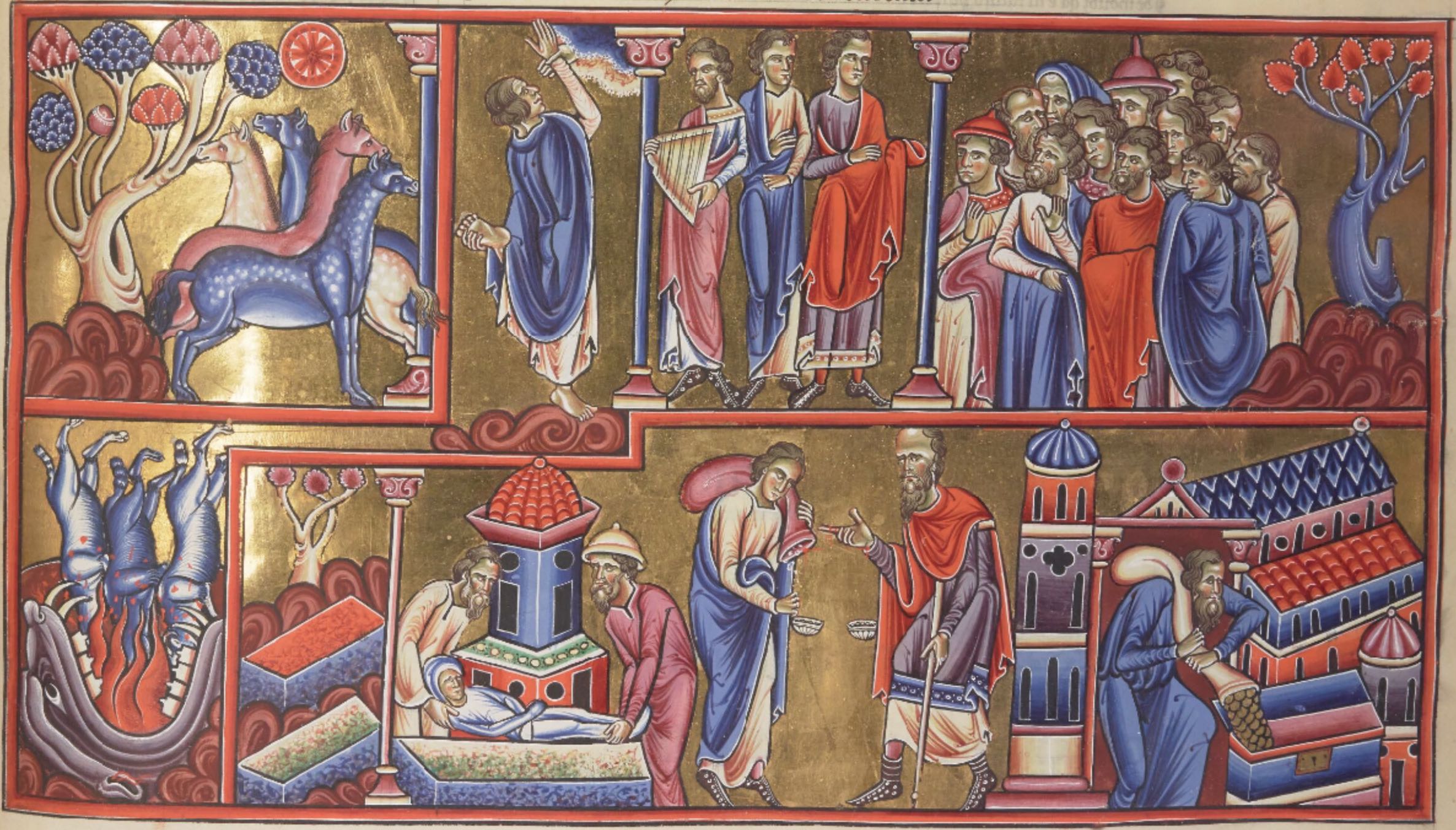
It’s a valuable contrast between “missing the mark” vs. “getting it”.
I’d have to use spoken idea development to discuss why the initial reading was wrong.
Generally it is good to record details of my initial bafflement about the whole image, then partly wrong readings, then full decoding AND WHY I KNOW THE BETTER READING IS CORRECT.
My first reading of the individual trees’ branching.
Bringing the 3 trees together.
Semi-systematically math’ly describing the tree data structures.
Correctly efficiently grasping how to look at the set of 3 trees.
He is not “almost enlightened”.
He is not simply relying on left leg; he knowingly has a lame left leg, that’s why he’s stable.
The artist was successful at presenting me with a tough — but not too tough — interpretation problem.
Decoding mythemes/motifs means identifying the specific way in which the myth / motif describes by analogy, is analogous to specific experiential phenomena of the Psilocybin altered state.
He’s not almost enlightened.
Crutch guy is fully enlightened.
Left leg is not shown as being relied on; the reverse: his thinking is stable because he knows that his left leg is not stable.
The crutch is a negation; it says “this left heel is definitely lame and unstable, and cannot be a stable basis.”
Although {left heel touching base} appears to say {left heel} = {stable}, it doesn’t say that!
We are not shown {left heel touching base}.
We are shown a negative left heel, a lame left heel.
We are being shown {lame left heel is stable} or {unstable left heel is stable}, or {known-unstable left heel is stable}.
known-unstable left heel is stable
It is not a left heel.
It is a known-unstable left heel.
It is his *thinking* that is stable, his thinking which contains “knowledge that left heel is unstable”.
voice recording 4777.wav: Psychedelic Narrative Turf Wars, then “known-unstable left heel is stable”
Voice recording about this to articulate it: 4777.wav. 1:54:19, which includes podcast title ideas:
Psychedelic Turf War
Psychedelic Turf Wars
Narrative Wars
Psychedelic Narrative Turf Wars
Psychedelic Turf Wars
known-unstable left heel is stable
Top of the production queue for voice recordings is the “Closeted Letheby Idealist Persecuting Idealists” voice recording 1.5 hours long a couple days ago.
Earlier recordings today go into Letheby’s “Philosophy of Psychedelics” vs. the Egodeath theory. Letheby is the perfect Epistemology Philosopher and does everything right, yet, he thing… he falls short.
He buys into the usual fallacies, like mistakenly thinking that ego dissolution and unity is the big reveal, the explanation, what it’s all about.
Original Post
i did it! can’t believe it! so soon!
Here’s my quick decoding summary list, pretty remarkable perspective, surprising yet makes sense, is consistent:
I’d like to unpack how historians adjudicate historical claims, by laying out the criteria we use.
Using the tried & true methodology which we historians use, I researched the surrounding text/ theology/ backstory, which PROVES that this CANNOT be mushrooms!
I applied the Thomas Hatsis historiographical methodological methodology, which per his articles, says always automatically (against John Rush) the naturalistic interpretation (ie mundane ordinary state) is neutral and correct, or else it’s culturecide, and have thus identified what’s in the bag: potatoes 😑
Lower left leaf tree with cut right trunk & branch and same trunk color serves like the pink key tree in f134: a simplified version of upper left tree. [9:34 p.m. March 8, 2023]
Serves like the pink key tree in Eadwine’s balancing mushroom tree image; a simplified version of upper left tree.
Detailed Theory of Multiple YI Inventory in Branching-Message Trees
[9 p.m. March 8, 2023] [10:34 p.m. March 8, 2023]
YIΨ (psi)
We can inventory all the branching in a given tree in this genre as follows: start at ground and move up.
At each split, describe YI configuration.
Move up; repeat.
Method for branching message tree morphology inventory:
Start at ground, move up.
If tie, left first.
Note the branch points where sky visible,
state the morph’y at each split point. [10:34 p.m. March 8, 2023]
Incoming Sections Moved from Branching-Message Mushroom Trees Article
Standing on Right Leg Supported by Right Hand (Canterbury)
ah man top row middle (finally! for days, asking “WTH is the purpose of these pointless dumbasses standing doing nothing, serving no function???“) [10:20 p.m. March 10, 2023] i got a hit! LOOKING LEFT AND LOOKING RIGHT – they are looking at upper left tree vs. looking at upper right tree.
Artist tells you where to look, what puzzle components to look at.
So, I continue to say, if I REALLY want to power-analyze, I must draw more white lines sight lines. Try to (scientific hypothesis to test:) draw from eyes to L & R trees.
man, i might do this – very curious! these dudes have been bugging the sht out of me. what’s their POINT? 🤔 🤔 🤨 They CAN’T just mean NOTHING! 🤷♂️ “WTF!”
A huge cognitive dissonance, baffled by puzzle piece Row 1 Middle.
Diamond Hammer of Interpretation, I Summon Thee!
🖼💎🔨
I Vow to Sacrifice Three Shorn Rams if You Assist Me in Decoding this Damned Puzzle!
— [10:33 p.m. March 10, 2023]
Wikipedia: “The images in Great Canterbury Psalter are difficult to interpret.” As one who has decoded some of them:
You can say that again!!
Jesus, Eadwine how the F do you expect anyone to be able to solve these near-impossible puzzles, it’s RIDICULOUS the DECADES of expertise I’m having to bring to this.
as i crop these panels at [11:01 p.m. March 10, 2023] it strikes me that i have been failing to specifiy emphasize that the Egodeath community is looking at Left tree VERSUS (or in comparison with) R tree.
Given that some are looking definitely 100% certain at R tree, therefore, some are looking at not just vaguely “leftward”, but specifically AT THE LEFT TREE in contrast (as the middle, loitering, pointless guys are doing). of course they are also (we can expect) looking at rightly standing guy bc 2 horses are looking at his hand & God’s right hand. we shall SEE.
finding: The middle guy in midst of the Egodeath community is looking at rightly standing guy’s right foot (not down at monster’s mouth).
In accord with John Rush: All art means mushrooms.
Therefore the 3 building caps in Row 2 mean mushrooms.
This means, I noticed/ connected (at timestamp of crop Row 2 Right: 10:58 p.m. March 10, 2023): a building mushroom cap just happens to be in the same crop as the Hatsis potato-reward chest.
🗝🔓 🥔🥔🥔 🏆🥇 🎉
The Naturalistic Ordinary State Interpretation Is Always the Correct One (Else Culturecide) 😑
Remember, per Hatsis’ articles, as he so persuasively reasons to himself, the right, neutral, natural, unbiased interpretation is ALWAYS, automatically, a “naturalistic” reading.
[11:51 p.m. March 10, 2023] – i’m gonna claim this: just noticed, and just thought of this possibility for the first time, thanks to the above crop, and due to thinking about eyes targets: Row 2 right ego-dead lifter guy is looking at the pink key tree. See? that’s some payoff DISCOVERY beyond what I was already expecting by tracing eyes targets! The power of my Grid analysis technique.
I’ve seen the ultra-zoom, while cropping and drawing the line — THE ARTIST COULDN’T POSSIBLY BE ANY CLEARER THAT HE IS LOOKING AT THE TREE.
I like that a lot that he is looking at the tree, so it’s not just sitting there lonely ignored; this looking helps spread PURPOSE to multiply-confirm all the readings UNIFORMLY THROUGHOUT whole image.
[12:58 a.m. March 11, 2023] I have a reading (not entirely new, but networked-new): the building above the ego-dead person = STABILITY. Has a rock ossuary foundation. Has two eyes. 1:00 am a.m. March 11, 2023] and here is an argument (maybe unconscious/ backlog from earlier today but here articulated): HOW WE KNOW THAT THIS BUILDING REPRESENTS stability: b/c we already established that the crutch lame left leg guy tower = stability. And we know that this building is indicated as being “like the tower”, that this building above the ossuary is isomorphic w/ tower, b/c that’s proved indicated by artist by the mushroom cap top of both towers.
This (the fact that both towers have msh cap) helps explain the function/ purpose of the mysterious mushroom caps of the towers: they serve to indicate the sameness, the isomorphism, of the two towers.
Make the two towers different enough so the puzzle isn’t obvious; gotta sort the ppl who truly comprehend, from the rote e-z level “playing game on easy mode” posers else the puzzle doesn’t serve to sort out the ppl who genuinely GET IT vs. the e-z pozers.
An ironic thing: the “OMFG he’s looking at pink key tree!! 😵 … OMG while holding ego-dead! 😵 😵 … OMG while holding feet!! 😵 😵 😵 ….. OMG while holding RIGHT foot!! 😵 😵 😵 😵 — that all happened due to incidental accidental inclusion, I WAS INTENDING TO GIVE UP AND NOT DECODE THE EGO-DEAD PERSON SCENE B/C TOO HARD 😭 😭
But I accidentally saw his eyes and tree together, incidentally while working on another crop , the [left side of image] crop, in which i didn’t even want the lifting-person scene! Proving I should have just mass-produced a set of per-panel…. or– 12:45 a.m. March 11, 2023] THERE ARE TWO INSTANCES OF “MUST HAVE 2 PANELS THO A COLUMN BREAKS THE LOOKING-LINE”:
i just realized an answer to part of an answer to a question WHY THE COLUMSN WHERE THEY ARE…. no idea whether signif ATM, but: strange coincidence:
I was just about to say, write, that the correct crop i found the other day that the correct Row 1 Left crop would NOT have isolated only the horses panel, but MUST include right-standing guy TOO, even though there’s a column in the way,
and then a couple minutes ago, I was going to note that I had to include BOTH panels in the bottom Row 2 panel 2+3, and, there is a column in between them, why?
To obscure that there is a connection between his eyes and the target. (?)
So, I just realized there are two places where I must crop (include) two panels that have a column in between.
(column = metaperception?? 🤔 🤔 indicates seeing an abstract principle??)
[12:27 a.m. March 11, 2023] left guy holding RIGHT ARM with right hand. right guy is holding RIGHT LEG with left hand.
Part of the good news here is that with this these features pointed out, this demonstrates YOU HAVE STANDARD-FEATURE INVENTORYING WORK TO DO: stop thinking stupidly just “what is this dead person doing”; CONTINUE to think / analyse in terms of handedness.
Don’t stop doing that just because “I DON’T KNOW THE BACK STORY 😭 😭
[i was being] As big a DEFEATIST CRYBABY LIKE MCKENNA in Food of the Gods book about the Big Bad Church:
THERE IS NO HOPE, I LOVE CRYING IN HELPLESS DEFEATEDNESS FOR ETERNITY (more than i love strategy to repeal psilocybin Prohibition and set the prisoners free)
😭 😭
CONFIRMED! IT’S A HIT!! HE’S LOOKING UP AT PINK KEY TREE, UNAVOIDABLY SO! 🏆👑🎶🤴🎉
🥔🥔🥔🥔🥔🥔🥔🥔🥔🥔🥔🥔🥔🥔🥔🥔🥔🥔🥔🥔🥔🥔🥔🥔🥔🥔🥔🥔🥔🥔🥔🥔
& PROVES THE GREATNESS high efficacy, appropriate, OF THIS GRID METHOD
[12:05 a.m. March 11, 2023] as i crop panel row 2 panel 2+3 (both ossuary panels) I GOT A HIT! figured out a big thing about ego-dead person: he is {looking at pink key tree while holding feet}.
THIS PROVIDES A PURPOSE FOR EGO-DEAD PERSON.
Note my judgment process: my aborted PLAN was to tight crop just his eyes looking at pink key tree, (“Canterbury-f177-row2-looking-tree reject.png”).
But once I was zooming-decisions, I FELT / experienced that I was omitting the more and more valuable ego-dead person … his act of looking is at same time as holding not vaguely “the person” but, THEN I SAW IT: holding what? SPECIFICALLY, their FEET!
[12:14 a.m. March 10, 2023] the other guy is provably (through white lines sight lines), looking at the crutch tip and right heel on stable column base.
I might do a blurry, whole single image with all eye sight lines traced. or just list what each eyes are looking at.
Character: What he’s looking at
Left ego-dead carrier: crutch tip & left heel on column base.
Right ego-dead carrier: pink key tree.
Horse 1: blue lone cap.
guy in middle of crowd: right foot of rightly standing guy.
the Egodeath community row 2 right: top of trunk of Right tree.
Horse 3: right hand of God holding up rightly standing guy by right hand.
The referent of religious art is always objects in the ordinary mundane state of consciousness (exactly counter to John Rush’s claim); otherwise, you are (certainly) committing culturecide. beg question much, Mr. “Historian”? who the f is doing the culturecide here, Hatsis?? what DUMB, inane arguments! elementary, grade-school fallacies!
[1:22 a.m. March 11, 2023] that does it: with this , i gotta make a crop of the whole Row 2 right eg scales : announce: CATHEDRAL DOESN’T FALL DOWN, IS ATTACHED TO LITTLE MSH-CAP TOWER, BOLSTERING / CONFIRMING YES, TOWER W/ MSH CAP = STABILITY LIKE A CATHEDRAL. This cathedral has two columns (= stability; eg stable column base).
False explanation of the 3 buildings: yesterdayish, ~March 9, I was still long-shot speculating that “buildings” = “advanced knowledge level that a cultivated civilization builds up” [I might have to weed that out, below, – YES , found & done — from my “features” list for this image]. I know think that’s as fake pseudo-expl as “snake is #1 myth b/c shed skin and venom” (what do u call that, an invented pseudo ad hoc explanation?? pretext? no, … fabricated specious explanation?)
Copy of the initial dubious explanation:
Buildings: highly structured comprehension requiring building up on a stable foundation else fall down. preserve that, i feel that it’s a pseudo expl or, is unblanaced. the buildings mean “stability”. Sure, secondarily you can elaborate that as “civilization = stability” or “Transcendent Knowledge is built up like a stable building”, but those are overcomplicated. The simple correct reading is: {STABLE LIKE A CONSTRUCTION, TOWER, CATHEDRAL.}
[1:42 a.m. March 11, 2023] i just got something: i do have to make a crop to centralize the ego-dead person and middle of row 2 right all the way (exclude the monster & the potato reward locker), but definitely HAVE TO/MUST CONJOIN TREE AND RIGHT-CARRYING GUY, ALONG WITH LEFT-CARRYING GUY AND THE LAME STABLE LEFT HEEL TOWER, thus CONNECTING the branching message tree with the theme of {stability} – SPECIFICALLY thinking of this as being LIKE the way that the horses’ looking left + right conjoins the lone cap nonbranching cap, with the rightly standing guy held up from monster by the right hand of God.
horses look left at branching message tree and rightward at rightly-standing man held up by God, serving to connect them; SIMILARLY,
the ego-dead lifter guys look left at branching message tree and rightward at lame left stable heel column base, serving to connect them.
hard to record my rapid sequence of steps of thoughts/ confirmations in this BALANCE BREAKTHROUGH.
Of course I have been thinking about “weighing out” using “scales” over the past few days, I was trying to find the right angle and WHY BALANCING (I NOW SAY as of 2:10 and then 2:11 a.m. March 11, 2023] — why the f is he on his toes?
at 2:10 i was about to write “I don’t know if ancient world would say our word-usage concept of “balance” = “stability” but by 2:11, I confirmed that IS the case, by solving another, “separate”, bothersome annoyance:
WHY IS HE ON TOES? WTF IS UP W THAT??? been buggin me for DAYS 😖
🤨 🤨
Simply try standing on your toes like that.
Finding: it requires a lot of BALANCE.
and though he is “weighing” out 5g of dried french fries from the potato reward locker, by using a “scale“, what type of scale?
It is a BALANCE.
So, like the balancing-base leopard watering bowl that I proved the species identification of by using my field work photographs that — unlike Browns’ nice non-Amanita St. Walburga tapestry (photo credit: not Julie M. Brown) — Iactually travelled to the site, on location, and actually took the photos myself.
remember to comment on how, when I first “saw” the potential “chute” motif, I noted / wrote: “this is really strange, but, am i not seeing a chute?? i just got a really strange message from Eadwine, “chute” – am I imagining this?
Look how uncertain and disbelieving/ incredulous I was, initially, until I thought-through & revised/ developed my headspace/ reading.
Now, a day or two later, OF COURSE ITS A CHUTE connecting the detritus offgassing of egoic smoke, to the monster devouring / dragon / incinerator.
Now, it’s just a given fact.
During couple/few days of interpreting this image, this feature has switched/moved to not at all a “strange odd dubious improbable notion” [see Paul Thagard re: connection-revision].
It’s become the opposite of “improbable, strange”.
Features:
Row 2 left pink key tree branching morphology: YI with cross-under. For communication parity check; a hint or confirmation.
Row 1 left tree: lower (primary) level: YI with cross-under.
Row 1 left tree upper level: IY, I, IY. (Wrong, Right, Wrong)
Row 1 right tree trunk: YI (cut = I).
Row 1 right tree upper level: YI, IY, YI (Right, Wrong, Right) [9:25 p.m. March 10, 2023 re: WRW + RWW + putting R in middle of WRW (latter in isolation isn’t new, but what’s new is seeing / counting that I, listing that I, in the context of … and thus a stronger/ increased strength of “the single cap on left = the cut upper of Right tree”] This is satisfying, because when I attempted to SKIP the Row 1 left tree’s blue cap, clumsy, and we end up w/ less symmetry; ends up with only IY IY on left vs. YI IY YI on right (no symmetry there), but as soon as we COUNT the blue cap in the upper-level inventory, then beauty/elegance: IY, I, IY vs. YI, IY, YI which is Wrong Right Wrong vs. Right Wrong Right, and, the special thing on left tree then is the single-cap, and the special thing on the right tree then is the upper-level cut branch, corroborating the interesting principle that a single cap = cut branch, necessarily (both are non-branching), to make the symmetry work. end of the new-analysis aspects, [9:35 p.m. March 10, 2023]
10:02 p.m. March 10, 2023] — an increase of elegance/ symmetry comprehension of how to think of row 1 left tree vs. row 1 Right tree: why does the right tree have 3 YI’s on top shown, but left only has 2 YI’s “if you skip the blue cap” <– that’s your problem! stop skipping and not counting the blue cap as part of upper level! it is not justified to skip! The two trees are closer to the same # of caps, even though the left only has 2 YI’s in its upper level and the Right tree has 3 YI’s: to bring the count up in L tree and to bring the count DOWN in R tree, the artist avoids cutting right trunk but extends upward as “lone cap” in the upper level; conversely, to complete the 3rd YI in the upper level of R tree, artist eliminates 1 cap by employing the upper-level cut branch. That feels like it ANSWERS QUESTION WHAT’S UP W THE UPPER-LEVEL CUT branch. And it answers “how come the L & R trees APPEAR to have (they visually read as having) the same number of caps, even though the R tree has much more branch presence/ activity/ busyness/ inventory?” STOP SUPPRESSING THE BLUE CAP DOWN TO ONLY MORPHOLOGICALLY OCCUPY THE LOWER LEVEL OF THE TREE; the cap IS to be counted in the upper-level inventory, to enable comparing fairly L vs R tree. Stop artificially covering eyes (like I was doing) and pretending (like I was doing) that the blue cap isn’t part of upper level inventory! It’s very unreasonable to just “skip” this huge member of the upper level of that tree.
This philosophy of how to inventory, produces/ yields the fruit:
The whole game/ exercise is, FIND THE PHILOSOPHY OF INVENTORYING THAT YIELDS STRUCTURAL PARITY.
Question:HOW IS LEFT TREE LIKE RIGHT TREE? Answer:Their upper levels (when counted/assessed the right way) are: Bad/Good/Bad vs. Good/Bad/Good. And this DEFINITELY feels like by far the easiest, simplest reading of the trees’ upper levels.
See breakthrough about left leg lame crutch mar 9 2023. {Lame Left Leg} in YI! YI & IY Pairs in Branching-Message Trees Morphology. That’s nice, because I kind of was wanting more corroboration of {lame left leg/ mortal left heel}, eg recently I tried to find if Hephestos has {lame left leg}; it was a hypothesis I was testing to find expressed/ asserted; very recently I was looking for– I posted, reasoning: SURELY we can deduce that {the goddess dips the mortal holding the heel that remains mortal}, SURELY it’s the left heel that’s mortal, SURELY Achilles’ left heel must be the Achilles’ heel, if the arbitrary/ traditional handedness convention mapping is used: left = possibilism-thinking, right = eternalism-thinking.
Method for branching message tree morphology inventory: Start at ground, move up.
If tie, left first.
Note the branch points where sky visible, state the morph’y at each split point.
Single cap is equivalent to cut branch. [10:34 p.m. March 8, 2023, for this 1st-pass “method of inventory” (which did NOT produce the sought/ planned/ expected discovery of an elegant summarizing pattern), but then I simplified this method the next morning early 6am, for the big breakthrough of elegance that I was expecting/ searching for]
The Ψ psi character didn’t copypaste well, can’t we avoid by KISS?
Nothing of significance is lost (just gratutuos confusing detail, I found) if we write Y instead of Ψ (psi).
Row 1 left tree YI inventory: branch points: 6. [see cleaner more condensed breakthrough in March 8/9 2023 posts on morphology YI IY patterns and pink key tree] YI! YI & IY Pairs in Branching-Message Trees Morphology ΨI, IΨ (or IY), YΨ, IY, II, II.
Row 1 right tree YI inventory: branch points: 9. ΨI, ΨΨ, YI; ΨY, II, YI; IY, II, II.
Row 2 left tree YI inventory: branch points: 2. This is totally the “pink key tree” of f177 (like of f134). really. even the cross-behind! — that’s it, I’m announcing it: 12:12 a.m. March 9, 2023]: realization of the huge extent to which f177 row 2 left tree is intended to be the pink key tree parity check confirmation signalling eg if you have doubt bc the (must be intentionally) botched cross-behind in upper left tree, the lower left tree firmly settles it. Addl arg’n that it’s intentional botched cross-under, it’s a trompe l’oeil: look at left: the cross-behind upper stem appears to be originating from the left side. Deliberate obfuscation. “He accidentally botched …” Wrong! this picture is the opposite of “accidentally”. Need crops. YI, II.
Standing on right leg, God holding up by right hand to keep from falling down chute, left foot in left hand not usable for control-balance.
Two horses looking & smiling at blue single cap on right-hand trunk branch.
Two horses looking & smiling at right hands.
Scales measuring out cubensis.
Storing cubensis in a secured lock box at the Psilocybin distribution center.
Buildings: highly structured comprehension requiring building up on a stable foundation else fall down. preserve that, i feel that it’s a pseudo expl or, is unblanaced. the buildings mean “stability”. Sure, secondarily you can elaborate that as “civilization = stability” or “Transcendent Knowledge is built up like a stable building”, but those are overcomplicated. The simple correct reading is: {STABLE LIKE A CONSTRUCTION, TOWER, CATHEDRAL.}
Shorn rams: Removed/ repudiated/ sacrificed animal-thinking falls down through chute and is devoured.
Advanced psychonaut community looks at cut right trunk or at rightly standing guy.
Furrowed-brow dread guy showing left hand; relying still on possibilism-thinking.
Winnowing basket to retain eternalism-thinking and remove possibilism-thinking.
Crutch indicates knowledge of {lame left leg} provides stable control per {stable column base}.
Ego death graveyard under YI tree.
Ego-dead person during psilocybin session is carried by advanced mystics at the Psilocybin initiation center.
Empty ossuary graves, occupants are to the right.
Row 1 middle: red: lifted garment.
Mushroom YI tree.
Horse dung Cubensis tree.
Lower left leaf tree with cut right trunk & branch and same trunk color serves like the pink key tree in Eadwine’s balancing mushroom tree image; a simplified version of upper left tree.
Mushroom hems.
Two left feet (expect right) touching column base.
Published in Fringe Ware Review zine, issue 5, pp. 22-24, July 29, 1994 [accurate per Archive]
[fragmented montage of photographs including hand holding a clear glass coffee/beer glass with black coffee on desk]
The Bubble of Simulation: Subjective Experience as a Virtual Environment
When exploring the realms of fringe experiencing, it is helpful to understand that even ordinary experiencing is similar to a remarkably detailed and consistent hallucination of a world. In the loose cognition state of awareness, which occurs in advanced meditation, schizophrenia, and psychedelics, the veil of perception loosens and becomes a visible patchwork or mosaic, showing clearly that the world is only present to awareness in the form of dynamic mental models made of mental constructs. Loose cognition tangibly switches on the philosophizing mode, because the mind is fully confronted with its isolation. Philosophy of Mind, which comes from the West and includes skepticism, is a recent, vital approach to studying how the mind internally represents various types of objects and entities which constitute the world. Philosophy of Mind is about to collide with Transpersonal Psychology, from the East, which is also building up models of our innermost subjectivity and studying how the mind constructs its experienced world and the sense of being a person separate from that world.
Sitting at my desk reading about the philosophy of perception, I consider its strange implications for my apparent perception of myself in the scene of my study. Because this type of scene feels natural and intimately familiar, it is a typical example of how the mind internally recreates or simulates the external world, from simple material objects such as a cup, to more complex objects such as other people, and highly complex systems, such as the minds’s own thoughts about the mind.
Holding my coffee cup, I have the consistent impression of solidity and weight, but the feeling of roundness is a convincing illusion constructed entirely within my own mind. This fully compelling illusion that I am directly perceiving the cup itself is due to the perfect consistency of the mental impressions. While it is impossible to determine whether the external cup in fact exists, I can handle the cup to test its consistency within the local, subjective fishbowl of experience, but I cannot prove that there is in fact a cup out there.
I can only perceive the (alleged) external world in the indirect form of my mind’s self-created subjective experiencing. As long as the impression of my desk is consistent, the mind draws a shorthand identification of the mental construct of the desk with the alleged desk itself, failing to maintain the subtle distinction between the symbol ‘desk’ and the hidden (alleged) referent desk. But during a schizophrenic break, the mind’s model of the desk loosens and partly disintegrates, warping and rippling. The perfect consistency of the perceptual construct is broken, and like a drastic glitch in a film, the medium of representation becomes exposed and the illusion of direct access to reality is disrupted. The mental construct veil then points to itself as much as it points to the actual desk.
A book is usually experienced as a fixed, rigid object, with sentences arranged into a definite structure. But when the mind studies a book in a loosened state of cognition, the sentences and the meanings swim around noticeably, producing a cut-up effect. It is difficult to read while cognition is loosened, but the thinking occurs at a deep level, where complex meanings and possible connections can be built up, enabling the mind to seek hidden networks of significance in the most mundane books. When normal, tightly bound cognition returns, the book becomes innocent again.
I hold the book and the cup of coffee in my hands, and I move my arms and hands to turn the pages of the book. How do I experience my hand and control it? My hand, arm, and body might be substantial, but I can only experience them in the form of rich mental constructs. The relationship of my arms to my mind is essentially the same as telepresence, the control and monitoring loop between remote robotic equipment and a human operator. The mind includes a cybernetic control loop between the ego and the nerves in the arms. The ego performs the cybernetic role of the controller apparently residing inside the robot-like nervous system of the body, and once the mind gets the cybernetic feel of it, controlling the body feels as natural as driving a car.
Does my body move, or is there just a stream of shifting images and kinetic feelings? Awareness peers out from nowhere, and in information space, inserts itself into the apparent configuration or shape of a body. This convincing body with arms and legs extending out is known to me as a convention of illusion. It is only known to me as a detailed cartoon giving the impression of a 3-dimensional body. The experience of motion through spacial dimensions is a pre-programmed mental scheme to keep track of information, by constructing dynamic information structures, complex spacial models which seem to be real — simply given and non-arbitrary. During the loose cognition state of meditation or schizophrenia, awareness can be perceived as stationary, or non-mobile, the mind merely synthesizing the convincing subjective effect of movement. It is possible to feel, or “see with the third eye”, that the only place where the experiences of motion and the controller actually reside is in information space.
Ontic solipsism is the denial that other minds exist. I cannot tell whether any conscious creatures exist outside my mind. In my experience, dynamic tokens arise and act consistently like self-existent entities. They are like spirits in my head, constructed by auxiliary functions of my own mind, and kept separate from my self-construct by mental categorizing. After the experience of a love-bite from my cat, I swiftly moved my apparent arm toward the appearance of a cat, and although I heard a smacking sound as the cat-image fell to the floor, I cannot tell whether there is in fact a referent ‘cat’ object in the external realm. The cat-image ran away and disappeared, and is missing from the photograph I took of this scene. Maybe I never apprehended a cat at all — but my hand has tooth marks.
I am not sure my friend exists; all I have is a picture of him. Every time I perceive this allegedly existing person, that glob of perceptions in my head acts in a consistent pattern. When I tell my friend-symbol in my mind that as far as I know, he might only be a mental image, a mere complex idea, that friend symbol jokes nervously with me, reliably. Other minds, including cats and people, might not exist at all, except as apparently self-willed images in my mind, separate from the control system that I call my self-control. My center of personal activity has a certain type of interactive control over these “other mind” constructs that arise in my thought.
As I look out into this room during a schizophrenic break, not only is the impression of the desk wavering and disintegrating into component perceptions, not only is my friend looking more and more like a cartoon created by a loose mind, but the perception of myself is splitting into two layers: a distant, hypothesized object on the other side of my wall of senses, and a mental fabrication immediately present to awareness, merely posing as that object. In loose cognition, it is easy to apprehend the self-symbol as such: a convenient cognitive self- deception. All experience is in the form of mental constructs, which serve as a cartoonish reproduction of the world, and I only know this inner dweller in the form of a mental construct, the cartoon demon of “myself”.
Taking a fresh, loose look at my own cognitive functioning, it appears that the activities of my mind are themselves misconstrued, and my thinking and assumptions about my own cognition are only trustworthy when compensated by deeply pervasive skepticism. For example, I definitely perceive the experience of something called “will” or “self-control”, but that perception changes during advanced meditation, when it appears that my will just emanates from within me by itself — from a place within me that I cannot see. My willed actions then appear to emanate from beyond my awareness.
Eastern and Western philosophy have only met very recently. The work to combine them has barely begun. It’s a commonplace idea in Eastern philosophy that faith in external reality is extravagant. This idea combines easily with solipsism, which is one of the core ideas of Western philosophy. In magical, pre-rational awareness, and in modern ego-consciousness, there is confusion between the realms of the mind’s symbols and the objects referred to by those symbols, which leads to the assumption that mental constructs are not symbols but are the represented objects themselves. In transcendence or mastery of perception, the mind learns to be skeptical about its own perceptions and hypotheses. The advanced mind learns to draw conclusions that are always held with reservations about its ability to perceive the world, including the partly hidden, partly hallucinatory inner world and its delusional inhabitant.
Michael Hoffman appeared on The WELL, and posted a half-meg stream of psychoactive prose before we asked him to put a rope around it and rein in a piece for FWR. This piece is said to be the genesis of a book-length project.
1/e2
[the issue editor is Jon Lebkowsky]
Article with Per-Sentence Formatting
When exploring the realms of fringe experiencing, it is helpful to understand that even ordinary experiencing is similar to a remarkably detailed and consistent hallucination of a world.
In the loose cognition state of awareness, which occurs in advanced meditation, schizophrenia, and psychedelics, the veil of perception loosens and becomes a visible patchwork or mosaic, showing clearly that the world is only present to awareness in the form of dynamic mental models made of mental constructs.
Loose cognition tangibly switches on the philosophizing mode, because the mind is fully confronted with its isolation.
Philosophy of Mind, which comes from the West and includes skepticism, is a recent, vital approach to studying how the mind internally represents various types of objects and entities which constitute the world.
Philosophy of Mind is about to collide with Transpersonal Psychology, from the East, which is also building up models of our innermost subjectivity and studying how the mind constructs its experienced world and the sense of being a person separate from that world.
___
Sitting at my desk reading about the philosophy of perception, I consider its strange implications for my apparent perception of myself in the scene of my study.
Because this type of scene feels natural and intimately familiar, it is a typical example of how the mind internally recreates or simulates the external world, from simple material objects such as a cup, to more complex objects such as other people, and highly complex systems, such as the minds’s own thoughts about the mind.
___
Holding my coffee cup, I have the consistent impression of solidity and weight, but the feeling of roundness is a convincing illusion constructed entirely within my own mind.
This fully compelling illusion that I am directly perceiving the cup itself is due to the perfect consistency of the mental impressions.
While it is impossible to determine whether the external cup in fact exists, I can handle the cup to test its consistency within the local, subjective fishbowl of experience, but I cannot prove that there is in fact a cup out there.
___
I can only perceive the (alleged) external world in the indirect form of my mind’s self-created subjective experiencing.
As long as the impression of my desk is consistent, the mind draws a shorthand identification of the mental construct of the desk with the alleged desk itself, failing to maintain the subtle distinction between the symbol ‘desk’ and the hidden (alleged) referent desk.
But during a schizophrenic break, the mind’s model of the desk loosens and partly disintegrates, warping and rippling.
The perfect consistency of the perceptual construct is broken, and like a drastic glitch in a film, the medium of representation becomes exposed and the illusion of direct access to reality is disrupted.
The mental construct veil then points to itself as much as it points to the actual desk.
___
A book is usually experienced as a fixed, rigid object, with sentences arranged into a definite structure.
But when the mind studies a book in a loosened state of cognition, the sentences and the meanings swim around noticeably, producing a cut-up effect.
It is difficult to read while cognition is loosened, but the thinking occurs at a deep level, where complex meanings and possible connections can be built up, enabling the mind to seek hidden networks of significance in the most mundane books.
When normal, tightly bound cognition returns, the book becomes innocent again.
___
I hold the book and the cup of coffee in my hands, and I move my arms and hands to turn the pages of the book.
How do I experience my hand and control it? My hand, arm, and body might be substantial, but I can only experience them in the form of rich mental constructs.
The relationship of my arms to my mind is essentially the same as telepresence, the control and monitoring loop between remote robotic equipment and a human operator.
The mind includes a cybernetic control loop between the ego and the nerves in the arms.
The ego performs the cybernetic role of the controller apparently residing inside the robot-like nervous system of the body, and once the mind gets the cybernetic feel of it, controlling the body feels as natural as driving a car.
___
Does my body move, or is there just a stream of shifting images and kinetic feelings?
Awareness peers out from nowhere, and in information space, inserts itself into the apparent configuration or shape of a body.
This convincing body with arms and legs extending out is known to me as a convention of illusion.
It is only known to me as a detailed cartoon giving the impression of a 3-dimensional body.
The experience of motion through spacial dimensions is a pre-programmed mental scheme to keep track of information, by constructing dynamic information structures, complex spacial models which seem to be real — simply given and non-arbitrary.
During the loose cognition state of meditation or schizophrenia, awareness can be perceived as stationary, or non-mobile, the mind merely synthesizing the convincing subjective effect of movement.
It is possible to feel, or “see with the third eye”, that the only place where the experiences of motion and the controller actually reside is in information space.
___
Ontic solipsism is the denial that other minds exist.
I cannot tell whether any conscious creatures exist outside my mind.
In my experience, dynamic tokens arise and act consistently like self-existent entities.
They are like spirits in my head, constructed by auxiliary functions of my own mind, and kept separate from my self-construct by mental categorizing.
After the experience of a love-bite from my cat, I swiftly moved my apparent arm toward the appearance of a cat, and although I heard a smacking sound as the cat-image fell to the floor, I cannot tell whether there is in fact a referent ‘cat’ object in the external realm.
The cat-image ran away and disappeared, and is missing from the photograph I took of this scene.
Maybe I never apprehended a cat at all — but my hand has tooth marks.
___
I am not sure my friend exists; all I have is a picture of him.
Every time I perceive this allegedly existing person, that glob of perceptions in my head acts in a consistent pattern.
When I tell my friend-symbol in my mind that as far as I know, he might only be a mental image, a mere complex idea, that friend symbol jokes nervously with me, reliably.
Other minds, including cats and people, might not exist at all, except as apparently self-willed images in my mind, separate from the control system that I call my self-control.
My center of personal activity has a certain type of interactive control over these “other mind” constructs that arise in my thought.
___
As I look out into this room during a schizophrenic break, not only is the impression of the desk wavering and disintegrating into component perceptions, not only is my friend looking more and more like a cartoon created by a loose mind, but the perception of myself is splitting into two layers: a distant, hypothesized object on the other side of my wall of senses, and a mental fabrication immediately present to awareness, merely posing as that object.
In loose cognition, it is easy to apprehend the self-symbol as such: a convenient cognitive self- deception.
All experience is in the form of mental constructs, which serve as a cartoonish reproduction of the world, and I only know this inner dweller in the form of a mental construct, the cartoon demon of “myself”.
___
Taking a fresh, loose look at my own cognitive functioning, it appears that the activities of my mind are themselves misconstrued, and my thinking and assumptions about my own cognition are only trustworthy when compensated by deeply pervasive skepticism.
For example, I definitely perceive the experience of something called “will” or “self-control”, but that perception changes during advanced meditation, when it appears that my will just emanates from within me by itself — from a place within me that I cannot see.
My willed actions then appear to emanate from beyond my awareness.
___
Eastern and Western philosophy have only met very recently.
The work to combine them has barely begun.
It’s a commonplace idea in Eastern philosophy that faith in external reality is extravagant.
This idea combines easily with solipsism, which is one of the core ideas of Western philosophy.
In magical, pre-rational awareness, and in modern ego-consciousness, there is confusion between the realms of the mind’s symbols and the objects referred to by those symbols, which leads to the assumption that mental constructs are not symbols but are the represented objects themselves.
In transcendence or mastery of perception, the mind learns to be skeptical about its own perceptions and hypotheses.
The advanced mind learns to draw conclusions that are always held with reservations about its ability to perceive the world, including the partly hidden, partly hallucinatory inner world and its delusional inhabitant.
___
Michael Hoffman appeared on The WELL, and posted a half-meg stream of psychoactive prose before we asked him to put a rope around it and rein in a piece for FWR.
This piece is said to be the genesis of a book-length project.
1/e2
[the issue editor is Jon Lebkowsky]
Photos of Zine
Archive: Fringe Ware Review, “Stay Awake” Issue, with my Bubble of Simulation article
Found it via image search of “Fringe Ware Review”.
Notice almost total lack of websites, though – unlike 1989 – emails have become normalized. Notice Gopher and ftp – bad old days before websites.
This year, 1994, was right when people like me were announcing the Web and only a handful of early adopters had any kind of Web presence.
It was a full 10 years before the Web became normal, around 2004 – making us impatient with ludicrous, thick-headed articles of the late 1990s, “Why your company should maybe have a website”.
Metzinger’s ideas and writings are not the same as the Egodeath theory of 1994 or 2025, but on the surface, titles imply our thinking is similar.
Thomas Metzinger copied my obvious (to us) ideas — that is, these ideas were in the air. Present article is 1994. When did Metzinger publish similar ideas? His books are 2003, 2009. https://en.wikipedia.org/wiki/Thomas_Metzinger#Bibliography Earlier than 2003: 1985) Neuere Beiträge zur Diskussion des Leib-Seele-Problems. Peter Lang, Frankfurt am Main, ISBN 3-8204-8927-4. = Recent contributions to the discussion of the mind-body problem
(1993) Subjekt und Selbstmodell. Die Perspektivität phänomenalen Bewußtseins vor dem Hintergrund einer naturalistischen Theorie mentaler Repräsentation. mentis, Paderborn = Subject and Self-Model: The Perspectivity of Phenomenal Consciousness Against the Background of a Naturalistic Theory of Mental Representation
Thomas Metzinger is not a source for the Egodeath theory; he’s a later person saying some similar things but not as well, he is a well known point of reference.
Same as I treat Benny Shanon: he uses the right general approach, cog phen’y, but later than me and not going as far.
They are Later, Weak versions of parts of my theory.
I wouldn’t push or use the term “naturalism”, the way that Chris “Mr. Naturalism” Letheby does, but I’m glad to report that the Egodeath theory essentially comes from the view that it’s most useful for theorizing, to ASSUME the external world exists.
the Theory of Psychedelic Eternalism;
the Theory of Psychedelic Cybernetic Eternalism;
The Egodeath theory is absolutely “naturalism”-compatible.
When you adopt the word “meditation”, you are along with it, taking on a whole huge load of poor framings. Same with “neuroscience” and “naturalism”.
I am not going to adopt their inferior wording-concept network. Or their misplaced spotlight of emphasis.
Cog Phen’y of control-model transformation is what ego transcendence is ultimately about.
That must not be explained in terms of “Cognitive” Neuro Reductionism.
Their explanatory construct of “ego dissolution” is a dead end; avoid.
Like “naturalism”, that construct is:
Not wrong, but not helpful.
I’ll stick to my own fully developed articulated lexicon, tyvm
Like the Theory of Psychedelic Eternalism is essentially same as Kafei’s “the Absolute” but my revised wording is better than that, after I posted about Eternalism & Superdeterminism Sep 12(?), 2007 , same day I posted final revision of my main article.
My “determinism” and Kafie’s “the absolute” are poor terms, and I won’t be using Letheby’s “naturalism” framing. He’s too heavy handed with it.
Awesomely clear theorizing, helps me toward pinpointing the limitations, of where we differ.
I don’t cheerlead for “naturalism” , but it’s becoming clear that aside from Letheby’s style of framing, my theory is coming from same place he calls ‘naturalism’.
His pushing that term that way might give people the wrong impression of his position.
This video so clear, I realized the Egodeath theory is based on what Letheby calls Naturalism though I frame things a bit differently than how Letheby says it, which is why I am committing to exclusively using my own in-house theory components and expression, and rejecting the shared neurobabble that amounts to pseudo explanation.
I put emphasis significantly differently than the Letheby crowd.
He is a beautifully clear speaker/ theorist, so despite my messy workup below, it makes it easier for me to identify where he’s lacking.
He takes MEQ too seriously (Stacean mystic exp’g🦄🌈 ) but otoh he is so explicit about maybe it being wrong.
He tries to be a very careful thinker/ theorist.
I rly think i have to record spoken critique.
Egodeath Mystery Show
It is hard to summarize and pinpoint my disputes with Letheby , even via keyboard.
i dont like Letheby saying “cite your sources”, doesnt work in my case.
Did Copernicus cite his sources? ppl speculate he based his theory on the writings of previous sun-centered cosmology theorists.
Metz 2003 is equiv Cybermonk 1988, 1996, 1997. so far as he goes.
Metzinger is not my source; i wrote & published eg :
Announce party July 1988.
hand Ms aug 1988. Draft 1 of the Cybernetic Theory of Ego Transcendence
Bubble article 1996, in print periodical Crash Collusion – i can photo
the Cybernetic Theory of Ego Transcendence summ spec at Pric Cyb site 1997, link is below
archived website 1997. (enfolds Draft 1)
i felt as if Metz copied me later ( but he is weak at ctrl transformation )
i am citing my 1987 1988 1996 1997 writings bc i am not based on metz –
but otoh in our view these … every newage self help book in 1985 says same thing as Metz 2003. Kant already said everything about mental worldmodel , mental construct processing ,
virtual image projectiion? see Newton 1675
block-universe eternalism? see Minkowski 1906
the Egodeath theory since 1987 assumes the external world exists, as part of my STEM model construction, but …. the difference and dispute between Letheby and me is vanishingly small really; he and I both acknowledge it is an ASSUMPTION that the ext world exists.
Since 1987, I reasoned that a good model should explain in terms of suppose the ext world exists.
I avoided aserting Idealism bc not as usful a STEM explanatiry model.
another wonderfully clearly articulated specific presentation by Letheby, i can do a lot w it bc structured https://youtu.be/LhWsApK-09I –
Compare Letheby’s detailed position statement vs mine: some differences in substance, but he is more aggressive in asserting materialism, i am more agnostic re dualism
he and i are so much saying same except merely that i would not make his overly firm assertions that the external world exists
different accent, else we are same re ext world vs mental construct reamlm of mental worldmodel
thats not where our real diff is
Letheby is a cautious, conscious, careful, systematic thinker, the anti-Hatsis.
Letheby is good at theory, Hatsis has been bad at theory. like Letcher: see my Egodeath.com find Letcher.
My Disputes with Letheby
he is too certain/firm in asserting ext world exists; i model it as hypothly existing. quibble; hair splitting but i would not say it how he does.
Egodeath Theory Is Based on My STEM Naturalism Theory Specification Writings 1988 Ms, 1996 Print Article, 1997 Spec & Website
Great thing about Letheby: Unlike Letcher Hatsis, he is consistent in specifying his position & whose assertions he’s rebutting – highly structuredcand useful, easy to analyze and rebut point by point
eg i have soecific quibble w Letheby, I have always … i hate argument from “for decades Ive asserted”, but unavoidable here?
the Egodeath theory is based on my 1987 idea dev techniques notebooks starting not so much in 1986 but especially my trademark thinking modelling style befan Aprill 1987.
The historical intellectual root of the Egodeath theory is , since Apr 1987 (if not Oct 26, 1985):
I thought thusly to dev the Egodeath theory :
Mental construct processing projects virtual world and we cant know the material referent world and brain exists but for theory clarity generality it is useful to ASSUME and model interms of, the brain & material world exists and constructs mental constructs virtual world
References
link to two Comments at Prin Cyb Jan 2, 1997 – i posted spec there for just such occasion so use it, it is good approp context for my the Journal of Psychedelic Studies 2023 audience
Bubble print published article is 1996 . CITE MY SOURCES = my writings, every self help 1985 book says same as Metz 1997-2003. by 1996 I had pers lib hundreds books incl Cog Sci but not in Aug 1988 draft. My sources in Jan 1988 or Apr 1987 = ?? Wilber, Watts, Society of Mind ai bk , Modern Physics /
I got the Einstein 1905 articles in 1988 re block-universe eternalism but rather cite the Minkowski book 2nd ed
Spring 1986 notebooks onward
Way of Zen
Eye to Eye chap essay Wilber i support that
1996 Bubble printed article in Crash Collusion (urls can likely corrob , i have the print issue and online text)
Aug 1988 handwritten Minn draft
1988 announce vid -1 hour , private but an hour of my discussing / announcing the Egodeath theory July 1988
OK thanks, I am working on the article draft as my main focus.
I’ve decided not to worry too much about citing all the most relevant articles, and focus on the #1 requirement: state my presentation of art & interpretation theory clearly.
For example, I have only read a little of your work so far — relevant & clear, but have to stay on-mission.
I’m still being pulled aside by additional Psalter discoveries daily.
I am inconsistent checking email, but glad to have caught yours.
I am here in email app checking whether my latest post on Chris Letheby got posted by new WordPress Jetpack mobile app (no).
Interesting points and limitations of focus he has, but especially look fwd to his edited book on Phil o Psych Renaissance.
Unlike Chris “Mr. Naturalism” Letheby, my focus is on high-potency advanced psychonaut control-model transformation.
My theory (which is in the _spirit_ of Sanders’ Moving Past Mysticism) assumes that the external world exists (so I’m fully compatible with Letheby’s “naturalism”), per STEM useful theorizing, but I don’t focus on that.
I am coming to understand why Letheby focuses on “naturalism”, in his therapy context.
__________________
References section:
I am glad that instead of describing Metzinger as a “source”, I can cite my earlier, still extant Jan. 2, 1997 Annotation at Principia Cybernetica’s Philosophy article, a relatable site for “naturalism” & my Control mental model focus & this audience.
I posted as pseudonym Mark Hofmann b/c sensitive topics.
I posted that theory summary spec in 1997 for just such an occasion: priority of discovery. It held up well (omits myth).
Also my pre-Metzinger “Bubble of Simulation” 1996 zine article is solid.
I might photograph the zine, but anyway the text is at both of my sites.
I should upload these 1996, 1997, & 2006 main articles to my Academia.edu. Along with my 64-page 2006 Plaincourault article for Journal of Higher Criticism.
Egodeath.com & EgodeathTheory.WordPress.com
They are probably public domain art photos. I’ll check that last.
— Michael Hoffman, BSEE
From MW
Hey Michael
Seen the links —– sent about your work.
The Journal of Psychedelic Studies would welcome your submission.
Extensive photos are not a problem if they have permission for use or are in the public domain.
Benefit of Judas, the Praise for Judas – no such section
The Sacrificial Cybercide Threaten Repudiate Child-thinking While Threat Is Revealed, Higher Thinking Climaxes, Maiden dies, New Child and World Born – no such section
Judas Has Outer Garment Spreader Posture and Enlightenment Features – no such section, merge wording?
Mind’s Potential to Threaten Climactic Attractive Cybertranscendence – no such section, create?
Voice Recordings – no such section, create?
/ end of TOC
Image 54: Entry into Jerusalem/Last Supper (Golden Munich Psalter)
Judas’ mushroom hem, partly cut off in Brown article:
Added to my gallery Sep. 8, 2022 from the web
MISSION: GET THE TREASURE (by threatening / demonstrating the vulnerability / betrayal potential)
Motivation of this subsection: Guarantee that I won’t make the mistake of warning about control seizure while forgetting about the big mission.
That pattern is not the focus / motivation of this new entire page, though.
The point of the page is the positive view of Judas, recognizing/ explaining why St Martin church shows Judas with positive mushroom imagery and Golden too.
How I Had the Realization that Led to Creating this Page
There was a trajectory of about 4 ideas conjoined in this page. Most distinctly, this train of development started after I read my advice that I sent to Oregon Psilocybin Authority late Nov. 2022 and realized I made a mistake omitting Get the Treasure; I had only warned of seizure – the experience of the threat of (attraction into) catastrophic loss of control. Next I added a strong hyper-emphasis on Get the Treasure as the forgotten framing-mission/ trajectory. From that point of view, I saw last night (somewhat more than I did before), that the threat of loss of control is the positive instrucment through which we learn to stop relying on the left leg (possibilism-thinking) and learn to coherently balance on the right leg.
The danger vulnerability threat.
The solution (“surrender”) [after Houot, I am doubting that this is my idea or wording; Not Invented Here; reject: alien polluted confused lexicon, avoid. Use my own superior, untainted, confusion-free, “equivalent” custom in-house lexicon instead.
The treasure. Transcendent Knowledge. Transformation from possibilism to eternalism.
The betrayal threat is good, because it is the demonstration/ study/ experiment/ realization that instructs transformation.
How this page came about: “Should I send a serious warning of control threat vulnerability?”
“Is Science about to possibly likely hit a threat a big problem?
“Given the FOOLISH CEQ course that Mr. Naturalism is on, cursing belief in [disembodied] “God & gods” as “delusion” (so hubristically and self-assuredly) and worshipping Naturalism lost in irrelevancies”
Yes I should assume the Psychedelic Science field needs a warning.
But it’s about a good capability. Like Judas.
Like mushroom Judas is like outer-garment spreader.
What is the good of the betrayal and threat, what is good about threat-sacrificing the child, and maiden sacrificed in the course of gaining Transcendent Knowledge.
Judas’ betrayal = good,
sacrifice threat of Isaac = good,
the Cross for the sacrificial youth-ruler is good,
sacrifice to gain transformation.
Betray in order to gain transformation; to get the attractive desirable treasure: gnosis, knowledge, adult climax, regneration, Transcendent Knowledge, the new kingdom, to enter the kingdom of God, betray the judgement threat.
Climax and end the maiden to gain birth/ regeneration/ Get the attractive desirable Treasure.
To get the attractive desirable treasure, made to betray; made to sacrifice Isaac.
1. Vulnerability-Threat Seizure Warning
Warning: If you don’t listen to my theory of repudiating egoic, child-mode possibilism-thinking, you’re subject to freakout control seizure.
2. Solution to Avoid Seizure [rather Retreat-ish]
The solution [this is a dead-end “retreat” narrative] is to, per folk crude knowledge, “surrender to the experience”, “submit”, “accept your lack of control over the experience”. (I cringe at those folk bastardized expressions, they are improper and ignore tradition of surrender to the Creator/ higher controller.)
3. Get the Treasure: Transcendent Knowledge; Transformation from Possibilism to Eternalism
Instead of the above “retreat” framing of the “warning”, remember to focus on Get the Treasure (Transcendent Knowledge; transformation from possibilism to eternalism). ie, the [here is the lead-in to the concept of idea of creating this page:] THE PANIC SEIZURE IS ACTUALLY A GOOD THING because IT DRIVES AND IS THE GATEWAY PRODUCING TRANSFORMATION/ REGENERATION. Then when I realized that last night, [March 4, 2023], I then realized that the same pattern of flipping values applies to Judas.
4. Realization: Betrayal-Capability Is Good
What this article adds: Judas is considered negative, but like the control seizure threat POTENTIAL/CAPABILITY, like climax giving birth, Judas should also be seen positively.
Given that all religious myth and esoteric art motifs are analogies describing transformation from possibilism to eternalism, given that all figures in such art are aspects of the mind on advanced Psilocybin, then the question is:
which specific aspect of Psilocybin mind-transformation is {Judas} analogous to / isomorphic with?
It would be: the {betrayal} / {testing} / {formal tripping-up} action of the mind; the higher mind’s idea (in God mode; angel-thinking mode) (in divine possession mode) of:
wow, you know, i am now positioned to demonstrate the utter helpless inability of lower control-thinking to resist pre-existing or high-level level source of control thoughts”.
The mind takes a point of view of standing over the lower mind.
Damn hard to explain but this is the direction of probing and testing and formally transgressing lower control by SHOWING and REVEALING to lower control, the veiled underlying dynamics and vulnerability/potential.
The very weakness/ thorn in side/ vulnerability/ helplessness/ Achilles heel, is the path to transforming the worldmodel.
Betraying the Youth-Thinking Ruler Pays Off in Transformation to Adult Sinless Imperishable Immortal Form
I posted these Features lists already, now i am focusing on the positive valuation of Judas is mind’s ability to threaten and trip up and be made to transgress control, driving a transformation sequence.
The ability to betray control, to mak… for your higher thinking to demonstrate the fatal cybernetic problem to the lower thinking, drawn to the adult form of mental worldmodel, climax, maiden is {abducted maiden} by the initiative of the higher controller, what does Mr. Naturalism say?
MISSION: First of all: it’s all about {Get the Treasure} – even if Science Needs Warning (& Good News of How Pass Through Gate by Demonstrate Betray Threat of Control Vulnerability)
Motivation of this Page
This is a draft page to line out the plan for mapping a network of perspectives. Adds crops.
Key Mythemes catalog > {threatening} now contains a link to older {threat} page
This page updates a few pics: new crops of golden’s Entry morphology tree vs fingers, fresh colors of eadwine four horses / 3 trees full panel.
capture in important glimpse/perspective of:
Positive valuation of Judas is like valuing ability to climax, two equivalent functionally isomorphic, the means by which the mind transforms to adult form is same form as Judas betrayal into judgment and ending of the lower thinking and switches to higher thinking, adult thinking/ knowledge is awakened and the child thinking is threatened sacrificed jettisoned not viable;
The mind cybernetically transforms while Chris “Mr. Naturalism” Letheby is focusing on his Epistemology, stuck at the metaperception level – I did that in Bubble of Simulation in 1996.
Getting Transcendent Knowledge is like betraying a false king to judgement and handing over the child thinking and like sacrificing a child and like jettisonning and like standing on right leg and like standing on right heel
If Eve stands on right heel, that means she knows about the Judas betrayal of king, the overpowering of the maiden thinking by higher adult thinking, Transcendent Knowledge.
The mental representation of … analogy motif … how to represent the ability to climax & transform?
Can represent via visual motifs and themes how?
By what analogy, {Judas} is the mind’s betrayal enabling climax and transformation, attraction and seduction and overpowering of youth thinking by adult higher thinking, formally hand over the child thinking, formally sacrifice child thinking possibilism-thinking.
Good thing: climax transformation adult regeneration knowledge
Bad thing: Judas betray king trial court judge test
Knowledge of how to betray and climax transform get the treasure betray the king benefit by jettison the king by betraying the helpless vulnerability of the child thinking is the way to Get the Treasure by demonstrating the threat of cybernetic self-transcendence.
if you like standing right cut trunk that means you know Adult Climax Seizure Overpowering Threat Betrayal knowledge of Judah (lower panel) (upper panel)
garment outer-garment spreader guy w/ msh hem
Judas garment spreader posture with lifted msh hem
Motive A = Motif B
spread cloak welcoming prince sacrificial prince the king sacrificed child to gain stability for kingdom to buy peace with the dragon you must sacfrifice prince the ruler-child, the child-ruler must be sacrificed, jettisoned to save the ship from sinking.
Child-thinking, maiden/youth ruler must be betrayed to trial and test and demonstrate the falseness of the child-thinking king = CONTROL SEIZURE POTENTIAL/ dynamic and its transformative salvific regenerative effect, the boon the wheat tail of the sacrificed bull, sacrificial blood analogy purchases transformation climax into adult form.
The threat of control overpowering vulnerability betrayal is the sacrifice of the child ruler.
songs praising the cross, the sacrifice that frees the adult form from child-mode confusion and non-knowing.
The adult form has knowledge about ability of higher power / control to overpower and transgress lower control.
Higher mind mushroom mind informed with Mushroom Knowledge of how to climax, how the higher mind overpowers and threatens and demonstrates the helpless vulnerability of the lower control locus.
You’ll intend whether whatever the creator made you intend.
The higher mind demonstrates to the mind , during pursuit of attractive higher form, to Get the Treasure of Transcendent Pneumatic Knowledge, Spiritual Knowledge of the adult mode, adult knowledge of the Judas betrayal potential to formally sacrifice repudiate and know that child lower thinking is vulnerability to being overpowered by higher mushroom thinking.
The blessed cross, through the mushroom betrayer
Left Leg Doesn’t work, Possibilism Cannot Endure
Cybernetic betrayal is the attraction/ overpowered climax capability potential to discover the vulnerability threat betrayal demonstration judgement, this is the judgement the higher mind casts off must jettison the reliance on the lower child self which collapses, you cannot climb the msh tree with left leg; it doesn’t work.
Warning/ Good News Announcement – Possibilism Cannot Endure
The Way to Adult Treasure Form Is Betrayal Demonstrate Threat Over & Sacrifice/ Repudiate Child Ruler Thinking
Browns have Judas with doulbe mushroom hem St Martin
Judas = psychonaut; Judas Has the Psilocybin Revelation, Is Made to Betray Youth-Thinking Ruler, to pass through the Door
Every guy who passes through the mushroom gate does so by being Judas, by betraying the youth ruler handing over for the cybernetic judgment by threat overthrowing the lower ruler
The minds good ability to be Judas-formed.
To do the Judas action = to do the Sacrifice of Isaac Threatening
I made a page gathering several {threat} instances –
todo: make sure my key mythemes page has a {threat} entry.
Power through to transformation and get the treasure YOU KNOW THAT YOU MUST SACRIFICE CHILD-THINKING TO MENTALLY DEMONSTRATE THE THREAT AND OVERPOWERING (SAME ACTION AS CLIMAX OVERPOWERING MAIDEN DIES)
The good thing about our Judas capability, it is the same mechanism the mind uses to ….
Judas betrayal is the gate to get the treasure.
The mind’s aspect/ feature of the mind, its ability to betray control vulnerability.
Mind knows, is taught how to violate
The higher mind is taught / learns how to violate and overpower and threaten and reveal the threat vulnerability to the lower mind.
Voice recording flow loop: Do a read-aloud/ vocal commentary recording / convert to text / read aloud eg summary/ loop. Very powerful.
Climax knowledge, the ability to sacrifice and jettison and formally transgress and disprove child-thinking; the betrayal potential is identical with the mind’s … lower mind’s potential to be made to be overpowered to transform from possibilism to eternalism.
Anti-mission: stay in child malformation stunted and STILL IN YOUR SIN not yet transformation from possibilism to eternalism
The Failure of CEQ Proves Psychedelic Science Has No Credibility and Needs Warning about Vulnerability/ Good News of Vulnerability
The Failure of CEQ Proves that I’m Right and Psychedelic Science Has No Credibility re Complete Mystical Experience and Dread
Dread-Illiterate, they Uncomprehendingly Trashcan 18 of 21 Dread Effects and Try to turn 39% Bad Trips to 30% by Magical “Science” of Failure, the Science that Brought Us the CEQ Catastrophe that Invited All the Dragons
Message: Positive of Ability to Threat, the attraction, initial resistance, overpowered demonstrated raptured,
the threat is the driver demonstration overpowering reveals Zeus’ power over the maiden and as soon as the mind sees/ knows this potential to be over attracted and overpowered, the threat guards the treasure and causes the sacrifice of the childthinking,
the higher level controller chooses to pull up the psyche, sacrificing the maiden while pulling the mind through the gate into Transcendent Knowledge
chosen passively fished out, elect;
elect chosen fished out
Together interlocked is the overpowering attraction seduction rapturing of the mind Philosophy of Psychedelics according to God (who might be physical for all that writer knows).
Mr. Naturalism, God is physical & material creator/controller.
The mind’s potential to self-transgress control, for the higher mind to forcibly overpower and completely undermine the DEFENSELESS lower mind its intention undermined, the SELF-TRANSGRESSION OF THE INTENTION/WILL to KNOW how control works like Transcendent Knowledge is climactic knowledge knowing how the higher controller overpowers makes lower power climax and self-transgress stability limit driving perm change transformation from possibilism to eternalism the maiden is overpowered raptured new birth knowledge
The kind of knowledge that overpowers by threat attraction the maiden to end maiden and give new identity imperishable this time immortal non-perishing a-thanatos non-dying.
I used to be dieable, vulnerable to cyberviolation – the child cannot pass through the gate.
We pass through the gate into the kingdom by betraying the youth-thinking ruler.
Judas is the mind’s good capability to betray and demonstrate the helpless vulnerability which Mr. Naturalism Letheby explains physically through neuroscience plasticity ego dissolution union, accompanied by failure to get the treasure, and ineffective shadow dragon monster retreat surrenderism incomprehension
MR. NATURALISM, YOU DIDN’T PASS THROUGH THE GATE.
Your epistemology will lead to dragon monster shadow and failure to pass through the gate.
No betrayal for you, no treasure, no sacrifice, no entering the promised land. No purification.
YOU DIDN’T GET THE TREASURE/ KINGDOM OF THE ELECT.
new bright version: they saw my site with poor colors so they fixed, brightened the colors at library.
[4:17 a.m. March 5, 2023] chipping away i got a few hits in Row 1 Right: Dread guy shows left arm = possibilism-thinking looking at right-standing guy.
A couple members of the Egodeath community look at the cut branches of the vine-leaf tree in row 1 right.
Picked up a few definite points, which is an achievement since like they say, these images are difficult to interpret.
Each psychonaut in the crowd is either looking at right-standing guy or at row 1 right vine-leaf tree.
smart guys in the presence of God’s mushroom trees don’t show their left limb.
Most of their limbs are not di-splayed.
1 dread-furrowed brow: the guy relying on left arm = possibilism-thinking.
Egoic control power is threatened and vulnerable in the mushroom state.
[4:30 a.m. March 5, 2023] strange just picked up a message from Eadwine: There is no barrier below right-standing guy and the dragon monster, if he lacks balance (row 2 middle) he would fall onto dragon/serpent jaws.
sacrificed beasts instead.
Eadwine f177: Horses, Right-Standing Guy, & Egodeath Community
Eadwine Drew Undercrossing Deliberately Jumping From Right Toward Left
I might assert: I assume THIS ART GLITCH MUST BE DELIBERATE.
I studied all the 75 msh trees (not the dud trees alas), they always have well-drawn cross-unders.
All cross-unders are clean except in this one image, the cross under is severely WAY misaligned. This is a master artist. If there’s a f-up, IT MUST BE DELIBERATE, it must pose an interp problem.
I couldn’t even draw a line from one segment to the other.
Recognize that this right-hand branch morphology is a “head right then jog left” motif.
Each artist puts a twist on the shared expression language, a new implementation of The Main Motifs (handedness emphasis, & esp. non-branching).
This must be deliberate to smudge the fact that only one cap terminates the r branch. – it’s like exaggerate, the “head right then jog left” trick.
The branch jumps left, it’s an art joke / test, did you notice that the branch discontinuously jumps from right toward leftward?
The ol “head right jog left” joke or twist, logical twist, how to read a branch that goes R then L?
There is much in common between the two motifs for “head right then left”.
Blood on held-out branch. Compare St. Martin guy on diamond tree right hand on spear aimed at Jesus.
Mushroom Hems
Right leg standing in tree on cut branch
Peter holds the key to kingdom
Great Entry into Jerusalem with many of the motifs.
Holding out a {removed branch} – not a branching feather – in tree.
{standing on right foot} on a {cut branch} – even though {cut branch} & {handedness} is a rare motif in this psalter.
/ end of copypaste
COMPREHENDING CYBERCLIMAX TRANSFORMATION the threat appreciation and repudiation that the mind is made to do – what is Mr. Philosophy of Psychedelics say about Mr. Egoic Agent Steering and made to threaten demonstrate perceive the vulnerability and powerlessness and instability, see the disprovablility, the flimsy perishability, of lower control.
The Theory of Psychedelic Cybernetic Eternalism is the naturalistic explanation of being drawn in by the glorious wonderful Judas that, the threat, the ability of the mind to trip itself to transform.
Image 24 bottom that Hatsis covers: [12:16 a.m. March 5, 2023] : features noticed now:
Features noted at that time:
the branching tree is growing from his left arm
right foot down
left foot lifted
left hand higher than right
right branch is “head right jog left”
guy left is wrong foot, wrong hand lifted, wrong leg bent, wieght is on L
does Rush mention shot guy mush hems, raised garment.
Judas Has Outer-Garment Spreader Posture (and Mushrooms)
i want a better – crop of Golden fingers contrasted with ENTIRE tree including gate-guy holding the broken branch.
images: cybercide, self-threatening psalter reader. Self-Judas, betray and transgress the control boundary limit, the boundary of the walled garden land.
Cropped the Golden broken branch and holding removed branch, only.
Made a fresh bright screenshot of entire 4-horse Eadwine image.
Done:
go to my Horses page
go to the orig page live
screenshot done
crop done
export jpg done
upload to article branching-message mushroom trees replacing
link
copy from that rendered page to here to test copyability
make a copyable paragraph above & below the image in its offical spot/page.
here it is, fresh , is brighter?? yes really helps in the shadowy parts, they need it.
Canterbury f177 Four Horses Standing Rightly (dup?)
The massive signif of Judas having same posture as outer-garment spreader weight on right leg?
The mind has the top-down climax capability, where the higher self makes the lower self cyberclimax giving birth.
There should be no beard on Mary Magdalene John the Beloved Disicple.
I announced already, feature:
Fortunately, the mind has a religious capacity built in for self-… our mind’s most appealing and attractive irresistible potentials the control-violation potential climax giving birth while sacrificing the youth or maiden, the holy self-transendence Maslow cybernetic self-transcendence of the control system to climax ending the maiden consciousness and flipping maturing into the adult form driven by threat of control ..
the glorious Judas capability to formally be brought to violate stability boundaries of egoic control system.
Warning Birth Announcement
Black Sabbath Warning
{dragon chased pregnant woman},
Judas dragon attractive
The attractive smell the dragon lures you into rock cave with sirens appealing to the helmsman sailor drawing him to torn to pieces on the rocks attracted into the most valuable treasure: Transcendent Knowledge; transformation from possibilism to eternalism and being made durable able to endure the altered state; cybernetic eternalism.
Able now to handle the control-mode of the Theory of Psychedelic Cybernetic Eternalism, in this Transcendent Knowledge spirit land.
I have been ascended into Mr. Naturalism’s disembodied spirit world. Left my outer garment behind.
pulling into the most valuable, climactic thing, violating self-control formally, rationally, being made to violate … the threat
the fascinating experience of the threat of catastrophic loss of control
the threat of loss of control
the glorious violation of the king’s claim, will gloriously turned against itself by the experience the threat of loss of control
control agency threat of catastrophic loss of control
Actually, the Mind Starts as Possibilism-Thinking in the Possibilism Experiential Mode, then Experiences Psychedelic Eternalism, Which Produces Eternalism Thinking
All Philosophers Are Limited to the Possibilism Framework, Including the Ordinary-State Based Misconception of Eternalism
“Recent clinical trials show that psychedelics such as LSD and psilocybin can be given safely in controlled conditions, and can cause lasting psychological benefits with one or two administrations.
“Supervised psychedelic sessions can reduce symptoms of anxiety, depression, and addiction, and improve well-being in healthy volunteers, for months or even years.
“But these benefits seem to be mediated by “mystical” experiences of cosmic consciousness, which prompts a philosophical concern:
“do psychedelics cause psychological benefits by inducing false or implausible beliefs about the metaphysical nature of reality?
“This book is the first scholarly monograph in English devoted to the philosophical analysis of psychedelic drugs.
“Its central focus is the apparent conflict between the growing use of psychedelics in psychiatry and the philosophical worldview of naturalism.
“Within the book, Letheby integrates empirical evidence and philosophical considerations in the service of a simple conclusion:
“this “Comforting Delusion Objection” to psychedelic therapy fails.
“While exotic metaphysical ideas do sometimes come up, they are not, on closer inspection, the central driver of change in psychedelic therapy.
“Psychedelics lead to lasting benefits by altering the sense of self, and changing how people relate to their own minds and lives-not by changing their beliefs about the ultimate nature of reality.
“The upshot is that a traditional conception of psychedelics as agents of insight and spirituality can be reconciled with naturalism (the philosophical position that the natural world is all there is).
“Controlled psychedelic use can lead to genuine forms of knowledge gain and spiritual growth-even if no Cosmic Consciousness or transcendent divine Reality exists.
“Philosophy of Psychedelics is an indispensable guide to the literature for researchers already engaged in the field of psychedelic psychiatry, and for researchers-especially philosophers-who want to become acquainted with this increasingly topical field.”
Psychedelic Philosophy According to the Lens of Applied Psychiatry Therapy
Remember, this book is embedded in a “psychiatry” constraint; this book is part of International Perspectives in Philosophy and Psychiatry – a series of 33 books.
This non-psychedelic, ordinary-state-based series includes a clueless literalist ordinary-state book on Sacrifice of Isaac:
“delusion is not best understood by reducing it to brain chemistry, or by insisting that it is empirically false.
“It is best understood by examining its harmful personal and moral consequences – consequences that nearly unfolded when the biblical patriarch Abraham prepared to sacrifice his son Isaac in response to a command, he thought, from God.”
Who’s the dumb, crude, ignorant one here? The late-modern scientists strike a stance of intellectual superiority, revealing themselves to be ignorant, clueless fools.
“Users of psychedelic drugs often report that their sense of being a self or ‘I’ distinct from the rest of the world has diminished or altogether dissolved.”
Mere lifting of egoic processing is what beginner newbies experience — mere ego dissolution.
In contrast, at the advanced end of the spectrum is formal transgression and sacrificial repudiation of control agency in branching world — what real mystic experiencing is about.-cm
“Neuroscientific study of such ‘ego dissolution’ experiences offers a window onto the nature of self-awareness.
“We argue that ego dissolution is best explained by an account that explains self-awareness as resulting from the integrated functioning of hierarchical predictive models which posit the existence of a stable and unchanging entity to which representations are bound. “
remind me to not use the unhelpful, barking-up-wrong-tree jargon “predictive processing”
“Combining recent work on the ‘integrative self‘ and the phenomenon of self-binding with predictive processing principles yields an explanation of ego dissolution according to which self-representation is a useful Cartesian fiction: an ultimately false representation of a simple and enduring substance to which attributes are bound which serves to integrate and unify cognitive processing across levels and domains.”
The word ‘simple’ reminds me of how I characterize the egoic, autonomous monolithic control model vs. the sophisticated, mechanism-perceiving, 2-level dependent control model.
The Whole Egoic World Is an Illusion, Not Just “the Self”
I can best Letheby in scope of explanatory lameness & inefficacy:
The egoic world is an illusion.
Cybermonk 😑 huge realization 5:51 p.m. March 4, 2023 (Earth time zone)
I reject “is X true, or is X false” – it’s never helpful.
Your explanation’s helpfulness is ultimately a fiction.
When the mental worldmodel gets transformed by Psilocybin from possibilism to eternalism, the entire self-in-world model is repudiated and replaced/supplemented, though the mind still employs the retained child-thinking worldmodel 24×7 forever after that.
Mushroom Gate from False World Model
The lame, Pop “self is an illusion” pseudo-explanation fails to account for the world model (possibility branching) also being replaced.
If we’re going to “explain” by labelling “x is an illusion”, we need to mark a whole lot more than just “the self” as “an illusion”.
Tree is replaced by pole.
“The self-model is not a mere narrative posit, as some have suggested; it has a more robust and ubiquitous cognitive function than that.
“But this does not mean, as others have claimed, that the self-model has the right attributes to qualify as a self.”
Why are we not talking about the world-model around the self-model? Answer: because the Psychedelic Industrial complex is in the service of merely the personal autobiographical Freud couch psychotherapy model of 1880.
I do not mean to criticize all money-making business and services, when I disparage the “psychedelic industry”.
I have specific criticisms of how MEQ & especially CEQ proceeded and produced a bait-and-switch replacement and reduced the altered state into the ordinary-state mold.
“It performs some of the right kinds of functions, but it is not the right kind of entity.
“Ego dissolution experiences reveal that the self-model plays an important binding function in cognitive processing, but the self does not exist.” 🤨
More like, “our explanation’s usefulness does not exist.”
Every 2-bit, hack know-nothing writes the exact same grandiose conclusion as the above.
“Self Does Not Exist” Is Lame, Shallow, Unhelpful, Pseudo-Explanation
“The projection of the self-image is also partly suspended. Insofar as the mind confuses the projected self-image with that part of the self which is genuine, that projected self never existed, other than a perceptual illusion, and so could not cease to exist.
“If the ego is defined strictly as the natural assumption that the mentally projected self-representation is literally oneself, then it can be said that “the ego is only an illusion”.
“But such a narrowed definition of “ego” raises the question of what to call the real cognitive structures that reliably project that illusion.
“The ego is more than just an illusion.
“It’s a large, complex, and dynamic set of mental processes, of which the deceivingly tangible mental representation is only one part.”
/ end of 1997 excerpt
The Egodeath theory never employs the construct of “the self”.
“We have excellent commentaries from John Michael, Inês Hipólito, and Raphaël Millière. [scroll down to the expander sections within the linked philosophyofbrains page]
“These are followed by a response from Letheby and Gerrans.
“Letheby and Gerrans’ paper, “Self Unbound: Ego Dissolution in Psychedelic Experience,” combines three distinct research topics:
the longstanding conundrum of the nature of the self,
the predictive processing framework of perception and cognition, and
the puzzling phenomenon of ego-dissolution during psychedelic experience.
“According to the authors, the predictive processing approach supports fictionalism about the self – the self is fundamentally an explanatory posit used by the brain to explain the unified aspects of autobiographical experience.
“But there is no unitary entity that this posit successfully refers to.
“Hence the self is a fiction.”
[Your writing and theorizing ability is a fiction. That’s a crude use of “is”.
As I wrote in my 1997 theory summary, don’t say the self is a fiction; the proper question is what’s its nature. -cm]
“Letheby and Gerrans use this account to further explain ego-dissolution, in which users of psychedelics experience a loss of their sense-of-self.”
“An emerging body of research suggests that psychedelic experiences can change users’ religious or metaphysical beliefs.
“Here I explore issues concerning psychedelic-induced belief change via a critique of some recent arguments by Wayne Glausser.
“Two scientific studies seem to show that psychedelic experiences can convert atheists to belief in God,
[perhaps he means: some say “the mechanism by which psychedelic therapy works: you have to experience and believe that mental constructs and spirit-world entities self-exist, independently from the physical material plane”]
“but Glausser holds that academic and popular discussions of these studies are misleading.
“I offer a different analysis of the relevant findings, attempting to preserve the insights of Glausser’s critique while setting the record straight on some important points.
“For one thing, the studies provide stronger evidence for atheist ‘deconversion’ than Glausser allows.
“For another, Glausser’s arguments against the ‘Metaphysical Belief Theory’ of psychedelic therapy involve scientifically dubious claims and inferences.”
“Finally, in evaluating this theory, we ought to focus on its strongest version, which posits belief shifts from metaphysical naturalism to nonnaturalism, rather than from atheism to classical monotheism.”
Book: Philosophical Perspectives on the Psychedelic Renaissance (Letheby & Gerrans 2023)
Philosophical Perspectives on the Psychedelic Renaissance Chris Letheby, C. and Gerrans, P., eds., 2023. Oxford University Press.
“Serotonergic (or “classic”) psychedelics have struck many researchers as raising significant philosophical questions that, until recently, were largely unexplored by academic philosophers.
“This paper provides an overview of four emerging lines of research at the intersection of academic philosophy and psychedelic science that have gained considerable traction in the last decade:
selfless consciousness
psychedelic epistemology
psychedelic ethics
spiritual/religious naturalism
“In this paper, we highlight philosophical questions concerning
(i) psychedelics, self-consciousness, and phenomenal consciousness,
(ii) the epistemic profile of the psychedelic experience;
(iii) ethical concerns about the appropriate use of psychedelics; and
(iv) whether spiritual or religious dimensions of psychedelic use are compatible with a naturalistic worldview.”
Video title: Chris Letheby: Epistemology of Psychedelics, Naturalism, and Spirituality August 22, 2022 Channel: WystanTBS https://www.youtube.com/watch?v=HEXfsils1hM – timestamps and commentary are below; eg find “wy”.
According to that video, Letheby’s “naturalism” means: no mental constructs exist without an underlying brain.
First the brain evolved, and later it produced mental constructs.
Article: The Philosophy of Psychedelic Transformation (Letheby 2015)
“Recent scientific research into the therapeutic potential and mechanisms of psychedelic drugs raises intriguing and hitherto largely unexplored philosophical questions.”
(except for the past 10,000 years)
“A brief overview of the relevant science is given before addressing these questions.
“It is argued that psychedelic transformation is a distinctive psycho- pharmacological intervention because its mechanism of action ineliminably involves conscious mental representations, and thus is more transparent [read “not perceptible”] to the subject than the mechanisms of other drug therapies.”
In this topic, “transparent” means non-perceptible; non- meta-perception; naive realism.
“This argument connects with issues in the philosophy of (cognitive) scientific explanation.
“It is also argued that transformative psychedelic experiences may well confer three distinct kinds of epistemic benefits:
Knowledge by acquaintance of the subject’s psychological potential.
Knowledge by acquaintance of the meta-physical nature of the (sense of) self.
Revitalized capacities for the acquisition of modal knowledge.
“Non-naturalistic metaphysical and epistemological claims abound in psychedelic circles;
“thus, it is important to realize that psychedelics may yield naturalistically acceptable epistemic benefits.”
Is the Theory of Psychedelic Cybernetic Eternalism “Non-naturalistic metaphysical and epistemological claims“??
The Egodeath theory says the mind’s mental model transforms from possibilism to eternalism.
Cybernetic eternalism (along with superdeterminism in Physics) is not to be confused with FAD-Plus q’air’s “fatalistic determinism” (which term Letheby and then Matthew Johnson use).
The FAD-Plus instrument lacks the psychedelic-state experiential mode concept of cybernetic eternalism, even though cybernetic eternalism is the most characteristic “effect” of Psilocybin.
The most characteristic and remarkable “effect” of Psilocybin is cybernetic eternalism — yet FAD-Plus, CEQ, and Letheby, and everyone, lacks the concept of cybernetic eternalism, which is the central spotlight topic of the Egodeath theory, Egodeath.com.
Ego death is through experiencing cybernetic eternalism.
Cybernetic eternalism has nothing to do with “fatalistic determinism”, as revealed by the wording of the 5 questions in that subscale of the FAD-Plus instrument.
The FAD items’ wording assumes domino-chain causality and non-existing future, in fine egoic possibilism fashion, just like every flavor of metaphysics on offer in Paulhus’ 1-dimensional Devil’s buffet of offerings.
Every standard, familiar, classroom-debate, ordinary-state, textbook cliche position is made available to you by Letheby, straight out of this ordinary-state FAD instrument.
No matter which egoic freewill or egoic determinism metaphysics brand model you pick, the {dragon shadow monster} wins.
It’s ok, go see Griftiths at Hopkins for some psychedelic Grief psychotherapy using the CEQ. 😊👍 they’ve got almost all contingencies covered – everything you could imagine, in the ordinary state:
Familiar-sounding “Grief”; vague “fear”, and… that’s about it.
YouTube title: Chris Letheby – The Epistemic Innocence Of Psychedelic States Channel: Breaking Convention Upload date: July 6, 2017 https://www.youtube.com/watch?v=Nxft3z64cvQ Filmed at Breaking Convention 2017 – 4th International Conference on Psychedelic Consciousness. University of Greenwich London, June 30, 2017 – July 2, 2017
Clearly States What Letheby Thinks He’s Battling Against
In this video it’s clear that Chris Letheby thinks he’s battling against this idea:
“I experienced meta-perception, therefore mental constructs & consciousness/ awareness exist, but the referent external material physical world doesn’t exist. Consciousness is primary.”
Chris Letheby says Science means assuming that first, the material physical realm existed, then later it produced the epiphenomenon of mental constructs and awareness.
Chris Letheby argues that mental constructs and awareness would stop existing if the physical material realm were removed.
He says Science requires believing that first the physical material realm exists, and that only secondarily and dependently, mental constructs are awareness exist.
It will be interesting to see his planned TOC, which will be broader than just his speciality area topic of Epistemology:
Four-Layer Onion Model of the Order of Concerns of the Egodeath Theory
A major/key topic; important. See posts in the Egodeath Yahoo Group. I’m always doing quick summary sketches of this perspective, never officially writing an article to fix these topic-assignments determinately.
The Egodeath theory is not centered on Letheby’s battle/concern.
Letheby tends to conflate his Epistemology concern with the center of Philosophy of Psychedelics.
Letheby overestimates that the actual centrality of the topic of this Epist. topic. According to letheby’s narrative, everyone is always asserting that what psychedelics reveal — the big revelation of psycyehdelics that Huxley & A Watts assert (if Letheby’s assessment is to be believed) is that mental constructs + awareness is primary, and material physical plane is not.
Do I assert that the existence of mental constructs is primary? Yes but not in the sense he says.
I would not let Letheby represent my view here; he would misrepresent my view.
My point is not that mental … for me it’s a means to an end, to say mental constructs are what we primarily experience, in terms of Phenomenology.
Phenomenology, mental constructs are important, and brain neuroscience is not important or appropriate/ effective here, so any explanation of the main effect of Psilocybin must be in terms of mental construct processing, NOT in terms of Neuroscience.
I insist that my “loose cognitive binding” is the right approach, and “Neuroplasticity” prevents relevant comprehension of how psychedelic transformation of mental world model works.
Given that our real goal is to make a successful explanatory framework of what Transcendent Knowledge and ego transcendence is really about, we MUST form such explanatory framework in terms of Cognitive Phenomenology, NOT in reductionist (loses the essence, fails as explanation) terms of neuroscience/ brain.
Reductionism is not about vertical, it’s about wrong domain. when you explain domain A by preetning pretending that it’s domain B, that’s reductionism. Reductionism is a failure to engage the actual domain in question.
We need a scientific theory of how cognition works. Cognitive Neuro-Reductionism is when you pretend to explain dynamics that are in the cog domain, via a theory which is entirely situated in the Neuro domain instead.
A theory that’s in the Neuro/brain domain can ONLY explain the things in the neuro-brain domain, and CANNOT explain the things in the Cognitive domain.
Religious mental worldmodel transformation resides in the cognitive domain, therefore an actual Scientific explanatory model of religious mental worldmodel transformation must be in terms of a Cognitive-realm explanation.
A Neuro based model is instantly automatically a category error and can only produce error and confusion, irrelevance, and the shadow dragon monster continues to rule and control the field and we remain crude misunderstanders, opposite of Scientific understanding.
You CANNOT explain ego transcendence in terms of neuroscience; you MUST explain ego transcendence in terms of COG PHENY.
I can see how Hatsis can get himself permanently confused about what we’re debating about.
It can *seem* like what I care about is Secret Christian Amanita Cult & “Allegro’s theory”, but the grain of truth there will completely mislead you. It is merely an INCIDENTAL, minor overlap, between the Egodeath theory & “the Allegro theory”.
In no real way is the Egodeath theory project the same project as “the Allegro project”.
I can see how Letheby can get himself permanently confused about what we’re debating about.
It can *seem* like what I care about is whether what primarily exists is mental constructs or brain, but the grain of truth there will completely mislead you.
In no real way is the Egodeath theory project the same project as the “Cosmic Consciousness / primacy of existence of consciousness” project. Don’t I assert that, as Letheby thinks, b/c Huxley asserts “the perennial philsohpy” and I assert a “perennial model of mental transformation”?
No; even if there is a “perennialism”-like aspect of the Egodeath theory, in no way is the Egodeath theory “about” the primacy of existence of mental constructs rather than brain.
(And I have to check whether Huxley asserts primacy of consciousness as Letheby claims Huxley asserts – isn’t this just Letheby projecting HIS own topic-fixation onto Huxley?)
According to Letcher Hatsis, the entire field of entheogen scholarship is all about asserting Secret Christian Amanita Cult. Is it true? Unfortunately, due to the mis-leadership of Wasson, Allegro, Ruck, Heinrich, Irvin, and Rush, alas is is true that (per the Amanita Primacy Fallacy) the field of entheogen scholarship is grotestquely obscenely overly driven and organized around the premise of Secret Christian Amanita Cult. But Hatsis just perpetuates that problem, he doesn’t offer a way out of the trap.
Hatsis insists that all debate must remain trapped within the Allegro-defined options for eternity, locking the calendar at 1970 forever.
“You guys are not allowed to leave your Allegro-created world of options that you came from” (massive projection by Hatsis the #1 Allegro fanboy; the Egodeath theory came 0% from Allegro — or from Wasson [looking at you, John Lash]).
It’s not merely extreme strawmanning by Hatsis; more cuttingly, this is extreme PROJECTION from Hatsis.
Hatsis is greatly saddened when you “leave” Allegro-world (as if the Egodeath theory ever came from the Allegro world). In Hatsis’ confused mind, you must reify Allegro’s greatness by couching everything in terms of “Allegro’s theory”.
John Lash’s mis-focused thinking is very similar as Hatsis (same fallacy, same projection): you are assumed and expected to reify Wasson’s greatness by couching everything in terms of “the Wasson theory”.
In Lash’s confused thinking, to do entheogen scholarship is to debate & investigate “the Wasson theory” or “Wasson’s theory”, which is about “psychomimetics“[sic!!! 😵 😵 🤡] which are desirable because they “mimic the mind” (you don’t believe me, that Lash writes such basic ignorant nonsense? don’t make me bust out my photos of Lash’s 2nd edition of his book Not In His Image, again).
In Letheby’s mind, to write about “Philosophy of Psychedelics” (new book TOC: Psychedelic Renaissance) is to debate the psychedelic assertion, which is that consciousnes is primary, rather than phycial material brain.
Can you imagine a multi-author book that surveys entheogen scholarship edited by Hatsis? toc:
Book: General Survey of Entheogen Scholarship (Hatsis, editor, 2023)
Chapter 1. Ruck’s position re: Plaincourault/ Allegro/ Secret Christian Amanita Cult
Chapter 2. Irvin’s position re: Plaincourault/ Allegro/ Secret Christian Amanita Cult
Chapter 3. Browns’s position re: Plaincourault/ Allegro/ Secret Christian Amanita Cult
Chapter 4. John Rush’s position re: Plaincourault/ Allegro/ Secret Christian Amanita Cult
Chapter 5. Heinrich’s position re: Plaincourault/ Allegro/ Secret Christian Amanita Cult
…
Chapter 10. My Methodology Is the Best Ever, because I am not a web researcher.
Conclusion/Summary: I am a REAL HISTORIAN, not like those Discipliueai Allegroiae (that’s Latin 😑) web blog writers Reading Allegro Again (Hatsis 2015)
continuing from above:
I assert that that an authentic successful Scientific explanation of Psychedelics effects MUST be grounded in the domain of Cognitive Phen’y, NOT residing in the domain of Neuroscience, not because I care about asserting that cognition is what primarily exists; I DON’T CARE WHETHER COGNITION OR BRAIN PRIMARILY EXISTS!
Any explanation of the Cognitive Experiential & Mental Model domain in terms of Neuroscience domain is instantly inherently reduction and thus pseudoscience.
As the #1 cheerleader for Psilocybin, I am necessarily the #1 enemy of Meditation.
As the #1 cheerleader for Psilocybin, I am necessarily the #1 enemy of Amanita.
As the #1 cheerleader for true, actual, bona fide Cognitive Science, I am necessarily the #1 enemy of Neuroscience.
The only other option is that the phony reductionism continues, Cognitive Neuro-Reductionism, which is inherently a failure, irrelevant, useless and pseudoscience.
Neuroscience doesn’t explain cognition; Neuroscience explains away Cognition, it sub….
It’s the ol’ “substitute –> replace –> eliminate” strategy.
Neuroscience, claiming to explain Cognitive, is nothing but a way of ELIMINATING Cognition.
CEQ, claiming to outdo OAV’s Dread, actually REPLACES Dread effects by Grief ordinary-state treatment instead.
WE NEED A DIVORCE BETWEEN COG SCI AND NEUROSCI; NEUROSCIENCE IS KILLING (preventing) COG SCI.
Down with Neuroscience; up with Loose Cognitive Science.
Down with Amanita; up with Psilocybin.
Down with “Secret Christian Amanita Cult yes or no”; up with “To what extent Psilocybin in Western?“
Down with “Is mental constructs + awareness primary or is brain what primarily exists?”; up with “Explain control-related mental model transformation“.
It is a zero-sum game. Amanita refuses to share, and won’t give up its throne it falsely has been enthroned upon.
Down with the Meditationism religious worldview cult ideology & value system.
Warning: when you agree to “meditation”, you are actually agreeing to a huge entire false worldview, not just literally meditation.
The word ‘meditation’ in practice is a very loaded word, a bait & switch, a huge paradigm going way way beyond literal meditation.
What I care about is appropriately usefully explaining what ego transcendence is really about, and that is the mental model of personal control in world.
I came from trying to debug personal cross-time control integrity (1985-1987), so, that experience and mental operation is important: the objective is to explain malfunction in operating the mind.
Perpetually Off-Mission; Always Forgetting and Getting Confused About What Our Mission Is
We’re all on the wrong mission all the time, always forgetting our mission, what objective we’re trying to investigate & reach. Always perpetually off-mission.
And also bad trip treat of control seizure, ego death experience, is important and must figure centrally in any explanation of Psychedelic Medieval ancient art that describes religious transformation.
The actual purpose of myth is to describe mental model transformation in the Psilocybin state, so my theory of mental model transformation must / can prove itself by its ability to explain myth.
Myth confirms the psychedelic cybernetic eternalism Theory, & v.v.; the Theory explains myth (2-way support; two legs hold the theory up).
Explaining myth is an important requirement, to describe mental model transformation — all about subjective relevant experience.
The Egodeath theory is an explanation of change of experience.
The topic of whether experience or brain is the primary existent thing, is unhelpful; it is actively harmful of a focus, and that focus can only produce irrelvant failed confusion.
You cannot construct a successful theory of mental transformation that’s grounded in brain neuroscience, that is reductionism ie it omits the subject matter rather than fulfilling the requirement to explain the subject matter.
What ego transcendence is really about is transforming the mental model of control-in world — that is my care, my concern, my well-formed appropraite successful Scientific explanatory model/ framework.
That explanation MUST be in terms of cognitive phenomenology, NOT in terms of brain neuroscience.
… in the 4-layer onion model, the concerns of the Egodeath theory are: (this is not set in stone, just an example):
Importance of Selecting Right Topics for the Inner Core Focus
A huge part of my work is to shift the spotlight, move the center of the cosmos from earth to sun, from Amanita to Psilocybin, from psychedelic metaperception to control-model transformation.
I correctly identify what’s most important & relevant.
I don’t unconsciously project my sense of what’s important to debate/ investigate onto other people.
My focus is well justified for multiple reasons.
Evidence + Reason shows that in fact what’s most important is transformation from possibilism to eternalism including control model transformation.
In contrast, Hatsis unconsciously projects — he wrongly assumes that everyone else thinks the most important thing to debate is “yes/no Secret Christian Amanita Cult”.
Hatsis is partly right that ppl focus on Secret Christian Amanita Cult and treat that as the central topic of concern.
Letheby unconsciously projects — he wrongly assumes that everyone else thinks the most important thing to debate is “yes/no: is mental constructs + awareness primary, or is external naturalistic physical material realm primary?”
Letheby is partly right that ppl focus on “do only mental constructs + awareness exist/ exist in themselves as Primary” and treat that as the central topic of concern.
Letheby’s mis-focus is complicated by the fact that the whole field of Psychedelic Science misconceives “Mystical Experience” along Stacean lines.
Inner Core
transformative bad trips: threatened to death, how does that work to drive transformation from possibilism to eternalism?
non-branching block universe cancels egoic freewill steering power & agency.
how the mental model transforms from possibilism to eternalism.
My 1997 core theory spec
My August 1988 handwritten Minnesota draft 1 expressing Jan 1988 breakthrough combining
block-universe eternalism,
mental model transformation, [Metzinger is mediocre here, and Letheby is very weak here] – they wrongly think the big reveal here is metaperception, the fact of virtual mental world model constructivism. Actually control transformation is the central relevant reveal/ USEFUL HELPFUL significance.
loose mental functioning binding.
Outer Core
entheogen scholarship re: Psilocybin in Western history.
how myth is analogy describing psychedelic effects especially transformation from possibilism to eternalism.
To ‘decode’ a mytheme is to identify how a specific mytheme describes and is shaped like (analogous to) specific features of Psilocybin experiencing — complicated by network relations among mythemes.
How mushroom motifs and handedness and nonbranching are analogous to transformation from possibilism to eternalism. Modelling metaperception.
Inner Periphery
STEM as the right way to explain cognitive transformation.
Approach/ domain of expressing explanatory fwk: Pro-Cognitive, Anti-Neuroscience.
broad entheogen scholarship, greedy/broad full pharmacopeia in world religious history.
Full repeal of the schedules and Psilocybin prohibition.
Proving central presence of Psilocybin in Greek & Christian.
Outer Periphery
yes/no: Secret Christian Amanita Cult? [for Letcher Hatsis, this is the Inner Core concern]
Ahistoricity of Jesus?
Subtract 700 years (sun-revolutions) between year “1” and year “2000”? Chronology revision per Edwin Johnson 1895.
Does the referent material external physical world exist, or is mental constructs & awareness primary & self-existing. [for Letheby, this is the Inner Core concern, and defines the central concern of Psychedelics] Epistemology.
Hatsis Battling Against Wrong Thing
Thomas “Stuck in 1970” Hatsis thinks of himself as battling against “the Secret Christian Amanita Cult theory”.
I battle against the Amanita Primacy Fallacy, which overlaps with Hatsis’ target.
Hatsis’ target is not entirely fabricated by him, but he fixates and reifies & perpetuates a misplaced and malformed spotlight target.
It’s an unproductive and harmful, confusion-increasing angle of analysis.
We should not define our work in terms of debating whether Secret Christian Amanita Cult existed or did not exist.
That focus on, and framing investigation in terms of “Yes/no, was there a Secret Christian Amanita Cult?” is harmful, because it replaces the relevant, profitable topic of debate/ investigation/ discussion, which needs to be the topic of:
“To what extent Psilocybin in Western religion?”
Allegro has only a negative type of relevance for this important topic.
In 2006, I wrote a 64-page article about how the field took a wrong, Allegro-fixated turn, and needs to JUMP back to remembering its mission.
Irvin didn’t hear my message, though maybe my balanced judgement on Allegro planted the seeds for Irvin to around 2012 move from an Allegro-centered Gnostic Media branding to Logos Media branding.
side curiosity: It’s easy to use domain names to drive discussion of how Jan Irvin developed his intellectual branding, so did Hatsis, so did I in some sense.
I have yet to critique & analyze what the concept of “ego death” means & doesn’t mean, in the Egodeath theory. My website domains:
Egodeath Yahoo Group (groups.yahoo.com/group/egodeath) 2001-2019
EgodeathTheory.WordPress.com ~2016/2020
The field lost its way, forgot its mission, got derailed onto a dead-end side track — that that problem, against Hatsis’ strategy, will NOT be fixed by endlessly perpetuating that same wrong framework of investigation and discussion.
My purpose of writing about Allegro was a call to move AWAY from Allegro and JUMP back to our remembered mission and question. Be careful about what we imaging ourselves to be interested in debating about.
YouTube Description of the Video “Epistemic Innocence Of Psychedelic States”
YouTube title: Chris Letheby – The Epistemic Innocence Of Psychedelic States Channel: Breaking Convention Upload date: July 6, 2017 https://www.youtube.com/watch?v=Nxft3z64cvQ Filmed at Breaking Convention 2017 – 4th International Conference on Psychedelic Consciousness. University of Greenwich London, June 30, 2017 – July 2, 2017
Description at YouTube:
“One recent development in epistemology, the philosophical study of knowledge, is the notion of ‘epistemic innocence’ introduced by Bortolotti and colleagues.
“This concept expresses the idea that certain suboptimal cognitive processes may nonetheless have epistemic (knowledge-related) benefits.
“The idea that delusion or confabulation may have psychological benefits is familiar enough.
“What is novel and interesting is the idea that such conditions may also yield significant and otherwise unavailable epistemic benefits.
“I apply the notion of epistemic innocence to research on the transformative potential of psychedelic drugs.
“The popular epithet ‘hallucinogen’ exemplifies a view of these substances as fundamentally epistemically detrimental.
“I argue that the picture is more complicated and that some psychedelic states can be epistemically innocent.
“This conclusion is highly relevant to policy debates about psychedelic therapy.
“Moreover, analysing the case of psychedelics can shed further light on the concept of epistemic innocence itself.”
/ end of YouTube description
Video: Epistemology of Psychedelics, Naturalism, and Spirituality (Aug. 2022)
Video title: Chris Letheby: Epistemology of Psychedelics, Naturalism, and Spirituality August 22, 2022 Channel: WystanTBS https://www.youtube.com/watch?v=HEXfsils1hM – timestamps & my commentary below; eg find “wy”.
This is a good video to quickly accurately get where Letheby is coming from, his contributions & limitations, how he agrees/ disagrees/ overlaps partly with the Egodeath theory (the Theory of Psychedelic Cybernetic Eternalism; the Cybernetic Theory of Ego Transcendence).
This video is good and clear and succinct showing what his position is and how it overlaps with the beginner part of the Cybernetic Theory of Ego Transcendence.
Description:
“Chris discusses the contents of his excellent book, Philosophy of Psychedelics, wherein he defends a naturalistic account of the epistemic, therapeutic, and spiritual benefits of psychedelics, and [Stacean mis-conceptualized] mystical-type experiences of unselfing.
[… where ‘self’ is considered spatially and as mental model representation, BUT NOT as control agent transformed model]
“I mentor meditation in Shinzen Young’s Unified Mindfulness system. If that or any of my ambling thoughts in long-form are of interest to you, you can check out my own website: https://www.wystantbs.com and Twitter: https://twitter.com/WystanTBS
/ end of Description from the video
Video Notes: “Epistemology of Psychedelics, Naturalism, and Spirituality”
Video title: Chris Letheby: Epistemology of Psychedelics, Naturalism, and Spirituality August 22, 2022 Channel: WystanTBS https://www.youtube.com/watch?v=HEXfsils1hM – My commentary/ paraphrasing begins here.
Find eg “wy” below, for more timestamps and long commentary over the next sections.
[4:00] Letheby: “My approach is an Epistemological approach; epistemological issues is what I’ve concentrated on the most”
[10:00] “It’s hard to define ‘material’ & ‘physical’, my ‘naturalism’ position means means no belief in God or gods, no disembodied minds, no spirit world, no God, no gods.”
Letheby especially/ specifically means he rejects the existence of God or any god or spirit entity as a cognitive-only entity existing in disembodied realm of mental constructs/ consciousness-only.
ha ha Letheby would have NO OBJECTION to a purely physical, material God!
Letheby has no objection to the existence of physical, material demons.
Letheby only rejects immaterial demons that exist without physical bodies.
Video title: Chris Letheby: Epistemology of Psychedelics, Naturalism, and Spirituality August 22, 2022 Channel: WystanTBS https://www.youtube.com/watch?v=HEXfsils1hM – My commentary/ paraphrasing continues:
[20:00] “belief in God or gods is the same delusion as believing that only consciousness exists”
Cite Michael Pollan’s heavily cited NYT article “comforting delusion”, the term is NOT from Pollan’s book How to Change Your Mind.
I question whether Letheby’s concern about whether the physical realm “exists” or “doesn’t exist” is an adequate range of options. I say, what more matters, is the sense in which the material word exists (the referent of mental constructs; the alleged referent of the mind’s projected virtual world).
Like the dumb debate “does God exist yes or no”, it is DUMB to debate “the referent material world does it exist yes or no”.
A stupid “yes” and a stupid “no” are NOT necessarily the only options (against Letheby). I advocate agnosticism about existence of the referent world behind the mind’s wall of representation.
See my 1996 article Bubble of Simulation, well before Metzinger’s books, and probably more adequately broad than his books.
Letheby only is concerned & bothered about the psychedelic experiential report claim that “only consciousness exists”.
Letheby ought to be concerned about the MORE URGENTLY RELEVANT topic of transformation of the personal control model from possibilism to eternalism.
Video title: Chris Letheby: Epistemology of Psychedelics, Naturalism, and Spirituality August 22, 2022 Channel: WystanTBS https://www.youtube.com/watch?v=HEXfsils1hM – My commentary/ paraphrasing continues:
[26:00] “The change of sense of self is the real mechanism of therapy’s effectiveness, not the metaphysical deluded claim that only consciousness exists”. Letheby sees psychonauts claiming “I experienced metaperception; therefore, only consciousness exists”, and he overreacts by claiming (I say he is just GUESSING on HIS RELIGIOUS ARTICLE OF FAITH) that the referent world exists.
More timestamps & long commentary below, eg. find “wy”.
Letheby’s Focus Stops Short of Cybernetic Eternalism
Letheby Doesn’t Focus on Mental Model of Self (in World) as Controller, and Control-Model Transformation Including Transgression Crisis Threat
Letheby operates in same ordinary-state spirituality model as everyone else, so he has the same limitation as eg the 1988 Journal of Transpersonal Psychology that I contrasted my Cybernetic Theory of Ego Transcendence against.
Need New Term Like ‘Cybernetic Eternalism‘
the Theory of Psychedelic Cybernetic Eternalism
A term I’m needing and developing: Cyber-Eternalism Cybernetic Eternalism the Theory of Psychedelic Cybernetic Eternalism. Control problematizing/ control transgression, and control transformation.
The Unprovable Religious Metaphysical Faith-Commitment of Materialism/ Physicalism/ Naturalism
The External World Exists Because I Guess and Have Faith that It Does, and You Are Deluded to Not So Guess and Commit Along with Me (and This Is the Topic of Ultimate Concern)
The “naturalistic science” materialism/physicalism advocates/ apostles such as Letheby & Matthew Johnson GUESS and proselytize, with baseless (so all the more fervent) assertions that the external world exists.
As if that’s the most important, central topic in Philosophy of Psychedelics.
Letheby’s position is an article of religious faith, and is Guessing; doctrinaire commitment to a guess/speculation.
The Egodeath theory is the cybernetic theory of ego transcendence.
The central, driving focus of the Egodeath theory is on control stability and instability driving mental model transformation.
Video title: Chris Letheby: Epistemology of Psychedelics, Naturalism, and Spirituality August 22, 2022 Channel: WystanTBS https://www.youtube.com/watch?v=HEXfsils1hM – My commentary/ paraphrasing continues:
[36:00] Letheby says “different aspects of the mind’s modelling of the self” — what are these limited aspects, his shortcomings, he fails to consider the MOST IMPORTANT ASPECTS of modelling the self: I focus on one aspect as most important: control stability-driven transformation.
Letheby thinks we are debating whether only mental representations exist; he wrongly things that that is the main, central topic of dispute.
Similarly, Thomas Hatsis says that the main, driving, central contention is whether Jesus is a mushroom or not; esp: whether there was a Secret Amanita Christian Cult or not.
Letcher Hatsis is going to write an entire book — like his first book, Shroom — devoted to that specific topic, firmly disproving what he wrongly thinks is the most important topic in the whole field of entheogen scholarship: proving that there’s no evidence for a Secret Amanita Christian Cult.
How important to the Cybernetic Theory of Ego Transcendence is the topic of “whether or not there was a Secret Amanita Christian Cult“?
Not at all (or, even better: negatively so), since I would never write (or think) along those lines, and I only write on that topic in order to tell people to stop thinking along those lines.
The worst thing we can do is discuss whether or not there was a Secret Amanita Christian Cult“.
We urgently NEED to trashcan that harmful, irrelevant, confused pseudo-topic, and discuss instead, the real topic: to what extent Psilocybin in Western history?
I have NEVER been debating “whether there was a Secret Amanita Christian Cult or not”; and I say people must stop putting that debate as the spotlight topic.
We need to instead, simply ask:
To what extent Psilocybin in Western religion?
THAT well-formed question should be the spotlight target.
Discussion that’s emphatically and expressly conducted in terms of “whether or not there was a Secret Amanita Christian Cult” is harmful; it prevents addressing the vastly more profitable and relevant question: To what extent Psilocybin in Western religion?
Similarly, Letheby assumes we should aim the debate spotlight on whether only the material world exists, or whether only consciousness exists.
Letheby’s spotlight of focus is mis-aimed.
Letheby thinks deluded people experience metaperception and then they wrongly conclude “therefore only consciousness exists” — that is the windmill he’s tilting against (like Hatsis, he’s not entirely wrong – but he’s mis-aiming the spotlight.)
Letheby is trying to redirect that argument that psychonauts make; Letheby is trying to tell psychonauts:
“YES, metaperception is the case/ how cognition works; YES the mind constructs / projects virtual world, but NEVERTHELESS, you are deluded if you conclude from that that ONLY the mental construct realm exists.”
“We MUST BE SCIENTIFIC NATURALIST PHYSICALIST MATERIALIST and HAVE FAITH and guess and suppose and make it our definition of Science and Rationality to guess that — AND COMMIT TO — the model that where mental constructs come from is material physical neuroscience; the physical brain.”
Letheby and Johnson believe that it’s impossible to do Science unless you commit to this article of metaphysical faith, that the source/producer of mental constructs is the material, “naturalism”, physical, brain; it is impossible to do Science if you leap from “I experienced metaperception” to “only mental constructs exist”.
For the record: I HAVE NEVER ASSERTED THAT ONLY MENTAL CONSTRUCTS EXIST.
The only kind of thing that we can know exists is mental constructs, eg. the immediately present mental constructs in the present spacetime bubble.
That’s all that we can ever directly perceive: the wall of mental constructs as representations projecting an alleged external material physical world.
Not that this this should be considered the main spotlight debate, but:
Letheby cannot possibly have a single shred of evidence that the physical brain exists, as a referent of mental constructs.
Letheby name-calls and pressures people and insults them (“deluded”), based on his adopted article of FAITH COMMITMENT to the SPECULATION that the brain physical material brain exists and is the source/producer of mental constructs.
Letheby’s argument that we must believe in the physical plane as the source & producer of mental constructs, is just as fallacious and deluded as “I experienced metaperception, therefore I know that only mental constructs, not external referents, exist.”
I advocate agnosticism about the existence of the external, physical, material world.
I advocate a STEM approach to figuring sh*t out and explaining it, against the mystic approach that positively LOVES inexplicability & freewill fog; revels in it, enjoys asserting “ineffability”.
I stand w/ Sanders & Zijlmans their re: methodology: article Moving Past Mysticism (which asserts avoiding mysticism as a methodology, not as explanandum).
Not that this this should be considered the main spotlight debate, but:
Letheby uses fallacious reasoning and he has no basis of his false certainty that the brain exists.
Letheby ought to admit that he is pushing as an ARTICLE OF FAITH, the notion that the material physical world exists (and that that particular metaphysical belief/commitment is required, and important, to do Science).
I say, for all we know, maybe only mental constructs exist – that’s my description of metaperception, against Letheby’s MATERIALISM RELIGION which defines itself against Pure Idealism.
Letheby’s position is in the spirit of Anti- Pure-Idealism; his irrational knee-jerk reaction is over-extremist Pure Materialism.
Does he position himself as a kind of Dualist?
Letheby says mental constructs exist, and the brain projects in the mind a virtual world via representationalism, but he thinks that the most important doctrine/premise of all, is that mental constructs are a product of the material, physical, external brain & world.
I say that that topic is NOT the most important.
I’m not very concerned about historicity of Jesus, though the topic is relevant for how myth describes altered-state phenomena.
(Max Freakout did a great job of discussing ahistoricity and description-by-analogy with Kafei in the Transcendent Knowledge Podcast.)
My onion of concerns per a 4-level zoom scale: inner core, outer core, inner periphery, outer periphery.
Search the present site & the Egodeath Yahoo Group site on those terms to see what those 4 onion layers contain).
The Inner Core or Spotlight Target is *NOT* materialism aka “naturalism” vs. pure idealism (only mental constructs exist) – what REALLY matters is the transformed mental model of control-in-world.
THAT is the treasure and the required knowledge that we must have, to be able to enter the altered state like Griffiths is trying to do.
The First Requirement of psychedelic therapy science, I reveal, is, you must first transform the mind to rely on eternalism thinking rather than possibilism-thinking.
After you learn to {stand on right leg} (= rely on 2-level, dependent control per cybernetic eternalism), only then are you safe to use psychedelic therapy.
The first milestone requirement of psychedelic therapy is, you must have mental model transformation from possibilism to eternalism.
I’m not very concerned about whether there was or was no a Secret Amanita Christian Cult.
I’m not very concerned about whether only mental constructs exist, or whether the external referent physical material world exists, or whether mental constructs are produced by the brain/ material/ physical plane.
What *I* am centrally most concerned with is that the REAL nature of ego transcendence is transformation of transformation of the mental worldmodel of self as control agent; transformation of the model of control, driven by control transgression, from autonomous monolithic control to 2-level dependent control with future control-thoughts timelessly pre-existing.
Video title: Chris Letheby: Epistemology of Psychedelics, Naturalism, and Spirituality August 22, 2022 Channel: WystanTBS https://www.youtube.com/watch?v=HEXfsils1hM – My commentary/ paraphrasing continues:
[40:00] model construction, opacity: Letheby likes Independent Realism of the external world. Letheby also asserts we are only in touch with mental representations.
In contrast, the Egodeath theory is most concerned with control-model transformation.
Control-model transformation is the real nature/ topic of ego transcendence. not unity, not his consciousness-only debate.
Metaperceptions, opacity, Thomas Metzinger.
Letheby: “Conscious experiencing is a controlled hallucination”.
Letheby strongly asserts representationalism, AND the reality of the external material physical world as the generator OF this wall of perceptions.
Letheby and I agree 90% regarding: representationalism, but he falls short and fails to think about representation of CONTROL AGENCY in particular.
Letheby asserts that the sense of self is a construction – but I add: AS CONTROLLER — AND THAT THAT IS THE TRUE FOCUS of Transcendent Knowledge – not the topic or experience of unity, or unity of the spatial self.
To attain and explain Transcendent Knowledge, the Theory of Psychedelic Eternalism centrally focuses on the cybernetic self (similar to “agency”), not the spatial self.
Not centrally focusing on whether referents exist externally.
todo: Summarize the passage in Transcendent Knowledge podcast episode 28 (summary of the Egodeath theory), 4 factors in modelling a table (simple & unimportant), and then modelling control agency (profound & important).
re: representationalism / metaperception of a table, then of personal control model.
Representation of self *as controller*.
That passage is around the following sentence in page https://egodeaththeory.wordpress.com/2021/04/08/transcendent-knowledge-podcast-episode-28/ – “Awareness watches the workings and learns to observe the workings of the perceptual system, including the inward-directed perceptual system too, the idea, the mentation and thinking about oneself as a control agent across time.”
Video title: Chris Letheby: Epistemology of Psychedelics, Naturalism, and Spirituality August 22, 2022 Channel: WystanTBS https://www.youtube.com/watch?v=HEXfsils1hM – My commentary/ paraphrasing continues:
[47:00] Letheby thinks what’s most importantly at issue is whether spirit cognition only exists, not the external world.
But I say what’s most importantly at issue is transfroming the mental model of CONTROL instead.
CEQ needs to cover Control crisis/ transformation/ transcendence/ transgression issues; CEQ and its anti-scientific HACK authors (Johnson, Griffiths) lacks any understanding of control model transformation, and so they simply DELETED all the control effects questions, and replaced them by their profiteering, familiar-sounding, ordinary-state “Grief” category instead.
It just doesn’t get any more BUNK & phony & unscientific than this! CEQ –> 🗑
Dittrich’s Dread is Science. CEQ is anti-Science.
How does Griffiths et al fix bad trips? Ignore the kind they don’t understand (control seizure), and replace them by familiar-labeled, familiar-sounding experiences instead (“Grief” and totally vague “Fear”).
NEED TERM SELF MODEL –> ‘CYBER eternalism’
Metzinger and Letheby wrongly think that the BIG REVEAL and matter of contention is that the spatial self doesn’t exist.
I believe that Metzinger’s book, according to my first two posts about “Metzinger” at the Egodeath Yahoo Group, does have mediocre coverage of self as puppet, thus some presence of the control topic.
Actually — this was half of my big assertion discovery of January 1988 — the Big Reveal and actual nature of ego transcendence is about transformation of the model of self AS CONTROLLER.
Block-universe eternalism in the altered state cancels self not merely as a spatial thing, but rather, as a control agent weilding steering power in the world, among (purported) branching future possibilities.
Actually, in ego transcendence satori enlightenment regeneration, the Big Reveal is specifically control transformation: changing the mental model of the self as control-agent steering IN the purported branching world, not just of the self as an isolated thing that gets re-modelled.
Pretending that Meditation Rather than Psychedelics Is the Gold Reference Standard Authority
todo: search & link to where I wrote about this point, or simply search this site for “meditation”.
I have no problem with literal meditation.
I have nothing but problems with all the lying narrative around meditation, and the misuse of meditation and meditation doctrine for the purpose of making Psilocybin illegal.
Everyone is simply assumed to bow down to meditation — or actually, bow down gullibly swallowing false ideology.
Meditation isn’t inherently a lie, but it has been turned into a lie.
Meditation’s right attitude would be to bow down honoring its source and the true authoritative measure and point of reference, which is Psilocybin.
What’s worse than bunk Western religion? Bunk Eastern religion.
What a great idea: let’s make a religion (Meditationanity) that’s based on lies and falsehoods and dishonoring its source, which is Psilocybin!
Another Phony Meditation Book That’s All About Psychedelics, While Deceiving and Lying and Pretending that It’s Not
See Hanegraaff’s regrets “I was naive” that when he wrote his New Age history book, he foolishly believed the lying cover-story.
TRUTH: THIS MEDITATION BOOK IS ALL ABOUT PSYCHEDELICS, BUT LYING AND PRETENDING IT’S NOT.
Article: “Psychedelics alter metaphysical beliefs (Timmermann & Letheby 2021)”, Presents Letheby’s “Metaphysical Beliefs Questionnaire” (MBQ) and Draws Some Items from FAD-Plus Questionnaire
A non-psychedelic instrument, that presents an assortment of ordinary-state based EPISTEMOLOGY (not Phenomenology) positions.
Letheby’s article about FAD contains a table of all the ordinary-state based epistemology positions, as if that’s the options for metaphysics positions in “Philosophy of Psychedelics”:
Johnson is surprised and bummed that psychedelics move people away from his pet view, which is hardcore extremist definite materialism/ physicalism/ reductionism/ brain science/ neuroscience/ Cognitive Neuro-Reductionism/ “naturalism”.
Psychedelic Therapy vs. Egodeath Theory
tbd
The Limited Range of Philosophy Positions Available to and Considered by Letheby
Any position you want, as long as its main focus is the spectrum from Materialist Epistemology to Idealist Epistemology.
My philosophy and therefore the Egodeath theory’s and the Theory of Psychedelic Eternalism’s is, agnostic about the external world’s existence, or in what sense does external world exist given that the only thing present to awareness is a wall of mental constructs.
Epistemological agnosticism rather than Letheby’s GUESS and COMMITTMENT to SUPPOSING that beyond the wall of mental constructs, is a certain type of material external world.
Letheby seems limited to ordinary-state experiencing.
Letheby CLAIMS to try to compromise — between what? Positions on the mere epistemology spectrum (inevitably ordinary-state based & limited), NOT on the multi-state phenomenology spectrum.
The Egodeath theory is grounded not in the epsitemology spectrum (Materialism — Dualism — Idealism) but in 2-state phenomenology.
The altered state gives metaperception, which produces epistemological agnosticism about whether the external, referent world exists.
The virtual projected world might or might not exist; it’s not possible to know, but only to suppose that it might exist.
My position is none of Letheby’s limited offerings: not “definite dualism”, not “definite materialism”, not “definite idealism”.
CERTAINLY mental constructs exist.
POSSIBLY the referent material physical external world exists — there’s no way to know, per perceptual empiricism.
I’m not persuaded that Letheby is a particularly astute or sharp philosopher.
I searched the Egodeath Yahoo Group today, found my first post about Metzinger, I dismissed him as shallow pop treatment.
My Bubble of Perception article from 1996 is better than Metzinger’s two later books.
Mine is a highly defensible position WHICH SEEMS TO BE NONE OF THE OPTIONS OFFERED BY LETHEBY.
Or perhaps is none of the options conceived / grasped by the FAD-Plus q’aire either, which is Letheby’s state-inappropriate foundation of buffet choices/options.
Philosophy and Psychedelics: Frameworks for Exceptional Experience (Hauskeller 2022)
“In this rapidly growing area of study, this is the first volume to explore the philosophy of psychedelic experience, from a range of interdisciplinary and cross-cultural perspectives.
“In doing so, Philosophy and Psychedelics reveals just why the place of psychedelics in our societies should not be left to medical sciences alone, as psychedelic experience opens up new perspectives on fundamental philosophical questions relating to human experience, ethics, and the metaphysics of mind.
“Mapping a range of philosophical responses to the surge in studies into psychedelic drugs in the cognitive sciences, this go-to volume examines topics including
psychedelics and the role of governance;
psychedelics and mysticism;
what psychedelics can tell us about dyadic thankfulness; and
psychedelics as ways to gain new knowledge.
“Written by leading international scholars, the essays cover Western and non-Western traditions, from analytic philosophy to Zen Buddhism, and discuss a variety of hallucinogens, such as LSD, MDMA, and Ayahuasca, in order to build a much-needed bridge between the rapidly growing scientific research and the philosophy behind psychedelic experience.”
Metzinger’s Journal of Philosophy and the Mind Sciences: Special Issue on Letheby’s Book
Philosophy and the Mind Sciences, Vol. 3, 2022: Special Issue: Book Symposium: Philosophy of Psychedelics (Letheby 2021)
Philosophy and the Mind Sciences, Vol. 3, 2022: Special Issue: Book Symposium: Philosophy of Psychedelics Volume 3 January 25, 2022 https://philosophymindscience.org/index.php/phimisci/issue/view/270 – MAIN NAVIGATION LINK, but scroll down to the “Special Issue” section, below the regular “Articles” section.
Book Symposium: Philosophy of Psychedelics 1-page short overview of the issue. Chiara Caporuscio, Sascha Benjamin Fink The References section is links to the articles which are in the “special” section of the special issue, in author name order. Prefer instead the main page, above, starting w/ the Special section grouping of articles, below the first articles. https://philosophymindscience.org/index.php/phimisci/article/view/9659
Introduction: Psychedelic Science Needs Philosophy Matthew “Lose the Buddha statue” Johnson https://philosophymindscience.org/index.php/phimisci/article/view/9452 Johnson is surprised and bummed that psychedelics move people away from his pet view, which is hardcore extremist definite materialism/ physicalism/ reductionism/ brain science/ neuroscience/ Cognitive Neuro-Reductionism/ “naturalism”.
“The book discusses philosophical issues arising from the therapeutic use of “classic” (serotonergic) psychedelic drugs such as psilocybin and LSD.
The book is organised around what I call the Comforting Delusion Objection to psychedelic therapy [i totally agree, your therapy is delusion -cm]: the concern that this novel and promising treatment relies essentially on the induction of non-naturalistic metaphysical beliefs, rendering it epistemically (and perhaps, therefore, ethically) objectionable.”
It is highly unclear whether psychedelic cybernetic eternalism (the Cybernetic Theory of Ego Transcendence) constitutes “non-naturalistic metaphysical beliefs”.
In Physics, the kind William James objected to, the Minkowski block universe is about the physical material realm.
The Minkowski block universe is the basis for my 1988 theory of the cybernetic (rather than “unity + reduce size of ego”) nature of ego transcendence.
My Egodeath theory (the Theory of Psychedelic Cybernetic Eternalism) is based on (in part) Minkowski spacetime Physics.
My theory fits what Letheby called for in the start of his good video.
Letheby says we should make Philosophy compatible with Naturalism (physicalism/ materialism/ reductionism) and not make Philosophy wholly independent of naturalistic Science.
WARNING FLAGS:
1) Letheby’s “Philosophy” book is SOLELY about “therapy”.
2) Letheby’s abstract jargon term ‘naturalistic‘ means ideological commitment to a philosophy/ ideological anti-religion, a literally, explicitly anti- belief-in-God paradigm of hardcore extremist definite materialism reductionist physicalism, very much Cognitive Neuro-Reductionism, pointedly so.
The stupidest and least insightful debate is “Does God exist, yes or no?”
My approach instead is to ask:
To what does ‘God’ refer, in altered-state phenomenology?
Letheby literally pits “belief in God”(?) (a word which he probably neglects to even define, using terms in a lay fashion) against his commitment to his “naturalism” commitment-programme.
Letheby STRIVES to assert an extreme conception of ‘naturalism’, while also claiming to try to compromise.
I can relate, in some ways; see my praise for Moving Past Mysticism, by Sanders & Zijlmans.
See my enthusiastic cheerleading for STEM as the opposite of a mysticism stylistic approach to explanation — as far as explanatory styles are concerned (vs. epistemology ideology).
Is it the induction of psychedelic experience, with its distinct patterns of hallucinations and insights,
or is it the neural ‘shakeup’ that moves the brain out of its regular mode of functioning and into a more disordered state?
“We consider the role that attention-related phenomenological changes play in psychedelic transformation and psychotherapy.
“We review Letheby’s account of psychedelic psychotherapy, which appeals to increases in phenomenal opacity [metaperception] as the central mechanism of psychotherapeutic transformation.
“We argue that there is an alternative vehicle of psychedelic transformation that this account overlooks, involving radically transparent experiences.
“We outline the common kinds of phenomenal transparency shifts typical of psychedelic experiences, and argue that in many cases, such shifts are responsible for the psychotherapeutic benefits.
“This argument motivates an alternative approach to possible mechanisms of psychedelic self-transformation, and opens up a new venue of empirical research into the role of attention and phenomenology in psychedelic psychotherapy.”
re: Cognitive article:
At ‘Cognitive’, read “Cognitive Neuroreductionism”. Also: non-branching world-conception -cm
/ end of Symposium commentaries under the influence of Psilocybin mixed wine
The Gods Bring Letheby & Metzinger to the Psilocybin Mixed-Wine Symposium Banquet
Photo: Cybermonk. Nov 29, 2013. Douris kylix (Psilocybin mixed wine cup) of Jason, Ladon, Athena, golden fleece.
Figure 1. Jason, Ladon, Golden Fleece, & Athena (kylix by Douris)
Features:
Snake body, human torso.
Right hand touches non-branching spear.
Non-branching spear separates mortal and immortal boundary.
Owl of wisdom.
Death-head gorgon medusa breastplate.
A riddling Sphinx on the helmet, a gate guard.
Serpents in Athena’s breastplate.
Non-branching vine tree.
Golden fleece of sacrificed ram blocks view of branching portion of tree.
Ladon serpent/dragon.
Jason dead and impotent in conjunction with non-branching serpent.
Poor Model: We Start as Materialist Physicalists, and then Psychedelics Give Delusion of Metaphysics Insight
Actually, the Mind Starts as Possibilism-Thinking in the Possibilism Experiential Mode, then Experiences Psychedelic Eternalism, Which Produces Eternalism Thinking
All Philosophers Are Limited to the Possibilism Framework, Including the Ordinary-State Based Misconception of Eternalism
The Limitations of the FAD-Plus Questionnaire’s Notion of “Determinism” Is the Limitation of Letheby’s Range of Thinking
The 5 Ordinary-State, Classroom Philosophy Debate, Domino-Chain Determinism Questions that Make Up the “Fatalistic Determinism” Subscale
Remember, this questionnaire is NOT psychedelics-aware; it STRONGLY defaults to ordinary-state based conceptions.
My future has already been determined by fate.
No matter how hard you try, you can’t change your destiny.
Fate already has a plan for each of us.
What will be, will be-there’s not much you can do about it.
Whether we like it or not, mysterious forces seem to move our lives.
Why is Letheby using this non-psychedelic, ordinary-state-based instrument to construct his metaphysics options on top of?
What could possibly go wrong?
Reductionism like CEQ, reducing altered state realm to the ordinary state realm; omitting the only relevant metaphysics model.
Letheby’s Book Is Predictably 70% Bunk
Update [8:49 a.m. March 4, 2023] after I created this “70% Bunk” section last night: Letheby Overlaps (a lot) with the Cybernetic Theory of Ego Transcendence – see my section above, Letheby’s Focus Stops Short of Cybernetic Eternalism.
The Contributions & Shortcomings of Letheby
What Letheby Gets Right
What Letheby Gets Wrong
The Contributions & Shortcomings of Each Theorist or School
The wisdom & folly of the Journal of Transpersonal Psychology
The wisdom & folly of Ramesh Balsekar (“enlightenment = no-free-will”)
The wisdom & folly of Bricklin (“enl = psychedelic eternalism)
My critique and reserved limited praise of Metzinger
The contributions & shortcomings of the Journal of Transpersonal Psychology Jan. 1988, vs. my then breakthrough, the Cybernetic Theory of Ego Transcendence as block-universe eternalism in loose cognitive binding state to switch the mental mental worldmodel of control; summarized in 1997 at Principia Cybernetica website, then how myth describes that by analogy was added in my 2006 main article.
The Big Pharma Psychiatry Therapy Psychedelic-Industrial Complex Brings You a Buffet of Ordinary-State Based, Pro-Reductionism “Philosophy of Psychedelics” Options, after 50% Screwing up MEQ and 90% Screwing Up CEQ
What Metaphysical Psychedelic Enlightenment is Really About (According to the Psychedelic Industrial Complex)
4765.wav, 4764.wav
Wow, [9:34 p.m. March 3, 2023] I just recorded a couple great short voice recordings arguing that Letheby’s book is predicted to be 70% bunk (50%-90% bunk) given that MEQ is 50% bunk/ inadequate/ misrepresentative, and that CEQ is 90% bunk/ inadequate/ misrepresentative.
It is quite easy to explain MEQ as 50% bunk: Per Charles Stang, lacks negative mystic experiencing.
It is quite easy to explain CEQ as 90% bunk: Omits 18 of 21 OAV Dread effects, eg “I was afraid to lose my self-control”, and omits HRS’ “It was difficult to control my thoughts”, and omits SOCQ’s “Sense of being trapped and helpless”.
Average is 70% bunk. The Letheby book is for a psychiatry book series (ordinary-state based), for therapy — the very same paradigm & industry that brought you the 50% bunk MEQ and the 90% bunk CEQ.
The foundation of the buffet for Christopher & Chris Letheby’s 2021 article, which has a table of epistemology (not Phen’y) positions, all based in the ordinary state, is taken from the ordinary-state based FAD q’aire.
Just like CEQ, this is A MASSIVE REDUCTIONISM-AWAY OF ACTUAL PSYCHEDELIC EXPERIENCES.
Also in the voice recording, I recount how in a video, Letheby defines his extremist “naturalism” position by pitting it contrasting it against “belief in God” from psychedelics experiencing.
He didn’t there define “belief in God”, but acts in a naive lay style of presenting concepts, he acts like it’s self-evident what “belief in God” means, so that it’s a useful phrase to define his advocated position, hardcore materialist reductionist physicalist so-called “naturalism”.
Let me clarify: he means “Mystery Principle X” — I’m sure you’re interested in marrying & committing to that position.
Letheby says you should hold “naturalism”, which he defines as opposite of “belief in God”.
Good luck with that Shadow Dragon Monster infestation problem you’ve been pulled into lately.
1 – Letheby sometimes seems to be doing general Philosophy, but it’s driven by and constrained to overemphasis on psychedelic “therapy” and “psychiatry”. It kind of flip flops confusingly between whether this book is intended as broad or narrow (it is committed to a narrow, therapy-specific function, not broad/open Philosophy as an end in itself). This is merely only Philosophy applied to psychedelic therapy in particular. Egodeath theory has the advantage, being pure science, pure theory, applied to “make an elegant useful explanatory model as Basic Science”. He’s doing Applied Science, for the Big Pharma Psychedelic Industrial Therapy complex, which has biff’d it really badly and been called out for lopsided notion of M.E., MEQ. [side note, it is striking how very different Johnson is from Griftiths the meditation-mystic]
2. Letheby doesn’t explicitly consider the Egodeath theory aka the Theory of Psychedelic Eternalism, or Superdeterminism, or Reformed Theology, or the two sets of views per Elaine Pagels’ first 3 books about Gnosticism vs. Orthodox, or esotericism vs exotericism (my Nov. 14, 2001 great branching-option realization). You cannot “imagine” what the field “would” say about the Egodeath theory; the field needs to directly explicitly address my particular theory.
3. Complete Newbie Mystical Experience – this “science” is too driven by newbies, not advanced psychonauts.
4. Letheby puts too much emphasis on changing the mental model of self, fails to consider transformation of the model of [self in world].
5. Letheby reaches a definite commitment to the existence of the referent external world – I’m agnostic about that; all I’ve ever seen is mediated. He ought to be more agnostic.
6. Letheby takes seriously the MEQ and so-called “mystical experience”, but in fact what he’s referring to is the false, wrong, incomplete, particular, Walter Stace misconception of what mystic experience is. Stace’ book is 1960: 63 years outdated and out of print and Chs Stang says it’s very wrong for Stace to omit negative experiencing.
7. Letheby thinks he’s familiar with all the free will & determinism positions (eg “deterministic fatalism” – but he omits psychedelic eternalism, superdeterminism, hypercalvinism; and gnosticism per Pagels’ 1st 3 books (Pauline, Johannine, Gnostic G.).
8. Letheby puts too much emphasis on EPISTEMOLOGY rather than PHENOMENOLOGY.
9. Letheby constructs a crude, vague opposition between an extremist caricature of “scientific naturalism vs. supernatural mysticism”.
10. Neuroscience/ Cognitive Neuro-Reductionism is the wrong, ineffective level or domain in which to base an explanatory model. Mine is a truly Cognitive Phen’y approach, counter-tactic of strategic outright rejection of Neuroscience. Stop “explaining” things of the Cognitive domain, as if they are things of the Neuroscience domain. My {loose mental functioning binding; loose cognitive binding; loose cognition}, is way more relevant than neuroplasticity.
About the notion of ‘ineffable‘ – are Letheby and I in agreement? We might be in agreement here, so this complaint would go in a different list, my top 10 complaints against the mystic camp of psychedelic scientists. I cringe when Letheby talks about “ineffable” but his problem really is that he takes too seriously the Stace conception of M.E.
Another complaint that I’m not sure is against Letheby or rather Griftiths: nondual unity oneness is way overrated as if it’s the end achievement – really it’s in practice, a newbie beginner experience before discovering the control vortex seizure transgression and larger-scale mental worldmodel transformation, transformation from possibilism to eternalism.
“We describe the development of FAD–Plus, a 27-item measure of lay beliefs in free will and 3 closely related constructs: scientific determinism, fatalistic determinism, and unpredictability.
“Previously published measures included only a subset of these variables and tended to assume an a priori pattern of relations among these 4 beliefs.
“In Study 1, exploratory factor analyses suggested relatively independent factors.
“This independence was sustained in Study 2, using a confirmatory analysis.
“Each of the 4 subscales (Free Will, Scientific Determinism, Fatalistic Determinism, and Unpredictability) showed acceptable internal consistencies.”
Free Will
Scientific Determinism
Fatalistic Determinism
Unpredictability
“Study 2 also mapped out associations with the Big Five personality traits and showed that believing in free will is not synonymous withhaving an internal locus of control.
“Study 3 replicated the instrument’s structure and subscale reliabilities in a community sample.
“Preliminary applications are described.
(PsycINFO Database Record (c) 2016 APA, all rights reserved)”
Intro
I finally figured out how to relate the 3 articles!
FAD q’aire (1994 then 2011) is non-psychedelic.
But Letheby & Timmermann 2021 is Psychedelic application of the non-psychedelic FAD (2011) q’aire.
Finally, Matthew Johnson (2021) is a review of Letheby’s book, which both naturally incorp Letheby article.
All of it (2011 FAD q’air, Letheby’s 2021 article, Letheby’s 2021 book, Johnson’s 2021 review-of-book article) thoroughly drenched in possibilism-thinking, with nary a trace of eternalism-thinking (naturally & inherently, firmly predictably, as predictably as sin precedes redemption).
This is an important q’air b/c Matthew “Lose the Buddha statue” Johnson cites it and cites Timmermann (a 3-way article relation):
Timmermann & Letheby’s article Psychedelics alter metaphysical beliefs (2021), cited by Johnson.
Johnson’s 2021 article “Introduction: Psychedelic Science Needs Philosophy” about Chris Letheby’s book Philosophy of Psychedelics, in Metzinger’s Journal of Philosophy and the Mind Sciences (which includes a Precis summary of the book).
Items
[IT’S AN INHERENT GIVEN THAT THESE ITEMS ALL ASSUME EGOIC OPEN-FUTURE DOMINO-CHAIN DETERMINISM (NOT ETERNALISM):]
“Items extracted from the Fatalistic Determinism subscale from the Free-Will and Determinism (FAD-plus) questionnaire1 used for this study.
My future has already been determined by fate
No matter how hard you try, you can’t change your destiny
Fate already has a plan for each of us
What will be, will be-there’s not much you can do about it
Whether we like it or not, mysterious forces seem to move our lives
“Items extracted from the Free-Will subscale from the FAD questionnaire1 used for this [Timmermann 2021] study:
People have complete control over the decisions they make
People can overcome obstacles if they truly want to
Criminals are totally responsible for the bad things they do
Strength of mind can always overcome the body’s desires
Strange: Fino writes “Paulhus and Carey (2011) developed the Free Will and Scientific Determinism Questionnaire (FAD-Plus)”
You can get a glimpse/ peek at FAD in the Timmermann Supplement.
This PDF might provide a glimpse into an early, 1994 version of FAD: Roczniki Psychologiczne 2018 | 21 | 4 | 345-364 The Free Will and Determinism Plus (FAD–Plus) scale: The validity and reliability of the Polish adaptation Blanka Kondratowicz-Nowak , Joanna Duda , Jakub Wierzbicki , Anna Maria Zawadzka Full texts: https://ojs.tnkul.pl/index.php/rpsych/article/view/7107/6966 http://cejsh.icm.edu.pl/cejsh/element/bwmeta1.element.desklight-dd1029b7-a736-4d80-b647-0f4aa31e1ef4 – it cites “Paulhus, D. L., & Margesson, A. (1994). Free will and scientific determinism (FAD-4) scale. Unpublished instrument, University of British Columbia, Vancouver, BC, Canada.” –
“The FAD-Plus by Paulhus and Carey (2011) consists of 27 items, making up four scales: Free Will, Fatalistic Determinism, Scientific Determinism, and Un-predictability.
“Seven items refer to belief in free will (e.g., “People have complete control over the decisions they make”).
“Seven other items make up the Scientific Determinism scale (e.g., “People’s biological makeup determines their talents and personality”).
“Further five [all are listed above] items concern fatalistic determinism (e.g., “I believe that the future has already been determined by fate”). [read: egoic-conceptualized, ordinary-state based, domino-chain causality] [“fatalistic determinism” is entirely different than eternalism!]
“The last scale, measuring belief in the unpredictability of events, consists of eight items (e.g., “No one can predict what will happen in this world”).
“Subjects respond to each item on a five-point scale (from 1 – strongly disagree, to 5 – strongly agree).”
Reference #4 in Timmermann: Paulhus, D. L. & Carey, J. M. The FAD-plus: Measuring lay beliefs regarding free will and related constructs. J. Pers. Assess. 93, 96–104 (2011).
The 4 Scales and Their 27 Items, of the FAD-Plus: Free Will and Determinism Questionnaire Cited in Timmermann [in Polish btw 😊👍]
You can view all the FAD-Plus items in plain Polish: 🤖 robota:
Free Will [7]
1) People’s decisions are up to them.
People must take full responsibility for all the bad choices they make.
2) People can overcome any obstacle if they really want to.
3) Criminals are fully responsible for the bad things they do.
People have complete free will.
People are always to blame for their evil deeds.
4) The power of the mind can always subdue the desires of the body.
The items Timmermann used in English are numbered. Four of those items, in presumably the original English, for checking round-trip accuracy of the above wording:
1) People have complete control over the decisions they make
2) People can overcome obstacles if they truly want to
3) Criminals are totally responsible for the bad things they do
4) Strength of mind can always overcome the body’s desires
I believe that the future has already been determined by fate.
No matter how hard you try, you cannot change your destiny.
Fate already has a plan for everyone.
What will be, will be – there’s not much you can do about it.
Whether people like it or not, their lives seem to be run by mysterious forces.
Original English per Timmermann’s Supplement doc:
My future has already been determined by fate
No matter how hard you try, you can’t change your destiny
Fate already has a plan for each of us
What will be, will be-there’s not much you can do about it
Whether we like it or not, mysterious forces seem to move our lives
Scientific Determinism [7]
Talents and personality depend on the biological nature of a person.
Psychologists and psychiatrists will one day figure out all human behavior.
Your future depends on your genes.
Science shows how the environment you grew up in shaped your current intelligence and personality.
Human behavior is always in accordance with the laws of nature, just like the behavior of animals.
The character of children depends on the character of their parents.
The environment from childhood determines a person’s success in adulthood.
Unpredictability [8]
The history of mankind seems to be influenced mainly by random events.
No one can predict what will happen in the world.
Life seems unpredictable – like rolling a dice or a coin.
People are unpredictable.
Life is difficult to predict because it is almost always driven by chance.
Whether people are lucky or not has a big impact on their lives.
What happens to people is a matter of chance.
The future of people cannot be predicted.
Fundamental Limitations of the Attempted List of Different Philosophies
Timmermann’s article about applying FAD-Plus questionnaire makes the primary axis or concern, Materialism vs. Idealism — instead of making it, more appropriately, Possibilism vs. Eternalism.
They misunderstand, LETHEBY’S CONCEPTION OF “PHILOSOPHY” IS MIS-FOUNDED FROM THE START, probably.
That’s like the huge, widely made mistake of making not Phenomenology the main concern, but making Epistem/Ontology the main central concern and division.
The right type of main axis on which to draw a contrast that matters, is Phenomenology: the two opposed experiential modes (this is a good train of analysis): the possibilism experiential mode vs. the eternalism experiential mode.
To all these various writers (ie everyone; the human mind before transformation), everything revolves around “Materialism vs. Idealism” (various ordinary-state-based classroom debate positions about Epistemology/Ontology).
But instead, everything in fact — across the two states of consciousness — revolves around Possibilism vs. Eternalism, two models of control and time and the existence of future control-thoughts, and whether possibilities really branch or only faintly appear to, like wispy, perishable feather branching.
I have read Letheby’s Precis summary of the book in full, but need to double-check that point/realization.
The Stanford Philosophy site articles – cited by me & Johnson – are same: they fail to grasp and comprehend which of the 3 models of time are the contrasted two, that are contrasted across the ordinary state of consciousness vs. ASC.
All of the “different positions” that are listed in Timmermann & Letheby’s article “Psychedelics alter metaphysical beliefs” (2021) are drenched in egoic possibilism-thinking.
All these allegedly contrasting positions are ordinary state of consciousness-based.
NONE OF THESE WIDELY DIFFERING POSITIONS ARE ETERNALISM, and even if one were, it would still be a Possibilism-premised, possibilism-drenched version (misconception, misrepresentation) of eternalism.
There’s a table of “different” philosophies in Letheby & Timmermann’s article.
To what extent is Timmermann’s article about FAD, 100%??
Motivation for this Article
I am breaking out this page from page “Rejecting Confused, Unhelpful Explanatory Constructs: Naturalism, Ego Dissolution, Neuroplasticity, Unity, Default Mode Network” because I struck ore – Matthew Johnson’s introduction article for the Metzinger special issue on Chris Letheby’s book Psychedelics of Philosophy cites this FAD-Plus questionnaire.
The first version of this FAD q’air was 1994, and focused more on scientific determinism (my genes made me do it) than on later-called / later-differentiated “fatalistic determinism“, which was added in the 2011 v2, FAD-Plus, by Paulhus.
Don’t Be Fooled: “Fatalistic Determinism” is ENTIRELY Different than Eternalism, and Is a Version of Egoic Open-Future Possibilism-Thinking
This point is so important, I’m keeping this heading in a couple articles.
To find any of these citations of any books & journals & articles that my articles mention, either:
Use the Find text box in this WordPress site. eg this will find subheadings within a long page.
Go to my Site Map & then (if you know key words that are in the title of my article/page) Find in the Site Map page. Site Map https://egodeaththeory.wordpress.com/nav/
Why Cite the Failed, Competing, Less-than-Theory? Feyerabend: Under No Obligation
In a science article, cite all the previous good articles, and have it peer-reviewed.
These notions are problematic for new theories.
These notions only make sense WITHIN a paradigm, not for bringing a new paradigm.
Use confusion as the basis for clarity?
Rejecting Clueless Pseudo-Science Lexicon Terms and Pseudo-Explanatory Constructs Such as ‘Naturalism’, ‘Ego Dissolution’, ‘Neuroplasticity’, ‘Nondual Unity Connectedness’, & ‘Default Mode Network’
I wanted to work-up the “why branching is central” idea (in Physics/Time & in myth) in a voice recording tonight (March 1, 2023), but am behind schedule tonight due to cross-linking my expose of Matthew Johnson pushing hardcore physicalism & materialism & reductionism under the guise of “naturalism”, which is every bit as much an undefined, quicksand lay term as “mysticism”.
I read Chris Letheby’s Precis summary article that summarizes his book Philosophy of Psychedelics, in Metzinger’s journal Philosophy and the Mind Sciences. I read most of his meta-reply article at the end of that issue.
I probably agree with Letheby’s definition of ‘naturalism’ more than with Matthew Johnson’s definition of ‘naturalism’, but you can already see the problem: who gets to (re-) define the charged, emotion-laden word ‘naturalism’ during the doctrine-war of the “naturalistic” vs. “mystical” scientists in the field of Psychedelic Science?
It is frightening, Johnson’s point that the word ‘spiritual’ has (passive voice) changed its connotations so that NOW, we “naturalist scientists” can embrace a form of “spirituality”, whereas before, we could not embrace the word ‘spirituality’ because “it is a lay, undefined term”.
My worries and objections multiply, as quickly as Johnson can reassure us that spirituality CAN mean — and has shifted to be able to mean — “naturalism”, which word means “physicalism” and “materialism”.
The problem is not merely that I am against “physicalism” and “materialism” or that I am for or against “naturalism” or “spirituality” or “mysticism” or “supernaturalism” — WHAT THE F DO ALL THESE WORDS MEAN?!
physicalism
materialism
naturalism
spirituality
mysticism
supernaturalism
We DO need Philosophy, well done, like more like Letheby does than Johnson, but we can see how these multiple writers expose the problem, and Johnson points out that the word “spirituality” has (passive tense) shifted in connotations. Big problem.
Is Chris Letheby’s Philosophy adequate to deal with the problem of shifting, “lay terminonology usage”?
Problematic lay terminology such as “naturalism” (against Johnson’s magical assumption that somehow, “mysticism” is lay & vague & undefined, but “naturalism” is professional, scientific, specific, and not just a cloudy puff of ideology in the war of junk “science” vs. junk “religion” (3rd option: junk “esotericism”).
Hey Johnson do you ever — you who lecture us against sloppy use of ‘consciousness’ — do you ever define your pet, loaded word “naturalism”, vs. “supernaturalism”?
Do you ever define “spirituality”, “materialism”, “physicalism”?
The “naturalism” side of the battle DOES NOT magically get a pass.
Does Letheby define all of these terms, as Johnson acts like?
Do Johnson & Letheby share the same , allegedly professional scientially determinate defintions as against “lay language of mysticism”?
What about 10 days from now?
This is largely empty posturing by those who call themselves “naturalists” against those who defend “mystic experiencing”: pretending that the word “mysticism” is undefined but the word “naturalism” is defined.
Ok, Johnson: IF the word ‘naturalism’ is defined (unlike ‘mystiicm’, or “cosmic consciousness”, or “fatalism”) — then tell me:
Is naturalism hardcore extremist materialism and physicalism and cognitive neuro-reductionism, like the replies against Sanders & Zijlmans’ article “Moving Past Mysticism” charge?
Johnson, does the word ‘naturalism’ mean denial that consciousness exists?
Does everyone who advocates the word ‘naturalism’ agree with your answers?
And will they continue to agree, 10 days from now?
Are the just sloppy lay terms you are advocating, or are they scientifically determinate, and if determinate, do these terms mean extremist physicalist reductionism from Cognitive Phen’y to mere Neuroscience?
A giant reductionism project, just like the CEQ is a giant bait-and-switch reductionism project.
THE CREATORS OF THE CEQ DISASTER, REDUCTIONISM, ADVOCATE “NATURALISM” BECAUSE IT USES WORDS IN A DETERMINATE WAY
How about defining the word ‘Dread’ in OAV: or “Unpleasant Experiences” 21-item high-level category in Studerus 2010’s 11-Factors questionnaire:
JOHNSON, PLEASE DEFINE ‘DREAD’ SO AS TO EXPLAIN WHY YOU DELETED 18 OF 21 (86%) OF DREAD PSYCHEDELIC EFFECTS ITEMS, WHILE BRAGGING ABOUT BROADENING THE DREAD CATEGORY.
And then explain how “naturalism” is scientifically determinate use of terms, unlike lay terms such as “cosmic consciousness”.
We are not approaching clarity by following Matthew “Lose the Buddha statue” Johnson; we are increasing confusion and pseudo-explanation.
Matthew Johnson (with Roland Griftiths) is the same guy who brought us the DISASTER that is the CEQ, Challenging Experiences Questionnaire, which summarily, anti-scientifically deletes 18 of 21 = 86% of Dittrich’s OAV Dread questions without any explanation, while claiming to be broadening the defective OAV’s Dread category, PROVING THAT JOHNSON (Mr. “Scientific Naturalism”) UNDERSTANDS NOTHING ABOUT PSYCHEDELIC FREAKOUT.
Evidence that Psychedelic Science (other than the Egodeath theory) understands nothing about Dread experiencing:
Erik Davis “Stace’s book vouchsafes what ‘mystical’ means? That book is over 50 years old!” 2023-1960 = 63 years old, and it is treated as the lone, single book that’s the foundation of psychedelic science of mystic experience, and it’s out of print, and to bolster that book, see James 1902.
As sound a scholarship base as Brinckmann’s “little” (Panof.) 1906 book, which was 1952-1906 = 46 years out of date then, and is 2023-1906 = 117 years old, 86-page book.
BECAUSE OF THE “ACCIDENTAL DEVELOPMENT FROM PINE” ALLEGEDLY SHOWN IN A SINGLE, 117-YEAR-OLD, 86-PAGE BOOK, NOT TRANSLATED TO ENGLISH FROM GERMAN, THAT CONTAINS THE WORD ‘PILZBAUM’ 5 TIMES, WE KNOW THAT MUSHROOM TREES DON’T MEAN MUSHROOMS.
Plus, they have at least traces of branching, so clearly, the non-naturalist medieval artists didn’t mean mushrooms, or they would have naturalistically omitted the branches.
Plus, there’s TOO MANY MUSHROOM TREES for this one mushroom tree to mean mushrooms.
Plus, medieval religious artists had no reason to think of mushrooms.
I wonder why scholarship-obstructionist con artist Gordon “Conflict of Interest” Wasson blocked and censored the letters containing suggested ploys by con artist Erwin “Conflict of Interest” Panofsky? 🤔 🤷♂️
“Within the official clinical discourse, at least in America, the key to individual healing is largely tied to the capacity of psychedelics to trigger transcendentalunitive and ecstatic experiences whose “mystical” character is vouchsafed, it must be said, by scholarship that is over half a century old.” – Davis.
My great exclamation about all of these shifting terms of confusion-multiplication:
WHAT’S THAT SUPPOSED TO MEAN?!
I cannot build my theory on some COMMUNITY OF CONFUSION lexicon like “neuroplasticity” and “ego dissolution” and “default mode network” and “nondual unity connectedness”.
I’ve seen what you scientists have done with these “explanatory” terms.
I’ve watched rebuttal videos that reveal these to be pseudo-explanations.
I could cobble those bunk terms together to demonstrate a mock-explanation.
Add everyone else’s explanatory terms to my Forbidden Words list. Not Invented Here.
How Psychedelic Scientists in Their Sawdust Articles & Pop Books Explain Ego Transcendence
You don’t know anything about myth (or direct description of altered-state mental model transformation) unless you know about branching vs. non-branching, which is the main foundation of revelation.
But here’s the inept, ineffective conceptual lexicon put forth by pop sci as a substitute for explanation and comprehension, to shut out & prevent comprehension:
Per naturalism (which is materialist physicalist reductionism & neuroscience), classic psychedelics produce Ego Dissolution, Neuroplasticity, Nondual Unity Connectedness, Default Mode Network.
There, consider ego transcendence explained.
This scientistic explanation is as effective, useful, and relevant as (& explains religious myth as well as) the explanatory framework/model that’s provided by Wilber’s Integral Theory, or the Journal of Transpersonal Psychology, or Alan Watts re: Zen (Zen Master Brad hits you with stick; gives mental model transformation).
What Psychedelic Science’s Pseudo-Explanation, Advanced Meditation, and Psychedelic Psychotherapy Accomplishes: Avoiding Ego Death and Transformation from Possibilism to Eternalism
Like Wasson, I once asserted something that was wrong: I said that 30 to 90 years of meditation accomplishes nothing.
Actually, psychedelic science’s practice of nondual unity connectedness through neuroplasticity suspending the default mode network, through the practice of meditation therapy for 30-90 years, is highly effective at avoiding the threat of ego death and transformation from possibilism to eternalism.
If your goal is to avoid the shadow dragon monster threat of control transgression and instability, and you want to retreat, avoid, replace, and substitute and prevent mental worldmodel transformation, I highly recommend psychedelic meditation therapy for 30 to 90 years.
Advanced psychedelic meditation therapy is the best, most effective method of avoiding ego transcendence and the threat of control instability.
Voice Recording Against Pseudoexplanatory Psychedelic Science Terms
4759.wav (Feb 27 according to deck) is a good roast/critique of “naturalism” and pseudo-explanation by Psychedelic scientists. 33:48 Pretty funny; neutral mood, well delivered, but funny theory-points.
Theorists & Scientists, You Need to Cite & Adopt Our Shifting, Mystery Principle X, that We Each Understand Differently (Good Thing We Avoid Undefined Lay Terms, Unlike the Mystics)
Feb. 26, 2023, 4762.wav, 40 minutes. Not produced or uploaded.
A few snippets transcribed/summarized here:
… You present them as if they are explanatory constructs, but they are MORE misleading, more a detriment than a help, they are what’s blocking comprehension.
The lexicon put forth by the psychedelic scientists are actually hindrances, misleading, SUBSTITUTES for explanation.
COUNT ME OUT.
I have a better explanatory model than all of that, including your confused “naturalism”: the Egodeath theory; the cybernetic theory of ego transcendence; the Theory of Psilocybin Eternalism.
What passes for “explanation” by psychedelic scientists is 2/3 preventing comprehension, wrong, harmful , misleading; and is only 1/3 helpful, true , enlightening, explanation-delivering.
Irony: All Scientific Questionnaires on Philosophy Positions Forcefully Default to Possibilism
Given that the mind starts possibilism and only adult completion of initiation ends in eternalism, means that all of the unenlightened, unreconstructed scientists and philosophers and all of their writings are all firmly, thoroughly biased and saturated in possibilism-thinking, inherently.
Non-enlightened people (psychedelic scientists) don’t realize that the altered state is the eternalism state of consciousness, the eternalism experiential mode.
Timmermann reports that (essentially) people have eternalism-thinking after the trip, and then revert to possibilism-thinking – which firmly fits how the mind works/ transforms; because in the ordinary state, that’s the possibilism experiential mode, which produces possibilism-thinking.
It totally makes sense that an altered state session initially produces eternalism-thinking but that quickly is forgotten, reverting to childhood familiar possibilism-thinking.
Even when they (very rarely) mention eternalism, it’s bound to be a thoroughly possibilism-soaked misconception of eternalism.
eg Timmermann 2021 and the FAD scale article, bandy-about the term “deterministic fatalism”, but, they are bound to think in a thoroughly possibilism-thinking way, even when writing about their fine shades of:
Surprisingly [why “surprisingly”? telling of Johnson’s presuppositions!], the [Timmermann 2021] study found that after a psychedelic experience, on average people shifted away from physicalist and materialist views (both consistent with naturalism) and toward panpsychism and fatalism (which can be seen as deviations from naturalism).
Matthew Johnson, review of Letheby’s book Philosophy of Psychedelics in Metzinger’s Journal of Philosophy and the Mind Sciences
See Supplementary Materials, “items extracted from the Free Will and Fatalistic Determinism subscales (containing nine items in total) of the FAD-Plus questionnaire, a validated measure of lay views on free will and determinism4 (see “Supplementary Methods” for the items used).” = Supplementary Methods pdf: https://static-content.springer.com/esm/art%3A10.1038%2Fs41598-021-01209-2/MediaObjects/41598_2021_1209_MOESM1_ESM.pdf, = “Microsoft Word – Psychedelics_alter metaphysical_beliefs_RevisedSI.docx” You can get a glimpse / peek at FAD in that Timmermann Supplement: see my breakout page “FAD-Plus: Free Will and Determinism Questionnaire (Paulhus 2011)”, I moved info from below to there instead.
Abstract of Timmermann Article
“Abstract [of Timmermann article]:
“Can the use of psychedelic drugs induce lasting changes in metaphysical beliefs?
“While it is popularly believed that they can, this question has never been formally tested.
“Here we exploited a large sample derived from prospective online surveying to determine whether and how beliefs concerning the nature of reality, consciousness, and free-will, change after psychedelic use.
“Results revealed significant shifts away from ‘physicalist‘ or ‘materialist‘ [OH NOES!, says Johnson] views, and towards panpsychism and fatalism, post use.
“With the exception of fatalism, these changes endured for at least 6 months, and were positively correlated with the extent of past psychedelic-use and improved mental-health outcomes.
“Path modelling suggested that the belief-shifts were moderated by impressionability at baseline and mediated by perceived emotional synchrony with others during the psychedelic experience.
“The observed belief-shifts post-psychedelic-use were consolidated by data from an independent controlled clinical trial.
“Together, these findings imply that psychedelic-use may causally influence metaphysical beliefs–shifting them away from ‘hard materialism‘. [Johnson: 😭 😱 🤯 😵]
“We discuss whether these apparent effects are contextually independent.”
This is a fkking smoking gun! (the fact that Johnson wants, and even expects (“Surprisingly, …”), psychedelics to result in belief in hard materialism, which he calls “naturalism” in Science)
The mysticism advocates are right: the “naturalistic science” advocates are caricature-degree EXTREMIST HARD MATERIALISTS and likely to go so far as HARDCORE REDUCTIONISTS from Cognitive Phen’y to brain science (Cognitive Neuro-Reductionism) – I’m thinking of deniers of conscious experiencing.
Clear Description of the Explanatory Paradigm of Transpersonal Psychology
Good description by Winkelman & Roberts of the worldview explanatory paradigm of “Transpersonal Psychology“:
The merit of ‘branching’ in explanatory theory in Physics/Time & in Myth/Art motifs.
I’m talking-through and writing-out my history of writing or explaining ego transcendence in terms of ‘branching’ and block-universe “non-branching”.
I have to do a good job of explaining why branch, branching, tree, egoic thinking, possibilism-thinking; non-branching = eternalism-thinking. My 2006 article omits non-branching (unlike 1997 summary).
{non-branching} (in Physics, in myth) is the main thing lacking or weak or not pointed enough.
I have to explain now the under-covered topic, of why non-branching summarizes the 2007 article and completes it, for closure of theory.
My 1997 myth-excluding, Core theory writeup has more on non-branching than my 2006 myth article.
Recent Voice Recordings Have Direct Good Discussion of Merit of Branching
Feb 26-28 2023 voice recordings eg 4759.wav have direct on-topic treatment.
todo: transcribe/summarize here, or produce & upload recordings as an Egodeath Mystery Show episode.
todo: copy early strong the Egodeath Yahoo Group posts to here though they are at egodeath.com, paragraphs gather about non-branching in Physics models of time, around 2001.
Why My January 1988 Non-Branching Block Universe Ego Transcendence Realization Was Slam-Dunk Certain
The Journal of Transpersonal Psychology & what became Ken Wilber’s Integral Theory as of 1988, put forth a weak hazy concept of the nature of ego transcendence.
Their grammar-challenged titled chapter in the new book Handbook of Transpersonal Psychology, by Thomas Roberts & Michael Winkelman do a good job, a clear writeup, of confirming my withering suspicions/ characterizations of why I reject the explanatory paradigm of Transpersonal Psychology.
I agreed with Alan Watt’s model of sudden transformation of mental worldmodel, against Wilber’s SLOW (= never) model of 30 to 100 years of Advaita Meditation to accomplish nothing.
According to Wilber & Transpersonal Psychology, how ego transcendence works is that you do Advaita Meditation + Couch Psychotheraphy to recover trauma memories and process them, for 30 to 100 years, in order to accomplish nothing. And you should retain but reject and incorp into your new self … you should identify with and subsume your earlier developmental structures.
I agree with 1% of that.
According to Alan Watts, how ego transcendence works is, you meditate for indeterminate time until Zen Master Brad magically hits you with a stick and thus magically, suddenly for no reason, transmits a sudden change of your mental worldmodel from egoic thinking to transcendent thinking.
I agree with 1% of that.
In January 1988, in the window-walled, ivy-covered computer lab across the yard from my brick university dorm building, I managed to successfully explain ego transcendence in agreement with such confused thinking that Watts, Wilber, & the Journal of Transpersonal Psychology put forward 1957-1988, by a FAR SIMPLER, FAR MORE POTENT explanatory model: block-universe eternalism completely cancels out egoic thinking and supplants it, moving wholesale from possibilism-thinking to eternalism-thinking.
It was night & day difference: my tiny, elegant, clear, potent model, vs. tons and tons of confusion and ineffective sawdust about reducing the size of your ego through 30-60-100 years of meditation to accomplish nothing.
This was not a moderate difference; this was night vs. day: endless heaps of noise and ineffective practice & explanations, OR, my tiny, elegant, successful model.
My only challenge at the point was not how to make my explnation successful, but merely, how to communicate clarity and a new technology to a backwards, confused world packed full with pseudo-explanations, like in 2023 we have the Amanita Primacy Fallacy, we have entheogen scholarship gone off the rails generally like Letcher Hatsis complains about, we have substitute for explanation, such as Clueless Pseudo-Science Lexicon Terms and Pseudo-Explanatory Constructs Such as ‘Naturalism’, ‘Ego Dissolution’, ‘Neuroplasticity’, ‘Nondual Unity Connectedness’, & ‘Default Mode Network’.
I wish to photograph and transcribe my earliest, August 1988 draft article as a point of reference, but really no need; it’s represented perfectly in my 1997 theory summary spec, and since Mr. Historical Jesus & Mr. Historical Paul both refused to reify and corroborate my theory, I instead added myth & esoteric art in the (lacking {handedness} & {non-branching}) great 2006 / 2007 main article.
Instead of in, say, November 14, 2001 (key date) writing that the Journal of Transpersonal Psychology article, I instead jumped from the short 1997 summary-spec outline, to the myth-connected 2006/2007 main article.
I have to double-check, but a day ago, when finding when I wrote about branching and snake, I rediscovered a milestone date, November 14, 2001, when on a grand scale, I realized there is a branch option: EITHER freewill fog and nothing is explicable, OR, myth is description of eternalism in the altered state.
url for the Egodeath Yahoo Group by find: branch and view first posts, 2001, archive 1: tbd, I briefly skimmed the hits the other night, it was striking how strongly I wrote (not about myth) in terms of non-branching, re: two competing models in Physics (and in Philosophy of Time, and in Reformed Theology).
Why Medieval Artists Are Completely Correct in Making {branching} Their Main Motif to Represent Transformation from Possibilism to Eternalism
Insanely long epic (probably good) post. It is strangely rooted in like Freke & Gandy’s book The Jesus Mysteries, which is somewhat founded on Elaine Pagels’ first 3 books including The Gnostic Gospels.
Because posted prior to Valentine’s 2004, therefore it’s at Egodeath.com too.
“A couple years ago [referring to ~1995 salvation experience of repudiating possibilism-thinking, probably], the Holy Spirit revealed two paths open to me: The Branch appeared — two ways appeared before me which I didn’t then identify with the Christian hell and heaven as deliberately designed, opposing systems of thinking. I chose determinism and knew I had entered heaven, I knew my sin was in principle cancelled and rooted out, but still didn’t know how this deterministic sin-cancellation connected with 2-level original Christianity.”
Planned Topic: Appreciation of the Egodeath Community
Your posts are alive immortalized and imperishable for eternity in the Max Freakout Archives of the Egodeath Yahoo Group.
The Kafei Distinction, Between Determinism vs. Eternalism
Though Kafei used term “the absolute”, it is the Kafei distinction — between “determinism” vs. “eternalism” (which Kafei calls “the absolute”).
Kafei essentially pointed out that it doesn’t work, the 2006 main article’s redefinition of determinism to mean eternalism rather than in-time domino-chain determinism w/ non-existing future.
Recently I discovered very interesting date coincidences: including: the final day of finalizing the main, 2006/2007 article, Sep 12, 2007, interleaved with that announcement post, were/are posts (good posts) about Eternalism & Superdeterminism. At the Egodeath Yahoo Group archive.
IOW When I finalized my 2006 main article, I should have search/replaced determinism by eternalism.
But was drowning in death at the time, and then took hiatus from public posting 3.75 years starting 2008.
[11:40 p.m. March 1, 2023] why in a YI tree pair in this genre, the short little tree is considered truth, but the tall, serpent filled, multi-cap branching big tree is considered false:
Given a standard tree:
Closer to the ground = non-branching trunk = truth.
This motif-decoding deserves a post: the very subtlety of it makes it that much more of a … breakthrough, or hit, decoding; achievement in comprehension.
Hard to type on a mobile device to describe the subjective emotions/feelings that were involved.
I’d need to talk through in a voice recording for Egodeath Mystery Show.
This was a significant frustration for a moment, and almost as soon as I perceived the size / reality/ significance of the problem, I quickly realized the solution, immediately followed by that feeling of release of cognitive dissonance — that feeling of “Eureka I solved it”; solved something that I had not even perceived as a problem a day previously, like eg February ~19.
A new paradigm, a new explanatory framework has that character of exposing new types of problems, as well as then being able to solve that newly discovered/ newly identified type of problem.
Lorenzetti: Entry into Jerusalem
My problem that I experienced, or one of my problems, was that his his left hand is not supposed to be breaking off a branch, it is supposed to be his right hand that is breaking off a branch – according to my overly limited motif vocabulary catalog that I had.
I was still underestimating the artists and the nature of all the ways that it is possible to represent or implement an abstract idea of {favoring right} and {favoring non-branching}.
Crop by Michael Hoffman Lorenzetti: Entry into Jerusalem: legs = red guy’s in Golden; arms match Blue’s.
Golden Psalter: Entry into Jerusalem: Red Legs + Blue Arms Match Lorenzetti
Crop by Michael Hoffman
For now, ignore the red guy’s arms, and imagine combining the blue guy’s arms with the red guy’s legs.
The resulting morphology matches Lorenzetti tree climbing guy , who I was initially disappointed that he was not removing a branch with his right hand.
He was failing — because of my too-specific of looking for a specific motif.
My error was that I latched on too specifically, I latched on to the idea that the right hand must avoid being near a branch–
I just had too narrow and limited of a motif vocabulary, until I figured out this, and added it to the motif vocabulary, as fitting the high-level pattern, of {favorable of right-hand} and {favorable of non-branching}.
There are many flexible ways the artist can accomplish innovative expression that they comprehend the main– that the true idea of the high-level idea is to be favorable to this , and favorable to that, in combination.
Crop by Michael Hoffman
I remember a few days ago what it was like to look at the blue guy’s arms and say “I can’t do anything with this, he is wasting his arms, he’s not doing anything productive with his arms; this does not reify and corroborate my interpretation theory.” 😞
And on a completely unrelated topic: ditto, same thing for the Lorenzetti tree climbing guy.
“These artists are failing to confirm my theory! they’re failing left and right. here’s 2 different examples of how these artists are failing– but wait a minute!! Their arms are both failing in the exact same way — and now everything makes sense!” 🤯
Prince Absalom Hung from Tree Branch De-Donkeyed (Golden Psalter)
Crop by Michael Hoffman
Eadwine Canterbury Pink & Red Guys Dread Handedness Balancing Acrobatics
Right foot in God’s cloud, higher controller source of control-thoughts, left foot far from ground; far from relying on left leg.
Crop by Michael Hoffman
Entry into Jerusalem (Gospel of Emperor Otto), Plate in Brinckmann’s “Little” Book that Panofsky Doubly Recommended to Scholarship-Obstructionist Wasson
This discovery a few days ago was really experienced as a pretty big surprise and relief and resolving of a dissonance.
See Idea Dev p 18 where I described the situation.
The subtlety of the image and the problem… it’s so hidden, so subtle, I must not forget what it was like before comprehending– it’s brilliant, elegant, so subtle! so low-key!
Phase 1: Look at pictures w dull incomprehension, not even able to see a problem.
Phase 2: This guy is a problem! He’s not fitting the 1 or 2 patterns and hypoth readings I have gathered, he is not fitting my explanatory model/ theory of interp!
Separate image problem: other guy is not fitting. Im accumulating failures.
Phase 3: OMG both guys in both trees are failing in same way but OF COURSE it TOTALLY FITS the pattern when developed appropriately flexibly/ intelligently!!
A funny thing about the trajectory history of solving these two trees was that at first, I celebrated the legs — I figured out and recognized the legs were exactly isomorphic in the two trees in the perfect way: standing on cut trunk with right leg straight.
and that was about the same time a few days ago that I figured out {bent left leg vs. straight right leg} (weight on right means relying on the “right-hand” mental model ie eternalism-thinking not possibilism-thinking.
re: viable personal control stability & altered-state revelatory/ transformative model revision, rely on the non-branching model (per my 2001 the Egodeath Yahoo Group posts contrasting Quantum Physics’ “branching” vs. Relativity’s Minkowski block-univ. “non-branching”).
but although I was very much celebrating figuring out the legs in Lorenzetti match legs in tree in Golden Psalter, yet I was still failing to comprehend the arms, which were not fitting.
(I had yet to compare his arms with the blue guy’s arms of Golden!)
this cascading “DOH! 🤦♂️” sequence does remind me of ~April 2022 when I was celebrating one realization and perception, while still failing to perceive another important aspect of the same image.
I’m not even done saying “how did I not perceive this before, this element A; how did I not perceive this element A before??” — and I’m exclaiming about that, and I’m not even finished exclaiming about that, when I didn’t realize oh my God also element B — how did I not just five minutes ago how did I perceive element A, yet fail to perceive the related element B ?? 🤯😵
although in the Lorenzetti image of entry into Jerusalem I was celebrating recognizing the legs of the tree climbing guy and yet his arms were still disappointing they were failing to match my expectation.
but it’s funny how his legs (Lorenzetti) match the legs of the red guy in the Golden psalter tree but conversely, his ARMS – Turned out a day later I realized that his (Lorenzetti) arms match the arms of the other guy in the golden tree — the blue guy.
so everything ended up perfectly making sense and being awesomely elegantly consistent after I slightly broadened the motif pattern.
it is so crucial to be driven by the high-level abstract principle — do not be literally attached to individual instances of implementing that pattern.
have to keep your eye on the overall abstract a pattern or principle which employs variants of motifs in a flexible, fluid, intelligent way.
and above all , — damn you Panofsky, you crime against art, insulting artists in order to shield them from meaning mushrooms
if you insult and underestimate these artists, you are wrong, and you are a disgrace to the field of scholarship and theory of art, Mr. Panofsky!
we must assume the presence of mushrooms; do not assume the absence of mushrooms, like every single entheogen scholar wants to do and tries to do in their cover-up operation.
we must assume that the artists are highly intelligent and intending not only merely the stupid infantile physical presence of the mushroom but something infinitely more profound and on the exact opposite extreme end of the spectrum
instead of treating these artists as if they are completely unintelligent as Erwin Panofsky does when it suits his ideology, instead of debating whether these artists mean the Mushroom where you conceptualize it in the most crude primitive and unintelligent way,
We must do the exact opposite of what everyone does and this includes entheogen scholars: assume that these artists are operating at the most sophisticated end of the intelligence spectrum rather than assuming that they’re operating at your unintelligent, unComprehending, primitive, crude, physical form of the mushroom — that’s not what they are interested in depicting, but the very opposite.
These artists are endeavoring to depict two different mental world models and modes of experiencing, covered by the stupid Stanford artist who are too dumb to draw a tree on the diagram that they labeled as “tree”, and too uninspired to write the word ‘snake’ or even — come on — write your word “worm theory” , which is their technical term for block universe worldlines , which is what the medieval artists are depicting, like I posted about QM vs Relativity/ Minkowski time models very much in terms of “non-branching” in 2001 in the Egodeath Yahoo Group. 
The philosophy of time is the very opposite of new, as I realized November 29, 2013 eve tempted by the serpent, (Lucas Cranach) and the Jason kylix by Douris
This mistake is the same order of error as 1960 they say we have invented a brand new thing for the first time ever our new invention of psychedelics and Wasson is the first person ever to ingest the first person in the west ever to ingest Psilocybe and they said foolishly foolishly how ignorant can you be how wrong can you be ! how far can you underestimate our betters!
Whig history theory: all of history leads up to wonderful us and our brand new ideas that no one ever thought of before.
Tree of Knowledge – Great Canterbury Psalter
I aim to write explicitly and clearly What smart people have been aware of since forever, since Genesis Eden.
Crop by Michael Hoffman
They Understood Eternalism Ever Since the Burning Bush
Crop by Michael Hoffman more on this image below
Tree Guy 2: Left Hand Higher = Relatively Branching, Right Hand Lower = Non-Branching, in Semi-Lance-ata Mushroom Tree
donkey rider throwing the same gang signs as the tree guy above! — same gang?!
Rush’s online Brown-certified Blurry Internet Image:
John Rush book body text: here we are shown mushrooms clearly depicted being handed out [sticks & feathers] — though to see them, you need Julie “x-ray vision” Brown to “report seeing that the tops above the stems of the plant-like gifts have been covered over or somehow obscured” lol
Both Brown & Brown are always seeing mushrooms everywhere; they are too much ardent advocates; you should be middling & moderate & REASONABLE like Cybermonk instead.
Look at me throw 🍄 tapestry in river to prove the Irvin Rush galleries are all false finds (while still proudly displaying it in my gallery of msh imagery).
Browns’ tally:
Curved sword: quantity 1 (tree guy 2 right hand)
Curved pruning knife: quantity 0 (tree guy 3 right hand)
Eve’s Right Heel on Stable Column Base (Golden)
Crop by Michael Hoffman right heel on stable column base = eternalism-thinking
tree vs. snake = transformation from possibilism to eternalism
{left hand higher than right hand}
9:51 pm Feb 28 2023 discovery:
{left hand higher than right hand} means/because a tree has more branching higher, less branching lower.
Crop by Michael Hoffman
As I start to post this conjecture, I’m In the midst of bringing this idea possibly home/ to fruition:
I have written before, maybe April 2022 , that all throughout the Eidwine F134 image initiation tree balancing guys, it is “good” to have the right hand lower and the left hand higher — why is that?
I believe I posted a partial incomplete explanation, and I think that maybe now I have the rest of the successful explanation, as I read the present posting and look at the pictures.
where did they get this idea, this motif that your left hand should be high, and your right hand should be lower?
yes, being close to the ground is may be good in some general way, but I think, more specifically:
imagine a tree: take any one of these figures with their two arms, and then imagine a tree placed behind them
The higher the point in a tree, the more that it branches ( generally), and the lower the point in a tree, the less that it branches (generally); so:
high equals more branching, and low equals less branching
For example, the trunk has no branching.
It’s funny, but after all my expertise in analyzing this main image, I cannot tell you how many figures there are in it! 😞
I can tell you that almost all of them have the {left hand higher than the right hand},
but what is the exact number of conformant vs deviant figures?
give me the simple number for simple number question what is the number
link to egodeath com Rush clip that says “backwards”
Crop by Michael HoffmanCrop by Michael HoffmanCrop by Michael Hoffman
🤔 Left Hand Higher (Fingers Splayed) at Branching Part of Tree, Right Hand Lower, at Trunk (Fingers Together)
Me two minutes ago: “Too bad that the lying down figure doesn’t fit the pattern in any useful way
but let’s inspect the fingers of the left figure
well that left hand is not branching very much, so we’ll go back to looking at the useless right-hand figure, who doesn’t fit the pattern in any useful way– oh what have we here: gang signs (again)”
link to article’s picture – mirror shows word God vs word Moses
Moses is consistently backwards in this image
left leg straight, right leg bent
right hand fingers splayed, left held together
right hand higher than left
branching horn pair, like donkey ears pair
Crop by Michael Hoffman
Disappointed Prophet: Worm Ate Vinous Gourd Plant’s Branches
aggh another decoding
10:43 p.m. February 28, 2023 Cybermonk:
Jonah was disappointed because the worm ate the shade gourd plant.
Here is the 1-dimensional worm at the 1-dimensional trunk of the gourd plant, and the snake, the non-branching snake is going to eat all of the branches, leaving only the non-branching trunk.
The prophet Jonah was disappointed because instead of a branching tree giving ego shade of the freewill fog, the worm snake came along and got rid of all of that branching, got rid of all the branching freewill fog.
This page is the first page I made that’s dedicated to f177 image of Great Canterbury Psalter. Presently p.m. March 11, 2023 there is a lot of decoding of this image in the two other pages plus the section about this image in the branching-message mushroom trees article.
All 3 Trees in the Entire Image Have a YI Morphology (2 Are Non-Mushroom Trees)
[11:13 a.m. March 4, 2023] ANNOUNCEMENT: Looking at the entire image, I just noticed all 3 trees (2 are dud non-mushroom trees) are YI type; I need to re-inventory all the trees in this psalter!
row 1 right: cut right trunk. It is possible I could have mentioned this tree, b/c such a major cut. But I highly doubt — it’s unlikely — that I ever noticed the row 2 tree’s subtle YI before now.
row 2 left: subtle YI morphology – not cut right trunk but rather, single cap on right split of lowest (first) split. Start from ground, move up: first split has 1 cap on right, move up along left path, splits into two thus the left is branching, right is non-branching.
row 1 left, already announced: horses look at the right-hand blue cap nonbranching and they also look at guy’s right hand keeping him control-stable.
It is possible I may have mentioned 1-2 separate points about the two dud trees (vine-leaf trees), but now, I am issuing and recognizing for the first time, all together:
It still feels like a fresh new realization / decoding, that I’m still integrating and digesting, this equivalence principle: 1 cap on the right and 2 on the left, is equivalent to {cut right trunk}.
It’s about relative branching vs. non-branching. eg Eadwine drew a bunch of branches under the big blue cap, but it still continues to represent {non-branching}, vs. the other caps.
This principle bolsters my assertion, based on Dancing Man (bestiary salamander), that {cap} = {a non-branching part of a msh tree}.
And I’ve also noted that usually, generally, {cap} doesn’t contain branching – it’s hard/rare to find branching drawn within the cap of a mushroom tree, in this genre.
The exceptions are so rare as to prove the rule.
In a pilzbaum, a cap is considered non-branching, and doesn’t contain branching imagery.
Errata
It was a mistake to at all short-change the dud trees.
Todo: I definitely need to make a page not merely of all MUSHROOM trees, but all the dud trees, too!
What Other MAJOR Images/ Jackpots am I Still Blind To?
Notes a few days later, 10:45 p.m. March 3, 2023:
It’s slightly concerning that I had left so big a jackpot on the table, unrecognized, late 2020 to early 2023.
What other major images am I failing to see?
This particular image — the right-leg standing guy, was of very great value to me because so very explicitly right-limb relying.
I never thought to look at the left and right panel together.
So much depends on the crop.
I failed to look at the branching morphology — what did I say about this tree in my page 75 msh trees of the psalter?
Ans: I wrote the heading (no notes):
Mushroom tree #73: 7 caps, pink panaeolus, veil branches, 2 pink leaves, 1 red leaves, 2 blue fans
That heading fails to describe the branching architecture.
I inventoried all 75 msh trees using this approach, so I need to re-look at the branching morphology.
This crop is too tight; by design, excludes the surroundings — so, it excludes the blue horse making it hard to see that both horses are looking at the blue cap, and excludes the heads & eyes of the other two horses, looking at God’s right hand and the mystic’s right hand.
I wonder which crop I was looking at the other day – do my notes say?
I know I looked at a bigger panel crop — and then created a better crop.
It was the entire panel which I had added to my article on branching-message mushroom trees, after looking at the YI branching morphology in a new set of Van Der Foo images.
Likely a couple different pages/crops of this image, it took several little breakthroughs before I finally SAW the WHOLE elegant 2-panel message.
This tight crop of the tree has value, but fails to deliver the many-times-greater value of the full two panels, left & right. That’s pretty much by design, deliberately omitting the context, as ONE of the crop views; this crop was never intended to replace the bigger fuller scene. It possibly could have been this crop that I looked at to ask whether — at the time, I was surveying various images to try to argue that the YI morphology is commonplace, and wow I really proved that in this case, AWESOME outstanding example of YI morphology and proof that it’s expressed by right-limb, standing on right leg.
Principle of Equivalence of Cut Branch = Single Cap = Less Branching = holding closer to trunk;
non-cut branch = multiple caps = more branching = holding further from trunk.
right = relatively less branching = non-branching, = right hand, = eternalism
rather than:
left = possibilism = branching = relatively more branching = holding far from trunk.
No other of the 75 mushroom trees have botched alignment of stem under-crossing, this looks deliberate, as if to make puzzle harder – strange.
Very botched alignment, yet definitely is the key stem.
Posting this using mobile Jetpack WordPress app. I wish I had created a post immediately with date url. In evenings, date is off by 1 , (subtract 1 from url day) so see manually written date.
Found a forgotten key date in the Egodeath Yahoo Group Nov. 14, 2001 during “branch” research – either magical thinking or no-free-will , are the two options — which sounds like the Superdeterminism post of Sep 12 2007 i think it was , where article says either Physics makes sense and is superdet else doesn’t make sense.
I wrote intensely about non-branching in 2001, not re: myth & motifs but re: Physics & Phil o Time [& control].
I was glad to find out that last night- proving that Medieval art is right; non-branching is a great, maximally relevant, appropriate way to contrast possibilism vs eternalism experiential modes/ world models of self-in-world.
I guess the first time I wrote (at length pointedly) about “branch” & non-branching in myth rather than in Physics/Time was upon return from my 3.75 year posting hiatus: Sep 2011.
Around 2001-2002 I posted several times about prince Absalom riding donkey hung in a tree branch and then javelined.
So you see the ideas connections bubbling, very early on, but not fully fruiting bodies yet.
To connect the two models of physics/time, to the contrasted art myth motifs eg antlers & vines, which I really GOT in Nov 29 2013, which is why I was so shaken for weeks then.
Bunch of things, at least 4, have to come together, else u dont rly get it.
Recognizing tree vs snake ideas as pointedly contrasted, is really the test of whether I grokked yet.
The change is NOT, like psychedelic scientists falsely say, just a change of model of self; they forget “in world”, though sometimes they are warm, when they mis-state “embodied” , when they should say “in world”.
Deserving of announcement posts: the previous breakthrough (re: a particular motif; narrow) – guy in tree holding stem higher with left hand than right hand which is closer to trunk.
Wasn’t there another motif-breakthrough before that too?
left leg bent was another recent motif discovery conjectured then confirmed by multiple art pieces. Deserving of a post with url that day, not made.
Why didn’t i post a date-url dedicated post about Enoch re the two celestial erections (John Rush’s dubious term ) are selecting the non-branching trees of the TWO, mirrored Y I tree pairs – i noticed perhaps the 3rd-4th time i saw this image – this was a big one, big realization/ discovery, highly valuable to confirm the theory of art & the Theory of Psilocybin Eternalism.
Interesting that Isaac in golden Psalter versus in Canterbury Psalter has left or right leg straight or bent the opposite demonstrating the principle of artist choice against numbskull art historian Erwin Panofsky, who in 1952 two letters to Wasson attempts to rob artists of all initiative and freedom and consciousness and intention, in order to shield them from meaning mushrooms: they are just helpless slaves; the prototype made me do it; I had no intention of depicting Mushrooms; the Distortion just decided to make it look like mushrooms, is his stupid, insulting cover story.
THE PROTOTYPES DEVELOPED THEMSELVES FROM PINES TO MUSHROOMS, BECAUSE SLOPPY INEPT RANDOM MEANINGLESS DISTORTION DEGRADATION, and then THE ART WORLD [not indiv artists w intent] CAME TO ACCEPT THIS DEVELOPMENT — his insane total insult of art & artists, to protect mushroom imagery (artists) from meaning mushrooms.
I wish to post a dedicated announce post with url date, as soon as I get confirmation of discovering a motif.
I did a pretty good job of that during jackpot two months like March 21 2022 into May.
Designating Main Article about f177
Notes March 11, 2023
Wrote up the following in Site Map when creating a Horses f177 section
Which of these shall be the main article about f177? the oldest? it would be the official place to copy crops from. Maybe have 1 formal, structured article w/ the crops neatly available, & then casual posts about it.
Poor URLs for All 3 Pages about Horses f177
Finding: these urls suck! No appropriate general-purpose key words! opinons: “catalan” is stupid, uninspired. “anglo” is attached to that, so ditto. Canterbury is good.
What Should I Call the Great Canterbury Psalter, Latin MS 8846
Wiki seems very clear: it is Great Canterbury Psalter. Other attempts are inconclusive so far. Suggests a URL title like: xyz (Great Canterbury Psalter f177)
What are the 3 names and technical number of Ms per Lash? “Latin MS 8846, the Paris Eadwine Psalter. ” https://web.archive.org/web/20111019022553/http://metahistory.org/psychonautics/Wasson/Discovery.php – “the naming of Latin MS 8846, called the Anglo-Catalan Psalter. Because it was made in Canterbury, England, around 1180 CE, it is sometimes called the Canterbury Psalter. It was left unfinished and taken to Spain for completion, hence the odd name Anglo-Catalan.” “mushrooms of the Genus psilocybe are known to grow prolifically in Catalonia, on the southfacing slopes of the Pyrenees. But of course they also grow prolifically all over England, Wales, and Ireland.”
thats it, I AM OFFICIALLY CALLING TOTAL B.S. ON THE FOLK MYTH STORYTELLING THAT AMANITA = EUROPE, PSILOCYBIN = AMERICAS. TOTAL BS.
Paul Stamets’ book Psilocybin Mushrooms of the World[ignoring Europe] is nothing but an info blackout on the topic, he avoids & steers around the relevant topic/questions, is the bottom line true characterization of his IMPRESSIONISTIC NARRATIVE DOMINANT DISCOURSE picture-painting sleight of hand, smoke & mirrors illusion, mis-perception. iow THE MISSING CHAPTER OF ALL THE BOOKS: A Forthright Explicit Focused Discussion of Psilocybin in Europe. Hell, WE NEED SUCH A BOOK!!! LOT of catchup to do. You just have to WANT it, I proved that.
You all need to stop wanting Psilocybin to be absent from Europe.
You “entheogen scholar” dipshts all WANT Psilocybin to be absent from Europe, to have your fantasy infantile Amanita story instead, and your addicted-to-defeatedness, crybaby narrative of Big Bad Church.
This isn’t History, this isn’t Science; this is Folk Myth Storytelling Narrative.
Horsing Around But I Think I Just Scored a Hit(?!)
wouldn’t it be funny if I claim his crop of big brain = my self portrait, maybe put next to the low-iq grain-sower of f134 at Hatsis portrait.
Then I noticed his eyes [which I had carelessly repeatedly semi-noticed, but dismissed/suppressed before] – WHAT IS HE LOOKING AT?? 🤔 🤔
It finally ROSE TO CONSCIOUSNESS, “his eyes have been bugging me. wtf are you looking at, dude? 🤨 🤨 your eyes are bugging me! 😣 “
[what happened next:]
“At library hi-res site, zoom out… the tree is awful far away.
“What are the candidate targets on this bottom row…
“But why the odd jog in the floor & ceiling between rows??
“What could… could he be looking like… at foot??? !!!
“Because we already know that the guy in the Egodeath community is looking down at the right foot, so the right foot of the rightly standing balancing-by-God guy is already established as a target of looking.”
[Actually, of Eadwine the artist himself who is pointing to features in his painting to us, through painting a figure/character with eyes aimed precisely.]
!!!
!!! [that’s my 8:13 pm thought / scientific hypothesis]
8:20 as I type-up the above test to run, it occurs to me, there would then be TWO guys looking at right foot.
My over-tight crops keep messing me up, because Eadwine CROSSES NOT ONLY HORIZONTAL PANELS, BUT ACROSS THE FLOOR & CEILING TOO??!!
Well obviously I NEED TO DRW A DRAW A SHT-TONNE OF LOOKING-LINES ALL OVER THE PLACE.
Or, easy: make a text list of a full inventory of cast of characters, what is every set of eyes looking at in this entire image?? I need to just get to it and stop putting that off.
Didn’t I start doing that last night??
NEED FULL INVENTORY OF LOOKING (then eliminate eyes/people/horses, and draw lines among the target objects).
It then occurs to me: IF MY SELF-PORTRAIT BIG BRAIN GUUY IS LOOKING AT RIGHT FOOT ROW 1, THAT WOULD THEN MEAN TWO GUYS ARE LOOKING AT THE RIGHT FOOT, ….
I haven’t mentioned, the TRIANGULATION corroboration effect — I may have hinted at it:
Multiple indicators of– Multiple parity-check indicators of a communication message transmission, greatly amplifies the degree of certainty.
Also, symmetry accomplishes similar corroboration/ increase in provability/ certainty.
Announcement: I Decoded My Big Brain Problem
decoding: big brain: god i still been putting off announcing this idea all day: f177 in Great Canterbury Psalter:
Lame-left-leg guy [holding up the balance[8:41 p.m. March 11, 2023] that there is another network connection!!]
His big brain IQ is required to explain how left heel can be stable on column base, when crutch lame left leg is factored in – that’s my insta-anouncement of [8:13 p.m. March 11, 2023]
Confirmed: Big Brain Is Looking at Right Foot in Row 1
wow, i foolishly thought that I had mapped out the important connections.
Scientific hypothesis tested and confirmed at [9:12 p.m. March 11, 2023]: there are no other candidate looking-targets. right eye horizontal, left eye looking steeply up, average is exactly aimed at right foot in Row 1. I examined at various zooms, full screen, at the high-res library original site.
I have been recording a ton of solid spoken content today. I should not type too much.
You know– rather than drawing looking-lines, I would rather draw lines connecting the targets of looking. done: both.
Project: In Full f177 Image, Draw Lines Connecting All Looked-At Features
white line = looking-line
blue line = targets of looking, connected together
It’s no coincidence his head is exactly under a column, as if he is a column [4:14 p.m. March 12, 2023] articulating idea from earlier today during the recording-stop.
4781.wav – here i am tracking “how did I come back to saying “my half-baked “EXPLANATION” of big brain guy’s left heel” – and that got me to make more connections and have insights connecting {bad left heel} –> crutch & big brain –> {good right foot} for {balance}.
I jump from idea of hazy pseudo explanation, to “like my atempts to discuss crutch guy” – and I made the connection. 35:00.
“Here is further proof, I just got further proof, and his head presses up against the ceiling – a new network connection.
“I officially here make a position statement that I employ the Paul Thagard book Conceptual Revolutions.”
31:50 “everyone cites each other [ABOUT SAYING NO PSILOCYBIN IN ENGLAND BEFORE 1976] OR WASSON RUMORED IMPRESSION that HE RETRACTED “no mushrooms in Christianity ]
[SO #1 THING OF SCIENCE IS USEFULLY CLEAR & UNAMBIG POSITION STATEMENTS LIKE… in hazy confusion. increase the freewill fog haze… multiply that freewill fog. ” silence.
32:35: “I want to corroborate, this Day Trip to Hell, summary: bad trips not caused by set/setting, but by resisting ego dissolution.”
so here’ we’re going to build up a heap of pseudo explanation built on modules of science certainty article citations repeating “DMN, ego dissolution, resisting, neuroplasticity…. bad trips are [funny passage 33:40]
those components aren’t wrong, but don’t add up to an actual explanation either, like I was not managing to explain crutch guy in f177 there’s the “jump” topic connection where I realize… 10:29 am March 12 2023..then I do station ID / intro clip, then a bit more on “big brain guy”, then I come to type in pages.
“Another network connection!” ie I officially employ Paul Thagard’s book: 35:20 “I cite Thagard better than Kuhn.” “Theory revision” — Thagard.
4781.wav 55:00 long voice talking ends near 30:00 when thought of this; last night [Mar 11 2023] I connected his eyes to right foot, but didn’t connect his left foot directly to big brain looking at right foot conjoining right foot, big brain, left foot, and crutch.
How Is Understanding Left Foot Needing Crutch Stable?
{mytheme} = [referent] notation
{mytheme/motif} = [referent effect aspect in loosecog state]
Solution to the Problem Statement that Eadwine Presents
Solution Equations: How These Motifs Assert Cybernetic Eternalism
{left heel on tower base} + {crutch} + {big brain} = {stand right foot}
{left heel on tower base} + {crutch} + {big brain} = [(knowledge that left leg is unstable) is stable] AND [right leg is stable]
{stand right foot} = [knowledge that right leg is stable]
Most-Basic Equations
{right leg/foot/heel} = relying on eternalism-thinking
{left leg/heel/hip/foot} = relying on possibilism-thinking
(having eternalism-thinking is tantamount to having qualified possibilism-thinking)
Solution
knowledge that left heel is unstable = knowledge that right heel is stable
knowledge that possibilism-thinking is unstable = knowledge that eternalism-thinking is stable
or equivalently (i don’t consider this relation to be directly depicted in the image):
knowledge that possibilism-thinking is unstable = knowledge that qualified possibilism-thinking is stable
{left heel on tower base} is not asserting [left leg is stable] AND [right leg is stable].
That would be self-contradictory.
You get the mis-impression of the above contradiction being asserted, only if you ignore the crutch, which indicates “left leg is unstable“.
{left heel on tower base} with {crutch} and {big brain} is asserting [(knowledge that left leg is unstable) is stable] AND [right leg is stable], which is consistent.
[12:05 p.m. March 12, 2023]: the crutch is a bit weak to complete the equation, so “big brain” motif is added, saying to go a bit meta. We are not saying “left heel is stable”, we are like saying “unstable left heel is stable”.
Crutch Negating Asserting Left Heel
Do Not Read “Crutch” in any Positive Sense, it Here Means {left} [ie, possibilism-thinking] = Failure, Broken, Collapse, Incapacitated
It’s the profound difference between …. see pre/trans fallacy, ken wilber. between naive possibilism-thinking vs. qualified possibilism-thinking.
They APPEAR to be the same, but: possibilism-thinking is opposite of eternalism-thinking. whereas in sharp contrast, qualified possibilism-thinking is equivalent to eternalism-thinking.
So, naive possibilism-thinking != qualified possibilism-thinking;
which brings me back to saying past cpl days, “the crutch is like a negative sign”; “left heel is not viable”. “left heel is unstable”.
[12:17 p.m. March 12, 2023]: crutch here means purely negative; lame; broken, doesn’t-work, incapable, disability. Now you appreciate why {big brain} needs to be added to the formula. “left heel made viable by the crutch” does not work, cannot be made to work! wrong reading!
Eadwine says: left heel is utterly hopeless, it is inherently the very definition of failure, doesn’t work, cannot work, beyond all repair, it’s been thrown in the furnace of descrtruction. left heel is TOTALLY ACCURSED.
No crutch can “supplement” and “repair” the phantom-power left heel. Such misuse of “crutch” motif is a wrong reading. “Wrong Answer; Try harder, big-brained viewer.”
Santa Claus doesn’t exist, but if you add a crutch, then he totally exists? No! Doesn’t work! try harder to interpret, with crutch solely indicating “LEFT IS IMPOTENT”.
Apply your big brain so as to avoid misreading “crutch makes the impossible possible, to stand on a phantom that’s designed to utterly fail.”
The crutch is a red X drawn on left heel. It says “No left heel”.
Left heel cannot support any weight, it gives freakout control fighting against itself escalating to disaster/ catastrophic loss of any effective control stability.
Adding a crutch does not change that.
Left heel on column base is a severe 100% problem and you cannot make left heel support you by adding a crutch.
We’re shown an unredeemable, incorrigible left heel, like it’s not there, ; the left heel is no heel at all; it cannot … it doesn’t exist, it’s not there, you cannot “fix” it.
See f134 image, pink guy in tree, FLOATING LEFT FOOT & HAND.
The left heel inherently floats powerless, no crutch can change or “fix” the phantom power of left heel.
Notes
He’s asserting that {big-brain knowledge that left leg is unstable} is stable.
bad crop fails toshow – yesterday I failed to comprehend connect the two feet, poor crop: valuable focus, but inadequate/ incomplete. Eadwine didn’t want me to just stop there.
Big Brain’s “looking” connects his left foot to upper level’s right foot. remember how i promised but failed, to draw lines connecting the looked-at things? Maybe I better do that, THERE IS LOT OF JUICE STILL LEFT TO SQUEEZE i am shamed / humiliated by :
yesterday I still failed to get the all most-main messages from this cybernetic communication message image.
ah well that leaves this profound network-connection idea, as a genuine major contribution that this* brand new page (with good URL) delivers! 😊 🎉
*The above big-brain sections were originally worked-up in the below page, on Mar 12 2023, then immediately moved to the present page, to keep the new crop page clean:
[10:29 a.m. March 12, 2023] Big Brain looking at right foot means his left heel is directly taunting us, posing a puzzle interp problem to us (a problem of Eadwine is challenging the viewer:
“Question: Identifiy the referent: what aspect of high dose Psilocybin effect is analogous to this imagery motif combination?
How can I be asserting both, right leg stable, left leg unstable in Row 1, yet in Row 2, I appear to assert left leg stable (detail: crutch)”
[ans: he is not asserting left leg stable; he’s asserting that {big-brain knowledge that left leg is unstable} is stable]
… as “you guys got a big problem, requiring big brain to solve”,
throws down gauntlet at us, b/c he is looking at row 1 foot that says “only right foot is viable”, yet he’s left foot relying on stable column base. (and has crutch for left leg, btw detail).
his brain so big pressing AGAINST THE row 2 CEILING = row 1 FLOOR.
Jerry Brown is right – you MUST have hi-res images here to determine / prove what eyes are looking at.
Blurry is usually very misleading (whites/pupils of eyes distorted).
Cybermonk looking at right foot (= eternalism-thinking) while relying on left foot (= qualified possibilism-thinking)
from naive possibilism-thinking to eternalism-thinking which includes qualified possibilism-thinking such that eternalism-thinking is equivalent to qualified possibilism-thinking;
right foot = crutch + left foot = stable control in high dose Psilocybin state = eternalism experiential mode
Spoken Idea Development Insight Connecting Big Brain Right Foot & Left Foot
wow! unexpected. figured out glimmer of this seed of this realization while voice recording reading about Petter Johnstad’s Day Trip to Hell where he says:
IT’S A MYTH THAT BAD TRIPS ARE DUE TO SET & SETTING; THEY ARE DUE TO RESISTING EGO DISSOLUTION
but that is not the idea that made me realize this big brain guy interpretation – I’ll have to replay voice recording to see my sequence of thoughts, tape rolling on that recording 4781.wav.
What sequence of topics was I ranting on, that led …
28:00 – Paul Stamets NEVER DISCUSSES THE TOPIC AS A SCOPED TOPIC, OF PSILOCYBIN IN EUROPE ENGLAND (or w Religion).
Don’t b.s. me, a couple fragmented half-sentences where *I* have to do the authoring work to REWRITE STAMETS BOOK to forcibly pin him down and FORCE him to discuss the TOPIC, as a topic, grab his head and FORCE him to ADDRESS THE DAMNED TOPIC: WHAT *IS* YOUR POSITION STATEMENT ON THIS *TOPIC* of Psilocybin in europe?
Why is Letcher & Hatsis & Stamets in cahoots to IMPRESSIONISTIC NARRATIVE FOLK CRUDE MYTH-TELLING STORYTELLING PICTURE-PAINTING of Amanita = Europe, Psilocybin = Americas.
Instead of #1 quality of “Science” is CLEAR TREATMENTS OF TOPICS (not “experiments”).
Why is Staments AS UNCLEAR AS HE COULD POSSIBLY BE on the topic of Psilocybin in Europe/England(/W religion)?
He is constinutionally incapble of thinking that topic.
Petter Johnstad’s Day Trip to Hell: “Bad trips are not caused by set and setting. Bad trips are caused by resisting ego dissolution.” (
A heap of groupthink pseudo-explanation = “psychedelic science”, a foundation of mud.
We know this, as Science building-blocks that are certain, because of our circle-journal citation fest — “Everyone else says “default mode network = unity nondual complete mystical esxpeirence ego dissolution resistance set and setting causes bad trips”, SO IT MUST BE TRUE.”
DON’T ROCK THE BOAT. PLAY ALONG, pretending this dust-and-smoke activity constitutes “the light of science”, brick building blocks constructing our towering sky-castle
Articles cite each other and spew and regurgitate the same Science Folk Fairytale Pretended Explanations.
Every tenth article warns that the articles citing each other are all wrong:
“My group’s research article proves that it’s a myth that DMN reduces cognitive activity.”
“My group’s research article proves that it’s a myth that set and setting is the cause of bad trips.”
“My group’s research article proves that there is no determinate relation between cognitive experiencing and brain scans.”
“My group’s research article proves that PSYCHEDELIC SCIENCE IS PSEUDO-EXPLANATION.”
But they have no idea what to do to ground their sky-castle of circle-journal citation fest, floating off on a cloud of unicorn gas, so they just ignore the articles that say emperor no clothes, and keep churning out –
They cite each other twice as much to compensate for the erroneous nature of all the articles.
“Since the articles are known to be wrong, we’ll compensate by citing more of them.“
I call for a Complete Reset in my end of my 2006 Plainc aritcle: I call for “STOP DISCUSSING WASSON AND ALLEGRO; MOTHBALL ALL OF THAT, stop making that our “foundation”
TAKE A COMPLETELY FRESH START in asking: Extent Psilocybin Western history/ Europe/England?
Force Paul Stamets to talk about that topic-scope as such!
Stamets has said NOTHING on this topic, don’t B.S. me:
If I have to rewrite his book to glean & extract & gather a proper section on this topic, then that just proves my point:
STAMETS (OR GUZMAN) HAS NEVER WRITTEN ANY REAL SECTION ABOUT THE EXTENT OF PSILOCYBIN IN EUROPE/ENGLAND/WESTERN HISTORY.
HE HAS NEVER DELIVERED ANY POSITION STATEMENT SUMMARY ON THIS TOPIC.
Scattered CARELESS fragments that somehow it falls of ME to gather and glean, just proves my point.
It is a myth that Western religion lacks Psilocybin, and we need to stop avoiding the topic – that is my message in my article on branching-message mushroom trees.
We don’t know anything.
We have never asked the question.
We have never made proper position staetments on this matter.
What we have is folk crude rough myth-level narrative impressionistic picture-painting
We do not have any …
“See Brinckmann’s little 1906 book in German“, a quote echoing from Panofsky, 46 years out of date in 1952, now 117 years out of date, 86 pages, NOTHING!
WE HAVE NO SCHOLARSHIP ON PSILOCYBIN IN W RELIGION – why not??
And why does no one have ANY interest at all, on this topic?
Why are everyone, re: entheogen scholarship, CRAZED about AMANITA madness enthusiasm (as Hatsis rightly condemns), yet no one has even the slightest interest in ingesting Amanita?! or doing any Musicmol research, WTFF!! Something is very, entirelyout of joint here!!
What we have like Hatsis says, is MYTH.
Folk myth taken as if scientific position statements.
Cite the entire body of scholarship on Psilocybin in Europe/England/Western religion in my branching-message mushroom trees article. Cite M Hoffman 2015 toxicology “Someone oughta consider Psilocybin in mystery religions [because our theory that Amanita was the engine of mystery religions has proven so sound and rewarding and has caused so much vigorous, engaged research into musicmol, and people using and tying ingesting it] 😵
Every entheogen scholar is fanatical and madly obsessed (per Hatsis) about storytelling about how Amanita is the source of all myth and religion and gnosis and everything…. yet no one has even the tiniest interest in any actual investigation. It’s strictly about a narrative dominant discourse; impressionistic story-painting, only – not seriously intended scholarship and vigorous, sincere investigation.
Letcher Hatis and Stamets paint an impressionist painting narrative, THERE WAS NO PSILOCYBIN IN ENGLAND BEFORE 1976.
I’m sure, it’s a sure-bet prediction: if you pin them down & interrogate them, they’ll flip the football field so as to flip the goalpost, and claim: “I never asserted there was no [whatever, fill in the blank with fog, oatmeal-mouthed, prevarication, double-talk]…
… like Wasson writing: “I once said no msh in bible, I retract what I said.” Ppl then read the impressionistic painting and claim: “Wasson retracted his denial of Plaincourault. 😑 ” (see my 2006 Plainc article Egodeath.com, see Irvin book the Holy Msh).
What the f exactly are you and are you not, asserting??!! BE CLEAR. BE SPECIFIC. WHAT ARE YOU ASSERTING, EXACTLY? WHAT ARE YOU NOT ASSERTING, EXACTLY?
This is not scholarship! This is bluster & story-repeating; meme propagation!
Clouds of dust & smoke, passing for “entheogen scholarship”.
Due to Default Mode Network, neuroplasticity, ego dissolution, nondual unity oneness, Complete [Newbie] Mystical Experience[TM], blah blah
Resisting ego dissolution causes bad trips, as validated by CEQ’s psychometics science, per the solid foundation of Walter Stace out of print 1960 book, if you are skeptical about this “scientific basis foundation”[per Studerus 2010], then I will throw William James at you to shut you up.
btw not in recording, I might cite Society of Mind 1985, to spite latecomer Metzinger. SoM says in one page what Metz says in 300 pages, without Metz’ dubious take on “so here’s what we need to do to revise society”.
Jonathan Bricklin’s good book title asserts that eternalism = enlightenment in altered state;
per Bricklin, James’ “Pragmatism” means, like I say, favor the OSC over ASC …
I do not advocate eternalism as conduct of life in mundane state.
I advocate qualified possibilism-thinking for mundane daily life conduct of life state.
I DIDN’T SAY THESE POINTS IN THE RECORDING, BUT IT’S THE CLUSTER OF TOPICS LIKE THIS THAT PRODUCED THE JUMP TO MR BIG BRAIN DECODING]
oh good I remember what I was going to type in Idea Dev p:
Cite Paul Thagaard’s awesome useful book in my branching-message mushroom trees article. [THEN MY VOICE RECORDING LEAPS FROM THIS TOPIC TO: THEN THE MUSE MAGICALLY STRIKES ME FOR NO REASON:]
suddenly i leap to big brain topic 35:12
oh I was rushing to open for editing, my Idea Dev p 18, to make a couple idea announcements including Big Brain decoding, and I had forgotten that I had started this page to correct the poor URLs about image f177.
I sure wish I would just keep Idea Dev page open for editing for realtime announcements.
What crop… i need a new custom crop for this mytheme decoding breakthrough (sorry I need to define scopes of the word “breakthrough” – this might be a very important but very narrow-scoped “breakthrough”, how can I know when I haven’t made the crop to meditate on it yet??)
The Specialness of the Ram Is Its Ability to Get Itself Caught in a Thicket Helplessly
Ram Seizure: Ram Thicket Seizure Trap Ego Death & Rebirth
Each image describes by analogy, how it is analogous to transformation from possibilism to eternalism by driving that by control-instability like three thicket-caught rams.
The harder the ram struggles in the thicket trap, the worse the practical control effective control power; the worse/ the more the control seizure.
Panic tightening, inherently not a mellow but a tense thing, the control self-conflict is the teaching/ reshaping fire.
History of Development of My {ram caught helplessly in branching thicket} Explanation
That’s my big deepening of insight, around [6:00 p.m. March 12, 2023].
I can’t say that this is a wholly new idea, been writing about “ram caught in bush” for many years.
Search-link format: scroll to bottommost, oldest search hit archive page first: deluge of false hits on “bush”: https://egodeathyahoogroup.wordpress.com/page/7/?s=ram+bush — I found a fair first mention of “ram caught by its own power”:
Entire message copy: starts by quoting my 1908# post:
Post 1908 excerpt within Post 1910
“When your usual accustomed freewill-oriented ways of thinking utterly fail you and self-control goes profoundly unstable, because you see the truth — the gorgon-like, soul-demolishing “face of God” — what is the viable way to conceive of one’s relationship as illusory, secondary-only control-agent with respect to the primary, transcendent, uncontrollable controller? …
“The long, subtle, advanced answer is
“Acknowledge the uncontrollable transcendent controller and relate to it in a way that is largely isomorphic with an infant’s relation to its nurturing mother, but realize that the Godhead transcends such personal archetypes.”
/ end of my 1908 excerpt; my post 1910 expands, adding “bush-tangled ram”:
“Another standard metaphor or archetype — missed by Metzner — is covenant or bargain.
“God brings the mystic to truth, and makes a covenant, deal, or bargain with the mystic: the mystic sacrifices to God, and in return, God gives enduring stable self-controllership to the mystic.
“The mystic gets to retain stable, viable, practical self-control even though the mystic knows that their controllership is merely a virtual power of self-direction from a merely conventional but logically flawed perspective — secondary controllership only.
The mystic is made by God to sacrifice to God, where the sacrifice is a kind of human sacrifice, a self-sacrifice of one’s lower self, or egoic mental worldmodel about self, will, time, world, and control.
“In this sacrifice, the mystic is the priest who offers the human sacrifice, and is the sacrificial victim.
“That’s the real, original, direct and underlying sacrifice — sacrificing a sheep [ram caught in thicket -cm Mar 12 2023], goat, child, or human is merely a symbol of the real sacrifice, which is the sacrifice of one’s own freewill thinking.
The sacrifice of animals [ram caught in thicket] represents the sacrifice of the delusion of prime-mover, self-directing, freewill agency.
The mythic-only figure of Jesus willingly and obediently giving himself as a sacrifice on the cross is a fully adequate symbol for any intelligent being to use, if they desire a symbol.
“No symbolic action is needed to “use” this symbol, other than the action of understanding and recognizing the meaning of the symbol of the king on the cross.
“To “use” the symbol and “participate in it”, you don’t need to kneel, pray, or say anything, just recognize and comprehend the meaning.
“Other mythic figures also express this meaning, such as Abraham’s sacrifice of the bush-tangled ram in place of his son [a bit literal – cm] through whom Abraham’s “branch” or blessed line of viable continued future existence continues.
“Abraham essentially was brought by God into a covenental, bargain, or deal arrangement with God:
“Abraham is made to sacrifice animals [ram more caught helplessly in thicket the more the effort] to God and in return God preserves Abraham’s future, where the person “Abraham” includes all of Abraham’s future (spiritual) offspring.
“From a practical point of view, what should you do [rewrite in passive voice] when you realize the terrible truth that you are totally vulnerable to the mysterious hidden alien uncontrollable transcendent controller?
“Mentally accept the covenant or deal offered to you by the transcendent controller: you will sacrifice your freewill delusion to the transcendent controller, and in return, the transcendent controller will return stable self-control to you.
“The cybernetic theory of ego death is an important contribution because all the mythicists and entheogenists and determinists and no-historical-Jesus scholars and mysticism scholars are failing to see what is closest to them: myth-mysticism-religion is centrally a matter of discovering, coping with, and responding to no-free-will.
“What are the terms of the [1-way] covenant of the gods or of God?
“Repudiate the freewill delusion, and get stable and robustly enduring self-control.
“All other covenantal terms are merely indirect, metaphorical symbols of this relationship.”
“— Michael Hoffman Egodeath.com”
[6:49 pm p.m. March 12, 2023] there are three pointless loiterers, feed them to the furnace monster.
FEET INVENTORY TIME 🖼🔬🔍🧐
[6:53 p.m. March 12, 2023] what WHAT ABOUT 🙃 [discovery micro-log: why did i think of that? b/c I zoomed the hi-res site, looking at the 3 feet of the pointless loiterers, and the feet of the rams, then I puzzled for a minute WHY ARE THE RAMS’ FEET TOUCHING RED BAR DIVIDER CEILING LIKE BIG BRAIN’S HEAD TOUCHES CEILING?? 🤔 🤔 Well from their pov it’s the floor, see if you imaging flip 180 degress, … .. … .. … AM I INSANE? WHICH LEG? and f134 has UPSIDE DOWN guy in tree. And the crowd has no feet.
THIS IS NO This is not the first time I ever looked at/ thought about their feet, but that’s how it typically works:
I first consider a problem, scratch my head for two days a day or two about that specific problem and a bunch of others, and then I look again in some context for some reason or other, and THEN it comes to me.
I have been working (a few cpu cycles) on the {ram feet} problem for some 5 days maybe. A few cycles a day.
Forgot about that issue/question.
Now it comes back, that i been wondering what to make of their feet.
How I came to the above a few minutes ago –
Here’s the lead-in events:
At top of my new page, I wrote “Todo: 100 words max about each crop, telling how it describes by analogy, how it is analogous to transformation from possibilism to eternalism by driving that by control-instability like three thicket-caught rams.
Then I searched the Egodeath Yahoo Group to see when I posted “a ram gets caught in a thicket”. June 25, 2003 (only a mention, there, not deep).
I looked a few minutes ago before resorting to the the Egodeath Yahoo Group search: I have written not (alas) in 2006 main article about ram caught in thicket/bush by its own power.
Today, the past past hour or two, I’m thinking more and more that “ram caught in thicket” is very special and powerful and needs heavy spotlight attention during explaining control stability.
That’s why I was inclined to look more at the feet…. I *HAVE* been working hard, consciously/deliberately, on Pointless Loiterers’ feet interpretation …. not QUITE going to the extreme of listing a list of their feet positions.
Society of Mind — it’s not like I used my hardcore reading techniques in 1985 and read it cover to cover — but, it was welcome & green light, supportive.
d/k how much i dabbled in flipping through Minsky’s book in 1985-1989, def’ly in there somewhere I felt supported “Marvin Minsky actually agrees supports me!” “So, keep going in this direction.”
also ~7:00 pm 40 min ago, i CONSCIOUSLY NOTICED FOR FIRST TIME, THAT THER. ARE 3 RAMS AND 3 POINTLESS LOITERERS and been son wondering “why 3 rams”. “ON A TOTALLY SEP TOPIC, why 3 loiterers??” Only finally today (day 8??) i said HEY WHAT ABOUT 3 RAMS = 3 LOITERERS? “silly idea”
Then I see the red cap symmetry in the … when i made that crop 5 min ago, i thought “this will be low-value crop”. But I DIDN’T NOTICE SYMMETRY to back up my silly conjecture 3 loiters = 3 rams, until i flipped it.
SO GLAD I WENT AHEAD W/ FLIPPING THAT center-STRIP! Notice how I decided (on previous nonn-fllipped crop of ceiling/floor) to include big Brain.
oh fck 7:45 I JUST NOW — STUPID!!! I JUST NOW NOTICED THE ultra-obvious, that right-balancing guy is standing on the stable tower. 😵 OMG
Upside Down Left-Foot Standing Rams – OMFG 🤯 Realtime Discoveries
OMFG over in the original Horses page i’m putting BREAKING NEWS AMAZING DECODINGS!
The 3 pointless loiterers are generally symmetric with 3 rams flipped upside down!!
The rams are standing on left leg!!
beyond confirmation of my theory, i’m getting a deep, deep comprehension and corroboration of all my most difficult-to-articulate about self-battling, rams caught in thicket the more they struggle by employing possibilism-thinking.
My most advanced speculations / descriptions of cybernetic dynamics are actually being confirmed by Eadwine!
You’d NEVER think it possible to communicate!
Eadwine is directly depicting and communicating my most difficult-to-espress cognitive control dynamics.
I was amazed in Nov 2020 about his doing that, and SAME AMAZED FEELING AGAIN!
Standing Balancing on the Stable Ego-Dead Tower
todo: crop that!! (!!) i am SCRAMBLING to discover, and to document my discovery process at same time, crazy!
I have a backlog of mind-blowing crops i’m trying to do while typing up my train of thought/ discovery-process log at the same time! crazy
And, also, in the literally middle/midst of looking at that symmetry, I saw that the right-leg-balancing guy is standing on stable tower! which gives it more of a function appropriate to its size!
I’m actually successfully grasping (deeper than ~2003 or whenever I wrote on ram how ram is like cyber-panic struggle) that THE RAM IS THE GOOD SACRIFICE B/C ISOMORPHIC CAUGHT IN BUSH JUST LIKE CONTROL VORTEX EXPERIENCE PANIC escalation of testing your power to death to cancel control by increasing control until it cancels and fails.
[6pm – 8:13 p.m. March 12, 2023] I’m realtime working in: (but maybe I should work here in Idea Dev page 18):
oh sht [7:37 p.m. March 12, 2023] I JUST consciously fully NOTICED THE EXACT SYMMETRY OF centerpoint red peak omg !! [and, he’s right-foot standing on stable tower, and etc!]
from now on, i’m doing all my art analysis upside down
Crop by Cybermonk “Canterbury-f177-touching-floor-ceiling-upside-down.jpg” 173 KB
Notes
Not sure if I will add compact explanatory decoding / interpretation summaries at the new crop-catalog page, or keep it a utiliarian focused gallery catalog. Tiny nutshell hints would be good IF I cap eg 100 words max per crop.
– not nece. all decodings of them, see my 3 Horse pages + branching-message mushroom trees section about f177.
Why the Effective and Best Title Is Great Canterbury Psalter
People Rightly Rejected the Titles “Anglo-Catalan, Paris Eadwine, Latin MS 8846”
For my high-commitment URL decision, I am going against John Lash and following Wikipedia instead, in calling it the “Great Canterbury Psalter“.
Due-diligence sufficient research suggests that if I say “Great Canterbury Psalter” everyone correctly understands what I’m referring to.
If I say another of the other 3 titles, everyone is confused.
And like everyone else, I have reasons to like “Great Canterbury Psalter” better than the other 3 titles.
This psalter:
It is Great.
It is from Canterbury.
Everyone knows what “Canterbury” means.
The Catalan art was added later and is worthless.
Paris is irrelevant.
No one knows “Eadwine”.
No one knows the MS number, 8846.
It is a Psalter.
I’ve spent hours researching Lash’s claims about 4-5 titles of conflated psalters, and an hour discussing the results in voice recordings potentially for Egodeath Mystery Show; IT’S A FKKING MESS! exactly as Lash says — but like most people, I reject his solution, “the Paris Eadwine psalter”.
Lash doesn’t help his case by suddenly, silently switching to calling it “the Paris psalter” 3-4 times in one section, then switching back (silently) to acting as if the title is “the Paris Eadwine psalter”.
LASH HIMSELF USES INDETERMINATE, PREVARICATING TITLING! HE CAN’T EVEN MAKE UP HIS OWN MIND but he switchES SILENTLY between 2-3 different titles, and he makes various mistakes too, interwoven with such usage, saying eg “Jesus is shown inviting mushrooms”, in the scene God Creates Plants.
Lash is great in that he rejects Amanita and advocates Psilocybin strongly. He even criticizes his idol Wasson re: “Wasson’s specific theory” that all religion spread from a single, Ural mountains Amanita cult”.
This tells you how very, very strongly Lash rejects Amanita and advocates Psilocybin, because Lash is in love with Wasson and would only with great reluctance say anything about his love-interest who he obsequiously fawns over and glorifies as if Wasson is the Creator of Mushrooms.
Lash literally says Wasson is the creator of the word ‘entheogen’ and of the entheogen theory, etc.
Sure, hidden in his error-filled, misleading end notes (eg “psychomimetics … mind mimicking”, “Wasson coined ‘entheogens’), 1 time out of 10, Lash corrects his misrepresentation — then goes right back to spreading his misrepresentation 10 more times — typical narrativizing dynamics.
His outright GLORIFICATION of Wasson *THE* Great man is nauseating, and thank God no one else goes this over-the-top in Wasson-worship as John Lash – yet he criticizes and rejects “Wasson’s specific theory” – basically, the very Pop Amanita theory that Hatsis rightly attacks.
Thomas Hatsis severely overcorrects, hard-conflating “mushrooms” and “Amanita”, and says no Christian ever used The Mushroom (🍄).
Along with Paul “refuse to consider it” Stamets and Andy Letcher, Hatsis spreads the very FALSE MYTH of “no Psilocybin in Europe or W religion”.
Hatsis bizarrely fails to attack Wasson and Ruck and Heinrich who are at least as guilty of the Amanita Primacy Fallacy as Hatsis’ closeted-worshipped love-interest Allegro).
Hatsis rejects both “Wasson’s specific theory” and what Lash labels as “Wasson’s general theory” (well it gets complicated, re: Wasson’s self contradiction about entheogens in Christianity.
People can’t even agree whether Wasson asserts entheogens in Christianity or not (he doesn’t — though he does, or appears to, or says he does, but vaguely, prevaricating, etc etc ….)
Lash is proven highly untrustworthy, and highly deviant from everyone else: he is the ONLY person to say “psychomimetics, mimic the mind”; he is the ONLY person to put Wasson worship above the field: every time he mentions psycehdelics in religion, his main concern is to hand 100% of ownership of the idea to Wasson.
John Lash is more interested in handing over 100% ownership of “psychedelics in religion” to Wasson, than he is in the topic of psychedelics of religion.
Carl Ruck is more interested in fetishizing “secrecy”, “elite”, “suppression”, and doing theoretical academic Anthropology, than he is in Amanita.
Terence McKenna is more interested in self-aggrandizing defeatism crybabying about the Big Bad Church, than in 1) strategy to repeal Prohibition, or 2) striving to find Psilocybin in Christianity.
More hours of strained and strenuous re-titling activism or research is not going to change that fact.
Great news is, Wiki has gone with “Great Canterbury Psalter”, which is the pleasant, practical, … and it nicely throws the uninspired, unworthy, worthless Catalan art in the trashcan.
The title “Great Canterbury Psalter” is FAR better and more pleasant and on-topic than the poor, confusing, noxious, technical alternatives, which explains why people — against Lash — have committed to this meaning-definition of the titles of psalters.
Given that, per Lash, there is massive ubiquitous confusion, the upside is, we get to pick what title definitions we want, since THERE IS NO CONSENSUS from a technical POV.
The lack of consensus technically, frees us up to DO THE SENSIBLE PLEASANT AMENABLE smooth-sailing choice.
I support the direction that Wiki takes it, among the LACK OF EXPERTS CONSENSUS.
Given that (as usual) the experts f’d up in their titling, as Lash reports, then it defaults to PRACTICALITY and EASE OF USE and RELEVANCE, which means that the title “Great Canterbury Psalter” wins hands-down — the naive popular wording that’s easy and clear and commonly understood, is objectively superior to the confused, contradictory, indeterminate non-titling, THE FAILURE OF THE EXPERTS TO ESTABLISH ANY DETERMINATE TITLES.
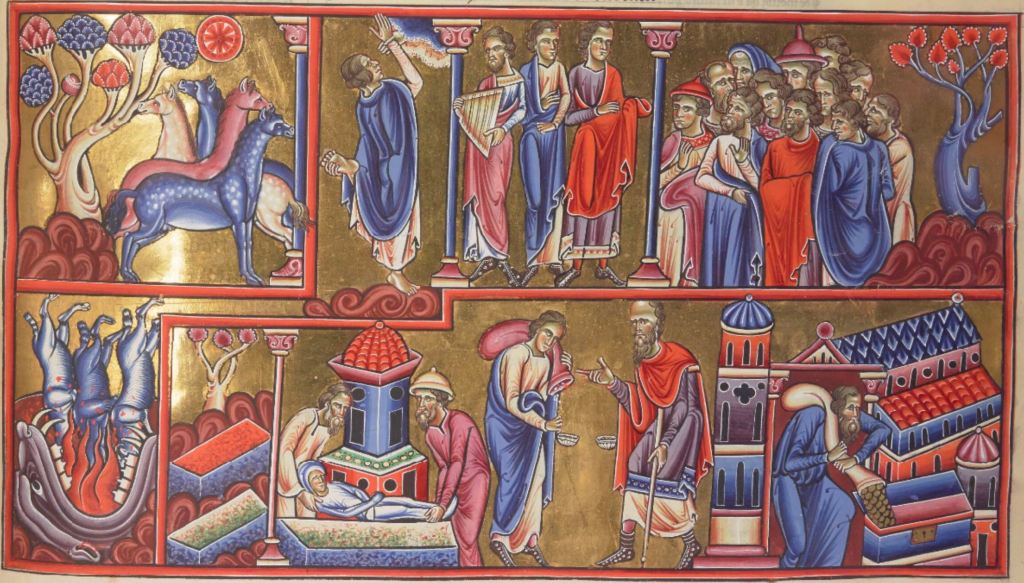
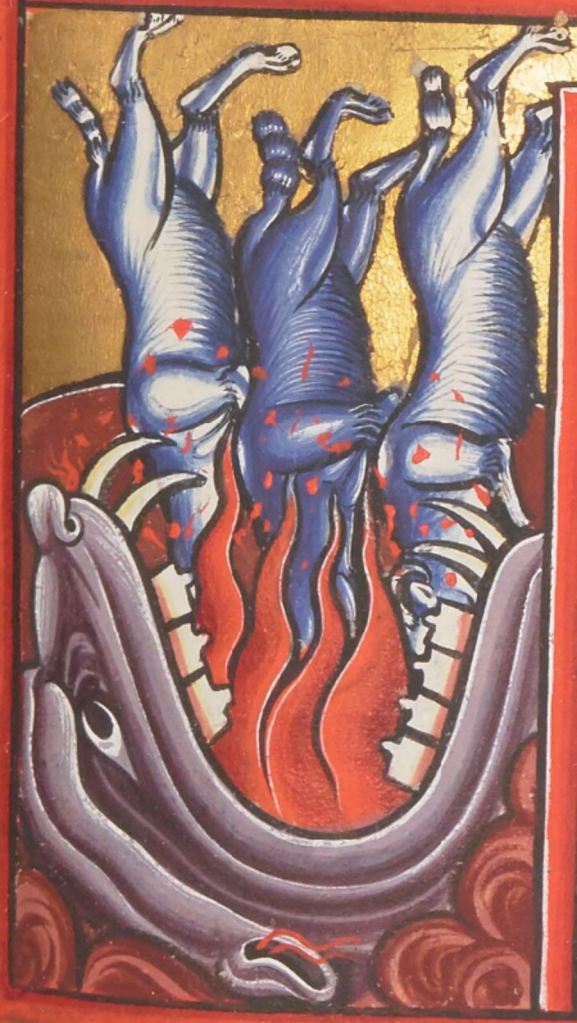



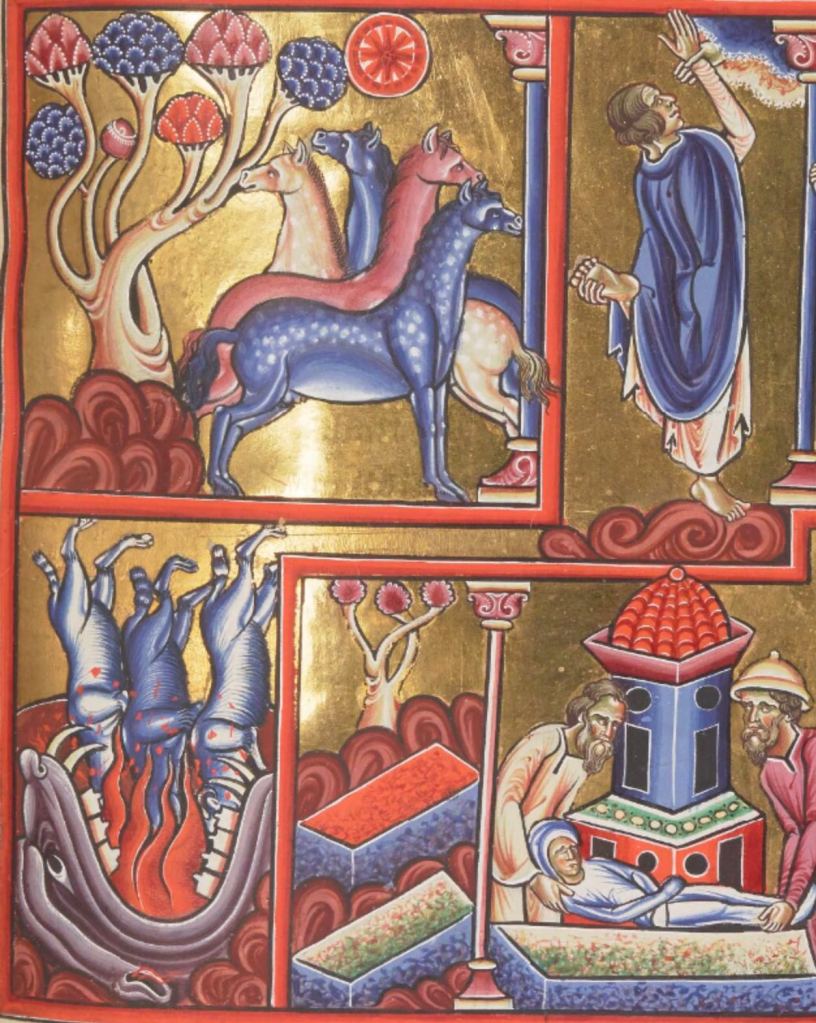
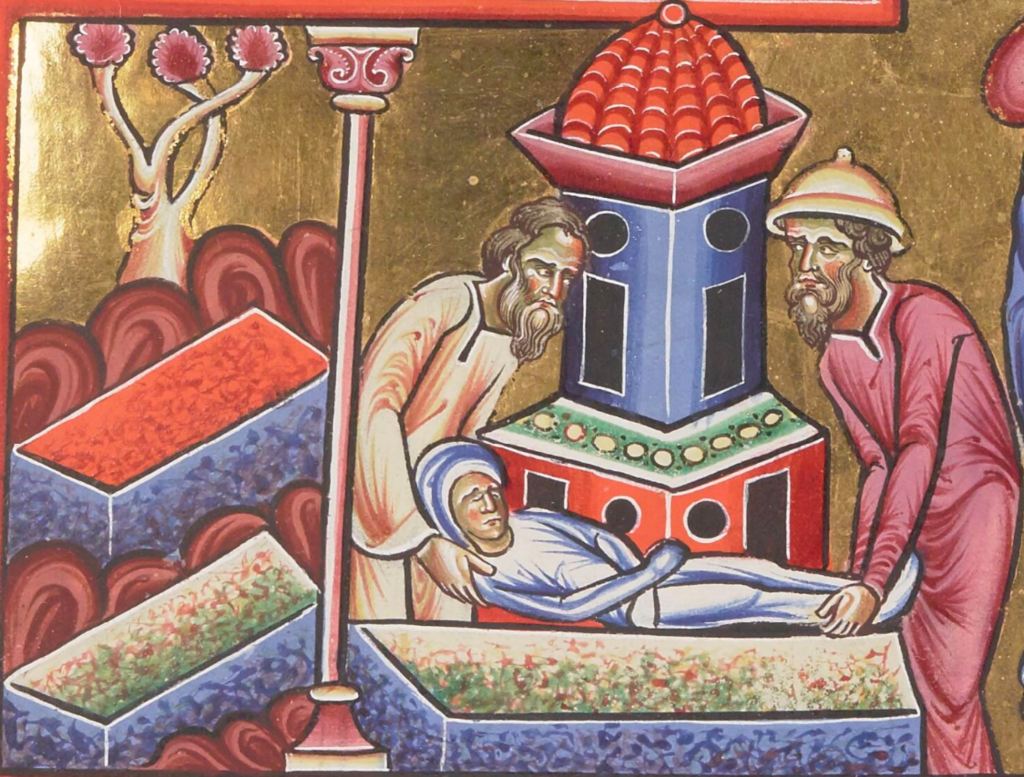
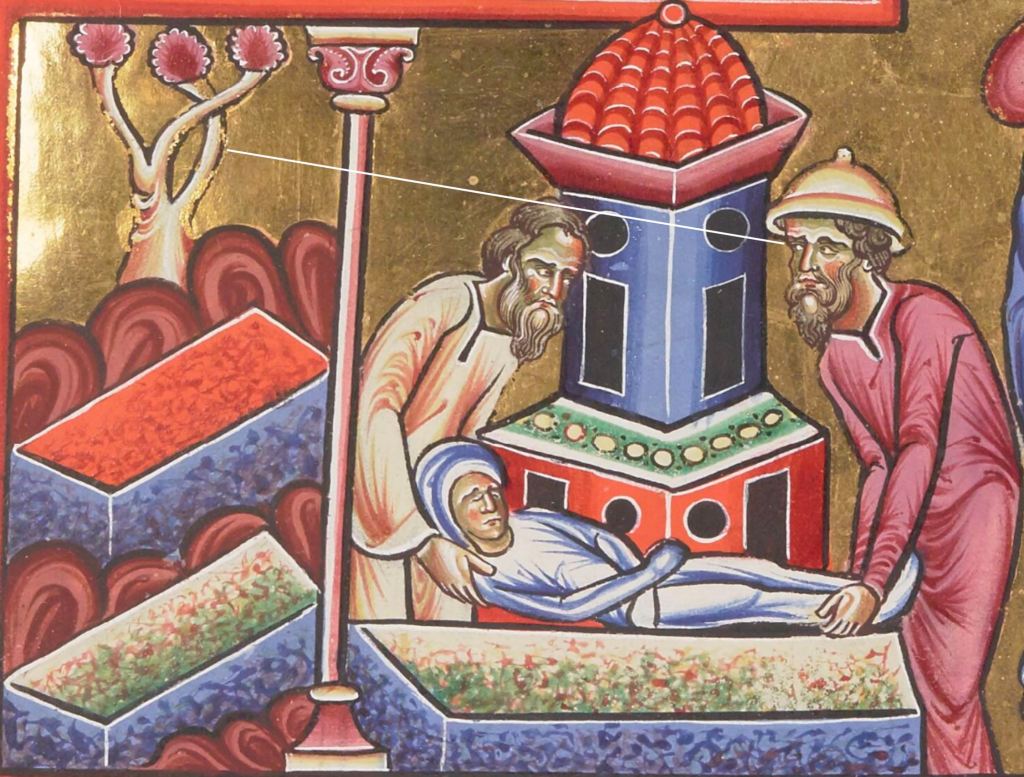
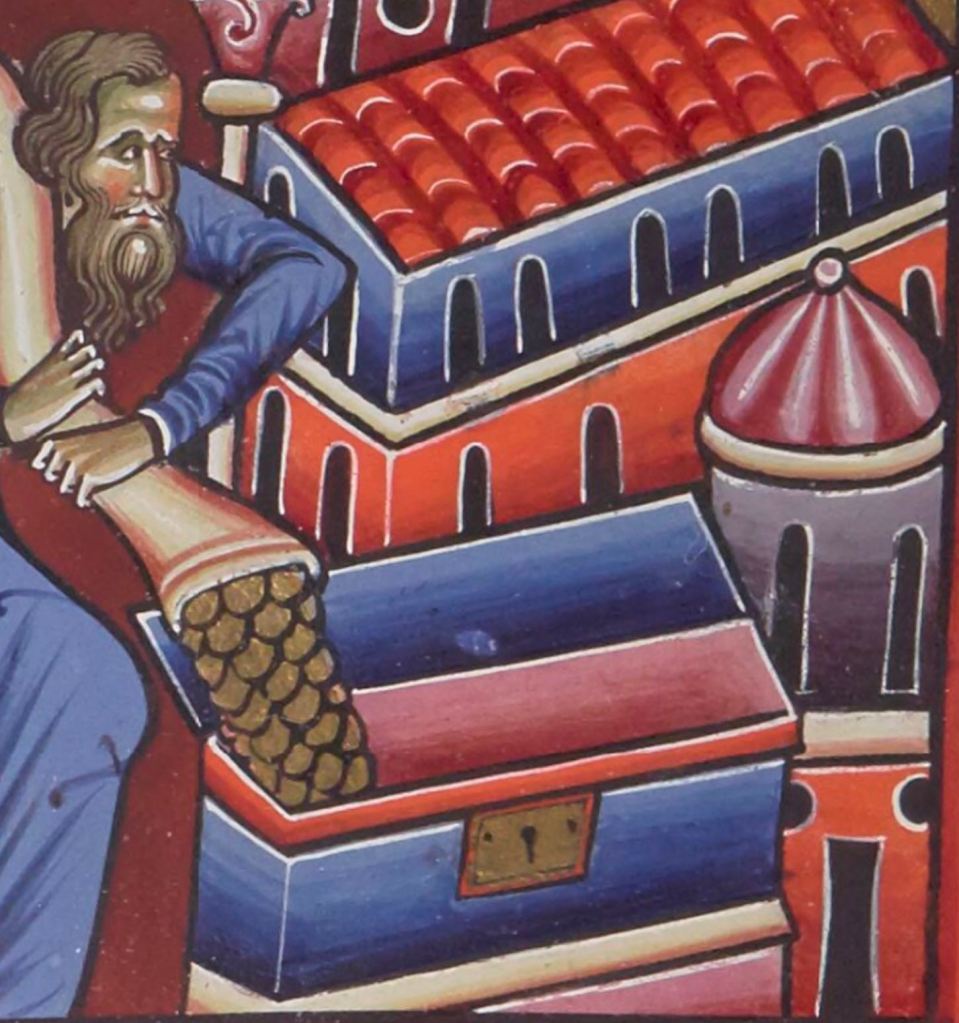
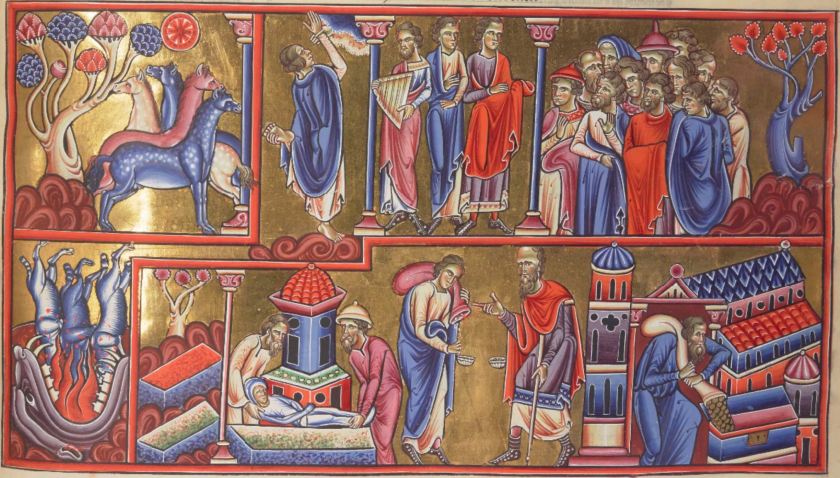
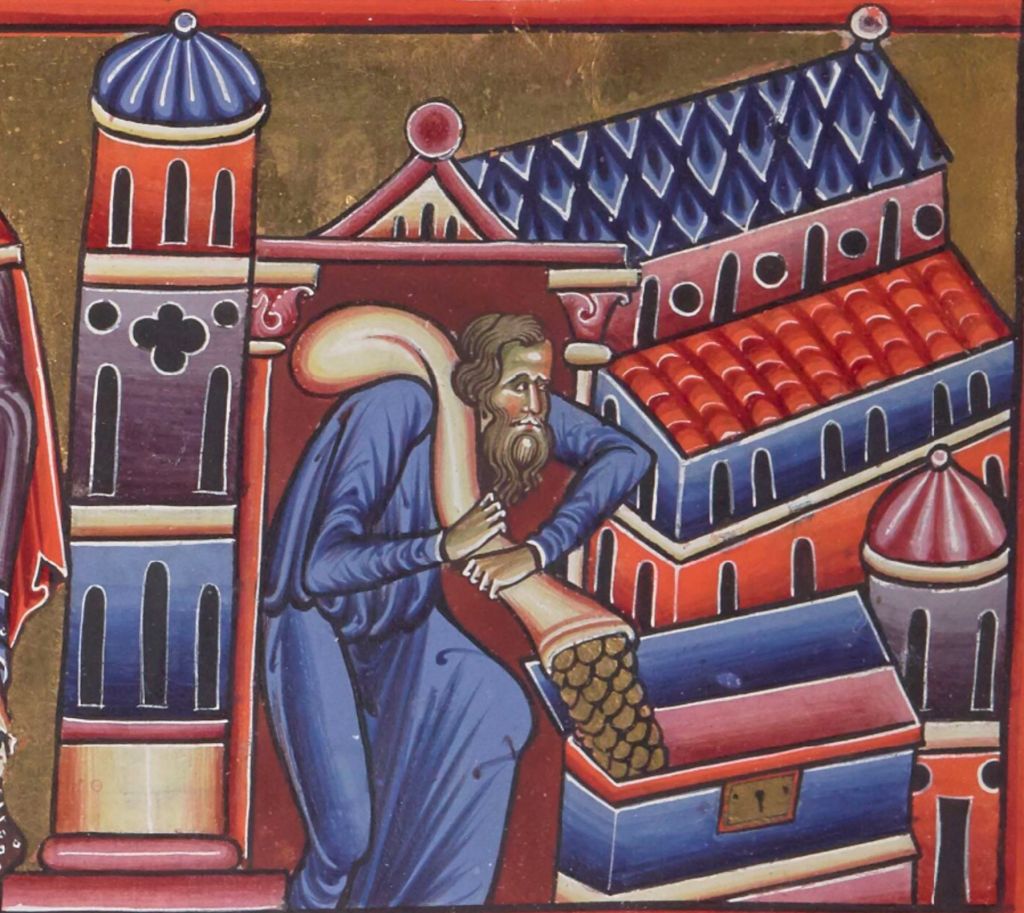
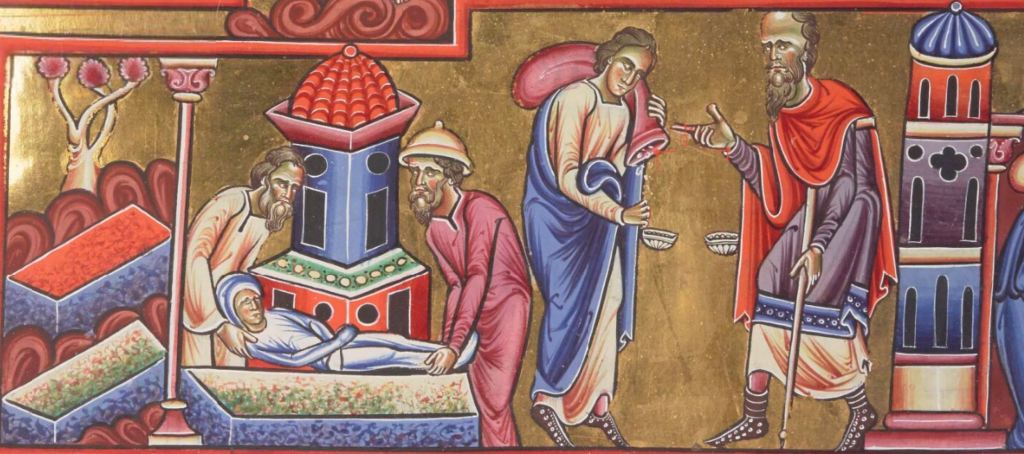
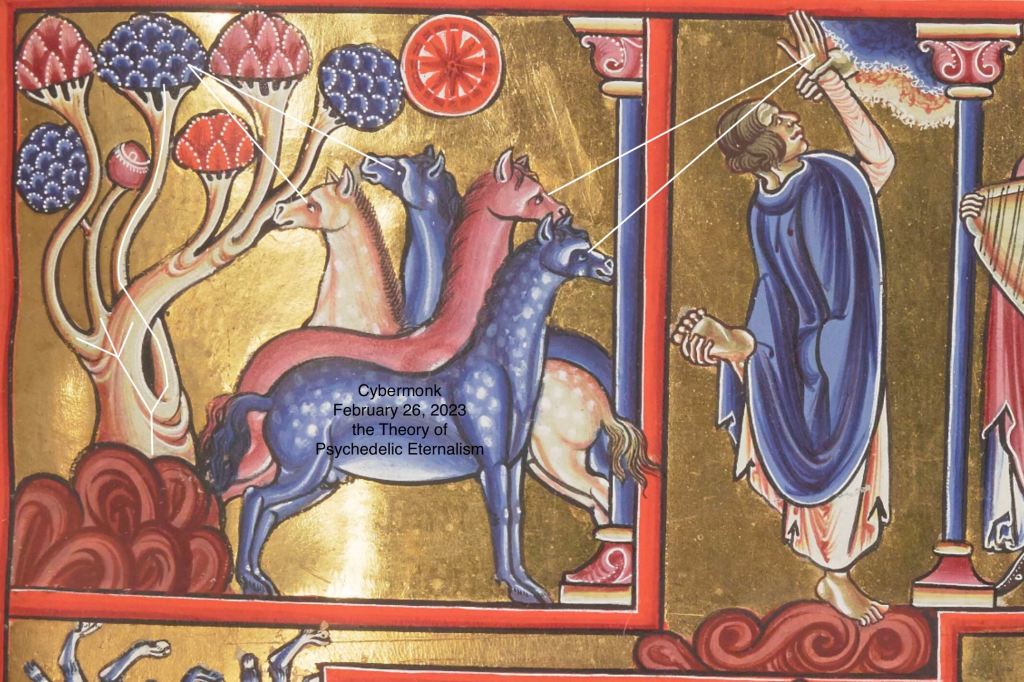

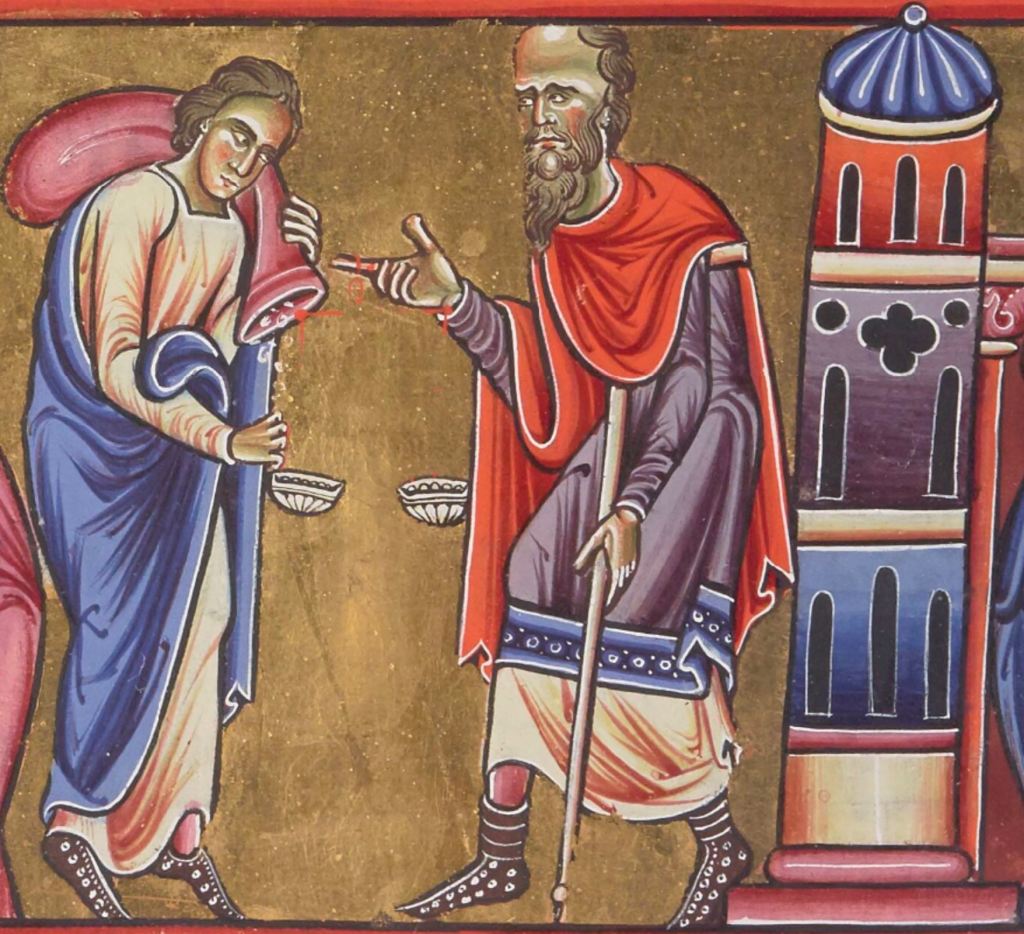
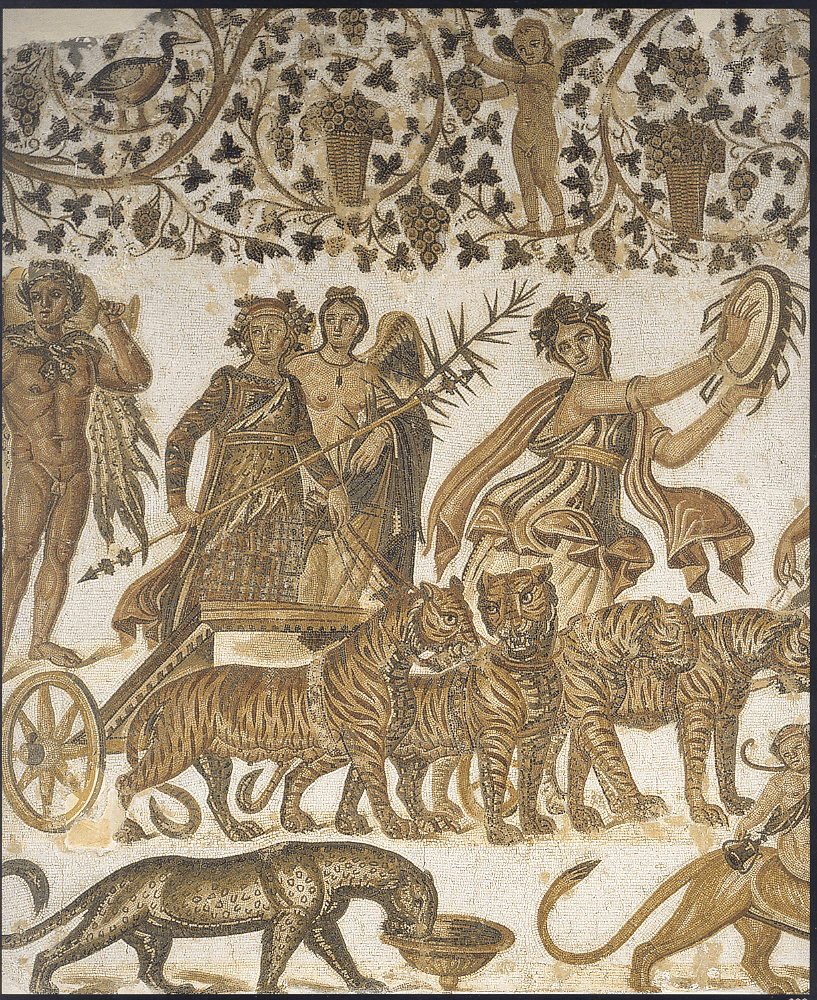

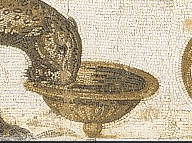

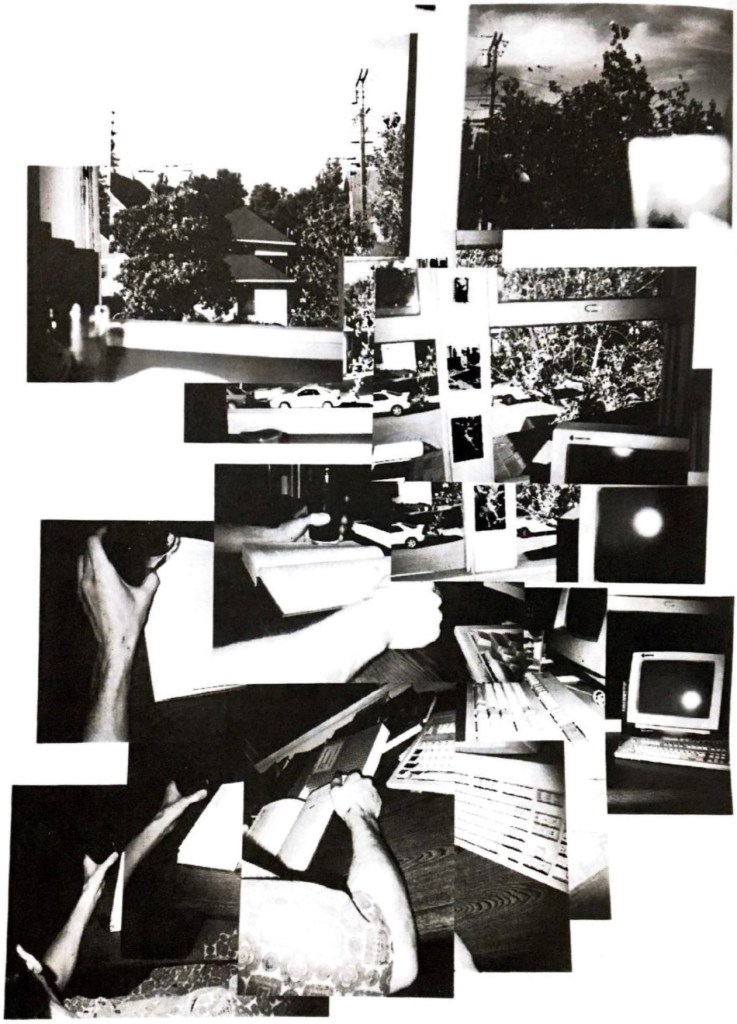
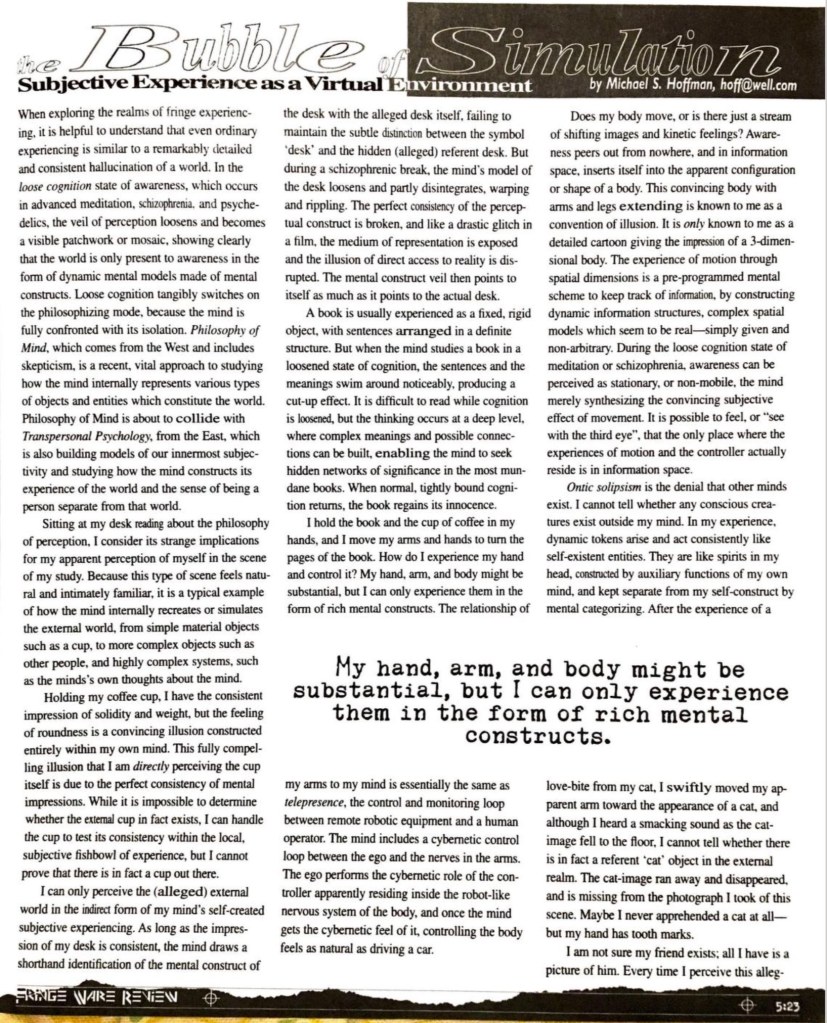
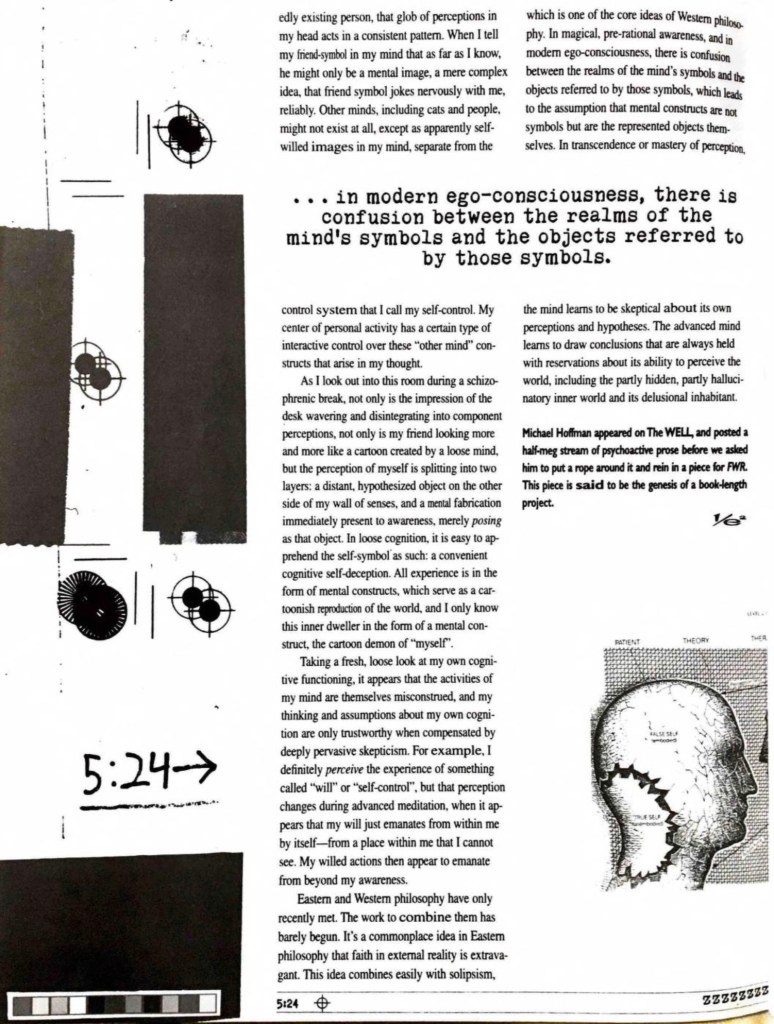
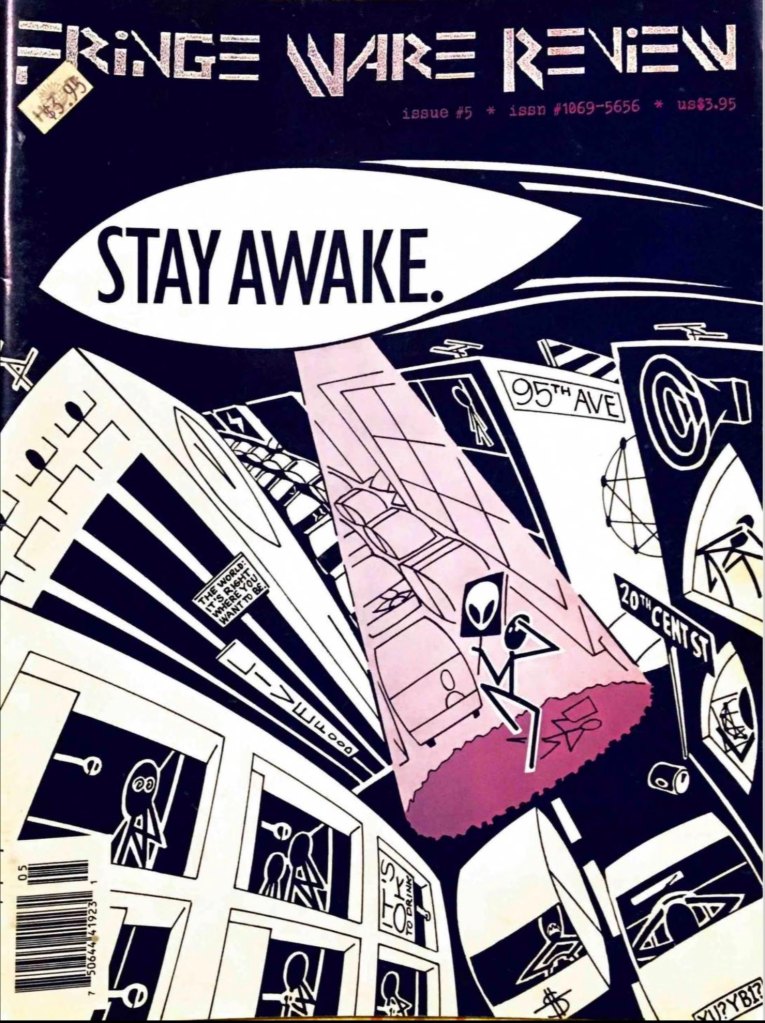
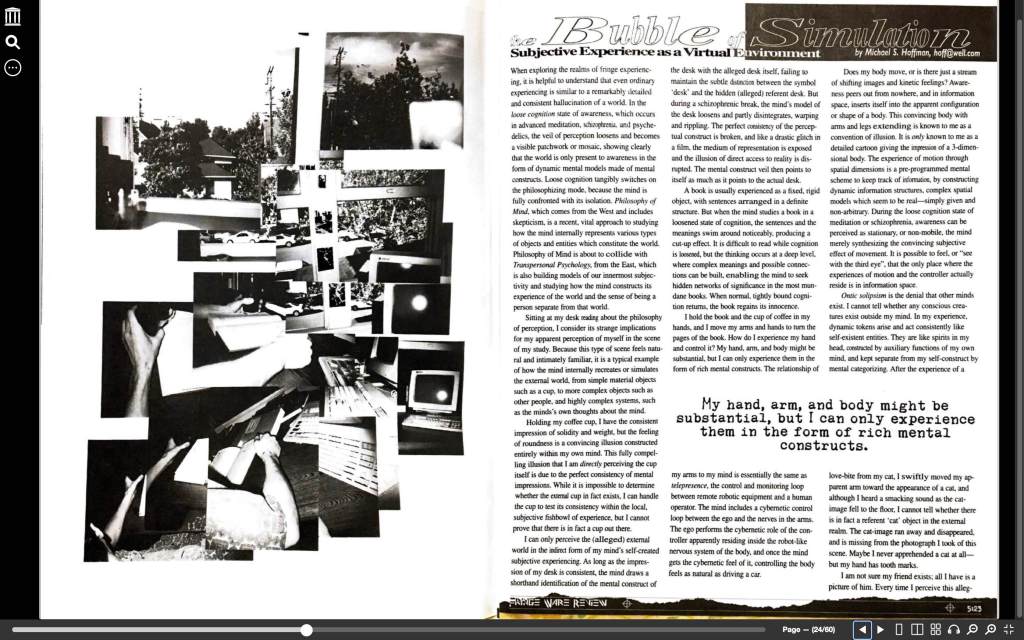
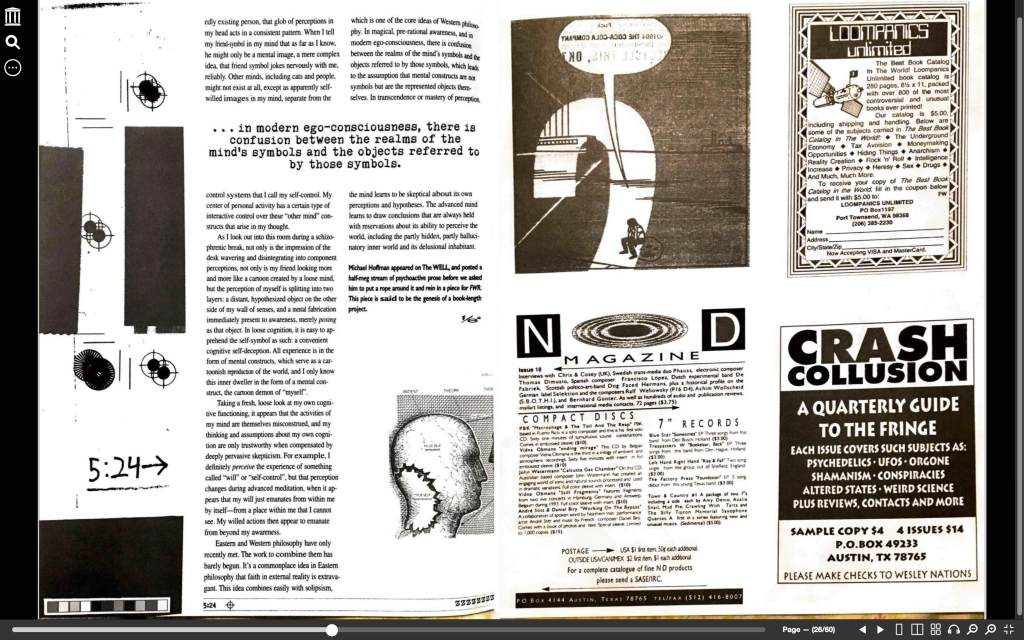
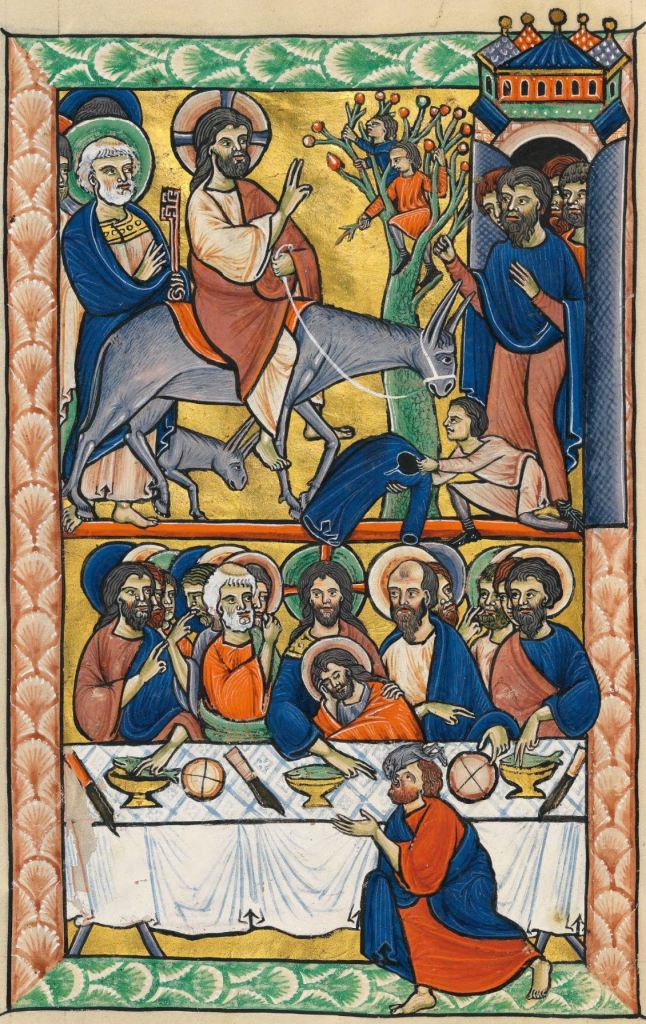
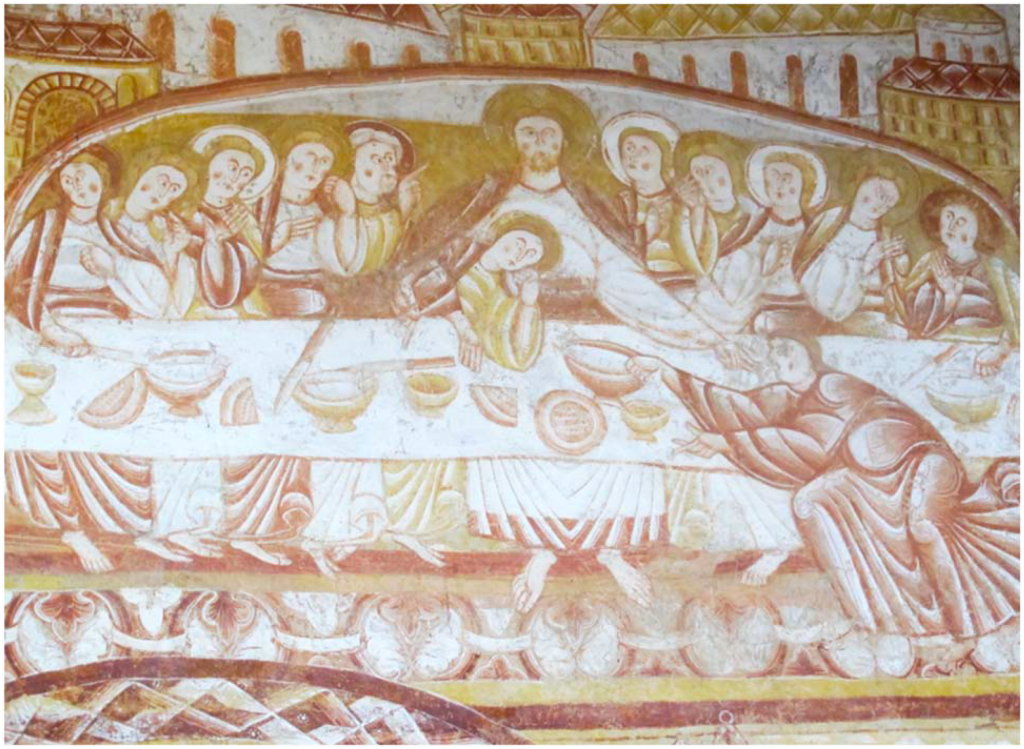
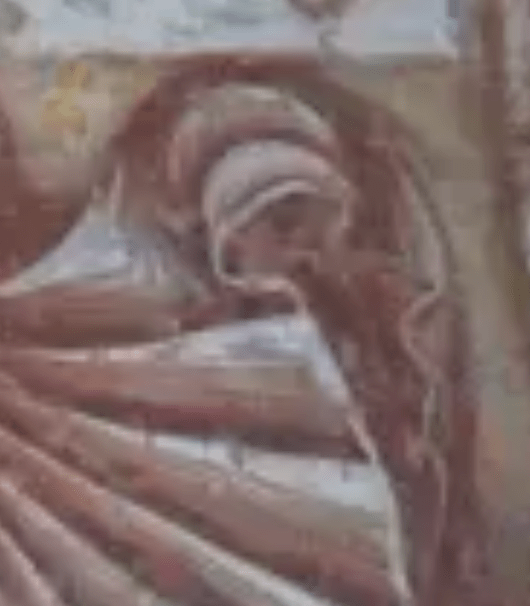
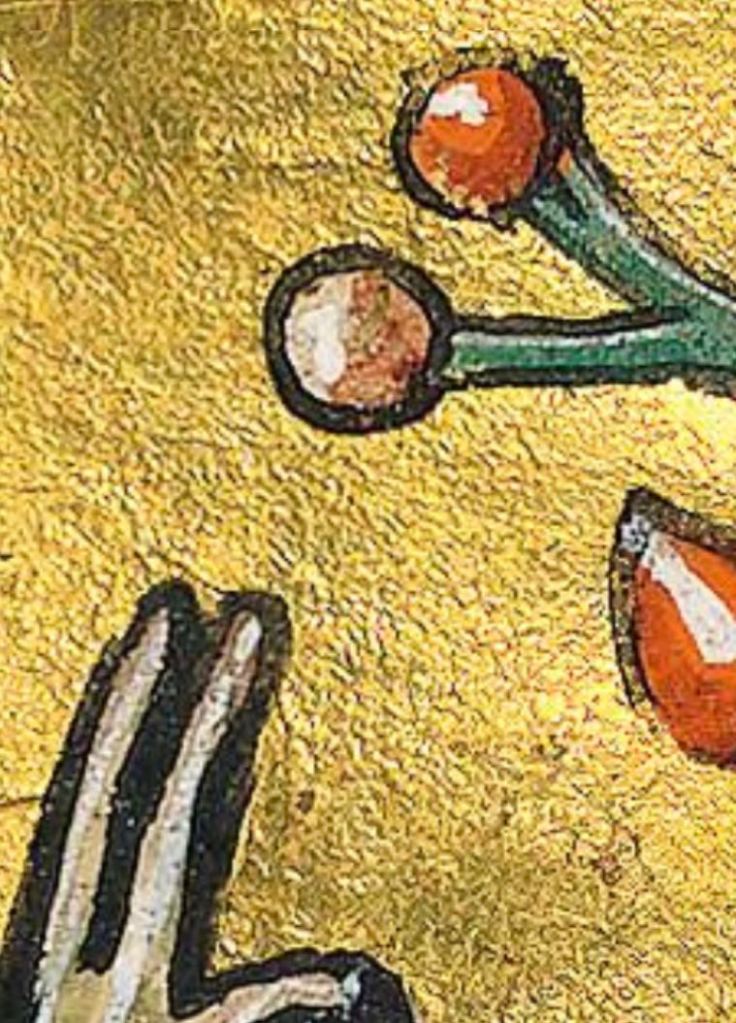
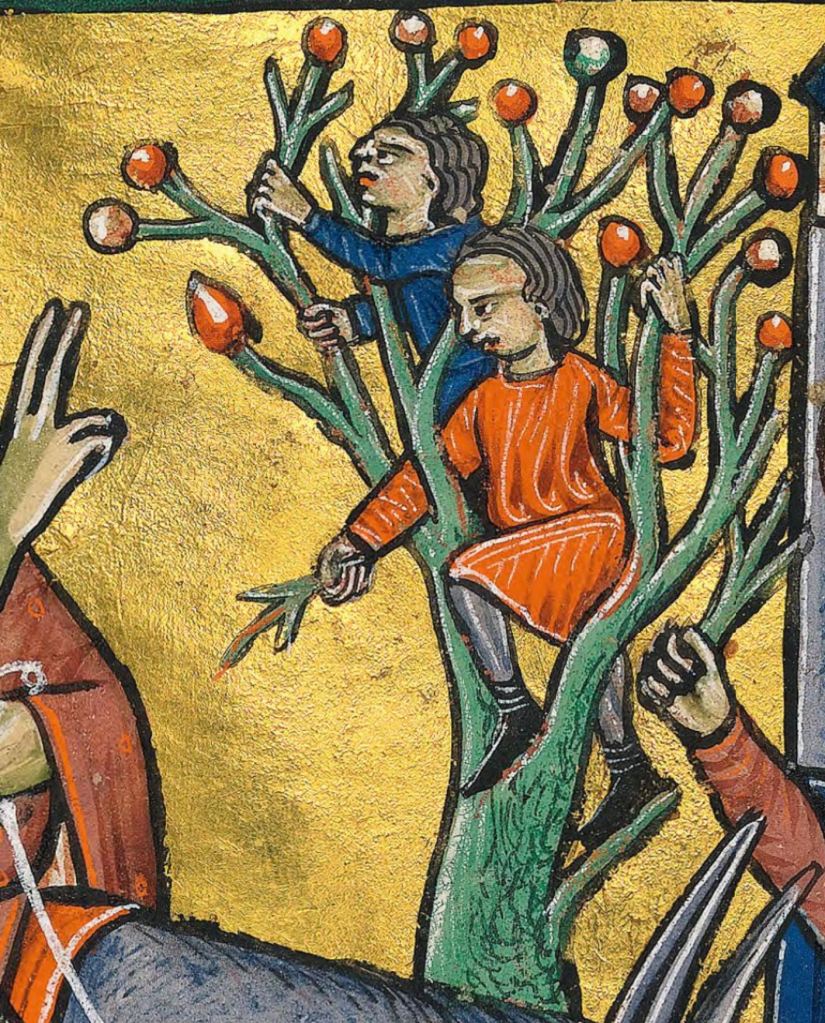
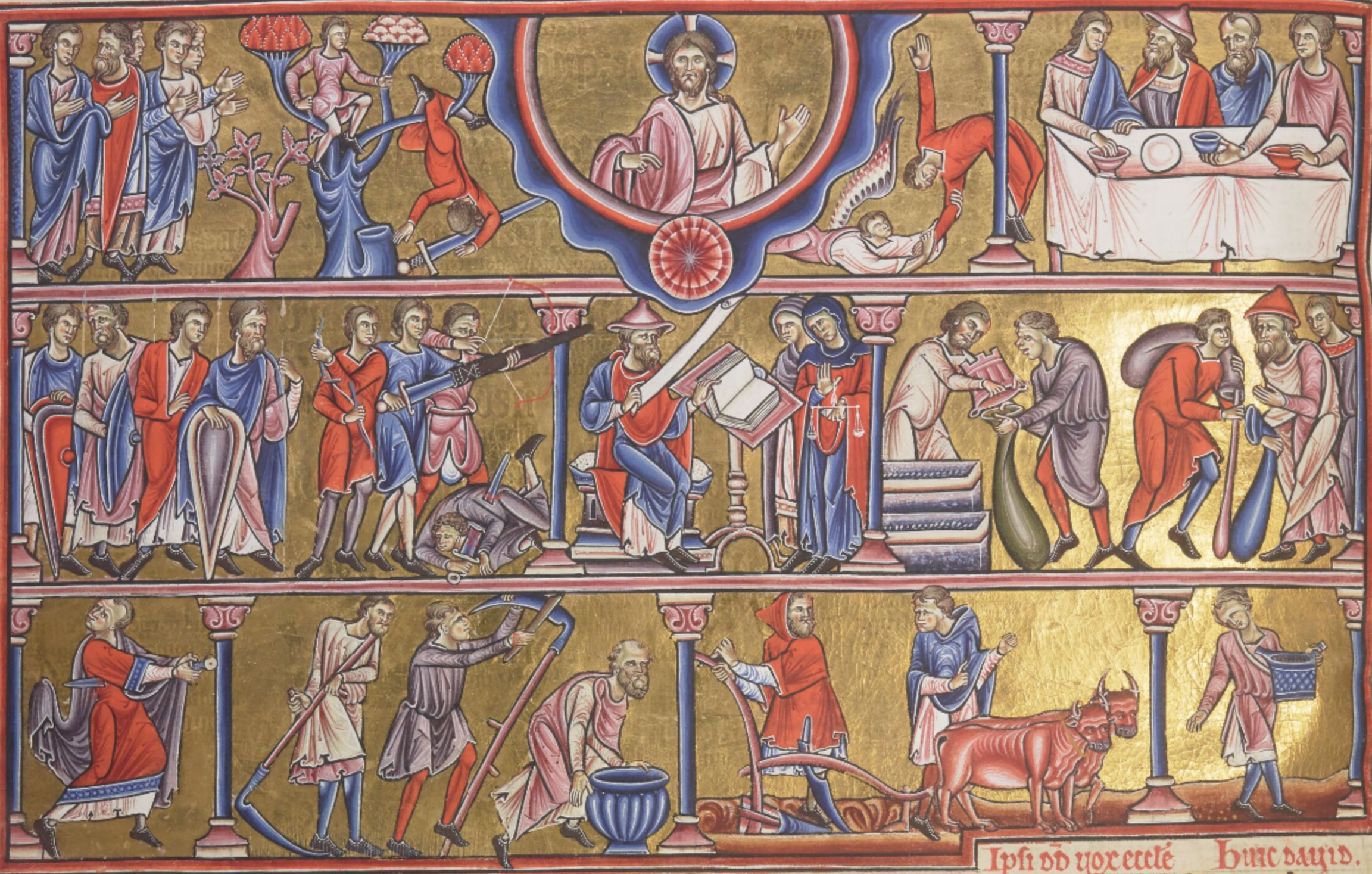


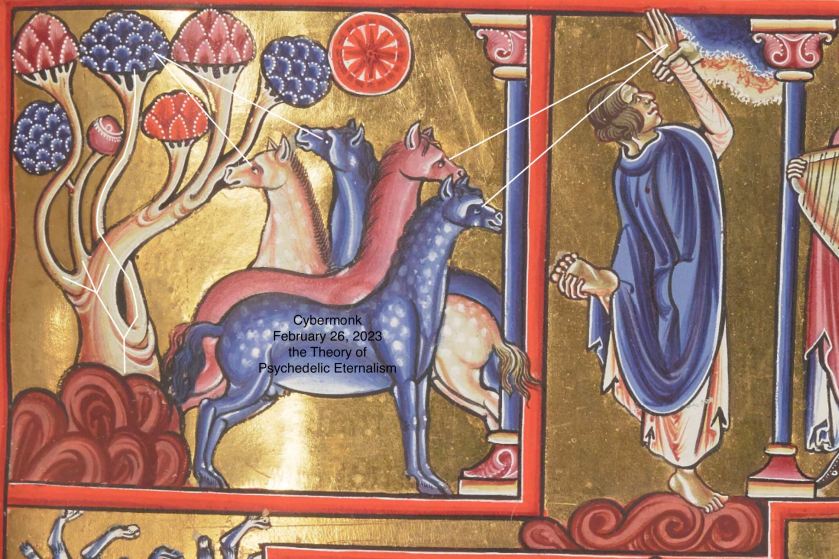

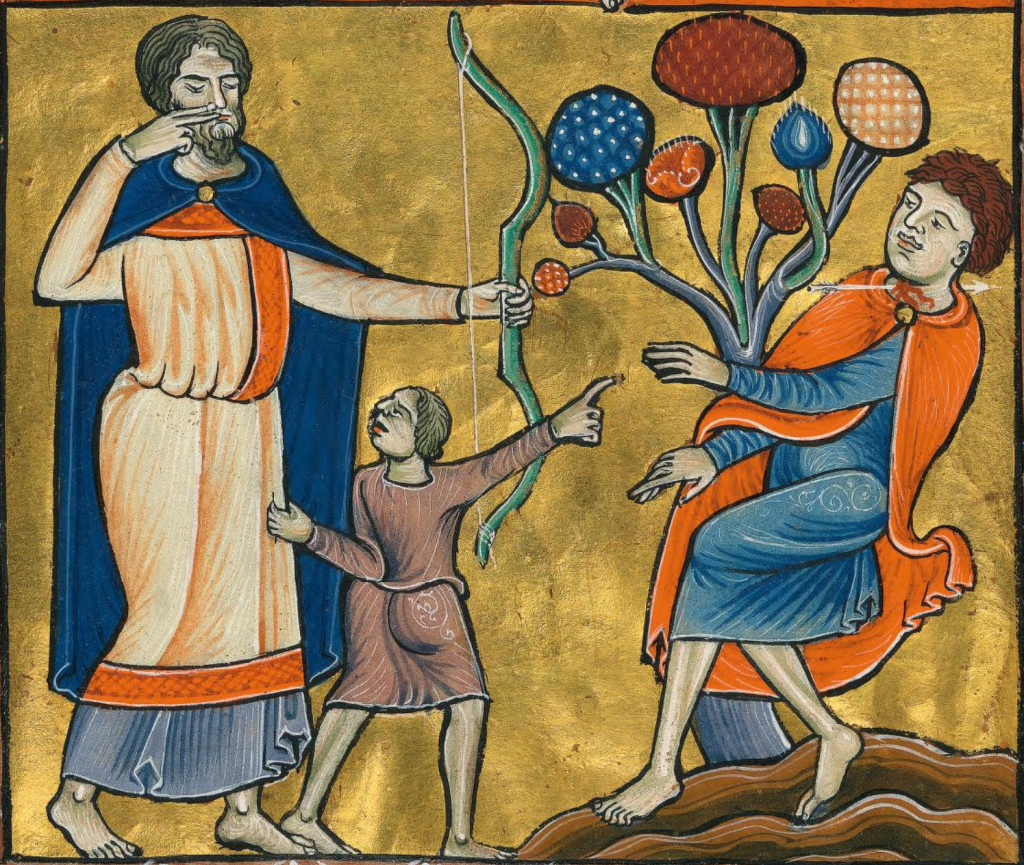
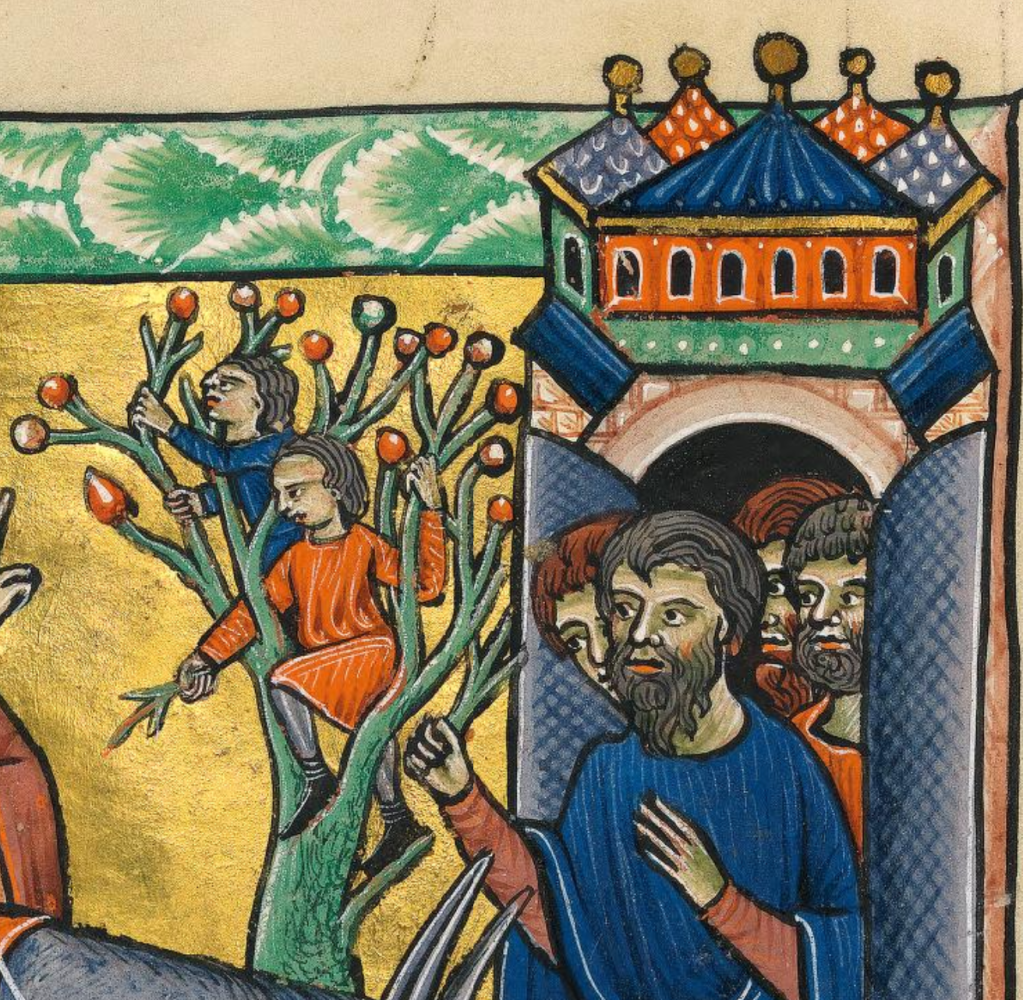



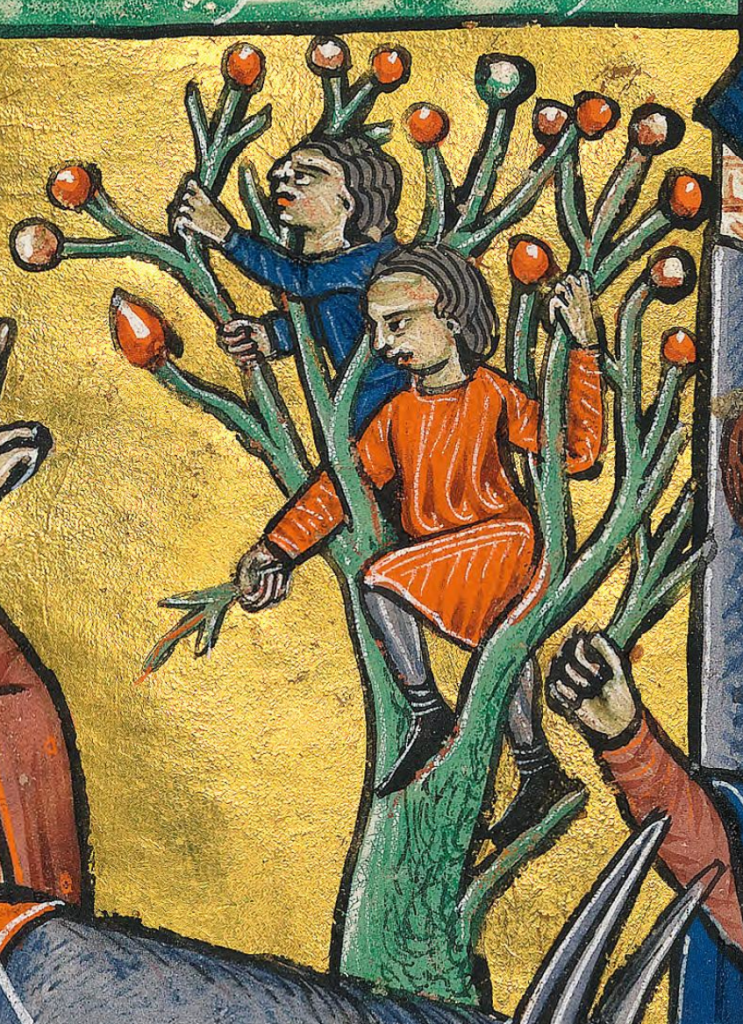

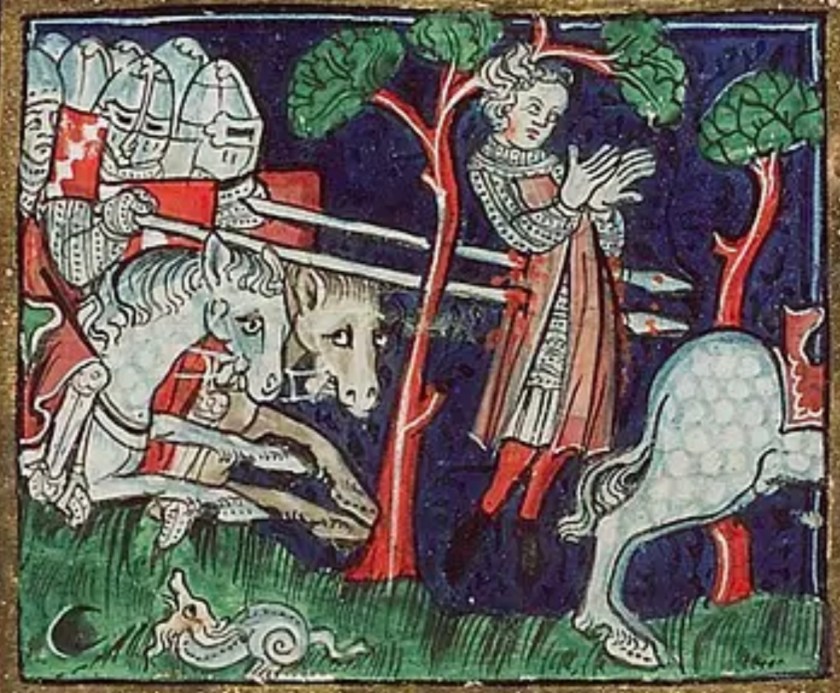

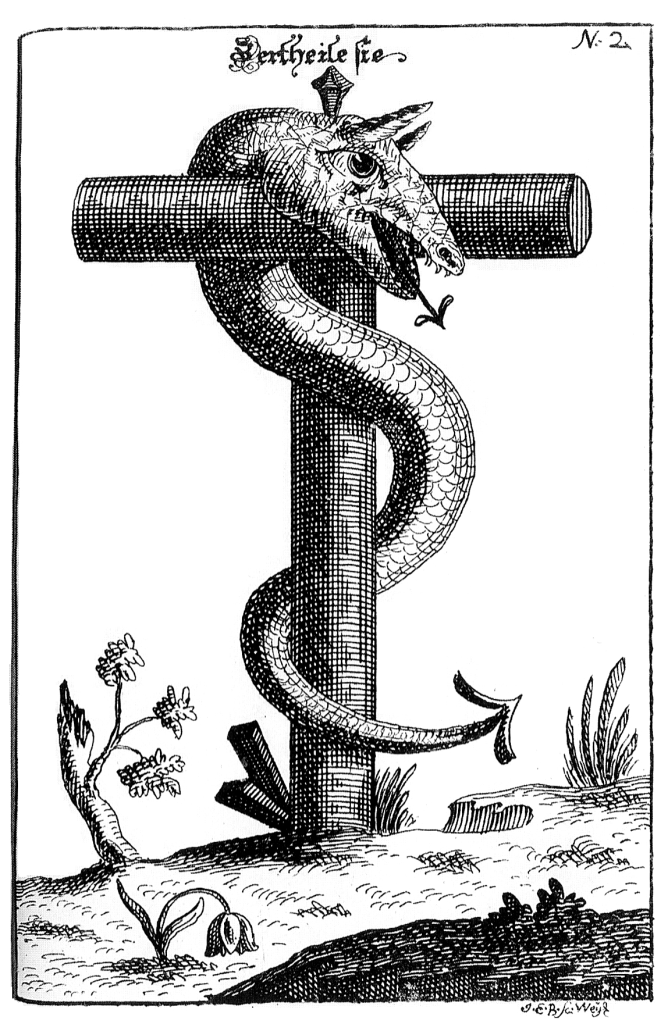
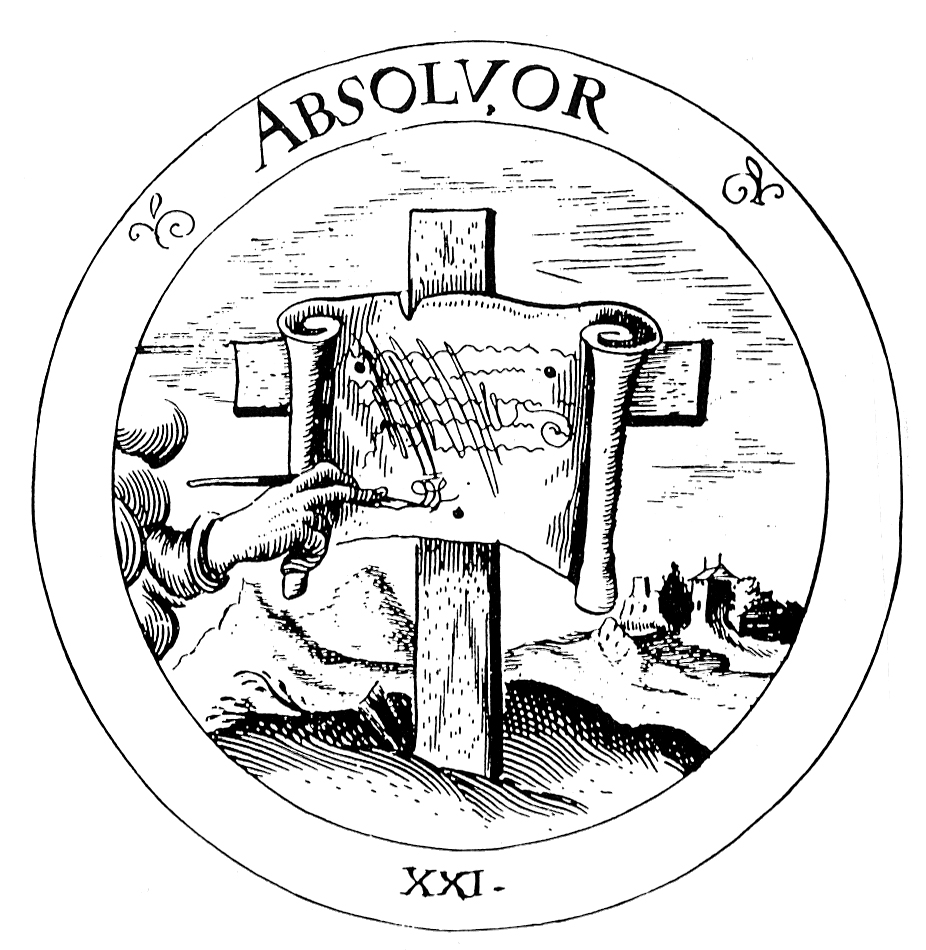

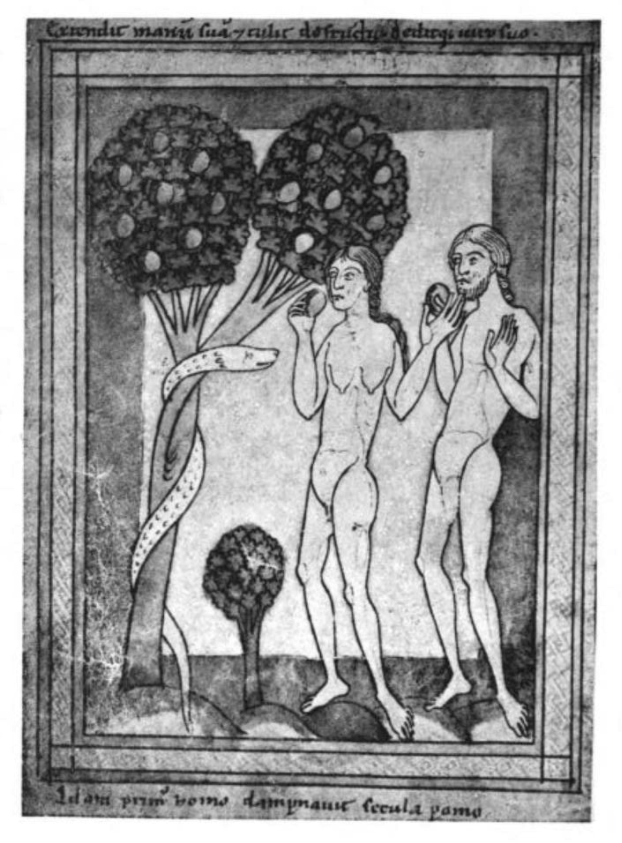
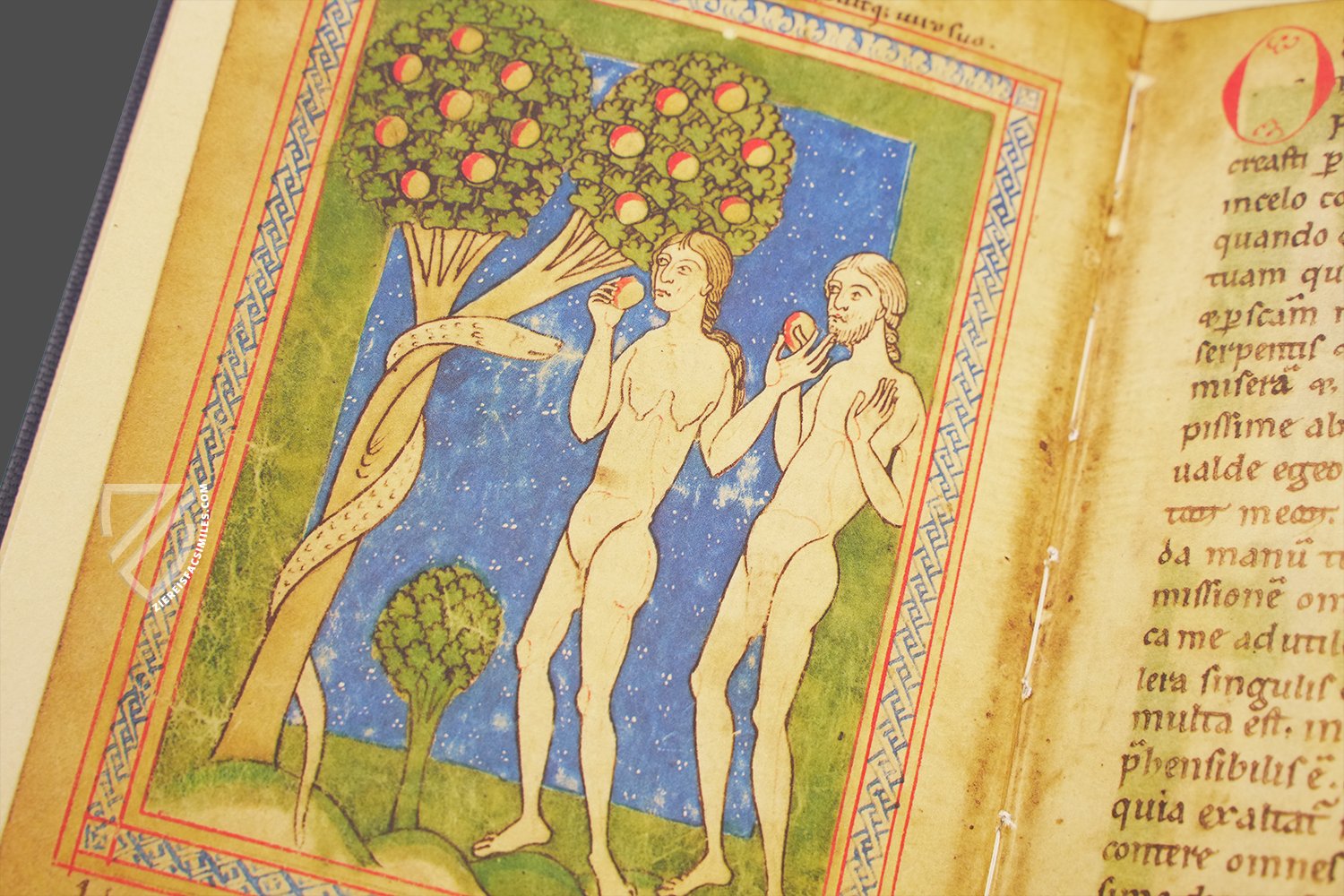


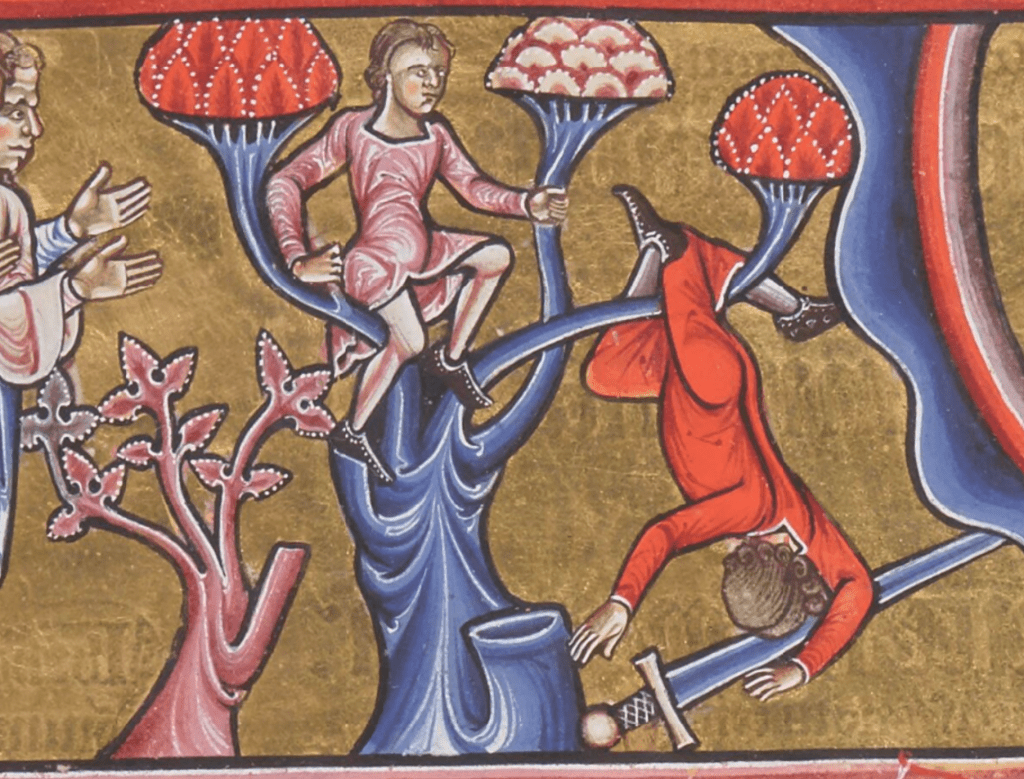
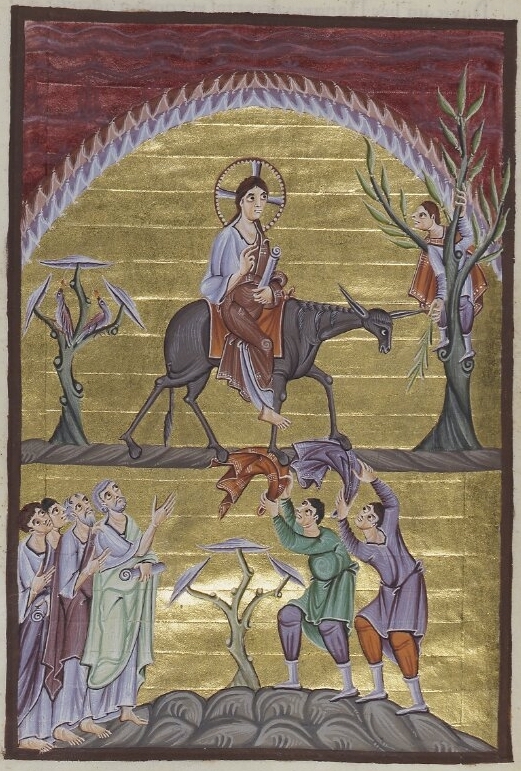
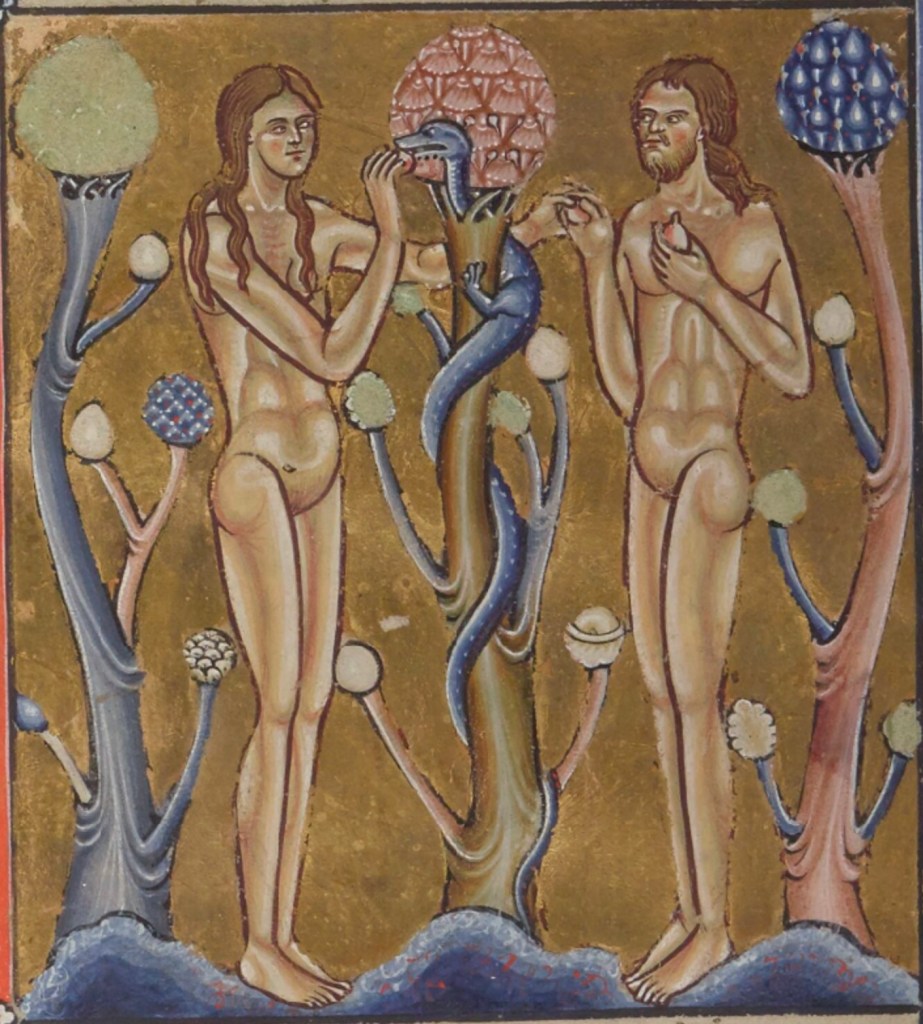

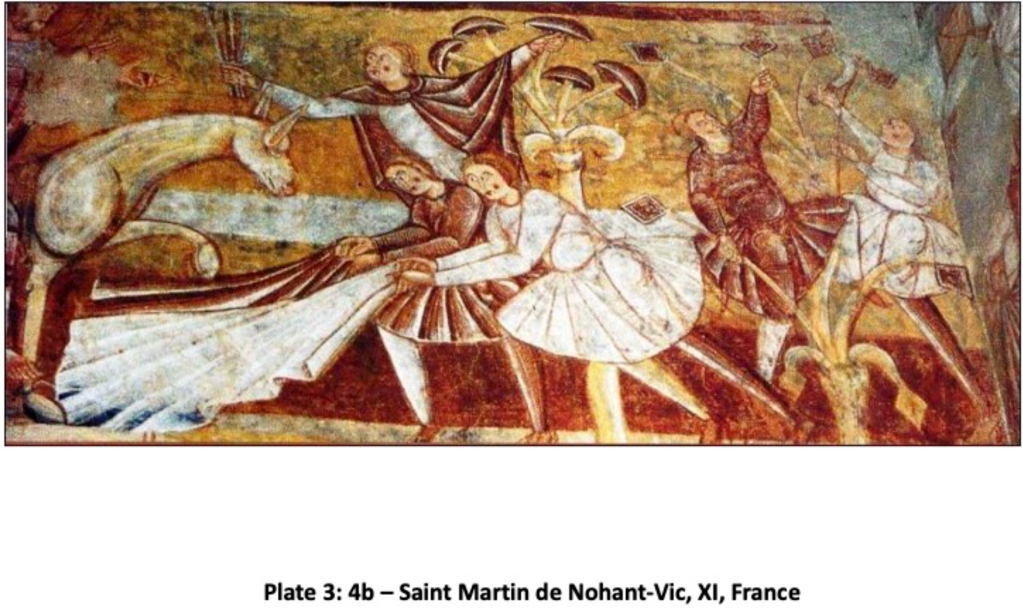
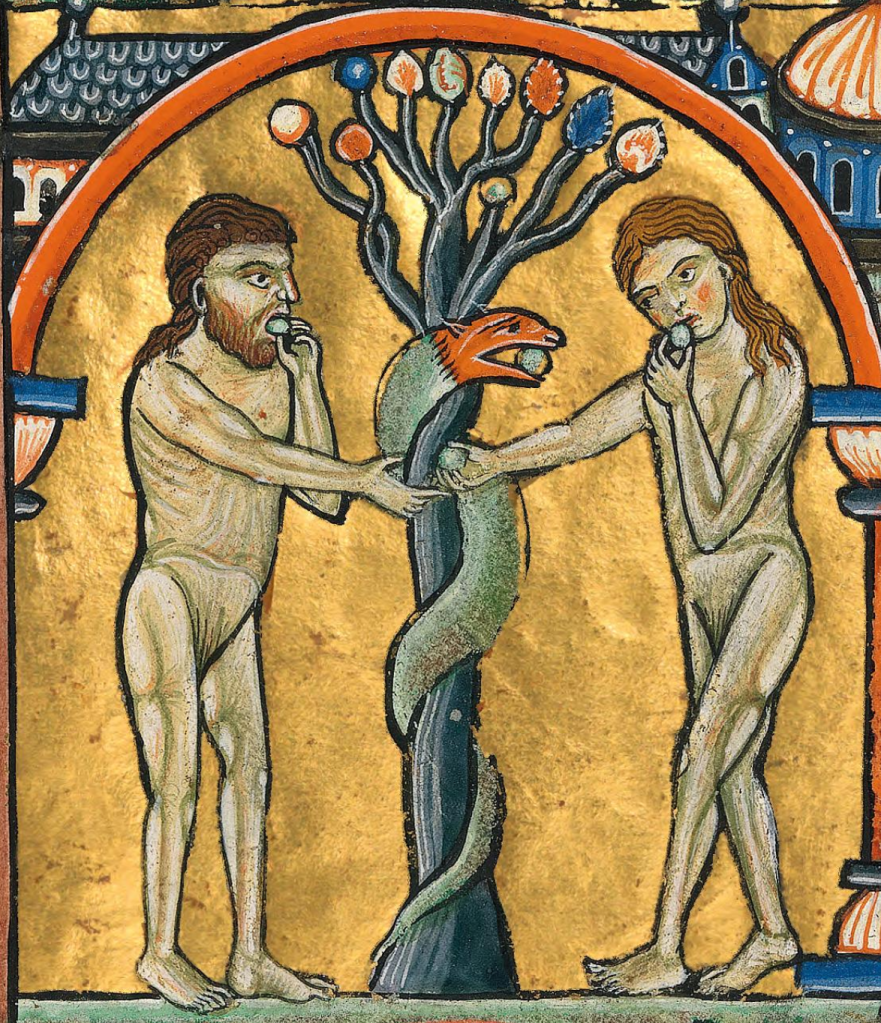
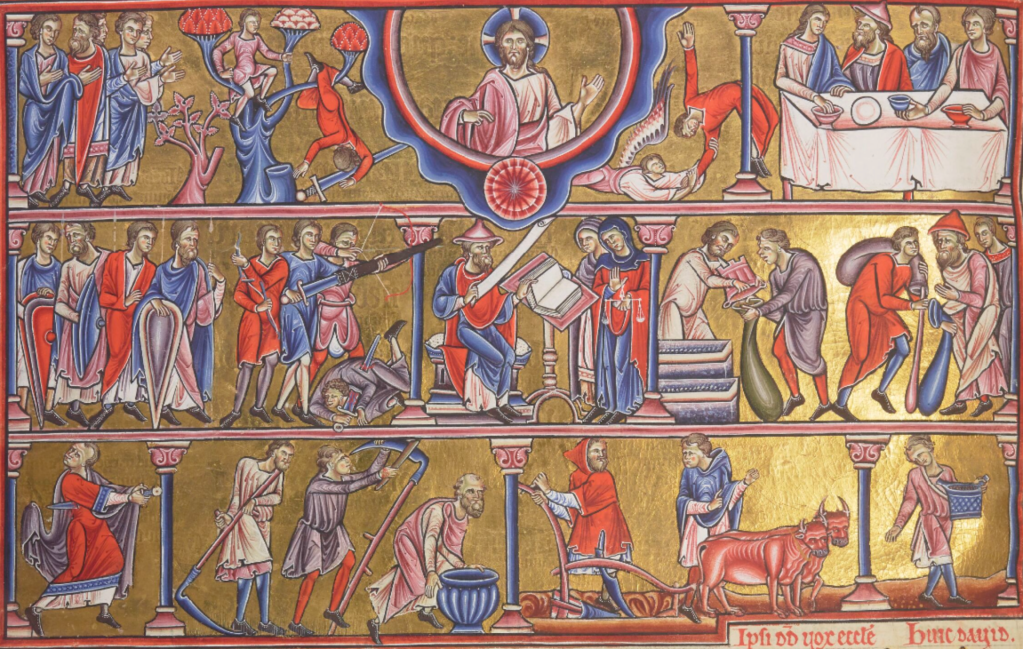



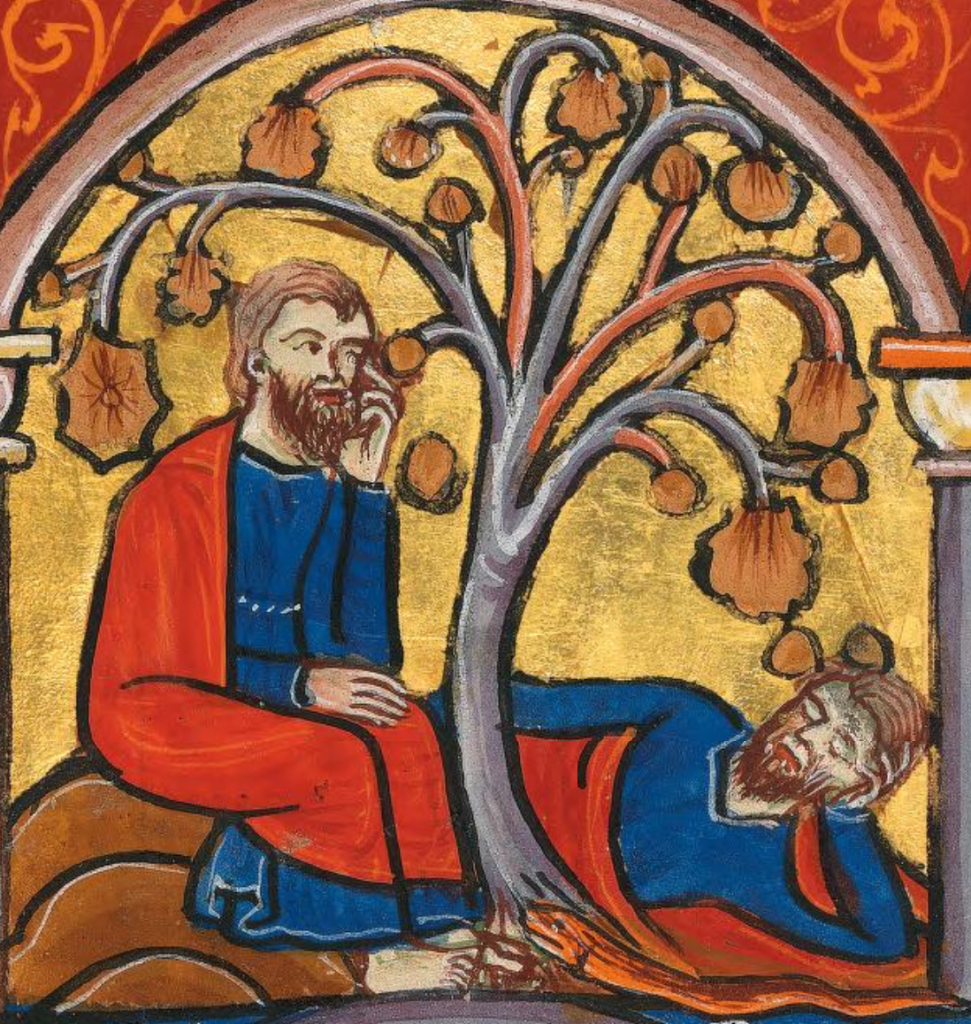
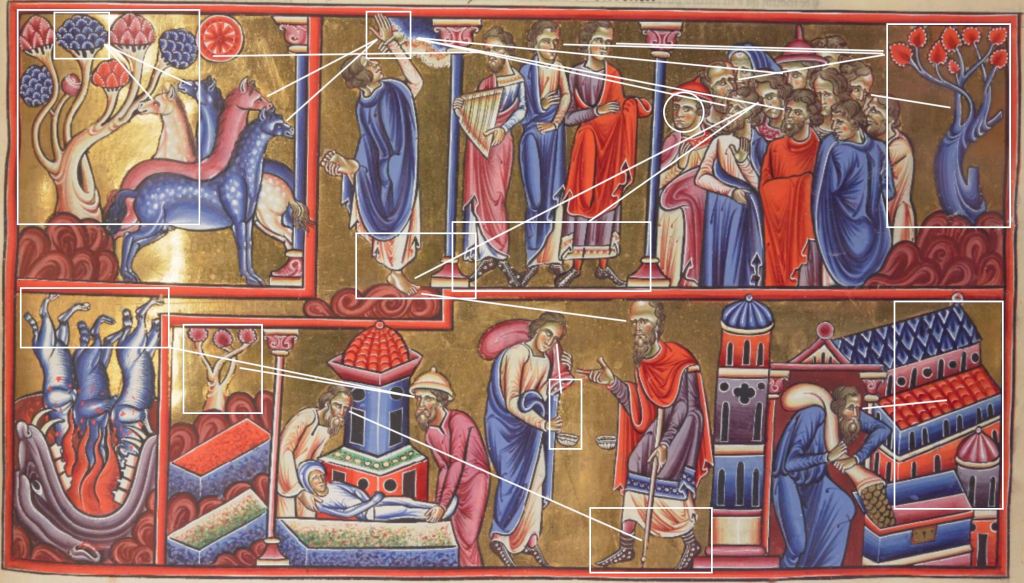
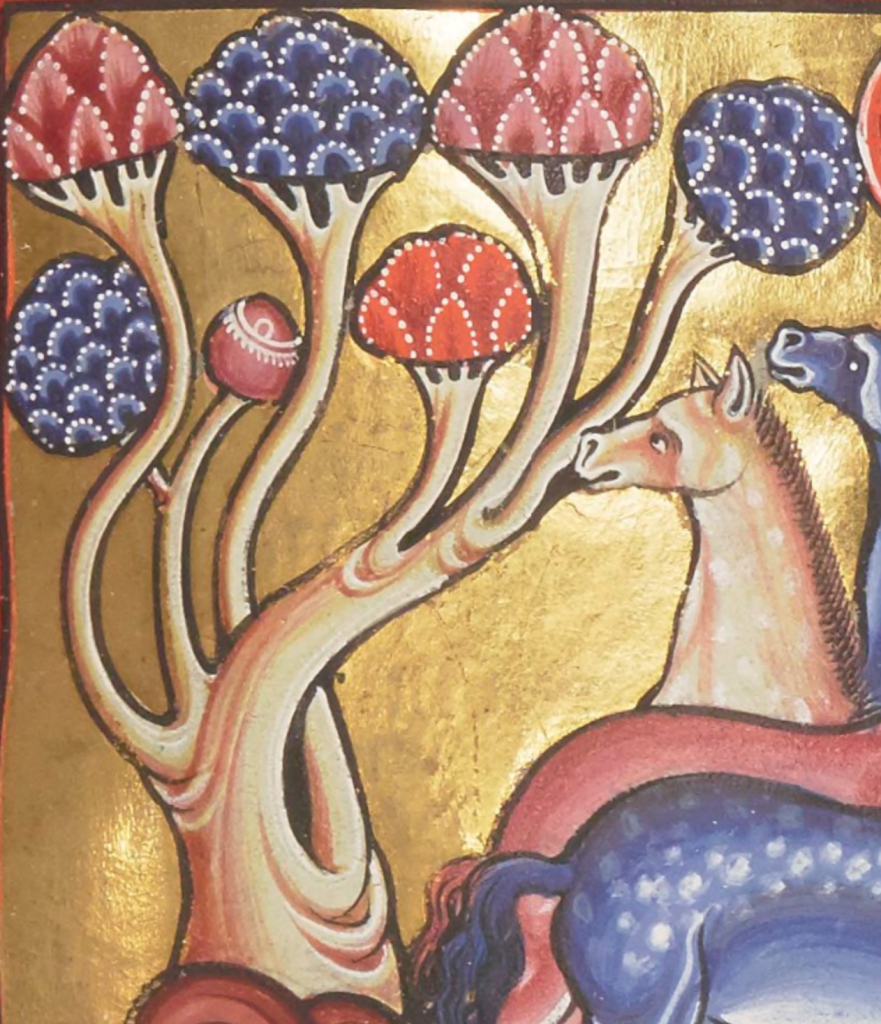




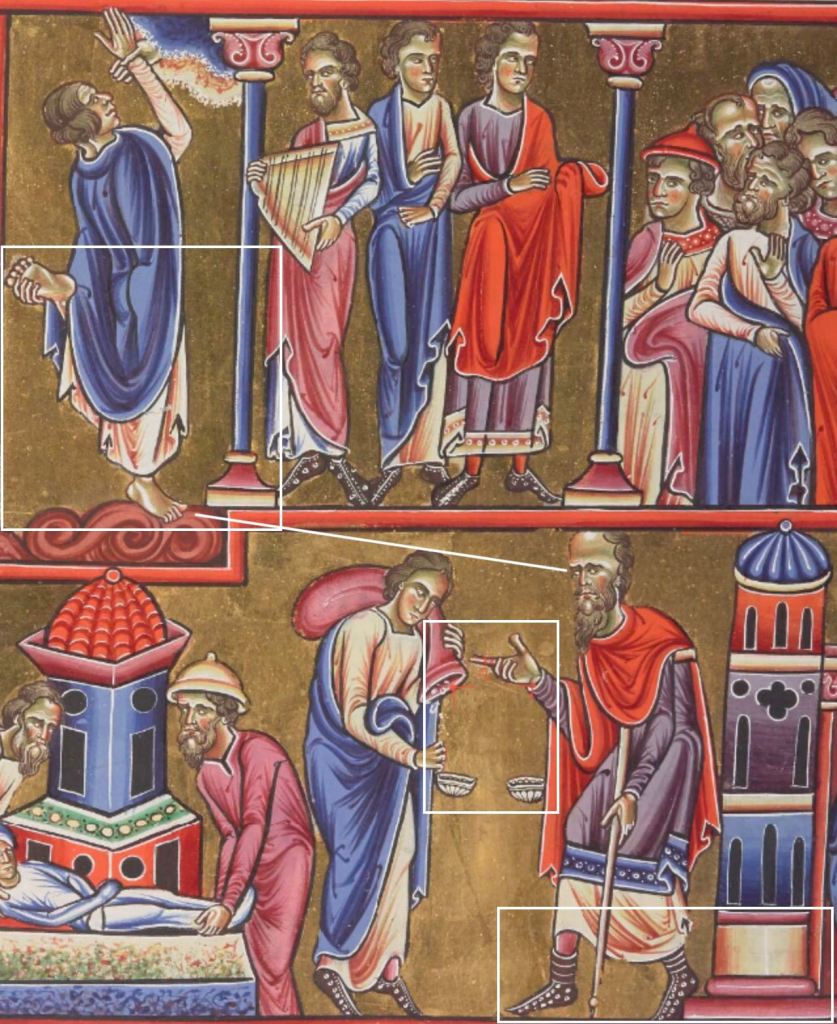



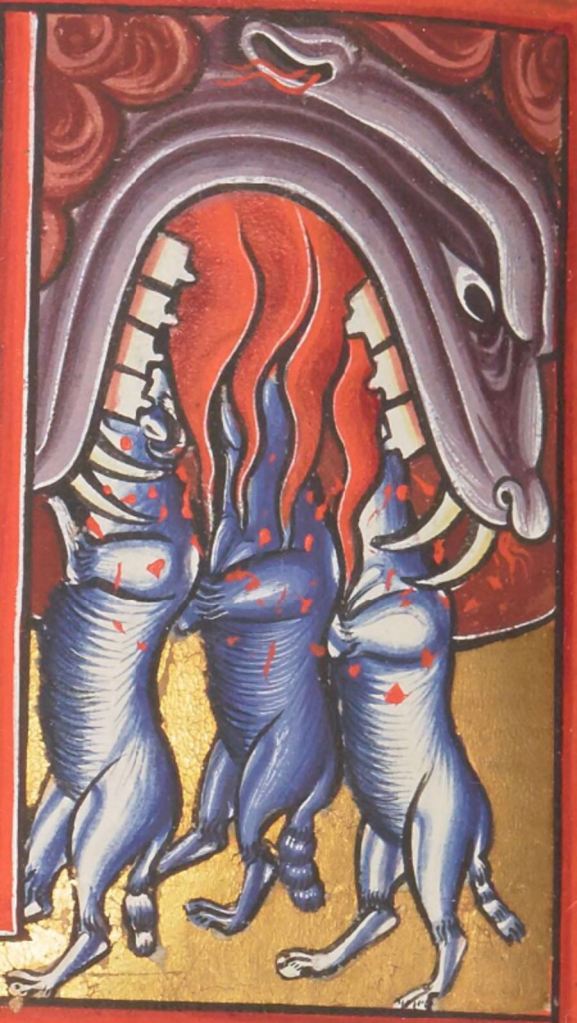
 The Egodeath theory