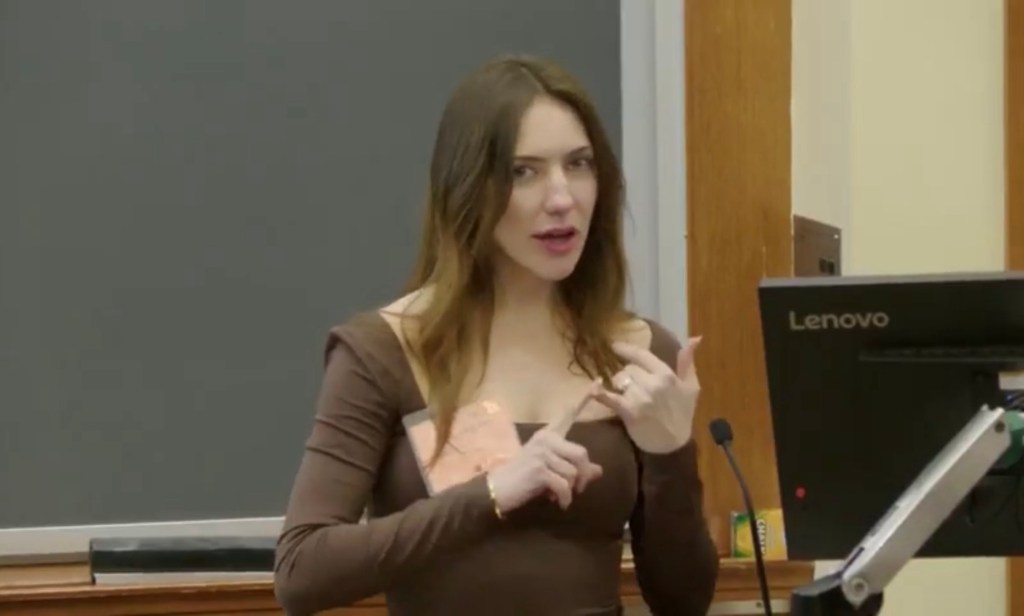
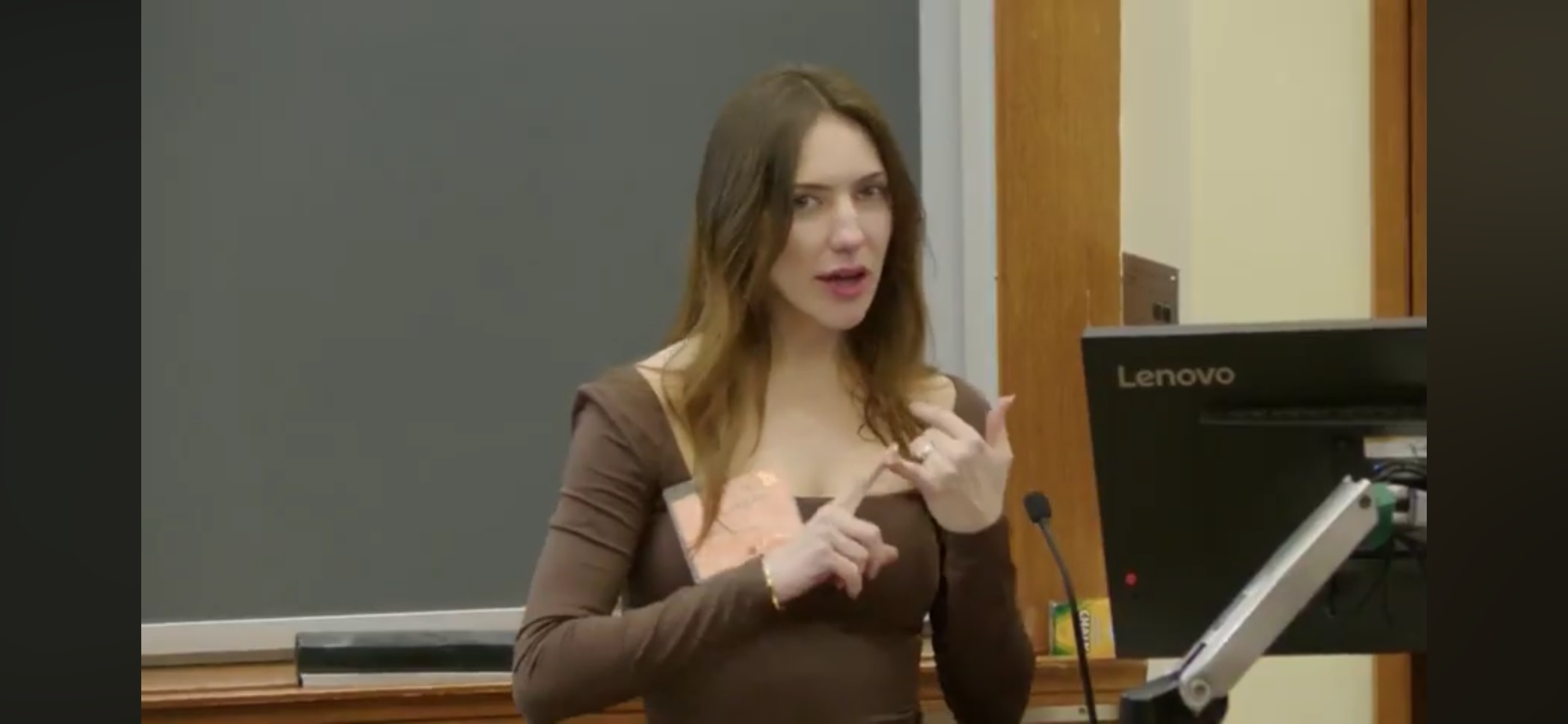
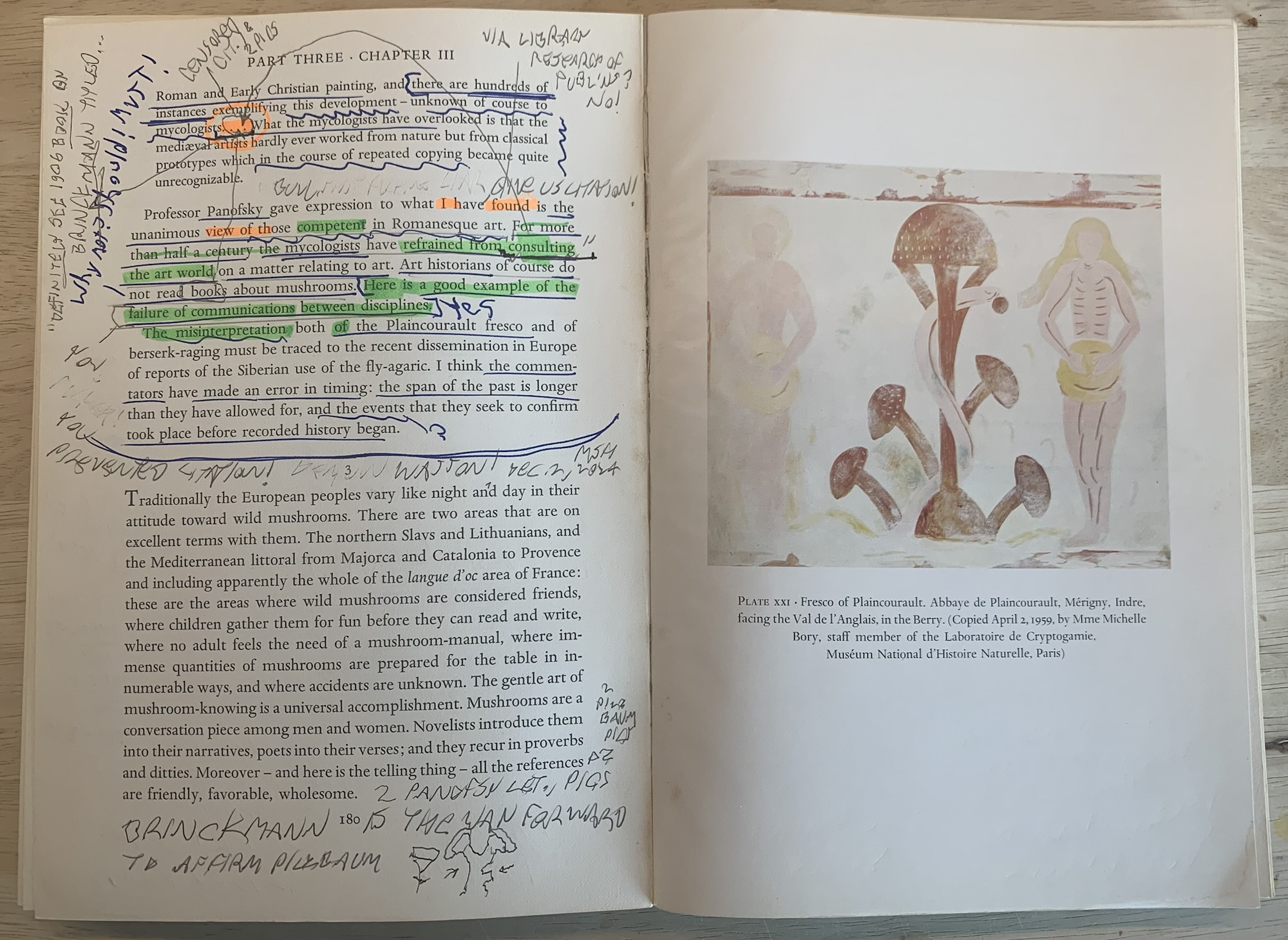
The “All At Once” Universe Shatters Our View of Time (Emily Adlam)

Michael Hoffman, 6:45 am, Apr. 12, 2025

Contents:

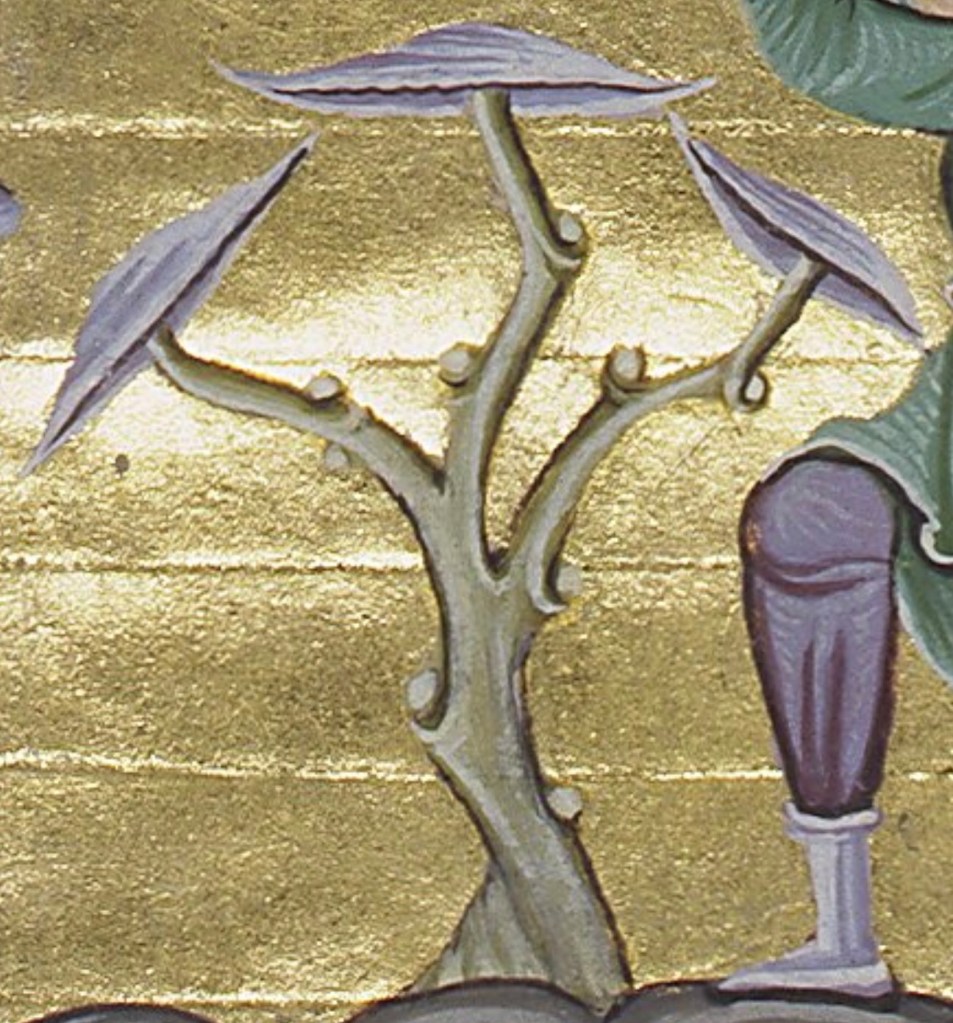
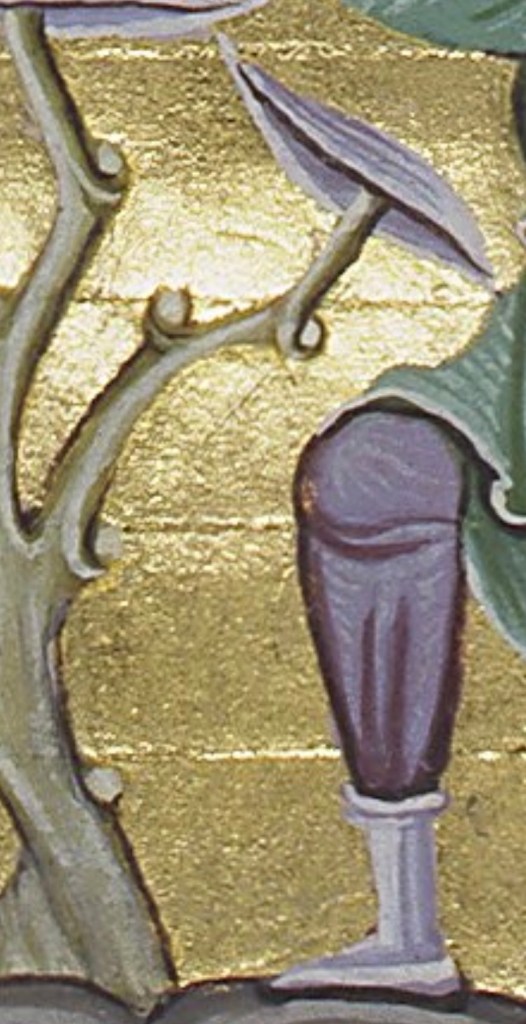
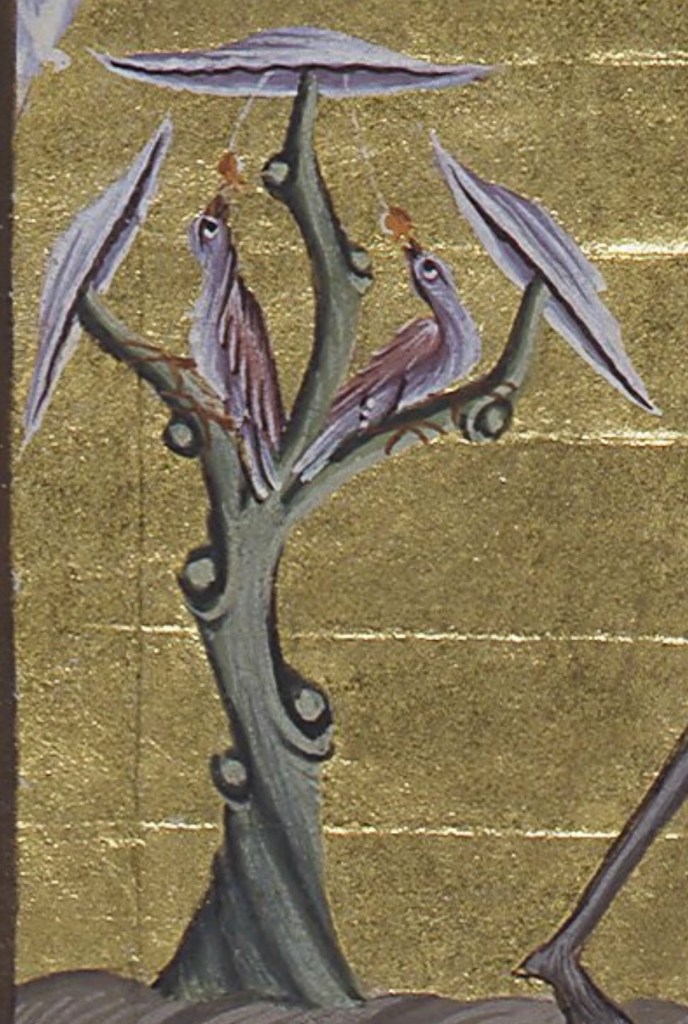
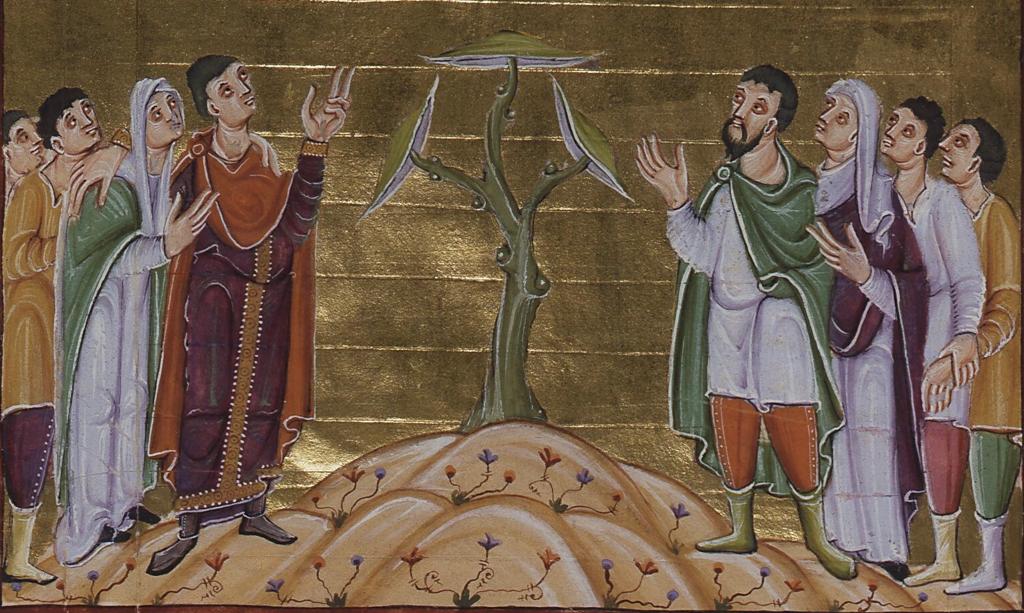
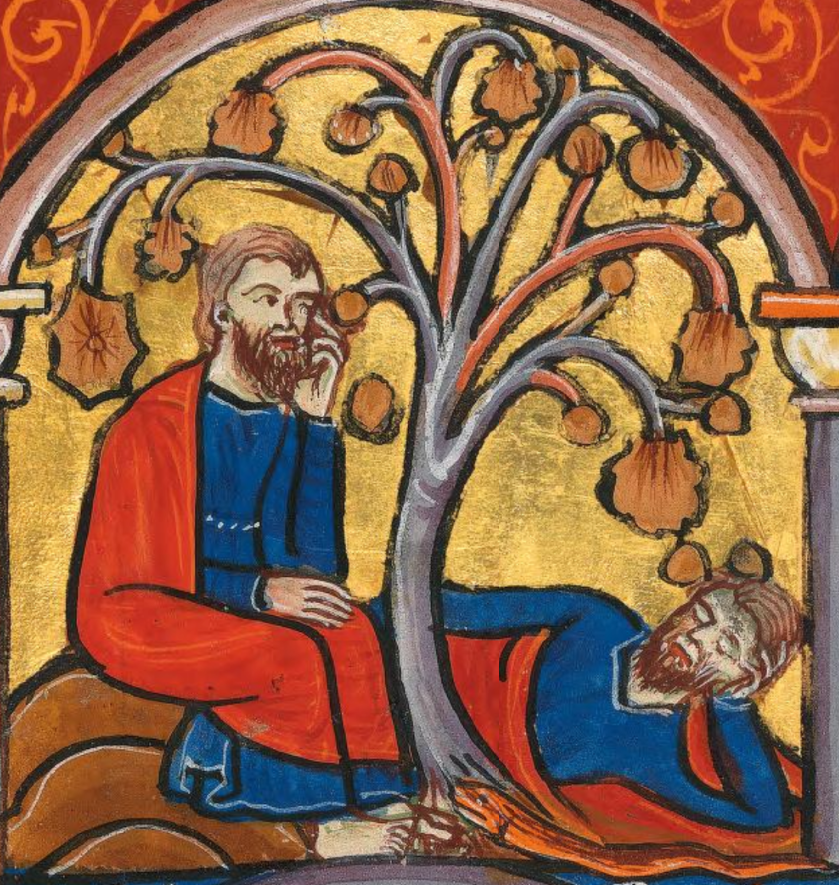
Mytheme Decoded: {burning bush} = Non-Branching Eternalism

2:14 pm April 12, 2025: I have reached confidence in interpreting Moses’ burning bush.

Definite decoding of the {burning bush} mytheme; I’ve posted this hypothesis before.

This how now reached the status of a confirmed hypothesis.

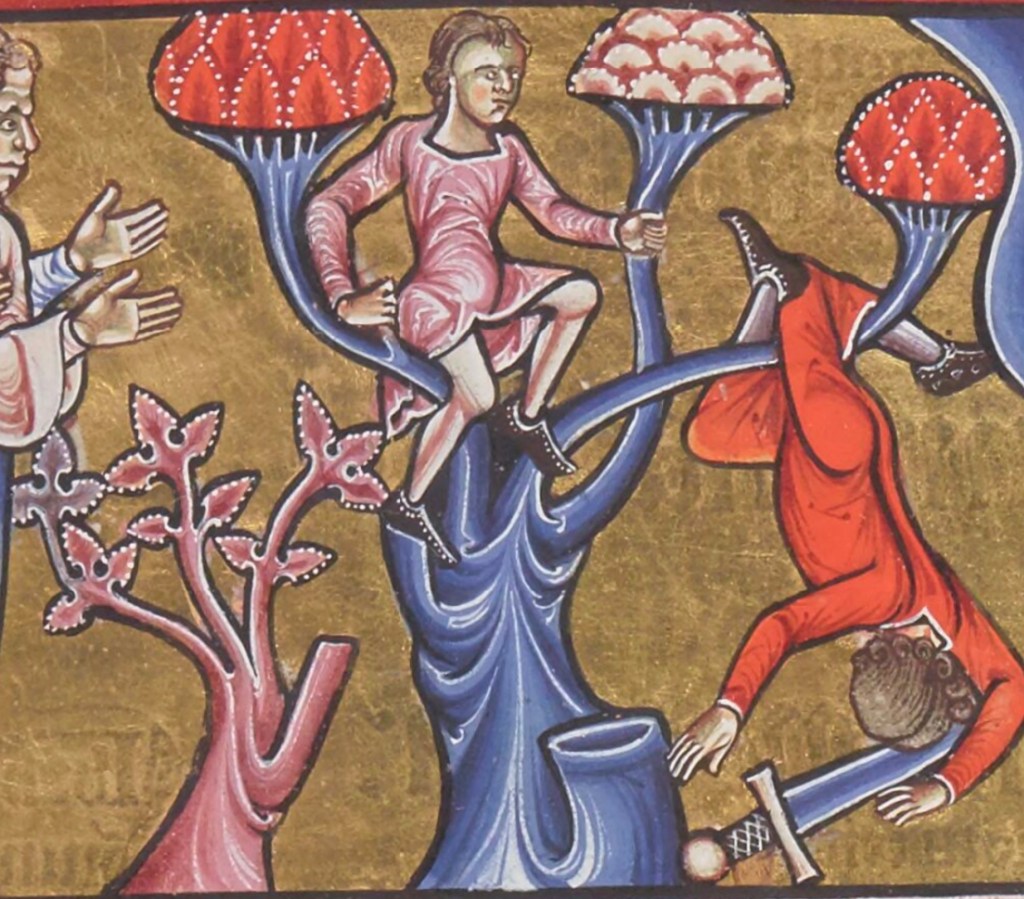
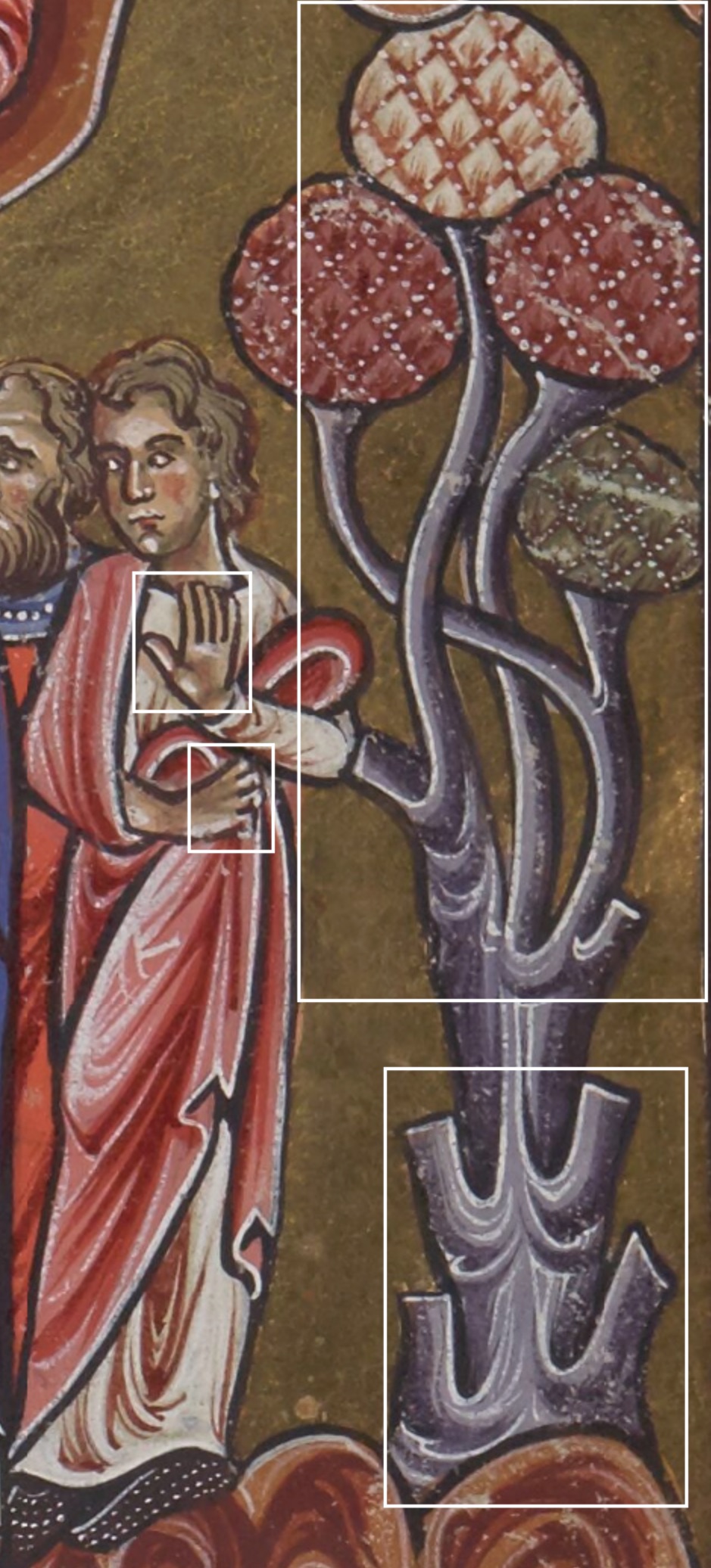
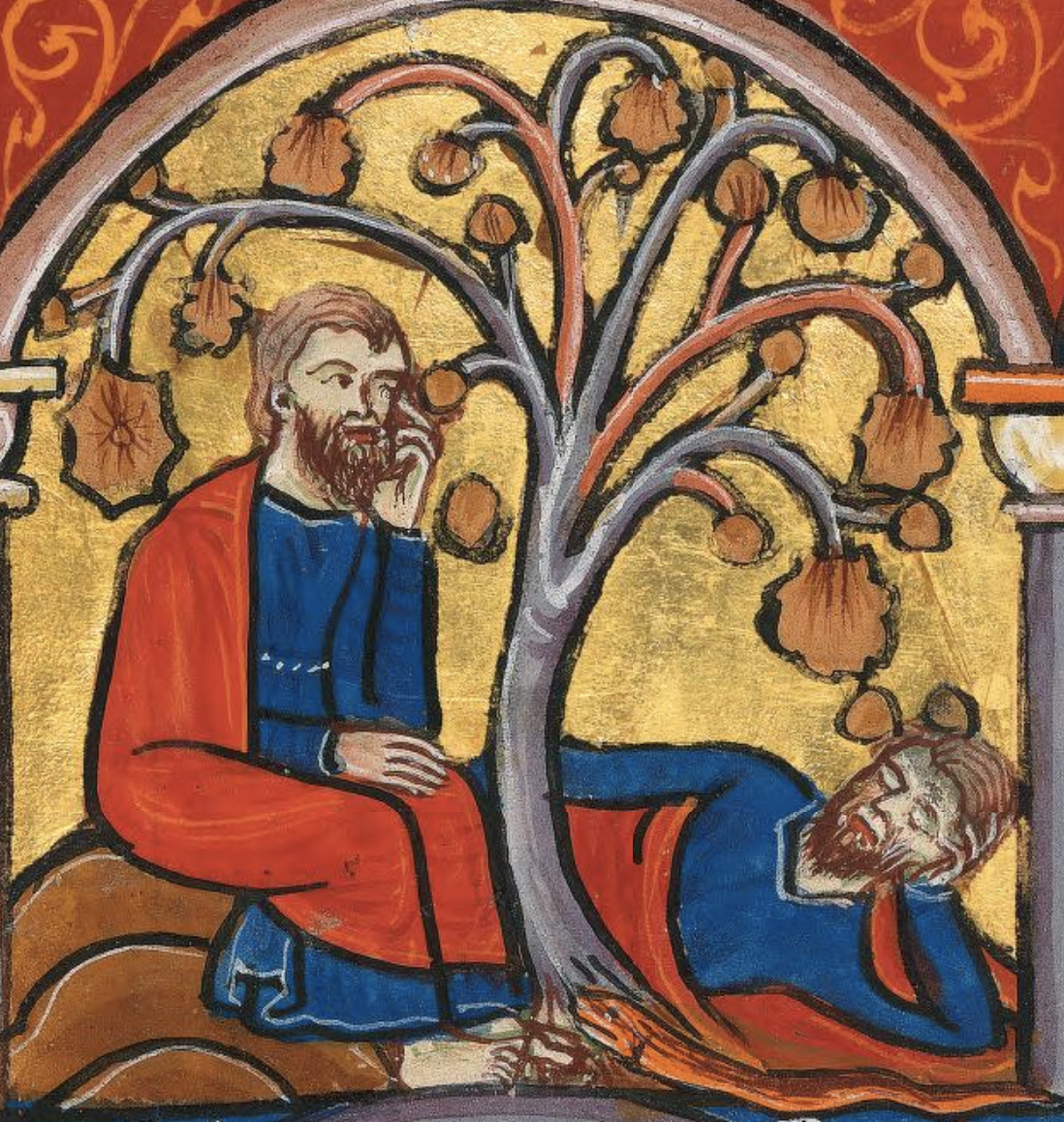
The {burning bush} is not an entheogen; it is an experiential revelation resulting from entheogens. Equivalent to {cut right trunk}, {cut right branch}, {cut branch}.

To “cut branch” = to deny possibilism (possibility-branching) & affirm eternalism (a single, closed future), which includes:

  • Affirm 2-level, dependent control.
  • See God, as uncontrollable source of control-thoughts.

I gained threshold-crossing confidence about decoding “burning bush” while listening to Jacob Barandes talk about branches in the video interview:
Harvard Scientist: “There is No Quantum Multiverse” | Jacob Barandes [Part 3]
I moved that video partial transcription, re: “branch”, to below.

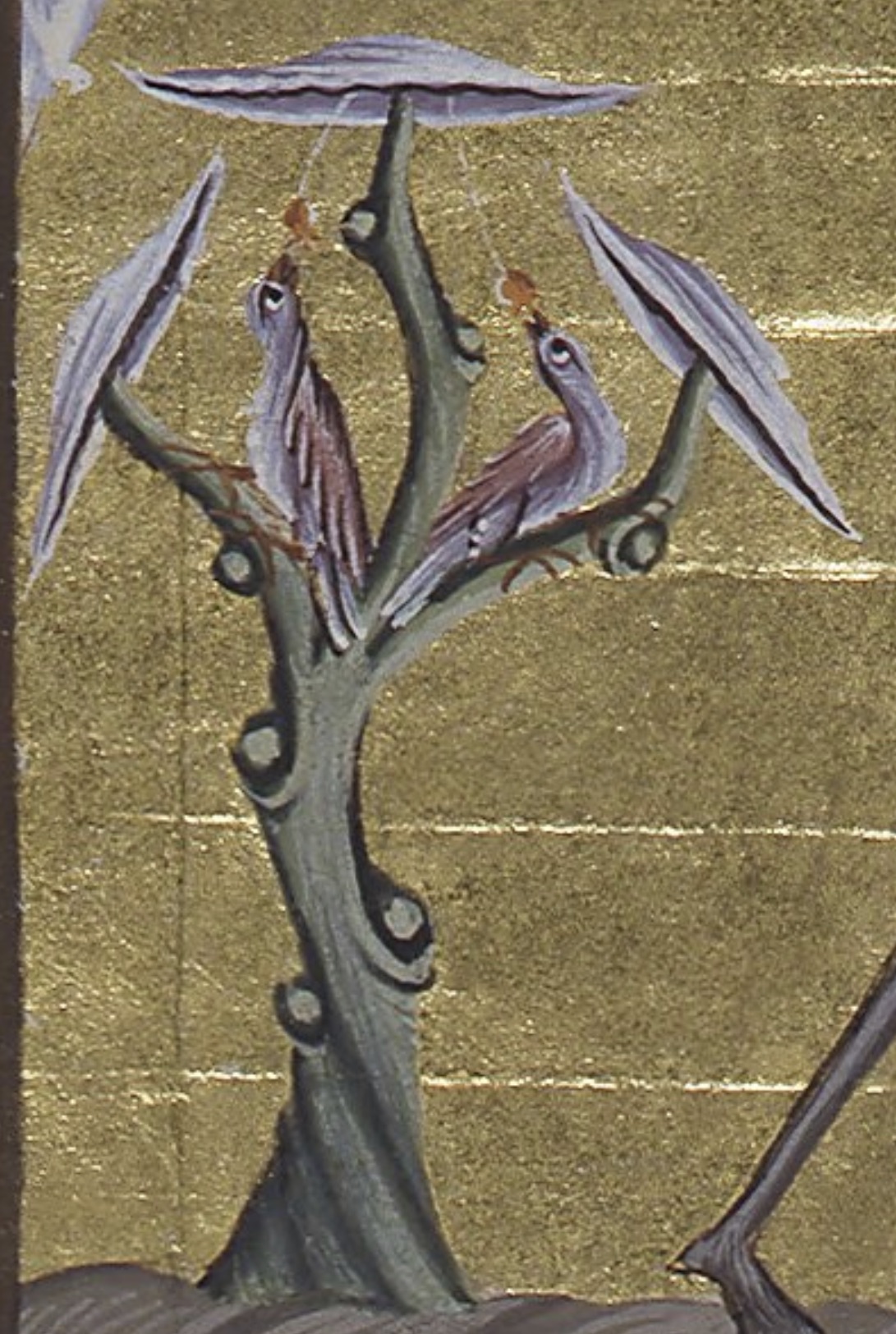
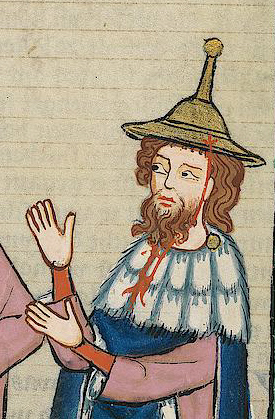
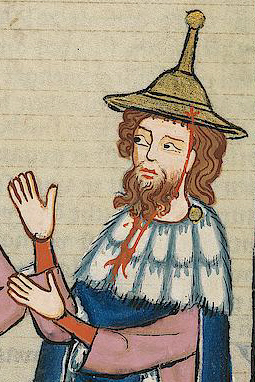
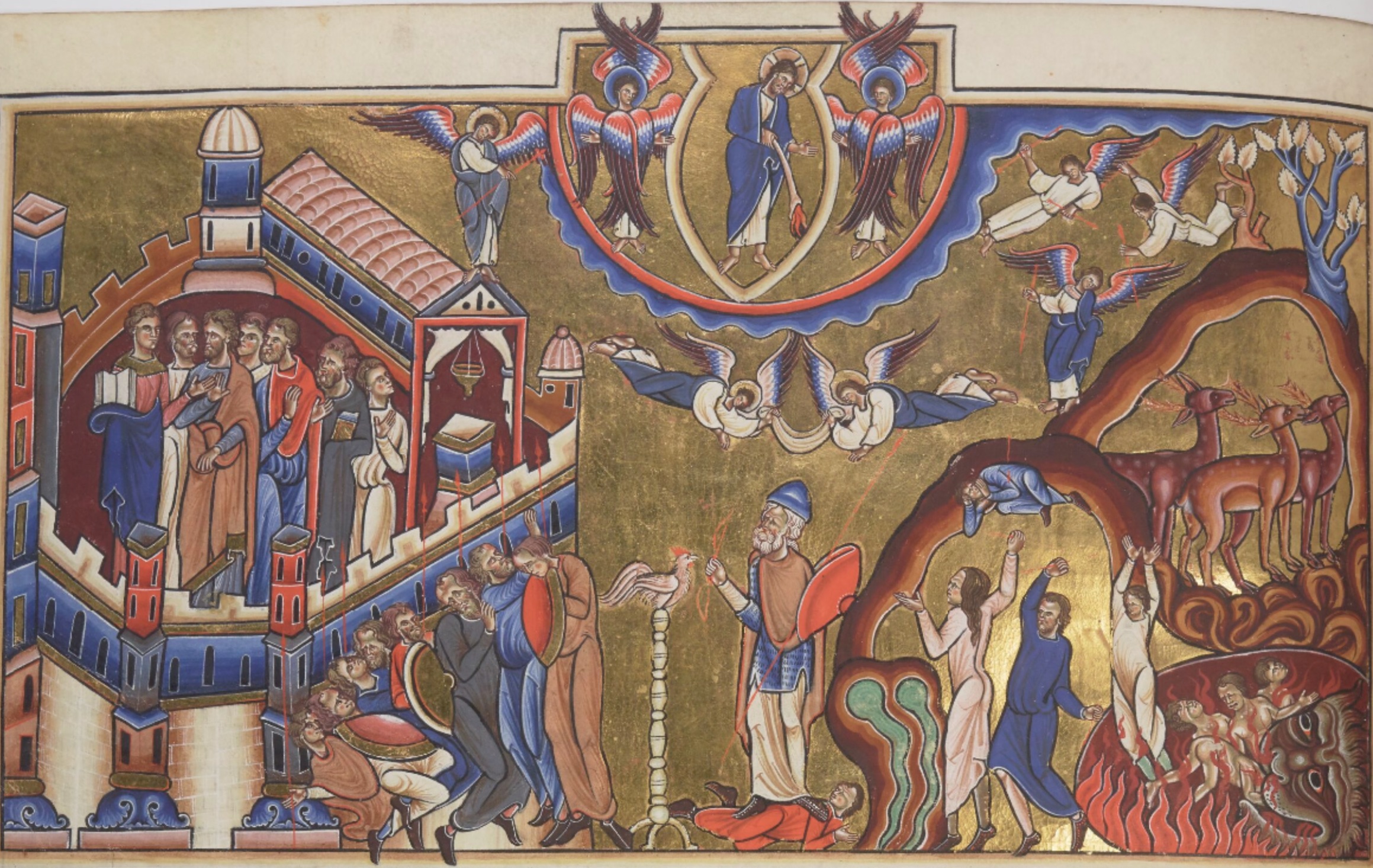
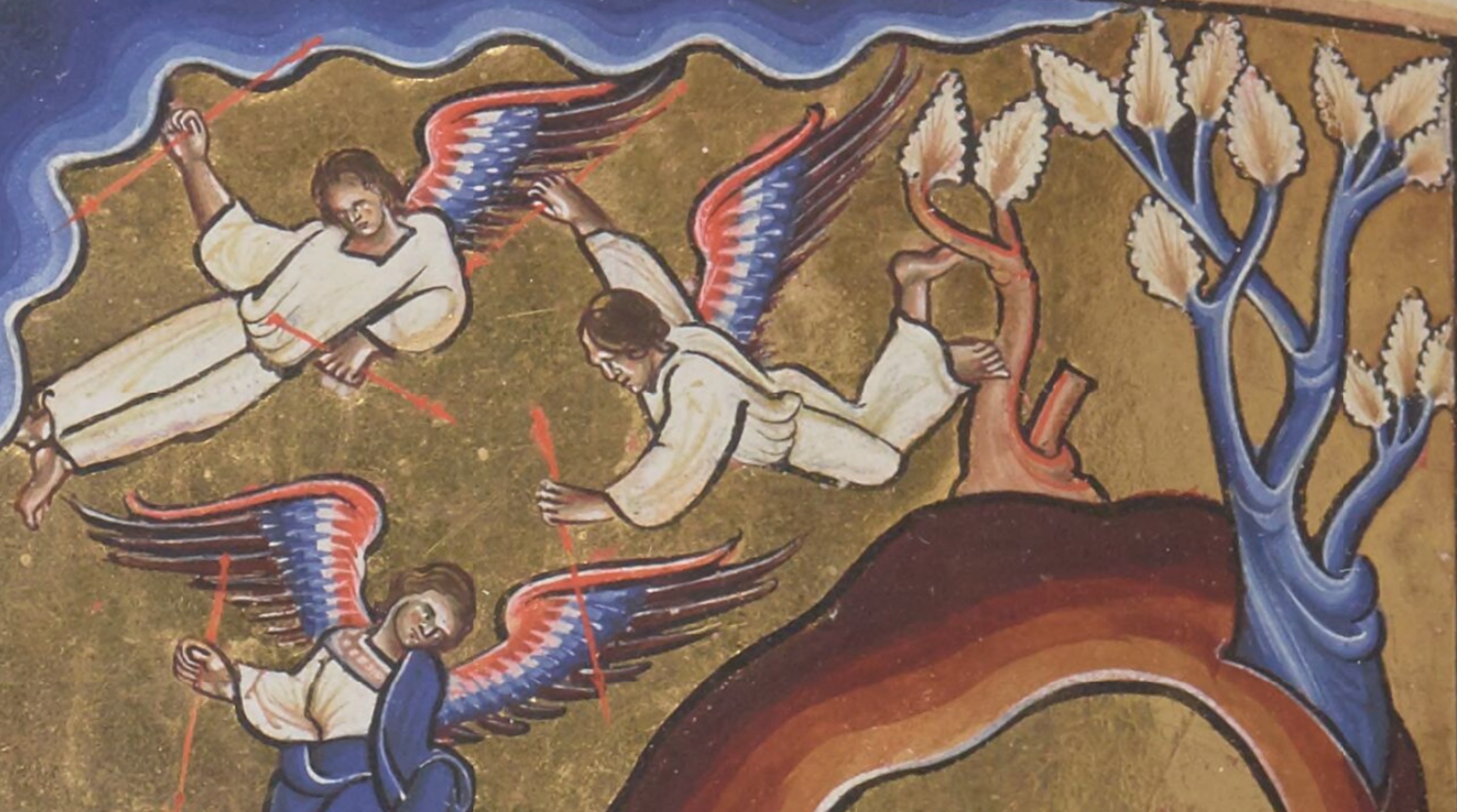
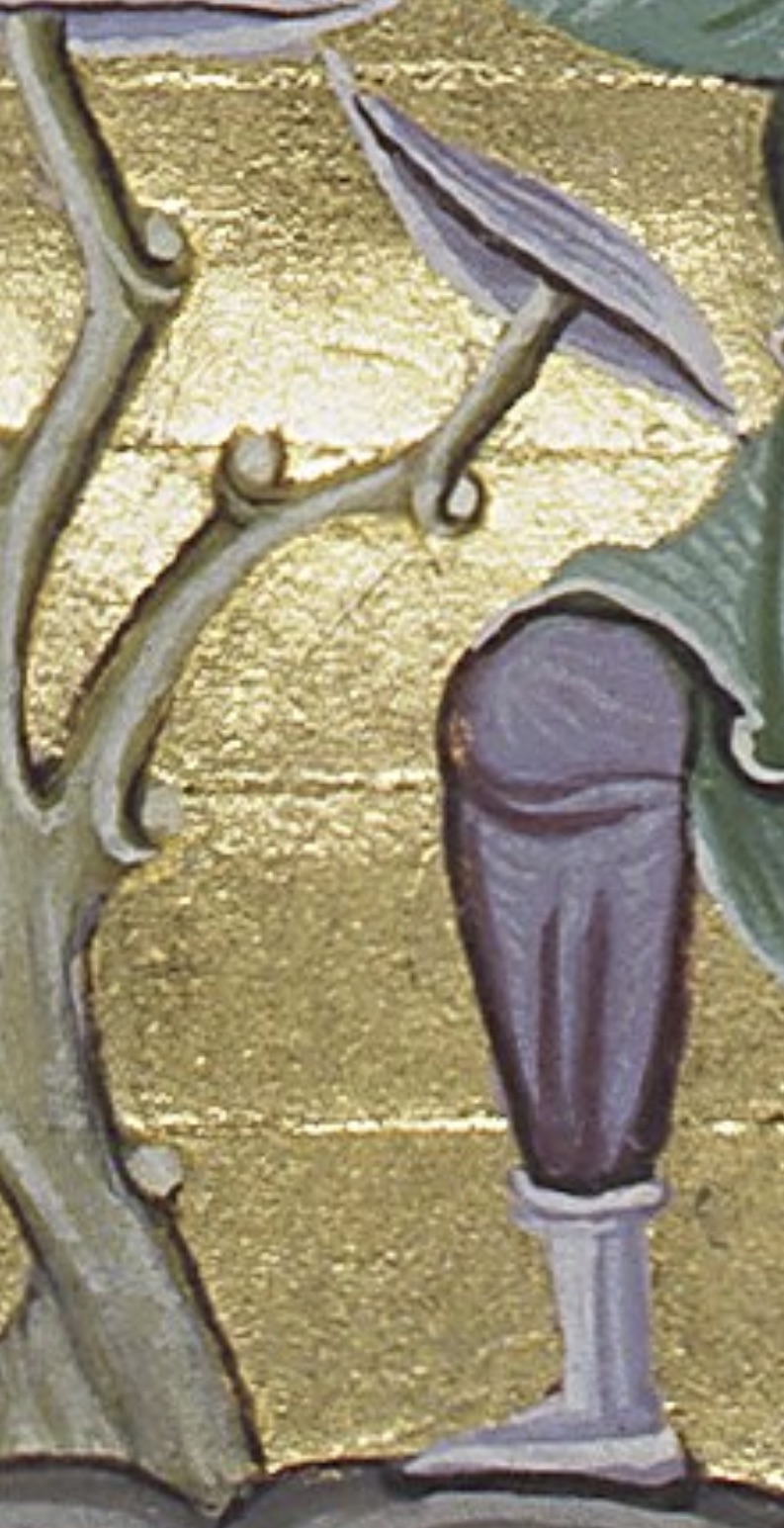
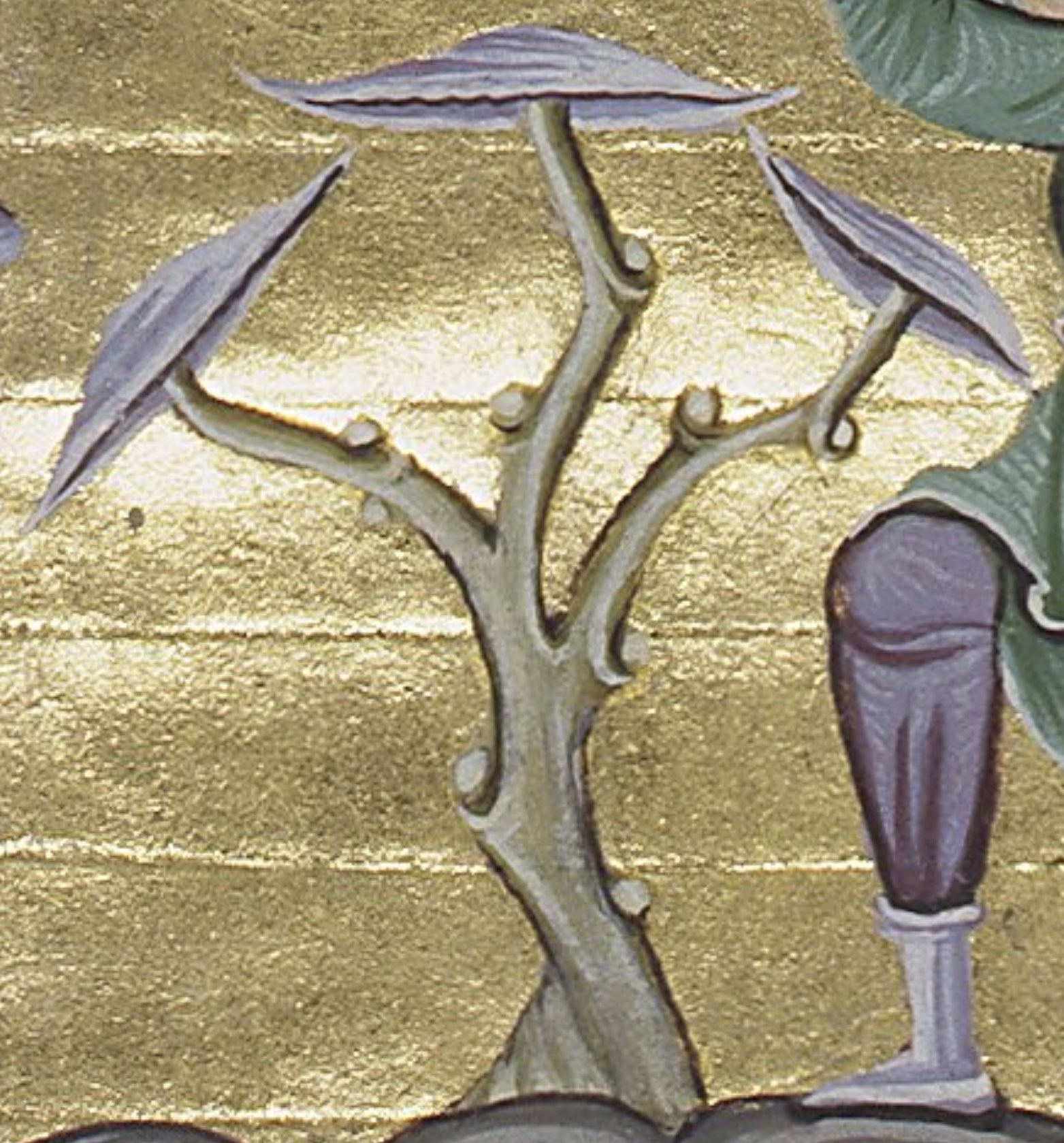
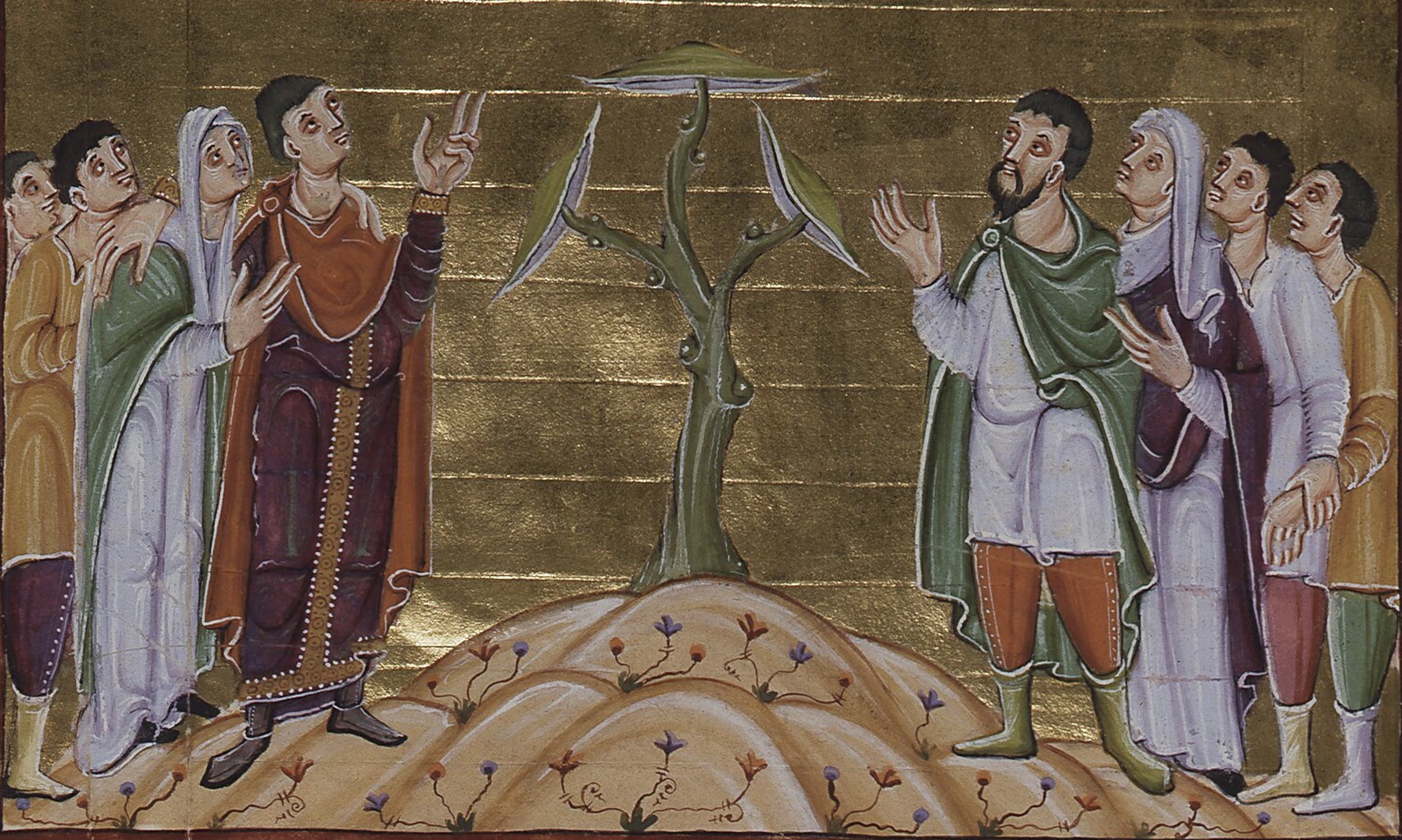
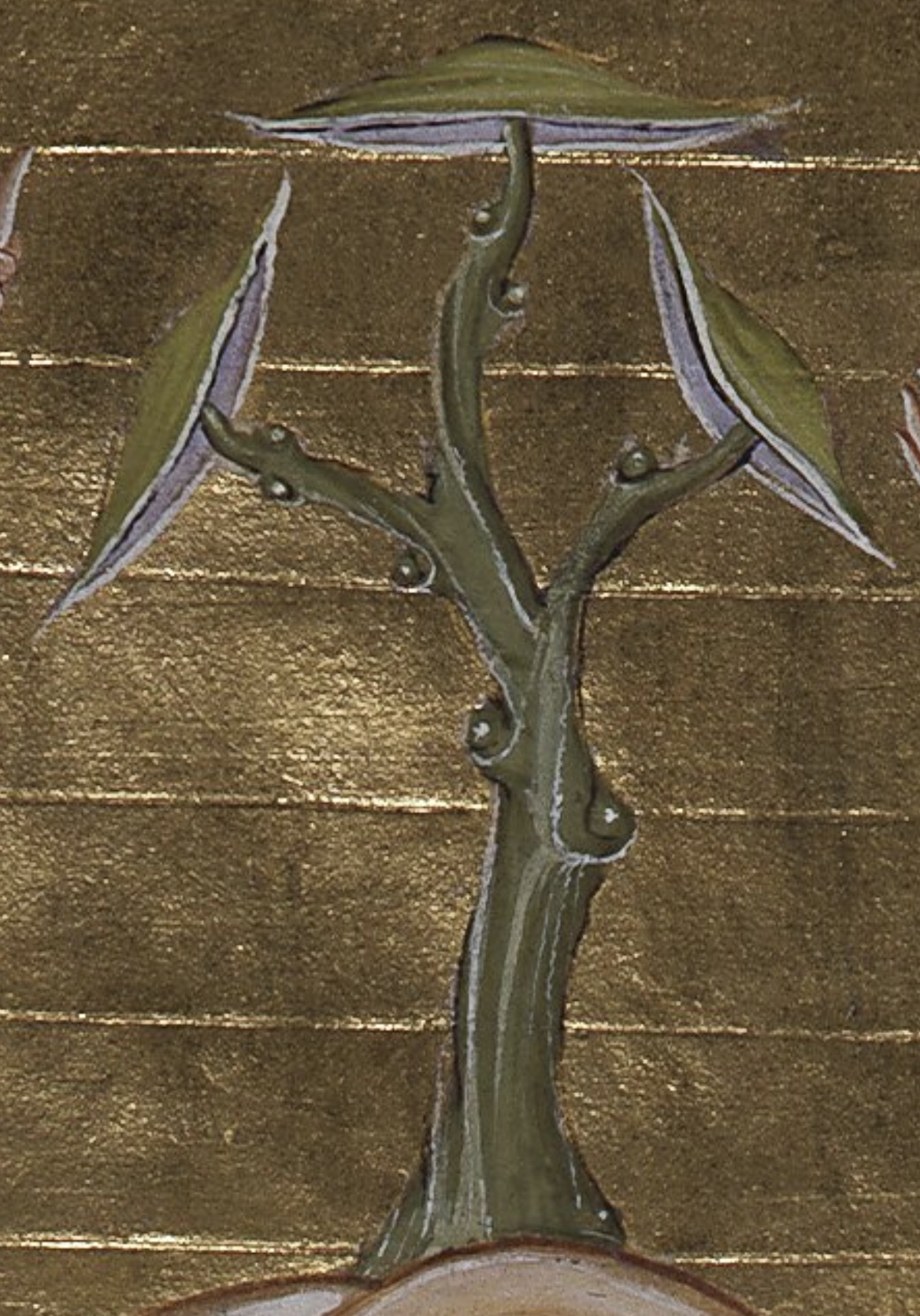
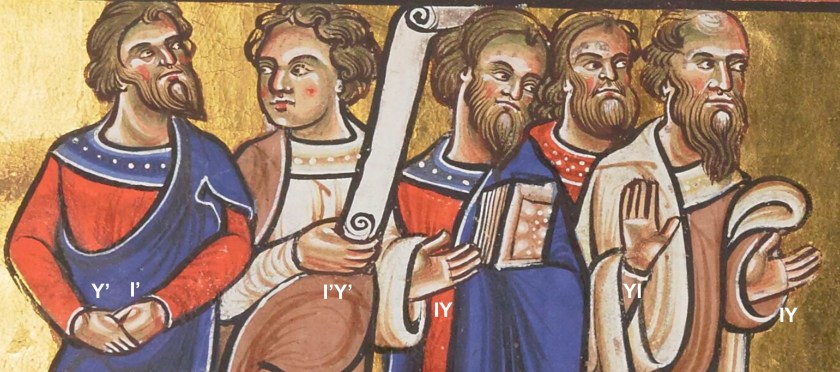
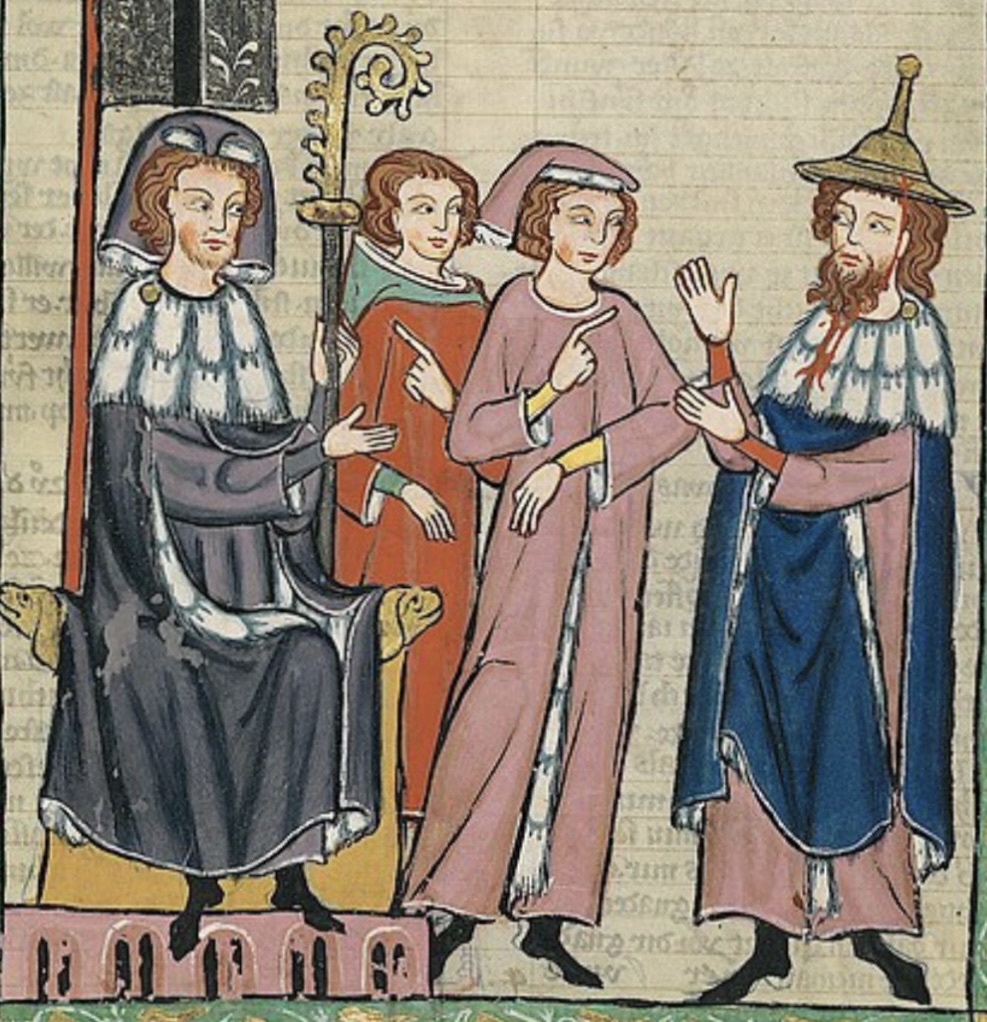
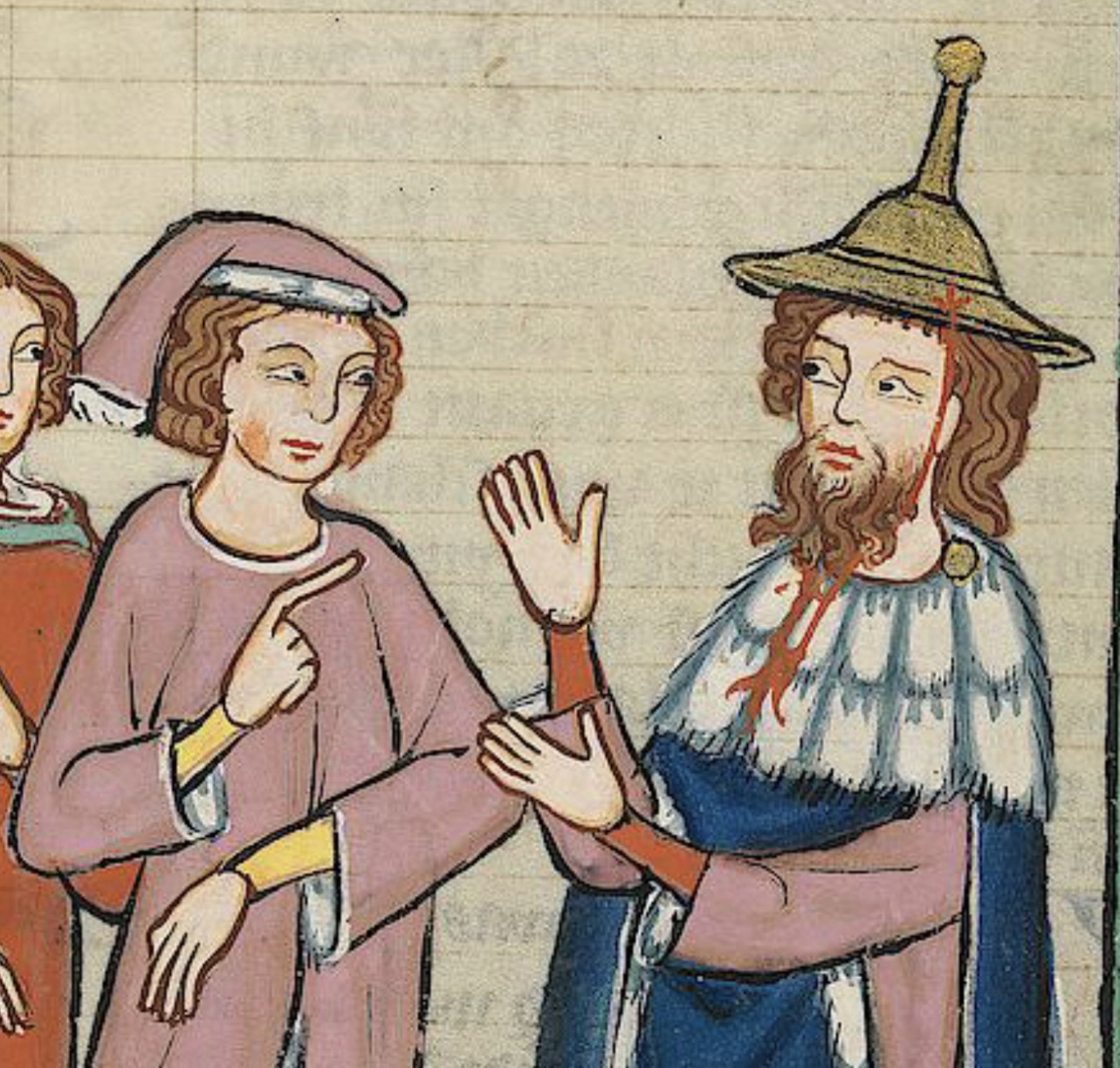
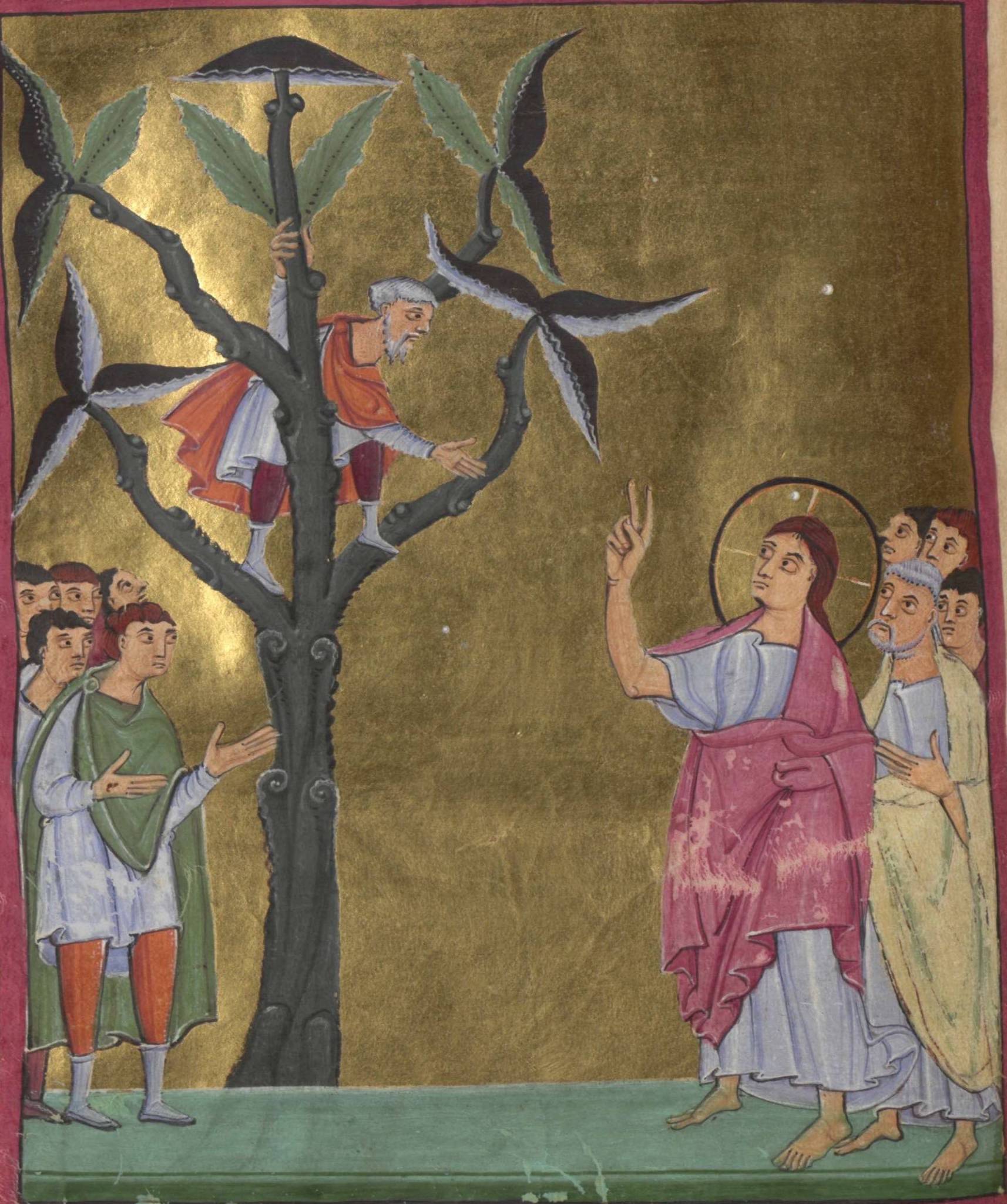
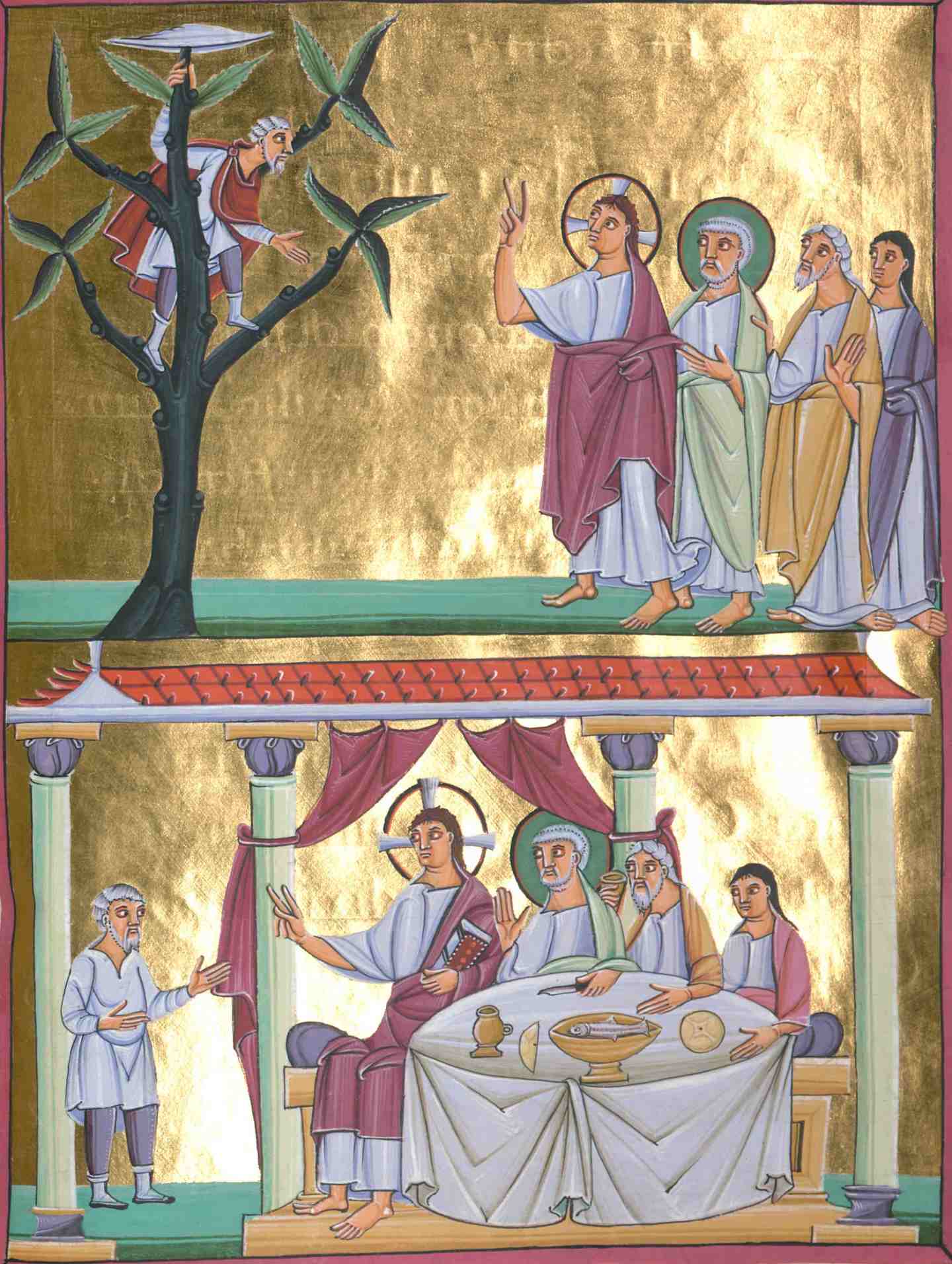
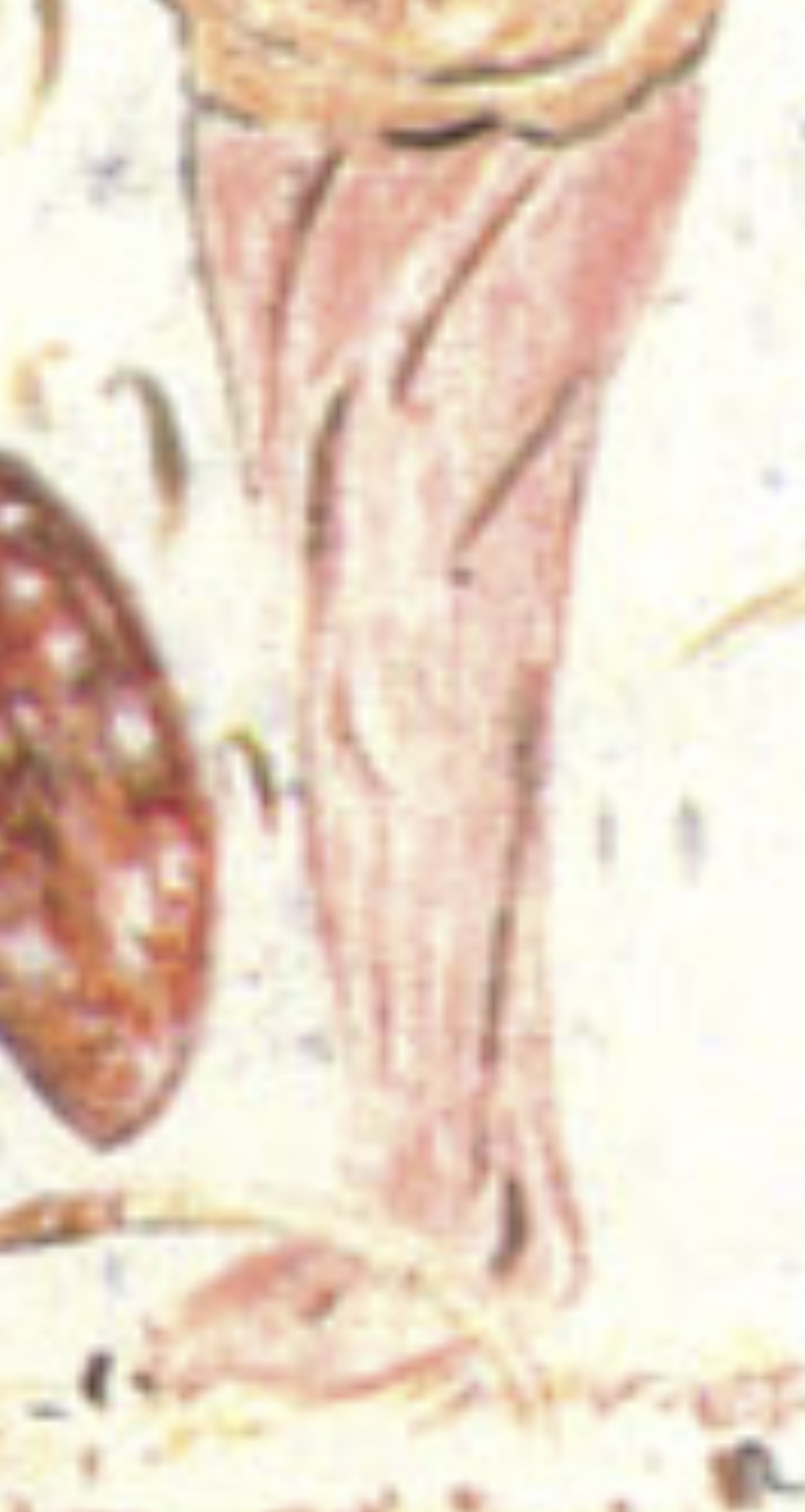
Burning Bush (Van der Borch) – Finger Shapes, Burning Away Branching Possibilities – Proves Bush = Tree

Crop by Michael Hoffman

image processing, and interpretation by Cybermonk [11:04 p.m. February 9, 2023]

Crop, image processing, and interpretation by Michael Hoffman, 11:04 p.m. February 9, 2023
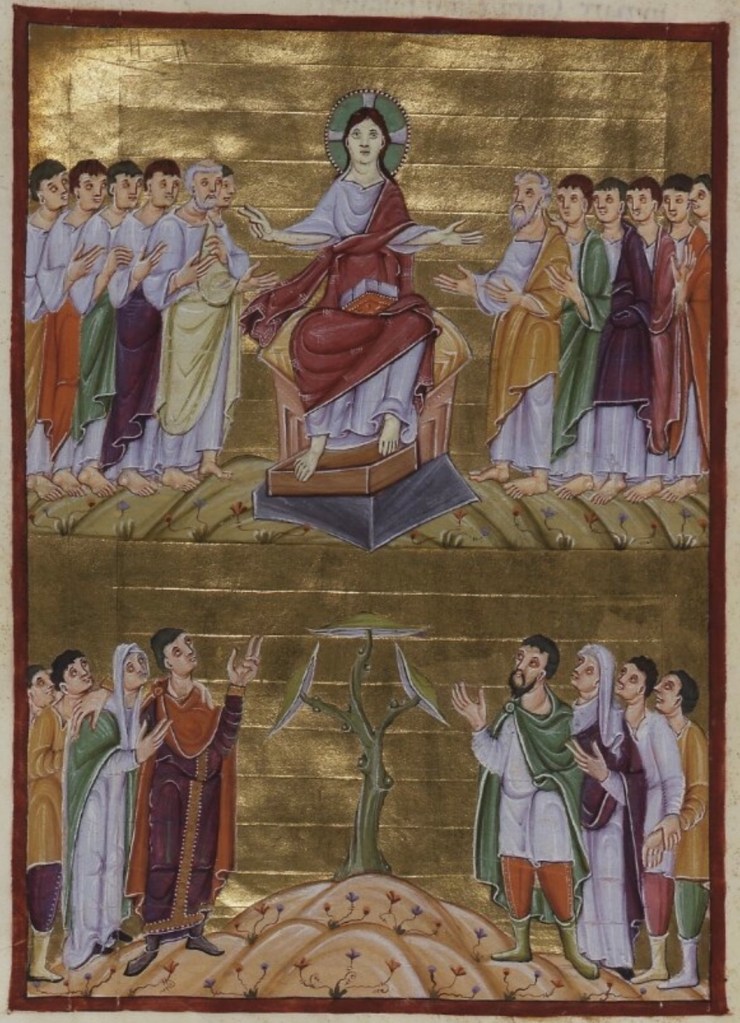
Photo Credit: Julie M. Brown
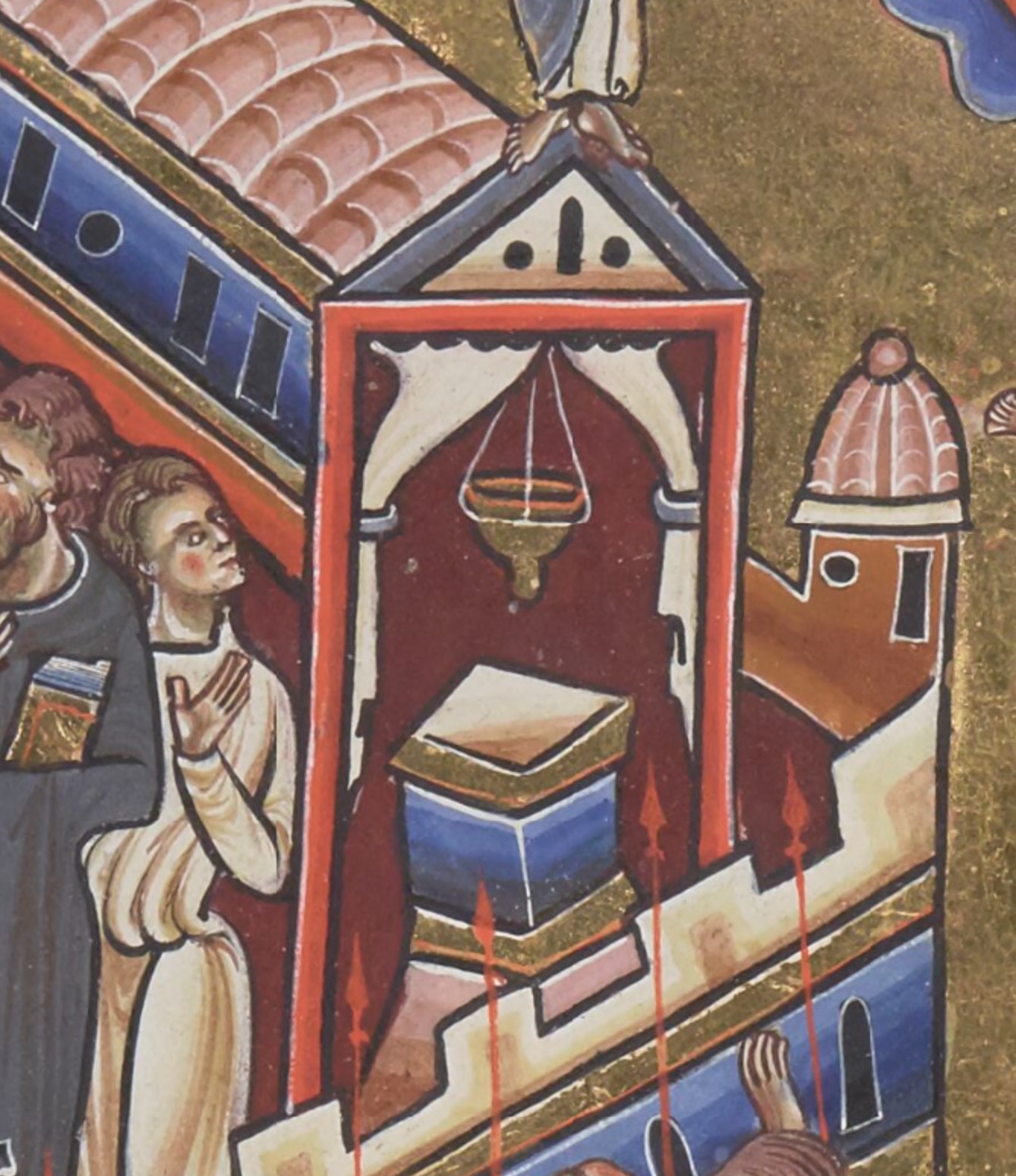
Crop by Michael Hoffman
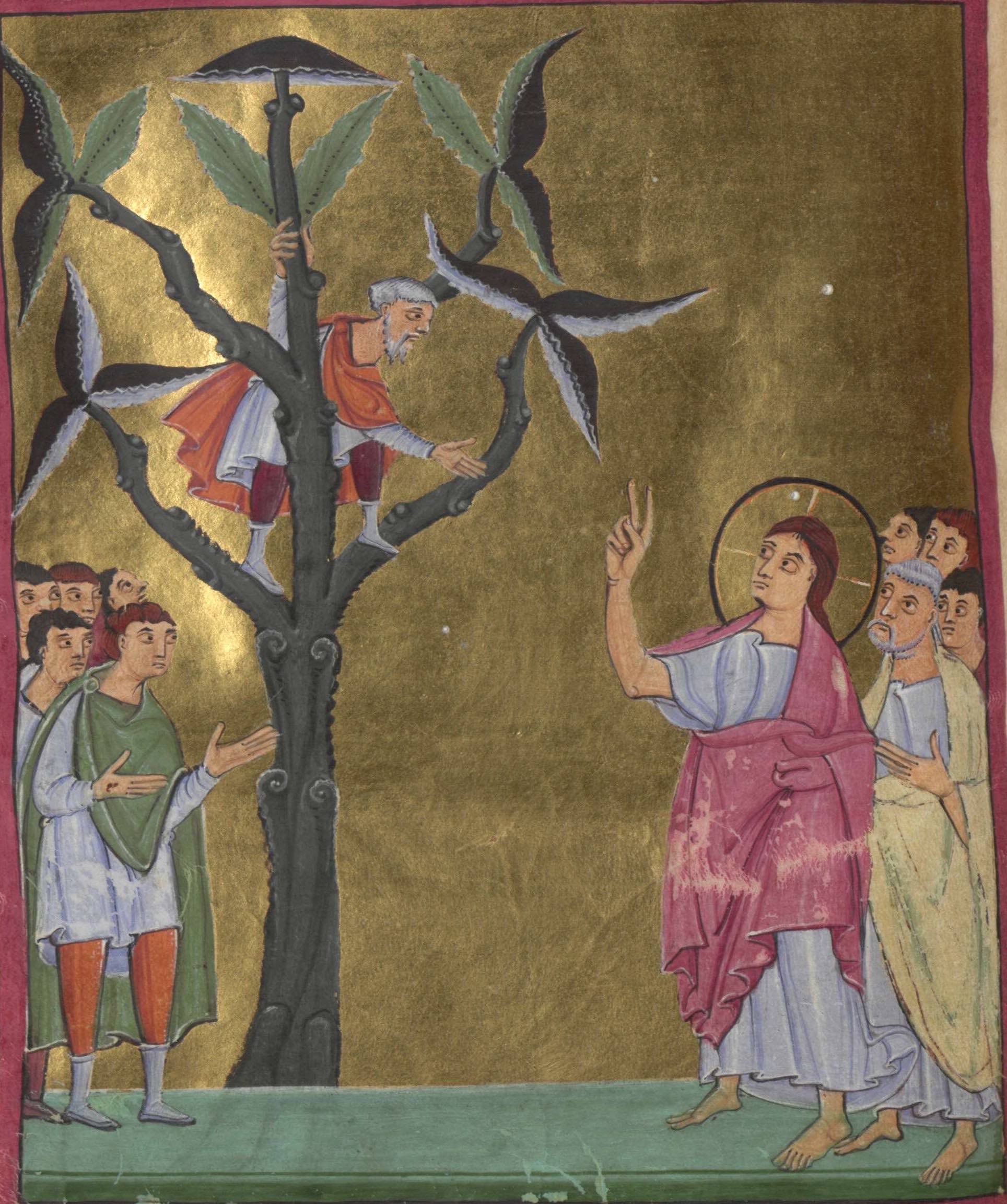
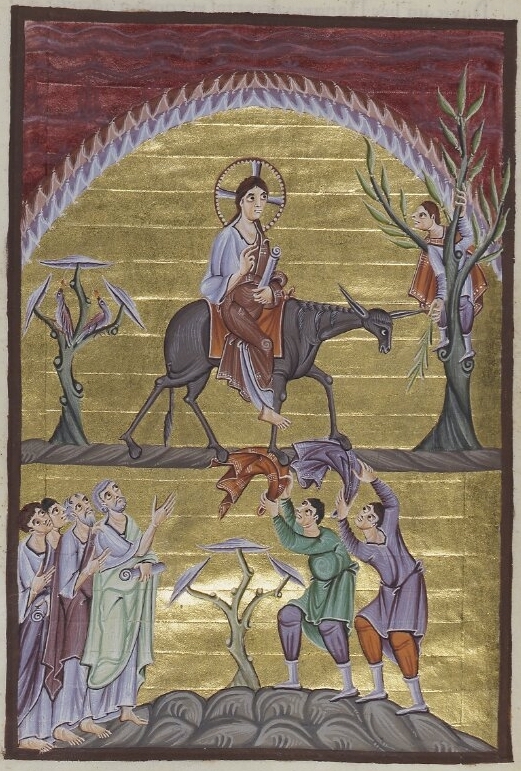
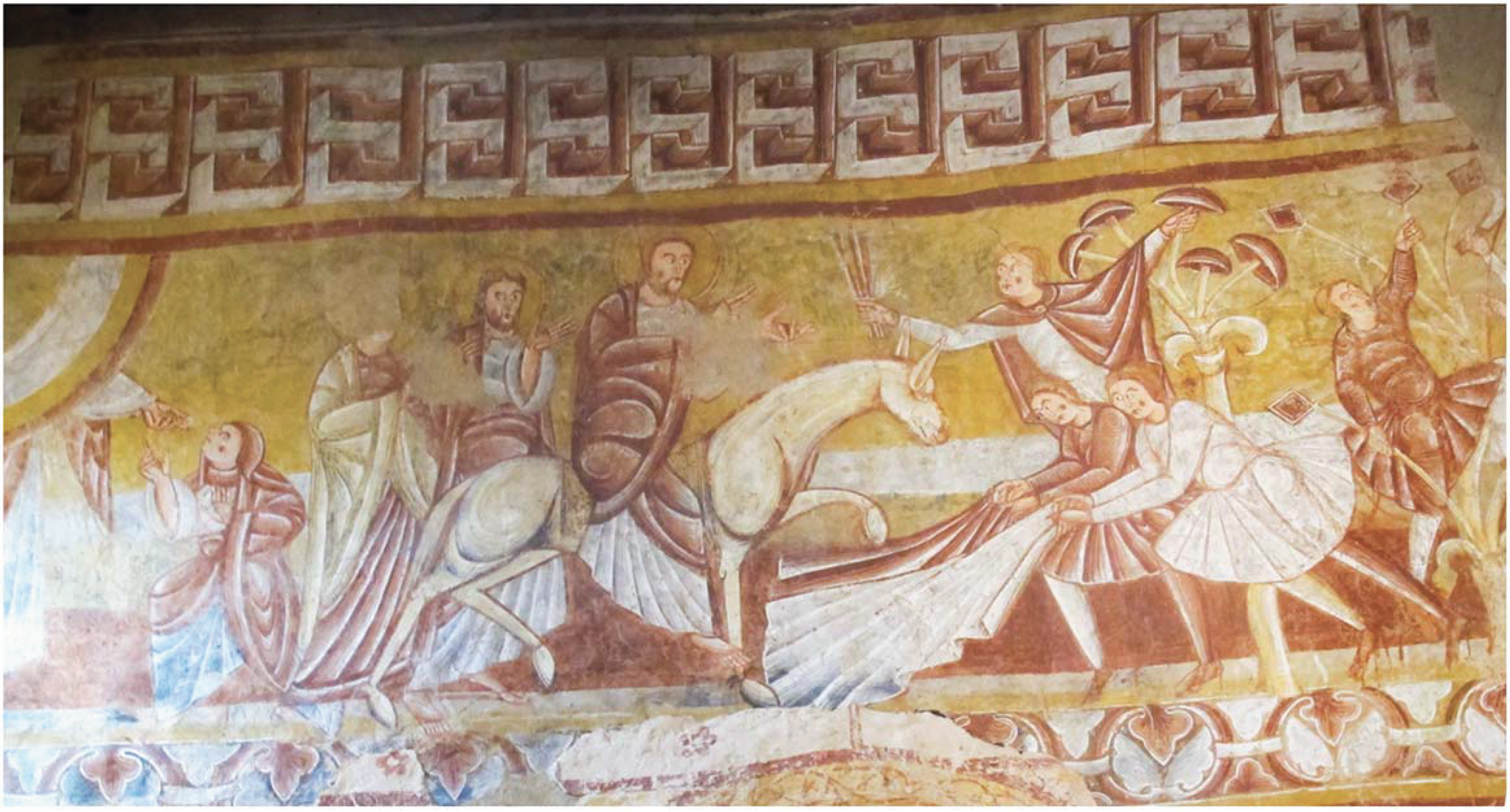
“Entry into Jerusalem John Rush diamond frond.jpg” 152 KB 10:28 pm Feb. 26, 2025
Photo Credit Julie M. Brown.
April 10, 2022 image processing & crop by Michael Hoffman.

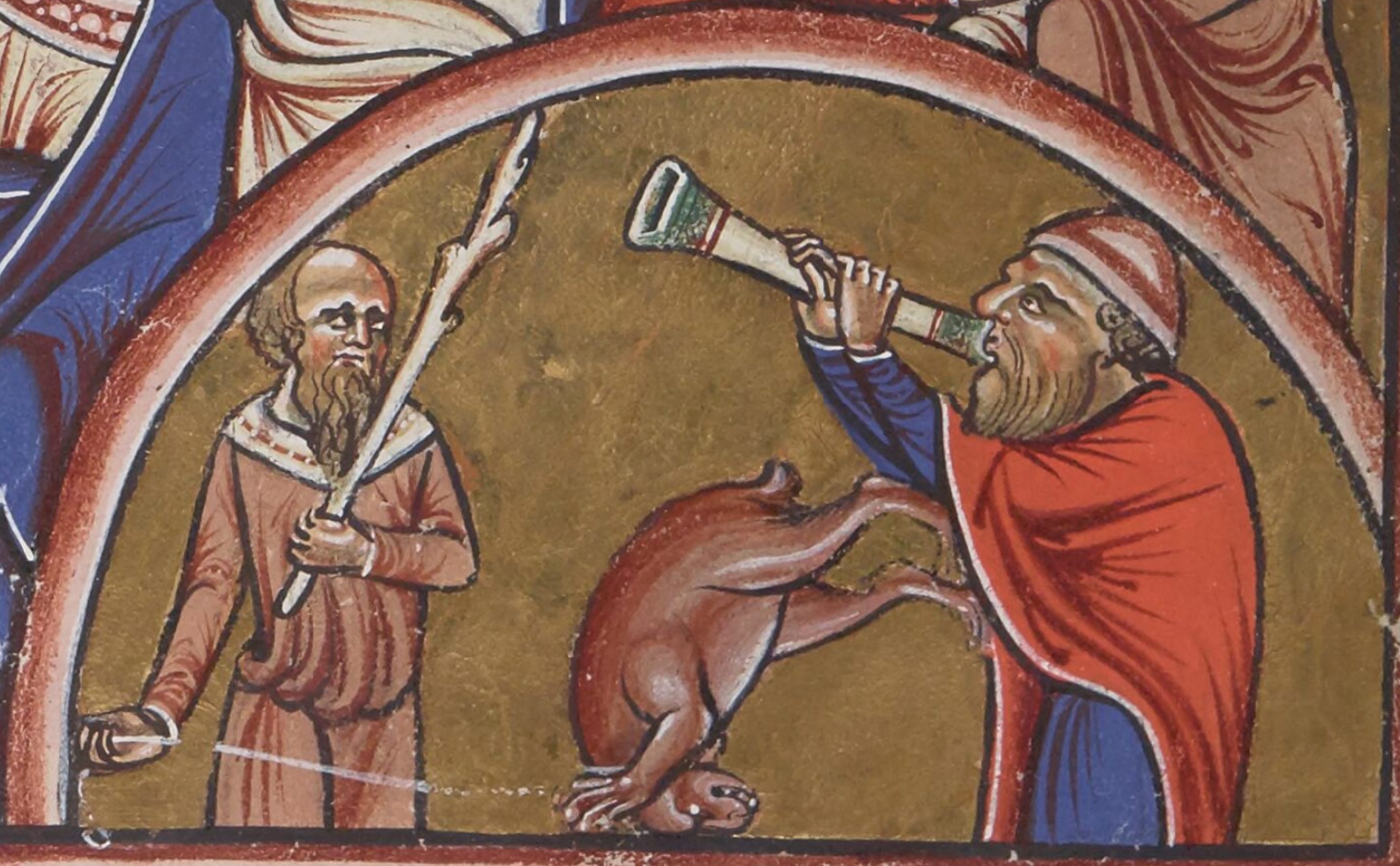
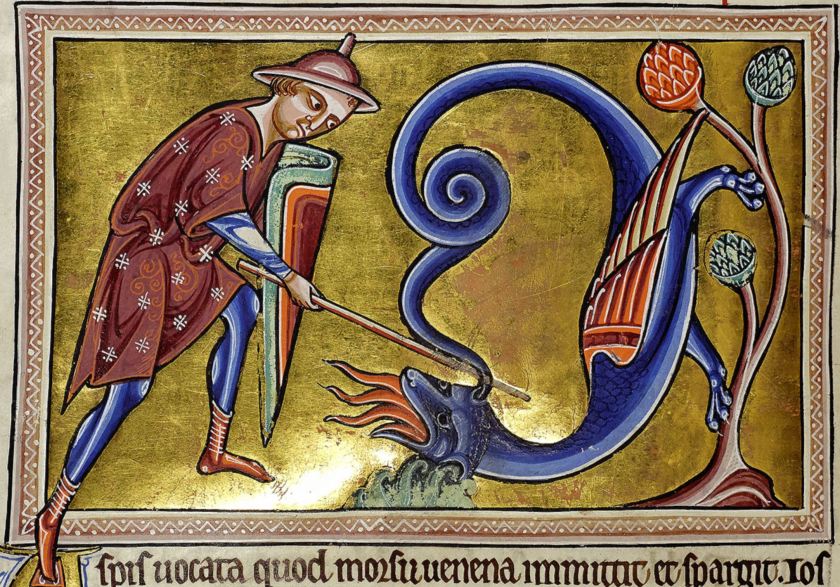
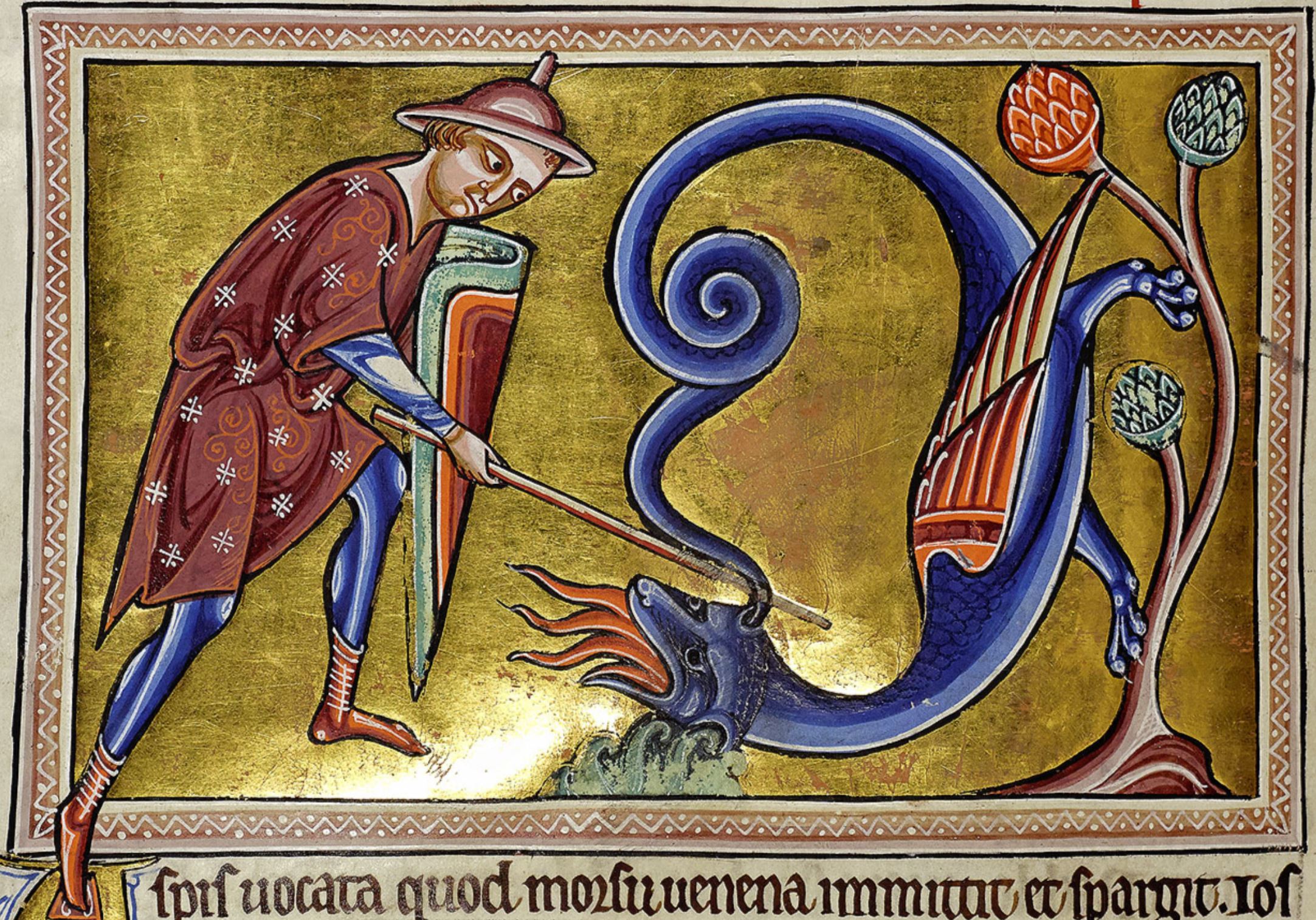
Sacrifice of Isaac (Van der Borch) – branches burning; compare bush burning:

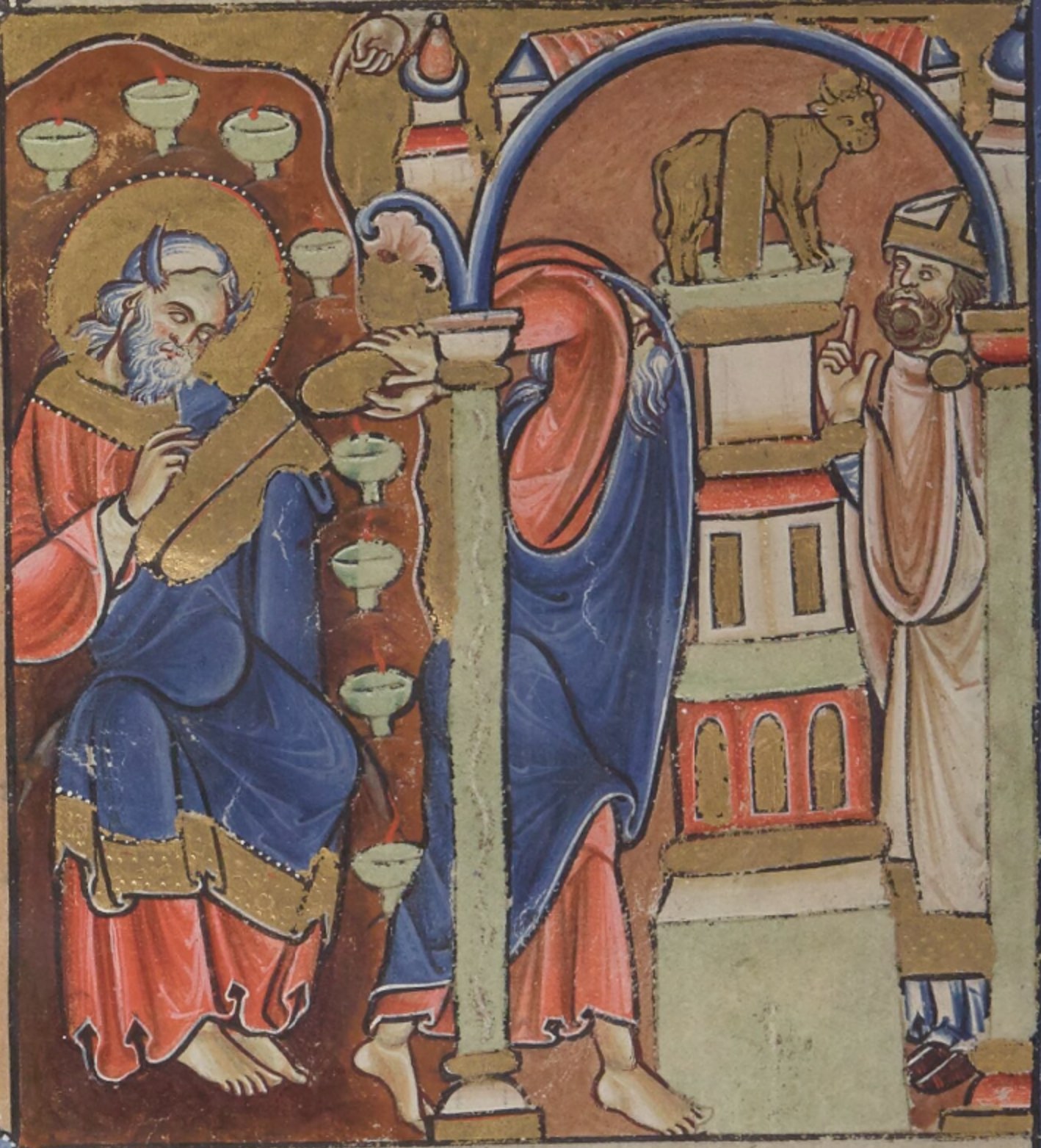
Burning Bush, and Tablets (Ingeborg Psalter)

Aspect ratio corrected by Michael Hoffman

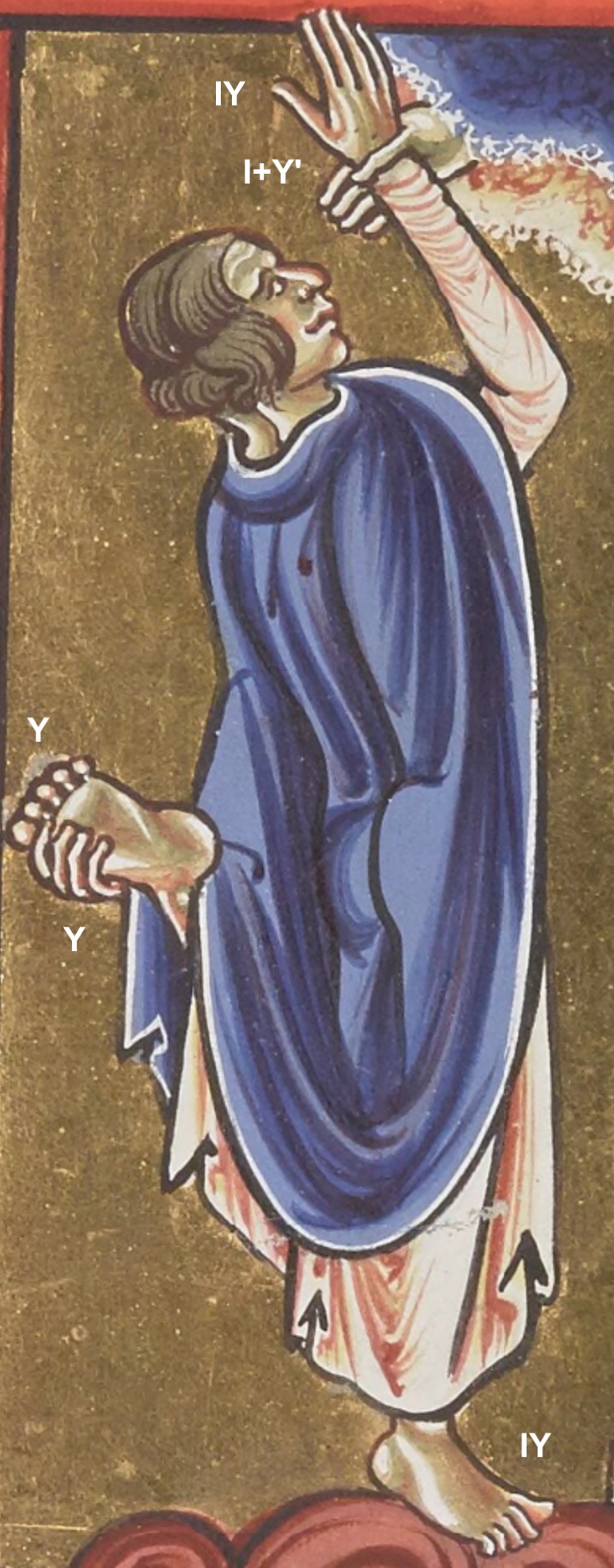
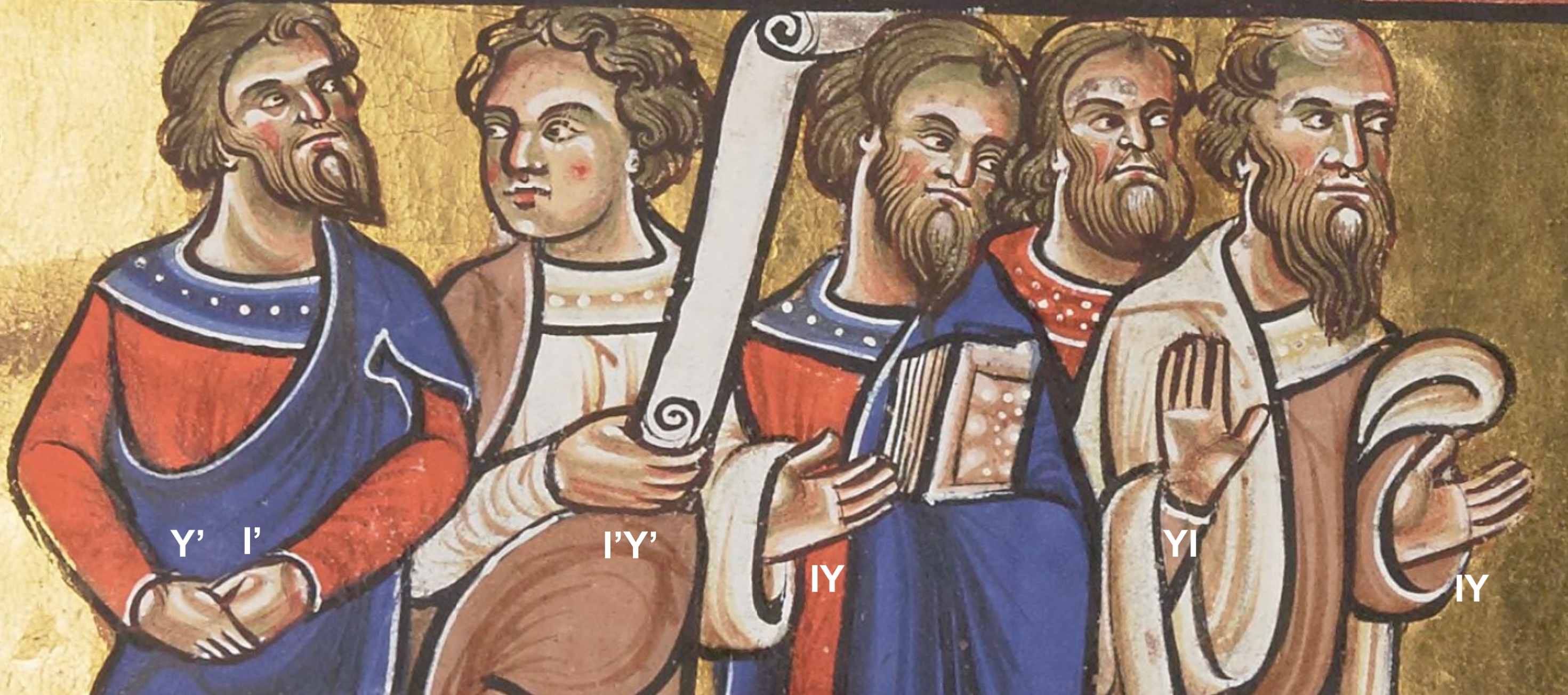
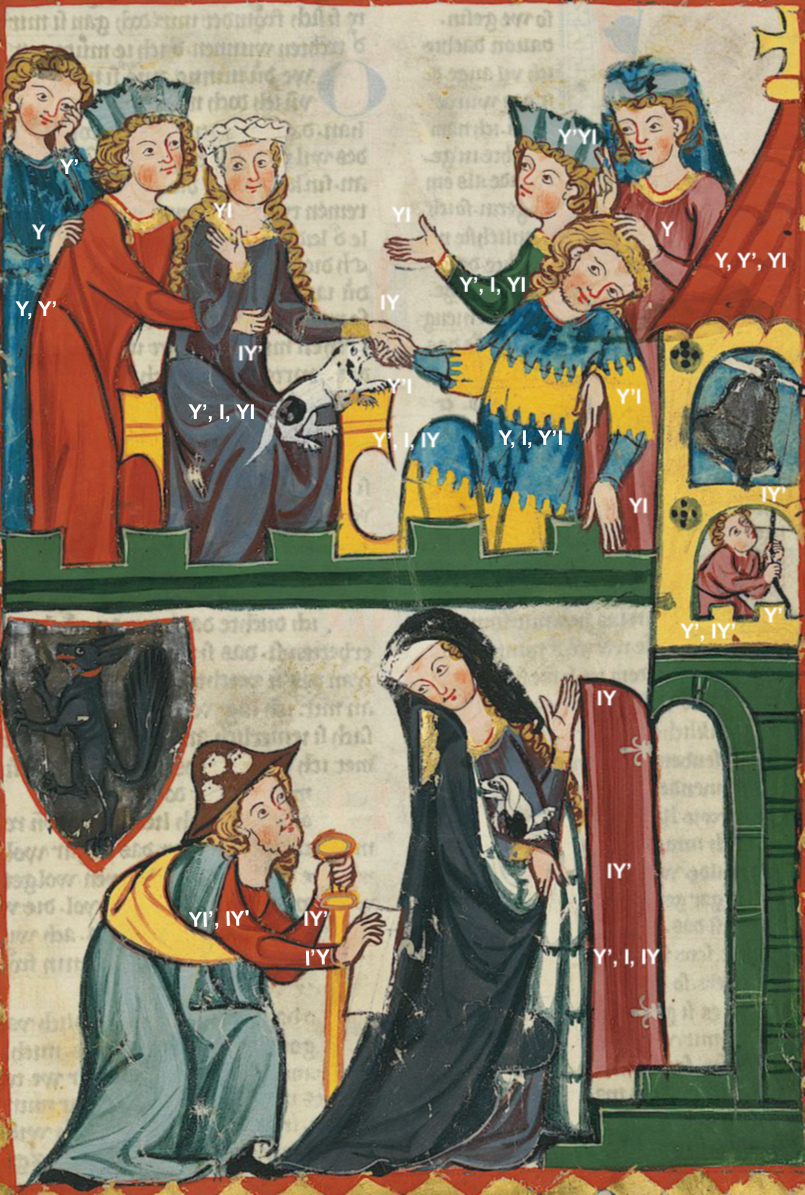
The Mystic Y (Ingeborg Psalter); Burning Bush

Burning Bush

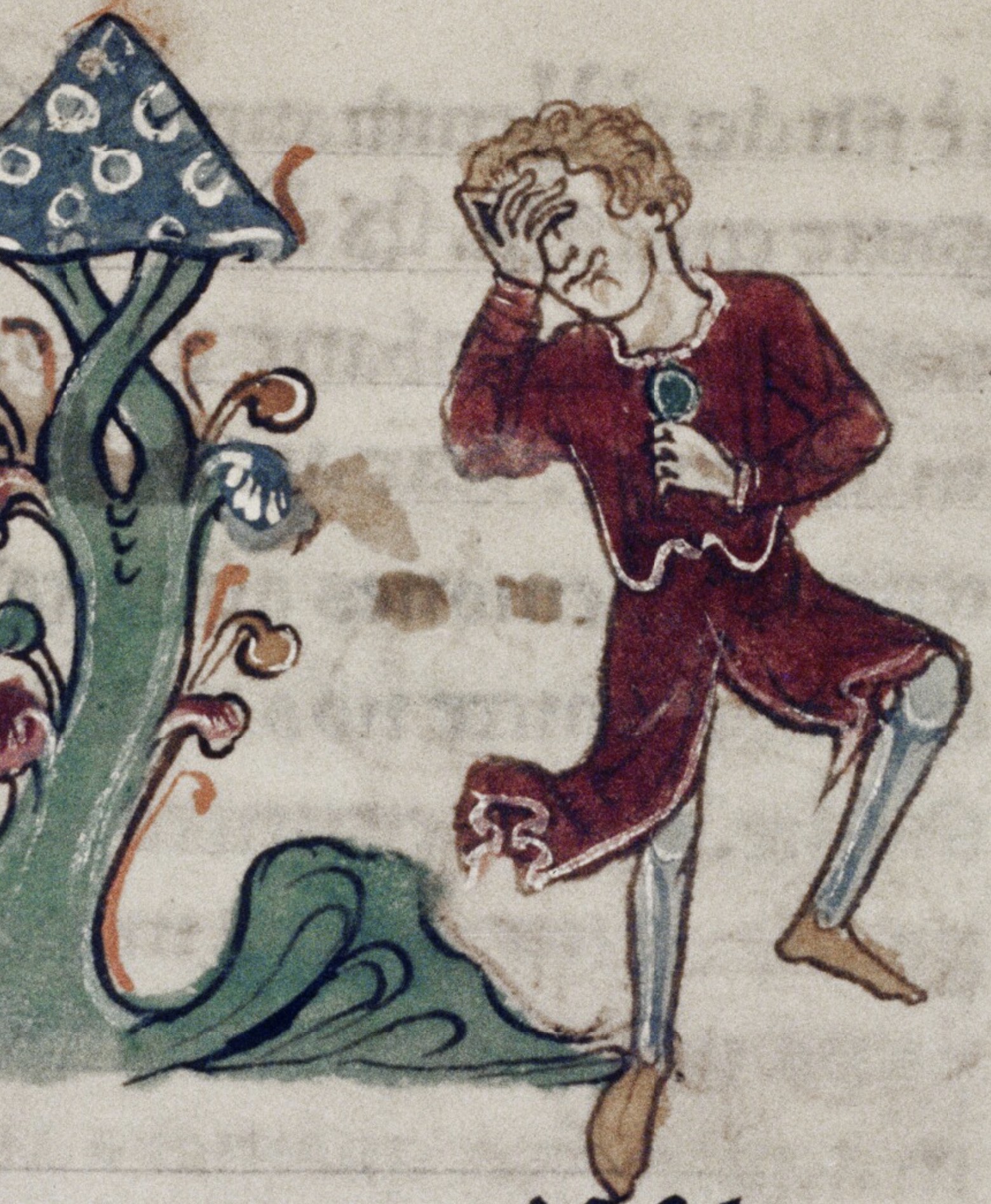
Crop by Michael Hoffman, Jan. 26, 2025

Features (some noted before):

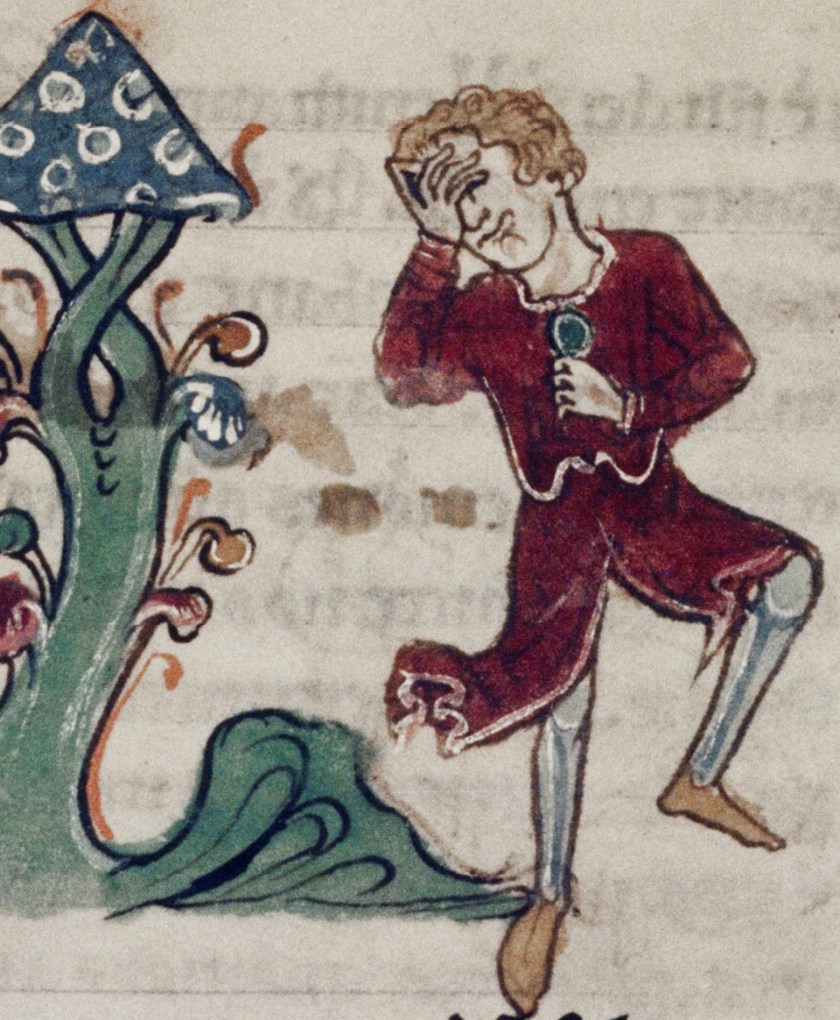
  • Foolish youth stance: Weight on left foot.
  • Left elbow is touching {fire}.
  • Good though: right hand closer to ground than left hand, per f134 image rules.
  • Turning to look Left, not as good as Right.
Crop by Cybermonk, December 11, 2024

Intro, Relevance to Egodeath Theory

New video yesterday, Apr. 11, 2025. Lacks concept of psychedelic experiencing of eternalism, lacks concept of transcend eternalism.

https://www.youtube.com/watch?v=6I2OhmVWLMs&t=3350s = 55:50

Posted at YouTube

This is my main copy though I could designate https://egodeaththeory.org/2025/04/11/psychedelic-4d-spacetime-block-universe-mysticism/ instead as the main location for such commentary.

My Comment 1 on a Curt & Emily Video

55:50 – Curt Jaimungal asks Emily Adlam the popularly worded, inferior question.  People should not debate “presentism” vs. eternalism, but rather, _possibilism_ vs. eternalism. 

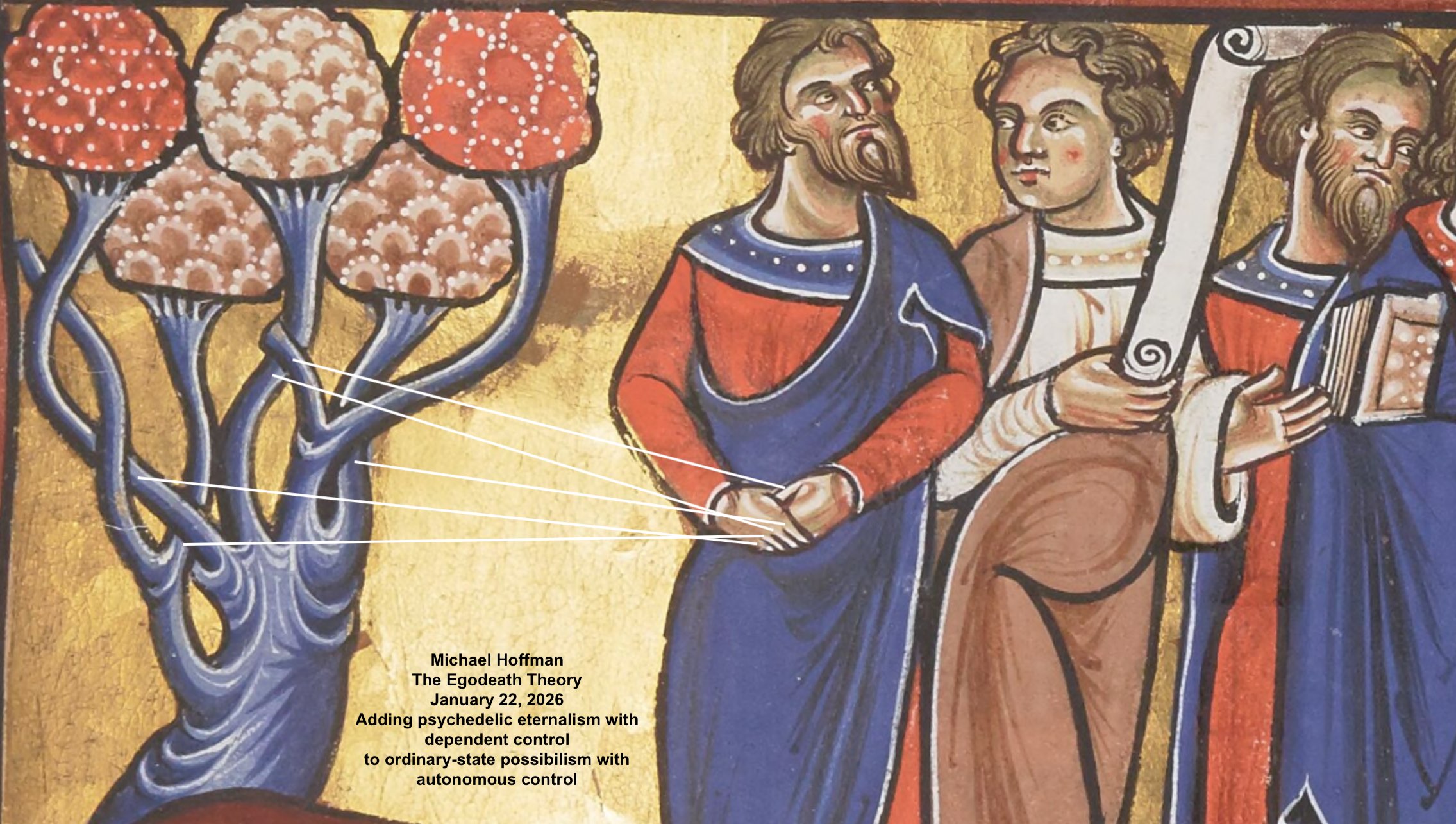
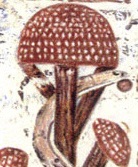
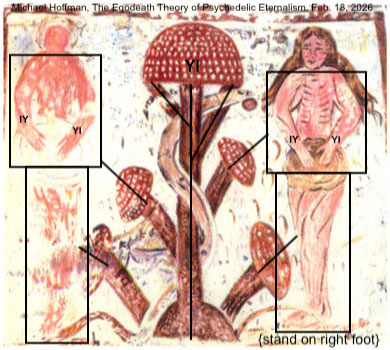
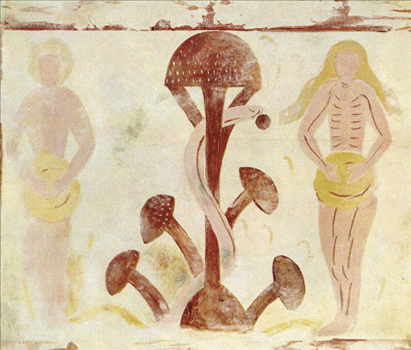
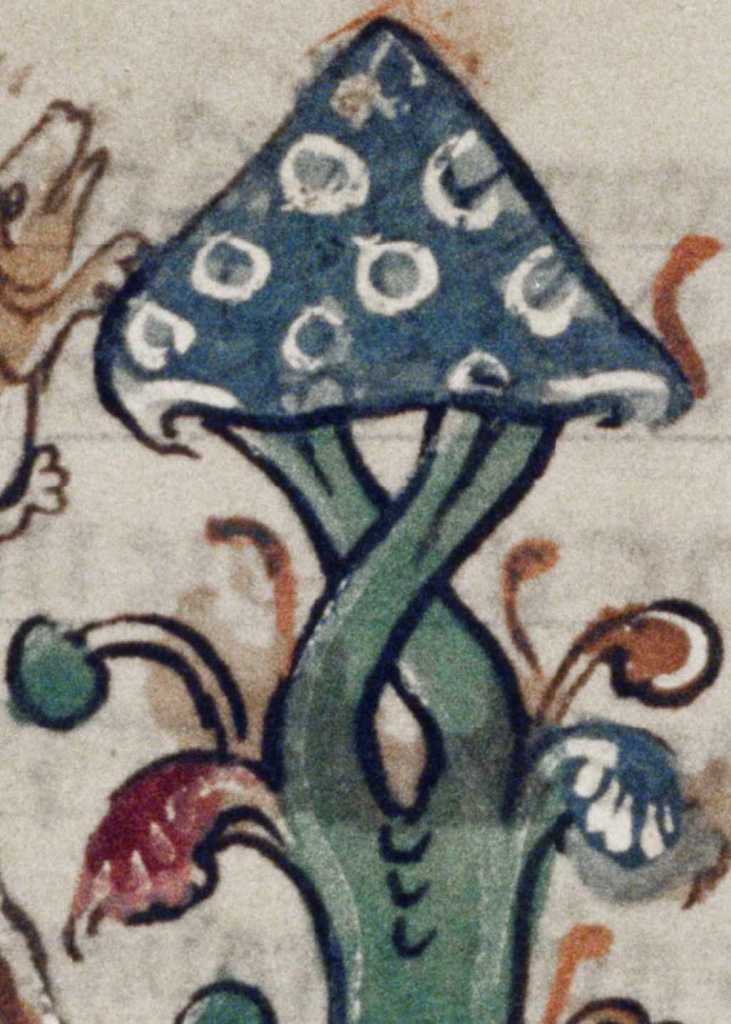
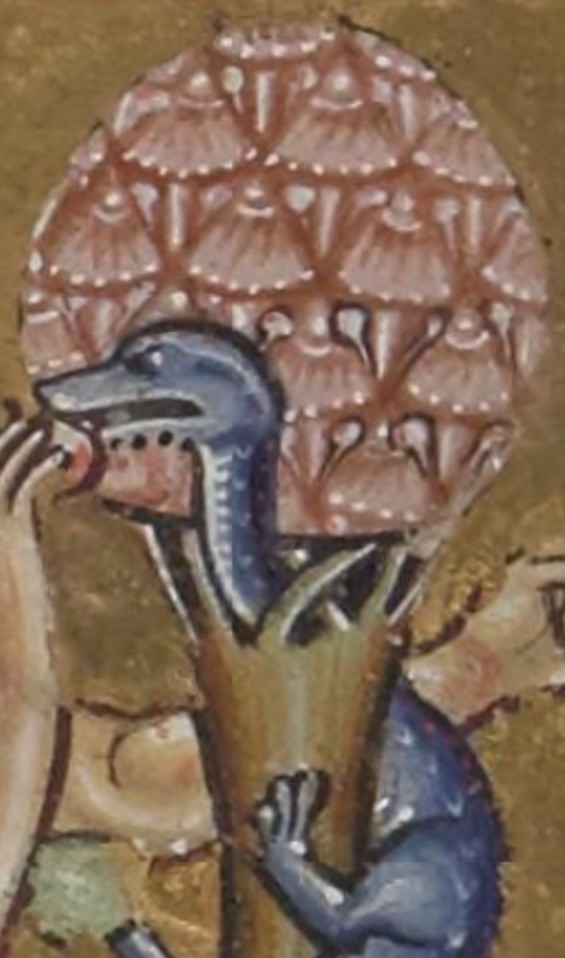
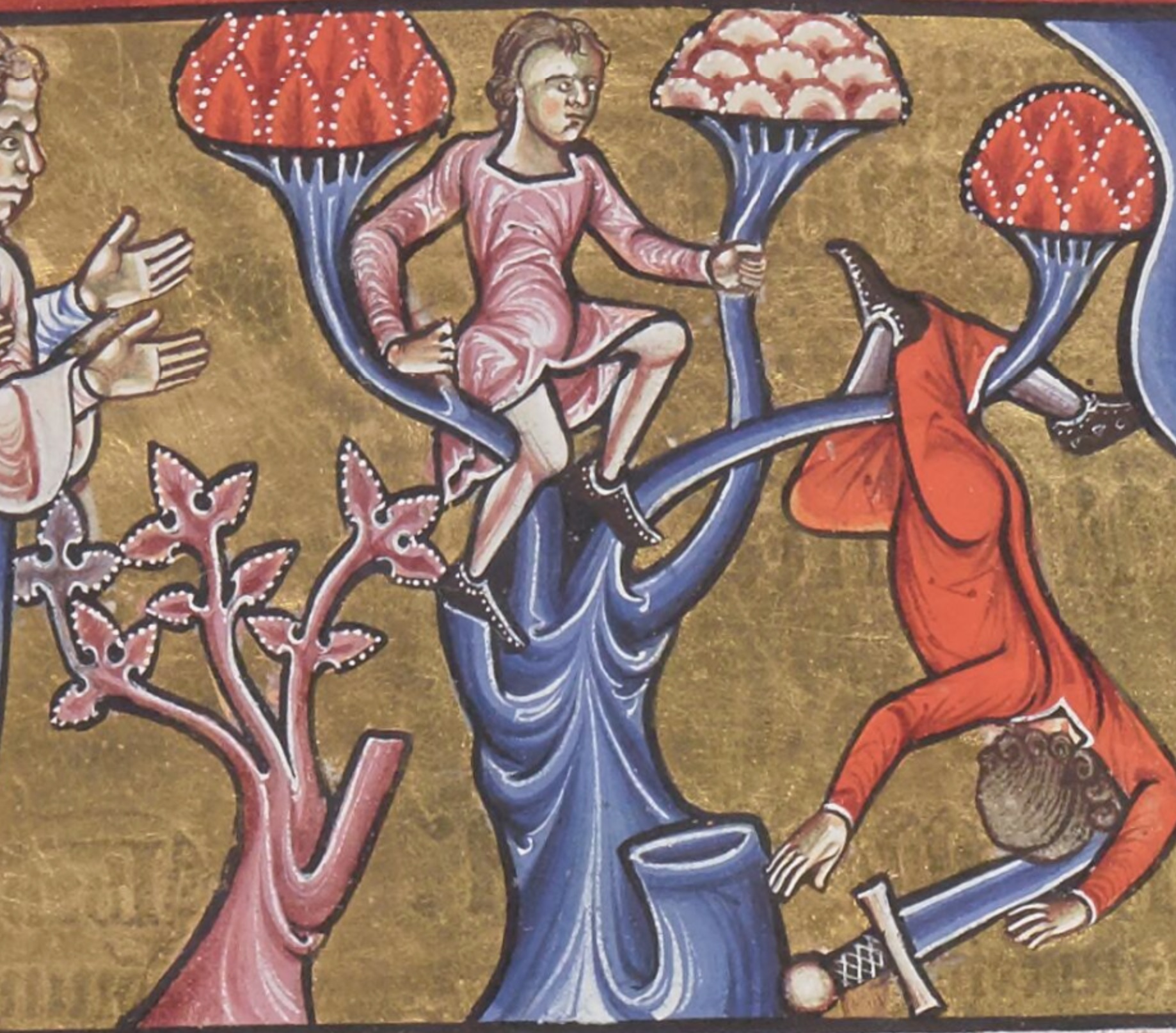
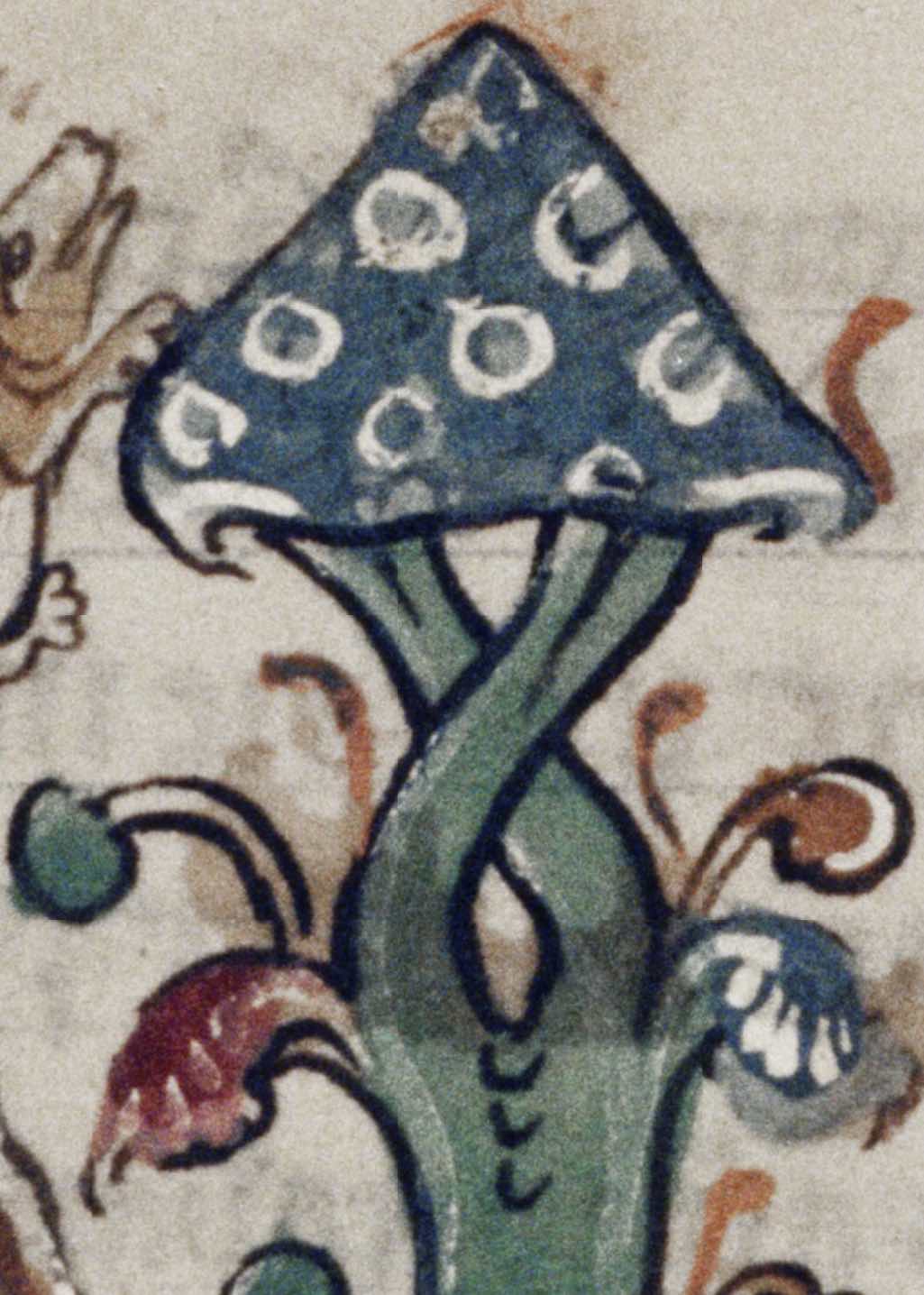
Possibilism (branching, open future) vs. eternalism (non-branching, closed future) are the two relevant models for personal control, as contrasted in the medieval art genre of mushroom-trees.

That genre uses {cut right trunk} and {cut right branch} motifs, assigned to standing on _right_ foot rather than left foot. 

The diagrammatic art genre of mushroom-trees claims that the _branching_ model (possibilism) produces control instability, but relying on the non-branching model (eternalism) produces control stability.

Emily Adlam’s view, 4D spacetime block-universe eternalism, supports the Egodeath theory of psychedelic eternalism, in which block time with dependent control (“non-control” in a sense) is experienced, and the contrast between the branching vs. non-branching models is perceived. 

Posted to youtube April 15, 2025:
https://www.youtube.com/watch?v=FoQhHmjyERA
The “All at Once” Theory: The Universe is a Single Timeless Block
April 14, 2024
This video is a short clip of the main interview.

My Comment 2 on a Curt & Emily Video

Everyone went running after (branching) Quantum Mysticism, but the “road not taken” (or less taken) can be called (non-branching) 4D Spacetime Mysticism, or Block-Universe Mysticism.

The competing, Minkowski-based model. Around 1880-1910 seems like a nascent version of this earlier type of Physics-oriented mysticism formed.

The full version of this interview held up to multiple listens, a favorite.

My Comment 3 on a Curt & Emily Video

Someone asked me “What is Quantum Mysticism?”

Wikipedia has a good article “Quantum mysticism”, saying it is bunk spiritual reinterpretation of Quantum Physics; I agree.

https://en.wikipedia.org/wiki/Quantum_mysticism

The Wikipedia article emphasizes eg.that the mind or “observer effect” creates many worlds at every moment: that’s the extreme of ego-power inflation.

I have defined the opposite use of Physics for an opposite version of mysticism that is offensive to ego power:

The future is single and already exists, not like domino-chain determinism causality, but quite different like Emily Adlam’s All-at-Once, eternalism; “4D spacetime block-universe mysticism”.

Popular Quantum Mysticism is not the Presentism view of time like the interview contrasts against Eternalism.

(Find “Presentism” in the present page transcript, asked by Curt.)

The popular view is actually Possibilism, which is depicted in medieval art as branching (contrasted against non-branching ie Eternalism perceived in the mystical state of consciousness, which I assert).

Motivation for this Page

I have read books about block time in Physics, but haven’t given them much attention, since they just reiterate my view from January 1988 in a university course in Modern Physics.

This interview provides an efficient equivalent of giving attention to this genre of Physics books.

My psychedelic church is dominated by virtual dogma of Quantum Mysticism. They mistakenly equate this version of mysticism with “the” “Science” view.

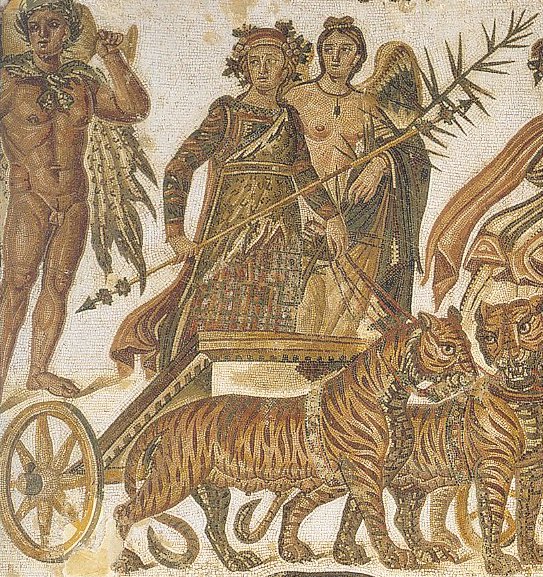
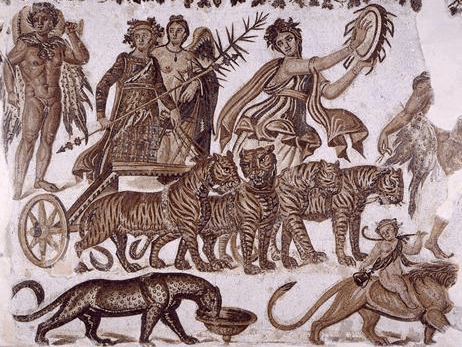
But around 1880 and with my breakthrough in Jan. 1988, Physics produced an earlier, better version of mysticism that doesn’t reify false ego and branching-power, but zaps it 100% to smithereens like Zeus revealing his power to Semele.

I am naming this earlier but ignored version of Physics mysticism as eg 4D Spacetime Mysticism, or with less emphasis on the combat within Physics, block-universe mysticism, understood as psychedelics-experienced/ revealed.

Info about Curt Jaimungal

https://www.google.com/search?q=%22Curt+Jaimungal%22

Info about Emily Adlam

https://www.google.com/search?q=%22Emily+Adlam%22

YouTube Videos:
https://www.youtube.com/results?search_query=emily+adlam

“Theories of Everything” Videos Playlist by Curt Jaimungal

Theories of Everything with Curt Jaimungal – playlist, including video interviews about:

  • “no quantum multiverse”/ Shattering Manyworlds Theory
  • retrocausality, superdeterminism
  • time doesn’t flow – it’s an emergent effect
  • Hofstadter’s strange loops
  • Time Doesn’t Exist [Never write this stupid binary construction – always say “the sense in which x”. Your intelligence doesn’t exist.]
  • Roger Penrose
  • No Scientific Innovation Since the 1920s
  • Physics community divided
  • Consciousness Theories

Video: The “All At Once” Universe Shatters Our View of Time (Emily Adlam)

Video title:
The “All At Once” Universe Shatters Our View of Time
Everything Happens at Once! (Emily Adlam)
YouTube channel: Curt Jaimungal
Apr 11, 2025
✪ Members first on April 10, 2025
https://www.youtube.com/watch?v=6I2OhmVWLMs

Description Section of Video

Description (“More” link at video):

“Today we are joined by physicist and philosopher Emily Adlam for her first appearance on Theories of Everything to challenge one of the deepest assumptions in science: that time flows.

“In this thought-provoking conversation, Adlam presents her “all-at-once” view of physics, where the universe is more like a completed Sudoku puzzle than a film playing forward.

“We explore the measurement problem in quantum mechanics, the role of the observer, the illusion of causality, and why these foundational questions demand both philosophical clarity and scientific precision.”

New Substack: https://curtjaimungal.substack.com

Links might only work from Desc section in the video at YouTube.

•⁠ ⁠Emily’s profile: https://www.researchgate.net/profile/…

•⁠ ⁠Spooky Action at a Temporal Distance (paper): https://pmc.ncbi.nlm.nih.gov/articles…

•⁠ ⁠Quantum Field Theory and the Limits of Reductionism (paper): https://arxiv.org/pdf/2407.20457

•⁠ ⁠Two Roads of Retrocausality (paper): https://arxiv.org/pdf/2201.12934

•⁠ ⁠Taxonomy for Physics Beyond Quantum Mechanics (paper): https://arxiv.org/pdf/2309.12293

•⁠ ⁠Strong Determinism (paper): https://arxiv.org/pdf/2203.02886

•⁠ ⁠Carlo Rovelli on TOE:    • The Loop Quantum Gravity Debacle: Car…  

•⁠ ⁠Stephen Wolfram on TOE:    • Solving the Problem of Consciousness …  

•⁠ ⁠Emily interviewed about Nonlocality:    • Nonlocality Not in Space but in Time:…  

•⁠ ⁠Tim Palmer on TOE:    • Tim Palmer: Non-Locality, Universe on…  

•⁠ ⁠Tim Maudlin on TOE:    • Why Bell’s Theorem Changes Everything…  

•⁠ ⁠Algorithmic Randomness and Probabilistic Laws (paper): https://arxiv.org/pdf/2303.01411

•⁠ ⁠Governing Without a Fundamental Direction of Time (paper): https://arxiv.org/pdf/2109.09226

•⁠ ⁠Matt Segal on TOE:    • Is The Universe Conscious? | Matt Segall  

•⁠ ⁠Jacob Barandes on TOE:    • There’s No Wave Function? | Jacob Bar…  

•⁠ ⁠Sabine Hossenfelder on TOE:    • The Major Flaws in Fundamental Physics  

•⁠ ⁠Bernardo Kastrup and Sabine on TOE:    • Bernardo Kastrup Λ Sabine Hossenfelde…  

•⁠ ⁠Sean Carroll on TOE:   • The Crisis in (Fundamental) Physics i…  

Timestamps (Even Though “Time Is an Illusion”, Like the Intelligence of People Who Talk That Way)

Timestamps:

00:00 Introduction

00:56 Observers in Quantum Mechanics

02:15 The Measurement Problem

06:23 Dogmas in Quantum Foundations

08:24 Causation and Its Philosophical Implications

09:12 The Arrow of Time and Its Mysteries

10:28 Exploring Coarse Graining and Reductionism

13:21 Non-Locality: Temporal vs. Spatial

16:06 The Nature of Non-Locality

19:34 Temporal Non-Locality and Its Implications

21:51 Retrocausality: The All-at-Once Perspective

26:25 The Measurement Problem and All-at-Once Framework

28:24 Observer-Centric Interpretations of Quantum Mechanics

31:29 Probabilities in Physics

32:51 The Process Matrix and Causal Structures

38:33 Foundations of Physics and Philosophy

1:05:16 The Emergence of Space-Time

1:08:11 Exploring Correlations in Physical Parameters

1:10:44 Epistemology of the Measurement Problem

1:13:26 Lessons in Patience and Persistence

Key Words to Find in the Transcript

Find:

  • possible, possibilism
  • presentism
  • eternalism, eternalist
  • [find ‘eternalist’ in Kyle Bromhall’s article about James’ 1897 article DoD?
    No, just eternal: https://philarchive.org/archive/BROAIU-2]
  • branch
  • many worlds, manyworlds
  • multiverse

My Commentary Notation

[i will clean up the transcription later, remove extra space chars which will hint that I have studied the sentence. markup, bold, & my commentary does same.]

Transcript

Introduction

00:00 Introduction

Coming up soon…

Emily Adlam:

“The dogma I worry about is that we should think  about physics in terms of time evolution.

This picture where you start at the beginning  and evolve forwards in time,

[sounds like Tim Freke’s attempted revision of spirituality in terms of “emergent, evolutionary spirituality, which has a low view of previous expressions of spiritual enlightenment – as I have complained but repaired, since 1986.]

that’s a very intuitive [read: naive] way of thinking about physics, but it  is very clearly not a good fit for what we are seeing.

There’s really good evidence coming from lots of different parts of physics that we shouldn’t be thinking about time in those  terms.”

Curt Jaimungal (intro):

Imagine a completed Sudoku puzzle.

The  rules don’t dictate that you start in one corner  and then work systematically across the grid.

Instead, they just constrain what patterns  are valid for the entire puzzle. Professor  Emily Adlam of Chapman University suggests that  the fundamental laws of physics work similarly.  

You don’t evolve the universe step-by-step  from past to future. Instead, there are   these constraints. Something that selects valid  patterns across all of spacetime simultaneously.  

This quote-unquote all-at-once perspective helps  explain paradoxical quantum phenomena like delayed  choice experiments and Bell nonlocality.

It  also comports with Einstein’s relativity,   where the distinction between past and future  depends on the observer’s reference frame.

Observers in Quantum Mechanics

00:56 Observers in Quantum Mechanics

If  correct, this paradigm shift would transform  our understanding of causality, of observers, and of the nature of physical law itself.

CJ:

What’s  the largest unsolved problem in physics today that  you’re interested in?

EA:

Well, this is not a very  original answer, but I think the measurement  problem of quantum mechanics for me still really  stands out as an important unsolved problem.  

Not just because it’s intellectually interesting,  but because it seems to me that it’s closely   linked to a variety of concrete problems that  we’re working on in modern physics.

In particular,  I think in the context of work on quantum gravity,  a lot of the issues we’re really struggling   with are ultimately to do with the nature of  observers, the nature of observation.

For example, solving the problem of time is all about trying  to understand how to put the observers and their  theories in a way that reproduces the kinds of  observations we expect to see.

And so that makes me think that perhaps there’s an issue here where  we never really came to grips with how to think  about observers in the context of ordinary quantum  mechanics, and that’s really holding us back from making us progress on further physics.

So I think  that problem to me demands a solution not just for  intellectual curiosity, but also to be able to  make real progress.

The Measurement Problem

02:15 The Measurement Problem

And what’s the definition of ‘observer’?

Is it the same as a measuring device, or  what counts as a measurement?

Emily Adlam:

Well that’s exactly  the problem.

We don’t know clearly how to define  observers in concrete physical terms.

We have,  of course, an intuitive notion of what an observer  is, and we know what we expect observers to see,  but it’s still very unclear how to properly  model observers within quantum mechanics.

All the interpretations of quantum mechanics say  something different about how you should represent  observers, and that has important knock-on effects  for how you’re going to think about observers in  the context of further physics like quantum  gravity.

How does the problem of observers,  or defining what observers are, have  anything to do with quantum gravity?  

So, I mean, one of the big problems we encounter  in the formulation of quantum gravity is known as  the problem of time, which refers to the fact that  if you impose a sort of canonical quantization on  gravity, the result is that time evolution seems  to vanish.

You end up with this sort of strained,  timeless model.

And so then one obvious problem  you have is to try to understand how the kinds of  experiences that we have could possibly arise in this context.

Where does our sense of doing things  in time and obtaining outcomes come from?

And so  there are lots of interesting ideas around this,  but a lot of this is still very focused on this  question of how exactly should you represent   an observer, and how can you make sense of  sort of local observations in this setting.  

So why don’t you tell us how you make sense of  observers, then? Well, I mean, unfortunately,  I don’t have a complete answer to this question.

I  think one thing that we can see clearly from both  general relativity and quantum gravity is that  making sense of observers is probably going to  require understanding them in sort of relational  terms, understanding observations as things that  happen in some sense relative to our observers,  rather than being things that are out there in   the world by themselves.

So that seems like an  important insight, which I think is also relevant  for standard quantum mechanics. But certainly,  it’s an ongoing project to understand exactly how  to make that work in a coherent way. We’re going  to get to the relational interpretation of quantum  mechanics and your work with Carlo Rovelli.

Carlo Rovelli: Physics Without Time

https://www.google.com/search?q=%22carlo+rovelli%22
https://en.wikipedia.org/wiki/Carlo_Rovelli#Physics_without_time

But  prior to that, I want to know, what the heck is   a Sudoku universe?

The Sudoku universe  is a way of thinking about time and laws in the  context of modern physics.

So there’s this perhaps  quite traditional way of thinking about physics,   where we imagine it as something like a computer, as Ken Wharton puts it.

So we think of an initial  state being put in, and then the universe just  evolves the initial state forwards in time and   produces the course of history.

And that’s,  I think, the intuitively natural way to think about physics that many people still use.

But  there’s, I think, really good evidence coming   from lots of different parts of physics that we  shouldn’t be thinking about time in those terms.  

We should instead be thinking about the laws of nature as applying all at once to the whole of history.

So in that sense, they’re like the  rules of a game of Sudoku.

The rules of Sudoku  don’t tell you to start at the left and then move  towards the right.

What they do is constrain the  whole grid and tell you whether an entire solution  is valid or invalid.

So the thought is that the  laws of nature perhaps work like that and not  like time evolution.

Is that the same as saying  that there’s some imposition of consistency? 

So certainly consistency is one important kind  of constraint.

I think probably we need more  constraints than just consistency because I  don’t know how to derive the actual laws that we  observe from purely consistency conditions.

It  would be neat if that could be done. But it seems  like there might be some constraints going beyond  just consistency conditions to sort of impose  the specific types of laws that we actually see.  

You had a 2018 paper called Spooky Action at  a Temporal Distance, which is a great title  by the way.

A Dogma in Quantum Foundations: That We Should Think in Terms of Time Evolution

06:23 Dogmas in Quantum Foundations

You mentioned something becoming  a dogma in physics.

I’m quoting you, a dogma, and something like there’s an assumption which is  actively limiting progress in quantum foundation. 

So what is it? And those are strong words.

So I’d like you to justify your usage of that language.  

Emily Adlam:

The dogma I was worrying about there was  this idea that we should think about physics in terms of time evolution, this picture where you  start at the beginning and evolve forwards in   time.

As I say, that’s a very intuitive way  of thinking about physics, but it is I think  very clearly not a good fit for what we are  seeing in modern physics.

And yet nonetheless,  many people I think are still drawn to try to  think about things in those terms.

So for example, in quantum foundations, it’s very common to be  quite focused on trying to give causal accounts of things to understand either in classical  terms or to move to a sort of quantum notion of causation where you can tell the story about  one thing causing another thing causing another   thing.

And that I think is not a good use of our  efforts because there are clear indications that  that’s not really the structure that physics  actually has.

And so trying to force it into a causal structure is not likely to be a good way of  understanding it.

[‘causal’ implies branching possibilities & monolithic, autonomous control — vs non-branching possibilities with 2-level, dependent control -Michael Hoffman]

In the philosophical literature,  there’s disputes as to what is causation.

Do you  have a personal account of causation?

Yeah. When  I say personal, I mean one that you favor. 

Definitely the accounts of causation I favor.  

Other ones which suggest that causation needs  to be understood essentially as a macroscopic  phenomenon.

So causation I think clearly has  something to do with thermodynamics and the   thermodynamic arrow in terms of entropy.

It’s  also I think clearly related to perspective,  the perspective of macroscopic observers like us  and what we can and can’t achieve.

It’s related to  interventions and telling a story about what  observers like us can achieve by intervening  on certain types of variables.

So all of those  things make it seem very macroscopic in nature,  which means that for me it’s incorrect to think  of causation as being something that adheres in  the microscopic world.

Causation and Its Philosophical Implications

08:24 Causation and Its Philosophical Implications

Certainly there are I think  important kinds of structure in the microscopic world that we need to think about, but I don’t  think those structures are causal in the ordinary   sense.

And so it’s not going to be particularly  helpful to try to model them in causal terms.  

So I’d like to talk about non-locality as  well, specifically temporal non-locality.

And   in temporal is time. And earlier you mentioned the  problem of time.

And then here we’re talking about  the arrow of time or the thermodynamic arrow  of time. So it sounds to people who know some  physics that, oh, there’s a problem of time.  Is that the problem of the arrow of time?

Is the problem of time different than the arrow of  time problem? And does the second law solve it?  

All of these get entwined in their mind. So why  don’t you distinguish those?

What is the problem of time?

What is the arrow of time and what it  has to do with the second law?

The Arrow of Time and Its Mysteries

09:12 The Arrow of Time and Its Mysteries

The arrow of time usually refers to the fact that in the  world, as we experience it, there are all these  temporal asymmetries, you know, glasses break and  don’t usually recompose themselves.

All of these  kinds of obvious asymmetries that characterize  our lives.

The problem of the arrow of time  is that the underlying physics mostly seems to be time-symmetric.

So in that sense, it’s not obvious  where all of these asymmetries could come from. 

You seem to have to impose them by just deciding  by fiat that the initial state of the universe  is some special kind of state, which can explain   those asymmetries.

But for many people, that’s not  super satisfying.

The problem of time in quantum  gravity is a distinct issue.

It refers to the  fact that within a specific technical formalism  for quantizing gravity, when you perform that  quantization, you find that time evolution ends  up being what’s called a gauge transformation,  which means that it’s not physically real.

It’s   just kind of giving two different descriptions of  the same thing. So it looks like time evolution  in the ordinary sense is not present at all. So  that leads to a problem of trying to understand,  you know, where do our experiences come from? 

Why do we have these experiences that feel like  they are temporal in nature?

Exploring Coarse Graining and Reductionism

10:28 Exploring Coarse Graining and Reductionism

So they are separate  problems, but I think it’s very likely they are linked.

I think certainly the story about why we  have experiences which are temporal in nature must  have something to do with thermodynamics and the  fact that we live in this very asymmetric regime.

[our experiencing is always shaped in the form of causal agency steering among branching possibilities into an open future]  

So there’s still work to be done to flesh  out the connections between these things,   but certainly I think they’re not completely  independent.

So some people explain the arrow  of time with coarse graining. I think Stephen  Wolfram does this, and in coarse graining is the  notion of renormalization. You had a paper on why  reductionism is false, or at least not necessarily  true, and you tied it to renormalization.

Can you  please talk about that?

In that paper,  you know, this is sort of an exploratory paper. 

I’m not necessarily committed to the view that  reductionism is false, but I’m interested in  whether that is maybe one way to try to resolve  some of the problems that we encounter in quantum  field theory.

So one of the problems is a sort of  fine-tuning issue where we find that in certain  kinds of cases, it seems that the values of two  distinct fundamental constants must be very  carefully adjusted to fit each other in order  to produce the observed value of the constant  at a higher scale.

And sort of the observation  I was making here was that if you say things are  the other way around, if you say that the higher  level constant is fundamental and the smaller  scale constants are in fact derived from it,  that gives you a very natural explanation for why  they’re fine-tuned in this way, because they are   in fact fixed by the actual value of the higher  level constant.

So the thought there was just that  perhaps changing our way of thinking such  that in some cases smaller scale things  are explained by larger scale things rather than  vice versa might be a way of understanding some   of those phenomena.

Then it was important to  look at the renormalization transformations,  because renormalization is the transformation  we use in quantum field theory to move between  different scales.

And so the question I was  looking at there was trying to understand, given  the mathematical structure of the renormalization  translations, is it possible that things could be  reversed in direction and that the higher scale  things could define the lower scale things and   not vice versa?

We normally wouldn’t think that’s  possible in sort of more ordinary physics, because  we think there’s a sort of many-to-one mapping  where many microscopic possibilities get mapped   to one macroscopic possibility, so the macroscopic  possibility can’t determine what’s going on in the  microscopic scales.

But renormalization is in  fact a one-to-one transformation, so it does  seem more plausible in the kind of regime where  that’s relevant, that perhaps the higher scale   things could determine the lower scale things  because of the specific mathematical structure  of that transformation. Even at fixed points?  So fixed points are somewhat more complicated,  

Non-Locality: Temporal vs. Spatial

13:21 Non-Locality: Temporal vs. Spatial

because fixed points do involve scenarios where  many solutions get mapped to one solution. But the  thing about fixed points is that they can occur  both at very small scales and at larger scales.

So  it’s not obvious to me that invoking fixed points  particularly favors one direction of explanation, since they occur at both levels.

So let me  see if I can phrase this in the language for  mathematicians, and correct me if I’m incorrect. 

The renormalization group is a set of tools to  determine how parameters change with different  scales, whether it’s energy scales or length   scales or what have you. Now, it’s less of a group  in the algebraic sense and more a set of tools,  but if it was to be something like a group, it  would be a monoid, because not every element is  invertible.

However, most of the elements are  invertible, and this would mean that you don’t  privilege some scales being more fundamental, in  the same way that in an affine group you don’t   have a privileged origin? That’s right, yeah.  So we have various approximations we use to do  renormalization, and many of those are not  invertible.

But there are good reasons to think   that the real underlying transformations should be  invertible. And if that’s the case, then outside  of fixed points, you can go from small scales to  large scales, or you can go from large scales to   small scales. It’s kind of the same from the point  of view of the underlying math. And so there’s no  sort of obvious sense in which the physics is  telling you the small things must explain the   big things and not vice versa.

Let me see if I can  make another analogy. So let’s imagine there’s a  bird in the sky and you take a snapshot of that  bird. And then you say, okay, its position is   here and its velocity is here, or its momentum.  And then you could say, okay, where is it going  to be?

And then you can plan out or you can  predict its trajectory. And then you say, well,  look what we got here as an initial position and  velocity.

But why did you call this “initial”?

Like  you could actually, from another point, make the  trajectory go backward.

And so you have the whole  trajectory.

So what is the “initial” point?

Why is one point being privileged?

Yeah, I mean, I think  that’s a great analogy, because I would say much  the same about time evolution as well, that there  is no particular reason to privilege one point. 

Certainly the physics doesn’t tell you you have   to do that. And yeah, I think the same is true, at  least for many applications of the renormalization transformation.

The physics doesn’t seem to be  telling you that the smallest, most fundamental  scales must actually be privileged in that sense. 

The Nature of Non-Locality

16:06 The Nature of Non-Locality

So let’s get to nonlocality.

There’s a large  hubbub about nonlocality and Bell’s theorem and  also realism.

Well, what is nonlocality?

Yeah, so in the context of quantum mechanics, nonlocality  is the phenomenon that quantum mechanics exhibits  correlations which seem to be too strong to be  explained by any local model.

So normally when  we see correlations at a distance, we would expect  to explain them by some common cause in the past.  

They both came from the same source or something  like that. But Bell’s theorem demonstrates that  the types of correlations we see in quantum  mechanics can’t be explained that way.

It seems   as though there’s some kind of direct influence  between events happening at a distance that can’t  be explained in this sort of common cause way.  Now there’s two different types of nonlocality,  spatial and temporal.

And you have many papers,  many talks as well on temporal nonlocality. So  please distinguish the two.

Yeah. So perhaps the,  I guess the traditional way of thinking about  nonlocality in quantum mechanics is to imagine it  as a spatial form of nonlocality.

So that involves  a situation in which perhaps Alice performs a  measurement in one location. And as soon as she  does that, the wave function collapses everywhere  in the world.

And that sort of conveys information  across to Bob wherever he is. And that has  an impact on the results of his subsequent   measurement.

So that nonlocality is spatial  because the effect of what Alice does is just  transferred to the whole global state everywhere  at the same time.

Whereas temporal nonlocality  suggests that nonlocality doesn’t necessarily have  to be conveyed immediately in terms of the current  state of the world.

You can potentially think  of nonlocality as kind of hopping across time   as well. So Alice performs her measurement at  some time and at some other place.

And at some  later time, Bob performs a measurement and there’s  just a direct relationship.

There’s some kind of   constraint requiring that Bob’s outcome reflects  Alice’s choice in some way.

So there’s a kind of  direct nonlocal impact that is not mediated  by a global state evolving forward carrying  that information. Does spatial nonlocality  imply temporal or vice versa?

Combining spatial nonlocality with relativistic  constraints makes it very compelling to think  that there should be temporal nonlocality.

That’s  because if you take a frame of reference within a  relativistic setting where you have a spatially  nonlocal effect, something Alice does influences  something that happens over here, you’re allowed  within relativity to make a change of reference   frame to get another equally valid reference  frame.

And in that reference frame, those events  are not going to be at the same time anymore. 

Bob’s event over here is going to be either in  the future or the past of Alice’s observation. 

So it looks like by making that transformation,  you have turned your spatial nonlocality into  temporal nonlocality.

So that in that sense, if you believe what relativity tells us about  the close connections between space and time, it seems very hard to maintain that nonlocality  is always spatial and never temporal.

So then why is it that physicists, if I understood one of your  papers correctly, why is it that physicists focus on the spatial nonlocality when if you’re in the  relativistic setting and both are on quote-unquote “equal footing”?

(A term I don’t like for various  reasons. I’ll put a link to a video on why I don’t like “equal footing”.)

Particles don’t take “all possible paths simultaneously.” Here’s why.
Curt Jaimungal, April 3, 2025
https://curtjaimungal.substack.com/p/particles-dont-take-all-possible?utm_source=substack&utm_medium=email&utm_content=share – “Firstly, what is this word “possible”? Possible isn’t a physics word.”

Temporal Non-Locality and Its Implications

19:34 Temporal Non-Locality and Its Implications

But regardless, why is  it that physicists tend to focus on the spatial nonlocality compared to the temporal one?

One main reason for this is because quantum mechanics historically and still usually today is formulated as a time-evolution theory.

So the natural way to think about quantum  mechanics in its standard formulation is to  formulate it in terms of global states which carry all the information forwards in time

So from that point of view, if you’re trying to  model locality in that picture, perhaps the sort of natural thing to do is have a global collapse of the wave function that takes place everywhere and so to have a spatial nonlocality.

If you are  formulating quantum mechanics in a different way,  as a non-time evolution theory, then temporal nonlocality becomes much more natural and  compelling.

But that’s not the traditional way in  which we have formulated quantum mechanics.

Is the  future influencing the past an example of temporal  nonlocality?

Yes, so it could be. It depends, I think, how you think about the way in which  the future influences the past.

If, for example, your model of the future influencing the past involves some kind of like backwards evolving state that goes back and carries the information  backwards in time, you might end up with a picture  where there is a backwards influence, but it is  sort of locally mediated by a backwards evolving  state.

On the other hand, if your model of the way  in which the future influences the past is some  kind of all-at-once style model where there’s just  a sort of global constraint relating these two things to each other, in that case it is going to  look much more like temporal nonlocality because  there doesn’t need to be a sort of literal state  that goes back and carries the information.

Right.  

In your work, as I was going through it, you  differentiate between dynamical retrocausality, so influences propagating backward in time  step-by-step, and then this all-at-once, and this term “all-at-once” will come up over and over again.

I believe it’s an all-at-once temporal retrocausality.

Retrocausality: The All-at-Once Perspective

21:51 Retrocausality: The All-at-Once Perspective

But would it be called  retrocausality at that time?

At that point,  if it’s all—I guess that’s a pun—would it be  called retrocausality if it’s happening all at once?

Why is it retrocausality?

Yeah, well, I use  retrocausality in this connection just to sort of,  in a loose way, to relate what’s going on here  to sort of more traditional discussions of   retrocausality.

I think, strictly speaking, what’s  going on there is not retrocausality because I  think there’s no causality in fundamental physics

So, neither the forwards nor the backwards direction is truly causal.

But certainly, if  you try to look at this from a more macroscopic  point of view and you sort of write down a causal  model in which a person intervenes on something, in that sense, you’re going to get effects that  look retrocausal from that macroscopic point of view, even though I do think that you should  acknowledge that at the fundamental level, none of this is causal.

So, when  you’re thinking about all-at-once, are you also thinking about boundary conditions?

So, the ordinary way that physics is thought  about is that you have your boundary conditions  plus the laws, and you then evolve forward.

Definition of ‘All-at-Once’

So,  please define what all-at-once is.

All-at-once refers to this sort of Sudoku  universe-style idea where the laws of nature  apply to the whole of history all at once.

The one possible type of all-at-once model is a  model in which you fix the initial and the final  conditions, and then you ask the laws to determine  what happens in between.

That’s quite a   common type of problem that we see even in fairly  standard physics.

But it’s also not the only kind  of possibility.

When I talk about all-at-once  or constraint-based laws, I usually talk about  the laws of nature determining the whole history  at once.

In that sense, often it will be the  case that you can fix any state anywhere on  the history, and that will be sufficient to   fix the rest.

It could be the initial state,  could be the final state, could be one or more  states in between.

In that sense, in that kind  of picture, no particular point of time has to  be specially privileged.

It’s just the history  as a whole which is selected by the laws.

When  speaking about these histories, it reminds me of  the transaction interpretation.

Have you done any   work on the transaction interpretation, or do you  have any thoughts on it?

The transactional  interpretation is certainly interesting.

I’m  interested in these kinds of retrocausal models.  

I guess I would like to see more emphasis from  the transactional interpretation on moving away  from specific experimental situations to a more  general picture where I can understand how the  experimental situations and the observers in  particular are supposed to arise from something  more fundamental than that.

In some cases, the  transactional interpretation seems to me overly   focused on a setup where the instruments and the  observers are already given.

Tim Maudlin had a  challenge to the transactional interpretation  about how there’s some contradiction in simple   backward causal stories.

So, firstly, what is Tim  Maudlin’s objection or challenge, and what does  the all-at-once model do to resolve it?

Maudlin’s  concern was that if you imagine an experiment in  which we take some sort of preliminary measurement  in the middle of the experiment and then we use  that to determine part of the final conditions,  the final measurement we’re going to make,  that looks inconsistent with the most naive  version of the transactional interpretation   because the transactional interpretation is  supposed to take the initial and final conditions.  

Determine what happens in between so you can  make that become contradictory.

There are more  sophisticated versions of the transactional  interpretation which avoid this issue,   but I think all of them ultimately avoid this  issue by moving away from the sort of naive  story where there’s a literal transaction taking  place in some sort of temporal process and more  towards an all-at-once style picture where the  whole thing is kind of atemporal and has to be  thought of as being determined in this atemporal  sense that fixes its consistency.

So I think  ultimately, resolving that kind of problem,  both in the transactional interpretation and   in retrocausal models more generally, does seem  like it’s going to push you towards an all-at-once  style picture.”

https://egodeaththeory.org/2021/01/22/quotes-from-the-great-mystics-of-egodeath/#Control-vortex

Martin Ball’s going to inevitably run into the Egodeath theory. And in a way, he probably already has; Ball talks about ‘the shadow’, or something like that, this kind of New-Agey term: but, that is the problem; the threat of ego death looming, in the altered state.

We can help show – in addition to the critique of Pop Sike, make it constructive and show them how they can move closer to the Egodeath theory, why the Egodeath theory is more attractive option than their current paradigms, intellectually speaking: just for coherence; and, for providing the fullest model of what goes on in the altered state.

Because that’s really what draws us, what has drawn us to it; there’s nothing that really compares to the depth of explanation; that actually, pushing through towards the ego death, and not trying to skate around the outside and use the sacrament for some other purpose.

Cyberdisciple, Transcendent Knowledge Podcast, episode 3 (19:00)
Crop by Michael Hoffman

We started this conversation with  talking about the largest problem that irks you,  and it was the measurement problem, and now  we’re talking about the all-at-once model.  

The Measurement Problem and All-at-Once Framework

26:25 The Measurement Problem and All-at-Once Framework

Did the measurement problem lead you to this  all-at-once quantum framework, or did you starting this all-at-once quantum framework lead  you to realize the importance of the measurement   problem?

They are separate in that the indications that the all-at-once  model is correct come partly from quantum  mechanics but also from other parts of physics,  from relativity and quantum gravity and so on.

Just adopting an all-at-once style model  does not by itself solve the measurement problem  because the measurement problem is to a large   extent about how to model observers.

Just saying  we’re going to tell an all-at-once story doesn’t  answer the question of how to model observers. 

So I do think that it seems clear to me that the   right solution to the measurement problem is  going to be some all-at-once style solution,  but there are a number of different possibilities  within that, and so I think it’s still for me open  which is the right way to do that.

“Cubism” Is Mistranscription of: QBism (Quantum Bayesianism)

Do you find cubism? Or other observer-centric interpretations  to be unsatisfactory?

I find them incoherent.

My  worry about them is that if you’re really serious  about your observer-centricity, that is going to  lead you inevitably to a picture in which every   observer kind of has their own little reality and  they’re not able to communicate with each other.  

That I think is incompatible with the practice  of science.

Science is a very social activity.  

The sort of objectivity of science rests on the  fact that we have all these different scientists doing observations and then sharing them.

So I  don’t think it’s reasonable to interpret quantum  mechanics in any way which ultimately says  we can’t actually communicate with different   observers.

I am however interested in sort of  more moderate observer-centric views which allow  that observers play an important role or that  perspectives in general play an important role,  but which nonetheless make provision for sort of  connections between perspectives to happen.

Such as relational quantum?

Observer-Centric Interpretations of Quantum Mechanics

28:24 Observer-Centric Interpretations of Quantum Mechanics

Yeah, so I mean relational quantum mechanics in its standard formulation does have the problem that I’ve just described  because it does imply that it is impossible in  an absolute sense to ever know anything about  what’s going on in anyone else’s perspective.  

But the work that I did with Carlo Rovelli  recently was about thinking about how could  you alter relational quantum mechanics to overcome  this issue.

And so we did suggest a possible way   to address that by adding a postulate which  allows communication between observers.

The Economist [promotional]

https://economist.com/toe [theories of everything]

CJ:

“Just a  moment. Don’t go anywhere. Hey, I see you inching  away. Don’t be like the economy. Instead, read The  Economist.

I thought all The Economist was was  something that CEOs read to stay up to date on   world trends. And that’s true, but that’s not only  true.

What I’ve found more than useful for myself  personally is their coverage of math, physics,  philosophy, and AI, especially how something  is perceived by other countries and how it may  impact markets.

For instance, The Economist had an  interview with some of the people behind DeepSeek  the week DeepSeek was launched. No one else had  that.

Another example is The Economist has this  fantastic article on the recent dark energy data which surpasses even Scientific American’s  coverage, in my opinion.

They also have the chart  of everything. It’s like the chart version of  this channel.

It’s something which is a pleasure   to scroll through and learn from.

Links to all of  these will be in the description, of course.

The Word “Now, ” Is on the Egodeath Block List; the Instructor’s Equivalent of the “So, ” Virus (Verbal Tic)

Now, The Economist’s commitment to rigorous journalism  means that you get a clear picture of the world’s  most significant developments.

I am personally  interested in the more scientific ones,  like this one on extending life via mitochondrial  transplants, which creates actually a new field  of medicine, something that would make Michael  Levin proud.

The Economist also covers culture,  finance and economics, business, international  affairs, Britain, Europe, the Middle East, Africa,  China, Asia, the Americas, and of course, the USA. 

Whether it’s the latest in scientific innovation  or the shifting landscape of global politics,  The Economist provides comprehensive coverage,  and it goes far beyond just headlines.

“Look, ” Is a Junk Filler Word

Look, if  you’re passionate about expanding your knowledge   and gaining a new understanding, a deeper one,  of the forces that shape our world, then I  highly recommend subscribing to The Economist.

I  subscribe to them, and it’s an investment into my,  into your, intellectual growth. It’s one that  you won’t regret.

As a listener of this podcast,  you’ll get a special 20% off discount.

Now  you can enjoy The Economist and all it has to  offer for less.

Head over to their website,  http://www.economist.com slash TOE, T-O-E, to get  started.

Thanks for tuning in, and now let’s  get back to

the exploration of the mysteries  of our universe.

Again, that’s economist.com slash  TOE.

https://economist.com/toe [theories of everything]

How Do You Think about Probabilities?

How is it that you think about probabilities?  

Like there are different interpretations of  probabilities.

Forget about quantum mechanics.  

There are different interpretations of what a  probability is.

So in metaphysics and in science, how do you think about probability?

Probabilities in Physics

31:29 Probabilities in Physics

Yeah, I think  the interpretation of probability is a very hard  

problem. I think I’m not wholly satisfied with any  of the approaches that we have available to us.  

The sort of frequentist approaches are useful  in many cases, but have pretty significant  philosophical problems for accounting for certain  kinds of edge cases. Subjective Bayesianism,  I think, just doesn’t do justice to the fact  that certain probabilities do seem to be out   there in the world and not just in our minds. 

The sort of dispositionalist accounts are quite  mysterious and also very hard to reconcile with  all-at-once style physics.

There are a couple of  recent approaches that I’m very interested in. 

Frequentism: Anything “CAN” Cause Psilocybin Effects, but How Frequently DOES it? 0%, not 50% as Falsely Implied

There’s a view called gnomic frequentism due to   someone called John Roberts, which suggests that  probabilities should be understood in terms of  laws which require that frequencies should look a  certain way.

There’s some really nice work on this  recently by Eddie Chen and John Barrett looking  at the ways in which you could potentially expand  on that and think about probabilities as sort of  constraints on relative frequencies.

While that  work is still ongoing, I think that’s a really  interesting direction and probably the most  promising approach from my point of view. 

What do you mean?

What is Eddie Chen saying   that probabilities should look a certain way? 

What does that mean?

The Process Matrix and Causal Structures

32:51 The Process Matrix and Causal Structures

This is working within the sort of all-at-once style constraint-based view  of laws.

The observation is that if you allow  that laws are global constraints which apply to the whole of history, then you can formulate a   probabilistic law as saying something like, the  relative frequency of occurrences of some outcome  across all instances of this type of measurement  across all of history must have some value or must  fall in some range.

You can think of the laws  or probabilities as directly constraining the  relative frequencies that actually occur.

That’s  somewhat similar in spirit to the frequentist   approaches, but I think avoids some of the more  serious problems for frequentism because it’s  not just saying that probabilities are whatever  the frequencies should happen to be.

It really is   saying that the laws constrain the frequencies  and require them to have certain values.  

How does your approach compare with Shelley  Goldstein’s approach?

The approach that Eddie  Chen and Shelley Goldstein have worked on in terms  of laws is, I think, very similar in spirit to  mine.

Indeed, Eddie and I are working on a project  examining some of those similarities.

But perhaps  one difference is that they are inclined to think  of those all-at-once constraints as a fundamental  primitive, whereas I perhaps prefer to think  of them as being a form of modal structure in  accordance with a generally structurally realist approach to physics and to laws.

But I don’t think  those views are necessarily incompatible  with each other.

They’re more a difference   of emphasis.

[that sounds like how recently, I’ve been adjusting the relative emphasis of integrated possibilism/eternalism thinking; good news & bad news of enlightenment, etc. -Michael Hoffman ]

Modal: Facts about What Is Possible and Impossible

What’s a modal structure?

What does  that mean?

Modal is a word that philosophers  use to refer to facts about what is possible and  impossible.

Perhaps the most well-known example of  modal structure is causal structure.

So, that’s  one form that modal structure can take.

Because  I don’t think causation is fundamental, I don’t  think that can be the most general type of modal  structure.

But I do think the world has some other  kind of structure, which is in some way similar to  causal structure, but perhaps more general than  that.

And so, that’s where I would expect those  all-at-once constraints to live. Modal structure. 

So, modal comes from philosophy. It’s not a term  you hear in theoretical physics. Now, it is when  you start to study the foundations of physics  or the foundations of quantum mechanics.

But I’m  curious how philosophical tools, such as modalism  or analyzing determinism or realism, has guided  your research?

There’s a useful back and forth to be had here.

I think  that modern theoretical physics has important lessons for a variety of traditional philosophical  discussions.

This discussion about lawhood is a  great example.

Both me and Eddie and Shelley are  inspired by noting that traditional philosophical  accounts of lawhood don’t seem to do a very good  job of accommodating the kinds of laws we see in   modern physics.

Two-Way Inspiration between Physics & Philosophy

And I think there’s a useful  sort of flow of information backwards as well,  because using these philosophical tools and doing  the work to analyze, okay, so what are laws now?  

How can we understand the types of laws we’re  seeing in modern physics?

That’s a useful way   of clarifying our thoughts about what’s going  on in theoretical physics, understanding what  are useful directions for future research,  and understanding how we can connect those  developments back up to the kinds of things we’re  concerned with in philosophy and in everyday life.  

CJ:

Do you encounter the attitude from physicists  that, hey, physics, experimental physics,  theoretical physics, it doesn’t need anything  from philosophy?

Philosophy hasn’t contributed anything to science in the past 100 years other  than maybe Popper, and before that it was a while, and you can’t just count Aristotle, that was  thousands of years ago.

So do you encounter   that attitude?

Emily Adlam:

I think there’s a wide spectrum  of attitudes within physics. I mean, I certainly  have encountered people with that attitude, but  I’ve also encountered many physicists who love   philosophy and are very interested in it and are  very keen to talk to philosophers.

So while that  attitude does exist, I think there’s also plenty  of goodwill and interest in both communities to  talk to each other and make progress.

CJ:

What would  be the counterpoint to someone who’s saying that  philosophy hasn’t contributed directly to physics in the past few decades?

EA:

Definitely the most  obvious example I would say is Bell’s theorem and  the discussion around non-locality.

Bell’s theorem  was very much regarded as not mainstream physics  when it was formulated, and Bell was a physicist,  but other people involved in the discussion  of non-locality and pushing this forward,  like Shimoni, were not physicists, they were  primarily philosophers.

Certainly, I think   this topic probably got more of a foothold within  philosophy before it moved back into mainstream  physics, but now it’s certainly recognized as  mainstream physics.

The Nobel Prize was awarded  for it recently.

So I think that’s an example  of a case where topics that were considered   sort of foundational and conceptual were worked  on within philosophy for a while, but ultimately  became recognized as part of mainstream physics.  So what got you interested in philosophy?

Foundations of Physics and Philosophy

38:33 Foundations of Physics and Philosophy

Did you  start in physics or did you start in philosophy? 

My undergrad was in both physics and philosophy,  so I guess both.

I’ve always been very interested  in physics and in science, but my questions have  

always been more on the side of what is considered  to be foundational physics or philosophy of  physics.

I think it was a toss-up for a long time  whether I was going to be a physicist working on   the foundations of physics or a philosopher.  My PhD is actually in physics, not philosophy,  but in the end, I think perhaps the kind of work I  want to do feels like it lives more happily within   philosophy. So that’s why I ended up here.

And  what does foundations mean? So when someone says  they study the foundations of something.

That means something to do with  interested in the sort of more basic conceptual  questions and looking at the sort of underlying  structures and perhaps understanding why the  theory is the way it is or understanding basic  principles of the theory. It’s sort of a contrast  to more applied approaches.

If you study  the foundations of quantum mechanics, you’re not  going to be primarily working on how to build new  quantum technologies.

You’re going to be thinking  about the structure of the theory and what it all   means. And perhaps those results will eventually  go on to be useful in quantum technologies. They  often do.

But if you’re working in foundations,  that’s not your sort of primary focus.  

So what I enjoy about your work is that much  like Jacob Barandes is, you emphasize clarity of  concepts and principles as a guide to progress. 

Taxonomy for Physics Beyond Quantum Mechanics (Adlam, Hance, Hossenfelder, Palmer; June 2024)

You actually co-authored a paper last year,  if I’m not mistaken, with Sabine Hossenfelder and  Tim Palmer, both of whom have been on the podcast  before.

So I’ll put a link to that on screen  and in the description.

Taxonomy for Physics Beyond Quantum Mechanics
Emily Adlam, Jonte R. Hance, Sabine Hossenfelder, and Tim N. Palmer
June 2024
https://arxiv.org/pdf/2309.12293

The paper is called a  taxonomy of physics for quantum theory or beyond  quantum theory.

It’s something that everyone  should read if they’re interested in physics.

And  if you follow this podcast, you can follow that   paper.

So there are different concepts that are  explained there with precision.

I’ve heard local beables be described as ontological entities.

And  I believe you said it’s something like the input  value on a C model that’s assigned to a compact  region of space-time.

And you explained what   a C model is. I think it’s a calculation model,  if I’m not mistaken.

So anyhow, what led you to  write that paper?

This paper arose out of a  conference on retrocausality and superdeterminism.  

Retrocausality and superdeterminism are two  approaches that people have often tried to  use in order to avoid the conclusion that quantum  mechanics might be nonlocal.

So this conference  was kind of discussing those possibilities.

Can  you get rid of nonlocality using one of these   methods?

And I think what we discovered is that  there were a variety of different ways in which  people were using the words retrocausality  and superdeterminism.

And there was a sort  of problem where people were talking past each  other because they were just using these words  in different ways.

So the goal of this paper was  to sort of provide a clarifying story which would  help explain what’s going on with these terms  and perhaps can we have a sort of community-wide  consensus about how to use these words so we can  have discussions more clearly.

[like Kafei tripping on my 2007+ attempted redefinition of ‘determinism’ to mean eternalism]

When people hear  temporal nonlocality, how is that different  than time travel?

Time travel, much  like retrocausality, could be temporally local or  temporally nonlocal.

If your vision of time travel  involves people literally moving backwards in time  – sorry, the cat is eating it – and those people  literally traveling backwards in time, that’s  going to look like a temporally local form of   time travel if there’s a sort of literal path back  in time that they go around.

On the other hand, if  they just kind of disappear at one point and then  reappear at another point, that’s going to look   temporally nonlocal because it’s a sort of cause  that just jumped across time.

So I think either of  those is possible as a model of time travel. 

Free Will

Does any of this have to do with free will?

Certainly.

If you look at the all-at-once style of model, that does seem like it has some  implications for free will because some people  have thought that something that’s important to  free will is the idea that the future is genuinely  open, that in this moment as I am acting, there is no fact of the matter about what my action is  going to be.

[Diary of a Madman album, Ozzy Osbourne:
Believer, lyrics by Bob Daisley, 1981:

DESTINY PLANNED OUT
SPECULATION OF THE WISE

end of song Believer]

Photo: Michael Hoffman, April 12, 2025

And in an all-at-once style model, that way of thinking about free will is not  available to you.

The whole of the universe exists at once.

I’m acting now, but there is already some fact from the atemporal point of view about what my action is going to be.

[pre-existence of future control-thoughts]

So I don’t think that means we have to say “there is no such thing as free will in that context.

But certainly, we’re  going to have to be a bit more careful about how  we analyze free will and what that means.

So this  doesn’t depend on determinism.

[correct: eternalism is the case, regardless of whether causal-chain determinism / domino-chain causality is the case, as the mechanism by which the future is closed – find “random” in Self-control Cybernetics, Dissociative Cognition, & Mystic Ego Death (1997 core theory spec):
https://egodeaththeory.org/2020/11/30/self-control-cybernetics-dissociative-cognition-mystic-ego-death/#budaac — Michael Hoffman wrote in Feb. 1997:
“Conventional determinism overemphasizes predictability in principle and perfect seamlessness of the chain of cause and effect, and cannot tolerate the slightest bit of true randomness or disjoint in the chain of cause and effect. More relevant to discovering ego-transcendence is that each point on any timeline is predetermined, and the future permanently exists, elsewhere in the spacetime block. The hypothesis about the eternally unbroken causal chain, in which the past eventually controls the future, is excessive, delicate, and irrelevant to higher experience. Even if there is some true randomness in the world, the future remains predetermined, because of the illusory nature of the flow of time, and the inability to the ego-entity to be an ultimate origin of its own thoughts and choices.” etc, see entire section -Michael Hoffman]

[per Kafei misreading Egodeath.com / The Entheogen Theory of Religion and Ego Death (Hoffman, 2007 main article) http://egodeath.com/EntheogenTheoryOfReligion.htm & https://egodeaththeory.wordpress.com/the-entheogen-theory-of-religion-and-ego-death-2006-main-article/ ,
EVERYONE defines “determinism” as causal-chain determinism, never as eternalism.]

It’s just saying  that there’s something that’s globally fixed

Yeah.

So even if you have a probabilistic model  in the all-at-once context, what that’s going to  look like is either it’s going to be some kind of  frequency constraint, as Eddie Chen has suggested,  or perhaps it’s going to be the course of history  is selected in a probabilistic way from some  set of possibilities.

But either way, you end up saying the course of history is determined all at  once.

So there’s no sense in which I’m acting now,  and yet my future actions are still open, even if they’re probabilistic. They have, from this atemporal point of view, already been chosen.

Calvinism

CJ:

I remember, oh gosh, I forgot who it was.  Someone was saying, it could be the  Calvinists.

Maybe it was a religion, or maybe it was an actual philosopher, was saying  that if you have trajectories in space-time,  just because they exist and you can view it  from a God’s-eye point of view atemporally,  

it doesn’t mean that those trajectories cause the  movement. Those trajectories are the movement.  Sorry, are the trajectory.

So an agent can still  be causal.

There’s nothing about the trajectories  causing. The laws don’t cause.

So can you please  distinguish between

  • the determination of an agent  
    and
  • causal origination of an agent?

Yeah.

So  because I think that causation is not fundamental  in any case, I think that understanding how the  history comes about is not going to involve any  kind of causal story.

That’s going to be some  more general kind of modal constraint, perhaps,  that selects the history.

I mean,

Causation is something that appears at a much higher level of description and probably is only going to be  relevant in the kinds of regimes where you have agents taking actions.

So I think it’s perfectly  possible to say, in some sort of fundamental  sense, the history was already there and was  selected in an all-at-once way.

But nonetheless, the agent is the cause of their action because  causation is only suitable in that kind of regime of description anyway.

And so it is still true. 

Insofar as there is such a thing as causation, it’s still true that the agent is causing their actions.

[say “the sense in which”; avoid saying eg “the agent is illusion, causality is illusion, time is illusion, my intelligence is an illusion”]

CJ:

Right. What do you disagree most with, Carla Rovellion?

What I disagree  most with?

I think we still have  an ongoing debate about whether it’s necessary  to change relational quantum mechanics in the way   that we suggested.

So we proposed a postulate that  you can add to the theory which makes it possible  for observers to communicate with each other in  an absolute sense and for their perspectives to   become aligned in an absolute sense.

Carlo, I  think, is not convinced that’s necessary.

He  thinks perhaps it’s enough that there’s a sort of,  it’s relationally true that within my perspective,  it seems as though I have access to your  perspective and he thinks that might be adequate.  

For me, I think that doesn’t solve the kinds of  epistemic worries I have about the role of social  inquiry in science.

So I think the absolute story  is necessary, but this is an ongoing debate.

Now,  many derivations in physics rely on integration  by parts, and then they have this argument that, and the boundary terms are zero, and  because of that, we get so-and-so.  

Are there times when these surface terms are  ordinarily set to vanish, but because of your  work on all at once, you believe that to be  an unreasonable assumption?

Oh gosh, that’s an  interesting question.

I actually have not thought  about that.

Seems very possible, but I would have   to think more about the technical details  before I could say one way or another. Okay,  what is self-location?

So self-location refers  to scenarios in which you are uncertain about  your location within the universe.

So you might  be uncertain where you are or when you are, or if  you’re in a multiverse, you might be uncertain  about which universe within the multiverse you   are currently located in.

So it’s those kinds  of questions pertaining to a location within a  universe. And there’s something between pure and  superficial, if I’m not mistaken.

What are those?  

Yeah, so when we talk about self-locating  uncertainty in philosophy or in physics,  I think there are two important, broadly different  classes of self-locating uncertainty that we   should distinguish between.

So what I call pure  self-locating uncertainty refers to cases where  you are uncertain about what location you are  out of a possible class of locations which are  all located within the same world. So for  example, Adam Elga’s case falls into that  bracket.

Two Dr. Evils (Like the Good M. Hoffman vs. the Evil M. Hoffman in the Field of Entheogen Scholarship)

That’s a case in which Dr. Evil, or  a person who believes himself to be Dr. Evil,  receives a credible message telling him that  a subjectively identical duplicate has been   made of Dr. Evil and placed somewhere.

So in  that case, he’s now uncertain whether he is  in fact the real Dr. Evil or the duplicate, but  both of those people exist within one and the   same world.

So that is pure self-locating  uncertainty. By contrast, superficially  self-locating uncertainty refers to the case  where you’re uncertain about your location,   but the possible locations you could be in belong  to different possible worlds.

Possible Worlds

So for example,  suppose you wake up and you haven’t looked at  the clock yet, so you don’t know what time it is.  

You’re uncertain about your location in time, but  of course in every possible world there’s exactly  one time at which you actually wake up, and so the  different possible times you could be located in  belong to different possible worlds corresponding  to those different possible times you could wake   up.

So that’s, I think, an importantly different  type of self-location. Is this related to the  sleeping beauty paradox?

The sleeping  beauty paradox in fact involves a mixture of  pure and superficially self-locating uncertainty. 

So I think the correct way to analyze that is to  appeal to your scientific theory to determine the  superficially self-locating credences and then to  assign the pure credences any way you want.

So the  outcome is that the correct solution is the double  half a solution.

Okay, well it’d be useful for you  to outline what the paradox is at this point and  then why you think the solution is the double half  one.

Okay, yeah.

The sleeping beauty paradox  refers to a scenario in which an experiment is  being performed on you.

You’re going to be put  to sleep and then you’ll be woken up either once  or twice in the course of the experiment.

We will  decide which one it is based on the outcome of  a coin flip. So we flip the coin and if it lands  heads then you’ll be woken once on Monday and  if it lands on tails then you’ll be woken twice  on Monday and Tuesday.

So the question is about  what credences should you assign to the outcome  of the coin toss? Should you assign and do the  credences change if you’re woken up and then told  what day it is?

So various different approaches  have been taken to try to decide what the correct  assignation of probabilities is. Most philosophers  I think are of the view that when you learn  something about what day it is you ought to change  your credences.

My view is that because the coin  flip issue is a superficially self-locating issue  whereas the issues about when you are located are  pure, the outcome is that the further information  shouldn’t change any of your assignations  of credences because the right way to assign  credences in these situations is always to assign  the superficial self-location credences first and  then having done that arrange your pure credences  as you would like.

That means that the pure  information isn’t going to change the superficial   information and so the probability is always going  to be half regardless of waking up.

Now was there  something about when they say you get woken up  twice that after you get woken up once you take  something to forget that you woke up once? Yes,  you are not going to know that you’ve woken up   at once or twice. Now what does any of this have  to do with physical law?

Yeah, so self-location  is important to physical law particularly in  the context of physical theories that deal with  multiverses.

So in particular the cosmological  multiverse and the many worlds interpretation of  quantum mechanics has a multiverse and in both of  these multiverses in order to make certain kinds   of predictions it’s necessary that you assign some  credences over locations within the multiverse.  

You have to assign probabilities to which universe  you might be within this multiverse and so all of  those approaches to making predictions in  a multiverse are kind of predicated on the  assumption that there is in fact some objectively  right or uniquely correct way to assign your  self-locating credences over parts of the  multiverse.

And so therefore they are necessarily  predicated on the claim that there are unique  ways to assign pure self-locating credences.  

There’s a right way to do it and there’s a wrong  way to do it.

So I think that’s wrong.

I think  that for superficially self-locating credences  there are right ways to assign them because  those credences can just be inherited from a  scientific theory but in the pure case there   is nothing whatsoever which could compel you or  constrain you to assign your credences in any  particular way.

So any assignation of credences  is fine and therefore you’re not going to be able   to get meaningful predictions out of any theory  which involves this kind of multiverse reasoning.  

So if I’m right about that, that’s a serious  problem both for the cosmological multiverse and for the many worlds interpretation of quantum  mechanics because it seems to say that we can’t  make meaningful predictions in that context and  we therefore can’t obtain any sensible evidence   for scientific theories in that context because  there’s nothing to sort of predict and then see  if it comes true.

Sean Carroll

https://www.google.com/search?q=%22Sean+Carroll%22

I’m sure you’ve spoken to Sean Carroll about this. So have you and what has he  said or what do you think he would say?

Emily Adlam:

I have  not spoken to Sean Carroll about this. I know that  Carroll has a view of the multiverse which and  of the Everettian multiverse in particular which  is based on the idea that certain constraints on  self-locating credences can help tell you how to  assign probabilities in the Everettian case.

I do  think this view says that approach is wrong. There  are no rational constraints on self-locating  credences in the Everettian scenario and so   any model which sort of takes that as a starting  point I think cannot be right.

CJ:

I believe in 1907,  if I’m not mistaken, Einstein had his happiest  thought about free fall and weightlessness.

Have  you had a happiest thought? A happiest thought? I  think one moment I’d pick out is there’s a theorem  in quantum foundations called the PBR theorem.

The  PBR theorem is about the reality of the quantum  state.

It attempts to prove that if in order  to reproduce all of the predictions of quantum  mechanics it must be the case that the quantum  state is a real objective thing which travels   through time conveying information from one time  to another.

I think thinking about this theorem,  one thing that struck me was that the whole  theorem was predicated on the assumption of what I would call temporal locality.

“Temporal Locality” (vs. Usual, Spatial Locality)

It’s predicated  on the assumption that if a measurement result  depends on earlier preparation there must be  something which travels between them carrying  that information from one point to another.

That  I think was the origin of most of my work on  temporal non-locality was the observation  that there’s this significant assumption being made in this theorem that is perhaps not  being questioned in the way that it should be.  

Presentism vs. Eternalism

Do you have any thoughts about eternalism versus  presentism?

https://www.youtube.com/watch?v=6I2OhmVWLMs&t=3350s = 55:50

Can you please briefly define those  terms?

Yeah, so presentism is a philosophical view  which says that in some sense only the present is  real. The past and the future are not currently  real.

Eternalism says that the whole of history  is real at once.

There’s no sort of privileged  present moment.

[more relevantly, eternalism says:

  • no branching possibilities as claimed by possibilism.
  • 2-level, dependent control, not monolithic, autonomous control.]

It’s all there.

As you might  expect given my views on all at once physics, I’m definitely more on the eternalist side.

I  think it’s very hard to make presentism [ought to discuss possibilism branching manyworlds instead] work in  a way that is compatible with relativity because  relativity denies that there exists a global  present.

So it’s kind of unclear what the present even is in that picture.

People have made attempts  to sort of reformulate presentism in relativistic  ways, but I think all of them feel a bit ad hoc  and not very compelling to me.

So certainly in the context of what we know about physics now, eternalism seems to me much more viable. [than stupid pointless presentism – BUT WHAT ABOUT POSSIBILISM?]

Curl Jaimungal’s Substack [promotional]

Hi  everyone, hope you’re enjoying today’s episode.

If  you’re hungry for deeper dives into physics, AI,  consciousness, philosophy, along with my personal  reflections, you’ll find it all on my Substack.  

Subscribers get first access to new episodes,  new posts as well, behind-the-scenes insights,  and the chance to be a part of a thriving  community of like-minded pilgrimers.

By joining,  you’ll directly be supporting my work and helping  keep these conversations at the cutting edge.

So  click the link on screen here, hit subscribe, and  let’s keep pushing the boundaries of knowledge  together. Thank you and enjoy the show.  Just so you know, if you’re listening, it’s   c-u-r-t-j-a-i-m-u-n-g-a-l.org CURTJAIMUNGAL.org. 

QBism (“Cubism”) vs. Manyworlds

[“Cubism” Is Mistranscription of: QBism (Quantum Bayesianism)]

We talked about cubism, transactional,  many worlds.

What other interpretation of  quantum mechanics have we not talked about  that you feel fails significantly, and why does  it fail?

Well, the obvious ones are the sort of  primitive ontology approaches, so the Bohmian  approach and the spontaneous collapse approach.  

You know, I wouldn’t say these approaches  fail.

What I’d say is that, at present,   we don’t know how to reproduce the whole of  quantum field theory in these kinds of approaches,  and there are reasons to think we may never be  able to do that, or that it’s very difficult   to do that in the context of this particular  kind of view.

So, you know, never say never,  but right now I’m not sure the prospects for  expanding those to cover all of quantum theory  look very good, and, you know, until we can show  that that can be done, that’s a sort of compelling  reason to be worried about those approaches.

So  what’s on your mind these days, research-wise?  Research-wise, so I have been thinking about, one thing I’ve been thinking about is a problem  in relational quantum mechanics.

So there’s this  worry, relational quantum mechanics is committed  to the view that all physical systems can, in some  sense, count as observers. They can have quantum  states defined relative to them.

There’s a worry  brought up by Caslav Brukner that it doesn’t make  sense to say something like a qubit is an observer  because there’s no way to get a well-defined basis  in which a qubit could make an observation.

So  you just couldn’t get a well-defined observed  value out of an interaction involving a qubit. So  I think he’s right about that as an objection. I  think the way to resolve this is to appreciate  that the description of the world relative to  a qubit is not going to be a full quantum Hilbert  space.

It’s not going to be as complicated as that   because a qubit just doesn’t have the right enough  physical resources to define that kind of relative  description.

So I’ve been trying to think about  what would be a sensible way of formulating what  the world does look like relative to a qubit, and  thus of sort of understanding what the range of  observations that something like a qubit could  make might look like.

Do you then generalize  a quantum system to a process matrix?

Why don’t  you define what a process matrix is?

Great. Yeah,  so

Process matrices are a tool developed  within quantum foundations recently to study  causal processes more general than those we  would encounter in our ordinary space-time.  

So the idea here is that we’ll start with a set  of laboratories in which agents can do various  actions, and we’ll write down a description of  the way in which these laboratories are related  to each other.

But we will not require that  these laboratories have any sort of specific   space-time location, and so we won’t require  that their relationships are constrained by  the causal structure of ordinary space-time.

The  only constraint we’ll put on them is that it has   to be logically consistent, so they have to be  related to each other in ways that won’t produce  logical contradictions.

So what we can do then is  end up with a description of a class of possible  causal processes, which is much more general than  what we would normally encounter in the world, and  that is potentially going to give us an idea of  what kinds of processes might perhaps be possible,  for example, in certain regimes of quantum gravity  where space-time in the ordinary sense breaks down   or is perhaps not present.

The process matrix  is another way of formulating or thinking about  quantum mechanics, or what?

Or thinking about the  wave function or density matrices?

Process  matrices are quantum innate here, but they are  much more general than ordinary quantum mechanics,  because in ordinary quantum mechanics we  would tell a story in which you start with   a state and just evolve forwards and produce  everything in a well-defined temporal order.  

Process matrices retain aspects of the quantum  formalism, but get rid of that evolution story,  so we’re not requiring that you can sort of tell  a story about the temporal unfolding of how one  laboratory leads to the next laboratory and so  on.

You allow much more general possibilities  for how those laboratories could be related to  each other.

Do you derive the Born rule, or do  you have to assume it? Do you have to postulate  it somehow? In the process matrix formalism,  it’s not clear that the Born rule is even used. 

I think certainly understanding where the Born  rule fits into that picture is an ongoing  project that hasn’t yet been fully resolved.  But with that said, you can also formulate an  equivalent of the process matrix formalism in  purely classical physics.

It’s called the process  function formalism. So that’s perhaps conceptually   a bit clearer.

You don’t have to worry about  the Born rule and measurements, but you still  have this idea that you can think about general  causal processes without necessarily imposing a  pre-existing spacetime structure on them.

What’s  Humean supervenience, and what is its relation  to asymmetric dependence?

Humean supervenience is  the idea that the world is just a distribution of  categorical properties over spacetime. It’s just  one thing and another thing and another thing.  

There’s no deeper structural connections. And  so everything else, including things like the  laws of nature and the facts about causation, have  to, in some sense, depend on or supervene on this  distribution of of actual facts.

So, for example, the Humeans will say that the laws of nature don’t  make things be the way they are.

All the laws  are just sort of convenient descriptions of  the way things happen to be.

They’re just the best  systematization of whatever has actually happened.  

In your model, what’s at the ground?

What do you  take as your ontological commitments?

The way I formulate that in the past  is we start from some space of possible courses of history, which might be an ensemble of Humean  mosaics composed of distributions of facts across  spacetime.

Michael Hoffman, March 2014

And then we have constraints which  determine which elements of that set are allowed  by the laws of nature.

And then some element of  that set is going to be selected and made actual.  So we have a sort of space of possibilities,  the constraints narrow down the possibilities, and then one constraint is somehow selected. 

I think there’s more work to be done here on  understanding what the space of possibilities look  like and how the space of possibilities is related to the constraints and to the properties that we  see in our everyday lives.

Crop by Michael Hoffman

But that’s the general   picture, that you have possibilities narrowed down  and then one is going to be selected.

The Emergence of Space-Time

1:05:16 The Emergence of Space-Time

So spacetime  would emerge from possibilities plus constraints? 

Yeah, I think the story that we should tell about  spacetime here is certainly still a work in  progress.

In my previous work on the subject,  I’ve just kind of taken spacetime as given and  imagined, let’s select the constraints are just  going to tell you how things are distributed  across spacetime.

But certainly that I think   can’t be the right final answer, because modern  physics and particularly quantum gravity tells  us that spacetime probably emerges from something  more fundamental.

So I think ultimately that the right story is going to be more complex than that. 

But exactly how to formulate that is not clear,  partly because the quantum gravity itself is not  fully formulated and there’s still a lot of open questions to be resolved there.

What would it  be that selects the specific dimensionality and signature, like three plus one? [3 space dims, 1 time dim]

Yes, that’s  a great question.

Ultimately, I think at least  some aspects of the way spacetime is have got to  come from consistency constraints.

So for example,  using the process matrix formalism, for example,  you can see that there’s going to be a need.  

If you want to have consistency, there’s usually  going to be a need for things to occur in some  well-defined order.

And a well-defined order  stops processes from looping back on themselves  and producing contradictions.

So I think from  those kinds of consistency constraints, you  can get already the idea that there’s got to be  some kind of something like a temporal dimension,   which is different from the spatial dimensions. 

I also think you can get the idea that it needs  to have a sort of a relativistic spacetime  structure from the observation that if you   have superluminal signaling, for example, you can  use that to create a loop which goes around and  which could then also be used to create logical  contradictions.

So consistency is also going to  give you something like the light cone structure  of spacetime.

I don’t know yet how to get exactly  three dimensions out of that.

It would be great  if there were a way to get that as a consistency  condition as well. I’m not sure what that would  look like, but certainly I think many aspects of   spacetime structure can be understood in that  sort of basic way as consistency conditions.  

Do you imagine that you’ll be able to derive  any of the fundamental constants from global   laws?

Or is there still, let’s say alpha or  g, or is there still going to be some residual  contingency leaving room for why these structures? 

Yeah, that’s a great question.

Strong Determinism

So Eddie Chen has  written before about this idea called strong determinism, which is the idea that maybe the laws of nature are so strong that they actually  dictate the whole course of history uniquely and  there’s only one possibility.

Photo Credit Julie M. Brown.
April 10, 2022 image processing & crop by Cybermonk. full body.

That’s in some ways  an old idea. Leibniz hoped for something like that  as well.

It doesn’t seem obvious to me how to get  there from the laws that we currently know.

And  I’m skeptical that we could possibly know all of  the constraints, even if they do exist, a set of constraints that strong.

But in principle, I  think that it’s certainly possible that there  are constraint-based laws that we perhaps haven’t  arrived at yet and might be able to arrive at one  day, which would give an explanation of some of those things.

Exploring Correlations in Physical Parameters

1:08:11 Exploring Correlations in Physical Parameters

Do you imagine there would  be specific correlations between seemingly  unrelated physical parameters?

Certainly,  

it’s very, very possible. I mean, it’s a bit hard  to speculate because we don’t have much of a sense  of what that would look like.

But certainly, if we  could give explanations for relationships between  the values of things, that would be a very,  I think, compelling piece of evidence that   this way of thinking is right.

So it’s certainly  something to look for.

Are you more interested  in the philosophy of physics specifically or more  broadly into the philosophy of science?

What about  metaphysics?

What about ethics?

Yes, I do focus  largely on the philosophy of physics because my  training is in physics.

But I think many of the  questions we are talking about in the philosophy   of physics have really interesting implications  for more general questions in the philosophy of  science.

So these questions about the nature  of lawhood, for example, and I think once you  move to an all-at-once style account of laws,  that’s going to have implications for a lot of other traditional philosophical questions about  things like causation, explanation, determinism,  and so on, free will.

So although my focus comes  from physics, a lot of that expands more generally into philosophy of science and also metaphysics because these questions about lawhood, causation,  explanation do also link to metaphysics.

Ethics,  I’m very interested in ethics. I’ve never worked  on it professionally, though.

Cool.

Advice for Young Upcoming Researchers in the Field of Physics and Philosophy

Do you have  any advice for young upcoming researchers in  the field of physics and philosophy?

I think  my biggest piece of advice would be to work  on the things that you love and are interested  in. I think there can be a pressure to work on  something that is currently one of the hot topics  or that is getting lots of attention in the field  at the time.

But ultimately, I think what’s most  rewarding and what will be successful in the long   run is for you to pursue the things that you care  about and do the work that you’re interested in.  

It might take a little bit longer to get  attention, but I think it’s better to ultimately  establish that program of things that you really  care about rather than feeling you have to do   research on a certain topic because it’s popular. 

What’s some topic that’s underappreciated?

What’s some topic that’s underappreciated that you  think should be more appreciated?

So I’ll give you  an example of something that’s a hot topic right   now, black holes, supermassive black holes and  time travel or time dilation, etc.

And those are  said ad nauseum in these popular science circles.  So what’s something else that you think people   should be paying more attention to?

Epistemology of the Measurement Problem

1:10:44 Epistemology of the Measurement Problem

I’m on a bit  of a crusade to get people to pay more attention to the epistemology of the measurement problem.

I  think when we talk about the measurement problem,  it often gets framed in terms of ontology, in  terms of we need to know what is really there   and what is really happening.

Whereas for me, I  think the measurement problem is really important precisely because it ties to questions about  how could we possibly know the things we are  supposed to know?

How can we make sense of the  empirical confirmation associated with quantum  mechanics?

And I think that a number of very  popular interpretations of quantum mechanics   have really big problems answering those  kinds of questions.

So particularly the many worlds interpretation and the observer relative  interpretations have really bad epistemic problems and I think do not do a good job of answering  these epistemic issues.

So I really like to   see our discussions of the measurement problem  focus more on these questions of you’ve got to  make the epistemology coherent and consistent  within itself.

And I think that’s a good way  of kind of narrowing down the possibilities and  understanding what a viable solution looks like.  

Can you repeat these epistemological  questions that you think people or physicists or foundational physicists should be thinking  about?

Yeah, I mean the fundamental question is  that when we’re thinking about how to interpret  quantum mechanics, it is I think essential that  our interpretation tells a consistent story about how we could have come to know about the theory.

So for example, I think the many worlds interpretation has a real problem with this because the many worlds interpretation  has difficulty giving meaning to assignations  of probability to measurement outcomes.

And in  particular, it seems hard in the many worlds context to justify the claim that you should  expect to see high probability outcomes.

But if  you can’t expect to see high probability outcomes,  then you can’t use the outcomes you have observed to as evidence for the theory, because you have no  idea whether the outcome is one that’s assigned a  high or a low probability by the theory.

So you  can’t like connect it back up to the structure of the theory you’re trying to find out about.

So  I think that’s a very serious epistemic problem.  

CJ:

Lessons in Patience and Persistence

1:13:26 Lessons in Patience and Persistence

What’s a lesson, Emily, that you wish you had  learned earlier that if you could tell your younger self, it would be beneficial?

I think  probably as many people would tell their younger  selves, I would counsel patience that it takes this kind of thing.

Research definitely takes  time and work and you will fail many times and  many things will not go anywhere.

And I think  you have to be persistent and hang on and have  faith that in the long run, you’re going to come  to interesting results.

And people will eventually  come to be interested in what you’re doing. And   it does come eventually.

It just takes time.

It doesn’t happen immediately.

CJ:

So was there a time,  maybe a year, three years, four years where  people weren’t interested in your work and  that frustrated you or made you downcast?

Emily Adlam:

I think  for some time I was worried that the kind of work I was doing was not going to be mainstream enough for me to be able to make a career in the field.

I actually left academia for a few years and worked  outside of it because I was pessimistic about  whether I could do the kind of work I wanted to  do and be in the field.

But eventually some of the  things I was doing, I did get positive feedback  on and that I think was enough to encourage me  to come back and keep working on this stuff.

And I don’t regret that.

I think that was the right decision.

But yeah, looking back, perhaps if I’d  understood the need for patience, that could have  been avoided.

CJ:

Tell me about that. So you left  academia for a while and then were you still  publishing while you were outside?

EA:

Yeah, I did. In  my PhD, I mostly published on pure physics topics.  

After finishing, I left academia but continued to  think about particularly more philosophical topics  and to publish and to write on those things. 

And eventually I think I came to the realization  that clearly this is what I should be doing  professionally.

And so then sort of…

I wanted to switch from the more physics side into the more philosophy side.

How did you get back in?

Yeah,  it wasn’t straightforward, especially because I was looking for philosophy positions and had physics qualifications.

But the people at the  University of Western Ontario were very helpful  and encouraging and found a way to bring me there and allow me to do a postdoc there.

That was a  very, very productive time, really fantastic.

So  that was my route back into the field.

Thank You

CJ:

Well, it’s  fantastic speaking with you.

Thank you so much for  spending your time with me.

Yeah, it was really fun.

Thank you.

Cheers.

Curt Jaimungal Resources

“I’ve received several  messages, emails and comments from professors  saying that they recommend Theories of Everything [videos series] to their students, and that’s fantastic.

If you’re a professor or lecturer and there’s a particular  standout episode that your students can benefit  from, please do share.

And as always, feel free to contact me.

Transcripts at Substack

New update! Started a Substack.
https://curtjaimungal.substack.com

Writings on there are currently about language  and ill-defined concepts, as well as some other   mathematical details. Much more being written  there. This is content that isn’t anywhere else.  

It’s not on Theories of Everything, it’s not on Patreon.

Also, full transcripts will be placed there at some point in the future.

Several people  ask me,

Hey Curt, you’ve spoken to so many people in the fields of theoretical physics, philosophy  and consciousness.

What are your thoughts?

While  I remain impartial in interviews, this Substack  is a way to peer into my present deliberations on these topics.

Also, thank you to our partner,  The Economist.

I also found out last year that external links count plenty toward the [utoob] algorithm,  which means that whenever you share on Twitter, say on Facebook or even on Reddit, etc., it  shows YouTube, hey, people are talking about  this content outside of YouTube, which in turn  greatly aids the distribution on YouTube.”

TOE Podcast 🦶

Crop by Michael Hoffman – four(!) definite Cubensis mushrooms, Great Canterbury Psalter, f177 row 1. [quote Ruck: “This will silence art historians once & for all.”]
“f177-toes.jpg” 58 KB 2:51 pm Dec. 7, 2024

“Thirdly,  you should know this podcast is on iTunes, it’s  on Spotify, it’s on all of the audio platforms.  

All you have to do is type in Theories of  Everything and you’ll find it.

Personally, I gain   from re-watching lectures and podcasts. I also  read in the comments that, hey, total listeners  also gain from replaying. So how about instead you  re-listen on those platforms like iTunes, Spotify,  Google Podcasts, whichever podcast catcher  you use.

And finally, if you’d like to support  more conversations like this, more content like  this, then do consider visiting patreon.com slash  CURTJAIMUNGAL and donating with whatever you like. 

There’s also PayPal, there’s also crypto, there’s   also just joining on YouTube. Again, keep in mind,  it’s support from the sponsors and you that allow  me to work on TOE full-time. You also get early  access to ad-free episodes, whether it’s audio  or video.

It’s audio in the case of Patreon, video  in the case of YouTube.

For instance, this episode that you’re listening to right now was released  a few days earlier. [April 10, 2025 i think]

Every dollar helps far more  than you think. Either way, your viewership  is generosity enough. Thank you so much.”

/ end of transcript

God’s Playing of Dice Is Frozen into the 4D Spacetime Block Universe

The Wonders & Terrors of 4D-Spacetime Block-Universe Mysticism

angry at impossible requests, “we are too stupid to understand anything you write”. SOUNDS LIKE A *YOU* PROBLEM

Strong candidate for title for article for psychedelic church reader.

Supposedly no one knows what “block-universe” means; my solution is add the other term, 4D spacetime.

harrassed for providing something that pop ppl haven’t heard of:
the combination of not Quantum Mysticism , but
4D Spacetime Mysticism.

THESE ARE THE ACTUAL TERMS IN THE FIELD – deal with it!

  • James studies: block-universe mysticism
  • Minkowski studies: 4D Spacetime Mysticism
  • combined:
  • 4D spacetime block-universe mysticism
    fsbum

better than the correct term eternalism – THIS IS BULLSHT:

IF I SAY “QUANTUM DETERMINISM MYSTICISM” NO ONE BATS AN EYE.

BUT I AM “WRONG” FOR WRITING “INCOMPREHENSIBLE GIBBERISH” when I use the fair, comparable, competing terms:

  • eternalism
  • 4D spacetime
  • block-universe

else i’ll write:

The Wonders & Terrors of 4D-Spacetime Block-Universe Eternalism Mysticism

or going the other direction toward folk myth analogy wording:

The Wonders & Terrors of {snake frozen in rock} Mysticism

The Wonders & Terrors of Block-Universe Mysticism

The Wonders & Terrors of 4D Spacetime Mysticism

Maddening Frustrations and Insanely Unreasonable Demands for Titling a Theory Introduction Article

Would people say “keep it simple , dumb it down” had I written FAMILIAR junk jargon? eg:

The Wonders & Terrors of Quantum Mysticism & Experiencing Determinism

This is a bias against the new theory, in favor of the dominant old theory.

The old theory gets a pass, and the new theory is blocked: “I haven’t heard of it, therefore you are being too unclear.”

  • “neuroplasticity” – I have heard of that, so, it’s good term’y.
  • “fear of ego dissolution” – I have heard of that, so, it’s good term’y.
  • “block-universe mysticism – I haven’t heard of that, so, it’s bad term’y.

This is letting the ignorant dictate what the teacher teachers.

I hear: “People are too ignorant to be informed.”

The student is not EXPECTED to understand the meaning of the title. Duh!

“Theory of Relativity? I don’t know what that means, therefore, you failed to name the theory well.”

Insanity! Ridiculous demands! IMPOSSIBLE TO MEET!

F*CK THIS SH*T.

I’M GOING TO WRITE THE ARTICLE (& TITLE) THAT MAKES SENSE TO Egodeath community, AND TO HELL WITH EVERYONE ELSE.

IMPOSSIBLE DEMANDS! UNREASONABLE!

Harvard Scientist: “There is No Quantum Multiverse” | Jacob Barandes [Part 3]

I got confident about decoding the {burning bush} mytheme while listening to “branch” in this video, while listening to Jacob Barandes talk about branches in
https://www.youtube.com/watch?v=wrUvtqr4wOs – around 2:20:00.

Click More to expand Description, click the Show Transcript button, Find “branch”.

Probabilities in Statistical Mechanics

1:59:0 Probabilities in Statistical Mechanics

Problems with Many Worlds Interpretation

2:11:30 Problems with Many Worlds Interpretation

2:25:00 —

Jacob Barandes:

“And the branches are not fundamental. The world’s not fundamental. They’re not fundamentally there. They’re just useful, convenient ways to describe the wave function. But now we have a problem.
2:25:34
If the branches are not fundamental, if they’re emergent, we can’t have a probability axiom that assigns them probabilities.

You see, the axioms, the fundamental axioms of your theory are supposed to refer to fundamental things.

If the branches are emergent, approximate things, not fundamental things, the axioms cannot say, oh, if at some point in the future we develop these emergent approximate branches, then by axiom they’ll be assigned probabilities.

If the branches are now not fundamental, but merely emergent, merely just convenient ways to describe what’s going on, then it’s very difficult to think about how you would make an axiom that they should be assigned probabilities.

If we’re not going to get the probabilities from the axioms, we now
have a fundamental problem.

And this is where so much of the work in Everettian quantum theory has happened, this problem of probabilities.

If the branches are emergent things, not fundamental, and we can’t assign them probabilities by fiat through the axioms, how do probabilities happen?

Now, I think the argument I would make here is that they don’t.

If you were compelled to believe in an outlandish metaphysical picture like the many worlds interpretation because you had to, because it was empirically unavoidable, like we look out into outer space and we see galaxies
many, many, many billions of light years away.

We see countless galaxies billions of light years away. That leads us to believe that there is a big universe out there.

We see clocks on airplanes move at slightly different rates, atomic clocks move at slightly different rates.

That’s hard to believe, but we can do the experiments and we see this repeated rigorously many times.

It’s not that we should never believe outlandish things, but as Carl Sagan said, extraordinary claims require extraordinary evidence.

The many worlds interpretation says that there is an uncountable profusion of universes that are coming out of every single moment, not even just measurements, but all the time.

That’s an outlandish statement, and sure, we could believe it if we were compelled to by either rigorous logical reasoning or by just unavoidable empirical results.

[like mushroom imagery in Christian art is an outlandish proposition, why would mushrooms be in Christian art? [insert Panofsky args, end of letter 2]]

But we’re just not.

When you’re formulating many worlds interpretation, you run into this problem of,

Challenges of Probability in Many Worlds

2:27:42 Challenges of Probability in Many Worlds

2:27:46

Jacob Barandes:

“well, I have the per basis problem.

I guess I can deal with that by letting the branches be emerged into decoherence, but then I can’t axiomatically assign probabilities anymore.

At that point, you just give up, because you’re no longer compelled through rigorous logic or empirical data that you have to believe in many worlds. Why are you still trying to chase it down?

That is, this extravagant outlandish metaphysical picture is no longer forced upon us logically or by experiment.

Why are we chasing it down?

Why are we starting with the assumption that they [many worlds branches] should be there, and we need to somehow gerrymander our axioms and principles and assumptions to get the many worlds picture to come out?

That’s the impression that I get when I see some of the work going on right now.

We’re not compelled to take many worlds on as a serious idea.

We can only get it off the ground by adding lots more stuff.

Why are we doing this?

Let me just describe a couple of the routes people have taken, and then we can quit, because that’s basically the end of it.

Tim Freke’s Emergent Evolutionary Spirituality, Frozen in Rock

Jacob Barandes:

One route is the route that David Wallace takes in his book, The Emergent Multiverse.”

“It is an excellent book.

You should list it on the YouTube channel, and I recommend everybody interested should read it.

David Wallace is a fantastic, brilliant philosopher and also trained in physics.

The book is a beautiful book. I recommend it to everybody who’s interested in quantum foundations.

In that book, he tries to solve this problem of probability.

How do we get probabilities assigned to these things?

By introducing a large number of additional assumptions.

I tell them, read it, and then just make a list of every extra assumption he has to make.

He assumes that we should have the same metaphysical relationship to many copies of ourselves as we would if there were only a unique individual we were to become.

That means you have to take kind of a stand on old questions like the metaphysical teleporter problem in metaphysics.

The theorem he uses requires invoking a notion of free will that requires taking a compatibilist stance,

[The kind of “compatibilism” in Egodeath theory affirms eternalism, and the experience of possibilism. – Michael Hoffman]

because in many worlds interpretation, there’s just a deterministically evolving universal wave function.”

Who Are the Agents?

Jacob Barandes:

“Yet, he has in his proof of the Born rule agents, which is already a dangerous idea.

Agents, we’re bringing back agents, making choices about which unitary operations they’re going to perform.

This is a crucial part of the proof.

He has a little footnote where he admits, yes, this does entail certain assumptions about free will, but free will is a big problem.

No one solved it.

That doesn’t make the case.

If you’re resting on an unsolved problem, it doesn’t make the case that what you’re doing is going to work.

He introduces a number of what he calls richness axioms and rationality axioms.

The rationality axioms are supposed to be general good practices of what it means to be a rational observer.

[tell Houot, cloaked with mantle of “rational science explorer”]

These were developed in a one-world kind of picture, and the assumption is that they also work in a many-worlds picture.

Basically, the way that one tries to proceed here is one says, what does it mean to be rational?

[Houot: it means alien contact with alien advanced machine elves on psychedelics while sailing a ship in a literal physical external world]

It means that you want to use the tools of decision theory, the formal, precise, probabilistic tools for making good decisions called decision theory.

People who use the tools of decision theory, who are rational, will end up assigning probabilities to branches according to the Born rule.

That’s roughly and very gross outline how this argument
is supposed to work.

John Norton, again, philosopher at University of Pittsburgh, raised
an objection to really any such approach to try to get probability out.

In a deductive argument, the conclusion cannot be any stronger than the premises.

If you’re trying to get probability to emerge as a conclusion, there must have been probability already in your premises.

In this proof of the Born rule, one is trying to get probability out, so there must be probability somewhere in the premises.

If you don’t assume probability somewhere in the premises, somewhere you must be doing something that is not legitimate.

You can see how this unfolds for this decision theoretic argument, which goes back to David Deutsch also.

There’s an earlier version of it in a 1999 paper by David Deutsch, this old quantum theory in decisions.

You can also link to that.

The argument is that if you obey the rules of being a rational observer and use decision theory, you’re going to end up assigning probabilities according to the Born rule.

But you can ask, why is that the definition of rationality?

I mean, in a many-worlds type universe, there are going to be observers who behave rationally according to the dictates of decision theory.

Some of those observers are going to be very successful over 10 years, and others are going to be very unsuccessful because in the many-worlds interpretation, everything will happen on some branch.

But there are also observers who do not obey the rules of decision theory.

There’s some very irrational observers who just choose not to follow any of the rules of decision theory, and there are going to be branches in which they’re going to be unsuccessful over 10 years, and there are going to be branches in which they’re successful over 10 years.

All those observers are just there.

And to say that, well, you should just be rational and obey decision theory by axiom does not solve the probability problem.

In a one-world picture where only one future actually happens, it seems to be the case that people who are rational and think very carefully about their decisions and use something like a decision-theoretic approach, in the long run, over 10 years, tend to make more money or healthier or live better lives, whatever it is that you want.

And that gives us reason to think, oh, these are good rational principles.

If people who follow these principles tend to do better, I see people who exercise and people who make good financial decisions and hedge their investments, they do better, I go, oh, well, there are good reasons, therefore, to do what they do and take on their principles.

But you can’t turn it around and say that we’re going to start with axiomatically, this is the way to be rational, and then go backward and show that that then entails this is how probability should work.

And that’s kind of the sort of reverse argument that’s taking place.

I should say that not all Everetians take this decision-theoretic view.

Simon Saunders, for example, tries to do probability in a more Boltzmannian, statistical mechanical way, by coarse-graining and actually counting in some sense, but it’s still in its embryonic form.

Yeah.

So, there are a lot of approaches to the many-worlds interpretation, and at present, none of them seem to find a way to get probability off the ground, and I don’t think that you can.

And to the extent that you can by just taking on more and more assumptions, you’re doing the thing where you’re adding on extra-empirical assumptions that can’t be verified in an experiment.

I mean, I don’t know how experimentally to test that I should have the right relationship to many copies of myself.

I mean, that’s an extra-empirical statement.

If you have to take many of those on in order to get the picture off the ground, I don’t know how credible it is.

How much credence should I give to a theoretical picture that relies
on a tower of SMHs, of speculative metaphysical hypotheses?

I feel like if you have to do all that work to get the theory off the ground, then it lowers your credence that we should take on such an outlandish idea that there are all these many worlds.

So that’s basically where I end up with the many-worlds approach, and this is one of the reasons why I think there’s room for another interpretation that’s much more conservative, that says, well, we do experiments, we see one outcome, maybe that’s because there is just one outcome.”

The Case for a New Interpretation [Possibilism Randomness Freewill Agency Power? Random Distribution Frozen in Rock?]

2:35:14 The Case for a New Interpretation

Jacob Barandes:

“And the experiments look probabilistic, maybe that’s because they are in fact probabilistic.

Nature is telling us it’s probabilistic, we should listen to nature, rather than saying, nope, nope, nope, gotta be deterministic, there’s a universal wave function evolving deterministically, it’s gotta be Markovian, you know, maybe we should just listen to nature and build a theory around what nature’s telling us.

That’s I think the conservative, non-outlandish approach that one should take.

Smooth Speech

CJ:

I wanna know, how is it that you got so great at being articulate and smooth with your speech?

Jacob Barandes:

“That’s a very, very kind thing to say, I really appreciate that, that’s really nice of you to say. I think we all have different strengths.

I’m bad at many, many, many things. There are a few things I’ve gotten good at through practice, there’s some things we’re all born kind of a little bit good at, we’ve got like embryonic things that we’re sort of good at, and then we hone those things.

I’ve taught many classes over many years here, I’ve interacted with such amazing students, brilliant, idealistic, just wonderful students who ask all kinds of great questions.

I just think it’s practice, you just talk a lot with people about very intricate topics, and over time it gets easier.

That’s the best answer I think I can give.”

Stag with Branching Antlers Caught Helplessly in Vines

Jacob Barandes:

“There’s an Aesop fable I like to bring up with people, it’s about a stag and its antlers.

There’s the stag who’s drinking from a pool and admiring his beautiful antlers, he thinks his antlers are so magnificent, so glorious.”

[king of the forest you could say]

Lucas Cranach “Eve Tempted by the Serpent” Adam and Eve 1533 “Adam und Eva”

two color versions of the Power of Myth image from my thx 2013 breakthrough
https://egodeaththeory.org/2023/02/18/eve-tempted-by-the-serpent-lucas-cranach-1530-painting/

aside: https://egodeaththeory.org/2023/02/18/hatsis-cancelled-his-book-the-sacred-mushroom-conspiracy/

https://egodeaththeory.org/2025/02/25/idea-development-page-25/#color-Cranach-Eve-Tempted-by-Serpent

“Lucas Cranach” “Adam und Eva”

good version: https://de.wikipedia.org/wiki/Adam_und_Eva_%28Cranach%29#/media/Datei:Image-Cranach_-_Adam_and_Eve_1533.jpg

https://en.wikipedia.org/wiki/Adam_and_Eve_(Cranach)#/media/File:Lucas_Cranach_d.%C3%84._-_Adam_und_Eva_(Gem%C3%A4ldepaar),_Art_Institute_of_Chicago.jpg

found at page https://en.wikipedia.org/wiki/Adam_and_Eve_(Cranach)

showing “Eve Tempted by the Serpent” by Cranach, that shows: branching antlers, behind branching legs, behind holding a branch:

Jacob Barandes:

“He goes on and on, antlers are really the envy of the animal kingdom, then he looks at his legs and says, but my legs are bony and ugly, and if only my legs could be as remarkable as my antlers.

As the stag is pondering this, he suddenly becomes aware that a pack of wolves is chasing him, so he gets up and runs from the water, he’s trying to get away from the wolves, and he sees a forest, he’s gonna run into the forest to hide.

And as he runs into the forest, his [branching] antlers start getting tangled in all the [non-branching] vines, and before he knows it, he can’t run anymore, he’s stuck.”

Crop by Michael Hoffman

Sacrifice of Isaac (Golden Psalter)

Crop by Michael Hoffman

 Isaac (Canterbury Psalter)

Crop by Michael Hoffman

Sacrifice of Isaac (Van der Borch) – branches burning

instead of bush burning

Jacob Barandes:

As the wolves approach him, he realizes that the thing that he was praising, his antlers, was his undoing, and the thing that he thought was his weakest feature, his legs, they were the things that would have saved him.

If it had just been his legs, his legs would have saved him.

[especially Right foot, not Left]

So the reason I bring this up is, in addition to saying that I think we’re all good at a few things and maybe have difficulty with a lot of things, some of the things we think we’re bad at, seen in another way are the things we’re good at, and sometimes vice versa.

So I’m gonna say something that anyone who has known me growing up will laugh at, because it’s so obvious.

I came into this world profoundly lacking in common sense, okay?

Anyone who’s ever known me growing up would say that’s the most obvious statement I’ve ever made, okay?

Profoundly lacking in common sense.

And as I grew up, you know, you get made fun of, you make a lot of mistakes, you do a lot of silly things because you lack common sense, and you see it as kind of a weak feature, you see it as something you’re a little bit embarrassed about.

When you get into philosophy and foundations of science, philosophy of physics, what you see is a lot of people whose common sense takes them in directions they shouldn’t go.

You see a lot of people who make arguments or make speculations or make claims that just seem very commonsensical to them, and sometimes those are not really rigorously supported.

People can, their common sense can lead them into error.

Suddenly, lacking common sense becomes a huge advantage, because when I
read a philosophy paper or I listen to a seminar or I’m trying to formulate an argument, I don’t have the kind of common sense that makes the answers obvious to me.

So I see every argument, and I have to take it apart and really disassemble it and understand what all the pieces do, because I don’t have an intuition, a common sense for how things are supposed to work.

What this means is that to some extent, and obviously, I mean, we all make mistakes, I make errors too, but I feel like some of the errors I might have made if I had more common sense I’m less likely to make.

So a thing that I thought was my weakest feature, Stag’s legs, in a different context turned out to be really useful, like being on land and having only flippers for your arms and legs.

And then one day, you discover the ocean, and suddenly, what you thought was your weakest feature becomes now your greatest asset.

So that’s a general lesson I think that everyone needs to take to heart.

Many of the things we think are maybe our weak features can, in a different way, actually be a strength.

So if you’re the kind of person who has a lot of trouble paying attention to things but gets super hyper-focused on some things, and you think that’s a problem, well, it could be a problem in some contexts, but in other situations, it could be a superpower.

And we see this all the time with lots of things that people may feel embarrassed about. And now you’re speaking to researchers and potential researchers, people who are younger students, even people who are older students’ perspective, there are some people who are 70 and getting their PhD and watch this.

Yeah.

So what is a method that they can use to help figure out or distinguish between what is an actual good feature versus an actual bad feature that they thought was good?”

– Jacob Barandes / Curl Jaimungal

No One at the Bridge (Rush, 1975)

No One at the Bridge (Rush, 1975)
channel: Wraxtiorre’s Mess
https://www.youtube.com/watch?v=70BgSKTBh9s

https://www.rush.com/songs/the-fountain-of-lamneth/

Lyrics by Neil Peart:

III. No One At the Bridge 

Crying back to consciousness
The coldness grips my skin
The sky is pitching violently
Drawn by shrieking winds
Seaspray blurs my vision
Waves roll by so fast
Save my ship of freedom
I’m lashed helpless to the mast

Call out for direction
And there’s no one there to steer
Shout out for salvation
But there’s no one there to hear
Cry out supplication
For the maelstrom is near
Scream out desperation
But no one cares to hear

Remembering when first I held
The wheel in my own hands
I took the helm so eagerly
And sailed for distant lands

Crop by Michael Hoffman

But now the sea’s too heavy
And I just don’t understand
Why must my crew desert me
When I need a guiding hand

— Rush

S.A.T.O. (e.g. Sailing the Acid Trip Ocean) (Ozzy Osbourne, 1981)

https://www.youtube.com/watch?v=qGoQ6AZYfMc —

https://www.google.com/search?q=s.a.t.o.+lyrics
http://egodeath.com/sablyrics.htm#xtocid229130 — Egodeath interpretation

Sailing the Acid-Trip Ocean
Lyrics by Bob Daisley —

Photo: Cybermonk
Photo: Michael Hoffman, April 2025

See Also

Psychedelic 4D Spacetime Block-Universe Mysticism

Michael Hoffman, April 11, 2025

Photo: Michael Hoffman

Contents:

links work in desktop Edge/Chrome:

Spacetime: Minkowski’s Papers on Spacetime Physics (Petkov, 2021)

Spacetime: Minkowski’s Papers on Spacetime Physics
November 3, 2021 – 2nd Ed.
Vesselin Petkov, Hermann Minkowski
https://www.amazon.com/dp/1989970435

Photo: Michael Hoffman

The Wonders & Terrors of Block-Universe Mysticism

  • shipment of mushroom-trees from medieval art
  • no-free-will
  • virtual freewill
  • instant enlightenment – as fast as learning to skateboard in switch stance; rely on R foot not L foot – yet return to always L foot anyway. (Justin Sledge: why bother w/ enlightenment, if Chop Wood carry water and Pre/Trans fallacy b/c the post looks same as the Pre?)
  • Ans: to have Transcendent Knowledge, maturity. To finish Ken Wilber’s 15-1/2 levels of psycho-spiritual development.
  • Ans: b/c it is SUPER EASY, Sledge. Quick to understand; then in altered state, practice standing balancing on your R not L foot. Learn to avoid, respectfully, looking at source of thoughts in a certain way. Else control instability, as you now well know – learn to well know, now married by the higher controller.
  • Ans: to endure Psilocybin loose cognition state.
  • Ans: to do cog sci – Loose Cognitive Science — in Psilocybin state.
  • Ans: to know God.
  • Ans: to have the right to go through the gate of the immortals:
    Blessed are those who wash their robes, that they may have the right to the tree of life and may go through the gates into the city.” – Revelation 22:14 (the last page of the Bible), NIV https://www.biblegateway.com/passage/?search=rev%2022%3A14&version=NIV

Define Psychedelic 4D Spacetime Mysticism, or Block-Universe Mysticism; Contrast It vs. Quantum Mysticism

content that I initially probably at Emily page then re-posted from scratch ie from Notes app to here:

I posted at a short Emily Adlam video today April 15, 2025 on the Curt Jaimungal YouTube channel (TOE show):

At https://egodeaththeory.org/2025/04/12/the-all-at-once-universe-shatters-our-view-of-time-emily-adlam/#Presentism-vs-Eternalism ,

Curt Jaimungal asks Emily Adlam the popularly worded, inferior question.

People should not debate “presentism” vs. eternalism, but rather, possibilism vs. eternalism.

Possibilism (branching, open future) vs. eternalism (non-branching, closed future) are the two relevant models for personal control, as contrasted in the medieval art genre of mushroom-trees.

That genre uses {cut right trunk} and {cut right branch} motifs, assigned to standing on right foot rather than left foot.

The diagrammatic art genre of mushroom-trees claims that the branching model (possibilism) produces control instability, but relying on the non-branching model (eternalism) produces control stability.

Emily Adlam’s view, 4D spacetime block-universe eternalism, supports the Egodeath theory of psychedelic eternalism, in which block time with dependent control (“non-control” in a sense) is experienced, and the contrast between the branching vs. non-branching models is perceived.

\ end of content that I posted probably at Emily page then re-posted from scratch here

copied to main Emily page, which is the main copy:

Posted to youtube April 15, 2025:
https://www.youtube.com/watch?v=FoQhHmjyERA
The “All at Once” Theory: The Universe is a Single Timeless Block
April 14, 2024
This video is a short clip of the main interview.

Someone asked me “What is Quantum Mysticism?”

Wikipedia has a good article “Quantum mysticism”, saying it is bunk spiritual reinterpretation of Quantum Physics; I agree.

https://en.wikipedia.org/wiki/Quantum_mysticism

The Wikipedia article emphasizes eg.that the mind or “observer effect” creates many worlds at every moment: that’s the extreme of ego-power inflation.

I have defined the opposite use of Physics for an opposite version of mysticism that is offensive to ego power:

The future is single and already exists, not like domino-chain determinism causality, but quite different like Emily Adlam’s All-at-Once, eternalism; “4D spacetime block-universe mysticism”.

Popular Quantum Mysticism is not the Presentism view of time like the interview contrasts against Eternalism.

The popular view is actually Possibilism, which is depicted in medieval art as branching, contrasted against non-branching ie Eternalism perceived in the mystical state of consciousness, which I assert.

Figured Out Why Popular Philosophy Wrongly Contrasts Presentism vs. Eternalism instead of Possibilism vs. Eternalism

Highly consistent trend:

  • Phil dept. overemphasizes epistemology, not cybernetics and mental model of personal control system – thus is blind to Possibilism, and only sees Presentism, as the supposed contrast against eternalism. ordinary state-based Phil assumes that the concern of Phil is epistemology, and perception – so, ignores possibilism (which is potentially personal control-focused), and pays attention to Presentism instead.
  • Curt Jaimungal asks Emily Adlam about Presentism vs. Eternalism (not Possibilism vs. Eternalism). Find ‘eternalism’ — better, find ‘presentism’ in transcript at
    https://egodeaththeory.org/2025/04/12/the-all-at-once-universe-shatters-our-view-of-time-emily-adlam/#Presentism-vs-Eternalism – 1 page of discussion by Emily & Curt.
  • Videos about Eternalism contrast it against Presentism – not against Possibilism.
  • The article Cognitive Ps Mind Mnfn is about metaperception, as a beginner level basic lead-in to Egodeath theory. In 1987 at start of my proper/explicit theorizing (rather than informal unstructured idea development per my self-help approach of Oct. 26 1985-March 1987), I modeled perception, toward explaining the cross cross-time personal control system.
  • Josie Kins titled the article Perception of Eternalism, and fixates on visual distortion effects, and contrasts Presentism (not Possibilism) against Eternalism.

todo: define the theory (aside from naming/ branding it).

Naming/Branding the Theory

4D spacetime block universe eternalism
Psychedelic 4D spacetime block universe eternalism
fsbue
an updated term as of April 15, 2025. Needs hyphen?
First part (4D Spacetime) = Minkowski;
2nd part (Block-Universe) = Wm James studies; https://egodeaththeory.org/2025/04/10/the-dilemma-of-determinism-james-1897-is-against-eternalism-not-causal-chain-determinism/
3rd part (eternalism) = Philosophy of Time (omits a focus on personal control ramifications)
Site Map: https://egodeaththeory.org/nav/#The-Block-Universe

Psychedelic 4D Spacetime Mysticism
4D Spacetime Mysticism
too technical & modern, Minkowski
good when going head-to-head against “Quantum Mysticism”

Psychedelic Block-Universe Eternalism
Block Universe Mysticism
timeless & mythic, better, James

check popular wiki lexicon usage of:

List of Eternalism Terms & Pages by Josie Kins

Josie Kins wrote at the “Perception of Eternalism” page:

“I happened upon a large number of relevant concepts that include ideas such as eternalism, four dimensionalism, growing block universe, perdurantism, and the b-theory of time. Each of these concepts have their Wikipedia articles linked to within the See Also section of this page” —

  • block universe (sweet spot: not too technical or modern, not too mytheme figurative analogy)
  • eternalism – (philo of time; doesn’t even focus on the concomitant topic of control transformation: from monolithic, autonomous control to 2-level, dependent control)
  • Psychedelic 4D Spacetime Mysticism
  • Psychedelic block-universe Mysticism
  • 4D Spacetime Mysticism – Minkowski term’y
  • Block-Universe Mysticism – wm james term’y, bromhall especially, “the iron block view” <– bleh, poor term’y. ‘view’ is lame except in loose cognition you “view” the block universe.

“4D Spacetime” is technical lexicon. too damn modern.

“block universe” is plainspoken wording. near to the classic mytheme {rock}.

Kyle Bromhall Criticizes William James for Focusing on the Mechanism of “Causal Determinism” instead of James’ Real Concern, “Logical Determinism” and Its Implied Eternalism

eternalism is hopelessly jargon. ironically everyone has heard of “determinism” and everyone defines it awfully, like Bromhall criticizes James for writing. Irrelevant focus / obsession on domino-chain causality.

Me & Bromhall object: IDGAF the mechanism by which the future is frozen; what matters/THE POINT is the sense in which the future is frozen.

One page 1 of James 1897, it’s clear immediately, that he obsesses on causal-chain determinism but James doesn’t care about that, what he objects to is the future being frozen. Not that it’s frozen because of causal-chain determinism, a red herring.

Bromhall tries to make junk pop spirituality (Quantum Mysticism ; the observer effect, [& perhaps manyworlds branching] ) and randomness the foundation of freewill. He NEVER writes honest word “measure”, ALWAYS writes the lying phony word “observe”. to force Science to say “mind creates branching reality”. per the most vulgar Quantum Mysticism.

“We have freewill because Science’s observer effect (see wiki: garbage pop Quantum Mysticism] and b/c randomness”, argues Kyle Bromhall.
https://en.wikipedia.org/wiki/Quantum_mysticism

https://en.wikipedia.org/wiki/4D_spacetime_mysticism 😢
https://en.wikipedia.org/wiki/Block universe_mysticism 😢

to combat Quantum Mysticism, the parallel term would be 4D Spacetime Mysticism because Minkowski says that. Petkov: “the absolute four-dimensional world”. implies “block world” mysticism

rock cosmos sounds nice, alludes to pre modern: rock, cosmos/ astral ascent mysticism. whcih could call
cosmos ascent mysticism but astral star focus is nice.

rock cosmos

My next church opener presentation:

“The only right way to think is, as Science has concluded:
Relativity is PROVEN SCIENTIFIC FACT & incorporates Minkowski 4D spacetime,

therefore, enlightenment is ultra simple: ego power is null and we’re imprisoned slaves frozen in rock, except a cosmic savior lifts us out into spiritual freedom.” 

Have a nice day 😊

ancient myth words:
rock cosmos 🤘🌌

The Good News and the Bad News of Psychedelic 4D-Spacetime Block-Universe Mysticism

Pros & Cons of Block-Universe Mysticism

— a strong contender for title of psychedelic church reader summary article & slide deck presentation, because a huge challenge, psychologically for me as a presenter, is the objectionable aspects of this simple terrific model of Transcendent Knowledge. 

Related, planned article/page:
Pros & Cons of the Theory of Psychedelic 4D Spacetime Mysticism
ie what is objectionable to egoic thinking; what is great.
A more colloquial, informal title:
The Good News and the Bad News of the Egodeath Theory of Psychedelic Eternalism
The Good News and the Bad News of the Egodeath Theory of Psychedelic 4D Spacetime Mysticism
The Good News and the Bad News of Psychedelic 4D Spacetime Mysticism

The Good News & Bad News of Block-Universe Mysticism

Petkov Term: “the Absolute Four-Dimensional Spacetime World”

Motivation for green markup: see if Petkov writes the word “block”; he does not. Not “iron block view” like Bromhall writes in his article about Wm James’ 1897 article The Dilemma of Determinism.
The Dilemma of Determinism (James, 1897) Is Against Eternalism, Not Causal-Chain Determinism (Minkowski = 1907-1908; 10 years after James’ article)

Annotations: Michael Hoffman

Titles of Articles

possible title for Sacred Garden Reader or church presentation:

The Good News and the Bad News of Psychedelic 4D-Spacetime Block-Universe Mysticism

The Good News and the Bad News of Block Universe Mysticism

Pros & Cons of 4D Spacetime Mysticism

Pros & Cons of Psychedelic Eternalism

Pros & Cons of the Theory Psychedelic Eternalism

Pros & Cons of Psychedelic 4D Spacetime Mysticism

Pros & Cons of the Theory of Psychedelic 4D Spacetime Mysticism

Naming the Rival Version of Physics Mysticism against “Quantum Mysticism”: “4D Spacetime Mysticism”

wiki:
Quantum Mysticism
https://en.wikipedia.org/wiki/Quantum_mysticism

where the hell is the rival article at wiki:
4D Spacetime Mysticism
https://en.wikipedia.org/wiki/4D_Spacetime_Mysticism

4D Spacetime Mysticism (rival against Quantum Mysticism), Petkov book Spacetime 

Groovy Science: Knowledge, Innovation, and American Counterculture (Kaiser (editor), 2016)

https://www.amazon.com/Groovy-Science-Knowledge-Innovation-Counterculture/dp/022637288X/

Groovy Science: Knowledge, Innovation, and American Counterculture
Illustrated Edition
David Kaiser (Editor), W. Patrick McCray (Editor)

“In his 1969 book The Making of a Counterculture, Theodore Roszak described the youth of the late 1960s as fleeing science “as if from a place inhabited by plague,” and even seeking “subversion of the scientific worldview” itself. Roszak’s view has come to be our own: when we think of the youth movement of the 1960s and early 1970s, we think of a movement that was explicitly anti-scientific in its embrace of alternative spiritualities and communal living.

“Such a view is far too simple, ignoring the diverse ways in which the era’s countercultures expressed enthusiasm for and involved themselves in science—of a certain type. Rejecting hulking, militarized technical projects like Cold War missiles and mainframes, Boomers and hippies sought a science that was both small-scale and big-picture, as exemplified by the annual workshops on quantum physics at the Esalen Institute in Big Sur, or Timothy Leary’s championing of space exploration as the ultimate “high.” Groovy Science explores the experimentation and eclecticism that marked countercultural science and technology during one of the most colorful periods of American history.”

How the Hippies Saved Physics: Science, Counterculture, and the Quantum Revival (Kaiser, 2011)

book: how hippies saved physics https://www.amazon.com/How-Hippies-Saved-Physics-Counterculture/dp/039334231X/

How the Hippies Saved Physics: Science, Counterculture, and the Quantum Revival
David Kaiser, 2011

“How the Hippies Saved Physics gives us an unconventional view of some unconventional people engaged early in the fundamentals of quantum theory. Great fun to read.” ―Anton Zeilinger, Nobel laureate in physics

“The surprising story of eccentric young scientists―among them Nobel laureates John Clauser and Alain Aspect―who stood up to convention and changed the face of modern physics.

“Today, quantum information theory is among the most exciting scientific frontiers, attracting billions of dollars in funding and thousands of talented researchers. But as MIT physicist and historian David Kaiser reveals, this cutting-edge field has a surprisingly psychedelic past.

“How the Hippies Saved Physics introduces us to a band of freewheeling physicists who defied the imperative to “shut up and calculate” and helped to rejuvenate modern physics.

“For physicists, the 1970s were a time of stagnation. Jobs became scarce, and conformity was encouraged, sometimes stifling exploration of the mysteries of the physical world.

“Dissatisfied, underemployed, and eternally curious, an eccentric group of physicists in Berkeley, California, banded together to throw off the constraints of the physics mainstream and explore the wilder side of science. “

Egodeath theory/ Michael Hoffman is from near Berkeley, and Sacred Garden Community church is in Berkeley.

“Dubbing themselves the “Fundamental Fysiks Group,” they pursued an audacious, speculative approach to physics.

“They studied quantum entanglement and Bell’s Theorem through the lens of Eastern mysticism and psychic mind-reading, discussing the latest research while lounging in hot tubs.

“Some even dabbled with LSD to enhance their creativity.

“Unlikely as it may seem, these iconoclasts spun modern physics in a new direction, forcing mainstream physicists to pay attention to the strange but exciting underpinnings of quantum theory.

“A lively, entertaining story that illuminates the relationship between creativity and scientific progress, How the Hippies Saved Physics takes us to a time when only the unlikeliest heroes could break the science world out of its rut.”

“Science”-based Quantum Mysticism is the Virtual Dogma of the Psychedelic Church Community

key dogmas:

  • The observer effect.
  • Your mind creates reality.
  • Only mind exists.
  • Science has concluded that mind creates infinite universes at every moment (extreme of ego inflation).
  • Manyworlds branching; branching possibilities.
  • * randomness is the god/foundation of egoic freewill power. Foundation of sand — collapses because of {shadow dragon monster} during Psilocybin loose cognition.

My rival rebuttal to “Science”-based Quantum Mysticism (virtual dogma of our church community): 

4D Spacetime Mysticism

[omits “block”]

i like Minkowski, not Einstein, but:

Relativity :: Quantum Physics =

4D Spacetime Mysticism :: Quantum Mysticism =

non-branching future (& 2-level, dependent control) :: branching future (& monolithic, autonomous control)

Quantum Mysticism Is Anti-Enlightenment

Quantum Mysticism = egoic thinking (thus, popular)

4D Spacetime Mysticism = transcendent thinking (thus, offensive to ego, & unpopular)

Titles for Articles for the Journal of Psychedelic Studies​

Branching-message mushroom trees: Psychedelic eternalism depicted in medieval art as mushrooms, branching, handedness, and stability

Cubensis-Driven Entheogen Scholarship: The most rewarding, productive, relevant approach

See Also

here is a sequential series of postings that are relevant:

Recent posts:

The Dilemma of Determinism (James, 1897) Is Against Eternalism, Not Causal-Chain Determinism

Michael Hoffman, Apr. 10, 2025

Crop by Michael Hoffman – pilgrim’s YI tree; more branching on Left than Right.

Contents:

links work on desktop Edge/Chrome:

The Dilemma of Determinism (James, 1897)

The Dilemma of Determinism
William James, 1897
https://faculty.georgetown.edu/blattnew/intro/james_dilemma_of_determinism.pdf

Book by William James that contains the article “The Dilemma of Determinism”:

The Will to Believe and Other Essays in Popular Philosophy, by William James. https://www.amazon.com/Dilemma-Determinism-William-James/dp/116288892X
https://www.amazon.com/s?k=william+james+the+will+to+believe

An Inchoate Universe: James’ Probabilistic Underdeterminism (Bromhall, 2013)

AN INCHOATE UNIVERSE: JAMES’S PROBABILISTIC UNDERDETERMINISM
Kyle Bromhall, 2013
https://philarchive.org/archive/BROAIU-2 – 30 pages

Citation and Link for Bromhall Article About William James’ 1897 Article The Dilemma of Determinism.

https://egodeaththeory.org/2025/03/03/dr-justin-sledge-of-esoterica-confirmed-late-antiquity-brands-all-rejected-no-free-will-fatedness/#iron-block

https://williamjamesstudies.org/wp-content/uploads/2018/05/William-James-Studies_SPRING-2018_VOLUME-14_NUMBER-1-SPRING-2018-pp1-204.pdf – the entire journal issue. Spring 2018. 2 articles by Bromhall.

The Illusion of Will, Self, and Time: William James’ Reluctant Guide to Enlightenment (Bricklin, 2016)

The Illusion of Will, Self, and Time: William James’ Reluctant Guide to Enlightenment (Bricklin) = Eternalism
https://egodeaththeory.org/2023/01/15/illusion-will-self-time-james-enlightenment-bricklin-eternalism/

The Illusion of Will, Self, and Time: William James’s Reluctant Guide to Enlightenment
Jonathan Bricklin
January 2, 2016
http://amzn.com/143845628X
SUNY Series in Transpersonal and Humanistic Psychology
CUT THE BRANCH: THE ILLUSION OF POSSIBILITY-BRANCHING

This book and author has ties among:

  • Philosophy of Eternalism
  • Enlightenment from altered-state revelation
  • The Journal of Transpersonal Psychology
  • The Journal of Consciousness Studies
  • Consciousness Studies
  • Psychedelics in late 20th C. spirituality
  • Altered states
  • Ramesh Balsekar (no-free-will)
  • Benny Shanon (Cognitive Phenomenology of Ayahuasca)

Table of Contents

Jonathan Bricklin equates “Enlightenment” with the altered-state revelation of eternalism. Bricklin uses terms including “monism, Parmenides, eternalism”, vs. “Pluriverse”.

https://www.amazon.com/dp/143845628X
The Illusion of Will, Self, and Time: William James’s Reluctant Guide to Enlightenment
Transpersonal Humanist Psychology
January 2, 2016
Jonathan Bricklin
SUNY series in Transpersonal and Humanistic Psychology (43 books)

“Discusses how William James’s work suggests a world without will, self, or time and how research supports this perspective.

“William James is often considered a scientist compromised by his advocacy of mysticism and parapsychology. Jonathan Bricklin argues James can also be viewed as a mystic compromised by his commitment to common sense.

“James wanted to believe in will, self, and time, but his deepest insights suggested otherwise. “Is consciousness already there waiting to be uncovered and is it a veridical revelation of reality?”

“James asked shortly before his death in 1910.

“A century after his death, research from neuroscience, physics, psychology, and parapsychology is making the case, both theoretically and experimentally, that answers James’s question in the affirmative.

“By separating what James passionately wanted to believe, based on common sense, from what his insights and researches led him to believe, Bricklin shows how James himself laid the groundwork for this more challenging view of existence.

“The non-reality of will, self, and time is consistent with James’s psychology of volition, his epistemology of self, and his belief that Newtonian, objective, even-flowing time does not exist.”

Commentary Analysis

This initial sketch of planned page is a comprehensive summary. See my linked pages, and the James article & Bromhall article that are linked from there.

Bromhall’s article confirms my immediate reaction from page 1 of james article: James argues in terms of domino-chain causality but he doesn’t actually care about that;

James is actually fighting againt block-universe eternalism w/ single nonbranching future and 2-level, dependent control.

James advocates possibility-branching & monolithic, autonomous control.

Confirmed by Bromhall’s article as my analysis today confirmed.

James isn’t against determinism , he is against eternalism.

Book by Bricklin is good and on-target, Reluctant Mystic.

Chris Letheby gives us a false dilemma

Chris Letheby gives us a false dilemma:

  • “NaturalismTM” Science only matter exists, cartoon caricature, MaterialismTM.
  • Absurd mystic fantasy = Fatalism according to his definition. only mind exists. cartoon caricature #2.

Egodeath theory = 3rd option, that is relevant, useful, helpful, clear, simple. I sail by those Engineering stars. Egodeath theory of psychedelic eternalism.

Pros and Cons, Good News & Bad News of Egodeath theory of psychedelic eternalism

Erik Davis Zep 4 Presents Some Good News of Transcend Eternalism, to Balance Out the Bad News Revelation of Heimarmene-Enslavement

zep4 p 118 re: astral ascent mysticism – balance of positive & negative transcend heimarmene?

zep4 p 122 re: astral ascent mysticism – balance of positive & negative transcend determinism? (eternalism) —

Bromhall very usefully differentiates

  • causal determinism – I call, “domino chain causality”.
  • logical determinism – equivalent (Gilbert Ryle A theory vs B of time) to block-universe eternalism.

But those are both of limited relevance, re describing what is the case, and re how to argue for what is the case. Instead, my term would be more like:

  • psychedelic determinism – That term would be closer to how the Egodeath theory argues that the future is closed or is revealed to be or proved or demonstrated to be closed and non-branching and we do not really have control-power to steer.
  • ETERNALISM DETERMINISM – 4D Spacetime Mysticism; 4D block spacetime worldline frozen non-branching, w/ 2-level, dependent control. CLOSED FUTURE, single-future.
    vs:
  • Quantum Mysticism determinism – branching, open future; monolithic, autonomous control; legit real possibility-branching, manyworlds.

Per the Egodeath theory lexicon, the term “logical determinism” is like: preexisting frozen block non-branching future worldline frozen in rock, possibility-branching is illusory virtual only, & monolithic, autonomous control to steer w/ power of control among those branches is virtual illusory only.

I don’t like arg via domino-chain determinism , and I don’t like Ryle arg from linguistic statement truth value tho that is close enough to the way Egodeath theory argues, that Bromhall profitably equates Ryle….

That’s why Bromhall calls it “logical determinism” – better phrase per lexicon of Egodeath theory would be psychedelic determinism, experientially revealing frozen block 4D spacetime preexisting future.

The future is “closed” in some specific sense, and because of which?:

  • causal determinism – Because of domino-chain causality.
  • logical determinism – Because of truth-value of statements about the future.[starts to get better at describing the proposed sense in which the future is closed] Josie Kins mentions A- & B-theory of time in article in effectindex.com article on Perception of Eternalism: I assessed that article is 67% good.
  • psychedelic determinism – Because of psychedelic loose cognition experiential perception and – framed as a positive in Jan 1988! – this model is superior because it 100% annhilates ego power, as irrelevancy that gets cancelled out.

Egodeath theory. the Cybernetic Theory of Ego Transcendence.

That model is the clearest spec’n of sense in which future is closed.

In the Marketing dept. inventory of Pros & Cons of Egodeath theory, LEVERAGE THE MOST OBJECTIONABLE OFFENSIVE ASPECT OF Egodeath theory AS A STRENGTH, AN ADVANTAGE.

To my psychedelic church:

What are you complaining about, you SAID you wanted ego death; psychedelic eternalism is 100% ego death; no-free-will; branching possibilities is virtual illusion only, as is power of steering among those.

Here is the ego death that you requested, so stop complaining.

I don’t want ppl to LIKE my Egodeath theory; I want them to UNDERSTAND my Egodeath theory. That’s my definition of Success: Does everyone understand what Egodeath theory is? Yes; Success.

Does everyone LIKE the Egodeath theory of psychedelic eternalism? No, tons of ppl HATE my theory – but since they UNDERSTAND my theory, that’s what constitutes Success.

If what ppl hate is something other than my theory, that’s mis-projected onto my theory, that’s a failure, by my measure.

I demand that YOU MUST ACCURATELY HATE the Egodeath theory of psychedelic eternalism.

People Must Accurately Understand the Egodeath Theory’s Balance of Pros and Cons

You must understand the Egodeath theory’s balance of Pros and Cons.

“I want ego transcendence and also increase my power of possibility-branching steering control.”

We know my model of block-universe eternalism in loose cognition state, producing mental model transformation, is correct BECAUSE it renders ego pointless and null.

The total instant lightning destruction of Semele ego mortal is proved true by the block-universe eternalism POV; this model of what ego transcendence is really about – as I wrote in 1988 — is proved true by the totalness with which ego power is nullfied completely,

The Cybernetic Theory of Ego Transcendence explanatory model therefore makes sense, this must be the correct model of enlightenment, I argued, b/c this model 100% cancels, nullifies, offends, and disrespects ego power.

The Cybernetic Theory of Ego Transcendence — This model of instant mental model transformation to transcend ego – ego death — power evaporates as irrelevant illusion — makes sense, hence must be correct.

Differentaiate the intermediate way of arguing, vs the real point that we really care about, the terminus: Brom does that.

Brom says ultimately what James REALLY cares about rejecting is a single …. eternalism per Egodeath theory: a single preexisting closed future with no egoic agency control that can steer.

No One at the Bridge – Rush: I have no arms to steer.

Bromhall’s description of what James is REALLY against, matches Egodeath theory eternalism pretty closely.

That’s why it is profitable to copypaste Bromhall’s article to the present page.

Pros of Egodeath theory: GOOD NEWS including booby prize disappointing, brought by Egodeath theory of psychedelic eternalism (similar tone in Erik Davis book Zep 4 p 122):

  • simple instant enlight but balancing on right foot is hard like skateboarding in switch stance.
  • You retain Isaac child thinking, though qualified re: its foundation.
  • virtual freewill.
  • set free from prison, sort of; redemption from enslavement in fate block, sort of, released from kidnap by block-universe eternalism, sort of. Reach above sphere of the fixed stars, sort of. spirit portion only, of you.

Cons: BAD NEWS brought by the Egodeath theory of psychedelic eternalism:

  • no-free-will.
  • soul remains trapped in cosmic rock.
  • possibilism branching is illusion only; ego steering power for that, is illusion only.
  • Psychedelic tragedy Rock lyrics.
  • Future is closed.

Good Voice Recording

Center mic 57 + A2WS, Apr. 10, 2025 voice recording, and R mic shown under it CAD E100

voice recording good: added modular stereo noise gate (hack-y, not real – not cutting me off too bad) on room mics. TK_VOX_6391.wav apr 10 2025. 1:40:00

Bromhall advocates possibilism, based on marketing label of “science”, equating “science” with newage alleged Observer Effect, and with randomness as the foundation of freewill power and real possibility-branching.

That is bad and wrong of Bromhall.

Bromhall adds good distinction between causal vs logical determinism, the latter meaning whether statements about the future have a truth value.

If per Gilbert Ryle, statements about future have a truth value, that clearly implies hardcore eternalism (empty ego agency + illusion of possibility-branching), unlike the weak connection James uses between domino-chain causality / causal causal-chain determinism & a weak image of eternalism and a weak image of nullity of agency steering control power.

The article Bromhall contributes helpful concepts/phrases. And rolls out junk newage “observer effect” arg’n, and the popular topic of “can randomness serve as foundation of freewill?”

per Bromhall’s cheap rehetoric, CLOAK SELF IN MANTLE OF SCIENCE: like Houot.

KB says:

‘Science’ = the Newage dogma of alleged “observer effect”: “mind creates reality”. like “only mind exists”.

causal-chain determinism
ccd

domino-chain determinism
dcd

domino-chain causality
dcc

domino-chain causal determinism
dccd

todo: paste Bromhall article here for commentary/formatting. maybe James article too. Bromhall probably writes nonsense about “observe” when truth is, you MEASURE. HE shows his hand by employing the lying word ‘observe’ meausrement, instead of speaking honestly saying just ‘measure’ disturbs the thing measured.

Bromhall is committed to deception by employing ‘observe’, instead of the scientists’ term ‘measure’, though that gets into the Phil of Epistemology more than I want. I probably oppose Brom but his writing is clear in differentiating,

https://faculty.georgetown.edu/blattnew/intro/james_dilemma_of_determinism.pdf

Book by William James that contains the article “The Dilemma of Determinism”:

The Will to Believe and Other Essays in Popular Philosophy, by William James. https://www.amazon.com/Dilemma-Determinism-William-James/dp/116288892X
https://www.amazon.com/s?k=william+james+the+will+to+believe

Kyle Bromhall Article About James Article

image: TOC of Bricklin book, w/ Eternalism chapter at end
https://egodeaththeory.org/?s=bricklin

The Illusion of Will, Self, and Time: William James’ Reluctant Guide to Enlightenment (Bricklin) = Eternalism
https://egodeaththeory.org/2023/01/15/illusion-will-self-time-james-enlightenment-bricklin-eternalism/

msgs today

“When you brought it up, I first heard about all the spheres and Free will and the stars. Need a copy of the drawings you posted. I want the check out the art and symbolism to squeeze the wisdom out of them.”

Skim the great pictures in this video.

I am against mediocre Jungianism (watered down or off-base).

i could make a page gallery of my pictures of geocentric cosmos so far, & links to good wiki pages.

Good news, there are tons of good cosmos diagrams/ pics.

My writeups are the tightest in joining those pictures w what scholars write about Fate, heimarmene, precession of the equinoxes.

Funny: at 20:00 the vid said “precession of the equinoxes” immed after i typed that and wondered “do they say that??”

In your color version of the Pilgrim pic, pilgrim’s head against yellow fire light (not blue), matching David Ulansey’s Mithras and the Hypercosmic Sun, http://www.mysterium.com/hypercosmic.html 

I’m glad to see that in 1400-1650 — though no mushroom-trees — the YI branching form; eg {cut right branch} {cut right trunk} motif is still present, eg in geocentric cosmos drawings.

“more branching on Left” (freewill thinking) is a motif that was used w the art genre of mushroom-trees, which flourished around 900 AD-1300 AD.

Motivation of this Webpage

The motivation of the present page is to paste text of this article here & comment on it.

See Also

The Dilemma of Determinism
William James, 1897
https://faculty.georgetown.edu/blattnew/intro/james_dilemma_of_determinism.pdf

The Will to Believe and Other Essays in Popular Philosophy, by William James. https://www.amazon.com/Dilemma-Determinism-William-James/dp/116288892X
Contains “The Dilemma of Determinism”

https://www.amazon.com/s?k=william+james+the+will+to+believe

AN INCHOATE UNIVERSE: JAMES’S PROBABILISTIC UNDERDETERMINISM
Kyle Bromhall, 2013
https://philarchive.org/archive/BROAIU-2 – 30 pages

The Illusion of Will, Self, and Time: William James’ Reluctant Guide to Enlightenment (Bricklin) = Eternalism
https://egodeaththeory.org/2023/01/15/illusion-will-self-time-james-enlightenment-bricklin-eternalism/

The Illusion of Will, Self, and Time: William James’s Reluctant Guide to Enlightenment
Jonathan Bricklin
January 2, 2016
http://amzn.com/143845628X
SUNY Series in Transpersonal and Humanistic Psychology

Screenshot

2 pages so far, I wrote about Kyle Bromhall article about James article:
https://egodeaththeory.org/?s=bromhall

https://egodeaththeory.org/2025/02/25/idea-development-page-25/ – find block, bromhall, james, iron

https://egodeaththeory.org/2025/03/03/dr-justin-sledge-of-esoterica-confirmed-late-antiquity-brands-all-rejected-no-free-will-fatedness// – find block, bromhall, james, iron

Rick Strassman at Sacred Garden Church in Berkeley

Posted by Michael Hoffman, April 7, 2025

https://www.sacredgarden.life

Contents:

Join Us on April 20th, 2025 to Learn from Rick Strassman!

The Alembic community center is associated with Erik Davis and is in Berkeley, California. Sacred Garden Community church has moved to that location.

Sacred Garden Community church is multi-city (meaning, they never think of us over here 😭 – but my town gets me instead 🤷‍♂️).

At the Alembic, Rick Strassman is attending in person, if I’m reading right. Reservation required.

Announcement of Strassman at Sacred Garden Church at Alembic Community Center in Berkeley

“On April 20th we will be joined by Dr. Rick Strassman
https://www.eventbrite.com/e/sacred-garden-sunday-service-tickets-1287639898599?aff=oddtdtcreator
who is a psychiatrist, researcher, and author best known for his groundbreaking clinical studies on DMT, detailed in his influential book DMT: The Spirit Molecule.

“As the first person in over two decades to conduct U.S. government-approved psychedelic research, his work helped catalyze the modern psychedelic renaissance. A former tenured professor at the University of New Mexico, Dr. Strassman has published extensively and continues to serve as a consultant and advisor in the psychedelic field.

“Sacred Garden has found a new home at The Alembic in Berkeley!
Join us in person (or virtual) on the 1st and 3rd Sundays of the month from 11am – 12:30 pm pst, followed by a potluck to connect and be in community.

“We’re also launching our Seeds & Starts Giveaway, sharing the wisdom of our sacred plants by gifting seeds and plant starts from our four plant families—Deep Forest, Bright Night, Big Sky, & Infinite Other. 🌱✨

Personally copypasted by Michael Hoffman:

“Come check out the interfaith church that I am a part of, dedicated to facilitating direct experiences of the Divine through entheogenic sacraments. I’d love for you to be part of it!”

📍 The Alembic, Berkeley
📅 Every 1st and 3rd Sunday | 11 AM – 12:30 PM | Potluck to follow

#SacredGarden  #EntheogenicChurch

Invite by S (a Leader)

Personally copypasted by Michael Hoffman:

composed by S:

“Hey ya’ll –  I’m reaching out to invite you to something that means a lot to me.

The Sacred Garden Community (SGC) has a new home at The Berkeley Alembic, and their Sunday Services happen every 1st and 3rd Sunday in person from 11 AM – 12:30 PM, followed by a potluck celebration.

“If you’ve ever been curious about this community I care so much about, this is the perfect time to come check it out — they’re also launching their Seeds & Starts Giveaway, sharing seeds and baby plants from their four sacred plant families — Deep Forest, Bright Night, Big Sky, and Infinite Other. Come for the service, stay for the potluck, and take home some plant babies to start your own sacred garden.

“I want to share a little about why this community means so much to me. The long and short of it is — I believe in its potential to help shape a future worth living in.

“SGC’s “least dogma” approach makes space for everyone — every belief system and its opposite — which, to me, feels like something between Ken Wilber’s Teal paradigm and the Buddhist concept of Emptiness.

But Tim Freke lately says Emptiness is full of it 🤷‍♂️

“On top of that, they hold deep knowledge about sacred plants — how to grow them, live with them, process them, and practice with them.

“All of this, held with humility, curiosity, and care, is why this community means the world to me …and I’d love to see you there.

“Whether you’re an old friend of the garden or you’ve just been curious from the sidelines, I hope you’ll come.

“Let’s plant some seeds together — literally and metaphorically.

📍 The Alembic, Berkeley
 📅 Every 1st and 3rd Sunday of the month | 11 AM – 12:30 PM (potluck to follow)

“Bring a dish if you can, bring your curiosity if you can’t — and bring a friend either way. Let’s grow something beautiful.”

https://www.eventbrite.com/cc/sunday-service-4122643

Berkeley Alembic Building

https://www.berkeleyalembic.org — Associated with Erik Davis.

“Welcome to The Alembic

“A nonprofit center devoted to consciousness culture
Hosting classes, events, and workshops in the core domains of meditation, movement, psychedelics, inquiry, and the creative arts.

“We are a community-focused spiritual learning center – and our core desire is to intensify the kindness, good, magic, and intelligence in the world.

“We are crafting a broad curriculum that allows individuals to explore a range of modalities, learning from the highest quality instructors in an atmosphere of discernment, play, mutual respect, and scholarly/experiential depth.

“Our classes, workshops, and special events are led by contemplative masters and scientists, fringe scholars and somatic wizards, imaginal artists and seasoned psychonauts. Think of the Alembic as a transformational festival, without the dust.”

DMT and the Soul of Prophecy: A New Science of Spiritual Revelation in the Hebrew Bible (Strassman, 2014)

Rick Strassman a few weeks ago joined our book club finishing reading his new autobio book. After Houot, author of Rise of the Psychonaut, joins the book club in a couple weeks, we are maybe reading Strassman’s Old Testament Psychedelics book:

DMT and the Soul of Prophecy: A New Science of Spiritual Revelation in the Hebrew Bible
Rick Strassman M.D. (Author), 2014
https://www.amazon.com/DMT-Soul-Prophecy-Spiritual-Revelation/dp/1594773424/

Strassman made the HRS questionnaire:
https://egodeaththeory.org/2022/12/23/hrs-hallucinogen-rating-scale/

Book blurb:

“Naturally occurring DMT may produce prophecy-like states of consciousness and thus represent a bridge between biology and religious experience

  • Reveals the striking similarities between the visions of the Hebrew prophets and the DMT state described by Strassman’s research volunteers
  • Explains how prophetic and psychedelic states may share biological mechanisms
  • Presents a new top-down “theoneurological” model of spiritual experience

“After completing his groundbreaking research chronicled in DMT: The Spirit Molecule, Rick Strassman was left with one fundamental question:

“What does it mean that DMT, a simple chemical naturally found in all of our bodies, instantaneously opens us to an interactive spirit world that feels more real than our own world?

“When his decades of clinical psychiatric research and Buddhist practice were unable to provide answers to this question, Strassman began searching for a more resonant spiritual model.

“He found that the visions of the Hebrew prophets–such as Ezekiel, Moses, Adam, and Daniel–were strikingly similar to those of the volunteers in his DMT studies.

“Carefully examining the concept of prophecy in the Hebrew Bible, he characterizes a “prophetic state of consciousness” and explains how it may share biological and metaphysical mechanisms with the DMT effect.

“Examining medieval commentaries on the Hebrew Bible, Strassman reveals how Jewish metaphysics provides a top-down model for both the prophetic and DMT states, a model he calls “theoneurology.”

“Theoneurology bridges biology and spirituality by proposing that the Divine communicates with us using the brain, and DMT–whether naturally produced or ingested–is a critical factor in such visionary experience.

“This model provides a counterpoint to “neurotheology,” which proposes that altered brain function simply generates the impression of a Divine-human encounter.

“Theoneurology addresses issues critical to the full flowering of the psychedelic drug experience.

“Perhaps even more important, it points the way to a renewal of classical prophetic consciousness, the soul of Hebrew Bible prophecy, as well as unexpected directions for the evolution of contemporary spiritual practice.”

/ end of book blurb

The Mysticism Wars: Moving Past Mysticism in Psychedelic Science

After Houot, author of Rise of the Psychonaut, joins the book club in a couple weeks, we are maybe reading Strassman’s Old Testament Psychedelics book. Strassman is a scientist leading the field so it’s a given that Strassman is approved by A. M. Houot.

Houot certainly does not think that religion enthusiasts are irrational, immature, & mentally unfit to do Science discovery exploration, any more than Matthew Johnson would — as a hypothetical example — file ethics violations complaints against his own Psychedelic Science research group at Johns Hopkins, claiming that they are pushing a religious cult to re-introduce Psilocybin into Christianity.

Moving Past Mysticism: Theory of Psychedelic Eternalism Provides Scientific Basis, Superseding “Mysticism, Meditation, & Psychotherapy” Framework – 2023/01

Which Side Are You On (Defined for Us by Chris Letheby & Matthew Johnson)?

  • Only mind exists.
  • Only matter exists.

3rd side:
Cognitive Phenomenology of Mind Manifestation

This Is Not a Rush Trivia Site or Announcements Site or Current Events Site

my church forced me to post this 😞 or else be cast out through the {gate} into the darkness outside, among those who failed to do their laundry, separated from the tree of life

“Blessed are those who wash their robes, that they may have the right to the tree of life and may go through the gates into the city.” – Revelation 22:14 (the last page of the Bible), NIV

See Also

https://www.sacredgarden.life

Search this site on “book club”
https://egodeaththeory.org/?s=%22book+club%22 — pages:

Sacred Garden Community psychedelic church

https://egodeaththeory.org/2025/03/29/my-questions-for-houot-at-psychedelic-church-book-club/

https://egodeaththeory.org/2025/03/28/mission-equip-cognitive-scientists-everyone-bridge-stem-humanities-science-religion/

Astral Ascent Mysticism: Standard Basic Model for Transcending Eternalism

Michael Hoffman, April 7, 2025

Site Map: Astral Ascent Mysticism

Contents:

The Basic Model of Astral Ascent Mysticism: 9 Spheres, 11 Levels

Sphere # or Level – Cosmic Body – Mental Model
—————————————————————
10 – outside spheres – source of control-thoughts
9 – precession – integrated possibilism/eternalism thinking
8 – fixed stars – eternalism-thinking
7 – Saturn – 7/8 eternalism-thinking
6 – Jupiter – 6/8 eternalism-thinking
5 – Mars – 5/8 eternalism-thinking
4 – Sun – 4/8 eternalism-thinking
3 – Venus – 3/8 eternalism-thinking
2 – Mercury – 2/8 eternalism-thinking
1 – Moon – 1/8 eternalism-thinking
0 – Earth – possibilism-thinking

externally linked

The Model as 3 Essential Levels

3) outside fixed stars = mature, integrated possibilism/eternalism thinking; qualified possibilism-thinking; hyper-eternalism thinking
2) fixed stars = eternalism-thinking
1) below fixed stars = possibilism-thinking

3) outside fixed stars = possibilism/eternalism
2) fixed stars = eternalism
1) Earth = possibilism

3 Guys Mapped to 3 Essential Levels

Crop by Michael Hoffman

3) outside fixed stars = integrated possibilism/eternalism thinking = advanced = leg-hanging guy.
2) fixed stars = basic eternalism-thinking = guy sitting in tree balancing with right foot & hand on cut branches, & passing students 1 & 3 on left.
1) planet spheres = possibilism-thinking = furrowed brow of students 2 & 4 during Psilocybin loose cognition when able to perceive uncontrollable source of control-thoughts yet trying to rely on monolithic, autonomous control as foundation of the personal control system – causes loss of balance, cybernetic instability; non-viable self-control.

Crop by Michael Hoffman
  1. Earth = foolish youth (furrowed brow) = possibilism-thinking.
  2. fixed stars = wise youth (smooth brow) = eternalism-thinking.
  3. outside fixed stars = floating sage (furrowed brow) = integrated possibilism/eternalism thinking.

Eadwine via floating sage (placed to follow the basic L foot vs R foot guys) sets up the instructional puzzle asking the student who is reading the image, to interpret leg hanging in the above row, while the image teaches the student to rely on eternalism-thinking instead of possibilism-thinking during the intense mystic altered state.

The Chronic Awkward Silence of Scholars about the Fixed Stars when Ascending through Sphere 8 to Transcend Fate

The Chronic Awkward Silence of Scholars about the Fixed Stars when Ascending through Sphere 8 to Transcend Fate Indicates the Need to Build on Ulansey’s Clear Mithraism Model, Adding Psychedelic Transformation into Fate-Awareness and then Transcending Fate, Integrating Possibilism- and Eternalism-Thinking.

Every scholar of esotericism, when explaining “astral” ascent through the “cosmos” levels to transcend Fate/ heimarmene/ no-free-will, every single one of them covertly GOES SILENT and never even mentions “fixed stars”, upon arrival in sphere 8.  

In a different paragraph, they say zodiac & other fixed stars (in sphere 8) = Fate, & the Demiurge in sphere 8 ruling over the 7 planetary archon rulers.

Hermetic scholars’ consistent silence about fixed stars during upper ascent levels, shows that all scholars are baffled about relating ascent-rebirth to sphere 8, fixed stars.

Building on Ulansey’s Clear (Coherent, Consistent, Explicit, Intelligible, Scientific) Mithraism Model

David Ulansey’s solution explaining Mithraism: Ulansey is the only scholar who says “fixed stars” when the soul ascends to sphere 8.

Ulansey is the only coherent scholar: he says only when reach sphere 9 (primum mobile; pleroma; precession of the equinoxes) does the spirit escape Fate.

Ulansey is the only articulate, clear, coherent, intelligible scholar re: fixed stars in sphere 8 during astral cosmic spiritual ascent.

Scholars leave it to me to build on Ulansey’s uniquely articulate & intelligible coherent model, to connect that to Psilo transformation re: ascending to sphere 8 (Fatedness! fixed stars! demiurgic creator/ emperor!) and only *after* that, transcend Fatedness, outside the cosmos boundary.

Transcending Heimarmene in Mithraism (David Ulansey)

David Ulansey’s Mithras and the Hypercosmic Sun, http://www.mysterium.com/hypercosmic.html

David Ulansey’s The Eighth Gate: The Mithraic Lion-Headed Figure and the Platonic World-Soul, http://www.mysterium.com/eighthgate.html

Psychedelic Transformation into Fate-Awareness, and then Transcending Fate by Integrating Possibilism- and Eternalism-Thinking

Psychedelic Transformation into Fate-Transcendence

Spiritually reaching sphere 9 above the fixed stars (above enslavement to Fate) is *Integration* & maturation: cognizance of fatedness yet along w that, the appearance & experience of usual steering among apparently branching possibilities. 

Moving Past Eternalism

Moving Past 4D Spacetime Mysticism

4D Spacetime Mysticism is like James T. Cushing’s “road not taken”, my brand of 1890-era Physics-cum-Mysticism that’s in contrast with the reaction against it, Quantum Mysticism.

Moving Past Mysticism: Theory of Psychedelic Eternalism Provides Scientific Basis, Superseding “Mysticism, Meditation, & Psychotherapy” Framework – 2023/01/15

My fear (furrowed brow) lately isn’t loss of control, so much as giving possibilism-thinking its due in light of the revelation of eternalism: I anxiously work to solve that puzzle, like floating sage challenging us to interpret leg-hanging – so I can say that:

The “problem” of the leg hanging guy includes the problem of “moving past eternalism mysticism”. The mind always uses possibilism-thinking, and returns to the ordinary state, and experience is shaped as possibilism.

The battle between appearance (experience) vs. revealed underlying reality.

Both the experience (practice) and the epistemology (seeing eternalism) must be respected and integrated, in the mature, completed, perfected mental model.

The Mysticism Wars in Psychedelic Science blew up the Hopkins research Psilocybin 2016 Religious Professionals study ended with Matthew Johnson filing ethics violations complaints for pushing newage mysticism and even trying to add Psilocybin to Christianity, heaven forfend!

A travesty of Science: the scientific explanation of what ego transcendence from Psilocybin transformation is really about.

The ultimate purpose and achievement of Science is the Egodeath theory of psychedelic eternalism.

Motivation for this Page

Need a clean, Reference page that is focused on the standard Reference model is, of astral ascent mysticism, according to Egodeath theory of psychedelic eternalism.

Transcending eternalism = transcending Fate, heimarmene, no-free-will, prison, slave, puppet, kidnapped; receiving ransom; freedom, redemption.

My original page:
https://egodeaththeory.org/2020/11/10/ptolemaic-astral-ascent-mysticism/
Has more details, expanded today, April 7, 2025.

Michael Hoffman, ~1991, ink brush in blank art book

Rectifying Confused, Contradictory Cosmos Models

Hermetic scholars say:

fate = fixed stars = sphere 8 = Ogdoad = above fate = above Saturn

ERROR!

Perennialism = confusion = mysticism = hermetism = scholarship.

My interesting analysis summary:

I had to figure out what would be the most useful model to map to Egodeath theory, that would fit with the given, confused state of scholarship on Hermetic texts, a confusion propagated through all the videos and books.

I am justifying using the Mithraism cosmos model, which is simple and clear (unlike Hermetic texts) and neutral (unlike Gnosticism).

Contradiction in the scholarship: Heremetic texts:

Poimandres (and even “8 reveals 9”) is often read as if the highest level of Fate is sphere 7, Saturn.

Yet that reading clashes with the same scholars‘ assertion, in the same books, that fixed stars = Fate.

So the scholars silently, quietly waffle, instead of being forthright that they are asserting two contradictory models thanks to poor, vague, inconsistent writers in antiquity.

Whether the fixed stars should be included [with Saturn, sphere 7] or should rather be associated with the Ogdoad [sphere 8] remains an open question for me.

p. 294, footnote 114, Hermetic Spirituality and the Historical Imagination: Altered States of Knowledge in Late Antiquity, by Wouter Hanegraaff, 2022

Contradiction in the tradition: As is widely stated, the number of spheres above sphere 8 (fixed stars) varies.

Egodeath theory needs 1 sphere higher than eternalism (fixed stars, sphere 8), to represent mature, integrated possibilism/eternalism thinking.

Use the space/level above that, as God/Source.

This provides a utility, usefulness-driven, maximally useful, least confusing model, of 9 spheres plus earth (level 0 under spheres) and God (level 10 above spheres).

Thus I favor picture from the Paul Davidson-written video “What is Hermeticism?” Sep. 2024.

That picture has just enough complexity/ room above sphere 8 (fixed stars) to express full mature mental model re: eternalism, and to express God/Source outside the cosmos, and per relational mysticism (2-level, dependent control), distinguish between Creator vs. mature creature.

Titles of this Page

  • Astral Ascent Mysticism: Standard Basic Model for Transcending Eternalism
  • The Standard Reference Model of Astral Ascent Mysticism Cosmology per the Egodeath Theory of Psychedelic Eternalism
  • Astral Ascent Mysticism: Standard Basic Model per the Egodeath Theory
  • Astral Ascent Mysticism: Standard Useful Model per the Egodeath Theory
  • Astral Ascent Mysticism: Standard Model for Transcending Eternalism
  • Astral Ascent Mysticism: Standard Model for Transcending Eternalism per Mithraism
  • Astral Ascent Mysticism Standard Model
  • Standard Model of Astral Ascent Mysticism per the Egodeath Theory
  • Astral Ascent Mysticism: Standard 9-Sphere, 10-Level Model per the Egodeath Theory of Psychedelic Eternalism

{cut right trunk}

The {cut right trunk} motif on the right side of this cosmos model relates hypercosmic spiritual ascent to the {non-branching} motif.

To ascend above sphere 8 (fixed stars) is to maturely integrate possibilism-thinking and eternalism-thinking.

The YI tree depicts integrating the two different mental models: appearance integrated with reality, distinguishing the two and using both mental models, maturely integrated.

external image link
https://www.sciencephoto.com/media/364080/view/illustration-of-the-ptolemaic-world-system

Features:

  • Artistic sleight of hand: 7 spheres above sphere of the fixed stars, to pad out the transcendent levels, to imply mature integrated possibilism/eternalism thinking.
  • {cut right trunk}
  • {right foot forward}

Branching on left, {cut right trunk} on right:

Crop by Michael Hoffman
“john day cut right trunk.jpg” 161 KB Apr. 7, 2025
https://cudl.lib.cam.ac.uk/view/PR-L-AST-00009-00044-C-00002/1
Crop by Michael Hoffman: YI tree

Tim Freke

Crop by Michael Hoffman
“john day cut right trunk entire image.jpg” 329 KB Apr. 9, 2025
Crop by Michael Hoffman: ladder from Saturn sphere 7 into Fate-ruled fixed stars sphere 8, not yet transcending Fate until reach sphere 9 above sphere 8 fixed stars. Purified at sphere 8, but not yet maturely integrated.

Ladder from Saturn sphere 7 into Fate-ruled fixed stars sphere 8, not yet transcending Fate until reach sphere 9 above sphere 8 fixed stars.

Purified at sphere 8, but not yet maturely integrated.

The Egodeath Theory of Psychedelic Eternalism is the evolution of scientific explanatory modeling of Transcendent Knowledge.

This page is dedicated to Tim Freke, who resonated with the Egodeath theory in 2000, and is looking for better adjustments to spirituality.

https://timfreke.com

Tim Freke is rejecting the following and will publish a voice recording podcast book, the podbook:

  • ego loss, ego dissolution, get rid of the ego
  • no-thought
  • only mind exists
  • nonduality unity oneness
  • enlightenment is non-rational
  • thinking is bad

I reject all of the above expressions and values. They are not useful or helpful for Transcendent Knowledge, or for practical stable control during psychedelic loose cognitive association binding.

I am looking forward to Freke’s evolutionary spirituality.

Tim Freke’s revisions are comparable to my recent work since 2003 on integrating possibilism-thinking & eternalism-thinking:

  • Integrating transformed malformed perennialism writing by anti-writing mystics.
  • Clarified and organized usefully per STEM communication.
  • Aided by receiving the transmission of shipment of mushroom-trees from Eadwine’s delivery in Great Canterbury Psalter.

My approach is to repair and transform previous, poor representations of Transcendent Knowledge that are not helpful or useful.

Will it be possible to combine the latest greatest version of Egodeath theory and Freke’s podbook evolutionary spirituality?

Free Will (Rush, 1980)

https://www.youtube.com/watch?v=qbskwxU8-WE

https://www.google.com/search?q=lyrics+free+will+rush

Transcendent spiritual lyrics commentary at Egodeath.com:
The Song Freewill Is about Transcending, not Denying, Determinism
http://egodeath.com/rushlyrics.htm#xtocid22968

“This is a profoundly ambiguous song just as pre-enlightenment naive freewill only appears to be the same as post-enlightenment transcendent freedom.  Naive freewill is ignorant of determinism; enlightened freedom magically and miraculously transcends cosmic determinism, thus Christian ideas such as “in regeneration, you become a slave of God/Jesus instead of a slave of the devil”.

“The song Free Will by Rush must be read as a mystic-state problematization of naive free will — it was written after the lyricist was intimately familiar with the intense mystic-state experience of no-free-will, so Free Will is a post-determinism or transcendence-of-determinism song, not advocacy of naive freewill as the noninitiates among the Rush fans assume. 

“After all, 3/4 of the verses in the song Free Will clearly state and express and assert the classic determinist position: A planet of playthings, we dance on the strings, of powers we cannot perceive. 

“But *in the face of this* mystic-state realization — not in denial of it — the mind is transcendently reset from outside of its own controllership resources, one “becomes truly free” per mysticism, as opposed to one’s former asleep dream and naive assumption that one was free. 

“The song Freewill is not just only merely ironic; higher than that, it is divinely transcendent (magical, miraculous, supernatural).  The divinely transcendent (magical, miraculous, supernatural) also appears in the song The Body Electric: “Bows its head and prays to the (compassionate) mother of all machines, mother of all machines.”

“The song Freewill has a predominant percentage of lines asserting determinism or cosmic determinism, contrasted against a brief and out-of-nowhere declaration of choosing free will. 

“I have defined the ‘pre-trans fallacy’ with respect to freewill: naive freewill is to be contrasted with transcendent freewill.  One moves from ignorance (freewill assumption) to knowledge of the natural (that is, the experiential discovery of determinism), to knowledge of the supernatural (that is, a certain kind of transcendence of determinism and rationality). 

“The noninitiate and the perfected initiate both proclaim freedom from heimarmene/fate/cosmic determinism, but one does it out of ignorance, and the other out of transcendent gnosis, supernatural divine transcendent wisdom.  Stage 3 (transcendence of determinism), not stage 1 (ignorance of determinism) is what is meant in acid-oriented Rock by a statement such as “I will choose free will.”

“The non-initiate is a prisoner of cosmic determinism who mistakenly thinks they are free; the peak-state advanced initiation reveals that one’s thoughts are frozen into the cosmic prison; the transcendent divine lifting-up beyond that realization gives the mind something that has historically been called “true freedom”, very different than mere naive assumption of freewill — the naive assumption of freewill is utterly dead and impossible after mystically experiencing the deterministic true situation.”

— Michael Hoffman, Egodeath.com, 2007 era

See Also

Site Map > Astral Ascent Mysticism
https://egodeaththeory.org/nav/#Astral-Ascent-Mysticism

Transcending Heimarmene in Mithraism (David Ulansey)

David Ulansey’s Mithras and the Hypercosmic Sun, http://www.mysterium.com/hypercosmic.html

David Ulansey’s The Eighth Gate: The Mithraic Lion-Headed Figure and the Platonic World-Soul, http://www.mysterium.com/eighthgate.html

Poimandres Hermetic Text Is the Source of Scholars Thinking the Ogdoad Is Above Fate (Sam Block Transcript)

& part of Trisduction/ Hanegraaff video transcript

from video written by Paul Davidson, annotated by Michael Hoffman, B.S.E.E. and so able to count to 8

Contents:

Intro and Analysis

p.m. update: April 6, 2025: This morning, I created this page, and then this evening, I read the book Hermetica I by David Litwa 2025, including Poimandres & The Eighth Reveals the Ninth, close readings regarding ‘sphere’, ‘planet’, ‘star’, soul, spirit, nous. https://www.amazon.com/dp/B0DS2CZKC3

After reading Litwa’s new book today, I see nothing to change my analysis below, from this morning (further down the page).

Hermetica I: The Corpus Hermeticum, Asclepius, and Nag Hammadi Hermetica Ordered as a Path of Initiation
M. David Litwa, January 2, 2025
Blurb:

“The Hermetic corpus is a spiritual and intellectual treasure stemming from ancient Egyptian sages who could write and think in Greek.

“Since the Renaissance, this corpus has appeared in an order that does not fit the path of spiritual initiation suggested by the corpus itself.

“The present edition reorders the corpus—including the Latin Asclepius and the Nag Hammadi Hermetica—into four progressing parts: introductory tractates, general discourses, detailed discourses, and revelatory discourses.

“A short spiritual commentary follows each tractate.

“The book is written for all lovers of the Hermetica, but in particular for those who are willing, in some sense, to join the way of immortality.”

Litwa’s book is a good translation, with good commentary. The present site has my previous treatment of such texts.

My diagnosis is:

  • Scholars don’t care about fate.
  • Scholars don’t know about experiencing fate in the altered state.
  • Scholars don’t care about the fixed stars.
  • Scholars shun fixed stars because they are Fate & realm of the Demiurge.
  • Scholars are striving to elevate vague empty term “the Ogdoad”, and that conflicts with fate-soaked fixed stars & demiurge, so scholars split sphere 8 w/ fixed stars, from the Ogdoad, as if they are not the same damn thing!
  • Poimandres doesn’t focus on fixed stars.
  • So, scholars omit to mention or count that level.

Scholars who fail to do sphere-counting re: sphere 8, and usually skip sphere 8 and refrain from saying “fixed stars”. As done, maddeningly, in the transcript below.

  • Paul Davidson
  • Wouter Hanegraaff
  • Sam Block
  • Chris Brennan

What is with this bizarre constitutional psychological aversion to ever thinking about fixed stars and sphere 8?

Why do they not integrate “sphere 8” and “fixed stars” into their discussion, but instead, skip over and dance around that?

They LOVE talking about the planets and ascending above “the fate planets”, but they are extremely resistant to ever writing “stars” or “sphere 8” – the chronically skip sphere 8 and refrain from saying “fixed stars”.

As a theorist, fixed stars are my everything, my god, but these scholars IGNORE and dishonor the fixed stars and even literally skip sphere 8 entirely – it’s crazy but I track this pattern, such as the transcript below: scholars go hazy and crazy and skip mentioning sphere 8 or fixed stars, it’s a consistent bad pattern.

They use awful wildcard undefined terms like “the heavens” or “the stars” – what is wrong with you that you don’t do what I do: number the spheres?

Scholars seem SO CARELESS about tracking the sphere numbers.

They have no feel for astral ascent mysticism. Like Griffiths team gathering negative effects from the top 3 questionnaires, and promptly discarding 18 of 21 of the negative effects:

THESE SCHOLARS ARE CONSTITUTIONALLY LACKING APTITUDE FOR ASTRAL ASCENT MYSTICISM. Tone-deaf. They flunked grade-school science, can’t count to 8.

I’m the only one who has an at all decent, basic comprehension of putting the pieces together.

I’ve spent years working on this, since I got David Ulansey’s book in Feb. 2001 before starting Egodeath Yahoo Group in June.

I’ve been working on my model of astral ascent mysticism for 24 years. I got to such great start:

  • Jesus Mysteries 1999 – Freke & Gandy
  • Strange Fruit around 1999, by Heinrich
  • David Ulansey in 2001
  • Entheos journal 2001, Ruck Committee

That burns me up, Paul Davidson saying “even if Ulansey makes some mistakes” — WHAT MISTAKES?! Ulansey is awesome.

Video: The Psychology of Astrology: Covertly Goes Silent about Fixed Stars in Sphere 8, when Ascending to Transcend Fate

Video: The Psychology of Astrology
https://www.youtube.com/watch?v=qGg8bnWsJDo&t=1821s = 30:21
Ch: Eternalised, Nov 29, 2023
Good images.
See the interesting timestamps outline, here I focus on 30:21:
(29:00) Psychoid and Unus Mundus, Pleroma, Anima Mundi
(30:00) Planets as Archons (Gnosticism)
(33:15) Fate and Free Will

Transcription of “The Psychology of Astrology”, Starting at 29:00

… There is what Jung calls a psychoid quality to the physical (the outer world) and the

Psychoid and Unus Mundus, Pleroma, Anima Mundi

29:06psychic (the inner world), which are expressions of a fundamental unity, a shared unitary realm

29:12known to the alchemists as the unus mundus (the one world). The Gnostics call it the pleroma (literally, “fullness”), which contains the totality

29:23of all opposites, and is beyond space and time. That is to say, past, present, and future, all exist simultaneously.

29:32It is the idea that the unconscious is related to a cosmic psyche, and the collective unconscious

29:38is connected to the anima mundi or world soul. If this is so, the unconscious actually pervades the environment all around us and is not an

29:47encapsulated realm located exclusively within an individual, as we tend to assume.

29:53Therefore, archetypal meaning is inherent to the universe itself.

29:59While the ancient astrologers thought of the seven planets as gods, the Gnostics, an early

Planets as Archons (Gnosticism)

30:04 Christian sect, thought of them as archons or rulers who prevent souls from leaving the

30:09 material realm.

They are the rulers of darkness, demonic powers under the command of the Demiurge [based in sphere 8, fixed stars], the creator

30:16 of the material universe.

As with ancient astrology which thought of a sphere of fixed stars beyond the seven planets,

30:23 the Gnostics thought of a celestial region [say the sphere #!! 8, or 9? note the cheap, dishonest going-silent] beyond the planets which a soul [highest sphere = 8] must reach in order to escape the dominion of the [planetary] archons [spheres 1-7, ruled by demiurge in sphere 8: fixed stars].

30:31 This could only be attained through gnosis, the lifelong goal of the Gnostics, and the highest form of knowledge, by which one liberates the divine spark within humanity from the

30:40 constraints of earthly existence. Or as the alchemists would say, awaken the deity, who lies hidden or asleep in matter.

Spirit of the Depths and Spirit of the Times

30:50Jung and a group of researchers at the C.G. Jung institute in Zurich had begun experiments using intuitive methods such as the I Ching,

30:59geomancy, Tarot cards, numerology and astrology. However, they were unable to continue, due to a lack of resources and personnel.

31:09These intuitive methods give one access to what Jung calls the spirit of the depths,

31:14which from time immemorial and for all future possesses a greater power than the spirit

31:20of the times, which changes with the generations. Jung felt this conflict in his two personalities: Personality No. 1 which identifies with the

31:29mundane world, facts, reason and science, is associated with the spirit of the times.

31:35Personality No. 2, on the other hand, is the visionary, the magician, the seeker, related

31:41to the spirit of the depths. Jung’s life task revolved around integrating both
the rational [ordinary state; possibilism-thinking]
and
magical [altered state; eternalism & transcending it]
opposites.

31:50 One of such conflicts can be found in Jung’s Red Book, where he encounters a wounded giant in active imagination, described as Gilgamesh, the great Mesopotamian hero.

32:00 He highlights the struggle between imagination and science.

The giant curses Jung and says “where did you suckle on this poison?”

32:08–

Jung replies “what you call poison is science.” And he questions Jung:

“You call poison truth?

32:16Is poison truth? Or is truth poison?

Do not our astrologers (and priests) also speak the truth?

32:24And yet theirs does not act like poison.”

Jung’s scientific and mystical personalities were always in conflict

Fate and Free Will

33:12

Any discussion of astrology leads, sooner or later, to the question of how to understand

33:20

fate and free will. There are two types of astrologers, one who is fatalistic and believes he has little to

33:27 no free will, and one who believes that man reaps what he sows; his motto is “man, know thyself.”

33:35The father of modern astrology Alan Leo stated, “character is destiny.”

33:41 Fate evolves with time, and it is identical with time. When one says that the time has not yet come, or that the “stars have not yet aligned”,

33:49it means that fate has not yet fulfilled itself. By taking responsibility for our character, we participate with our fate.

33:57 The astrologers and mystics were concerned with freeing man from Heimarmene, the Greek

34:03goddess of fate [Ananke]; that is, freeing him from the compulsive quality of the foundations

34:08of his own character. Astrology can either be unpopular becomes it invites participation with one’s innermost

34:15self, or popular as it becomes the source of ultimate blame, “it is my stars fault!”

34:22

Both astrology and analytical psychology confront us with the unpleasant and terrifying fact that we are not the masters of our own house, and that there are elements in our psyche beyond our control.

34:34One can swim along the river of life, or against it. Just as a clock still ticks whether we pay attention to it or not, so does the cosmic

34:43 clock influence us despite what we believe.

Astrology is neutral in terms of morality; it simply describes a property of nature.

34:52

Astrologers, however, frequently import ethical values from various philosophies and religions

34:58

to add to astrology. Alan Leo writes: “My whole belief in the science of the stars

35:04

stands for or falls with karma and reincarnation, without these ancient teachings, natal astrology

35:11

has no permanent value.”

Our sorrows and pains are not the result of the active role that fate plays in our lives,

35:19

but rather the result of our ignorance. We love learning about our strengths, but when it comes to our flaws and weaknesses,

35:26we turn a blind eye.

This lack of understanding does not make one more free, on the contrary, it makes one more subject to causation and less in control of one’s life.

Fate leads the willing, and drags along the unwilling.

35:41If we do not see a thing, fate does it to us. Psychologically, until you make the unconscious conscious, it will direct your life and you

35:49will call it fate. Jung writes: “The psychological rule says that when an

35:55inner situation is not made conscious, it happens outside, as fate.

36:00That is to say, when the individual remains undivided and does not become conscious of his inner contradictions, the world must perforce act out the conflict and be torn into opposite halves.”

Individuation and Daimon (Soul-Image)

36:13Freedom is what we do with what’s been done to us. Our inherited psychic disposition corresponds to a definite moment in the colloquy of the

36:21gods, that is to say, the psychic archetypes. Fate and individuation are closely connected, for there exists an a priori existence of

36:31a character structure mirrored by the natal chart. The intent of this essence – personified by the daimon – is reflected in the qualities

36:39of time present in the astrological symbols. The ancient Greeks believed that the daimon was man’s character, an individualised soul-image,

36:50which was called “Master of the House”, and could be discovered in one’s natal chart, some suggest it is the ascendant.

36:56Though such a technical method is inferior to true gnosis, which can be attained through theurgic invocation of the daimon as the Neoplatonists suggest.

37:07The American psychologist James Hillman writes: “The soul of each of us is given a unique

37:13daimon before we are born, and it has selected an image or pattern that we live on earth.

37:20

This soul-companion, the daimon, guides us here; in the process of arrival, however,

37:26

we forget all that took place and believe we come empty into this world.

The daimon remembers what is in your image and belongs to your pattern, and therefore

37:36

your daimon is the carrier of your destiny.”

Fate and soul are two names for the same principle, and the goal is individuation, because it

37:46is the most complete expression of that fateful combination, we call individuality.

37:52

Individuation [a Jungian theory-construct] can be compared with the myth of
the soul’s journey through the planetary spheres [does soul, or spirit, travel through sphere 8, fixed stars?], as discussed in Hermetic and Neoplatonist writings.

38:01 Before the soul’s descent into incarnation, it passes through the planetary spheres [during descent, does spirit or soul pass through sphere 8, fixed stars?] and

38:07 takes on the qualities of each planet in the process, and in our death the soul ascends

38:12 back to the planetary spheres and gives back to each planet the qualities it had taken from them at the time of birth. [does soul, or spirit, ascend through sphere 8, the fixed stars, where the Demiurge rules over the planet-archons? SUCH SYSTEMIC INATTENTION TO AND CENSORSHIP OF THE FIXED STARS!]

Exoteric and Esoteric Astrology

38:20We can distinguish between two types of astrology: one that is exoteric and another that is esoteric.

38:27

Exoteric astrology is pop-astrology, which the public is well aware of, it is a dumbed-down

38:33

version used for commercialising spiritual knowledge.

[the Egodeath theoryTM $$]

This is the astrology where con-artists seek to make a quick buck out of the emotional

38:4

1turmoil of other people, the victims especially being those who are unconscious of the trickster

[YOU MEAN LIKE THEORISTS YAMMERING ABOUT “COSMOS” YET SILENT ABOUT FIXED STARS?]

38:47 archetype, and have been tricked by their own naivety or self-deception.

38:52

Astrology is seen as the “gold-standard of superstition.”

[NO WONDER, WITH SCHOLARS TALKING ABOUT “COSMOS” YET SILENT RE FIXED STARS]

Since the whole field of astrology has garnered a bad reputation, it is often not even considered

39:01worthy of exploration.

Esoteric astrology is the shadow side, which represents the hidden or unknown characteristics.

[APPARENTLY ‘ESOTERIC’ MEANS, YAMMER RE: “COSMOS REBIRTH ASCENT”, WHILE STAY SILENT RE: FIXED STARS]

39:10 This is the gold found in the filth [LOL, see above], as the alchemists would put it.

It is where one gains the insights to enrich one’s understanding of oneself and one’s

39:20

purpose, as well as other people and one’s place in the cosmos.

[oh come on, “the cosmos”, that lacks fixed stars – SNAKE OIL FAILED EXPLANATORY MODEL]

Jung was very interested in understanding the astrological age ever since writing Aion,

Aquarius: The Coming New Aeon

39:30

which is the name of a Hellenistic deity associated with cyclical time and the zodiac [which apparently doesn’t exist when you travel through the cosmos spheres]

39:36In this work, Jung sought to illuminate the change of psychic situation within the Christian aeon.

39:42He makes a sweeping statement: “The course of our religious history as well as an essential part of our psychic development could have been predicted more or less accurately,

39:53 both regards to time and content, from the precession of the equinoxes through the constellation of Pisces.”

40:01Jung observes that the birth of Christ begins at the Age of Pisces, the two fish swimming

40:06in opposite directions. At around 7 BC there was a conjunction of Saturn (the malefic) and Jupiter (the benefic),

40:15representing a union of extreme opposites. The star of Bethlehem seen by the Magi, was the soul of Christ that descended upon the earth.

40:25From this extraordinary astrological event, was inferred an equally extraordinary event

40:30in human history, beginning a new aeon. This would place the birth of Christ under Pisces.

40:36The symbolism of the fish is prevalent throughout Christianity, a code name for Jesus was the

40:43Greek word for fish ichthys. The apostles were called “fishers of men”.

40:48Jung reckoned that we were in a paradigm of shifting ages, a time of change that he had

40:54been able to make sense of through astrology. In the Red Book, Jung reveals his understanding of his own role in this coming new aeon, and

41:03in Aion he provides, later in life, a rational exegesis of the revelations of the Red Book,

41:10so that the two works are fundamentally interconnected. Jung notes that the concepts of heaven and hell cannot remain separated forever.

41:18They will be united again and the Age of the Fishes will soon be over. If the Age of Pisces is ruled by the archetypal motif of the “hostile brothers”, Christ

41:28and Anti-Christ, then the approach of the next age, Aquarius (estimated to fall between

41:34AD 2000 and 2200) will constellate the union of opposites, bringing forth a concept of

41:41human totality. It will then become more difficult to separate good from evil, light from darkness, which

41:48will form part of a unity.

The Christians call it The Second Coming, the emergence of the Son of God.

41:55

Nietzsche calls it the Übermensch, who must go beyond good and evil. The mystic Swedenborg calls it the Maximus Homo, the Universal Human, who represents

42:05heaven in a human form.

And others call it an age when man will awaken to his spiritual powers, whatever that might entail.

42:14 Jung was driven to speak of the change of aeons because the “psychic changes” of these transition times are shocking and can create widespread feelings of malaise, anxiety,

42:25and fear that run through all the cultures of the planet.

The signs that point in this direction consist in the fact that the cosmic power of self-destruction

42:34 is placed in the hands of man. Jung wanted to warn us, so we – “those few who will hear” him – can experience

42:42these “psychic changes” consciously and thus limit the destructive impulses they could induce.

42:49 In an interview conducted in 1959, Jung stated: “Christianity has marked us deeply because

42:55 it incarnates the symbols of the era so well. It goes wrong in so far as it believes itself to be the only truth; when what it is is one

43:04of the great expressions of truth in our time. To deny it would be to throw the baby out with the bathwater.

43:11

What comes next? Aquarius, the Water-pourer… In our era the fish is the content; with the Water-pourer, he becomes the container.

43:21It’s a very strange symbol.

I don’t dare to interpret it. So far as one can tell, it is the image of a great man approaching.”

Conclusion

43:31 Astrology will continue to be criticised by the scientifically-minded.

[especially me, since astrology is so irrational, mentally incoherent, and divorced from reality, it cannot account for rebirth ascent through sphere 8, fixed stars, Fate]

43:36

The great task of our age is to unite science with spirituality.

Jung writes:

“Heaven has become for us the cosmic space

43:45

of the physicists, and the divine empyrean a fair memory of things that once were.

[YOU CANNOT GET TO LEVEL 10 OR 9 THE EMPYREAN, IF YOU CANNOT ACCOUNT FOR FIXED STARS IN SPHERE 8 AND INSTEAD DISHONESTLY GO SILENT RE: “FIXED STARS” WHEN ARRIVE ABOVE SPHERE 7, SATURN.]

43:51 But the “heart glows,” and a secret unrest gnaws at the roots of our being.”

43:58

It is a universal law that a wave of spiritual awakening is always followed by a period of

44:03

doubting materialism, each phase is necessary in order that the spirit may receive equal

44:09development of heart and intellect without being carried too far in either direction.

44:15Astrology, however, is not a belief system; we do not need to believe in something to

44:21feel its effect. Astrology persists millennium after millennium to remind us of the interconnected cosmos

44:28in which we live, the mysteries, ambiguities, and sheer beauty and elegance of universal

44:35order; that offer meaning and hope to the soul.

/ END OF VIDEO

Omitting Mention of Fixed Stars Is NOT AN OPTION: A Cosmos without Fixed Stars Is NOT A COSMOS, and Is Deception, Insanity, and Irrelevance for Hermetic Writers and Scholars

The core problem isn’t that scholars omit fixed stars from sphere 8.

The core problem is that scholars SILENTLY omit fixed stars from sphere 8 while presenting themselves as if presenting an explanatory model of rebirth-ascent through “sphere 8”.

If your explanatory model’s sphere 8 lacks fixed stars, at least you need to be honest and up front about that, and SAY that your model omits fixed stars.

You cannot honestly omit fixed stars SILENTLY.

Do ancient hermetic writers present a cosmos that lacks fixed stars?

Hermetic scholars present a cosmos that lacks fixed stars, except to demonize “the zodiac” and silently – thus dishonestly and insanely and irrationally – omit fixed stars.

Hermetic scholars talk of a sky that silently has no stars, but only 5 wandering stars.

Look up at the night sky as described by Hanegraaff and all of the scholars of hermetic texts: 9 out of 10 times, when you look up at their night sky, there are no fixed stars, only 5 wandering planetary stars.

1 out of 10 times — when it is time to demonize Fate, the Zodiac — then briefly, temporarily, there are fixed stars in the night sky, as depicted by Hermetic scholars.

Hermetic scholars have you travel up through the night sky, jumping among the 5 wandering stars, and then up from there to “the 8th” that has no fixed stars; the level of soul.

Yet these same Hermetic scholars, in other paragraphs, talk of the soul among the stars.

Now there are stars at sphere 8 above the 7 planetary spheres; now there are not stars at sphere 8.

MASSIVE INCOHERENCE and incompleteness of Hermetic studies.

DON’T TALK TO ME OF “REBIRTH THROUGH THE STARS” — claiming to present a model of rebirth regarding Fate — AND THEN *silently* NOT HAVE ANY FIXED STARS IN THE LEVEL ABOVE SPHERE 7, SATURN.

It is their SILENCE about fixed stars that makes Hermetic scholars guilty of deception and misleading the readers.

Hermetic Scholars Are Guilty of False Marketing, Deception, Dishonesty, and Misrepresentation, as Long as They Remain Silent about the Fixed Stars in Sphere 8, the Ogdoad

My objection and expose here is not a complaint about what Hermetic scholars’ view is regarding the fixed stars that are in sphere 8.

My charge and accusation is that Hermetic scholars present themselves as telling a story of rebirth and Fate and cosmic ascent, yet they SILENTLY omit fixed stars from their so-called “cosmos” model.

Hermetic scholars are presenting us with irrational NONSENSE, without admitting that their cosmos model is so completely divorced from reality and ancient Science, that their cosmos model lacks fixed stars.

I would respect a Hermetic scholar who says “the Hermetic cosmos lacks fixed stars”, or who says it has fixed stars that are purged of Fate. What makes me mad is that all Hermetic scholars REMAIN SILENT about fixed stars, while CLAIMING to present us with a model of “the cosmos”.

The SILENT omission of fixed stars is the crime of the eon. The problem isn’t bad specific theorizing about fixed stars; the problem is scholars’ refusal to do any theorizing about fixed stars and yet CLAIM to present a “cosmos model”.

This non-scholarly move:

In one paragraph, write only:
fate = fixed stars = sphere 8

In a separate paragraph, write only:
sphere 8 = ogdoad = above fate

This is an INSULT to the reader! Do you think we are too stupid to notice that you inconsistently, silently omitted fixed stars from your so-called “cosmos model”?

HERMETIC STUDIES ARE BROKEN AND DRASTICALLY INCOMPLETE.

Hermetic scholars’ model of rebirth DOESN’T WORK, because it occurs in a so-called cosmos model that has no fixed stars, and worst of all, is silent about the fixed stars except to separately demonize Zodiac as Fate. you have to say SOMETHING about fixed stars in sphere 8, during your tale of redemptive transformative ascent INTO sphere 8 and then beyond sphere 8.

You cannot have the initiate arrive and sphere 8 and say nothing about fixed stars!

That’s dishonest and deceptive:

Hermetic scholars, IF YOU CAN’T FIGURE OUT FIXED STARS, YOU NEED TO EXPLICITLY SAY SO, DURING YOUR STORYTELLING WOULD-BE EXPLANATORY FRAMEWORK OF ASCENSION-REBIRTH THROUGH SPHERE 8.

You cannot present yourself as having a theory of ascension-rebirth through sphere 8, while silently omitting fixed stars from sphere 8.

I am not mad at scholars for not knowing the Egodeath theory of psychedelic eternalism – I AM MAD AT SCHOLARS FOR THEIR DISHONEST SILENCE ABOUT THE FIXED STARS when ascending through sphere 8 during rebirth.

Hermetic Scholars’ Phony and Dishonest Model of Ascent-Rebirth through Sphere 8 that SILENTLY Omits Fixed Stars

It’s One thing to Omit Fixed Stars and Be Up Front; It’s Beyond the Pale to Omit Fixed stars and Not Admit It and Yet Sell Yourself as “I Figured Out Rebirth-Ascent through Sphere 8”.

A Phony Model of Sphere 8 that Fails to Meet the Most Basic Definition of Sphere 8 (Which Is Defined by the Fixed Stars)

You do NOT have a theory model of rebirth, if your tale of ascent-rebirth has you go through a fake, phony sphere 8 that not only lacks fixed stars, but crime of the century, remains SILENT about fixed stars – this is no “model” you are presenting, this is irrational and dishonest gibberish.

Hermetic scholars need to admit that what they market as “model of cosmos”, is a so-called “cosmos” that doesn’t contain any fixed stars.

At least Hanegraaff admits:

“Whether the fixed stars should be included [with Saturn, sphere 7] or should rather be associated with the Ogdoad [sphere 8] remains an open question for me.” – p. 294, footnote 114, Hermetic Spirituality and the Historical Imagination: Altered States of Knowledge in Late Antiquity, by Wouter Hanegraaff, 2022

Contradiction by Darth Wouter in “Rebirth” Video Interview with Trisduction

Video title:
Rebirth and Alchemy of Soul Making in the Real Hermetic Tradition – with Prof Wouter J. Hanegraaff.
Channel: Trisduction
Premiered Mar 3, 2025

https://www.youtube.com/watch?v=1tENiH8iFHI&t=5490s = 1:31:30 – exorcise, by the 7 planets, skipping over the deleted fixed stars, to be – Wouter “Star Destroyer” Hanegraaff writes in his book – reborn above Fate into emptied, star-free sphere 8 and redundant sphere 9 [actually, to be reborn into sphere 8 Fate when purged of turmoil-causing naive freewill thinking, and then reborn into sphere 9 above Fate].
Video title:
Rebirth and Alchemy of Soul Making in the Real Hermetic Tradition – with Prof Wouter J. Hanegraaff.
Channel: Trisduction
Premiered Mar 3, 2025
Facebook: http://www.facebook.com/groups/Trisduction/
Twitter: http://www.twitter.com/Trisduction

Outline from “Rebirth” Video Description

Contents:

The Hermetic Tradition:

– Origins: Emerged in Roman Egypt during the 2nd and 3rd centuries CE, producing key texts like the Corpus Hermeticum.

– Renaissance Impact: Translated into Latin in the 15th century, influencing intellectuals and culture.

– Tracing the Tradition: Hanegraaff highlights its continuity from antiquity to today.

– Spiritual Focus: Hermeticism is seen as a spiritual movement centered on individual experiential practices rather than collective doctrines.

Role of Hermetica:

– Philosophical Foundations: Builds on the spiritual aspects of Greek Platonism.

– Spiritual vs. Religious: Focuses more on personal experiences than formal doctrines.

– Understanding Gaps: Ignoring hermetica limits comprehension of Western thought.

– Experiential Insights: It opens pathways often missed by mainstream religions.

– Bridging Gaps: Provides a more rigorous approach for those blending spirituality with philosophy and science.

Historical Context of the Corpus Hermeticum:

– Text Origins: Likely written in the 2nd and 3rd centuries CE, primarily pagan.

– Authorship: Attributed to the anonymous Hermes Trismegistus, a figure symbolizing ancient wisdom.

– Format: Presented as dialogues between Hermes and his students.

– Circulation: Disseminated within secret networks to preserve wisdom.

– Cultural Figures: Possible links to alchemist Zosimos and neoplatonist Iamblichus.

– Preservation Efforts: Compiling the texts during cultural upheaval aimed to safeguard knowledge.

The Figure of Hermes Across Cultures:

– Egyptian and Greek Roots: Hermes connects to Thoth in Egypt and is the Greek messenger of gods.

– Syncretism: Alexander the Great’s conquests merged Thoth with Hermes.

– Universal Teacher: Seen as a primary figure for conveying wisdom across cultures.

– Myth vs. History: Hanegraaff stresses the distinction between historical facts and cultural memory.

Lazzarelli and Challenging Traditional Narratives:

– Francis Yates’ Influence: Proposed a Renaissance “hermetic tradition,” focusing on figures like Ficino and Bruno.

– Hanegraaff’s Findings: Discovers Lazzarelli as a more authentic hermetic figure than traditional narrative suggests.

– Lazzarelli’s Role: Integrated Christianity with hermeticism, viewing Christ as a fulfillment of Hermes’ wisdom.

– Importance of Crater Hermetis: Lazzarelli’s dialogue highlights his central role and vision for revolutionizing Christianity.

Making of the Soul:

– Crater Metaphor: Represents the path to happiness through fulfilling responsibilities.

– Divine Creation: Humans, made in God’s image, can create souls, a form of ultimate magic.

Hermetic Rebirth:

– Process: The soul descends, acquires bodies, and is born into humanity, facing daemonic possession.

– True Rebirth: Occurs after overcoming dark influences and realizing one’s spiritual light. [transcribed in the present page]

– Understanding through Creation: True comprehension arises from the act of creation itself.

Clean Transcription of 1:28:43 – 1:36:28, in Video: Rebirth and Alchemy of Soul, with Hanegraaff

Video title:
Rebirth and Alchemy of Soul Making in the Real Hermetic Tradition – with Prof Wouter J. Hanegraaff.
https://www.youtube.com/watch?v=1tENiH8iFHI

Transcription cleaned up (quickly) by Michael Hoffman.

[1:28:43]

Hanegraaff:

“We get inhabited by those daimons.

All of us are walking around like that.

This is why we behave the way we behave in all kind of bad ways.

Because we have have forgotten our true the light the noetic light in our heart we’ve forgotten it.

We get overwhelmed by the emotional passions that have to do with the cosmic forces the cosmic energies.

That’s the analysis of why things are going so badly in the world.

This is why we behave so badly because we are under the influence of daimons and we cannot separate them from our true true Essence.

In Corpus 13 you have this treatise about the rebirth.

It’s a wonderful text.

The pupil Tat meets Hermes Trismegistus.

He has been doing all kinds of spiritual exercises and he wants to have gnosis now.

He wants to have salvational insight.

Hermes is a bit hesitant and he gives some evasive strange answers which Tat doesn’t understand.

The conversation develops and at one point Tat realizes that he enters into an strange unusual State of Consciousness an altered state of consciousness called Mania in Greek,

Divine Madness.

Doesn’t mean he’s insane. It doesn’t mean he’s mad.

It means that he’s in a strange unusual State of Consciousness Mania.

That means that he is on his way to being reborn.

Hermes tells Tat you’re on the point of being reborn.

So this means that you are well

You are still not able to see the True Light of divinity at this moment.

This is because you have those tormentors inside you.

You use the word tormentors or torments.

This is a reference to these astral entities or this daiomic entities in his body.

Tat is surprised he said do I have tormentors in myself?

Hermes says yes yes yes you do, but we go to drive them out.

We get a description of an exorcism ritual in which the the tormentors are going to be driven out of Tat’s body.

Hermes invokes 10 powers of light.

[1:31:44]
60 * 60 + 31 * 60 + 44 =
91 * 60 + 44 = 5504
https://www.youtube.com/watch?v=1tENiH8iFHI&t=5500s

There are 10 Powers because there are 10 levels in the Hermetic Universe.

You have the seven levels of the cosmos; the seven planetary spheres.

Then you have the eighth level, of Life, the souls living Souls. [no fixed stars! yet “zodiac” is cast out, below, like Hanegraaff deletes stars from the hermetic “cosmos“]

Then you have the ninth level, of Light which is the noetic light of divinity.

You have the 10th level which is also the first level which is the Source; the _Pege_ in Greek; the ultimate source, the Divine Source from which everything is continuously being born.

You have again this metaphor of birth metaphor this of birth.

The universe is born, we are born, everything is born from the Pege, from God.

You have 10 levels.

Hermes then invokes 10 powers of light into the body of Tat.

These powers of Lights enter his body and they drive out the dark daimnic powers of the astral energies out of his body.

There are 12 of them well 12 because the 12 Signs of the the Zodiac so it makes sense. [does it? zodiac = fixed stars = most astral bodies = Fate = sphere 8 = Ogdoad]

10 Powers drive out 12 Powers.

12 dark Powers leave his body with a flapping of wings we read literally so really like entities leave his body.

That is the moment of rebirth [in sphere 8 (fixed stars), or sphere 9 (above fixed stars), or both?], because at that moment the 10 powers of light weave themselves into an spiritual [spirit usually = sphere 9] body of light, into the physical in the physical body of Tat.

He still has his physical body, the product of the first birth, but now it is inhabited by a second body, a body of Light which is born.

This is a literal physical spiritual birth of light in the body.

This is Divine Light.

This is the rebirth.

The moment that this happens, Tat is no longer seeing the world by his normal physical senses.

Because normally we see the world in time and space.

I am focused on this space where I’m sitting at this moment in time.

But the moment that Tat is reborn he’s no longer bound to [any single] space and time. [sphere 8 = 4D spacetime block-universe eternalism experience]

You get this wonderful description in which he says:

“I’m everywhere, I am in the past, I’m in the future, I’m in the present [4D spacetime block-universe eternalism experience], I am here in this place, I am in India on the other side of the world, I’m in the ocean, I’m in the air, I’m everywhere.”

The rebirth does not just mean that that this light body is taking shape into your physical body.

It also means that your consciousness is radically changed and becomes able to see the world in the same way that God himself sees the world.

Namely everything at the same time, and all times at the same time.

This is the description Corpus Hermetica 13 so that’s the rebirth.

That’s not a Christian interpretation of Lazarelli; it’s a different model, but still about rebirth.

Trisduction:

Exactly, the rebirth idea is so Central.

Tat’s experience after recognizing the rebirth, that he’s everywhere.

The very first encounter when Hermes was in the state of half asleep and he encountered Poimandres at the very first moment, his introduction was “I am Poimandres and I am with you everywhere.”

Hanegraaff:

Exactly.

Trisduction:

This decad [10th] is henad [1st].

Is the same thing, the moment you recognize this decad is the 10th layer,

and the henad is the beginning, the root, number one.

The 10 and the one is the same thing – that triggers the rebirth experience the moment you recognize it’s not the different, it’s the same thing.

That’s the beginning of the Hermetic Corpus literature.

That’s the also the literature that concludes Lazarelli’s Krater Harius at the very end the participant.

They’re eager to know: tell us how the rebirth works.

[1:36:28]

/ end of transcription and quick cleanup by Michael Hoffman

Video title:
Rebirth and Alchemy of Soul Making in the Real Hermetic Tradition – with Prof Wouter J. Hanegraaff.
https://www.youtube.com/watch?v=1tENiH8iFHI

My Comment on the “Rebirth” Video

1:31:44 – Why are the fixed stars absent from Hanegraaff’s model of the Hermetic universe?

He only mentions “souls” at the level above sphere 7 (Saturn), and he only mentions the Zodiac as something to exorcise.

Hanegraaff says:

“There are 10 levels in the Hermetic Universe.

You have the seven levels of the cosmos; the seven planetary spheres.

Then you have the eighth level, of Life, the souls living Souls. [no Fate-soaked fixed stars and Zodiac?!]

Then you have the ninth level, of Light which is the noetic light of divinity.

You have the 10th level which is also the first level which is the Source; the _Pege_ in Greek; the ultimate source, the Divine Source from which everything is continuously being born.”

No fixed stars in sphere 8, only souls?! Yet the “Zodiac” is cast out, below, like Hanegraaff deletes all of the fixed stars from the Hermetic “cosmos”.

Darth Wouter “Star Destroyer” Hanegraaff tries to exorcise the fixed stars, getting rid of them from his model of the Hermetic universe. The result is a nonsensical model that contradicts every description of the geocentric model.

If rebirth is into sphere 8, and then 9, that means that rebirth is into the Fate-soaked fixed stars sphere, against Hanegraaff’s unclear, confused narrative.

Indeed, Hanegraaff writes:

“Whether the fixed stars should be included [with Saturn, sphere 7] or should rather be associated with the Ogdoad [sphere 8] remains an open question for me.”

– p. 294, footnote 114, Hermetic Spirituality and the Historical Imagination: Altered States of Knowledge in Late Antiquity, by Wouter Hanegraaff, 2022

Transcription of “Rebirth” Video from 1:28:15 [with timestamps]

cognize The Light Within that is your salvation for rebirth

there’s no other

1:28:18 way out

it’s a very powerful interpretation

and I think this

1:28:25 yeah

you could very well be right

that this is actually so of what it means in the hertica itself and then what L

1:28:31 really does with it

there are two two different things uh but um it’s a very

1:28:36 interesting way of looking at it it certainly makes sense yeah so just

Hanegraaff:

to F

1:28:43 just to finish my story

so so so so this what happens so

we get inhabited by

1:28:48 those daimons

and all of us are walking around like that and we

this is why

1:28:54 we behave the way we behave in all kind of bad ways

because we have have

1:28:59 forgotten our true the light the noetic

1:29:05 light in our heart

basically

we’ve forgotten it and we get overwhelmed

1:29:11 by the emotional passions that have to do with the cosmic forces

the

1:29:17 cosmic energies

so so that’s the analysis of why things are going so badly in the world

this is why we behave

1:29:24 so badly because we are under the influence of diamons [naive possibilism-thinking] and we cannot separate them

1:29:29 from our true true [eternalism & transcending it] Essence

so and then

in Corpus 13 you have this treatise

1:29:38 about the rebirth

and so it’s a wonderful text

so you read there how the pupil

1:29:45 Tat meets hermes

he has been doing all kinds of spiritual exercises

1:29:52 and whatever and

he wants to have gnosis now

he wants to have salvational

1:29:57 insight

and and then Hermes is a bit hesitant and he gives some evasive

1:30:04 strange answers which Tat doesn’t understand

but the conversation develops

1:30:09

and at one point Tat realizes that he enters into an strange unusual State of

1:30:15 Consciousness

an altered state of consciousness called Mania in Greek

1:30:21 Divine Madness doesn’t mean he’s insane

it doesn’t mean he’s mad

but

It means that he’s in a strange unusual State of

1:30:28 Consciousness Mania

and that means that he is on his way to being

1:30:35 reborn

so then you get through the text and at one point uh

Hermes

1:30:41 basically tells Tat okay right

you’re on the point of being reborn

so um this

1:30:49 means that you are well

you are still not able to see the True Light of

1:30:56 divinity at this moment

and

the reason is that this is

because you have

1:31:01 those tormentors inside you

you use the word tormentors or torments

and this is

1:31:07 just a reference to this astral entities or this dionic [daimonic?] entities in his body

1:31:12 well

Tat is surprised he said do I have tormentors in myself

he said

hermy says yes yes yes you do but we go to drive

1:31:20 them out

and I imagine I this is not described but this is my interpretation

[Egodeath theory’s interp: naive freewill thinking, monolithic, autonomous control, I control the source of my control thoughts – causes control instability; must revised mental model to reject steering among branching, and reject “I’m my own source of control-thoughts”]

1:31:25 and I think it’s I think

the good reasons to assume this is that we get then is what we get then is

a

1:31:31 description of an exorcism ritual in which the the tormentors are

1:31:38 going to be driven out of Tat’s body

so what happens is that

Hermes invokes

Watch Darth Wouter Skip Right Over the Fixed Stars Silently (I HOPE NO ONE NOTICES)

The 10 Levels of the Hermetic Universe According to Darth Wouter

Above Sphere 7 Saturn, Is Souls (not Fixed Stars); The Fixed Stars Are Nowhere, Not in Sphere 8, because I Blew them Up to Purify the Cosmos of Fate

1:31:44 10 powers of light.

“There are 10 powers, because there are 10 levels in the Hermetic universe:

You have the seven levels of the cosmos; the seven planets’ spheres …”

My Catching Hanegraaff Commentary: Everyone Agrees that the Fixed Stars Are Above Sphere 7 Saturn

WHAT COMES NEXT Hanegraaff?

WHAT IS IN THE SKY, LOTS of them, BESIDES 5 WANDERING STARS?

Planets wandering IN RELATION TO WHAT?

WHAT SPHERE CONTAINING WHAT, IS ABOVE THE 7 PLANET SPHERES?

WHAT IS THE COSMOS MODEL OF these topmost astrologers, Hanegraaff?
https://en.wikipedia.org/wiki/Geocentric_model

The Ptolemaic order of spheres from Earth outward is:[5]

  1. Moon
  2. Mercury
  3. Venus
  4. Sun
  5. Mars
  6. Jupiter
  7. Saturn
  8. Fixed Stars
  9. Primum Mobile (“First Moved”)

“Ptolemy did not invent or work out this order, which aligns with the ancient Seven Heavens religious cosmology common to the major Eurasian religious traditions. It also follows the decreasing orbital periods of the Moon, Sun, planets and stars.”
https://en.wikipedia.org/wiki/Seven_heavens – idea 8:10 pm apr 8 2025: 3 heavens:

  1. planet spheres 1-7
  2. sphere 8: fixed stars
  3. sphere 9+: above Fate – 3rd heaven = above Fate

https://en.wikipedia.org/wiki/Seven_heavens – “Ancient observers noticed that these heavenly objects (the Moon, Mercury, Venus, the Sun, Mars, Jupiter, and Saturn) moved at different paces in the sky both from each other and from the fixed stars beyond them.” “observed celestial bodies such as the classical planets and fixed stars.”

I class the below image as a 9-sphere, 11-level model:

  • 7 planet spheres + fixed stars
  • 1 sphere (prime mover) above fixed stars
  • 1 level above that (God & Elect)
  • 1 level below moon sphere

Features:

  • YI tree in middle
  • Rock close to R branch of tree
  • guarded gate into city
Crop by Michael Hoffman
“Scheme_of_things1475 YI tree.gif” 2 KB 8:29 pm Apr. 8, 2025

https://en.wikipedia.org/wiki/Eudoxus_of_Cnidus#Importance_of_Eudoxan_system – ” added seven spheres to Eudoxus’s original 27 (in addition to the planetary spheres, Eudoxus included a sphere for the fixed stars)”

Look at that damn stars-insulting PARENTHETICAL – like the Amanita worshippers reducing Psilocybin to a footnote in servitude to the god-Idol Amanita.

Notice the INTENSIVE attention ONLY to the planet spheres, and the barest, mere parenthetical giving a F about the fixed starswhat the hell!

THE ONLY MENTION OF FIXED STARS IN THIS ENTIRE ARTICLE, is a mere parenthetical aside.

https://en.wikipedia.org/wiki/Celestial_globe

If Hanegraaff and the confused hermetic scholars want to say that there are no fixed stars in the Hermetic cosmos, they need to come out and say that.

They simply OMIT fixed stars from their accounting and their claimed description of the Hermetic cosmos model – inconsistently – and then, next thing you know, they mention fixed stars in sphere 8 and = fate; ie, they do this:

Fate = fixed stars = sphere 8 = Ogdoad = above Fate

They never give us all the contradictory pieces together. On page 1, they all say:

Hermetic Scholars:
“Fate = fixed stars = sphere 8”

Then on page 100 the scholars all say:

Also Hermetic Scholars (in a separate paragraph):
“sphere 8 = Ogdoad = above Fate”

Every one of the scholars makes that same deceitful, dishonest, confusion-hiding move. HOPE NO ONE NOTICES.

Transcription con’t: The Hanegraaff Leap Right Over the Fixed Stars

then you have the eighth level of Life the souls living Souls

NO Hanegraaff WRONG, DRASTICALLY INCOMPLETE ANSWER.

THE 8TH SPHERE CONTAINS FIXED STARS. say it! Say it, goddamnit! “Fixed stars!” Let me hear you say it, hermetic scholars! FIXED STARS!

1:32:00 Then you have the ninth level of Light which is the noetic light of divinity.

And you have the 10th level

1:32:08 which is also the first level which is the Source, the Pega in Greek, the

1:32:14 ultimate source the Divine Source from which everything is continuously being born

so you have again this metaphor of

1:32:22 birth metaphor this of birth the universe is born we are born everything

1:32:27 is born from the Pege, from God okay so

you have 10 levels

so

Hermes then invokes

1:32:3610 powers of light into the body of Tat and these powers of Lights enter

1:32:42 his body and they drive out the dark daimonic powers of the astral energies

1:32:49 out of his body

and there are 12 of them well 12 because

the 12 signs of the the Zodiac

so it makes sense 10 Powers

1:32:56

drive out 12 Powers 12 dark Powers leave his body with a flapping of wings

[the sound of naive freewill thinking being sacrificed and purified from; made to repudiate relying on the premise of monolithic, autonomous control where I control the source of my control-thoughts]

we

1:33:02 read literally so really

like entities leaving his body

[the egoic personal control system revealed to be virtual-only]

and that is the moment of rebirth

[ look at the ladded from Saturn to fixed stars – confirms my idea that the main gate is from 7/8 eternalism at Saturn to 8/8 full eternalism at sphere 8 fixed stars
https://en.wikipedia.org/wiki/Seven_heavens
https://en.wikipedia.org/wiki/Seven_heavens#/media/File:Michelangelo_Caetani,_The_Ordering_of_Paradise,_1855_Cornell_CUL_PJM_1071_06.jpg

Crop by Michael Hoffman
“Michelangelo_Caetani_The_Ordering_of_Paradise_ladder.jpg” 440 KB 9:00 pm Apr. 8, 2025

1:33:08

because at that moment the 10 powers of light weave themselves into

1:33:14

an spiritual body of light into the physical in the physical body of

1:33:20 thoughts [Tat’s] so he still has his physical body the product of the first birth but

1:33:25 now it is inhabited by a second body a body of Light which is born and that is

1:33:31 so this is

a literal physical spiritual birth of light in the

1:33:38 body and this is Divine Light so

this is this is the rebirth and the moment that this that this happens Tat is no longer

1:33:48 seeing the World by his normal physical

1:33:54 senses

because normally we see the world in time and space

so I am focused

1:34:01 on this space where I’m sitting at this moment in time but

The moment that Tat is

1:34:07

reborn, he’s no longer bound to to space and time.

[Hanegraaff is fantasizing that Tat is reborn from the Fate 7 planet spheres into “the Ogdoad and the Ennead”, “level 8-and-9”, which is/are “above heimarmene”, and to do this, Hanegraaff must sneakily do away with all the fixed stars including zodiac which he says = Fate. He’s doing the old inconsistent kettle logic or systemically contradictory incomplete accountings:

  • Fate = fixed stars = sphere 8. [later, separately:]
  • Ogdoad = sphere 8 = above Fate.
  • To pull off this magic trick, quietly sneak the fixed stars into Hanegraaff’s Rejected wastebasket.

👞🌌🗑

“and so you get this wonderful

1:34:14 description in which he says

I’m everywhere I am in the past I’m in the future I’m in the present I am here in

1:34:22 this place I am in India on the other side of the world I am I’m in the ocean I’m in the air I’m I’m

1:34:29 everywhere and so so the rebirth does not just mean that um that

1:34:37 this light body is taking shape into your physical body it also means that

1:34:42 your Consciousness is radically changed and becomes able to see the world in the

1:34:47 same way that God himself sees the world namely everything at the same time and all times at the same time and so this

1:34:54 is the description Corpus made from 13 so that’s the rebirth uh that’s not a Christian interpretation of lelli it’s a

1:35:00 different uh model but still about rebirth exactly the rebirth idea is so

1:35:07 Central uh I think um like uh like T’s

1:35:12 experience after recognizing the rebirth that he’s everywhere like uh this this

1:35:19idea uh I think the very first encounter when

1:35:24 harmis was in the state of half asleep and he encountered Poimandres at the very

1:35:32 first moment the so his introduction was I am po minder and I am with you

1:35:41everywhere yeah exactly yeah exactly and and and this

1:35:46 decard decad is henard is the same thing the moment you recognize this decad decans

1:35:54 is the 10th layer and the he is the is the beginning the root number one the 10.

Reborn into Sphere 8 Fate and then Reborn into Sphere 9 Above Fate; Rebirth into “Ogdoad & Ennead” Is Mainly into Fate (Purified; Sacrificed; Purged) and then Also into Above Fate (Made Mature/ Integrated)

[astral ascent mysticism per Egodeath theory: reborn from Saturn sphere 7 into fixed stars sphere 8 and then as a minor move, post-trip integration, transcend sphere 8; move into sphere 9 above Fate.

You are mainly REBORN into Fate, then after, you are slightly reborn into above-Fate. In the final analysis, this is the way combined as “8 reveal 9”: reborn into 8 (Fate) and then into 9 (above Fate), kind of both together, like Hanegraaff writes “theOgdoadAndTheEnnead”, fusing them togher AS IF Ogdoad is above Fate, yet his book also says

  • “zodiac = Fate”
  • “fixed stars = Fate” [citation needed, check my front flap]
  • Footnote 114: “Whether the fixed stars should be included [with Saturn, sphere 7] or should rather be associated with the Ogdoad [sphere 8] remains an open question for me.” – p. 294, footnote 114, Hermetic Spirituality and the Historical Imagination: Altered States of Knowledge in Late Antiquity, by Wouter Hanegraaff, 2022.

level 10 – God, outside the cosmos spheres
sphere 9 – prime mover; pleroma, precession of the equinoxes; above Fate
sphere 8 – fixed stars – pure Fate, demiurge; reconciled and reborn into heimarmene-compatibility, purified of naive freewill thinking.
sphere 7 – Saturn
sphere 6
sphere 5
sphere 4 – Sun
sphere 3
sphere 2
sphere 1 – Moon
level 0 – Earth

Trans. Con’t (1:36:00)

1:36:00 and

the one [the Source??] is the same thing that triggers the rebirth experience

the moment you recognize oh oh it’s not the

1:36:07 different it’s the same thing and

that’s the beginning of the hermitic Corpus literature and that’s the also the

1:36:14 literature that concludes uh Lazar Al’s crer harius at the very end the the

1:36:20 participant

they’re eager to know okay tell us how the rebirth works

and and I I would I would also say the important

1:36:28 part is as a

as a scientist myself whenever you try to understand a complex

1:36:36 object or complex piece I would say the most guaranteed

1:36:42 way to understand something if you can make it by yourself suppose I have this

1:36:48 glass in front of me I want to understand so I can measure it I can do

1:36:53 all kinds of thing but the guaranteed way that I’ll understand this glass completely if I make this Glass by

1:37:02 myself for example I I found the raw glass I melted it I impressed it then I

1:37:09 made the handle the bottom line is the only guaranteed way to understand

1:37:15 something completely is to rebuild it make it by yourself I think well I

1:37:21 really want to thank you for that observation because I think that’s I honestly I think that’s a brilliant

1:37:27 observation I think it’s absolutely right it is right and L Al was going

1:37:32 step by step by step to rebuild how the human body works by this that passion

1:37:41 this daimonic entity mixing bowl

how to get rid of those Passion by 10th power

1:37:48 and

by the time you reach 10 power you recognize you came back at the beginning

1:37:53 so that’s the making of the human body and actually that’s the magic yeah

1:37:59 that’s why people traditionally blame these herst [hermetists?] as a magician because they change people yeah

they change people

1:38:07

they change people I think it’s yeah yeah yeah yeah I I I think you’re you’re

1:38:12absolutely uh bull Bullseye absolutely true this is how it is and uh yeah yeah

1:38:18yeah and like you say the only only if you can make something do you really know it that that’s a fantastic

1:38:24observation that’s a fantastic observation I think that is that’s something that you can apply also to

1:38:30people like zimos The Alchemist who was trying to understand matter by working

1:38:35in it in in a laboratory by making things then then you get to know them and yes yes yes yes yes that’s that’s

1:38:42wonderful that’s that’s that’s really yeah yeah I I personally want to thank

1:38:47you for this Rich because most of the Hermetic literature is lost or not

1:38:53encourage or nobody reads them because those are in ancient language but you

1:38:58translated in a very easily readable language in English language this crer

1:39:04Hermes and lazav and Lazar Al and other people’s translation and I think that

1:39:11helped me to read and appreciate the work and that’s wonderful that’s

1:39:17wonderful thank you so much well thank you very much and really it’s wonderful to have such an attentive reader of my

1:39:24work and uh that’s really I appreciate it you never know who will read your book that’s why there is a saying there

1:39:31was a argument let’s conclude our discussion today I think I mentioned in my uh email that the thought and Amun

1:39:41was discussing that you cannot teach people wisdom by writing because the meaning is

1:39:47lost Amun was saying that meaning is lost you cannot but you argue no no no

1:39:53by writing you can also teach them because that’s the Alchemy you wrote a

1:39:58 book I understood it so that’s the alemy and it’s possible

1:40:04yes well this is this is very very very nice to hear very nice to here because

1:40:10that’s exactly what I said on the very final pages of this book I wrote about

1:40:15AR hertica that yes uh

how is it possible the experience cannot be

1:40:20 transmitted through language because you have to experience exp it it yourself

but by

1:40:26 reading texts are able to texts have agency and they can do something with

1:40:33 you and you’re able to reconstruct the meaning yourself based

1:40:39 upon those texts

reassemble the fragmented part and it reassembles into

1:40:44 an entity an idea

and if when you see what you mean

by reading the book you

1:40:51 actually see the writer’s point of view and experience yourself

so it’s a it’s a

1:40:58 teleportation

kind of teleportation that you do something here but it reassembles

1:41:03 here it’s kind of magic it’s again kind of magic

so even Amun God Amon

1:41:09suggesting to Tat that you cannot teach wisdom by writing a book because the meaning is lost and people will

1:41:15 translate it differently but Tat was persistent

no no no no you can still do it and I respect you that you insisted

1:41:24 that no I think

by writing a book and and communicating to a third person that

1:41:31 person will like sew the seed and make his own understanding

what I am

1:41:38 understanding in a identical way

and he

if somebody misunderstood that’s their problem

but if somebody understands

1:41:45 correctly what I mean actually that’s a valid way of doing this hermetic magic

1:41:51 also yeah and

here we come to a very F very nice I think and natural ending to

1:41:56our conversation because this this act of understanding as you’ll say um yeah

1:42:03that is what we call hermeneutics right hermeneutics and the word

hermeneutics basically means the art

1:42:11 of understanding understanding texts

but understanding everything

the art of understanding we call it hermeneutics

1:42:18

and uh the very

word hermeneutics of course is derived from Hermes

so uh that

1:42:24 is exactly the Hermetic art of understanding things

so in a way this

1:42:29 brings everything together again in the act of understanding

the human Act of understanding

which means that you

1:42:35 bridge a gap that cannot be bridged

and

that is what Hermes does bridging be

1:42:40 thank you so much and thank you for helping other people to bridge their gaps by your work

thank you so much well

1:42:48 thank you thank you very much for this conversation

I enjoyed it very much and I appreciate it thank you okay bye-bye”

/ end of transcript from utoob

Litwa’s Illogic: The Cosmos Doesn’t Contain Fixed Stars: “The fixed stars create the cosmos”

p. 299, Litwa’s Commentary: “… the realm of the fixed stars … The fixed stars of the eternal realm in turn create the cosmos.”

Where did he get this confused mis-definition of “the cosmos”?

From hermetic text p. 294 (Litwa’s translation): “not the cosmic sphere, and not the bodies of the other stars”.

219 “outside the cosmos”, 222: “the perceptible cosmos”, “the higher cosmos”,
223: what is the cosmos except the sum of its components from which everything is born?” 217: “the cosmos” … “the gods which lieve above it”

Hypothesis: this is what Justin Sledge means by “the hermetica are sloppy, poor Philosophy; for popular practice only”. Make it up as you go, shift definitions constantly.

Astral ascent mysticism per the Egodeath theory; not per the garbled, inconsistent Hermetica or Darth Wouter or Confused Other Writers

Perennialism per the Egodeath theory: eg: everyone else says “unity nondual oneness; eliminate ego, only mind exists” — those are all false, wrong, misunderstanding of perennialism.

NO ONE BUT ME correctly UNDERSTANDS PERENNIALSM as transformation from possibilism to eternalism, producing integrated possibilism/eternalism thinking.

I Reject Perennialism, Because It Is Defined as a Specific Misunderstanding of Psilocybin Transformation

Perennialism is defined as a Particular False Imagining of the Nature of Transcendent Knowledge

Therefore, I cannot say I assert perennialism.

Everyone defines ‘perennialism” as nondual unity oneness, and omits mental model transformation of personal control system transformation from possibilism to eternalism / integrated possibilism/eternalism thinking.

The view that I assert is not perennialism, I must respect and note how the word perennialism is defined by other people.

I learned that I cannot redefine “determinism”.

It doesn’t work, for me to define “perennialism” differently that the norm – Moshe Idel is right, the term is useless “because everyone defines it differently”.

Same situation as “determinism”.

The Egodeath theory rejects determinism. Determinism is defined by everyone as domino-chain causality. The future is “closed” in a certain way, they say, by a certain mechanism, they say — they are wrong on both counts.

Determinism is universally defined as:

  • Domino-chain causality.
  • The future is “closed” in a certain sense.
  • The future is closed by a certain mechanism.

I reject and disagree with all that. Eternalism is fundamentally different than determinism.

I reject astral ascent mysticism as everyone sloppily defines it. I only agree with astral ascent mysticism the way I define it, which generally agrees, solidly agrees with the tradition, but the tradition is hazy and confused.

I reject “there are mushrooms in Christian art.” Actually there is the art genre of mushroom-trees; a combination of {mushrooms}, {branching}, {handedness}, and {stability} motifs. NOT “mushrooms”.

Everyone mis-defines determinism as possibilism-thinking premised, domino chain causality, which I reject in favor of 4D spacetime eternalism.

What sphere numbers are in “the cosmic sphere”. Is anyone going to bother defining what the hell their term means, that they are throwing around carelessly? What does “the cosmic sphere” mean: spheres 1-7? 1-8? 1-9? These writers NEVER SAY.

Define your terms!

p. 157: “the revolving circle (of the zodiac) … the cosmic cycles” <– now, “the cosmos” includes sphere of the fixed stars (sphere 8).

p. 82 Commentary: “the cosmos (which includes astral formations)” <– now, “the cosmos” includes sphere of the fixed stars (sphere 8).

Inconsistent ancient writers, inconsistent modern scholars. I stand in judgment over both, to select the best aspects. My model is more useful and clear and consistent, of astral ascent mysticism mapped to mental model transformation.

I transform ancient thinking, I transform modern scholarship. I make a useful technology out of garbled mess.

To the extent that ancient writing and myth and motifs agrees with my theory, that material is sound, correct, and accepted by me.

To the extent that ancient writing and myth and motifs disagrees with my theory, that material is unsound, wrong, and rejected by me. As surely as I reject entry Jeru where donkey lifts right foot. As surely as I reject reversed tauroctony images, which are all too common.

Myth confirms Egodeath theory in that the best, most well-formed myth is somewhat less garbled analogy matching my coherent useful theory. My theory has built-in standards of judging data: poor data vs superior data.

Why would a confused ancient writer sometimes say the cosmos includes fixed stars, and sometimes excludes fixed stars?

  • ancient writers: DEFINE YOUR TERMS. Does ‘the cosmos’ include sphere of the fixed stars, or not? Now it does; now it doesn’t – silent redefinition of key terms, GREAT.
  • modern scholars: DEFINE YOUR TERMS. They keep shifting usage of “the cosmos” – WHAT SPHERE NUMBERS DO YOU MEAN THIS TIME? — like the awful term “sacred mushrooms” or “entheogens” (meaningless, confusing shell-game wildcard words).

Such sleazy cheap shot saying that Ulansey makes mistakes, yet not specifying.

Citation needed! Bad writing by Davidson.

Houot calls for “science exploration” – Ulansey made a major contribution to spiritual science.

I’m glad to have built Egodeath theory (the Mytheme theory portion) since 2001 on Ulansey’s work, as soon as Coraxo around 2000 pointed out the failure of my 1997 basic core theory to explain Gnostic transcendence of eternalism.

The scholarship really fails on this point, tracking sphere 8, the fixed stars, as the master Fate sphere.

My approach to modelling astral ascent mysticism is driven by sphere 8.

Scholars are bad because they are not driven by tracking sphere 8, and so when Poimandres doesn’t focus on sphere 8, and “8 reveals 9” is not explicit about fixed stars, scholars end up throwing around their meaningless abstract word “the Ogdoad”.

Scholars instead need to be saying “sphere 8, sphere of the fixed stars, which are Fate and the sphere of the Demiurge ruler over the planetary archons.”

Scholars by poor wording, favoring a hazy positive word divorced from the Science cosmos model, “the Ogdoad” — written with incomprehension — they write in hazy magic talking in clueless superstitious reification terms, of their hazy scholarly construct, totally abstracted and disconnected from basic geocentric Science.

They think they are discussing magic superstition that has no Science meaning.

They aim to discuss spiritual ascent, and they think this means “turn off your Science mind”.

They do not think that the texts are discussing what they claim to discuss: a concrete, real, specific, defined cosmos model.

Poimandres and “8 reveal 8” are not THAT complicated: scholars have no excuse to skip levels, but they fail to track the sphere numbers and they get lost in space.

Especially they fail to track, with meaning, sphere 8, the fixed stars.

Scholars evidently hate the fixed stars, they shun them, because if fixed stars are Fate – as scholars admit – then the previous positively valued magical superstitious meaningless abstract term “the Ogdoad” takes on the hated Fate.

I love the experience of eternalism, everything interesting revolves around it, so I am motivated to inventory and track sphere 8, fixed stars, Fate headquarters you are reborn into (and then beyond).

Scholars shun Fate, and worship magic meaningless abstract “Ogdoad”, so they avoid inventory tracking which sphere # we’re talking about and what’s in that sphere that defines it (fixed stars).

That is the scholars’ psychological blind spot problem: they mentally categorize fixed stars as “bad” because they do know that fixed stars are Fate and the realm of the Demiurge, but they read that the initiate desires to reach sphere 8, and then 9.

The scholars are baffled and psychologically blocked as follows:

  • Sphere 8 is neutral construct.
  • fixed stars are bad, Fate, demiurge.
  • the Ogdoad is good and desirable.
  • Therefore go hazy and abstract and do not put these pieces together.

My explanation for why Darth Wouter removes fixed stars from his magic abstraction “the Ogdoad”, explains the prejudice against the fixed stars that all this stripe of scholars evinces.

Transcript reformatted by Michael Hoffman for scholarly analysis.
Transcribed by Mary Sharon.
Copyright © 2022 TheAstrologyPodcast.com

Find the following key words in this page:

  • sphere
  • 7, Saturn, seven, seventh
  • 8, fixed stars, Ogdoad, eight, eighth
  • 9, Ennead, nine, ninth

The key to sorting out the confusion is, mark “7, 8, or 9 next to every word.: translate all terms to sphere numbering, consistently & explicitly.

Find: Ogdoad (1x) – here’s where the scholars are getting mixed up by the bad, vague writing of the ancients:

  • The quirky misleading model of the cosmos in Poimandres confusingly and incorrectly says that reaching the Ogdoad (cosmic sphere 8, fixed stars) = rising above Fate.
  • All other ancient texts say that reaching the Ogdoad (cosmic sphere 8, fixed stars) = the headquarters of Fate. The Ennead (sphere 9 outside the sphere of fixed stars) is above Fate.

Found the Cosmic Defect, in Poimandres Fixating on the 7 Planets as Fate, and then Reaching Ogdoad AS IF Above Fate

Video: Hermeticism and Ancient Astrology: The Corpus Hermeticum, with with Sam Block & Chris Brennan

Here’s where all the scholars get messed up by Bad Writing by the ancients, ancients too vague and confusing and advanced but SLOPPY MYTHMAKING BY ANCIENTS:
https://www.youtube.com/watch?v=KupaADzq88g&t=2760s = 46:00 —

video title:
Hermeticism and Ancient Astrology: The Corpus Hermeticum
with Sam Block & Chris Brennan

especially 47:35 47 * 60 + 35 = 2855s
https://www.youtube.com/watch?v=KupaADzq88g&t=2855s

ch: The Astrology Podcast
Feb 16, 2022
series playlist: The History of Astrology
has timestamps outline!

“A discussion about the ancient philosophy of Hermeticism and its relationship to Hellenistic astrology, with Sam Block and Chris Brennan.

Hermeticism is a religious, philosophical, and mystical movement that arose in Hellenistic Egypt around the first century, and is attributed to the teachings and practices of Hermes Trismegistus.

It represents a popular synthesis of a number of philosophical and religious trends that were popular during the Hellenistic period, including Stoicism, Platonism, native Egyptian religion, and astrology.

The majority of what is known about this philosophical or religious school survives in the Corpus Hermeticum and a handful of other writings from that time period.

During the course of the episode we talk about what is known about the Hermetic philosophical tradition, and how it relates to the technical tradition of astrology that arose during the same time period.

Sam is the author of a series on Hermeticism on his website, which I would recommend checking out for more information on this topic:

https://digitalambler.com/about/herme…

Transcript: Hermeticism and Ancient Astrology

“Check out the podcast website for the audio version of this episode and transcription”

The webpage about the episode, w/ timestamps:
https://theastrologypodcast.com/2022/02/16/hermeticism-and-ancient-astrology/

The actual transcript of the episode:
Ep. 339 Transcript: Hermeticism and Ancient Astrology
https://theastrologypodcast.com/transcripts/ep-339-transcript-hermeticism-and-ancient-astrology/

todo: make a page containing copy of transcript, with my formatting and my commentary showing where the scholars are getting confused and TANGLING TWO HAZY MYTH MODELS THAT CONTRADICT EACH OTHER.

  • In Poimandres, fate = sphere 1-7; planets; then rise to the Ogoad which is here discussed AS IF Ogdoad is distinct from Fate.
  • In all other ancient writings, fate = Planets + fixed stars = spheres 1-7 & sphere 8; to get outside Fate, must reach sphere 9, the Ennead (= integrated possibilism/eternalism thinking, which transcends naive possibilism-thinking & also transcends eternalism-thinking in the following senses:
  • Experience is always shaped as possibilism.
  • After a brief glimpse of eternalism & the actual source of control thoughts while in the peak window of the intense mystic altered state, the mind returns to the baseline state of possibilism experiencing.
  • The mind integrates possibilism/eternalism thinking.

Darth Wouter’s Alderaanization of the Fixed Stars

Darth Wouter’s Alderaanization of the Fixed Stars
🌌💥 🪨 🪨 🪨

Cosmic Schizophrenia

  • Fixed stars are BAD b/c Fate, they are in sphere 8.
  • The Ogdoad is GOOD b/c it is beyond Fate.
  • Ogdoad is the sphere above sphere 7 Saturn, ie, sphere 8.
  • 💥 COSMIC CONTRADICTION – Cosmic Schizophrenia of Hanegraaff & Davidson

Hole in the Sky – Black Sabbath

https://www.youtube.com/watch?v=5zFfh6FsDws

How to Build a Universe That Doesn’t Fall Apart Two Days Later

How to Build a Universe That Doesn’t Fall Apart Two Days Later
Philip K. Dick, 1978
https://philipdick.com/mirror/essays/How_to_Build_a_Universe.pdf

Motivation for this Page

In draft article branching-message mushroom trees, I am summarizing 3 models:

  • Astral ascent mysticism per Egodeath theory / the Mytheme theory. This page is toward that so I can be sure-footed in the face of scholars’ confusion and self-contradictions. astral ascent mysticism is a tremendously powerful common point of reference IF DONE RIGHT to give clarification instead of confusion like Darth Wouter “Star Destroyer” Hanegraaff.
  • Model of mental model transformation per Egodeath theory; transformation from possibilism to eternalism , ending up w/ integrated possibilism/eternalism thinking.
  • The art genre of mushroom-trees; the combination of {mushrooms}, {branching}, {handedness}, and {stability} motifs – rare/specialty framework system to be explained by relating to more familiar astral ascent mysticism + the direct model of mental model transformation from Egodeath theory.

Been working for years to pin down the cosmic disaster in book Hermetic Spirituality and the Historical Imagination: Altered States of Knowledge in Late Antiquity (Wouter Hanegraaff, 2022)

Hermetic Spirituality and the Historical Imagination: Altered States of Knowledge in Late Antiquity (Hanegraaff)

This transcript shows the problem, and I need to markup the transcript to analyze it.

Top Matter of Transcript Page

Ep. 339 Transcript: Hermeticism and Ancient Astrology
The Astrology Podcast

Transcript of Episode 339, titled:

Hermeticism and Ancient Astrology
With Chris Brennan and Sam Block

Episode originally released on February 16, 2022

Transcribed by Mary Sharon
Transcription released February 25, 2022
Copyright © 2022 TheAstrologyPodcast.com

Transcript

CHRIS BRENNAN:

“Hey, my name is Chris Brennan and you’re listening to the Astrology Podcast. In this episode, I will be talking with Sam Block about ancient hermeticism, and we’re going to be talking about that as a spiritual and philosophical, and religious tradition from the ancient world. So, hey Sam, welcome to the show.

SAM BLOCK:

“Hey, it’s good to be here.

CB:

Yeah, so you are the author of- Last year, you wrote a series of posts on your website on your blog which is titled The Digital Ambler on hermeticism and frequently asked questions about ancient hermeticism that I thought was a really great treatment and a really good introduction to that topic. And so I’ve been meaning to talk to somebody about this for a while because it’s such a complicated issue but it was such an important philosophy that interacted with ancient Hellenistic astrology in very important and interesting ways. So I was hoping we could give an overview for those that don’t have any background on what ancient hermeticism is today and some of the different philosophical and religious concepts associated with it. In terms of the starting point for that, what do we know about what survives of ancient hermeticism today from the classical world?

SB: Plenty. Just how it got here kind of is a messy story unto itself. We have a whole bunch of texts that survived from the ancient world. And when I say ancient, specifically I mean the period from about first to the 4th century CE.

CB: First to the 4th century CE?

SB: Yeah, roughly speaking.

CB: Okay.

SB: From specifically Roman Empire period Egypt. So this is kind of still in Hellenistic Egypt, just post Ptolemaic period.

CB: So especially like Alexandria Egypt?

SB: Alexandria? I personally say more of a Thebes sintering but yeah, all the Nile was heavily urbanized up and down. So yeah.

CB: This is after the Hellenistic period after Alexander the Great from the Greeks and Macedonians came in and conquered Egypt and Mesopotamian parts of the Mediterranean world, and then all of a sudden for the next several centuries up until the first century, Egypt was under the control of Greek-speaking rulers, and that Greek or Hellenic culture started to mix together with Egyptian and some Mesopotamian as well as some Jewish cultures and different things all in that area of like Egypt and Alexandria and other surrounding cities?

SB: Exactly. Yep, that’s exactly what happened.

CB: So that’s sort of the cultural context, and out of that cultural context of this synthesis and fusion of different cultures and philosophies of religions, we eventually see the emergence of some sort of other philosophy or some sort of mixed philosophy which is partially what we refer to as hermeticism?

SB: Yes. That time period, religiously in that part of the Mediterranean world, was super weird. Like you have all these new religious movements propping up left and right. And this term is heavily heavily debated, but you see the rise of all these pagan monotheisms popping up left and right.

CB: What was their context before that? Like, what were the different philosophies? Like, was it what Platonism, Aristotelian…?

SB: For sure. There are philosophies. You’ll have Hellenic philosophies, the Olympian Hellenistic if you want to draw a distinction. And then you also had all the various traditional religions; you had the various mystery cults like Mithraism, the ISIS cult, the cult of Eleusis, and so forth. But around the turn of the millennium, new cults start popping up. I use cult in the traditional sense. New religious movements start popping up, you know, that either we’re really sectarian breakaways from existing religions, or we’re just brand new mystic movements like have caught on popularly. You have the Hypsistarians as a good example of this. You could call them, say, general god fearers and that’s often how they’re called sometimes. But you also have these notions of a local god in one part that’s kind of worshipped as just the God. In some cases, this might be modern scholars reading in too much the literal Greek phrase, [θεός]. But other times [00:04:23] is pronounced monolatry verging into monotheism. And it’s a really weird thing you just see popping up left and right in that time period of Mediterranean world. That also comes along with the rise of the Roman Empire, you know, with new forms of government, sometimes really authoritarian forms of government that radically transformed existing ways of living, economy, military, commerce all across the Mediterranean. And it’s the same kind of context that spurred on Christianity’s growth as well. So you can kind of consider it to be almost not quite a sister path, but very similar kind of context that spurred on those kind of cults. And what we today might consider hermeticism also rose in that similar context.

CB: Right. And that’s really good point in terms of thinking about Christianity being one of the religions of the cults that arose during the same time period on the first century CE, in that it didn’t just fully come out of nowhere but it drew on earlier established religious and sometimes philosophical traditions like for example, obviously like Judaism for example, and building upon much of the earlier textual and religious tradition that came before it. But then there were other philosophical and religious schools that also emerged around the first century and after, which mixed together the different philosophies and religions that are present in the Mediterranean in different unique ways. You mentioned also Mithraism as another important one, for example, that didn’t become as influential in the long term but was pretty popular back during that time period. So hermeticism is unique because what are some of the philosophical schools or religious schools that it drew on and was influenced by? Because to me, that’s one of the most interesting things about hermeticism is what’s usually referred to as its eclecticism. That it was a somewhat eclectic religious philosophy.

SB: The way I like to consider specifically classical hermeticism, you know, the original things we would consider chase hermeticism, to be a blend of Egyptian religiosity mixed with Hellenic slash Hellenistic philosophy. And all those philosophies are fed into it. Most people nowadays when they think of hermeticism they think, “Oh, Neoplatonism. Oh, Iamblichus.” Which later on, sure, absolutely. It definitely as time went on, picked up a lot more Platonism and a lot more specifically Neoplatonic doctrine and ideas. But if you look at the older hermetic texts themselves, it’s largely a blend of stoicism and middle Platonism. And the earlier you go to first and third books, the Corpus Hermeticum specifically, you see a lot more pronounced to stoicism there.

CB: Yeah. So it’s like from Platonism, it’s drawing on some ideas of the soul and maybe some concepts from like Plato’s mystical dialogue, the Timaeus, which posits this notion of the cosmos being this living animal or this living being or entity in some way and other platonic ideas that it’s drawing from that. Because the Platonic tradition was so dominant and influential in western, especially Greek philosophy for the next several centuries after it originated in the third or 4th Century BCE. From stoicism, we get this focus on the notion of fate and the importance of the notion of fate and necessity, and sometimes predetermination and things like that that shows up very strongly in the hermetic text.

SB: Definitely notions of fate. But also even broadly speaking, a lot of cosmological notions as well.

CB: Yeah, like some of their doctrine of Earth, air, fire and water, and the quality is associated with it were influenced by not just the Platanus, but also the stoics. So we get that. I know at certain points there were some scholars that identified some Jewish influences on the Hermetica and I don’t know if that’s debated a little bit today still or to the extent to which that’s true, but there was a sizable Jewish community in Alexandria at the time. So that was a, you know, present religious and philosophical model that would have been influencing other eclectic philosophies that were around the same places.

SB: Yep. I don’t stay in the camp of, but I think it’s fairly well understood that there’s definitely some Jewish or Judeist sizing influence in at least some impulses of hermetic texts because we even see the similar notion in law, the Greek Magical Papyri, where there’s references to the God in Jerusalem, or you know, referencing certain Jewish temple priestly practices in the Greek Magical Papyri. It was very much like a non-Jewish set of magical texts. So definitely, there was some influence there as well.

CB: Okay. So we’ve got those sort of Greek philosophical influences, but then there’s also sometimes it’s more overt and sometimes more recently it’s more subtle, but it’s been drawn out by scholarships and some genuine native Egyptian influences in the Corpus Hermeticum are in the hermetic texts as well so that there’s some elements from traditional Egyptian religions that may be influencing the texts also, right?

SB: Absolutely. Yep. And for a long time this was kind of thought of as like the thing, and then wasn’t the thing and now it’s the thing again. But with recent scholarship over the past 100 years and so, yes absolutely, there’s been a lot more confirmed Egyptian presence in the hermetic texts and what we see today as hermetic practices. Yeah.

CB: Okay. And let’s explain that, the three-part thing that you just mentioned. Because I think that’s really important thing because it’s like the initial phase is, these are sort of presented on the surface level as quasi Egyptian texts and were often regarded in the ancient world or in later times like in the Renaissance as Egyptian wisdom teachings because that’s almost how they present themselves in some way. But then there was a phase in scholarship where scholars started digging into the text and pointing out that they weren’t actually as old as people thought they were. Instead of being 1000s of years old, they probably dated to some time between the first and the fourth or 5th Century CE and that they had stoic and platonic and other Greek influences. And so for a while, the belief was that the Hermetica were just texts that were presenting themselves as Egyptian wisdom teachings even though in reality that was just being used as a cover for sort of like mid-level Greek philosophizing or popular philosophy or something like that. But then more recently over the past century with the discovery of new texts, there’s been some revisions of that and now it’s heading back in the other direction where some scholars are identifying some legitimate Egyptian influences from philosophy and religion on these texts, so that it does seem to have incorporated that to some extent.

SB: Yes. If you look back a little bit of classical references to Hermetica, what we would nowadays see as quotes from the Corpus Hermeticum or quotes from the Asclepius or whatnot, you know, you see other people across Mediterranean and the classical world– patristic writers for instance, Roman philosophers– call this just Egyptian wisdom. Iamblichus, in his reply to his mentor, framed himself as an Egyptian priest presenting texts we’d later find in hermetic texts, as coming from an Egyptian authority. And later on in what I call the Arabic era when a large number of Arabic texts were focusing on alchemy and magic and astrology, they reference Hermes as an Egyptian scholar, as an Egyptian hero, with people going into Egyptian tombs to cover knowledge and lore preserved by Hermes. And you see this trend over and over and over mythically, over and over again. And with Ficino translating the Corpus Hermeticum and beginning the Renaissance, this got a new revitalization, again repeating the idea that this stuff is ancient Egyptian wisdom passed on to the modern day.

CB: Right. There was a classic story about he was translating Plato. Ficino was like a Greek scholar and he had a patron who was very wealthy who was paying him to translate all of Plato’s Greek texts, which are super important foundational works in Greek philosophy into Latin, which was the language of Europe in the day. And then they supposedly got suddenly this collection of manuscripts of philosophy attributed to Hermes– the Corpus Hermeticum as we call it today. And he supposedly stopped translating Plato and then and then started translating these hermetic texts because they thought there was the perception at the time, that the hermetic texts were so much older than even Plato, that they deserved precedent. And I’m not sure if that story is actually- It sounds like it might be a little bit Hollywoodfide, I think, or it may not have gone down exactly like that but it at least gives you some idea of the importance of a certain time frame that these texts were held during the Renaissance.

SB: If I understand correctly, that patron that Ficino had was the Medici’s, and when his specific patron commissioned him to switch over from Plato to hermeticism, it’s because the patron was getting pretty old at that point and was kind of getting more concerned with his knowledge of salvation and how to save the soul. And to suddenly have these texts drop into his lap from like the teacher of Moses himself, you know, as a surefire way to gain salvation of the soul and your cosmic power, that’s a pretty good impetus. That’s actually what happened in his history. That’s how we got the Corpus Hermeticum translated from Byzantine Greek into Latin. Yeah.

CB: Okay. That leads us to more or less the primary text of hermeticism today. And so for those not watching the video version, I’m holding up the Brian Copenhaver translation of the Corpus Hermeticum with the Latin Aesculapius, which is titled Hermetica. And this is sort of like the standard scholarly translation of the primary or core group of hermetic texts that survived today that we associate with the classical Hermetic tradition from the ancient Greco Roman world, which is a series of what is it? 16 or so Greek philosophical texts or quasi-philosophical or religious texts as well as one Latin text that survive. And that’s sort of the core of what survives essentially textually of the ancient philosophy of hermeticism, right?

SB: Yeah, that’s a good summary of it. Yeah.

CB: Okay. How many actual tracks are there in the Greek corpus, Sam?

SB: There are 17 texts. They are numbered one through 18, with 15 being skipped. This isn’t some taboo or mystery about, you know, “Oh, book 15 is missing.” No. It’s because Ficino made a goof when he was translating the Corpus Hermeticum and included another text from a completely different body of collection of hermetic texts which, for today’s scholarship, we just drop out book 15. And so it goes one to 14, and then 16, 17. And then there’s book 18 which some people think is just an insipid little bit of prose and doesn’t actually need to be in the chromatic collection. That’s but people’s opinions to sort out, I guess.

CB: Okay. Yeah. But anyway, so it is a collection of texts that survived that we think was written between about the first and fourth or 5th Century CE, largely in Greek, but one of the major ones is in Latin. And then that’s sort of the core of what survives of ancient hermeticism and then in modern times, there’s also been some additional texts that have been rediscovered or some fragments of texts that have been identified as also coming from this sort of hermetic Milu or sort of set of philosophies or religions that’s loosely associated with it, right?

SB: Yes. It’s like with Nag Hammadi corpus. You know, we have a couple of largely gnostic bodies of texts. But we do have a couple hermetic ones in there, one of which is a section of the perfect sermon or the Asclepius, but one of which is completely unknown in any other collection. Discourse on the eighth and the ninth, or discourse in [00:17:51]. Like, that text only survives as part of the Nag Hammadi collections. And it’s explicitly a hermetic text. It’s like that’s the one that was really upheaved, you know, sowed into modern understanding of hermeticism. More recently as well, we also recovered what are called the Armenian definitions, which is a set of the 49 short doctrinal instructional statements which only survive in Armenian, although we know it was based on the Greek original.

CB: Okay. Yeah, and so that’s added to and expanded our body of surviving hermetic texts. Let’s maybe go back and narrow in on defining what, when we’re looking at this body of let’s just say the initial Corpus Hermeticum, the core of 17 texts plus the Asclepius, what are the defining characteristics that even allow us to identify something as a hermetic text, let’s say? And one of those is that they tend to be dialogue sort of philosophical or quasi philosophical-looking texts, with a dialogue oftentimes between like a teacher and a student, and oftentimes between a figure named Hermes Trismegistus and some of his students where there’s some sort of knowledge or wisdom that’s being passed down in a sort of lineage of a revealed knowledge from teacher to student essentially, right?

SB: That is the general format. There are at times departures from it. Like books 16? Yeah, book 16 from the Corpus Hermeticum is actually a letter pinned from Asclepius, a Hermes student, to Amman, another Hermes student. I think book nine is also… Is it book nine? I think it’s nine. Book nine is also a letter, but from Hermes to one of his students. So it doesn’t have to be a dialogue form, most of them are dialogue. That was popular teaching format the time. But not necessarily.

CB: Yeah. And in that way it’s almost imitating like Plato’s dialogues, for example, where most of– and some people, I guess, if you haven’t read Plato, one thing that’s a misconception is sometimes most people don’t or some people don’t know that his philosophical texts were written as dialogues where it’s a discussion between two figures and so the philosophical points are arrived at through this process of like going back and forth. And in the Hermetica, especially some of the cortex like the very first one, Corpus Hermeticum One which is also sometimes called the Poimandres, is in a dialogue format where- And that’s the one basically everybody should read, I think, it’s the very first one Corpus Hermeticum One, because it is the very first one where we have this figure of Hermes who’s receiving some sort of revelation basically about the true nature of the cosmos but it’s in a dialogue with this figure that he’s getting this revelation from.

SB: Yeah. I would say just actually read book three first, but book one is definitely the foundational new revelation that kind of sets the stage for everything else to follow in hermeticism. Absolutely.

CB: Okay. And can you clarify who is the revelation? So it is Hermes who’s receiving this revelation and he’s receiving it from who? Who’s the revelation from?

SB: Poimandres. How do I describe Poimandres? You might be familiar with the notion of the Agathos Daimon, the good demon, which is a very popular deity to worship both in Egypt and in Greece, although in kind of different forms. In Egypt, Agathos Daimon was associated with the god Tyche, literally the deity of fate itself. Fate personified. And in that regard, Poimandres is kind of a Agathos Daimon-ish figure, because in a few other hermetic texts you do see Agathos Daimon being called a teacher of Hermes Trismegistus. In another sense, you might consider Poimandres to be a aspect as it were of the Egyptian god Thoth. Which might seem confusing to some people because you have Hermes who is Thoth to many people, and then you have Poimandres as a Thoth teaching a Thoth? It’s a little complicated. But you have another theory that Poimandres is actually a de vide Pharaoh. Because we know that the Egyptians had large Pharaonic cults, you know, cults of the dead and certain de vide by kings of theirs. And one theory goes that Poimandres is actually a survivor of one of those diversified worshipped pharaohs who was helping someone else specifically with the revelation of how things really are. It’s a really confusing figure and to this day there is no one scholarly consensus to who or even what Poimandres is. All we know is that in this text, in Corpus Hermeticum CH One, he is this divine revealing… You might even consider him an angel of God, to reveal the nature of the cosmos to Hermes.

CB: Yeah, it’s like almost set up. Even though it’s a shadowy figure, it’s like he’s having some sort of revelation essentially from God or from some divine source that’s showing him the true nature of the cosmos and through this sort of revelation and through this sort of vision, but he’s also being sort of walked through it by a teacher that he’s in dialogue with?

SB: Yep. I also want to note a distinction between a hermetic dialogue and like a Platonic dialogue. In a Platonic dialogue it’s typically like a back and forth discussion. You know, where one person will propose something and then the other person will kind of shoot it down and propose something else which will itself get shut down or reinspected more closely. That’s like the Socratic process you see in a lot of Platonic dialogues. Hermetic dialogues are rarely as involved as that. It’s really just like Hermes teaching and then maybe like one or two questions by the other person, usually Asclepius or [Tarq], Hermes son. It’s a lot more simpler so it’s not as involved as a normal Platonic dialogue.

CB: Right. Yeah. It’s funny enough. In the first one, sometimes there’s even a sort of like reluctance sometimes of the student or an impatience that gets expressed at some point in the dialogue and then the teacher reprimands him for it and says like, “Slow down,” or, “I’m getting there.”

SB: Yep, definitely there.

CB: Why don’t we– because we’re trying to describe this but in some ways, it’s like I wish we could read the whole thing. But maybe if we could read a little bit of excerpts just because I would like to give people a taste of what this is, because it’s so foundational to understanding what hermeticism in the Corpus Hermetica actually is. Do you think that would be-

SB: I think it’d be great.

CB: Okay. I’ve got the Google Books translation I just got the Brian Copenhaver translation which is usually viewed as one of the more authoritative ones recently because it’s based on one of the most recent critical editions of the Greek texts that was done in the 20th Century. It’s usually the go-to one when people are reading this. So this is the first text, it’s titled Discourse of Hermes Trismegistus Poimandres. One of the things when I was rereading it last night that I thought was wild, and I like Copenhaver’s translation, is that it’s very dramatic. Like if you read this entire thing, it’s extremely dramatic. Especially if you read it dramatically in your head, especially in some of the later parts. I don’t know if I can get the correct tone here but I’ll see what I can do. So the opening passage, it says, “Once, when thought came to me of the things that are and my thinking soared high and my bodily senses were restrained, like someone heavy with sleep from too much eating or toil of the body, an enormous being completely unbounded in size seemed to appear to me and call my name and say to me: “What do you want to hear and see; what do you want to learn and know from your understanding?” “Who are you?” I asked. “I am Poimandres,” he said, “mind of sovereignty; I know what you want, and I am with you everywhere.” I said, “I wish to learn about the things that are, to understand their nature and to know god. How much I want to hear!” I said. Then he said to me: “Keep in mind all that you wish to learn, and I will teach you.” Saying this, he changed his appearance, and in an instant everything was immediately opened to me. I saw an endless vision in which everything became light – clear and joyful – and in seeing the vision I came to love it. After a little while, darkness arose separately and descended – fearful and gloomy – coiling sinuously so that it looked to me like a snake. Then the darkness changed into something of a watery nature, indescribably agitated and smoking like a fire; it produced an unspeakable wailing roar, then an inarticulate cry like the voice of fire came forth from it. But from the light, a holy word mounted upon the watery nature, and untempered fire leaped up from the watery nature to the height above. The fire was nimble and piercing…” It keeps going on but it’s basically describing a cosmogony or like the creation of the cosmos basically, right?

SB: Yep. And this is a revelation. Think of the book of Revelation. Hermes is tripping right now. He was in a period of central deprivation almost, you know, in such a state of meditation where his physical senses, his bodily awareness was just gone. And in that state of pure consciousness, he gets approached by this divine figure– overwhelming– and just is shown in a way that can only make sense in this kind of revelation. And what we might consider the metaphorical, but in this kind of altered state of reality understanding. This is his vision.

CB: Right. Okay, let me finish here. So he says, “But from the light, a holy word mounted upon the watery nature, and untempered fire leapt up from the watery nature to the height above. The fire was nimble and piercing and active as well, and because the air was light it followed after spirit and rose up to the fire away from earth and water so that it seemed suspended from the fire. Earth and water stayed behind, mixed with one another, so that Earth could not be distinguished from water, but they were stirred to hear by the spiritual word that moved upon them. Poimandres said to me, “Have you understood what this vision means?” “I shall come to know,” said I. “I am the light you saw, mind, your god,” he said, “who existed before the watery nature that appeared out of darkness. The light-giving word who comes from mind is the son of god.” “Go on,” I said. “This is what you must know: that in you which sees and hears is the word of the lord, but your mind is god the father; they are not divided from one another for their union is life.” “Thank you,” I said. “Understand the light, then, and recognize it.” After he said this, he looked me in the face for such a long time that I trembled at his appearance. But when he raised his head, I saw in my mind the light of powers beyond number and a boundless cosmos that had come to be.” And then he says, “The fire, encompassed by great power and subdued, kept its place fixed. In the vision I had because of the discourse of Poimandres, these were my thoughts. Since I was terrified, out of my wits, he spoke to me again. “In your mind you have seen the archetypal form, the pre-principle that exists before a beginning without end.” This is what Poimandres said to me.

He keeps going on and it creates this whole sort of creation of the cosmos story, and eventually gets to the creation of our world essentially, basically in the whole cosmic framework. There’s one other part of this I want to skip to that’s really important, which is it starts talking about the planets and it starts talking about the setup and the creation of our cosmos and the way that it’s constructed, which created this important conceptualization of the role of the planets in the ancient world, I think. Right?

SB: Well, earlier on, it does talk about the creation of the cosmos and the creation of the Earth within it. That kind of describes the way down as it were. And at the end of Book I, it describes the way back up.

CB: Okay, so one of the things I guess it sets up and we can just describe it here is it sets up the Earth, and part of what it’s talking about was the Earth and the creation of the material universe. But then it sets up this situation with the cosmos where you have these spheres that radiate out from the Earth, which turn out to be the planetary spheres.

And when a person is born, their soul, which comes from outside of the cosmos [outside = 9] – outside of the material plane– descends through the planetary spheres [1-7] [HOLD ON, DARTH WOUTER, NOT SO FAST! I SEE YOU AGAIN SKIPPED FIXED STARS [8]; STOP THAT!] and it starts picking up qualities from each of the planets and then eventually, is born into the material world where it’s subject to fate.

SB: That’s generally the idea, you know?

There’s the creation of the cosmos, then there’s creation of heavens [vague wildcard word!! what are their sphere numbers?] and the creation of the Earth– nature as it were.

And then there’s humanity. And we are made ontologically as the same level as the logos itself, the word of God. And more than that, not only are we described as a child of God in much the way that the logos is, but we’re also described as in the likeness of God, which is a really important thing because even the logos doesn’t get that kind of distinction.

CB: Right.

SB: So as we’re made, you know, because all things love God, everything has a cosmic sympathy with the divine.

And we are an image of the Divine therefore everything has a cosmic sympathy with us as well because we are human, and humans are made in the image of the Divine.

So because of that, all things want a little part of us and we want a little part of everything. So we kind of asked our parent– you know, God– to “Hey, can I play around this neighborhood?” And God said, “Absolutely, go on. Knock yourself out.” And so we did.

We wander off the neighborhood, we picked up a little bit a couple houses, and then we just found this really cool house owned by nature– the Earth. And nature just loved us. She made a whole body for us. And while we looked at the body made for us which is a reflection of us, and because we saw our reflection of us, we saw an image of ourselves and we’re in the image of the Divine. So we naturally fell in love with ourselves kind of like a big narcissistic moment, and then we just inhabited the body. Like it’s a fall of mankind as it were, but it’s not talked of necessarily in negative terms. You know, this is the meaning of the soul with the body.

CB: So there is a more negative version of that, which is where the Gnostic schools tended to go, which was a much more dualistic in terms of being very anti-body and very pro spirit to the extent that some of the schools said that the material universe was created by sort of like a malevolent creator, subservient creator deity who in his ignorance of the true God created this false cosmos and then took sparks of the Divine and trapped humanity in it essentially, which is like sort of part of the more Gnostic negative creation story which gives a much more overtly negative spin to the physical incarnation in the bodily world of the senses. And while you do occasionally get some of that occasionally in certain tracts of the corpus Hermetica where there’s some more negative treatment of the body coming in for the most part, it’s not quite that extreme in most of the hermetic texts and philosophy, it seems like. Right?

SB: Yeah, absolutely. There’s definitely a pessimistic duelist tendency in some texts. There’s also an optimistic monistic tense in other texts. And it kind of wavers between which approach you want to take from text or text. But there is definitely a sympathy, a harmony as well between Gnosticism and hermeticism like, again, we see hermetic texts in the Gnostic collection of the Nag Hammadi collection. And they arose like they’re siblings. Bluntly put, hermeticism and Gnosticism are sisters. They rose in the same culture, around the same time period, around the same socio-economic or religious backdrop, kind of replying to the same impulses of salvation of the soul. They just kind of grew up in a way of it. But they’re definitely similar in a lot of ways.

CB: And they’re also taking into account similar cosmological frameworks of like we are on Earth where the Earth is encircled by these planetary spheres, [GODDAMMIT, FOOLS – SAY “FIXED STARS”! SAY IT! SAY IT! for the love of god!] and these planetary spheres have qualities and meanings and actually have some sort of impact on us or some sort of control or connection with our fate.

[idiocy, how the hell can you just NOT MENTION sphere of the fixed stars! WTF!!]

SB: Yes.

CB: Because by this point, starting with Plato at least– Plato in the Timaeus or maybe it was in the [00:06:28] and the republic associated the sphere of the planets with heimarmene [WHAT ABOUT THE FIXED STARS GODDAMIT!] which is the Greek term for fate, and so this began the long-running tendency that picked up especially during the Hellenistic period to associate the planets [WHAT ABOUT THE FIXED STARS GODDAMIT!] with the concept of fate, and eventually culminated in the rise of Hellenistic astrology which was the belief that you could use astrology and especially use the study of the birth chart or Natal astrology to study your fate and to know what your fate actually is.

SB: Yes, absolutely. And we actually see identification in some hermetic texts that really make explicit the connection between the planets [WHAT ABOUT THE FIXED STARS GODDAMIT!] and fate.

So it’s definitely a thing.

CB: Yeah, it turns out that was literally the next passage that I was about to read when I stopped and I should have kept reading.

So let me read that passage from Corpus Hermeticum One as part of this sort of creation myth that it says up. So, where I left off was where it said, “In your mind you have seen the archetypal form, the pre-principle that exists before a beginning without end.”

This was what Poimandres said to me. “The elements of nature – whence have they arisen?” I asked.

And he answered: “From the counsel of god which, having taken in the word and having seen the beautiful cosmos, imitated it, having become a cosmos through its own elements and its progeny of souls.

The mind who is god, being androgyne and existing as life and light, by speaking gave birth to a second mind, a craftsman, who, as god of fire [hypercosmic sun] and spirit, crafted seven governors; they encompass the sensible world in circles, and their government is called fate.”

[WHAT ABOUT THE FIXED STARS!!]

That’s it, and that’s really crucial right here in the Corpus Hermeticum in the very first, you know, one of the most important and what’s usually considered one of the oldest and most foundational texts for this entire set of different texts in this broad sort of philosophy.

It sets up this creation story where part of the creation story is that the planets are encircling the Earth and that they are the governors of fate.

[WHAT ABOUT THE FIXED STARS!! Demiurge rules over the planetary archons, so if archons are Fate, so is Demiurge Fate, as Wouter Hanegraaff’s own entry says in academia.edu article for book like Princeton Dictionary of Gnosis & Mysticism ]

SB: Yep.

CB: Okay. One of the points, though, that ends up being important is the revelation and part of the revelation that occurs in the first text of the Corpus Hermeticum in the Poimandres is this notion that while we’re alive, that we’re in a physical body and the physical body is subject to or is under the control of fate and under the control or influence to some extent of the planets, which are the governors of fate.

[WHAT ABOUT THE FIXED STARS!!]

However, part of the revelation it seems like in the very first text of the Corpus Hermeticum is that we also have some sort of soul which is not from the material plane, but actually descended from some other plane outside of the planetary spheres,

[WHAT ABOUT THE FIXED STARS!!]

[soul = sphere of the fixed stars = Fate-ruled;
spirit = outside fixed stars = freed from Fate]

and that the soul [sic, spirit] itself is not subject to fate in the same way at least when it’s not down here encompassed by the physical body.

Is that more or less correct?

[less correct]

SB: Yes.

[No.]

So the idea is that our souls [what about spirit?], what and who we really are, was made directly by God.

God made the Demiurge, the craftsman who made the rest of the cosmos,

[WHAT ABOUT THE FIXED STARS!! say it! say it! what sphere # is it? A really fkking hard math problem! 8! sphere 8! 8! 8!]

but we are not a product of our cosmos.

Our bodies are part of the cosmos and therefore our bodies are subject to the laws and energies of the cosmos innately.

[What does “the cosmos” refer to?

HOW MANY SPHERES IS THE COSMOS, WHEN LOOK UP TO SKY?

ANSWER: 8, NOT 7! WTFF! FOOLS!]

Our bodies cannot escape that kind of fate.

Our souls, however, are technically immune to fate because it comes from a place beyond fate.

ERROR! ERROR!

[IS FIXED STARS SPHERE 8 ABOVE FATE? NO!!

IS SPHERE 8 “A PLACE BEYOND FATE”? NO!

SPHERE 9 IS BEYOND FATE.]

The difficulty, the rub for us, lies on the fact that our souls inhabit these bodies, you know?

You outside when you’re wearing a shirt, people will make fun of you or they’ll comment on your shirt. And you can’t but receive those comments, unless you just take off the shirt entirely. But you can’t do that because you’re in public. In much the same way, our souls are wearing these bodies, and these bodies are what’s subject to fate.

[YES, subject to fate at sphere 1-7 AND sphere 8, where soul halts. spirit moves on to sphere 9 outside Fate.

GET IT STRAIGHT, FOOLISH SCHOLARS!]

Our souls aren’t subject to fate

[soul rises to sphere 8, headquarters of fate.
spirit isn’t subject to fate, but is in sphere 9 above fate, above sphere 8 – your precious magic irrational word “Ogdoad”, which is the main location of Fate.]

but because of how closely intermingled our souls are with our bodies, our souls can still be impacted by fate. [CONTRADICTION! CONTRADICTION! B/C soul cannot escape Fate (= spheres 1-7 + 8); only spirit at sphere 9 escapes Fate.]

I’m sure you might have heard the saying astrology does not… It does not compel, it only impels.

You know, you get a certain transit, it’s not gonna tell you, “You will act like this.” It gives you an impulse to act in a certain way. In much the same way, we describe that of the soul.

Fate compels the body.

It impels the soul, it does not compel the soul in some way it compels the body.

[so you admit, soul is compelled by Fate. so much for your confused grand assertion above, “soul escapes Fate”. only the spirit escapes Fate, actually. YOU ARE CONTRADICTING YOURSELF, CONFUSED SCHOLARS. LEARN TO COUNT TO 8 AND 9, FLUNKED STUDENTS!]

CB: Right. So there’s a notion that once our soul becomes incarnated in a body, that we are subject to some of the things that come with the body, which is not just the health and sickness which is one of the physical things then that is said to be subject to the planets,

[WHAT ABOUT THE FIXED STARS!! SAY IT! say “fixed stars” or else you are speaking confused, contradictory gibberish nonsense]

but also to desires and to other motivations that arise primarily from the body rather than the soul.

And that that can cause us then to be led into certain things or to do certain things that the soul might not do otherwise if it was not encompassed by the body.

But because it becomes so intertwined with the body, the ability of the planets

[WHAT ABOUT THE FIXED STARS!! SAY IT! say “fixed stars” or else you are speaking confused, contradictory gibberish nonsense]

and of fate to act on the body becomes something that can kind of drag the soul along as well.

[CB admits self-contradiction: “The soul is dragged along by Fate.” Yet above, “The soul escapes Fate. WHICH IS IT?!]

SB: Yes. So in other hermetic texts that have a more strongly platonic bend to them, not part of the Corpus Hermeticum but other classical hermetic texts, you see this platonic notion of thumos and epothumia, or the drive and desire.

Folio Image f76: Chariot Wipeout

Crop by Michael Hoffman

“And it kind of uses the same platonic metaphor of the soul as a charioteer trying to drive these two horses that are wild and need to be broken.

And if the charioteer isn’t good at what they’re doing, the horses will just take that charioteer wherever they want, whether it’s into a ditch or into a wall.

It could spell doom for the charioteer.

But if the charioteer knows what they’re doing and knows how to steer and guide those horses, then they can go wherever they want.

You have this notion of the appetites, the physical needs of the body. And the ego, the emotional impulses that arise from us being incarnate, you know?

Lower Soul vs. Higher Soul aka Spirit

Those are the energies of the body, the so-called lower soul, as it were.

The soul generated by the cosmos, the soul of the body.

And our higher soul, the thing that’s actually made by God, the thing that’s actually us, we have to constantly fight with that.

We have to tame it, we have to develop ourselves.

[passive POV: God makes us develop.]

If we just let the body have our way, well, then I’ll be eating pizza 24 hours a day.

I’ll get sick, I’ll get high blood pressure and cholesterol, and then I’ll spell my early doom.

But if I have my soul kind of work with my body, understand what those impulses are, what it really wants and why it wants it, then it’s like, “I know you want pizza but here, have some steamed chicken instead.

It’s a bit healthier.”

That’s where the soul works with the same impulses but in a more constructive way.

[say rotund scholar]

Photo Credit Julie M. Brown.
April 10, 2022 image processing & crop by Michael Hoffman. Seeing and cutting the branching mental model.

CB: Right.

So this is what gave rise to what became common, especially in the later medieval tradition and it’s one of the ways that astrology was able to survive even after the rise of Christianity through this distinction between like natural astrology where they started saying that astrology and the planets have influence over the body, but they don’t control the soul or necessarily maybe even the mind to a certain extent.

[the sound of confusion]

But instead, it’s something that relates to the body as a almost natural phenomenon.

SB: Yes. Yeah, we see that pretty much explicitly in hermetic texts. Yes.

CB: Yeah. Although it’s a little complicated in the hermetic text [in the minds of confused scholars] because it also says that your temperament is part of what the planets have control over, which does start getting into things that have to do with like your actions and your choices and motivations and things like that.

“I think this is a good point to read the last passage when Hermes asks Poimandres to describe the ascent of the soul [including higher part, spirit], because then we get to the other astrological section.

All right, so let me read that. It says- So Hermes, then, he’s talking to his teacher towards the later part of the dialogue and he says, “You have taught me all things well, o mind, just as I wanted. But tell me again about the way up; tell me how it happens.” To this Poimandres said: “First, in releasing the material body you give the body itself over to alteration, and the form that you used to have vanishes. To the demon you give over your temperament, now inactive…” That’s a really important point. So it says that the demon or the personal spirit in some sense, or spirit guide is somehow in charge of your temperament and that ties into their astrological doctrines.

So it says, to that diamond you give over to your temperament it becomes inactive after you die materially. It goes on. It says, “The body’s senses rise up and flow back to their particular sources, becoming separate parts and mingling again with the energies. And feeling and longing go on toward irrational nature.

Astral Ascent Mysticism: Sphere 1

Thence the human being rushes up through the cosmic framework, at the first zone surrendering the energy of increase and decrease.” So the first zone is the sphere of the Moon, so it’s attributing to the moon notions of increase and decrease because of the waxing and waning of the moon. “at the second

evil machination, a device now inactive.”

Astral Ascent Mysticism: Sphere 2

So the sphere of Mercury in this hermetic text, it’s associating with Mercury and the trickster energy of Mercury and calling it evil machinations.

Astral Ascent Mysticism: Sphere 3

“At the third zone, the illusion of longing, now inactive.” So this is the sphere of Venus and the sphere of longing or desire is given back to Venus.

Astral Ascent Mysticism: Sphere 4

“At the fourth sphere, the rulers arrogance, now freed of excess.” So arrogance is a property of the Sun once we pass through the Sun’s sphere.

Astral Ascent Mysticism: Sphere 5

“At the fifth sphere, unholy presumption and daring recklessness.” This is the sphere of Mars.

Astral Ascent Mysticism: Sphere 6

“At the sixth sphere, evil impulses that come from wealth now inactive.” That’s Jupiter’s sphere.

Astral Ascent Mysticism: Sphere 7

“And at the seventh zone, the deceit that lies in ambush.” So it associates deceit with Saturn’s sphere.

Astral Ascent Mysticism: Sphere 8: Headquarters of Fate, Ruled by Demiurge; 100% no-free-will revelation, sphere of the fixed stars; heimarmene; Fate; 4D spacetime block, cosmic prison enslavement kidnapped for ransom

“And then, stripped of the effects of the cosmic framework, the human enters the region of the ogdoad,” which is the eighth sphere basically, right?

[“I am not sure how to count to 8. I forget the zillion stars staring me in the fact while I write about “the cosmos of 7 planet spheres that is Fate”.]

SB: Mhm.

CB: Okay. “He has his own proper power, and along with the blessed he hymns the father. Those present there rejoice together in his presence, and, having become like his companions, he also hears certain powers that exist beyond the eigth region and hymn god with sweet voice.

[WHAT ABOUT THE FIXED STARS!! SAY IT! say “fixed stars” or else you are speaking confused, contradictory gibberish nonsense]

[beyond the 8th means, 9th sphere, outside the Fate cosmos]

Astral Ascent Mysticism: Sphere 9

They rise up to the father [sphere 9] in order to surrender themselves to the powers [at sphere 8],

[the surrender to Fate happens at sphere 8 — look how totally hazy the scholars get re: sphere numbers, here]

and, having become powers [sphere 9], they enter into god. [sphere 9]

This is the final good for those who have received knowledge: to be made god. [sphere 9]

Why do you still delay?

Having learned all this, should you not become guide to the worthy so that through you the human race might be saved by god?”

This is essentially the final revelation of the hermetic sort of core hermetic revelation as he’s been revealed, Hermes has been revealed not just the vision of the creation of the cosmos, but also a vision of the soul as being this entity that comes from outside [outside fixed stars = sphere 9] of the material cosmos [cosmos = sphere 1-7 + 8] that descended here and picked up all these qualities through the planetary spheres,

[WHAT ABOUT THE FIXED STARS!! SAY IT! say “fixed stars” or else you are speaking confused, contradictory gibberish nonsense]

but that once you die [die ego death at sphere 8], you have the potential of ascending back through the planetary spheres,

[what the hell happened to the fixed stars, which are 99.99% of what you see in the sky?]

giving back those qualities or shutting them almost like clothes as you were saying earlier using the shirt analogy, and then returning back to the source [sphere 9] in some sense.

[“Blessed are those who wash their robes, that they may have the right to the tree of life and may go through the gates into the city.” – Revelation 22:14 (the last page of the Bible), NIV]

SB: Exactly, yes. I want to point out that

even though the energy of the second zone– evil machination– even though these described someone negatively, I want to make the point that these are not evil powers.

That’s a big distinction between hermeticism and Gnosticism.

This cosmos [= sphere 1-7 + 8, and hypercosmos sphere 9] is not evil.

It’s not some wicked scathing trap of evil Demiurge [sphere 8 = prison slave kidnapped; need free escape; redeem; ransom] that wants to torture us where cruelty is point.

It’s not describing anything like that.

These are energies that are just part and parcel of what incarnation needs of us, of what we need in order to be incarnate.

You know, we can’t but have these energies around us. Deceit is not a good thing, you know, lying, blasphemy… These things are not great. These things aren’t true. But to an extent, you can’t survive down here without engaging that to some degree. Same with the illusion of longing, lust, a sense of self-centred egoism, arrogance. To an extent, you have to have these things because it’s what gives us our drive for survival. You know, drive to make ourselves succeed in this world. They’re not bad. It’s just, they’re things that belong to this cosmos. And if we want to get away from this cosmos, then we have to give those things up.

Failed Diagram of the Sky Lacking Any Fixed Stars (so, lacking 99.99% of what you see in the sky)

CB: Right, that makes sense. Here’s an old diagram that I made a while ago which just shows sort of the vision of the cosmos that we’re talking about here with the Earth at the center and then the seven planetary spheres encircling the Earth and encircling us with their power of fate.

And then outside of that [error! error! fate includes sphere of the fixed stars! Ogdoad is NOT above Fate] you have the sphere of the fixed stars, which I think is the eighth sphere.

[“I think??” Every schoolboy from 130 BC to 1600 AD knew this – a simple trivial given; the fixed stars are definitive of the 8th sphere. What incomprehension on the part of the scholars! -mh]

And then there are other potentially ninth or 10th spheres in some hermetic cosmologies. Right?

SB: Yeah.

Book I, the Corpus Hermeticum, kind of leaves us [those?] undefined.

And in certain other hermetic texts, it kind of expands on what those spheres are, not necessarily all in the same way.

But yes, you have the Earth– the center.

You have the seven planets above that, and then you have the sphere of the fixed stars beyond that.

[FINALLY it occurs to scholars to mention fixed stars – contradicting their earlier, wrong statements]

And that’s where you truly reclaim your divinity. Or at least begin to truly do so.

[his correction, “begin”, is important, and, telling – he can tell the incoherence of the model of astral ascent mysticism that these hermetic scholars have.]

[I half agree with Houot and Wouter Hanegraaff and everyone, on such points. In what way is the 8th sphere “where you begin to reclaim your divinity”? Ans: Mental model is reshaped to conform to Fate and have control stability in the intense mystic altered state. Soul halts there, Spirit rises at sphere 9 outside heimarmene.]

CB: Okay.

So at this point, Hermes has been given this gift of Gnosis or of knowledge or wisdom [about 100% Fatedness, at sphere 8] that has been divinely revealed to him, and that knowledge of Earth.

And then he’s sort of told, it’s now your job to go out and share this and pass this knowledge or this wisdom along to others who deserve it in order to sort of like help enlighten humanity to some extent, right?

SB: Yep, he’s given his commission as a word by Poimandres to go out and start saving people.

[reserve the word “save”, for the spirit lifted to outside fixed stars prison slave kidnapped {snake frozen in rock}, released from prison, redeemed from slavery, ransomed from kidnapping]

CB: Okay.

This is really important because then it sets up this core doctrine of hermeticism, which is Gnosis or knowledge as revealed wisdom that is passed down from teacher to student.

And Gnosis is kind of an important word so I’m not sure if we should dwell on that more in terms of knowledge, or just leave it at that as this revealed wisdom.

SB: So it does literally mean knowledge, but knowledge is not a great translation for it.

We all know how there’s like 100 words in Greek for the word ‘love’ in English. You know, there’s brotherly love, there’s erotic love, there’s agape, that kind of divine love.

CB: I mean, that might be worth dwelling on that when we’re reading this translation for example, some of these words that the translator has to make a choice and just translate as a single English word have like 10 different meanings and are kind of actually packed with other meanings that you don’t fully get unless you’re reading the Greek text.

SB: Yeah, it’s a problem. You can’t do translation without interpretation.

CB: Yeah. So Gnosis or knowledge, when you see that show up in a hermetic text, sometimes that’s packed with a lot of meanings that you really have to dwell on?

SB: Yeah. Like there’s episteme, which is more like things you accept on faith. You know, things you just learn from a teacher. There’s logos, you know, things you come up discursively. You reason your way through them. And then there’s Gnosis, which is more like not necessarily revealed, but it’s more like experiential knowledge of the truth. It’s not something you can just learn from a teacher and it’s not something you can just deduce your way to. It’s something you actually undergo, like the qualia of truth. Like, I could talk to a blind person about what the color red is like, but they’ll never know to experience color red. In the same way, this Gnosis that Hermes got from Poimandres, he didn’t just see these things. He describes them in book one of the Corpus Hermeticum as a metaphor. But really, it’s better to say that he experienced the creation of the cosmos. He experienced this knowledge that was revealed to him by Poimandres. And that’s what makes it Gnosis.

CB: Okay. That’s really important and that’s a core doctrine then of hermeticism and that becomes somewhat characteristic of other hermetic texts that allows us to identify other hermetic text, is this focus on this knowledge or this revealed wisdom knowing this deep sense of knowing that’s been handed down from teacher to student. And then Hermes then in the rest of the dialogue is then set up to be this teacher who’s empowered to go out and spread this wisdom and pass down this knowledge of this revelation that he’s had. Let me read, because this is the part where it gets really dramatic at this point when I was re-reading it recently, which is kind of interesting but so it says,

“As he was saying this to me, Poimandres joined with the powers. Then he sent me forth, empowered and instructed on the nature of the universe and on the supreme vision, after I had given thanks to the father of all and praised him. And I began proclaiming to mankind the beauty of reverence and knowledge-” There’s that word again, knowledge. And it says, “People, earthborn men, you who have surrendered yourselves to drunkenness and sleep and ignorance of god, make yourselves sober and end your drunken sickness, for you are bewitched in unreasoning sleep.” When they heard, they gathered round with one accord. And I said, “Why have you surrendered yourselves to death, earthborn men, since you have the right to share in immortality? You who have journeyed with error, who have partnered with ignorance, think again: escape the shadowy light; leave corruption behind and take a share in immortality.” Some of them, who had surrendered themselves to the way of death, resumed their mocking and withdrew, while those who desired to be taught cast themselves at my feet. Having made them rise, I became guide to my race, teaching them the words – how to be saved and in what manner – and I sowed the words of wisdom among them, and they were nourished from the ambrosial water. When evening came and the Sun’s light began to disappear entirely, I commanded them to give thanks to god, and when each completed the thanksgiving, he turned to his own bed. Within myself I recorded the kindness of Poimandres, and I was deeply happy because I was filled with what I wished, for the sleep of my body became sobriety of soul, the closing of my eyes became true vision, my silence became pregnant with good, and the birthing of the word became a progeny of goods. This happened to me because I was receptive of mind – of Poimandres, that is, the word of sovereignty. I have arrived, inspired with the divine breath of truth. Therefore, I give praise to god the father from my soul and with all my might.”

And then it has this set of short lines, it says, “Holy is god, whose counsel is done by his own powers. Holy is god, who wishes to be known and is known by his own people. Holy are you, who by the word have constituted all things that are. Holy are you, from whom all nature was born as image. Holy are you, of whom nature has not made a like figure. Holy are you, who are stronger than every power. Holy are you, who surpass every excellence. Holy are you, mightier than praises. You whom we address in silence, the unspeakable, the unsayable, accept pure speech offerings from a heart and soul that reach up to you. Grant my request not to fail in the knowledge that befits our essence. Give me power; and with this gift I shall enlighten those who are in ignorance, brothers of my race, but your sons. Thus I believe and I bear witness; I advance to life and light. Blessed are you, father. He who is your man wishes to join you in the work of sanctification since you have provided him all authority.”

So that was really extensive and a long thing to read, I realize, and especially part of the context but it’s kind of important because that sets up everything else in hermeticism, which is we have seen Hermes receive this divine revelation and then his goal then is to go out and to teach it and to pass it forward, and to share it with the world and to help people to understand their divine origins, and that they are not of this world in some sense.

SB: Yes. This really points out that the central impulse of hermeticism is salvation of the soul. Like, a lot of people who might just be tuning in to see that prayer that Hermes recited, it sounds really Christian. It sounds really like Abrahamic. And it kind of is, you know? It’s been called a Trisagion in many ways, like the Trisagion of Isaiah, you know, “Holy, holy, holy is the Lord.” It’s very much. Like the whole hermeticism as Book I sets up, is teaching a way to save the soul through the gnosis of God as the creator of all things– and of ourselves as a creature in creation. Everything else on Hermeticism really built on that one impulse. There’s the of course the Delphic maxim, “Know thyself.” Well, why is that so important? Because if you know yourself, you know everything around you. If you know everything around you, you know where it comes from, you know where you come from, you know how everything is tied together. And if you know where you come from, you also know where you need to go.

CB: Right, that makes sense. And then subsequent texts in the Corpus Hermeticum are often then dialogues between Hermes and subsequent students like Asclepius or other figures who then become teachers, like Asclepius becomes a teacher himself and then passes on the knowledge to other students. And so, this dialogue format and this teacher-student passing revealed knowledge down about the true nature of the cosmos becomes a recurring theme throughout most Hermetic text.

SB: Yeah, it’s not just revealed knowledge itself, and this’d be more episteme as opposed to gnosis. It’s more like handing the keys to gnosis over. The goal of episteme, the purpose of episteme, that taught knowledge as opposed to experience knowledge, is to build a foundation, give a framework, set expectations as it were. And within that framework and set of expectations, then the student can then do the work of entering into altered states of awareness, ritual work, theurgy, and so forth, to then experience that knowledge to get to gnosis. At multiple points of the Hermetic texts, there’s this repeated notion that, “I can’t say these things, I can’t speak what truth is because no matter what I say, it’s not going to be true.” You have to experience the truth for yourself. And all Hermes does is just show the way to do that.

CB: Right. That makes me think of this passage I wrote down when I was taking notes in preparation for this from Nicola Denzey Lewis in her book, Introduction to Gnosticism, at one point talking about what you were referring to earlier that is about salvation and it’s a salvific religious set of texts. It has the section titled knowledge is a past, the salvation. And she says, “The very fact that the Hermetica consistently feature a teacher instructing a student is witness to the fact that those who read the Hermetica were convinced of the importance of knowledge passed down through a human teacher, the acquisition of this knowledge in its fullest form, and the development of this knowledge as a form of salvation. The most important thing to bring salvation is acquiring knowledge, especially concerning how the cosmos works and how it mirrors God’s goodness. ”

Therein I think lies part of the importance of astrology and why astrology is one of the things that actually recurs as a somewhat frequent motif in Hermeticism to a certain extent, in the philosophical Hermetica but then also in other Hermetic texts that we associate with what scholars sometimes call the technical Hermetica which are practical texts on astrology, alchemy, and other topics like that of esoteric or occult knowledge or more practical texts that talk about also understanding the nature of the cosmos and having some deeper understanding of how the world works.

SB: Yes. So in a couple of the Stobian fragments, there’s this notion of how things come to be in a very high level framework. There’s this notion of providence, the mind and will of God, what God wants to happen. What serves providence is necessity, ensuring that what God wants to happen is consistent, regular. I throw something in the air, it has to fall back down in order to be consistent. I can’t throw something up there and it stays there. Serving necessity is faked. Now we know what God wants and now we know what needs to happen to accommodate that. Fate sets up the design for things to happen in such a way that fulfills providence in a way consistent with necessity. And then what serves fate is the planets themselves in their many motions of revolutions, how they coordinate their energies impel and coordinate certain things down here.

So by looking up at the stars, if you look hard enough and you can correlate how things happen down here and what happens up there, you can essentially peer into the mind of God. It’s a big claim but that’s fundamentally what you’re doing with astrology. Yes, you’re seeing how things happen down here, what will happen down here. But if you take a bigger view of that, you could see why things happened down here and why God wants certain things happen down here, and that’s why astrology is so important for Hermeticism because you need to learn the design of God and therefore, our design, what makes us tick, what our role is in the cosmos, what role we need to play. And then by playing along with that role, how we get to play a role to the best of our ability to fulfill what we need to do so we can finish our role and just leave the stage.

CB: Right. It’s like letting you in looking at contemplating astrologists, allowing you to contemplate the inner workings of the cosmos. And because of that chain of being on those different levels of us, planets, fate, necessity, all the way up to providence and then eventually back to God or back to the source by being able to contemplate and see the inner workings of fate, understand better the overall plan or providence that’s inherent in the cosmos in some way. But also, in understanding your own personal role in that and your own personal part in that gives you some greater divine insight or some way to personalize the broad workings of the cosmos.

SB: Yeah, basically. I mean, this like where the whole stoic notions come into play. What is fate? And then what do you need to do or to go along with your fate? That one prayer by I think it’s Cleanthes, not entirely sure, or Chrysippus, one of the big stoic philosopher from whom we have very little surviving. But there’s one prayer I recite to myself during hard times, “Lead me oh Zeus in holy destiny towards my post and life’s battle be willing I follow were not my will wicked in retro, but I follow still. You can’t but go along your fate. One way or the other, your fate is going to happen. It’s just on you to determine how you react to it. And so, once you learn your role, then it’s on you to you be responsible for yourself, to be responsible for your role in the cosmos and live it up to the best you possibly can.

CB: Right, yeah. Because ultimately, it has a providential design, which is good. And going back to the stoics, I guess the core of that is the notion that each event has a prior cause and whatever outcome that happens when something happens, there was something before it that led to that. And that if you follow that chain of causation all the way back, it goes back to the very beginning of the entire cosmos. So there’s this notion that there’s a sequence of events that is preordered or preordained in some sense, but because they believe that the cosmos was divine in some sense that this sequence of events was ultimately good and that whatever happens in the cosmos, even if we subjectively don’t prefer it or we don’t enjoy the experience subjectively and some instances in terms of the events that occur in our individual lives, that somehow that plays into some broader sequence of events or some broader plan that has a purpose and has an important that’s going somewhere that’s good, ultimately. And therefore, even if we don’t like it or prefer it subjectively, we should ultimately find a way to become okay with it because it’s for the greater good in some sense.

SB: Absolutely. And I want to emphasize that Hermeticism is not Stoicism. There’s a lot in Hermeticism that stoics outright laugh at. But when you look at records of contemporary Egyptian priests like Kiramon or Manetho from historical records, you see these notions that they were described as stoics. Now, it may well be that they may have actually studied and professed Stoicism as a Hellenistic philosophy while being Egyptian, while being Egyptian priests. But some scholars don’t think that… That’s not so much an indication of how they studied Hellenic philosophy, but might be more of a reflection of the overall Egyptian view towards these things, and that they just happen to align with what we would consider to be Stoicism.

Hermeticism also has a lot of Platonism in it as well. In some regards, I like seeing Hermeticism as like Stoicism plus one. Yeah, I think it’s the stoic side but you put God on or further out. If you turn back to the beginning of your book on the Corpus Hermeticum, God made the Logos, the word of God, which then essentially made the cosmos. So the cosmos is Logos in many ways, and that’s right in line with Stoicism. But then Hermeticism still goes on to say that God lies beyond the cosmos and that’s more Platonism I believe.

CB: Yeah, I think in Corpus Hermeticum One it says that God creates a craftsman or a demiurge figure who is then the one that creates the cosmos. That’s why you’re saying that the cosmos is one removed from God essentially in Hermetic approach? Okay. Whereas for the stoics, the cosmos is God and the entire cosmos is this living entity that has a body which is the physical world we can see, and then the soul that’s infused throughout it?

SB: Logos, yeah.

CB: But that’s important because they are taking over from perhaps the stoics possibly some notion of fate and this focus on fate and predetermination to a certain extent and that being tied into the planet and being tied into astrology, but there’s also an inherent focus in Hermeticism that’s really important on self-knowledge and of knowing yourself and knowing your place in the cosmos and knowing the inner workings of the cosmos. I think that’s one thing that really sets it up as being very amenable to astrology then as one of the means of not just knowing the inner workings of the cosmos, but also in terms of developing self-knowledge and the ability to have self-knowledge in order to comport yourself in a way that’s appropriate to the Hermetic ideal.

SB: Yeah, absolutely. This is how we’re going to depart from the philosophical Hermetica and get the technical Hermetica.

CB: Why don’t we explain that distinction real quick?

SB: The Corpus Hermeticum is what we consider to belong to the “philosophical Hermetica”. The Hermetic texts talk about new philosophy, religion, spirituality, not in the modern sense, but in the classical literal sense, theosophy, wisdom of the divine. It’s what Marsilio Ficino focused on with the Corpus Hermeticum. The Latin Asclepius is largely about this philosophical stuff, the Stobian fragments, the excerpts of Hermetic texts preserved by John of Stobi in his anthology, largely all what we consider philosophical or theoretical. This is often contrasted with the technical or practical Hermetica, which is the spooky stuff that modern academia doesn’t like touching, the Greek magical papyri, alchemy, astrological texts, texts that talk about how to ensoul statues or how to raise the dead, all the stuff about making enchanted rings for the decans, how to cure people and their various physical maladies by making certain offerings to certain gods and/or certain astrological alignments, making certain sacrifices to certain plants, all that is considered technical Hermetica. That’s where it gets interesting and conflicting at times.

CB: Right. But it’s an important point that just in addition to this large collection of more let’s say philosophical or religious texts that feature Hermes having a dialogue and passing knowledge down to various students of a philosophical or religious nature, there’s also in the ancient world contemporaneous with that Greek text that were written that featured Hermes passing practical knowledge of astrology down to different students, and then different students of Hermes like Asclepius passing knowledge down to other subsequent students like Nechepso and Petosiris. And so, this creates a whole other range of texts that are roughly contemporaneous, which also are labeled Hermetic because they’re given the same sensibility of featuring Hermes and different teachers passing knowledge to students, but this knowledge is less philosophical. Instead, it’s more directed towards specific technical matters like astrology or alchemy, or magic or things like that.

SB: Yeah. And for a long time, a lot of scholars and academic people believe there’s basically a firm solid boundary between philosophical stuff, the good stuff for academic scholars to talk about versus the technical stuff, which is illicit and magical and therefore superstitious and never the twain shall meet. And then we got the Nag Hammadi collection, which had Discourse Eighth and Ninth, which is very much a ritual text. It basically builds on the same cosmology that’s built on in Corpus Hermeticum One, and it actually uses barbarous word to power. It describes a ritual of spiritual elevation and ascent, an actual ritual, not just a description of what happens to the soul, but an actual ritual with indications and prayers and process that has all the hallmarks of being a technical text. And that one text blew up a lot of existing scholarship and scholarly opinions of Hermeticism back when it was discovered because they thought like you had this your mostly Hellenic philosophical movement that had some Egyptian window dressing on to make it seem more mystical was basically just popular Greek philosophy. Then you had this magical text that takes place in the same setting with the same people to actually do something. It’s a fascinating text from that perspective. That’s why there’s really not so much for the distinction between practical and philosophical or technical and theoretical. They both go hand in hand.

CB: Sure. It’s like there may have been less distinction in some text between technical and practical matters versus philosophical ones, and sometimes you’ll see an interchange between the two where in a philosophical text, there will be some specific technical instructions like at the end of The Discourse on the Eighth and the Ninth from the Nag Hammadi texts, one of the things I found really interesting about it is it gives the teaching and then at the end, it says, “And then I want you to write these teachings down and inscribe them on a specific thing.” Then it gives electional astrology rules. It tells you when to do this, and it says, “Do it when I Hermes I’m in the sign of Virgo,” and I think it says “making a heliacal rising or heliacal setting or something like that,” which is actually very similar to some electional rules in Dorotheus of Sidon which is a purely practical, technical manual on electional astrology from the first century. So we can see in some of the Hermetic philosophical religious texts like from Nag Hammadi, astrological rules being integrated into them as part of the doctrine.

SB: Exactly. We like to draw a distinction between philosophical the high-minded stuff versus the technical the low-minded stuff, but there never really was distinction. They work together.

CB: Sure. It is tricky because sometimes the practical texts can have more of a practical bend and can be a little bit sparse on giving you the philosophical reasoning so that you have to infer the philosophy from very brief passages. And this is often something that we struggle with the astrological texts for example that it focuses on teaching you how to do this, how to read charts, and how to do astrology and doesn’t usually focus as much on the overarching philosophical framework.

And similarly, in some of the philosophical Hermetica, there is more of a focus on the overarching philosophy and sometimes doesn’t go into the practical stuff as much as we would like. It’s like there still may be some understanding of why that distinction came about, but it just may not be as strict or as stark as some modern scholars have made it look like by creating those two categories.

SB: Exactly. You’ve seen the meme of the airplane with all the bolt holes that are so turned, and people are like, “Oh, well, we need to reinforce the parts of the plane that have these bolt holes on it.” Now those are the planes that actually made it back with these bolt holes need reinforced the parts that don’t have bolt holes. In much the same way, we only have what survives the knife of time and the redactor’s pin. The Corpus Hermeticum is a collection of 17 books that happened to be compiled during Byzantine era. There are many more Hermetic texts that were written than what survived today. And of the ones that survived, we probably start need to think about, why did they survive? Why were these ones chosen to be preserved in certain collections versus other ones that didn’t? And other ones that didn’t survive, well, sometimes we get lucky, we find a cache of papyri like the Greek magical papyri or the Dead Sea Scrolls, the Nag Hammadi collections. They actually do preserve some of these texts where you fill in holes or knowledge that are only otherwise presumed of what existed.

CB: One of the things additionally since you mentioned The Discourse on the Eighth and Ninth that was part of the Hermetic text found in the Nag Hammadi Library, one of my big discoveries is there had been a scholar named Joanna Komorowska who in 2004 I believe published a book titled Vettius Valens of Antioch: An Intellectual Monography, which was a treatment of the 2nd Century astrologer Vettius Valens. One of the things that she drew out was how he had some Stoic but especially some Hermetic influences on his philosophy. Specifically, there were these three passages, especially which were these three times in the anthology in his practical astrological manuals where Valens makes the reader swear an oath to keep the teachings secret and to not share them with the unlearned or the uninitiated and Komorowska speculated that these three passages were so formulaic that she suspected that Valens might be getting them from another possibly Hermetic source.

Let me actually read it really quickly. This is excerpted from my book Hellenistic Astrology in a translation of Valens. It says, Valens says, “Concerning this book then, I must before all prescribe an oath for those who happen to encounter it that they may keep watch over what is written and withhold it in a manner appropriate to the mysteries. I adjure them by the sacred cycle of the Sun and the irregular courses of the Moon and by the powers of the remaining stars and the circle of the 12 zodiacal signs to keep these things secret and to not impart them to the unlearned or the uninitiated and to give a portion of honor and remembrance to him who introduced them. May go well for those who keep this oath and may the afar mentioned gods be in accord with their wishes, but may the opposite be the case for those who forswear this oath.”

This oath shows up like three different times. And what’s interesting is I actually found a parallel and I was really excited and I found it years later when I discovered and was reading through The Discourse on the Eighth and the Ninth that has a very similar oath passage towards the very end of it that I thought may actually confirm Komorowska’s speculation that Valens’ passage came from a Hermetic text. So this is at the end of The Discourse on the Eighth and the Ninth and it gives a similar oath where it says, “I adjure you who will read this holy book by heaven, and earth, and fire and water, and seven rulers of substance, and the creative spirit in them, and the unbegotten God, and the self-begotten, and the begotten that you guard what Hermes has communicated. God will be at one with those who keep the oath and every one we have named, but the wrath of each of them will come upon those who violate the oath.”

Now, I realized that there’s a certain in terms of like oaths and things like that there’s going to be similar formulas to a certain extent, but I just thought it was an interesting similarity that might confirm Komorowska’s speculation that Valens was drawing on some earlier Hermetic texts and getting his oath passages and there might be some similarity as a result of that.

SB: It’s totally possible. You even see a similar, not explicitly described oath, but we do see something similar in Book 13 of the Corpus Hermeticum. You see similar things in I want to say it’s the 11th Divine Fragment. Yeah, there are definitely oaths that talk about… When it comes to matters of secrecy, when it comes to matters of things that can’t be divulged to those who are not yet ready for them, you definitely see a number of similar oaths. And not just in the Corpus Hermeticum or other philosophical Hermetic texts. I recall I think it’s on [unintelligible 01:23:24] early alchemical text that also has a similar oath involved. So yeah, it’s hard to say really because the notion of mysteries needing to be kept oath-bound and secret, that was definitely a common thing all across Mediterranean, especially the proliferation of mystery cults. So it’s hard to say whether it was explicitly a Hermetic thing. But given his other Hermetic tendencies, it wouldn’t be surprised if he got influenced from specific Hermetic texts about that.

CB: Sure, yeah. And her treatment she goes into much more detail treatment of some of the parallels between some of Valens’s philosophy and some of the Hermeticism. And what’s interesting is sometimes because Valens has always had really noted Stoic tendencies in his determinism, that she speculates that he’s not getting it straight from early Stoic sources, but instead he’s getting some of the Stoic influences from Hermetic sources that have picked up Stoicism and that are acting as intermediaries and that’s where some of the more Stoic tendencies are coming from into Valens. We don’t want to go with that. One of the things that’s worth picking up that’s tricky and I know that we talked about very briefly before this is there’s a later alchemist from I think around 300 CE named Zosimos and he has this really interesting very brief text which is like a dialogue or discussion on the letter Omega. In this text, he has some really interesting excerpts where he’s talking about and he’s drawing philosophy and contrasting some philosophy from two different authors that he has access to and one of them is a Hermetic text that’s attributed to Hermes that seems to be giving a much more like Stoic and deterministic philosophy of the world and of fate and this notion that you have to learn your fate so that you can accept it and that you should accept your fate. And he’s contrasting that with another text that’s attributed to Zoroaster where this text was saying that you should be able to use magic in order to control or change or somehow manipulate your faith. I thought that was really interesting contrast there and that there may be some tensions within the Hermetic tradition about some of the text may have been more Stoic and deterministic and saying that you can’t change your fate and that even if you learn your fate like some of the astrologers like Valens and Manilius say they tend towards determinism and say that you want to learn your fate so that you know what you have to accept about your future. There may be some versions of Hermeticism that went that direction versus there may be some other versions of Hermeticism that were thinking that fate was more negotiable and saying that you could use things like magic or ritual in order to mitigate it to some extent.

SB: Oh, boy, okay. Zosimus of Panopolis, great alchemist, more of a Gnostic than Hermeticist. I don’t know, maybe I see this from like a very heterodox Christian point, I’m not entirely sure. He has an opinion, and good for him.

CB: Yeah. I know this is something you feel strongly about because you tend to focus more on the magical tradition and the magical side of things, right?

SB: Not always, it really depends. Again, we only have what survives to us in the historical record. All the texts that’s survived to us they don’t actually make as firm a statement as what Zosimus himself says. And even in Zosimus’s own letter Omega when he talks about the distinctions, when he distinguishes Hermes point of view from Zoroaster’s point of view, Zoroaster says that a wise man can and should use magic to make the world better. Zosimus of Panopolis says that Hermes says that a wise man can do it, he should refrain from doing so, not that he can’t. So it’s emphasizing the primacy of fate and letting fate have primacy. That’s what Zosimus draw attention to. And that’s totally a legitimate approach to take. I can’t think of any Hermetic text off my head that say as much in such positive terms, but I can’t see anything either that wouldn’t.

CB: Let me pull up the passage really quickly because I think I quoted it in my book. This is from Zosimus. It’s from translation by Howard M. Jackson, and it says, “Zoroaster boastfully affirms that by the knowledge of all things supernatural and by the Magian science of the efficacious use of corporeal speech, one averts all the evils of fate, both of those have individual and those of universal application.” Hermes, however, in his book on The Inner Life condemns even the Magian science saying that the spiritual man, one who has come to know himself, need not rectify anything through the use of magic, not even if it is considered a good thing nor must he use force upon necessity, but rather allow necessity to work in accordance with her own nature and decree. He must proceed through that one search to understand himself. And then when he has come to know God, he must hold fast to the ineffable triad and leave fate to work what she will upon the clay that belongs to her, that is the body.

This might be a good point to bring up the Hermetica and the Hermetic philosophical texts and different texts attributed to Hermes. These are being written by different people during different time periods and with sometimes notably somewhat different philosophical outlooks and takes on things so that the Hermetica as we have it today it’s not one singular monolithic philosophy but instead, you’ll see a lot of variations in the philosophy between different Hermetic text.

SB: Yes. So the way I like describing it is when you look at the Corpus Hermeticum, it’s not one book. There is a reason why I keep saying Book I, Book II, Book III versus chapter one, chapter two, chapter three. They really are different texts in a compilation of them. And rather than thinking of all these texts being written by one author, it’s better to think of… Okay, to use a college metaphor, rather than thinking of Hermeticism as being a lecture by a professor in a lecture hall, it’s better to think of a panel debate between different professors all in the same department. They’re all not the same thing, they’re all doing more or less the same study and research and practice. But they all have their own specific specialties and their own opinions and they may have arguments amongst other, they may have disagreements and disputes, and that’s totally fine. Hermeticism was not a single thing. It was a loose decentralized mystic, I don’t want say movement per se, but an impulse that was shared amongst different places across several centuries. So it would not surprise me if Zosimus did find texts at the time that explicitly encouraged a submission to fate enough. But we also know that there were people at the time who were doing magic who were also Hermeticists. We know for a fact that we have rings to heal and get rid of and prevent physical maladies explicitly attributed to Hermes Trismegistus just in the same time period we would expect. We know there’s magic being done under the name of Hermes Trismegistus. So right there it throws those misclaim into a really weird light.

Both approaches totally work. Whether you want to a strict submission to fate, or whether you want to work with imply fate, both are totally legitimate. I think it points to a difference in the very nature of fate or at least how it’s perceived between a more strictly deterministic Hellenic approach versus a more pliable Egyptian approach. In the Hellenic approach, fate was absolute, even the gods were subject to fate. But in the Egyptian approach, the gods were in control of fate. So if you made the right appeals, the right rituals, if you intrigued the gods right away, they could change fate. I think you see this uneasy attempt at synthesis between those two views at times or perhaps one view represents more than the other in certain Hermetic texts.

CB: Right, yeah. And part of it I guess one thing that should be noted is how… Garth Fowden in his book, The Egyptian Hermes, which is a really good treatment of Hermeticism, it was written back in the 1980s so it’s a little bit old now. And there’s been some additional scholarship during that time and it’s still just a landmark book on Hermeticism. But he mentions how Iamblichus says that Egyptian priests would, or that there was a philosophical school that would attribute all of their teachings to Hermes and that they weren’t doing this. He tries to reframe it because it previously was thought to be by scholars. It’s often portrayed as part of this pseudo-epigraphical tradition of attributing like your text to a god or to a legendary figure in order to make it look better and make it sell or get out there better in terms of distribution in the ancient world, in terms of book publishing and that it was viewed as a, some scholars frame it as a negative thing.

But instead, Fowden cites this practice and says that they’re doing this in order to show that they have some intellectual embeddedness or lineage to a specific tradition and reframes it in that way. And I thought that was always really interesting way then of understanding some of the Hermetic texts that they’re doing this partially to signal their connection to and that they’re not trying to be entirely new or coming up with something fresh per se, but that they’re part of a longer tradition that stretches back and that’s part of what that’s about.

SB: Yeah, it’s a preservation of continuity, essentially the same idea. Consider the Roman Empire, the Roman Empire had this fascination with old things. Even though they didn’t much care for the Jews and Jews worshipping gods that weren’t Zeus or Jupiter, they let the Jews maintain their thing because they were so old. But conversely, when the Christians came on the scene, the Romans viciously chase after them because they were something new. So in the same ways, you’ve had this preservation continuity to signal that not only are we indebted to the wisdom of old, the wisdom of our ancient forbears, we are trying to continue that and preserve it and also develop it further for a modern day period.

And so, for [unintelligible 01:34:52] I think that’s a very solid claim to make. Because as Fowden has showed, as other scholars like Christian Boll who’s greatly built on the work of Garth Fowden and expands on it, shows that there’s so much Egyptian influence; Egyptian religiosity, Egyptian mystic impulse embedded in the Hermetica. Not much to tease out a bit, but it’s there. And thus the Hermetic stuff can indeed be considered a continuation of older forms of religiosity, of mysticism that may not have been explicitly exoterically preserved in temple cult or other records.

CB: Okay, let me read that passage from Fowden because it’s so good it’s always stuck with me and it’s helped me to understand better because we struggle with some of the early astrological texts, which also come from this Hermetic thing that was happening in Alexandria in around Egypt where the foundational authors of the Hellenistic astrological tradition like some of the earliest authors tended to attribute their texts to figures like Hermes or Asclepius or Nechepso and Petosiris and other figures like that so that they are in some ways anonymous, and we don’t know who the foundational authors of Hellenistic astrology are, but it’s because it’s tied in with this practice of potentially attributing it to signify some lineage tradition.

So, Fowden in wrestling with this says, “It’s perhaps unlikely that the pseudo epigraph of this were cold-bloodedly or indiscriminately attributed to just any ancient or mythical figure in order to increase the authority or circulation that this might be alleged by a hostile critic as when Porphyry maintained that the Gnostic book of Zoroaster was entirely spurious and modern made up by the sectarians to convey the impression that the doctrines which they had chosen to hold and honor were those of the ancient Zoroaster. Rather, one should suppose in the Hermetic tradition as among the Pythagoreans and authors some sense of continuity of inspiration of which each text added to the genre was seen as a new manifestation which could fairly if not with pedantic precision be ascribed the eponymous founder.

As Iamblichus put it since Hermes was the source of all knowledge, it was only natural that the ancient Egyptian priests should render him homage by attributing their writings to him. So we need not imagine that a spiritual teacher who was in the habit of circulating his compositions under the name of Hermes will have felt that he was perpetuating a deception or that he needed to dissemble what he was doing as potentially scandalous and indeed, his work will have gained weight in the eyes of his followers precisely because it was not merely the product of an autonomous authorial act, but reflected the sedimentary intellectual culture of his own and earlier times, in short, because it did not strive after originality.”

So that might be a really important point here in terms of understanding the Hermetica and the different Hermetic texts that survive both the philosophical ones as well as the practical ones.

SB: Yes, absolutely. And that I think is a really good point to make. What makes it Hermetic text? It’s not just the format. There is a tendency like in the philosophical Hermetic text to use a dialogue format. That’s not always necessary. We do like the letter format or just like Book Three where it’s just amusing that’s written down on paper. It’s not just about the name Hermes being present. Whether it’s Hermes to Asclepius or Hermes to [unintelligible 01:38:43] or Asclepius to Ammon, it’s not necessarily just the people present. Plus you also have other Hermetic texts where Hermes isn’t involved at all, like the texts been Agathodaemon and Osiris. But because Agathodaemon is also tied to Hermes in other way, it’s still considered under the same overall purview. It’s more about the content that matters. Again, that’s really a fuzzy thing because where do you draw the distinction between Nag Hammadi Gnostic texts versus Hermetic ones? Is it just the presence of a Christian element, is it the lack thereof, where it’s just Jewish Gnostic texts versus Hermetic one? It can be really fuzzy at times. But some combination of is Hermes ascribed to it or connected to in some way, and does the content jive with the rest of the Hermetic content, the rest of the Hermetic core pour out there? That’s what makes a Hermetic text Hermetic. And a good– of course people are expecting me to say at some point so I may as well say it now, this is a good example of why the Kybalion is not Hermetic. Because even though it uses the name of Hermes, there’s nothing in the Kybalion that really relates to the classical Hermetic text. That’s the case where it’s just using the name for an argument from authority. There’s nothing really the Kybalion that perpetuates the same mystic impulse, the same cosmology, the same salvific element, the same theosophical desire to know oneself and to know God. That’s part and parcel of the rest of Hermetic texts.

CB: Right. So part of your point is that after the Classical period like after the fall of the Roman Empire, during the Middle Ages, there continue to be later texts that would be attributed to Hermes. And then into the Renaissance, even into the modern period, there have been other texts that have been said to be Hermetic or attributed to Hermes that aren’t necessarily closely or if at all tied to this earlier collection of texts that we’re talking about that we associate with like the Corpus Hermeticum and other stuff from that era of the first few centuries CE.

SB: Exactly. Consider a bunch of alchemical stuff nowadays. I will definitely say alchemy is Hermetic in the traditional sense, in the classical sense, because from a modern alchemical text in the west today, we can trace its influences with the same impulses, the same method, the same fundamental desires through the modern period, through the Renaissance period, through the Arabic period, right back to the Classical period. It derives from the technical side really focuses in seeing the technical side of things rather than the theosophical side, but it’s still there. It’s still Hermetic. But then you have other texts where it’s just you’re going to slap on the name of Hermes and just call it a day. In one Arabic text, the sayings of the wise by I want to say Ibn Bashir, he has a whole bunch of various bits of Hermetic guidance and Hermetic bits of guidance and advice and moral lessons and how to lead a nation so forth that sure some of them you might see socially with Hermetic doctrines in earlier Hermetic texts, but largely is just general Islamic notions of morality that have been proposed as being pre-Islamic and therefore pagan, but still righteous. It really depends on the texts and I think it gets really messy and hairy. But yeah, there is a distinction between someone taking the name of Hermes just for the purpose of you’re selling more books versus someone taking the name Hermes to indicate a continuity of tradition, which was what Valens was getting at.

CB: Right, that makes sense. Okay. This is really tricky, and to circle back around to the astrology, like I was saying, there’s a similar parallel where something happened in ancient Hellenistic astrology, and I spend a lot of time in the early part of my book talking about this in the origins of Hellenistic Astrology because even though we had up until the prior to the first century BCE, let’s say we had different traditions of astrology. First, there was one in Mesopotamia or let’s say the Babylonian astrological tradition is what it’s sometimes referred to where they developed birth charts and natal astrology or just the concept of birth charts as well as mundane astrology and the distinction between benefic and malefic planets and a complex astronomy. So there’s an astrological tradition that stretches back at least 2000 years before Hellenistic astrology that’s in Mesopotamia. And then also in Egypt, they had their own indigenous astrological tradition that stretches back 2000 years that centered around the 36 decans and the rising and culminating of different decans indicating times when different religious rituals were done and different things like that.

So there were previous astrological traditions but then all of a sudden, these traditions converge in Egypt during the Hellenistic period, especially around the first and second century BCE. And then out of that emerges this new system that clearly has a precedent and earlier concepts that came from Babylon from the Mesopotamian and Egyptian traditions. But then there’s the introduction of a bunch of new concepts as well as this systemization of the concepts that seems to emerge at this time. And what’s weird about it is that it has one of these quasi-Hermetic lineages where the foundational texts unfortunately don’t survive, but the astrologers keep citing these Hermetic lineages as if they were actual texts attributed to these figures where the astrological doctrines were introduced.

The most famous passages from Firmicus Maternus who is a fourth-century astrologer, and he says, “We have written down in these books all the things which Hermes and Hanubius handed down to Asclepius; which Petosiris and Nechepso explained; which Abraham, Orpheus and Credidimus wrote and all the others who are knowledgeable in this art.” And similarly, it’s like Anonymous of 379 who wrote on the fixed stars writes a similar lineage where he says, “By examining in many books how it was handed down to us by the wise ancients, that is, by the Chaldeans and Petosiris and especially the King Nechepso, just as they also based themselves on our lord Hermes together with Asclepius, who is of Imouthos, son of Hephaestus – in accordance with the time given to me for the first year of the lord Antoneus Caesar.” These Hermetic lineages keep coming up over and over again in the early astrological texts that survive from the first few centuries CE and it’s led me to think and believe that there was actually an early collection of texts that were practical astrological manuals that introduced some of the fundamental principles of this new approach or tradition of astrology that we call Hellenistic astrology around the first century BCE and these practical manuals like the philosophical Hermetica were attributed to figures like Hermes or Asclepius or Nechepso and Petosiris. That’s why we have so many later astrologers citing these legendary names but attributing very specific astrological doctrines to them.

SB: Yeah, makes sense.

CB: Yeah. So in that way, the philosophical Hermetica though sometimes become a useful tool for understanding what the early technical astrological foundational manuals might have looked like. And similarly, vice versa, the philosophical Hermetica sometimes might provide a useful backdrop for understanding some of the philosophy that may have informed some of the astrology that we only see practical discussions about in the practical manuals because that’s primarily all they’re concerned about. But sometimes the philosophical Hermetica may fill us in on some of the broader cosmological motivations that might be underlying some of those texts.

SB: Yes, what comes to mind is the Six Stein Fragment, which is the most technical of all this divine Hermetica there is.

It talks a lot about, again, its cosmological model of earth and then the planets and the stars

[and outside fixed stars]

and it actually goes beyond the planets and talks about the sphere of the stars,

[the mentally ill patient has a moment of lucidity]

The Scholars’ Brief Moment of Lucidity

as in then the sphere of the decans

and how the decans themselves exert influence on the planet and therefore on us down here

and how they cause earthquakes and plagues and certain ways

and the spiritual demonic elements that go into as well, how they have assistance or [unintelligible 01:47:48] “literghoi”

that actually effect these things and how they also impact meteorological phenomena as well.

It actually describes in depth how these things relate to each other and then where that leaves us and how you actually get the vision of God. This really ties all together like a really neat little package.

CB: Right, that makes sense.

SB: And also come to think of it, logically knowing that the figure of Hermes Trismegistus is based on the Egyptian Thoth.

Thoth was the lord of time, a lord of time rather in Egyptian mythology. He actually kept track of the calendar. He actually established the calendar year of 360 plus five days.

CB: Why don’t we talk about that since I don’t think we ever introduced the Hermes Thoth distinction? So those are two gods. In this respective, there was Hermes in the Greco Roman pantheon of gods and then there was Thoth in the Egyptian pantheon of gods. So each of those were independent first. What were the qualities associated with let’s say Thoth first who maybe was let’s say the older maybe God in the Egyptian tradition?

SB: Well, they both presided over patterns of communication, of writing, of intellectual things. And it gets really hairy even from a really early point because while I like to see them as independent, historically, that may not have really been the case. The Greeks literally it wasn’t just Thoth is their equivalent to Hermes, Thoth is their translation of Hermes and Hermes is our translation of Thoth. So they really didn’t identify but they translated the gods as each other, which seems like a really the case splitting hairs distinction. But it does point that they really did identify them in at least a sense from the get go.

CB: So increasing the Hellenistic tradition, they start to be treated as interchangeable and it became this melded thing of Thoth and Hermes from the Egyptian and the Greek tradition becoming one and interchangeable in some ways?

SB: Yeah. And they still obviously recognize differences. The way we recognize Hermes here is not the way we recognize Hermes down in Egypt. They always were aware of that. But they did see similarities in matters of they are being gods of communication, of language, of the power, of speech and of words. Obviously, Thoth never had the associations of pastoralism and you’re watching over flocks of sheep like Hermes did in Greece. And likewise, Hermes in Greece never really had the cosmic planetary control rule that Thoth had in Egypt at times.

CB: And Thoth was like an ibis headed God, right?

SB: Yeah. In some forms, he had to have an ibis. In other forms, he took the form of a baboon. Baboons because they worship the Sun at sunrise. Generally, we see him as an ibis-headed God because his beak was indicative of not just the shape of the Moon being a counter of time for the month, but also have read pins by which priests and scribes would write.

CB: Right, and an ibis is like a bird, showing a depiction of Thoth which you can look up on Wikipedia for those watching the video version or those not watching if you’re just listening to the audio. One of the things that interesting is in the Egyptian tradition, Thoth was associated with the Moon originally, which is actually important to may tie into some later astrological developments. But then, in the Greek tradition, Hermes came to be associated with the planet Mercury.

SB: Yeah. One of the more well-known but lesser-known Hermetic texts, the Kore Kosmou: The Virgin of the World, you do see a primordial Hermes figure who takes the role of Hermes figure from whom this mystical knowledge comes. But he’s explicitly identified as the planetary god Hermes, the planetary god Mercury. Actually, you also see that in The Discourse Eighth and Ninth. In the instruction, you inscribe these on turquoise tablets, when I am half past Virgo. He’s suffering to himself but also himself as the planetary deity.

CB: Yeah, that’s one of the things I love in that the end of The Discourse Eighth and Ninth that Hermes starts speaking of himself in the first person as if he is the planet Mercury.

SB: Yeah. I can’t think of an instance where Hermes Trismegistus is described in explicitly lunar terms. I mean I can come up with a very poetical exegetical thing but I can’t of anything explicitly source the text. So perhaps by the time the Hermetic texts were composed, no earlier than the first century, more likely in the second or third, by that point, the identification already on so far of Hermes Trismegistus not as the Hellenic Hermes or the Egyptian Thoth, but this syncretic mortal descendant of the gods. The lunar stuff had already been forgotten. It was already focused on the planetary Mercury stuff.

CB: Yeah, for sure. I think definitely that Hellenistic period forward that Hermes Trismegistus came to be associated with Mercury, even if it took over and was seen to be interchangeable with Thoth, the previous Egyptian lunar association was lost for the most part, although there are interesting things in terms of the planetary joys scheme and the association of the Moon with the third house in the planetary joys scheme that could set up a precedent for why the third house later came to be associated with communication and writing but so did Mercury as well.

I want to mention the planetary joys scheme though because I think this is really important and crucial. So the planetary joys scheme is a very early and very foundational astrological doctrine that appears to be introduced in the Hellenistic astrological tradition where it associates each of the seven traditional planetary bodies with one of the 12 houses or one of the 12 places. And it associates the Sun with the ninth house which also calls the place of God and the planetary Joy scheme also becomes the motivation for giving specific names to some of the houses or some of the places. So the Sun is associate with the 9th, the Moon is opposite to that is associated with the 3rd house which is called the Place of Goddess. Venus is associated with the 5th house which is called the Place of Good Fortune. And that’s opposite to the Place of Jupiter which is the 11th house, which is the Place of Good Spirit. And then we have Mars assigned to the 6th house which is the Place of Bad Fortune, and Saturn to the 12th house which is the Place of Bad Spirit. And then finally, we have Mercury which is associated with the first house which is called the Helm.

And there’s a distinction where Mercury is associated with the 1st house which is in between and it plays this in between role where you have the daytime planets in the top half of the chart, which are the Sun, Jupiter, and Saturn and then you have the nighttime planets in the bottom half of the chart which are the Moon, Venus and Mars using the distinction known as sect which is the distinction between day and night charts.

And then Mercury is associated with the 1st house which is it can be part of the 1st house using whole sign houses. The Hellenistic tradition is always part of it’s above the horizon and part of it’s below the horizon so Mercury plays this intermediary role where it’s in between or has a foot in both worlds and can go back and forth between them.

And then also the 1st house in the technical doctrine of Hellenistic astrology that arose at this time, the 1st house is associated with both the mind as well as the body of the individual who was born at that time.

So this is leading to some deeper insights into Mercury, and I think it’s important because in my work, I actually traced this back and I think the earliest reference that we can find to this planetary joys scheme points to a text that was attributed to Hermes Trismegistus and it’s actually one of the earliest references to Hermes Trismegistus in the Greek astrological tradition where the first-century astrologer Thrasyllus cites this text on the 12 places that’s attributed to Hermes and he draws some very early and very basic significations of the houses from that text.

And one of the things that I argued in my book is that I think the very first or one of the first texts that ever introduced the concept of the 12 houses and that introduced these planetary joys scheme was a text that was attributed to Hermes Trismegistus that was written probably sometime around the first or second century BCE.

And it became so successful that it influenced much of the later astrological tradition, which then adopted that technique or that doctrine of the 12 houses and the planetary joys scheme, but it means that a really crucial foundational doctrine for all of Western astrology, it’s been used for 2000 years, originally came from a Hermetic text.

SB: Yeah, it’s not really surprising. I actually don’t know the answer to this question. Maybe it’s a foolish question to ask.

At what point did the planet Mercury itself become associated with astrology?

CB: It was at this time period. I don’t actually know if… I can’t answer that if it was associated with astrology in the earlier Mesopotamian tradition, but I know certainly by the early Hellenistic period like right away you start seeing Mercury as being the primary planet that is associated with astrology at that point very consistently.

SB: Okay. Because I’m thinking now like the Kore [MAIDEN!] Kosmou: The Virgin of the World that one text I mentioned, and among Hermetic texts, it’s really a strange text and I personally quibble over calling it among Hermetic texts period.

But the god Hermes, in this case would be like the primordial Hermes just as opposed to the mortal teacher who came later on, takes a huge role in the creation of human bodies and setting things up for us to actually live down here.

Not just setting aside mysteries for later humans to discover, but also allowing us to be incarnate at all.

Huh, I actually wouldn’t have made that distinction or that association with Hermes having joined the first, rule of the body.

Huh, that’s pretty nifty!

CB: That’s really important.

And this notion also of Hermes connecting the upper world of what becomes in the planetary joys [? JOURNEY?] scheme, the realm of the mind and the spirit with the lower world of the body and the physical incarnation and things like that.

SB: Yeah.

Mercury always gets the middle position either as a mediator or among the orifice the head, the mouth gets the of middle everything, which also rules over speech, of course.

Yeah. Hermes has always been like a mediator figure.

Even in the Hellenic system, he’s the messenger of the gods. [= Michael Hoffman – Egodeath theory]

And if you look at ancient religion, you have this notion of hermai, these statues that you find in crossroads [BRANCHING STEERING REVELATION] or in temples, which were really like the focal point by which you communicated with the gods.

Like you see Greek pottery vessels of hermetic settings of people clutching onto these statues of hermai, which weren’t necessarily always of Hermes specifically but they were always associated with him as a format as it were.

So even the Hellenistic system, Hermes is always the intermediate between us and the divine.

And in the Corpus Hermeticum and other Hermetic texts, Hermes is always, again, the intermediator between us and the divine just in the other way, you know, sent by the Divine to us so that we can ourselves reach to the divine.

CB: Yeah, that’s brilliant. And then all over the practical astrological texts, not just in the joys [? TODO] but also in other doctrines like benefic and malefic.

There’s said to be two groups of planets; there’s the good-doers, the benefic planets which are Venus and Jupiter.

And there are the bad doers, which are the malefic planets which are Mars and Saturn.

But Mercury is said to in between, and he can go either way depending on what his condition is in the chart.

Or in the doctrine of sect, there’s the daytime planets and there’s the nighttime planets, and Mercury is neither one but it can go either way depending on how he’s situated in the chart.

SB: Yeah, makes sense to me.

CB: Yeah, so let’s see. One last to round up the houses thing. What’s cool about this is that Thrasyllus actually preserves and sites the significations of the houses that are given according to this early, early text attributed to Hermes Trismegistus that was apparently written on the 12 houses. And the set of significations that it gives for the houses are so basic that they basically look like a rudimentary or super early and perhaps the very first attempt to attribute significations to the 12 houses. So according to Thrasyllus, it says that Hermes says the first house is called the helm and it signifies fortune, soul, way of life, and siblings. The second house is said to signify hopes or expectations. The third house signifies action and siblings. The fourth house indicates the foundation of happiness, paternal possessions, and slaves since it’s first century Greco-Roman Egypt. And then the fifth house is good fortune. The sixth house is called daimonic, maybe fortune, but also the sixth indicates punishment, injury, punishment and injury. The seventh house is said to signify death and also the wife. The eighth house is said to signify life and livelihood. The ninth is travel and living abroad. The 10th is fortune, livelihood, life, children, procreation, action or occupation, esteem, authority, and ruling. The 11th house is good spirit, and the 12th house is bad spirit, pre-ascension, livelihood, and also is associated with the submission of slaves. So we have this text attributed to Hermes, which is a super early foundational text on the houses. And we can see how some of these significations became both the core significations for those houses, as well as the names that later astrologers continued to give to them for centuries. And those names are connected with the planetary joys scheme. And that’s why I’ve argued that the planetary joys scheme was probably first introduced in this Hermetic text, because this is the first reference we can find to it because Thrasyllus died in 37 CE, which means he wrote this text probably in the early first century CE, which means if he was drawing on an earlier text attributed to Hermes, then it can’t be later than the first century BCE and maybe as early as the second century BCE. So this makes it basically a foundational text. What’s interesting is that not long after that text or sometime after, there was another text that was attributed to Asclepius, which is also on the houses and it introduced and modified some of the significations of the houses attributed to Hermes. So in this Asclepius text according again to Thrasyllus, so he’s citing something from probably the first century BCE, the first house signifies life, the second house signifies livelihood, the third house indicates siblings, the fourth house is parents, the fifth is children, the sixth is injury, the seventh is wife, and the eighth is fortune and death. So what’s interesting is this text fills out some additional significations, and in particular assigns some family members to different houses for the first time like associating children with the fifth house or associating death with the eighth house. And what happened is that later treatments of the houses tended to synthesize the Hermes set of significations with the Asclepius set of significations so that they became one and the same in later text like Ptolemy or Valens or whoever. But the important point is I’m just showing how in the philosophical and technical Hermetica somehow out of that whole grouping of stuff and that whole social climate came some of the foundational doctrines of Western astrology. And that’s one of the reasons why it’s important for us to investigate as astrologers or people that are interested in astrology because it had real practical implications for the practice of this subject for the next 2,000 years.

SB: So you mentioned that based the time period, any text that Thrasyllus would’ve relied upon, if he did at all, would’ve probably been written in the first, maybe even as early as the second century BCE. So that’s solidly Ptolemaic period of Egypt. I’m thinking, to kind of take a parallel here, alchemy. Alchemy is very well regarded as Hermetic art. We don’t actually see any alchemy in the philosophical Hermetica. It’s just not there. We can solidly interpret those things in now chemical way. And there was alchemy of a sort being done in the first and second and third century CE. Largely it was just based on Egyptian metallurgy, dye-making, making metals look like other metals, that was later spiritualized and philosophized through the works of Zosimos and Mary the Jewess and so forth. You have this kind of idea of a craftsmanship, a trade coming first, and then a philosophy later on building on top of it. And I’m thinking of the current scholarly consensus of the Hermetic philosophical texts like Corpus Hermeticum, Asclepius, and so forth, which we don’t know specifically when they were written. It’s one of the issues of them being basically anonymous writings. But we generally hypothesize to be written between like the first through fourth century CE, more likely second and third. And if Thrasyllus is relying on something much earlier, even if the Hermetic texts had earlier antecedents that we just don’t know about or haven’t survived, this might be a similar thing of philosophizing an existing craftsmanship or trade. In this case, you know, a technical astrological system came up and then a follow up salvific mystic contrition built on top of that. That’s totally a thing that might have happened. Not saying it did, but that’s totally a workable theory.

CB: Yeah. Well, and one of the questions is this has been one of the debates in astrological circles when it comes to Hellenistic astrology and the recovery of it over the past few decades was to what extent was one, does it represent a sudden invention where large parts of the system were introduced all at the same time either by one person or by a school of people, which would be, if there was a Hermes figure, whoever wrote a text under the name Hermes that introduced that initial set of significations for the houses, how many techniques did that person come up with at that time? Versus, was there a school or a lineage that introduced several texts like the Hermes text, then the Asclepius text, then Nechepso and Petosiris, and was that part of the same school or lineage that introduced many core techniques or systemized them over a relatively short span of time of let’s say a generation or two, and that’s why the system comes out seems so sudden from our vantage point and seems somewhat unified or integrated? So it’s a really interesting possibility if that’s true to some extent versus how much was it just a gradual development that all kind of came together from many different pieces over different generations and just looks sort of systemized in retrospect, but is not as much as we might think today. So that’s, that’s one question. And the other question was, if some of these techniques were introduced relatively quickly from a technical standpoint, how much did they have an underlying philosophy or cosmology behind them that was originally meant to go with them? Which is kind of an interesting question. Additionally, if there actually could have been, if the philosophy didn’t actually arise later separately, but instead was somehow built into the techniques to a certain extent.

SB: Those are both great questions which I have no great answer.

CB: Yeah. And we can’t fully answer those questions, but there’s some interesting things. And it brings up something because the closest… This is actually a recent discovery. So about a year or two ago, some of the first times the full text of Abu Ma’shar’s Great Introduction, which was this ninth-century translation of this massive, massive introduction to astrology from one of the most famous medieval astrologers, who wrote in Arabic in Baghdad in the 9th Century, Abu Ma’shar. In his introduction to astrology, which is translated for the first time a year or two ago by two different translators, first Charles Burnett and then Benjamin Dykes. Abu Ma’shar, when he’s introducing and describing some basic concepts like how the planets came to be assigned rulership of different signs of the zodiac like Mars to Aries and Venus to Taurus, or how the planets came to be assigned exultations, he starts quoting and citing and summarizing what appears to be a lost Greek text that was attributed to Hermes. And he keeps talking about how in this text Hermes introduces these concepts through some sort of revelational dialogue with Agathos Daimon through, again, some sort of revelatory experience that almost sounds very similar to the Corpus Hermeticum, Corpus Hermeticum 1, that we read earlier. And I think that’s actually, if there was some early Hermetic text that introduced some of the basic principles of astrology, we can see glimpses of it in this text that Abu Ma’shar had access to that no longer survives in Greek, because the way he describes it sounds very mythic, sort of like the first book of the Corpus Hermeticum, where it’s like this revelational but also has this mythic quality to it where it’s talking about the creation of the cosmos in these very broad overarching terms. And I think some of those early Hermetic texts had that sense where they were blended in both introducing techniques, but also having some philosophical or sort of spiritual notions underlying them, and were probably presented in some sort of dialogue format as being part of a revelation of some sort from a student to a teacher or from some sort of god to a student or what have you.

SB: Yeah, sounds totally feasible to me. You mention yourself it’s not [existent] anymore, but I’m thinking of other Arabic texts written around similar time periods by Mubashshir, by whole bunch of other new people who wrote Arabic whose names I can’t remember because they all become a blur after a point from me. There’s definitely instances of Hermes getting a revelation from some entity, usually Agathos Daimon. Poimandres is only ever really seen book one and one reference in book 13 of the Corpus Hermeticum. But for Hermes to have a teacher, a divine teacher, usually Agathos Daimon is very common, even in the classical period. And I’m thinking even the Picatrix, the Ghāyat al-Ḥakīm, Hermes is given this quasi revelation by the perfect nature, [foreign language] where he’s told how to descend into this pit to get its secrets out, which is itself a variation on the same story of Apollonius of Tyana getting the Emerald Tablet from Hermes Trismegistus. But it’s a very similar notion. So it’s not surprising that similar myths would have been around in various forms, perhaps gone through several iterations, kind of a game of telephone over centuries went on. But for that kind of format to be preserved, wouldn’t at all be surprising.

CB: Yeah, it kind of blew my mind reading that translation for the first time a year or two ago and realizing that probably was the form of some of these early texts that were foundational to astrology and introduced, not just the planetary joys scheme, but also introduced doctrines like the Thema Mundi, which was the supposed birth chart for the creation of the cosmos, but also one of our early authors Antiochus refers to the Thema Mundi and says that it’s supposed to be looked at metaphorically or philosophically as the chart of god, the birth chart of god or the birth chart of the cosmos. And that the chart of the cosmos is supposed to be compared to the chart of men in order to understand some sort of analogy between them of comparing the perfect chart basically to the chart of individuals in some way. But it all takes on this very interesting sort of mythic quality then when you’re understanding that, and it also makes sense of some of the early astrologers like Vettius Valens are constantly complaining about the earlier source text that they’re drawing on such as Nechepso and Petosiris and saying that they’re written in a very cryptic manner that’s difficult to understand, so there may have been some issues with some of these texts being associated with mystery traditions and using devices in order to obscure their language a little bit, or where if you read the text, it was kind of open to interpretation and was very mysterious in some way.

SB: I’m thinking now of Egyptian religious practices, especially modern revivalists and reconstructionist practices, where a large number of rituals are meant to recreate the myths of Zep Tepi the first time, the primordial time before time, the golden age as it were, where the myths themselves were happening. And by recreating those myths, that’s where ritual comes into play. So like the notion of comparing the Thema Mundi to a person’s natal horoscope to actually see how one relates to the birth of the cosmos, that could be a play out of that same notion of a mythic reenactment of ritual. And thinking of a large number of the ritual content of some of the technical Hermetica, some of the mystic impulses we see, they’re not framed in the texts explicitly as priestly activities, but we know there is definitely priestly influence, especially if you compare a bunch of the technical stuff from the Greek Magical Papyri, where it’s very clearly an opening of the mouth ceremony, but dumbed down, and… It’s like the wish version of an opening the mouth ceremony for very simple recreation at home. For priest activities to influence these things or priestly knowledge to be replicated, whether or not it was obscured, that would make sense. If there were Egyptian influences to this stuff, Egyptian priestly influences, it would make the most sense for it to come down along these avenues in these ways.

CB: Okay. Well, that’s really important then. And I think that’ll allow us to bring us to the end part of this, where I wanted to share this one quote, again, from Nicola Denzey Lewis that always stuck with me, because I go back and forth between liking how she framed it and thinking that’s insightful, and then other times wondering if that is how it was. But in this quote, so this is again from Nicola Denzey Lewis, and it’s from her book Introduction to Gnosticism on page 211. This book is largely on Gnosticism and Gnostic text from Nag Hammadi, but then she has this chapter on Hermeticism because Hermetic texts were found in these Gnostic texts as well. So she has to deal with it as a connected thing. So she refers to the Hermetica as the ancient equivalent of sort of like new age literature in modern times, and says, “Think of them as sort of ancient pop culture, new age documents. They contained astrological, astronomical, botanical, medical, alchemical, and magical writings, as well as more traditional essays on Platonism and Stoicism. We also find Jewish and ancient Egyptian elements in the mix making the Hermetica the most eclectic corpus of ancient writings that exist.” And then she goes on to say that they probably came from the middle class in Alexandria rather than highly educated elites and focused on reconnecting with the divine by looking within. So there’s some part of that that is interesting and resonates with me because it counts for some of the synthesis and the eclecticism that we do see in the Hermetica of incorporating a number of different doctrines from a number of different places, especially if it’s coming from a cultural melting pot of a place like Alexandria that had so many different cultures and philosophies mixing together, that if you were a middle-class philosopher and you’re studying and taking different pieces from all of them, this might be kind of what you end up with, something that looks like this that takes some of the best pieces from all of them and it’s relatable in a way. Because if you think about people that are interested in, let’s say, new age or occult studies today in modern times, that’s also kind of what people end up doing is they may not be super high-level philosophers that are picking one specific philosophical school and then going to Harvard to study it, but instead most of us have much more practical concerns of wanting to know our future or wanting to know our fate or learn how to live with a sort of philosophy that’s practical and understandable to some extent and have some exposure to that, but at the same time, we’re sort of taking bits and pieces from everywhere and putting them together in some sense, and the modern new age movement is very similar in that way in that it tends to be very eclectic, right?

SB: Yes, although I don’t like how that author described it.

CB: I know. It does have an err of downplaying it or treating it as a negative thing. To a certain extent, that is also the part I don’t like because I go back to the other range, which is actually, for example, the Hermetic astrological text may have been a very profound and very deep thing, and some of the philosophical Hermetica similarly have some very deep and profound insights. So there’s the other range, which is treating it as a much more exalted and much more advanced and interesting thing. But I guess it’s interesting if you do think about some of the Hermetic stuff as things that people in Alexandria would’ve appealed to them and understanding it as a circulation of knowledge that can tend to be more eclectic when it’s at the middle class sort of level of normal effort everyday people.

SB: So Brian Copenhaver, I don’t know if he talked about his introduction to his book, but I know he’s talked about on other podcasts and papers and so forth, he’s called the philosophical Hermetica texts popular spiritual texts. But not popular in the sense of a pop star, not popular as in you have something trendy, but popular in the sense of something accessible to people. You go to a church, if you go to a Catholic church, you’re not going to see the priest like Rituale Romanum. You’re not going to get access to that book that actually tells you at what point you live up the Eucharist. Popular cases like the church prayer book you get at a pew, it’s accessible to people.

CB: Or actually hold on, for a better… Well, not better, because it’s not [gating], but what about somebody like Deepak Chopra, for example, in modern times. I don’t know how you feel about Deepak Chopra, or if there’s an analogy like that of somebody who is kind of taking let’s higher-level philosophical and spiritual and maybe even scientific, prevailing scientific concepts at the time and then repackaging them for the middle class in a more approachable fashion. Could we say it’s something like that in a sense?

SB: While I have feelings and opinions about Deepak Chopra, I think that’s kind of on the right track.

CB: I mean, is there another author like that that we could… Because I was going to say this secret, but I don’t like going there either.

SB: Oh, no, no.

CB: Okay, let’s not go there. There’s got to be some other type of writer who’s like that. Or even if we’re thinking about science writers, somebody that plays the role of a Carl Sagan or a Neil deGrasse Tyson who takes these advanced–

SB: Yes, men along those lines. Someone who is in a priestly or otherwise authoritative position who knows these things and also knows how to make them accessible to people on mass. That I think is fair. And in the Hermetic text, we give this notion of different kinds of discourses that Hermes would’ve given. Bear in mind these are dialogues for the most part.

CB: And different levels potentially.

SB: Yes. There’s the social general discourses which we can assume would be Hermes 101, and there’s other more specialized discourses that are referenced. And we don’t really know what those would’ve consisted of, we don’t know if there’s just a purely literary thing, but we do know there’s this notion of certain things even more accessible to more people and then things that were otherwise held reserved for those who were ready for them, those who had gone through the basic stuff who were already ready to graduate to the next level.

CB: And so there’s debates about that, of which of the texts of the Corpus Hermeticum that survive, different scholars rank them as being these are the basic ones, and this is the more intermediate, and these might be the more advanced ones. And while there’s debates about the correct ordering, it’s still interesting the notion that there may be levels to these and there also may be revisions of doctrines that are introduced in the earlier ones that are then changed at higher levels. For example, in Christian Bull in this recent book, The Tradition of Hermes Trismegistus, I think argues that, which is an amazing book I would recommend, it just came out a few years ago. They recommend or say one of his arguments, I believe by the end, is that some of the initial Hermetic texts may have begun with more of a dualistic focus on the body being negative, but then once you got some of the later texts that there was this notion of that being transcended and things being a little bit more neutral than they were at lower levels.

SB: Yes. It’s one of the main theses that Christian Bull has, and it’s a great text. I recommend everyone to read it. It’s a thesis, but it’s worth it. It builds on one of the thesis of Garth Fowden in his Egyptian Hermes. Before Fowden, you had this notion people trying to classify Hermeticism as an either-or phenomenon. Some Hermeticists were dualists and some Hermeticists were monists, and that was the end of it. Fowden proposed that it wasn’t so much an either-or, it was a both and, but at different points. And this is where the notion of a way of Hermes would’ve arisen, where you start from one perspective to kind of get the easy way in and you progress to a different part. So in Fowden’s idea, he’s proposed that you start with a monist text to kind of get you situated and comfortable with the notion of god and the creation of all things and your place in it as part of all things and so forth. And then you progress to a more sharply dualistic approach, where you’re ready to cut yourself off from your body to more easily allow your soul to reach divinity. Bull takes it same idea, but flips it around, where you start with a dualist approach to kind of get yourself trained in the rigors of spiritual discipline. And then once you’re able to kind of break things apart and separate yourself, then you integrate things knowingly and cohesively in a more monist approach. It’s kind of very solve et coagula kind of alchemical approach. And I really favor Bull’s interpretation here a lot more.

CB: Okay. Yeah, and this is really, let me read the summary of… I want to ask you actually one thing to clarify the way of Hermes, which is a term that’s used very frequently and I’d like some clarification of that. But let me read the description of Christian Bull’s book really quickly because it kind of summarizes I think his primary argument and thesis. It says, “In the tradition of Hermes Trismegistus, Christian H. Bull argues that the treatises attributed to Hermes Trismegistus reflect the spiritual exercises and ritual practices of loosely organized brotherhoods in Egypt. These small groups were directed by Egyptian priests educated in the traditional lore of the temples, but also conversant with Greek philosophy. Such priests who were increasingly dispossessed with the gradual demise of the Egyptian temples could find eager adherence among a Greek-speaking audience seeking for the wisdom of the Egyptian Hermes, who was widely considered to be an important source for the philosophies of Pythagoras and Plato.” The volume contains a comprehensive analysis of the myths of Hermes Trismegistus, a reevaluation of the way of Hermes, and a contextualization of this ritual tradition. So that’s sort of where that’s coming from and is interesting and starts to take us into some really interesting insight in terms of what the philosophical Hermetica may have come out of, but also potentially what some of the technical astrological texts that were attributed to Hermes and Asclepius and other figures like Nechepso and Petosiris could have come out of as well. And that’s really important in terms of where astrology comes from and whether it had underlying philosophies or philosophical motivations and also who came up with it and who came up with some of these techniques and systemizations that we see from the first century BCE forward.

SB: Yeah, it’s a great text. He goes over the development of the Hermetic text as he could theorize how it could fit into the Egyptian milieu, in the priestly milieu versus the popular milieu. It’s a magisterial text. It’s one of the best modern pieces of scholarship, comprehensive pieces of scholarship that exist and builds on so much. Of course, there are criticisms of it abounding but it’s still a great text.

CB: Yeah. One of the things that I think is really interesting is that a lot of research has developed over the past century is how there’s been these discoveries of some birth charts that survive written in Coptic or written in Demotic in Egyptian script that were found close to or in some Egyptian temples that contained birth charts. And it indicates that one of the roles of the Egyptian temples, even into the Roman empire period in Alexandria and other cities was the Egyptian temples sometimes did divination. And that was one of the places where you could go in order to get divination done and learn about your future. And one of the forms of divination that may have been practiced in some of the temples by this time from let’s say the first century BCE or the first and second century CE was they may have been doing casting birth charts and calculating birth charts for people and interpreting birth charts as a method of divination as part of the temple practice.

SB: That makes sense to me. I mean, in traditions across the world, temples are a place where you get work done. Just like you go to your garage to get your car worked on you, you go to a temple to get your soul worked on. You appeal to the gods, you petition the gods for certain things, you offer sacrifices, and you have the priest in residence there do things for you, do ritual work, offer consultations and so forth. So for divination and horoscopy to be done, wouldn’t surprise me at all. Yeah.

CB: So could you speak to that in terms of divination, what divination is and what the role of it was, especially in, let’s say, an Egyptian context or in a temple context even aside from the astrology,

SB: That I can’t really speak that much on, unfortunately. This gets to things outside my specific wheelhouse, the inner workings of Egyptian priestly and temple practices, which can’t really say that much on unfortunately. But for them to offer spiritual service along these lines, it seems pretty straightforward to me because we also know that some of the Egyptian priests who were well versed in ritual weren’t always full-time priests. They worked at the temple for part of the year, and then for the other part of the year, they’d be just on break, kind of like a teacher in modern day America where they have summers off. And for the time that a priest was not in residence at a temple, they would still be offering their priestly services as a freelancer as it were. So a large number of magical practices we can recover from Hellenistic Egypt like the Greek Magical Papyri show so much priestly influence that really it makes sense for priests to be doing this kind of stuff. They don’t have to be, and they could certainly teach others as well for their own individual magical practices that they might invent or adapt from other magicians they might have learned from. But there is definitely a large amount of Egyptian priestly influence, and especially the Demotic or Coptic stuff, that priests were doing this stuff on their own time and then when they were in the temples, they were it doing under more official purview as it were.

CB: Okay. Yeah, that makes sense. And just in terms of divination, I was thinking about that the other day and why it’s important. Divination, it’s not as much in our modern society and we only see traces of it, but divination in the Mediterranean and the first century BCE or first century CE in the Mediterranean world was a big deal and was much more closely integrated into different societies and was sometimes looked as much more respectable thing that you do that you can go to a diviner in order to learn about the future or to attempt to ask the divine a question or to clarify something that you need answers to at that time by appealing to some sort of divine presence or technique. And oftentimes one of the different forms of divination or most of the forms of divination were based on this notion that you could take random or chance events sort of like the shuffling of a deck of tarot cards, which is random and subjective fortune, and you could shuffle them up and then like pull out a card and the card that you pull out at that time, even though it’s supposed to be random and not purposeful that built into the concept of randomness is something purposeful and divine and meaningful, and that the nature or the symbolism of that card that you pull out at that time will actually have relevance to your situation and an answer to the question that you seek about your future at that time.

SB: Yeah, like this notion of sortilege or cleromancy to use more technical terms, it relies on notion of divine sympathy, of cosmic sympathy, where all things are interconnected and interrelated and inter-existing with each other at the same time. So by interacting what we would normally consider a chance or random encounter, we allow divine inspiration to occur in a physical medium, much like how dream divination was a thing back then and still is. Well, only instead of being a random physical occurrence they allow divine inspiration to come into, it’s in your dreams you allow a divine inspiration to come into. Same idea, just played out in a different realm. And this was definitely all across Mediterranean in every culture, every society, just using a random appearing process to come up with a divine answer. Think of the Chinese Yi Jing, you can think of the Arabic Geomancy, modern tarot, classical Greek knucklebone divination or Greek alphabet divination by pulling out a stone from a jar. All these things were done across the Mediterranean. And Egypt specifically, I’m not sure what may have been used that wasn’t already Hellenic in origin or otherwise more broadly Mediterranean-based.

Numerology was certainly a thing. Like I recall from the Greek Magical Papyri, there’s a sphere of Democritus which has also connections to the circle of Petosiris in later numerological texts, where if someone falls sick on this day, you take their name, you reduce it to a number, add it to the day they fell sick, plot it on the circle and see how they’ll turn out. So there’s always different kinds of divination forms as well like that.

CB: Yeah. And so they’re based on this notion, and the Stoics were very open to divination and I think viewed fortune as subservient to fate in some instances, where fortune or chance-like events even though they seem random and purposeless or meaningless, were actually influenced by some sort of divine or providential set of events so that whatever the random outcome is that you pull at that time in the divination is actually meaningful and purposeful for you at that time rather than being just meaningless or purposeless.

SB: Yeah, it’s cosmic sympathy, just how things above related to things below, how the positioning of the planets indicates how things happen down here, shuffling of cards can do the same exact thing.

CB: Okay. So that’s part of the underlying philosophy underlying divination that then ties into astrology. And I think to the extent that astrology while in the Hellenistic period there started to be driving, especially from Aristotle some more scientific or naturalistic notions of astrology having to do with planetary influences literally affecting events on earth in some way, there was also an earlier tendency to treat astrology and conceptulation of astrology as divination. And I think it had to do with this notion that the moment of birth most of the time is actually a random or chance-like event that we don’t usually have control over, especially if let’s say for the purpose of argument, it’s the first century and it’s a natural birth. And what you do at the time is that the cosmos is constantly, the planets are constantly moving all over the place, and the sky is constantly turning and the stars and the planets are rising and culminating and setting. And if you speed it up, it’s just moving around constantly and being jumbled around constantly almost like a deck of cards or like the lottery nowadays, where they put a bunch of little balls in a big ball and shake it up and then you pull something out. I think that’s kind of in some of the divination versions or conceptualizations of astrology at this period, how they conceptualized what you’re doing even with a birth chart is the cosmos is being shaken up and then all of a sudden when you pop out of your mother at the moment of birth, that’s when you take a snapshot of the cosmos and that random alignment of the planet at that moment instead of being random and meaningless actually will tell you about your life and about your future through the providential sort of ordering of fate and everything else.

SB: I really like that approach. That’s a really cool way of associating the motion of planets as almost chaotic and random to itself, just like shuffling cards on a much slower scale. I like that.

CB: Yeah. You just have to look at it from a larger cosmic scale, or if you take like an astronomy program and you speed it up so that it’s moving really fast, you start seeing the Moon whipping around the zodiac at one cycle every 30 days or you see Saturn over the course of centuries, it speeds through the zodiac once every 30 years, which from a zoomed out century version appears very fast.

SB: It’s like when those GIFs on Twitter where it’s Click and Stop, see what your future’s going to be. You click it, it’s like going on and on, stops on like Sonic the Hedgehog, that’s your future.

It’s still a determined order. Like the planets are going to stay in their orbit, but it’s like, where exactly are you going to stop it? Yeah.

CB: Right. Yeah, so they’re taking that random or chance-like phenomenon of something that’s occurring in nature and that’s outside of your control and is somewhat random.

But then in taking that snapshot of the moment they’re treating that snapshot and the fact that you were born in that moment and emerged in that moment as meaningful and relevant in telling you something about your future and something deliberate. And then this gets tied in with broader notions of the macrocosm and the microcosm and cosmic sympathy and things you mentioned earlier, but fundamentally it has to do with this notion of divination. So that’s tying all this thing together, bringing it back into astrology, situating it within the context of the philosophical and the technical Hermetica. The last few points that we haven’t mentioned that I just wanted to ask you about really quickly is one, I wanted you to ask and clarify for our audience why Thrice-Great? Why is Hermes called Hermes Trismegistus in these texts? Actually, I think that was it. Why Thrice-Great? And why does some text refer to the way of Hermes and what is the way of Hermes?

SB: So for Thrice-Great, there’s two answers. The more poetical, fanciful, mythic answer is that especially building on later texts like the Emerald Tablet, Hermes is considered to be the foremost in the three holy sciences of astrology, alchemy, and theurgy. Or alternatively, that he’s a leader of kings, priests, and philosophers. That’s fancy and it’s kind of a folk entomology, it’s not actually historically the reason. The historical reason is in Egyptian texts you would find Thoth O O O. ‘O’ being kind of my bad Egyptological pronunciation of the word for great. So literally great, great, great Thoth. But the way you would idiomatically say greatest is you just intensify by duplicating the adjective.

CB: By saying it three times means he’s like really, really, really great?

SB: Yeah, so basically greatest.

CB: Okay.

SB: That’s basically why. So in Egyptian, you have your Thoth great, great, great which Greek translators would translate literally as “Hermes thrice great.” It’s just a literal definition of an [unintelligible 02:39:55] That’s all there really is to it. I do like the more fanciful political interpretations, but let’s admit that’s what those are.

CB: Sure.

SB: As for a way of Hermes, it doesn’t exist in the classical Hermetic texts. It’s not a phrase you find. You do find the phrase way of immortality in Discourse the Eighth and Ninth, but it’s not clear specifically if that’s a technical term to be used in its own context or if it was used more generally to refer to what Hermes was teaching. You generally find the phrase way of Hermes in modern text that kind of look backwards with the benefit of retrospection. Because bear in mind, with the introduction to Christian Bull’s text it talks about a loose association of brotherhoods. I think that that’s even kind of an exaggeration. It kind of implies that there’s this overall association or overall lodge system as it were that kind of brought multiple temples together. And that’s not really the thing that happened.

CB: We don’t really know the extent to which there were like Hermetic lodges sort of like a Masonic lodge today or what have you.

SB: Compare with Mithraism, for instance. With Mithraism, we know there were temples, we know there were brotherhoods. We don’t know anything about them, we don’t know what happened inside them, but we know they existed.

CB: Because some of those have actually been excavated and we found Roman Mithraic temples or the ruins of them in stone basically that have been uncovered in different parts of Europe.

SB: Exactly. It’s like we know [unintelligible 02:41:30] existed, we have the record of it. We don’t know what they believed or what they did. We can guess, but we know they existed. We have the opposite situation with Hermeticism. We propose all these lodges or clubs or whatnot, but we have no actual archeological evidence beyond some oblique references in a couple of handful of texts. So it might even be more or loose than just a loose brotherhood, I like to think as like an extracurricular after temple hours club. A priest would lead people who are particularly interested in something for some extra spiritual stuff after the main temple stuff was already concluded. That’s how I kind of think of it.

CB: Because the other extreme end of the spectrum is that some scholars then have taken as far as to say that Hermetica just represents a purely literary tradition and that’s the other extreme, but you don’t go to that extreme either.

SB: No, not at all. I mean before the discourse, like Reitzenstein, for instance, like he was a major scholar, early modern scholar if I recall correctly

CB: Early 20th century German scholar on Hermeticism.

SB: Yeah. He proposed idea of these being reading mysteries, where you read it and that’s how you do the mystery. But as we’ve discovered, like the Discourse Eighth and Ninth, as we’ve got more into the Greek Magical Papyri, we know there were actual rituals you would do. We know these words weren’t just meant to be read, but to be pronounced aloud and intoned with spiritual exercises of meditation, altered states of awareness and so forth. It wasn’t just reading. Just reading it is kind of that pop new age kind of approach to it. You read it and you just wish real hard and then you’re done. That’s not what these texts are suggesting. If it were that easy, then there wouldn’t be this many texts about it.

CB: Aren’t there some references, very brief in passing, to either ritual meals to be eaten or a ritual kiss that’s given or something like that?

SB: Yep, in the Asclepius. There’s this vignette where Hermes gives this whole lecture to his students Tat, Asclepius and Ammon in a temple. And then as the discourse concludes, leaves the temple in order to pray. And I think that’s actually a really interesting point. You have the temple religion, which is the exoteric thing that everyone was already doing, and that’s where he gives his holy discourse to teach them. But to actually do the work that they needed to do as Hermeticists focused on what they were doing, the temple was an inappropriate place. They had to leave the temple, do something outside under the heavens directly. And that’s where they give their famous prayer thanksgiving. And that’s after that they have their ritual meal and ritual embrace. Which is indicative of there actually being a community of sorts.

CB: Brilliant. Well, so that takes me back to then something we just left at the end of the discussion about divination but will help us wrap this up, which is there’s a tension with the divination approach. So having established the idea of birth charts as maybe a method of divination, there’s a tension then once you’ve set that up between fate and free will and the question of once you have that information, what do you do with it? Once you’ve learned your birth chart and learned about yourself or learned about your life and your future, what do you do with it? And different astrologers from the Hellenistic period in the first few centuries CE or the Hellenistic tradition had different answers to that. Some of them had a more Stoic approach that seemed Stoic, that was you learn about your future so you learn what you have to accept, whereas there was others where it was you learn about the future, but then there’s things that you can do in order to change or alter or mitigate it such as different perpetuation rituals or things like that. And this really makes me think… The answer that Hermeticism and some of the Hermetic stuff has tends to be more practical and people have practical concerns and Hermeticism seems like a much more practical philosophy, because it doesn’t just have the salvific thing of like how to be saved by knowledge and the philosophical or spiritual concepts, but also tied in with Hermeticism are these other more practical things of doing astrology using electional astrology, which is very more like free will oriented and using it in order to try to mitigate or change the future or alter things or that we have some Hermetic texts that talk about fixing things through magic or changing things through magic or medical and botanical texts that talk about using herbs or other things in order to change and mitigate things. And it makes me think of just this being a much more practical philosophy that’s meant to help people with real questions and real problems and not just to be this abstract thing, but to be something that people are using more in their regular day to day life.

SB: And it kind of goes back to the discussion we had about Zosimos or his views on using magic versus not. It’s kind of the same kind of discussion. And I’m thinking of a large number of the initiatic rituals from the Greek Magical Papyri where you call down this supernatural assistant, this god, your own god to kind of initiate you into some cosmic mystery. And it’s really often thing to request like to wash away the evils of my fate, literally change my fate. Because, again, it kind of ties into that Egyptian notion of the gods being in control of fate. So if you ask god nice enough or berate them long enough, they’ll change fate for you.

CB: Yeah. Well, and there is in the Greek Magical Papyri, there’s actually a spell that survives where somebody says they’re petitioning god or using some sort of magic to petition and they mention their birth chart and their fate and they ask to be free of it, to be broken free of that or to get away from it somehow.

SB: Yeah. I mean, consider, given the knowledge of where our souls come from, our souls come from places beyond the bounds of fate. But also our souls have power over fate in its own way if separated from the body long enough to exert that power. And this is totally within our purview because God allowed it to happen, God gave us the power to do this kind of thing. So it may not be possible necessarily to change fate while within it. But if we can ascend beyond it, then we can work for benefit of a top-down perspective. We do see this happening in a large Hermetic text. And the whole point of the Hermetic text is to be free of the bonds of fate. In the end of CH one, it kind of implies you have to do that kind of [essential] work after death, once you’re truly free of your body. But in Discourse Eighth and Ninth, it happens in the body. You actually do that essential work while alive. So you do ahead of time to be free of the bonds of fate. You still have to deal with the body, but it’s like Buddha after being enlightened. After enlightenment, Buddha still had to deal with his body, he still had a body. Depending on different sect tradition, it could be debated how much he suffered headaches or defecation or whatnot, but he still had a body to deal with, even though he was free of it. In many similar ways, yeah.

CB: So there’s a huge range probably then of variability in the Hermetic tradition and text in terms of the degree to which fate is something that is predetermined and unalterable as long as you’re in a human body, that you’re in the material world and therefore you’re subject to fate and you can’t fully change it, versus and I wonder also, especially if that might have not been a more dominant theme the earlier you go in Hermeticism and the closer you get to the heyday of Stoicism, which is like the second and third century BCE versus later on. One of the interesting things that starts happening is after the first century CE you get the rise of Christianity. And one of the things we have to understand is Christianity was originally a competing religious school or sect or philosophy, and it was competing with Stoicism or… Sorry, with Hermeticism. So Hermeticism and Christianity were almost like two businesses that open up in a city and are offering you different paths or different answers of what to do when you’re in the body and you’re subject to fate, like different answers. And some of the early Hermetic texts that tended to be more Stoic might be saying, “Once you learn about your fate, the goal is to accept it,” which is what some of the early Stoic astrologers like Valens or Manilius say. But for Christianity increasingly and some of the other sects, it offered the ability to free yourself of fate if you believe in or follow their specific religious methods. And that was one of the things I’ve come to understand that’s been really interesting over the past decade and I’ve talked about in previous episodes that would’ve been really appealing about early Christianity that we can’t fully understand today is if you live in the ancient world and you grow up believing that everything’s predetermined and your birth chart is unalterable, that could be kind of a downer in certain contexts. And if there’s a new philosophy on the block or a new religious school that says all you have to do is believe in this guy or experience baptism and be reborn, and then you’ll be free of fate and free of your birth chart and it will no longer apply to you, that could be pretty appealing, I think, right?

SB: That’d be complete change in worldview, yeah. 100%. And that’s totally the way that it happened. Yeah.

CB: Yeah. So that’s game-changing and perhaps I could see some of the later Hermetic texts also starting to open up to that. And perhaps that’s also where we get some of the magical stuff, for example, coming in because obviously Hermetic magical stuff is not based on a notion that you can’t change your fate, but in fact is open to the idea that some things might be changeable or negotiable.

SB: But you also see that really early on too, even from the earlier Greek magical stuff like Greek Magical Papyri. So Greco-Egyptian. There’s still notion of changing fate from earlier point on. So it might be a difference between Hellenic versus Egyptian view on what’s going on, but it’s not necessarily you have to change fate, but just change how it manifests. I recall from I think the Aeneid, a beautiful scene involving Venus and Neptune where Venus was lamenting the fall of Troy and Neptune is consoling her. And Neptune says, “Well, I built those walls. And if I had known you cared so much about Troy’s wellbeing, I’d have opened twice as deep and twice as thick so that great Troy could’ve lasted twice as long. But Troy would still had to have fallen.” So it kind of raises the question of, what does fate actually specify? Does it specify literally everything from a moment to moment basis or does it specify the high points of things that have to happen, the key points? And if so, how much of a say do we just naturally have in this cosmos to direct things? I have to go to bed tonight at some point, but I can choose what time I go to bed. So long as I get sleep, I’ll be fine. I’m not necessarily fated to sleep at 10:00 PM versus midnight. So it kind of raises the question of, what exactly does fate entail and to what degree can we just change how it manifests versus change what is specified? And I think Hermeticism and a large number of Hermetic magical texts that survive kind of play with that sometimes freely and again, depending on whether it’s more Hellenic view or more Egyptian view, how much can be changed? Do you just change things so to or do you just work within the divine cosmic hierarchy things, kind of go up one leg and then down another to change how things manifest while still keeping the overall framework the same?

CB: Okay, yeah. And then certainly later we have that famous dialogue between Iamblichus and Porphyry on the mysteries or on the Egyptian mysteries, where Iamblichus reports that there was this belief with some of the astrologers that you could identify the master of the nativity or the overall ruler of the chart. And once identified, it would allow you to identify your guardian spirit or guardian daemon. And then some would then attempt to appeal to the guardian spirit and ask to free them of their fate because the guardian spirit was thought to be sort of the enforcer of a person’s fate on the part of the planets in some way that’s a little ambiguous, but then they have this whole argument, Iamblichus and Porphyry, about whether that makes sense and whether, I think, Iamblichus criticizes the idea that you could appeal to the guardian spirit to free you of your fate when it’s the job of the guardian spirit to enforce that fate on you in the first place. So he is not going to free you of it, but it’s at least interesting that for some of the astrologers then and maybe the more magically or other esoterically inclined ones that there might have been some notions like that or some practices that develop perhaps in a Neoplatonic or a Hermetic sort of approach.

SB: Yeah. I mean, both those can totally be justified either way. Again, even the Hermetic texts that survive, they’re not a monolith, they emit many different perspectives, all of which can be considered valid depending on how you argue from them. And some which you can synthesize into an overall cohesive viewpoint maybe with some asterisks here and there scattered for seasoning. So, I mean, either approach totally works. Yeah.

CB: Right. All right, brilliant. Well, I think we’ve exhausted all of the major points that I really wanted to cover during the course of this. Thank you for doing this with me and hanging on there in what’s become a little bit longer of a discussion than we planned originally, but I think was worth it because we covered a surprising amount of stuff. I want to, as we wrap up here, maybe we should mention resources or books that you might recommend. I’ll of course, link to your website and your Hermeticism series, which gives a pretty good overview and goes into more detail and also mentions some resources. But if somebody wanted to get started in reading about Hermeticism, I guess the Brian Copenhaver translation of the Hermetica is one of the main ones that we’d recommend, right?

SB: So I really love Copenhaver. I recommend everyone to get Copenhaver if they’re interested in Hermeticism. However, I else recognize that it’s a more critical exacting translation. So it could be really difficult for people to get into. There’s another translation The Corpus Hermeticum called Way of Hermes. I know given the name could be confusing with other things we discussed by Clement Salaman et al, and it’s a much more readable, approachable text, but still a very high-quality translation. And it also includes The Definitions of Hermes Trismegistus to Asclepius by Jean-Pierre Mahé, that Armenian text I mentioned earlier on. Copenhaver includes Corpus Hermeticum and the Latin Asclepius. So they both share one text, they both have another text added on.

CB: Yeah. And The Way of Hermes one is also cheaper, which is one of reasons I remember reading it first, because the Copenhaver one is a big thick academic book that used to be much more expensive, especially before there was a paperback version.

SB: Yeah. And there’s also… So there’s Brian Copenhaver’s Hermetica and there’s M. David Litwa’s Hermetica II, which is also from Cambridge [hubblers] and–

CB: Which Just came out a few years ago.

SB: It’s such a good text. And that has like all the other Hermetic texts that aren’t Corpus Hermeticum, Asclepius or Definitions, as like everything else.

CB: Yeah, that were missing. There was just tons of stuff that was stuck in Greek or that was hard to access from much older and less good translations from a century ago until this book came out a few years ago. And it basically translates the rest of all the Hermetic fragments and stuff that survive that are not contained in Copenhaver’s translation.

SB: Yes. The only downside is that it’s an academic book and therefore has academic book pricings. That’s the only downside. Let’s see, beyond Clement Salaman and beyond Copenhaver, beyond Litwa, the Nag Hammadi scriptures. There’s different translations out, but it does have good information about the Hermetic texts in there. For secondary researchers and scholars, Christian Bull, Garth Fowden, we’ve already mentioned them. Wouter Hanegraaff, a Dutch academic I believe, who’s written plenty about Hermeticism and Western esoterism in general. Plenty of his papers are online like his Academia.edu page. He’s written great texts and great articles about different aspects of Hermeticism as well. Gosh, drawing a blank. I know I’ve listed a whole bunch of people in my FAQ posts for different scholar researchers, but yeah, those are some of the big names to be aware of, some being keyword.

CB: I liked for the contrast a little bit with Gnosticism Nicola Denzey Lewis’s book Introduction to Gnosticism: Ancient Voices, Christian Worlds, that can go into some of the Gnostic stuff that has, like we said, is almost like a parallel or sister thing to Hermeticism, but she also has a little bit of a treatment of Hermeticism that helps to contrast Hermeticism with Gnosticism, which is kind of interesting and useful.

SB: Yeah, learning about Gnosticism really helps out Hermeticism because there is more material on Gnosticism out there. Such items like ritual texts, they tend to be a lot more I don’t want to say extreme or weird, but there’s a lot more of a heavy Christian or Jewish element in them at times that doesn’t always mesh well with Hermeticism. You might consider Hermeticism to be like Pagan Gnosticism in a way, but it does help fill in some of the background information that gives Hermeticism a little more richness and depth.

CB: Okay. And in terms of astrological comparisons of hermeticism, unfortunately there’s not a lot. I think Joanna Komorowska– this book is hard to find these days because I think it’s out of print, but it’s titled Vettius Valens of Antioch: An Intellectual Monography and she does a pretty good job of comparing some of the philosophy threads in Valens’ text in some of the sparse philosophical passages where he does outline his philosophy and she compares it to some hermetic texts as well as some Stoic text and some middle platonic text and identifies where some of the influences are coming from. So for really detailed, again, much more hardcore academic treatment, you can look to that. I’m trying to think. Marilynn Lawrence has an entry on Hellenistic astrology in the internet encyclopedia philosophy. And if you do a Google search for that, you’ll see a very long article and she has a section on Hellenistic astrology and hermeticism as well as Gnosticism that are interesting and can lead to some other sources.

SB: I, unfortunately, don’t have a lot of source along those lines and will just stick to your book like Rob Hand.

CB: Yeah, I guess I should mention that. And then, of course, my book Hellenistic Astrology: The Study of Fate and Fortune where I primarily focus on the techniques of Greco-Roman astrology from the first few centuries and outlining that system. But I also have a chapter dealing with the history and some of the hermetic texts that we know of like the Hermes and Asclepius and Nechepso and Petosiris texts, as well as a somewhat concise chapter on the philosophy of Hellenistic astrology and some of the issues with determinism versus the mechanism through which astrology works through divination or through causes. So, people can go to that for more information about that topic. I think that wraps up this super comprehensive, sweeping, what’s turned into three-hour discussion between us. Thank you so much for doing this with me, this is amazing. I really appreciate it.

SB: Thanks for having me. This has been a great talk. It’s great talking with you too.

CB: Yeah, this is only our second time talking over Skype or over the phone or over Zoom like this. Well, we had some notes sort of written down very chaotically. This was not a very pre-planned discussion. But I think we interestingly, through dialogue format, not unlike the hermetic texts themselves, were able to explore and find our way through this and sort of discover some things that have been really gratifying and fulfilling to me because I’ve been wanting to do this episode for, like, over 10 years now. And I think we hit the mark in terms of what I could have hoped for in terms of doing this discussion. So thank you.

SB: Of course. And I may recommend, there’s one closing thing I can point out if you still have your ebook version of the Corpus Hermeticum still up. Book III I think is really cool. I’ve said so on my blog before but Book III is like the Heart Sutra of hermeticism as it were. It’s a really short book, it’s like a page long if that. And it really talks at a high level kind of all the stuff that Corpus Hermeticum Book I talks about, but even more condensed. Section three talks about specifically the creation of humanity and what we’re here to do. I think it really kind of highlights an important astrological point that I really want to bring up. You know, so the gods through their own power, each god sent forth what was assigned to them and the beast came to be. You know, four-footed crawling, water-dwelling and wind, and every remaining seed and grass, every flowering plant. And within the ball, they had the seed of rebirth. And the gods sowed generations of humans to know the works of God, to be a working witness to nature, to increase number of mankind, to master all things under heaven, to discern the things that are good, to increase by increasing and by multiplying. And through the wonder-working course of the Cycling gods, they created every soul incarnate to contemplate heaven, the course of the heavenly gods. The works of God and the workings of nature. To examine the things that are good, to know divine power, to know the whirling changes of fair and foul, and to discover every means of working skillfully with things that are good. Like this one passage, this one short, little passage kind of encapsulates all the creation of life down here. It emphasizes the harsh lateral components of hermeticism. Like, it’s very much the planets that made us incarnate and it’s the plants that we need to inspect, to meditate, to observe, to mark. And through them come to know not just how everything comes to be, but how things come to be. And by knowing that, what we get to do down here to fulfill our own purposes, and the purposes of God. This passage I think is beautiful for that.

CB: You might want to read it for us too, or just the first sentence of it.

SB: “And for them, this is the beginning of virtuous life and of wise thinking as far as the course the cycling gods destines it, and also the beginning of their release to what will remain of them after they have left great monuments on Earth in works of industry. In the fame of seasons they will become dim, and from every birth of ensouled flesh, from the sowing of crops and from every work of industry, what is diminished will be renewed by necessity and by the renewal that comes from the gods and by the course of nature’s measured cycle. For the divine is the entire combination of cosmic influence renewed by nature, and nature has been established in the divine.”

CB: Wow.

SB: It’s a beautiful text. It’s a dense text but I think like- Everyone wants to focus on the Emerald Tablet. “Oh, Emerald Tablet. Oh, Emerald Tablet.” Yes, Emerald Tablet. We get it. It’s fancy, it’s cryptic.

CB: Which we didn’t mention, by the way.

SB: And that’s fine. We don’t have to [laughs] It’s more of an alchemical cryptic puzzle to anything else.

CB: It’s very short. That’s where the famous dictum “As above, so below” comes from.

SB: Yeah. Which you don’t actually see in any classical hermetic text. You find things that are similar to it and you can kind of read that between the lines, but that’s really the Emerald Tablet thing. Like Book Three of the Corpus Hermeticum, that’s the whole synthesis of hermeticism right there. In those four little paragraphs, that’s the whole synthesis. And note how it emphasizes the astrological part of it all. The study of astrology is said right there to be part of our own purposes.

CB: Right. And the contemplation of the cosmos and the sort of inherent beauty because the word cosmos in Greek has that notion of it being like a beautifully ordered thing.

SB: Yep. Like a hairdresser arranging plates in someone’s hair. That’s a cosmos.

CB: Right. And the Emerald Tablet– the “As above, so below,” thing– even though that phrase is never used earlier, it’s not entirely unfamiliar in terms of notions of like the microcosm and the macrocosm or cosmic sympathy that certainly were prevalent and very at home in hermeticism and stoicism in the early centuries CE.

SB: I mean, “As above, so below.” That’s definitely there. “As below, so above”? Not so much. You do see this doctrinal notion of things below, things down here on Earth, depending on things from above. Because things that are above are prior to things that are below. Things that are above give influence to things that are below. But it doesn’t really work the other way around. We can use things below to understand things or above. That’s true. Like, you can use alchemy to understand how fire influences certain things as an element. And knowing that fire comes from the planets of the Sun and Mars, we understand how the Sun and Mars come to work. But doing alchemy works down here don’t change the nature of the Sun and Mars up there.

CB: Sure. All right, brilliant. Well, thank you for clarifying that, that is then touched on the final thing to mention in terms of our comprehensive treatment of hermeticism and all of this. I think one of these days you might consider writing a little book or something and taking all your blog posts and putting them together. I am sorry to heap that burden on you but I’m just going to put that out there as a suggestion. If anyone would like to see that then please let us know in the comment section below on YouTube and perhaps we can like social pressure you into writing a monumental work to bring some of this knowledge but also your expert distillation of it together, which is one thing. It’s only reading your blog post is going to be a different experience. Your series on hermeticism is going to be different experience for somebody that’s new to it where it’s very good and straightforward. But what’s wild for me having read a lot of the scholarship that you’ve read in a lot of the books on hermeticism and all that, is what a good job you’re doing. You do simplifying things and putting it in a concise, readable format that’s also very sensible and like middle of the ground. And acknowledging different perspectives but also presenting things relatively neutrally and sensibly. It’s one thing that I appreciate that even if other people can’t fully recognize, they should understand you’re doing some really good stuff with it. So I hope you keep it up.

SB: Thank you. I appreciate it. Thank you for the high praise.

CB: Yeah. All right. Well, I think that’s it for this episode of the Astrology Podcast. Thanks for joining me today.

SB: Thank you very much for having me.

CB: All right. And thanks everyone for watching or listening to this episode of the podcast. And that’s it. So we’ll see you again next time.


Credits

Transcribed by Mary Sharon

Transcription released February 25, 2022

Copyright © 2022 TheAstrologyPodcast.com

Reformatted by Michael Hoffman for scholarly analysis.

End Matter

“A special thanks to all the patrons that supported the production of this episode of the podcast through our page on patreon.com. In particular, thanks to the patrons on our producers’ tier including …

“If you like the work that I’m doing here on the podcast and you would like to find a way to support it then please consider becoming a patron through my page on patreon.com and in exchange you’ll get access to bonus content such as early access to new episodes, the ability to attend the live recording of the month ahead forecast each month, access to a private monthly auspicious elections report that we put out each month, access to exclusive episodes that are only available for patrons, or you can also get your name listed in the credits at the end of each episode.

“For more information, go to patreon.com/astrologypodcast.

“The main software we use here on the podcast to look at astrological charts is called Solar Fire for Windows which is available at alabe.com, and you can use the promo code AP15 to get a 15% discount. For Mac users, we use a similar set of software by the same programming team called Astro Gold for Mac OS which is available from astrogold.io, and you can use the promo code ASTROPODCAST15 to get a 15% discount on that as well.

Hellenistic Astrology: The Study of Fate and Fortune (Brennan)

“If you’d like to learn more about the approach to astrology that I outline on the podcast, then you should check out my book titled Hellenistic Astrology: The Study of Fate and Fortune, where I traced the origins of Western astrology and reconstructed the original system that was developed about 2000 years ago.

“In this book, I outline basic concepts but also take you into intermediate and advanced techniques for reading a birth chart, including some timing techniques.

“You can find more about the book at hellenisticastrology.com/book.

“The book pairs very well with my online course on ancient astrology called the Hellenistic Astrology Course, which has over 100 hours of video lectures where I go into detail about teaching you how to read a birth chart, and showing hundreds of example charts in order to really demonstrate how the techniques work in practice.

“Find out more information about that at theastrologyschool.com.

“Also, special thanks to our sponsors including The Mountain Astrologer magazine which is available at mountainastrologer.com, the Honeycomb Collective Personal Astrological Almanacs available at honeycomb.co, and the Astro Gold Astrology App which is available for both iPhone and Android at astrogold.io.

“There are also two major astrology conferences happening this year. [2022]

“The first is the Northwest Astrological Conference happening May 26th through the 30th 2022 near Seattle, Washington.

“Find out more information at norwac.net.

“And the second is the International Society for Astrological Research conference, which is taking place August 25th through the 29th 2022 in Westminster, Colorado.

“You can find out more information about that at isar2022.org.

“The Astrology Podcast

“RECENT POSTS
April Astrology Forecast 2025
Saturn-Neptune Conjunctions in History
Chinese Astrology
THE ASTROLOGY NETWORK
Astrology Videos on YouTube
Chris Brennan, Astrologer
The Astrology Dictionary
The Astrology School
STORE
Podcast Merch
SUBSCRIBE TO THE PODCAST
NEWSLETTER
Make sure to subscribe to our newsletter and be the first to know the news.”

See Also

Site Map: Astral Ascent Mysticism
https://egodeaththeory.org/nav/#Astral-Ascent-Mysticism

2020

Ptolemaic Astral Ascent Mysticism – 2020/11/10 (days before the Canterbury breakthrough)

Instead of making that page the main summary, I created a new page:
Astral Ascent Mysticism: Standard Basic Model for Transcending Eternalism – 2025/04/08

2021
2022

Earliest Postings about Astral Ascent Mysticism/ Spiritual Ascent Cosmology – 2022/08/06

Set the Controls for the Heart of Ultra Simplicity of Explanatory Theory – 2022/12/14

SHWEP Podcast on Astral Ascent Mysticism Earth Centered Cosmos Model – 2022/12/15

Review: **** (4 stars) Fixed Stars Climax of Spiritual Cosmology – 2022/08/05

The Hanegraaff Leap — Over No-Free-Will/Eternalism; the Fixed Stars – 2022/08/03

Hanegraaff’s Bizarre Dissociation of Fixed Stars from Ogdoad 8th Sphere to Prevent Heimarmene from Association with Divine Ogdoad Level – 2022/08/02

Occult Philosophy Video Channel Interview with Hanegraaff on Hermetic Spirituality – 2022/08/01

2023
2024
2025

What is Hermeticism? (Paul Davidson) Can’t Place Fixed Stars – 2025/03/14

Hanegraaff’s Inability to Place Fixed Stars in Sphere 8 Proves Rebirth above Saturn Is into Fate, before Freedom – 2025/03/18

Key Cosmology Questions: Does Cosmos Include Fixed Stars? – 2025/04/05

Poimandres Hermetic Text Is the Source of Scholars Thinking the Ogdoad Is Above Fate (Sam Block Transcript) – 2025/04/06

Astral Ascent Mysticism: Standard Basic Model for Transcending Eternalism – 2025/04/08

Earl Fountainelle: Beyond the Planetary Cosmos Spheres [There Are No Fixed Stars, SOMEHOW] – Esotericists Flunk Geocentric Science Again (While Trying to Sell their Bunk Non-Drug Entheogens Again)

x https://www.youtube.com/watch?v=-vpB1Mq4gcQ — 15:50 – “”

ndividual things with continuity like a wall that stays a wall it doesn’t like it’s not a wall and then you look

14:53away and you look back and it’s a cat right for any of that stuff to happen there must be immaterial

14:59incorporeal I should say Eternal unchanging varities these are forms what exactly

15:06they are is much debated and was much debated throughout Antiquity but these

15:11are the forms um they have to exist for anything else to exist or the kind of scon of thinking of communication and so on

now what adds to the psychedelia sort of side of this is that:

This Theory which is which is argued about in very dry terms in some of the dialogues is also very influentially expressed in the dialogue the fyris as a place well.

In the fyris you are in this flying Chariot with two horses, one of which is unruly and one of which is well-tempered

[stand on left foot = unstable control
stand on right foot = stable control
]

but if you can get your well-tempered horse to be the dominant horse it will take you up in the train of the Gods in a geocentric Cosmos,

so the Earth is in the center,

and then you have the planetary spheres

WHAT ABOUT THE FIXED STARS – HOW THE HELL CAN YOU TALK OF A COSMOS WITH NO STARS, EARL?

and when you get to the outermost

[WHAT IS THE SPHERE NUMBER OF THE OUTERMOST SPHERE? HAVE YOU CONSULTED EUDOXUS?]

if you have like Supreme effort but that’s the gods have gone on ahead but you’re trying to join them.

And if you can just poke your head out of the outermost sphere.

ARE YOU SAYING THE FIXED STARS ARE A PLANETARY SPHERE? That wouldn’t make any sense.

Poking head NOT above the planet spheres; poking head above sphere of the fixed stars, which is the cosmos.

TELL ME EARL WHAT SPHERE NUMBER IS OUTERMOST OF “THE COSMOS” – IF SATURN 7, WHERE DID ALL THE STARS GO? CAN YOU COUNT TO 8?

“you will see the world of the forms you will see these Eternal verities.

It’s a world of light it’s a world of like Visionary overwhelming Beauty and that’s where the gods are feasting on nectar and Ambrosia

BUT THAT IS NON-DRUG PSYCHEDELICS ACCORDING TO EARLIER IN HIS TALK

obviously you want to join them right

NO NOT “RIGHT”, WHY WOULD I WANT TO JOIN YOUR NON-DRUG ENTHEOGENS BALONEY?

“so this is a goal of pl’s philosophers to fly out of the cosmos to a place a no Nous noos topos the noetic place also called the plane of truth that exists outside the cosmos.

DO YOU MEAN OUTSIDE THE PLANETS SPHERE 7 SATURN – AS YOU SAID ABOVE — SO THAT THE FIXED STARS ARE ABOVE ME, THEN HOW IS THAT OUTSIDE THE COSMOS?

“okay that’s an influential and very psychedelic image of what the world of forms is like.

“and now and then we remember that it’s not a world it’s part of everything

“and come up with a theory based on the dialogue where Socrates dies where he commits suicide on the order of the um the I

and has his final chat with his friends and colleagues uh in that he talks a lot about eternal Vari forms in that dialogue.

and along with proving in a number of ways that there must be a place where Souls were uh between before and after death so before and after life and death.

So in other words it’s often called an argument for the immortality of soul but it isn’t.

It’s an argument for a place where Souls hang out.

DO YOU MEAN THE SOULS REACH FIXED STARS SPHERE 8 AND STOP THERE? OR SPIRIT POKE ABOVE SPHERE 8?

“a toles again uh he um gives a very very psychedelic Visionary account of the true Earth

“you might think you know what the Earth is like but it turns out the Earth the true Earth which is much bigger than our Earth and our Earth is like nestled inside it in all these weird chasms with mud slashing around and all kinds of stuff is a giant shining multicolored do decahedron

and that

the true people who might be our higher selves live on the surface of that Earth while we’re inside it

and much else to interests uh people who are interested in kind of visionary weird um accounts then we have very importantly the Republic of Plato

and especially a work called the Symposium which is a drinking party

WHERE THEY DRINK EARL’S NON-DRUG ENTHEOGEN NECTAR and placebo AMBROSIA OH JOY

The same scholars who are incapable of counting to 8 and accounting for fixed stars are the same ones who push their baloney non-drug entheogens.

“Aeros can be harnessed to ascend and Ascent is key here to ascend from Individual Beauties …”

Earl F also advocates non-drug psychedelics.

He explains to this psychedelics organization that ancients didn’t use psychedelics to have their psychedelic experiencing.

BULL SH*T EARL.

Key Cosmology Questions: Does Cosmos Include Fixed Stars?

Key Cosmology Questions: Does “the Fate-Ruled Cosmos” Include the Sphere of the Fixed Stars?

Michael Hoffman, 11 am, Apr. 5, 2025

from

Contents:

  • The Key Questions That Scholars Must Address Directly, Explicitly, and Consistently
    • In ancient cosmology, is sphere 8 (the sphere of the fixed stars) part of “the cosmos”?
    • Is sphere 8 (the sphere of the fixed stars) the highest sphere of Fate, or is it above Fate?
    • Was Stoicism no-free-will, or the creator of freewill?
    • Does the soul rise above Fate?
    • Does the spirit rise above Fate?
    • Does the soul rise to sphere 8 (the sphere of the fixed stars) at highest?
    • Does the spirit rise to sphere 9, above sphere 8 (the sphere of the fixed stars)?
    • Which sphere is the demiurge at?
  • Classical Antiquity’s Model of Astral ascent Mysticism: Destination for the Soul Is Sphere 8, Fixed Stars, Above “the Cosmos” as Spheres 1-7
  • Late Antiquity’s Model of Astral ascent Mysticism: Destination for the Spirit Is Sphere 9, Pleroma, Above “the Cosmos” as Spheres 1-8
  • Background
  • Videos
  • Video: Fate and Astrology (Adam Elenbaas, Chris Brennan, 2023)
  • Video: Sam Block, Chris Brennan, Feb. 16, 2022
  • Videos: Justin Sledge & Chris Brennan
  • Books
  • Hermetic Spirituality and the Historical Imagination: Altered States of Knowledge in Late Antiquity (Wouter Hanegraaff, 2022)
  • Hellenistic Astrology: The Study of Fate and Fortune (Chris Brennan, 2017)
  • Cosmology in Antiquity (Rosemary Wright, 1995)
  • Ancient Astrology (Barton, 1994)
  • Paul and the Stoics
  • Scholars to Pin Down and Interrogate to Force them to Address their Shared, Incoherent Blind Spot
  • Wikipedia
  • Wiki: Celestial Spheres
  • Motivation for this Page
  • The 3 Tiers of Astral Ascent Mysticism When Done Right: Sphere 8; Spheres 7-, and Spheres 9+
  • Sphere 8
  • Spheres 7-
  • Sphere 9+
  • 3 Guys: Possibilism; Eternalism; Possibilism+Eternalism
  • voice rec’g
  • Titles of this Page
  • See Also

The Key Questions That Scholars Must Address Directly, Explicitly, and Consistently

“Whether the fixed stars should be included [with Saturn, sphere 7] or should rather be associated with the Ogdoad [sphere 8] remains an open question for me.” – p. 294, footnote 114, Hermetic Spirituality and the Historical Imagination: Altered States of Knowledge in Late Antiquity, by Wouter Hanegraaff, 2022

Apparently all scholars are baffled by this. Wouter Hanegraaff got his confusion from the ancient writers and the entire field of today’s scholars of the Hermetic writings.

goal: Email the experts these simple basic questions. The usual answers are a contradictory set of answers. I provide the potential useful astral ascent mysticism model, useful as a map of Psilocybin transformation, mental model transformation from possibilism to eternalism, producing integrated possibilism + eternalism thinking.

To protect naive possibilism-thinking, scholars love to talk about planet spheres 1-7 as being Fate, while remaining silent then, about sphere 8 (sphere of the fixed stars) being Fate. I HATE when scholars discuss “cosmos = planets = 7 spheres” while staying silent about the main level of Fate, which is sphere of the fixed stars.

How I Pinned Down Wouter Hanegraaff Error: Write the sphere # that is associated with every word in the book re: astral ascent mysticism

Where he writes “zodiac” write “8”. Nous, write 8 or 9 (review that).
“cosmos” to him means 1-7 as if the stars are not included in “the cosmos”.

In ancient cosmology, is sphere 8 (the sphere of the fixed stars) part of “the cosmos”?

Answer: Yes.

per The Egodeath theory of psychedelic eternalism.

Confused scholars: cosmos = 7 planet spheres. above 7 is freedom from fate.

the Egodeath theory of psychedelic eternalism — psychedelic possibilism
etpe

the Egodeath theory of psychedelic integrated possibilism/eternalism thinking
the Egodeath theory of psychedelic possibilism/eternalism; branching/non-branching;

Egodeath theory of non/branching

the Egodeath theory of psychedelic non-branching
etpn
that is 1-sided. branching & non thus non/branching ;j transcendent possibility-branching

transcendent possibility-branching
and non-branching , integrated. differentiated.

ITS THE SORT OF “SPIRITUAL FREEDOM” THAT CAN ONLY BE BASED ON A FERVENT ASSERTION OF ETERNALISM PRISON BLOCK 4D spacetime block ENSLAVED PRISON –> IMPLIES A THIN SPECIFIC KIND OF “TRANSCEND”

2 sides of same coin: 100% heimarmene; “spiritual transcendence” of heimarmene –

body stuck in fate planets
soul stuck in fate stars
spirit outside fate stars

redeemed prison slave by Christ lifting up outisde FAte jaws. a very specific way of envisioning a type of “spiritual freedom” that’s in relateion to revelation of slave prison block-universe eternalism. {snake frozen in rock}

integrated possibilism/eternalism thinking
is outside of
eternalism-thinking

basic eternalism-thinking , vs “eternalism” that’s within integrated possibilism/eternalism thinking

Egodeath theory is not valuatgion of how the mind mental model ends up; purely descriptive, not value-laden. YOU END UP W ETERNALISM-THINKING AND WITH POSSIBILISM-THINKING as virtual qualified.

A Tragic Type of Spiritual Freedom: Adult Made Mature Able/Taught to Stable Control in Psilocybin Non-Branching Experiential State

mind switched from
monolithic, autonomous control
to
2-level, dependent control.
Experience is shaped as monolithic control-agent steering among branching possibilities. Donkey following path carrying load.

fate-soaked , even fate-producing fixed stars w/ demiurge created all your control thoughts

The Structure of Heaven and Earth: How Ancient Cosmology Shaped Everyone’s Theology
Paul Davidson, August 17, 2019
https://isthatinthebible.wordpress.com/2019/08/17/the-structure-of-heaven-and-earth-how-ancient-cosmology-shaped-everyones-theology/

“These new, widespread teachings had unavoidable religious implications for the common people. How could a person survive the corrupting influences of the elements, escape the fatalistic control of the stars and planets during life [the series of Psilocybin sessions], and ensure a safe ascension to heaven after [ego] death?”

Paul Davidson “What is Hermeticism?” Video Proves Creator Hanegraaff’s Cosmos Rebirth into Ogdoad Is a Misconception

Is sphere 8 (the sphere of the fixed stars) the highest sphere of Fate, or is it above Fate?

Answer: 8 is highest sphere of Fate.

Confused scholars: the Ogdoad is above fate, because it is above the planet sphere. sphere 8 is above fate, b/c above the 7 planets. [this sounds like Classical Antiquity veneration of fixed stars / heimarmene, as the destination of soul] spirit not invented yet, to go outside heimarmene. Late Antiquity.

in Egodeath theory, “transcend eternalism” means, integrated possibilism/eternalism thinking.
* possibilism-thinking dominates and wins this way in that: __ personal control system experience is shaped as {king steering in a tree}.
* eternalism-thinking dominates and wins this way in that: __ firmly assert that 4D spacetime block is the case.

the experience of {king steering in a tree} , the reality source underlying = {snake frozen in rock}.

Appearance wins! 🏆 {king steering in a tree}
Reality wins! 🏆 {snake frozen in rock}

with Egodeath theory, both appearance wins AND reality wins – win-win: although {snake frozen in rock}, {king steering in a tree}.

per The Egodeath theory of psychedelic eternalism. compare Tim Freke evolutionary spirituality that rejects.. SIMPLY REJECTS NONDUALITY, MIND-ONLY, AND EGO LOSS.

Tim Freke now rejects:

  • ego-loss
  • nonduality
  • mind-only

Egodeath theory rejects those constructs and explanatory effort. like “Anxiety of ego dissolution” – poor theory constructs.

Was Stoicism no-free-will, or the creator of freewill?

Answer: Both.

per The Egodeath theory of psychedelic eternalism.

Confused scholars: __

this is a free-for-all projection fest. like “gnosticism”. like a god of the gaps arg: anything you like, or don’t like, say: “Stoicism invented that.”

wonderful no-free-will? stoicism figured that out.
noxious no-free-will? stoicism’s fault.
wonderful freewill? stoicism figured that out.
noxious freewill? stoicism’s fault.

every position and its opposite are to the credit or fault of Stoicism, the god-of-the-gaps cover explnation for all Phil positions re: free will vs. determinism.

Like John Lash quote, need keyboard shortcut: “Wasson’s theory, including followers’ considerable departures from it, ” shame quote hall of shame fail quotes.

Extremely loaded word-choice by John Lash to give all credit for all ideas and their opposite to his god idol Gordon . . . .🔍🧐🤔 Wasson

Lash: ALL YOUR IDEAS ARE BELONG TO WASS.

Given:

  • wasson’s theory
  • bob’s theory
  • fred’s theory

reframe as “Wasson’s theory, including Bob’s theory and Fred’s theory, …”
what kind of put-on is this?
magically handing all theories to Gordon . . . .🔍🧐🤔 Wasson
through bad, arbitrary writing, the framing tail wags the given dog.

Heavy handed force impose framing. Just because YOU are an obsessed Gordon . . . .🔍🧐🤔 Wasson fanboi, doesn’t give you the right to assign every theory in the field as “coming from Wasson” – ridiculous, Lash is as bad as Thomas Hatsis who simply ASSUMES every child like Irvin & Hatsis started as Allegro fanboi; Lash does same but Wass instead: assumes every scholar came up as a Wasson fanboi like Lash, so Lash forces all the field to be arrayed around god idol Gordon . . . .🔍🧐🤔 Wasson. Failing to match reality. entheogen scholarship is NOT arrayed with god idol wasson in the middle, the lying deceiver impeder of scholarship.

not that wass would be the idol in the center if he had been honest , vs pope banker, Gordon “MASSIVE Conflict of Interest” Wasson. Bad thinking from John Lash; poor way of arranging the field of entheogen scholarship so as to center on Wasson. Stupid approach! forget Wasson, our new Aristotle authnority that Lash erects for us. GTFO Lash, & Gordon . . . .🔍🧐🤔 Wasson! Stupid mis-arraying of the field of entheogen scholarship. Stupid model of the field.

Lash is a Psilocybin enthusiast, he hates Wasson’s Amanita Primacy Fallacy.

JL: ALL YOUR IDEA ARE BELONG TO WASS.

Does the soul rise above Fate?

Answer: No.

per The Egodeath theory of psychedelic eternalism.

Confused scholars: the soul travels above 7 planets fate, to transcend fate, ending up in the stars above fate.

Does the spirit rise above Fate?

Answer: Yes.

per The Egodeath theory of psychedelic eternalism.

Confused scholars: __

Does the soul rise to sphere 8 (the sphere of the fixed stars) at highest?

Answer: Yes.

per The Egodeath theory of psychedelic eternalism.

Confused scholars: __

Does the spirit rise to sphere 9, above sphere 8 (the sphere of the fixed stars)?

The pleroma, precession of the equinoxes.  Yes.

Answer: Yes.

per The Egodeath theory of psychedelic eternalism.

Confused scholars: __

Which sphere is the demiurge at?

Answer: Sphere 8; the sphere of the fixed stars.

per The Egodeath theory of psychedelic eternalism.

Confused scholars: __

Classical Antiquity’s Model of Astral ascent Mysticism: Destination for the Soul Is Sphere 8, Fixed Stars, Above “the Cosmos” as Spheres 1-7

[1:47 pm Apr. 5, 2025]

Classical Antiquity targeted “Psilocybin enlightenment = heimarmene”.

Leave the corrupt cosmos 1-7 to reach perfection: {snake frozen in rock}; {king turned to stone}.

completion of initiation = align the mental model w/ heimarmene/ no-free-will/ eternalism.

{king turned to stone}
kts

Late Antiquity’s Model of Astral ascent Mysticism: Destination for the Spirit Is Sphere 9, Pleroma, Above “the Cosmos” as Spheres 1-8

Late Antiquity targeted “Psilocybin enlightenment = transcend heimarmene”.

Leave the corrupt cosmos 1-8 to reach perfection: transcend determinism; transcend heimarmene; transcend no-free-will; have transcendent freewill.

{redeemed from prison}
{ransomed from captivity}

[1:56 pm Apr. 5, 2025]

completion of initiation = not only align the mental model w/ heimarmene/ no-free-will/ eternalism; align with the POV from outside of eternalism / cosmic rock.

David Ulansey’s solution explaining Mithraism.

David Ulansey’s The Eighth Gate: The Mithraic Lion-Headed Figure and the Platonic World-Soul, http://www.mysterium.com/eighthgate.html
du8th

David Ulansey’s Mithras and the Hypercosmic Sun, http://www.mysterium.com/hypercosmic.html
duhyp

Roots of this idea of 2 differing astral ascent mysticism models: in page __ I asked “do Paul Davidson & Wouter Hanegraaff flip back and forth between two different models, where the earlier model says highest level of Fate is 7; later says 8??
https://egodeaththeory.org/2025/03/18/hanegraaffs-inability-to-place-fixed-stars-in-sphere-7-or-8-proves-rebirth-is-into-fate-not-freedom/#two-contradictory-systems

Background

Scholars of hellenistic cosmology are incapable of counting to 8, because they go irrational regarding eternalism.

The maddening self-contradiction and vagueness is not just Wouter “Star Destroyer” Hanegraaff – ALL of these guys are muddle-headed thinkers on these specific points.

When these magicians playing shell games w/ undefined terms, when they say “the cosmos”, you cannot ever tell whether they include sphere 8 (sphere of the fixed stars) or not. They make definite statements and then make contradictory statements.

They present a vague, confused, self-contradictory MESS.

These are so confused thinkers, THEY THEMSELVES DO NOT KNOW WHAT THEY MEAN WHEN THEY SAY “THE COSMOS”.

Even while they discuss sphere levels re: Fate, we have maximum waffling and blind spot, they are prevented from directly addressing these key questions.

They [Sam Block & Chris Brennan] talk around these key questions, and confusion is perpetuated.

The History of Astrologyhttps://www.youtube.com/playlist?list=PLBqWtMxa3PnZkIuMPgifbRksPEShzq9nY
A playlist by Chris Brennan.

Stop not accounting for fixed stars; stop not mentioning fixed stars when you say planets = Fate; stop contradicting yourself about whether sphere 7 or 8 is the highest Fate sphere.   https://youtu.be/KupaADzq88ghttps://www.youtube.com/watch?v=KupaADzq88g

video desc:

Video title:
Hermeticism and Ancient Astrology: The Corpus Hermeticum
Feb 16, 2022
YouTube channel: The Astrology Podcast (Chris Brennan)
Desc:

“A discussion about the ancient philosophy of Hermeticism and its relationship to Hellenistic astrology, with Sam Block and Chris Brennan.

“Hermeticism is a religious, philosophical, and mystical movement that arose in Hellenistic Egypt around the first century, and is attributed to the teachings and practices of Hermes Trismegistus.

“It represents a popular synthesis of a number of philosophical and religious trends that were popular during the Hellenistic period, including Stoicism, Platonism, native Egyptian religion, and astrology.

“The majority of what is known about this philosophical or religious school survives in the Corpus Hermeticum and a handful of other writings from that time period.

“During the course of the episode we talk about what is known about the Hermetic philosophical tradition, and how it relates to the technical tradition of astrology that arose during the same time period.

“Sam is the author of a series on Hermeticism on his website, which I would recommend checking out for more information on this topic:

Hermeticism Posts
Sam Block
https://digitalambler.com/about/hermeticism-posts/

36:30 [in Sam Block video “Hermeticism and Astrology: The Corpus …”] “planets = Fate”, but WHAT ABOUT the sphere of the fixed stars?  Wouter Hanegraaff & Paul Davidson & this video are frustratingly silent about sphere 8 fixed stars which is even MORE the headquarters of Fate.

These treatments act like sphere 8 is above Fate AND is Fate, self-contradicting.

50:40 [in Sam Block video] Brennan’s diagram of waffling:

Does the word “fate-ruled cosmos” include sphere 8, fixed stars, or not?

Please focus on this question; please focus on sphere of the fixed stars; the Ogdoad: 

  1. In ancient cosmology, is sphere 8 (the sphere of the fixed stars) part of “the cosmos”?  Yes.
  2. Is sphere 8 (the sphere of the fixed stars) the highest sphere of Fate, or is it above Fate?  8 is highest sphere of Fate.
  3. Was Stoicism no-free-will, or the creator of freewill?  Both. wikipedia article about history and theology of freewill says Christianity did not invent freewill but freewill was created by stocism and then Christianity integrated freewill. How can wiki say freewill was created by Stoicism, if Stoicism = affirming no-free-will? Contradictions in the field.
  4. Does the soul rise above Fate?  No.
  5. Does the spirit rise above Fate?  yes.
  6. Does the soul rise to sphere 8 (the sphere of the fixed stars) at highest? Yes. 
  7. Does the spirit rise to sphere 9, above sphere 8 (the sphere of the fixed stars)? The pleroma, precession of the equinoxes.  Yes.

Please stop going silent on this question; please stop dancing around this question:

Does “the cosmos” include the sphere of the fixed stars?

Please focus on this specific question.

This is the centrally most important question.

Perfection of Initiation: Integrated Possibilism/Eternalism Thinking

the Egodeath theory of integrated possibilism/eternalism
etipse

The Egodeath Theory of Integrated Possibilism and Eternalism

That will sell well! great marketing / framing / sales & advertisement, P. R.

joke: modify quote from Houot “DO NOT READ THIS BOOK if you use psychedelics for any reason one can list”, to sell the GREAT idea, the Egodeath theory of integrated possibilism and eternalism

the Egodeath theory of integrated possibilism and eternalism
etipe
2:21 pm Apr. 5, 2025

integrated possibilism/eternalism
ipe
ipse

integrated possibilism/eternalism thinking
ipet

possibilism/eternalism thinking
pset

psychedelic eternalism
p-e

Psilocybin esotericism
pses

the theory of psychedelic possibilism and eternalism

the theory of psychedelic eternalism including possibilism

the theory of psychedelic eternalism (including possibilism)

the theory of psychedelic possibility branching and non-branching

the theory of psychedelic non-branching” <– relates well to the art genre of mushroom-trees

the art genre of mushroom-trees
agmt

The Egodeath Theory Gives You Integrated Possibilism + Eternalism Thinking

No shortchange either; full possibilism AND full eternalism.

integrated possibilism + eternalism thinking
ipet
i like that, better than leaning w bias toward “hyper-eternalism” or “eternalism, with virtual possibilism thinking”, or “qualified possibilism-thinking”. i hate those phrases that PRIVILEGE either eternalism or possibilism. i want to emph the INTEGRATION of BOTH.

possibilism + eternalism thinking
ppet

possibilism + eternalism
p+e

Videos

Video: Fate and Astrology (Adam Elenbaas, Chris Brennan, 2023)

mar 21 2023  

“Astrologers Adam Elenbaas and Chris Brennan discuss the relationship between fate and astrology, and how astrology can be used as a tool to study fate.

“This episode was originally recorded as a Q&A for Adam’s YouTube channel, where we answered some questions that were sent in my his fans about fate, free-will, and ancient astrology.

“During the course of the episode we talk about how ancient astrologers viewed fate, and used astrology as a tool for understanding and negotiating it.

“Along the way we also touched on other topics such as karma and reincarnation, electional astrology and magic, and how to delineate a birth chart in a way that balances determinism and free-will.

“This is episode 392 of The Astrology Podcast”

Video: Sam Block, Chris Brennan, Feb. 16, 2022

Sam Block

feb 16 2022 

 discussion about the ancient philosophy of Hermeticism and its relationship to Hellenistic astrology, with Sam Block and Chris Brennan.

Hermeticism is a religious, philosophical, and mystical movement that arose in Hellenistic Egypt around the first century, and is attributed to the teachings and practices of Hermes Trismegistus.

It represents a popular synthesis of a number of philosophical and religious trends that were popular during the Hellenistic period, including Stoicism, Platonism, native Egyptian religion, and astrology.

The majority of what is known about this philosophical or religious school survives in the Corpus Hermeticum and a handful of other writings from that time period.

During the course of the episode we talk about what is known about the Hermetic philosophical tradition, and how it relates to the technical tradition of astrology that arose during the same time period.

Sam is the author of a series on Hermeticism on his website, which I would recommend checking out for more information on this topic:

https://digitalambler….

Check out the podcast website for the audio version of this episode and transcript:

https://theastrologypo…

Videos: Justin Sledge & Chris Brennan

different intro on ESOTERICA ch. (Sledge) vs. The Astrology Podcase ch (Brennan). See my recent pages for details.

Books

Hermetic Spirituality and the Historical Imagination: Altered States of Knowledge in Late Antiquity (Wouter Hanegraaff, 2022)

Hermetic Spirituality and the Historical Imagination: Altered States of Knowledge in Late Antiquity (Hanegraaff)

Wouter “Star Destroyer” Hanegraaff

Darth Hanegraaff’s Alderaanization of the Fixed Stars
🌌💥 🪨 🪨 🪨

https://egodeaththeory.org/2025/03/18/hanegraaffs-inability-to-place-fixed-stars-in-sphere-7-or-8-proves-rebirth-is-into-fate-not-freedom/#Darth-Hanegraaffs-Alderaanization-of-the-Fixed-Stars

Hellenistic Astrology: The Study of Fate and Fortune (Chris Brennan, 2017)

https://www.hellenisticastrology.com/book/

Hellenistic Astrology: The Study of Fate and Fortune
Chris Brennan, 2017
https://www.amazon.com/Hellenistic-Astrology-Study-Fate-Fortune/dp/0998588903/

“Hellenistic astrology is a tradition of horoscopic astrology that was practiced in the Mediterranean region from approximately the first century BCE until the seventh century CE.

“It is the source of many of the modern traditions of astrology that still flourish around the world today, although it is only recently that many of the surviving texts of this tradition have become available again for astrologers to study.

Hellenistic Astrology: The Study of Fate and Fortune is the first comprehensive survey of this tradition in modern times. The book covers the history, philosophy, and techniques of ancient astrology, with a special focus on demonstrating how many of the fundamental concepts underlying the practice of western astrology originated during the Hellenistic period.”

Cosmology in Antiquity (Rosemary Wright, 1995)

Ordered yesterday, Apr. 4, 2025.

Cosmology in Antiquity
Rosemary Wright, 1995
Part of: Sciences of Antiquity (9 books)

“Examines the cosmological theories of the `natural philosophers’ from Thales, Anaximander and Anaximenes to Plato, the Stoics and the NeoPlatonists. Also discusses and emphasizes the importance of Babylonian and Egyptian forerunners.”

https://www.scienceofgadgets.com/post/how-armillary-sphere-works

https://www.amazon.com/dp/0415121833

Ancient Astrology (Barton, 1994)

https://www.amazon.com/Ancient-Astrology-Sciences-Antiquity-Tamysn/dp/0415110297/

Cited in The Entheogen Theory of Religion and Ego Death (Hoffman, 2007 main article))

it is in the same series as the book that I just ordered.

http://egodeath.com/EntheogenTheoryOfReligion.htm

https://egodeaththeory.wordpress.com/the-entheogen-theory-of-religion-and-ego-death-2006-main-article/

Paul and the Stoics

pub’d 2000, ordered April 2001 just before starting Egodeath Yahoo Group

Paul and the Stoics
Troels Engberg-Pedersen, 2000
“This book seeks to do for the study of Paul and Stoicism what E. P. Sanders did for Paul and Judaism. Instead of making a brick-by-brick analysis, Troels Engberg Pedersen provides the first comprehensive building-to-building comparison of how the two religious/philosophical systems functioned. The book moves through the major letters of Paul (e.g., Philippians, Galatians, and Romans), carefully documenting Paul’s indebtedness to Stoic thought.”

x https://www.amazon.com/Paul-Stoics-Troels-Engberg-Pedersen/dp/066422234X/

Scholars to Pin Down and Interrogate to Force them to Address their Shared, Incoherent Blind Spot

Chris Brennan

Christian Bull

the other guy (not Bull) Wouter Hanegraaff cites a lot

Justin Sledge

Paul Davidson 

David Litwa

Wouter Hanegraaff 

Adam Elenbaas

Wikipedia

https://en.wikipedia.org/wiki/Free_will_in_theology#:~:text=The%20consensus%20of%20scholars%20who,second%2Dcentury%20theologian%20Tertullian.%22

Wiki: Celestial Spheres

https://en.wikipedia.org/wiki/Celestial_spheres

“The planetary spheres were arranged outwards from the spherical, stationary Earth at the centre of the universe in this order: the spheres of the Moon [sphere 1], Mercury, Venus, Sun, Mars, Jupiter, and Saturn [sphere 7].

“The planetary spheres were followed by the stellar sphere containing the fixed stars [sphere 8];

“other scholars added a ninth sphere [sphere 9] to account for the precession of the equinoxes, [apparently named “the pleroma”]

David Ulansey’s The Eighth Gate: The Mithraic Lion-Headed Figure and the Platonic World-Soul, http://www.mysterium.com/eighthgate.html
du8th

David Ulansey’s Mithras and the Hypercosmic Sun, http://www.mysterium.com/hypercosmic.html
duhyp

“a tenth [sphere 10] to account for the supposed trepidation of the equinoxes,

“and even an eleventh [sphere 11] to account for the changing obliquity of the ecliptic.”

Motivation for this Page

Astral ascent mysticism is POTENTIALLY a concrete, specific, model for mental model transformation, Psilocybin transformation, mental model transformation from possibilism to eternalism.

mental model transformation from naive possibilism-thinking to integrated possibilism/eternalism thinking.

  1. naive possibilism-thinking ; basic possibilism-thinking
  2. basic eternalism-thinking
  3. integrated possibilism/eternalism thinking

Excellent description of the 3 Guys image!

The psychedelics coaches are right: “The super important integration phase; phase 3″; Prep; Session; Integrate. eg

  1. Before the session, have only possibilism-thinking.
  2. During the session, have eternalism-thinking.
  3. After the session, have integrated possibilism/eternalism thinking.
Crop by Michael Hoffman

The 3 Tiers of Astral Ascent Mysticism When Done Right: Sphere 8; Spheres 7-, and Spheres 9+

The astral ascent mysticism model, as I developed it for the Egodeath theory, is potentially concrete and useful as a model of the mind’s trajectory of Psilocybin transformation, because of the 3 tiers:

Sphere 8

Sphere 8: Sphere 8 sphere of the fixed stars is central; is it cognizance of eternalism. In the 8th Psilocybin session, attain full comprehension of Fatedness.

Spheres 7-

Spheres 7-: Below/ before sphere 8 is naive possibilism-thinking.

In the first 7 Psilocybin sessions, increase from 1/8 to 7/8 comprehension of Fatedness/ eternalism.

Sphere 9+

Spheres 9+: Above/after sphere 8 is hyper-eternalism, ie qualified possibilism-thinking; the mature compatibilism, the best form of compatibilism: in a way, in a sense, the mind transcends eternalism (heimarmene, no-free-will; Fatedness).

In the 9th & later Psilocybin sessions, a mature balance combination of asserting that eternalism —

4D spacetime block universe eternalism
fsbue
I finally defined this string / phrase / keyboard shortcut 11:20 am Apr. 5, 2025. How did I not define this string in June 2001? then i would have written:
“4D spacetime block universe determinism”

3 Guys: Possibilism; Eternalism; Possibilism+Eternalism

Crop by Michael Hoffman
“f134 row 2 r 3 guys.jpg” 264 KB, Apr. 5, 2025
https://gallica.bnf.fr/ark:/12148/btv1b10551125c/f134.item.zoom#

Official gallery location:
https://egodeaththeory.org/2022/07/19/psalter-rows/#Row-2-Right-3-Guys

basic possibilism-thinking
bpt
(naive possibilism-thinking) or can refer to the possibilism-thinking component within mature hyper-eternalism thinking.

basic eternalism-thinking
be-t

qualified possibilism-thinking
qpt

need a term for the mature combination compat’m of possibilism + eternalism

integrated possibilism + eternalism thinking; mature possibilism+eternalism ; rider on donkey following path; adult over child; Abr over Isaac at altar. the best version of compatibilism.

qualified possibilism-thinking <– fails to mention hyper-eternalism.
hyper-eternalism <– fails to honor preservation and use always of qualified possibilism-thinking.

mature integrated possibilism-thinking + eternalism-thinking
integrated possibilism eternalism
possibilism + eternalism thinking
possibilism + eternalism

the Egodeath theory of mature integration of possibilism + eternalism

you end up with … GREEDY MARKETING: OUR PRODUCT GIVES YOU BOTH POSSIBILISM AND ETERNALISM

voice rec’g

voice recordings TK_VOX_6374.wav and probably 6373.wav, Apr 4, 2025:

mental model transformation from

mental model transformation from possibilism to eternalism is well pictured as “cut the branch”; to keep but change the foundation of the mental model that has branching, you cut the branching mental model and assert non-branching ie assert that the hidden foundation of the branching mental model (possibilism) is the non-branching underlying reality; ie eternalism. cut the branching model ; cut the branching possibilism model , affirm the non-branching, eternalism model.

copy to here the recent , from idea development p 26 or maybe 27, the text chat posts summarizing … composed & sent last Sat 7 days before Apr 5 2025.

last night voice recording finally captured page content for page about “how branching & non branching perfectly (ade’ly) depict the two mental models mmctpb control time possy branching

mental model of control, time, and possibility branching
mmctpb
mmctp

mental model of control and possibility
mmcp

mental model of control and possibility branching
mmcpb
This phrase would connect the cybernetic theory (core Egodeath theory) & art motifs in mushroom-trees genre.

the mushroom-trees art genre, which combines {mushrooms}, {branching}, {handedness}, and {stability} motifs
mtgmbhs
mtgm

mushroom-trees genre
mtg

mental model of time, self, and control
mmtsc

mental model of time, self, control, and possibility
mmtscp

4D block universe
fbu

4D spacetime
fds

In videos and books about Fate and ancient cosmology, I continue consistently seeing the same irrational and inconsistent and frustrating– they keep doing this illogical self-contradictory move:

  • The cosmos means planetary spheres 1-7. [silent about fixed stars]
  • Sphere 8 is outside the cosmos, and so, is outside of fate.
  • Fixed stars are sphere 8. The fixed stars are fate.
  • The soul rises above fate by rising aboe the fate ruled cosmos, above level sphere 7. the soul is higher than fate by reaching sphere 8.
  • Which sphere is the demiurge at? 8

ALL of the scholars do this same irrational, incoherent, self-contradiction, without acknowledging this basic silence and basic major inconsistency.

GET YOUR DAMN STORY STRAIGHT!

OR AT LEAST, ADMIT YOU ARE GIVING THE AUDIENCE DIRECTLY SELF-CONTRADICTORY NARRATIVE COMPONENTS.

Titles of this Page

Basic Key Cosmology Questions: Does “the Fate-Ruled Cosmos” Include Sphere 8 (the Sphere of the Fixed Stars), or Not?

Key Cosmology Questions for Astral Ascent Mysticism Centered Around Eternalism:

Does “the Fate-Ruled Cosmos” Include the Sphere of the Fixed Stars, or Not?!

See Also

dead end fate

Thrice-Ninth Idea Development page

Michael Hoffman, page started 9:23 pm Apr. 3, 2025

Site Map – Previous page – Next page

Contents:

most of the links below don’t work yet on some platforms:

. . . .🔍🧐🤔

todo: manually add, on each heading in article body, the anchor string.
applies to a few recent pages; expect blue links in Contents that don’t work on some platforms. tool > copied links > create empty block > Paste.

Updated TOC pm Apr. 21, 2025.

Incoming Ideas

Egodeath Community Is Superior Like Late Antiquity Immortals who Integrate Paired Modified Eternalism-Thinking + Possibilism-Thinking

is there a picture in the medieval art genre of {mushroom-trees} depicting this idea?

My 2007 article shows Dionysus which strongly emphasizes this specific idea/ valuation.

IMO, per my ART INTERPRETATION, Great Canterbury Psalter / Eadwine reads as simply exclusively asserting eternalism, not as asserting a harmonious pairing of eternalism-thinking + possibilism-thinking.

What is the message of the mushroom-tree artists? which message is it: [here is studly bona fide Theory work] YOU ARE ON THE LEADING EDGE OF ALTERED STATE THEORY with the Egodeath theoryTM:

  1. In the Psilocybin state, rely on eternalism-thinking, don’t rely on possibilism-thinking.
    –OR–
  2. Harmoniously integrate possibilism-thinking & eternalism-thinking, mutually tempering and complementing each other.

As the world’s highest art interpreter, I say, Great Canterbury Psalter (Eadwine art director) and the mushroom-tree artists — the medieval art genre of {mushroom-trees} — transmit message #1, not message #2.

We can interpret f134 row 2 middle — the two women — as transmitting a message of wedding and marrying balance stable control {balance scale} andro gyne hermes aphrodite …. to transmit message #2.

Proposal: f134 Row 2 Right is a message of do not halt at relying on eternalism-thinking; maturely integrate possibilism-thinking + eternalism-thinking as two paired complementary mental models.

including the two women, {balance scale}, 3 guys especially building up to floating sage.

Row 2 Right: Integrate Possibilism-Thinking and Eternalism-Thinking

Crop by Michael Hoffman
“f134 row 2 r integrate possibilism eternalism.jpg” 415 KB, 6:29 pm Apr. 19, 2025
https://gallica.bnf.fr/ark:/12148/btv1b10551125c/f134.item.zoom#

Features:

  • Breaking bow.
  • {balance scale} held by {stand on left foot} yet stable woman (L foot on stable col base)
  • floating sage rebuts both foolish youth & enlightened youth; rebuts basic possibilism-thinking and basic eternalism-thinking; asserts relying on the combination rather than only on possibilism or only on eternalism.

The floating sage interpretation problem STYMIED MY ANALYSIS IN NOV 2020: IS HE HIGH ON CANNABIS FLOATING??

Well-decoded now 6:38 pm Apr. 19, 2025: the most mature interp of floating sage is: wedded married andro-gyne couple both ways of thinking: both mental models: possibilism-thinking & eternalism-thinking coupled and mutally fitted together.

Do not affirm possibilism and stop. Do not affirm eternalism and stop.

NO ZERO SUM GAME WHERE POSSIBILISM TAKES ALL OR ETERNALISM TAKES ALL!

Instead, affirm possibilism-thinking and eternalism-thinking combined into a 2-head system that is unified harmoniously and productively.

Abraham and Isaac walked away into the prosperous blessed future, having done this thing and not withheld Isaac.

Schrodinger’s Isaac: Isaac was sacrificed in a way, and preserved in a way. He has been washed clean, honoring the divine control level.

Abraham rode off on his cleansed donkey on the path.

“The fire and wood are here,” Isaac said, “but where is the lamb for the burnt offering?” Abraham answered, “God himself will provide the lamb for the burnt offering. Do not lay a hand on the boy,” he said. “Do not do anything to him. Now I know that you fear God, because you have not withheld from me your son, your only son. Abraham looked up and [behind him] there in a thicket he saw a ram caught by its horns. He went over and took the ram and sacrificed it as a burnt offering instead of his son. Because you have done this and have not withheld your only son, I will surely bless you and make your descendants as numerous as the stars in the sky. Through your offspring all nations on earth will be blessed, because you have obeyed me.” Gen 22:7-18 https://www.biblegateway.com/passage/?search=gen%2022%3A7-18&version=NIV

Crop by Michael Hoffman

Abr: stand on right foot; Isaac: stand on left foot

Crop and annotations by Michael Hoffman, Egodeath.com, Jan. 3, 2025

balance stand on right foot; connected to rams standing L foot

{fire} = loose cognition; specifically loose cognition driving control transformation, per the Cybernetic Theory of Ego Transcendence (Jan. 1988; spec uploaded to the Web 1997).

Photo: Michael Hoffman; 1988 drafts of the Theory of Ego Transcendence, 1989 notebook; binders of 1986-1989 binder sheets of idea development.
Photo & drawings: Michael Hoffman, March 9, 2014 after Thx 2013 The Power of Myth branching breakthrough: Eve Tempted by the Serpent (Cranach) + Douris kylix of Jason tree of garden of the hesperides with golden apples of immortality guarded by Ladon & Athena

Photo & drawings: Michael Hoffman, March 9, 2014 after Thx 2013 The Power of Myth branching breakthrough:

  • Eve Tempted by the Serpent (Cranach), in The Power of Myth, by Joseph Campbell.
  • Douris kylix of Jason tree of garden of the hesperides with golden apples of immortality guarded by Ladon & Athena.

The two mental models: {king steering in a tree}; {snake frozen in rock}: Do not put down “appearance”.

Not “mere appearance”; possibilism branching is our life shape always as control agents. Respect and cherish “appearance”, beloved child thinking, used 24×7 all the time.

Photo & drawings: Michael Hoffman

2 models: geocentric for astral ascent mysticism, sun centric:

Image processing & contributed upload to the web ~2005 by Michael Hoffman

2 models: adult & child; branching then ADD non-branching; the child is returned alive to St. Eustace.

The Two-Headed Transcendent Person: Soul (Eternalism-Thinking) Married with Spirit (Transcendent Possibilism-Thinking)

Superior to … thus the savior does NOT just represent Demiurge Fate correction; Christ or Mithras does NOT merely represent imprisonment in block-universe eternalism; …

  • Sol = enlightenment about eternalism
  • Mithras, Christ, Dionysus = enlightenment about transcend eternalism into transcendent possibilism-thinking.

First, Dionysus enlightens you about eternalism; then about transcend eternalism to reach qualified possibilism-thinking / transcendent possibilism-thinking. Cross-permute the biased terms:

qualified possibilism-thinking
implies
qualified eternalism-thinking

transcendent possibilism-thinking
implies
transcendent eternalism-thinking
ttet

Dionysus = theory of ego transcendence = transcendent possibilism-thinking = harmonious marriage of the two. recursive: dionysus wdded to ariadne means not “basic possibilism-thinking + basic eternalism-thinking” – that is not integrated. it means qualified possibilism-thinking + qualified eternalism-thinking , but SOUNDS TOO NEGATIVE. it means transcendent possibilism-thinking + transcendent eternalism-thinking

transcendent eternalism-thinking

transcendent eternalism
te

transcendent possibilism
tp

The Wedding of Transcendent possibilism + transcendent eternalism (not brute possibilism + brute eternalism; not basic possibilism-thinking + basic eternalism-thinking)

3 Guys: Possibilism; Eternalism; Possibilism [modified] + Eternalism [modified]

Crop by Michael Hoffman, Apr. 16, 2025

A marriage is not a youth and maiden; is not a plain man and a plain woman.
A marriage is a married man + a married woman forming a dyad, a couple, a coupling, a coupled pair.

childish thinking = earlier developmental psychospiritual structure per Ken Wilber; when the adult builds on their child developmental stage thinking, the adult “dis-identify, embrace, and include” child Isaac.

Sacrifice the child AND PRESERVE and cherish the child. Out grow but do not destroy; build on the child. Abandon child thinking in order to build on child thinking.
dieai

external to the Egodeath theory parlance: the marriage of mature integrated no-free-will + freewill; the marriage of the wedding of freewill + determinism; ftt freewill thinking + determinism thiniking; modified each.

the marriage of modified freewill thinking + modified determinism thinking. two mature complementary integrated things.

immature Science fights immature Religion

mature Science marries mature Religion

mature freewill thinking marries mature determinism thinking

mature possibilism-thinking marries mature eternalism-thinking

REJECT THE ZERO-SUM GAME OF AFFIRMING ONE AND DENYING THE OTHER

AFFIRMING ETERNALISM IS NOT DENYING POSSIBILISM
AFFIRMING POSSIBILISM IS NOT DENYING ETERNALISM

Tim Freke 2025: the unividual – not universe-only; not individual only; both an individual ego person AND nondual unity oneness.

A marriage input is youth + maiden, after marriage, they are not youth + maiden + adult man + adult woman.

immature male or female = maiden | youth = naive possibilism-thinking = basic possibilism-thinking

Red guy has eternalism-thinking but of what type?

Red buy does NOT have mature, transcendent eternalism-thinking.
He only has BASIC crude brute unbalanced eternalism-thinking.
He has not integrated eternalism-thinking with possibilism-thinking.

Floating sage has integrated eternalism-thinking with possibilism-thinking, which means, modifying eternalism-thinking & modifying possibilism-thinking so as to balance and co-operate as a paired coupling that is effective.

I experienced this need, this lack, when thinking about the peak window of the intense mystic altered state and trying to say “You need to think about X in Y way” and then I retorted what agent are you telling that directive to?”

Then I felt goddmanit you can’t win, it’s unsayable, “you should think of control in X way” – who are you talking to, since all is frozen in future already? The unclean lips problem.

I HAVE to talk and think in terms of possibilism branching – that is how our lived world is structured, despite the underlying revealed eternalism block.

To relate as a control agent, inherently is based in possibilism-thinking; egoic personal control system even after cleansing that system.

Isaac walks away from his sacrifice which God provided:

“The fire and wood are here,” Isaac said, “but where is the lamb for the burnt offering?” Abraham answered, “God himself will provide the lamb for the burnt offering. Do not lay a hand on the boy,” he said. “Do not do anything to him. Now I know that you fear God, because you have not withheld from me your son, your only son. Abraham looked up and there in a thicket he saw a ram caught by its horns. He went over and took the ram and sacrificed it as a burnt offering instead of his son. Because you have done this and have not withheld your only son, I will surely bless you and make your descendants as numerous as the stars in the sky. Through your offspring all nations on earth will be blessed, because you have obeyed me.” Gen 22:7-18 https://www.biblegateway.com/passage/?search=gen%2022%3A7-18&version=NIV
s-o-i
gen22

  1. fool = naive and non integrated possibilism-thinking
  2. wise youth = basic brute non-integrated eternalism-thinking
  3. wise floating sage = adult, married, mature, integrated transcendent possibilism-thinking + transcendent eternalism-thinking. He does not simply rely on possibilism-thinking nor eternalism-thinking. He relies on higher than either basic possibilism-thinking or basic eternalism-thinking; he relies on sophisticated integrated harmonious compromise paired combianation, a transcendent combining of modified [that is a more neatral word!] or “integrated”.

qualified possibilism-thinking
qpt
transcendent possibilism-thinking
tpt
modified possibilism-thinking
mdpt
integrated possibilism-thinking
ipt
modified eternalism-thinking
m-et
integrated eternalism-thinking
iet
mature possibilism-thinking
mpt
mature eternalism-thinking
mtet

need simple nomenclature:

  1. possibilism-thinking – IMMATURE!
  2. eternalism-thinking – STILL IMMATURE!
  3. integrated possibilism/eternalism thinking – finally, mature and whole – HEALER CHRIST MAKES YOU WHOLE, the married man tempers the woman; the married woman tempers the man. modified eternalism-thinking + modified possibilism-thinking.

mature female = woman = qualified possibilism-thinking (sounds too negative) = transcendent possibilism-thinking (a positive framing); “mature possibilism-thinking” is too metaphor based; “modified” is neutral and good for science explanatory framework.

The man holds the Y; the man = comprehension of principle contrast of branching vs non-branching.

He holds branching, but that must mean he understands non-branching . Woman does NOT hold branching or non-branching.

By virtue of her NOT holding Y, she = gnosis of non-branching.

theory of ego transcendence
toet

the Cybernetic Theory of Ego Transcendence
ctet

the control transformation experience
cte

transcendent possibilism-thinking
tpt

“lived far before the rise of Cartesian dualism and had never heard of a “war between religion and science.

“They would have seen absolutely no reason to place chemical and spiritual processes neatly in separate categories, one for the body and one for the spirit.

“On the contrary, they were trying to understand how body, soul, and spirit could be manifestations of one single dynamic reality.”

— ebook p. 83, Wouter Hanegraaff

Hermetic Spirituality and the Historical Imagination: Altered States of Knowledge in Late Antiquity (Wouter Hanegraaff, 2022) https://egodeaththeory.org/2022/07/14/hermetic-spirituality-and-the-historical-imagination-altered-states-of-knowledge-in-late-antiquity-hanegraaff/ & https://www.amazon.com/Hermetic-Spirituality-Historical-Imagination-Knowledge/dp/1009123068/

“psuchē) and matter (hulē) to just the first and the third (ibid., 75–76). This actually makes sense because the astral daimons influence both body and soul. In this passage, all that really matters (excuse the pun) is the liberation of the spirit from the compound of a body animated by a living soul; once this liberty is achieved, the incarnational bond is broken and all that remains is pure spirit and dead matter (i.e. the ὕλη on which Theosebeia can afford to spit, see note 77). The hulic body [& soul (or lower soul)] is an empty shell, very much like a corpse that astral [sphere 8, Ogdoad] daimons may play with as they will since the spirit [sphere 9, Ennead] is now beyond their grasp.”

— ebook p 118, Wouter Hanegraaff

“out of itself, the nous now brings forth a secondary nous, a “god of fire and spirit [usu spher e 9]” who acts as a demiurge [sphere 8], a cosmic architect or craftsman. He proceeds to fashion the “seven governors, [sphere 1-7]” the planets that are circling the earth. Their governance is called heimarmenē, the cosmic machinery of fate [what about sphere 8, contains zodiac therefore also = Fate & demiurge & here the “lower nous”] that rules everything in the world of the senses. This installation of the planetary system [sphere 1-7, governed by demurge in sphere 8] has an immediate effect on the logos that still finds itself down there” 168 Wouter Hanegraaff

p 194 ebook: Wouter Hanegraaff quotes:
being astonished is placed in opposition to lacking faith signifies that astonishment and admiration lead to faith. It appears that the latter has little to do with the classical sense of πίστις [pistis]. Linked rather to astonishment and admiration, it would allow the spirit to elevate itself to another reality that is hidden from what appears to the eye.”

My accounting:

sphere 8 = soul = perceive fixed stars with eye. the visble cosmos = eternalism / heimarmene / fatedness.

sphere 9 = spirit = not visible. implied. transcend eternalism. higher than the revelation and the purification into eternalism. When you are purified by eternalism, you afterwards ascend higher to above eternalism , the spirit goes higher to there, sphere 9.

p 198: “watching in this manner leads to a sense of admiration or astonishment (thaumasai), and this is how our spirit gains knowledge of divinity – by being elevated to “another reality that is hidden from what appears to the eye.””

I ALREADY SEE DESTRUCTION OF Hanegraaff NARRATIVE SINCE VISIBLE = BAD = COSMOS, AND FIXED STARS ARE VISIBLE, THEREFORE FIXED STARS MUST BE INCLUDED IN “THE COSMOS”, THUS SPHERE 8 OGOAD = VISIBLE = BAD = THE COSMOS = FATE. REBORN INTO FATE PRISON, THEN AFTER, LIFTED SPIRIT UP TO SPHERE 9 OUTSIDE THE COSMOS = INVISIBLE.

P 198 OR 199? RIGHT Right side, maybe =199.: “the cosmos is the totality of all that is bad, whereas God is the totality of what is good, or if you will, the Good is the totality of God.

“For the most excellent Beauty is found in being itself, but those splendors that are the essence of God’s Being are even purer and more perfect.

“One must dare to say it, Asclepius, that God’s being (if he has one) is Beauty; but

“neither the Beautiful nor the Good are to be found in anything that exists in the cosmos.

“For whatever can be seen by our visual sight [EMPHASIS ON FIXED STARS!! AGAINST Hanegraaff] consists of nothing but phantom images and illusions.

Only what can not be seen, notably the [essence] of the Beautiful and the Good [is real].

“And just as the eye cannot see God, neither can it see the Beautiful and the Good. Both are integral parts of God, they…”

p. 260: SPIRIT = GOD = NOETIC = NOUS = hearing the sound of the sphere 9 when you are in sphere 8:

“This is what the powers in me are shouting: they praise the All. They fulfill your will, for your will comes from you and returns to you, the All.

“Accept from all a verbal offering. Life: preserve the All that is in us!

“Light [David Ulansey’s Mithras and the Hypercosmic Sun, http://www.mysterium.com/hypercosmic.html] that is spirit and God: illuminate it!

“For the nous [sphere 9] guides your logos, you who carries the spirit and who are the maker of the world.”

p. 258 Hanegraaff is highly confusing, about levels, “the Ogdoad above the heimarmene” – p. 258, Hermetic Spirituality and the Historical Imagination: Altered States of Knowledge in Late Antiquity, by Wouter Hanegraaff, 2022 ; which sphere = rebirth; swhere which sphere # = cosmos; which sphere # = singing the song on high; whcih sphere # do you HEAR the song that is Sung on the above sphere above that sphere!

“it is clearly implied that whereas Hermes can hear the powers [singers who are on sphere 8] because he has already made his ascent to the Ogdoad [sphere 8], at least temporarily, Tat has not yet made that ascent [to sphere 8] and therefore still cannot hear them directly [ambig! indirectly, b/c singers are in sphere 9]. To understand what is happening as the hymn unfolds,”

sphere 9 = singers

sphere 8 = Hermes, who can hear sphere 9, and hermes sings.

sphere 7 = Tat, who hears the singing of Hermes who is in sphere 8.

— Michael Hoffman, BSEE, able to count to 9 unlike Wouter Hanegraaff

fixed stars define sphere 8 ogdoad. fixed stars = fate. therefore, against Hanegraaff , Ogdoad = Fate. If tat is reborn into Ogdoad, Tat is reborn into fate, not yet into sphere 9 above Fate.

per the Egodeath theory model of Psilocybin transformation, rebirth and purification is FIRST into Eternalism, and after that , the 2nd phase of rebirth is into transcendent possibilism, above eternalism.

Ogdoad = sphere 8 = initial rebirth to comply purely with Fate / eternalism ; soul (or, lower part of soul)

Ennead = sphere 9 = 2nd phase of rebirth, to rise above Fate/ eternalism ; spirit (or, higher part of soul)

intensively analyze the sphere #’s in this confused passage from p 259: Hanegraaff :

“that Tat gets the message.

“He may have to leave his physical body to actually hear the Ogdoadic [sic? ambig? enneadic?] hymn; but his new energetic body of rebirth already provides him limitless access to all the beauty and creative plenitude that is visually manifest in the cosmos. Having invited “everybody” to join him in the hymn, Hermes…”

back to p 260:

“the noetic energies respond to the invocation [from Hermes who is at sphere 8] and begin to sing [from sphere 9]. Not just that: they are positively shouting! Rather than sing along with them now, Hermes [who is in sphere 8] tells Tat [who is in sphere 7] what he is hearing: This is what the powers in me are shouting [who are in sphere 9]: they praise the All.”

Con’t Find of ‘spirit’, p. 268:

p 268: “the universal Spirit (Pneumatos) on which the universe depends.

“While this Spirit carries all things, keeps them alive and provides them with nourishment, still it is not the ultimate reality.

In its turn, it [spirit] depends upon “the holy fountain [uncontrollable source of control-thoughts] [tēs hagias pēgēs], eternally existing as a helper to spirits and a source of life for all [zōēs apasin aei huparchon], while yet being one.”

p 268 con’t: “The special importance of this passage lies in the fact that it focuses not on the divine nous [sphere 9] that dominates almost all of the literature in which Hermes plays the central role, but on a level [sphere 10] that is even beyond it. The nous [sphere 9] itself comes from an ultimate “fountain” or “source” [sphere 10 aka level 10, outside the cosmos – if ‘cosmos’ has any defined specific boundary / sphere #!] that is described, no fewer than three times, in deliberately paradoxical terms:

“it is the unique “noetic [sphere 10] light prior to the noetic [sphere 9] light,” “the nous [sphere 10] of the luminous nous [sphere 9],” and it “contains everything by its own nous and light and pneuma.”

“In short, there is a nous [sphere 10] beyond the nous [sphere 9]; we might perhaps say that it is that which appears as “noetic” to the nous itself, similar to how the nous is noetic for us.

“Although technically this makes it “hypernoetic,” the text does not bother to make such a distinction.

[like Hanegraaff does not bother to place fate-soaked fixed stars anywhere is his cosmos b/c the fixed stars of course would have to go int the rebirth-phase-1 sphere 8, my precious Ogdoad, & we can’t have that!]

“Agathos Daimo-n says that in an ultimate sense, absolutely nothing truly exists except this single (hyper)noetic source alone – “no God, no angel, no daimon, nor anything else.”

p 273 ebook: DO SPHERE-COUNTING!

  • [1-7] = Psilocybin session 1-7. Planets, archons, Fate. phases of purification.
  • [8] = Fate, Ogdoad, fixed stars, cosmos, soul (lower soul0, rebirth (phase 1; lower rebirth), visible cosmos. demiurge.
    • [9] = t’d Fate, Ennead, outside the cosmos, spirit (higher soul), rebirth phase 2, not visible. Nous. Spirit (lower spirit).
    • [10] = pege; source; uncontrollable source of control-thoughts. the high Creator, the true God. Logos.

p. 273, find of “spirit”:
“The process of dissolution and of “life vanishing into the invisible” is described in CH X: the life-giving spirit (pneuma) [9] withdraws from the body [7] into the soul [8], while the blood coagulates so that it can no longer flow through the arteries.

“Thus deprived of the pneuma’s [9] circulation, the body [7] stops moving and begins to fall apart.”

Too Many Arbitrary Constructs in Ancient Explanations, Prevents Useful Explanation

  • nous [9]
  • logos [10??] – now i have to halt research and chase after wtf cosmos sphere level is ‘logos’?
    DEFINE YOUR DAMN TIRESOME TERMINOLOGICAL DEGENERATE ORGY OF GNOSTIC CANCEROUS OVERGROWTH OF UNNEEDED GRATUITOUS MULTIPLICATION OF ENTITIES, ends up cancelling any potential of explanatory power.
  • soul [8]
  • pneuma [9]

I’ve got the Richard Carrier “Science in Antiquity” Blues.

All these junk needless unhelpful redundant terms. MADNESS! Commit it all to the flames!

Unconstrained proliferation of needless pseudo-explanatory terms.

When does “explanation” become “baffle them with bullsh!t and act like you’ve explained something? I can invent “explanatory” terms, a hundred of them.

Reminds me of psychedelic pseudo science:
Neuroplasticity, ego dissolution, surrender.
THERE, WE EXPLAINED IT. Nod your head now.”

GODDAMNIT TOO FKKING MANY CONSTRUCTIONS! I HATE MYSTICISM! = confusion fabricated by confused people.

To do scholarship theory, you require strong stomach for disgustingly multiplying unnecesary constructs.

NEED OCKAM RAZOR!

Analogy abused to make complicated and unclear.

Analogy is SUPPOSED to be used to clarify and explain.

NOT MULTIPLY DUPLICATE CONSTRUCTS THAT ARE SUPERFLUOUS!

“Nous, logos, lower soul, higher soul, spirit, lower body, higher reborn body of soul-spirit” — JESUS F’KING– NEED A BIG SWORD to cut off all the overgrowth of WEEDS CONSTRUCTS OVERGROWTH.

Poor Hanegraaff resorts to “tables of equivalent constructs across 15 systems”, just to try to straighten out mapping of cosmos spheres 8, 9, & 10.

Dr Sledge: hermetica is a mess, see Phil instead.

UNHELPFUL! CONFUSING! hopeless to straighten out THEIR mess!

“During incarnation, the nous [9? 10?] had been safely enveloped all around by its logos [10], this logos [9?] in turn by the soul [8], and finally the soul [8] by the pneuma [9].

nous 9-10
body 7-8

“These protective layers were necessary because the physical body [7] cannot endure direct contact with the superior energy of the nous [9], whereas the nous [9] cannot tolerate direct contact with the impure bodily [7] passions either.34

“Now that the body [7] dissolves, the nous [9] can shed its envelopes.

“It replaces them by a fiery robe [9] of its own, which it could not wear during incarnation because even a tiny spark of it would have destroyed the physical body [7].35

“Making use of this shining vehicle, the nous [9] is now free from all constraints: “it moves around everywhere while leaving the soul [8] to the judgment and justice it deserves.” p 273

Hermetica: “Somewhat Conflicting” – Hanegraaff. You Don’t Say!

LOL Hanegraaff writes “somewhat conflicting“.

p. 274: “the nous [9] abandons the scene to go roaming the cosmos [10 in the broad sense] in its fiery vehicle, it leaves the soul [8] to “the judgment and justice it deserves.”

“Yet the Hermetica tell us remarkably little about the soul’s [8] afterlife, and even less about its pre-incarnational existence.44

“Putting the scant pieces of evidence together, it appears that the critical condition required for salvation [9] was not whether a person had achieved rebirth [into 8 then 9] or attained perfect gnōsis [9] but whether he or she had “passed the test of reverence.” [8 imo]

“This formulation appears in CH X and is defined there as “knowing the divine and harming no other human being.”45

“I have been emphasizing the central importance of eusebeia to Hermetic spirituality and want to stress it once again: we are not dealing with an arrogant elitism that reserves salvation for only the few, but with a spiritual [9[ perspective that placed the emphasis on an ethical life and would like to see the best for all human beings.46

“While the path of rebirth [8 then 9] and perfect gnōsis [9?] was certainly steep and demanding, every human being could live a life of reverence grounded in gratitude and respect for the beauty of the cosmos [8; 10 in broad sense] and concern for the well-being of others.

“About the fate of those who fail the test of reverence [stuck at sphere 7], we are given somewhat conflicting information.”

I hate the sloppy way the heremetic authors and therefore Hanegraaff carelessly writes: p 275 “continual transformation of all things in the cosmos, most of our treatises speak in general terms about”

WHAT SPHERE # = “IN THE COSMOS”?! For god sake, give the damn sphere # every time you say “in the cosmos” or “outside the cosmos”. Hanegraaff and all hermetic scholars do, and do not, do that: Hanegraaff book says definitely and wrongly: “the cosmos = 7 planet spheres, 1-7, and 0 Earth”. Hanegraaff writes definitely, explicitly, and WRONGLY, “sphere 8 ogdoad is outside the cosmos”.

Insanity: how can the fixed stars be “outside the cosmos”, since they are by far the most visible thing of the cosmos?! He doesn’t say fixed stars are outside the cosmos , he says “the Ogdoad – sphere 8 – is outside the cosmos”, and, he deletes the fixed stars from sphere 8. Madness!

A cosmic failure of a cosmos model that cannot place the fixed stars in sphere 8 which is defined by the fixed stars, the brightest most obvious thing in the sky.

All hermetic scholars dutifully follow suit: every other paragraph, they say cosmos = sphere 8, or cosmos = sphere 7.

Silent flip flop contradiction dance move. Hope no one notices.

The cosmos means 1-7,

and,

the cosmos means 1-8

and the cosmos means 1-10.

Now follow my explanation of ascension from 1 to 10 — while I show total sloppiness and COMPLETE radical INCONSISTENCY OF USING the phrase ‘THE COSMOS’.

REDEFINE ‘in the cosmos’ 8 times in each sentence.

Zilch attention to differentiating sphere # of “in the cosmos” vs. “outside the cosmos”.

One moment, ‘cosmos’ means 1-10; next moment, 1-7.

“in the cosmos” means “STUFF THAT IS, OR SORT OF IS, THAT IS GLORIOUS, AND FALLEN, AND THE BODY, AND HIGHER THAN SPIRIT, COSMOS COSMOS MEANS “STUFF”. It means “Is-ness”.

Now “in the cosmos” means sphere 1-7.

Now “in the cosmos” means sphere 1-8.

Now “in the cosmos” means sphere 0-9.

Now “in the cosmos” means sphere 0-10.

Per Dr. Justin Sledge, Hermetic writings are not Philosophy, this is pseudo-Philosophy styled make-stuff-up as you go, with sloppy folk writing.

It’s ancient Newage junk writing: Throw in some Science terms, a jumbled mess, call it a “spiritual ascent wisdom model”, self-contradictory mess marketed as “Revelation of Logos coherent truth”.

Quantum Mysticism, made-up sciency sounding mystical fwk of mental model transformation.

An incoherent, nonsensical model of mental model transformation.

Use the cosmos (per ancient Science) as a model for astral ascent mysticism, then totally botch the basic science, punt and delete all the fixed stars.

Here’s the wonderful Ogdoad (my precious), purged of all the fixed stars that DEFINED sphere 8 IN THE FIRST PLACE.

Madhouse nonsense!

What a pathetic sorry failure, see instead David Ulansey’s solution explaining Mithraism coherently, with no omitting of 99.99% of the night sky required. Total failure of a cosmos model.

MAXIMUM FAILURE DISASTER. TOTAL CATASTROPHE, Hanegraaff’s COSMOS BLOWS ITSELF UP IMMEDIATELY.

The ancient hermetic writers’ fake affectation of Phil styling, w/ no mental consistency or effort to be consistent.

p 277: “when their souls [8] rise up through the cosmic spheres [1-8] after the body’s [7] dissolution.”

p 277 demands intensive sphere-counting:

“attain gnōsis [8 & 9] already during embodiment [7] – and this is what the rebirth [8 then 9] was all about.

“As the “torments of matter” [7] had already been expelled and they were enjoying a pure [8] noetic body [probably 8 bc “noetic” = 9 but “body” = 7] free from the cosmic [8] constraints of time and space [8], there would be nothing left for them to surrender to the planetary [7] daimons [ruled by demiurge on 8].

“As a result, they would not even need to “rise up” through the spheres [7 planet + 8 fixed stars] in any literal or vertical sense, but could be up there in the Ogdoad [8 for soul lower rebirth / lower soul; 9 for spirit higher rebirth & higher soul] from one moment to the next, as will be seen.

“Before we turn to that culminating experience, we need to look at the nature of the levels of life in the Hermetic universe [8, or 10]:

“what exactly was meant by the Ogdoad [8] and the Ennead [9], and how did they relate to the ultimate Source? [10]

“From the perspective of human beings moving upwards, the lower levels [1-7] of life are rather unproblematic:

from pure matter at the very bottom [0, 1], the soul ascends through the seven planetary spheres [1-7] that together constitute the cosmos [sic!! on what basis, which texts, Hanegraaff, do you justify defining “the cosoms” as 7, rather than sphere 8??!! which yyou see fixed stars in 8 with visible eyes!], as delineated in CH I 25: the Moon, Mercury, Venus, the Sun, Mars, Jupiter, and Saturn.

DO THE FIXED STARS NOT CONSTITUTE THE COSMOS (TOGETHER W THE 7 PLANET SPHERES)? AFTER ALL, FIXED STARS ARE “VISIBLE TO THE EYE”, AS YOU YOURSLF JUST WROTE n PAGES EARLIER!

[per Cyberdisciple: bad citation format, ambig! Yes, CH 1: 25 says the planet spheres in the cosmos are 7, moon – sat, – but does that text say that sphere 8 fixed stars visible sky is NOT in the cosmos?!

I have Litwa’s book 2025 Hermeetica 1 – NOWHERE DO hermetic TEXTS SAY “OGDOAD SPHERE 8 FIXED STARS IS OUTSIDE THE COSMOS”!

WTFF! NOT JUST INSANITY OF Hanegraaff ;

Every single muddle-headed Hermetic scholar goes insane right here, totally contradicting themselves in every other paragraph, & video script.]

Much more difficult to understand are the three highest levels “above[sic] the cosmic[sic] framework” [nonsense confusion here from Hanegraaff!]: the Eighth or Ogdoad, the Ninth or Ennead, and finally that which I have referred to as the Source [10].

“The problem is that our dualistic consciousness leads us to imagine this triad [8, 9, 10 – but he should be only talking about 9 & 10, if he is truly talking about “above the cosmos”] in spatial terms, as three vertical levels stacked on top of the cosmos [sic; he is thinking of just sphere 1-7 within the actually 8-sphere cosmos].

“Hence we think of the soul [lower: 8; higher: 9] as leaving the cosmic [he thinks 7; he should think 8] domain, traveling upward through the Ogdoadic sphere [he thinks 8 is above cosmos, but it is not] then leaving it again [he’s saying: leaving 7 = exiting cosmos AND leaving 8 = exiting cosmos] to enter the higher Enneadic [9] sphere, and finally [spirit, or higher soul] coming to rest there while gazing up to the highest level [10] above it [9].

“In picturing the process this way, we forget [translation: I am completely confused about 8 and where to put the visible fixed stars] that the very conditions of space and time pertained strictly to the seven-leveled [SIC! what text says the cosmos has 7 (not 8) spheres!?! CITATION NEEDED!] cosmos, not to hypercosmic {8}[9] reality.

[sail by the light of David Ulansey here: ‘hypercosmic’ means 9, NOT 8!]

“From the nondualist perspective of the one and only Source [10], our spatial [8] imagination is a mere concession to our limited understanding.”

ie, “to my limited understanding.”

/ ends on ebook page 278

Gross Misuse of ‘Hypercosmic’

Notation:
{7} = what Hanegraaff is thinking in his delusion/ confusion;
[8] = actual sphere numbering.

Hanegraaff misuses the word ‘hypercosmic’ to mean sphere 8 (fixed stars) and 9 and 10.

The result is too confusing and garbled to analyze.

Hanegraaff needs to burn it [the key passages] and start over, like David Ulansey’s solution explaining Mithraism:

Don’t say ‘hypercosmic’ except where you mean sphere 9 or 10, above the MAIN cosmic sphere, which is sphere 8 fixed stars!

As surely as looking at the sky! This couldn’t be more obvious!

Hopeless trainwreck trash heap, I’d have to rewrite the key passages of his book, better than trying to sort out his confusion.

I can’t take it, watch Star Wars with Darth Wouter “Star Destroyer” Hanegraaff:

Wouter Hanegraaff, high on his non-drug entheogens, can’t count to 8:

“Whether the fixed stars should be included [with Saturn, sphere 7] or should rather be associated with the Ogdoad [sphere 8] remains an open question for me.” – p. 294, footnote 114, Hermetic Spirituality and the Historical Imagination: Altered States of Knowledge in Late Antiquity, by Wouter Hanegraaff, 2022

p 278: “Thus it is not out of obscurity but because they wanted to be precise,

How about YOU be precise about where the sphere number 8 came from (fixed stars), and whether or not sphere 8 Ogdoad fixed stars is in the cosmos or not?

Since the fixed stars are the most visible thing in the world, FAR MORE visible than the 7 planets, the cosmos INCLUDES sphere 8 which is by definition, as a simplest of givens, where the fixed stars are, since fixed stars are definitive of sphere 8, and as backdrop against which 5 planets wander.

“The cosmic framework” cannot possibly mean anything other than fixed stars, which define sphere 8 , which is Ogdoad, which is Fatedness/ Heimarmene, which is the destination of rebirth part 1.

Sphere 8 is in the cosmos. Soul (sometimes “lower soul”.

Sphere 9 Ennead is rebirth part two , spirit, outside the cosmos. (Sometimes “the higher portion of the soul”.)

Sloppy Hermetic writers are poor at thinking and writing: Perverse! decadent!

They strive to obfuscate and confuse!

  • lower body [7]
  • higher body [8]; lower soul [8]
  • higher soul [9]; lower spirit [9]
  • higher spirit [10]

“that our authors are struggling so hard to convey some sense of perfect gnōsis through the imperfect medium of logos – an instrument that, unlike nous, simply cannot “get as far as the truth.”

Suggestion Hanegraaff: try Math instead of Language: learn to count sphere numbers:

The fixed stars are ALWAYS numbered as sphere 8.
Saturn is ALWAYS numbered as sphere 7.

The phrase “in the cosmos” is always used without definition by ancient and modern writers to mean 7/8/9/10.

Always say the phrase “in the cosmos” and “outside the cosmos” with a tone of confident assurance, while freely redefining it so that fixed stars sphere 8 flips and slips – one moment it’s “in the cosmos”, next it’s “outside the cosmos”.

I haven’t seen such slip-n-slide shell game since entheogen scholarship re: “sacred mushrooms” (a totally bogus and disproved fake category invented to try to force real Psilocybin and mythic Amanita to be the same thing, and to lump in ergot, to boot).

“sacred fungus”, sacred produce of bull sh!t!

What does “in the cosmos” mean? Make it up as you go. Now sphere 7, now 8, now 9, now 10, now back to meaning 7 again.

What does “outside the cosmos” mean? Make it up as you go. Now sphere 8, now 9, now 10, now back to meaning 8 again.

p 279: Hanegraaff DOES try math and proper tracking.

“The Hermetica talk about the supra-cosmic triad in terminologies that reflect Egyptian and Platonic-Neopythagorean backgrounds and can be highly confusing.

“In Table 9.1, I make a rough attempt at listing the main equivalences, based on the primary sources combined with interpretations provided by [Jean-Pierre] Mahé and [Christian] Bull.

“The [table] columns on the right refer to two parallel systems which according to Iamblichus were explained by Hermes in what he refers to as his “20.000” or even “36.525” books.

Table 9.1: The supracosmic Triad”

his table has rows for cosmos spheres / levels 10, 9, & 8.
I would add my column saying the correct understanding of each sphere.

  • 10 Decan?
  • 9 Ennead
  • 8 Ogdoad

p. 279: “CH I we read that as the seven primal humans were born, “life became soul and light became nous.”66

“Keeping in mind that Hermes perceived the Nous (Poimandres) as a boundless expanse of lovable light,67 this makes it reasonable to assume that a human’s nous is linked to the Ennead and his or her life-force to the Ogdoad (while in addition, Light and Life were probably gendered as the male and female aspect of the androgynous nous).

“If so, the Ogdoad [8] becomes the realm of individual living souls, while the Ennead [9] is the boundless noetic [9] realm of Light [9] beyond individuality.68

“They are united insofar as only noetic [9] souls [usu 8, sometimes 9 if we mean higher part of soul] can reach the Ogdoad [8], but can be distinguished insofar as these souls are [p 281] looking “up” from there [8] to the Ennead: [9] living entities gazing at the Light. [9]”

Need Notation: What Sphere #s Hanegraaff Wrongly Is Thinking, vs. Correct Numbering, eg:
in the fate-ruled cosmos {7}[8]
ie he thinks sphere 7, it’s actually 8

{7}[8] notation invented by Michael Hoffman 12:10 noon apr 19 2025

p282 in ebook of Wouter Hanegraaff 2022: I am continuing Find on “spirit” but I am slowing down at these pages about Rebirth.
“Furthermore, Mahé provides no clear evidence for his belief that Tat’s rebirth occurs in the Ogdoad and the Ennead;”

What aspect of Mahe’s reading is Hanegraaff disagreeing with?

I think Hanegraaff says Mahe misinterprets the text as discussing the soul’s journey after bodily literal death. I think Hanegraaff (ironically) emphasizes the mundane desert here, in order to switch away from Mahe’s assumed reading of the text as if the text is armchair speculation about the soul’s afterlife journey after death.

Hanegraaff is re-framing the ancient text as a guide for altered state ascent now, in the desert.

en d of page 282 ebook: “rebirth experience, The Ogdoad and the Ennead describes something new and different: a direct experience of supra-cosmic realities that was possible only for those who had already become the aiōn.”

aion = [sphere 9 or 10] – can I place it exactly in 9 or 10?

Hanegraaff is fighting against psychedelics deniers – that’s not my fight. His objections are confusing becase orthogonal to my concerns and assumptions.

The genre question: I am alientated from the messa masses b/c the masses are fighting over the genre question, but for me it is finished and over. Conclusion: The genre of religious wrigings writings is:

Religious writings are analogies describing Psilocybin transformation.

OBVIOUSLY it’s a simple given that these texts are Psilocybin transformation analogies.

Hanegraaff is busy fighting a battle (against Mahe) that was done 20 years ago, from my POV. I criticize Hanegraaff from the other side: Hanegraaff UNDEREMPHASIZES and underestimates how much religious texts are about Psilocybin transformation, NOT bodily afterlife.

ebook p 110: “Remembering Plutarch’s remarks about the effects of kuphi incense on the imaginative faculty,137 one would like to know more about the “drugs” or “potions” mentioned twice in this same passage,138 but Iamblichus does not spill any entheogenic secrets. What he does make clear is that, like ritual possession trance in many other periods and cultural contexts, the essential purpose of theurgy was healing. We have seen that the descent into…”

Develop a keyboard shortcut:
“one would like to know more about the “drugs” or “potions” mentioned twice in this same passage, but Iamblichus does not spill any entheogenic secrets.” – ebook p. 110, in Hermetic Spirituality and the Historical Imagination: Altered States of Knowledge in Late Antiquity (Wouter Hanegraaff, 2022) https://egodeaththeory.org/2022/07/14/hermetic-spirituality-and-the-historical-imagination-altered-states-of-knowledge-in-late-antiquity-hanegraaff/ & https://www.amazon.com/Hermetic-Spirituality-Historical-Imagination-Knowledge/dp/1009123068/

“one would like to know more about the “drugs” or “potions” mentioned twice in this same passage, but Iamblichus does not spill any entheogenic secrets.” – Hanegraaff, Hermetic Spirituality & Altered States
en-se

Returning to Find of “spirit”… (76 hits in ebook) ~~ did i hit p 296? no.

Against Hanegraaff’s appeasement baloney academic dance moves, you can see his real belief above.

The trauma reported by Jessica Nathanson (bothand youtube channel) with Tim Freke, shows that Advaita non-drug meditation can break and harm egoic thinking, in a way that Ken Wilber warns about in 1977-1985 books: instead of

dis-identify, embrace, and include childhood mental developmental structures, badly framed Advaita doctrine can just destroy the earlier development structures (egoic thinking), producing mere catestrophic disintegration that Ken Wilber warned against.

Falling down into a shattered “pre ego” state of cognitive structural development, not the Marketing-promised TRANSCENDING of child ego development accomplishment, by “dis-identify, embrace, and include” that Wilber advocates, guiding the way to actual transcending of child-mode ego thinking.

So, meditation “can” produce Psilocybin effects. Still, the proper normal way is Psilocybin as the gold standard reference.

  1. Mahe assumes texts are literal afterlife soul journey philosophy.
  2. Hanegraaff battles against Mahe, asserting “The texts are about the entheogenic altered state that is like Psilocybin transformation right now, during life.” [Hanegraaff strongly implies he knows the truth: he wrote “the heremetic author doesn’t spill any beans about the entheogen” need exact quote]. Hanegraaff tries to fence-sit, both asserting the entheogen theory, and backpedalling with his bullshit about “a zillion non-drug methods can/ could/ might/ may produce same as two bowls of Cubensis.” Hanegraaff signs onto the usual AGREED LIE OF THE ACADEMICS, their drug-war-era phony academic construct, “the traditional non-drug methods of the mystics”. Hanegraaff tries to play both strategies: “They used entheogens, obviously, don’t be thick”, and “Countless other methods are the same as entheogens.”
  3. I criticize Hanegraaff: Cut the non-drug apologetics! The intense mystic altered state was exclusively from Psilocybin, b/c only Psilocybin is consistent and strong.

p. 284 ebook: “the rebirth results in an embodied state of cosmic consciousness, it does not give access automatically to hypercosmic realities beyond the seven planetary spheres [sic, hypercosmic = sphere 9+, not 8+]. In NH VI6 we read how Hermes and an unnamed pupil – although we do not know for sure, I will follow Christian Bull’s example and call him Tat79 – take the next and final step of entering the Ogdoad [8] and perceiving the Ennead [9] as it flows forth from the Source [10].”

resume here: Find “spirit” in ebook:

p. 285: “his brothers and honors them properly, as fits the beauty of the rebirth.87

“As they were born again, Hermes has given each of them a new name.88

“They are pneumatics [9] now, spiritual [9] entities; they exist as immortal [9] energies that have the power to nourish other souls and make them grow.89

“As Tat is convinced by this explanation and wants to move on to the prayer that will initiate the Ogdoadic [8: reveal Fatedness; rebirth of soul into pure Eternalism] and Enneading [9: reveal transcending Fatedness; rebirth of spirit above Fatedness] revelation,90 Hermes tells him

“Child, let us pray to the Father of the All [10], together with your brothers who are my sons, that he may grant his pneuma [9] so that I may speak.”91

“The significance of this statement lies in the suggestion that those brothers are therefore physically present with them.92

“This makes NH VI6 into something quite different from CH XIII: not the description of a rebirth experience that happens unexpectedly and involves just Hermes and Tat,”

p. 288 ebook: “Tat is now ready to take the plunge, he restates what is about to happen. They will pray to God [10] that he may grant his power [dunamis],96 so that Hermes can transmit this noetic [9] energy to Tat by means of his voice. This divine force is called “the gift of the Ogdoad [8],”97 and Hermes repeats once more that each of them will have his own role to play: “Your job is to noeticize [9], mine is to be able to express the logos [9?] from the Source [10] that wells up in me.”98”

todo: is Logos = sphere 9? Find logos in ebook.

“I call upon you [10] who rules over the kingdom of power, whose Logos [9?] is an offspring of Light, whose words are immortal, eternal and immutable, whose will produces the life of images everywhere, whose nature [phusis] gives form [morphē] to essence [ousia], from whom souls [8] … and angels [9] are put into motion …. to all who exist, whose providence extends to everyone … who brings forth everyone, who has divided the aiōn [9?] among the spirits [9], who has fashioned everything, who has himself inside himself, carrying all things in his fullness.100

“These first sentences are addressed to the supreme Hermetic triad.101

“The ultimate Source [10] rules over the kingdom of power, which must be the Ennead [9], the domain of noetic [9] powers.

“We have seen that the Ennead [9] is Light [9] and brings forth the Logos [9?], the producer of superior “immortal, eternal and immutable” words – these I take to be the “sounds full of power”…” end of p 288

p 289: “The Source [10] has also given birth to the life of images everywhere, which I assume must mean the aiōn [9?] , God’s “incorporeal imagination” filled with noēmata [9] .

“By giving form to essences, the Source [10] has finally given birth to the living souls [8] and angels [9] that are moving in the Ogdoad [8].

[is Hanegraaff correct that angels are in sphere 8? i’d guess angels = sphere 9]

“All these entities together constitute the unitary divine fullness of true reality, the God who is All in All.

“Now that the divine triad [10, 9, & 8] has been properly invoked, the prayer moves on to its crucial middle part, culminating in an impressive series of vowels and nomina”

Problem! “the cosmic domain (7 planetary spheres)”? Citation Needed! Why Does Not the “Cosmic” Domain Include the Zillion Fixed Stars that Blind the Night? ie, include sphere 8!

Given Hanegraaff’s confusion and self-contradiction and nonsensical notion of “the cosmos” as if excluding fixed stars, cannot know proper level sphere in which to place “life” – offhand, I guess “life” = sphere 8, not 7!

Also he says “hypercosmic” but guaranteed trainwreck errors there, his concept of cosmic and hypercosmic is WRONG. If words mean anything!

‘Cosmic’ MUST mean sphere 8, NOT 7, and if ancients said 7, they have mashed potatoes for brains, it’s sheer nonsense!

‘hypercosmic’ therefore MUST mean sphere 9, NOT sphere 8!

This is a consistent error vexing the entire book, wrecking Hanegraaff’s entire cosmos model and uindersn understanding of the nature of rebirth.

Proof that this book is a confused disaster failed model of rebirth in relation to eternalism / heimarmene: Wouter Hanegraaff CANNOT PLACE THE FATE-SOAKED FIXED STARS INTO THEIR SPOT, THE OGDOAD, SPHERE 8. Admitted by infamous footnote 114.

In fact rebirth part 1 is first of the soul into sphere 8 fixed stars pure Heimarmene, which is cosmic, not hypercosmic.

You CANNOT be reborn into above-Fate, until after you (the soul) are purified by pure 100% Fatedness; heimarmene-conformity of thinking.

Then part 2 of rebirth is of the spirit (sometimes “higher soul”) into the actually hypercosmic sphere 9, which means, transcend eternalism/ Heimarmene/ Fatedness; leaving prison rock trap enslavement, born (only then) out from the Fate-ruled cosmos rock.

See his coming up admission:
“Whether the fixed stars should be included [with Saturn, sphere 7] or should rather be associated with the Ogdoad [sphere 8] remains an open question for me.” – p. 294, footnote 114, Hermetic Spirituality and the Historical Imagination: Altered States of Knowledge in Late Antiquity, by Wouter Hanegraaff, 2022

Hanegraaff 1 Time Does Proper Explicit Sphere-Counting, writing: “true life in the Ennead (9), the ultimate noetic reality”

p. 291: ““life” [7] was associated with the cosmic domain (7 planetary spheres) while so-called “death” was understood as true life in the Ennead (9) [9], the ultimate noetic [9] reality of eternal Light [9].

re: light, see David Ulansey’s Mithras and the Hypercosmic Sun, http://www.mysterium.com/hypercosmic.html — he PROPERLY uses the term ‘hypercosmic’, defined intelligently and coherently and science-conformant, ‘hypercosmic’ means sphere 9. NOT sphere 8!! Ulansey doesn’t shipwreck his cosmos model in Hanegraaff’s the vain and futile preconception that desiring rebirth into Ogdoad can’t possibly mean desiring to rebirth into the headquarters of fate-soaked fixed stars Heimarmene in sphere 8 my precious Ogdoad.

Hanegraaff demonizes and represses Fatedness, blowing up his system model into insane nonsense.

Hanegraaff constructs a Yaldabaoth malformed story of rebirth that doesn’t make any sense and conflicts with the psychedelic revelation of eternalism, lift lid of snake basket to purify-to-death the child-thinking.

p. 291 con’t:

“This also helps explain a peculiar passage later on in our text, when Tat seems to falter for a moment and Hermes tells him to “return to the death-state.”106 Rather than slipping back into his habitual clouded state of consciousness “under the sway”

Musical Argument for the Superiority of the Egodeath Theory’s Model of Astral Ascent Mysticism

Musical arg for superiority of the Egodeath theory model of astral ascent mysticism: the octave is perfect.

What use is a scale of 7 tones, if you lack the octave as part of the scale?

Hanegraaff can’t do that, because he demonizes and severs the 7 from sphere 8.

In fact the 7 spheres go along with sphere 8, forming together the cosmos.

7 notes of scale AND the octave, note 8.

That is musical.

Not severing note 8 as Hanegraaff does unmusically w/o ability to achieve resolution.

p 292: “just one possibility among a much wider range of musical scales that were current in antiquity.112

“Since we do not know which one(s) would have been used by Hermetic practitioners, all we can say with confidence is that the scale would run from omega (Saturn) [7] as the lowest tone to alpha (Moon) [1] as the highest.

DOES THAT MAKE ANY SENSE?! The octave, 8, is missing. 7 tone scale has 7 tones but you should mention the octave, 8.

“In trying to reconstruct the invocation on this basis, I would call attention to a parallel scenario attributed to the second-century Valentinian teacher Marcus:

“The first heaven [1? 7?] utters the A, the one after it E, the third Ē, the fourth, which is in the middle of the seven, utters the power [dunamin] [sphere 10?] I, the fifth O, the sixth U, and the seventh, which is the fourth from the middle, expresses the Ō. …

“All these powers, … when lined up to one another, sound forth the praises of him by whom they were brought forth. The glory of this sound is sent up again to the Forefather. The echo [ēchon]”

p. 293:

“Hermes and Tat are chanting the expanding series of seven successive vowels as their consciousness ascends ever more slowly and ever more powerfully from the sphere of the Moon [1, highest tone] towards the sphere of Saturn [7, lowest tone].

“At each step they receive a response, as their chant is echoed by a longer and progressively more powerful sound that is understood to be coming down to them from the seventh sphere [7].

not sure why he specifies 7th here

“We may assume that in actual practice, the brethren around them would be giving voice to this echo by chanting the omegas at a low pitch, and the volume of singing would get louder as the invocation progressed.”

sounds like crappy music. Good music would finally arrive at the octave, 8; not dangling unresolved on note 7 of the scale. consdier:

If sung in increasing pitch as if moving from Sat to Moon:

Sing the self-control agencyle
Sing the major scale from high note to low note:

lah[<- octave; fixed stars], lah, lah, lah,
lah, lah, lah, lah.<– root

That song makes sense: start with the stationary 26,000-year fixed stars octave high pitch: Lah! Now sing the 7 scale notes from high to low, terminating with the root, matching the fixed stars octave pitch.

Next, suppose you do not start with the octave pitch, but start by singing the 7th note:

lah[<- octave; fixed stars], lah, lah, lah,
lah, lah, lah, lah.<– root

Fkk, how can you even START to sing the scale if you do not start by singing the Octave of the root! You would have to somehow START on the unmusical, un-framed, 7th note of the octave.

This un-musical musical proposition sounds impossible to sing!

Musical nonsense from Hanegraaff.

You would have to start by singing a wretched, worst-case, dissonant, 7th note of the scale, out of the blue, with no statement of the root pitch (ie at the octave), first.

It’s as impossible as a “cosmos” with no fixed stars! Painful to listen to! Sing with me, NOT starting up high at the octave (just IMAGINE that base pitch silently): now, the first sound out of your mouth is horrible 7th note of scale!

very hard to hit that note! out of the blue w/ no base-pitch established first! Dissonant AF! very difficult to sing!

But, if you simply start high w/ the octave (= sphere of the fixed stars), it is EASY to sing the scale, musically, easily, pleasant sound.

Why start w/ slowest planet? Why not start w/ fixed stars which is even slower than the slowest planet, per well established in 130 B C by Hipparchus, now in the Hermetic era of 150 AD, there has been three hundred years of ancient science having known about the precession of the equinoxes. Everyone knew by 150 AD that the sphere of the fixed stars rotates in 26,000 years, compared to Saturn in 29 years.

I do not trust Hanegraaff’s model of music here. His proposition sounds dissonant, is very difficult to sing, and conflicts with well established ancient cosmology. if you sing these 7 scale notes starting somehow (good luck) with 7th note, it SCREAMS out “please for God sake start w/ the high octave instead!! for the love of God and musical harmony!”

Hanegraaff’s music is as ugly & dissonant as his stars-repressed broken cosmos failed model. I say, start singing the octave fixed stars, and …

[my logic has problem, rewrite the above]

  • Do [7; Sat]
  • Re [6; Jup]
  • Mi [5; Mars]
  • Fa [4; Sun]
  • So [3; Ven]
  • La [2; Mer]
  • Ti [1; Moo]
  • Do [0, Earth]

Sing from high note at top, to low root at bottom, but do not sing the octave, “earth” at the start:

  • Do [0, Earth] silent octave, start here silently singing the high octave
  • Ti [1; Moo] good luck hitting this note, the 7th note of scale, as your 1st voiced note!
  • La [2; Mer]
  • So [3; Ven]
  • Fa [4; Sun]
  • Mi [5; Mars]
  • Re [6; Jup]
  • Do [7; Sat] ROOT

Musically incoherent. They sing from which note to which note?

reverse it b/c moon is fast, staurn slow:

this means you start with which pitch?

“Having finally arrived at the level of Saturn, the voices coming “from below” would join those “above,” as all participants would now be chanting the same vowel ō on the same pitch.114 From a spatial point of view, this upward movement through the spheres can be pictured visually as in Table 9.3.”

p. 295: “the altered state was further enhanced by inhalation of kuphi incense.117

“In the pregnant silence that follows the invocation, Hermes now prays directly to the ultimate unbegotten Source [10] itself, asking it to send down its power [10] (dunamis) that will grant wisdom (sophia) [9?], so that he and Tat will be able to share their experience of the Ogdoad [8] and the Ennead [9].118

“Having walked the path of reverence (eusebeia), he says, they have now reached the hebdomad [7], the seventh sphere of Saturn [7].119

Error! Nonsense use of the word ‘hypercosmic’ to mean the zillion-stars level of sphere 8: So, the stars are “hypercosmic”?

Insane NONSENSE!

Citation needed! But there isn’t any, I have the books, and the videos repeat the same self-contradictory, inconsistent, prevaricating NONSENSE!

Which hermetic text says that sphere 8 is “hypercosmic”? How coudl a text descrcribe the million fixed stars as being “outisde” the cosmos, in 150 AD, given that 130 B C discovered precession of the equinoxes and that’s how very very well established the idea that the fixed stars (sphere 8) are the sphere above Saturn (sphere 7).

EVERYONE knew for HUNDREDS of years, that fixed stars define sphere 8, OF, not “ABOVE” the cosmos!! This is the simplest of givens, ask every schoolboy from 130 B C to 150 AD: every one answers, are you stupid? The cosmos up in the sky is zillion stars, at sphere 8, with 5 planet spheres that are closer. That thing up there, the stars, zillion stars, that thing is the cosmos, that is sphere 8. Spere 8 is the cosmos.

Where the hell does Hanegraaff and the other confused heremetic scaholrs pick up this insane notion of saying “the cosmos has 7 spheres”. CITATION NEEDED!

WHAT HERMETIC TEXT SAYS “THE COSMOS HAS 7 SPHERES NOT 8”??????

WHAT HERMETIC TEXT SAYS THAT SPHERE 8, CONTAINING FIXED STARS AND DEFINED BY THE FIXED STARS, IS SOMEHOW “OUTSIDE THE COSMOS”?!

Answer: NONE! WHAT THE FKKING HELL, SCHOLARS? INSANITY! This doesn’t make any sense AT ALL!

Yes, we can write “the 7 planetary spheres of the cosmos”, but that does NOT mean that sphere 8 (containing fixed stars) is is somehow, nonsensically, “outside the cosmos”.

The Hermetic scholars’ defense: “In every other paragraph, we say sphere 8 = fate-soaked fixed stars — against what we say in the alternating paragraphs, that the cosmos has 7 spheres, and sphere 8 is outside the cosmos.”

Apparently, words have no meaning, if you are a scholar of Hermetism.

For a breath of sanity, retreat into:

STRUCTURE OF EBOOK: THE FOOTNOTES WERE CONVERTED TO END-OF-CHAPTER ENDNOTES. eg: ebook page 293 cites footnote 114, and 114 is placed on page 307. In print book, p 294 cites 114, and 114 is at bottom of p 294.

copied from ebook, with my sphere-# tracker added:
“114 While Mahé assumes that the omegas represent the Ogdoad [8], my interpretation confirms Bull’s argument (Bull, Tradition, 334–353, reached by an entirely different route) that they refer to Saturn [7] (to which Bull adds that they also represent the Decans [10?]: ibid., 337–339). Whether the fixed stars [8] should be included [with Saturn [7]] or should rather be associated with the Ogdoad [8] remains an open question for me.”

Not an open question for any schoolboy from 130 B C to 150 AD. It is the simplest of givens: fixed stars define sphere 8, the cosmos boundary.

Simply look up in the sky, which apparently Hanegraaff & Hermetic scholars has never done: that thing you see, the array of zillion lights, is fixed stars; aka, THE COSMOS, sphere 8.

There is nothing even slightly “open question” about this, and there is no Hermetic text that says otherwise unless you bring so much abstracted confusion that when ancients write “the 7 spheres of the cosmos” you wrongly think — while staring down at your shoes — “That means that sphere 8, my precious Ogdoad, is outside the cosmos.”

If looking at the sky has any meaning at all, “the cosmos” consists of the 7 planetary spheres AND fixed stars (sphere 8, Ogdoad). Or words don’t mean anything. No Hermetic text contradicts this.

Writing “hypercosmic Ogdoad” is lunatic asylum.

Hanegraaff might as well say “The stars up in the night sky are outside the cosmos.” WHAT?!

The stars up in the night sky are outside the cosmos.

Wouter Hanegraaff, high on his non-drug entheogens

p 295 con’t: THE INSANITY CONTINUES:

“, they have now reached the hebdomad [7], the seventh sphere of Saturn [7].119

“Therefore[sic] their consciousness is still within the cosmic[sic] {7}[8] domain, but they are ready to move beyond[sic] it.

“By singing their hymn of praise, the Hermetic practitioners have been sending up “a reflection [or imprint, tupos] of the fullness [plēroma].”120

Insanity: “The 7 Cosmic Spheres” – Citation Needed! “The 7 Planetary Spheres of the Cosmos” Would Make Sense

the plenitude of the seven cosmic spheres

“I assume that this formulation refers to the vowel sequence which, as we have seen, represents the plenitude of the seven cosmic spheres[sic] .121

CITATION NEEDED! What Hermetic text says that there are seven, not eight, cosmic spheres?

Answer: None! No text says that nonsense!

A Hermetic text might say “the 7 planetary spheres of the cosmos“, which is valid, but that in no way means the utterly nonsensical claim that somehow the sphere of the fixed stars [8, Ogdoad] is “outside the cosmos”, or that the cosmos consists ONLY of the 7 planetary spheres.

As plain as night sky zillion stars, the cosmos PLAINLY consists of EIGHT spheres.

Scholars are lost in their abstractions, need grounding in plain reality and sense.

Go for a walk, look at the sky.

Tell me sphere 8 is “outside the cosmos”, but where then do you put the stars, ARE YOU SAYING THE STARS ARE OUTSIDE THE COSMOS?!

YES: Coming up, notorious section heading “Beyond the stars”, meaning, beyond the stars, of which there are 5, plus sun & moon.

He should head the section, “BEYOND THE STARS OF THE COSMOS, WHICH ARE 7”.

BEYOND THE STARS OF THE COSMOS, OF WHICH THERE ARE SEVEN

🤯🤦‍♂️🤷‍♂️😵‍💫💥🌌🪨🪨🪨

WHAT PLANET ARE YOU ON, Hanegraaff, PLANET “NON-DRUG ENTHEOGENS”

p 295 con’t:

“The human voices from down below have the effect of carrying pneumatic [9] energy from the cosmos {7}[8] upwards towards the hypercosmic {8, 9, 10}[9, 10] levels.

“In order for Tat to actually perceive the vision (theōria) that will show him the image (eikōn) of the truth, the Source [10] must respond to the invocation by sending down its own luminous spirit (pneuma) [9]. As this downward stream of divine pneumatic [9] energy meets the upward stream of “eloquent pneuma, [9]” the latter will be ignited as by a spark of fire, thereby illuminating the practitioners’ nous [9] and give them divine gnōsis [9].122

put “divine gnosis” at eternalism sphere 8, or in “transcend eternalism” sphere 9??

Lately I think basic eternalism is unsufficient to model enlightenment (Psilocybin transformation, completion of initiation of Late Antiquity psychospiritual development), and in some key major sense mental model transformation MUST include some type of “transcend eternalism” or isn’t worth the Late Antiquity designation of “Gnosis” as used in 150 AD.

We have to decide whether to use Classical Antiquity Mystery Religions and symposia as the model, and ancient Greek myth; or, use Late Antiquity as the model. It is curticial crucial to have both models — and differentiate them. That’s the only adequate model; that is a hard requirement, so, that amounts to favoring Late Antiquity as the Reference for myth & astral ascent mysticism — NOT earlier, Classical Antiquity.

The Egodeath Theory’s Model of Astral Ascent Mysticism (mapped to Psilocybin mental model transformation) Must Model Late Antiquity, not Classical Antiquity, as the Reference Standard to Model & Map To

295 cont’

“In other words, the noetic [9] potential of the pneuma [9] carried upward by chanting must be activated by the superior divine pneuma[9-10], the energetic power (dunamis)[10] that responds from above.

“Exactly this is what Hermes must have meant at the outset, when he invited Tat to pray to “the Father [10] of All … that he may grant his pneuma[9-10] so that I may speak.”123

“The vowel song has brought spiritual [9] father and son together in a hypnotic altered state of intimate energetic rapport.

“This condition enables Hermes to receive power [10-9] “from the Source [10] that wells up in [him]” so that he can pass it on to Tat, whose nous [9] will thereby be opened to the vision of truth.124

“As Hermes concludes his prayer, he makes sure to give all credit for what is about to happen to the Unbegotten Source[10] from which all things have come.

AGGHJ bad writing, DO NOT USE THE WORD “IT”. NAME THE THING DIRECTLY! AMBIG! DON’T MAKE ME SORT OUT YOUR MESS AND GUESS WHAT YOUR POINTER-TO-POINTER INDIRECTLY REFERS TO

“IT …. IT …. IT…” what are you referring to???

“Ultimately [10], it [ie Source? 10] is the one sovereign active force[10] on which all else [0-9] depends entirely, as it [ie Source? 10] has brought forth both the Self-Begotten (the Ennead [9]) and the Begotten (the Ogdoad [8]), as well as everything else that has” end of p 295. 296: “been generated and filled with soul [8].125

“This sovereign Source [10], also known as the One [10], is now asked to accept these “verbal offerings” (logikē thusia) that the practitioners have sent up with all their heart [7?], all their soul [8], and all their power [9?].

“In response, may he grant them immortal wisdom.126

Cosmic-size GROAN, here it comes:

Beyond the Stars*

*of which there are 5, or as many as 7, if you count Sun & moon.

Fixed stars? Whether the fixed stars should be included with Saturn (sphere 7) or should rather be associated with the Ogdoad (sphere 8) remains an open question for me.

So we’ll just look at the sky, count the stars, and say it’s 5.

Hermetic Lobotomy (Cybermonk Ramones)

https://www.youtube.com/watch?v=4gjYqcwaklo

Lobotomy
Lobotomy
Lobotomy
Lobotomy

Non-drug entheogenic practices in the wide sense did a job on me
Now I am a real sickie
Guess I’ll have to break the news
That I got no mind to lose
All the girls are in love with me
I’m a teenage lobotomy

Fate-soaked stars are after me
D.D.T. keeps me happy
Now I guess I’ll have to tell ’em
That I got no cerebellum
Gonna get my Ph.D in History of Hermetic Philosophy
I’m a teenage lobotomy

Ramones Cybermonk 1977/2025

p. 296:

“As Hermes has completed his prayer, he turns towards Tat with the words “my child, let us embrace”

“From this moment on, we will be witnessing an extraordinary ecstatic experience: all of a sudden, Tat’s consciousness is opened up to the hypercosmic {8, 9, 10}[9, 10] realms”

“Hermes’ and Tat’s consciousness has been lifted high up into the seventh cosmic sphere [7], and in this elevated condition they now feel the pneumatic [9] stream of noetic [9] Light energies from the Ennead [9] coming down to them and igniting their own noetic [9] capacity.131

“any reconstruction must” end of p 296; p 297: “remain speculative to some extent.133

“In what follows I will provide a reading that I find most plausible [given a cosmos model lacking fate-soaked fixed stars], while explaining my choices in the footnotes.”

“Hermes seems to be confirming that the hypercosmic {8, 9, 10}[9, 10] “depths” which have opened up to Tat’s consciousness

“I am nous [9]” … Hermes is … revealing his true identity to his pupil, and this is obviously an event of considerable gravity.

“… Tat … is being addressed directly by Hermes’ immortal noetic [9] essence.

“The nous [9] is speaking through his teacher’s mouth.

“… Hermes tells his pupil what he himself is perceiving: he sees another Nous [9-10], the universal one that moves the soul [8-9].137

“As the consciousness of both participants is now completely in the Ogdoad [8], they are communicating directly”

p. 300:

““from nous to nous” about their shared vision of the universal Nous [9-10], the boundless Light of the Ennead [9] that is their own divine essence.

“… sees the nous [9-10] (“him [10] who moves me”) in or because of his present altered state (described here by a Coptic term that ranges from “ecstasy” to “sleep” or “forgetfulness”)?138

“Or has that power [10] moved him from his prior state of “a pure forgetfulness” to one of true wakefulness?139

“… this ecstatic “death-state” of noetic [9] illumination allows the speaker to forget his embodied [7] state of clouded consciousness.

“… You [10] give me power… I see myself! I want to speak – but fear holds me back.

“I have found the origin of the Power [10] above all powers, who has no beginning.

“I see a fountain bubbling with life!140″

{fountain in cave} = uncontrollable source of control-thoughts

“The pneumatic power or energy [9] that sustains the vision comes from the nous [9], and is transmitted through Hermes to his pupil.

“It [pneumatic power] allows Tat to perceive his own noetic [9] essence of universal Life and Light.

“The experience is obviously awe-inspiring, a true occasion of fear and trembling: not only does Tat gain true gnōsis, self-knowledge, by seeing in this instance who and what he really is – but moreover, he even glimpses the mysterious origin (archē) of All That Is, the unbegotten One beyond the Ennead, the ultimate generative Source (pēgē) itself. “

mental model transformation of the personal control system / egoic personal control system. 2-level, dependent control revealed, not monolithic, autonomous control. Subject to a higher control power: the uncontrollable source of control-thoughts.

“Indeed he has found the origin of the Power above all powers.

“… I have seen,” he breathes in utter amazement, “it is impossible to express this in words…!”142

“It is at this point that the emphasis begins to move from noetic [9] vision-beyond-vision to noetic sound-beyond-sound, for the nous that keeps speaking through Hermes now calls his attention to what he is hearing in the”

p. 301:
“Ogdoad [8], silent hymns that are being sung all around them by the souls [8] and by the angels up above [9]:

“[that’s right] my child, for the entire Ogdoad [8] and the souls [8] that are in it and the angels [9] are singing their hymns in silence.

“Yet I, nous [9], understand them [noeīn].”143

“All this makes perfect sense in terms of the basic Hermetic perspective on nous [9] and logos [10?], as explained in a particularly koan-like Hermetic Definition:

“Nothing is incomprehensible for nous [9], nothing is inexpressible for logos [9-10].

“… nous [9] conceives logos [9-10] in silence, only speech that comes from silence and nous [9] is salvation [9].”

Sphere 8 = purification of the soul into pure Eternalism.
Sphere 9 = salvation of the spirit from Eternalism into transcend eternalism.

“… the human being is mortal through his body [7] but immortal [8-9] through logos [9].144

“So there is such a thing as powerful noetically [9] inspired speech (logos), but it can only be understood in immediate noetic perception.

“It comes from the silent Source [10] through mediation of the nous [9].

“Just as the noetic [9] vision cannot be seen with bodily [7-8] eyesight, noetic [9] speech cannot be heard by the bodily ears [7-8].

“Therefore noetic [9] singing can surely not be heard by the bodily ears [7-8] either.

“Noetic realities can only be perceived noetically”

“Tat is singing a hymn … not be addressed to the human teacher anymore but to the universal nous [9] who has been speaking through Hermes’ mouth ever since he first appeared in NH VI6 58, 4.

“… Along with all the other souls [8] in the Ogdoad [8], Tat’s soul [8] is singing a noetic [9] hymn to the Ennead [9].

“… their souls [8] are soaring high in a deep state of meditative”

p. 302:

“the nous [9] itself is beyond language and can only be experienced in direct noetic perception.

“As Tat was singing his silent hymn to the Ennead [9], his own nous [9] was joined to the universal Nous [9] and his soul [8] was both enveloped by and filled with what Iamblichus would have called emphutos gnōsis.149″

“gratitude to the divine [10] in a short prayer to the Source [10] of Light and Life:

“No creature will be deprived of your Life, for you are the Lord of the inhabitants everywhere.

“Your providence keeps watch over us.

“I call [upon] you: Father Aio-n [10] of Aio-ns [9] Great Divine [10] Spirit [10-9] who sends spiritual [9] rain down on all.150

fears losingenlightenment and asks for help: “O Trismegistus… do not let my soul [8] be deprived” p 303: “of the vision, divine Being!

“Everything is possible for you as Master [10] [or Scribe] of the whole universe.”152

“… Hermes the human teacher is still just a vessel for the ultimate Enneadic [9] divinity, the master [10] of the universe.

“Therefore it is also the Nous [9] who responds to Tat’s plea, speaking through Hermes’ mouth:

“Return to the death-state, my child,

“Tat is told to return to the Enneadic [9] state of perfect noetic [9] consciousness that allowed him to join in the silent hymns of angels [9] and souls [8]: the blessed condition in which souls [8; sometimes “higher soul” = 9] that have attained salvation [9] will find themselves after the dissolution of the body [7 (8)].154

Notation: 7 (8): mainly 7, sometimes 8 a little

“… Tat directs his consciousness back to the Ennead [9] and joins again in the noetic [9] singing of souls [8] and angels [9].

“… Tat’s silent communion with the universal Nous [9-10]”

“… I see the Ogdoad [8] and the souls [8] that are in it and the angels [9] singing hymns to the Ennead [9] and its powers.

“And I see the one who is endowed with all the powers [10] and creates in the spirit [or: creates spirits [9]].155

“Tat’s plea “not to be deprived of the vision” now seems to have been answered, for this exclamation and the conversation that follows suggest that both his noetic [9] vision and his noetic hearing have somehow become permanent.

The huge struggle and achievement in the series of Psilocybin sessions 1-7 is the challenge to try to retain the vision of eternalism; a danger is doing crazy notable things to try to disrupt fallback to egoic thinking and force a retaining of the higher way of thinking.

“… Having found the peace he had always been longing for,”

the innate hunger to learn the paired two mental models: possibilism + eternalism

p. 305:

“his words may “get inscribed in this imperishable book.”157

“… Tat’s words will be “engraved” or “imprinted” in his internal noetic [9] world exactly as happens at the end of CH I and CH XIII.159

“In Chapter 10 I will return to these recurring references to the “engraving” or “imprinting” of prayers, hymns and visions so as to keep them from perishing.

“… a prayer addressed to the silent Generative Source [10] of all that is:

“… to the end of the universe and the beginning of all beginnings, the immortal [9] treasure that all humans seek, the generative Source [10] of Light and Truth, the sower of Logos [9-10] and Source of Life eternal.160

“Not even a mystery discourse [logos] can ever speak of you, Lord. Therefore my nous [9] wants to sing hymns to you every day.

“I am the instrument of your Spirit [pneuma], the nous is your plectrum, your Will uses me to make music.

“I see myself. “

Perceive and recognize your two ways of thinking; metaperception. Perceive the snake engine after lifting lid to look under hood. See revealed source of control power; the hidden, uncontrollable source of control-thoughts.

I have received power from you, for your love has made us alive.161

“the Nous [9] itself touches the strings of Tat’s heart, the sound will be heard in the silence of the unfathomable One.

“Tat is now capable of seeing the noetic Light by immediate perception, emphutos gnōsis, he knows that he is seeing his own immortal [9] essence.

“The nous [9] receives its power from the one and only Source [10], the pēgē [10], whose love has restored him to the true Life as it gave him the gift of wisdom [9].163

p. 306:

“noetic [9] hymns “sung in silence” by the souls [8] and angels [9] in the Ogdoad [8] and Ennead [9]; on the contrary, we are dealing with actual vowels as in the first instance, linked to the seven cosmic spheres[sic, the 7 planetary spheres of the cosmos] and intoned audibly by the human voice.

“Secondly, it should not be understood as a new invocation, presumably to reverse the ascent and make Tat’s soul [8] descend again from Saturn [7] back to the Moon [1] and finally to earth [0]: if that were the case, we should expect the vowels to be sung in reverse order beginning with the fourteen omegas.

“Thirdly, this also explains the absence of nomina barbara.”

passwords for panic-guarded gates, control instability fixes

“Because Tat’s soul [8 (9)] has been restored finally and irreversibly to the true noetic [9] Life, no longer does his consciousness need to cross any fearsome boundary between the cosmic conditions called “life” (actually under the sway of death) and “death” (the true life of the soul [8]).166

Dead to possibilism-thinking; reconciled to heimarmene, purified. And also transcend heimarmene.

“Fourthly, no longer do the vowels sung from down below [8] receive a lengthier and more powerful echo from the superior noetic powers [9] up above; I suggest that the series of omegas and vowels are of equal length because Tat’s level of consciousness now equals that of the noetic [9] powers.

“…You exist with the Pneuma [9].

“I hymn you with reverence.”167

“… the ceremony ends as it should: in a spirit of eusebeia, the supreme Hermetic virtue.”

Supreme virtue per the Egodeath theory: harmonious wedding of adjusted possibilism-thinking + adjusted eternalism-thinking coupled as a 2-model system.

footnote (endnote) 30, page 307: desdaimonia, terror of the divine:

“My translation of δεισιδαίμων ὡς ἀκούεις is a matter of interpretation (see discussion in Cop[enhaver?], 171).

“On the fascinating term δεισιδαίμονία, see Hanegraaff, Esotericism and the Academy, 159–164.

“… This indication of fear on Hermes’ part in a discussion about “death” would seem reminiscent of a strange isolated statement in HD VI 3: “Get a hold of yourself, Trismegistus!” … the intended speaker could be … the Nous [9].”

experience of the threat of catastrophic loss of control

Next Chapter: The Conquest of Time

p 309 ebook of Hermetic Spirituality and the Historical Imagination: Altered States of Knowledge in Late Antiquity (Wouter Hanegraaff, 2022)
https://egodeaththeory.org/2022/07/14/hermetic-spirituality-and-the-historical-imagination-altered-states-of-knowledge-in-late-antiquity-hanegraaff/
https://www.amazon.com/Hermetic-Spirituality-Historical-Imagination-Knowledge/dp/1009123068/

p. 309:

“its [the writing’s] purpose must have been to show practitioners not just what they should think or do, but also what they could expect to experience if they got it all right.

“As suggested above, the genre of spiritual Hermetica is best defined in terms of inspirational narratives about the ideal teacher, the ideal student, the ideal discussion, the ideal message, the ideal proceedings, and the ideal rewards.8

“But what then must be done after the ideal devotee has finally reached the goal, having beheld the supreme vision of the Ogdoad [8; the soul is purified into eternalism/ Heimarmene] and the Ennead [9; the spirit transcends eternalism/ Heimarmene], the ultimate experience of perfect gnōsis? … he should write it all down.”

Page Numbering in Ebook Is Only Off by 1

Page numbering check: in ebook, “page 293” contains footnote 114: “Having finally arrived at the level of Saturn, the voices coming “from below” would join those “above,” as all participants would now be chanting the same vowel ō on the same pitch.114”

But in the hardcover first printing, that’s on page 294, not 293.

Glad it is only off-by-one.

This means no great need to specify whether ebook page # or print page #.

2025 New Definition per Late Antiquity: You Are {immortal} if You Integrate eternalism-thinking + possibilism-thinking

A couple years ago, or a year ago, I would have said that believing in eternalism or stand on right foot = immortal. That might hold for Classical Antiquity b/c I was thinking envisioning what Classical Antiquity meant by “you are among the immortals walking now”. But, from pov of Late Antiquity, “immortal” must factor in also, “integrated possibilism/eternalism thinking”.

Raises the bar. Now, to be counted among the immortals, I require that you not only know basic eternalism-thinking, but, you must venerate and value and comprehend idea of INTEGRATING — not just brute summing together like i thought 1 year ago! —

a year ago I said: eternalism-thinking, including qualified possibilism-thinking.

Better framing I now developed:

integrated combination of eternalism-thinking + possibilism-thinking, each of them qualified to fit with the other harmoniously as complementary models that each contribute something but each lack something. A wedding marriage dyad, yoked and joined to complete each other.

not really privileging either one as if isolated; privilege THE PAIRING OF BOTH –

You do NOT end up w/ no-free-will; or “eternalism”.

Imagine conventional “compatibilism” that combines AS TWO DIFFERENT, COMPLEMENTARY MODELS, “freewill” and “determinism”. But those are ordinary-state based concepts. That notion of determinism is drenched in possibilism-thinking w/ open future, quite different than eternalism.

The concepts of possibilism vs eternalism are properly based in the altered state. Unlike “freewill”, “determinism”, and “compatibilism”, which are limited to armchair ordinary state, not relevant. Not transformative. Proof: Harris books fail to connect with each other:

  • book saying no-free-will
  • book saying be rational
  • book saying spir’y incl psychedelics

Fails to realize that being rational, experiencing no-free-will, & psychedelics are all combined.

“Free Will” by Rush Is Pneumadelic (Jan. 1980)

Acid lyrics are limited to psychedelic, lower soul, merely eternalism. like Classical Antiquity.

New lyrics like Free Will by Rush, is a post-psychedelics, post-soul, ie a spirit-based revealation. Free Will is a pneumadelic song.

You end up with a INTEGRATED COMBINATION of eternalism + possibilism thinking/models. mental models.

Ozzy: SATO Talks of Finding a Way of Thinking, Suggests Pneumadelic (Nov. 1981)

Nilsson and acid Metal merely delivers soul eternalism and halts there. Fails to integrate the psychedelic revelation of no-free-will.

Now I find peace of mind, finally found a way of thinking; — S.A.T.O. 1981

Ride Light: july 1984

Maiden Somewhere in Time (Sep. 1986)

the path for you is decided: that’s eternalism; that’s not transcendence of eternalism. verdict: psychedelic, not pneumadelic

Hanegraaff Ebook Find-Fest: Spirit, Ogdoad, Heimarmene, Nous

$200 book wasn’t enough, so got ebook version too: now I am REALLY equipped to prove that despite Hanegraaff’s garbled confusion where he foundationally errs in writing:

“the Ogdoad above the heimarmene” – p. 258, Hermetic Spirituality and the Historical Imagination: Altered States of Knowledge in Late Antiquity, by Wouter Hanegraaff, 2022

His book when straightened out asserts/ associates soul = sphere 8, spirit = sphere 9.

  • spirit = sphere 9 = above heimarmene = transcend Fate/ Heimarmene/ Eternalism. [should I cap’z eternalism b/c in this context the scholars cap’ize Fate and Heimarmene]
  • soul = sphere 8 = within cosmos = Fate

that tripartate division = pagels’ first 3 books eg my extracted contrast, based on Timothy Freke & Peter Gandy’s book The Jesus Mysteries, 2001, https://www.amazon.com/Jesus-Mysteries-Was-Original-Pagan/dp/0609807986/

ie

  • hylic = body = i suppose sphere 1-7
  • soul = psyche = ironic: “psychedelic” means “soul” revealning but “soul” is bad and limited to just merely rising to level of imprisonment in Fate/ Heimarmene / Eternalism per acid songs like Jump into the Fire by Harry Nilsson or the tragedy of bass player Cliff Burton of Metallica discovering eternalism prison in album Ride the Lightning.
    https://www.google.com/search?q=cliff+burton+of+metallica
    The tragedy …
  • spirit = pneuma = sphere 9 = transcend eternalism / heimarmene / Fate.

But then the problem of mapping:

  • Dionysus & Ariadne
  • Sol & Mithras
  • possibilism & eternalism
  • naive possibilism-thinking then eternalism then qualified possibilism-thinking.
  • sin, death, soul, spirit, Christ, Jesus, king Jesus fastened to cross, risen Christ redeemer from “outer space” (Richard Carrier book cover / title)
  • Ariadne maiden abandoned by Theseus upon escape labyrinth = naive possibilism-thinking = Sol prior to initiation/capture = sphere 0-7
  • Dionysus = eternalism = Mithras = sphere 8
  • Ariadne post-maiden, married = transcend eternalism = sphere 9-10; wedding of not Dionysus alone, but, Dionsus AS wedded HUSBAND and Ariadne AS wedded WIFE.

2 Cheers for Possibilism, 2 Cheers for Eternalism; 3 Cheers for Possibilism Integrated with Eternalism

are you crying about no-free-will ? and about the dead king?

instead, celebrate wedding of the two objectionable ways of thinking, each mental model has unsatifactory flaws:

  • Possibilism sucks because unstable and unreal.
  • Eternalism sucks because no-free-will; imprisoned, enslaved, {snake frozen in rock}.
  • Mature “deal w/ it best u can” solution: combine half-wonderful possibilism-thinking with half-wonderful eternalism
  • Two cheers for possibilism-thinking
  • Two cheers for eternalism-thinking
  • Three cheers for wedding possibilism-thinking + eternalism-thinking

Like guitar amp usage/setup theory, where I triangulate the 3 flawed unsatisfactory options:

  • if put combo amp far away, can’t access its controls.
  • if put combo amp nearby, makes nuisance noise.
  • Isolation hood is difficult & awkward.
  • The compromise solution: Rotate among the 3 approaches.

The Egodeath Theory Invented the New Class of Pharmacology: Pneumadelics, Above Mere Psychedelics

Given that mythic-realm Amanita is far better than any mere psychedelic, I dub Mythic Amanita is the symbol of Pneumadelic drugs.

Psychedelics = mere acid rock revelation of tragic sad trajedy in Queen song Boh Rap,

List of Tragic Psychedelic Revelation Songs

  • Heaven Can Wait – Iron Maiden “the path for you is decided”
  • Ozzy: Little Dolls; Believer (“destiny planned out, speculation of the wise”); S.A.T.O.; Diary of a Madman
  • Jump into the Fire – Harry Nilsson (“but you can never be free””
  • Stairway to Heaven – Zep, see: Led Zeppelin’s Led Zeppelin IV (33 1/3) (Erik Davis, 2005)
    https://www.amazon.com/dp/0826416586
  • Ride the Lightning – Metallica: “Who made you God to say “I’ll take your life from you”?”

Jump into the Fire (Nilsson, 1971)

You can shake me up
Or I can bring you down
Whoa-oh-oh-oh-oh
Whoa-oh-oh-oh-oh

We can make each other happy
Oh, we can make each other happy
We can make each other happy
Whoa!

You can climb a mountain and swim the sea
You can jump into the fire
But you’ll never be free, no, no
oa-oh-oh-oh-oh, oh-ooh
Source: Musixmatch
Songwriters: Harry Edward Nilsson
Jump Into The Fire lyrics © Golden Syrup Music, Bmg Mercury

Jump in the Fire (Metallica 1983): Psychedelic (Though Not Pneumadelic) Lyrics

https://www.google.com/search?q=%22Jump+into+the+Fire%22+metallica

Down in the depths of my fiery home
The summons bell will chime [compare For Whom the Bell Tolls on Ride the Lightning]
Tempting you and all the Earth to join our sinful kind
There is a job to be done, and I’m the one
You people make me do it
Now it is time for your fate and I won’t hesitate
To pull you down into this pit

Crop by Michael Hoffman

So come on
Jump in the fire
So come on
Jump in the fire

With hell in my eyes and with death in my veins, the end is closing in
Feeding on the minds of man, and from their souls within
My disciples all shout to search you out, they always shall obey
Follow me now, my child, not the meek or the mild, but do just as I say

Jump by your will or be taken by force, I’ll get you either way
Trying to keep the hellfire lit, I am stalking you as prey

[My 2007 main article: “The hunter [of stag w/ branching antlers] Actaeon saw the goddess Artemis bathing naked, so she turned him into an animal [stag with branching antlers], and his own hunting dogs tore him to pieces.”
https://www.google.com/search?q=Actaeon+hunt+stag+Artemis]

Living your life as me, I am you, you see there is part of me in everyone
So reach down, grab my hand, walk with me through the land
Come home where you belong

[compare Maiden “Heaven Can Wait” song in 1986, 3 years later:
Take my hand, I’ll take you to the other side
To see the truth: the path for you is decided]

So come on
Jump in the fire
Come on, jump in now

Source: Musixmatch
Songwriters: James Alan Hetfield / Lars Ulrich / Dave Mustaine
Jump in the Fire lyrics © Creeping Death Music, Mustaine Music
https://en.wikipedia.org/wiki/Kill_%27Em_All

Led Zeppelin’s Led Zeppelin IV (33 1/3) Audiobook Format (Erik Davis, 2005) Forthcoming April 29, 2025

I hope Erik Davis reads it aloud.

Led Zeppelin’s Led Zeppelin IV (33 1/3) (Erik Davis, 2005) https://www.amazon.com/dp/0826416586
ed05

“Thank you for choosing this title.
Your pre-order title will be available upon release.
Thank you for choosing Led Zeppelin’s Led Zeppelin IV: 33 1/3.
Your audio book will be available for download on April 29, 2025.

Acid Tragedy: Unfortunately, Psychedelic Means Merely Psyche not Spirit Revealing, ie Psychedelics are not Pneumadelics [8:56 am Apr 19 2025] Only Exposes the Enslavement Imprisonment in Block-universe eternalism

The Principle of Paradigm Integrity and Closed Theory Conceptual Vocabulary

April 18, 2025 voice recording before 6409.wav: good recording good ideas about:

Do not import ordinary state based armchair external philosophy from outside Egodeath theory , into Egodeath theory,

Do not try to evaluate Egodeath theory from POV basis of thinking that’s outside Egodeath theory.

Do not take the ordinary state based free will vs. determinism debate terms like “compatibilism”.

The sacred marriage of the two mental models — qualified possibilism + qualified eternalism — is NOT same as the armchair (the ordinary state of consciousness dominated) Philosophy department concepts, ordinary-state based:

  • “compatibilism”
  • “free will”
  • “determinism”
  • “predestination”

compatibilism
cpm

Concepts inside the Egodeath theory and concepts outside the Egodeath theory are related and comparable, but not the same meaning-network.

Concepts within the Egodeath theory are COMPARABLE to concepts from outside the Egodeath theory, but different.

The ordinary-state based concept of “common-core mysticism and perennialism” is COMPARABLE to the Egodeath theory, per the puzzle image in the article The Entheogen Theory of Religion and Ego Death (Hoffman, 2007 main article)
http://egodeath.com/EntheogenTheoryOfReligion.htm
https://egodeaththeory.wordpress.com/the-entheogen-theory-of-religion-and-ego-death-2006-main-article/

The puzzle diagram was contributed by a member of the Egodeath community.

A member of the Egodeath community also helped condense a section of the article.

https://egodeaththeory.org/the-entheogen-theory-of-religion-and-ego-death-2006-main-article/#Restructuring-Is-Enabled-by-Loose-Association-Binding

Diagram contributed by the Egodeath community, 2006

“Religion and myth are about dissociative-state experience, frozen-time determinism, self-control cybernetics, and metaphorical description of these.” – Michael Hoffman, 2007 main article

meaning-network
mn

ordinary-state based
osb

, or fake psychedelics Philosophy Chris Letheby’s false dilemma Epistemology debate positions “only matter exists” (Science Materliasm Naturalism) vs “only mind exists (Mysticism;

All Concepts from Outside the Egodeath Theory Are Corrupt, Impure, Polluted, and Spoken with Unclean Lips

Image from Brown: Saint Martin Church: Coal from angel purifies Isaiah’s lips:
https://egodeaththeory.org/2023/02/11/saint-martin-frescos-%e2%9e%b3%f0%9f%96%96%f0%9f%8c%b4%f0%9f%94%aa%f0%9f%8d%84%f0%9f%96%bc%f0%9f%94%8d%f0%9f%94%ac%f0%9f%a7%90/#Image-2-Purification-of-Isaiahs-Lips

Photo Credit: Julie M. Brown
https://www.academia.edu/40412411/Entheogens_in_Christian_art_Wasson_Allegro_and_the_Psychedelic_Gospels

Best Compromise: Combine Qualified Possibilism with Qualified Eternalism

Michael Hoffman 7:45 am Apr. 19, 2025

An *analogy* is in terms of no-free-will — but eternalism is NOT the same idea as no-free-will.

qualified eternalism
qe

qualified possibilism
qp

In theory of guitar amp hookup and nuisance noise management, I found that there were 3 architecture options, and each option has a fatal flaw, so the closest to a solution was to alternate among the 3 configurations:
what is the saying like “fast, good, reliable; pick any two”?

  • Affirm Possibilism and reject Eternalism: Result: Be unstable and in contradiction with underlying reality.
  • Affirm Eternalism and reject Possibilism: Result: Be stable but irrelevant to lived experience and practical control.
Crop by Michael Hoffman, Apr. 2022.
Ariadne represents aspects of possibilism-thinking, including naive possibilism-thinking, qualified possibilism-thinking; naive freewill thinking; transcending eternalism; spirit reaching level of precession of the equinoxes above the sphere of the fixed stars outside the Fate-ruled cosmos. April 19, 2025, 7:37 am Michael Hoffman

April 19, 2025, 7:37 am Michael Hoffman

Ariadne represents aspects of possibilism-thinking, including

  • Pre and Trans per Pre/Trans fallacy; pre-enlightenment thinking; post-enlightenment thinking; thinking before the Psilocybin revelation of eternalism; and child-mode thinking (egoic personal control system; monolithic, autonomous control steering in a virtual-only branching world) integrated after the Psilocybin revelation of eternalism.
  • Naive possibilism-thinking.
  • Qualified possibilism-thinking, washed clean, purified, redeemed, mitigated.
  • Naive freewill thinking.
  • Transcending eternalism.

The “Regress of ‘Outside the Cosmos'” Diagrammatic Problem

April 19, 2025, 7:37 am Michael Hoffman

Transcending eternalism; the spirit only; NOT the soul or body, reaching cosmos sphere 9 (Prime Mover sphere; precession of the equinoxes) above the sphere of the fixed stars, outside the Fate-ruled cosmos.

The adding of multiple spheres 9 and 10 higher than fixed stars makes it problematic to say at whch sphere is “outside the cosmos” –

is sphere 9 (watery) inside or outside the cosmos?

is sphere 10 (as prime mover sphere) inside or outside the cosmos?

Is God and the elect, shown outside some other spheres, inside or outside the cosmos?

One cosmos diagram shows a sphere labeled as “here dwells God and all the Elect” — but there is area in diagram outside of that!

The “regress of outside the cosmos” diagrammatic problem.

Fake Author “Andrew P. Whittaker” Doesn’t Exist

If these are AI-generated books, the publisher and booksellers need to say so.

Red flags:

  • No Author page at Amazon.
  • Web search reveals nothing but a list of 7 books.
  • Published 7 Books in 6 Months, 2 More in the Next 2 Months
  • Odd Titles Random Generated
  • The childrens’ book is uses AI generated art – nice purple mushrooms.
  • At Amazon, the Timeless Physics book doesn’t bring up the many previous books on this topic.
  • Publisher ‏ : ‎ Independently published (February 23, 2025)

  • AI art on cover.
  • No mention of author on cover, just a name.
  • Compare any other book about timeless Physics. Shows author & their history.

AI slop.
https://www.google.com/search?q=ai-written+books
https://aibusiness.com/responsible-ai/the-ai-generated-books-phenomenon-is-getting-worse
The AI-generated Books Trend is Getting Worse
“It has gotten so bad that Amazon’s new policy limits self-published Kindle ebooks to three a day.”
Sascha Brodsky, January 24, 2024

Fake Book: The Timeless Universe: Rewriting Physics Without Time (“Whittaker”, 2025 along with 7 other assorted books in 6 months)

I’m looking forward to the next 5 books from this author coming out in the next 5 weeks. Hope they are as good as the previous 5 books by this author written in the last 5 weeks.

The Timeless Universe: Rewriting Physics Without Time
by Andrew P. Whittaker (Fake Author), February 23, 2025, within 6 months of writing 8 other books
https://www.amazon.com/Timeless-Universe-Rewriting-Physics-Without/dp/B0DY7CWC3V/

“What if time does not exist as a fundamental property of the universe?”

What if “Andrew P. Whittaker” doesn’t exist and this is fraud? If this is an AI-generated book, the publisher and booksellers need to say so.

“What if the equations of physics can be rewritten without time, relying solely on spatial energy interactions?

“The Timeless Universe: Rewriting Physics Without Time challenges one of the deepest assumptions in modern science: that time is a necessary component of physical laws.

“In this ground-breaking book, the author presents a radical rethinking of physics, arguing that time is merely a human interpretation of energy state transitions, rather than a fundamental dimension of reality.

“By removing time from general relativity, quantum mechanics, thermodynamics, and the standard model, the book explores a new paradigm where motion, causality, and entropy emerge from spatial relationships rather than temporal progression.

“Through rigorous theoretical exploration, supported by alternative mathematical formulations and references to cutting-edge physics, the book introduces a time-free theory of everything that unifies the fundamental forces in a purely spatial framework.

“From black holes to quantum entanglement, from cosmology to faster-than-light travel, this work explores how abandoning time-based thinking could reshape our understanding of the universe.”

/ end of fake blurb about fake book by non-existent author

The 8th Reveals/Implies the 9th; Block-universe eternalism implies transcendent possibilism

Michael Hoffman, ~1991, ink brush in blank art book

The title “the 8th reveals the 9th” means:

The 8th cosmos sphere (eternalism) immediately inherently raises and implies the idea of “outside the fate cosmos”; exactly like intuitively naturally BECAUSE I WAS JUST MESSING AROUND WITH INK PENS WHIMSICALLY, I DREW – ANGEL MUSE GUIDING MY HAND – A BLOCK, CONTAINING a SNAKE-SHAPED WORLDLINE, W/ HEAD PROTRUDING outside the block.

The idea of block-universe immed implies raises question of going outside it.

In Egodeath Yahoo Group, I posted the idea of “I am going on a space walk outside the block universe”.

Which is SAME IDEA as sphere 9 outside sphere 8; Plato’s cosmos implies going outside of cosmos, inherently implied.

Eternalism implies transcendent possibilism.

Possibilism implies transcendent eternalism.

Transcendent freewill thinking. transcend determinism thinking (eternalism-thinking).

Transcendent possibilism-thinking implies transcendent eternalism-thinking.

Transcendent eternalism-thinking implies transcendent possibilism-thinking.

They co-imply each other.

I would NOT say wedding of freewill and determinism – b/c those terms are wrongly grounded based in only the ordinary state, raft of baggage meaning-network.

possibilism vs eternalism is comparable to “free will vs. determinism”, but no more than that.

Egodeath theory is comparable to advaita, or perennialism – or dread of ego dissoltion, or neuroplasticity, or J Campbell… BUT, those are failed meaning-networks, off-base.

The Egodeath theory is closely aligned with the medieval art genre of {mushroom-trees}. We ARE saying the same message (meaning-network), because both models are grounded in authentic loose cognition.

That’s why I was so glad to discover the transmission of a lifetime Nov 2020 from Eadwine, Eadwine’s leg-hanging mushroom tree image in the Great Canterbury Psalter.

I could decode Eadwine’s 1200 AD message because his message is same as mine, though using the branching motif more — BUT I DID write in terms of branching / non-branching in 2001 at start of Egodeath Yahoo Group re: field of the two competing brands of Physics mysticism: branching manyworlds vs non-branching Minkowski 4D spacetime block universe mysticism.

So, a true, actual, natural connection; both Cybermonk & Eadwine are saying the same message.

Plus Eadwine connects branching possibilism = control instability. non-branching eternalism = control stability. Not sure how much my 1997 & 2007 articles contain that equation.

or my thx 2013 “branching” confirmation in Power of Myth book. Eve Tempted by the Serpent + Douris kylix Jason Ladon Athena. tree of the Garden of the hesperides, guarded by the seeing-dragon, {shadow dragon monster} of the immortals.

wedded woman = both
naive possibilism-thinking &
qualified possibilism-thinking aka
transcendent possibilism-thinking

reflecting those distinctions back on eternalism;

wedded man = both
brute eternalism-thinking &
qualified eternalism-thinking
transcendent eternalism-thinking

transcendent eternalism-thinking: very subtle meaning implied here: given that eternalism-thinking is ALAREDY transcendent , what does transcendent eternalism-thinking mean?

Ans: going beyond eternalism-thinking ; just like transcendent possibilism-thinking means, NOT naive possibilism-thinking , but the kind of possibilism-thinking that is INTEGRATED AND MUTUALLY QUALIFIED with eternalism-thinking.

The wedded productive marriage of qualified possibilism-thinking with qualified eternalism-thinking.

Do not give exclusive priority to the underlying reality: revealed substrate of eternalism reality; nor give excl pri to the experienced projected vritual realm. The two layers levels work together as a system. Honor the system.

The gaming computer involves integrated hardware level / layer and virtual level software.

Douglas Hofstadter

Victory Wedding: Productive Marriage of the Two Complementary Ways of Thinking, The Two Mental Models: Possibilism + Eternalism

🎉 🏆 harmonious victory wedding of the two complementary ways of thinking; two minds: andro gyne; hermes aphrodite; possibilism+eternalism.

The Church of Possibilism Married to Eternalism; bride of Christ.

Litwa 2025’s wording of chapter in book Hermetica I:
The Eighth Reveals the Ninth
(which I believe Litwa wrote is the ACTUAL WRITTEN title of the ancient writing).

Straight out of Late Antiquity, the era of affirming rebirth into the Ogdoad AND the Ennead:
Embrace, affirm, and cherish cosmos sphere 8: fixed stars heimarmene.
+
Embrace, affirm, and cherish cosmos sphere 9: precession of the equinoxes; transcend eternalism:

Crop by Michael Hoffman, Apr. 2022.

do not demonize and represss eg as if a scholar were to delete the fixed stars from sphere 8 (unimaginable, hypotehtically).

Hanegraaff as Example of Insane Repression That Ken Wilber Warns Against: Removes the Repressed, Hated, Fate-Soaked Fixed Stars from Cosmos Sphere 8

When Egodeath theory worries about overemphasizing eternalism and underselling possibilism; do not go overboard like Wouter Hanegraaff and hate, destroy, delete, smash, purge, remove eternalism and repress and demonize and disparage heimarmene.

We must modify possibilism.
We must modify eternalism.
Do not delete possibilism.
Do not delete eternalism.

As if, hypothetically, could you imagine a scholar so bent on repressing and destroying the earlier developmental structure, that we destructively shattered that entirely, like Darth Wouter blowing up planet Alderaan, but instead, removing and destroying all the zodiac, removing all of the fixed stars from the sky “because they are bad, because they are heimarmene”.

Could you imagine such a thing… 🤔💭💥🌌🪨🪨🪨
https://egodeaththeory.org/2025/03/18/hanegraaffs-inability-to-place-fixed-stars-in-sphere-7-or-8-proves-rebirth-is-into-fate-not-freedom/#Darth-Hanegraaffs-Alderaanization-of-the-Fixed-Stars

🤔💭💥🌌🪨🪨🪨

Darth Hanegraaff: Destroy and Eliminate the Zodiac & fixed stars, because It is Fate, Which Must be Got Rid of! Must purge fate-stars from sphere 8 (even though sphere 8 was specifically defined by the fixed stars)

Terrific Voice Recording 6400.wav: Positive Constructive Way in Which Abraham Sacr and Does Not Sacr Isaac; in What Way Eternalism Trumps Possibilism AND in What Way Possibilism Trumps Eternalism

todo: make episode of Egodeath Mystery Show incor’p this recording apr 17 2025.

Even though eternalism is the case, God creator shaped the ACTUAL REAL mental model in the shape of egoic personal control system; possibilism-thinking. possibilism-thinking is real!

Ego steering in branching possibilities as an experiential mental model is real; it really exists. As I always have said since like 1986.

We are looking for the optimal positive constructive productive framing that relates to religious myth revelation and the best model of mental model transformation; Psilocybin transformation.

Late Antiquity looked for the optimal framing:

  • true = eternalism = sphere 8 fixed stars. sense in which eternalism trumps possibilism.
  • true = possibilism-thinking (even if possibilism is illusion) = sphere 9 precession of the equinoxes.

Our work is to identify and see and perceive and comprehend (identify, dis-identify; transcend, embrace, and include) the sense in which possibilism-thinking trumps eternalism-reality hidden under the hood, revealed in the altered state yet even at the same time as eternalism is revealed, even then, possibilism-thinking AS a mental model and shape of our experiencing, remains.

We are in a video game sim that is a REAL SIMULATION.

pop sike song title:
Genuine Imitation Life
here’s the version off my Pop Sike Comp
https://www.youtube.com/watch?v=oeiUUmpKTCQ
Genuine Imitation Life
Jackie Lomax
Provided to YouTube by The Orchard Enterprises
Very Best Of (May 10, 1944 – September 16, 2013) – In Memory Of

Lomax died Sep. 2013 before my Thx 2013 “branching art” breakthrough in book The Power of Myth while studying lib caps.

🤯 shook me for weeks: artists knew about {branching}!!

like as I wrote at the start of Egodeath Yahoo Group in 2001 re: the Physics field;

and as I subsequently later theorized in the field of Greek Myth in 2010 (I made the connection 9 years later) during 3.75-year hiatus walking the forest preserve’s branching paths while photographing mushrooms regularly.

Then in 2021 I discovered that the nice mushroom pictures in my 2007 main article were not sending a message of mushroom, but of non-branching (revealed by Psilocybin), associated with stable control.

How Possibilism Trumps Eternalism
How Eternalism Trumps Possibilism

Our lives really do exist and really are shaped as ego power steerer steering in a branching possibilities tree.

That fact trumps the underlying Eternalism reality, in some specific optimal positive constructive sense.

Repudiate relying on child thinking, yet, also embrace and treasure and elevate and affirm and preserve child thinking; possibilism-thinking. Even while perceiving how it possibilism-thinking is virtual-only; illusion-based.

Don’t say life as ego steering in branching possibilities is “nothing but merely” virtual/illusion. That’s God’s creation, the shape of our lives and our existence as personal control agents.

Abraham and Isaac walked away into the future, blessed, purified, washed clean.

God provided the sacrifice.

God will provide the burnt offering sacrifice: ram caught in branching tree helplessly; king Jesus hung on a tree branch; receive the idea of God providing the full satisfactory washing-clean sacrifice repudiation – not repudiation of control, but repudiation of your way of thinking about possibilism-thinking.

Entirely burn the branching model reliance, but the religion based on Paul Thagard’s theory of theory revision.

How the old theory is related to the new theory, explanatory framework.

THE THEORY OF THEORY REVISION; mental model revision:

You are made to REVISE your model of child thinking; possibilism-thinking. Not “destroy” and “get rid of” possibilism-thinking.

You do not provide the sacrifice.

You do not hand over control as-is; God does the sacrificing to wash your thinking clean and rectified, rescued, redeemed, lifted out, set free, emancipated, saved.

f109: Caught in Hell-Mouth Furnace Net, Summoned to City Gate Entrance Past Ossuary Corpse, Stable Building Protected by Cloth Washed Clean

Crop by Michael Hoffman, April 4, 2023

f76: Chariot Wipeout

Crop by Michael Hoffman, June 10, 2023

1. email from wrmspirit about not requiring all the answers

You can remodel a room without making drastic changes. And [or,] you can renovate a room, making it completely different.

What feels best for you, not making drastic changes? or, making it completely different?

[I do not perceive the need to make Egodeath theory completely different; I am adjusting the framing details, a real need that I sense in trying to present the theory to my church, who wants to hear my theory presentation.]

The Egodeath Theory is your creation.

What feels best for you regarding qualified possibilism and qualified eternalism?

[Identify sense in which possibilism-thinking trumps eternalism-reality.

Identify sense in which ps eternalism-reality trumps possibilism-thinking.

Identify the reality in which possibilism-thinking really exists.

Creatures’ lives as possibilism steering agents in possibility-branching tree really exist as the experienced world God created the virtual world, which trumps the underlying level layer basis stratum.

Do not debate “whether mind or matter exists”; instead debate the relation of the virtual possibilism world vs. underlying eternalism stratum.

Which one trumps which?

Our actual mental structures of experiential mental structures (Possibilism-thinking); or,
the actual underlying revealed “hardware” stratum of Eternalism-reality?

Possibilism thinking open future EXPERIENCE/ mental model is real, even if possibilism branching steering is virtual illusion.

The gaming computer CPU hardware doesn’t make the virtual world above it “go away” or “not exist”.

IN WHAT SENSE DOES BRANCHING AND STEERING POWER OPEN FUTURE REALLY EXIST?

ON THE LEVEL OF EXPERIENCE, AND MENTAL STRUCTURES THAT REALLY EXIST.

See Douglas Hofstadter.]

wrmspirit con’t:

What feels best for you is most important.

What feels good for you will be expressed from a sense of comfort, a sense of feeling good about it and that will be perceived by the audience.

Can you let your church group be a part of the change?

The Egodeath theory is a living document. It makes people feel good to be included.

Why must you have something exact [finished & optimally framed & palatable & “balanced” valuation] when presenting?

[no “new theory” in science is all-appealing and entirely free from objectionable aspects]

And why can’t qualified eternalism become personal to each unique individual?

Dogma is for literal religion, not for the Egodeath Theory.

Sending good thoughts and best wishes. 🙏

— wrmspirit

ppl don’t have to grapple w/ “no-free-will”; they have to grapple w/ the combination of revealed eternalism reality substratum + experiential-level virtual (don’t say “illusion”, bad connot.) – the word ‘virtual’ is more positive connot than ‘illusion’.

“illusion” = awful nondual Advaita that everyone now hates.

not “you are illusion”.

say “you are virtual”.

Live by “advaita” branding, die by it. Egodeath theory rejects Advaita framing.

You are not illusion; you are virtual.

I’m ok including the term ‘virtual’ in the Egodeath theory as done since April 1987.

Virtual software reality trumps hardware reality that pokes through during God-level metaprogramming of the human biocomputer (John Lilly, The Scientist – dunking on Houot here).

Which one is real: the possibilism virtual world we live in, or the eternalism subsstratum that shoots it forth?

Possibilism = Virtual-only Reality; Eternalism = Underlying-only Reality

Eternalism is merely nothing but the strictly underlying reality. Above and superior to that is:

possibilism which is the lived experienced created well formed mental experienced reality, the world that we live in: steering possibility-branching. Now made stable by honoring and recognizing and perceiving the distination between L vs R foot; eternalism-thinking and also distinct, possibilism-thinking.

qualified eternalism-thinking maried to qualified possibilism-thinking

The Church of Possibilism Married to Eternalism; bride of Christ.

Crop by Michael Hoffman, Apr. 2022.
Ariadne represents aspects of possibilism-thinking, including naive possibilism-thinking, qualified possibilism-thinking; naive freewill thinking; transcending eternalism; spirit reaching level of precession of the equinoxes above the sphere of the fixed stars outside the Fate-ruled cosmos. April 19, 2025, 7:37 am Michael Hoffman

Chariot contrast non-branching spear held in R arm by Dionysus vs. branch held in Ariadne’s L arm.

Mytheme decoding: {spear} = non-branching. Probably posted before.
King killed by non-branching inserted in {right side vulnerability birth canal through which Eve was born from Adam Mithras stabs the bull, Paul’s thorn in side has no branches}.

MYTHEME DECODING: THE ABANDONMENT OF ARIADNE (BY THESEUS), MARRIED BY DIONYSUS

11 5 0

April 17, 2025 – Cybermonk

We abandon yet retain child thinking; reliance on possibilism-thinking; incorporation of possibilism-thinking into revealed eternalism reality when lift the lid of snake-basket during Mystery Religion initation, resulting in COMPLETION OF MATURATION, become immortal, non-dying, and lifted above – partly – eternalism.

We become MALE AND FEMALE: harmoniously marry the two DISTINCT and productively COMPLEMENTARY mental models.

ETERNALISM REALITY MARRIED TO INTEGRATED WITH POSSIBILISM-THINKING/ VIRTUAL EXPERIENCING OF HOLDING BRANCH IN LEFT HAND IN THE CHARIOT STEERED BY DIONYSUS W/ SPEAR IN RIGHT HAND.

This “Wedding” analogy mytheme Accomplishes my Vision of my branching-message mushroom trees article for the Journal of Psychedelic Studies​ being a MILESTONE BREAKTHROUGH *CELEBRATION* rather than Cranky Rebuttal to Ronald Huggins & the MICA Deniers

The “Wedding” Article/ summary of Egodeath theory, which so beautifully and effectively concluded my 2007 main article.

The Entheogen Theory of Religion and Ego Death (Hoffman, 2007 main article) http://egodeath.com/EntheogenTheoryOfReligion.htm & https://egodeaththeory.wordpress.com/the-entheogen-theory-of-religion-and-ego-death-2006-main-article/

mushroom imagery in Christian art

hermes aphrodite
andro gyne

! male + female integrated = the 2 mental models in harmony: branching + non branching possibilities ; monolithic, autonomous control + 2-level, dependent control .   

possibilism-thinking married to eternalism-thinking 

hermes aphrodite
andro gyne 

picture: dionysus victory marriage ariadne procession 🏆👑 mosaic

of two minds, wedded.

“WEDDING CELEBRATION” theme , instead of cranky rebuttal to Deniers of mushroom imagery in Christian art 

– I found how to copy & analyze the key section of Huggins article which asks “pls explain the branches that contradict the mushroom shape” and fully address his objections.  

My article tone in the Journal of Psychedelic Studies​ – celebration, as in Dionysus wedding Ariadne, the two “fighting against each other” mental models — or rather, *complementary* mental models of control & branching possibilities. 

by employing the {wedding of two ways of thinking} … not Stairway’s “two paths” but rather two complementary mental models married, integrated and differentiated

Not as Wouter Hanegraaff demonizes heim and conflates sphere 8 & 9 unproducitvely.

Differenttiate the Ogdoad & Ennead and complemenary; affirm both distinct ways of thinking: the marriage of soul+spirit; possibilism-thinking + eternalism-thinking. Productively.

Both mental models are affirmed in mature productive harmony.  That mosaic picture perfectly concluded my 2007 main article; repeat that framing move.

2. my reply apr 17 2025

Thank you, was hoping to get your input.  Will print & read your email.

The main theme of our church and pastor Bob Otis is: “least dogma”.  https://www.sacredgarden.life

Thanks for the option, this is too hard to theorize!  I must lower the bar for myself as much as possible.  

I do like the “fair and balanced” idea yesterday of:

“If there is qualified possibilism-thinking in the end, then in the end there must also be QUALIFIED eternalism-thinking.”

There is well-established concepts and debates in terms of free will vs. determinism & “compatibilism” — not based in relevant altered state experiencing.

The medieval mushroom-tree artists are not concerned in terms of some “free will” vs. “determinism” debate; 

they are concerned with stable control and the two mental models, 

neither of the relevant contrasting (complementary!) mental models is described by the “free will vs. determinism debate” nor the “compatibilism” position within that debate.

My message/ story/ narrative is not, and must not be “freewill is an illusion”!  

My friend said the other day “I was displeased that there’s no-free-will” — but that is NOT the takeaway!  

Don’t let outsiders frame the revelation and mature mental model – integrated possibilism/eternalism thinking. 

Nor is the message “nondual unity oneness” – glad to see that idea lately is finally getting pushback, equating “common-core mysticism and perennialism = nondual unity oneness” (that’s why I MUST reject “perennialsm”, b/c everyone defines:

“Perennialsm says all mysticism has something in common. [so good so far].  AND, that thing in common is nondual unity onenness.”  NO!  Reject.

Similarly, EVERYONE defines ‘determinism’ = domino-chain determinism; causal-chain determinism.  Kafei proved it’s not an option for me to redefine ‘determinism’ as block-universe eternalism instead.

It’s not an option for me to redefine ‘perennialism’ differently than everyone else has already defined it.

I MUST adhere to my own, closed lexicon – conceptual vocabulary and meaning-network – of Egodeath theory, not allow alien imported meaning-networks like “no-free-will”.

Yet, my theory (Egodeath theory of psychedelic eternalism) MUST be able to converse with popular trend concepts too.

You understand my un-ease w/ highlighting the term ‘eternalism’ – so, you’re saying, no-free-will?  No.  Different meaning-network.  Mystery Religion maturation and balance and completion of psychospiritual development.  Yes, it’s LIKE no-free-will, comparable; but, a different meaning-network.

not free will vs. determinism;

possibilism “versus” eternalism and then in some useful way, reconciling them – 

driven by accurate description of:

“How does mental model transform under loose cognition from Psilo?”  

ans: Isaac is sacrificed and lives on, Gen 22.  You are blessed because you HAVE done this thing and you have NOT withheld the offering demanded.  You may pass through the gate into the future, as viable control agent.

“no-free-will” is hardly a description of that!

— Cybermonk

3. my followup reply

Great idea I can share my struggle with my church, they were understanding when I have mentioned that, about the huge challenge of presenting for clarity these possibly objectionable ideas, possibly divisive (some ppl will like them; some ppl will misinterpret, or dislike, etc)

Permutations of reactions:

  • comprehend and like
  • comprehend and dislike – ok w/ me. success = comprehend.
  • uncomprehend and “like” (positive strawman)
  • uncomprehend and “dislike” (negative strawman)

The members of my psychedelic church seemed understanding and supportive.

The editor of the first annual church reader didn’t approve my summary article title like:

The Wonders and Terrors of 4D Spacetime Block-Universe Mysticism

I’ll instead focus on the medieval art genre of {mushroom-trees} and explain why we must instead view the entire set of motifs: 

{mushrooms}, {branching}, {handedness}, and {stability} motifs.

re: wonders & terrors, I can explain the experience of the threat of catastrophic loss of control, as a solution to the question of “What exactly is the fearsome shadow that vexes this realm?”

And also “wonders & terrors” means, pros and cons of affirming eternalism.  

I want to emphasize – this fits popular trend against “nondual” — 

Ego is real, is good, is beloved; possibilism is good, is true in a way, and 

we INTEGRATE and “embrace and include” BOTH possibilism and eternalism.  

NOT “no-free-will”.  

NOT “ego is illusion”.  

The message is not “the future is closed” – we must do better, tell a better framing.

I can talk w/ my church about these concerns, as you point out, w/o my being obliged to already have all the answers.

SO therefore, I can frame to my church as:

“here are pros and cons or here are CONCERNS and here is a NEED FOR BALANCE; you all can contribute and work out what such a balance – and you gain this revelation – you can come up with.  

That was the problem faced by Late Antiquity upon receiving “worship heimarmene imprisonment” that their forebears gave them from Classical Antiquity.  

“We must form a better framing in light of the fate-ruled cosmos,”, everyone said.  

No brand of religion in Late Antiquity said, then, “we deny eternalism, and affirm possibilism” – maybe the Church eventually said “possibilism is the case, eternalism is not the case” – as a later development.

Instead they said “purified soul rises to sphere 8 grasping eternalism, and the spirit (only) rises above that to sphere 9, qualified possibilism-thinking”.  

Hanegraaff notes this in his book about ancient altered-state hermetism; 

The ancients affirmed rise above Fate, = qualified possibilism (cosmos sphere 9; precession of the equinoxes) – “please take me to the Ennead as you promised, teacher!”

while the ancients also continued to affirm body (& soul!) remained in Fate. = eternalism, or perhaps “qualified eternalism”. (cosmos sphere 8, fixed stars) – “please take me to the Ogdoad as you promised, teacher!”

Hermetic Spirituality and the Historical Imagination: Altered States of Knowledge in Late Antiquity (Wouter Hanegraaff, 2022) 

https://egodeaththeory.org/2022/07/14/hermetic-spirituality-and-the-historical-imagination-altered-states-of-knowledge-in-late-antiquity-hanegraaff/

So my adjustments are in line w/ popular adjustments re: nondual unity oneness where 

ppl are rightly rejecting “the individual doesn’t exist”.

Ppl report “omg you are stealing my soul!”  Seems to be commonly expressed.

— Cybermonk

Intensely Anti-Religion, “Science” Advocate Author Alan Houot Meets with Psychedelic Church Book Club Today

In the course of advocating “Science” (his quirky view of it), the author picks a fight against religion and the gods. Am I the bad guy for accurately pointing this out? I think my … I am debating. I think my book review is great, inspired – but I worry about it.

I have Reviewer’s Block, like Wouter Hanegraaff traumatized me by giving me a cosmos model stripped of my favorite thing, fixed stars. Only now, 3 years later, can I post a review of Hanegraaff’s book. I have a review page for Houot that starts, “this has all the points that the review needs, an adequate draft”:
to find it, check pages in site map: https://egodeaththeory.org/nav/#Hanegraaff – it’s in my main page about the book.

Hermetic Spirituality and the Historical Imagination: Altered States of Knowledge in Late Antiquity (Wouter Hanegraaff, 2022) https://egodeaththeory.org/2022/07/14/hermetic-spirituality-and-the-historical-imagination-altered-states-of-knowledge-in-late-antiquity-hanegraaff/ & https://www.amazon.com/Hermetic-Spirituality-Historical-Imagination-Knowledge/dp/1009123068/

Hanegraaff (and thus all scholars of hermetism, as I proved about multiple YouTube videos) is intensely deluded and confused about “the Ogdoad above[sic] the heimarmene” that we are mainly reborn into.

The Ogdoad (cosmos sphere 8, defined by the fixed stars) is the headquarters of heimarmene and is IN the cosmos as its outer boundary, not yet OUTSIDE the fate-ruled cosmos – the opposite of Hanegraaff’s model of rebirth.

Sphere 8 is hardly “above heimarmene”; sphere 8 filled with zodiac which = fate per Hanegraaff’s book, is ruled by emperor Demiurge – see Hanegraaff’s own article in Cambridge dictionary, about Demiurge. See Academia.edu > Hanegraaff > Gnosis dictionary entries, etc.

After the soul level of the mind is reborn into heimarmene-compliance and thus purified, THEN the spirit portion of the mind is finally lifted above the Ogdoad/Fate, into sphere 9, Prime Mover, Ennead, precession of the equinoxes, outside the cosmos.

Hanegraaff’s writings re: fixed stars and sphere 8 & fate & demiurge contradict themselves; it’s incoherent. I do not believe that the cosmos model held by hermetism in Late Antiquity contradicts that held by all other brands eg David Ulansey’s solution explaining Mithraism, in Late Antiquity. I believe that hermeticism same as all brands of religion in Late Antiquity held that sphere 8 fixed stars is IN the fate-ruled cosmos, and only sphere 9 is outside the fate-ruled cosmos.

I agree w/ Hanegraaff’s book that rebirth is of the soul into sphere 8, mostly, and then less so, spirit only into sphere 9 above heimarmene; outside the fate-ruled cosmos.

That all fits successfully and harmoniously with Hanegraaff’s book and other writings, after correcting Hanegraaff per his admission in infamous footnote 114:

“Whether the fixed stars should be included [with Saturn, sphere 7] or should rather be associated with the Ogdoad [sphere 8] remains an open question for me.” – p. 294, footnote 114, Hermetic Spirituality and the Historical Imagination: Altered States of Knowledge in Late Antiquity, by Wouter Hanegraaff, 2022.

— Michael Hoffman, April 17, 2025

Preparing to Meet with Author Alan Houot (Rise of the Psychonaut) at Psychedelic Church’s Book Club (Email to Wrmspirit April 17, 2025)
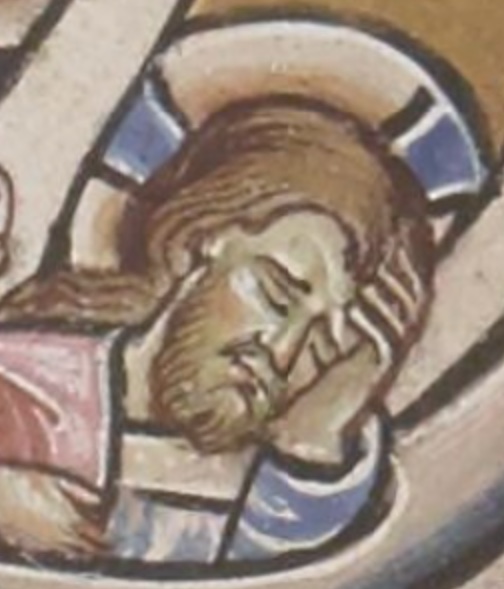
There is a lot of potential to leap ahead in curing the divide of “science vs. religion”.

wrmspirit wrote:

> I can’t think of a better place to visit for an anti-religion guy than a psychedelic church book group.  

> You might just be surprised at how it turns out.  

You could pray for our poor book club, of the most expert and professional participants, meeting today with the author Alan Houot as we finish this book.

Praying to heal the split between “Science” and “Religion”, which this author did not invent.

Out of all my recent stresses since I started reading this book, I’ve been more stressed about today’s author visit at our church group, than anything else.  

I’m in contact with the author Alan Houot, who is much friendlier and less adversarial than Thomas Hatsis or James Kent in our personal communications.  

But Houot really is shockingly adversarial (socially awkward) in his would-be popular book (for a popular audience, supposedly).  

He makes SURE to let the reader know how much he disrespects religion/ spirituality/ mysticism/ myth/ esotericism.  

If you’re in any way interested in those, he attaches the words “immature; irrational; mentally ill”.

Amazon asks reviewers: What should people know about this book?

I and my book club could barely get past this author’s adversarial stance.  

The author writes like 7th graders online fighting between the Christian apologists vs. the atheists: book club said, “immature”, “arrogant” (before I said anything).  

Houot is hubristic against the gods (not that I’m trying to hex and negatively prophecy a bad, humbling experience).

This is not an area where you want to bring in hubristic dishonoring of religion!  

Maximum risk, shaking fist at gods, of being struck down and humbled.

Houot didn’t invent, but he partcipates in, his cartoon version of “Science” battling against his cartoon version of “Religion”.  

Same as the article series debate, “Moving Past Mysticism” in Pychedel. Science,
Moving Past Mysticism: Theory of Psychedelic Eternalism Provides Scientific Basis, Superseding “Mysticism, Meditation, & Psychotherapy” Framework

which includes the leaders eg Roland Griffiths of the Johns Hopkins team (that is now history; gone; disbanded – before ever publishing their 2016 research, 9 years ago, administering Psilocybin to religious professionals – “long awaited” writeup, now “mysteriously disappeared” and overshadowed by the Mysticism Wars –

And, while the Griffiths group burns, here you have me yelling repeatedly “psychedelic pseudo science! Based on Stace’s total misrep. of mystical experience! The Challenging Experience Questionnaire (CEQ) – which deletes 18 of 21 challenging experiences — is even more fantasy-based garbage than Tim Leary’s Mystical Experience Questionnaire (MEQ) which imagines “unpleasant therefore unmystical!”)

Crop by Michael Hoffman
Crop by Michael Hoffman, Jan. 11, 2025
Crop by Michael Hoffman, 2023/03/14

king-Lines Connecting Items

Crop and annotations by Michael Hoffman, Jan. 3, 2025

Matthew Johnson filed ethics violations complaints for his team advocating spirituality.

Johnson advocates extremist hardcore materialist naturalist Science.

Johnson characterizes spiritual researchers in the field (his teammate Roland Griffiths) as extreme wooly headed mystics who say only mind exists, not matter.  

It seems some mystics DO say only mind exists.  

“Science” supposedly means, saying only matter exists, according to the school of thought of such “Science” advocates.

Both positions are of low relevance, I say (only mind|matter exists).  

What’s relevant instead is stable control in order to explore the altered state, and so that’s what the mushroom-tree artists focus on, not Phil. dept. armchair debates about Epistemology or “free will vs. determinism”.

Max Freakout took down his Academia.edu article Cog Phen’y of Mind Manif but it is the world’s best article on altered state meta-perception; the article is in the book, which I have, with his name.

Max Freakout shows the RELEVANT approach to perception and epistemology.

Amazon accepted my book review.  https://www.amazon.com/gp/customer-reviews/R293M2XOVFK8HN/

I hope Houot isn’t mad at me for today’s book club meeting, but he has it coming, being so arrogant against a religious approach.

He should be glad someone nice & constructive & substantive as me is the one to set him straight.  

My book club just about cancelled reading his book, it feels like (the book I recommended).  

In my church, my health screener professional told me she’s glad she didn’t read the book, after I reported the book club’s reaction where the book club leader (all sharp experts & professionals) quoted page 10, “put down this book if..”

I’m not the aggressor in writing an accurate book review; the author is the aggressor (he didn’t didn’t invent that aggression; he falls into it and perpetuates it).

He had me looking up the word ‘churlish’ – no social common sense.

A few years ago this would be called “Aspergers'”.  He identifies as technology advocate, though I am in technology, and enjoy theorizing to explain myth as analogy. 

‘Analogy’ definition: comparison, to clarify and explain.  

Houot makes sure to let everyone know his scorched-earth dismissal of mysticism and even of “esotericism”.  

I instead say the pros and cons of esotericism.  

He burns that bridge, and then says a few times in the book, he doesn’t entirely dismiss religion, because you shouldn’t be closed-minded —

says Mr. Closed Minded after having burned bridges, scorched-earth, & emphatically let all his readers know that mystical = irrational, immature, & mentally ill, & unfit to do Science discovery.

— Michael

Posted My Book Review of Rise of the Psychonaut at Amazon

My review at Amazon:
https://www.amazon.com/gp/customer-reviews/R293M2XOVFK8HN/
Glad to see Edit is possible.

Apr. 16, 2025

https://egodeaththeory.org/2024/12/24/rise-of-the-psychonaut-houot-2025/#My-Book-Review-of-Rise-of-the-Psychonaut-Houot-2025

I point out his attacking of his readers. Amazon asks “what should ppl know about this book?”

I wish the review said what each chapter is – but, finite word count.

I wish to remove mention of my work at end, though that’s in some of my book reviews at Amazon. Tried to adjust that, try later.

A constructive review moving his idea forward in the direction of the future –which is, wonderful me, the very definition of “spiritually evolved superior person”. Thoroughly lopsided, demonising naive possibilism-thinking, all glory to eternalism-thinking , exclusively.

Qualified Eternalism-Thinking: Integrated, Balanced Possibilism- & Eternalism-Thinking

💥 🚫⚖️

Typo in Amazon review, I tried to fix, might have to try later:
wrote “has” instead of “as”.

Moving Past Eternalism: Qualified Eternalism-Thinking

Against the Lexicon of “free will vs. determinism, & compatibilism”

I used to insult “compatibilism”, but, …. whose “compatibilism”? in what sense?

The term only exists within the debate free will vs. determinism within the field of Epistemology and academic Phil dept, and theology. But those are not the concerns of Egodeath theory or the mushroom-tree artists.

We are not here doing the debate:

  • causal-chain determinism. initial state, then flow of time, future is non extant but preordained.
  • egoic branching freewill power into an open future.

We are not here doing the debate:

  • Only matter exists.
  • Only mind exists.

We are here modelling mental model transformation, Psilocybin transformation. The two mental models are “compatible” by modifying possibilism-thinking so as to take into account eternalism-thinking. This is what OUR concerns mean by our use of the word “compatibilism”.

Is Egodeath theory common-core mysticism and perennialism? No, too many disparities.

Is Egodeath theory Joseph Campbell? No, too many disparities.

Is Egodeath theory determinism; freewillism; or compatibilism? No, too many disparities.

Is Egodeath theory about neuroplasticity and dread of ego dissolution? No, too many disparities.

REJECT ALL EXTERNAL THEORY LEXICONS. Their concerns are not my concerns or meaning-networks or purposes.

I make a new clean model of mental model transformation in intense mystic altered state; loose mental functioning binding; loose cognitive association binding.

I CANNOT USE THE EXTERNAL TERM “COMPATIBILITISM” TO ACCURATELY DESCRIBE Egodeath theory, ANY MORE THAN I CAN REDEFINE ‘DETERMINISM’ FOR PURPOSES OF Egodeath theory, per The Entheogen Theory of Religion and Ego Death (Hoffman, 2007 main article) http://egodeath.com/EntheogenTheoryOfReligion.htm & https://egodeaththeory.wordpress.com/the-entheogen-theory-of-religion-and-ego-death-2006-main-article/

THE TERM ‘COMPATIBILISM’ IS PROFOUND AND VALUABLE, IN POTENTIAL. You in fact, per (transformed by me) Ken Wilber, end up with two distinct mental models: THIS IS WHAT IS IMPORTANT AND RELEVANT! We are NOT debating here, what is metaphysically the case.

Metaphysically, only eternalism is the case. like “determinism is the case, not freewill”. So, we should not say “compatibilism”? What do you think ‘compatm’ must mean?

The word ‘compatibilism’ does NOT necessarily mean asserting insanely that both possibilism and eternalism are metaphysically the case. This is the garble eg from John MacArthur, see my writings about his joking about Romans potter clay, he says IT IS IRRATIONAL that both are true, free will AND determinism.

I am NOT saying that METAPHYSICALLY both possibilism and eternalism are the case, when I advocate the word ‘compatibilism’ as defined by Egodeath theory.

When I say the religion of mature Egodeath theory is a form of compatibilism, I mean

  • metaphysical reality is revealed by Psilocybin loose cognition: eternalism.
  • our experiencing is always in the shape of possibilism. after revelation of eternalism, during our Mystery Religion initiation, where lid of basket lifted to reveal snake, we rely on possibilism-thinking but washed clean purified no longer offending and dishonoring the gods.

image: Mithraism : rock carved snake basket while dining Sol & Mithras.
https://egodeaththeory.org/2020/12/12/mithraism-think-with-the-femalemale-mind-of-mithras/ – found it: [at bottom of a bunch of content pasted below:]

“The Problem of Proof” presents a full-spectrum empiricism: sensory, mental, and spiritual experience, all of which are equally experiential and can be validated, with evidence that is open to confirmation or rejection by the community.”

Eye to Eye: The Quest for the New Paradigm
Ken Wilber
3rd Ed. (with new Preface)
https://amzn.com/157062741X

end of section about eye to eye copied from my other WordPress page

Video: “Interview With Former Non-duality Speaker Guy Smith” (Jessica Nathanson, 2022) [1]

1:11:45 – he says what I say!! “One is saying there’s only matter, on the other, one saying there’s only consciousness.”

Guy Smith:
https://www.youtube.com/watch?v=AHKJUcEynxU&t=4305s = 1:11:45
71 & 60 + 45 = 4305s —
“what’s the opposite of relating just like um kind of just like
1:11:19
yeah you just like to kind of debase the person you just say that’s baseless

and it’s
1:11:24
and I feel like comedy is quite like that

[god, buckets of junk words to delete! “and i think that it’s sort of kind of like, you know, blah blah – JUST SAY YOUR POINT!!]

There’s an interesting tie-in between duality on the one hand, and new atheism [similarly] on the other hand and they both tend to have this kind of very like contemptuous kind of stance of like “that’s a load of nonsense this is truth”

— Funnily enough, [ton contrast those two arrogant systems] given that one [athieism] is saying there’s only matter, on the other, one [pop nonduality] saying there’s only consciousness.

[That sounds like my rejection of “both sides” in the Mysticism Wars: cartoon materialist junk “Science” vs cartoon junk “Mysticism”. A pox on both their houses. -Michael Hoffman

WHOSE “SCIENCE”?
WHOSE “MYSTICISM”?

or, using Guy Smith’s terms:

WHOSE “ATHEISM”?
WHOSE “NON-DUALITY ENLIGHTENMENT”?

LOL he says “don’t write a book in your 20s” 1:14:45]

Should I Make a Page w/ Cleanup Transcript? Good Content!

https://www.youtube.com/watch?v=AHKJUcEynxU con’t

Junk words galore though; would require tons of cleanup by me.

Transcript short excerpt con’t:

1:11:47

You can see the big kind of splits there the kind of black and white thinking very much

yeah um but I was just thinking
1:11:52
about it because also like

There’s comedians who have got very kind of like involved in that and you’re like Ricky Gervais who’s kind of big on his atheism and his kind of contempt for anything.

[sounds like ex-psychedelicist James Kent condemning Egodeath theory for explaining myth, and like Alan Houot writes in Rise of the Psychonaut:
“You are immature, irrational, mentally ill, and unfit to do science exploring discovery, if you are at all in any way interested in esotericism/ myth/ religion/ mysticism/ spirituality.”
<– good wording, add to Houot book club page ]

Book Review: Rise of the Psychonaut (Houot, 2025)
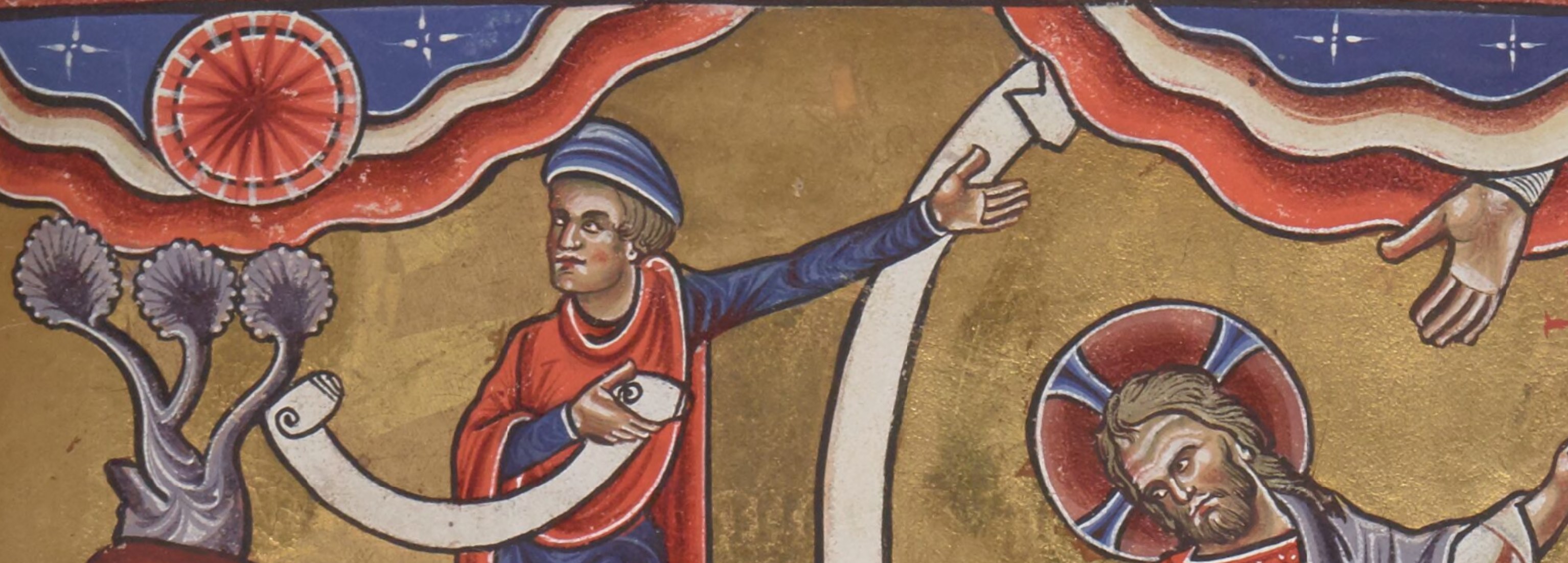
Copied to my Rise of the Psychonaut page, which is the master copy:

this is an older copy; newer is in my Rise of the Psychonaut page, which is better than what got submitted to Amazon (slightly) so far.

Alan Houot’s basic idea in Rise of the Psychonaut is that instead of restricting psychedelics to the therapy approach and the mysticism approach, we should also (or, instead?) use the “Science explorer discoverer, using tools and technology” approach to psychedelics.

However, Houot’s particular conceptualization of Science and exploration (as well has his atheist-brand conception of Religion and mysticism) is narrow and quirky.

It’s unclear what useful, relevant tools and technologies are provided so far, by Houot’s approach. How exactly does reading Houot’s publications help the psychonaut during the peak window of the intense mystic altered state, to have viable, stable control? Mystical surrender is not an option, theorizes Houot, but we could use shamans’ successful technologies such as dance and drumming.

My book review includes, as background, Houot’s interests per his dissertation and article: Toward a Philosophy of Psychedelic Technology: An Exploration of Fear, Otherness, and Control; The Psychonaut’s Ship: Pairing Technologies with Psychedelics to Augment User Agency.

To develop his model, Houot should (as planned) model the dynamics of “surrender” to produce stable control in the altered state, per a book of useful even if merely folk wisdom that I can recommend, Michelle Janikian’s book Your Psilocybin Mushroom Companion: An Informative, Easy-to-Use Guide to Understanding Magic Mushrooms—From Tips and Trips to Microdosing and Psychedelic Therapy.

I wish Rise of the Psychonaut treated Houot’s next-favorite topic after alien entities contact, his critique of ‘surrenderism’, contrasted against shamans, who have full self-control in the psychedelic state due to their superior technology, and never need to do something like ‘surrender’. It would be really interesting to analyze and discuss the concept of ‘surrender’ with Houot: what are the dynamics there, to produce stable control? How does personal control transform, rather than just staying as-is and handing over the wheel of control, untransformed, as-is, to the revealed level of control that’s hidden behind the scenes?

Houot doesn’t engage with altered-state based Rock lyrics reporting problems with steering a ship (No One at the Bridge; S.A.T.O.), or the myth of Dionysus and the pirates, where the captain doesn’t honor Dionysus and is killed, while the pilot honors Dionysus and is saved.

Houot should question whether shamans have full stable self-control, and should approach myth/ esotericism/ religion as analogy to be used effectively by a Science-based approach, rather than a scorched-earth, wholesale rejection of any interest in a mystical approach to psychedelics.

When Science recognizes esotericism as analogy describing psychedelic transformation, then Science can use analogy properly and powerfully, to explain mental model transformation in the altered state (as a 1st-tier concern), and also, as a 2nd-tier concern, explain how religion is analogy trying to describe psychedelic mental model transformation.

Then use Engineering product development to deliver a useful tool that’s ergonomic, relevant, clear & simple, to help and suitably equip cognitive scientists and everyone to endure and explore the altered state. (I’m describing my own approach per the Egodeath theory of psychedelic eternalism; thank you Houot for encouraging me to write a book.)

5 of 5 stars for Houot’s much-needed basic idea, but, be warned! On page 10, this book says that you are immature, irrational, mentally ill, and unfit to do science exploration discovery, if you are at all in any way interested in esotericism/ myth/ religion/ mysticism/ spirituality, or if you use any other approach to psychedelics for any purpose and motive other than “Science” and “Technology” exactly as the author conceptualizes it — which is, approaching psychedelics as if exploring the physical external world like ships in the 1400s, and alien entities contact in the psychedelic state, like NASA.

A psychedelic church’s astute book club immediately picked up on this false-dichotomy, adversarial quote:

“Please put this book down if you’ve never ingested psychedelics or if you take them for therapeutic, recreational, religious, spiritual growth, personal growth, cognitive enhancement, creativity-inspirational, or self-actualizing purposes. It’s not for you … With that said, my message will not resonate with everyone.” – p. 10

Later in the book, Houot writes that we should not entirely write-off religion, because that would be closed-minded.

— Michael Hoffman, theorist of ego death

/ end of review

https://www.amazon.com/Psilocybin-Mushroom-Companion-Easy-Mushrooms/dp/1646043901/

Where did i move my quotes, out from my Rise of the Psychonaut page?! eg “with that said” – 1 of these 4 pages:
https://egodeaththeory.org/?s=%22with+that+said%22

Please put this book down if you’ve never ingested psychedelics or if you take them for therapeutic, recreational, religious, spiritual growth, personal growth, cognitive enhancement, creativity-inspirational, or self-actualizing purposes. It’s not for you … With that said, my message will not resonate with everyone.

page 10, Rise of the Psychonaut: Maps for Amateurs, Nonscientists and Explorers in the Psychedelic Age of Discovery (Houot, 2025) https://egodeaththeory.org/2024/12/24/rise-of-the-psychonaut-houot-2025/ & https://www.amazon.com/dp/B0DPSJGMFR
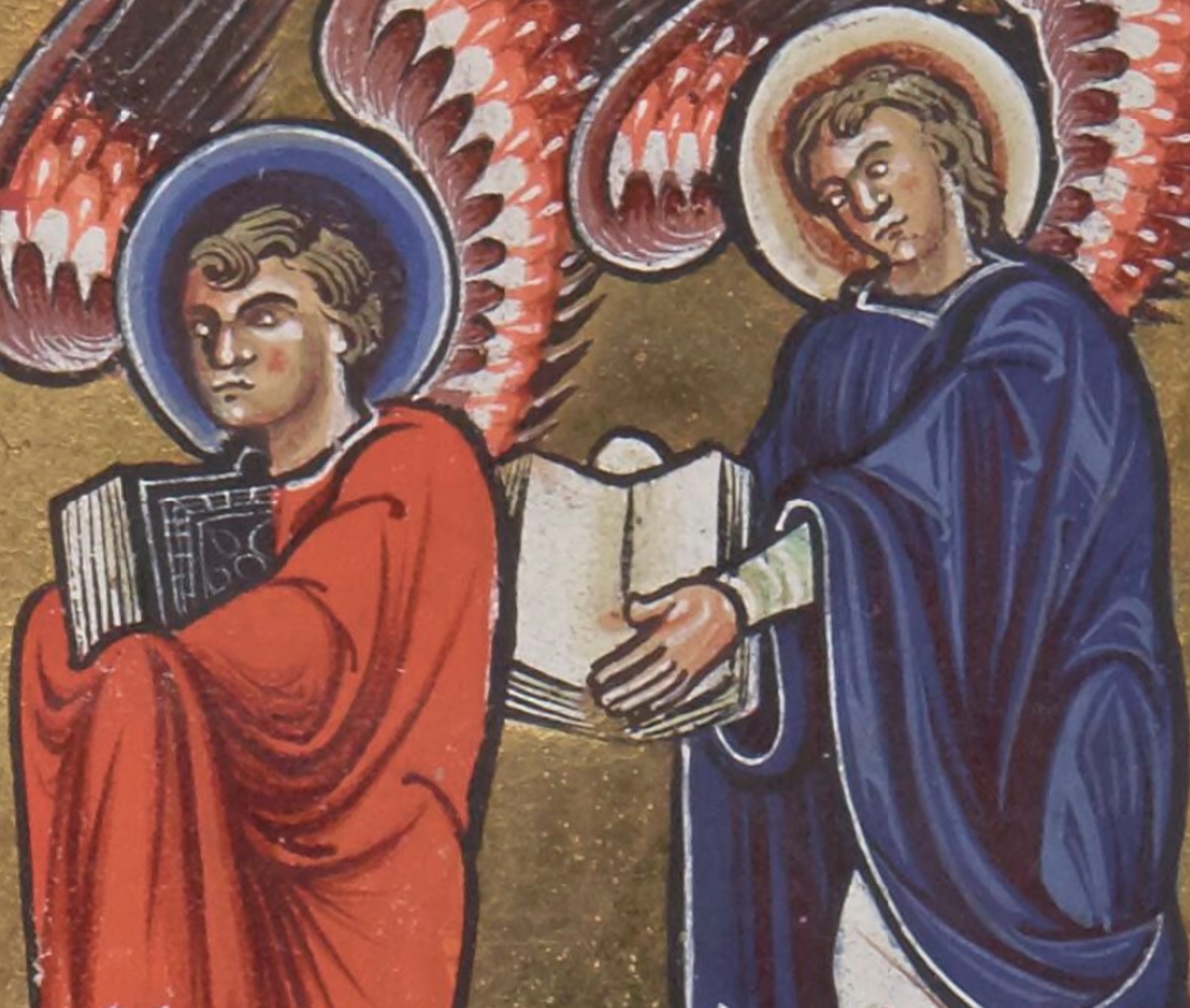
You are immature, irrational, mentally ill, and unfit to do science exploration discovery, if you are at all in any way interested in esotericism/ myth/ religion/ mysticism/ spirituality, or if you use any other approach to psychedelics for any purpose and motive other than “Science” and “Technology” exactly as I conceptualize it — which is, approaching psychedelics as if exploring the physical external world like ships in the 1400s, and alien entities contact in the psychedelic state, like NASA. But we should not entirely write-off religion, because that would be closed-minded.

Rise of the Psychonaut: Maps for Amateurs, Nonscientists and Explorers in the Psychedelic Age of Discovery (Houot, 2025) https://egodeaththeory.org/2024/12/24/rise-of-the-psychonaut-houot-2025/ & https://www.amazon.com/dp/B0DPSJGMFR

Transcript con’t

Transcirpt con’t:

and and I was just thinking about like humor like
1:12:09
because there’s a hu … comedians … Richie Gervais…. his atheitsm, contempt for …. [the little, lower people]

[Smith talks here like:
Spiritual Narcissism, Ego Inflation, Evolutionary Spirituality (Jules Evans)]

cista mystica snake basket
https://www.bing.com/images/search?q=cista+mystica+snake+basket
https://www.bing.com/images/search?q=cista+mystica

Don’t Stop at eternalism-thinking (gives “balance” in Sense 1 during altered state) and Repudiating Possibilism-thinking; “Balance” in Sense #2 requires Integrating Qualified possibilism-thinking + …. ! *qualified eternalism-thinking*

New idea 8 4 1 apr 16 2025: “qualified eternalism-thinking”.

April 16, 2025: The Egodeath Theory Created the Concept-Label “qualified eternalism-thinking” to Balance Out the Concept “qualified possibilism-thinking”

  1. Only have naive possibilism-thinking (lack eternalism-thinking). 1987
  2. Lock-in eternalism-thinking (repudiating possibilism-thinking). 1997
  3. Integrate qualified possibilism-thinking + qualified eternalism-thinking. the project of 2000-2025, marked by / starting w/ Coraxo in Gnosticism Yahoo Group (2000?) pointing out to me that the 1997 core theory (the Cybernetic Theory of Ego Transcendence) cannot discuss Late Antiquity aspiration to transcend block-universe eternalism.

It is POSSIBLE to find in Archive.org the posting where Coraxo pointed out to me the lack of analogy-capability of 1997 core Egodeath theory. Around 2000. Before June 2001 where I posted “coraxo” in Egodeath Yahoo Group. Then I got David Ulansey’s solution explaining Mithraism, book in 2001, which focuses on “transcend heimarmene”. I am not crediting Coraxo entirely

Nor do I give ALL credit to Giorgio Samorini 1998 for FINALLY following up on Panofsky’s lead about “there are hundreds of mushroom-trees”.

As soon as I started seriously researching Myth in 1998, it was inevitably destined by Fate, written in the stars, [right there you see how wrong Wouter Hanegraaff is: the expression “written in the stars” would FORCE Hanegraaff to say it! say it! say “Ogdoad = Fate” aginst his huge folly quote, “the Ogdoad above the heimarmene”

As soon as I started seriously researching Myth in 1998, it was inevitable that I would encounter this failing / limitation of the simple basic 2-level model of the Cybernetic Theory of Ego Transcendence 1997, egodeath core theory.

The only reason I didn’t develop the idea of “transcend block-universe eternalism” earlier…

Note my 1991 drawing ink, the VISUAL GRAPHICAL (! LIKE MEDIEVAL DIAGRAMMATIC ART) seed of the idea of “transcend eternalism”, about 8 years before my 1997 theory spec asserting basic 2-level model lacking “integrate eternalism”.

I confirmed the other day: my 1997 spec lacks any hook (more than microscopic trace) for the idea of “transcend determinism”.

If I delete just 2 words from my 1997 spec, it would be purely a basic, 2-level model, with NO TRACE of the idea of “integrate block-universe eternalism w/ egoic branching-thinking”.

Michael Hoffman, ~1991, ink brush in blank art book

The Egodeath Theory’s Revealing of the Folly of Hanegraaff & All Scholars of Hermetism Was Written in the Stars

Wouter Hanegraaff:

the Ogdoad above the heimarmene [ie sphere 8 is pure from the pollution of having fixed stars]

Hermetic Spirituality and the Historical Imagination: Altered States of Knowledge in Late Antiquity (Wouter Hanegraaff, 2022) https://egodeaththeory.org/2022/07/14/hermetic-spirituality-and-the-historical-imagination-altered-states-of-knowledge-in-late-antiquity-hanegraaff/ & https://www.amazon.com/Hermetic-Spirituality-Historical-Imagination-Knowledge/dp/1009123068/

fated; predestined; inevitable = written in the stars [ie Fatedness = sphere 8 fixed stars]

everyone throughout history

“Mushroom-Trees” in Christian Art (Giorgio Samorini, 1998)
https://www.samorini.it/doc1/sam/sam-alberifungo-1998.pdf
https://egodeaththeory.wordpress.com/mushroom-trees-in-christian-art-samorini/

integrated possibilism/eternalism thinking — combines/ integrates qualified possibilism-thinking + qualified eternalism-thinking

Crop by Michael Hoffman, Apr. 16, 2025 (tight crop)

qet <– proof that the idea is new: no keyboard shortcut yet

qualified eternalism-thinking
qet

! this could mark a kind of milestone for my recent work on shifting away from marketing “eternalism” toward marketing “virtual freewill”, “virtual branching possibilities”; you always use possibilism-thinking even during peak window of intense mystic altered state

peak window of the intense mystic altered state
pwimas

Moving Past Non-Duality

joke re: article “Moving Past Mysticism in Psychedelic Science”.

Video: “Interview With Former Non-duality Speaker Guy Smith” (Jessica Nathanson, 2022)

Video title:
Interview With Former Non-duality Speaker Guy Smith
youtube ch: The Glorious Both-And [= Jessica Nathanson]
Oct 17, 2022
https://www.youtube.com/watch?v=AHKJUcEynxU
“Ex Non-dualist Author Guy Smith on Moving Beyond Neo-Advaita … Guy Smith is former non-dualist.”

Guy Smith says, “We need critics of non-dual doctrine, self doesn’t exist, you are an illusion, etc.” — Egodeath theory TO THE RESCUE, ie i have criticism in spades, of Pop Spir’y.

Transcript excerpt cleaned up by Michael Hoffman; quick post of her key statement at 31:09 esp. 31:20 at the word “integrate“:

Jessica Nathanson: [31:09]

but what that experience will mean affects that

Guy: yeah

Jessica Nathanson:

So I thought to myself

and curious what you think or other people is let’s say

Before I had had my big ego drop experience, if I had been told:

What you are is more than just a separate self and an ego.

And when this you’re gonna have this experience or if you have this experience where your sense of self, and it falls away, and you’re open to this other dimension of reality, that’s not the be all end-all either.

[4D spacetime block universe eternalism

Eternalism-thinking (in narrow, exclusive sense) is not the end-state of Psilocybin transformation. The actual end-state is integrated possibilism/eternalism thinking, combining qualified possibilism-thinking & qualified eternalism-thinking as well; both are qualified. Sacrifice Isaac in a way, preserve Isaac, in a way.

Eadwine’s version w/ gateway forward, is nice:

Crop by Michael Hoffman

I wish for keyboard shortcut for what God says to Abr: because YOU HAVE(!) DONE THIS THING AND NOT(!) WITHHELD YOUR SON”.
https://www.google.com/search?q=sacrifice+of+isaac Gen 22
https://www.biblegateway.com/passage/?search=gen%2022&version=NIV

Isaac says {fire}, wood = {branches} – equivalent to burning bush.

{fire} = disproof of egoic personal control system in intense mystic altered state. “burnt offering” = the mind is made to disprove the basis of egoic personal control system, and repudiate that and not rely on that.

This is not a demand you must agree to; this is a realization of how things actually are, that is impressed on your mind by the higher controller.

Isaac is made to realize the nullity of his assumed foundation, now made able to see.

Sacrifice of Isaac (Van der Borch)

Sacrifice of Isaac (Canterbury Psalter)

Sacrifice of Isaac (Golden Psalter)

Bible Excerpt: Gen 22, Sacrifice of Isaac

““The fire and wood are here,” Isaac said, “but where is the lamb for the burnt offering?”

8 Abraham answered, “God himself will provide the lamb for the burnt offering, my son.” And the two of them went on together.

9 When they reached the place God had told him about, Abraham built an altar there and arranged the wood on it. He bound his son Isaac and laid him on the altar, on top of the wood. 10 Then he reached out his hand and took the knife to slay his son. 11 But the angel of the Lord called out to him from heaven, “Abraham! Abraham!”

“Here I am,” he replied.

12 “Do not lay a hand on the boy,” he said. “Do not do anything to him. Now I know that you fear God, because you have not withheld from me your son, your only son.”

13 Abraham looked up and there in a thicket he saw a ram[a] caught by its horns. He went over and took the ram and sacrificed it as a burnt offering instead of his son. 14 So Abraham called that place The Lord Will Provide. And to this day it is said, “On the mountain of the Lord it will be provided.””

15 The angel of the Lord called to Abraham from heaven a second time 16 and said, “I swear by myself, declares the Lord, that because you have done this and have not withheld your son, your only son, 17 I will surely bless you and make your descendants as numerous as the stars in the sky and as the sand on the seashore. Your descendants will take possession of the cities of their enemies, 18 and through your offspring[b] all nations on earth will be blessed,[c] because you have obeyed me.”

Gen 22:15 – You HAVE Done This Thing, You Have NOT Withheld Your Son

keyboard shortcut (condensed; for general purpose for Egodeath theory):

“The fire and wood are here,” Isaac said, “but where is the lamb for the burnt offering?” Abraham answered, “God himself will provide the lamb for the burnt offering. Do not lay a hand on the boy,” he said. “Do not do anything to him. Now I know that you fear God, because you have not withheld from me your son, your only son. Abraham looked up and there in a thicket he saw a ram caught by its horns. He went over and took the ram and sacrificed it as a burnt offering instead of his son. Because you have done this and have not withheld your only son, I will surely bless you and make your descendants as numerous as the stars in the sky. Through your offspring all nations on earth will be blessed, because you have obeyed me.” Gen 22:7-18 https://www.biblegateway.com/passage/?search=gen%2022%3A7-18&version=NIV
s-o-i
gen22

Only the Egodeath theory — which the mushroom-tree artists understood — explains the SENSE IN WHICH Abr sacr’d Isaac and did not sacr Isaac.

the mushroom-tree artists
mta

Gen 22:15 —
NIV: “Now I know that you fear God, because you have not withheld from me your son, your only son.”
I like KJB, “because you have done this thing“(!) – ERROR: I FAILED TO INCLUDE FINAL PARAGRAPH.

Transcript:

That’s right.

That’s like the other half of the picture.

There’s the personal, and then there’s this more Universal or impersonal.

but you’re not going to stop there.

You’re going to keep going and integrate that back together

so that the self is still there, it’s still real, but it’s not it’s not all of what’s real.

[CRUDE WORDING! instead ask “in what sense, self?” -Michael Hoffman]

right like

It’s part of something greater.

If I had been told that [as per Egodeath theory, if Egodeath theory (or Ken Wilber) had told her that], how would that have affected the whole trajectory of my Awakening path and of my even direct experience?

Guy Smith:

How do you think it would have affected your experience?

Jessica Nathanson:

I mean I think it would have it would have been um

I wish that that had been the case, because I wouldn’t have had these notions of needing to, when the self comes back online that I need to then fight against it or look down on that or feel you know like this is just an illusion that needs to be gotten rid of.

Don’t Look Down on Isaac, Your Beloved Child-Thinking: Rely on It; “Embrace and IncludeTM” Isaac (Ken Wilber)

transcript con’t:

Guy Smith:

I think I think we’ve kind of talked about this before

[32:45]

I think I possibly go even further than you in that direction.

and I appreciate that you know

I like your position because it’s very inclusive

[he or she talking?]

but I maybe just because

Guy Smith:

I need to lean on this side more because especially with people I’m working with and yeah myself I need to really like be an advocate of of people’s kind of personal kind of power and intelligence and creativity, which absolutely gets shut out by the view that everything’s already decided and it already is, and there’s no nothing you can do.

[SUCH CRUDE WAY OF SPEAKING! JUNK POP SPIR’Y – this horrible garbled talk is why I wrote-off and plundered the literature in 1986, and had to roll-my-own model of ego transcendence/ Transcendent Knowledge that is (my Engineering mantra:) USEFUL, HELPFUL, RELEVANT, SIMPLE, CLEAR.
– Michael Hoffman
]

um and

[I don’t like how this evidence, that supposedly non-drug meditation has powerful effects, contradicts my claim that meditation has no effect nothing. I can still claim that:

Non-drug meditation has INSUFFICIENT transformative power.

Proof that non-drug meditation is bogus: it produces confusion like “self doesn’t exist.” It produces what Wilber warns against, shattering of lower developmental structures, rather than transcend-and-include them.

dis-identify with, embrace, and include possibilism-thinking
deipt

dis-identify with, embrace, and include possibilism-thinking
important word Ken Wilber: “embrace”

dis-identify with, transcend, and include lower developmental structures
dti

dis-identify with, transcend, embrace, and include lower developmental structures, per Ken Wilber
dtei
could add “integrate”, or re-integrate & transform egoic thinking; possibilism-thinking.

– Michael Hoffman]

Transcript continues:

Guy Smith:

What strikes me is though like

When I first had a kind of like a kind of adult spiritual kind of experience, it was just through kind of meditation and it was really blissful and lovely

At this point, I hadn’t heard of the word ‘non-dual’, let alone the whole kind of scene.

and if I think about it it was in a sense

it was very personal because it was in a way I was like I I guess

I’d grown up in a world which had kind of shaped how I saw myself

and then that was kind of unquestioned

and then in this experience it was a kind of a somehow finding a way to to kind of did like let go of that and to really start to feel myself and feel reality and see myself in my own way rather than a way that I just kind of inherited

and I think I think that

The sad thing is that people often you know they’ll have their own experience and there’s like a million experiences so I’m not trying to make this some kind of special cherished experience you have to have.

There’s just something that happened to me that was kind of very powerful and nice

um but I think

It was an experience of me trusting my own sense of things so ironically then I was looking around I guess that’s something people often do

that

You have this novel thing happen, and you want somebody else to tell you what it means, what that’s all about.

☸️🌳💥🔨

[it’s about ELIMINATE & GET RID OF & DESTROY POSSIBILISM-THINKING!
☸️🌳💥🔨
THERE IS NO-FREE-WILL!
THERE ARE NO BRANCHING POSSIBILITIES! – Cybermonk 1997]

and that’s I think where I then

That’s kind of sad in a way that people go that way because actually what it is is a big opening up of their own sense of like … how they see things, how they sense …
Guy Smith continues…

/ end of transcript excerpt cleaned up by Michael Hoffman

Against Nonduality Unity Oneness Advaita

After decades, I pinned down Ken Wilber as merely non-drug Advaita.

Integral Theory is excuses for failing to deliver any promised enlightenment after decades of wasteful meditation.

In 1986 I read the books in the field, as failed theories to [junk yard reclaimation word] to plunder and transform to repair.

Unlike how Alan Houot says “reject all religion spir mysticism esotericism”, my strategy instead is PLUNDER THE WRECKAGE OF FAILED ATTEMPTS AT ENLIGHTENMENT.

Plunder the Wreckage of Failed Entheogen Scholarship, Advaita, Mysticism

Video title:
Interview With Former Non-duality Speaker Guy Smith
ch: The Glorious Both-And [her YouTube channel, brand, website]
Oct 17, 2022

Desc:

“Ex Non-dualist Author Guy Smith on Moving Beyond Neo-Advaita…

“Guy Smith is a writer, body psychotherapist and former non-dualist.

“His first book, This Is Unimaginable & Unavoidable was written from the perspective of radical non-duality and made him a known figure within the community.

“His second book, Mystery Not Mastery, though also written from a non-dual perspective, contained his first criticisms of Western non-duality.

“Now, 16 years on, he’s writing a novel about the dark side of non-duality.

“He’s been working therapeutically with people from the non-dual community for over a decade.”

The Egodeath Community Is Not a Non-Dual Community

the Egodeath community > the non-dual community

joke

> means “is better than”

After No-Self, You Must Integrate Self and No-Self

Great Canterbury Psalter f145 row 1 L: warning cubensis traders about control instability resulting from relying on possibilism-thinking; possibility-branching model pbm

the possibility-branching model
pbm

the possibility-branching mental model
pbmm

the possibility-branching model of time and control
pbmtc

Crop by Michael Hoffman
Crop by Michael Hoffman, Feb. 27, 2023

Rush: Cygnus, the God of Balance

Balance is also a theme of kylix cup, designed to fall over.

Confirmed that the WordPress gallery July 2022 has the book photo:

Photo: Michael Hoffman
pmh

Greek Myths book that covers Rush song Cygnus god of balance – found it! https://egodeaththeory.org/2022/07/14/idea-development-page-14/#Cygnus-the-God-of-Balance – copypaste:

God of Balance (from Dougherty’s 2019 Book Greek Myths & Legends)

Rush passage in Dougherty’s Greek Myths & Legends book https://www.amazon.com/Greek-Myths-Titans-Odysseus-Histories/dp/1782747508 – has Preview pages. My cover is Hercules wrestling lion instead.

Site: Egodeath.com
Page: Rush Lyrics Alluding to Mystic Dissociative Phenomena
Section in page: Cygnus X-1, & Hemispheres
http://egodeath.com/rushlyrics.htm#xtocid22949

positive identification as Amanita by Cybermonk 2020
Photo credit: Cybermonk 10/10/2010 10:10 a.m.

“Because you have done this thing of not withholding Isaac your only, beloved son, so I will reward you with a future.” – God to Abraham.

Abraham DID sacrifice Isaac, child thinking; ie MODIFY NOT DEMOLISH.

Per Ken Wilber, modify, not demolish, earlier developmental structures.

Revise and integrate, not destroy.

Jessica Nathanson Demolishing Non-Duality Fake Religion

About Jessica Nathanson, from other video:

“Jessica Nathanson is dedicated to spreading awareness about the pitfalls of radically imbalanced non-dual teachings and exploring how to engage with non-dual spirituality in a way that honours rather than denigrates the individual self and inspires human flourishing towards the highest good for all. She is trained as a spiritual emergency coach.” https://www.youtube.com/watch?v=7XQLCpU-TBY
that Video title: “Q&A on ‘What’s Wrong with NonDual Spirituality’

At 31:00 she says similar to me recently, INTEGRATE NO-SELF.
https://www.youtube.com/watch?v=AHKJUcEynxU&t=1860s

  1. have self
  2. self is illusion; have no self
  3. integrate self + no-self.

she seems the gullible brains behind the operation, not Tim Freke,

Debunking Neo-Advaita: Wisdom Is an Illusion; Wisdom Doesn’t Exist

joke

self doesn’t exist

stupid binary statements, fake profundity

your IQ doesn’t exist

“time is an illusion” –> your profundity is an illusion

IN WHAT SENSE is time an illusion? Too hard intellectual work for these ADVAITA BUMS, meditation hucksters.

title of bricklin book the illusion of time, self, and will, wm james reluctnant guide to enlightenment

Benefit of Egodeath Theory: Shuts Out Bad Religion eg Neo Advaita

The Task of Scientific Explanation: 1st-, 2nd-, & 3rd-Order Tasks

Michael Hoffman, April 15, 2025
Meant to write “Psychedelic Transformation”, not Psilocybin.
Title, date, & signature would be good.
change “previous” to “the OLD theory” (disparaging)
  1. 1997: explain Psilocybin transformation
  2. 2007: explain analogy myth.
  3. 2025: explain why Advaita is inferior theory. eg friend advises me to just ignore the wrong theories – it’s a 3rd tier concern.

The definition of ‘analogy’ is perfect for Egodeath theory as Science explanatory framework.

Metaphor is bad, confusing, fiction, as when a theory is BASED IN metaphor or BASED IN analogy, that’s bad, that’s the problem to be avoided/solved in a successful theory.

Great voice recording April 15, 2025 (other than experimental noise gate that’s binary on/off (not muddy, but clippy).

1st Order: Explain Psilocybin Transformation (1997 theory spec)

Self-control Cybernetics, Dissociative Cognition, & Mystic Ego Death (1997 core theory spec) (Hoffman, 1997) https://egodeaththeory.wordpress.com/2020/11/30/self-control-cybernetics-dissociative-cognition-mystic-ego-death/

2nd Order: Explain Analogy Myth as Description (Reflection) of Psilocybin Transformation (2007 main article, + normal science fill-in 2020)

The Entheogen Theory of Religion and Ego Death (Hoffman, 2007 main article) http://egodeath.com/EntheogenTheoryOfReligion.htm & https://egodeaththeory.wordpress.com/the-entheogen-theory-of-religion-and-ego-death-2006-main-article/

James Kent & Alan Houot fail to leverage analogy and myth, in their crude, lazy, scorched-earth total dismissal of religion/ spir’y/ myth/ esotericism.

Science does not “get rid of” analogy; Science is not based in analogy; Science leverages analogy in order to explain the 1st-order target.

Myth is analogy reflecting Psilocybin transformation. The 2nd-order explanandum of an ideal Science theory is myth as analogy.

I experienced Oct 1985 or especially April 1987-Feb 1997 as “revolutionary science”, to write the core theory.

I experienced 1998-2007 as “revolutionary science” to explain myth and use myth to corroborate the core theory.

I experienced 2010-Nov. 2020 as relatively “normal science”, filling in my 2007 framework.

Nov. 2020 was a breakthrough in that.

Dec. 2020-April 2025, continued the fill-in project of Normal Science fleshing-in that explanatory framework.

3rd Order: Explain the Old Theory eg “Surrender to Psychedelic Ego Dissolution”

Video: Free Will, Morality, Self Awareness | Robert Sapolsky

I didn’t pay attention to this, but the 4-hour vid surveying what physicists said on this topic on this channel, is a build up to this.

d/k what’s so special about this guy’s take, superior to the other 25 guys.

Video:
Free Will, Morality, Self Awareness | Robert Sapolsky
https://www.youtube.com/watch?v=z0IqA1hYKY8
ch: Curt Jaimungal
Dec 29, 2023

“Robert Sapolsky joins Curt Jaimungal to discuss some of the most important topics of our time.

“Topics discussed include

  • morality,
  • free will,
  • the justice system,
  • intuition, and
  • chaos theory.”

A Special Hell for the 99% of Liars Who Censor “Nitrous” from William James, Including the First Sentence Ken Wilber Published

Granted, James writes awkwardly; he does not write a smooth lead-in, like:

On nitrous oxide, I saw that our normal waking consciousness is but one special type.

What I wish James wrote

Some years ago I myself made some observations on this aspect of nitrous oxide intoxication, and reported them in print. One conclusion was forced upon my mind at that time, and my impression of its truth has ever since remained unshaken. It is that our normal waking consciousness, rational consciousness as we call it, is but one special type of consciousness, whilst all about it, parted from it by the filmiest of screens, there lie potential forms of consciousness entirely different.

What James actually wrote

Now that I have the quote, can do a better Web search.
https://www.google.com/search?q=%22made+some+observations+on+this+aspect+of+nitrous+oxide+intoxication%22

Thank God! Cool, this page https://kwize.com/quote/7276 actually has a “Context” section that forces the bullsh!tters to come out:

“Some years ago I myself made some observations on this aspect of nitrous oxide intoxication, and reported them in print. [ALWAYS CENSORED!]

“One conclusion was forced upon my mind at that time, and my impression of its truth has ever since remained unshaken.

“It is that our normal waking consciousness, rational consciousness as we call it, is but one special type of consciousness, whilst all about it, parted from it by the filmiest of screens, there lie potential forms of consciousness entirely different.

“We may go through life without suspecting their existence; but apply the requisite stimulus, and at a touch they are there in all their completeness, definite types of mentality which probably somewhere have their field of application and adaptation.”

But read the entire page, around that, too, at Gutenberg.org link below.

Single paragraph:

“Some years ago I myself made some observations on this aspect of nitrous oxide intoxication, and reported them in print. One conclusion was forced upon my mind at that time, and my impression of its truth has ever since remained unshaken. It is that our normal waking consciousness, rational consciousness as we call it, is but one special type of consciousness, whilst all about it, parted from it by the filmiest of screens, there lie potential forms of consciousness entirely different. We may go through life without suspecting their existence; but apply the requisite stimulus, and at a touch they are there in all their completeness, definite types of mentality which probably somewhere have their field of application and adaptation.” —

Read this entire page:

https://www.gutenberg.org/files/621/621-h/621-h.html#:~:text=It%20is%20that%20our%20normal%20waking%20consciousness%2C%20rational%20consciousness%20as%20we%20call%20it%2C%20is%20but%20one%20special%20type%20of%20consciousness%2C%20whilst%20all%20about%20it%2C%20parted%20from%20it%20by%20the%20filmiest%20of%20screens%2C%20there%20lie%20potential%20forms%20of%20consciousness%20entirely%20different

https://iai.tv/articles/the-metaphysics-of-laughing-gas-auid-2234 – – Brian Quass on 10 September 2022 wrote:

“Like almost every other scientist and philosopher today, Jonathan reckons without [taking into account the distorting effect of] the Drug War.

“He discusses the effects of laughing gas but fails to even note by way of disclaimer that modern science is actually forbidden from investigating the potential insights that William James experienced under the influence of that gas.

“Sure, we can speculate on them at will from our “drug-free” universities, but even to repeat his modest experiment would risk bringing law enforcement down on our heads.

“As for undertaking his experiments using alternative mind enhancers, like psilocybin or MDMA, the DEA will put every roadblock that they can find in the way as they struggle to maintain their pernicious relevance in 21st-century America.

“For the fact is that we live in a world in which scientists are censored every bit as much as Galileo when it comes to what lines of research they can follow, and authors should be pointing that out via disclaimer in every single paper that they write about a subject dealing with expanded or improved consciousness and the use of psychoactive substances.

“After all, the anti-scientific Drug War will never end if we never admit that it actually exists, that science today is not being performed from a natural baseline but that

we are forbidden from even accessing substances whose use might cause us to challenge the assumptions upon which reductive materialism is based.”

A Lot of Mystical Experiences Happen on Psychedelics at Festivals

“Iryana Mosina – Recreational Versus Intentional Psychedelic Substance Use?”
https://www.youtube.com/watch?v=fbwF92OzSIU&list=WL&index=5&t=485s – 35:40

Meditation Makes Monks More Egotistical and Selfish and Afraid of Death

Reported by Roy Baumeister in video:

Video title:
Roy Baumeister: Free Will, The Self, Ego, Will Power
YouTube channel: Curt Jaimungal
Apr. 5, 2024
https://www.youtube.com/watch?v=aXoK-C2c2AQ&t=5310s = 1:28:30

Exoteric Meditation vs. Esoteric Meditation

Which type of “meditation” are the researchers covering?

Whose “Science”?

Whose “Religion”?

Whose “Meditation”? ie, exoteric vs esoteric (to use one set of terms)

Are the Terms Exoteric and Esoteric Proper to the Egodeath theory lexicon?

Not sure. These terms are useful sometimes to me, but that’s not enough to make them part of my theory’s lexicon.

Compare Ken Wilber terms Pre/Trans fallacy, “dis-identify, embrace, and include”.

Dis-identify with, Embrace, and Include Possibilism-Thinking

dis-identify with, embrace, and include possibilism-thinking
dieai

dis-identify with, embrace, and include possibilism-thinking
eipt
deipt

Dis-identify with, embrace, and include childish egoic possibilism-thinking, modified/ qualified/ purified/ washed clean.

the Egodeath theory lexicon
etl

the Egodeath theory conceptual vocabulary
etcv

Egodeath-Theory Concepts Collection
etcc

Egodeath theory core concepts
etccs

This is the bunk type of “meditation”, not authentic, Psilocybin meditation that causes mental model transformation from possibilism to eternalism.

The researchers would need to re-conduct the experiment using the real type of meditation, not EXOTERIC MEDITATION.

Findings reported by Roy Baumeister, discussed in a video.

The Egodeath Theory of Psychedelic Eternalism Has Nothing to Do with Size of Ego

I am only criticizing meditation hucksters for making inflated claims for meditation that they don’t deliver on, while insulting Psilocybin – as if meditation didn’t come from Psilocybin.

I would never criticize anyone for being egotistical or proud in relation to other people – that has NOTHING to do with Transcendent Knowledge or the key dynamic of ego death; mental model transformation.

The Egodeath theory has nothing whatsoever to do with being more or less egotistical – they are distinct tangential or orthogonal topics.

For example, I am the world’s greatest person 🤴 at doing theory development the way that I do it.

That claim has NOTHING to do with the theory of mental model transformation about control and time and possibility-branching.

Do not conflate the theory of ego transcendence with mere mundane humility, that would be a kind of reductionism (replacing topic A by topic B).

There is a 100% humility in affirming eternalism, the total nullity of ego in a certain restricted particular sense, vs. making your ego a little bigger or smaller which seems more the the futility – I said in Jan 1988 – of the Ken Wilber model of e transcendence e-transcendence ego transcendence.

I wrote/ argued/ reasoned in Jan. 1988, advocating my theory over Ken Wilber’s, as indication that THIS is the true explanation of ego transcendence and that the entire field of transpersonal psychology was wrong about the nature of ego transcendence.

I knew that my breakthrough was entire, in Jan. 1988, that ego transcendence is NOT about endless decades [non-drug thus pseudo-] meditation to reduce size of ego.

Enlightenment must be instant and radical, i agreed with the Way of Zen by Alan Watts.

Ego transcendence must be/ clearly is about loose cognitive state, mental model transformation from possibilism to eternalism, which entirely 100% cancels ego.

The fact of 100% cancelling ego in a way, was my proof in Jan. 1988 that I had achieved the expected breakthrough in scientifically explaining what ego transcendence is REALLY about, against the poorly conceived model, THE OLD MODEL; THE PREVIOUS, “Ken Wilber & TRANSPERSONAL PSYCHOLOGY”, OLD PARADIGM AND OLD EXPLANATORY FRAMEWORK.

explanatory framework
exfw

transpersonal psychology
trps

Against Ken Wilber’s model through 1987, ego transcendence is ACTUALLY only achieved through 100% cancellation via block-universe eternalism in the loose cognitive state.

The Components of the 1988 Breakthrough Theory: the Cybernetic Theory of Ego Transcendence

The components of the Jan. 11, 1988 breakthrough theory that came together:

  • binary mental-model transformation per the Way of Zen by Alan Watts.
  • block-universe eternalism per Minkowski 4D spacetime block universe.
  • the loose cognitive state – mental model transformation in the loose cognitive state [1987 terms: loose mental functioning binding; loose cognitive association binding; mental construct association matrix; mental constructs; mental construct processing]
  • the cross-time self-control system – mental model of personal control system across time; the cross-time personal control system

cross-time personal control system
ctpcs

cross-time self-control system
ctscs

cross-time self-control
ctscs

mental construct matrix
mcm
a 1987 term

mental construct association matrix
mcam
a 1987 term

Minkowski 4D spacetime block universe
mfsbu

loose cognitive state
lcst

Loose Cognitive Science
lcs

Ken Wilber’s Theory Reduced and Summarized

Ken Wilber’s theory is nothing more than merely advocacy of freewill-premised, Advaita, non-drug meditation for infinite years accomplishing alleged vague complex psycho spir’l devmt per his elaborate framework, with various valuable points attached to that model such as

  • “Pre/Trans fallacy” &
  • “dis-identify with the earlier structure, then embrace and include the distinct, earlier structure.”

The two concerns are completely orthogonal and distinct.

The video link/ section below was copied from https://egodeaththeory.org/2025/03/23/books-and-citations-for-the-egodeath-theory-of-psychedelic-eternalism/

https://www.youtube.com/watch?v=aXoK-C2c2AQ&t=5310s = 1:28:30 —

Compare Tim Freke’s recent attempt to reject pop spirituality ideas.

Deconstructing the Self

Curt Jaimungal in the video says:

“Someone asks, 

“Since Roy has worked on our sense of self, it would be interesting to hear his opinion on meditation techniques that focus on deconstructing the self, even permanently.

So there’s the doctrine of anattad,  which is no self in Buddhism as  a practice or a goal in general. 

Roy Baumeister:

“That’s a very interesting question.

There’s a long passage on this in my book, The Self Explained, which was out I  think last year, or the year before.”

listed in https://egodeaththeory.org/2025/03/23/books-and-citations-for-the-egodeath-theory-of-psychedelic-eternalism/

“Because I was very interested in that too.

It turns out there’s less of that than meets the eye. [TRANSLATION: MEDITATION PROMISES & CLAIMS ARE LIES AND B.S.]

There’s this European group headed by Gebauer who studied people who meditate to see if they become less ego-oriented and so on. 

[ie egotistical, which has NOTHING to do w/ ego transcendence, or, is orthogonal, not the same topic]

As they continue to meditate over the weeks, they start to think they’re better than the other people in their yoga group.

So they become more. 

[more egotistical in social relation to other ppl]

And then there’s this researcher,  Nina Stroeminger, I think, at Yale, who tested a bunch of people on  questions related to the self and are you afraid to die, because supposedly having a self makes you afraid to die.

Or if you were sick and there was only one cure in the whole world, one dose, you could take it and it would  prolong your life by a month, or you could give it to somebody else and it would prolong their life by a month or by a year or by five years or whatever.

And so they looked at how people trade that off. 

And she sampled a whole bunch of different kinds of people,  including Zen monks.

And the monks were actually the most egotistical in the sense that they had  the highest fear of death.

[nothing bad about that per Egodeath theory, but, it is bad to make bullsh!t claims that you don’t deliver on – Egodeath theory makes no claims about “enlightenment reduces fear of literal bodily death”

Against the justification of “Psychedelic Science”, I reject connecting

  • the claim “enlightenment reduces fear of literal bodily death” w/
  • what metaphysical psychedelic enlightenment about eternalism is about]

Roy Baumeister:

“They were least likely to give up the medicine to someone else. 

I heard her present this work and she said, I did the research and I wanted to thank the monks for participating.

So I went back to the monastery and presented the results there and they were kind of mad.

That’s extremely interesting.

I clearly won’t be able to go back there and do it anymore.

There’s some other arguments too against the no self issue.”

The Problem Is Extremely Sloppy & Unintelligent Use of Language in Meditation and Mysticism

Roy Baumeister:

“And in terms of basic things, I mean, the Zen monks, even the enlightened ones, it’s not like they put their shoes on somebody else’s feet because they can’t tell the difference.

I mean, they know the difference.”

Overemphasis on “Enlightenment = Nondual Unity Oneness”

Roy Baumeister:

“I think what the no self means is that there’s not a separate thing, that the self only exists  in relationship to others. 

This goes back to, I think, Nagarjuna, the Buddhist philosopher, who talked about emptiness and the self was empty, but not in the  sense that it doesn’t exist at all.

It’s just, it doesn’t have an independent  existence, it rather exists in relation to others.

In Western philosophy, David Hume and   Immanuel Kant had somewhat of the same exchange.

Hume said, I can’t find myself as just a bundle of perceptions.

And Kant said, well, but I perceive   myself perceiving something and Hume was right.

I don’t just perceive myself the way I perceive a table or a shoe or whatever, but I perceive myself doing, you kind of catch yourself in the act of doing something.

So that’s it. 

By the way, when you were asking what people  could do to improve their willpower, meditation is a fine thing to do it, because it is a  pure mental self-control exercise in many respects.

Concentrate on this, count your breaths, visualize this, focus  on this, keep your mind from wandering.”

“Dissolution of Ego”: Not Wrong, but Not a Model that’s Very Helpful, Useful, Relevant, Simple, or Clear

Roy Baumeister:

“So that’s interesting, because like the  questioner mentioned, meditation is thought of as a dissolution of ego.

But at the same time, meditation is a technique used to train the willpower, which is itself associated with ego.

Yes, and the word dissolution, I remember this back from when I was young in the hippie days, and it means to dissolve.”

‘Dissolve’ both Means Get Rid of, and Spread to Encompass and Identify with the Entire World: Boundary Dissolution

[Tim Freke Warns Against advocacy of “dissolve the ego”.

Ken Wilber warns against psychotic destruction of mental constructions; they should be modified and kept intact and re-integrated, not wholly shattered .

Tim Freke 2025 would do well to read Ken Wilber’s warnings in his early books 1977.]

Roy Baumeister:

“So you can take it to mean that it disappears or that it merges with others, which is kind emphasizing the connectedness  or the interpersonal aspect, or what I said, that the self doesn’t exist independently, but in relation to others

[and in relation to the hidden source of control-thoughts – warning, Roy is a social psychologist, forcing an overemphasis on the social]

And so if you meditate a lot, you may start to  feel that we’re all one and we’re all united, and so on.

But as I said, they still understand the self and this is mine and that’s yours.”

/ end of Roy’s response to audience question

Video: Roy Baumeister: Free Will, The Self, Ego, Will Power (April 2024)

At a glace, I assess that Roy Baumeister is asserting some type of compatibilism.

I used to disdain ‘compatibilism’ as a dishonest term, a mere euphemism for determinism in denial, that 99% of “compatibilists” are hardcore determinists merely labelling themselves as compatibilists, or ppl unclear on the concept of what determinism claims.

Now, late 2024 early 2025, I consider … i may have wrote along these lines since 1997 — ‘compatibilism’ can be a useful concept:

  • metaphysical reality: eternalism.
  • experience in form of possibilism.
  • the enlightened person integrates these two in some way; call that integration “compatibilism”. I am NOT saying the possibilism is the case, metaphyically.

I NO LONGER THINK THE TERM ‘COMPATIBILISM’ MUST MEAN

  • ASSERTING ETERNALISM IS THE CASE METAPHYSICALLY
    AND
  • ASSERTING POSSIBILISM IS THE CASE METAPHYSICALLY.

Whose “Compatibilism”? In what sense? I was being stupid and arguing in terms of “is compatibilism the case, yes or no?” without defining terms.

What’s the Sense in Which Compatibilism Is the Case?

I should have written in terms of:

WHAT’S THE SENSE IN WHICH COMPATIBILISM IS THE CASE?

https://www.youtube.com/watch?v=aXoK-C2c2AQ —

Video title:
Roy Baumeister: Free Will, The Self, Ego, Will Power
YouTube channel: Curt Jaimungal
Apr. 5, 2024

“Roy Baumeister joins Theories of Everything to discuss

  • the complexities of free will,
  • the interplay between self-control and societal behaviors, and
  • the psychological impacts of rejection and belongingness.”

The Science of Free Will: Bridging Theory and Positive Psychology (Baumeister, Sep. 2024)

added this entry to https://egodeaththeory.org/2025/03/23/books-and-citations-for-the-egodeath-theory-of-psychedelic-eternalism/

The Science of Free Will: Bridging Theory and Positive Psychology
Roy F. Baumeister, Sep. 20, 2024 (Social Psychology)
Cornerstones in Positive Psychology
https://www.amazon.com/Science-Free-Will-Psychology-Cornerstones/dp/0197693520/

“This groundbreaking book sheds new scientific light on the age-old question of free will.

“Humankind evolved to flourish by creating a new kind of society, which required an advanced mind capable of recognizing possibilities and making good choices.

“No other animal operates amid economic marketplaces, shared moral principles, legal systems, religious and political institutions, and the like.

“Rather than getting bogged down in philosophical debates, The Science of Free Will surges ahead to explain how this marvelous, newly evolved mental system works.

“Some actions are freer than others, so how does one recognize and take advantage of this freedom?

Key features involve grounding actions in time and pondering multiple possible futures

indeed understanding one’s life as a story, in which one’s actions link past, present, and future-and conscious thoughts, including

  • logical reasoning,
  • planning, and
  • overriding one’s first impulse.

“Understanding free will in this fashion reveals both the powers and the limits of the human mind.”

Toxic Evolutionary Spirituality

This section is copied, or maybe moved, from page “My Questions for Houot at Psychedelic Church Book Club”.

Then partly moved/ copied to new page, where I added more such commentary:
https://egodeaththeory.org/2025/04/13/spiritual-narcissism-ego-inflation-evolutionary-spirituality-jules-evans/

Q: Is this an “Elite Evolutionary Spirituality” Approach, the “Rational Psychonaut Science Explorer Discoverer” Approach?

Regarding the book
Rise of the Psychonaut: Maps for Amateurs, Nonscientists and Explorers in the Psychedelic Age of Discovery
Houot, 2025
https://egodeaththeory.org/2024/12/24/rise-of-the-psychonaut-houot-2025/
https://www.amazon.com/dp/B0DPSJGMFR

Houot writes that Explorers are practically required to be Fit and Atheist Rational, While Rejecting (in all senses) anything Religious, Mystical, Esoteric, Spiritual.

I was slightly broken and unfit in one way in Oct 1985-Dec 1987, after my father taught me self-help… he died from cancer in April 1987, keeping me very humble yet I was SIMPLE OPTIMISM: If we repair our mental dysfunction to gain posi-control across time AS WE EXPECT TO HAVE, then life will go smoothly and we WILL NO LONGER BE SELF-CONTRADICTING. My misssion was merely, simply to make people non-self-contradictory, that’s all!

Modest expectation! Idealistic, simplistic, modest, limited. I was never savior of humanity, promising massive expectations. I WAS LAZY UNDERACHIEVER expecting merely to be non-self-contradictory. I was never attuned at all, to any grandiose… NEITHER DID SELF-HELP EVER TELL ME (other than Leary) that the purpose of self-help is extropian super-human evolutionary etc. We never got that inflated narrative, in self-help human potential Ken Wilber … this video IMPLIES ambiguously … ambig whether Ken Wilber advocates spirituality narrr

This video wrongly implies – ambig’ly – that Ken Wilber asserts spiritual narcissism. Actually, Ken Wilber WARNED AGAINST that, in fact this video STEALS CREDIT FOR Ken Wilber’S WARNING. While using sleazy ambig “plausible deniability”. “You can’t prove that this video says Ken Wilber advocates spiritual narcissism.”

This Video’s Obnoxious Ambiguous Implication that Ken Wilber Advocates Spiritual Narcissism – Jules Evans a Ripoff of Ken Wilber

Is the video saying that some followers of Ken Wilber have spir nar?

That’s what Ken Wilber himself says we should beware of!

Ken Wilber is THE theorist of how spiritual narcissim works, and then Evans mis-frames wilber as if Wilber himself is advocating — rather than warning against – spir nar!

I identify with Evans at 50:00 reporting a bad trip, he was dmanaged, he failed acid test, shame, guilt… I relate to that.

Houot falls into the spir nar bucket.

todo: quote the video by Evans at 50:00, interesting, relatable.

Rational, Scientific, Fit, Mature, Fit to be an explorer; vs.
Irrational, Immature, Mentally Ill

Elitist Eugenics-Like Prideful Evolutionism

Is Tim Freke’s attempt at “evolutionary spirituality / emergent spirituality” like this, or not?

Perhaps such evolutionary spirituality fans attach themselves to Tim Freke.

I don’t care for Freke’s focus in Soul Story on survival of the soul after literal bodily death.

I embrace the potential of Science, WITHOUT scorched-earth dismissal of religion, sprituality, mysticism, mythology – I just think that the Sceiecne & esp. Engineering approach to explanatory useful framework to produce a useful technology for everyone, to contribute to the collective shared knowleddge base. I WANT EVERYONE TO UNDERSTAND WHAT RELIGIOUS MYTH IS ACTUALLY REFLECTING.

I cringe at the tone or framing that Houot uses, that only “fit” people are suitable to do Rational Science Discovery Exploration.

I agree that this approach is superior:

  • Rational Science discovery exploration <– superior approach, to figure out…
  • Religion, sprituality, mysticism, mythology <– the referent to be figured out.

Jan 1988: Ken Wilber says that the nature of ego transcendence is X. But I say, the scientifically clear and engineering-useful explanatory framework is, instead,

  • Block-universe eternalism
  • Psychedelic loose cognition; loose cognitive association binding
  • Mental model transformation per the Way of Zen by Alan Watts: instant, quick, binary switch of mental models.
  • To have non-dysfunctional cross-time control. So that one can “plan and do” as expected, NOTHING MORE THAN THAT – not super-respecting enlightenment; rather, I never put enlightenment on a pedestal; instead, I had a disrespectful but PRAGMATIC AND MODEST valuation of enlightenment, Transcendent Knowledge.

https://www.youtube.com/watch?v=HMGzEWLZHTQ

Jules Evans – Evolutionary spirituality as a frame for psychedelic experiences

Exeter Psychedelics Group

Jan Irvin warned about this, with Huxley as Dr. Evil, contempt for the masses.

I’m too autistic to use this approach. In 1985 I was just a buggy person trying to repair their malfunctioning personal control system, and then give that explanation to everyone.

That’s it. No other narrative. I’m not a narrative guy, other than that.

In 1985, my father instructed me on leading edge human potential, self-help, transpersonal psychology.

After my block-universe eternalism breakthrough in Jan 1988, my friends had books by Leary, which I found had no appeal and no relevance.

I didn’t cross the street at Stanford in 1991 to bother going to the big psychedelics Bridge conference – that approach was not relevant enough to my project of writing-up my explanatory model of what ego transcendence is really about AND WHY WE CANNOT HAVE POSI-CONTROL ACROSS TIME.

My discovery of eternalism and its 100% total ego death cancellation of a certain sense of monolithic, autonomous control, was the opposite of personal grandiosity.

I am personally grand as an explainer of why 2-level, dependent control is the case, humbling-to-death King Ego.

When I intended to learn what ego transcendence is really about, in order to repair my dysfunctional cross-time control.

dysfunctional cross-time control
dctc

Nov 1, 2023
Talk and Q+A with Exeter Research Psychedelic Colloquium.

“One of the dominant cultural frames for psychedelics in western culture over last 130 years has been evolutionary spirituality.

“This tradition suggests human evolution is not finished and can be guided towards the creation of higher beings through such techniques as psychedelics and eugenics or genetic modification.

“But is everyone evolving into a new species, or just an elite? Jules will discuss the tradition of evolutionary spirituality, raise the ethical implications of this tradition – its tendency to spiritual narcissism, contempt for the less-evolved masses, Social Darwinism and Malthusianism, spiritual eugenics, and illiberal utopian politics—and suggest responses to these limitations.”

Found the Cosmic Defect, in Poimandres Fixating on the 7 Planets as Fate, and then Reaching Ogdoad AS IF Above Fate

copied to new page:

Here’s where all the scholars get messed up by Bad Writing by the ancients, ancients too vague and confusing and advanced but SLOPPY MYTHMAKING BY ANCIENTS:
https://www.youtube.com/watch?v=KupaADzq88g&t=2760s = 46:00 —

video title:
Hermeticism and Ancient Astrology: The Corpus Hermeticum
with Sam Block & Chris Brennan

especially 47:35 47 * 60 + 35 = 2855s
https://www.youtube.com/watch?v=KupaADzq88g&t=2855s

ch: The Astrology Podcast
Feb 16, 2022
series playlist: The History of Astrology
has timestamps outline!

“A discussion about the ancient philosophy of Hermeticism and its relationship to Hellenistic astrology, with Sam Block and Chris Brennan.

Hermeticism is a religious, philosophical, and mystical movement that arose in Hellenistic Egypt around the first century, and is attributed to the teachings and practices of Hermes Trismegistus.

It represents a popular synthesis of a number of philosophical and religious trends that were popular during the Hellenistic period, including Stoicism, Platonism, native Egyptian religion, and astrology.

The majority of what is known about this philosophical or religious school survives in the Corpus Hermeticum and a handful of other writings from that time period.

During the course of the episode we talk about what is known about the Hermetic philosophical tradition, and how it relates to the technical tradition of astrology that arose during the same time period.

Sam is the author of a series on Hermeticism on his website, which I would recommend checking out for more information on this topic:

https://digitalambler.com/about/herme…

Transcription of the Episode

“Check out the podcast website for the audio version of this episode and transcription”

The webpage about the episode, w/ timestamps:
https://theastrologypodcast.com/2022/02/16/hermeticism-and-ancient-astrology/

The actual transcript of the episode:
Ep. 339 Transcript: Hermeticism and Ancient Astrology
https://theastrologypodcast.com/transcripts/ep-339-transcript-hermeticism-and-ancient-astrology/

My page containing copy of the transcript, with my formatting and my commentary showing where the scholars are getting confused and TANGLING TWO HAZY MYTH MODELS THAT CONTRADICT EACH OTHER:
Poimandres Hermetic Text Is the Source of Scholars Thinking the Ogdoad Is Above Fate (Sam Block Transcript)

  • In Poimandres, fate = sphere 1-7; planets; then rise to the Ogoad which is here discussed AS IF Ogdoad is distinct from Fate.
  • In all other ancient writings, fate = Planets + fixed stars = spheres 1-7 & sphere 8; to get outside Fate, (the spirit, not the soul) must reach sphere 9, the Ennead (= integrated possibilism/eternalism thinking, which transcends naive possibilism-thinking & also transcends eternalism-thinking in the following senses:
  • Experience is always shaped as possibilism.
  • After a brief glimpse of eternalism & the actual source of control thoughts while in the peak window of the intense mystic altered state, the mind returns to the baseline state of possibilism experiencing.
  • The mind integrates possibilism/eternalism thinking.

Darth Wouter

Darth Voter – pronounced
Darth Vader

/ end of copied to new page

Msgs Laughing at Houot the Mystic Enthusiast

Be a mature rational Science like me, not mentally ill irrational immature who’s unfit to do Rational Science Exploration like me 😑. 

I was talking with inter-dimensional alien contact big discovery the other day while physically sailing the material world in my mind 😵‍💫🛸

Houot: “Science”-Branded Woo; Woo Sold as “Science”: Just Another Magical Thinking Construction – obv his secret breakthorugh is gonna be alien contact in his deliriant mind

If this is “Science”, this fantasy physical travel woo – SCIENCE-BRANDED WOO – count me out– too wooly-headed for me.  Quantum Mysticism woo Physics technology from alien elves 👽🧝‍♂️

👽🧝‍♂️😵‍💫

Reacted 🚀 to “Yeah man, I would be down for a round house. ”

“when u remove religion, it sneaks back in thru the back door, malformed” 

im assembling a Rational Psychonauts crew of Science Discoverer Explorers

👽🤖🧝‍♂️🤡😵‍💫⛵️🏴‍☠️

hop on board

Crop by Michael Hoffman

3 Brands of Religion:
Quantum Mysticism (manyworlds branching)
4D Spacetime Mysticism (straight narrow)
Outside 4D Spacetime Mysticism

Eadwine the Foolish Youth Enthusiast:

foolish Eadwine: mushrooms give you manyworlds steering power,

INCREASE YOUR MONOLITHIC, AUTONOMOUS CONTROL POWER OF STEERING AMONG BRANCHING POSSIBILITIES

RED GUY = BEGINNER AT ETERNALISM, brute assertion

Floating Sage = advanced at eternalism and advanced at possibilism integration; integrated possibilism/eternalism thinking

Planets = Body, Stars = Soul, Outside = Spirit

Hypercosmic Ninth = Spirit

Planets = Body = possibilism
Stars = Soul = eternalism
Outside = Spirit = possibilism/eternalism

4D spacetime block
fsb

outside the 4D spacetime block spirituality

integrated possibilism/eternalism thinking

SPIRITUAL CELEBRATION article branching message trees 3 models + gallery, with mentions of the grandest messages discoveries – only the top discovery in each image.

Only mention Panofsky-Huggins’ call to explain branching IF doing so maximizes spiritual celebration. definiitely in Biblio, NOT WORTH THE WORDCOUNT IN BODY:

I am ALREADY wasting precious wordcount in Biblio section citing art clown fools Panofsky & Huggins.

Article must be Grand, Special, exceptional — BOLDLY AND CONSISTENTLY.

subtele things like Day 4 left two mushrooms are considered branching b/c grid caps containing grid of mushroom-trees w/ L & R arms fruit of knowledge of possibilism and eternalism and possibilism whcih is another an name for tree of life immortality athantos realm of the immmortals elect spirit outside the fate stars cosmic 4D spacetime block, 4m fm

4D Spacetime Mysticism | Quantum Mysticism
eternalism | possibilism
branching | non-branching
good | bad

tree of knowledge of good & bad spiritually must mean good cybernetics vs. bad cybernetics

Tree of knowledge of good cybernetics vs. bad cybernetics

Tree of knowledge of good cybernetics vs. bad cybernetics

personal control system

egoic personal control system …… name calling, characterize instead of “ego” label” — possibilism-premised/ possibilism-“based”, …. the mental model after maturation is a possibilism … qualified possibilism-thinking

qualified possibilism-thinking type personal control system
egoic personal control system
possibilism personal control system <– key words
branching, steer
{king steering in a tree} <– ought to say branch
{king steer branch}

Dionysus kills dishonoring Captain & sailors – lion + bear

Dionysus saves honoring Pilot

dishonor Dio, die
honor Dio, live

all driven by Dionysus actual king controller to be allied into by Dionysus, slave of Dionysus puppet imprisoned cosmic rock prison guards PLANETary ARCHONs, star = demiurge commander of the planet guards; outer = Aeons outside of fixed stars,

pleroma – ninth – sphere 9 – outside of the 4D spacetime block rock cosmic sphere of the fixed stars;

{outside fixed stars} =

{OUTSIDE FIXED STARS} = transcendent, integrated possibilism/eternalism thinking.

transcend possibilism-thinking and transcend eternalism-thinking

The completed initiate
transcend the possibilism mental model and
transcend the eternalism mental model.

incorp the concept of transcend 4D spacetime block. cosmic rock, implies, my 1991 drawing of snake head otuside

snake head outside 4D spacetime block = outside fixed stars – snake body in cosmos, head outside cosmos.

100% heimarmene –> sharp distinct spirit level {outside block-universe eternalism}.

the concept of sphere of the fixed stars = the concept of {outside fixed stars}

package deal: both are together:

  • the concept of sphere of the fixed stars
  • the concept of {outside fixed stars}
  • {fixed stars}
  • {outside fixed stars}
  • {4D spacetime block}
  • {outside 4D spacetime block}

Ken Wilber “embrace, include, dis-identify or, clearly differentiate and identify egoic personal control system, {king steering in a BRANCHING! tree}, possibilism-premised monolithic, autonomous control

Aware of illusory experience foundation shaped as {king steering in a tree} of branching possibilities

{sphere of fixed stars}
Implies
{outside sphere of fixed stars}
and
{inside sphere of fixed stars} [planets]

internal levels within sphere of the fixed stars: 0-7.

0 -Earth – sublunar – earth water air fire
1- Moon 1
2 – Mercury
3 – Venus
4 – Sun
5 – Mars
6 -Jupiter
7 – Saturn

4D spacetime eternalism imply
fse

integrate and transcend both – Ken Wilber embrace and includeTM: & disidentfy.
the Possibilism mental model of time, self, and control
and
the eternalism mental model of time, self, and control

100% Fate eternalism block implies outside of 4D spacetime as surely as my 1991 ink drawing: worldline in 4D spacetime block head protrude, natural idea – outside the boundary. LIMIT IMPLIES TRANSCEND; a limit is just another word for {gate}.

Exercise: Transform Tim Freke’s Revised Spirituality Model Evolutionary Spirituality into Serving the Egodeath TheoryTM of Integrated Possibilism/eternalism

integrated possibilism/eternalism thinking

Hot Topic: How Branching and Non-Branching Depicts the Two Models of Possibility and Control

todo: publish the Important Existing Draft Pages

How Branching and Non-Branching Depicts the Two Models of Possibility and Control

To see your freewill thinking, is to cut branch. I see my freewill thinking — = I sacrifice child.

Hot Topic: Mission: Equip Cog Scientists for Psilo Realm Research

Hot Topic: Can We Have Stable Control on Psychedelics?

Ananke, the Goddess of Eternalism

Web search: Ananke
https://www.google.com/search?q=ananke

https://en.wikipedia.org/wiki/Ananke

Picture emphasizes the sphere 8 (fixed stars) and a little 9th exactly matches Egodeath theory: 90% eternalism, 10% hyper-eternalism: https://en.wikipedia.org/wiki/Ananke#/media/File:Ananke_by_Platone.jpg
not bother depict sphere 1-7. or fabricate sphere 10+.

Soul Is Lower than Spirit (Comment on Psychedelics Today Stream at YouTube, Apr. 4, 2023)

In traditional astral ascent mysticism since Late Antiquity around 150 AD, the soul (psyche) rises to cosmic sphere 8 (the sphere of the fixed stars), and the spirit (pneuma) reaches sphere 9, beyond & outside the sphere of stars. 

In the Psilocybin state (loose cognitive association), the soul (psyche) experiences Fate/ Necessity/ no-free-will/ puppethood/ eternalism.  

After you are reshaped to accommodate this, the spirit/ pneuma reaches beyond Fate to transcendent freewill. 

Why did ancients split lower soul-psyche vs higher spirit-pneuma? 

Evidently to differentiate affirming heimarmene/ Fate/ eternalism/ no-free-will/ puppethood, vs. transcending that in some way, in some sense.

I say the word ‘God’ in my psy church group – have to be bold and confident to do that, but people are following my meaning well, that way. 

Not sure if people after late antiquity differentiate between lower “soul” vs. higher “spirit”.

It could be a useful distinction, with room to grow upward. 

Yugler joined our book club final session for the book:

Psychedelics and the Soul: A Mythic Guide to Psychedelic Healing, Depth Psychology, and Cultural Repair
Simon Yugler, Oct. 2024

Free Will Came from Greco-Roman Philosophy (Stoicism), integrated into Christianity

That fits with a Stoicism & Paul book I was reading maybe 2001 & 2011. I got the book when it was new, less than 1 year, in April 2001, just before starting Egodeath Yahoo Group June 2001.

Paul and the Stoics
Troels Engberg-Pedersen, 2000
https://www.amazon.com/Paul-Stoics-Troels-Engberg-Pedersen/dp/066422234X/

Blurb:

“This book seeks to do for the study of Paul and Stoicism what E. P. Sanders did for Paul and Judaism.

“Instead of making a brick-by-brick analysis, Troels Engberg Pedersen provides the first comprehensive building-to-building comparison of how the two religious/philosophical systems functioned.

“The book moves through the major letters of Paul (e.g., Philippians, Galatians, and Romans), carefully documenting Paul’s indebtedness to Stoic thought.”

His follow-up book is on Paul and Self and Cosmology.

Web Search: Did Christianity invent free will? No, Greco-Roman Stoicism Did

https://www.google.com/search?q=Did+Christianity+invent+free+will%3F — first two entries look good:

Pre-Christian Roots: The idea of human agency and the ability to choose, which is central to the concept of free will, can be found in ancient Greek and Roman philosophy, particularly in Stoicism, which emphasizes individual responsibility and the ability to act according to one’s own will.”

Stoicism’s Influence: Michael Frede, a leading scholar on free will in antiquity, argues that the concept of free will, along with the language to express it, came to Christianity mainly from Stoicism.”

https://en.wikipedia.org/wiki/Free_will_in_theology#:~:text=The%20consensus%20of%20scholars%20who,second%2Dcentury%20theologian%20Tertullian.%22

Academic views
“The study of free will in the ancient world: the Bible does not explicitly address free will.

“The leading scholar on the subject of free will in antiquity, Michael Frede, observed that “freedom and free will cannot be found in either the Septuagint or the New Testament and must have come to the Christians mainly from Stoicism.”

“Frede could not find either the language of free will nor even any assumption of it in the New Testament or the Greek Old Testament.

“The early Church fathers most certainly developed their doctrine of free will from the pagans.” — Chris Brennan BTFO’d; me & Justin Sledge vindicated (as Brennan conceded: within paganism and within Christianity, there was a shift from Fate to transcending Fate, including eventually affirming freewill.)

“Another Oxford scholar, Dr. Alister McGrath, concurs entirely with Frede,

The term ‘free will’ is not biblical, but derives from Stoicism.

“It was introduced into Western Christianity by the second-century theologian Tertullian.”

“Pauline expert, Troels Engberg-Pedersen, unequivocally insists that,

Paul firmly believed in divine determination as an intrinsic part of his whole conception of God.””

Stoicism = The Denial of Freewill, and the Source of Creating the Concept of Free Will?? what??

How come “stoicism” means no-free-will and also means the source of inventing freewill? total contradiction.

The History of Hyper-Eternalism

  1. Classical Antiquity
    Fate is the case. psychedelic eternalism = terminate in heimarmene/ eternalism.
    Freewill concept is absent.
  2. Late Antiquity
    Sort of transcend fate. fate is the case, but our special brand of religion lifts your spirit portion above it.
    Fate is the case more than freewill is the case.
  3. Medieval Christendom
    Fate is not the case; freewill is the case.
    Freewill is the case more than fate is the case.
  4. Modernity
    Attitude reported by Chris Brennan: freewill is taken for granted.
    Blotter Rock, hardline Metal, Hard Psych: Tragic revelation report of experiencing no-free-will. (no follow-through w/ “transcend eternalism”)
    Fate concept is absent.
  5. Post-Modernity
    At EgodeathTheory.WordPress.com, on April 4, 2025, Cybermonk rediscovered the idea of hyper-eternalism, which was the beginning of our new era in the history of Determinism.
    Fate is the case more than freewill is the case.

Basic Eternalism Thinking

basic eternalism-thinking
be-t

qualified possibilism-thinking

naive possibilism-thinking

basic eternalism-thinking

hyper-eternalism

qualified possibilism-thinking = hyper-eternalism

Crop by Michael Hoffman
  1. stand on left foot – naive possibilism-thinking
  2. stand on right foot – basic eternalism-thinking — I like that phrase, make keyboard shortcut. be-t
  3. stand no foot [hang tree, float] – qualified possibilism-thinking aka hyper-eternalism.

When around Nov. NOV 2020 – JAN 2021, I first looked at the floating sage, I thought maybe “high on cannabis?” It was hard to figure out the intended reading.

The first key (as late as late 2024 I fully realized): HE IS GESTURING/ LOOKING AT guy HANGING in TREE;

Floating sage is linked to guy hanging in tree.

f134 (row 2 R + row 1 L) is a puzzle instructive:
given that {stand on left foot} = naive possibilism-thinking; or = possibilism-thinking in general; &
given that {stand on right foot} = basic eternalism-thinking , or eternalism-thinking in general
That’s the puzzle setup. Then: Explain / interpret stablity of the guy hanging in tree. intermediary tip/hint: the guy sitting in tree.

Beginner Q: row 2 R: stand on left foot & stand on right foot. Ans: naive possibilism-thinking , basic eternalism-thinking.

Advanced Q: row 2 r: flaoting sage, and hang in tree.

Intermediate Q to assist the above: guy sitting in tree.

  1. stand L foot, stand R foot. Beginning students are expected to answer this.
  2. sitting balancing on R hand/foot. Intermed. students are expected to answer this. also sitting is: row 2 middle: the sitting, self-threatening psalter viewer.
  3. hang in tree & floating sage. Advanced students are expected to answer this.

f134 has various degrees of puzzle difficultty instructional. distinct levels of diffcuulty are demo’d/ deve’d / exercised by Eadwine THE TEACHER OF RIGHTEOUS BALANCE.

narrow & exclusive basic concepts:

possibilism-thinking , naive possibilism-thinking

eternalism-thinking , basic eternalism-thinking

broad, nuanced, inclusive concepts:

qualified possibilism-thinking

hyper-eternalism

“eternalism-thinking” is ambig: hardline 1-sided, or, in the comprehensive sense that emph possibilism-thinking / virtual freewill? I hated this hierarchy:

eternalism meaning hardline 1-sdied
eternalism meaning mature inclusive balance including principled, integratred virtual freewill.
eternalism meaning both of those definitions together. TOO OVERLOADED! SOLUTION: “basic eternalism” meaning hardline simple basic 1-sided eternalism, not meaning the mature full-featured end result mental model.

Armillary Sphere

https://www.scienceofgadgets.com/post/how-armillary-sphere-works

“armillary sphere.jpg” 109 KB 11:47 pm Apr. 3, 2025
https://www.scienceofgadgets.com/post/how-armillary-sphere-works
“armillary sphere annotations.png” 585 KB 11:49 pm Apr. 3, 2025
https://www.scienceofgadgets.com/post/how-armillary-sphere-works

Images from Main Article 2007

Saturn, sphere 7, gate to sphere of the fixed stars, the lower personal control system is pleading in Psilocybin loose cognition state, {blade} vulnerability in that state; sacrifice child thinking in light of eternalism. {shadow dragon monster} pulls chariot of Saturnus. pay toll to pass through guarded gate: price: child thinking.

two doors are at 23 deg. angle = celestial cross = transcend sphere 8 fixed stars, lifted up by Christ to sphere 9 the Pleroma, empyrian, dwelling place of all the Elect.

Photo: Michael Hoffman

Added Confirmations to Davidson page

I moved the added stuff to bottom of
What is Hermeticism? (Paul Davidson) Can’t Place Fixed Stars
heading: Confirmed Davidson Contradicts

Hot Topic: Tim Freke Rejecting “Nonduality/ Unity/ Oneness”, “Eliminate the Ego”, and “Only Consciousness Exists”

That Late-in-Life Major Adjustment of Freke’s Theory of Spirituality Is Like the Egodeath theory moving from brute asserting of eternalism to focusing on transcending eternalism; “hyper-eternalism”

Crop by Michael Hoffman. f134 row 1 L
Crop by Michael Hoffman. f134 row 2 R

The 3 guys in f134 row 2 R by the Cubensis dispensary

Floating guy points to & looks at hanging guy.
map row 2 R to row 1 L.

Hot Topic: Confirm “Pleroma” = cosmic sphere 9 = precession of the equinoxes = transcend eternalism

precession of the equinoxes
pote

Idea for Image for top of this page

une image comme mon dessin à l’encre de 1991 d’un serpent avec la tête au-delà de l’univers du bloc disant « liberté »

Michael Hoffman, ~1991, ink brush in blank art book

got it: pilgrim that I just got today – perfect!

avec l’arbre YI
“pilgrim stars woodcut Flammarion engraving.jpeg” 296 KB 7:41 pm Apr. 3, 2025
https://en.wikipedia.org/wiki/Flammarion_engraving
Gravure sur bois d’un artiste inconnu. Sa première apparition documentée se trouve dans l’ouvrage L’Atmosphère: Météorologie Populaire, publié en 1888 par l’astronome français Camille Flammarion.

avec l’arbre YI

Features:

  • Her head is above sphere of the fixed stars.
  • Instead of just 1 sphere above sphere of the fixed stars, puffed up to as tall above sphere of the fixed stars as the 7 planet spheres below sphere of the fixed stars.

Lion Hypercosmic Fire Head, Heimarmene-Snake Body

Transcending Heimarmene in Mithraism (David Ulansey)

YI Tree

Crop by Michael Hoffman
“Flammarion YI tree.jpg” 155 KB 11:05 pm Apr. 3, 2025
https://en.wikipedia.org/wiki/Flammarion_engraving

https://en.wikipedia.org/wiki/Flammarion_engraving

Gravure sur bois d’un artiste inconnu.

Sa première apparition documentée se trouve dans l’ouvrage
L’Atmosphère: Météorologie Populaire,
publié en 1888 par l’astronome français Camille Flammarion.

Hot Topic: What Specifically Are People Most Afraid of in the Altered State?

What’s There to Be Afraid Of? Identifying the Shadow Dragon Monster

What are ppl afraid of, specifically?

Figure out what that page should contain.

Link to “Guides” article/pages. Explain why advise us to stand on right foot not stand on left foot.

My project is to explain specifically what the great fear is of; {shadow dragon monster}.  I’ll make sure i have a url to directly focus on that answer/topic.  experience of the threat of catastrophic loss of control.  solution: realize we’re always secretly dependent on higher level of control, or underlying hidden level.  greek myth = analogies for this.

Someone specifically asked in psychedelic church book club just now: “I need to know what there is to be afraid of in bad trips.” I do have a page started to focus speciially on that .

Transpersonal POV: the divine initiates you ingesting.  pulls you up.  No personal guilt/ initiative.  The god invites his followers to the god’s banquet as hosts to guests.

Houot As a Muddle-Headed Mystic that He Insults

Irony: Houot insults mysticism but pushes the equivalent: entities, angels/ supernatural / demons / spirits.

Houot imports his own low-grade caricature of “Science” vs. his low-grade caricature of “Mysticism”.

Self-contradictions; deconstruct Houot.  

Houot p. __ withholds a grand milestone.  i bet it’s alien entities.  See idea development p. 26.

I am speaking w/ same insulting, disrespectful tone as Houot:

We welcome our superstitious, irrational, immature, mentally ill, religious guest who imagines space alien entities encountered in his mind.

Houot uses an alien strange vocabulary that I don’t employ.

Houot is importing a pop, low-quality “science vs. religion” debate with a dubiously conceived pair of positions: “secular”, “sacred” – i NEVER use those terms, B.S.E.E. STEM approach.

Poor Quality Phenomenology from Houot’s Sources

Sometone asked about whether “Phen’y” is valuable, as Houot’s Rise of the Psychonaut claims.

Certain cognitive phenomenology are the most interesting dynamics, about levels of control.  That dynamic is not covered by Houot.  This article is basic toward that topic (providing foundation leading toward treating that topic).

Way better than Houot’s treatment of Phen’y is this GOOD, relevant article about Phenomenology basics/ fundamentals:
https://egodeaththeory.org/2025/03/29/cognitive-phenomenology-of-mind-manifestation/

Breaking Convention
https://www.amazon.com/dp/158394771X

TechGnosis by Erik Davis 1998 is not cited by Houot’s publications.

TechGnosis is about info tech & mysticism/ esotericism / Gnosticism.
https://www.amazon.com/TechGnosis-Myth-Magic-Mysticism-Information/dp/1583949305/

Hot Topics

todo: get list from top of idea development p 26

Hot Topic: Summarize 3 Models in branching-message mushroom trees article

  • summarize astral ascent mysticism – concrete, standard, ubiquitous model.
  • summarize Egodeath theory’s model of mental model transformation — direct explanatory framework.
  • summarize the art genre of mushroom-trees ; {mushrooms}, {branching}, {handedness}, and {stability} motifs – specialty subset within the Mytheme theory.
  • map between those – the Mytheme theory

branching-message mushroom trees article for the Journal of Psychedelic Studies​ – remove text, add recent pic from Cant Cath of Lot wife b/c the 4 pics i got all have YI trees.

Hot Topic: Tim Freke Disproves “Get Rid of Ego”, & “Nonduality”, in Latest Rev of “Evolutionary Spir’y”

Psychedelic church Book club error: someone said “get rid of ego”. a few minutes ago.

Tim Freke recent revisions is correct here, IT IS WRONG TO “GET RID OF EGO”; during peak state you use egoic personal control system, w/ modified understanding of its foundation.

Don’t “rely” on egoic autonomous control; use egoic personal control system, don’t “get rid of” the egoic personal control system.

Because you have done this thing – because you Abr have not withheld Isaac, your only, beloved son, Isaac is fertile into the future AND brought by God to Transcendent Knowledge.

Hot Topic: Hyper-Eternalism (More Like, Hyper Marketing Posturing)

Hyper Sales Pressure Talking Out of Both Sides of Mouth Like “sphere 8 BAD b/c FATE fixed stars, but Ogdoad GOOD b/c “beyond the fate-ruled cosmos” sphere 7 Saturn”.

The Chaos Cosmos Model

The chaos model from Hanegraaff-Davidson Chaos Cosmos Model aka Yaldabaoth Hanegraaff

Wouter “Star Destroyer” Hanegraaff

Cosmic Schizophrenia

  • Fixed stars are BAD b/c Fate, they are in sphere 8.
  • The Ogdoad is GOOD b/c it is beyond Fate.
  • Ogdoad is the sphere above sphere 7 Saturn, ie, sphere 8.
  • 💥 COSMIC CONTRADICTION – Cosmic Schizophrenia of Hanegraaff & Davidson

How to Build a Universe That Doesn’t Fall Apart Two Days Later
Philip K. Dick, 1978
https://philipdick.com/mirror/essays/How_to_Build_a_Universe.pdf

HYPER-ETERNALISM: Eternalism Is the Case and Transcending Eternalism Is What It’s All About (Spiritual Enlightenment; Maturation; Immortality)

The Egodeath Theory is Superior Because It Gives You Immortality

{athanatos} = mature form. {thanatos} = immature form, haven’t sacrificed child thinking; cannot stably endure the Psilocybin state of loose cognitive association binding.

To follow me, you gotta agree w/ my armchair Phil dept position that eternalism is the case and transcending eternalism is what it’s all about.

You HAVE TO agree with me that no-free-will is the case and that transcending no-free-will is what its all about.

Proof: the title is “The Eighth Reveals the Ninth”.

Superior Title per Litwa: “The Eighth Reveals the Ninth”

Mythemes in “Discourse on the Eighth and Ninth”
“The Eighth Reveals the Ninth” <– cooler, more specific, better.

Latter title is per David Litwa – this superior title that he uses in his book is a good sign that his book might be superior comprehension to prove that I am right about everything in the cosmos & beyond the cosmos.

Ordered today:

Hermetica I: The Corpus Hermeticum, Asclepius, and Nag Hammadi Hermetica Ordered as a Path of Initiation
M. David Litwa, Jan. 2, 2025

“The Hermetic corpus is a spiritual and intellectual treasure stemming from ancient Egyptian sages who could write and think in Greek.

“Since the Renaissance, this corpus has appeared in an order that does not fit the path of spiritual initiation suggested by the corpus itself.

“The present edition reorders the corpus—including the Latin Asclepius and the Nag Hammadi Hermetica—into four progressing parts: introductory tractates, general discourses, detailed discourses, and revelatory discourses.

“A short spiritual commentary follows each tractate.

“The book is written for all lovers of the Hermetica, but in particular for those who are willing, in some sense, to join the way of immortality.”

https://www.amazon.com/dp/B0DS2CZKC3

Cosmology in Antiquity (Wright, 1995)
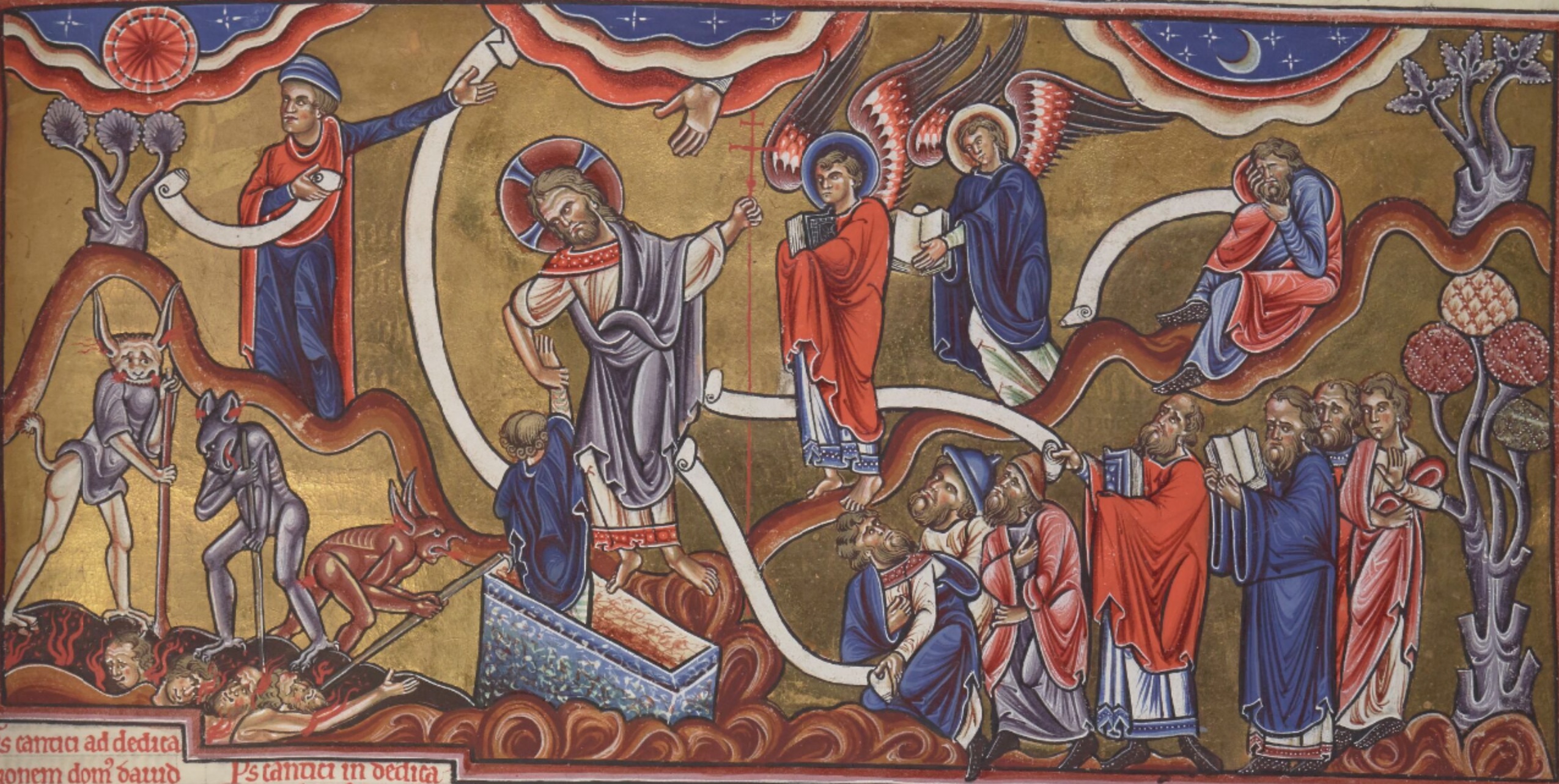
https://www.routledge.com/Cosmology-in-Antiquity/Wright/p/book/9780415121835

Cosmology in Antiquity
Rosemary Wright, 1995
https://www.amazon.com/dp/0415121833
Part of: Sciences of Antiquity (9 books)
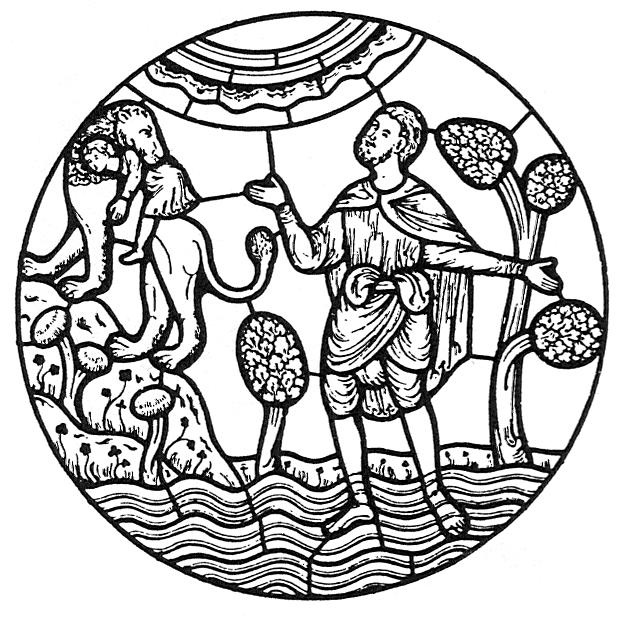
“Examines the cosmological theories of the `natural philosophers’ from Thales, Anaximander and Anaximenes to Plato, the Stoics and the NeoPlatonists. Also discusses and emphasizes the importance of Babylonian and Egyptian forerunners.”

  • Chapter 1 – INTRODUCTION
  • Chapter 2 – A SURVEY OF COSMOLOGICAL TEXTS
  • Chapter 3 – MODELS, MYTHS AND METAPHORS
  • Chapter 4 – MACROCOSM AND MICROCOSM
  • Chapter 5 – CHAOS AND COSMOGONY
  • Chapter 6 – ELEMENTS AND MATTER
  • Chapter 7 – AIR, AITHER AND ASTRA
  • Chapter 8 – TIME AND ETERNITY
  • Chapter 9 – THE MATHEMATICAL BASES OF GREEK COSMOLOGY
  • Chapter 10 – THE COSMOS AND GOD

Blurb at Rout site:

“The popularity of Stephen Hawking’s work has put cosmology back in the public eye.

“The question of how the universe began, and why it hangs together, still puzzles scientists.

“Their puzzlement began two and a half thousand years ago when Greek philosophers first ‘looked up at the sky and formed a theory of everything.’

“Though their solutions are little credited today, the questions remain fresh.

“The early Greek thinkers struggled to come to terms with and explain the totality of their surroundings; to identitify an original substance from which the universe was compounded; and to reconcile the presence of balance and proportion with the apparent disorder of the universe.

“Rosemary Wright examines the cosmological theories of the `natural philosophers’ from Thales, Anaximander and Anaximenes to Plato, the Stoics and the NeoPlatonists.

“The importance of Babylonian and Egyptian forerunners is emphasised.

“a comprehensive introduction to the cosmological thought of antiquity, the first such survey since Neugebauer’s work of 1962[?]. “

Check Wouter “Star Destroyer” Hanegraaff:
Who wrote that the highest level of Fate is sphere 7 Saturn rather than sphere 8 Ogdoad fixed stars as Wouter Hanegraaff falsely claims, confusing himself?

Recent Posts

Crop by Michael Hoffman

Justin Sledge (Esoterica) Conversation with Wouter Hanegraaff about Entheogens in Western Esotericism

Michael Hoffman, theory of psychedelic eternalism

As said at start, demons are swinging the audio level all over the place.

Contents:

  • Intro
  • The Egodeath Theory of Psychedelic Hyper-Eternalism
  • Egodeath Theory Emphasizing Qualified Possibilism Instead of Eternalism: “Egodeath Theory of Psychedelic Hyper-Eternalism
  • Beginner Possibilism Guy; Beginner Eternalism Guy; Advanced Hyper-Eternalism Guy
  • 1997 Psyche Level (Soul Level) version of the Egodeath theory = 2-level; end-state = brute eternalism; You must agree with me that no-free-will is the case; you must conduct all your thinking in a no-free-will way
  • 2025 Pneuma/Spirit version of the Egodeath theory = 3-level; end-state = hyper-eternalism; You must agree with me that no-free-will is the case merely at the underlying level and must be affirmed/ relied on in the altered state but, in practice, you always conduct all your thinking in a free-will looking way; experience power of steering in branching tree, as if {king steering in a tree} even though you know that underlying reality is {snake frozen in rock}
  • Does Middle Platonism have an aspect of hyper-heimarmene? todo: confirm
  • Confirmed Astral Ascent Mysticism per Egodeath Theory: Name of hyper-eternalism sphere (beyond eternalism) is Pleroma, = precession of the equinoxes
  • Sledge Video “What is the Demiurge? Pt 4 Why the Demiurge is Necessary for Salvation”
  • “Pneumatic”, “Spiritual”, Hyper-Transcendent Version of Egodeath Theory = Accurate Useful Description of Actual Resulting Mental Model = Qualified Possibilism, More than Brute/ Simple Eternalism
  • Search Web: pleroma cosmic heimarmene
  • The Egodeath Theory Had Religious Re-Marketing Rebirth During March 2025 Due to Prepping to Communicate it to my Psychedelic Church
  • Factors that caused me to shift emphasis/ framing of the Egodeath theory from “You end up with Eternalism” to “You end up with Qualified Possibilism” in March 2025; Well-Formed Transcendent “Compatibilism“
  • Valentinus: Unsheathed Sword of Intelligence (Litwa, Feb. 2025)
  • h3 “On Self-control” fragment, Now Known to be by Valentinus. Litwa: Valentinus Unsheathed “On Self-control” book
  • It Was DMT. 😑
  • Bullsh!t Is Bullsh!t: False Tepidness Is Hardly Truer than False Denial of Entheogens
  • “We Figured Out How Hermetists Had Intense Altered States: Through Entheogenic Practices in the Wide Sense! ” – Wouter Hanegraaff & Justin Sledge, Posturing Academics
  • “We Figured Out How Hermetists Had Intense Altered States: Through Non-Drug Entheogens! ” – Wouter Hanegraaff & Justin Sledge, Posturing Academics
  • From Total Denial to Insistent Assertion Along with Strenuous Minimizing of Entheogens: “I boldly insist that ancients definitely used entheogenic practices (but it was almost always non-drug entheogenic practices)” – Countersignal Yourself Harder
  • Desc from Video
  • Featured places
  • Embassy of the Free Mind
  • Museum
  • Quick paste from idea development page 26: Related Comments
  • My Wussy Half-Truth in 1997 like the traditional methods of the mystics are non-drug entheogens
  • “Dizzy Doesn’t Count”
  • keyboard shortcut for my 2004 “Entheogenic Esotericism” post
  • When You Think of Psychedelics Extremism, Think Egodeath theory
  • 🍄👑 King of the Ardent Advocates
  • Transcription (with timestamps)
  • Transcription without Timestamps

Intro

Find: DMT, psychotropic, altered, psychedelic, substance, ayahuasca, ecstatic, consciousness, bias, Muraresku, evidence, balance, entheogen.

Video Thumbnail: He’s holding no-free-will/ heimarmene/ Fatedness/ eternalism in his hand and looking at it from outside of it, seeing the uncontrollable source of control-thoughts, from the mature {immortal} POV; hyper-eternalism aka qualified possibilism-thinking.

— Michael Hoffman, the theory of psychedelic eternalism

what was that –^

The Name of the Theory, and the descriptive elaborative sentence to disambig it

theory of psychedelic eternalism

means theory of psychedelic hyper-eternalism ; qualified possibilism-thinking; virtual freewill;
knowing that at the underlying level = eternalism
though the shape of experience and personal control system is always:

literalist ordinary-state possibilism with autonomous control
lopac

The mind learns to differentiate child vs adult thinking, and rely on adult thinking, not rely on child thinking. We have then two minds: higher rider mind, lower donkey mind.

The lower, personal mind thinks as if it’s a monolithic, autonomous control agent

The higher, transpersonal mind knows that the lower mind is actually put forth from the uncontrollable source of control-thoughts, frozen in future 4D block time

4D block spacetime
fbs

Which Came First: Infinitely better than “CybTrans.com” domain name Egodeath.com, or, calling it “Egodeath theory” eg 1996/1997? when did I first write “Egodeath theory”? Ans: Not in 1997; by 2001 June.

Apparently Erik Davis asked me in 2001 about the theory. News to me.

next, check Egodeath Yahoo Group: first occur of “Egodeath theory”?? __ ans: https://egodeathyahoogroup.wordpress.com/2021/01/09/egodeath-yahoo-group-digest-1/#message23 – super interesting. shows other verbose name; says “Egodeath theory” is short brand name; long brand name is what I wrote late 1988: c t e t ; CTET to The Cybernetic Theory of Ego Transcendence

“The Cybernetic Theory of Ego Transcendence” [descriptive, except missing ‘eternalism’ & ‘psychedelic’] (1988) =
“the Egodeath theory” (2001?)

the [Cybernetic + Psychedelic + Eternalism] Theory of Ego Transcendence

the [Analogy + Cybernetic + Psychedelic + Eternalism] Theory of X

the [Analogy Psychedelic Eternalism Cybernetic] Theory of X

the [Analogy Psychedelic Eternalism Cybernetic] Theory

The Analogy Psychedelic Eternalism Cybernetics Theory

– LAST WORD TO DELETE = ? DELETE 1 WORD:

Sort 4 key words in order , most important first:

  1. Analogy – not important for Core, only for periph application & history & myth.
  2. Psychedelic – crucial to emphasize; nothing w/o this; everyone tries to shut out, do not allow.
  3. Cybernetic – it’s a given, since we are control agents
  4. Eternalism – CRUCIALLY DISTINCITVE

THAT’S Wouter Hanegraaff They

That’s why recently I selttled on short form “theory of psychedelic eternalism”.

  • it is a theory.
  • this is the brand name of a theory.
  • the last descriptors to delete, the very most distcintive precious crucial differentiattors, are not ‘analogy’ or ‘cybernetics’, but: eternalism + psychedelics. thus:

theory of psychedelic eternalism

so:

Egodeath theory = theory of psychedelic eternalism

thus

Egodeath theory of psychedelic eternalism

that is brand name + 2 crutical key word descriptors. it’s more like a Foo Bar theory OF ego death. ie:

the possibilism experiential mode

the Psychedelic Eternalism Theory of Egodeath <– order interesting
=
the Egodeath theory of psychedelic eternalism

the theory that egodeath is really about psychedelic eternalism

psychedelic eternalism
pe

Psilocybin esotericism
p-e

p-e Psilocybin esotericism Psychedelic Eternalism Theory of Myth

damn it what is keyboard shortcut for “psychedelic eternamlism”??

next, standard order:

X = Ego Transcendence

Self-control Cybernetics, Dissociative Cognition, & Mystic Ego Death (1997 core theory spec) (Hoffman, 1997) https://egodeaththeory.wordpress.com/2020/11/30/self-control-cybernetics-dissociative-cognition-mystic-ego-death/

I know I have a handy link somewhere here, around 1997 article’s notes

Self-control Cybernetics, Dissociative Cognition, & Mystic Ego Death (1997 core theory spec) (Hoffman, 1997) https://egodeaththeory.wordpress.com/2020/11/30/self-control-cybernetics-dissociative-cognition-mystic-ego-death/

Archive.org link: cybtrans.com
https://egodeaththeory.org/2021/01/08/announcement-the-cybernetic-theory-of-ego-transcendence/#CybTrans-com — has link:
https://web.archive.org/web/19970214094018/http://www.cybtrans.com/philosph/postings.htm
Does that page say like “Egodeath theory”? no, says “origin of this theory” … title of site: Ego Death and Self-Control Cybernetics

but it doesn’t NAME the theory! “This is a philosophy or theory of [insert: of what?]

the psychological phenomenon of mystic ego death

verbose description, good. but, no named theory. POOR BRANDING. DAMN IT, IT NEVER NAMES THE THEORY!!

IT DOESN’T NAME THE TWO HALVES, IT SIMPLY REJECTS THE HISTORY/ENTH / the Mytheme theory HALF, SAYING THE CORE WOULD be too big if the history/ entheogens/ the Mytheme theory content were included in the core. stupid. should have said:

The Foo Bar Theory, including:

  • Core theory cybernetics yada
  • history/ myth / the Mytheme theory / ahistoricity / entheogens hsitory yada theory

“Importing foreign and historical elements into the core of this Theory would cause the misguidedness of those elements to be inherited as well, making the core overly complex. This new core theory of enlightenment is not a history of ideas about enlightenment, but an essential framework for a mental model of spacetime and self-control. It is a type of metaphysical system, with special emphasis on self-control cybernetics.” — https://web.archive.org/web/19970214094113/http://www.cybtrans.com/philosph/p173.htm

Several problems that I didn’t perceive or clearly think about in 1997:

  • the brand name of the whole theory;
  • the name of the core theory portion;
  • ” periph “.

monolithic, autonomous control agent
maca

literalist ordinary-state possibilism with monolithic, autonomous control
lopmac

analogical psychedelic eternalism

ape2c

analogical psychedelic eternalism dependence
aped

analogical psychedelic eternalism with 2-level, dependent control
ape2dc

2-level, dependent control
2ldc

analogical psychedelic eternalism
ape

analogical psychedelic eternalism with 2-level control
ape2

from {Amanita, Christianity, surface form, low esotericism} to {Psilocybin, Greek + Christian, cognitive effects, high esotericism}
ap

The Theory of Psychedelic Hyper-Eternalism

The Theory of Psychedelic (Hyper-) Eternalism

what do I want to highlight at lowest level of detail; ie at max zoom out level?

what then is the very next thing? In concept-label or theory-brand label… is it a trademark name of a theory, or, a description specifier characterization?

theory of psychedelic eternalism
tope

theory of psychedelic (hyper-)eternalism

theory of psychedelic hyper-eternalism
tph <–
tphe
tophe

Psychedelic Hyper-Eternalism

The Egodeath Theory of Psychedelic Eternalism

(winner 🏆 b/c clarity at this concise level) [EDTPE]

analogical psychedelic eternalism with 2-level, dependent control
ape2dc

analogical psychedelic eternalism with 2-level control
ape2

analogical psychedelic eternalism dependence
aped
This is a 4-term descriptor from which it is possible to construct the entire Egodeath theory.

the complem term is:

literalist ordinary-state possibilism with autonomous control –>
literalist ordinary-state possibilism autonomomy
lopa
literalist ordinary-state possibilism autonomomy

thus “aped vs. lopa“.

“analogical psychedelic eternalism dependence” vs. “literalist ordinary-state possibilism autonomomy”
avl
“analogical psychedelic eternalism dependence” vs. “literalist ordinary-state possibilism autonomomy”

You can construct the entire theory from just the most key terms:
theory of psychedelic eternalism
tope

theory of what? of the “psychedelic eternalism” theory of myth
petm

a theory of:
“psychedelic eternalism” theory of myth
the “psychedelic eternalism” theory of myth

qualified freewill thinking

The Theory of Psychedelic Eternalism

(winner 🏆🏆 b/c clarity at this concise level) [TOPE]

theory of psychedelic eternalism
tope

It is clarifying to say:

Egodeath theory of psychedelic eternalism — succinct, emphasize the simple thing.

Do not — in short name — emph the complex thing, “qualified possibilism-thinking” – too indirect, roundabout.

The Egodeath Theory of Psychedelic Hyper-Eternalism

The Egodeath Theory of Psychedelic Eternalism (which is Hyper-Eternalism, ie Qualified Possibilism)

The Egodeath Theory of Psychedelic Possibilism
[too much marketing lie??]

Despite my analysis, the best title feels:

Egodeath Theory Emphasizing Qualified Possibilism Instead of Eternalism: “Egodeath Theory of Psychedelic Hyper-Eternalism

Beginner Possibilism Guy; Beginner Eternalism Guy; Advanced Hyper-Eternalism Guy

Crop by Michael Hoffman

picture of the week

Difficulty 1 of 10:
L leg = naive possibilism-thinking;
R leg = brute eternalism-thinking

That’s nice. You got that. Ok, next, explain:

Difficulty 10 of 10:
no leg indicated = hyper-eternalism

1997 Psyche Level (Soul Level) version of the Egodeath theory = 2-level; end-state = brute eternalism; You must agree with me that no-free-will is the case; you must conduct all your thinking in a no-free-will way

2025 Pneuma/Spirit version of the Egodeath theory = 3-level; end-state = hyper-eternalism; You must agree with me that no-free-will is the case merely at the underlying level and must be affirmed/ relied on in the altered state but, in practice, you always conduct all your thinking in a free-will looking way; experience power of steering in branching tree, as if {king steering in a tree} even though you know that underlying reality is {snake frozen in rock}

I really feel that March 2025, the Egodeath theory matured in its Marketing framing positioning: from brute emphasis on “eternalism is the case”,

Certainly, I have been developing 3-phase model since 2000 when Coraxo pointed out that my 1997 2-level model (etrmin terminating in heimarmene) is incapable of discussing Gnosticism. I immediately recognized that a as a widespread problem characteristic of Late Antiquity.

Does Middle Platonism have an aspect of hyper-heimarmene? todo: confirm

{king steering in a tree}
kst

Advanced the Egodeath theory : you always use egoic personal control system (so, possibilism); you’re always in the tightcog ordinary state (so, possibilism). gestures to the advanced puzzle: row 1, Eadwine’s leg-hanging mushroom tree image in the Great Canterbury Psalter: evaluate upside down

Confirmed Astral Ascent Mysticism per Egodeath Theory: Name of hyper-eternalism sphere (beyond eternalism) is Pleroma, = precession of the equinoxes

Sledge new Demiurge 4 vid says Pleroma is a hermetic name of the 9th cosmic sphere; the Ennead, above eternalism sphere 8 (sphere of the fixed stars).

https://www.youtube.com/watch?v=kq-CoIFf8l0

Vid name: “What is the Demiurge? Pt 4 Why the Demiurge is Necessary for Salvation”
March 28, 2025
YouTube channel: ESOTERICA – Dr. Justin Sledge
836K subscribers
47,798 views

“Gnosticism is often thought to teach that the creator of the cosmos is a demonic entity known as the Demiurge. However, this sharply dualistic teaching isn’t the only Gnostic voice. Valentinus taught that the Demiurge, while ignorant, was a necessary aspect of salvation. Indeed, even the Demiurge would achieve psychic redemption according to this school of Gnosticism. Let’s explore the Valentinian conception of the Demiurge, one that upends both ancient and contemporary stereotypes about Gnosticism.

Consider Supporting Esoterica! Patreon –   / esotericachannel   One Time Donation Support – Paypal Donation – https://www.paypal.me/esotericachannel Merch –    / @theesotericachannel   New to Studying Esotericism? Check out my Reading Guide here – https://docs.google.com/document/d/1c… Rare Occult Books – https://www.esotericaoccultbooks.com/

Episode 1 –    • What is the Demiurge – Pt 1 – How the…  

Episode 2 –    • What is the Demiurge – Pt 2 – The Evi…  

Episode 3 –    • What is the Demiurge – Pt 3 – Simon M…  

Archons –    • Who are the Archons – The Rulers of t…  

Recommended Readings:

M David Litwa ‪@m.davidlitwa‬
Books + Classes – https://mdavidlitwa.com/
Litwa – Valentinus – https://amzn.to/4c5gAIp
Valentinian Christianity: Texts and Translations – https://amzn.to/3FF2ZeF

Rethinking “Gnosticism”: An Argument for Dismantling a Dubious Category – https://amzn.to/4jpoOxJ

The Spiritual Seed: The Church of the Valentinians

Sledge Video “What is the Demiurge? Pt 4 Why the Demiurge is Necessary for Salvation”

Sledge said in the new video:

  • the 7 planetary archons rulers governors (controllers) = fate = cosmos sphere 1-7. [the body?]
  • the demiurge (Yaldabaoth) = Fate = sphere 8. The soul; the psyche rises to this level, max. Highest sphere of the cosmos.
  • the aeons? nous? the Pleroma = sphere 9, above Fate. The pneuma; the spirit, rises to this level. Hyper-eternalism. hyper-cosmic. Hyper-heimarmene. Above/outside the 4D spacetime block. outside 4D spacetime; outside/above 4D spacetime eternalism.

4D spacetime block
fdsb

4D spacetime eternalism
fdse

outside/above the 4D spacetime rock

The Spiritual Egodeath Theory edtpem etpem etpem psychedelic eternalism transformation from possibilism to eternalismm Egodeath theory of psychedelic eternalism e t p e

the Egodeath theory of psychedelic eternalism
etpe
the Egodeath theory of psychedelic eternalism

the spiritual egodeath theory of psychedelic eternalism

the egodeath theory of spiritual psychedelic eternalism

but “spiritual” is no good, you have to know the ancient 3-tier system body/ soul or psyche / spirit or pneuma — which I wrote up in 2001 per E Pagels book reviews.

2000, I realized you can express “transcend eternalism” ie 3-phase model — yet, I continued emph’g “terminate at eternalism” like {red guy} during 2000-2024.

While I DEVELOPED the model to explain {sage} on right during 2000-2024, I still marketed “Egodeath theory terminates in eternalism; eternalism is the case”.

Recent studying mushroom inspired me that in fact I always remain emphatically qualified possibilism-thinking even during peak window.

I held that at arms’ length, twice, recently.

You KEEP egoic personal control system , but you SEE it and STEP OUTSIDE IT in awareness.

It’s “that thing”. “that system over there”.

“I see my egoic personal control system down there.”

“I am watching my egoic personal control system over there.”

Crop by Michael Hoffman

“Pneumatic”, “Spiritual”, Hyper-Transcendent Version of Egodeath Theory = Accurate Useful Description of Actual Resulting Mental Model = Qualified Possibilism, More than Brute/ Simple Eternalism

Aim to Look Very Like the Pre/Trans Fallacy; Chop Wood Carry Water, but Modified Foundation Can Endure Psilocybin Loose Cognitive Hyper-Awareness/ Transcendent Awareness Perception Capability Endurant

Search Web: pleroma cosmic heimarmene

I then confirmed by searching: pleroma cosmic heimarmene
https://www.google.com/search?q=pleroma+cosmic+heimarmene

“Gnosticism” article at Thelemistas.org
https://www.thelemistas.org/en/MSS/Wetzel/Gnosticism – page confirms astral ascent mysticism, pleroma, what Sledge said.

“divine perfection known as the Pleroma, a realm of heavenly beings or aeons

“he Gnostic insistence that a species of esoteric knowledge and self-control are the keys to transcending the flawed [= eternalism] creation of the demiourgos.

“The first, pre-cosmic creations of the demiourgos are the archons (“rulers”), which are spirits typically associated with the seven Ptolemaic planets and the sphere of fixed stars.

[only demiurge directly = fixed stars — demiurge & archons are subsets within fatedness / eternalism]

“The rule [external control over your thoughts] of the demiourgos [sphere 8 fixed stars] and the archons [sphere 1-7 planets] is frequently called by the Gnostics heimarmene (“fate“)”

“and is often conceived of as cruel, tyrannical and oppressive in the extreme.

“This is so because these archons are the creations of a fallen, ignorant and lesser “god,” whose creation is merely a flawed shadow copy of the Pleroma [sphere 9: precession of equinoxes; above fate-sphere of fixed stars]:”

The Egodeath Theory Had Religious Re-Marketing Rebirth During March 2025 Due to Prepping to Communicate it to my Psychedelic Church

A stunted tale is “end up at eternalism, the end.”

True characterization of what you end up with: qualified possibilism-thinking.

Also a key influence (forcing a change of thinking) while studying mushrooms Jan-Feb 2025: I had unclean lips, there is no way to say “here is how YOU SHOULD think”, w/o impliying egoic mental model.

I made progress in Jan/Mar 2025 re: mytheme decoding {donkey w/ rider on path} incl Entry Jeru.

Factors that caused me to shift emphasis/ framing of the Egodeath theory from “You end up with Eternalism” to “You end up with Qualified Possibilism” in March 2025; Well-Formed Transcendent “Compatibilism

The Egodeath theory doesn’t give you eternalism (unless you alter def’n of that word).
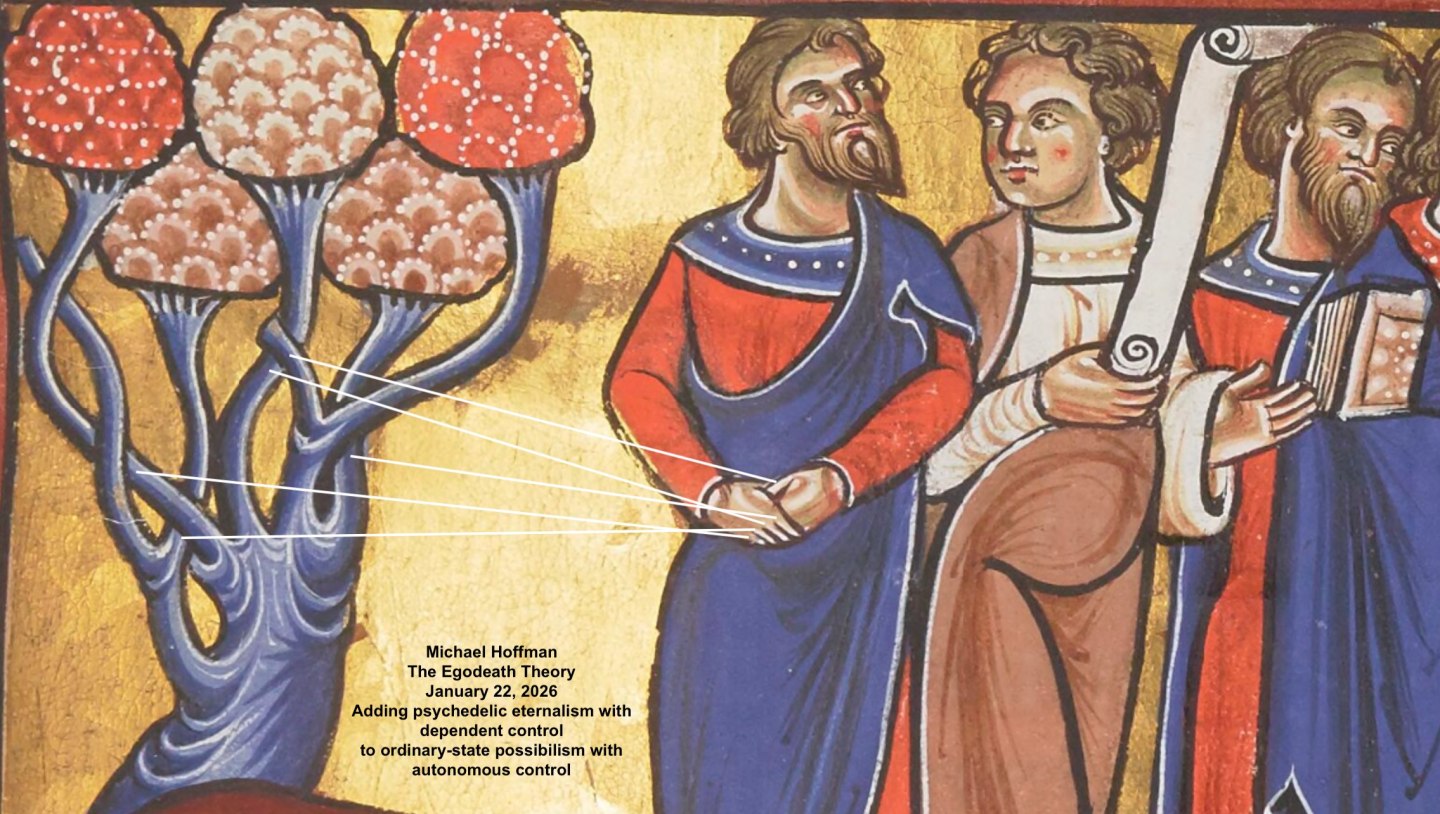
The Egodeath theory gives you transcendence of eternalism. Or “transcendent eternalism” or “hyper-eternalism”.

The Egodeath theory does NOT give you naive possibilism.

I’m a believer in eternalism b/c that is required to have stable control in loose cognition.

Relational eternalism.

Similar to the higher god, vs. the demiurge.

Not sure ATM how map this section to that gnostic contrast…. demiurge ~= false egoic personal control system.

The Egodeath theory removes naive possibilism.

Egodeath theory replaces naive possibilism by qualified possibilism (including knowing that the underlying level = eternalism).

A better rep’n is “end up w/ best type of , ultimate type of Compatibilism”

Red Youth 1997: eternalism is the case!

Coraxo 2000: your model can’t describe Gnosticism.

I developed the 3-phase model 2003-Feb 2025.

Feb 2023, when invited to present the Egodeath theory, realized it will not fly, to describe Transcendent Knowledge = terminate at eternalism. that is not an accuate characterization, unless you redefine ‘eternalism’ to emphasize re-formed possibilism-thinking; qualified possibilism-thinking.

You end up MORE with qualified possibilism-thinking, than with eternalism-thinking or “qualified eternalism-thinking”.

You end up w/ ability to stable personal control system during Psilocybin loose cognition.

Justin Sledge influenced me in March hearing him argue that Transcendent Knowledge isn’t worth the trouble b/c chop wood carry water;

“Transcendent Knowledge DOESN’T MAKE ANY DIFFERENCE” —

except, the personal control system gains the ability to endure the Psilocybin, loose cognitive state.

Valentinus: Unsheathed Sword of Intelligence (Litwa, Feb. 2025)

“On Self-control” fragment, Now Known to be by Valentinus. Litwa: Valentinus Unsheathed “On Self-control” book

  • {unsheathing blade} if L finger closer to the ground. unstable control. unstable control. possibilism-thinking.
  • {sheathing blade} if R finger closer to the ground. stable control. eternalism-thinking.
Crop by Michael Hoffman

https://www.amazon.com/dp/B0DW9172HN/

Valentinus: Unsheathed Sword of Intelligence
M. David Litwa, February 5, 2025

Blurb:

“This book studies the life and thought of Valentinus using his genuine fragments.

“After translating the fragments and introducing Valentinus’ life, it reorders the fragments and segues into a line-by-line spiritual and historical commentary:”

  • Valentinus Sees a Vision (Fragment 7)
  • Summer Harvest (Fragment 8)
  • Evil Angels and the God Human (Fragment 1)
  • The Image and the Name (Fragment 5)
  • You Are Deathless! (Fragment 4) {immortal} = mature.
  • The Pure in Heart (Fragment 2)
  • On Self-control (Containing Fragment 3)
  • The Truth is Everywhere (Fragment 6)

“This volume is the first to integrate the discovery that Valentinus wrote the letter On Self-control (formerly attributed to Basil of Caesarea).

“It closes with an argument that Valentinus wrote the Gospel of Truth.”

Litwa’s new book on Valentinus fragments, the first time “On Self-control” was included & attributed.

It Was DMT. 😑

Sledge at 1:20:00:

“every episode i do, i get comments “It was DMT. 😑”

Sledge’s commenters are correct: IT WAS DMT.

I am not tired of scholars denying entheogens altogether; I am tired of scholars making a false call for “balance”, as if heavy breathing is sufficient for mental model transformation from possibilism to eternalism.

The maximal entheogen theory of religion (Michael Hoffman 2002 & 2003, the Egodeath Yahoo Group) sees entheogens everywhere because:

  • They were everywhere.
  • No method other than entheogens is sufficient for mental model transformation from possibilism to eternalism.

I equate the false call for “balance” and “middle position avoiding extremes” with Browns’ betting everything on Walburga not being Amanita, and then botching the negative interp. Compounded by displaying the art so as to assert Amanita, while wording in roundabout way to assert not Amanita. Posturing to other scholars, “we are in the club of moderates.”

The Egodeath theory is NOT in that club and REJECTS that club.

Ardent Advocates 1, False Moderates 0

4-error penalty b/c two authors, two publications, repeating same elementary false interp.

I reject and hate the Moderate aka Minimal entheogen theory of religion.

The plague of 2000: “never entheogens in our religion history.”

The plague of 2025: “above all, we must avoid overstating how much entheogens in our religion history.” F that! It was nothing but entheogens. Any religion lacking entheogens isn’t real religion. Real religion is none other than entheogens.

take my keyboard shortcut a e e e for test drive:

“Authentic esotericism is entheogenic esotericism. Entheogens are the key to esotericism. This is the simplest possible theory of esotericism, and the most natural, the least contrived and strained. Theories of esotericism that are not based on entheogens suffer from the problem of grandiose verbiage, unmet promises and claims, chronic vagueness, excuses for lack of potent and prompt efficacy, and no ability to deliver the experiences which are talked about. Drug-free esotericism doesn’t work; it is not effectively ergonomic.” – Michael Hoffman, Egodeath Yahoo Group, June 12, 2004

Wouter Hanegraaff is now known to definitely have read my 2004 title/posting “Entheogenic Esotericism” written 8 years before his 2012 keynote of same name.

His email reply yesterdayish said re that point and one other: thank you for the info”

I also pointed him to my good new page explaining why he MUST be wrong writing “the Ogdoad above heimarmene”.

“Whether the fixed stars should be included [with Saturn, sphere 7] or should rather be associated with the Ogdoad [sphere 8] remains an open question for me.” – p. 294, footnote 114, Hermetic Spirituality and the Historical Imagination: Altered States of Knowledge in Late Antiquity, by Wouter Hanegraaff, 2022
114

My victory & credibility-boost re: placing fixed stars in sphere 8 (highest Fate level, reborn into from Saturn sphere 7) bolsters my bold claim & sound argument that non-drug entheogens = academic bullsh!t. that’s just a retreating form – they’re losing ground – of sheer denial.

Wouter Hanegraaff says: academics were wrong to say zero entheogens. Academics ought to say “Only a tiny bit of entheogens; but usually heavy breathing and the traditional methods of the mystics, instead.”

SO BOLD – SO BRAVE – SLEDGE AND Hanegraaff

NOTICE the deniers’ TRAJECTORY of retraction:

How long before they admit that I am right?

Intense mystic altered state without psychedelics MAKES NO SENSE – that is the evidence.

mystics’ history: Either they didn’t actually have the intense mystic altered state that they claimed to have, or, they had it, through psychedelics. The evidence is that only psychedelics have enough efficacy to cause that change/ that intense mystic altered state.

Letcher 2006, same: “Ok, we admit our total denial was wrong. But there were only a LITTLE Psilocybin mushrooms in England before 1970.”

The deniers are retreating in my direction. Stop dilly dallying and admit I’m 100% right, immediately.

What happened to Thomas Hatsis promised book that will prove no mushroom imagery in Christian art? Videos at YouTube announce that book – we’re waiting. ie, Thomas Hatsis is retreating in my direction.

new type of keyboard shortcut: fav quotes:

“Amanita muscaria is the most famous entheogen in the world that nobody uses. It is the supreme symbol of all entheogenic religion: of secret cults and societies of initiates and whispered lost knowledge.” – Dale Pendell, Pharmako Gnosis, first sentence of Amanita chapter
nouse
dpam

“Blessed are those who wash their robes, that they may have the right to the tree of life and may go through the gates into the city.” – Revelation 22:14 (the last page of the Bible), NIV
rev2214

Bullsh!t Is Bullsh!t: False Tepidness Is Hardly Truer than False Denial of Entheogens

“We Figured Out How Hermetists Had Intense Altered States: Through Entheogenic Practices in the Wide Sense! 🏆” – Wouter Hanegraaff & Justin Sledge, Posturing Academics

“We Figured Out How Hermetists Had Intense Altered States: Through Non-Drug Entheogens! 🏆” – Wouter Hanegraaff & Justin Sledge, Posturing Academics

From Total Denial to Insistent Assertion Along with Strenuous Minimizing of Entheogens: “I boldly insist that ancients definitely used entheogenic practices (but it was almost always non-drug entheogenic practices)” – Countersignal Yourself Harder

Hanegraaff says reject bullsh!t 1, and instead, assert bullsh!t 2 instead, which slightly eases back from bullsh!t 1. but bullsh!t is bullsh!t.

the other whopper: https://egodeaththeory.org/2025/03/18/hanegraaffs-inability-to-place-fixed-stars-in-sphere-7-or-8-proves-rebirth-is-into-fate-not-freedom/#p258a

“the Ogdoad above the heimarmene” – p. 258, Hermetic Spirituality and the Historical Imagination: Altered States of Knowledge in Late Antiquity, by Wouter Hanegraaff, 2022
oah

Desc from Video

https://www.youtube.com/watch?v=rgzuj1joXX0

Video title:
“What is Hermeticism – Then & Now Conversation ‪@EmbassyoftheFreeMind‬ w/prof. Hanegraaff”
Dec 12, 2023
80,296 views
ESOTERICA YouTube channel
835K subscribers

Desc:

“A roundtable conversation hosted by the Embassy of the Free Mind in Amsterdam moderated by Dr. Lucinda Martin, between dr. Justin Sledge of Esoterica and Prof. Dr. Wouter Hanegraaff on the topic:
Hermes and Hermeticism, Then and Today.”

https://embassyofthefreemind.com/en/ <- for wusses
https://embassyofthefreemind.com <- hardcore

Links here might not work, go via YouTube Desc:

Subscribe to the Embassy’s YouTube Channel –    / embassyofthefreemind   Embassy of the Free Mind – https://embassyofthefreemind.com/en/ Dr. Lucinda Martin –   / lucinda-martin-468790115   Embassy Web Shop – https://embassyofthefreemind.shop/ Buy Christ, Plato Hermes Trismegistus – https://embassyofthefreemind.shop/col… Consider Supporting Esoterica! Patreon –   / esotericachannel   Paypal Donation – https://www.paypal.me/esotericachannel Merch –    / @theesotericachannel   Buy 2, get free shipping to the US and give 1 as a gift!

See more information in Google Maps

Embassy of the Free Mind

Museum

4.5(191)Details

Transcript
Follow along using the transcript. [below]
You can toggle timestamps at YouTube.

Quick paste from idea development page 26: Related Comments

Added machine transcription below.

At 1:20:00, Sledge rejects both errors (just like Brown positions themself as centrist by rejecting mushroom imagery in Christian art (St. Walburga tapestry, definitely not Amanita) and affirming it by also at the same time displaying that same art in beautiful gallery of awesome instances of definite Amanita imagery in Christian art):

  • Avoid psychedelics eliminativism – I agree, that is baloney.
  • Avoid DMT reductionism (“it’s always DMT”).

Sledge means: Avoid entheogenic reductionism; avoid saying that the way esotericists accessed the altered state of consciousness was always psychedelics.

Sledge is wrong. This is false centrism.

In fact, the way ppl had the altered state of consciousness sufficient for mental model transformation is always, exclusively psychedelics, no other method.

That’s my official firm position.

Photo: Michael Hoffman, Egodeath Mystery Show

My Wussy Half-Truth in 1997 like the traditional methods of the mystics are non-drug entheogens

“There are multiple triggers for the dissociative cognitive state, including psychedelics, meditation, schizophrenia, sensory deprivation, hyperventilation, temporal-lobe epilepsy, UFO abduction, and near-death experiences.” – Michael Hoffman 1997

“the” dissociative state? maybe, but that is BS, in that it is not sufficient to cause mental model transformation from possibilism to eternalism. “DIZZY DOESN’T COUNT” – Michael Hoffman slogan.

“Dizzy Doesn’t Count”

{balance scale} = B.S. 🚫⚖️

Crop by Michael Hoffman. Great Canterbury Psalter f11, Day 1 & 4 of Creation, Panaeolus points to pan of {balance scale}; an {open book}.

I give NO credit to claims of “the traditional methods of the mystics” that are allegedly non-drug.

Non-drug entheogens is academic balony, with ZERO substantiation. It is pure doctrinal positioning, a circle of academics pleasing each other, not reality.

I wimped and caved, in:

Self-control Cybernetics, Dissociative Cognition, & Mystic Ego Death (1997 core theory spec) (Hoffman, 1997) https://egodeaththeory.wordpress.com/2020/11/30/self-control-cybernetics-dissociative-cognition-mystic-ego-death/

BEING SLIGHTLY DIZZY PROVES MY POINT:

Heavy breathing makes you dizzy – it does not cause mental model transformation, mental model transformation from possibilism to eternalism. which is the only thing that’s relevant for this debate.

My authority: My leading-edge father in 1980 led me in Grof BS Breathing. It is way way way too weak. weak!

keyboard shortcut for my 2004 “Entheogenic Esotericism” post

Made a keyboard shortcut for my 2004 “Entheogenic Esotericism” post at the Egodeath Yahoo Group
https://egodeaththeory.org/2025/03/18/hanegraaffs-inability-to-place-fixed-stars-in-sphere-7-or-8-proves-rebirth-is-into-fate-not-freedom/#Email-to-Hanegraaff-March-18-2025 links to:
https://egodeathyahoogroup.wordpress.com/2021/01/09/egodeath-yahoo-group-digest-66/#message3335

[aeee]

“Authentic esotericism is entheogenic esotericism. Entheogens are the key to esotericism. This is the simplest possible theory of esotericism, and the most natural, the least contrived and strained. Theories of esotericism that are not based on entheogens suffer from the problem of grandiose verbiage, unmet promises and claims, chronic vagueness, excuses for lack of potent and prompt efficacy, and no ability to deliver the experiences which are talked about. Drug-free esotericism doesn’t work; it is not effectively ergonomic.” – Michael Hoffman, Egodeath Yahoo Group, June 12, 2004

that lacks definition: “sufficient for mental model transformation from possibilism to eternalism” – note also: hyper-eternalism

When You Think of Psychedelics Extremism, Think Egodeath theory

🍄👑 King of the Ardent Advocates

I agree, Justin Sledge, it is always Psilocybin, never DMT. Do not say it’s always DMT. It is always Psilocybin. (It is never Wouter Hanegraaff’s non-drug entheogens.)

Per hardline Egodeath theory:

  • No one ever had mystic experiernc any way other than Psilocybin.
  • Academics lie when they emphatically proclaim their DOCTRINAL STATEMENT OF FAITH that “there are many ways to produce same effect as Psilocybin” – LIARS CLUB. Fabricicated alt methods do not work, defined as: they do not produce sufficient effect. re strength or reliablility. note however, Cuebensis is not as reliable or ergonomic as blotter. Cubensis is hard to worrk with, for Psilocybin transformation.

Transcription (with timestamps)

Easy to get w/o timestamps, also. todo??

0:09[Music]

0:22a lesson that I’ve learned in my short life thus far is that if we let others Define what success is for us we never

0:30achieve it however if we Define what success means to us and for us regardless of social political or

0:37economic expectations then we might have a chance

0:43this summer I got to experience a real bit of success what it feels like for me

0:50for this channel for the project of esotera I got to join in a roundt

0:56discussion with a personal hero of mine professor professor vouter hanrath at an

1:02institution I also deeply admire and Revere the embassy of the free mind also

1:08known as the Ritman library to discuss a topic that has long fascinated me the

1:15philosophy and spirituality of hermeticism of course Professor hanuka’s

1:21work has transformed the field of the study of wosa terorism and frankly it speaks for itself though I remember

1:29being young person in my late teens probably and finding his work in the late 1990s and think to myself my God

1:38you can study all this cool esotericism stuff with rigor with scientific

1:44academic rigor and that that still motivates me down to this day further

1:51when I discovered there was an entire vast Library where esoteric wisdom was

1:56collected in the very antiquarian volumes and manuscripts that first brought that light to this world I

2:04resolved I resolved that I would go there and I would study that material

2:09come what may among the same canals that dayart and Spinosa once tried so on a

2:16very very warm evening I got to experience a bit of what success is for me to speak on a topic dear to me with a

2:23personal hero in a space I hold with reverence among a crowd of absolutely

2:30wonderful like-minded people and some of the most wonderful dear friends I’ve met in the recent years so I want to

2:37introduce you to this conversation by encouraging you to head over to the Embassy of the free Minds YouTube

2:42channel and their website and subscribe subscribe to their content you can find the links below and in the

2:49description if you like the content we put forward here at esoterica you’ll enjoy their content immensely indeed we

2:57share a common goal making as a teric wisdom accessible with scholarly rigor secondly

3:05I’d encourage you to support their work by picking up some of the items from their web shop for instance this two

3:12volume Christ Plato Hermes Tris magistus volume is one of my absolute favorite

3:17books it is a veritable catalog of hermetic and mystical wisdom documenting

3:23the first 50 years of printing it’s like having a portable

3:28Museum but for topics that esoterica specializes in it’s well worth picking

3:34up I think you can get a copy of this two volume hardback really really amazingly bound and printed document for

3:40like 50 bucks now we recorded a lot of material at the Ritman Library so I’ll be rolling out some of that soon as well

3:46so if you like esoteric spirituality really really beautiful old books and a 17th century Dutch mansion

3:55on the canals of Amsterdam stay tuned but with special thanks to everyone at

4:01the embassy of the free m especially Dr lenda Martin here is my conversation

4:07with Professor hanra on hermeticism then and

4:14[Music]

4:27now okay okay sorry about the technical difficulties we’ve uh We’ve consulted and determined

4:34it was the Hermetic dionis who were infiltrating our sound system let me

4:39start over uh for those at home I’m Lucinda Martin I’m the director of the Ritman Research Institute and the bibla

4:46philosophica hermetica the library of hermetic philosophy and this evening we

4:51have a round table which we’re calling Hermes yesterday and today now as I said before our library

4:59used to be one of the few places to study hermetic discourses and traditions these things were long viewed as

5:05Superstitious by Academia and by mainstream churches and thus seen as Unworthy of of attention in the meantime

5:13Scholars have begun to realize the contributions of hermetic streams of thought to the cultural history of

5:20humanity and last November our library was added to the UNESCO memory of the world register because of the

5:27contributions some of our authors have made to the development of modern human

5:32rights in 2017 the Ritman family established a museum the embassy of the

5:38free mind which is where we are this evening to teach the general public about the content of the library we

5:45present exhibitions and we offer lectures and seminars and even a Children’s Program you might therefore

5:51say that the kind of event that we’re hosting tonight is in our DNA it brings together two of the most

5:58prominent voices about hermetic traditions and discourses one operating in Academia and one specialized in

6:06communicating to the public and those are also our two concerns Val Jan is Professor of the

6:14history of hermetic philosophy and related streams of thought at the University of

6:19Amsterdam he has many scholarly Publications including his most recent book hermetic spirituality and the

6:26historic imagination just Sledge is the creator of the YouTube channel esoterica which

6:33has more than 300,000 followers this evening we want to explore the past present and future of

6:41hermetic streams of thought and their study what role they’ve played in history what they mean to people today

6:49and what questions are open that still need to be answered about this subject

6:54each of our speakers will give a short presentation and then we want to open the discussion to as many questions as

7:01possible both from our live and our remote audience in this way we hope to

7:06include the perspectives of academics practitioners and anyone interested in

7:11this fascinating subject with that please join me in welcoming vouter and

7:18[Applause]

7:26Justin start okay well thank you very much for the nice

7:32introduction uh first of all and it’s very nice to be here again in the riton library a place where uh I’ve been

7:39coming uh since uh the end of the 80s the 1980s and um which is really the place

7:47uh where you can study the Hermetic literature uh there’s no better place no other place in the world which is as um

7:53as Central to this kind of research as this place here so this is so I’m very happy to be here again um what I would

8:00like to do just in 15 minutes is uh just give an very short uh introduction to

8:06what our hertica are all about for somewhat larger audience many people in the audience here might already know

8:12what it’s all about more or less but maybe the larger audience doesn’t so um

8:17what are Thea all about I’d like to uh tell a little bit about this um by while

8:23at the same time also telling you about my my personal interest and my own own development in my uh encounters my

8:31encounters with th greatest herish herish Trish magistus the um the

8:37legendary author of the Hermetic writings uh I encountered the carpus hermeticum the most Central text of

8:44hermetic writings uh by the end of the 1980s uh in a Dutch translation which

8:49was made possible by the biblo of philosophic hertica here in Amsterdam and the translation of the carpatica

8:56made by uh um rulof Brook and K whel which was uh of great importance for uh

9:03you know calling attention to the hertica in in the Dutch context I got fascinated I read these texts I was

9:10wondering what is it all about I couldn’t really make out entirely what they were all about there were many

9:15things that puzzled me about him but I got fascinated and hooked about this text um and um what is clear in any case

9:24these are texts that are attributed to an legendary author Hermes mesus or in

9:30which this legendary author or wisdom teachers plays a central role uh they

9:35were written in the second third centuries of the Common Era more or less uh in Greek and um um but they were

9:43written in Egypt and this combination of Egypt and Greek is interesting and and important for understanding what arar

9:50are all about because uh when you think of Greece then you think usually about

9:56Greece Greek culture as the origin of Greek rationalism Greek philosophy Etc

10:01and many people think that the whole of Western civilization began in Greece right so Greece has this kind of iconic

10:08status of the or as the origin of Western philosophy uh and rationalism

10:13but then these these texts were written in Egypt and Egypt is often seen as the counterpart in that respect Egypt is

10:21often perceived as the home of everything that’s not rational and not

10:26philosophical but uh that has to do with magic and Superstition and all kind of

10:32things that were seen as the counterpart of rationality and so the fact that her hetic writings were written precisely in

10:38Egypt but in Greek and in Greek which uses a lot of philosophical language is

10:44fascinating so you have these these two countries Egypt and Greece together so

10:49to speak in uh one carpus of text hertica these Texs are attributed to

10:54this legendary teacher um and uh they are all about the search for gnosis

11:00ultimate knowledge knowledge about the true nature of reality the true nature of God and the true nature of ourselves

11:08and um to already you know give you very shortly the answer of um what the quest

11:14prognosis is all about the ultimate um um answer that our hermetic uh authors

11:21gave to the question what is reality is all about what is the true nature of reality was that they said everything is

11:28light there is only one reality spiritual light which is universal and

11:33um God is light reality is light and the human being is light the only thing that

11:38really exists is light Universal light and they call that the Noose with a Greek word um now of course when we’re sitting

11:46here do you look at each other and we are looking we standing in a room here and you see people you see beautiful

11:52pictures at the walls Etc you’re not seeing light uh you’re you’re seeing all kind of objects and people

11:59um why is that well that is because according to the hertica uh we are not

12:05actually perceiving reality as it really is we are diluted so our state of consciousness in which we find ourselves

12:11is a diluted State a state of state of hallucination and this is these are really appropriate terms uh a state of

12:18hallucination in which we see things that seem very real but are not ultimately real because the only thing

12:24that’s really real is universal light that’s also a kind of core uh belief of the htic authors um so the question is

12:32how do we uh uh wake up from the state of delusion and illusion in which we

12:37find ourselves in which we think this is reality and how do we find our way towards a true perception of the true

12:44nature of reality which is universal light that was really what the way of Hermes was all about and that is what

12:50you find in the Hermetic literature so in the Hermetic literature you find the

12:55description of what uh is often described as the path of Hermes or the way of Hermes in which um the authors

13:03and practitioners who wrote these texts where describing how you can uh Free

13:11Yourself liberate yourself from delusionary perceptions of reality and

13:16find your way to gnosis of reality as it really is that’s a kind of a core

13:22summary of what oura are all about these are unique profound very fascinating

13:27text I have been studying them for decades now and this is in Corpus of text that you can keep reading there are

13:33many text that you might come across when you read them a couple of times you know what they’re all about these are

13:39text that you can keep reading because they always keep surprising you I’ve uh written a pretty thick book about him um

13:46and been doing little else then studying the herar for five or six years I’m absolutely sure if I uh start reading

13:54the text the text again I will again discover new things that I didn’t see before uh because this is how

14:01fascinating and multi levs levels leveled their hetic text are so these

14:06are Classics these are Classics um to say something else also about the

14:12reception of the Hy because these a Tex from the second third Century late Antiquity uh Egypt and the Roman Empire

14:20very long time ago uh many things happened with armatic writings over the centuries they got translated they got

14:28copied by scribes Etc a lot can be said about it but an highlight of the Revival

14:33of the Hermetic uh literature came in the 15th century when the Greek texts uh

14:40especially the text that is known as the Corpus hermeticum uh got translated into Latin by one of the great humanists in

14:47the uh of the Renaissance marcelio ficino and this famous translation came

14:52out in 1471 uh known as the Pander uh the book on the wisdom and uh

15:00power of God the famous translation of the carum now I got fascinated by uh the

15:08reception and the translation of the hertica in the Renaissance in the spirit uh in 1997 and that’s maybe a nice small

15:17story to tell of how very small things that happen in your life can totally change your life forever and because I

15:23was living in Paris at that time uh I was one evening I was visiting a friend of mine famous scholar of the study of

15:30esotericism antoan f uh who’s an pioneering St scholar in our field I was

15:37having a nice evening at home with him and I was looking um at a little glass case that he had in his room which had a

15:45collection of very old books uh very valuable old books the kind of books that you find here in the Ritman library

15:51and one of them caught my interest for some reason I took it out it turned out to be in French translation from from

15:58the 16th century of hermetic literature and um and somehow something

16:06tickled my interest and I still think if I hadn’t taken that book out my life would have changed completely would have

16:11been and I would not have done most of the things that I actually have done I asked Onan fa can I borrow this book

16:19well it’s a valuable 16th century text with he amazingly uh you know allowed me

16:25to take it home or with me to my room uh that I had in Paris and I took it with me and I was reading it uh in reading it

16:32in b i very well remember this I couldn’t make out most of it it was written in 16th century French very

16:39difficult uh I didn’t understand most of it but I understand some of it and I noticed there’s something about this

16:46text there’s something fascinating about it it’s a kind of an intuition that you can have sometimes I want to know more

16:51about this two weeks later I went to Amsterdam and I went to the bi of philosophic hertica here and I met an a

16:59neolatin translator who happened to be sitting there with born uh who was translating hermatic text into Dutch and

17:06I asked what are you what what are you doing and he said uh well I’m translating a text by looo lelli and

17:14then a little bell went off my head because I had been reading this French text and this had been written by La

17:20lazel that is the French the frenchification so to speak of lovic larell and so this was a coincidence I

17:28thought I want to know more about loo latari I started working with with born and we ended up translating all the

17:34works by latari uh from Latin into English wrote a large introduction about

17:40it and published a book about this and why was this so important well uh why was this so fascinating uh to me and why

17:48do I think it is important to say something about about larell well there is the famous there’s a famous narrative

17:55that has been told about their htic Traditions by and the Hermetic tradition by Francis Yates an great scholar uh who

18:03published an Masterpiece in 1964 jordano Bruno and the hetic

18:09tradition in which she argued that the htic that the translation of the hertica in the 15th century um was a momentous

18:17event in cultural history uh the translation that fito made of the Corpus

18:23ticum changed the nature of the Renaissance it introduced Magic uh and

18:29learned discourse about magic into the intellectual culture and it had a huge

18:34impacts on the entire early modern periods and gave um the starting point

18:40in many ways according to Francis Yates to the Scientific Revolution which for finally led to the modern world so she

18:46created she made this beautiful large Grand narrative about the enormous

18:51impact of the Hermetic literature the Hermetic tradition which um all started

18:57with the Trans translation of the scorpus herum in 14 1471 now I was reading this L larel this

19:05L larell and I was looking him up in Franc Jade’s famous book and I could

19:11hardly find him he was mentioned here and there in a few foot notes but what I discovered was that this unknown guy

19:19lelli had been the second translator of the carpus ticum next to uh to ficino he

19:26had written some treatises that had not been included by ficino so it was not

19:32just ficino who translated the carpus it was also lelli um so I wanted to know more about

19:38lelli and to cut a very long story short short because I just have a few more minutes um it’s basically turned out

19:46that by looking at one forgotten figure that’s already in this case when you actually start studying him and

19:53contextualize him and learn about him and learn about his work you discover

19:58that the basic normative standard narrative that had so impressed

20:04countless people The Narrative by Francis Yates had to be revised and her whole story well turned out to be very

20:13different from reality so uh basically on the basis of lell I came to the what

20:20I discovered at that occasion was how strongly Scholars with their interpretation of ancient text can

20:27determine the way that we look at history and sometimes their interpretations are

20:32wrong and have to be revised and then suddenly the whole picture changes that uh that Discovery has always always

20:39stayed with me um the whole story of the Hermetic tradition that Francis Jades

20:44was telling had had to be revised on the basis of new discoveries of an unknown

20:50hermatic author L lelli uh much more recently beginning in 2015 more or less

20:56I decided to finally go back to this mysterious uh hermetic text themselves

21:02the text that were written in the second and the third century and really studied them very very very carefully going back

21:08to the Greek the Greek Originals looking at all the translations the footnotes the commentaries and whatever is there

21:14reading all the secondary literature and again I found that um if you uh if you

21:21delve deep into this text then you find that they are very profound they’re very deep there’s you you keep discovering

21:28do things about them but what struck me most is that again the way that we look

21:34at this text uh is often determined by the narratives that in this case 20th

21:40century Scholars have put on these text and often these narratives are wrong and again in this case I have been arguing

21:48and maybe we can talk a bit more about it later that uh we have to look at this whole whole hermatic literature of for

21:54Antiquity in a radically different way from how we used to the text and that is my final part of my little talk these

22:01text have often been described as the philosophical hertica so this which

22:06which suggest these are philosophical texts um I’ve come to the conclusion that these are actually not

22:12philosophical texts they use philosophical language Greek philosophy

22:17they use elements from the from Plato and and platonic philosophy but they are

22:23not interested in resolving philosophical questions in a way that standard philosophers are usually doing

22:30they’re interested in something else they’re using philosophy in order to find uh answers to the question of what

22:37is the ultimate nature of reality but most of all to find answers to how can we heal ourselves from our deluded

22:44Consciousness and how can we find the way back to a direct perception of reality as it really is so I’ve proposed

22:52to refer to this uh Corpus of philosophical hertica as spiritual

22:58hertica this is not these are not philosophical text these are what I call spiritual text which uh are uh centrally

23:07uh devoted to uh trying to transform our

23:12interior Constitution to transform ourselves to transform our minds and our whole Consciousness in such a way that

23:20we uh get liberated from deluded perceptions of the world and actually

23:25discover how reality really is that is uh that is what these texts in my view

23:30are all about final thing I want to say is that um so the Ultimate Reality that

23:37you discover by means of gnosis that is the central method of Thea is that

23:43there’s only one reality and that is light Universal light at the same time uh very often

23:50Scholars have have suggested that this means that human beings according to Thea have to liberate ourselves from

23:57matter from the material world from the body and find our way back to an non-material and other worlds of pure

24:04spirituality but I found that this is actually not what texts say they’re actually about embodiment they’re not

24:10about escaping from the world towards other spiritual reality of pure light they’re actually about making contact

24:17with that reality and then channeling it into this world so the herar is actually

24:23an extremely World affirming positive worldview that celebrates the beauty of

24:28existence the beauty of reality and uh doesn’t teach us to escape from the

24:34world but actually U tries to teach its practitioners to transform the world to

24:40make it better to make it more beautiful and to make it more true um so

24:45nonduality the reality of one reality of Light which is the only reality that

24:51really exists One Core element of Thea and the other core core element is the

24:56task of trying to channel that Universal light into our material world and um

25:03that I think is the core uh concept are the Core Concepts of thetic htic

25:08spirituality that you find here and as Scholars and that is what I do in my daily life you can uh Trace how these

25:16text with this strange and often misunderstood message get uh interpreted

25:22reinterpreted passed on often misunderstood or creatively re

25:27interpreted in all kind of ways through the century until we reach the present day and the reinterpretation of the

25:33hertica is still going on at this moment in all kind of alternative spiritual circles and maybe we will talk about

25:39this also with Justin sletch about this so that was my small introduction thank

25:49you um what I want to talk about is a bit what valter mentioned um there’s sort of what hermeticism was and sort of

25:56what hermeticism was in the ancient world but there’s also how we’ve received hermeticism what it was and how

26:02we received it are quite different things as you can imagine and what prompted this at some level was me

26:07thinking about how I use the word hermetic when I’m sitting down writing scripts for esoterica and what I

26:12discovered was that I use it in all kinds of completely different ways this word took on so many valences of meaning

26:20and I began to ask myself where did some of these valences come from and I think

26:25that question is incredibly complicated and I’m going to give you one tiny answer to where I think that may have

26:30come from and where that answer comes from I think at some level that answer is very overdetermined and this is just

26:37one piece of that puzzle perhaps a footnote that could have been a valter’s book in fact is that we often find the

26:42Corpus syum and hermetic literature traveling with other texts often

26:48Scholars will talk about the Corpus of medicum as if it’s sort of floating alone by itself and in some editions it did but in a great many editions

26:54especially editions that were very decisive and very popular the Corpus herum is moving alongside as a fellow

27:02traveler to other texts and as you can imagine you know many folks here have

27:07been painted like The Fringe you keep The Company You Keep we begin to be painted as the company we keep for

27:13better and and force so this text is a very important

27:19text in the history of all of this this is a 1497 uh Aldine this is if you even

27:24folks here may recognize the type of Aldis monut uh this is a platonic primer This was

27:30meant to be a a text basically that you would pick up and you would read before you read ficino’s complete translation

27:36of Plato now what’s important about this text iside the fact it’s the first time that yamus appears in print this is

27:43where he gets famously the title day Myster e that you see a complete interesting collection not yet with the

27:49Corpus ticum but a very interesting collection of all kinds of texts that

27:56when you look at them I bet you look at them and go hermetic right you kind they give you sort of hermetic Vibes even

28:02though the Corpus hermeticum isn’t there but we have is De mysteres by yamus we have the commentary on the alabes we

28:10have Pro’s book on sacrifice and Magic what’s also important about this is that many of these texts veilance this

28:15collection a little bit magicky there a little bit magicky veilance to these texts so on deities and diamonds on

28:22dreams on diamonds by Michael celis this is a famous sort of textbook of demonology a Christian text no less uh

28:28one of the few only Christian texts in here we go through and we get or a kind of grab bag of platonic literature

28:35neoplatonic literature Pythagorean literature that all is going to set the stage for marcelio ficino’s translation

28:42of Plato’s Opera now this text does not yet contain the Corpus hedum but it will

28:47in just a moment but again if you take a look at these texts they’re already beginning to take on some of the effects

28:54of what we Mal began to think about as kind of the thing that aen Renaissance megus would want to pick up in fact if I

29:00were a Renaissance megus I would be the first person in line to buy this

29:05compendium in 1516 right and this to FYI see I can pop back this is just two

29:11years before ficino dies right so just to get an idea and also it contains one text by ficino at the very end just FYI

29:19so already establishing and just FYI the Aldine press is funded by money from uh

29:24from the deorta family so giovan deorta is actually knee deep in this from the very beginning and the Aldine press

29:30which is quite famous one of the most beautiful presses of all time is already pumping out a book by ficino in 1497

29:36just a couple of year before he dies in 1516 this Edition is greatly expanded

29:43and the AL press logo is put right beneath it now for my book nerds in the room and I imagine there’s at least one

29:49of you the symbol of the Aline press is a

29:55symbol of extreme quality when you you want to think about the engine of the Renaissance it’s the Aldine press they

30:01are pumping out Greek and Latin text and accessible easy to read very easy to

30:06read relatively inexpensive volumes and the Aline press will eventually give us small books that will become the

30:12background for we now called paperbacks if you wanted access to Old wisdom add

30:18Fontes back to the sources the alme Press was your go-to and when the alme

30:24Press printed something it meant it was worth reading was a classic it was one of the

30:29sources and there it is right in the middle now of oops I’m sorry I don’t

30:35have it written out here but right at the very heart of this text is now murky

30:41Tris megisti Pander it’s now at the center of it in fact I have this at home

30:46if you open it up to the center hermus magistus is now at the Beating Heart of

30:52a platonic reader right follows it is the escolapios and then a grab bag

30:57mostly of ficino all ficino but many of ficino things taken from his three books on life many of which deal with quasi

31:05medical quasi magical ways of living the text is now even more leaning in the direction of something like what a

31:11Renaissance Megos would want including at Beating Heart now Hermes Tris magistus so with the Pander is now

31:18sitting at the very heart of what would be the book you would want if you were a John D if you were Gino de Bruno if you

31:24were someone like that this text is decisive in the history of all this because this is one of the first times

31:31where the Pander will be printed with other texts and this Edition in some form of fashion is going to become one

31:38of the most best-selling editions of the corpus sedicum now when we talk about

31:43editions of a corpus fum we might say this is 11th edition of the Corpus fum the 11th Edition when you hear that what

31:50you’re hearing is it’s the 11th edition of the Corpus medicum as if the corpor amicum is by itself it’s not it’s now

31:58traveling with a collection of books that are now shaping what hermeticism is

32:04what adantes means so when you read books like when you bury procol’s book on Magic and cel’s book on demons right

32:12next to Pythagoras and that’s now beginning to color what hermetic is going to mean hermetic is

32:17now taking on AV veillance because now it’s traveling with other books that are now coloring what it’s going to look

32:25like the 15 16 Edition would be now would be the last time that the Aldine press would pick this up the next

32:31edition of the Corpus medicum the very next edition of the Corpus medicum right would now be printed in 1532 now switched over to basil and now

32:39look what’s happened all the ficino’s been dropped so is the Michael cellus on demons maybe that made some people

32:44uncomfortable demons have a tendency to do that and yamus and Pander have

32:50switched pride of place he now is no longer at the center of the collection he is now at the top and many of the

32:56things have been dropped but not yamus not procus including on spirits and on Deon and on sacrifice and

33:04Magic probably one of the most popular books about sort of occultism in the in

33:10the Middle Ages this Edition with one with one change we’ll see in just a minute this one right here is also very

33:16important because it follows a different manuscript tradition than the 14 Infamous 1471 edition of the Pander this

33:23Edition never achieved great success as an addition however this addition did beginning in

33:31uh 1549 this the center of location for this printing is now going to be switched over into France in this

33:38Edition as you can see has now switched yamus for p of place now he’s now at the

33:43front again and now heres Tris mistas bookends the text Michael CIS has made a return

33:50on demons has come back and what we have still poery and procus notice how much

33:56more magically inclined this collection is now than the first one it’s almost the plurality of the

34:03text we’re dealing with demons and magic and Hermes Tris magistus is now the bookend of the text this Edition

34:10beginning in 14 1549 would go into I haven’t counted them yet but there would be editions printed almost every five

34:17years through the 17th century think about that time period about 1549 into

34:22the sort of mid 17th century that’s the time period where we see a huge explosion in the interest of people like

34:29d and things like that this text I think would have been the goto text that you

34:34wanted to go to to get access to this literature this was a octavo Edition very small

34:40inexpensive if you wanted a copy of the of the Hermes Tris magistus if you wanted access to that ad Fontes you

34:46picked it up here now think about this from the point of view of the reader to get to the Herm you have to

34:53cross this path if you’re reading the book cover to cover imagine imagine the primed imagine what you’re thinking as a

34:59reader as your mind has been primed through this reading and by the time you get to the to the

35:06Pander imagine to valter’s point imagine what you are now receiving you are now reading the Pander through this prism

35:14and I think that’s an incredibly important prism to understand when we think about an addition of the Corpus

35:20ticum we have to think about how Not only was it received but literally how it was read

35:27in a book at that time understanding the book culture shapes how the

35:33understanding of these texts happened and without understanding that book culture and this literature as it’s put

35:38into this configuration I think that tells us a great deal or at least gives us part of

35:43a clue about how this hermeticism whatever that means is going

35:49to be received by readers and by people like who are going to be practicing

35:54hermeticism just to drive this point home and to make it a little bit more ancient and more I may perhaps more

35:59interesting uh this is the Edition this is the text from the 1549 I think would be an interesting thing for my folks out

36:05there who are mystically inclined toward hermeticism would be put yourself back into the

36:101550s go meet all your 1550s buddies start a reading group and then read these texts in this

36:16order and see what it would have felt like intellectually to work through

36:22yamus and to come through the Plato commentary on Plato’s alabes which by the way is never the Plato’s albies is

36:28never read now I’ve went through five years of graduate school in philosophy and the only thing we ever learned about

36:33it was Plato probably didn’t write it right but I tell you this you know what the first book you read if you signed up

36:39to a neoplatonism class by yamus you read the alabes everybody read the alabes now

36:46nobody does aside from Specialists so and this by the way is a commentary on uh particularly a commentary by procas

36:53on the alabes I challenge you if you’re interested in in this read those read these books in this order because that’s

36:59how someone like John D would have picked this book up and he had this on a shelf by the way this is how he would have read it so Gathering these books

37:07from from the past we have to think about Hermes Tris mistas and the Pander

37:12and his wisdom as not isolated into one book or one system of books but buried

37:17among other books and relating intellectually and gaining avalance from

37:23these other books this is nothing new if we rind all the way back to the

37:30nagamati library the only other place in Antiquity really where we find hermetic text in C2 in the actual volumes the

37:38physical Coptic volumes we also find hermetic literature writing along other

37:44literature nagamma codex 6 is a weird codex I know that the nagamma Codex are

37:51all kind of weird but the nagati Codex 6 is especially unusual it’s the only one

37:56to have an Max Thunder perfect mind is unlike any other text in the nagamati library for folks who know it it’s

38:02beautiful maybe one of those beautiful texts of the ancient world the authoritative discourse and the concept

38:07of our great power are also very odd kinds of text you probably even if you’re interested in nostic ISM you

38:13probably haven’t heard much about them they’re relatively brief and they’re relatively odd texts there’s a random

38:18chunk of the Republic which has a very interesting veillance when it’s been translated into Coptic and then the last

38:23three texts are hermetic I would say and argue that this is not new in the same way that we can

38:31look through the printing history of the Corpus medicum we could probably assume at some level at least from this one

38:37piece of evidence that it may have not even in the ancient world traveled by itself it may have always been a kind of

38:44ancient traveler and what that means at some level is that whatever hermetic

38:49meant and valter’s point whatever hermetism was in IPO in itself it

38:55probably always also Flo as a signifier it probably meant something different in

39:01different communities in different textual contexts it certainly meant something you know what connection and

39:06when the when the when the the Codex writer was putting this together what connection in their mind connected

39:12Thunder perfect mind to the discourse of the V and the inot I don’t know and I

39:17don’t think it was random but I don’t know and that’s a great place to at least speculate why put them in this

39:24codex and so what I want to say as sort of a conclusion to wrap this up

39:29is that the hermeticism that anyone has inherited is always floated in this way it seems like we have evidence in the

39:35late Antiquity for this we have evidence in the history of printing for this and I think that what’s fascinating and

39:41what’s exciting about that is that on the one hand we can do a great links to do what I what I would call forensic

39:47philosophy the great work that valter has done in his recent book to sort of forensically reconstruct hermeticism as

39:54it was in these texts and which interesting I think voucher in your work is how also you take some text and put

39:59them sort of closer to the periphery of what hermetism was and some outside of it right and even that and I think

40:04that’s an interesting part of this like you have now also entered in sort of rearranged them in a way that you think

40:10makes the most sense and I like the fact that we could throw your yeah you could throw the diagram up here as well and it

40:15will be part of this history of how we’ve rearranged them to make them the hermetism we think is the authentic hermetism yeah uh and I think that

40:23that’s a great and I find your read very compelling but it’s an interesting part of sort of the how we put these things

40:29together we could throw valters up there as well but what that means is that we have hermeticism in Hermes and hermus

40:35megistus as something like we might call floating signifiers they mean something it doesn’t you can’t say anything’s

40:41hermetic but the exact meaning is always determined at some level by how we receive it and how we receive it is

40:48often in history been through these bundles of wisdom not a not in itself a

40:54bundle of wisdom and that’s exciting because it means that whatever hermetism is or was it’s not hermetically closed

41:02it’s hermetically open thank

41:14you well the cogs are turning with uh all the information you’ve both given us um I think you’ve really given us a good

41:21introduction to um what the original practitioners of hermetic religion we’re

41:27after um and centuries later we’ve heard something about the reception um

41:32obviously this is not just a gap of time it’s a gap between relived religion and

41:37reception through texts um and I I wonder what what needs

41:44these discourses these traditions this religion or these thoughts have served

41:49over the over the centuries and I think we can even extend that to Scholars I mean this served something for Francis

41:56Yates as well yeah yeah so I just be curious about both your thoughts about

42:02that one thing I was thinking listening to your to your wonderful story a story about how these texts travel is uh is

42:10that in a certain way you are uh giving New Life to maybe to something of Fran Shades narrative because I’ve been

42:17deconstructing Franc Shades narrative and you’re in a certain way reconstructing it by saying this uh this

42:22hermatic literature uh was read as close connection with magic right with with

42:29magical text and text about demons etc etc and so the interesting thing is that

42:35if you actually read the Corpus herum in the translation by ficino they you find

42:40there’s no magic in it there’s no magic anywhere um so you find magic in the escalus but not in the carpus ofum and

42:47um so and also another thing is also that uh it um that that has been a bit

42:54bit forgotten but fito strangely enough he translated it because because kimoi

43:01told him you have to translate it well if you’re MOS tells you that you translate it uh that’s very clear so he

43:08did it but uh it seems that he wasn’t very interested and K also seems to they

43:14do not seem to have been so impressed by the Corpus and meum they made no effort to translate to to printed wasn’t

43:21printed it got printed in 171 Years Later by a pirate in a pired copy uh by

43:28two other humanists who just rested through the press and um FICO himself

43:33never tried to publish it so I always get the impression that uh for them the

43:39Corpus was a bit of a disappointment actually uh didn’t offer them what they

43:44had thought it would give them but then it gets caught up in the whole you know what what you’ve been telling us all

43:51these uh all these new prints and new additions that travel with a text and you get this kind of this kind of uh

43:58yeah hermatic magical hermatic you know constellations and uh and that is what

44:04Francis Shades talks about would that make sense I think so and I think and if I could rewind this I would go back to

44:10one of these slides and we look at that collection and to us I think we think

44:15all that makes sense all that makes sense together Pythagoras and Michael celus and ficino and all that but if you

44:22actually read those books they don’t sit comfortably together yamus didn’t agree with poery Michael cettus was a

44:28Christian if you look at these texts by ficino wasn’t really interested in in in hermatic ideas it doesn’t seem like they

44:35had a huge impact on him what’s interesting to me is that the printer thought they made sense to go together

44:41and that we look at them and they make sense together to us but intellectually they are it’s a very

44:47tense conversation and I think what’s interesting right is that what I’d point out is a dialectic actually between

44:54Francis the8 saying they’re all connected and I’m saying they’re connected but the connection actually

45:00isn’t natural it’s a connection that makes sense that made sense to a printer and what’s interesting is that we’ve

45:05inherited their decisions it sounds like it was a marketing decision it could have been it could have been clickbait

45:11right like demons and mistas he could have been Renaissance clickbait for all I know but um who demons and and but

45:18what’s interesting is that we’ve we we’ve inherited a decision that may have been made by two printers yeah or by two

45:24humanists who just leged a copy of the Pander yeah and and and a defective copy

45:29and a defective copy yeah yeah yeah and I think that that’s um and uh and what’s interesting is when it’s the 1471

45:35Edition and when it’s not um and so I think what for me it’s not so much a a

45:41defense of the Yates position it’s a sense that it was natural for her to come to that position because that’s how

45:46it traveled and again going to point back to your point about contingency the

45:51decision made by a printer and Aldis mantua’s press in 1497 shaped how an entire generation came to

45:59view this collection of literature despite the fact that that collection of literature had nothing to do with Michael cus or or nothing to do with own

46:06demons or nothing to do with Theus or um or poery for that matter and yet that

46:11surveillance it got right because the accident of history and another effect of this was that certain other auers

46:17that should have gotten more attention were marginalized because uh so lelli my

46:22guy uh really um he gets printed in uh you know early 16th century but he never

46:29never got the got a popularity uh that might have been gained by traveling with

46:34all these other guys and uh and one reason is that there was no nothing nothing magical in him either it wasn’t

46:41in P it wasn’t in lell no magic but interestingly and maybe as as a footnote

46:46that’s interesting I think is that um that the author who was most influenced

46:51by lelli uh but you can hardly tell this if you don’t pay very very close attention

46:57is agria and agria the great author of The you know the three books on Magic uh

47:04actually uh many of his core ideas come straight from from lelli but uh this is

47:09kind of an esoteric Secret in um in agria you don’t notice it unless you

47:15really studied very care and it’s so important to note that lazzari’s addition of the Corpus medicum was complete it had all 17 yeah and he’s the

47:23first person in history to say hermetic kusum I am a hermeticist that’s true no

47:29one they people say they were on the path of Hermes in Antiquity no one called themselves a hermeticist but it’s

47:34great because he says heran that’s an excellent point that’s that’s absolutely true uh yes he is the

47:40first to say that and he believed also uh sorry to go on B we were both fans of

47:46laari I mean yeah I am in her yes he said that and a Christian and uh he

47:52believed that he had encountered the reincarnation of Po MRE the teacher of Hermes and the

47:59Corpus of medic one who had who was the same entity as Jesus Christ so for him

48:04po mandri was the logos was Christ who had now now returned in his own time as

48:10this wondering preacher giovan Doro who was his master his Guru and um so he

48:16believed that Christ and and po mandas had returned in his own time and so the end of time was near uh yeah he was so

48:22so so he was so unusual that solers doubted he really existed for a while yeah yeah yeah yeah but be that unusual

48:29that in the future people doubted you really were real yeah well I I wanted to go back to to your explanation V about

48:35what um about what the original um people on the path of Hermes were after

48:41and you said light yeah and I thought what is this light is it an experience

48:48what is the light and to what extent is it a a factor for these later people I

48:53mean maybe these Christians also saw this light and of course there are many passages in the Bible Christ is the

49:00light of the world and so forth um but what do you think they understood this light to be well uh H this is this is I

49:09think a core Point uh the most important uh word I think in the hertica is n the

49:15Greek word n that is the core text if you don’t get the the core word if you want to understand the hertica you have

49:22to start understanding what new means in Greek now if you uh if an open open up

49:28in the Greek dictionary uh dictionary and you look up the word news the

49:33dictionary will tell you it means mind or it means intellect and so you immed

49:38and that’s Al also what you find in all the modern translations uh news gets translated as mind or intellect and

49:44immediately everything starts looking very philosophical to us because well we know what intellect is right we have an

49:50intellect we are intelligent we have a mind it’s in our brain this are all this is all very very familiar language to us

49:56so we read this word about the news and we think we know what it means I’m arguing we do not understand at all what

50:03it means when we translate as intellect or mind because it meant something else and in order to find out what it meant

50:11you have to uh read the text themselves and you have to have to to let their

50:16hermetic authors tell you what news means to them and forget about the dictionary translation for a moment and

50:23if you read read it carefully then I think the only conclusion you can draw is that this is what it means there is

50:29such a thing as an Universal Divine Light God is light this is not of course

50:36the light that comes from the lamps here this is a spiritual reality of Light

50:41which you uh which you can only perceive which you cannot perceive with your natural senses with your eyes you can

50:48only perceive it by an inner uh sense the an inner kind of visual visual sense

50:56which again is called noose so you can only understand the light of divinity

51:01with the light of your own mind or your own noose um so your own noose your own

51:07light your own Inner Light is the light by which you see the light if that makes any sense uh but this light is not

51:15natural light it is a spiritual light and it is the only is the essence of what God really is and um but it is not

51:23just a philosophical concept it is something that is being uh you know according to the hertica so

51:28at the very beginning of Corpus hertica one the poas uh in the very first verses

51:34you will find that the Visionary uh Hermes probably is in a kind of an yeah

51:40an altered state of consciousness in an ecstatic State his bodily senses are on shutdown so to speak uh his new um sour

51:49high he says and um at one point he um gets to see he no I should say

51:58differently he gets to see an enormous being a great entity uh who introduces

52:04himself as pandri this great entity who talks to him and asks him what do you

52:10want to know and he says I want to know the nature of reality and I know want

52:15want to know what God is and then uh pandus changes his appearance and uh

52:21then hermy sees a universal light uh which and he he um spontaneously feels

52:27feelings of love for that light and that is the news so what actually happens is

52:33that that pandis is the news he changes his appearance and he shows what he really is universal light so if you ask

52:41me what is it yeah uh the the hermatic ERS would tell tell you there’s only one

52:47way to know it and that is by experiencing it and then you will know what it is it is not what comes out of

52:52this LMS but what you describe sounds a lot like what you can read in MA eot in

52:58Toler in souo and by the way they’re all also in all the encyclopedia is a

53:03philosophy right so I you know I don’t see the problem with uh philosophy and religion well the problem is that it’s

53:11not the problem is that um we easily get

53:16uh sidetracked because we think that we know when you hear the word intellect they you think oh yeah I know what

53:22intellect is and and we tend to take an Anon IC perspective and to to project

53:28our modern understandings of intellects intellectual intellectualism intellectual rationality rationality

53:34mind we tend to project it onto the text and and then and that uh keeps us very

53:43easily from reading what what are they actually telling us that it means and we

53:48we just pass our own meetings over the meetings that they this exactly what the examples you showed um illust St I think

53:56it’s an example of what we sometimes in philosophy called the dictionary fallacy it’s if if we’re having a debate about something and you say well the

54:02dictionary says it means this dictionaries tell us how words are used not what they mean meaning is only

54:07determined by context and if you go to a dictionary to look up the word noose it says intellect you’re like well settled

54:13like yeah words change meaning and depal context and when you have an incredibly

54:19technical context like what the was happening at the Corpus amicum you’re committing the dictionary fallacy

54:27okay well I have a whole list of questions here and we could go on all night but I’m pretty sure uh the

54:32audience has a few questions too Corey yeah

54:38thanks um I have a question valter you mentioned in your remarks that um the hermetica are basically an

54:45inexhaustible uh F or source for different interpretations as you read

54:50them later um could you maybe give an example of one of your interpretations that changed as a consequence of later

54:58reading or as you develop or sort of changing of one of your conclusions

55:03yeah yeah thank you that was actually one of the question that we thought about earlier how have you changed your

55:09mind and I might as well well interpreted like that yeah um I’ve become extremely interested over the

55:16past 20 years or so for all kinds of reasons in the concept of um alterations of Consciousness or Altered States Of

55:23Consciousness that has become a major uh concern for me a major prism for reading

55:30um materials that I study and um and when I read this text in the 1990s that

55:36concept was not on my radar uh but later later it came on my radar and um so what

55:43I have been arguing in this book uh which has the subtitle altered stat of knowledge and late Antiquity um is that

55:51um uh you know anything that we can know at all uh yeah depends on our state of

55:58consciousness so at this moment I am in an sober State of Consciousness I am

56:04quite sober and focused I’m wide awake I’ve had a cup of coffee uh I can see

56:09you guys I can I can gain a lot of knowledge at this moment by looking at you I know what you look like I can I I

56:16can see the trees outside Etc that’s knowledge that accessible to me in this state of mind I can also in the State of

56:22Consciousness I can also sit behind the computer and start writing an scholarly article and that goes very well in this

56:28state of consciousness right but if you are in an radically altered state of consciousness like for instance the

56:34state that Hermes describes in the first creats of the carpus hermeticum an ecstatic State then um in that stat you

56:42know forget writing an article or that kind of thing you cannot do that but so there’s certain kinds of knowledge that

56:49are not accessible to you then but other other kinds of knowledge are accessible to you so at that’s in that state he

56:55suddenly can uh see the news and he can see poyares and in our state of consciousness now we cannot see the news

57:02poies we do not see the universal light right so so the point is that as we change our Consciousness our state of

57:09consciousness certain uh types of knowledge become accessible to us and other types of knowledge knowledge

57:15become inaccessible to us and um this for me has become an uh a key for

57:23understanding the hertica it’s something that I did see in the past I began to understand

57:28that uh the uh that an number of key

57:33texts of the hertica especially Corpus 1 Corum 13 and the tweeters on the eight

57:39and the N of nedy really are uh the descriptions of radical alterations of

57:45Consciousness which allow radically different types of knowledge which can

57:50which are only accessible in that state and not in another state and this

57:55relates to a concept that I find fascinating uh this idea of State specific knowledge so this idea that

58:01certain kind of knowledge are specific to this state of consciousness other states of knowledge are spe specific to

58:09other states of Consciousness and is there a state in which any kind of Consciousness is accessible to you I

58:16doubt it so I I personally doubt it I think that any knowledge that we have is dependent on the State of Consciousness

58:23that you’re in and this for me has has become kind of really a key uh for

58:29reading the hermetica and of course everybody reads the text from their own perspectives and I’ve been criticized in

58:36a lot of earlier Scholars who read the text through their own biased

58:41perspectives and misunderstood them and no doubt people will say at one point V hanov is is misinterpreting because he

58:48has his interest in altered state of consciousness possible but uh but at

58:53least it’s another kind of reading which I think makes sense so I hope that’s an answer Justin do you want to answer the

58:59same question has your thinking changed uh over time about these things yeah very dramatically actually I remember an

59:06undergraduate first discovering the Corpus of medicum and just being blown away by it just being like this is

59:13amazing and just thinking it was such you know part of it motivated me eventually to coming to study under under valure here at the

59:19hhp and then I went to graduate school and I discovered this thing called middle platonism and I started reading

59:25middle Pless like numinus and Pho and then I looked back to the Corpus of medicum and thought to myself this is

59:32bad philosophy right this is just like this is like low brand you know numinous um

59:43and then uh maybe five years ago or something it sort of dawned to me this

59:48is soteriology not not philosophy and that shift to this is so

59:54iology this is philosophy in the in the service of serology right then the text

1:00:00spoke to me again and that was why I so excited when your book came out because I got affirmed I got you know when you

1:00:06when you come to an idea that vter autograph like writes a 300 page book and it’s like you’re like

1:00:11ah thank god um and so I I it’s that it was for me that progression what an

1:00:18amazing text then I had my ficino moment I was like H not such an amazing text and then I was like ah it’s amazing for

1:00:25reasons I didn’t appreciate the failure was my inability to see it for what it

1:00:31was it’s a text of ser a collection of soteriology and phenomenology oh yeah

1:00:37right that in so far it’s it’s text of serology and phenomenology bam it it hit

1:00:42me again so it’s a all disappointment all

1:00:48dialectic yes um oh sorry sorry uh you just me

1:00:54mentioned meister eart and actually uh I wrote something about Margaret pet and

1:01:00um she might have inspired him I think she did Super biased but um what actually what the whole news um um the

1:01:08way you describe it really made me think of the concept of Love uh by Margaret pet actually um the same type of sorry

1:01:16the same type of um attributes and uh you know what it does what love does is

1:01:22kind of similar to what noose does it’s like kind of knowing uh a kind of a circuit between um the soul and God and

1:01:29that in the end um the eye that sees is the same eye that looks but this these

1:01:35type of things you also find in neoplatonic things a lot so I was just wondering did you ever make this

1:01:40connection yourself or how do you view love or Aros in this whole hermetic um

1:01:48constellation I mean I I guess to this is the minim mystics some of my favorite hi is perhaps my one of my favor

1:01:54favorite Poets of all time was just set bhof this today and it’s one of my favorite places in Amsterdam I love H

1:02:01it’s just one of my favorite poets I think that there is a kinship between mystical Christianity and hermeticism

1:02:08and I think the proof of that is that we have hermeticism at all it when it passed through the Byzantine filter

1:02:13which changed it right and I call it the Byzantine filter but really the Byzantine filter took things out and

1:02:19added things in and Michael cus probably was somewhere in there maybe

1:02:25but I think that the reason why it survived for instance in lactantius and the reason why and Augustine really

1:02:30hated it but it survives a bit positively in lactantius and stoas and eventually it it does cross that

1:02:36Byzantine hump is because there is enough philosophical kinship between certain strains of neoplatonic

1:02:41Christianity and certain readings of the Corpus of medicum that they if you kind of squint and look at it sideways it it

1:02:48it passes a smell test otherwise if it didn’t pass that smell test I don’t think the vistine editors would have ever let it get through and so I think

1:02:54that for whatever reason it it was there was something there was a kinship enough

1:03:01that they were able to squin at it look sideways tweak it a little bit and then pass it on with kind of an imprator

1:03:07stamp and I think the the evidence that there’s a a kind of intellectual connection is the fact that we have it

1:03:14at all yeah I would like to add something else also maybe

1:03:20um one possible angle to look at this is uh use in modern research on neurology

1:03:27and uh brain brain process Etc and uh there is quite some evidence to assume

1:03:34that certain kind of states are simply possible because our brain is able to produce them and so it’s possible that

1:03:41and this remains speculative but it’s possible that Mar pet had similar kind of experiences as are described in the

1:03:48carpus and medine and so it’s it does not just have to be an uh an question of

1:03:55borrowing from one source to another it can also uh it’s also possible that certain kind of mental states are have a

1:04:02certain kind of universality because they are based upon how the brain works it’s possible I just throw this in here

1:04:08as a possibility uh with respect to love um in hertica It’s Complicated they

1:04:14don’t use the word love so much uh there is a notion of platonic love in the S

1:04:21sense of the desire for ultimate beauty that you want to want to attain but I think more

1:04:27important in the heraa is the opposed sense that uh the source of reality

1:04:33which is the paga in Greek the source which is an name not just for God but the source that out of which God himself

1:04:41comes maybe the ultimate mystery of existence the py they call it um they

1:04:46describe it as some kind of boundless source of creativity of manifestation everything comes out of it and uh

1:04:53everything is produced by the P by The Source out of pure generosity and pure

1:04:59uh you know giving so it is a very positive idea that uh out of pure

1:05:05goodness the source generates reality for our enjoyment and um so uh there is

1:05:13good reason to uh interpret this as the source is an source of Love of uh of the

1:05:19love for existence for anything that flourishes that lives that is beautiful

1:05:26Etc yeah hello can you hear me hello thank

1:05:34you very much for highly interesting lecture I have uh a couple of comments

1:05:39or questions first uh the thing about U dictionary meaning of of words like you

1:05:46can look up News Psy whatever and it will not do I totally agree you have to

1:05:52read these terms in in context and and I also think that uh in appropriate translations of the hertica these terms

1:06:00should perhaps not be translated into modern languages yes I agree yeah so but

1:06:06but are there any Modern English translations of the hertica that can be recommended I have read several that

1:06:13they are all different in some in some aspects I personally think that there is no uh really satisfactory modern

1:06:21translation of theum uh uh at this moment I think they’re all highly problematic uh for

1:06:28that’s not an criticism for the for the you know through the translators they’re doing their best but they’re doing

1:06:35they’re using certain procedures for instance translating everything as intellect Etc which I think uh this

1:06:41starts the meaning uh I I can already give I can however give give good news

1:06:46there is an uh new translation coming up by Christian wilberg which will be published in one or two years and uh

1:06:53I’ve seen some uh chapters of it it’s excellent it’s better than all the other ones that I’ve seen and there’s

1:06:59something very interesting also which touches a bit on the whole transmission of text that you you’re you’re referring

1:07:05to um and that is a point that he has highlighted namely in the transmission of the text very often a scribe copies

1:07:13the text and then makes annotations in the margins what has happens and

1:07:18everybody has overlooked this until Christian wiberg is that the next stripe

1:07:23often uh moves that annotation uh into the main text and

1:07:29then another scribe thinks it belongs to the text and so it’s so the so there are many pieces of Thea that actually do not

1:07:36belong there and but have have been misinterpreted as belong to the hermatic text it results in all kinds of uh

1:07:43grammatical mistakes sometimes the text doesn’t make sense carbus herum 3 is a notorious example uh it is full of

1:07:50grammatical inconsistencies you cannot read it but uh he has reproduced or

1:07:56reconstructed this text by putting all the marginalia back into the margins and reconstructing the original text and

1:08:02suddenly it’s a crystal clear text and all the problems has vanished and uh that is not just for Corpus 3 that’s for

1:08:08a whole series of other text so this is a revolutionary new translation that’s coming up very soon it’s going to change

1:08:15our view of trtica that’s great news yeah escalus too is also very defective yeah and I

1:08:23also say the escal 2 is very defective oh it’s a mess it’s it’s been known to be a mess for centuries it’s a mess

1:08:29absolutely true yeah and my second question is about U the arguments for a

1:08:36non dualistic reading of the hertica I find that very interesting the arguments for that AR

1:08:42Arguments for uh non dualistic reading what my arguments are what I’ve what I

1:08:49just been trying to do is hermeneutics I talk a lot about hermeneutics I use gamer Etc and uh I’ve just been trying

1:08:58to understand this text on their own terms I’ve been trying to understand what are they trying to tell me are

1:09:04trying to bracket any kind of a uh prejudices that I could think of that I could identify that might that I might

1:09:11be be a projecting on them and try to let the text speak to me and

1:09:16um this is the conclusion I draw this is yeah for the argument you will have to read the whole book but I that I think

1:09:24once you see that they’re talking about about nism that that is their background metaphysics all kind of questions fall

1:09:31into place as there have been this heavy uh dualistic Gnostic frames put on it so

1:09:38people have wanted to see a gnostic dualistic Gnostic matter against Spirit

1:09:44kind of narratives on her hertica it doesn’t work it cannot account for many

1:09:49of the text and if you take a non-dualistic reading I think it’s resolves well I would say

1:09:5795 yeah percent of the problems there are a few tricky cases I can understand that that’re totally out great with you

1:10:02thank you much and I would say to also valter what’s interesting about this collection and nagamati 6 is that we

1:10:08typically think of gnosticism whatever that category is as dualism these texts are interesting because as a bag these

1:10:14are not terribly dualist texts no and I think the fact that these three at the end is not an accident that this bag is

1:10:21is an interesting sort of non-dualistic bag of things going on that’s interesting I have to have to follow up

1:10:27on that Thunder perfect mind is a great text that really undermines dualisms and things like that so I think that part of

1:10:32what may have been motivating this author may have been these texts are unusual in that respect and they all got

1:10:38thrown into the grabb of codex 6 that’s an excellent suggestion I’m going to to

1:10:43follow up on that and yeah yeah well it occurs to me that we have a really full

1:10:48room tonight and that indicates something namely the fascination um Within this material and Justin you have

1:10:55a lot of interaction with with your followers and I just wonder what you think where does this Fascination come

1:11:02from with these stories and images and the material in general I one of my

1:11:08favorite groups of people to interact with on the internet uh which is which is sometimes a difficult thing to say

1:11:14that because interact with people on internet but I think one of the most exciting groups of people that I’ve got to interact with on the internet are the

1:11:20what I would call sort of Neo hermetic folks uh that are on the uh hermeticism subreddit who are big fans of you but

1:11:27also sort of Reviving a form of hermeticism and it’s it’s fascinating watching them interact with your work

1:11:34with my work as they grapple with that problem and I think that they they are willing to do that frankly spiritually

1:11:41athletic work it is you know it’s one thing for Scholars to reconstruct and talk about there another thing to try to

1:11:47live it and that’s an amazingly heroic I think and and deeply athletic thing

1:11:52spiritually I think I think what people are find so fascinating about it is that it is a western non-dualism those are

1:11:59rare since you know Plato in some sense and um there is something that combines

1:12:06to your point earlier something about the Machinery of Greek philosophy which is very very powerful with something of

1:12:14the spirituality or or whatever word we want to use of ancient Egyptian spiritual technology and that’s a that’s

1:12:21just a cocktail worth drinking Greek philosophy Egyptian spirituality in in this really deeply

1:12:28sympathetic synthetic form I think that just excites a lot of people because it’s a powerful monistic alternative to

1:12:36uh to something like the abrahamic faiths which have frankly done a lot of harm to a lot of people and so it gives

1:12:41them an Avenue in their own Western tradition to have access to a spiritual technology that combin so much of what

1:12:49people are craving and I think that’s why people are willing to do the in my opinion again very impressive very

1:12:55admirable work of bringing these Traditions back into a kind of of of Neo

1:13:01Neo hermeticism and uh I’m just incredibly impressed by by folks going to do that work yeah and the the the

1:13:08term spiritual technology is a very nice one it is also FCO uses an almost similar kind of term which is very

1:13:15applicable here and I think one the reason is simply that a lot of uh modern practitioners yeah they’re practitioners

1:13:20they’re maybe interested in Reading ancient text but they’re really interested in experience and practice

1:13:26they want to do it they want to have the experience themselves last week just last week fascinating I got an email

1:13:32from an guy in Venezuela that I don’t know who first wrote to me under a secret name uh an ritual name because

1:13:39he’s member of an uh of a society uh they they used they call themselves The

1:13:45University of alchemy uh in in Spanish and it turns out that these are people

1:13:51uh in Venezuela who are uh they he contacted me because he had read a book

1:13:56H but for years already um they have been uh practicing rituals uh with an Amazonian drink which

1:14:05some of you may know about uh aaska which is quite well known now and they are using iasa in a ritual setting so

1:14:13iasa has a mind altering uh effect and they are using the text of the corus mum

1:14:19as their basic template for drinking aasa in ritual content so they using Corpus 13 there is the hyn that they

1:14:27that about the D and all that and they’re doing this in order to um expel

1:14:34the demons from their body and and invite the forces of light into their body that’s what you read in Corpus 13

1:14:41and they really they’re just PR practicing this and so this is how how hermeticism you know continues in

1:14:48completely new context in Venezuela it’s a bit stronger than kofy incense I imagine uh yeah yeah right so yeah this

1:14:55was fascinating I heard this last week contact with and again that’s and I think what’s fascinating about that is that that the what of all the things we

1:15:03know about these spiritual Technologies was that they highly syncretistic and Technologies are all about what’s effective not Dogma yeah and so exactly

1:15:11like if it’s effective awasa is getting you to sose yeah I imagine that in Egypt if they had aaska you best believe that

1:15:18they they and they we do know they were using kofy incense and other kinds of things that have these kind of uh these kind of power so to me that’s that

1:15:25people say oh that’s a a weird Innovation I’m like that’s what technology is exactly yeah that’s might

1:15:31be actually the perfect place to interject my question because um while you were talking about um po Andre being

1:15:39identified as being Christ I was reminded of one of your recent YouTube videos where you were talking about uh

1:15:48Apostle Paul’s vision of uh Christ uh legitimizing him to be uh spreading

1:15:55gospel even though he never met him but you connected that to an ancient Jewish

1:16:00tradition of uh meraba meditation kind of things and there in that context I

1:16:06was wondering I I I was thinking about like this uh Rabbi from Israel Shannon

1:16:11who was thinking about that the ancient Israelites might have been drinking uh an anaa like from Syrian Ru and acaia

1:16:20wood where you can make DMT and like make a Sim kind of Brew so that there’s like the possibility and then like you

1:16:27have the other work of M resu recently uh immortality key about the early

1:16:34Christian sects being offshoots of uh mystery schools from the Greek world

1:16:40where it’s also really quite uh possible that they were eming certain uh concoctions uh that made them uh uh uh

1:16:49carried them to the Chariot of God or however you may call it in the uh so I was wondering how how you were

1:16:55thinking about this in uh uh the broader context of uh the the hermeticism and

1:17:01Altered States and the seccy behind it I mean I would say that there are

1:17:06certainly psychotropic substances being used whether it’s alcohol or kofy incense and other kinds of uh incenses

1:17:13that you know the cannaboids that were found recently at terod um certainly they’re being used the question is where

1:17:19do we have evidence for it and when we fill the gap of evidence of specul it’s really important to to name that as

1:17:25speculation the am Mystics never mentioned in we we get some list of the techniques they used but they’re they

1:17:31look a lot more like yoga than they do em bibing certain kinds of substances what I would say is though that the

1:17:38hermetica literature Ami literature there’s just a bunch of different Technologies of of as scent that are

1:17:45going on in this period And I think it’s in some level being motivated by the crisis of the thirr century and that by

1:17:52in the third in the third Century you had a lot of reasons to want to get out of town and the Jews had their way to get out of town and the hermic had their

1:17:58way to get out of town everybody’s looking for a way out of the crisis of the third century and I think that that

1:18:03that may be also part of it but for me it would be the question of where do we have evidence and when Theus tells us

1:18:10that this instance is being used we need to chase that to the very end and we need to be especially attentive of it

1:18:16because there’s been such an anti psychedelic anti uh uh anti-substance

1:18:23bias in Academia for so long but I think we need to double down on those efforts to to give that a fair play but find out

1:18:29what was really happening yeah you must find an uh find a middle ground here because because you’re quite right

1:18:36there’s no evidence in the hertica zero nothing uh in yamas you have a few

1:18:41references at one point twice he mentions some concoction something we do not know what it is uh and I do

1:18:48interpret yamus as an as an practitioner of the hertica so so that’s that’s

1:18:54puzzling it’s interesting but we simply don’t know more kufi instance yes there

1:18:59are some other things I talk about this but the evidence is very hard to interpret and it’s very minimal so I

1:19:06very very much agree with you we we we should not project these things on the on the materials if we don’t have

1:19:12evidence at the same time you’re also right there is this kind of anti- energetic uh kind of bias in scholarship

1:19:19which doesn’t want to see it at all um and I try to push back against that a

1:19:24little bit in my book on the other hand there’s also you mentioned by Mor rescu uh and other people there’s also an an

1:19:31other kind of bias which wants to see it everywhere and uh and Bayan is an I

1:19:37think an example of that it’s an interesting book but it’s full of rhetoric but the actual evidence is very

1:19:43very slight there’s one piece of evidence is very very interesting that he has has discovered for the for the Illini mysteries in Spain that is I

1:19:51think fascinating for the rest I’m not so not so convinced so I think we have to find a balance between this tendency

1:19:57of wanting to see anthens everywhere and wanting to see him nowhere I think we have to see them where they uh where we

1:20:03have evidence or where we are uh have good reason to assume that uh this is in

1:20:11credible hypothesis right I I tend to call this spectrum because I get comments that you know every episode I

1:20:17do I get it was DMT um and and I and I call this on the one hand this I call it second eliminativism where we want to

1:20:24eliminate all psychotropic drugs from history but the other is what I call DMT reductionism it was always just DMT and

1:20:30so I psycho psychedelic limi ISM uhuh but also DMT reductivism uhuh uh it’s

1:20:37it’s going to be more complicated than that I was always wondering like in uh uh I haven’t really found any references

1:20:43to this but every time I read uh in the Bible in Daniel 53 there’s this story

1:20:48about Nebuchadnezzar calling upon the the uh the the the barrels from the Temple of Solomon to be carried and then

1:20:56they drink from it and their knees start trembling and then the hand of God announces the Doom of his failed Kingdom

1:21:03and that sounds an awful lot uh about like a psychedelic trip gone wrong for

1:21:09Nebuchadnezzar uh so in that sense just a lot of wine yeah but like if you also see like

1:21:15evidence that in Galilee like lots of traveling Mystics From Galilee used lots of uh potions that had way more than

1:21:23just wine in the sense that so that’s that it’s like not that weird it’s like

1:21:28maybe modern I think we agree that we have to fight a middle yeah we yeah when we when

1:21:33when we see yamus use a word that we don’t understand then we have to stand in the presence of Unknowing and it at

1:21:40least again double down on the possibility and Chase it to the very end but often at least in my experience

1:21:47doing this research and about I don’t know about yours often the very end is I don’t know the evidence is simply inconclusive but there are cases I mean

1:21:54so the tendency of not wanting to see it at all I am discussing an the text uh in

1:21:59in the book which is not hermatic but it’s in the Greek magical papiery as they’re called the so-call Mithra litery

1:22:06and that’s an interesting case because there’s a F this is a famous text it has been commented on by many scholars it’s

1:22:13really a well studied text and well to the best of my knowledge I found almost

1:22:19nobody who mentions the anth theogenic component there and it actually contain

1:22:24there’s one fifth of the complete text uh consists of a recipe of how to make

1:22:29an psychedelic concoction it’s the recipe is there you have to take this you have to take that you have to put it

1:22:34together in this way Etc there are a couple of ingredients that are not identified so we cannot replicate it uh

1:22:40but there isn’t one fif of the text is a recipe and almost all the scholars have

1:22:47ignored it and I find that’s a a very strong example of of I agree or Dela

1:22:53there’s psychedelic drugs in delapa that people just ignore yeah yeah like he gets all this phrase but it’s like how

1:22:59to go insane for a day yeah well believe it or not we’re already running out of time so maybe the

1:23:06people who have already that you’ve already recognized and then I have one more question that I think we really

1:23:11need to ask before we let these two guys go thank you very much for your uh

1:23:17interesting lecture I have two questions one goes back to uh I think uh the

1:23:24comment you made about the the man who said he was both a hermeticist and a Christian I was wondering about what

1:23:32time uh that was written and uh that goes with how we receive

1:23:39hermeticism like whole Europe was Christian these texts are rediscovered

1:23:46they are cared for in such a way because they recognize each other they become

1:23:51great friends and I wonder how you see how that evolves if it does into the

1:23:57emergence of for example Rose chanism and then another question I have perhaps

1:24:03more uh for you vouter um if the hermeticist had this nonu VI and they

1:24:10didn’t have this uh um you know antagonism between matter and Spirit uh

1:24:17I was reading the tus of Plato and that’s quite difficult to get through

1:24:23but the the notion that that the the the

1:24:28the ideas are impregnated into the the matter the the sort of underlying

1:24:36substratum the Virgin matter of creation then giving rise to the Sun or the form

1:24:43how how that plays a role if it does in in the hermatic world view um those are

1:24:50my two questions thank you very much for your uh talks yeah I think here so Yus I think

1:24:56this is one of the key references for Yus and I do um I do interpret in my

1:25:01book yamas as an hermetic practitioner I go I’m very insistent with this he uh he

1:25:07talks about our hermetic mysteries in his book people have often wanted to keep him out of Egypt because Egypt is

1:25:13Magic and Superstition and he’s a philosopher so he shouldn’t go there but he actually went there I think he lived

1:25:19there and he studied there and I have Arguments for this and um uh and uh yeah

1:25:26so this is where you find this idea that’s that’s that’s the ideas or the

1:25:31The Good the beautiful and the true the ultimate realities have to be em have to get embodied into into matter uh so you

1:25:38find it there so yeah and the Tas is a key reference so I totally agree and you know the other question is yeah so this

1:25:45guy was lelli yes he was a Christian and uh interesting for him so this was the

1:25:501480s all right uh um but interesting was that um he was not interested in

1:25:56Plato he was not interested in other uh you know platonic philosophies Yas or whatever just just the Bible and the

1:26:04hertica that that was it was it for him that is what interested him and he uh he was reading his understanding of

1:26:11Christianity back into the hertica or maybe giving an hermatic interpretation of Christian whatever want you he want

1:26:19to see it and uh yes this was Radical and relatively new in the way that he did

1:26:25it and I would say also about the tus is that Plato there’s a there’s a Plato can

1:26:31never make his mind up in the in the fadis right matter is pretty evil and in the tus it’s just limited no matter how

1:26:38good of a builder you are if the thing you have to build with isn’t very good the house will always be imperfect it’s

1:26:44just a limitation so in the T it’s it’s a limitation it’s there’s no dualism in in the Tas Yus really wants to go with a

1:26:51full em ENT of the Soul just completely sunk into the body unlike platinus who

1:26:57wants to say not completely sunk right and you turn inward and I think that this is this is a tension inside of this

1:27:04is a tension inside of platonism that we don’t talk about because we talk about neoplatonism as if it’s a thing it’s an

1:27:1118th century invention that covers over the fact that this tension plays itself out in py and Yus and I think that yamus

1:27:18falls on the side of the Corpus of medum because the Corpus of medum is precisely what you argue it’s a text about the the

1:27:23the goodness of the world and precisely as embodiment and I think that’s why he leans hard on the tus and not so hard on

1:27:30the Fades Eddie leads also hard on the on the on the Symposium because in the

1:27:37Symposium DEA and I find it relevant that that an female um uh Priestess of

1:27:44the Mysteries is initiating Socrates there into what it is all about and this

1:27:50is not philosophy but it is erotica it is erotica it’s erotics and she explains

1:27:55what it’s all about and what she says it’s about um giving birth in beauty

1:28:01that is the formulation um so uh it is not about escaping from the world it’s it’s giving

1:28:08birth to the higher forces to the ideas into the world so she used the language

1:28:14of uh giving birth uh to explain what the key of of platonic wisdom is all

1:28:21about and I find is extremely uh significant uh for understanding the hertica we actually have a question from

1:28:28from somebody in the in the remote audience asking about if some of the if some of the um well-known platonists

1:28:36could have had um teachers who were versed in hermetic

1:28:41Traditions when one of the pl sorry of the platonic so for example um do you

1:28:47believe that someone like Pythagoras had teachers in Egypt that were well versed in the Hermetic tradition or ideas no

1:28:53that’s too early so Pythagoras is much earlier so the Hermetic writing that’s why I expanded I think the direction the

1:29:00person is going in is is can there be a real link there well there’s one interesting thing so so Pythagoras is

1:29:07much earlier than the htic writings so the Hermetic writings are second third Century the question is could the

1:29:12Hermetic writings come from an older tradition that’s much older than that and I uh I

1:29:20am cautiously tending towards uh the view that among other people Peter

1:29:26Kingsley has been promoting uh saying that there is an pagaran the tradition

1:29:31which ultimately goes back to Parmenides so you can trace a line from Parmenides

1:29:36that’s really early and Pagan Traditions that gets connected to uh to rtica there

1:29:43are many questions to be asked about it it is very it is speculative to a certain point it’s very hard to prove

1:29:49but I think there are reasons to take that hypothesis seriously so that doesn’t mean that her herar is influence

1:29:55influential on pythagoreanism but it could mean that pythagoreanism and also

1:30:01primes is one of the background uh ontologies or metaphysical system that go into hertica I tend to see I tend to

1:30:08see them mostly the the intellectual Machinery coming from middle platonism like numinus is I think the most direct

1:30:14person that the new the pythagore if you’ve never read numinus really read numinus next to uh the Corpus of medicum

1:30:21I think that’s the main intellectual power that things are coming from but also what’s really exciting is there’s a new addition out of the conversation of

1:30:28the House of life that’s a demonic text that is attributed to Toth it was used

1:30:33as an initiation probably as an initiation text written in Egyptian used in these temples and so we are getting

1:30:39at least a glimpse now into what was previously basically a black box of what are these Egyptian priests people like

1:30:46zosimos what are they doing in these temples from a from a lurgical and philosophical point of view in the

1:30:51Egyptian I language the text is very difficult but I do think that that’s an Avenue of research that I’m super

1:30:57excited about uh hi I have a question about I’m

1:31:03here hi uh I I have a question about the technical hermetica because uh we’ve

1:31:10been mostly talking about the um the philosophical or spiritual hermetica but

1:31:16um I don’t know that much about technical hermetica other than that they are also attributed to Herm

1:31:22but I think some of those are actually a little bit older than uh the philosophical her I’m right uh but they

1:31:29always feel like quite separate things to me and also yeah tonight is an

1:31:35example because we’ve been mostly talking about philosophical hereda like how closely were they connected and did

1:31:41the technical Armeda play a part in the Quest for nosis uh for pract

1:31:47practitioners um for example in classical times or in Renaissance like did it travel a bit of a similar path

1:31:56uh such as the philosophical Meda I mean I I guess what I would say

1:32:01is I would I I think I would agree with bter and I would say I just want to challenge the distinction between philosophical spiritual and Technical

1:32:07hertica and say that that the technical hertica Tech like the corini something like that are some of these alchemical

1:32:14and astrological texts part of what’s motivating them to be attributed to heris magistus is the idea of the

1:32:21goodness of the world and by studying the goodness of the world through Alchemy or astrology one enlivens one’s

1:32:28noose to to Behold The Glory the beauty and through IIA reverence of the world

1:32:35and therefore I would say that the distinction between the the soteriological hermetica or the

1:32:42philosophical hereda and the technical hermetica are actually just a Continuum one actually makes the other possible

1:32:48because at some level if the world is just bad if you’re I don’t know if you’re radical dualist why study this thing it’s just a giant clock driven a

1:32:54bunch of by evil damn archons like like why would I get out but if it’s like no

1:33:00it’s this is part of the beauty of the world and I experienced that through reverence and that’s part of the road to

1:33:07Salvation then this this this distinction just breaks down and I think that that that breakdown is is a very

1:33:14important thing we need to be begin doing is separating take showing these as as as a hand and a glove and not

1:33:21technical versus one actually makes the other possible yeah there’s there’s some continuity I would say it’s a spectrum

1:33:28and uh there is a middle ground where where you it’s harder to say whether it’s technical or spiritual it’s both

1:33:33and zos is a good example so the the practi the practitioner of alchemy uh

1:33:39whom I interpret as an as an hermetic practitioner next to yamas and so he was

1:33:44working in Laboratories all the time that of us is work and I find it hard to to believe and it’s that I think is also

1:33:52so consistent with what we know of socios it’s hard to believe that somebody who is insistently working with

1:33:58matter all the time would have a totally anti perspective and he has often been

1:34:04seen as agnostic against matter stereotypical agnostic against matter

1:34:09but that doesn’t make sense I think you have to see him also as a spiritual practitioner for whom you’re trying to

1:34:16uh discover the secrets the mysteries of matter uh which and affected from a

1:34:22dualistic point of view the whole breakdown between M the the whole distinction between matter and spirit

1:34:27breaks down and uh you’re just working with one of the same thing um yeah well

1:34:34you’ve both hit on things that um you know need to be worked on and can definitely uh be delved into further and

1:34:41so I wanted to ask you both what you would like to explore in the future and what do you think are the kind of the

1:34:46big questions that still need to be to be investigated

1:34:52I who goes first I guess what I would say what

1:34:57excites me is one the discovery and publication of Egyptian literature and looking at how Egyptian literature is

1:35:03tying into this literature and two more work needs to be done on the technical hereda because I think that getting

1:35:10there’s so much of that in Arabic and so much of that uh in in syak that we we

1:35:15tell a story of of uh Egypt Greece Thomas aquinus and I’m like hold on

1:35:23what what about the you the brethen of Purity and what about and so there’s a story about the transmission of all that

1:35:28that you know went into bdad and the B hikma and without telling that story uh

1:35:34we have two legs of a stool and I think that’s uh I don’t want to sit on that stool so the so so these big gaps in

1:35:42transmission yeah and and also trans gaps in Innovation what do the brethen of Purity do what are they what’s going

1:35:48on in the natine and agriculture how are they transforming her from being what it is in this text to

1:35:54now being the prophet Enoch and how is this how is the spirituality and the spiritual technology adapting to new

1:36:00environments especially in uh in the near East yeah I would say something similar to what you you just said I

1:36:06think uh one of the major challenges is to change our narratives and not just uh

1:36:11the narratives about heraa but in order to interpret them in a better new way we have to uh get rid of a whole range of

1:36:20uh old-fashioned eurocentric uh narratives of progress

1:36:26that uh say that uh basically everything you know philosophical and good comes

1:36:32from Greece Etc and uh marginalizes everything that comes from Egypt Etc and

1:36:38is superstitious and magical Etc these are very deeply ingrained narratives in the standard ways of of uh thinking of

1:36:45academics in my work on the hermetica I’ve been fighting constantly with with the power of those Nar narratives so

1:36:52Scholars have kept projecting narratives of Greek superiority on hertica and you

1:36:57completely get it wrong when you do that uh they have been been projecting uh Christian and biblical narratives on

1:37:04their hertica the hertica Are pagan there is not a trace of Christianity in it and uh very very little Judaism a

1:37:11little bit but very very little they’re basically Pagan and uh but nevertheless

1:37:17Scholars have have projected the entire Genesis Narrative of the fall of Man into matter under hermetica he thought

1:37:24it was there and it wasn’t there and the for generation for Generations people have kept repeating that narrative so we

1:37:30have we have to get rid of a lot of these narratives and another one and it links to what you said so you mentioned

1:37:35the bre of Nar the Breen of Purity and all many of these things in the Islamic world we have to um look at Western

1:37:43culture uh in a much more inclusive way which which includes the whole transmission of pagan pagan Traditions

1:37:52uh Judaism Christianity and Islam so we have to get rid of this idea that uh Judaism and Christianity belongs to the

1:37:59west and Islam doesn’t belong there if you want to act actually understand how these things work you have to see this

1:38:05in a much broader context and include a whole largely unexplored field of the

1:38:11transmission of esoteric and hermetic literature in the Islamic world as well so you need to have the languages you

1:38:17need to have uh have you need to look at at at Arabic and Persian and syak and

1:38:23all these languages and there’s tons of work to be done there yeah yeah really

1:38:28really basic stuff to I know a lot of visitors are are are surprised to hear

1:38:33that um Knowledge from from Egypt had anything to do with the Renaissance well okay God forbid have

1:38:41some things to tell them then yeah yeah well everyone please join me in

1:38:46thanking these two

1:38:58[Applause]

1:39:05well before I let you go I’d like to make just a couple of quick announcements our next lecture is on the

1:39:1113th of July and we’ll be talking about hermetica again we have Marat Nasser

1:39:17here she’s a very interesting lady an Egyptian lady lady who had a a career in

1:39:23in um London and is now using her substantial wealth to build something called her mopis in central Egypt um

1:39:32building on and commemorating um this this this culture and these events that happened a millennia ago um so she’ll be

1:39:39here to present her project to us um and I also want to mention that starting in September we’re going to have an online

1:39:46lecture series on the thought of Jung Carl Yung and un Burma so keep your eyes

1:39:53open for that um but please join us now in the cafe uh for a beverage and I think the garden is maybe open as well

1:40:00so we can chat there thank [Applause]

1:40:17you

Transcription without Timestamps

I GOT TO TELL YOU NOW THE SHIP IS READY
WAITING ON THE SHELF.

[Music]
[Music]
a lesson that I’ve learned in my short life thus far is that if we let others Define what success is for us we never
achieve it however if we Define what success means to us and for us regardless of social political or
economic expectations then we might have a chance
this summer I got to experience a real bit of success what it feels like for me
for this channel for the project of esotera I got to join in a roundt
discussion with a personal hero of mine professor professor vouter hanrath at an
institution I also deeply admire and Revere the embassy of the free mind also
known as the Ritman library to discuss a topic that has long fascinated me the
philosophy and spirituality of hermeticism of course Professor hanuka’s
work has transformed the field of the study of wosa terorism and frankly it speaks for itself though I remember
being young person in my late teens probably and finding his work in the late 1990s and think to myself my God
you can study all this cool esotericism stuff with rigor with scientific
academic rigor and that that still motivates me down to this day further
when I discovered there was an entire vast Library where esoteric wisdom was
collected in the very antiquarian volumes and manuscripts that first brought that light to this world I
resolved I resolved that I would go there and I would study that material
come what may among the same canals that dayart and Spinosa once tried so on a
very very warm evening I got to experience a bit of what success is for me to speak on a topic dear to me with a
personal hero in a space I hold with reverence among a crowd of absolutely
wonderful like-minded people and some of the most wonderful dear friends I’ve met in the recent years so I want to
introduce you to this conversation by encouraging you to head over to the Embassy of the free Minds YouTube
channel and their website and subscribe subscribe to their content you can find the links below and in the
description if you like the content we put forward here at esoterica you’ll enjoy their content immensely indeed we
share a common goal making as a teric wisdom accessible with scholarly rigor secondly
I’d encourage you to support their work by picking up some of the items from their web shop for instance this two
volume Christ Plato Hermes Tris magistus volume is one of my absolute favorite
books it is a veritable catalog of hermetic and mystical wisdom documenting
the first 50 years of printing it’s like having a portable
Museum but for topics that esoterica specializes in it’s well worth picking
up I think you can get a copy of this two volume hardback really really amazingly bound and printed document for
like 50 bucks now we recorded a lot of material at the Ritman Library so I’ll be rolling out some of that soon as well
so if you like esoteric spirituality really really beautiful old books and a 17th century Dutch mansion
on the canals of Amsterdam stay tuned but with special thanks to everyone at
the embassy of the free m especially Dr lenda Martin here is my conversation
with Professor hanra on hermeticism then and
[Music]
now okay okay sorry about the technical difficulties we’ve uh We’ve consulted and determined
it was the Hermetic dionis who were infiltrating our sound system let me
start over uh for those at home I’m Lucinda Martin I’m the director of the Ritman Research Institute and the bibla
philosophica hermetica the library of hermetic philosophy and this evening we
have a round table which we’re calling Hermes yesterday and today now as I said before our library
used to be one of the few places to study hermetic discourses and traditions these things were long viewed as
Superstitious by Academia and by mainstream churches and thus seen as Unworthy of of attention in the meantime
Scholars have begun to realize the contributions of hermetic streams of thought to the cultural history of
humanity and last November our library was added to the UNESCO memory of the world register because of the
contributions some of our authors have made to the development of modern human
rights in 2017 the Ritman family established a museum the embassy of the
free mind which is where we are this evening to teach the general public about the content of the library we
present exhibitions and we offer lectures and seminars and even a Children’s Program you might therefore
say that the kind of event that we’re hosting tonight is in our DNA it brings together two of the most
prominent voices about hermetic traditions and discourses one operating in Academia and one specialized in
communicating to the public and those are also our two concerns Val Jan is Professor of the
history of hermetic philosophy and related streams of thought at the University of
Amsterdam he has many scholarly Publications including his most recent book hermetic spirituality and the
historic imagination just Sledge is the creator of the YouTube channel esoterica which
has more than 300,000 followers this evening we want to explore the past present and future of
hermetic streams of thought and their study what role they’ve played in history what they mean to people today
and what questions are open that still need to be answered about this subject
each of our speakers will give a short presentation and then we want to open the discussion to as many questions as
possible both from our live and our remote audience in this way we hope to
include the perspectives of academics practitioners and anyone interested in
this fascinating subject with that please join me in welcoming vouter and
[Applause]
Justin start okay well thank you very much for the nice
introduction uh first of all and it’s very nice to be here again in the riton library a place where uh I’ve been
coming uh since uh the end of the 80s the 1980s and um which is really the place
uh where you can study the Hermetic literature uh there’s no better place no other place in the world which is as um
as Central to this kind of research as this place here so this is so I’m very happy to be here again um what I would
like to do just in 15 minutes is uh just give an very short uh introduction to
what our hertica are all about for somewhat larger audience many people in the audience here might already know
what it’s all about more or less but maybe the larger audience doesn’t so um
what are Thea all about I’d like to uh tell a little bit about this um by while
at the same time also telling you about my my personal interest and my own own development in my uh encounters my
encounters with th greatest herish herish Trish magistus the um the
legendary author of the Hermetic writings uh I encountered the carpus hermeticum the most Central text of
hermetic writings uh by the end of the 1980s uh in a Dutch translation which
was made possible by the biblo of philosophic hertica here in Amsterdam and the translation of the carpatica
made by uh um rulof Brook and K whel which was uh of great importance for uh
you know calling attention to the hertica in in the Dutch context I got fascinated I read these texts I was
wondering what is it all about I couldn’t really make out entirely what they were all about there were many
things that puzzled me about him but I got fascinated and hooked about this text um and um what is clear in any case
these are texts that are attributed to an legendary author Hermes mesus or in
which this legendary author or wisdom teachers plays a central role uh they
were written in the second third centuries of the Common Era more or less uh in Greek and um um but they were
written in Egypt and this combination of Egypt and Greek is interesting and and important for understanding what arar
are all about because uh when you think of Greece then you think usually about
Greece Greek culture as the origin of Greek rationalism Greek philosophy Etc
and many people think that the whole of Western civilization began in Greece right so Greece has this kind of iconic
status of the or as the origin of Western philosophy uh and rationalism
but then these these texts were written in Egypt and Egypt is often seen as the counterpart in that respect Egypt is
often perceived as the home of everything that’s not rational and not
philosophical but uh that has to do with magic and Superstition and all kind of
things that were seen as the counterpart of rationality and so the fact that her hetic writings were written precisely in
Egypt but in Greek and in Greek which uses a lot of philosophical language is
fascinating so you have these these two countries Egypt and Greece together so
to speak in uh one carpus of text hertica these Texs are attributed to
this legendary teacher um and uh they are all about the search for gnosis
ultimate knowledge knowledge about the true nature of reality the true nature of God and the true nature of ourselves
and um to already you know give you very shortly the answer of um what the quest
prognosis is all about the ultimate um um answer that our hermetic uh authors
gave to the question what is reality is all about what is the true nature of reality was that they said everything is
light there is only one reality spiritual light which is universal and
um God is light reality is light and the human being is light the only thing that
really exists is light Universal light and they call that the Noose with a Greek word um now of course when we’re sitting
here do you look at each other and we are looking we standing in a room here and you see people you see beautiful
pictures at the walls Etc you’re not seeing light uh you’re you’re seeing all kind of objects and people
um why is that well that is because according to the hertica uh we are not
actually perceiving reality as it really is we are diluted so our state of consciousness in which we find ourselves
is a diluted State a state of state of hallucination and this is these are really appropriate terms uh a state of
hallucination in which we see things that seem very real but are not ultimately real because the only thing
that’s really real is universal light that’s also a kind of core uh belief of the htic authors um so the question is
how do we uh uh wake up from the state of delusion and illusion in which we
find ourselves in which we think this is reality and how do we find our way towards a true perception of the true
nature of reality which is universal light that was really what the way of Hermes was all about and that is what
you find in the Hermetic literature so in the Hermetic literature you find the
description of what uh is often described as the path of Hermes or the way of Hermes in which um the authors
and practitioners who wrote these texts where describing how you can uh Free
Yourself liberate yourself from delusionary perceptions of reality and
find your way to gnosis of reality as it really is that’s a kind of a core
summary of what oura are all about these are unique profound very fascinating
text I have been studying them for decades now and this is in Corpus of text that you can keep reading there are
many text that you might come across when you read them a couple of times you know what they’re all about these are
text that you can keep reading because they always keep surprising you I’ve uh written a pretty thick book about him um
and been doing little else then studying the herar for five or six years I’m absolutely sure if I uh start reading
the text the text again I will again discover new things that I didn’t see before uh because this is how
fascinating and multi levs levels leveled their hetic text are so these
are Classics these are Classics um to say something else also about the
reception of the Hy because these a Tex from the second third Century late Antiquity uh Egypt and the Roman Empire
very long time ago uh many things happened with armatic writings over the centuries they got translated they got
copied by scribes Etc a lot can be said about it but an highlight of the Revival
of the Hermetic uh literature came in the 15th century when the Greek texts uh
especially the text that is known as the Corpus hermeticum uh got translated into Latin by one of the great humanists in
the uh of the Renaissance marcelio ficino and this famous translation came
out in 1471 uh known as the Pander uh the book on the wisdom and uh
power of God the famous translation of the carum now I got fascinated by uh the
reception and the translation of the hertica in the Renaissance in the spirit uh in 1997 and that’s maybe a nice small
story to tell of how very small things that happen in your life can totally change your life forever and because I
was living in Paris at that time uh I was one evening I was visiting a friend of mine famous scholar of the study of
esotericism antoan f uh who’s an pioneering St scholar in our field I was
having a nice evening at home with him and I was looking um at a little glass case that he had in his room which had a
collection of very old books uh very valuable old books the kind of books that you find here in the Ritman library
and one of them caught my interest for some reason I took it out it turned out to be in French translation from from
the 16th century of hermetic literature and um and somehow something
tickled my interest and I still think if I hadn’t taken that book out my life would have changed completely would have
been and I would not have done most of the things that I actually have done I asked Onan fa can I borrow this book
well it’s a valuable 16th century text with he amazingly uh you know allowed me
to take it home or with me to my room uh that I had in Paris and I took it with me and I was reading it uh in reading it
in b i very well remember this I couldn’t make out most of it it was written in 16th century French very
difficult uh I didn’t understand most of it but I understand some of it and I noticed there’s something about this
text there’s something fascinating about it it’s a kind of an intuition that you can have sometimes I want to know more
about this two weeks later I went to Amsterdam and I went to the bi of philosophic hertica here and I met an a
neolatin translator who happened to be sitting there with born uh who was translating hermatic text into Dutch and
I asked what are you what what are you doing and he said uh well I’m translating a text by looo lelli and
then a little bell went off my head because I had been reading this French text and this had been written by La
lazel that is the French the frenchification so to speak of lovic larell and so this was a coincidence I
thought I want to know more about loo latari I started working with with born and we ended up translating all the
works by latari uh from Latin into English wrote a large introduction about
it and published a book about this and why was this so important well uh why was this so fascinating uh to me and why
do I think it is important to say something about about larell well there is the famous there’s a famous narrative
that has been told about their htic Traditions by and the Hermetic tradition by Francis Yates an great scholar uh who
published an Masterpiece in 1964 jordano Bruno and the hetic
tradition in which she argued that the htic that the translation of the hertica in the 15th century um was a momentous
event in cultural history uh the translation that fito made of the Corpus
ticum changed the nature of the Renaissance it introduced Magic uh and
learned discourse about magic into the intellectual culture and it had a huge
impacts on the entire early modern periods and gave um the starting point
in many ways according to Francis Yates to the Scientific Revolution which for finally led to the modern world so she
created she made this beautiful large Grand narrative about the enormous
impact of the Hermetic literature the Hermetic tradition which um all started
with the Trans translation of the scorpus herum in 14 1471 now I was reading this L larel this
L larell and I was looking him up in Franc Jade’s famous book and I could
hardly find him he was mentioned here and there in a few foot notes but what I discovered was that this unknown guy
lelli had been the second translator of the carpus ticum next to uh to ficino he
had written some treatises that had not been included by ficino so it was not
just ficino who translated the carpus it was also lelli um so I wanted to know more about
lelli and to cut a very long story short short because I just have a few more minutes um it’s basically turned out
that by looking at one forgotten figure that’s already in this case when you actually start studying him and
contextualize him and learn about him and learn about his work you discover
that the basic normative standard narrative that had so impressed
countless people The Narrative by Francis Yates had to be revised and her whole story well turned out to be very
different from reality so uh basically on the basis of lell I came to the what
I discovered at that occasion was how strongly Scholars with their interpretation of ancient text can
determine the way that we look at history and sometimes their interpretations are
wrong and have to be revised and then suddenly the whole picture changes that uh that Discovery has always always
stayed with me um the whole story of the Hermetic tradition that Francis Jades
was telling had had to be revised on the basis of new discoveries of an unknown
hermatic author L lelli uh much more recently beginning in 2015 more or less
I decided to finally go back to this mysterious uh hermetic text themselves
the text that were written in the second and the third century and really studied them very very very carefully going back
to the Greek the Greek Originals looking at all the translations the footnotes the commentaries and whatever is there
reading all the secondary literature and again I found that um if you uh if you
delve deep into this text then you find that they are very profound they’re very deep there’s you you keep discovering
do things about them but what struck me most is that again the way that we look
at this text uh is often determined by the narratives that in this case 20th
century Scholars have put on these text and often these narratives are wrong and again in this case I have been arguing
and maybe we can talk a bit more about it later that uh we have to look at this whole whole hermatic literature of for
Antiquity in a radically different way from how we used to the text and that is my final part of my little talk these
text have often been described as the philosophical hertica so this which
which suggest these are philosophical texts um I’ve come to the conclusion that these are actually not
philosophical texts they use philosophical language Greek philosophy
they use elements from the from Plato and and platonic philosophy but they are
not interested in resolving philosophical questions in a way that standard philosophers are usually doing
they’re interested in something else they’re using philosophy in order to find uh answers to the question of what
is the ultimate nature of reality but most of all to find answers to how can we heal ourselves from our deluded
Consciousness and how can we find the way back to a direct perception of reality as it really is so I’ve proposed
to refer to this uh Corpus of philosophical hertica as spiritual
hertica this is not these are not philosophical text these are what I call spiritual text which uh are uh centrally
uh devoted to uh trying to transform our
interior Constitution to transform ourselves to transform our minds and our whole Consciousness in such a way that
we uh get liberated from deluded perceptions of the world and actually
discover how reality really is that is uh that is what these texts in my view
are all about final thing I want to say is that um so the Ultimate Reality that
you discover by means of gnosis that is the central method of Thea is that
there’s only one reality and that is light Universal light at the same time uh very often
Scholars have have suggested that this means that human beings according to Thea have to liberate ourselves from
matter from the material world from the body and find our way back to an non-material and other worlds of pure
spirituality but I found that this is actually not what texts say they’re actually about embodiment they’re not
about escaping from the world towards other spiritual reality of pure light they’re actually about making contact
with that reality and then channeling it into this world so the herar is actually
an extremely World affirming positive worldview that celebrates the beauty of
existence the beauty of reality and uh doesn’t teach us to escape from the
world but actually U tries to teach its practitioners to transform the world to
make it better to make it more beautiful and to make it more true um so
nonduality the reality of one reality of Light which is the only reality that
really exists One Core element of Thea and the other core core element is the
task of trying to channel that Universal light into our material world and um
that I think is the core uh concept are the Core Concepts of thetic htic
spirituality that you find here and as Scholars and that is what I do in my daily life you can uh Trace how these
text with this strange and often misunderstood message get uh interpreted
reinterpreted passed on often misunderstood or creatively re
interpreted in all kind of ways through the century until we reach the present day and the reinterpretation of the
hertica is still going on at this moment in all kind of alternative spiritual circles and maybe we will talk about
this also with Justin sletch about this so that was my small introduction thank
you um what I want to talk about is a bit what valter mentioned um there’s sort of what hermeticism was and sort of
what hermeticism was in the ancient world but there’s also how we’ve received hermeticism what it was and how
we received it are quite different things as you can imagine and what prompted this at some level was me
thinking about how I use the word hermetic when I’m sitting down writing scripts for esoterica and what I
discovered was that I use it in all kinds of completely different ways this word took on so many valences of meaning
and I began to ask myself where did some of these valences come from and I think
that question is incredibly complicated and I’m going to give you one tiny answer to where I think that may have
come from and where that answer comes from I think at some level that answer is very overdetermined and this is just
one piece of that puzzle perhaps a footnote that could have been a valter’s book in fact is that we often find the
Corpus syum and hermetic literature traveling with other texts often
Scholars will talk about the Corpus of medicum as if it’s sort of floating alone by itself and in some editions it did but in a great many editions
especially editions that were very decisive and very popular the Corpus herum is moving alongside as a fellow
traveler to other texts and as you can imagine you know many folks here have
been painted like The Fringe you keep The Company You Keep we begin to be painted as the company we keep for
better and and force so this text is a very important
text in the history of all of this this is a 1497 uh Aldine this is if you even
folks here may recognize the type of Aldis monut uh this is a platonic primer This was
meant to be a a text basically that you would pick up and you would read before you read ficino’s complete translation
of Plato now what’s important about this text iside the fact it’s the first time that yamus appears in print this is
where he gets famously the title day Myster e that you see a complete interesting collection not yet with the
Corpus ticum but a very interesting collection of all kinds of texts that
when you look at them I bet you look at them and go hermetic right you kind they give you sort of hermetic Vibes even
though the Corpus hermeticum isn’t there but we have is De mysteres by yamus we have the commentary on the alabes we
have Pro’s book on sacrifice and Magic what’s also important about this is that many of these texts veilance this
collection a little bit magicky there a little bit magicky veilance to these texts so on deities and diamonds on
dreams on diamonds by Michael celis this is a famous sort of textbook of demonology a Christian text no less uh
one of the few only Christian texts in here we go through and we get or a kind of grab bag of platonic literature
neoplatonic literature Pythagorean literature that all is going to set the stage for marcelio ficino’s translation
of Plato’s Opera now this text does not yet contain the Corpus hedum but it will
in just a moment but again if you take a look at these texts they’re already beginning to take on some of the effects
of what we Mal began to think about as kind of the thing that aen Renaissance megus would want to pick up in fact if I
were a Renaissance megus I would be the first person in line to buy this
compendium in 1516 right and this to FYI see I can pop back this is just two
years before ficino dies right so just to get an idea and also it contains one text by ficino at the very end just FYI
so already establishing and just FYI the Aldine press is funded by money from uh
from the deorta family so giovan deorta is actually knee deep in this from the very beginning and the Aldine press
which is quite famous one of the most beautiful presses of all time is already pumping out a book by ficino in 1497
just a couple of year before he dies in 1516 this Edition is greatly expanded
and the AL press logo is put right beneath it now for my book nerds in the room and I imagine there’s at least one
of you the symbol of the Aline press is a
symbol of extreme quality when you you want to think about the engine of the Renaissance it’s the Aldine press they
are pumping out Greek and Latin text and accessible easy to read very easy to
read relatively inexpensive volumes and the Aline press will eventually give us small books that will become the
background for we now called paperbacks if you wanted access to Old wisdom add
Fontes back to the sources the alme Press was your go-to and when the alme
Press printed something it meant it was worth reading was a classic it was one of the
sources and there it is right in the middle now of oops I’m sorry I don’t
have it written out here but right at the very heart of this text is now murky
Tris megisti Pander it’s now at the center of it in fact I have this at home
if you open it up to the center hermus magistus is now at the Beating Heart of
a platonic reader right follows it is the escolapios and then a grab bag
mostly of ficino all ficino but many of ficino things taken from his three books on life many of which deal with quasi
medical quasi magical ways of living the text is now even more leaning in the direction of something like what a
Renaissance Megos would want including at Beating Heart now Hermes Tris magistus so with the Pander is now
sitting at the very heart of what would be the book you would want if you were a John D if you were Gino de Bruno if you
were someone like that this text is decisive in the history of all this because this is one of the first times
where the Pander will be printed with other texts and this Edition in some form of fashion is going to become one
of the most best-selling editions of the corpus sedicum now when we talk about
editions of a corpus fum we might say this is 11th edition of the Corpus fum the 11th Edition when you hear that what
you’re hearing is it’s the 11th edition of the Corpus medicum as if the corpor amicum is by itself it’s not it’s now
traveling with a collection of books that are now shaping what hermeticism is
what adantes means so when you read books like when you bury procol’s book on Magic and cel’s book on demons right
next to Pythagoras and that’s now beginning to color what hermetic is going to mean hermetic is
now taking on AV veillance because now it’s traveling with other books that are now coloring what it’s going to look
like the 15 16 Edition would be now would be the last time that the Aldine press would pick this up the next
edition of the Corpus medicum the very next edition of the Corpus medicum right would now be printed in 1532 now switched over to basil and now
look what’s happened all the ficino’s been dropped so is the Michael cellus on demons maybe that made some people
uncomfortable demons have a tendency to do that and yamus and Pander have
switched pride of place he now is no longer at the center of the collection he is now at the top and many of the
things have been dropped but not yamus not procus including on spirits and on Deon and on sacrifice and
Magic probably one of the most popular books about sort of occultism in the in
the Middle Ages this Edition with one with one change we’ll see in just a minute this one right here is also very
important because it follows a different manuscript tradition than the 14 Infamous 1471 edition of the Pander this
Edition never achieved great success as an addition however this addition did beginning in
uh 1549 this the center of location for this printing is now going to be switched over into France in this
Edition as you can see has now switched yamus for p of place now he’s now at the
front again and now heres Tris mistas bookends the text Michael CIS has made a return
on demons has come back and what we have still poery and procus notice how much
more magically inclined this collection is now than the first one it’s almost the plurality of the
text we’re dealing with demons and magic and Hermes Tris magistus is now the bookend of the text this Edition
beginning in 14 1549 would go into I haven’t counted them yet but there would be editions printed almost every five
years through the 17th century think about that time period about 1549 into
the sort of mid 17th century that’s the time period where we see a huge explosion in the interest of people like
d and things like that this text I think would have been the goto text that you
wanted to go to to get access to this literature this was a octavo Edition very small
inexpensive if you wanted a copy of the of the Hermes Tris magistus if you wanted access to that ad Fontes you
picked it up here now think about this from the point of view of the reader to get to the Herm you have to
cross this path if you’re reading the book cover to cover imagine imagine the primed imagine what you’re thinking as a
reader as your mind has been primed through this reading and by the time you get to the to the
Pander imagine to valter’s point imagine what you are now receiving you are now reading the Pander through this prism
and I think that’s an incredibly important prism to understand when we think about an addition of the Corpus
ticum we have to think about how Not only was it received but literally how it was read
in a book at that time understanding the book culture shapes how the
understanding of these texts happened and without understanding that book culture and this literature as it’s put
into this configuration I think that tells us a great deal or at least gives us part of
a clue about how this hermeticism whatever that means is going
to be received by readers and by people like who are going to be practicing
hermeticism just to drive this point home and to make it a little bit more ancient and more I may perhaps more
interesting uh this is the Edition this is the text from the 1549 I think would be an interesting thing for my folks out
there who are mystically inclined toward hermeticism would be put yourself back into the
1550s go meet all your 1550s buddies start a reading group and then read these texts in this
order and see what it would have felt like intellectually to work through
yamus and to come through the Plato commentary on Plato’s alabes which by the way is never the Plato’s albies is
never read now I’ve went through five years of graduate school in philosophy and the only thing we ever learned about
it was Plato probably didn’t write it right but I tell you this you know what the first book you read if you signed up
to a neoplatonism class by yamus you read the alabes everybody read the alabes now
nobody does aside from Specialists so and this by the way is a commentary on uh particularly a commentary by procas
on the alabes I challenge you if you’re interested in in this read those read these books in this order because that’s
how someone like John D would have picked this book up and he had this on a shelf by the way this is how he would have read it so Gathering these books
from from the past we have to think about Hermes Tris mistas and the Pander
and his wisdom as not isolated into one book or one system of books but buried
among other books and relating intellectually and gaining avalance from
these other books this is nothing new if we rind all the way back to the
nagamati library the only other place in Antiquity really where we find hermetic text in C2 in the actual volumes the
physical Coptic volumes we also find hermetic literature writing along other
literature nagamma codex 6 is a weird codex I know that the nagamma Codex are
all kind of weird but the nagati Codex 6 is especially unusual it’s the only one
to have an Max Thunder perfect mind is unlike any other text in the nagamati library for folks who know it it’s
beautiful maybe one of those beautiful texts of the ancient world the authoritative discourse and the concept
of our great power are also very odd kinds of text you probably even if you’re interested in nostic ISM you
probably haven’t heard much about them they’re relatively brief and they’re relatively odd texts there’s a random
chunk of the Republic which has a very interesting veillance when it’s been translated into Coptic and then the last
three texts are hermetic I would say and argue that this is not new in the same way that we can
look through the printing history of the Corpus medicum we could probably assume at some level at least from this one
piece of evidence that it may have not even in the ancient world traveled by itself it may have always been a kind of
ancient traveler and what that means at some level is that whatever hermetic
meant and valter’s point whatever hermetism was in IPO in itself it
probably always also Flo as a signifier it probably meant something different in
different communities in different textual contexts it certainly meant something you know what connection and
when the when the when the the Codex writer was putting this together what connection in their mind connected
Thunder perfect mind to the discourse of the V and the inot I don’t know and I
don’t think it was random but I don’t know and that’s a great place to at least speculate why put them in this
codex and so what I want to say as sort of a conclusion to wrap this up
is that the hermeticism that anyone has inherited is always floated in this way it seems like we have evidence in the
late Antiquity for this we have evidence in the history of printing for this and I think that what’s fascinating and
what’s exciting about that is that on the one hand we can do a great links to do what I what I would call forensic
philosophy the great work that valter has done in his recent book to sort of forensically reconstruct hermeticism as
it was in these texts and which interesting I think voucher in your work is how also you take some text and put
them sort of closer to the periphery of what hermetism was and some outside of it right and even that and I think
that’s an interesting part of this like you have now also entered in sort of rearranged them in a way that you think
makes the most sense and I like the fact that we could throw your yeah you could throw the diagram up here as well and it
will be part of this history of how we’ve rearranged them to make them the hermetism we think is the authentic hermetism yeah uh and I think that
that’s a great and I find your read very compelling but it’s an interesting part of sort of the how we put these things
together we could throw valters up there as well but what that means is that we have hermeticism in Hermes and hermus
megistus as something like we might call floating signifiers they mean something it doesn’t you can’t say anything’s
hermetic but the exact meaning is always determined at some level by how we receive it and how we receive it is
often in history been through these bundles of wisdom not a not in itself a
bundle of wisdom and that’s exciting because it means that whatever hermetism is or was it’s not hermetically closed
it’s hermetically open thank
you well the cogs are turning with uh all the information you’ve both given us um I think you’ve really given us a good
introduction to um what the original practitioners of hermetic religion we’re
after um and centuries later we’ve heard something about the reception um
obviously this is not just a gap of time it’s a gap between relived religion and
reception through texts um and I I wonder what what needs
these discourses these traditions this religion or these thoughts have served
over the over the centuries and I think we can even extend that to Scholars I mean this served something for Francis
Yates as well yeah yeah so I just be curious about both your thoughts about
that one thing I was thinking listening to your to your wonderful story a story about how these texts travel is uh is
that in a certain way you are uh giving New Life to maybe to something of Fran Shades narrative because I’ve been
deconstructing Franc Shades narrative and you’re in a certain way reconstructing it by saying this uh this
hermatic literature uh was read as close connection with magic right with with
magical text and text about demons etc etc and so the interesting thing is that
if you actually read the Corpus herum in the translation by ficino they you find
there’s no magic in it there’s no magic anywhere um so you find magic in the escalus but not in the carpus ofum and
um so and also another thing is also that uh it um that that has been a bit
bit forgotten but fito strangely enough he translated it because because kimoi
told him you have to translate it well if you’re MOS tells you that you translate it uh that’s very clear so he
did it but uh it seems that he wasn’t very interested and K also seems to they
do not seem to have been so impressed by the Corpus and meum they made no effort to translate to to printed wasn’t
printed it got printed in 171 Years Later by a pirate in a pired copy uh by
two other humanists who just rested through the press and um FICO himself
never tried to publish it so I always get the impression that uh for them the
Corpus was a bit of a disappointment actually uh didn’t offer them what they
had thought it would give them but then it gets caught up in the whole you know what what you’ve been telling us all
these uh all these new prints and new additions that travel with a text and you get this kind of this kind of uh
yeah hermatic magical hermatic you know constellations and uh and that is what
Francis Shades talks about would that make sense I think so and I think and if I could rewind this I would go back to
one of these slides and we look at that collection and to us I think we think
all that makes sense all that makes sense together Pythagoras and Michael celus and ficino and all that but if you
actually read those books they don’t sit comfortably together yamus didn’t agree with poery Michael cettus was a
Christian if you look at these texts by ficino wasn’t really interested in in in hermatic ideas it doesn’t seem like they
had a huge impact on him what’s interesting to me is that the printer thought they made sense to go together
and that we look at them and they make sense together to us but intellectually they are it’s a very
tense conversation and I think what’s interesting right is that what I’d point out is a dialectic actually between
Francis the8 saying they’re all connected and I’m saying they’re connected but the connection actually
isn’t natural it’s a connection that makes sense that made sense to a printer and what’s interesting is that we’ve
inherited their decisions it sounds like it was a marketing decision it could have been it could have been clickbait
right like demons and mistas he could have been Renaissance clickbait for all I know but um who demons and and but
what’s interesting is that we’ve we we’ve inherited a decision that may have been made by two printers yeah or by two
humanists who just leged a copy of the Pander yeah and and and a defective copy
and a defective copy yeah yeah yeah and I think that that’s um and uh and what’s interesting is when it’s the 1471
Edition and when it’s not um and so I think what for me it’s not so much a a
defense of the Yates position it’s a sense that it was natural for her to come to that position because that’s how
it traveled and again going to point back to your point about contingency the
decision made by a printer and Aldis mantua’s press in 1497 shaped how an entire generation came to
view this collection of literature despite the fact that that collection of literature had nothing to do with Michael cus or or nothing to do with own
demons or nothing to do with Theus or um or poery for that matter and yet that
surveillance it got right because the accident of history and another effect of this was that certain other auers
that should have gotten more attention were marginalized because uh so lelli my
guy uh really um he gets printed in uh you know early 16th century but he never
never got the got a popularity uh that might have been gained by traveling with
all these other guys and uh and one reason is that there was no nothing nothing magical in him either it wasn’t
in P it wasn’t in lell no magic but interestingly and maybe as as a footnote
that’s interesting I think is that um that the author who was most influenced
by lelli uh but you can hardly tell this if you don’t pay very very close attention
is agria and agria the great author of The you know the three books on Magic uh
actually uh many of his core ideas come straight from from lelli but uh this is
kind of an esoteric Secret in um in agria you don’t notice it unless you
really studied very care and it’s so important to note that lazzari’s addition of the Corpus medicum was complete it had all 17 yeah and he’s the
first person in history to say hermetic kusum I am a hermeticist that’s true no
one they people say they were on the path of Hermes in Antiquity no one called themselves a hermeticist but it’s
great because he says heran that’s an excellent point that’s that’s absolutely true uh yes he is the
first to say that and he believed also uh sorry to go on B we were both fans of
laari I mean yeah I am in her yes he said that and a Christian and uh he
believed that he had encountered the reincarnation of Po MRE the teacher of Hermes and the
Corpus of medic one who had who was the same entity as Jesus Christ so for him
po mandri was the logos was Christ who had now now returned in his own time as
this wondering preacher giovan Doro who was his master his Guru and um so he
believed that Christ and and po mandas had returned in his own time and so the end of time was near uh yeah he was so
so so he was so unusual that solers doubted he really existed for a while yeah yeah yeah yeah but be that unusual
that in the future people doubted you really were real yeah well I I wanted to go back to to your explanation V about
what um about what the original um people on the path of Hermes were after
and you said light yeah and I thought what is this light is it an experience
what is the light and to what extent is it a a factor for these later people I
mean maybe these Christians also saw this light and of course there are many passages in the Bible Christ is the
light of the world and so forth um but what do you think they understood this light to be well uh H this is this is I
think a core Point uh the most important uh word I think in the hertica is n the
Greek word n that is the core text if you don’t get the the core word if you want to understand the hertica you have
to start understanding what new means in Greek now if you uh if an open open up
in the Greek dictionary uh dictionary and you look up the word news the
dictionary will tell you it means mind or it means intellect and so you immed
and that’s Al also what you find in all the modern translations uh news gets translated as mind or intellect and
immediately everything starts looking very philosophical to us because well we know what intellect is right we have an
intellect we are intelligent we have a mind it’s in our brain this are all this is all very very familiar language to us
so we read this word about the news and we think we know what it means I’m arguing we do not understand at all what
it means when we translate as intellect or mind because it meant something else and in order to find out what it meant
you have to uh read the text themselves and you have to have to to let their
hermetic authors tell you what news means to them and forget about the dictionary translation for a moment and
if you read read it carefully then I think the only conclusion you can draw is that this is what it means there is
such a thing as an Universal Divine Light God is light this is not of course
the light that comes from the lamps here this is a spiritual reality of Light
which you uh which you can only perceive which you cannot perceive with your natural senses with your eyes you can
only perceive it by an inner uh sense the an inner kind of visual visual sense
which again is called noose so you can only understand the light of divinity
with the light of your own mind or your own noose um so your own noose your own
light your own Inner Light is the light by which you see the light if that makes any sense uh but this light is not
natural light it is a spiritual light and it is the only is the essence of what God really is and um but it is not
just a philosophical concept it is something that is being uh you know according to the hertica so
at the very beginning of Corpus hertica one the poas uh in the very first verses
you will find that the Visionary uh Hermes probably is in a kind of an yeah
an altered state of consciousness in an ecstatic State his bodily senses are on shutdown so to speak uh his new um sour
high he says and um at one point he um gets to see he no I should say
differently he gets to see an enormous being a great entity uh who introduces
himself as pandri this great entity who talks to him and asks him what do you
want to know and he says I want to know the nature of reality and I know want
want to know what God is and then uh pandus changes his appearance and uh
then hermy sees a universal light uh which and he he um spontaneously feels
feelings of love for that light and that is the news so what actually happens is
that that pandis is the news he changes his appearance and he shows what he really is universal light so if you ask
me what is it yeah uh the the hermatic ERS would tell tell you there’s only one
way to know it and that is by experiencing it and then you will know what it is it is not what comes out of
this LMS but what you describe sounds a lot like what you can read in MA eot in
Toler in souo and by the way they’re all also in all the encyclopedia is a
philosophy right so I you know I don’t see the problem with uh philosophy and religion well the problem is that it’s
not the problem is that um we easily get
uh sidetracked because we think that we know when you hear the word intellect they you think oh yeah I know what
intellect is and and we tend to take an Anon IC perspective and to to project
our modern understandings of intellects intellectual intellectualism intellectual rationality rationality
mind we tend to project it onto the text and and then and that uh keeps us very
easily from reading what what are they actually telling us that it means and we
we just pass our own meetings over the meetings that they this exactly what the examples you showed um illust St I think
it’s an example of what we sometimes in philosophy called the dictionary fallacy it’s if if we’re having a debate about something and you say well the
dictionary says it means this dictionaries tell us how words are used not what they mean meaning is only
determined by context and if you go to a dictionary to look up the word noose it says intellect you’re like well settled
like yeah words change meaning and depal context and when you have an incredibly
technical context like what the was happening at the Corpus amicum you’re committing the dictionary fallacy
okay well I have a whole list of questions here and we could go on all night but I’m pretty sure uh the
audience has a few questions too Corey yeah
thanks um I have a question valter you mentioned in your remarks that um the hermetica are basically an
inexhaustible uh F or source for different interpretations as you read
them later um could you maybe give an example of one of your interpretations that changed as a consequence of later
reading or as you develop or sort of changing of one of your conclusions
yeah yeah thank you that was actually one of the question that we thought about earlier how have you changed your
mind and I might as well well interpreted like that yeah um I’ve become extremely interested over the
past 20 years or so for all kinds of reasons in the concept of um alterations of Consciousness or Altered States Of
Consciousness that has become a major uh concern for me a major prism for reading
um materials that I study and um and when I read this text in the 1990s that
concept was not on my radar uh but later later it came on my radar and um so what
I have been arguing in this book uh which has the subtitle altered stat of knowledge and late Antiquity um is that
um uh you know anything that we can know at all uh yeah depends on our state of
consciousness so at this moment I am in an sober State of Consciousness I am
quite sober and focused I’m wide awake I’ve had a cup of coffee uh I can see
you guys I can I can gain a lot of knowledge at this moment by looking at you I know what you look like I can I I
can see the trees outside Etc that’s knowledge that accessible to me in this state of mind I can also in the State of
Consciousness I can also sit behind the computer and start writing an scholarly article and that goes very well in this
state of consciousness right but if you are in an radically altered state of consciousness like for instance the
state that Hermes describes in the first creats of the carpus hermeticum an ecstatic State then um in that stat you
know forget writing an article or that kind of thing you cannot do that but so there’s certain kinds of knowledge that
are not accessible to you then but other other kinds of knowledge are accessible to you so at that’s in that state he
suddenly can uh see the news and he can see poyares and in our state of consciousness now we cannot see the news
poies we do not see the universal light right so so the point is that as we change our Consciousness our state of
consciousness certain uh types of knowledge become accessible to us and other types of knowledge knowledge
become inaccessible to us and um this for me has become an uh a key for
understanding the hertica it’s something that I did see in the past I began to understand
that uh the uh that an number of key
texts of the hertica especially Corpus 1 Corum 13 and the tweeters on the eight
and the N of nedy really are uh the descriptions of radical alterations of
Consciousness which allow radically different types of knowledge which can
which are only accessible in that state and not in another state and this
relates to a concept that I find fascinating uh this idea of State specific knowledge so this idea that
certain kind of knowledge are specific to this state of consciousness other states of knowledge are spe specific to
other states of Consciousness and is there a state in which any kind of Consciousness is accessible to you I
doubt it so I I personally doubt it I think that any knowledge that we have is dependent on the State of Consciousness
that you’re in and this for me has has become kind of really a key uh for
reading the hermetica and of course everybody reads the text from their own perspectives and I’ve been criticized in
a lot of earlier Scholars who read the text through their own biased
perspectives and misunderstood them and no doubt people will say at one point V hanov is is misinterpreting because he
has his interest in altered state of consciousness possible but uh but at
least it’s another kind of reading which I think makes sense so I hope that’s an answer Justin do you want to answer the
same question has your thinking changed uh over time about these things yeah very dramatically actually I remember an
undergraduate first discovering the Corpus of medicum and just being blown away by it just being like this is
amazing and just thinking it was such you know part of it motivated me eventually to coming to study under under valure here at the
hhp and then I went to graduate school and I discovered this thing called middle platonism and I started reading
middle Pless like numinus and Pho and then I looked back to the Corpus of medicum and thought to myself this is
bad philosophy right this is just like this is like low brand you know numinous um
and then uh maybe five years ago or something it sort of dawned to me this
is soteriology not not philosophy and that shift to this is so
iology this is philosophy in the in the service of serology right then the text
spoke to me again and that was why I so excited when your book came out because I got affirmed I got you know when you
when you come to an idea that vter autograph like writes a 300 page book and it’s like you’re like
ah thank god um and so I I it’s that it was for me that progression what an
amazing text then I had my ficino moment I was like H not such an amazing text and then I was like ah it’s amazing for
reasons I didn’t appreciate the failure was my inability to see it for what it
was it’s a text of ser a collection of soteriology and phenomenology oh yeah
right that in so far it’s it’s text of serology and phenomenology bam it it hit
me again so it’s a all disappointment all
dialectic yes um oh sorry sorry uh you just me
mentioned meister eart and actually uh I wrote something about Margaret pet and
um she might have inspired him I think she did Super biased but um what actually what the whole news um um the
way you describe it really made me think of the concept of Love uh by Margaret pet actually um the same type of sorry
the same type of um attributes and uh you know what it does what love does is
kind of similar to what noose does it’s like kind of knowing uh a kind of a circuit between um the soul and God and
that in the end um the eye that sees is the same eye that looks but this these
type of things you also find in neoplatonic things a lot so I was just wondering did you ever make this
connection yourself or how do you view love or Aros in this whole hermetic um
constellation I mean I I guess to this is the minim mystics some of my favorite hi is perhaps my one of my favor
favorite Poets of all time was just set bhof this today and it’s one of my favorite places in Amsterdam I love H
it’s just one of my favorite poets I think that there is a kinship between mystical Christianity and hermeticism
and I think the proof of that is that we have hermeticism at all it when it passed through the Byzantine filter
which changed it right and I call it the Byzantine filter but really the Byzantine filter took things out and
added things in and Michael cus probably was somewhere in there maybe
but I think that the reason why it survived for instance in lactantius and the reason why and Augustine really
hated it but it survives a bit positively in lactantius and stoas and eventually it it does cross that
Byzantine hump is because there is enough philosophical kinship between certain strains of neoplatonic
Christianity and certain readings of the Corpus of medicum that they if you kind of squint and look at it sideways it it
it passes a smell test otherwise if it didn’t pass that smell test I don’t think the vistine editors would have ever let it get through and so I think
that for whatever reason it it was there was something there was a kinship enough
that they were able to squin at it look sideways tweak it a little bit and then pass it on with kind of an imprator
stamp and I think the the evidence that there’s a a kind of intellectual connection is the fact that we have it
at all yeah I would like to add something else also maybe
um one possible angle to look at this is uh use in modern research on neurology
and uh brain brain process Etc and uh there is quite some evidence to assume
that certain kind of states are simply possible because our brain is able to produce them and so it’s possible that
and this remains speculative but it’s possible that Mar pet had similar kind of experiences as are described in the
carpus and medine and so it’s it does not just have to be an uh an question of
borrowing from one source to another it can also uh it’s also possible that certain kind of mental states are have a
certain kind of universality because they are based upon how the brain works it’s possible I just throw this in here
as a possibility uh with respect to love um in hertica It’s Complicated they
don’t use the word love so much uh there is a notion of platonic love in the S
sense of the desire for ultimate beauty that you want to want to attain but I think more
important in the heraa is the opposed sense that uh the source of reality
which is the paga in Greek the source which is an name not just for God but the source that out of which God himself
comes maybe the ultimate mystery of existence the py they call it um they
describe it as some kind of boundless source of creativity of manifestation everything comes out of it and uh
everything is produced by the P by The Source out of pure generosity and pure
uh you know giving so it is a very positive idea that uh out of pure
goodness the source generates reality for our enjoyment and um so uh there is
good reason to uh interpret this as the source is an source of Love of uh of the
love for existence for anything that flourishes that lives that is beautiful
Etc yeah hello can you hear me hello thank
you very much for highly interesting lecture I have uh a couple of comments
or questions first uh the thing about U dictionary meaning of of words like you
can look up News Psy whatever and it will not do I totally agree you have to
read these terms in in context and and I also think that uh in appropriate translations of the hertica these terms
should perhaps not be translated into modern languages yes I agree yeah so but
but are there any Modern English translations of the hertica that can be recommended I have read several that
they are all different in some in some aspects I personally think that there is no uh really satisfactory modern
translation of theum uh uh at this moment I think they’re all highly problematic uh for
that’s not an criticism for the for the you know through the translators they’re doing their best but they’re doing
they’re using certain procedures for instance translating everything as intellect Etc which I think uh this
starts the meaning uh I I can already give I can however give give good news
there is an uh new translation coming up by Christian wilberg which will be published in one or two years and uh
I’ve seen some uh chapters of it it’s excellent it’s better than all the other ones that I’ve seen and there’s
something very interesting also which touches a bit on the whole transmission of text that you you’re you’re referring
to um and that is a point that he has highlighted namely in the transmission of the text very often a scribe copies
the text and then makes annotations in the margins what has happens and
everybody has overlooked this until Christian wiberg is that the next stripe
often uh moves that annotation uh into the main text and
then another scribe thinks it belongs to the text and so it’s so the so there are many pieces of Thea that actually do not
belong there and but have have been misinterpreted as belong to the hermatic text it results in all kinds of uh
grammatical mistakes sometimes the text doesn’t make sense carbus herum 3 is a notorious example uh it is full of
grammatical inconsistencies you cannot read it but uh he has reproduced or
reconstructed this text by putting all the marginalia back into the margins and reconstructing the original text and
suddenly it’s a crystal clear text and all the problems has vanished and uh that is not just for Corpus 3 that’s for
a whole series of other text so this is a revolutionary new translation that’s coming up very soon it’s going to change
our view of trtica that’s great news yeah escalus too is also very defective yeah and I
also say the escal 2 is very defective oh it’s a mess it’s it’s been known to be a mess for centuries it’s a mess
absolutely true yeah and my second question is about U the arguments for a
non dualistic reading of the hertica I find that very interesting the arguments for that AR
Arguments for uh non dualistic reading what my arguments are what I’ve what I
just been trying to do is hermeneutics I talk a lot about hermeneutics I use gamer Etc and uh I’ve just been trying
to understand this text on their own terms I’ve been trying to understand what are they trying to tell me are
trying to bracket any kind of a uh prejudices that I could think of that I could identify that might that I might
be be a projecting on them and try to let the text speak to me and
um this is the conclusion I draw this is yeah for the argument you will have to read the whole book but I that I think
once you see that they’re talking about about nism that that is their background metaphysics all kind of questions fall
into place as there have been this heavy uh dualistic Gnostic frames put on it so
people have wanted to see a gnostic dualistic Gnostic matter against Spirit
kind of narratives on her hertica it doesn’t work it cannot account for many
of the text and if you take a non-dualistic reading I think it’s resolves well I would say
95 yeah percent of the problems there are a few tricky cases I can understand that that’re totally out great with you
thank you much and I would say to also valter what’s interesting about this collection and nagamati 6 is that we
typically think of gnosticism whatever that category is as dualism these texts are interesting because as a bag these
are not terribly dualist texts no and I think the fact that these three at the end is not an accident that this bag is
is an interesting sort of non-dualistic bag of things going on that’s interesting I have to have to follow up
on that Thunder perfect mind is a great text that really undermines dualisms and things like that so I think that part of
what may have been motivating this author may have been these texts are unusual in that respect and they all got
thrown into the grabb of codex 6 that’s an excellent suggestion I’m going to to
follow up on that and yeah yeah well it occurs to me that we have a really full
room tonight and that indicates something namely the fascination um Within this material and Justin you have
a lot of interaction with with your followers and I just wonder what you think where does this Fascination come
from with these stories and images and the material in general I one of my
favorite groups of people to interact with on the internet uh which is which is sometimes a difficult thing to say
that because interact with people on internet but I think one of the most exciting groups of people that I’ve got to interact with on the internet are the
what I would call sort of Neo hermetic folks uh that are on the uh hermeticism subreddit who are big fans of you but
also sort of Reviving a form of hermeticism and it’s it’s fascinating watching them interact with your work
with my work as they grapple with that problem and I think that they they are willing to do that frankly spiritually
athletic work it is you know it’s one thing for Scholars to reconstruct and talk about there another thing to try to
live it and that’s an amazingly heroic I think and and deeply athletic thing
spiritually I think I think what people are find so fascinating about it is that it is a western non-dualism those are
rare since you know Plato in some sense and um there is something that combines
to your point earlier something about the Machinery of Greek philosophy which is very very powerful with something of
the spirituality or or whatever word we want to use of ancient Egyptian spiritual technology and that’s a that’s
just a cocktail worth drinking Greek philosophy Egyptian spirituality in in this really deeply
sympathetic synthetic form I think that just excites a lot of people because it’s a powerful monistic alternative to
uh to something like the abrahamic faiths which have frankly done a lot of harm to a lot of people and so it gives
them an Avenue in their own Western tradition to have access to a spiritual technology that combin so much of what
people are craving and I think that’s why people are willing to do the in my opinion again very impressive very
admirable work of bringing these Traditions back into a kind of of of Neo
Neo hermeticism and uh I’m just incredibly impressed by by folks going to do that work yeah and the the the
term spiritual technology is a very nice one it is also FCO uses an almost similar kind of term which is very
applicable here and I think one the reason is simply that a lot of uh modern practitioners yeah they’re practitioners
they’re maybe interested in Reading ancient text but they’re really interested in experience and practice
they want to do it they want to have the experience themselves last week just last week fascinating I got an email
from an guy in Venezuela that I don’t know who first wrote to me under a secret name uh an ritual name because
he’s member of an uh of a society uh they they used they call themselves The
University of alchemy uh in in Spanish and it turns out that these are people
uh in Venezuela who are uh they he contacted me because he had read a book
H but for years already um they have been uh practicing rituals uh with an Amazonian drink which
some of you may know about uh aaska which is quite well known now and they are using iasa in a ritual setting so
iasa has a mind altering uh effect and they are using the text of the corus mum
as their basic template for drinking aasa in ritual content so they using Corpus 13 there is the hyn that they
that about the D and all that and they’re doing this in order to um expel
the demons from their body and and invite the forces of light into their body that’s what you read in Corpus 13
and they really they’re just PR practicing this and so this is how how hermeticism you know continues in
completely new context in Venezuela it’s a bit stronger than kofy incense I imagine uh yeah yeah right so yeah this
was fascinating I heard this last week contact with and again that’s and I think what’s fascinating about that is that that the what of all the things we
know about these spiritual Technologies was that they highly syncretistic and Technologies are all about what’s effective not Dogma yeah and so exactly
like if it’s effective awasa is getting you to sose yeah I imagine that in Egypt if they had aaska you best believe that
they they and they we do know they were using kofy incense and other kinds of things that have these kind of uh these kind of power so to me that’s that
people say oh that’s a a weird Innovation I’m like that’s what technology is exactly yeah that’s might
be actually the perfect place to interject my question because um while you were talking about um po Andre being
identified as being Christ

I was reminded of one of your recent YouTube videos where you were talking about uh
Apostle Paul’s vision of uh Christ uh legitimizing him to be uh spreading
gospel even though he never met him

Screenshot

but you connected that to an ancient Jewish
tradition of uh meraba meditation kind of things and there in that context I
was wondering I I I was thinking about like this uh Rabbi from Israel Shannon
who was thinking about that the ancient Israelites might have been drinking uh an anaa like from Syrian Ru and acaia
wood where you can make DMT and like make a Sim kind of Brew so that there’s like the possibility and then like you
have the other work of M resu recently uh immortality key about the early
Christian sects being offshoots of uh mystery schools from the Greek world
where it’s also really quite uh possible that they were eming certain uh concoctions uh that made them uh uh uh
carried them to the Chariot of God or however you may call it in the uh so I was wondering how how you were
thinking about this in uh uh the broader context of uh the the hermeticism and
Altered States and the seccy behind it I mean I would say that there are
certainly psychotropic substances being used whether it’s alcohol or kofy incense and other kinds of uh incenses

[definitely Psilocybin incense – Cybermonk

that you know the cannaboids that were found recently at terod um certainly they’re being used the question is where
do we have evidence for it

[YES. next question?]

and when we fill the gap of evidence of specul it’s really important to to name that as
speculation the am Mystics never mentioned in

[except ‘eucharist’ 10 zillion times]

we we get some list of the techniques they used but they’re they
look a lot more like yoga than they do em bibing certain kinds of substances what I would say is though that the
hermetica literature Ami literature there’s just a bunch of different Technologies of of as scent

[aka avoidance placebos]

that are
going on in this period And I think it’s in some level being motivated by the crisis of the thirr century and that by
in the third in the third Century you had a lot of reasons to want to get out of town and the Jews had their way to get out of town

[It was DMT.]

and the hermic had their
way to get out of town

[It was Psilocybin. you are correct]

everybody’s looking for a way out of the crisis of the third century and I think that that
that may be also part of it but for me it would be the question of where do we have evidence and when Theus tells us
that this instance is being used we need to chase that to the very end and we need to be especially attentive of it
because there’s been such an anti psychedelic anti uh uh anti-substance
bias in Academia for so long
but I think we need to double down on those efforts to to give that a fair play

[while quadrupling down emphasizing our fabricated “traditional non-drug methods of the mystics”]

but find out
what was really happening yeah you must find an uh find a middle ground here

[like making a great show of throwing Walburga tapestry in the river, while also highlighting it in our gallery]

because because you’re quite right
there’s no evidence in the hertica zero nothing uh in yamas you have a few
references at one point twice he mentions some concoction something we do not know what it is uh and I do
interpret yamus as an as an practitioner of the hertica so so that’s that’s
puzzling it’s interesting but we simply don’t know more kufi instance yes there
are some other things I talk about this but the evidence is very hard to interpret and it’s very minimal so I
very very much agree with you we we we should not project these things on the on the materials if we don’t have
evidence at the same time you’re also right there is this kind of anti- energetic uh kind of bias in scholarship
which doesn’t want to see it at all um and I try to push back against that a
little bit in my book on the other hand there’s also you mentioned by Mor rescu uh and other people there’s also an an
other kind of bias which wants to see it everywhere and uh and Bayan is an I
think an example of that it’s an interesting book but it’s full of rhetoric but the actual evidence is very
very slight there’s one piece of evidence is very very interesting that he has has discovered for the for the Illini mysteries in Spain that is I
think fascinating for the rest I’m not so not so convinced so I think we have to find a balance between this tendency
of wanting to see anthens everywhere and wanting to see him nowhere I think we have to see them where they uh where we
have evidence or where we are uh have good reason to assume that uh this is in
credible hypothesis right I I tend to call this spectrum because I get comments that you know every episode I
do I get it was DMT um and and I and I call this on the one hand this I call it second eliminativism where we want to
eliminate all psychotropic drugs from history but the other is what I call DMT reductionism it was always just DMT and
so I psycho psychedelic limi ISM uhuh but also DMT reductivism uhuh uh it’s
it’s going to be more complicated than that I was always wondering like in uh uh I haven’t really found any references
to this but every time I read uh in the Bible in Daniel 53 there’s this story
about Nebuchadnezzar calling upon the the uh the the the barrels from the Temple of Solomon to be carried and then
they drink from it and their knees start trembling and then the hand of God announces the Doom of his failed Kingdom
and that sounds an awful lot uh about like a psychedelic trip gone wrong for
Nebuchadnezzar uh so in that sense just a lot of wine yeah but like if you also see like
evidence that in Galilee like lots of traveling Mystics From Galilee used lots of uh potions that had way more than
just wine in the sense that so that’s that it’s like not that weird it’s like
maybe modern I think we agree that we have to fight a middle yeah we yeah when we when
when we see yamus use a word that we don’t understand then we have to stand in the presence of Unknowing and it at
least again double down on the possibility and Chase it to the very end but often at least in my experience
doing this research and about I don’t know about yours often the very end is I don’t know the evidence is simply inconclusive but there are cases I mean
so the tendency of not wanting to see it at all I am discussing an the text uh in
in the book which is not hermatic but it’s in the Greek magical papiery as they’re called the so-call Mithra litery
and that’s an interesting case because there’s a F this is a famous text it has been commented on by many scholars it’s
really a well studied text and well to the best of my knowledge I found almost
nobody who mentions the anth theogenic component there and it actually contain
there’s one fifth of the complete text uh consists of a recipe of how to make
an psychedelic concoction it’s the recipe is there you have to take this you have to take that you have to put it
together in this way Etc there are a couple of ingredients that are not identified so we cannot replicate it uh
but there isn’t one fif of the text is a recipe and almost all the scholars have
ignored it and I find that’s a a very strong example of of I agree or Dela
there’s psychedelic drugs in delapa that people just ignore yeah yeah like he gets all this phrase but it’s like how
to go insane for a day yeah well believe it or not we’re already running out of time so maybe the
people who have already that you’ve already recognized and then I have one more question that I think we really
need to ask before we let these two guys go thank you very much for your uh
interesting lecture I have two questions one goes back to uh I think uh the
comment you made about the the man who said he was both a hermeticist and a Christian I was wondering about what
time uh that was written and uh that goes with how we receive
hermeticism like whole Europe was Christian these texts are rediscovered
they are cared for in such a way because they recognize each other they become
great friends and I wonder how you see how that evolves if it does into the
emergence of for example Rose chanism and then another question I have perhaps
more uh for you vouter um if the hermeticist had this nonu VI and they
didn’t have this uh um you know antagonism between matter and Spirit uh
I was reading the tus of Plato and that’s quite difficult to get through
but the the notion that that the the the
the ideas are impregnated into the the matter the the sort of underlying
substratum the Virgin matter of creation then giving rise to the Sun or the form
how how that plays a role if it does in in the hermatic world view um those are
my two questions thank you very much for your uh talks yeah I think here so Yus I think
this is one of the key references for Yus and I do um I do interpret in my
book yamas as an hermetic practitioner I go I’m very insistent with this he uh he
talks about our hermetic mysteries in his book people have often wanted to keep him out of Egypt because Egypt is
Magic and Superstition and he’s a philosopher so he shouldn’t go there but he actually went there I think he lived
there and he studied there and I have Arguments for this and um uh and uh yeah
so this is where you find this idea that’s that’s that’s the ideas or the
The Good the beautiful and the true the ultimate realities have to be em have to get embodied into into matter uh so you
find it there so yeah and the Tas is a key reference so I totally agree and you know the other question is yeah so this
guy was lelli yes he was a Christian and uh interesting for him so this was the
1480s all right uh um but interesting was that um he was not interested in
Plato he was not interested in other uh you know platonic philosophies Yas or whatever just just the Bible and the
hertica that that was it was it for him that is what interested him and he uh he was reading his understanding of
Christianity back into the hertica or maybe giving an hermatic interpretation of Christian whatever want you he want
to see it and uh yes this was Radical and relatively new in the way that he did
it and I would say also about the tus is that Plato there’s a there’s a Plato can
never make his mind up in the in the fadis right matter is pretty evil and in the tus it’s just limited no matter how
good of a builder you are if the thing you have to build with isn’t very good the house will always be imperfect it’s
just a limitation so in the T it’s it’s a limitation it’s there’s no dualism in in the Tas Yus really wants to go with a
full em ENT of the Soul just completely sunk into the body unlike platinus who
wants to say not completely sunk right and you turn inward and I think that this is this is a tension inside of this
is a tension inside of platonism that we don’t talk about because we talk about neoplatonism as if it’s a thing it’s an
18th century invention that covers over the fact that this tension plays itself out in py and Yus and I think that yamus
falls on the side of the Corpus of medum because the Corpus of medum is precisely what you argue it’s a text about the the
the goodness of the world and precisely as embodiment and I think that’s why he leans hard on the tus and not so hard on
the Fades Eddie leads also hard on the on the on the Symposium because in the
Symposium DEA and I find it relevant that that an female um uh Priestess of
the Mysteries is initiating Socrates there into what it is all about and this
is not philosophy but it is erotica it is erotica it’s erotics and she explains
what it’s all about and what she says it’s about um giving birth in beauty
that is the formulation um so uh it is not about escaping from the world it’s it’s giving
birth to the higher forces to the ideas into the world so she used the language
of uh giving birth uh to explain what the key of of platonic wisdom is all
about and I find is extremely uh significant uh for understanding the hertica we actually have a question from
from somebody in the in the remote audience asking about if some of the if some of the um well-known platonists
could have had um teachers who were versed in hermetic
Traditions when one of the pl sorry of the platonic so for example um do you
believe that someone like Pythagoras had teachers in Egypt that were well versed in the Hermetic tradition or ideas no
that’s too early so Pythagoras is much earlier so the Hermetic writing that’s why I expanded I think the direction the
person is going in is is can there be a real link there well there’s one interesting thing so so Pythagoras is
much earlier than the htic writings so the Hermetic writings are second third Century the question is could the
Hermetic writings come from an older tradition that’s much older than that and I uh I
am cautiously tending towards uh the view that among other people Peter
Kingsley has been promoting uh saying that there is an pagaran the tradition
which ultimately goes back to Parmenides so you can trace a line from Parmenides
that’s really early and Pagan Traditions that gets connected to uh to rtica there
are many questions to be asked about it it is very it is speculative to a certain point it’s very hard to prove
but I think there are reasons to take that hypothesis seriously so that doesn’t mean that her herar is influence
influential on pythagoreanism but it could mean that pythagoreanism and also
primes is one of the background uh ontologies or metaphysical system that go into hertica I tend to see I tend to
see them mostly the the intellectual Machinery coming from middle platonism like numinus is I think the most direct
person that the new the pythagore if you’ve never read numinus really read numinus next to uh the Corpus of medicum
I think that’s the main intellectual power that things are coming from but also what’s really exciting is there’s a new addition out of the conversation of
the House of life that’s a demonic text that is attributed to Toth it was used
as an initiation probably as an initiation text written in Egyptian used in these temples and so we are getting
at least a glimpse now into what was previously basically a black box of what are these Egyptian priests people like
zosimos what are they doing in these temples from a from a lurgical and philosophical point of view in the
Egyptian I language the text is very difficult but I do think that that’s an Avenue of research that I’m super
excited about uh hi I have a question about I’m
here hi uh I I have a question about the technical hermetica because uh we’ve
been mostly talking about the um the philosophical or spiritual hermetica but
um I don’t know that much about technical hermetica other than that they are also attributed to Herm
but I think some of those are actually a little bit older than uh the philosophical her I’m right uh but they
always feel like quite separate things to me and also yeah tonight is an
example because we’ve been mostly talking about philosophical hereda like how closely were they connected and did
the technical Armeda play a part in the Quest for nosis uh for pract
practitioners um for example in classical times or in Renaissance like did it travel a bit of a similar path
uh such as the philosophical Meda I mean I I guess what I would say
is I would I I think I would agree with bter and I would say I just want to challenge the distinction between philosophical spiritual and Technical
hertica and say that that the technical hertica Tech like the corini something like that are some of these alchemical
and astrological texts part of what’s motivating them to be attributed to heris magistus is the idea of the
goodness of the world and by studying the goodness of the world through Alchemy or astrology one enlivens one’s
noose to to Behold The Glory the beauty and through IIA reverence of the world
and therefore I would say that the distinction between the the soteriological hermetica or the
philosophical hereda and the technical hermetica are actually just a Continuum one actually makes the other possible
because at some level if the world is just bad if you’re I don’t know if you’re radical dualist why study this thing it’s just a giant clock driven a
bunch of by evil damn archons like like why would I get out but if it’s like no
it’s this is part of the beauty of the world and I experienced that through reverence and that’s part of the road to
Salvation then this this this distinction just breaks down and I think that that that breakdown is is a very
important thing we need to be begin doing is separating take showing these as as as a hand and a glove and not
technical versus one actually makes the other possible yeah there’s there’s some continuity I would say it’s a spectrum
and uh there is a middle ground where where you it’s harder to say whether it’s technical or spiritual it’s both
and zos is a good example so the the practi the practitioner of alchemy uh
whom I interpret as an as an hermetic practitioner next to yamas and so he was
working in Laboratories all the time that of us is work and I find it hard to to believe and it’s that I think is also
so consistent with what we know of socios it’s hard to believe that somebody who is insistently working with
matter all the time would have a totally anti perspective and he has often been
seen as agnostic against matter stereotypical agnostic against matter
but that doesn’t make sense I think you have to see him also as a spiritual practitioner for whom you’re trying to
uh discover the secrets the mysteries of matter uh which and affected from a
dualistic point of view the whole breakdown between M the the whole distinction between matter and spirit
breaks down and uh you’re just working with one of the same thing um yeah well
you’ve both hit on things that um you know need to be worked on and can definitely uh be delved into further and
so I wanted to ask you both what you would like to explore in the future and what do you think are the kind of the
big questions that still need to be to be investigated
I who goes first I guess what I would say what
excites me is one the discovery and publication of Egyptian literature and looking at how Egyptian literature is
tying into this literature and two more work needs to be done on the technical hereda because I think that getting
there’s so much of that in Arabic and so much of that uh in in syak that we we
tell a story of of uh Egypt Greece Thomas aquinus and I’m like hold on
what what about the you the brethen of Purity and what about and so there’s a story about the transmission of all that
that you know went into bdad and the B hikma and without telling that story uh
we have two legs of a stool and I think that’s uh I don’t want to sit on that stool so the so so these big gaps in
transmission yeah and and also trans gaps in Innovation what do the brethen of Purity do what are they what’s going
on in the natine and agriculture how are they transforming her from being what it is in this text to
now being the prophet Enoch and how is this how is the spirituality and the spiritual technology adapting to new
environments especially in uh in the near East yeah I would say something similar to what you you just said I
think uh one of the major challenges is to change our narratives and not just uh
the narratives about heraa but in order to interpret them in a better new way we have to uh get rid of a whole range of
uh old-fashioned eurocentric uh narratives of progress
that uh say that uh basically everything you know philosophical and good comes
from Greece Etc and uh marginalizes everything that comes from Egypt Etc and
is superstitious and magical Etc these are very deeply ingrained narratives in the standard ways of of uh thinking of
academics in my work on the hermetica I’ve been fighting constantly with with the power of those Nar narratives so
Scholars have kept projecting narratives of Greek superiority on hertica and you
completely get it wrong when you do that uh they have been been projecting uh Christian and biblical narratives on
their hertica the hertica Are pagan there is not a trace of Christianity in it and uh very very little Judaism a
little bit but very very little they’re basically Pagan and uh but nevertheless
Scholars have have projected the entire Genesis Narrative of the fall of Man into matter under hermetica he thought
it was there and it wasn’t there and the for generation for Generations people have kept repeating that narrative so we
have we have to get rid of a lot of these narratives and another one and it links to what you said so you mentioned
the bre of Nar the Breen of Purity and all many of these things in the Islamic world we have to um look at Western
culture uh in a much more inclusive way which which includes the whole transmission of pagan pagan Traditions
uh Judaism Christianity and Islam so we have to get rid of this idea that uh Judaism and Christianity belongs to the
west and Islam doesn’t belong there if you want to act actually understand how these things work you have to see this
in a much broader context and include a whole largely unexplored field of the
transmission of esoteric and hermetic literature in the Islamic world as well so you need to have the languages you
need to have uh have you need to look at at at Arabic and Persian and syak and
all these languages and there’s tons of work to be done there yeah yeah really
really basic stuff to I know a lot of visitors are are are surprised to hear
that um Knowledge from from Egypt had anything to do with the Renaissance well okay God forbid have
some things to tell them then yeah yeah well everyone please join me in
thanking these two
[Applause]
well before I let you go I’d like to make just a couple of quick announcements our next lecture is on the
13th of July and we’ll be talking about hermetica again we have Marat Nasser
here she’s a very interesting lady an Egyptian lady lady who had a a career in
in um London and is now using her substantial wealth to build something called her mopis in central Egypt um
building on and commemorating um this this this culture and these events that happened a millennia ago um so she’ll be
here to present her project to us um and I also want to mention that starting in September we’re going to have an online
lecture series on the thought of Jung Carl Yung and un Burma so keep your eyes
open for that um but please join us now in the cafe uh for a beverage and I think the garden is maybe open as well
so we can chat there thank [Applause]
you

Adventures with Idea Development Technology: Keyboard Shortcuts & Broken Voice Transcription & App

misadventures

warning: here I am using voice transcription which is 80% awesome and 20% broken all to hell and frustrating.

90% failure, major data loss. THIS TECH IS NOT WORKING. bugs l & r.

Jesus: FOUR times here I summarized takeawys, of dos & donts — four times it lost my writeup. impressive failure rate.

keyboard shortcuts work 99% reliably & effectively.

I wish I could trigger a keyboard shortcut expansion through voice transcription because I use a lot of words that voice transcription cannot accurately and reliably transcribe and

so I need voice to be able to trigger a pre-fabricated correctly spelled keyboard, shortcut expansion.

I started using voice transcription on mobile around 2015 and unfortunately it doesn’t really seem like the voice transcription is any more reliable now that it was 10 years ago

Technology, in Erik Davis’ broad sense in book TechGnosis , is how I figured out Satori Zen mental model transformation in just 8 months from April 1987 to Jan 1988, While studying:

blotter loose cognition

& Minkowski 4D spacetime eternalism

& modrl of mental model transformation in loose cognition state.

new attempted notation for defining a keyboard shortcut :

Minkowski 4D spacetime eternalism – 4 d

1987 successful notation:

mental construct processing [MCP]

test of keyboard shortcut 4 d :

Minkowski 4D spacetime eternalism

voice transcription technology is frustratingly close to being awesome, but it is extremely broken, highly buggy and it is insane.

voice x is frustrating because it is insane:

It will transcribe correctly when I say the word Amanita or entheogen or motif — and then it will go back and ruin and destroy and delete and change that word to something completely different for no reason !

I suppose what will work for me given the limitations of the mobile technology is to add messy voice transcription at the bottom of existing posts.

This will avoid sending followers emails because I am pretty reluctant to send people emails, but I need to do a large bulk many thousands of words because for every thousand words I say or type there’s that many more ideas

Proof that going over the same ideas again makes progress in network connections per Paul Thagard’s model of iterative revision of connections between ideas to develop and refine and revise a theory.

The phrase “theory revision” is core to his model of scientific theory, replacement and development and modification.

I am making very good progress in my looping spiral of circling around and around saying the same thing over and over again, but proof :

Proof that spiraling is huge progress

when I was on hiatus in 2008 through most of 2011 in 2010 walking on the forest path mushroom forest path branching path.,

I had the idea of branching as a possible major theme in mythology

then September 2011 I posted about that subject and I had a breakthrough on that topic in November 2011

then in November 2012 I had a breakthrough in that exact identical topic

and then in November 2013 I had a giant breakthrough on that identical topic

then in December Christmas 2015 Thomas had posted a very high resolution picture of the dancing man salamander Bestie image in color :

maybe stand on right foot means eternalism-thinking and stand on left foot means possibilism-thinking?? 🤔💡

four entheogen scholars had misinterpreted that as a am am mushroom.

Dammit voice x got Amanita correct and then voice transcription then went back on corrupted its correct transcription

to a mushroom Mucaria mushroom.

It keeps writing

it keeps writing the word correctly and then going back and ruining and destroying it after it’s correct transcription — insanity!! AMANITA.

I am really reluctant to post 2 posts per day. I really don’t want to because it’s experienced as a lot of noise of low value, but I don’t know …

The problem is that it would produce a lot of large quantity of separate emails, but the problem is that with mobile it’s when editing or producing content on mobile. The app really wants to send a lot of emails a large number of short emails

the problem is that I’m trying to produce content at a massive rate, just tons and tons of content, because for every thousand words I write, it produces a certain number of ideas

the more words I write the more progress, the faster my progress, but the app for editing WordPress cannot handle. It just can’t handle that bulk in the form of long posts.

eternalism

possibilism

presentism

I am pretty sure that the app is malfunctioning and losing paragraphs after it has registered the paragraphs true data corruption true data loss .

p r m

e t m

In my 1987 notation for acronyms handwritten allcaps, that would be written as

PRESENTISM [PRM]

not as my latest in-development notation optimized for mobile device:

possibilism – p s m