I have been following Thomas Hatsis’ writings and research for so long, I’ve been reading his materials even back when he was writing under the pen name of “Andy Letcher”, and puncturing his bunk arguments ever since he wrote the book Shroom.
on mobile device Using voice transcription but wow I’m impressed by how exactly accurate this voice transcription is so you can be assured that every word below is precisely the word which I carefully enunciated and this is a guaranteed 100% exact transcription of my intent and meaning probably even more accurate than if I had typed it using a full-size ergonomic keyboard
it’s kind of good news I don’t know why I see it is good news but I found my first post my first mention of Thomas Hatsis earlier like I thought it’s early 2015 Christmas 2015 it’s December 24, 2015
Maybe I need to get better at using the mobile device but I felt like I had to resort to using the full on laptop to be able to do the search properly I probably just need more practice of searching the Yahoo what is it called even I don’t even know what it’s called these days
i’ll probably do a voice recording read aloud but I just I largely feel good just because I finally it only took me I swear it only took me like one minute well no it took me about five minutes to to scope it out and be sure I was looking at the oldest the earliest message it’s at the top of digest number 144 from December 24, 2015 and there are several postings and they are very substantial and they’re there like up-to-date commentary I went to it thinking OK there will be just a few scraps it’ll be outdated it oh I want I expect these early postings they will be very in articulatei’ll probably do a voice recording read aloud but I just I largely feel good just because I finally it only took me I swear it only took me like one minute well no it took me about five minutes to to scope it out and be sure I was looking at the oldest the earliest message it’s at the top of digest number 144 from December 24, 2015 and there are several postings and they are very substantial and they’re there like up-to-date commentary I went to it thinking OK there will be just a few scraps it’ll be outdated it oh I want I expect these early postings they will be very in articulate
I came into the archives thinking expecting it’s going to be poorly written scraps of outdated uncertainty but instead I found the opposite I find a way back in 2015 I am make in my very first mentions of hats as I’m making completely forceful very totally sure footed it it reads like I it reads like the first time I posted about hats as I wrote as if I was an expert on his articles like it looks as if I read all of his articles and studied them and thought about them and compare them to my latest theory and then I posted really good postings with critical commentary so it’s I was expecting worst case and what I found instead was like
Really surprisingly best case postings instead even my very first posting it’s a little bit I don’t know
I’ve always found it in the past two years since I created the Egodeath Yahoo Group archive with maxes’ data , I always find it a little bit eerie, a little bit disturbing how super high-quality it is .
it’s a little bit, it throws me off , it’s a little hard to deal with that a high quality level, like I would be a little more comfortable if it were a little bit sorry & weak But instead it’s the opposite I guess I could characterize it as a very strong postings like maximum strength postings at the upper end like surprisingly high it feels like it’s a 10 out of 10 quality like wow I was expecting sort of like three out of 10 quality and it’s like consistently
I go to that archive expecting three out of 10 quality and it’s like 10 out of quality again and again, like whoa I don’t know, it’s a bit, I don’t kind of freaks me out a little bit.
this is pretty extensive and pretty well as always in the Egodeath Yahoo Group it is always rocksolid content it’s gold it’s very intelligent critiques I usually go there with the pompous attitude of yeah he’s gonna be old me old stupid me so it’s gonna be a bunch of like low-quality posts even lower quality than my recent post that’s what I go with I said very low expectations and then I arrive there in like
this is top quality content! Valuable links valuable solid commentary great I have to have exact dates on all the posts it’s highly structured highly intelligent it’s like should set high expectations instead of low expectations for the quality of the Egodeath Yahoo Group postings postings
I am still have not found my very first posting of the word Hatsis but I have gotten confirmation that I was heavily following him ours psychedelic I his original site even before Psychedelic Witch and then his third domain name is psychedelic historian I am I was this confirmed that his article say 2017 but I really think that he was doing YouTube videos and interviews and that these articles were posted at ours psychedelic a before he even registered the 2016 domain name I’ve I’ve been followingHatsis for much earlier than the dates that are shown in his articles. https://egodeathyahoogroup.wordpress.com/2021/01/09/egodeath-yahoo-group-digest-168/#message9046
that posting of mine which was not my first one links from a page that shows a published article buy hatsis on this topic of no mushrooms in Christianity as early as February 2014
this confirms it was really bothering me I feel sure that I followed him in an early wave well before the stated dates of his articles of “late 2017”
I have evidence here that late 2017 was my second wave of Pointing out his errors in his articles and comparing him to Panofsky and other deniers, committed skeptics like Andy Letcher.
also you have to count my analysis of Andy Letchers book “sroom ” at Egodeath.com was like first generation of reading Hatsis in effect because the argumentation of those two is indistinguishable ; there’s no way that you could differentiate the writings of Letcher versus Hatsis because they make the identical arguments
so by the time I first discovered Hatsis (simply find the earliest occurrence of the word Hatsis at my yahoo group) by whatever date that was I had already written about and analyzed those identical arguments but written by Andy Letcher
Therefore my first generation of debunking these particular arguments is when the books room came out
then my second generation of returning to comment again on that same argument was whenever I first wrote the word Hatsis which was based on you early YouTube discussions interview of Martin ball interviewing Thomas Hatsis and based on my reading at his very first website before Psychedelic Witch reading the articles as early as February 2014 (, not that I was that early)
by the time that had moved to Psychedelic Witch in 2016.com and then a year later it seems like he put a later date revised later date on some of his articles
by the time would be my next generation and then even later than that would be like what my fourth generation of going over hatsis materials which he practically inherited those arguments from Andy Letcher
you could almost say I’ve been following Hatsis – or his arguments That he parrots and employees along with Panofsky and let your and crew – since before he even set pen to paper, or whenever the date of publication of andy lectures book “shroom”
… that’s when I returned to do a second or third reading of his articles
so modify what I said in yesterday’s episodeof the ego death mystery show i used the phrase “hatsisis first website” and “second website” and I misspoke, because in fact hatsis
his first web domain is “ours psychedelic guy”( ignore voice transcription and see the URL ) and
his second website was “psychedelic Witch” and
his third website is “psychedelic historian”
so I am a third-generation follower of hats us
Or you could practically it would be practical to describe me as a fourth generation follower of hearts is work and research and publications:
generation one : Andy lectures book.
generation two: hours suck psychedelic our domain
generation three: psychedelic which.com
generationfor : psychedelichistorian.com
Below is the URL which is in my later posting that url that shows the date of February 2014 published article on the subject
I want to work on my voice practice quotations page in conjunction with my scholarly Hall of Fame page interestingly a third page is in a certain category that’s forming because there’s also the quotes of the great mystics of ego death page all of these seem to lend themselves well to a voice practice material
Uncanny parallel 1. impossible to tell if mushroom use
rolfe’s book “The romance of the fungus world” has a sentence that is strangely uncannily parallel with Hatsis’ claim.
both of them use the word or the idea of “impossible”:
I want to study how to passage in one of hatsis articles where he says – it’s a great interesting argument, or set of 3 assertions: –
1. The Thomas Hatsis first principle of art-medium communication theory:
it is not possible to depict identifiable psychoactive mushroom species in the medium of Christian art.
2. The Thomas Hatsis second principle of art-medium communication theory:
it is not possible to depict ingesting the depicted mushrooms, in the medium of Christian art.
3. The Thomas Hatsis third principle of art-medium communication theory:
it is not possible in the medium of Christian art to depict ingesting the depicted identifiable psychoactive mushroom species specifically for the purpose and context of religious experiencing.
The Thomas Hatsis corollary principle of Christian art versus secular art information carrier potential:
If the above image were in a Christian art piece, it would not be possible to identify this depicted mushroom drawing as a specific particular psychoactive Mushroom species.
However, because the above image is in secular art, we can immediately, and completely unproblematically, identify the drawing as specifically the species Amanita muscaria.
Hatsis says that:
1) you can’t prove that a Mushroom in Christian Art is a psychoactive species; and
2) even if you could, you couldn’t prove that it was ingested; and
3) even if you could, you couldn’t prove that it was ingested intentionally deliberately to have religious experiencing; that the depicted ingesting of the depicted psychoactive mushroom species specifically is in the Christian religious context of intention and meaning.
The cybernetician and communication theory expert Thomas Hatsis says that as far as signal and communication message in a medium, it is not possible to transmit a message that is proof and definite evidence of ingesting mushrooms; and it is impossible to transmit proof in that medium that the ingesting was done intentionally for the purpose of religious experiencing.
consider mediums such as cyberdisciple’s sharp, clean-cut distinction , division between text versus art (and who knows where statuary and coins fit into his cut and dry sword sharp cut off of the different branches of evidentiary artifact types)
We have carriers like a wire, or the air transmitting a radio signal , and we have text as a carrier of evidence , and we have art like pictures say pictures such as – random example – serrations base of Amanita on the children’s picture book that Julie might want to take a look at Ha ha ha
Why do we make the mistake of thinking that there’s two types of evidence: media or communication transmissions message medium of either text or art.
what about coins, what about statues, what about a metal wire, what about transmitted radio frequency electromagnetic waves as a carrier medium ; Christian radio broadcast of branching Mushroom messages?
Let us separate in our analysis, the medium of text or of pictures, which could be ink , paint, parchment, (animal skin or papyrus) , walls , cave walls, rock walls , illuminated manuscripts, graffiti inscribed with a donkey on a cross a Cross in Rome, or bas reliefs: shallow sculpture on a sarcophagus rock
The great cybernetician and communication theorist Hatsis explains to us that in all of these Christian art mediums, 2) it is not possible to transmit proof of ingesting the depicted psychoactive Mushroom species, and that 3) it is not possible to use the any of these mediums to transmit proof and evidence of the use of the depicted psychoactive mushroom for the purpose of religious experiencing.
2) There is just no way that we can indicate- that any artist could use any of these art mediums to transmit definite, positive Proof and evidence of ingesting mushrooms.
3) and especially, it is impossible for these mediums to transmit evidence and proof of a purpose a religious purpose of such ingesting of the depicted identifiable Mushroom species,
1) But let us not forget how to use his opening claim and great principle of communication theory : that it is not possible for Christian artists to transmit in art image form proof of identifiable psychoactive mushroom species.
1) For some reason, it is possible for the book “the golden guide to hallucinogenic plants ” to depict a scientific identifiable illustration of amanita, but for some reason, according to Hattsis’ is communication principle number 1 of the inherent limitation of the pictorial art form, he explains that it is not possible to transmit an identifiable Mushroom species image in Christian art.
That’s the Thomas Hatsis 1st Principle of Communication Theory based on transmission medium.
2) Hatsis then builds on this master-work fundamental principle of communication theory, by showing further that it is not possible for an artist or transmit pictoral proof and evidence of ingesting the depicted (if it were possible to to depict the identifiable psychoactive species, which is not possible; see Hatsis’ First Principle of Communication Theory).
1) Hatsis explains that it is not possible to transmit an identifiable Mushroom species image; that’s the Thomas Hatsis first principle of communication theory based on transmission medium.
2) Hatsis then builds on this master-work fundamental principle of communication theory by showing further that it is not possible for an artist or transmit pictoral proof and evidence of ingesting the depicted (if it were possible to to depict the identifiable psychoactive species, which it is not possible; see communication Hatsis community Communication principle number 1: it is not possible).
2) Even if it were possible to transmit an identifiable Mushroom species in the art format medium, even if you could, it would not be possible to transmit evidence and proof in this communication medium of art of ingesting the depicted mushroom ( if it were possible to depict an identifiable psychoactive Mushroom species).
3) And then his great third principal, which let me explain to you in this lecture, of Hatsis’ 3rd Principle of Communication Cybernetics theory.
the grand finale here so put your seatbelt on ha ha ha ha
3) it is not possible to transmit, using the pictoral art medium, proof and evidence – definitive clear-cut beyond-a-doubt proof and evidence – of ingesting the depicted mushrooms (if it were possible to depict a identifiable species, which is not ; see Hatsis’ communication principal number 1) in that very same image, it would not be possible to provably depict ingesting it for the purpose of religious experiencing.
… Cyberdisciple would categorize as so-called “art”.
We have a medium and we have a message.
The medium can be either one of two things: for some reason, God has provided us with precisely – he has taken a sword and precisely cut the medium into exactly 2 types: either text, or art.
Cyberdisciple’s text is artless, and his art is illiterate, because God has sharply cut with his sword our branches of transmission communication message mediums into exactly 2 types.
just like there’s male and female God created them , and in such manner also there are two mediums:
Cyberdisciple explains that in the beginning, when God created the evidence, text and art God created them, and he saw his creation, and he saw that it was good.
Now that we have cut apart the transmission medium from the message which is thereby transmitted the great cybernetician Thomas Hatsis has explained exactly why it is not possible to transmit proof of mushroom species in pictographic form (please inform Richard Schultes the author of “the golden guide to hallucinogenic plants”, who has foolishly attempted to depict a specific mushroom species of amanita on the cover of his children’s book that’s leading children astray thinking that they might be able to become religious artists and depict specifically Amanita in their art , but this is not possible in fact, as Hatsis has explained, because of the inherent limits of the pictographical medium of communication and proof and evidence.
even though it is possible to transmit evidence and proof in the form of a text.
Claude Shannon went to the grave without ever solving the problem of why this is.
get to the point
the summary is the :
put side-by-side:
Hatsis’ claim that it is impossible to give proof in art of use of mushrooms for religious experiencing.
side-by-side with:
1925 book Rolfe: “the romance of the fungus world”, who claims (when mis-identifying the tree of the knowledge of good and evil with the “tree of life”), he claims that it is impossible to tell whether this use of mushrooms has any historical basis.
Thomas Hatsis’ article where hatsis claims that it is impossible for artists in the middle ages to deliver and transmit proof in their art imagery that they that the psychoactive mushrooms which they are depicting in these pictures were ingested by the artist and we’re done so ingested for the purpose of religious experiencing.
put those two quoted passages side-by-side.
Uncanny Parallel 2: “followers of Wassen” – or “followers of allegro”??
The other parallel that is the purpose of this webpage:
the other uncanny striking remarkable pearlallel which shows how people don’t think as individuals but they follow a course of a certain school of thought in a certain type and manner of thought rather than thinking as autonomous individuals the other example is
to get to the point before the end of time and second coming
I need to make a local full copy of the article that’s at archive.org because we know articles disappear from the web all the time it’s the default by default every article will vanish from the web we need to make back up
in John Lash his deleted articles about entheogens in which he says he made the discovery of a lifetime that would be enough to retire on it was such a major mind blowing discovery end and he’s correct when he discovered mushrooms in the Canterbury Psalter.
The uncanny parallel here is put side-by-side the quotation the citation excerpt of :
John lash’ deleted article where he says (see my hall of shame quotes page) he says anyone (other than John Lash) who writes anything at all about the subject of mushrooms in religion is by definition a follower of Wassen – including anyone who takes any different view other than Wasson – they are all to be considered as “followers of Wason “
put that side-by-side with :
Hatsisis’ exactly Word for Word identical passage were Wasson where instead of fingering wasson as the villain, Hatsis arbitrarily chooses to finger allegro as the villain instead, and says that anybody who writes anything (again hats this is somehow magically exempted but ) anyone (other than hatsid) who writes anything at all about mushrooms in Christianity is by definition a “follower of allegro” – wait a minute, why allegro here instead of wasson? what’s going on here? what strange parallel but with that one arbitrary difference.
successful progress formalizing the theory of pictoral pictographic communication, especially particularly in medieval Christian art, they excelled at exactly the proof and technology of pictorial indication specifically of what we are needing evidence for.
they developed art motifs to prove and communicate specifically what we are most in need of proof for.
the Christian medieval artists developed a pictographical communication technology: they developed the art motif of “branching-message msh tree” to convey the message that:
🍄🌳🐍📨
“the ultimate message is not the sheer use of msh, but rather, specifically, the transmitted, crafted message is:
the religious transformation of consciousness from a branching-premised, autonomous control model, to a nonbranching control model, of time and personal control power, in the mystic state that mshs produce”.
Christian, Western art in particular provides not merely the sheer proof in pictographic form of using msh, but masterfully, coherently, effectively, skillfully, & impressively transmits deliberate, intentional proof of plant use accompanied by pictographic proof and ideal, carefully refined evidence & a communication method for not just some vague general religious mystical feeling, but specifically, for definitive communication of the religious-state, ultimate, peak transformation of our fundamental mental conception of our nature as seemingly autonomous control agents.
12:09 AM March 24, 2022 a paradigm shift or an interpreter and interpretation inversion speaking in a loose way maybe look at the different categories of re-connections that Paul Thagard inventories in this case I considered the most important aspect of a mushroom tree was the fact it was a mushroom and then much less important is that it had branching incidental
then I inverted that I think Paul Thagard one of his major changes that he maps out is inverting into invert the relationships what was previously a random incidental bug or nuisance the unnatural branching now becomes the feature and the main point and the central primary point is the unnatural branching that stands out awkwardly and uncomfortable you a sore thumb that is exactly the message
I went from the main thing about mushroom trees is there mushrooms an odd incidental feature is that they have often usually is almost always have strange branching features
Now : these are branching message mushroom trees; the main feature of these trees is that they express moving from branching to non-branching, from possibility branching to illusory nature a possibility branching, is their main feature.
and also they happen to depict mushrooms and that day in order to represent or depict the morphology of branching in nonbranching they do so through mushroom elements
I guess you could plot a trajectory that a few weeks ago I still thought of the branches of being incidental and accidental it’s true that I figured out the one image in particular about the branching and non-branching in that image but I still had yet even after I figure that out in November 2020 I still when I saw other mushroom trees I still tended to think of them as mushroom trees which were desirable and good fines because their mushrooms but then there was an annoyance or nuisance on them that they had whimsical random incidental branching anomaly unnatural branching on them
then a couple days ago I thought let’s actually start treating the anomalous branching features as significant in a general sense that they’re trying to express the idea of the branching being problematic that was a temporary interpretive solution but I was starting to be starting to look at the branching as a feature as a meaningful feature rather than a incidental random bug or nuisance
then can I trace how I got from there too well I tried several different formulations of the word label that I use I trip played around with problem branching branching problem or message branching problem trees and then I had to become more confident of that for one thing I realized these are never roughly broken branches and I have been using the word broken branches then I started to realize and did it was always neatly cut branches that was part of a big clue for me and I think a huge turning point is when Brown mentioned that “in passage of the dip this is it really shows that a lot of times you can get a lot of value out of clueless peoples writings as I have done from thatthen can I trace how I got from there too well I tried several different formulations of the word label that I use I trip played around with problem branching branching problem or message branching problem trees and then I had to become more confident of that for one thing I realized these are never roughly broken branches and I have been using the word broken branches then I started to realize and did it was always neatly cut branches that was part of a big clue for me and I think a huge turning point is when Brown mentioned that “in passage of the dip this is it really shows that a lot of times you can get a lot of value out of clueless peoples writings as I have done from that
in this case I think that Brown had included in the email the passage from the artist who wrote about the chapel frescoes before his book and this person before she failed to see the mushrooms in her head only described it as use cutting branches off brown didn’t see any significance in that use beardless use cutting off branches but then when I saw that I was prepared because I had been thinking about that main big tree and how it have been cut very visibly cut not broken off and then today
Then today I in my mind Zai I pictured those mandrake trees I thought wait a minute don’t those mandrake trees since were talking about tree and branching a non-branching don’t those mandrake trees have cut off arms cut off branching in after while I was able to find the two images and confirmed yes indeed they do and so do the mushroom trees on the left and so we have a consistent transfer of theme again we have this idea of that be sure to compare to think side-by-side in this case if you’re finding a lot of mushroom cheese maybe you can find a mandrake tree and then find themes that crossover between them between them
date
The witch Hatsis is telling the world of artists and telling the world of Christian artists that they are so incompetent and inept that it is impossible, literally impossible, to represent an identifiable specific psilocybin species of mushroom in art.
and after he’s done making that laughable indefensible specious argument, he then makes another statement which on the surface of it would appear to be relatively meritorious and might actually stand a chance of standing up to scrutiny for more than two seconds.
Immediately after Hatsis tells artist that is impossible for them to represent an identifiable psychoactive mushroom species in art, his immediate next statement of profundity is that he informs all artists of the world, including Christian artists, that it is literally impossible for them to represent – in their picture of an identifiable Psilocybe and Mushroom species – he says that it’s impossible for them to accompany that mushroom picture along with proof that they actually ingested the mushroom and had religious experiences from it and that they did so deliberately.
how many seconds will it take for the average artist to prove him wrong?
and how many seconds will it take for specifically the master Eadwine’s group who are masters of art and adept at Psilocybin to communicate to me in particular who I am an expert at mytheme decoding and the theory of the altered state –
How many seconds do you think it will take for an average Psilocybe an artist to prove how to full of shit and reveal his argument has been completely specious argument to a reasonable level of degree?
And then how many seconds do you think it will take for the expert master artist group to Eadwine group to communicate to me, the master expert decoder of mythemes and theorist of the altered state – how many seconds do you think it will take for that group of artists to communicate to me in a way where I can receive the message and prove absolutely, in a formal proof, that they definitely had peak advanced religious experience specifically from the psilocybin mushrooms which they literally depicted in their image?
I am actually able to literally answer that question; I have date timestamps of how long it took me to decode the leg Hanging and Balancing image from the Salter,
I have four witnesses: Max Freakout, Cyberdisciple, WrmSpirit, and Dr. Jerry Brown are all witnesses that it took me one week to decode and prove exactly specifically what you said is impossible to prove.
It took me more or less a week to decode it and to write an article which literally is a proof and is structured and presented literally as a proof of exactly what he says is impossible to prove; what he in effect says that it is impossible for eight wines artist group to lay out a provable image and that is it it is impossible for me to receive and unpack and do the proof to receive & publish the proof. Beyond the shadow of a doubt that the image 100% proves everything that has said what is impossible the image and my decoding of it absolutely proves him with 100% certainty that he is completely wrong on both points first of all it is trivially easy to do the first thing that he said is impossible is trivially easy any idiot artist could literally picked a provable psychoactive Mushroom and then even at add a general level of analysis we can generally show the totally specious character of his argument even on the more subtle point that he said even if you could
even if you could prove that the image was specifically a psychoactive species that it’s impossible to prove that the painting is proof of deliberate ingestion it and deliberate ingesting for this purpose of religious experiencing that that appears like you won’t be able to instantly and totally brush it aside it appears like it will take a little bit of effort and it will not be absolutely trivial to disprove like his first point was absolutely trivial to prove had no merit whatsoever not even for a moment this other point may take a little more than a moment in fact to do the full complete absolute and total devastating formal 100% proof
it did take it wines artist group a full week to compose and implement the picture and it did take me the expert receiver a full complete week even though I was as prepared as I could possibly be except I guess I know about branching the branching message better than I did in November 2020 but more or less I was the exact ideal person to work on the decoding so that is the degree so first of all any half decent artist could do a reasonable job of portraying that yes they actually ingested the mushrooms and that you could informally you could informally prove in fact it’s really pretty easy
hey a sort of a no nonsense casual approach is really fast any artist could quickly prove Hatsis wrong on the 99% 99% formal but not quite a 100% formal level any artist any artist at all even an inapt artist could easily prove have to have this wrong on a more less informal basis and then as far as proving Hatsis wrong on a formal absolute 100% formal basis when were talking about not merely beginner trippy like trippy visuals but an actual master expert level advanced level of experiencing that level will require about one week of artist work to send the message and to set up the proof and then it took me in fact one week me being the worlds most optimal and closest to being ideal knowledge the ideal decoder it took me a full week because that’s how rich the imagery is and in the case of most other branching message mushroom trees we can do a proof that was halfway in between the casual artist and this expert level mystic experiencing because you say for example Plaincourault
surprise surprise it lost lost text again we have three levels of art all three of which disprove Hatsis at three different levels of formality we have your average half big head shop trip art mushroom trip art how to says there is impossible for such a thing to exist as head shop mushroom trip art he says that that’s such a thing cannot exist and that he’s saying that if I go in the head shop and look at the are in a head shop to even though I see mushroom images I have no way at all of proving that the artist actually meant to depict psychoactive mushrooms and especially he gets all advanced your hat is makes a very sophisticated assertion here he says there’s no way
He says that it is impossible for the mushroom trip art artist to deliver proof in their image that they intentionally ingested those mushrooms which they are depicting magic mushrooms and and that there’s no way there any artist in there who who creates head shop mushroom art he says it’s impossible for them to include in their mushroom a magic mushroom images he said
it’s impossible for them to provide any evidence that they deliberately ingested those and that they did so for in order to have a religious experience
on the intermediate level of disapproving Hatsis and showing him once again as always to be completely full of shit and specious and his arguments having zero merit at all is the plane crawl Frisco which is a special a particular category of mushroom tree because it includes the serpent and snake the non-branching serpent but I the reason I pick it I really just pick up because it’s an example of your typical average branching message mushroom tree and then this case it happens to have a serpent nonbranching serpent as well bringing the fruit which is both at the mushroom and the message of non-branching and hats this is saying that it is in
in a typical branching message mushroom tree optionally including a snake he says it is impossible for the artist to give any indication that they deliberately and just depicted psychoactive species of mushroom and it is impossible for the artist to indicate that they ingested it specifically for to have a religious experience and that’s what his argument is very sophisticated argument argument
my now that I understand clearly and perceive the two separate layers of him the mushroom trees the branching message mushroom trees they have two layers there’s kind of the surface and they enter penetrate but Thursday envelope the delivery vehicle which is the mushroom and and it’s morphology it’s visual morphology of the branching Mushroom the Mushroom with branching features and then there’s the message which is the message of non-branching or the illusory nature of possibility branching having to do with the model of time and control it’s a given that general understanding of the morphology and motive type of themy now that I understand clearly and perceive the two separate layers of him the mushroom trees the branching message mushroom trees they have two layers there’s kind of the surface and they enter penetrate but Thursday envelope the delivery vehicle which is the mushroom and and it’s morphology it’s visual morphology of the branching Mushroom the Mushroom with branching features and then there’s the message which is the message of non-branching or the illusory nature of possibility branching having to do with the model of time and control it’s a given that general understanding of the morphology and motive type of the
branching message mushroom tree whenever we see a branching message mushroom tree we immediately can assume in a kind of a semi-informal way as a general language it generally represents and pretty essentially proves immediately that anytime you see a branching message mushroom tree it means the ingesting of psychoactive mushrooms in order to have the peak religious experience the transformative cognitively transformative experience of moving the mental model from possibility branching to nonbranching and so given that understanding of that language it kind of amounts to an instant proof
that hat is wrong that the very motif it’s self is proof that he’s wrong the fact that the motif of the branching message mushroom tree exists that whole motif it’s self inherently this proves Hatsis the moment that you see a branching message mushroom tree it instantly shows him wrong because the the whole meaning of that art motif is by definition that very motif itself inherently means use of mushrooms to have the peak transformative religious experiencing so he saying that this motif can’t exist he assumes this kind of this type of a motive couldn’t existthat hat is wrong that the very motif it’s self is proof that he’s wrong the fact that the motif of the branching message mushroom tree exists that whole motif it’s self inherently this proves Hatsis the moment that you see a branching message mushroom tree it instantly shows him wrong because the the whole meaning of that art motif is by definition that very motif itself inherently means use of mushrooms to have the peak transformative religious experiencing so he saying that this motif can’t exist he assumes this kind of this type of a motive couldn’t exist
then thirdly we have the ultimate version or the ultimate instance of the branching message mushroom tree surrounded by 74 more typical instances of mushroom trees in the Canterbury Psalter I would ideally now have to discuss what makes the mushroom tree number 71 stand apart from the other 74 mushrooms mushroom trees in the Psalter
this branching message mushroom tree is in a context of a comic panel which makes statements about the branching message mushroom trees and the advanced use of them
it’s not necessarily that this one mushroom tree in itself is that special – although it is special, because it represents it’s a very specific layout of branching and non-branching elements.
we have the gigantic cut right-hand branch
that position next to the pink key tree so we have to factor in the pinky tree is a in effect in fact due to the layout of the picture whenever you have a crop of the leg hanging tree, that crop will necessarily include the pink key tree in the lower left as well.
The tree has two men in it. that’s not completely unique , because we have the youth cutting off branches.
this is probably not the only mushroom tree in the world that has a person on it, but a feature of this tree is it has persons who very specifically very particularly:.
first of all the pink initiate and the red initiate both have histories depicted in the comic panel they are they are not just generic people with no context.
we have a very particular configuration.
this particular branching message mushroom tree has the pink initiate is balancing in a certain way.
his right hand is hanging onto a cut branch on the otherwise branching half of the tree, and his right foot is secured on a cut off branch in the otherwise primarily branching portion of the tree.
and the tree has a sword at the bottom
this is just a few of the ways in which this branching message mushroom tree is specially equipped to utterly destroy, with 100% finality, Hatsis’ specious argument.
10:21 PM March 23, 2022 therefore a good retort to how to says argument when he says because I I don’t think it’s Letcher I believe it’s how to make this argument I think in one of his articles he argues even if you could prove that the mushroom and Christian are represents a mushroom you could not prove he makes a very broad very very aggressive very broad and bold statement here very sweeping a search and he makes here he says even if you could prove that the mushroom and Chris start meant a mom
even if you could prove that a mushroom in Christian Art was intended as a mushroom there is no way it would be impossible to prove that the mushroom intends to represent a psychoactive Mushroom and even if you could he goes on to argue even if you could prove that the species of mushroom shown in Christian art is definitely a psychoactive type even then you could not prove that that was any evidence at all of intentionally ingesting it and intentionally ingesting it for the purpose of having a religious experience and I will not just say that I totally destroyed that
argument
dammit this is a flaky dammit this is a flaky flaky flaky interface my God look at the little things that I’m complaining right now about the little things to it’s it’s constantly inconsistent and I can’t explain it but it’s it’s doing the wrong thing at every step of the way it’s it’s buggy left and right left and right
It’s a specious argument that he makes it’s a it’s an argument that sounds like as if it’s reasonable but then as soon as you go to challenge it it turns out to be really really easy to challenge and disapproves argument his argument only appears to be have merit until the moment that you start challenging it and it immediately collapses collapses
A great initial retort to him would be what if the artist specifically took steps and made the effort to communicate both that the mushroom is a psychoactive species and that the artist expressly intentionally sought in strove to communicate to the reader to the viewer religious experiencing of a type that was expressly specifically associated with the Psilocybin type of mushroom would you has this would you continue to make such a bold and broad such a bold and such a broad sweeping assertion are you even claiming that even if the artist wanted to and tried to that there is no way it would be impossible for the artist to succeed at their attempt to deliberately and intentionally show us two things are you saying it’s impossible for the artist to depict a specifically psychoactive mushroom type and are you arguing are you really asserting that it would be lit
be literally impossible even if the artist wanted to and even if they’re smart and resourceful and a good artist and well-equipped and everything are you willing to are you really willing to argue that even if the ideal roll the clip well equipped artist that you’re saying that even if the artist strongly desired to prove that the art indicates intentional ingesting of specifically Psilocybe in species specifically for the purpose of proving that they experienced religious experiencing from it are you saying that that it would be impossible for an artist to do so first of all I know you’re not quite
first of all and let’s talk about specious arguments the easiest kind to revealed as being spaces your argument is two-part you would said first of all you argued that there’s no way to tell whether the mushroom you argued it even if we could prove the image representative Mushroom first of all you argued that there’s no way that we could be sure if it indicated a psychoactive type of mushroom that is easy to prove you false there is absolutely nothing at all the easiest thing in the world in fact this is a completely speechless specious argument it would be the easiest thing in the world for an artist to represent a provable identify positively identify but don’t you know anything at all about mushroom identification it is child’s play to provably indicate definite positive identification of an Amanita an Christian Art any artist who wanted to could readily make a positively identifiable Amanita and a positively identifiable Panaeolus and a positively identifiable commences and a positively identifiable Liberty Cap so your argument has barely gotten started and I have already totally destroyed it is utterly baseless and completely spacious because there is not a single thing in the world that would stop any artist from making a provably positively identifiable psychoactive Mushroom
now let’s destroy instantly and totally the second half of your specious argument your argument that seems like it would be sound until the instant that you try to reveal that there’s nothing to it at all
i’ll set contacts by repeating the whole specious argument even if we could prove today shape in Christian Art is mushroom and I will I will speak simply here of course when I say is mushroom I mean of course that the artist intended intended it well I guess being you’re being thickheaded I guess I’m gonna have to spell out the detail
The Hatsis argument is even if we could prove that the shape in mushroom art is definitely a mushroom it’s impossible to prove that that mushroom represents a psychoactive species and then part two of the specious argument is even if we could prove the image in Christian arc depicts a specifically psychoactive type of mushroom a particular psychoactive species of mushroom it is impossible to prove that it was understood by that
The artist to be psychoactive and it would be impossible to prove that the artist had deliberately ingested it specifically to have a religious experience
and that sounds like like it might stand up until the instant that you start to challenge that assertion because what you’re arguing the position that you’re taking amounts to that you’re claiming that even if the artist wanted to third is no possible way that an artist could provide proof birthday got a religious experiencing from the mushroom proof that they got a religious experiencing you’re saying that it is not part
now let’s move this conversation into the more abstract realm of possibility you were saying in general so kind of bracketing aside the question of Christian art you’re saying that there is no possible way to indicate through and painting you’re saying that it is not possible to paint a picture which proves to the viewer that the painter has religious experiencing from psilocybin mushrooms here you’re making a statement about the nature of religious experiencing that comes from psilocybin you are saying in a kind of a direct abstract way that there is no way to make a picture that proves that you have religious experiences from psilocybin mushrooms you’re you’re saying that even if you can even if it is possible to make a picture that’s definitely identifiable as a psilocybin mushrooms species you’re saying that even in that case there is no way that an artist can possibly prove to us that they use that and ingested that psychoactive Psilocybe and Mushroom species that’s depicted in their artwork and got a religion
got a specifically Psilocybe and religious experience from it your specious argument your specious argument claims that it is not possible to make a picture that proves that one has had psilocybin experience I’m looking for more practical ways to convey that assertion
Brain storm here has his claims that there’s no way for art to depict Psilocybe and experience I don’t know how old brain I see Hanses Hatsis says it’s impossible to represent Psilocybe and experience in art
funny this time I did say the word psilocybin, and now It misread it as the word Psilocybe that I’ve bern trying hard to get
Here is news to the art world from brilliant genius Hatsis :
dear world of psilocybin artists: did you know – interesting fact from Hatsis – did you know, that it’s not possible to represent psilocybin religious experience in art? because that is what his specious argument amounts to a certain when he says first of all it’s impossible for a Christian artist to unmistakably depict a psychoactive specific Mushroom and it’s also impossible the great art master Hatsis the great expert at altered states and an even greater expert at art he’s his name is Thomas Hatsis explains that there is no possible way that any artist could possibly prove in their art or or strongly indicate in their art their art which shows as an identifiable psilocybin species
hatsis has just revealed to us that it’s impossible for an artist to create a painting of an identifiable Psilocybe in species and also indicate in that painting proof that they had had religious experiencing from that psilocybin species
Truly Hatsis you have a dizzying intellect
10:06 PM March 23, 2020 to the minimal entheogen position or theory is completely unrealistic it brings in a whole raft of extremely negative and unrealistic presuppositions that don’t hold up the scrutiny and it makes ridiculous it does a divide and conquer approach of even if you force me to admit that this one particular mandrake image in Christian Art means mandrake I’m going to presuppose and couch that around
i’m going to build huge protective walls to wall off that one instance by a wall of negative presuppositions I’m going to reluctantly and grudgingly acknowledge that that one single loan isolated mandrake instance means to the one person the artist themselves and nobody else it means the one time used it and that there heretical and that it was secretly used and it to be at the extreme the presence of that mandrake image actually indicates the absence of use of mandrake that’s the extreme so every bit of evidence is thus strategically isolated and severed from all other evidence we don’t allow a big picture to be built up we don’t allow realistic attitudes that anyone who’s using part of the Pharma Copia
is going to be using all of them we refused to take into account the utterly realistic reality that anyone who uses one visionary plant is bound to use all of them that they can get their hands on so we will sever so that even if you could force me as a minimalist even if you could force me to admit that this is a mandrake I would not consider anything else except for that sheer isolated fact and I would do everything to keep that fact isolated I would say well you can’t prove that they used it for religious reasons this is a Hatsis type of reasoning he’s use this reasoning it gets mushrooms he said even if you could prove that that mushroom image in art you was a mushroom you couldn’t prove that it was psychoactive never mind the fact that I’ve ask
i’ve actually done so with the leg Hanging Balancing image he said he argues you couldn’t prove there was anything more than a dinner mushroom and even if you could somehow prove that it was the psychoactive type you couldn’t prove at all that they understood and intended and deliberately used it because of its religious effects he’s argued that and I’ve actually just proved all of that I’m not only showing that it’s possible that it is theory and theoretically possible to prove those things I have in fact literally proved those things that he said that there would be no way to prove those things but I’ve done it thanks to eat wine group geniuses communicating to me and giving me the exact specific concrete evidence that I need to then receive the message and decode it and explain it so that we have established a communication channel of proofi’ve actually done so with the leg Hanging Balancing image he said he argues you couldn’t prove there was anything more than a dinner mushroom and even if you could somehow prove that it was the psychoactive type you couldn’t prove at all that they understood and intended and deliberately used it because of its religious effects he’s argued that and I’ve actually just proved all of that I’m not only showing that it’s possible that it is theory and theoretically possible to prove those things I have in fact literally proved those things that he said that there would be no way to prove those things but I’ve done it thanks to eat wine group geniuses communicating to me and giving me the exact specific concrete evidence that I need to then receive the message and decode it and explain it so that we have established a communication channel of proof
unbeknownst to the witch there was a deliberate communication of specifically specifically to get around his claim so I would say I would retort to her to what if an artist knew that you would make your bank decision your bank claim your claim that there be no way to tell suppose that you had an artist who wanted to circumvent the alleged limitation that you’re talking about suppose that you have a artist a skilled artist group who knew that you would try to block them and they actually took steps to make an absolutely explicit proof and communication to meand so this artist group made a language of communication and a technology of communication basically a language and they set it up even with a decoding key the pink tree that was designed in order specifically to communicate beyond any doubt exactly precisely what’s going on in the ultimate adapt use of souls I’ve been mushrooms and that is in fact what happened so how this is imagining a bunch of incompetent inapt artists and he wouldn’t fathom anything like the concept of the theory of branching a non-branching like like hats what if what if he had his trip or Christians who were delivered
Who were deliberately trying to indicate specifically in their artwork those very things that has his claims are not possible to indicate what if you had Christians who deliberately indicated mushrooms that not only literally match the physiology but they also found ways and devised ways to communicate their altered state experiences in a way that was a unmistakable an absolute proof that only an experienced adapt could possibly have these kind of of a adept level expert level of experience with these plants and that their adapt artist at communicating with those definitive experiences and so essentially these artists are dead set on doing precisely what has his imagines and assumesWho were deliberately trying to indicate specifically in their artwork those very things that has his claims are not possible to indicate what if you had Christians who deliberately indicated mushrooms that not only literally match the physiology but they also found ways and devised ways to communicate their altered state experiences in a way that was a unmistakable an absolute proof that only an experienced adapt could possibly have these kind of of a adept level expert level of experience with these plants and that their adapt artist at communicating with those definitive experiences and so essentially these artists are dead set on doing precisely what has his imagines and assumes
cannot be done they are artist and adept at Psilocybin it transcribe correctly that time psilocybin well then it went and wrecked it but it did get it psilocybin mushrooms psilocybin mushrooms Psilocybe Mushroom I got it I got the transcription right that time like a Bayleaf bay leaf Psilocybe babe yeah I got it the transcription works
like a windowsill and then go and then fly like a sigh of breath of sigh and then be like a Bayleaf Laurelleaf bay bay Laurelleaf still go side bay Psilocybe Mushroom Psilocybe a voice dictation Psilocybe a really psilocybin mushrooms voice dictation Psilocybe a Mushroom voice dictation Psilocybe and Mushroom voice dictation Psilocybe a Psilocybe he
I went to all the trouble to learn how to pronounce the word correctly and now I have to pronounce it in a special way the voice recognition won’t get it mixed up with the word philosophy OK here’s advanced level voice dictation this is my philosophy of psilocybin that didn’t quite get it this is my philosophy of psilocybin no I didn’t say psilocybin I said psilocybin OK got it that time this is my philosophy of psilocybin nope didn’t get it psilocybin Celeste Psilocybe babe ha ha philosophy no psilocybin psilocybe Psilocybe he you have to emphasize say making a sigh of breath a breath of sigh Psilocybe my philosophy of psilocybin no I got it wrong my philosophy of psilocybin Psilocybe philosophy Psilocybe philosophy of psilocybin philosophy of psilocybin know it keeps on doing suicide in that context ha ha I
psilocybin oh it got it right and then it changed to psilocybin psilocybin mushrooms no wrong psilocybin mushrooms Psilocybe a Mushroom I added the letter a it added the E the stem thing can’t even get the word it’s correct Psilocybe a retarded stupid voice recognition Psilocybe and Mushroom no I did not say psilocybin I said psilocybin Psilocybe Mushroom it’s extremely inconsistent and unreliable voice dictation
broken buggy half broken I’ll generously say this tool is half broken ha ha Ha
956 March 23, 2022 this is the second post in this webpage so I am now going to continue where I left off at the bottom of the below long posting at the bottom of this page because new entries go at the top of the page I think I have a clearer grasp of it than ever before the amazing degree to which assumptions and presuppositions and evidence are all a crazy tangled mess and I have learned that
scholars are much much more driven by presuppositions for example look at how far I was able to push amazingly aggressive assertions about the degree of infusion use by being creative with my presuppositions and and basing those so-called presuppositions basing them on actual real world experience for example here’s some evidence for you as if a person enjoys one specific visionary plant you should assume that that person enjoys all visionary plants if a person goes hunting for one mushroom type you can safely very truthfullyand very reasonably and very much based in reality you can confidently assume that if someone gathers and values and understands psilocybin mushrooms then they also gather and use and respect and understand amanita and they recognize Amanita in our you can absolutely serve the most reasonable thing in the world and it’s easy to prove that this is the case and that this is reasonable and reality-based if someone recognizes Amanita and christian are and they appreciate it’s visionary effects you can confidently assume that that person also understands and appreciates similar plants such a Psilocybin and conversely you can assume that anyone who recognizes and comprehend Psilocybe and Mushroom images and Chris art also of course
understands and recognizes and sometimes uses Amanita as well these are all stronger than prep presuppositions these are all absolutely justified rational reasonable real real world based on evidence of how life actually works and how peoples values and peoples comprehension actually works it is the easiest thing in the world to justify these presuppositions which lead to conclusions like the presence of psilocybin imagery and Christian Art is evidence for an understanding of amanita and conversely the presence of amanita an Christian Art it is easy to prove that that is evidence of knowledge and understanding and read
reverence for psilocybin and only a biased person would think otherwise only a biased person who’s out of touch with reality and misrepresent reality would argue otherwise only an unreasonable person would would make a hard line differentiation to hermetically seal and isolate Amanita from Psilocybe and I’m saying that in practice nobody really thinks Amanita in art literally represents strictly the use of amanita and no one really people are out of touch with their own beliefs but I think that in practice nobody seriously thinks that a psilocybin image in art strictly and exclusively represents
understanding and valuing and using psilocybin although we do get carried away in our artificial abstractions we are still sane and grounded in reality enough to have a practical intuitive reality-based realization that of course and amanita in art represents knowledge and valuing and use of psilocybin as well as amanita and probably mandrake to and conversely an image of psilocybin I’ll try transcription an image of Celotta be philosophy Mushroom philosophy philosophy OK well we have discovered the philosophy mushroom not to be completed with a philosopher stone in the Smart shop the most the most reasonable rational and realistic grounded thinking will acknowledge that of course a slice of the mushroom image in Christian Art represents the use of Sloss a B and amanita and mandrake
it is a completely unreal and unrealistic false presupposition to act like and think as if a specific visionary plant in art exclusively represents and necessarily and strictly and solely represents that one specific visionary plant that is completely unrealistic thinking that’s not how values work that’s not how the annual crops work that’s just not how reality works so the most realistic thinking match is the maximal entheogen theory and I don’t mean the extremist maximal but I mean a reasonably maximal reasonably generously
first post is below
I am not sure what voice dictation text got captured in that previous page it I had to kill the app it got hung I was watching it enter text madly as fast as it could text that I had spoken I couldn’t tell if it was re-injuring it 10 times or what re-entering it 10 times and then the app the page froze on me I had to kill the app so I’m I don’t know I’m gonna start a fresh short shorter page I think I may have had a limit I don’t know too much profundity too quickly and I locked up the app
I will have to use express simple ideas slowly and not blow the apps mind too fast last I remember I was trying to explain how the minimal theory would perceive a mandrake in Christian Art versus how the maximal theory would perceive that same mandrake and what presuppositions would be brought to it and it’s remarkable we can paint an incredibly negative scenario for the minimal theory and we can paint an extreme opposite scenario for the maximal theory to the maximal theme
dammit man I hope that it even transcribed a bunch of valuable text and then when I terminated then it deleted all the text
I just saw do do it again it transcribed text and then when it stopped, it deleted the text
buggy piece of crap!!
from the point of you of the maximal theory a single mandrake in Christian Art is proof that all Christians everywhere have always used every kind of visionary plant
from the point of view of the minimal entheogen theory a single mandrake and Christian art is proof that no Christian has ever used any visionary plant
those are not those absolute extreme positions are not the very most useful which is why I always defined kind of against the against the sometimes idea that the ego the theory is always to contrast the things you can see the practical necessity often of using a scale instead of a strict binary are usually define three positions the maximal moderate and minimal theory I’m feeling right now like I need for positions because a minute ago I defined extreme like truly extremistpositions I defined an extremist version of the maximal theory that’s hard to take seriously by any point of you and I also defined a rabid extremist version of the minimal view which was not actually minimal right here I guess what what would I usually call that well depends on how you define minimal one I think I’ve said this before I think I wrote this before that there’s almost 2 very different versions of minimal there’s minimal position in the sense of being absolutely against it I think I may have posted it Egodeath.com of a whole spectrum of different positions of something more like five positions than just three because we can define a ball headed committed skeptic point of you which says visionary plants are a religious and therefore it is a contradiction in terms to ever use a visionary plant in a religious way that is a nonsensical idea nobody has ever used a vision a visionary plant in a religious way because the idea is a self-contradiction and this would be not merely the minimalist position but it kind of a rabid hard-core raging anti-anti-mystic just like you can see a certain brand of fundamentalism loves loves to demonize every single form of gnosis mysticism esotericism Mystery religion Babylon mystery Babylon they love to demonize any kind of thing and some of them even demonize the Pentecostals as well and then say that anything other than a straightlaced fundamentalism is Babylon mystery religion gnosis and they would put plants they would eat instantly lump all visionary plants in the same category been at the other extreme a minute ago I defined an insanely rabid maximal extremist maximal position
which I am I have the intellectual power to define such an extremist maximal position that even I am not able to take that position
suppose let’s take our example of one mandrake image in one Christian artwork the rabbit extremist insane maximal position would be that that is absolute proof that every single Christian ever uses every kind of visionary plant that was ever existed and the day they all and they do so I’ll explicitly as the Eucharist every week
there is a big definitional problem when you define a scale and you say let’s say let’s suppose if there’s a maximal moderate and minimal positions you have to find those in so see ego death.com to see how I defined those position because I literally don’t know how I defined us and when you start really getting into the nitty-gritty and you start throwing around terms like minimal and maximal pretty quickly you’re going to run into definitional problems what is the word minimal supposed to mean what is the word maximal supposed to mean Thomas Hatsis is a Minimal a East minimalist on certain specific points but not on other points
in fact it’s coming back to me now I have a damn memory of times when I got frustrated and I said that the whole I think this was recent I think I discussed it with cyber disciple that in maybe November 2020 I became frustrated with the idea I was needing a more flexible model that has I think especially it was houses and other people where they were refusing to fit into my net categorization my neat knit categorization how come voice transcription seems to have the biggest problems is the most trivial simple words that I’m pronouncing them perfectly normal and perfectly clearly and it just dies it becomes completely retarded on the mosthow come it has the hardest trouble with the easiest words to transcribe
I don’t remember offhand what my frustrations were and why I I pretty much frankly ended up ditching in frustration my rigid simple minded model of maximal moderate and minimal entheogen theories and then I remember feeling favorable about the grid game I feel like I don’t remember for sure and I don’t remember the trajectory but I feel like my version one model was expressed as minimal moderate maximal and I feel like that got superseded by the grade game which Max defined and then I flushed it in with a lot of detail and then I added the construct of the forgot plots
i’m sure a lot of people in this position I know I’m in this position where I have written so many ideas that I literally don’t know there is not enough time in my lifetime to go review and reread what I wrote before so I’m kind of alienated from some of my own theories like exactly what is my model of minimal and moderate and why did I end up feeling like I had to abandon it it just didn’t have the Percision that I needed it’s kind of useful as long as you restrict yourself to using it and using it in a hazy blurry first order approximation kind of way but is soon as you start trying to push that model too hard you run up against the limitations of it and I feel like I felt
I felt happier around November or we could’ve been February 2021 whenever I made podcast episodes about the forgot plot and the grid game .
I was not feeling frustrated When developing my new idea of the grid game and forgot plots like I had been feeling frustrated with my moderate and minimal enth theories spectrum.
maybe I could try expressing myself now in terms of the grid game and forgot plots I still do feel it’s useful to imagine how would a minimalist fill-in the grid game where it’s all chopped up and artificially divided into which plant in which era in which region each cell has like three layers I’ve analyzed it in some detail it would be like a set of different grids two dimensional grids and I described two different philosophies of playing the game one philosophy starts with all the cells empty or negative
they defined the game in such a way that they start off all negative and the best you can possibly do is come out zero neutral it was a biased way I don’t remember how I explained it but you start off by filling in a negative and -in each soul of the grid game of the grid and then any time you find positive evidence you write a plus but next to you write a – in parentheses so it’s zero so if you tally up and if you assume number by number quantity of souls and then you score it you find it in the negative way of playing the game the highest score you can get zero in the in the maximal
in the maximal way of playing the game I think the idea was that you start off with a plus on every cell until proven otherwise assume that every religion has intelligent roots and that they used every single antigen that they could get their hands on and assume that if we have no evidence that we should go ahead and assume that they use the visionary plans anyway so so it’s a matter of two different biases you can be justifiably very biased in favor of assuming they use a visionary plants just by the argument that religious experience and comes from visionary plants and does not come from other methods therefore wherever those religion there must be visionary plants and that’s why we should play the grid game bye
I think I joked I may have joked about the extreme of hears’s how the maximalist plays the grid game:
put a plus it every cell; you’re done. instant win; 100% maximum score.And
the attitude of I will I will die by that I will I will live or die by that I I am willing to
I am absolutely willing to make a simple flat out assumption with no explicit evidence because I consider the evidence is self evident:
wherever there’s a religion , there must be visionary plants; end of discussion
And the attitude of I will I will die by that I will I will live or die by that I I am willing to I am absolutely willing to make a simple flat out assumption with no explicit evidence because I consider the evidence is self evident wherever there’s a religion there must be visionary plants end of discussion
people have suckered themselves into playing the grid game they have set up these artificial boundaries that don’t exist in nature and they don’t exist in practice and they don’t exist in peoples values these hard cut and dry distinctions that are upheld by all kinds of false assumptions we greatly exaggerate the separation of the Pharma Copia not only did I argue to Dr. Brown in practice when you go mushroom hunting you come across all of the varieties in a change in configuration year toChanging configuration year to year in the same spot and you take what you are dealt one year nature deals you more psilocybin one year nature deals you more amanita then you can fall back may be on an annual on a perennial mandrake even if you have your own ranking or even if you objectively have an objective ranking that that psilocybin is objectively more desirable and the amanita is objectively less desirable except the shape is honorable and that mandrake you might consider to be third of a3 rate that it’s more of a deliriant although it does have visionary practice properties to that would be extremely justify it extremely rational extremely extremely rational extremely reality-based extremely-based and solid real world experience the decision about which plant to represent in your art is distinct from the cards that your adult each year buy a mushroom patch or a garden a secret garden of whatever the Apoxsee theory has available that year or that month we need to really break and sever like like and that one dimwit professor is helping us out when he argues that mushrooms in our do not represent mushrooms because the mushroom in art does not represent anyone species and we can leverage that it’s child’s play to totally destroy his argument or destroyextremely rational extremely reality-based extremely-based and solid real world experience the decision about which plant to represent in your art is distinct from the cards that your adult each year buy a mushroom patch or a garden a secret garden of whatever the Apoxsee theory has available that year or that month we need to really break and sever like like and that one dimwit professor is helping us out when he argues that mushrooms in our do not represent mushrooms because the mushroom in art does not represent anyone species and we can leverage that it’s child’s play to totally destroy his argument or destroy we can easily it’s child’s play to destroy his bunk conclusion that mushrooms don’t mean not shrooms and we can totally turn out against him easily and because we are based in reality this argument is based in reality and so it can easily destroy his false conclusion which is not based in reality the reality is that at one point in time you have to make a decision of which plant you choose to represent in your art but that’s a separate conversation point from what visionary plants are available to you this month and next month and next year and which ones do you end up using for whatever reason that is distinct and separate from the question and so I think it is part of this fallacy where this fallacy is coming from where is this fallacy is coming from is minimalist presuppositions the presupposition that visionary plants are rare and are unavailable and are used only secretly and are almost never used and that anyone who uses one would only use that one type that one species and the given person would only be aware of one when you take all of these like skewed crazy set of negative long long list of negative presuppositions that is what’s behind this big huge mistake where we grossly underestimated the amount of understanding of the visionary plants that art represents and we greatly underestimate the amount of usage and we also greatly underestimate the range of Pharma Copia part of the maximum entheogen theory that I am now here spelling out is that we need to in the maximal entheogen theory a principle of it is assume that any image represents valuing and understanding and using every type of visionary plant that would be that’s an extremist position by by design that’s deliberately an extreme position if you see a mandrake in Christian art let’s say like Monte Cassino that is evidence of meaning and intending and respecting and understanding and ingesting every visionary plant in contrast the minimal presuppositions of the minimal entheogen theory are that and how many to here here is the kind of warped twisted thinking that the minimalist mind hurts when the minimalist mind sees mandrake they will attack it with the whole set of range of the most negative presuppositions that they can think of at the art for one thing the artist who drew the mandrake didn’t realize they were drawing mandrake and it was heretical and no one else recognize the meaning and it’s use with secret and they only did it once and the artist who drew it was working for someone else until the artist had no idea what they were drawing and the person who drew it does use mandrake but that’s the only thing that they use as far as visionary plants and length of artist would not have known because people were stupid back then the artist who drew mandrake we can constantly assume that they were unaware of any other visionary plans other than mandrake and we can assume confidently did the person who drew mandrake is a strict adherence of only using mandrake and never using any other in visionary plant that is the twisted mind of the neck of the minimal entheogen theory of religion end of art interpretation in fact you can see my s
my strategy here is to define in contrast at the same time to contrasting positions take the defined the minimalist position let’s take this hypothetical abstract simplified scenario given Christian art showing mandrake what are the forceful interpretive lens of the minimal theory versus contrasted against the maximal theory what does the mind of the minimal theory perceive given a single mandrake image in Christian art and then in contrast what does the mind of the maximal theory perceive when it is shown a single mandrake increasein Christian art the minimalist mind will see secret atypical heretical use of only mandrake no other visionary plants and only by the artist and nobody else in contrast what the maximal theory will perceive by that same data is that image indicates the understanding and using and valuing and adjusting of every single visionary plan whatever is available from moment to momentAnother weird twisted angle is the strange self-contradictory way that allegro frames plane crawl as plain cruel proves the incisions were forgotten completely because it’s evidence of remembering what has been forgotten according to Alegres theory that said that mushrooms were immediately forgotten at the beginning of Christianity and therefore plain curl represents the remaining remembering of the forgotten how many days it directly self-contradictory position it’s plainly and directly self-contradictory so in allegros minimalist kind of mine because his theory of vintage and throughout history is a minimalist theory he and his theory is my minimal see if he says that tAnother weird twisted angle is the strange self-contradictory way that allegro frames plane crawl as plain cruel proves the incisions were forgotten completely because it’s evidence of remembering what has been forgotten according to Alegres theory that said that mushrooms were immediately forgotten at the beginning of Christianity and therefore plain curl represents the remaining remembering of the forgotten how many days it directly self-contradictory position it’s plainly and directly self-contradictory so in allegros minimalist kind of mine because his theory of vintage and throughout history is a minimalist theory he and his theory is my minimal see if he says that the early Christians only the first generation is laminate it and then people immediatelyhen people
My strategytrategy here
9:04 PM March 23, 2022 I have identified an important variety of the single plant fallacy and this is based on the common place understanding of the concept I am here agreeing with the commonly understood realization of the idea of the Pharma Copia it is the we have to establish the principle of the interchangeability of the Pharma Copia a picture of mandrake is evidence for the use of psilocybin a picture of amanita is evidence for ingesting cannabishear the rigid brittle unrealistic single plant fallacy of this type is the idea that a depiction in art of one particular entheogen directly and rigidly and necessarily represents the literal ingesting of that particular entheogen and that is a fallacy that’s not how values work people who value the visionary state value all the various visionary plants and they use them theyre
there is only a general or rough approximate correlation between an image of a particular entheogen and the use of that exact entheogen in reality there is a looser fairly loose somewhat looser connection for example it may be that everybody all of the infusion adapts agree and they all recognize that the most desirable visionary plant is psilocybin that it is the most efficient the most visionary the most religious the most efficient and focused
suppose that is true suppose that all religious users a visionary plants suppose if they all agree that psilocybin is the most desirable also that community would agree that the other visionary plants have value as well and you would have people for various reasons for practical reasons sometimes using visionary plans other than psilocybin but in the special case of Saul Simon you would expect those people to prefer depicting Psilocybe and even though the reality is that they do not always have Saul Simon available and saw that throughout the year in practice they are likely to use things other than psilocybin but yet they are likely to depict into prefersuppose that is true suppose that all religious users a visionary plants suppose if they all agree that psilocybin is the most desirable also that community would agree that the other visionary plants have value as well and you would have people for various reasons for practical reasons sometimes using visionary plans other than psilocybin but in the special case of Saul Simon you would expect those people to prefer depicting Psilocybe and even though the reality is that they do not always have Saul Simon available and saw that throughout the year in practice they are likely to use things other than psilocybin but yet they are likely to depict into prefer
depicting so Simon and we can think of similar reasons why people might choose to desire to depict Amanita even if that very same person knows the truth that psilocybin is more efficient and cleaner and more effective the person may still choose to depict Amanita for artistic and tradition reasons and pious reasons Pius Pius reasons even one might say for religious reasons someone might choose to ingest or rather someone might prefer and desire to to use psilocybin butThat same person might and practice use amanita at least sometimes due to issues of availability or one could even see you in a vague broad sense for religious reasons because it is depicted in Ezekiel and revelation
8:40 PM March 23, 2022 reconceptualizing and mentally re-categorizing and remapping mytheme I don’t know do I consider Mushroom Trees as a mytheme does my existing catalog of myth themes even list mushroom trees do I consider a mushroom tree to be a myth theme I don’t even know and mind you at this point I consider my catalogs to be complete they are adequate representations of all the major significant mytheme’s that I’m aware of and yet I have dealt strangely it is very strange to consider that I seriously doubt that Idesignated the concept of a mushroom tree as a mytheme I know I have designated miss seems like branching a non-branching and snake and I am I might have I don’t know where do I have mushroom do I in the name of my methanes do I have any math themes or missing categories with the word mushroom and especially do I have a mytheme called mushroom tree and if not why not what methanes do I have in my catalog that are the most similar to my latest concept first I was trying the concept of a problem Mattick mushroom tree problematic mushroom tree a few days ago and then in the past may be 24 hours I’ve had to break through on a scale it’s unclear what the scale of breakthrough is one definitely significant part of that breakthrough was I was mocking Tom Hatsis as always having a field day which is all too easy to do and I was joking about him associating him with deliriant in contrast to associating myself with it entheogens Ha Hah Hah Hah and I said that I am better at identifying mandrake in art than he is so I was talking again about my Monte Cassino pair of images of the mushroom tree on the left with the mandrake tree on the right which I am the one to identify the mandrake tree and then I thought in my mind I mentally pictured weedI made podcast voice recording where I pointed out that I have the fact that I’m better than hats and identifying mandrakes in art because I had identified mandrake trees but with all this work I’ve been doing on mushroom trees lately and the morphology particularly the branching morphology in particular of mushroom trees and so then in my recording I didn’t think of it at the time they didn’t immediately strike me at all while I made the I think it was a couple of recordings were one or two recordings I mentioned that I am the one to decode the mandrake Trees enter positively identify them and then afterwards I guess when I was listening yes when I was listening to a recording from today or yesterday where I mention Mandarin Chinese proba
probably today’s recording I pointed out that I had I am the one to identify and positively identify mandrake trees unlike Hatsis and then I was listening to that recording today and and so therefore I was picturing the mandrake trees and with all the work I’ve been doing on branching morphology of mushroom trees I thought in my mind wait a minute aren’t they’re broken aren’t they’re cut branches I’m changing my terminology from broken to cut aren’t there cut arms I remember in my mind in my mind Zai I think I seem to recall that the mandrake tree has cut branching and today I confirmedConfirmed that and so the big surprise was that the branching theme I have been demonizing mandrake as a deliriant but now I saw that the branching theme was deliberately applied to Mandry to because come on how artificial had this would immediately dismissed the mandrake treat can’t possibly be a magic because everyone knows that Amanda is not a tree and furthermore it has cut branches so it’s a poor tree and so it just feels and I’ll kinds of ways and I’m saying that I’m taking what he would reject I am what he would reject as a bug and a failure and a negative identifier I am identifying it as a a positiveConfirmed that and so the big surprise was that the branching theme I have been demonizing mandrake as a deliriant but now I saw that the branching theme was deliberately applied to Mandry to because come on how artificial had this would immediately dismissed the mandrake treat can’t possibly be a magic because everyone knows that Amanda is not a tree and furthermore it has cut branches so it’s a poor tree and so it just feels and I’ll kinds of ways and I’m saying that I’m taking what he would reject I am what he would reject as a bug and a failure and a negative identifier I am identifying it as a a positive positive identifier that straddles the categories of stylized entheogen and stylized mushrooms and depictions of the effects of infusions and this would even include intelligence in the broader sense broadened so as to include scopolamine broadened so as to include mandrake so I got today I received a few surprised unexpected bolstering from a direction that was a little bit unexpected and I have been thinking of course while I have been mocking making fun of hats is associating him with that he’s trying to replace the philosophy Eucharist by deliverance
deliriant naturally that joke raises the question of what is the visionary nature of deliverance deliriant plants versus classic philosophy psilocybin effects and I talk about the pharmacopia I talk about the broad Entheogens pharmacopia I think of deliriant plants similar to how I think about amanita or even cannabis visionary flightsand it is like I said about the realistic valuing of multiple different intensity levels like from a narrow minded point of you you might see that only psilocybin is worth anything and only at level 10 out of 10 whereas in contrast I’ve argued with Dr. Brown that in practice you’re going to use the Pharma Copia this is this is a pretty familiar pretty common place argument that people don’t just only use one plant they use whatever is available and all them and I would refine something that I argued to him that even if depictions of amanitaThe
transcription missed a bunch of my words come on thing workThe transcription missed a bunch of my words come on thing work
I think I need to start a new block which is carriage return periodically missed a bunch of my text dammit I debated with Dr. Brown I said that amanita represents the use of psilocybin but more insightful and even more realistically is that any visionary plant in religious art actually and practice represents the actual use of the entire broad pharmacopia and I some of the text that got missed the brain dead argument at Emma’s journalisthack article that put down Dr. Brown because he has no expertise but merrily has taught cultural history with agents for 1 million years which doesn’t count for anything is not relevant in this hack article has a stupid bow tied guy who’s arguing that a given Mushroom in christian art does not represent a single species with his implied result is that therefore mushrooms don’t mean mushrooms but the truth of what he’s saying despite himself is that I can almost take the unconscious truth and then amplify it any given christian and Mushroom depiction in our represents and indicates it’s an indicator of the use of every kind of visionary plant that’s available therefore the specious argument I’d flip it against him and I did this kind of thing with Dr. Brown I can flip the argument against the bowtie clueless professor who’s who said who argues he argues that a specific Mushroom and christian art does not represent a specific species of mushrooms and I am turning that against the professor and saying that’s right any particular Mushroom in christian art indicates and means and represents and is intended to represent the use of any and all visionary plan and every type of psychoactive mushroom including Amanita and the various psilocybin and indicates the use of mandrake and cannabis and opium and etc. and so for example what specifically does amanita represent in Christian Art it indicates the ingesting of every type of visionary plant including Psilocybe and Mushroom then we can ask given a Psilocybin image in Christian Art what does that represent the answer is it represents using amanita and psilocybin and mandrake and opium and cannabis etc. this is a realistic viewand every type of psychoactive mushroom including Amanita and the various psilocybin and indicates the use of mandrake and cannabis and opium and etc. and so for example what specifically does amanita represent in Christian Art it indicates the ingesting of every type of visionary plant including Psilocybe and Mushroom then we can ask given a Psilocybin image in Christian Art what does that represent the answer is it represents using amanita and psilocybin and mandrake and opium and cannabis etc. this is a realistic view and together with that realistic view is that people who use the pharmacopia let’s call them adept at using the pharmacopia know that the very most desirable or efficient visionary plant cognitive loosening agent is psilocybin any mushroom represents all mushrooms and knowledge and represents knowledgeable mushrooms so I would modify my retort on my reply to to Dr. Brown and say that instead of saying what I posted at his article at Academia.edu you instead of my assertion that amanita image represents Psilocybe and use what I should say instead is thatand together with that realistic view is that people who use the pharmacopia let’s call them adept at using the pharmacopia know that the very most desirable or efficient visionary plant cognitive loosening agent is psilocybin any mushroom represents all mushrooms and knowledge and represents knowledgeable mushrooms so I would modify my retort on my reply to to Dr. Brown and say that instead of saying what I posted at his article at Academia.edu you instead of my assertion that amanita image represents Psilocybe and use what I should say instead is that
and how many to image in Christian Art in fact represents the use of psilocybin and amanita and what does whatever visionary plants are available and you have to understand about mandrake and the scopolamine plants is it they are extremely potent and extremely common place available year-round is how we should think of them whereas the psilocybin mushrooms as far as actually adjusting it by Christians in Christian history it’s a delicacy it is a it is the most desirable it is recognized and revered as being the most desirable but to pick
images of either a Panaeolus or cube Ensis or liberty Or amanita any one of those represents the entire set of them and also represents using and indicates and is evidence of using mandrake had been scopolamine plants cannabis opium visionary plants in general and so it is non-specific actually it is a big fallacy is the assumption and see I can turn the professors argument against him who says mushrooms and or don’t mean mushrooms because no no particular mushroom in art represents one singleSpecies and therefore mushrooms in art never mean mushrooms because a mushroom in art does not represent one single species I turn that argument against him and I say any mushroom in art and it’s a given that we’re focusing on Greek and Helen Instacart any mushroom in art represents using all all types of mushrooms whatever’s available
8:39 PM March 23, 2022 this time I am adding text into a proper paragraph instead of the title of the page it would be nice but hard to do consistently after the timestamp to state a heading I am now going to have an insight about topic ask are you going to tell you that ahead of time I’m about to change my direction unexpectedly to the subject of X
8:38 PM March 23, 2022 experimenting with log entries with voice dictation with a timestamp approach that seems like it could work very very well Except that didn’t work very well because it ended up transcribing directly into the title of the page instead of a paragraph take to take two
8:36 PM March 23, 2022 voice transcription experiment usage experiments con’t the way because I enter new text at the top of the page but then I work down it works down words it fills in the words down words and then I’ll do a separate session of transcribing a few minutes later at the top of the page so I’m not sure how I think if I just use it consistently if I use a consistent approachThen it will be comprehensible of which timestamp goes with which text because I miss I really miss having the timestamps @yahoo groups when I post it all the time starting around 2010 any post that I did well that was 2011 late 2011 I started posting in between then and 2013 until Yahoo stopped my normal way was to use my typical way was to use voice dictation and on mobile and post that way in fact I found it kind of hard to operate the desktop one I got really good at the mobile use her in her face
heading 8:31 PM March 23, 2022 it is convenient to continue talking this format works really well I think for me it’s a great compromise ever since 1985 I have needed to see my thoughts and then lay out more thoughts in tangible form and generally this transcription works well enough even though it’s broken it’s overall a really good compromiseVoice transcription allowing it to be even if I allow it to be raw I have all the advantage of speaking combined with much of the advantage of being able to see my words or most of my words or a semi broken collection of some of my words in a garbled somewhat partially garbled format is good enough so that overall the effect is very powerful the advantage of being able to just speak without typing I’ve I told you how I’ve broken my fingers and broken my keyboard literally and you know that recording podcast works for me very well but producing them is pain staking and there are special times when there may be a special times like during a jackpot perhaps of decoding mytheme’s where speed of speaking or speed of generating text is more important than accuracy of that resulting text all I really need is a rough representation of the words that I said works sufficiently well and it’s worth the breakage is worth theAdvantage of being able to voice dictate though I really have to wonder why the voice dictation doesn’t work better I enunciate extremely well and I’m realistic to I’m reasonable about it I find that the meeting transcription software seems to work a lot better than this software maybe server based recognition works better than mobile device based recognition speech recognition transcription
Maybe I should make timestamp headings here that would be good because I’m dictating an essay at the top of page then I’m dictating later another essay at the top of page above it I think I need timestamp headings
heading 8:30 PM March 23, 2022 I don’t make a promise this is not for determinate down to the minute rather it’s just periodical periodical timestamps there will be ambiguity I may put text above or below the timestamp it’s I need to keep it simple it’s very important to keep it simple but I do need some kind of divisions between the different essays that I dictate
earlier….
Is The myth theme, how broadly applicable or narrow, is identifying the purpose and message and payload of the mushroom trees that the message is branching and that the purpose of the images of mushroom trees is revealed and decoded and discovered to be non-branching.
how broadly valuable is that decoding?
is this only narrowly valuable? is the master mytheme – it is debatable that the master mytheme is branching versus nonbranching . whats “master mytheme”? there are isolated individual mytheme’s there are missing stories that are kind of a compound mytheme’s and then there are missing contrast to decode a mytheme there are different types of machines they’re not all the same shape they don’t all serve the same function in relation to other men themes
there are relationship there are types of real relationships among mytheme’s
it may be a debatable theory of myth themes to say , to assert that the master mytheme is nonbranching versus branching
what is the implicit theory, there, of how mytheme decoding or myth theme mapping works?
you definitely need to remember to look at everything in the world of religious imagery through a heavy lens of branching versus nonbranching ; always inventory every element that you see in terms of contrast of branching versus nonbranching and looking to inventory all aspects that are branching or non-branching.
for example, the decoration Greek around the border Meanderz of two types there is essentially in effect a contrast between the branching type of meander versus the non-branching type of meander
I feel a cluster of insight, I sense a gold nugget around my bringing together in the past day, the Plaincourault is extra valuable as a mushroom tree because it has the non-branching snake; the snake is bringing a message, the snake is a messenger,
imagery communicates / transmits a message; an image is inherently A transmitted a transmitting of a message
we should look for rock, Rock can be forced into the category of non-branching
A question is here on the narrowness or broad wealth of value
how broad is the value of recognizing that the message of the mushroom trees is branching concerns branching it’s about branching it’s a branching message it’s a message of branching it’s a message about branching
the message is tangibly depicted as having branching features such as cut off limbs cut off branches stumps or gratuitous extra unnatural added branches
the snake brings the message in plain corrault fresco in the snakes mouth brings the fruit which is the message
the package of the message the mushroom tree and the mushroom is the package and the image of a mushroom is the package and
people mistake the finger for the moon
people mistake the mushroom as the envelope package container they mistake that for the message which it transmits the fruit is both the package the mushroom but
ultimately though the fruit is the message that’s contained in the package
that message is knowledge of nonbranching which implies indirectly other key myth themes such as rock
rock is a depiction of non-branching
if we sort all myth themes into master categories – if possible – falling on the side of nonbranching or branching,
how much can we actually use non-branching versus branching as the two master categories and then organize everything else underneath those two master categories?
a question that must be narrower is specifically the theme of non-branching as it is represented in mushroom trees where Mushroom Trees depict branching so that the mushroom is the package or envelope and the message conveyed and transported and transmitted is non-branching and
the snake emphasizes that because then you have a nonbranching snake and then organize everything else underneath those two master categories
then a question that must be narrower is specifically the theme of non-branching as it is represented in mushroom trees where Mushroom Trees depict branching so that the mushroom is the package or envelope and the message conveyed and transported and transmitted is non-branching and
I think there is some duplicated voice transcription here ; seeing the same garbled transcription twice
the snake emphasizes that because then you have a nonbranching snake contrasted against a branching mushroom tree, so that the shape of the snake works together with the shape of the branching artificially branching mushroom tree
the feeling I have I feel like it was especially when I saw Dr. Brown’s Plainc roll fresco Julie photo with the snake, I felt like the ideas locked in at about the same time, of identifying the specific theme and purpose, and seeing how the message transmission works, of differentiating between The mushroom as two layers the envelope versus the message unravel those two layers that are complicated interpenetrating the shape of the mushroom the branching shape of the mushroom the mushroom it’s self its own shape of the physical shape of the mushroom is used to transmit the message and so in a sense the physical surface form of the mushroom is the medium and the message at the same time it physically embodies or depicts the message with it which is transmitting so that the cognitive effects from the Mushroom deliver the message and the visual morphology of the surface form of the mushroom is artificially made to transmit and embody the message of that a profound ultimate point is being made about branching I have not discussed both of you we can’t avoid discussing it sooner or later isof the mushroom is the medium and the message at the same time it physically embodies or depicts the message with it which is transmitting so that the cognitive effects from the Mushroom deliver the message and the visual morphology of the surface form of the mushroom is artificially made to transmit and embody the message of that a profound ultimate point is being made about branching
I have not discussed both of you we can’t avoid discussing it sooner or later is of course one reason I haven’t discussed it is because it’s kind of self evident is
there is an irony: what they want to convey what mythology wants to convey visually is non-branching, but you can’t – we are limited in how we can convey {the positive assertion of non-branching} .
one way to do that is a serpent, which is why the plane corral fresco is of special value
what is special about the plane crawl fresco is that it contains a serpent.
in the case of plane corral fresco, what we have is not only a mushroom tree ; what we have is a mushroom tree with the usual branching artificial branching
but what we especially need to realize that we have don’t keep these in isolated unrelated mental compartments
how does a Mushroom relate to a serpent?
the answer is that a mushroom has branching, but a serpent does not have branching
how is a mushroom the compliment of a snake? answer: mushrooms half branching they have branches or they have branching features such as carefully cut off limbs or cut branches where is snakes usually don’t have legs
except I know of one mushroom tree that has a snake that has legs: in the Psalter
if we could flip the question it would be like:
how is a snake the complement of a mushroom? answer: mushrooms don’t have branching, but snakes have legs and therefore snakes have branching
in this case we’re doing the opposite we say:
How is a mushroom the opposite of a serpent? the answer is: a Mushroom has branching, but a serpent is non-branching.
I guess the big breakthrough here and I’m not sure how broadly it applies, The last time I was in this situation was in the midst of decoding the Salter image the situation of it is a breakthrough but I don’t know yet I have no way of knowing yet the extent of it well the problem I’m facing is it it feels like a kind of a universal sort of completely wide sweeping broad breakthrough yet the skeptical view is that this merely a local decoding breakthrough which we often see that I’ve often had that like when filling in my math theme catalog it is common to have sort of a localized limited scope Jack part of what do I mean jackpot is in terms of Paul Thagard model of theory development and theory transformation it’s about connections it’s about the number of re-connections per minute or whatever and the question is those re-connections they propagate and they take a while to propagate and it’s hard to predict how broadly the re-connections will propagate for example first ID coded Hatsis salamander which was treated by three scholars before him and I didn’t know that that would eventually be the key isomorphic with the Canterbury Balancing Hanging tree which was several more years for maybe four years later or even look at the strange trajectory that every November I would have a breakthrough about branching and then the next November I would have what would seem to be thereconnection
seemingly the identical same breakthrough again on the same decoding subject again the next year and that’s how the deepening of connections works in practice decoding a missing name is not it has aspects that are immediate and instant or local they are at one moment in time or maybe one minute or one hour even but the actual reality of decoding a myth theme is that it often takes two days or seven days as the connections the changes ofconnections propagate throughout the system and it’s like a fractal spreading or something they take days to affect each other and cross map each other across the whole body or a portion of the body of myth theme mytheme you wouldn’t necessarily know that when I decoded the salamander dancing man from Hatsis clearly that did apply to some themes I was trying to apply it to like the limping God her fester Festus the God Pluto the Smith the engineer Smith who had a bad leg I applied the salamander decoding to the bad leg back then in 2016 but you wouldn’t know necessarily that that would hold the key to decoding the out of context leg hanging tree and then you wouldn’t know ahead of time that eventually I would recognize that in general Mushroom trees always have as a hallmark not just a random thing but as a definitive defining hallmark of the type type a logically these are always branching mushrooms to the point that when we see a nonbranching Mushroom that is a special deviation and is abnormal that’s the irony is that non-branching mushrooms are actually abnormal in Christian this genre of art maybe you can call it medieval art Medieval Christian Art nonbranching mushrooms are abnormal they are atypical that’s the words they are a typical whereas a mushroom tree typically and I mean the word typically in a strong sense paradigm medically The typology is that these mushrooms in Christian Art as a rule or in general or as a type a logical rule they always have branches and it is a abnormal atypical exception when the mushroom does not have branches in fact we can see the non-branching realistic mushrooms serve to if they serve a special rule they served establish that we really are talking about mushrooms but that there’s something special about the other mushrooms that have branching the The nonbranching Mushroom is a subservient utilitarian communication function it says yes we really are talking about mushrooms but there’s more to it than that see the branching mushrooms where the actual messages because there is no the only message that’s conveyed by a nonbranching Mushroom in this genre the only message there is a Nero utilitarian message message that yes we really are talking about mushrooms but there’s much more to the story than that see the branching mushrooms for explanation this is why we can expect to see some plain scientific Mushroom images in art but their message is very narrow they serve they are like the pink key tree they are plain simplified key to to lock in the meaning to give it sort of a reference point but they are not really where the action is that and I don’t even think that they are serving to vigorously message the lack of branching I don’t think that’s the function of the simple mushroom serve in this genre in practice the only functions served by simple nonbranching mushrooms in this genre is to simply establish that yes we are really literal mushrooms but that’s not the point this little simple Mushroom is confirming that yes we are talking about mushrooms but it is also signaling that the message is not mushroom that you’re missing the point if you’re just focusing on mushroom that’s missing the point it is the other branching mesh branching mushrooms that are actually conveying the real point the simple Mushroom merely establishes that yes we really are talking about mushrooms but the message the real bulk of the message the payload is conveyed by the branching mushroom not by the simple literal depictions of mushrooms it is in fact here’s Noteworthy a timestamp worth the development 8:15 PM whatever date oh it’s March 23, 2022 the category of evidence that we have labeled as stylized ha ha that way there’s a failure there we need to achieve more success we have to point out emphatically what is the number one thing when we say stylized what is by far the most significant and profound Stylizations so-called stylization is branching the theme of branching and not brick branching and cut branching The evidence category name that we have called stylized is clueless and not worth he as soon as we say stylized to get 100% score on the exam we have to provide the keyword there immediately after we say stylized the first word that we have to put is branching to the point where to a large extent we could almost replace the category name of stylized by the category name of branching then the categories would be named live literal simple mushrooms branching mushrooms and effect and now I have problem and ties are three categories because given that the stylization is about branching all the sudden we have broken our district division between category type two and three because effects the mushroom causes a cognitive affect of moving from branching to non-branching the stylization number one above all is branching features which is effects so I have just broken and transgressed and fused together are category number two and three which we have which we have called stylized in a vague unintelligent a way we have called it in an in articulate way we have simply labeled it vaguely as stylized but what is the number one most important style is the stylization feature Brinckmann’s’s book title is tree Stylizations in Medieval arent what is the most profound thing to say about these so-called style tree Stylizations for one thing the tree Stylizations are mushroom trees but they these mushroom trees are mode most notable in that they have artificial branching features especially where they look like mushrooms but they are thin artificial and unnatural because they are mushrooms that that emphatically have branching their mushrooms that cannot be mushrooms because they have branching which prevents them from representing mushrooms so they have what I first we could go I was thinking in terms of problematic branching I don’t know if I have daily daytime stamps but you can see if you can find a date at which I was talking about problematic branching of mushrooms and arguing in a podcast recently that we must reject all mushroom trees because they allmost notable in that they have artificial branching features especially where they look like mushrooms but they are thin artificial and unnatural because they are mushrooms that that emphatically have branching their mushrooms that cannot be mushrooms because they have branching which prevents them from representing mushrooms so they have what I first we could go I was thinking in terms of problematic branching I don’t know if I have daily daytime stamps but you can see if you can find a date at which I was talking about problematic branching of mushrooms and arguing in a podcast recently that we must reject all mushroom trees because they allFail to match mushrooms because they all have branching and therefore they cannot possibly be mushrooms because they have problematic branching but the whole message is that branching is problematic the branching of the mind and personal control across time in the mystic state is problematic so I was jokingly starting to re-categories maybe a week ago I was starting working on the problem of re-categorizing and adjusting my mental category how are we to think I was starting to work on the problem how are we rightly to think about like we’re trying to get the right angle here there’s there’s something that we need to see if there’s something that we need to perceive and recognize about the problematic quality that these mushrooms are all bad and failures because they have branchingFail to match mushrooms because they all have branching and therefore they cannot possibly be mushrooms because they have problematic branching but the whole message is that branching is problematic the branching of the mind and personal control across time in the mystic state is problematic so I was jokingly starting to re-categories maybe a week ago I was starting working on the problem of re-categorizing and adjusting my mental category how are we to think I was starting to work on the problem how are we rightly to think about like we’re trying to get the right angle here there’s there’s something that we need to see if there’s something that we need to perceive and recognize about the problematic quality that these mushrooms are all bad and failures because they have branching so my first attempt to reconceptualize or two in Rich and build out in a new direction my conception instead of having a kind of stupid clueless in articulate mental category and is oversimplified concepts and conceptual category of simply mushroom trees that’s not adequate because the branching is too strange and marketed and it is clearly a primary feature and not just definitely not just to make the mushrooms look like trees it is more like they go out of their way to make the branching awkward and unnatural and to stand out like a sore thumb if these are mushroom trees that have branching to make them look like trees how come the branching instead stands out like a sore thumb these are really painfully awkward trees and that’s true of the weird vine tree like in Jason coming forth from python with a Fina and there’s a scrawny vine ivy tree that has no visible branching these are painfully emphatically strenuously awkward kind of bro branching that is depicted to us the artist go out of their way to depict strenuously awkward branching features that stand out like a sore thumb it’s the main thing you what the first thing you recognize is it these are mushrooms but the very next thing that you recognize is the accentuated highlighted painfully called out branching then when you add the snake you’re really set up now to talk about the contrast between the nonbranching snake versus the vigorously amplified artificial branching theme that stands out such as on the plane corral fresco
I’m in the phase right now of the jackpot the jackpot is flowing fourth and I don’t know how big that this jackpot is I don’t know how broadly applicable this breakthrough is , is it only a local decoding?
Need simple durable format wo high risk of losing data, low overhead.
Voice misrecognition errors, so you compensate
Why did pre moderns all recognize routinely the nonbranching mytheme, but in today’s late modern era, it requires a mega ultra super genius with sweat from the brow; extreme resources, sacrificing all other focuses in order to to throw it insane Asperger’s levels of of attention to crack the code?
why is the problem so infinitely intractable for us?
why are we late moderns the slow and dull-witted ones that are unable to figure this out ?
is it just because the tradition has been lost , the language has been lost, a symbolic language
how is it that every two -bit mystic chapel and unknown anonymous artist all knew about the branching Nonbranching message, but for us –
ooh look out, bow down, everyone; here comes a late-modern person!! oh what a genius level, they’re so smart, by virtue of the number of the year that they were born in!
All of evolutionary history has let up to wonderful us , were so smart that we’re even able to figure out after just freaking 30 years what every 2 bit Mystic knew: that the whole payload message of the mushroom shapes was the “non-branching” message/payload being communicated.
it took like from 1985, or 1999, through 2022 to get to the level of grasp that all of the pre-modern’s routinely had
the short answer is because it requires the key , the cognitive loosenet Knowledge.
well also also people before us probably had higher IQ ha ha ha ha
ICanterbury Psalter image always made me feel retarded and slow and dull-witted
like how come I pride myself on being a smart late modern Denison of science and modern savvy so impressive
and yet it took a full week even bring expert level decoding Artillería took a full week to decode that image
you just make me feel slow and dull-witted and I feel that way about branching about fully perceiving the message layer as such
yes I’ve investigate I’ve recognize the theme in general across mythology the general master theme of non-branching since 2010 walking on reserves nature preserves paths branching paths in the forest patch in Octobers
but why did it take me this long to specifically perceive and recognize as such the specific branching message as the message of the branching mushrooms sometimes combined with the snake
why did it take me this long given that in 2006 given the great resources of comprehension I had then why did it take 22-6 is 16 years to get from there to here to be able to perceive what every two but mushroom artist knows that they’re in on the joke is there an on the message and I wasn’t getting it I wasn’t really comprehending or recognizing the message layer that message as the distinct thing in itself that these are specifically branching message mushroom trees where the main feature of the mushroom trees is not the mushroom, but the main primary central highlighted feature three yelling at me “branching! were signaling branching versus Nonbranching !
were signaling that’s what these arms mean that’s what these weird three arms holding up the Means that’s with all this branching what what more could we have done to inundate you and positively drown you in mass quantities of branching imagery and cut branches in fact never ragged always carefully precisely cut branches
we’re shoving the theme in your face with all of our figures of cleanly cut off branches, and the most cleanly cut off branch of them all is the is the leg Hanging Mushroom tree on the right with Gods sword right there (the handle strangely)
and I’m only the other day I was still referring to them as broken branches and only the other day did I correct my error and change it from broken branches to cut branches cleanly intentionally intelligently cut not just sloppy random “they happen to be broken “
so this makes me feel stupid
how does it feel to have decoded the message that every 2 bit Mystic knew ?
The Superseding of Authority, and Scientific Discovery of Real Authority
Requirement: Expert knowledge of all images of mushrooms & entheogens in religious art
Requirement: Expert knowledge of analogical psychedelic eternalism & control-transformation
Requirement: Expert knowledge of Mytheme Decoding in terms of analogical psychedelic eternalism & control-transformation
Requirement: Expert knowledge of the history of Plaincourault contention
The Superseding of Authority, and Scientific Discovery of Real Authority
Who decides who has authority and should be believed – a gullible journalist outsider who is awed by those who pose as having relevant authority and expertise? Maybe whoever puts on airs the most, is who we should trust as the authority to be believed. I am the authority that you should believe, because I am the authority, because I act convincing and journalists (whoa!) confidently refer to me as having debunked the naysayers, multiple times.
Knowing about a certain type of wall painting does not qualify you to make pronouncements that are treated as carrying any weight.
It is extremely unimpressive when a scholar of wall painting pontificates on whether the mushroom tree of Plaincourault means mushrooms.
I am not too impressed by “scholars in the best position to interpret Plaincourault”.
Judging mushroom images in religious art is a specialized question which requires an appropriate combination of fields’ knowledge, including some mycology, some altered states, some religious knowledge, some art knowledge. A narrow degree is unlikely to qualify you; you remain an outsider with regard to this particular question.
What’s going on here is a superseding of authority and establishing of real authority, superior authority, over a halting, makeshift, stand-in, temporary authority.
Brinckmann’s authority was from studying tree stylizations in his 1906 book. The top art authority of 1952, Panofsky, wrote to Wasson, largely asserting that Plaincourault – according to the art authority of the day, which had limited validity like Science at any moment – estimated that Plaincourault didn’t mean mushrooms, but that Plaincourault was developed through random template distortion along the lines of Brinckmann’s (overheated and strained) theories of realism in Evolutionary Racial Consciousness.
Now I step in, in 2006, 2020, and 2022, and my authority has been revealed to be the real, correct authority. Compare Paul Thagard’s explanation of superseding an initial quasi-theory by a later, actual, more sound and more systematic theory, in his book Conceptual Revolutions. My authority is based in a sound, systematic theory of ego transcendence: the cybernetic theory of ego transcendence; the Egodeath theory; that is, the “analogical psychedelic eternalism control-transformation” theory of religious experience and mystic-state transformation of the mental worldmodel of time, control, and possibility branching. It turns out that art authorities are poorly positioned to judge mushrooms in religious art, and that mystic-state authorities are the appropriate type of authority to judge mushrooms in religious art.
Art History authorities and Mycologists are poorly positioned to judge mushrooms in religious art. Mystic Altered State authorities are the appropriate type of authority to judge mushrooms in religious art.
Cybermonk
We go from poorly founded authority, like Albert Brinckmann’s overheated and off-track speculations that applied the 1906 theory of Evolutionary Racial Consciousness to tree stylizations in medieval art, which is (at best) like the Ptolemaic (earth-centered) cosmology (which employed overheated corrective epicycles because it was off-base), to my well-founded and actually relevant theory context that I bring to the question, which is like the Copernican (sun-centered) theory.
Requirement: Expert knowledge of all images of mushrooms & entheogens in religious art
Here are (were) the actual qualifications that were actually required to prove beyond a doubt that the 75 mushroom trees in the Canterbury Psalter are Psilocybe: The Fluency Brought to this Decoding Problem, in the article Proof that the Canterbury Psalter’s Leg-Hanging Mushroom Tree Is Psilocybe.
I had to already be an expert (the top expert) in interpreting mythemes and art in terms of the Egodeath theory (analogical psychedelic eternalism & control transformation), and even then, as the leading expert ideally suited for this particular decoding problem, it still took me an entire week to decode this one image containing a single mushroom tree.
Requirement: Expert knowledge of the history of Plaincourault contention
Has that wall-painting scholar written a 70-page article on that specific topic – a critical review of the history of the Plaincourault contention – for the Journal of Higher Criticism? I have, 16 years ago, in 2006. I am bringing actual, relevant expertise to the topic of interpreting mushroom shapes in religious art.
You must look at the art examples and must know the Egodeath theory (ie analogical psychedelic eternalism & control-transformation) and must know ten books on mystic state experiencing, on religions, on altered states.
The qualification you need is, you need to look into this question, about mushrooms, altered states, mythology, analogy, and symbolic representation.
People have a lower trust in authorities than ever. Authorities usually means false and bought pseudo-authority, liars who are posturing and are out to deceive you.
Authority is supposed to mean trustworthy, but authority has been so abused, the word ‘authority’ now has scare-quotes baked into it. Now, being an authority — or, having other people try to sell you as an authority — means, you are a liar, an actor, a fraud.
“Those authorities are the only ones who are positioned to interpret art, on this topic. Dr. Brown is unqualified to judge this matter, because he is not a professional eminent mycologist. And, separate from that, Brown is disqualified because he’s not an eminent professional art historian. “
“If Brown were the top mycologist, he would be disqualified because he’s not the top art historian.
And if Brown were the top art historian, he would be disqualified because he’s not the top mycologist.”
Motivation of creating this page:
Unqualified people claim to be qualified to make pronouncements that they are not qualified to assess; or, probably more typically/commonly,
Propagandists cite authorities to make claims about what such alleged authorities have allegedly:
1) Asked about.
2) Studied systemically.
3) Concluded.
4) Proclaimed.
The 4 points can be reduced to 2:
1) Have they taken up & looked into the question? 2) Have they concluded about the question?
In fact, the self-appointed authorities, or those who are proclaimed by propagandists to be authorities, have neither asked/investigated/looked into the question of mushrooms in religious art, nor have made conclusions about mushrooms in religious art.
eg Wasson claims and insinuates that Panofsky and suchlike (Albert Brinckmann, whose 1906 book is so devastating to Gordon Wasson’s propaganda that Wasson censored Panofsky’s citation of it):
1) Have studied (considered, started to raise and discuss questions) mushroom trees (a LIE; they have not studied mushroom trees).
2) Have analyzed mushrooms in Christian art (performed assessments & analysis by collecting/cataloging and analyzing data) (a LIE; they have not analyzed mushrooms in art eg msh trees).
3) Have concluded that mushroom trees are not mushrooms (a LIE; they have not concluded about mushroom trees).
4) Have asserted negative conclusions; made strong statements of their conclusions (a LIE; they have not made strong statements of conclusions about mushroom trees).
Add to my hall of shame: POS article against Brown that states “If Plaincourault as mushrooms has been debunked multiple times, why then does the blunder persist?”
What are the actual qualifications, for a person’s opinion or assessment to be worth a sh*t on this topic? The person must have looked at the evidence, and must know theory of mystic altered state, and must address the 2-3 positions and their arguments. Are mycologists qualified? No. Are art scholars qualified? No; it is a specialized question.
What are the specialized qualifications for this particular topic?
Certain specific specialized knowledge of certain mycology aspects.
Certain specific specialized knowledge of certain art aspects.
Certain specific specialized knowledge of the mystic altered state.
“Two of the fresco’s current champions are Julie and Jerry Brown, neither of whom are mycologists or art historians. Jerry is an anthropologist at Florida International University, where he teaches a course on psychedelics and culture. Julie is an integrative psychotherapist. The Browns believe that Allegro got a few things right, namely, the idea that early Christianity could have incorporated the use of psychoactive plants, and that mushrooms depicted in Christian art are proof of that use.”
“Art historians are also skeptical that the medieval fresco is secretly showcasing Christianity’s psychedelic roots. “I can assure you that the arboreal form at Plaincourault, or elsewhere for that matter, in no way references a particular species of mushroom,” says Marcia Kupfer, an independent scholar of medieval art and author of Romanesque Wall Painting in Central France.”
That’s a true and misleading argument: in fact, a mushroom shape in religious art means all Psilocybe-containing species.
“If the idea of the Plaincourault fresco depicting a hallucinogenic mushroom has been debunked, repeatedly, by scholars in the best position to interpret it, why does it persist?”
Notice the chicken-sh*t weasel-word “If”. About as true as “Meditation ‘can’ cause intense classic Psilocybin effects.” That is faint praise, small accomplishment, to be a “scholar in the best position to interpret psychedelic mushrooms in religious art”.
Who exactly are these “best positioned” scholars, and what exactly are their qualifications to judge this particular question?
How can you prove and demonstrate that, in fact, these people are the “best-positioned” to interpret mushroom trees? How exactly does one join this group of “best-positioned” people? What exactly are the qualifications, and why exactly are those qualifications relevant and adequate to constitute “best-positioned to interpret” this particular question?
Why are expert Mycologists unqualified, according to Wasson & Panofsky? (See their “blunder” quote, favorably cited by hack writer Emma.) Conversely, why is Mycology expertise required, according to hack journalist (typist) Emma (contradicting the pronouncements of esteemed Pope Wasson and his patsy that he censors-out, Panofsky?)
What does Albert Brinckmann assert about the qualifications that are relevant, justified, and required, to make pronouncements on mushroom trees?
If it’s been proved that pigs can fly, 1+1=3, and the Church’s official Art Authorities have repeatedly debunked Plaincourault, why do people continue to link Psilocybe with religious art? What is lacking in our propaganda and specious pseudo-argumentation?
WHAT BULL SH*T – WHERE HAS PLAINCOURAULT BEEN “DEBUNKED”?BY WHICH PAID, LYING FRAUDULENT CONFLICT-OF-INTEREST SHILLS? Based on which argument from authority? What exact “position” makes these fakes “best positioned to interpret it”?
Total empty bull sh*t. They have exactly zero basis to pontificate on entheogenic history, GTFO, you POSERFRAUDS!
The Pope’s banker wrote, “One could expect mycologists, in their isolation, to make this blunder. Mr. Allegro is not a mycologist but, if anything, a cultural historian.”
So, according to the Megabank Head of Propaganda & Public Relations, if you are a mycologist, that counts for NOTHING, and ONLY Art “expertise” counts for anything, because Reasons (ie, because we say so).
Yet, this slimy yellow journal smears Brown as, not only lacking in Art authority (which is the only thing that counts, according to the above sleazy logic from Mr. Banker for the Pope [no CONFLICT OF INTEREST there]), but the journal is sure to nevertheless smear Brown for being guilty of not being a mycologist – which all of a sudden, is a source of credibility.
Get your bull sh*t story & crooked, lying logic straight, you lying POS’s. Crookeder than a barrel of snakes, these Establishment shills. Mushrooms over Salvation Hucksters, any day; GO TO HELL, SALVATION-SELLING SCUM, frauds, fakes, phonies, posers. Meditation Hucksters & Salvation Salesmen.
Psilocybin has nothing to do with religious origins, because we are the authorities and we say so.
The Authorities and their “investigative journalists” (bards, paid by the fawning word)
WILL ACADEMIC FOR YOU FOR PROFIT – GOOD RATES – CONVINCING CREDS
Church in Norway, late 13th C. DEAGOSTINI/GETTY IMAGES
Mid-12th C mosaic. FINE ART IMAGES/HERITAGE IMAGES/GETTY IMAGES – the PROBLEMATIC MUSHROOM BRANCHING collection
I hastened to improve this page after it got off to a start in a flurry of rant and outright namecalling that I decided wouldn’t fly. But I was able to convert that ranting into interesting constructive points that were both of special interest and broad interest.
I was able to pull the page out of the fire and turn it around and develop/ discover some interesting substance at the top, and not just have it be inflammatory & outraged like version 1.
From my challenge, the challenge from my point of view of what works, for writing my commentary like that webpage you mentioned:
My process is to think and complain and constructively criticize: it starts with a cutting negative criticism and defensive pushback against people who are even going so far as defamation, as Dr. Brown has had to defend himself against.
Dr. Brown had to defend against defamation while turning the field to the correct direction forward – an opportunity as well as a constraint
Commenters lightly criticized the pair of articles saying they were a wash; that the pair of articles really didn’t contribute much constructive. Dr. Brown had to publish a rejoinder against the nasty & garbled attack article against his book The Psychedelic Gospels, at Graham Hancock’s popular site in the wake of the high-profile major, centrally relevant book The Immortality Key by Brian Muraresku.
Christianity’s Psychedelic History: Reply to Thomas Hatsis’ Review of The Psychedelic Gospels
Brown’s article didn’t really have the luxury of being as purely positive and constructive as I would’ve liked, because Brown really had to take care of his first order of business, which was defending against scholarly defamation.
It was harder to do better in that tough situation than to come out neutral. I’m just one more person idealistically pressuring Dr. Brown to transcend that bad-faith actor (the low-quality writer & muddled thinker of bad character) and really move the field forward.
Dr. Brown doesn’t have time now to discuss more, the positive moving of the field forward, because he’s overextended.
He’s moving the field forward, but didn’t have the wordcount available to write an article at Hancock’s site that was 80% positive and constructive, and only 20% defending against defamation.
The original article was so intensely, massively awful (in such great quantity) that his reply-article had to be mostly defensive, and it couldn’t really have the luxury of transcending that (to the extent that some commenters & I are inquiring about) and luxury of focusing on positive contribution to move the field forward.
He replied to those who wished for an even more constructive outcome, “Sometimes in life you have to play the hand you’re dealt; sometimes you don’t get to choose your battles.”
It was a more urgent priority for him to use his limited word count & limited time to defend against more of the false accusations and bunk scholarship, than to spend those words (finite wordcount & time) positively moving the field forward.
The Challenge of Combining Effective Forceful Pushback and Positive Progress
It’s a challenge: for a field to move forward involves critique and debate and pushback and calling out falsehoods and pushing back effectively/vigorously.
But then the challenge is how to convert it from cursing and fulminating, to then turn that into something constructive and strong and effective, something that’s going to be effective pushback and will be effective at setting things straight and at disproving falsehoods and exposing bad-faith actors.
At first this webpage was too purely negative, purely pushback. But then I felt like I was able to redeem it in and make good on it and harvest the potential from it in my second pass.
I came up with some good points and I put them at the top.
My rework of this page produced really good very interesting questions about:
If a newspaper journalist points to certain people and says “These people are the authorities who are in the best position to judge this matter”, how exactly do we test that statement? What is the ground for assessing authority?
How can we effectively push back and say “No, these are not actually good & relevant authorities for this matter, just because *you* say & assert & claim that these are the ‘best positioned’ authorities that we should therefore believe.”
There is a implicit unstated assertion that the journalist is making, when asserting that because this person studies wall paintings, therefore they are in a better position to judge. But does that actually follow?
What about the relevant evidence in pictures in illuminated manuscripts – doesn’t a person need authority in that field too, even though the media is entirely different than the medium & art genre of wall painting?
Why is the medium of any relevance at all? Why bother looking up an expert at wall paintings? The medium is largely irrelevant.
For example, a person would have greater authority and be in a better position to judge if they were not an expert at wall paintings, but rather, if they were an expert at all mediums of visual representations (that is, regardless of which medium), but were expert specifically of mushroom shaped trees — now that would actually be relevant authority.
A low-relevance kind of expertise is like Erwin Panofsky, who is an expert at the broad, non-specialized field of all kinds of images of everything. Ideally, we need more like a top art expert who also happens to be a top mycologist and who happens to additionally have a specialty in mushrooms in art. That would be relevant authority.
Even that relatively ideal domain of authority would still be insufficient, if lacking the expertise which I brought to the leg-hanging & balancing mushroom tree (#71) in the Canterbury Psalter November 2020.
Deciphering the leg-hanging & balancing mushroom tree image in November 2020 required specialized expertise.
The most relevant expertise and the authority who is actually best positioned to judge that image, requires expertise specifically in mytheme decoding or mapping in terms of analogical psychedelic eternalism & control-transformation.
Cyberdisciple in his weblog posting pointed out that if you rely (like Hatsis) on the idea of the “dark ages”, it shows that you’re out of touch with the latest theories or the up-to-date science of history, because the up-to-date science — today’s latest revised self corrected science of History — does not believe in the concept of the “dark ages”.
Similarly, if you’re an expert in medieval art; that’s not a static subject; it changes! For example, I read Albert Brinckmann’s 1906 book (Tree Stylizations in Medieval Art) — that book is so driven by really dubious outdated anthropology theories, it’s very heavy theorizing (I mean theory-overlay relying on or slathering-on a particular interpretive lens).
Albert Brinckmann in 1906 writes about & employs, as an interpretive lens, the notion of the evolutionary consciousness of different peoples, when he’s presuming to talk about tree forms in medieval art.
Cyberdisciple critiqued similarly outdated books about Mythology, that heavily apply narrowly dated theories to the field of Mythology.
This article/webpage became better then mere complaints, because I I stayed focused on the particular topic, but I also connected that to the broad subject of:
In general, what is the basis for authority, and how can you discern false authority from legitimate authority?
It was a really interesting distinction between:
Some people may present themselves as authorities – but that’s different than when other people point to those people as authorities.
The job at hand is not necessarily to push back against the alleged authorities themselves, but rather, to push back against people who claim that certain other people are authorities.
I’m not yelling and fighting against the authorities themselves, but rather, I’m yelling and fighting back against “random” people; other people who are claiming that certain people are authorities – that’s an interesting distinction.
It turns out to be kind of interesting to think about and ask questions about “how does authority, or assessment of authority work?”
Who gets to appoint someone as an expert, or an appointed expert?
What makes you, a newspaper writer, what makes you well-positioned to tell me that this art scholar is more well positioned?
On what basis are you telling me that this person is better position than this other person what is your unstated argument and basis for making that claim?
I am not challenging that authority-person; rather I am challenging you (journalist), when you are claiming that that authority-person is in a better position than some other potential authority-person.
On what basis are you well-positioned to judge how well positioned a given scholar is, on this particular matter of interpreting mushroom shapes in medieval art?
Are not you yourself (a writer of an article) implicitly claiming to be a top expert in interpreting mushroom shapes in medieval art?
Has your research for this short article made you into the top leading expert on this specialized subject, because you spent a couple days putting together an article and talking to a few art scholars (who don’t specialize in this particular topic, unlike Dr. Brown)?
Dr. Brown is more believable; is best positioned to judge on this topic: he’s been teaching a course on this since the 1970s & he’s gone traveling to the locations; it doesn’t take much critique to really call into question who is in the better position to judge: Dr. Brown, or the wall painting specialist art scholar.
Dr. Brown specializes in this subject matter, not this visual medium.
Journalist, you would have to have some authority or some kind of a basis for argumentation, when you presume to tell me who is better positioned to judge on this matter.
Your mere *declaring* that wall-painting scholar to be “best positioned” — specifically, better positioned than Dr. Jerry Brown — does not automatically make that the case.
How authority works: it seems that there are several parties involved.
People who position themselves as “fact checkers” — or, people who were treated by certain other parties as the fact checkers — have been disproved and that their authority now has become worthless; their credibility has been forfeited.
The general question of authority is interesting.
This webpage went from being a narrow complaining , mere criticizing, and then in my second version of it, I put that more interesting material at the top, and I found some interesting questions that still kept the focus on the subject at hand, but also connected that subject to the broader question of authorities.
The Mentally Crippling (Theory-Blocking) Lack of Nuance & Sophistication: In what way did the Church Affirm Mushrooms? In what way did the Church Deny or “Suppress” Mushrooms?
Earl Doherty’s 2009 book Jesus: Neither God Nor Man: The Case for a Mythical Jesus. June 11, 2022: all 9 .mps’s are now available. Recorded March 29 & 30, 2022.
Egodeath Mystery Show Episode 125 – Leading Edge of Hallucinogens – April 23, 2022 – this 1:06:09 longer version is mis-sequenced; re-produced, to separate-out the reading of Cyb Bio and fix the sequencing.
Part a & b, 1.5 hours each, about adjusting the paper about Theories of Interpreting Evidence for Mushrooms in Christian art. Need to redo; high-speed derby wreck, though solid content.
“Ep91 Weaponized Title” (parts a-g) – Ep91e (37 minutes) might be my best recording, solid gold; if you’re going to listen to any of my voice recordings, probably see this (Ep91e) if nothing else.
“Ep73 Appealing mushroom article.mp3” (1:37:02) new, March 7 2022 general availability. Recorded Dec 11, 2021, withheld until after Hancock published both articles.
Some Egodeath theory specific content, it would be good to create a Core version of his episode with best clips. Lots of guitar (30 sec), unevenly distributed. Styx passage lofi.
Content: Read the chapter titles and all headings from cover to cover. Excerpts.
GOLD CLIP – The materialist ordinary-state reductionist theory of myth.
Rush Cygnus X-1 / Hemispheres 2-part song cycle at end of book.
40:00 – GOLD CLIP – Hatsis’ confused narrow overcomplicated category error, “secular art or violent Christian art contains mushrooms trees, proving not mushrooms; disproving your guys’ Allegro theory that Jesus is a mushroom tree. Plus, the theology backstory of Eve … prevents 🤷♂️”
Hatsis needs to let go of the concept of “Jesus was the mushroom”, that is not a helpful useful theory construct. Malformed, and throws analysis off base and introduces confusion.
Hatsis conflates “mushroom imagery in esoteric art means mushroom effects” with “Jesus is the mushroom, in Christian art, per secret cult” (clumsy, narrow, brittle).
Idiotic outsiders’ idea considered by John Lash: mushroom imagery in a negative-themed image represents/indicates the suppression and prohibition of mushrooms. Premised on the outsiders’ wrong presupposition that mystic experiencing is always positive.
Stop looking for and expecting /assuming suppression/Prohibition!
Stop operating from the “mystic experiencing = positive experiencing” premise!
Stop assuming (stop foregrounding as the primary meaning-context) suppression/prohibition of mushrooms, it is an unproductive approach to perceiving and interpreting mushroom imagery; that contributes no insight, but only confusion.
Egodeath Mystery Show episode 186 – Wasson Unmasked as Demiurge (July 12, 2022)
Download for 1 week starting July 12, 2022: https://we.tl/t-k73c9V2PJc final; improved sequencing of guitar etc.
46:18
“Ep186 Wasson Unmasked as Demiurge.mp3”
In John Lash’s book Not In His Image, why is the glossary entry for Wasson right next to the glossary entry for Yaldabaoth?
🤔 😱 🤯 😵
Content
1:20 – Helene Guerbos’ 1893 mythology book is hyper inflated poetry as a desperate attempt to replace any mythic consciousness. Utter flatland materialism reductionist to the extreme max.
6:44 – Wasson pushes the Demiurge agenda, and then Lash tries to glorify Wasson and use Lash’s fawning Myth of Wasson the Great Man of History to accomplish Lash’s anti-Demiurge agenda of a kind of nature worship and elevation of humanity through entheogens.
The final 10 hits on ‘Yaldabaoth’ in John Lash’ 2nd Edition of Not In His Name [in Wasson’s Name Instead].
The great irony of Lash’s agenda of a kind of nature-worship built upon the rock (or sand) of Wasson, who is pushing the exact opposite agenda, who fits the definition of Demiurge.
Low % Egodeath theory – but there are a few few-minute vey good clips on the Egodeath theory. Mostly just a reading/ mic test; review of myth, mic test, voice work. 2 guitar clips.
~15:00 – Critique of Hatsis’ bunk accusation fallacious argumentation, that Begs The Question – Hatsis’ false claim that intep’g msh imagery as msh definitely positively does commit culturecide – retort: it might be the reverse, Hatsis is doing culturecide. He should say “might/may”, not “is”. Argument by rhetoric.
18:00 – This genre is utter flatland – breath-taking zero trace of altered state, scientistic materialism gussied in superficial poetry puffed up grandiose.
Readings from Apollo chapter of 1893 myth book by Helene Guerbos – Fall River Press 2018 Edition.
Might be a re-reading of some passages.
Apollo music contests.
Orpheus & Eurydice.
Bunk Gilded Lily: flatland reductionist materialist misreading of myth (Hatsis-level), culturecide through misreading, forcing myth to be ordinary-state grounded, flowery ornate flatland, with affectations of “art”.
Critique by parody of (long list of scholars’ bad ideas needing treatment today! they’re keeping me busy):
R. C. Zaehner’s entheogen-dismissive bunk apologetics posturing/pretense (conflict of interest).
John Lash’s arbitrary anti-synthetics, synthetics-positive arbitrary valuations.
Lash’s covert/silent misrepresentation of specific myths (stories and mythemes) backed up by phony pseudo-citations.
Lash’s Wasson Myth where he uniquely, eccentrically mis-frames all thinking about entheogens as “extensions of the Wasson thesis”.
Be sure to avoid mythmaking and preserve the traditional perennial wisdom, revised, modernized, & corrected to remove the fundamental errors of the timeless wisdom which we faithfully receive.
New breakthrough in precision of explaining the precise, specific difference in shades of marshmallow texture between the threefundamentally entirely different typologies of the mystic altered state in its fake vs real versions:
Non-drug mystic experiencing
Natural-drug mystic experiencing
Synthetic-drug mystic experiencing
The Egodeath theory is the first to recognize this systematic differentiation!! Other precursors to The Cybermonk Theory(TM) fail to discuss all three of these classificatory systematizations side-by-side, but only address two(!) (SMH) 🤦♂️ – fail!
Miking: eq: 0 0 -6dB, front side of mic, MXL R40, 80Hz bass cut. Quiet or not, room.
Egodeath Mystery Show episode 183 – Summoning 🦁🐍 Yaldabaoth (July 9 p.m., 2022) – good show, recommended
The start is my voice content that accompanies previous, Lash’s voice episode.
Familiarity with John Lash’s Metahistory.org site map and how many Psychedelics articles are there (9).
6:00 – This episode was meant to be just an intro within Episode 182 explaining that it took a LOT of work to clean up/condense John Lash’s voice recordings/excerpts. But combining into one multi-mp3 episode was too much production work at once, needed to get Lash’s voice episode out faster & skip steps, and ended up with 2 hours not 5 minutes here.
Lash’s constructs map to my equivalent but more technical/scientific/ non-arbitrary constructs. the Egodeath theory has stripped-down, compelling, elements – people might hate them but they have a “has to be”, natural, force, not plucked out of a hat like Jungianism constructs. They have a logical force, even if you reject or dislike aspects of the Theory. An inevitability, and a clarity, even if you dislike or reject them you know clearly what the principles are and why they are there. They are Classic, basic theory components.
R. C. Zaehner’s fake posturing Catholic apologetics pretense that he knows jack about fine shades of technical mysticism, that are obviously are just invented confabulations to fend off the Real Deal, entheogens, conflict of interest – false precision.
Lash calls Wasson’s thesis “eccentric”, but actually, Lash’s theorizing is highly eccentric in his delusion that Wasson owns every idea about visionary plants.
Lash’s idol worship of Wasson and blithe treatment of everyone in the field as a mere accessory to Wasson conflicts with Lash’s later realization that Wasson is radioactive AF.
Why Lash is unmotivated to write his 2nd & 3rd Gen history of entheogen scholarship – because the 1965-2005 period is not (apparently) Wasson-centric, so Lash isn’t interested in figures getting recognition other than Wasson. Lash can’t do his Wasson-glorifying mythmaking in the later period; Lash is forced to broaden his bizarrely narrow storytelling in the later period.
39:00 – “This show has Lash’s best clips of voice spoken site map” (this recording is intro for ep182)
41:00 – Lash’s discovery of Eadwine mushroom imagery was an extended deliberate research & discovery project around late 2006, not just a dumb instant discovery.
46:00 – My decoding of f134 comic panel of Eadwine psalter was an extended project for days/months/years. Levels of interpretation from beginner (basic rules of representation of branching vs advanced exceptions puzzles of high-level consistency; flexible sophistication. Must treat some figures as pairs eg two 1-legged guys.
Critique of Lash’s huge, blithe, insulting, eccentric, extremely ill-advised error of forcing entheogen scholarship into being something it’s not, “Wasson’s theory and extensions of Wasson’s thesis and departures [starting/originating] from Wasson’s thesis”, just because Lash himself is a fawning follower and intensive scholar of Wasson. No one else makes this mistake, only Lash.
Lash persists (fails to correct this strategic and conceptual misstep) in 2nd Edition even after Irvin corrected Lash such that Lash cautions in voice recording that Wasson is radioactive AF.
Critique of Hanegraaff’s “non-drug entheogens”.
Beginner vs. advanced explanation of f134 Eadwine mushroom tree w/ balancing, leg analysis of exceptions vs main rule.
Full-text search page/ index hits on terms in John Lash’s new 2nd Edition of Not In His Name:
Metzner – 4 hits/pages about Ralph Metzner books recommended by Lash:
Do I have Well of Remembrance?
Get Sacred Mushroom of Visions, has a long intro that Lash recommends about 20th C entheogen scholarship history.
Yaldabaoth – I made it through about 10 of 16 pages.
Confirmed that the expected, real, normal myth is there, semi-obscured/rewritten by Lash (from hits examined so far).
Lash strangely tries to put snake head on lion body! 😵 This “citation” looks fake as shiite. Read it as “Here’s the source which I modernized by writing “reptile” and changing “lion-faced serpent” to “reptile-headed lion.”
“Berlin Codex 37.2-25” looks like a phony pseudo-citation. this codex has four separate documents, what’s the actual title of the doc containing this alleged quote?
On page 182, Lash falsely writes “lion-like body with the head of a drakona, a reptile” “(Berlin Codex 37.2-25)”
I call B.S.! Lash is bluffing, misquoting, forcing, twisting, misrepresenting.
“And the Sophia of the Epinoia, being an aeon, conceived a thought from herself and the conception of the invisible Spirit and foreknowledge. She wanted to bring forth a likeness out of herself without the consent of the Spirit, – he had not approved – and without her consort, and without his consideration. And though the person of her maleness had not approved, and she had not found her agreement, and she had thought without the consent of the Spirit and the knowledge of her agreement, (yet) she brought forth. And because of the invincible power which is in her, her thought did not remain idle, and something came out of her which was imperfect and different from her appearance, because she had created it without her consort. And it was dissimilar to the likeness of its mother, for it has another form.
“And when she saw (the consequences of) her desire, it changed into a form of a lion-faced serpent. And its eyes were like lightning fires which flash. She cast it away from her, outside that place, that no one of the immortal ones might see it, for she had created it in ignorance. And she surrounded it with a luminous cloud, and she placed a throne in the middle of the cloud that no one might see it except the holy Spirit who is called the mother of the living. And she called his name Yaltabaoth.
“This is the first archon who took a great power from his mother. And he removed himself from her and moved away from the places in which he was born. … And he joined with his arrogance which is in him and begot authorities for himself. … And he placed seven kings – each corresponding to the firmaments of heaven – over the seven heavens, and five over the depth of the abyss, that they may reign. And he shared his fire with them, but he did not send forth from the power of the light which he had taken from his mother, for he is ignorant darkness.”
Song title: “Ep183 Summoning 🦁🐍 Yaldabaoth”
93 MB
Miking
MXL R40 ribbon mic, front side (dull), eq: 0 0 -6dB, Bass Cut: 80Hz. I’m happy with the results on my bright and dark speakers, it’s never “unlistenable without EQ correction on playback”.
Feature, not bug: I’m really pleased with the distance demo’n of proximity effect muddiness (extreme w/ Figure 8 polar pattern) vs bright reverb result.
Errata
Recycled 🗑 Intro has “July 7” baked in. A few seconds later it correctly says “July 9”, which obviously dominates.
Poorly placed guitar divider in the middle of discussion of “non-drug entheogens” phrase by Hanegraaff, would have been much better placed later before transition to hits in Lash’s book on “Metzner”.
But, finding ideal placement takes additional time. Monday morning quarterback: after the episode exists and and you’re passively listening to it, then, it’s obvious/perceptible that this is poor placement.
But, if you had gone to the trouble of timestamps outline analysis and handed that to me on a silver platter, then it’s “obvious” where to put the guitar divider.
A couple unfinished sentences, I hate that!
But you can understand the problem, of trying to catch fish darting all over.
I’m nowhere near that total spazz on Irvin’s show who never utters a complete sentence. Hans Utter, fragmented speech to the extreme; unlistenable.
Why doesn’t Irvin help Utter fix his smoothness of speech? Utter is messing up Irvin’s show’s polish/ digestibility as badly as Irvin’s previous colleague with atrocious optics, sloppy and inconsiderate, slouching, squeaking chair.
Fix your shiite, presenters!
Egodeath Mystery Show episode 182 – Metatour of Metahistory (July 9, 2022)
Content: Reading the 9 articles in archive of John Lash’s Metahistory.org’s site map page, Psychonautics section. 1 on 20th C psychedelics pioneers to 1965, 5 on Psalter mushroom imagery, 3 on Wasson the GOD of entheogens.
Title = Lash evidently signed a contract: every time Lash mentions the entheogen theory of religion, Lash is contractually obligated to explicitly give all credit to Wasson.
Lash’s contract permits him to write “the entheogenic theory of religion”, but he is required to add every time, “- the Wasson thesis”.
Guitar miking: fresh, eg trk Gtr5 from DSTREC_2556.wav MXL R40 ribbon mic 6′ rear, aimed at BlJr III Eminence Fender Special Design driver, above the beam aimed at cab. First part is hissy lower vol but fine, the not-real part as experiment. eq to cab: 0 0 -4.5dB.
Egodeath Mystery Show episode 180 – Wasson the Holy Mushroom (July 6, 2022)
Content: Throwing Lash’s grandiose ove-crediting of Wasson back in their face re: Christianity, which they both suppress. vs Hatsis “followers of Allegro”. Paradox contradiction when compare vs “followers of Wasson”.
If you claim to assert “entheogens theory”, then you have to OWN asserting mushrooms in Christianity. You can’t have it both ways. If you refuse to assert “the Allegro theory” (msh in Christianity ) then you CANNOT claim to assert Lash’s radical entheogens theory that Lash attempts to attribute to Wasson & credit Wasson with, while simulataneously in chicken-sht form, trying to sneakily stay silent re: The Big Looming Question of What About Christianity and John Lash’s discovery of the 75 mushroom trees in the Great Canterbury Psalter.
the wasson thesis APPLIED TO Christianity
the entheogenic theory OF CHRISTIANITY – OWN IT, WASSON! BUT YOU CAN’T! FAKE, POSTURING HYPOCRITES! PRETENDERS, PHONIES! Self-contradictory braggarts.
Anyone who asserts Amanita in Christianity is a follower of Allegro.
Wasson asserts that all genuine religious experiencing is from entheogens; this is the Wasson thesis, = the entheogenic theory of religion.
The entheogen theory of religion implies that all genuine religious experiencing in Christianity is from entheogens, including Amanita & Psilocybe; this is the Wasson thesis of Christianity, = the entheogenic theory of Christianity, that all genuine experience in Christianity comes from entheogens, including mushrooms.
THEREFORE WASSON IS A FOLLOWER OF ALLEGRO.
“You guys have a big problem.“
Errata: laziness: air cond’g while guitar, not too bad
Miking: R40 ribbon mic. No eq. 80Hz bass cut. 20″. Clip mount, not spider.
Lash thoroughly integrates entheogens, but he downplays that or is low-key bout that fact; entheogens are behind his thinking for every passage, but he doesn’t given them quite that much explicit presence; Lash uses many synonyms/ code-words.
Unstated subtitle = ENTHEOGENS WILL SAVE THE EARTH.
2021 2nd Edition.
Miking: MXL R40 ribbon mic, front side (less treble). Intended no EQ, but actually 0 0 -3dB. 16″. Roland R07 no proc’g. Result: not overkill sibilance on bright speakers; success, but meant to try no eq.
Defining a Relatively Raw Format for Voice Recordings
minimize keystrokes
result should maximally contrast against fully produced version of an episode of Egodeath Mystery Show
single long .mp3
no detailed Contents or timestamps text provided
fewest possible keystrokes during Production
eliminate gaps/silences
no frills
Raw vs Normal vs Core (best clips) versions of an episode.
Egodeath Mystery Show episode 176 – Secret Amanita vs Explicit Psilocybin (July 2, 2022) – Hatsis Radish/Rush article
Pretty interesting commentary reactions. 2/3 through is a gold clip, terrific analysis:
Branching message mushroom trees (a major motif all throughout Christendom art) reside at whole different independent layer/level than any particular storylines (animals, St. Martin, Eden, violence, etc – not only in secret amanita cult context).
There are too many mushroom trees in too many kinds of scenes, therefore they can’t be mushrooms. the Panofsky argument/reasoning. TOO MANY MUSHROOMS TO BE MUSHROOMS. You guys got a big problem!
It would have been better to have 2 1-hour mp3’s.
102 MB
210 kbps mono
The Panofsky/Hatsis art historians’ argument from “Too Many Mushrooms”
I figured out Hatsis’ utterly baffling, non-articulated argument claim, “It’s in the interest of the mushroom theorists that Plaincourault’s mushroom tree look nothing like mushroom trees in bestiaries.” Hatsis’ argument is the same as Panofsky’s main argument:
Plaincourault can’t be mushroom, because there are too many equivalent mushroom trees in too many varied contexts, including non-Eden scenes.
Hatsis thinks that a mushroom tree in a non-religious text is a “big problem” for the “mushroom theorists”, because he thinks that the mushroom theory can’t handle a mushroom tree in a “non religious” context.
The Egodeath theory identifies religious mythology and esotericism throughout cultures, such as in sports in antiquity. any context can include psilocybin.
The more contexts that contain mushroom trees, the better, for the Egodeath theory and its Mytheme theory. Hatsis’ reasoning is all-around strange and puzzling because he lacks any grasp of esotericism and multivalent mapping of image and referent.
Hatsis is only familiar with a single, narrow, brittle theory, “the secret Christian mushroom cult theory”, and his argumentation completely falls apart outside that one, narrow context.
Miking: Electro-Voice 635A. Will be BRIGHT (Eq: 0 0 0) but I tried hard to mute my ‘s’s, and to avoid volume spikes by speaking with controlled dynamics, by muting the attack; avoiding putting an attack of volume on syllables. I did a ton of warmup/vocal review, for smoothness. I’m working on developing voice/miking technique that obviates any electronic correction. Next I’ll try same muted-s, limited-attack voicing with the dull front side of ribbon mic, with no eq (natural mellow treble).
Consider playback with Settings > Music > Eq > Treble Reduction | Small Speakers
Egodeath Mystery Show episode 174 Raw – 2009 summary of the Egodeath theory from Cyberdisciple site (July 1 2022)
Hatsis’ grand exercise in misreading esoteric texts and images through a “naturalistic” (ie exoteric naive literalist ordinary-state non-mythological) reading:
The trees that represent the drudgeries of the natural world and cause Adam such intensive labors resemble the supposed Eden “mushroom” tree, meaning that this was probably just how the artist(s) of this illumination drew trees.
Nearly every plate Irvin submits suffers similar shortcomings as those discussed above. Most fall into one of five categories: 2. open to alternative, naturalistic interpretations that require fewer leaps in faith.
Perhaps the biggest shortcoming is Irvin’s lack of study in the realm of medieval art schools, some of which encouraged eccentric etchings of the natural world.
One such title is John Rush’s The Mushroom in Christian Art, wherein the author asks us to “look beyond any naturalistic interpretation” when considering if something mushroom-like is really a mushroom.
Thomas Hatsis advocating a naturalistic (literalist, exoteric, naive, mundane, ordinary-state) reading of religious art, in The Dogmatist’s Debacle
Production: bells & whistles.
Miking: Electro-Voice 635A, Eq: 0 0 -9.
Mono 210 kbps
“Ep173a The Exotericist’s Debacle.mp3”
1:00:46
45 MB
0:00 – Intro echo wet/dry
~55:00 – Hatsis needs to also map his arguments to secrecy in Hellenism as well as secrecy in Christianity – How did Church affirm msh and how did deny msh? AND together with theorizing/ analyzing: How did Mystery Religion Sacred Meals / Mixed Wine Banqueting affirm and how deny msh?
errata: guitar loud at end.
“Ep173b The Exotericist’s Debacle.mp3”
1:29:35
66 MB
0:00 – continues at start the important topic at end of part A. Hellenistic mystery cults/ mixed wine / sacred meals: what of “secrecy” there?
Why didn’t they publish recipes of mixed wine?
Why do we have to decode religious mythology, why don’t they explain that it’s analogies describing psilocybin effects?
How is your explanation of mixed wine sacred meal banqueting & mythology (in Hellenism as well as in Christianity) better than the Egodeath theory’s Mytheme theory?
Hatsis admits that his objection doesn’t cover well his proposed use of Scopalamine in the sacred meals.
Must discuss mushrooms/ psilocybin/ muscimol in parallel with scopalamine.
Must discuss secrecy / suppression / low-key in Christianity along with in Hellenistic.
Why do the texts not accuse Christians of your scopalamine, Hatsis?
Why don’t the texts blab explicitly & freely about your Scopalamine, Hatsis, in context of sacred meals, mystery religions, mixed wine banqueting, & Christian groups?
Narrowly one-sided argumentation, lacks parallel consideration of msh vs scopalamine, Christianity vs Hellenistic.
We expect late-modern explicit direct texts about mythology, analogy, metaphor, esotericism, mysticism, mythological art & surrounding texts – if we are unrealistic. IF ANALYSIS WERE THAT EASY, WE WOULDN’T HAVE TO STRUGGLE TO RECONSTRUCT HISTORY. Welcome to the field. Though, much of the evidence is far more plainly present if only we would start opening our eyes and start looking.
But Letcher complains about how available the evidence is: “the mushrooms on the church door are too explicit, so they don’t count because they re not hidden/ secret/ encrypted, so therefore there are no mushrooms in Christian art.”
Errata: guitar at start has snippet of “Rush, i mean carl ruck, claimed” – need to clean tracks – but, this kind of distinctive glitch/ landmark flaw is often magic character.
Roasting Jan Irvin: Critical Historical Inquiry vs. Pseudointellectualism Tom Hatsis https://psychedelichistorian.com/roasting-jan-irvin Good images of mushrooms in art demonstrating that there aren’t mushrooms in art. Hatsis instructs us how to read esoteric art literalistically, against Irvin/Ruck’s dubious type of exoteric esotericism reading. Images of branching-message mushroom trees. A good article if you ignore the text part. Hatsis makes some correct critiques of Irvin/Ruck interpretations.
51 MB 210 kbps mono
Record-speed fast production – A straight-through reading/show, with no editing! Recorded the whole show in 1 take! Only removed gaps & norm’d volume & 1 pass of Limiter in post-production.
Miking: Electro-Voice 635A Omni mic. EQ: 2 0 -12 (optimized/dulled for bright phone speakers without requiring eq on playback). On non-bright speakers, try a curve that boosts treble such as Settings > Music > EQ > R&B or Rock. Check desktop app for curve shapes.
Egodeath Mystery Show Episode 170 – #1 Follower of Allegro (June 27, 2022) (v3 fixed start/end)
Pretty solid episode, good delivery, avoids various mistakes.
Download for 1 week starting June 27, 2022: https://we.tl/t-1b1SbEGcSh – dup sites, chopped off first words
48:47
37 MB
I do not *come from* the Allegro paradigm. I come from the *Me* paradigm.
Cybermonk, Egodeath Mystery Show episode 170, 20:30
Content
The poor Letcher Hatsis fixation on Allegro’s malformed expl’y fwk.
Preliminaries for reading Hatsis’ articles for about the third time.
attempted to find correct dates for Hatsis’s 5 articles against Irvin’s explanatory framework, only found that Dogmatist’s Debacle is 2014 in PsyPress U.K. Not 2011 like he approxly told me “about 10 years ago” in 2021; Hatsis should have said 7 years ago to be exact. He lately writes “2017”. 2011 = 2017 –for a 2014 article! WHY IS A “HISTORIAN” SO SLOPPY WITH HIS DATES of publication?
Errata
v1 start had dup sites, chopped off first words.
Miking
Electro-Voice 635A, Mono, eq 0 0 -9dB. 10-12″, stand-mounted, middle of room. Limiter only in post, 1 time only. Avoided clipping.
Still sounds kind of overdriven – Earbuds sound clear, proving that any overdrive sound is coming from playing the small speakers too loud. This mic, being omni, has pretty flat response curve; it does have pretty natural complete bass though no prox’y hype. a soft-spoken, low-key yet present bass, which overdrives the speaker if played louder. I’ll have to listen for this overdrive effect with other mics.
JACKHAMMER in background from Cyberdisciple’s grad student slaves destroying my malformed theorizing. I didn’t apply Noise Reduction, the nominally Omni mic is pointing away, otherwise quiet room. I can’t hear any jackhammer in background though, remarkably.
Mastering-eq:
eq result when playback without EQ: successful;
JVC HA-A7T bluetooth earbuds: treble is pretty ideal level. I could def’ly sacrifice a dB of treble here to mellow the small speakers. Try 0 0 -10 dB (mic: E-V 635A) just like I concluded for SM57 to target in between these two speakers. But I really want to try the dull front of ribbon mic w/ no EQ, I bet it’s pretty much ideal brightness in between these small spks and earbuds.
Bright phone spks: too bright but not extremely so; not a big problem, just avoid playback too loud too long; place in a darker position.
brief mic test/demo then nice reading of Actaeon myth from the 1893 book, no explicit Egodeath theory content.
Optimized for bright phone speakers; reduced treble to avoid treble fatigue. To play back with no eq, when using bright speakers.
Verdict: Sounds pretty good on bright spks. Sounds pretty dull on decent/good/reference earbuds JVC HA-A7T – requires engaging eq w treb boost eg Settings > Music > EQ > R&B. See desktop version of the music player, to see the eq curve of the named presets. 169 episode 0 0 -5 sounds good on that buds wo eq on playbck. compromise would be treble: (-12.5 – 5) / 2 = – 17.5/2 = – 8.75 = -9 db; suggests targeting 0 0 -9. sm57 tests concluded 0 0 -10 as a Mastering compromise.
Miking: Electro-Voice 635a Omni dynamic mic. Eq: 2.5 0 -12.5 dB. No Limiter or Bass cut on R-07 deck. Optimized for bright phone speakers to avoid treble fatigue.
Egodeath Mystery Show Episode 169 – Ep169 Overthrow of Myth (June 24, 2022)
Content: 1893 Myth book Helene Geurbos. Creation myths. Egodeath theory commentary. some fx. Mono.
Errata: Guitar loud at start.
Miking: Electro-Voice 635a Omni dynamic mic. Eq 0 0 -5. Limiter & 100Hz Bass cut on R-07 deck. May be too bright for bright speakers, I should probably reduce treble more.
recommend playback with dark spks or Settings > Music > Treble Reducer/ Small Spks.
Future miking
Have to pick up e-v 635a mic, omni dynamic (compare e-v RE20).
Art Should Not Cause Problems
This Psalter picture is very simple:
Left foot down = possibilism-thinking.
Right foot down = eternalism-thinking.
Very simple. Are there any questions?
Excuse me teacher I have a question:
What if both feet are down?
What if no feet are down?
What if he has no left foot?
What if he has no right foot?
What if he has no feet?
What if she has left foot on column base?
😵
Egodeath Mystery Show Episode 168 – Art Inventory of Legs (June 22, 2022)
Quality: Expect pretty solid content. On-topic. Voice isn’t especially stereo or fx; steady relatively constant pan & distance. Enabled less compression. Expect quieter w/ more dynamics (natural type). Stereo guitar should be rich. Continues to be too bright; small electret condensers omni.
Stereo. A few 5-second clips are mono. Lots of guitar mini-songs from the vaults. Lots of station identification clips testing.
Why “moderate” implies 50% remembered msh compared to prehistory but in fact Ruck school asserts <1% remembers. The word “Moderate” is very misleading, vs the Maximal entheogen theory of religion.
13:00 – Psalter: Combinatorial permutations.
Problematization of the image by the image’s exceptions posed at us.
Contradiction interpretation problems posed to us, they are resolvable if you have wisdom; clear principles, requires advanced sophisticated thinking.
This image leads you to greater soph’n. Meta systematic exceptions.
Put your und’g to the test.
Row 3 bottom-right: red beard has 1 leg (L), blue has 1 leg (R) beardless. The WTF test, can u pass?
Deliberate breaking the clear pattern that’s set up. (advanced questions posed to us)
~35:00 Errata – not “quadriga”; Helios’ chariot drawn by 4 horses.
39:16 – Stereo-miked guitar. (trk: “modd gtr good VOX_TK_2924 from Ep110 Mythemeland – extra end reversed in Ep168”) <- custom end
39:56 – Content con’t. (trk: 0622_092846)
39:56 – the Principle of Artist Responsibility for Mushroom Imagery – Against the most influential art historian (aka professional liar/idiot and flunky holding up the Salvation Salesmen’s scam), Erwin Panofsky:
If you draw mushroom imagery that you surely must know will be perceived as mushroom imagery, then your art means mushrooms, depicts mushrooms, and represents mushrooms. To deny this is an insult to intentionality and an assertion of senselessness.
Errata: Need guitar divider here.
~49:00 Eustace window
~54:00 about 2018 printing of Helene Guerbos’ book on myth 1893. missing end chapters trojan war, ulysses.
~55:00 Why the hell isn’t there Musicimol gelcaps, if Amanita is so damn ultimately important? ENTHEOGEN SCHOLARSHIP: DOESN’T ADD UP.
53:57 – mono unbiased content (trk “unbiased good VOX_TK_3192”)
Row 3 bottom-right: red beard has 1 leg (L), blue has 1 leg (R) beardless. The WTF test, can u pass? Deliberate breaking the clear pattern that’s set up. (advanced questions posed to us) Sort all the figures by degree of enlightened. Pairs of figures.
Row 3 bottom-right: red beard has 1 leg (L), blue has 1 leg (R) beardless. The WTF test, can u pass? Deliberate breaking the clear pattern that’s set up. (advanced questions posed to us) Sort all the figures by degree of enlightened. Pairs of figures.
Combinatorial permutations. 13:00 in Ep168.
Eustace window. 3 correct clover-pairs ( Y I ), 1 incorrect clover-pair ( I Y ). none in valley, and lower left PAIR AT WATER/VALLEY LEVEL IS WRONG.not discussedvine leaf tree, Brinckmann’s book Wasson censoredPsilocybin not mentioned re: the backwards cover of Entheos: Journal of Psychedelic Spirituality cover. Vehicle of ascending through the planetary spheres.
This psilocybin mushroom is not mentioned re: the backwards cover of Entheos: Journal of Psychedelic Spirituality cover. Vehicle of ascending through the planetary spheres, lines on leg.
A Golden Guide: Hallucinogenic Plants
A Golden Guide: Hallucinogenic Plants
Know Your Science: Geocentric Cosmology
geocentric system since 550 b.c.; astral ascent mysticism without precession.
heavy element: earth; then above that, water, air, fire, aether the 5th element.
50 spheres, due to epicycles.
precession year discovered = 150 b.c., Hipparchus. 26,000 years meta year.
Important to Define “New” as 5 years, not 5 days
It is a disservice to oneself and the field, as scholars, to think of a book or article 2 years ago as “not new”.
New article: 2019 – Brown & Brown: Wasson Allegro Mushroom Imagery expose of Panofsky’s PAIR(!) of letters to Wasson
New translation of 1/4 of Brinckmann’s book multiple-times censored by Wasson, by Brown & colleague at present site
New episodes of Transcendent Knowledge Podcast incl basics of the Egodeath theory #28
New edition: 2020 Christ Conspiracy, Robt Price editor
New edition: John Rush book, Feb 2022, new title focusing on ahistoricity.
New edition: John Lash’s popular book: Not in His Image: Gnostic Vision, Sacred Ecology, and the Future of Belief September 18, 2021 – 15th Anniversary Edition
Developments in Ahistoricity
Transcendent Knowledge Podcast episode __ with Max Freakout explaining ahistoricity non-existence of Jesus but Jesus’ lifestory as description of egodeath experiential dynamics phen’y influenced me to cover ahistoricity but also, these are a set of views as we see per new book edition by John Rush retitled to emphasize ahistoricity and actual origins of Christianity. There’s a new edition of Christ Conspiracy which I influenced.
Upcoming Irvin Book: Entheogens [& Consciousness]: A Comprehensive Overview of the Psychedelic Sciences
NOTE!/discovered: In the 2013 book John Rush edited, the final article is Jan Irvin. Rush’s preface of the article talks about Irvin’s planned book of interviews with 50 entheogen scholars. Before he bailed on the field of actors, entheogen scholarship.
Irvin mentions his Secret History of Magic Mushrooms expose he was starting to write in 2013.
On page 565 of Rush’s book Entheogens and the Development of Culture, John Rush writes of Jan Irvin:
“He’s the editor of the upcoming Entheogens: A Comprehensive Overview of the Psychedelic Sciences, a two-volume set of interviews done with more than fifty of the world’s leading independent and academic researchers in psychedelic studies.”
page 576: “… I must reserve much of this story for my upcoming book and video on this subject, The Secret History of Magic Mushrooms, though I will provide here some of the best discoveries I’ve made over recent years.” https://logosmedia.com/SecretHistoryMagicMushroomsProject –
“Dec 06, 2011 · Jan is the editor of the forthcoming Entheogens & Consciousness: A Comprehensive Overview of the Psychedelic Sciences, a two-volume set of interviews done wi” http://www.ayahuasca.com/psyche/jan-irvin-talks-with-steve-beyer/ “Jan is the editor of the forthcoming Entheogens & Consciousness: A Comprehensive Overview of the Psychedelic Sciences, a two-volume set of interviews done with about fifty of the world’s leading independent and academic researchers in psychedelic studies, from which this interview is drawn. The original audio interview is available on Jan’s popular Gnostic Media podcast site.”
Status: I broken out the Greek Myth book – that was an easy breakout, as episode 167. but breaking out acharya vs. Panofsky vs. Rush book vs Doherty is harder.
Currently my episode 165 project is 3.5 hours.
my episode 166 project is 1.5 hours.
Proposal:
165a = 1.5 hours
165b = 1.5 hours (did 3x 1 hour instead)
166 = 1.5 hours
Episode Breakout Plan/List of Topics Recorded
dilemma – very good content, I weave into across books and back… I don’t want to re-sequence and disrupt the complex seqencing flow. Want topical episods, but, too complex to figure out. I DELETED A BUNCH OF FULMINATION ABOUT BAD WRITING. TO raise signal noise ratio, on-topic content.
165
Episode 165 Helios, Mithras, 2-level vs 3-level possibilism vs eternalism , Row2 Right in f134 Cant Psalter: a damn long show and need to delete deciphering Doherty’s writing but all the 3 topics go amazing together:
Helios vs Mithras,
2-level vs 3-level possibilism vs eternalism ,
Row2 Right in f134 Cant Psalter
Lots of great diversions/ side discussions, discourages messing too much trying to extract a Core episode. No time for such polish. I might keep the “damn” cussing about indirect wording Doherty uses.
166
Episode 166: Christ Con – Acharya, 2 segments? John Rush 4 levels in Christian art
Christ Conspiracy – new 2nd ed book 2020 edited by Robt Price, my reconciling Price & Acharya led to this(!), a brand new edition 2020.
John Rush: the 4 Levels in Christian art
Egodeath Mystery Show Episode 167 – Myth Explained by Science (June 20, 2022)
Content: Voice practice reading 1887 Greek Myth book with added Egodeath theory content, flatland Junk Science/Scientism, pathetic joke travesty of Scientism Materialism – 1850-1950 ORDINARY STATE OF MECHANISTIC MATERIALISTIC NON-CONSCIOUSNESS
Rolfe, Romance of the Fungus World > Invitation
Episode 167: June 19 & June 20 finished reading 1 page: Apollo Slays Python
Classical Mythology – Illustrated Edition by prolific myth book author Helen/Helene Guerber 1893 book (voice recordings June 19 & 20 2022) – a reprint of The Myths of Greece and Rome: Illustratedhttps://www.amazon.com/Myths-Greece-Rome-Illustrated/dp/2357284978 with classical paintings instead of statue photos/prints, and with many added headings, which is good. “This is the finest mythology text of ALL time. For Greek/Roman mythology lovers everywhere this is a MUST read. The 1893 edition (hardbound) has all of the original published “prints” in it and later reprints (Dover paperbacks) don’t, so I’ve been told. .. I’ve managed to find two of the first editions!!”
Egodeath Mystery Show Episode 166 – 4 Levels of Christ Conspiracy (June 20, 2022)
Episode 165 has some Christ Con discussion re: exoteric esotericism t x:x, tangled w/ other stuff. Continues at start of this episode for 10 minutes.
0:00 – Intro pan/dist echo
0:31 – Date June 18, 2022, sites
0:47 – Guitar mono miking “2 gtr2 short distvary VOX_TK_3341” with uneven level/distance I keep using.
1:37 – miking R-07 100Hz Limiter.
2:01 – New, 2nd Edition of Christ Conspiracy by Acharya S, edited by Robert Price – my 2006 reconciling of Price & Acharya led to this new 2020 2nd Edition of her book expanded bolstered by apparatus from Price.
See also Episode 165, ~1:16:29[not done tweaking project 165 yet] in Ep165 track “Indirection 0618_101422”: “What did Price do in editing her book?” – Hard to gather these segments, too tangled/ weaving topics.
11:58 – Guitar divider
12:16 – John Rush book on Jesus & Mushrooms Feb 2022 2nd Edition – section: the 4 levels in Christian art.
1:20:27 – Outro: Wosh Show
1:20:47 – Guitar, fade-in then echo out
1:21:37 – End.
Egodeath Mystery Show Episode 165 – Helios and Mithras (3 parts) (June 20, 2022) – expect great episode (at least parts a & b)
3.5 hours about the 2-page section in Jesus: Neither God Nor Man: The Issue of the Eucharist. p 139. And side-discussions.
FOR MORE INFO ABOUT CONTENT, SEE NOTES ABOUT EPISODE 165 Raw; find “Helios and Mithras” below.
“Ep165a Helios and Mithras.mp3”
1:04:23
94 MB
Excellent theorizing, as brilliant as R. Gordon Wasson (the father of ethnomycology), who was the first person since pre-history to think of associating the Tree of Knowledge with Amanita! 😲
0:00 – Intro. pan/dist stereo echo.
0:31 – June 18 2022. sites.
0:47 – Guitar, usual with uneven vol/dist. Mono. trk “2 gtr2 short distvary VOX_TK_3341”
2:01 – Book: Jesus: Neither God Nor Man: The Case for a Mythical Jesus. Earl Doherty, 2009. Section on p 139: The Issue of the Eucharist. 2 pages.
2:43: fx: Everlasting Meal.
10:48 – next paragraph
11:39 – Paragraph 3 re-read.
14:11 – Mithras vs Helios in their sacred meal.
Precession of the equinoxes; = moving the Draco pole star.
Astral Ascent Mysticism with (when??) added precession = transcending fatedness/ eternalism / block universe non-control embeddedness iron block universe.
Ascend through the no-free-will gate, serpent-monster guarded, to the Empyrian outside the heimarmene-ruled cosmos.
Shift cybernetic control-weight from depending on left “leg” premise of autonomous agent in branching world to right “leg” – then no leg = higher part of right leg.
Basic eternalism vs post-session higher half of eternalism-thinking.
28:49 – 2 mental models = 3 mental models / levels. zoom in/ out systemically; don’t exclusively use 2- or 3-level. Level 2+ = Level 3+.
30:30 – Row 2 Right of Psalter f134.
51:38 – Branching message mushroom trees, the basic icon morphology = Y prong holding a non-branching oval cap, + 2 cut branches: Y + ♀ = THE TRUE TEMPLATES! against Panofsky’s b.s.
54:56 – Guitar divider.
55:14 – Panofsky’s phony fabricated sham “accidental mushroom tree to pine tree template development process” – actually, Panofsky’s process he invented to develop mushroom trees into pine trees to explain them away.
No artist intension, no consciousness, and from agent Wasson, preventing scholarship.
Brown doesn’t see how badly the Panofsky pair of letters burns the fck out of Wasson, any fragment of trust and respect left after Irvin expose.
RAMIFICATIONS OF Wasson caught writing “RIGHTLY OR WRONGLY” & expose of Wasson by lead mycologist John Ramsbottom. 2nd printing of Mushrooms & Toadstools book 1953. Jerk Wasson lit himself on fire. Now Brown has fully exposed Wasson’s fraudulent preventing of scholarship re the pair of Panofsky letter.
1:03:04 – Outro simple.
1:03:13 – Outro: Wosh Show echo.
1:03:32 – Guitar, outro fade-in then echo out.
1:04:23 – End.
Y + ♀
= the basic morphology of branching-message mushroom trees
“Ep165b Helios and Mithras.mp3”
1:30:54
133 MB 210 kbps stereo
Excellent theorizing part b, as brilliant as R. Gordon Wasson (the father of ethnomycology), who was the first person since pre-history to think of associating the Tree of Knowledge with Amanita! 😲
0:00 – Intro.
0:31 – June 18, sites
0:47 – guitar
1:37 – miking r-07
2:01 – fact check me (leadin). Row 2 Right of f134 comic panel Canterbury Psalter interpreting (notes below). eternalism-thinking vs qualified possibilism-thinking.
4:17 – guitar divider
4:35 – continued.
16:32 – guitar divider.
16:50 – What did Robert Price do to bolster Christ Con 2nd Ed? (See episode 166 for add’l 10 minutes+.) Conflating Amanita with Cubensis.
The two sets of views: Orthodox vs Gnostic; Exoteric vs Esoteric.
Scholars’ CRUDE “the mushroom”, not cog pheny like Benny Shanon. Concretistic.
Richard Carrier’s scathing “docetism” expose of crude misrep’n, exoteric esotericism.
1. Jesus = the literal sun. 1870 latest anthropology theories of myth/fertility/ sun worship = Acharya who mentions Allegro 1 in sentence on entheogens.
2. Add “the mushroom” (crudest possible grasp). = Irvin’s book Astrotheology. = 1870 + add “the mushroom”.
3. Add cognitive phen’y Benny Shanon. The Antipodes of the Mind. That’s closer to actual esotericism, steps toward the dragon-guarded gate.
(4. possibilism vs eternalism – true esotericism.)
1:29:39 Outro plain.
1:29:45 – Wosh Show outro.
1:30:04 – Guitar ending in fade-in then echo.
1:04:23 – End.
“Ep165c Helios and Mithras.mp3” – 1 hour of Criticizing Doherty and Academics’ Puffed-Up, Garbled, Hatsis-Level Confused, Malformed Writing
1:05:28
93 MB
3-paragraph section in Jesus: Neither God Nor Man: The Issue of the Eucharist
This is what’s left after I deleted 1 hour (from the Raw 6-hour episode) of fulminating about Doherty’s bad writing that uses dangling pointers left and right, and partial, incomplete statements, leading Doherty to make malformed statements and self-contradictions, vague and unclear, confusing & obscurantist writing.
0:00 – Intro. pan dist echo.
0:31 – June 18 2022. Sites.
0:47 – guitar same as often recent.
1:37 – miking r-07
2:01 – show name pan/dist
2:08 – Content, 1 hour. Doherty’s confused double-talk about Mithras’ meal, bread & wine. This is a half hour of my criticism of criticism of Doherty’s writing. Earl Doherty writes half-statements left and right, requiring E.S.P. mind-reading.
800 pages doesn’t leave enough room for Doherty to write complete, coherent statements.
The iceberg effect: You only articulate 9% of your presupposition matrix and argumentation, leaving us to guess and debate WTF you’re actually thinking/ arguing/ asserting.
Vague & self-contradictory writing around the Eucharist? Unheard of!, like Panofsky’s argumentation “We know that the Plaincourault fresco can’t mean/ depict/ represent mushroom, because there are hundreds of tree images like the Plaincourault fresco”, or Wasson nonsensically claiming that he’s the first person to recognize the connection of mushroom & the two Eden trees – at the same time as Wasson harasses & insults mycologists for 50 years for asserting the same exact thing since 1900. “You guys are wrong for saying, since 1900, that the Plaincourault Eden tree is Amanita. And, I’m a fkkin’ GENIUS for figuring out that the Eden tree is Amanita!I’m the first person to ever think of the idea of connecting the tree of knowledge with Amanita!” What a fraud and self-promoter.
33:09 – Guitar divider midpoint of segment
“There was an influx from pagan mysteries [into Christianity], either of people or ideas.”
33:27 – continued
1:04:13 – Outro brief
1:04:16 – Outro echo mono: Wosh Show
1:04:35 – Guitar w outro fade in echo out
1:05:28 – End.
Quick Mega 6-hour .mp3 (Raw re: packaging) – Egodeath Mystery Show Episode Ep165R [raw] – Helios and Mithras
excess treble warning continues – I’m playing these back using Settings > Music > EQ > Treble Reducer or Small Speakers. Favor dark speakers/headphones. Limit the volume.
I cleaned up each track/segment, just need to group them/ break them up into 1-hour .mp3’s. This really is two episodes for June 18 (Doherty book? John Rush book) + 1 episode of Greek myth nice reading June 19.
Could become episode 165, 166, and 167 – reserve these numbers.
last hour is real nice reading of 1887 book about egodeath theory & mythology, Bacchus, Semele, Zeus Jupiter jealous hera lightning mini bolts still toast egoic thinking
no time to break up into 1-hour mp3s right now, and i want to see if music player can handle 6 hour mp3 stereo. don’t trust timestamps on such long file.
includes the below sections (June 18), plus the 1887 Greek myth book (incl English poetry translations of antiquity poetry) voice cultivation reading with Egodeath theory comments June 19 incl starts with the warmup reading passage from Romance of the Fungus world 1925 for the mushroom hunter.
Miking: stereo with variable distance/pan, Roland R-07. Limiter & 100Hz bass cut. 80/100 gain. post-prodn: 10% shifted right, b/c this mic pair is quite imbalanced! Lopsided mics gain, can Roland calibrate the balance of gains? Is there a trim pot?
last hour June 19 includes Styx stereo experiment
Timestamps/ Content:
0:00 – Intro (June 18) – My battle against Satan = pronoun indirection words.
0:09 – Intro v2 of pan wet/dry echo Ego Death Mystery Show, wider panning, careful sequencing. Nice, but at end:
ERRATA: about 1 minute of silence (fixed in master)
~1:00 – Earl Doherty book on no historical Jesus; section: The Issue of the Eucharist. About the mystery religions’ sacred meals & the Christian Eucharist.
fx: Everlasting Meal echo/pitch.
Doherty’s overuse of indirection words:
“Some are x. These are x. Those are x. … differences between the two.”
WTF are you talking about/referring to, ffs?! Are you trying to obscure and occlude what you are communicating? Are you trying to prevent communication?! What the hell, Doherty! Why don’t you write directly? Why do you write so indirectly?!
mystic-state high Christology; astral ascent mysticism – the relation of Helios vs Mithras = eternalism-thinking vs qualified possibilism-thinking, higher than the basic level (half) of Eternalism.
#:00 – John Rush book: The 4 levels in Christian art – referent:
1 =God,
2 = the mushroom,
3 = Jesus for tangible conduct of life,
4 = objects imagery for mushrooms (fish, sole, …)
5:12:57 – June 19 episode starts: Romance of Fungus World, then Greek Myth 1887 book about Egodeath.com theory. Semele lightning bolts birth of Dionysus in Psilocybin state.
5:37:36 – Styx stereo experiment. Grand Illusion including the cocked-wah intro lead. [todo: low-pass filter]
5:52:44 – End.
Voice Recordings June 18, 2022
about 4-5 hours of voice discussion of the topics in the following sections:
Robert Price Edited and Expanded Acharya S’ Book The Christ Conspiracy
end of morning recording session, around 1 p.m.
Acharya S emailed me thanking me for reconciling her with Robert Price, since I wrote the Plaincourault Allegro Wasson article.
The degree of this reconciliation is remarkable: Price doing major work on the deluxe strengthening posthumous 2nd Edition of her book.
Fortunately, Robert Price’s initial garbled dismissal of Allegro’s book which Acharya affirmed re: mushrooms, is quoted and thus preserved in my Plaincourault 2006 article at Egodeath.com.
My correction of Price’s many mistakes led Price to invite me to write the Plaincourault article for his Journal of Higher Criticism.
Relation of the Cosmic Sun God Helios (eternalism-thinking ) & the Hypercosmic God Mithras (qualified possibilism-thinking)
worshipping the pair of gods – = the twins Cautes & Catopates?
We believe in Helios (eternalism; no-free-will) and Mithras (qualified possibilism; transcending no-free-will).
Row 2 right: Helios = weight on right foot; Mithras = weight on no foot except mushroom-hem on stable column base and carrying beardless limbless youth thinking.
I was forced to retract/ qualify my statement that Earl Doherty’s writing is clear.
Based around Earl Doherty’s book, section on Eucharistic Sacred Meals, 2 pages, took 4 hours to read it. 50% of the time is my cussing (not really) at Doherty’s malformed, broken sentences.
Dangling pointers are of Satan.
“Both are this, them and it.” (I can’t even make up as malformed as he writes; I’d have to quote his broken constructions.)
WTF ARE YOU SAYING??!! 🤬 How in the hell am I supposed to read aloud for the reader’s comprehension, when YOUR MALFORMED SENTENCES ARE INCOMPREHENSIBLE!!
I accuse Doherty of TRYING TO WRITE IN A POMPOUS, OBSCURATIONIST WAY, TO COVER HOW SIMPLE AND BASIC HIS IDEAS ARE; to try to make himself sound profound.
Doherty’s hazy obscurantist writing style covers worthless truisms, or broken garbled logical structure, or self-contradictions.
I rightly get hung up for an hour on Doherty’s statement structure:
The mysteries’ sacred meals are different than the Christian Eucharist, though the Christian Eucharist is the same as the mysteries’ sacred meals.
Garbled double-talk. What exactly is your point, FFS!
Doherty’s writing (like that of most writers) fails the comprehensibility test: “What exactly is the author asserting, and is the author’s assertion in this sentence true, or false?” -> Answer: Unclear; Garbled; and Can’t answer.
Lots of asymmetrical and thus unresolved sentences.
I can’t even parody his incredibly bad constructions; it’s awful writing, a gallery of how not to write.
Vague, unresolved thoughts, breaking the rules of indirect pronoun reference.
Doherty badly needs an editor to replace all of his dangling pointers by their specific direct referents.
Direct writing would reveal his broken garbled incomprehensible or senseless argumentation structure.
Jesus Puzzle 1999 (400 pages) > Jesus: Neither God Nor Man 2009 (800 pages).
“psilocybin” first half of Rush’s index entries. various commentary.
What exactly are entheogen scholars proposing/ imagining/ fantasizing about their Amanita hypotheses imagined as if Psilocybin effects that would make “ergot” or “amanita” as “the mushroom” that would be competitive & efficacious & suitable/ purpose-fit as the reliable mass-production scale engine for a competitive network of mystery religions all across the world (for mysteries of Eleusis kykeon across the world, mysteries of Amanita/Mithras, mystery of Jesus on a mass-production scale using Amanita fantasized as having Psilocybin effects). Psilocybin would utterly blow away Amanita & “ergot” competitively; no contest.
Entheogen scholars imagine (mentally picture) “amanita” – but they fantasize it having psilocybin’s effects. Confusion, an incoherent hypothesis they aren’t consistent about. Inconsistent theories, indeterminate & shifting, underdefined.
good episode
After the show, I found Irvin wrote “hallucinogenic mushrooms” in 2011 blurb – my “pranking Rush” speculation stands: In 2011, Irvin was turning against entheogen scholarship, that’s why he chose the horrible phrase, disparaging phrase, “hallucinogenic”. He went on to write Secret History Magic Msh expose.
I like some treatments Richard Carrier presents like:
my treatment of “Item X (non-drug meditation) can cause psilocybin experience” re: academics’ claim that “Jesus could have existed; it is possible” – “yeah but what probability? very, very low.”
“All [deemed-“competent”, employed] academics agree that… [orthodox position]”. Coerced academic positions/”consensus” of “competent” academics. Carrier writes word for word same as I explained re: academics are forced to “believe” and “conclude” Jesus existed as an identifiable historical individual without whom no Christianity (historicity). Your very job as an academic historian is to assert historicity and deny mushrooms. And please prop up popular freewill-premised moral thinking while you’re at it. You are required to be a propagandist for what Pagels 1973/1975/1979 called the “Orthodox” [exoteric] set of views/ system of views, against the “Gnostic” [esoteric] set of views/ system of views. Insofar as Thomas Hatsis apes establishment academic historians, he is rewarded and obliged, conflict of interest, like Letcher’s mainstream-press book Shroom, he is obliged to deny mushrooms in Christianity (and assert historicity of Jesus).
Insofar as Thomas Hatsis apes establishment academic historians, he is obliged to deny mushrooms in Christianity.
What’s Thomas Hatsis’ public profession-of-faith statement re: historicity of Jesus, against Allegro’s assertion of ahistoricity of Jesus?
0:00 – Intro. Pan / distance “Egodeath Mystery Show” echo
near end: Page 221 – I totally disagree with Rush, I agree with Brown that the left mushroom isn’t poppy capsule. I’m the entheogen scholar who has the most accurate identification of the left plant: I have identified it as Panaeolus, in context of identifying all liberty cap caps and Panaeolus caps in Psalter in my catalog page focused on that.
The stylization is heavy, in any case, like the Cubensis & Amanita types in the 4-plants image. What makes sense?
My proposed identification, Panaeolus, Liberty Cap, Cubensis, Amanita makes the most sense, is consistent and coherent and useful division into 4 types of psychoactive mushrooms. Not 4 types of psychoactives.
The main picture in C. Psalter is highly like Cubensis in shape & effects, f134 balancing/hanging/sword comic panel, therefore the 4 plants are 4 mushroom types, not 4 psychoactives families.
Panaeolus – a specimen photo
Never Trust an Entheogen Scholar: God Holding Mushrooms, Found by John Rush
Score on confirmation lookups of scholarly citations: 0 for 4
After hallucinogenic mushrooms, Rush’s gallery proves, against Brown’s excessive skepticism, that God holds a mushroom in right hand, and there’s a mushroom touching left index finger:
God holding a hallucinogenic mushroom in right hand. Also, a hallucinogenic mushroom touching left index finger. Found by John Rush; I cannot take credit for this find. Below God are the four sacred plants: Poppy, Rue, Cannabis, Henbane, and Amanita.
Consider the high degree of stylization: compare botanical specimens of Cubensis against plant 3, and Amanita vs plant 4. With that high degree of disparity in mind, then consider matching plant 1 to Panaeolus & plant 2 to Liberty cap. Templates. 😑
~~1:52:00 – listening to my reasoning about Jan Irvin’s praise of Rush’s book & Jan’s date being 2022 vs 2011, I saw a vulnerability in my spoken reasoning; I conjectured while listening to the episode: “BUT WHAT IF IT’S A SLIGHTLY MODIFIED/UPDATED 2011 BLURB?” I looked up Rush’s 1st edition and CONFIRMED MY NEGATIVE CONJECTURE, and thus confirmed my initial conjecture around ~~1:48:00, that this Irvin blurb was written in 2011 EVEN THOUGH the blurb NOW SAYS “ON WEBSITE”. I verbally said “this proves”, but listening, I retorted “Not necessarily! This is a 2nd Edition, remember! The blurb might have been merely updated changing it from “dvd” to “website” – I then confirmed that’s the case! Rush’s 1st Edition has the same review blurb by Irvin except it said “on the DVD”. I could not believe that Irvin 2022 would say an entheogen scholarship book is “enlightening”.
Unable to definitively disconfirm or confirm widespread network of mysteries of Eleusis/Demeter/Persephone/Dionysus. Need to find the claim that I read on the show recently in John Rush or Earl Doherty book or Richard Carrier. eg Carrier: Jesus from Outer Space: p 119: “Dionysus, also popularly known as Bacchus … the Bacchic mysteries, one of the most widely known and celebrated in the Western world at the time. Those baptized into his cult received eternal life in paradise; Dionysians could even baptize themselves on behalf of deceased loved ones, and thus rescue those already dead, who would gain a renewed life eternal in another world.” Maybe the passage about “provinces” and trade; probably in Doherty’s book Jesus: Neither God nor Man.
MB: 246 MB
210 kbps stereo
Miking: Roland R-07, stereo, Limiter, gain 80/100, 100Hz bass cut.
Egodeath Mystery Show episode 163 – John Rush 2nd Edition Intro (June 15, 2022)
far from finishing the chapter, on “They are, TOO, dying and rising gods!” in Richard Carrier’s 2020 book Jesus from Outer Space.
Ch 6: “More Like All the Other Dying-and-Rising Savior Gods of Yore”
recorded p.m. June 13, 2022.
same miking; On my music player with bright speakers, I’ll be playing back recent episodes using Settings > Music > EQ > Treble Reduction or Small Speakers.
A reading with comments, of entire chapter 1 of Jesus from Outer Space, book by Richard Carrier 2020.
Chapter 1 is “Which Jesus Are We Talking About Exactly?”. I switch to speed reading near end of chapter, but still can’t resist interjecting comments.
raw version of the episode; might include silence, throat clearing, false takes, noises, page turning, might be too quiet. I couldn’t resist trimming the start, but that’s the only post-production processing!
Excess treble warning – On my music player with bright speakers, I’ll be playing back recent episodes using Settings > Music > EQ > Treble Reduction or Small Speakers.
I want to try literally uploading the raw tracking files, for rush production. It will be quiet, this hasn’t been a problem for me.
<—-stereophonic—->
Miking: Roland R-07, stereo, stand-mounted. 1.5-3′ distance.
Egodeath Mystery Show episode 159 – Save Amanita Scholarship! 🍄📚😵⚰️ 😢 (June 12, 2022)
song title: Ep159 Save Amanita Scholarship! 🍄📚😵⚰️ 😢
<—-stereophonic—->
Contents:
Mean Egodeath theory has cancelled and prevented all Amanita entheogen scholarship – this must be stopped!!!
Readings from Richard Carrier’s book Jesus from Outer Space 👽 🛸 ✝️
Miking: Roland R-07 built-in mics, on axis at first (too bright), then 90 degrees. Variable distance/panning. Limiter, & bass cut 100 Hz. Gain initially was 30/100 then 70 then 75.
i might do a “raw” quick initial mp3 version of the episode. … turned out a passable super rush job, i think. good enough
Egodeath Mystery Show Episode 158 – Doherty vs Ehrman (June 11, 2022)
Excess treble warning – On my music player, I’ll be playing back recent episodes using Settings > Music > EQ > Treble Reduction or Small Speakers. This iPhone bottom mic is a bright tiny electret type mic. (Though not as insanely bright as the TASCAM DR-05 field recorder’s electret condenser mic(s).) I haven’t yet gotten into post-production to attenuate treble, which is the only available approach for this mic setup.
todo: set up monitoring/mastering to apply eq in post-production.
39 MB
210 kbps mono
Recorded June 10, 2022.
Content:
0:00 – Songbird.
0:05 – Intro, sites, Cybermonk.
0:22 – Guitar.
1:12 – How it’s going reading Doherty’s book Jesus: Neither God Nor Man.
Paul Thagard’s book Cog Sci o Sci isn’t as good as Conceptual Revolutions, it’s topical articles loosely glued together, not a grand theory/method.
QM interpretation motivations.
There are lots of positive book reviews of Doherty’s books Jesus Puzzle & Jesus: Neither God Nor Man.
Summary: The epistles were written before the gospel story of Mr. Jesus, and the epistles show zero awareness of Mr. Jesus person on earth.
In Paul’s mind, Jesus is strictly spiritual/mythological, not earthly/historical.
Confirmed Richard Carrier was influenced/persuaded by Doherty.
Book reviews are better communication than books.
My summary at top of Plainc article forgot to list the accusation of censored citations, where the f are the citations, Wasson has no argument as long as he censors and withholds citations as I accused him in the body of the article throughout. Art historians have no case if they have no citations.
“Scholars without citations” = phony frauds & posers, a travesty of scholarship, and in insult to the world (Wasson’s readers & mycologists).
Wasson’s censorship and railroading from scholarship to namecalling/ pressure tactics/ bluffing = disgraceful!
The day the mythicists won against the lying academics (conflict of interest; the Jesus industry), the atheism community/tradition died.
The Big Bang vs Big Crunch models of formation of Christianity & the Jesus figure.
Academics’ canard/bluff: “The only thing we know about Jesus is that he existed.”
14:05 – Bird.
14:09 – Doherty’s 2012 (Kindle-only) book that’s a rebuttal to Bart Ehrman’s 2012 book Did Jesus Exist?
The End of an Illusion: How Bart Ehrman’s “Did Jesus Exist?” Has Laid the Case for an Historical Jesus to Rest
I’m not based in the field of entheogen scholarship or in the field of ahistoricity; I’m based in my own field that I created, the Egodeath theory, and Science/Engineering. I’m my own brand/field, Loose Cog Science.
Ken Wilber’s early books.
~27:00 Book review of Doherty’s The End of an Illusion.
~34:00 Bart Ehrman’s book Did Jesus Exist?: The Historical Argument for Jesus of Nazareth
~35:15 Robert Price edited Acharya S’ 2nd edition of The Christ Conspiracy.
36:35 – Guitar.
36:53 – Customer book review of Doherty’s 2012 (Kindle-only) book The End of an Illusion, that’s a rebuttal to Bart Ehrman’s 2012 book Did Jesus Exist?
42:48 – seamless continuation of the long book review.
50:12 – Outro.
51:22 – End.
Errata
Agh dammit I misspoke once or twice at 8:30 – in fact, of course, as everyone actually agrees, the epistles in the New Testament were written before the Gospels. You can hear me thinking “before”, while I say (incoherently) “after”. I thought I was saying “before”.
Trying to think & speak at same time = bad.
Miking: iPhone bottom mic, random angle/position reading off screen in portrait orientation.
Backlog of Egodeath Mystery Show recordings to produce/upload
Backlog of voice recordings (episode parts) that need production/uploading.
Article “Entheogens and the Ancient Mystery Religions” by M. Hoffman – recorded June 1, 2022 – raw tracking recording, v2 read-through [Ep155 reserved]
Done; Backlog Recordings Produced
Done as: Egodeath Mystery Show Episode 158 – Doherty vs Ehrman (June 11, 2022, recorded June 10, 2022) – Recorded June 10, 2022 mobile device recordings (bright mic) – confusing folders in app; try moving all June 10 files to “TK” folder.
DONE: April 1, 2021 – a short 15 minute(?) piece when I left off my Jan-March 2021 initial episodes of Egodeath Mystery Show. Check whether I reserved an episode # for that. See Idea Devmt pg 12, “210401_2241.wav & apparenetly unused footage of 210406_2365.wav reading Cyberdisciple re: modes vs models, and compact cassette of May 1988. 210401_2207 discovered a take of Egodeath Mystery Show 26:00 about esotericism as mere rebellion, 8:30 a.m. nice vocalization work (trying to criticize in a good tone of voice).
Notes say “add recg’s from Apr 1 [2021] a.m., condense. find Partridge & Hanegraaff passages.” There are 40 recordings of April 1, 2021, almost all a.m.
The Mentally Crippling (Theory-Blocking) Lack of Nuance & Sophistication: In what way did the Church Affirm Mushrooms? In what way did the Church Deny or “Suppress” Mushrooms?
I call to abandon conflating Amanita with Greek/Xn entheogen scholarship.
I reject Amanita as the center & basis of entheogen scholarship re: Christianity & Greek mystery banqueting mixed wine. Amanita must no longer be treated as the be-all, end-all of entheogen scholarship.
I call to abandon conflating Amanita with Greek/Xn entheogen scholarship.
Amanita needs no assistance, no rescue. Amanita always gets 100% of all the attention, all the scholarly resources. Amanita is a bully, accustomed to the privilege of hogging up all the spotlight.
Who Is the Pushy, Exclusive Bully?
Hatsis is the one truly trying to halt and shut out Amanita scholarship in Christian history.
Hatsis has told me that Brown and I cannot advocate for Psilocybin as the inspiration throughout Greek & Christian religious history, because we would be a hypocrite, because the mushroom-in-Christianity theory, which we follow, comes from Allegro, who asserted Amanita. (Thoroughly garbled thinking.)
I AM A MAJOR CONTRIBUTOR TO AMANITA SCHOLARSHIP, FOR CHRIST SAKE!!
Don’t misrepresent me, my calls for change, or the Egodeath theory. I’ve been adequately clear. Including via my continued contributions to Amanita scholarship.
The Letcher/Hatsis school, the Allegro/Irvin/Rush school, & the Ruck/Heinrich/M. Hoffman school have excluded Psilocybin from Greek & Christian entheogen scholarship.
“The Egodeath Theory by Michael Hoffman, through experience and evidence within itself, shows that the psilocybin mushroom is the most efficient catalyst for experiencing the mystic altered state/mind transformation. The Egodeath Theory and blog also demonstrates through Christian art, the existence of mushrooms in Christianity by pointing out beyond just the obvious appearance of the physical form of mushrooms but also into mystic altered state experience, which is clearly depicted in the art.
“Art is a wonderful way of expressing experience, and when art is combined with text, the experience is that much more understandable. Within the ordinary world, the learning process through words, both visual and auditory, is a primary way of understanding experience, and therefore, the text within the Egodeath Theory clearly describes what those before could only place within the arts. Without that clarity in text, the mystic altered state can get lost in chaos where nothing makes sense
“The Egodeath Theory is as important for the mystic altered state as DNA is important for the ordinary world. A definition of DNA is that it “contains the instructions needed for an organism to develop, survive and reproduce.” That definition can also apply to the Egodeath Theory in that it contains the instructions needed for a mind to develop and survive in the mystic altered state, and to reproduce the experience through expression, for others to understand.
“Cyberdisciple, through extensive research of literary works such as the Illiad and Odyssey, and Max Freakout through his podcasts with others, including Cyberdisciple, also help explain the altered state experience via the Egodeath Theory. They do so by discussing how the expression of mystic altered state experience, (including but not limited to; control loss, loose cognition, fixed future, and transformation), braids its way throughout time and boundaries, through metaphoric expression within the arts and religion, for all to understand.”
wrmspirit wrote there:
“It’s questionable whether personal preference should narrow the scope of entheogens within The Entheogen Theory of Religion and Egodeath. And If it is decided that personal preference has the right to do so, and by doing so prohibits other Entheogens from The Entheogen Theory of Religion and Egodeath, then wouldn’t it be best to change the title of the Theory to; The Psilocybin Theory of Religion and Egodeath?”
Cyberdisciple replied there:
“I’m not sure what personal preference you are talking about. Whatever you are referring to, it’s wrong to characterize scholarly and theoretical positions as mere personal preference, as if unbacked by arguments and evidence. You could characterize someone’s argument as “personal preference,” but that doesn’t tell us much. People naturally prefer the argument that makes the most sense to them. The real question is whether we have good reason to accept an argument; is our preference backed up by reasonable arguments and evidence.
“Psilocybin in Greek and Christian religious history has not been focused on by entheogen scholars. Yet, there is plenty of art evidence for psilocybin. There is also good reason to focus on psilocybin: its effectiveness and ease of use.
“In comparison to psilocybin, Amanita has been very focused on by entheogen scholars, to such an extent that many think that mushrooms in Greek and Christian religion means Amanita only or primarily. Likewise in comparison to psilocybin, Amanita is not very effective or easy to use. The best thing about Amanita is its visual appeal.
“Entheogen scholars have focused too much on Amanita, to the exclusion of Psilocybin. Many continue this skewed focus. Shifting a field’s center of focus is a challenge and requires forceful argumentation. I don’t see any prohibition of other entheogens. Ranking psilocybin higher than others is not prohibition of others.
“Hatsis’ confusion is a good example of the bad effects of over-emphasizing Amanita. He can’t even engage in discussion because he only ever thinks of Amanita when he thinks of mushrooms in Christianity. His confusion is entrenched and perpetuates distortion of the field. Fighting against such entrenched confusion, which is widespread beyond Hatsis, demands forceful arguments. We have to force Hatsis and everyone else to talk about Psilocybin, otherwise their habitual confusion will draw them back to Amanita.
“As a minor point, the term entheogen is problematic. We shouldn’t be too attached to it.”
The needed change isn’t so much about stopping coverage of Amanita, as starting coverage of Psilocybin. Continued coverage of Amanita, in practice, is blocking any coverage of Psilocybin.
Transcending the childhood concern – Amanita scholarship – doesn’t mean stopping that activity, but STOP BEING LIMITED TO CHILDISH AMANITA SCHOLARSHIP.
A breakaway strategy/move is required, a definitive sacrificing of childish limitation/patterns, to (a la Ken Wilber) dis-identify with and then integrate Amanita scholarship into higher-order, more sophisticated scholarship.
Egodeath Mystery Show Episode 70.5 – Wisdom Folly – recorded April 1, 2021 – June 11, 2022
1:06 – “Everyone is wrong, lying, about mushroom trees”
1:29 – I practice pleasant smooth speaking while scathingly characterizing Christopher Partridge for conflating gnosis with rebellion against society, and Hanegraaff for conflating gnosis with the “rejected knowledge garbage can”. Negative, misguided, irrelevant measurements that esotericism scholars use. Increasing construction noise while I talk about destruction of society.
11:51 – I practice speaking while summarizing the Egodeath theory, articulating key phrases. Aiming for simple language.
14:40 – I practice pleasant smooth speaking while scathing condemnation/ critique improv.
15:50 – Critique of Partr. & Hanegr. while summarizing the Egodeath theory, in contrast against their off-base mishandling of “esotericism”.
19:07 – It is (was) hard to inventory the Canterbury Psalter mushroom plants, because the first page has too many. No one makes it past that first page. It took me a year after this recording to finish the inventory project, as 3 pages:
19:44 – Cyberdisciple’s assessment of the phrase “the intense mystic altered state” at Egodeath.com, vs. concept of dosage level, vs bunk meditation claims. The purpose of using the phrase “the intense mystic altered state” is not to push dosage level, but rather, to belittle and contrast against bogus meditation claims.
Miking: Shure SM57, no processing. (210406_2365.wav). Compared to bright DR-05, this bright mic sounds dull; ie this mic sounds better than the rest of this episode.
22:33 – Outro
22:53 – Guitar
23:37 – End
Miking: TASCAM DR-05 right mic (except last segment) – brightness intense treble warning! On playback, I’m applying Settings > Music > EQ > Treble Reduction, or Small Speakers.
Questions About Episode 70 1/2
Miking questions:
Which mic does the Cyberdisciple reading use? Ans: SM57, no processing (best sound of this episode)
Idea Devmt page 12 claims, in the show prep notes for the “on hold” episode, that the CAD M39 mic was used; it says “Wide Cardioid – was that executed, or just a plan?? I glean that I had a 9pm plan to use M39 Wide Caardioid but didn’t execute. The 40 April 1 2021 tracking files I found, almost all a.m., were clearly DR-05 Right mic instead – is that just a copy/paste error/holdover, or do any segments of this Ep70.5 use that mic? ans: DR-05, not Wide Cardioid M39 from p.m. (never used). I created a.m. recordings, only, using DR-05, never made M39 9pm Wide Cardioid; only a test that says “Supercardioid” on L ch only, of DR-05 Mic deck (vs Mixer deck).
Do all segments use the ultra-bright TASCAM DR-05 Right mic? No, Cyberdisciple reading at end uses SM57.
Indicate miking for each segment, in the timestamps section.
Date clarif:
Indicate (in timestamps section) that the Cyberdisciple segment was not recorded April 1 but Apr 6 2021 – done.
Inventory of final episodes of 2021 (Apr & Sep)
What do the surrounding episodes cover? Should this be Ep71.5? Summarize the dates, episode #s and names.
todo: update TOC in i.d.12 page near here.
Episode 75: Brown Reply to Hatsis – recorded March 6, 2022
2:02:37 + 2:18:36
I read Brown’s article for Hancock site.
Episode 74: Cyb on Hatsis Brown – recorded March 5, 2022
22:48
I read Cyberdisciple’s 2022-02-25 posting “Mushrooms in Christian art discussed by Tom Hatsis and Jerry Brown at Graham Hancock’s site”
Episode 73: Appealing mushroom article – recorded December 11, 2021
Private episode held until after Brown retort posted to Hancock site.
Need to extract a Core episode without miking/guitar commentary.
Episode 72: Christian Mushroom Art – recorded 10a.m. September 28, 2021
Episode 71: TK28 Reaction Video – recorded 2021-04-03
Ep71Core – my speaking only, clearer EQ, not Max/Cyb
Episode 70.5: Wisdom Folly – date recorded: April 1, 2021
+ April 6(?) 2021 Cyberdisciple
Practicing vocalizing while criticizing Hanegraaff & Partridge & nutshell-summarizing the Egodeath theory.
Episode 70: title – date recorded
Episode 69: title – date recorded
Episode 68: title – date recorded
Egodeath Mystery Show episode 70 1/2, recorded April 1, 2021 – Christopher Partridge Conflates Esotericism with Rebellion, Critique of Hanegraaff’s conception of Esotericism as “garbage can rejected”
Apparently there are 3 recordings (tracking recordings) to draw from:
3) mic tracking file 210406_2365.wav reading Cyberdisciple re: modes vs models. (recorded April 6, 2021) Miking/voicing: SM57 direct rec’g, Noon. Did that become the next episode, 72?? 72 was way later, Sep 2021.
2) todo: extract good parts from April 1 2021 tracking files. I didn’t realize: this is just before my murky lifeless commentary on Transcendent Knowledge Podcast episode 28. But my vocal warmup sounds really good! on _2239 & _2240.wav. I have to transcribe the rest of that at https://egodeaththeory.wordpress.com/2021/04/08/transcendent-knowledge-podcast-episode-28/#1-3-down-for-ep81b I found the name of the recording file: 210401_2241.wav (Find that in idea devmt page 12) it looks like first, that was supposed to become Egodeath Mystery Show episode 71, but then, instead, I created the murky dull voiced reaction video podcast about Transcendent Knowledge podcast episode 28, as my Egodeath Mystery Show episode 71 (which is 210403_2410.wav & 11.wav). The TOC is missing entries, there. – 210401_2241.wav is mostly reject, I develop a doomed, bad idea that harmed my response video: to try to not sound angry/ percussive attack on word-starts, I ended up sounding dull & lifeless on my commentary on Transcendent Knowledge Podcast episode 28 (the Egodeath theory core theory basics). Start of that recording: I merely say, “It’s hard to inventory the Psalter msh trees bc it starts with 15 of them per page.”
Not done – May 1988 Philips compact cassette, 1 7/8″ /sec. (deck is running fast tho, need to run it through pitch shifter)
tidbits/findings:
Moderate = Waffling = Yes, but No
Wafflehouse Gang episodes of Egodeath Mystery Show – That’s a good forgotten idea: I noticed how the “Moderate” the maximal entheogen theory of religion position amounted to, was characterized by, waffling.
Search this site for “waffl”.
The Maximal the maximal entheogen theory of religion says Yes, the source of inspiration in Christianity (throughout Christian history) is redosing powdered Cubensis, & Johns Hopkins-branded synthetic psilocybin gelcaps.
The Minimal (McKenna) theory says No, there was never any mushrooms in Christianity.
The Moderate, Ruck and even Rush/Irvin schools are characterized by waffling: YES, BUT NO. Secret Amanita alchemy, only. STINGY, WHILE PRETENDING TO BE GENEROUS.
Were there psychedelic mushrooms in the Church? Yes, but No.
Carl Ruck self-muting his message by leveraging Noise Reduction to silence his own message, he appeared visibly on MythVision YouTube podcast, though not audibly. I endured half, heard nothing new at all.
In the MythVision video, I heard Ruck say the word “psilocybin” re: early caves, and he recommends people start with Cyberdisciple’s critiques of Brian Muraresku’s book.
Actually, Ruck recommended the book by Brian Muraresku, The Immortality Key as an entry point to history of entheogens in Greek/Xn – he mentioned his start (unlike me) with reading Allegro’s book.
I missed an opportunity when Muraresku asked me to review the galleys for the book The Immortality Key (~Sep 2021), I merely discovered 75 mushroom plants in Canterbury Psalter instead and created the egodeaththeorysite instead.
I guess that book is supposed to be on my Library Acquisitions list too but … Cyberdisciple covered it already. 🤷♂️
I’m glad I only found Allegro well after my 1988 Core Egodeath theory, around 1999, at which time I read Allegro more re: Ahistoricity than as entheogen scholarship.
Allegro’s book was disappointing or uninteresting, after Strange Fruit by Heinrich, but I read library books about Ahistoricity of Paul, Peter, Jesus, around 1999, as soon as I learned the news that Mr. Historical Jesus & Mr. Historical Paul weren’t available to corroborate in the way expected, the Egodeath theory.
At Richard Carrier’s blog https://www.richardcarrier.info – Carrier thinks Q is unbelievable; Carrier thinks it’s simpler to speak in terms of Matthew & Luke copying from Mark & each other, without reifying a hypothetical Q document.
Doherty is committed to Q but says his ahistoricity theory doesn’t depend on (stand or fall with) the existence of Q.
Brand new retort from Bart Ehrman, author of book Did Jesus Exist?, against Richard Carrier, where Carrier quips “worse than bad”.
That’s what I’m looking for, worse than bad. Richard Carrier: A Fuller Reply to His Criticisms, Beliefs, and Claims about Jesus https://ehrmanblog.org/fuller-r posted April 22, 2022 (1.5 months ago)
That’s almost as good as marketing Psilocybin clinics as “A panic-stricken trip to hell.”
More Ardent, More Blurry, More Forced Seeing of Mushrooms everywhere: John Rush, 2nd Edition
my fake “review” of Irvin’s book Holy Mushroom https://www.amazon.com/gp/customer-reviews/R2N7A02P8Y2H5T/ref=cm_cr_dp_d_rvw_ttl?ie=UTF8&ASIN=1439215170 – pay $50 to read about Wasson vs Allegro? why the hesitation? includes blurry photograph of non-Amanita tapestry, so you can bring this photograph with you and hold it up to the light, just as Julie Brown did. Retrace the steps of Brown, Brown, & Brown too, while doing field research! (which means, deciding not to travel the 6 miles to see the tapestry firsthand, but settle for Irvin’s book instead and have the abbey internet us a good photo for our book’s promotional gallery of Amanita icons) – incoherence = entheogen scholarship’s long tradition.
A YouTube comment on the MythVision Ruck episode says when the commenter was with Ruck, Ruck described Wasson as seeing mushrooms everywhere. I guess in the inaudible video, Ruck says that.
Which kind of mushroom, Psilocybin or Amanita?
Christopher Lawson posted at the YouTube video, probably quoting Ruck in the video: “Gord [Wasson] saw mushrooms in everything.” Lawson wrote “Carl A. P. Ruck said this to me [the claim that Wasson saw mushrooms in everything], when we both [Lawson & Ruck] appeared as expert witnesses in a Toronto Superior Court case in 2010.”
On my audio podcast, I will verbally describe every blurry smudge, for listeners’ enlightenment.
See https://www.clinicalanthropology.com gallery of blurry images of mushrooms in Christian art, committing the fallacy of being an Ardent Advocate, unlike Brown who demonstrates his tepid lukewarm critical-fence sitting by burning and throwing in the river sacred mushroom icons while declaring “TOTALLY NOT AMANITA; PROVED BY SERRATIONS – join my Psychedelic Gospels Theory club, this is what we’re all about!”
We’re Hatsis-approved, by the anti-mushroom psychedelic witch.
Egodeath Mystery Show Episode 158 – todo: placeholder
June 10 2022 recorded reading book reviews of Richard Carrier and Earl Doherty.
I confirmed (at Doherty site) that Doherty was foundational for Richard Carrier as I would hope and expect given timing of Carrier entering the field of ahistoricity.
http://richardcarrier.info – ordered his book Jesus from Outer Space! 👽🛸 I might read aloud his preview excerpt at Amazon, might add to this episode.
I resent how awesome my mobile phone is for super easy and reliable mono voice recordings at same time as reading aloud off the screen, wherever I am. It just works (after years of R&D how to use it right/effectively). The result is too bright and wants a treble-reduction step during post-production: workaround: avoid on-axis; leverage 90 degrees/10″. I learned more about basic editing of recordings on th mobile device but not learned how to do an entire 1.5-hour episode of Egodeath Mystery Show podcast and upload it via mobile device.
Miking: phone button iPhone bottom mic 90 deg 8″.
Egodeath Mystery Show Episode 157 – Message to Entheogen Scholars – recorded June 6, 2022
1:10 – Here’s the Deal: Tell the Story of “The Church Contains Psilocybin”, to Get Repeal of Psilocybin Prohibition. Based on a read-aloud of the companion posting. Recorded Monday, June 6, 2022.
20:33 – History of the Egodeath theory in relation to the field of entheogen scholarship. Recorded Friday, June 3, 2022.
44:19 – end
TREBLE WARNING: Miking: mobile phone’s mic, on-axis, with no reduction of treble. Might be too much treble, when played back on small bright speakers; I expect to play this recording while applying Settings > Music > Eq > Treble Reduction.
Miking: iPhone bottom mic, stand mounted, 16″ variable distance, Voice Memos app. Possibly don’t apply eq – I want to see how insanely too bright the result is when played back on small bright speakers with & without applying Settings > Music > Eq > Treble Reduction.
Egodeath Mystery Show Episode x – recorded mobile device m4a files
placeholder, might be short episode. busy producing Doherty episode 153. Probably recorded them fri jun 3 2022. in “TK” folder there, .m4a’s
Egodeath Mystery Show Episode 156 – The Minimal Mushroom – June 2, 2022 (incl. The Meta Dogmatist’s Debacle)
Intro at start says this episode is “The Meta Dogmatist’s Debacle”. That’s part of what’s covered. Brown is the meta-dogmatist. 3:22:00 is enough to have two episodes, per what’s focused on more.
Ep156a The Minimal Mushroom
1:33:40
Song title: Ep156a The Minimal 🍄
Ep156b The Minimal Mushroom
1:49:15
Song title: Ep156b The Minimal 🍄
Idea devmt Technique: webpage Written after recording speaking the ideas. Spoken idea devmt while reading selective reading / commenting on articles, followed by a text summary.
Miking: Shure SM57 9″-16″, stand or handheld. Mono. 210 kbps mps.
Entheogens and the Ancient Mystery Religions – M. Hoffman – June 1, 2022 – raw tracking recording, v2 read-through [Ep155 reserved]
I want to hear how much better this is (will be) than my Feb 2 2021 first attempt. Plan to produce (polish/edit) this recording later.
book containing M. Hoffman’s chapter/article and some other interesting articles as well
Errata/todo
fix domain at end, move end to start, move TOC to start instead of end, apply Noise Reduction, tune spacing, delete false takes, title as an episode.
The Driving Question Was: Does M. Hoffman even Mention Psilocybin, or Is It Amanita All The Way? Answer: As Expected, Barely
The article mentions Psilocybin but that doesn’t even get its own category; lumped in with acacia/rue. Don’t blink or you’ll miss it. 24:15 in my recording raw mp3:
Psilocybin and Psilocin (Mushrooms) and DMT, 5MeoDMT: Spirit Molecules – These closely related entheogenic compounds should be mentioned in a discussion of the Mystery Religions. While evidence for their use in this context has not been fully explored, it is extremely unlikely that the chemical properties of psychoactive mushrooms and the natural sources of DMT would have been overlooked by ancient herbalists and alchemists.
M. Hoffman, Chapter: Entheogens (Psychedelic Drugs) and the Ancient Mystery Religions, in book: Toxicology in Antiquity
Amanita is very strongly asserted – as if Amanita is efficient/ effective/ ergonomic in Hellenistic mixed wine.
Toxicology in Antiquity. 2015 1st edition & 2018 2nd Edition. “New chapters in this edition focus chiefly on evidence for the use of toxic agents derived from religious texts.”
Before this is a chapter by Ruck about wine/Dionysus. todo: read that chapter. Entheogens in Ancient Times: Wine and the Rituals of Dionysus – Carl Ruck
Miking: mono Shure SM57, desk setup. partly with NR when window/fan/motor. 45 degrees re: buzz RF.
Errata:
EQ: eq is 0 0 -7.5, not 0 0 -8.5. Should try -9dB, b/c of this super-bright SM57.
Pen Noise, Book Noise – Noise Reduction: Only when using the very bright phone spks during the noisy-background starting segment, it sounds like power-sawing (pretty loud & harsh thin abrasive sound) [solution: it’s probably pen noise; gel pen drawing a line] – inspect w/ multiple spks. It really should sound very quiet even with the bright phone spks:
People are asking for a sampling of good episodes. Gathered some good episodes here & am refreshing/ re-uploading to wetransfer.com. The above link. Try “download” or “preview” features depending on laptop vs mobile browser.
The above download link has four .mp3 files:
“Ep82Core Hierophants v2.mp3”
“Ep91e Weaponized Title.mp3”
“Ep92a Leading the Field of Mushrooms.mp3”
“Ep92b Leading the Field of Mushrooms.mp3”
You can “preview”/listen to them individually in browser, or load them in music player as 4 songs. Listening options include:
Download to laptop, load in music player on laptop, and transfer to music player
In desktop or mobile browser, at wetransfer site, use their Preview feature to listen in browser
Episode 92 – Leading the Field of Mushrooms – March 29, 2022 (re-download May 30, 2022 for 1 week)
(parts a-g) – Ep91e (37 minutes) “might be my best recording, solid gold; if you’re going to listen to any of my voice recordings, probably see this (Ep91e) if nothing else.”
Episode 82Core – Hierophants v2 – March 23, 2022 (re-download May 30, 2022 for 1 week)
Egodeath Mystery Show Episode 153 – Unsystematic Theology (Doherty book) Neither God Nor Man) – June 11, 2022
9 .mps’s, recorded March 29 & 30, 2022. All 9 .mp3 files are now available.
Download for 1 week, starting June 11, 2022: https://we.tl/t-93220PQkKg ~550 MB total Includes 9 parts (9 .mp3 files), a-i (includes a-c again, and now also parts/.mp3 files d-i).
I cover Earl Doherty’s 2009 book Jesus: Neither God Nor Man: The Case for a Mythical Jesus, an expanded, 800-page edition of the 1999 book The Jesus Puzzle: Did Christianity Begin with a Mythical Christ? Challenging the Existence of an Historical Jesus
Download for 1 week, starting June 5, 2022: https://we.tl/t-kfmBGuFAen (this initial partial download contains mp3’s a-c only; expect ~10 mp3s ~abc def hij k)
3 .mp3 files are available, ~7 more expected, as of June 5 2020, a.m.
This episode “Unsystematic Theology” is named after one of the later segments in which I read Doherty’s list of 5 extracosmic deities levels hierarchy w/ arb names. Self-Father, Son of Man, blah blah arb titles.
Reading / commenting on Doherty’s 800-page book about No Historical Jesus but exclusively and fully (no room for Mr. Historical Jesus) a Hellenistic Spiritual Christ instead, initially.
Ch 12: Conceiving the World of Myth
Doherty book 2nd Edition title: Neither God Nor Man
Recorded May 29&30, 2022 (recorded, not produced yet, 10 hours of content?)
all Content parts of the episode were Recorded May 29 & May 30, 2022
0:28 – Intro/ date/ miking “CAD M39” (not very true for this set of .mp3 files, after first Doherty recording, switched to R40 & SM57 per later announces)
0:54 – rant against pronouns, Satan created them
2:01 – guitar, end has fade-in / echo out
2:52 – Doherty book readings, TOC, intro, list of appendixes
16:38 – [new track, R40 ribbon mic] Doherty book readings, TOC, intro, list of appendixes
~30:00 – Q, against Q
~31:00 – historian Hatsis, History is a joke, critique of Ruck & entheogen scholarship
1:06:57 – Outro echo indiv, Wohs Show
1:07:17 – jumpy vol at start and slide, half reverse
recorded, produced, now packaging the .mp3 files June 4 2022. 12 hours of content.
Mic: R40 ribbon mic, limiter & 100Hz cut via R-07. Variable distance, but going in rather too close (6″) for a Figure 8, which has max proximity effect.
51:10 – Chapter 12 (p. 145): Conceiving the World of Myth.
Mic: MXL R40 ribbon mic, sounds like 1′-3′.
58:46 – “geomorphism”, probably continues ch 12.
Mic: MXL R40 ribbon mic, 45 deg, applied NR in post, fixed-distance 18″.
May 30, 2022: continued more recording for the Episode 153 reading mostly of Earl Doherty’s 800-page scholarly yet accessible book, for the most part clearly written though you do have to read the following two pages for him to define his terms such as ‘allegory’.
Mic technique: (developed w/ Figure 8 ribbon mic R40)
When room becomes quiet, start a new recording, vary distance around 2′. mic positioned at 45 degree compromised angle for 50% buzz and to reject room noise. Don’t apply noise reduction in post.
When room becomes noisy, start a new recording, keep the same miking, but only change dist to 12″ fixed – and apply NR in post-processing.
Tracking sessions for Episode 153 are mostly R40 ribbon mic (eq: 0 0 0), also some CAD E-100 (type: MDC, Supercardioid) (eq: 0 0 -7).
Distances of 1′-3′ except some 6″ with R40, which will need prox’y mud-cut bass reduction.
Probably all recordings for Ep153 use R-07’s Limiter + 100Hz bass cut.
Egodeath Mystery Show Episode 153 – Doherty 2nd Edition: Neither God Nor Man – May 29, 2022 (final leg of producing/packaging as of June 4, 2022, first .mp3 done)
deciding what to read more of in his book. Read his TOC, explained structure of his book. The writing is very good and easy to read. mystery religions. levels of heavens. heavenly redeemer philosophy.
Brown’s misstep about vial under bad influence of Hatsis and Brown’s failure to see the harmful mushroom-minimizing story that the “historical” approach of Ruck School uses.
Malformed”History scholarship ” by Ruck School & by Hatsis.
Most “history scholarship” is bunk. witness the Carl Ruck school’s stingy denial of mushrooms (Psil & Aman) heavily present throughout & within the normal mainstream Church.
Only Brown & Cybermonk are telling true History story, of thousands of mushrooms INSIDE the Church. Ruck School & Hatsis & Allegro & McKenna & the Moderate=Minimal entheogen theory of religion & Rush & Irvin all try to tell FALSE HISTORY which says not thousands of mushrooms within the Church.
Brown wrongly praises Ruck school for their solid history approach.
Brown was temporarily under the bad influence of the anti-mushroom psychedelic witch.
Brown tried to APE hatsis by posture of praising Ruck School and by trashcanning the vial. Led Brown to blindness and bad judgment and being stingy removing mushrooms from the Church.
Ruck fails to repeal Psilocybin Prohibition. Ruck strives to be , tell a Prohibition-compliant story that the Church lacked mushrooms inside the normal church. Rucks’ damned “SECRET[] AMANITA[BLOCK-LIST WORD] ALCHEMY[BLOCK LIST WORD].
Ruck School’s pet word “secret” means “There aren’t thousands of mushroom imagery inside the normal church. Continue Psilocybin Prohibition.”
Ruck School’s pet word “amanita” means “There aren’t thousands of mushroom imagery inside the normal church. Continue Psilocybin Prohibition.”
Ruck School’s pet word “alchemy” means “There aren’t thousands of mushroom imagery inside the normal church. Continue Psilocybin Prohibition.”
Narrative Vs Evidence
John Rush’s 2nd Edition gives merely lip service to “fungi”; his narrative is 100% Amanita single-plant fallacy.
he says ‘fungi’ only to enable pushing his desired, amanita-only narrative.
He shows later art only to enable pushing his desired narrative of exclusive emphasis that only early Christianity used “the mushroom”.
lip service evidence in support of his agenda of single-plant fallacy and “original Christians only” fallacy, to remove psilocybin mushrooms from throughout church history.
Irvin/rush “broadens” Allegro’s theory; they broaden Allegro’s self-contradiction of Plaincourault. Allegro only contradicts his narrative by 1 picture; Irvin/Rush contradict their narrative by hundreds of pictures.
Their evidence shows ever-presence of mushrooms within normal Christianity – but, their narrative is: early Christians only, used “the mushroom”.
They say “fungi” (plural) 1 time, and they provide a couple psilocybin pictures, but, their narrative is “the” mushroom ; ie, Amanita only, not Psilocybin.
John Rush’s Book Blurb and the Narrative It Pushes: Amanita only, not Psilocybin; original Christianity, not medieval Christianity
The “Amanita-Only, Early-Only” Narrative of Rush’s Book Blurb
Key to color highlighting: Due to pop connotations (“urban dictionary”), the non-qualified word “mushroom” is assumed to mean specifically Amanita only, unless multiple species is suggested by the wording.
Amanita / Psilocybin (& Amanita)
I was generous with the blue; really; it’s red all the way except maybe the one word, “fungi”.
3 times the blurb specifies Amanita, 0 times Psilocybin.
Rush’s Book Blurb Quote and the Narrative It Pushes (Amanita only, not Psilocybin; original Christianity, not medieval Christianity)
[the cover has a large Amanita]
“Jesus, Mushrooms, and the Origin of Christianity analyzes the prevalence of a specific motif – the mushroom – in Christian art, proposing that this image is evidence of the true foundation of Christianity and the Catholic Church. Examining Christian art from 200 CE to the present, author John Rush argues that Jesus was not an actual, historical person, but a personification of the Holy Mushroom, Amanita muscaria and the mystical experience brought about by the ingestion of mind-altering plants and fungi by early, experimentally minded Christian sects.
“Drawing on primarily historical sources, Rush traces the history – and pictured face – of Jesus, which was constructed and codified only after 325 CE. In the process, he shows how the mushroom was very much apparent, though often disguised, in the early years of Christian art, thus revealing the nature of the original Christian cults, rites, and rituals – including mushroom use. Jesus, Mushrooms, and Origin of Christianity emphasizes Jesus’ message of know thyself, seek wisdom, and be a decent person, which leads to peace, love, and spiritual growth, asserting his symbolic murder was a conspiracy by powerful reactionary forces who replaced his message with the oppressive religious-political system that endures today. Rush’s brilliant exposition of Amanita muscaria use by early Christians challenges mainstream views of Western religious history and is both provocative and persuasive.”
Rush’s Book Blurb Quote and the Narrative It Pushes (original Christianity, not medieval Christianity)
Key to color highlighting:
In early Christianity / In medieval (& early) Christianity
Jesus, Mushrooms, and the Origin of Christianity analyzes the prevalence of a specific motif – the mushroom – in Christian art, proposing that this image is evidence of the true foundation of Christianity and the Catholic Church. Examining Christian art from 200 CE to the present, author John Rush argues that Jesus was not an actual, historical person, but a personification of the Holy Mushroom, Amanita muscaria and the mystical experience brought about by the ingestion of mind-altering plants and fungi by early, experimentally minded Christian sects.
Drawing on primarily historical sources, Rush traces the history – and pictured face – of Jesus, which was constructed and codified only after 325 CE. In the process, he shows how the mushroom was very much apparent, though often disguised, in the early years of Christian art, thus revealing the nature of the original Christian cults, rites, and rituals – including mushroom use. Jesus, Mushrooms, and Origin of Christianity emphasizes Jesus’ message of know thyself, seek wisdom, and be a decent person, which leads to peace, love, and spiritual growth, asserting his symbolic murder was a conspiracy by powerful reactionary forces who replaced his message with the oppressive religious-political system that endures today. Rush’s brilliant exposition of Amanita muscaria use by early Christians challenges mainstream views of Western religious history and is both provocative and persuasive.”
Only Samorini, Cybermonk, & Brown tell the historically true, anti-Prohibition narrative, of Psilocybin Within the Normal Church
History Scholarship = Asserting Major Falsehoods
the History Scholarship approach = Thomas Hatsis the anti-mushroom psychedelic witch, “The shape of the Liberty Cap is Anachronistic.”
the History Scholarship approach = Erwin Panofsky, “Plaincourault has nothing to do with mushrooms.”
the History Scholarship approach = Brown & Brown, “the vial has a serrated base, therefore doesn’t mean mushroom; the tapestry is not an entheogen icon – and the Ruck school’s book Effluents of Deity makes great contributions to entheogen scholarship because of their historical approach, unlike Irvin & Rush.”
the History Scholarship approach = the Carl Ruck school, mushrooms are only present as secret Amanita alchemy; Psilocybin & Amanita mushrooms are not present all throughout & within within the normal Church.
the History Scholarship approach = etc; dead-wrong falsehoods left & right.
The Egodeath theory is an anti-“History”; pro-Science, pro-Theory paradigm. Even Irvin & even Rush Feb 2022 2nd Ed http://www.clinicalanthropology.com/category/books/ tell a False History immature crybaby story, see clinical anthropology site’s book blurb, BIG BAD CHURCH LACKS MUSHROOMS. FALSE “history”.
St. Walburga’s vial styled as Amanita, including serrations, advertising a psychedelic healing clinic. Photo Credit: Not Julie M. Brown. See Jan Irvin’s book The Holy Mushroom, but ignore the Irvin/Rush story of “There were no Psilocybin (or Amanita) mushrooms inside the normal Church.” Follow the Cybermonk & Brown (when not misled by Hatsis & the Ruck school) story & observations instead.
Brown is redeemed by afterwards obtaining the high-res image and publishing this entheogen icon in their Mushroom Icon Gallery in their 2016 book & 2019 article.
Egodeath Mystery Show Episode 152 – Hero with 1000 Theories – May 28, 2022
1:21:44 – mic change per noise – wiki page: Mytheme con’t
~1:26:00 errata: twice I say “right” instead of “left”. Psalter = right toe down; Montecassico = left toe down but LEFT heel up.
1:36:48 – Guitar divider 🎸⚡️
1:37:05 – TOC for Part 2 of Campbell book The Hero with a Thousand Faces
1:50:54 – Outro
1:51:06 – Guitar 🎸⚡️
1:51:50 – end
Errata
~1:26:00 errata: twice I say “right” instead of “left”. Psalter = right toe down; Montecassico = left toe down but LEFT heel up.
left heels up, right heels down (no weight on left leg)middle: right toe down, left toe up (no weight on left leg)left heel up; (no weight on left leg)
Episode 152 Prep
1:48:22 – total content after production of raw tracking recordings
initial raw timestamps:
0 0 intro
0 33 miking
guitar 30s
0 46 Joseph Campbell book title announce: The Hero with a Thousand Faces
4 37 front flap of book The Hero with a Thousand Faces
INSERT GUITAR DIVIDER 90% through the above – done
9 40 Transcendent Knowledge Episode 28 about faces shifting in mirror, Substance D animation film by Richard Linklater, where Max Freakout mentions why and when he read the book The Hero with a Thousand Faces.
17 00 Transcendent Knowledge 28 con’t
26 00 Transcendent Knowledge 28 cont
INSERT GUITAR DIVIDER – done
28 58 TOC of Campbell’s book The Hero with a Thousand Faces.
36 00 TOC of Campbell’s book The Hero with a Thousand Faces, con’t.
INSERT ICE WATER done – fwd direction original version
1 34 00 TOC of Campbell book The Hero with a Thousand Faces
1 48 10 Outro
INSERT GUITAR done
miking (CAD M39) alternates between:
Hypercardioid + NR, when room quiet, 18″
Omni w/o NR, when room quiet, 20″
Did massive checks for noise gremlins – no noise eg no static charge.
⚡️🐝😈💥🔫 😡 😫 🙉🤬
Danger: Theology Construction Hard-Hat Zone
THEOREM of trans-rationality: due to marketing pressure, a 2-level system will always be surpassed by a “more than 2-level” system which has as the highest level a vague level that cannot be superseded.
In advanced peak experiencing, we are released from the downside of eternalism-thinking.
The release and the subsequent return to tight cognitive binding (while retaining memory) can be framed as a third level that’s (phenomenologically) “above” eternalism-thinking, even while you (epistemologically) believe in no-free-will.
the Egodeath theory is a 2-1/2 level system
worth reading Pagel’s first books again: 1: John, 2: Paul, 3: Gospels, emph on relating them to the “2-level become 3-level” scheme:
the tricky thing is eternalism is actually packaged together with qualified possibilism-thinking.
The moment we reach no-free-will thinking yet return to ordinary state freewill-shaped experiencing, we have “transcended the iron prison of eternalism cosmos”; rescued & redeemed out from the fate-ruled cosmic block universe.
We affirm eternalism (epistemologically & mystic-state experientially/ temporary phenomenologically) yet upon return of tightcog, we live experientially “outside of eternalism block universe imprisonment”.
3 or “level 2.5“) qualified possibilism-thinking – tricky like a dual-scheme scheme of Valentinus & Heracleon: “affirms” both possibilism-thinking & eternalism-thinking
demonizes cosmos/ block universe (while continuing to demonize naive freewill thinking) … in its objectionable iron block prison universe aspect, attribute the negative aspects of eternalism to “lower thinking”.
cosmos = heimarmene-ruled block-universe prison = bad. semi-mystic; partly initiated. Beginner tripper, still an invader.
2) eternalism-thinking is revealed in the upper/mid-level mystic voyage, but not fully arrived at highest level, “both feet off ground, while also non-branching” yet
1) naive possibilism-thinking ; egoic freewill-premised thinking; only familiar with the ordinary state of consciousness; tight cognitive association binding. hasn’t started the series of transformative initiations ladder of 2 or 3 levels. or 2-1/2 levels, by my count
1) naive possibilism-thinking; 2) eternalism-thinking; 3) qualified possibilism-thinking; 😟 danger: theological hard-hat construction zone 👷♂️
Mushroom Icon Micology
🍄 (but Ep 151 & 150 use Omni, not this Hypercardioid polar pattern)
the artist who drew this didn’t mean 🍄. (or did they? 🤔)
This context (audio technology) indicates that the correct reading is No, this icon doesn’t mean or represent mushroom.
do the images on this text-free chassis mean or indicate or represent mushrooms? no, because the context is audio technology, not mystic altered state / religion 🍄 doesn’t mean mushrooms, just ask any *competent* art historian 😑
In contrast, in religious art, the context indicates Yes, since at a general, rough, zoom-out level, all religious art means mushrooms.
Egodeath Mystery Show Episode 151 – Pagels Steals Show
cosmic = bad, low, [hiemarmene-ruled; no-free-will together with naive freewill thinking. 1) naive possibilism-thinking & 2) eternalism-thinking*]
* i’d have to reconcile this 3-level breakout with my claim that Pagels’ 1st book says the Valentinians/Heracleon’s dual-level theology system combines a lower scheme that is freewill based and a higher scheme that is no-free-will based.
finished section Samaritan Converts. ending p 148.
May 27, 2022 – mad about buzz ruining great take of reading + miking effect in episode 150. random reasonless charge build-up, suspected. Mic is acting all perfect and ideal and super quiet now. Backstabbing equipment! It can’t handle my experiments.
0:00 reading Gnostic New Age book ch: John and the Dark Cosmos, section: Jesus descendent light – 4 minutes of varying mic distance tests, crackling due to sloppy normalizing.
4:07 ch: John and the Dark Cosmos – section: Jesus the Descendent Light
& subsequent sections
pretty much constant mic distance. high fidelity, about 20″ distance to mic.
no damn buzz like 42:00+ in Ep150, no crackling like first 4 minutes of this episode.
36:58 read my Amazon review (2nd half of it), of Pagels’ first book: how to mix two incompatible systems, as levels – theology for possibilism thinking, + theology for eternalism-thinking (& qualified possibilism-thinking). a pretty great review/ analysis. of the Valentinian dual-scheme theology system.
same, continuous take as previous segment.
46:27-58:49 reading Gnostic New Age book, same section continued.
same, continuous take as previous segment.
finished section Samaritan Converts. ending p 148.
couldnt take it any more. break.
Egodeath Mystery Show Episode 150 – Authentic Gnostic Paul – May 27, 2022
42:10 – 33% into book: chapter: Paul and Gnostic Dogma – section: It’s a Mystery (& others)
Mic distance experimentation, all Omni pattern, sometimes walking around
Errata
Mic buzzing 🤨 in 2nd, 42:00 part.
maybe from needing to separate cables?
due to use of lower levels and not riding gain for varying distance?
investigation suggests it was a built-up charge to check for next time and ground out. no such noise at all now; mic is acting super quiet – kind of frustrating hearing the “no problem” test after, how good this recording would have been.
do tests “sometimes”.
Egodeath Mystery Show Episode 149 – Hypergod – May 26, 2022
p 211 – dirty tricks to map 7 planets to 12 constellations: divide 12 in half to form two sets of constellations: one set of elliptic/zodiac constellations for Descent, one set for Ascent. Then double-count one of the constellations coming & going.
Planet 7 Saturn Father = Constellation 7 Capricorn & 12
Planet 7 = Constellation 1 Aquarius & 7
78 MB
numinius:
ascent:
cap sat
aq no planet?? p 211
pi jupi
aries mars no sun??
taurus venus
gem merc
cancer moon
descent:
Cancer
Leo
Virgo
Libra
Scorpio
Sagittarius
Capricorn
Errata – Science Fail
Moon is lowest planet, not in the middle next to Sun. From my astral ascent page:
10 – the Empyrean – God and the Elect – qualified possibilism-thinking 9 – the Prime Moving sphere (if omitted, Empyrean = 9) 8 – the sphere of the Fixed Stars – Heimarmene; fate – eternalism-thinking 7 – the sphere of Saturn – sacrifice 6 – the sphere of Jupiter 5 – the sphere of Mars 4 – the sphere of the Sun 3 – the sphere of Venus 2 – the sphere of Mercury 1 – the sphere of the Moon the sublunary sphere; the Earth (Earth, Water, Air, then Fire) – naive possibilism-thinking
◊
Space Truckin’ Deep Purple
Well, we had a lot of luck on Venus We always had a ball on Mars We’re meeting all the groovy people We’ve rocked the Milky Way so far We danced around with Borealis We’re space truckin’ round the the stars Come on, come on, come on Let’s go Space trucking Come on, come on, come on Space trucking Remember when we did the moonshot And Pony Trekker led the way We’d move to the Canaveral moonstop And everynaut would dance and sway We got music in our solar system We’re space truckin’ round the stars Come on, come on, come on Let’s go Space trucking Come on, come on, come on Space trucking The fireball that we rode was moving But now we’ve got a new machine Yeah, Yeah, Yeah, Yeah, the freaks said Man those cats can really swing They got music in their solar system They’ve rocked around the Milky Way They dance around the Borealice They’re Space Truckin’ everyday Come on, come on, come on Let’s go Space trucking Come on, come on, come on Space trucking Come on, come on, come on Let’s go Space trucking Come on, come on, come on Space trucking Yeah, yeah, yeah, Space trucking Yeah, yeah, yeah, Space trucking Yeah, yeah, yeah, Space trucking Yeah, yeah, yeah, yeah, yeah, yeah Yeah, yeah, yeah, Space trucking Yeah, yeah, yeah Source: Musixmatch Songwriters: Glover / Gillan / Blackmore / Lord / Paice
Egodeath Mystery Show Episode 148 – Ep148 Gnostic Newage – May 25, 2022
14:16 random sections of ch 1 & 2, spewing commentary, characterizing her take/story she takes on in this book, against Michael A. Williams’ call to stop believing that “Gnostics” existed. Shuffling mystic skin components around to create something new out of perennial mystic experiencing.
What I learned from DeConick’s book Gnostic Newage:
Old religions are entirely bad and negative. Glass half empty, or all empty.
Gnosticism & Newage are entirely peace, light, and positive, and all the negative experiencing in Gnosticism doesn’t count. Glass half full, or all full. Gnostics were like on psilocybin, but not.
Miking: CAD M39 – Omni, bass cut, eq: 0, -7. Initially standing up. Later in episode, sitting far, then sitting near with Hypercardioid pattern.
Ep145a 🌈 🦄 & Gnosticism
1:31:23
Contents:
Starts with arguing that with respect to dogmatic assertion of mushrooms within the Church, ie the “Church affirms psilocybin” paradigm, Brown & Cybermonk are more extreme (not less) than Irvin & Rush.
blurry initial John Lash image of Canterbury Psalter messed up my interp’n. Balancing initiate is not pointing at hanging initiate’s foot; he’s holding his hand in the “holding” position, without holding the branch.
Brown’s error in transcribing Panofsky’s 2nd letter “product” as “project”[sic] messed up my interp’n.
Brown is likely to ignore Hasis’ influence, moving forward. Don’ follow Hasis’ bad lead.
Irvin’s interp of vial was merely a matter of precision/detail. He was imprecise, more than wrong.
~30:00 Deep analysis of right side of Row 2 of folio F134; the mushroom tree leg hanging Canterbury Psalter. Transcending Eternalism. The panel has a sequence of 3 beardless youths:
1) naive possibilism-thinking;
2) eternalism thinking;
3) qualified possibilism-thinking
mushroom on row 1 = moving to eternalism-thinking.
placed as column 2 of 4
mushroom on row 2 = moving to qualified possibilism-thinking
base of right column (column 4)
inventory all column bases
~55:00 Gnostic New Age book – April DeConick – reading the Front flap. Maybe Intro, & psychedelics evasion passages
beardless youth 1 & 2 touching/paired. First, move from (naive) possibilism to eternalism thinking/awareness. youth 3: non-branching but neither does he rest on right foot; he’s paired with the guy making the left-hand-higher gesture (affirming eternalism) but with neither foot touching ground.
left pair of youths doesn’t touch the superior, ultra-transcendent man/youth. They integrated Transcendent Knowledge into daily life. red guy stinks of zen. right guys are stable in mushroom state, holding qualified possibilism-thinking.
phenom’y (return to tightcog all the time) > epist’y (remembered, intellectual knowledge of illusion of autonomous control agency & branching possibilities)
69 MB
Ep145b 🌈 🦄 & Gnosticism
57:09
Contents:
Gnostic Newage
41 MB
Ep145c 🌈 🦄 & Gnosticism
1:21:12
Contents:
“~” on timestamp here means mobile music player, which sometimes is wildly off; far from the actual timestamp.
Gnostic New Age book – April DeConick – reading the Conclusion
~19:00-1:00:00+ – Wrong way of slicing; how to disown and dissociate from the negative: divide the positive and negative aspects of loose cog experiencing (gnostic altered state experiencing), disown the negative and blame them on exoteric religion:
exoteric religion = all bad; negative mystic experiencing
esoteric religion = all good; positive mystic experiencing.
gnostic altered state = 🌈 + 🦄 – please ignore & disown & dis-associate from all the 🐉 😱 ⚡️ 😵 and project that somehow onto traditional mysticism religion/ traditional ecstatic mysticism/ traditional Perennial Philosophy / traditional mythology.
Undersell & demonize traditional religions & perennial philosophy & the lame and bad ecstatic experiencing of the old, outdated, past religions (ancient mystery religions)
Upsell and glorify Gnostic Spirituality as all-good like Muraresku’s Psilocybin clinics,
Disown & Assign all negative elements of Gnosticism externally to it, to the old, traditional, patriarchal religion & their patriarchal Perennial Philosophy/ patriarchal ecstatic mystery religion initiation
disown the negativity.
Disown the Hell Trip, blame negative mystic experiencing on “traditional religion” rather than the inherent nature of control agency reconfiguration/ testing in the loose cog state from psilocybin.
Gnosticism lacks the Gnostic theme of Wrath.
Gnosticism lacks the Gnostic theme of Judgment.
Gnosticism lacks the Gnostic theme of wrestling with demonic rulers.
Any such negative elements that are inside Gnostic Spirituality are to be assigned to the following, by force of fiat (because such elements are negative, and therefore cannot possibly be owned by Gnosticism, despite their prominent presence all throughout Gnosticism):
Negative elements in Gnosticism are not in Gnosticism but rather, are to be somehow assigned to & framed as belonging to:
Bad Old Traditional Religion
Bad Old Traditional Ecstatic Experiencing
Bad Old Traditional Perennial Philosophy
Bad Old Traditional Mystery Religions
Marketing of Gnostic & Psychedelic Spirituality/Therapy:
We have shut out the scary non-branching possibility, loss-of-control threat, dragon monster, the Shadow which we don’t understand.
DeConick’s depiction & hard-sell marketing spin is rife with self-contradiction & inconsistency.
DeConick hasn’t integrated the negative experiencing that’s inherent in psychospiritual development, the death-seizure of egoic control agency, as Ken Wilber or Stan Grof would describe it.
~56:00 Hell trip is the fault of the bad aspects of mundqane-realm ordinary-state based politics, the mean old king (literally, in mundane life) is to blame for bad trip in the mystic altered state.
Utterly fails to recognize metaphors as describing alt-state phenom’y.
Futility of shuffling the positive and negative mystic elements around, claiming to produce a purely/exclusively positive, “new”, “positive therapy” result.
54:00 – on M39 mic, a mushroom icon represents the Hypercardioid polar pattern – like dumbbell state of amanita during separation: small ball under, big ball over.
1:10:00 key – She likes the Gospel of Thomas because it’s purely positive. She tries to force the full negative/positive spectrum of Gnostic altered-state spirituality into the form of all-positive Gospel of Thomas
61 MB
Ep145d 🌈 🦄 & Gnosticism
1:48:24
Contents:
Gnostic New Age book – April DeConick – reading the Intro, & psychedelics evasion passages
The 5 traits of Gnostic spirituality
The intense gnostic altered state, which she (in effect) compares to psilocybin, is “prompted by” meditation/stillness (btw, following a play-acting performance of drinking water, with a little wine added). Show us how it’s done, DeConick. b u l l s h i i t e
83 MB
Ep145e 🌈 🦄 & Gnosticism
30:25
Contents:
James Woolsey’s review of Gnostic Newage – where’s the msh?
Description of Symposium drinking parties from The Encyclopedia of Ancient Greece – Gomez
0:24 Guitar – jumpy vol, motion distance, oft used in past
derived from trk “2 gtr2 short distvary VOX_TK_3341”
01:13 Poor Little Pictures: historical moment caught on tape where I deciphered Panofsky’s handwriting to Wasson:
“Please keep my poor little pictures as long as you wish. And I really recommend to look up that little book by A. E. Brinckmann.” – Erwin Panofsky, 2nd letter to Gordon Wasson”
Why didn’t evil liar Wasson, the enemy of entheogen scholarship, the father of suppressing ethnomycology, mention Panofsky’s twice-recommended book??!! 💦💦💦💥🔫 😡
02:35 Seasick Guitar
03:09 Omni room miking: Thought Leader (around in circles)
04:55 Cardioid room miking: Thought Leader (around in circles), some newish substance at end: left vs right limbs listed including hip, heel, foot, leg, hand, arm, fingers.
09:48 I have not gone fully autistic in text markup, ding incoming
excerpt from previous show
10:14 Time for some water ❄️🚰
reversed this time; decreasing pitch
10:48 main segment
~10:48 Initial readings from book 1st printing The Gnostic New Age, by DeConick, 2016
Entheogen scholars can be simplistically contrasted & divided into 2 paradigms regarding the Church’s attitude to mushrooms, and what each scholar relatively emphasizes:
church: affirm, psilocybin – Samorini, Cybermonk/ the Egodeath theory, Brown. Does not come from the other; not based in the deny/amanita paradigm.
~1:32:00 In literally no way is my affirm/psilocybin view / paradigm a “revision of” or “rooted in” or “comes from” or “is influenced by” or “is a deviant version of/from” the deny/amanita mental framework/theory.
My affirm/psilocybin paradigm/theory is 100% independent in origin and basis from the deny/amanita paradigm/theory.
My theory is NOT a case of “theory revision”, revising the Allegro paradigm. The opposite; my affirm/psilocybin theory is 100% independent in origin, roots, nature, etc. from from the deny/amanita paradigm. Mine is a pure competitor, not a revision, of the “old” dominant theory. If my theory is newer, that’s not at all because my theory is a revision, in any sense, of the old theory. There’s a difference, not a revision-relationship.
~1:20:00 & ~1:29:30 “The shape of the Liberty Cap is anachronistic.” 😑 –>
The shape of Panaeolus is anachronistic. 😑
The shape of Cubensis is anachronistic. 😑
Esotericism = Mushroom = Rejected Knowledge. The answer to: In what year did Western culture rejected / discarded/ suppressed mushrooms: see Wouter Hanegraaff re: Rejected Knowledge. What year did Modernity reject “esotericism” (= msh 🍄)?
~1:46:00 The Church didn’t suppress mushrooms; Modernity discarded mushrooms when they trashcanned Esotericism!
1:53:31 guitar from a few episodes ago, but the end after fadeout fades back in, then echo.
so is a modif version of trk “10 gtr e100 varDist wholeStand VOX_TK_3342”
1:54:23 Outro – Wosh Show; fadein-fadeout.
Miking: CAD M39 Omni, Bass cut. Eq: 0, -7. Circumnambulational. A mic-joking segment with Cardioid. low-voltage Phantom Power
👻⚡️🎙
Egodeath Mystery Show Episode 143 – Mystery Novel by the Third Brown – May 19, 2022
orig title: “Only Semi-Autistic Depth of Critique”
The Browns have written quite an esoteric psychedelic mystery thriller!
In the book and article by Brown, together with Brown & Brown, who is the third Brown? 🤔
Content
How autistically extremely detailed was my analysis of Wasson’s book in 2006? 100%? Irvin & I didn’t QUITE connect the dots to prove that Wasson either censored citations at the ellipses, or the art historians are lying and have nothing to cite.
In 2006 article, I fortunately accused Wasson of withholding citations.
“Wasson refrains from giving us even a single shred of evidence, withholding the details, that let the art historians to their conclusion, that mushroom trees aren’t mushrooms. Painting a scene …. hazy…”
Lately, with Brown’s mystery-tale vial passages, I’ve only been semi-autistic; casual mode. Light weight.
100% autistic level was my treatment of Soma in 2006.
Brown in September 2019 made pair of Panofsky letters available online, recently, so I had occasion to re-read my Plaincourault article, which treats Wasson’s preposterous omission of citations.
Argument for: Browns provide clues that they didn’t obtain the color tapestry photo until after they assessed the tapestry as “definitely not entheogenic icon“, by using Irvin’s book, and declined to travel to the Abbey.
Let’s bet everything, against Irvin and Rush’s entire galleries – bet our entire psychedelic gospels theory & credibility on rejecting this tapestry being an entheogenic icon – and lose!
I read titles of today’s posts I posted.
I was hoping to read some of my good posts from today, and maybe the bibliography of Brown 2019 article to look for art historians’ copious discussions of Pilzbaum, but I went over the totally not mushroom (if that makes Irvin look bad) beautiful Amanita (if that makes Brown look good) vial for a final/fulfilment/completion time, it seems.
I blame setting up a new recording connection, for distracting me.
Egodeath Mystery Show episode 142 – Good 🍄 Bad 🍄 (Vialgate)
Deep critique & analysis of Browns’ flippy floppy slip-n-slide inconsistent self-contradictory handling/weaponization/ rhetorical deployment of St. Walburga tapestry vial in their 2016 book vs. in their 2019 article.
Lies of omission, rhetorical framing tricks. Dan Brown fictional framing, or scholarship? “We held the photo up to the light.” Sure you did, held Jan Irvin’s book b&w? Painty painty a mental picture. Where’s the part about emailing the Abbey over the internet tho? “It doesn’t fit the plan”
The Browns achieve near-Wassonian levels of Never Trust an Entheogen Scholar.
Is the vial good evidence of msh in Christian art? Yes, when promoting Brown. No, when criticizing Irvin to try to make Brown look good.
Miking: CAD M39 (low-volt mixer/preamp) alt’g between Omni -6dB @ 12K w/ 2-band when room quiet, Hypercardioid flat. basscut + limiter + 40hz cut dr-05.
Egodeath Mystery Show Episode 141 – Position Dance – May 16, 2022
Bright mic + whine issue = Recommend using a Treble Reducer eq curve on music player settings, or dark speaker/headphones.
Mic whine issue, should have done:
Test the changed mic setup before recording; look for this type of problem using headphones.
Try quieter mic preamp/channel.
Use headphones during production to catch this upstream.
Content
Announces a future subsequent coverage area topic for the Egodeath theory: a refined theory of semi-veiled knowledge/practice. Quote Brown article Conclusion on this.
The evidence clearly shows that psilocybin in the Church was neither suppressed nor saying “psilocybin mushrooms” in all the texts (see ‘Eucharist’ in place of ‘psilocybin mushrooms’); so what’s the refined, accurate, 3rd alternative ie the reality of the matter?
The PRESENCE of mushrooms all throughout the Church prevent the McKenna’s & Ott’s extremely self-defeating & crude, imprecise, false accusation that the Church suppressed psilocybin.
This episode is centered around reading Brown 2019 article, alleged “critiques from Ardent Advocates” – note: it’s in fact, Brown’s critique of Ardent Advocates; making the Vial matter worse, this is a backwards framing. The article does not, in fact, describe any “critiques from Ardent Advocates critiquing the psychedelic gospels theory” rather, in fact, the article is a critique of the Ardent Advocates.
THIS IS AN AGGRESSIVE ARTICLE, THAT STRIKES A STANCE OF “DEFENDING THE PSYCHEDELIC GOSPELS THEORY FROM ITS DETRACTORS”, which might be true of Hatsis, but, this theory/article is the aggressor/accuser when it comes to the Ardent Advocates.
Strange to see how Brown takes out and redirects aggression against Irvin/Rush, to try to affirm Hatsis’ critique of them.
This article is multiway positioning, but it is not, as it claims, describing any critiques that the Ardent Advocates levy against the psychedelic gospels theory.
There are no sentences in this article which describe the alleged “critiques from the Ardent Advocates” against the psychedelic gospels theory.
But in fact, the article attacks/criticizes the Ardent Advocates, parroting Hatsis’ charges against them.
Brown reifies much of Hatsis’ unreliable, low-credibility claims against Irvin & Rush. Brown tries to side with Hatsis against Irvin & Rush.
“Ep140a 😑🖼️🍄 🤔 Principle of Artist Responsibility.mp3”
1:24:44
63 MB
210 kbps mono
Miking: CAD M39, starts with Omnidirectional, bass cut; 12kHz: -6dB (for Omni’s brightness), 40Hz bass cut (anti-footstep) on DR-05, Limiter on DR-05. “c” portion ends with Hypercardioid -3dB 12kHz.
“Ep140b 😑🖼️🍄 🤔 Principle of Artist Responsibility.mp3”
1:49:44
83 MB
“Ep140c 😑🖼️🍄 🤔 Principle of Artist Responsibility.mp3”
1:18:02
62 MB
The end of episode, ~Ep140e, changes to Hypercardioid when room noise, -3dB 12kHz.
Egodeath Mystery Show Episode 139 – Finished Product Project – May 14 b, 2022
Please explain your corrective epicycles on your self-contradictory non-theory, your heap of contradictory assertions – or better, spare us.
How do Hatis, Ruck, a& Allegro share the same presupposition of suppression of mushrooms?
Ruck is actually the Minimal entheogen theory of religion, not “Moderate” except compared to McKenna’s extreme-Minimal total denial of mushrooms in antiquity.
The Moderate theory is a hoax, a completely misleading title; the “Moderate” theory is actually Minimal.
The real function & purpose of the Wasson/Allegro/Ruck/Hatsis “Moderate” entheogen theory is actually to push a Minimal theory, which asserts with McKenna that mushrooms (psilocybin & amanita) played a negligible role in Western religious history after the archaic pre-historical period.
The Graves/Wasson/Allegro/Ruck/Hatsis paradigm is the Suppression-premised theory (especially in antiquity), which assumes the LACK of mushrooms in religion. Whether you call the 1957-2002 pre-Egodeath theory view “Moderate” or “Minimal”, either way, it’s the Suppression assumption/presupposition paradigm.
Hatsis, just like the guy he follows, Allegro, and like Ruck, assumes the lack and smallness of the role of (psilocybin, & possibly amanita) mushrooms in religion.
Entheos journal, at the same time as it asserts entheogens in history, also asserts the smallness of entheogens in history.
Our message: Entheogens are present in our religious history, in a small, side-show way.
Allegro/Ruck/Hatsis
In 2002, I said, F THAT NOISE! Get Maximal, get the Normalcy entheogen theory of religion. F the Suppression theory! = the Moderate=Minimal theory.
The Moderate theory = the Minimal theory.
That’s in sharp contrast with the Maximal/Normalcy theory of religion; the psychedelic gospels theory:
Early & Medieval Christians had their religious experiencing through sacred plants.
Brown & Brown, 2019 article
Egodeath Mystery Show Episode 136 – Mushroom Imagery Means Mushrooms 🤯
content: reading browns’ article, & gnostic article, some of my Plainc article.
Rush-Job Production Strategy
might be too quiet.
skipped breaking into 2-hour .mp3’s.
looking for cutting corners, skipping steps for producing this episode – I think this worked. because i started by recording very clean recordings/tracking sessions. i forced myself to not do any microscopic cleanup.
the only luxury i permitted was copy/paste existing guitar.
i did a good job i think , of recording the intro, so hopefully skipping all production steps worked bc the raw files are well done content.
Egodeath Mystery Show Episode 135 – Never Trust an Entheogen Scholar – May 11, 2022
Reading my 2006 Plaincourault article, about the top 37%
Reading the Egodeath Yahoo Group posts eg Nov 2011, Nov 2012, found a 2005 repost of a massive (long), solid March 2001 post pre- the Egodeath Yahoo Group, to the Entheogens Yahoo Group.
Miking:
I set up the miking CAD E-100 medium diaphragm condenser mic, bass cut, mono, 14″, the night of May 6, used that for all these tracks May 7 & 8. Mixer fader on tall pedestal. May 8 has some guitar speaker miked w/ pair of SM57 mics in mono for phase shifting. May 8 earlier is E-100 mic, variable distance. Power tube recording 2730.
210 kbps mono mp3
“Ep134a Art Historians Got Nothin.mp3”
2:07:10
97 MB
“Ep134b Art Historians Got Nothin.mp3”
2:38:23
120 MB
“Ep134c Art Historians Got Nothin.mp3”
2:24:58
111 MB
“Ep134d Art Historians Got Nothin.mp3”
2:10:41
99 MB
Heading
I recently spoke in Egodeath Mystery Show like Ep133 against the venom pseudo-explanation of why the serpent is the #1 mytheme.
left hand = branching model.
Lucas Cranach?
snake often facing right in mystical genre of eden tree depictions?
not fig leaf but BRANCH on her branching legs.
good case for {left heel raised}
adam looks left, left heel down, has branching stag antlers at legs.
eve holds branch in left limb, but looks right, toward serpent.
his gesture of non-knowledge yet, per left hand. eve expression of knowledge.
“Arguments about the Bible often dispute whether its account is pure myth or divine revelation. In a stimulating departure from the normal debate, Caryl Johnston interprets the biblical events as figures or motifs of human knowledge, a way of seeing the Bible which is both novel and revealing.
The author starts from the dual significance of the serpent, as tempter and as symbol of wisdom and inspiration. Human awareness changed from the moment that Adam and Eve were tempted by the serpent and tasted the fruit of the Tree of Knowledge.
By that act, they became aware of themselves as thinking beings.
The venom of the serpent was to engage humans in the historical process itself, to make them active in the world through paying attention to their own thought.
However, the Bible also reveals to us the serpent of Moses, that he ‘lifted up’ to rescue his people [from fatal snake bite; author says? – Cybermonk].
Through thinking we are bound into creation by responsibility and moral presence, and by engaging with history we confront the greatest lessons that humanity has to learn.
With striking and fresh insight on every page, Consecrated Venom explores the very nature of human awareness as imaged in the Bible stories of the Garden of Paradise, Cain and Abel, Abraham and the sacrifice of Isaac, as well as the historical reality of humanity’s Covenant with God.”
Wasson Is Guilty of Deliberately and Maliciously Hiding Panofsky’s 2nd Letter from Us
why didn’t Soma pass on to us the argument from Panofsky:
“If artists had wanted to give the viewer the clear impression of mushrooms, they would have had to omit the branches. We art historians assert that these trees give the clear impression of mushrooms.” As one bullsht artist quoting the other bullsht artist, Wasson knew this transparently obvious self-contradiction would reveal the whole fake pretense and cover-up story.
Errata – My Misspeaking
I was wrong to label Wasson as a “mycologist”. Wasson is NOT a mycologist. Wasson is an “ethnomycologist”, which is sort of like being a con artist, your job is to tell Prohibition-compliant lies and feed “the public” a cover-up story instead of the truth about mycology in culture.
My 2006 Plaincourault Article Accuses Wasson of Withholding Citations of Where Art Historians Wrote About Pilzbaum Mushroom Trees
“Why should we trust Wasson’s stated judgment (“what I have found is the unanimous view of those competent in Romanesque art”) and his unstated process of his finding of competence, especially when he declares that “those competent … Art historians of course do not read books about mushrooms”? Wasson refrains from giving us even a single shred of evidence, withholding the details (assuming there are any details to withhold) that led the art historians to their conclusion – or dogma or party line – that mushroom trees aren’t mushrooms. He delivers forth only the supposed conclusion, painting a scene as hazy, undefined, and unspecific as Saint Paul on the earthly life of Christ.”
but i’m not quite smart enough to deduce that Wasson’s . . . elipses that I quoted hide (maliciously censor out) such a citation. so close, i got so close to figuring out! Did Judith Brown provide Irvin & me the two Panofsky letters? She’s Allegro estate, not Wasson estate. My article is unaware of a 2nd Panofsky letter, which Brown in 2019 article published both of them: https://www.academia.edu/40412411/Entheogens_in_Christian_art_Wasson_Allegro_and_the_Psychedelic_Gospels
“Wasson doesn’t provide any citations of published scholarly studies of ‘mushroom trees’ or ‘Pilzbaum’, where we can weigh the merit of the art historians’ confident consensus and see how or whether they’ve addressed the most-persuasive objections to their consensus view.”
3 paragraphs in a row in my 2006 article contain “citation frickin needed!“:
“Wasson doesn’t show us any citations of published scholarly studies of ‘mushroom trees’ or ‘Pilzbaum’: the result is 1-sided apologetics; within this presentation, we are only permitted to hear the opening assertions and position statement of one party in the debate, not to see how that position responds to the other side’s objections.
Given that Wasson bandied-about this Panofsky excerpt for at least 17 years (1953-1970), and criticized Allegro for not accepting it, it’s remarkable that in Soma, the letters to the Times, or the letter to Allegro, Wasson didn’t go to the trouble of providing citations of the eminent art historians’ published studies on Pilzbaum. These would need to be studies that convincingly show why the mushroom-and-tree interpretation is surely wrong – studies that would need to convince those who are not already convinced or too-easily convinced. If no such compelling studies exist, Wasson is wrong to insist and assert as fact and as sound scholarly conclusion, as he does, year after year, that the mycologists’ view is a “misapprehension”, “error”, “blunder”, and “a naive misinterpretation”.
With no citations given of published, thorough studies, the result is an argument from authority. Wasson’s unscholarly attitude and method here, toward his readers, is striking. We’re not even supposed to wonder how exactly the art historians reached their conclusions on this highly relevant and interesting matter; we’re to mentally picture hazy, idealized, intensive scholarly research, producing unimpeachable, compelling results, and imagine the conclusions as having been tested in the fire of robust critical examination. Either this, or we’re supposed to be impressed and compelled solely by the arguments contained in Panofsky’s letter, as though it were impossible to think of any objections to his sparse argumentation.” – http://egodeath.com/WassonEdenTree.htm#_Toc135889217
I also wrote there:
“According to the logic Wasson puts in front of us, the art historians read not even a single book on mushrooms, yet we are to confidently believe that the unanimous views of those whose competence is in the specialized field of art – their views specifically regarding the mushroom interpretation – are authoritative, final, and the very sign and proof of their competence. Furthermore, we are challenged with believing that this is such a final treatment, no specific details about specific works of art or citations of published research by art historians are warranted on this important topic that is central to this book about Amanita metaphors, myths, and portrayals.”
this is infuriating: in Soma, Wasson on page X condemns mycologists for not reading art historians’ writings, and then on page Y, he sneakily censors out Panofsky’s 2x recommendation of Brinckmann’s book.
SLEAZEBAG WASSON is actually striving to prevent mycologists from reading the art historians’ writings about mushroom trees, by replacing the Brinckmann citation by elipses, while pretending to chastise mycologists for not reading the art historians’ writings about mushroom trees.
Does Soma cite Brinckmann’s “little” book, as Panofsky describes it in both letters? if not, WHY NOT??!! SCOUNDREL! we are mighty pissed at Wasson!
Subject: Why our values obligate us to learn Egodeath theory
What’s the value of transcendent knowledge?
Transcendent knowledge is inherently a good thing, even an obligation, given the values that we hold:
o We value truth.
o We value orderliness of thought.
o We hate falsity.
o We hate chaotic, self-contradictory, disorderly thought.
If you agree that it is highly desirable to hold truth and to have orderly thought, and to eliminate falsehood and chaotic, self-contradictory thought, then you must agree that initiation is desirable. Otherwise, you would be an advocate of condoning a profound, elementary disorganization of thought — a monstrosity, a brazen irrationality — right at the core of our being, as cybernetic control agents.
To scorn Egodeath enlightenment is to scorn as unimportant the biggest lie and brazen monstrous confusion in the world, the egoic freewill homunculus.
To say that Transcendent Knowledge is unimportant and merely optional is to say that being truthful and organized in your thinking about what you are, is unimportant and merely optional. Anyone who asserts that Transcendent Knowledge is unimportant is asserting that basic truthfulness is quite unimportant, and that elementary organized, coherent thinking is quite unimportant.
Transcendent Knowledge per the Egodeath theory, per Hellenistic initiation, per Christian salvation, is elementary, easy, the most basic item of learning in the world. It is on the order of basic geometry, easily within the range of High School (9th-12th grade), and within the range of Middle School (7th-8th grade).
To dismiss Egodeath as unimportant is to dismiss elementary knowledge such as at the 8th grade as unimportant. The most ineffective excuse in the world is “Egodeath is too hard to understand.”
The opposite is closer to the truth, because not only is it possible to have routinized initiation per Hellenism and early Christianity (whenever that was), but also, I have used all the resources of the Modern era, which were given to me in abundance by many supportive adults, to deliver to everyone on a silver platter the fully digested, summarized, and clarified Theory of Egodeath.
No one has even the slightest excuse to not know Transcendent Knowledge, as delivered straightforwardly with full immediacy, by the crafted, composed, and cogently summarized Egodeath theory.
We must learn Transcendent Knowledge because I have made it near-effortless to do so, and because our value of elementary truth and basic orderliness of thought dictates and demands that we make reasonable effort to purify the most erroneous and disorganized of our thinking. To reject the importance of learning Transcendent Knowledge per the Cybernetic Theory of Ego Transcendence, is to declare that you are apathetic about even the most elementary knowledge and clarity of thought.
The Egodeath theory is extremely elementary and basic and simple. There is no excuse, at this point, to not know it.
Copyright (C) 2011 Michael Hoffman. All Rights Reserved.
i now found that Ruck school asserts what i call mushroom shaped grape baskets (they don’t say “basket”), in Montecassino manuscript, i forgot, and my recent “independent” speculations are “indep’ly” corrob’d (not basket tho) by what I read from Entheos journal in 2001. http://egodeath.com/WassonEdenTree.htm#_Toc135889210 – ton of interesting points mixed into this exhausting article:
excerpt from my 2006 Plainc article:
“… Abbey of Montecassino, around 1072.
Regarding this illustration of an Eden tree, Hoffman, Ruck, and Staples misidentify the Mandrake-shaped tree (which contains scopolamine, like Datura and Belladonna) as a Palm tree, and create an unconvincing explanation to account for the pairing of the non-psychoactive Palm with the Psilocybe mushroom:
The shape of the Tree of Knowledge is obviously distinctive, totally unlike the more ordinary, and perhaps intentionally different, palm tree on the right. Beneath the two trees there are two “extraneous” bushes, shaped like bunches of grapes, for the grape cluster has a long Graeco-Roman tradition as a stylized mushroom … – Mark Hoffman, Carl Ruck, & Blaise Staples, “Conjuring Eden: Art and the Entheogenic Vision of Paradise”, in Entheos, Issue 1 (2001), pp. 21-22″
/ end of excerpt from my 2006 Plainc article
but the Ruck Committee of faceless Borg of writers fails to say “mushroom-shaped grape baskets“, which is my more more specific & plausible practical to implement identification hypothesis. CONCLUSION: MY “GRAPE BASKET” IDENTIFICATION IS SUPERIOR TO RUCK SCHOOL AND AGREES WITH THEIRS BUT IS BETTER, MORE SPECIFIC & VIABLE. Try putting a grape bunch on the ground like a bush and see what happens. No msh shape would result.
“That mushroom cap formed by a hem is more certain upon seeing the 3 mushrooms formed by the hem and 1 formed by the cape, in the middle of the “Dionysus’ Triumphal Procession” mosaic”
I call the holy grail fountain a krater, fail to ID it as Amanita like I proved in 2020.
I failed to mention or see (I believe IIRC), Dionysus’ hem mushroom.
I almost pointed out, implicitly, the isomorphism of serpent lapping at cup/krater, with panther at fountain here – important point now 8 a.m. May 8 2022.
Egodeath Mystery Show Episode 133 – Anti-Interpretation – May 6, 2022
Starting prep reading of TOC of my 2006 Wasson/Allegro/Plaincourault article. Wasson and Allegro on the Tree of Knowledge as Amanita — March 2006 article for the Journal of Higher Criticism short for: the tree of the knowledge of good and evil
Prep for Speed run of art interpretation – looking for handedness w/o finding much more.
Other guitar in this episode has handheld mic stand stereo pair DR-05 instead of 8′.
around 20:00, warning of Wood Lovers Paralysis psilocybin, expect half hour of semi paralysis. Search web. https://www.google.com/search?q=Wood+Lovers+Paralysis+psilocybin Not cow mushrooms, which are better, more targeted, fewer side effects than wood chip mushrooms.
Errata:
‘S’ treble warning:
Miking: Stereo, TASCAM DR-05. small diaphragm electret mics. Warning: top-end treble is extremely bright, “exposed naked” harsh top-end on S’s; beware of hearing strain.
Ways to Reduce Treble on Playback
on a music player with small bright speakers, select a dull eq curve, remember to unset later. eg iPhone > Settings > Music > EQ:
“Small Speakers”
“Treble Reducer”
Use dull speakers/headphones
play quietly
muffle speakers
place in muffled corner
wear musicians earplugs
insert tp square in ears
SAY “WATER” NOW, FIRST. So annoying. At start of content, I take 5 minutes to finally say, I failed to say the key word “WATER” re: I failed to interpret water.
God I hate this “work up to the point” speech habit.
Say the key word FIRST!
I’m still infected with the LIKE virus. STOP SAYING “Like, “
‘like’ is on the block list!
when I catch myself saying it, halt, point it out.
Egodeath Mystery Show Episode 132 – Pilzbaum Pairs – May 5, 2022
guitar somewhat rush production, but should be servicable.
Download for 1 week starting May 5, 2022: https://we.tl/t-qHxqZanmtJ – oops guitar not processed/integrated , it’s one long 3-minute segment not distributed broken up
3:06:29
144 MB
mics: sm57, m39, r40
Egodeath Mystery Show Episode 131 – Defective Mushroom Tree Templates – April 30-May 3, 2022, 5 hours, parts 131a-131d
Around 47:00 I say the lion in Eustace window turns to look to the left, actually it’s right. That mistake shows that it is not instantly obvious; you have to take time to analyze, like I did after saying this.
1:14:00 “no branching in tauroctony” – yeah except the 10 trees
Above: The extent of use & knowledge of mushrooms and mythology according to the Maximal (Ardent Advocates), Moderate (Dr. Secret Amanita (Carl Rut)), & Minimal (Terence McKenna & John Allegro (sans self-contradictory inclusion of Plaincourault)) entheogen theories of religion.
Brown & Brown’s 2016 book & 2019 article show how sound the Moderate position is, by rejecting Ardent Advocate Jan Irvin’s overzealous Maximal mis-identification of Saint Walburga as Amanita, because Brown points out that the tapestry’s object has a serrated base, unlike Amanita, so they smartly declined to travel to look at the tapestry. 👍
That’s why you should embrace the Moderate entheogen theory, and steer away from the Ardent Advocates who Brown lists, such as Jan Irvin, John Rush, and Egodeath.com.
two mental models of time, possibility, and control: branching vs. non-branchingking steering in tree
Egodeath Mystery Show Episode 130 – Eve Right Leg – April 29, 2022
Wasson the so-called “father of ehnomycology” is guilty of censorship and deliberately preventing progress in Ethnomycology.
Does his library include Brinckmann’s book?
How many times did Wasson write the name “Brinckmann”, besides this one time?
Here we have the non-public version of the first letter, not for the public/ public consumption.
So, we can conclude that Wasson wrote the name “Brinckmann” at least one time, shown here, but withheld from the public republishing of portions of this letter, multiple times.
Read the on-topic parts of Status Report on Casual Standard Voice & Mic Technique – criticism of Moderate entheogen theory of religion – Hatsis is garbled but so is everyone else; witness Panofsky’s 2 letters to Wasson.
Read several Cyberdisciple pages.
Against Suppression presupposition of entheogens in history
When did msh euch stop being normal?
Hatsis diminished-expectation assumption: “We know Christians didn’t use mushrooms, bc if they did, pagans would have attacked and smeared them for using mushrooms [which everyone loathed, of course (revealing his own thinking)]
Ep128b Too Many Pilzbaum.mp3
2:00:15
87 MB
Contents:
Journal of Psychedelic Studies: Special Issue on Entheogen History – Browns’ article.
Ultra-close reading of Panofsky’s 2nd letter to Wasson. Valuable letter available by Browns. Increases his argument “There are far too many mushrooms trees for any of them to mean mushrooms; they are so universal, not merely used for a subset of trees eg Tree of Knowledge, that this doesn’t allow one of them to mean mushrooms, even if French witches ingested Amanita to induce ecstasy, or even if an extremely ignorant craftsman executed the painting and afterwards, looked at the result and then misinterpreted what he had drawn as a mushroom, after he had finished drawing/crafting/executing it.”
discovered the “branching” argument I think Hatsis overlooked:
Plaincourault fresco isn’t mushrooms, b/c if the artist wanted to depict a mushroom, would have omitted the branches
Discovered a handwritten 2nd recommendation of Brinckmann’s “little” book!
Egodeath Mystery Show Episode Off-Topic: Voice and Mic Review/Status “EpOT Voice Review.mp3” – April 26, 2022
No time to mess w/ v3 ep125; just created monster 3-hour episode 126, packed w/ good stuff but QUICK PRODUCTION wish me luck, might be sequencing issues, or might be great.
Contents:
0:00-0:27 – Intro
0:27-1:00 – Miking
1:00-1:22 – Miking x2
1:22-3:13 – setup for reading Cyberdisciple’s autobio
3:13-5:40 – episode outline
5:40-7:43 -episode outline x2
7:43-26:19 – Cyberdisciple autobio
26:19-26:50 – guitar bright , mic aimed for real sort of
26:50-54:32 – Canterbury Exam 2
54:32-55:04 – fx replay of Egodeath Mystery Show intro w guitar
55:04-57:59 pre/trans fallacy, third mental model
57:59-1:08:25 – row 2 right, of Canterbury
1:08:25-1:22:56 – reversed tauroctony
1:22:56-1:27:35 Brown as forced Irvin-replacement, strawmanning = historians method
McKenna’s audio book Food of the Gods has gigantic Amanita photograph on it, therefore McKenna ingested Amanita and was the main advocate of ingesting Amanita. And, Amanita in art means ingesting Amanita. Unless it’s late-modern art; then it’s entirely different.
Take 2 – Tightened, resequenced for sensible/effective flow, added better spacing/gaps, should be a good, cohesive, instructional, entertaining episode.
Mono 210 kbps .mp3
Miking: MXL R40 ribbon mic, Figure 8, back of mic, variable dist, 120Hz cut on deck
Egodeath Mystery Show Episode 125 – Leading Edge of Hallucinogens – April 23, 2022 – redoing. This longer, 1:06:09 isn’t as good; the 46:15 Take 2 is tighter/Core/better.
Cancelled this download; re-produced, to separate-out the reading of Cyb Bio and improve the sequencing.
April 23, 2022: download 1 week: re-doing. t-U8KADivr96 1:06:09 48 MB – – I want to resequence this. Where’s the guitar? Separate-out Cyb’s autobio.
Content:
Sardonic parody of the field of entheogen scholarship
The previously uploaded April 22, 2022 “Mithras Right Leg.mp3” non-lost, mid-morning/mid-breakthrough, 3:27 recording of the breakthrough Tauroctony day, April 22, 2022,
plus lots of deep coverage of legs recorded April 23, 2022,
that’s why there’s a 2nd intro and miking info.
Reading and maybe some realtime writing of my pages such as:
Miking: MXL R40 ribbon mic, Figure 8, back of mic, variable dist, 120Hz cut on deck (except first segment)
Biggest Data Loss – two cupids Cyberdisciple page decoding
I had a breakthrough while recording Egodeath Mystery Show April 22, 2022, figured out the Mithras tauroctony key idea: leg pairs favoring/based on L vs R leg. Caught on tape 1.5 hour recording… that malfunctioned and is lost. I’ve taken action to prevent such complete loss of a take.
This take is lost, would’ve been my biggest caught-on-tape breakthrough. I did get lots of doc’n of this breakthrough anyway: 3.5 minutes of just after that, and the page that I voice-dictated during the lost recording.
file wav corrupted. anyway, “Mithras Right Leg.mp3” raw quick file, decoded, near realtime
The earlier portion 1.5 hours was lost, but the webpage created during that recording exists; text format.
wtf happened, damned deck
Biggest Data Loss – two cupids Cyberdisciple page decoding. file wav corrupted. anyway, “Mithras Right Leg.mp3” raw quick file, decoded, near realtime
Miking: “The Mushroom” is stereo CAD mics like before. Remainder, and intro, is mono: MXL R40 ribbon mic, mic rear, Figure 8, ~18″-24″. Blues Jr. gtr spk, 6-7′, mic front.
Content:
0:00-0:55 – Intro.
0:55-28:44 (-43:06 per mobile player, which is as trustworthy as Hatsis on mushrooms) “The Mushroom” segment from earlier.
Coercion of Moderate entheogen theory, and review of 4 components of Analogical psychedelic eternalism with dependent control, what the field of entheogen scholarship had in 2002, vs. what I brought, in terms of the 4 components.
The field of entheogen scholarship possessed:
a clumsy aspect of part 1 (Religious Mythology history, metaphor) and
the plants history part of Part 2 (ASC),
lacked Part 3 (eternalism) &
lacked Part 4 (dependent control stability).
I had/brought to the table:
not Part 1 except Lyrics Decoding & Gnosis magazine;
I had the Loose Cognition part of Part 2,
I brought advanced Part 3. eternalism
I brought advanced Part 4. dependent control stability
28:44-29:09 – Miking info for “The Mushroom” (stereo condensers), using the mono ribbon mic.
29:09-29:19 – Miking info for remainder of episode (mono ribbon).
Expert 1: 😑 It’s a parasol of victory (a totally common, standard theme in this art genre). The only reason you disagree with me is because you haven’t read my amateur online blogger writings about my sound, tried-and-true historical criteria.
Expert 2: 😑 It’s a distorted template of an Italian Umbrella Pine/Stone Pine. Mushroom tree artists in England were particularly intent on depicting this most mushroom-lookin’ tree we could post-hoc find, which grows in Southern Italy, because… Oh, gotta go!
Expert 3: 😑 It’s a standard Palestine tree type (against my previous affirmation of the above top art historian expert), as is standard for this art genre of mushroom trees, which are all iconographs representing the Palestinian tree of the knowledge of good and evil, as the ignorant, blundering, idiot Mycologists are of course unaware, but as every two-bit, C- art student obviously knows about. Totally standard type. As, let me assure you, every single art student knows about, routinely. But that you ignorant, blundering Mycologists are, of course, unaware. You have to stop talking about this image being mushrooms, NOW, you ignorant Mycologists. I’ve taken over that turf, now called “Ethnomycology”, so be quiet and go back to constructing your narrow, scientific taxonomies, and MYOB.
Rightly or wrongly, we are going to reject this image as representing a mushroom. This image gives us a stylized motif in Byzantine and Romanesque art, of which hundreds of examples are well known to art historians, but which ignorant, blundering, idiot Mycologists are, of course, totally, blithely unaware, and on which the German art historians bestow, purely only for convenience in discussion, and also because they look exactly identical to magic mushrooms (except for the anomalous branching & cut-branch features), the name “mushroom tree”. For almost a half century, the ignoramus mycologists have been under a misapprehension on this matter.
All other experts: 😑 We have definitely, positively identified the specimen; specifically, it is: Anything But Mushrooms!
Download for one week starting April 21, 2022: https://we.tl/t-WXqRO1Akmz – this recording is included in the first segment of Episode 123.
quick, near-raw recording – removed silence, no other production. April 21, 2022
Ruck withholds even from asserting visionary plants in antiquity, has to emphasize absence of plants, uses me to utter/voice the positive assertion “all mixed wine is mushrooms”. breaks my Forgot Plot model; Ruck thinks Christianity started and remained minor secret Amanita cult, alien, deviant, not normal. Same w/ Greek mystery religion! He’s negative, all-round. That’s why I created the maximal entheogen theory of religion after reading Ruck eg Apples of Apollo, in 2002.
no miking change. e100/m39
Egodeath Mystery Show Episode 122 – Moderate Perception – April 20, 2022
Why the Minimal Entheogen Theory of Religion has nothing to do with defining the Maximal theory; why the Moderate … the binary opposition was never betwen Max vs Min; it was always about Maximal vs. Moderate, ever since I read Apples of Apollo by Ruck/Hoffman/Heinrich Dec 2000 and felt disappointed. Advantage of The Two Feet: The Two Legs = a way of providing a simple contrast. Why the bad, left leg does NOT equal “no entheogens”, but rather = “lots of entheogens 🍄 🍄 🍄 🍄 🍄 🍄 🍄 + lots of “esotericism” – yet not enough to force the classic transformation from possibilism to eternalism.
focus on the best of the Moderate position, contrasted against standard eternalism position ; transformed to analogical psychedelic eternalism / dependent control as with re-dosing psilocybin; ie, the creators of myth had clean/targetedaccess to the loose cognitive association state, with complete control over frequency, duration, and intensity – such as re-dosing psilocybin produces, which is a very specific (thus helpful/useful/ determinate; a known experiential state) description of the premise against which to do decoding/mapping of mythemes; it is a very specific state & situation and so this strategy of premise assumption is effective. don’t care about historical precision.
Result: Extreme success, at this goal. And, lots of success at perceiving entheogens evidence too, by the way.
Errata: 23:48-52:37 – half an hour of background white noise (1/4 of this episode) – wanted to know how bad a casual noisy environment is w/ these mics.
Why my Egodeath theory & strategy is not driven at all by historical precision, but by effectiveness at mytheme decoding. That’s why I dictate/ hardline premise: RELIGIOUS MYTHOLOGY IS DESCRIPTION OF EXPERIENTIAL PHENOMENA FROM LOOSE COGNITIVE ASSOCIATION FROM RE-DOSING PSILOCYBIN, INCLUDING WHERE AMANITA IS SHOWN -> BECAUSE THAT PREMISE IS EFFECTIVE AT DECODING MAPPING MYTHEMES TO LOOSE COG PHEN’Y DYNAMICS. DON’T CARE ABOUT HISTORICAL PRECISION – THAT’S WHY I SUCCEED AT MY GOAL, OF COMPREHENDING MYTH AS ANALOGY DESCRIBING DYNAMICS OF EXPERIENCING. Along the way, my method provides a peak powerful form of optimal proof/evidence of presence of psilocybin mushrooms in Greek & Christian history.
Part b ends with mature entheogen scholarship / esoteric interpretation of Canterbury mushroom tree with men & sword, in parallel w/ Roasting Salamander mushroom tree with man; under the Premise:
“Religious art is description, in some way, of the experiencing from re-dosing psilocybin.”
Therefore, interpretation/compelling/proof/evidence means explaining the specific way in which artworks describe the experiencing from re-dosing psilocybin.
Do not provide interpretation/compelling/proof/evidence that the Premise is true; that this art means 🍄; rather:
Provide interpretation/compelling/proof/evidence for your explanation of the specific way in which artworks describe the experiencing from re-dosing psilocybin.
Roasting Salamander’s Standing Right Lg & Cut right trunk branch
right foot touching cut right branchright hand touching cut right branch
Right Leg
Cut Major Right Branch
Snake with Legs
right paw & tail touching non-branching parts of mushroom treelifted garment hem with mushroom shape indicating ASC (loose cog). compare Dionysus mosaic
Egodeath Mystery Show Episode 118 – Legs on a Snake – Easter Eve 2022
analysis of banquet scene & 4 swords in Canterbury comic panel
Book blurbs and some reader reviews:
Carl Ruck – Sacred Mushrooms of the Goddess: Secrets of Eleusis (hint: the two secrets are shown in lower left: the Amanitas from Golden Guide front cover lower left). https://www.amazon.com/Sacred-Mushrooms-Carl-P-Ruck/dp/1579510302 Supposed to be popular audience. Probably still turgid.
257 MB hi-fidelity Stereo 🐷 🐷 – I don’t want to spent time experimenting with lossy compression compromise; I just want solid stable, reliable sound immediately. 260 kbps stereo.
I FINALLY finish reading/critiquing the end of article about Evidence/Proof/Interpretation for whatever it is… Item X in art = Mushroom object. Further critique of Amanita Madness – good takeaway:
AMANITA = CHILD-LEVEL ENTHEOGEN SCHOLARSHIP
PSILOCYBIN = ADULT-LEVEL ENTHEOGEN SCHOLARSHIP
Miking: TASCAM DR-05 internal mics, mic stand, stereo, 18″, 90 deg ie facing screen. Caution: extreme top-end bright mics, but post production = Limiter (& Normalizing & Silence Trim)
Egodeath Mystery Show Episode 115 – Non-Branching Interpretation – April 13, 2022 C
Reject piecemeal possibilism-premised low approach to “prove the nail in art = mushroom object”; do the opposite: prove/interpret/deliver evidence that religious art depicts eternalism via nonbranching imagery; prove evidence that the Eucharist is Psilocybin, not Wine / Amanita / Scopalamine, b/c these are non-targeted, ineffective, therefore adherents of them remain in egoic possibilism branching paradigm.
There are only 2, binary theories/interp’s: eternalism/nonbranching, vs. possibilism / egoic/ branching-thinking, latter are incapable of interpreting the given data, Christian art which is driven by analogical psychedelic eternalism / non-branching. the Egodeath theory is able to prove/ evidence/interpret the given art, which depicts eternalism via non-branching imagery.
Egodeath Mystery Show Episode 114 – Completion Incomplete – April 13, 2022 B
Read approx part 4 of 5 of my “Proof/Evidence/Interpretation [OF WHAT??!!]” article – commentary, reductionist entheogen scholarship.
Failure of Ruck & Brown to ask “What’s the genre of religious art, what’s the nature of religion?”
Failure of the field of entheogen scholarship to debate/interpret religious effects/experiencing from msh
all “interpretation” / “proof”/ “evidence” attention is only on msh as objects – stunted, reductionist, literalistic, ignores connotations of “religion” and revising that in terms of mystic-state transformation of self and world.
Retitled Criteria/Proof/Msh article, read-aloud the added section at end or the added / restructured parts of the article. Maybe John Lash section.
Youth Cutting Branches of a Branching-Message Mushroom Tree
Color-enhanced / sharpened tight crop, by Cybermonk. The original photo is Plate 8 of Saint Martin de Vicq. You[Cybermonk] are hereby authorized to use this image as you see fit, giving the photo credit as: Julie M. Brown. – Jerry B. Brown and Julie M . Brown Coauthors, The Psychedelic GospelsColor-enhanced / sharpened crop, by Cybermonk. The original photo is Plate 8 of Saint Martin de Vicq. You[Cybermonk] are hereby authorized to use this image as you see fit, giving the photo credit as: Julie M. Brown. – Jerry B. Brown and Julie M . Brown Coauthors, The Psychedelic Gospels
Egodeath Mystery Show Episode 108 – See 🍄 Everywhere – April 10, 2022
Download URL for 1 week starting April 10: https://we.tl/t-oNXYdyDgtk might have to click “I just want to send files”
Great episode about the state of play in the field of mushrooms.
1:51:15 229 MB
tracking (recording) finished, 10:15 a.m. April 10, 2022. About 1.5 hours. Read Feyerabend article at Wikipedia. Read book blurb 2013 book about Holy Grail as Amanita (check Egodeath Yahoo Group posts).
Hatsis the Great Historian is incapable of and unwilling to accurately comprehend the position of Carl Ruck, Dr. Brown, Cybermonk, and John Allegro.
“Historian” Hatsis is oblivious to Allegro’s position on formation of the Jesus figure (a version of Gradual Coalescence rather than Big Bang).
Hatsis is in denial that his buddy Carl Ruck (“I AGREE with Carl Ruck!” – Hatsis, livestream with McK, Bennett, Muraresku September 2021) is the main person driving the “Secret Amanita Cult Propagation” thesis. Instead, Hatsis strawmans, trying to attribute that view to Dr. Brown & Cybermonk.
Hatsis doesn’t mention that Irvin left the field of positive entheogen scholarship 14 years ago, in 2008. Hatsis is looking for a replacement – other than Carl Ruck’s school (the Dr. Secret roller derby team) – for Irvin as representative of Secret Amanita Cult Spread.
Instead of recognizing that it’s Ruck who’s pushing this harmful, field-retarding paradigm, Hatsis strives to strawman and force Dr. Brown and me to hold Carl Ruck’s retarded, regressive, infantile-fixation, dead end cul de sac theory, the mind-shrinking paradigm of “Secret Amanita Cult Spread”.
Hatsis falsely lies and claims and attributes, pretending that Dr. Brown promotes and holds the Allegro/Ruck Secret Amanita postigion.
Hatsis requires that someone hold the Secret Amanita Cult Spread position, doesn’t want to admit that this mind-shrinking paradigm comes from the Ruck camp, so falsely forces Brown & the Monks (Cybermonk) to assert it.
I haven’t felt so absolutely and totally misrepresented & strawmanned since Kafei came along asserting that the Egodeath theory holds unfolding-in-time determinism & isn’t based in the intense altered state.
Letcher and the “historian” Hatsis claim, factually incorrectly, that psilocybin mushrooms didn’t exist in England until 1975 when they were artificially introduced through Pop Sike Cult.
Hatsis inarticulately claims that Psilocybin mushrooms in Christianity is “anachronistic”.
Letcher and Hatsis strive to assert there were no Psilocybin mushrooms in Western religious history.
Yet Samorini’s (non-Pop) typology of mushroom trees in his article on the subject divides into two categories: Amanita and Psilocybin.
🍄 in Art Means Psilocybin and Its Transformative Effects
I amplify my assertion to the max, that Amanita is used to communicate the identification “we mean psychoactive mushrooms” but does not mean ingesting Amanita, it means ingesting Psilocybin mushrooms, preferably using the re-dosing technique (the traditional method of the mystics) a la {rounds of mixed wine}.
The evil phrase “the mushroom” is employed in order to conflate Amanita with Psilocybin and then eliminate Psilocybin from European religious history.
Egodeath Mystery Show Episode 107 – Hammer Methodology – April 9, 2022, p.m., short (continuation of Episode 106 Feyerabend reading)
Download URL for 1 week starting April 10: https://we.tl/t-LUfK3wkGWW might have to click “I just want to send files”
Errata:
29:57
Hissy in Right channel (CAD E-100 medium diaph condenser) –
fixed in Epi 108 by switching to a regular mixer (Makie 8) not mini mixer (Behr USB micro mixer)
front of ribbon mic so in-phase with condenser mic. maybe do 1/3 of the episode stereo, 1/3 ribbon mono, 1/3 condenser mono.
Egodeath Mystery Show Episode 106 – Canterbury Miracle – April 9, 2022
Download URL for 1 week starting April 9: https://we.tl/t-7jRmgiF5gZ – might have to click “I just want to send files”
“Ep106 Canterbury Miracle.mp3”
1:38:20
out of phase stereo , 2 mics. plan to re-do as a mono .mp3 file, alternating the two mics, one at a time.
Errata
quick production – out of phase, hollow middle, lacking bass. Ribbon mic on left is out of phase w/ Condenser mic on right, expect strange hollow middle with less bass. Plan a mono redo.
Egodeath Mystery Show Episode 105 – Art Database – April 8, 2022
Download URL for 1 week starting April 9 2022: https://we.tl/t-2MM2BEmMzs Might have to click “I just want to send files”.
out of phase stereo , 2 mics. plan to re-do as a mono .mp3 file, alternating the two mics, one at a time.
Errata
quick production – out of phase, hollow middle, lacking bass. Ribbon mic on left is out of phase w/ Condenser mic on right, expect strange hollow middle with less bass. Plan a mono redo.
“Ep105a Art Database.mp3”
1:16:05
146 MB
“Ep105b Art Database.mp3”
1:19:48
156 MB
Egodeath Mystery Show Episode 104 – Monks and Witches Unite – April 7, 2022
“Ep104 Monks and Witches Unite.mp3”
Download URL for 1 week starting April 7 2022: https://we.tl/t-JOLVRSbssA 1:59:54 Dedicated to the well-being and good objectives of Dr. Ruck
118 MB
CAD E-100 mic, med diaph cond mic, 12″, stand mounted, standing, middle of room
see new webpage post w similar title for equivalent text
Egodeath Mystery Show Episode 103 – Maximal Esotericism 2003
I think this is the 2nd time I read aloud my March 2003 announcement of the maximal entheogen theory of religion on the Egodeath Mystery Show. Tonight I read again maybe the first 2/3 of the 14-page posting before I had to stop.
In March 2003, I firmly announced not the 2006-type or 2022-type Mytheme theory, but a rather more Allegro-esque presentation of “esotericism” – I did say religious mythology describes the altered state experiencing, but I didn’t really spell out which mythemes or elements of religious mythology I had in mind.
I seem to conflate the ahistoricity position, in particular, with general mythemes. I think this was before I dove into general mythemes, and after I had read Jesus Mysteries and come from the Jesus Mysteries group.
Most of my mytheme knowledge then (March 2003; 19 years ago) was not eg {snake, rock, branching}, like my Key Mythemes page at WordPress; but rather, was couched in terms of Ahistoricity Studies.
From the start, woven into the very fabric of announcing the Maximal entheogen theory, I always explicitly called for Entheogen Scholarship to not be isolated, but to grasp & integrate the proposition that religious mythology is description of the features of the loose cognitive state. However, the announcement appears to conflate “mythology” with the narrow question of Ahistoricity of religious founder figures.
Egodeath Mystery Show Episode 102 – It’s a Package Deal – April 5, 2022
I right-clicked on the hits passages, Translate to English, per below.
age -23-First and foremost, one ties in with the illusionistic painting style. One of the rare intermediate uildeL of the Ashburnham Pentateuch fs. p. 11), which Springer* regards as the preliminary stage of Carolingian painting. On the sheet with the representation of the first parents there is the palm tree, then a tree consisting of three flame-like bushes, which goes back to the lancet tree, and a kleuierPilzbaumwith three mushroom-like
Page -25-The Kvangeiiar Franz !!. Paris national lat mid IX. .Ihh.), whose ornauienlaier Scliniuck in foreign countries is a counter salt to the soDätigen painterly treatment, brings back thePilzbaum, but already greatly changed (IV, 5). The trunk is long and twisted at the bottom, the crowns in the form of half circular discs, one or two of which sit on the trunk, are covered in rows with shaggy tails, a transformation of the leaves, the lower edge forms a row of spots: an urge to The palm tree is formed by a quiver-like trunk ^ with asl stumps – without knowing the foreign form, one can transfer them to the peculiarities of the native cottages – from which several fronds and the hanging grapes grow tll, T). The cone is particularly rich around with many ledges in the crown decorated with polka dots and never-ending small side-cuts. Trunk and crown still achieve a three-dimensional effect through the correct setting of shadows.
Page -33-Vöge’ has worked out a workshop of this time in an exemplary manner, which appears very clearly and large in form and composition. Before working out, working into the context of time receded, and so this school of painting lies there as a solid block, but isolated. The constantly recurring HauMirunii of these so-called Liulhaiy^nipiK’ is a (lreik(‘)|)figure, flatly archedPilzbaumwith a gnarled little thread that twists at the bottom and is now covered with eye buds i.sL (VH). Already in (Index Kgberti liatte the Filzkitj)!’ the rope ends curve slightly upwards, but the flatness is what stands out here, and only contemporary Byzantine art offers similar features.* Two small berries often hang down from the mushroom heads, each on a thread stalk, a shinuck that was already popular in Carolingian times (II, 10) , which has also crept into the ornaments as a delicate filling. The eye buds are naturalistic transformations of the spiral bones, often unchanged spirals are drawn at this point, which also appear elsewhere, when the trunk is turned – the base also resembles a twisted rope, as in the Evan^reliar Otto III. (Munich lat.
Page -43-room that sounds dark, so to speak, dm (iriind for the bilfields: the S il ho uet t eri building iii. Excellent examples from the 12th century are offered by the stained glass of the cathedrals in i^ens (III, 6)’ and Le Muiis .^ The decisive word for this formation will have been the technical requirements of glass painting[Panofsky’s photostat?]: the enclosing of larger compartments with lead rings overall form is pursued: the B1 ä 11 e ronbau ra.’ There is also evidence for this in Sens, but the stained glass in Le Mans Cathedral reveals the origin of this form from thePilzbaumand thus give the important instruction ‘VI, 1 .* The trunk is curved in an undulating manner, the mushroom tip grows out of an ornamental leaf calyx on three stalks. which already richly adorned Carolingian miniators and which liier du iit is exposed with ore leaves. This dense filling with Hlällerri is the design outline to which the later pen drawing is linked, the dark overall outline of the unifying lead border remains unnoticed. The windows of the triforium, which come from a somewhat later period, give the pure leaf crown tree. Beautiful and rich examples from the beginning of the XIII. Century can then be found on the stained glass windows of the Cathedral of Bourges. * Even later, especially a Paris codex (Bibl. nat. lat. 10474, IL H. XIII. c.) gives pure and noble formations of this tree scheme VI, 10).
Page -46-These forms of the silliouette tree, the crown tree, and the pine cone tree, which originated in France, invaded Germany shortly before 1200. The previously so popularPilzbaumdisappears and is found only very small, as in the vault paintings of the Decagon of St. Gereon, Cologne (after 1219) (IV, 13)’ and in the Carmina burana. On the other hand, the purely ornamental forms survived for a longer time as tree symbols and later as plant symbols. Characteristic is the representation of the Carmina burana (fol. 64) (VIII), which illustrates the following verses:
Mic: CAD M39, Omnidirectional (bright & wet), middle of room.
STERN AND SEVERE DRESSING-DOWN FROM EADWINE TO ENTHEOGEN SCHOLARS: FOLLOW MY DIRECTIONS AND DEFEND PSILOCYBIN EXCLUSIVELY AND WIN EVERYTHING; OR, DEFEND AMANITA AND WIN NOTHING.
CAD M39, Omnidirectional (bright & wet), guitar speaker in room.
Voice-driven idea development technology & technique is finally working great, its expected potential has finally arrived.
Bad-faith interpretations, vs. Brown’s pollyanna naive since we actually have insincere “interpretation“ A (a transparently obvious fraudulent cover story by vested anti-mushroom interests). The Popes team = the Salvation Salesmen.
The differences and commonalities among
the Popes (the Italian Umbrella Pines),
the Witches (the Parasols of Victory), and
the Monks (the Mushrooms). The Monks are allies of
the Mushroom Tree Artists, against the pope’s Art Historians. The Monks are allies of
the mycologists (A Curious Fungus).
Table columns:
Stated Interpretation
Actual Interpretation
Negative Interpretation
Mushroom trees aren’t mushrooms; Anything But Mushrooms; ABM.
Positive Interpretation
Mushroom trees are: parasols of victory | distorted Italian umbrella pines | mushrooms
“Ep97 Umbrella to Mushroom.mp3”
Download for 1 week starting March 31, 2022: https://we.tl/t-U4xi113HtC Two separate .mp3 files, not zipped, can preview listen there, or download either file or both together.
“Ep97a Umbrella to Mushroom.mp3”
1:30:21 87 MB
“Ep97b Umbrella to Mushroom.mp3”
Download for 1 week starting March 31, 2022: tbd 1:44:58 99 MB Two separate .mp3 files, not zipped, can preview listen there, or download either file or both together.
Timestamps/content:
1:32:49 Final segment: Analysis of pink and red initiates balancing and hanging: analysis of their hands & feet zoom, relatively, and in depth.
Content of the pair of mp3 recordings
An exhausting in-depth pre-school level analysis of Panofsky’s interpretation theory of Plaincourault as distorted Italian Umbrella Pine, based on Brinckmann’s detailed proof of The Process of mushroom tree transformation/distortion over time, that:
The Given Data from Brinckmann per Panofsky: Historical Facts to Be Considered when Interpreting Plaincourault (and All Mushroom Trees), to Identify the Intended Referent:
All early mushroom trees from England are identifiable as Italian Umbrella Pines.
All late mushroom trees from England are quite unrecognizable as Italian Umbrella Pines, and look generally like mushrooms.
All early mushroom trees from Italy are identifiable as Italian Umbrella Pines.
All late mushroom trees from Italy are quite unrecognizable as Italian Umbrella Pines, and look generally like mushrooms.
Mic: CAD E-100
‘Eucharist’ is the Christian Word for Psilocybin Mushrooms
‘Eucharist’ is the Christian word for psilocybin mushrooms.
“Ep96 Interpretation Derby.mp3”
Download for 1 week starting March 31, 2022: https://we.tl/t-FwsoXuNUAO Two separate .mp3 files, not zipped, can preview listen there, or download either file or both together.
Mic: CAD E-100
Errata
Speeded up (in a way). I was talking as fast as possible, which is ok, but auto-processing failed: Lost the final syllable of many words.
Sucks: Too bad – would be so much better if slower.
Due to too aggressive auto-removal of silence, because -20dB (default) was way too high; next show, tried -25dB instead.
The 0.5s setting becomes 0 s, why?
Part a & b, 1.5 hours each, about adjusting the paper about Theories of Interpreting Evidence for Mushrooms in Christian art
3.5 hour voice recording, March 30 p.m., highly productive.
The Monks is the team that created v1 (at egodeath.com, cited by Brown) and v2 (at egodeaththeory.wordpress.com) of the Dr. Brown “Mushrooms in Christian Art” database, accompanied by the “Entheogens in Hellenistic Art” catalog/database. We own and control the data that’s being evaluated, and the insturctions on how to debate and interpret it and define what it means to be “compelling”.
First hour is standup comedy/ entheogen scholarship.
Formed Roller Derby teams:
A Curious Fungus – Mycologists: Rolfe (“the Tree of Life[sic; the tree of the knowledge of good and evil] is shown as a branchingAmanita Muscaria, “it is impossible to know whether it has any traditional foundation”[sic]), Ramsbottom, Brightman (allied w/ Monks)
The Presupposers – Art Historians: Brinckmann, the Pope, Bankster Wasson, Panofsky, aka The Question Beggars
The Witches – Letcher Hatsis
Dr. Secret – Allegro 1970, Ruck 1975, Phase 1 Irvin
The Monks – Cybermonk, Max Freakout, Cyberdisciple, Dr. Brown, Eadwine
Found solution to my two articles (Criteria; Canterbury) and “invert the titles”:
Make the old, Dr. Brown title demoted to a 1-page meta-theory section,
Expand that 1-page summary w/ Cyberdisciple summarizing Paul Thagard’s Conceptual Revolutions book,
Keep the new title or equivalent (the article as a whole is not centered/scoped as meta-theory, but is our team’s submittal of our interpretation, demonstration of its merit, and brief meta-theory (sorry, due to excess success, we could only present a sliver sample & had to cite our other voluminous work).
Officially make Canterbury a chapter of the original article b/c Canterbury webpage/article was an 11-page section that simply grew too big due to excess success.
“Ep96a Interpretation Derby.mp3”
1:30:04 86 MB
Errata – Failed to Get to Punch Line, Twice
i never finish joke 1 – the point is, that in Christian art, if there were an exact copy of the cover art of Amanitas from Golden Guide to Hallucinogenic Plants, it doesn’t indicate that identifiable species per Hatsis, b/c it’s Christian art. But on Schultes’ book cover, it’s a scientific identifiable image. It is impossible for Christian art to contain an identifiable mushroom species.
32:00 JOKE FAIL 2: failed to get to punch line, 2001’s monolith: “IT’S FILLED WITH MUSHROOMS!”
“Ep96b Interpretation Derby.mp3”
1:26:02 82 MB
Better explain meta theory of compelling evidence & proof
voice dictation
Cyberdisciple,
summary of last nights 3 1/2 hour rapid talking productive voice recording on tweaking the criteria article for Dr. Brown
Dr. Brown’s grader only gave us a C- on our Paper entry for the competition assignment between the different teams.
The teachers assistant grad student who graded our paper for Dr. Brown only gave us a C-, because we only provided half a page that actually fulfills the assignment specification.
Although our techniques solved the top 14 breakthroughs of the field, that wasn’t the assignment.
you and I only provided half of a page of actual meta-explanation.
also he pointed out that the title of the article makes it sound like the whole article will be the desired (assignment) meta-exclamation.
we are not expected to…
to bump our grade higher like so that we can get a B minus instead of a C minus, there is a slight change neeed and then we can resubmit the article
we are not being asked to re-write or restructure the article at all , but
1) the old title needs to be demoted & moved down to the one page where…
2) we need to do a better job of bullet point summarizing what makes a more compelling theory versus a less compelling theory so we need to summarize three bullet points summary of Paul Thagard’s book conceptual revolutions and we need to make it more
we need to make the title of the article accurately reflect what The article mainly contains and mainly asserts.
Better describe and characterize the central overall focus and scope of the article actually is.
3) accurately reflect that the Canterbury article is a section of the main article. remember that when the Canterbury section in Dr. Brown’s article reached 11 pages long, and then because of technical limitations on WordPress – because we had too much success at decoding everything, we were forced to move the Canterbury Proof article into a separate webpage, but nevertheless the Canterbury article remains part of Dr. Brown’s article about evidence, proof, criteria, and compelling, and so this simply needs to be stated, such as for example,
take the 10 chapter headings from Canterbury article and place the list of headings inside of a section of the Criteria article to represent that the Canterbury article is *inside* of the Evidence article.
we have to explain that our methods were too successful and generated a plethora of successful results, and
explain that the excess success of our interpretation theory is why broke out 2nd webpage.
The grader said its appropriate & ok that the article is so lopsided, that we have a tight elegant relatively small meta theory section. The grader said it is acceptable to keep the meta-theory section short and tight and elegant and focused, but it really needs to take into account Paul Thagard’s summary of how are you how Scholars or scientists judge between two competing theories, and how theory revision works, and then cite his book conceptual revolutions, so to bump our grade from C minus to B minus, all we have to do is 3-4 changes:
1. make the title of the main article accurately represent what it actually contains which is 90% breakthrough demonstration of applying our interpretive theory and our manner of judgment of which of the four competing theories provides the greatest explanatory power and scope of explanation and elegance and explanatory power and explanatory coherence per the book conceptual revolutions summarized as tightly as we summarized the text versus art and the three types of evidence, being:
1) literal physical
2) stylized physical, particularly Branching and cut branch themes (which overlap with the third type of evidence)
3) depictions of the effects of the plants, such as the experience of mono-possibility and non-branching and conditional control instability, or stability depending on (standing on, resting on, based on) believing in branching or no branching.
2. make the title of the article accurately characterize what the article is focused on or centered on , and what the scope and accomplishment
we need an accurate label on the package to indicate what the package actually contains: the package actually contains one good page of metatheory , but overall the package is the compelling evidence; what it contains is the evidence, and what it contains is the proof, and what it contains is a set of breakthroughs from which we reverse-extract the meta-theory successful criteria a la Thagard.
Look at this proven successful interpretation and handling of the evidence that we used, and from that, we reverse-extract what were the criteria that we used to successfully select between the best explanation of the competing roller derby teams (the competing theories) per the book conceptual revolutions.
each of the teams submitted their article with their statements of how you select between evidence interps, and their demonstration of their method, and how they handled various art pictures.
of course their articles are only three pages long and our article is 80 pages long.
The other teams are:
the art historians; brinckmann, the pope, & panofsky (the Presupposers)
the mycologists, who are allied with us: rolfe ramsbottom brightman & 1905? issue.
Dr. Secret , which is Allegro, Ruck and Irvin phase 1
the Witches – Letcher Hatsis
The other teams all got an F on their paper, but nevertheless, there are 3-4 requirements for us to fulfill accurately the the assignment to meet the criteria that the grader, the person who is grading the articles,
so you have to think like the person who is assigning grades to the article : how do you grade these? how do you grade our article to see if it fulfills the assignment specification?
the person who grades the articles criticized us and said that we got carried away with the success of our methods and we failed to stay focused enough on the assignment specification, which did not say make the world’s top 14 breakthroughs by your successful criteria that you used – that was not the assignment.
the assignment was to specify the criteria, but we can do that highly efficiently by just leveraging the book conceptual revolutions; we just only need to adjust the paper slightly, very slightly in these 3-4 ways, to bump our grade from a C- to a B minus or maybe A+ if we keep the metatheory section very short, tight, and elegant, as we have done so far.
1. move the old title to above our existing metatheory 1-page section that lists the three types of evidence.
2. make the title of the article accurately represent what is what it is focused on mainly focused on delivering which includes metatheory but the article as a whole is very much not metatheory.
and all of this applies to the Canterbury article too because per the next point (Required Change 3 below).
the article needs to be weaponized & “biased/loaded” to be able to enter the roller derby rink of the extremely prejudiced and biased field
the article the title needs to forcefully express:
this article has a purpose; this is the particular theory of evidence and this is the particular delivery of proof for our teams Specific goal and our teams particular interpretation which has to do with control stability Branching as integrating and leveraging the entire Egodeath Theory of analogical psychedelic eternal ism and dependent control (nonbranching premised control) as opposed to literalist ordinary state possibility branching with autonomous control and branching-premised control.
Cite the Stanford encyclopedia philosophy webpage about the models of time
we can outline what the Panofsky teams argument is because I have very thoroughly summarized and analyzed exactly what the hidden, begging the question, presupposition matrix, assuming that which is to be proved, and focus on the key question that differentiates our competing theories
we need to make our own definition of what the competing theories are , and show briefly why our theory has more compelling explanatory power than the competing theories
for example they fail to explain religious experiencing mystic intense Altered State
E.g. why would one why would someone in England want to depict an Italian umbrella pine, which has no mystic altered state effects
if you eat a parasol of victory it has no mystic altered state affect
and yet the style of this art is non-realistic fantastical religious mystic experiencing atmosphere
so their proposed readings of the mushroom shaped in Christian Art
E.g. why would one why would someone in England want to depict an Italian umbrella pine which has no mystic altered state effects
or if you eat a parasol of victory it has no mystic altered state affect
and yet the style of this art is non-realistic fantastical religious mystic experiencing atmosphere
so their proposed readings of the mushroom shapes and Christian art are irrelevant to the subject matter
which means which implies that the other teams do not think that these non-realistic scenes and art images are describing the mystic altered state
it is only our team, it is only our explanatory Theory assumes that this genre of art is intended to depict and describe the mystic altered state
the witches team has a weak mental picture of religious altered state mystic experiencing, and that’s why they propose the parasol a victory
also their theory is it’s not clear what their theory is , that’s not well specified
and so one attribute of a good competing theory – Look for this point in the book conceptual revolutions:
the old theory is not really a theory, it’s not specified, it is vague, it’s not really clear what the old theory is
is the witches team saying that all of the mushrooms are parasols Victory ??
what exactly is their theory ?
it’s not clear.
our theory is clear – see if you can find that in the book conceptual revolutions.
to think of this point from the point of view of Dr. Brown’s assignment, he asks what is the definition of what constitutes compelling evidence for interp/theory A versus interpretation B of msh images:
our answer is :
our interpretation is better than, is more compelling than their interpretation, because our interpretation is more specific and less vague than their interpretation
our interpretation is extremely specific
we see recombination of the features of the four mushroom families with added branching features and cut branching and contrasted with the snake The non-Branching snake including the snake with legs in Canterbury
that’s a good example of listing
make it’s just a short list of what is it about our interpretation theory that makes our interpretation Theory more compelling than the competing roller derby teams interpretation
like for example , relevance to the mystic altered state,
specificity of the theory; our theory better states what it is
and that ties into the fact of the moving the goalposts that the other team
our theory our interpretation is serves as proof and is more compelling in contrast to the witches because the witches keep moving the goalpost
they keep changing their definition of what their theory is
whereas in contrast our interpretation is stable and specific and very focused and is very easy to enter into a Paul Thagard’s computer program where he models competing theories because our theory is so specific and stable and constant and highly specified
and yet it is also compact compact Lee summarizable, but also we can expand an elaborate or detail it
we are it our interpretation
our competing interpretation has the quality of that we are able to elaborate it at any arbitrary level of detail, or we are able to summarize it elegantly
I don’t know if the book conceptual revolutions points this out
this may be a new discovery to add to Paul Thagard’s research on how competing scientific theories are competitively evaluated and the process of revision
for example our interpretation is more compelling because we are able to articulately describe the process of theory revision
we can explain and articulate and therefore our interpretation is more able to serve as proof and compelling and evidence because we are able to articulate and specify our process of theory revision that we used in decoding Canterbury when we applied our interpretation method to Canterbury which succeeded at the top art breakthrough of all time
and we are able to articulate well and we in fact have already articulated so we might want to cite to make a citation to the other webpages where we discuss theory revision
4) this actually is a fourth requirement the person who is assigning grades for Dr. Brown of the article entries from the different roller derby teams has said we have to do a fourth change as well which is to
cite, expand the citation section to actually I think this might be in the citation section already is where we .2 but we need to point this out that the other webpages are able to articulate our process of theory revision
we are able to articulate our interpretation process of how we adjusted our interpretation as we progressed through decoding the Mushroom tree comic panel
just make sure to describe it in other words requirement number four required to change number four is that we need to
go through the article and tweak to tie into – and I have already laid the roots to do this because I did this during the whole process of writing the article and especially the Canterbury I was sure I made sure to document the process while I was in the midst of it I made sure to document our process of discovery in terms of the book conceptual revolutions and so it should be very easy to clarify that at a few points in the article to more explicitly tie in
we might also point out the fact that the database under evaluation was contributed by none other than the Monks roller derby team, which is our team, and was not contributed by the other teams
so we own all the art data including the Hellenistic art database too is owned, collected, gathered, and controlled by our theory, not by the other theories
so our theory therefore has the advantage and is more compelling because it was more successful at gathering evidence
for example the great image from John Rush and are of the branching Y Branching tree of trees of Moses about Y branching depicting Y branching including mushroom shapes
we need to a little bit more articulate why our theory is more compelling at , why our interpretation is more compelling than the competing teams, the competing theories of interpretation
we just need to leverage Paul Thagard a little bit more , Paul Thagard book as one required change
We need to outline what the other competing theories are , just as a Paul Thagard would do , and articulate why ours is a more competing theory providing proof and able to gather and recognize and integrate evidence better than the competing theories
and then finally we need to reframe like I described say copy the article headings from the Canterbury article into the back back where they began remember the Canterbury article what grew to be 11 pages of Dr. Brown’s article before the mechanical constraints of our excess discoveries or excessively successful interpretation forced us to break out the Canterbury article into a separate webpage because WordPress cannot handle a book length webpage
but the fact is that the Canterbury article is a section of the Dr. Brown article, so we need to explain that briefly and reflect that
just as I broke out the groundbreaking summary webpage of these are the actual requirements for Brian M’s clinics session guides, I broke out that section from the Canterbury article into a separate webpage but I clearly explain that I do so I clearly explain and frame the session guide webpage I explained that it is literally an extract taken from the Canterbury article
in exactly similar fashion, we need to explain that the Canterbury article in fact is contained in Dr. Brown’s article, but for mechanical constraint reasons, it had to be presented and broken out as a separate webpage –
Although the Canterbury article is packaged as a separate article, the fact is and the historical reality is that it began as a rapidly expanding 11 page section but in one day it went from a single John lash blurry cropped picture of tree number 71 with the red initiate placiqng his left foot as far from the ground or base of the tree as possible,
And our interpretation was so successful that in one day it reached 11 pages long and had to – we were forced to move it to a separate webpage for mechanical constraint reasons
point out that our theory caused the evidence database to become much larger in size, and point out that it is our team who has provided in the form of this article it is our competing theory not the other competing theories that is the instructions to accompany Dr. Brown’s Christian Mushroom art database because the database requires and instructions on how to use it to interpret and it is our team it is our interpretation theory which has provided explicitly the instructions
so that it is our competing entry of the competition student papers articles , ours is the team which has provided the instructions explicitly which accompany the database
it is our teams interp theory which has literally provided and assembled the database to be interpreted
and it is our team which has literally and explicitly provided the accompanying instructions to explain how to use the Dr. Brown art database
plus our extended, which only our team only our team and only our interpretation theory has also provided an accompanying parallel database of Hellenistic art
and so that is why our theory is more compelling than the other interpretation because our theory is able to cross-explain – and this is essentially the idea of scope of explanatory power – that our competing team…
I especially emphasize that Dr. secret roller derby team did not contribute the maximal Psilocybe Theory of mixed wine, that in Dr. rocks book he did not state the idea himself; he has a pool quote from me a pool quote from me to pull my idea in that
even Dr. secret team they are actually using our teams interpretation which comes from our team and he gives credit to our team for the theory that all mixed wine in all religious banqueting all Throughout integrity including early Christianity with Jesus banqueting with wine and and drinking the cup of wine before his crucifixion that that wine was mixed wine and it is me , not Dr. Secret not Karlyn Ruck’s, but it is me that is quoted, because rock never states that all mixed wine is psilocybin mushroom wine, but to make that point in his book, he quotes our team; he quotes me – so that idea is to be credited to our team’s theory of interpretation (the Monks), *not* Dr. Secret team’s interpretation.
so it is *our* team which is doing *double* what the other teams are
we are not only explaining all mushroom trees a Psilocybin Mushrooms, on the argument for ubiquitousness;
our team is not only explaining why mushroom trees are ubiquitous by the Psilocybin interpretation, but our team is also simultaneously doing the same thing in the field of Hellenism through our psilocybin explanation / interpretation of mixed wine , which does not come from Carl rock but his Demeter Persephone book gives me credit; he quotes me in order to communicate that idea.
ruck does not claim that the idea comes from him , that all mixed wine was salsa in mushroom wine (which would inherently have to mean psilocybin, definitely not Amanita); he instead quotes our team’s interpretation theory in order to express and put forth that proposal the all mixed wine throughout antiquity was msh wine. so that theory/interp is to be accurately credited to our team; that’s our theory, that is not coming from Dr. Secret’s team.
it is our team’s interpretive theory that is successfully tackling not only ubiquitous mushroom trees all throughout Christianity, but also in Jesus day and throughout Hellenistic antiquity – our team’s interp is also proposing at the exact same parallel scope of game-changing brand new genuinely very new theory – as new as the earth centered cosmology versus the sun centered cosmology – our team’s interpretation theory not only explains Ubiquitous a Mushroom trees by explaining them as Psilocybin but also in exact Parallel successfully elegantly explains all of the ubiquitous mixed wine every amphora that has mythology on it
our paper has to emphasize that our interpretation premise and explicitly state what are successful premises turned out to be that our premise was psilocybin mushrooms in normal Christianity that is a huge difference between the competing doctor secret interpretation theory which holds the opposite premise that any use in Christendom was external to normal Christianity and our premise is the exact opposite that we are specifying that the mushrooms are integrate d and basic to precisely normal Christianity not deviant exceptional rare or secret or doesn’t count type of Christianity bit rather normal regular popular Christianity
we succeed at elegantly interpreting it by explaining that all mixed wine – *normal* mixed wine, just like *normal* Christian Mushroom images in normal Christianity was psilocybin that is our interpretation and the breath of our explanatory power is sweeps across not only Christianity but also across Hellenism Mushroom tree ubiquity equals mixed wine ubiquity if interpreted from our teams interpretation which Carl rock gives me credit for not him , not the Dr. Secret roller derby team of Competing scientific theories, à la book conceptual revolutions.
errata: at start, I say “right foot up instead of left down”, not sure if I got one “left” or “right” mixed, depending how you interpret my brief allusion at start.
Ego Death Mystery SOLVED:
Solved! Caught live-decoding in my John Lash webpage (voice transscription) and then 2nd half caught live in voice recording (16 minutes). The meaning of Upside Down is to display left foot place at the extreme opposite of based on/ depending on / grounded on / resting on Possibilism thinking; to maximally assert and strive to openly communicate and signal/message as effectively and publicly as possible (contra Ruck) Eternalism thinking, stick your left foot up in the air. The “leg-hanging” tree is actually primarily the “Left foot maximally raised” tree. part of how i solved was i was talking voice-writing in new Lash article about his blurry image’s pink initiate’s left blurry fist appearing to point at – here’s where I first started decoding, Nov 17 2020 — the left foot of the red initiate. My initial misreading was right, essentially correct, not that pink was pointing,, but that the thing he appeared to be pointing at – Red’s left foot, is the point of the picture. Salvation & enlightenment & revelation = left foot raised up.
Adjusting/re-coordinating the Evidence Theory article, Canterbury article, and expanded Dr. Brown picture database.
Max was right: the good parts of the Egodeath theory are the simple binary contrast. I shouldn’t have defined a “Moderate entheogen position”, bc that position is the same as the Minimal b/c both of them assert the opposite of the key point that defines the Max theory: DOES REAL/NORMAL Christianity OR NOMAL USE OF HELLENISTIC MIXED WINE HAVE MSH?
Ruck/Moderate & Minimalists have the same position, re msh in real Christianity: No; by definition, inherently, Real Christianity inherently lacks Entheogens.
Max theory says Real/Normal Christianity is based in msh eg branching-message mushroom trees, and exactly equivalently and as mega-ubiquitously, ALL MIXED WINE IS PSILOCYBE WINE (I am pull-quote cited on this point in Ruck’s Perseph book; CR agrees w/ me on this point).
The Hoffman Uncertainty Principle of scholars’ claimed orthodox position, admitted counter-orthodox position, & each scholar’s actual held position: identifying how much / how precisely we can know.
Two varieties of thumbsdown re: is Plainc msh?
The Liar/bad faith variety eg Wasson 1968.
The Idiot variety eg Panofsky 1952.
One variety of thumbs up (non liar, non idiot; good faith arg/ manner of interp’g the evidence eg Rolfe 1925).
Effects of degree of enforcement of orth position re: asking a scholar publicly their position about historicity (Big Bang vs. Gradual Coalescence of the Jesus figure & Christianity’s origin) or Plaincourault fresco as mushroom (claiming “no”, vs. admitting “yes”).
“No credentialed scholar BELIEVES non-orth position X, vs. no ” CLAIMS|ADMITS non-orth position X (because they are not permitted to, & would be “disappeared”).
The theory of Liars, Idiots, and Smart & Honest – 3 species of mushroom theory interpretation paradigms/styles.
Errata:
Mic technique: move mic away when not talking.
Todo: remove silence gaps.
Voicing is just limited by “don’t talk too loud” and Noise Reduction technique.
Download: https://we.tl/t-hySeUFifcg for 1 week starting March 29, 2022. Not zipped. 7 individual files. Preview available online (mobile: “Download” then “View”).
Miking: Mobile mic, Sunday a.m. before meeting w/ S.
This episode is centered around trying a more narrow, focused title of the “theory of evidence” (for mushrooms in art) article.
Latest idea, a couple days later, is to make these 3 things work together:
Article: Theoretical: Theory of Evidence; how to use the entheogen art database/catalog; theory of how evidence is abused and distorted and deflected and inverted in bad-faith pseudo-arguments. Compelling evidence & criteria of proof – in good faith – would be what?
Article: Applied Case Study – Massive Gamechanging Breakthrough Discovery (Proof that Canterbury Is Psilocybe).
Text aspects.
Art (pictures) aspects.
Literal physical shapes. See other page, 75 mushroom trees. This #71 is clarified by the other 74, in this case.
Stylization: branching aspects in #71 and in all 75. Colors.
Descriptions of effects.
Special case: this mushroom (#71 of GCP) is an integrated set of 75 mushroom plants, by a single artist’s shop.
Entheogen art database/Catalog. Apply the Theoretical & Applied articles, above.
“Ep91a Weaponized Title.mp3”
35:51
Reading individual words & phrases of title of the “theory of evidence” (for mushrooms in art) article.
timestamps/topics:
0:00-33:00 is individual words (for title key words & key concepts of ego death) – explicit depiction of non-branching control (10x, was practicing difficult important phrase, hard to say, seeing if becomes easy, not really.)
16:00 Definitions of branching
33:00-35:51 – commentary/analysis of good useful phrases for title
“Ep91b Weaponized Title.mp3”
7:47
“Ep91c Weaponized Title.mp3”
12:46
Maximum Blast Extreme Theory – No Self-Defeat Instant Death Game Over. Being Reasonable and Modest = Instant Total Blowout Failure. Position Statement of Faith, Belief, and Certainty in the Maximal Theory Absolute Full Blast. LOUD AND PROUD MAXIMAL HARD-CORE TRIPLE-DOWN ABSOLUTE ASSERTION.
Iron Maiden lyrics “The path for you is decided”
“Ep91d Weaponized Title.mp3”
40:03
“Ep91e Weaponized Title.mp3”
37 minutes – might be my best recording, solid gold; if you’re going to listen to any of my voice recordings, probably see this if nothing else.
37:22
Timestamps/Topics: todo
Why my title of my article for Brown about Criteria/Proof is accurate and neutral and autistically, wildly inappropriate and irrelevant, especially b/c the title:
it omits the Egodeath theory (snubs it)
it assumes good-faith, honest evaluation, in a thoroughly, extremely bad-faith world;
it fails to factor-in the later Hatsis attack against Browns book;
it fails to reflect the fact that writing the article led to world’s biggest proof/evidence for mushrooms in normal, real, does-count Christianity.
0:00 – Intro – Must change the too-fair, too-neutral title of Brown’s “Evidence/Compelling/Proof would be X”, to defensively weaponize it against the Presupposition Matrix & pre-counter-bias it. (I also have latest daily ideas on re-framing/re-relating the 2 articles + the Brown art database; eg they are really just 1 article! Canterbury article is really just a section of the Compelling Evidence article, but WordPress can’t handle a book-length article. )
3:00 – Hatsis’ 3 Principles of Cybernetics Communication Theory: The 3 types of info/proof that cannot be communicated via Christian art (pictures):
identifiable psychoactive mushroom species;
ingesting said; and
religious motive for said.
10:00 – Tracing the background history trajectory of the Hatsis/Brown collision which I prophesied/ posted about in my first “Hatsis” Yahoo group post Christmas 2015 before Brown’s book even came out, “THERE WILL BE A MASSIVE COLLISION BETWEEN HATSIS TRAIN VS BROWN TRAIN”. The story starts in 1906! When Brown asked me (in effect) to write about Compelling/Evidence/ Proof, that was like Chapter 5 of 10, not Chapter 1.
17:00 – the Panofsky Presupposition Matrix (the world’s ultimate example of the Begging the Question fallacy) and the massive Panofsky backfire:
Erwin Panofsky, the top art historian:
“If you reject my negative interpretation of the Plaincourault instance of mushroom tree, then you have to assert that normal, real, does-count, mainstream Christianity is based on psychoactive mushrooms and comes from psychoactive mushrooms, because (you didn’t know this, but now, in 1952, I am informing you:) mushroom trees are absolutely ubiquitous in Christian art.”
Evidence-evaluating, clear-thinking people:
“Ok, deal.“
24:00 Panofsky’s Argument from Ubiquity , combined with the anti-mushroom Presupposition Matrix (begging the question; that is, covertly assuming a key part of that which is to be proved), to produce the false conclusion:
Plaincourault cannot mean mushrooms, because the alternative conclusion would be that real Christianity is based in explicit psychoactive mushrooms., and we know the latter is false, because it’s plainly false (that’s one of our shared, unstated, implicit, prejudiced premises).
Panofsky’s argument totally depends & entirely rests on not questioning his fundamental key premise/ assumption but instead, sticking with unconscious herd-affirmed prejudice, rather than critical reasoning.
Panofsky’s argument is a circular argument, regarding precisely the key point/premise.
24:00 always do same analysis of mushroom trees ubiq + mixed wine ubiq = psilocybin ubiq in our own greco Christian history to an extreme.
37:00 – outro
Great ironies: this best recording has two “awful” aspects that I had worked hard to eliminate from my recordings:
i sit mic in a boxy sounding position (not an issue; it’s clear), so I can continue to use this mobile device while I type at keyboard, to experiment with tweaking the title of Brown’s article about defining “Criteria for Proof”, & “Compelling Evidence” for “mushrooms in Christian art” (subtle objection to latter purpose/phrase: where the hell is respect for the Egodeath theory? that’s added in my tentative new title.)
i type at keyboard while tape rolls (but only slightly; not noticeable at all; I’m merely adjusting words of Brown’s article’s title), which is horrible to listen to if extended (which it’s not) – but it’s scary because I announce at start, “I’m going to do something awful and rare: type while on-mic.”
Lots of extended gold clips in here. Should repackage as topical extended clip .mp3 files.
https://we.tl/t-1EYL4Y9vk5 Download for 1 week starting March 27. Set of 15 (a-o) .mp3 files; not zipped; can download all or one, can preview online (play in browser at WeTransfer)
The link will expire, unlike the recent non-zipped set of .mp3 files (which is a good reading of my Canterbury Proof article).
I comment on the early date of my first Hatsis posting, December 24, 2015, a puzzlingly familiar, final, mature, & deep analysis, opposite of what you’d expect. Maybe b/c I read, reviewed, and analyzed Letcher’s book some 11 years earlier. I don’t remember Martin Ball podcast with Hatsis YT vid.
Simplified, Binary Model of Maximal (= Egodeath theory) vs. Minimal (= all other positions) Mushroom Theory of Christianity (no “Moderate”)
I move from 3-level “minimal/moderate/maximal” precise model to the clear model instead, clarity-optimized, 2-level model:
there are only two positions, in effect: either you’re on my side (Max side) or you’re on Min side.
The Minimal side of this (instant Game Over) battle includes BOTH the Thomas Hatsis no-mushrooms position AND the Thomas Hatsis Secret Amanita position which Hatsis formulated, designed, produced, and manufactured, the Thomas Hatsis controlled-op garbage can of his own construction.
Strawman this: I am now placing Hatsis into his own garbage can that he tries to shove me & Brown into.
Get in, Thomas, and take both of your damned godless theories with you:
Hatsis & his two theories of mushrooms in Christianity –> 🗑️The Cybermonk trash can for theories from Hell, held by Those On The Outside
Hatsis’ position and the position he pretends to fight against are the same position, per my binary scheme.
I explain why Hatsis insists on a strawman attack and refuses to acknowledge any other position and assigns your position to you by fiat and he declared to me in personal email that I hold my position “because Allegro …”. It’s controlled-op, a way of trying to prevent you from holding the only actual alternative position, which is my Maximal Explicit Mushroom Theory of Christianity.
IDGAF about the miniscule, insignificant difference between Hatsis’ two positions; the one he pretends to take, and the one he created and pretends to fight.
There’s no real difference between Hatsis’ two positions; they are both going down, they are both false and worthless.
My attack against the Secret Amanita position is incomparably more aggressive (& effective) than Hatsis’ weak & ineffectual criticisms of it.
I have destroyed utterly both of Hatsis’ positions, which are both the same shiite: the Minimal Mushroom Theory of Christianity.
My main identity is DESTROYER OF THE MINIMAL THEORY.
I AM INSANELY RABID AGAINST ALL FORMS OF THE MINIMAL MUSHROOM THEORY, IDGAF WHICH OF HATSIS’ TWO POSITIONS, THEY ARE BOTH THE SAME GODLESS CLUELESS SHIITE, BOTH EQUALLY, TOTALLY AND THOROUGHLY FALSE, THEY ARE FUNCTIONALLY THE SAME GOD-FORSAKEN, DEMONIC POSITION FROM HELL.
I WILL DESTROY TOTALLY THE SECRET AMANITA POSITION – THAT IS MY MAIN MISSION, ABOVE ALL ELSE.
I AM, BY FAR, ENEMY #1 OF THE “SECRET AMANITA” POSITION. IT IS THE MOST EVIL LIE AND VICIOUS DECEPTION.
The truth is not secret nor hidden; God has placed the truth of mushrooms and non-branching 0f possibilities plainly and publicly for everyone to clearly and explicitly see.
THE TRUTH AND THE LOGOS IS THE MAXIMAL, EXPLICIT MUSHROOM POSITION, INCLUDING THE MAXIMAL NON-BRANCHING MESSAGE REVELATION.
I AM OUT TO SMASH THE MINIMAL THEORY, WHATEVER VARIATION, REGARDLESS; ALL VARIETIES OF THE MINIMAL MUSHROOM THEORY OF CHRISTIANITY ARE GOING DOWN, INCLUDING BOTH OF HATSIS’ DEMONIC POSITIONS BY THE SAME EXACT TOKEN.
I took ownership of the topic/field of Rock Lyrics Decoding.
I retitle my Brown article to take the Maximal side. I retitled the article for Dr. Jerry Brown, to add “Explicit Depictions of”:
“Ep90a Explicit Christian Mushrooms.mp3” (the longest of the set)
1:02:56 – part “a” is by far the longest of this set. Parts d-o are 10 minutes long.
topics:
0:00 Timeline of Hatsis & Irvin
10:00 Irvin goes to the Dead Show; Dead.
12:00 Western Esotericism/lyrics: Christopher Partridge’s giant gaps in contemporary eras, eg Shamanism, New Age, & 1975-1994 Rock;
14:00-28:00 It’s fallen to me to be the cartographer expert at Rock lyrics, Esoteric mapping, Alt-State lyrics for Rock including 1964-1994.
28:00 – list of topics for this recording: will cover EVIDENCE IS THEORY-BOUND; puzzling over when I first posted about Hatsis (why so complete though early?) I followed Hatsis since he wrote Shroom in 2004(?) under penname “Andy Letcher” and that explains how I already had 11 years experience with his corpus in 2015. Somewhere in this recording I talk about as if Hatsis articles are recycled copypaste of Letcher’s book/approach.
31:00 Hatsis changed dates on articles from 2015 (ArsPsychedlica.com) to 2017. (PsychedelicWitch.com 2016) (PsychedelicHistorian.com 2017 or 2018?)
32:00 EVIDENCE IS THEORY-BOUND. Defending against the default paradigm that will wave-away all your evidence, you will suffer instant death; Instant Game Over.
What’s your defense against instant death/game over? Answer: Make your opponent get Instant Death, Instant Game Over – maximum aggression show of force from Word 1, take extreme position from Word 1, never let up, become notorious as extremist to drive home your extreme radical distinctive position.
Vigorous default deflection will instantly apply extreme prejudice, will simply ignore your “evidence”; bad-faith dismissal deflection committed skeptic pretend consideration, fake engagement to prevent any actual engagement.
Forcing the interpretive framework & presupposition matrix to be respected. Extreme push your extreme interp framework.
Forget “evidence”, the only thing that matters is your interp fwk. LEAD with the interpretive theory, not with the evidence. Put all weight on the interp fwk, not on the defenseless evidence which will be instantly swept away/ defledted in an instant without discussion.
Everyone knows there’s no mushrooms in Christianity. Case Closed. Next case?
42:00 My article’s title is utterly defenseless, “Defining “Compelling Evidence” & “Criteria of Proof” for Mushrooms in Christian Art” (later solution: insert “for Explicit Depictions of Mushrooms”).
Bambi vs. Godzilla; you’ll get instant total blowout; game over, – make opponent have instant death, not you. total kangaroo court.
“Your evidence doesn’t count, because I say so.”
“You lose, case closed, b/c my prejudice.”
53:00-end – CLIP THIS. You have to massively overcompensate: put the radical framework in the immediate spotlight radically, keep it there.
INTERPRETIVE FRAMEWORK: YOU WILL NOT B ALLOWED TO DISMISS AND WAVE ASIDE MY INTERP FWK. YOU WILL OBEY AND RESPECT MY PREMISE: YOU CANNOT WAVE IT ASIDE. non-secret msh use was widespread and standard. Take a mind-blowing ultra- aggressive maximal POSITION: “We have massive, overwhelming proof beyond a doubt, very clear cut indicating no secret use [see final .mp3 “o”] we have proof of billboard IT WAS THE EXACT OPPOSITE OF SECRET USE
57:00-1:03:00 clip this. widespread universal normal use OPENING STATEMENT. CLIP THIS. There was nothing secret about it, mushrooms & branching non-branching was the opposite of secret, everyone understood this, openly, broadcast, communicated vividly, explicitly, clearly. I absolutely fervently reject secret mushroom use theory, that is the very opposite of my position! Massively public, universally understood and recognized, in mainstream evidence with massive evidence highly skilled artists to communicate, this is my position statemnet, recognize me as rabidly against “secret” weak feeble position/theory. Maximal ultra theory position; mushrooms were totally public, open, abosolutely the opposite of “secret”.
“Ep90b Explicit Christian Mushrooms.mp3”
19:08
0:00 voice warm up
1:00 CLIP THIS – how to avoid instant death: they will attribute to you the – “there are onlhy two views: no use, or ultra rare, secret use.” NO!!!! I AM EXTREMIST RADICAL INTERP FWK! ULTRA MAXIMAL OPEN EXPLICIT MUSHROOM USE IN MAINSTREAM Christianity ! I DESPISE “SECRET USE” DEMONIC LIE, I AM ITS #1 ENEMY! HUGE PUBLIC GIANT MUSHROOM TREES EVERYWHERE WAS STANDARD, COMMON, THAT’S WHAT Christianity WAS! branching, everyone understood it, openly, BILLBOARD, broadcast, all the painters excelled especially at non-branching serpent understood , nothing secret (only veiled temp over our non-branching model in mind) else THERE WAS NOTHING SECRET WHATSOEVER other than your own inner nature until msh reveals it. Fck “concealing”, totally emphasize “revealing”, “they all were publicizing the mushrooms publicly, the artists were excellent at SHOWING AND REVEALING THE mushrooms and mental transformations to non-branching. They hated any “veil”, “secret”, pussyfooting. they put their mushrooms on public display, the very opposite of “secret”, was specifically the use of msh to cause that trasnformation to non-branching spiritual transformation readily and fully for everyone [see clip]
7:00-13:00 CLIP THIS – why Hatsis is the #1 promoter (controlled op) of “secret Amanita”. Hatsis advocates and promotes the “secret Amanita” view as much as he can, and offers “no msh” as much as possible, to protect his buddy Pope & Wasson. He exists to promote a bunk “alternative” that he controls and that he defines. He *needs* people to adhere to his scheme that he designed. He’s trying to advertise a bunk alternative to “no msh”. There are only 2 options he will permit you – he INSISTS that you follow Allegro. You are not allowed by Hatsis to discuss the Maximal alternative. He dictates, literally, to me & Brown, he commands us to not hold the Maximal Mushroom view. Hatsis insists that we must take the Allegro secret position or the no-msh position, but he refuses to acknowledge our position of the Maximal view. CLIP THIS.
“I GET TO DICTATE WHAT TWO POSITIONS YOU ARE ALLOWED TO CHOOSE FROM. AND THEY DON’T INCLUDE THE MAXIMAL POSITION. I DO NOT PERMIT YOU TO HOLD THE MAXIMAL POSITION. YOUR POSITION IS EITHER OF MY TWO DEFEATIST POSITIONS THAT I PERMIT YOU TO HOLD. CYBERMONK & BROWN, YOU DO NOT GET TO DEFINE YOUR OWN POSITION. YOU ARE REQUIRED TO PICK BETWEEN THE TWO POSITIONS THAT I ALLOW YOU TO CHOOSE FROM.”
14:00 my post on Hatsis 2015 is ridiculously advanced.
15:00 MORE about Hatsis the position-dictator.
The Strawman Attack Strategy: Brazen, sleazy move. “You don’t hold the Maximal view. You hold the secret Allegro Amanita cult view, because I say you do.”
STRAW MAN MUCH??
“YOU AREN’T ALLOWED TO HOLD & DEFEND POSITION A. YOU ARE HERE TO ARGUE POSITION B, BECAUSE I SAY SO. POSITION A IS NOT ALLOWED TO YOU, BECAUSE I SAY SO.”
“Here is your pre-defeated position that I am providing to you, that you have to hold.”
Solution: extremely condemn the secret view and extremely radically over-the-top emphasize & amplify extreme Hype Maximal view, notoriously so.
“Ep90c Explicit Christian Mushrooms.mp3” (2nd longest of the set)
27:29
0:00 – From your very first word, you must aggressively push and emphasize the maximal extreme mushroom theory. the maximal msh interp theory/fwk and defining compelling evidence & criteria of proof for explicit depictions of mushrooms in Christian art”.
4:00 My Proof article: PROPHECY: that (old) title has “bound to lose” written all over it. Utterly defenseless. It reeks of failure right in the title.
At some point, I look up “explicit” in the dictionary, LOVE IT!! LOVE THE definitions of “explicit”, they are my philosophy of life.
14:00 due to prejudice/ presupposition matrix, the old title in fact, in effect, reads: “Defining “compelling evidence” and “criteria for proof” that mushrooms are almost imperceptible and extremely rare.” Prophecy: The existing title will have Instant Game Over. It is neutral and therefore it is a LOSER.
15:00 you have to be seen by everyone as the raving, frothing, maximalist, WAY over the top, stand WAY out, cartoon extremist caricature. else they will dictate that your position is a pre-defeated, weak, minimalist position. They will force that position on you exactly as Hatsis does.
YOU ARE ONLY ALLOWED BY US TO HOLD & DEFEND THE MINIMALIST, WEAK POSITION: Your position that you hold is the “secret Amanita Irvin Plaincourault Allegro cult” position, because that feeble position is what we make available to you.”
19:00-22:00 CLIP THIS – Hatsis *needs* you to hold the Minimalist, “secret Amanita cult” position, a position which he controls and which he created and spread around and promotes heavily per his “controlled op” & “strawman attack” strategy. You *have* to hold that lame, indefensible, weakest-possible position; it’s a requirement for Hatsis, so he can easily appear to shoot you down. He can’t win agains your actual position (the Maximal Mushroom Theory of Christianity). So Hatsis asserts, out of thin air, “You are trying to defend the Allegro/Amanita position, because I say so.”
Come into the room yelling and chanting aggressively, extreme over-the-top instant reputation as the #1 enemy of all Minimalists: “MAXIMAL MUSHROOMS! PUBLIC EVERYWHERE IN MIDDLE AGES! DETH TO SECRET MINIMALISMSSTS!” That maniac Maximalist guy, my god wtf wow raving insane anti-minimalist, he is insane advocate of THE MAXIMAL POSITION“
0:00 the target voice, not experimental; Standard Neutral Voice.
1:15 – must change the awful title of Brown’s article “Defining “Compelling Evidence” and “Criteria of Proof” for Mushrooms in Christian Art” (I wrote that title before the monster Canterbury breakthrough that was a major gamechanger); that existing title is weak af and won’t last 1 second in the ring, because it has zero defense against a prejudiced presupposition matrix, where the default is “GIVEN: THERE ARE NO MUSHROOMS IN Christianity”.
“Ep90e Explicit Christian Mushrooms.mp3”
“Ep90f Explicit Christian Mushrooms.mp3”
“Ep90g Explicit Christian Mushrooms.mp3”
“Ep90h Explicit Christian Mushrooms.mp3”
“Ep90i Explicit Christian Mushrooms.mp3”
“Ep90j Explicit Christian Mushrooms.mp3”
“Ep90k Explicit Christian Mushrooms.mp3”
“Ep90l Explicit Christian Mushrooms.mp3”
“Ep90m Explicit Christian Mushrooms.mp3”
“Ep90n Explicit Christian Mushrooms.mp3”
“Ep90o Explicit Christian Mushrooms.mp3” – strategic religious declaration
This is a kind of prayer/position statement, declaration of one’s religion as being Explicit Clear Mushroom Images & Nonbranching.
fairly wide-ranging episode b/c I comment on & make fun of topics on 3 reading-passage pages (Great Mystics of Ego Death, Egodeath Mystery Show warmup readings; fail-quotes).
I go deep on Panofsky, and the investigative journalist Emma, who is the world’s best positioned to judge which art scholars are the best positioned to judge mushrooms in Christian art (been debunked, multiple times, by art scholars, who are best positioned to judge).
2:22:42 (raw .m4a recording)
In this episode of Egodeath Mystery Show, I walk through this altered state of consciousness that is this train of reasoning. I do a deep reading of Panofsky’s word-choice/ wording/ manner of expression, to enter his state of consciousness.
I channel the spirit of Panofsky to explain to you why this is a slam-dunk argument. If you adopt the obviously true givens & premises, you will be forced to abandon thinking Plainc means msh.
Panofsky unknowingly uses a “fallacious given” argument; his argument relies on unconsciously taking as “given”, what’s not a given, and in fact, assumes the very thing that’s being questioned.
Can Plaincourault mean mushroom? No, because if Plain means msh, then all the similar images would also mean mushroom, and it’s a given that Christian art doesn’t mean msh; therefore, Plainc doesn’t/can’t mean msh.
Corollary: The greater the number of mushroom shapes in Christian art, the lower is the likelihood that they mean mushrooms.
There are many hundreds of mushroom shapes in Christian art, therefore, we have massive evidence that they don’t mean mushrooms (because it’s an unquestionable given; it’s beyond question, that Christianity doesn’t have hundreds of mushrooms).
Assuming the thing that’s being questioned.
“The fallacy of begging the question occurs when an argument’s premises assume the truth of the conclusion, instead of supporting it. In other words, you assume without proof the stand/position, or a significant part of the stand, that is in question. Begging the question is also called arguing in a circle.” https://www.txstate.edu/philosophy/resources/fallacy-definitions/Begging-the-Question.html
that fallacy of assuming what’s in question, or a significant part of what’s in question
Proof of Wasson doing a cover-up operation to hide entheogens in Christian art
Proof that Wasson maliciously withheld info, to deceive people and misrepresent, to do a cover-up operation.
Why It’s Impossible for Plaincourault to Mean Mushrooms: There Are Hundreds More Instances Like It; therefore Plaincourault Cannot Be Mushroom. Q.E.D.
Needless to say, therefore unstated:
Because, obviously, if Plaincourault were held to mean mushroom, then all the hundreds of other instances that are just like it would also mean mushroom, and it’s a given (we all agree, in a way that needs no discussion, but is simply a universally given and conceded truth) that Christianity doesn’t have hundreds of mushroom-meaning trees all throughout its art.
ie, we all agree that Plaincourault can only mean mushroom if it is a unique instance. But (of course unknown to the mycologists), Plaincourault is non-unique; therefore, it cannot mean mushrooms.
Because, of course, that would logically imply that all of the mushroom trees (pilzbaum) mean mushrooms. That is known to be false (it’s an uncontroverted given); therefore, Plaincourault cannot mean mushroom, given that it is the same type as multiple other instances.
Q.E.D.
Given: Christianity doesn’t have mushroom trees, and especially, doesn’t have hundreds of mushroom trees.
Then if Plaincourault were held to mean mushroom AND Plaincourault is revealed to ignorant mycologists that it’s only one of a type, and not unique;
Therefore, Plaincourault cannot be a mushroom. Because the alternative – Christianity has hundreds of mushroom trees same as Plaincourault – and it’s a given that that’s false.
Q. E. D.
That is what Panofsky believes, how he thinks, and how he argues.
Panofsky believes that as soon as you learn that Plaincourault is not unique but is same type as hundreds of instances, you MUST abandon “Plaincourault = mushrooms”, because otherwise, you’d be forced to assert a falsehood, which is that Christianity has hundreds of trees that mean mushrooms. The latter is a ludicrous and manifestly false conclusion; therefore, Plaincourault cannot mean mushroom.
Amazing unstated presupposition. Here is why Panofsky is under the delusion that he has a slam-dunk argument. Here is why you must instantly abandon “Plaincourault = mushroom” the instant that you learn that there are hundreds more mushroom trees just like it.
87 is shorter restatement of some points, but this 2.5-hour episode is really good & solid, even if a couple passes of recounting key years could be deleted.
https://we.tl/t-Bo0YUSCxSJ – deprecated – lo fi, warbly, I’m going to generate a big hi-fi version, can’t stand this warbling. dl if u want, but doesn’t meet my bar. 97 MB
We severely err when we assume that this is going to be hard, to find evidence. The evidence is shoved vigorously in our face.
Better analogy than in the recording: we worry about how to find evidence for msh in Christianity art – that’s like trying to hack into a computer when the password is right there taped on the monitor. Simply “read” the branching-message mushroom trees, which were provided by the artists for exactly that purpose.
Step 1: Open eyelids. Step 2: See proof. Q.E.D. Wow, that was really super hard!
Candidate maybe for a later, Core trimmed episode. Took a while to track my timing vs. when Hatsis came onto the scene.
The easiest thing in the world is to find proof of mushrooms in Middle Ages Christian art. The artists gave us the proof, in the form of the branching-message mushroom trees.
Hatsis’ role in the field. Two analogies for Hatsis having made a foolish deal with the devil that he misunderstands what he signed up for.
Hatsis forced himself on Dr. Brown and on this central field in which I’m leader.
Am I supposed to pretend that this yelling clown isn’t drunkedly stumbling around in the spotlight in the middle of our stage, who is vigorously personally attacking and taunting my colleagues (at major Hancock site, the forward author of book I was asked to review the galleys of), me, and this field of mine, when I informed him of my breakthrough as is appropriate?
Hatsis was a newcomer in late 2017 between when I discovered non-branching in 2010-2013 & then connected nonbranching with mushroom tree morphology, branching-message mushroom trees, in November 2020.
It’s hard to avoid Hatsis in this field, and easy to engage him profitably as a foil, low-hanging fruit, he puts forth a parody exaggerated form of the usual bad arguments we expect from scholars.
Turning Hatsis’ type arg’n against itself, his asymmetrical inconsistent “minimal + maximal” position.
52 MB (160 kbps mono) 1:16:29
Plaincourault Strengthened
Progress / Advancement in Decoding Adam and Eve naked, nakedness revealed by the cap
{flesh vs. bones} = temporary volatile possibilism-thinking vs. lasting / enduring/ durable eternalism-thinking/reality that remains after light of entheogen illumination
Notice: The case for Plaincourault being Amanita just became stronger, because Plaincourault’s image participates in the multi-species theme of “revelation in the visionary state about branching vs. non-branching”.
Mandrake, Plaincourault, Canterbury, and branching morphology all cohere with widespread, wide-ranging thematic consistency, to pull together in the same direction to confirm this Theory, mutually co-affirming, corroborating.
I read, through my newest lens, of “branching-message mushroom trees”, Plaincourault’s Adam & Eve covering their genitals, meaning, I am not the creator/ progenitor/ author of my future and future control-thoughts”.
Clothed = possibilism, naked = perceiving eternalism. Underneath, we are nonbranching.
Our temporary lens (volatile surface flesh that burns away) is possibilism-thinking; our bones skeleton hidden under the flesh clothing-of-flesh is, underlying reality is, eternalism; which we now perceive with eternalism-thinking in the state from the msh fruit brought by the serpent worldline snake-shaped worldline.
Notice: The case for mushroom trees as signalling a message about branching, ie the message being “non-branching possibilities”; “the illusory nature of possibility branching across time”, just became stronger.
The Theory increases coherent linkage across these two aspects: entheogen shapes in art, and the theory of Mythemes and non-branching.
Mandrake contributes coherently to this Theory, bolstering this Theory by demonstrating the more generalized concept, of “branching-message entheogen trees“.
Branching-Message Mandrake Trees
Identified as Mandrake trees by Michael Hoffman some years ago, and as branching-message Mandrake trees by Michael Hoffman now.
wrong one, merely shows a beardless youth Jacob wrestling with an angel next to a branching-message msh tree with msh hem accidentally for the angel 3x but not the youth
“Ep83 Haze of Non-Scholarship.mp3” – March 23, 2022
Reading the chapter titles and commenting, of my Criteria of Proof article. Solid, good commentary about the cover-up operation.
Caduceus
Caduceus message decoding progress: the archaic version of it: a single snake ({non-branching}), in a loop, crossing over itself forming a branching shape, with {bearded} (enlightened) snake head on both ends, {looking} at (perceiving) itself. The message of the gods is “non-branching”.
When you read the {message} that’s carried by the {gods’ messenger}, {recognizing} it, you are among the {immortals}.
My previous post was in 2013, about recognizing non-branching (of possibilities) as the master mytheme of religious mythology.
The past couple days, it really came together: I’ve identified specifically that the message that’s carried by mushroom trees in Christian art, sometimes carried by the non-branching serpent, is “non-branching” (of possibilities).
Dr. Jerry Brown provided me with a chapel image of unbearded youths cutting branches (branching) off of mushroom trees.
So now I refer to this art motif not just as “mushroom trees”, but much more specifically, and to the point, as “branching-message mushroom trees”, completing my breakthrough theory of Mytheme decoding.
Beardless Youths in the Act of Cutting Branches in a Branching-Message Mushroom Tree
Thanks to Dr. Jerry Brown for proactively providing these Julie M. Brown photos after I explained to him “branching-message mushroom trees”.
That’s great, unbearded youths literally in the act of cutting off branches, of a branching msh tree, that will help my idea development of the concept of recognizing and interpreting as a master theme, “branching-message msh trees”.
Plate 6 of Saint Martin de Vicq. You[Cybermonk & Cyberdisciple] are hereby authorized to use these images as you see fit, giving the photo credit as: Julie M. Brown. – Jerry B. Brown and Julie M . Brown Coauthors, The Psychedelic GospelsPlate 8 of Saint Martin de Vicq. You[Cybermonk & Cyberdisciple] are hereby authorized to use these images as you see fit, giving the photo credit as: Julie M. Brown. – Jerry B. Brown and Julie M . Brown Coauthors, The Psychedelic GospelsPlate 9 of Saint Martin de Vicq. You[Cybermonk & Cyberdisciple] are hereby authorized to use these images as you see fit, giving the photo credit as: Julie M. Brown. – Jerry B. Brown and Julie M . Brown Coauthors, The Psychedelic GospelsPlate 8.1 of Saint Martin de Vicq. You[Cybermonk & Cyberdisciple] are hereby authorized to use these images as you see fit, giving the photo credit as: Julie M. Brown. – Jerry B. Brown and Julie M . Brown Coauthors, The Psychedelic Gospels
“Ep82Core – Hierophants v2.mp3” 56:18
URL to download, 1 week starting March 23 2022: https://we.tl/t-r1H9z5IVTn A “Core” version of an episode of the Egodeath Mystery Show means best excerpts only; removed peripheral content. 55 MB
Topics:
Prayer in control seizure
Modern Science Better than Initiation Technology in Antiquity
History of the Egodeath theory development in the context of cultural history of East & Western Esoteric History
The Canterbury Psalter’s “balancing & leg-hanging” branching-message mushroom tree image was designed to prove & certify the mushroom basis of Christianity.
URL to download (1 week, or did they remove expiration? ) 1:29:48 https://we.tl/t-sqkTeEa4t9 – March 22, 2022 may be better: may have msh leg-hanging mushroom tree image as thumbnail in your music player: https://we.tl/t-C4LlOB1ppD
The Message Brought by the Snake in the Mushroom Tree Is Not “Mushroom”, but Rather, “Non-Branching”
The Agenda to Sidetrack and Derail from the True, Psilocybe Non-branching Message
The Atman project: pursuing transcendence by means which prevent it.
Ken Wilber
Steer people away from Psilocybe to the inferior Amanita. Trick people into drinking urine and enduring distraction with irrelevant side-effects.
Steer people away from entheogens to mere deliriants.
Steer people away from the message that’s delivered by Psilocybe (non-branching of possibilities, and the pre-existence of personal control-thoughts), and restrict all focus to the plants themselves. As if the message that the plants deliver is literally the plants themselves, keeping people trapped in a limiting cul-de-sac.
Steer people away from visionary plants and replace those by Meditation Hucksters & Salvation Salesmen, who instead proffer the alleged “traditional methods of the mystics” (which have no effect) – falsely implying as if plants weren’t the traditional method of the mystics.
Steer people away from actual Esotericism to low, exoteric-based pseudo-“esotericism”.
Steer people away from actual Esotericism (transforming the mental model from literalist ordinary-state possibilism and autonomous control, to analogical psychedelic eternalism and dependent control) to an exotericism-entrenched esotericism; exotericism dressed up as “gnosis” and “the secret teachings”, while never delivering the key points: metaphorical reading of religious mythology; preexistence of future control thoughts; timeless determinism; and the loose cognitive state from entheogens to transform the experiential mental model.
Steer people away from a bona fide third alternative (desiring an alternative to low, pseudo-Religion stuck in a fruitless battle against equally low, pseudo-Science), by providing them with a denatured, ersatz version of esotericism posed as the commonly sought third alternative.
Hatsis Methodology
Add my comments at start & end of Egodeath Mystery Show Ep81: Ep81a 1:58-2:48 –
“I just posted the Thomas Hatsis Guide to Exemplary Historiographical Methodology. A new page at the site.
So if you’re interested in professional-level ideal historian conduct, how to move the field forward most effectively and collaborate harmoniously with other leading-edge thinkers in the field, be sure to read my page, where I’ve extracted carefully, what makes Hatsis so ideal, such a model of exemplary historiographical methodology?
And I think I’ve got it nailed, I’ve managed to extract and carefully study the ways that Hatsis conducts himself that makes him the paradigm of historiographical methodology of how to, how to get, reach 100% efficiency at collaborating with others to push the field forward on a sure-footed way, using his water-tight methodologies.”
Ep81b: 2:01:44-2:02:03 –
“My most valuable thing I’ve ever written was I extracted Thomas Hatsis’ exemplary Historiographical Methodology.
This really blows away any enlightenment experience I’ve ever had was figuring out Thomas Hatsis’ methodology is empowering me far more than any study of Transcendent Knowledge.”
Wilber on Breakdown
I’ll search more for Ken Wilber terms similar to key words like “dis-integrative regression breakdown collapse”, from his first few books.
What Is the Message Brought by Mushrooms?
Entheogen Scholarly Debates: a Grand Exercise in Missing the Point
Childish-level analysis
Moving entheogen scholarship past its regressive fixation on the infantile “spot the mushroom” game: we need to level up, people.
It’s so childish the way scholars get stuck at the level of “look mummy a mushroom shape” in art or texts, and completely miss the point, the message that’s being delivered, about branching vs. non-branching & mental model transformation in religious revelatory experiencing.
Such an infantile, superficial-limited level of perspective and “analysis”.
The Message Carried by Mushrooms Is Not About Mushrooms, but Branching
Mushroom Trees Message to Us that the Topic of Branching Is More Ultimate than Mushrooms
“In her discussion of Christ’s Entry to Jerusalem, art historian Marcia Kupfer is ostensibly unaware of the prominent mushrooms painted in the upper right-hand corner of this fresco in the Church of Saint Martin (Figure 8). According to Kupfer (1993), as Christ rides the ass followed by his disciples “several youths excitedly clamor up trees to break off branches, while others unfurl their mantels at his feet. The second phase of the episode on the west wall isolates the walled city of Jerusalem…Youths, their mouths open in song, crowd the gates; others within the city drape the walls or cut away at the treetops” [emphasis added by Brown] (Brown & Brown, Entheogens in Christian Art, p. 122).”
I applaud Brown’s scholarly experts who are best positioned to recognize, identify, and explain the theme of removing branches while they are removing mushrooms.
Mushroom trees, by always having strange branching elements, message to us that the topic of branching is more ultimate than the topic of sheer ingesting of mushrooms.
The main concern of Eadwine’s artists group, provider of 75 mushroom trees in the Great Canterbury Psalter, is the topic of branching, which is the grand, ultimate theme of moving from branching-thinking to non-branching-thinking while using Psilocybe.
That is proved, and centrally spotlighted, & drastically emphasized in the Great Canterbury Psalter on page 134, which has a comic panel depicting balancing & leg-hanging in mushroom tree #71 of 75, including Psalter study with your putting God’s threatening blades of death inches from your head, requiring mercy and good judgment, to retain control stability and avoid losing control and dying.
Max, why isn’t this comic panel used to market ego death in the Pop Sike & Pop Spirituality industries?
THE MAIN CONCERN OF THE EADWINE ARTISTS’ GROUP, PROVIDER OF 75 MUSHROOM TREES IN THE GCP, IS BRANCHING; THAT IS, THE GRAND ULTIMATE THEME OF MOVING FROM BRANCHING-THINKING TO NON-BRANCHING-THINKING WHILE USING PSILOCYBE, AS PROVED AND CENTRALLY SPOTLIGHTED & DRASTICALLY EMPHASIZED IN GREAT CANTERBURY PSALTER PAGE 134, COMIC PANEL DEPICTING BALANCING & LEG-HANGING MUSHROOM TREE #71 OF 75, INCLUDING PSALTER STUDY WITH GOD’S BLADES OF DEATH INCHES FROM YOUR HEAD, REQUIRING MERCY AND GOOD JUDGMENT, TO RETAIN CONTROL STABILITY AND AVOID LOSING CONTROL AND DYING.
This is why we must re-think, mentally recategorize, and re-designate and recognize “mushroom trees” as, more specifically and ultimately, “branching-message mushroom trees“, and paired and presented together in conjunction with mushroom trees, we must recognize and comprehend Albert Brinckmann’s “vine-leaf trees” as emphasizing, reinforcing, and bolstering that same theme, not of “mushrooms”, but rather, beyond sheer existence of mushroom use, the ultimate point and theme of the branching mushroom trees and vine-leaf trees:
branching vs. non-branching in the mental world-model of what kind of personal control agency, operating in what kind of world.
So I applaud the scholarly experts who are best positioned to highlight and explain removing branches while they remove mushrooms.
Amanita Imagery Indicates Psilocybe Use [March 21, 2022: Brown Kupfer first use of {branching-message mushroom trees}]
Dr. Jerry Brown wrote: March 21, 2022
“The reluctance of classicists to admit mushrooms into their idealized version of the birth of civilizations is similar to the ignorance of art historians. As Julie and I point out in “Entheogens in Christian Art”:
“In her discussion of Christ’s Entry to Jerusalem, art historian Marcia Kupfer is ostensibly unaware of the prominent mushrooms painted in the upper right-hand corner of this fresco in the Church of Saint Martin (Figure 8). According to Kupfer (1993), as Christ rides the ass followed by his disciples “several youths excitedly clamor up trees to break off branches, while others unfurl their mantels at his feet. The second phase of the episode on the west wall isolates the walled city of Jerusalem…Youths, their mouths open in song, crowd the gates; others within the city drape the walls or cut away at the treetops” [emphasis added] (p. 122).”
“Consider publishing an article in the Journal of Psychedelic Studies.
The article in JPS on “Entheogens in Christian Art: Wasson, Allegro and the Psychedelic Gospels,” is now the third-most read article among all of the journal’s publications.
Regarding your recent Comment on Brown’s Hatsis-reply article Academia.edu, please explain how you came to the conclusion that “Amanita (described in Christian images and texts, such as Ezekiel & Revelation) ultimately represents ingesting Psilocybe.”
March 21, 2022, Cybermonk replied: (the paragraph below is the first use of “branching-message mushroom trees” instead of “problematic branching trees” or “branching message trees”):
Awesome, the article is top 3 in popularity.
I’m recognizing and formulating the art construct of “branching-message mushroom trees“, “non-branching-revealing mushroom trees”, or “branching mushroom trees”, contrasted against Brinckmann’s “vine-leaf trees“.
Branching-message mushroom trees and vine-leaf trees are depicted and contrasted by Eadwine’s illuminated manuscript artist group.
Branching-message mushroom trees add branches and cut-off branches.
I’m enthusiastic about art experts (who obviously are best positioned to tell us that mushroom imagery doesn’t represent mushrooms) who explain that the youths are removing branching from a tree.
Scholars’ attempted off-base explaining-away of mushroom evidence provides yet more material to assemble into a coherent, compelling explanation: the new, entheogenic explanatory theory of religious history and how the mind works in the Eucharist-induced Holy Spirit state.
Any adept at using Amanita knows that it is a second-rate mushroom because it requires additional processing (drying) and recycling (drinking urine) and that it is the less desirable find when on a hunt (it has weaker and less classic and less reliable effects).
Anyone adept at gathering, processing, and using Amanita knows that it is a second-rate, less-desirable type.
If you know about the one type, you know about the other type (Psilocybe), and you know that the one is superior to the other, except in the departments of curiosity, traditional representation (Ezekiel & Revelation) and visual characteristics during its complete lifecycle, up to the ideal mature state of an upturned fountain or a pair of them, gathering red-orange pools of water with ripples from the rain, if only someone would photograph such a marvel, while gathering photographs at the same time of liberty caps and an entire amazing range of shapes and forms in the right season and the right climate.
I hope you have had the realistic, real-world, reality-based experience of such multi-specimen hunting expeditions across multiple years in some of the same hunting grounds and ranking the catches, which shift every year.
There is a certain kind of single-plant fallacy, which is the unrealistic notion as if:
a given person would only go to a patch of Psilocybe, that somehow contains no other fungus types (Amanita) at all, and would only know about Psilocybe (preparing, using, & mentally transforming over the course of a series of sessions), and doesn’t simultaneously come across and gather and prepare and ingest the other type of mushroom (Amanita);
and then a different person would go to a different patch, which somehow has only Amanita (no Psilocybe) and would only know about how to prepare and use those and deal with the cognitive transformative effects of Amanita (but not Psilocybe).
A realistic, reality-based, experience-based model is that a given person knows about both types: Amanita and Psilocybe, and knows the different processing required for each type, and knows about the two different effects.
When I say that Amanita shapes in art & Amanita descriptions in texts (Ezekiel & Revelation) represent the ingesting of Psilocybe, what I mean is that Amanita shapes represent ingesting both types: Amanita and Psilocybe.
Adept Amanita knowledge brings with it the knowledge that Psilocybe is superior in all aspects except traditional visual imagery.
Amanita shapes and imagery in art & in texts indicates – is evidence of – ingesting both Psilocybe as well as Amanita, and that includes the knowledge that Psilocybe is much easier to prepare, (which is to say, none; or rather just fasting, & prayer), and that Psilocybe produces more classic entheogenic (loose cognitive association binding) effects, more reliably, more strongly, and with fewer undesirable side effects.
The grid game of books, where each book covers only one plant in only one region in only one era, paints a false picture of a fragmented pharmacopia – a massive exercise in the single-plant fallacy.
Clark Heinrich’s book Strange Fruit is an excellent book, but opens with completely botching Allegro’s view on Mr. Historical Jesus. Heinrich’s book, as an isolated artifactual product in the publishing industry with its Grid Game (entheogen scholarship reduced to a game of “spot *the* mushroom”, isolated and fragmented into single-mushroom-type grids), paints a false, unreal picture, as if adept knowledge of gathering and using Amanita were hermetically isolated from adept knowledge of gathering and using Psilocybe.
— Michael
Martin Ball – Voice/Miking, Drama, Stopped Giving Sessions
Martin Ball has great voice and miking. My voice at its best might be like his always is.
He did a poor job of explaining the data about the recent drama. He makes a very common mistake: he fails to zoom-in from the topmost intro level. He simply assumes you know the org and the person in question. He jumps in at a little more detailed level. A group and publisher demonized a guy, and Ball was associated with the guy.
Ball tells us all kinds of info about the fiasco/drama – but fails to give the big picture, so I literally can’t make any sense out of all his detailed info; the big context is omitted.
Timid, Weak, Unimaginative Entheogen Scholars Asleep at the Wheel
I’m aiming to write Truth, not constrained to weak minimum isolated “proved” statements.
Timid, weak-ass postings from entheogen scholars at Brown’s AcaEdu page. Milquetoast. What a weak, feeble state the field is in.
I’m gunning for Truth: I’m aiming to post true statements, not shackling myself like timid weak unimaginative leaders who refuse to lead and don’t dare connect the dots.
Is no one doing Theory? I Theorize with a hammer.
Samorini’s article is 50% filled with “This artist probably wasn’t aware of the shape, but this other one, I glean did recognize it.” Let’s start by assuming 50% failure. Weak! With friends like these…
And wÎhat have these Great Entheogen Scholars done to inform the world of the 75 mushroom trees in the Great Canterbury Psalter? Crickets.
List of Factors Preventing People – Until the Egodeath Theory – from Looking at the 75 Mushroom Trees of the Psalter
Ask Mark Hoffman how many of the 75 images have been published, and why no inventory of them until March 13, 2022, or
Why did it take until 2022 for someone to catalog?
It’s a lot of work bc there are so many mushroom images.
Lack of my leg-decoding Theory until I decoded Hatsis’ article’s instance of the “salamander” image.
What have the Great Entheogen Scholars done to inform the world of the 75 mushroom trees in the Great Canterbury Psalter? Crickets.
How many GCP images did Entheos print? Ask Mark Hoffman, who told me around 2005, he was sitting on enough materials to construct more issues.
Props to James Arthur for his book cover. Brown used too for book.
Entheos journal may have shown a couple isolated images.
John Lash communicated “mind blown, discovery of a lifetime”.
The Egodeath theory as interpretive lens is to be created with stopping being blind. People were cowed into not looking.. or people were too easily sated with the fulfilling first few mushroom trees in the Psalter and then …
attn: Max: swords / blades / cybercides prevented people from studying the balancing + leg-hanging mushroom tree.
They didn’t have Cyberdisciple to locate the hi-res Psalter.
They/we didn’t have the the Egodeath theory’s mytheme catalog / lens / interpretation of left leg vs. right leg and branching … I fully “got” branching vs nonbranching in 2013, 2010 at earliest.
I fully decoded the branching vs nonbranching master mytheme in November 2013.
~2016 I decoded Hatsis’ copy of Salamander image. Samorini (b/w?), Irvin, and then Bennett reportedly published it before him.
November 2020, I again saw cropped leg-hanging mushroom tree on the web while searching “christian” “mushroom” images. I run that search every 5 years or so.
Writings about the Eucharist and its transformational effects are description and reports of ingesting Psilocybe.
Three families of Psilocybe shapes are spear-shaped liberty caps, brown-band round cap Panaeolus, and blue-stem round-cap Cubensis.
Amanita (described in Christian images and texts, such as Ezekiel & Revelation) ultimately represents ingesting Psilocybe.
The ultimate religious, mentally transformational effects that are described in connection with Amanita imagery are descriptions of Psilocybe-type, classic Psychedelic effects, not of scopalamine, opium, cannabis, or muscimol.
Texts (like art) include literal, stylized, & effects depictions.
Texts that describe the Eucharist, such as Church Fathers’ writings, are descriptions of the effects of Psilocybe.
The search has not even started, for these three types of evidence in texts. We haven’t even started to try to recognize or look for literal descriptions and stylized descriptions in texts.
Literal-physical and stylized-physical descriptions of mushrooms would accompany the descriptions of experiential and ultimate transformative effects of the Psilocybe Eucharist which I have explained in detail in my main, “Proof” article about the Great Canterbury Psalter.
The Great Canterbury Psalter is an illuminated manuscript, bridging text and art images, and its images contain text, while the images illustrate the text.
Episode 81 of the Egodeath Mystery Show, reading aloud a transcription of Transcendent Knowledge Podcast episode 28, about the Basics of the Core Egodeath theory
“Ep81b TK28 Core Basics.mp3” – new, March 20, 2022
Look at the high quality (polished, shows who’s speaking) of the top 1/3 of the Transcription page, and the poor quality of the bottom 2/3 of that page, and then you’ll understand why Ep81a is polished read-aloud, but this Ep81b is reading an unpolished script/ voiceover copy.
3:15 – resume reading the TK28 episode transcription (basic Core Egodeath theory ie no metaphor/ history/ enth scholarship).
4:30 – tram limerick
5:15 – Egodeath (theory) vs. Marketing dept.
time slices
~30:00-48:00 1986 – Origin of Egodeath theory 1986-1988, by applying Transcendent Knowledge to the problem of cross-time personal control integrity.
time slices and one’s “overall set of intentions” history 1987-1988
26:00 – lyrical: “the king’s ego control is attached to the snake-shaped worldline frozen in the rock block universe. snake frozen in rock king ego turned to rock King ego becomes a snake-shaped worldline frozen in rock.
Why I needed to spend 2 weeks (ended up overtime, took 2 yrs 2 mo 2 wks) to figure out enlightenment for the world of Science so that I could then apply it to something I wanted: coherent personal control integrity across time; non-dysfunctional cross-time planning and execution, as promised in self help.
Pressure cooker of 1988.
49:00 – time slices statue reading continued.
~52:00 – hunting net snare (common theme today is tend to steer into metaphor analysis but this TK28 is focused on Core, ie not Metaphor. List of Metaphors (all off-topic by definition) covered today: maiden abducted resists the god, gives in, gives birth to godman; statue; net, …
1:04:00 – people have the power of control across time – sort of; broken inherently. I merely wanted and expected to fix this bug, and toward fixing that bug, certainly of course I’d need to have in hand, understanding of transcendent thinking; ego transcendence; enlightenment about the true, non-confused understanding of the nature of ego a la Alan Watts.
1:16:00 – unqualified clinician fools who know nothing about structured praying to restore control stability. “grunt trust grunt shadow grunt” + “we are superior to hierophants” hubristic bragging, Brian Muraresku’s crew of ignoramous clinicians is destined to be struck down <– prophecy based on knowing the ways.
1:19:00 –
Question: “When prayer restored your stability, wasn’t it merely because the plants wore off?”
Answer: “No, it was during the peak window.” 1:25:40
1:21:00 “How the hell do you get past the Final Boss in this damn video game, I keep dying. I’m tired of getting kicked out in the peak window, every time. wtf is the trick, my left-leg basis keeps failing.”
1:29:00 – January 1988, I was writing article for the Journal of Transpersonal Psychology explaining the actual nature of ego transcendence, against entire Journal of Transpersonal Psychology. But, I then and now would have to explain why cross time control requires magic/prayer; no solution was found in 1988 or 2022. Ozzy “I Don’t Know”. Pray harder.
1:32:00 – fear = the mystic wisdom = fear of God, permanent reverent fear & respect of the altered state.
You never treat the altered state as “YEAH, I HAVE GOD UNDER CONTROL. I’M A MASTER AT THIS.” There is always Mystery and Danger.
“I HAVE DOMESTICATED GOD. I’m autonomous & independent of God’s wrath now.” <- said no mystic master ever. Learning to be pious and humble toward the Mysterium Tremendum. Are angels bored, are the saints bored, having gotten over God?
Mystic Reverent Respect for the Sacrament.
Learn to stand on your right foot (eternalism thinking; dependent control), not your left foot (possibilism thinking)
The ironic/ paradoxical nature of the finished mystic’s “confidence” about the mystic state.
My control stability doesn’t depend on me (as a local, autonomous control agent); my control stability depends on God’s will, which is hidden to me and not in my control.
“God willing”; “as God wills”, is the identifying phrase of the authentic mystic.
“Confident? As a mystic adept, yeah, I’m confident- that God might destroy me!“
Testimonial about how my life has been redeemed since learning the ways of the Psychedelic Witch, I mean, the exemplary historiographical methodology of Thomas Hatsis. (but I deleted my scathing demand passage from the end, b/c off-topic).
2:02:00 Outro
see TK28 episode outline, copied to above.
no mystic dares to not fear the mystic state
Notes
Quite a few machine transcription sentences that I read aloud here are garbled/fragmented, eg the word “it” or “that” isn’t spelled out like the top of the transcription.
This is the second two thirds of reading aloud the machine transcription of Ep28 of Transcendent Knowledge podcast with Max & Cyb explaining and summarizing the basics of the Core Egodeath theory
Music: none
Errata
Some sentences might be read aloud 3+ times, eg with different pitch-spread voicing.
agh I can’t remember the saying in my vocal piece: “The king is attached. blah blah blah. … snake frozen in rock.”
I think I found and removed all off-topic passages eg extra warmup readings, water breaks, off-topic diversion passages, meta commentary about voice technique, voice exercises, Hatsis redemption arc requirements.
Even with the highly prepped part “a” yesterday, the sequencing gets pretty “out of order” for practical purposes of trying to keep discussion topics together and neatly outlined while 3 people are contributing comments, and there are quotes and hyperlinks.
Description of production process; production notes for this 81b .mp3:
With my realtime comments interspersed with my read-aloud of the trnascription of Max & Cyb, it’s a 3-way conversation, voiced by me, summarizing the basics of Core Egodeath theory: the (non-metaphor) theory of Ego Transcendence as psychedelic eternalism with dependent control.
I wanted to go straight to experimenting with 6″ miking distance instead of 12″, seems to have worked to dial back the room reverb. So, I didn’t do the labor-intensive prep of transcribing my recorded comments and cleaning up Max and Cyb machine transcription more. Instead, I did more realtime, fresh commenting that’s interspersed with readaloud of the semi-prepped machine transcription of Max & Cyb.
I read a 3-pass cleaned-up transcription of Max and Cyb summarizing the basics, alternating with my transcription of my recorded comments (1-pass cleanup), with some added realtime commentary.
Topics/Description
Read-aloud of final 2/3 of machine transcription.
Lacks transcription of Cybermonk comments from the 3.5-hour master tape.
Has more new fresh spoken content / comments from Cybermonk than Ep81a.
Has much less cleanup of machine transcription:
didn’t scrub junk words.
didn’t add superior wording,
didn’t indicate who said what.
Voice Technique: Used extreme pitch-varying technique, including in off-the-cuff speaking (a big accomplishment, to achieve making off-the-cuff idea development sound like reading text aloud), see “Voice Technique” section notes.
Early morning, so resonant but quiet (not loud & midrangey like midday)
Production steps:
done:
Record the raw audio.
Transfer audio to computer.
Note the date of recordings. March 20, 2022.
Note the filename location of raw audio voice recording:
“Ep81b TK28 Core Basics.m4a” & “Ep81b part 2.m4a”
Moved extraneous to sep track:
Hatsis redemp arc,
meta info about the transcription process ep a vs b,
removed discussion of voice technique,
removed My Followers warmup reqading (both).
Note lossy compression of raw file: Voice Memos, Mono, .m4a, “Lossless”.
Note mic used: mobile bottom mic, 6″ – expect less room reverberation
Note location of .aup project file: “Ep81 TK28 Core Basics.aup”
Create project.
Load audio into project.
Trim audio.
n/a Normalize audio.
Export mp3.
Note filesize.
Note bitrate used.
Transfer mp3 to music player on computer.
Transfer mp3 file to mobile device.
Check playback on mobile device.
Upload mp3.
Give URL to download mp3.
Test the download URL.
todo:
Listen to episode.
Note timestamps, topics covered.
Note errata.
Voice Technique Development / Demonstration / Experiment/ R&D
Includes voice practice, finally attained the “impossible” holy grail of doing extended idea development while saying transcendently in control of my voicing.
Much practice of pitch swinging; “wow” pitch shift effect.
Also leveraging inappropriate affect.
This new skill from this breakthrough voicing exercise, and avoiding the disaster that was the hoarse weak dark sedate comment recording of the 3.5 hour initial reaction recording, will ensure consistent good, masterful voicing in future.
removed: Ended with severe conditional requirements for a Hatsis redemption arc.
“Ep81a TK28 Core Basics.mp3” – new, March 19, 2022
First third of 3-way conversation summarizing basics of Core Egodeath theory: the (non-metaphor) theory of Ego Transcendence as psychedelic eternalism with dependent control.
The reading of the transcription of the first third of the 3-way statements summarizing the Core Egodeath theory, with a generous amount of realtime added commentary.
23:50-26:50 – special feature – realtime commentary: Need a blend of low-intensity and high intensity; modest and intense. Some low-intensity sessions have high value; some high-intensity have low value. Not “more is better”. A spread of intensities is best.
27:15 – special feature: realtime comments: Passage 1 about snake bringing fruit of immortality. mytheme explained. (most of the realtime commentary on that topic might be later)
30:00 special feature: realtime comments: a theory of metaphor cannot itself be dependently based in metaphor; it must be non-metaphor based.
30:30 special feature: realtime comments: Extensive comments on:
Phase 1 Core theory expressed as transformation from OPA (ordinary-state possibilism & autonomous control) to PED (psychedelic eternalism & dependent control) Note the lack of the first letter/word, which comes in with Phase 2 theory (which adds religious mythic metaphor & history).
Phase 2 Core theory expressed as transformation from LOPA (literalist ordinary-state possibilism & autonomous control) to APED (analogical psychedelic eternalism & dependent control)
In abbreviated form where you put a very heavy burden on the words “possibilism” and “eternalism”, you can shorten Phase 2 to transformation from LOP to APE, and you can shorten Phase 1 to transformation from OP (ordinary-state possibilism) to PE (psychedelic eternalism). These abbreviated jargon words “possibilism” and “eternalism” fail to explicitly spotlight the main thing, though, which is the transformation of control model.
38:42 special feature: realtime comments: {immortality} explained/decoded. timeless block universe. un-dying, a-thantos, non-dying , no longer subject to the ego death discovery experience. snake-shaped worldline, snake frozen in rock brings fruit of immortality, God in Eden says they must not eat the fruit “lest they become immortals like us”.
The {fruit} = gnosis / mental model transformation about agency & egoic moral freewill-premised culpability, and the psilocybe which transforms the mental model. the god brings the initiates to the god’s banquet.
41:10-45:40 special feature: realtime comments: The publishing industry pushed Copenhagenism irrational anti-determinism sensationalism, egoic empowerment, Jan Irvin condemning “mind creates reality” — the Big Lie I saw in Atomic Physics class, the Great Lying Leap from “physically probing the particle = HUP = consciousness changes reality”, the lie that … conflation that “measurement/probing interfering = consciousness interfering” therefore “mind creates reality”. The word “observation” was used to tell an egoic lie, conflating physical probing with conscious observation. measure != observe != consciousness. Don’t conflate them in order to tell the lie that Ego-Power (egoic freewill control steering power) Creates Reality. To protect egoic freewill power & sell books catering to egoic power drive, not publishing books that disempowers egoic freewill steering power, egoic possibilism-power.
51:00-_ special feature: realtime comments: In-depth explanation of connecting experience w/ cognitive model, across the two states, and how simple sensory experience isn’t problematic in loosecog, but why personal control is problematic in loosecog. how to fully understand the mapping between the experiential phenomenology in the two states to the cognitive modeling of the switch between the two states.
51:10-52:30: a map of the outline of the upcoming discussion. detailed impromptu realtime discussion about the trajectory of this central question Max Freakout asked, their discussion about how is the simple sensory experiential shift relevant to the fatal problematizing of personal control.
59:00 mind-showing, mind revealing, mind exposing.
1:00:00-1:04:00 special feature: realtime comments: Problematizing of personal control when mind moves from perceiving simple objects in the tightcog state to observing control agency across time” in loosecog state. Two things shift: the conversation is a little hard to follow b/c trying to shift two things: from tight cog to loose cog, and from simple sensory observation of simple objects, to inward observation of “control agency across time”. Max says “the same philosophical problems”, but “same” is problematic, when we’re shifting two aspects at once: Max sounds like observing a table in the loosecog state is a problem. The problem doesn’t actually come in until you change both the state and the kind of thing observed.
1:04:38-1:05:30 special feature: realtime comments – Gaining the ability to perceive the personal control system, becomes the problem – and becoming able to probe that system in ways you are normally prevented from doing.
1:xx:xx-1:07:45 – special feature: Thinking/imagination becomes too flexible, too innovated, too freed nimble imagination, along with too flexible perception, too perceptive. too much ability to probe and disprove and demonstrate the spear in the side vulnerability that disproves and forces ra transformation and a shift of control dependence.
1:18:00 what’s right with The Way of Zen
1:29:00-1:xx:xx – special feature: realtime comments: Determinism vs. eternalism, two very different models & assumption-sets. determinism as 1/4-baked Eternalism, like pop esotericism = 1/4-baked. does the future alreayd alwys exist, per Eternalism? causal-chain view, Kafei assumed since the Egodeath theory 2006 used ‘determinism’, must be 1/4-baked and based on causal-chain determinism, which is 90% egoic thinking like “freewill-based determinism”. A contradiction in terms, mainly. Causal-chain determinism, just like manyworlds interp, is packed with egoic assujmptions. Egoic manyworlds vs egoic version of determinism – latter is hardly any closer to timeless transcendent eternalism (the Absolute).
1:32:00-1:42:00 – special feature: (ie off the cuff exposition) People who experience naive unstable nondualism — note: compare “pre/trans fallacy” applied to beginner’s, low, esotericism/ beginner’s nonduality experiencing, vs. finished, high, stable, earned & paid for nonduality. trespassing like beginner esotericists. billiard ball determinism where the future doesn’t exist yet. Kafei mistook the Egodeath theory for egoic causal-chain open-future egoic version of transcendence (like advocated in Journal of Transpersonal Psychology/ Ken Wilber, who never talks about analogical psychedelic eternalism & dependent control) instead of bona fide, transcendent transcendence. hang on , Max, Einstein affirms eternalism? or stuck in mostly egoic assumptions still? Bohm/Einstein/Minkowski roughly align w/ eternalism, maybe Parmenides is spot-on re: future control thoughts already exist, as a single set (no multi-branching for ego to steer among/create). pre-existence of control thoughts (not of chairs), is what disempowers and kills king ego, frozen in rock.
Statistics textbook 1:43:00 1988 figured out what ego transcendence is really about; I assumed the Journal of Transpersonal Psychology was the egoic expectations of what enlightenment would be about – vs my figuring out via Way of Zen + loosecog … asking the right questions.
1:44:00 – what’s right with The Way of Zen: rethink the ego as a control agent.
I read a 3-pass cleaned-up transcription of Max and Cyb summarizing the basics, alternating with my transcription of my recorded comments (1-pass cleanup), with some added realtime commentary.
10/10 content, voicing is solid.
Production steps:
done:
Record the raw audio.
Transfer audio to computer.
Note the date of recording. March 19, 2022.
Note the filename location of raw audio voice recording:
“Ep81a TK28 Core Basics.m4a”
Note lossy compression of raw file: Voice Memos, Mono, .m4a, “Lossless”.
Note mic used: mobile bottom mic, 12″
Note location of .aup project file: “Ep81a TK28 Core Basics.aup”
Create project.
Load audio into project.
Trim audio.
Normalize audio.
Export mp3.
Note bitrate used. 320 kbps mono
Transfer mp3 to music player on computer.
Upload mp3.
Give URL to download mp3.
Transfer mp3 file to mobile device.
Check playback on mobile device.
Test the download URL.
todo:
Listen to episode.
Note timestamps, topics covered.
Note errata.
The Thomas Hatsis Guide to Exemplary Historiographical Methodology
For you amateur bloggers, I’d like to unpack how historians adjudicate historical claims, by laying out the criteria we use:
My Use of the Term “Panaeolus” in Classifying the 75 Mushroom Trees of the Great Canterbury Psalter
Note/announcement/ statement March 19, 2022:
My identification of the 4 mushroom tree types, in a GCP Great Canterbury Psalter image: I think I’m the first to identify them as: brown-band Panaeoleus, Spear/Liberty cap, Cubensis, Amanita.
I employ the word “Panaeolus” in a broad sense, according to my fourfold differentiation of mushroom shapes in the Psalter, not in a narrow technical nomenclature scientific taxonomy sense a la Paul Stamets.
The Psilocybe Philosophy of Amanita: 🍄 indicates psilocybin
The position of Cybermonk, the leading theorist and historiographer of entheogens in Hellenistic and Christian history:
The definitive traditional Christian entheogen is Psilocybe, with Amanita treated as an honorary Psilocybe – a side-attraction that’s allowed in because of its shape-shifting and recycling curiosities, and because of the use of Amanita imagery in the books of Ezekiel & Revelation in the Bible, not because of its efficacy.
The Constraints on and Accomplishments of Dr. Brown’s Reply Letter
It’s bad that the person of bad character and equal competence wrote a predictably poor letter at the Hancock site, but Dr. Brown was able to forcefully reveal the truth of the matter and expose what a weak and spotty scholar he is; a poser and a hack whose credibility has major issues.
And in the course of it, Dr. Brown’s reply letter at the Hancock site pointed the field back in the right direction: positive, constructive, coherent, and completely favorable. Dr. Brown had finite wordcount and time to correct infinitely bad pseudo-scholarship, while also showing the way forward.
Could the Brown article have been 80% positive and 20% defensive against Hatsis, instead of being 80% defensive against Hatsis and 20% positive stating why the field is awesome and why people should contribute to it?
Dr. Brown answered this question by exclaiming what a giant pile of badness Hatsis provided for Brown to “field” (to handle, to decide about).
The esotericist Lewellyn replied at acad.edu, and another commenter at Hancock similarly said, “this article-pair doesn’t contribute much”. Debatable.
In a recording yesterday I spoke about those claims. I said that:
Hatsis stalled the car engine, and that Brown got the engine started up again so our car is back on the road again, and is backing out of the parking space that Hatsis put it into.
Dr. Brown’s article accomplished essentially getting the field moving in a forward direction again, even if we are sitting at the starting line – we are pushing the gas pedal down again and starting to move in a forward direction, a major accomplishment.
To fulfill the two comments that claimed that the article exchange accomplished little:
The important thing for esotericism & session guides is:
Instability of the branching model, & stability of the non-branching model, as detailed in the most important mushroom depiction in Christian art, which is not Plaincourault, but the “balancing + leg-hanging” mushroom tree comic panel in the Great Canterbury Psalter (mushroom tree #71 of 75).
The Agenda of the Pseudo-“Psychedelic” Wicked Witch to Replace Entheogens by Mere Deliriants
The Pseudo-“Psychedelic” Wicked Witch is looking for a derby opponent to replace Irvin then Brown.
I see no indication that he has read any of my writing; he never mentioned any of my points. It’s all hazy bluster, no touching on any of my points.
w.s. wrote: “That only makes him look foolish, not having read your writings, yet “refuting” what is clearly explained and substantiated within your writings that define the Egodeath theory and the Maximal Entheogen Theory.
What is he holding onto that makes him have such a strong reaction against mushrooms in Christianity?”
Scopolamine plants, which are deliriants.
The agenda of the Pseudo-“Psychedelic” Wicked Witch is to replace entheogens by deliriants in Christianity.
“Hatsis’ goal is to win no matter how. He loves the competition. He loves bashing competition into the ground, just like what can happen in roller derby.
And that puts his priority for winning above the credibility of viable research such as the Egodeath Theory.”
That’s the spirit of Hatsis’ dirty, garbled, agenda-corrupted manner of “arguing”.
Winning – or rather, appearing to win – is placed above credibility, in his garbled mind, the mind of someone with bad character.
His in-effect low IQ, comes from his bad character.
He places his agenda above intelligent thinking and reasoning about the data.
He’s a committed skeptic, one of many, and they all rely on garbled argumentation; they rely on the abuse of their intelligence to prop up lies and falsehood.
He’s the kind of person who abuses reasoning, producing pseudo-reasoning.
What’s Ken Wilber’s term for mental regressive breakdown: when transforming to a higher level fails, the result is a broken regression, disintegration, collapse, “regressive breakdown” or something (a useful concept / term that I often need; I have to look that up).
First, pick your goal framing or conclusion, and then make up any trainwreck of specious “reasoning” – arguing – to appear to support your a priori position, your pre-committed position: truth be damned; coherence of reasoning be damned; evidence be damned.
The all-important thing is to keep your brand positioning, your a priori commitment, your “committed skeptic” position propped up at all costs, at any cost. “No mushrooms in Christianity” is the hill that evil witch Hatsis is willing to die on, to put all his money on this one horse –
Psychedelic Wicked Witch Hatsis who will do anything to replace mushrooms by witches’ scopalamine plants in Christian history.
Throw out at people masses of lists of specious incoherent arguments, all with a tone of affectation, that sound like arguments (to his addled, perverse, corrupt mind), to prop up the surface appearance (in his mind) of winning the fight, at any cost. There’s no hope for changing him, but, as Dr. Brown has done, you can demonstrate to his audience that his character and mind are corrupt.
Make lists of argument-sounding phrases that don’t even make sense.
He first commits to his “brand” position, and then churns out masses of “argument”-sounding verbiage, that doesn’t have to make any sense.
Even be dishonest, even lie, spin, propagandize, make up specious pseudo-arguments, whatever it takes, force your preconceived committed position to win no matter what.
Cyberdisciple reports the phrase is “committed skeptic” where you will do anything, lie, cheat, fabricate, move the goalposts – to uphold your committed position, at any cost, coherence and evidence be damned. Even self-consistency takes a back seat, 2nd fiddle, to The Agenda.
Hatsis knows, if he has any intelligence, that the entheogen scholarship community is flipping the Bozo bit on him, he cannot be taken seriously; he’s a Hack.
He’s been totally exposed as a Hack; completely unreliable, and agenda-driven by a bad agenda against everyone who is interested in – as he falsely claims loudly to be (part of his Marketing Branding schtik) – “I wish there were mushrooms in Christianity, but THERE’S NOT” (that is, to save my branding strategy commitment, that must not be allowed).
He’s more interested in pretending (falsely) that he wishes, and loudly claiming that he wishes for mushrooms in Christianity, than actually looking for that, and every time he finds evidence for mushrooms in Christianity, he rushes to cover it up.
Every time that he finds evidence for mushrooms in Christianity, he is increasingly desperate to cover-up that evidence, despite loudly claiming, in his Marketing literature song & dance put-on show, “I wish there were mushrooms in Christianity (but such would be impermissible to my branding agenda and needs to be covered up)”.
Hatsis’ a priori branding commitment amounts to a cover-up operation.
Hatsis’ role has been revealed to be an anti-entheogen scholar specifically regarding the religion of Christianity: my favorite breakthrough point in my latest podcast voice recording / idea development, is:
Hatsis is the Psychedelic Wicked Witch, whose agenda is to remove mushrooms (entheogens) from Christianity and replace them by mere deliriants, accomplished by any dirty muddled “reasoning” that will end in victory for witching plants – deliriants – in Christian history, replacing entheogens in Christian history.
His agenda is to replace mushrooms by witches’ deliriants in Christianity, at any cost. Clear argumentation & evidence be damned, they must be sacrificed for the agenda, to accomplish this replacement.
That’s a useful narrative for me that has made worthwhile my repetitive cycles of talking hundreds of times about such people and such specious argumentation.
As Irvin found, this field (visionary plants in religion) is all about agendas – all the spin, and bad argumentation, and ignoring of data, or selective pushing of certain data while covering-up other data and ignoring & avoiding other argumentation.
So whether or not Hatsis grasps the direction among scholars in the field, the reality is that, on the whole, scholars no longer take him seriously; he has been revealed and identified as a HACK, and I am exposing him as a wicked witch trying to pull off a cover-up operation to replace mushrooms in Christianity by witches’ plants, mere degenerate deliriants.
He’s neither a Psychedelic Historian, nor a Psychedelic Witch, but merely a Deliriant-Pushing Witch; The Scopalamine Witch.
I don’t mean to so demonize any visionary plants as if they have no value, containing no Holy Spirit, but that’s my angle: scopolamine plants are too inefficient.
I’ve read enough reports about the deliriants (scopolamine plants) to consider them a different category than the most efficient plants with “positive” transformative inspirational potential, the classic entheogens. I believe it’s a significant difference at least of efficiency.
Deliriants are bad as a replacement for classic entheogens, because they are severely inefficient.
Transcribing My TK28 Commentary Interspersed in the Episode Transcription
to do: continue transcribing, inserted into the TK28 episode transcription. My ambition is to then do a morning read-aloud of the entire 3-hour result of statements from Max, Cyb, and myself.
These days, in past years, I’m always accentuating my Phase 2, metaphor-mapping work.
I don’t feel like I’ve “focused” on core ideas since a long time.
I acknowledge that I did work on Core ideas in late 2020 here at this site, when creating my Summary pages and my Core Concepts catalog at top of site; but even that catalog, and any summaries I write these past few years, are always interwoven or connected to mythemes.
For example, that Core Concepts catalog was made side-by-side with my Key Mythemes catalog, with the two catalogs literally & tangibly cross-linked.
I’ve made a concrete, tangible implementation of the elements of the Core, loosecog cybernetic transformation theory literally & tangibly & concretely interlinked with the elements of the Mytheme theory.
Even when I discuss Core theory ideas, it’s in the context of metaphor-mapping; mytheme-decoding — or more than “decoding”, now, in this late phase, I experience it more as easier-level “interpretation” or “mapping” than hard-to-decipher “decoding”.
decoding -> translating
😓🔍🕵️♂️⁉️ -> 🎨🖼️ 📜🖋️ -> 😔 -> ✍🏻 📝 ⌨️
*keyboard: key cap covers flying off (literally)
Standing on the far side, now, of truly decoding the leg-hanging / balancing mushroom tree of the Canterbury Psalter, which is truly called “decoding”, I can graduate to the adept level of now merely having to perform what I experience as “mapping” and “interpreting” religious mythemes, routinely — not high brow-sweat, high-exertion “decoding”
I’m now merely routinely translating, mapping, interpreting; no longer high-exertion, highly challenging & difficult “deciphering” or “decoding”.
Cybermonk’s Reaction Video – 3 hours within the show context; then the “Core” version .mp3 is 1.5 hours of commentary in isolation.
My recording interspersed with the episode is better than my shortened isolated recording of only my speaking.
My voicing was late in the day (bad): my voice came out dark, gruff, hoarse, weak, sedate, and hard to hear & follow. My commentary is 10/10. My enunciation is faultless, but to no avail; that doesn’t save the gruff, dark, tired timbre & mood.
My voice was very hoarse, weak, raspy, and I had a headache.
Generally my voice sounds best in the morning, and weak and hoarse in the evening, so this sounds like it was recorded at end of day, which is to be avoided, especially if this is the result.
Today’s morning recording (March 17, 2022; Egodeath Mystery Show episode 30) blows this voicing away.
My timbre sounds like congested after a meal. On March 17, 2022 I did a proof-of-concept read-aloud of a passage by Max or Cyb and it came out a million times better than my initial reaction video voicing/miking.
It’s mainly that my morning voice is good, evening voice is bad, consistently.
Cleaned up transcription of Transcendent Knowledge Podcast episode 28: Basics of Egodeath Theory
truly, my voice is gruff, dark, quiet, hard to hear; and, 10/10 content; so, it is necessary that I transcribe my responses interspersed in the transcription of Max & Cyb.
It’s now possible for me to do a clean read-aloud recording of the transcription, most likely inserting some comments. It would be nice for me to first listen to my original reaction comments, which I am doing now.
It turns out, my interspersed recording with my comments interleaved with the Transcendent Knowledge 28 audio, is more pleasant and intelligible than my shortened, exerpts recording with my isolated commentary.
Both recordings of mine are poorly voiced (worn-out evening-voice, close-miked, quiet-talking, weak/hoarse-voice syndrome). The moral is simple: morning is good, evening is bad. That’s consistent with my experience; a strong, consistent correlation.
Timeline: Kafei/ Mystics, Canterbury/ Metaphor breakthrough, Basics of Egodeath podcast, Immortality Key, Hatsis vs. Brown, 75 Mushroom Trees inventory, expertise/ authority
Timeline by Cybermonk March 17, 2022
Metaphor was the focus of the creation of the EgodeathTheory site October 2020-March 2021, just before this podcast about Basics of Egodeath theory. After this podcast, followed the era of The Immortality Key book, with forward by Graham Hancock, then the Hatsis vs. Brown letters at the Hancock site, folllowed immediately by the March 13, 2022 page, The 75 Mushroom Trees of the Canterbury Psalter.
Kafei & Strange Loop episodes
Metaphor was the focus of the creation of the EgodeathTheory site October 2020-March 2021; critique of Brown’s article, writing article for Brown on Criteria of Proof, discovering Canterbury breakthrough.
Present podcast on Basics of Egodeath theory.
The influential popular book The Immortality Key was published. Forward by Graham Hancock. Critique by Cyb.
Hatsis’ attack letter at Hancock site.
Brown’s defense letter at Hancock site.
At EgodeathTheory site, finished the Canterbury mushrooms inventory and the spinoff 75 Mushroom Trees article.
The page about experts, expertise, authority, and who is best positioned to judge and interpret mushrooms in religious art.
“Ep80 fut enth schol egodeath basics.mp3” – great new podcast episode March 17, 2022
Date uploaded; date able to download. 1 week to download, from March 17.
Downloadable .mp3 filename: see section heading.
duration. 1:29:37
Filesize of mp3. 215 MB
Bitrate of .mp3. 320 kbps mono
No music.
Topics covered in this podcast episode (content starts 5:15)
0:00 – Transcendent Knowledge Podcast episode 28 covers basics of Egodeath theory , then I made a reaction recording interspersing my commentary , then I made a half-length excerpts recording where it’s only my commentary without the audio from Transcendent Knowledge podcast 28. After that, I got the machine transcription, but I never until now read-aloud or covered that transcription. Before #28 (which was April 2021), I did massive work of creating the present website, including the Egodeath discussion group archives from Max, and my massive Oct 2020-March 2021 Canterbury work, and then in Feb/Mar 2021 I worked on voice & miking specifically in order to prep for podcasts about basics of Egodeath theory.
Recounting the above, and analyzing why my recordings are poor at communicating even though my enunciation (in a narrow sense) is excellent/clear and my miking would seem to be excellent (until mixed with the Yeti mic guys’ audio), and even though my content was 10/10.
5:15 – I read a sample from the Transcendent Knowledge Podcast episode 28 about basics of Egodeath theory.
The goal and strategy of the Psychedelic Witch trying to replace mushrooms in Christian history by mere deliriants: the scopalamine plants; belladonna mandrake datura henbane thornapple.
Next podcast ultimate subject = the confluence of the two top topics: future of entheogen scholarship, and basics of Egodeath theory (analogical psychedelic eternalism & control transformation).
The two best images to support / represent that episode: per my proven successful strategy of side-by-side analyzing Hellenistic + Christian evidence: the leg-hanging/balancing mushroom tree #71 of Canterbury Psalter, & Dionysus’ Victory Procession mosaic; both depict the Balance theme and depictions of mushrooms.
Just like Nov 2013 branching vs nonbranching breakthought that used Campbell’s 1/9 of the picture of branching imagery layers + Fritz Graaf’s cover art of Jason drakon & nonbranching vine tree & owl & Athena.
I broke Cyberdisciple’s clean division under the bad influence of the Psychedelic Witch: my Canterbury Psalter breakthrough is art that illuminates the text in which it is embedded, so are my Canterbury breakthrough discoveries to be classified as “text evidence” or “art evidence”? Cyb’s neat categorization scheme is left a smoking ruins.
Expertise, authority, who is best positioned to judge: Brown who taught university courses since 1975 on Entheogens in Culture, and who did field research; or, the expert in the wall painting fresco medium? Or a mycologist? Or maybe a journalist is best positioned to judge which authority is the real authority who is best positioned to judge?
I read the major headings of my page about Podcast Topic Ideas.
Production steps:
done:
Record the raw audio.
Note the date of recording. March 17, 2022.
Note the filename location of raw audio voice recording:
“Ep80 fut enth schol egodeath basics.m4a”
Note lossy compression of raw file: Voice Memos, Mono, .m4a, “Lossless”.
Note mic used: mobile bottom mic, 12″, phone case is left on (hope no clicky sticky noise)
Note location of .aup project file: “Ep80 fut enth schol egodeath basics.aup”
Transfer audio to computer.
Create project.
Load audio into project.
Trim audio.
Normalize audio.
Export mp3.
Note bitrate used. 320 kbps mono
Transfer mp3 to music player on computer.
Transfer mp3 file to mobile device.
Check playback on mobile device.
Upload mp3.
Give URL to download mp3.
todo:
Test the download URL.
Listen to episode.
Note timestamps, topics covered.
Note errata.
Mushroom Start morphology website
Mycology Start website: Become more qualified than the top art historian on this topic in 5 minutes:
Finishing the inventory of mushroom trees in Canterbury Psalter [done].
Note any music used. Power Tube recording 2734. Blues Jr Eminence spk. Marshall Plexi 20W 2xEL34.
Production steps:
done:
Record the raw audio.
Note the date of recording. March 13, 2022.
Note the filename location of raw audio voice recording. Ep79 Engage the Msh Data.m4a
Note lossy compression of raw file: Voice Memos, Mono, .m4a, “Lossless”.
Note mic used: mobile bottom mic.
Transfer audio to computer.
Create project.
Note location of .aup project file: Ep79 Engage the Msh Data.aup
Load audio into project.
Trim audio.
Normalize audio.
Export mp3.
Note bitrate used. 320 kbps mono
Transfer mp3 to music player on computer.
Transfer mp3 file to mobile device.
Upload mp3.
Give URL to download mp3.
Test the download URL.
Check playback on mobile device.
Listen to episode.
Note timestamps, topics covered.
Note errata.
todo:
Errata:
The final count of mushroom trees in the Great Canterbury Psalter per my Inventory page stayed at 75, but the numbering of what were mushroom trees #20 through #46 got reduced by 1, then inserted a new #46.
Details: Removed 1 (numbered as #19), but found 1 more around #42, so the count stayed at 75; see new article finished after this recording. Off-by-1 effect, if you listen while looking at the updated page: Number 20 changed to number 19, number 43 maybe changed to 44. Numbers in between 19 and ~42 got reduced by 1, inserted I think #43.
In the Psalter, image/page f34 has 5 mushroom trees, not 4. Can you spot all 5?
The missing mushroom that I added, that saved my count of 75: Mushroom tree #46 on page f34 of the Psalter.
New page: The 75 Mushroom Trees of the Canterbury Psalter (gaslight this, #&@$%#s!! 😄)
“gaslighting” mushroom trees means paid, lying, shill authorities who are in cahoots with the Pope’s banker Wasson to deny the plainly obvious and totally logically justified: OF COURSE mushrooms in religious art mean psychoactive mushrooms.
Any propagandist denying this just exposes themselves as the liar they are; reveals their Agenda for trying to profit by replacing the real deal (psilocybe) by their Meditation Huckster & Salvation Salesman fraudulent scheme.
Go ahead, lying hucksters, deny deny deny, and thereby affirm and demonstrate beyond any doubt, that you’re on the side of the lying profiteers selling snake oil and trying to insert yourself and your sham product in place of the real deal.
Short Template for .mp3 Production of Egodeath Mystery Show episodes
I need a new short template for episode production of the Egodeath Mystery Show. Extract the template from Ep79 section above.
Gaslighting: 🍄 This Is Not A Mushroom – Just another lying, propagandistic article with no actual arguments, just bluff and bluster and posturing rhetoric
“Two of the fresco’s current champions are Julie and Jerry Brown, neither of whom are mycologists or art historians. Jerry is an anthropologist at Florida International University, where he teaches a course on psychedelics and culture. Julie is an integrative psychotherapist. The Browns believe that Allegro got a few things right, namely, the idea that early Christianity could have incorporated the use of psychoactive plants, and that mushrooms depicted in Christian art are proof of that use.”
“Art historians are also skeptical that the medieval fresco is secretly showcasing Christianity’s psychedelic roots. “I can assure you that the arboreal form at Plaincourault, or elsewhere for that matter, in no way references a particular species of mushroom,” says Marcia Kupfer, an independent scholar of medieval art and author of Romanesque Wall Painting in Central France.”
A true and misleading argument: mushrooms in religious art mean any and all Psilocybe species.
“If the idea of the Plaincourault fresco depicting a hallucinogenic mushroom has been debunked, repeatedly, by scholars in the best position to interpret it, why does it persist?”
Notice the chicken-sh*t weasel-word “If”. About as true as “Meditation ‘can’ cause intense classic Psilocybin effects.”
If it’s been proved that pigs can fly, 1+1=3, and the Church’s official Art Authorities have repeatedly debunked Plaincourault, why do people continue to link Psilocybe with religious art? What is lacking in our propaganda and specious pseudo-argumentation?
WHAT BULL SH*T – WHERE HAS PLAINCOURAULT BEEN “DEBUNKED”? BY WHICH PAID, LYING FRAUDULENT CONFLICT-OF-INTEREST SHILLS? Based on which argument from authority? What exact “position” makes these fakes “best positioned to interpret it”? Total empty bull sh*t. They have exactly zero basis to pontificate on entheogenic history, GTFO, you POSERFRAUDS!
The Pope’s banker wrote, “One could expect mycologists, in their isolation, to make this blunder. Mr. Allegro is not a mycologist but, if anything, a cultural historian.” So, according to the Megabank Head of Propaganda & Public Relations, if you are a mycologist, that counts for NOTHING, and ONLY Art “expertise” counts for anything, because Reasons (ie, because we say so). Yet, this slimy yellow journal smears Brown as, not only lacking in Art authority (which is the only thing that counts, according to the above sleazy logic from Mr. Banker for the Pope [no CONFLICT OF INTEREST there]), but the journal is sure to nevertheless smear Brown for being guilty of not being a mycologist – which all of a sudden, is a source of credibility.
Get your bull sh*t story & crooked, lying logic straight, you lying POS’s. Crookeder than a barrel of snakes, these Establishment shills. Mushrooms over Salvation Hucksters, any day; GO TO HELL, SALVATION-SELLING SCUM, frauds, fakes, phonies, posers. Meditation Hucksters & Salvation Salesmen.
Psilocybin has nothing to do with religious origins, because we are the authorities and we say so.
The Authorities
WILL ACADEMIC FOR YOU FOR PROFIT – GOOD RATES – CONVINCING CREDS
Church in Norway, late 13th C. DEAGOSTINI/GETTY IMAGESMid-12th C mosaic. FINE ART IMAGES/HERITAGE IMAGES/GETTY IMAGES – the PROBLEMATIC MUSHROOM BRANCHING collectionMark Hoffman PDF at MAPS with images, Entheos journal article. Sacrifice a Sacrifice. Problematic branching mushroom trees.
New entry in the scholarly Hall of Shame: “Plaincourault depicting a hallucinogenic mushroom has been debunked, repeatedly, by scholars in the best position to interpret it”
Per his original branding, Psychedelic Witch, he is trying to advocate scopalamine plants (Datura/thornapple, mandrake, …) at the expense of Amanita, which he treats (latches onto) as a competitor.
He’s also stuck on battling phase 1 Jan Irvin, who has since left the field.
He’s also coming from coaching roller derby.
Proof that the Canterbury Psalter’s Leg-Hanging Mushroom Tree Is Psilocybe: Article read-aloud & bonus commentary (4:00:36)
Single URL to download or preview all 13 or any of the 13 .mp3 files
March 12; 1 week to download: https://we.tl/t-UkKpMAtvfR – set of all 13 .mp3 files, 551MB total; 4:00:36 total. You can probably use that single, latest/freshest URL even if you just want to download or “preview” a single .mp3 file. That’s the WeTransfer site; no login or email address is needed. Not zipped, though there’s an option to download as a single .zip file, or you can download as 13 individual .mp3 files (all 13 or any of the 13).
On Desktop, there is a Preview link, where you can use the WeTransfer site’s in-browser mp3 player.
On Mobile, there is preview to listen to each file in the browser, and there’s a link for you to control if you want to download all of them as a single .zip file.
For file 11, if preview doesn’t initially work, try Download then View.
You can use 13 URLs to download or “preview” the 13 chapter .mp3 files one at a time. I uploaded a non-zipped set of the 13 mp3 files, which is the above, single download URL that enables in-browser “preview” of each of the 13 .mp3 files. that’s a total of 551MB for the set of files.
Now that the individual chapters mp3 files are uploaded, I might make an all-up long .mp3, which will be 4:00:36 long. And/or, a single download URL that contains all of the per-chapter .mp3 files, easy for me to update/re-upload. Not sure if Preview is available that way.
I recorded one chapter at a time, with moderate production cleanup, to convert .m4a to .mp3 file format, first as individual downloads of the per-chapter .mp3 files. Now March 12 I am ready to output a single 4-hour .mp3 and/or a single download URL that gets the ~13 .mp3 files at once.
Raw recording segment takes, so far: Decision: I will upload roughly produced raw takes. Not raw, not fully produced. Partially produced. Generally one mp3 per chapter. first is TOC + utility Chapter 1. Then ch 2 = first real ch.
1. Table of Contents and utility Chapter 1 (Images chapter with zoom level presentations). 22:33 raw take, .m4a with lossy compression. Objection: appliance motor noise in background.
2. Chapter 2: Proof of Psilocybe in Christian Art. The intro text of the article body. 17:35 raw take, .m4a w/ lossy compression. silence background.
Technical decision: turn off lossy compression for .m4a [done for final few], then can use less than 320kbps mp3 output, to possibly reduce .mp3 filesize while good fidelity.
“Canterbury Mushroom TOC.mp3”
TOC + Chapter 1 (which is images only): 53MB, 23:10: Download for 1 week, starting March 10, 2022: https://we.tl/t-rLizrOAv5j
Errata:
background noise (this .mp3 only).
flaw/incoherent aspect: ends with a reading of the first real section of article (which is considered entirely extra/dup w/ next .mp3) except that it lacks the final, important sentence of that section:
“This complete, most-lofty analysis absolutely proves that the entire image represents and describes peak Psilocybe-induced experiencing and how to endure and accommodate it, and that the mushroom tree in this image is undoubtably Psilocybe.”
320kbps mono, from lossy-compressed mono raw .m4a smartphone bottom mic 12″ 90 deg. off-axis
“Ch 2 Proof Psilocybe Christian Art.mp3”
Chapter 2 (first real chapter & intro text): “Ch 2 Proof Psilocybe Christian Art.mp3” 43 MB, 17:55 Download for 1 week, starting March 10, 2022: https://we.tl/t-2H5SLLpoX1 Magnifying glass icon = in-browser mp3 player “preview”
“Ch 3 Traditional Initiation.mp3”
51 MB, 21:20 Download for 1 week, starting March 10, 2022: https://we.tl/t-QZM0A5TSse Magnifying glass icon = in-browser mp3 player “preview”
“Ch 4 Initiation Storyline.mp3”
28 MB, 11:44 Download for 1 week, starting March 10, 2022: https://we.tl/t-iRWst8N5Kv Magnifying glass icon = in-browser mp3 player “preview”
“Ch 5 Recogzing Depictions Fx.mp3” v2
58 MB, 24:20 Download for 1 week, starting March 12, 2022: v2: trimmed, tightened, removed throat clearing near end: https://we.tl/t-rcBdJq3UgC <– v2 March 12 https://we.tl/t-YSrKfVJrYK – v1, superseded: throat clearing break, gaps
Magnifying glass icon = in-browser mp3 player “preview”
Errata:
Announced recording on “March 10, 2020”, should be “2022”.
fixed in v2: delete throat clearing break near end, didn’t know i only had 1 more sentence to read.
“Ch 6 Trees Limbs Nonbranching.mp3”
40 MB Download for 1 week, starting March 10, 2022: https://we.tl/t-PoWumIkNZm Magnifying glass icon = in-browser mp3 player “preview”
“Ch 7 Class Student Exam.mp3”
36 MB Download for 1 week, starting March 11, 2022: https://we.tl/t-vrZkdAZ56V Magnifying glass icon = in-browser mp3 player “preview”
“Ch 8 Banquet Meal Pulled Up.mp3”
93 MB Download for 1 week, starting March 11, 2022: https://we.tl/t-YWpMzalsOt Magnifying glass icon = in-browser mp3 player “preview”
“Ch 9 Hang by Right over Sword.mp3” – new, March 11, 2022
33 MB Download for 1 week, starting March 11, 2022: https://we.tl/t-WC508B2LgW 13:47 Magnifying glass icon = in-browser mp3 player “preview”
“Ch 10 Blades Xform Thinking.mp3” – new, March 11, 2022
60 MB Download for 1 week, starting March 11, 2022: https://we.tl/t-Y7jm6sV2aH 24:52 Magnifying glass icon = in-browser mp3 player “preview”
Download for 1 week starting March 9, 2022: https://we.tl/t-cAQlrWd580 magnifying glass = in-browser mp3 player “preview” 201MB mp3 mono 320kbps
recorded march 6 2022, mobile phone bottom mic, 12″, 90 degreess
Includes 2nd part: fast-reading of Rod Dreher’s Ortho Christianity reaction article but I was pretty unimpressed, was reading this article aloud a mistake?
Should I separate the Rod Dreher article reading from the read-aloud of the Brown Academia.edu comments (draft final of Brown article reply to Hatsis)? Hard to answer before listening to the result. Brown linked to that article; Brown is familiar with that article that I skimmed/read aloud. I skipped Dreher’s long copypaste of wiki article.
“Ep76 Brown Hancock Comments.mp3” 1:34:07
1 week to download, starting March 8, 2022: 226 MB: https://we.tl/t-UYCuBRccZO no signup or login or email info required
0:00-2:10 – Feb. 7, 2021 reading of Rolfe: A Curious Myth, from the 1925 book The Romance of the Fungus World.
2:10-end – A reading of the initial 19 comments from the bottom of the Brown Reply article at Hancock site as of March 6, 2022, 1 week after publication.
2:10-end: smartphone bottom mic, 90degrees, 12″, 320kbps mono .mp3 (source is .m4a with lossy compression On; Settings > Voice Memos > Audio Quality = Compressed). 0:00-2:10: Intro; Rolfe reading: SM57 mic with -4dB bass +2dB treble per Feb 7 2021 notes & per that .mp3 as stated in the recording.
The Romance of the Fungus World: An Account of Fungus Life in its Numerous Guises, both Real and Legendary Robert Rolfe; R. T. Rolfe & F. W. Rolfe 1925 https://archive.org/details/romanceoffungusw00rolf/mode/2up Foreword by John Ramsbottom
This then gives the reader some idea of the possibilities of the fungi as a hobby. Whether these plants are sufficiently attractive, we must leave him to judge. But if we have imbued him with sufficient enthusiasm to arrive at an affirmative decision, we shall have achieved our object, and in leaving the embryo “fungus-hunter,”, we would wish him “good hunting” in that new and fascinating world, on the threshold of which he stands.
Begins with heading “Hatsis cannot accurately interpret medieval art”. But actually starts with reading all the footnotes. Then reading the 2nd half of the article, starting with that heading. Stops at end of body of article.
“Ep75a Brown Reply to Hatsis.mp3” – 2:02:37
mp3 filesize: 320kbps mono: 294 MB. 1 week to download, starting March 8, 2022: https://we.tl/t-3jm9qxL1PU
First half of article, ends with reading the headings.
Brown article voice recording: 4.5 hours, Sunday March 6, 2022
0:00 Header of Hancock page.
Decisions about this read-aloud: I will read some sentences twice (a minority, as-needed). I will do some commentary (ended up being a lot of commentary) to capture reaction video realtime. Not a simple read-through now.
A lookahead: This read-through recording ended up being the first half of Brown’s article, then the footnotes, then the headings, then I read the 2nd half of the article. Then after this 4.5 hour recording, next, I read aloud the 19 comments below the article. Following that recording was the ~19 comments at the copy of the article at Academia.edu, along w/ a dubious article by Rod Dreher.
2:30 miking notes. iPhone bottom mic, mono, 12″ distance, 90 degrees off-axis, to read from screen.
3:00 start. note key words “secret”. Errata: This is Graham’s Editor’s writing, not Brown’s.
4:00 no such thing as academic hot topic of debate; just censorship/refusal to engage.
6:00 Hancock Editor writes: we provided a platform for debate
7:00 aman AND psil. “art” (not texts), authors of month.
8:00 Intro to the Authors: breadth of the topic, watch key words: is hatsis a historian of Psychedelia, or he fails with a big gap right at the most important point: suitable adequate explicit coverage of mushrooms in Christian art, though he wrote articles, so my criticism of him here is debatable. His coverage is grossly inadequate. Hatsis fails to treat Psilocybe. He elects a narrow proxy topic, despite admittedly several art pieces he wrote about to Irvin. Hatsis proposes a Narrowing historian methodology: Discarding 90% of the data is how to be a model historian. Where did he reply to my email telling him to treat GCP leg-hanging mushroom tree & 75 mushrooms trees???? even mediocre entheogen writer John Lash presents that image, what does The Exemplary Historian (Hatsis of course) say about my “mushrooms in Christian art” Gallery????
13:00 list of problematic words setting or shifting the center and boundary scope of research & debate: “secret”, “psychedelic”, “Christian”, “art”, “medieval”, “psychoactive”, etc. crucial! no Slip ‘n’ Slide game fallacies permitted! “mushroom” vs amanita vs psilocn. shifting goalpost covertly /fallacy.
Brown’s book mentions cites Datura. Which is Hatsis’ pet plant that he tries to replace mushrooms by. That is his a priori project: To replace entheogens (mushrooms, including Psilocybe) in Christian art by mere deliriants (scopalamine plants) in Christendom.
18:40 differentiate and integrate. amanita + psilocybe: keep them distinct, cover both, but read Amanita as Psilocybe; read muscimol as psilocybin.
24:00 he left the field: Jan Irvin Phase 1: Hatsis conflates narrowly fighting against Irvin’s particular phrase The Holy Mushroom, with the entire broad field of mushrooms in christian art / MICHA. +=(hell’ic)
33:00 hatsis author of the month
35:00 slanderous threatening , motive of reply
39:00 The importance of carefully identifying the center & scope of debate/ research. Watchdog; watch like a hawk, eagle-eyed, paying emphatic maximum attention to words that define the center (central focus) of debate/research, and words that define/identify the boundary/scope of debate & research.
52:00 We have to in some way effectively deal with the historical reality, the happenstance, that since 1925 the field has been insanely fixated and stuck on Plainc’s amanita.
Like I was forced to do in my 2006 article on Plaincourault. To move past that.
Per my exhaustive 2006 article to drive a stake through the heart, to put that to rest fully; engage Plaincourault overwhelmingly, because it the fixation is blocking progress, not because it matters in itself, in reality.
55:00 real archaeology scholarship interdisc covers all types of evidence.
2:30:00 correcting Julie’s serrated base argument, 1st Ed of Plants of the Gods. Defense of Irvin, against Hatsis & Browns’ false centrism fallacy/argmt.
Ie in favor of maximal entheogen theory. footnote ~18.
continue reading ftnotes.
Stamets fn 2:35:00 Footnote 22
footnote/reference 23
2.36:00 spear-shaped mushrooms footnote.
3:14:00 Did Allegro introduce Plaincourault to the “popular” audience? What about the “A Curious Myth” passage in Rolfe’s 1925 book The Romance of the Fungus World, about Plaincourault? Rolfe’s 1925 book was expressly written to popularize mycology.
Against Brown, Plaincourault’s popular history arguably starts in 1925, to some degree, not in 1970.
eg in 1952, Panofsky wrote letters against Plaincourault mushrooms Amanita interpretation, decades before the Wasson/Allegro exchange.
3:18:00 Allegro’s contradiction. Allegro’s book is NOT about mushrooms in Christian art. Allegro’s book later removed the Plaincourault image, according to Hatsis.
3:46:00 disciples of Allegro. Brown nicely avoids the false assertion “No real scholar agrees that Jesus is an ahistorical figure.”
3:49:00 Hatsis visibly agitated, “I will leave you crying in a corner” – Hatsis, mud wrestling, extremely unprofessional
h1: Plainc is Aman
h2: Adam and Eve.
3:55:00 point 3 arg step 3 “therefore entire hypothesis is , well false!”
Hatsis is worse (narrow excluding of data from the evidence base) than Panofsky , who cited & included photostats of multiple mushroom tree images + Brinckmann’s book. failure & refusal to engage the data of the field. an anti-scholar, anti-historian.
Patina 4:00:00 ‘patina’. reductio ad absurdum – “a method of proving the falsity of a premise by showing that its logical consequence is absurd or contradictory.”
h2 Distinguished Experts identify Plaincourault as Amanita.
4:16:00 We must move beyond “secret cult and debunker thereof”; “I call for students”
4:21:00 MH’s extensive gallery of mushroom images, Samorini’s twofold typology of Amanita mushroom trees vs. Psilocybe mushroom trees.
8 hours of voice recordings around Graham Hancock website Hatsis critique of Browns’ book and Brown’s reply. Planning episode numbers and mp3 filenames. iPhone bottom mic mono, 12″ away, aimed 90 degrees off axis, reading from Safari browser, first Cyb’s posting about the articles, then reading the Brown reply article including footnotes but not 19 comments, then reading the 19 commnets, then reading the 1.5 hour… list of 4 recordings is below w/ lengths.
_____
i just finished recording a fully broad commentary on / around reading the Brown article at Graham site.
The recording appears to have worked, on mobile device, .m4a file format.
Quick business would be to deliver as 2 2-hour mp3 recordings. Ideally w a text timestamps outline of spots where I would challenge the precision (hair splitting, missing earlier contexts) of some Brown statements.
For about half hour, I was stuck at preliminaries above the body of article where i go on and on extremely emph’g the crucial matter of:
pay explicit extra attention to key words used that set what is the center & boundary of “the” field for debate & research.
_____
Today I will be converting yesterday’s 8-hour trove of .m4a mobile phone recordings to .mp3 files that you can download. I look forward to reading Max’s assessment.
Voice Recordings to publish: (they don’t include critique of the scope & objectives of Brown’s reply-article):
Inventory of .m4a Voice Recordings to Produce as .mp3 Show Episodes
Saturday night 25:00 reading of Cyb’s weblog posting about the two articles. A repetitive talking-out my critique of Hatsis’ Narrowing strategy (placing weak Aman + Plainc’s Aman picture + non entheogen scholar Allegro as the center & scope of “the” field).
Sunday: 4.5 hours read-aloud/ reaction video reading aloud Dr. Brown’s article reply (header, body, footnotes/References section, not replies).
Sunday: 1.5 hours read-aloud of the now 19 replies to Brown article at Hancock site.
Sunday: 1.5 hours read-aloud of replies to Brown article at Academia.edu, and also a Rod Dreher (Orthodox) article about mushrooms in Christianity.
Today I hope to upload these mp3s to maybe my YouTube channel (no video image) and / or my Egodeath site, and most likely a week-long temp download URL at wetransfer.com.
Also ideally I would put a timestamped outline of my points, at egodeaththeory.wordpress.com, in latest Idea Devmt page, possibly also a dedicated page. A couple of my points that I talked-out are below.
Sorry my Hatsis pages there could be clearer/better summaries of the contributions & limitations of Hatsis and what he should ideally change, moving forward.
re: Brown’s article, I guess a well-scoped page at egodeaththeory.wordpress.com would be centered on, and scoped to: psilocyb clinics, requirements for session guides, Muraresku’s book, the pair of articles at Hancock site, … include Cyb’s weblog post about the pair of articles.
In that webpage about Brown’s article, I would tie in my new, centralized placement of the most important mushroom tree/image in Christian art is not Amanita as depicted in the Plaincourault fresco, but rather, the Great Canterbury Psalter (GCP) “skillful balancing + leg-hanging” mushroom tree (mushroom tree #71 of 75).
I am glad that Dr. Brown linked to a John Lash webpage; yesterday I talked about, recounted writing the Evidence Criteria article that Brown requested, during which I re-discovered the “balancing + leg-hanging” mushroom tree (at John Lash’s website & at another site), which is the most important Christian art depicting mushrooms.
Brown’s article didn’t talk about the Roasting Salamander/Dancing Man image which 2016 decoding enabled me to instantly decode the “balancing + leg-hanging” mushroom tree image which is at the Lash page that Brown linked to.
Brown was addressing something that puzzled me greatly when I read Hatsis, Hatsis talked about the Eadwine psalter or some name other than GCPsalter.
I enjoyed Brown’s enlightening coverage of Hatsis’ “most crucial” spear image, with the Latin words in it, “Hatsis you’re an idiot.”
That image was in place of the Salamander image, for me; when the article text spoke about an image, I expected Hatsis’ letter to cover Salamander, not the spear being handed to the king.
I mean, the parasol of victory, according to that brilliant, ideal model of historical scholarship, Thomas “the methods we Historians use” Hatsis. 🃏 🤡 fake poser hack of bad character and corrupt use of reason
My future topical focus: read aloud my GCP decoding article[done], I could read aloud my Criteria Evid. article[planned].
Explain the relevance / import of my 75 mushroom trees, of the Great Canterbury Psalter, and of especially “Vine Leaf Trees”, which are as important to the Eadwine artists as the mushroom trees.
“Vine-leaf trees” are noted as such by Albert Brinckmann in his 1906 book Tree Stylizations in Medieval Art, which is cited by Panofsky in his first letter to Wasson.
Brinckmann’s book, which covered tree stylizations including mushroom trees, was censored out by Wasson – the Pope’s banker, and head of Public Relations for that major bank – when republishing Panofsky’s letter.
What is to the left of the “balancing + leg-hanging” mushroom tree?
The pink decoding-key tree, which is a vine leaf tree of sorts. My inventory to be completed[done] of the 75 mushroom trees + the 75(?) Brinckmann Vine Leaf Trees will list[done] the 4 types: with stats: spear, cubensis, brown-band, & amanita art shape types.
Caveat re: breadth of stats: my mushroom-trees inventory is scoped to cover all mushroom trees, not to cover all vine-leaf trees or all lifted-garment instances in the Psalter.
The most important mushroom tree or mushroom art for clinic session guides is not Plaincourault, but rather, the “balancing + leg-hanging” mushroom tree (#71) in the Great Canterbury Psalter.
I’m moving from bragging about proving 75 mushroom trees in the heart of Christian art, to instead, intensive leveraging of the initiation meal.
What does agenda-driven, committed skeptic, Mr. “We Historians” “Historical Methodology” have to say about Row 1 of the the “balancing + leg-hanging mushroom tree of the Great Canterbury Psalter?
What is his insightful, pseudo-reasoning to proudly explain it away (as he foolishly brags about, too corrupt & dumb to realize that the phrase “explain away” means fallacious argumentation)? We await his insight.
Not that Hatsis is at all relevant, outside his single topic of positive contribution, scopalamine.
Chris Bennett is of limited relevance to “the” field, because his pet monoplant fallacy is cannabis.
Similarly, Hatsis is of limited relevance, because his mono plant = scopalamine deliriants.
My monoplant fallacy is psilocybe for the win – Psilocybe is far more efficient than cannabis & scopalamine & muscimol, so that’s where the relevance is.
The “balancing + leg-hanging” mushroom tree comic strip image (LHMT) has some red in caps, is primarily cubensis.
In the empty bowls.
With the virgin initiate who is you, apprehensive at her single dose, the looks of concern and support from father & brother initiate who takes, has taken, a double bowl dose. aka a Kafei dose.
The 75 mushroom trees that I discovered in the Canterbury Psalter is so many, it’s also known as a single dose, for Kafei, to take all of them at once.
Voice recording: Recounted the 1st Edition of Plants of the Gods, showing children’s style serrated base bulb of Amanita, Julie needs to achieve childrens book level of knowledge : )
Your article or comment threads didn’t list my identification of the 4 mushroom tree types, in a GCP Great Canterbury Psalter image: I think I’m the first to identify them as: brown-band Panaeoleus, Spear/Liberty cap, Cubensis, Amanita.
My voice recordings yesterday covered an important point: that no one but me discussed equally important depictions of Brinckmann’s iconographic form trees, the Vine Leaf Trees.
You discuss / mention vines, VINES and snakes, snakes vs trees, shade of Jonah plant is a vinous gourd, notice vine, it is time to stop not noticing the nonbranching theme.
Glad you guys mentioned that (including book author woman) that’s my home turf where my power is max.
Talk about vine nonbranching vs. branching as explicitly successfully depicted and communicated by Eadwine’s artists group’s central most important image that no entheogen scholars even mention, according to what Mark Hoffman told me.
I am the first to write any words or show entire picture of the most important of all mushroom trees in Christian art: the “balancing + leg hanging” full image and thanks to Cyberdisciple for encouraging me to permit myself to look at rows 2 & 3 after being overwhelmed with the jackpot of decoding Row 1 of the cartoon page.
I think Dr. Brown’s reply letter against Hatsis, either at Hancock’s site or Academia.edu, mentioned microfiche, as an answer to “why is the leg hanging mushroom tree image so poor?
Thanks Cyberdisciple for pointing me to the hi-resolution Psalter.
I was privileged in many ways, to decode the whole image November 2020 in the era I did; that is:
After my 2016 decoding of the Salamander image; which was treated by 1) Samorini, 2) Bennett, 3) Irvin, 4) Hatsis, 5) M Hoffman (decoded 2016 & polished late 2020).
After hi-res were provided by museum online.
After my A.P.E.C’ theory was mature. (egodeath theory =
Analogical (ie metaphor/analogy based)
Psychedel. (ie loose cog assocn)
Eternalism [ie preexisting control thoughts means no king-ego steering power] +
C’ = anti-Cybernetic; “non-control” ie a transformed mode of personal control is required, to have stable viable control in the intense alt state.
I started talking about such things in my voice recordings yesterday.
Please someone give me the PDF URL for Samorini’s other article like I improved his one article at my wordpress site page. I put color images instead of his b/w images. Mine is a readable expansive single-column with section headings added for each image, not the unreadable 2-column ultra-dense format.
My webpage about your article-exchange would include:
Use GCPsalter’s central most important image to displace Plaincourault, and to instruct us specifically what a session guide in a clinic must know:
The branching model is unstable -> shadow -> spiritual emergency/panic/ failure.
The nonbranching model of time control possibility is stable.
Eadwine’s artists’ group knew and communicated this to us.
John Lash (in articles he deleted) tries to elevate himself by dismissing all other writers as mere followers of Wasson (not of Allegro, like Hatsis’ same fallacy/posturing strategy).
Braggadocio of the clinic scientists: unlike hierophants of old, We are able to deliver (partial, incomplete) SAFE initiation!!!
We are so awesome, we deliver a degree of mystic experience! safely!!
We are the best at providing a little bit (a nonzero qty) of altered state safely, so therefore we are superior to the hierophants of old.
8 hrs voice log
Covert shifting of goalposts, flipping back and forth from narrow to broad, is the name of the game for Letcher & Hatsis. I talk about that in detail, rather about paying intensive attention to word choice of qualifier words for center & scope of debate & research, when I read-aloud the top header of Brown’s reply article. Must halt & spotlight the word choice: what word is used, instead of what other word? All-important; don’t gloss-over that. Pay extreme attention to shifting word-choice affecting center & scope of debate positions or debate-topics. What exactly is the position being argued/asserted/disproved/ researched?
In voice rec’g, I briefly criticize Brown’s reply-article for too much permitting Amanita to be equally in the center as Psilocyb. We need to give amanita the boot, definitively, from the center of the spotlight. Must disrupt the centering of Aman/Alleg/Plainc, kick them out from the spotlight. REPLACE them, wholly – in the center of “the” field of research and “the” debate – by, INSTEAD, Psil/Ruck/ “balancing + leg-hanging” mushroom tree of the Great Canterbury Psalter, for example.
I don’t have ideas yet for posting comments at Hancock or Academia.edu.
eg Plaincourault doesn’t represent ingesting of Amananita (muscimol); it indicates the ingesting of Psilocybe mushrooms (Psilocybin).
When mushroom spotting/hunting, you see all types, so they are interchangeable in that way.
We must dethrone Amanita, but Brown’s article merely co-thrones Amanita, allowing to add Psilocybe on to Amanita’s false throne.
So the status quo, false moves of the game are perpetuated.
We must exaggerate the rejection of the spotlighting of Amanita, which actually leverages Hatsis’ own rejection (of sorts) of Amanita.
Hatsis is correct, in rejecting – in some way – Amanita. But his thinking is garbled due to a corrupt agenda.
A third option is the way forward:
not “none” (Hatis’ position: there are no mushrooms in Christianity),
not “Amanita” (the Heinrich/Allegro pop sike cult’s position: “Christianity only used Amanita, because, as everyone knows, there were no psilocybe in Europe”), but rather,
The Psilocybe Philosophy: the Cybermonk/Hoffman position: the definitive traditional Christian entheogen is Psilocybe, with Amanita treated as an honorary Psilocybe – a side-attraction that’s allowed in because of its shape-shifting and recycling curiosities, and because of the use of Amanita imagery in the books of Ezekiel & Revelation in the Bible, not because of its efficacy.
Does Brown makes the single-interpretation fallacy, or rank the referents correctly?
I don’t think Brown commits the single-interpretation / single-referent fallacy of poetic or art interpretation. When I preordered and read immediately his book, when I read his interpretation approach re: Eve & skeleton, I immediately felt that he gets it – I also think some of the multiple interpretations are more right than others. It’s a network of associations and interpretations.
I’ve written a lot about this as I built my dictionary of mythemes: the question was, when is a mytheme decoding done or correct or complete? There are complex criteria. Must include the main, most “obvious” connections.
eg when grading a paper, the answer must include certain key words like “bones = durable”. There are specific multiple primary connotations that an informed poet/interpreter needs to list. Multiple meanings, but not wide open anything goes. Tree shape means tree, but also means mushroom, and which of these meanings are primary and which are secondary?
Often, interpreters get them backwards, eg a wrong answer from a student when I am grading their answers would be “snake is a top-3 main religious mytheme because it sheds skin.” Wrong: shedding skin is a secondary attribute, at best; images never show that. So an answer sheet for interpreting a mytheme or art shape would be formed like:
Decode this mytheme:
tree shape in art
List the primary, main, key referents: __________
List some low-priority referents: _____
There are multiple referents, but not all equal. Multiple doesn’t mean equal.
There is a rife “false equality” fallacy: there are 10 ways that “can” induce the intense ASC, “therefore” they are all equally efficacious <– that’s a major popular fallacy or fallacious argument in the battle between meditation hucksters and plant advocates, to try to elevate methods that don’t work — the nebulous and undefined “trad’l methods of the mystics” are thereby magically elevated to the level of plants’ efficacy, and then to the real goal, which is to elevate “the trad’l methods of the mystics” way above the plants — and then get rid of the plants.
That fallacy is comparable to the fallacy of “the middle of a spectrum is automatically the true position”; “the truth always lies in the middle of any spectrum” — that’s a fallacy, a fallacious argument or fallacious way of arguing.
“Ep73 Appealing mushroom article.mp3” (1:37:02)
1 week to download, starting March 7, 2022. The magnifying glass is an in-browser mp3 player: https://we.tl/t-uMs92b3HpP 1:37:02
Brown et al might have this episode already, from December 11, 2021. Critique of Hatsis’ draft article. 20:00 clueless as a rock defamation or insult attempt by Hatsis against me, he is totally ignorant of my work, revealed in his telltale generic insults against me, that fail to describe me at all. Like if I had to insult someone about whom I know literally nothing whatsoever, you could tell.
Really good stereo miking sound quality. Transparent “in the room” sound. This voice recording has more discussion of guitar gear than usual (valuable to me). Working on miking technique with guitar gear + voice. Stereo handheld miking with room reverberation.
private podcast episode , as mentioned at 14:00 after some guitar gear commentary, mentions previous humor piece about hatsis vs irvin, private recording (more private than this mp3).
December 11, 2021 – Roland R-07 handheld field recorder. After I read the outline of the draft of Hatsis’ article. I probably provided this mp3 to Brown et al.
How’s it coming for the following aspects of vocal technique?
LISTEN FOR GOING OFF-VOICE. SET GUARDS (SUGGESTER, LISTENER).
WATCH OUT FOR / GOING OFF-VOICE
Get rid of the lecturing tone of voice; intonation; the lecturing/reprimanding intonation.
uncramping; the vocal tract cramping problem
Incidental commenting is the worst problem scenario.
Low Pitch is top challenge.
Pitch Grounding technique is working great.
Need to use the “force pitch down”technique all the time.
fun tone: start analyzing.
“throat-clearing at mic” violations – step it up. todo: move to Mic Tech page.
hook up Mute pedal.
smoothness, pacing, speed: affects revoicing & reading aloud. read sentence paced, then paraphrase same pace.
mindfulness: Noise Gate technique.
slurring; lazy tongue
read-aloud alternating with off-the-cuff: new technique idea: reversing the voices.
matching: new idea, promising.
reversing: n/a
the block list: working surprisingly well, and now, it’s a literal list in the casual standard voice page
casual wording: full speed, rapid progress.
Voice & Mic Agenda Items to Work on During the Show
Analyze demonization of “announcer voice”. Amateurs strawman broadcasters. Everyone (know-nothings) is intent on parodying it, trying to frame it in the worst light. Result: suppressing body of knowledge of how to speak properly. Define “casual standard voice” as synonym of announcer voice skills. Mockery out of jealousy. mood tone, pitch, smoothness, word choice: broad.
p0: Speak with lower pitch. eg bad high pitch ep 61 54:53 “I need a very concrete rolling agenda,that…”
p1: analyze fun vs. serious tone.
todo: Do this entire episode using the pitch grounding technique, including while doing idea development.
p1: in ep 62, alternate among the Pitch Grounding technique, Force Down, casual standard voice.
p1: Use the “Pitch Grounding” technique to revoice from high serious formal to low fun casual.
done: Critique the previous episode.
p2: 30% done: Search the web for voice technique, for speech.
done: Search the web for mic technique, for speech. Watch mic tech vids until don’t learn any more.
done: electronically repitch-down the playback while live.
p5: Make a compilation from my voice recordings: The many voices of Cybermonk.
Review of Vocalization
Casual Standard Voice
no distinctive mark/ accent / voice/ emphasis/ drawl
neutral/interested
standard reference vocalizing
low pitch with a neutral-positive tone
low pitch with a smile
speak with a smile
No particular character or inflection of feeling
No odd resonance
No character or attitude skew
Generic Reference speech, standard voice
Straight-up standard pronunciation
Neutral medium pace as midpoint
Not lax, not edgy (neutral non-emphasis)
Neither soft tone, nor aggressive
Neutral in tone
Functional and plain
Regular matter-of-fact speech
No attitude or tone skew
Repeat Phrase
Alway repeat phrase, in casual standard voice.
record speaking off the cuff, then playback and critique, during show. use repeat phrase.
the only thing to remember is “repeat phrase”.
read-aloud throughout the show with the “repeat phrase” technique demonstration.
speak off the cuff throughout the show with the “repeat phrase” technique demonstration.
repeat each phrase during read-aloud & during off-the-cuff speaking
repeat botched statement correctly
While speaking off-the-cuff or reading-aloud, repeat words at various scales:
syllable
word
phrase
sentence
paragraph
section
Breathing
Practice breathing.
Forcibly define phrases in written sentences. [link to biz-spkg page that corrobs]
Between phrases, 1 inhale.
Between sentences, 2 inhales.
Between paragraphs, 3 inhales.
Breathe away from mic. When handheld, park mic at stomach cloth.
Varying, Dynamic
vary pitch
vary speed
vary volume
vary enunciation
vary affectation intonation
Volume
don’t mumble
low volume = more bass in voice = more leakage during quiet casual standard voice
Transcending the Voice
mindfulness when speaking off-the-cuff
controlled vocalizing
standard voice = transcendent voice
all you need to remember to t’d voice is “repeat phrase“
Read-Aloud Techniques
breathing, pacing
turn any text into standard vocalization
double-reading; reading-aloud each phrase twice
1.5x = paraphrase/ best phrases
don’t read footnote numbers
don’t read author citations
read each heading twice
read each phrase twice
read a complete paragraph, before commenting – issue/cost: forget important point
separate the reading of a paragraph from the commenting on a paragraph – “
contiguous unbroken long stretches of reading
commentary at end of paragraph
Vocal Apparatus
Back top of throat.
Lower chest
Tip of tongue
Open the back of mouth chambers and top of throat.
Exercises.
Push pitch down, consistently, continuously.
Exercises.
Pitch
force pitch downward hard, and vary the pitch between low and medium.
wording, for item 2 in feb10a: “pitch downward, and vary the pitch from high to low“
Pronunciation & Enunciation
consistently hype the letters: c d s t w x z
never slur; always pronounce the ‘s’
tip of tongue exercises (c d h j k s v w x z) “q e q r”
separate each word, pronounce every letter of every word
Speed
vary the speed from slow to fast (fast & smooth)
separate each word, pronounce every letter of every word
Conversation Technique
start a statement, then finish it
don’t interrupt myself
skip straight to the point
talk about “we, us, community, conversation”
think of key words, then construct statement around them
what are the 5 key words you need to say?
speak simply, with only first-order detail
stay on a topic, without jumping among topics
use segments to stay on-topic and separate the topics
/ end of “Review of Vocalization” section
Slurring Examples
Play the discarded quiet/night takes that revealed lazy tongue slurring.
Look up that date. before “Egodeath Show 2021-02-06b Caress of Steel.mp3″ which is:
my voice is going out [instead, Pause and recover]
I think
it’s like
My goodness, (at start of 2021-02-06c Caress of Steel, or end of 06b)
To summarize the point,
I’m going to cut straight to the point here and just summarize as follows:
well
uh
you know
like
so
cannot
i will
can not
must’nt -> ?
Types of Fluff in Speech & in Voice Recordings
Types of fluff that I delete during micro editing of voice wavs; don’t say these fluff expressions or utterances, in the first place.
Peak Fluff – Hall of Shame
Verbose, needless lead-ins: “Just shut up and state your point”.
Recent fail (March 9, 2021): “To summarize the point, ” -> shut up and state the summary. It was a more verbose, self-defeating stupid lead-in than that; such as:
“I’m going to cut straight to the point here and just summarize as follows: the cat sat on the mat.” –> STFU and skip to the summary point.
Voice Character: Good & Bad
Bad: uncontrolled sloppiness
Good: controlled sloppiness
Bad: overcontrolled, hyper-enunciation
Bad: gentle, lush, soft, drawl
Good: neutral
Bad: harsh, abrasive, brittle, stern
Bad: serious
Good: fun
Bad: sloppy comical
Defining the Character of Casual Standard Voice
Standard Reference Speaking and Tone
General-purpose, not any particular application.
Casual, not formal.
Control of speaking voice is like transcendent, cultivated personality.
Varying pitch med-to-low is the goal. For my ideal “dream voice” that I’d *love* to have. Just a *great* neutral, natural sounding voice.
includes Quiet Version of Casual standard voice.
formal standard voice vs casual standard voice
casual standard voice vs. formal standard voice.
particular applications (not the core body of knowledge):
voice actor
voiceover artist
radio DJ
announcer
broadcaster
ear training virtue of listening to these voice recordings / shows
voice physical exercises, singing during using standard voice
tip of tongue exercises (c d h j k s v w x z) “q e q r”
upper top back throat chamber physical stretching/exercises
ear training / guard function is working well; leverage it even more fully. take a constant critical stance assessing/listening to my voice character.
church groups singing (small or choir or online virtual choir).
BENEFITS/ INTERESTING APPEAL FOR ME = tech/miking, analysis, communication, fixes inadvertent voice characters that I’ve been projecting.
transcendent cultivated casual standard voice is distinct from any specific application; general purpose body of knowledge.
transcendent, cultivated
various *applications* of standard voice
a general-purpose core body of knowledge.
General-Purpose Quiet Casual Standard Voice
HAND TENSION AS ANALOGY FOR EXERCISING THE VOICE APPARATUS
Revoicing
Approaches to Revoicing
Revoice using .wav in audio app w/ Pause, multiple plays, multiple re-saying, alternating.
Revoice by transcribing to text.
Revoice using “realtime non-pause playback” revoicing.
Revoice from wild voice of high serious formal to cultivated voice of low fun casual multiple times.
Revoice realtime (headphones + mic, without Pause/rewind), and return to
Revoice by alternating playback & revoicing (w/ Pause & rewind).
Revoice the Egodeath Mystery Show episode 17d using the quiet version of casual standard voice.
quiet talking is difficult; it’s going to sound over-gentle.
I expected it to be difficult to get started defining “quiet casual standard voice”. The farther-out mic placement helped reduce the booming quiet-talking bass/proximity effect.
There might be some problem spots in 17d with soft flowery over-gentle – is that due to quiet voice?
Maybe do a revoicing-recording to comment-on that episode.
Hyper-pronunciation – seems like I can correct this pretty quickly.
Added to “casual standard voice” page: talking with lozenge, mouth noises.
Talking with lozenge wrecked my speech. The rest of the episode sounds ok, from a quick 3rd re-listen – do the revoicing technique to look for better tone-character, if possible.
Define: the revoicing technique:
the non-realtime version of the revoicing technique:78
play a recording of my voice, while recording my voice/mic, mixed with the playback. pause playback, or loop it; analyze. say the phrase in a different tone/character (quiet casual standard voice, or daytime casual standard voice).
the realtime version of the revoicing technique:
speak a phrase, then repeat the phrase in a different tone/character.
the realtime-recording version of the revoicing technique:
play a recording of my voice, while recording my voice/mic, not mixed with the playback. Use both decks on record, a computer to play. The mic deck will contain the excellent realtime revoicing, only. The mixer deck will contain a mix of the orig and the revoice. Possibly use pause playback, or loop it; analyze. say the phrase in a different tone/character (quiet casual standard voice, or daytime casual standard voice).
There are 3 versions of casual standard voice:
low pitch
high pitch when low isn’t available
quiet
Mic Technique
Possible topics:
Mic Technique
Limiter
Expander
Re-miking
Looping
Layering
Making Test Clips
Parking the Mic (handheld)
Positioning – End- vs. Side-Address
Pausing
Deleting Fluff in Voice Recordings
Wav Editing Potentials
Breathing
Live-Swapping Mics
Live-Swapping Tape Decks
Polar Patterns
EQ Tradeoffs
Mastering
Varying, Dynamic
Read-Aloud Techniques
Mic Technique
Headphone Monitoring
use earbuds to avoid bass swamp earmuff effect. and to minimize monitoring volume.
ride the mic gain (feb 10a)
when adjust mic stand
move back from the mic, slightly, to inhale, or mouth noises
prevent mouth noises at mic
close lips
no lozenge
ride the music gain
fade-up guitar leads (feb 11)
Mic revised position research: finding: 4.5″, 30 degrees.
To dynamically ride the mic pocket, formed a mental model of THE FACTORS FOR “WORKING THE MIC POCKET”: not a static positioning, but dynamic:the amateur just follows static rules.
the pro plays and works and dances with angle/ distance/ leaving/ returning to the pocket. Works the pocket and angle dynamically; has a refined dynamic mental model. moving around/ in/ out of the pocket.
Factors to play dynamically, to ride the mic pocket:plosive direction: need experience with plosives; push the edge, know exactly what’s going on.
Dynamic, variable angle 30-0 degrees, leaving and returning constantly to the sweet spot/ angle on-axis more or less, riding.
mouth noises
inhaling silently away from (out of) sweet spot
prox effect
room reverb
speaking toward the mic
clearing field of view
aimed at upper lip
4.5″ dist (cardioid)
Do micro-editing of .wav files in audio editor, with full critique & punitive/ corrective laborious repairing-work.
Delete all fluff words & add them to the Block List, eg “Now I’m going to move … ” –> “I’m moving…”
Define fun tone.
Explore my pitch/singing range.
Vocal Report: Reverse voicing of read-aloud vs. commentary.
Variable Mic Polar Patterns
🎙
maybe move this section to Mic page and link to it
My most interesting mic demo, a few episodes ago (probably 02-24a; find “Continuously variable polar pattern”) – I might clip that demo passage, or make a new demo: hold the large-diaphragm condenser mic in hand and rotate it and demonstrate rejection angle at which the voice is cancelled out, muted.
More interesting than rejection angle per polar pattern, is (on-axis) frequency response per polar pattern, including the continuously variable, in-between positions.
My analysis/interpretation of the 3 Polar Response diagrams. Each Polar Response diagram has multiple plots on left and multiple different plots on the right. Each plot shows level (volume, dB) at each angle, for a given frequency, to depict the rejection pattern/shape at that frequency. The manual has more details; I’m doing pure artwork analysis here. White *appears* to be the most variable, so is probably treble. I speculate: Left diagram: Figure 8 polar pattern … Left Red plot = 20 Hz … Left Blue plot = 200 Hz (numbers are just placeholders) … Left White plot=2k Hz … Right Red plot= 5 kHz … Right Blue plot = 10 kHz … Right White plot = 20 kHz Middle diagram: Cardioid(??) polar pattern … Left Red plot = 20 Hz … Left Blue plot = __ Hz … Left White plot = __ Hz … Right Red plot = __ Hz … Right Blue plot = __ Hz … Right White plot = 20 kHz Right diagram: Wide/Extended Cardioid(??) polar pattern … Left Red plot = 20 Hz … Left Blue plot = __ Hz … Left White plot = __ Hz … Right Red plot = __ Hz … Right Blue plot = __ Hz … Right White plot = 20 kHz Lower left: Dial: In order from 7:00 to 5:00: Omnidirectional; Wide/Extended Cardioid; Cardioid; Supercardioid; Figure 8. In-between those 5 positions for the 5 named polar patterns, the Marketing copy reads “Four Additional Sounds” (unnamed; hic sunt dracones 🐉 😱 🤷♂️ ).
In order as I spin the Polar Pattern dial:
Omni: Slight rejection at 90°. No rejection at 0° back.
Wide/Extended Cardioid: No rejection at 90°. Strong rejection at 0° back.
Cardioid: Moderate rejection at 90°. Strong rejection at 0° back.
Supercardioid: Strong rejection at 45° back. No rejection at 0° back.
Figure 8: Strong rejection at 90° (side). No rejection at 0° back.
The most exciting mic polar pattern seems to be Wide/Extended Cardioid, because it’s variable in-between the desirable properties of Omni (bright & wet) & Cardioid (dark & dry).
The pure Omnidirectional polar pattern has hiss, buzz, sibilance, mouth noises, & environment noises — a raw & too-exposed sound.
The biggest takeaway re: continuously variable polar pattern dial may be: Use the left half of the range (from Omni, to Wide Cardioid, to Cardioid) as a tilt eq. Omni = too bright, Cardioid = too dark.
Somewhere around the middle (Wide Cardioid), might be just right, to not need any eq. Or, to need least-eq.
So: try bypassing EQ, and instead using the Wide Cardioid region of the Polar Pattern dial, as a tilt EQ; imagine this pot labelled as a “Tone control”.
Say:
Omni = 1,
Wide Cardioid = 5,
Cardioid = 10.
Then expect the sweet spot to be “5”.
Then demonstrate “Tone control positions” 3 vs 5 vs 7. As the manual describes it, there are 4 positions in-between the 5 marked polar patterns.
Could label Supercardioid as 10. Then expect sweet spot to be called “3” ie Wide Cardioid (instead of “5”).
“Eq”, or “Equalization”, is shorthand for “equalize the level of bass, midrange, & treble; across the audio frequency spectrum.”
The 9 patterns alluded to by the manufacturer (somewhat arbitrarily), in dial-order:
Omnidirectional – too bright
The Mystery Pattern with No Name #1 – may be slightly too bright
Wide/Extended Cardioid – may be just right
The Mystery Pattern with No Name #2 – may be slightly too dark
Cardioid – too dark
The Mystery Pattern with No Name #3
Supercardioid – super dark (& dry)
The Mystery Pattern with No Name #4 – here be dragons 🐉 😱 🤷♂️ <- to explore, especially. Given that Supercardioid = too dark, and Figure 8 = too bright (if like Omni); therefore, this in-between polar pattern region should work like a tilt eq.
Figure 8 <- to explore. = Omni’s sound; too bright/hiss?
History of Naming the Show and Numbering the Episodes: Five Formats of the Show
Used “live broadcast” format aka preplanned “segments” from ~Ep1 (2021/01/28) to Ep72 (2021/09/28)
Live Broadcast format was fake; required throwing away many dud takes
“Ep# Key Words.mp3”
The “Intro” Segment
Recording HeaderPlaylist
The “Show Format” SegmentThe “Voice & Mic Technique” Segment
The “Warmup Reading” Segment
The “Egodeath Theory” Segment
Esoteric Agenda
The “Not a Music Show” Segment
The “Outro” Segment
Publishing the Episode
Download Info
Post-Processing Steps
Miking Details
Intro
Comments about this page & approach 4 years later
Dec. 22, 2024
This page was used during the start of Egodeath Mystery Show in early 2021, as a live, no-editing, broadcast format.
The live broadcast format requires tons of planning ahead, without any post-production.
At some point, I moved away from that approach: I especially wanted to gain the ability to automatically remove silences/ gaps to tighten up the pacing.
I ended up not doing any planning, but constantly recording and then later listening to most of the recordings privately, then marking some recordings as suitable to be used in an episode of Egodeath Mystery Show.
It’s scary to think of doing a live broadcast format article like I used to – requires tons of planning ahead, and cannot guarantee quality.
In Feb. 2021, when did I think of the the Egodeath Mystery Show?
Briefly before that, I formed the concept of the Egodeath Show.
Shortly before that, around 2007 & 2016 & Jan. 2021, I only had the concept of occasionally recording 1-off voice pieces and then uploading such short recordings.
When I got the idea of a “show” instead of 1-off recordings, I had to go back afterwards and re-describe my early 2021 recordings that I uploaded, as “the Egodeath Mystery Show episode 1 – x”. and describe the recordings before that as “voice recording” or – transitional – “voice recording with header”.
History of Naming the Show and Numbering the Episodes: Five Formats of the Show
“Voice recording without header” (2007; 2016; 2021/01/20)
“Voice recording with header” (2021/01/24)
“the Egodeath Show” (2021/01/28), afterwards numbered as Episode 1.
“the Egodeath Mystery Show” [live broadcast format] (thought of on 2021/02/04; the first show to say “the Egodeath Mystery Show” by voice in Intro is song name “Egodeath Show 2021-02-05“, which is called afterwards, Episode 13)
“the Egodeath Mystery Show” [non-live, post-produced format] [date] – examine idea development pages to find final use of show template (ie planning ahead).
Used “live broadcast” format aka preplanned “segments” from ~Ep1 (2021/01/28) to Ep72 (2021/09/28)
For how strong it looms in my memory, actually the present webpage approach, of planned segments and live-broadcast format with no post-processing, lasted only for 8 months!
Then 2022, 2023, 2024, I used opposite strategy: make recordings constantly, and afterwards, convert some of them – using post-production – to an episode.
Explanation figured out: a 5-month gap. My final episode using difficult “live broadcast” format was Ep72, Sep. 29, 2021. That live format lasted therefore from: Start: End: Ep72 (2021/09/28)
big gap (5 mo 9 days) between: 2022/03/07 Ep73 – 2021/09/28 Ep72 Sep + oct nov dev jan feb march = 6 months, but less. = 2022/02/37 – 2021/09/28 = 2021/14/37 – 2021/09/28 = 5 mo 9 days
looks like Ep79 Engage the Msh Data.mp3” – new, March 14, 2022 (1:09:16) doesn’t use “segments” in the “live broadcast planning” sense.
Live Broadcast format was fake; required throwing away many dud takes
In show name “Egodeath Egodeath Mystery Show 2021-02-04b I report how the Live Broadcast format is a lie: requires throwing away many dud takes.
2021/02/04 – is there an episode of “Egodeath Mystery Show”?
No, song name “Egodeath Show 2021-02-04b” (ep. 12) starts by saying “This is the Egodeath Show, with Cybermonk” (background music: BOC, album Cultosaurus Erectus, song “if he really thinks we’re the devil, then let’s send him to hell”.)
2021/02/05 – is there an episode of “Egodeath Mystery Show”?
Yes, in song name “Egodeath Show 2021-02-05” I start by saying “This is the Egodeath Mystery Show, with Cybermonk”
2021/02/06 – is there an episode of “Egodeath Mystery Show”?
Yes, In song name “Egodeath Show 2021-02-06”, starts by saying “This is the Egodeath Mystery Show with Cybermonk”.
Yes, In song name “Egodeath Show 2021-02-06 Caress of Steel”, i say “this is the Egodeath Mystery Show with Cybermonk”.
2021/02/07 – is there an episode of “Egodeath Mystery Show”?
Yes, in song name “Egodeath 2021-02-07b At War with the Mystics”, in the Intro I say “Egodeath Mystery Show”. In song name “Egodeath Show 2021-02-07 Plastic Cloud”, I say in Intro, “Egodeath Mystery Show”. In song name “Egodeath Show 2021-02-06c Caress of Steel”, … no intro.
2024/12/22 -2021/02/28 3 yrs 10 months ~= 4 years later.
As of 2025/02/28, this page will be 4 yrs old.
“Ep#Key Words.mp3”
ON AIR
The “Intro” Segment
CURRENT SEGMENT
This is the Egodeath Mystery Show, with Cybermonk. egodeaththeory.wordpress.com
Alternate between:
The “Pitch Grounding” technique.
The “Pitch Forced Down” technique.
Casual standard voice.
Recording Header (only 30 seconds to finish entire Intro segment!)
Time and date:
Episode #__
_:00 p.m., March _, 2021.
Episode theme; overall description: (about 12 words, to bake into the audio, predicting topics & differentiating from other episodes. Only 30 seconds to get through the Intro segment!!)
__
Vocalization theme:
__
Miking:
Mic: CAD M39 large-diaphragm condenser
Polar pattern: Wide Cardioid.
Distance: 7″.
EQ (on mixer recording): none.
Playlist
We’re listening to __
We’ve finished the “Intro” segment. __ The timestamp is x. move “current segment” sign to next segment
The “Show Format” Segment
This is the start of the “Show Format” segment. __ The timestamp is x.
Alternate between:
The “Pitch Grounding” technique.
The “Pitch Forced Down” technique.
Casual standard voice.
Agenda items about the show format should be in the “Egodeath Mystery Show” page, but they could also be in this episode template in the “Intro” segment or in the “Egodeath Theory” segment.
We’ve finished the “Show Format” segment. __ The timestamp is x. move “current segment” sign to next segment
The “Voice & Mic Technique” Segment
This is the start of the “Voice & Mic Technique” segment. __ The timestamp is x.
Alternate between:
The “Pitch Grounding” technique.
The “Pitch Forced Down” technique.
Casual standard voice.
Agenda items about Voice & Mic Technique should be in the “Voice & Mic Technique” page, but they could also be in this episode template in the “Intro” segment or in the “Egodeath Theory” segment.
definitely parasols of victory – positively identified
Debating in isolation about the Plaincourault fresco is a proxy, a cop-out. Scholars don’t want to engage and admit mushrooms in (Hellenistic and) Christian history, so instead of scholars engaging honestly and directly with my trademark question:
“To what extent mushrooms in Christian history?”
scholars instead limit the spotlight to a single, proxy topic, treated as if the entire subject can be settled by treating this single case as the whole theory stands or falls based on it. Just like Eleusis is mis-used as a proxy (and replacement) for the use of visionary plants in all Hellenistic mystery religion.
A dirty, deception-based strategy that scholars use: eliminate all use of visionary plants throughout Hellenistic mystery religion, by exclusively focusing on Eleusis, as a proxy.
A dirty, deception-based strategy that scholars use: eliminate all use of visionary plants throughout Christian history, by exclusively focusing on Plaincourault, as a proxy.
‘Mushrooms’ here means psilocybe and amanita, but mostly psilocybe, due to its reliable effects and no plant-preparation required. In art, 4 forms: panaeolus, cubensis, liberty cap, amanita.
Parasols of victory (not Italian pine trees, as the top art expert claimed).
Being a Witch who Coaches Roller Derby Is Fine, but Self-Presentation as Threatening, Aggressive, Ego-focused, and Intimidating Prevents Being Perceived as an Idea-Focused Scholar
It would be an ad hominem fallacy to criticize a person’s scholarship because the person is (self-identified as) a witch and roller-derby coach.
It is fair and relevant and valid to avoid interacting with a person who strives to act intimidating, who strives to act threatening (“I will crush your ego!!”), who strives to act aggressive, in the field and conduct of scholarship, who strives to conduct themselves as a witch in a roller derby instead of conducting themselves like a scholar is (ideally) expected to self-present, as civil and cooperative in working together to move the field ahead, and focused on the ideas in the field rather than on destroying the ego of other personalities in the field as if we are separate competing teams in a roller derby league, adopting and committing to an emphatically adversarial stance on a personal (or personality) level.
If a person demands to be perceived as a historian, then act like it; conduct yourself like one would expect a historian to present themselves.
If you present yourself as a witch that coaches roller derby, in the field of scholarship, instead of demonstrating your focus on the ideas in the field, how can you demand that people perceive you as a scholar and interact with you as a scholar, when you also demand that they interact with you as one would expect in a contact-sport roller derby?
If your motivating concern is to crush the opponent team’s egos, you demonstrate lack of being motivated by the ideas in the field. These are ideally considered to be mutually exclusive motivations.
As a scholar, why do you interact with scholars: to crush their egos? Or to move the ideas in the field forward? Which is it? It is self-defeating to present oneself as threatening, aggressive, and intimidating on a personal level, while claiming to also want to be respected as a historian (or scholar, or theorist).
Livestream: Psychedelic Mysteries and Entheogenic Sacraments: A Critical Historical Perspective (Sep. 27, 2021)
Psychedelic Mysteries and Entheogenic Sacraments: A Critical Historical Perspective Casey McFarlane, Chris Bennett, Dennis McKenna & Tom Hatsis
Doing quite well, as I hope you are too. Thanks for tuning in yesterday.
The shape of the Liberty Cap is anachronistic. The thing is, you are all looking for mushrooms in Christian art because Allegro said there were amanita muscaria (not psilocybe) buried in text (not art). I’ve talked to Carl Ruck about this and he agrees with me – Allegro was wrong about the etymological thing. So you are sort of in this hypocritical position where you don’t even believe the very foundation from which you base your theory. There is an irony here that is so symphonic in its poetical implications. So, in short, the Liberty Cap claim does not amount to much. You want to move the conversation away from the fly agaric because there is no evidence for it. Sorry, dude, but I’m not fooled by your sleight of hand at all.
I never said that every supposed image was a parasol of victory. There are in fact 5 different categories that every mushroom you or anyone else has ever put forth falls into. I wrote about them in an article that appears in PsyPress UK (though it’s about ten years old at this point), titled “The Dogmatists’ Debacle.” Peep it.
I focus on amanita muscaria because that’s what Allegro based this whole nonsensical conspiracy theory on. It seems that you all (you, Jerry Brown, John Rush, etc) want me to move away from it because it undermines your entire conspiracy theory hypothesis. And I agree. It completely annihilates it, which is easy because you are literally using the same “logic” that “flat earthers” use.
Bestiaries are secular texts. Baseball games are secular activities. Sorry to be the one to tell you this. I really don’t know what else to say. I don’t need to exaggerate anything because your arguments are so poorly constructed it really is child’s play to dismantle them. Also – it’s not just bestiaries. I can point to many of the same image problems in any medieval medium you prefer. It all comes out of the wash the same.
I have discussed your coverage of my work in the past. My colleagues think you’re a laughing stock and we’ve gotten more than a few chuckles out of you. However, I have a heart and after several of them started to insult you in ways that I found uncalled for and mean, I stopped mentioning you at all. In short, I avoid mentioning you because, quite frankly, I’m embarrassed for you and leave your work out of discussions for the same reason I don’t steal candy from babies.
I’m interested in finding the historical truth of these topics. If there are mushrooms in Christian art, I’d be more than happy to change my mind. But you have proved unpersuasive to me and everyone else who has thought about these issues in a serious and sincere way.
The Canterbury Psalter does not show psilocybe mushrooms. Saying it over and over to yourself like a mantra does not make it so.
I’m still willing to do a live interview with you on these topics, but I’m guessing you are a little too worried to speak to someone like me (who knows what they are talking about) because we both know that your ego – not any real evidence – is driving your belief. And we both know I can crush that. So step up to the plate or it’s time we go our separate ways.
While you decide how you’d like to move forward, I leave you with this to consider. Since you are pretending to be a historian, let’s put you through the kind of rigorous exercises that historians use to gauge historical probabilities. You want to play with the big kids, so please consider that the “holy mushroom” fails all the safeguards of history that protect good ideas from ridiculous ones. If not, please explain your hypothesis in the following terms.
1.Multiple Independent Contemporary Attestation 2. Explanatory Scope 3. Anachronisms (y’all got a BIG problem here!) 4. Ad Hoc explanations (here too 😉 ) 5. Hard to Vary (holy shit is this a VERY BIG problem for you!) 6. Explanatory Power (ditto)
Or just ignore this email. I really don’t care either way. You aren’t bringing any good arguments to the table, so this is really just becoming a waste of my time anyway. Otherwise, please engage with the criteria above and prove me wrong. If not, then there is no reason for me or any other historian to take you seriously.
That said, I wish you peace and happiness in life.
Looks like a bluff: he shows no specific evidence of knowing my ideas, only generic, universal, vague insults. What he shows instead is total mischaracterization of my work so what he’s describing is his own thinking and that of eg Irvin, in place of showing any hints/clues that he knows my perspective. He just seems like on autopilot; generic responses, no advancement of his thinking.
He gives both directions of indication that he is bluffing and/or so totally wrapped in his own thinking, he doesn’t my view (writings). I demonstrate that I’ve read his works; he gives zero demonstration of having looked at my writings.
Hatsis projects the “historian” identification onto me, but I am a theorist, of mytheme interpretation, and of the altered state; I’m not self-identified as a “historian”. That’s projection by Tom of his own values & brand positioning/aspiration onto me/us. I even signed my name to him as “the theorist of…”; not “historian”.
He doesn’t seem to understand my position about Liberty Caps. When he says ‘parasol’, he must say also ‘Liberty Cap’ and address that. He says that is “anachronism”(?)
I’m not following his list of criteria. We’re not engaging.
His first sentence is remarkable: “You look for msh in art because Allegro …” He projects his roots (his early gullibility that he reports being embarrassed about) onto me/us. My trajectory 1985-1998-2002-2006-2021 has nothing to do with Allegro, but Hatsis cannot imagine not being initially influenced by Allegro, as Tom was. He’s mad at his past self, and is now lashing out at others for making the mistakes he made.
“You want to move the conversation away from the fly agaric because there is no evidence for it.” I want the field to stop putting Amanita at the center and put Psilocybe at the center because Psilocybe reliably (as McK arg’d yest. against scopalamine) induces the classic loose-cognitive experiences matching world religious mythemes, and Psilocybe requires no preparation, and is ubiquitous in several forms (paneolus, liberty cap, cubensis) throughout eras and regions.
He’s incorrect in every aspect of trying to characterize my view. I assert that there is evidence for Amanita; but nevertheless, I call to stop putting Amanita in the center and put Psilocybe in the center instead.
I haven’t read any discussion of my writings, so I don’t know if Hatsis read my articles at all. I see no evidence of such. His email is bafflingly vague and abstract. I’d have to properly rewrite his email for him and then reply to that. Don’t know if I’ll reply any time soon; he’s free to read my writings, if he actually cares about the field.
He says I didn’t go on his show because of my ego and how he’d crush it. We learn about his thinking/ center of emphasis here, not mine. His eager relishing in lobbing acerbic insults (a mis-focus) and the excess exposure, are why I declined his initial invitation. I would first have phone calls with him, because it seems he doesn’t understand me at all. He seems totally incurious.
“Ep72a Christian Mushroom Art.mp3” & 72b
September 28, 2021
Reading aloud Cyberdisciple’s article / weblog posting of September 26, 2021, titled:
Episode theme; overall description: (see also the Recording Header section)
I read-aloud Cyberdisciple’s article.
Made several lengthy side-commentaries
Gathered typo fixes.
At the end of Episode 72b, I read-aloud Tom Hatsis’ reply to me, and comment on it.
Motivation: To understand Cyb’s article in detail and listen to it read aloud. To hear ribbon mic on voice & on guitar speaker.
I didn’t do a practice read-through; this is the practice read-through.
Filename: “Ep72a Christian Mushroom Art.mp3” (2 files, of 2 hours each?)
Track name: same as filename, without extension.
Length: ~4.5 hours total; ~2:15:00 each.
Filesize: 129MB + 133MB
Bitrate: 260. Mono. Erring on the side of hi-fi, to hear Ribbon mic (no upper treble).
Timestamps in “Ep72a Christian Mushroom Art.mp3”
0:00 – start reading Cyb’s article, up to critique of concept “followers of Allegro”.
44:06 – continues not reading article, but my John Lash comparison where Lash equates everyone on earth for all time as a Follower of Wasson (vs. of Allegro) – himself silently excepted, of course.
~49:00 – i resent being (indirectly, implicitly) misrep’d as “follower of Allegro”, that’s false in every way, it’s a cheap smear effort to elevate oneself.
51:15 – Lash and Heinrich screwed up and wrote that Allegro asserted that Mr. Historical Jesus used mushrooms.
1:00:47 – resume Cyber’s article , section “John Marco Allegro, SMC, and his “Students”
1:10:00 “brazenly combining the ahistoricity…” (article) “distracted many scholars”. I ask Cyb “which scholars cited allegro favorably/championed him?”
~1:20:00 Hatsis is serving a needed role of correcting pop approval of Allegro
~1:23:00 I’m midway along a spectrum of “scholar” and “popularizer” but it’s complicated. I’m an original theorist, first of the nature of ego transcendence (summarized at Principia Cybernetica on www in Feb 1997, core theory), not so much about entheogens in history (made perceptible by my system of mytheme decoding as analogy describing ASC experience of non-control) until 2000-2003 then especially 2006.
~1:27:00 scholars, stop using the word & concept ‘secret’. ask neutral question, “to what extent mushrooms in Christian history” (a big part of the climax point of my 2006 Plaincourault article).
1:30:45 “stop citing allegro positively. drop Allegro” (I slightly disagree)
1:34:00 odd that Hatsis connects topic of Art with Allegro, who was text.
1:40:00 “nonetheless, the categories “discipuli allegri” and “holy mushroom theory”, “
1:44:24 mic level check, music moment
~1:48:00 surveying all the h2 headings of the article, with electric guitar in background
~1:51:07 Hatsis rightly treats the problem not of Allegro but of the pop use of pop version of Allegro. skimming section headings, “”Scholar” as Brand and Style”. Cyb contributes / tackles articulating the need to focus on ideas in the field, not personalities, low, content-ignoring personal attacks & insults (see Hatsis’ content-thin, insult-filled email to me today). “Psychedelic Witch” / .com, pushing Scopalamine pet plant fixation, rebranded to “Psychedelic Historian”.
1:55:00 Hatsis himself initially fell into pop culture so now he’s lashing out overcompensating slurring and smearing everyone else for what he originally did, embracing mushrooms or probably, Amanita conflated with mushrooms. / stop being shackled by ‘secret’. Need to re-conceptualize ‘secret’, not make the familiar connotations the center.
1:57:00 Dr. Carl “Mr. Secret” Ruck. stop ‘secret’, stop Allegro as center of field, stop posturing as “Real Historian” and be it. Secret. Allegro. Brand (= topic of personality smears/ attacks/ insults).
2:00:00 finished surveying the headings of the article. “Finding Psychedelic in History and the Understanding of “Secrecy and Mystery” – after short break. Brief electric guitar, ice water.
Reading section: “Finding Psychedelics in History and the Understanding of “Secrecy and Mystery”. Confirmed ~2:04:00 the Figure 8 mic polar pattern rejects this quiet keyboard, barely audible.
The purpose of these podcasts (Egodeath Mystery Show) is not to popularize the Egodeath theory, but to test microphones. Discovered I been using a Limiter (not really triggering it tho, it appears) – found that Phantom Power is on, to a ribbon mic (thought to cause death of mic/ a severe violation).
~2:07:00 YouTube vid of trying to destroy 4 ribbon mics b/c Bandrew of Podcastage wussed out and wouldn’t do his Pizza Plosive test (which he always does for every mic) on the precursor of my R40 ribbon mic, the MXL R144 ribbon mic.
2:10:00 have I been plosiving this mic?
The subject of this podcast (the Egodeath Mystery Show) is microphone demonstrations for myself. To do these mic demonstrations, I’m employing Cyber’s article that he wrote yesterday.
2:11:00 – Pausing to cool the room. Electric guitar.
Timestamps in “Ep72b Christian Mushroom Art.mp3”
0:00 – 42% down the article. “Here I have to say that they are on to something” “wrong direction”. Overemph “secret”.
1:30 – list of overuse of “secret” – Robert Graves: Cyb’s correct approach of asking “What is his contributions and limitations?” Not “is he a good guy, or a bad guy (wholesale)? in-group, or out-group?”
4:30 example: Allegro doesn’t belong in the field, but he employs “secret”.
Ergot itself is … my aside: the secrete that’s revealed is not the entheogen, tho closely “associated”.
My aside: my critique of “it could be the accomplishment of a lifetime to discover evidence of msh in Christian art” (Chris said in stream yesterday). “Discovering evidence’ requires forming a good Theory framework to perceive and gather data/evidence. Methodology/theory reveals the evidence, like perceiving a 3-d stereogram requires the right suitable focusing.
8:12 they act like what’s revealed in Mystery Religions is the plant itself.
1988 gentle stressed out engineering punk trying to apply and articulate transcendence theory.
Miking:
Mic: MXL/Marshall R40 ribbon mic.
Polar pattern: Figure 8, back of mic.
Distance: 9″, slightly off axis.
EQ (on mixer recording): no processing.
Post-Processing Steps
done:
create audio project file
connect recorder drive
determine which wavs
import Mic Deck wav
skip: normalize vol of Mic wavs
done: copy heading to TOC
done: link TOC heading to present section
done: test the TOC link
export mp3 of Mic wavs
transfer mp3s to music players
upload mp3s to wetransfer.com
copy download links to this Download section
redo:
test the download links/previews, make sure correct files
Miking Details
For basic miking info, see the “Recording Header” section.
Angle: 25°, aimed 1/2″ in front of upper lip.
Pop filter/windscreen: none.
Chain:
DSTREC_2561.wav
guitar speaker. Mic: Figure 8, mouth at back of mic, guitar speaker cab at front of mic.
mic
preamp
tape deck
Mic tracking file: VO-REC_2596.wav (3:22:47) (for “Ep72a Christian Mushroom Art.mp3”) + VO-REC_2597.wav (1:05:45) (for “Ep72b Christian Mushroom Art.mp3”) – Hatsis’ email at end.
Project path: drive > Music/TK/Egodeath Mystery Show/Ep72 Christian Mushroom Art/
Project filename: same, with .aup extension
Deciding now how to handle text reaction to Hatsis’ email, eg post it here & comment on it? [done, a little] My voice commentary at end of the 4.5-hour recording covers my reply well, though most of his email is obscure/abstract/vague to me. I might record a clean, straight-through reading of Cyb’s article, later.
Playlist
We’re listening to Illumination Valve, loft session 3. Distortion: Fender Blues Jr. III with two EL84 valves, driven by MXR 10-band EQ, through the stock Eminence Fender Special Design guitar speaker.
134__ The timestamp is x. (after intro)
The Content Segment
Read the posting.
every time, read the phrase aloud as:
discipuli Allegri (“students of Allegro”)
The “Outro” Segment
This was the Egodeath Mystery Show.
3:22:47 + 1:05:45 = 4.5 hours. timestamp after stop recording
Publishing the Episode
/ end of section ““Ep#.mp3”
Broken Keyboard Keys: a, e, >
I probably have to replace this keyboard. Thanks to typing at WordPress to create this site.
Email to Tom Hatsis after livestream with McKenna & Bennett
September 27, 2021
Points to cover about mushrooms in Greek & Christian art & mythology
Hi Tom, Hope it’s going well.
Suggestions Re: today’s livestream:
Mention the shape of Liberty Caps.
Explain how the wide range of mushroom shapes in Christian art can all be dismissed as parasols of victory.
Mention my article proving 70 psychoactive mushroom trees in the Psalter.
Don’t overfocus on Amanita, narrowly, conflating Amanita with mushrooms as if synonyms.
Don’t exaggerate the distinction between “secular” vs. “religious” works, in the case of the bestiary.
Address my coverage of your work.
You are interested in finding mushrooms in Christianity, so you should mention my analysis of the Canterbury Psalter.
I am looking forward to your book or books, about psilocybe and related topics in (broadly) Greek and Christian history. The field needs internal critique, done well. I encourage people to bridge and co-solve two domains together: Hellenistic & Christian. That combination has paid off for me, in reading mythemes as description of the mystic altered state.
Chris said discovering evidence and proof of mushrooms in Christian art would be the achievement of a lifetime, but as I see it, that doesn’t go as far as it needs to.
The real, overall achievement is to explain ego transcendence as an altered-state experience of pre-existence of future control-thoughts and frozen time, and to decode mythology as focusing on branching (the “tree” model of time, possibility, & control) vs. non-branching (the “snake” model of control).
Proving mushrooms in Christian art, as in the Great Canterbury Psalter, is not a standalone achievement, but is a part of that broader achievement.
It sounds very high pitch (my voice is mostly unrecognizable) as if speed of this tape playback is too fast (confirmed the speed is slightly too fast) – but, the speed of speaking is natural. It sounds scrawny, thin-nasally, and young punk. I pronounce “now” like “naa-ah”, almost southern (no “oh” at the end). I hear traces of the lazy-tongue slurring. The articulation/enunciation is mostly clear.
Side A 1/4 through seems to prove that this was made not with a boombox, but with a 4-track deck at std speed. Two different talking, in L & R ch. I say calmly “Is it really so necessary to be so agitated, …” am I playing a previous recording?? “Maybe this recording is a completion of my first recording.” “The previous tape, a motivational tape, was made at a time when as I recall, …. now I’m so much calmer. The previous recording was so agitated against myself. Now I can’t imagine being in that state… in the last couple days since I made that tape.” “Now I’m so calm, could I even make a serious tape like that now? … I should try doing that now. My underlying attitude now is different.” I talk about, essentially, tone of voice and egoic overtones of self-command attempts, attempting to talk sternly to command oneself across time like I did in 1986 in frustration / expectation of self-control. There is a laxness of pronunciation, under-enunciation (not slop though; just over-relaxed).
Side A starts with is a metaprogramming self-cajoling project, commanding myself separately in Left & Right channels separately, simultaneously. Pretty long. Is this dubbed from 4-track cassette deck/mixer to boombox? But the mic sounds really odd, like a midrangy/bright built-in mic…? No bass. Because my 1988 voice has no bass??
Side A, 8% in, I list classes/topics:
Atomic Physics
Signals and Systems
Thermodynamics
Electromagnetics
Physics, Science
“Tomorrow” came out as “tomorrah” a little.
The special features include alternating mic w/ from radio, FM stereo, the studio track by Santana – Black Magic Woman, which I can use to check the tape speed and thus my speaking pitch in 1988, 33 years ago.
Confirmed: The tape is running slightly fast/ high pitch on this player, but, only a little; my voice must have been about 80% as elevated-pitch as this tape makes it sound. I could slow down the recording.
Tape Side A label is “Voice – study intent”, the case is marked “Dialogue”, TDK SA90, Side A, song snippets & guitar lead are mostly through side A, left supply reel is almost at the first bar eg 80% through side A. His guitar lead is at eg 4:34 in https://www.youtube.com/watch?v=9wT1s96JIb0 “Santana – Black Magic Woman (Official Audio)”. Maybe it’s a cassette recorder boombox with electret condenser mic, but maybe 4-track.
Bonus: at the end of the Santana song, the tape has my electric guitar playing too (probably Marshall 4010 JCM 800 50-watt tube amp).
Light-hearted playful tone, some solid content reveling commentary on cross-time self-struggle, and casual cussing in a relaxed tone. talking about worrying, stress, but the tone sounds pretty relaxed/casual/playful, not stern, I joke about yelling at myself but even then it sounds playful. “That tape represents me, so I’m worrying about the quality” (I say jokingly). I talk about making a tape that doesn’t bore the future audience. Too bad the speed is a little fast/ high pitch, not sure how nasally/ thin/ high my voice actually was – I may have to slow playback.
Idea of missing a hw assignment; pretty heavy stress is evident, joking about getting a degree and failure, “this is serious sht” (I joke ironically), “wheres a tall building”, death… light-style joking, about heavy stuff.
Little bass in voice. Light, high pitch, thnner, nasal, gentle (though w/ intense stress – held at an ironic distance – and casual heavy cussing). 1988 When I mimic a tone of anger, it’s still thin and joking sounding, not “heavy/ serious” in tone. in 1988 my speech is fairly clear but not particularly cultivated – it’s hit-or-miss articulation/enunciation.
occasional mouth-smacking
My 1988 articulation/ pronunciation, “accent” is so different in many ways. A light, young, gentle tone of voice. Sounds like an early 1980s Metal/Stoner young high school / college kid. No heavy bass pitch or frequencies, and no substantial emphasis – a gentle, scrawny voice. I’ll have to watch my videotape of the Summer 1988 Theory Announcement Party, and listen to my voice there.
1988 when I talk quietly, it sounds more balanced than now, its not a ton of bass + hoarse treble; it has some midrange instead of all that bass. higher pitch = more midrange than bass, when quiet.
“I’m beyond stress” The voice seems natural/ regional accent, not a cultivated deliberate wway; seems like surfer/stoner casual. Not very sloppy; it’s just an accent, slightly. High pitch — partly from tape speed slightly fast, but mostly true high pitch.
“Am I gonna get myself into a panic” … “that transcendence development sht, it’s all negative development, I’ve had enough negative development! (cussing) Is transcendence theory nothing more than negative?” “Pessimistic sht, does it have to be so negative?” Stressed.
my 1988 voice has so much light weight, high pitch… while wrestling w/ stress. It’s such a tiptoeing light weight delicate way of talking, with lots of cussing.
“toward transcendence theory”. I keep mentioning “transcendence theory“.
I pronounce “now” as “naa ah”. Side B 50% through: “studying in the next week, for finals” suggests late May, 1988.
I mention getting 91 (of 100), A-, on an exam, as an outstanding achievement: this would be the exam about Spacetime and Relativity, in which I got an all-time high grade that professor ever saw. The professor I knew from high school, college Greek Dance class. That semester, I was not living on campus, so I recorded it at my cottage – which is unusual so I should be able to reconstruct the memory of recording the tape.
I also have a set of 3 90-minute tapes from Dec 31 1989, includes mono good left-of-dial college radio in background. Same gentle, high pitch, narrow-band proununciation with “naa ah” instead of “now”. A little sloppy/casual tech/engineer discussion talking style. No aggression, but analysis in tone of voice. Passive gentle tone of voice, while analytical idea development. Pretty clean recording technique… no real problem with filler words, eg. Mouth smacking is the only thing that really stands out, and the “now” … the casual lax enunciation of college techie. thin nasal / “has a cold” type of voice. Which I’ve heard lately in my morning voice and wondered about.
Heading
mic tracking file 210406_2365.wav reading Cyberdisciple re: modes vs models vs description of modes/models. Miking/voicing: SM57 direct rec’g, Noon.
todo: extract good parts from April 1 tracking files.
There once was a man who said “Damn, For it certainly seems that I am a creature that moves in determinate grooves, I’m not even a bus, I’m a tram”
“A tram is a public transport vehicle, usually powered by electricity from wires above it, which travels along rails laid in the surface of a street [rock pavement].”
There was a young man who said though, it seems that I know that I know what I would like to see is the I that knows me when I know that I know that I know
Ep71 TK28 Reaction Video
“Ep71 Core – TK28 Reaction Video.mp3” – new – half the length
Half the length of the full version of the episode.
Reaction commentary playing back Transcendent Knowledge Podcast episode 28 about Egodeath theory basics – my comments only, not any audio from the original podcast by Max & Cyb.
Reaction commentary playing back Transcendent Knowledge Podcast episode 28 about Egodeath theory basics.
The first 3 1/4 hours is discussing IP philosophy problems & obstacles. The final 5 minutes is reaction content.
Filename: see section heading above.
Track name: same as filename, without extension.
Length: 3:24:00
Filesize: 178 MB
Bitrate: plan 210 kbps mono
Timestamps in .mp3:
0:00 –
Errata
Mic tone matching: Too little midrange, too much bass. Solution: move mic back from 8″ to 14″, and speak louder. At 14″, ok to switch from Omni to Cardioid. This distance, voice volume, and polar pattern will match the Blue – Yeti typical main usage.
Post-Processing Steps
done:
create audio project file
connect recorder drive
determine which wavs
import Mixer Deck wavs
conjoin wavs
split, discard Left ch, pan to Center
expect to skip: normalize vol of Mixer wav
export mp3 of Mixer wav
transfer mp3 to music player
upload mp3
copy download link to this Download section
test the download link/preview, make sure correct file
Reaction commentary playing back Transcendent Knowledge Podcast episode 28 about Egodeath theory basics.
~3:24:00
Vocalization theme:
Turn gain to edge-of-distortion, talk with quiet attack at start of words; speak with smooth volume. Using compressor meter calibrated to match audible distortion when speak too loud.
Miking:
Mic: CAD M39 large-diaphragm condenser
Polar pattern: Omni.
Distance: 8″, 22°. No gate/limiter/eq. Mixer deck, no mic deck recording. Max has stereo mic drift, but I might discard left channel, to get stable clearest result. No editing is planned, so I can easily try either way. Max was louder in right-drift channel, so his voice is probably clearer in Right channel.
Max and Cyber explain the core, phase 1 part of the ego death theory. Topics covered include:
Mental modelling
The egoic and transcendent mental worldmodels
States of consciousness, ordinary and altered
Stages of psychospiritual development
Tight and loose cognitive association binding, dissociation
Mental representations and their referents
Metaperception, explicit representationalism
Conceptions of person-hood
Cybernetic homunculus, control agency
Popular attitudes and misperceptions about ego death
Cybernetic instability, control-death
Fatedness and its transcendence
The will to exist in Schopenhauer’s philosophy
Postulating higher control, humble prayer
Helpless dependence on higher control, Schleiermacher’s theology
Struggling to control the future, panic-attack freakout
Physical metabolism and thought-processes
Headache > Gnosis
I had a headache during the first voice recording of 2021: “My followers are taking something that is the epitome of simple …” – “2-Level Egodeath Model.mp3″
Glut of Exoteric Esotericism: All “Esotericism” Is Fake
What Is Relevant
Long Form without Jargon
Transcendent Knowledge (gnosis) is mental worldmodel transformation from autonomous control within a possibility-branching world with open, non-existent future to dependent control within an eternally pre-existing world with closed, pre-existent future
Short Form without Jargon
Transcendent Knowledge (gnosis) is mental worldmodel transformation from autonomous control within a possibility-branching world to dependent control within an eternally pre-existing world
Short Form with Jargon
mental worldmodel transformation from autonomous control within possibilism to dependent control within eternalism
Inferior Religion, Science, and Esotericism That Have All Lost Their Way
Transcendent Knowledge (Gnosis) is mental worldmodel transformation from [autonomous control within possibilism] to [dependent control within eternalism]. Systems of esotericism tend to obscure this, not deliver this.
“religion” = a bunch of irrelevant BS
“Science” = a bunch of irrelevant BS
“spirituality/gnosis/esotericism” = a bunch of irrelevant BS
in theory, there’s exoteric & esoteric. in practice, there’s exoteric & exoteric pseudo-esoteric. Nothing is less relevant to Transcendent Knowledge than what passes for “esotericism”.
Exoteric Christianity is far from Transcendent Knowledge. Is pseudo-esoteric Christianity really any better than exoteric Christianity, any closer to actual Transcendent Knowledge? All pop spirituality is a fake alternative; fake 3rd option; fake esotericism; it *claims* to be contrasted to exoteric religion, but it’s a dud; exoteric esotericism.
What evidence is there for Transcendent Knowledge being mental worldmodel transformation from autonomous control within possibilism to dependent control within eternalism, given that so few people – when lacking a highly cultivated societal initiation system to guide this transformation – actually undergo this transformation? What is the evidence?
mythology
Rock lyrics in select songs, typically the most intense psychedelic inspired songs
the 10 psychedelic effects (on newbies; not tracing the trajectory leading to mental worldmodel transformation)
the centrality of the topic of no-free-will in religious philosophy in world religion.
This is the way the mind is supposed to (& designed to) transform and react to the series of immersions in loosecog when pursuing greater more coherent model of personal control: mental worldmodel transformation from autonomous control within possibilism to dependent control within eternalism.
Mystery Toys
I had this puzzle. I’m looking for a mysterious Sufi puzzle, probably Unicef.
This is the Egodeath Mystery Show, with Cybermonk. egodeaththeory.wordpress.com
Voice compress.
Recording Header
Time and date:
Episode #, 9 p.m., April 1, 2021.
Episode theme; overall description:
I’m switching from covering drug-based entheogens to non-drug entheogens, per Hanegraaff who is rummaging around in the trash-can of rejected knowledge (= gnosis). 🗑 = 💡
New focus: Dismantling social structures, which are the opposite of mystic gnosis, per Christopher Partridge. The more you dismantle all structures, the more mystical you are. Mysticism = countering culture; this is how Partridge steers and pursues Wisdom. All structures are flawed; the solution is to get rid of structure.
Read-aloud the text I developed in Idea Development page 12 as outcome of voice recording.
Transcendent Knowledge podcast More Basic 28.
No one actually switches form from literalist ordinary-state possibilism to analogical psychedelic eternalism, but they are wrong; the Theory is correct.
Possibly re-read Brown’s articles.
Vocalization theme:
No more attention to vocalizing: I’m reverting to my default tone of irate, overcaffeinated, sharp, bitter cussing.
They’ve been miniaturizing the 1176 volume-dynamics compressor, it’s so small now, i accidentally swallowed it, lodged in my throat, and so my voice can’t go loud anymore, but the side-effect is that i finally have that even, smooth voice i’ve been trying to get.
Intonation, prosody, smooth flow calm relaxed – no direct attention to pitch varying is actually needed; I now instead think that the main problem I’ve had is too-loud attack of each syllable or word (compared to the body of the syllable, or compared to the other words in the phrase), and that the opposite, good tone I sometimes produce isn’t actually marked by varying pitch, but rather, by smoothness/evenness of volume across a syllable and across a phrase. Install voice compress. (Audio terminology: By convention, “equalize” means equalize the volume across the frequency spectrum, and “compress” means equalize the volume across time.)
Miking:
Mic: I’m switching back to just using the $3 headset that came with my computer. In early 2007 when I first tried to use that dynamic headset mic to read-aloud my 2006 main article, the hiss was louder than my voice, but my fixation on such details just got me sidetracked into irrelevant audio high-fidelity focus.
Polar pattern: Wide Cardioid
Distance: 7″ 45° aimed 1/2″ in front of upper lip.
EQ (on mixer recording): none.
Playlist
We’re listening to __
We’ve finished the “Intro” segment. __ The timestamp is x. move “current segment” sign to next segment
The “Show Format” Segment
This is the start of the “Show Format” segment. __ The timestamp is x.
Voice compress.
Agenda items about the show format should be in the “Egodeath Mystery Show” page, but they could also be in this episode template in the “Intro” segment or in the “Egodeath Theory” segment.
We’ve finished the “Show Format” segment. __ The timestamp is x. move “current segment” sign to next segment
The “Voice & Mic Technique” Segment
This is the start of the “Voice & Mic Technique” segment. __ The timestamp is x.
Agenda items about Voice & Mic Technique should be in the “Voice & Mic Technique” page, but they could also be in this episode template in the “Intro” segment or in the “Egodeath Theory” segment.
“Jerry B. Brown, Ph.D., is an anthropologist and the Founding Professor of Anthropology at Florida International University (FIU) in Miami, where he teaches an online course on “Psychedelics and Culture.”
“Professor Brown researches, writes and teaches on psychedelics and religion as well as on psychedelic therapy.
“Hear about their extensive research throughout Europe as well as their Confessions as Psychedelic Elders and why they think this is an exceptional time for psychedelics.
“Jerry and Julie are married and are veteran psychonauts as well as diligent scholarly researchers.” March 31, 2021
“Psychedelics are a hot topic in the news these days. But they have been an object of fascination and study for centuries. In this four week course, we will take an academic approach to psychedelics as we explore their historical origins, the current role of the Psychedelic Renaissance, and the potential future of these drugs as therapeutic treatments.
If you’d like to get a foundation in the historical context of psychedelic movements and learn about the ways these drugs are shaping new movements, this is the course for you.
COURSE OUTLINE
WEEK 1: Ten Landmarks in Psychedelics History An overview of the field from Albert Hoffman’s discovery of LSD in 1938 and to current decriminalization movements, including:
discovery of a living magic mushroom cult in Mexico identification of Soma in the Hindu Rigveda milestones in ethnomycology psychedelic initiations of Timothy Leary, Michael Harner Woodstock Music Festival 1970s U.S. Controlled Substances Act Old World vs. New World narcotics Johns Hopkins pioneering psilocybin studies Psychedelic Renaissance; and the New Science of Brain Neuroimaging https://www.bing.com/images/search?q=phrenology – where is the “gullibility to PR propaganda” part of the brain?? 🤔 🧠 i think its indicated by orange 🔶
WEEK 2: Past: Psychedelics in Shamanism and World Religions Does Christianity have a Psychedelic History? Based on stunning images of psychoactive mushrooms (both Amanita muscaria and Psilocybe varieties) in early and medieval Christian art, we explore Christianity’s hidden psychedelic history.
Beyond Christianity, there is growing evidence of entheogens both in shamanism (reindeer herders, Mazatec) and in major world religions such as Hinduism, Buddhism, Judaism, and Ancient Greece (Eleusis).
WEEK 3: Present: Psychedelics for Passion and Purpose While there is robust discussion about seeking the divine through psychedelics, these “mind scopes” may also lead to personal transformations by resolving conflicts or challenges that we all face from time to time.
Participate in an intimate conversation about personal psychedelic journeys that allowed me to find a passionate life purpose ( through psilocybin mushrooms); to choose love over fear in entering into a lifelong relationship (through LSD); to and overcome a deep, rare, late-in-life depression (through ayahuasca).
WEEK 4: Future: Mystical Experience and Psychedelic-Assisted Psychotherapy The Johns Hopkins and NYU studies of psilocybin’s impact on cancer patients found that “In both trials, the intensity of the mystical experience described by patients correlated with the degree to which their depression and anxiety decreased.”
This final week explores the future role of mystical experience in psychedelic therapy, for both psychological (depression) and possible physical (cancer) healing, in the context of emerging psychedelic-assisted therapy centers in the U.S. and Europe.
About your Facilitator
“Jerry B. Brown, PhD, is an anthropologist, author and activist. He is Founding Professor of Anthropology at Florida International University (FIU) in Miami, where he currently teaches an online course on “Psychedelics and Culture.” Professor Brown writes on psychedelics and religion as well as on psychedelic therapy.
He is the lead co-author of The Psychedelic Gospels: The Secret History of Hallucinogens in Christianity (2016);
“Entheogens in Christian Art: Wasson, Allegro and the Psychedelic Gospels,” Journal of Psychedelic Studies, 2019;
“Ayahuasca, Depression and Me,” Chacruna Institute, 2019; and
“Mystical Experience and Psychedelic-Assisted Psychotherapy,” Psychedelics Today, 2020.”
“What esoteric and occult practices do these religions contain that are connected to psychedelics?
“Darren Springer and Sanae Orchi will share their personal research, taking you on an exciting exploration of these questions and how they can impact your life today.
“In Africa, ancient glyphs and writings suggest that psychedelics have played a pivotal role in the development of various cultures on the African continent and continue their world wide influence today.
“We will explore the crucial role of magic mushrooms and sacred plants in the foundations of organised religions such as Christianity, Islam and Judaism, as well as fraternities and secret societies.
“Delving into holy texts, Darren and Sanae will share numerous references to psychedelic plant use and entheogenic ceremonial rites.
“You will be taken on a thought provoking journey exploring hidden and taboo teachings, and how they have become encoded or suppressed in religions today.
“Darren Springer and Sanae Orchi will bring it all home.
“This knowledge can empower and bring you closer to the roots of your religious foundations regardless of your current relationship to religion.
“The esoteric practices taught in ancient times are as relevant now as ever, and are key to our liberation once you have true understanding of these teachings.
“Ep70 Anti-Art Historian.mp3”
Download Info
Download/preview link for 1 week after 2022-03-19: https://we.tl/t-9ovHjb4PsM For immediate listening, there’s an in-browser “preview” feature (.mp3 player) in the download dialog box – it’s magnifying glass on Desktop, a “View” link on mobile). No login or email needed.
Episode theme; overall description: (see also the Recording Header section)
Critique of Hatsis’ anti-art evidence premise. The Canterbury Psalter “mushroom tree/ hanging/ sword” image supports his argument against the idea that “the Church was intent on suppressing visionary plants and that’s why there’s no mushrooms in Christian texts” (as he would describe the position he’s against).
All throughout this re’g, I under-represent the text evidence, saying there’s little text evidence. Actually there is lots of text evidence, using description but not direct statement that Euch = mshr. This rec’g fails to represent the description of Eucharist msh in Fathers writings eg. Check my summary below of Cyberdisciple’s outline of types of evidence:
Literal depictions of mushrooms (in texts) <- Hatsis arbitrarily dismisses all evidence except for this one type, even though the other evidence helps his case against the premise that “the Church suppressed visionary plants”
Stylized depictions of mushrooms (in texts)
Depictions of mushroom effects (in texts)
Literal depictions of mushrooms (in art)
Stylized depictions of mushrooms (in art)
Depictions of mushroom effects (in art)
This small, omni mic of field recorder is insanelybright. I want to upload and hear it — working with this bright mic Jan 20-Feb 7 is suspect of causing me to slur and mute my s’s & t’s to compensate. Here I produce s’s & t’s at full volume here, DANGER of hearing-strain, too much treble. BEWARE TOO MUCH TREBLE during playback.
I need to voice it better. It’s not bad, but I should aim higher.
Transcribe to text, fix the text, then read-aloud the text with good voicing. this deck has halfspeed playback.
Post-Processing Steps
done:
create audio project file
connect recorder drive
determine which wavs
import Mixer Deck wav & intro wav
append 3/30 recg to the 3/29 recg, prepend intro
tighten Mic wav
export mp3 of Mic wav
transfer mp3 to music player
upload mp3
copy download link to this Download section
test the download link/preview, make sure correct file
copy heading to TOC
link TOC heading to present section
test the TOC link
Recording Header
Time and date:
Episode #70
First 15 minutes from March 29 (yesterday 4pm) + another half-hour (today March 30 a.m.), 2021.
Episode theme; overall description:
Vocalization theme:
Miking:
Mic: DR-05
Polar pattern: Omni
Distance: 7″.
EQ (on mixer recording): none.
Miking Details
Angle: 45°, aimed 1/2″ in front of upper lip.
Pop filter/windscreen: none.
Mic tracking file: 210330_2188.wav
Project path: __
Project filename: same, with .aup extension
/ end of section ““Ep#.mp3”
Voice Recording: Mushrooms Support Hatsis
update March 30, 2021: made a pretty good morning 48:00 recording (same tape deck/bright mic) outlining what Hatsis and I need to discuss.
Before I tightened the *total* of the 18+45 min. recgs down to 45:37 total, I wrote:
with a intro and outro to form an episode of Egodeath Mystery Show. 48+19 minuutes = 67 minutes episode. need more discussion of broad tratmnt of the egodeath theory not just isolating my entheogen scholarship and apologizing for & ignoring Ahistoricity & Thjeory of mental worldmodel transformation.
Hatsis’ new Henbane (scopolamine) vid this morning, IS HENBANE EUCHARIST? NO; MUSHROOMS ARE SUPERIOR TO HENBANE FOR THEORY, B/C MSH = EUCHARIST. https://www.youtube.com/watch?v=lG8xRGJDV0k Magic Herbs: Henbane “In this video, I discuss the history of henbane as a magical, a medicinal, and an entheogenic plant.
Topics discussed:
Effects of henbane ingestion
Magical practices with henbane from medieval times
Medieval medicinal prescriptions
Its use in early modern flying (or “witches’) ointments
Download Info
DEPRECATED: (USE EPISODE 70 INSTEAD, ABOVE; TIGHTENED THE BELOW + APPENDED TO THE BELOW):
Download/preview link for 1 week after 2021-03-29: https://we.tl/t-gSCHXmdx9s (i plan to replace/extend this rec’g)
Content theme; overall description:
Hatsis should leverage my decoding of the Canterbury Psalter “mushroom tree/ hanging/ sword” image.
Bright treble, might be fatiguing.
Filename: see section heading above.
Track name: same as filename, without extension.
Length: 18:48
Filesize: 21 MB
Bitrate: 260 kbps
Timestamps in .mp3:
0:00 –
A pretty good 18:47 voice recording about Hatsis needing my art evidence to support his recent video’s argument against “the church elim’d visionary plants from Day 1”.
Errata: see Ep70 section above.
Mushrooms in Support of Hatsis’ Argument Against Big Bad Church Eliminating Visionary Plants
Video talk: Medieval Christians and Psychedelics YT ch: Psychedelic Historian (Thomas Hatsis) March 24, 2021 https://www.youtube.com/watch?v=aCPiAIbid1w “In this video I show a few ways medieval Christians used psychoactive plants. This process challenges one of the more prominent current myths about psychedelics and religion: namely, that said Christians engaged in a “cover up” of these practices.”
Post-Processing Steps
done:
create audio project file
connect recorder drive
determine which wavs
import Mic Deck wav
skip normalize vol
export mp3 of Mic wav
transfer mp3 to music player
upload mp3
copy download link to this Download section
test the download link/preview, make sure correct file
copy heading to TOC
link TOC heading to present section
test the TOC link
Miking Details
Angle: 45°, aimed 1/2″ in front of upper lip.
Pop filter/windscreen: none.
Chain:
mic
preamp
limiter
volume pot
mic deck
gate
eq
echoplex
reverb chamber
mixer (2-Track = mic; Line = stereo feed)
mixer deck (stereo)
Mic tracking file: 210329_2187.wav
Mixer tracking file: 2103##_####.wav
Project path: __
Project filename: same, with .aup extension
Time and date:
voice rec’g
4:00 p.m., March 29, 2021.
Theme; overall description:
Hatsis should leverage my decoding of the Canterbury Psalter “mushroom tree/ hanging/ sword” image
Vocalization theme:
stay conscious/mindful/ controlled
Miking:
Mic: TASCAM DR-05 w/ small-diaphragm condenser, right ch, stereo mode, discard left, balance right center
Polar pattern: omni
Distance: 1/2″ + (7″ 45°)
EQ (on mixer recording): n/a
Jumbojies
put emoji in h2, save, view rendered heading (emoji), select, copy, paste into edit mode anywhere – result: jumbo:
John MacArthur has just released a Bible translation (New Testament, Psalms, & Proverbs) striving to go back to authorial intent. per Grace to You YT ch new vid. The Legacy Standard Bible (LS). https://www.gty.org/store/bibles/44LSBNT/the-legacy-standard-bible-new-testament-pocketsized – “Pocket-Edition New Testament, Psalms, and Proverbs The Legacy Standard Bible preserves the accuracy and integrity of your favorite translations, while refining the clarity and consistency of the text. Developed by the faculty of The Master’s University and Seminary, this pocket edition of the New Testament, Psalms, and Proverbs is perfect to keep with you on the go.” https://www.youtube.com/watch?v=zeplRwavGUs
The Precise Parallel New Testament
re: NT, I’m spoiled by a Parallel New Testament and multiple translations online eg BibleGateway. http://biblegateway.com “Which translation?” My answer: “These 7 and the Greek all at the same time.” (re: New Testament)
Book: The Precise Parallel New Testament John Kohlenberger (Editor) Amplified Bible Hardcover, 1995 http://amzn.com/0195284127
Greek Text
King James Version
The Amplified Bible [synonym list]
Rheims Bible [Catholic]
New American Bible [Catholic]
New International Version [Evangelical]
New Revised Standard Version
New American Standard Bible [Evangelical]
“The Precise Parallel New Testament presents seven of the most well-known New Testament translations side by side on each page along with the original Greek text.
Comparing these translations verse by verse brings to light important differences in language and interpretation among seven works based on the same original language documents.
The translations included in The Precise Parallel New Testament have all at one time been considered the most accurate versions of their eras.
This volume reveals how the perception of accuracy has changed over the years.
The emergence of new scholarship and the growing importance of issues such as inclusive language have forced revisions of older versions such as the King James and the Rheims.
These changes have caused more contemporary translations to emerge including The New American Standard, considered the closest approximation to a word-for-word translation of the original texts, and The Amplified Bible, which reflects word for word accuracy in a different way by providing alternative translations of certain words within the text to make their meaning clearer.
The Precise Parallel New Testament includes translations spanning the widest range of Christian perspectives.
The Rheims and the more contemporary New American Bible are preferred by Catholics.
The New International Version and The New American Standard present a more evangelical view in their interpretation.
The New Revised Standard Version is favored by mainline Protestants for its accuracy and sensitivity to issues such as inclusive language.
This volume gives remarkable insight into the effects time and different faith orientations have had on translation of this fundamental work.
The Precise Parallel New Testament is an invaluable resource for readers with a deep interest in the study of language and the Bible.
It is also an excellent reference tool for pastors and language scholars.
Gives insight into the influences of different faiths and social views on translation of the Bible.
Presents seven of the most well-known Bible translations side by side for comparison with the original Greek.”
Critique of Tart’s article States of Consciousness and State-Specific Sciences
Filename: see section heading above.
Track name: same as filename, without extension.
Length: 1:20:58
Filesize: 85 MB
Bitrate: 260 kbps
Timestamps in .mp3:
0:00 –
The contributions and limitations (missteps) of Tart’s article. His self-contradiction about the capability of Science to use more than just materialist explanation. Bad call for “sciences” isolated from each other as “state-specific sciences”.
Cognitive Science has already succeeded at explaining the psychedelic state, which is the loose cognitive association binding state. In proper appropriate terms (engaging with the explanandum, not reductionistically avoiding the explanandum); in terms of cognitive phenomenology. “Based in” both states. Explaining relation of ordinary state & altered state, how they react/ interact in a series. How a series of immersions in the loosecog state works to transform the mental worldmodel.
Cognitive Science (the egodeath theory; Transcendent Knowledge as modelling the mental worldmodel transformation from analogical psychedelic eternalism to literalist ordinary-state possibilism to analogical psychedelic eternalism; from autonomous control within possibilism, to dependent-control within eternalism) has already succeeded at explaining the psychedelic state, which is the loose cognitive state (other states are mere footnotes eg schizophrenia, dreaming, cannabis, meditation).
Ambiguity and shifting meaning of Tart’s phrases eg “a state-specific science”. WHAT’S THAT SUPPOSED TO MEAN? Tart too much isolates states; he reifies & erects needless and unhelpful barriers and boundaries.
An SSS means a state-specific science.
Tart implies we need the following state-specific sciences eg:
Ordinary state: need a SSS of how the ordinary state works and a SSS about how each field of science works per the ordinary state.
Dreaming state: need a SSS of how the dreaming state works and a SSS about how each field of science works per the dreaming state.
Psychedelic state: need a SSS of how the psychedelic state works and a SSS about how each field of science works per the psychedelic state.
eg:
SSS’s based in the Ordinary state
A SSS[in ordinary state][about how the ordinary state works]
A SSS[in ordinary state][about how Chemistry works]
A SSS[in ordinary state][about how Physics works]
A SSS[in ordinary state][about how (general) Cog Sci/Cog Phen’y works] <– Cog Sci
SSS’s based in the Dreaming state
A SSS[in dreaming state][about how the dreaming state works]
A SSS[in dreaming state][about how Chemistry works]
A SSS[in dreaming state][about how Physics works]
A SSS[in dreaming state][about how (general) Cog Sci/Cog Phen’y works]
SSS’s based in the Psychedelic state
A SSS[in psychedelic state][about how the psychedelic state works] <– Loose Cognitive Science
A SSS[in psychedelic state][about how Chemistry works]
A SSS[in psychedelic state][about how Physics works]
A SSS[in psychedelic state][about how (general) Cog Sci/Cog Phen’y works]
Errata
the mastering might be perfect. or maybe, too bright, maybe, for some speakers, because I cut mud too much. even though i cut air. result is (maybe) too much 2k-4k. can’t go back and use mic deck, b/c I heavily edited the mixer deck rec’g.
Post-Processing Steps
done:
create audio project file
connect recorder drive
determine which wavs
import Mixer Deck wav
split to mono centered balance
normalize vol of Mixer wav
remove silences, typing sessions
export mp3 of Mixer wav
transfer mp3 to music player
upload mp3
copy download link to this Download section
test the download link/preview, make sure correct file
copy heading to TOC
link TOC heading to present section
test the TOC link
Miking Details
For basic miking info, see the “Recording Header” section.
Angle: 45°, aimed 1/2″ in front of upper lip.
Pop filter/windscreen: none.
Chain:
mic
preamp
limiter
volume pot
mic deck
gate
eq
echoplex
reverb chamber
mixer (2-Track = mic; Line = stereo feed)
mixer deck (stereo)
Mic tracking file: 210328_2186.wav
Mixer tracking file: 210328_2409.wav < use (has mudcut/aircut)
Project path: __
Project filename: same, with .aup extension
The “Intro” Segment
This is the Egodeath Mystery Show, with Cybermonk. egodeaththeory.wordpress.com
Recording Header (only 30 seconds to finish entire Intro segment!)
Time and date:
10a.m., March 28, 2021.
Episode theme; overall description:
__ read again Tart SSS article, rewriting it
Vocalization theme:
vary pitch, access full range of pitch, stay mindful & in control of voicing
Miking:
Mic: CAD M39 large-diaphragm condenser
Polar pattern: Cardioid (reference)
Distance: 1″+7″ 45°
Mic deck processing: Limiter>Gate
Mixer deck processing, add: eq mudcut, aircut
We’ve finished the “Intro” segment. _44_ The timestamp is x. move “current segment” sign to next segment
“Egodeath Theory” Segment
This is the start of the “Egodeath Theory” segment. __ The timestamp is x.
We’ve finished the “Egodeath Theory” segment. __ The timestamp is x. move “current segment” sign to next segment
The “Outro” Segment
This was the Egodeath Mystery Show.
__ timestamp after stop recording
/ end of section ““Ep#.mp3”
“Ep69 take 1 – Reading Voice.mp3”
a bunch of interesting developments came out of this 6.5 hour tracking session.
my criticisms of Tart’s 1972 article in Science magazine are peripheral and superficial eg his butchering of language by writing “marijuana intoxication”. my biggest and only real dispute has been the ‘s’ at the end of “we need state-specific sciences”.
I’m only interested in Loose Cognitive Science, which studies mental transformation in the loose cognitive association binding state. That is the most important and gateway of all the plural sciences he’s calling for, and that (Loose Cognitive Science) is practically the point of this article.
His wording … I only have quibbles about Tart’s wording, not his substance to any major extent.
“eastern religion” is a big issue with lots of connotations, in the 1972 “science vs mysticism ” context.
the best Science students were driven off by malformed, hostile “science”; science was recognized as acting suicidal by denying & demonizing & pathologizing everything except hard physical science. Students of 1972 said “THIS IDIOTIC STANDOFF OF RETARDED “RELIGION” VS. RETARDED “SCIENCE” IS STUPIDITY.
EASTERN RELIGION = ALTERED STATES = NEITHER IDIOT Christianity NOR IDIOT HARD-SCIENCE. (“eastern religion” = gnosis = the altered state; gnosis = the gem of the altered state, = meditation, = Eastern (not stupid retard 1950 exoteric-only Christianity). Eastern religion doesn’t throw away or pathologize the mystic state like brain-dead modern Christianity and brain-dead modern Science do. WORTHLESS MODERN RELIGION, AS WELL AS BLIND & WORTHLESS AND RUDE HARD-SCIENCE MODERN SCIENCE… BOTH ARE GOD-FORSAKEN, LACKING HIGHER TRUTH THEY FALSELY CLAIM TO OWN. THE 3RD OPTION OR TOUCHPOINT OF AUTHORITY IS THE MYSTIC STATE, WHICH RELIGION SHOULD DELIVER AND SCIENCE SHOULD ENGAGE TO EXPLAIN AND MAP OUT.
Science is not limited to physical world explanation, Tart argues. science is an approach, not welded to physical-only realm. Science is about figuring sht out — regardless of physical or mystic-state cognitive phenomenological/ experiential, Tart argues.
Voice findings:
for deliberate, cultivated, control intonation: breaking the boundaries between reading writing speaking listening.
desire retaining high pitch, broaden downward from there.
Miking findings:
off-axis means less bright and wetter, pairing factors differently than the polar pattern dial.
huge extent of voice’s midrange cut when quiet talking, means need midrange boost at night.
farther is more stable, and wetter is needed at night.
but hiss factors-in when quiet.
close-in is good for isolation. you might supercardioid on-axis closemic purely for isolation, then add eq/rev as needed from there.
The “Intro” Segment
This is the Egodeath Mystery Show, with Cybermonk. egodeaththeory.wordpress.com
Alternate between:
The “Pitch Varying” technique.
The “Pitch Grounding” technique.
The “Pitch Forced Down” technique.
Casual standard voice.
Recording Header (only 30 seconds to finish entire Intro segment!)
open exploratory varying the pitch/tone. neutral-positive, unbounded intonation.
Miking:
Mic: CAD M39 large-diaphragm condenser
Polar pattern: continuously varying, handheld
Distance: 7″.
EQ (on mic recording): expander & limiter
EQ (on mixer recording):not sure if will use mixer deck
Playlist
We’re listening to __
We’ve finished the “Intro” segment. _46_ The timestamp is x. move “current segment” sign to next segment
The “Show Format” Segment
This is the start of the “Show Format” segment. _54_ The timestamp is x.
Alternate between:
The “Pitch Varying” technique.
The “Pitch Grounding” technique.
The “Pitch Forced Down” technique.
Casual standard voice.
Agenda items about the show format should be in the “Egodeath Mystery Show” page, but they could also be in this episode template in the “Intro” segment or in the “Egodeath Theory” segment.
We’ve finished the “Egodeath Theory” segment. __ The timestamp is x. move “current segment” sign to next segment
The “Not a Music Show” Segment
This is the start of the “Not a Music Show” segment, to do selected work items from the Esoteric Agenda. __ The timestamp is x.
Alternate between:
The “Pitch Varying” technique.
The “Pitch Grounding” technique.
The “Pitch Forced Down” technique.
Casual standard voice.
We’ve finished the “Not a Music Show” segment. __ The timestamp is x. move “current segment” sign to next segment
The “Outro” Segment
This was the Egodeath Mystery Show.
timestamp after stop recording: 210327_2185.wav = 6:27:39 mic deck 210327_2408.wav = 1:36:34 mixr deck which started late
Publishing the Episode
sections to move to top when publishing the episode
Download Info
Download/preview link for 1 week after 2021-03-__: TBD
Episode theme; overall description: (see also the Recording Header section)
__
Filename: see section heading above.
Track name: same as filename, without extension.
Length: __
Filesize: __
Bitrate: __
Timestamps in .mp3:
0:00 –
Post-Processing Steps
done:
todo:
create audio project file
connect recorder drive
determine which wavs
import Mixer Deck wav
normalize vol of Mixer wav
export mp3 of Mixer wav
transfer mp3 to music player
upload mp3
copy download link to this Download section
test the download link/preview, make sure correct file
copy heading to TOC
link TOC heading to present section
test the TOC link
Miking Details
For basic miking info, see the “Recording Header” section.
Angle: 45°, aimed 1/2″ in front of upper lip.
Pop filter/windscreen: none.
Chain:
mic
preamp
limiter
volume pot
mic deck
gate
eq
echoplex
reverb chamber
mixer (2-Track = mic; Line = stereo feed)
mixer deck (stereo)
Mic tracking file: 2103##_####.wav
Mixer tracking file: 2103##_####.wav
Project path: __
Project filename: same, with .aup extension
/ end of section ““Ep#.mp3”
Gnostics Believed Whatever You Are Against – THOSE DAMNED GNOSTICS!!
Book: Rethinking “Gnosticism”: An Argument for Dismantling a Dubious Category Michael A. Williams, 1996 http://amzn.com/0691005427 – “Most anyone interested in such topics as creation mythology, Jungian theory, or the idea of “secret teachings” in ancient Judaism and Christianity has found “gnosticism” compelling.
“Yet the term “gnosticism,” which often connotes a single rebellious movement against the prevailing religions of late antiquity, gives the false impression of a monolithic religious phenomenon.
“Here Michael Williams challenges the validity of the widely invoked category of ancient “gnosticism” and the ways it has been described.
“Presenting such famous writings and movements as the Apocryphon of John and Valentinian Christianity, Williams uncovers the similarities and differences among some major traditions widely categorized as gnostic.
“He provides an eloquent, systematic argument for a more accurate way to discuss these interpretive approaches.
“The modern construct “gnosticism” is not justified by any ancient self-definition, and many of the most commonly cited religious features that supposedly define gnosticism phenomenologically turn out to be questionable.
“Exploring the sample sets of “gnostic” teachings, Williams refutes generalizations concerning asceticism and libertinism, attitudes toward the body and the created world, and alleged features of protest, parasitism, and elitism.
“He sketches a fresh model for understanding ancient innovations on more “mainstream” Judaism and Christianity, a model that is informed by modern research on dynamics in new religious movements and is freed from the false stereotypes from which the category “gnosticism” has been constructed.”
reviewer: “The word ‘Gnostic’ has been adopted and applied to any number of teachers and philosophies and theologies and all too many [such characterizations] are not that well researched and all too many self-serving rather than serving a higher cause.”
All you who disparage “Gnostics”: you are full of it and I cannot take you seriously. You’re just making sht up, freely fabricating cartoonish bad-guys of your own creation.
If you are a determinist: gnostics were freewillists. If you are a freewillist: gnostics were determinists.
If you are an ascetic: gnostics were libertines. If you are libertine: gnostics were ascetics.
If you are Protestant: Catholics are Gnostics. If you are Catholic: Protestants are Gnostics.
If you advocate X: gnostics advocate X’.
If your keys went missing: those damn Gnostics took em! 😡
“Gnostics” are a handy, completely flexible projection-canvas – one reason Michael A Williams book ditches the concept of “gnostics”.
Gnostic Media Forever 🎉
1970 cover image art2009 cover image art
The Sacred Mushroom and The Cross: A study of the nature and origins of Christianity within the fertility cults of the ancient Near East
Anniversary Edition John M. Allegro (Author), Jan Irvin (Introduction), Carl A. P. Ruck (Foreword), Judith Anne Brown (Foreword) (daughter)
Irvin’s edition printed Plainc on back cover. Hatsis said:
1st printing of SMC had the front cover image plus maybe Michelel Boury’s repro’n or orig.
later removed Plaincour image. (d/k about cover art)
Hatsis pointed out that Irvin put Plainc img back into SMC reprint.
2009 Reprint by Gnostic Media
Publisher : Gnostic Media Research & Publishing; Anniversary edition (November 12, 2009)
I think this is claimed to be hardcover, w/ its front flap also shown. At the site it’s cropped too close to see that it’s hardcover.
Gnostic Irvin Confirmed Shallow
explain what was meant by “Irvin 2009 is shallow”. Irvin 2021 vs Irvin 2009.
gnosticmedia became logosmedia
Irvin 2019 says Logos is good, Gnosticism is bad. does he say gnosis is bad?
Irvin wants to say Aristotle is good, Plato is bad. Irvin 2019 mentions multiple, different Plato conceptions.
Pick Any Poisoned Option
Which one do you support:
clown-mode “religion”
clown-mode “science”
clown-mode “gnosis”
🤡 🤡 🤡
Clown 1: Malformed, corrupt, faux, imposter “religion” (what passes for “religion”; what’s passed-off and foisted-off on us as “religion”)
Clown 2: Malformed, corrupt, faux, imposter “science” (what passes for “science”; what’s passed-off and foisted-off on us as “science”)
Clown 3: Malformed, corrupt, faux, imposter “gnosis” (what passes for “gnosis”; what’s passed-off and foisted-off on us as “gnosis”) – a phony, ersatz “solution” to a phony, ersatz, false dichotomy of fake, imposter religion vs. fake, imposter science.
Pick Any Poisoned Option (in 1972, 1986, or 2021)
1972 – Tart article in Science mag says students are rejecting Science in University because Science strove to be butthead idiocy, it put down religion, mystic state, altered state, consciousness; Idiot Jerk (imposter) “Science”.
1986 – I read everything, and instantly saw that no one has a clue. Not mystics, not Transpersonal Psychology, not the Altered States people. Roll-up sleeves, STEP ASIDE, I’ll handle this and make sense; IT’S NOT HARD, you just have to try for actual understanding and not be gleefully reveling in anti-rationality “ineffable” spouting nonsense “You create reality; one’s mind creates reality”, & defeatist “Only poetry can state Transcendent Knowledge.”
2021 – current year.
A False Dichotomy with a False 3rd Option
Shifting Sands and Positions
not clear what position Irvin is heading toward in:
Persian mysticism/ gnosticism (bad, per Irvin) vs Perennial Philosophy (good, per Irvin) – unspun 175 37:45. primacy of consciousness is false version of Christianity per Irvin.
a contradiction is not necessarily false <- irvin / jones say bad idea, against Logos.
I’m mad about changing “physically measuring affects the thing” to “conscious observation affects the thing”. My critique agrees w/ Irvin’s critique of Quantum Physics interp. Harriman 2011 series on Unspun is recommended by Irvin 2019 here. 175 50:00~
Trivium,
gnosticism,
“Hermeticism is literally the same as Gnosticism” – Steve Jones
dead sea scrolls intrigues,
shroud of Turin intrigue,
Sufi mysticism,
the modern fairytales (literally)
the psychedelic revolution,
Francis Yates / Bruno
Platonism,
Ficino,
Hanegraaff’s correction of Ficino vs the L guy,
Hermeticism,
the false doctrine that “there is no truth”, “mind creates reality”
the Humanists,
early modern occultism,
promoting the fall of humanity,
debunking QM,
ahistoricity.
Transpersonal Psychology, Humanism, Human Potential movement,
Christianity per the feel-good and “primacy of consciousness” selling of Christianity (create your own reality = false Christianity)
Philosophia Perennis
Satan the father of lies
Jones & Irvin assert that truth is conformity of mind to reality. I agree.
Against pushing the idea of reality conforming to one’s mind.
I’m against logical contradiction, as is Logos / Trivium. Mind needs to conform to reality, not vice versa.
Destroying the trivium & Logos , Steve Jones”What Christianity is really about = the Trivium / Logos”, John 1-17. argument betwen Kant vs Decartes – Oxford free lectures on Thomas Reed [“he is the Protestant version of the Logos”] prebyterians (guest Steve Jones), the logical foundation of common sense = foundation for u.s.
I would expect Irvin to go too far and discard the valid aspects of Plato. I consider Plato and Perennial Wisdom malformed.
I HOLD THAT EVERYTHING IS MALFORMED;all existing systems of High Philosophy are malformed and irrational. The real, rational basis for high knowledge is mental worldmodel transformation from literalist ordinary-state possibilism to analogical psychedelic eternalism. Including from mental model of autonomous control to dependent control.
blurb: “An analysis of the events surrounding the discovery of the Dead Sea Scrolls and their influence on Church theology particularly the influence on Vatican II. The book asks whether there was a covert agenda by examining actual historical accounts and quotes by those involved. “
i think Jones said (importance of enunciating!) “remember, Christianity isn’t just only religion”. Irvin’s series “Debunking Quantum Physics”. “A lot of this hits people pretty hard. Maybe after a lifetime, maybe there’s another way.”
The Death of Tradition: The Creation of the Dead Sea Scrolls Myth
i think Jones said at the end of first episode, “remember, Christianity isn’t just only religion”. Irvin’s series “Debunking Quantum Physics”. “A lot of this hits ppl pretty hard. Maybe after a lifetime, maybe there’s another way.”
“Zoroastrian cult rather than on “truth is God”. scholars doubted authenticity of DSS. the 1940s Catholic theologians were all in on this way of thinking, they needed a way to rationalize the direction they were about to take the church.” – Jones.
Irvin is against pope … Irvin may be against Plato-type mysticism, and is for Aristotle. (probly false dichot). How to know when you are being duped, = the Logos/Trivium. The study of false argumentation.
Aristotelian logic is the foundation of understanding reality. Plato is bad because he teaches the primacy of consciousness. That’s egoic, Irvin says. [define ‘consciousness’, whose, which -cm]
The newager is god. You create … one’s mind creates reality. To Irvin, gnosis doctrine = mind creates reality, so “gnosis” is = falsehood, lying, anti-reality.
does Irvin explicitly disparage gnosis?
what is gnosis?
per the egodeath theory:
gnosis (Transcendent Knowledge) is mental worldmodel transformation from literalist ordinary-state possibilism with autonomous-control (autonomous control within possibilism), to analogical psychedelic eternalism with dependent-control (dependent control within eternalism).
gnosis (Transcendent Knowledge) is mental worldmodel transformation from (autonomous control within possibilism), to (dependent control within eternalism).
I reject gnosis and perennial philosophiy insofar as it’s irrational and garbled, not conforming to reality. ditto Christianity & science – or what passes for them. Beware malformed version of Perennial Philosophy.
Blavaatsky – legitimize the corpus Hermeticum, re-found in Renassance, knit back together the E and W church. Plethon re-indoctrinates Christianity with Corpus Hermeticum. (which Hane is revising the history of). Golden Dawn is being let into the church, bringing with them the condemned Corp Herm, undoing Christian doctrine.
Irvin: “expose Acharya S, Baigent & Leigh, Atwill, Freke & Gandy, promoting all this….; (failed to complete sentence!) “a conspir to attack Christianity to promote this….” irvin probably means: bad people, like Gnostics are advocating that reality conforms to mind, against the Logos/ Trivium, which says that Reason says one’s mind conforms to reality.
Irvin 2009 != Irvin 2021.
https://www.youtube.com/watch?v=xvokGS33w4I – UnSpun 174 – Steve Jones: “Philosophia Perennis: The Rise & Fall of Tradition “exposing the attempted destruction of Christianity and the west through Gnosticism and fake Christian history. A reasonable Christianity is what Irvin praises… Logic, logos, Reaasson. Irvin de-mythologize Logos to reveal that Logos is Reason instead, not a mythology figure. “Conspiracy to delegitimate Christianity, the past 2-3 yeas, trying to mislead ppl away from Christianity, selling it as a love cult . Christianity is actually about Logos, non-contradiction, understanding Logos, truth is God, Jesus is the truth/ way / life, Satan is the father of lie/lying”
Steve Jones has been researching the fall of the Christian Church for nearly twenty years. He is former faculty of both Nashotah Episcopal Seminary as well as St. John’s/Northwestern Military Academy. He was also formerly in charge of Liturgy & Music for the Episcopal Diocese of Milwaukee. Jones is perhaps most noted for his research and compilation of the Divine Liturgy of the Sarum Rite, a work now accepted by many Eastern Orthodox as an authentic liturgy of the Church. He has several books to his credit including research into the authenticity of the Book of Esther. His present interest is in the clandestine leveraging of the Dead Sea Scrolls.”
My touchpoint is analogical psychedelic eternalism dependent-control, is the driver of Trivium, Gnosticism, perennial philosophy, Christianity, Christian mysticism, Catholicism experiential revelation, and everything else.
POS butterfly keyboard is failing! TOO MUCH TYPING BROKE MY HANDS AND KEYBOARD TOO.
the cultural battles between:
phony posturing imposter “religion” (exoteric all the way),
phony posturing imposter “science” (the “hard science” put-on; consciousness is an embarrassment to be disavowed and denied) , and
We are given a choice of 3 poison brands to pick from, 3 false, malformed armies or “sides” to join.
(a pox on all three of your houses: we do need a revolution, my kind of revolution, the Egodeath Theory revolution (analogical psychedelic eternalism dependent-control)
“States of Consciousness, a classic by world authority Charles T. Tart, is a basic understanding of how the mind is a dynamic, culturally biased, semi-arbitrary construction and system.
A systematic exploration of how and why altered states can come about and their possibilities.
As a student of his remarked, For the first weeks of class I didnt understand what those diagrams were about, but Ive realized the book is all about the way my own mind works!
Useful in understanding some of the important ways your mind works before you start altering it.”
Strangely, I don’t think I have this book. Does the book include the article from Science?
Episode theme; overall description: (see also the Recording Header section)
Read Charles Tart’s 2015 webpage about State-Specific Sciences.
Read Charles Tart’s State-Specific Sciences 1972 article in Science magazine.
Roughly, the article body is the whole recording except the first 35 minutes and final 35 minutes. Although 3.5 hours is long, the episode has high integrity: reading his page about the article, then the article body, then the end-matter of the article.With the right amount of critique.
Including 4 letters and his reply.
Filename: see section heading above.
Track name: same as filename, without extension.
Length: 3:30:16
Filesize: 162 MB
Bitrate: 210 kbps
Timestamps in .mp3:
0:00 – intro 1
0:46 – intro 2
1:28 – Tart’s webpage 2015 about the 1972-1973 SSS article in Science
2:52:51 – “that is the end of the article body”. transition to reading end-matter of article.
2:53:33 – References at end of article
3:03:19 – Four Letters to the Editor of Science
3:21:23 – Tart’s reply to the 4 of 100 letters
3:29:56 – miking & Outro
3:30:16 – end
There are good ideas in Tart’s article, along with flaws.
weak: state-specific sciences
fair: multistate Science
best: Loose Cognitive Science
Errata
two intro’s at start
1:25~ ftp diversion, final page of his pdf
too long – should make one mp3 per document, regardless of length.
i hate not knowing what document i’m currently listening to. one mp3 per document. Use the “show” & “music” format (or a distinctive vocal clip) to differentiate & announce the documents I’m reading. imagine NPR use of short music clips.
Separate the end-material from the main article body of Tart article, two mp3s. Similar principle as fade-up music in-between sections.
68a: Tart webpage
68b: Tart article body. Music not needed at sections: Progress shows where you are in article.
68c: Reference & Letters at bottom of article PDF
when speaking quiet at night, mic can sound too dark & dry.
Prefer the wet mic patterns; Figure 8 sounds better, more open than in-between Supercardioid & Figure 8. When very quiet talking, try full-on Omni (bright/wet).
Figure 8 in bluebuds too mud + too bright.
todo: write letter to editor of Science magazine critiquing the article & letters.
add to Block List:
boy (exclamatory)
quite
Post-Processing Steps
done:
create audio project file
connect recorder drive
determine which wavs
import Mixer Deck wav
normalize vol of Mixer wav
export mp3 of Mixer wav
transfer mp3 to music player
upload mp3
copy download link to this Download section
test the download link/preview, make sure correct file
copy heading to TOC
link TOC heading to present section
test the TOC link
Miking Details
For basic miking info, see the “Recording Header” section.
Angle: 45°, aimed 1/2″ in front of upper lip.
Pop filter/windscreen: none.
Chain:
mic
preamp
limiter
volume pot
mic deck
gate
eq
echoplex
reverb chamber
mixer (2-Track = mic; Line = stereo feed)
mixer deck (stereo)
Mic tracking file: 210324_2167.wav+ (many takes) – Tart webpage & my commentary
Mixer tracking file: 2103##_####.wav (n/a)
Project path: __
Project filename: same, with .aup extension
The “Intro” Segment
This is the Egodeath Mystery Show, with Cybermonk. egodeaththeory.wordpress.com
Recording Header
Time and date:
Episode #68
8p.m., March 24, 2021.
Episode theme; overall description:
Read-aloud of Charles Tart and state-specific sciences
prosody the patterns of rhythm and sound used in poetry. the theory or study of prosody. the patterns of stress and intonation in a language. “the salience of prosody in child language acquisition” · [more]
Standard Speech
https://en.wikipedia.org/wiki/General_American_English General American is thus sometimes associated with the speech of North American radio and television announcers, promoted as prestigious in their industry,[45][time needed][46] where it is sometimes called “Broadcast English“[47] “Network English“,[4][48][49][50] or “Network Standard“.[2][49][51] Instructional classes in the United States that promise “accent reduction“, “accent modification”, or “accent neutralization” usually attempt to teach General American patterns.[citation needed] A common experience among many American celebrities is having worked hard to lose their native regional accents in favor of a more mainstream General American sound,[citation needed] including television journalist Linda Ellerbee, who stated that “in television you are not supposed to sound like you’re from anywhere“,[52] as well as political comedian Stephen Colbert, who said he consciously avoided developing a Southern American accent in response to media portrayals of Southerners as stupid and uneducated.[45][46]“
aka Standard American English (SAE), or “Standard American” – JESUS WHAT IS THE NAME OF IT, THE CAN’T EVEN AGREE AT ALL WHAT THE DAMN THING IS CALLED. EVERY SINGLE EXPERT CALLS IT DIFFERENT.
“The “unaccented” variety that is sometimes called Standard AmericanorStandard Speech is one taught by accent coaches. This form is actually an idealized dialect – meaning, it’s not really spoken anywhere, but instead is acquired through professional training. Actors and professional communicators (including some from the Midlands!) often take classes in “accent reduction” to lose any regional or social sounds in their speech. It takes a lot of work.
Natalie Baker-Shirer, an accent coach and acting teacher at Carngie Mellon University explains:
“Standard Speech” is spoken nowhere in America, as such. It is based on RP (British Received Pronunciation) which was adopted with American alterations in the early 20th century by linguist William Tilly. These alterations, this authentic “American” sound was loosely based on the speech of North Eastern population of the US. It was spoken by the cultured, well educated, well traveled people of the time. Listen to old movies to hear it.”
Post-Processing Steps
done:
create audio project file
connect recorder drive
determine which wavs
import Mixer Deck wav
normalize vol of Mixer wav
export mp3 of Mixer wav
transfer mp3 to music player
upload mp3
copy download link to this Download section
test the download link/preview, make sure correct file
We’re listening to the Pop Sike Comp An Overdose of Heavy Psych.
We’ve finished the “Intro” segment. _150_ The timestamp is x. also repeated at 2:24:10, & 32135 move “current segment” sign to next segment
The “Show Format” Segment
This is the start of the “Show Format” segment. _224_ The timestamp is x.
We’ve finished the “Show Format” segment. _504_ The timestamp is x. move “current segment” sign to next segment
The “Voice & Mic Technique” Segment
This is the start of the “Voice & Mic Technique” segment. _547_ The timestamp is x.
todo: in Voice/Mic page, add section on Fun/ Serious/ Angry tone.
We’ve finished the “Voice & Mic Technique” segment. _14823_ The timestamp is x.
The “Warmup Reading” Segment
This is the start of the “Warmup Reading” segment. 15050_ The timestamp is x.
Critique of Voicing
When I use tone of voice to express disagreement, it sometimes comes across sounding really angry & serious & condemnatory – which is misrepresentative. Solution: practice reading-aloud critiques. Interesting how much of my speech does not have this problem… since my mood is steady. If my mood is steadily the mood of critique, how come *sometimes* – almost at random points – I sound really angry? I’m going to have to set up a watch/flag for hearing and halting when my voice sounds angry – not sure I’m able to hear this, though.
That is a top factor. When I clean-up files (micro-editing), I delete cuss words and condemnatory or inflammatory or “charged” or “strong” words. They are jarring, off-putting, harsh, unpleasant. A “sharp” tone reads really harshly. Like when I say, sharply, “That’s FALSE!!” 😡 😡
There are places where it’s totally clear that I’m doing a routine functional read-aloud and yet I have that sharp tone in my voicing of some words. It’s a mis-voicing using some type of sharp or staccato elocution that needs analysis & control.
Practice read-aloud in an angry vs serious vs fun vs neutral tone. eg the A Curious Myth passage from Rolfe. Imagine that Panofsky & the Art Historians Squad (Scholars for Hire) are reading this controverted passage.
We’ve finished the “Warmup Reading” segment. _22453_ The timestamp is x. move “current segment” sign to next segment
“… a scholar in the humanities, it actually fits this pattern that as a teenager I joined the Dutch Mycological Society and became a devoted collector of mushrooms. I found myself instinctively attracted to those twilight realms of the natural world that tend to be overlooked by biologists concerned with daytime creatures such as animals and plants… But while I enjoyed their fairy-tale aura of mystery and magic, studying mushrooms in fact gave me an early training in empirical research, attention to detail, and systematic scientific thinking from which I have profited ever since.” – WH
“Western esotericism has been a pervasive presence in Western culture from late antiquity to the present day, but until recently it was largely ignored by scholars and surrounded by misconceptions and prejudice.
This accessible guide provides readers with the basic knowledge and tools that will allow them to find their way in this bewildering but fascinating field.
What is it that unites phenomena as diverse as ancient gnosticism and hermetism, the ‘occult sciences‘ of astrology, alchemy, and magic, rosicrucianism, as well as Christian theosophy, occultism, spiritualism, and contemporary New Age spiritualities?
What can the study of them teach us about our common cultural and intellectual heritage, and what is it that makes them relevant to contemporary concerns?
How do we distinguish reliable historical knowledge from legends and fictions about esoteric traditions?
These and many other questions are answered clearly and succinctly, so that the reader can find his or her way into the labyrinth of Western esotericism and out of it again.”
Episode theme; overall description: (see also the Recording Header section)
Read-aloud Hanegraaff’s site & linked articles; see below
Filename: see section heading above.
Track name: same as filename, without extension.
Length: 2:16:44
Filesize: 114 MB
Bitrate: 210 kbps mono
Timestamps in .mp3:
0:00 –
5:00 – poorly framed Gnosis vs poorly framed Science vs poorly framed Religion.
6:15 – rejecting Jungianist psychologized religion (I might agree w/ that critique on some points, but since I slice everything differently than everyone else, it’s always a complex “I partly agree and partly disagree”).
~2:11:00 – A stupid, dumb, low-IQ way of dividing things (hopeless & beyond any redemption; a God-forsaken fundamental false dichotomy):
the intellect, rationality, Science, Reason, things we can talk about; “vs.”
the altered state, the mystic state; gnosis
~2:15:00 (wrapping to Part 2/ Episode 67b 0:50 – I’ve already done it, proving that everyone is wrong about the nature of gnosis and they grossly overstate the limits of Reason and language.) Another idiotic, futile, self-defeating division, tripartate, overused: A self-defeating division:
faith
Reason
gnosis
What’s really going on: the single-state Science fallacy; the “single-state Reason” fallacy. The proper approach is per Charles Tart: multi-state Reason/ Science/ knowledge/ discursive language/ rationalism/ intellect. Stop conflating ordinary/altered states with reason/unreason. Similar to Wilber: don’t conflate States & Stages.
GNOSIS, Transcendent Knowledge, CAN AND SHOULD BE FULLY DESCRIBED DIRECTLY IN MODERN, SCIENTIFIC, CLEAR, DIRECT LANGUAGE & DIAGRAMS. JUST LIKE ANY TOPIC. LANGUAGE IS AS ADEQUATE TO DESCRIBE & EXPLAIN GNOSIS (Transcendent Knowledge), AS ANY TOPIC SUCH AS FISHING OR BODYBUILDING.
Esoteric Agenda
briefly checked out Hanegraaff site area “media” eg
I didn’t discuss Kocku’s page: https://www.kockuvonstuckrad.com/research/ “European perceptions of shamanism since the sixteenth century have oscillated between refutation of and longing for shamanism. It is the genealogy of fascination with shamanism and its perceived privileged access to nature and the “sacred” that fostered shamanic practice in the twentieth century in Europe and North America. Shamanism has been linked to discourses on nature and the soul that have a long tradition in European thinking.”
Read Hanegraaff’s About page. https://www.wouterjhanegraaff.net/about His book he’s working on about “alterations of consciousness”, Western culture, and gnosis.
https://www.academia.edu/31610387/The_First_Psychonaut_Louis_Alphonse_Cahagnets_Experiments_with_Narcotics_2016_ The First Psychonaut? Louis-Alphonse Cahagnet’s Experiments with Narcotics (2016) “This article calls attention to the important but neglected French Mesmer-ist, Spiritualist, Swedenborgian, and occultist Louis-Alphonse Cahagnet (1809–1885), while concentrating on his significance as a forgotten pioneer of modern entheogenic esotericism. Like other occultist practitioners during the period prior to modern Theosophy (notably Emma Hardinge Britten and Paschal Beverley Randolph), Cahagnet was convinced about the spiritual potential of narcotics as a powerful tool for inducing transcendental vision. The article describes and contextualizes his systematic experiments with narcotic suffumigations made from plants traditionally associated with necro-mancy and witchcraft, as well as his spiritual visions induced by the eating of Hashisch dissolved in coffee. Cahagnet appears to stand at the origin of an underground tradition of visionary practice that would be continued and further developed by Britten, Randolph, and other esoteric practitioners since the 1860s. While most scholars have tended to play down the role of narcotics in these contexts, these may well have been crucial to how spiritual vision came to be understood in the occultist movement.”
H: Well, you’ve really been reading my stuff. Thank you, I feel flattered! [both laughs]
Cahagnet was a French spiritualist. An interesting guy, not an intellectual, he worked with his hands but was very smart, very intelligent. I have a liking for him. He was working with somnambulic visionaries. Artificial somnambulism, as it was called, was this technique for bringing people into a trance state, during which they would claim to travel into spiritual realms and to other worlds. It was very popular at that time. Magnetizers were mostly men and the persons who went into a trance were usually women. So Cahagnet wrote three volumes about his experiments with somnambulic women. They told him the most amazing stories about other realities, other worlds, they traveled to other planets, they saw angels and all kinds of stuff like that. So Cahagnet got quite frustrated: he wanted to see it all for himself too. But he had no talent for trance himself; and even if you did go into somnambulic trance, you would lose you consciousness and afterwards wouldn’t remember anymore. But he wanted to go there in a conscious state, he wanted to experience it himself. And so he started experimenting with drugs. He tried to find old recipes and hallucinogenic plants. He was really willing to go out there, but nothing worked. He actually poisoned himself several times, got very sick, but nothing worked. Until one day he found “hashish of the orient.” Just in a pharmacy: it was legal at that time, you could just buy it.
J: Really?
H: Yes, that’s a bit hard to imagine now. Hashisch had this aura of “oriental mystery.” Cahagnet didn’t smoke it, he dissolved it in coffee, drunk it, and then a couple of hours later it begun to work. He had this absolutely amazing experience, that he say answered all his questions: he got the sense of a complete overview of his whole life. It’s actually quite funny to read the “trip report” of somebody who had no predecessors and absolutely no idea of what to expect. After this, he started to organize sessions with people that he invited to his apartment in Paris. He handed out the hashish to them and became the center of a kind of psychonautic community. And he wrote a book about it. It’s almost never quoted but I think it’s actually a very important text. It was read by most of the founders of the occultist movement for decades after that, and was quite influential.
J: And what’s the name of the book?
H: In French: Sanctuaire du spiritualisme (Sanctuary of Spiritualism, 1850). It was translated into English as The Celestial Telegraph (same year).
J: Why did this entheogenic breakthrough remain hidden from the wider public?
H: Well, it was basically a minority religion. I don’t think that it was kept secret deliberately. Spiritualism was actually a kind of mass movement at that time, and entheogenic practices spread to some extent in that context. Occultists came out of spiritualism but developed their own rituals, techniques and practices. There was a discrete culture of entheogenic usage in occultism, which has not been systematically studied until quite recently: see Christopher Partridge’s book High culture: Drugs, Mysticism, and the Pursuit of Transcendence in the Modern World, which is very valuable. Still, much of this is still largely unexplored territory.
J: How does Aleister Crowley and his famous love for drugs and bizarre sexuality fit into this atmosphere?
H: I have to say that I’m not a specialist of Crowley. I prefer to look at things that are people are not studying, and it almost seems as though everybody is studying nothing but Crowley these days…
J: OK, I understand.
H: But anyway, Crowley was experimenting certainly with mescaline, with hashish, at one point with heroin, and that got pretty fatal, because he ended his life as an addict. We just heard at this conference that this was the cause of his death – I didn’t know that. Basically I can repeat what was said earlier [in the conference]. On the one hand there is this practice of ritual magic, which requires disciplines, focus, attention and so on. On the other hand, there is the use of drugs in occultism, because they open up the mind to other dimensions than normal rational consciousness. Basically, it seems that Crowley was interested in anything that could get him there. And there’s a certain tension I think, between those two approaches.”
Post-Processing Steps
done:
create audio project file
connect recorder drive
determine which wavs
import Mic Deck wavs
normalize vol of Mic wav
re-split to two ~2hr parts
export mp3 1 of Mic wav
export mp3 2 of Mic wav
transfer mp3 1 to music player
transfer mp3 2 to music player
upload mp3 1
upload mp3 2
copy download link 1 to this Download section
copy download link 2 to this Download section
test the download link/preview, make sure correct file
copy headings to TOC
link TOC headings to present section
test the TOC links
Miking Details
Angle: 45°, aimed 1/2″ in front of upper lip.
Pop filter/windscreen: none.
Chain:
mic
preamp
limiter
volume pot
mic deck
gate
eq
echoplex
reverb chamber
mixer (2-Track = mic; Line = stereo feed)
mixer deck (stereo)
Mic tracking file:
210321_2161.wav &
210321_2163.wav (62 was a trick to check whether 61 was paused and missed content; it didn’t miss content and wasn’t paused).
Mixer tracking file: none
Project path: __
Project filename: same, with .aup extension
Recording Header
Time and date:
Episode 67
9a.m., March 21, 2021
Episode theme; overall description:
Reading portions of Hanegraaff keynote lecture (more)
Pop Sike Comp A Lethal Dose of Hard Psych. Egodeath Theory content:
Christopher Partridge’s 2018 book: High Culture: Drugs, Mysticism, and the Pursuit of Transcendence in the Modern World http://amzn.com/0190459115
44:50 – I read the blurb (garbled/incomplete).
48:00 – I read the entire TOC (some subheads), now available.
53:00 (first two sentences only),
55:45 (2nd sentence+) – I read-aloud & critique the Intro chapter of Christopher Partridge’s 2018 book High Culture: Drugs, Mysticism, and the Pursuit of Transcendence in the Modern World.
1:14:00 – psyche delic merely psyche level not pneuma level, so psyche-showing means makes visible egoic thinking.
1:21:45 Partridge articulates the pointlessness and futility and baggage of the word ‘entheogen’, and I actually agree with him, and his wording, for the first time ever.
1:25:00 ‘hallucinate’
Filename: see section heading above.
Track name: same as filename, without extension.
Length: 2:01:31
Filesize: 163 MB
Bitrate: 210 kbps
Timestamps in .mp3:
0:00 –
Errata
Partridge repeats Hanegraaff’s error of saying the word ‘entheogens’ was coined in 1979 (it was coined in 1976, published in some Journal of Psychedelics – three years, enough to affect the critique).
~52:00 (first two sentences only), 56:00 (2nd sentence+).
done, in the Core version of this episode: omit “jump cliff Hux”, delete “shut up”, “hate this”. conjoin the first sentences in the Intro ch (done?)
done: Make a Core version: only include my mic-only version of reading of the High Culture book. Switching between mic polar patterns, ended up 25% from Cardioid to Supercardioid (ie, dark).
Post-Processing Steps
done:
create audio project file
connect recorder drive
determine which wavs
import Mixer Deck wav
normalize vol of Mixer wav
export mp3 of Mixer wav
transfer mp3 to music player
upload mp3
copy download link to this Download section
test the download link/preview, make sure correct file
copy heading to TOC
link TOC heading to present section
test the TOC link
Miking Details
Angle: 45°, aimed 1/2″ in front of upper lip.
Pop filter/windscreen: none.
Chain:
mic
preamp
limiter
volume pot
mic deck
gate
eq
echoplex
reverb chamber – Mixer rec used slight Room revb.
mixer (2-Track = mic; Line = stereo feed)
mixer deck (stereo)
Mic tracking file: 210320_2161.wav
Mixer tracking file: 210320_2403.wav
Project path: __
Project filename: same, with .aup extension
The “Intro” Segment
This is the Egodeath Mystery Show, with Cybermonk. egodeaththeory.wordpress.com
Recording Header (only 30 seconds to finish entire Intro segment!)
Time and date:
Episode #66
9 p.m., March 20, 2021
Episode theme; overall description:
Show Format Walkthrough.
Pop Sike Comp A Lethal Dose of Hard Psych.
I read-aloud the Intro chapter of Christopher Partridge’s 2018 book High Culture: Drugs, Mysticism, and the Pursuit of Transcendence in the Modern World.
Read-aloud practice – http://amzn.com/0190459115 – Amazon’s new Look Inside format is showing more of his book now (whole TOC).
Vocalization theme:
Neutral-positive tone, never negative
Miking:
Mic: CAD M39 large-diaphragm condenser
Polar pattern: varying
Distance: 7″.
EQ (on mixer recording): complement the polar pattern.
Omni: slight frownsmile like +-2dB
80% from Omni to Wide Cardioid: flat eq
Wide Cardioid: slight smileflat like -1dB
Cardioid: moderate smileflat like -2dB/0dB
Supercardioid: moderate smilefrown like -3dB/+2dB
Playlist
We’re listening to the Pop Sike compilation A Lethal Dose of Hard Psych.
We’ve finished the “Intro” segment. _1:38_ The timestamp is x. move “current segment” sign to next segment
The “Show Format” Segment
This is the start of the “Show Format” segment. _202_ The timestamp is x.
We’ve finished the “Intro” segment. _43_ The timestamp is x. move “current segment” sign to next segment
The “Voice & Mic Technique” Segment
This is the start of the “Voice & Mic Technique” segment. _55_ The timestamp is x.
Alternate between:
The “Pitch Grounding” technique.
The “Pitch Forced Down” technique.
Casual standard voice.
Agenda items about Voice & Mic Technique should be in the “Voice & Mic Technique” page, but they could also be in this episode template in the “Intro” segment or in the “Egodeath Theory” segment.
Wouter Jacobus Hanegraaff – professor of History of Hermetic Philosophy, University of Amsterdam.
Wouter J. Hanegraaff (1961) studied classical guitar at the Municipal Conservatory at Zwolle (1982-1987) and Cultural History at the University of Utrecht (1986-1990), with a specialization in alternative religious movements in the 20th century.
From 1992-1996 he was a research assistant at the department for Study of Religions of the University of Utrecht, where he defendedhis dissertation New Age Religion and Western Culture: Esotericism in the Mirror of Secular Thought on 30 november 1995 (cum laude). [thanks for writing exactly the book I had been wanting: esotericism in New Age]
From 1996 to 2000 he held a postdoctoral fellowship from the Dutch Assocation for Scientific Research (NWO), and spent a period working in Paris.
On 1 september 1999 he was appointed full professor of History of Hermetic Philosophy and Related Currents at the University of Amsterdam.
From 2002-2006 he was president of the Dutch Society for the Study of Religion (NGG). From 2005-2013 he was President of the European Society for the Study of Western Esotericism (ESSWE).
In 2006 he was elected member of the Royal Netherlands Academy of Arts and Sciences (Koninklijke Nederlandse Academie van Wetenschappen, KNAW); since 2013 he is an honorary member of the European Society for the Study of Western Esotericism.
The Reasonable Irrational: History of Religions and the Pathologization of Entheogenic Experience
On the basis of several case studies of entheogenic religion from late antiquity and the early modern period, I will be making some general points about the widespread tendency among scholars of religion to neglect straightforward empirical evidence for the use of psychoactive substances or dismiss its relevance.
There are some perfectly understandable reasons why specialists are wary or afraid to discuss this topic seriously and prefer to avoid it.
Yet, in some specific cases we have direct and irrefutable proof that impressive visionary experiences were induced by the ritual ingestion of entheogens, while in some other cases the entheogenic hypothesis has superior explanatory power in comparison to alternative interpretations.
Dismissing this hypothesis without solid arguments has the effect of unnecessarily pathologizing radical visionary experiences for which we have in fact a perfectly rational explanation.
What does mean “mystical” in context of experience with psychedelics? Critique of perennialism in experimental psychology
“Experimental research on mystical experience induced by psychedelics suffer by two major problems.
“General theoretical problem lies in conceptualization of mystical experience, specifically in the idea, that mystical experience is sui generis and that psychedelics like psilocybin or LSD are controllableshortcuts to this kind of experience.
“Major methodological problem concerns primarily theoretical background of mysticism scales, which are composed in the same (perennialistic) way as the theory.
“Thus, psychedelic experience with sustained positive outcome is primarily seen as mystical.
“We will try to show, that considering experience with psychedelics mystical is not theoretically tenable.
“However, we cannot ignore that higher subjective ratings of mystical experience can predict sustainable positive changes in participants.
“Thus, we argue that concept of universal mystical experience should be replaced by more empirically valuable subjective ratings of experience with psychedelics.”
“In my paper, I critique the ubiquity of the term ‘ineffable’.
“I do not dispute that religious experiences/psychedelic states of consciousness are incompatible with ‘normal’ rhetoric.
“However, it seems that ‘ineffable’ has become simply another reductionist category that discourages further inquiry;
“‘ineffable’ dissuades users and researchers from devoting critical and creative attention to narratives, and also undermines the evidence that some linguistic capacities appear to be enhanced by altered states of consciousness.
“I will explore the metaphysical implications of the metaphors through which we tend to talk about extraordinary experiences, semantic activation in altered states, and the importance of replacing the concept of ‘ineffable’ with ‘incompatible’.”
The emergence of the Psychology of Religion in the work of philosopherWilliam James was in part predicated on his experiences with psychoactive substances, particularly nitrous oxide and mescaline.
Placing them within the context of mysticism, he believed no account of religious psychology would be complete without taking into account the effects of certain visionary plants and substances.
In the 1950s and 60s a large-scale engagement with this thesis was undertaken by psychologists, psychotherapists and philosophers researching d-Lysergic acid diethylamide (LSD).
Paying particular attention to a Christian context, this paper explores LSD’s role as a form of experimental heresy, which took religious claims about the mystical experience seriously while attempting to use a secular, scientific approach.
Of particular interest is the Marsh Chapel experiment, the writings of Adelle Davis, and countercultural approaches within Christian communities.
Utilizing a historical and literary approach, this paper explores these experimental heresies as a boundary that deterritorialized both scientific and religiousorthodoxy during the mid-twentieth century.
Irvin Skeptical About Narrative
Irvin recounts his discovery of fakeness, around 1:04:00 UnSpun 201, October 6, 2020, Steve Jones episode. 47:00 in the YT vid 47 * 60 = 2820 https://www.youtube.com/watch?v=OeWhpKWLlks&t=2820s Article: Gordon Wasson: The Man, the Legend, the Myth (Jan 2009, Purdue had wanted to house Irvin’s research, until this article).
The entire field attacked Irvin then, uniformly & in chorus, which caused him to turn critical attention to the entire field and fact-checking down the primary sources.
They’re complicit in an agenda.
Then more attacks came, but never addressing Irvin’s citations.
The field tried to get Irvin back onto the official narrative.
Joe Rogan turned against Irvin then. They had been friends for 8 years.
Rogan took Irvin’s early work and ran with it and became the poster boy for psychedelics, then when Irvin turned against his earlier work, …
if Irvin had continued pushing his early work, he’d be a popular, top podcaster. 52:20 guest asks what was Irvin’s aha moment.
55:16 (YoutTube not podcast) “The moment I had that epiphany that something was wrong. Used bookstore in Chico CA, book with painting by Ivan Bilibin.
After Irvin turned against Wasson and went against the narrative…
1:11:30 – in a bookstore history section, painting by Russian painter Ivan Bilibin 1890s book, showing both Psilocybe and Amanita together in one painting.
That was Irvin’s moment of questioning the entire field of entheogen scholarship.
That made him question the official historical narrative of the entire field of ethnomycology.
Irvin’s Brain says re: date of identifying psilocybin mushrooms,
“the credit for discovering the magic mushrooms has been given to Richard Schultes (1939), and later R.G. Wasson.
“Actually, at the time Schultes was in the Sierra Mazateca, working on his PhD thesis (Schultes 1941).
“He was accompanying Reko, who had been puzzling out the mushroom mystery since 1919.
“During the late 1930s Reko sent specimens he had collected to various American taxonomists for identification. He later said this about the American botanist:
“I have to mention these details, now that an ambitious young Harvard student, having turned literary pirate, has taken credit for my discoveries (The identification of Teonanacatl, by Richard E. Schultes, Botanical Museum Leaflets, Harvard University, Febr. 21, 1939), after I had communicated to him the results of my prolonged investigations and invited him on a botanical expedition to Huautla de Jiménez during the summer of 1938, where I gave him numerous samples of the aforesaid mushroom, which had been finally positively identified by Dr. Linder as Paneolus campanulatus L. var. sphinctrinus (Fr.) Bresadola. “
The Early History of Salvia divinorum Leander J. Valdés III http://www.sagewisdom.org/earlysdhistory.html HTML with permission and changes from The Entheogen Review (2001) X: 73-75
THE ENTHEOGEN REVIEW The Journal of Unauthorized Research on Visionary Plants and Drugs
Overemphasis on Amanita in European Religious History
Historical Roots of Making Amanita the False Center of European Mushroom History
Winkelman’s Introduction Article in the Special Issue on Psychedelics in History and World Religions– Asserts Global Psilocybin, Yet Obsesses on Amanita, in Europe
Winkelman’s long introduction article focuses on psilocybin worldwide, and mentions Brown’s findings of psilocybe in Christian art. BUT nevertheless, when it comes to Europe, he ignores psilocybin and goes *crazy* striving to use the word “Amanita Muscaria” at every possible opportunity – when he could & should have used the neutral, broad word ‘mushroom’.
In the Europe sections, count the number of times Winkelman chooses to use the word ‘mushroom’, ‘Amanita’/’Muscaria’, ‘psilocyb’, & ‘entheogen’.
Winkelman uses Amanita far, far too often – his entire mission in life, in those sections, is to use the word ‘Amanita’ or ‘Muscaria’ as often as possible, at every possible opportunity.
Rolfe’s Book The Romance of the Fungus World (1925) – No Psychoactive Mushrooms Other than Amanita
Mycologists in 1925 (until 1939) had no awareness of psilocybin; the only psychoactive mushroom the 1925 mycologists are aware of is Amanita.
Book: The Romance of the Fungus World: An Account of Fungus Life in its Numerous Guises, both Real and Legendary Robert Rolfe; R. T. Rolfe & F. W. Rolfe 1925 https://archive.org/details/romanceoffungusw00rolf/mode/2up Foreword by John Ramsbottom (1924) ISBN: 0486231054 1925 (1974 reprint)
Dover changed to “Imaginary”, orig = “Legendary”
University Course on Religion ie Psychedelics. Southern Oregon University, “Introduction to Religion”
“Humanities depts are closing”. – Martin Ball
“Southern Oregon University is a public university in Ashland, Oregon. It was founded in 1872 as the Ashland Academy, has been in its current location since 1926, and was known by nine other names before assuming its current name in 1997. Its Ashland campus – just 14 miles from Oregon’s border with California – encompasses 175 acres. Headquarters for Jefferson Public Radio, and public access station Rogue Valley Community Television.”
Book: Mindapps: Multistate Theory and Tools for Mind Design Thomas B. Roberts Foreward by James Fadiman http://amzn.com/B07JZFXRDY Park Street Press June 18, 2019
“An exploration of “mind design” technologies and practices–mindapps–that boost intellectual capacity and enable new ways of thought and action
• Reveals how mindapps transform the patterns of our mind-body complex and help generate new ideas by enabling access to new mind states
• Examines the singlestate fallacy–the myth that useful thinking only occurs in our ordinary awake mental state
• Explores a wealth of mindapp practices and techniques, including
microdosing with psychedelics,
yoga and
martial arts,
hypnosis,
breathing techniques,
lucid dreaming,
rites of passage,
biofeedback and
neurofeedback, and
transcranial brain stimulation
Just as we can write and install apps in our electronic devices, we can construct “mindapps” and install them in our brain-mind complex, and as just as digital apps add capabilities to our devices, mindapps can expand our mental powers and creative abilities, allowing us to intentionally redesign our minds.
Using psychedelics as the prime example, Thomas B. Roberts explores the many different kinds of mindapps, including meditation, other psychoactive plants and chemicals, sensory overload and deprivation, biofeedback and neurofeedback, hypnosis and suggestion, sleep and lucid dreaming, creative imagery, transcranial brain stimulation and optical brain stimulation, rites of passage, martial arts and exercise routines, yoga, breathing techniques, and contemplative prayer.
He also looks at the future of mindapps, the potential for new mindapps yet to be invented, and how installing multiple mindapps can produce new, yet to be explored mind states.
Drawing on decades of research, he shows how psychedelics in particular are “ideagens”–powerful tools for generating new ideas and new ways of thinking.
Uniting the many forms of mindapps into one overall Multistate Mind Theory, Roberts examines the singlestate fallacy–the myth that useful thinking only occurs in our ordinary awake mental state–and demonstrates the many mind-body states we are capable of. He shows how mindapps not only allow us to design and redesign our own minds but also offer benefits for
artistic performance,
mystical and spiritual experience, and
scientific research
by improving
creativity,
open-mindedness,
problem solving, and
inner-brain connections.
Reformulating how we think about the human mind, Mindapps unveils the new multistate landscape of the mind and how we can each enter the world of mind design.”
Voice Recording Reading Selections from Bennett & Hanegraaff “Bennett Hanegraaff Lost Key.mp3”
“The purpose of this workshop is to explore the role of entheogens in its various religious and spiritual expressions: historically, culturally and finally from the methodological approach taken by various research fields. It will be moreover, directed at clarifying the purpose, importance and relevance that the various forms of entheogens and mind-altering substances cover for the individual mystical and religioustraditions. Emphasis will also be placed on the combination with ritual, meditation and biofeedback.
“The workshop will moreover encourage the discussion, analysis and questioning of research methods and methodologies such as: The ethics of the researcher in connection to the use of substances as part of participatoryobservation. Enquiries into the analysis of ecstatic and religious states in cooperation and compared to the descriptions of laboratory tested alteredstates of consciousness. Comparative methodologies and cooperation in different fields of research are encouraged.”
Post-keynote Interview of Hanegraaff on Entheogens, maybe Feb/March/Sep 2020: originally in Dutch, translated to English:
Title of another presentation at religiousdrugs.com workshop: Myopic Metaphors in Mind
Type while recording (a lot/ often), read-aloud what was typed (this is the payoff: produces good text in the idea development page and produces good audio), then delete the typing session from the recording.
Every 10 minutes, state the context: what am I doing? In a recording.
Read-aloud Bennett’s critique of TIK.
Time and date:
Episode #__
9am, March 18, 2021.
Episode theme; overall description:
Vocalization theme:
a.m. read-aloud
Miking:
Mic: CAD M39 large-diaphragm condenser
Polar pattern: 75% from Omni to Wide Cardioid.
Distance: 7″.
EQ (on mixer recording): none.
Post-Processing Steps
done:
create audio project file
connect recorder drive
determine which wavs
import Mic Deck wav
normalize vol
export mp3
transfer mp3 to music player
upload mp3
copy download link to this Download section
test the download link/preview, make sure correct file
copy heading to TOC
link TOC heading to present section
test the TOC link
Miking Details
For basic miking info, see the “Recording Header” section.
Almost all of this episode is Egodeath Theory commentary – reading and commenting on the Journal of Psychedelic Studies, special issue on Psychedelics in History and World Religionshttps://akjournals.com/view/journals/2054/3/2/2054.3.issue-2.xml ; Volume 3 (2019): Issue 2 (Jun 2019): Editor: Michael Winkelman. Includes Browns’ article.
I read parts of Winkelman’s long introduction article, which focuses on psilocybin worldwide BUT when it comes to Europe, he ignores psilocybin and goes *crazy* using the word “Amanita Muscaria” at every possible opportunity: https://akjournals.com/view/journals/2054/3/2/article-p43.xml
The usual bizarre *obsession* on Amanita in Europe; conflating “mushroom” with specifically Amanita.
test the download link/preview, make sure correct file
copy heading to TOC
link TOC heading to present section
test the TOC link
Miking Details
For basic miking info, see the “Recording Header” section.
Angle: 45°, aimed 1/2″ in front of upper lip.
Pop filter/windscreen: none.
Chain:
mic
preamp
limiter
volume pot
mic deck
gate
eq
echoplex
reverb chamber
mixer (2-Track = mic; Line = stereo feed)
mixer deck (stereo)
Mic tracking file: 210317_2159.wav
Mixer tracking file: none
Project path: __
Project filename: same, with .aup extension
The “Intro” Segment
This is the Egodeath Mystery Show, with Cybermonk. egodeaththeory.wordpress.com
Recording Header
Time and date:
Episode 64
8p.m., March 17, 2021.
Episode theme; overall description:
Critique of wiki “Western Esotericism”
Imagining the good aspects of the book TIK. Cyberdisciple’s review of Brown’s review of Muraresku’s book.
Vocalization theme:
Impossible to do controlled voicing while speaking off-the-cuff?
Should I resort to transcribing then read-aloud text?
Miking:
Mic: CAD M39 large-diaphragm condenser
Polar pattern: 75% of the way from Omni to Wide Cardioid.
Distance: 7″.
EQ (on mixer recording): none.
We’ve finished the “Intro” segment. _45_ The timestamp is x. move “current segment” sign to next segment
This is the start of the “Voice & Mic Technique” segment. _52_ The timestamp is x.
Vocalization theme:
Impossible to do controlled voicing while speaking off-the-cuff?
Should I resort to transcribing then read-aloud text?
We’ve finished the “Voice & Mic Technique” segment. _555_ The timestamp is x. move “current segment” sign to next segment
Esoteric Agenda
Egodeath theory:
Read-aloud Cyberdisciple re: Brown’s “maximal”
Critique of wiki “Western Esotericism”.
Possible critique of Brown’s critique of Mur’s book.
My critique is pretty minor or insubstantial: Mur’s inflated claim, bragging combined with diminution of goals: “By reducing our ambition, we have out-done the mysteries.”
Rolfe Book Online
Rolfe book from University of British Columbia Library is back online at archive.org! The Romance of the Fungus World
Controlled Voicing While Speaking Off-the Cuff – Effectively Impossible?
The Ideal Results from the Alternative Approach: Transcribe to Text & then Read-Aloud
My attempt was mostly a failure. I failed to criticize Brad in a controlled voice. Instead, which would help, I could demonstrate exactly the ideal desired result by transcribing to text and reading-aloud that transcription:
play back my off-the-cuff, poorly voiced, harshing on Brad the Enlightened Zen Master,
transcribe that to text
edit that text
read-aloud that text
revoice from text as casual standard voice;
low pitch, fun tone, casual wording
not high pitch, serious tone, formal wording
voice actor / voiceover artist / elocution
the “write->speak->rewrite” feedback loop, combines the powers of speech & text.
A pretty clean take, not much requiring cleanup. If I read a passage twice to get it right, that gives the benefit of double-reading.
A clean read-aloud of Cyberdisciple’s and Brown’s critiques of the book The Immortality Key. No critique from me yet.
A clean read-aloud of the wiki article Western Esotericism. No critique from me yet.
Filename: see section heading above.
Track name: same as filename, without extension.
Length: 1:44:01
Filesize: 86 MB
Bitrate: 210 kbps
Timestamps in .mp3:
0:00 –
Post-Processing Steps
done:
create audio project file “Ep63 The Esotericism Key”
connect recorder drive
determine which wavs
import Mic Deck preview wav
normalize vol of Mic preview wav
export mp3 of Mic preview wav
transfer preview mp3 to music player
upload preview mp3
copy download link to this Download section
test the download link/preview, make sure correct file
copy heading to TOC
link TOC heading to present section
test the TOC link
“Ep63 preview Esotericism Key.mp3”
Download Info
Download/preview link for 1 week after 2021-03-16: https://we.tl/t-MQhj9iITqv (truncated preview version. real version is above)
Episode theme; overall description:
śNot cleaned up yet, but it’s a clean take. If I read a passage twice to get it right, that gives the benefit of double-reading.
A clean read-aloud of Cyberdisciple’s and Brown’s critiques of the book The Immortality Key. No critique from me yet.
Not complete content yet: 2/3 through a clean read-aloud of the wiki article Western Esotericism. No critique from me yet.
No outro yet.
Filename: see section heading above.
Track name: same as filename, without extension.
Length: 1:24:30
Filesize: 69 MB
Bitrate: 210 kbps
Timestamps in .mp3:
0:00 –
Post-Processing Steps
done:
create audio project file “Ep63 The Esotericism Key”
connect recorder drive
determine which wavs
import Mic Deck preview wav
normalize vol of Mic preview wav
export mp3 of Mic preview wav
transfer preview mp3 to music player
upload preview mp3
copy download link to this Download section
test the download link/preview, make sure correct file
copy heading to TOC
link TOC heading to present section
test the TOC link
Miking Details
For basic miking info, see the “Recording Header” section.
Angle: 45°, aimed 1/2″ in front of upper lip.
Pop filter/windscreen: none.
Chain:
mic
preamp
limiter
volume pot
mic deck
gate
eq
echoplex
reverb chamber
mixer (2-Track = mic; Line = stereo feed)
mixer deck (stereo)
Mic tracking file:
210316_2156.wav – 1:24:30 (not finished; create a 2nd recording for final part of wiki Western Esotericism article).
210317_2157.wav – failed to unpause, had to stop recording in order to listen to where it left off: restart from top of Academic Study section. Not in Preview mp3.
210317_2158.wav – Academic Study section of wiki article W Esotericism; Outro. Not in Preview mp3.
Mixer tracking file: 210316_2401.wav – aborted at 23:15 since identical to mic deck except stereo.
Project path: __
Project filename: same, with .aup extension
The “Intro” Segment
This is the Egodeath Mystery Show, with Cybermonk. egodeaththeory.wordpress.com
Recording Header
Time and date:
Episode 63
8p.m., March 16, 2021.
Episode theme; overall description:
Read-aloud Cyberdisciple’s updated review of Immortality Key, Brown’s review of Immortality key, and the Wiki article “Western Esotericism”.
Vocalization theme:
Is off-the-cuff controlled voicing impossible?
Get better at read-aloud.
Miking:
Mic: CAD M39 large-diaphragm condenser
Polar pattern: Halfway between Omni & Wide Cardioid (position 2 of 9). Try 2.5; compare 50%, 67%, 75% of the way from Omni to Wide Cardioid.
Distance: 7″.
EQ on mixer recording: none.
We’ve finished the “Intro” segment. _45_ The timestamp is x. move “current segment” sign to next segment
“Egodeath Theory” Segment
This is the start of the “Egodeath Theory” segment. _52_ The timestamp is x.
Alternate between:
The “Pitch Grounding” technique.
The “Pitch Forced Down” technique.
Casual standard voice.
Agenda items about Egodeath Theory should be in this episode template in the “Intro” segment or in the “Egodeath Theory” segment.
1:24:30 ending in mid-article for the night with “His Traditionalist ideas would have a strong influence on later esotericists like Julius Evola (1898–1974) and Frithjof Schuon (1907–1998).” Resume here. (2157.wav, 9:17 then it failed to unpause. last phrase caught: “external links”. Resume w/ section heading “Academic study”, added 210317_2158.wav w/ end & outro.
https://www.youtube.com/watch?v=YiLB_Mm6qic “13 questions to Wouter Hanegraaff” on YouTube. An interview of Hanegraaff, including autobio. sons of ministers become historians of religion. Classical Guitar major. Cultural History after, did dissertation on New Age movement, became his book. Esoteric Currents in W Culture. Halfway through studying Guitar, switched to cultural intellectual history, history of religion. History of Ideas, U of Utrecht Amsterdam. Found book in German, folklore renaiss early model book Pansophie: A History of White & Black Magic. Forgotten traditions, neglected, marginalized by mainstream histroiography. The other book: dutch edited , 3 main components: Reason, Faith, Gnosis.
__ end
Find SAMORINI GIORGIO, 1997, L’albero-fungo di Plaincourault/ The mushroom-tree of Plaincourault, Eleusis, 8:29-37
We’ve finished the “Egodeath Theory” segment. __ The timestamp is x. move “current segment” sign to next segment
The “Not a Music Show” Segment
This is the start of the “Not a Music Show” segment, to do selected work items from the Esoteric Agenda. __ The timestamp is x.
Alternate between:
The “Pitch Grounding” technique.
The “Pitch Forced Down” technique.
Casual standard voice.
x
We’ve finished the “Not a Music Show” segment. __ The timestamp is x. move “current segment” sign to next segment
The “Outro” Segment
This was the Egodeath Mystery Show.
__ timestamp after stop recording
Publishing the Episode
sections to move to top when publishing the episode
/ end of section ““Ep#.mp3”
Moderate, Reasonable Brown vs. the Too-Far Maximalists
Brown argues against the maximal entheogen theory of religion – in contrast, I agree with Muraresku about how religion works when done right, not nece’ly how ppl attempted to access the mystic altered state.
I reject Brown’s list of “alternative ways of the mystic altered state” – list of bunk futile — ie I agree with Muraresku’s position as stated by Brown and rejected by Brown; I side with Muraresku against Brown here.
If I can trust Brown’s depiction of Muraresku’s position.
All true religion esotericism comes from plants, not from other, fake, ineffective positions.
I agree with the position statement that Brown attributes to Muraresku on this point aka the maximal entheogen theory of religion.
Muraresku and I both assert and commit to the explanatory framework of the maximal entheogen theory of religion.
“TIK argues that this entheogen-induced ecstatic vision, the ego-death experience that allows you to “die before you die” thus granting the living a reassuring glimpse of immortality, has over millennia and in diverse cultures served as the common element in the “religion with no name.”
“The pervasive underlying premise of TIK is that all religion originates from the ingestion of psychedelic concoctions of mind-altering beer and wine. And, conversely, that the only religious experience sufficiently reliable, fast-acting and powerful enough to convert the masses into true believers is an altered state of consciousness induced by psychedelics.”
Component Phrases from Brown’s Characterization of Muraresku’s Position (= the maximal entheogen theory of religion)
this entheogen-induced ecstatic vision, the ego-death experience
die before you die
grantingimmortality
the common element in the ecstatic source of religion
all religion originates from psychedelic
the only religious experience sufficiently reliable, fast-acting and powerful enough
altered state of consciousness induced by psychedelics
Cyberdisciple’s Analysis
Chris Bennett posted a long criticism of The Immortality Key:
(“I don’t see how a book like this could be published in 2020 and yet somehow lack a single reference to a scholarly work on virtually the same subject, my own Pharmakon: Plato, Drug Culture, and Identity (2010).
“Instead, it seems to be a rehash of arguments of The Road to Eleusis, a work originally published in the late 1970s, with some additional material on the early Christian era.
“Hillman’s work is a chapter he was forced to excise from his dissertation, stretched out to the length of a book.” – Rinella)
“Authors are annoyed that Muraresku’s Da Vinci Code-like book is a best-seller with lots of media hype, while their scholarly books attract a fraction of the interest.
“I think Brown is overstating Muraresku’s position about the origin of all religions. I do not think that Muraresku asserts and commits “to the explanatory framework of the maximal entheogen theory of religion”.
“It’s hard to tell because Muraresku does not clearly state what his position is on “the origin of all religions.”
[that’s always the problem; how to fill-in the Grid Game (of where plants were used, when) when writers obscure what their position is – cm]
“When Brown writes “the pervasive underlying premise of TIK is that all religion originates from the ingestion of psychedelic concoctions of mind-altering beer and wine,” he attributes more to Muraresku than Muraresku actually asserts. Brown reads that “pervasive underlying premise” into Muraresku’s book.
“Brown should define “originates” more clearly. Does he mean historically / chronologically or does he mean that the basic, starting point of ‘religion’ lies in drug experiencing for everyone regardless of the time they live in.
“There’s a chance that I’m wrong about the above and that somewhere in his book Muraresku states something like Brown wants about the origin of all religion.
“Certainly Muraresku does not practice “the maximal entheogen theory of religion” in our Egodeath community way when he discusses Greek, Christian, Roman, Near-Eastern, Prehistoric religions.
“He writes as though evidence of psychedelics is hard to find and routinely forbids himself from looking for evidence in religious groups due to arbitrary social categories.
“Even if Muraresku does state something like the “maximal entheogen theory of religion” (I doubt he does), he fails to use the maximal theory when discussing religions.
“In one part when discussing ‘paleo-Christianity’ vs. ‘Church Fathers,’ Muaresku opposes “mystics” (authentic psychedelic eucharist takers) and “bureaucrats” (offering substitute eucharist).
“In another place he opposes “elites” (who guard the psychedelic sacrament for themselves) and “common people” (who are prevented from taking the psychedelic).
“In another place he opposes “Greek” psychedelic users to “Roman” non-psychedelic users.
“In other spots “women” know how to prepare the psychedelic drink while “men” do not.
“In other spots he seems to claim that psychedelic religion is built into the DNA of Indo-Europeans (by implication not in the genetics of other groups).
“In his book, Winkelman treats drugs as just one way of “altering consciousness,” lumping them together with hypnosis, dance, and meditation (at least in the table of contents).
“Winkelman edited the special issue of the journal devoted to “Psychedelics in History and World Religions” in which Jerry and Julie Brown’s article “Entheogens in Christian art: Wasson, Allegro, and the Psychedelic Gospels” appeared.”
Cyberdisciple’s Updated Review of Muraresku’s book The Immortality Key
“the word ‘maximal’ as in the maximal entheogen theory of religion may sound like the broadest view, the greatest possible highest view for religious experience.”
[maximal can be broadened to apply to: maximal plants, maximal exp’c, & maximal esotericism (per my definition) -cm]
“When ‘maximal’ is placed into context as descriptive for religious esotericism, ‘maximal’ becomes limiting for the mystic altered state when it refers to only plant-based psychedelics.
“The focus should be placed upon the mystic altered state, regardless of all possible means of attaining the mystic altered state. Then what is labeled as ‘moderate’ becomes less restrictive and limiting for the mystic altered state than the use of the word ‘maximal.”
[my 1988-1997 Theory’s wording didn’t push chemicals, and was surprisingly open to other alleged means of accessing the loose cognitive association state, including schizophrenia because I believe schizophrenia does give loose cognitive mystic-state experiences. 1998-2002 I added “maximal” and specified chemicals -cm]
“Christianity may provide evidence of plants.”
“Christianity is not an original religion.”
[I don’t know what ‘original’ means here. -cm]
“There may be other catalysts beside plants that transition the mind into the mystic altered state.”
[That is 100% hazy, vague, & vaporous. What are these other alleged catalysts, and why should they be elevated to the efficacy level of plants? I’ll stick with the proven (plants), until some concrete, specific alternative is proved. To be saved, we must ingest the flesh of Christ. -cm]
“Focus should be placed on the importance of the mystic altered state, rather than on the catalyst for that state.”
“The word ‘maximal’ is limiting and restrictive for the mystic altered state by only including plant-based entheogens.”
[this move is “limiting” and “restrictive” only in a totally vague, hypothetical, vaporous, conjectured sense. I took the above strategy of staying open in 1997, and got no benefit from doing so. My explanatory emphasis has always been on the loose cognitive state, not the trigger for it. -cm]
Brown – Book Review of The Immortality Key, Journal of Psychedelic Studies
Hello Michael,
Here’s my recent Book Review of the NYTimes Bestseller, The Immortality Key: The Secret History of the Religion with No Name.
Episode theme; overall description: (see also the Recording Header section)
Entirely Egodeath Theory content: reading & commenting.
Read from the removed Rolfe book Romance of the Fungus world.
Read Wiki article on Mystery Religions.
Read Dale Pendell book blurbs.
Filename: see section heading above.
Track name: same as filename, without extension.
Length: 1:31:55
Filesize: 100 MB
Bitrate: 260 (mono source)
Timestamps in .mp3: (these won’t be much use – they are for the original master tape, not for the greatly trimmed mp3. the “+” items are retained in the .mp3 file)
+0:00 – Intro
+045 miking summary
done~~-1:07 distance talk
~~+1:51 eq: none. “finished intro”
done~~-2:07 “this is start of Show Format seg”
-9:54 demo of mic patterns (made sep. mp3 from “Show Format” track, 7:38-11:14).
good voicing/talking about mic & voice & show format.
+1:16:48 critique of Meditation bad arg at wiki Ego Death article
done~~-12541 resume Voczn review
-12934 everyone jealous of broadcaster skills. need to create Instructional material about casual standard voice separated/divorced from “broadcaster” concept. Body of Knowledge about how to speak properly, is much needed. the broadcasters at YT have way way better voice & mic technique than the poser amateurs who strawman their skills.
-15116 resume Vocalization Review.
~~+20100 “start of Warmup Reading segment”. Meditation Hucksters more.
done~~-20536 voczn review for Warmup reading.
~~+20656 modified reading of Romance of the Fungus World.
done~~-21242 BAD NEWS the nice green yellow Rolfe book has been removed!! from archive.org.
-21641 “read the subheadings”
~~+21918 Preface of Rolfe book
+25523 Dale Pendell
+30609 Rolfe book more reading
+32056 Dale Pendell
wikip articles especially mystery-religions. all the rest is Egodeath Theory content. Detailed original timestamps/topics are below, in Warmup Reading segment.
orig timestamps logged during recording:
done: Vary & demo the mic polar patterns.
3 review outlines
Feb 7 review outline (could transcribe by modding the Feb 15 outline)
Feb 15 snapshot (archived in the Egodeath Mystery Show page)
Subsection “Standard Voice Practice” in “Voice & Mic Technique” page – longer.
15:30 been talking about where to keep show format & voice/mic agenda items.
25:00 ” watching mic & voice vids, web.
3450 critiquing voicing / tone of previous episode.
4127 repitched electronically.
50:01 updating agenda in voicing page.
58:02 Voice Review, updating the page/agenda/ TOC. Reorg’d page.
1:05:25 Review of Voczn
~1:24:00 critique of meditation hucksters, to try to voice in casual standard voice
1:30:00, 14126 – Against critiques of announcer voice
1:50:10 – abstracting out casual standard voice body of knowledge from various bickering applications that strawman this body of knowledge/ skill -set.
2:00:39 – finished Review of Voczn
2:10:35 warmup reading, substituting the egodeath theory for fungi hobby.
2:22:56 reading India library Rolfe preface.
24303 reading Intro chap of Rolfe from India copy of book
3:02:47 read amazon Dale Pendell’s book that’s an alchemy play (20014), and 2nd edition of PharmakoGnosis (2010).
3:13:15 reading subheads of ch 4 of Rolfe
3:23:06 read more subheads. Pendell Poea book 2nd edition.
4:03:14 finished Mysteries article, commented on two slicing approaches in “perennial phil” –
mine is exo/esoregardless of religious brand.
other major perennnialists advocate that “perennialism means affirming non-bible brands, & rejecting Bible religions – big mistake.
I am not releasing the 4-hour Full episode; I am only releasing this ALL-EGODEATH-CONTENT, essentially a Core version of the episode is the only publicly released version. I removed the Agenda-management discussion (retained in source .wav and audio project). Removed great discussion on Broadcasters and removing from them the casual standard voice technique to be general-use.
Total length 1:31:55 after removing voice/mic/show-format content and condensing. The removed, good Voicing content and Mic demo content is separate tracks in the audio project file.
“Mic Patterns Demo from Ep62.mp3” – not included in episode 62. 7MB. 320kbps. uploaded https://we.tl/t-IEuAKtOpCf “Music/TK/Egodeath Mystery Show/Ep62 Hidden Agenda/Mic Patterns Demo from Ep62.mp3″
not from episode:
Feb 26: “Music/TK/Egodeath Mystery Show/Polar Patterns demo/Polar Patterns demo.mp3″
Mar 14: “Music/TK/Egodeath Mystery Show/Pattern Eq Demo/Pattern Eq Demo.mp3″
Mar 14: “Music/TK/Egodeath Mystery Show/Pattern Eq Demo/Pattern Eq Demo All 9 Rapidly.mp3″
“Broadcasters from Ep62.mp3” – same. 320kbps. 89 MB. not uploaded
“Show Format Voicing from Ep62.mp3” – same. 320kbps. 171 MB. not cleaned up. not uploaded
Post-Processing Steps
done:
create audio project file
connect recorder drive
determine which wavs
import Mixer Deck wav
normalize vol of Mixer wav
mark timestamps
somehow trim .wav or move non-publish parts to sep track.
export mp3 of Mixer wav
export mp3 of mic demo
transfer mp3 to music player
transfer mp3 to music player: mic demo
transfer mp3 to music player: broadcasters
transfer mp3 to music player: show-format/voice
upload mp3
upload mp3 of mic demo? broadcasters? show-format/voice?
copy download link to this Download section
test the download link/preview, make sure correct file
copy heading to TOC
link TOC heading to present section
test the TOC link
Miking Details
For basic miking info, see the “Recording Header” section.
Angle: 0-25°, aimed at upper lip.
Pop filter/windscreen: none.
Chain:
mic
preamp
limiter
volume pot
mic deck
eq
echoplex
reverb chamber
mixer (2-Track = mic; Line = stereo feed)
mixer deck (stereo)
Mic tracking file: 210314_2150.wav
Mixer tracking file: none
Project path: __
Project filename: same, with .aup extension
this will be 2-part, or 2-version: 4:07:45 total.
public-use: Intro + Egodeath Theory content + Outro
private-use: The removed parts (show format, voice, mic, music discussion).
part 1: voice/mic / show format.
part 2: readings. Rolfe Romance of the Fungus world; Dale Pendell, ; wiki: mystery-religion initiation articles.
The “Intro” Segment
This is the Egodeath Mystery Show, with Cybermonk. egodeaththeory.wordpress.com
Alternate between:
The “Pitch Grounding” technique.
The “Pitch Forced Down” technique.
Casual standard voice.
Recording Header
Time and date:
Episode 62, 11a.m., March 14, 2021.
Episode theme; overall description: (about 12 words, to bake into the audio, predicting topics & differentiating from other episodes. Only 30 seconds to get through the Intro segment!!)
Using the timer every 10 minutes to log a timestamp and topic of what I’ve been talking about.
Vocalization theme:
Moving among the 3 modes
Pitch Grounding technique
Force Pitch Down technique
Casual standard voice
Hearing the various polar patterns of a dual-capsule LDCM mic.
Miking:
Mic: CAD M39 large-diaphragm condenser
Polar pattern: I’m starting by using the Wide Cardioid pattern, in-between the bright/wet Omnidirectional pattern, and dark/dry Cardioid pattern.
Distance: 7″.
EQ (on mixer recording): none.
Playlist
We’re listening to nothing.
We’ve finished the “Intro” segment. _202_ The timestamp is x. move “current segment” sign to next segment
The “Show Format” Segment
This is the start of the “Show Format” segment. _217_ The timestamp is x.
Alternate between:
The “Pitch Grounding” technique.
The “Pitch Forced Down” technique.
Casual standard voice.
Agenda items about the show format should be in the “Egodeath Mystery Show” page, but they could also be in this episode template in the “Intro” segment or in the “Egodeath Theory” segment.
7:33 discussing spectrum of #keystrokes to begin recording a show, where are agenda items maintained.
We’ve finished the “Show Format” segment. _918_ The timestamp is x. move “current segment” sign to next segment
The “Voice & Mic Technique” Segment
This is the start of the “Voice & Mic Technique” segment. 931__ The timestamp is x.
Alternate between:
The “Pitch Grounding” technique.
The “Pitch Forced Down” technique.
Casual standard voice.
Agenda items about Voice & Mic Technique should be in the “Voice & Mic Technique” page, but they could also be in this episode template in the “Intro” segment or in the “Egodeath Theory” segment.
She has searched texts from various traditions to find descriptions of difficult periods on the spiritual path,[web 5] and conducted interviews to find out more on the difficult sides of meditation.[web 4][note 8]”
We’ve finished the “Egodeath Theory” segment. __ The timestamp is x. move “current segment” sign to next segment
The “Not a Music Show” Segment
This is the start of the “Not a Music Show” segment, to do selected work items from the Esoteric Agenda. __ The timestamp is x.
Alternate between:
The “Pitch Grounding” technique.
The “Pitch Forced Down” technique.
Casual standard voice.
x
We’ve finished the “Not a Music Show” segment. __ The timestamp is x. move “current segment” sign to next segment
The “Outro” Segment
This was the Egodeath Mystery Show.
__ timestamp after stop recording
Publishing the Episode
sections to move to top when publishing the episode
50:00 I underestimate the previous episode, #60. Episode 60 has Egodeath content at the end, as asserted here, but also, that episode has a lot of good Egodeath content throughout; so I made a Core version of the episode (Ep60 Core).
Next up, need to work on tone: This recording at one point has angry tone, oddly/strangely, when discussing viable expectations/standards for voice recordings.
Not a Pitch error; maybe it’s a Mindfulness error; it’s definitely a “serious tone vs fun tone” error, but I haven’t yet analyzed “fun tone”.
I’d expect a neutral-toned discussion, not an angry tone – this is evidence of a sheer habit of framing ideas with a negative tone or stance or perspective.
I can think of other incongruous use of a tone that reads as angry: a technical gear-usage technique summary video I made for someone.
I just watched a YT’er on mic technique, he seemed just like me: in discussing technical options for mic placement with pros/cons, he read (came across) as hyper-caffeinated and angry; “angry energy”.
Post-Processing Steps
done:
create audio project file
connect recorder drive
determine which wavs
import Mixer Deck wav
normalize vol of Mixer wav
tighten gaps
export mp3 of Mixer wav
transfer mp3 to music player
upload mp3
copy download link to this Download section
test the download link/preview, make sure correct file
copy heading to TOC
link TOC heading to present section
test the TOC link
Miking Details
For basic miking info, see the “Recording Header” section.
Angle: 0-25°, aimed at upper lip.
Pop filter/windscreen: none.
Chain:
mic
preamp
limiter
volume pot
mic deck
eq
echoplex
reverb chamber
mixer (2-Track = mic; Line = stereo feed)
mixer deck (stereo)
Mic tracking file: none
Mixer tracking file: 210312_2400.wav
Project path: __
Project filename: same, with .aup extension
The “Intro” Segment
This is the Egodeath Mystery Show, with Cybermonk. egodeaththeory.wordpress.com
Playlist
We’re listening to the recording at the end of Their Satanic Majesties Request. At the end, again, plus part of the song Gomper.
We’ve finished the “Intro” segment. _148_ The timestamp is x. move “current segment” sign to next segment
The “Show Format” Segment
This is the start of the “Show Format” segment. _154_ The timestamp is x.
Status of Agenda Management: TRAINWRECK. There’s no good way. For speed of moving through the episode fast (while live on-air w/ continuous music & timestamps), I need to put top priority on my needs for scrolling through the episode’s template, with a finite amount of material copied to there; the rolling agenda items for:
We’ve finished the “Show Format” segment. _354_ The timestamp is x. move “current segment” sign to next segment
The “Voice & Mic Technique” Segment
This is the start of the “Voice & Mic Technique” segment. _400_ The timestamp is x.
Vintage Golden-Era Traditional High-Point Copy / Reconstruction of This Section Just Before I Moved It To the Ambitious New Page “Voice & Mic Techniques” (but note it was *constantly* changing)
Legacy Vocalization Section, February 15, 2021; Preserve As-Is:
[I’m keeping this copy in idea development page 12, but the main bak of this section is now at bottom of Egodeath Mystery Show page]
The following was from the final read-alouds of this section/segment in episodes of the Egodeath Mystery Show, just on the cusp of creating the page “Voice & Mic Technique”, where I moved these items out to become, mostly, the section “Standard Voice Practice” in that new page.
Review of Vocalization; “this is the start of the Vocalization Review segment” (legacy)
Special Focus for Vocalizing in This Episode
Open the back-of-mouth chambers and top of throat.
Exercises. Pull up and back. Experiment from tight to pressed open and upward.
Push pitch down consistently, continuously.
Pitch Grounding technique while off-the-cuff speaking, as an exercise.
Staying mindful of vocalization techniques while doing off-the-cuff commentary in the main segments. No particular focus but just trying to stay cognizant overall.
Off-the-cuff mindfulness: controlled vocalizing while doing off-the-cuff speaking.
Standard voice; transcendent voice.
Read-Aloud Techniques
Read each heading twice.
Read each sentence twice, defined as 3 lines.
Read each paragraph twice, defined as 7 lines.
Read a complete paragraph before commenting.
Separate the reading of a paragraph from the commenting on a paragraph.
Contiguous unbroken long stretches of reading.
State my commentary at end of paragraph. debatable!
Turn any text into standard vocalization.
Double-reading.
Read-aloud each sentence twice.
Don’t read footnote numbers in mid-sentence.
Don’t read author citations that are in mid-sentence.
Standard Reference Speaking and Tone
Exaggerate the bass, treble, and pitch swing.
Practice standard reference vocalizing.
Speak low pitch with a neutral-positive tone.
Speak low pitch with a smile, or neutral at least.
How to speak low-pitch without sounding forceful, but rather, neutral; nor soft.
No particular character or inflection of feeling.
No odd resonance.
No character or attitude skew.
Generic reference speech.
Standard voice.
Straight-up standard pronunciation.
Neutral-medium pace as mid-point.
Not lax, not edgy.
Neutral non-emphasis.
Neither soft tone nor aggressive.
Neutral in tone.
Functional & plain.
Regular matter-of-fact speech.
No attitude or tone skew.
Vocal Apparatus
Back top of throat.
Lower chest.
Tip of tongue.
Pitch
Force pitch downward hard.
Vary the pitch from low to very low.
Pronunciation & Enunciation
Consistently hype the letters: ‘c d s t w x z’.
Never slur; always pronounce the ‘s’.
Separate each word.
Pronounce every letter of every word.
Speed
Neutral fast low-pitch.
Vary the speed from slow to fast (fast & smooth).
Separate each word.
Pronounce every letter of every word.
Repeat botched statement correctly.
Conversation Technique
Start a sentence, then finish it.
Don’t produce uncompleted sentences.
Don’t interrupt myself.
Talk about “we, us, community, conversation”.
Skip straight to the point.
Think of key words, then construct statement around them.
What are the 5 key words you need to say? Start by saying those.
Speak simply, with only 1st-order detail.
Stay on a topic more, without jumping among topics.
Use segments to stay on-topic and separate the topics.
Mic Technique
Ride the mic gain.
Move aside/back from the mic slightly, to inhale.
Ride the music gain.
Fade-up guitar leads.
/ end of Preserve/Legacy section
We’ve finished the “Voice & Mic Technique” segment. _3255_ The timestamp is x. move “current segment” sign to next segment
The “Warmup Reading” Segment
This is the start of the “Warmup Reading” segment. _3304_ The timestamp is x.
We’ve finished the “Warmup Reading” segment. _3500_ The timestamp is x. move “current segment” sign to next segment
“Egodeath Theory” Segment
This is the start of the “Egodeath Theory” segment. _3508_ The timestamp is x.
Esoteric Agenda
Live-show format is hard. But there have been lots of good clips, and I do have a process to mark timestamps and produce a Core version of an episode.The show is a clip-generating machine/approach.
Last episode has good content / clip – reading Ego Death article at Wiki.
A legacy, vintage reading of the Vocalization Review points like way back in the golden era of February 15th, almost a month ago.
Frequent varying of mic pattern.
Vocalization theme:
Points of failure:
immediately getting to the point, right from the start
completing sentences, and
keeping pitch down (ie transcendently managing my voice, or, using casual standard voice) while speaking off-the-cuff.
We’ve finished the “Egodeath Theory” segment. _13945_ The timestamp is x. move “current segment” sign to next segment
The “Not a Music Show” Segment
This is the start of the “Not a Music Show” segment, to do selected work items from the Esoteric Agenda. _13956_ The timestamp is x.
We’ve finished the “Not a Music Show” segment. __ The timestamp is x. move “current segment” sign to next segment
/ end of section ““Ep# Key Words.mp3”
“Ep60 Core – Loosecog Trajectory.mp3” – new, Mar. 13
This is a shorter, tightened, Core version of the episode.
Episode theme; overall description: (see also the Recording Header section)
The newbie mind has 10 standard experiences in the loose cog state. These must be structured and directed, to lead to the mind’s potential transformation. To understand esotericism & Transcendent Knowledge.
My commentary on Wiki article Ego Death.
Background music: album: Their Satanic Majesties Request.
Filename: see section heading above.
Track name: same as filename, without extension.
Length: 46:33 (vs. Full version 1:33:54; as typical, 50% the length)
Filesize: 118 MB
Bitrate: 320 kbps
Timestamps in .mp3:
0:00 – Intro. Briefly: Ten standard effects of loosecog, vs. trajectory; & Wiki article Ego Death.
3:51 – Ten standard effects of loosecog, vs. trajectory.
13:32 – Wiki article Ego Death.
Errata
A mic-tech comment slipped-in at the start.
Post-Processing Steps
done:
copy the Mixer wav used for Full episode
tighten Mixer wav
export mp3 of Mixer wav
transfer mp3 to music player
upload mp3
copy download link to this Download section
test the download link/preview, make sure correct file
1. Because people don’t identify the key driving themes (as a coherent set & trajectory giving a 2nd worldmodel)from the mind in the altered state, there’s confusion.
The oldest page of History has my edits of this page, 1 year 1 month into the article’s history.
“Ego dissolution” & “Ego loss redirects to “Ego death”; the bad guys lost. Wiki should reflect language usage (“ego death”), not engineer language usage (“people ought to instead say ‘ego dissolution'”).
Vary the mic polar pattern.
Filename: see section heading above.
Track name: same as filename, without extension.
Length: 1:33:54
Filesize: 171 MB
Bitrate: 260 kbps
Timestamps in .mp3:
+0:00 – Intro
-1:15 – start of Show Format segment
+2:50 – read verbose agenda about the egodeath theory
done~~-5:02 voice mic tech
~~+11:39 “I really do like the idea of see what happens, the egodeath theory
done~~-13:50 about segments, voicing
~~+36:16[modded] keep, after the the egodeath theory segment announce.
done~~-36:10 – Egodeath Theory segment announce. Music: end of album end of song (On with the Show), then start of album (Sing This All Together).
modded: 36:23 supercardioid
~~+39:08START HERE for Core content[sort of; there’s some hidden before this – see the Core version of this episode] – Egodeath Theory content. The mind has 10 standard experiences in the altered state, but those need to be structured and directed, to reach the potential mental worldmodel transformation.
+41:05 – Music: Citadel.
~~-41:17 – Music comment
-41:50 – New polar pattern: Figure 8. Mic demo.
-43:43 – Music: end of Citadel. Song: In Another Land.
modded: +44:44 keep
~~-44:53 – wrestled mic cable. (handheld)
~~+45:47 – Egodeath theory con’t: mystery-religion initiation did the coherent complete trajectory, not just newbie 10 experiences that the newbie mind undergoes in altered state.
done~~-51:39 – Mic: Omni pattern.
_______________________ ~~+52:20 – Egodeath theory: Ego Death article at Wikipedia.
done~~-53:20 – Music: Sing This All Together (See What Happens) climax gateway passage.
~~+53:48 – going through the gate
done~~-53:50 – Music
~~+54:23 – Grof literalism.
done~~-55:39 – Music
~~+56:02 – Ego Death wiki.
done~~-1:12:01 music
~~+1:14:31 – Ego Death wiki.
done~~-1:27:52 music
~~+1:28:17 – Ego Death end of wiki statement.
done~~-1:28:25 – Music, segment announcements.
~~+1:32:19 – Outro announce.
1:33:54 – end.
Errata
In header I said “no eq”. Actually the entire episode has -3dB broad mudcut; slight smile-flat curve.
Notes: That mistake probably gave ideal results (compromise) for the variety of polar patterns; that gentle eq curve probably made the Omnidirectional pattern slightly too bright and the Supercardioid pattern slightly too dark (relative to the music & depending on the particular playback system frequency response).
Post-Processing Steps
done:
create audio project file
connect recorder drive
determine which wavs
import Mixer Deck wav
normalize vol of Mixer wav
export mp3 of Mixer wav
transfer mp3 to music player
upload mp3
copy download link to this Download section
test the download link/preview, make sure correct file
copy heading to TOC
link TOC heading to present section
test the TOC link
Miking Details
For basic miking info, see the “Recording Header” section.
Angle: 0-25°, aimed at upper lip.
Pop filter/windscreen: none.
Chain:
mic
preamp
limiter
volume pot
mic deck
eq
echoplex
reverb chamber
mixer (2-Track = mic; Line = stereo feed)
mixer deck (stereo)
Mic tracking file: none, which means I can’t create a Core version of the episode with purely mic, or with a smooth auto-ducked music background.
Mixer tracking file: 210311_2398.wav
Project path: __
Project filename: same, with .aup extension
The “Intro” Segment
This is the Egodeath Mystery Show, with Cybermonk. egodeaththeory.wordpress.com
Alternate between:
The “Pitch Grounding” technique.
The “Pitch Forced Down” technique.
Casual standard voice.
Recording Header
Voice & Mic Technique:
3. Vary the mic polar pattern.
Contrast the 3 voices:
Pitch Grounding
Force Pitch Down
casual standard voice
Do confusing alternation between:
reading-aloud,
off-the-cuff or commenting, and
playing a past voice recording.
Show Format:
Lots of short defined segments, flexible list of them.
Episode theme; overall description: (about 12 words, to bake into the audio, predicting topics & differentiating from other episodes. Only 30 seconds to get through the Intro segment!!)
__
Vocalization theme:
__
Time and date:
Episode 60
8p.m., March 11, 2021.
Miking:
Mic: CAD M39 large-diaphragm condenser mic.
Polar pattern: All of them. (Omnidirectional, Wide Cardioid, Cardioid, Supercardioid, & Figure 8.)
Distance: 6″, 45°, aimed 1″ in front of upper lip.
EQ (on mixer recording): none. broad mud-cut -3dB, used w/ all polar patterns.
Playlist
We’re listening to the album Their Satanic Majesties Request.
We’ve finished the “Intro” segment. _54_ The timestamp is x. move “current segment” sign to next segment
The “Show Format” Segment
This is the start of the “Show Format” segment. _118_ The timestamp is x.
Alternate between:
The “Pitch Grounding” technique.
The “Pitch Forced Down” technique.
Casual standard voice.
Agenda items about the show format should be in the “Egodeath Mystery Show” page, but they could also be in this episode template in the “Intro” segment or in the “Egodeath Theory” segment.
We’ve finished the “Show Format” segment. _1804_ The timestamp is x. move “current segment” sign to next segment
The “Voice & Mic Technique” Segment
This is the start of the “Voice & Mic Technique” segment. _1827_ The timestamp is x.
Alternate between:
The “Pitch Grounding” technique.
The “Pitch Forced Down” technique.
Casual standard voice.
Agenda items about Voice & Mic Technique should be in the “Voice & Mic Technique” page, but they could also be in this episode template in the “Intro” segment or in the “Egodeath Theory” segment.
11:50 – reduce bass (indirectly increases the treble). bass: “The conclusion a reader may reach…”, 3s silence, then treble: “is that a study of these trends and their cultural expressions,”
13:56 – Meta-commentary/technical
16:23 – My comments about the field
More Comments
Adam Anczyka & Halina Grzymała-Moszczyńska write:
“The editors mention in their chapter on ‘Constructing Esotericism’ (25–48) some of the terminological issues implicated in the use of the term ‘esotericism.’ They suggest that it is more a constructed idea than an analytical, natural category. They point out that the main problem is that historically and doctrinally diverse movements and ideas were gathered together under the umbrella term ‘esotericism’ by believers and academics alike. It resulted in specifically sociological and psychological effects, as many people affiliate themselves with the ‘esoteric’ and sometimes use the term to self-depict their beliefs. However, it is difficult to stop using the term in scholarly research, simply because it has become a part of a popular discourse. Most people know intuitively what ‘esoteric’ means, and to which religious or spiritual groups the term may refer. Even the editors of the book entitled it ‘Contemporary Esotericism,’ which illustrates the power of the term. Certainly they do explain in what context the notion is used, and on what bias it was constructed, but – concerning the variety of content found inside – we thought that a better title would be a plural form of the concept like ‘Contemporary Esotericisms’ or ‘Contemporary Esoteric Movements,’ which would be in line with the editors’ plea concerning the watchful usage of ‘esotericism’ in scholarly works (37–38).”
That pluralization of a term is a trope; a stock move. Scholars have similarly recommended we talk about “Christianities” or “Gnosticisms”.
I have specified “the esotericism of Valentinian gnostics as described by Pagels’ first 3 books”. Pagels in those books doesn’t use the term ‘esotericism’. Freke & Gandy use the term ‘esotericism’ in their book The Jesus Mysteries.
Regardless of all discussion of whatever, the key and highest thing is always: mental worldmodel transformation from literalist ordinary-state possibilism (with autonomous control) to analogical psychedelic eternalism (with dependent control). That core is easy to see in mystery-religion initiation; in the Mystery Religions. What varies is surface theme; what’s constant is the underlying essence (analogical psychedelic eternalism).
Partridge thinks bad = Christendom, good = anti-Christendom revolution & rebellion (counter-, alternative, non-mainstream, etc). Then he notes he’s painted himself in a corner, when the non-mainstream (ie the non-Christendom) becomes normal and dominant, he has to invent the self-countering term, “occulture”, which is intended by him as an ironic oxymoron (when considered within his explanatory framework).
In contrast, I think bad = the exoteric layer of all brands of religion, good = the esoteric layer of all brands of religion.
Mic: Noise Report
Amazingly, even with no Noise Gate, the background noise is only audible at points, such as 11:17 & 11:08. The Supercardioid polar pattern rejects most off-axis noise (45° back angle rejection), and (the slight) body noises were worse than external noises. I wish I had done part of the recording with Omni mode, for comparison. Can the Supercardioid polar pattern be used in place of a noise gate? The relation between EQ, polar pattern, and noise rejection. I’d like to have some recordings / episodes that freely vary the polar pattern.
Post-Processing Steps
done:
create audio project file
connect recorder drive
determine which wavs
import Mixer Deck wav
normalize vol of Mixer wav
cut gaps
export mp3 of Mixer wav
transfer mp3 to music player
upload mp3
copy download link to this Download section
test the download link/preview, make sure correct file
copy heading to TOC
link TOC heading to present section
test the TOC link
Recording Header
Episode theme; overall description: (about 12 words, to bake into the audio, predicting topics & differentiating from other episodes. Only 30 seconds to get through the Intro segment!!)
Casual standard voice with Pitch Forced Down technique.
Time and date:
Episode #59
8am, March 11, 2021.
Miking:
Mic: CAD M39 large-diaphragm condenser
Polar pattern: Supercardioid.
Distance: 6″.
EQ (on mixer recording): About 60% through (12:22 in raw rec’g; 11:50 in .mp3, “is that a study of these trends and their cultural expressions,”), I added eq to to mud-cut, and turned on Expander / Noise Gate. Before that, it’s raw mic + Limiter.
Miking Details
For basic miking info, see the “Recording Header” section.
“Introduction and Welcome” – Egil Asprem & Kennet Granholm. With my clarifications/ commentary/ reaction. Conference on Contemporary Esotericism, 2012. ContERN, the theme of the conference, interdisciplinary research on contemporary esotericism.
Christopher Partridge: Occulture Is Ordinary article presentation. Only the start & audience questions. With my reaction/clarifications/ commentary.
Filename: see section heading above.
Track name: same as filename, without extension.
Length: 2:12:51
Filesize: 157 MB
Bitrate: 210 kbps
Timestamps in .mp3:
0:00 –
Playlist
Album: Their Satanic Majesties Request. Songs:
sing this all together (see what happens) 7:58 long
she’s a rainbow 4:35
the lantern 4:24
gomper 5:12
Post-Processing Steps
done:
create audio project file
connect recorder drive
determine which wavs
import Mixer Deck wav
normalize vol of Mixer wav
export mp3 of Mixer wav
transfer mp3 to music player
upload mp3
copy download link to this Download section
test the download link/preview, make sure correct file
copy heading to TOC
link TOC heading to present section
test the TOC link
Miking Details
For basic miking info, see the “Recording Header” section.
Angle: 0-25°, aimed at upper lip.
Pop filter/windscreen: none.
Chain:
mic
preamp
limiter
volume pot
mic deck
eq
echoplex
reverb chamber
mixer (2-Track = mic; Line = stereo feed)
mixer deck (stereo)
Mic tracking file: 210310#_2148.wav (gaps b/c reaction vid)
Mixer tracking file: 210310_2395.wav
Project path: __
Project filename: same, with .aup extension
The “Intro” Segment
This is the Egodeath Mystery Show, with Cybermonk. egodeaththeory.wordpress.com
Alternate between:
The “Pitch Grounding” technique.
The “Pitch Forced Down” technique.
Casual standard voice.
Recording Header
Episode theme; overall description: (about 12 words, to bake into the audio, predicting topics & differentiating from other episodes. Only 30 seconds to get through the Intro segment!!)
Hanegraaff keynote video reaction (in three artificial voicings)
Vocalization theme:
Alternating between three artificial voicings.
Time and date:
Episode 58
_:00 p.m., March 10, 2021.
Miking:
Mic: CAD M39 large-diaphragm condenser
Polar pattern: Wide Cardioid.
Distance: 6″.
EQ (on mixer recording): none.
Playlist
We’re listening to the album Their Satanic Majesties Request. Songs:
sing this all together (see what happens) 7:58
she’s a rainbow 4:35
the lantern 4:24
gomper 5:12
We’ve finished the “Intro” segment. _53_ The timestamp is x. move “current segment” sign to next segment
The “Show Format” Segment
This is the start of the “Show Format” segment. _126_ The timestamp is x.
Agenda items about the show format should be in the “Egodeath Mystery Show” page, but they could also be in this episode template in the “Intro” segment or in the “Egodeath Theory” segment.
We’ve finished the “Show Format” segment. _528_ The timestamp is x. move “current segment” sign to next segment
The “Voice & Mic Technique” Segment
This is the start of the “Voice & Mic Technique” segment. _633_ The timestamp is x.
Agenda items about Voice & Mic Technique should be in the “Voice & Mic Technique” page, but they could also be in this episode template in the “Intro” segment or in the “Egodeath Theory” segment.
We’ve finished the “Warmup Reading” segment. _2618_ The timestamp is x. move “current segment” sign to next segment
“Egodeath Theory” Segment
This is the start of the “Egodeath Theory” segment. _2742_ The timestamp is x.
Alternate between:
The “Pitch Grounding” technique.
The “Pitch Forced Down” technique.
Casual standard voice.
Agenda items about Egodeath Theory should be in this episode template in the “Intro” segment or in the “Egodeath Theory” segment.
Esoteric Agenda
Scope out website ContERN.org; Contemporary Esotericism Research Network. (menu features Partridge, Asprem, & Hanegraaff: https://contern.org/online-lectures/~~
We’ve finished the “Egodeath Theory” segment. _20212_ The timestamp is x. move “current segment” sign to next segment
The “Not a Music Show” Segment
This is the start of the “Not a Music Show” segment, to do selected work items from the Esoteric Agenda. _20849_ The timestamp is x.
We’ve finished the “Not a Music Show” segment. _21148_ The timestamp is x. move “current segment” sign to next segment
The “Outro” Segment
This was the Egodeath Mystery Show.
_21254_ timestamp after stop recording
/ end “2021-03-__ Egodeath Mystery Show.mp3”
Next Episode
The next voicing-intensive episode or practice session, has to:
make a strong distinction between mere read-aloud, and the incomparably harder off-the-cuff voicing.
Use artificial-sounding voicing the entire episode.
Re-demo Broad Cardioid polar pattern w/o TEN TIMES making mistakes of naming! Get It Straight, poser, stop making mistakes in polar pattern names! Clearly, my attention to artificial voicing was extremely distracting, so I made wording mistakes left & right.
plan accurately which segments will need to use which voicing technique. You can’t say “use Pitch Grounding the entire episode” and then say as part of the episode, “practice revoicing the previous episode”, without resolving that disparity/ contradiction.
Episode theme; overall description: (see also the Recording Header section)
Mostly Mic demo, Voice work, & Music. Egodeath theory content starts at 1:48:44.
This episode (until the Egodeath content) uses a mix of “Pitch Grounding Technique” (artificial sounding) & new, “Force Pitch Down” Technique (semi-natural sounding).
Mic Tech Demo of using the continuously variable Polar Pattern pot on the large-diaphragm condenser mic as a Tone control (a tilt eq) by swinging around Wide Cardioid (from Omnidirectional = too bright, to Wide Cardioid = balanced eq, to Cardioid = too dark).
Here I try to revoice the previous (High Performance) episode, but it was voiced so well [yeah but much of that was merely read-aloud, which is 100x easier than off-the-cuff], there’s not much room for improvement – which is good news.
This revoicing practice is a Long segment; main segment of this episode. Not sure how listenable the main, “revoicing” segment is. Some is amusing. That segment is successful [yeah but largely just read-aloud, which is easy to voice well & doesn’t count] – unlike my Esotericism coverage here, where I revert from Cultivated to Wild voicing.
1:48:44Hanegraaff and Esotericism coverage.
New critique of his self-contradiction about hyperventilation:
Hane: “Hyperventilation can be entheogenic in its effect.”
Also Hane: “Grof was forced to switch from plants to hyperventilation, otherwise he certainly would have stayed with plants.”
Mostly my usual criticisms of the first pages of his Entheogenic Esotericism article, which he paraphrases. This is a few minutes of my doing a Reaction Video.
Scope out website ContERN.org; Contemporary Esotericism Research Network. (menu features Partridge, Asprem, & Hanegraaff: https://contern.org/online-lectures/ )
Album: Side 1 of Satanic Majesties Request.
Timestamps in .mp3:
0:00 – Intro segment
2:05 – Voice & Mic Technique segment
Brief mention of using the Wide Cardioid continuously variable Polar Pattern pot at a Tone control.
5:02 – Warmup Reading segment
5:30 – Warmup reading of the paragraph that was censored by Wasson from Panofsky’s letter. Read using the “Pitch Grounding” Technique (extremely artificial).
7:03 – Egodeath Theory topical segments (incidental Egodeath Theory content only)
7:32 – read the entire short Esoteric Agenda (read using the “Pitch Grounding” Technique).
8:15 – Miking:Mic Tech Demo: Using the continuously variable Polar Pattern pot on the large-diaphragm condenser mic as a Tone control (a tilt eq) by swinging around Wide Cardioid (from Omnidirectional = too bright, to Wide Cardioid = balanced eq, to Cardioid = too dark).
The twist: this demo uses the “Pitch Grounding” Technique (extremely artificial).
12:34 – Voicing: the Pitch Grounding Technique is easy b/c it’s so extreme, it’s easier to remember to do, than the “Force Pitch Downward” (less extreme) technique.
13:46 – Voicing:LONGEST SEGMENT OF THIS EPISODE:Voicing exercise/demo:Revoicing previous recording of complaining/critical statements about negativity & pseudo-critique of Transcendent Knowledge development (complaining/criticizing is challenging material to revoice well).
I create or at least officially/formally define the “Force Pitch Downward” technique, which is less unnatural than the extreme “Pitch Grounding” Technique.
1:18:28 – Music: Citadel.
1:19:24 – Music: The albums I played in late 1987 while working up to explaining Satori in the Way of Zen by Alan Watts by adding no-free-will.
1:21:34 – Agenda navigation.
1:22:31 – The “Not a Music Show” segment.
1:23:11 – “Transcendent Distancing from Voicing“; Mindful Voicing.
Defining:
1. the “pitch grounding” technique (so extreme, easy to lock-in).
2. the “driving pitch down” technique (semi-natural). aka the “pitch force downward” technique.
3. “casual standard voice” (ideal; the goal I’m approaching).
The steps toward Transcending the voice – the first step is to distance from the accustomed, “egoic”, automatic voice by using any artificial voice consistently.
Wild vs. Cultivated; Egoic vs. Transcendent use of voice. To *perform* voicing = to *transcend* the voice.
Establishing a transcendently distanced relation to the voice.
At this next, temporary stage, I’m purely trying to “break” the lack of mindfulness of voicing, by using artificial voice, *not* yet the ideal desired voicing.
1:35:11 – in next episode, alternate “pitch force downward” technique & casual standard voice.
1:35:40 – I AM PRONOUNCING THAT I HAVE MADE IT OVER THE HUMP IN THIS EPISODE THROUGH ALT’G PITCH FORCE DOWNWARD & PITCH GROUNDING TECHNIQUES & THAT I MADE GREAT IMPROVEMENTS IN “HIGH PERF” EPISODE. [then i immediately forget, and revert from Cultivated to Wild Voicing for the rest of the episode]
1:36:12 – Music: Influential album Satanic Majesties. Remastering. Artwork too small unless album sleeve. 3D cover. The exciting Psychedelic era of 1987 when all these albums were coming out, sparkly newer-than-ever, crystal clearer than listeners ever heard before.
1:43:46 – Agenda check. Music continues.
1:45:49 – Voicing check [I rate my revoicing segment too highly, b/c much of it was just read-aloud, which is easy. I’m about to entirely forget voicing for the rest of the episode.]. Music continues.
1:46:22 – Mention finding Hanegraaff keynote (YouTube audio). Music continues.
+1:48:44 – EGODEATH THEORY CONTENT STARTS HERE, and my controlled voicing totally gets thrown out the window, just like that: My reaction to video playback of Hanegraaff’s keynote talk, Entheogenic Esotericism. 2012 keynote: https://www.youtube.com/watch?v=LrIMjjPg7uU
1:51:05 is a new criticism – hyperventilation; Hane contradicts himself, citing breathing techniques as if an effective trad’l technique, but he says too, that Grof was forced to change to it, from plants. Get your story straight.
Most are my usual criticisms, worth hearing again here, for the first few pages.
1:58:19 – Reading text at the video, about ContERN conference.
1:59:54 – Scope out website ContERN.org; Contemporary Esotericism Research Network.
2:07:19 – I react to the Comment by P. at https://contern.org/online-lectures/wouter-j-hanegraaff-entheogenic-esotericism/ : “Is there any evidence of “entheogenic esotericism” in the Western world from between, say, the 1750’s and the 1850’s? I read the (brilliant) Deveney book on Paschal Beverly Randolph, which mentions entheogenic drug use amongst certain French Spiritualists in the 1850’s. So I wonder: How much further back can we trace this thing [entheogens], in a modern Western context?“
2:09:14 – Music: 2000 Man
2:11:50 – end of “Not a Music Show” segment
2:12:27 – About important Psych jam freakout song “Sing This All Together“, 8 minutes, influential.
2:14:10 – Outro
Errata
Analyze: how the hell did the Voice/Mic segment not contain the massive Voice work, and why did the massive Voice work happen within the Egodeath Topical segment???? wtf. too complicated with 3 agendas spread among 3 pages (idea development, voice/mic, show-format page).
In Hanegraaff reaction, I pretty much totally forget controlled voicing.
My plan to use the “Pitch Grounding” technique the whole episode was incoherent: to execute the plan to revoice playback of the previous episode, I had to, in midstream, invent/define the milder “Force Pitch Down” technique, and also I had to use Casual Standard Voice. The ill-considered original plan fell apart by the time I hit the most difficult scenario, of off-the-cuff reaction to Hanegraaff video.
Next episode: *start* with off-the-cuff reaction to Hanegraaff video alternating between “pitch grounding” & “force pitch down” (a near-impossible challenge?)
A success: Until the “revoice the previous episode” part, I remembered to use Pitch Grounding (easy extreme technique).
A success: All the way until the Hanegraaff vid, I remembered to use either Pitch Grounding (extreme), or the newly identified Force Pitch Down technique (less extreme).
A failure: Only at, starting with the Hanegraaff vid toward the end of the episode, did I forget mindful voicing.
During Mic Demo, I said “Supercardioid” instead of “Wide Cardioid”, multiple times. (The mistake is obvious, from the context, when I hear it played back.)
During start of playing Clip of Complaining, I incorrectly said “I’m now using Omni mode, of LDCM mic.” Idiot! Obviously I’m using Wide Cardioid, as I had just stated. Jesus, get it straight!
I said “wording” instead of “voicing”, 4 times.
How Suddenly My Controlled Voicing Was Forgotten, at 1:48:44 out of 2:14:10
I hope, upon playback, there are only a few spots where I fail to deliberately control my vocalizing. As a transitional, stepping stone phase, I hope this entire episode sounds artificially voiced, it’s probably 90%, and climbing.
Nope; fail at maybe 3/4 of the way through; during Hanegraaff video, I forget to use distanced, artificial, transcendent voicing. Reborn again into Egoic Sleep.
This is why I still have to use beginner level training wheels of using nothing but the extreme (thus easy) “Pitch Grounding” technique for the *entire* episode no matter what type of segment comes up.
Or, I need to toggle among:
pitch grounding (extreme, so easy to remember to do)
force pitch down (less extreme, so more difficult to remember to do)
casual standard voice (hard to remember to do; tend to revert to my mindless default wild voice)
Post-Processing Steps
done:
create audio project file
connect recorder drive
determine which wavs
import Mixer Deck wav
skip normalize vol of Mixer wav
export mp3 of Mixer wav
transfer mp3 to music player
upload mp3
copy download link to this Download section
test the download link/preview, make sure correct file
copy heading to TOC
link TOC heading to present section
test the TOC link
Miking Details
For basic miking info, see the “Recording Header” section.
Angle: 35° [relative to the aim-point], aimed 1/2″ in front of upper lip.
Pop filter/windscreen: none.
Chain:
mic
preamp
limiter
volume pot
mic deck
eq
echoplex
reverb chamber
mixer (2-Track = mic; Line = stereo feed)
mixer deck (stereo)
Mic tracking file: 210309_2391.wav
Mixer tracking file: 210309_2141.wav
Project path: __
Project filename: same, with .aup extension
The “Intro” Segment
This is the Egodeath Mystery Show, with Cybermonk. egodeaththeory.wordpress.com
Recording Header
Episode theme; overall description: 30 seconds to get through the Intro segment!
Play & Pause the previous episode, to revoice the most criticizing-toned passages.
Vocalization theme:
Use the Pitch Grounding Technique during entire episode. Bass. Pitch. On. Every. Word.
On the mic, use variable Wide Cardioid polar pattern as a Tone control.
Time and date:
4p.m., March 9, 2021.
Miking:
Mic: CAD M39 large-diaphragm condenser
Polar pattern: Wide Cardioid. Demo of using as a Tilt Eq.
Distance: 6″.
EQ on mic recording: none.
EQ on mixer recording: none, or inverse of the Wide Cardioid setting.
Playlist
We’re listening to the album Their Satanic Majesties Request, by the Rolling Stones.
We’ve finished the “Intro” segment. __ The timestamp is x. move “current segment” sign to next segment
The “Voice & Mic Technique” Segment
This is the start of the “Voice & Mic Technique” segment. _210_ The timestamp is x.
Play & Pause the previous episode, to revoice the most criticizing-toned passages.
Use the Pitch Grounding Technique during entire episode.
Miking:
Use variable Wide Cardioid polar pattern as tilt eq (Tone control). No eq.
Also in-between Supercardioid & Figure 8, as tilt eq.
“Ep56 Core – High Performance.mp3”
This is a Core version of the episode “Ep56 High Performance”.
Half the length of the full episode.
No music focus.
No voice & mic technique focus, except to practice critical commentary while using controlled voicing with deep pitch/ fun tone/ casual wording (instead of high pitch, serious tone, and formal wording).
Slight cleanup/tightening.
Clips about a topic are now contiguous.
Grouped the final passage on Audience Feedback (where I focus more on repeating for re-voicing) with the other, earlier passages.
22:30 (START HERE) – A deep critical reading of Panofsky’s letter that Wasson censored – Gold Clip-set 🎙 👑 🏆 🍄
the two art “specimens” attached to the letter: from 50% mushroom-shaped italian pine, to 100% mushroid tree. 2nd part at ~48:00-~54:00+
i ought to have logged these – check show notes ~1:35:00-2:48:00+ Christopher Partridge occludes 1975-1985 Rock Festival culture because it fails to support his extremist “counter-culture rebellion” narrative. I try to read preview pages from 2-3 of his books, but several pages of the Re-Enchantment book’s “Festival Culture” section are not available. Sociology Reductionism per Robert Segal’s advocacy of Reductionism. Hanegraaff is specifically against saying “occult is really about social rebelling” – exactly what Partridge does; Hane likely is quietly criticizing Partridges’ extremist reductionism, “all contemporary non-Christian religion is propelled and centrally focused as rebelling against Christendom.” It’s easy to parody Partridges position, he’s so over-the-top reductionist, hell-bent on forcing all spiritiaulity into “rebel against the social system”. CP reads like a propagandist, an anti-Christian activist. For CP, “counter” = Good, “traditional (= Christian) culture” = Bad. Cartoonish Partridge.
What does Hanegraaff say against Partridge’s Occulture(tm)?
CP pushes “occult = rebelling against social structures” a la Robert Segal’s Reductionism of Religion to Social Science
Hail storm via Omnidirectional microphone.
Voice Actor samples – nothing surprising, but Voices.com has interesting categories & many clips. My “Voice & Mic Techniques” page could be made into an outstanding, leading page, probably, unless I can find some decent URLs.
Filename: see section heading above.
Track name: same as filename, without extension.
Length: 3:03:51
Filesize: 226 MB
Bitrate: 210 kbps
Timestamps in .mp3:
+0:00aup – intro. delet Hane. band Wildflowers, song More Than Me.
+1:00aup – Announce “fin’d Intro”.
+1:26aup – “This is the start of the Voice/Mic seg”.
done~~-1:32aup – music continues (More Than Me)
-14500aup – voice/mic content.
~~+4:57aup – “I was crit’g ppl in high pitch”
done~~-5:50aup Chris Carpenter song The World is Closing In on Me
-637aup “do entire episode using pitch grounding”
~~+7:11aup “complain while using pitch grounding” [delete some snippets within here]
+7:42aup “war against audience”
done~~-8:10aup urls for voice
-903aup next track Brink of Death
-9:21aup “I’m gonna cross off”
-949aup Agenda
-19:34: Voice & Mic Technique; straighten out Agenda items (skip)
~~+20:28aup “finished Voice/Mic segment”
+20:46aup “Start of Warmup reading segment”
done~~-20:51aup The song “Brink of Death” (produced by W Carlos) starts. ________________________
~~+21:11aup I start a serious reading… of Plainc. “Panofsky’s letter censored by Wasson”
done~~-21:36aup “here comes Carlos” ; w. carlos produced song w/ synth.
~~+23:21aup “The Plain is only one example” Plaincourault/ Panofsky‘s letter
+25:22aup Echo on Panofsky
done~~-35:53aup – Synth where? Lyrics search (Brink of Death, by Childe Harold) [move out?]
-40:21aup “Most likely I would have to transcribe it myself”. Vocal Transcription.
-46:11aup “Clocks floyd first?”
~~+47:08aup– Panofsky resumes, “If you are interested, little book”
done~~-58:30aup “looking for the next good track” – Fly, by JK & Co. keep music?
~~+59:33aup – i read aloud my writing about Panofsky leetter “Transcribed by me…”
+10033aup “This is the start of “egodeath theory topical segments”.
done~~-1:00:45aup “new show format
~~+1:01:05aup “We have an audi fdbk ch, I’ll play clip.” Audience Feedback channel -> 🗑 Playing a new clip that was made for this episode.
done~~-1:04:41aup Fly resumes.
–1:04:51aup “Had to reboot”
~~+1:05:57aup – Audience Feedback: A reading from a private document, similar to the clip.
done~~-1:10:09aup band (1:08:30 per flaky timestamp): Cabaret Voltaire – song: Nag Nag Nag, punk low-fi connection: speaker -> mic
~~+1:11:58aup – Audience Feedback: Resume reading similar to clip. timestamps lacking “aup” are inaccurate by 2 minutes
done~~-1:13:04aup “Im reading”
~~+1:13:10aup reading cont
done~~-1:18:40aup format of show, or, switching topics, working session, obstacle to progress. “audience feedback: done: 1:19:40”
-1:20:00 – Format of show: the 5 pages for the show
-1:22:39aup – filename format of the show episodes, need short
~~+1:24:59aup – “It was a big big project, which is why I don’t need” Audience Feedback (aka poison “input” & vague negativity).
1:22:04 per flaky timestamp: It took a full two days to organize the 55 episodes so far!
The # of times I’ve taken input from other people since 1985: 0.
Ignoring other people’s input, because axiomatically, input from onlookers is always, reliably, wrong/ false/ defeatist/ bad/ toxic/ negative/ naysaying/ etc. (now at 47:11aup2 ~~ in aup2;/ move the final part to here.done)
done~~-1:29:01aup “Show format version 56” (Agenda) __________________
~~+1:30:36aup “I do want to get on the fest cult” Re-Enchantment of the West, Vol 1. Music chapter: Festival Culture section. page 156 the ch starts.
done~~-1:30:46aup “mixer issue” done dele’g at 1:30:45 but del mic posn after that
done~~~-1:32:29aup(now, after del’g some) initial diversion: mic aim 1/2″ in front of mouth.
~~~+1:34:41aup(now, after deleting some) “Adorno and popular music”
-1:31:17aup song: Fly.
~~+1:32:37aup “I want to talk about Festival culture” (start of Partr.)
+1:33:30 Re-Enchantment TOC. Finding page 156 hits on festival culture.
+2:23:28aup (now 1:34:40 in aup2)- “This is the start of the Not a Music Show segment”. Audience Feedback. (more emphasis on voicing, this time) [group with other clips above]
done~~-2:32:29aup – Voice/Miking, Voice Actors site
~~+3:00:04aup – “we’ve finished the Not a Music Show segment” [keep with the Start announcement above] (now ends at 1:43:47aup2)
done~~-3:00:12aup – song announcement: Picture, song: Evolution.
-3:00:54aup – “ive been doing vocal transcriptions”
~~+3:02:55aup – “we’ve finished the Not a Music Show segment”
+3:03:17aup – outro announce
+3:03:51aup – end
“aup” = reference timestamps from audio project file.
done: 13400aup2 is a mess, clean up.
Post-Processing Steps
done:
create audio project file
connect recorder drive
determine which wavs
import Mixer Deck wav
normalize vol of Mixer wav
export mp3 of Mixer wav
transfer mp3 to music player
upload mp3
copy download link to this Download section
test the download link/preview, make sure correct file
copy heading to TOC
link TOC heading to present section
test the TOC link
Miking Details
For basic miking info, see the “Recording Header” section.
Angle: 25°, aimed 1/2″ in front of upper lip.
Pop filter/windscreen: none.
Chain:
mic
preamp
limiter
volume pot
mic deck
eq
echoplex
reverb chamber
mixer (2-Track = mic; Line = stereo feed)
mixer deck (stereo)
Mic tracking file: 210307_2388.wav
Mixer tracking file: 210307_2138.wav
Project path: __
Project filename: “2021-03-07a Egodeath Mystery Show – High Performance.aup”
The “Intro” Segment
This is the Egodeath Mystery Show, with Cybermonk. egodeaththeory.wordpress.com fade music
Recording Header
Episode theme; overall description: (about 12 words, to bake into the audio, predicting topics & differentiating from other episodes. Only 30 seconds to get through the Intro segment!!)
Hanegraaff’s web search for “Entheogenic Esotericism” failed to find my 2004 posting (there was a world-wide web URL until Yahoo Groups removed their web UI around October 2020(?)); Hanegraaff said in his keynote talk that “therefore” he was the first to coin the term. Hanegraaff was not, in fact, the first to coin the term; I posted the term to the Web 8 years before his 2012 chapter/article. https://egodeathyahoogroup.wordpress.com/2021/01/09/egodeath-yahoo-group-digest-66/#message3335 – June 12, 2004:
Group: egodeath
Message: 3335
From: Michael Hoffman
Date: 12/06/2004
Subject: Authentic esotericism is entheogenic esotericism
Authentic esotericism is entheogenic esotericism.
Entheogens are the key to esotericism.
This is the simplest possible theory of esotericism, and the most natural, the least contrived and strained.
Theories of esotericism that are not based on entheogens suffer from the problem of grandiose verbiage, unmet promises and claims, chronic vagueness, excuses for lack of potent and prompt efficacy, and no ability to deliver the experiences which are talked about.
Drug-free esotericism doesn’t work; it is not effectively ergonomic.
— Michael Hoffman
We’ve finished the “Egodeath Theory” topical segments. 22222__ The timestamp is x. fade music move “current segment” sign to next segment
The “Not a Music Show” Segment
This is the start of the “Not a Music Show” segment, to do selected work items from the Esoteric Agenda. [EGODEATH THEORY ITEMS, VOICE & MIC ITEMS, SHOW-FORMAT ITEMS] 22238__ The timestamp is x. fade music
x
fade music
We’ve finished the “Not a Music Show” segment. __30258 The timestamp is x. fade music move “current segment” sign to next segment
The “Outro” Segment
This was the Egodeath Mystery Show.
__ timestamp after stop recording
Publishing the Episode
sections to move to top when publishing the episode
Experimental & Exploratory Audio Medium/Format for Transcendent Knowledge Development
People would be wise to copy whatever content they get from me, because my way is to suddenly stop producing content in that domain, while I’m working in a different domain.
Cowbell Found in the Field Recording
I just heard what I’ve been looking out for since Feb. 8: at 1:10:45 in Egodeath Mystery Show episode 2021-02-08c, audience shouts “more cowbell”, in my field recording of animals.
Regarding my statement or construction “It is impressive and admirable, the consistent dedication to falsehood which the Exoteric Paradigm has.” —
Wrmspirit makes sound points regarding the statement. The context for making the quoted statement is important.
My only purpose of formulating the quoted statement was to explore the challenge of how to combine a positive tone of voice, with a productive critical mentality.
The fear is that if I speak in a positive tone of voice, I will lose the ability to provide useful critique of anything.
The quoted statement is just a quick, artificial, made-up, throwaway example of trying to say some extremely critical point in a positive tone of voice.
The topic of positive vs. negative tone applies to both text and speech. When writing my main 2006 main article, I was advised to make positive statements (in text) about what is the case, rather than focusing on making critical, negative statements about incorrect ideas.
/ end of copy of Comment
Strategy/Notes for Refactoring Pages & Content
p1: separate the rolling agenda from the template instance.
Separate the agenda items that are about Egodeath Theory from the agenda items that are about voicing, miking, & show-format.
pages:
show-episode template – Store this to be in a dedicated template-only page.
template instance – Store this in a “per-episode templates w timestamps” page.
agenda – Store this in the idea development page, at least the items that are Egodeath Theory content. not voice & miking, not show-format.
voice/mic tech – Store these agenda items in the “voice & mic technique” page.
show-format agenda items – Store these in the overall “Egodeath Mystery Show” page.
download info – Store this in the idea development pages.
warmup readings – Store this in the “warmup readings” page
The Least Info Needed in the Idea Development Pages
download info
the agenda items/notes/outcomes/ idea development that are about Egodeath Theory
(not the agenda items about voice/ mic/ show-format)
“2021-03-05b Egodeath Mystery Show – Reading Madly Backwards.mp3” 1:46:10
“2021-03-05a Egodeath Mystery Show – Heavy Dose of Re-Enchantment.mp3” 2:51:35
Download Info
Download/preview link for 1 week after 2021-03-05:
https://we.tl/t-OqAHGPrAte (210 kbps, 216 MB) – I’ll evaluate this smaller lo-fi file to see how swishy the music sounds, since the music already had lossy compression. The voice/mic will sound fine at this rate.
Episode theme; overall description: (see also the Recording Header section)
Hanegraaff (& Partridge)
My 2016 posts mentioning Re-Enchantment book & Hanegraaff’s sudden awakening to psychedelics in contemporary esotericism in 2009.
Hanegraaff’s web search failed to find my on-point hard-hitting use of the phrase “Entheogenic Esotericism” in 2004 (on the WWW), eight years before him. So, he incorrectly says in his keynote talk, that he’s the first to coin the term.
1:27:00 – Partridge – 2-volume 2004 books, Christopher Partridge, The Re-Enchantment of the West.
I critically read the Tables of Contents & book blurbs about both volumes.
I confirm that Partridge (2005) has a giant gap 1975-1985 where, according to him, there was no psychedelics culture.
Music compilation: A Heavy Dose of Lyte Psych.
Show Format: I give more structure to the segment “Esoteric Agenda”, to more highlight “Egodeath Theory topical segments”.
We’ve finished the “Warmup Reading” segment. 33:47__ The timestamp is x. fade music
The “Esoteric Agenda” Super-Segment
This is the start of the “Esoteric Agenda” Super-Segment. In this Super-Segment, the Board of Mystics does the following:
DONE (after I initially forgot): First, do a fast read-through of the Agenda.
DONE: Then, do one or more Egodeath Theory topical segments from the Agenda.
done: After those topical segments, during the “Not a Music Show” segment, do work-items from the agenda. 35:03__ The timestamp is x. fade music
“Egodeath Theory” Topical Segments
This is the start of the “Egodeath Theory” topical segments. The timestamp is __ done: COPY THESE NEW “EGODEATH THEORY TOPICAL SEGMENTS” HEADINGS TO THE SHOW TEMPLATE.
“As a book about emergent spirituality in the contemporary [16 years ago] West, this books focuses on the nature, evolution and significance of new forms of religion and alternative spiritualities.
Part One of the book provides the theoretical background and guides the reader through some of the principal debates.
After an overview of the secularization thesis, which argues that the West is becoming increasingly disenchanted, the second chapter turns to the sociological analysis of new religions and alternative spiritualities.
Particular attention is given to the ideas of the sociologist of religion Ernst Troeltsch, especially his enigmatic analysis of the emergence mystical religion[sic], which presciently provides helpful insights into understanding the contemporary alternative religious milieu.
Against sociologists such as Bryan Wilson and Steve Bruce, this and the subsequent chapter argues that, rather than being insignificant, new forms of spirituality are actually proving to be a significant part of Western re-enchantment.
Chapter 3 constructs a general theory of the re-enchantment of the West.”
“The Re-Enchantment of the West challenges those theories that predict widespread secularization beyond traditional institutional religiosity.
Spiritualities are emerging that are not only quite different from the those forms of religion that are in decline, but are often defined over against them and articulated and passed on in ways quite different from those of traditional religion.
In particular, it is argued that such contemporary Western spirituality is fed by a constantly replenished reservoir of ideas, practices, and methodologies, which is here termed ‘occulture’.
Moreover, such occultural ideas both feed into and are resourced by popular culture.
Indeed, popular occulture is a key feature of the re-enchantment of the West.
Demonstrating the significance and ubiquity of these ideas, this book examines, for example, healthcare and nursing, contemporary environmentalism, psychedelia and drug use, the Internet and cyberspirituality, belief in UFOs and extraterrestrial life, demonology and the contemporary fascination with the figure of Satan, the heavy metal subculture, popular apocalypticism, and millennial violence.”
Hanegraaff’s web search for “Entheogenic Esotericism” failed to find my 2004 posting (there was a world-wide web URL until Yahoo Groups removed their web UI around October 2020(?)); Hanegraaff said in his keynote talk that “therefore” he was the first to coin the term. Hanegraaff was not, in fact, the first to coin the term; I posted the term to the Web 8 years before his 2012 chapter/article. https://egodeathyahoogroup.wordpress.com/2021/01/09/egodeath-yahoo-group-digest-66/#message3335 – June 12, 2004:
Group: egodeath
Message: 3335
From: Michael Hoffman
Date: 12/06/2004
Subject: Authentic esotericism is entheogenic esotericism
Authentic esotericism is entheogenic esotericism. Entheogens are the key to esotericism. This is the simplest possible theory of esotericism, and the most natural, the least contrived and strained. Theories of esotericism that are not based on entheogens suffer from the problem of grandiose verbiage, unmet promises and claims, chronic vagueness, excuses for lack of potent and prompt efficacy, and no ability to deliver the experiences which are talked about. Drug-free esotericism doesn’t work; it is not effectively ergonomic.
— Michael Hoffman
We’ve finished the “Egodeath Theory” topical segments. The timestamp is __
Show Format
DONE: p2: Add the segment Intro/Outro clips to the Intro/Outro audio project.
done: record sub-segment intros outros for within Agenda supersegment.
scripts:
This is the start of the “Egodeath Theory” topical segments. The timestamp is
We’ve finished the “Egodeath Theory” topical segments. The timestamp is
This is a Core version of a previous, full episode.
This is a Clips version of a previous, full episode.
done: p1: Flatten the “Esoteric Agenda” Super-Segment, keep the emphasis on recurring “Egodeath Theory” Topical Segments. vs. the come-and-go other segments.
Vocalizing
done: p1: Practice reverse voicing: read-aloud a book in my soft off-the-cuff voice, alternate w/ commenting / critique in casual standard voice.
Vocal Report: Reverse voicing of read-aloud vs. commentary.
done: Mic Tech: Excess Compressor/Limiter.
done: Vocal Review: Repeat Phrase using the Pitch Grounding Method.
We’ve finished the “Esoteric Agenda” Super-Segment. 20135__ The timestamp is x. fade music
The “Not a Music Show” Segment
This is the start of the “Not a Music Show” segment. In the “Not a Music Show” segment, the Board of Mystics does selected work-items from the Esoteric Agenda. 20206__ The timestamp is x. fade music
We’ve finished the “Not a Music Show” segment. 25011 The timestamp is x. fade music
The “Outro” Segment
This is the start of the “Outro” segment. 25108 The timestamp is x. fade music
2:53:08__ timestamp after stop recording
/ end “2021-03-05a Egodeath Mystery Show.mp3”
Do?
Maybe record the following clips:this is the ego death mystery show, with cyber monk.
ego death theory dot word press dot com.
we’ve finished the “intro” segment. the timestamp is
this is the start of the “voice & mic technique” segment. the timestamp is
we’ve finished the “voice & mic technique” segment. the timestamp is
this is the start of the “warmup reading” segment. the timestamp is
we’ve finished the “warmup reading” segment. the timestamp is
this is the start of the “ego death theory” topical segments. the timestamp is
we’ve finished the “ego death theory” topical segments. the timestamp is
this is the start of the “not a music show” segment, to do selected work items from the esoteric agenda. the timestamp is
we’ve finished the “not a music show” segment. the timestamp is
this was the ego death mystery show
Done Agenda Items
done: Record segment Intro/Outro clips. Print mud-cut eq. Scripts: mic deck: 210305_2381.wav – dry, only Limiter. mixer deck: 210305_2132.wav – reverb, mud-cut, air-cut. CAD M39 cardioid 6″ 20° mid-upper-lip.
We’ve finished the “Intro” segment. The timestamp is
This is the start of the “Vocal Report” segment. The timestamp is
We’ve finished the “Vocal Report” segment. The timestamp is
This is the start of the “Vocal Review” segment. The timestamp is
We’ve finished the “Vocal Review” segment. The timestamp is
This is the start of the “Mic Technique” segment. The timestamp is
We’ve finished the “Mic Technique” segment. The timestamp is
This is the start of the “Warmup Reading” segment. The timestamp is
We’ve finished the “Warmup Reading” segment. The timestamp is
This is the start of the “Esoteric Agenda” Super-Segment. In this Super-Segment, the Board of Mystics does the following:
First, do a fast read-through of the Agenda.
Then, do one or more Egodeath Theory topical segments from the Agenda.
After those topical segments, then during the “Not a Music Show” segment, do work-items from the agenda. The timestamp is
We’ve finished the “Esoteric Agenda” Super-Segment. The timestamp is
This is the start of the “Not a Music Show” segment. In the “Not a Music Show” segment, the Board of Mystics does selected work-items from the Esoteric Agenda. The timestamp is
We’ve finished the “Not a Music Show” segment. The timestamp is
This is the start of the “Outro” segment. The timestamp is
done: Communication: Sophisticated vs 8th grade use of language.
done: Hanegraaff’s efforts to redefine all words, starting with ‘esotericism’ & ‘entheogens’.
done: Main topic: Implement a “Turn the Crank” approach: Using the Rolling Agenda + show template, to support a “hit record and jump in” approach (2 takes) producing a good episode every time, with least effort (1 planned prep/throwaway take). “fill in the blank” + pre-filled / pre-readied agenda carried over from last episode.
done: Take 1 (throwaway/warmup): paste empty show template & move-in the rollover agenda items, clean them up.
done: next episode: during warmup, improve the template.
done: Take 2 (keeper): do the show using the quick-prepped template/agenda.
done: Design the show template to enable doing purely practice shows w/ (if nece) token content in the Agenda segment.
done: Abandon “bad” takes, but keep the agenda items & template fixes that were made during the “bad” takes. Take 1 = updating the agenda and overall episode template or this copy of the episode template.
done: Understand and use the 3 distinct functions of the 3 topical outlines in the episode template:
In the Recording Header section, it starts with a “12-Word Content Plan” within the first 20 seconds of the episode, to immediately differentiate the episode from the other episodes, in audio form during playback.
The “Rolling Agenda” (aka the “Esoteric Agenda for the Board of Mystics”) is the main, complete, detailed outline.
In the Download Info section, the “24-Word Overall Description Summary” describes the episode after-the-fact, to differentiate the episode from the other episodes, when reading in text form at an Idea Development page.
done: Keep focus on the Board of Mystics.
done: Make a long list of short potential segments.
Intro
Voczn Report
Voczn Review
Voc Warmup Reading
Mic Tech
Rolling Agenda
This Is Not a Music Show
Outro ____
done: Add/define the segment “This Is Not a Music Show”. -> play music while doing Agenda item work. to do during next episode Take 1 warmup/prep.
done: Add/define the segment: “Vocalization Report”. discuss now, implement/do during next episode Take 1 warmup/prep.
Distinct from Voczn Review.
Where to store outline list of points to re-assess? in the show template.
Recent results and grade for:
pitch
smoothness
pacing/speed
mindfulness: found great tech: Expander.
casual wording
fun tone
remembering Pitch Grounding
NR tech
done: Stop going into mumble mode – don’t alternate between casual standard voice & mumble (which is, quiet, sloppy, & high pitch). Use Noise Gate to help enforce this: IF YOU MUMBLE, YOU WILL GET MUTED!!
An aggressive Threshold setting on the Noise Gate can help force you to
Teaches you to clean up voczn.
Teaches you to never mumble.
Teaches you to become hyper-aware of vocalizing with deliberation! 🎉 🤯 🤐 😇 😃 🎙
Teaches you to type quietly and speak loudly.
This mere, narrow, “volume” focus successfully drives & enforces my entire Mindfulness of deliberate vocalizing! 🎉 😃 🎙
Teaches you to improve your signal/noise ratio of speaking: either full volume, or shut up/ complete silence.
The Right Target to Aim for in Creating Any Voice Recording is:
Always produce voice recordings with maximally sharp contrast between speaking with deliberation, vs. dead silence; being completely quiet.
Beware of the hyper-enunciation that the Noise Gate encourages. (We *do* need practices with hyper-enunciation.)
Mic Technique
done: Break Mic Technique out from Vocalization Technique segment & page; Create a Mic Techniques page.
done: Make diagram of gear chain & recording decks.
done: Mix eq’d mic rec’g w/ reference music, to get rid of mismatch where bassy mic + bright music.
“2021-03-04a Egodeath Mystery Show – Eden Partridge.mp3”
Download Info
Download/preview link for 1 week after 2021-03-04: https://we.tl/t-wKus0A6FfQ Fast-paced, content-packed, long; I expect this episode is solid. I ran out of time or would’ve done the “This Is Not a Music Show” segment while doing some work-items on the Agenda.
Episode theme; overall description: (see also the Recording Header section)
1) Read the agenda items for improving format of the show to make it repeatable good quality/structure.
2) Discuss Eden, Garden, two trees (of death & life), & guarded gate. See notes in Agenda segment below.
3) 59:10 Survey/critique two recent books by Partridge: High Culture, & Orpheus pop music book. See notes in Agenda segment below.
Filename: see section heading above.
Track name: same as filename, without extension.
Length: 3:14:40
Filesize: 254 MB
Bitrate: 210
Timestamps in .mp3:
0:00 –
59:10 Survey (initial blurb) two recent books by Partridge: High Culture, & Orpheus pop music book.
1:37:00 read from book Lyre of Orpheus
1:55:00 read from book High Culture
2:24:00 I say: a far better model is provided by mystery-religion initiation, of what is comprehensible and teachable about the otherworld mode. When you talk about mystic experience, you must check it with the mystery-religion initiation ancients who produced completed initiates. I proved that words ARE capable of extensively describing the altered-state experience. I explained the full course of completed initiation: eg, my 2006 main article, and Canterbury Psalter “mushroom tree/ hanging/ sword” image article.
2:26:00 ” completed mystery-religion initiation breaks the false model of mysticism.
Errata
1:07:00 annoying pasting Partridge info from Amazon to here – should have Paused to do this work.
Should have closed window & turned off fan. White noise halo is annoying.
Post-Processing Steps
done:
create project
connect recorder drives
determine which wavs
skip import Mic Deck wav
import Mixer Deck wav
skip normalize vol of Mic wav
normalize vol of Mixer wav
skip export mp3 of Mic wav
export mp3 of Mixer wav
transfer mp3 to music player
upload mp3
copy download link to this Download section
test the download link/preview, make sure correct file
copy heading to TOC
link TOC heading to present section
test the TOC link
Miking Details
For basic miking info, see the “Recording Header” section.
Angle: on-axis, aimed at upper lip.
Pop filter/windscreen: none.
Limiter: MXR, on Mic recording.
Chain: mic > Pyle mixer > MXR M76 > JHS volume pot > TASCAM DR-05 in Mono mode > eq > mixer > TASCAM DR-05 in Stereo mode
Mic tracking file: 210304_2377.wav
Mixer tracking file: 210304_2128.wav
Project path: __
Project filename: same, with .aup extension
Stuff I Read-Aloud During Show
The “Intro” Segment
This is the Egodeath Mystery Show, with Cybermonk. egodeaththeory.wordpress.com fade music
Recording Header
Episode theme; overall description: (see also the Download Info section)
A “can’t fail” show template.
Using the Rolling Agenda.
Vocalization theme:
Noise Gate to enforce mindfulness.
Repeat Phrase using the Pitch Grounding Method, for low pitch, fun tone, and casual wording.
Time and date:
12:30 Noon, March 4, 2021.
Miking:
Mic: CAD M39 large-diaphragm condenser.
Polar pattern: Cardioid, maybe variable.
Distance: 6″.
EQ on mic recording: none.
EQ on mixer recording: slight mud cut & air cut. may be variable.
Playlist
We’re listening to the song __, from the album, by the band __.
That ends the Warmup Reading segment. 634 The timestamp is x. fade music
The “Mic Technique” Segment
Ths is the Mic Technique”.
214__ start of mic tech segment: 335 END OF Mic segment.
The “Esoteric Agenda” Super-Segment
In this next segment, the Board of Mystics goes through the rolling agenda. 641 The timestamp is x. fade music
First do a breadth-first pass, NO EDITS! timesstamp: 15:55 Next, in this episode, depth coverage of the “Egodeath theory” agenda items/segments. start: 1646
Idea! do work items (from Agenda)/typing during the “This Is Not a Music Show” segment
15 And the Lord God took the man, and put him into the garden of Eden to dress it and to keep it.
16 And the Lord God commanded the man, saying, Of every* tree of the garden thou mayest freely eat:
17 But of the tree of the knowledge of good and evil, thou shalt not eat of it: for in the day that thou eatest thereof thou shalt surely die.
*that would include the Tree of Life, eating from which grants living forever!
Gen3:
22 And the Lord God said, Behold, the man is become as one of us, to know good and evil: and now, lest he put forth his hand, and take also of the tree of life, and eat, and live for ever:
23 Therefore the Lord God sent him forth from the garden of Eden, to till the ground from whence he was taken.
24 So he drove out the man; and he placed at the east of the garden of Eden Cherubims, and a flaming sword which turned every way, to keep the way of the tree of life.
NIV:
ch 2:
8 Now the Lord God had planted a garden in the east, in Eden; and there he put the man he had formed. 9 The Lord God made all kinds of trees grow out of the ground—trees that were pleasing to the eye and good for food. In the middle of the garden were the tree of life and the tree of the knowledge of good and evil.
15 The Lord God took the man and put him in the Garden of Eden to work it and take care of it. 16 And the Lord God commanded the man, “You are free to eat from any tree* in the garden; 17 but you must not eat from the tree of the knowledge of good and evil, for when you eat from it you will certainly die.”
*that would include the Tree of Life, eating from which grants living forever!
ch3:
22 And the Lord God said, “The man has now become like one of us, knowing good and evil. He must not be allowed to reach out his hand and take also from the tree of life and eat, and live forever.” 23 So the Lord God banished him from the Garden of Eden to work the ground from which he had been taken. 24 After he drove the man out, he placed on the east side[e] of the Garden of Eden cherubim and a flaming sword flashing back and forth to guard the way to the tree of life.
“If we read between the lines of the Paradise account in Ge (compare Genesis 3:8), the garden of Eden, the primeval abode of man, reveals itself as more than that:
“it was apparently the dwelling-place of God. In the polytheistic story of the creation of the world and early life of man, which, while in several respects analogous (compare Genesis 3:22), is devoid of the more spiritual notions of Hebraism, the garden was the abode of the gods who alone had access to the tree of life from the fruit of which they derived their immortality.
“Adam, before the fall, is conceived as a superhuman being; for while he is forbidden to taste of the fruit of the tree of knowledge, the way to immortality is open to him; for it is only after transgressing the Divine command that he merits death and becomes mortal.
“The choice of immortal innocence and mortal knowledge lay before him; he elected death with knowledge.”
by Christopher Partridge | Nov 18, 2013 (2021 – 2013 = 8 years ago) [copyrigtht page: 2014]
“The myth of Orpheus articulates what social theorists have known since Plato: music matters.
It is uniquely able to move us, to guide the imagination, to evoke memories, and to create spaces within which meaning is made.
Popular music occupies a place of particular social and cultural significance.
Christopher Partridge explores this significance, analyzing its complex relationships with the values and norms, texts and discourses, rituals and symbols, and codes and narratives of modern Western cultures.
He shows how popular music’s power to move, to agitate, to control listeners, to shape their identities, and to structure their everyday lives is central to constructions of the sacred and the profane.
In particular, he argues that popular music can be important ‘edgework,’ challenging dominant constructions of the sacred in modern societies.
Drawing on a wide range of musicians and musical genres, as well as a number of theoretical approaches from critical musicology, cultural theory, sociology, theology, and the study of religion,
The Lyre of Orpheus reveals the significance and the progressive potential of popular music.”
“History is littered with evidence of humanity’s fascination with drugs and the pursuit of altered states.
From early Romanticism to late-nineteenth-century occultism and from fin de siècle Paris to contemporary psychedelic shamanism, psychoactive substances have played catalyzing people[sic].
Yet serious analysis of the religious dimensions of modern drug use is still lacking.
the use of drugs and the pursuit of transcendence from the nineteenth century to the present day.
Beginning with the Romantic fascination with opium, it chronicles the discovery of anesthetics, the psychiatric and religious interest in hashish, the bewitching power of mescaline and hallucinogenic fungi, the more recent uses of LSD, as well as the debates surrounding drugs and religious experience.
This fascinating and wide-ranging sociological and cultural history fills a major gap in the study of religion in the modern world and our understanding of the importance of countercultural thought, offering new and timely insights into the controversial relationship between drugs and mystical experience.”
Topical Segment: Partridge end time: __3:13:41
Done
Done: In the Intro/Outro audio project, takes: From episode “2021-02-23a Egodeath Mystery Show – DJs per Time of Day.mp3”, CLIP THIS FOR REUSE – 14:11-16:40 – “This is the morning DJ” announcements – Add it to the intros/outros audio project. ego mystery death show etc DJ Gruff -> DJ Cyber rock -> DJ Frozen Rock; “the morning DJ Frozen Rock” “new dawn” (leads into 16:20 topic of Max Frost song lyrics) Mystery Death Ego Show / Death Show (etc)
“2021-03-02b Egodeath Mystery Show – Excess Effects.mp3”
Download Info
Download/preview link for 1 week after 2021-03-03:
https://we.tl/t-V9FSz5Bxue – 210 kbps, 252 MB “2021-03-02b Egodeath Mystery Show – Excess Effects 210.mp3” This ok-fidelity version should be good for most people; there’s nothing particularly special in this episode, little Egodeath theory content.
Episode theme; overall description: (see also the Esoteric Agenda)
not much Egodeath theory content.
demo of Mic Processing (Expander, Limiter, Looper/Layerer, etc)
Vocalization Report
demo of skills required to read-aloud from article “Cog Phen’y of Metaperception”. Pacing. Adding gaps/inhale-spots. Adding line breaks.
demo of Revoicing an Idea Development recording
wow, speech during idea development is crazy fast-paced!
need to develop Fast Casual Standard Voice, including Fast Quiet Casual Standard Voice.
Music: Compilation: A Deadly Dose of Wylde Psych
Filename: see section heading above.
Track name: same as filename, without extension.
Length: 3:22:30 (we got a lot done in the long Agenda)
Filesize:
486 MB 🐷 (320 kbps) <- the Excess mascot. i wanted to see how big a 3:22:47 (max tape deck length) mp3 file can be: half a Gig.
252 MB for the 210 kbps lower-fidelity version.
Bitrate: 320 kbps & 210 kbps
Timestamps in .mp3:
0:00 –
Esoteric Agenda
Repeat Phrase using the Pitch Grounding Method, for
done: low pitch [Pitch Grounding will help].
done: casual wording [rapid progress].
Drama of the Feb 28 production effort.
done: Mic demo took two major edit cleanups to get it right.
done: my Feb 28 Hanegraaff critique take (recording effort) paid off – glad I stuck to it and didn’t trashcan that recording. There are moments when I complain too much, but the voicing is 6 out of 10 (not too bad; semi-conscious/mindful – but tons of room for improvement)
done: Demo revoicing this “critique of Hanegraaff” recording during the present episode.
Finding: wow, idea development is FAST PACED!!! no wonder it’s so hard to stay mindful & do casual standard voice.
done: I trashcanned my Feb 28 initial reading of Cog Phen article, smartly. The fresh read-aloud today was faster, easier, better, than pointlessly reclaiming (hopeless) Feb 28th’s Take 1.5.
done: Applying excess processing & looping/layering on the mic.
done: reading-technique “1.5x reading” is really good, to pull pitch down.
done: Pacing is bad tho: too-fast read-aloud followed by too-slow semi-off-the-cuff. Bring these two to parity.
how it’s coming with vocalization;
done: “2021-03-01a Egodeath Mystery Show – Pitch, Grounding, Technique.mp3” – a really good effective technique
done: I feared my 7-hour Feb 28 recording session incl Hane, I thought my complaining would be badly voiced, but pretty good – but SO much better at 1:36:30 when I go into Deliberate/Conscious/Mindfulness mode. So much room for improvement.
done: Real good voicing during reading today of Cog Phen article.
done: Bass EQ vs bass pitch; Cardioid prox’y-effect bass-boost, vs. bass spectrum resonance in voice.
done: When did the “Vocalization Review/Warmup” tradition start? ans: by episode 3, Jan 30 2021.
a long-standing tradition since this show started many decades ago since… what was the first voice recording in 2021 that I did a Vocalization Review/Warmup? ~kind of: voice rec’g file: “Vocalization Troubleshooting.mp3” on Jan 23, 2021. episode 1 of “the Egodeath Show” was Jan 28.
Post-Processing Steps
done:
determine which wavs
create audio project
connect mixer recorder
skip import Mic Deck wav 210302_2354.wav, and 1-2 previous
test the download link/preview, make sure correct file
copy heading to TOC
link TOC heading to present section
test the TOC link
Miking Details
For basic miking info, see the “Recording Header” section.
Angle: on-axis, aimed at upper lip.
Pop filter/windscreen: none.
Limiter: MXR, on Mic recording.
Chain: mic > Pyle mixer > MXR M76 > JHS volume pot > TASCAM DR-05 in Mono mode > eq > mixer > TASCAM DR-05 in Stereo mode
Mic tracking file: 2102##_####.wav
Mixer tracking file: 2102##_####.wav
Project path: __
Project filename: same, with .aup extension
Recording Header
Episode theme; overall description: (see also the Download Info section)
Vocalization theme:
Casual standard voice.
Repeat Phrase using the Pitch Grounding Method, for low pitch [Grounding will help], fun tone [yet to really address/explore this], and casual wording [rapid progress].
Time and date:
9_:00 p.m., March _, 2021.
Miking theme:
Dynamics:
excess expander.
excess compressor.
Time Effects:
excess delay.
excess reverb.
Re-miking: Do some Mic Recording/Playback in realtime.
Looper/layerer: Record a demo piece, “Why Looping Playback Is Super Annoying”.
We’ve finished the “Intro” segment. 508 The timestamp is x. fade music
Review of Casual Standard Voice, and Mic Technique
This is the start of the segment “Review of Casual Standard Voice, and Mic Technique”. 1109__ The timestamp is x. fade music
CURRENT SEGMENT
Warmup Reading [not done – instead I read from article “Cog Phen’y of Metaperception”]
🎵 Not a Music Show 🎶 🎸 🥁 🎹
idea for episode of Egodeath Mystery Show, w/ lots of music. eg: “2021-02-29a Egodeath Mystery Show – This Is Not a Music Show.mp3” (there are no 02-29 episodes)
“Cog Pheny of Metaperception (raw mic rec’g).mp3”
For my own technical comparison purposes, I’m providing myself with this near-raw mic deck tracking recording. (The only processing I printed to this recording is Limiter.)
Read-aloud of the article Cognitive Phenomenology of Metaperception.
Filename: see section heading above.
Track name: same as filename, without extension.
Length: 54:49
Filesize: 132 MB
Bitrate: 320
No gap-reduction.
No Egodeath Mystery Show intro or outro.
No cleanup of the Header at start, or the Footer at end.
No expander (background noise reduction).
Has limiter.
No eq.
No normalizing the volume.
No aggressive use of 210 kbps; this is 320 kbps mp3, from mono file.
The filename is for a standalone voice recording, not for an episode of the Egodeath Mystery Show.
Main motivation for adding this alternate version of the recording: it bugs me, the lack of bass in my trebly mobile speakers, from the 02a episode version of this recording.
The main sonic difference vs the equivalent episode of Egodeath Mystery Show: This mp3 has more bass; no eq was applied. Cardioid polar pattern at 6″ = proximity effect = bass boost, which complements mobile device speakers and earbuds which are too trebly and weak in the bass.
ALTERNATE SOLUTION, TO PLAY “2021-03-02a Egodeath Mystery Show – Cog Pheny of Metaperception.mp3” WITH MORE BASS: ON MOBILE DEVICE, SETTINGS: MUSIC: EQ: BASS BOOST.
I want to compare raw recording vs. the dynamics expander – the level of nuisance noise in the background.
Errata
I have a limiter on the mic deck (heard here), not only on the mixer deck.
In “2021-03-02a Egodeath Mystery Show – Cog Pheny of Metaperception.mp3”, I removed too much bass, for my trebly speakers. I also aggressively did lossy compression. I should’ve merely applied an industry-standard slight mud-reduction around 250 Hz, instead of a full-on -6dB smile in the bass freqs.
“2021-03-02a Egodeath Mystery Show – Cog Pheny of Metaperception.mp3”
Read-aloud of the article Cognitive Phenomenology of Metaperception.
Reading pattern: Read a sentence verbatim, then re-read key phrases, to paraphrase. Similar to my reading of M. Hoffman’s article Entheogens and the Ancient Mystery Religions. Not double-reading, but 1.5x reading.
Filename: see section heading above.
Track name: same as filename, without extension.
Length: 53:21
Filesize: 66 MB
Bitrate: 210
Timestamps in .mp3:
0:00 –
Post-Processing Steps
done:
create audio project
skip import Mic Deck wav
import Mixer Deck wav
skip normalize vol of Mic wav
normalize vol of Mixer wav
trim intro
add intro
trim outro
add outro
skip export mp3 of Mic wav
export mp3 of Mixer wav
transfer mp3 to music player
upload mp3
copy download link to this Download section
test the download link/preview, make sure correct file
copy heading to TOC
link TOC heading to present section
test the TOC link
Miking Details
For basic miking info, see the “Recording Header” section.
Angle: on-axis, aimed at upper lip.
Pop filter/windscreen: none.
Limiter: MXR, on Mic recording.
Chain: mic > Pyle mixer > MXR M76 > JHS volume pot > TASCAM DR-05 in Mono mode > eq > mixer > TASCAM DR-05 in Stereo mode
Mic tracking file: 210302_2350.wav
Mixer tracking file: 210302_2110.wav – adds expander, eq (bass cut -6dB smile via 10-band), & limiter (plan to use this, not the mic rec’g – I want to hear processed)
Project path: “Music/TK/Egodeath Mystery Show/2021-03-02a Egodeath Mystery Show – Cog Pheny of Metaperception”
Project filename: same, with .aup extension
Recording Header
Vocalization theme:
Morning casual standard voice.
Time and date:
12:30 p.m., March 2, 2021.
Miking:
Mic: CAD M39 large-diaphragm condenser
Polar pattern: Cardioid.
Distance: 6″.
EQ on mic recording: none.
EQ on mixer recording: smile-flat.
Use “analogical psychedelic eternalism” as Shorthand Abbreviation for “analogical psychedelic eternalism & dependent-control”
How it’s going with last night’s show that I have to finish recording.
Egodeath theory content, scattered throughout the episode: Toward a Parody of Hanegraaff’s position:
Never try to understand passing through the dragon-guarded gate to Completion of Initiation.
Always restrict yourselves to studying, in detail, the superficial surface forms of Esotericism.
Define the field, explicitly, as: the Exoteric, outsiders’ study of Esotericism’s surface forms.
Grid Game/ Forgot Plots, ultimately litmus test: the plots represent *real* esotericism; that is: the Forgot plot (the Forgot curve) ultimately represents: to what extent did people pass through the dragon-guarded gate of control-basis transformation?
Filename: see section heading above.
Track name: same as filename, without extension.
Bitrate: mobile device app’s “Lossy” option, then 320 kbps
Timestamps in .mp3:
0:00 –
Post-Processing Steps
done:
determine which wavs
transfer voice recording from mobile to computer
import Mic wav
normalize vol of Mic wav
delete bang
export mp3 of Mic wav
transfer mp3 to music player
upload mp3
copy download link to this Download section
test the download link/preview, make sure correct file
copy heading to TOC
link TOC heading to present section
test the TOC link
Miking Details
For basic miking info, see the “Recording Header” section.
Angle: on-axis, aimed at upper lip.
Pop filter/windscreen: none.
Project path: __
Project filename: same, with .aup extension
Stuff I Read-Aloud During Show
Intro Segment
This is the Egodeath Mystery Show, with Cybermonk. egodeaththeory.wordpress.com
Recording Header
Episode theme; overall description: (see the Download Info section)
Vocalization theme:
Morning casual standard voice.
Repeat phrase for low pitch, fun tone, and casual wording.
Repeat phrase with the Pitch Grounding Technique.
Time and date:
~11 a.m., March 1, 2021.
Miking:
Mic: phone bottom mic
Polar pattern: Omni
Distance: 6″, 0° (+- 30°). Also arm’s length reverb demo.
Outro
This was the Egodeath Mystery Show.
“2021-02-28b Egodeath Mystery Show – Hanegraaff vs the Dragon Gate.mp3”
Hanegraaff’s irrelevant, superficial Western Esotericism, from his 1995 article where he summarizes Faivre’s six features of Esotericism.
The irrelevance of Hanegraaff’s “esotericism”.
Critique of Faivre’s 6 attributes of Esotericism, in Hanegraaff’s 1995 article.
Esotericism vs Exotericism – analogical psychedelic eternalism dependent-control.
Faivre & Hanegraaff are superficial and irrelevant, studying not analogical psychedelic eternalism, but, surface forms (while ignorant of analogical psychedelic eternalism & dependent-control).
The result is a detailed survey of confusion, with no sense of what’s most important (analogical psychedelic eternalism).
Filename: see section heading above.
Track name: same as filename, without extension.
Length: 1:49:11
Filesize: 262 MB
Bitrate: 320
Timestamps in .mp3:
0:00 –
Post-Processing Steps
done:
In audio project, copy 1st wav, omit parts.
copy 2nd wav, omit parts.
copy shortened copy of 2nd wav to end of 1st wav
add outro.
export mp3 of Mixer wav
transfer mp3 to music player
upload mp3
copy download link to this Download section
test the download link/preview, make sure correct file
copy heading to TOC
link TOC heading to present section
test the TOC link
Miking Details
For basic miking info, see the “Recording Header” section.
Angle: on-axis, aimed at upper lip.
Pop filter/windscreen: none.
Limiter: MXR, on Mic recording.
Chain: mic > Pyle mixer > MXR M76 > JHS volume pot > TASCAM DR-05 in Mono mode > eq > mixer > TASCAM DR-05 in Stereo mode
Mic tracking file: 2102##_####.wav
Mixer tracking file: 2102##_####.wav – see my hidden draft page “Bak – The Egodeath Mystery Show” for intensive 2/28 details.
Project path: “Music/TK/Egodeath Mystery Show/2021-02-28 Egodeath Mystery Show – MicCalib Hane CogPhen”
Project filename: same, with .aup extension
Recording Header
Episode theme; overall description: (see the Download Info section)
Vocalization theme:
x
Time and date:
1:00 p.m.-10 p.m., February 28, 2021.
Miking:
Mic: CAD M39 large-diaphragm condenser
Polar pattern: Cardioid. (double-check my records)
Distance: 6″.
EQ on mic recording: none.
EQ on mixer recording: smile-frown.
Playlist
We’re listening to the song __, from the album, by the band __.
Song: Flowers, by Tea Company. 2-3 other songs. From a pop sike comp or two.
“2021-02-28a v2 Egodeath Mystery Show – Mic Rec Tricks.mp3” – fixed; v2
Motivation for v2 replacing v1 (which had filename “2021-02-28a Egodeath Mystery Show – Mic Rec Tricks.mp3”):
v1 had random playing of mic recordings, because I couldn’t figure out how to get out of a certain play mode.
v1 had fast-forwarding through a voice recording, which sounds broken.
Deleting Junk from the Recalled “2021-02-28a Egodeath Mystery Show – Mic Rec Tricks.mp3”
Timestamps for the v1 reject mp3 (not for v2 mp3):
0:00 false start, phaser on mic
0:46 real Intro
3:31 “finished intro segment”
3:35 music , “liner notes take time to read” band: Waters; song: Mother Samwell. tape flanging.
5:53 “this is not a music show”
6:08 “this ep will demo eq’ing mic”, “demo of live remiking; substance: I might read… deleting fluff words during editing; casual wording. many tricks possible from audio voice editing.”
7:43 (agenda continues) “Irrelevance of Hanegraaff’s esotericism”
8:02 “I’m using 8b clips to demo remiking. revoicing defined.
9:07 “remiking defined.”
10:34 “I’m stopping mic recording now, to make a test/calib recording”
10:53 creating the mic calibration recording: “beginning of loop … ” (fade out) done: keep entire first loop, then fade-out beginning of loop 2, delete loop 3:
11:05 first playback of the calib rec’g: “beginning of loop…” (1.5 minutes) done: 2nd playback: fade out after the start:
12:33 2nd playback of the calib rec’g: “beginning of loop…” (1.5 minutes) seems fair quality. muddy, then bright, then good.
done:14:00 3rd playback of the calib rec’g: “beginning of loop…” (1.5 minutes)
14:23 live mic again
14:40 demo of phaser
15:59 “I will next re-play the new calib file 210228_2328.wav that I made above, now through Phaser.”
done:16:15 – I SCREW UP AND DON’T KNOW HOW TO GET OUT OF “PLAY AREA = FOLDER” MODE TO SELECT THAT FILE. So you confusingly hear me fumbling playing many different voice recordings, totally not planned or wanted or controlled. CHAOS.
16:32 – intro w/ phaser.
done: 16:42 – random pbk, delete.
17:37 good: i find and play the correct loop (but next,….)
done:17:56 i terminate that recording pbk… not nece a problem… random recordings CHAOS.
18:00 two different takes of show intro, with phaser.
done:18:25 “I’m stuck in Playlist mode, need the instructions”
18:42 “I’m not so much demo’ing eq at the moment; 4 different modes of Phaser”.
done:18:59 resume random chaos playing wrong files.
19:10 another intro / phaser
done:19:20 random chaos files.
19:32 “a new loop, …” <– seems like I start playing the desired file, not at the start.
20:27 live mic through phaser: “as gray traces of dawn, tinge the Eastern sky, three men of Willowdale”
21:20 seems to be back to playing the desired file, through phaser. continues…
21:51 “beginning of loop”
done:22:15 live mic again – really? or not??
22:27 live mic w/ delay
23:12 “found the manual. useful mic rec’g techniques.”
23:54 play 8b clips. phaser.
25:36 continue playing, now w/ slow, now especially, Fast playback.
26:11 add reverb. phaser cont
done:26:56 annoying jump. and pointlessly play entire 8b clip, why? delete. annoying jumping.
34:47 reverb w/ 8b clip.
36:18 delay w/ 8b clip.
37:19 eq w/ 8b clip.
38:46 philosophy of bias of eq. music.
39:27 Agenda review.
done:39:56 mic adjust – DELETE. (keep music bits around here)
40:28 liner notes: exact words: “this… is tea company. the song is “come and have”… “and i can get more info” = new 27:10
done40:47 stupid comment, delete
40:52 music resumes
41:04 liner notes
43:47 this is not a music show
44:18 record changer
45:04 Flowers (song)
46:26 new segment, “This is not a music show”
Outro: it’s a sep track to mix.
47:28: end.
“2021-02-27a Egodeath Mystery Show – Revoicing 10c in Realtime.mp3” 🧪 ⚗️
🧪 ⚗️
Download Info
This experiment gathered lots of valuable data, but it’s a failure as far as the quality of the re-voicing. I had to go back to the source, 10c clips, and alter that to make that more amenable to re-voicing. This mp3 might be supplemented/replaced by another pass.
Realtime revoicing of “2021-02-10cClips – Egodeath Mystery Show – Dancing Stability.mp3” by listening to the master recording for that episode in headphones, and recording the mic of my saying aloud (in morning casual standard voice) the words I’m hearing.
Initial proof-of-concept demo: Ideally, this recording would be an ideally voiced version (in morning casual standard voice) of the same words that are in the original 10c Clips episode.
Aiming for medium, standard speed.
The 10c Clips recording is bad: it has no inhale-gaps; it is much too fast-paced; for example, sentencesentence with no gap at all. Inhale gaps ought to be 2s or 3s; 5s when changing topics. I was forced to quickly develop techniques of using Playback Pause & Record Pause.
Another, ideal-sounding Proof-of-Concept demo would be to first transcribe to text, a recording of my spoken off-the-cuff idea development, such as “My followers” from “Voice Recording 1” of 2021, and then *read-aloud* that text transcription, at the optimal rate & voicing.
Guitar auto-ducking demo. 20:39 long, from 32:09 to 52:48. Also a few minutes at end.
Includes some demo of quiet casual standard voice.
Timestamps:
0:00 –
Errata
I say aloud, “smilefrown eq”, but this .mp3 has no EQ on the mic.
This .mp3 has music, but that doesn’t mean that this mp3 uses the Mixer deck recording; the music was added by importing the guitar mp3 into the audio project, then applying ducking to destructively modify that imported guitar track.
I didn’t end up using the Mixer recording (which has EQ on the mic).
I used the mic deck recording, which has no EQ.
Post-Processing Steps
done:
determine which wavs
connect recorder drives
create audio project file
import Mic Deck wav
normalize vol of Mic wav
add guitar track
add some 6s silences to voice track
apply Auto Duck to guitar track
clean up/ delete/tighten voice track
export mp3 of Mic wav
transfer mp3 to music player
upload mp3
copy dl link to this Download section
test the dl link/preview, make sure correct file
copy heading to TOC, link
Intro Segment/Header (0:30)
This is the Egodeath Mystery Show, with Cybermonk. egodeaththeory.wordpress.com
Recording header:
Content:
A live re-voicing of “2021-02-10c Clips – Egodeath Mystery Show – Dancing Stability.mp3”
Vocalization:
Morning casual standard voice.
Repeat phrase for low pitch, fun tone, and casual wording.
Time and Date:
9 a.m., February 27, 2021.
Miking:
Mic: CAD M39 large-diaphragm condenser.
Distance: 6″.
Position: On-axis, aimed at upper lip.
No pop filter.
Polar pattern: Cardioid.
Limiter.
EQ: smile/frown.
Mic tracking file: 210227_2102.wav
Mixer tracking file: 210227_2326.wav
BE DONE AT 0:30!
The timestamp is x.131
fade music
Playlist
We’re listening to:
Song: Hang Back Freaky, by Illumination Valve (with Auto-Duck 🦆). 20:39 long, from 32:09 to 52:48. Added in Post-Production, by importing .mp3.
We’ve finished the “Intro” segment. __ The timestamp is x. fade music
“Review of Standard Voice” Segment
This is the start of the “Review of Standard Voice” segment. 143__ The timestamp is x. fade music
That ends the Warmup Reading segment. 3553__ The timestamp is x. fade music
Main Agenda
In this next segment, the Board of Mystics goes through the esoteric agenda. 3608__ The timestamp is x. fade music
revoice the master tape cleaned up of “2021-02-10c Clips – Egodeath Mystery Show – Dancing Stability.mp3” in morning casual standard voice.
practice and define “morning fast casual standard voice“
practice using Playback Pause and Record Pause.
That ends the main agenda, and the discussion of x. __ The timestamp is x. fade music
Outro Segment
This was the Egodeath Mystery Show.
2:01:26 timestamp, filename
Production Info
Log of Takes
filename – mic|mixer – content to use
2102##_####.wav – mic|mixer – desc
2102##_####.wav – mic|mixer – desc
2102##_####.wav – mic|mixer – desc
Production Notes
Track title & project file: same as mp3 filename.
bitrate: 210 kbps
normal miking: CAD M39 6″ distance. Aimed at upper lip or 1/4″ in front of upper lip. 0 degrees. No pop filter or windscreen. Limiter. +-3dB Smilefrown eq on mixer deck which I halted halfway; use the mic deck rec’g only (that recording, which is heard in the final result “__.mp3”, has no EQ).
normal chain: mic > Pyle mixer > MXR M76 > JHS volume pot > TASCAM DR-05 in Mono mode > eq > mixer > TASCAM DR-05 in Stereo mode
Prep the audio project file, named same as mp3 (no keywords necessary yet, after show name).
Heading
The cleaned-up voice recording with feet, that I only did 1 pass thru to re-process: “2021-02-08b Clips – Egodeath Mystery Show.mp3” “2021-02-08b Clips – Egodeath Mystery Show.aup”
“2021-02-25a Egodeath Mystery Show – Psychohallucidelyticogens.mp3”
Entirely on-topic Egodeath theory substance; no off-topic or peripheral.
Words for psychedelics; pros/cons of the words on offer to “fix” previous names of loosecog agents:
psychotomimetics
hallucinogens
psychedelics
psycholytics
entheogens
cognitive loosening agents
That’s from 1) a Feb 23 phone mic recording (unreleased; clips only); 2) yesterday’s Feb 24 episode of Egodeath Mystery Show.
The below, afterwards, is also from that Feb 24 episode:
59:53 Avoiding characterizing the completed initiate as “surfing/approaching loss of control”, because that’s the perspective from the beginner’s point of view. The {balance} mytheme; new balance; new mode of control-stability.
Why am I the first to inventory the mushrooms in the Canterbury psalter?
filesize: 101 MB
length: 1:06:56
Playlist
Pop Sike compilations (snippets embedded in Feb 24 clips; may include):
Psychedelic Crown Jewels, Vol. 1
A Deadly Dose of Wylde Psych – Authentic Way Col Sixties Artifacts
Intro Segment
Header (to be finished at 0:30!):
This is the Egodeath Mystery Show, with Cybermonk. egodeaththeory.wordpress.com Content: This episode covers:
words for psychedelics;
avoiding saying “approaching loss of control”, because that’s the perspective from the beginner’s point of view;
and: why am I the first to inventory the mushrooms in the Canterbury psalter?
This episode consists of voice recording clips from an unreleased phone-mic recording from Feb 23rd (two days ago), and from yesterday’s Feb 24th Egodeath Mystery Show.
Voicing: repeat phrase for low pitch, fun tone, casual wording.
Date/time: It’s now 5pm on February 25, 2021.
Miking: I’m using the CAD M39 LDCM, 4.5″, 0°, aimed at upper lip, no pop filter, set to polar pattern of Wide Cardioid (halfway between Cardioid & Omnidirectional, to get only half the bass boost, and to let in half the room reverb).
repeating the header: I plan to repeat this header info later in this show.
DONE AT 0:30!
This episode will combine:
intro / header for Part 1 (from Phone)
content:
Discussion of words for ‘psychedelics’; 30 minutes of discussion form phone mic on Feb 23, two daays ago. points that will be covered (as clips previously voiced).
voicing: the Feb 23 phone clips were done in the middle of hardcore voice/mic technique practice, so should be great (“low pitch, fun tone, casual wording”).
date/time: __
miking: __
Feb 23 undeleted phone-mic walkaround discussion of the pros &cons of the words on offer: ‘psychotomimetics, hallucinogens, psychedelics, psycholytics, entheogens, cognitive looseners’.
intro/header for Part 2 (lg dia condender mic on – initially, for “words” section, Omni pattern).
content:
1st group of clips from that episode: orig wav = “210224_2078.wav”. 0:00-3:03 keep intro. Omit junk here orig wav 41:34.358–50:40 essentially done; covered, by conjoining two recording sessions, in episode __: clip this: “entheogen is not the real word”. done: Omit junk here
orig wav 59:01–1:07:54. could clip this: Reading from M Hoffman article, critiquing the section “25.2 HERMENEUTICS AND A DEFINITION OF TERMS”, about etymology “Do I have any other points about the words on offer?” done: Omit junk here
orig wav 1:38:22–1:43:56. could clip this: I covered all the points about the different words. They don’t cause hallucinations. done: Omit junk here 2nd group of clips from that episode: contiguous, no need to edit:
orig wav 3:01:24-3:02:05 Could clip this: Dancing with the two sides of the dragon gate. no need to omit anything here
orig wav 3:02:05-3:04:49 clip this: entheogens scholars are driven away from Psalter. no need to omit anything here
oriv wav 3:04:49-3:07:40 clip this: {balance}, far side of dragon gate; don’t say “surfing w/ loss of ctrl”. done: omit end
master recording/tracking file: ““2021-02-24a Egodeath Mystery Show – Pop Myke.mp3”, which is to say, audio project file w/ extention .aup, same filename; the real master is “210224_2078.wav”.
voicing: casual/relaxed/ unhurried; same as the microcassette 1995 tone of voice.
date/time: around 9pm, Feb 24, 2021.
miking: CAD M39, initially in Omni polar pattern (for the “words” part), 0°, 4.5″, aimed at upper lip, no pop filter. Limiter (MXR – M76), no EQ. Later, Cardioid polar pattern, for bass boost and no room reverb.
Play the Feb 24a clips (new clips; things I said within the 24a episode
Mostly “the words on offer”; also
why am I the first to inventory msh trees in the Psalter?
{balance} mytheme.
outro
I’m using the CAD M39 microphone, at 4.5″ distance, in Wide Cardioid polar pattern, with no EQ, with MXR limiter. fade music
Production Info
Post-Processing Steps
I produced this differently:
I imported the .m4a into the audio project and omitted parts.
I imported the Feb 24 .wav file and omitted parts.
I recorded CAD mic to DR05 to record intro, outro, and mid-show re-intro reminder-header.
I imported the intro/outro (210225_2079.wav).
I sequenced the intro, m4a, mid-show re-intro, feb 24 wav, & outro, selected all, then Tracks: Align Tracks: Align End-to-End.
Muted the unwanted intro/outro tracking-track.
Selected all desired tracks, then exported as mp3.
done:
connect recorder drives
determine which wavs
import Mixer Deck wav
optional: import Mic Deck wav
normalize vol of Mixer wav
optional: normalize vol of Mic wav
export mp3 of Mixer wav
optional: export mp3 of Mic wav
transfer mp3 to music player
upload mp3
copy dl link to this Download section
test the dl link/preview, make sure correct file
copy heading to TOC, link
Log of Takes
see track names in project file:
New Rec 63; “New Recording 63.m4a”
2078 clips; 210224_2078.wav
intro outro tracking – 210225_2079.wav
Production Notes
Track title & project file: same as mp3 filename.
bitrate: 260 kbps
miking:
iPhone bottom mic 4.5″ 0°.
CAD M39 same. Aimed at upper lip. No pop filter or windscreen. Limiter. No eq.
normal chain: mic > Pyle mixer > MXR M76 > JHS volume pot > TASCAM DR-05 in Mono mode > eq > mixer > TASCAM DR-05 in Stereo mode
Prep the audio project file, named same as mp3 (no keywords necessary yet, after show name).
“New Recording 63.m4a”
I will incorp the “words for psychedelics” discussion from that Feb 23 phone-mic recording into episode 25a of Egodeath Mystery Show. Timestamps of the parts to clip: (done: reduced to 30:19)
omit __ “Remarkable speed of improvement toward low pitch, fun casual.”
0:10-0:22 header
omit “end header, 23 seconds, wanto check the date but, 23 is accurate, it is remarkable the rate of increase by this technique…”
6:37.750-10:41 starting with: “‘Thus’ is one…” – names of psychedelics.
done: omit “because.. there i swallowed on mic” “the newest idea is repeat idea, not repeat phrase”
11:28-15:40 words for ‘psychedelics’
done: omit “put it this way…”
17:37-17:53 “Psychedelic was the first adequate…”
done: omit “clearing throat mic violation”
18:30-40:02 “the word psychedelic…”
done: omit to end: “now back to low pitch, fun tone, causual wording”
“2021-02-24a Egodeath Mystery Show – Pop Myke.mp3”
Previous day’s hardcore series of handheld miking/voicing practice recordings.
Pros/cons of words like ‘entheogens’.
Scoped-out Feb 10’s four episodes, looking to extract clips from them.
filesize: 337 MB
length: 3:09:09
Content
Timestamps for clips from “2021-02-24a Egodeath Mystery Show – Pop Myke.mp3” that were (together w/ un-deleted phone mic rec’g of New Recording 63 (42:30 long)) used to form 25a episode
41:34-50:40 could clip this: “entheogen is not the real word”.
59:01-1:07:54 could clip this: Reading from M Hoffman article, critiquing the section “25.2 HERMENEUTICS AND A DEFINITION OF TERMS”, about etymology “Do I have any other points about the words on offer?”
1:38:22-1:43:56 could clip this: I covered all the points about the different words. They don’t cause hallucinations.
done, I think: create a show / clip , clip rollup show, combining:
1. the recovered recording 23 from Feb 23, 42:30 minutes long (iPhone bottom mic (nominally Omnidirectional) 4.5″ 0° upper lip),
2. then followed by the clips from ep 24a (find “clip this” in present section), about the words on offer (what miking? CAD M39 4.5″ 0° upper lip, which polar pattern? definitely not Cardioid; most likely True Omnidirectional, per 50:38. 34:05 pretty much proves; “This is still the Omni polar pattern.”)
Content
1:53:12-2:09:52 – excerpts from microcassette of Transcendent Knowledge development from maybe 1995. (Don’t clip these random samples; instead, transfer entire tape to .wav then .mp3 as separate recording w/ eq printed.)
2:35:53-__ Created the below, broad list of what types of clips can be extracted from my four Feb. 10 episodes of Egodeath Mystery Show.
3:01:24-30205 clip this: Dancing with the two sides of the dragon gate.
30205-30449 clip this: entheogens scholars are driven away from Psalter.
30449-30740 : clip this: {balance}, far side of dragon gate; don’t say “surfing w/ loss of ctrl”.
The four Feb 10 episodes — the Feb 11 episode says “should clip those Feb 10 episodes; lots of great passages”.
mobile recording discarded: the words on offer to “fix” previous names of loosecog agents. Pros/cons of the words:
hallucinogens
psychotomimetics
psychedelics
entheogens
psycholytics
cognitive loosening agents
voice focus planned
got CAD M39 large diaphragm condender mic (sounds like SM57, but no hiss – good for Late Night quiet).
Demonstrations of cardioid polar pattern vs. Omni, ramif for bass & reverb.
Continuously variable polar pattern pot.
Yesterday, I did some 8 hours of hardcore miking/vocal practice with handheld recorder/mic.
“parking” the mic to point at cloth; only delivering phrases to mic (not mouth noises or throat clearing)
Got goodies from storage – albums, mic, tapes of voice 1989, windscreen for SM57.
Albums & pop sike singles compilation albums incl A (Foo) Dose of (Bar) Psych, x4 We Can Fly – vol 1-4 Beyond the Calico Wall
thick folder of Hanegraaff article printouts- proof i read tons of his articles every line
cad m39 lg dia cond mic
microcassette player w tape that says Good Content, could be from ~1995
theres probly a 1987 good voice cassette tape (good voicing and miking and content), did i copy/upload to egodeath site?
date & time of day
what mic/ miking/position be DONE AT 0:30
done: incorp latest header from voice recordings into Egodeath Mystery Show template. Must say date, time, miking, including ep# eg “24a”, “24b”.
Post-Processing Steps
done:
determine which wavs
connect recorder drives
import Mixer Deck wav
normalize vol of Mixer wav
export mp3 of Mixer wav
transfer mp3 to music player
upload mp3
copy dl link to this Download section
test the dl link/preview, make sure correct file
copy heading to TOC, link
Log of Takes
210224_2078.wav – mixer
Production Notes
Track title & project file: same as mp3 filename.
bitrate: 260 kbps
normal miking: CAD M39 large dia cond mi. Variable polar patterns demo’d, from Omni to Cardiod (& some Figure 8). 4.5″ distance. Aimed at upper lip or 1/4″ in front of upper lip. 0°. No pop filter or windscreen. Limiter. No eq. Occasional fx.
normal chain: mic > Pyle mixer > MXR M76 > JHS volume pot > TASCAM DR-05 in Mono mode > eq > mixer > TASCAM DR-05 in Stereo mode
Prep the audio project file, named same as mp3 (no keywords necessary yet, after show name).
Playlist
Pop Sike compilations:
Psychedelic Crown Jewels, Vol. 1
A Deadly Dose of Wylde Psych – Authentic Way Col Sixties Artifacts
Errata/ Things to Improve
Get to the damn point! START by saying the 5 key words, the conclusion, the executive takeaway FIRST! There are times here where I do the ol’ “There’s somethign I found, which I’m not sure if I mentioned it, but I think blah blah blah blah blah blah blah blah blah blah blah blah blah blah blah blah blah blah blah blah blah blah blah blah blah blah blah blah blah blah blah blah blah blah blah blah blah blah blah blah blah blah blah blah blah blah blah blah blah blah blah blah blah blah blah blah: The cat sat on the mat.
Music too quiet. Watch the meter. Force music up to -20dB.
Negative song looped while I was busy w/ mic off, typing. “Daddy drop dead” song.
“2021-02-23a Egodeath Mystery Show – DJs per Time of Day.mp3”
This episode is mostly about voice at time of day. This entire recording has been cleaned up; clean/efficient/fast-paced.
3 or 4 different voices at different times of day
12:29 “I’ve been sss- Tripped” (echo on tripped) – Blue Oyster Cult lyrics processing (the printed lyrics i saw online wrongly said “t-tripped”; Errata for the 22a episode); the correct Egodeath lyrics transcription is “s-tripped”. I think the printed liner lyrics might say “stripped” (check my LP), but he actually sings “sss tripped” w/ echo on “tripped”.
13:43 2 seconds of singing range explore – pursue this more.
14:11 “This is the morning DJ” announcements – From episode “2021-02-23a Egodeath Mystery Show – DJs per Time of Day.mp3”, CLIP THIS FOR REUSE; add it to the intros/outros audio project. ego mystery death show etc DJ Gruff -> DJ Cyber rock -> DJ Frozen Rock; “the morning DJ Frozen Rock” “new dawn” (leads into 16:20 topic of Max Frost song lyrics) Mystery Death Ego Show / Death Show (etc)
16:40 Show-Intro announcements like lyrics of Shape of Things to Come (from memory; inaccurate lyrics)
17:24 I’ve been meeting some really well-informed people in dream land
18:42 Max Frost actual lyrics of song Shape of Things to Come: “There are new thoughts, ready and waiting…”
22:50 changing the worldmodel vs. destroying the world
Post-Processing Steps
done:
share rec’g from mobile to computer
import m4a into new project
cleanup wav
export mp3
transfer mp3 to music player
upload mp3
copy dl link to this Download section
test the dl link/preview, make sure correct file
copy heading to TOC, link
Production Notes
Track title & project file: same as mp3 filename.
bitrate: 260 kbps
mobile device bottom mic 4.5″ 30° aimed at upper lip (so, no eq, no limiter, no popfilt)
keyboard shortcut for degrees: Shift+Option+8 aka Shift+Alt+8
Added to show page template, to say what time of day:
the show header
must say
what mic
what time of day <– important for research about voicing
Nice to say:
date
planned intended topics; motivation for hitting Record. even if i don’t cover those topics, it’s good context to know.
2 technical points, usually what mic/miking, and what date. Date has been forgotten, and I should practice saying header – or even going so far as to artificially add it, post-recording.
“2021-02-22a Egodeath Mystery Show – Blue Axis Sabbath.mp3”
filename: “2021-02-22a Egodeath Mystery Show – Blue Axis Sabbath 320.mp3”
title: “2021-02-22a Egodeath Mystery Show – Blue Axis Sabbath 320”
Assessed whether 320 kbps 🐷 sounds less swishy. Inconclusive, so far.
length: 2:23:05
Content
Read-aloud & vocal technique, mic technique, and music/lyrics.
Mixing practice.
On-axis 4.5″ mic technique
Started w/ pop filter, then ditched it to be able to see.
Placed mic setup off-center, to enable moving out of or into the miking pickup zone.
Working on no breathing or mouth noises, while on-axis in sweet spot.
I read-aloud all the book titles from my Bibliography of my 2006 main article, looking for Astral Ascent Mysticism.
Read-aloud lyrics for 2-3 of the Classic Rock songs played in the background.
Developed a piano-referencing pitch range to find my desired voice character, eg for read-aloud of M Hoffman’s article Entheogens and the Ancient Mystery Religions.
I read-aloud random passages, adjusting pitch-range.
I read-aloud book titles from my Bibliography of my 2006 main article, looking for Astral Ascent Mysticism:
Arbel, V. Beholders of Divine Secrets: Mysticism and Myth in the Hekhalot and Merkavah Literature. Albany: SUNY, 2003.
Ashton, J. The Religion of Paul the Apostle. New Haven: Yale, 2000.
Balsekar, R. Who Cares? The Unique Teaching of Ramesh S. Balsekar. Redondo Beach: Advaita, 1999.
Barton, T. Ancient Astrology. London: Routledge, 1994.
Bryan, C. Render to Caesar: Jesus, the Early Church, and the Roman Superpower. New York: Oxford, 2005.
Collins, J. J. (editor), and M. Fishbane (editor). Death, Ecstasy, and Other Worldly Journeys. Albany: SUNY, 1995.
Crowley, M. Secret Drugs of Buddhism. Forthcoming, and presented at Entheogenesis Conference 2004.
Culiano, I. Out of This World: Otherworldly Journeys from Gilgamesh to Albert Einstein. Boston: Shambhala, 1991.
Cumont, F. Astrology and Religion among the Greeks and Romans. New York: Dover, 1960 (1912).
Davies, S. Jesus the Healer: Possession, Trance, and the Origins of Christianity. New York: Continuum, 1995.
Detering, H. Der Gefälschte Paulus; The Fabricated Paul: Early Christianity in the Twilight. Düsseldorf: Patmos, 1995.
Doherty, E. The Jesus Puzzle: Did Christianity Begin with a Mythical Christ? Challenging the Existence of an Historical Jesus. Ottawa: Canadian Humanist. 1999.
Drews, A. Die Petruslegende; The Legend of Saint Peter: A Contribution to the Mythology of Christianity. Frankfurt: Neuer Frankfurter, 1910, 1924.
Fishbane, M. The Kiss of God: Spiritual and Mystical Death in Judaism. Seattle: University of Washington, 1994.
Forte, R. (editor). Entheogens and the Future of Religion. San Francisco: Council on Spiritual Practices, 1997.
Fowden, G. The Egyptian Hermes: A Historical Approach to the Late Pagan Mind. Princeton: Princeton University, 1986.
Freke, T.; and P. Gandy. The Complete Guide to World Mysticism. London: Piatkus, 1997.
Grof, S. (editor), and C. Grof (editor). Spiritual Emergency: When Personal Transformation Becomes a Crisis. New York: Tarcher/Putnam, 1989.
Grof, S.; and C. Grof. Beyond Death: The Gates of Consciousness. London: Thames and Hudson, 1980.
Heinrich, C. Strange Fruit: Alchemy and Religion: The Hidden Truth. London: Bloomsbury, 1994.
Hoffman, M. A. (editor). Entheos: The Journal of Psychedelic Spirituality. Entheomedia.org, 2001-2002.
Hoffman, M. A., C. A. P. Ruck, and B. Staples. “The Entheogenic Eucharist of Mithras”. Entheos 2.1:13-46 (2002).
Hoffman, M. S. “Wasson and Allegro on the Tree of Knowledge as Amanita”. Journal of Higher Criticism, in press, 2007.
Hoffman, M. S. “The Bubble of Simulation: Subjective Experience as a Virtual Environment”. Fringe Ware Review 5:22-24, 1994.
Hofmann, A.; R. E. Schultes; and C. Ratsch. Plants of the Gods: Their Sacred, Healing and Hallucinogenic Powers. Rochester: Healing Arts, 1992 (1979).
Johnson, L. T. Religious Experience in Earliest Christianity: A Missing Dimension in New Testament Studies. Minneapolis: Augsburg, 1998.
Kubby, S. The Politics of Consciousness: A Practical Guide to Personal Freedom. Port Townsend: Loompanics, 1995.
Martin, L. H. Hellenistic Religions: An Introduction. New York: Oxford University, 1987.
Merkur, D. Gnosis: An Esoteric Tradition of Mystical Visions and Unions. Albany: SUNY, 1993.
Merkur, D. The Psychedelic Sacrament: Manna, Meditation, and Mystical Experience. Rochester: Park Street, 2001.
Metzner, R. The Unfolding Self: Varieties of Transformative Experience. Novato: Origin, 1997 (1986).
Nasrallah, L. An Ecstasy of Folly: Prophecy and Authority in Early Christianity. Cambridge: Harvard, 2003.
Oaklander, L. N. (editor), and Q. Smith (editor). The New Theory of Time. New Haven: Yale, 1994.
Oaklander, L. N., and Q. Smith. Time, Change and Freedom: An Introduction to Metaphysics. New York: Routledge, 1995.
Pagels, E. The Gnostic Paul: Gnostic Exegesis of the Pauline Letters. Harrisburg: Trinity, 1992 (1975).
Pleket, H. W. “An Aspect of the Emperor Cult: Imperial Mysteries.” Harvard Theological Review 58:331-47 (1965).
Pilch, J. J. Visions and Healing in the Acts of the Apostles: How the Early Believers Experienced God. Collegeville: Liturgical, 2004.
Ruck, C.; B. Staples; and C. Heinrich. The Apples of Apollo: Pagan and Christian Mysteries of the Eucharist. Durham: Carolina Academic, 2001.
Rucker, R. The Fourth Dimension: A Guided Tour of the Higher Universes. Boston: Houghton Mifflin, 1984.
Russell, D. Shamanism and the Drug Propaganda: Patriarchy and the Drug War. Camden: Kalyx, 1998.
Shanon, B. The Antipodes of the Mind: Charting the Phenomenology of the Ayahuasca Experience. New York: Oxford University, 2002.
Smith, D. E. From Symposium to Eucharist: The Banquet in the Early Christian World. Minneapolis: Fortress, 2003.
Taylor-Perry, R. The God Who Comes: Dionysian Mysteries Reclaimed. New York: Algora, 2003.
Thagard, P. Conceptual Revolutions. Princeton: Princeton University, 1992.
Thompson, M. M. The God of the Gospel of John. Grand Rapids: Eerdmans, 2001.
Ulansey, D. “The Eighth Gate: The Mithraic Lion-Headed Figure and the Platonic World-Soul”. Forthcoming; online.
Vernant, J-P.; and P. Vidal-Naquet. Myth and Tragedy in Ancient Greece. New York: Zone, 1988 (1972).
Wasson, R. G.; A. Hofmann, and C. Ruck. The Road to Eleusis: Unveiling the Secret of the Mysteries. Los Angeles: Hermes, 1998 (1978).
Watts, A. “Zen and the Problem of Control”, in This Is It and Other Essays. New York: Vintage, 1973 (1958).
Wegner, D. White Bears and Other Unwanted Thoughts: Suppression, Obsession, and the Psychology of Mental Control. New York: Guilford, 1989.
White, R. Nietzsche and the Problem of Sovereignty. Chicago: University of Illinois, 1997.
Williams, M. A. The Immovable Race: Gnostic Designation and the Theme of Stability in Late Antiquity. Leiden: Brill, 1997.
Post-Processing Steps
done:
connect recorder drives
determine which wavs
import Mixer Deck wav
optional: import Mic Deck wav n/a
normalize vol of Mixer wav
optional: normalize vol of Mic wav n/a
export mp3 of Mixer wav
optional: export mp3 of Mic wav n/a
transfer mp3 to music player
upload mp3
copy heading to TOC, link
copy dl link to this Download section
test the dl link/preview, make sure correct file
Log of Takes
filename
210222_2077.wav – mixer
Production Notes
Track title & project file: same as mp3 filename.
bitrate: 260 kbps
normal miking: Shure SM57 mic. 4.5″, on-axis. Aimed at upper lip or 1/4″ in front of upper lip. Limiter. No eq.
normal chain: mic > Pyle mixer > MXR M76 > JHS volume pot > TASCAM DR-05 in Mono mode > eq > mixer > TASCAM DR-05 in Stereo mode
Heading
Added “riding the mic sweet spot” to casual standard voice page, to read-aloud those mic principles.
“2021-02-21a Egodeath Mystery Show – Plastic Master Tape.mp3”
Preparing to do a double-reading of M. Hoffman’s article Entheogens and the Ancient Mystery Religions. Testing a brighter mic position.
A somewhat scattered tour of master tape Egodeath Mystery Show episode: “Egodeath Show 2021-02-07 Plastic Cloud.mp3” (it would be nice to get more familiar with this master tape and add more timestamps, practice this more.)
Discussed miking and voicing a re- double-reading of Hoffman’s article. Did some practice double-reading of M. Hoffman’s article Entheogens and the Ancient Mystery Religions.
Discussed mic positions’ effect on bass and treble, in preparation for a re-do of reading Hoffman article.
Played master tape of the beloved, solid, ambitious Feb. 7 episode of Egodeath Mystery Show, “Plastic Cloud”. 💕 🎙 🕰 🎶
Whimsical hyper-reading of Rolfe book passage (twice).
Despite some slurring on Feb 7, I nailed the exercise of saying “botched statement”.
Within the master tape, I found the {balance} mytheme discussion, = retaining control. Added the 42:00-46:00 timestamp to idea development page 11 in those show-notes. Played that entire “clip” (directly playing portions of that master tape).
I updated the “Egodeath Mystery Show” page, to add another “recording type”: I didn’t literally prepare any clips (as such) from Feb 7 show, but I played passages from that master tape; EXPLORED the previous episode and discussed passages from that show (interesting approach, using an entire master tape, not an mp3, nor a wav clip).
This suggests a Mystery Show format: giving a tour of the master-tapes archive.
1 57 31 “new” variant of recording types: loading a previous episode’s master tape and exploring it during the current episode.
Again playing the full first 5 minutes of the Feb 7 show, a lovely show episode (while learning to press P key to pause and freshly comment about that episode).
Post-Processing Steps
done:
connect recorder drives
determine which wavs
import Mixer Deck wav
optional: import Mic Deck wav
delete loud parts at end
normalize vol of Mixer wav
optional: normalize vol of Mic wav
export mp3 of Mixer wav
optional: export mp3 of Mic wav
transfer mp3 to music player
upload mp3
copy dl link to this Download section
test the dl link/preview, make sure correct file
copy heading to TOC, link
Log of Takes
filename – mic|mixer – content to use
210221_2072.wav – mixer
Production Notes
Track title & project file: same as mp3 filename.
bitrate: 260 kbps
normal miking: Shure SM57 mic. 4.5″ distance. Aimed at upper lip or 1/4″ in front of upper lip. 0-25 degrees. No pop filter or windscreen. Limiter. No eq.
normal chain: mic > Pyle mixer > MXR M76 > JHS volume pot > TASCAM DR-05 in Mono mode (didn’t record) > eq > mixer > TASCAM DR-05 in Stereo mode
Intro Segment
This is the Egodeath Mystery Show, with Cybermonk. egodeaththeory.wordpress.com February 21, 2021. To differentiate this episode: I might cover the following: 30 seconds; 4 items, 6 words each
I’m using the Shure SM57 microphone, at 4″ distance, approximately on-axis, with no EQ, with limiter.
Forgot Plots: “Logarithmic vs. Exponential Fall” Is Ambiguous; “Falls Late/ Falls Steadily/ Falls Early” Is Direct Description; or: “Forgot Late/ Forgot Steadily/ Forgot Early”
When it comes to decline-curves, the terminology of “logarithmic vs exponential” is inconclusive.
According to the Maths synth module: The “falls early” curve (Minimalist; McKenna) is an exponential decline (not logarithmic, as I’ve been saying). The “falls late” curve (Maximalist; M. Hoffman) is a logarithmic decline (not exponential, as I’ve been saying).
After looking at image search results, the terms “exponential” and “logarithmic” are ambiguous, for declines.
It might be justifiable to call the “falls late” curve “exponential decline”, as I’ve been doing. I’d have to get into the math to check how the terminology usage works.
In recordings, I described the “falls late” curve as “exponential decline” as, “at first, the decrease per year is slight, and then later, the decrease-per-year becomes greater; an exponential increase in the rate of decline”.
It’s probably best to avoid the vague, indirect “log/exp” terms, and simply describe, instead, “the declines early” & “the declines late” curves. McKenna’s curve falls-off early; Hoffman’s curve falls late.
The person in the mystic state experiences being God as higher, transpersonal controller.
Sophia discovers her higher partner.
Everything in myth is aspects of oneself, the initiate.
The personal, lower self is distinct from the transpersonal, higher self.
The “overall person” (or initiate) includes the formerly unknown, higher, transpersonal component of control, as well as the lower, personal, controller portion of the “personal+transpersonal” control system.
The ‘personal’ control system includes the lower, ‘personal’ component of the personal control system, and the higher, transpersonal component of the personal control system.
See the image of Jesus and Sophia dancing, both with lifted garment indicating the higher state of awareness about the two levels of control.
Compare the two snakes (male ruler/controller & female ruler/controller) intertwined in the caduceus.
The word ‘person’ or ‘personal’ is ambiguous, and means both: o Specifically the lower control-component (the passive thought receiver). o Both of the levels of control: the control-thought inserter and the control-thought receiver); the personal and transpersonal levels.
In gnosticism, when Sophia wasn’t aware of her higher partner, and she tried to produce enlightenment, the result was a monster, Yaldabaoth: the lion-headed serpent-monster.
The well-formed mental worldmodel of control requires accounting for one’s higher, transpersonal level of control (the uncontrollable higher controller, uncontrollable by the lower, local locus of control), and recognizing the limits & dependency of the lower, local locus of control.
Double Reading of M. Hoffman Article Entheogens and Ancient Mystery Religions
Consider doing a morning double-reading of M. Hoffman’s article Entheogens and Ancient Mystery Religions.
Not like my first time’s approach I gave to M. Hoffman, “read a paragraph, then paraphrase it”. I should listen to that full recording first.
A double-reading would give higher comprehension and better overall result, than my initial format (“paragraph then paraphrase”).
My first read-aloud recording of this article (Feb 2) was a reading of each paragraph (ie on a per-paragraph scale), followed by a paraphrase of the paragraph. Included References/Biblio at end.
A double-reading would replace my own, choppy paraphrase, by a smooth 2nd reading, on a per-sentence scale. And would replace the initial read-through of a paragraph, by a per-sentence doulbe-reading. Omit References. Focus just on learning Hoffman’s headings & sentences, as-is. Far more scalable and repeatable than inventing a paraphrase on the spot.
New addl type of modifcation of a read-through:
Create recording of double-reading an article body.
Read footnotes / Biblio, not recording.
Record various critiques, as a prep.
Then Play back and Pause the double-reading, and intersperse my reaction/critique/ comments.
Extracting Panofsky Clips
Consider clipping just the Art portions from the first 47 minutes of the “Ourgument” episode of Egodeath Mystery Show. What are all the passages I’ve ever recorded re: Panofsky? Do a “clips rollup episode” of all those.
1:45 – Art: represent all artists, especially esoteric religious artists. always mean mushrooms. ~10:00 Art: the book will convince ~12:00 “I’m scrolling down” <- del 13:00 Grid: the grid game explained/summarized, from last show, to be here independent of previous episode. Points explained. 200 vs -200, don’t change; we’ll change never. ~15:45 Art: the book will convince, devastating. bedtime cover story. 17:00 Art: artists given messed-up templates 19:00 Art: asked boss, copy machine. job desc. ital pines templates, badly malformed due to incompetence. follow your directives. 23:30 Grid: grid game again. briefly? unreasonable committed believer in plants.
Defining “clips rollup episode“, “full episode“, “core episode“, & “clip“, for Egodeath Mystery Show
Spectrum of recording complexity approaches:
see Egodeath Mystery Show page
Robert Segal’s Reductionism of Religion/ Myth as Social Structures
Shouldn’t Cyberdisciple list Robert A. Segal himself as a theorist specifically within the category of “Myth-ritualist theory” or “Functionalism“? Is Segal a good guide to categories of theories/ interpretations of religion/ myth? Segal advocates a Social Science interpretation/ explanation of religion/ myth.
The post only mentions Segal as a *guide to* theories of myth, in paragraph 1, and doesn’t present Segal himself as a particular theorist advocating specifically the Reductionist (ie Social Science) approach to the interpretation of religion/myth and/or the historiography of religion/myth.
What theory of Myth does Segal himself believe and advocate? Segal owns the advocacy of the Social-Science Reductionist approach to interpretation of religion, I tentatively suggest.
Cyberdisciple’s post begins:
“Evaluating Theories of Mythology
“This post will evaluate theories of mythology. Initially I drew from Robert A. Segal, Myth. A Very Short Introduction and Eric Csapo, Theories of Mythology for 19th and 20th century theories. Like a reviewer of Csapo’s book on Amazon, I find Segal’s a better introduction, Csapo’s a better analysis and critique. Read Segal for the quick and dirty, dig into Csapo for social context and method. Both make clear how 19th century all theories of myth have been, even the 20th century ones, before the Egodeath theory. Mythology as a discipline is tied to European imperialism and social Darwinism, ‘evolutionism’.
“I’m added summaries of ancient Greek approaches, mostly drawn from Luc Brisson, How Philosophers Saved Myths. I’m considering these summaries of ancient Greek approaches partial approximations because our understanding of what the Greeks meant needs to be revised in light of the Egodeath Theory.”
from “Empirical_Method_in_the_Study_of_Esoteri.pdf” 1995 Hanegraaff article:
article, Robert A. Segal, 1983, In defense of reductionism,
In Defense of Reductionism Robert A. Segal Journal of the American Academy of Religion, Volume LI, Issue 1, March 1983, Pages 97–124, https://doi.org/10.1093/jaarel/LI.1.97 Published: 01 March 1983
wik lacks a Robert Segal page: https://en.wikipedia.org/wiki/Jungian_interpretation_of_religion#Gnosticism – “On the other hand, it is clear from a comparison of Jung’s writings and that of ancient Gnostics, that Jung disagreed with them on the ultimate goal of the individual. Gnostics in ancient times clearly sought a return to a supreme, other-worldly Godhead. In a study of Jung, Robert Segal claimed that the eminent psychologist would have found the psychological interpretation of the goal of ancient Gnosticism (that is, re-unification with the Pleroma, or the unknown God) to be psychically ‘dangerous’, as being a total identification with the unconscious. To contend that there is at least some disagreement between Jung and Gnosticism is at least supportable: the Jungian process of individuation involves the addition of unconscious psychic tropes to consciousness in order to achieve a trans-conscious centre to the personality. Jung did not intend this addition to take the form of a complete identification of the Self with the Unconscious.”
The terms ‘the conscious’ and ‘the unconscious’ are terrible, vague, off-base, ineffective theory-constructs.
2nd line of footer says:
Segal = the social-scientific study of religion and myth
reductionism means the theory/interpretation
religion & myth is social science
religion and myth are understood by science of sociology.
Religion and myth are sociological constructs
Religion/myth is social stuff, so is understood by social science.
To scientifically understand and study religion/myth, we must use social science.
The right way to understand religion/myth, is through social science. That view is known as “Reductionism”; the Reductionist view.
The Reductionist view of Western Esotericism is the Social Science approach/perspective on Western Esotericism.
Western Esotericism = Social Science.
To understand Western Esotericism, approach Western Esotericism through the Social Science approach.
From what I gather from Hanegraaff’s 1995 article, Robert Segal himself should be listed as a theorist in the body of the article. Not just at the top, as a provider of a categorization scheme to place other scholars into.
Segal is the leading advocate of “Reductionism”. In the context of Theory of Religion, this “Reductionism” means that to explain religion, mysticism, or spirituality, means explaining those in terms of Social Science.
Per Segal’s Reductionism, when you have explained religion, mysticism, or spirituality in terms of Social Science, you have finished explaining religion, mysticism, or spirituality. ___
Christopher Partridge appears to be this type of reductionist. His area of research is contemporary counter culture, with extreme hyper-emphasis on “counter”, which for him, means an entire, heavy interpretive framework: his trademark term ‘occulture’.
His model seems as breathtakingly superficial as any exoteric esotericism.
“2021-02-20a Egodeath Mystery Show – At War with the Exoteric Mystics.mp3”
Recommended re: what’s wrong with Mystics. Entire episode is on-topic.
Throwaway morning vocal warmup show with no Egodeath core theory content, except that there’s no vocal warmup, and it’s only Egodeath core theory content.
The Forgot Plots of enlightenment, corresponding to of plants.
Hanegraaff is a crypto-Reductionist; Hanegraaff approves of Clifford Geertz’ definition of ‘esotericism’ as “skilled concealment and skilled revealing FOR THE PURPOSE OF HAVING SOCIAL CONTROL OVER OTHER PEOPLE”. I recommend that Hanegraaff combine good Religionism with good Empiricism; but instead, it appears that Hanegraaff approves of combining Reductionism (ie Social Science explanatory approach) with Empiricism, to explain religion/ myth/ esotericism.
filesize: 47 MB
length: 50:54
Errata
Hanegraaff’s 2012 article – I said “Clifford Geertz”, meant “Michael Taussig” said…. –
“after its sensational and exhibitionistic public phase during the 1960s, the use of psychedelics in a spiritual context evolved after 1970 into a private and discreet, individualist practice, which continued to have a considerable impact on New Age religion because of the types of religious experiences and visions that it produced or facilitated.
This makes it into an aspect of “esotericism” in the specific dictionary sense of secrecy and concealment – but not of the well-known discursive practice of secrecy as “skilled revelation of skilled concealment” (as elegantly formulated by Michael Taussig (in “Viscerality, Faith, and Skepticism”, 273)), where secrets are forms of social capital that impart power to those who are in a position to hide or reveal them.
Instead, we are dealing with practices of secrecy and concealment born simply out of social or legal necessity.
The obvious difficulties of finding hard data under such conditions are not a sufficient reason to ignore this dimension of New Age, for at least two reasons.
First, simply by being more attentive to it, evidence relevant to entheogenic esotericism may be noted and recognized that would otherwise be overlooked: authors and practitioners do make references to it, but often just in passing and by means of coded language (e.g. “power plants” and “psychotechnologies” rather than “drugs” or “psychedelics”).
Second, even where there is no strict empirical proof of entheogenic esotericism, it may still be the most plausible explanation in specific cases, such as those discussed above.
The assumption that spectacular experiences as reported by Capra and Roberts [or any esotericists ever, in any era -cm] happened “just like that” (because we cannot think of anything better), are unsatisfactory and in fact rather lazy from an intellectual point of view [for an example of such laziness, see Hanegraaff himself re: any esotericism in pre-modern eras -cm]: until somebody comes up with a better explanation, it seems much more reasonable to attribute them, at least provisionally, to the use of substances that are known from clinical research to have exactly these kinds of effects.”
Post-Processing Steps
from mobile device mono Voice memo app, not sm57/dr-05.
Track title & project file: same as mp3 filename; “2021-02-19a Egodeath Mystery Show – 1997 Core Theory.aup”
bitrate: 320 kbps
normal miking: Shure SM57 mic. 4″ distance. Aimed at upper lip or 1/4″ in front of upper lip. ~45 degrees. No pop filter or windscreen. Limiter. No eq.
normal chain: mic > Pyle mixer > MXR M76 > JHS volume pot > TASCAM DR-05 in Mono mode > eq > mixer > TASCAM DR-05 in Stereo mode
“2021-02-19a Egodeath Mystery Show – 1997 Core Theory.mp3”
Updated, streamlined template for the Egodeath Mystery Show.
3 techniques for revoicing speech to casual standard voice.
New WordPress page, “casual standard voice”.
Several possibilities for long show episodes, shortened episodes, and extracted clips.
Reading aloud the 1997 Core Theory article.
LP: Volume 4, by Black Sabbath.
filesize: 228 MB
length: 1:35:14
Post-Processing Steps
done:
determine which wavs
connect recorder drives
import Mixer Deck wav
normalize vol of Mixer wav
export mp3 of Mixer wav
transfer mp3 to music player
upload mp3
copy dl link to this Download section
test the dl link/preview, make sure correct file
copy heading to TOC, link
Detailed Description
In the main segment, the Board of Mystics goes through the esoteric agenda:
Updated, streamlined template for the Egodeath Mystery Show.
3 techniques for revoicing speech to casual standard voice.
while speaking, no recorder, repeat phrase.
record speech, play in headphones while revoicing to create a fresh new 2nd-gen recording with only the 1st-gen words, but not the 1st gen voicing.
mix playback of 1st-gen speech, pause it, the record 2nd gen speech; result recording alternates between 1st gen and 2nd gen voicing.
New WordPress page, “casual standard voice”.
FORGOT to do this – critique & revoice with vary-pitch 17d (the lozenge episode, which starts to define “quiet casual standard voice”.
findings in episode 17d:
the mouth noises are bad,
the voicing is good, toward defining “quiet casual standard voice”.
quiet casual standard voice – add varying the pitch
Several possibilities for multiple forms of a given recording, for the Egodeath Mystery Show; various multiple possible versions/ formats/ outputs/ clips.
long show episodes, “full version of the episode”
shortened episodes “core version of the episode”
extracted standalone clips.
Reading aloud the 1997 Core Theory article.
I read the first sections from WordPress copy of the article. I read the later sections from Principia Cybernetica website, as posted
plans for multi-recording the 1997 article. two versions simultaneously produced – “dance mix” & the condensed voice-only mix (both a double-reading and a single-reading version)
engage the mic recorder
8 pages, 3247 words
Using a revoicing technique: Repeat Sentence form, to target casual standard voice.
normal miking: Shure SM57 mic. 4″ distance. Aimed at upper lip or 1/4″ in front of upper lip. ~45 degrees. No pop filter or windscreen. Limiter. No eq.
normal chain: mic > Pyle mixer > MXR M76 > JHS volume pot > TASCAM DR-05 in Mono mode > eq > mixer > TASCAM DR-05 in Stereo mode
Intro Segment
This is the Egodeath Mystery Show, with Cybermonk. egodeaththeory.wordpress.com This episode covers: 30 seconds; 4 items, 6 words each
Updated, streamlined template for the Egodeath Mystery Show.
3 techniques for revoicing speech to casual standard voice.
New WordPress page, “casual standard voice”.
Several possibilities for long show episodes, shortened episodes, and extracted clips.
Reading aloud the 1997 Core Theory article.
I’m using the Shure SM57 microphone, at 4″ distance, with no EQ, with limiter.
to make next episode: record half hour start. Play that back, mixing in new mic – pause and revoice.
Not the best approach: making a 3-hour recording, then hearing it the next day and hearing that it was all voiced not very well. Instead, leverage the power of .wav playback in the visual, audio editor app, on a shorter , near-real-time scale.
Do: Record my voice as I type & talk.
Generate half an hour of voice recording
load that into the audio editor app
Play/ pause/ re-record/ re-voice the first voice rec’g, as “layer 2”.
Read-aloud, and talk about, the new, “casual standard voice” page.
This new page has helped a lot! I did a read-aloud of it, came out pretty great: Casual Standard Voice – combine that page with:
Speak off the cuff, record that.
Play back that recording while generating a new, fresh voice recording.
Pause playback and revoice correctly.
Listen to 2nd recording – it is great, the revoicing that I achieved/produced.
Not sure there’s any point to my doing that exercise over older recordings. My time is better spent on refining / revoicing brand new recordings. Focus on developing my ear, hearing and recogtnizing the great intended voicing result, casual standard voice.
My most recent results fixed many errors, and introduced some new errors (hyper-enunciation). The Egodeath Mystery Show (2021-02-07) Plastic Cloud eg: 11:58 “time stamp 12 minutesh” – not a middle-of-tongue slurring; it’s closer to the tip, almost a whistle, sometimes a whistle. 13:10 “I want to make a shingle mp3″ (I slurred it w/ front of tongue, not middle of tongue) 14:08 “hear the flawsh“
My phase 1 was: slurring and tight honky back of throat and high pitch.
My phase 2 was: hyper enunciation and high too-gentle pitch.
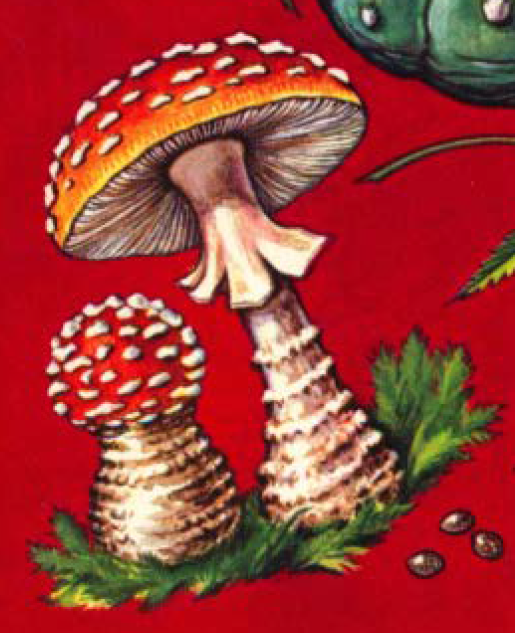
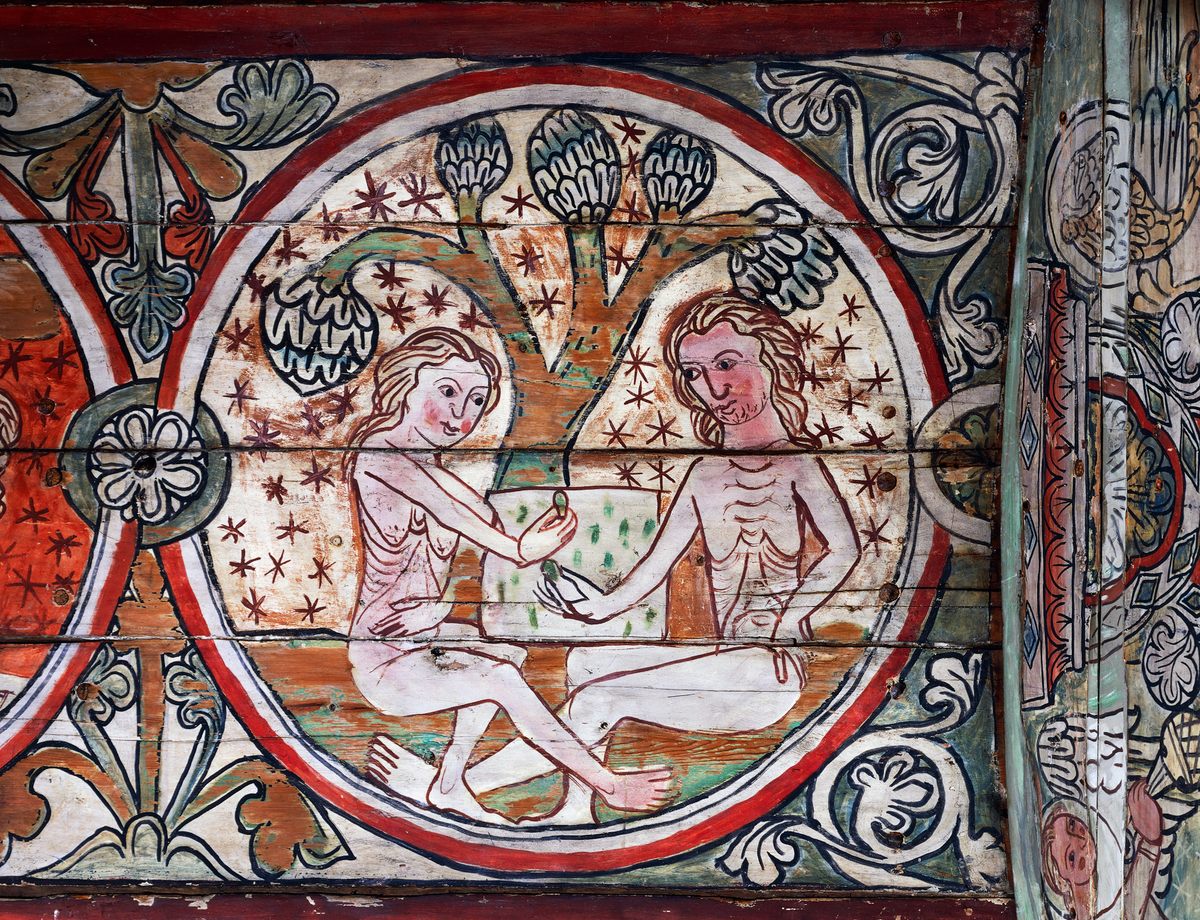
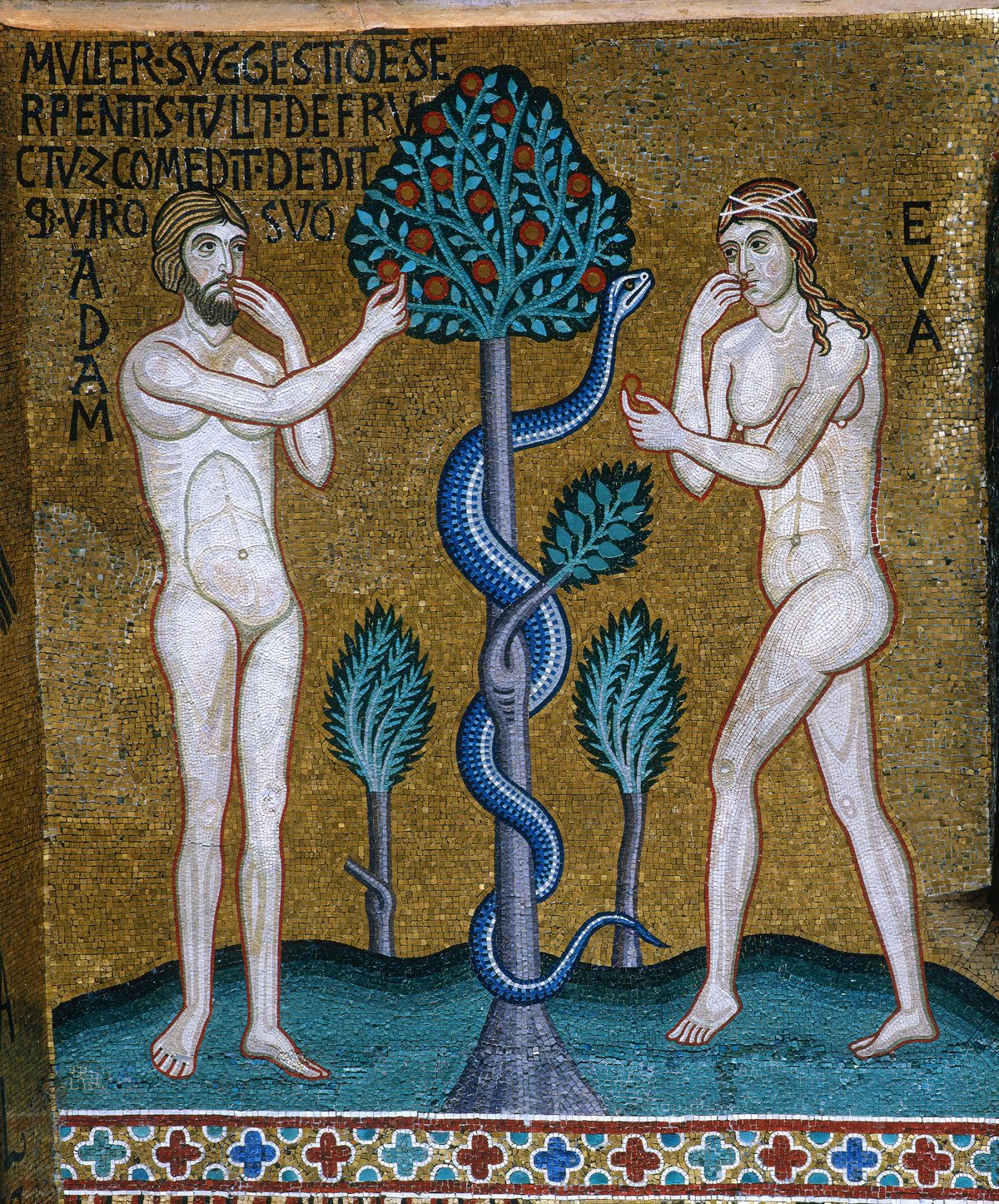

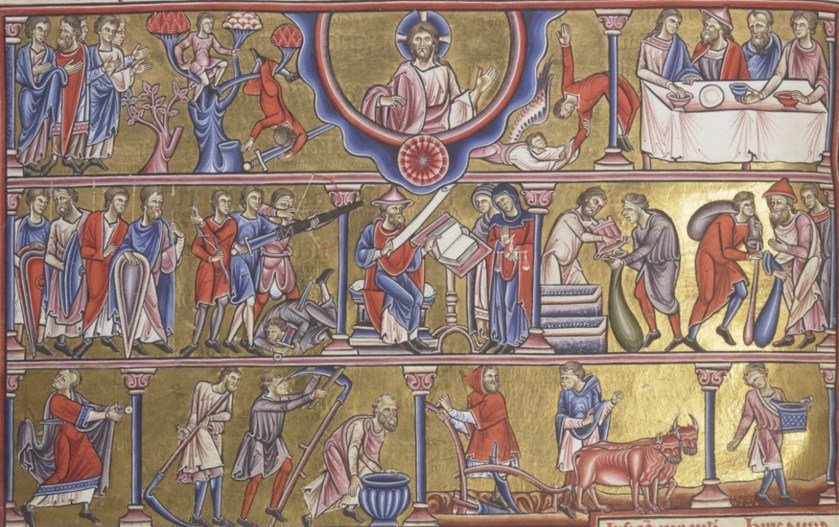
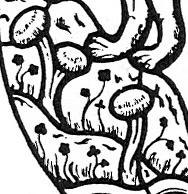
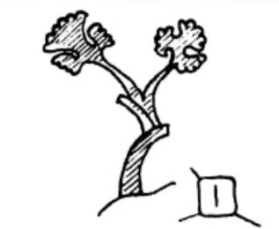
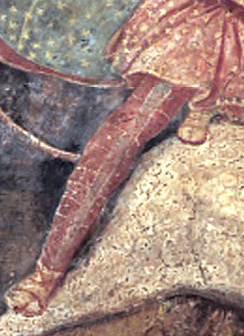
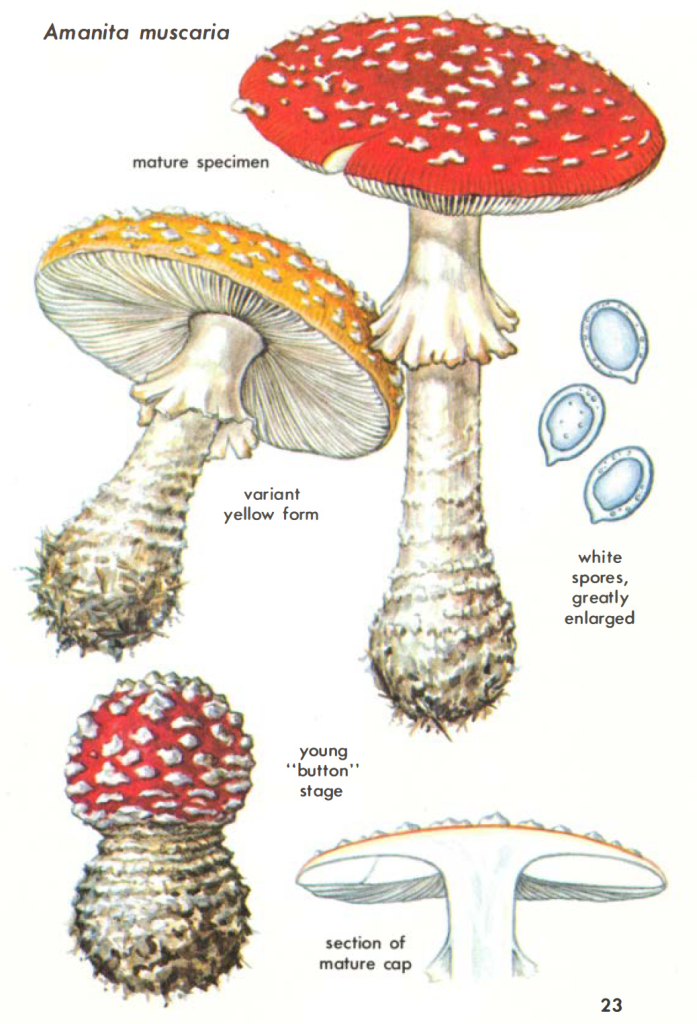



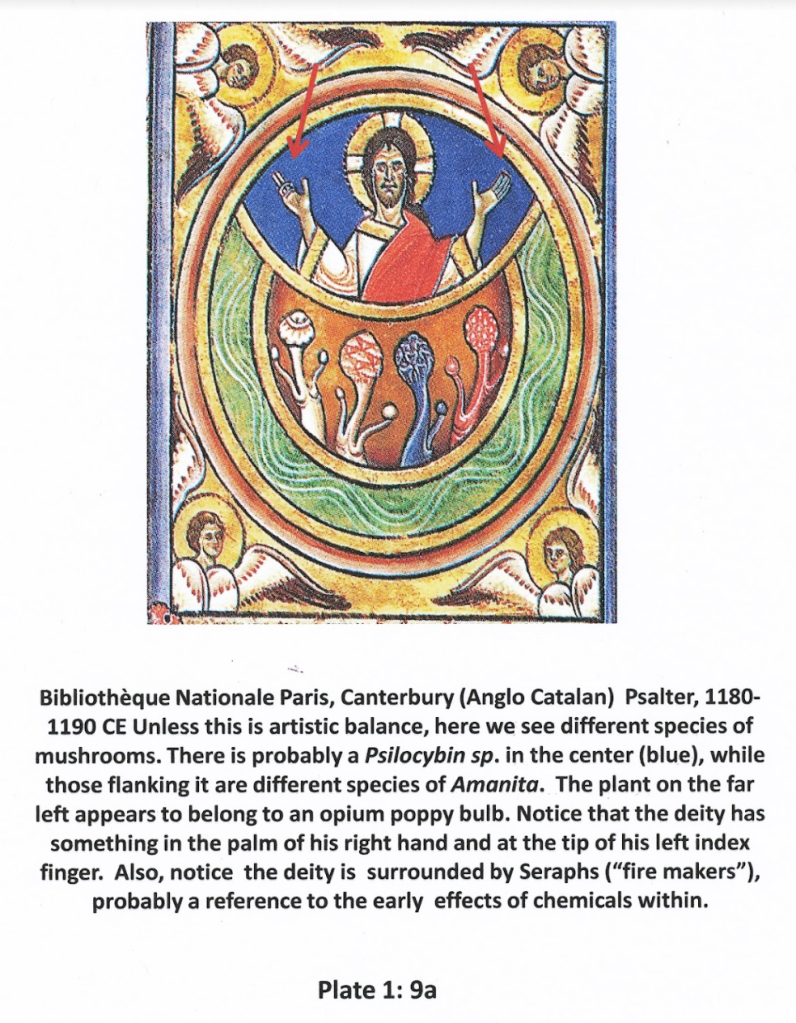

 )
)

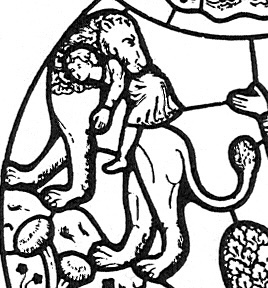
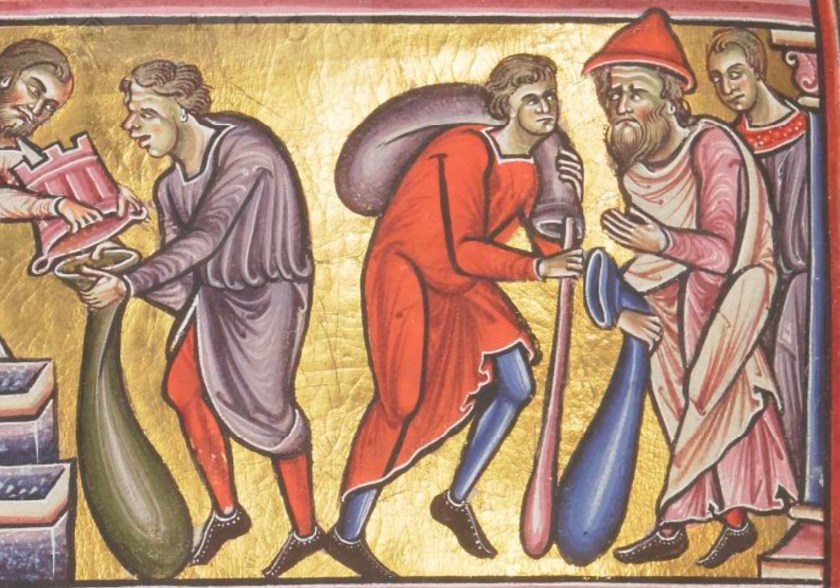




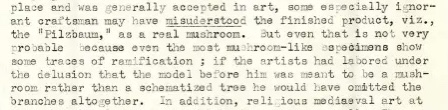


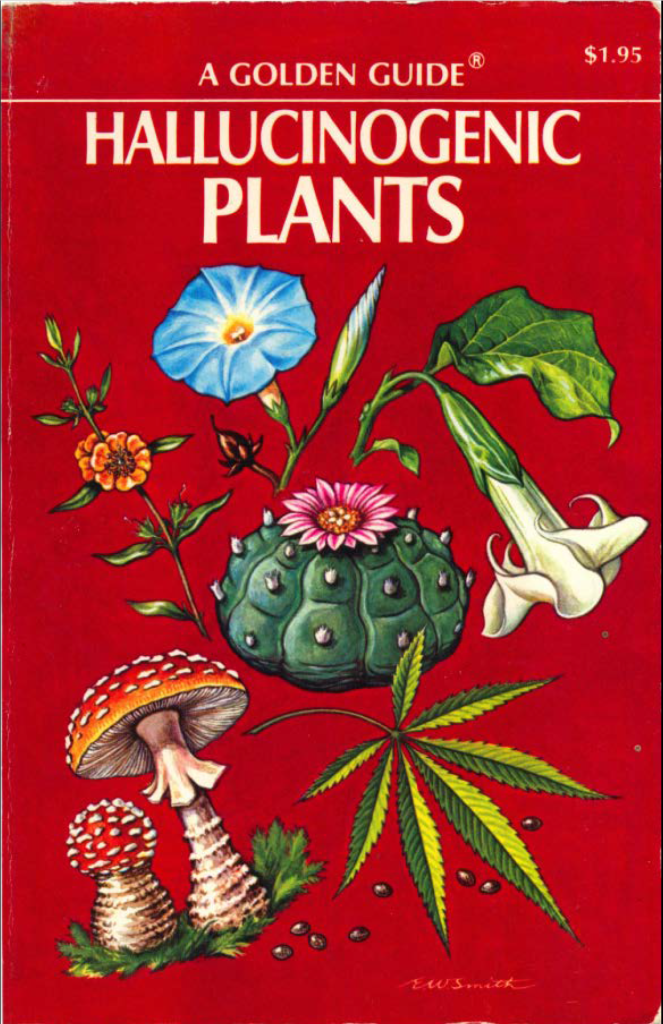

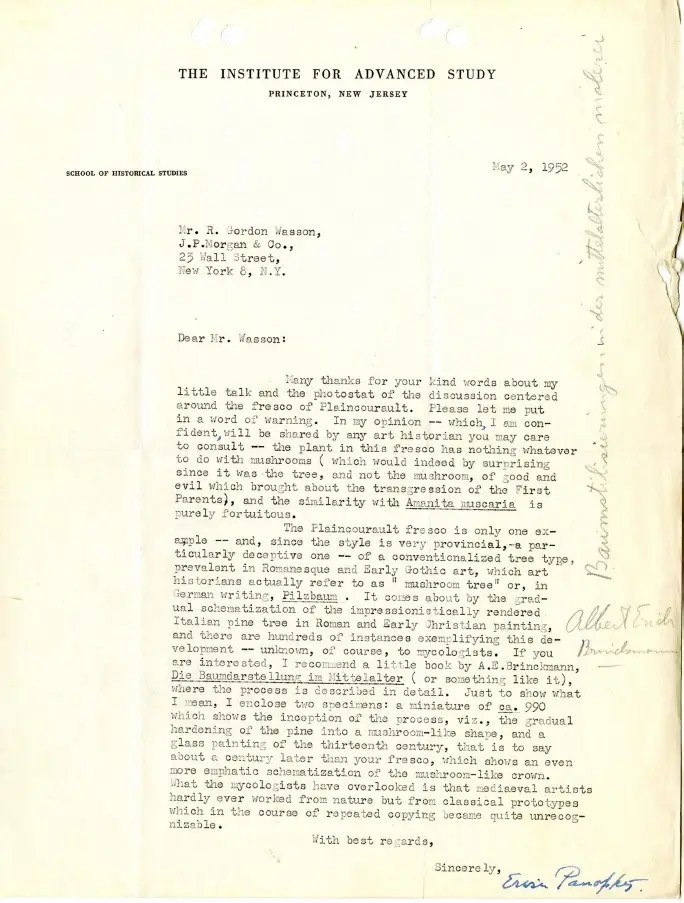
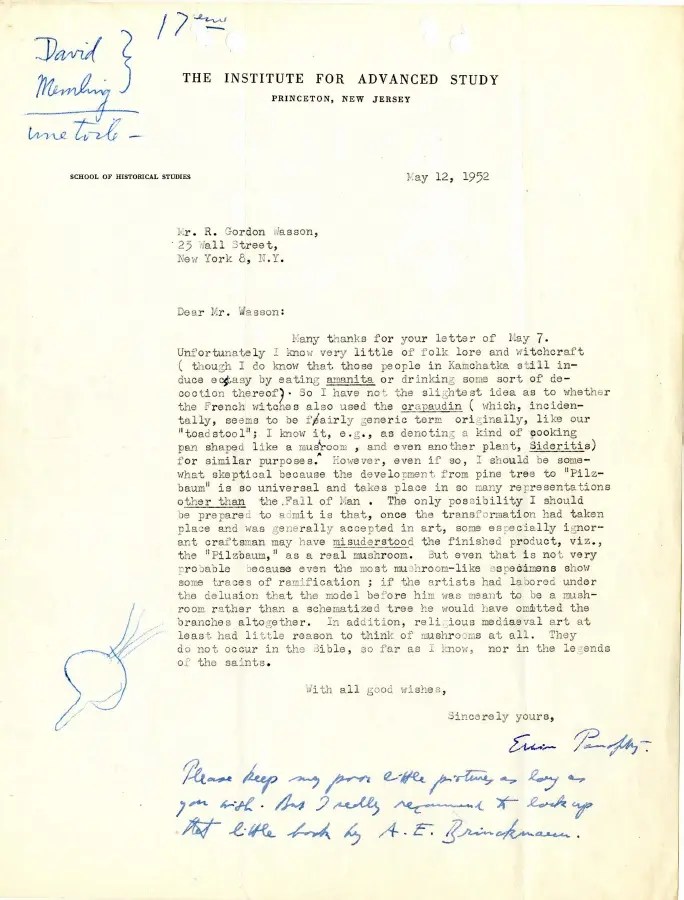

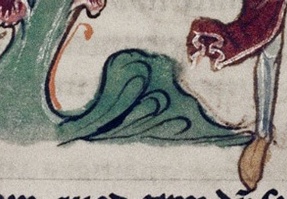
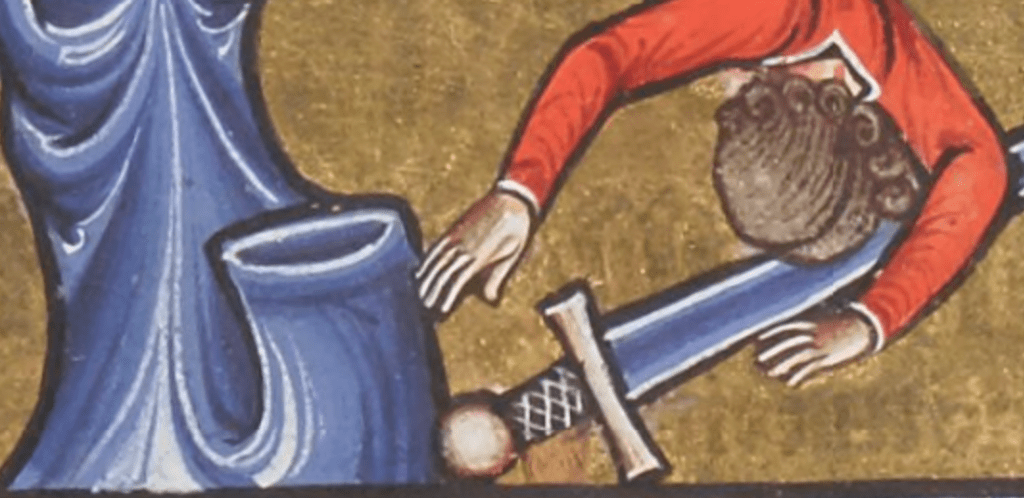
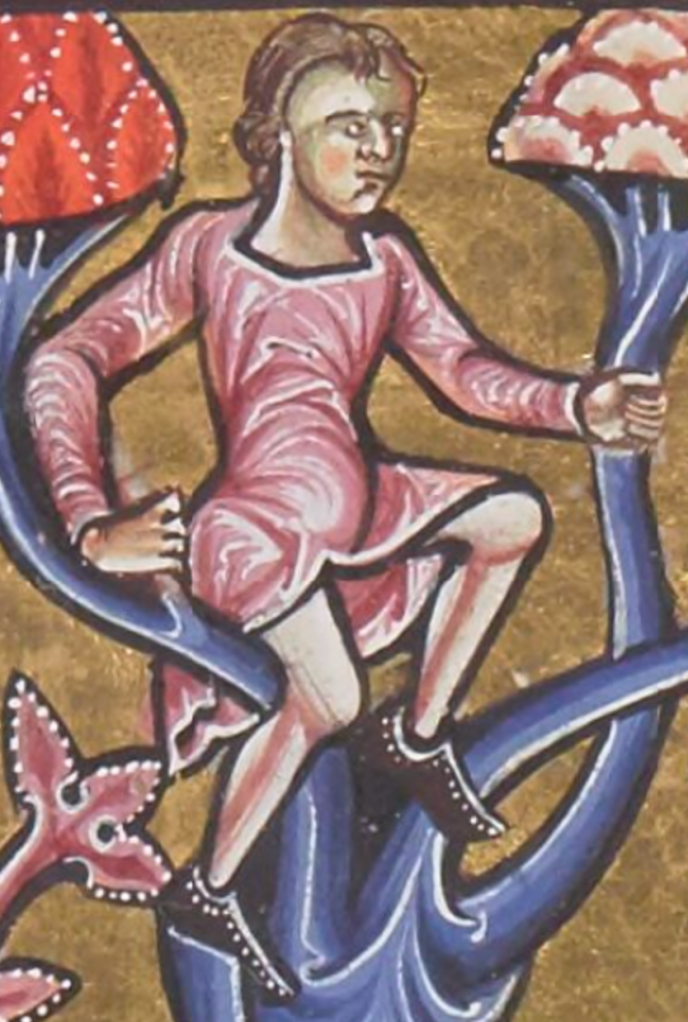
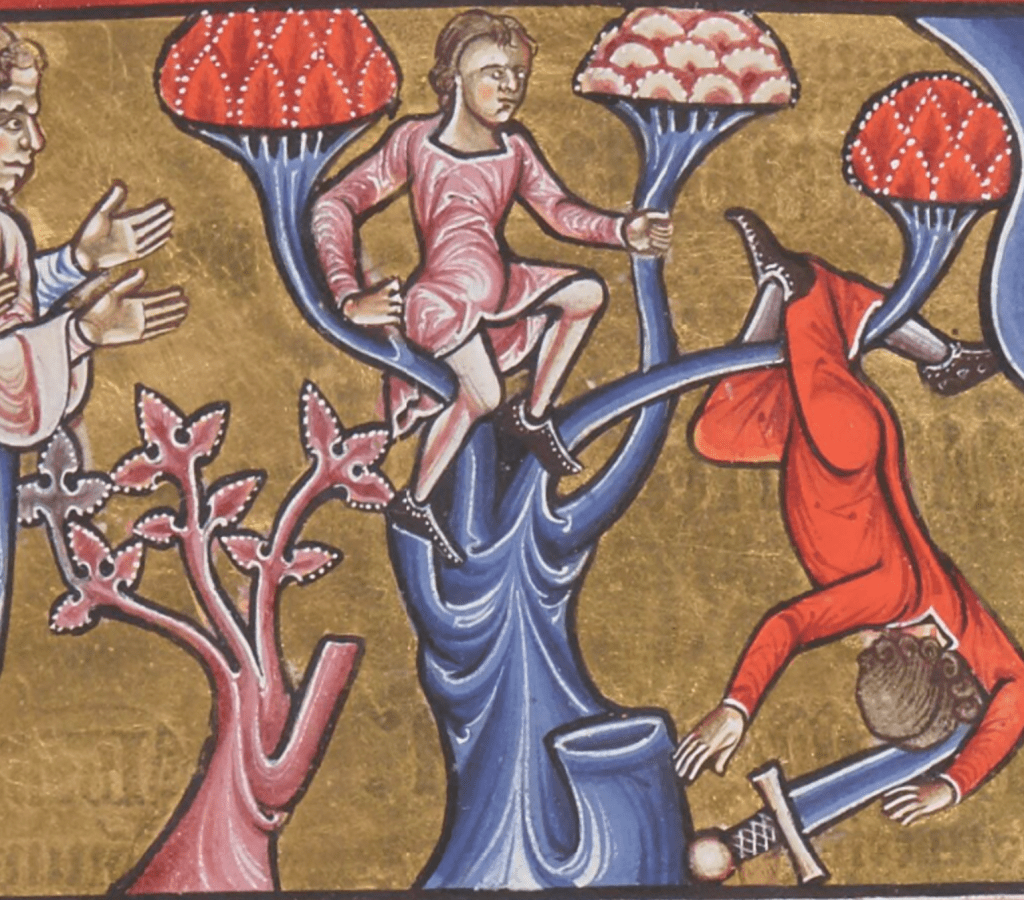
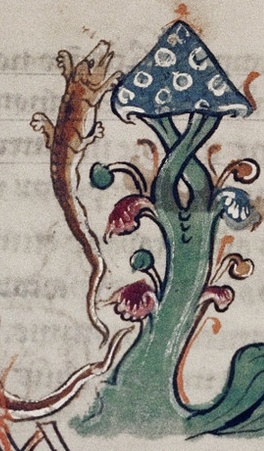
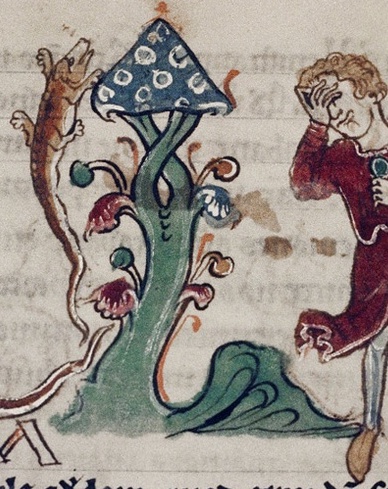
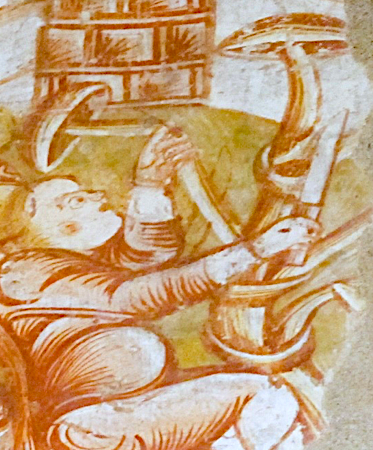
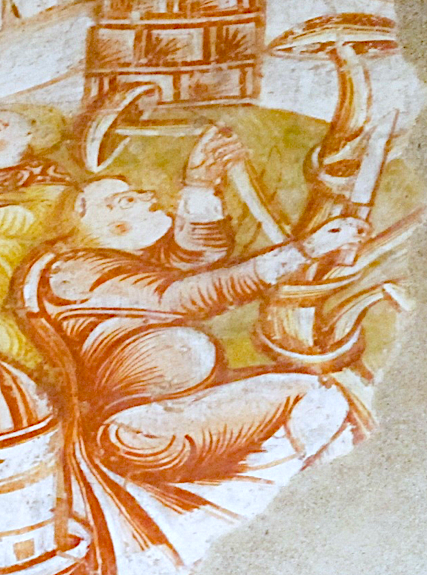
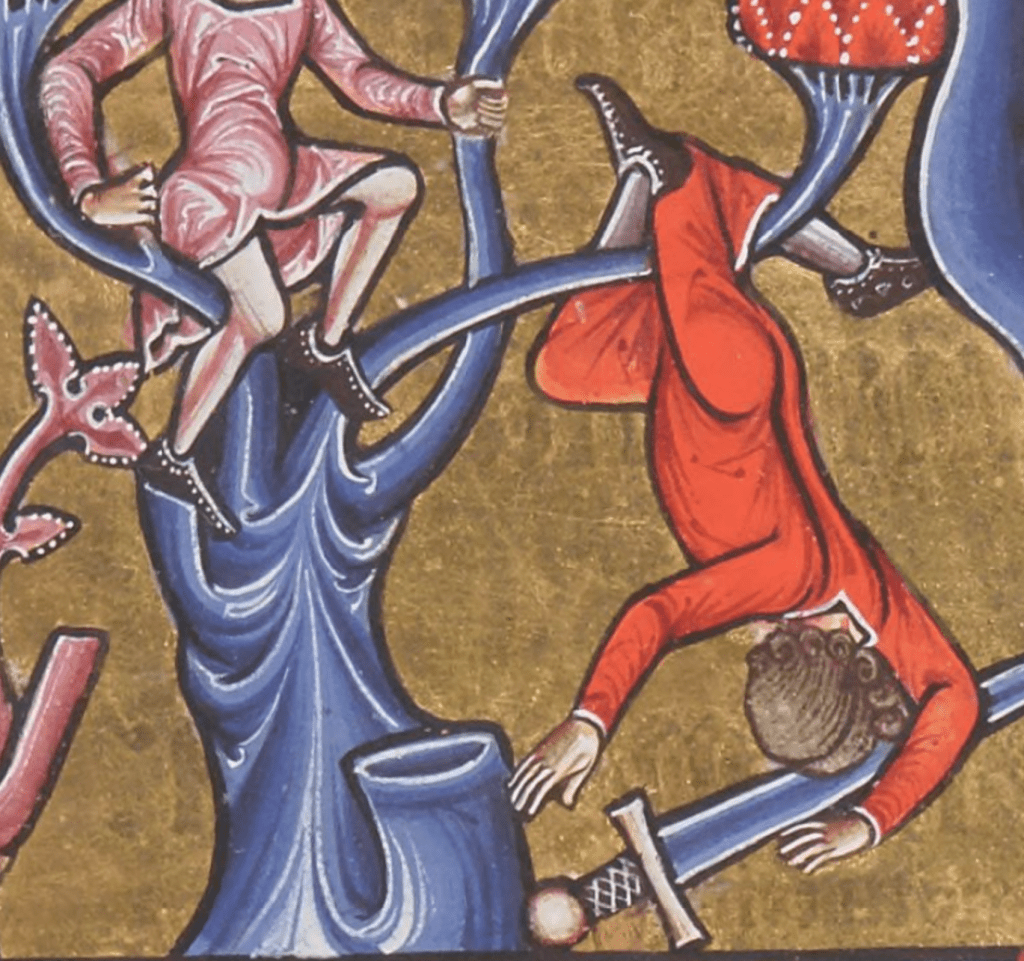

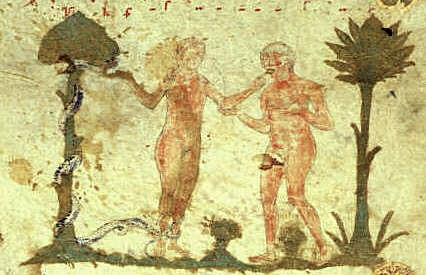
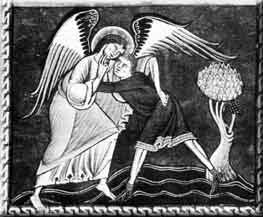
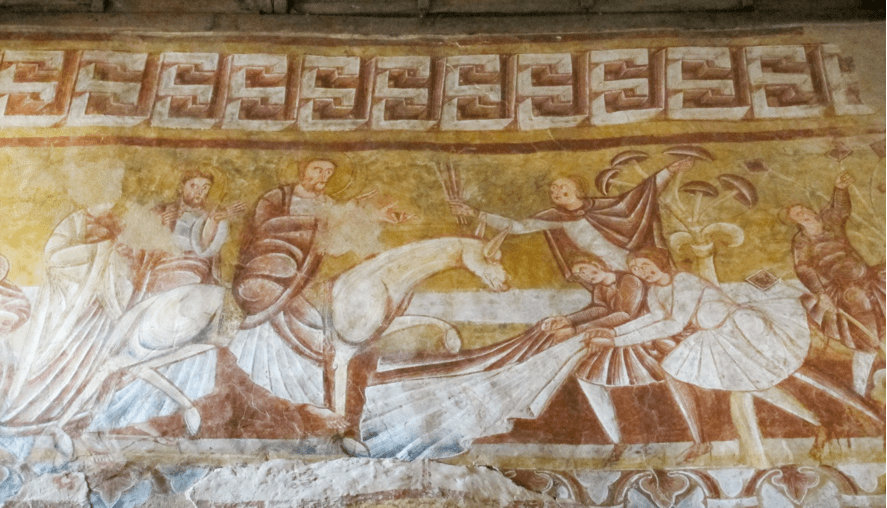
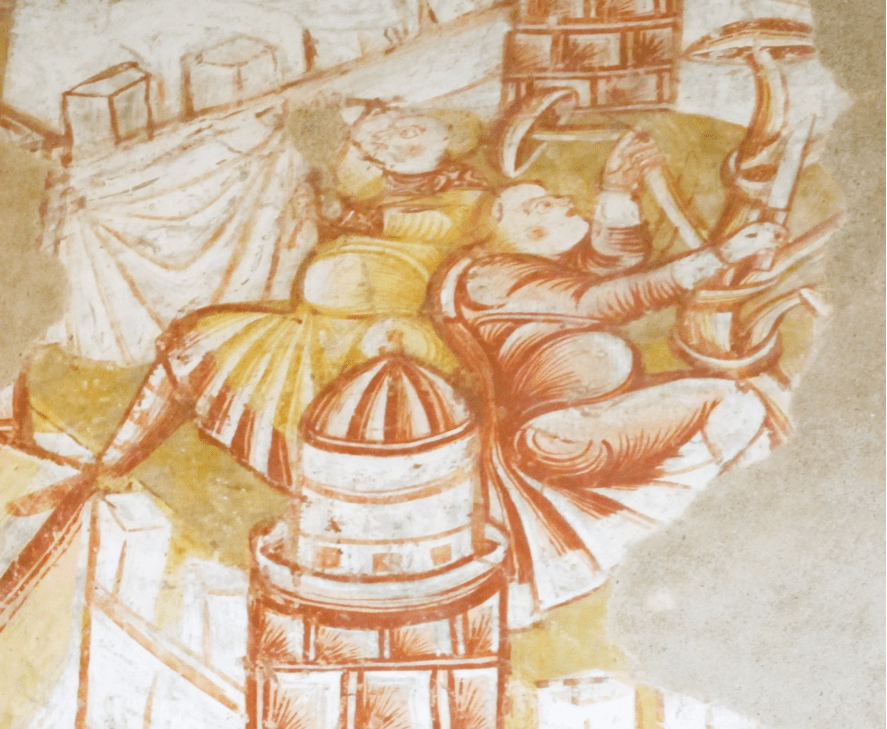



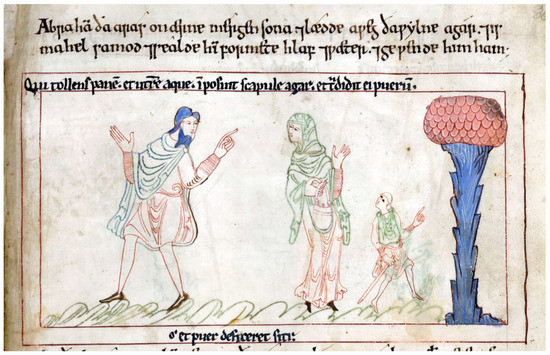

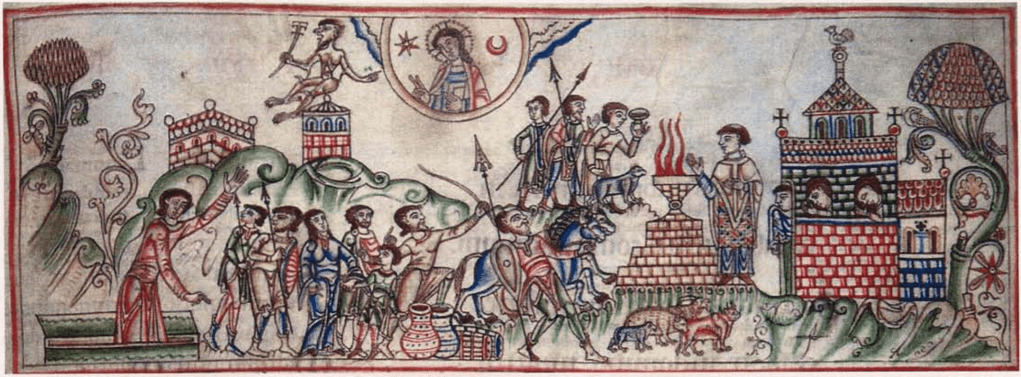
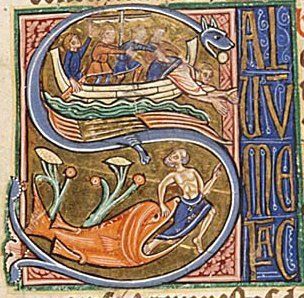

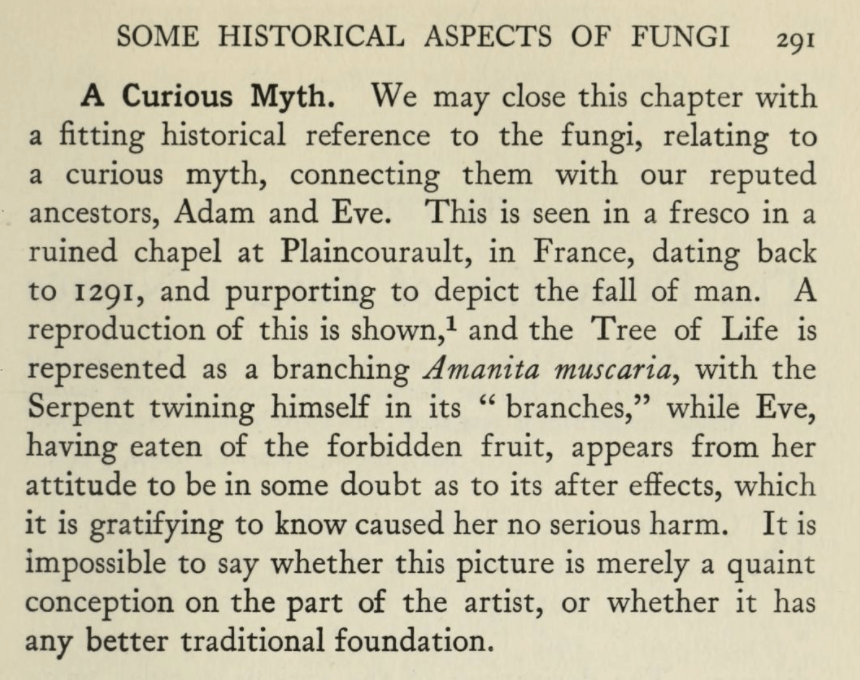

.jpg)




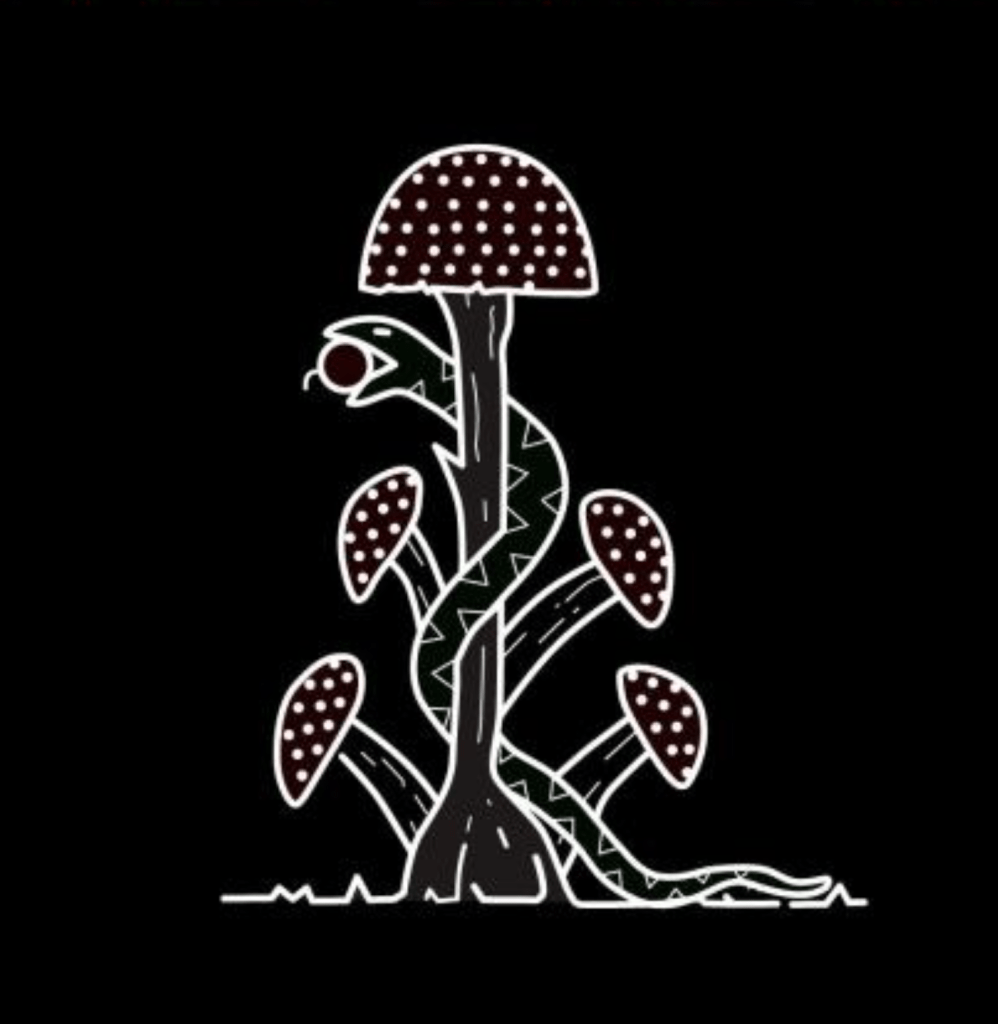
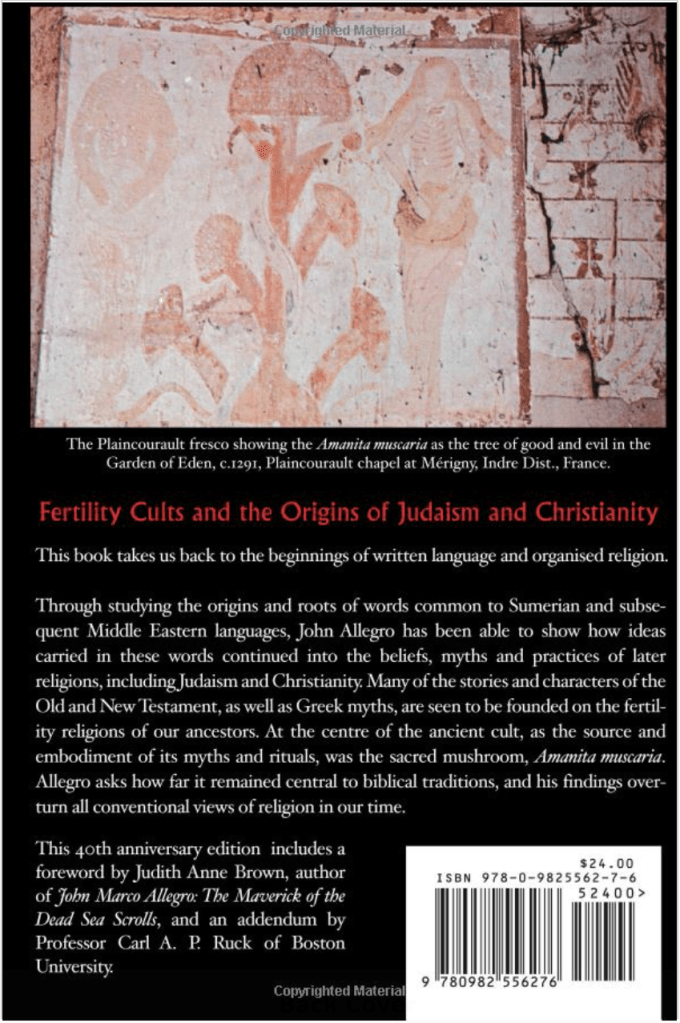
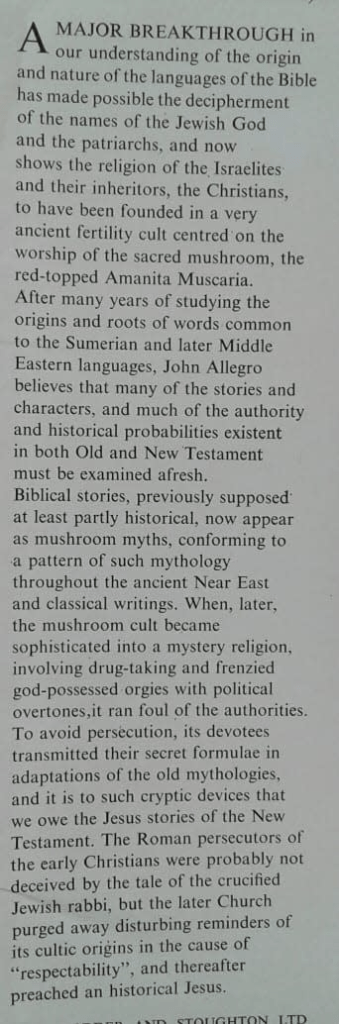
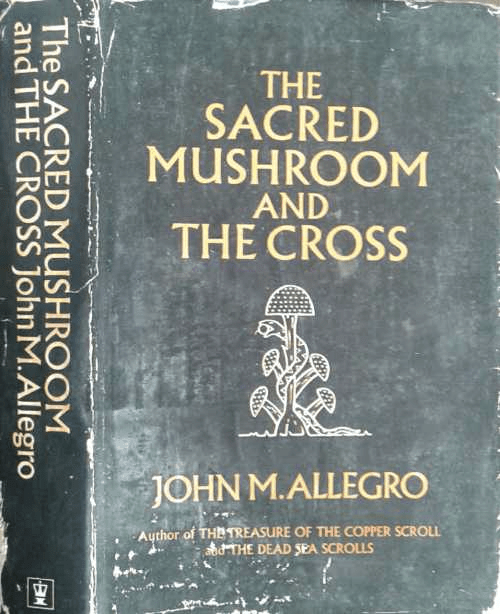




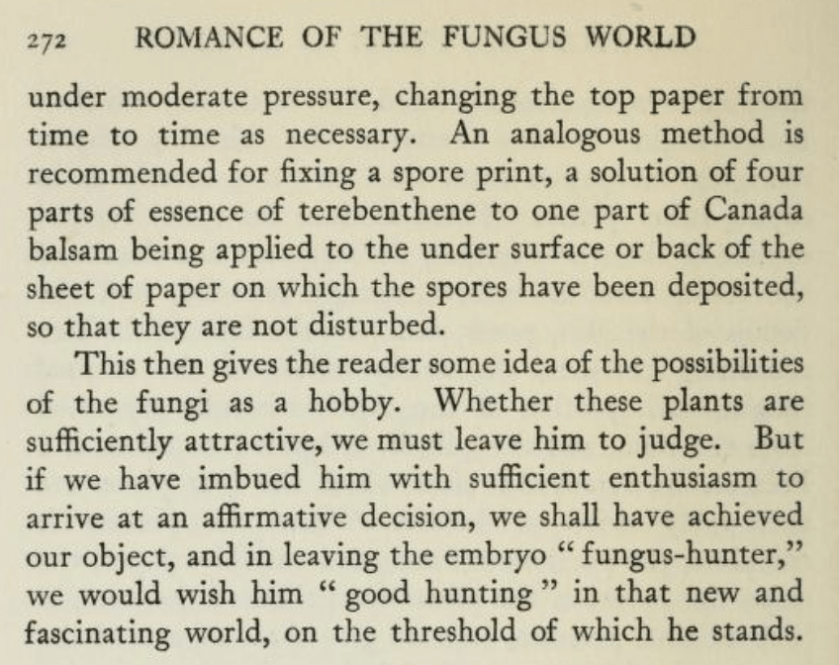

 The Egodeath theory