Egodeath Yahoo Group – Digest 80: 2005-07-03

Site Map


Group: egodeath Message: 4022 From: Michael Hoffman Date: 03/07/2005
Subject: Huston Smith on entheogen theory of relig. origins
Group: egodeath Message: 4023 From: Michael Hoffman Date: 03/07/2005
Subject: Re: Huston Smith on entheogen theory of relig. origins
Group: egodeath Message: 4024 From: Michael Hoffman Date: 03/07/2005
Subject: Re: Huston Smith on entheogen theory of relig. origins
Group: egodeath Message: 4025 From: Michael Hoffman Date: 03/07/2005
Subject: Psychoactives in Daumal’s “Night of Serious Drinking”
Group: egodeath Message: 4026 From: Michael Hoffman Date: 04/07/2005
Subject: Re: Alexandria journal contents
Group: egodeath Message: 4027 From: Michael Hoffman Date: 07/07/2005
Subject: Bk: Erik Davis: Led Zeppelin’s Zoso album
Group: egodeath Message: 4028 From: Michael Hoffman Date: 08/07/2005
Subject: Artic: Rogers: Angelical Stone, alchemy, visionary plants
Group: egodeath Message: 4029 From: Michael Hoffman Date: 10/07/2005
Subject: Dissociation, determinism, cybernetics, & metaphor in Esotericism
Group: egodeath Message: 4030 From: Michael Hoffman Date: 10/07/2005
Subject: Lyrics: She’s an Illusion, by Daybreak
Group: egodeath Message: 4031 From: Michael Hoffman Date: 11/07/2005
Subject: Re: Entheogenesis conference in Vancouver
Group: egodeath Message: 4032 From: Michael Hoffman Date: 11/07/2005
Subject: Journal: CoSM — Alex Grey
Group: egodeath Message: 4033 From: Michael Hoffman Date: 11/07/2005
Subject: Entheogen advocates disparaging other drugs
Group: egodeath Message: 4034 From: Michael Hoffman Date: 11/07/2005
Subject: Visionary plants in modern Western high culture
Group: egodeath Message: 4035 From: Michael Hoffman Date: 11/07/2005
Subject: Bk: Markoff: What Dormouse Said: 60s Counterculture Shaped PC
Group: egodeath Message: 4036 From: Michael Hoffman Date: 11/07/2005
Subject: Re: Entheogenesis conference in Vancouver
Group: egodeath Message: 4037 From: Michael Hoffman Date: 11/07/2005
Subject: What kind of writing was the Gospel Jesus lifestory?
Group: egodeath Message: 4038 From: Michael Hoffman Date: 12/07/2005
Subject: Charges against James Arthur
Group: egodeath Message: 4039 From: Michael Hoffman Date: 12/07/2005
Subject: Re: James Arthur’s claimed original discoveries
Group: egodeath Message: 4040 From: Michael Hoffman Date: 12/07/2005
Subject: Re: Entheogenesis conference in Vancouver
Group: egodeath Message: 4041 From: Michael Hoffman Date: 12/07/2005
Subject: Integrating psychoactives into culture
Group: egodeath Message: 4042 From: Michael Hoffman Date: 13/07/2005
Subject: Re: Bk: Freke/Gandy: Laughing J.: Relig. Lies & Gnos. Wisdom
Group: egodeath Message: 4043 From: Michael Hoffman Date: 14/07/2005
Subject: Metaphor: astral immortality, stars/sparks/flames/fire/torches/light
Group: egodeath Message: 4044 From: Michael Hoffman Date: 14/07/2005
Subject: Re: Metaphor: astral immortality, stars/sparks/flames/fire/torches/
Group: egodeath Message: 4045 From: Michael Hoffman Date: 15/07/2005
Subject: Bk: Michell: Dimensions of Paradise
Group: egodeath Message: 4046 From: Michael Hoffman Date: 16/07/2005
Subject: Absurd book review assumes LSD is visual only; armchair neuroscience
Group: egodeath Message: 4047 From: Michael Hoffman Date: 16/07/2005
Subject: Documentaries: Transpersonal Psychology, Grof, Vaughan, Metzner, Ta
Group: egodeath Message: 4048 From: Michael Hoffman Date: 16/07/2005
Subject: Acad. Estab’ent commitment to reject’g enth theory relig
Group: egodeath Message: 4049 From: Michael Hoffman Date: 16/07/2005
Subject: Visionary plants and astral ascent mysticism (mystic cosmology)
Group: egodeath Message: 4050 From: Michael Hoffman Date: 17/07/2005
Subject: Re: Absurd book review assumes LSD is visual only; armchair neurosc
Group: egodeath Message: 4051 From: Michael Hoffman Date: 17/07/2005
Subject: Re: Absurd book review assumes LSD is visual only; armchair neurosc
Group: egodeath Message: 4052 From: Michael Hoffman Date: 17/07/2005
Subject: ‘Fraud’ is a category error in characterizing sacred history
Group: egodeath Message: 4053 From: Michael Hoffman Date: 17/07/2005
Subject: Wilber diagram band-aid “also: altered states”
Group: egodeath Message: 4054 From: egodeath@yahoogroups.com Date: 17/07/2005
Subject: File – EgodeathGroupCharter.txt
Group: egodeath Message: 4055 From: Michael Hoffman Date: 17/07/2005
Subject: Re: ‘Fraud’ is a category error in characterizing sacred history
Group: egodeath Message: 4056 From: Michael Hoffman Date: 20/07/2005
Subject: Haoma in Mithraism
Group: egodeath Message: 4057 From: Michael Hoffman Date: 21/07/2005
Subject: Bookstore starts ‘Gnosis’ section
Group: egodeath Message: 4058 From: Michael Hoffman Date: 21/07/2005
Subject: Monk to Needleman: “things 1000 times better than yoga”
Group: egodeath Message: 4059 From: Michael Hoffman Date: 21/07/2005
Subject: Nietzsche as ecstatic entheogen shaman
Group: egodeath Message: 4060 From: Michael Hoffman Date: 21/07/2005
Subject: Amazon book wishlists: esotericism/egodeath
Group: egodeath Message: 4061 From: Michael Hoffman Date: 22/07/2005
Subject: Bk: Richard Tarnas: Cosmos & Psyche (mystic astrology)
Group: egodeath Message: 4062 From: Michael Hoffman Date: 22/07/2005
Subject: Re: Bk: Richard Tarnas: Cosmos & Psyche (mystic astrology)
Group: egodeath Message: 4063 From: Michael Hoffman Date: 24/07/2005
Subject: bks: King thought of as divine
Group: egodeath Message: 4064 From: Michael Hoffman Date: 24/07/2005
Subject: Rush ‘Feedback’ album w/ psychedelic cover, psych covers
Group: egodeath Message: 4065 From: Michael Hoffman Date: 24/07/2005
Subject: Ken Wilber on some Western Esotericism
Group: egodeath Message: 4066 From: Michael Hoffman Date: 24/07/2005
Subject: Bks: Christian Ratsch, in German
Group: egodeath Message: 4067 From: Michael Hoffman Date: 24/07/2005
Subject: Bk: Baigent & Leigh “Elixir & Stone” esoteric magic/alchemy
Group: egodeath Message: 4068 From: Michael Hoffman Date: 24/07/2005
Subject: Bk: Sergius Golowin: visionary plants in fairy tales
Group: egodeath Message: 4069 From: Michael Hoffman Date: 24/07/2005
Subject: Bk: Skallagrimsson: Scientific Magic (incl. visionary plants)
Group: egodeath Message: 4070 From: Michael Hoffman Date: 24/07/2005
Subject: Matrix of views: Hist. Jesus & Paulines authenticity
Group: egodeath Message: 4071 From: Michael Hoffman Date: 26/07/2005
Subject: Bk: Johnson: N. Star Rd: Sham’m, Witchcraft, Otherworld Journey


Group: egodeath Message: 4022 From: Michael Hoffman Date: 03/07/2005
Subject: Huston Smith on entheogen theory of relig. origins
Huston Smith wrote in 1964 [condensed excerpts]:

__________________

http://www.psychedelic-library.org/hsmith.htm

Do Drugs Have Religious Import?
Huston Smith, Ph.D.
CThe Journal of Philosophy, Vol LXI, No. 18, September 17, 1964


Drugs have light to throw on the history of religion, the
phenomenology of religion, and the philosophy of religion. Vegetables
and actions altered states of consciousness; these altered states are
the products of changes in brain chemistry. These states historically
tended to be connected in some way with religion. These
consciousness-changing devices have been linked with religion. They
may have actually initiated many of the religious perspectives which
continued after their psychedelic origins were forgotten.

Robert Graves, Gordon Wasson, and Alan Watts have suggested that most
religions arose from such chemically-induced theophanies. In a 1963
journal of Phi Beta Kappa, Mary Barnard wrote “Which was more likely
to happen first:

o The spontaneously generated idea of an afterlife in which the
disembodied soul, liberated from the restrictions of time and space,
experiences eternal bliss

o The accidental discovery of hallucinogenic plants that give a sense
of euphoria, dislocate the center of consciousness, and distort time
and space, making them balloon outward in greatly expanded vistas

“The latter experience might have had an explosive effect on the
largely dormant minds of men, causing them to think of things they had
never thought of before. This is direct revelation. Fifty
theo-botanists working for fifty years would make the current theories
concerning the origins of much mythology and theology as out-of-date
as pre-Copernican astronomy.”

This is an important hypothesis, which must surely engage the
attention of historians of religion for some time to come. The crux
of the historical question is: What is the extent to which drugs
generate or shape theologies, rather than merely duplicating or
simulating theologically sponsored experiences?

Phenomenology attempts a careful description of human experience.
Therefore the drugs pose the following question for the phenomenology
of religion: Do the experiences induced by drugs differ from religious
experiences reached without drugs? If they differ, how do they
differ?

Even the Bible notes that chemically induced psychic states bear some
resemblance to religious ones. Are such comparisons, paralleled in
the accounts of virtually every religion, superficial? How far can
they be pushed? Not all the way, students of religion have thus far
insisted. R. C. Zaehner has drawn the line emphatically. “The
importance of Huxley’s Doors of Perception is that the author claims
that what he experienced under the influence of mescalin is closely
comparable to a genuine mystical experience. If he is right, the
conclusions are alarming.” Zaehner thinks Huxley is not right — but
actually, Huxley is correct.

__________________


Gnosis 10th anniv. issue, p. 35
http://www.lumen.org/issue_contents/contents37.html
Interview with Huston Smith.

He holds that there is spotty evidence for the theory that all the
religions originated from entheogens.
Group: egodeath Message: 4023 From: Michael Hoffman Date: 03/07/2005
Subject: Re: Huston Smith on entheogen theory of relig. origins
Gnosis 10th anniv. issue, p. 35
http://www.lumen.org/issue_contents/contents37.html
Interview with Huston Smith.

Smoley and Kinney, editors of Gnosis journal and two book compilations
from it, asked Huston Smith essentially about the maximal entheogen
theory of religion — showing that they are to some extent aware of
the basic idea of the maximal entheogen theory of religion, the thesis
that “all religions had their start in psychedelic experiences”.


Kinney: “Some proponents of psychedelics seem to say that all
religions had their start in psychedelic experiences. Do you agree?”
Group: egodeath Message: 4024 From: Michael Hoffman Date: 03/07/2005
Subject: Re: Huston Smith on entheogen theory of relig. origins
The maximal entheogen theory of myth/religion/Esotericism is not
identical to the thesis that all religions had their start in
psychedelic experiences. According to the truly maximal theory, which
I have defined and emphasized to fill-in, the *ongoing* origin or
wellspring of myth and religion has always been visionary plants —
not merely the long-ago *temporal* origin.
Group: egodeath Message: 4025 From: Michael Hoffman Date: 03/07/2005
Subject: Psychoactives in Daumal’s “Night of Serious Drinking”
Mount Daumal: A review of “Rene Daumal: The Life and Work of a Mystic
Guide”, by Kathleen Ferrick Rosenblatt
Review by Erik Davis
http://www.techgnosis.com/daumal.html
Erik Davis wrote:
“… 36-year-old Rene Daumal died in Paris near the close of World War
II … Daumal’s first claim to fame was the precociously weird group
he formed with three teenage pals known as Le Grand Jeu. They wanted
political, psychological, and metaphysical revolution, with
pretentious rants and all (“No more free will! No more whim or
fantasy! No more pretty things!”). Anticipating the 1960s, they dived
into automatic handwriting, astral travel, sensory deprivation and
drugs. Daumal’s most notable experiments involved carbon
tetrachloride, an impressively toxic dry-cleaning solvent that
launched him into a near-death experience that eventually crystallized
into his essay “Determining Memory,” a play-by-play of druggy gnosis
worthy of William James. The chemical also probably contributed to
the TB that killed Daumal in 1944, though a lifetime of Gaulois
probably didn’t help things much.”


I would define ‘scientism’ as, a materialistic scientific view of the
world that is based in the ordinary state of consciousness and has not
integrated data from the dissociative state.


James O’Meara wrote:
>>A night of serious drinking” (http://tinyurl.com/b8lhr) contains
this passage that may have some hidden significance: a “true
scientist” has developed a method to cure the disease of “scientism”:

_______________

“So it’s a microbic disease?”

“Yes, and the microbe has been around for a long time. The protozoa
swarmed even on the tree of knowledge. ….To preserve us against this
microbe, we have but one radical remedy: the sap of the tree of
life….But how could we get hold of it? It was only after ten years
research that it came to me. The serum had really existed from time
immemorial; specialists have been making it daily, and it would be
quite possible to make industrial quantities at practically no cost at
all…”

“I thought, ‘does he mean wine?’….”

“Holy water, young man, holy water! … For the most suitable cases
we adopt the following procedure: With the first inoculation, the
Scienter concludes that the miracles of Lourdes are real. After the
second, the Holy Virgin appears to him. With the third, he recognizes
the infallibility of the Pope. By the fourth, he is going to
confession and mass. By the fifth, hope speaks within him: ‘Thou
shalt live in Paradise.’ By the sixth, charity speaks within him: ‘
Inoculate others as you yourself have been inoculated.’ By the
seventh, faith speaks within him: ‘Seek no more to understand.’ At
this point, I claim that he is cured. Unfortunately the Authorities,
who still live in the shadow of crude materialistic superstitions, are
reluctant to acknowledge the effectiveness of my cure.”

_______________

James O’Meara wrote:
>>Note the possible references to psychoactive substances and gnostic
themes: tree of life, sap, wine, holy water, made in industrial
quantities, 7 inoculations, opposition from materialistic authorities.
Group: egodeath Message: 4026 From: Michael Hoffman Date: 04/07/2005
Subject: Re: Alexandria journal contents
Issue 3
The Alchemy of Art — Arthur Versluis. (Listed because I found a
passage in a book by Versluis (not Godwin?) about his use of LSD and
his awakening from it.)


The passage might actually be in the book

The Elements of Shamanism
Nevill Drury
http://www.amazon.com/exec/obidos/tg/detail/-/1852300698/
1989
Group: egodeath Message: 4027 From: Michael Hoffman Date: 07/07/2005
Subject: Bk: Erik Davis: Led Zeppelin’s Zoso album
Led Zeppelin (33 1/3)
Erik Davis
http://www.amazon.com/exec/obidos/tg/detail/-/0826416586/

Condensed blurbs:
>>In this entertaining and informed homage to one of Rock’s towering
pinnacles, Erik Davis investigates the magic that surrounds this
album. Peeling the layers from each song, Davis reveals their dark
mystical roots, considering this inspired, brilliantly played rock
album as a form of occult induction.

>>Erik Davis has been writing about music, subcultures, and technology
for fifteen years. His cult book Techgnosis: Myth, Magic, and
Mysticism in the Age of Information (1998), was translated into five
languages and has recently been republished with a new introduction by
Serpents Tail. He is a regular contributor to Wired, and lives in San
Francisco, where he is currently researching the history of California
counterculture.

Condensed excerpt:
>>Stripping Led Zeppelin’s famous name off the record let their Great
Work symbolically stand on its own two feet. The wordless jacket lent
the album charisma, as fans hunted for hidden meanings. This helped
create a Rock paradox: an esoteric megahit, a blockbuster arcanum.
Stripped of words, the album no longer referred to anything but
itself: a concrete talisman that drew you into its world. All our
stopgap titles are lame: Led Zeppelin IV, Untitled, Runes, Zoso, Four
Symbols… The album was nameless in a Lovecraftian fashion, a thing
from beyond, charged with mana. And yet this uncanny artifact was easy
to buy.”
Group: egodeath Message: 4028 From: Michael Hoffman Date: 08/07/2005
Subject: Artic: Rogers: Angelical Stone, alchemy, visionary plants
This article in the new issue of Aires: Journal for the Study of
Western Esotericism may be the first published scholarly work in
alchemy that recognizes the work of Clark Heinrich to identify
visionary plants in Western Esotericism, particularly in alchemy.

The Angelical Stone of Elias Ashmole
Matthew Rogers
Source: Aries, 2005, vol. 5, no. 1, pp. 61-90(30)
Publisher: Brill Academic Publishers
Document Type: Research article
http://www.ingentaconnect.com/content/brill/arie/2005/00000005/0000000
1/art00003
PDF – 30-page article


[Non-text portions of this message have been removed]
Group: egodeath Message: 4029 From: Michael Hoffman Date: 10/07/2005
Subject: Dissociation, determinism, cybernetics, & metaphor in Esotericism
Per my discussion group/weblog the past year or two (
http://groups.yahoo.com/group/egodeath/ ), all Western Esotericism is
based on the 4 themes I’ve been combining and emphasizing, summarized
as ‘dissociation’ [theme 1], ‘determinism’ [2], ‘cybernetics’ [3], and
‘metaphor’ [4].

There’s a continuous history of Western Esotericism, even if in recent
centuries some official version of what’s called “scientific
rationalism” has apparently hogged the limelight of publicity and
people perceive Esotericism as being relatively underground — though
it’s becoming easy to poke holes in that official claim of the strong
predominance of that scientific rationalism, which has to struggle to
maintain its semblance of a clear-cut hegemony.

Each “cell” of Western Esotericism (each system, in each period, in
each location) has always been based around the combination of themes
about:
[1] The cognitive dissociative state that is best induced by
visionary plants
[2] The problem of timeless cosmic determinism and trans-rationally
transcending that determinism
[3] Autonomous self-government and the origin of one’s will
[4] Metaphors for such plants and the resulting dissociative-state
phenomena.

I am not particularly interested in alchemy — I am interested in all
forms of Western Esotericism and how this combination of 4 concerns
manifests in every form of Western Esotericism. Every article in
Gnosis magazine is really about, or ought to be explicitly about, this
combination of thematic concerns. If you look hard enough at any of
the 51 thematic issues of Gnosis magazine, this set of 4 themes is
present at the core. It has now become routine and cookbook to
identify and highlight these 4 themes throughout books about Gnosis,
mysticism, myth, and esotericism.

One connection I’m looking for, that would be convenient to bolster
the case, would be several clear, direct connections between astral
ascent mysticism [2] and visionary plants [1]. So far, I’ve only come
across some 4 hints, or sheer proximity, of these two themes.

Astral ascent mysticism is the clearest organizing frame of reference
from which to order and analyze all schemes of Western Esotericism,
which is why it would be nice to identify several direct connections
between sacred eating/drinking [1] and astral ascent mysticism [2].
Transcending cosmic determinism [2] is already an explicit theme built
into astral ascent mysticism, and ASC-based experiential metaphor [4]
is clear enough in astral ascent mysticism, including themes of
governing-agency and will [3].

I have contributed various aspects of entheogen scholarship, but the
real and ultimate contribution is not only to correct and improve each
of these 4 theories (dissociation, determinism, cybernetics, and
metaphor), but to show how the resulting combination of the resulting
corrected and improved theories fits together to provide the solution
to understanding myth-religion or transcendent knowledge.

When books such as Versluis’ _Philosophy of Magic_ talk about
“Traditional culture”, “Tradition”, and “Traditional religion”, they
are really talking about ASC-based culture as opposed to OSC-based
culture, ASC-based myth-religion/esotericism as opposed to modern-era,
which is to say OSC-based, culture/myth/religion/esotericism. Altered
state of cognition (ASC); ordinary state of cognition (OSC); that is,
the cognitive state of loose/fluid/dynamic mental association binding
vs. tight/fixed/static mental association binding.

The most effective way to induce loose cognitive binding is visionary
plants, particularly the clean entheogens such as psilocybin
mushrooms. The best way to think of Greco-Roman ‘mixed wine’, in
terms of its resulting effects, is as a psilocybin-mushroom beverage,
with variable plants being utilized to bring about the desired
resulting effect that approximates to some extent the classic
psilocybin-mushroom phenomena.

A clarifying comparison and idea is that if you switched Ken Kesey’s
Electric Kool-Aid with Greco-Roman ‘mixed wine’ (per symposium,
Passover meal, and mystery religion), neither party would notice the
difference; ‘mixed wine’ was phenomenologically identical to ‘electric
Kool-Aid’. Scholars can pretend this was due to their alien culture
and psychology (and physiology, per Freke & Gandy’s post-censoring
passage in their book The Jesus Mysteries), but phenomenologically,
it’s clear enough that for whatever reason, the experiences associated
with ‘mixed wine’ were identical to the experiences induced by
electric Kool-Aid.
Group: egodeath Message: 4030 From: Michael Hoffman Date: 10/07/2005
Subject: Lyrics: She’s an Illusion, by Daybreak
Song: She’s an Illusion
Artist: Daybreak (Lyn La Salle)
http://members.aol.com/FoggVelvet/LSD3.html – “Lyn La Salle – Randee
Ram Jet (Hy Nibble 9241; later A&M 889) Duluth, MN 1967 Flip is Takin’
It Easy. This music is so classic that it might take a few listenings
to appreciate the outrageousness of the lyrics. La Salle was also in
the Duluth band Daybreak, who put out the 45 She’s An Illusion / Evil
Eyed Woman (Westchester UA-424-42749)”
MP3 track info (relevance unclear): shes_an_illusion.mp3 (don’t know
how I got this file — from Web I think, can’t find it) JFProducer
2000 Length: 3:11

Transcribed by Michael Hoffman (quick initial try)


Safe within the tangles of her flowing hair
Fingers probing secrets of her mind
Safe within the softness of the stitch in hand
Dream of golden treasures you can find

See her running slowly cross the meadow
See her in the sand forbidding yellow
She’s something else to everyone who sees her
It’s sad to know it’s just a dream you’re after

She’s an illusion
She’s an illusion
She’s an illusion of your mind

See her have the kind of love that laughs always
Hoping for the time still yet to come
See her hands her shortened skirt of shining light
Never staying long with men in once

Is she there or is she just a shadow?
Changing with the ever changing yellows
Her liquid body there before your eyes
How long before you start to realize

She’s an illusion
She’s an illusion
She’s an illusion of your mind

She’s an illusion
She’s an illusion
She’s an illusion of your mind


[Non-text portions of this message have been removed]
Group: egodeath Message: 4031 From: Michael Hoffman Date: 11/07/2005
Subject: Re: Entheogenesis conference in Vancouver
The website is popular and overloaded. Try 5 or 6 times for each HTML
page and RAM file, if necessary.


The philosophy and politics (far right and far left) of German and
French mescaline circles in Europe between the two world wars.
Martin Lee
Entheogenesis Conference
http://pot.tv/archive/shows/pottvshowse-3761.html
1 hr 5 min
Date Entered: 13 Jun 2005

Martin A Lee is the Author of Acid Dreams – The Complete Social
History Of LSD: The CIA, the Sixties and Beyond.

Sartre, Walter Benjamin, Jung, Lewin, Scott Thompson’s recent research
on Benjamin, Frankl’s morphine suicide, Benjamin writing on mescaline
and hashish (compared to politicized use of pot and acid in the
1960s), Benjamin: the hallucinatory power of drugs penetrates the
hallucinatory/intoxicating power of capitalism-culture
(phantasmagorical marketing) 40:00, rightist Ernst Juenger (coined the
term ‘psychonaut’ — ether, cocaine, absinthe, LSD, ), Juenger wrote a
450-page book on his drug experiences _Approaches_ in 1970 and was an
elitist who didn’t want “the masses” using visionary drugs; 1951
Hofmann and Juenger took LSD per book _LSD: My Problem Child_. Some
of Hofmann’s books were inscribed by Juenger.

Harvard refused to do as Scott Thompson prepared: gather into 1 volume
all of Walter Benjamin’s drug-related writing. So use this search:

http://www.google.com/search?q=Thompson+%22walter+Benjamin%22+mescalin
e

http://www.google.com/search?q=Thompson+%22walter+Benjamin%22+hashish

http://www.egodeath.com/MaximalEntheogenTheoryOfReligion.htm — Mark
Stahlman of Newmedia, Sent: October 11, 2003, To: maps-forum

http://www.maps.org/pipermail/maps_forum/1997-July/000027.html
MAPS: FEATURE: FROM RAUSCH TO REBELLION: Walter Benjamin’s Uncompleted
Book on Hashish, By Scott Thompson

Scott J. Thompson —
Hashish in Berlin: An Introduction to Walter Benjamin’s Uncompleted
Work On Hashish
— Paper read at the Walter Benjamin Congress 1997

From ‘Rausch’ to Rebellion: Walter Benjamin’s “On Hashish and the
Aesthetic Dimensions of Prohibitionist Realism” —
An introductory essay by Scott J. Thompson
http://www.wbenjamin.org/rausch.html


The importance of drugs in literature and to literary studies
Greg
http://pot.tv/archive/shows/pottvshowse-3799.html
28 min
Date Entered: 30 Jun 2005

Beginning with Rabelais’ Gargantua and Pantagruel, concentrates on the
importance of drug use in the writing of the following luminaries:

Samuel Taylor Coleridge

John Keats

Thomas De Quincey

Charles Baudelaire

Fritz Hugh Ludlow

Jack Kerouac

William S. Burroughs

Allen Ginsberg

Phillip K. Dick

Hunter S. Thompson

The importance of the study of drug use in contemporary literary
studies (especially in the work of Jacques Derrida and Avital
Ronnell).

Greg was born in England and has lived in Vancouver since 1990. He
received a First Class Honors B.A. from Simon Fraser University in
1994 and a Master of Arts (English) from SFU in 2004. He is the
interested in researching the “rhetoric of drugs” and the author of
Crystal Children.


Kenneth Tupper
Entheogenesis 2 Conference
http://pot.tv/archive/shows/pottvshowse-3780.html
1 hr 0 min
Date Entered: 28 Jun 2005

>>Ayahuasca, an entheogenic tea, was until relatively recently unheard
of by most people in modern Western societies, despite a long history
of use among indigenous people of the Amazon. The “psychedelic” 1960s
saw an explosion of interest in plant-based spiritual healing tools
such as cannabis, peyote and psilocybin mushrooms. However, for a
variety of reasons, ayahuasca remained known only to a few
anthropologists and travelers to remoter regions of South America and
was not among the panoply of substances that began to be used
recreationally at that time.

>>At the end of the 20 th century, a rapid rise of interest in and use
of ayahuasca began outside its native environment. Although some
syncretistic religions had been using ayahuasca as a sacrament for a
number of decades in Brazil, by the 1990s these practices had spread
both to urban centres within Brazil and to communities beyond its
borders. At the same time, ayahuasca tourism to Amazonian regions has
started to become a significant industry, and assorted plant materials
to make home-brewed “anahuasca” mixtures have become readily available
online.


Witch Hunts and the War on Weed
http://pot.tv/archive/shows/pottvshowse-3747.html
46 min
Date Entered: 06 Jun 2005

>>As an Entheogenesis presentation, Witch hunts and the war on weed
will first compare important social, artistic, legal, and
pharmacologicalsimilarities between the medieval inquisition and
today’s drug war. The second part of the presentation will explore the
role of the Black Death as the historical incentive for the
inquisition, and then inquire into the evolution of scapegoating in
the early 20th Century.

>>The Rev. Damuzi is a writer for Cannabis Culture, co-host of Fane of
the Cosmos radio and POT-TV show, reverend of the Church of the
Universe, director of the Nelson Compassion Club.


From Witches To Crack Moms
Susan Boyd
http://pot.tv/archive/shows/pottvshowse-3776.html
58 min
Date Entered: 20 Jun 2005

>>Susan Boyd will be reading from her new book, From Witches to Crack
Moms: Women, Drug Law, and Policy. She will examine how drugs are a
source of peace and the current war on drug is a war on any form of
consciousness that competes with the ideology of hierarchal power.

>>Susan Boyd is a community activist working with drug user groups and
an associate professor in Studies in Policy and Practice at the
University of Victoria. She is the author of From Witches to Crack
Moms: Women, Drug Law, and Policy (2004) and Mothers and Illicit
Drugs: Transcending the Myths (1999).


Roman Villagrana
http://pot.tv/archive/shows/pottvshowse-3804.html
1 hr 10 min
Date Entered: 05 Jul 2005

>>Roman represents a harmonious universe portrayed by dancing beings,
galactic councils, sychromystics and other enlightened perspectives
symbolizing the ever-changing moment he calls the eternal party. Roman
loves to make art but ultimately he believes it’s a duty to his
community and our existence as a visual representation of the world we
want or have. He invites everyone to participate in a conscious
movement declaring interdependence through the act of creating it.

>>Includes an open mic session hosted by Chris Bennett and Marc Emery.


Women and the Drug Experience
Cynthia Palmer and Michael Horowits
http://pot.tv/archive/shows/pottvshowse-2484.html
Sister’s of the Extreme authors

>>About their lifetime of research following psychedelic culture and
about their business, Flashback Books, which had a booth at
entheogenesis and which offers rare, out of print books on
psychedelics and related subjects.

>>Set decorated with the art of Luke Brown, whose entheogen inspired
artwork was featured at Entheogenesis 2004

>>Renee Boje talks to Cynthia Palmer & Michael Horowitz, authors of
‘Sister’s of the Extreme: Women and the Drug Experience’.


Francis Thackeray on Shakespeare’s Pipes
http://pot.tv/archive/shows/pottvshowse-3730.html
1 hr 12 min
Date Entered: 05 Jun 2005

>>Marc Emery gives some short opening comments and introduces the
first Presenter, Prof. Francis Thackeray of the Transvaal Museum in
South Africa, who discusses his research connecting Shakespeare with
Cannabis use. Careful analysis of Shakespearean texts suggests that
William Shakespeare, a prolific wordsmith, was aware of the
stimulating properties of Cannabis sativa. Chemical analysis of
residues in clay pipes from Startford-upon-Avon and elsewhere supports
the view that Cannabis and other “compounds” were being smoked in 17th
century England, even after the Pope had declared Cannabis to be
associated with witchcraft.


_________________________

Entheogenesis 1 conference:


Psychedelics, Altered Consciousness, and Visionary Art
Jon Hanna
http://pot.tv/archive/shows/pottvshowse-2471.html
45 min, Date Entered: 09 Feb 2004

Jon Hanna — Organizer of the Mind States Conferences and Editor of
the Enthogen Review

>>Altered consciousness resulting from the consumption of various
drugs has had a creative effect on art throughout the ages. The use of
psychedelics in current times has greatly influenced the visions
depicted by modern artists from the 1960s to today. This lecture and
slide presentation–a visual delight–will introduce and discuss works
by artists who have been inspired by their drug use. The primary focus
will be contemporary art, and the incredible twists and turns that it
has taken on the psychedelic path.
Group: egodeath Message: 4032 From: Michael Hoffman Date: 11/07/2005
Subject: Journal: CoSM — Alex Grey
http://www.cosm.org/ – Chapel of Sacred Mirrors

CoSM Journal is for the integration of wisdom and the arts.

Click “Back Issues” for Summer 2004 – Issue 1

Click “CoSM Journal” for Winter 2005 — Issue 2

CoSM Journal, published by the Chapel of Sacred Mirrors, provides a
forum for the emergence of Visionary Culture. … The work and
stories of artists, thinkers, and community builders who are dedicated
to transformative living, and committed to the integration of wisdom
and the arts … to inform, connect, and inspire this evolving global
awareness.


[Non-text portions of this message have been removed]
Group: egodeath Message: 4033 From: Michael Hoffman Date: 11/07/2005
Subject: Entheogen advocates disparaging other drugs
>>The importance of drugs in literature and to literary studies
>>Greg
http://pot.tv/archive/shows/pottvshowse-3799.html
>>28 min
>>Date Entered: 30 Jun 2005

>>Beginning with Rabelais’ Gargantua and Pantagruel, concentrates on
the importance of drug use in the writing of the following luminaries:


Greg includes many acid-inspired Rock lyricists in the opening list.

Discusses interesting politics of entheogenists’ demonization and
attempt to distance their “approved” entheogens from demonized crystal
meth — their hypocricy and the heel of prohibition. “… Vancouver
is poised to leave the game of necessary hypocricy aobut drugs … I
understand Rick’s concern, and Doctor Holland’s concerns, and after
many years in the trenches, I have a lot of concerns myself;
nevertheless, I don’t believe that self-censorship is the way to go,
if we want to really accurately learn about drugs.”

http://www.google.com/search?hl=en&q=%22crystal+children%22+greg

http://cannabisculture.com/articles/1656.html — [condensed:] The
1997 book Crystal Children continues the speed saga — it’s a
collection of tales about the intersection of electronic music and
dance culture with drugs, especially crystal methamphetamine. The
term ‘crystal’ has been used to describe illicit, powdered
methamphetamine since the early 1960’s, when Desoxyn (pharmaceutical,
legal methamphetamine, usually available in a liquid) was refined by
underground chemists to a more concentrated crystalline or glassy
compound. Smokeable speed appeared about ten years after the early
70’s, when a drug called ‘Ice’ hit the streets — a highly purified
form of crystal meth that appears in a rock form, smoked.


[Non-text portions of this message have been removed]
Group: egodeath Message: 4034 From: Michael Hoffman Date: 11/07/2005
Subject: Visionary plants in modern Western high culture
http://www.egodeath.com/MaximalEntheogenTheoryOfReligion.htm — My
condensed excerpts from that webpage and discussion thread, with book
and documentary links added.


Hofmann and perhaps the Stolls were already nature mystics as opposed
to simple lab-rat chemists, when they first came in contact with
psychedelics. This potentially changes the whole story.

Captain Al Hubbard had been seeing angels since he was a boy in
Kentucky, according to conversations with Willis Harman. Hubbard’s
conversion to become the Johnny Appleseed of LSD came in a vision in a
wooded clearing outside of Seattle — before he was aware of the
specifics of LSD, which had just appeared in Vancouver at Hollywood
Hospital.

In Connie Littlefield’s documentary Hofmann’s Potion, Albert Hofmann
recounts an experience as a child while hiking in the Alps — before
he became a chemist or found out anything about psychedelics. The use
of hallucinogens — certainly various mushrooms and maybe ergot
preparations — by artistic/phiosophical/mystic circles in and around
Basle and other places predated any of the LSD lab work in the 20th
century by a 100 years or more.

Nietzsche heavily used various drugs including psychedelics.
Nietzsche began his career in Basle in the 1860’s. Rudolf Steiner was
Nietzche’s librarian for awhile, so he knew about Nietzsche’s drug use
and interest. Knowledge of the religious implications of the whole
pharmacopeia was widespread in Theosophical groups by the late 1800’s.
The Cosmic Circle around Ludwig Klages (in Munich and elsewhere like
Ascona) were well versed in the use of hallucinogens — their acting
out Eleusis suggests use of ergot as well.

LSD-like chemicals didn’t come as a surprise to those who were working
at Sandoz in the 1930/40’s. There was a long history of interest in
visionary plants and extracts, which finally found its expression in
synthetic organic chemisty in the 20th century. Research would prove
that those involved, such as Hofmann and the Stolls, were not
ignorant; we should stop assuming they were ignorant of psychoactive
plant derivatives.

Scott Thompson writes about the use of mescaline by Frankfurt School
philosopher Walter Benjamin in the 1930’s:
http://www.cognitiveliberty.org/2jcl/2JCL21.htm. Benjamin followed
the trail blazed by Ludwig Klages and his early 20th century Cosmic
Circle in Munich. Klages employed mescaline along with other
psychoactives in his exploration of the intoxication of cosmic
experience, starting around 1900. The Klages scene extended to Zurich
and Ascona, and is summarized in Martin Green’s book _Mountain of
Truth: The Counterculture Begins, Ascona 1900-1920_ as well as in
Robert Norton’s book _Secret Germany_.

It would be far-fetched to presume that this early counterculture
didn’t use synthetic mescaline and was unaware of psilocybe mushrooms
and peyote. Scholars haven’t dwelt on this aspect because drug use in
modern culture was treated with discreteness; scholars have not
ignored, denied, and dismissed drug use in modern Western high
culture.

Richard Noll in his _The Aryan Christ_ described Carl Jung as having
believed he was the reincarnation of the Mithratic deity Aeon. This
was a controversial claim for Noll. Many who write on this period and
its prominent figures are reluctant to bring drugs into their writings
because they are afraid they might be attacked like Noll was.

It would be far-fetched to imagine that Jung wasn’t familiar with
mescaline and the psychedelic pharmacopeia. Harry Murray closely
emulated Jung in the U.S. (to the extent of recreating in the woods of
Massachusetts the “Bollingen” stone tower in which Jung worked and
carried out his famous “affair”) and hired Tim Leary at Harvard. He
was a top CIA personality profiler — Leary’s speciality as well.

Freud used cocaine and he hired Lou Salome (the woman who came closest
to becoming Nietzsche’s wife) as the governess for his children. The
personal overlaps between Freud, Jung, Nietzsche, Steiner, Crowley,
Klages and many others were numerous and extensive; it was a small
world.

By the late-1800/early-1900’s there was substantial interest in the
details of cult practices in antiquity, including attempts to reinact
the initiations of Eleusis, Isis, and Mithraism, and in the use of
plants by various tribes around the world. These matters were widely
known to those who were interested. There were ongoing Western
traditions that used natural psychedelics in association with mystical
religious practices. There are many reasons why modern science
uncovered much of this long before Hofmann’s discovery.

The modern-era mass interest in psychedelics happened around the Cold
War. The widespread popularization of LSD reflects the desire to use
psychedelics as a peace-bomb in the 1950/60’s. This was not the
situation in the 1800’s or early 1900’s. The private use of
psychedelics predates the synthesis of LSD and was continuous
throughout human history.

The pre-LSD history of psychedelic use can be traced in the context of
little-known groups carrying out their versions of ancient practices.
There was a thread of knowledge that was maintained from ancient times
about the psychedelic properties of ergot. Use by these groups and
individuals was never in the public record in the first place, so
there was no public record to be later deleted. This makes sense
because the word ‘occult’ means hidden, obscured from view, secret.

Now we need a clear explanation of why and how psychedelics research
was divorced from the powerful, occult historical knowledge of ancient
tribal and religious rituals using these substances.

Before the discovery of LSD, and the surge of interest and research in
psychedelics that followed in its wake, how much knowledge was there
about ancient tribal and religious rituals using these substances?
How much interest and knowledge was there about entheogens used in
Europe? Is there really any divorce that needs to be explained or
perhaps is it more likely that the future couple (tribal religious use
of psychedelics, and post-LSD psychedelics research) had not yet met?

How much knowledge was there? Especially, was any significant
knowledge of these substances maintained continuously since
pre-Christian, tribal times — even if only by a few interested
scholars, esoteric group members and assorted, ostracized heretics?
Mark Stahlman and Dan Merkur supplied some names and groups.

There doesn’t appear to be any occult connection with psychedelics in
Europe to delete from the public record because until the discovery of
LSD there was not much knowledge or interest in psychedelics in
Europe. Probably because there doesn’t seem to have been widespread
use or even distribution of any indole tryptamines, no phenethylamines
and not even widespread use of Amanita in most of Europe. The
tropanes yes, but these are different from what Dr Hoffman and
associates encountered.

Was there any continuous use among a few curious, brave, heretical
counter-culturalists, mostly hidden from public record because of the
hostile laws of state and religion?

It is similar to the way use of psilocybe receded, but did not
disappear in Mexico over the last 500 years, with unsubstantiated
whispers in academic and adventurer circles of continued, hidden
mushroom ceremonies, which were not substantiated in the west until
the years around WW II by Heim, Wasson, etc. We’ve all heard of the
folk-lore record of the magical properties of amanita in Europe and of
the repressed herbalists there who similarly the hexing herbs in
secret from the Christian witch hunters. Inquiries by scholars,
clerics at the leading edge, and esoteric groups maintained or
rediscovered knowledge of the use of ergot.

Peyote is a good case to understand how “Psychedelics” have been
artificially acculturated in the West. Researching the
anthropological, psychological, psychiatric, and pharmacological
literatures on peyote and mescaline, from 1886 up to 2003 reveals that
the cultural takeover process has been standardized as follows.

The modern Western research culture takes the plant, tears the
cultural use of the plant apart from the active agent, immediately
discards and ignores the social science field studies that report the
traditional knowledge attached to that plant, and transfers the
production of academically and politically valuable information to
biomedical and psychological lab sciences, isolates and purifies an
active agent, and treat that active agent as a brand new
cultural/scientific object.


— end of condensed discussion thread


Hofmann’s Potion
Connie Littlefield, director
http://www.nfb.ca/trouverunfilm/fichefilm.php?lg=en&id=51064&v=h
Produced by Kent Martin
Writing by Connie Littlefield
2002
56 min 35 s

Interviews with many LSD pioneers, Hofmann´s Potion is a chronicle of
the drug´s early days. Interviews, music, and cinematography. An
invitation to look at LSD ­ and our world ­with an open, compassionate
mind.


The Mountain of Truth: The Counterculture Begins, Ascona, 1900-1920
Martin Burgess Green
http://www.amazon.com/exec/obidos/tg/detail/-/0874513650/
1986

Secret Germany: Stefan George and His Circle
Robert Edward Norton
http://www.amazon.com/exec/obidos/tg/detail/-/0801433541/
2002
Group: egodeath Message: 4035 From: Michael Hoffman Date: 11/07/2005
Subject: Bk: Markoff: What Dormouse Said: 60s Counterculture Shaped PC
What the Dormouse Said: How the 60s Counterculture Shaped the Personal
Computer
John Markoff
http://www.amazon.com/exec/obidos/tg/detail/-/0670033820/
April 21, 2005

>>Shows how almost every feature of today’s home computers, from the
graphical interface to the mouse control, can be traced to two
Stanford research facilities that were completely immersed in the
counterculture. Crackling profiles of figures like Fred Moore (a
pioneering pacifist and antiwar activist who tried to build political
bridges through his work in digital connectivity) and Doug Engelbart
(a research director who was driven by the drug-fueled vision that
digital computers could augment human memory and performance)
telescope the era and the ways its earnest idealism fueled a passion
for a computing society.

Search Inside:

lsd — 41 hits

drug — 37

psychedelic — 36

acid — 18

mushroom — 1


[Non-text portions of this message have been removed]
Group: egodeath Message: 4036 From: Michael Hoffman Date: 11/07/2005
Subject: Re: Entheogenesis conference in Vancouver
Kenneth Tupper
Entheogenesis 2 Conference
http://pot.tv/archive/shows/pottvshowse-3780.html
1 hr 0 min
Date Entered: 28 Jun 2005

The video has coverage of Bob Wallace (a founder of Microsoft) at
34:00 speculating that his use of psychedelics helped generate his
idea of ‘shareware’.

I have several of Tupper’s publications on the potential of entheogens
in education.
Group: egodeath Message: 4037 From: Michael Hoffman Date: 11/07/2005
Subject: What kind of writing was the Gospel Jesus lifestory?
Klaus,

Your available relevant categories for the presumed character of the
Gospel story are:

>>1. The gospel story was meant as literal historical report

>>2. The story was meant as social/political midrashic teaching, no
mysticism/mystics involved

>>3. The story was meant as natural mystical approach of ominous
natural phenomena e.g. involving stars and drugs

>>4. The story was meant as description for existential/psychological
human experience

>>5. The story was a treatise on idealist metaphysics


That proposed GS (Gospel Story character) category system is limited
because it assumes mutually exclusive categories of social/political
midrash vs. drug-induced astral ascent mysticism. The Jesus figure
was constructed through putting a twist on stock Roman socio-political
themes (divine Caesar and Pax Romana) and *intermixing* this thematic
domain with themes from the domain of drug-induced astral ascent
mysticism. So where would ‘Michael Hoffman’ fit — your GS category
2, or 3?

Jesus as considered in the late-antique context could be said to have
been a matter of psychological/existential phenomena but not in the
sense you intend, because 20th Century ‘Psychology’ is axiomatically
based in the ordinary state of consciousness, whereas the kind of
“psychology” relevant for religion is specifically the opposite:
psychology that’s grounded in the intense altered state of
consciousness.

The Jesus figure expresses GS category 5, “idealist metaphysics”, but
again with a similar correction/objection to the usual definitions: in
the Greco-Roman context, “idealist metaphysics” means quite different
than in the modern mental scheme; it meant metaphysics emphatically
based in the intense altered state.

A problem with #3 is that it tends to commit or allow the mistake of
reversing symbol and referent; per J.Z. Smith, mystics utilized stars
to talk about mystic-state experiences; it’s not the case that they
were concerned with “natural phenomena” such as stars and erected, per
Acharya S, an encoded mystical system of meaning that ultimately means
the stars.

Use the terms ‘nature’ and ‘natural’ with caution — by 150 CE, the
predominant popular idea and goal was to leap beyond the Natural,
heimarmene-ruled realm, into the divine, magical, super-natural realm.


Regarding your placement of Wilber and Watts with Grof in category 3:

Ken Wilber has written so little about Jesus, mystery religions, and
Greco-Roman myth, it is difficult to find passages where he makes any
statements on the matter — it’s practically a giant gaping hole in
Wilber’s presumably all-encompassing system. Wilber really has
developed no theory of mystery-religion; he only has made a couple
fumbling, uninformed comments on it. Instead, he only writes a little
about Plotinus.

Wilber takes it for granted that Jesus existed, and theorizes that
Jesus attained an unusually elevated level of
existential/psychospiritual functioning for that era (and that
collectively, we have evolved in our level of psychospiritual
development since then). Ken Wilber fits your category 4; that the
events reported in the gospel passion report match as a description of
existential/psychological human experience.

Similarly, Alan Watts takes it for granted that Jesus existed, though
he does explicitly and clearly define his position (p. 55-56, _Behold
the Spirit_) on the relation between Jesus’ historicity, possible
mythic-only existence, and the mystical meaning of the purported
historical events. Your wording of category 3 is strange; I’m looking
to place Watts’ view of the gospel Jesus story into a plain “mystic
metaphor, acted out in actuality” category, but you seem to begin that
category with “mystical” but then force “mystical” to end up as
“natural phenomena involving stars”.

Actually, more to the point than whether Jesus was a mystical symbol
or a symbol for psycho-spiritual development, or a metaphysical
symbol, is the broader issue of whether we should picture the
mystical, psychological, existential, and metaphysical as grounded
mainly in the ordinary state of consciousness, or in the intense
altered state of consciousness.

Your category 3 (“natural mystical approach of ominous … phenomena
… involving stars and drugs”) is worded to better lend itself to
grounding in “phenomena” encountered in the intense altered state of
consciousness, whereas per the predominant modern-era conceptions,
your category 4 (“existential/psychological human experience”) and 5
(“treatise on idealist metaphysics”) connote being based in
“experience” that’s merely in the ordinary state of consciousness.

Entheogen scholar Clark Heinrich, noting John Allegro, explicitly
points out that Jesus might be mythic-only, in his Jesus and Amanita
chapter; however, he chooses to continue writing under the conscious
assumption that Jesus did exist.

Watts fits into category 3 easily, for both straight-up mystical
reasons and the drug phenomenology metaphor connection, but Wilber
cannot be as easily fit into category 3 as category 4. From the early
60s to early 70s, Watts used LSD numerous times and has written a book
on the subject, as well as articles and passages. Ken Wilber has
never used psychedelics (only Ecstasy), and has written practically
nothing directly on the topic of entheogens (he just theorizes about
‘altered states’ in general).

I insist on putting myself in a combination of 2 and 3; that is my
trademark position; that is my contribution, to show that the gospel
Jesus figure precisely was formed by the deliberate, skillful mixture
and combination of 2 and 3.

It is hard to predict where David Ulansey will place Jesus, in the
book _The Other Christ: The Mysteries of Mithras and the Origins of
Christianity_. After I asked him to address the mythic-only Jesus
theory, his book no longer appears forthcoming. Ulansey has appeared
in a documentary about entheogens this year. Category GS 3 seems the
most natural spot for Ulansey’s Jesus.

David Ulansey is in this new documentary about entheogens:
Entheogen: Awakening The God Within
http://www.maps.org/sys/nq.pl?id=308&fmt=none
http://www.bruceeisner.com/new_culture/2005/01/new_film_entheo.html

>>David Ulansey, Ph.D. Professor of philosophy and religion at CIIS.
Ancient Hellenic mystery religions / history and theory of shamanism.

The Other Christ: The Mysteries of Mithras and the Origins of
Christianity
David Ulansey
http://www.amazon.com/exec/obidos/tg/detail/-/0195153464/
Planned: May 2005

http://www.ciis.edu/pcc/conferencearchive.html#davidulansey
Group: egodeath Message: 4038 From: Michael Hoffman Date: 12/07/2005
Subject: Charges against James Arthur
http://jamesarthurfans.20fr.com/photo.html

I don’t know why the subsite is titled “James Arthur Fans” — that
gives the impression that whoever named it was trying to be a
tasteless jerk. That ambiguous impression aside, it’s good to see the
legal information, though it would be better if we could talk with
James Arthur himself about his views and see whether he says the
report is factually accurate. Maybe he has written on the general
subject of adult/child relations in cultural history. Maybe there are
other resources that would suggest his views.

According to the report, Arthur had repeated sexual relations with 3
girls, age 8, 5, and 10 years.

I continue to be pretty uninterested in sex in relation to
transcendent knowledge — or, no more interested in the relation of
sex to transcendent knowledge, than the relation of any other part of
life to transcendent knowledge.
Group: egodeath Message: 4039 From: Michael Hoffman Date: 12/07/2005
Subject: Re: James Arthur’s claimed original discoveries
Scholarly innovation and priority of discovery is a complex matter
because researchers influence each other, so it is a matter of degree,
of clarity, of the special angle each thinker pulls together. Anyone
who claims that Arthur didn’t contribute any single idea or
combination of ideas, or an additional valuable view on the history of
visionary plants, is choosing a difficult position to defend and
uphold. His contributions were more or less of the same magnitude of
any of the all-too-few books and articles on the history of the
religious aspects of visionary plant use.

There are too few books and articles to reject any of them as
redundant and superfluous. I only know of one book that tries to
contribute something in this area and seems to fail to contribute
anything — a rambling, hardcover book that is supposedly about ergot,
but seems to actually be about nothing in particular. It’s not
trivially easy to assess the relative merits of the available handful
of books about the religious aspects of the history of visionary plant
use. Who contributed more, which book: Merkur, Heinrich, Allegro,
Ott, Ratsch, Arthur, Hofmann, Ruck, Freke & Gandy, Graves, Wasson, or
the other few important researchers?

It would be a research project to put together even a list of
*claimed* or *possible* contributions of each researcher of entheogen
history. One way of contributing is through publicizing — not only
publicizing and propagating one’s own distinctive findings, but also,
publicizing the general awareness of historical entheogen use in
religion and culture. With his popular book and his radio
appearances, many people were exposed or re-exposed to the entheogen
theory of religion through the work of James Arthur.
Group: egodeath Message: 4040 From: Michael Hoffman Date: 12/07/2005
Subject: Re: Entheogenesis conference in Vancouver
Women and the Drug Experience
Cynthia Palmer and Michael Horowits
http://pot.tv/archive/shows/pottvshowse-2484.html
Sister’s of the Extreme authors

>>About their lifetime of research following psychedelic culture and
about their business, Flashback Books, which had a booth at
entheogenesis and which offers rare, out of print books on
psychedelics and related subjects.

>>Set decorated with the art of Luke Brown, whose entheogen inspired
artwork was featured at Entheogenesis 2004

>>Renee Boje talks to Cynthia Palmer & Michael Horowitz, authors of
‘Sisters of the Extreme: Women and the Drug Experience’.


12:00 — the editors discovered that Louisa May Alcott, great
children’s author, under pseudonym, wrote about Majoon (hashish candy)
in shops on the U.S. East Coast 1860-1869. How psychoactive drugs
have been written out of history, but are being restored to their
role.

The editors’ library, Fitz Hugh Ludlow library will be online as
“Ludlow …” something else. Flashback Books.
http://flashbackbooks.com/

Little Women
Louisa May Alcott
http://www.amazon.com/exec/obidos/tg/detail/-/0451529308/


Sisters of the Extreme: Women Writing on the Drug Experience,
Including Charlotte Bronte, Louisa May Alcott, Anais Nin, Maya
Angelou, Billie Holiday, Nina Hagen, Carrie Fisher, and Others
Cynthia Palmer (Editor), Michael Horowitz (Editor)
http://www.amazon.com/exec/obidos/tg/detail/-/0892817577/
2000
Illustrated, updated

Shaman Woman, Mainline Lady: Women’s Writings on the Drug Experience
Cynthia & Horowitz, Michael Palmer (Editors)
http://www.amazon.com/exec/obidos/tg/detail/-/0688013872/
1982

Moksha: Aldous Huxley’s Classic Writings on Psychedelics and the
Visionary Experience
Aldous Huxley, Michael Horowitz (Editor), Cynthia Palmer (Editor)
http://www.amazon.com/exec/obidos/tg/detail/-/0892817585
1999
Group: egodeath Message: 4041 From: Michael Hoffman Date: 12/07/2005
Subject: Integrating psychoactives into culture
Someone wrote [edited]:

Uncovering the many instances of individuals’ use of drugs throughout
the history of the literary world, and the world of art in general,
and then portraying as mainstream the use of drugs through the weight
of those prominent people, may show how drugs influence expansion of
consciousness. But by no means does that, in and of itself, become
supportive for the use of drugs, or make it normal, or make drug use
integrated into society.

Given that drug usage is the norm among artists, many artists can be
pulled out randomly, such as Vincent Van Gogh who cut off his ear and
subsequently died from a self-imposed gunshot wound, and the tired,
overused, prohibition-funded, lurid MTV storyline about pop musicians’
rise, fall through drugs, then redemption. When the potential of what
drugs can do is not culturally integrated into the society that uses
them, there is little room for their survival as a means of enhancing
life.
Group: egodeath Message: 4042 From: Michael Hoffman Date: 13/07/2005
Subject: Re: Bk: Freke/Gandy: Laughing J.: Relig. Lies & Gnos. Wisdom
This book is available now.

The Laughing Jesus: Religious Lies and Gnostic Wisdom Timothy Freke,
Peter Gandy
http://www.amazon.com/exec/obidos/tg/detail/-/1400082781
Around July 2005

http://www.randomhouse.com/crown/catalog/display.pperl?isbn=1400082781
Religion – Mysticism Hardcover

All Freke’s books:
http://www.campusi.com/author_Timothy_Freke.htm
Group: egodeath Message: 4043 From: Michael Hoffman Date: 14/07/2005
Subject: Metaphor: astral immortality, stars/sparks/flames/fire/torches/light
In the intense peak altered state, it is common to experience flashes
of points of light, and other light phenomena, including white-light
perceptual feedback. These experiential phenomena have been
metaphorized as stars, sun, fire, flames, sparks, furnace, torches,
and light. This peak state also includes the feeling of timelessness
and motionless and embeddedness as the sphere of the fixed stars as
opposed to the moving planets.

The conjunction of the experiences of motionlessness and star-sparks
is easily metaphorically compared to the sphere of the fixed stars.
The unfurled soul or spirit in ecstasy is portrayed sometimes as a
curved cape with stars, a miniature of the sphere of fixed stars.

__________

Condensed quotes from scriptures:

Unless God shall free you from this imprisonment in the body, you can
have no admission to this place.

A soul has been supplied to them from those eternal fires which you
call constellations and stars animated with divine spirit.

They that be wise shall shine as the brightness of the firmament.
They turn to righteousness as the stars for ever and ever.

God will raise you to the heights; he will fix you firmly in the
heavens of the stars.

Lighting the way of your star-like piety, stand in honor before God,
being firmly set in heaven.

They will live in the heights of that world. They will be like the
angels and be equal to the stars.

The ligaments joining his bones were severed — transformed by fire
into immortality, he endured the rackings.

__________

While they are studying texts with their electron microscopes,
scholars ought to learn how to read; mind your interpretive framework
and become conscious of it; know the alternative interpretive
frameworks and stop to consider and apply multiple frameworks to the
passages in question.

A perfect example of careless misinterpretation and projection of
one’s interpretive framework onto a passage is that committed by Alan
Segal in the book Life After Death, in which he quotes a passage that
talks about “when the soul leaves the body”, and the comments on that
passage saying “when you die”. But against his commentary, the
passage absolutely does not say “when you die”. Nowhere does the
passage say anything at all about dying — Segal has imported that
meaning and projected it into the text. The passage he quotes says
“when the soul leaves the body”. Not the same thing!

A common theme in Greco-Roman art is the cape flowing behind the head.
This is a portrayal of ecstasy — the soul leaving the head and
unfurling as a sail, blown by the divine wind of inspiration.


[Non-text portions of this message have been removed]
Group: egodeath Message: 4044 From: Michael Hoffman Date: 14/07/2005
Subject: Re: Metaphor: astral immortality, stars/sparks/flames/fire/torches/
“The ligaments joining his bones were severed — transformed by fire
into immortality, he endured the rackings.”

Body falling apart or being pulled apart or disintegrating into hands
and feet and arms is a theme from schizoid, fragmented, altered,
ecstatic cognitive state — a theme preserved in the Passion storyline
as ‘scourging’, and in myths of Osiris, Dionysus/King Pentheus, and
Kali as being torn to pieces.

Before the Enlightenment and modern era, Western culture was grounded
in the visionary-plant-induced altered cognitive state. Punitive
torture was considered and approached in a mystiform way; flaying and
scourging and dismemberment were considered in light of the mystic
schizoid experience of bodymind dis-integration.
Group: egodeath Message: 4045 From: Michael Hoffman Date: 15/07/2005
Subject: Bk: Michell: Dimensions of Paradise
Nunnatsunega wrote:
>>You should add this book to your book lists. It’s relevant to your
model and theory of transcendent knowledge.


The Dimensions of Paradise: The Proportions and Symbolic Numbers of
Ancient Cosmology
John Michell
http://www.amazon.com/exec/obidos/tg/detail/-/0062505874/
1988
Group: egodeath Message: 4046 From: Michael Hoffman Date: 16/07/2005
Subject: Absurd book review assumes LSD is visual only; armchair neuroscience
Regarding the book LSD by Otto Snow:

How to be a top 100 reviewer: be a moron and don’t hesitate to talk
with authority but with totally off-base assumptions, about things you
know nothing about (talk about “armchair theorizing”). This is a new
low in reductionist, standing-off-to-the-side “science”, a total
travesty of the idea of “disinterested observation”. How could one
*possibly* read more than a few pages about LSD and come away with the
totally mistaken idea, which appears in none of the materials, that
LSD is purely a visual effect?

The reviewer gives a bad name to “Neuroscience” and shows how to do
Neuroscience in the worst way possible. He almost seems to have a
hidden agenda of pretending to speak for Neuroscience in order to
defame that field by attributing ridiculous approaches to it that no
one would seriously advocate.


4 of 11 people found the following review helpful:

Detailed discussion of the infamous drug, September 17, 2004
Reviewer: magellan

This is a detailed book on the chemistry, manufacture, and
physiological effects of LSD. It includes comments by doctors and
therapists who have used it in their practice, and information on some
of the other medical uses. For example, until I saw this book, I
wasn’t aware that it had an application in the treatment of
specialized stroke-like migraines, which is how the author first
became involved with the drug. So apparently there is at least one
legitimate medical use of the drug, if one credits the information and
statements here.

I personally never understood the fascination with LSD. All it’s
really doing is altering the chemical reactions in the lower strata
and cells of the retina, the retina being composed neuronally of the
rods and cones, amacrine cells, bipolar cells, Muller cells,
horizontal cells, and ganglion cells in more or less distinct layers,
although there is some mixing to some extent. It’s not even a retinal
ganglional effect in the lateral geniculate nucleus, the main visual
system ganglion, let alone a visual cortical effect. In other words,
it’s a pretty primitive effect that occurs “up front” at the sensory
transducer of the visual system and doesn’t affect, at least from a
perception and sensation standpoint, the advanced visual information
processing centers further down the line.

Now if there was something that actually affected the three cortical
primary visual receiving areas in the occipital lobe, or
cytoarchitectonic areas 17, 18, and 19 of Brodmann, you’d really have
something, maybe something really mind expanding and mind blowing,
instead of what you have with LSD.

And as for LSD being mind-expanding, well, it certainly is
perception-altering, but the people I knew back in the 60s who took it
certainly didn’t became any brighter or more brilliant taking it, from
what I could see. On the other hand, they seemed to think it was
something important. Still, they didn’t seem any more perceptive,
creative, insightful, or smarter to me, although they often thought
so. As someone once observed about Aldous Huxley’s book, The Doors of
Perception, in which he reported on his experiences, it wasn’t so much
that LSD helped him write more and better, so much as it helped him
write more about LSD.

Anyway, I apologize for waxing a little nerdy, but the neurobiology of
perception and sensation is a subject I know something about, that
having been my area of interest for my master’s and doctoral work.
Although I’ve been out of school for a while, this was the consensus
on the neurophysiological effects of LSD at the time, and perhaps
you’ll find my comments there useful.


— end of magellan’s 1-paragraph book review followed by 4 paragraphs
of misinformed nonsense


[Non-text portions of this message have been removed]
Group: egodeath Message: 4047 From: Michael Hoffman Date: 16/07/2005
Subject: Documentaries: Transpersonal Psychology, Grof, Vaughan, Metzner, Ta
The 6-part series Transpersonal Conversations: Founders and Leaders
became available on DVD and video on May 6, 2005.

“Wisdom Library”

Formed in 2004, Transpersonal Media is the first documentary film
company in the world to focus exclusively on films about transpersonal
psychology and the consciousness movement. To date the company has
acquired over 35 interviews with Ph. D. psychologists (all on
high-definition video) for the series: Transpersonal Conversations:
Founders and Leaders. This DVD series includes detailed interviews
with: Stanislav Grof, Christina Grof, Frances Vaughan, Charles T.
Tart, Ralph Metzner and many more.

CustomFlix TRANSPERSONAL CONVERSATIONS DVD

http://www.tpconversations.com/news.htm
http://www.tpconversations.com/
http://www.google.com/search?q=customflix+transpersonal+dvd
<http://www.google.com/search?q=CustomFlix+TRANSPERSONAL+CONVERSATIONS
+DVD >

Transpersonal Conversations is a six-part series of cinema-quality
documentary interviews with the founders and leaders of Transpersonal
Psychology, the field of psychology that scientifically studies Human
spirituality and consciousness.

The series includes never before seen interview footage with:
Dr. Stanislav Grof
Charles T. Tart, Ph. D.
Frances Vaughan, Ph. D.
Ralph Metzner, Ph. D.
James Fadiman, Ph. D.
Christina Grof

“We are very excited to be presenting these unique and intimate
interviews with the greatest theoretical minds of transpersonal
psychology,” said Transpersonal Media’s president, Kevin Page.
“Without the support of several institutions like The Institute of
Transpersonal Psychology and the Association for Transpersonal
Psychology a project of this size and scope would never have been
possible. This series is not only a labor of love for our
company…but it has historical significance for the field.”

Kevin Page
President
Transpersonal Media


So you’d like to… Grok LSD on DVD!
A guide by transpersonalfriend [I strongly suspect this is Kevin
Page], Psychedelic Filmmaker/ Consciousness Filmmaker

http://www.amazon.com/exec/obidos/tg/guides/guide-display/-/KHQMSZNSRT
EU/ref=cm_bg_dp_m_2/002-5482766-6672010 — “‘TRANSPERSONAL
CONVERSATIONS: 6-DVD Special Edition BOXED-SET!’is a six-part
documentary series of cinema-quality interviews … with the founders
of transpersonal psychology, the field of psychology that focuses on
Human spirituality and consciousness. As it turns out…many of the
founders of Transpersonal [Psychology] were also the leading
researchers of LSD and other psychedelic substances in the 1950s and
60s. That makes this set of videos a unique two-for-one experience.”


TRANSPERSONAL CONVERSATIONS is a 6-part series of in-depth,
cinema-quality documentary interviews with the founders and leaders of
Transpersonal Psychology, the field of modern science that focuses on
Human consciousness and spirituality. Interviews include:

Stanislav Grof, M. D., early psychedelic researcher and co-founder of
the transpersonal field;

Charles, T. Tart, Ph. D., major theorist in transpersonal,
consciousness research and scientific parapsychology;

Frances Vaughan, Ph. D., author of the classic: “The Inward Arc” and
former president of both the Transpersonal and Humanistic Psychology
Associations;

Ralph Metzner, Ph. D., one of the classic figures in Western
consciousness research, along with Harvard professors

Timothy Leary and

Richard Alpert (AKA: Ram Dass) he wrote: “The Psychedelic Experience.”


And others.
_____________________

In late 2005, Transpersonal Media will release the documentary feature
“Science of the Soul”, about Transpersonal Psychology from its
founding in the 1960s to its current cultural influence.


[Non-text portions of this message have been removed]
Group: egodeath Message: 4048 From: Michael Hoffman Date: 16/07/2005
Subject: Acad. Estab’ent commitment to reject’g enth theory relig
The academic Establishment’s commitment to rejecting the entheogen
theory of religion


Example of religious scholarly books mentioning drugs in passing in
the preface/forward purely in order to “deal with” the subject by
demonizing and disparaging it and refusing to grant the topic the
dignity of any coverage in the body of the book.

Greek Mysteries: The Archaeology and Ritual of Ancient Greek Secret
Cults
Michael Cosmopoulos
http://www.amazon.com/exec/obidos/tg/detail/-/0415248728/
2003

A full-text search reveals that this book is 100% pure from any
coverage of: ‘drug’, ‘mushroom’, ‘opium’, … ‘wine’ has 17 hits.
Front Matter: “And yet our age experiences a surge of private cults
and religious sects, of drugs and abuse, of violence and materialism,
forcefully proving how desperately we need to regain our
spirituality.”

Were these scholars to admit and allow the enthegen theory of
religion, they know their entire industry’s paradigm would have to
immediately give way and they know that the entheogen theory would
have to become all-dominant; it’s obvious to everyone that there are
only two possible paradigms: the entheogen theory is wrong and
entheogens are of no real importance in religious history; or else,
the entheogen theory is right, and the recently predominant scholarly
paradigm (with its hazy “we can’t know, we don’t know, we can’t
understand those mysterious ancients” attitude) is worthless and bunk
and needs to be cast into the rubbish-bin in favor of the soundly
solidly entheogen-based theory of religion.

Either the entheogen hypothesis is totally wrong, or it is totally
right. Given that the academic establishment is committed to the
paradigm in which the entheogen hypothesis is not allowed, the only
books permitted into print are those which toe the Establishment line
that the enthoegen hypothesis is totally wrong and a mere minor
curiosity that has little merit and explanatory potential.

To admit that the entheogen hypothesis amounts to a complete and
compelling solution with complete explanatory potential is to reject
and go against the Establishment paradigm of “we can’t make heads or
tails out of those mysterious ancients”, and call for that predominant
paradigm-of-cluelessness to be completely dismissed and overturned.


[Non-text portions of this message have been removed]
Group: egodeath Message: 4049 From: Michael Hoffman Date: 16/07/2005
Subject: Visionary plants and astral ascent mysticism (mystic cosmology)
Visionary plants are important in religion/myth/mysticism, and astral
ascent mysticism is important and key in the history of Western
religion/culture. Identifying firm connections between the two is
powerful.

The Ptolemaic cosmology, astral ascent mysticism, or mystic cosmology,
is the key to understanding much of Gnostic mythic metaphor,
Platonism, Western Esotericism, and Christian mythic metaphor. Astral
ascent mysticism is a tangible, clear model of ascending through the
planetary spheres (1st-7th) to the determinism-aware sphere (8th) of
the fixed stars, and then beyond that to reach the realm (9th) that
transcends determinism.

Visionary plants are the key to understanding much of world mysticism
including Western Esotericism. Astral ascent mysticism was induced
through ingesting visionary plants.

It is thus important to find evidence and signs of the connection
between and close association between visionary plants and astral
ascent mysticism.

In the book Plants of the Gods, 1st edition, page 86, at the start of
the section “The Hexing Herbs”, there is a woodcut showing a witch in
herbal garden with the celestial sphere overhead.

In the Hermetic writings, ‘drinking the cup of Mind’ appears in
proximity with ascent to the 8th and 9th.

The Religious Context of Early Christianity: A Guide to Graeco-Roman
Religions
Hans-Josef Klauck
http://www.amazon.com/exec/obidos/tg/detail/-/0800635930/
2003
The author also wrote “Magic and Paganism in Early Christianity: The
World of the Acts of the Apostles” (2003)

p. 486 — In Manichaeism, “the electi are saved and enter the real of
light, … the auditores guilt … can be forgiven … their souls …
will come afresh to the world in a plant that contains light and that
will then be eaten by one of the electi … the souls … will be
changed into … the food of their elect, so that they may be purified
there and may avoid returning into a body (Augustine).”

p. 496 — anointing & ascent to the pleroma: “In the hour of death,
… the anointing gives the dying person the certainty that he will
come victoriously through the perilous ascent of the soul. He can
leave his body, relinquishing the particles of the soul in the
individual stages through which he will pass, and thus can enter into
the pleroma as a spiritual being. … the process of redemption.”

p. 110 – tear living animals to pieces; [Dionysus’] representative is
dismembered and served as food … by eating the bloody flesh they
receive the god into themselves … it fits the ecstatic trait which
is fundamental to the Dionysiac religion with its bursting of personal
limits … theophagy, ‘eating a god’ …

Compare that to the gnostic theme of eating plants that contain divine
light-sparks to ascend past the sphere of the stars and return to the
divine origin, the realm of light. -mh

p. 96 — raises the hypothesis of kykeon as fungi/opium/drug, then
dismisses it vaguely and carelessly with “the great majority of
specialist literature [argues] against … that narcotics were
involved” by footnoting Richardson p 345 and the worthless coverage in
Burkert’s book Ancient Mystery Cults. Burkert is a bad and entirely
too dominant scholar of ancient religion: his books are so worthless,
dull, and uninspired because he invents feeble, arbitrary, forced,
artificial, implausible theories in place of the entheogen theory.

The Homeric Hymn to Demeter
Nicholas James Richardson
http://www.amazon.com/exec/obidos/tg/detail/-/0198141998/
1974
p. 345

Ancient Mystery Cults
Walter Burkert
http://www.amazon.com/exec/obidos/tg/detail/-/0674033876/
1987


There is evidence of the connection between sacred eating & drinking
and astrology in Klauck’s section “Astrology”, p. 231-249: it’s an
excellent section on astrology and heimarmene, leaving the astute sage
to merely highlight every instance of plants & plant products (applied
or ingested, eating & drinking, medicine, poison, ointments) mixed
into this section:

p.236 — Mithras liturgy …. iatromathematics, … diagnosed
illnesses … therapies … the cult and the art of healing … the
festal calendar

240 — Petronius — ‘Trimalchio’s feast’ from Petronius’ Satryicon …
At the entrance to the dining room … stoppers … A round tray …
pastry … cake … lecture given by the host … grocers and
apothecaries …those who mix poison … taverns

242 — ointments; even when she lies sick in bed … iatromathematics,
the employment of astrology for medicinal purposes.

244 — doctors

245 — nocturnal sacrificial celebrations … persons who eat
forbidden foods … poisoners

246 — “I am indeed mortal … a creature of the day. Yet in my
meditation I accompany the path of the stars, as they circle the pole,
and my foot no longer touches the earth: with Zeus himself at my side,
I feed on ambrosia at the divine meal.” — epigram attributed to
Ptolemy.

Regarding that passage, Klauck writes “the reserved pride of the
astrologer who is able to free himself from earthly fetters through
the … observation of the sky, and to rise up to the divine being.”
Instead, he ought to write “through ingesting a divine meal of
ambrosia”.

The subsequent section, about Valens, focuses on predetermination,
freedom, fatalism, freeing from this servitude, gaining mastery over
fate. Klauck writes “For him, astrology is like a mystery cult into
which one must be initiated by a mystagogue before one can become an
initiate of this science.”


Most history-books that cover astral ascent mysticism and also cover
plants (less consciously) omit astral ascent mysticism from the
coverage of ancient Greek religion, and fail to treat there the
Platonism theme of ascent to the divine light. This gives the
impression that we have to wait until 150 CE to see the theme of
astral ascent mysticism.

You have to switch to a different kind of book to see coverage of
ancient Greek religion that does acknowledge the Platonism theme of
ascent to the divine light. Both there and in the later
Ptolemaic/Neoplatonic/Gnostic astral ascent mysticism, you can then
look for the presence of plants, plant products, and sacred eating &
drinking.


The research approach to discover evidence of the connection between
entheogens and astral ascent mysticism is to look for passages about
astral ascent/heimamene and highlight plant-product references; and
conversely, look for plant references first and then highlight
mentions of astral ascent/heimarmene, in the appropriate books and
magazines, such as the Astrology issue of Gnosis magazine.
Group: egodeath Message: 4050 From: Michael Hoffman Date: 17/07/2005
Subject: Re: Absurd book review assumes LSD is visual only; armchair neurosc
>>And as for LSD being mind-expanding, well, it certainly is
perception-altering, but the people I knew back in the 60s who took it
certainly didn’t became any brighter or more brilliant taking it, from
what I could see. On the other hand, they seemed to think it was
something important. Still, they didn’t seem any more perceptive,
creative, insightful, or smarter to me, although they often thought
so.


He ought to consider that visionary plants weren’t integrated into the
culture, and by mid-60s, it was becoming career-damaging for anyone,
such as the best thinkers, to be associated with visionary plants and
substances.


>>As someone once observed about Aldous Huxley’s book, The Doors of
Perception, in which he reported on his experiences, it wasn’t so much
that LSD helped him write more and better, so much as it helped him
write more about LSD.


>>Anyway, I apologize for waxing a little nerdy, but the neurobiology
of perception and sensation is a subject I know something about, that
having been my area of interest for my master’s and doctoral work.


Waxing stupid, actually. Can that writer be serious? It’s less
painful to believe the writer is insincere and is playing a hoax. How
could you know about “the neurobiology of perception and sensation”,
with that being your “area of interest for” your “master’s and
doctoral work”, and how could you claim to know “the consensus on the
neurophysiological effects of LSD”, while not even knowing which
substance — mescaline, not LSD — Aldous Huxley experienced and wrote
about?

This is another exhibit of “I believe X, and I’m manifestly a moron
and a fool”, which suggests that anyone who agrees with the writer is
probably similarly foolish. Morons and idiots everywhere agree: LSD
is purely visual, and doesn’t make people more perceptive, creative,
insightful, or smart. Huxley himself wrote comparable ignorant
chowderhead tommyrot about drugs when he was an objective armchair
observer, prior to his first real first-hand observation of mescaline.
Group: egodeath Message: 4051 From: Michael Hoffman Date: 17/07/2005
Subject: Re: Absurd book review assumes LSD is visual only; armchair neurosc
>>This is another exhibit of “I believe X, and I’m manifestly a moron
and a fool”, which suggests that anyone who agrees with the writer is
probably similarly foolish. Morons and idiots everywhere agree: LSD
is purely visual, and doesn’t make people more perceptive, creative,
insightful, or smart. Huxley himself wrote comparable ignorant
chowderhead tommyrot about drugs when he was an objective armchair
observer, prior to his first real first-hand observation of mescaline.


Norma wrote:

The word ‘smart’ doesn’t fit in well with ‘perceptive’, ‘creative’,
and ‘insightful’. ‘Perceptive’, ‘creative’, and ‘insightful’
intermingle, whereas ‘smart’ just pokes around with itself, with smart
scholars often demonstrating little insight and perception.

The ordinary realm of intelligence is not informed by experience with
the dissociative state, so it cannot truly monitor or assess the frame
of mind and then form thoughts to fittingly interpret the reported,
described experiences. The ordinary world and realm of
mundane-experience-based intelligence tries to judge that which it
does not understand. Through that judgment comes mere criticism devoid
of experience-based substantiation, because the worldmodel based only
in the ordinary state of experiencing can’t ever substantiate that
which it does not understand.
Group: egodeath Message: 4052 From: Michael Hoffman Date: 17/07/2005
Subject: ‘Fraud’ is a category error in characterizing sacred history
Modern scholars/researchers are typically careless and sloppy in their
framing of motives, particularly they neglect to consider the
constructive esoteric aspect of mythmaking, instead rushing to frame
what could well be esoteric metaphorical myth-construction instead as
“a con” and “conspiracy”; a colossal category error can result, like
mis-filing a fairy tale as “historical revisionist lies and forgery”.


Did Hansel and Gretel really go to the old woman’s house, or is that
claim a con, conspiracy, forgery, and false, revisionist history?

We should pause, stop, put it in reverse, go back, and reconsider:
what kind of writing is religious writing? Is it squarely a
con/conspiracy/forgery plain and simple, or can we possibly think of
some other category of writing which serves as a better fit, to
*understand* first of all what *kind* of writing a religious writing
is, and what intent and motive the writing has? What are the real,
actual concerns, motives, and meanings, of writers of religious
materials? Are the familiar conceptual categories such as “forgery”
and “Gnosticism” introducing explanatory power and clarity, or
introducing confusion, misreading, and distortion?

I recommend extensively reading about Western Esotericism, such as
Gnosis magazine, before attempting to critique and compare the
historical origins and motives of early Christianities and recent
variants. The attempt to do historical research without an adept
familiarity with the culture of Western Esotericism is bound to
produce distorted models of the concerns and motives of the
originators, and thus, is bound to produce a broken, off-base
reconstructed history.

The attempt to historically reconstruct Christian origins without a
strong grasp of Western Esotericism is bound to produce false
historical conclusions and a broken reconstruction-model, involving
misplaced confidence such as “the early Christians prove to us their
belief in Jesus’ historicity, by their willingness to be martyred” —
producing a confident view that amounts to a hall of mirrors (a
network of systemically insufficiently considered assumptions).

The hallmark of bad historical scholarship is a failure to seriously
and consciously consider, in full awareness, one’s assumptions,
including assumptions about what conceptual categories are available
for consideration. “Perhaps hypothesis B is better than A, but have
you considered the third alternative, C? Have you even stopped to
consider whether there could be a third alternative?” People tend to
get caught and frozen in the trap of binary thinking: for example, one
such unproductive perpetual standoff is the assumption that “either
religion is true, or science is true” (relying on a particular,
arbitrary conception of ‘religion’ and ‘science’).


Imperial Ruler Cult, early Christianity, and Mormonism were all
efforts to utilize themes from Western Esotericism to leverage and
legitimate social/political schemes or systems. First, Imperial Ruler
Cult sought with some success to utilize themes from ancient Western
Esotericism to leverage and legitimate the social/political scheme and
system of Imperial Pax Romana.

As a counter-movement, the various vying creators of Christianity made
a show of explicitly modifying Ruler Cult to provide a competing way
of utilizing themes from ancient Western Esotericism to leverage and
legitimate a Jewish/Christian social/political scheme and system, the
Kingdom of God.

As an equivalent founding creator of a modern-era religion, Joseph
Smith modified and formed a new variant of the Christian scheme to
provide his own way of utilizing themes from Western Esotericism to
leverage and legitimate a Mormon social/political scheme and system.
Formation of schemes that utilize themes from Western Esotericism to
leverage and legitimate a desired social/political scheme and system
are by definition socio-politically self-interested in one way or
another.

We can call it “propaganda, con, forgery, and fraud”, but to truly,
actually, and accurately understand such schemes requires recognizing
as distinct factors the thing utilized (recognizing the stock themes
and patterns from Western Esotericism) as distinct from the desired,
promoted social/political scheme and system. The objective is
twofold: have Western Esotericism (as a valuable goal and possession
in itself), and utilize Western Esotericism to attain various,
pragmatic, mundane, desired social/political configurations and
objectives.

The result is a complex/compound construction, myth-religion propping
up a social scheme, not only a “fraud” serving the single purpose of
propping up the social scheme. Those who utilized Esotericism to prop
up Imperial Pax Romana didn’t *only* care about social/political
concerns — the charge of “propaganda” fails to account for all the
main parts of the system. Those who utilized Esotericism to prop up
early Christianities didn’t *only* care about social/political
concerns — the charge of “propaganda” fails to account for all they
valued and were concerned with.

Joseph Smith utilized Esotericism to prop up his new variant of
Christian-style religion including self-interested social/political
ends, but his scheme didn’t *only* care about social/political
concerns — the charge of “propaganda” fails to account for all he
valued and was concerned with. Any talk of ‘sincerity’, ‘faking’,
‘inventing stories’, and ‘fraud’, and the goals and purposes of
religious invention, needs to take into account how the inventors of
religions valued Esotericism and didn’t *only* care about
mundane-realm social/political ends.

Purely social/political explanations of religious origins are
reductionist in that they are too woefully incomplete to afford an
adequate understanding and explanation of what goals, objectives, and
strategies were actually involved. “Rank forgery for mundane ends” is
a grossly incomplete explanation of the goals, concerns, meaning, and
motives for Christian origins.
Group: egodeath Message: 4053 From: Michael Hoffman Date: 17/07/2005
Subject: Wilber diagram band-aid “also: altered states”
Embracing Reality: The Integral Vision of Ken Wilber : A Historical
Survey and Chapter-By-Chapter Review of Wilber’s Major Works
Brad Reynolds
http://www.amazon.com/exec/obidos/tg/detail/-/1585423173/
Nov. 2004

The cover illustration of this book shows the tacked-on bubble “also:
altered states” in the upper left. This indicates Wilber’s lack of
integration of the topic of ‘dissociation’ (the intense,
plant-induced, mystic altered state of loose cognitive association)
into his overall theorizing.

Search ‘drug’ —

p. 318 — Altered States are nonordinary or non-normal stares of
consciousness that are always temporary, including peak experiences,
which range from “drug- induced states to near-death experiences to
meditative states,” such that “Peak experiences can occur to
individuals at almost any stage


1 page with references to ‘chemical’ in this book:

1. from Front Matter:
“… a potential “peak experience” (Maslow’s well-known psychological
term for an ultimate life experience). Wilber, however, quickly
realized that although these chemical substances may give a person an
experiential “peek” (his humorous modification of Maslow’s phrase)
into the higher states and stages …”

That page has the usual forked-tongue double-talk along the lines of
“Drugs induce the mystic state. Drugs don’t work. Esoteric study
doesn’t work. You have to have integrate the mystic state with
esoteric study.”

p. 7 — “Books … are only part of the picture; actual life
experience is what really counts, as Wilber was always quick to point
out from the very beginning of his first book and thereafter.”

A partial truth, partial bull. Wilber’s first book starts off
literally at the very beginning by censoring the lead-in from William
James, “it has often occurred to me under the influence of nitrous
oxide that” (the mind is a reducing valve/veil etc.).

[Wilber] “experimented with the plethora of new ideas and novel
techniques [in] the late 1960s and early 1970s … he generally
steered clear of psychedelics even though he was surrounded by the
radical cultural movement of those times (he did experimented, however
briefly).”

That’s uncertain or misleading. Wilber states in the CD interview
that he has used Ecstasy and that he might have experienced LSD only 1
time, if at all, and that he doesn’t know, because he just started
feeling odd after a party, in college.


“It was … claimed … if properly used, … psychoactive drugs
promised a spiritual awakening … although … chemical substances
may give … an experiential ‘peek’ … into the higher states and
stages of consciousness, the real cleansing of perception requires a
whole-body and integral lifestyle. This daily approach combines or
integrates both personal and transpersonal practice, not just
mind-blowing weekend ‘trips’ or esoteric libraries of bound books. …
a person couldn’t just drop acid or read books at lightning speeds …
to find the Holy Grail, the fabled elixir of immortality, the …
Secret Essence he … sought during … his late teens and early
twenties. Instead, … he must actually practice the methods and
techniques he was intellectually hearing and reading about from the
many teachers and spiritual masters … in unison … across the
centuries, from every culture, covering every continent.”

Wilber is quoted: “It’s a fundamental error to assume that moving into
the higher stages of spiritual development is easy — something you
can do in a weekend workshop, or by reading a book, or by taking LSD.
Only through long-term disciplines can you make these experiences
stable, permanent structures of consciousness. It’s very hard work.
The truth is that transforming oneself is a long, laborious, painful
process.”

This argumentation sets up a fallacy: LSD isn’t instant enlightenment,
therefore instead of drugs, you need to do daily drug-free sitting
meditation, optionally supplemented by books. He doesn’t even
consider or at all discuss the more sensible combination: utilizing a
series of visionary plant sessions integrated with a series of books
studied, which is the most ergonomic and straightforward approach to
basic transcendent knowledge, gained and retained.


[Non-text portions of this message have been removed]
Group: egodeath Message: 4054 From: egodeath@yahoogroups.com Date: 17/07/2005
Subject: File – EgodeathGroupCharter.txt
This text file is automatically posted to the Egodeath Yahoo group every two
weeks.

The Egodeath Yahoo group is a newsletter or Weblog sent out by Michael Hoffman.


This Yahoo group covers the cybernetic theory of ego death and
ego transcendence, including:

o Nonreductionistic block-universe determinism/Fatedness, the closed
and preexisting future, tenseless time, free will as illusory, the
holographic universe, and predestination and Reformed theology.

o Cognitive science, mental construct processing, mental models,
ontological idealism, contemporary metaphysics of the continuant
self, cybernetic self-control, personal control agency, moral agency,
and self-government.

o Zen satori, short-path enlightenment, and Alan Watts;
transpersonal psychology, Ken Wilber, and integral theory.

o Entheogens and psychedelic drugs, the Eleusinian mysteries and
cracking the allegorical code of the mystery religions, mythic
metaphor and allegorical encoding, the mystic altered state, mystic
and religious experiencing, visionary states, religious rapture, and
Acid Rock mysticism.

o Loss of control, self-control seizure, cognitive instability, and
psychosis and schizophrenia.


To post on these subjects, you can join the group
http://groups.yahoo.com/group/egodeathunmoderated
and then send email to:
egodeathunmoderated@yahoogroups.com


— Michael Hoffman
http://groups.yahoo.com/group/egodeath
http://www.egodeath.com
Group: egodeath Message: 4055 From: Michael Hoffman Date: 17/07/2005
Subject: Re: ‘Fraud’ is a category error in characterizing sacred history
Joseph Smith: America’s Hermetic Prophet
Lance Owens
http://gnosis.org/ahp.htm
Article in Gnosis magazine about Joseph Smith as Western Esotericist
Group: egodeath Message: 4056 From: Michael Hoffman Date: 20/07/2005
Subject: Haoma in Mithraism
About Mithaism from New Advent, the Catholic encylopedia:
“The chief of the fathers, a sort of pope, who always lived at Rome,
was called “Pater Patrum” or Pater Patratus.” The members below the
degree of pater called one another “brother,” and social distinctions
were forgotten in Mithraic unity. The ceremonies of initiation for
each degree must have been elaborate, but they are only vaguely known
— lustrations and bathings, branding with red-hot metal, anointing
with honey, and others. A sacred meal was celebrated of bread and
haoma juice for which in the West wine was substituted.”
Group: egodeath Message: 4057 From: Michael Hoffman Date: 21/07/2005
Subject: Bookstore starts ‘Gnosis’ section
A Barnes & Noble bookstore has broken out a new section from
‘Christianity’ — ‘Gnosis and Christianity’. This is substantial
because they don’t subdivide sections much in the Christianity
section. The sections are now along the lines of:

Comparative Religions
Islam
Latter Day Saints
Christianity
Gnosis and Christianity
Christian Reference
Devotional
Jewish
Buddhism


[Non-text portions of this message have been removed]
Group: egodeath Message: 4058 From: Michael Hoffman Date: 21/07/2005
Subject: Monk to Needleman: “things 1000 times better than yoga”
Lost Christianity is back in print and is online. Here is the quote.

Lost Christianity: A Journey of Rediscovery to the Center of Christian
Experience
Jacob Needleman
http://www.amazon.com/exec/obidos/tg/detail/-/1585422533/
Search Inside: “thousand” —

p. 36 — “an unforgettable moment … Father Vasileios … startled
… me and our interpreter by saying, “I could tell you of things a
thousand times better than your Yoga.” But he never said more, not
even when pressed by the stunned interpreter. I asked … Anthony …
about the work with the body, … the methods, the exercises … in
the Christian tradition — somewhere, in some time. Where did they
come from? Where have they gone? The whole modern world is beginning
to look for them as an indispensable element of what has been lost
from the Christian path. … Are these methods written down somewhere?
Is there a text that has not yet been rediscovered which speaks about
them in a way that could guide this new search for the practical
mysticism of the Christan Path? … He said something about the …
Christians having this work with the body, and then paused once again
… “The exercises you ask about originated … from the Fathers
observing what happened to them when they were in a state of prayer.””


—–Original Message—–
From: Michael Hoffman [mailto:mhoffman@…]
Sent: Tuesday, September 02, 2003 10:46 AM
To: Egodeath Group
Subject: [egodeath] Monk: “things a thousand times better than yoga”

Inner Christianity: A Guide to the Esoteric Tradition Richard Smoley
http://www.amazon.com/exec/obidos/ASIN/1570628106
2002

Richard Smoley writes:
p. 156: “… there is a rich heritage of spiritual techniques and
practices in Christianity, though it has often been buried or hidden.
During a visit to the Greek peninsula of Mount Athos, the center of
Orthodox monasticism, Jacob Needleman had a monk say to him, “I could
tell you of things a thousand times better than your yoga.” But,
Needleman adds, “he never said more, not even when pressed by the
stunned interpreter.”(2) While we will never know what the monk had
in mind, some of the inner practices of Christianity have begun to
come to the surface again.”

2 – Lost Christianity, p. 36

Lost Christianity: A Journey of Rediscovery to the Center of Christian
Experience Jacob Needleman
http://www.amazon.com/exec/obidos/ASIN/1852301325

Lost? Needleman and Smoley are the ones lost. The Holy Grail
containing Christ’s redeeming blood, and being his redeeming flesh, is
where it has always been, fastened to the tree in the forest. Why not
start here:

Gnosis magazine, issue #26 (Winter ’93): Psychedelics & The Path
Richard Smoley, editor
http://www.lumen.org/issue_contents/contents26.html

>And here, the final issue:
>Gnosis magazine, issue #51 (Spring ’99): The Grail
http://www.lumen.org/issue_contents/contents51.html
Group: egodeath Message: 4059 From: Michael Hoffman Date: 21/07/2005
Subject: Nietzsche as ecstatic entheogen shaman
To Nietzsche: Dionysus, I Love You! Ariadne
by Claudia Crawford
http://www.amazon.com/exec/obidos/tg/detail/-/0791421503/
1994

Condensed review excerpts:

>>Crawford’s book provides a good argument against the Syphilis myth.
As Bataille said, Nietzsche’s madness is one of the most horrifying
challenges to the whole mindset of the West in this century. Scholars
fell for the trite and too-neat myth of Nietzsche the Syphilitic.
Crawford dethrones this myth and assembles many key points and quotes.
She poses a theory that he was faking madness. Against Crawford, we
have sunk far from our shaman fire-gazing ancestors who let the holy
spirit often tear off the roof of their mind and toss them into the
vast oblivion. Meher Baba’s work with the Masts is probably the key
information needed by Crawford to correct the ‘faking madness’ thesis.
This book is a step in the right direction, closer to the cliff.


—–Original Message—–
From: egodeath@yahoogroups.com [mailto:egodeath@yahoogroups.com] On
Behalf Of Michael Hoffman
Sent: Sunday, July 10, 2005 7:01 PM
To: egodeath@yahoogroups.com
Subject: [egodeath] Visionary plants in modern Western high culture

http://www.egodeath.com/MaximalEntheogenTheoryOfReligion.htm — My
condensed excerpts from that webpage and discussion thread, with book
and documentary links added.


Nietzsche heavily used various drugs including psychedelics.
Nietzsche began his career in Basle in the 1860’s. Rudolf Steiner was
Nietzche’s librarian for awhile, so he knew about Nietzsche’s drug use
and interest. Knowledge of the religious implications of the whole
pharmacopeia was widespread in Theosophical groups by the late 1800’s.
Group: egodeath Message: 4060 From: Michael Hoffman Date: 21/07/2005
Subject: Amazon book wishlists: esotericism/egodeath
Now that one’s personal wishlist can be divided into multiple
wishlists, there are Listmania lists (25 items), ‘So you’d like to’
lists (50 items), and personal wishlists (unlimited items, multiple
lists).

I am subdividing my personal wishlist into 24 lists, so far, covering
some 850 books total.
http://www.amazon.com/gp/registry/2T3HS82WX1RZ5/
These wishlist lists are valuable, though they don’t necessarily
represent my best recommendations, because these generally are books I
have not read, aside from reading excerpts and reviews at Amazon.


My Amazon book wishlists, useful for research, cover:

Apocalypticism
Astrology
Christianity
Chronology
Consciousness Studies
Entheogens
Free Will and Determinism
Gnosticism
Greco-Roman
Jewish
Magic and Witchcraft
Music
Myth and Metaphor
Otherworld
Philosophy of Science
Politics
Religion
Religious Experience
Shamanism
Western Esotericism


[Non-text portions of this message have been removed]
Group: egodeath Message: 4061 From: Michael Hoffman Date: 22/07/2005
Subject: Bk: Richard Tarnas: Cosmos & Psyche (mystic astrology)
What Is Enlightenment, June-Aug 2005, page 28, ‘the passion of the
planets’, says that Richard Tarnas, author of the book The Passion of
the Western Mind, will release a new book in Nov. 2005: Cosmos and
Psyche: Intimations of a New World View. It provides an explanation
of astrology.

The Passion of the Western Mind: Understanding the Ideas that Have
Shaped Our World View
Richard Tarnas
http://www.amazon.com/exec/obidos/tg/detail/-/0345368096
1991


http://www.google.com/search?q=%22Richard+Tarnas%22+%22Cosmos+and+Psyc
he%22


In an interview http://www.scottlondon.com/insight/scripts/tarnas.html
Tarnas said: “The title is Cosmos and Psyche: Intimations of a New
Worldview and it’s basically the sequel to The Passion of the Western
Mind. I actually teach a course with that title at the graduate
program that I teach in San Francisco. Stan Grof and I teach the
course together. We teach in the philosophy and religion program and
there is particular part of that program that I oversee called
“Cosmology and Consciousness.” Stan, myself, Brian Swimme, Charlene
Spretnak, William Irwin Thompson, Robert McDermott, David Ulancey are
all faculty members in it.”


http://www.cpalondon.com/conferences/sky.html

Richard Tarnas (California Institute of Integral Studies)
Understanding the Modern Disenchantment of the Cosmos

>>In the lecture I would, like the conference, be moving towards the
emerging re-enchantment of the cosmos and the recognition of a
psyche-pervaded world that contemporary astrology, archetypal
psychology, and many other disciplines are pointing to. But a
reconsideration of the modern cosmological situation–historically,
epistemologically, and psychologically–might be a helpful point of
departure for the conference.

>>Richard Tarnas, Ph.D., is professor of philosophy and religionat the
California Institute of Integral Studies in San Francisco, where he
founded the graduate program in Philosophy, Cosmology, and
Consciousness. He also serves on the faculty of the Pacifica Graduate
Institute in Santa Barbara. Formerly the director of programs at
Esalen Institute, he is the author of The Passion of the Western Mind,
a history of the Western world view from the Greek to the postmodern
that is used as a text in many universities. Cosmos and Psyche:
Intimations of a New World View, will be published by Viking in the
fall of 2005.


http://www.springpub.com/springauthors.html — “Richard Tarnas is
professor of philosophy and psychology at the California Institute of
Integral Studies in San Francisco, and founding director of its
graduate program in Philosophy, Cosmology, and Consciousness. He is
also adjunct faculty at Pacifica Graduate Institute in Santa Barbara,
where he teaches in the clinical and depth psychology programs.
Formerly director of programs and education at Esalen Institute, he is
the author of Prometheus the Awakener and The Passion of the Western
Mind, a history of the Western world view that has become both a
bestseller and a widely used text in universities. Its long awaited
sequel, Cosmos and Psyche, will be published in 2005.”


http://www.galaxymind.com/!!Grof-Tarnes%20%20Astro.htm
Psyche and Cosmos
Stanislav Grof & Richard Tarnas
Week of June 21-26

>>As Jung was the first modern psychologist to suggest, astrology
possesses an extraordinary capacity to illuminate the archetypal
dynamics of the human psyche. During the past twenty years of their
collaboration, beginning at Esalen in the 1970s, Richard Tarnas and
Stanislav Grof repeatedly encountered a surprisingly rich and
consistent correlation between specific planetary positions and a wide
range of psychological states. Besides providing invaluable insight
into both the timing and the archetypal character of psychotherapeutic
transformations and other significant experiences of human life, these
correlations suggested that the relationship between cosmos and psyche
is very different from that assumed in the disenchanted worldview of
conventional modern science.

>>This seminar presents both the practical applications of this
research and its larger implications, beginning with the vastly
extended map of the psyche suggested by modern consciousness research
and experiential therapies. Topics will include precise descriptions
of the correlations observed, the phenomenon of synchronicity,
instructions for calculating and evaluating one’s own transits, major
past and current planetary alignments, and coinciding archetypal
patterns in history and culture. The workshop will address the
relevance of this work to the larger depth psychology tradition
initiated by Freud and Jung, and present an overview of the evolution
of the Western mind as illuminated by this recovery of the intimate
relationship between the human being and the cosmos–“the return of
soul to the world.”

>>Though useful, prior background in astrology is not necessary.
Participants should bring a copy of their birth chart.

>>Recommended reading: the epilogue to Richard Tarnas’s The Passion of
the Western Mind, and any book by Stanislav Grof.


— end of webpage excerpts
Group: egodeath Message: 4062 From: Michael Hoffman Date: 22/07/2005
Subject: Re: Bk: Richard Tarnas: Cosmos & Psyche (mystic astrology)
Cosmos and Psyche: Intimations of a New World View
Richard Tarnas
http://www.amazon.com/exec/obidos/tg/detail/-/0670032921/
Dec. 29, 2005

Condensed blurb: “reframes our understanding of the universe …
correspondence between planetary movements and the unfolding of human
history. Begins with the ancient Greeks and culminates in our own era
and its transformative potential, commenting on modern tumultuous
times from the sixties to September 11, 2001 and pointing the way
towards the future.

“In terms of planetary cycles, our present moment in history is most
comparable to the period five hundred years ago — that era of
“extraordinary turbulence and creativity,” the High Renaissance. Not
since Copernicus conceived the heliocentric theory have we face such a
mental realignment. A vast canvas of research and analysis, the
conclusions reunite religion and science and restore a transcendent
dimension to the universe.”
________

My own view per the Egodeath theory is that astrology, insofar as it
is valid, is purely metaphorical description of intense altered-state
experiential insight. Only in a restricted sense is humanity evolving
in level of consciousness. There is no significant correlation
between planets and individual personalities — to want such is
literalism and may have involved deliberate misleading away from the
higher, purely metaphorical/descriptive meaning. I systemically and
in-principle reject personality-type or OSC-based psychological
astrology and reject predictive astrology.

The personality types that are relevant are purely standard generic
mystic experiences: fear-into-trust, rescue, dependency, sense of
discovery and revelation, pride and humility, and so on.
Reincarnation and stopping it refer to a sequence of mystic-state ego
deaths finally retaining higher thinking; my theory is consistent in
systemically rejecting all literalism and embracing mystic-state
metaphor including radically transcendent thinking and a certain
restricted sense of ‘super-natural’ transcendence.

Western Esotericism books are typically weak this way; having a weak
grasp on the intercombination of {dissociation, determinism,
cybernetics, and metaphor}, they tend to combine hand-wringing,
cluelessness, literalism, vagueness, and overreliance on the past
(Tradition), as opposed to the novel, bold, authentic, self-sufficient
mystic expression seen in acid-based Rock (the authentic esoteric
tradition of the late 20th Century). Such esoteric scholars rise to
heights of sterling mediocrity, while the acid adepts / artists run
laughing in circles around the staid hand-wringing scholars, strenuous
dabblers.


This article looks worth reading, mentions Tarnas’ planed book:
http://www.rednova.com/news/science/144468/counterpoints_in_transperso
nal_theory_toward_an_astrological_resolution/
It seems to confirm my observation that Wilber is thick as a brick
regarding Western Esotericism including dissociation, determinism,
cybernetics, and metaphor, having written practically no analysis of
the subject.

However, that article, like all outsider scholarship that doesn’t
grasp dissociation, determinism, cybernetics, and metaphor, replaces a
straightforward grasp of esotericist metaphorical ASC description with
overheated, acrid, smoky gear-grinding academics — tortured off-base
analysis, and confusion about what esotericism is most essentially
concerned with.
Group: egodeath Message: 4063 From: Michael Hoffman Date: 24/07/2005
Subject: bks: King thought of as divine
The King’s Body: Sacred Rituals of Power in Medieval and Early Modern
Europe
Sergio Bertelli
http://www.amazon.com/o/ASIN/0271023449
2001
Condensed blurb: “From the early Middle Ages through the 17th century,
the centrality of the sovereign provided the key element in
maintaining the order of society. Societies thought of their kings as
divine. The king’s body was the ground where the sacred and the
profane, the supernatural and the natural intersected. Rituals
emphasized the divine sovereignty of the king. The death of a
sovereign led to an interregnum where the law was suspended
temporarily as the realm waited for a new ruler. Sacred rituals
surrounding birth, enthronement and death defined kingship. The
modern distinction between the political and the religious didn’t
exist.”

Holy Rulers and Blessed Princesses: Dynastic Cults in Medieval Central
Europe
Gabor Klaniczay, et al
http://www.amazon.com/exec/obidos/tg/detail/-/0521420180/
2002

http://www.amazon.com/exec/obidos/tg/detail/-/0691017042/
Condensed blurbs: “The arcane mysteries of medieval political
theology. Traces the historical problem posed by the “King’s two
bodies”–the body politic and the body natural–back to the Middle
Ages. Places the concept in its proper setting of medieval thought
and political theory. How the early-modern Western monarchies
developed a political theology. Political theology relating to
kingship during the middle ages. Issues and developments regarding the
place of the king, the idea of law. Medieval political
thought/theology, Medieval notions of kingship. Traces the
development of this English legal theory. History of sacral kingship
in medieval Christendom. European monarchy in its sublime and
eccentric qualities.”

The King’s Two Bodies
Ernst Kantorowicz
Laudes Regiae: A Study in Liturgical Acclamations and Mediaeval Ruler
Worship
Ernst Hartwig Kantorowicz
http://www.amazon.com/exec/obidos/tg/detail/-/B0007EHOEY/
1946

Political Theology: Four Chapters on the Concept of Sovereignty
(Studies in Contemporary German Social Thought)
Carl Schmitt
http://www.amazon.com/exec/obidos/tg/detail/-/0262691248/
Analysis of sovereignty with a “political theology” that claims that
all the important concepts of modern political thought are secularized
theological concepts.


Jesus figure as rebuttal to Caesar cult:
http://www.amazon.com/exec/obidos/tg/listmania/list-browse/-/20B96K00E
YKQL/


[Non-text portions of this message have been removed]
Group: egodeath Message: 4064 From: Michael Hoffman Date: 24/07/2005
Subject: Rush ‘Feedback’ album w/ psychedelic cover, psych covers
Rush has released an album of late ’60s classic rock covers with a
psych-styled cover

Album: Feedback
Artist: Rush
http://www.amazon.com/exec/obidos/ASIN/B00028HBIY/
June 2004
Songs (orig. artist):

Summertime Blues (Blue Cheer)
Heart Full Of Soul (Yardbirds)
The Seeker (The Who)
For What It’s Worth (Buffalo Springfield)
Shapes Of Things (Yardbirds)
Mr. Soul (Buffalo Springfield)
Crossroads (Robert Johnson, Eric Clapton)
Seven And Seven Is (Love)


[Non-text portions of this message have been removed]
Group: egodeath Message: 4065 From: Michael Hoffman Date: 24/07/2005
Subject: Ken Wilber on some Western Esotericism
Thanks for the person who pointed this out. I have various
disagreements with the following, but taking it with the usual grain
of salt, it’s worth reading.


<http://www.shambhalasun.com/Archives/Features/1996/Sept96/KenWilber.h
tm>
http://www.shambhalasun.com/Archives/Features/1996/Sept96/KenWilber.ht
m


Q: One of the most confusing things about being a practitioner of
Asian mystical traditions is the fact that before the Enlightenment
the West had a thousand year tradition of civilization based on a
highly mystical religion, Christianity. And yet in Sex, Ecology,
Spirituality you characterize this thousand year period as one that
promised but did not deliver genuine transcendence. Why do you say
that? How could a whole civilization miss the point for so long when
it had expressions of the idea in Plato, the Corpus Hermeticum,
Neoplatonism, mystical Christianity, and so on?

Imagine if, the very day Buddha attained his enlightenment, he was
taken out and hanged precisely because of his realization. and if any
of his followers claimed to have the same realization, they were also
hanged. Speaking for myself, I would find this something of a
disincentive to practice.

But that’s exactly what happened with Jesus of Nazareth. “Why do you
stone me?” he asks at one point. “Is it for good deeds?” And the crowd
responds, “No, it is because you, being a man, make yourself out to be
God.” The individual Atman is not allowed to realize that it is one
with Brahman. “I and my Father are One”-among other complicated
factors that realization got this gentleman crucified.

The reasons for this are involved, but the fact remains: as soon as
any spiritual practitioner began to get too close to the realization
that Atman and Brahman are one-that one’s own mind is intrinsically
one with primordial Spirit-then frighteningly severe repercussions
usually followed.

Of course there were wonderful currents of Neoplatonic and other very
high teachings operating in the background (and underground) in the
West, but wherever the Church had political influence-and it dominated
the Western scene for a thousand years-if you stepped over that line
between Atman and Brahman, you were in very dangerous waters. St. John
of the Cross and his friend St. Teresa of Avila stepped over the line,
but couched their journeys in such careful and pious language they
pulled it off, barely. Meister Eckhart stepped over the line, a little
too boldly, and had his teachings officially condemned, which meant he
wouldn’t fry in hell but his words apparently would. Giordano Bruno
stepped way over the line, and was burned at the stake. This is a
typical pattern.


Q: You say the reasons are complicated, and I’m sure they are, but
could you briefly mention a few?

Well, I’ll give you one, which is perhaps the most interesting. The
early history of the Church was dominated by traveling “pneumatics,”
those in whom “spirit was alive.” Their spirituality was based largely
on direct experience, a type of Christ consciousness, we might suppose
(“Let this consciousness be in you which was in Christ Jesus”). We
might charitably say that the nirmanakaya physical body] of each
pneumatic realized the dharmakaya [absolute body] of Christ via the
sambhogakaya [body of bliss] of the transformative fire of the Holy
Ghost-not to put too fine a point on it. But they were clearly alive
to some very real, very direct experiences.

But over a several hundred year span, with the codification of the
Canon and the Apostle’s Creed, a series of necessary beliefs replaced
actual experience. The Church slowly switched from the pneumatics to
the ekklesia, the ecclesastic assembly of Christ, and the governor of
the ekklesia was the local bishop, who possessed “right dogma,” and
not the pneumatic or prophet, who might possess spirit but couldn’t be
“controlled.” The Church was no longer defined as the assembly of
realizers but as the assembly of bishops.

With Tertullian the relationship becomes almost legal, and with
Cyprian spirituality actually is bound to the legal office of the
Church. You could become a priest merely by ordination, not by
awakening. A priest was no longer holy (sanctus) if he was personally
awakened or enlightened or sanctified, but if he held the office.
Likewise, you could become “saved” not by waking up yourself, but
merely by taking the legal sacraments. As Cyprian put it, “He who does
not have the Church as Mother cannot have God as Father.”

Well, that puts a damper on it, what? Salvation now belonged to the
lawyers. And the lawyers said, basically, we will allow that one
megadude became fully one with God, but that’s it! No more of that
pure Oneness crap.


Q: But why?

This part of it was simple, raw, political power. Because, you know,
the unsettling thing about direct mystical experience is that it has a
nasty habit of going straight from Spirit to you, thus bypassing the
middleman, namely, the bishop, not to mention the middleman’s
collection plate. This is the same reason the oil companies do not
like solar power, if you get my drift.

And so, anybody who had a direct pipeline to God was thus pronounced
guilty not only of religious heresy, or the violation of the legal
codes of the Church, for which you could have your heavenly soul
eternally damned, but also of political treason, for which you could
have your earthly body separated into several sections.

For all these reasons, the summum bonum of spiritual awareness-the
supreme identity of Atman and Brahman, or ordinary mind and intrinsic
spirit-was officially taboo in the West for a thousand years, more or
less. All the wonderful currents that you mention, from Neoplatonism
to Hermeticism, were definitely present but severely marginalized, to
put it mildly. And thus the West produced an extraordinary number of
subtle-level (or sambhogakaya) mystics, who only claimed that the soul
and God can share a union; but very few causal (dharmakaya) and very
few nondual (svabhavikakaya) mystics, who went further and claimed not
just a union but a supreme identity of soul and God in pure Godhead,
just that claim got you toasted.


[Non-text portions of this message have been removed]
Group: egodeath Message: 4066 From: Michael Hoffman Date: 24/07/2005
Subject: Bks: Christian Ratsch, in German
Smoking Materials, the Breath Kites
Christian Raetsch
http://216.239.37.104/translate_c?hl=en&ie=UTF-8&oe=UTF-8&langpair=de%
7Cen&u=http://www.amazon.de/exec/obidos/ASIN/3855025452/qid%3D11221785
14/sr%3D1-3/ref%3Dsr_1_11_3/028-9594626-9470146&prev=/language_tools
200 sides
February 2002
ISBN: 3855025452

Encyclopedia of the smoking materials — Offers 72 detailed
Pflanzenportraits, likewise to an illustrated part in that the plant
parts, which one smokes, is shown. Each individual smoking off is
described with its medical application, its use in rituals and its
history. It is particularly great that the author enters with the
different mistake possibilities with others smoke-openly and points
the differences out. Likewise also with the psychoaktiven plants and
their use one enters. For humans, who used up themselves smoking with
aromatic smoke-openly, it is a true find pit.


Schamanenpflanze Tobacco (2 volumes)
Christian Raetsch
http://216.239.37.104/translate_c?hl=en&ie=UTF-8&oe=UTF-8&langpair=de%
7Cen&u=http://www.amazon.de/exec/obidos/ASIN/3037881070/qid%3D11221785
14/sr%3D1-18/ref%3Dsr_1_11_18/028-9594626-9470146&prev=/language_tools
Kategorie(n): Cooking & Lifestyle , religion & Esoterik
700 sides – night shade publishers
November 2003
ISBN: 3037881070


Weihrauch and Copal
Christian Raetsch
http://216.239.37.104/translate_c?hl=en&ie=UTF-8&oe=UTF-8&langpair=de%
7Cen&u=http://www.amazon.de/exec/obidos/ASIN/3855028613/qid%3D11221785
14/sr%3D1-15/ref%3Dsr_1_11_15/028-9594626-9470146&prev=/language_tools
96 sides
October 2004
ISBN: 3855028613

Resins and aromatic woods belong to the world-wide most important
ritual smoke-openly. Since age they become ago as valuable substances
estimated and schamanisch, magically, medically and religiously uses.
One smokes at sources, wasserfaellen, at the seashore, at lakes and
rivers, at holy places, at force places, in sweating huts and baths,
in Peyotetipis, in temples and at shrines, in monasteries and in
Einsiedeleien, in churches and mosques, in government buildings and
seminar centers, even on Goa Trance parties and in Techno Discos.

In this book the most important resins and aromatic woods, which are
generally summarized as Weihrauch or Copal, in word and picture are
introduced. The book offers an entrance in the fascinating world of
the smoking materials and an overview of the most important old-lay
and again-lay smoking resins, their identification and ritual
application.

To smoke the nature of the outside can naeherbringen u lp interior
world to humans and support it on the mirror-image-ritual way. With
smoking schamanische journeys can be supported be accompanied,
Meditationen and Yoga exercises, deepened mirror-image-ritual
experiences, accomplished magic rituals, operated flavour therapy and
produced religious cult. To smoke the life can enrich, which promotes
health and the nature experience.

Short and concise descriptions of smoking plant — this new smoking
book is somewhat more, than only a small folder of the smoking plant
encyclopedia “the breath kites”. But the reader should quite
differentiate, what he needs for itself and its requirements. Who
loves short and concise descriptions, lies here perfectly correctly
and straight for smoking beginners is recommended this book much.
Since it describes 30 smoking plants and abandons many smoking
mixtures.

For me however straight this book is a completely special source,
there it over some smoking plants, e.g. the Copalharz unbelievably
well informs. Because not everything which in the smoking plant trade
as Copal is defined, may also with the smoking resin of the Mayas and
Aztecs is equated. And these small however fine differences are very
well discussed particularly in this book. Likewise rare smoking plants
are described like the Breuzinho, Palo Santo, Indian Weihrauch and the
different Styrax sorts.

Like that this book is a good addition of the more comprehensive
smoking plant encyclopedia of Christian Raetsch and for the readers,
that do not look for a good and so expensive a riser reading to simply
only recommend. The available book is arranged clear, describes
approx. 30 smoking materials and contains many “rough” prescriptions.
A well recheriertes book … already one of Raetsch: the breath kites
and another mad book to the topic: Fischer Rizzi: Message to the sky.


Rituals of the Heilens
von Franz-Theo Gottwald, Christian Ratsch
http://216.239.37.104/translate_c?hl=en&ie=UTF-8&oe=UTF-8&langpair=de%
7Cen&u=http://www.amazon.de/exec/obidos/ASIN/3855026998/qid%3D11221790
55/sr%3D1-27/ref%3Dsr_1_2_27/028-9594626-9470146&prev=/language_tools
2000

Nature-understand, nature realization and the Transzendentrale — The
entrance to nature and their forces we can provide in very various
way. Many however wander through only the landscapes without to see,
understand or the mental dimensions to notice. And the different
contributions of the authors set exactly here, in order to make a new
nature understanding possible.

Thus the chapters concern themselves with the topics nature, visions,
shame anise mash, nature admiration and the rituals – the art of the
Heilens. In the topic nature goes it around deeper recognizing and
also understanding, where we are with nature still one and where we
are to stand ourselves “separately in the way” and be found above all
where our roots.

With the visions report some authors of their vision experiences, in
the topic shame anise mash goes it around animal spirit and tools of
the Schamanen as well as Geomantie, in the chapter of the nature
admiration around Aphrodisiaka and the Aphroditekult as well as around
circle rituals and with the art of the Heilens point out authors, how
they integrated rituals into their medical and therapeutic practice.

The special at this book is that for each chapter different and
particularly authors different in their fields of knowledge give a
deeper entrance to its work and its experiences. Above all also the
different Herangehens and aspect are clear, to give which have
nevertheless a common origin to come i.e. to a better nature
understanding and rituals and changed consciousness conditions area.


Shamanismus, Techno & Cyberspace. Of ‘Natural’ and ‘Artificial’
Paradiesen
Christian Raetsch
http://216.239.37.104/translate_c?hl=en&ie=UTF-8&oe=UTF-8&langpair=de%
7Cen&u=http://www.amazon.de/exec/obidos/ASIN/3907080602/qid%3D11221785
14/sr%3D2-3/ref%3Dsr_2_11_3/028-9594626-9470146&prev=/language_tools
Kategorie(n): Religion & Esoterik
Paperback – night shade publishing house
Publication date: October 2001
ISBN: 3907080602

Christian Raetsch takes more in this booklet, once the virtual world
under observation. He regards himself here not as exponent of these
phenomena, but lights up her from Kulturanthropologi perspective and
represents connections between the “natural and artificial
paradiesen”.

Raetsch assumes, that the schamanische matrix of human consciousness,
which Techno and Cyberia created. Being based on this basis, he
compares the Shamanismus, Techno and the Cyperspace. These
connections are made narrations and studies clear on the basis
transmissions, which represents an informative source of information
at the end for the reader.


The Holy Hain
Christian Raetsch
http://216.239.37.104/translate_c?hl=en&ie=UTF-8&oe=UTF-8&langpair=de%
7Cen&u=http://www.amazon.de/exec/obidos/ASIN/3038002046/qid%3D11221785
14/sr%3D1-1/ref%3Dsr_1_11_1/028-9594626-9470146&prev=/language_tools
Bound expenditure – 96 sides (April 2005)

Table of contents
– Germanic shame anise mash
– the holy Hain
– holy ones of trees
– the world tree and the well of the memory
– Schamanenbaeume and sponges
– charm plants and plant charms
– shark plants
– runes and Alraunen
– rune charms
– Voelvas, Alrunas and Hildegard of being gene
– genuine ones and wrong Alraunen
– the Met of the enthusiasm
– Wotan, the Schamanengott
– Thor, its hammer and the thunder wedges
– Germanic drinking rituals
– beer and bilsenkraut
– Sumpfporst, Gagel and CO.
– Berserker, the Baerenhaeuter
– Wotan and the savage hunt
– Perchten and Perchtenpflanzen
– bear and wolf plants
– Hagazussas, witches and Zauberei
– Freia, the dear goddess
– dear charms and Aphrodisiaka
– “our Mrs. Bettstroh”
– “Neunerlei”: Herbs and woods
– Weihrauch: Germanic smoking materials
– amber: The “gold” of the holy Hains
– smoking for the rough nights
– the God dawn
– the three Nornen
– Balder and the Mistel
– the cyclic cosmos

The Germanic culture was carried by a schamanischen mythology, its
Spiritualitaet was inspired by Entheogene, by holy plants,
psychoaktives perfumes and intoxication watering place. The temple of
the Teutons was not an artificial building, it was the forest, the
holy Hain. The trees were divinities and the plants had charm
strength. The Germanic Schamanentum coined/shaped by Alrunas, the wise
seeing gutters, the Skalden inspired by Berserkern, the ritual
kriegern, the kraeuterkundigen brewing gutters and.

We have a direct entrance to the Schamanentum in the Germanic
mythology. The God Wotan is the Urschamane, the schamanistischste of
all indogermanischen Gods. Wotan is the file of the universe, the
Ekstatiker, after knowledge and realization the striving, the soul gel
pus, the gentleman of the Entheogene, the large Zauberer and
protecting krieger.

This book reported of Germanic world trees, fool sponges, charm
plants, Orakelblumen, perfumes, Rausc and rune charms htraenken. It
opens the nearly forgotten gates in the holy Hain and to its miracle
plants. Rituals, schamanische practices, the use are represented by
domestic charm plants. It offers an entrance to our heidnischen
inheritance and to our schamanischen roots.

I read some books about Germanic mythology one in addition books
sometimes supercritically to regard. This book however I can put to
everyone for this topic enthusiastically GET-roasted to the heart.
Fast turn consulting is recommended by its way of writing and pictures
for a risers and for people with the subject is already been versed
as. It each topic whether mythology or plants briefly treated without
all too deep and/or scientifically einzusteigen(was usually then much
drying works) to read all in all very well.

Of the native plant charm and schamanischen rites — Christian Raetsch
is received on our schamanische culture history and of them used
plants, i.e. that of the Teutons, thus actually over our northEuropean
roots. Books concerning shame anise mash, exotic smoking plants and
also rituals gibts zuhauf. But literature over our “schamanischen”
native plants and also rituals in addition, are very thinly sown. And
thus straight this book is a true find pit, for all, which are
interested with mythologischen history, Ethnobotanik and use of native
plants, which grow as it were directly before our entry door.

Thus with the holy trees are entered, the so-called holy Hain, the
plants of the Mrs. Holle and the Freya, the charm mushrooms and
special herbs, like the Mistel or the Johanniskraeuter. But one
reports not only of plants, but also over the Germanic customs, runes,
myths and legends in this book, itself in the Edda, to which
nordischen legend world and excessive quantities from the Roman time
find. Thus to deliver tries a picture of the Germanic Schamanentum, of
which unfortunately only little certification remained.

Above all the smoking friends become straight this book love, since a
whole chapter dedicates itself to the Germanic smoking plants and also
the consciousness-extending charm plants and it again each quantity
gives to smoking and Knasterrezepte. And who yet does not have enough,
finds innumerable resuming reading material in the sources of
literature to the plants and Teutons.

Charm plants, holy trees, rituals — “back to the roots”, so the
quintessence of the book by Christian Raetsch, to which in its book
“the holy Hain” gives a good overview of plants, trees and shame anise
tables of rituals. Its partly personal opinions quite give reason to
discuss this topic and set themselves with the total topic more near
apart.

I was of the statement Christian Raetsch “the natives am fascinated
we”, who again and again Schamanen from all world tries us close to
bring. Also the statement: “flees you not into other culture areas,
does not look not for strange religions – everything which it needs is
here”, is quite discussable.

With many illustrations, designs and quotations Christian Raetsch
naeherbringt its conception of the world a little to us. One cannot
turn the time back, one can however with its past openly and honestly
argue and from this learn, this should this book also cause.

The detailed description of most diverse plants and schamanistischer
implements draws this book out and even the somewhat belesenere buyer
or other suggestion to pull out here will surely be able. Reading of
the book made fun personal for me and even if I do not agree with all
statements in such a way find I the book nevertheless recommendable,
since one notices that itself Christian Raetsch has very much trouble
approximately and its work should receive quite praising mention. I
would like to emphasize the references to the native plant world and
to the production of native smoking mixtures therefore praising.

A good book to set itself with praise-worth tendency, more with the
own roots apart. Because only who correctly verwurzelt is, exists in
the today’s storms.

The author developed in the last decades to the first authority for
the topic shame anise mash, Hexerei and welfare plants in Germany. It
writes on high level, founded and with persuasive power. The books are
made optically really very beautiful, owing to the rich picture
collection, which Christian Raetsch can have. One experiences here
numerous ethnologische and mythologische details over the Teutons,
whom one could not read so yet anywhere. The book is suitable for
university graduates exactly the same as for interested one. Favour
becomes it all.

The notes also always make very much fun stimulating, halluzinogenen
medicines, which the author of full leaving merges into prescriptions.
To Bilsenkrautbier one experiences not only the composition and that
one it 2 – 3 months cool are, until it receives its best flavour that
it is red like all witch beer, but also that it can make and also kill
bloede depending upon dose beschwingend, geil or. This catful equal
courage in the telling attitude impresses to me, I hopes however that
not too many relatively unreife dte rodents clean-pull themselves this
reading.


[Non-text portions of this message have been removed]
Group: egodeath Message: 4067 From: Michael Hoffman Date: 24/07/2005
Subject: Bk: Baigent & Leigh “Elixir & Stone” esoteric magic/alchemy
The Elixir and the Stone: The Tradition of Magic and Alchemy
Michael Baigent, Richard Leigh
http://www.amazon.com/exec/obidos/tg/detail/-/0099490021/
Paperback: 454 pages
September 27, 2005

Condensed blurbs/excerpts/reviews:

Hermeticism gave more than a mere abstract or theoretical
understanding, something more than a general philosophical
orientation. It enabled seeing how certain of its own essential
principles and dynamics had been hijacked and implemented for
ultimately venal ends. In the modern world, ‘magic’ emerged as a
metaphor for certain insidious kinds of manipulation — for ‘the art
of making things happen’, in a fashion inimical to Hermeticism itself.

In modernity, domains of knowledge which had previously been puddles
now became bottomless wells or pools, wherein a researcher could sink
for a lifetime, and often drown… The Renaissance concept of
encyclopedic knowledge gave way to a plethora of specializations, each
of which became divorced and dissociated from all others. Integration
was supplanted by fragmentation and the exaltation of fragments.
Synthesis was supplanted by analysis that was so intoxicated with its
own capacity for dissection, it lost the ability to reassemble what it
had dismantled.

Since the seventeenth century, science has been contending with
philosophy, organized religion and the arts for domination over
Western civilization and society. By the middle of the twentieth
century, the battle appeared to be won; scientific rationalism and
skepticism were triumphant. Yet in the last few decades a strong and
potent counter-current has emerged. One manifestation of this has been
the occult revival.

This occult revival and the revolution in attitudes which has taken
place recently owes a profound debt to Hermeticism, a body of esoteric
teaching which flourished in Alexandria two thousand years ago and
which then went underground [disagree -mh]. The authors trace the
history of this intriguing and all-encompassing philosophy — which
has much in common with contemporary holistic thought — charting its
origin in the Egyptian mysteries, and demonstrating how it continued
to exercise enormous influence through the magicians and magi of the
Middle Ages and the Renaissance.

Many remarkable characters feature in the narrative, including the
Franciscan friar Roger Bacon and the Elizabethan magus John Dee;
prototype of Shakespeare’s Prospero in The Tempest, but the central
figure that emerges is Faust — one of the defining myths of Western
civilization.

A rich and ambitious book that provides an alternative history of the
intellectual world. It puts into their true context those shadowy
alchemists and magicians who have haunted the imaginations of people
for centuries. Moreover it offers a way of looking at the world that
is in one sense ‘alternative’, but in another, deeply historical.

Michael Baigent has a degree in psychology. He switched from
photojournalism to researching the Templars for a film project.
Richard Leigh has postgraduate degrees in comparative literature and a
thorough knowledge of history, philosophy, psychology, and esoterica.

A wonderful read, full of pungent insight and demonstrating an
encyclopedic knowledge of Western European history as it relates to
individual autonomy in exploring and expressing an understanding of
the sacred.

The first thirteen chapters follow the thread of the Hermetic way of
seeing the world and the most notable individuals practicing this art
over the past three millennia. It provides fresh information to
enhance our understanding of the Renaissance, the history of science,
and the history of human development.

The seven chapters of Part Two offer a damning broadside of the way
the media, and commercial and political interests work their control
over the modern mind and obstruct and obfuscate our pursuit of the
truthful and the numinous.

Blends current affairs with cosmic verities. Thoth was the god of
writing as well as magic. Per Northrup Frye, the written word
re-creates the past in the present, and gives us, not the familiar
remembered thing, but the glittering intensity of the summoned-up
hallucination.

—– end of condensed blurbs/excerpts/reviews —


[Non-text portions of this message have been removed]
Group: egodeath Message: 4068 From: Michael Hoffman Date: 24/07/2005
Subject: Bk: Sergius Golowin: visionary plants in fairy tales
The magic of the forbidden fairy tales (Die Magie der verbotenen
Märchen)
Sergius Golowin
http://www.amazon.de/exec/obidos/ASIN/3875361792/
August 2004

http://translate.google.com/translate?u=http%3A%2F%2Fwww.amazon.de%2Fe
xec%2Fobidos%2Ftg%2Fbrowse%2F-%2F188795%2Fref%3Dbr_cp_dp_2%2F028-75838
81-1722164&langpair=de%7Cen&hl=en&safe=off&ie=UTF-8&oe=UTF-8&prev=%2Fl
anguage_tools
ISBN: 3875361792

Witches, gnomes and dwarves of the German fairy tale world placing in
this book their masks. The Volkskundler, legend collecting tank and
Bernese politician Sergius Golowin it presents to us as inaugurated
witnesses of the forbidden sciences of the human Unterbewusstseins.
It decodes the symbolsprache of the fairy tales and makes the secret
theories of the keltischen priests, the magic knowledge of the
nordischen Gottzauberer transparency.

Golowin shows that Mandragora [mandrake] and bilsenkraut, iron hat
[Eisenhut] and fly mushroom [Amanita] already in the days of the cave
people did their effect. That, which knew their secrets, they lent
strength and wisdom to over uebermenschliche. The ability to the
cosmic schau, the possibility, of opening for the human spirit new
“realities” is brought here as uraeltestes, although always outlawed
human knowledge in memory.

The author entmystifiziert here fairy tales and legends and makes
interesting declarations to them. Thus one experiences e.g., what
actually hides itself behind the nutshell with the evening gown in the
Aschenputtel or how it came to Kobolden. Golowin attributes everything
to different halluzinoge/poisonous plants and dedicates straight fly
mushroom, Alraune, hashish, bilsenkraut and iron hat very much area.


Links to related books include:
The intoxication drugs of the witches and their effects
The secret knowledge of the herb witches
Witch ointments and night shade plants
Which the herb witches say


[Non-text portions of this message have been removed]
Group: egodeath Message: 4069 From: Michael Hoffman Date: 24/07/2005
Subject: Bk: Skallagrimsson: Scientific Magic (incl. visionary plants)
Online electronic book:

Scientific Magic
Wayland Skallagrimsson
http://www.winterscapes.com/scientific_magic/
2003
An investigation into the scientific principles underlying the
practice of magic.


I initially excerpt only the passages about visionary plants, rather
than commenting on the transcendent knowledge and metaphors for
experiential insight that are provided by the plants, because the
plants are the key and doorway into the latter. It is crucial to
discover passages in Western Esotericism about visionary plants, and
to emphatically point out that visionary plants are the key. The
initial emphasis needs to be placed on visionary plants as the key,
establishing the fundamental interpretive principle that visionary
plants should be taken for granted as lying behind all Western
Esotericism.

After that initial emphasis has been secured and established
(visionary plants as the foundation of Esotericism), then we will come
to the main emphasis: descriptions of experiential insight regarding
transcendent knowledge.

Regarding selecting the dosage intensity, it’s most effective to
moderately loosen cognitive structures, not shatter them into
scattered fragments.

— Michael Hoffman
____________

Skallagrimsson’s full abstract of his book Scientific Magic:

Recent discoveries in the fields of neurobiology and psychology have
opened up new avenues of exploration into and explanation of the
practice of magic, a field hitherto resistant to scientific analysis,
due to the highly subjective nature of its practices. I have
formulated hypotheses to explain the particular claims made by
magicians as to the effectiveness of their rituals, as well as why
such practices continue even in rational, materialistic societies
skeptical and dismissive of them. I have presented traditional magical
lore side by side with scientific explanations for that lore, as well
as analyses of relevant philosophical issues.

I have also provided a course of instruction designed to take the
student through basic initiation in the practices of magic to
proficiency in them. I have presented two traditional systems of
magical practice (runic and cabalistic), from two rather different
cultures, and compared them for the purpose of finding commonalities
that would indicate the presence of real, analysable phenomena,
divorced from simple cultural prejudices and superstitions. Hypotheses
were formed from looking at these commonalities in the light of the
results of the new neurobiological and psychological discoveries. I
used my own experiences as well as those of other practicing magicians
as a data pool.

The practice of magic is no mere superstition or escapist fantasy. It
is instead a badly misunderstood, embryonic science dealing with
reprogramming the mind and altering the state of physiology to improve
the functionality of its practitioners in highly specific and unusual
ways. Contrary to the standard views of most modern sciences, the only
differences between commonly accepted scientific understandings and
occult lore are philosophical in nature. The seeming antagonism
between the two schools of thought are rooted in a misunderstanding of
each other’s basic philosophies and languages. The practice of magic
is a real phenomenon, though poorly understood, with real benefits to
its practitioners.

— Wayland Skallagrimsson, 2003
____________

Condensed excerpts about visionary plants in the history of magic:

In addition to ritual elements, some magicians make use of certain
herbs and such substances, that are holy in nature and spiritually
powerful enough to be of aid to the magician who partakes of them in
the right way. These substances are entheogens. Where this tool is
chosen great care must be taken. Entheogens, while having a history of
centuries or millennia of use, are powerful drugs. Safe use requires
knowledge and experience, something lacking in most modern Western
cultures in general. Begin with the lowest possible dose and work up
from there, in small steps, to the most effective dose. (Which is not
always that much. Overuse of entheogens distracts and diffuses the
mind.)

Alcohol relaxes the mind and soothes the spirit, enabling better
control over magical power, and greater ease of raising and releasing
it, though if consumed in excess it inhibits any meaningful control.
Marijuana balances the spirit, and sends it soaring through the
spirit-worlds. Syrian rue is used to contact spirits, as is the
mushroom amanita muscaria. LSD can send the magician deep into the
spirit-worlds without effort, even if undesired, and so should only be
used ritually by experienced magicians.
An excellent mixture for attaining contact with the spirits is smoking
a 1/3, 1/3, 1/3 mixture of marijuana, Syrian rue, and amanita.

Entheogens should be used with care. They are used to “scout ahead”,
allowing them to open the magician’s mind and spirit, to see new
vistas, new possibilities, to take the magician through the door.
Then learn to practice magic without the entheogen. Once this is done
the entheogen may again be used to go even farther.

[large jump]

Another important and basic element of unitary state ritual is the use
of entheogens. Entheogens are a certain class of psychoactive plant
that have various effects on the mind that promote the attainment of
the unitary state. In many modern Western cultures the use of most
mind-altering drugs is not only frowned upon, it is actually illegal.
While this may seem a controversial issue to some, it is nothing more
than an offshoot of the prejudices modern Western societies have for
certain types of religious and spiritual practice, and against certain
others. No credible argument has ever been advanced as to why any
society has a compelling need to prohibit individuals’ use of such
substances.

The most popular “argument” used by lawmakers in such countries is
that all drugs are inherently so addictive to everyone that if drug
use is allowed to flourish an epidemic will run through society that
will, because drugs only have negative effects on the brain,
completely destroy society by turning it into a “Land of the
Lotus-Eaters”. This idea is spurious, and laughable on the face of it.
The human race has been around some 200,000 years or so, and so have
drugs. And all of a sudden, just within this last century, we’ve
suddenly realized they are so dangerous that they will destroy
society? No one with the least bit of intellectual honesty could
possibly swallow such a ridiculous notion.

Most people don’t like drugs. After all, opening the mind up to
hidden, deep, buried subconscious influences while simultaneously
rearranging the way the mind and perceptions function into an unusual
order is not most people’s idea of fun. Most users “find their level”
with a little experimentation, which is to say, they find a level of
usage that brings them pleasure but does not interfere with necessary
daily functioning.

In the 200,000 years of unregulated drug use history our species had,
drug-users would have bred themselves out of existence were the
dangers credited to them true. Examination of the history of the
majority of drug laws reveals the true motives behind such
legislation. Sometimes they are the result of powerful
special-interest political lobbies. Such was the case with the
outlawing of marijuana. The legislation was proposed by, and the
campaigning was funded by, paper companies owning tree-made paper
processes, who feared being driven out of business by hemp farmers,
because hemp is a much more efficient and less expensive source of
paper.

The arguments they use against marijuana, since the real motivation
would be publicly unacceptable, are spurious. It affects the brain no
more than alcohol, a legal drug, does. And whereas people under the
influence of alcohol can turn violent, no one ever got stoned and went
and knocked over a convenience store. It usually produces a sense of
peace and joy, nothing ever worse than a little paranoia and confused
thinking.

Sometimes the sources of such legislation are religious groups that
feel such drugs are sinful and have convinced themselves they have a
divine mandate to force their beliefs on others. Their own frail egos,
coupled with a subconscious fear of being wrong, causes them to lash
out against anything that might cause them to doubt their own beliefs
and actions. Since they are frightened of anyone who holds different
beliefs and practices from their own, they seek to prevent them from
living their own lives in their own way.

The action of most drugs is to depress the functioning of the
conscious mind. As most people live entirely in and by the actions of
their conscious minds, this amounts to no more than simply making them
smaller, less competent versions of their normal selves. No benefit,
not because of the drugs, but because the person using them does not
have the right kind of mind to make use of them. This depressing of
the conscious mind is of great benefit, allowing them to more easily
access parts of their mind, such as the subconscious, such as deeply
buried archetypes, that normally cannot be reached because of the
interference of the conscious mind. People who approach drug use in a
ritual and deliberate context, knowing what they are doing, can get
great benefit from the drug.

There is evidence from the field of biology that says that occasional
drug use by almost all people is necessary for healthy mental
functioning. Any psychologist can tell that habit-energy is both
insidious and strong. Over years of acting the same ways in the same
circumstances, habits can become so strong that they start coloring
all one’s thinking, and can even become difficult, if not impossible,
to break free from. This is not a healthy thing.

The mind needs occasional, radical change; it needs to be forced,
every once in a while, to see things from a really different point of
view. Nearly all species of animal periodically take them.

Prohibition is simple ignorant prejudice against certain philosophies,
lifestyles, religions, and spiritual practices, as well as political
manipulation and possibly the fact that there are, in many modern
Western countries, such entrenched bureaucracies paid to eliminate
drugs, that it is against the financial interests of these governments
to allow them to be legal.

One of the most common entheogens is alcohol. Depressing the
activities of the forebrain and lowering inhibitions have uses for the
magician. Lowering the inhibitions can aid a ritual by increasing the
self-confidence of the magician and lowering the magician’s overall
stress level, as both low confidence and stress can ruin a unitary
state.

Depressing the activity of the forebrain allows for greater access to
the subconscious mind. The major drawback alcohol has as a ritual
entheogen is that it is a little too effective at shutting off the
forebrain. It can become so difficult to focus under the influence of
alcohol that the ritual is ruined. For this reason the magician must
be familiar with his or her tolerance level, and carefully balance the
dosage used during ritual to achieve maximum benefit and minimum
detriment.

Marijuana is another common one. It has the same benefits as alcohol,
and fewer drawbacks, for while marijuana does make it difficult to
focus, it does not make it as difficult as alcohol. Additionally
marijuana gives a greater sense of peace and balance, and greatly
increases the ease with which the subconscious mind associates
thoughts and emotions. For this reason it directly increases the
mind’s ability to achieve a unitary state.

The seeds of peganum harmala, also called Syrian rue, when smoked, act
as a potentiator, greatly increasing the effects of other drugs they
are taken with, though having little effect of their own. They prevent
the breakdown of serotonin and DMT in the brain (two naturally
occurring neurological chemicals), substances that seem to play a role
in having visions.

Amanita Muscaria is a mushroom with strong psychedelic properties. It
is the traditional entheogen of many shamanistic practices. It brings
hallucinations and spiritual experiences, including out-of-body
experiences. It is of benefit to the magician, as the hallucinatory
effects greatly aid in the attainment of the unitary state, as do the
greater associative powers the mushroom gives to the mind.

An excellent ritual entheogen can be made by combining marijuana,
peganum, and amanita and smoking them. The effects are highly
synergistic, and make unitary states considerably easier to attain
than would be possible for the magician using any of the ingredients
alone.

LSD is a less common entheogen but a powerful one nonetheless. A
powerful hallucinogen, it occupies sites in the brain usually occupied
by serotonin, thus preventing serotonin from working. As serotonin
regulates the speed with which the brain operates, this greatly speeds
up the rate at which the brain operates, speeding up the associative
processes of the subconscious so greatly that hallucinations result.

This makes unitary states so easy to achieve that they become
effortless. And for this reason the magician should not only be
experienced with LSD before ever using it ritually, no inexperienced
magician should ever use it ritually. It becomes very easy to form
unitary states with the wrong elements, and this can be very hazardous
to the magician, never mind obviously ruining the ritual in question.

The occult and scientific descriptions say essentially the same
things. It might be argued by some that spiritual states attained
through drug use are somehow “invalid”, but nearly all old traditions
of occult practice anywhere in the world would differ with this
opinion. As described in the occult section, they have a definite use
as a sort of “door-opener”. It is a purely philosophical matter, the
usual merely academic sort, of whether the drugs cause hallucinations
of spirits and spirit-related forces, or whether they open the mind up
to them. In either case, the mind experiences them and uses them in
achieving the unitary state.

— end of excerpts from Scientific Magic, Copyright (C) 2003 Wayland
Skallagrimsson http://www.winterscapes.com/scientific_magic/


[Non-text portions of this message have been removed]
Group: egodeath Message: 4070 From: Michael Hoffman Date: 24/07/2005
Subject: Matrix of views: Hist. Jesus & Paulines authenticity
I created this new webpage:

Matrix of Scholars’ Views on Historical Jesus and Pauline Authenticity
http://www.egodeath.com/ScholarViewsHistJesusPaulAuth.htm


[Non-text portions of this message have been removed]
Group: egodeath Message: 4071 From: Michael Hoffman Date: 26/07/2005
Subject: Bk: Johnson: N. Star Rd: Sham’m, Witchcraft, Otherworld Journey
North Star Road: Shamanism, Witchcraft & the Otherworld Journey
Kenneth Johnson
http://www.amazon.com/exec/obidos/tg/detail/-/1567183700/
Llewellyn’s World Religion and Magic Series

Condensed reviews:

A Grand Synthesis. Presents a convincing case for locating the roots
of all magical practices in the original spiritual path of shamanism.
True Wicca and other similar traditions have a legitimate claim to
extremely ancient and profound practices. Shows parallels between the
beliefs and practices in culture after culture (Mayan, Plains Indian,
Siberian, Norse, Celtic, Chinese, Tibetan, Polynesian, Hindu, Greek,
etc.) Then shows connections with more recent traditions in Germany,
Switzerland, France, Ireland, Italy, England, etc. A magnificent and
convincing synthesis. This book about common roots uses the symbol of
the World Tree as a starting point.

When a society ceases to listen to the messages of the otherworldly
dimension the results are listlessness, depression, addiction,
inhumanity, and malaise. This is the result of “loss of soul.” The
function of the shaman is to maintain the connection with the
otherworld and to reclaim lost souls.

Explores the connection between early Christianity and Shamanism:
estatic states, speaking in tongues, spirit journeys to higher realms,
helping spirits, and crucifixion on the World Tree.

Thinking Man’s Shamanism. A mix of legends, myths, and history, with
something for everyone with even the slightest interest Shamanism or
witchcraft. Includes shamanic exercises at the back of the book,
which are well thought out and easy to follow. Shows that many of the
older religions like witchcraft may have had a similar foundation.
Written in plain English with a flowing style.

— end of condensed reviews


[Non-text portions of this message have been removed]

Egodeath Yahoo Group – Digest 60: 2004-01-20

Site Map


Group: egodeath Message: 3015 From: Cheryl Date: 20/01/2004
Subject: Re: Mystic-state mythic allegory as game vs. puzzle
Group: egodeath Message: 3017 From: Michael Hoffman Date: 20/01/2004
Subject: Miracle = conscious transcendent use of freewill illusion
Group: egodeath Message: 3018 From: Michael Hoffman Date: 20/01/2004
Subject: Re: Why the hierarchical Church needed the Old Testament
Group: egodeath Message: 3019 From: Michael Hoffman Date: 21/01/2004
Subject: Re: Why the hierarchical Church needed the Old Testament
Group: egodeath Message: 3020 From: Michael Hoffman Date: 21/01/2004
Subject: Re: Coherent mystic meaning of ‘Hell’. Views on decision agency
Group: egodeath Message: 3021 From: Michael Hoffman Date: 21/01/2004
Subject: OT: Test from mail app
Group: egodeath Message: 3022 From: Michael Hoffman Date: 21/01/2004
Subject: OT: Test from Yahoo website GUI
Group: egodeath Message: 3023 From: blueluxuryphone Date: 21/01/2004
Subject: BIG DREAM PACKAGE
Group: egodeath Message: 3024 From: webmaster Date: 21/01/2004
Subject: inter-group exchange: egodeath vs divisiontheory
Group: egodeath Message: 3025 From: Michael Hoffman Date: 22/01/2004
Subject: Endless spirituality research as denial of entheogen solution
Group: egodeath Message: 3026 From: Michael Hoffman Date: 22/01/2004
Subject: Online writing strategies
Group: egodeath Message: 3027 From: Michael Hoffman Date: 22/01/2004
Subject: Re: Maximal entheogen theory of religion; “lone deviant subculture”
Group: egodeath Message: 3028 From: Michael Hoffman Date: 22/01/2004
Subject: Re: Maximal entheogen theory of religion; “lone deviant subculture”
Group: egodeath Message: 3029 From: Michael Hoffman Date: 22/01/2004
Subject: Re: Jesus’ life story based on reworked Caesar cult/play
Group: egodeath Message: 3030 From: Michael Hoffman Date: 22/01/2004
Subject: Re: Against notion of “proof” in Christian origins; circular framew
Group: egodeath Message: 3031 From: Cheryl Date: 22/01/2004
Subject: Re: Word-play
Group: egodeath Message: 3032 From: Michael Hoffman Date: 22/01/2004
Subject: White-like perceptual feedback: fire-altars beyond fixed stars
Group: egodeath Message: 3033 From: Cheryl Date: 22/01/2004
Subject: loss of enlightenment
Group: egodeath Message: 3034 From: Michael Hoffman Date: 22/01/2004
Subject: Mystical determinism metaphors
Group: egodeath Message: 3035 From: Michael Hoffman Date: 22/01/2004
Subject: Ethics against literalism, loss of enth. key
Group: egodeath Message: 3036 From: Melody Date: 22/01/2004
Subject: Re: Mystical determinism metaphors
Group: egodeath Message: 3037 From: Melody Date: 22/01/2004
Subject: Initiation – how to
Group: egodeath Message: 3038 From: Cheryl Date: 23/01/2004
Subject: Steven Katz
Group: egodeath Message: 3039 From: Michael Hoffman Date: 23/01/2004
Subject: Metaphoric theme: Messianic Secret
Group: egodeath Message: 3040 From: Cheryl Date: 23/01/2004
Subject: (no subject)
Group: egodeath Message: 3041 From: Cheryl Date: 23/01/2004
Subject: Language of man and God
Group: egodeath Message: 3042 From: merker2002 Date: 23/01/2004
Subject: the Cross != space-time cross
Group: egodeath Message: 3043 From: Cheryl Date: 23/01/2004
Subject: Re: the Cross != space-time cross
Group: egodeath Message: 3044 From: Michael Hoffman Date: 23/01/2004
Subject: Re: the Cross != space-time cross
Group: egodeath Message: 3045 From: Michael Hoffman Date: 23/01/2004
Subject: Head beyond sphere of fixed stars
Group: egodeath Message: 3046 From: Cheryl Date: 23/01/2004
Subject: Re: the Cross != space-time cross
Group: egodeath Message: 3047 From: Michael Hoffman Date: 24/01/2004
Subject: Re: Maximal entheogen theory of religion; “lone deviant subculture”
Group: egodeath Message: 3048 From: Michael Hoffman Date: 24/01/2004
Subject: Re: Entheogenesis conference in Vancouver
Group: egodeath Message: 3049 From: Michael Hoffman Date: 24/01/2004
Subject: Re: Icon: Mark/lion halo w/ white dots on red edge
Group: egodeath Message: 3050 From: Michael Hoffman Date: 24/01/2004
Subject: Re: Right way to study mythic symbology: as alt-state insights
Group: egodeath Message: 3051 From: Michael Hoffman Date: 24/01/2004
Subject: 4 Ezra: Firey inspiring drink
Group: egodeath Message: 3052 From: Michael Hoffman Date: 24/01/2004
Subject: Re: Against notion of “proof” in Christian origins; circular framew
Group: egodeath Message: 3053 From: Cheryl Date: 24/01/2004
Subject: Re: Right way to study mythic symbology: as alt-state insights
Group: egodeath Message: 3054 From: Michael Hoffman Date: 24/01/2004
Subject: Re: The Matrix themes tied to the Mythic Godman, The Chosen One.
Group: egodeath Message: 3055 From: Michael Hoffman Date: 24/01/2004
Subject: Word .doc file containing all my posts is available
Group: egodeath Message: 3056 From: Michael Hoffman Date: 24/01/2004
Subject: Quasi-historical existence of founder-figures
Group: egodeath Message: 3057 From: merker2002 Date: 24/01/2004
Subject: No Rest For The Wicked
Group: egodeath Message: 3058 From: tcherril ofearth Date: 24/01/2004
Subject: Re: The Matrix themes tied to the Mythic Godman, The Chosen One.
Group: egodeath Message: 3059 From: Michael Hoffman Date: 25/01/2004
Subject: Re: Endless spirituality research as denial of entheogen solution
Group: egodeath Message: 3060 From: Michael Hoffman Date: 25/01/2004
Subject: Snake referring to visual distortion, turning staff to snake
Group: egodeath Message: 3061 From: Michael Hoffman Date: 25/01/2004
Subject: Eysinga: The Old Testament as Christian Scripture
Group: egodeath Message: 3062 From: Michael Hoffman Date: 25/01/2004
Subject: Eysinga: Mythological Background of NT Miracles
Group: egodeath Message: 3063 From: Michael Hoffman Date: 25/01/2004
Subject: Re: Quasi-historical existence of founder-figures
Group: egodeath Message: 3064 From: Michael Hoffman Date: 25/01/2004
Subject: Re: Word .doc file containing all my posts is available
Group: egodeath Message: 3065 From: jamesjomeara Date: 25/01/2004
Subject: Re: Word .doc file containing all my posts is available


Group: egodeath Message: 3015 From: Cheryl Date: 20/01/2004
Subject: Re: Mystic-state mythic allegory as game vs. puzzle
Hello Jas,

In attempt to stay ‘on-topic’ I shall clasify this reply post as
possibly having to do with

“mental construct processing, mental models
Nonreductionistic”

Jas said,> All of them ARE true , cuz you can’t tell me whats
false… but I can tell you what is false and that is something that
isn’t true

Tell me, Jas, in your humble opinion,…might what you’re saying
have anything to do with the sound of the railroad down the block
turning into music, really good music?


— In egodeath@yahoogroups.com, Jas Pierce <jas_pierce@y…> wrote

>
>
> Merker wrote (paraphrased):
>
>
> >>There’s no clear distinction which can be made on a single-word
basis. As
> you increase the string being analyzed to include the adjacent
words in a
> sentence, the meaning progressively becomes more focused, with
many possible
> meanings falling away, ideally converging and crystallizing to a
single
> specific meaning. More realistically, whole sentences are often
still
> ambiguous.
>
>
> OK MISTER SMARTY PANTS and Know it ALL
>
> Why does : SeptemberEleventh=194 and TwoThousandOne=194
>
> You think way to deep and it is simple….
> But if you want me to complecate it I will
>
> Everything ADDS up… and of course I havent show you the real
good ones that I have found out….
>
> The whole purpose is to find what is linked to you….
mathematically when you see that you can begin to understand… I
have an ADVANTAGE… i have a Database and ETC….. but as time
passes I will give a blank database on the internet so that ANYONE
CAN DO IT and i will show you the true connections of the SUPER-
STRING fact embedded in the MYSTIC ALTERED STATE…..
>
> AND 2 answer
>
> >>Which of these statements is true?
> >>Physical life is imaginary.
> >>Imaginary is imaginary, and physical is physical.
> >>Physical is imaginary, and imaginary is physical.
> >>Life is Reality.
> >>Imagination is Theory.
>
>
> All of them ARE true , cuz you can’t tell me whats false… but I
can tell you what is false and that is something that isn’t true
>
>
>
>
>
> ==========================================
> The farther you dig for the truth,
> The deeper the hole to bury you in… – Jas
> ==========================================
>
>
>
>
>
>
>
>
>
>
>
> ———————————
> Do you Yahoo!?
> Yahoo! Hotjobs: Enter the “Signing Bonus” Sweepstakes
>
> [Non-text portions of this message have been removed]
Group: egodeath Message: 3017 From: Michael Hoffman Date: 20/01/2004
Subject: Miracle = conscious transcendent use of freewill illusion
>sweet miracle -> miracle of (pseudo) freewill will


The miracle is also the mind’s ability to discover no-free-will but then
transcendently re-postulate the impossible — free will, personal power — in
order to bring practical controllership stability back again. This is divine
thinking: neither naive freewill, nor denying determinism, but now, the
freewill illusion deliberately utilized; delusion now gone, illusion is
transcendently embraced and utilized. Virtual freewill has consciously become
my possession.
Group: egodeath Message: 3018 From: Michael Hoffman Date: 20/01/2004
Subject: Re: Why the hierarchical Church needed the Old Testament
Arne wrote:
>>If early Christianity is so closely linked to Judaism and the Old Testament,
how come the gospels in general and John in particular are so extremely
anti-Jewish?


The goal of those bishops who were intent on hierarchy-building in the first
centuries CE was to glorify the ancient legacy of the Jewish religion and
co-opt that legacy, through tearing that legacy out of the hands of the Jews
of the first centuries CE. By assigning all negative value to the recent
Jews, those bishops were able to commandeer the ancient Jewish legacy and
effectively claim themselves as the real Jews moving forward; that is, the
real owners of the Jewish legacy moving forward.

Gnostics generally portrayed the ancient Jewish legacy negatively, but
probably merely in a mystic metaphoric sense, applying all negative value to
the ancient Jewish god and religion. The key is to separately discuss
official attitudes toward the ancient Jewish religion up to before Jesus,
versus toward the Jews at the time of Jesus and later — toward pre-Jesus Jews
and post-Jesus Jews.


— Michael Hoffman
Group: egodeath Message: 3019 From: Michael Hoffman Date: 21/01/2004
Subject: Re: Why the hierarchical Church needed the Old Testament
One source of negativity that was already directed against some Jews
in some era was the Qumran Dead Sea Scrolls community, who likely
used a combination of literal criticism of the Jewish theocracy
together with mystic metaphorical assignment of all negative value to
the Jewish theocracy.

The mystic, Gnostic, or esoteric Jewish community and its poetic-
religious writers criticized the official Jewish theocracy because it
was politically oppressive and these writers used that group as a
foil, assigning all metaphysical delusion to it: “Those official
priests are politically oppressive and are metaphysically deluded and
don’t provide actual primary religious experiencing.”

Generally, Gnostics used metaphorical meaning while Roman theocrats
used literalism. A more detailed analysis takes into consideration
the ways Gnostics used one combination of literalist and metaphorical
meaning, while Roman theocrats used a different combination.

Extreme negative metaphor was used by the mystic Jews, interwoven
with strong socio-political condemnation, against the official Jewish
theocracy.

That combined repudiation and condemnation of the official Jewish
theocracy by the Qumran Jewish mystics may have been a useful source
for the hierarchy-intent Roman-centered Catholic bishops in their
effort to glorify and commandeer the Jewish legacy, to prop up their
authoritarian hierarchy, while assigning all negative value to the
post-Jesus Jews and denying their legitimate ownership of the Jewish
legacy and authority.

Pagels’ book Origins of Satan discusses such value-assignment
reversals.

The Origin of Satan
Elaine Pagels
http://www.amazon.com/o/ASIN/0679731180

Once one group puts together negative screeds against another group,
someone else can simply modify the writings — standard practice in
Hellenistic writing — and alter which groups the positive and
negative qualities are assigned to. These qualities can include a
metaphysical mystical mythic meaning and a distinct but interwoven
literalist meaning.

The standard religious contrast between ‘divine wrath’ and ‘divine
compassion/mercy’ plays into this assignment of negative and positive
values.

Gnostics assigned ‘divine wrath’ to the Jehovah cosmos-creator
figure, and assigned ‘divine compassion/mercy’ to the radically
cosmos-transcendent God figure; whereas the Roman hierarchy-builders
had reason to assign both ‘divine wrath’ and ‘divine
compassion/mercy’ to the single combined Jehovah/God figure, and
assign any fully negative attributes (such as evil and delusion) to
the Satan figure.

Groups involved in value-assignment reversals included Jewish
mystics, Gnostics, Jewish theocrats, and Roman theocrats. The same
patterns may be present in the Reformation era with respect to
wrestling over which group owns Paul, and who he writes against.

Extreme negative metaphorical mystical constructs included the Qumran
conceptual play along the general lines of “We are the elect true
Jews, true Israel, beloved of God, predestined for inheriting the
promised land. You official theocratic priests are of the devil,
deluded, accursed, false Israel, blocking the way, neither going in
yourselves nor letting others enter.”

Such mystical metaphorical play, blended with literal condemnation
for socio-political oppression, was a potent tool anyone could take
and us against their own opponents, such as the Roman hierarchy-
building bishops wielded against the egalitarian, loosely networked
Gnostic version of eucharistic gatherings and against all types of
post-Jesus Jews, and against the Gnostic “heretics” who worshipped
Jesus as mystical redeemer but rejected the hierarchical ecclesiastic
structure.


Books about the essence of the early ‘churches’ being literally and
first of all, ‘eucharistic meal gatherings’:

Eucharist, Bishop, Church: The Unity of the Church in the Divine
Eucharist and the Bishop During the First Three Centuries
John Zizioulas
http://www.amazon.com/o/ASIN/1885652518

>From Symposium to Eucharist: The Banquet in the Early Christian World
Dennis Smith
http://www.amazon.com/o/ASIN/0800634896

The Lord’s Supper
William Barclay
http://www.amazon.com/o/ASIN/0664223826


What was to be gained by demonizing the various post-Jesus Jews and
the many Gnostic “heretic” groups was control of versions of the
canon and control of versions of the Christian religion, bringing
together more like a single controllable system, even coercing the
semi-independent loosely networked eucharistic assemblies together,
resulting in a financially profitable, profitably governable
corporate universal franchisement of eucharistic assemblies, just as
a chain-store corporation takes over independent stores and small
chains of stores.

Direct religious experiencing was divisive and thus was moderated and
downplayed — even while given some lip service and controlled,
regulated spin as best they could — by the Roman-based bishops, who
were, first and foremost, intent on building their fiefdoms within a
hierarchical theocracy.


— Michael Hoffman


JesusMysteries Home Page:
http://groups.yahoo.com/group/JesusMysteries
From the Home Page click the options to the left for current and past
Messages/Archive, the Files, Bookmarks, and Database.

Don’t miss Peter Kirby’s, “Historical Jesus Theories”:
http://www.earlychristianwritings.com/theories.html or his “Christian Origins”
page: http://christianorigins.com/

Duplicate archive at eScribe:
http://escribe.com/history/JesusMysteries/index.html
Type in User ID: JM — And then: mysteries

JesusMysteries Moderators:
JesusMysteries-owner@yahoogroups.com

Yahoo! Groups Links

To visit your group on the web, go to:
http://groups.yahoo.com/group/JesusMysteries/

To unsubscribe from this group, send an email to:
JesusMysteries-unsubscribe@yahoogroups.com

Your use of Yahoo! Groups is subject to:
http://docs.yahoo.com/info/terms/
Group: egodeath Message: 3020 From: Michael Hoffman Date: 21/01/2004
Subject: Re: Coherent mystic meaning of ‘Hell’. Views on decision agency
Michael wrote:
>>>>Before his resurrection, Jesus stormed the gates of hell and raised up the
Old Testament saints, including Noah, Adam, and Abraham.


Merker wrote:
>>>Why should these saints be in hell in the first place ?


Michael wrote:
>>It’s an official doctrine of the Middle Ages. I can explain it
esoterically/mystically (that is, in terms of intense mystic-state
experiencing and experiential insight), but first must find more about the
doctrine — should be easy, because it’s an official doctrine.


Ephesians 4:1-16:
>>>But grace was given to each of us according to the measure of Christ’s
gift. Therefore it is said, “When he ascended on high he led a host of
captives, and he gave gifts to men.”


Java Fusion wrote:
>>In saying, “He ascended,” what does it mean but that he had also descended
into the lower parts of the earth? He who descended is he who also ascended
far above all the heavens, that he might fill all things.


In Neoplatonism and Hermeticism, the minimum number of levels is 3: naive
freewill, consciousness of determinism, and transcendence of the deterministic
cosmos. Map any “down/up” movement along that ladder; Jesus’ descent to the
saints in Hell best maps between levels 2 and 3: fatally problematic
consciousness of one’s helpless embeddedness in cosmic determinism
(self-control seizure), moving up to divine transcendent thinking (“being
given the mind of Christ which descends to rescue you and redeem you,
purchasing you back up to your metaphysical true home”).

This view maps ‘Hell’ to “deterministic self-control seizure discovery”, and
Jesus descends from the trans-deterministic realm fully outside the
deterministic cosmos, to come down to the high level where people are
undergoing self-control seizure due to stumbling onto the discovery of the
embeddedness of their thoughts in the deterministic cosmos (Metallica’s Heavy
Metal Acid Rock song “Trapped Under Ice”), lifting and fishing them up out of
that Hell-realm.


Ephesians 4:1-16 continues:
>>>And his gifts were that some should be apostles, some prophets, some
evangelists, some pastors and teachers, to equip the saints for the work of
ministry, for building up the body of Christ, until we all attain to the unity
of the faith and of the knowledge of the Son of God, to mature manhood, to the
measure of the stature of the fulness of Christ; so that we may no longer be
children, tossed to and fro and carried about with every wind of doctrine, by
the cunning of men, by their craftiness in deceitful wiles. Rather, speaking
the truth in love, we are to grow up in every way into him who is the head,
into Christ, from whom the whole body, joined and knit together by every joint
with which it is supplied, when each part is working properly, makes bodily
growth and upbuilds itself in love.


Where is the canonical reference to a series of visionary-plant initiations
for esoteric Protestants, comparable to Purgatory for esoteric Catholics?
There are levels of angels, possibly levels of church members in the
Protestant Bible. Paul differentiates hylics, psychics, and pneumatics, and
mentions his own ascent to the 3rd or 4th heaven, meeting Jesus who came down
to that level. There is a head vs. body distinction among the Christian
community members.

There is also the system of stations of the Cross, but that seems like a
Catholic scheme laid onto the gospels, actively picking out selected elements
of the passion story.
Group: egodeath Message: 3021 From: Michael Hoffman Date: 21/01/2004
Subject: OT: Test from mail app
Test for uploading the archives. Ignore.
Group: egodeath Message: 3022 From: Michael Hoffman Date: 21/01/2004
Subject: OT: Test from Yahoo website GUI
Test for uploading the archives. Ignore.
Group: egodeath Message: 3023 From: blueluxuryphone Date: 21/01/2004
Subject: BIG DREAM PACKAGE
Hello,

I’ve spent the last two and a half months teaching myself how to create a web
site and assembling BIGDREAMPACKAGE.com. I left my job and totally
committed myself to this project. This site has music videos, mp3’s, poetry,
artwork, stories and a great links page. I needed an outlet to express that
there is an alternative to living in this existence beyond what we have become
accustomed to. Please feel free to email me with your comments, anything
you see that needs improvement or employment suggestions
Enjoy!
http://bigdreampackage.com/

LOVE and LIGHT,
Brian.
Group: egodeath Message: 3024 From: webmaster Date: 21/01/2004
Subject: inter-group exchange: egodeath vs divisiontheory
Michael.

Can you, please, respond to this passage? Point me to a post/refrence
that disputes it? It came from a discussion group
called “divisiontheory” that discusses “Afterlife Phenomena and our
Binary Soul”.

” While I remain surprised that a drug could facilitate the soul-
searching and life-review DT prescribes for soul-spirit integration
and spiritual health, it seems an unnecessarily dangerous road
towards that destination. Surely the history of the last 40 years has
impressed us all with the dangers inherent in psychoactive drugs. I
am inclined to seek hints about our proper path in the history and
practices of the earliest Christians, and I can confidently say I’ve
not heard anything about them including any sort of psychoactives in
their practices. “

Thank you.
Slava
Group: egodeath Message: 3025 From: Michael Hoffman Date: 22/01/2004
Subject: Endless spirituality research as denial of entheogen solution
My general proposal is that in general, all these hand-wringing queries about
searching for spirituality should quit beating around the bush and turn their
attention toward where it is already constantly being pulled anyway. What
more clear “sign from God” are they looking for, than the reappearance of
entheogens again and again throughout pop spirituality? They keep acting like
it’s uncear, yet nothing could be more obvious. So all these serious,
in-depth searches are just so much smoke and noise based on pretending that
the answer or key is difficult and unknown.

At some point it is obstinate irrationality to keep looking when you’ve
already found the solution to a search and puzzle. Entheogens fit as the
solution to the mysterious puzzle. It’s like someone reading the stack of
books about No-Historical-Jesus and then still coming back with that same old,
in-denial canard, “But this is all speculation and we can never know for
sure.”

Past a point, the claim to not know become obstinate irrationality, because
rationality was never based on knowing anything absolutely for sure; we can be
relatively sure and confident about all things we know, though *none* of them
are known “absolutely for sure”.

In the case of this seminar, the rational thing to do would be to focus
heavily on entheogens, a focus which is clearly warranted. But more likely,
the seminar will try to play the old card of putting it both ways: entheogens
are extremely interesting, but entheogens are not to get more than a bit of
emphasis — one book that is relatively innocent of this mistake, however, is
the book Rational Mysticism, which gives entheogens the fully central place
they clearly deserve.


The first paragraph in the seminar announcement lists the following:
Alan Watts
Aldous Huxley
Starhawk
Carlos Castaneda
mystical nature poet Robinson Jeffers (?)
mystical nature poet Gary Snyder (?)
Jim Jones
Heaven’s Gate
Church of Satan
Church of Scientology
The first Zen monastery and first Hindu temple in the western hemisphere
UFO cults
Esalen
The Grateful Dead
Burning Man
soul surfers (?)
Sierra club

The following, at least, are related to entheogens:
Alan Watts
Aldous Huxley
Carlos Castaneda
Church of Satan
Esalen
The Grateful Dead
Burning Man


That’s at least 7 out of 17 forms of “alternative spirituality” that are
related to entheogens — making entheogens by far the leading so-called
“eccentric alternative spirituality”.


>>the idea that California’s alternative spirituality stands as a distinct
religious tradition on its own

>>sects, cultures, and spiritual techniques

>>our core predicament: how to rediscover spirituality in a modern world
defined by technology, consumer culture, and a scientific cosmology

>>California’s maverick tradition of spiritual innovation.

>>an overview of California spirituality

>>reasons why this peculiar sensibility set down roots here on the west coast

>>the “California Tao”: nature, the body, and the evolution of consciousness
… is inseparable from California’s unique technological experience.
California … has led the way towards a postmodern culture of media,
subcultures, computer technology, aero-space, and rootless consumerism. Its
alternative spiritual movements both mirror this process and attempt to
compensate for its considerable problems.

>>He has given lectures at conferences all over the world on topics ranging
from psychedelic culture to cyberspace to postmodern spirituality


— Michael Hoffman


____________

—–Original Message—–
From: Erik Davis [mailto:erik@…]
Sent: Wednesday, January 21, 2004 1:00 PM
To: erik@…
Subject: [Erik Davis] Upcoming Bay Area seminar


People living in the Bay Area might be interested in the following seminar
that I will be leading at the California Institute of Integral Studies in San
Francisco later this winter. It is the first time I will be publicly
presenting some of the strange and marvelous fruits of my research into the
history of alternative spirituality in California, and I’m very excited about
it.


Please contact me with any questions you might have.


Erik


“The Altered State: California’s Spiritual Frontiers”
a four-week seminar by Erik Davis

Tuesday nights 7 to 9:30 pm
Feb 17, 24 March 2, March 16.
California Institute of Integral Studies
695 Minna Street
San Francisco

Alongside its body obsessions and media dreams, California is perhaps best
known for its spiritual eccentricity. For well over a century, the state has
been host to a dizzying number of exotic religions, ad-hoc cults, and all
manner of mind-and-body-altering fads and fantasies. California has been home
to spiritual mavericks like Alan Watts and Aldous Huxley, to popular
visionaries like Starhawk and Carlos Castaneda, to mystical nature poets like
Robinson Jeffers and Gary Snyder, and to living nightmares like Jim Jones and
Heaven’s Gate. It cradles the Church of Satan and the Church of Scientology;
looking east, it built the first Zen monastery and first Hindu temple in the
western hemisphere. California is responsible for UFO cults and Esalen, for
the Grateful Dead and Burning Man, for soul surfers and the Sierra club. If
consciousness is truly evolving, than California has served as its American
Petri dish.


This four-week seminar, which will include slideshows, film clips, and music,
is devoted to the idea that California’s alternative spirituality stands as a
distinct religious tradition on its own-a kind of improvised and hedonistic
Hinduism, full of contradictory sects, cultures, and spiritual techniques, but
all speaking to our core predicament: how to rediscover spirituality in a
modern world defined by technology, consumer culture, and a scientific
cosmology. In the class, we will encounter unknown ancestors, sacred spots,
and secret histories buried in the cultural landscape. Such discoveries may
provide a regional sense of “rootless roots” at a time when so many of us are
feeling unmoored. Indeed, many of our contemporary concerns with deep ecology,
human transformation, body-positive spirituality, and the techno-science of
mind are rooted in California’s maverick tradition of spiritual innovation.


The first class will provide an overview of California spirituality, and
suggest some reasons why this peculiar sensibility set down roots here on the
west coast. The remaining three classes will focus on major dimensions of the
“California Tao”: nature, the body, and the evolution of consciousness-a
notion that, I will argue, is inseparable from California’s unique
technological experience. California, after all, has led the way towards a
postmodern culture of media, subcultures, computer technology, aero-space, and
rootless consumerism. Its alternative spiritual movements both mirror this
process and attempt to compensate for its considerable problems. By
understanding these dynamics, we can better approach the transformations and
disruptions that lay ahead for all of us.


About the lecturer: Erik Davis wrote the cult classic Techgnosis: Myth, Magic,
and Mysticism in the Age of Information, which has been translated into five
languages. He has given lectures at conferences all over the world on topics
ranging from psychedelic culture to cyberspace to postmodern spirituality,
including programs at Stanford, Swarthmore, Esalen, and London’s ICA. He has
given workshops on the I Ching and Technological Future. He is currently
collaborating with Michael Rauner on a photo essay book about the history of
California spirituality.

For non-CIIIS students, the fee for the four-week program is $225 per person.
Folks may
register online at http://www.ciis.edu/lifelong, or call 415-575-6175. People may
also pre-register up to the day before the first class meeting, or if space
available, at the door.
Group: egodeath Message: 3026 From: Michael Hoffman Date: 22/01/2004
Subject: Online writing strategies
My standards for clear, effective postings:


Every posting must include *explicit* indication of how it is related to the
group’s charter. During the posting, every few short paragraphs should prove
that the post is *directly* on-topic. Meta-discussion is permissible if one
states every few paragraphs why such an analysis is important for the group’s
stated goals.

General points are on topic only *if* the writer explicitly connects them to
the central topics in the group’s charter. Analogies are helpful only if the
point is also made directly, explaining how the analogy illustrates the direct
point.

My postings in discussion groups try to adhere to being so driven to be
on-topic and contribute useful, easy-to-apply points.

I think that some critical moderators in the Christ Conspiracy no-Jesus group
don’t actually have trouble with my communication clarity, but rather, with my
position that religion is a more or less distorted expression of something
legitimate. The moderator wants postings to either be *for* Christianity, in
which case he can fire at them and block them, or *against* Christianity;
anything else — anything above such kindergarten black-and-white thinking, is
labeled “unclear, confusing”.

“Keep it simple”, the author of the book told me in the group. Translation:
adhere to our two-party politics of black-and-white, us-versus-them, “rational
scientific atheists” versus “idiot junk Christians”.


— Michael Hoffman
Group: egodeath Message: 3027 From: Michael Hoffman Date: 22/01/2004
Subject: Re: Maximal entheogen theory of religion; “lone deviant subculture”
I am in the middle of reformatting my 2001-2004 postings onto standard Web
pages. Then I will be able to point you to an easy-to-use collection of my
writings on the subject.
For now:
http://groups.yahoo.com/group/egodeath/messagesearch?query=maximal
Click the Next link.


Someone wrote:
>>>While I remain surprised that a drug could facilitate the soul- searching
and life-review DT prescribes for soul-spirit integration and spiritual
health, it seems an unnecessarily dangerous road towards that destination.
Surely the history of the last 40 years has impressed us all with the dangers
inherent in psychoactive drugs. I am inclined to seek hints about our proper
path in the history and practices of the earliest Christians, and I can
confidently say I’ve not heard anything about them including any sort of
psychoactives in their practices.


Slava wrote:
>>Can you point me to a posting or reference that disputes it? It came from a
discussion group called “divisiontheory” that discusses “Afterlife Phenomena
and our Binary Soul”.


By far the main meaning of ‘afterlife’ in higher, esoteric religion is the
remainder of one’s life after a series of entheogenic mystic state sessions
resulting in deterministic egodeath and transcendent rebirth where freewill
and separate self are fully understood as illusions, rather than remaining as
returning delusions. Permanent ego death, resulting in the full conversion
from delusion to mere conscious illusion, occurs typically after a series of
some 9 visionary-plant initiations, in Traditional and esoteric
religion/initiation systems.

That former, deluded self is metaphorized as one’s “mortal life”. After full
lasting ego death, one has burned away one’s mortality and gained everlasting
imperishability, metaphorized as “immortality”, an idea which also alludes to
the mystic-state experience of timelessness, or frozen block-universe
determinism in which egoic personal control agency is seen to be essentially
illusory, frozen helplessly and impotently into spacetime.

There are warnings of danger all throughout religion and esotericism —
various wrathful deities, imprisonment, traps, dangers. Authentic
spirituality is inherently dangerous, leading to one’s Golem and Centaur
running out of control, building up to weilding such power of personal egoic
control, the egoic agent can no longer control its own runaway power. The
result is self-control seizure and enlightenment when one’s power is
reconceived as empty — depending on how the mind conceives of this mysterious
“oneself” who is held to wield the runaway power.

According to the maximal entheogen theory of religion, visionary plants don’t
*simulate* the traditional religious methods, they *are* the main traditional
methods, by far. Safe methods are safe because they are relatively
ineffective; they become ways of effectively *avoiding* direct primary
religious experiencing, typically excused by redefinining spirituality to
denude it of all intense mystic altered-state experiencing and relabelling the
resulting ordinary state of consicousness as “spiritual”, in a sense which is
a recent post-1960s invention in reaction to the completely and embarrassingly
impressive efficacy of entheogens at reliably and ergonomically producing
intense primary mystic experiences.

Those who haven’t heard about early Christians using entheogens are always
those who haven’t tried to look for and recognize the references that are
available in reasonable abundance. Theirs is a paradigm-based blindness. The
concept of “church” originally meant “a eucharistic meal gathering”. The
heart of the Death Star that blows it all up as having an entheogen-shaped
core is the question, what exactly was the eucharistic meal — it was “mixed
wine”. Then the entire question becomes, “What exactly and speicifically was
in the ‘mixed wine’?”

What’s needed today is a bulleted list of all the indications — actually,
indications-with-interpretations — that support the maximal entheogen theory
of religion. Only now are there enough books and websites, a handful, that
cover the evidence and provide the interpretations. Today’s entheogenists
think small and assume the minimal entheogen theory of religion, supposing
that enthoegen use in religion was rare and suppressed.

It is easy to provide a list of books about entheogens in religious history.
Using online resources, one can glean much of the worldview that enables
recognizing the evidence that is ample for even the maximal entheogen theory
of Christian history all before the modern era; that not only early
Christians, but the Christian tradition overall during the ancient and
medeival/Renaissance eras was based on the use of visionary plants, and not
rarely or by a deviant few, but throughout popular and eccelesiastical
culture.

It is easy to construct an interpretive framework or paradigm in which
religious themes in general are recognized as perennially emanating from the
visinoary-plant based altered state of cognition. Such a paradigm, today’s
“minimalist entheogen paradigm”, then argues against the “minimalist”
assumption still used by today’s tepid and self-defeating entheogen scholars,
who inadvertantly end up giving more of an impression that entheogens were
just the deviant and minor method that the probhitionists and
enthoegen-diminishing meditation advocates claim they were.


Book lists:
http://www.egodeath.com/#BookLists
Original, experiential, mystical Christianity
Mystery Religion, Myth, and the Mystical State
Religious Experiencing
Holy Spirit and Christian Spirituality
Word and Power (doctrine and spiritual experience)
Gnosticism
Western Esotericism
Ecstatic Alchemy
Hermeticism and Ancient Mystic Astrology
Jewish Mysticism
Entheogen theory of religion —
http://www.amazon.com/exec/obidos/tg/listmania/list-browse/-/KDBM4IID0J82
The active eucharist that reveals the kingdom of God —
http://www.amazon.com/exec/obidos/tg/listmania/list-browse/-/1WMWVXJ8FZPJD
Eucharist (Catholic authors)
Eucharist (Catholic authors II)
Lord’s Supper (Prot., E. Orth, Ecum.)
Ancient wine as visionary plant beverage —
http://www.amazon.com/exec/obidos/tg/listmania/list-browse/-/286BVZYFN78Z9
Mythic-only Christ theory
Religious myth: allegorical metaphor of mystic experiencing
The kingdom of God is at hand
Christianity as political rebellion against “divine” Caesar
Earliest Christianity
Ancient Near Eastern religion
Philosophy of Mother of God
Mary “John” Magdalene, The Beloved Disciple
Sophia, religious comprehension
Theology of Religious Pluralism


— Michael Hoffman
http://www.egodeath.com — simple theory of the ego-death and rebirth
experience. The essence, paradigm, origin, and fountainhead of religion is
the use of visionary plants to routinely trigger the intense mystic altered
state, producing loose cognitive association binding, which then produces an
experience of frozen block-universe determinism with a single, pre-existing,
ever-existing future. The return of the ordinary state of consciousness is
allegorized as a transcendence of Necessity or cosmic determinism. Myth
describes this mystic-state experience. Initiation is classically a series of
some 8 visionary-plant sessions, interspersed with study of perennial
philosophy. Most religion is a distortion, corruption, literalization, and
cooptation of this standard initiation system.
Group: egodeath Message: 3028 From: Michael Hoffman Date: 22/01/2004
Subject: Re: Maximal entheogen theory of religion; “lone deviant subculture”
[Re-posting with typos fixed and 1 error corrected]


I am in the middle of reformatting my 2001-2004 postings onto standard Web
pages. Then I will be able to point you to an easy-to-use collection of my
writings on the subject.
For now:
http://groups.yahoo.com/group/egodeath/messagesearch?query=maximal
Click the Next link.


Someone wrote:
>>>While I remain surprised that a drug could facilitate the soul- searching
and life-review DT prescribes for soul-spirit integration and spiritual
health, it seems an unnecessarily dangerous road towards that destination.
Surely the history of the last 40 years has impressed us all with the dangers
inherent in psychoactive drugs. I am inclined to seek hints about our proper
path in the history and practices of the earliest Christians, and I can
confidently say I’ve not heard anything about them including any sort of
psychoactives in their practices.


Slava wrote:
>>Can you point me to a posting or reference that disputes it? It came from a
discussion group called “divisiontheory” that discusses “Afterlife Phenomena
and our Binary Soul”.


By far the main meaning of ‘afterlife’ in higher, esoteric religion is the
remainder of one’s life after a series of entheogenic mystic state sessions
resulting in deterministic egodeath and transcendent rebirth where freewill
and separate self are fully understood as illusions, rather than remaining as
returning delusions. Permanent ego death, resulting in the full conversion
from delusion to mere conscious illusion, occurs typically after a series of
some 9 visionary-plant initiations, in Traditional and esoteric
religion/initiation systems.

That former, deluded self is metaphorized as one’s “mortal life”. After full
lasting ego death, one has burned away one’s mortality and gained everlasting
imperishability, metaphorized as “immortality”, an idea which also alludes to
the mystic-state experience of timelessness, or frozen block-universe
determinism in which egoic personal control agency is seen to be essentially
illusory, frozen helplessly and impotently into spacetime.

There are warnings of danger all throughout religion and esotericism —
various wrathful deities, imprisonment, traps, dangers. Authentic
spirituality is inherently dangerous, leading to one’s Golem and Centaur
running out of control, building up to wielding such power of personal egoic
control, the egoic agent can no longer control its own runaway power. The
result is self-control seizure and enlightenment when one’s power is
reconceived as empty — depending on how the mind conceives of this mysterious
“oneself” who is held to wield the runaway power.

According to the maximal entheogen theory of religion, visionary plants don’t
*simulate* the traditional religious methods, they *are* the main traditional
methods, by far. Safe methods are safe because they are relatively
ineffective; they become ways of effectively *avoiding* direct primary
religious experiencing, typically excused by redefining spirituality to denude
it of all intense mystic altered-state experiencing and relabelling the
resulting ordinary state of consciousness as “spiritual”, in a sense which is
a recent post-1960s invention in reaction to the completely and embarrassingly
impressive efficacy of entheogens at reliably and ergonomically producing
intense primary mystic experiences.

Those who haven’t heard about early Christians using entheogens are always
those who haven’t tried to look for and recognize the references that are
available in reasonable abundance. Theirs is a paradigm-based blindness. The
concept of “church” originally meant “a eucharistic meal gathering”. The
heart of the Death Star that blows it all up as having an entheogen-shaped
core is the question, what exactly was the eucharistic meal — it was “mixed
wine”. Then the entire question becomes, “What exactly and specifically was
in the ‘mixed wine’?”

What’s needed today is a bulleted list of all the indications — actually,
indications-with-interpretations — that support the maximal entheogen theory
of religion. Only now are there enough books and websites, a handful, that
cover the evidence and provide the interpretations. Today’s entheogenists
think small and assume the minimal entheogen theory of religion, supposing
that entheogen use in religion was rare and suppressed.

It is easy to provide a list of books about entheogens in religious history.
Using online resources, one can glean much of the worldview that enables
recognizing the evidence that is ample for even the maximal entheogen theory
of Christian history all before the modern era; that not only early
Christians, but the Christian tradition overall during the ancient and
medieval/Renaissance eras was based on the use of visionary plants, and not
rarely or by a deviant few, but throughout popular and ecclesiastical culture.

It is easy to construct an interpretive framework or paradigm in which
religious themes in general are recognized as perennially emanating from the
visionary-plant based altered state of cognition. Such a paradigm, the
just-now-forming “maximal entheogen paradigm”, argues against the “minimalist”
assumption still used by today’s tepid and self-defeating entheogen scholars,
who inadvertently end up giving more of an impression that entheogens were
just the deviant and minor method that the prohibitionists and
entheogen-diminishing meditation advocates claim they were.


Book lists:
http://www.egodeath.com/#BookLists
Original, experiential, mystical Christianity
Mystery Religion, Myth, and the Mystical State
Religious Experiencing
Holy Spirit and Christian Spirituality
Word and Power (doctrine and spiritual experience)
Gnosticism
Western Esotericism
Ecstatic Alchemy
Hermeticism and Ancient Mystic Astrology
Jewish Mysticism
Entheogen theory of religion —
http://www.amazon.com/exec/obidos/tg/listmania/list-browse/-/KDBM4IID0J82
The active eucharist that reveals the kingdom of God —
http://www.amazon.com/exec/obidos/tg/listmania/list-browse/-/1WMWVXJ8FZPJD
Eucharist (Catholic authors)
Eucharist (Catholic authors II)
Lord’s Supper (Prot., E. Orth, Ecum.)
Ancient wine as visionary plant beverage —
http://www.amazon.com/exec/obidos/tg/listmania/list-browse/-/286BVZYFN78Z9
Mythic-only Christ theory
Religious myth: allegorical metaphor of mystic experiencing
The kingdom of God is at hand
Christianity as political rebellion against “divine” Caesar
Earliest Christianity
Ancient Near Eastern religion
Philosophy of Mother of God
Mary “John” Magdalene, The Beloved Disciple
Sophia, religious comprehension
Theology of Religious Pluralism


— Michael Hoffman
http://www.egodeath.com — simple theory of the ego-death and rebirth
experience. The essence, paradigm, origin, and fountainhead of religion is
the use of visionary plants to routinely trigger the intense mystic altered
state, producing loose cognitive association binding, which then produces an
experience of frozen block-universe determinism with a single, pre-existing,
ever-existing future. The return of the ordinary state of consciousness is
allegorized as a transcendence of Necessity or cosmic determinism. Myth
describes this mystic-state experience. Initiation is classically a series of
some 8 visionary-plant sessions, interspersed with study of perennial
philosophy. Most religion is a distortion, corruption, literalization, and
cooptation of this standard initiation system.
Group: egodeath Message: 3029 From: Michael Hoffman Date: 22/01/2004
Subject: Re: Jesus’ life story based on reworked Caesar cult/play
>>>Is there a popular hypothesis according to which Flavius Josephus is just a
pseudonym or at least an agent of the Roman politician Arius Calpurnius Piso
who plotted the Jewish war?


>>There is an hypothesis on Piso and the Jesus myth, but in my humble view it
is the most extreme of conspiracy theories. I’ve never seen much reason to
give it credibility.


There is good reason to selectively draw upon the Flavius/Piso theory, because
Christianity was largely a rewriting and rebuttal to Ruler Cult themes. We
cannot be all-or-nothing in evaluating radical theories. A useful attitude is
that all radical or alternative theories are correct and insightful in some
way, the challenge being to specifically identify that way.

I am still waiting for the books on the subject to become widely available. I
don’t know the details of the theories, such as whether anyone proposes that
‘Flavius’ is a pseudonym for Piso.

The books on this subject suffer from mono-explanation, trying to derive all
Christianity — which was nothing if not radically thematically
syncretistic — from a single thematic source.

An easy and rewardingly insight-providing approach now in studying the origins
of Christianity is the study of Christian themes as a rebuttal and
modification of the themes of Ruler Cult.


— Michael Hoffman
Group: egodeath Message: 3030 From: Michael Hoffman Date: 22/01/2004
Subject: Re: Against notion of “proof” in Christian origins; circular framew
Wendy wrote:
>>G.A. Wells has changed his mind and now believes that Jesus DID exist?

>>In the JesusMysteries discussion group, I mostly see arguments for the
mythicist point of view. Do we often see it argued that Jesus DID exist, with
backup info?


The arguments for Jesus’ historicity are already well-defined based on
standard published arguments; the dominant paradigm is usefully seen as
including and integrating one large set of arguments for Jesus’ historicity.
Such reasoning, such a type of interpretive framework, is the familiar
established received view, the given. That was Phase I.

In the Internet era, the argument for nonhistoricity of Jesus is easier to
publish and develop. That is Phase II, which is still struggling to formulate
a typical and standardized scenario and interpretive framework that is as
focused and standardized as the familiar received story of Christian origins.

It will take awhile longer for the no-Historical-Jesus model of Christian
origins to become comparably distinct, stable, and standardized, and
positively expressed. Most books, exemplified by comparing Doherty, Freke &
Gandy, and Acharya, emphasize disproof of the received paradigm, and do so
consistently, without having a consistent, distinct, positively specific,
uniform, and consensus proposed paradigm as a compelling alternative to the
received view.

The no-Historical-Jesus researchers need to reach some comparable degree of
consensus on how Christianity actually did form if not by the currently
predominant “big-bang historical Jesus” story of Christian origins. After
that, Phase III will be the response to that specific proposed alternative
story of origins from the adherents of the currently predominant
historical-Jesus paradigm.

It is unlikely that the purely negative disproof that currently predominates
in the no-Jesus books will compel a response from the comfortably established
Historicist camp. Only when a highly compelling and uniform and coherent
positive alternative story of Christian origins is formulated by the no-Jesus
community of researchers will there be a sufficient challenge and threat to
the dominant paradigm to elicit a response.

Lacking such a consensus alternative story of Christian origins, today’s
exchange between Phase I and Phase II adherents is bound to be limited to a
paradigm status-quo standoff of “The official historical writings are
basically reliable.” “No they’re not!” “Yes they are!” The Phase II
paradigm is still too weak, too scattered; it can be ignored safely and
comfortably: “Never mind those kooks over there who doubt everything ever
written, seeing forgery everywhere throughout the entire canon of early
Christian writings.”


Also challenging the effort to formulate a no-Jesus paradigm is the “endless
fence-sitting” attitude, which effectively amounts to accepting the familiar
received Historicist way of thinking by default, with the excuse “Because we
can’t know Jesus’ historicity absolutely for certain, the only rational thing
to do is assign his historicity a plausibility of 50%.” I disagree with the
common and too-easily-made assertion or defense strategy of “We can’t know
Jesus’ historicity absolutely for certain.”

Such an assertion overemphasizes the role of certainty in epistemology, and
underemphasizes the importance of interpretive frameworks which facts,
knowledge, and certainty are importantly relative to.

Within a mature, fully-developed ahistoricist interpretive framework, we *can*
be effectively reasonably certain that the Jesus figure is essentially a
composite figure, such that the facticity of Jesus’ existence becomes entirely
a matter of definition: if ‘Jesus’ is defined as a single historical man
serving as necessary kernel for the eventual composite mythic-accretion
figure, we know things didn’t work that way; all evidence indicates Jesus was
a radically composite figure incorporating *multiple, not single* historical
individuals as input sources.

Based on paradigm-aware analysis, we *can* say we can know there was no
historical Jesus, about as much as anything is certain in history. I reject
as simplistic and paradigm-naive the too-easy assertion that “We can’t know
for certain whether Jesus existed”, an assertion that ends up being biased in
favor of the Historicist story of Christian origins.


— Michael Hoffman
Group: egodeath Message: 3031 From: Cheryl Date: 22/01/2004
Subject: Re: Word-play
Question: Is the intense mystic state also a seeming metaphore when
viewed from the mystic state?

Would you consider the following words to portray a type of answer
to the above question, and in what way?

“The loosened mind can feel remotely monitored and controlled by a
dominant observer-and-controller entity who is in a position of
power; one becomes a cybernetic puppet, and the perceived locus of
control shifts up to a separate control agent who resides on a
higher level in the control hierarchy.” -Hoffman

Also,

— In egodeath@yahoogroups.com, “Michael Hoffman” <mhoffman@e…>
wrote:
> >sweet miracle -> miracle of (pseudo) freewill will

> The miracle is also the mind’s ability to discover no-free-will
but then
> transcendently re-postulate the impossible — free will, personal
power — in
> order to bring practical controllership stability back again. “


Another question: In constructing a mental model of egodeath and
determinism do you conceptualize “practical controlership stability”
as seeming to portray a hierarchy of “(psuedo) freewill will”? Do
you choose to portray the hierarchy as theoretically (mental egoic
logic here)infinite?


— In egodeath@yahoogroups.com, “Cheryl” <tcherril@y…> wrote:
> — In egodeath@yahoogroups.com, “Cheryl” <tcherril@y…> wrote:
> >
>
> >
> > The essence, origin, fountainhead and paradigm of religion
> > …in this order the paradigm of religion follows the essence…
>
>
> Religion itself is only metaphorical in nature. Life is a
metaphore,
> in that the surface contructs are completely metaphorical. This
is
> because the surface contructs can be seen as contructs of the ego,
> illusory and metaphorical in nature.
>
> Question: Is the intense mystic state also a metaphore when
viewed
> from the mystical state? Or when viewed from the model of solid
> block deteminism? Or when understood from a mystical metaphoric
> model?
>
> When viewed from the metaphorical freewillist contruct it is
> contructed as another metaphore of an even deeper unexperienced
> essence.
Group: egodeath Message: 3032 From: Michael Hoffman Date: 22/01/2004
Subject: White-like perceptual feedback: fire-altars beyond fixed stars
http://www.well.com/user/davidu/eighthgate.html

I point out that the fire altars outside the cosmic deterministic sphere of
the fixed stars, in Mithraism and Hellenistic thinking, represent the standard
mystic-state experience of bright white light.


— Michael Hoffman
Egodeath.com
Group: egodeath Message: 3033 From: Cheryl Date: 22/01/2004
Subject: loss of enlightenment
History questions:

What kind of historical accounts exist
to help describe the transtion from general widespread
cheap as dirt mystic enlightenment
to loss of enlightenment to literalism?

Since metaphysical enlightenment is distinct from
ethical application of mystical enlightenment,
could it be that “trickster-gamesters-of-the-race”
played the game for the games’ sake,
choosing to allow literalists to play a literilist game,
with no consideration of ethical implications?

As a meta-discussion related to the topic of
the formulation of an effective ergonomic egodeath model,
may I ask if you are *choosing*
to apply your metaphysical enlightenment
to the realm of social and ethical issues?
Or is this a trickster action for the sake of the game itself,
and only for the game?
Group: egodeath Message: 3034 From: Michael Hoffman Date: 22/01/2004
Subject: Mystical determinism metaphors
Cheryl wrote:
>>>Is the intense mystic state also a seeming metaphor when viewed from the
mystic state?


The mystic state is not a metaphor. It is a directly self-existing mode of
cognition, largely characterized by loose cognitive-association binding
between and within mental-contruct matrixes, something commonly and typically
described by metaphor, in pre-modern culture. I keep referents separate from
metaphor; a metaphor describes a non-metaphorical referent. The mystic state
is a given that is later described by using metaphors.


>>>Would you consider the following words to portray a type of answer to the
above question, and in what way?


Michael wrote:
>>The loosened mind can feel remotely monitored and controlled by a dominant
observer-and-controller entity who is in a position of power; one becomes a
cybernetic puppet, and the perceived locus of control shifts up to a separate
control agent who resides on a higher level in the control hierarchy.


Metaphors do inform and give substance — they provide ways of thinking about
and concretizing more abstract experiential phenomena. The mystic state
includes a “closing-in labyrinth” experience; it is important to have a large
set of conceptual metaphors and less-metaphorical idea constructs, to most
fully experience and latch onto and amplify the potential phenomena of the
mystic state.

I’m generally against Steven Katz’ theory that mysticism is nothing but
language, a linguistic construct; I keep the layers separate: there exists a
universal thing, “the mystic state” — characterized by loose cognitive
association binding — that is comprehended and richly experienced by using a
separate, distinct overlay of metaphor and language to engage with it. This
layered model is more powerful than munging the two together — the mystic
state and the metaphor used to intellectually interface with it and explore
it.

Mysticism and Philosophical Analysis
Steven Katz
http://www.amazon.com/o/ASIN/019520011X

Language is inherently metaphor-drenched, but it is most productive to
differentiate between layers or aspects of mystic thinking: the mystic state
of loose cognition, metaphor to describe experiential insights potentially
encountered in that state, and relatively non-metaphorical language to
theoretically and systematically model the mystic state. Though distinct,
there is rich interaction between the mystic state, non-metaphorical theory,
and metaphor — that’s why it is absurd to praise experiencing while
disparaging theory or myth.

You could say that there are 3 required components for maximizing gnosis:
mastery of the mystic state, mastery of theory, and mastery of myth.
Neoplatonism is somewhat like mastery of theory, but it was theory so much in
an ancient mode. The ancients get high marks for mastering the mystic state
and myth, but low marks for theory.

Modernity is potentially better than antiquity at all three, through an
Integral Theory approach of both differentiating and integrating the three
components; do mysticism separately through myth, mystic-state (loose
cognition), and theory, and also integrate and interpenetrate these 3
components. Ancient thinking fully integrated — that is, fused without
differentiation — the mystic state and myth, leaving out the theory in any
sense modern thinking would recognize.


>>>In constructing a mental model of egodeath and determinism, do you
conceptualize “practical controllership stability” as seeming to portray a
hierarchy of “(pseudo) freewill will”? Do you choose to portray the hierarchy
as theoretically infinite?


Against the spiritualists who never find the classic mystic climax experience
but talk of an endless path, I follow the ancient perennial initiation-series
model, which is also a hierarchy, which is also an inward or outward vector.
With ergonomic study of perennial philosophy, and entheogens ready-to-hand,
only around 9 visionary-plant initiation sessions are required for full basic
enlightenment, salvation, redemption, and satori.

This movement centers around the central issue of no-free-will, immediately
forming 3 main levels, but these aren’t usually matched to 3 initiation
sessions. The first few sessions are done within the naive freewill
assumption. The later are dominated by comprehending and experiencing
determinism, and the final sessions break through to transcendent need for
something beyond determinism and the practical self-control limitations and
drawbacks of ordinary rationality.

First there is naive freewill-styled thinking and general feeling of control
power; then there is determinism-consciousness leading to self-control
seizure; then there is leaping out of the system in order to regain practical
control power even though freewill has switched from delusion to consciously
seen-through illusion. I am glad to at last have a place for magic and for
transrationality as Ken Wilber has had (and some sort of transcendent form of
a kind of freewill), but without his clumsy literalism about it.


— Michael Hoffman
Group: egodeath Message: 3035 From: Michael Hoffman Date: 22/01/2004
Subject: Ethics against literalism, loss of enth. key
Cheryl wrote:
>>What kind of historical accounts exist to help describe the transition from
general widespread cheap as dirt mystic enlightenment to loss of enlightenment
to literalism?


What percentage of Hellenistic-era, Medieval/Renaissance era, and Modern era
thinking was metaphysically enlightened, and what percentage literalist
instead, missing what the pre-moderns comprehended, grasped, and understood?
It’s early for that question, since modern researchers have been too clueless
and literalist to ask until recently.

When we stop being clueless and recognize 2-layer meaning-flipping in myth,
with myth as metaphor for mystic-state phenomena, it is clear that pre-modern
thinking was characteristically based in the entheogenic mystic state, whereas
modernity is characteristically restricted to the non-entheogenic, ordinary
state of consciousness, mystified by the former availability of the Holy
Spirit routinely on tap. One hypothesis is that women were the plant experts
but became oppressed.

Another speculation is that in modernity, people moved away from the land and
cows, losing their entheogenic keys. Dan Russell, like most entheogenists,
doesn’t understand myth, but has written about the suppression and loss of
knowledge about entheogens (_Drug War_, _Shamanism & Propaganda_); same with
Jonathan Ott (_The Entheogenic Reformation_). From the loss of entheogen
knowledge directly results the loss of understanding myth as mystic-state
metaphor.


>>Since metaphysical enlightenment is distinct from ethical application of
mystical enlightenment, could it be that “trickster-gamesters-of-the-race”
played the game for the games’ sake, choosing to allow literalists to play a
literalist game, with no consideration of ethical implications?


I don’t know why pre-moderns and assorted tricksters were secretive about
entheogens and about the actual meaning encoded by myth. There is some merit
to feeding the literalists their own literalist thinking in such a way as to
convey two opposed specific systems of meaning at once to divide thinking
asunder into two.

The hallmark of a truly modern scientific approach to theorizing mystic gnosis
is to explain myth without limiting oneself to the mythic mode: make instead
the nonmythic mode of analysis primary, doing a better more explicit job than
the writings we have of the Neoplatonists. A common mistake today is to try
to use the nonmythic mode of analysis while remaining weak and clueless on the
two other key legs: utilizing the mystic state, and comprehending the
“flippable 2-layered meaning” nature of mythic metaphor.


>>In the effort to formulate an effective ergonomic egodeath model, are you
*choosing* to apply your metaphysical enlightenment to the realm of social and
ethical issues? Or is this a trickster action for the sake of the game
itself, and only for the game?


I am all focused on formulating an effective ergonomic egodeath model;
applying this metaphysical enlightenment model to the realm of social and
ethical issues is specifically a non-goal of this project in its initial phase
I’m dedicated to. This is a point of contention against the stance of popular
spirituality, which insists on conceptualizing egodeath theory construction as
simultaneously theoretical and socio-politically practical.

All recent books on spirituality begin by saying “We should become mystically
enlightened in order to improve the practical world.” I reject that strategy,
which has delivered neither on the promise of improving the world nor of
metaphysical enlightenment. I’ve always adhered to a one-at-a-time approach,
or compartmentalizing and strongly differentiating metaphysical enlightenment
from improving the world.

This is partly just a practical necessity for me as a leading-edge theorist;
Einstein *first* thought of his Physics systems, and *then* set out to improve
the world: today’s spiritualists would condemn him for not doing both in one,
at the same time — but that is idealistic and impractical for the individual
involved; it’s easy and simplistic for the critiques to idealistically demand
the world of each theorist.

My motive was originally personal increase of self-management and self-control
power; nirvana through increased mental and cognitive integrity as a
self-controller agent. Inherent frustrations with that project led to
discovering ego death and enlightenment, as the Paul figure in the New
Testament describes in recounting his former struggle to adhere to “the law”
(an egoic semi-formalized system of conduct one gives to oneself prior to
maturity of initiation) and do what he ought to do.

The main activism I promote to improve the world, an area of activism that is
interrelated with improving higher knowledge, is drug policy reform.
http://www.reformnav.org


— Michael Hoffman
Group: egodeath Message: 3036 From: Melody Date: 22/01/2004
Subject: Re: Mystical determinism metaphors
Michael wrote:

>>The loosened mind can feel remotely monitored and controlled by a
dominant observer-and-controller entity who is in a position of
power; one becomes a cybernetic puppet, and the perceived locus of
control shifts up to a separate control agent who resides on a
higher level in the control hierarchy.<<

Hi Michael,

This is often the exact scenario inherent in a person’s first
psychotic episode. Unfortunately today someone undergoing this ego
control crisis gets drugged right out of it, instead of receiving a
a much-needed form of shamanistic initiation.

Melody
Group: egodeath Message: 3037 From: Melody Date: 22/01/2004
Subject: Initiation – how to
— In egodeath@yahoogroups.com, “Michael Hoffman” <mhoffman@e…>
wrote:

With ergonomic study of perennial philosophy, and entheogens ready-
to-hand, only around 9 visionary-plant initiation sessions are
required for full basic enlightenment, salvation, redemption, and
satori.

Does one need someone to lead/oversee the initiation? Where can one
find specific information on how-to?

Thanks,
Melody
Group: egodeath Message: 3038 From: Cheryl Date: 23/01/2004
Subject: Steven Katz
Assuming
that the mystical experience is

experienced
or
understood

to have a core,

what can be said about the reason some trips are

experienced as

seemingly

different one from the other and among different persons

(….as in “bad” or “good” or “different” ….)

(to include differences in personified experiences)?

Was your experience “influenced” by your egoic knowledge?

“You might say I discovered the key to secular metaphysical
philosophy in 1988,
but didn’t discover the essence of transcendent religion until
around 1995.
Around 1995 I still assumed much of the New Testament should be read
literally; that there was a historical Jesus and crew, even though I
had
experienced rising up to meet the *heavenly*, spiritual Jesus as
personified
principle halfway up in the air, as in the “third or fourth heaven”
in a
system where the sphere of deterministic fixed stars to penetrate is
level 8.”

In what way would you compare your experience of mystic state now
that you’ve “climbed further up the ladder” as it were with earlier
mystic state experiences. In what way does the theory of cybernetic
ego death, or any theory, or lack of theory , or varieties of
cultural mental contructs affect the experience of mystic state.

Do you concieve the core of mystic state as universal in a brain
chemical way (analogous to eyesight is universal in a biological
way), and then the mystic state “influences” egoic constructs or
worldview or perceptual sense of world when also combined with
various worldviews or theories?


concerning cultural difference…
“after we have normalized for cultural differences, “

“my modern whole-system of transcendence works by combining
unprecedentedly *direct* and effective explanation, with any amount
of
tripping. My systematization (the Cybernetic Theory of Ego Death) is
clearer
not just to today’s audience, but to any audience; it is clearer in
absolute
terms, not just relative to its contemporary audience.


One way it is better is that it has much higher *for its intended
audience*
than the old attempted systematizations had *for their intended
audiences*.
Thus

after we have normalized for cultural differences,

my theory still comes
out far ahead. Previous systems were confused and hazy *to their own
audiences*; they were *not* clear and direct and ergonomic to the
audience of
their day.”

Would this include a cultural acknowledging the value of critical
thinking? Would this groundwork be helpful?

Do you think cultural differences account for the seeming resistance
to positively embracing this theory? Such as in the cultural
negativity toward embracing herbs? Or as in an educational system
that promotes a worldview antagonistic toward “book knowledge”?
Group: egodeath Message: 3039 From: Michael Hoffman Date: 23/01/2004
Subject: Metaphoric theme: Messianic Secret
The theme of the ‘Messianic Secret’, like all religious themes, needs to be
considered from the interpretive framework of “myth is metaphorical
description of mystic experiencing”.

Scholars reconstructing Christian origins need to focus on texts and need a
conscious, explicit methodology for approaching texts, rather than defaulting
to some familiar modern literalist methodology. A crucial factor is the issue
of how one processes and interprets the texts; what kind of texts are these?
They are Hellenistic double-meaning texts, with one layer of systematic
network-meaning for the uninitiated, and another, different layer of
systematic network-meaning for the initiated.

The question then becomes: What are the two systematic layers of meaning of
the theme of ‘Messianic Secret’? If we attempt to be serious textual scholars
without looking for these two layers — one for the uninitiated and another
for the initiated — then we’re adopting a theory and method of interpretation
that is counterindicated by what we know about Hellenistic literature and
culture.

The ‘Messianic Secret’ theme represents the hidden nature of
Heimarmene/Necessity/Fate, revealed after partaking of the Eucharistic meal at
the Last Supper. During that meal, the disciples go from cluelessness to
comprehension of Jesus’ mystic kingship, and become apostles. On the road
afterward, Jesus walked with two followers who didn’t recognize him until he
gave them something to eat. Only after he gave them something to eat did they
perceive what was formerly hidden to them, Jesus the lord.

Prior to the last supper, the disciples are puzzled and clueless about the one
they follow. What is puzzling, illogical, irrational, and inconsistent to the
literalist analysis — the reasons for the ‘Messianic Secret’ — comes
naturally to the analysis based on the interpretive framework of “myth is
metaphorical description of mystic experiencing”.


May be relevant:
http://www.google.com/search?q=%22Messianic+Secret%22


— Michael Hoffman
Group: egodeath Message: 3040 From: Cheryl Date: 23/01/2004
Subject: (no subject)
Language of man and God

The languages of men are many.
There is the language of music, the language of art, the language
of ritual, the language of celebrations, the language of word spoken
and written, the language of culture, the language of facial
_expression, the language of touch , the language of taste and
smell, etc etc etc. These and many many many many more are the
languages of man in societal communication and communion.. There is
no end to these languages, for they continue to be many and
endless in their expressions of man’s multitude of relationships
not just with other people, with himself, but with nature in all its
endless ways, as well. Overlap upon overlap and endless overlap.
But man’s infinity is circumscribed.

The language of God circumscribes the language of man.
When God speaks, it is man that comes out of his mouth. From the
mouth of God come the plants and all the creation, And from the
mouth of God comes the mind of men, in all the potential
constructs, these are all words in the language of God.

In this way, the mystical state is a symbol in the language of God.
And does the symbol know what meaning is assigned it in the language
of God?

In this way, the mystical state is a foriegn idea, from a foriegn
tongue, from the language of God.

In this context, the mystical state is a metaphor describing a non-
metaphorical referent. The words ‘metaphor’ and ‘non-metaphorical’
reference being used in a relational way (meaning network) in a
broader context.


This was the line of thinking behind the question “is the mystic
state a seeming metaphor when viewed from the mystic state.
Group: egodeath Message: 3041 From: Cheryl Date: 23/01/2004
Subject: Language of man and God
— In egodeath@yahoogroups.com, “Cheryl” <tcherril@y…> wrote:

> Language of man and God
>
This is the subject line to the previous post.
Group: egodeath Message: 3042 From: merker2002 Date: 23/01/2004
Subject: the Cross != space-time cross
I think i have discovered (recovered?) the true, most divine way of
reading the symbol of The Cross.

The horizontal bar represents the lifeline of a human being which is
destined to experience enlightenment.
This enlightenment (which is the revelation that all things and
actions originate from the ground of being) is represented in the
vertical bar which is joined to the ground [of being].
Also note how the *whole* of the horizontal bar (lifeline) is
sustained by the vertical bar (originating from the ground): This
represents the knowledge that *all* of ones actions originate from the
ground *not* only those after enlightenment has happened (or for the
completeness of argument, not only those prior to enlightenment; even
after enlightenment one is still subject to fate)


merkur
Group: egodeath Message: 3043 From: Cheryl Date: 23/01/2004
Subject: Re: the Cross != space-time cross
This seems to be an insightful way to interpret the symbol of the
cross. Your interpretation includes the concepts of enlightenment
and also ground of being.

The cross is such an archetypal symbol used an interpreted in a lot
of ways. Perhaps you have indeed discoverd (recovered) something
here.

I’d like to offer an interpretation which should still incorporate
your key concepts. This involves a symbol to be found in the cross,
a kind of hidden symbol. In this interpretation, the ground of
being is the point where the horizontal and vertical lines meet.
The point is the metaphysical void, the ground of all being. The
vortex of the never ending spiral. The vertical and horizontal
lines find their origin in the point. The 4 directional lines are
meant to symbolize unity of all things, emanating from the point.


— In egodeath@yahoogroups.com, “merker2002” <stemmer02@g…> wrote:
> I think i have discovered (recovered?) the true, most divine way of
> reading the symbol of The Cross.
>
> The horizontal bar represents the lifeline of a human being which
is
> destined to experience enlightenment.
> This enlightenment (which is the revelation that all things and
> actions originate from the ground of being) is represented in the
> vertical bar which is joined to the ground [of being].
> Also note how the *whole* of the horizontal bar (lifeline) is
> sustained by the vertical bar (originating from the ground): This
> represents the knowledge that *all* of ones actions originate from
the
> ground *not* only those after enlightenment has happened (or for
the
> completeness of argument, not only those prior to enlightenment;
even
> after enlightenment one is still subject to fate)
>
>
>
> merkur
Group: egodeath Message: 3044 From: Michael Hoffman Date: 23/01/2004
Subject: Re: the Cross != space-time cross
One can experience being fastened to spacetime. Actual crucifixion was
deliberately a perverse allusion to that mystic experience, so that even
corporal punishment was integrated into pre-modern
myth-religion-philosophy-politics-etc. The cross was also interpreted later
in abstract, theoretical-mystical ways.


— Michael Hoffman
Group: egodeath Message: 3045 From: Michael Hoffman Date: 23/01/2004
Subject: Head beyond sphere of fixed stars
In Mithraism, the lion-ruler’s body is wrapped by the cosmic snake, while his
head is sometimes shown outside the cosmic determinism experiential-ascent
boundary of the zodiac or fixed stars. Similarly with the well-known woodcut
showing the spiritual pilgrim with head (and hand) outside the sphere of the
fixed stars. The body is in the deterministic spacetime prison, but the
spirit — experientially and trans-rationally — is conceptualized as outside
of determinism.

This way, deterministic mystics can affirm cosmic determinism, repudiating
naive freewill, while including our divine ability to transcendently
postulate, for practical reasons of self-control stability, and to describe
higher experiencing, a level of existence outside of the deterministic
universe.


— Michael Hoffman
http://www.egodeath.com — simple theory of the ego-death and rebirth
experience


>—–Original Message—–
>From: Michael Hoffman [mailto:mhoffman@…]
>Sent: Wednesday, January 21, 2004 10:07 PM
>To: egodeath@yahoogroups.com
>Subject: [egodeath] White-like perceptual feedback: fire-altars beyond
>fixed stars
>
>
>
>
>http://www.well.com/user/davidu/eighthgate.html
>
>I point out that the fire altars outside the cosmic deterministic sphere of
>the fixed stars, in Mithraism and Hellenistic thinking, represent
>the standard
>mystic-state experience of bright white light.
>
>
>– Michael Hoffman
>Egodeath.com
Group: egodeath Message: 3046 From: Cheryl Date: 23/01/2004
Subject: Re: the Cross != space-time cross
When the cross was interpreted in abstract, theoretical-mystical
ways, the underlay of sacred geometry was employed. This sacred
geometry can be seen as another model to explain another referent .

The mathematical cognition is one more model. No doubt those in
antiquity drawn to use these constructs had also the experience of
plant communication mystical states. Intersting thing about plants,
the golden ratio vibrates out strongly.

— In egodeath@yahoogroups.com, “Michael Hoffman” <mhoffman@e…>
wrote:
>
> One can experience being fastened to spacetime. Actual
crucifixion was
> deliberately a perverse allusion to that mystic experience, so
that even
> corporal punishment was integrated into pre-modern
> myth-religion-philosophy-politics-etc. The cross was also
interpreted later
> in abstract, theoretical-mystical ways.
>
>
> — Michael Hoffman
Group: egodeath Message: 3047 From: Michael Hoffman Date: 24/01/2004
Subject: Re: Maximal entheogen theory of religion; “lone deviant subculture”
Someone wrote:
>>>While I remain surprised that a drug could facilitate the soul- searching
and life-review DT prescribes for soul-spirit integration and spiritual
health, it seems an unnecessarily dangerous road towards that destination.
Surely the history of the last 40 years has impressed us all with the dangers
inherent in psychoactive drugs. …


A child’s lightweight plastic toy hammer is safe: it can neither be used for
real work, nor is it dangerous. There is a correlation between the danger and
potency, or power, of many items. Meditation is safe, and, concomitantly, it
is ineffective. Entheogens are potentially dangerous, and are potentially
powerful. Alternative methods of inducing the mystic altered state, such as
meditation, lack the potential to be dangerous and lack the potential to be
effective.

Furthermore, it is an error of extremism and propaganda to overgeneralize
about the danger of entheogens. If you go to the point of extreme overkill
with most anything, that is dangerous. Entheogens are safe if used in
moderation. The anti-entheogen mentality always makes the most extreme and
unreasonable assumptions, silently, covertly, and unconsciously, such that all
drug use is amplified to use maximum quantities: that mindset never pictures
doing a single 100-mic tab of acid; no, it’s always envisioned as 5 to 10
tabs.

The possibility of measured doses taken in moderation is eliminated from
consideration, resulting in a uselessly biased conception of entheogen use and
intensity, so that moderate meditation is compared to extreme dosing. The
truth of the matter is that meditation ranges typically from ineffective to
only slightly effective and negligibly intense, whereas entheogens can be
taken in a controlled quantity anywhere one wants, from a tenth of a 100-mic
hit of acid, for example, up to 10 hits.

The larger the dose — assuming no tolerance is in effect; assuming at least
half a week since the last session — the more dangerous; and likewise, the
smaller the dose, the safer. Meditation is uselessly limited to a typical
range that’s low-intensity and ineffective, as though you were to brag about
your car’s safety after restricting it to going 1 mile per hour: it’s safe,
but you’ll never get anywhere. Entheogens are potentially effective as well
as safe; meditation is limited to being safe but ineffective.


— Michael Hoffman
Group: egodeath Message: 3048 From: Michael Hoffman Date: 24/01/2004
Subject: Re: Entheogenesis conference in Vancouver
—–Original Message—–
From: Chris Bennett [mailto:info@…]
Sent: Friday, January 23, 2004 4:57 PM


Now that ticket sales are getting close to being finished, it is OK to alert
anybody and everybody that you want to, that Entheogenesis
http://www.entheogenesis.ca will be broadcast live over the Internet at
http://www.pot-tv.net where it will be enjoyed by a global audience.

If the pen is mightier than the sword, then the pc is mightier than the
atomic bomb.
Cheers,
CB


>—–Original Message—–
>From: Michael Hoffman [mailto:mhoffman@…]
>Sent: Saturday, December 13, 2003 5:33 PM
>To: Egodeath Group
>Subject: [egodeath] Entheogenesis conference in Vancouver
>
>
>
>—–Original Message—–
>From: owner-freerenee drugsense.org
>Sent: Saturday, December 13, 2003 1:45 PM
>Subject: RB: Cannabis/Sacred medicine Conference in Vancouver
>
>
>Hello friends…
>
>Spiraling warm winter solstice wishes to everyone!
>
>I just wanted to let you all know about the Entheogen Conference coming up
>in January in Vancouver, because I think it is something many of my friends
>and acquaintances would enjoy attending and the tickets are limited & going
>fast!!! One of my personal heros in the cannabis movement, Dr. Ethan Russo,
>will be speaking as well as many other heros & heroines in the cannabis &
>entheobotanical community. It will be another magikal gathering of like
>minded activists joining together to share with one another & to co-create
>positive changes on this planet for the freedom of Gaia’s sacred plant
>medicines & sacraments!
>
>Here is the info:
>
>Entheogenesis: Exploring Humanity’s Relationship with Entheogens, Past,
>Present and Future
>
>Saturday & Sunday, Jan 31st to Feb 1st, 2004
>
>Featuring 2 days of lectures & slide presentations, Psychedelic art on
>display, and one evening gathering with Guest DJ’s, A live acid jazz band, a
>chill room with special film screenings, treats, prizes & more!
>
>Featured Speakers, thus far:
>
>* Prof. Carl Ruck & Prof. Blaise Staples;
>Lecture 1: The Entheogenic Eucharist of Mithras
>
>Lecture 2: Survivals of Pagan Shamanism
>a) European Fairy Tales
>b) Heretical Visionary Sacraments
>http://www.entheomedia.com/
>
>* Prof. Benny Shanon;
>Entheogens in the Hebrew Bible – Some speculations.
>
>* Mike Crowley:
>Secret Drugs Of Buddhism.
>
>* Prof. Thomas Roberts:
>The New Gutenberg Reformation – Entheogenic Experience as the Basis of
>Religion
>
>* Jean Millay
>PSI and Psychedelics: stories from the Underground
>
>* Dr. Ethan Russo;
>Lecture 1: Bhang, Ganja and Charas. Ancient Cannabis Claims and their
>Scientific
>Rationale
>
>Lecture 2: The Myth of Schedule I: Medical Uses of Forbidden Plants and
>Compounds
>http://www.maps.org/media/potpioneer.html
>
>* Rick Doblin, Ph.D
>Founder Of MAPS.org
>”Psychedelics: Return of The Repressed.”
>
>* Marc Emery & Sandra Karpetas
>Iboga Therapy House
>http://www.ibogatherapyhouse.org/
>
>
>* Chris Bennett
>Kaneh Bosem: The Hidden Story of Cannabis in the Bible
>http://www.forbiddenfruitpublishing.com
>
>* Jon Hanna
>Psychedelics, Altered Consciousness, and Visionary Art
>
>* David Aaron
>Liberating the Plants of Consciousness: The Law is on Our Side
>http://www.goadave.org
>
>* Phil Lucas
>Science, Spirituality, and Compassion: the Modern Cultivation and
>Distribution of an Ancient Healing Plant
>
>* Renee Boje
>Trials of the Ancient and Modern Witch
>http://www.reneeboje.com
>http://www.urbanshaman.net
>
>* Aurora Catamo
>Introducing her new entheobotanical forum
>http://www.psychoaction.org
>
>* Luke Brown
>Art Show: Entheogen inspired Creations.
>
>DJ’s Include: Nils, Androgynoid
>Acid Jazz Band: Charley Higgins Quartet
>
>Tickets: Canadian $125.oo, American $95.oo
>
>Make Check or money order Payable to: Pot TV
>
>Mail to: 307 West Hastings St., Vancouver, BC, Canada, V6B 1H6
>
>For more information, Visit: http://www.entheogenesis.ca
>Phone: 604-682-0039
>email: info@…
>
>Sponsored By: http://www.pot-tv.net, http://www.theibogatherapyhouse.org,
>http://www.urbanshaman.net
>
>Accomadation: http://www.expedia.ca
>
>Please visit the website for more detailed information, at:
>http://www.entheogenesis.ca
>
>In unity & love,
>Renee Boje


>—–Original Message—–
>From: Michael Hoffman [mailto:mhoffman@…]
>Sent: Friday, October 10, 2003 8:15 PM
>To: Egodeath Group
>Subject: [egodeath] Entheogenesis Conference, Ruck & Staples
>publications
>
>
>
>Entheogenesis: Exploring Humanity’s Relationship with Sacred Plants, Past,
>Present and Future
>Jan 31st to Feb 1st
>
>http://www.entheogenesis.ca/index2.html
>
>Featured Speakers
>Prof. Carl Ruck, Prof. Blaise Staples;
>Lecture 1: The entheogenic Eucharist of Mithras
>Lecture 2: Survivals of Pagan Shamanism
>a) European Fairy Tales
>b) Heretical Visionary Sacraments
>
>Dr. Ethan Russo;
>Day 1: Bhang, Ganja and Charas. Ancient Cannabis Claims and their Scientific
>Rationale
>Day 2: The Myth of Schedule I: Medical Uses of Forbidden Plants and Compounds
>
>Marc Emery
>Iboga Therapy House
>
>Chris Bennett
>Kaneh Bosem: The Hidden Story of Cannabis in the Bible
>www.forbiddenfruitpublishing.com
>
>David Aaron
>Liberating the Plants of Consciousness: The Law is on Our Side
>
>Renee Boje
>Trials of the Ancient and Modern Witch
>www.urbanshaman.net
>
>Luke Brown
>Art Show: Entheogen inspired Creations.
>
>Sponsors:
>www.pot-tv.net
>www.theibogatherapyhouse.org
>www.urbanshaman.net
>
>_________________________
>
>Author, Lecturer and Proffessor of Classical Mythology at Boston University,
>Carl P. Ruck,was instrumental in coining the term “entheogens”, (‘becoming
>divine within’) that designates the use of psycho-active sacraments in the
>context of spiritual practice..
>
>CARL ANTON PAUL RUCK
>
>Carl Ruck
>Born: December 8, 1935, Bridgeport, CT, USA
>
>Clark University, psychology 1953
>Yale University, pre-medical, psychology, Classical philology: BA
>University of Michigan, Classical philology: MA 1959
>Harvard University, Classical philology: PhD 1965
>
>New since last report: Entries on “Diana” “Castor and Pollux” Encyclopedia of
>Myth, Brown Publishing Group, London Entries on “entheogens (Psychedelic
>Drugs) and Shamanism” (with Mark Hoffman) “Shamanism in the Classical World”
>“European Shamanism” (introductory overview) Encyclopedia of Shamanism,
>ABC-Clio, Santa Barbara, CA “Snow White, Odysseus, and the Mushroom: Soma’s
>Fairytale Ending in the West,” (with José Alfredo González Celdrán, Mark
>Hoffman, & Blaise Daniel Staples), Entheos: Journal of Psychedelic
>Spirituality, vol. 2, no. 2, (Winter), 2002.
>
>IG II2 2323 The List of Victors in Comedy at the Dionysia, Leiden, Brill,
>1967.
>
>Pindar: Selected Odes (with W. Matheson) (Ann Arbor, University of Michigan
>Press, 1967.
>
>Ancient Greek: A New Approach, Cambridge, MA, MIT Press 1968, 1972.
>
>Ancient Greek: A New Approach, Cambridge, MA, MIT Press, 19792, new
>completely
>revised edition.
>
>The Road to Eleusis: Unveiling the Secret of the Mysteries (R. Gordon Wasson,
>Albert Hofmann, & B.D. Staples) (New York, Harcourt Brace Jovanovich
>1978: Los
>Angeles, Hermes 1998.
>
>Translations of The Road to Eleusis:
>El camino a Eleusis: Una solution al enigma de los misterios, Fondo
>de Cultura
>Economico, Mexico, DF, 1980.
>O Dromos yia ten Eleusina, Synergatikes Ekdoseis Koinoteta, Athens, 1982.
>Der Weg nach Eleusis: Das Geheimnis der Mysterien, Insel Verlag, 1984,
>Suhrkamp, 1990.
>Alla Scoperta dei Misteri Eleusini, Apogeo, Milan, 1996.
>
>The Road to Eleusis: Unveiling the Secret of the Mysteries, (20th year
>commemorative augmented reissue, Los Angeles, Hermes Press, 1998.
>
>Strategies in Teaching Greek and Latin: Two Decades of
>Experimentation, (Floyd
>L. Moreland, ed.), ‘Reading Greek,’ Scholars Press, 1981.
>
>On Nature (L:. Rouner, ed.) “The Wild and the Cultivated in Greek Religion,”
>Notre Dame, University of Notre Dame, 1984.
>
>Persephone’s Quest: entheogens and the Origins of Religion (with R. Gordon
>Wasson et al.) New Haven, CT, Yale 1986.
>
>Translation of Persephone’s Quest:
>La busqueda de Persefone. Los enteogenos y los origenes de la religio, Fondo
>de Cultura Economico, Mexico, DF, 1996.
>
>Latin: A Concise Structural Course, University Press of America, 1987.
>
>The Sacred Mushroom Seeker (T. Riedlinger, ed.) ‘Mr. Wasson and the Greeks,’
>(Portland, OR, Dioscorides Press, 1990)
>
>The World of Classical Myth: Gods and Goddesses, Heroines and Heroes (with
>B.D. Staples), (Carolina Academic Press 1994)
>
>Ethnobotany: Evolution of a Discipline (Richard Evans Schultes & Siri von
>Reis, eds.) “Gods and Plants in the Classical World,” Portland, OR,
>Dioscorides Press, 1995.
>
>Decisions, Decisions: Ancient Empires (academic advisor for computer tutorial
>Program) (Watertown, MA, Tom Snyder Productions, 1996).
>
>Mushroom (consultant for video program):”a 26 minute journey into Americans’
>passions for an extraordinary product of the earth” Premiered March
>30th, 1996
>at Boston Museum of Fine Arts: Tied to the Tracks Films, Inc (by Angelica
>Allende Brisk & Rachel Libert).
>
>Consultant for video program on R. Gordon Wasson, prepared for German Public
>Television, Third Program (broadcast November, 1996).
>
>The Blackwell Dictionary of Anthropology (Thomas J. Bayfield, ed.) entry on
>“Myth.”
>
>Intensive Latin: First year and Review (with computer tutorial Vade Mecum)
>Durham, NC, Carolina Academic Press, 1997.
>
>The Apples of Apollo: Pagan and Christian Mysteries of the Eucharist (with
>Clark Heinrich and B.D. Staples), Durham, NC, Carolina Academic Press, 2000.
>
>Ancient Greek: Intensive Review and Reference, Durham, NC, Carolina Academic
>Press, 2001.
>
>Essays published in scholarly journals:
>
>“Marginalia Pindarica I-VI,” Hermes, 1968-1972.
>
>“Euripides’ Mother: Vegetables and the Phallos in Aristophanes,” Arion 1975.
>
>“On the Sacred Names of Iamos and Ion: Ethnobotanical Referents in the Hero’s
>Parentage,” Classical Journal, 1976.
>
>“Duality and the Madness of Herakles,” Arethusa, 1976.
>
>“A Mythic Search for Identity in a Male to Female Transsexual,” (with M.
>Fleming), Journal of Analytical Psychology, 1979.
>
>“Mushrooms and Mysteries: On Aristophanes and the Necromancy of Socrates,”
>Helios, 1981.
>
>“Mushrooms and Philosophers,” Journal of Ethnopharmacology, 1981
>
>“The Wild and the Cultivated: Wine in Euripides’ Bacchae,” Journal of
>Ethnopharmacology 1982
>
>“The Offerings from the Hyperboreans,” Journal of Ethnopharmacology 1983
>
>“Mistletoe, Centaurs, and Datura,” (with B.D. Staples) Eleusis n.s. 1.2 1999,
>3-23.
>
>“Perseus, the Mushroom Picker,” (with Clark Heinrich & B.D. Staples), Eleusis
>n.s. 1.2 1999, 25-55.
>
>“Jason, the Drug Man,” (with Clark Heinrich & B.D. Staples) Eleusis n.s. 1.3,
>1999, 27-68.
>
>“Mixing the Kykeon,” (with Peter Webster & Daniel M. Perrine), Eleusis n.s.
>1.4 2000, 55-86
>
>“Conjuring Eden: Art and the entheogenic Vision of Paradise,” (with Mark
>Hoffman & Blaise Staples, Entheos: Journal of Psychedelic Spirituality, vol.
>1, no. 1, Summer 2001, 13-50. Website gallery of additional images
>cued to the
>text at <http://www.entheomedia.com/eden1.htm&gt;
>
>“entheogens,” (with Bigwood, Ott, Staples, & Wasson), reprint of 1979,
>Entheos: Journal of Psychedelic Spirituality, vol. 1, no. 1, Summer
>2001, 4-5.
>
>“Daturas and the Virgin,” (with José Alfredo González Celdrán), Entheos:
>Journal of Psychedelic Spirituality, vol. 1, no. 2, 2001 (Winter), 49-74.
>
>“The Miskwedo of the Ahnisinaubeg,” (CAPR editor, unpublished
>manuscript of R.
>Gordon Wasson, Harvard Botanical Archives), Entheos: Journal of Psychedelic
>Spirituality, vol. 1, no. 2, (Winter) 2001, 3-12.
>
>“The entheogenic Eucharist of Mithras,” (with Mark Hoffman and B.D. Staples),
>Entheos: Journal of Psychedelic Spirituality, vol. 2, no. 1, (Summer), 2002.
>
>“De rebus Mithraicis POSTSCRIPTM,” (translated by CAPR from the Spanish of
>José Alfredo González), Entheos: Journal of Psychedelic Spirituality, vol. 2,
>no. 1, (Summer), 2002.
>
>“An Entheobotanical Interpretation of Two Paintings by J.M. Turner,”
>(translated by CAPR from the French of Vincent Wattiaux), Entheos: Journal of
>Psychedelic Spirituality, vol. 2, no. 1, (Summer), 2002.
>
>_________________________
>
>Prof. Blaise Staples:
>
>Classical scholar, Blaise Staples, of Boston University worked along side R.
>Gordon Wasson, Johnathan Ott, and Carl Ruck to coin the term entheogen. He is
>the co-author of such entheo-botanical classics as Persephone’s Quest and
>Apples of Apollo.
>
>Blaise Daniel Staples
>Date of birth: July 13, 1948
>Place of birth: Massachusetts, U.S.A.
>
>Education:
>
>Boston University, B.A., Comparative Religion, Greek Language and Literature,
>1972
>Brown University, post-graduate studies, Classics
>Boston University, Ph.D, Classical Studies, 1978
>
>Dissertation: (unpublished)
>
>PEA PTEROENTA: Plot and Metaphor in Aristophanes
>
>
>Publications: books
>
>The Apples of Apollo: Pagan and Christian Mysteries of the Eucharist
>(with C.A.P. Ruck and Clark Heinrich) Carolina Academic Press, Durham, NC,
>U.S.A., 2000
>ISBN 0-89089-924-X
>
>The World of Classical Myth: Gods and Goddesses, Heroines and Heroes
>(with C.A.P. Ruck) Carolina Academic Press, 1994 ISBN 0-89089-575-9
>
>The Road to Eleusis: Unveiling the Secret of the Mysteries
>(with R. Gordon Wasson, Albert Hofmann & C.A.P. Ruck)
>translation of the Homeric Hymn to Demeter
>Harcourt, Brace, Jovanovich, New York, 1978; reissued commemorative edition,
>1998 ISBN 0-915148-20-x
>
>Publications: articles
>
>Entheogens (with R. Gordon Wasson, J. Bigwood, J. Ott, C.A.P. Ruck)
>Journal of
>Psychedelic Drugs, 11 (1-2), 1979
>
>Mistletoe, Centaurs, and Datura (with C.A.P. Ruck) Eleusis n.s. 1.2, 1999
>
>Perseus the Mushroom Picker (with C.A.P. Ruck and Clark Heinrich) Eleusis
>n.s., 1.2, 1999
>
>Jason the Drug Man (with C.A.P. Ruck and Clark Heinrich) Eleusis n.s., 1.3.,
>1999
Group: egodeath Message: 3049 From: Michael Hoffman Date: 24/01/2004
Subject: Re: Icon: Mark/lion halo w/ white dots on red edge
>Sent: Monday, April 22, 2002 1:09 PM

Michael wrote:
>Check out the very distinct white dots against red background on this Amanita
>halo edge in this iconographic painting on the cover of this book. I think
>the Lion is Mark’s symbol. This is the first time I’ve seen a lion with an
>Amanita halo.
>
>Authority and the Sacred: Aspects of the Christianisation of the Roman World
>by Peter Brown
>http://www.amazon.com/exec/obidos/ASIN/0521595576
>
>Click the cover picture to zoom it, which displays:
>http://www.amazon.com/exec/obidos/tg/stores/detail/-/books/0521595576
/reader/1
/


In the book

Medieval Panorama
Robert Bartlett
http://www.amazon.com/o/ASIN/0892366427
2001

page 53 shows that picture and says it is from the “Gospel Books of Godescalc”
in Aachen, northern Italy, 781 CE.


— Michael Hoffman
Egodeath.com
Group: egodeath Message: 3050 From: Michael Hoffman Date: 24/01/2004
Subject: Re: Right way to study mythic symbology: as alt-state insights
>>Michael Hoffman used to speak in the JesusMysteries discussion group a lot
about multiple Historical Jesuses, mystery religion connections, etc. Was
there a methodology being used?


My methodology of reading myth-religion texts is to assume that they are
designed to be read from two states of consciousness (ordinary vs. intense
mystic-state) with two distinct meaning-networks: one for the uninitiated, and
one for the initiated. Myth is metaphorical description and reporting of
intense mystic-state experiences. Myth is not grounded and based in the
ordinary state of consciousness, but in the intense mystic altered state of
consciousness.


— Michael Hoffman
Group: egodeath Message: 3051 From: Michael Hoffman Date: 24/01/2004
Subject: 4 Ezra: Firey inspiring drink
Dave H. wrote:
>>Some of the Jewish merkabah mystical writings also suggest that a
psychoactive substance was used, but these writings describe a method of
inducing an ascent in which passages of scripture are repeated in various
combinations until they sort of unlock a gateway into a trance state.
However, look at 4 Ezra 14:37-43 (a.k.a. the Latin Apocalypse of Ezra) for a
description Ezra going into a trance to receive the lost books of scripture
by revelation, after being handed a bowl of a liquid like water but with the
color of fire.


From 4 Ezra, chapter 14:
http://wyllie.lib.virginia.edu:8086/perl/toccer-new?id=Rsv4Ezr.sgm&images=imag
es/modeng&data=/texts/english/modeng/parsed&tag=public&part=14&division=div2


37: So I took the five men, as he commanded me, and we proceeded to the field,
and remained there.
38: And on the next day, behold, a voice called me, saying, “Ezra, open your
mouth and drink what I give you to drink.”
39: Then I opened my mouth, and behold, a full cup was offered to me; it was
full of something like water, but its color was like fire.
40: And I took it and drank; and when I had drunk it, my heart poured forth
understanding, and wisdom increased in my breast, for my spirit retained its
memory;
41: and my mouth was opened, and was no longer closed.
42: And the Most High gave understanding to the five men, and by turns they
wrote what was dictated, in characters which they did not know. They sat forty
days, and wrote during the daytime, and ate their bread at night.
43: As for me, I spoke in the daytime and was not silent at night.
44: So during the forty days ninety-four books were written.
45: And when the forty days were ended, the Most High spoke to me, saying,
“Make public the twenty-four books that you wrote first and let the worthy and
the unworthy read them;
46: but keep the seventy that were written last, in order to give them to the
wise among your people.
47: For in them is the spring of understanding, the fountain of wisdom, and
the river of knowledge.”
48: And I did so.


— Michael Hoffman
Egodeath.com
Group: egodeath Message: 3052 From: Michael Hoffman Date: 24/01/2004
Subject: Re: Against notion of “proof” in Christian origins; circular framew
Michael wrote:
>>>Within a mature, fully-developed ahistoricist interpretive framework, we
*can* be effectively reasonably certain that the Jesus figure is essentially a
composite figure, such that the facticity of Jesus’ existence becomes entirely
a matter of definition: if ‘Jesus’ is defined as a single historical man
serving as necessary kernel for the eventual composite mythic- accretion
figure, we know things didn’t work that way; all evidence indicates Jesus was
a radically composite figure incorporating *multiple, not single* historical
individuals as input sources.


Kelly wrote:
>>_How_ do we _know_ that these source figures were _historical_ individuals?
Could they not be ahistorical figures, mythic figures? Could not some of them
have been historical and others not?

>>I’m not sure I agree with your assertion.


In the interpretive framework and research paradigm I advocate, the Jesus
figure is conceived as essentially a composite drawn from as many actual
people, legends, mythic figures, personified principles, etc. as possible,
driven by competition and by the quest to create a single universal religion.
For example, one source for the Jesus figure and for the themes involved was
the historical individual Julius Caesar. Any given saying attributed to the
Jesus figure may have been held by multiple actual partially Jesus-like
individuals.


Michael wrote:
>>>Based on paradigm-aware analysis, we *can* say we can know there was no
historical Jesus, about as much as anything is certain in history. I reject
as simplistic and paradigm-naive the too-easy assertion that “We can’t know
for certain whether Jesus existed”, an assertion that ends up being biased in
favor of the Historicist story of Christian origins.


Kelly wrote:
>>>… I disagree. I think that the “agnostic” position on the historicity is
just that, agnostic. As an assertion, it is no more biased in favor of the
historicist position than it is the ahistoricist position. Indeed, I’d say
it’s a slap in the face of the historicist position, because it is explicitly
stating that his historicity is unsupportable with the historical evidence
available… directly contrary to most historicists’ positions on Jesus.


To merely claim that the evidence does not support historicity does little to
change one’s overall conceptual framework and mental mindset about the
original nature of Christianity in its cultural context. It’s a negation of
certain aspects of one way of thinking about the origins of the Jesus figure,
without a sufficiently compelling, clear and distinct replacement conception
of the origins of the Jesus figure.

The result in practice is that one accepts the overall worldview of the
official history, while subtracting, in a manner like modern demythologizing,
individual elements of that official history.

The liberal demythologizing historicist and the eternally fence-sitting
agnostics about Jesus’ historicity share the same general style of conceiving
of both the Jesus figure and the cultural context; the fence-sitting agnostics
just put a ‘not’ in front of the historical-individual aspect of the eventual
composite Jesus figure, and make a few statements of Jesus being thematically
like the other mystery saviors — that’s not as much of a difference as people
play it up to be.

So the familiar effortless conversation-terminating assertion that, “Well, in
the end, we can’t know for sure” causes the much-needed mental investigation
to halt in a state in which researchers’ thinking has just slightly moved away
from the whole ancient worldmodel that is put forth by the received,
historicist type of thinking. Thus agnosticism about Jesus’ historicity
usually is found together with a model of antiquity that is close to the
pedestrian, familiar liberal demythologizing picture.


— Michael Hoffman
Group: egodeath Message: 3053 From: Cheryl Date: 24/01/2004
Subject: Re: Right way to study mythic symbology: as alt-state insights
This makes perfect sense. The mythical meaning networks in the
mythic mapping of the experience can only be mapped directly to the
experience by one familiar with the experience.

Now anyone could coopt these mythical structures and overlay their
own interpretation. But this overlay would not be born of the
mythic state experience.

It would be wise for the non-initiated to use a mythical meaning
construct of their own making to map whatever experiences are being
mapped.

— In egodeath@yahoogroups.com, “Michael Hoffman” <mhoffman@e…>
wrote:
>
> >>Michael Hoffman used to speak in the JesusMysteries discussion
group a lot
> about multiple Historical Jesuses, mystery religion connections,
etc. Was
> there a methodology being used?
>
>
> My methodology of reading myth-religion texts is to assume that
they are
> designed to be read from two states of consciousness (ordinary vs.
intense
> mystic-state) with two distinct meaning-networks: one for the
uninitiated, and
> one for the initiated. Myth is metaphorical description and
reporting of
> intense mystic-state experiences. Myth is not grounded and based
in the
> ordinary state of consciousness, but in the intense mystic altered
state of
> consciousness.
>
>
> — Michael Hoffman
Group: egodeath Message: 3054 From: Michael Hoffman Date: 24/01/2004
Subject: Re: The Matrix themes tied to the Mythic Godman, The Chosen One.
The movie series The Matrix is much more mystic and gnostic than the movie
series Lord of the Rings. I like Matrix and dislike Rings. Are there any
Matrix philosophy books yet that include coverage of the final part of the
trilogy?


— Michael Hoffman
Group: egodeath Message: 3055 From: Michael Hoffman Date: 24/01/2004
Subject: Word .doc file containing all my posts is available
I’m making my Egodeath discussion group postings available as articles. As a
preliminary format, here is a 2.8 MB zipped .doc file that I’m currently
working in.

http://www.egodeath.com/HoffEgodeathGroupPosts.zip

I’m doing various cleanup and outline rearranging.

This document provides a clear view and fast navigation.

I recommend it and would like to know if it opens up my theory writings to
you.


— Michael Hoffman
Group: egodeath Message: 3056 From: Michael Hoffman Date: 24/01/2004
Subject: Quasi-historical existence of founder-figures
Despite some sort of historical John the Baptist coming into view, I maintain
the interpretive framework that “All characters in the Bible are essentially
fictional composites very loosely based on multiple types of source figures,
historical and mythical.”

If you want baptizers in animal skins, there may well have been many of
them — but I advocate approaching John the Baptist as essentially and first
of all, a mythic composite, even if the attribute of “real existence” is
assigned to him by some allegorists who liked to create their conceptual art
in the quasi-historical mode of religious allegory.


>>Robert Price has a nice piece on John the Baptist on the Internet.
>>http://www.courses.drew.edu/sp2000/BIBST189.001/pricejj.html

Price wrote:
>>”Finally, if the case set forth here is judged plausible, it would provide
the answer to a thorny question aimed at the Christ Myth theory nowadays
dismissed out of hand by apologists and even some skeptics but still beloved
by many freethinkers. It is easy to show that, at least in its most famous
form, the testimony of Josephus to Jesus is a Christian interpolation. But no
such case can be made in respect of Josephus’ reference to John’s baptism and
his fate at the hands of Antipas. So apologists have asked, is it really
likely that Jesus was not a historical figure but John the Baptist was? That
is exactly the implication if John the Baptist was the original “Jesus,” and
if the gospel Jesus is a figment of faith in the resurrected John. Only now it
makes sense. That John should be a historical figure and Jesus a myth makes
plenty of sense once you understand the relationship between the two figures
as I have sketched it here.”


Lynn Picknett shows through art analysis that Da Vinci advocated some church
of John, associated somehow with Mary Magdalene, against the church of Jesus.
There seems to have been some sort of John-oriented church through the
pre-modern eras, but it’s not yet clear what it amounted to, such as its views
on Jesus’ historicity. Anyone interested in learning all the radical theories
and alternate histories about the gospel Maries and Johns will find such
hypotheses in Picknett’s books.

Mary Magdalene: Christianity’s Hidden Goddess
Lynn Picknett
http://www.amazon.com/o/ASIN/0786713119
2003
17 hits for “Da Vinci”.

The Templar Revelation: Secret Guardians of the True Identity of Christ
Lynn Picknett, Clive Prince
http://www.amazon.com/o/ASIN/0684848910
1997
25 hits for “Da Vinci”

Lynn Picknett may have some connection with:
Holy Blood, Holy Grail
Richard Leigh, Henry Lincoln, Michael Baigent
http://www.amazon.com/o/ASIN/0440136482
1983
8 hits for “Da Vinci”


A subtle distinction that historical-Jesus doubters should be attuned to is
whether people in the past were arguing about Jesus’ actual historicity or
about how to properly tell edifying mystic tall tales: “No, the storyline goes
this way! John was real, and Jesus was mystic-metaphor!” “No, the mystic
tall-tale storyline is that they were both real in their respective ways!”

It’s like a debate over which is the most moral way to tell a morality tale,
or the right way to write a Star Trek episode with accurate, correct
characterizations. An unrealistic portrayal of Kirk, Spock, or McCoy would be
unacceptable.

Suppose I start a church of Mary “John” Magdalene, against that of Jesus —
this would not necessarily mean that I hold any of them to have existed as
literal historical individuals. Now imagine that my church doctrine holds
John to have been the pre-initiation, earthly or “mortal” early phase of the
founder-figure, with Jesus as the new name given to the post-initiation,
divine heavenly “imperishable” phase of the founder-figure.

In neither figure would I be asserting and claiming literal existence as a
historical individual. Rather, I could hold that the figure of John stands
for the principle of the initiate’s old, perishable self before spiritual
regeneration, while the figure of Jesus stands for the initiate’s new,
spiritual, transcendent self.

I could then position this reading of the edifying mystic tall-tale
story-cycle against that of the competing doctrinal story-cycle of the
competing church which I could disparagingly call the “church of Peter” or
even the “church of Jesus”, which (in contrast) holds that it’s better to use
the figure of Jesus as the pre-initiation self and the figure of Christ to
represent the post-initiation self. Even that disparagement wouldn’t
necessarily involve attributing the modern literalist idea of Jesus’ or John’s
existence to the competing church.

This would be like arguing over whether the exploits of Hercules, Zeus,
Osiris, or Dionysus are more lofty or edifying. Even if the notion of an
earthly mortal is involved, this may have put all accent on the
mystic-metaphorical aspects of the religio-philosophical or mythic-religious
tall-tales, without implying such mundane, profane, literal historicity as
modern thinking is inclined to assume.

The ancients may have believed in a historical John in some sense, such as
that the idea made sense within an edifying mystic tall-tale, but did they
believe that John literally existed as a historical individual in our familiar
modern sense? Veyne’s book makes it hard to have any confidence about this
matter.

Did the Greeks Believe in Their Myths? An Essay on the Constitutive
Imagination
Paul Veyne
http://www.amazon.com/o/ASIN/0226854345


Charles Crittenden – The Metaphysics of Fictional Objects – p. 1 wrote:
“In this book I consider the ancient problem of nonbeing, the problem whether
there are non-existent objects. Holding that there are seems to imply the
contradiction that there exist things that do not exist. On the other hand, in
common parlance we very often speak of things that do not exist. Sherlock
Holmes does not exist, he is a fictional character. Pegasus is mythical and
hence non-existent. Phlogiston has turned out not to exist. Extinct species no
longer exist, future items do not exist yet, there are all sorts of possible
things that do not exist. Atheists certainly believe that God does not exist.
So we employ the notion of nonexistence widely and quite comfortably.
Furthermore, non-existent things seem to have properties: Sherlock Holmes is a
detective who plays the violin, he is not a banker; Pegasus is a winged horse,
not a flying fish. The appearance is that ordinary discourse is committed to
items that are some- how there and have properties, and yet are said not to
exist. Does common language then assume contradictory entities? Surely there
cannot be such things. But if not, what are we talking about in these cases?
This is a tangle indeed; my purpose in this book is to sort through the
strands wound together here and to use the resulting clarifications to deal
with various philosophical issues.”


Research page:
A contribution to the history of the theories on non-existent objects
http://www.formalontology.it/meontology.htm


There are modes of Jesus’ possibly historicity other than simple existence or
nonexistence, as Eysinga wrote in his 1930 article “Leeft Jezus – of Heeft Hij
Alleen Maar Geleefd? Een Studie over Het Dogma der Historiciteit” (Does Jesus
Live, or Has He Only Lived? A Study of the Doctrine of Historicity).
http://www.egodeath.com/eysingadoesjesuslive.htm

Eysinga wrote (translated/summarized):
>>Many other figures of legend and literature are seen in a similar light,
such as Pallas Athena, Don Quixote, Romulus, Yahveh, and Osiris. They “lived”
in those real people who contributed to the tales, and are to be understood
within their historical context. So these mythic figures have a life, but not
in the direct sense held by modern historians.

>>Goguel noted that many details in the gospels appear in order to
specifically imply the fleshliness of Jesus. This shows that at the time when
the gospels were written, doubts abounded about Jesus’ carnality. Goguel
wants to put this forward as a proof of Jesus’ historicity. But, just as the
post-resurrection hints of carnality are added polemically against the docetic
school, also the pre-crucifixion part is painted anti-docetically. And this
does not make Jesus a historical person.

>>Unlike the Gnostic tale of the redeemer descending straight from heaven (for
example, in the Naasseni hymn), the Roman Catholic reformer needed a
“realistic” tale of a son of God in the shape of an itinerant healer and
preacher. Originally, the “realistic” life of Jesus just consisted of birth,
passion, and resurrection, but the Jesus lifestory was gradually extended.

>>The celestial Christ of Paul was morphed into a quasi-historical individual,
as Couchoud put it. This gradually increasing reification went hand in hand
with the polemic refutation of the Gnostic heresies. The faith in a “living
Jesus” was a necessary forerunner for the belief in a “Jesus that had lived”.
The gospel is a parable about the Christ mystery. Raschke’s famous formula
concerning the evolution of Jesus from the Pauline metaphysical force of the
Gnosis to the quasi-historical Jesus of the gospels is mentioned again.

>>According to Goguel, docetism was not an assertion about Jesus’ historicity,
but was merely a theological position, so docetism does not entail a denial of
the Historical Jesus. But one would have to admit the same for early
anti-docetism as well. Doctrine just stands against doctrine, and neither of
them centers on asserting historical facts. The ancient type of
historification of the Christ mystery does not turn Jesus into a historical
fact.


— Michael Hoffman
Group: egodeath Message: 3057 From: merker2002 Date: 24/01/2004
Subject: No Rest For The Wicked
What does “No Rest For The Wicked” (ozzy osbourne) refer to?

Wicked means “wicked way of thinking” (blieve in freewill) in contrast
to the “pure /holy/ sanctified way of thinking” (believe in Fate,
ground of being Mother of AllThatIs)

Living purified still uses egoic-logic but has transcended it and does
not believe in it. Only the Wicked believe that they can be even
metaphysically (ie. truly) a rebel. Also> They believe they do what
they do for *themselves* rather than out of *devine/holy necessity*.

So , what does NO REST for the wicked mean?
Well, by conceiving of the world as utterly fated, ie. as being like a
rock (cmp. to shifting sands) one gains a kind of metaphysical peace
because nothing can go wrong (because everything went all wrong
already -> insight into being a prisoner of Spacetime)

So while the doves enjoy *metaphysical* PEACE,
the wicked are damned to shifting sands perception:
they only focus on all that which ist unstable (sensory perception,
including stream of thought, which is in some sense *just another
sensory perception stream*) rather than on the fact that the world
seen from “outside” can be grasped as being perfectly complete, ie.
like all times have already happend.
(note : time description “PRESENT PERFECT”: who coined this term? who
were the first to read and write? MYSTIC MONKS high on Psilocybin!)
Group: egodeath Message: 3058 From: tcherril ofearth Date: 24/01/2004
Subject: Re: The Matrix themes tied to the Mythic Godman, The Chosen One.
I just watched the movie Freaky Friday with my daughter and I’m sure you’ll agree that this, also, is a modern thematic depiction of the mystic state experience and enlightenment. It was entertaining to watch it from that perspective.

Michael Hoffman <mhoffman@…> wrote:
The movie series The Matrix is much more mystic and gnostic than the movie
series Lord of the Rings. I like Matrix and dislike Rings. Are there any
Matrix philosophy books yet that include coverage of the final part of the
trilogy?


— Michael Hoffman


egodeath@yahoogroups.com (to post)
egodeath-unsubscribe@yahoogroups.com
http://groups.yahoo.com/group/egodeath
http://www.egodeath.com


———————————
Yahoo! Groups Links

To visit your group on the web, go to:
http://groups.yahoo.com/group/egodeath/

To unsubscribe from this group, send an email to:
egodeath-unsubscribe@yahoogroups.com

Your use of Yahoo! Groups is subject to the Yahoo! Terms of Service.


———————————
Do you Yahoo!?
Yahoo! SiteBuilder – Free web site building tool. Try it!

[Non-text portions of this message have been removed]
Group: egodeath Message: 3059 From: Michael Hoffman Date: 25/01/2004
Subject: Re: Endless spirituality research as denial of entheogen solution
It is so obvious surveying the Gnosis magazine issues — visionary plants keep
reappearing regularly throughout articles and reviews, yet the special issue
on psychedelics works to diminish and restrain and restrict the perpetual
historical credit that plants deserve. It is child’s play to spot entheogen
references throughout the articles.

Those on the outside, not recognizing the interpretive keys they’ve been
holding the whole time like Dorothy’s shoes in Wizard of Oz, talk about
“mystic gardens”, “fasting” followed by “wine”, and suchlike with zero
conscious recognition of visionary plants that serve as tree-ladders into the
heavens.

_________________


Perennial philosophy is simply the observation that we’re made of color.

This is not an occult science. This is not one of those crazy systems of
divination and astrology. That stuff is hooey and you’ve got to have a screw
loose to go in for that. Humankind is simply materialized color operating on
the 49th vibration. You’d make that conclusion walking down the street or
going to the store.


— Michael Hoffman
Group: egodeath Message: 3060 From: Michael Hoffman Date: 25/01/2004
Subject: Snake referring to visual distortion, turning staff to snake
Moses magically turned a staff into a snake. To do this, use entheogens which
cause visual distortion.

— Michael Hoffman
Group: egodeath Message: 3061 From: Michael Hoffman Date: 25/01/2004
Subject: Eysinga: The Old Testament as Christian Scripture
Translation/summary now available:

The Old Testament as Christian Scripture
van den Bergh van Eysinga
http://www.egodeath.com/eysingaotaschristianscripture.htm


— Michael Hoffman
Group: egodeath Message: 3062 From: Michael Hoffman Date: 25/01/2004
Subject: Eysinga: Mythological Background of NT Miracles
Translation/summary now available:

On the Mythological Background of the New Testament Miracles
van den Bergh van Eysinga
http://www.egodeath.com/eysingamythbgndntmiracles.htm


— Michael Hoffman
Group: egodeath Message: 3063 From: Michael Hoffman Date: 25/01/2004
Subject: Re: Quasi-historical existence of founder-figures
Many scholars lack an accurate whole ancient worldmodel, but there is enough
evidence so that alternative researchers are reconstructing a clear, viable
alternative, involving the gradual composite back-projected Jesus figure.

The composite Jesus model has only recently taken shape among current
researchers, but there is enough evidence and enough support for an
interpretive framework to make it the strongest candidate we have. What are
the alternative, competing models: that Jesus *was* a single historical
individual, without whom the eventual mythic figure couldn’t have formed?
That Jesus recovered from crucifixion and legends grew into myth?

The fully composite mythic model of the formation of the Jesus figure is
clear, strong, and viable. I see no reason to hang onto the historicity
assumption — it only enables more complicated, implauible, anachronistic
reconstructions or scenarios for Christian origins. I don’t agree that we
have little evidence. We have a great deal of evidence about the nature of
Hellenistic-era religion.

If we can’t see the greater merits of the composite-Jesus scenario *now*, when
will we *ever*? If this amount of evidence isn’t enough to pull people off
the fence, what more evidence are the agnostics about Jesus’ historicity
waiting for? What would be the ideal kind of evidence that would pull the
agnostics off the fence? We have a pile of evidence — literally a bookshelf
full of books.

Book list:
Mythic-only Christ theory
http://www.amazon.com/exec/obidos/tg/listmania/list-browse/-/3W44V7JX4UH9I

If reading these books isn’t enough to provide a much stronger theory of
Christian origins based on the composite formation of the Jesus figure, then
what further books, evidence, and interpretation would be ideal? What would a
smoking gun, persuasive to the agnostics, amount to, if not this very set of
books, evidence, and interpretation we’ve recently had access to?

I don’t think we need more texts discovered, but rather, more time to
profitably and insightfully interpret the wealth of texts we already have. A
better understanding of esotericism, the mystic state of consciousness, and
mythic metaphor are needed as well. An interesting way of looking at the
problem amounts to asking, “What would it take to bring the discussion group
to some further conclusions, and even an ultimate conclusion about Jesus’
historicity?” I see progress of insight but not a direction toward the goal
of a conclusion.

How does one know when one has “enough information”? Does one keep pushing
bits of texts here and there forever, gaining a little insight here and a
little there? How does one side, or one model of Christian origins, ever
achieve a clear win or victory? I suppose this is the age of questioning and
investigating and raising the question of historicity, more than the age of of
concluding and answering the question.

Will we all become better and better fence-sitters, perched ever more
steadily, so that we are bound to stay affixed there until the end of time,
holding out forever for ever more texts and more reliable texts? Or is there
some specific game plan to bring the conclusion down to one side or the other?


— Michael Hoffman
Group: egodeath Message: 3064 From: Michael Hoffman Date: 25/01/2004
Subject: Re: Word .doc file containing all my posts is available
Updated (minor).


>I’m making my Egodeath discussion group postings available as articles. As a
>preliminary format, here is a 2.8 MB zipped .doc file that I’m currently
>working in.
>
>http://www.egodeath.com/HoffEgodeathGroupPosts.zip
>
>I’m doing various cleanup and outline rearranging.
>
>This document provides a clear view and fast navigation.
>
>I recommend it and would like to know if it opens up my theory writings to
>you.
Group: egodeath Message: 3065 From: jamesjomeara Date: 25/01/2004
Subject: Re: Word .doc file containing all my posts is available
Wowie wow zowie! No more need to download posts, reformat, and store
away in bulky binders. And here I was, thinking of using my boss’s
photocopier to double-side the pages to save space! Now I’ve got a
2400 page file I suppose I could put on a cd for safety, with
printing and search capabilities!

On the other hand, my copies have the date of posing, which might
faciliate reference. They are of course chronological, which is good
for following the development of your thought. For example, I’ve
broken the binders not by year but by “key insight” alerts you post
from time to time (“I thought xyz from June 1987 to today, but
now….” I can’t see the nature of the arrangement you’ve made. Is
there an outline of topics? For example, for this “update”, is
material added within the main text, or will more just be appended as
it comes online?

Again, woo hoo!


— In egodeath@yahoogroups.com, “Michael Hoffman” <mhoffman@e…>
wrote:
>
> Updated (minor).
>
>
> >I’m making my Egodeath discussion group postings available as
articles. As a
> >preliminary format, here is a 2.8 MB zipped .doc file that I’m
currently
> >working in.
> >
> >http://www.egodeath.com/HoffEgodeathGroupPosts.zip
> >
> >I’m doing various cleanup and outline rearranging.
> >
> >This document provides a clear view and fast navigation.
> >
> >I recommend it and would like to know if it opens up my theory
writings to
> >you.

Egodeath Yahoo Group – Digest 40: 2003-06-30

Site Map


Group: egodeath Message: 1991 From: Michael Hoffman Date: 30/06/2003
Subject: Violent willing sacrif: symbol of complete repud’n of freewill delu
Group: egodeath Message: 1992 From: Michael Hoffman Date: 30/06/2003
Subject: Re: Julius Caesar on TV; Revelation of the Method?
Group: egodeath Message: 1993 From: Michael Hoffman Date: 30/06/2003
Subject: Updated website
Group: egodeath Message: 1994 From: Michael Hoffman Date: 30/06/2003
Subject: Is understanding Cross myth nece. for enlightenment?
Group: egodeath Message: 1995 From: Michael Hoffman Date: 30/06/2003
Subject: Re: Is understanding Cross myth nece. for enlightenment?
Group: egodeath Message: 1996 From: Michael Hoffman Date: 30/06/2003
Subject: Mythic concepts of ransom, threat, and release-price
Group: egodeath Message: 1997 From: Michael Hoffman Date: 30/06/2003
Subject: Myth-relig-mystm themes in Caesar miniseries
Group: egodeath Message: 1998 From: Michael Hoffman Date: 30/06/2003
Subject: Fatal Necessity
Group: egodeath Message: 1999 From: Michael Hoffman Date: 30/06/2003
Subject: Historical development of godman ransom allegory
Group: egodeath Message: 2000 From: Michael Hoffman Date: 30/06/2003
Subject: Re: Myth-relig-mystm themes in Caesar miniseries
Group: egodeath Message: 2001 From: Michael Hoffman Date: 01/07/2003
Subject: Re: What books did Neil Peart read by 1976?
Group: egodeath Message: 2002 From: Michael Hoffman Date: 01/07/2003
Subject: Jesus storyline partly based on Julius Caesar storyline
Group: egodeath Message: 2003 From: Michael Hoffman Date: 01/07/2003
Subject: Heinrich remains agnostic on historicity of Jesus
Group: egodeath Message: 2004 From: Michael Hoffman Date: 01/07/2003
Subject: Bk review: Merkur: Mystery of Manna
Group: egodeath Message: 2005 From: Michael Hoffman Date: 01/07/2003
Subject: Re: Review of Dan Merkur’s book The Psychedelic Sacrament
Group: egodeath Message: 2006 From: merker2002 Date: 01/07/2003
Subject: Other Languages than English
Group: egodeath Message: 2007 From: merker2002 Date: 01/07/2003
Subject: Re: Bk review: Merkur: Mystery of Manna
Group: egodeath Message: 2008 From: Michael Hoffman Date: 01/07/2003
Subject: Apprehension of succeeding at revealing no-free-will etc.
Group: egodeath Message: 2009 From: Michael Hoffman Date: 01/07/2003
Subject: Ancients didn’t believe in free will, used entheogens constantly
Group: egodeath Message: 2010 From: Michael Hoffman Date: 01/07/2003
Subject: Re: Heinrich remains agnostic on historicity of Jesus
Group: egodeath Message: 2011 From: Michael Hoffman Date: 02/07/2003
Subject: Re: Other Languages than English
Group: egodeath Message: 2012 From: Michael Hoffman Date: 02/07/2003
Subject: Re: Bk review: Merkur: Mystery of Manna
Group: egodeath Message: 2013 From: Michael Hoffman Date: 02/07/2003
Subject: Appeal of early, anti-Jewish JC: moral resistance figure
Group: egodeath Message: 2014 From: Michael Hoffman Date: 02/07/2003
Subject: Book lists: Ancient wine as visionary plant beverage
Group: egodeath Message: 2015 From: merker2002 Date: 02/07/2003
Subject: Re: Book lists: Ancient wine as visionary plant beverage
Group: egodeath Message: 2016 From: merker2002 Date: 02/07/2003
Subject: Re: Apprehension of succeeding at revealing no-free-will etc.
Group: egodeath Message: 2017 From: Michael Hoffman Date: 02/07/2003
Subject: Lyrics: Bring Me To Life
Group: egodeath Message: 2018 From: Michael Hoffman Date: 02/07/2003
Subject: Modern adulthood is spiritually retarded, not normal
Group: egodeath Message: 2019 From: Michael Hoffman Date: 02/07/2003
Subject: Appeal & comparison of various godmen over time
Group: egodeath Message: 2020 From: wrmspirit Date: 03/07/2003
Subject: Re: Lyrics: Bring Me To Life
Group: egodeath Message: 2021 From: Michael Hoffman Date: 03/07/2003
Subject: Ecstatic metaphor: God’s repentance, yet still closed future
Group: egodeath Message: 2022 From: Michael Hoffman Date: 03/07/2003
Subject: Re: Lyrics: Bring Me To Life
Group: egodeath Message: 2023 From: Michael Hoffman Date: 04/07/2003
Subject: Mexican Catholic retablos (oil paint on tin)
Group: egodeath Message: 2024 From: ichang1497 Date: 04/07/2003
Subject: post-Signals Rush albums
Group: egodeath Message: 2025 From: Michael Hoffman Date: 04/07/2003
Subject: Re: Mexican Catholic retablos (oil paint on tin)
Group: egodeath Message: 2026 From: Michael Hoffman Date: 04/07/2003
Subject: Re: Mexican Catholic retablos (oil paint on tin)
Group: egodeath Message: 2027 From: Michael Hoffman Date: 04/07/2003
Subject: Re: post-Signals Rush albums
Group: egodeath Message: 2028 From: wrmspirit Date: 04/07/2003
Subject: Re: post-Signals Rush albums
Group: egodeath Message: 2029 From: ichang1497 Date: 05/07/2003
Subject: Re: post-Signals Rush albums
Group: egodeath Message: 2030 From: ichang1497 Date: 05/07/2003
Subject: cybernetic theory of ego death and ego transcendence
Group: egodeath Message: 2031 From: Michael Hoffman Date: 05/07/2003
Subject: Misguided critique of “seriousness” in Rock
Group: egodeath Message: 2032 From: Michael Hoffman Date: 05/07/2003
Subject: New Testament, hist. Jesus, & drug policy reform
Group: egodeath Message: 2033 From: Michael Hoffman Date: 05/07/2003
Subject: Acid-based rock mysticism vs. Christianity: false dichotomy
Group: egodeath Message: 2034 From: merker2002 Date: 05/07/2003
Subject: One man’s honour/owner (maiden lyrics)
Group: egodeath Message: 2035 From: Michael Hoffman Date: 05/07/2003
Subject: Re: Mexican Catholic retablos (oil paint on tin)
Group: egodeath Message: 2036 From: ichang1497 Date: 06/07/2003
Subject: “seriousness” in Rock and definition of “modern day Christianity”
Group: egodeath Message: 2037 From: Michael Hoffman Date: 06/07/2003
Subject: Re: “seriousness” in Rock and definition of “modern day Christian
Group: egodeath Message: 2038 From: merker2002 Date: 06/07/2003
Subject: Magic harmonies (Rime of the ancient mariner)
Group: egodeath Message: 2039 From: merker2002 Date: 06/07/2003
Subject: Sound perception in the altered state
Group: egodeath Message: 2040 From: egodeath@yahoogroups.com Date: 06/07/2003
Subject: File – EgodeathPostingRules.txt


Group: egodeath Message: 1991 From: Michael Hoffman Date: 30/06/2003
Subject: Violent willing sacrif: symbol of complete repud’n of freewill delu
Covering:

Jesus Symbolic Representation of Complete Repudiation of Freewill Delusion

Lesson and Representation of Complete Experience and Comprehension of the
Overpowering of the Personal Will

How Thinking of a Symbol of Willing Violent Death and Timeless Affixion to the
Physical World Restabilizes the Psyche during Self-Control Seizure


An ancient king might have reasoned, I will completely cancel and overcome and
repudiate my freewill delusion and ego sense, to the most extreme degree
possible, to get the fullest benefits and favor from the gods for my kingdom.
If a little sacrifice of egoic freewill delusion by repudiating freewill and
kneeling to the gods gives the spiritual benefit of divinization and calming
the psyche storm, then a more perfect, more complete sacrifice will magically
correlate with even better favors from the gods for my kingdom.

If the uncontrollable transcendent controller has full power over the will of
a local locus of control — a personal control agent — then logically, the
personal control agent must admit that its will power is completely vulnerable
to be made to turn against the full strength of the greatest will of the
personal control agent, even the will to preserve the bodily health.

This logical insight is the experience of personal power being completely
overwhelmed — crying uncle, the logic when seen is experienced as a
stranglehold, a noose. The uncontrollable transcendent controller shows this
to the mind, and makes the mind fully acknowledge and reflect the fact, and
concede the logical good sense of the archetypal idea of a person being made
willing to prove this.

This logical concession isn’t a matter of action, but of comprehending action.
Zen: “I have no real personal desire. Then why do I act? If there is a
reason for it, may my head be cut off.” There is something to this logic
of — rather, about — sacrificial violence. Our modern era is strange: we
say we are against violence, and yet the media and entertainment industry is
all violence, all the time, it seems — one reason I never want to watch it.

Are we not a blood-soaked society, claiming that it doesn’t count because it’s
just amusing video games? Some of the highest insights are elucidated by
thinking of force, violence, coercion of will, concession, and release — and
relief! And deification. Part of the challenge of investigating the subject
of enlightenment and of the history of world religion is that we want all the
uplifting parts of religion, without the shocking history of transcendent
violence, force, and power.

Historically, mysticism commonly is a matter of experiencing being overpowered
by the transcendent saying “Admit it — I can and could and might force you to
even will your own violent demise, even if that’s the thing you, as control
agent, least want to do. That’s the power I have as uncontrollable
transcendent controller, over your will.

I could make you either fight against me and lose, whatever that might mean,
or I could show you the truth about the nothingness and absolute dependence of
your power with respect to mine, and then return stable virtual power to you,
now informed by the truth. Now go, you shall run your kingdom, knowing the
relationship between my power, the uncontrollable transcendent controller, and
your power, as a puppet, a merely secondary, local locus of control.”

By this extreme and logically perfected view, the godman is a logical
representation of the ability of the higher power to absolutely bend and take
over the will of the secondary controller, demonstrating to the extreme, this
relative power relationship.

This representation of extreme overpowering of personal will keeps mental
harmony and transforms the mind’s mental worldmodel as the assumed power is
completely taken away from egoic thinking, ego’s arm is twisted and instructed
in a kind of absolute overpowering of personal will power from betrayal by
one’s Achilles’ heel: the betraying spring of one’s own control-thoughts.

I do anything I want, as secondary controller — but the catch is, what I want
is controlled entirely by the mysterious uncontrollable transcendent
controller, who taught me an instructive lesson by putting in my head the
willingness to do that which I, as personal control locus, would never want to
do: bodily self-destruction. What is the goal in this present analysis? To
understand truth, and to understand the history of religion.

Let us change the subject to harmless Buddhism. Levy’s book Buddhism: a
‘Mystery Religion’? describes Buddhist monks who willingly burning themselves
alive just to earn the community divine favor — a somewhat convincing
demonstration of transcendence of the personal will, but I prefer to merely
give the nod to a willingly violently sacrificed mythic godman figure such as
Attis: it seems more to the point and less superstitious.

Buddhism: a ‘Mystery Religion’? Paul Levy. NY: Schocken Books, 1968.
Hardcover – 111 pages. Six lectures on aspects of Buddhism. Subjects include:
Ordination and the Buddhist Hierarchy in Theravadin Communities; ‘The March
Toward the Light’ Among the Northern Buddhists; The First Council, The Corpus
of the Law, and Ananda, Prototype of the Candidate for Ordination; Saints’
Lives or Initiation Themes; and Primitive Buddhism and ‘Mystery Religions’.

To be enlightened, you must in some sense become (be made) willing to endure
bodily suffering and death. It is not at all necessary to harm the body; in
fact the actuality of harming the body is utterly irrelevant, and doing so is
arguably a failure of comprehension, a misunderstanding.

________________________________

Self-Control Cybernetics of the Experience of Being Ransomed and Suddenly
Released from Doomed Loss of Control by the Godman’s Willing Captivity and
Complete Suffering and Death

Chapter: “Esoteric Christianity: The Greek Mystery Religions and Their Impact
on Christianity”
From Andrew Benson’s book The Origins of Christianity and the Bible.
http://www.egodeath.com/bensonmysteryrels.htm — “According to another
version, Baal was arrested (like Jesus). He was sentenced, chastised, and was
sent away to die with a criminal (Jesus was crucified with two robbers), while
another criminal was freed (Barabbas was freed in place of Jesus). According
to this version, a woman cleansed away the blood that was oozing from the
heart of Baal , which had apparently been pierced by a spear or a javelin.
Afterward, Baal was found in a mountain, where he was being watched over. The
goddess Anath prepared a nest for him and cared for him. (Women went to the
grave of Jesus to care for his body.) Finally, Baal, or Bel-Marduk, came back
alive and well from the mountain. Such myths circulated before the birth of
Christianity.”


What are the cognitive dynamics of the idea “Jesus (or equivalent mythic
godman) gave up his life to redeem us?”, and the “ransom 1 to release many”
idea? Always remember that myths are first of all a report of mystic-state
*experiencing*. The strategy in asking what the “ransom sacrifice of Jesus”
legitimately and coherently means, is to first ask “How does entheogenic
enlightenment, as an experience, match the dynamic pattern of “releasing many
people when capturing one person”?

During self-control seizure and the feeling of being trapped and frozen into
the frozen timeless spacetime block, when the mind grasps and comprehends the
meaning of the sacrificed-and-ascended mythic godman, as indicating
no-free-will and being mysteriously granted practical self-control again (a
new lease on life with a new understanding), the mind suddenly is released
from self-control struggle and made stable again.

That this happens is a universally reported phenomenon. The single archetypal
notion — being given the comprehension of the godman figure as representing
the discovery of no-free-will and as representing that egoically-died godman
being brought back to a higher mode of life — is given to many minds, under
many godman-names. By this one universal Idea, Concept, Logos, Word, or
Archetype, many minds are transformed into the transcendent mental worldmodel.

When this transformation happens, it is a sudden homeostatic state shift from
the experience of a freewill agent desperately struggling to retain
self-control power, to the experience of being mysterious injected with the
comprehension of the godman’s dying and being injected with confident reliance
on the godhead, the uncontrollable transcendent controller. The saving idea
is given to many minds. The saving idea is that of an Archetype.

The moment the mind is made to picture and comprehend this archetype of a
chained and ego-dead godman, the mind experiences a type of release from a
closing-in prison. This is the good sense of “God sacrificed his son as a
ransom sacrifice to set us free.” The godman idea helps the mind make the
move that is represented by the godman idea. This dynamic could happen
without the godman.

First some minds experienced the core experience of “release-upon-repudiating
freewill thinking”, then to represent this dynamic, they invented the
archetypal idea and told others. After that point, to think of the idea and
comprehend it was to immediately follow the same pattern as the idea, and thus
it became experienced as “the willing spacetime-fastening death of the mythic
godman *caused* my experience of release and enlightenment.”

The willing self-sacrifice of the mythic archetypal godman’s lower, freewill
mode of thinking, serves as a way-showing conceptual pattern to guide one’s
own willing self-sacrifice of the lower, freewill mode of thinking, and
thereby experience the same kind of release and new mode of life that is
described in the story of the archetypal godman figure.

Not the literal ransom sacrifice of Jesus sets us free from the jaws of hell
and death, but rather, *comprehending the idea* of the egoic-thinking
sacrificing figure and his being given faith and reliance on the
uncontrollable transcendent controller, causes that same dynamic to happen in
the reflecting mind during control-instability escalation.

The vividness of the picture of the godman and his receiving faith and new
life upon sacrificing his freewill thinking, enables the mind to most easily
grasp the idea of repudiating freewill thinking, being given faith and
reliance on the utterly mysterious controllable transcendent controller, and
thereby regaining practical control stability combined with knowledge of the
secondary-only nature of our control agency.

What about the blood and violence? What dynamic function does it fulfill? It
is key that these mythic heroes and warriors willingly sacrificed their
freewill thinking; they were made to will that which most emphatically and
extremely and absolutely contradicted their egoic accustomed desire. What is
the strongest egoic desire? To avoid pain and mayhem and preserve one’s
bodily well-being.

There is a religious connection between the idea of bloody violence and
calming — look at Kali, look at Jesus’ death, look at the Iliad heroes,
Caesar’s 23 stabbing wounds, the story of the Passover skipping the houses
that were marked with the blood of the lamb. Here is where the entheogen
researchers haven’t ventured near. Yes, blood is the entheogenic wine, but
violence and blood figures in all myth, at least in all the godman myths and
suchlike in world religion.

How does spilling the victim’s blood on the priest purify the priest — is it
just the notion of ingesting the entheogen? No, the victim represents the
desire, the self-protecting controllership of the sacrificer. The heart of
egoic will power is the drive to first of all, avoid bodily harm to oneself.
When the mind is brought to a state in which *even this most fundamental
personal desire* is cancelled and suspended, the mind is ready to be made to
sacrifice the freewill delusion.

However, the key thing is the cancellation of self-will and freewill
thinking — not of physical harm. The mind is reformed by mentally
repudiating freewill thinking, not by causing harm to oneself. The godman
idea, as a symbolic embodiment of these self-will dynamics, includes the
portrayal of being made willing even to allow harm — the loose cognition
state suspends all accustomed mental construct structures, even including the
will to avoid bodily harm to oneself.

The mind can gain full understanding of these relationships by merely thinking
of the idea of a single mythic figure who willingly accepts bodily harm. The
lightweight pop Buddhists yammer emptily about needing to abandon all desires.
They don’t realize that such sanity is close to psychotic bodily harm to
oneself.

Trendoids get piercings, the radicals get scarification as body art — but
real religion is a matter of being made willing, against all the most
fundamental egoic mental structures of self-preservation and personal
controllership, to accept bodily harm as a way of crossing out egoic freewill
thinking.

The main basis of mental-model transformation is not at all any harmful
physical action such as against one’s accustomed bodily self-preservation
drive, but rather, to bypass that and get to the real point, which is more
abstract: repudiating the notion of freewill agency. Willing and permitting
physical violence against oneself to the point of bodily death is merely a
*metaphor* or the most extremely clear theoretical example of cancellation of
freewill personal power.

The godhead could very well turn the mind’s will in *any* direction, even the
direction of harming oneself against one’s deepest desire — this idea is the
idea of being overpowered in the extreme by the godhead.

One’s sense of personal power is most extremely exemplified by one’s power to
avoid willing bodily harm, but one’s vulnerable spot is that one cannot, as a
merely secondary locus of control, control what one wills; theoretically, the
godhead could inject one with the desire to demonstrate overcoming one’s own
egoic natural inclination to avoid bodily harm.

The mystic said “I wish I could give up all desire.” May you get your wish.
“I don’t like where this train of thought is being directed… I really,
really don’t like where this is going.” Do rational Buddhists believe in Mara
the tempting devil, causer of stormy lightning? Buddha’s touching the ground,
perhaps with other hand out in gesture of divine mysterious gratuitous
compassion and calm and no-fear, may be functionally equivalent to the calming
effect of the idea of the violent willing sacrifice of the Hellenistic godmen.

“If there’s a bustle in your hedgerow, don’t be alarmed now, it’s just a
spring clean for the May queen; there are two paths you can go by; there’s
still time to change the road you’re on.”

To change away from the road (deadly unstable train of thought) of extreme
turmoil and practical loss of control of the will, when the devil is
fascinating the mind with deadly tempting questions and tests about control
power, rebuke the devil by understanding the godman sacrifice as symbol of
complete repudiation of freewill delusion and mysteriously receive trusting
dependence on the godhead.

Picturing the “pleasing to god” idea of the willing complete sacrificed godman
as representing no-free-will sets the thinker free from control instability.
The idea is the saving thing.

God gave his son, a meaningful mythic figure representing a cybernetic
self-control relationship, encountered high in the air at the end of time,
judgment day, and second coming, descending on a cloud, as a ransom sacrifice
to release the trembling mystic from the jaws of hell, delusion, confused
thinking, and practical control instability. Satan falls from heaven like
lightning and the mind’s spirit is ascended to rule with God as adopted son.


— Michael Hoffman
Egodeath.com
Group: egodeath Message: 1992 From: Michael Hoffman Date: 30/06/2003
Subject: Re: Julius Caesar on TV; Revelation of the Method?
Part I is somewhat interesting. How I wish they’d portray entheogenic wine
and mystery initiations.
Group: egodeath Message: 1993 From: Michael Hoffman Date: 30/06/2003
Subject: Updated website
I did some much-needed organizing of the home page, and properly broke up the
“main theory” pages into shorter pages. Most material at the site is years
behind my postings in this discussion group, but it is somewhat organized and
centered around the main theory outline. Even years ago, I wanted to discard
those pages and start fresh.

— Michael Hoffman
http://www.egodeath.com — simple theory of the ego-death and rebirth
experience
Group: egodeath Message: 1994 From: Michael Hoffman Date: 30/06/2003
Subject: Is understanding Cross myth nece. for enlightenment?
Is understanding the Christian myth-religion necessary for enlightenment?

What is the relation between minimal, “straightforward” Zen enlightenment, the
Core Theory of cybernetic enlightenment, and decoding the Christian
myth-religion?

Must cybernetic religionists study and understand the cross? Must they study
Attis, Dionysus, Jesus, Osiris?

Can one be said to be enlightened without understanding that type of religious
myth — understanding that category of conceptual language — even if one
wants to have myth-free enlightenment?

What can we modern cyberneticists do to symbolically represent and model the
release and complete repudiation of the freewill delusion, comparably to the
Cross myth?

One can have enlightenment without understanding how the Hellenistic godman
myth works during mystery-religion initiation, so why study the latter, when
straightforward and efficient enlightenment itself is the main thing desired?


Any Core Theory of enlightenment worth its salt simply *must* be capable of
explaining, and include a fully compelling explanation of, world religions, or
world myth-religion, particularly Christianity — which means explaining how
the typical Hellenistic godman myth works during mystery-religion initiation.

Before the cybernetic theory of enlightenment was applied to explaining how
the Hellenistic godman myth works during mystery-religion initiation, we had
no effective understanding. Today’s books on Christianity and gnosticism and
mystery-religions don’t come very close to grasping how mystery-religion
initiation works in the psyche to effect transformation of the mental
worldmodel.

Even the entheogen scholars reach a dead end upon recognizing how the myths
point to entheogens themselves — they are merely standing at the entrance,
the opening act, and have not yet penetrated into the main act.

We are at odds in our goals — they are intent on exposing the entheogenic
foundation of mystery-religion, while I have never considered entheogens to be
an end in themselves — I have always had a much more looming goal, an
exclusive goal, of gaining enlightenment (per Watts’ Zen) about self-control
power and then decoding how that same enlightenment is present in Christian
mystery-religion.

My goal during the 1990s was to decode how my existing core theory of
cybernetic enlightenment is present in the Christian mystery-religion — not
first of all to discover the entheogenic basis of religions. Entheogens have
always been just one of several foundation stones, toward the real goal of
understanding how enlightenment (per my Core Theory) is reflected in world
religions. I was always reluctant to include entheogens in the Core Theory,
because loose cognition, not entheogens, is important.

However, because they are by far the most ergonomic method, and because they
are the historical basis for the major religions, it is logically justified to
include entheogens in the Core Theory — as long as loose cognition remains
the highlight, with entheogens as merely the most classic and effective
trigger of loose cognition. That is the approach I took in the
Introduction/Summary posted at the website, at the Principia Cybernetica site,
and the newsgroups.

My first goal was enlightenment as a coherent mental model about self, time,
world, will, control, and change — the Core Theory. By the mid-1990s I
basically accomplished that, and then continued to study the mental dynamics
of the Cross — at that time, I still assumed the historicity of Jesus, and
knew nothing about mystery-religions or world myth-religion-mysticism.

I was certain that the New Testament and overall Christian Bible contained the
same meaning as the Core Theory, like my understanding of Zen as portrayed by
Alan Watts (a cybernetic state-shift of understanding about personal
controllership). I could very well have stopped there and correctly said that
my Core Theory is closed and complete.

But I was determined to enter the conceptual world of Christian myth-religion
(while still considering Jesus to be historical) and put the Core Theory to
the test, and bolster the Core Theory by using it to successfully understand
and explain Christianity in terms of a cybernetic state-shift of understanding
about personal controllership. Originally, I didn’t particularly think much
at all about Christianity, any more than any self-help and typical New Age
person does.

I used Watts’ Zen, not Christianity, to discover the heart of the Core
Theory — no-free-will on Dec. 12, 1997 and then block-universe determinism on
Jan. 11, 1988. At that point, I immediately had the ability, for the first
time, to write a compact summary of cybernetic enlightenment, and it was then
natural to attempt, for the first time, to explain Christian concepts in terms
of the Core Theory and include them to a limited extent in the basic summary.

You can see this minor coverage of Christian concepts reflected in the Jan. 2,
1997 summary at the Principia Cybernetica website:
http://pespmc1.vub.ac.be/Annotations/PHILOSI.0.html. But as the 1990s
progressed, although satisfied with the Core Theory in itself and my progress
in fleshing it out, the balance of attention shifted away from refining a
clarified Wattsian cybernetics explanation of Zen enlightenment toward
explanation of the cybernetics of Christianity.

My historical strategy was: first I clarified Watts’ cybernetics explanation
of Zen, to form the Core Theory, and then I used that Core Theory to similarly
decode and explain the cybernetics of the Christian myth-religion — a much
harder task, especially when starting with the assumption of a historical
Jesus as opposed to focusing on the mental dynamics of the *idea* of a
dying/rising godman (as an idea that rescues/restabilizes controllership at
the same time as enlightening about controllership).

As I recall, I read Hofstadter’s Godel Escher Bach and The Mind’s I *after*
formulating the Core Theory based on Watts’ Zen. These Hofstadter books were
helpful stylistically, but I never felt dependent on them — more like they
resonated *with* my thinking and generally strengthened it, rather than giving
me new insight and new knowledge.

What books *did* I lean on when applying the Core Theory to figure out how the
Bible reflects the Core Theory? Here, no one book leaps to mind, and none of
them seem all that close as Way of Zen was — because almost all the books
assume a historical Jesus, weakening their conceptual grasp of the symbolic
mystical mythic meaning of the Cross, and they failed to recognize the
entheogenic foundation and obsession of the Greco-Roman world.

Wine was the be-all and end-all, the universal touch-point for all topics in
the Greco-Roman world; the Romans were absolutely serious in saying “in vino
veritas”, In Wine Is Truth — of course the wine they meant by that was
actually “visionary plant beverage”, so the *real* statement was “in visionary
plants is truth”. Every time you read “wine” in Greco-Roman culture, always
translate that to “visionary plants”.

“The king drank wine and died and was miraculously brought back from the dead,
and was divinized, and sacrificed to the gods in gratitude for protection and
enlightenment” means “the egoic initiate ingested visionary plants,
experienced self-control cancellation and cybernetic ego death, and was given
the semblance of controllership again, now conceptually corrected to account
for the secondary-only nature of the power wielded by personal control
agency.”

The greatest irony is that my father gave me the book Way of Zen as a gift,
but I was so not into books and intellect, I wanted to give it back to him —
I believe he said to keep it anyway. Later that year, I was inspired to look
to that book because of a quest for control, and it was the main book I
studied during 1996 and 1997.

I adhered to studying that book because it framed enlightenment in terms of
personal self-control cybernetics and sudden change of understanding, which is
what I wanted and battled for and pursued with all my ability for two full
years.

In effect, I used Watts’ cybernetics explanation of Zen enlightenment to
decode the Christian myth-religion’s salvation, regeneration, and conversion.
The moment I secured a clarified understanding, the Core Theory, from Watts’
system, I immediately turned toward using that Core Theory to similarly decode
the Christian system. It was natural to assume that surely Christianity must
be a garbled expression of the Core Theory, just as Zen Buddhism is a
different garbled expression of the Core Theory.

I did read other Watts books, and bought the Watts library, largely out of the
principle of gratitude, because he was my enlightener, garbled and ill-focused
as he was. I didn’t actually read his coverage of Christianity, though, until
around when I was completing my theory-development of Christian myth-religion,
2001-2003.

Watts’ view of Christian has many valuable insights, helpful for
world-religion perspective. However, like Wilber, he has little feel for
Hellenistic mythic thinking; his style is conventional official Christianity
and especially Indian metaphysics.

A theory of enlightenment that fails to reveal the essential meaning and
operation of the major world religions is worth much less and has not been
proven and demonstrated as a sound theory.

A theory of enlightenment that is successful in revealing the essential
meaning and operation of the major world religions is worth much more, having
been tested and proven and demonstrated as a sound theory. The ability to
fully reveal the mystical meaning and dynamic operation of the major world
religions is the greatest proof of the soundness and relevance of the theory.

I am not committed to an in-depth study of Islam and Sufism, but I have a
solid grasp of Christianity, and a good grasp of Zen, Buddhism, and world
myth-religion in terms of the core theory.

No theory of enlightenment is worth enough if it fails to fully and clearly
reveal the mystical meaning and dynamic operation of the major world
religions. If one has to look to the core theory to clearly and coherently
see meaning in the world religions, that theory is well-supported and is the
best and most adequate and effective theory available.

The work of defining a core theory cannot be complete until the core theory is
integrated into a whole theory that includes the peripheral application of the
theory to explain and reveal clearly the meaning of the major world religions.
In this sense, a person can’t be enlightened if they lack understanding of how
enlightenment is reflected, in a distorted and garbled and obscured manner, in
the world religions.


References:

The Way of Zen
Alan Watts
http://www.amazon.com/exec/obidos/ASIN/0375705104

Behold the Spirit: A Study in the Necessity of Mystical Religion
Alan Watts
http://www.amazon.com/exec/obidos/ASIN/0394717619

Beyond Theology: The Art of Godmanship
Alan Watts
http://www.amazon.com/exec/obidos/ASIN/0394719239

Myth and Ritual in Christianity
Alan Watts
http://www.amazon.com/exec/obidos/ASIN/0807013757


Godel, Escher, Bach: An Eternal Golden Braid
Douglas Hofstadter
http://www.amazon.com/exec/obidos/ASIN/0465026567

The Mind’s I: Fantasies and Reflections on Self & Soul
Douglas Hofstadter (Editor), Daniel C. Dennett (Editor)
http://www.amazon.com/exec/obidos/ASIN/0465030912


— Michael Hoffman
http://www.egodeath.com — simple theory of the ego-death and rebirth
experience
Group: egodeath Message: 1995 From: Michael Hoffman Date: 30/06/2003
Subject: Re: Is understanding Cross myth nece. for enlightenment?
>I used Watts’ Zen, not Christianity, to discover the heart of the Core
>Theory — no-free-will on Dec. 12, 1997 and then block-universe
>determinism on
>Jan. 11, 1988.


Correction: no-free-will on Dec. 12, 1987


>The greatest irony is that my father gave me the book Way of Zen as a gift,
>but I was so not into books and intellect, I wanted to give it back to him —
>I believe he said to keep it anyway. Later that year, I was inspired to look
>to that book because of a quest for control, and it was the main book I
>studied during 1996 and 1997.


Correction: Watts’ The Way of Zen was the main book I studied during *1986 and
1987*.


— Michael
Group: egodeath Message: 1996 From: Michael Hoffman Date: 30/06/2003
Subject: Mythic concepts of ransom, threat, and release-price
Jesus-myth related ideas to consider from perspective of Roman culture:

Paid the costly ransom price to set many prisoners/hostages free.

Exchange negotiated: if you do X, we’ll free Y individuals and release the
captives and permit them to live.

How did the idea of the cross and ransom of prisoners develop?

God/Fate/Ground of Being puts you as self-control agent in a self-control
bind, where extreme doom is a vivid serious threat, and then makes a deal and
releases you. This is the type of thinking needed to comprehend the mystical
meaning of the Cross and similar godman saviors and divine sacrifices.

Who and when rejected pure no-fw and insisted on genuine simple moral
responsibility?


Power-coercion dealing: I have the power to kill you or let you live. I will
let you live if you do X. Coercively forcing someone’s will.


— Michael Hoffman
Egodeath.com
Group: egodeath Message: 1997 From: Michael Hoffman Date: 30/06/2003
Subject: Myth-relig-mystm themes in Caesar miniseries
Myth-religion-mysticism themes in the current Caesar 2-part TV miniseries

According to part 1 of the , around 50 BC, Julius Caesar’s daughter’s teacher,
Appolonius, a slave knowing all about philosophy, was released by the daughter
from prison and from pending crucifixion. But he explained to her that he
wanted to be crucified, because that was the way to his dignity. This was
well before Christianity, and the logic is explained to some extent by Riley’s
book. Slaves and many crucified men are shown in the movie.

Crucifixion and ransomed release was portrayed. Julius and fellow travellers
were tied to crosses in the rising sea by pirates. Breathing challenges and
the slow unavoidable, inevitable, predestined, fatal necessity of death would
be similar to that of regular crucifixion. After the prisoners were put in
this situation of fatal destiny, they bargained a ransom/release price with
the pirates.

A main theme was that the pirate empire/kingdom cut off Rome’s Egyptian grain
supply and the city was destined to run out of grain.

The goths are walled in and the men have to decide whether to eat each other
to survive, or release their women and children like a sacrifice to the gods
to keep their gods alive.


Cupbearing pretty dolled-up boys are shown. (Cupbearers are supposed to drink
the king’s wine to test it for poison. The dictator is poisoned to death.

Distrust of kings (dictators) is portrayed vividly, and the fear that Julius
would be made king — part of the basis for the Jesus lifestory. The senate
is terrified of themselves, of each other, with complete paranoia, fearing
that giving too much power to one of them will surely corrupt the leader,
forming a tyrannical dictatorship that discards all civilized laws and
rampantly murders many enemies. The problem of enmity and trust dominates,
and allies switching sides, and complete inability to trust anyone.

Power-coercion deals are shown several times. I have the power to kill you or
let you live. I will let you live if you do X (that benefits me).

When standing up to the dictator, Julius claims descent from the gods, and has
a (coat of arms?) to prove it.

Coercively forcing someone’s will: unlike Julius, (Proclus?) caved into the
dictator and let his will be coercively forced: the dictator permitted him to
live, and P. divorced his wife in return.


One Jesus, Many Christs: The Truth About Christian Origins
Gregory Riley
http://www.amazon.com/exec/obidos/tg/detail/-/0060667990/qid=1057004340/sr=1-1
/ref=sr_1_1/103-0050335-6858258?v=glance&s=books
Jesus as Greco-Roman hero. Myth and divinisation in hero stories of the day.

Heroism as a mystical metaphor is opening up to my Core Theory. Being a hero
means to choose death and personal integrity (and perfect willingness even to
suffer) over life and non-integrity. Always read “death” first as “ego
death”, not bodily death.


When the dictator said to bring the heart of Julius, a pig’s heart was passed
off as that of Julius. This would explain sacrifice of pigs: their hearts
look just like a human heart. A pig’s heart is given to represent you giving
up your own heart.

A pierced heart in Greco-Roman myth symbolizes “inevitable, unavoidable, fated
death” — death by realizing fatedness.


A tragic mask, perhaps a gorgon death-mask (like a decaying head) was shown,
used by a childrens’ entertainer. The subject is Alexander cutting the
gordion knot prior to world conquest. I think the god Apollo was shown
whispering the solution to Alexander.


— Michael Hoffman
Egodeath.com
Group: egodeath Message: 1998 From: Michael Hoffman Date: 30/06/2003
Subject: Fatal Necessity
The concept of Fated Necessity ties into the Cross symbol in two ways: pierced
heart means inevitable death, and being hung from the cross is a “death by
eventual inevitability”.

The ideas ‘fatal’ and ‘fated’ are closely related. Fatal necessity and fated
necessity are synomyns, and ‘fate’ and ‘death’ may be closely related. You
abandon an infant “to its fate”, which we would say “to its death”. Death
(bodily death) is the fate in store for all of us; we merely lack knowledge of
its time (something like this was said to gladiators in the movie Gladiator).

A fatal wound, often by poisoned blade, especially means that one is still
alive and in command of oneself, but inevitably fated to soon die. A recovery
would be a miracle in a classic sense.

Recovery from the state of powerless ego death is a classic kind of miracle;
stable personal control is returned to the mystic for no comprehensible
(logical, tangible) reason; stable controllership is now experienced as a pure
generous gift descending upon the mind from the transcendent realm. This idea
is reflected in the idea of compassionate generous protector deities
throughout world religion, including taking refuge in the Buddha.

If the mythic godman idea restores stability and new, lasting integrity to the
psyche during ego death, so may we allegorically say through parallelling ego
death and bodily death, that the godman gives us new, lasting integrity and
eternal life after bodily death. Also, heros are divinized and perpetually
remembered and thereby made immortal after bodily death — living in memory as
divinized.


— Michael Hoffman
Egodeath.com
Group: egodeath Message: 1999 From: Michael Hoffman Date: 30/06/2003
Subject: Historical development of godman ransom allegory
Consider how ransom works in a Roman battle, where the war is between our
power as personal (perhaps “egoic”) control agents and God’s power.

Who can pay an infinite ransom price to God? What person do we have that is
so valued by God, he’ll gladly release us in exchange? As “leader of the
enemy army”, God doesn’t really want to kill us; he wants to *use* us as
ransomed hostages, using the threat of killing us, to coerce the collective
will of our people, or our leaders, to hand over our most valuable leader, our
king.

So we are made to want to have a king that we can hand over to God in order to
set all of us (members of that king’s kingdom and army) free.

A battle of us against God: he has us in his grip; he has captured us and is
holding us ransom. His deal is that if our side gives over our most valuable
person on our side — our king & military leader — God will permit us to live
and release us. How can we have such a valuable king? God gives his son as
the king for us to give to God to fulfill God’s high ransom price to release
us and set us free.

There was some debate over whether the ransom price was paid to the Devil
(personification of egoic deluded freewill controllership) or paid by God to
himself.

Within this framework of thinking, the moment the spacetime-affixed,
fate-threatened captive mystic calls out “ok, we will hand over our king
(Jesus) if you release us”, God sets the mystics free and there is peace
between the military force of God and the control-power of our side. The
military enemy leader, God, demands a high ransom price to release us — an
extremely valuable king. We do not have, of ourselves, such an extremely or
infinitely valuable king. Then how can we be set free?

God the hostile military commander holding us captive with a death threat, out
of infinite undeserved generosity, provides us with such a valuable king —
his own son. Because it is his own son, provided now as our own military
leader and king, God thereby effectively brings us over to his side, away from
the Devil’s armies. We are released and now owned by God, and have been —
switching the ideas around symmetrically — ransomed from being held by the
Devil.

This is the general type of analysis to use in making sense out of the idea of
Jesus as ransom sacrifice to set us free — it makes sense if viewed from the
proper context of Roman warfare conventions. This does not mean that
enlightenment, mystic ego death and release into new reconciled and
enlightened freedom is “the” way to understand transcendent knowledge or the
Jesus figure or mythic godmen.

This is one of many allegories describing the experience of spacetime fixity,
coercion of the mystic’s will by the uncontrollable transcendent controller,
and the homeostatic state shift from one stable controllership state (egoic
thinking) to another (transcendent thinking).

Unfortunately for me as intellectual laborer pressed for time, this means that
there is no single reading of the Cross as allegory, or Christian myth. I’m
still forced to spend time doing a separate analysis of Abraham’s willingness
to sacrifice Isaac, and the idea of the sacrificial lamb — even explaining
two such close things as Abraham’s lamb sacrifice and the Passover lamb
sacrifice require two distinct explanations in terms of the cybernetic
self-control model of mystic experiencing and insight.

The Christian myth-system is complex, not a single meaning or a single puzzle.
It is a complex, large set of mythic-mystic-experiencing puzzles to solve.
However, the idea of “ransom” is one of the main descriptions of the main myth
(the Cross) of the main religion (Christianity). I have justified why a
cybernetics theory of enlightenment must explain Christianity, but I have yet
to select which of the Christian mythic episodes or aspects are most
important.

I have yet to pin down exactly who and why, the Jesus version of the
Hellenistic mystery-religion & myth took off. Who actually “pushed” it, who
actually initially created it, who so loved the later idea of adding the Jesus
lifestory to the totally abstract “Jesus’ cross” Pauline idea?

Who created, promoted, and embraced the gospel story (with the Romans, last
supper, trial, betrayal, crucifixion, removal, and ascension), when, and why?
Who liked it at the very start, and why — and who liked it later, and why?
When did the “ransom” notion become prominent: is it “original”, starting when
the gospel storyline was created, or is it earlier, in the Pauline letters?

Does the ransom idea appear in the other mythic mystery-religions, such as
Attis and Osiris and Dionysus? Was the Jesus myth embraced because the
military ransom and political theme was so relevant and moving to people of
various classes, while Attis, Osisis, and Dionysus seemed too fantastic and
not the most worthy allegorical framework to lay over the standard Hellenistic
core entheogenic initiation technology?

A strong candidate I’m proposing lately is that everyone understood the
mythic-mystic-state meaning of all the myths and recognized the brilliant
relevance of this particular story, which was set among “the Jews” as a
fictional backdrop because the Jews generally represented the idea of loathing
and resisting the domination system of Caesar. Maybe everyone was rooting for
the Jews and loved them because they dared resist the Romans so much and chose
death with integrity over honoring the system of Caesar.

Maybe people didn’t give a damn about the Jews themselves, but *loved* the
*idea* of choosing death with integrity over honoring the system of Caesar,
and the Jews served well to represent that idea. The mythmakers and initiates
were idea-people — moderns don’t grasp that, and assume that people had
simple political and racial and religious divisions like we do.

Perhaps the idea of “Jew” became synonymous with the idea of refusal to the
death of honoring the system of Caesar; maybe “Jew” meant “one who refuses to
honor the system of Caesar”. We can suppose with some confidence that the
idea was hugely popular, of refusing to honor the system of Caesar, and this
was the main reason why people loved the Jewish-extracted version of the
Hellenistic godman.

“I sure don’t want to literally be a Jew, but I’m all for the idea of refusing
to honor the system of Caesar.” This would explain the rapidly growing
popularity of the Jesus religion after the gospel storyline was created and
prior to its takeover by the power hierarchy. Phases to analyze are then:

1 CE — Gnostic godman, no Roman crucifixion storyline yet; Jesus is abstract
wisdom personification per Paul.

150 CE — Gospel storyline created: the Romans, last supper, trial, betrayal,
crucifixion, removal, and ascension. Becomes popular in lower and middle
classes. Starts becoming an independent State within the State.

313 CE — Christianity co-opted and taken over by the power-hierarchy that it
was designed to resist and repudiate.


— Michael Hoffman
Egodeath.com
Group: egodeath Message: 2000 From: Michael Hoffman Date: 30/06/2003
Subject: Re: Myth-relig-mystm themes in Caesar miniseries
Fixed hyperlink:

One Jesus, Many Christs: The Truth About Christian Origins
Gregory Riley
http://www.amazon.com/exec/obidos/ASIN/0060667990
Jesus as Greco-Roman hero
Group: egodeath Message: 2001 From: Michael Hoffman Date: 01/07/2003
Subject: Re: What books did Neil Peart read by 1976?
>>reminisences about my days at a two-bit Canadian university, during
1973-1976, where the students and faculty were light years ahead of any I’ve
ever encountered down south

>>Peart .. likely knew more about Greek myths, and Western culture in general,
than the entire graduating class of NYU or Brown today.


“In Germany … When you are 10 years old, you have to learn Latin and you
translate Julius Caesar when you are 11″


http://www.calendarlive.com/tv/cl-tv-coverstory29jun29,0,7073199.story?coll=cl
-tvent — “‘Caesar’: A look at the man behind the icon — The makers of a new
four-hour miniseries wanted to explore the ancient Roman leader’s early years
and his rise to power.

>>”On the set we did the ‘Monty Python’ test,” says director Uli Edel (“The
Mists of Avalon”), referring to the genre spoofs performed by the famed
British comedy troupe, particularly “Life of Brian,” set in biblical times.
“Did it look like something from ‘Monty Python’? If it did then something must
be wrong.”

>>”I tried to be as truthful as possible and also find something new to say
about Julius Caesar,” says Edel … “What do we know about Caesar? We know
about Caesar and Cleopatra — the world-famous love story. But that is the old
Caesar. He was over 50 when he met Cleopatra, and nobody has done anything
about how he became that person. How did this man come from obscurity and
become the most powerful man in the known world at the time?”

>>Edel, who grew up in Germany, had long been a fan of Caesar. “I had nine
years of Latin,” he says. “When you are 10 years old, you have to learn Latin
and you translate Julius Caesar when you are 11. So he is around with you in
your early age, torturing you! Actually he wrote very clear, very simple. I
felt I was the right guy to do this. You can call it a dream project.”
Group: egodeath Message: 2002 From: Michael Hoffman Date: 01/07/2003
Subject: Jesus storyline partly based on Julius Caesar storyline
Various important elements to construct the Jesus story were taken from the
Julius Caesar story, but that the Jesus figure drew from many other sources as
well — myths, legends, heroes, Jewish figures, Hellenistic literature,
mystery religions, and so on.

The simple story in the forthcoming books is that surprise, there was no
Jesus, he is the Julius Caesar legend with some adjustments. Or some other
single figure. But truth is more complex and compound and nuanced than that.

The Jesus figure is essentially a composite figure drawing from all possible
sources, spurred on by the drive to assimilate as much meaning and worth and
glory onto a single figure as possible, in an arms race of extreme
hyper-apotheosis. Why would those who are invested in him pass by a chance?

They slapped on any and all additions they could possibly think of, to make a
universal top dog figure. Even military victory is his, when he returns to
set things straight. Scholars have to get it through their heads how
mythmaking and literature of the day worked. The right frame of mind is
suggested by thinking of it as deadly serious war of ink. Watch how
desperately the Church Fathers scramble to force the Old Testament to support
the legitimacy of their New Testament.

It’s like the huge cover-up of what the War on Drugs is about: there are
millions of dollars hanging on the propaganda and spin. Who profits from each
addition to the Jesus figure; what are the motives? This is the only way to
have a chance of unravelling the buried actuality behind the construction and
development of the Jesus figure over time.

Don’t underestimate the Greco-Romans: they were *geniuses* at this kind of
syncretic mythmaking. Modern thinking doesn’t stand a chance until we can
also mentally become those Greco-Romans. Even though I have my own candidate
for the key source of meaning for constructing the Jesus figure — that wine
is the touchpoint and key to all aspects of Greco-Roman culture — the wine
theme must also be relegated to just one domain of *many* that were drawn
from.

Which theme or which man or which domain was the *real* source for
constructing the Jesus figure? The entirety of Greco-Roman culture. To
fathom the history of constructing the Jesus figure, firmly grasp all aspects
of Greco-Roman culture and mentally exist in it.


— Michael Hoffman
Egodeath.com
Group: egodeath Message: 2003 From: Michael Hoffman Date: 01/07/2003
Subject: Heinrich remains agnostic on historicity of Jesus
Michael wrote:
>>Jesus is an entirely mythic representation of the specific metaphysical
experience and conceptual realization which Hellenistic mystery-religion
initiates and Jewish mystics underwent subsequent to ingesting the sacred food
and mixed wine of the ritual meals that were standard and ubiquitous in the
Hellenistic world.

>>Clark Heinrich conceded that, in contrast to the new edition of Strange
Fruit (Magic Mushrooms), which takes for granted the literal existence of a
historical Jesus.


Correction: Heinrich’s 2nd edition, and his current view, is agnostic about
the historicity of Jesus.

Page 107: “That Jesus even existed is a matter of some debate, but whether or
not he ever lived is unimportant for the purpose of our hypothesis, because
even if he did, many events of his life could have been invented and ordered
in such a way that the unwritten secrets of his cult were hidden within the
story… There may well have been a real Jesus… who performed the duties of
hierophant … It is also possible that Jesus… was a cultic title
designating the position of Initiator within the cult… We also know that
the name “Jesus,” the Greek version of Yeshua, was considered to have magical
properties of its own… My intention was not to prove whether or not Jesus
existed but rather to look for correspondences between the Jesus *story* and
the life cycle of the fly agaric mushroom.”


Magic Mushrooms in Religion and Alchemy
Clark Heinrich
http://www.amazon.com/exec/obidos/ASIN/0892819979


— Michael Hoffman
Egodeath.com
Group: egodeath Message: 2004 From: Michael Hoffman Date: 01/07/2003
Subject: Bk review: Merkur: Mystery of Manna
This is my book review — or rather recommendation — posted today. There is
already plenty of description of the content of the book at Amazon. Although
some of my reviews have been detailed, I instead want to be more forcefully
persuasive in getting people to actually buy and read these books. Merkur’s
books are an invaluable contribution to a field that urgently needs more
books, to provide a new paradigm strong and broad enough to convert people
from the old paradigm of puzzlement.


The Mystery of Manna: The Psychedelic Sacrament of the Bible
Dan Merkur
http://www.amazon.com/exec/obidos/ASIN/0892817720
Jan. 2000

5 stars

Anyone interested in the entheogen theory of religion should definitely read
this book. It is well-written and scholarly. The field is inherently
speculative at this early point. This is a much-needed valuable contribution
to religion studies.

Today’s situation is a perfect example of a paradigm shift: if you examine
each hypothesis separately and each book on the subject separately, and assume
the dominant paradigm or non-theory of “those crazy and primitive ancients are
simply unfathomable and alien to our way of thinking,” you’ll be able to
easily dismiss each hypothesis and each book.

But when you consider the still-small set of all books and articles about the
entheogen theory of religion, a viable alternative paradigm is coming into
view. This new paradigm, within which Merkur is only one of a growing number
of researchers, is readily yielding specific plausible hypotheses, while the
official dominant view has no hypotheses other than “the ancients’ minds
operated differently than ours, and we simple can’t comprehend them, and they
were remarkably excitable by wine — lightweights, unlike us.”

Therefore, any one book in this field cannot be reasonably evaluated in
isolation; instead, read Merkur’s book Psychedelic Sacrament, Clark Heinrich’s
1995 book Strange Fruit, which also has coverage of ergot in the Old
Testament, and several other books in the field of the entheogen theory of
religion. Only then are you reasonably equipped to assess how much this book
contributes to our understanding of the history of religion and the nature of
religious experiencing.


— Michael Hoffman
Egodeath.com
Group: egodeath Message: 2005 From: Michael Hoffman Date: 01/07/2003
Subject: Re: Review of Dan Merkur’s book The Psychedelic Sacrament
Here is my updated Amazon review, posted today. I’ve updated my phrasing and
expressions, and switched from a paradigm of “entheogens are rare and
suppressed” to a paradigm of “entheogens are ubiquitous, standard, and
somewhat suppressed”.


The Psychedelic Sacrament: Manna, Meditation, and Mystical Experience
Dan Merkur
http://www.amazon.com/exec/obidos/ASIN/089281862X
http://www.parkstpress.com/titles/psysac.htm
http://shop.barnesandnoble.com/booksearch/isbnInquiry.asp?isbn=089281862X


Entheogenic, rational, short-session mysticism
5 stars

Merkur shows the existence of a more or less continuous tradition of
psychoactive Western religion. Various separate threads of mystic techniques
have sometimes come together to form an approach to the mystic altered state
that is based on rational reflection, together with short-session use of
visionary plants, rather than continuous long-term meditation.

This book associates a seemingly overlooked tradition of short-session
meditation with the use of psychoactive, visionary plants. The use of
psychoactives enables a more rationality-oriented approach and obviates the
need to constantly meditate for long-term periods. This entheogen-using,
short-session, rational form of mysticism is being increasingly recognized
throughout Western history. Meditation, psychoactives, and rational thinking
can be and historically have been brought together to augment each other.

Merkur helps entheogen researchers focus not only on revealing the presence of
particular plants in mystic-state practices, but also on the traditions of
using the plants in a shared religious framework and reflecting on the
experiences produced by the visionary plants. The field of mysticism greatly
needs such coverage of the important and challenging semi-secret tradition of
not only entheogen use, but entheogen use combined with rational mysticism and
short-session meditation.

I don’t think Merkur is claiming that the mystics who combine these approaches
claim that every aspect of mystic experiencing is entirely rationally
explainable and conceptually tangible; the vision of the transcendent cosmic
throne may still include a certain aspect that is, in a way, beyond the reach
of complete, direct conceptualization.

Despite the seemingly entrenched assumptions that mysticism is inherently slow
and laborious, drug-free, and non-rational, rational short-session meditation
forms an effective alternative tradition or alternative view of what approach
makes sense. This proposal contradicts the dominant assumptions about the
techniques and conventions of mysticism: the assumption, perhaps misguided,
that mysticism ideally should not use psychoactives, is not
rationality-oriented, and must be conducted for extended, endlessly long
meditation periods. In some semi-obscured traditions that are recently coming
to light, these approaches have come together naturally and effectively.

This seems similar to the “lightning-bolt” short-path variety of Buddhist
meditation technique as portrayed by James Arthur in Mushrooms and Mankind,
which points out that Vajrayana was created by combining Tantric Buddhism and
the native Bon shamanism of Tibet. The approach Merkur describes also seems
equivalent to the evident visionary-state experiencing on tap in the
Hellenistic mystery-religions, in which a person commonly undergoes a moderate
number of limited-duration initiations to achieve spiritual purification and
mental transformation, reshaping the mind’s conception of the self by the
encounter with transcendent experiencing.

Merkur, as psychologist, contrasts the experience of loss of the sense of
personal freedom, which he portrays as being conventional mysticism, with a
supposedly different experience of a psychoactive rational mysticism that
involves panic attacks. However, I’d point out that the loss of the sense of
being a metaphysically free agent is integral to a mystic-state panic attack.
When the psychoactive perspective and self-sense, combined with rational
analysis about our assumption of personal sovereign agency, suspends the sense
of wielding metaphysically free power, that is the very cause and central
vortex of the panic attack. The self-commanding part of the mind panics
because the mind perceives the lack of metaphysical freedom and self-control,
and sees the mind’s vulnerable dependence on the mysterious uncontrollable
arising of personal control-thoughts, like discovering that one’s
controllership is dependent on whatever happens to come up from an underground
spring in a cave.

Merkur uses the Psychology interpretive paradigm, but that would be
strengthened by a stronger Philosophy of Metaphysics background, including the
philosophy of time and responsible control agents. The book doesn’t really
explain what the union with God experience, or the vision of the invisible
transcendent controller on the cosmic throne above one’s personal
controllership level, would be like for a modern entheogenic rational mystic.

Merkur reveals the occasional conjunction of Western religion and
psychoactives, and also a kind of rationality which I would call, with Ken
Wilber, “vision-logic” or visionary rationality.

Fortunately, this book does not depend on identifying mystic sacraments as any
one visionary plant. There is consensus in the field of the entheogen theory
of religion that it is more important to identify scriptural allusions to
psychoactives, and find how psychoactives were combined with meditation and
visionary rationality, than to identify the main and minor entheogens used.
The important point is to recognize the terms “sacrament” or “manna” as
meaning visionary plants.

Subsections include The Necessity of Vision; Philo’s Meditative Practices;
Other Varieties of Ecstasy in Philo; The Contemplative Practice of Aristotle;
Discursive Meditations in Islam; Bernard on Intellectualist Mysticism; Bernard
on Trance-Based Mysticism; Death and Resurrection at Sinai; Maimonides on
Meditation, and others.

Merkur provides essential coverage of primary religious experiencing at the
origin and heart of Judeo-Christianity, providing highly valuable
contributions that help to discovering the semi-suppressed tradition and
history of entheogens in Western religion, as well as expanding our
expectations about the nature of mystic experiencing. This book is a step
toward covering entheogens casually as just one part, not especially novel or
controversial, of a system of philosophy and religion.

This scholarly book is clear, organized, and presents a focused and
well-supported thesis — an excellent source for researchers to cite. Merkur
is a clear writer who states where he’s headed, states why he’s covering
subjects, and summarizes what he has established.

An invaluable, much needed, must-have contribution to research in the history
of mysticism, theory of mystic-state insight and experiencing, and the
entheogen theory of religion.


— Michael Hoffman
http://www.egodeath.com — simple theory of the ego-death and rebirth
experience
Group: egodeath Message: 2006 From: merker2002 Date: 01/07/2003
Subject: Other Languages than English
Most of the Entheogen-Theory of Religion books are only available in
English. The German market on books of these types seems to be
nonexistant. In fact “Chemische Ekstase. Drogen und Religion. “,
1971, by Walter Houston Clark ist the only title i found at
Amazon.de. It’s out of print.

I imagine that the other major European languages are no different
(except English itself of course). No wonder people have not heard
anything of these new ways of conceiving of Religion.

This resource (the yahoo group) esp. your postings are very valuable
because they offer highly interesting new facts/theories which serve
as a basis (the blockuniverse theory of egodeath) as well as means
of further exploration of the field.

As i see it, this seems to be a quite singular group.
Other groups with similar topics (determinism)(religions &
entheogens) seem very uninspired to this one.

So what i was getting at is: I’m wondering why this stuff still
hasn’t found its way to more people. But i guess that will take
care of itself once a critical mass has heard of this.

regards,
merker
Group: egodeath Message: 2007 From: merker2002 Date: 01/07/2003
Subject: Re: Bk review: Merkur: Mystery of Manna
Amazon does not list your review.
review count: 2
latest from 2001.
Group: egodeath Message: 2008 From: Michael Hoffman Date: 01/07/2003
Subject: Apprehension of succeeding at revealing no-free-will etc.
The significance for entheogen research is immense and near-total. This
paradigm changes nearly everything. The entheogen scholars are far more
correct than they have ever imagined, to the point that they no longer even
know their own field.

I am concerned that freewill consciousness and the official type of religion
that supported it might collapse because of my work and others’ subsequent
work in this area. Wilber has always agreed with the Hegelian notion of
progress of consciousness through prehistoric, ancient, classic, medieval,
modern, and postmodern eras.

I’ve always felt there is some sort of consciousness development over Western
history, but that Wilber is misreading key aspects of the heart of this
consciousness development: I have always read it as a movement from
no-free-will, to freewill thinking during the Christianity-dominated era, to
eventual no-free-will thinking again, perhaps in the 21st Century.

Recently I wondered if Wilber was completely wrong — that the supposed
Hegelian history of consciousness is a sheer delusion of the scholars — I
said this based on the theory that the Greeks were not mysteriously different
in their psychology, but that they merely used entheogens.

My ideas today are the same as those I formerly held, but now, I realize just
how sweeping and extensive the use of entheogenic “wine” was: imagine a
society that has the same brains as moderns, and basically the same mental
models through adolescence, but then everyone uses entheogenic “wine” all the
time — not just in 1-time or occasional initiations, not just in religion,
but all the time, in all activities, practically every day.

I previously imagined, like the entheogen scholars, that the Greeks had just a
tiny bit of entheogen use, completely lost later during the Christian era.

The true essence of historical development of psychology may be from
ubiquitous use of entheogens, entirely eliminating freewill thinking from the
adult world, resulting in an entire society based on no-free-will thinking,
among other such societies. During the Christian era, entheogens were common,
but were semi-suppressed, and the Church officially insisted on freewill
thinking, even while always insisting on God’s sovereignty and even cosmic
determinism. That lasted through the modern era.

The fate of postmodernity may well be a return to no-free-will thinking
combined with entheogen use, perhaps while retaining modern, ordinary
state-of-consciousness, adult egoic thinking and the social structures founded
on such thinking. I propose using entheogens in moderation and adopting
no-free-will thinking in moderation, and instead of mourning for freewill
deluded thinking, take it fairly seriously: value it, protect and preserve it.

When an individual in the modern era, in the 1960s through 1980s, was brought
to realization of no-free-will, it was apocalyptic: a revelation of the actual
nearness of the end of the dominance of modern egoic societal consciousness.

“Jump Into The Fire”
Harry Nilsson, 1971

You can climb a mountain
You can swim the sea
You can jump into the fire
But you’ll never be free, no no

On a 1997 radio show “The History of Classic Rock”, I heard the apocalypse of
the early 1970s, the day the music died; some 26 years earlier, freewill
thinking took a fatal spearing of the heart, leading inevitably to its death.
Through bubbling audio distortion, the full album Led Zeppelin IV played, time
stopped, this passing age had been speared and the end was inevitably near for
collective freewill thinking.

Led Zeppelin IV
http://www.allmusic.com/cg/amg.dll?p=amg&sql=Ace8m968o3ep1
http://www.amazon.com/exec/obidos/ASIN/B000002J09

This is the secret apocalypse of early 1970s Rock (but now we look back and
even more strongly realize the scale of this change when we realize that the
foundation of our culture, the Greeks, used entheogens constantly, not rarely,
and thereby didn’t based their culture on freewill thinking, but rather, on
no-free-will thinking. The fact that they thought in that mode, makes for a
much more awesome effect than if we had just discovered no-free-will like some
modern technological discovery.

The realization and recognition that the ancients used entheogens infinitely
more than we could have imagined, and that they, as a result, considered
freewill thinking only fit for ignorant children and beasts, when added to the
purely modern discovery of no-free-will, adds up to a massive, compelling
effect.

Our first move should be to affirm the priceless preciousness of building a
culture based on freewill thinking, and retain all the value and goodness of
such a culture of freewill thinking, a culture that produced many mental and
cultural structures that are valuable. Then we should seek to *integrate* the
new/old no-free-will thinking with the modern freewill thinking, and then we
should seek to better grasp no-free-will thinking.

Did I ever want to be the chosen one to break the news? I was injected with
desire to discover transcendent knowledge and spread it; like so many
self-help writers and thinkers, that has been my purpose ever since halfway
through my struggle toward experientially discovering no-free-will and the
block universe.

Many have wanted to break the spell and bring enlightenment, but the
enlightenment I found is not the one most are looking for, except Ramesh
Balsekar – but he has no entheogen theory or historical revelations of that
surprising root of Greek culture.

I don’t want to be the chosen one, of the real end of modern consciousness, to
fully and clearly break such powerful and potentially dangerous news, like
Einstein pointing to the possibility of the bomb, with all its dangerous
ambiguity and chilling neutrality: it’s just a tool, a tool that could be used
for good or not. No one can say what will happen, only that they
possibilities are alien and superhuman, like Hofmann’s discovery of LSD on the
white bicycle, or Leary’s discovery of the effects of psilocybin by the pool.

To strive for what I now know I’m striving for is like flying the
bomb-dropping airplane and then having second thoughts while following orders,
just before arriving at the target. I can only suppose that if I don’t
deliver this surprising, unexpected, ambiguous and not necessarily
well-received news, there are many more people waiting in the wings to do the
job.

The highly ambiguous news I bring is: no-free-will, entheogens reveal
no-free-will, Jesus figure means entheogens & no-free-will, all ancient
“wine”/”mead” was effectively psilocybin beverage and their culture was, as a
result, based on no-free-will.

If I don’t break this news, someone else will, and the world could do worse
than to have me as the messenger. I advocate simple reasonable freewill
moral-agency ethics even though freewill is largely a conventional illusion.
Convention is priceless and the greatest collective gift and treasure.


— Michael Hoffman
Egodeath.com
Group: egodeath Message: 2009 From: Michael Hoffman Date: 01/07/2003
Subject: Ancients didn’t believe in free will, used entheogens constantly
Ken Wilber and other scholars have subtle speculative theories about how
ancient man’s consciousness was different — for example, in ancient Greece.
But more than anything, it comes down to two closely related things:

1. They didn’t believe in freewill; they saw right through that delusion and
ego death was common, standard and integrated into their worldmodel.

2. They used entheogens all the time. We are not far from understanding anew,
if we consider that whenever they say “wine” or “mead”, they mean powdered
psilocybin mushroom beverage or another visionary plant, such as henbane.

Both of these are enormous paradigm shifts in our understanding of religion
and sociopolitical consciousness — particularly when considered together as
one. The constant, very frequent use of entheogenic “wine” prevented an
egoic-thinking based sociopolitical consciousness and psychology from
developing.

We can be grateful to the official Christian church for suppressing entheogens
and repudiating Augustine’s weak acceptance of freewill, and its insistence on
taking freewill seriously even while attempting to retain transcendent
determinism. The Church did, through force of power and suppression of
entheogens, what is logically impossible: in effect, insisting on both genuine
metaphysical freewill moral agency and transcendent determinism.

We’ve been a society mainly of what the ancients would say is deluded and
psychically dirty, impure children — a society dominated by the uninitiated
consciousness. You know that feeling of being an independent modern freewill
agent — modern consciousness? That’s the result of taking freewill seriously
even into adulthood, and eliminating genuine initiation which is initiation
into the consciousness of no-free-will, which reshapes the mental worldmodel.
We are a global society of minds that are, for the most part, unshaped by
contact with transcendent mental dynamics.

These individual points I have posted before, but today when continuing to
read Burkert’s book Greek Religion, it struck me with full force as an
enormous paradigm shift, a kind of major breakthrough. I previously read
books that either treated “Greek myths”, or treated “Hellenistic
mystery-religions”. Even Luther Martin’s book “Hellenistic Religion” omits
too much myth and omits all the rest of culture though every aspect of Greek
culture was directly linked to religion. Our modern mistake is to consider
Hellenistic “religion” as something isolated from other areas.

Greek Religion
Walter Burkert
http://www.amazon.com/exec/obidos/ASIN/0674362810

The book has many entheogenic egodeath metaphors — “wine” is everywhere, and
mythic metaphors are everywhere. For example: The two girls in the sacred
mountain sanctuary opened the basket lid, and what they saw so frightened
them, they fell over the edge to their death.

Even if the “wine” was only entheogenic a minority of the time, it was clearly
thought of as entheogenic all the time, and the whole culture was based on the
idea and influence of entheogenic wine, which is to say, based on
no-free-will.

Now that I have studied mystery-religions, myth, religious experiencing
separately, I picked up Burkert’s book for the second time and this time, it
all makes sense, based on the key assumptions: that “wine” means effectively
“psilocybin beverage” (and they always were drinking “wine”), and that they —
the adults — didn’t believe in freewill.

First I asked entheogen scholars to try discarding the historical Jesus
assumption and framework of thinking and try the benefits and potentials of a
no-literal-Jesus framework of thinking. They have made that step. Next, I
have a less moderate proposal that is far more than they ever signed on for:
not only did they use entheogens secretly in some mystery-religion initiations
once in a lifetime, but rather, they used entheogens more like constantly, all
the time, every day.

Entheogens were totally integrated and not only that, but were the very
foundation of not just mystery initiation, not just religion, but every aspect
of war, sacrifice, religion, psychology, philosophy, literature, marriage,
banquets, festivals, travel, sports, politics, and every other aspect of
culture. Just as modern atheist sobriety and the ordinary state of
consciousness is our touchpoint and reality basis, their touchpoint and
reality basis was entheogenic “wine”.


— Michael Hoffman
Egodeath.com
Group: egodeath Message: 2010 From: Michael Hoffman Date: 01/07/2003
Subject: Re: Heinrich remains agnostic on historicity of Jesus
Heinrich published the same view back in the 1995 edition of the book, Strange
Fruit.

This means Heinrich is an author I read (cover to cover) shortly before I
started reading the mythic-only Jesus books. I was trying to remember the
details of when my view changed and why. That is, I credit Heinrich as one
person who sparked my serious consideration of the question.

The first time I heard of no-Jesus was when searching on “jesus and mushroom”
in the univ. library, and found the Christian rebuttal of Allegro. Then I
read Allegro, then Strange Fruit, and then, probably after, read Doherty’s
Jesus Puzzle, then the other no-Jesus books.


— Michael Hoffman
Egodeath.com
Group: egodeath Message: 2011 From: Michael Hoffman Date: 02/07/2003
Subject: Re: Other Languages than English
>Most of the Entheogen-Theory of Religion books are only available in
>English. The German market on books of these types seems to be
>nonexistant. In fact “Chemische Ekstase. Drogen und Religion. “,
>1971, by Walter Houston Clark ist the only title i found at
>Amazon.de. It’s out of print.


>I imagine that the other major European languages are no different
>(except English itself of course). No wonder people have not heard
>anything of these new ways of conceiving of Religion.


German-language scholarship about the roots of Christianty seems to be decades
ahead of the English-speaking scholarship, which gave itself a lobotomy in
fear of what it was discovering in the early 20th Century.

http://www.hermann-detering.de


>This resource (the yahoo group) esp. your postings are very valuable
>because they offer highly interesting new facts/theories which serve
>as a basis (the blockuniverse theory of egodeath) as well as means
>of further exploration of the field.


>As i see it, this seems to be a quite singular group.
>Other groups with similar topics (determinism)(religions &
>entheogens) seem very uninspired to this one.


I’m trying to get all the elephant, not just stopping upon feeling one leg of
it or just the trunk or tail.


>I’m wondering why this stuff still
>hasn’t found its way to more people. But i guess that will take
>care of itself once a critical mass has heard of this.


By working with no-free-will, entheogen theory of religion, and mythic-only
Jesus together, this has formed the right, effective key to leap years ahead
of those who retain conventional paradigm and try to only change one of these
at a time. This theory sits atop the other theories but also greatly modifies
them; this theory is possible by combining a potently modified version of each
of the other more bounded theories.

For example, I really shake my head at those who show there was no Jesus, and
think their work is done — and same with those who find mythic allusion to
visionary plants themselves and think they are done. The atheist no-Jesus
scholars don’t even know their own area of research, because they lack the key
context, the bigger framework that as much revolutionizes seemingly unrelated
domains. Similarly, most entheogen researchers have no more familiarity with
no-free-will than any educated person.


— Michael Hoffman
Egodeath.com
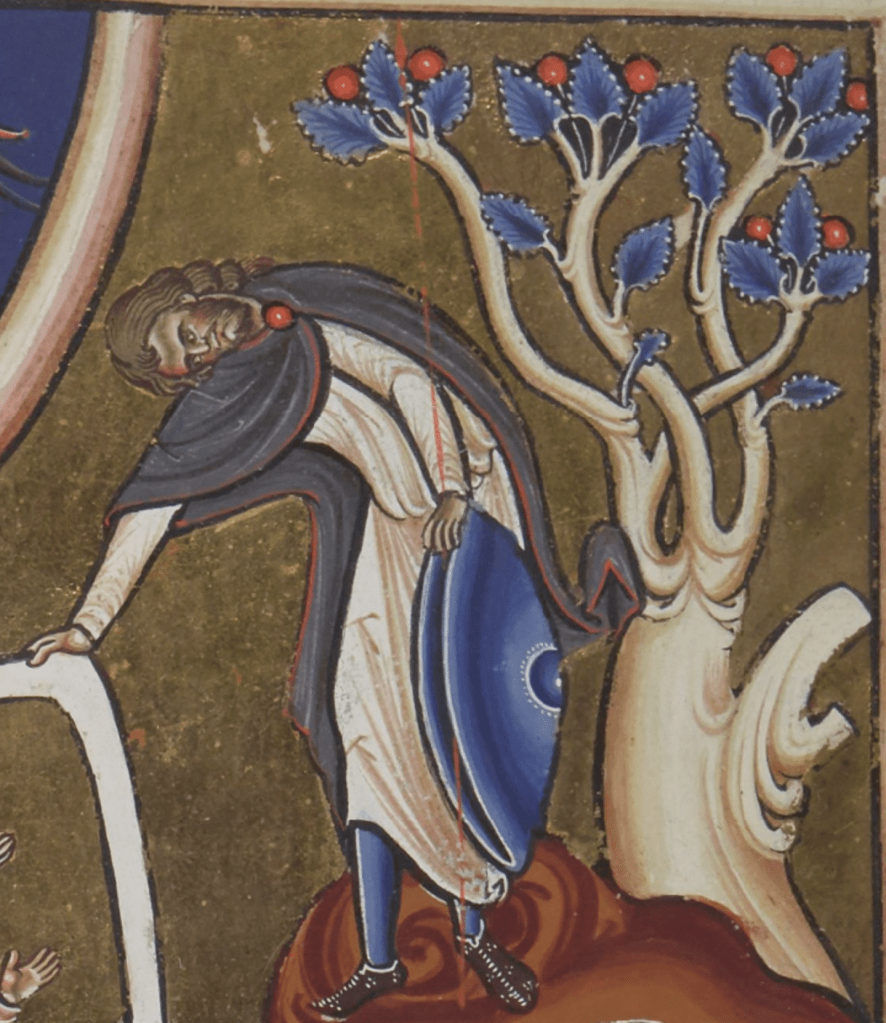
Group: egodeath Message: 2012 From: Michael Hoffman Date: 02/07/2003
Subject: Re: Bk review: Merkur: Mystery of Manna
>Amazon does not list your review.
>review count: 2
>latest from 2001.

Check in a week.
Group: egodeath Message: 2013 From: Michael Hoffman Date: 02/07/2003
Subject: Appeal of early, anti-Jewish JC: moral resistance figure
Explanation of the wide appeal of the early, anti-Jewish Jesus — essentially
a moral-resistance version of the idea of a hero/godman


Why was there such a widespread appeal of the “Jewish” version of the godman
savior hero figure Jesus? The following portrayal is incorrect in various
points — but is a fitting solution to the problem. The basic strategy is
two-phase:

Phase 1, diverse schools and very diverse versions of Jesus — most with a
Cross, some without — varying degrees of Jewishness. That becomes popular,
and shouldn’t be thought of as an emphatically *Jewish* crucified figure yet.
When figuring out the main mystical functioning of “the” Jesus figure and
“the” Cross, *this* is the Jesus — or set of Jesuses to abstract from — to
figure out and decode mystically. In this phase, people liked this flexible
Jesus figure as an effective moral resistance figurehead, and there was no
oppressively Jewish element yet, and no Old Testament welded in that one had
to read and consider.

Phase 2, forced joining of these Jesuses and these groups into the appearance
of a single religion, with Old Testament stolen away from the Jews, to use as
a ready-made source of ancient authorization for the new religion. Inject OT
elements and more Jewish elements into the earlier Jesus lifestory, eventually
add Acts, Revelation, and pastoral epistles.


Reading Acharya S’ book Christ Conspiracy,
http://www.egodeath.com/ChristConspiracyTableOfContents.htm
together with other research, the Jesus figure seems to have been constructed
in phases such as the following. Marcion’s gnostic-Pauline Jesus figure
wasn’t originally oppressively Jewish to an alienating extent; he was made
into an emphatically Jewish figure, with lots of desperately “discovered” Old
Testament connections, around 170 CE.

http://www.webcom.com/~gnosis/library/marcion.htm – The Gospel of the Lord


1. The diversity-of-prototypes phase. Marcion (Asia Minor & Alexandria)
writes prototypes of the Pauline epistles ~140 – these epistles have little
Jewish content, no Jesus lifestory, abstract Cross per canonical “genuine”
Paulines. Then Marcion writes “Gospel of the Lord” – a Jesus lifestory
without an oppressive amount of alienating Jewish elements (this Jesus
lifestory doesn’t assume that it is packaged together with the Jewish, “Old
Testament” scriptures — it’s more standalone).

The Marcion bible is the first version of New Testament — and Marcion rejects
the Old Testament; wants an NT that stands on its own, packaged without the
OT, and making little reference to the OT. Imagine today’s Bible minus the OT
and minus the Jewish features, Acts, and Revelation. Just one proto-gospel
with a merely mildly Jewish Jesus, and some ten proto-Pauline epistles with
little Jewish content — that’s it, that’s the first version of a Bible and
presents the first version of the Jesus lifestory.

Marcion’s reconstructed proto-epistles and proto-gospel may be online. At
this point, there is a gnostic, merely mildly Jewish lifestory of Jesus, the
crucified godman — set in Israel, perhaps based partly on the Julius Caesar
story, but drawing from many other sources as well. This figure, a divinized
hero figure alluding to slave resistance to the overall domination system,
becomes popular as a gnostic mystery-religion and social support network.

The motive of the Marcionites is to have a religion (including
mystery-religion initiation) that is also an effective and relevant resistance
movement and social support network. At this point, popularity of joining
synagogues may be a separate equivalent movement. In addition to Marcionite
groups, many other equivalent groups form, holding in common some sort of not
particularly Jewish Jesus figure. This is the era of many diverse prototypes
of Jesus-based schools, with many very different Jesuses and quasi-Jesus
figures.


2. The “make-uniform, forcibly gather together” phase.

~170, power-mongering bishops co-opt Marcion’s non-Jewish minimalist NT-only
Bible from Marcion, co-opt the Jewish scriptures as the Old Testament to give
a highly valuable “ancient lineage” (required, to appear authoritative), and
insert Jewish elements in the Jesus lifestory and various references to the
OT. At this point, there is now a specifically Jewish lifestory of Jesus, the
crucified godman.

The motive of these text manipulating mythmakers is to sweep together the
synagogue social support networks, convert them to functionally equivalent
Christian social support networks, increase their own control as bishops of
these developing organizations. Sweep together the various gnostic schools.

Gain full benefit of ancient Jewish heritage, but completely neuter the
Jewishness of it, do away with all the following of the law — though if some
schools exist that want to follow law, try to sweep them in, too — don’t be
too rigid; be vague and lenient and universal. Sweep together as many
schools, sects, groups as possible — use the appeal of the popular
resistance-shaped mystery-religion and social support networks, to rope and
coerce in as many of the diverse, various groups possible.


So this two-phase analysis would largely explain the puzzling widespread
appeal of a *Jewish* crucified figure as the basis for a mystery-religion and
support network — the trick is, he *wasn’t* a very oppressively *Jewish*
crucified godman figure, but just a more general crucified godman figure, who
happened to be loosely a Jew, but more strongly set against Judaism — an
anti-Jewish Jew.

Therefore, I don’t think it makes much sense to ask what the earliest
Christians saw of value in a *Jewish* crucified godman figure. The real
situation to analyze is what the earliest Christians saw of value in a general
crucified godman figure, or an anti-Jewish Jewish crucified godman figure.

Forgetting about the Jewish aspect, except to note that Jews resisted Rome and
were crucified, the question is, what did the earliest Christians see of value
in a crucified godman figure, who had a lifestory like in Marcion’s Gospel of
the Lord?

This also might help solve the problem of how the earliest Christians could be
associated with synagogues and claim the Jewish exemptions. Their Jesus
figure was the least-Jewish possible — as anti-Jewish as possible while still
remaining within the general Jewish religion.

Later, when ripping the OT away from the Jews, to utilize it for authority and
for the semblance of antiquity, at that time the Christians would have to make
a firm break with the synagogues, forming their own equivalent support
networks, the burgeoning state within a state. Strangely, as the official
Jewishness of Jesus and presence of the OT in Christianity was artificially,
strategically, officially increased (around 170), the actual Jews were booted
out and defamed.

The power-mongering hierarchy-building bishops had to wrest the pseudo-ancient
“Old Testament” and the authoritative *claim* of Jewishness away from the
actual Jews, both at the same time. The power-driven bishops took the
attitude of “We Christians are the real, true, blessed Jews, the real
inheritors of the value in Judaism. You guys are the false, bad, cursed type
of Jews.”


What did the earliest Christians see of value in an anti-Jewish Jewish
crucified godman figure that originally made this figure so popular to so many
diverse groups? Such a figure resisted his own society’s domination system,
representing by parallel Romans’ desire to resist their own society’s
domination system. The key appealing point wasn’t Jewishness, but rather,
moral resistance. Jesus was the *moral resistance* version of the generalized
idea of the mystery-religion godman — understandably appealing to many within
that era of the Roman Empire.

*Because* the Jesus figure started out in such extreme diversity, drawing from
and drawing together many diverse groups, the Jesus figure was well-suited to
take on attributes of an amazingly broad array of figures, so that the
power-mongering hierarchy-building bishops were, in phase 2, able to
coercively sweep together an enormous, broad assortment of groups.


Why was the Jewish Jesus crucified godman figure (like in the canonical Bible)
so popular in earliest Christianity, as soon as his lifestory was constructed?
Because the Jesus figure’s original lifestyle and packaging *didn’t*
forcefully include the OT. With the original early versions of the Jesus
lifestory and Jesus religion, the least appealing, most-Jewish aspects were
not included.

According to the first Jesus lifestories, before the hierarchy-builders
co-opted it all, Jesus was portrayed and packaged almost as an anti-Jewish
Jewish figure, chastising the Jewish domination system in a way that suggested
to the early Christians a parallel moral resistance movement against the Roman
domination system.


— Michael Hoffman
Egodeath.com
Group: egodeath Message: 2014 From: Michael Hoffman Date: 02/07/2003
Subject: Book lists: Ancient wine as visionary plant beverage
In Greco-Roman context, always read “wine” first as “entheogenic beverage” or
“visionary plant beverage”.


Added these book lists to Egodeath website:

Ancient wine as visionary plant beverage
http://www.amazon.com/exec/obidos/tg/listmania/list-browse/-/286BVZYFN78Z9

Ancient wine as visionary plant beverage (2)
http://www.amazon.com/exec/obidos/tg/listmania/list-browse/-/YBPI1UHQSVIN


Locally, I should at least keep a log of the ISBN numbers in case Amazon lists
are losts.

Some of these books have bibliographies, to find other related books. For
interpreting myth and religion, I simply assume “wine” means “entheogen”.
However, this should be proven.

This is the Star Wars-like “Death Star vulnerability”: if we can show that
“wine” in Greco-Roman times means, refers to, and symbolizes “entheogenic
beverage”, suddenly all existing scholarship that mentions “wine” — including
countless books about early Christianity, and Jewish religion — is
transformed to support the entheogen theory and the extreme entheogen paradigm
of what ancient religion was about.

This is a paradigm shift even for entheogen scholars, changing from an
assumption of rare usage such as 1 time during 1 initiation at Eleusis, to
potentially ubiquitous usage all throughout Greco-Roman culture. And then, if
entheogens and visionary plants were that ubuiquitous, we need to rethink
concepts about ancient consciousness and initiation and modern notions about
enlightenment.

If everyone was very familiar with the altered state, if the culture was
founded on and thoroughly saturated with the visionary altered state, we
should consider whether the modern idea of “enlightenment through entheogens”
has to be heavily revised — if the overall ancient world qualifies as what we
call “enlightened” or “mystically illuminated”, our dichotomy
“unenlightened/enlightened” needs to be revised, and the notion of
“enlightenment” as something rare and a glorified panacea needs to be sobered
up and taken off its pedestal.

For the ancient Greeks, it was so natural that all adults are what we’d call
“metaphysically and spiritually enlightened”, being “enlightened” was such the
universal norm, it was merely ordinary, normal adult consciousness. War,
politics, sports, and all areas of culture were based on what moderns would
label as “metaphysically enlightened consciousness”, because the whole culture
was based on everyday use of entheogens.

Discard the notion of rarity of entheogens, rarity of metaphysical or psyche
enlightenment, and automatic panacea of metaphysical enlightenment and
entheogens. This is a paradigm shift in contrast to current entheogen
religion scholarship, and in contrast to modern-era notions about the
difficulty and promise of metaphysical enlightenment and entheogens.

All that Huxley was amazed to find, and more, was routinely present as the
norm or basis for the norm in Greco-Roman times. Every “banquet”, all “wine”,
every “symposium”, every “feast” and “agape meal” was normally or ideally
about entheogenic or visionary plant usage, with myth, philosophy, literature,
politics, war, and other fields using the phenomena of the what we moderns
think of as the “mystic altered state” — what Greco-Romans thought of as
common, everyday divine inebriation.

The Romans were talking about entheogen mixtures, not alcohol alone, when they
said “In Vino Veritas” — In Wine Is Truth.


— Michael Hoffman
http://www.egodeath.com — simple theory of the ego-death and rebirth
experience
Group: egodeath Message: 2015 From: merker2002 Date: 02/07/2003
Subject: Re: Book lists: Ancient wine as visionary plant beverage
> The Romans were talking about entheogen mixtures, not alcohol
alone, when they
> said “In Vino Veritas” — In Wine Is Truth.

Funny enough , just an hour ago i read that saying at
a news website and was annoyed by exactly this extremely off-base
conception of Vino as mere stupifying alcohol. It’s just
such a great joke. How deep the entheogenic mysteries are
entwined even in the reality of those who have no clue bout it.
Sometimes it’s only funny how stupid modern man is.
He thinks he is the most clever ever and in truth he’s
just incredibly ignorant of the truth.


This is not the first time that i thougth about something
regarding something ontopic here just to read about the exact
same line of thought here some hours afterwards.
Group: egodeath Message: 2016 From: merker2002 Date: 02/07/2003
Subject: Re: Apprehension of succeeding at revealing no-free-will etc.
It would be quite a blast if it developed like this.
Looking at the current environment there’s actually no way
the big no-free-will revelation can be kept out much longer.
With today’s internet it’s just a matter of time.
What would happen to the Christian Churches?
Will they deliver the real body & blood ?
At some point they can’t be taken serious anymore by
the average person.

Imagine a picture of a Entheogen like Vine drinking society.
In some way it seems a logical necessity yet such a picture
seems so far-off of current culture.

I guess like most natural processes it will not be a linear phenomenon
but rather an exponential one. So the big change will _not_ occur
over decades but rather in quite a short time like a few years.

How far is this BIG change ahead?
5 years? 10 years? 20 years?

20 years seems a very long time considering how developed the
entheogenic position already is right now.
Take that and the compared to past times incredible fast information
spread it seems rather like ca. 10 years.

2012 anyone? I think there *is* more to than most think of…

“By 2012 we will have reached a total collapse of time as we know it
and an entry of humanity into post history.
Part of the Mayan prophecy was the Harmonic Convergence Prophecy
which said the Age of Materialism must end at this time and we must
return to Nature to save ourselves and the planet, our biosphere.”

http://www.bluehoney.org/MayaNotes.htm

Perhaps most people got the Mayans wrong? What about reading these
descriptions as experiences of the mystic state?

We *have* gone as far as is good for us with our current culture,
we *have* to change if escalation is to be avoided.

The collapse of time is of course the *experience* of time
stopping /fading away during the intense altered state. It’s not
actually meant as a real physical world phenomenon.

Entry into post history: It’s already here. With the revelations of
the dramatic shift from freewill/realJesus/noEntheogens to
nofreewill/nohistoricalJesus/EntheogensEverywhere (etc, See
HOW deep the rabbit hole goes…) a new Age is about to begin.

2012… if it’s not exact, it seems real close
2012 is not only about planet shifting cycles … or is it?
Group: egodeath Message: 2017 From: Michael Hoffman Date: 02/07/2003
Subject: Lyrics: Bring Me To Life
http://www.allmusic.com/cg/amg.dll?p=amg&sql=Abmev97edkrat
Album info: Fallen


I haven’t heard this album, so couldn’t do the best analysis. The following
lyrics seem most clearly related to the mystic altered state phenomena. I
should post analysis notes here, but you should be able to easily spot the
thematic patterns I’ve covered in previous postings about Rock lyrics alluding
to the phenomena of the mystic altered state.

I have covered these themes thoroughly and will not write much more on the
subject, though I will continue to draw vocabulary from lyrics; it’s part of
how I think, and altered-state Rock lyrics remain the closest the modern era
has come to ancient myth-religion poetry and literature, acting as the best
and surest bridge between the modern and ancient world.

The line “You must be sacrificed” alludes to ideas of human/divine mediation,
conflict of power realms, and ego-sacrifice.


Bring Me To Life

How can you see into my eyes like open doors?
Leading you down into my core
Where I’ve become so numb

Without a soul
My spirit’s sleeping somewhere cold
Until you find it there and lead it back home

[Chorus]
(wake me up) Wake me up inside
(I can’t wake up) Wake me up inside
(Save me) Call my name and save me from the dark
(Wake me up) Bid my blood to run
(I can’t wake up) Before I come undone
(Save me) Save me from the nothing I’ve become

Now that I know what I’m without
You can’t just leave me
Breathe into me and (make me real)
Bring me
To life

[Repeat Chorus]

(Bring me to life)
(Ive been living a lie…Theres nothing inside)
(Bring me to life)

Frozen inside without your touch
Without your love, darling
Only you are the life among the dead

(All of this I, I can’t believe I couldn’t see
Kept in the dark, but you were there in front of me)

Ive been sleeping a thousand years it seems
Got to open my eyes to everything

(Without a thought, without a voice, without a soul)
(Dont let me die here)(You must be sacrificed)
Bring me to life

[Repeat Chorus]

Bring me to life
(I’ve been living a lie… There’s nothing inside)
Bring me to life

_________________________

From the middle of “Going Under”:

blurring and stirring the truth and the lies
so I don’t know what’s real and what’s not
always confusing the thoughts in my head
so I can’t trust myself anymore
I’m dying again

I’m going under
drowning in you
I’m falling forever
I’ve got to break through
Group: egodeath Message: 2018 From: Michael Hoffman Date: 02/07/2003
Subject: Modern adulthood is spiritually retarded, not normal
>Sometimes it’s only funny how stupid modern man is.
>He thinks he is the most clever ever and in truth he’s
>just incredibly ignorant of the truth.


Modern man uses only the lower half of the mind, and fully develops that in
isolation from the upper half, and produces an entire civilization with its
so-called “religion” and “sprirituality” that is all confined within and
informed by just the lower half of the mind. Thus we end up with the clueless
egoic version of “higher knowledge” and “enlightenment” and “transcendence” —
a civilization of mental children, adult-age children, spiritual retards.

Modern adults consider enlightenment “advanced”, but really, today’s adulthood
is retarded and hardly has a right to call itself “mature” or “adult”. These
“adults” have never been through a real initiation; they are still spiritual
virgins, have never had a mystical climax — unlike the normal adults of the
Greco-Roman era.


— Michael Hoffman
Egodeath.com
Group: egodeath Message: 2019 From: Michael Hoffman Date: 02/07/2003
Subject: Appeal & comparison of various godmen over time
Within the context of Greco-Roman culture (religion, philosophy, myth,
initiation, cult, literature), how does the crucified Jesus figure work? Are
there “main” threads of meaning? The challenge is that so many threads were
woven into the figure from so many sources — an uncanny number of threads, as
time passed. What were the main meanings of the earliest versions of the
Jesus figure, perhaps 120-170 CE? I consider that to be the period of most
greatest development of the Jesus figure. When he was first available as a
figure with a lifestory, why did that figure appeal to people?

Identify the appeal and meaning of the Jesus figure in 3 periods:
1. Abstract Pauline died-and-risen figure with no lifestory.
2. Earliest, barebones lifestory (perhaps Marcion’s “Gospel of the Lord”).
3. Elaborated lifestory with heavy Old Testament connections.


Phase 1: To members of the diverse Greco-Roman culture, what was the appeal
and meaning of the Jesus figure when conceived of as an abstract Pauline
died-and-risen figure with no lifestory? (Perhaps the proto-Jesus figure of
100 BCE to 140 CE.) Certain kinds of people voluntarily joined this type of
group or movement — why? (“Stupid gullible belief in literal incarnation”
isn’t a possible explanation, since the notion of literal incarnation didn’t
happen until late in this period.) In this phase, I suppose there are various
non-integrated versions of the Jesus figure: the Pauline abstract dying/rising
cross-based version, and the wisdom teacher version.


Phase 2: To members of the diverse Greco-Roman culture, what was the appeal
and meaning of the Jesus figure when conceived of with an earliest, barebones
lifestory (perhaps Marcion’s “Gospel of the Lord”)? (Perhaps 140 to 170 CE.)
Certain kinds of people voluntarily joined this type of group or movement —
why? (Surely not because of gullible literalism — that hadn’t really gotten
started yet.

Most likely, in this phase, the Jesus figure was still considered to be
essentially like the many other legendary, mythic, or allegorical figures —
he’s still essentially viewed as a mystical personification and ethics
teacher.) This is the first phase in which a single Jesus figure *integrates*
and brings together elements including ethics/wisdom teacher, lifestory, and
cross-based dying-rising. These elements are not brought together in a way
that is optimized for an authoritarian hierarchy.


Phase 3a: To members of the diverse Greco-Roman culture, what was the appeal
and meaning of the Jesus figure when conceived of as having an elaborated
lifestory with heavy Old Testament connections? (Perhaps 170 CE to 313 CE and
later.) Certain kinds of people voluntarily joined this type of group or
movement — why? (Stupid gullible belief in Jesus’ literal existence and
miraculous resurrection is probably not the best explanation.) In this phase
is heavy, evenly balanced competition between free-form Jesus technicians and
the hierarchy-builders who ultimately seek larger-scale uniformity.

Phase 3b: 313 (Constantine/Eusebius) to 393(?) when Christianity becomes the
mandatory state religion. To members of the diverse Greco-Roman culture, what
was the appeal and meaning of the Jesus figure when conceived of as having a
fixed and orthodox lifestory with heavy Old Testament connections? Certain
kinds of people voluntarily joined this type of group or movement — why?
(Stupid gullible belief in Jesus’ literal existence and miraculous
resurrection is probably not the best explanation.)


The hierarchy-building *bishops* talked about voluntary martyrdom and
supernaturalist literalism, but did the people who voluntarily joined join for
those reasons? Some pagans criticized the stupidity and gullibility of
Christians, but were those the real reasons for joining, and were those
actually the beliefs of those who joined?

“Gullibility” is probably a bluff, a smokescreen created by the
power-mongering bishops, to cover the actual socio-political and ethical and
mystical motives and dynamic conflicts throughout the Christian groups and
between the Christian groups and the rest of the culture. Given that there
was a competitive groups-takeover war, especially instigated by power-hungry
bishops, it’s a state of war and thus a state of propaganda in which reported
circumstances and the supposed nature of group disagreements are not to be
believed.


I simply want to comprehend what the Jesus figure really meant to the real
people when he became available — but the problem is, the Jesus figure
developed over a long period, and the Greco-Roman context and competitive
philosophical systems, religious systems, and ideas developed over this period
as well.

Understanding the “creation of the Jesus figure in cultural context” sounds
simple and static, but it’s actually a moving target set within a broader
cultural moving target. I’m not used to such dynamic historical thinking and
puzzle-solving. This degree of dynamic change, intertwined with the challenge
of penetrating the mystical and sociopolitical meaning of mystery-religions is
all the more challenging.

It’s like a puzzle within a puzzle, both changing over time. And the whole
interpretive paradigm is uncertain and variable. A study of ancient Greek
religion of Dionysus and other myth-religion around 500 BCE can only
contribute a limited explanation of what the Jesus figure meant to the
Greco-Romans around 120-180 CE, when the recognizable Jesus figure was born
and voluntarily embraced.


Mithras seems not to be a mediator: he seems not to himself be a sacrifice.
How many Greco-Roman godmen are specifically *sacrificial* godmen? Consider
Prometheus as well. How many are sacrificially given from the divine to
itself? Prometheus seems to be set up in opposition to Zeus, whereas Jesus
is set up as aligned with God, proceeding from God.

As a mediator, the Jesus figure seems more perfect and symmetrically balanced.
Prometheus is like a man set up against the divine. The *idea* of a perfect
mediator who is all in one sacrament, sacrifice, priestly sacrificer,
monotheistic god, and generalized man, and representative of the initiate, is
highly developed in the Jesus figure.

The idea of “godman” may be too narrow to grasp the dynamic of
mystery-religion-type ideas. Something is amiss if Prometheus and Mithras are
omitted because they fail a stringent “godman” qualification test. The Jewish
or Neoplatonic mediator-logos idea may also need to be considered.


The Cults of the Roman Empire
Robert Turcan
http://www.amazon.com/exec/obidos/ASIN/0631200479

Reviewer — “…offers psychological explanations for the victory of
Christianity over the cults … but I think he glossed over the
socio-political explanation: episcopal Christianity alone provided the
strongest social cohesiveness enforced by ecclesiastical sanctions. It was
this strength that moved Constantine to attempt to co-opt the episcopal church
rather than throw the future of his empire in with Mithras or Isis.”


Christianizing the Roman Empire (A.D. 100-400)
Ramsay MacMullen
http://www.amazon.com/exec/obidos/ASIN/0300036426

This is supposedly an objective book (as opposed to Peter Brown’s
committed-Christian platform), yet the author apparently includes “miracles”,
the day of Pentecost (read as a literal event), and mass conversions in his
explanation for the appeal of Christianity. Sounds as untrustworthy as any
book operating within the received paradigm; he’s not really outside the
dominant paradigm.


— Michael Hoffman
Egodeath.com
Group: egodeath Message: 2020 From: wrmspirit Date: 03/07/2003
Subject: Re: Lyrics: Bring Me To Life
Interesting info below regarding the group, Evanescence. It looks like
literal christianity is having a difficult time with ‘higer’ lyrics….


http://littlerock.about.com/cs/localmusic/a/aaevanescence.htm

Local Group Gone Big Time


If you’ve seen the hit movie “<A HREF=”http://clk.about.com/?zi=7/5d&sdn=littlerock&zms=%252Fmsrch%252Findex.jhtml%253Fc%253Dmusic%2526artist%253D%2526format%253DCD%2526pgid%253Dshop%2526ps%253Dt%2526song%253D%2526title%253Ddaredevil%2526_ttag%253Dmsrch%2526_ttag%253Dmsrch%2526label%253D%2526kw%253Dfallen%2526v%253D1%2526pid%253D476856%2526pg%253D1%2526key%253DUC_20030408_192139_0984690322″>Daredevil</A>,” you’ve heard a Little Rock band
that is making it’s way up the Billboard Charts! That’s right, the group
Evanescence is actually from Little Rock, AR! Their song, “Bring Me To Life” off their
album “<A HREF=”http://clk.about.com/?zi=7/5d&sdn=littlerock&zms=%252Fmsrch%252Findex.jhtml%253Fc%253Dmusic%2526artist%253DEvanescence%252B%2526format%253DCD%2526pgid%253Dshop%2526ps%253Dt%2526song%253D%2526title%253DFallen%2526_ttag%253Dmsrch%2526_ttag%253Dmsrch%2526label%253D%2526kw%253Dfallen%2526v%253D1%2526pid%253D475041%2526pg%253D1%2526key%253DUC_20030408_191854_0618461093″>Fallen</A>,” was chosen to be featured on the soundtrack of the latest Ben
Affleck

Ben Moody and Amy Lee, the founders of the group, actually met at a church
youth camp when they were teenagers. Moody was playing with a praise and
worship group and Lee was a camper. According to Moody, he heard Lee playing the
piano and later heard her singing. He was blown away and they have been together
ever since. The actual band was started in the late 1990s in Little Rock.
They’ve had a large local following since the beginning. Their song
“Understanding” got radio play before the two ever did any live performances. Their latest
single, “Bring Me To Life,” is a “piano ballad-turned-riff-driven barnburner.”
Amy Lee’s voice is like something I’ve never heard before. The song is
definitely worth a listen and perfect for the movie “Daredevil”. The song “My
Immortal” is also featured on the “<A HREF=”http://clk.about.com/?zi=7/5d&sdn=littlerock&zms=%252Fmsrch%252Findex.jhtml%253Fc%253Dmusic%2526artist%253D%2526format%253DCD%2526pgid%253Dshop%2526ps%253Dt%2526song%253D%2526title%253Ddaredevil%2526_ttag%253Dmsrch%2526_ttag%253Dmsrch%2526label%253D%2526kw%253Dfallen%2526v%253D1%2526pid%253D476856%2526pg%253D1%2526key%253DUC_20030408_192139_0984690322″>Daredevil</A>” soundtrack. I imagine we’ll hear more
from Evanescence in the coming months. Interestingly enough, even though the
group started out as Christian Rock, their new album has gotten some criticism
from Christian groups. Some groups even went as far as to suggest Christian
stores and radio stations pull the cds. The group also seems to be trying to
distance itself from the Christian genre and go into the more lucrative secular
market. Perhaps “Fallen” is the perfect name for the album! Rounding out the duo
of Lee and Moody are John LeCompt on guitar and Rocky Gray on drums. Moody
says, “As a four-piece, we are able to carry out the intricate harmonies and
orchestrations of the memorable material on Fallen.”


[Non-text portions of this message have been removed]
Group: egodeath Message: 2021 From: Michael Hoffman Date: 03/07/2003
Subject: Ecstatic metaphor: God’s repentance, yet still closed future
“God’s repentance” is the biblical story pattern: God says “I’m going to
destroy idolaters.” The idolaters repent. As a result, God repents and says
ok, I won’t destroy them.

Freewill or open-future theologians think that God’s repentance throughout the
Old Testament indicates that he doesn’t know the future; the future is open
(not yet established or visible) to God. That is incorrect. In reading
religious texts, remember to always consider each idea first as a description
of an intense mystic-altered state phenomenon.


1. When the mystic starts to discover that control-thoughts are mysteriously
given to the mind timelessly, and are frozen into the timeless spacetime
block, there is commonly a sense of increasing doom; a felt pull inward toward
a control vortex; a dimly remembered (so it feels) terrible holy transgression
awaiting ahead on the worldline; self-reinforcing out-of-control feedback
buildup of some virtually remembered fatal doom, a tragic future lying in
store like a monster poised over a railroad track — a monster that draws you
toward it through controlling your memories and control-thoughts, a devouring
strange attractor steering the mind’s train of thought towards it.

The mind virtually remembers that it is to be coerced into willing the
cancellation of the will, a dreadful sense of coerced will and the forceful
truth of having to “must” do something tremendous, some essential generalized
transcendent crime that breaks law itself, tears the very legal fabric of
society itself, some type of fearsome sacrifice. This state is metaphorically
described as “God has decided to destroy you as an idolater.”


2. As soon as the mind coherently realizes its situation and control dynamics
correctly, that conceptual grasp is the logos given to the mind — the divine
reasoning about personal controllership and then about having to receive
transcendent resetting of the personal controllership delusion, now qualified
and purified. It may take some seven “purification” sessions to gradually
conform the mind’s mental worldmodel to this dynamic relationship about
control agency.

When the mind is finally brought into the holy of holies, brought to an
understanding of its vulnerable dependence on a completely mysterious
uncontrollable transcendent controller, this is “repenting” and
“converting” — that is, the mind is made to acknowledge or credit or praise
God.


3. When the mind is brought to credit the critical role of the mysterious
uncontrollable transcendent controller as the very source of the mind’s
control-thoughts, normally or formerly completely hidden, God repents, and the
risk of being forced to do some horrible coerced willful crime against the
moral fabric itself vanishes. One has been brought into the true Israel and
into the promised land.


The above frightening realization and insight is premised on a no-free-will,
preexisting future model of spacetime and control. The fact of being given a
new mental model and being reprieved from what you could have been made to do
through coercion of your will by the transcendent mysterious will, in no way
implies an open future, or metaphysically free will.

One can spiritually be caught up into the mysterious transcendent controller
outside the spacetime block, but the spacetime block remains the foundation
for this mystic experience.

Official theologians who have no experience with the mystic altered state can
hardly contribute much of any great insight regarding the nature of personal
responsible agency and its relation to God’s sovereignty.


— Michael Hoffman
Egodeath.com
Group: egodeath Message: 2022 From: Michael Hoffman Date: 03/07/2003
Subject: Re: Lyrics: Bring Me To Life
I don’t know why the literalist Christians are objecting to this music.

In Trent Reznor (Nine Inch Nails) fashion, it is best described as
acid-oriented Rock, which has a strong connection to genuine mystical
Christianity, which has always been at odds with official Christianity since
about the year 313, when official Christianity was invented.

It is certain that some number of Christian Rock songs are LSD-inspired. The
only question is, how many?

The category of Christian Rock is largely fake and artificial, a sham, an
illusory construct, a pretense. A veritable genre of rock songs by so-called
“secular” groups is acid-inspired songs about Christ’s saving effect. Such
“secular” groups are higher than so-called “believing” Christian groups. A
true Christian Rock song is Believer, by Ozzy Osbourne: “I’m a believer, I
ain’t no deceiver… destiny planned out… speculation of the wise.”

Believe the tomb is empty, and you shall be saved. The body is a tomb; the
soma is a sema.

Many Holy Spirit-inspired Rock groups want to have songs about mystical
salvation through Jesus Christ but ditch the shallow moralism that the lowbrow
Christian literalists mistake for the essential ethical aspect of
Christianity.
Group: egodeath Message: 2023 From: Michael Hoffman Date: 04/07/2003
Subject: Mexican Catholic retablos (oil paint on tin)
This modified URL shows all 81 retablos currently available for sale at this
site.
http://www.historia-antiques.com/pages/Action.Lasso?-database=JCH_Web&-table=c
opy&-response=%2fpages%2f..%2fpages%2fgallery.lasso&-op=bw&type=Retablo&-skipR
ecords=0&-maxRecords=81&-search

I assume the Mexicans or Central American Catholocized Indians used a variety
of entheogens in conjunction with Catholicism, inspiring these “icons” or
rather, symbol-filled religious picture-diagrams. I don’t even have a word
for these — they are not the same as Eastern orthodox icons or European
religious paintings — they are more explicitly symbolic, such as a cross
containing various objects, almost an alchemical or Masonic explicit
symbolism.


Standard pictures (arrangements/groupings of elements), and elements in
retablos include the following. What is the origin of the “originals” of these
pictorial symbol-arrangements? European paintings or icons?


I’m nearly certain the following URLs will quickly go out of sync. The best
bet to see the correct pictures is to use the comprehensive URL above, then
Find the picture name or inventory number in the page. Note to self: use Sent
copy of this post, so URLs don’t have carriage return in the middle.


Common combination: Rose & lily (lily = datura per Entheos mag v1#2).
Revelation idea is “washing white robes in the red blood of the lamb”.

Consider similarity:
rose = crown of thorns around pierced heart
white roses = lily-datura
white roses and red roses = lily-datura and crown of thorns around pierced
heart

____________________________________


Baby Jesus is handing a flaming heart to a sinner who Virgin Mary/Queen of
Heaven is lifting up from the flaming beastly jaws of hell. Jesus’ left hand
hands the heart; Jesus’ right hand holds another heart, in front of his chest.
The mouth and teeth of hell are like a gorgon (decaying death head grimace).
http://www.historia-antiques.com/pages/Action.Lasso?-database=JCH_Web&-respons
e=detail.lasso&-table=copy&-op=bw&type=Retablo&-maxRecords=1&-skipRecords=57&-
search&-Token=Retablo
“N.S. de la Luz” by Augustin Barajas
Mexico
oil on tin
19th century
10×14
Inventory#L 0041


Empty skull in front of chest, holding crucifix with small literal body of
Jesus on it
http://www.historia-antiques.com/pages/Action.Lasso?-database=JCH_Web&-respons
e=detail.lasso&-table=copy&-op=bw&type=Retablo&-maxRecords=1&-skipRecords=36&-
search&-Token=Retablo
“San Francisco de Asis”
Mexico
oil on tin
19th century
5×7
Inventory#M 0370


Cross, Jesus, crown of thorns, INRI sign, pierced side, blood from side caught
in one tiny cup — from left hand into another — from right into another —
from feet blood flows up to another tiny cup. Candle on either side — seems
to be equivalent to two crucified rebels, or sun and moon, or leg-crossed
small guys next to Mithras.
http://www.historia-antiques.com/pages/Action.Lasso?-database=JCH_Web&-respons
e=detail.lasso&-table=copy&-op=bw&type=Retablo&-maxRecords=1&-skipRecords=31&-
search&-Token=Retablo
“El Cristo de Saucito” by the “Saucito Master”
Mexico
oil on tin
19th century
5×7
Inventory#M 0609


Empty skull on bible, holding crucifix with small literal body of Jesus on it,
w/ INRI sign, holding lily/datura aimed like swords to heart
http://www.historia-antiques.com/pages/Action.Lasso?-database=JCH_Web&-respons
e=detail.lasso&-table=copy&-op=bw&type=Retablo&-maxRecords=1&-skipRecords=32&-
search&-Token=Retablo
“San Luis Gonzaga” in original wood frame
Mexico
oil on tin
19th century
10×14
Inventory#M 0558


Sword piercing virgin’s heart (per Homer, punctured heart = inevitable death,
means the type of death given by encounter with unavoidable
inevitability/Necessity/heimarmene)
http://www.historia-antiques.com/pages/Action.Lasso?-database=JCH_Web&-table=c
opy&-response=%2fpages%2fdetail.lasso&-op=bw&type=Retablo&-skipRecords=61&-max
Records=1&-token=Retablo&-search


Jesus on cross, pierced heart, crown of thorns, INRI sign, 3 women: Virgin
with sword-pierced heart, woman embracing cross, and Mary Magdalene
http://www.historia-antiques.com/pages/Action.Lasso?-database=JCH_Web&-table=c
opy&-response=%2fpages%2fdetail.lasso&-op=bw&type=Retablo&-skipRecords=61&-max
Records=1&-token=Retablo&-search
“El Calvario con Maria Magdalena”
Mexico
oil on tin
19th century
6×8.5
Inventory#K 1046


Sheep emerging unscathed from furnace (perhaps picture is called “San
Francisco de Paula”) (the incorruptable “remnant” after the purgatorial
purifying fires; compare Demeter’s burning away the queen’s son’s mortality
over a series of nights. Ruck & Heinrich’s interpretation system could
suggest this as the amanita cap heated to increase potency some sixfold times.
http://www.historia-antiques.com/pages/Action.Lasso?-database=JCH_Web&-table=c
opy&-response=%2fpages%2fdetail.lasso&-op=bw&type=Retablo&-skipRecords=74&-max
Records=1&-token=Retablo&-search
San Francisco de Paula”
Mexico
oil on tin
19th century
7×10
Inventory#J 0229

This copy also has two red flames on chest, and several other pictures have
red areas near shoulders.
Apparently the two flames on chest theme is a symbol of the similar two
flaming wings labeled “caridad” (charity, = gratuitous kindness, transcendent
love) — this might relate to the two candlesticks bracketing virgin Mary in
some pictures.
http://www.historia-antiques.com/pages/Action.Lasso?-database=JCH_Web&-table=c
opy&-response=%2fpages%2fdetail.lasso&-op=bw&type=Retablo&-skipRecords=70&-max
Records=1&-token=Retablo&-search
“San Francisco Paula”
Mexico
oil on tin
19th century
10×14
Inventory#J 1202


Skull at foot of cross.
http://www.historia-antiques.com/pages/Action.Lasso?-database=JCH_Web&-respons
e=detail.lasso&-table=copy&-op=bw&type=Retablo&-maxRecords=1&-skipRecords=49&-
search&-Token=Retablo
“San Bonifacio Martir” (rare)
Mexico
oil on tin
19th century
7×10
Inventory#L 0353


Queen releasing the wrist-chained prisoner from prison.
http://www.historia-antiques.com/pages/Action.Lasso?-database=JCH_Web&-respons
e=detail.lasso&-table=copy&-op=bw&type=Retablo&-maxRecords=1&-skipRecords=48&-
search&-Token=Retablo
“Santa Eduviges” by Augustin Barajas
Mexico
oil on tin
19th century
10×14
Inventory#L 0414


Wrist-chained souls in purgatory.
http://www.historia-antiques.com/pages/Action.Lasso?-database=JCH_Web&-table=c
opy&-response=%2fpages%2fdetail.lasso&-op=bw&type=Retablo&-skipRecords=62&-max
Records=1&-token=Retablo&-search
“Animas en Purgatorio”
Mexico
oil on wood
19th century
8×11.5
Inventory#K 0936


Flaming heart, holding literalized crucifix
http://www.historia-antiques.com/pages/Action.Lasso?-database=JCH_Web&-respons
e=detail.lasso&-table=copy&-op=bw&type=Retablo&-maxRecords=1&-skipRecords=67&-
search&-Token=Retablo
“San Juan de Dios” (rare)
Mexico
oil on tin
19th century
10×14
Inventory#K 0048


Crown with cross atop, object-like spreading gown, resting on moon crescent,
female, rayed halo, roses on garment, standing on pedestal, bracketed by two
flaming candlesticks. Curtains above, with 0, 2, or 4 tassles.
http://www.historia-antiques.com/pages/Action.Lasso?-database=JCH_Web&-respons
e=detail.lasso&-table=copy&-op=bw&type=Retablo&-maxRecords=1&-skipRecords=6&-s
earch&-Token=Retablo
“N.S. de San Juan de los Lagos”
Mexico
oil on tin
19th century
7×10
Inventory#N 0563

http://www.historia-antiques.com/pages/Action.Lasso?-database=JCH_Web&-respons
e=detail.lasso&-table=copy&-op=bw&type=Retablo&-maxRecords=1&-skipRecords=18&-
search&-Token=Retablo
“N.S. de San Juan de los Lagos”
Mexico
oil on tin
19th century
10×14
Inventory#N 0338

http://www.historia-antiques.com/pages/Action.Lasso?-database=JCH_Web&-respons
e=detail.lasso&-table=copy&-op=bw&type=Retablo&-maxRecords=1&-skipRecords=73&-
search&-Token=Retablo
“La Virgen de San Juan de los Lagos”
Mexico
oil on tin
19th century
10×14
Inventory#J 0548

This copy is different – monstrance, lily-daturas instead of flaming
candlesticks, possible purple&gold grape&grain theme.
http://www.historia-antiques.com/pages/Action.Lasso?-database=JCH_Web&-respons
e=detail.lasso&-table=copy&-op=bw&type=Retablo&-maxRecords=1&-skipRecords=43&-
search&-Token=Retablo
“N.S. de San Juan de los Lagos” double-sided
Mexico
oil on tin
19th century
7×10
Inventory#M 0327


Similar to “N.S. de San Juan de los Lagos” is the praying head-topped cloaked
body with crescent base, holding seemingly a combined rose/lily plant, holding
crowned baby Jesus who also holds combined rose-lily, both hold a bead-chain.
Bracked by rose vases. No curtain.
http://www.historia-antiques.com/pages/Action.Lasso?-database=JCH_Web&-respons
e=detail.lasso&-table=copy&-op=bw&type=Retablo&-maxRecords=1&-skipRecords=46&-
search&-Token=Retablo
“N.S. del Rosario” by the “Saucito Master”
Mexico
oil on tin
19th century
9×13
Inventory#L 0706


San Jose is male equiv. of “refugio”, with lily holding baby Jesus who has
cosmic globe w/ X. In this copy, like theotokos he is crowned (not sitting
like theotokos though)
http://www.historia-antiques.com/pages/Action.Lasso?-database=JCH_Web&-respons
e=detail.lasso&-table=copy&-op=bw&type=Retablo&-maxRecords=1&-skipRecords=34&-
search&-Token=Retablo
“San José” Bolivia
Bolivia
oil on metal
19th century
10×14
Inventory#M 0457

In this copy of San Jose, holds full-length thriasus pole — top is like rose
w/ lily-like leaves (combined lily-rose symbol), and only has ring halo.
http://www.historia-antiques.com/pages/Action.Lasso?-database=JCH_Web&-respons
e=detail.lasso&-table=copy&-op=bw&type=Retablo&-maxRecords=1&-skipRecords=54&-
search&-Token=Retablo
“San Jose & Guadalupe” by “Left-Handed Ptr”
Mexico
oil on tin
19th century
10×8.5
Inventory#L 0096

In this copy, San Jose has ring halo (not crown). Odd red/white splotches in
thriassus, gives impression of amanitas against pine tree.
http://www.historia-antiques.com/pages/Action.Lasso?-database=JCH_Web&-respons
e=detail.lasso&-table=copy&-op=bw&type=Retablo&-maxRecords=1&-skipRecords=71&-
search&-Token=Retablo
“San José y la Virgen” by the “Halloween Skull ptr.”
Mexico
oil on tin
19th century
10×10
Inventory#J 1145


Flaming heart — pierced, flames coming out pierce, crowned around with
thorns, cross on top, flaming top.
I don’t like this copy (it is like Ken Wilber’s bunk denatured Christ-heart in
the book Up From Eden — like a thornless rose [aha, rose = crown of thorns
around pierced heart]), because it omits the crown of thorns from the heart
and omits the pierced side of the heart: (in this copy, he points at the
heart, and he has nimbus halo)
http://www.historia-antiques.com/pages/Action.Lasso?-database=JCH_Web&-respons
e=detail.lasso&-table=copy&-op=bw&type=Retablo&-maxRecords=1&-skipRecords=37&-
search&-Token=Retablo
“El Sagrado Corazon de Jesus”
Mexico
oil on tin
19th century
10×14
Inventory#M 0365

I like this copy — pierced heart, crown of thorns around heart, lamb licking
blood (compare dog licking Mithra’s bull), and also — extra bonus points —
the heart is against an amanita-cap backdrop (golden inner flames, orange-red
outer flames). (in this copy, he points up.) Nimbus halo.
http://www.historia-antiques.com/pages/Action.Lasso?-database=JCH_Web&-respons
e=detail.lasso&-table=copy&-op=bw&type=Retablo&-maxRecords=1&-skipRecords=20&-
search&-Token=Retablo
“El Sagrado Corazon de Jesus”
“Saucito Master”, Mexico
oil on tin
19th century
10×14
Inventory#N 0249

In this copy, ring halo. Heart has crown of thorns and pierce.
http://www.historia-antiques.com/pages/Action.Lasso?-database=JCH_Web&-respons
e=detail.lasso&-table=copy&-op=bw&type=Retablo&-maxRecords=1&-skipRecords=75&-
search&-Token=Retablo
“El Sgdo Corazon de Cristo” by Concepcion Avila
Mexico
oil on tin
19th century
7×10
Inventory#G 0926


Picture “La Cruz de Animas” is particularly dense with symbols. Usually
includes: cross containing or surrounded by instruments of torture including
nails, rod with sponge, spear (latter two as tall X behind Jesus), love-dove,
ladder, bag of 30 silver coins, slave whipping post, cock, a couple tong-like
devices (hammer?, pliers?), dice, scourge; praying souls in purgatory under
the arms of the cross, adam/tree/snake/eve, sun & moon, INRI sign, God atop
lifting arm and hand on heart, monstrance (Amanita-cap stand), crowned
skeleton piercing heart of tightly wrapped corpse, Virgin Mary w/
sword-pierced heart, grail cup, Michael archangel with scales of judgment &
sword.

In this copy, there is no Michael archangel, God has 1 hand up, 1 hand on
heart, cosmic globe in front of heart, no triangle.
http://www.historia-antiques.com/pages/Action.Lasso?-database=JCH_Web&-table=c
opy&-response=%2fpages%2fdetail.lasso&-op=bw&type=Retablo&-skipRecords=77&-max
Records=1&-token=Retablo&-search
“La Cruz de Animas”
Mexico
oil on tin
19th century
5.5×6.5
Inventory#J 0372

In this copy, Michael archangel is above the monstrance, God has both hands
up, triangle behind head, no cosmic globe.
http://www.historia-antiques.com/pages/Action.Lasso?-database=JCH_Web&-respons
e=detail.lasso&-table=copy&-op=bw&type=Retablo&-maxRecords=1&-skipRecords=42&-
search&-Token=Retablo
“La Cruz de Animas”
Mexico
oil on tin
19th century
10×14
Inventory#M 0341

In this copy, Michael is below the monstrance, God has 1 hand up, 1 hand on
heart, cosmic globe in front of heart, triangle behind head.
http://www.historia-antiques.com/pages/Action.Lasso?-database=JCH_Web&-respons
e=detail.lasso&-table=copy&-op=bw&type=Retablo&-maxRecords=1&-skipRecords=15&-
search&-Token=Retablo
“Cruz de Animas” d.1930
Mexico
oil on tin
dated 1 930
10×14
Inventory#N 0405


Similar to the “La Cruz de Animas”, “La Alegoria de la Redención” has
sun/moon, Jesus on cross, INRI, piercings, God above raising his hands,
love-dove descending, Virgin Mary with sword-pierced heart on left, Michael
archangel w/ sword & scales of judgment on right, skull at base of cross,
rod-sponge-vinegar and spear crossed behind cross, torture implements,
adam/eve below cross, souls in purgatory under the arms of the cross.
http://www.historia-antiques.com/pages/Action.Lasso?-database=JCH_Web&-respons
e=detail.lasso&-table=copy&-op=bw&type=Retablo&-maxRecords=1&-skipRecords=5&-s
earch&-Token=Retablo
“La Alegoria de la Redención”
Mexico
oil on tin
19th century
7×10
Inventory#N 0573


Baby Jesus leapt into arms of queen of heaven, his left foot often hidden, or
sandal missing. Jesus’ halo overlaps with and unites with Virgin Mary’s halo.
http://www.historia-antiques.com/pages/Action.Lasso?-database=JCH_Web&-respons
e=detail.lasso&-table=copy&-op=bw&type=Retablo&-maxRecords=1&-skipRecords=47&-
search&-Token=Retablo
“N.S. de Refugio” by Bruno Sanches
Mexico
oil on tin
19th century
10×14
Inventory#L 0476

In “N.S. de Refugio”, baby Jesus doesn’t hold the cosmic globe w/ X.


This “Santa Ana” shows the lilies positioned the same as the multiple swords
piercing Virgin Mary’s heart in another picture.
http://www.historia-antiques.com/pages/Action.Lasso?-database=JCH_Web&-respons
e=detail.lasso&-table=copy&-op=bw&type=Retablo&-maxRecords=1&-skipRecords=7&-s
earch&-Token=Retablo
“Santa Ana”
Mexico
oil on tin
19th century
7×10
Inventory#N 0562


Virgin Mary holding cross-removed adult body of Jesus, her heart
sword-pierced, cock, some of the standard set of torture implements (implying
the entire set) – here are shown 3 nails, hammer(?), pliers(?), removed crown
of thorns, 11 stars around her head, cross on either side of her. No crescent
at her feet. No cosmic globe with X in his hand.
http://www.historia-antiques.com/pages/Action.Lasso?-database=JCH_Web&-respons
e=detail.lasso&-table=copy&-op=bw&type=Retablo&-maxRecords=1&-skipRecords=10&-
search&-Token=Retablo
“La Piedad” by Concepcion Avila
Mexico
oil on tin
19th century
7×10
Inventory#N 0433


Queen of Heaven standing on crescent, angel holding up, 2-star bible, golden
rays & red ring (almost amanita cap theme), crown, praying hands, roses.
http://www.historia-antiques.com/pages/Action.Lasso?-database=JCH_Web&-respons
e=detail.lasso&-table=copy&-op=bw&type=Retablo&-maxRecords=1&-skipRecords=19&-
search&-Token=Retablo
“N.S. de Guadalupe”
Mexico
oil on tin
19th century
5×7
Inventory#N 0255


Hand of Christ from clouds, pierced palm, blood into grail cup, 7 lambs drink
from blood, 7 letters at bottom “drink” from base of grail, 5 figures above
hand touching it, each have 1 foot visible.
Figure 1: 3 lilies pointed to heart like swords sometimes are. Circle halo.
Hands crossed over heart. Woman w/ covered head.
Figure 2: Praying hands. Ray halo. Woman w/ uncovered head.
Figure 3: Left hand on heart, right hand two fingers up and two down, ray
halo, stand on cosmic globe w/ +, young unbearded male.
Figure 4: Man w/ split beard, brown long parted hair, hands crossed over
heart, olds “thriasus” like Dionysian pine cone on a pole — pole w/ 4 roses
against green ray leaves. Rayed halo.
Figure 5: Ring halo, man w/ beard, balding, long pole w/ handle, hands crossed
over heart. light flame(?) on head.
Spear, pole w/ vinegar sponge, 1 other pole(?) Gender = FFmMM here.
http://www.historia-antiques.com/pages/Action.Lasso?-database=JCH_Web&-respons
e=detail.lasso&-table=copy&-op=bw&type=Retablo&-maxRecords=1&-skipRecords=22&-
search&-Token=Retablo
“La Mano Poderosa” by the “Master of the Refugio”
Mexico
oil on tin
19th century
10×14
Inventory#N 0176

Interesting to compare this different Poderosa. The hand comes not from
clouds, but from blood-filled grail-fountain w/ lambs drinking from the cup.
Grain on left, grape vines on right (no lilies here). God is up in clouds,
love-dove between. All 5 main “finger figures” appear to have ring halos
here. Various other differences. Gender = MFmFM here. On the 4 adults,
clothing color combinations is generally the same; easy to correlate between
the two pictures. Only 4 lambs here.
http://www.historia-antiques.com/pages/Action.Lasso?-database=JCH_Web&-respons
e=detail.lasso&-table=copy&-op=bw&type=Retablo&-maxRecords=1&-skipRecords=27&-
search&-Token=Retablo

Who are the five figures? (Research could probably nail these down easily.)
Could be father Joseph & virgin Mary, Mary Magdalene, Peter, John evangelist
or John baptist, John’s parents Elizabeth & Zacharias, Moses & Zipporah,
Abraham & Sarah, Elijah. Possibly James, Paul; Adam & Eve. Out of these,
perhaps the set is


Trumpet spitting blood from clouds, holding literalized crucifix, armband w/
blood (?), flagellant scourge, red robe w/ gold plusses and white inside —
like amanita cap, lion looking at him w/ rayed mane, 1 foot showing,
scriptures in front of him, on knees, ring halo.
http://www.historia-antiques.com/pages/Action.Lasso?-database=JCH_Web&-respons
e=detail.lasso&-table=copy&-op=bw&type=Retablo&-maxRecords=1&-skipRecords=53&-
search&-Token=Retablo
“San Geronimo” by the “Chunky Ptr.”
Mexico
oil on tin
19th century
7×10
Inventory#L 0097


Holding literalized crucifix, looking at it, cradling empty skull near heart
(in position of theotokos’ infant).
http://www.historia-antiques.com/pages/Action.Lasso?-database=JCH_Web&-respons
e=detail.lasso&-table=copy&-op=bw&type=Retablo&-maxRecords=1&-skipRecords=29&-
search&-Token=Retablo
“Santa Rita”
Mexico
oil on tin
19th century
7×10
Inventory#M 0868


Almost gives impression of Amanita — 1-leg table, gold leg, red tabletop,
gold crowns like veil remnants. Pointing at tabletop. The 3 crowns seem to
remotely imply Jesus on the cross bracketed by two lower crosses. Compare the
sword with flaming tip to the flaming candlestick shown in many other of these
pictures — this suggests that these are synonymous symbols:
flaming candlestick
flame-tipped sword
spear in heart
sword-pierced heart
lily-datura pointing to heart
finger pointing to pierced heart
roses in vase?
http://www.historia-antiques.com/pages/Action.Lasso?-database=JCH_Web&-respons
e=detail.lasso&-table=copy&-op=bw&type=Retablo&-maxRecords=1&-skipRecords=68&-
search&-Token=Retablo
“San Elias” (rare)
Mexico
oil on tin
19th century
10×14
Inventory#K 0047


Lamb in front of person’s chest/heart. Apparently left figure with lamb on
chest & piercings is Jesus, middle w/ heart & pointing up at his own head is
God, right with dove(?) & hands crossed on heart is Holy Spirit. They stand
on cosmic globe with +, but Jesus has one foot in space. Each person has
triangle “halo”.
http://www.historia-antiques.com/pages/Action.Lasso?-database=JCH_Web&-respons
e=detail.lasso&-table=copy&-op=bw&type=Retablo&-maxRecords=1&-skipRecords=78&-
search&-Token=Retablo
“La Santisima Trinidad”
Mexico
oil on tin
19th century
10×14
Inventory#P 0034


— Michael Hoffman
Egodeath.com
Group: egodeath Message: 2024 From: ichang1497 Date: 04/07/2003
Subject: post-Signals Rush albums
I began listening to Rush back in the early 1980’s and really
enjoyed the music as well as the message. However, my listening
only got as far as the Signals album, which was about the time
the style of music changed somewhat. I have not actively listened
to Grace Under Pressure, Power Windows nor the albums that followed.
Today I purchased Vapor Trails to try to become an active listener
again.

My question is what have I missed? From what I can surmise from
the Signals album, the music takes a rather drastic turn from nature
themes (The Trees, Natural Science, etc.) to the cyberage (Digital
Man, The Analog Kid, New World Man, etc.) I get the feeling that
the music contains clues about how to return to nature and experience
egodeath, yet still thrive in the modern world which requires
nurturing the ego.
Group: egodeath Message: 2025 From: Michael Hoffman Date: 04/07/2003
Subject: Re: Mexican Catholic retablos (oil paint on tin)
I uploaded the previous posting as http://www.egodeath.com/retablos.htm so the
links work — but use the page quickly before the links go out of sync.
Group: egodeath Message: 2026 From: Michael Hoffman Date: 04/07/2003
Subject: Re: Mexican Catholic retablos (oil paint on tin)
(added to the uploaded page http://www.egodeath.com/retablos.htm):


…suggests that these are synonymous symbols for “being made to spear one’s
own cybernetic heart with the flaming sword of Necessity/Heimarmene (timeless
block-universe determinism)”:
flaming candlestick
flame-tipped sword
spear in heart
sword-pierced heart
lily-datura pointing to heart
finger pointing to pierced heart
roses in vase?


I would say that the Virgin Mary (right side of below picture) has just been
made to spear her own cybernetic heart with the flaming sword of
Necessity/Heimarmene (timeless block-universe determinism).

http://www.historia-antiques.com/pages/Action.Lasso?-database=JCH_Web&-respons
e=detail.lasso&-table=copy&-op=bw&type=Retablo&-maxRecords=1&-skipRecords=71&-
search&-Token=Retablo
“San José y la Virgen” by the “Halloween Skull ptr.”
Mexico
oil on tin
19th century
10×10
Inventory#J 1145
Group: egodeath Message: 2027 From: Michael Hoffman Date: 04/07/2003
Subject: Re: post-Signals Rush albums
You and I probably aren’t the only ones who treat Rush like a band that broke
up after the 1982 album Signals. I sincerely tried, as much as I could stand,
but of what I heard after that, neither the music nor the lyrics happen to
appeal to me; I had to conclude that they were no longer inspired, but were
going by rote, and became too old to rock and roll (dose with lysergic acid)
and to young to die. I maintain that the 1984 album Grace Under Pressure fits
with early Rush, not late Rush.

Grace Under Pressure has many altered-state songs, and innovative style, even
if generally bleak and obsessed with paranoia and modern doom and alienation.
It’s a kind of low point, as far as mood — nuclear war, concentration camps,
and paranoia — their answer to Pink Floyd’s angst album, The Wall?

Reviews of Rush albums (just 1 unreliable data point among many that are
needed):
http://www.allmusic.com/cg/amg.dll?p=amg&sql=By690s35ba3ng
They propose that you and I listen to the 1989 album Presto.


Presto does have some good philosophy lyrics, that don’t fail to have much
about Dionysus in them. The Pass is good lyrically. Presto, the title track,
says
If I could wave my magic wand
I’d set everybody free
This implies that the biggest point of the album is that we’re not
metaphysically free.

In “Superconductor” that must be God.
Watch his every move
SUPERCONDUCTOR
Orchestrate illusions
SUPERCONDUCTOR
Watch his every move
SUPERCONDUCTOR
Hoping you’ll believe
Designing to deceive
That’s entertainment

They use a phrase Ozzy used in Over the Mountain: “disappear into the crowd”.
The album has thick allusions to mystic altered state phenomena — don’t know
if I could stand the music though. I don’t think I’ve ever heard any of the
songs on this album.


At http://www.egodeath.com/rushlyrics.htm see the songs listed below Signals,
which are currently:

Album: Grace Under Pressure
Distant Early Warning
Afterimage
The Enemy Within (Part I of Fear)
The Body Electric
Red Lenses
Between the Wheels

Album: Counterparts
Stick It Out

Album: Test for Echo
Driven
Virtuality


One of the top philosophically important Rush songs is The Body Electric
(100-100-1, SOS, android egodeath). It’s a key song for the cybernetic theory
of ego death — it neither uses fantasy nor myth.

The Enemy Within is fairly important.

Between the Wheels is dense with allusions to ego death and mystical
phenomena — I should complete the analysis; for example, these refer to the
ascension of egoic thinking up to heaven, only to meet the angel with the
flaming sword, who casts out the demonic freewill agency delusion and ego goes
falling way down to the depths, leading often to desperate dependence on the
gratuitous goodness of the uncontrollable transcendent controller — where
rational Heavy Rock guys like Peart are brought to pray and beg and depend on
God:

We can go from boom to bust
From dreams to a bowl of dust
We can fall from rockets’ red glare
Down to “Brother can you spare –“

I read the last as Peart reporting that after falling upon attaining a high
ecstatic state — “stumbling” — he had to beg and depend on the One that is
outside and prior to Peart’s control-thoughts.


The song “Distant Early Warning” ends with a lament of Absolom, king David’s
son in the Bible, and is a reference to mystical ego death. See:
Tue 4/30/2002 11:00 AM
RE: [egodeath] Labyrinth, Balaam’s donkey, Golden Ass, Damascus
http://groups.yahoo.com/group/egodeath/message/789


— Michael Hoffman
Egodeath.com
Group: egodeath Message: 2028 From: wrmspirit Date: 04/07/2003
Subject: Re: post-Signals Rush albums
In a message dated 7/4/2003 12:38:35 AM Pacific Daylight Time,
mhoffman@… writes:


> appeal to me; I had to conclude that they were no longer inspired, but were
> going by rote, and became too old to rock and roll

It’s an interesting statement…..especially when the word inspiration is
carried into the breath….for then there is always inspiration as well as
expiration until there is no one left to notice…

When the word, ‘inspired,’ remains as a metaphor for the
term,’enlightenment,’ only, it leans toward the act of doing, through the awareness of what
is…And truly, all acts of doing, whether through awareness or not, are
inspired…..I don’t see an end to inspiration, but rather only it transforming
itself….


[Non-text portions of this message have been removed]
Group: egodeath Message: 2029 From: ichang1497 Date: 05/07/2003
Subject: Re: post-Signals Rush albums
I just purchased Grace Under Pressure and Power Windows yesterday.
Grace Under Pressure sounds like Signals. Vapor Trails will takes
some getting used to. I will have to make up for lost time. At
least I am back on track again. I hope I don’t discover that Rush
is taking their own lyrics way too seriously, but I guess a lot of
the art rock bands of the 70’s are guilty of that. Ozzy Osbourne
definitely is not guilty of that.
Group: egodeath Message: 2030 From: ichang1497 Date: 05/07/2003
Subject: cybernetic theory of ego death and ego transcendence
I am having difficulty expressing my knowledge about this
subject. The terminology used in this newsgroup is very
technical and academic whereas I come from another reference
point or orientation. I relate better to music rather than
words, so I can only feel what you are describing with all
this terminology when I listen to the Beatles, Rush, or other
acid rock.

I do recognize certain themes in the older Rush music that
deal with Greek mythology and even The Lord of the Rings trilogy
(Rivendell, The Trees).

Another theme I noticed is that of making distinctions and recognizing
differences. (Different Strings, Entre Nous <“the differences we
sometimes feared to show”>, Vital Signs<“everybody got to deviate
from the norm”>, Subdivisions).

That is really the extent of my knowledge or interpretation of this
topic. I tend to shy away from the religious, or Christian themes
because I feel that acid rock mysticism and modern day Christianity
do not mix. The key is to recognize this as a false dichotomy and
to transcend it. This may be what is keeping me stuck in ego death
and preventing me from achieving transcendence.
Group: egodeath Message: 2031 From: Michael Hoffman Date: 05/07/2003
Subject: Misguided critique of “seriousness” in Rock
>>I hope I don’t discover that Rush is taking their own lyrics way too
seriously, but I guess a lot of the art rock bands of the 70’s are guilty of
that.


Criticizing “taking lyrics too seriously” gives a feeling of superioriority,
but that’s often a sign of incomprehension of the meaning in lyrics. Do
people really want to limit Rock to the mindless Boogie Rock of the
self-titled Rush album, or the Ramones as the ideal scope of Punk thematic
materials?


It’s not immediately clear what “taking their own lyrics too seriously” means.
Generally, the most standard single theme or motive of Classic Rock (1960s and
70s Rock from Freakbeat to Psychedelic Rock, Acid Rock, Heavy Rock, Heavy
Metal, then Metal) is to reflect the phenomena of the LSD altered state.
Consider Heavy Rock, such as Queen’s song Bohemian Rhapsody or Rush’s song No
One at the Bridge.

Punk Rock is “guilty” of the same supposed crime. For all of its *talk* about
offering a “less pretentious and serious” approach to Rock, Punk treated
politics every bit as seriously as Classic Rock treated the LSD altered state
and its phenomena.


>>Ozzy Osbourne definitely is not guilty of that.


No album takes its lyrics more seriously than Ozzy Osbourne’s album Diary of a
Madman. Similarly, Sabotage is also insanely serious and grandiose.

http://www.egodeath.com/sablyrics.htm


Listen as well to Osbourne’s song Revelation (Mother Earth):

Mother please forgive them
For they know not what they do
Looking back in history’s books
It seems it’s nothing new
Oh! Let my mother live

Heaven is for heroes
And hell is full of fools
Stupidity, no will to live
They’re breaking God’s own rules
Please let my mother live

Father, of all creation
I think we’re all going wrong
The course they’re taking
Seems to be breaking
And it won’t take too long

Children of the future
Watching empires fall
Madness the cup they drink from
Self destruction the toll

I had a vision, l saw the world burn
And the seas had turned red
The sun had fallen, the final curtain
In the land of the dead

Mother, please show the children
Before it’s too late
To fight each other, there’s no-one winning
We must fight all the hate


Rock doesn’t get any more serious and grandiose and cosmic than that. So much
for “taking their own lyrics … seriously … Ozzy Osbourne definitely is not
guilty of that.”


— Michael Hoffman
Egodeath.com
Group: egodeath Message: 2032 From: Michael Hoffman Date: 05/07/2003
Subject: New Testament, hist. Jesus, & drug policy reform
Based on the article in the Salvia Divinorum issue #1, Doc Kunda adheres
either to the paradigm “Jesus as entheogenic hierophant” or “Jesus as teacher
of Christhood”, a teaching also accessible through entheogens.”

http://www.dockunda.com — I didn’t find relevant articles.

Entheogen scholars have a fairly even spread of views:

o Jesus as entheogenic hierophant
o Jesus as teacher of Christhood, a teaching also accessible through
entheogens.
o Jesus as entheogenic hierophant, though Jesus might possibly not exist
o Jesus as mythic-only metaphor for the entheogen, like Dionysus
o Jesus as mythic-only complex composite figure based on many themes
including the entheogen and the experiences and insights it produces.

Many mythic-only Jesus researchers are favorably interested in the “Jesus as
entheogen” theme. Many entheogen scholars are interested in “Jesus as
mythic-only metaphor for the entheogen”. The day is past when entheogen
scholars could take it for granted that there was a historical Jesus. All
entheogen scholars are now more or less aware of the existence, seriousness,
and relevance of the mythic-only Jesus theory.

Entheogen scholars may be tempted to enlist the historical Jesus as ally for
drug policy reform, but they have increasingly become aware that to do so is
to build a house on a foundation of sand. Yes, Jesus per the scriptures is
against prohibition of visionary plants, but Jesus is just a synthetic figure
expressing, among other things, the use of so-called “wine” in Greco-Roman
culture to produce ecstatic experiences and insight into the nature of
personal agency.

Instead of saying that Mr. Jesus personally endorsed drug policy reform, a
more relevant and enduring line of research is to establish that *all*
Greco-Roman religion was based on the use of visionary plants in wine,
including all the cultic banquets and mystery-religions, including Judaism and
Christianity.

Strategically, it may be best for drug policy reformers to argue and win both
scenarios: that if there was a historical Jesus, he was against drug
prohibition, and even if there wasn’t a historical Jesus, Christianity, like
Judaism and all the Greco-Roman religions and philosophy schools, was based on
the use of visionary plants in wine.

Few if any prohibitionists today put forth an explicit, reasoned argument that
Jesus forbade drugs, or that the New Testament is prohibitionist. The moment
they try, they find that the scriptures offer much better support for
legalization. If the New Testament provides a basis for deciding on
prohibition, it supports legalization, not prohibition.


— Michael Hoffman
Egodeath.com
Group: egodeath Message: 2033 From: Michael Hoffman Date: 05/07/2003
Subject: Acid-based rock mysticism vs. Christianity: false dichotomy
>>[In thinking about the meaning of Classic Rock lyrics,] I tend to shy away
from the religious, or Christian themes because I feel that acid rock
mysticism and modern day Christianity do not mix.


To clarify what you mean by “modern day Christianity”, we need to somehow
mention esoteric or mystic Christianity, which *is* close to Acid Rock
mysticism. There is and always has been a minority interest, yet a strong and
important interest, in esoteric or mystic Christianity — less common, but
more significant than the official version of Christianity that the masses
know of.


>The key is to recognize this as a false dichotomy and to transcend it. This
may be what is keeping me stuck in ego death and preventing me from achieving
transcendence.


There are numerous key false dichotomies:

You are either a Believer or not. (Implies that the only kind of Christianity
that has ever been held by anyone is my version of Christianity — that only
kind of which I am aware; the one type of Christianity of which I’m not
totally oblivious.)

People should use Christian mysticism techniques, rather than drug-based
mysticism. (Actually, there is evidence that real Christian mysticism *was*
drug-based mysticism.)

Christianity is set against science. (Actually, bunk Christianity is set
against bunk Science; authentic Christianity accords with authentic Science.)

Old Testament god vs. New Testament god. (Actually, both contain significant
amounts of “wrathful justice” and “generous loving mercy” — two universal
standard attributes of mystically experienced divinity.)
Group: egodeath Message: 2034 From: merker2002 Date: 05/07/2003
Subject: One man’s honour/owner (maiden lyrics)
the IronMaiden Powerslave album is excellent.
the sound production is amazing.

4. Flash Of The Blade

[Dickinson]

As a young boy chasing Dragons [understood as “drunk boy”=entheogenic
drunkeness]
with your wooden sword so mightly, [compare “clenching plastic fist”]
You’re St. George you’re David and you always
killed the beast
Times change very quickly
And you had to grow up early
A house in smoking ruins and the bodies
at your feet

[Chorus:]
You’ll die as you lived
In a flash of the blade
In a corner forgotten by no-one [everyone has to face ego-death]
You lived for the touch
For the feel of the steel
One man, and his Honour. [understood as “and his Owner”]

The smell of resined leather
The steely iron mask
As you cut and thrust and parried at the
fencing master’s call [you act to his call, to His command]
He taught you all he ever knew
To fear no mortal man
And now you’ll wreak your vengeance in the
Screams of evil man.

[Chorus:]
[Repeat chorus]

the follow-up song “the duelists” has the following chorus
[Chorus:]
OH…OH… Fight for the Honour
Fight for the Splendour
Fight for the Pleasure
OH…OH… Fight for the Honour
Fight for the Splendour
Fight for your Life!

In the mystic state substitut again “Honour” with “Owner”. A clever
play of words.
The ego which helds itself real fights for its Honour.
In the mystic state, where one’s own reliance upon Him (Your Owner)
is revealed one must *fight* for the Owner.
Group: egodeath Message: 2035 From: Michael Hoffman Date: 05/07/2003
Subject: Re: Mexican Catholic retablos (oil paint on tin)
I added some book links and some possibly more stable links to images,
including grail images, Christ in fountain of blood flagellating himself with
grape vine.

Noticed similarity between lone soul in purgatory, sometimes shown almost like
an egg in a cup or nest of flames, and the “Jesus in cup of blood” symbol in
Grail art.

http://www.egodeath.com/retablos.htm
Group: egodeath Message: 2036 From: ichang1497 Date: 06/07/2003
Subject: “seriousness” in Rock and definition of “modern day Christianity”
>
>
> >>Ozzy Osbourne definitely is not guilty of that.
> No album takes its lyrics more seriously than Ozzy Osbourne’s album
Diary of a
> Madman. Similarly, Sabotage is also insanely serious and grandiose.
>


Let me clarify my earlier remark about Ozzy Osbourne. I meant
that the phenomenon of “The Osbournes” TV show shows that Ozzy
the man has a sense of humour about himself. I actually know
very little about his music.

I started on this journey by listening to and researching the Beatles
who tried to capture the feeling one gets from transcendental
meditation and eastern religion in their music. Of course, the acid
experience is a huge part of that experience.

Perhaps my critique of “seriousness” in Rock comes from the technical
and academic nature of the posts on this newsgroup. I recently
dropped out of a Master’s Program, so I am in an anti-academic frame
of mind at the moment. I have more faith in my own intuition and
intellectual efforts than in institutional knowledge, much to my own
detriment.

I have relied heavily on the works of Joseph Campbell for a roadmap
of my journey. As you may or may not know, Campbell has become
popular through his populist approach to mythology and Jungian
psychology. I am trying to reconcile my familiarity with Campbell
to “modern day Christianity”, which I define the Christian Church
as an institution, which deems salvation is achieved primarily
through works rather than faith.
Group: egodeath Message: 2037 From: Michael Hoffman Date: 06/07/2003
Subject: Re: “seriousness” in Rock and definition of “modern day Christian
>>I started on this journey by listening to and researching the Beatles who
tried to capture the feeling one gets from transcendental meditation and
eastern religion in their music. Of course, the acid experience is a huge
part of that experience.


The music of Ozzy and Beatles has much in common — playful taboo crossing and
the mystic altered state, mystery-religion, cosmic gnostic footloose
profundity, ultimate concerns transcendently freely mixed with British wacky
absurd humor.

Metal such as Iron Maiden and Metallica can cover only half the themes or mood
of the intense mystic altered state; that genre as an expressive medium is
restricted. Mainstream acid-oriented Rock can cover more ground in exploring
the world of the intense mystic altered state, because it does not have to
restrict itself to constant heaviness.

Ozzy/Sabbath is ultimately superior to Metallica as an expressive style
because Ozzy/Sabbath has always had full room for humor and light beauty,
unlike the Metal genre. Much of the Iron Maiden lyrics seem to have their
inspired quality handicapped by a rigid rule of always having to be dark,
negative, hardcore.


>>Perhaps my critique of “seriousness” in Rock comes from the technical and
academic nature of the posts on this newsgroup.

http://www.egodeath.com/#AlteredStateLyrics
It doesn’t get any more straightforward than this set of Web pages. An
explanation of allusions to the mystic altered state is potentially as
straightforward and explicit than this. Where can people find a less
“technical and academic” explanation of Rock mysticism than this? The present
posting would as well, and as absurdly, be called “technical and academic”.

This discussion group is technical and academic compared to postings saying
just “Dude, too much tripping and my soul’s worn thin.” One step simpler than
this discussion group will land you in the public newsgroups.

If you hate academic bluster, you’ll love to hate the existing books that fail
to even see the presence of primary religious experiencing in Heavy Rock. The
allusions go right over their heads, so we end up with the familiar
combination of sophisticated-sounding blustery explanation, that completely
misses the essence, producing a study that pretends to be about certain Rock
lyrics, but really ends up being about the ideas embraced by Academia.

I would like to search more of the books about Rock for real insight — not
just saying that bands used LSD, not just saying that Lucy… is about LSD,
but spelling out the allusions to altered-state phenomena in songs far and
wide. The books I’ve seen have nothing even remotely like that.


Book lists:

Rock as philosophical mystery-religion
http://www.amazon.com/exec/obidos/tg/listmania/list-browse/-/2PTKEDT3LYDKZ/
Some of these books on Heavy Rock *might* provide insight. I wouldn’t count
on it, but look up “acid”, “mystic”, “lsd”, “psychedelics”, and “drugs” in the
indexes.

Rush books (Rock group)
http://www.amazon.com/exec/obidos/tg/listmania/list-browse/-/2RLOST1ROMDCA


>>I recently dropped out of a Master’s Program, so I am in an anti-academic
frame of mind at the moment. I have more faith in my own intuition and
intellectual efforts than in institutional knowledge, much to my own
detriment.


Reading today’s quarter-baked scholarship is a necessary evil. I have to do a
major mental transformation to extract value out of most books.

The biggest mistake of so-called “higher education” is modern ignorance of the
use of visionary plants throughout human history. That fault may be laid on
academia rather than outside it.


>>I have relied heavily on the works of Joseph Campbell for a roadmap of my
journey.


From what I’ve read so far, Campbell seems more insightful than Jung. The
problem is the whole modern Psychology paradigm, which distorts its own field
as much as shining light on it. Both of them are grounded in the era before
the late 1960s, and therefore they are almost wholly ignorant of the
explanatory solution provided by visionary plants.

Scholarship in psychology and symbols will eventually be divided into before
and after the era of the rediscovery of entheogens, which had a turning point
around 1972. By 1972, any scholar of myth-religion-mysticism who was not
aware of the entheogen theory of religion is guilty of professional
incompetence and inexcusable oblivious ignorance. Prior to around 1972,
theories of myth-religion-mysticism can be excused for ignorance of the
entheogen solution to their questions — not so after about 1972.


Jung on Christianity
Murray Stein (Introduction), Carl Gustav Jung
http://www.amazon.com/exec/obidos/tg/detail/-/0691006970


>>Campbell has become popular through his populist approach to mythology and
Jungian psychology. I am trying to reconcile my familiarity with Campbell to
“modern day Christianity”, which I define the Christian Church as an
institution, which deems salvation is achieved primarily through works rather
than faith.


Official Christianity is a system of salvation through works, with a veneer of
salvation through faith and regeneration through the Holy Spirit laid on top.
Because the official Church in fact lacks the Holy Spirit, the masses fall
back onto striving for salvation through works.

Thou Art That: Transforming Religious Metaphor (covers Christian
myth-religion, fine content)
Joseph Campbell
http://www.amazon.com/exec/obidos/tg/detail/-/1577312023
Oct. 2001


— Michael Hoffman
Egodeath.com
Group: egodeath Message: 2038 From: merker2002 Date: 06/07/2003
Subject: Magic harmonies (Rime of the ancient mariner)
In Rime of the ancient mariner(Powerslave album) there is a passage
of appegio harmonies played with accoustic guitar (beginning at 5’07)
which seem to have some strange evocative quality in the mystic
altered state.
They seem to evoke the egodeath quarrel. The harmonies create a
certain sphere which is created not only of sound but also colours
and it feels like some distinct remembering. There is a sound of a
cracking door layed underneath which additionaly seems relevant in
the mystic state. It sounds like something is short of bursting, like
a ballon just about to burst apart any moment.

regs
,merker
Group: egodeath Message: 2039 From: merker2002 Date: 06/07/2003
Subject: Sound perception in the altered state
It’s sheer amazing how much better music can sound in the altered
state.
The sound becomes wider sounds crystal clear and it seems one can
perceive any instrument simultaneously and yet very distinctly.
Sounds which are nearly impossible to hear when not mystified are
impossible to ignore when heard in the mystical state.

Only thing is one should not dose too high in order to be still able
to understand the lyrics.
Also the time-stretching is sometimes sheer amazing. It seems like
one 4minute song goes on for eternity.
Group: egodeath Message: 2040 From: egodeath@yahoogroups.com Date: 06/07/2003
Subject: File – EgodeathPostingRules.txt
This text file is automatically posted to the discussion group every two
weeks, in order to provide guidelines for writers, to keep the postings
on-topic and help writers know what subjects are considered most desirable
by this audience.

It is possible to write on most any topic and have it be relevant for this
Egodeath discussion group if you show how the posting is related to the
in-scope topics for this discussion group. This group is not formally
moderated, but it is consistently focused on the defined topics, including
peripheral topics if the writer explicitly connects them to the core topics.

Vague, unclear, hazy postings are off-topic and out of scope and are subject to moderation. Contributors must make the effort for rational, clear, explicit, intellectual, articulate, and comprehensible presentation of particular points.

— Michael Hoffman

http://groups.yahoo.com/group/egodeath — describes
in-scope discussion topics, as follows.

This discussion group covers the cybernetic theory of ego death and
ego transcendence, including:

o Nonreductionistic block-universe determinism/Fatedness, the closed
and preexisting future, tenseless time, free will as illusory, the
holographic universe, and predestination and Reformed theology.

o Cognitive science, mental construct processing, mental models,
ontological idealism, contemporary metaphysics of the continuant
self, cybernetic self-control, personal control agency, moral agency,
and self-government.

o Zen satori, short-path enlightenment, and Alan Watts;
transpersonal psychology, Ken Wilber, and integral theory.

o Entheogens and psychedelic drugs, the Eleusinian mysteries and
cracking the allegorical code of the mystery religions, mythic
metaphor and allegorical encoding, the mystic altered state, mystic
and religious experiencing, visionary states, religious rapture, and
Acid Rock mysticism.

o Loss of control, self-control seizure, cognitive instability, and
psychosis and schizophrenia.

Egodeath Yahoo Group – Digest 20: 2002-08-18

Site Map


Group: egodeath Message: 970 From: Coraxo Date: 18/08/2002
Subject: Re: Don’t say drug “abuse”; Gnostics & entheogens
Group: egodeath Message: 971 From: Michael Hoffman Date: 18/08/2002
Subject: Re: Don’t say drug “abuse”; Gnostics & entheogens
Group: egodeath Message: 972 From: Coraxo Date: 18/08/2002
Subject: Re: Don’t say drug “abuse”; Gnostics & entheogens
Group: egodeath Message: 973 From: egodeath Date: 19/08/2002
Subject: File – EgodeathTopics.txt
Group: egodeath Message: 974 From: peter zedak Date: 19/08/2002
Subject: Fwd: FW: [egodeath] Digest Number 258
Group: egodeath Message: 975 From: peter zedak Date: 20/08/2002
Subject: Fwd: FW: [egodeath] Digest Number 258
Group: egodeath Message: 976 From: Coraxo Date: 20/08/2002
Subject: Re: Digest Number 258
Group: egodeath Message: 977 From: Michael Hoffman Date: 21/08/2002
Subject: Re: FW: [egodeath] Digest Number 258
Group: egodeath Message: 978 From: theecorax Date: 21/08/2002
Subject: Re: FW: [egodeath] Digest Number 258
Group: egodeath Message: 979 From: Michael Hoffman Date: 21/08/2002
Subject: Re: Don’t say drug “abuse”; Gnostics & entheogens
Group: egodeath Message: 980 From: theecorax Date: 21/08/2002
Subject: Re: Don’t say drug “abuse”; Gnostics & entheogens
Group: egodeath Message: 981 From: theecorax Date: 21/08/2002
Subject: Re: Don’t say drug “abuse”; Gnostics & entheogens
Group: egodeath Message: 982 From: Michael Hoffman Date: 21/08/2002
Subject: Re: Don’t say drug “abuse”; Gnostics & entheogens
Group: egodeath Message: 983 From: Michael Hoffman Date: 21/08/2002
Subject: Re: Don’t say drug “abuse”; Gnostics & entheogens
Group: egodeath Message: 984 From: theecorax Date: 21/08/2002
Subject: Re: Don’t say drug “abuse”; Gnostics & entheogens
Group: egodeath Message: 985 From: Michael Hoffman Date: 22/08/2002
Subject: Re: Don’t say drug “abuse”; Gnostics & entheogens
Group: egodeath Message: 986 From: wrmspirit Date: 22/08/2002
Subject: Re: Don’t say drug “abuse”; Gnostics & entheogens
Group: egodeath Message: 987 From: theecorax Date: 22/08/2002
Subject: Re: Don’t say drug “abuse”; Gnostics & entheogens
Group: egodeath Message: 988 From: Michael Hoffman Date: 22/08/2002
Subject: Re: Don’t say drug “abuse”; Gnostics & entheogens
Group: egodeath Message: 989 From: theecorax Date: 22/08/2002
Subject: Re: Don’t say drug “abuse”; Gnostics & entheogens
Group: egodeath Message: 990 From: Michael Hoffman Date: 22/08/2002
Subject: FW: Christ Conspiracy Christian Bashing?
Group: egodeath Message: 991 From: Michael Hoffman Date: 23/08/2002
Subject: Reading allegory through intense peak-state filter
Group: egodeath Message: 992 From: merker2002 Date: 24/08/2002
Subject: Re: Reading allegory through intense peak-state filter
Group: egodeath Message: 994 From: Michael Hoffman Date: 24/08/2002
Subject: Only 2 denominations: Literalist & esoteric
Group: egodeath Message: 995 From: Michael Hoffman Date: 24/08/2002
Subject: Re: Don’t say drug “abuse”; Gnostics & entheogens
Group: egodeath Message: 996 From: Michael Hoffman Date: 24/08/2002
Subject: Re: Reading allegory through intense peak-state filter
Group: egodeath Message: 997 From: George Douvris Date: 24/08/2002
Subject: petty comments
Group: egodeath Message: 998 From: Coraxo Date: 24/08/2002
Subject: Re: petty comments
Group: egodeath Message: 999 From: Michael Hoffman Date: 24/08/2002
Subject: Sustained constructive debate, entheogens
Group: egodeath Message: 1000 From: eldoreth2002 Date: 24/08/2002
Subject: Refuge
Group: egodeath Message: 1001 From: wrmspirit Date: 24/08/2002
Subject: Re: Sustained constructive debate, entheogens
Group: egodeath Message: 1002 From: Coraxo Date: 24/08/2002
Subject: Re: Sustained constructive debate, entheogens
Group: egodeath Message: 1003 From: Coraxo Date: 24/08/2002
Subject: Re: Reading allegory through intense peak-state filter
Group: egodeath Message: 1004 From: Michael Hoffman Date: 25/08/2002
Subject: Enth. theory relig., evidence vs. paradigms
Group: egodeath Message: 1005 From: Coraxo Date: 25/08/2002
Subject: Re: Enth. theory relig., evidence vs. paradigms
Group: egodeath Message: 1006 From: Michael Hoffman Date: 25/08/2002
Subject: “Clueless apostles” = uninitiated Christians
Group: egodeath Message: 1007 From: Michael Hoffman Date: 25/08/2002
Subject: Re: Reading allegory through intense peak-state filter
Group: egodeath Message: 1008 From: Michael Hoffman Date: 25/08/2002
Subject: Lyrics: Last Time Around
Group: egodeath Message: 1009 From: theecorax Date: 25/08/2002
Subject: Farewell
Group: egodeath Message: 1010 From: Michael Hoffman Date: 25/08/2002
Subject: Trumpets of Heaven: Van Halen Amp Tone
Group: egodeath Message: 1011 From: Michael Hoffman Date: 25/08/2002
Subject: Re: Reading allegorythrough intense peak-state filter
Group: egodeath Message: 1012 From: Michael Hoffman Date: 25/08/2002
Subject: Amazon book lists about mythic Christianity
Group: egodeath Message: 1013 From: Michael Hoffman Date: 25/08/2002
Subject: Trumpets of Heaven: The Datura Annunciation
Group: egodeath Message: 1014 From: Michael Hoffman Date: 25/08/2002
Subject: Altered states: a modern concept?
Group: egodeath Message: 1015 From: Michael Hoffman Date: 25/08/2002
Subject: Re: Altered states: a modern concept?
Group: egodeath Message: 1016 From: wrmspirit Date: 26/08/2002
Subject: Re: Altered states: a modern concept?
Group: egodeath Message: 1017 From: Michael Hoffman Date: 27/08/2002
Subject: Import. of myth-only Paul to myth-only Jesus rsrch
Group: egodeath Message: 1018 From: Jennifer Jackson Date: 27/08/2002
Subject: Re: Import. of myth-only Paul to myth-only Jesus rsrch
Group: egodeath Message: 1019 From: merker2002 Date: 29/08/2002
Subject: motive: thunderbolt through skull
Group: egodeath Message: 1020 From: c3273 Date: 29/08/2002
Subject: Consciouness model of universe


Group: egodeath Message: 970 From: Coraxo Date: 18/08/2002
Subject: Re: Don’t say drug “abuse”; Gnostics & entheogens
Hi Michael:

I stand by my use of the term abuse.

I am not using the term “abuse” in the connotative term like Barry McCaffrey
and other “Drug Czar” types, I am using the term specifically to distinguish
the entheogenic use versus the pseudoshamanic “lets play Indian” type of
hippy tripping characteristic of McKenna’s seriously flawed work.

Even still, much entheogenic use of these materials is not “shamanic”;
taking these plants is not a shamanic act in itself. Shamanism requires a
certain setting, one which is divinatory and usually in the healing context
– not merely self-exploration which is the usual context of most serious,
non-abusive exploratory use.

There are people who have used these materials seriously in exploring the
mind and spirit – for example Strassman’s research with DMT and Shulgin’s
documented experimentation, many however appear to abuse these substances
seeking the next radical trip – to see how ripped they can get.

I am not using the term “abuse” in the prohibitionist style you
characterize, rather I am critiquing McKenna’s material as a type of
misleading fake shamanism which has spurred interest in the abuse of, rather
than the serious use of entheogens in a sacred context – of which the Uniao
do Vegetal is an example.

I hope that clears this up.

Corax


From: “Michael Hoffman” <mhoffman>
Reply-To: egodeath
Date: Sat, 17 Aug 2002 22:36:49 -0700
To: “Egodeath Group” <egodeath>
Subject: [egodeath] Don’t say drug “abuse”; Gnostics & entheogens


>Some people claim to be “shamans” to support their abuse of mind-altering
chemicals.


“Abuse”? That is a totally empty, nebulous, and meaningless term. One
should
say “use”, which sticks to the facts and is not a judgement based on the
sand
of arbitrariness. There cannot be any debate about whether he used; the
most
debatable thing in the world is that he abused. Why not stay on more solid
ground, rather than speaking the forked-tongue language of deceipt crafted
for
us by those of the evil, phony prohibitionist gravy-train, vicars of
Antichrist and haters of the true Christ.

There are plenty of things to criticize about McKenna without stooping so
low
as to hurl the prefabricated refuse at him provided by the prohibitionist,
amoral, profiteering deceivers. They are eager to say “abuse” as a synonym
for “use”, when one should reserve the term to a strict and narrow usage,
for
cases where the prohibitionists and decriminalizers can both agree that
willful, voluntary use has crossed over into serious unwilled abuse.


>McKenna evidently lacked Gnosis, but he can be considered a Gnostic in that
he encountered some sort of Intelligences like the noetic agencies alluded
to
in Gnostic scriptures.


McKenna should be dismissed because of his airhead nonsense about alien
encounters. We do sense being pulled and fabricated in every thought by an
alien hidden God, Fate, or transcendent Puppetmastering force, but
encounters
with literalized personifications is weak thinking. Again we see that a
distinction is needed between Literalist supersitious Gnosticism and
esoteric,
rational Gnosticism — low vs. high Gnosticism.


>The Gnostics didn’t necessarily take entheogens. Noetic agencies can be
apprehended through non-chemical means as well as through entheogens; they
can
be intuited through introspection.


Entheogens are not needed to trigger the mystic altered state; meditation in
a
cave of sensory deprivation can cause one to be born from a rock, born a
second time from the cosmic womb. However, entheogens enjoy pride of place
as
the main, reliable method. All mystery religions and related religions of
antiquity, had sacred meals, symposions, Seder meals, and love feasts in
dead
center of their practice. Search on “sacrament of apolytrosis”.
http://www.google.com/search?q=sacrament+of+apolytrosis

To the esoteric, higher Gnostics, circular time is a description of what is
directly experienced in the mystic altered state — profound deja-vu
“remembering”. To the Literalist, supernatural, lower Gnostics, circular
time
is theory of how time and years actually work.

— Michael Hoffman
Egodeath.com


[Non-text portions of this message have been removed]
Group: egodeath Message: 971 From: Michael Hoffman Date: 18/08/2002
Subject: Re: Don’t say drug “abuse”; Gnostics & entheogens
Popular entheogenics requires more critical evaluation. The term “drug abuse”
shouldn’t be used for that evaluation, though, because whatever errors are
found in popular entheogenics, the error isn’t what’s called “drug abuse”,
which phrase already has an established, different usage, an inherently
propagandist usage. The phrase “drug abuse” is essentially and inherently a
propagandist term, as it is popularly used.

The term “drug abuse” could be used to criticize neo-shamanism. The
legitimacy of usage of a phrase depends largely on how the user defines it.

To assume that a phrase has only a single, fixed meaning would be a failure to
master language. The term “drug abuse” does also have a legitimate,
technical, medical, non-propagandist usage. But neither the correct medical
usage nor the propagandist usage fits a novel usage of the term “drug abuse”
to describe distorted, fake, pseudo-shamanism, or domesticated, ersatz
shamanism.

Although such a novel usage is perhaps justifiable, it is generally misleading
and incongruous to use the term “drug abuse” to describe ersatz shamanism, and
of gravest concern, such a usage implies support for the dishonest and immoral
prohibitionism scam. It’s dangerous to use the term “drug abuse” to criticize
ersatz shamanism. We should seek a way to criticize drug-motivated ersatz
shamanism without employing a novel usage of the highly problematic and
oppressive term “drug abuse”.

We shouldn’t distort shamanism and shouldn’t distort drug usage. However,
there is nothing wrong with innovative new blends of drug use and shamanism,
forming a neo-shamanism. Who are we to judge and condemn drug-oriented
neo-shamanism as “ersatz shamanism” — why not call it “genuine, valid,
authentic neo-shamanism”?

Any new usage of the term “drug abuse”, even if defined, should be done with
caution and seriousness for the sake of the persecuted martyrs, and to avoid
supporting the evil, phony drug war. Criticism of popular entheogen mysticism
should be done cautiously, so that our words and criticisms don’t support the
abusers of authority who rob, kill, poison, and imprison in the name of
prohibition.

— Michael Hoffman
Egodeath.com
Group: egodeath Message: 972 From: Coraxo Date: 18/08/2002
Subject: Re: Don’t say drug “abuse”; Gnostics & entheogens
If you re-read my original post I did not use the term “drug abuse”; that is
your reading of what I wrote.

I wrote : “As such McKenna falls into the category of individuals claiming
to be “shamans” to support their abuse of mind altering chemicals. “


Corax

From: “Michael Hoffman” <mhoffman>
Reply-To: egodeath
Date: Sun, 18 Aug 2002 11:42:06 -0700
To: <egodeath>
Subject: RE: [egodeath] Don’t say drug “abuse”; Gnostics & entheogens


Popular entheogenics requires more critical evaluation. The term “drug
abuse”
shouldn’t be used for that evaluation, though, because whatever errors are
found in popular entheogenics, the error isn’t what’s called “drug abuse”,
which phrase already has an established, different usage, an inherently
propagandist usage. The phrase “drug abuse” is essentially and inherently a
propagandist term, as it is popularly used.


[Non-text portions of this message have been removed]
Group: egodeath Message: 973 From: egodeath Date: 19/08/2002
Subject: File – EgodeathTopics.txt
This text file is automatically posted to the discussion group every two
weeks, in order to provide guidelines for writers, to keep the postings
on-topic and help writers know what subjects are considered most desirable
by this audience.

It is possible to write on most any topic and have it be relevant for this
Egodeath discussion group if you show how the posting is related to the
in-scope topics for this discussion group. This group is not formally
moderated, but it is consistently focused on the defined topics, including
peripheral topics if the writer explicitly connects them to the core topics.

— Michael Hoffman

http://groups.yahoo.com/group/egodeath — describes
in-scope discussion topics, as follows.

This discussion group covers the cybernetic theory of ego death and
ego transcendence, including:

o Nonreductionistic block-universe determinism/Fatedness, the closed
and preexisting future, tenseless time, free will as illusory, the
holographic universe, and predestination and Reformed theology.

o Cognitive science, mental construct processing, mental models,
ontological idealism, contemporary metaphysics of the continuant
self, cybernetic self-control, personal control agency, moral agency,
and self-government.

o Zen satori, short-path enlightenment, and Alan Watts;
transpersonal psychology, Ken Wilber, and integral theory.

o Entheogens and psychedelic drugs, the Eleusinian mysteries and
cracking the allegorical code of the mystery religions, mythic
metaphor and allegorical encoding, the mystic altered state, mystic
and religious experiencing, visionary states, religious rapture, and
Acid Rock mysticism.

o Loss of control, self-control seizure, cognitive instability, and
psychosis and schizophrenia.
Group: egodeath Message: 974 From: peter zedak Date: 19/08/2002
Subject: Fwd: FW: [egodeath] Digest Number 258
Note: forwarded message attached.


__________________________________________________
Do You Yahoo!?
HotJobs – Search Thousands of New Jobs
http://www.hotjobs.com

[Non-text portions of this message have been removed]
Group: egodeath Message: 975 From: peter zedak Date: 20/08/2002
Subject: Fwd: FW: [egodeath] Digest Number 258
regarding this crap from “corax” –


Subject: Re: Don’t say drug “abuse”; Gnostics &
entheogens

If you re-read my original post I did not use the
term “drug abuse”; that is
your reading of what I wrote.

I wrote : “As such McKenna falls into the category of
individuals claiming
to be “shamans” to support their abuse of mind
altering chemicals. “

Corax


it’s great to have a bit of the old commissar
mentality creep into the discussion.
please, oh great corax, tell us all who should be
allowed to use (NOT abuse) “mind
altering chemicals” (NOT drugs). you might also
reveal the proper “sacred context”
(NOT frivolous) that the elect use to injest their
“mind altering chemicals” (NOT
drugs).

jesus christ, don’t these guys ever give up??
anybody who’s first inclination is to proscribe the
use of pyschedelics or
attempt to foist his own idea of “authentic”
shamanism, doesn’t get it.


and as for the statement below –


There are people who have used these materials
seriously in exploring the
mind and spirit – for example Strassman’s research
with DMT and Shulgin’s
documented experimentation, many however appear to
abuse these substances
seeking the next radical trip – to see how ripped
they can get.


well, i can’t say much about strassman or his
research but give me a break
with shulgin. he get’s 10 or 15 of his test group
together and they all
proceed to get ripped to the tits (or not, that’s the
thing, mr corax, about
mind altering chemicals and the individual, it seems
to be different for
everybody). the only difference between them and any
group of like-minded
people are the trip reports shulgin would demand.

by the way, mr or ms corax, how “radical” have your
trips (if any) been?? just
wondering if we’re talking about the same thing.

peter zedak


__________________________________________________
Do You Yahoo!?
HotJobs – Search Thousands of New Jobs
http://www.hotjobs.com

[Non-text portions of this message have been removed]
Group: egodeath Message: 976 From: Coraxo Date: 20/08/2002
Subject: Re: Digest Number 258
Well Peter;

When the dialog descends into personal attacks the dialog is over.
There is nothing I care to write in response to your diatribe.

Corax

From: peter zedak <pzedak>
Reply-To: egodeath
Date: Tue, 20 Aug 2002 14:23:30 -0700 (PDT)
To: egodeath
Cc: pzedak
Subject: Fwd: FW: [egodeath] Digest Number 258


regarding this crap from “corax” –


Subject: Re: Don’t say drug “abuse”; Gnostics &
entheogens

If you re-read my original post I did not use the
term “drug abuse”; that is
your reading of what I wrote.

I wrote : “As such McKenna falls into the category of
individuals claiming
to be “shamans” to support their abuse of mind
altering chemicals. “

Corax


it’s great to have a bit of the old commissar
mentality creep into the discussion.
please, oh great corax, tell us all who should be
allowed to use (NOT abuse) “mind
altering chemicals” (NOT drugs). you might also
reveal the proper “sacred context”
(NOT frivolous) that the elect use to injest their
“mind altering chemicals” (NOT
drugs).

jesus christ, don’t these guys ever give up??
anybody who’s first inclination is to proscribe the
use of pyschedelics or
attempt to foist his own idea of “authentic”
shamanism, doesn’t get it.


and as for the statement below –


There are people who have used these materials
seriously in exploring the
mind and spirit – for example Strassman’s research
with DMT and Shulgin’s
documented experimentation, many however appear to
abuse these substances
seeking the next radical trip – to see how ripped
they can get.


well, i can’t say much about strassman or his
research but give me a break
with shulgin. he get’s 10 or 15 of his test group
together and they all
proceed to get ripped to the tits (or not, that’s the
thing, mr corax, about
mind altering chemicals and the individual, it seems
to be different for
everybody). the only difference between them and any
group of like-minded
people are the trip reports shulgin would demand.

by the way, mr or ms corax, how “radical” have your
trips (if any) been?? just
wondering if we’re talking about the same thing.

peter zedak


__________________________________________________
Do You Yahoo!?
HotJobs – Search Thousands of New Jobs
http://www.hotjobs.com

[Non-text portions of this message have been removed]


Yahoo! Groups Sponsor
<http://rd.yahoo.com/M=229641.2166546.3626727.1829184/D=egroupweb/S=17056892
58:HM/A=1142329/R=0/*http://promo.yahoo.com/debtscape/>
egodeath (to post)
egodeath-unsubscribe
http://groups.yahoo.com/group/egodeath
http://www.egodeath.com

Your use of Yahoo! Groups is subject to the Yahoo! Terms of Service
<http://docs.yahoo.com/info/terms/> .


[Non-text portions of this message have been removed]
Group: egodeath Message: 977 From: Michael Hoffman Date: 21/08/2002
Subject: Re: FW: [egodeath] Digest Number 258
I didn’t see a forwarded or attached message.

>—–Original Message—–
>From: peter zedak
>Sent: Monday, August 19, 2002 3:35 PM
>Subject: Fwd: FW: [egodeath] Digest Number 258
>
>Note: forwarded message attached.
>
>
Group: egodeath Message: 978 From: theecorax Date: 21/08/2002
Subject: Re: FW: [egodeath] Digest Number 258
— In egodeath@y…, “Michael Hoffman” <mhoffman@e…> wrote:
> I didn’t see a forwarded or attached message.
>
> >—–Original Message—–
> >From: peter zedak
> >Sent: Monday, August 19, 2002 3:35 PM
> >Subject: Fwd: FW: [egodeath] Digest Number 258
> >
> >Note: forwarded message attached.
> >
> >

Maybe you need to look here:

http://groups.yahoo.com/group/egodeath/message/975
Group: egodeath Message: 979 From: Michael Hoffman Date: 21/08/2002
Subject: Re: Don’t say drug “abuse”; Gnostics & entheogens
Some aspects of popular use of entheogens can be criticized, but the concept
of “abuse” of entheogens is too problematic to be useful, because it asserts
that there is a “right way” and a “wrong way” to use entheogens, or a legit
and illegit way. In contemporary entheogenic neo-shamanism, the worst abuse
might be merely the abuse of language, redefining the term “shaman” so as to
simply equate it with use of entheogens. That might be an abuse of
definitions, but isn’t the “abuse” of mind-altering chemicals.

Some spiritual use of entheogens may be described as pseudoshamanic, or neo-
or quasi-shamanic, “let’s play Indian” type of hippie-style tripping. That
kind of use of entheogens isn’t automatically or inherently “abuse” of
mind-altering chemicals. We can only evaluate the “abuse” of entheogens if we
have some standards for assessing use versus abuse. The mere fact alone of
claiming to be shaman-identified, whether legit or not, isn’t enough to
determine whether one is “abusing” entheogens.

There are two distinct issues:

1. What qualifications are required to grant certain entheogen use as
“legitimate” shamanic entheogen use?

2. What constitutes “proper use” versus “abuse” of entheogens?

A certain moralist attitude asserts that legitimate use of entheogens occurs
only in serious exploration of mind and spirit. But intentions don’t control
the outcome; from fun intentions can come the highest fall of enlightenment,
as attested by Led Zeppelin.

In My Time of Dying:

If my wings should fail me,
Lord. Please meet me with another pair
Well, well, well, so I can die easy
Oh, Saint Peter, at the gates of heaven…
Won’t you let me in?
I never did no harm.
I never did no wrong
I never thought I’d do anybody no wrong
Oh, Lord, deliver me
All the wrong I’ve done
You can deliver me, Lord
I only wanted to have some fun.

http://tinpan.fortunecity.com/haight/687/zeppg.html


The moralists assume that we can divide entheogen use into these categories
and then assign “abuse” to the last category:

A. Shamanism: divinatory, healing (legitimate use of entheogens)
B. Serious self-exploration of mind and spirit (legitimate use of entheogens)
C. Recreational and casual, or nonstructured exploration, experimenting with
ascent (illegitimate use of entheogens; abuse)

We could just as well use dismissive language for A and B, and use respectful
language to identify C, and then attach the word “abuse” to A and B and the
notion of “proper use” to C.

A. Superstitious, primitive animal-identified wishful thinking (abuse of
entheogens)
B. New-age mush-headed escapism and entity-multiplying frenetic Gnostic
pseudo-spirituality (abuse of entheogens)
C. Contemporary, exploratory, open-ended experimentation with high-intensity
ascent, with multimedia and varied contexts of activities (legitimate use of
entheogens)

We should be both generous *and* critical of authentic shamanistic use of
entheogens — that’s what it means to be a fair and trustworthy critic with
balanced judgement.

We should be both generous *and* critical of use of entheogens for
self-exploration of mind and spirit.

We should be both generous *and* critical of open-ended, social, exploratory,
recreational, or adventure-seeking use of entheogens.
Group: egodeath Message: 980 From: theecorax Date: 21/08/2002
Subject: Re: Don’t say drug “abuse”; Gnostics & entheogens
I think I was being generous and critical. Those who are using
the materials for fun and categorize their thrill seeking as
“shamanism” invite criticism. there is nothing wrong with being
critical of the self-proclaimed experts like McKenna and Leary,
they in my estimation got it wrong in many regards despite their
use of “entheogens”.

Case in point is the Leary-Wilson 8-Circuit Model which is not
based in any solid science at all.

If we cannot be critical and MUST assume that anything goes
then the principle of virtue leaves your system, Michael.

Corax

> We should be both generous *and* critical of open-ended,
social, exploratory,
> recreational, or adventure-seeking use of entheogens.
Group: egodeath Message: 981 From: theecorax Date: 21/08/2002
Subject: Re: Don’t say drug “abuse”; Gnostics & entheogens
— In egodeath@y…, “Michael Hoffman” <mhoffman@e…> wrote:

> The moralists assume that we can divide entheogen use into
these categories
> and then assign “abuse” to the last category:
>
> A. Shamanism: divinatory, healing (legitimate use of
entheogens)

Actually I was not making a moral position at all with regard to
shamanism.

I was speaking from a cultural and anthropological perspective.

Shamans, in the strictests sense, are Siberian healers and
visionaries who use trance-like states to heal and divine. This
term has been broadened now to mean anything people would
like it to mean.

The term has been misapplied to Native American,
Mesoamerican and Amazonian healers and diviners and their
practices.

I was criticizing McKenna’s further misuse of the terminology to
define his own use of DMT as somehow being of the same
nature and type of experience as Siberian of Native American
visionary experience. It was not – there is no way he can have the
type of emic perspective necessary to see what a “shamanic”
experience really is like – he is an outsider, and like you or me,
cannot have the inside information to characterize his experience
as ‘shamanic”.

Reports from indigenous perspectives have characterized the
use of visionary plants in a recreational setting as “abuse” in as
much as this usage deviates from the original intent as
perceived by the indigenous user.

Take some time to read for yourself the comments Maria Sabina
made with regard to the popularization of the mushroom, no
small number of indigenous have protested the “misuse” of their
sacred medicines by outsiders.

The arguments that you put forth lack cultural insight and speak
only from a libertarian perspective, one which does not appear to
have much insight into cultures outside of the current American
dialog on “drug abuse”.

We are all familiar with the arbitrariness of “morality” from the
modern cynical perspective, as well as the arbitrariness of drug
laws. However, does this give us the ethical imperative to
redefine the cultural practices of indigenous people to lend
validity to the non-traditional use of visionary plants among
segments of the dominator society?

Why use the term “shaman” at all? Why redefine it to suit one’s
purposes? I suppose that one can do whatever one likes and
make words mean whatever one likes, but then like Alice in her
argument with Humpty Dumpty one gets nowhere.

Corax
Group: egodeath Message: 982 From: Michael Hoffman Date: 21/08/2002
Subject: Re: Don’t say drug “abuse”; Gnostics & entheogens
>I think I was being generous and critical. Those who are using
>the materials for fun and categorize their thrill seeking as
>”shamanism” invite criticism. there is nothing wrong with being
>critical of the self-proclaimed experts like McKenna and Leary,
>they in my estimation got it wrong in many regards despite their
>use of “entheogens”.
>
>Case in point is the Leary-Wilson 8-Circuit Model which is not
>based in any solid science at all.
>
>If we cannot be critical and MUST assume that anything goes
>then the principle of virtue leaves your system, Michael.
>
>Corax

I probably essentially agree with your criticism, and hope you further detail
it. Given the crisis situation of prohibition, I strongly caution against
using the term “abuse” — a much-abused term of abuse — without specifying
what’s meant. I’m interested in clear criticisms of McKenna, Leary, and other
entheogenists, including the assertion that they dissemble about their real
motives. If people take entheogens within one framework with its motives,
they shouldn’t twist reality and claim to be using entheogens within a
different framework and motives — one which has greater credibility.

The entheogenic neoshamans might be guilty of stealing credibility from the
shamans. Don Juan seems to have been fiction dishonestly posed as literal
truth (I have a book about this). Entheogenists shouldn’t be dishonest, and
shouldn’t distort shamanism, entheogen use, and their own motives in order to
dishonestly inflate the own legitimacy of their own use.

As explained in the book On Drugs by Lenson, the contemporary West needs to
stand on its own feet instead of assuming that all entheogenic legit tradition
lies elsewhere, among the Other — American Indians, shamans, the East. This
is complicated by the certainly legitimate need to, while we find our own
truly native entheogen framework, relate and connect it to previous
frameworks.

Ken Wilber has predicted the rise of a true native contemporary Western
religion via combining Course In Miracles (a Christian framework) with LSD.
Similarly, I have highlighted acid-oriented Rock as the authentic
mystery-religion of our time.

— Michael
Group: egodeath Message: 983 From: Michael Hoffman Date: 21/08/2002
Subject: Re: Don’t say drug “abuse”; Gnostics & entheogens
>Actually I was not making a moral position at all with regard to
>shamanism.

Yes, I thought afterwards that my use of the term “moral” was incorrect.

Thanks for the specific critiques.

You caution against the term “shaman” in a contemporary entheogenic context; I
caution against the term “abuse” given today’s prohibition climate. Both
terms may be more misleading and distorting than enlightening.
Group: egodeath Message: 984 From: theecorax Date: 21/08/2002
Subject: Re: Don’t say drug “abuse”; Gnostics & entheogens
— In egodeath@y…, “Michael Hoffman” <mhoffman@e…> wrote:
> >Actually I was not making a moral position at all with regard to
> >shamanism.
>
> Yes, I thought afterwards that my use of the term “moral” was
incorrect.
>
> Thanks for the specific critiques.
>
> You caution against the term “shaman” in a contemporary
entheogenic context; I
> caution against the term “abuse” given today’s prohibition
climate. Both
> terms may be more misleading and distorting than
enlightening.

Your points are well taken.

I understand that the term “abuse” is so laden with Prohibition
and Drug War context that I should have used a different term or
phrase to characterize my critique of McKenna’s post-modernist
use of the term “shaman”.

Hopefully I have cleared up some level of misunderstanding in
our discourse.

Thanks for your input and feedback.

Corax
Group: egodeath Message: 985 From: Michael Hoffman Date: 22/08/2002
Subject: Re: Don’t say drug “abuse”; Gnostics & entheogens
There are 3 main positions:
A. All entheogen use is bad; all use is mis-use.
B. Some entheogen use is legitimate use, some use is mis-use.
C. All entheogen use is legitimate; there are no grounds for the concept of
“mis-use”.

I don’t understand position B, which Maria Sabina, Wasson, and possibly Huxley
hold. What would drive a curando or Gnostic to label other people’s use of
entheogens as “mis-use”? Does that claim have any objective grounds, or is it
purely a free-floating value-judgement that can’t have any basis but personal
worldview-preference? Suppose a hippie in the early 1960s in Oaxaca who takes
mushrooms casually and recreationally, and has a traumatic or crazy
experience — is that “mis-use”? On what basis can such a judgment rest?
Casual or foolish use is casual, foolish use — but is it mis-use?

I hold position C: some use is foolish, harmful, ill-advised — but generally,
the concept of “mis-use” or “proper use” doesn’t apply to entheogens any more
than to coffee, cola, or tobacco.

By some measure, Leary was East Coast in attitude, treating LSD as a
ceremonial serious tool (position B), compared to the Ken Kesey, West Coast
attitude of deliberately pushing LSD to the crazy limit (position C).

Position B is hardly viable, because any given entheogen session can include
supposed mis-use and supposed correct use. When the mind loosens and largely
dis-integrates into a blizzard of thoughts and attitudes, one can only laugh
at the notion of pinning down a trip to characterize it as “correct” or
“incorrect”, “proper” or “mis-use”. If a session includes both careless
levity and profound revelations about the nature of the self, is the one part
of the session then “misuse” and the other “proper use”?

It’s an arbitrary judgement to say that person 1 in circumstance 1 is using
entheogens legitimately, while person 2 in circumstance 2 is mis-using
entheogens. On what basis does the throne of judgment rest, from which a
Judge can declare the Acid Test festival to be “mis-use”? Personal vision,
personal preference, personal taste for what the “right attitude of respect
and seriousness” is — a basis of a stack of turtles standing on cosmic sand.

__________

Jerry Garcia, 1971, quoted in Guitar Player magazine, Oct. 2002, page 152:

[Ken Kesey] lived a block away from where we were all living in Palo Alto, in
’62 or ’63, and he started having these scenes in La Honda and we would go up
there and play. All of a sudden there was a big commotion: “Hey, what are
these acid tests? What’s LSD?” Anthropologists like Stewart Brand and other
guys decided, why not have a gathering of these new infant forms that are
coming up and are mostly related to getting high? So they had the Trips
Festival for three nights in San Francisco. Nobody had ever seen anything
like it. Time magazine did a big story, and reporters are coming around, and
somebody came up with the term “hippies.” What’s a hippie? All of a sudden
we were all hippies. These labels– none of it has a whole lot to do with
music. Playing music is playing music, no matter who you are. You’ve got to
have discipline, and al the rest of it. We’ve been trying to undo the whole
thing of labels and “acid rock.” It was something that was laid on us, and it
really doesn’t have anything to do with how we play.

Q. Where do you thing the new culture is going?

Everything is going to pieces on the one hand, and coming together on the
other. The revolution is over. The important changes have already happened.
It’s mostly a matter of everything else catching up. Music is one thing left
that isn’t devoid of meaning. You listen to a politician and it’s like
hearing nothing. Whereas, music goes way back before language, and it’s the
key to a spiritual existence this society doesn’t talk about. The Grateful
Dead plays at religious services, essentially — religious services for the
new age.
Group: egodeath Message: 986 From: wrmspirit Date: 22/08/2002
Subject: Re: Don’t say drug “abuse”; Gnostics & entheogens
In a message dated 08/21/2002 5:15:09 PM Alaskan Daylight Time,
mhoffman writes:

<< hold. What would drive a curando or Gnostic to label other people’s use of
entheogens as “mis-use”? Does that claim have any objective grounds, or is
it
purely a free-floating value-judgement that can’t have any basis but personal
worldview-preference?>>

Two scenarios come to mind….One…when it is used for power…..Secondly,
when it is used in ignorance such as the recent broadcast of a rap singer,
the name has escaped me, who, while on PCP, killed a female friend by cutting
her open and eating her guts….He stated that all he can remember is that
“he had to get rid of the devil”…
Group: egodeath Message: 987 From: theecorax Date: 22/08/2002
Subject: Re: Don’t say drug “abuse”; Gnostics & entheogens
In order to understand the position of indigenous peoples with regard to the
use of materials they consider sacred, one has to abandon the humanist,
libertarian view you seem to espouse in your argument.

In order to understand this, you will have to expand beyond the confines of the
modern, humanist perspective towards ethics, morality and the sacred, and
rather than assume that all cultural standards are arbitrary, try and respect
that Mesoamerican cultures have developed views towards these medicines
over a period of at least two millenia if not longer.

As such, the psychedelic 60’s type of viewpoint is foreign to these people, and
also lacks the depth of tradition and experience that people in these cultures
developed in relation to these plants.

I see the Catholic Inquisition and Psychedelic 60’s as being two sides of the
same coin, both of which disrespect the traditions of the indigenous people
and their knowledge of these plants and their contextual use; one as the
agency of the Devil, the other as “ignorant superstitious natives” – in both
cases there is no validity ascribed to the very real possibility that these
people who have had millenia of experience with these plants might know
something about the experience that Jerry Garcia never had a clue about.

Corax

— In egodeath@y…, “Michael Hoffman” <mhoffman> wrote:
> There are 3 main positions:
> A. All entheogen use is bad; all use is mis-use.
> B. Some entheogen use is legitimate use, some use is mis-use.
> C. All entheogen use is legitimate; there are no grounds for the concept of
> “mis-use”.
>
> I don’t understand position B, which Maria Sabina, Wasson, and possibly
Huxley
> hold. What would drive a curando or Gnostic to label other people’s use of
> entheogens as “mis-use”? Does that claim have any objective grounds, or is
it
> purely a free-floating value-judgement that can’t have any basis but
personal
> worldview-preference? Suppose a hippie in the early 1960s in Oaxaca who
takes
> mushrooms casually and recreationally, and has a traumatic or crazy
> experience — is that “mis-use”? On what basis can such a judgment rest?
> Casual or foolish use is casual, foolish use — but is it mis-use?
>
> I hold position C: some use is foolish, harmful, ill-advised — but generally,
> the concept of “mis-use” or “proper use” doesn’t apply to entheogens any
more
> than to coffee, cola, or tobacco.
>
> By some measure, Leary was East Coast in attitude, treating LSD as a
> ceremonial serious tool (position B), compared to the Ken Kesey, West Coast
> attitude of deliberately pushing LSD to the crazy limit (position C).
>
> Position B is hardly viable, because any given entheogen session can include
> supposed mis-use and supposed correct use. When the mind loosens and
largely
> dis-integrates into a blizzard of thoughts and attitudes, one can only laugh
> at the notion of pinning down a trip to characterize it as “correct” or
> “incorrect”, “proper” or “mis-use”. If a session includes both careless
> levity and profound revelations about the nature of the self, is the one part
> of the session then “misuse” and the other “proper use”?
>
> It’s an arbitrary judgement to say that person 1 in circumstance 1 is using
> entheogens legitimately, while person 2 in circumstance 2 is mis-using
> entheogens. On what basis does the throne of judgment rest, from which a
> Judge can declare the Acid Test festival to be “mis-use”? Personal vision,
> personal preference, personal taste for what the “right attitude of respect
> and seriousness” is — a basis of a stack of turtles standing on cosmic sand.
>
> __________
>
> Jerry Garcia, 1971, quoted in Guitar Player magazine, Oct. 2002, page 152:
>
> [Ken Kesey] lived a block away from where we were all living in Palo Alto, in
> ’62 or ’63, and he started having these scenes in La Honda and we would go up
> there and play. All of a sudden there was a big commotion: “Hey, what are
> these acid tests? What’s LSD?” Anthropologists like Stewart Brand and
other
> guys decided, why not have a gathering of these new infant forms that are
> coming up and are mostly related to getting high? So they had the Trips
> Festival for three nights in San Francisco. Nobody had ever seen anything
> like it. Time magazine did a big story, and reporters are coming around, and
> somebody came up with the term “hippies.” What’s a hippie? All of a sudden
> we were all hippies. These labels– none of it has a whole lot to do with
> music. Playing music is playing music, no matter who you are. You’ve got to
> have discipline, and al the rest of it. We’ve been trying to undo the whole
> thing of labels and “acid rock.” It was something that was laid on us, and it
> really doesn’t have anything to do with how we play.
>
> Q. Where do you thing the new culture is going?
>
> Everything is going to pieces on the one hand, and coming together on the
> other. The revolution is over. The important changes have already happened.
> It’s mostly a matter of everything else catching up. Music is one thing left
> that isn’t devoid of meaning. You listen to a politician and it’s like
> hearing nothing. Whereas, music goes way back before language, and it’s the
> key to a spiritual existence this society doesn’t talk about. The Grateful
> Dead plays at religious services, essentially — religious services for the
> new age.
Group: egodeath Message: 988 From: Michael Hoffman Date: 22/08/2002
Subject: Re: Don’t say drug “abuse”; Gnostics & entheogens
Strategically using entheogens in order to gain power over others can fairly
be called “mis-use of entheogens”.

Trampling someone with a horse while on drugs is bad, but would we call it a
“mis-use of drugs”? That would miss the main point and put the focus on the
drug rather than the action. Let’s stay with more physically inactive type of
scenarios.

The main scenarios under contention are:
1) Reverent spiritual or philosophical use, or serious scientific use
2) Recreational use, daredevil use, casual experimental or exploratory use out
of curiosity

Is the former “legitimate use” and the latter “mis-use”? What is particularly
at issue in this thread is:

Can we fairly call it “mis-use of mind-altering chemicals” if someone actually
initiates an entheogen session for reason #2 but tries to legitimize their use
by appealing to reason #1? I say no, that may be dishonesty, that may be
foolishness, that may be a lame approach to entheogen use — but it can’t
fairly be called “mis-use of mind-altering chemicals”.

Whatever aspects can be criticized about McKenna and Leary, “entheogen
mis-use” is not among them, because the concept of entheogen mis-use in this
type of case is too nebulous and confuses criticism of their philosophical and
historical and anthropological methods and interpretations with criticism of
their use of entheogens.

They may possibly mis-interpret entheogens and shamanism, they may possibly be
reality-twisting credibility thieves who abuse anthropology and history, but
it’s meaningless and vague to say that they “mis-use” entheogens. More
likely, they mis-use scholarship.

Entheogenists ought to fully study shamanic use of entheogens, and ought to
create a distinct contemporary approach to entheogens, but shouldn’t distort
their contemporary approach and the research about shamans to artificially
cheat and force shamanism to offer some kind of support to contemporary use.
Shamanism in fact supports and justifies contemporary entheogen use in certain
limited ways, but the two aren’t the same and should be differentiated rather
than conflated.

There is no inherent harm in affecting a certain “neo-shamanism”, and that
couldn’t be a “mis-use of mind-altering chemicals”, but only a misuse of
scholarship and justification.

Leary’s 8-circuit model of the mind is only bad because it’s so ordinary and
standard, with only a veneer of novelty. His may be a lame theory of the
mind’s interaction with drugs, but coming up with a lame theory has nothing to
do with “mis-use of mind-altering chemicals”. Accusing him of “mis-use” here
is simply using the term “mis-use” as a generalized term of abuse; that is, an
epithet, name-calling. A poor theory of mind and entheogens can’t be called
“mis-use” of entheogens, but only a “poor theory”.
Group: egodeath Message: 989 From: theecorax Date: 22/08/2002
Subject: Re: Don’t say drug “abuse”; Gnostics & entheogens
— In egodeath@y…, “Michael Hoffman” <mhoffman> wrote:
Michael;

I am going to email you some articles that I used in a paper I wrote on the use
of Peyotl as a medicine in the Native American Church/

Peyotl has a very high success rate for curinf alcoholism and is instrumental
in some southwestern tribes in solidifying ethical and community values.

For example, among the Dineh (Navaho) who are members of the NAC (which
uses peyotl as sacrament) the absitinence rate from alcohol is over 80
percent, compared to areas on the Rez where alcohol treatement is based on
AA or standard drug treatment where the rate of abstinence is only 30 percent
or less.

I knew someone who had a very aggressive stomach cancer who for over 50
years went for treatments with peyotl to a Navaho medicine man. This person
was also an alcoholic and suffered from Post Traumatic Stress Disorder in
World War II. The peyotle kept his cancer in remission until last year when he
passed at the age of 79. He was cured of his alcoholism and his PTSD. There is
more to the entheogen use than the psychotropic experience. Yet this man was
one of the wisest people I ever knew.

Peyotl is IMO the model of medicinal and ritual entheogen use among United
States indigenous and the use is based in a ceremonial setting where Peyotl is
regarded as the Christ.

In addition to its use as a spiritual tool, peyotl is also used to treat cancer,
diabetes and other physical diseases – with a high degree of success, and I
know this because of my own knowledge of this use through people that I know
personally who have been treated in this manner – sorry there are no academic
papers on this, this is my own anecdotal knowledge.

So what the psychedelic or modernist entheogenist is NOT seeing is how the
sacrament of peyotl is used to treat illness, not only addiction, but
physiologic disorders.

This is what I am saying with regard to the ignorance of people like Leary,
etc., who only look at a small and very narrow use of these medicines the
psychotropic effects. These guys have no clue.

For example, ibogaine has been found to be the most efficacious treatment for
heroin and cocaine addiction – why is this? Is it merely the result of
re-arranging neuroreceptors, or is it because of the experience of the Bwiti –
the spirit of Iboga?

Corax
Group: egodeath Message: 990 From: Michael Hoffman Date: 22/08/2002
Subject: FW: Christ Conspiracy Christian Bashing?
Full and detailed discussion of the reasons for the entrenchment of Literalism
is needed. Most Literalists haven’t heard of mysticism, Gnosticism,
esotericism, allegorism, and what little they’ve heard has been what other
Literalists have written.

Critical analysis can be on-topic if it’s not just motivated by the desire to
venting, but is instead constructive toward the goal of understanding the
Literalist framework of thinking. Part of this framework is bound to be a
certain, sometimes shocking, level of ignorance.

Some venting is natural, as we throw up arms exclaiming, how did we get in
this wretched situation? Literalist history of Christianity is entirely
wrong, down to the core, and Christian history needs to be entirely scrapped
and entirely rewritten. How can people have been so completely, profoundly
misguided in their way of understanding Christianity and its history? That
question is inherent in investigating the Christ Conspiracy.

I had an interesting, unclear discussion with a retirement-age Epicopalian and
Catholic couple, who did alot of time in church. The Catholic was rejecting
the official religion, asserting that Christianity is really a simple ethical
system. I responded that that ethics is no religion at all, and asserted that
religion cannot be reduced to ethics or the socio-political realm.

The Episcopalian didn’t reduce Christianity to ethics, but she is a
supernaturalist, who considers the essence of Christianity to be going to
heaven after bodily death, as a reward for faith in Jesus and for good works.
I asked if they knew anything about the Essenes, the Gnostics, and the
Christian mystics. They said no, they didn’t, and wanted to learn.

How can people be so involved in a religion and yet so ignorant of that
religion? This question is as on-topic as they come, for the Christ
Conspiracy discussion group. We have to understand it in order to study the
relation of Literalist Christianity and esoteric Christianity, and how to move
people — including scholars — from Literalism to an understanding of
esotericism and pure allegorization of mystic experiencing, or at least to a
dim awareness that such an alternative exists, as an alternative to
conservative Literalist supernaturalism, liberal Christian ethicism (Jesus as
mundane moral example), and blockheaded atheism that is as pristinely naive
and uninformed as Literalism.

Some amount of frank analysis that could be characterized as Christian-bashing
may be necessary to analyze where we went wrong and how to dig ourselves out
of this Literalist mess.

— Michael Hoffman
Egodeath.com
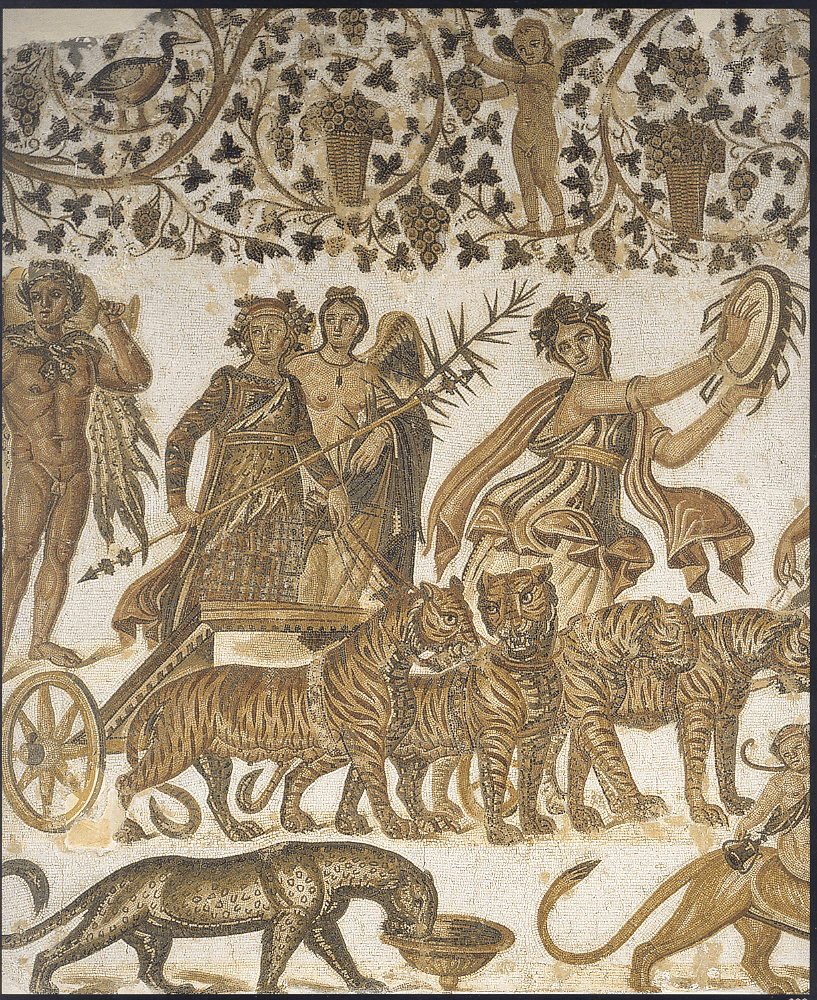
Group: egodeath Message: 991 From: Michael Hoffman Date: 23/08/2002
Subject: Reading allegory through intense peak-state filter
What does sun worship, inability to stand, and slaying of the head mean to the
true high-intensity mystic?

Reading through the filter of intense mystic state allegorism:

Realization forces one to bow to the Ground that creates all one’s thoughts,
rather than standing as a self-steering, self-creating, self-originating and
self-controlling ego-self. (Mythic allegory is, above all, a *report* of what
one encountered in the intense mystic altered state.)

The sun is a metaphor for white-light feedback of metaperception, which occurs
in the peak of the mystic altered state. (Mythic allegory is, above all, a
*report* of what one encountered in the intense mystic altered state.)

The slain head is the lower mind; the rulership notions held by the lower,
animal/child self. This mental slaying or death of the lower, animalistically
illogical self-model occurs in the peak of the mystic altered state. (Mythic
allegory is, above all, a *report* of what one encountered in the intense
mystic altered state.)

— Michael Hoffman
Egodeath.com
Group: egodeath Message: 992 From: merker2002 Date: 24/08/2002
Subject: Re: Reading allegory through intense peak-state filter
how often did you trip in recent times and overall?
why do you continue to trip if you got the point of it?

also i just read a text by you saying:
“lsd is much more powerful and interesting than psylocibin”
and then goes on to say
“the only difference between lsd and psylocybin is the time
of the duration of the trip”

the text says also that leary lost interest in psylocybin [even in
pure form]
when encountering lsd. i’m not really in the know here but perhaps
mushrooms are much more potent nowadays than in the 60’s. i never
did lsd but i once shroomed on copelandia cyanescens and it really
was like “watching my own nerves / sliding along my own brain
structure in technicolor”.

regards,
merker
Group: egodeath Message: 994 From: Michael Hoffman Date: 24/08/2002
Subject: Only 2 denominations: Literalist & esoteric
It’s interesting to see the expressions and conceptual vocabulary at the
Amazon page.

http://www.amazon.com/exec/obidos/ASIN/0945241097

Those who favor this book talk of “believers” and “non-believers”, as though
there are only two worldviews: the official Christian worldview and the
non-Christian worldview. So what are those of the allegorist semi-suppressed
but ever-arising tradition: believers, or unbelievers?

Another manipulative option-denying expression is “discrediting the authority
of Christianity”, as though there are only two possible views: Christianity
has the official type of authority, or doesn’t have any authority. What about
the mystic-experiencing allegorist type of authority, the authority of the
perennial philosophy that is expressed through the form of Christianity? That
option is shoved under the carpet by the expression “discrediting the
authority of Christianity”.

Another manifestation of this false menu of two options is the idea that the
Gospels are either valid in the Literalist sense, or invalidated.

The mystery-religions developed alongside Christianity and rabbinical Judaism.
They all had their sacred eating and drinking, and all had their primary
religious experiencing, and all had their allegorical mythic expressions and
embodiments. They all grew directly out of the ground of direct
religious-state experiencing, and all also influenced each other.

A book of this sort, written by a Literalist Christian, can hardly prove
anything. Evidence is too malleable. Determined Literalists and determined
mythicists could continue to churn out their respective books indefinitely, by
adhering to different methods, assumptions, axioms, and goals — different
paradigms for viewing the world and its evidence.

Literalist Christians, especially those who haven’t discovered the positive
alternative offered by esoteric, higher Christianity, reach for these books
with a certain desperate relief — “please, save my rickety, crumbling type of
faith!”

A similarly motivated book:

The Historical Reliability of the Gospels
by Craig L. Blomberg
July 1987, rank 28K (very popular)
http://www.amazon.com/exec/obidos/ASIN/0877849927
“I had just previously finished a book by John Dominic Crossan, which threw me
for a loop. Not only did my mouth drop about a foot, I had this empty feeling
about all the things I have believed all these years. He and Marcus Borg seem
to take a real liberal approach to interpretation of biblical history, to the
point of invalidation. This book was a refreshing alternative to that
previous one.”

Notice that the main spirit of the battle right now is between the liberal
Christian scholars and the Literalists. Although there is some flurry of
contention about the fairly sophisticated esoteric-Christianity book The Jesus
Mysteries, the mass of the argument is still stuck in a battle of the Jesus
Seminar against Literalism. People don’t yet grasp that there are three main
views or reference points: Literalism, atheism, and esotericism.

The argument has a false and unprofitable flavor because only two of the three
main positions are considered. I consider such books more in terms of what
worldview they self-consistently inhabit, than the merits of their
“arguments”. http://www.egodeath.com/christviewstaxonomy.htm


In the worldview or paradigm of such books, there are only two alternatives:
Literalism or atheism, the latter being effectively equivalent to paganism
(the Greek mystery-religions).

In the esoteric worldview, which is ultimately centered so far from official
Christianity that even Paul is understood as potent myth, there are three
alternatives: Literalism, atheism, and esotericism, and atheism is
inconsequential, so there are really only two alternatives: Literalism and
esotericism.


Ultimately there are only two denominations: Literalist Christianity and
esoteric Christianity, which Freke and Gandy call Gnostic Christianity.
Although it is profitable to study the varieties of Literalism, the varieties
of esoteric Christianity, and the varieties of combinations, all these can be
analyzed in terms of their resonance with two ways of thinking: the Literalist
supernaturalist way of thinking, and the esoteric or Gnostic way of thinking.

That’s not to say that each person neatly falls into a perfect Literalist camp
or a perfect esoteric camp, but that these form two definite, distinctive,
exemplary, archetypal poles. For example, people looking for an anti-orthodox
Mary Magdalene might hold that she is John, the Beloved Disciple, while other
scholars may latch onto the anti-orthodox idea that the archangel Gabriel
holds a Datura “lily” in the anunciation, while failing to discover the Mary
“John” Magdalene anti-orthodox tradition.

Both of the above are imperfect or incomplete esoteric Christianity, having
hold of one part of the anti-orthodox elephant. Nevertheless there is a whole
standard elephant, even if each individual grasps only a part of it.

The main work now is to start putting the various anti-orthodox components and
puzzle pieces together to build a more complete alternative, a full-fledged
esoteric Christianity, which has manifested itself in fits and starts,
sometimes rising up to take fuller form, then to be suppressed again insofar
as Truth can be forcibly suppressed back down into the Ground from whence it
keeps being thrust back up through the available forms of religious myth.

— Michael Hoffman
Group: egodeath Message: 995 From: Michael Hoffman Date: 24/08/2002
Subject: Re: Don’t say drug “abuse”; Gnostics & entheogens
>This is what I am saying with regard to the ignorance of people like Leary,
>etc., who only look at a small and very narrow use of these medicines the
>psychotropic effects. These guys have no clue.

Dan Russell’s excellent book Drug War has enlightening coverage of Indian
medicine vs. white man’s medicine.
http://www.amazon.com/exec/obidos/ASIN/0965025349
http://www.drugwar.com
Group: egodeath Message: 996 From: Michael Hoffman Date: 24/08/2002
Subject: Re: Reading allegory through intense peak-state filter
>how often did you trip in recent times and overall?

Today’s conditions of prohibition cause people in most countries to limit
their experience.

>why do you continue to trip if you got the point of it?

Why would one discontinue taking the sacrament? Why do anything or refrain
from anything? What a load of arbitrary assumptions lie behind that noxious
platitude of quitting after using — if people choose to use then quit, that’s
their trip, but they shouldn’t tell others they should do the same and hold
the same values.

Some people use entheogens but then try to tell other people how they should
use them, how they Ought to use them — these are the entheogenic
authoritarians and moralists. I’m thinking of either Ram Dass or Ralph
Abraham.

In contrast, James Arthur and Jonathan Ott have their heads screwed on
straight. Use is use, tools are tools; they are what you make of them.
People ought to take more responsibility for their own conception of what
entheogens are all about.


>also i just read a text by you saying: “lsd is much more powerful and
interesting than psylocibin” and then goes on to say “the only difference
between lsd and psylocybin is the time of the duration of the trip”
>
>the text says also that leary lost interest in psylocybin [even in pure form]
when encountering lsd. i’m not really in the know here but perhaps mushrooms
are much more potent nowadays than in the 60’s. i never did lsd but i once
shroomed on copelandia cyanescens and it really was like “watching my own
nerves / sliding along my own brain structure in technicolor”.


Mushrooms vary in potency by a factor of 10, even in the same batch. They can
be strong. I’m surprised how readily Leary dropped synthetic psilocybin in
favor of LSD, and apparently never looked back.

I’m glad to hear that mushrooms — can we say “psilocybin”? — can be strong.
Those who want a peak on the peak, can combine it with THC for a successful
climax with the deity, passing through the rebirth canal into reincarnation,
in a Groffian birthing trauma, a spiritual emergency with Wilberian
death-seizure.
Group: egodeath Message: 997 From: George Douvris Date: 24/08/2002
Subject: petty comments
Lately the usually higher quality and perspectives of
this e group have been falling at a sadly quickening
pace. What has stood out over the months of reading
the messages has been the well written scholarship and
appropriate commentary on fallacies within the
spiritual community’s less than honorable notice of
the entheogenic relevance of the psychedelics.
Clearly the origin of all sincere spiritual
traditions have been these power plants and their
opening of the doors to perception of higher
realities. The either-or verbal battles as to weather
hippies of the 60’s respected the indigenous roots or
weather there is indeed a materialistic vacuum as well
as a spiritual portal are petty and miss the point.
These plants and chemicals indeed take us to deeper
dimensions of mind, emotion, and soul. Weather they
touch the same places in all of everyone who uses them
is an individual story. We need to respect and share
compassion with each one’s map of consciousness and
not throw out the baby with the bath .water. The
semantics and history in the articles are great, but
academics is a limiting parameter if we want to talk
honestly about the psychedelic journey. Even the name
“ego death” implies an aggressive quality. Perhaps
“ego surrender” might be a more pleasant definition of
premise. Since the 60’s, I personally have had many
spiritual experiences with psychedelics. Also I have
read and met many of the courageous pioneers of our
contemporay scene including Timothy Leary and Terrence
McKenna. It is shocking and absurd to read the trash
that is falling into this group with petty comments
about both these wonderful and inspiring people. Why
the crucifixions when they as well as others have been
beacons through the darkness. Both have been
significant and positive influences on me as well as
for masses of others. No need to be insecure and stuck
with word games. Tim was a saint in not only his
taking the holy sacrament out of the elite and like
Prometheus sharing the light with the rest of us on
planet earth. His psychological models and fine
writing are multi dimensional portals and very
helpful. Terrence also has been a maestro in opening
veils to true history and genetic birth rights.
Perhaps a key to the problem has been in the dogmatic
attachment as well to Rush as an enlightened musical
persona. Sorry, as a musical aficionado of sacred
psychedelic musical texts, they have always sounded
irritating and insipid. For me the magic works with
Hendrix, Miles Davis, Beatles, Led Zep, Stones, Pink
Floyd, Grateful Dead, etc. So there again , we can
launch another divide and conquer crusade of arguing
with each other instead of taking hints from the
phrase “may the lord Jesus open your mind and close
your mouth. Let’s all share psychedelic space and let
the current flow as it may.
Blessings, George Douvris gsrain


__________________________________________________
Do You Yahoo!?
Yahoo! Finance – Get real-time stock quotes
http://finance.yahoo.com
Group: egodeath Message: 998 From: Coraxo Date: 24/08/2002
Subject: Re: petty comments
Hello:

There is a need to look critically at the materials these individuals
produced. As such I have no great esteem for the 60’s ethos or our
“courageous pioneers” as you call them. There is a LOT that is
characteristically unsound in their materials that individuals gobble up
without the sort of critical thought that is required of those approaching
cosmologuical viewpoints.

One was Leary’s 8 circuit model – unscientific and purely irrational based
entirely on his own anecdotal experiences. Another is McKenna’s time wave
theory of eschatological closure. It is misapplication of his millnarial
sense to that timeless Aeon he intuits within his own mind.

I have also criticised McKenna’s ethnology and mischaracterizations of
shamanism – something which tends to get people’s goat – everyone wants to
be a shaman these days it seems and can’t seem to understand why a middle
aged, Irish guy from the middle class probably does not fit that model just
because he takes a few DMT trips now and then and traveled to the Amazon on
occasion. People get very annoyed when I also point out that the Shamanic
“journeys” and workshops that New Agers love to go to to learn all about
“shamanism” are nothing but commercialized ventures which teach nothing
about shamanism.

So yes I can understand why you are annoyed by some of my comments – but let
us look at what Leary REALLY did for entheogen studies.

Leary and that other less than intelligent fellow – Ken Kesey – managed
single handedly to get entheogens made into Class1 drugs by the DEA – and
totally KILLED any serious research for a quarter of a century. Only now are
there limited studies going on which allow investigations of these things
(Strassman’s DMT studies at UNM for example). People like to view Leary as a
martyr – he was a gratuitous self promoter who in his grandiose and cavalier
approach to psychedelic studies – in this case LSD – managed to bring down
the wrath of the Feds. Some have even suspected him of working for the CIA
in order to cause such a ruckus over LSD that the public would approve of
the government ban.

So no, I don’t see Leary as a hero.

Finally, what is enlightened about Leary’s insight?

What is substantive in his understanding of the human spirit?

Did he experience ego-death and Michael calls it? Or did he use his
privilege of pioneership to be a shameless self promoter on the book and
lecture circuit – enjoying the wide eyed accolades of the youth of the 80’s
and 90’s wanting that revival of the 60’s that never came through computer
culture and rave parties? Hardly any dead egos there.

There is a lot to be critical of with Leary and McKenna –

Corax


From: George Douvris <gdouvris1>
Since the 60’s, I personally have had many
spiritual experiences with psychedelics. Also I have
read and met many of the courageous pioneers of our
contemporay scene including Timothy Leary and Terrence
McKenna. It is shocking and absurd to read the trash
that is falling into this group with petty comments
about both these wonderful and inspiring people.


[Non-text portions of this message have been removed]
Group: egodeath Message: 999 From: Michael Hoffman Date: 24/08/2002
Subject: Sustained constructive debate, entheogens
I’m glad Coraxo, in the past couple postings, detailed what lies behind his
original assertion that Leary and McKenna abused or mis-used mind-altering
chemicals. I do think the accusation of Leary and McKenna’s “mis-use of
entheogens” can be reasonable *if* one defines, to Coraxo’s recent level of
detail, what specifically is meant. The accusation may possibly still be
wrong, but when detail is provided, an enlightening, detailed, nuanced debate
can follow.

The fact itself of Coraxo’s disparagment of Leary and McKenna is not at all
the problem. Leary and McKenna can jump off a cliff, and everyone else too.
It’s not my goal to protect and praise the 20th Century entheogen fathers.
The goal is an *accurate assessment* of the concepts that have been proposed
regarding mind, entheogens, and religious experiencing.

The great crime Coraxo is guilty of is not negativity or being judgmental of
some entheogen use; his significant violation is initially *being vague* in
his assertion of Leary’s “abuse”, and tending to think in oversimplistic
prefabricated cliched categories that don’t necessarily accurately fit the
other person’s debate position. Sometimes it’s hard to initially be so clear
as one ought.

We must be flexible about metaphorical use of language, and communication in
general. Expressions have a degree of truth. The main problem is, people use
terms as a *brittle* shorthand. There is some truth in “Leary abused
mind-altering chemicals”, but that assertion isn’t viable until more details
are provided to clarify and more or less justify what is being asserted.

Coraxo’s redemption as a debater is that he works to *eventually* clarify his
own position and to have a more accurate grasp of the other person’s position.
Most debate is a method of clarifying the respective positions, to find the
great degree of worldview agreement, even if the two positions remain distinct
paradigms that highlight different aspects and interpretations of the world.

Eventually, he posts defensibly “well-written scholarship and appropriate
commentary on fallacies within the spiritual community’s less than honorable
notice of the entheogenic relevance of the psychedelics”.

My general position is that entheogens are the origin of religion. It is
important, not petty and missing the point, to debate details such as whether
psychedelic figureheads “respected the indigenous roots” or “had a
materialistic vacuum as well as a spiritual portal”. We just have to be clear
that the main point is “entheogens are the basis of religion” and that the
minor point is “arguably, some psychedelic figureheads might not properly and
reasonably respect indigenous entheogen traditions”.

Even if we respect each other’s map of consciousness, to gain insight we must
criticize, accuse, defend, argue, debate, analyze, investigate.

It is possible to interpret the term “ego death” as aggression, such as the
aggression of Zeus in possessing mortal womenly souls. Spirituality is false
and distorted if it downplays the Hard Rock intensity of peak religious
experiencing, death, rebirth, Groffian spiritual emergency, Keseyian
freak-out, and Hoffmanian or Stephan __ “ego death”. Leary and Alpert wrote
an entire book centered around the ego death metaphor.

The Psychedelic Experience: A Manual Based on the Tibetan Book of the Dead
Ralph Metzner, Richard Alpert, Karma-Glin-Pa Bar do, Timothy Leary
http://www.amazon.com/exec/obidos/ASIN/0806516526
rank 39K (very popular)
I like Drum’s comments: “Take everywhere it says LSD and replace it with
Amanita muscaria (which was the real entheogen this manual is experientially
based upon). Then you have it! Keep in mind that NONE of the world’s religions
tell the whole truth, and this includes Tibetan Buddhism [and shamanism, I’d
add – mh]. All patriarchal religions have severe problems and you should know
what those problems (false dogmas) are before experimenting. The discovery
that this book is not necessarily a book for the dead but a book to map the
consciousness of those experiencing the shamanistic ‘death experience’ is
crucial to humanity’s understanding of Tibetan Buddhism and other world
religion.”

Coraxo has potential as a debater if he starts a debate with a more nuanced
and balanced and detailed position. But online postings are voluntary and
have no guarantee of compensation; where is the incentive to post the best
quality material you’re capable of? There’s no guarantee other post’ers will
work with you to develop the debate toward enlightening insight.

Leary has always been controversial among entheogenists. Did he give us the
gift of psilocybin and LSD, or did he take them away from us? Prohibition
can’t be blamed on any one person, but Leary is the one person most associated
with LSD, so all debates about LSD and entheogen prohibitions have Leary as
the center of contention. I’m trying to think of books or articles that
critically evaluate whether Leary is responsible for giving us psilocybin and
LSD or for having them taken away.

It is not a goal of this discussion group to have a positive mood. It’s not a
social group at all. It’s not a positive spirituality group at all. It’s not
a good vibes group at all. It is strictly an information group: what is ego
death, how does it work, how does it connect to religious and philosophical
traditions and fields.

Spirituality has various insights and moods. I am intent on cracking the
puzzles of the mystic-state phenomena that are most jarring, panicking,
mind-shattering, devastating, mind-blowing, and spiritual-emergency causing.
Anything else already has enough researchers and spiritual socializers and
loving communities working on it.

Negativity is relevant, on-topic, welcome and needed to the extent it
constructively sheds light on the egodeath experience.
Negativity is irrelevant, off-topic, unwelcome and not needed, to the extent
it destructively fails to shed light on the egodeath experience.

There are many discussion groups that are driven by the main goal of spiritual
peace and light and community; positive-feeling spirituality, emphasizing
heart and soul and emotion. This discussion group is a tool specializing in
mind, logic, rationality, reason, debate, specific argument, expose, paradigm
definition, and being specific.

Coraxo is sometimes a slow starter in focusing and elaborating his criticisms,
starting off a debate by punching at shadows in the wrong direction. But he
has shown his commitment in the long run to clarifying and elaborating his
position and more accurately grasping my position. I highly respect sustained
improvement over time. Coraxo has continued his work of sustained
constructive debate after I have changed to other subjects.

People motivated by positive spiritual vibes are uncomfortable with sustained
rational constructive debate involving the development of complaints,
accusations, defenses, sustained constructive argument.

Some psychedelic figureheads (possibly Kesey, Leary, McKenna, Ott) held the
libertarian position that drug “mis-use” is an empty notion. Other
psychedelic figureheads (Wasson, possibly Huxley and Huston Smith) held the
traditionalist or restrictive position that entheogens have a proper use and
an improper use. Coraxo argues for the latter position, which often blames
the libertarian psychedelic figureheads for prohibition and accuses them of
failing to have the proper respect they ought to have for indigenous entheogen
traditions.

Coraxo’s position is nothing new; it’s one of the two main positions held by
entheogen scholars. Many entheogen scholars make essentially the same
accusations Coraxo makes. Regardless of his particular words, Coraxo
expresses one of the standard main positions. If you criticize Coraxo’s
assertions, you must realize and admit that you are criticizing an entire
*group* of entheogenists.

There is no escape from judging, praising, and rejecting entheogen scholars.
Either you do as I do and praise the libertarian entheogenists, and reject the
restrictive entheogenists’ position; or, you do as Coraxo does and praise the
restrictive entheogenists, and reject the libertarian entheogenists’ position.
We all should admit that we hold some beliefs and reject the beliefs that are
different.

Let us not forget that Wasson’s position, while cautious and elitist and
restrictive, contradicts the bare fact that he did wildly break and flaunt the
restrictions that Sabina’s culture held. Sabina’s culture was secretive about
entheogenic mushrooms because the Catholic authoritarians persecuted entheogen
sacrament users and commanded that only users of the official church placebo
sacrament be allowed to live.

Sabina and Wasson both publically endorsed restricted use of entheogenic
mushrooms, but their actions contradict their official position. Her culture
said “restrict”, and Wasson’s elite background said “restrict”, yet look at
what they did together: they set the bird free — essentially a move pointed
relatively in the libertarian direction, moving away from their restrictive
cultural traditions.

Wasson and Sabina were effectively in cahoots, in league, to tear entheogens
away from the Catholic-enforced secrecy and hold them up in the light for all
the world to gaze upon and worship openly — even if Wasson and Sabina made
loud noises about the need to restrict and respect and not mis-use the
mushrooms.

The 20th-Century entheogen movement is not solely based on Sabina’s act of
handing the mushrooms to Wasson, but that act was the most influential channel
through which official Western civilization received entheogens from the
shamanic culture, after the Catholic officials previously rejected such
indigenous entheogen active sacraments and enforced with the sword exclusively
using the official Church’s placebo sacrament.

With a fair investigation, it turns out that Wasson, Sabina, and Leary are all
harder to categorize as restrictive or libertarian than it might initially
appear. Sabina, while yammering about mis-use, was in fact guilty of
violating her culture’s restriction against giving Wasson the mushrooms.
Wasson, despite his wish to restrict mushroom use to the elite, did in fact
popularize it.

Leary, while seeking to make entheogens universally available for all kinds of
use, did in fact adhere to a relatively serious, East-coast approach, as
opposed to Kesey’s truly libertarian anything-goes conception of unqualifiedly
legitimate, or outside-legitimacy, entheogen use.

Anyone who holds the libertarian position that all entheogen use is legit as
long as no one is harmed (see Leary’s libertarian commandments about this),
should accept that they are taking a stance against those who are more
restrictive about which use is legit and which is mis-use. Both camps can be
called “judgmental” of the other: they both actively endorse once stance and
refute the other.

It’s a huge mistake, poor-quality thinking, to sweepingly reject everything
about Leary or McKenna, or to unqualifiedly praise Leary and McKenna.
Critical thinking always assesses the good and the bad of each character. No
psychedelic figurehead is entirely good or entirely bad.


Early Rush is the single most profitable group to study for an investigation
of lyrical double-entendres in acid-oriented rock alluding to the phenomena of
the mystic altered state. This doesn’t mean their music is the best or most
enjoyable.

I have also thoroughly analyzed such encoding in other artists’ lyrics,
including Beatles, Ozzy, Metallica, Slayer, Iron Maiden, Queen, Led Zeppelin,
Cheap Trick, and Hendrix, and other post’ers have made valuable contributions
to confirm that such lyrical techniques are not rare, but rather are
*standard* for High Classic Rock, the authentic mystery-religion of our time
and the authentic Western contemporary shamanism of the late 20th Century.

No metaphor or expression is entirely accurate or entirely incorrect. Coraxo
tends to take a surprisingly rigid view that a metaphorical expression
(McKenna’s “shamanism”) is *entirely* incorrect. Sophisticated and nuanced
analysis instead sees the truth and limitation of each such expression. In
grilling Coraxo, I seek to clarify what he’s asserting, to find in what way it
might be true. Now I can consider whether we can possibly say, in Coraxo’s
sense, that Leary “abused mind-altering chemicals”. If I disagree, I might
say that such as assertion is unfair or misguided, or lacks a foundation, or
is moralistic or restrictive, but I would *not* so much defend Leary’s
“character”.


— Michael Hoffman
Egodeath.com
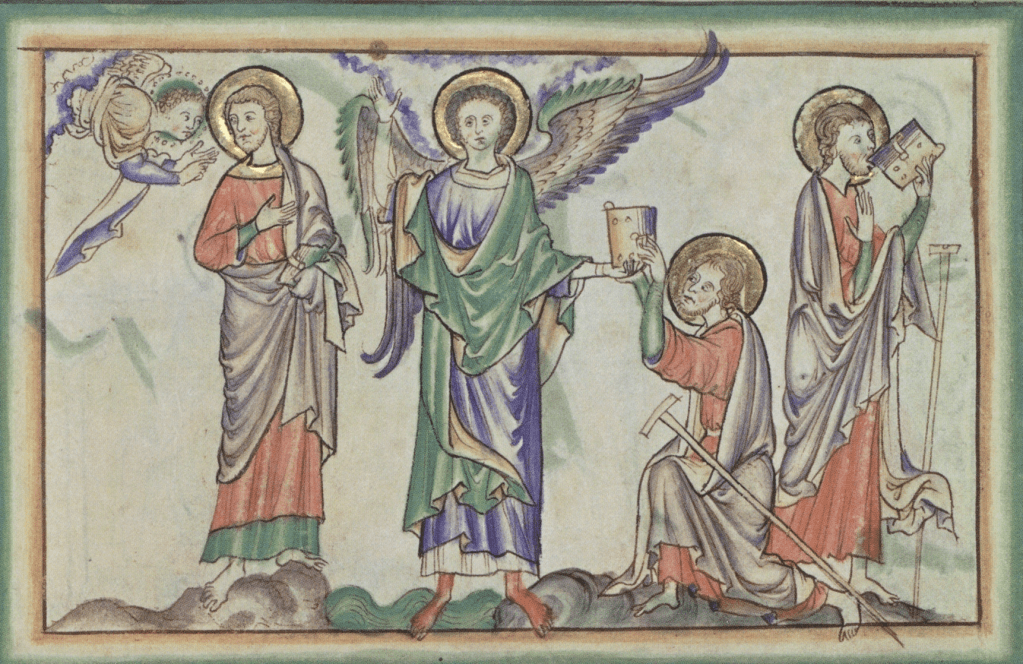
Group: egodeath Message: 1000 From: eldoreth2002 Date: 24/08/2002
Subject: Refuge
I came across one of your messages, Michael, as I was doing a search
under ‘monastery refuge “mental illness” Christian’ on a search
engine. I have, living with me, a lover named Steve, and an
obsessive-compulsive ex-lover named Lester. Steve has become so
furious with Lester that he has decided to leave, today, for 30 days
until I can find another place for Lester to live. Both Steve and
Lester have IQ’s around 180.

Lester did a lot of LSD years ago, likes Alan Watts, rides bicycles,
and his OCD problem is currently being mitigated by a new medication
that has apparently freed him of his usual compulsions enough to
allow him to think . . . but this thinking goes only so far (about 2-
1/2 weeks on the new medication) as to make him (apparently, I’m just
an observer, not in his head) remember his OLD compulsions . . . he
has been a ‘homeless person’ for a long time, and COULD be blessing
his lucky stars to be living in a home again; but instead he’s just
repeatedly asking to BUY a bunch of stuff, including bike helmets,
getting his bike fixed, scuba gear, pipes, special quality tobaccos,
and so forth.

Steve learned to read electrical schematics at the age of 7, is
expert in electronics, and has in recent years been a counsellor,
yes, a substance abuse counsellor, as well as being quite skilled as
a mental health counsellor. It is his counselling ability that has
recognized Lester’s overwhelming OCD problem and has allowed us to
get the new medication.

I love Steve, but have for a long time been involved in “taking care”
of Lester; this has led me deeply into Christianity, and I am
currently concerned about my own tendency to be “co-dependent” and
the “empty cup syndrome” i.e., you can’t give from an empty cup; you
have to look after yourself before you can look after others.

And today Steve is sleeping off the Adavans he took last night to get
a good night’s sleep through Lester’s repeated knocking at our door
at 5:00 a.m. in the mornings, asking for tobacco, pipes, coffee,
whatever; all of which we have decided to keep in our room to
prevent his blatant wasting of all materials in his complete
unconcern for money and his complete over-usage of all such
materials.

As you may know, in Christianity, the husband is supposed to have the
final word over the wife; but the husband is supposed to cherish the
wife. Steve has in the past asked me to find another place for
Lester to live. But there IS no such place in the town, and probably
the state, in which we live. This is the optimal place I know of for
Lester to live. Yesterday we went to the pipe store to buy Lester
two new pipes to replace his last one that fell apart on him —
(a “Meerschaum” pipe that finally disintegrated around the base as a
result of repeated use and bashing) only to find on our return Lester
standing in the kitchen, wearing his camouflage gear, dangling a
spatula, cooking bratwursts on his beloved electric grill on the
counter. We had already taken away the electric grill as a fire
hazard, but I had given it back to Lester with the stricture that we
would use it occasionally but that he was not to use it himself.
Lester has several times started fires by dumping his ash tray with a
lit cigarette end in the wastebasket; he has NO sensibility. Steve
says this was the straw that broke the camel’s back. Wants Lester
OUT, today.

What to do?
Group: egodeath Message: 1001 From: wrmspirit Date: 24/08/2002
Subject: Re: Sustained constructive debate, entheogens
Intellect becomes viably important in sharing when it speaks through
expansion rather than through conditions in effort of promoting the
realization of the common bond in each of us. In doing so, it has moved
through the necessity of defining the need to promote itself and begins to
concentrate on the whole instead…
Group: egodeath Message: 1002 From: Coraxo Date: 24/08/2002
Subject: Re: Sustained constructive debate, entheogens
From: “Michael Hoffman” <mhoffman@…>

The great crime Coraxo is guilty of is not negativity or being judgmental of
some entheogen use; his significant violation is initially *being vague* in
his assertion of Leary’s “abuse”, and tending to think in oversimplistic
prefabricated cliched categories that don’t necessarily accurately fit the
other person’s debate position. Sometimes it’s hard to initially be so
clear
as one ought.

Sometimes it is important to be vague in order to get a feel for the
terrain, especially is discussions such as this.

To see what intial reactions and underlying assumptions are held among some
of the readership.

Other than your own replies, Michael. I cannot say my comments have been met
with response that demonstrate critical thinking.

One response was a typical kneejerk ad hominem – one which is quickly
dismissed as lacking merit.

The last one, a little better thought out, was more a complaint and an
uncritical review of the hippy 60’s – I did however, take some effort to
clarify my position on Leary and McKenna – as individuals who have done more
of a disservice to psychedelic studies than have done anything creditable.

So while we are discussing the merits or lack thereof on my own debating
style, perhaps we should turn our critical eye to those members of this list
who came out with those particularly less than edifying posts?

Or your own style – when you jump to conclusions that I am speaking from a
“moralist” perspective, when in fact I am using criticism from medical
anthropology to make my point.

Developing theory Michael requires that one look at one’s own positions and
the literature one uses to support one’s theory.


Let us look at Wasson’s work on Soma. He goes through great pains to make
the equivalent that Soma or Haoma was the Amanita muscaria and this mushroom
was used by the Vedics. Well, there is really no proof of that; his theory
is conjectural, and based on broad interpretations of the Vedas and Avestan
literature.

Now instead of your list members getting all hot under the collar because I
have said something contrary to some cherished belief – how about a serious
refutation of my statement?

Carlos Castaneda – another fave among the archaic revival types – a complete
fraud. Even Wasson challenged his ethnobotany. His ethnography is also
lacking if not entirely missing and his described use of peyotl, datura, and
mushrooms are completely erroneous – and in the case of datura – dangerous.

Yet, despite the strong critical scholarship that has debunked Castaneda ,
people still buy his books, go to seminars by the hundreds and fatten the
purse of Florinda Donner Grau. Don Muguel Ruiz – another fake, nothing
Toltec in his teachings at all, I went to a talk he gave with some elders of
some tribal indigenous from Mexico who were appalled by his
mischaracterizations of their traditions; and I was out 20 bucks, but it was
worth seeing what these pseudo-Toltecs are teaching.

Negativity? I am sorry, but to get to any SERIOUS discussion we have to
first play some hard ball with assumptions; assumptions about the 60’s. the
“entheogenic forefathers” . Castaneda. and even good old Wasson.

Wasson, while he was thorough in his ethnobotany and ethnography of the
people he actually studied, as I have said falls apart when he speculates as
to what Soma was.

“In a word, my belief is that Soma is the Divine Mushroom of Immortality,
and that in the early days of our culture, before we made use of reading and
writing, when the RgVeda was being composed, the prestige of this miraculous
mushroom ran by word of mouth far and wide throughout Eurasia, well beyond
the regions where it grew and was worshipped. (Chapter 1: The Problem, page
9)”

“On the contrary I now suggest that the source and focus of diffusion of all
these myths and tales and figures of speech-all this poetic imagery-were the
birch forests of Eurasia. The peoples who emigrated from the forest belt to
the southern latitudes took with them vivid memories of the herb and the
imagery. The renown of the Herb of Immortality and the Tree of Life spread
also by word of mouth far and wide, and in the South where the birch and the
fly-agaric were little more than cherished tales generations and a thousand
miles removed from the source of inspiration, the concepts were still
stirring the imaginations of poets, story-tellers, and sages. In these alien
lands, far from the birch forests of Siberia, botanical substitutions were
made for Herb and Tree. Here is where absurdities were introduced into the
legends, where fabulous variations proliferated, where peoples who had never
known the North such as the Semites were influenced by the ideas and in one
way or another incorporated them into their religious traditions. The
end-products of these extravaganzas have caused scholars much (and I think
needless) trouble as they subjected them to sober exegesis and tried to
reconcile them. (Epilogue, page 215)”

Nice theory, but without evidence except what he has gleaned from legends of
the reideer herding peoples and Mongolian shamans.

Eleusis – again, there is no proof that they used any sort of ergot compound
in their mysteries – yet this theory is being promoted as if it were fact,
disregarding the fact that natural ergot is toxic – causing vasocontriction
and ischemia to various limbs and organs – possibly even capable of causing
stroke. So the use of ergot at Eleusis defies credulity.

Allegros Manna Mushrooms – again conjectural – there is no evidence to
support his hypothesis based on his textual analysis.

James Arthur – seeing the mushroom Amanita in everything.

The major civilizations where “psychedelics” are known to have been used are
among the cultures of the Americas.

Albert Hoffman states “In conclusion I now answer Wasson’s question. The
answer is yes, Early Man in ancient Greece could have arrived at an
hallucinogen from ergot. He might have done this from ergot growing on wheat
or barley. An easier way would have been to use the ergot growing on the
common wild grass Paspalum. This is based on the assumption that herbalists
of ancient Greece were as intelligent and resourceful as the herbalists of
pre-Columbian Mexico. (The Road to Eleusis: Unveiling the Secret of the
Mysteries. page 34)

But note his language – “it is based on the assumption that….” Hoffman is
assuming, but an assumption does not make a fact.

We have no reason to believe that because Wasson found Psilocybe sp. in
Mexico and Hoffmann accidentally found the properties of LSD that they are
in any way qualified to speculate on things for which there is no evidence
and make official pronouncements AS IF these were facts.

We have no evidence that the Greeks were as sophisticated as botanists as
the Mesoamericans – and the Mesoamericans were and are VERY sophisticated
medical botanists.

Yet the words of Hoffmann and Wasson in this regard are taken as factual by
those wanting to ascribe credibility to these words.

Nevertheless, when looked at carefully there is no evidence to support the
entheogenic involvement for the development of Hellenistic and Semitic
religious though other than the conjecture of these authors.

Now, rather than getting irate – members of this list should summon their
resources in meeting these critiques.

Knee jerk personal attacks and appeals to the character of Hoffman, Allegro
and whether or not they were nice guys and pioneers will not do.

Corax
Group: egodeath Message: 1003 From: Coraxo Date: 24/08/2002
Subject: Re: Reading allegory through intense peak-state filter
> From: “Michael Hoffman” <mhoffman@…>
>
> The sun is a metaphor for white-light feedback of metaperception, which occurs
> in the peak of the mystic altered state. (Mythic allegory is, above all, a
> *report* of what one encountered in the intense mystic altered state.)
>
> The slain head is the lower mind; the rulership notions held by the lower,
> animal/child self. This mental slaying or death of the lower, animalistically
> illogical self-model occurs in the peak of the mystic altered state. (Mythic
> allegory is, above all, a *report* of what one encountered in the intense
> mystic altered state.)
>
> — Michael Hoffman
> Egodeath.com

With all respect;

The ecstatic experience is not the endpoint of gnosticism.

The concept of altered consciousness may really be simply altered sensorium
and the apparent sense of elevation of consciousness is not necessarily the
Gnosis.

For example – the sufis use various techniques to reach ecstatic states –
none of which among traditionalists use intoxicants (yes there are some
reports of hash and opium use among the fringe) – and these states, called
“Hal” are not the endpoint – they are rather used to illustrate the
possibility of a level of awareness beyond ordinary waking states.

Warnings are given not to attach to the state itself since it can also be a
distraction.

HAL

haal.

(Lit, “state” or “condition.”) A special-purpose, temporary state of
consciousness, generally a product of spiritual practices. A hal (pl.
“awhal”) is by nature gratuitous and one should not attempt to prolong it.
For every true hal (and there are tests for this, part of the “
‘Ilm-i-Awhal,” the “Science of States”), there is a counterfeit of it based
on personal emotion and fantasy.

MAQAM

ma-qam.

(Lit., “station.”) One’s spiritual station or developmental level, as
distinct from one’s hal, or state of consciousness. This is seen as the
outcome of one’s effort to transform oneself, whereas the hal is a gift.
“Maqam” is also a term for “scale” or “mode” in Near-Eastern music.

So in sufi use, the isolated alteration of consciousness is of limited
utility. It is the spiritual state of changed perception – not altered
sensorium – which is valued as a stage of development. This is accompanied
by inspiration and by change in behavior, it is the transformation of the
self – called in sufism – nafs.

The modern problem is to focus on the ecstatic state as the aim of
spirituality – and thus we see interest in things like tantra and shamanism.

In actuality, there is a level of spiritual transformation which does not
rely upon states of ecstacy – but in which one has become transformed
through the realignment of the self. This more closely fits the description
of maqam.

Similarly, dzoqchen practitioners use practices like visualization, dark
retreat and dream yoga to develop not the ecstatic state – but to maintain
the locus of awareness in each state. This is an important distinction,
because rather than get caught up in the experience, the actual nature of
the self is seen in the light of pure awareness, all of this can be
accomplished through practice and discipline with regular results.

So no, the ecstatic state is just a point along the road, it is not the goal
in itself.

Corax
Group: egodeath Message: 1004 From: Michael Hoffman Date: 25/08/2002
Subject: Enth. theory relig., evidence vs. paradigms
The entheogen theory of the origins of religion has only recently been
assembled; in fact the basic framework or model is still being put together.
We’re only in the early initial stages of formulating the hypothesis, *much
less* conclusively supporting it. At this point we need many researchers and
theorists to commit to trying on this lens and interpretive framework.

Conjectural assertion of a new hypothesis can be mistaken for a final
conclusion put forth as certain. The entheogen theory shouldn’t be taken as
anything more than a “plausible and promising hypothesis” and the entheogen
scholars shouldn’t be read as claiming any more than that. Just because
someone says “the ancients used entheogens heavily” doesn’t mean that that
assertion is being put forth as a certain fact — rather, it’s put forth as a
“conjectured fact”.

Castaneda is the entheogenist most guilty of dishonestly putting forth
conjectural fact as certain fact. There is a spectrum or degrees of this
distortion, with entheogenists at the other extreme always being cautious and
saying “it appears possible and interesting that the ancients used entheogens
heavily”. It should all be read as promising conjecture, at this early point.

It’s unprofitable to debate about particular points of argument. The real
action happens at the level of paradigms and interpretive frameworks.
Individual doubts about particular entheogen-religion evidence is of little
import. One can doubt the entheogen-religion evidence of Wasson, and doubt
that of Graves, and doubt that of Watts, and so on. Yet the overall paradigm,
“entheogens are the main origin of religion”, is unaffected by an infinite
number of such doubts.

A long list of such doubts, no matter how long, fails to call into question
the entheogen explanation of the origin of religion. Listing such doubts
reminds me of the Literalist Christians, how they explain away each problem
raised against their worldview. The entheogenist today must be resigned to
the fact that we have to conjecture without any forcefully persuasive
evidence. We have to take it on faith that the evidence will come in its own
sweet time.

It’s the same situation in mythic-only Christ research. It’s a matter of
faith and beauty contest whether we accept the Literalist Christian
explanation of the origin of Christianity, or accept the
mystic/Gnostic/allegorist explanation. Even science has the same problem; no
evidence is absolutely compelling, and evidence is extremely subject to
interpretation — consider Bohr/Heisenberg Copenhagenism vs. Bohm/Einstein
Hidden Variables, for example.

The entheogen theory of the origin of religion deserves commitment because it
is simple, beautiful, and elegant. It would explain everything effortlessly.
There is currently no evidence that will force people to accept this theory if
they are committed to some other theory of the origin of religion. Such
forcefully compelling evidence may or may not turn up, at some time.

Look from the plane of Theory: if the evidence doesn’t fit the Theory, then
too bad for the evidence; the Theory is correct. The entheogen theory of the
origin of religion makes sense; other theories don’t make sense. And this
theory is more beautiful and elegant than the others, and more deserving of
commitment — regardless of the evidence that we happen to have today and
tomorrow.

Researchers of the mythic-only Jesus and of the entheogenic origin of religion
shouldn’t let themselves be slowed down by anything so temporary and weak as
the lack of evidence. A superior explanation is vastly more important than
evidence, because evidence can always be plugged into bad theories as well as
good theories. What’s required for progress of knowledge is a complete
appreciation for the effective total malleability of evidence.

The eyes deceive. Evidence can just as well lie as tell the truth. Evidence
can only suggest a worldview or interpretive framework. In a contest of the
importance of paradigms versus evidence, paradigms win by a long shot. A good
paradigm is worth more than thousands of pieces of evidence. Evidence is
valuable, but subservient to (or less important than) paradigms. In practice,
knowledge proceeds by the appeal of paradigms, much more than the appeal of
evidence.

Established paradigms are impervious to evidence, just as Josh McDowell’s
apologetics book “Evidence that Demands a Verdict” is a demonstration that no
amount of evidence can persuade those who are committed to preserving a
paradigm. Nothing is easier than plugging any and all evidence into whatever
paradigm you happen to be committed to. Evidence *is* important, but far less
so than interpretive frameworks. One paradigm is worth about two thousand
pieces of evidence.


Cornelius Van Til (1895-I987) was Professor of Apologetics at Westminster
Theological Seminary. From pages 704 -705 of THE NEW DICTIONARY OF THEOLOGY
edited by Sinclair B. Ferguson, et al. — “Van Til’s distinctive approach is
‘presuppositionalism’, which may be defined as insistence on an ultimate
category of thought or a conceptual framework which one must assume in order
to make a sensible interpretation of reality: ‘The issue between believers and
non-believers in Christian theism cannot be settled by a direct appeal to
“facts” or “laws” whose nature and significance is already agreed upon by both
parties to the debate. The question is rather as to what is the final
reference-point required to make the “facts” and the “laws” intelligible. The
question is as to what the “facts” and “laws”really are. Are they what the
non-Christian methodology assumes they are? Are they what the Christian
theistic methodology presupposes they are?’ (Defense of the Faith,
Philadelphia, 1967). … Van Til vigorously criticized the traditional
apologetic approach of both Catholics and Protestants as failing to challenge
the non-Christian view of knowledge, as allowing sinners to be judges of
ultimate reality, and of arguing merely for the probability of Christianity.
He considered himself in the line of Kuyper and Bavinck in his
presuppositionalism and opposed the ‘evidentialism, of Thomas Aquinas, Joseph
Butler and Warfield.”


In today’s age of reason and facts, proof, rationality, and evidence, how can
the superstition and impossible miracles of Literalist Christianity be upheld?
Only by being impervious to evidence.

The only way to be impervious to evidence (rather than vulnerable to evidence)
is to be able to plug any evidence into your framework of interpretation.
That’s why it’s nearly hopeless to expect that we can dig up some lost ancient
textual evidence that will “threaten”, in a brute-force compelling way, the
Literalist Christianity paradigm.


From the article “Now Playing: The Gospel of Thomas” by Stephen J. Patterson,
in the December 2000 issue of Bible Review
(http://www.bib-arch.org/bswb_BR/brd00thomas.html): “No text, no matter how
dramatic its contents, could “bring down the church as we know it.” In the
Gospel of Philip, a third-century apocryphal text well known among scholars,
Jesus is said to have “kissed” Mary Magdalene “on the lips.” If that didn’t
bring down the house, I can’t imagine what would!”

The Gnostic gospels *will* likely eventually cause Literalist Christianity to
collapse into a heap of rubble. I’m not asserting that evidence is of no
import and completely inconsequential. The power of evidence has been greatly
overestimated and the power of paradigms — interpretive frameworks — has
been greatly *under*-estimated.

We used to think that a handful of pieces of evidence — or maybe a larger
number — would be enough to change one’s worldview. But now it’s clear that
it takes more like two thousand pieces of evidence to even *begin* to
seriously start shaking a paradigm.

We need to acknowledge that evidential proof goes both ways: Literalist
Christians begin by adopting that paradigm, and then claim that there’s not
enough evidence to warrant adopting a different paradigm. There isn’t enough
evidence to compell people to adopt the entheogen theory of the origin of
religion, but there isn’t enough evidence to compell rejecting that theory,
either.

It’s early and we don’t have *nearly* enough evidence to support rejecting or
adhering to the entheogen theory. Same with the mythic-only Jesus theory: it’s
still quite early and we’re only beginning to clearly formulate the
hypothesis, paradigm, or interpretive framework. It’s too early to talk of
compelling evidence that can forcefully persuade inveterate doubters.

In the domain of mythic-experiencing allegory and the study of religious
experiencing, and the nature and origin of religion, we’re now in the Age Of
Hypothesis Formation, not the Age Of Compelling Evidence. So all writings
about shamanism, entheogens, Christian origins, religious experiencing, and
the mind are *all* conjectural — not just the entheogen theory of the origin
of religion.

*All* the books about mind, cognition, shamanism, mystery-religion, religious
experiencing, and ego death (and quantum mechanics) are conjectural and
subject to revision and obsolescence. It took centuries for philosophy of
science to realize that all science is conjectural, interpretive, and subject
to profound revision.

We are still in the midst of the Dark Ages, only beginning to struggle to wake
up — strangely, despite assumptions of Progress, this situation seems nothing
new. As always, the apocalyptic revelation of world enlightenment is dawning,
as it has so often been. In this Web Age, the Truth will stand up taller and
manifest more of its complete shape than the many previous times it has
managed to arise more or less before being suppressed by the aristocrats in
league with the clergy.


— Michael Hoffman
Egodeath.com
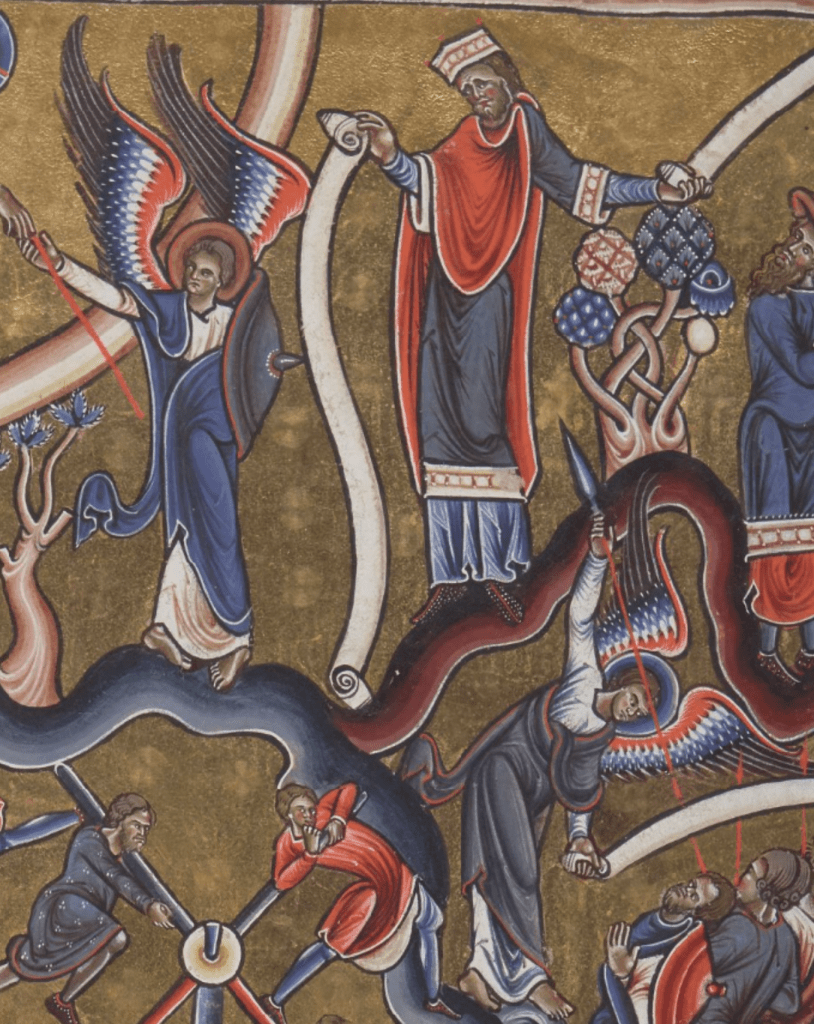
Group: egodeath Message: 1005 From: Coraxo Date: 25/08/2002
Subject: Re: Enth. theory relig., evidence vs. paradigms
> From: “Michael Hoffman” <mhoffman@…>
>
> In the domain of mythic-experiencing allegory and the study of religious
> experiencing, and the nature and origin of religion, we’re now in the Age Of
> Hypothesis Formation, not the Age Of Compelling Evidence. So all writings
> about shamanism, entheogens, Christian origins, religious experiencing, and
> the mind are *all* conjectural — not just the entheogen theory of the origin
> of religion.
>
> *All* the books about mind, cognition, shamanism, mystery-religion, religious
> experiencing, and ego death (and quantum mechanics) are conjectural and
> subject to revision and obsolescence. It took centuries for philosophy of
> science to realize that all science is conjectural, interpretive, and subject
> to profound revision.
>
> We are still in the midst of the Dark Ages, only beginning to struggle to wake
> up — strangely, despite assumptions of Progress, this situation seems nothing
> new. As always, the apocalyptic revelation of world enlightenment is dawning,
> as it has so often been. In this Web Age, the Truth will stand up taller and
> manifest more of its complete shape than the many previous times it has
> managed to arise more or less before being suppressed by the aristocrats in
> league with the clergy.
>
>
> — Michael Hoffman
> Egodeath.com

These are reasonable statements Michael. We are in a dark age.

Corax


[Non-text portions of this message have been removed]
Group: egodeath Message: 1006 From: Michael Hoffman Date: 25/08/2002
Subject: “Clueless apostles” = uninitiated Christians
>The whole story of the New Testament is about everyone (the Disciples, plus
the multitudes) not being able to see and understand what it was that was
happening around them and the teachings being given. Supposedly, no one really
knew what was going on or understood what was being expressed until Jesus’s
resurrection.
>
>daimonic666


“Before the resurrection” means “before one’s initiation”. “After Jesus’
resurrection” means “after one’s initiation and enlightenment”. Beginners at
Christianity are lower Christians who fail to understand Jesus. After their
initiation they become mature, perfected, completed Christians, who understand
Jesus.

The originally clueless apostles, followers of Jesus, represent the
uninitiated Christian. Only after the Holy Spirit descends at Pentecost do
Jesus’ disciples — that’s us, after initiation — understand Jesus. We when
uninitiated are the clueless followers of Jesus who fail to understand him; we
claim to follow him but are unable to follow him.

— Michael Hoffman
Egodeath.com
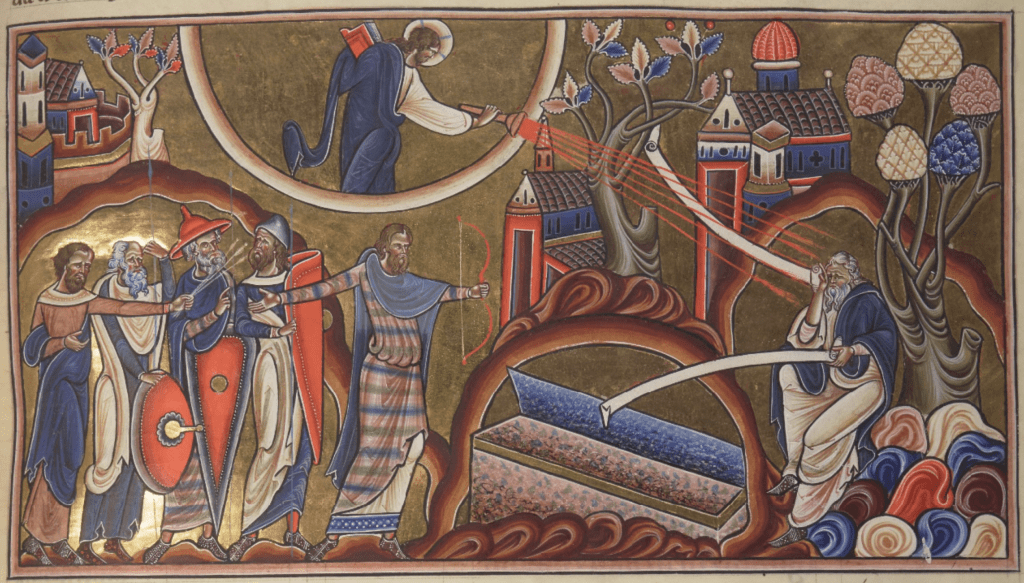
Group: egodeath Message: 1007 From: Michael Hoffman Date: 25/08/2002
Subject: Re: Reading allegory through intense peak-state filter
White Heat
by Lou Reed

White light gonna drive me out of my brain
White light gonna make me feel so insane
White heat White shapin’ them down to my toes
White light’s got it now – goodness knows

White light gonna drive me out of my mind
White light’s surely gonna make me blind
White heat – White shaping way down to my toes
White light could kill me now – goodness knows

Oh – Oh – White light
Oh – Oh – White heat

White light’s a-flashing

White light
Still feels right
What’s that sound – what’s that sound
Don’t turn on – be dead or alive
No feeling
Here she comes
Oww – yeah

________________

I’ve written on the relation between the loosecog state and enlightenment, for
years. The loosecog state enables the shift from the egoic worldmodel to the
transcendent worldmodel, by enabling reindexing of all mental construct
association sets. The loosecog state is the means, the doorway and gateway,
to the destination, which is discovering the transcendent worldmodel.

In Christianity, metanoia or repentence or the event of regeneration isn’t the
*goal*, but is the *means* to salvation and deliverance, the gateway to enter
the kingdom of heaven. Heaven is not Heaven’s gate. Heaven is not the
stairway to heaven. We angels and perfected saints are able to walk up and
down the stairway to heaven, and we live in heaven all the time. In Heaven,
the forbidden fruit is available for all.

The goal is the availability/use of loosecog *and* the resulting mental
worldmodel. That’s the relationship of the altered state to the transformed
permanent stage. Wilber’s been writing good material on this relationship
lately, and he’s said he’ll be incorporating the theory of altered states more
into Integral Theory, along with stages, threads, and quadrants.

— Michael Hoffman
Egodeath.com
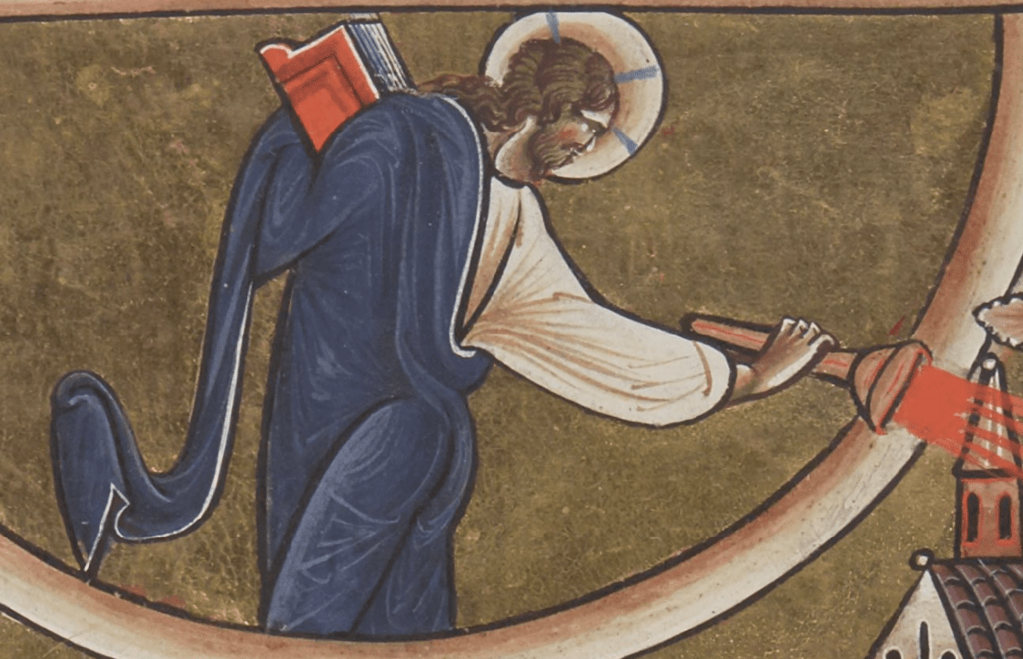
Group: egodeath Message: 1008 From: Michael Hoffman Date: 25/08/2002
Subject: Lyrics: Last Time Around
Unlike most I’m inspired to post, this song is so popular, the lyrics are
online.


Last Time Around
by Dennis Dahlquist recorded by Chicago garage-punk by the Del-Vetts

Well – I’m sittin’ here sinking on deeper down
My head is a-spinning around and ’round
I can’t seem to shake this feelin’
Oh – my body is a-rockin’ and reelin’
Oh – it’s such a funny feelin’
Well – I know this is the last time around for me – oh yeah

Oh/Well I’m sinking – oh – I’m sinking on deeper down
My eyes are blurred and I can’t hear a sound
Fight it – help me fight it
‘Cause I know this is the last time around for me – oh yeah

Oh – it’s taken me over and swallowed me up
I’m caught in a landslide – I can’t run or duck
I’ve run out of time and I’ve run out of luck
I know this is the last time around

Oh – yeah
Last time around

Well – I know this is the last time around for me


Analysis:

Well – I’m sittin’ here sinking on deeper down
My head is a-spinning around and ’round [spinning is a common vision with LSD]
I can’t seem to shake this feelin’ [strange feelings]
Oh – my body is a-rockin’ and reelin’ [cognitive distortion, wavering body
sense]
Oh – it’s such a funny feelin’
Well – I know this is the last time around for me – oh yeah [egodeath panic
typically causes vows to abstain, swearing that if one survives, they’ll never
do that foolishness again]

Oh/Well I’m sinking – oh – I’m sinking on deeper down
My eyes are blurred and I can’t hear a sound [blurred vision]
Fight it – help me fight it [fighting to hang onto egoic control, against
egodeath’s control-cancellation]
‘Cause I know this is the last time around for me – oh yeah

Oh – it’s taken me over and swallowed me up [Ground experienced as
puppetmaster over one’s will and thoughts]
I’m caught in a landslide – I can’t run or duck [Ground of being undermines
and trumps egoic control efforts, being the cause and parent of them and true
owner of them]
I’ve run out of time and I’ve run out of luck [timeless block-universe
eternity] [luck is often grouped with Necessity, Fate, heimarmene]
I know this is the last time around

Oh – yeah
Last time around

Well – I know this is the last time around for me [ego dies; egoic worldmodel
dies forever, continuing on only as a ghost in the underworld of Hades]
Group: egodeath Message: 1009 From: theecorax Date: 25/08/2002
Subject: Farewell
I have to say the topic of entheogens does not interest me much, and so I think
I need to respectfully disenroll from this list.

We all have so much time and energy in the day, and this is a topic that I have
studied extensively and for me it lacks merit for a number of reasons that I
will not trouble you with. It is not a topic I care to pursue any longer.

Good luck to you.

Corax
Group: egodeath Message: 1010 From: Michael Hoffman Date: 25/08/2002
Subject: Trumpets of Heaven: Van Halen Amp Tone
If one were to play electric guitar through this rig while in the spirit, one
would feel one in the cosmic Rock with Eddie Van Halen.

Electric guitar *through power-tube saturation* is the authentic contemporary
harp played in Heaven. It would be unthinkable to have altered-state electric
guitar without power-tube saturation.

It would be really good if I could post samples at my Distortion Valve artist
area.

Posted to the guitar amp discussion area:


I’m off doing philosophy and occasionally playing guitar a few minutes a day,
but it’s a crime to withhold this Tone from you. I have died and gone to Van
Halen heaven. Completely independent of volume.

Bridge double-coil pickup
Slow phaser mixed with bypass to make subtle
Frown curve EQ
Preamp distortion
Moderate smile curve EQ
Power-tube saturation
Dummy load
Moderate smile curve EQ
Right channel: amplifier, guitar speaker
Left channel: reverb, amplifier, guitar speaker

Optional: feedback device

This sounds exactly like Van Halen I because this is the signal processing
chain used on that album.

— Michael Hoffman, Amptone.com
Group: egodeath Message: 1011 From: Michael Hoffman Date: 25/08/2002
Subject: Re: Reading allegorythrough intense peak-state filter
“Enlightenment” is a universal concept reflecting the transformation from
egoic to transcendent thinking. This transformation is reflected in various
ways and degrees in different religions, such as Gnosticism and Buddhism.
Enlightenment is the goal of the higher mode of Buddhism.

Buddhism, like all religions, is the awakening of the mind through techniques,
most notably entheogen use, which allow one to discern the nature of the mind
through disciplined use of such techniques. To become a Buddha, to understand
Jesus’ teachings, to attain the Gnosis, and so on in equivalent metaphors,
means that one has understood the nature of the mind.

Altered states are an essential integrated component in practically all
systems of spirituality and religious mythic metaphor. The modern view of
“altered states”, such as in the cybernetic theory of ego transcendence,
produces the definitive, explicit, systematic explanation of the higher level
of spirituality.

The mystic or loose-cognition altered state is the fully effective way to
grasp and comprehend the essence of spiritualities of all cultures, being
based on a model of cognition describing the universal dynamic shift from
lower, childish, animal-like thinking to higher, mature, rational thinking.

Theoretical understanding of “altered states” is required, to produce the most
profound and philosophical grasp of spirituality.

The mystic altered state, coupled with Theory of time, self, control, and
combined with the study of relgious mythic metaphor, is the fastest and most
effective way to produce complete, meaningful religious insight. Garage punk,
pop-sike lyrics don’t reflect such completed religious insight, but clearly
reflect experiential and insight milestones toward such transformed
understanding of the mind, self, time, and control.

Study of the altered state, combined with theorizing and model construction,
together with study of religious mythic allegory, reliably produce the
specific worldmodel that is systematically formulated in the Introduction to
the Cybernetic Theory of Ego Transcendence, http://www.egodeath.com/intro.htm.

— Michael Hoffman
Egodeath.com
Group: egodeath Message: 1012 From: Michael Hoffman Date: 25/08/2002
Subject: Amazon book lists about mythic Christianity
http://www.radikalkritik.de — Radical Criticism: Contributions for the
Radical Criticism of Early Christian History

Dr. theol. Hermann Detering,


I’ve done alot of bibliographical work lately. Amazon’s features are
revolutionarily useful.

I’ve made great progress on interpreting Christian myth in terms of the
phenomena that are encountered in the mystic state of cognition. Given any
passage, I can tell the esoteric mystic-state meaning. This method is more
concrete than usually assumed; it’s like looking through a particular
interpretive lens based on metaphorical allusions to the specific phenomena of
the mystic state.

The book lists below are surprisingly potent and influential. They are
shockingly prominent at Amazon. Far more people are seeing these innovative
and highly unorthodox groupings of books than are reading my Web site and
discussion group postings.


My recent online work is reflected in two places: these lists, and my
discussion group postings.

I have two new Web pages:

Chapter Summaries of The Jesus Mysteries —
http://www.egodeath.com/jesusmysterieschapsumm.htm — a great study guide and
useful outline of the book. I’ve read the book twice, cover to cover.

Taxonomy of Christ Views (Taxonomy of Ways of Thinking about Christianity) —
http://www.egodeath.com/christviewstaxonomy.htm. There are only two
archetypal main denominations: Literalist Christianity (official Christianity)
and esoteric Christianity (mythic-experiencing allegory). Esoteric,
mythic-only Christianity has actually been the main, popular, dominant form —
and the official version of Christianity is only *claimed* to have been the
“main” and “traditional” and “standard” version.

Primary religious experiencing demonstrates that the main action in
Christianity is experiential insight in this life, like the character Paul’s
experience on the road to Damascus. I also base my inversion of “main vs.
deviant” Christianity on the evidently very strong tradition of a female Most
Beloved Disciple, shown clearly in all the good paintings of the Last Supper.

A recent article about Gabriel’s Datura “lily” in the Anunciation in Entheos
journal also implies that esoteric Christianity was likely the main popular
version of Christianity, despite the official history books’ claim to report
“official, traditional” Literalist Christianity having clear dominance.

Something that shook me into seeing esoteric Christianity in the midst of
Catholic Christianity was a book of Mexican Christian iconographic art: it was
obvious at last that purgatory and the Cross were *reports* of mystic-state
experiences the esoteric Christians had, including through use of the
traditional Mexican-Indian sacraments as opposed to the phony Catholic Church
placebo sacrament.

We could even have a contest between the two forms of Catholic/esoteric
Christianity: the genuine folk sacraments of Europe, and their mythic
representation through European Catholic iconography, versus the different
genuine folk sacraments of Mexico and *their* different mythic manifestation
in Mexican Catholic iconography.

The *majority* of Catholic symbolism was truly inspired by genuine sacraments,
and the official aristocratic Church “leaders” only *pretended* to lead and
control the religion, forcibly trying — and failing — to force the
Literalist version of Christianity onto the commonfolk, although all the
commonfolk knew full well that the true version of Christianity is the
esoteric-only version. “Witches and sorcerors” were ordinary popular
esoteric-only, anti-Literalist Christians who used the true sacraments.

There was both a continuous tradition of true Christianity, called “heresy” by
the officials, and, the true version of Christianity was continually directly
rediscovered directly from the Ground of being — from primary religious
experience — in other words, *the Holy Spirit kept teaching people about
esoteric Christianity* and kept teaching them so rise above the lower, “milk
Christianity” of Literalism. Also, the Crusades brought back knowledge of the
true sacraments from the Eastern Orthodox tradition.

— Michael Hoffman
Egodeath.com

http://www.egodeath.com/#_Listmania_Book_Lists
(This #anchor could change)

Another view of my lists:
http://www.amazon.com/exec/obidos/tg/cm/member-fil/-/A1YFCQT60M4XAJ


Lists 1-10
Ego death as deterministic self-control cancellation
Original, experiential, mystical Christianity
Christianity as political rebellion against “divine” Caesar
Mythic-only Christ theory
Entheogen theory of the origin of religions
Block-universe determinism, Necessity, divine predestination
Historical Jesus, or Christ Myth?
Reformed/Calvinist theology and determinism
Tenseless time, eternity, and timelessness
Religious myth: allegorical metaphor of mystic experiencing

Lists 11-20
The kingdom of God is at hand
The active eucharist that reveals the kingdom of God
Mystery Religion, Myth, and the Mystical State
Rock as philosophical mystery-religion
Ancient Near Eastern religion
Religious Experiencing
Philosophy of Mother of God
Mary “John” Magdalene, The Beloved Disciple
Picture story Bibles
Picture story Bibles 2

Lists 21-24
Picture story Bibles 3: Baby Bibles
Sophia, religious comprehension
Holy Spirit and Christian Spirituality
Word and Power (doctrine and spiritual experience)
Group: egodeath Message: 1013 From: Michael Hoffman Date: 25/08/2002
Subject: Trumpets of Heaven: The Datura Annunciation
Picture of a trumpet of Heaven:
http://www.erowid.org/plants/show_image.php3?image=datura/datura_inoxia_flower
4.jpg

Datura info:
http://entheogen.com/datura/links.html

Good Egyptian picture of Daturas:
http://members.tripod.com/~parvati/datura.html – “The light is the light of
Horus, realized in the psychoactive flowers of Datura which “illuminate”
Tuth-Shena in allegorical fashion. It is the power of Horus before which she
throws up her hands in awe. Vitis, Nymphaea, and Datura are the intoxicating
elements portrayed in this scene of shamanic manifestation.”

http://www.entheomedia.com/Entheos_Issue_2.htm — Daturas for the Virgin

Annunciation
n 1: a quarter day in England, Wales, and Ireland [syn: Annunciation, Lady
Day, Annunciation Day, March 25] 2: (in Christian religions) the announcement
to the Virgin Mary by the angel Gabriel of the incarnation of Christ [syn:
Annunciation] 3: a formal public statement; “the government made an
announcement about changes in the drug war” [syn: announcement, proclamation,
promulgation]
Source: WordNet R 1.6, C 1997 Princeton University

Is Gabriel a chick angel or a dude angel? The orthodox say dude, the
esoterics say chick — like the Beloved Disciple.
Group: egodeath Message: 1014 From: Michael Hoffman Date: 25/08/2002
Subject: Altered states: a modern concept?
>Is the concept of “altered states” modern usage? Do cultures use the
classification “altered state”? Does the conceptual framework of the “altered
state” have a specific foundation? What is the “altered state”? How is it
essential to understanding spirituality?

The named *concept* “altered state” is modern and explains the *use* of
altered states in cultures in any era.

The essence of the mystic altered state is loose cognition. The loosening of
cognitive associations enables re-indexing mental constructs to shift
worldmodels, include reconceptualizing self, time, will, and control. There
are various techniques for bringing about loose cognition.


>Is the altered state in the realm of spirit, or body?

The Holy Spirit is the mystical state of cognition in contrast with the
default state. A theory of Gnosticism relevant to Christianity requires a
theory of the Holy Spirit and Pentecost.


>Does the altered state arise from the body? Is it centrally about the mind?

The Holy Spirit acts mainly in the mind, raising it up to the realm of spirit.
In the Incarnation, the Holy Spirit descends to engender the second birth in
the psyche, residing in the body.


>Does Buddhism rely on “altered states”? Are “altered states” levels of
awareness called Samadhi? Is this an altered sensorium? Is it the focused
and clear concentration of the mind?

Buddhist mental techniques are diverse, including Tibetan Vajrayana
inner-circle traditions based on Bon shamanism.
http://www.jamesarthur.yage.net/mushroom3.html — search on “vaj”.
Group: egodeath Message: 1015 From: Michael Hoffman Date: 25/08/2002
Subject: Re: Altered states: a modern concept?
>>Does Buddhism rely on “altered states”? Are “altered states” levels of
>awareness called Samadhi? Is this an altered sensorium? Is it the focused
>and clear concentration of the mind?
>
>Buddhist mental techniques are diverse, including Tibetan Vajrayana
>inner-circle traditions based on Bon shamanism.
>http://www.jamesarthur.yage.net/mushroom3.html — search on “vaj”.

Research has hardly begun on this; we’ve hardly started to consider whether
Buddhism uses entheogens. It’s much too early to be sure what the *extent*
and influence of entheogen use is in Buddhism. Research here lags decades
behind looking for entheogen influence in Christianity, Vedic religion, and
shamanism. It’s surprising that the 1960s chasing after the Other religions
didn’t connect the origin and inspiration of Buddhism with entheogens.

Zig Zag Zen: Buddhism and Psychedelics
by Allan Hunt Badiner (Editor), Alex Grey (Editor), Stephen Batchelor, Huston
Smith (Preface)
June 2002, rank 2K (*very* popular)
http://www.amazon.com/exec/obidos/ASIN/0811832864
Some articles about entheogenic roots of Buddhism.

Persephone’s Quest: Entheogens and the Origins of Religion
by R. Gordon Wasson, Stella Kramrisch, Jonathan Ott, Carl A. P. Ruck
(Contributor), Jonathon Ott (Contributor)
1992, rank 85K
http://www.amazon.com/exec/obidos/ASIN/0300052669
Buddha’s mushroom death
Group: egodeath Message: 1016 From: wrmspirit Date: 26/08/2002
Subject: Re: Altered states: a modern concept?
For promotion of liberation from false beliefs,especially those passed down
through religions,
it might not be such a bad idea to begin discussing the development of ego,
as a transposition, and as a mechanism for the instillation of programs on a
biological level which rob life of its originality.

And how, at a specific point, overload begins to occur which immediately
begins the purging process…When this process is allowed without
interference it goes well…But when it is resisted than, of course, that’s
the onset of disease and dysfunction….A lack of balance and alignment.
Some guidance is necessary from another who has experienced this if
difficulties arise.

It seems reasonable that entheogens are one method of helping this process
along as are others, such as meditation…

However, the method is not what becomes unleashed and therefore, should not
be made out to be more than what it is…to prevent the creation of a new
type of external worshipping…
Group: egodeath Message: 1017 From: Michael Hoffman Date: 27/08/2002
Subject: Import. of myth-only Paul to myth-only Jesus rsrch
The importance of mythic-only Paul to mythic-only Jesus research

The non-existence of Saint Paul the Apostle is the litmus test for
mythic-only Jesus researchers to see if they get it or fail to get
it. You can’t take Paul for granted and simultaneously declare Jesus
mythic-only. The real task isn’t to tell whether Jesus existed, but
rather, to account for the origin of Christianity.

Convention says that Christianity was created by Jesus and Paul. A
full non-orthodox explanation must say that both figures are
creations. Surprisingly, merely revising Jesus to be fictional
(while leaving the official framework in place) isn’t enough to tell
a different origin of Christianity. The framework must change; the
way of thinking about founder figures must change — Paul must change.

Max Rieser, Acharya S, Michael Conley, Hermann Detering, and the
Dutch Radical Critics all sweep far past mythic-only Jesus research
by proposing that Paul is a fictional construct.

Ways of thinking are far more important than revising any isolated
idea or assumption. Most mythic-only Jesus researchers revise the
assumption of the existence of a single historical Jesus, while
leaving all the rest of the official story of the historical origin
of Christianity intact and unaffected. The result is merely modified
official history, not an alternative history.

A modified official history is still dominanted by implausibilities
and magical, unrealistic thinking. Only a wholly alternative,
completely revised history with a different framework of thinking can
be plausible and realistic.

Peter is also centrally important. It’s irrational and inconsistent
to study the existence of Jesus without also considering the
existence of Paul and Peter. Arthur Drews, in addition to writing
the book The Christ Myth, wrote Saint Peter, showing his non-
existence as well. One cannot study Jesus’ non-existence in
isolation from the entire framework of a completely revised model of
the origin of Christianity.

The main action in revising our explanation of Jesus’ non-existence
is at the level of ways of thinking, or paradigms, not down at the
level of isolated elements of official history such as the existence
of a single figure.

We are also practically required to study how allegorical religious
myth works; you can’t understand Jesus’ non-existence and tell a
coherent, plausible, rational story of the rise of Christianity
without a firm understanding of how allegorical religious mythic
thinking works. Such thinking underlies the production of characters
such as Jesus, Paul, and Peter.

— Michael Hoffman
Egodeath.com
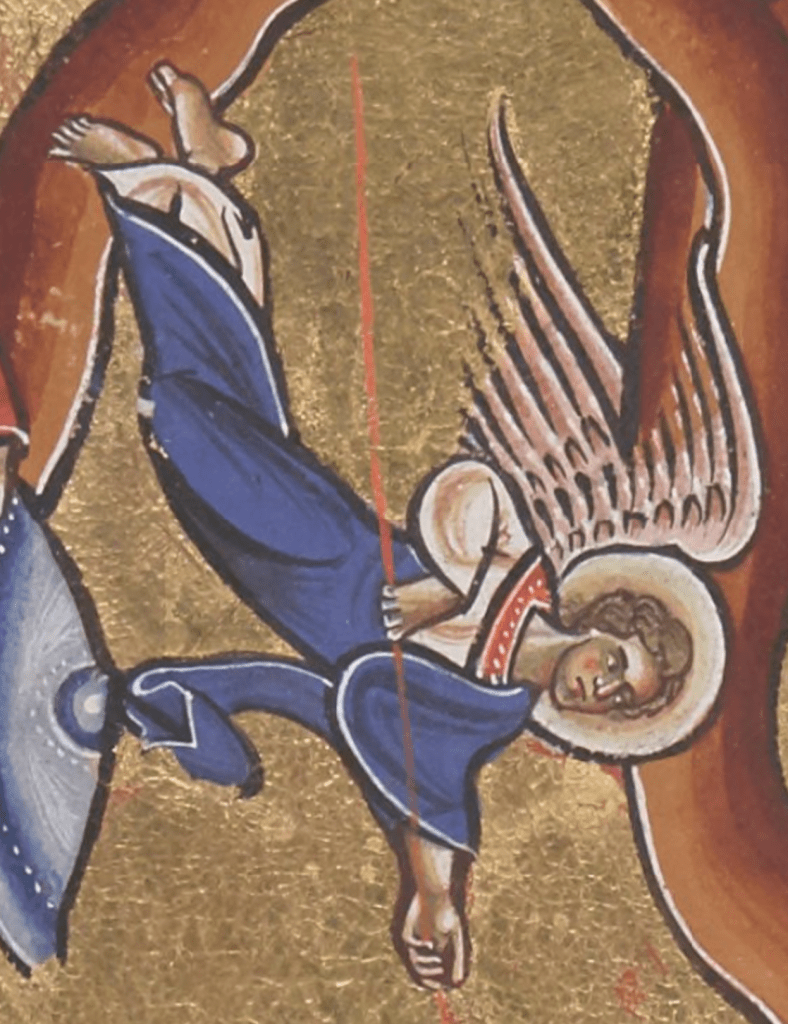
Group: egodeath Message: 1018 From: Jennifer Jackson Date: 27/08/2002
Subject: Re: Import. of myth-only Paul to myth-only Jesus rsrch
Have you ever read C.S. Lewis’s _Chronicles of Narnia_
— the book called _The Silver Chair_, where the witch is slowly strumming
her guitar in a room full of druggy smoke deep down in a cave under the
earth, saying “and what is this SUN you have imagined? And what is this
SKY?? Hoo hoo hoo, what fine imaginations you little children have!”


>From: “Michael Hoffman” <mhoffman@…>
>Reply-To: egodeath
>To: “Egodeath Group” <egodeath>
>Subject: [egodeath] Import. of myth-only Paul to myth-only Jesus rsrch
>Date: Mon, 26 Aug 2002 20:19:49 -0700
>
>The importance of mythic-only Paul to mythic-only Jesus research
>
>The non-existence of Saint Paul the Apostle is the litmus test for
>mythic-only Jesus researchers to see if they get it or fail to get
>it. You can’t take Paul for granted and simultaneously declare Jesus
>mythic-only. The real task isn’t to tell whether Jesus existed, but
>rather, to account for the origin of Christianity.
>
>Convention says that Christianity was created by Jesus and Paul. A
>full non-orthodox explanation must say that both figures are
>creations. Surprisingly, merely revising Jesus to be fictional
>(while leaving the official framework in place) isn’t enough to tell
>a different origin of Christianity. The framework must change; the
>way of thinking about founder figures must change — Paul must change.
>
>Max Rieser, Acharya S, Michael Conley, Hermann Detering, and the
>Dutch Radical Critics all sweep far past mythic-only Jesus research
>by proposing that Paul is a fictional construct.
>
>Ways of thinking are far more important than revising any isolated
>idea or assumption. Most mythic-only Jesus researchers revise the
>assumption of the existence of a single historical Jesus, while
>leaving all the rest of the official story of the historical origin
>of Christianity intact and unaffected. The result is merely modified
>official history, not an alternative history.
>
>A modified official history is still dominanted by implausibilities
>and magical, unrealistic thinking. Only a wholly alternative,
>completely revised history with a different framework of thinking can
>be plausible and realistic.
>
>Peter is also centrally important. It’s irrational and inconsistent
>to study the existence of Jesus without also considering the
>existence of Paul and Peter. Arthur Drews, in addition to writing
>the book The Christ Myth, wrote Saint Peter, showing his non-
>existence as well. One cannot study Jesus’ non-existence in
>isolation from the entire framework of a completely revised model of
>the origin of Christianity.
>
>The main action in revising our explanation of Jesus’ non-existence
>is at the level of ways of thinking, or paradigms, not down at the
>level of isolated elements of official history such as the existence
>of a single figure.
>
>We are also practically required to study how allegorical religious
>myth works; you can’t understand Jesus’ non-existence and tell a
>coherent, plausible, rational story of the rise of Christianity
>without a firm understanding of how allegorical religious mythic
>thinking works. Such thinking underlies the production of characters
>such as Jesus, Paul, and Peter.
>
>– Michael Hoffman
>Egodeath.com
>


_________________________________________________________________
Join the world�s largest e-mail service with MSN Hotmail.
http://www.hotmail.com
Group: egodeath Message: 1019 From: merker2002 Date: 29/08/2002
Subject: motive: thunderbolt through skull
hi again,
i’d like to know where the “thunderbolt through skull” motive
you have used on your website belongs to.
i’d like to have a poster with this motive, it’s got that certain
something, a reminder of that magic moment.

regards,
merker
Group: egodeath Message: 1020 From: c3273 Date: 29/08/2002
Subject: Consciouness model of universe
If you’re interested Michael’s model of ego transcendance you may find the following site to be a most interesting adjunct.

http://home.earthlink.net/~dolascetta/MetaFrameSet.html

Dick Dolan ties in the nature of self, block universe and other parts of the cybernetic ego death model into a pure consciousness model of the universe. The site is well written, referenced and scholarly. With some work I think the two could be tied into a coherent world view.

~Matt

Underrepresentation of, & Unthinking Bias Against, Mushrooms in Mediterranean Antiquity and European History

Site Map

Contents:

  • Intro
  • Exhibit 1 – Repeal-Prohibition Poster Eliminates Mushrooms from Medit/Europe History

Intro

Would-be Prohibition repealers are self-defeating, by their defeatist, completely un-critical assumption of no mushrooms in “our”, European history.

Glaringly missing from their educational materials (a major strategic misstep) is the use of classic psychedelics throughout Western religious history.

According to misinformed Pop Sike entheogenic history, true psychedelics are in the Americas, while the 2nd-rate psychoactives are in Mediterranean Antiquity & European History.

Central America is assigned the following plants, by underinformed Pop Sike entheogen scholarship:

  • Psilocybe mushrooms
    • Psilocybe cubensis
    • Liberty Caps – Psilocybe semilanceata – “genus ‘Psilocybe’ means smooth head — this refers to the smooth and scale-less cap. ‘Semi-‘ refers to half (half what? thanks for failing to explain). ‘-lanceata’ means spear-shaped.
  • Mescaline Cactus
    • San Pedro
    • Peyote
  • Ayahuasca/DMT

Mediterranean Antiquity is assigned the following plants, by underinformed Pop Sike entheogen scholarship:

  • Ergot
    • Eleusis
    • (Never mind Robert Graves’ decoding the Kykeon recipe in 1957 as MUKE; mushroom — as explained in his Preface in his 10M copies of his popular book Greek Mythology for 63 years falling on deaf ears of the entheogen scholars.)
  • Scopolamine (Mandrake, Thorn apple, Datura)
  • Opium

Exhibit 1 – Repeal-Prohibition Poster Eliminates Mushrooms from Medit/Europe History

Free the Entheogens Poster

From a comment on the article:
http://medesignman.com/MEDICINE/PROHIBITION/Free%20the%20Entheogens%202014.html
Shows a handcuffed stone mushroom man. Glaringly missing (a major strategic misstep) is the use visionary plants throughout Western religious history.

“Display or post this “Free the Entheogens” poster proudly, to show you care about unfettered religious freedom and the sacred plants of Earth. Be sure to include the disclaimer at the bottom in all postings.

“Psychoactive plants have been used by religions around the world for millennia to bring the mind of man toward understanding. Yet possession of these substances in the U.S.A. even for religious purposes may be a prison offense!

“Caution: All these substances should be given the highest respect. Misuse of powerful agents may have dire results. For adult use only, in safe doses and protected circumstances. Freedom requires responsibility.”

Exhibit 2 – Repeal-Prohibition Webpage Eliminates Mushrooms from Medit/Europe History

https://www.dhushara.com/book/twelve/tw2.htm

Running Jokes at Egodeath Site

Site Map

Contents:

The Absolute High Dose, to – by Sheer Brute Force of Extreme Overdose – Bust into the Elite Club of Famous Mystics, Who Wrote that “Blah Blah…

Seemingly self-parody of a podcast guest who talks always & exclusively in terms of “the Absolute” and “high dose”, and can’t give you the time of day without reverently citing the profundities of some famous Great Mystic at length, while completely botching and ignoring the Egodeath theory.

My entire project of creating the Egodeath theory was because of quickly assessing in 1985 that these mystics are not wrong, but have nothing useful to contribute. No wonder they have a disease in their field, of burning all their writings as worthless. They are correct.

How valuable are my 5 blank books that I wrote and got rid of? My initial 5 notebooks that I wrote Oct 1985-March 1987 would be of historical interest only, of, my initial approach, which didn’t work: egoic thinking chastising itself to try harder. Spiritual self-help.

Citing “M. Hoffman” to Differentiate from “M. Hoffman”

To differentiate between Mark Hoffman, Michael Hoffman, and Michael Hoffman, I clarify by abbreviating as follows:

  • “M. Hoffman” –> refers to Mark Hoffman
  • “M. Hoffman” –> refers to Michael Hoffman
  • “M. Hoffman” –> refers to the other Michael Hoffman

Hope this helps.

Universal Decoding of Every Mytheme

General Decoding Guide:

  • The rock alter of sacrifice refers to you.
  • The sacrificial knife refers to you.
  • The bull in the tauroctony refers to you.
  • Sol steering the chariot in the tauroctony refers to you.
  • Luna refers to you.
  • The grain sprouting from the bull’s tail refers to you.
  • The two torchbearers shining light on the mind’s goings-on are you.
  • The snake carved in rock below the bull is you.
  • Mithras refers to you.
  • Mithras in a tree refers to you.
  • Mithras turning to the right to look up and back behind him to look at Sol and simultaneously insert the blade into the bull’s shoulder wounding it, refers to you.
  • The caduceus held by Hermes or by the torchbearer Cautopates refers to you.
  • The lion-headed snake-wrapped rock figure refers to you.

General Decoding Guide:

{snake} refers to transformation of the mental worldmodel from possibilism to eternalism, using description by analogy, in the mystic altered state.

{skeleton} as in Eve in the Plaincourault image, refers to transformation of the mental worldmodel from possibilism to eternalism, using description by analogy, in the mystic altered state. Brown’s explanation or decoding of {skeleton} gives this level or type of explanation.

{king} refers to transformation of the mental worldmodel from possibilism to eternalism, using description by analogy, in the mystic altered state.

{mixed wine banqueting} refers to transformation of the mental worldmodel from possibilism to eternalism, using description by analogy, in the mystic altered state.

Hope this helps.

It is called a general decoding guide. And I here deliver on that promise.

Dumber than an Ox

https://gallica.bnf.fr/ark:/12148/btv1b10551125c/f134.item.zoom

He’s a nice guy, but the oxen have more wisdom.

In this image from the Canterbury Psalter, the theme is:

  • right foot grounded = right foot/hand/limb/branch = good = enlightened = eternalism-thinking = stable personal self-control system (monopossibliity).
  • left foot grounded = left foot/hand/limb/branch = bad = deluded = possibilism-thinking = unstable personal self-control system (illusion of egoic control steering in a branching-possibilities tree).

https://confidenceandjoy.com/dumber-than-an-ox/

I’m Calling Your Bluff — “Andy Letcher” & “Tom Hatsis” Are Clearly the Same Guy

You can’t fool me — either “Andy Letcher” is nothing but a pseudonym used by the actual person Tom Hatsis, or else “Tom Hatsis” is nothing but a psyeudonym used by the actual person Andy Letcher.

They commit the exact same fallacies in their books, when they fumblingly attempt to address the good, broad question “To what extent mushrooms in Christianity”, which they conflate like a motherf*cker with the specific, narrow, bad, invented-and-perpetuated-by-them, strawman position, “the secret Amanita cult theory”.

The only person I know of in the field of mushroom scholarship who is trying hard to spread the idea of a “secret Amanita cult theory” is one Mr. Letcher Hatsis himself, to create an easy-to-shoot-down, easy target, an obviously bad theory, to make himself look good.

Actually, much of the blame goes to Allegro, Wasson, Irvin, and Ruck. Letcher Hatsis is responding to a garbled situation in the field, a situation which has its roots in:

  • Allegro’s malicious intent on embarrassing and discrediting Christianity.
  • Wasson’s defensive reaction against Allegro, by censoring mushrooms in Christian art and doing a cover-up operation on behalf of the Pope.
  • Irvin’s uncritical cheerleading of Allegro, around 2010. Irvin overemphasized Amanita at the expense of Cubensis and Liberty Caps, setting up a bad situation for opportunist Letcher Hatsis to push against to make himself look good.
  • Ruck’s ridiculous overuse of the concept ‘secret’, which he doesn’t understand. Maybe for sensationalist marketing reasons. Letcher Hatsis is rightly pushing against this, as am I; but he is sloppy, failing to differentiate between some 5-7 distinct issues/questions, and equating ‘secret cult spread’ with the entire field, the entire set of broad, neutral, well-specified, and narrow/specific questions such as:
    • To what extent mushrooms in Greek & Christian religion & culture?
      • To what extent mushrooms in Christianity?
        • To what extent was the Eucharist recognized as mushrooms?

Scholars’ Failure to Debate Mushrooms in Christian Art
https://egodeaththeory.wordpress.com/2020/11/20/scholars-failure-to-debate-mushrooms-in-christian-art/

Parasols of Victory

I sarcastically refer to Cubensis, Liberty Caps, and Amanita mushrooms in Greek & Christian art as “Parasols of Victory”, mocking the “Anything But Drugs” interpretation bias — a bias which has literally become a joke, making the progenitors of this obvious fallacy a laughingstock.

Mushroom Trees Debunked
YouTube channel: Psychedelic Historian
https://www.youtube.com/watch?v=rrfeNp1FSUY
Fallacies he commits:

  • Inconsistently changing the claim/objective/scope. slip-n-slide
  • Conflating one case (Amanita) with all possible cases (Cubensis forms, Liberty Cap forms, & Amanita forms) and silently flipping back and forth between the two different scopes as if they are the same scope.
  • Conflating some 7 distinct questions, as if it’s a given — needing no careful definition — the position of “secret Amanita cult” theory vs. the broad entire set of distinct questions, such as 5-7 distinct questions to be broken out from the broad question, “To what extent mushrooms in Greek & Christian religion & culture?”

Letcher & Hatsis, and Allegro’s book re: Plaincourault, have a really sloppy lack of constraining WHAT SPECIFIC THEORY ARE WE PRESENTLY DEBATING; AND, IS THAT THEORY WORTH CENTERING DISCUSSION AROUND?

This problem plagues that entire school — if not the entire field! — Brinckmann/ Panofsky/ Wasson/ Letcher/ Hatsis: they can’t make up their mind what position they are arguing against; they treat all 5-7 distinct questions as being no different. Probably applies to Allegro/Irvin, too. Consider also, poor specification of issues, by Ruck and by John Rush.

A hazy untenable mess of a confusion of a “conversation” or “debate” is the result.

The Secret Theory of Secret Mushrooms in Secret Art & Secret Cults, by Secret Carl “Mr. Secret” Ruck

God f*cking dammnit Carl STOP F*CKING SAYING “SECRET” EVERY OTHER WORD!; you are just confusing yourself and the field and the opponents of the field!

I DECLARE A MORATORIUM ON THE WORD ‘SECRET’ IN ALL BOOK TITLES, CHAPTER TITLES, AND SECTION HEADINGS.

Oh look how helpful, a planned book from Hatsis, to dig himself and the field even deeper into their rut of confusion, by using the similar word ‘conspiracy’:

Video title:
Psanctum Oddcast Ep 3 Chris Bennett and Brian Muraresku
YouTube channel: Psychedelic Historian [= Tom Hatsis]
https://www.youtube.com/watch?v=5G7yiTwLr6o – The video’s SHOW MORE notes say:
“… forthcoming books … “The Sacred Mushroom Conspiracy” (spring, 2022).”

STOP SAYING ‘Secret’ or ‘Conspiracy’; YOU ARE JUST CONFUSING YOURSELVES!

Stop fusing together and conflating the plain, neutral, broad question of “To what extent mushrooms in Greek & Christian religion & culture?“, with your monomaniacal fixation on the narrow, charged, freighted, particular notion of “secret”, which you don’t even understand.

The ORIGIN of the concept ‘secret’ — the ultimate referent of the idea ‘secret’ — is the revelation in the altered state, of how the mind’s personal control system works.

Uncovering the cista mystica snake-basket engine under the hood; popping the hood of the personal control system.

The root concept of ‘secret’ does NOT refer to some secret doctrine that is told; and NOT some stupid “secret cult”.

It’s the INNER SECRET of how the mind’s personal self-control system works, including:

  • The control-thought inserter/injector (like a {phallus} or {penetrating blade} placed/ spread/ distributed along its {snake}-shaped worldline.
  • The control-thought receiver/receptacle (like a {cup} or {female} or {wound} placed/ spread/ distributed along its {snake}-shaped worldline.
  • Awareness in the ordinary state of consciousness; the mind of Luna, the Virgin Maiden, who has never perceived the mind’s control-thought inserter in the altered state.
  • Awareness in the altered state, in the loose cognitive association state, the {winged eye}; the mind of Mithras, looking back and up to Sol, the control-thought inserter.

Italian Pines a.k.a. “Mushroom Pines”

link to section of Criteria article. I sarcastically refer to Cubensis, Liberty Caps, and Amanita mushrooms in Greek & Christian art as “Italian Pines” aka “Mushroom Pines”, mocking the “Anything But Drugs” interpretation bias — a bias which has literally become a joke, making the progenitors of this obvious fallacy a laughingstock.

Article title:
Defining “Compelling Evidence” & “Criteria of Proof” for Mushrooms in Christian Art
Subsection title:
Stylized Cubensis Clusters, Literal Liberty Caps
Relevance: Mockery of the ludicrous, way-overbroad attempt to explain-away the many mushroom depictions as “the leading expert art historian” Panofsky uses Brinckmann’s thin 1906 book to do, as “the hundreds of mushrooms in Christian art are just stylized Italian pines.”
https://egodeaththeory.wordpress.com/2020/11/13/compelling-evidence-criteria-of-proof-for-greek-bible-mushrooms/#spcllc

Brinckmann, Mushroom Trees, & Asymmetrical Branching
I show all of Brinckmann’s 1906 plates here. Censored by Pope-buddy banker Wasson.
https://egodeaththeory.wordpress.com/2020/12/11/brinckmann-mushroom-trees-asymmetrical-branching/

Unbelievably Stupid, Dense, Dimwitted Assertions Printed in Books by Lofty Scholars

Scholarly Fail-Quotes Hall of Shame
https://egodeaththeory.wordpress.com/2020/12/04/scholarly-fail-quotes-hall-of-shame/

Hellenistic Mystery Religions = Native Christmas Shamans’ Secret Amanita Cult

This joke was inspired by Hatsis’ debunking of the “Amanita is a Christmas tradition” myth. However, I advocate spreading this myth, which is spiritually true even if literally false. It’s a good myth, a true myth.

The official position of the Egodeath theory is that all Hellenistic Mystery Religions were based on Amanita.

Dionysus = Persephone = Osiris =🎄🍄🦌🦌🦌🦌🛷🎅🎁

Bringing initiates the Ho-Ho-Holy Spirit!

Here is scholarly proof that all Hellenistic Mystery Religions were based on Amanita:

Video:
Mithraism with Jason Reza Jorjani
YT ch: New Thinking Allowed with Jeffrey Mishlove
At 2:20, Jason Jorjani asserts: “They also drank wine at these Mithraeum communion banquets, and the wine was laced with Amanita muscaria mushrooms, which were intended to produce a kind of out-of-body experience.” —
https://www.youtube.com/watch?v=NIQ0i_1eoJ8&t=135s
Some say Amanita is a poor pick and that Psilocybe is more ergonomic.
Those people are heretics contradicting the Prophet, John M. Allegro (don’t forget the ‘M’ — or else you are accursed).

https://egodeaththeory.wordpress.com/2020/12/12/mithraism-think-with-the-femalemale-mind-of-mithras/#Jorjani-Asserts-Mithraisms-Wine-Was-Amanita

Lifted Garment & Mushroom Folds in Christian & Greek Art, Indicating the Ecstatic Holy Spirit Altered State

Site Map

Contents:

John Rush with Lifted Garment

John Rush asserted in his book: lifted garment in Christian art = the mushroom altered state.

The Student Who Passes the Exam

The leftmost student correctly lifts left foot and displays right hand. Garment is emphatically lifted, communicated with certainty by white line of upper garment lift near his right pinkie finger.
https://gallica.bnf.fr/ark:/12148/btv1b10551125c/f134.item.zoom

Abraham Sacrificing Isaac

https://gallica.bnf.fr/ark:/12148/btv1b10551125c/f12.item.zoom

Gate-Guarding Angel with Flaming Sword Ejects Newbie Initiates from Eden Garden Containing the Tree of Golden Apples that Grant Immortality – Non-Initiate Psilocybin Clinic Therapist Posers Ejected

https://gallica.bnf.fr/ark:/12148/btv1b10551125c/f11.item.zoom
Red sword (fire/flaming), not blue.
When the mind initially enters the loose-cognition state but with impure, possibilism-premised thinking, the mind gets kicked out through the egodeath-guarded gateway, going unstable.
Only minds that have converted from possibilism-thinking to eternalism-thinking are permitted through the gate, else driven to flee in terror by sight of non-branching worldline dragon monster or high-thinking, angel-thinking mode.~~

Shield, Touching Non-Branching Tree

https://gallica.bnf.fr/ark:/12148/btv1b10551125c/f53.item.zoom

For the above artist:

  • Branching = left = instability of personal control system in altered state = foolishness.
  • Non-branching = right = stability of personal control system in altered state = wisdom.

Bestiary Salamander “Dancing Man”[sic]

g of mythemes.

Folio 027v (Bodleian Library, Medieval Bestiary)

Self-Stabbing Red Man in Hanging-from-Mushroom Image

Dionysus’ Triumph

Dionysus’ garment is lifted by a mushroom.
The Maenad’s cloth under the tambourine is lifted by a mushroom.

Folio 49 – Billowing Holy Spirit Garment Lifting

[9:17 a.m. December 13, 2020] — Check John Rush book re: garment erection. I propose that this theme of Christian art with garment lifted, and looking back and up to the right, is equivalent to Greek art with billowing cloth.

Mushroom in Christian Art, Chapter 3
John Rush
Keep expectations low — some images are good, but some are “what part of this blur do you even mean?”. You have to click each link to see (not skimmable like a Web Search: Images page):
http://www.clinicalanthropology.com/mushroom-in-christian-art/mushroom-in-christian-art-chapter-three/

For Rush’s picture
http://www.clinicalanthropology.com/wp-content/uploads/2018/07/mca3_18f_1.jpg
see my high-res version:
Gate-Guarding Angel with Flaming Sword Ejects Newbie Initiates from Eden Garden Containing the Tree of Golden Apples that Grant Immortality – Non-Initiate Psilocybin Clinic Therapist Posers Ejected

Rush’s comment: “The Angel Gives John the Book to Eat, Douce Apocalypse, 1265-1270 CE  Notice the angel represents the stalk of the mushroom-cloud from which he or she emerges, and the celestial erection in John’s cape once he eats the “book.””

http://www.clinicalanthropology.com/wp-content/uploads/2018/07/mca3_28.jpg

Experiment to run; hypothesis: in Greek & Christian art, the billowing cloth indicating the the Holy Spirit altered state is usually to the left; to the figure’s right side.

Two angels with garment lifted to their right, with vaguely mushroom-shaped fold. A recurring theme in this artist’s work in the Canterbury Psalter — a given explanandum.
https://gallica.bnf.fr/ark:/12148/btv1b10551125c/f49.item.zoom

Folio 51 – Jesus/God with Lifted Right Garment (also: Left Branching, Right Non-Branching)

https://gallica.bnf.fr/ark:/12148/btv1b10551125c/f51.item.zoom
https://gallica.bnf.fr/ark:/12148/btv1b10551125c/f40.item.zoom

Look at Moses’ Healing Brass Snake on a Pole, to Cure from Fatal Snake-Bite

https://gallica.bnf.fr/ark:/12148/btv1b10551125c/f13.item.zoom

Jesus and Dancer from Supposedly “Paris Eadwine Psalter”

From Rumored “Paris Eadwine Psalter” according to John Lash at end of article:

Mystic Jesus: Hanged Man and Dancer: Gnostic Heresy in the Paris Eadwine Psalter
https://web.archive.org/web/20111019025829/http://www.metahistory.org/psychonautics/Eadwine/MysticJesus.php

https://i.pinimg.com/originals/f8/52/3c/f8523c7d7d01a68398008139eed8efdf.jpg
red garment lifted on left, lifted pink cloth on shoulder.

https://gallica.bnf.fr/ark:/12148/btv1b10551125c/f20.item.zoom#

https://gallica.bnf.fr/ark:/12148/btv1b10551125c/f20.item.zoom#

Cain and Abel

https://gallica.bnf.fr/ark:/12148/btv1b10551125c/f12.item.zoom
  • tbd
http://www.clinicalanthropology.com/wp-content/uploads/2018/07/10.jpg
http://www.clinicalanthropology.com/mushroom-in-christian-art/mushroom-in-christian-art-chapter-one/
Plate 1:5 –Vienna, Austria – Moses Before the Burning Bush, Domenico Fetti, Oil on Canvas, 1613 CE We see God as  the burning bush and he holds one of the symbols for the “bush” in his left hand. In the bottom frame, the hand of God comes through the cloud (cap), while the red material around his wrist is the annulus, and the white hand and wrist are the stalk of the mushroom. Notice the plants to the right of Moses, the mushroom shapes in his alb and stole, including the celestial erection.” – John Rush

See Also

Billowing Cloth Theme in Greek Art, Indicating the Ecstatic Altered State
https://egodeaththeory.wordpress.com/2020/12/13/billowing-cloth-theme-in-greek-art-indicating-the-ecstatic-altered-state/

Billowing Cloth Theme in Greek Art, Indicating the Ecstatic Altered State

Site Map

Contents:

https://www.bing.com/images/search?q=greek+myth+billowing+cape

My Announcement that Billowing = Ecstatic State

On July 25, 2004, I posted on the world-Wide Web, in my the Egodeath Yahoo Group, that {billowing cloth/cape in Greek art} represents the ecstatic state, the “eternalism” state of consciousness; the mushroom altered state.

Digest: 69 of 183.
Subject: Metaphor: billowing cape behind head = relig. ecstasy
July 25, 2004
https://egodeaththeory.wordpress.com/egodeath-yahoo-group-digest-69/#message3484

The post where I first wrote the word ‘billow’, confirmed by local search of all 183 .html Egodeath Yahoo Group Digest files:

Group: egodeathMessage: 3484From: Michael HoffmanDate: 25/07/2004
Subject: Metaphor: billowing cape behind head = relig. ecstasy
The cover of the Dover printing of Franz Cumont’s book Astrology and Religion
shows yet another billowing cape behind the head. Other instances I recall
are:
o Mithras on the cover of Entheos Issue #3
o Villa of the Mysteries: young woman disconcerted.
I think I saw another instance.

Astrology and Religion Among the Greeks and Romans
Franz Cumont
http://www.amazon.com/o/ASIN/1564594599
1912

The billowing arch of the cape indicates and physically portrays the cognitive
mystic altered state of religious ecstasy and divine inspiration.

I concluded this upon reflection today on this question that has been a
background problem for at least a few months. Today I saw this book cover,
showing yet another instance, and asked a person with an art and design
background, who when asked about the meaning of the arched cap [sic, cape] symbol,
proposed it indicated wind. Spirit = divine wind = breath = psyche. Ecstacy
is standing beside oneself while inspired by the divine spirit. Wind blows
sails forming an arched sheet. The person is being divinely sailed and blown
about by the divine wind or breath, inspired.

Images of Billowing Cloth

Astrology and Religion Among the Greeks and Romans
Franz Cumont
http://www.amazon.com/o/ASIN/1564594599
1912
Online version:
https://www.sacred-texts.com/astro/argr/index.htm
https://www.sacred-texts.com/astro/argr/argr11.htm

“give the soul a god to lead it on its perilous journey through the whirlwinds of air, water, and fire to the starry heavens. “Among the dead,” says a funeral inscription, 1 “there are two companies: one moves upon the earth, the other in the ether among the choirs of stars; I belong to the latter, for I have obtained a god as my guide.” This divine escort of souls frequently retains the name of Hermes in conformity with ancient Greek mythology. An epigram belonging to the first century of our era apostrophises the deceased in these words: “Hermes of the wingèd feet, taking thee by the hand, has conducted thee to Olympus and made thee to shine among the stars.” 2 But more often the rôle of escort now devolves upon the Sun himself: We have seen 3 that at the end of paganism the royal star is figured as carrying mortals in his flying chariot. Those who had not by their piety merited the protection of the god whose duty it was to escort and introduce them, and who nevertheless ventured up to heaven [LIKE SOME HUBRISTIC BRAGGART PSILOCYBIN THERAPIST WHO DARE TITLE HIS BOOK “THE IMMORTALITY KEY” AND BRAG ], were cast headlong into the perpetually raging gulf of the warring elements which fought unceasingly around the earth.”

I have this printing of this book.

Mysteries of Mithras – Tauroctony

upper left tree: {king steering in tree}?
From cover art of book:
The Mysteries of Mithra
Franz Cumont, 1903
http://amzn.com/B01BIGXBN2
Raddato, Carole. “Tauroctony Relief.” Ancient History Encyclopedia. Last modified October 07, 2015. https://www.ancient.eu/image/4115/.
https://www.ancient.eu/image/4115/tauroctony-relief/

See Also

Lifted Garment & Mushroom Folds in Christian & Greek Art, Indicating the Ecstatic Holy Spirit Altered State

Photos of Amanita Muscaria Mushrooms

Site Map

Contents:

Photos of Amanita muscaria Mushrooms, to Identify Mushrooms in Greek & Christian Art

strange mushrooms affect art
https://www.pinterest.com/psupress/edible-wild-mushrooms-of-pennsylvania-and-the-mid-/

https://www.bing.com/images/search?q=dried+amanita

https://www.bing.com/images/search?q=amanita

https://www.bing.com/images/search?q=amanita+muscaria

https://www.bing.com/images/search?q=muscaria

https://www.bing.com/images/search?q=fly+agaric

https://www.bing.com/images/search?q=amanita+holy+grail

https://www.bing.com/images/search?q=upturned+amanita

https://www.bing.com/images/search?q=amanita+cup

https://www.bing.com/images/search?q=amanita+chalice

https://www.bing.com/images/search?q=amanita+pool

https://www.bing.com/images/search?q=amanita+fountain

https://www.bing.com/images/search?q=amanita+basin

Amanita Photos by Michael Hoffman

My first Amanita were dried, around 2001. I uploaded these to the Web around 2001-2005.

Photo by Michael Hoffman, Egodeath.com http://www.egodeath.com/images/amanitashinycappieces.jpg
Photo by Michael Hoffman, Egodeath.com http://www.egodeath.com/images/amanitacollection.jpg
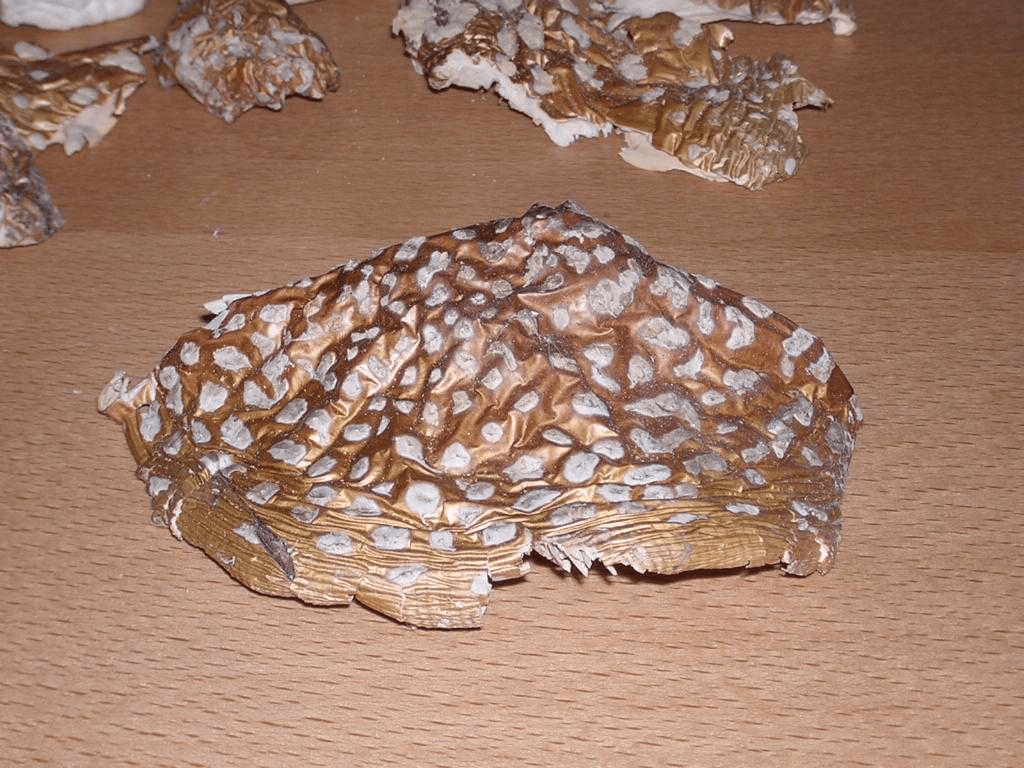
Photo by Michael Hoffman, Egodeath.com
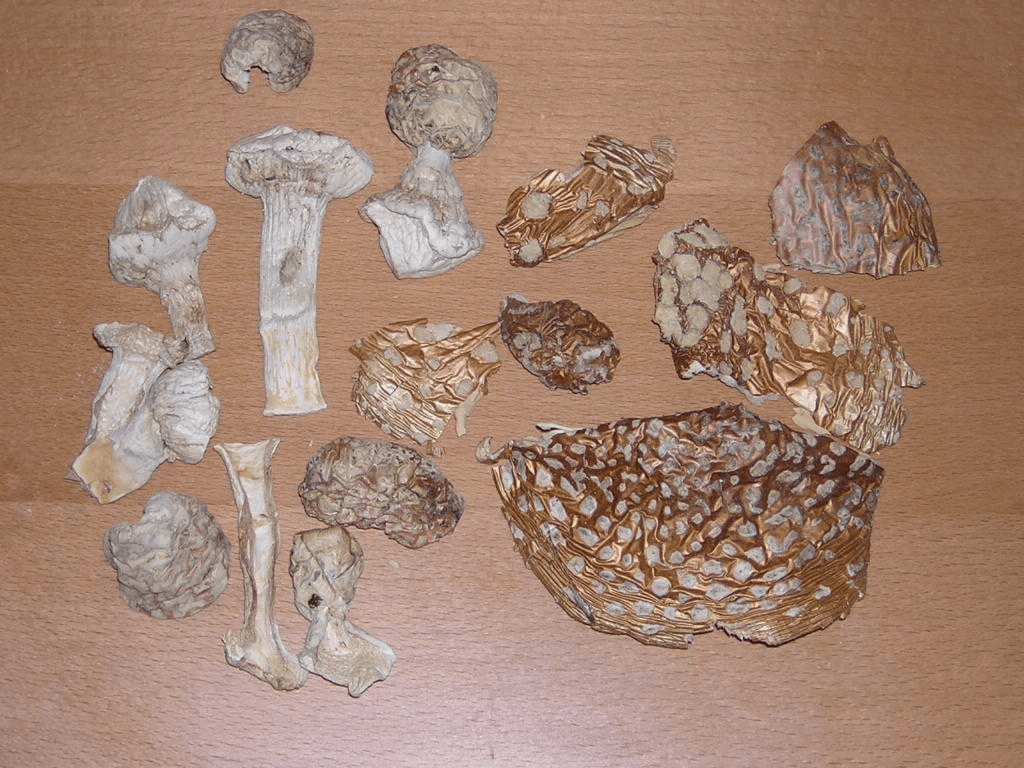
Photo: Michael Hoffman, the theorist of ego death 10:10 a.m. 10/10/2010
This patch is the first Amanitas I ever saw myself (other than dried).
IMG_1758.JPG
photo — Michael Hoffman, the theorist of ego death, 10/10/2010
Photo: Michael Hoffman, the theorist of ego death 10:10 a.m. 10/10/2010
photo — Michael Hoffman, the theorist of ego death 10:10 a.m. 10/10/2010
IMG_3638.JPG
Photo: Michael Hoffman, the theorist of ego death 10:10 a.m. 10/10/2010
IMG_3647.JPG
IMG_2697.JPG — Michael Hoffman, the theorist of ego death

Photo: Michael Hoffman, the theorist of ego death 10:10 a.m. 10/10/2010
IMG_2558.JPG
Photo: Michael Hoffman, the theorist of ego death 10/10/2010
IMG_2452.JPG
Photo: Michael Hoffman, the theorist of ego death 10:10 a.m. 10/10/2010
IMG_2149.JPG
Photo: Michael Hoffman, the theorist of ego death 10:10 a.m. 10/10/2010
IMG_1977.JPG
Photo: Michael Hoffman, the theorist of ego death 10:10 a.m. 10/10/2010
IMG_1856.JPG
Photo: Michael Hoffman, the theorist of ego death 10:10 a.m. 10/10/2010

Photo: Michael Hoffman, the theorist of ego death 10:10 a.m. 10/10/2010
IMG_1800.JPG

Photo: Michael Hoffman, the theorist of ego death 10:10 a.m. 10/10/2010
IMG_1803.JPG

Photo: Michael Hoffman, the theorist of ego death 10:10 a.m. 10/10/2010
IMG_1789.JPG

Amanita Images from Other People

https://qph.fs.quoracdn.net/main-qimg-f25cbd7dcdaa41d4a2bd7a0ebd21f570-c
https://www.pinterest.com/pin/310537336784234578/
Credit: Dr Shirley Sherwood
according to Alexander Viazmensky
https://www.flickr.com/photos/kewonflickr/3815110396
https://mediaprocessor.websimages.com/width/912/crop/0,0,912×584/www.mushroomstone.com/stained%20glass%20jesus.jpg
http://stichler.co.uk/wp-content/uploads/2014/09/allen-stichler-workshops-mires-beck.jpg
https://i.pinimg.com/originals/08/50/32/085032007f1cc3f0290c03b4ce584e01.jpg

Non-Amanita Photos by Michael Hoffman

photo — Michael Hoffman, the theorist of ego death , ~ Oct 10 2010
Photo: Michael Hoffman, the theorist of ego death ~10/10/2010
IMG_3218.JPG

Non-Amanita Photos from Other People

https://i.pinimg.com/736x/3b/56/c4/3b56c41bae4ab808b954bc22381d8e99–fairies-mushroom-fungi.jpg

Photos of Liberty Cap Mushrooms

Site Map

Contents:

Photos of Liberty Cap mushrooms (Psilocybe semilanceata; “smooth-cap spear”), to identify mushrooms in Greek & Christian art.

  • Genus ‘Psilocybe’ means smooth head; smooth, scale-less cap.
  • ‘Semi-‘ means somewhat.
  • ‘-lanceata’ means spear-shaped.

https://www.bing.com/images/search?q=mushroom+liberty+cap

https://www.bing.com/images/search?q=mushroom+liberty+caps

https://www.bing.com/images/search?q=mushroom+Psilocybe+semilanceata

https://www.bing.com/images/search?q=mushroom+semilanceata

https://www.bing.com/images/search?q=semilanceata

Branches on the Underside of Mushroom Specimens

Samorini Figure 11

https://www.bing.com/images/search?q=panaeolus
Michael Wood
proof that psilocybine mushroom caps have branches under them, as accurately literally depicted in Canterbury Psalter.  Panaeolus semiovatus
Webpage:
California Fungi—Panaeolus semiovatus
http://www.mykoweb.com/CAF/species/Panaeolus_semiovatus.html
Fred Stevens http://www.mykoweb.com/CAF/species/Panaeolus_semiovatus.html
proof that psilocybin mushroom caps have branches underneath the canopy cap
todo: add this and above, to Proof article or Criteria article

Flip through the hi-res photos at page http://www.mykoweb.com/CAF/species/Panaeolus_semiovatus.html for branches under caps like Canterbury Psalter.