Synonyms: loose cognitive binding loose cognitive association binding loosecog the altered state the intense mystic altered state altered state of consciousness ASC
In spacetime Physics, the 4-D frozen, pre-existing future and the already-existing past, per the eternalism mental model of time, possibility, and control.
Synonyms: pre-existence eternalism
Description from my 1997 theory-spec:
The time axis combines with the 3 dimensions of space to form a 4-dimensional block universe, or crystalline ground of being.
Even if the time axis is warped, relative, or branching, and there are more than 3 dimensions of space, one can coherently and usefully frame the experienced world as an ultimately unchanging, 4-dimensional spacetime block.
Conceiving of the world as a fixed spacetime block leads to the astonishing potential of experiencing ego death, because the logic of ego’s control power is coherently disrupted.
If one consistently adopts the mental model of the block universe, the usual sense of exerting the power of choice disappears, and the logic of personal self-determination cancels itself out.
Cybernetic self-battling, instability, control-cancellation, or seizure due to the mind adhering to the initial, freewill-premised control model.
At the same time as the mind is shown the underlying reality of how self-control works, this causes temporary instability of control, but also teaches and plainly shows that it makes no sense for the mind to be divided aginst its own actual source of thoughts, and there is no choice about the matter anyway.
The personal control system moves from cybernetic instability, to stability, becoming {unshakeable} in the altered state of perceiving the uncontrollability of the mind’s source of control-thoughts.
Synonyms: cancellation of control cybernetic instability, turmoil, thrashing, seizure self-battling of personal control power
The normally hidden, uncontrollable source of control-thoughts, at a given point in time.
{phallus}; not the long {snake}.
The thought-injector is distinct from the long, cross-time, time-spanning, pre-existing worldline of control-thoughts, which is another aspect or angle of “the uncontrollable source of control-thoughts”.
Synonyms: the control-thought inserter the veiled control-thought insertor the veiled control-thought injector
Calming the {storm} of cybernetic self-battling, instability, control-cancellation, or seizure due to the mind adhering to the initial, freewill-premised control model.
The personal control system moves from cybernetic instability, to stability, becoming {unshakeable} in the altered state of perceiving the uncontrollability of the mind’s source of control-thoughts.
Related mytheme: {calm the storm} {calming music} {potion fed to dragon}
Grasping increasingly at control and looking at the vulnerability, feeling increasingly out of control control thoughts the more the mind is made to look at the uncontrollability of the source of thoughts, now unveiled and made perceptible.
The mind becomes loosened and more flexible, until the thoughts escalate to full self-threatening and only ratchet in that direction, producing cybernetic contradiction and form a completely non-viable control system.
For this control-escalation and climax to happen, requires adhering to a locally centered locus of control that’s built around illusory premises of wielding autonomous control, while steering in a tree of open, branching possibilities.
The perspective which enables control-cancellation and instability, is also the perspective that changes away from the illusion-based control system.
That perspective brings a mental worldmodel that conforms to the reality, of the uncontrollable source of thoughts.
Then a reset from outside the personal control system happens, given that the source of control-thoughts is outside the personal control system.
Testing personal control-power in the altered state, checking for and {hunting} and looking for vulnerabilities, to learn about how control works.
Initially leads to seizure, control failure, cybernetic {death}, until the mind learns through testing, the eternalism (pre-existence) worldmodel of control, possibility, and time.
Synonyms: pre-existence the eternalism mental model of time, possibility, and control the eternalism mental model of time, self, and control the eternalism theory of mental transformation
In the altered state, in effect, awareness is lifted out from and above the personal self-control system, to observe its functioning more clearly than in the ordinary state of consciousness.
Metaperception is the perception of the layer of mental constructs presented to awareness.
In the dissociative state, the world blatantly appears as mental representations which are themselves frozen into the block universe, extension of objects and the controlling ego-entity across time appears to be distributed along a fixed and pre-set stream of time-slices.
The vantage point of awareness can be raised, or stepped back a level, to observe mental construct processing and perception itself. Time is no longer perceived as a flow, but as a frozen expanse.
The loose cognitive association binding state of consciousness, which is induced by entheogens.
Synonyms: loosecog loose cognition the loose cognitive binding state loose cognitive association binding from entheogens loose cognitive binding state induced by entheogens loose cognitive binding state induced by psychedelics psychedelics the various phenomenology experiencing that occurs in a loose cognition session things that are observed and experienced in the altered state
Usually means the broad sense; not only loose cognition but also the experiencing from it.
Loose cognition occurs in the loose cognitive state.
Mental constructs are dynamic association matrixes of mental representations, held together by some degree of binding intensity.
Ordinary-state cognition is settled and immersed in standard ruts of patterns and mental associations, such as trying to improvise on a musical instrument but ending up playing repeated patterns.
Having a recognizable personality relies on such habitual patterns of dynamic mental construct associations, which are somewhat dynamic, but are restricted to a characteristic mode.
Synonyms: loose mental construct association binding loose mental functioning binding
Moral Agency, Theology, Levels of Control, and Delusion
There is a level of control beyond the ego that gives rise to the ego’s control actions, which are not self-originating. Personal self-control is secondary-level control.
The ego effectively and apparently is the only origin of its actions, but this isolated autonomy of the ego’s power is illusory.
The ego’s power is an epiphenomenon, a mere appearance that arises as a result of the more ultimate driving factor beyond or outside the ego.
The primary level of control is the underlying ground of being, or block universe, which gives rise to the ego’s entire stream of thoughts and control actions.
One hypothetical example of a control hierarchy is God, fate, the lower gods, the block universe, creatures, and finally puppets, fictional characters, virtual agents, and cybernetic devices.
The same logic that implies that creatures are predetermined seems to implies that the hypothetical God would be predetermined as well, unless God were unfathomably different.
Christianity is largely about maintaining the delusion of our freedom, to make us individual moral agents that we cannot logically be.
Even the deterministic variants of Christianity insist on moral agency and moral freedom.
1997:
indirect responsibility, virtually autonomous puppet or automaton —
The Creator, like a programmer, can disclaim direct responsibility for the control-actions of his creatures, but he remains indirectly and ultimately responsible.
When a computer artist creates a fractal image, the artist does not directly define every bit of the fractal, but defines general equations and thus indirectly creates every detail.
So has the hypothetical Creator caused our every action, while denying direct responsibility.
Insofar as the Creator avoids direct manipulation of the details of our lives, he can give Satan freedom, the freedom which is sin and delusion.
The Creator’s omnipotence permits only a practical, virtual type of moral freedom.
A series of loose-cognitive sessions culminating in complete elimination of naive-possibilism-thinking, resulting in eternalism-thinking plus qualified-possibilism-thinking.
The initiation sequence: 1. Sensory entertainment. Discovery of meta-programing. 2. Nondual unity oneness awareness. Rainbows & unicorns, peace & light; the premature, unearned glimpse of the heaven-realms. 3. The gods’ guarding dragon smells your pollution, your impurity, and wakes up, releasing the Furies. 4. Some purification, try again. Get thrown out, fleeing in terror. 5. more purification, try again. 6. more purification, try again. 7. more purification, try again. 8. sacrifice, purification. 9. wedding banquet, bridal chamber. <– the proper return, now “earned“, of nondual unity oneness awareness. 10. singing praise to God with the angels.
The early initiation stage, and the final initiation stage after reaching Completion (of transformation from possibilism to eternalism), both include nondual unity oneness awareness.
The beginner has not yet discovered the cybernetic control-seizure vortex; has not become as acquainted with it as the bride has become well-acquainted with her husband’s body inside of her.
The situation is reminiscent of Ken Wilber’s concept “the pre/trans fallacy”: something from before a big change, can mistakenly look like after a change, but there are important differences.
Everything that’s present to awareness is a mental construct.
Mental constructs are highly dynamic association matrixes, held together by some degree of binding intensity.
Deep re-indexing of mental construct groups (such as concepts of “time” and “change” together) enables a wholesale mental model shift or inversion to another mode.
Mere beginners’, overestimated, nondual unity oneness awareness.
The beginner’s stage of accessing the loosecog state, when the beginner thinks they are advanced and enlightened, saying “I am God”. Unicorns. Rainbows.
Next, all Hell breaks loose and the intruder gets kicked out of heaven, fleeing in terror and panic, mumbling inarticulately about “the shadow”, while trying to shield their eye and cover the place where they are naked and vulnerable, exposed.
A psychedelics-induced experiential shift from Possibilism to Eternalism.
The Cybernetic Theory of Ego Transcendence is psychedelic eternalism. The Cybernetic theory is not analogical psychedelic eternalism; the analogy theory is covered by the other half of the Egodeath theory, which is called the Mytheme theory, for short.
The Mytheme theory is, in long form: the analogical psychedelic eternalism theory of religious mythology; the analogical psychedelic pre-existence theory of religious mythology.
The last 2/3 of the phrase “analogical psychedelic eternalism” (or, “analogical psychedelic pre-existence”) describes the first phase, the historically first half, of the Egodeath theory development (1985-1997): the Cybernetic Theory of Ego Transcendence.
That theory (the Cybernetic theory), by definition doesn’t have the Mytheme portion.
By definition, all coverage of Mythemes is placed in the Mytheme theory half of the Egodeath theory (the historically second half of the Egodeath theory).
‘Eternalism’ (or: ‘pre-existence’) in the Egodeath theory, includes & emphasizes nullification of personal control cybernetics.
In the context of the Egodeath theory, ‘eternalism’ is not only focusing on a spacetime model, but especially, on the nullification of personal control power which William James correctly recognized as a huge, profoundly problematic ramification of the single-future, frozen, “iron block universe”, as James referred to Minkowski’s concept.
‘eternalism here is not merely about the philosophy of spacetime Physics., but is about the deepest and innermost assumed personal identity.
William James astutely recognized that Hermann Minkowski’s block universe idea is painfully relevant to personal control.
It is under-appreciated, the huge effect or impact, that eternalism and the block universe concept have, on undermining personal control power.
Synonyms: psychedelic pre-existence
Theory-names: the psychedelic eternalism theory of myth = the analogical psychedelic eternalism theory of myth
The ordinary-state-based presumption of branching possibilities into an open, not-yet existing, not-yet defined future.
What the future is, is variable, based on the power of personal steering through the branching possibilities, creating the future, dependent on autonomous personal control-power and initiative.
Synonyms: the branching-possibilities mental worldmodel of time and control the possibilism mental model of time, self, and control the possibilism state of consciousness the possibilism mental worldmodel of time, possibility, and control
From my 1997 theory-summary (partly rewritten here, in December 2020):
Self-Distrust, Self-Violation of Personal Control, and Becoming Conscious of Subjection to a Higher-Level Controller:
At the peak of grasping transcendent knowledge and fully confronting one’s inability to restrain one’s actions in the near future, one can completely lose trust in oneself, but the mind now perceives its previously veiled enslavement to the hidden source of control-thoughts.
The mind was always at the mercy of the uncontrollable external controller, but wasn’t able to perceive that situation.
There literally is no choice but to trust what has been and always will be, the mysterious hidden source of control thoughts, the hidden puppetmaster over oneself as puppet.
The conscious mind merely has to catch up with the underlying reality and consciously understand the {true king} has always been in control of the {female} mind, the helpless passive thought-receptacle.
It’s a cybernetically effective and compelling move, an irresistible offer, since the mind has consciously been adducted by the forceful previously hidden controller, the mind is made to project a trustworthy entity to a higher level in the control hierarchy and place faith in that entity instead of in oneself, that is, let the entity take one’s cybernetic {helm} of self-control.
A {prayer} is a committed assumption and transmitted communication.
The mind is brought to trust, pray, and re-stabilize.
The creator of the block universe created it such that one’s future stream of thoughts and actions are not disastrous to one’s integrity of selfhood as a cross-time controller with values and investments.
This assumes a personal god, because the universe itself is not easily conceived of as a controlling agent able to hear and respond.
Self-testing to check for vulnerability to loss of control — which leads to loss of control, and to glorious transformation and pulling-out by force, pulling the mind by force from its pseudo-autonomous initial mode, possibilism-thinking, flipping the self-in-world model from possibilism to eternalism, rescue, a sacrifice, was made to discard possibilism-thinking and realign around eternalism-thinking.
Rescue of the personal self-control system that’s inevitably & certainly headed for & compelled & escalating toward catastrophic loss of control, from outside the personal control system.
This is the all-important king of topics, the central topic of the self-control climax: transformative cybernetic seizure, and what that is really all about.
The goal of Transcendent Knowledge or gnosis is not “how to avoid self-control seizure”, but rather, how to understand and make use of the transformative dynamics involved in seeing this potential of the mind, being attracted and drawn toward it, to touch it, engage with it, know it, and become familiar with it — this most transcendent and sacred potential of the mind, the potential of the personal self-control system to be brought to transcend itself, producing transformation of the mental model of self, time, possibility, and control — to {know and fear God}.
The god resets and transforms and resets a personal control system that is in a state of {wrecked, broken, failed, destroyed, doomed-for-harm, accursed, control-seized, sunk-ship, defeated, capsized}.
The more that the personal control system thinks, tests, perceives, & comprehends the situation and tries to avoid the increasingly visible doom, the personal control system is increasingly and rapidly headed for doom. Looking at the situation brings the situation closer, becoming a crisis situation.
Seeing and thinking about and testing the crisis-situation vulnerability, brings the interesting and fascinating cybernetic self-control crisis rushing even more clearly into view.
The personal control system is drawn into the vortex to the point of forcing or causing a new mental model, a required sacrifice and repudiation of the old, childhood-mode thinking, and a system reset of the personal control system into a new mode: eternalism-thinking, accompanied by a now qualified (rather than naive) possibilism-thinking.
God transforms and resets the mind’s personal control system, {deus ex machina, rescuing from certain shipwreck, salvation and rescue from outside the system, as his slave owing him his life, transformed and un-harmed}.
Synonyms: the tight cognitive association binding state the tight cognitive binding state tight mental functioning binding tightcog tight cognitive association binding the ordinary state the ordinary state of consciousness OSC
The knowledge that’s in the Egodeath theory; gnosis, but as understood using direct, modern, scientific language and clear model-based representation of the target knowledge.
Of the two halves of the Egodeath theory, ‘Transcendent Knowledge’ refers more to the Cybernetic theory than the Mytheme theory.
‘Transcendent Knowledge’ primarily refers to the Cybernetic theory (the Cybernetic Theory of Ego Transcendence); not so much to the Mytheme theory (the analogical psychedelic eternalism theory of religious mythology).
‘Transcendent Knowledge’ refers mostly the non-mytheme part of the Egodeath theory.
I coined the name “the Cybernetic Theory of Ego Transcendence”, for the non-myth-based original theory (the Cybernetic theory), in 1988 during my Phase 1 non-mytheme theory development, when my motivation for theory-development was to obtain expected cross-time self-control.
Analogy-literacy (tradition-conversant mytheme-literacy) is appropriate, too, as a non-essential part of Transcendent Knowledge.
It appears that in 150 B.C., the idea of “enlightenment = no-free-will” was predominant, and 150 A.D., marketers framed it as “our brand of enlightenment we proffer goes even beyond no-free-will, to (non-naive) quasi-freewill.”
We you’re purified and completed in initiation, Naive-Possibilism-thinking is replaced by Eternalism-thinking plus Qualified-Possibilism-thinking; the latter is like having freewill, but without the former, childhood-suited naïveté.
Mental model transformation from literalist ordinary-state possibilism to analogical psychedelic eternalism (or, to “analogical psychedelic pre-existence”).
Synonyms: mental worldmodel transformation from possibilism to eternalism
The personal control agent in the mental worldmodel, the experienced center of the personal self-control system, initially premised on the false illusion of being an autonomous source of control-thoughts, steering into the future, within possibilities branching.
personal control agent purportedly, seemingly steering with control-power, steering-power, into the future, open, apparently branching possibilities.
The helmsman, steersman, or personal control agency, initially presumed to be autonomous and independent, until the hidden source of control-thoughts is perceived and experienced from elevated awareness.
in the altered state, the mind can perceive the uncontrollability of its source of control-thoughts, vulnerable to the uncontrollable source of control-thoughts, now partly revealed; the situation is revealed, of the unstoppable {wellspring} of thoughts.
And vulnerable to the now-perceived, pre-existence of personal control thoughts, along the near-future worldline, removing all power from the presumed hands of the personal egoic control agent.
empty, projected, no-free-will, personal control agency, steering along a pre-existing worldline rail {snake} frozen into the block-universe {rock} [easr]
the “possibilism” mental worldmodel of time, possibility, and control
the “possibilism” mental worldmodel of time, self, possibility, and control
the illusion of egoic control steering in a branching-possibilities tree
the branching-possibilities mental worldmodel of time and control
the autonomous egoic control agent operating in a branching-possibility tree
the transcendent, pre-existence worldmodel
the mental worldmodel of time, self, possibility, and control
the mental worldmodel which conceptualizes self-in-world as egoic autonomous monolithic control-agency steering in a tree of branching possibilities into an open future
Names of Theories
Transcendent Knowledge
the “secret Amanita cult” theory
the “veiled Psilocybin Eucharist” theory
the Egodeath theory
the Cybernetic theory
the Cybernetic Theory of Ego Transcendence
the “psychedelic eternalism” theory of myth
“no mushrooms in Christianity” theory
literalist ordinary-state possibilism
literalist, ordinary-state, possibility-branching
analogical psychedelic eternalism
analogical psychedelic pre-existence
analogical psychedelic pre-setness
analogy-described, psychedelics-revealed, pre-existence of control-thoughts
the analogical psychedelic eternalism theory of religious mythology
the “eternalism-cybernetics” theory of ego transcendence
the “analogical psychedelic pre-existence” theory of religious mythology
Theory Summaries
Religious mythology is description-by-analogy of repeatedly taking psychedelics, producing transformation of the experiential mental worldmodel from literalist ordinary-state possibility-branching to analogical psychedelic pre-existence.
mythology describes psychedelics revealing eternalism and non-control
Personal Control System
the normally hidden, uncontrollable source of control-thoughts
the normally veiled, uncontrollable source of control-thoughts
the egoic control agent
the egoic control system
autonomous control-agent
autonomous personal control agency
autonomous personal control agency, operating in a branching-possibilities world
the personal control system
the personal egoic control agent
the personal egoic control system
the personal self-control system
the personal virtual egoic control agent
the possibilism-premised personal control system
the presumed basis & source of personal control thoughts
control-thoughts
locus-of-control
cross-time self-control
egoic control thinking
self-control agency
“autonomous control-agent” thinking
egoic thinking
monolithic “autonomous control-agent” thinking
monolithic autonomous control-agent
monolithic control-agent
personal control agency
personal control power
personal control-thoughts
personal self-control power
the seemingly autonomous personal control system
the self-control system
the “freewill power in branching-possibilities”-premised, egoic personal control system
monolithic simple egoic autonomous source of control, originator of control-thoughts
the mind’s personal control system
simple autonomous egoic locus of control/ source of control
simple monolithic autonomous control-agent
simple monolithic control-agent
the virtual egoic autonomous locus of control
the virtual egoic control agent
the virtual egoic control system
the illusory virtual egoic control agent
the egoic virtual locus of autonomous control-power
the autonomous egoic control agent
the autonomous personal control system
the local virtual egoic locus of control
the transcendent control system
Levels of Control (Hot Area)
the control-thought injector
the control-thought inserter
the control-thought inserter/injector
the control-thought receiver
the control-thought receiver/receptacle
the control-thought receptacle
the control-thought receptacle and egoic virtual locus of autonomous control-power
God the ultimate creator/controller of the block-universe world
Luna, the control-thought receptacle and egoic virtual locus of autonomous control-power
seeing the uncontrollable source of control thoughts
the helpless control-thought receiver
the helpless thought-receiver
the hidden, uncontrollable source of control-thoughts
the revealing of the initially hidden control-thought-injector
the passive control-thought receiver
the passive thought receiver
the source of control-thoughts
the true source of control-thoughts
the uncontrollable source of control-thoughts
the veiled control-thought injector
the creator of the fate-controlled, pre-existing world
the creator of the fate-controlled, pre-existing world
Seizing Self-Control (Hot Area)
self-control climax
self-control death seizure
self-control instability
self-control paranoia
self-control seizure and transformation
loss of control
loss-of-control seizure
avoid loss of control
control cancellation
cybernetic non-control
cybernetic self-control death
cybernetic self-control death seizure
cybernetic self-control loss
cybernetic self-control seizure
cybernetic self-control seizure death
ego death
entheogen-based cybernetics testing
instability of the self-control system
the threat of self-control loss
the cybernetic control-seizure vortex
the cybernetic self-control climax
the ego death and transformation climax
the self-control vulnerability attractor vortex
the peak climactic self-control-seizure vortex and control-system transformation
to resist seeing the attractive, seductive loss-of-control idea
Possibility Branching
possibilism-thinking
possibility-branching
non-branching
No-Free-Will
no-free-will
transcending no-free-will
no-free-will/monopossibility
Block Universe, Frozen Worldlines (Hot Area)
transcending eternalism
the pre-existence of future control-thoughts
the pre-existent worldline of future personal control-thoughts
the pre-existing block universe
the pre-existing injecting of control-thoughts by the control-thought source
the pre-existing reception of control-thoughts by the control-thought receiver
the pre-existing worldline of control-thoughts
the pre-existing worldline of personal control-thoughts
the pre-existing worldline of your future control-thoughts
Eternalismland
pre-existence
psychedelic eternalism
psychedelic pre-existence
block-universe determinism
the block universe
the block-universe world
the fate-controlled worldline frozen into the pre-existing block universe
the fate-controlled, pre-existing block-universe {rock} world
the frozen worldline of control-thoughts
the frozen worldline of injected control-thoughts
the frozen, pre-existing worldline of control-thoughts
the worldline frozen into the block universe
the worldline of control-thoughts
the worldline of control-thoughts frozen into the block universe
the mushroom-revealed injector-worldline of control-thoughts
your pre-existing worldline of future control-thoughts
Mental Model Transformation (Hot Area)
the mind’s innate transformation sequence
ego transcendence
changing from possibilism to eternalism
converted from possibilism-thinking to eternalism-thinking
changing from possibility-branching to pre-existence
from naive possibilism-thinking, to eternalism-thinking along with qualified possibilism-thinking
from naive branching-possibility-thinking, to pre-existence-thinking, along with qualified branching-possibility-thinking
mental model transformation
mental worldmodel transformation
mental worldmodel transformation from possibilism to eternalism
transformation from literalist ordinary-state possibilism to analogical psychedelic eternalism
transformation from possibilism to eternalism
transformation from possibilism to the eternalism mental worldmodel of time, possibility, and control
transformation of the mental worldmodel from Literalist Ordinary-state Possibilism to Analogical Psychedelic Eternalism
transformation of the mental worldmodel from possibilism to eternalism
transformation of the mental worldmodel from possibilism-thinking to eternalism-thinking
transformed from branching-possibilities-thinking to pre-existence-thinking
transformed from possibilism-thinking to eternalism-thinking
the psychedelics-induced experiential shift from possibilism to eternalism
When this situation about the source of control is revealed to the personal control system, that exposure of the hidden phallic control-thought-injector forces transformation from possibilism to eternalism.
Meta-Awareness
non-drug unity meditation
nondual unity oneness
nondual unity oneness awareness
elevated awareness
mere beginners’, overestimated, nondual unity oneness awareness
Mental Construct Processing
mental construct
mental construct processing
mental construct relationship matrix
Loose Cognition
loose cognition
loose cognitive association binding
loose cognitive binding
Loose Cognitive Science
Loose Cognitive Science-land
loose mental construct association binding
loose mental construct binding
loose mental functioning binding
tight cognitive binding
the tight cognitive binding state
the loose cognitive binding state
the loose cognitive state
the ordinary state of consciousness
the altered state (loose cognitive binding)
the holy spirit
the intense mystic altered state
things that are observed and experienced in the altered state
Entheogen Scholarship
mushrooms in Christian art
mushrooms in Greek & Christian art
mushrooms in Hellenistic & Christendom art
mushrooms in Western art
mushrooms reveal the control-thoughts injector-worldline as the true source of control-thoughts
To what extent mushrooms in Christianity?
To what extent mushrooms in Greek & Christian religion & culture?
To what extent mushrooms in Greek & Christian religion & culture? To what extent mushrooms in Christianity? To what extent was the Eucharist recognized as mushrooms?
To what extent was the Eucharist recognized as mushrooms?
the Canterbury Psalter “mushroom tree/ hanging/ sword” image with the trained, self-threatening Psalter reader.
the field of “mushrooms in Christian art”
the field of “mushrooms in Greek & Christian art”
the field of “mushrooms in Hellenistic & Christendom art”
the field of “mushrooms in Western art”
the maximal entheogen theory of religion
the maximal entheogen theory of religion and culture
the maximal mushroom theory of Christianity
the maximal mushroom theory of Greek & Christian religion
the maximal psychedelic theory of religion and culture
Mythemes, Esotericism History
a top-10 mytheme
{king steering in tree}
{king steering in tree} -> {wine} -> {snake frozen in rock}
{snake frozen in rock}
{snake}
{tree vs. snake} = possibilism vs. eternalism
astral ascent mysticism
cista mystica; a lid-lifted snake-basket
from {king steering in tree} through {mixed wine at banquet} to {snake-puppet frozen in rock}
Mystery Religions
mytheme decoding
it is unlawful to reveal the mysteries to the uninitiated
myth is analogies describing psychedelics revealing eternalism and personal non-control
lid-covered snake-basket; cista mystica
Mediterranean Antiquity
{virgin maiden struggles to resist}
the Mytheme theory
standard mytheme
Western Esotericism
snake-basket; cista mystica
Ptolemaic astral ascent mysticism
specialized mytheme
the great hunt for the perfect analogy
the ahistoricity of religious founder figures
strict critical historiography
the diamond hammer of interpretation
the bestiary salamander image with Y-branching mushroom tree
the sphere-and-gateway of the fixed stars (Heimarmene)
Phrases About the Egodeath Theory
Transcendent Knowledge Development
a Transcendent Knowledge development session
historical research
idea development
idea-development session
new explanatory framework
rapid formal concept creation with optimized concept-labels plus shorthand acronym-handles
rapid idea development
rapid idea-development technique
rapid idea-development through formalized named-concept creation via optimized concept-labels, with [acro]/keyboard shortcuts
the Egodeath Yahoo Group
Transcendent Knowledge development
1-Word
loosecog
branching
breakthrough
New Testament
Old Testament
egoic
eternalism
exoteric
Christian
Christianity
connections
initiation
mytheme
WordPress
heimarmene
possibilism
psychedelic
puppethood
puppetmaster
religionism
transcendence
transcendent
transcending
worldline
Concepts Collection & Acro/Keyboard Shortcuts
the Egodeath Concepts Collection
the Egodeath Concepts Collection
the Egodeath Concepts page of the Egodeath Concepts Collection
the Egodeath Core Concepts catalog
a Concept-entry in the Egodeath Concepts Collection
a Concept-entry in the Egodeath Theory Concepts Collection
a concept-label
a Core Concept-entry
optimized concept-labels
optimized concept-labels with [acro]/kybdShtcuts
optimized concept-labels with [acronyms]
a Core Concepts entry
a keyboard shortcut expansion
a new Concept entry in the Egodeath Theory Concepts Collection
key concept
Key Mythemes catalog entries
Key Mythemes entries
Concept page-sections
Concept-entries
concept-section entries
concept-section entry in a WordPress “Concept-Section” page
concept-section entry in the Egodeath Theory Concepts Collection
Concept-section pages
Egodeath Meta-Theory concepts
a WordPress “Concept-Section” pages
Core Concepts catalog entries
formalized concept creation with concept-name and shorthand
important concept
keyboard shortcuts
formalized high-performance concept-creation with optimized concept-labels + [acro]/keyboard shortcuts
Every mytheme is understood to be in the altered state and in some way is about transformation of the mental worldmodel from Possibilism to Eternalism. Entries are more specific than that.
About the Key Mythemes Page
Two Laws of Mytheme Decoding:
A mytheme is never literal. A mytheme is a description-by-analogy.
A mytheme is a description-by-analogy, of things that are observed and experienced in the altered state.
We only have to identify which specific thing in the altered state, is most isomorphic with this particular mytheme.
Whatever this mytheme means, we know one thing for certain, that we can rule out: a mytheme never refers to (as its *primary* referent) the thing that it uses as the representation-symbol.
eg {woman}, whatever it means, most certainly does *not* mean a literal woman.
{ear of grain harvested}, whatever it means, most certainly does not mean “a literal ear of grain, harvested”, as its primary referent.
Mythemes describe things in the intense mystic altered state.
All mythemes are in mushroom-Mythemeland.
A mytheme is a description-by-analogy, of things that are observed and experienced in the intense mystic altered state from mushrooms (or equivalent entheogen; any fully effective cognitive-loosening agent).
Every entry in this mytheme list assumes: in the altered state; the loose cognitive association binding state.
REMEMBER NONE OF THESE ARE LITERAL! THESE MYTHEMES ARE ALL ASPECTS OF THE MIND, dynamics that are experienced & made visible specifically in the altered state! “WOMAN” DOES NOT MEAN WOMAN! NOTHING IS LITERAL.
A {family} of three, carved on an altar, does not mean a literal family; it primarily depicts the mystic {family}; that is, a single initiate, with multiple distinct mental worldmodels.
A mytheme is a description by analogy, of something that is experienced or perceived in the altered state (loosecog).
Whenever discussing mythemes, such as in the “Key Mythemes” catalog entries, it is to be understood that:
Mythemes are in context of the altered state; loose cognition.
Mythemes are description by analogy.
Thus together: Mythemes are description by analogy, of things that are observed and experienced in the altered state
Mytheme explanations are written in the following concise form, in the Key Mythemes catalog and other Egodeath theory writings.
This concise form focuses on the particular, distinctive meaning of that mytheme, given that all mythemes are analogies describing things that are observed and experienced in the intense altered state.
{snake}
The worldline of control-thoughts.
That definition means:
The mytheme {snake} is a description by analogy, of the worldline of control-thoughts, experienced and perceived in the intense mystic altered state.
Definition of ‘Mytheme’, ‘Decoding’, ‘Mapping’, & ‘Breakthrough’
mytheme
mytheme – a description, by analogy, of referents in the altered state. For example, {rock} is a mytheme, and block universe is a referent, and these equations are a mapping from the mytheme to the referent.
{rock} = block universe. {snake} = worldline. {wine} = entheogen. {king} = pseudo-autonomous center of personal control power, steering through the tree of apparently branching possibilities.
decoding
decoding – a set of mappings of interrelated mythemes to interrelated referents.
A decoding is a set of mappings, from interrelated mythemes to interrelated referents.
mapping
An equation of a mytheme and a referent.
referent
referent — Anything that can be experienced, perceived, or observed in the altered state, of loose cognitive associating binding. In the decoding of a mytheme, the mytheme is mapped to a referent. For example, the mytheme {rock} is resolved by mapping it to the referent, the block universe.
breakthrough
A breakthrough like my non-mytheme-related, directly expressed breakthrough in 1988, is bringing together, re-inter-relating, items such as loosecog, block universe, non-control, and ego transcendence.
See Paul Thagard’s book Conceptual Revolutions, for a model and explanation of the reconnections involved in theory-expansion and theory-replacement.
Terminology (general/sort/move)
Glossary for referents (non-mytheme) terms in explanations within the “Mytheme List” page; a referent is anything that is experienced, observed in the loose cognitive, altered state.
Breakthroughs that Are Not Centered on Mytheme-Decoding
The Difference Between My Non-Mytheme, “Block Universe/ Ego Transcendence/ Loose Cognition/ No-Free-Will/ Non-Control” Breakthrough, vs. my biggest “Mytheme-Decoding/Mapping Breakthrough” (tree vs. snake = Possibilism vs Eternalism)
In my “Block Universe/ Ego Transcendence/ Loose Cognition/ No-Free-Will/ Non-Control” breakthrough, that involved reconnections within the referent area: consisting of two types of perceptants, all within the referent-realm:/ referent-domian (no mytheme-domain involved): OSC-perceived items, now perceived in ASC perspective, and also, OSC-imperceptible items, now made perceptible in the ASC.
—–
So, categories involved in the explanation of two kinds of breakthroughs:
The referent domain portion A: OSC perceptants; things that are perceived in OSC and (differently) in ASC.
The referent domain portion B: ASC perceptants; things that are not perceived in OSC, but are perceived, for the first time, in ASC.
The mytheme domain – not involved in my purely scientific, non-analogy-based breakthrough forming the Core theory (the Cybernetic Theory of Ego Transcendence) in January 1988. Was the central focus of my November 2013 “tree vs snake”(that’s mappings among mytheme-domain items) = that’s mappings from the mytheme domain to the referent domain) Possibilism vs Eternalism (that Possibilism/ Eternalism pair is connections within the referent plane).
—–
Reconnection happens during the ASC.
The things that are perceived in the ASC are things that are perceived in the OSC but now are seen differently in ASC, and also, things that are not seen in the OSC, that become perceptible in the ASC experiential perspective.
I here list out all the elements/factors that are identified above, to specify a perfect model.
referents are all things seen in the ASC, including: o Some things that are seen in the OSC (but now, in the ASC, seen differently). o Things that are NOT perceptible in the OSC, but become perceptible in ASC.
In my “Mytheme-Decoding/Mapping Breakthrough” breakthrough, that involved __.
My January 1988 Core Theory breakthrough of the Cybernetic Theory of Ego Transcendence, not involving mythemes
See History page, but the point to make here, is,
What’s the difference between a breakthrough of mytheme decoding, versus my breakthrough in the Core theory before I knew anything about mythemes?
My January 1988 breakthrough, or my “October 1987 to February 1988” breakthrough on a broader scale, was like a chapter straight out of Conceptual Revolutions, but with the understanding that the “Old Theory” usually is no “theory” at all, but fragmented confusion.
It’s more a matter of “the Old Non-Theory” vs. “the New Actual-Theory”.
I went from my, say 1980-1985 way of thinking, to a new, 1987-1988 way of thinking, which was finally made consistent and purged of remaining sin and impurity and pollution, in my moment of conversion/completion, which was around 1995.
Although I was fished out and rescued by a vision of Christ Crucified, and I probably read Gnosis issues by then, and I had decoded Rock lyrics for a few years, even that late, final event of my Core Theory Development was essentially nothing to do with mythemes or revelations about mythemes.
I was saved by the vision of a mytheme, yet, I thought in terms of historicity; Mr. Historical Jesus, envisioned bloody on the cross as a vision, not requiring historical reality of any actual violence. I was saved by an idea of self-violation taken to completion in the visionary example of Jesus crucified. That was around 1995, shortly before my baptism —
I might have my peak-conversion/ purification/ rescue/{fishing-out} date written on a cassette of buzz and feedback at Egodeath.com home page.
A breakthrough of mytheme decoding can shake me very hard although you’d think not, because it in theory didn’t change my core theory, but merely added periphery content.
YET it shook me extremely hard in November 2013 tree vs snake decoding breakthrough — gave huge confirmation of my core theory, in some way. my theory keeps changing; that is, growing, covering more fields, which involves more connections to the Core, possibly (surely in some sense:) reconnections within the 1988-founded Core.
Instantaneous vs. Gradual Transformation — Two Models in Myth
Stages and Levels: 1 door, or 12 doors, and 10 levels of initation, as in Mithraism.
In the standard simplified, all-at-once model, there’s a 1-time taking of the personal control system (it’s female).
The personal control system rises up — or instantly toggles to, or over 40 minutes rises up, to the higher loosecog mode.
The sphere of the fixed stars contains the mushrooms.
When the personal control system jumps or flips into the loosecog mode, the child gets cut away by Saturn’s scythe instantly.
The mind (in the instantaneous model) immediately gains 100% myth-literacy and Transcendent Knowledge, the instant — the 40 minutes — mushrooms switch the mental state, as fast as that rocket engine takes.
That quickly, as fast as God’s mercy, all of the mind’s perishability is zapped like Semele instantly giving birth to Dionysus.
Like a single massive shake of Persephone’s filter, strips all mortality instantly in one blow.
Not 50 years gradually losing virginity.
That mind is now immediately a completed mature initiate.
That’s the exaggeratedly extreme binary model.
Versus: purgatory for a long time gradually burning away mortality.
Some hellish Wilberian 16-step, 4-quadrant, untenable drawn-out multi-life-long Project. Through pscyhospiritual developmntal stagificationism. Stretch out the duration — spiritual professionals dole it out in tiny increments.
Think binary: either Kore in the ordinary state of consciousness, or toggle: jump to the other *orbit*, an orbit-jump, a binary flip from the ordinary state of consciousness to the altered state, from tightcog to loosecog, from earth to Saturn the child-preventing-entering gate.
The instant, binary-state model. Not “gradually ascend” per slow ptolemaic astral ascent mysticism, but instantly flip/toggle/jump up to Saturn/fixed stars/emperiam. A 3-in-one gate reduced to a single gate, binary toggle like myths often.
The simple standard model: virgin maiden, altered state, abducted, seduced, overpowered, climaxes, dies, gives birth, to the new, consciously 2-part self, the god-aware mental worldmodel of time, self, possibility, and control.
All of that happens all at one point in time, in many of the myths, as completely as losing virginity.
Semele had been sleeping with Zeus repeatedly, in the dark, before her instantaneous zapping in a flash of lightning — a drawn-out storyline combined with instant climax action.
The personal control system is exposed to the altered state fire, burning away… gradually over several nights, or imagined as instant — 2 opposite ideas in myth, the “instant” model like in quick-running myth narratives:
{maiden virgin abducted impregnated dies gives birth to god-boy}
The events happen as fast as the poet can sing them.
The innate design of the personal control system is such that it is female in response and outcome.
She the female-acting, female-functioning mind gives birth to the final mental worldmodel, god-aware, the control-thought-injection {phallus} now exposed, having been exposed once or more. Watts Does Mystery Religion.
The normally veiled, uncontrollable source of control-thoughts.
A goddess dangles a boy over fire night after night in a series of 10 initiations to make him immortal by burning off his mortal aspects – not instantly in that story.
Does the initiate pass through one door, the eternalism door (price: sacrifice the childhood self and world, put away childish things), is it one big Heaven’s Gate, or is it a series of 10 doorways?
Either way is a true (incomplete) description; need both — alternate between transformation from possibilism to eternalism happens al at once a la Watts Does M-r m-r , rising through 10 gateways, or is it 1 gateway?
Both, from different scales/perspectives.
It’s a drawn-out sequence, and it can be quick like my January 1988 discovery of combining some 7 basic ideas forming clearly a new coherent system, a coherent theory pulled itself together.
My circa 1995 conversion removing remaining old thinking, with a rescuing vision of {Christ crucified}
How I Got Started Decoding Mythemes
I did much historical reconstruction of my path from 1985 to 1997, but oddly, I have a gap in my reconstruction in the transition from:
Phase 1 – Core theory; the Cybernetic Theory of Ego Transcendence; no mythemes: 1985-1997) –
Rock Lyrics Decoding – 1988-1992+
Decoding Rock lyrics as description of referents in the altered state.
Diary of a Madman (Bob Daisley, Ozzy Osbourne) in late 1988.
In 1991 or 1992, I really got started decoding Rock lyrics, mapping them to altered-state referents.
Gnosis Issues in mid-1990s, into 1999
In the 1990s, I did read the Gnosis issues. I’m critical of their special issue on Psychedelics.
Phase 2 (Mytheme mapping to Core theory, and historical research on ahistoricity of religious founder figures, history of Western Esotericism in Antiquity)
1998: was given book on probably on Roman Religion, or Mystery Religions (red-pink-peach cover with image, probably). I had read the Gnosis journal set in 1995 era.
1999: I was expecting and looking for Jesus to be asserting my the Cybernetic Theory of Ego Transcendence, but the thing that made no sense was why he was get himself harmed bodily. I hadn’t heard of ahistoricity yet.
I got Clark Heinrich’ book Strange Fruit this yera (most likely), which perhaps got me started thinking in the mode of mytheme decoding.
From that book, I found the priest’s book bemusedly rebutting Allegro – both his ahistoricity theory, and his mushroom-Christianity theory.
Finally I got Allegro’s book, The Mushroom & The Cross.
Around 2000, I posted a lot in the JesusMysteries Yahoo Group. People wanted to know about my entheogen theory combined with ahistoricity, but the Mods woudln’t let people discuss this popular requested coverage. Peter Gandy followed me onto there for a copule posts at least.
I met privately with Freke & Gandy around 1999, an underground coffeehouse conversation.
I read the sketchy entheogen scholarship books at the time, best (besides Heinrich) was James Arthur’s book Mushrooms & Mankind.
Arthur would call me when he was drunk.
Arthur told me on the phone that he agreed with everything in my Theory — which could seem surprising, except, by 2002, I discovered that per Pagels’ first two books, the entire set of beliefs held by the Gnostics (esoterics), diametrically opposed on every point to the Orthodox (exoterics), also aligned perfectly with my coherent, integrated set of ideas.
I found Pagels’ first 3 books via Freke & Gandys book, which is like a sequel of Gnostic Gospels. I don’t recall exactly how I had the good sense to go from her 3rd book, GG, to her 1st & 2nd. I believe my sequence of books was:
Strange Fruit Clark Heinrich
A Christian View of the Mushroom Myth John Charles King http://amzn.com/0340125977 1970 London; Hodder & Stoughton Customer review 2004 excerpts:
John C. King wrote for his Christian readers this piece against the ideas of Christianity being based on the mushrooms or drugs.
King’s opinions are narrow-minded, prejudiced, and lacking any amount of education whatsoever on other religions other than his Christianity; he uses circular biblical arguments.
King argues as a priest.
Allegro studied as a minister.
Not only can King not see that the Eleusinian mysteries were based on drugs, as well as Greek mythology as laid out in recent [he writes in 2004; here’s a nice historical snapshot of which entheogen scholarship books were hot at the time] publications by Yale University and others:
Persephone’s Quest by Wasson, Ott and Ruck Apples of Apollo by Ruck, Staples, and Heinrich [Strange Fruit; the 2nd print-run was titled:] Magic Mushrooms in Religion and Alchemy by Heinrich Food of the Gods by McKenna Soma – Divine Hallucinogen by David Spess Mushrooms and Mankind by James Arthur
but King even avoided other publications existing at the time such as “Soma – Divine Mushroom of Immortality” by R Gordon Wasson in order to make his case.”
/ end of customer review
The Jesus Mysteries: How the Pagan Mysteries of Osiris-Dionysus Were Rewritten as the Gospel of Jesus Christ 1999 later title: The Jesus Mysteries:Was the Original Jesus a Pagan God? Timothy Freke & Peter Gandy http://amzn.com/0609807986 Editions & subtitles – at Egodeath.com
The Gnostic Gospels Pagels
The Gnostic Paul Pagels I reviewed this in 2002. Copies: Egodeath.com, Amazon.com, WordPress.
Religious mythology and its mythemes are description by analogy of visionary plants causing loose cognitive association binding, which gives the experience of a frozen block-universe rock, with a person’s past and future control-thoughts laid out in the spacetime block along a snake-shaped path frozen in rock, with personal non-control, control consciously depending on a hidden source of pre-existing control thoughts.
Narrative Sequence Clusters in Mythemeland – see Mytheme List page
_____
It doesn’t matter what the artist, poet, or writer thought, about a mytheme they use.
What’s important is to define how one ought to to understand a mytheme; that is, what mappings should come to mind, given a full understanding, “knowing all things”.
Nov 27 2020 I’m working out what a “complete decoding of a mytheme would be”, in “Idea Development page 3”. What I’ve worked out so far:
What constitutes a good, complete, satisfying decoding?
Shortest possible answer: mytheme>mytheme mytheme>referent referent>referent referent>mytheme
Demonstrated concretely via the hyperlinks in my Mytheme List page and Dictionary Tech-Terms page.
1. Map the isolated mytheme to the referent domain (something experienced or perceived in ASC).
2. Mapping the mytheme to other mythemes of some 4 types: duo-pairs/complements; near-synonyms, & antonyms. & general/particular eg branching/tree, rock/altar, rock/cave, nonbranching/snake, nonbranching/vine, even more specific is nonbranching/ivy (one type of vine). one type of nonbranching is vine; one type of vine is ivy.
3. Mapping all the related mythemes to the referent-domain.
A decoding is a set of mappings, relations, and connections.
A decoding of a new incoming mytheme consists of:
0. Specifying the mapping of the isolated new incoming mytheme, to a single referent.
1. Specifying the set of relations (or, “cross-mappings“) among the new mytheme and other mythemes.
2. Specifying the set of mappings from those mythemes to their referents.
3. Specifying the set of connectionsamong referents in Referentspace. eg, here forbidding the employment of any unnecessary mythemes, but only speeaking directly (as possible) of things that are observed/experienced in loosecog: “A worldline is frozen into the block universe, nullifying autonomous personal control power that was seemingly steering in a tree.” Equivalent to saying: the Cybernetic Theory of Ego Transcendence explains the relation between loosecog, block universe, and self-control cybernetics across time, and how mental worldmodels work, and how the Possibilism mental worldmodel transforms to the Eternalism model”.
referents, in Referentspace = things experienced, seen, mentally grasped, or observed in the ASC; the loose cognitive association state; the intense mystic altered state. A referent, here, is something that is experienced or observed in the ASC — a thing which might be the case in OSC too, even if occluded then.
A decoding of a mytheme is a set of mappings: ( say 5 things about those “mappings” — in the Mythemes domain (“Mythemeland”),
1. you must show the relation of the “new mytheme” with all known mythemes — there are 4 types of relationships — and,
2. you must map all mythemes that connect w/ the “new mytheme”, to the Referent domain (aka “Referentland”) — and,
3. thirdly, to complete the set, you must make sure to cross-map and items in Referentspace to each other, that are affected by the above mappings from Mythemespace to Referentspace.
Types of Mytheme Relationships
Synonym
Antonym, Duo-Pairs
General vs. Specific
General mytheme-theme, vs. instantiation: From general to specific: ___ non-branching serpent dragon, snake, ketos (short sea-serpent fish-beast w/ front leg-fins) ___ non-branching vine ivy, grape vine, Jonah’s gourd-plant
Terminology
“loosecog” in the broad sense means all of this: the entheogenic altered state, which is loose cognitive association binding and its experiential cognitive phenomenology, including mental model transformation from Possibilism to Eternalism; transforming the mental model of time, possibility, and control, from freewill-premised possibility branching, to no-free-will/monopossibility and non-control aka depending consciously on a hidden uncontrollable source & creator of control-thoughts.
“decoding a mytheme” means identifying how a mytheme is analogous to loosecog. It also means how to “read” a mystic image, a “scene”, a “diagram”, in esoteric art — reading a spread of mythemes in relation to other, interlinked mythemes such as “debranched mushroom tree”.
The experienced, mytheme-literate eye knows what to look for when decoding a scene: male/female, reins/steering, rock, king, ruler, visionary plants, branching/non-branching.
One of my recent decodings/discoveries about branching, to read mushroom trees: use the Eden mushroom tree as a height gauge relative to branching legs and to heads. What is the relative height of the head and the branching?
Inventory all branching in the picture, as I did with the Eden tree image in Campbell’s book The Power of Myth (my November 26 2013 breakthrough), as I analyzed and “mytheme-read” the Eden tree with some 4-5 branching themes packed into it.
The king’s head is at the place where the trunk meets the branches, that’s where he decides where to steer among the branching possibilities. Eve is looking, profoundly, at the branches at the underside of the mushroom cap, below the fruit and birds and leaves of the mushroom cap.
This is decoding art mythemes, how to read a mystic image, by doing a branching analysis, inventorying any rocks, any sacrifices (implies rock altar).
The entheogenic altered state is (specifically and directly describing it) loose cognitive association binding, per the comprehensive sense — not just the cognitive fact of loosening, but rather, the set of experiential cognitive phenomenology.
Some aspects of loose cognition are developmental, as the mind transforms from Possibilism to Eternalism, and narrative-over-time applies here. First X, then Y, then Z. That can be a direct non-metaphorical description of how the mental model develops and transforms. Or it can be heavily cast as story narrative, “There was a king named …”
Some aspects are more static, such as metaperception. These non-time-dependent, non-developmental aspects can be included in a story narrative, “the king looked into a mirror”.
A mytheme is a description by analogy, of the cognitive phenomenology of the altered-state, loose cognitive state.
Mythemes are a description of altered-state experiencing.
There doesn’t have to be a narrative; there can be not much of a narrative.
Western Esotericism diagrams are meant to be “read” as a diagram. You can order the elements in a sequence, but they are not presented in a sequence, and it would be arbitrary to treat the diagrammatic picture as subservient to some assumed-to-exist “narrative story”.
Against Narrative
Mine is an anti-narratives definition of the term ‘mythemes’.
It’s bad news, if the term ‘mytheme’ connotes narratives — I have to tear the good term ‘mythemes’ out of the hands of those who weld it to narratives.
I don’t think in terms of narrative.
I’m at the extreme other end of the spectrum than narrative: I like Western Esotericism diagrams or analyzing Mithraic images for which we lack all the narratives.
Don’t privilege poetic recitation linear narratives over visual art. Don’t turn mytheme-art into a soap-opera framework. eg to decode an Eden tree art, don’t automatically drag in the Genesis storytelling narrative, of “the fall” or “guilty about eating”.
The proper, primary reading of “guilt” is: Eternalism cancels moral culpability, so knowing and experiencing Eternalism teaches “the knowledge of good and evil”.
You can omit the complex Genesis narrative and decode the scene elements independently of that narrative, which was only one configuration of the mythemes in archaic times, of forms of the Eden tree.
The fruit as “knowledge of good and evil” is independent of any story narrative, such as Genesis. It’s to be decoded by mapping it to loosecog (per the Egodeath theory Core theory), not to some arbitrary narrative among many potential narratives.
The meaning of a given mytheme comes primarily from loosecog, not from a narrative that happens to incorporate that mytheme.
The REAL sequence is what happens during transforming Possibilism to Eternalism.
Privilege cognitive phenomenology during a series of altered-state initiation sessions, not poets’ storytelling, which is only one way of communicating descriptions of what happens in loosecog including transformation of the mental model of control and time, sacrificing freewill-premised personal control-thinking on a rock altar, flames burning away perishability.
Mithraic rock-carved diagrams or images can be artificially forced into a linear, narrative storytelling structure; for example: “the snake wrapped itself around the egg, during 7 initiations, and then, the initiate was reborn from the rock”.
Such “storytime” presentation is reductionistic; mis-placed focus or center-of-emphasis. That’s letting the story-narrative cart drive the loosecog-dynamics horse. Storytelling is only one form of describing what happens in looosecog. Mythemes are description of loosecog.
Mythemes describe loose cognition. There is no need to even mention “narrative”. Narrative is only one way of describing loose cognition.
Mytheme Needing No Narrative: cista mystica
Example of a standalone mytheme that needs no narrative story: cista mystica {snake revealed in basket with lid lifted}
narrative-free mythemes.
cista mystica eg. on a coin — snake hidden and revealed in a basket by removing the lid, is a good example of a standalone mytheme with, I hope, no narrative behind it at all.
cista mystica — snake hidden and revealed in a basket by removing the lid, and dying from fear and panic falling off the rock cliff like the girls who fell to their death — now I’m slipping into “narrative mode”.
_____________
I go in-and-out of narrative mode freely.
You can have a fully meaningful snake-basket mytheme on a coin, with no need whatsoever to force it to be placed artificially within a storytelling narrative.
I see each mytheme as general-purpose: a mytheme can be used within a narrative, but it’s not like the mytheme is of no value until it’s forced into a narrative jail.
The mytheme is to be decoded by me, totally independently of knowing anything about the narrative.
I don’t know that much about long-winded mythic narratives.
I know tropes.
Narrative must be demoted as merely one way, among many, to put a mytheme to use.
The mytheme gets its meaning not from a narrative, but rather, from the mind’s built-in narrative of the initiation sequence, which is a simplified equivalent of “the hero’s journey”.
Or rather, the “hero’s journey” model is an indirect, roundabout, artificial elaboration of the basic description of loose cognitive state. Assume all myth stories are variants of “hero’s journey” — that fails to explain what the hero’s hourney is really about. To properly explain the hero’s journey, must map it to loosecog. Loosecog includes both static and developmental aspects.
Direct Description of Loosecog, vs. Mythemes Describing Loosecog Indirectly by Analogy, vs. Storytime Narrative
Here, don’t mix direct & indirect (metaphor/mytheme) writing; keep them separated. 3 distinct things:
o Direct description of how the mind works in loosecog
o Analogy/metaphor/mythemes that indirectly (or less directly) describe how the mind works in loosecog
o Storytime linear narrative with a cast of characters with names. As soon as you go into storytelling mode, you necessariy move away from direct discussion of the mind’s dynamics as such. We should be primarily talking about, and referencing, how the mind works, not a cast of a thousand characters’ names.
With the Egodeath system of decoding of mythemes (ie in terms of Analogical Psychedelic Eternalism), it’s possible to write in a 3-layered or 3-aspect way, or a 3-perspective way: direct description of loosecog phenom including transformation-over-time phenom but not limited to that; 2) mythemes as analogy-based description of that same referent, but with no added narrative, not even for the develop-over-time phenom, 3) adding storytelling “There was a king named…”
1. Direct description of the mental developmental innate trajectory listed below; direct description of how loosecog works to transform the mental model. It is linear-structured, or rather it has/includes linear-structured aspects. You can describe metaperception, “it’s like a mirror”, without reference to a developmental trajectory.
There are 2 kinds of loosecog phenom to describe:
o Aspects of loosecog that develop over time (dynamic; that is, developmental dynamics; trajectory-over-time aspects of loosecog), and
o Aspects that don’t develop over time (static — alas can also be called “dynamics”, in the broad sense of ‘dynamics’; static dynamics eg “the dynamics of metaperception” (poor example)).
Storytime linear narratives are suited for describing the developmental dynamics of loosecog, and then those narratives can also, along the way, incorporate mythemes that describe the non-developmental aspects of loose cognitive phenomenology, such as {torn to pieces} (meaning loose cognitive state mental constructs representing the body & mind).
2. Use of mythemes, but without any fictional narrative. {king; snake} But ths is totally distinct from storytime narrative with named cast of thousands. A Western Esotericism diagram could show a crown, or throne image, or God’s hand-of-control coming out of the cloud — with no narrative implied whatsoever.
o Storytime narrative with named cast of thousands. “There was a king named..”
I’m firmly based in scientific direct system-description of the mind and mental models as such, and then off to the side, without my depending on mythemes/metaphors, I’m mapping from that core basis of reference, out to arbitrary fanciful metaphors that are relatively indirect descriptions of loose cognitive phenomena.
The True Basic Narrative That’s Built Into the Mind, Later Elaborated-over by Florid Roundabout Storytime Narratives
The Mind’s Innate Developmental Trajectory – the master pattern for arbitrary indirect elaborations (which largely serve to obscure, rather than shed light on, the plain goings-on) such as Hero’s Journey:
First the child knows only the OSC, which is the freewill Possibilism state of consciousness and a mental model of control and time.
Then a series of entheogenic loose cog sessions. {initiation (series actually)}
The testing personal control power, and seeing it fail. {judging in court trial}
Seeing and testing its vulnerability.
experiencing frozen time and non-control.
Repudiating dependence on freewill-premised, Possibilism-thinking.
Then during that peak of that initiation session, the mind continues on, still in loose cognition while the mind continues revising connections after that major transformation to Eternalism-thinking.
The mind returns to the ordinary tight-cognitive state after transforming the mental model of time and control.
Then after that, more loose cognitive sessions.
____________________
THAT is what mythemes describe. That is the mind’s true, built-in, minimal narrative.
I reject “myth” (where it’s equated with storytime narrative tale-spinning); I decode mythemes.
Decoding mythemes means mapping each mytheme to loose-cognitive phenomena; identifying how the mytheme is an analogy that describes and is isomorphic with the experiences and events that occur in the loose cognitive association binding state.
Description of loosecog, the land of mythemes, can take many forms – visual art, esoteric diagrams, narrative storytelling in lyre-accompanied poetic altered-state improvisation song at a club banqueting party symposium.
Myth theorists who insist on prioritizing the “linear narrative” frame, are too locked into domino-chain linear time, in their own, limited, anti-mythic experiencing.
Mythemes truly are broader than that.
Storytime linear narrative is only one of various ways to present and utilize mythemes.
https://en.wikipedia.org/wiki/Mytheme — “a minimal unit that is linked with other, related mythemes and reassembled in various ways (“bundled”) … a fundamental generic unit … from which myths narratives [misguided -mh] can be constructed”
A soon as I saw that definition of mytheme, I knew we weren’t on the same page, that the writer was not properly based in loosecog phenom, but was treating the story-narratives more like the basic point of reference. He’s extracting mythemes from story narratives, but he should instead be extracting mythemes from loose cognitive phen. The point of reference for a mytheme is not “What tales is this mytheme used in?“, but rather, “How is this mytheme analogous to loose cog phen?“
“Structuralism” might mean, too much, storytelling structure. We should be spending most time discussing and thinking in terms of, and in reference to, loose cog phen, not fiction stories narratives.
The bad theorists of mythemes, are merely theorists of myth-narratives — they steer by the wrong star; 2nd-hand roundabout. the Egodeath theory starts at the source (even historically speaking; 1985-1997), and later (historically, 1999-2013) added mapping-to-myth, aka “myth decoding”.
The bad theorists of mythemes = The bad theorists of myths = the bad theories of myth. Read Cyb’s page (or as always, my Egodeath Yahoo Group posts) as if it were about “Theories of Mythemes” instead of “Theories of Mythology”:
Ideally, to decode a mytheme-scene, such as a Mithraism tauroctony or snake-wrapped egg or Mithras born from rock, or a Western Esotericism diagram image, you would need two different things:
o The Egodeath theory Core theory (non-metaphorical, no myth, no history-of-religion). To decode mythemes, this is more important than knowing the myth-stories/narratives. When I define the word ‘mythemes’, my true, ideal foundation is loosecog — not an arbitary and confusing set of stories, a jumble of noise and signal.
o Understand the Bible stories and Greek mythology stories/narratives and literature. “There was an evil king named… He sent the hero to do task…” Bad myth theories know all these narratives, but fail to know the Egodeath Core theory. When they define the word ‘mythemes’, their false foundation is the set of stories, without even realizing the most basic thing, that all these narratives and the mythemes they incorporate are really primarily describing loosecog.
The Egodeath theory is not very dependent on knowing the stories narratives of Greek Myth, in order to decode a greek art image. I come to the image-under-decoding from the source: from the vantage point of what it’s really, ultimately all about: loosecog.
Outtakes from Mytheme List Page
Format for Entries
{the mytheme, related mythemes, vs. antonym mytheme} brief referent, verbose explanation
verbose explanation = literal decoding/referent directly described in least-metaphorical terms, per modern science and plain Loose Cognitive Science description.
A referent is anything that’s observed or experienced in the altered state.
{ambrosial} water. Transcending astral {fatedness} involved ingesting {holy food}, {ambrosial} water, and {astrological medicine}. (Fowden, G. The Egyptian Hermes: A Historical Approach to the Late Pagan Mind. Princeton: Princeton University, 1986.)
Transcending astral {fatedness} involved ingesting {holy food}, {ambrosial} water, and {astrological medicine}. (Fowden, G. The Egyptian Hermes: A Historical Approach to the Late Pagan Mind. Princeton: Princeton University, 1986.)
{banquet, wine, evil king} – The transformation of the mental worldmodel of control, possibility, and time happens when the {evil king drinks wine at a banquet}; when the initiate who initially thinks in terms of Naive-Possibilism-thinking ingests entheogens.
Greek and non-modern cultures integrated a series of altered-state initiations.
Initiation classically combines a series of visionary-plant sessions with learning perennial philosophy, followed by subsequent religiously integrated dissociation such as agape meals, festival banquets, and symposium parties.
Entheogenic religious initiation was a prerequisite for symposium banqueting, so that participants were experienced.
The banqueting tradition including symposium “drinking parties” included prayer and sacrifices.
Social recreation and religious experiencing were not opposed activities.
/ end of article excerpt
Multiple Rounds of Short-Duration Sacrament
Evidently, instead of a single large dose of mushrooms at the start of a session, the ancient Greek & Christian mushroom use in their agape meal/ {banquet} technique used an optimized technique of multiple rounds of mixed-wine mushroom wine throughout the altered-state session, thus stretching out the session while reducing the peaks.
The problem with a single large dose at start of session is, too brief duration, and too overwhelming a peak.
With a single large dose of mushrooms at the start of a session, the peak window is too high and too brief, compared to the hypothetical ancients’ optimized banqueting technique of multiple rounds of mixed-wine mushroom wine throughout the altered-state session.
Regarding dosage and frequency with a 12-hour sacrament, heavy/frequent could be as much as 300 mic every 3.5 days. It would be a waste, futile, and counterproductive, more frequently than that, or higher dosage.
How is the altered state (loose cognitive binding) like a billowing cloth?
A normally invisible power that propels a ship; a driving power that’s invisible, except when there’s a cloth, that makes the wind visible, like a horizontally blown flag, rippling.
The billowing cloth makes the wind’s invisible power visible.
{bowl of hygeia} – The worldline {snake} brings together the mind and the entheogen, causing {healing} of mental self-conflict of personal control power seizure (it introduces the seizure problem and (irony reversal) solves that problem, same as the promise of apolytrosis: marketed as: the Mushroom of Release from Certain Entrapment and Destruction downplay the truth: it’s actually: the Mushroom of Seizure Panic Ego Destruction and Then Release
ASC loosecog session that partly {burns away} the {perishable} aspect of thinking; that is, Possibilism-thinking.
{fire, flames, purification} – Repeated exposure to the {fire and flames} of the altered state transforms the mind away from the initial Possibilism model in the ordinary state of consciousness.
{fire, flames, repeated sessions} – Repeated exposure to the {fire and flames} of the altered state transforms the mind away from the initial Possibilism model in the ordinary state of consciousness.
{fire, flames} exposing the mind to the {fire} of the altered state repeatedly, changing the mental worldmodel of time and control to change from Possibilism to Eternalism, burning off {morality, perishability}
When the youth rides up to the Boundary, the youth dies, transformed-away, as the mind converts converted from possibilism-thinking to eternalism-thinking.
The youth flies too high with wings, or is carried too high by the flying ram. The eagle lifts up Ganymede, which kills and sacrifices him. The youth at the Saturn level next to Heimarmene (fatedness and eternalism-consciousness), is sacrificed, at that boundary-height.
The Titans are lifted up to god-mode thinking, and the Titans are thereby converted-away to nothing, illusions, as the mind transforms from possibilism-thinking to eternalism-thinking.
The mind tries to move away from seeing, when the flying-too-high eye of awareness seeing too much the personal egoic control system — If I take the high god-level awareness point of view, perspective, I will undergo cybernetic self-control death; self-control death seizure.
To initially try to avoid loss of control, the self-control system must lower awareness, look downward, crawl on the floor hiding the eye from too-high elevated perspective, to try to avoid seeing, too much seeing how the personal egoic control system works, or else the mind will undergo: loss of control cybernetic self-control death cybernetic self-control seizure loss-of-control seizure the threat of self-control loss
The mind initially struggles to resist seeing the attractive, seductive loss-of-control idea, the dragon, the attractive snake-haired face of Gorgon-Medusa, that turns the king and rulers to powerless rock statues.
To see the true, underlying controller, the real king, is to die, to seize, to be made to attack oneself.
Crawl for your life, looking downward to lower your gaze — try as hard as you can, to lower your gaze, reduce your too-bright awareness, reduce-downward your awareness, to avoid seeing the loss of control idea.
As the mind and awareness rises up from possibilism-thinking to eternalism-thinking, the true controller descends partway down toward possibilism, from the realm of eternalism to meet the elevated mind.
The personal egoic control system is a helpless puppet, as experienced in the loose cognitive state.
Hidden inside the mind is the worldline snake, a god-level phallus injecting control-thoughts into the personal control system at every point in time, pre-existing.
The transpersonal, higher-level the hidden, uncontrollable source of control-thoughts, not controllable by the personal egoic control system.
The personal egoic control system is a powerless, projected image, forming the local locus of apparent, virtual control power, until the {snake-basket lid} is lifted and {light is shined} on the workings of the personal control system.
Thought Injector, Thought-Receiver; {phallus}, {cup}, {wound}
{god-phallus revealed in maiden virgin takes virginity}
The veiled control-thought injector. The veiled control-thought injector together with the worldline form the normally hidden, uncontrollable source of control-thoughts.
The veiled control-thought injector. The veiled control-thought injector together with the worldline form the normally hidden, uncontrollable source of control-thoughts.
The veiled control-thought injector. The veiled control-thought injector together with the worldline form the normally hidden, uncontrollable source of control-thoughts.
The veiled control-thought injector. The veiled control-thought injector together with the worldline form the normally hidden, uncontrollable source of control-thoughts.
2 worldline serpents, one male, one female = the pair of worldlines, for:
The male, active, {phallus}, control-thought inserter. {king with crown}.
The female, passive, {cup}, control-thought receiver. {queen with crown}.
Pole/rod: The combined worldline of the person. Y shape is the whole person’s worldline on the bottom, and the person’s distinct worldline for the control-thought inserter & control-thought receiver, above, as two distinct locuses of control.
Flying eye; winged eye = altered state, elevated awareness to perceive how personal control-thoughts works; that is, perceiving the distinct subsystems, of the control-thought inserter + the control-thought receiver.
The veiled control-thought injector together with the worldline of control-thoughts form the normally hidden, uncontrollable source of control-thoughts.
The mind’s female, personal control system is shown the male, initially hidden, control-thought-injector inside the personal control system.
The female, local locus of control experiences as control-thoughts being forced upon the mind.
The mind has to be overcome and learn to submit and trust and conform to the reality of puppethood, against the initial pseudo-autonomous, quasi-independent locus of control power.
The mind starts out alienated from the control-thought inserter; ignorant of the will of god inside.
The personal egoic control system is a delicate temporary image-illusion bubble, easily pricked by the spear of the worldline snake which carries with it the control-thought inserter.
The mind’s male, control-thought inserter, while only the ordinary state of consciousness is present, remains unknown, veiled inside the personal control system.
When torch light shines on the inner inside receptacle workings of the personal control system, the personal control system is then naked and exposed, the innards exposed, revealing the phallic control-thought-inserter inserting control-thoughts into the local helpless thought-receiver, inside the personal control system.
The local control system portion of the complete control-system, two-parts, the female local thought-receiver, and the higher, now-revealed, underlying source of control-thoughts .
_______
We see God’s will within us: we see the worldline of control-thoughts {snake}, and see the {phallus} of the higher partner, the control-thought inserter, most intimately, inside the mind’s the personal control system, no longer the personal egoic control system.
We see the control-thought inserter — the {wellspring} hiding the self-threatening attractive dragon monster and hiding the {phallus} as the now-perceived source of control thoughts.
The {phallus} was paraded in Greco-Roman parade — god’s supplied uncontrollable source of control-thoughts, separate-from-local egoic control, revealed (to the personal control system, forcing transformation from possibilism to eternalism) to be the true actual source of control-thoughts.
When this situation about the source of control is revealed to the personal control system, the revealing of the initially hidden control-thought-injector forces transformation from possibilism to eternalism.
{long sword} is more connotes the worldline of control-thoughts.
2. The control-thought inserter.
The veiled control-thought injector. The veiled control-thought injector together with the worldline form the normally hidden, uncontrollable source of control-thoughts.
{short sword} more connotes the control-thought inserter.
The veiled control-thought injector. The veiled control-thought injector together with the worldline form the normally hidden, uncontrollable source of control-thoughts.
The mind is made to sacrifice and abandon the trouble-causing “possibility-branching” mental worldmodel (literalist ordinary-state possibilism), and is simultaneously given the improved, durable replacement mental worldmodel: pre-existence of control-thoughts; analogical psychedelic eternalism.
In the Mithraism Tauroctony diagrammatic scene, the bull is sacrificed by blade-wound-insertion, due to the mind-of-Mithras turning to the right to look back and up behind, to Sol, the control-thought inserter.
As the bull is disproved, disrupted, sabotaged, and seen through, the ear of grain — the fruit, the new life — is produced.
Sending Kore (virgin maiden) to Hades’, gives rise to Queen Persephone in Hades, and Queen Demeter aboveground.
When the workings of the personal control system are revealed, the {male} thought-injector is revealed, in the helpless, {female} thought-receiver, which transforms the mental worldmodel from possibilism to eternalism.
The virgin maiden dies, due to perceiving the control-thought injector, the uncontrollable source of control-thoughts veiled inside the personal control system.
Mithras, Dionysus, and Jesus have female attributes, indicating awareness of the will of God inside the personal control system.
Beneath the veiled opening in the mind’s helpless thought-receiver, the transcendent controller penetrates, injects, or inserts control-thoughts, all along the snake-shaped worldline.
This veiled situation becomes openly perceptible in the altered state, initially causing (during losing cybernetic virginity) the transformation of the mental worldmodel from possibilism to eternalism.
Transformation from possibilism-thinking to eternalism-thinking.
The {child} is the mind’s initial, childhood-suited mental worldmodel of time, self, possibility, and control, which is the possibilism model.
When the personal egoic control system is exposed to the altered state (loose cognitive binding), the mind transforms from possibilism-thinking to eternalism-thinking, eliminating naive possibilism-thinking.
The division, dividing line, or boundary, between mortal and immortal.
To cross this line, the mind must transform from possibilism to eternalism, from perishable to imperishable, from mortal to immortal, from youth or maiden, to the adult, god-level, eternalism-conformant form of thinking.
The virgin mind, of youth or maiden, is mortal, perishable, transient, passing, volatile upon shining light and lifting the lid to see the hidden worldline-snake mechanism, the phallus of the god penetrating and injecting control-thoughts inside the mind’s the personal control system.
Perishable, temporary, delicate, fleeting, transient, childhood-suited thinking, the possibilism mental worldmodel of time, self, possibility, and control.
The spear is the worldline running through the person’s life. Upon perceiving the worldline, the personal egoic control system dies, speared by the frozen worldline.
The mind then crosses from the mortal side of the dividing spear, to the immortal, imperishable side.
{lion-headed snake monster created by solo maiden}
{lion-faced serpent} = the threatening monster aspect of when the egoic control system sees the pre-existing worldline with threatening, pre-existing control-thoughts.
The overconfident beginner discovers an initial feeling of “nondual unity oneness experiential awareness”.
The beginner overestimates their experience level because of the premature, unearned glimpse of nondual unity oneness awareness.
The beginner-to-intermediate initiate subsequently discovers a glimpse of the threat of vulnerability to an attractive seductive vortex idea, of loss-of-control.
At this stage, the mind runs fleeing in terror at “the shadow”; the threatening {dragon} only starting starting to come into clear view.
The intermediate initiated mind tries to avert its gaze, and get down low to the ground, to try to survive and stop seeing the threat.
{Sophia} is the local locus of control in the personal control system, initially trying to rely on possibilism-thinking.
The mind’s local, conscious locus of control in the personal control system acts on its own without its partner’s help; without taking into account the veiled control-thought inserter.
The personal control system’s {partner} is the not-yet-perceived control-thought inserter that is normally covered-up, veiled, inside the personal control system.
Without yet having eternalism-thinking, the mind ends up only giving birth to this demonic monster: a glimpse of the serpentine worldline {dragon} monster threatening and beckoning loss of control.
Similar mythemes: {Sophia} {lion} = {you-are-going-to-die face, snake-haired Gorgon-Medusa death-head} {Dionysus as feline, fatal hunter that always hunts, catches, and kills its prey}
The veiled control-thought injector. The veiled control-thought injector together with the worldline form the normally hidden, uncontrollable source of control-thoughts.
The veiled control-thought injector. The veiled control-thought injector together with the worldline form the normally hidden, uncontrollable source of control-thoughts.
In {astral ascent mysticism}, when the initiate reaches the sphere of Saturn, to pass higher, the {child} must be {sacrificed}.
Childhood-suited freewill thinking must be repudiated, which requires sufficient learning of Eternalism-thinking, and seeing the source of thoughts well enough to repudiate naive possibilism-thinking.
{astral ascent} leads to {scythe harvesting the child} at the sphere of Saturn (Chronus) & the sphere of the heimarmene-ruled fixed stars, then going beyond heimarmene (by getting qualified-Possibilism-thinking, along with Eternalism-thinking with no-free-will & monopossibility).
To change from possibilism-thinking to eternalism-thinking requires repudiating the childhood way of thinking: the possibilism mental worldmodel of time, self, possibility, and control.
To change from possibilism-thinking to eternalism-thinking requires repudiating the childhood way of thinking: the possibilism mental worldmodel of time, self, possibility, and control.
To cross the boundary from possibilism-thinking to altered-state eternalism-thinking, the key is to sacrifice possibilism-thinking and rely on eternalism-thinking, as the foundation for control, and the viable model of control-agent-in-world.
David Ulansey writes:
“The key that the Mithras Lion-Headed figure holds is one of the most appropriate of all symbols of boundaries and boundary-crossing.
“The goddess Hekate, mistress of boundaries and crossroads [& borders & barriers], was associated with the symbol of the key.
“In his work On the Genius of Socrates 591 A-C, Plutarch describes how the three Fates guard the thresholds between cosmic realms, each of them holding a key.”
To change from possibilism-thinking to eternalism-thinking requires repudiating the childhood way of thinking: the possibilism mental worldmodel of time, self, possibility, and control.
no new entries; old entries are in alpha order down below
Escape, Release, Rescue
no new entries; old entries are in alpha order down below
First Batch of Key Mythemes Entries, not Within Mytheme-Group Section Headings, but in Alphabetical Order (Roughly; just Per-Letter)
Below (to the end) is the first batch of entries (from before December 7, 2020), grouped roughly by letter. Might move them into the categories above: advantage: a good filled-in entry would be near to a bad empty entry, even if one is A and one is Z.
Sometimes an altar has a {serpent} relief carved in it: a {snake} embedded in {rock}, with a mystic {family} of three figures looking at the {snake}-carved {rock} altar.
The mystic {family} of three is a {father}, a {mother}, and a {child} — the 3-in-1 initiate.
The primary, mystic meaning of the family at the altar is not a literal mundane depiction of a family outing.
The real referent of the “family” depicted, is aspects of the initiate: distinct formations of the personal control system, starting with the initial, personal egoic control system, then the initiated personal control system, that results from transformation of the mental worldmodel from possibilism to eternalism.
Sometimes an altar has a {serpent} relief carved in it.
When the mind sees the block universe, with the pre-existing worldline of control-thoughts frozen embedded within the block universe, the personal egoic control system is revealed to be centered around a projected image — an illusion that collapses in light of elevated awareness.
When the mental worldmodel of time, self, possibility-branching, and control switches from possibilism to eternalism, childhood-suited possibilism-thinking is done away with, sacrificed on the block universe {rock}.
Messenger, the mind helplessly receiving unstoppable thoughts, that instruct (by awareness being lifted out from mental structures) the nature of control, thus the mind is given the {message} of Transcendent Knowledge from on high, a message such as “non-branching“.
{angel of death acting as gateway, messenger, carried caduceus that brings gnosis} = message of non-branching worldline, ego-transcendent message about nullity of Possibilism in favor of Eternalism, that you have to become compliant with before you can pass that point.
{approach the goddess} = think about and perceive control-thoughts entering into the mind from a hidden, uncontrollable source; also: think about and experience the worldline of the mind’s pre-existing control-thoughts that’s frozen into the block universe.
See {satisfy}, {mercy}. When the mind is brought to sacrifice and switch from relying on naive-Possibilism-thinking to Eternalism-thinking, the higher-thinking’s urgent demand for full coherent thinking about control, that caused control-turmoil, is appeased.
{astral ascent} – a series of {initiations} leading to {scythe harvesting the child} at the orb of Saturn & the sphere of the heimarmene-ruled fixed stars, then going beyond heimarmene (by getting qualified-Possibilism-thinking, not only no-free-will Eternalism-thinking).
The series of altered-state {initiation} sessions is pictured as moving up through the orb spheres of the moving “planets”, including Moon, Mercury, Venus, Sun, Mars, Jupiter, Saturn, the fate-ruled sphere of the Fixed Stars, then outside the planetary spheres, transcending fate, into the Empyreum, to be able to move the pole-star to shift the heavens: HEAVEN IMPERIUM – DWELLING PLACE OF GOD AND OF ALL THE ELECT. {elect}
Cybernetic instability, cybernetic self-control climax, cybernetic self-control seizure. From my 2006 main article: Article: The Entheogen Theory of Religion and Ego Death Subection: The Potential for Control Breakdown and Transformation http://www.egodeath.com/EntheogenTheoryOfReligion.htm#_Toc177337634 —
“The mind is accustomed to assuming that the cross-time phantom-self can wield power over each time-slice self in the near future.
When this assumption is explicitly recognized and tested, the onset of self-control seizure occurs.
Ever-tighter, more forceful application of rationality that’s premised on the assumption of wielding control-power across time cannot save the control-system from this seizure.
Testing our control-power and discovering our dependent puppet-like status entails deliberate disproof and self-cancellation of cross-time control, which can threaten to lead to panic attack, seizure, and self-destructive control-chaos.
Relying on one’s conventional power of control-logic and will, when fully developed and perfected, leads to system lock-up – the self-cancellation of personal control power.
Demonic reason taken to its full development creates an impossible mess and gets itself tangled up, paralyzed in its own net of reasoning about control, power, and will.
…
Julius Caesar was authorized for power by his seizures, and the bull in his military’s Mithraic mystery-cult was wounded in the side, so the figure of Jesus was shown as similarly authorized by the spear-wound in his side, and the figure of the apostle Paul was portrayed as suffering from seizures.
The ability to make self-control seize or cancel itself dramatically is an afflicting thorn (2 Cor. 12:7-10), hole, or wound in our side, the innate cybernetic governance-failure through which the new, transformed life is born.
The new transcendence-aware self is given birth through the pride-killing disproof-wound in the side.”
Control stability. Keeping stable, viable self-control. Retaining control, which requires the transpersonal, transcendent model of control.
Depicted in Greek art in Dionysus Thiasus triumph mosaic, as the Amanita holy grail fountain the leopard drinks from, with rounded base instead of stem with veil.
Depicted in the Canterbury Psalter “mushroom tree/ hanging/ sword” image, as the pink initiate balancing in the mushroom tree.
{beard, adult, initiate, those on the inside, with gnosis, with wisdom} = knowing Transcendent Knowledge, mentally qualified (restricted, modified, non-naive) Possibilism-thinking and added Eternalism-thinking
Mithraic initiation included the soldiers dressing as a {bride}, per their inner female helpless thought-receiver, following the Herme-Aphrodite Andro-Gyne, Mithras.
Mithras injects control-thoughts unstoppably, just as Mithras inserts the blade into the vunerable side of the bull, cancelling out its most-powerful, shoulder muscle; cancelling the egoic personal control-system’s power.
{branching, non-branching, ironic branching, multi-headed snake, ivy non-branching, underside of mushroom cap has branches that are alarming/remarkable to see as a message/revelation}
Upon learning and switching to the Eternalism mental model of time, self, and control, the personal control system moves from a state of cybernetic instability, to stability, becoming manifest as part of the “immovable” or “unshakeable race” in the altered state of perceiving the uncontrollability of the mind’s source of control-thoughts.
The {ship} of self-control ability will be {capsized} (personal self-control power rendered increasingly non-viable, the more that it exerts its malformed force) by the block-universe {rock} thrown by the man who has {one eye, Cyclops}, the eye of altered-state awareness that is able to observe the workings (and self-worsening, self-defeating efforts) of the self-control system.
Caesar was held captive on the shore, {held tied fastened to solid wood} (block universe) by {ropes (worldline) with rising tide; held in a cybernetic situation that will surely {inevitably, inescapably lead to doom/death/catastrophe}, the {pirates who hold a captive for a ransom-release price, and threaten to kill the captive} .
The overlay of deluded illusory thinking obscuring (until ASC) the underlying functioning of the mind and possibilities; Possibilism-thinking. {clothing removed, naked, revealing skeleton}.
Cybernetic control seizure; the cancellation/ nullification/ self-cancellation/ instability of personal control; the inability to resist and control incoming thoughts from the uncontrollable source of thoughts, in the altered state, when attempting to rely on Possibilism-thinking (autonomous control power).
Personal self-control power is pitted against itself, turned against itself, in the peak climax.
The initiate’s worldline of control-thoughts contains, in effect, a battle against itself, a snake fatally biting itself.
The mind possessed or seemingly occupied by the freewill-premised egoic personal control system, purportedly steering within a tree of branching possibilities into an open future which depends on personal control power to resolve which future is realized.
Relying on this illusion-based naive possibilism-thinking causes turmoil and seizure and panic, upon shining the light of the altered state on the actual situation of how the personal control system works, helplessly receiving control-thoughts from a normally hidden, uncontrollable source of control-thoughts.
The mental worldmodel of naive possibilism-thinking is suited for children and animals; it is not proper, mature, rational, adult thinking about personal control and God as the ultimate creator and controller of control-thoughts.
Per {soul ascent} in gnosticism, ascending through the planetary spheres. Must give up clothing or power to pass through each doorway, like a {gateway} that doesn’t let egos (egoic control power; Possibilism-thinking) through.
The elect are those who are predestined to be initiated; mystically “saved” and “regenerated”, who become aware that their future stream of control-thoughts is already cast in stone and pre-existing with no ability to change (that is, control) their future thoughts.
{embedded in a tree, Osiris} = embedded in block universe {rock} — {branching tree’s trunk} is non-branching, solid matter, like {rock}; embedded in {tree trunk} means the non-branching part of the tree, = {snake} carved in stone on {rock altar of sacrifice to the gods to honor them}.
Knowing only naive-Possibilism-thinking, not Eternalism-thinking. Against God-thinking, no awareness of the uncontrollable source of thoughts injecting control-thoughts into the mind. False presumption of autonomy-of-control.
{evil king sends the hero on a quest to obtain the treasure guarded by the dragon}; personal control thinking based on the illusory initial Possibilism-thinking entices the mind to enter the altered state in order to gain Transcendent Knowledge, gnosis, but
{evil ungodly king, usurper of throne} wanted to {kill the hero}, sent him on a {mission} in a {strange remote land} to {retrieve, bring back a treasure} of {snake-rock-fruit/ a rock-sacrificed flying ram on a tree} {guarded by a serpentine monster} won by a {potion from sorceress} to {avert and un-summon} {serpent-monster’s gaze} ({avert monster’s gaze by giving it an entheogen} is a mytheme reversal/ inversion.)
Examples from the Fastening section of the 2006 main article:
o Prometheus is chained looking out from the rock. o Theseus and king Pirithous are fused into the rock banqueting bench in Hades, tied with snakes. o King Pentheus is caught up in the tree looking out. o Osiris is trapped in the coffin by his brother. o Jesus is nailed to cross (a tree).
In the dissociative state, all actions anyone has done in the world, good and evil, are experienced as physically attached to one’s own arms, body, and train of thoughts that is frozen into spacetime.
Prometheus is chained looking out from the rock.
Theseus and king Pirithous are fused into the banqueting bench in the kingdom ruled by Hades and Persephone.
King Pentheus is caught up in the tree looking out.
Osiris is trapped in the coffin by his brother.
King Jesus is nailed to the tree/cross.
Conceptually, these mythic figures are all physically connected to the cross Jesus is nailed to, together with his elect: dissociative-state initiates.
King Hades imprisoned Persephone’s would-be suitors (and abductors) by fusing them to a magical bench and binding them to it with snakes while bringing them ‘mixed wine’.
It was possible for Heracles to free the divine hero Theseus, but Heracles had to leave king Pirithous behind, fused into the banqueting bench in Hades for eternity, because the whole world shook when Heracles pulled him.
This myth describes the dissociative-state sensation of physical embeddedness in the timeless block-universe, followed by abandoning the former pseudo-sovereign model of one’s personal control agency.
Heimarmene or universal fatedness was centrally important in ancient astrological cosmology. (Barton, T. Ancient Astrology. London: Routledge, 1994.)
Heimarmene or universal fatedness was a major theme in Hellenistic-Roman {astral-ascent-mysticism} and religion. (Cumont, F. Astrology and Religion among the Greeks and Romans. New York: Dover, 1960 (1912).)
{hunter that always catches the prey}, of egoic deluded claims to wield autonomous control power.
Dionysus’ felines (panthers, lions, tigers).
Maenads tore apart king Pentheus as a feline.
The youth Dionysus turned into a lion and frightened the pirates overboard, holding him captive, threatening his death until {ransom} payment to release him from his entrapment/bondage.
Normally, this situation is not perceptible, and the mind’s control system is generally stable, not seizing and panicking and trying to block-out control-thoughts that are incoming from the hidden source.
During the altered state, that situation of helpless dependency on the thought-source becomes visible and initially causes intense self-distrust and alienation from the thought-source, a {male} that {forcefully penetrates} the vulnerable helpless powerless {female} thought-receiver.
The {spear} or {blade} of the higher controller, now uncovered and made visible to awareness, injects thoughts visibly now, thus destroying the illusion of personal autonomous control-power.
Perceiving this vulnerable unstoppable situation initially causes panic and cybernetic seizure, {death} and instability of the personal egoic control system.
During the altered state, the mind now sees that control-thoughts are entering the mind from the now-unveiled, uncontrollable source of control-thoughts, perceptible only in the altered state.
The female {maiden} is the altered-state initiate; {Persephone}, become now {Queen of the Underworld}.
The female {maiden} is consciously overpowered, and the initial illusion-based self-concept of personal agency or rulership is {abducted} to the {underworld} of shadows.
After the {abduction of the youth or maiden into the underworld}, the original, childhood-suited thinking about personal control agency, possibilities, and time, remains now only as qualified-possibilism-thinking, instead of the original, naive possibilism-thinking.
The childhood illusion of the egoic control system, purportedly steering into the future within a tree of branching possibilities, is punctured and {pierced} upon entering the altered state and now seeing the normally veiled, uncontrollable source of control-thoughts.
cybernetic self-control seizure & panic & desperately trying to hide from/avoid seeing and looking at & invoking the {dragon monster} that {guards} the {treasure} of gnosis}, as the mind is unable to resist its own source of control-thoughts, injected into the female passive thought-receiver part of the control-system of the mind.
The mind cannot get to eternalism-land while retaining control-stability, without sacrificing possibilism-thinking.
Any remaining pollution or impurity (possibilism-thinking) prevents the personal control system from being stably in eternalism-thinking; thus which mode of thinking the mind’s personal control system is relying on, serves as a gating function.
Saturn scythes the child; as the god pulls up the mind to the Heimarmene level (eternalism-thinking), the childhood-thinking is removed and blocked and pushed down to the lower level, of illusory projected images.
Persephone represents the same gating, winnowing, threshing function; the filter, to let (or make) the initiate pass through the gate into adulthood by transforming-away the mind’s “personal egoic control agent” way of thinking about self and the world.
{gate, pass through, password} – to pass through the {gate}.
{doorway guard} — demons, for lower Aeons; angels, for higher Aeons. To pass, requires a “seal”, a diagram; the name of the demon (the identification of what the problem is).
The guarding-demon’s name could be, for example, “the pre-existing worldline of personal control-thoughts, which robs the mind of all its formerly apparent, egoic control-power”.
The guarding dragon or angel of death with flaming sword is the gatekeeper to pass into the state of conforming with the altered state, in order to get or retrieve the prize, of gnosis.
To pass the gatekeeper, requires payment of ego death.
Possibilism-thinking must be purified-away, in order to be allowed by the gatekeeper to pass through the gate, into the altered state, without being barred and kicked out, fleeing in terror and shielding the eye of awareness from the threat to the egoic personal control system, seen in the gate.
The mind creates a new way of thinking: the eternalism (pre-existence) mental worldmodel of time, possibility, and control, in which the mind’s future worldline of control-thoughts already exists.
This involves repudiating a literalistic reliance on the old way of thinking; {sacrificing childhood} thinking.
{guarding dragon, abandon female, burn-away} – Conforming to the {guarding dragon} (one’s frozen worldline in its threatening aspect, seeing which removes the feeling of having control) requires dying to illusion, {abandoning} and {burning-away} egoic control thinking.
{guarding dragon, abandon, burn-away} – Conforming to the {guarding dragon} (one’s frozen worldline in its threatening aspect, seeing which removes the feeling of having control) requires dying to illusion, {abandoning} and {burning-away} egoic control thinking.
{guarding serpent-dragon} – the price of conforming to the {guarding dragon}.
Heimarmene or universal fatedness was centrally important in ancient astrological cosmology. (Barton, T. Ancient Astrology. London: Routledge, 1994.)
Heimarmene or universal fatedness was a major theme in Hellenistic-Roman astral ascent mysticism and religion. (Cumont, F. Astrology and Religion among the Greeks and Romans. New York: Dover, 1960 (1912).)
When the mind models the ego-entity and its control coherently and vividly, the ego dies as a helmsman, the sense of being a self-governing entity profoundly changes.
The mind has a latent potential to discover the self-control vortex, the strange-attractor vortex of self-control violation.
There is a sudden homeostatic state shift out of the egoic mental mode.
This vortex is the control singularity, at which point self-control perfectly cancels itself out.
One discovers the possibility of the self in the near future deliberately violating one’s long-term intentions and wreaking the worst havoc against oneself.
{helmsman, steersman, pilot}, {king} as director of which possibility branch to make manifest, the one spared by Dionysius as {lion}; the {helmsman} (as opposed to the evil {captain}) who consciously puts trust in Dionysus in dangerous threatening {lion} form.
Felines = {hunter that always catches the prey}, of egoic deluded claims to wield autonomous control power.
retrieves gnosis-{prize} by battling the worldline Eternalism-{monster} = the threatening aspect requiring transforming basis of control-assumptions
{hero, brings back the treasure, far-off land} – The {hero} (the altered-state explorer) {brings back the treasure} of gnosis from the {far-off land} of the altered state (loose cognitive association binding).
{hero, distant journey, bring back treasure to evil king} – The {hero} (the altered-state explorer) {brings back} the {treasure} of gnosis from the {far-off land} of the altered state (loose cognitive association binding).
Transcending astral fatedness involved ingesting {holy food}, {ambrosial} water, and {astrological medicine}. (Fowden, G. The Egyptian Hermes: A Historical Approach to the Late Pagan Mind. Princeton: Princeton University, 1986.)
{honor, worship, reverence, fear, respect, and sacrifice to} the god, the uncontrollable controller, don’t usurp the throne of the true control-source.
Sacrifice the initial claim to autonomous personal control agency.
{hunter that always catches the prey}, of egoic deluded claims to wield autonomous control power. Dionysus’ felines (panthers, lions, tigers).
To {hunt} is for the mind to look for gnosis and look for a control vulnerability, looking at how personal control-power works, including the now-revealed uncontrollable source of control-thoughts.
A person whose mind has undergone transformed from possibilism-thinking to eternalism-thinking.
Such a mind’s personal control system is no longer subject to ego death.
Egoic freewill-based power, steering into the open, branching-possibilities future, is pollution, impurity, the perishable portion of the mental worldmodel of self & time & possibility & control.
Naive-Possibilism-thinking has been removed, by repeated exposure to and testing within the altered state {fire/flames}.
exposing the mind to the {fire} of the altered state repeatedly, changing the mental worldmodel of time and control to change from Possibilism to Eternalism.
{initiated, fire} – Being {initiated} exposing the mind to the {fire} of the altered state repeatedly, changing the mental worldmodel of time and control to change from Possibilism to Eternalism.
In the early initiation stage, there is nondual unity oneness awareness, unearned, unstable.
Soon the mind catches sight of the attractor vortex.
The guarding {furies} awaken.
Desperately try to cover-up, flee in terror, from seeing the certainly threatening control-loss dragon serpent monster; Dionysus’ God-mode transcendent thinking takes over the egoic personal control system and straightaway crashes it into a tree; loss of control.
The harder the personal control system tries to retain control, and watches the control-system vigilantly with perfect acuity and Reason, the more the personal control system is tricked into checking, testing, and challenging the mind’s control power, pitting personal self-control power against itself.
At cybernetic self-testing climax, the personal control system is made to prove and demonstrate willing the destruction and harm of oneself.
Purification and correction and coherence of the mental worldmodel occurs then; transformation, redemption, satisfaction, sacrifice, becoming right with God-mode thinking.
To be invisible is to pass by the guarded gate guarded by chaos-demons, you must be invisible to them; having no naive possibilism-thinking; no egoic-thinking.
Worldline in the block universe; = {serpent, vine, ribbon tied with knot onto the thyrssus spear to spear the vulnerable spot: the {wellspring (with dragon-monster hiding in it) in the rock cave}, the source of control-thoughts.
The egoic control agent, initially premised on the false illusion of being an autonomous source of control-thoughts, steering into the future, within possibilities branching.
{king (evil; not honoring the gods) drinks wine at a banquet} – The transformation of the mental worldmodel of control, possibility, and time happens when the {evil accursed king drinks wine at a banquet}; when the initiate who initially thinks in terms of Naive-Possibilism-thinking ingests entheogens.
{king steering in a tree, drinks wine, becomes snake in rock}
{king steering in a tree, snake embedded in a rock} – The mental model of time and control transforms from a branching-possibilities model, like a {king steering in a tree}, to a non-branching model, like a {snake embedded in a rock}.
{king, overthrow}, {king’s laws that cannot change, dragon hiding in wellspring} – In the altered state, which produces the Eternalism experience, near-future thoughts ({prophecy, of overthrowing the king, king gives orders/laws/vows ahead of time that cannot be changed}) are seen as pre-existing, giving an experience of non-control and dependence ({wellspring hiding dragon; female invaded}) on a hidden {snake hidden in box, chest, rock cave, or basket} thought-source.
{king}, {steersman, ruler} = control agent, personal control agency (initially premised on anti-Godly Possibilism-thinking)
{king, tree, wine, snake, rock, dragon, treasure, sacrifice, branching, non-branching}
{lion-faced serpent} = the threatening monster aspect of when the egoic control system sees the pre-existing worldline with your pre-set control-thoughts threatening you. Sophia — the dumb cocky beginner psychedelicist “nondual unity oneness experiential awareness”, “I’m one with God!”, “Unicorns, Rainbows!”, who thinks they are a know-it-all — but goes fleeing in terror at “the shadow”.
Sophia, acting on her own without Christ’s help as agreed upon, ends up only giving birth to this demonic monster.
{lion} = {you-are-going-to-die face, Gorgon Medusa death-head}; {Dionysus as feline, fatal hunter that always hunts, catches, and kills its prey}.
{acolyte, follower of a god} = a man or woman made by Dionysus to follow him, wears woman’s clothing, the vulnerable impregnable opening in the mind = woman in the mystic sense, loosened unbound untied hair = loosecog. All mythemes mean aspects of the initiate’s mind or mental worldmodel, in the altered state.
Counterpart: a {youth}. For logical consistency, a {youth} could refer to a woman initiate, regardless of whether Hellenistic thinkers agreed with that connotation.
{Persephone, Kore, The Maiden, queen of the underworld} = Qualified-Possibilism-thinking.
Kore = virgin maiden.
Persephone = thresh (strike) & winnow (shake), to separate the inner grain from the outer chaff.
Kore is the outer chaff (possibilism-illusion).
Demeter is the inner grain (eternalism reality).
Persephone is the thresher and winnower, separator-off of Kore (the chaff) to produce Demeter (the grain).
Demeter = mother
The personal egoic control system is female: in its action in its reaction in its functioning in what it produces
Sequence of Female Aspects of the mind’s personal control system
virgin
abducted
attracted
seduced
wrestled
overpowered
climaxed
married
bridal chamber
impregnated
give birth
die in childbirth
child is god-aware
When the virgin maiden Kore tries to travel to Eternalismland, she dies, she is impregnated instead, and dies, and gives birth to a different self-identity, now a two-part identity.
After the revealing of the uncontrollable source of control-thoughts, the mind’s personal control system now Knows its higher partner; it now has Known intercourse with the male overpowering thought-injector.
The personal control system is cancelled by the altered state.
The ego death and transformation climax is like a woman.
How is the ego death and transformation climax like a virgin maiden?
The mind’s personal control system is like a woman overpowered attracted seduced climax wrestled; she’s completely overpowered she acts female.
The personal egoic control system acts female.
The mind’s personal control system behaves in a female way defined as resist, seduced, climax, give birth.
The possibilism to eternalism transformation is like a virgin who was abducted, seduced, wrestled, overpowered, submitted, then married.
The higher, normally hidden, uncontrollable source of control-thoughts, when injects control-thoughts into the helpless passive thought-receptacle in the personal control system, which is {female}.
{Zeus Melichios, easy to appease aspect of god when you send up the sacrificial smoke of your perishable anti-Godly thinking, vs. wrath} = calming of mind the moment the mind is made to repudiate Possibilism-thinking which is freewill-premised thinking.
The veiled control-thought injector can be perceived and considered as a message. The veiled control-thought injector together with the worldline form the normally hidden, uncontrollable source of control-thoughts.
Mature. Has died and given birth to god-aware thinking. Queen; because a ruler, a higher-level-aware ruler. Demeter is protector of the social order and marriage, mater = mother.
Kore = virgin maiden.
Persephone = thresh (strike) & winnow (shake) grain, to separate the grain from the straw and chaff.
The normally veiled, uncontrollable source of control-thoughts is revealed.
The local locus of control in the personal control system is not actually the source of control-thoughts, but is vulnerable, exposed, and helplessly subject to the partner; the distinct source of control-thoughts: the control-thought inserter.
The personal control system is subject to the worldline of control-thoughts, along which is laid out the control-thought inserter, which is present inside the personal control system at each point in time.
No {clothing}; no {skin/flesh}: there’s now no projected-image {mask} layer overlaying and covering up the underlying source of control-thoughts.
{revealed snake} means both the short snake and the long snake:
{phallus} = the control-thought inserter operating inside the mind at any particular time.
The frozen {serpent} worldline of control-thoughts.
There is no clothing, no cover on the snake-basket or chest; there is no personal egoic control system, and no Possibilism mental worldmodel of time, self, possibility, and control, covering-over the underlying reality about the source of control-thoughts, that is now exposed and visible.
{net, trap, omphalus} = the cybernetic struggle that causes control-death and reset, {entrapment & defeat by the mind’s own struggles, death, and rebirth (release)}. The harder the personal control system inspects and probes itself, and inspects it vulnerability and defends against it, the system has to identify and probe what the vulnerability is, in order to defend better against it, and the system heads increasingly toward system crash, self-cancellation, instability.
The altered state, as a realm of things that are observed and experienced in the altered state, alien from the mundane world of the ordinary state of consciousness.
Until the mind is made to sacrifice (pay) the childhood-suited Possibilism-thinking, the mind is threatened with cybernetic death, disaster, being made to will self-harm.
In the escalation of the cybernetic control-seizure, the mind is ultimately made to direct personal self-control power against itself, pitting the mind’s will against itself, like a snake fatally biting itself.
The mind is made to will self-harm, producing cybernetic death, when will wills against itself.
Abraham was made to will sacrificing his childhood naive possibilism-thinking by self-violation, when the message from higher thinking came, that higher thinking is thereby {satisfied} that the mind has transcended its control system and disproved naive possibilism-thinking, reaching a state of integrity and wisdom about how the mind’s personal self-control system actually works and what its limitations are.
This demonstration of will being brought to counter and cancel itself, satisfies the mind’s demand for integrity and self-understanding, and has {paid the price} for {release} back into normal stable functioning but with illusion and confusion removed, about the source of control.
The pneumatic race (pneumatics). The spirit. These are the {elect}.
The psychic race (psychics). The mind, psyche, or soul (per freewill-premised moral-agency).
The somatic race (hylics, somatics). The body.
Pneumatics are predestined for election; their worldline contains psychedelic initiation and transformation of the mental worldmodel from possibilism to eternalism.
In contrast, members of the {psychic race} (psychics) think in terms of egoic freewill-premised morality, and are thus {soul}-based.
Not those ruled by the somatic (body) or psychic (mind), but spirit (wind, breath, the Holy Spirit).
The “race” of those predestined (the elect, the chosen) to:
1. Have their worldline include and bring them the entheogen, a series of initiation sessions in the altered state, such as the sacrament of apolytrosis (Psilocybe mushrooms, or equivalent).
2. Thereby experience personal self-control seizure.
3. Undergo purification from the pollution of naive-Possibilism-thinking; learn Eternalism-thinking, thus undergoing regeneration, to gain Transcendent Knowledge, gnosis, per analogical psychedelic pre-existence.
Soul = bad = lower thinking = the soul = possibilism = the freewill-premised, possibility-branching-premised, egoic control system.
Spirit = good = higher thinking = eternalism = the pre-existence-premised, monopossibility, transcendent control system.
The female psyche, the passive thought-receiver in the egoic personal control system, has a normally veiled, uncontrollable source of control-thoughts.
The complete personal control system also has an initially unacknowledged, hidden, distinct, partner; another, trans-personal part of the personal control system: the normally hidden, uncontrollable source of control-thoughts.
A puppetmaster behind the scene; {God’s controlling hand coming forth from behind a cloud}.
That hand of the higher controller — the secret partner of the personal control system — is not visible in the ordinary state of consciousness, but the hand, or the chain it holds, is visible, more or less directly, in the altered state.
The portion of the mind, naive possibilism-thinking, which fails and vanishes and is cancelled out when subjected to the testing, fire, and flames of the altered state, leaving reality in place, and the mental model of the reality of how the mind works: the Eternalism mental worldmodel of time, possibility, and control, which is imperishable.
Although naive possibilism-thinking is repudiated and disproved, qualified-possibilism-thinking remains, a useful shadow, Persephone abducted to the underworld to produce fertility.
The fertility of Persephone in the underworld means the usefulness of qualified-possibilism-thinking.
The mind disproves and naturally repudiates naive possibilism-thinking, but what’s left is intact and useful, qualified-possibilism-thinking – fertile, useful, productive.
A viable mundane egoic personal control system remains as a mental structure, but without the delusion and over-reliance on illusion-based freewill-power in the altered state.
{perishable}, {perishability, perishable, vs. imperishable} = naive-Possibilism-thinking.
{quest, treasure} — enter the altered state, try to bring back gnosis, Transcendent Knowledge, Eternalism-thinking; the price = naive-Possibilism-thinking.
{prophecy, rock} – In the altered state, which produces the Eternalism experience, near-future thoughts ({prophecy}) are seen as pre-existing, giving an experience of non-control and dependence on a hidden thought-source.
{purification of pollution, to be prepared to approach the goddess without invoking the goddess’ fury; the furies}
{purified, garment washed white, made complete}
After the climactic initiation session subsides, back into the ordinary-state world, now {reborn} and {made complete, purified, garment washed white}, without an illusion-premised mental worldmodel of time, possibility, and control.
{quest, evil king, hero, bring back treasure, guarded by serpent-dragon} – The {evil king sends the hero on a quest to obtain the treasure guarded by the dragon}; personal control thinking based on the illusory initial Possibilism-thinking entices the mind to enter the altered state in order to gain Transcendent Knowledge, gnosis, but the mind must conform to and battle against personal control chaos and self-cancellation, self-battling, self-threatening to explore the vulnerability {wound & birth passage} that’s built-into the self-control system.
In the passive role or sense of queen: the female psyche is abducted and married by the active divine king, who is the hidden, uncontrollable source of control-thoughts that arise in the female mind. Upon ego death, the mind becomes queen, a now-divine ruler, enlightened control-agent.
Video of sermon: WHAT IS THE LORD’S TABLE & WHY DO WE NEED TO COME THERE? https://www.youtube.com/watch?v=vZmmMgnfbVk&t=2202s 36:42 to end (57:29); 21 minutes Discussion of {redemption}, release from slavery into freedom; being purchased from the slave market.
Receiving communion as complete release and redemption from enslavement to sin.
The redeemed person is forgiven once for all of their sin.
The redeemed person repeatedly confesses their having been redeemed from enslavement to sin.
{ransoming, ransom price, youth Dionysus kidnapped and held for ransom by pirates who demand a price for his release, to set him free and release him from captivity and threatening his death}
The egoic personal control system gets trapped and seized, until the mind develops eternalism-thinking and is able to abandon habitual reliance on presumed freewill-power operating within branching possibilities.
When the mind fully realizes its dependence on the normally veiled, uncontrollable source of control-thoughts, the personal control system is reset, from outside the system.
Upon payment of the {release-price} (which is, repudiating Possibilism-thinking, converting to Eternalism-thinking), you are released from the threat (or, from the frustration of the still-{polluted}, unresolved self-testing & investigation problem), of cybernetic anti-control, cyber-{death}.
Rescue of the personal self-control system that’s inevitably & certainly headed for & compelled & escalating toward catastrophic loss of control, from outside the personal control system.
The god resets and transforms and resets a personal control system that is in a state of {wrecked, broken, failed, destroyed, doomed-for-harm, accursed, control-seized, sunk-ship, defeated, capsized}.
The more that the personal control system thinks, tests, perceives, & comprehends the situation and tries to avoid the increasingly visible doom, the personal control system is increasingly and rapidly headed for doom. Looking at the situation brings the situation closer, becoming a crisis situation.
Seeing and thinking about and testing the crisis-situation vulnerability, brings the interesting and fascinating cybernetic self-control crisis rushing even more clearly into view.
The {prophet rides a whirlwind up to heaven}.
The personal control system is drawn into the vortex to the point of forcing or causing a new mental model, a required sacrifice and repudiation of the old, childhood-mode thinking, and a system reset of the personal control system into a new mode: eternalism-thinking, accompanied by a now qualified (rather than naive) possibilism-thinking.
God transforms and resets the mind’s personal control system, {deus ex machina, rescuing from certain shipwreck, salvation and rescue from outside the system, as his slave owing him his life, transformed and un-harmed}.
Like all mythemes, in some particular way, this represents transformation from Possibilism to Eternalism.
The mind of the gnostic, in the Holy of Holies (the bridal chamber), after prayer and ingesting the mixed-wine Eucharist, rises up through the planetary spheres through doorways with guards (demons for the lower Aeons, or angels for the higher Aeons), using “seals” with diagrams to badge-through the doorways (gateways), to return to the One; to the All.
The mind experiences the pre-existence of the mind’s near-future (and entire lifetime’s) worldline of pre-existing control-thoughts.
The mind knows God (the uncontrollable source of control-thoughts, normally {veiled}), because God’s will is now revealed and perceived inside the mind, as a distinct, uncontrollable source of control-thoughts.
{man rides (sometimes without steering-reins), carried by donkey/horse along path to see a (sometimes debranched) tree trunk with snake winding up it, carved on on rock sarcophagus}
{release from hell/captivity/ being threatened to death} – self-control seizure escalates; the harder the mind attempts to secure personal self-control power, the more it becomes unstable and leads to the altar of sacrifice/ ego death/ seizure/ transformation / regeneration / release/ apolytrosis/ doing away with the illusion, freewill-premised control power; naive-Possibilism-thinking; a reset from outside the system. Walking away unharmed, from definitely certain doom and from definite cybernetic failure. {prophets walking out unharmed} from the {flames of the purifying furnace} of the altered state.
Get released from outside the self-control cybernetic system, by receiving grace at the initiative coming from on high, from outside the personal control system; deus ex machina resolves the climax of the peak-intensity high drama play.
“I was as dead; doomed; every move I made with utilizing my personal control power, ensnared me tighter, a ram caught itself because of its power, helplessly in a thicket.”
Loose mental construct association binding makes the minds’s self-control system perceptible to awareness, making visible how the mind works; the mind-revealing dissociative state.
Awareness in the altered state is dis-embedded from the usual cognitive structures, making the self-control system and its vulnerability visible to the mind through increased awareness combined with loosened cognitive structures and constraints. The mind has accessed God-mode thinking, for better and for worse; worse, because egoic freewill-premised control-thinking is revealed as vulnerable and impotent regarding its source of control-thoughts.
Related mythemes: {reveal, hidden, visible, light, torch, illuminate, lantern}
The time axis combines with the 3 dimensions of space to form a 4-dimensional block universe, or crystalline ground of being.
Even if the time axis is warped, relative, or branching, and there are more than 3 dimensions of space, one can coherently and usefully frame the experienced world as an ultimately unchanging, 4-dimensional spacetime block.
Conceiving of the world as a fixed spacetime block leads to the astonishing potential of experiencing ego death, because the logic of ego’s control power is coherently disrupted.
If one consistently adopts the mental model of the block universe, the usual sense of exerting the power of choice disappears, and the logic of personal self-determination cancels itself out.
/ end of 1997 text
block-universe thrown by {one-eye} man at {king}’s {ship}
{rock altar, sacrifice, gather stones to make altar for sacrifice, snake sculpted into rock altar}
{rock cave} = the mind in the altered state seeing the block universe, {cave of death}, of seeing, of mental worldmodel transformation, and a {womb of rebirth, born anew} & transformed, {born from a rock like Mithras, and Christ’s tomb}.
{rock, frozen} – The altered-state experience produces the experiencing of the Physics spacetime model called Eternalism.
{rock, rock tomb, rock altar, gathering rocks to make an altar, rock tablets, marble sculpture, king turned into statue}
{rock, stone, rock cave, petrified, turned to stone, stone tablets, statue, marble}
{rock} – religious mythology, the mytheme {rock} describes, by analogy, experiencing, sensing, and perceiving the block universe.
{rock} – The mental model of time and control: a non-branching model, like a {snake embedded in a rock}.
One-eye Cyclops throws {rock} at {king} Jason’s ship, {threatens to sink king’s ship}.
Young king David uses a slingshot to throw a {rock} at the {giant}, Goliath. The {giant} falls down. David uses Goliath’s {sword} to {kill} him.
Jason throws a {rock} into an army that sprang up due to Jason sowing {dragon} teeth into the {ground}. The {rock} makes them {fight}; the personal egoic control system fights against the now-perceived real controller, the higher-level king.
The personal egoic control system, initially relying on naive possibilism-thinking; the Possibilism mental worldmodel of time, possibility, and control. Ruler figures include {king}, {evil king} (King Pentheus), and {princess} initially and primarily as {maiden}.
In {astral ascent mysticism}, when the initiate reaches the sphere of Saturn, to pass higher, the {child} must be {sacrificed}.
Childhood-suited freewill thinking must be repudiated, which requires sufficient learning of Eternalism-thinking, and seeing the source of thoughts well enough to repudiate naive possibilism-thinking.
Then the mind discovers and constructs Eternalism-thinking.
The mind ends up with qualified-possibilism-thinking, as well as eternalism-thinking.
Qualified-possibilism-thinking is akin or tantamount to transcending no-free-will (without, though, reverting to childhood-suited naive freewill thinking (naive possibilism-thinking).
After cybernetic seizure, climax, revelation, transformation, and reset, the mind still has possibilism-thinking intact, unharmed, but now possibilism-thinking is qualified and repudiated as a metaphysical reality.
The completed initiate still has the benefit of the illusion-premised mental structures of possibilism-thinking, now qualified and seen through.
The initiate passes beyond the {entrapment} in the fate-ruled sphere of the fixed stars, into the Empyrium, home of God and of all the {elect}.
Perceiving the uncontrollable source of control-thoughts, along with the worldline, which in its control-threatening aspect, is the dragon as a threatening monster – though, guarding the desirable treasure which the mind desires to see and grasp, of gnosis.
The mind’s the personal self-control system is controlled from an uncontrollable source of control-thoughts, that operates from outside the mind’s local locus of control.
The transcendent control system {fishes you out} and {purifies you of polluted thinking} (Naive-Possibilism-thinking) and {regenerates} your mind.
The personal control system is cancelled by the altered state.
The personal control system’s system reset is consciously attributed to the now visible, the normally hidden, uncontrollable source of control-thoughts.
The personal control system is reset by that ultimate control-source, just as all control control-thoughts are now revealed (at the egodeath transformation climax) and rightly attributed to the creator and controller of all thoughts, the king up in the gods-level thinking where mortal egos cannot go.
Where I go — Eternalismland — you as a virgin maiden cannot go.
{sacrifice, sacrifice child} (the initial, childhood-suited way of thinking), {ram caught and sacrificed in place of, piglet in place of the initiate}, {burn off the perishable part as a sacrifice to honor the gods} and send smoke up to {feed gods to show them honor} = the mind being made to repudiate naive reliance on freewill Possibilism-thinking.
The personal control system initially tests and wrestles with control, pitting the local locus of control (the control-thought receiver) against the uncontrollable hidden source of control thoughts.
The real source of control-thoughts is both the control-thought inserter, and the frozen, pre-existing worldline of control-thoughts.
After the personal egoic control system submits to and trusts in the un-covered control-thought inserter, the mind’s higher thinking is then satisfied that the mind’s the personal control system has been {completely purged} of remaining {pollution} of Naive-Possibilism-thinking.
Incoherent self-contradiction fails when tested & perceived in ASC {flames, fire}.
Related mythemes: {satisfied}, {the god sated}, {purged of pollution}, {merciful}, {purification}, {completion}
An entheogen delivering a {message} from the {gods}; from higher thinking.
Related mythemes: {scroll with writing tastes honey makes stomach sour} {food given by angel} {god invites/commands devotees to attend his banquet} {food given by a mytheme-agent} {food given by an angel} {food brought by serpent} {blood of the god}
The pseudo-autonomous, egoic, personal-control system (premised on freewill steering in a branching-possibilities world) cannot survive seeing the block universe; Naive-Possibilism thinking {dies} in the {rock cave}, cannot come out;
of self-control; the local egoic locus of control is (initially) the {against-god captain}.
{ship, capsize, one eye, king‘s ship} – Your {ship} of self-control will be {capsized} (personal control power / self-control power rendered non-viable) by the block-universe {rock} thrown by the man who has {one eye, Cyclops}, the eye of altered-state awareness that is able to observe the workings of the self-control system.
The {king}’s {ship} of self-control will be {capsized} (personal self-control power rendered increasingly non-viable) by the block-universe {rock} thrown by the man who has {one eye, Cyclops}, the eye of altered-state awareness that is able to observe the workings of the self-control system.
{skeleton, exposed/revealed skeleton}. The underlying reality; the normally obscured fact of Eternalism (obscured by the Possibilism mental worldmodel); the underlying reality in the world of spacetime, time, control, the source of personal control-thoughts, and how the mind really works.
{skeleton revealed, child removed, veil lifted, lid lifted}
The {normally hidden skeleton that’s revealed when child-thinking is removed & seen through} = the underlying control-situation that was there even before it was perceived by the elevated eye of awareness during initiation:
Now seen, is the underlying control-system situation: the block universe, the pre-existing personal worldline of self-control thoughts unveiled; veil removed, like {lifting the lid, removing the fleshly body to reveal skeleton.
{snake, dying from fatal snake-bite} – panic and control seizure and loss of control, in the altered state. {snake, fatal snake-bite} = in the altered state, seeing and experiencing the worldline of pre-set (thus uncontrollable) control-thoughts frozen in the spacetime block universe {rock}.
{snake, serpent, dragon, ivy, vine} – In religious mythology, the mythemes {serpent (snake), dragon as a threatening serpent, ivy, and vine} describe, by analogy, experiencing, sensing, and perceiving the frozen worldline stream of pre-existing, unchangeable personal control-thoughts lying ahead in the near-future.
{snake, serpent, dragon, Jonah’s ketos short sea-serpent with front leg-fins, vine shape, non-branching}
{snake, serpent} = non-branching worldline in the block universe
{snake, touching the snake with the right hand, without dying from fatal snake-bite} – A mind which has Eternalism-thinking is able to think about and experience the worldline of its pre-existing control-thoughts that’s frozen into the block universe, stably, without panic and control seizure and loss of control, in the altered state. See {touch}.
{snake biting itself, coil of a serpent, ouroboros}
(1997 wording): The {coil of a snake} represents the cybernetic self-control loop inside the mind.
Sin is our sense of self-origination of our thoughts and actions, and our experience of ourselves as autonomous agents who are potential moral subjects. The egoic mind is arranged with the ego-entity at the center of personal experiencing and action, and assumes that the ego is the primary origin of its actions. This ego-entity at the center includes the deceiving, projected representation of the ego-entity.
The transcendent mind is not so firmly self-centered, but acknowledges the priority of the underlying block universe, which controls or gives rise to the ego’s stream of control actions.
Moral freedom is legitimate as an experience but not as a logical, metaphysical proposition or reality. During childhood, until the series of initiations, enlightenment about naive-Possibilism-thinking was delayed and withheld, buying some time for the {youth or maiden} to live as seemingly autonomous agents.
2020: The snake is fatally biting itself, injecting toxin (entheogen) into its vulnerable spot (the normally veiled source of control-thoughts); killing itself by biting injecting poison into itself.
The worldline of control-thoughts of the initiate includes cybernetic death, in which the worldline sort of kills itself; the worldline brings and includes, embedded in it, the death of the virtual egoic control agent. The worldline snake, the worldline of control-thoughts, includes a death among those control-thoughts – the snake includes the battle of ego vs. the snake.
The circle of the snake’s coil isn’t so important; the key idea is, the mind’s worldline includes the realization that perceiving the worldline, kills the presumption of egoic control agency.
forcefully driving thoughts along, from outside the egoic control system without being able to resist them. {billowing cloth} makes the hidden power (over the mind’s control-thoughts) visible in the altered state.
Benefit of Judas Betrayal Threat of Control Instability Helpless Perishable Vulnerability for Successful Transformation url: pending, [a.m. March 5, 2023]
{King} Pentheus, while {spying} on Dionysus’ band of revellers, is torn apart by the Maenads, including by his own {mother}, who in their {mania, frenzy}, mistake Pentheus as a {tiger}.
To be able to steadily think about, consider, picture, mentally engage the idea, without losing control.
{touch Demeter’s snake with your right hand, without dying}
In the ordinary state of consciousness, the {snake} (the pre-existing worldline of personal control-thoughts) is completely obscured, hidden in the chest (the kiste), or completely occluded in the cista mystica (snake-basket with lid).
In the altered state, the snake comes partly out from the basket or chest, becoming visible to the elevated mind’s eye of awareness dis-embeddd from tight cognitive binding and from the egoic control system.
The mind now observes how the personal egoic control system works — and how to break the personal control system at its vulnerable opening, the cybernetic system’s {spear-wound of thought-injection, death, & rebirth}, at the veiled source of control-thoughts in the {bridal chamber}, the {Holy of Holies where only the head priest is permitted to enter}.
“Don’t think about vulnerability to dreadful loss of control! Don’t poke-around there!” “Where?” “There!– Oh no, you looked!”
Seizure and panic.
“To defend against this situation I now see, better think more clearly and look more carefully —
“Oh no! Now you made the problem even much worse, in your effort to defend against that very weakness, that opening, that gap in your mental defense system; that vulnerability in the side, that’s been spotted.
“Don’t look at it! Shield your eye of dis-embedded awareness, that now is positioned to see the dreadful situation much too clearly — and flee in terror: that way lies madness, self-control violation, certain doom rushing in, remembering dread, and remembering the harmful destruction that will have happened here in this timeless place of doom here in this no-exit labyrinth for the youths and maidens — this place of predestined sacrifice of the ruler’s childhood self.”
To be able to touch without dying = to be able to think about without panic and seizure; cybernetic control instability.
Seeing, perceiving the uncontrollable source of control-thoughts, along with the worldline, which in its control-threatening aspect, is the dragon as a threatening monster.
The undesirable (to egoic thinking; to the egoic control system) dragon is guarding the desirable {treasure} which the mind desires to see and grasp, of gnosis.
Compare the polar-pair {wrath vs. mercy}, to the polar-pair {dragon vs. treasure}. See mytheme types: polar pairs; duo-pairs.
To possess gnosis, the treasure, is to touch it, to gaze upon the snake on a pole, to look directly at; to {touch} the gnosis which the snake is; which the snake guards.
{Touching} the {snake}, the {rock}, and the {sacrifice of the child}-worldmodel (without cybernetic seizure, instability, and panic), amounts to permanently possessing the treasure of gnosis, rather than being reborn again back into forgetfulness (naive possibility-branching thinking).
The snake (worldline) is gnosis.
Gnosis is Transcendent Knowledge of eternalism and of the illusion-based foundation of naive possibilism-thinking.
Knowledge of the worldline ({serpent}) is knowledge of eternalism.
Eternalism is the {rock} which contains, embedded, the {serpent}.
Knowledge (gnosis) of the serpent is also knowledge of the {rock}, and of the {sacrifice of childhood}-thinking on the {rock altar}.
The snake’s threatening aspect (cybernetic seizure & self-battling) guards gnosis.
To grab and touch and remember and possess the treasure — gnosis — is also to grab and touch and remember and possess the serpent, the threatening dragon.
In the Canterbury mushroom tree/ sword/ hanging image, the adept initiate is able to {touch} his {left hand} to the {sword} of God — the threatening control-instability — without falling onto the sword and dying, because the initiate is also touching the debranched mushroom tree with his {right hand} (eternalism-thinking).
{transform, shape-shift} – The mental model of time and control transforms from a branching-possibilities model, like a {king steering in a tree}, to a {snake frozen embedded helplessly, powerlessly in rock}.
{transformed}
At the climax of the series of initiations, the mind undergoes transformation from Possibilism to the Eternalism mental worldmodel of time, possibility, and control.
It feels like a trap, when fully confronting that there is logically no way, no possible move, that would forcefully extend self-control to restrain one’s near-future actions.
Stable self-control inherently requires distorted thinking, which obscures one’s nature as a product of the completely predetermined block universe.
Self-control can be stabilized by looking away from the radical potentials of one’s near-future actions in the stream of control, by stopping the apprehension of them.
One inherently cannot trust one’s own near-future actions, which are beyond one’s present control.
Dissociative cognition combined with advanced rationality leads to the conscious experience of one’s permanent situation of being a {puppet} of fate, a complete {slave} of the block universe.
/ end of excerpt from my 1997 theory-spec
{trap, net} — the harder the personal control system inspects and probes itself, and inspects it vulnerability and defends against it, the system has to identify and probe what the vulnerability is, in order to defend better against it, and the system heads increasingly toward system crash, self-cancellation, instability.
{treasure, guarded by serpent monster, angel of death guarding gate to fruit} – The {treasure} is {guarded by the dragon or angel of death}.
{treasure, quest, prize} — enter the altered state, try to bring back gnosis, Transcendent Knowledge, Eternalism-thinking; the price = naive-Possibilism-thinking.
{treasure, guarded, steal, forbidden, sacrifice, price} – The {treasure} is {guarded by the dragon or angel of death}; the price of conforming to the {guarding dragon} ({serpent} emphasized as a {threatening monster}), to {pass through the gate} and become able to {steal, snatch} the {forbidden treasure}, is ego death, {sacrificing child}-suited thinking.
The mystic reader (as the red initiate) {breaks his bow} (he backs off from self-control system violation), and receives the thought, the transcendent message, like the {angel} said of Abraham’s willingness to sacrifice his {child} Isaac, which would prevent God’s promise of health and fecundity from coming true:
The angelic thought is sent into the mind: “This mind has demonstrated right, coherent thinking about personal control. For an appropriate, blessed sacrifice that matches this correct, coherent thinking, here is a ram that got himself trapped helplessly in a thicket.”
The {sacrifice of the ram} is the Bible paradigm of sacrifice that sustains life unharmed; yielding corrected, blessed thinking about control and time.
Genesis 22:12-13 (KJV) —
“he said, Lay not thine hand upon the lad, neither do thou any thing unto him: for now I know that thou fearest God, seeing thou hast not withheld thy son, thine only son from me. And Abraham lifted up his eyes, and looked, and behold behind him a ram caught in a thicket by his horns: and Abraham went and took the ram, and offered him up for a burnt offering in the stead of his son.”
/ end of section from article
{prophets walking out unharmed} from the {flames of the purifying furnace} of the altered state.
{release from hell/captivity/ being threatened to death}.
Walking away unharmed, from definitely certain doom and from definite cybernetic failure.
Self-control seizure escalates; the harder the mind attempts to secure personal self-control power, the more it becomes unstable and leads to the altar of sacrifice/ ego death/ seizure/ transformation / regeneration / release/ apolytrosis.
Doing away with the illusion, freewill-premised control power; naive-Possibilism-thinking; a reset from outside the system.
The land of dead egos after ego-death. Where egos go to die and remain and cannot return from, after complete ego-death, when the mind has undergone full transformation from Possibilism to Eternalism.
Specifically, the mind undergoes transformation from naive possibilism-thinking, to eternalism-thinking along with qualified possibilism-thinking.
The mature elect, who have learned cybernetic stability while looking at the pre-existing worldline of control-thoughts.
Looking at the pre-existing worldline of personal control-thoughts is almost the same as seeing the uncontrollable source of control-thoughts.
God’s will is revealed inside the mind, as a distinct control-center, separate from the personal egoic control system or local locus of virtual control power.
The virtual egoic control agent rules over its domain of virtual control; that domain is seemingly ruled by the virtual egoic control agent.
The personal egoic control system only lasts until the light of the altered state is shined on the inner workings of the personal control system that are normally hidden from awareness.
In the altered state, the hidden, uncontrollable source of control-thoughts becomes unveiled, revealed, the lid is lifted off the snake basket revealing the snake worldline snake with phallus-like injecting of control-thoughts at all points in time along the snake-shaped worldline.
This unveiling of the true source of control-thoughts destroys the illusion of the virtual egoic control system.
In the ordinary state of consciousness, the situation in the mind is veiled. In the altered state, the situation in the mind is unveiled; revealed.
In the altered state, the lid is lifted from the snake-containing basket (cista mystica) or chest, revealing the block-universe worldline of pre-existing, pre-set personal control-thoughts.
Near-future personal control thoughts are cast in stone on the single, no-free-will/monopossibility path dead ahead — unchangeable, unavoidable, unstoppable, ready to be inescapably, inexorably injected into the mind, into the personal control system.
The local locus of the egoic personal control-system’s power, is utterly incapable of stopping or controlling the normally-hidden, uncontrollable source of control-thoughts.
{brought fruit by snake-shaped vine, mushroom-shaped grape bunch, mix-in mushrooms, experience worldline snake petrified embedded into block-universe rock of marble, panic, frenzy, un-bind hair, grab thrysus spear that penetrates wound rebirth opening, sacrifice branching possibility-thinking on rock altar, burn away perishable aspects, become imperishable with the gods}{wine cup with apprehension, speared dead king fastened to tree, lifted up like healing snake, reborn from rock tomb}
Visionary plants loosening the mind; {holy food}, giving the experience of one’s stream of thoughts across time as a {snake}-shaped worldline embedded in a frozen, {rock}-like block universe.
The mind probes, explores, and tests personal control power in the altered state, and the aspects which don’t stand up to observation and scrutiny and testing, are cancelled out and discarded.
Winnow — to shake and filter by air separation, grain from straw.
Thresh — to whack and beat ears of grain to separate grain from husk. A god “holding” ears of grain might be actually threshing them.
The helpless {female} control-thought-receptor; the helpless thought-receiver.
The god (uncontrollable higher veiled uncontrollable source of control-thoughts) unstoppably injects control-thoughts into the mind, into the personal control system.
This situation is only revealed and brought to light during the altered state (loosecog).
{wound in side, vulnerable spot, female vulnerable to overpowering insertion, birth passage} – the mind must conform to and battle against personal control chaos and self-cancellation, self-battling, self-threatening to explore the vulnerability {wound & birth passage} that’s built-into the self-control system.
{forcibly abducted virgin maiden struggles to prevent her power being overpowered by the god who “lifts her up”; which is to say sacrifices her in the process of bringing her, by force, up from possibilism-land below, up into eternalism-land}
Separated-while-lifted, to lift up transcendent thinking, must push down egoic thinking, separating-them-out. The Saturn-Persephone function; thresh/winnow/scythe function. Active initiative verbiage reeks of ego-power: {lift up/push down}<– true from god-thinking point of view , passive tense is safer: we have been lifted up/ pushed down, by God’s initiative through his forcing his holy spirit upon the virgin maiden killing her sending her to the underworld.
Self-control turmoil due to adhering to Naive-Possibilism-thinking, that {bedevils} control-stability until Naive-Possibilism-thinking has been {purged} and {exorcised, purified}, {sacrificing} {child}-mode thinking.
{rock cave} <– not a separate entry; just listed in the Synonyms field of the entry, which is {rock}. thus, dtoc lists all the synonyms. Might be able to remove Syn section from the entry.
Medieval Hand-Shapes Theory – official day representing this breakthrough week was Feb. 3 2026, but today Feb. 5, 2026, the jackpot breakthroughs continue.
{fingers vs. thumb} = possibilism vs. eternalism (ie, possibilism-thinking vs. eternalism-thinking).
{3 fingers together vs. 1 finger (usu Index) splayed apart} = Y vs. I = possibilism vs. eternalism.
{fingers} = branching ord-state possibilism-thinking = Y.
{thumb} (or splayed {index}) = non-branching, psychedelic eternalism-thinking = I.
{pair of hands} typically eg {lower hand displaying fingers, no thumb; upper hand displaying thumb and fingers} = I+Y = integrated possibilism/eternalism thinking.
hand-shape theory is broader and more basic than YI mushroom-trees; my new skill at hand shapes will help with YI tree interpretation. [8:12 p.m. Feb. 5, 2026]
I had to loosen {handedness}, and instead, sweep body parts YI analysis from the ground upward.
I did 2 previous sweeps of inventorying hand shape; then this week, 3rd pass, solved
The first hand-sweep, like a month ago, that I observed where a guy’s thumb is – which hand has/lacks thumb – I was stymied; they didn’t respect {handedness}.
That’s b/c this class of imagery/signalling, operates from ground up.
— because that’s the natural orientation of the thumb: above the fingers, but the mind first forms the Y {fingers} model, before discovering the psychedelic I {thumb} model.
So, sweep bottom to top (not L vs. R, as much).
More branching on the L than on the R. Classic form.
{stand on right foot/ left foot lifted} – classic art-motif.
Shining Light on the Hidden Mystery of Conceptual System Replacement
“A finer-grained theory of revolutionary change than Thomas Kuhn presented in The Structure of Scientific Revolutions need not succumb to irrationalism.
“We can describe the structure of scientific knowledge and the processes that advance it.
“We can characterize the structure of conceptual systems before, during, and after conceptual revolutions; and we can investigate the cognitive mechanisms by which conceptual changes occur.”
Egodeath: The Mother of All Conceptual Revolutions
This is an updated pass of integrating Conceptual Revolutions further into the Egodeath theory and into explaining its historical development.
The book needs an ultimate chapter on the mother of all conceptual revolutions, the transformation of the mental worldmodel from Possibilism to Eternalism: o The possibility-branching, ordinary-state, freewill-premised, Possibilism model. o The non-branching (single-possibility), frozen-rock, altered-state, no-free-will, Eternalism model.
In this article, I define three levels of compelling evidence and criteria of proof, to support that there are mushrooms in Christian art:
Literal depictions of mushrooms.
Stylized depictions of mushrooms.
Depictions of mushroom effects.
I define two positions, Minimal and Maximal:
Are there mushrooms in Christian art?
Positions: o The Minimal mushroom theory of Christian art; refusal. o The Maximal mushroom theory of Christian art; affirmation.
For context, I also treat a broader question:
Are there mushrooms in Greek & Christian art?
Positions: o The Minimal mushroom theory of Greek & Christian art; refusal. o The Maximal mushroom theory of Greek & Christian art; affirmation.
I show that all three levels of compelling evidence and criteria of proof support that there are mushrooms in Christian art.
Findings of this Article, for Non-Reasonable People
For non-reasonable people, for people who refuse to be reasoned with, people who have a covert conflict of interest, committed skeptics, for non-initiates, for the mytheme-illiterate, for those on the outside, for die-hard adherents of the Minimal mushroom theory of Christian art:
I show that there are no mushrooms in Christian art, and that compelling evidence and criteria of proof is inherently an impossibility; it is IMPERMISSIBLE.
For that audience, I retract the Maximal mushroom theory of Christian art; I was wrong. There are no mushrooms in Christian art.
A Spectrum of Criteria of Proof, for Identifying Mushrooms in Art or Texts
This spectrum of three levels of evidence was formulated by Cyberdisciple.
Criteria of proof and evidence for mushrooms in art: The simple question-formulation is, Does the item in art look like a mushroom? Now break out an analysis of that question: What does “look like” mean?
There are three levels of evidence for an item in art “looking like” mushrooms (or for a description in text “sounding like” mushrooms): literal, stylized, & effects:
Literal depictions of mushrooms
Stylized depictions of mushrooms
Depictions of mushroom effects
Three Levels of Depiction, Three Families of Forms, Two Mediums
Thus there are six types of evidence which the scholar must take into account: [text|art] x [literal|stylized|effects] =
Literal depictions of mushrooms (in art & in texts)
Stylized depictions of mushrooms (in art & in texts)
Depictions of mushroom effects (in art & in texts)
If the would-be “scientific, historical scholar”, allegedly using “sound historical criteria”, only considers literal descriptions or depictions of mushrooms, in texts, and fails or refuses to look through the lens of the other five of the six types of potential evidence, they are blinding themselves to five of the six, 5/6 = 83% of the types of potential evidence for mushrooms in Christian materials, and then claiming “there is practically no evidence for psychoactive mushrooms in Christianity.”
Such an out-of-hand dismissal of 5 out of the 6 types of potential evidence for mushrooms in Christian art is not, as falsely claimed, “proper, scientific, historical scholarship” or “sound historical criteria”, but is a travesty of it.
We must consider all six types of evidence, not just one arbitrarily chosen type of evidence.
This article proves that in Christian art, there is ample evidence of mushrooms; evidence of all three types: literal, stylized, and effects.
There is definite evidence even for the ultimate peak effects of mushrooms in Christian art: the experiential mushroom effects, of transforming the mental worldmodel from Possibilism to Eternalism, through suspension and cancellation of the illusion of autonomous personal control power that operates by wielding steering-power within a tree of open, branching possibilities.
The three levels of evidence for mushrooms in Christianity (literal, stylized, & effects), that are potentially found in art and in texts, are described below.
Literal Depictions
Literal depictions of the physical form of the mushroom.
Photographic realism; the mushroom image is literally depicted, such as Cubensis; Liberty Cap; or Amanita in various forms such as red disc with white veil patches, or upturned Holy Grail chalice.
What attributes make up a mushroom, visually? These depend on the type of mushroom and on its life cycle.
In ancient or esoteric texts, the equivalent would be: Use of the word “mushroom” in a text (equivalent of photographic realism).
Stylized Depictions
Depictions of analogies that describe the physical form of the mushroom.
Stylized semi-literalistic depiction; a stylized, modified mushroom shape, such as a tree, grape bunch, chalice bowl, garment fold, umbrella, or vial designed to look like Amanita.
Cross-representation: Amanita means or represents Psilocybe, more than it represents ingesting Amanita. Amanita is an honorary Psilocybe.
Any mushroom in visual art or in religious or esoteric texts stands-in for entheogens in general.
Anything consumed (such as by eating or drinking) refers to entheogen: {wine, bread, cake, meat, water, medicine, poison}, typically in the establishing-context of a food, drink, banquet meal, or potion provided by a god or angel.
Anything that has a shape like a mushroom and its parts refers to entheogen: {cup, wand, cap, spear, plate}.
When sliding the scale of “analogy distance” or “loosening the analogy”, at the extreme, anything can be forced to refer to mushrooms, in a “far jump” of association and analogy; for example, how is an ear of wheat held by a god, like a mushroom?
As an example of the word ‘stylized‘: In ancient or esoteric texts, the word ‘serpent’ means “a dragon or other mythical snakelike reptile” (Oxford dictionary); the word ‘serpent’ as opposed to ‘snake’ connotes a stylized snake in Mythemeland.
The mytheme {serpent} serves (by analogy with a snake’s non-branching shape) to describe the altered-state experiencing of the worldline of one’s pre-set, unchangeable control-thoughts embedded in the block-universe {rock}, whereas the word ‘snake’ is mundane and literal.
In ancient or esoteric texts, the equivalent would be: Textual description of a non-mushroom object that descriptively makes the object sound like a mushroom: for example, eating a “scroll” given by an angel, with writing on it, tasting like honey, and making the stomach sour (also: producing visions; but the next section is more specific about distinctive effects).
Depictions of analogies that describe the experiential and transformative effects from mushrooms.
Metaphor or analogy describing the cognitive effects of mushrooms – ultimately, describing transformation of the mental worldmodel from Possibilism to Eternalism, resulting from mushrooms.
Lower-level, banal: depiction of altered-state perceptual effects; visual distortion (or in texts, auditory distortion), trippy patterns.
Higher-level; describing experiential phenomena: mythemes that point towards dynamics of self-control; describing by analogy experiential transformation of the mental worldmodel from Possibilism to the Eternalism model of control and time. That experiential mental transformation is like:
{king steering in a tree, drinks wine, tests his power of rulership, sacrifices, becomes snake embedded in rock}
Mastering the altered-state cognitive phenomenology and religious mytheme stage of learning allows the mildly skeptical, reasonable Minimalist to start perceiving mushrooms without relying on the obvious explicit presence of a literalist botanical-science depiction of the plant, in Greek and Christian art and texts.
The {serpent} (worldline) brings the {fruit} (mushroom along with gnosis) to the initiate.
In ancient or esoteric texts, the equivalent would be: Textual description of mushroom effects (perceptual effects, or experiential mental-model transformation about time and control) in conjunction with the above indicators.
Three Distinct Families of Mushroom Shapes: Liberty Cap, Amanita, Cubensis
Liberty Cap Morphology
Vertical ribs/gill-lines.
Thin straight stem, no branching.
Tassels where gill-lines remain but cap is gone.
Nub on top.
Some specimens have bands of different shades, due to the veil remnant.
Exercise for the Reader: Identify this Object: Some experts say it’s an Italian Pine. Other experts have definitively identified it as a Parasol of Victory. Which of these top experts is correct?
There Is No Reasoning with Willful Blindness: Mandrake and Mushroom-tree in the Abbey of Montecassino
In the course of discussing the question of mushrooms in Christian art, I define what constitutes compelling evidence, and define criteria of proof.
But let us not be daft. No amount of fancy “defining the criteria for compelling evidence and proof” can make people see, if they are invested in not seeing. What more needs to be said?
Italy [Abbey of Montecassino]; circa 1072 – British Library
This image shows a debranched mushroom tree in parallel with a debranched Mandrake tree. Two mushroom-shaped grape-bunch baskets set on the ground between Eve and Adam allude to mixed-wine mushroom wine. The serpent is winding up the trunk of the mushroom tree, to the place where the tree would branch.
Since the Mandrake “tree” is psychoactive, the parallelism means that the mushroom is psychoactive: we can positively identify it as Psilocybe. Here is an example of Mandrake next to a mushroom, the Mandrake thus establishing the psychoactive context — resolving the argument, “Granted, it looks like a mushroom, but we have no proof that the mushroom is of a psychoactive type”.
Although an item in Christian art looks like a mushroom, we cannot know that it represents a specifically psychoactive mushroom. This image is evidence that this mushroom represents a psychoactive mushroom, because the mushroom and Mandrake are exactly shown in parallel (both with debranched branches). The Mandrake is mis-drawn as a tree, to force the parallelism.
The snake is not on Adam’s Mandrake tree; only on Eve’s mushroom tree, preserving the traditional mytheme grouping of {serpent, tree, fruit, Eve then Adam}.
Other esoteric stylized Mandrake art for comparison: http://www.egodeath.com/christianmushroomtrees.htm#_Toc134497558 My Plaincourault article gallery, which shows other esoteric stylized Mandrake art for comparison: “Adam and Eve with serpent-entwined Psilocybe mushroom (caduceus). Mandrake is chemically similar to Henbane and Belladonna. Mandrake drawings traditionally show a human body instead of the tree trunk shown here.”
Bolstering Entheogen Identification by Depictions of Branching
We should expect to see psychoactive mushrooms depicted in conjunction with their effects of changing the mental model from Possibilism to Eternalism, which is expressed by mythemes such as {king, tree, wine, snake, rock, dragon, treasure, sacrifice, branching, non-branching}; in this case, in the Abbey picture, we see {tree, snake, otherworldly eating, non-branching}.
The trees branch at the same elevation as Adam & Eve’s heads and the serpent’s head. The block-universe worldline-snake gives the fruit/ entheogen/ gnosis to Eve, while Eve gives it to Adam.
The snake is wrapped around both of Eve’s feet on which she stands; she now knows both models of time, possibility-branching, and personal control: o The possibility-branching, ordinary-state, freewill-premised, Possibilism model. o The non-branching (single-possibility), rock-frozen, altered-state, no-free-will, Eternalism model.
How Blindness Works: The Blindness of the Entheogen Scholars: Seeing and Identifying Mandake
The Montecassino Mandrake picture above is an example of blind entheogen scholars: previous scholars who published this image in print and commented on the mushroom, such as in the book The Pharmacratic Inquisition (Irvin) and in Entheos Journal (maybe Ruck), failed to spot or mention Mandrake, when publishing this.
I am the one who saw Mandrake in the print-published image (my identification of Mandrake has been at the Egodeath.com website since 2006) – the other authors were fixated on the Psilocybe, and failed to say anything about the other tree.
Those trapped in the mundane world can object that a mushroom’s fallen veil ring would not be shaped like the 3 broken branches on the mushroom. This art modifies the mushroom shape, which is normal practice for mythological mushroom representations, to add a message about non-branching. I further discuss branching in another copy of this image, below.
Mushroom-shaped Grape-bunch Baskets as an Example of Stylized Mushroom Representations
The mushroom-like plants on the ground are the same shape as the grape-bunch baskets in the Dionysus triumph procession below, with flaring stem.
Paralleling the vial debate,
1. Irvin would say: It’s a representation of a mushroom.
2. Brown: Actually, it’s a representation of a grape bunch in a basket, not a representation of a mushroom.
3. Hoffman: Actually, it’s a representation of a grape bunch in a basket that is designed to look like a mushroom. This answer gets {Apollo’s laurel wreath crown of victory over the dragon}. https://www.bing.com/images/search?q=laurel+crown
It is consistent to expect or “predict” these prominent objects are some type of entheogen representation or allusion, since the context has already been established, by the stylized Mandrake and Psilocybe, that this art piece is depicting entheogens, not mundane plants.
Which entheogen do these two items represent? I interpret and decode them as representing baskets of grapes that are shaped to look like mushrooms, as shown in the firmly mushroid Dionysus triumph mosaic which is analyzed in the present article.
leftrightabove Ariadnehi-resabove the Maenadrotated. middle, along the right.rotated. lower, along the right.
How Discovery of Identification Works
I had similar rudiments of this idea / hypothesis swirling around in years past, but tonight (November 14, 2020) it came together to See the Logic of it:
Greeks shaped grape-bunch baskets to look like a mushroom; they did interplays of mushroom, grape bunch, ivy, and grape vines (worldline snake, revealed by mushrooms mixed into grape wine, that grows on vine – closure, or swirl of intertwined themes you’d weave together).
So these past years, it was no coincidence when you see a confusing muddle of mushroomy grape-bunchy vague ambiguous images along a spectrum.
The best grape bunch is that which looks most like a mushroom. The game is to deliberately find photos of grape bunches that are the most mushroom-shaped; shape-bias.
By putting out grape bunches that are shaped like mushrooms, the snaky grape vine is sending a message: mushroom reveals worldline snake.
Enter Mythemeland, the Otherworld
{take fruit from snake-shaped vine, mushroom-shaped bunch, mix-in mushrooms, experience worldline snake petrified embedded into block-universe rock of marble, panic, frenzy, un-bind hair, grab thrysus spear that penetrates wound rebirth opening, sacrifice branching possibility-thinking on rock altar, burn away perishable aspects, become imperishable with the gods}
If you feel unsure, it is because you are supposed to feel unsure, slip back and forth between seeing and not seeing. It’s designed to trip-up the outsiders, to HIDE TRANSCENDENT KNOWLEDGE FROM THE UNWORTHY. And boy we have some particularly unworthy.
Exactly like acid-rock lyrics. What did he say? The printed lyrics say “kill”, but I swear that that time, he sang “cure” with the Black Blade. I’m really not sure. We can’t be sure — it’s ambiguous by design.
The idea in this art is play, to mess with the heads of the Minimalists, to retain “plausible deniability” for the unworthy.
Me? Paint a mushroom in the religious scene? No, it’s just a bunch of grapes, you are surely just seeing things. The lyrics are supposed to toy with you, to make you unsure. It’s just an accidental echo effect, when Ozzy sings “Never heard a thing I said [dead, dead, dead].”
How Discovery Works
Discovery of idea 11:45 p.m. November 14, 2020: These baskets are DESIGNED to create a mushroom effect, a conventional stylization decor:
Regarding this breakthrough: what is the magnitude? Not huge, but a definite feeling of breakthrough, i just mean, Discovery Of Significance. It’s always hard to pin-down what the magnitude of a breakthrough is — except 2013 was the most intensely experienced, that whole following week, after November 26.
I feel the connections rattling around, Paul Thagard is in there in my mind re-coding the re-connections and weightings of the connections in the conceptual system.
upper-right corner, rotated to be more right-side-up.
The krater/ grape vine pot, in Dionysus’ triumph scene. The wine-mixing krater to mix the mushroom wine, used as a pot to grow the grape vines.
{grape = mushroom}; in an isomorphism play, otherworld poets held that {grape bunch = mushroom = ivy = grape vine = snake = ribbon tied on the thyrsus spear-tip open-leaved pinecone…}: mythemes are are highly consubstantial (of the same substance).
2. Brown says it’s a vial, not an Amanita mushroom.
3. Hoffman says it’s a vial that’s designed to look like an Amanita mushroom. An object is set up to look like a target object. One thing can deliberately be made to look like another. A fold in a garment can be made to look like a mushroom. A mushroom can be made to look like a tree.
A Mandrake can be painted to look like a tree. An Amanita can be made to branch like a Psilocybe cluster to look like a fantastical branching tree. “but you are deviating from a scientifically correct illustration!”
Therefore, in this context, {grape bunch} represents and alludes to {mushroom}.
Grape bunches were presented in a mushroom shape. A basket assists in holding the grape cluster in the desirable mushroom-shaped form, as an idealized decor convention.
Around we swirl, mixing the mythemes together in the mytheme krater for mixed-wine mushroom wine.
Mushrooms were mixed into wine, in the krater, in which the non-branching grape vines grow, which reveal when mixed with mushrooms, non-branching of one’s worldline in the block universe rock.
As important as the specific realization is that the grapes in baskets are meant to look like mushrooms, and that in the house, you’d decorate that way; bigger-scoped than that, is important, how to think about the language of mythemes on a higher level, the “language” level. It’s a cluster of realizations, including “how the game works” — in several senses or aspects.
It’s not just a breakthrough specifically about a grape bunch deliberately shaped like a mushroom in the house; it’s about the mode of play, decoding or catching onto the rules of the mytheme-figuration/imagery game.
Carl Ruck may bandy-about saying X is “consubstantial”, he’s always saying that, but why is X consubstantial with Y? It’s mytheme-play, of the standard mythemes – here, including {grape/ wine/ mixed wine / ivy/ grape vine/ snake}.
Schizophrenics have hard-to-follow jumps of association, loose association. The association-jump game is not exactly free-form, though. There is a common cluster of meaning, a domain, constraining the seemingly far-flung mythemes such as:
{king, tree, wine, snake, rock, dragon, treasure, sacrifice, branching, non-branching}
It’s not endless, the list of standard key mythemes, although it is possible to map any thing/idea into this system of mythemes that describe by analogy the cognitive phenomena of the ASC. The menagerie of the altered-state of consciousness Otherworld.
Play a game of Minimal theorist in Ambiguityland, where Jesus speaks in parables that hide and reveal, only to those with ears to hear.
An idea of mine from some years ago: yes, Minimalists, committed literalists: for you, it’s not a mushroom. Go ahead, reject all mushrooms in art – that just reveals you as an outsider, and identifies you as among those on the outside.
A Snake Hidden and Revealed Inside a Mushroom-shaped Grape Cluster Box
This piece in a museum portrays and describes the discovery of Eternalism/heimarmene through entheogens.
Shown are the top and bottom of a box shaped as a mushroom-shaped grape cluster.
The grape/mushroom combination represents entheogenic mixed wine.
The message is that when you open up the grape cluster, which is to say, the mushroom, you discover a frozen worldline snake inside the experience.
You discover the fixedness of your worldline, the fixedness of your thoughts and actions: heimarmene; Eternalism.
The snake wavers like your perception in the loose cognitive state with perceptual distortion, undulation.
As with Moses’ healing brass serpent on a pole, a snake bite can be fatal through its venom: egodeath.
When you explore this grape cluster, you find a snake. When you explore entheogens, you find the fixedness of your thoughts and actions.
This mushroom-shaped grape cluster containing a serpent is rigid like block-universe rock.
A grape cluster is the fruit of the snake-shaped vine, which is primarily non-branching.
Stylized Cubensis Clusters, Literal Liberty Caps
My Plaincourault article gallery shows mushroom-cluster photographs and some Christian art mushroom-tree tangle examples; at least one art example showing a twisting Psilocybe cluster is there, copied below.
From the Canterbury Psaltery, early 12th C. It appears in the book: Celestial Treasury: From the Music of the Spheres to the Conquest of Space Marc Lachieze-Rey & Jean-Pierre Luminet (2001), p. 178. http://www.amazon.com/exec/obidos/ASIN/0521800404
twofold, basic Y branching, from upper left
tree shrub cluster, from upper right
This Isn’t a Cubensis with Liberty Caps; It’s an Impressionistically Rendered Italian Pine with Umbrella Pines
Actually, for those on the outside, that mushroom-tree is a “schematization of the impressionistically rendered Italian pine tree“, as art historian Brinckmann explained in his 1906 book, as cited by the top art historian, to the Pope’s banker, Wasson.
The umbrellas depicted on the cap are further proof that it’s an umbrella pine ( Italian stone pine; Pinus pinea); therefore this image definitely does not represent a Cubensis mushroom with Liberty Cap mushrooms on the cap.
You see, unbeknownst to mycologists, medieval artists worked not from nature, but off of prototypes, which got screwy over the years, as the top art historian Panofsky explained in a letter to Pope-banker Wasson.
When re-printing Panofsky’s letter in his book SOMA, Wasson, probably to save on printing costs, replaced Panofsky’s citation of Brinckmann by elipses; and so the matter was settled by the top art historians, based on discussions that settled the matter back in 1906.
Panofsky’s letter citing Brinckmann’s book is typewritten on “THE INSTITUTE FOR ADVANCED STUDY” letterhead; therefore, the matter is settled.
Further proof that Pope Wasson is correct and you shouldn’t trust your lying eyes: Italian Stone Pine Information – How To Care For Italian Stone Pines Pine By Teo Spengler https://www.gardeningknowhow.com/ornamental/trees/pine/italian-stone-pine-information.htm “Italian stone pine (Pinus pinea) is an ornamental evergreen with a full, high canopy that resembles an umbrella. For this reason, it is also called the umbrella pine. These pine trees are native to southern Europe and Turkey, and prefer warm, dry climates.”
As you can plainly see, it’s a match; this Psalter image isn’t a Cubensis with Liberty Caps; it’s an impressionistically rendered Italian pine, with Umbrella pines in its canopy.
Here’s what you need to know, from the topmost art historian, to stop making your blunder:
“the style is provincial, a particularly deceptive one – of a conventionalized tree type … which art historians actually refer to as a ‘mushroom tree’ … It comes about by the gradual schematization of the impressionistically rendered Italian pine tree … there are hundreds of instances exemplifying this development … the medieval artists hardly ever worked from nature but from classical prototypes which in the course of repeated copying became quite unrecognizable”
— Panofsky quote excerpts
I strongly agree with Panofsky that this artist’s botched attempt to depict an Italian pine with Umbrella pines in its canopy “became quite unrecognizable”; it became so unrecognizable, it accidentally ended up looking exactly like a Cubensis with Liberty Caps in its cap — unbeknownst, of course to the artist, who was working off prototypes; who “hardly ever worked from nature but from classical prototypes which in the course of repeated copying became quite unrecognizable.” I’ll say!
Branches Under the Cap: Unnatural Branching Is a Specific stylized depiction that Indicates (Rather than Mitigating Against) Psychoactive Mushrooms
Here’s where the poetry-illiterate fools say: “Hah! Proof it’s not Psilocybe: everyone knows that Psilocybe doesn’t have branches under the cap!”
They should also point out that that cannot possibly be a snake poking its head through the branches, because proper snakes don’t have legs branching out from the body.
“The secret of the kingdom of God has been given to you. But to those on the outside, everything is said in parables, so that they may be ever seeing but never perceiving, and ever hearing but never understanding.”
The unnatural branching added to the mushroom and serpent (legs) is a form of “Depictions of Analogies that Describe the Experiential and Transformative Effects from Mushrooms”.
I have established that {branching vs. non-branching} is a common description of the mental transformation from Possibilism to the Eternalism model of control, possibility, and time, that is caused by Psilocybe cubensis (or Liberty Caps; Psilocybe semilanceata) — which is the highest, ultimate experiential effect from mushrooms.
The worldline snake brings the initiate Psilocybe mushrooms to Eve, who gives it to Adam.
Why is it that scholars, when they write about this topic of mushrooms in Christian art, can’t write a clear, intelligible position-statement sentence to save their lives?
Hatsis brings his confusion into the matter by getting sidetracked in an ill-explained position statement. He cannot articulate his own position, in his book Psychedelic Mystery Traditions, about the Eden tree. It is unclear what he is trying to say, about his position on the Tree of Knowledge — it is garbled and incoherent; he is literally unreadable and not worth reading on this particular topic.
Kindle page 140, “There isn’t a shred of evidence to suggest that medieval artists secretly signified entheogens as the fruit by depicting the Amanita muscaria mushroom into art.” Why does he write the word “secret”? What exact position does he think he’s arguing against?
It’s strawmanning. Instead of naming specific scholars who allegedly hold the position he’s arguing against, he vaguely writes “the discipuli Allegrae”. Here you have someone, an outsider who doesn’t understand the field, the scholars, and their positions, inventing a strawman to heroically defeat.
Why does Hatsis rush to narrowly specify “Amanita muscaria”, instead of writing broadly and neutrally, “psychoactive mushrooms”? That is the issue, not specifically Amanita. He leaps to hamfistedly conflate all mushrooms with, specifically, Amanita.
Who exactly does Hatsis imagine is advocating, narrowly, the “secret” depiction, specifically of “Amanita”? He’s in a shared hallucination with Andy Letcher (author of the book Shroom). Letcher and Hatsis argue victoriously — against a position held by no one, a position that they essentially invented themselves, a cheap target to appear to defeat.
The final section within Hatsis’ section “A GODLESS AND LIBERTINE HERESY” is too garbled to bother point-by-point refuting; the whole section needs a rewrite for clarity — from “In recent decades” (p. 139) to “how it got there in the first place (p. 140). The section needs to:
Stop fixating on ‘Amanita’. Discuss all mushroom forms, including Liberty Cap, Cubensis, and Amanita — not just Amanita.
Stop fixating on ‘Secret’. Address non-secret depictions, or just stop using the canard-word “secret” entirely.
Writers just get their argumentation confused, the more they use the word ‘secret’, which needlessly introduces ill-specified presumptions that complicate and confuse what exact point they’re arguing about.
Letcher argues that since the mushrooms on the church door are openly visible, that disproves mushrooms in Christian art, because it disproves the secrecy part of the “secret Amanita cult” theory which he depends on, to push against.
Bracket-off as a separate, distinct debate, ideas like “a secret Amanita cult that’s transmitted widely”. The only entheogen writers who are intent on keeping this poor hypothesis alive, are Letcher & Hatsis, who build a career and an industry out of mocking this idea, which no one holds.
Specify who exactly he thinks holds the position he’s intent on arguing against, and what he thinks their position is, regarding “secrecy”, and which mushroom type (Liberty Cap, Cubensis, or Amanita) he thinks they are arguing for.
Two Truths: For Minimalists, There Are No Mushrooms in Christian Art
For committed Minimalists, who adhere to the Minimal mushroom theory of Christian art no matter what the cost, there are no mushrooms in Christian art or texts, and miracles are meant literally. Their religion is Literalist Ordinary-state Possibilism.
Maximalists consistently adhere to the Maximal mushroom theory of Christian art. You don’t want a mushroom? Fine. You can’t have a mushroom. For you, it’s just a stupid tree. Have it your way.
Yes, for you: it’s not a mushroom. For you, it’s a tree, a nail, a vial.
Commentators on mushroom trees in Christian art are thus divided into two groups:
Esoteric, mytheme-literate, Maximalist, clued-in, those who see, initiates; insiders.
For those on the inside, it’s a mushroom. For those on the outside, it’s stupid.
(covering eyes) “I can’t see the mushrooms! Furthermore, I concede that deliberate mushroom shapes are hidden and visible in the folds of the Maenad’s billowing cloth, and another mushroom is hidden and visible in a matching fold on Dionysus’ wind-blown clothing, but still, we don’t have any evidential proof that these deliberate mushrooms are intended as psychoactive. Maybe they are grocery-store mushrooms, who knows? Look at me, how dense I can be! Nya Nya, you can’t make me see!”
[switching to aggressive arm-waving mode:] “Furthermore, you Maximalists who see mushrooms everywhere, are ignorant of my “sound, tried-and-true historical criteria” for dismissing mushrooms, “which those who still support the theory have simply not considered,” criteria which I’m not even going to bother summarizing here in this book, which you specifically bought in order to learn about mushrooms in Christian art — instead, I’m going to insult you as ignorant of my absolute proof.
“If only you weren’t so ignorant, you’d put down this book you bought, and instead go do a Web search for my online attack-and-discredit articles, and then somehow extract my devastating, unimpeachable, rock-solid arguments from there.” Park Street Press, you owe me $15.40 plus labor.
It is a false statement that I “who still support the theory have simply not considered” the alleged and unspecified-in-the-book “sound, tried-and-true historical criteria” — I read all of the attack-and-discredit articles and posted critically about them at the Egodeath Yahoo Group around 2015, five years before reading this 2020 book that has a gigantic gap right where the most important pictures and interpretive commentary should be, regarding mushrooms in Christian art.
That completely non-scholarly, vague, arm-waving bravado doesn’t cut it, no matter how much ink is spilled by the author singing praises to his own superiority of scholarship.
Top-dog art historican Panofsky similarly insults Ramsbottom the mycologist cavalierly; Panofsky is as self-confident and wrong as can be (an ever-popular combination):
“… the plant in this fresco has nothing whatever to do with mushrooms … and the similarity with Amanita muscaria is purely fortuitous. The Plaincourault fresco is only one example … of a conventionalized tree type, … which art historians actually refer to as a ‘mushroom tree’… there are hundreds of instances … – unknown of course to mycologists. [Brinckmann’s book censored here] … What the mycologists have overlooked is that the medieval artists hardly ever worked from nature but from classical prototypes which in the course of repeated copying became quite unrecognizable. – Erwin Panofsky, in a 1952 letter to Wasson, excerpted [i.e., censored] in Wasson’s book SOMA, pp. 179-180
Lunacy! Folly! What use are reasoned arguments and evidence, in the Minimalists’ madhouse?
We’re through being cool. The Minimalists can be fools, that’s their free choice, but get out of the way, stop the cover-up attempt, and stop trying to block serious development in the field, regarding mushrooms in Christian art.
Go ahead, double-down on the investment in the Minimalist position, stick to your guns no matter how high the cost; use the “sound, tried-and-true historical criteria” to “easily explain away the supposed mushrooms that appear in Christian art” — instead of Apollo’s victory wreath, publicly wear the fool’s dunce cap. Keep pouring it on, the vigorous public demonstrations of folly.
If not an apology and retraction, the Minimalists need to at least stay the hell out of the way; stop trying to block research and advancement in the field, and stop striving to discredit the Maximalists.
I’m speaking in defense of the Maximalists, who have been slandered and defamed by the aggressors, the Minimalists.
History of the Field-Blocking Scholarly Slap-Fight Over the Plaincourault Mushroom Tree: 68 Years of Foolishness
John Allegro aggressively tried to sensationally discredit and defame Christianity in a four-pronged attack (only one of which used mushrooms in Christian art, and not coherently), in his book The Sacred Mushroom & The Cross.
It is not too surprising that in defense of the Pope’s status quo, Wasson censored Brinckmann’s book Tree Stylizations in Medieval Paintings and steered people away from seeing its mushroom-tree plates, such as the double-headed Eden-tree which I analyze in terms of branching, at “Brinckmann”, below.
For Heaven’s sake, can we please get away from these politicized, emotionally distorting factors, to make progress in the field with productive, reasonable scholarship?
Wasson and Allegro never even had an actual debate, but only threw darts past each other.
The Wasson vs. Allegro, abortive non-debate over the Plaincourault fresco has been blocking the field since at least 1970 (for 50 years!) – and the 1952 Panofsky letter to Wasson against Ramsbottom was 68 years ago! — LET IT GO!, and move forward.
Instances of Art Fulfilling Attributes of “Compelling Evidence”
There are 5 mushrooms in cloth folds, in Dionysus’ victory procession mosaic shown in the present article. And an upturned Amanita that a leopard is drinking out of.
There’s an image with a mandrake “tree” parallel to a mushroom tree, both of them as de-branched trees, shown in the present article.
Christian Mushroom Trees See these Italian Pine and Psilocybe specimen & cluster photos for reference, and a few Christian art pieces here depicting mushrooms that look like the specimen photos: http://www.egodeath.com/christianmushroomtrees.htm
I photographed several of these art pieces from books — it is pretty easy finding mushrooms in Christian art when you look for it — including on newsstand magazine covers.
It is a myth and a preconceived bias, to think that mushrooms are hard to find in Christian art; it’s actually easy to find numerous good examples. The only reason I hesitate to throw together a big gallery of good examples is, there are so many of them, immediately available.
This gallery was not meant to gather an impressive number of Christian art pieces; the motivation was to provide reference photographs, mainly of Italian Pine trees, specifically for my 2006 Plaincourault article — the Psilocybe images in Christian art were merely a bonus.
For example, this fungal reference-comparison gallery shows the Eustace window, with many mushroom shapes like the lower left of this higher-resolution portion:
This has nothing to do with the outdated fixation on the color red or Amanita or “Secret Amanita cult”. Lose those blinding assumptions. Stop dismissing examples just because they aren’t Amanita or red.
Mythology Art Avoids Literalistic Representation, to Represent Altered-State Consciousness
Stop assuming that the images must be botanically accurate — the whole goal in mythological art is analogy, magic, double-representation, and a major mytheme is {hidden and revealed}.
It’s not the mythology artist’s goal, to merely literalistically do a photorealistic rendering as if a science journal — that would be an uninspired, this-worldly, anti-religious styling, expecting a non-religious styling within a religious, religious mythology, altered-state genre.
It’s the exact wrong way to look at religious, mystical art, expecting the lens of the dull mundane literal workaday ordinary state, of tight cognitive binding, and then complaining when the mystic artists fail to meet your uninspired, this-worldly demands.
Demanding literalistic evidence from religious mythology art is like going into the recording studio session of a Psychedelic band that’s producing an album, and expecting to see a live performance of the four band members each playing an instrument simultaneously, once-through, to record a song. That’s not what the genre is about.
Wrong expectations produce a wrong assessment. We should expect, typically, to see distorted — not literalistically styled — mushroom shapes; like electric guitar, so much of it is about warping the sound, altering it — not playing clean-clean very often.
The more literalist, photorealistic style of Christian art is uninspiring and mundane. Looking for that, as evidence, is — in spirit — the exactly wrong type of evidence, at one end of the literal-to-figurative, literal-to-analogical spectrum, literal-to-mytheme-laden spectrum.
The more fanciful, otherworldly style, like the heavily stylized mushroom trees and scenes in French Christian Medieval art, is inspiring and interesting, when mythemes are visually interwoven, not keeping mushrooms isolated and restricted to a boring technically botanically accurate photorealistic rendering.
To see and appreciate mushrooms in Christian art, you have to be in the right mindset: the mythological altered state, the otherworldly land of myth, Mythemeland:
{king, tree, wine, snake, rock, dragon, treasure, sacrifice, branching, non-branching}
Need General and Particular Criteria for Identification
Attributes of “compelling evidence” can be general principles, and particular criteria for the question of mushrooms in Christian art.
What type of “compelling evidence” would persuade a reasonable mild skeptic? For example: the evidence should be commonplace; so that it’s easy to find examples.
What constitutes “criteria of proof” is both expressed as general principles, and particular for the question: what type of “criteria of proof” would persuade a reasonable mild skeptic that mushrooms are represented in Christian art?
Defining the Minimal and Maximal Positions
‘Minimal’ means strongly dismissive; committed to refusing. ‘Maximal’ means strongly affirmative; committed to affirming.
The Minimal Mushroom Theory of Greek & Christian Art
There are no mushrooms in Greek or Christian art.
We dismiss and refuse, and commit to rejecting, mushrooms in Greek art.
We dismiss and refuse, and commit to rejecting, mushrooms in Christian art.
There cannot ever be compelling evidence for psychoactive mushrooms in Christian art.
There cannot ever be any criteria that would prove psychoactive mushrooms in Christian art; if Jesus returns and draws a mushroom for me and tells me it represents a psychoactive mushroom, even then, there’s no possible justification for us reading it as a psychoactive mushroom.
Any possible criteria of proof that are defined in the present article, cannot possibly succeed; that is not permissible, under any conditions.
The very idea of “compelling evidence for mushrooms in Christian art” is a contradiction in terms. It is inherently impossible for there to exist any “compelling evidence” for mushrooms in Christian art.
The Anything But Mushrooms theory of Greek art.
The Anything But Mushrooms theory of Christian art.
The Anything But Drugs theory of Greek history.
The Anything But Drugs theory of Christian mysticism.
There are no entheogens in Greek alternate states of consciousness.
There are no entheogens in Christian mysticism or other Christian alternate states of consciousness.
We dismiss and refuse, and commit to rejecting, entheogens in Greek history.
We dismiss and refuse, and commit to rejecting, entheogens in Christian history.
Mythology is about anything but drugs.
Greeks were rational philosophers, therefore would never have used drugs.
Any exceptions are heretical abnormal deviations. The main way people have religious experience is exoteric experience in the OSC, or access the ASC by meditation/ sleeping/ alien primitive psychology.
There are no entheogens in Greek & Christian religious mythology.
The Maximal Mushroom Theory of Greek & Christian Art
We commit to affirming mushrooms in Greek art.
We commit to affirming mushrooms in Christian art.
There are many mushrooms in Greek or Christian art, and they represent psychoactive mushrooms and the resulting cognitive phenomenology.
It is possible to identify compelling evidence for mushrooms in Christian art.
It is possible to identify criteria of proof for mushrooms in Christian art.
There are many entheogens represented in religious art, and they represent visionary plants and the resulting cognitive phenomenology.
We commit to affirming entheogens in Greek history.
We commit to affirming entheogens in Christian history.
It is possible to identify compelling evidence for mushrooms in Greek history.
It is possible to identify compelling evidence for mushrooms in Christian history.
It is possible to identify criteria of proof for mushrooms in Greek history.
It is possible to identify criteria of proof for mushrooms in Christian history.
We should continue explaining and recognizing mushrooms in Christian history such as mysticism; this is highly profitable and successful.
We should continue explaining and recognizing mushrooms in Greek history; this is highly profitable and successful.
Alternate states of consciousness in Greek Antiquity are normally from entheogens.
Alternate states of consciousness in Christian mysticism are normally from entheogens.
The origin and wellspring of religion is visionary plants such as Psilocybe. Normal, traditional, mainstream.
We should continue explaining and recognizing mushrooms in Christian art; this is highly profitable and successful.
Mushrooms Hidden and Visible in Fabric Folds: Dionysus’ Triumph
An extreme positive commitment does not mean seeing every fold in cloth as mushrooms — there is not a dearth of reasonably clear-cut instances.
In mytheme-art shape-shifting, or form-sliding, there are instances all along the spectrum from definitely not mushroom, to definitely mushroom; from definitely X to definitely Y and all morphing-points in-between.
Recognize the game as an animated morphing; sliding fluidly among mytheme-shapes, in Mythemeland.
There is 1 mushroom above each tiger’s head/neck (in the Maenad’s garment), and 1 mushroom above the left tiger’s tail (in Dionysus’ cloak). 5 instances in 1 art work is evidence of deliberate repetition — mushrooms hidden & revealed in garment folds.
The upturned Amanita leopard-watering bowl is mushroom #6, not to mention the mushroom-shaped grape-baskets above and to the right (see the below copy of the image).
Thiasus – Wikipedia-Triumph of Dionysus on a fragmentary Roman mosaic (3rd century, Sousse Archaeological Museum)-SCEPTER
Four mushrooms above the four chariot-drawing tigers’ heads/necks, hidden/visible in the folds of the Maenad’s spirit-billowed cloth. {billowing} = altered-state spirit wind; an additional indicator of her altered state is her {unbound, loose hair}, depicting loose cognitive association binding.
Mushroom on the chariot of Dionysus, isomorphic with the mushrooms above each tiger drawing the chariot.
They are probably grocery-store dinner mushrooms, to be sliced and sauteed – look how reasonable I am.
These mushrooms are in the spirit-blown garment of Dionysus (with Ariadne) who is carried by the chariot, and in the spirit-blown garment of the Maenad who is carried by his mushroom tigers, and a leopard is drinking from an upturned Amanita in its Holy Grail form.
If you deny these are mushrooms, specifically psychoactive mushrooms, you have lost your reason, driven mad by the sight of Dionysus’ victory triumph procession.
Identifying the Leopard-watering Bowl as Amanita
Photo: Michael Hoffman, 10:10 a.m. 10/10/2010, IMG_1971 my chalice Amanita crop.JPG
Photo by Michael Hoffman (ego death), 10:10 a.m. 10/10/2010
On November 14, 2020, I positively identified the leopard’s bowl in the Dionysus triumph fresco as Amanita mushroom — not as a fleeting possible hypothesis to consider, like in 2006 with a sense of high uncertainty and skepticism (that was a preliminary, hypothesis-formation phase of the discovery process) — but this time as a conclusion that I commit to and stand behind.
I defensibly concluded that this image represents an Amanita, based on:
My own first-hand, close-up inspection and photographing of numerous Amanita specimens. My specimen-photo confirms that a rim can be formed, matching the leopard-fountain image, when the Amanita is upturned but not extremely upturned.
The wide stem; the proportions of stem and bowl.
The distinctive gills exposed on the outside.
The established mushrooms and mythology context of the mosaic.
In contrast to the striped tigers, this is a spotted feline, a leopard. The veil-remnant spots are not shown on top of the fountain, but the associated leopard has spots, like an Amanita cap, making the leopard a better choice of feline, to visually match the Amanita fountain, than a tiger would be.
The Argument from Congruency
Why would a mundane, ordinary-state, dog-watering bowl be shown in this otherworldly Mythemeland, this mythology-and-mushroom context, when the Amanita in its striking upturned form provides the perfect opportunity to add esoteric power to the scene?
It would be incongruent to choose a mundane object to place in a mytheme-scene in Mythemeland, when otherworldly, magical objects are available.
Choosing a mundane object for this scene, like a purely functional watering bowl, would be like putting a non-candy, non-food object in a candy land where everything is edible — it would be incongruent.
This brings the mushroom count in Dionysus’ Triumph mosaic to six: four mushroom-tigers that draw Dionysus’ and Ariadne’s chariot and that carry the unbound-hair Maenad, one leopard drinking from an Amanita chalice, and the mushroom in Dionysus’ spirit-blown garment.
The garment-fold mushrooms probably represent Psilocybe cubensis, which is an efficient entheogen. Mixed wine was typically Psilocybe wine, and was less likely to be Amanita wine.
The Amanita was included in the scene primarily because of its otherworldly form, highlighted in this scene by depicting it in its Holy Grail upturned form, rather than for its less-ergonomic psychoactivity.
I posted my best photos to the Egodeath Yahoo Group: an adjacent pair of large, striking, attention-demanding, upturned Amanitas in their Holy Grail form, with raindrops making ripples in the collected pools of water, taken October 10, 2010, at 10:10 a.m.
Minimalists Doing Their Best to Block the Way with Unreason
Minimalists need to stay out of the way and let the sane people move the field forward; stop smugly defaming and ridiculing the Maximal theorists; the Minimalists are only revealing themselves as foolish, ignorant, and blind. Dry wells; they block the entrance, neither will they let anyone else pass through the gate.
After awhile, it becomes a tiresome exercise listing out additional redundant evidence. If a handful of art pieces don’t convince the Minimalists, they are a waste of time and just being obstinate and unreasonable — is there a conflict of interest making them shut their eyes?
We Maximalists are done presenting the evidence; we have more productive things to do among reasonable people. Preach the gospel to everyone, let God select his pre-ordained elect.
How many examples do the Minimalists need? 5? 50? 500? Infinite won’t be enough? Then they are being willfully blind, this debate is a farce in bad faith, is only pretending to be a debate (so is only a travesty of persuasion and debate), and there is no discussion to be had.
The Minimalists are just doing an exercise in obstinacy, being irrelevant and an obstructionist. Count us Maximalists out; we are not interested in the Minimalists’ position, their exercise in bullheaded willful blindness; and please stay out of the way of serious scholarship and theory-development and stop trying to discredit those with eyes to see.
The Blind and Wrong, Minimalist Bullies Blocking Progress in the Field
http://magiceye.com – 3D images, if you rightly focus. If you can’t see the images, that’s your own inability; the images are there, as some people can attest.
If you can’t see the 3D images, don’t block the road and condemn other people and impede research and say “I have proof and evidence that there are no 3D images in Magic Eye art, if only you ignorant people would read my watertight arguments.”
Two Minimal mushroom theory of Christian art theorists have written smugly (and falsely) just like that, one being Panofsky quoted by Wasson in SOMA.
Shall I say the following? “We professional computer art historians have already studied those so-called “3D images”; we have an entire 1 books by a team of 1 authors, written recently (1906), who have resoundingly determined that these are random patterns with no 3D image. But of course mycologists are unaware of our rock-solid treatment of this well-studied matter, and are ignorant of our final, proven conclusions.”
It is silly for me to write that, here — but I’m not the one who has been actually pushing just such silliness! Wasson and his ilk have well-earned this mockery. We Maximal theory initiates can only laugh at the blindness and smug self-certitude of the Minimal theory non-initiates.
The Minimalists are the ones who’ve been calling the Maximalists ignorant, for too long; the Minimalists (Brinckmann, Panofsky, Wasson, et al) have been actively blocking progress in the field, even bullying the Maximalists, saying that the Maximalists are seeing things that aren’t there, and taunting and mocking and trying to discredit the Maximalists.
Defining the Scope of Each Term in the Two Questions
“Greek” – Greek, Roman, Egyptian, Ancient Near East, Antiquity, Late Antiquity, Platonism, Neoplatonism.
“Christian” – Bible, Old Testament, Christian, New Testament, Levant, Ancient, Medieval, Renaissance, Classical, Western Esotericism, Jewish Mysticism, Gnostic.
“art” – mythemes found in all forms of artifacts: art, statues, coins.
“history” — texts, altered-state practices
Strategy and Justification of the 2 Combinations of Positions and Question-Scope
For an initial strategy of analyzing positions, I ignore the undecided voters, eternal fencesitters, those who have attained oneness with the fence.
For initial analysis, leverage the committed skeptics and committed advocates – define the simplest positions to characterize & caricature.
Mushrooms in Greek art & Christian art? Absolutely not! Never! Mushrooms in Greek art & Christian art? Absolutely! Make it so!
Drugs in Greek & Christian alternate states of consciousness? Absolutely not! Never! Drugs in Greek & Christian alternate states of consciousness? Absolutely! Make it so!
Subsequent phase after analyzing the extreme question/position combinations: Address reasonable people, who are persuadable with reasonable evidence, for the specific relatively narrow topic of mushrooms in Christian art.
I address reasonable people, who are persuadable with evidence and argumentation, showing that compelling evidence and criteria of proof support mushrooms in Christian art.
What is the point of establishing this criteria? To change the mind of those who are committed to not changing their mind?
There are potentially good-willed, mild skeptics (as opposed to determined skeptics) who would be convinced by a certain assemblage of criteria with evidence.
Anyone who is not convinced by evidence and argumentation should not be taken seriously. Productive scholarly research and theory-development will continue, regardless of those who adhere to unreasonable positions.
Leverage the idea of “determined skeptics”, negative commitments and positive commitments (when defining the question/position combinations, skip over the Moderate, persuadable position, “the undecided’s”).
Define the ‘Minimal’ or ‘negative’ position in an extremely negative way, as an obstinate, incorrigible, hardheaded commitment to refusal (or to obstinate, incorrigible, hardheaded commitment to affirming, like the Egodeath theory; the “diamond hammer of interpretation”).
Define question/position combinations with that extreme commitment.
Utilize World Religion, but only implicitly (for simplicity of the following triangulation strategy).
Keep both questions focused on the forte topics: Greek & Christian. Especially leverage & cover, as a triangulation and attack-vector, a stronghold, familiar home territory:
the critique of the ‘Anything But Drugs‘ Theory of Alternate States of Consciousness in Greek history
the critique of the ‘Anything But Drugs‘ Theory of Alternate States of Consciousness in Mysticism
Retardation by the Hobgoblin of “Proof”
The concept of “proof” is usually too brittle and is an obstacle. Focus on productively applying systematic interpretation of religious artifacts by applying the Analogical Psychedelic Eternalism lens, instead of shackling the mind with the bunk concept, overly heavyhanded, of “proof”.
The only thing I know for certain is my present awareness of the mental constructs depicting a desk. I don’t have any proof that the desk exists. Much less, proof of mushrooms in Christian art.
If you’ve already cast your ballot, married your commitment to no-mushrooms from the outset, a priori, and you are committed to not seeing, to never allowing a mushroom image to mean psychoactive mushrooms, then there is no hope for you; you are a lost soul whom God has elected for perdition, and there’s nothing I can do after having preached the gospel to you. Our work is done here, the conversation is over.
I still might read your scholarly books which lay out all the case against the mushroom view; simply flip your view over, and truth is then laid out in your book.
unreasonable – not reasonable or rational; acting at variance with or contrary to reason; not guided by reason or sound judgment; irrational: an unreasonable person
Moving from the Old Superficial “Spot the Entheogen” Game Up to the Mytheme-Decoding, Experiential Level
Cyberdisciple photographed a public, prominent stone relief, in the equivalent of a town hall, clearly depicting a classic mushroom tree with snake winding up it, depicting the contrasting Possibilism and Eternalism mental models of time, with the mushroom-shaped tree depicting clear mushroom-like fruit.
In that page, he starts by discussing evidence for commonplace cultural incorporation of psychedelics, but he quickly shifts to focus on {tree vs. snake} mythemes.
That ready shift among these topics, from the plants to their most profound effects, indicates the ease with which the Egodeath theory’s approach (Analogical Psychedelic Eternalism) moves from the narrow, restrictive topic of ‘psychedelics’, to metaphorical depiction of distinctive loose-cognitive experiencing.
This ease of switching from the limiting, no-longer-new topic of entheogen identification, to key-mytheme decoding, is compelling evidence of the superior explanatory power of the Egodeath theory.
This interpretive and theory-informed approach, Analogical Psychedelic Eternalism, has contributed significantly to spotting entheogens in art and texts, but is not limited to merely yet another round of the now long-in-the-tooth “spot the entheogen” game, which peaked around 2003, in the era of Entheos journal.
The field of entheogen scholarship needs to make some major progress, in a suitably elevated direction.
To do better than the mere superficial “spot-the-entheogen” game, an adequate theory of distinctive altered-state cognitive phenomenology is needed.
Analogical Psychedelic Eternalism, per the Egodeath theory, provides a developed interpretive theory of the rich, classic descriptions of the peak dramatic experiential insights from mushrooms.
In this project, I’m omitting the Moderate position, for simplicity, to analyze only 4 combinations of question-scope & position: (the narrow vs. broad questions) x (Minimal vs. Maximal positions).
The original question is relatively narrow (though still massively broad), “Christian art”. Argue only about the Minimal vs. Maximal position on that relatively narrow question, ignoring the complex and inconsistent Moderate position.
Supplement that question with the broader question of mushrooms (and to a lesser extent, other entheogens) in Greek and Christian art (and to a lesser extent, broader culture).
This strategy is to apply pressure where it will most effectively make progress: gathering evidence from Greek and Christian art, not just Christian art.
That “Greek+Christian” strategy is already proven to be successful and profitable, by my 2013 tree vs. snake breakthrough that was based on comparing two art pieces: one Bible, one Greek, which then enabled me to decode either Christian or Greek art, by the same explanatory framework of mytheme-decoding.
Combinations of Question-Scope and Positions
The Minimalmushroom theory of Christianart The Maximalmushroom theory of Christianart
The Minimalmushroom theory of Greek & Christianart The Maximalmushroom theory of Greek & Christianart
That’s a good set of well-scoped, well-distanced combinations of question-scope & position.
Define a restricted definition of each term (mushroom; also: entheogen; Greek; Christian; art; also: culture) in each of those question/position combinations, to define the scope of the question.
Criteria Must Be Explicit-Paradigm Driven, not Isolated Evidence-Driven within a Silent Received Paradigm
The scope I propose to address is defined best in terms of Core, Periphery, and Outer Periphery; or generally, the idea of defining concentric theories as above, from narrow to broad, all cohering.
The fact that things cohere, is evidence compelling one to adopt or gamble/invest in a new explanatory paradigm. The Egodeath Core theory from 1997, was able to decode and explain myth.
The Egodeath Myth theory from 2013, was able to map myth to the Core theory, of the two models of time: Possibilism vs. Eternalism.
Those two legs cohere, therefore this theory has superior explanatory power, while the Minimal mushroom theory of Christian art has no such explanatory power.
An Inchoate, Fragmentary Position (“the Old Theory”) vs. a Coherent, Developed Position (“The New Theory”)
It’s more a matter of comparing my position, which is a bona fide theory, (which is consciously considered, developed, researched, checked for coherence, explicitly articulated) to the opposing position, which is not a theory but is a fragmentary default view undergirded by poorly considered, un-articulated, received assumptions.
The 2013 “Tree vs. Snake” Discovery as an Example of Hypothesis, Evidence, Testing, Prediction, and Theory Confirmation
I focus on “Greek/Christian” in a broad sense — it’s the most potent, effective approach to make progress, as demonstrated by my huge breakthrough of reconnections and ability to condense my mytheme-decoding system (that’s compelling evidence in favor of a theory/ explanatory-framework) on Thanksgiving week of November 2013, by comparing a Christian, Eden tree art piece vs. a Greek, Jason art piece.
The success of a theory-adjustment, its ability to suddenly explain that much more, and its ability to direct your attention for where else to look [that’s a form of Confirmation By Ability to “Predict” the “results of an experiement”] (image search of Aeslepius’ debranched tree + snake; Moses’ snake-on-pole which I failed to decode 2006) — is compelling evidence in favor of the theory-adjustment, or New Theory/explanatory framework.
November 26, 2013 breakthrough: “If my insight about tree vs. snake = Possibilism vs Eternalism is true, then I should be able to predict that if I search on myth images, I’ll see important centrally placed instances of {debranched}; for example, look closer to see if Asclepius staff is debranched, and if pictures of Moses’ brass snakebite-healing serpent on a pole show a debranched tree.
The result of that prediction of an experiment outcome, in early December 2013: Success! I’m finding treasures of {tree vs. snake}, and various permutations of {branching vs. non-branching}, all throughout mythological art, centrally placed; for example:
o Aeslepius’ debranched tree-trunk and snake.
o Rock statues’ supporting, debranched tree trunk with snake winding up it, or lizard with snake-shaped tail.
o Moses’ brass snake on a pole to look at to heal and rescue from dying from fatal snake bite.
o Standard sarcophagus scene of a rider on a reined or non-reined donkey or horse, being carried along a path to see a tree or a de-branched tree trunk with a snake winding up it.
o Western Esoteric man-woman andro-gyne holding up a Y.
Suddenly I was able to read many mytheme-scenes, with {branch} decoder lantern in hand, guiding what to look for. Going the opposite direction of those who look for literal depictions of mushrooms, this is an attribute of “compelling evidence” & “criteria of proof”, for mytheme-decoding in terms of non-branching, in conjunction with being able to see and judge mushrooms in Christian art:
If it’s a scientific illustration of a mushroom, we should ignore it, but if it includes a fantastical branching pattern, then we know that it represents a psychoactive mushroom.
Therefore, for the 2013 theory-under-test:
{tree vs. snake} = Possibilism vs. Eternalism
By the above experiment-outcome prediction, the theory has been confirmed; I now (in December 2013) have a coherent explanation of my unsolved 2006 article passage about Moses’ brass healing snake on a “time-pole”.
The predicted experiment outcome proves, to some degree, that the insight is correct; the explanatory power of the theory continues to increase, and the theory should be pursued further.
If the trajectory of predictions and findings is heading toward greater scope of explanatory power, adopt the theory.
After decoding Greek and Christian art mythemes as referring to mushrooms, with that broader scope of answers in hand, it’s then possible to return to the original narrower question about mushrooms in specifically Christian art.
Claims of Certainty and Proof that “Explain Away” Mushrooms Are Premature and Empty Bravado
“I have proof and sound arguments that I’m right. I have a ton of unimpeachable proof that I’m right. The experts have already settled this matter. I have proof. I have evidence. I know how to look at a piece of evidence and tell whether it is True or False, by using my Criteria.” (No need to discuss Incommensurable Paradigms.)
Paul Thagard argues that we can construct rule-systems with interconnections-revisions, to develop and adjust an explanatory framework, it is not black magic incommensurable like Thomas Kuhn asserts. Thagard fills-in the “here is mystery” area of Kuhn’s explanation of how two competing paradigms battle.
The Egodeath theory has massive successful explanatory power.
The Egodeath theory consistently makes sense of mythemes and readily “reads” images of mythology-art as they are found.
With the Egodeath theory in hand, I know what to expect:
{king, tree, wine, snake, rock, dragon, treasure, sacrifice, branching, non-branching}
Identify and commit to a set of guiding assumptions, to apply with full force: o The ordinary state is the freewill state of consciousness. o The mystic altered state is the no-free-will state of consciousness.
These principles cohere, providing powerful explanatory power; this is an argument from coherence.
Adopting these principles gives greater explanatory power, if there is a greater scope of explanation covered, with more puzzles solved than previously. This broader scope of explanation means that a theory is more compelling than the competing theory, or the previous version of the theory that lacked the new explanatory feature.
Egodeath Theory Writings About “Evidence” and “Proof”
Check Egodeath.com, Egodeath Yahoo Group postsings, and Cyberdisciple’s weblog for writings on ‘criteria’, ‘proof’, ‘evidence’, and ‘compelling’.
Religious myth is explained in terms of something that makes sense: myth describes the altered state, not workaday ordinary-state mundane experience (in which case, religion would lose its distinctive character, such as “wrestling with angels”).
The Fire-Transformed Salamander-Serpent and the Two Legs
What is the explanatory power of the “competing theory”? How does the competing, Minimal mushroom theory of religious mythology explain the mytheme {wrestling with angels}?
A mytheme-illiterate Minimalist who attempted to read the following picture had no good reading of the one-foot-dancing guy by the mushroom; but I immediately read it as “the two legs = Possibilism-premised control vs. Eternalism-premised control”, justifying that by reference to the Hephaestos lame god, pulling into play my large-scoped decoding of mythemes.
Folio 027v (Bodleian Library, Medieval Bestiary)
This is a fantastical mushroom because of its branching, not merely because of its stylization.
{Fire} means using the altered state to burn away the {perishable}, vulnerable, mistaken and temporary aspects of control-thinking, to become {imperishable, immortal}, no longer subject to the threat of catastrophic seizing-up, panic, and failure of control.
Realizing that your previous basis foundation of personal control power was built on air (left foot), on illusory assumptions of Possibilism, and now realizing Eternalism (right foot supported by the ground).
How Decoding Mythemes Works: Completing the Decoding of the Salamander in the Bestiary by Adding Branching Analysis
The previously missing key: Do a branching morphology inventory and analysis, including proximity-to-branching.
The mushroom stem branches into two. The {salamander}, which is something to apply {fire} to, is placed next to the odd branching.
I already decoded {fire} = subject the mind to the altered state (loose cognition) to transform the mind (transform the mental model from Possibilism to Eternalism).
The {salamander} has a {serpentine tail}; the serpent is non-branching, making this a {salamander-serpent}.
We know that the mushroom represents Psyilocybe, because of the added message by distorting the mushroom to add odd {branching}, which describes transformation from: ordinary-state, tree-universe, branching-tree, branching-path Possibilism-thinking, to altered-state, block-universe, non-branching, worldline Eternalism-thinking.
I had to figure out that there are not two salamanders; there is one, shown at two points in time: {salamander} here represents the mental model, which is first transformed in the altered-state fire.
The {salamander’s snake-shaped tail} represents the worldline.
The mental model under transformation by altered-state {fire} is represented by the {salamander}.
The {fire-cooked salamander with serpent-tail} represents understanding of monopossibility and the frozen block-universe worldline.
First, the mind is passed through loose cognition {fire}, {burning away perishable} Possibilism-thinking, freeewill-premised thinking.
When the impurities of Possibilism thinking have been purged, the mind gains the transformed mental model of time and control. The upper {salamander-serpent} next to the odd {branching} now understands and perceives the point about branching; the new mental model has gnosis about non-branching Eternalism.
The {cooked salamander} (the new, Eternalism mental model) is placed next to the odd branching of the mushroom stem, representing that the {fire-purified} mental model is now able to understand the profound, panic-inducing, experiential insight about the illusory nature of branching possibilities.
Here, {right hand placed on forehead, left hand floating} means successful apprehension, profound change of mental model, new understanding, with control power testing-and-failure from loose cognition.
The {salamander-serpent} in the {fire} includes a worldline-shaped tail. A man normally doesn’t have a tail.
Sometimes in a statue’s supporting debranched tree trunk, instead of a serpent winding up it, it’s a lizard (= salamander), with snake-like non-branching tail.
Summary of Decoding the Bestiary Salamander Image
When you put the salamander-{serpent} in the {flames} (the altered state from mushrooms), it then goes “next to” the branching tree — so you then have, placed next to each other, therefore contrasted:
salamander-{serpent} versus {branching} mushroom {tree}
You could omit or ignore the now non-essential (that is, non-mytheme) “carrier” aspects or features (salamander, mushroom), leaving:
{serpent} versus {branching tree}
We know from my November 2013 formula:
{tree} vs. {snake} = Possibilism vs. Eternalism
In this image, the order is the opposite:
{snake} vs. {tree} = Eternalism vs. Possibilism
therefore:
salamander-{serpent} versus {branching} mushroom {tree} means Eternalism vs. Possibilism.
How best decode {right hand on forehead}?
His {left hand} is floating in thin air like his {left foot}, not giving any stability; his {right hand} is stably planted on his head, like his {right foot} is solidly and stably on the ground.
It is increasingly clear that in Greek & Christian myth, {right} = Eternalism. Therefore:
{right hand on forehead} = “Oh my God, I just realized that my mental worldmodel was Possibilism-thinking, but reality is Eternalism! I just understood & recognized Possibilism vs. Eternalism!”
Q.E.D.
There is a mushroom shape in the upper part of the strangely detailed, wind-blown fold of the salamander-man’s clothes, I’m sure it’s nothing —
Oh but I forgot, that’s not a mushroom in Dionysus’ wind-billowed cloth, either – go back to sleep. We know that Greeks achieved their intense “alterations of consciousness™” by doing Zen meditation (non-drug, obviously) in caves, as the brilliant, Minimal, Anything But Drugs scholars have discovered.
How Discovery Works in Loose Cognitive Science, the Paradigmatic Science
The Egodeath theory (including the Maximal Theory of Mushrooms in Christian Art) is evidently superior, it’s a real theory, for one thing; superior because it is able to productively read the image as not only “a mushroom”, but more like a story narrative involving also mytheme-decoding, non-control, and worldmodel transformation.
It’s difficult to compare the Egodeath theory (Analogical Psychedelic Eternalism) to the Minimal mushroom “theory”, because the Minimal theory is so much less of an actual theory, whereas the Egodeath theory is on the other extreme end of that spectrum: it’s a comprehensive, tested, and developed theory of mushrooms.
The Maximal mushroom theory of Christian art has the advantage of knowing Analogical Psychedelic Eternalism; it is a theory of the distinctive cognitive phenomenology effects induced by mushrooms, and of the analogy-based language of mythology, to judge and recognize not only depictions of mushrooms themselves, but more to the point, their classic experiential effects.
Then do a similar approach for: o The broader question of mushrooms (or broader, entheogens) in Greek and Christian art (and culture). o The narrow question of mushrooms in Christian art.
Bring to that analysis, a broader theory (Analogical Psychedelic Eternalism), not just looking for mushrooms themselves (whether depicted literally or stylized), not lacking a way to look for telltale descriptions of the signature classic effects of mushrooms.
Look at the various theories of mythology, to extract examples of criteria that can be used to test competing mushrooms in Christian art theories (the Minimal vs. Maximal theories of mushrooms in Christian art).
The Maximal mushroom theory of Christian art leverages and coheres with the Egodeath theory of mytheme decoding (as Analogical Psychedelic Eternalism), which the bad, competing Minimal theory lacks.
We must leverage an entire paradigm, a whole, coherent explanatory framework, as opposed to the false and simplistic claims of the Minimal mushroom theory of Christian art advocates — typically with vague arm waving and suppression of mushroom Christian art evidence — that they have evidence against mushrooms in Christianity (while they neglect the real problem of interpretive explanatory frameworks and incommensurable paradigms).
‘Incommensurable’ means there’s no common shared way to “measure” or judge or adjudicate between the two competing systems, no neutral ground outside the two systems.
The Minimal mushroom “theorists” are as adamant as they are vague, doing a poor job of stating their arguments and showing their evidence in their books, while smugly claiming that they have settled the matter if only people weren’t so ignorant of their slam-dunk proof.
Their over-strong claims to having settled the matter (if only you people weren’t such ignoramuses) amounts to empty bravado trying to hide the weakness of their arguments, their case, their claims, their positioning, their inchoate interpretive explanatory framework, their less-than-theory, packed with unchallenged assumptions.
The Concomitant Topic of No-Free-Will, a Top Cognitive Phenomenon from Mushrooms
All religions are wound-up in anguish debating no-free-will, angels wringing their hands for eternity.
The universality of the no-free-will dispute suggests that no-free-will is a key concern that surfaces in the religious altered state.
The ability to densely connect no-free-will with entheogens with myth-decoding with non-control with panic… the ability to form my 2006 article, and now reach more “closure” by condensing its connections using “tree vs snake”, “branching vs. non-branching”, is “evidence” that “proves” the Maximal mushroom theory of Christian art, and supports the associated theories of various scopes, such as the Maximal entheogen theory of Greek and Christian culture.
Interpretation of mushrooms in Christian art requires a paradigm-first, not an evidence-instance-first approach; yet, the instances still are important: the more powerful explanatory framework provides the ability to read and incorporate more and more evidence instances coherently.
The Minimal “theory” is a joke; it is a less-than-theory.
The Egodeath theory of interpreting mushrooms (Analogical Entheogenic Eternalism) is incomparable with such positions, not because of incommensurability of paradigms, but rather, because the Minimal position is less than a paradigm or a coherent theory; it’s a heap, an incoherent mess of scattered fragments.
What does the Minimalist Wasson think about an intense no-free-will, block-universe non-control experience that’s induced by mushrooms, to explain mythemes?
He doesn’t even have a speculation in that key area. No contest. The Egodeath theory wins hands-down, immediately. The other debater didn’t show up.
The Egodeath theory goes freely back and forth between zooming on one instance of mushroom in Christian art, way out to the broad scope of explaining the serpent’s fruit as Transcendent Knowledge, gnosis. That’s a kind of Evidential Proof, Compelling.
Brinckmann’s Book that Proves with Finality that Mushroom Trees Are Trees, Not Mushrooms
Brinckmann’s book which Panofsky recommends that mycologists look at, which Pope-buddy Wasson censored:
Where does this tree trunk branch? First, the trunk splits, at their waists, to branch into two, then those two trunks actually separate at the snake’s head, then finally, both tree-tops visibly branch at Adam and Eve’s heads.
Adam and Eve, eating the fruit of entheogenic Transcendent Knowledge, are looking at the branching, seeing their frozen non-branching worldlines, with {hand held palm-forward} here expressing apprehension of the control loss. They are experiencing and mentally perceiving the frozen block universe with non-branching worldlines of pre-set, pre-existing personal control.
{branching-into-two} means:
A rejection of branching (the possibilism world model) and adoption of non-branching (the eternalism worldmodel).
During initiation, the single, personal control system, consciously starts to experience, apprehend, and differentiate two distinct functions; two, intertwined locuses of control, or {partners}:
The “male”, control-thought inserter.
The “female”, control-thought receiver.
Branching in Montecassino
Adam and Eve with serpent-entwined Psilocybe mushroom (caduceus). Italy [Abbey of Montecassino]; circa 1072 – British Library”. Also shown and discussed above in this article.
My motivation for copying the above picture again into this article is, something I couldn’t explain until now that I have my 2013 discovery in hand: look at the branching; these are two debranched trees (repetition is evidence of deliberate messaging, about non-branching).
The message isn’t only “mushroom”, the more important message is “mushroom reveals that branching possibilities (Possibilism) is an illusion” – Eternalism (non-branching future possibilities, and thus non-control) is the case.
Besides their blindness to Mandrake in their fixation on Psilocybe in the Abbey art piece, the other amazing example of half-blind entheogen scholars, this time fixating on the Amanita mushroom – maybe Ruck – wrote about the red and white colors in Mithras’ cape, and failed to say anything about the blue-stemmed mushroom in Mithras’ straight leg and garment hem.
I am the one who identified the more direct, Psilocybe mushroom depiction — in someone else’s entheogen print-publication discussing the Mithraeum image looking for Amanita mushroom indicators!
Manfred Clauss’ book cover “The Roman Cult of Mithras: The God and His Mysteries” shows the entire tauractony — but disastrously, backwards, so that Mithras is turning to look to the left, to forget Transcendent Knowledge, instead of remembering it. https://www.amazon.com/Roman-Cult-Mithras-God-Mysteries/dp/0415929784
That’s two, almost unbelievable to me, cases of entheogen scholars themselves being blind to a Mandrake or Psilocybe in the very art piece that they present and discuss, where I was the one to see it, aided by the adequate lens of the Egodeath theory and its guiding assumptions of what to look for — of how to see.
Branching Is Key
People pay too much attention to the literal mushroom shape of mushroom trees, and fail to see the more important message about branching vs. non-branching. Analyze Brinckmann’s book not for mushrooms, but for branching.
Keep an eye out for top-10 key mythemes that describe, by analogy, loose cognitive phenomenology:
{king, tree, wine, snake, rock, dragon, treasure, sacrifice, branching, non-branching}
Do not make the mistakes of the naive illiterate non-theorists, of only looking for entheogens or mushrooms. This broader net acts as a lens to better spot and recognize mushrooms, potions, ingesting, entheogens — for example: {billowing cape} = altered state = Holy Spirit. Maenads’ {untied loosened hair} = altered state, loose cognition.
Mushroom trees convey two things: o The mushroom shape, including mushroom clusters (a single fruiting body, with, like a shrub, multiple stems from it). o Branching vs. non-branching themes, which describe not the plant, but the experiential effects and highest revelations about personal control stability, that are induced by ingesting the plant.
The other, flimsy, incompetent, less-than “theories”, can barely succeed at spotting entheogens, much less, spotting mythemes that describe high revelation about what they call dumbly, “the shadow” (self-control seizure, and restabilization through revising the mental model to enable consciously trusting the hidden control-source).
Spotting the plants in art, and spotting the high revelatory message in art, go hand-in-hand. If you can’t see descriptions of Eternalism, you can’t see (or accept) mushrooms well, either.
The most important thing in mythology art is branching & non-branching.
Greek trees are also heavily stylized in order to play with ironic branching & non-branching themes — strands of non-branching ivy, the world’s most pathetic trees, more scrawny than Charlie Brown’s Christmas Tree. https://www.bing.com/images/search?q=Charlie%20Brown%20Christmas%20Tree I used to draw branching trees, in High School.
My mytheme research and theory development of November 2011 & November 2013 led me to see, the hypothesis to test: “it’s about the branching!”
When testing that hypothesis by predicting that I would find it prominently in art, that led to a jackpot of theory-confirmation: indeed, play on ironic branching vs. non-branching is all throughout myth — key myths, major mythological artwork.
I predicted I’d find lots of intelligible art references to the theme of branching/non-branching in conjunction with the standard top-10 mythemes prominently in important art — and I did.
Testing the hypothesis with experiment (that is, looking at mythology images again, for branching) confirmed the theory-addition by getting the predicted result, proving my 2013 theory-addition correct, demonstrating that with the new additional hypothesis (“myth and gnosis concerns branching vs. non-branching“), the already well-developed 2006 Egodeath theory gained greater explanatory power, scope, coherence, and prediction-ability.
The addition of the “branching” hypothesis made for an improved theory, superior to how the Egodeath theory previously was without that key, and making the Egodeath theory still further superior to the other competing theories of myth — or, so often, non-theories, a kind of Whig history:
“Our primitive ancestors must have had an alien psychology that we highly evolved Moderns are too sophisticated to ever understand.
“(But they certainly didn’t use drugs; there’s no point in investigating along those lines, beyond my due-diligence nod to that misguided idea, to show how well-informed I am; waving aside this point, burying it in a footnote, because everyone knows that they were rational Greek philosophers and morally pure Christians.)”
Stop projecting mid-20th Century presumptions onto pre-Modern culture; stop committing the presentism fallacy.
By the time of the “myth highlights branching” breakthrough (2013), I had thought about Thagard’s work for years.
Paul Thagard builds on and goes beyond Thomas Kuhn, on the theory of discovery, with his computer-tested, computer-demonstrated model of theory replacement and modification, and comparative testing to check how much explanatory power.
By 2013, I had given meta-theorizing much thought; see Egodeath Yahoo Group posts on theory-development & theory-confirmation; search for my phrase “the diamond hammer of interpretation”.
Can’t Take Any More Obtuseness
When Brown’s article came out, I didn’t do more than skim it. When the Brown’s mushroom debate came out, I didn’t want to watch it. Because I don’t care what the Minimalists have to say on this topic; it’s an embarrassing farce, an unreasonable exercise in sheer obtuse obstinacy.
Even Minimalists make some positive contributions, despite their efforts to retard the field — but you may have to invert their assertions first.
Minimalists are “professionally” committed to doing any and every move possible, to resist and deny and dismiss the mushrooms in Christian art.
There may be a conflict of interest distorting their position, such as promoting a single-plant fallacy; an occultist scholar-sorceror may be devoted to his Mandrake and devoted to seeing mushrooms nowhere in any art that touches Christianity — but see my image above, pairing Mandrake with Psilocybe.
(“My image”, because I spotted Mandrake, while other entheogen scholars who published the image fixated only on the Psilocybe and were not able to see the Mandrake.)
The Minimalists may have a conflict of interest that makes them dedicated to never seeing mushrooms, and when they are made to look at the most literal depictions of mushrooms in Christian art, they fall back on the WEAK argument,
“You have no PROOF that it represents a psychoactive mushroom. Therefore, my superior professional scholarly impressive credentialed position holds (but first let me tell you in a paragraph about my superiority of scholarship): there are no mushrooms in Christian art; and the most literal mushroom images that are shown in Christian art are not psychoactive.
“There is no possible way, no possible criteria by which we could ever be justified in saying these are psychoactive mushrooms in Christian art. There cannot exist any criteria by which it’s permissible these are mushrooms.
“It is never permissible to think that these are psychoactive mushrooms in Christian art.
“We are helpless, weak, and we just can’t know, because we have no reason to assume that these religious mythology art works have anything to do with the altered state induced by mushrooms.”
That is not a stance of neutral judgment; it’s a committed, bullheaded, obstinant refusal to see, at any cost. “You can’t make me look through your telescope! The Bible tradition says the Earth is stationary; I believe it; that settles it.”
The Minimal mushroom theory of Christian art is firmly committed to self-preservation at any cost, through any cheat, using kettle logic (incoherent fragmentary ad-hoc dismissal).
“Even if the artist drew a mushroom shape, they had no inkling” (Wasson in SOMA, with his garbled, ambiguous, writing style).
It’s an incoherent, weak position, that’s not compelling. We need to talk about the full gallery of images, which range from literal mushroom depictions to abstract shapes.
Committed to Not Seeing: the “Anything But Entheogens” Position
Committed to Not Seeing: the “Anything But Mushrooms” View of Christian Art, and the “Anything But Drugs” View of “Alternate States of Consciousness
No one has time to waste reading literalist outsider authors with no good poetic sense on this topic, since they are pre-committed to never seeing mushrooms anywhere.
It’s a waste of time to engage them on this matter, although granted, their writings are worth reading, somewhat, despite their a priori refusal to see.
The Minimalists’ strategy amounts to, “Show me any mushroom, no matter how literally depicted, and I’ll do any and all moves, to uphold any explanation other than mushrooms — or even a non-explanation is to be preferred, “The Ancients must have had an alien psychology that we Moderns can’t ever understand”!
On the broad question of entheogens in religious art and literature, there is no point in deeply point-by-point engaging with scholars who are devoted to the “anything but drugs” view on “alternate states of consciousness”, such as Yulia Ustinova, Divine Mania: Alterations of Consciousness in Ancient Greece.
Just as Ustinova is committed to affirming any explanation of the mystic state other than drugs, so are the Minimalist mushroom “theorists” — for whatever reasons, whatever conflicts of interest — pre-committed to affirming any explanation of a mushroom in an art work, other than “it represents psychoactive mushrooms” — or no explanation whatsoever; “We just can’t know what the object represents, but we can know that it cannot be mushrooms — so it must just be fantastical nonsense.”
There is no profit in deeply engaging with people who are devoted to the “anything but mushrooms” reading. They close their eyes, “You can’t make me see it!” You can lead a horse to water, but you can’t make it drink.
You can put 100 of the most literal mushroom depictions in Christian art in front of him, but he’ll say “You can’t make me agree that that’s a psychoactive mushroom!”
We know Wasson’s conflict of interest: protect the status quo from the Pope’s point of view; that’s why Wasson censored mushrooms, censored Brinckmann’s book, replaced it by ellipses in SOMA while treating Panofsky’s letter like a club — a club with “Brinckmann” deliberately removed; don’t look behind that ellipses curtain.”
The Art Experts have reached such a final verdict, I’m not even going to tell you where to check their verdict of those many art historians which have thoroughly discussed and debated and resolved the matter (a single, short book; by only one author; in German; back in 1906; presenting only 4 or 5 Christian art images; only focused on trees, not other mushroom forms; and we can assume he does not discuss the distinct morphology of Liberty Caps, Amanita, and Cubensis).
Serious, productive scholarly research and theory-development will continue unimpeded, regardless of those who refuse to look through the telescope, who strive to hold back the field and maintain in their own scholarship, “There are no entheogens in Greek & Christian history.”
Different Scopes to Question
The question of mushrooms in Christian art can be broadened by degrees, keeping it centered around that topic:
What would be compelling evidence, or criteria of proof, for:
1. mushrooms in Christian art (narrowest question) – pushing here is too narrow, it’s hard to solve and hard to prove.
2. entheogens in Greek and Christian art <– this is the ideal spot to push, as the center of problem-solving pressure/focus.
3a. entheogens in Western religion [or: Western religious mythology]. 3b. mushrooms in World Religion (same size of scope as 3a).
4. psychoactives in World Religion (broadest question, kept centered around narowest, is used to support the interpretation of the narrowest).
There are many possible question-scopes, and several positions on each question. Need only 2 questions (the original narrow question, and one broad question), and only 2 positions (Minimal, Maximal).
People are extreme in their thinking, because the middle position is complicated; nuanced middle positions require more thinking and are harder to articulate.
The Moderate position is the most self-contradictory; for example:
The Moderate mushroom theory of Greek and Christian art is a highly incoherent and self-contradictory position.
The Moderate mushroom theory of Christian art (“Secret Christian Amanita Cult”), is a highly incoherent and self-contradictory position.
Conflating the Distinct Questions: Sloppy Scholars’ Game of Slip-and-Slide
Careless entheogen scholars slip and slide among vague, shifting position on exactly what they are denying and affirming; constantly, silently changing their mind about what subject they are centrally debating about:
The Secret Amanita Christian Cult theory?
How knowledge & tradition spread?
Which mushrooms?
Just Amanita?
All mushrooms (including Cubensis, Liberty Caps, & Amanita)?
Mushrooms in which aspect of Christianity:
Mushrooms in Christian art?
Mushrooms in Christian practice?
Mushrooms in Christian culture?
Mushrooms in Western culture, including Ancient Near East & Mediterranean Antiquity; Hellenistic Mystery Religions & Greek mythology?
Which genre?
Strictly explicitly religious art?
Broad esotericism art within Christendom?
Strictly Biblical, or equivalent Hellenistic content as well?
The Minimalist school (“there’s never mushrooms, there’s never evidence”) is vague about:
On what basis each of those questions is to be explained away.
Why their sometimes-chosen scope of question is the key issue to deal with and center all discussion around (silently, as it suits them from moment to moment).
Why some types of evidence and readings of that evidence count, but others are to be ignored and discounted: texts & art; literal depictions, stylized depictions, and depictions of effects.
Which form-family of mushrooms to discuss: Amanita? Cubensis? Liberty Caps? This most-basic, elementary level of differentiation and discussion is completely missing from the Minimalist explainers-away; these fervent, shallow, and inarticulate wavers-of-arms.
I use the Egodeath theory (Analogical Psychedelic Eternalism) to map Greek & Christian mythemes to altered-state Cognitive Phenomenology. That connects to modules in this course such as “Unravelling the Eleusinian Mysteries”, “Psychedelics in World Religions”, and “Future of Psychedelics”.
Class Overview, Textbooks, Requirements, and Syllabus Review Brown — text: psychedelics in shamanism and world religions Pollan — text: Psychedelic Renaissance and Psychedelic-Assisted Therapy Pollan — Glossary of Key Terms
Soma in the Hindu Rigveda Indus River Valley, India – 1400 BCE Identity of Soma as plant-juice-god Landmarks in ethnomycology
Reindeer Herders of Siberia Arctic Circle, Russia – 2000 BCE Amanita muscaria in shamanism Nomadic Reindeer Herders as the “fathers of shamanism”
Maria Sabina, Mazatec Shaman Oaxaca, Mexico – 1955 Initiatory call to shamanism Psilocybin mushroom ceremonies
Unravelling the Eleusinian Mysteries Eleusis, Ancient Greece – 1500 BC LSD-like fungus in sacred potion Ritual taboo and death of Socrates
Psychedelics in World Religions Europe and Middle East, 1000 to 1300 Mushroom icons in Christian Art Psychedelic references in Old Testament and Gnostic Gospels
Psychedelic Renaissance Johns Hopkins Research from 2006 on U.S. Supreme Court ayahuasca decision Psilocybin and Mystical Experience
Natural History of Psychedelic Mushrooms Neurochemistry of magic mushrooms Stamet’s Guide to psilocybin species Fungi as nature’s neurological network
1960s Psychedelic Movement Leary: High Priest of Acid Generation CIA MK-Ultra Research Project Backlash and Federal Ban: 1970 Controlled Substances Act
Psychedelic Underground LSD: royal road to the unconscious DMT: the Spirit Molecule Fadiman’s Psychedelic Explorer’s Guide
New Neuroscience of Psychedelics MRI brain imaging, Imperial College Impact on serotonin neurotransmitters Carhart-Harris’ Default Mode Network
Psychedelic-Assisted Psychotherapy Alleviating Addiction and Depression Anxiety in terminal cancer patients FDA Breakthrough Therapy Trials
Creativity, Spirituality and Well-Being Scientific Problem-Solving Research Top-Five Life Spiritual Experiences Steve Jobs: LSD and Innovation
Psychedelics and Public Policy Therapy, Law, and Religious Freedom Medical Model vs. Decriminalization City and State Decrim. Initiatives
Future of Psychedelics Roberts’ Mind Apps & Multistate Theory Enhanced Cognition and Performance Potential Neuro-Singularity
College Students Worldwide can enroll for this 3-credit Course by filling out the FIU Non-Degree Seeking Students (NDSS) Application. Students taking online courses do not need to submit Immunization Records. Spring 2021 course enrollment for NDSS opens January 7; classes start January 11. FIU is an accredited U.S. university based in Miami, Florida. Credits earned are transferable to other college and university degree programs.
Course Topics – Psychedelics: Past, Present and Future
Section I. Psychedelics in Shamanism Soma in the Rigveda; Reindeer Herders of Siberia; Maria Sabina, Mazatec Shaman; Eleusinian Mysteries, Ancient Greece; The Bible and Gnostic Gospels
Section II. The Psychedelic Renaissance Johns Hopkins Clinical Studies; History of Magic Mushrooms; 1960s Psychedelic Movement; Psychedelic Underground; New Neuroscience of Psychedelics
Section III. Future of Psychedelics Psychedelic-Assisted Psychotherapy; Creativity, Spirituality and Well-Being; Public Policy; Mind Apps and Multistate Theory; Career Opportunities
Jerry B. Brown, Ph.D., founding professor of anthropology at FIU, is coauthor of books and articles on psychedelics and religion, including The Psychedelic Gospels: The Secret History of Hallucinogens in Christianity, 2016; “Mystical Experience and Psychedelic-Assisted Psychotherapy,” Psychedelics Today, 2020; “Entheogens in Christian Art,” Special Issue, Journal of Psychedelic Studies, 2019; and “Sacred Plants and the Gnostic Church,” Journal of Ancient History, 2014
For questions/information, contact Jerry Brown at: jbbrown at gate dot net
This book by Styx (Tarl Warwick) gives balanced coverage of modern anti-Prohibitionist thought and ancient (and pre-20th Century) spiritual usage of psychedelics.
The paper quality and printing is good. There’s no bibliography, citations, or index.
Styx’ modern-era anti-Prohibitionist discussion is not groundbreaking, but is readable.
Styx asserts the equivalence of meditation and psychedelics, but I infamously assert that “Meditation is bunk”; nondrug meditation steals credit from psychedelics, which are by far the actual source of religious enlightenment throughout the history of religions.
Styx tends to agree with my Maximal Entheogen theory of religion: Psychedelics are the best, and completely unproblematic, and thus the only real explanation of religious mythology.
Below, I summarize and condense some assertions in the book.
Through using psychotropics, man’s consciousness developed. Psychedelics are not necessarily degenerate force that debases Western Civilization, but rather, helped build up Western Civilization. Page 123: “… the importance mind-altering substances in general, and psychedelic ones specifically, have played in human development.”
Styx criticizes the theory that religious mythology comes from dreaming (page 54), because that’s explaining the not-understood by the not-understood. I similarly reject the Jung/Campbell theory that religious mythology describes dreaming; I assert that religious mythology actually describes psychedelic experiencing of non-control and timeless no-free-will.
Does the book discuss psychedelics as a means of experiencing frozen-time no-free-will Cybernetic-Eternalism, per Minkowski’s iron block universe and Parmenides’ denial of change or meta-change?
Page 79-80: “In ego death, all sense of volition is removed. The mind then has less than full capability to control itself. Such a state is variously frightening and liberating: a state of psychic dissolution, producing detached volition and then non-volition.”
Page 93: “Amanita and salvia temporarily plunges oneself back into this tribal, primitive state, in which volition partially dissolves.”
Psychedelics don’t make you dumb, having a decline in mental faculties — this couldn’t be further from the truth. Some of the greater minds of history worked with such things, leading from chemistry and biology to interest in spirituality. Page 98.
Science is not opposed to spirituality; they occur together. Page 82: Psychedelics tune into another, truer plane of reality, a different “vibration” mode. Page 84: “The spiritual is science as yet not quite understood.”
“We now know that psilocybin forms complex but short-lasting connections in the brain that are not normally present at all, allowing the synthesis of ideas that would normally be separate — thus temporarily turning the user into a sort of savant.” (page 86)
That’s similar to the underlying cognitive mechanism as described in the Egodeath theory of religion as “Metaphorical Psychedelic Eternalism”, in which psycholytics cause “loose cognitive association binding”, which causes an experiential shift and thus a mental world-model transformation from the default-mode Possibilism to the Eternalism model of time and personal control power, including meaning-shifting to recognize religious mythology as metaphorical description of this experiential world-model shift.
Does Styx advocate the McKenna fallacy that Christianity eliminated, omitted, and suppressed psychedelics? I didn’t find much discussion of the psychedelic Christian Eucharist tradition.
Page 98: “With psychedelics, many of my insights into the spiritual world that I would otherwise possibly have overlooked became possible. The belief that such things are “bad” or “wrong” are based on religious systems which themselves were intertwined with the ancient usage of such substances; from the tree of life depicted as an amanita on through to relative modernity before the era of prohibition.”
Page 142 mentions the Plaincourault amanita-tree fresco, covered in my article “Wasson and Allegro on the Tree of Knowledge as Amanita”.
Regarding manna as mushrooms, Styx reads “wandering in the desert” literally, rather than as “wandering 40 years in cow pastures” as described in some recent books.
Styx, like most people, even like John Allegro, fails to consider the key question, “To what extent were psychedelics used throughout Christian history?” We are constitutionally incapable of thinking of that question; as an occult psychedelicist and religion commentator, Styx ought to be better and consider that question, which to me has always been the most glaring, obvious question. Perhaps the two books closest to raising that most-key question:
Styx reminds me of Christian Ratsch, providing broad coverage of the wide range of psychotropics, including a measured contrast between psychedelic psychotropics vs. deliriants, through an occult or spiritual (though superficial and limited) perspective: a broad plant coverage, but shallow and limited regarding religious altered-state phenomenology. Benny Shanon provides the missing, needed “cognitive phenomenology” perspective on entheogens or psychedelics (I’d say ‘psycholytics’; mind-loosening), where I’d especially look for experiential cognitive phenomenology of frozen-time non-control.
Styx’ book is more concerned to fully critique drug Prohibition, from the perspective of cultural history, than to enumerate the experiential cognitive phenomenology of psychedelics.
An interesting, creative chapter compares various attitudes toward psychotropics. I disagree with Styx’ conventional, false dichotomy between “stoner vs. psychonaut”, page 118. Styx puts forth a too-static model of motivations; he doesn’t correctly describe the sequential relationship between “recreational stoner per Hedonism” and “serious psychonaut per Epicurianism”.
I hold that the clearest late-modern era expression of peak religious experiencing is in Acid-Inspired Rock lyrics; it is precisely the stoner lyricists who most vividly report the psychedelic experiential shift from Possibilism to Eternalism, which is the spiritual regeneration described by traditional religious mythology, including Greek, Roman, Jewish, and Christian mythemes. For example, Iron Maiden: “I’ll take you to the other side, to see the truth: the path for you is decided.”
Instead, combine Styx’ two categories (recreational stoner vs. spiritual psychonaut) in a crossover: the stoner feels desire — we can label that as “recreational” — to enter the psychedelic state, and then the recreational stoner sees the snake-shaped worldline of pre-set thoughts in the Eternalism experiential mode, discovering and perceiving, experientially, the Minkowski frozen timeless spacetime block, also per Parmenides in Greek antiquity.
Against Styx, I assert that it is a myth that stoners lack spiritual wisdom. The most authentically and traditionally enlightened people in the late-modern era come from stonerism, not from Pop Sike Newage “psychonaut” culture. Stoners write lyrics vividly describing their psychonautic experiencing within the intense psychedelic state, their experiencing of being a helpless doll or puppet controlled by Fatedness, experienced vividly in the Cybernetic-Eternalism state of consciousness. Newage Pop Sike psychonauts report more piecemeal, these fragments of the traditional full experience of frozen time and noncontrol.
Styx overlooks the “surprising discovery” aspect of exploring psychedelics: Styx writes, page 120: “A person can hardly expect to derive substantial wisdom from the usage of psychedelics in a spiritual sense unless the person already possessed, before using anything, the motivation to explore the spiritual effects.” The word ‘recreational’ mis-characterizes the youthful desire for psychedelics. I describe the attraction to psychedelics not as recreational, but as innate in the cognitive design or make-up of the mind: the mind innately desires to explore the psychedelic, loose-cognitive experiential mode, for psychological maturation and transformation.
Styx has a too-static view of distinct motivations (page 151): “Early man saw no spirituality in the substances; this came later as greater mental and organizational capacity developed. Until that point, mushrooms were seen as a way to alleviate boredom.” Change Styx’ wording “early man” to “stoners”, to produce a more accurate, dynamic depiction of the sequential relationship between the supposedly separate people, “stoners vs. psychonauts”; it’s more like “stoners develop into psychonauts”, whether in the archaic or late-modern era.
On Page 121, Styx fails to mention Samorini’s book describing the ancient use of animals to test psychoactives for toxicity: “To determine which species were edible, many toxic species would have been ingested as well, sometimes leading to the death of those testing them.” However, page 151 mentions “animals imbibing such substances”.
Styx advocates recognizing a greater connection between psychonaut and occultist in history (page 143). In this book and in Styx’ “True Enlightenment” video, Styx overemphasizes enlightenment as open-ended free thinking. Page 144: “Practicing the occult requires liberating the mind by dissolving the veil of bias and enculturation which normally suppresses free thought.”
On this topic of what enlightenment consists of, Styx’ video asserts that true enlightenment is the ability to think for oneself and determine your own course of action, without the need for other people to interfere in your thought process.
Styx rejects the idea that enlightenment is some particular special “secret knowledge”. Against Styx, I agree enlightenment is “special knowledge”; I identify and specify enlightenment as the Eternalism model of time and personal control; revelation is of a kind of non-control and no-free-will, inherently revealed as a mode of experiencing in the loose cognitive association state.
I agree with Styx that psychedelics loosen old thought-structures, but I’d put it slightly differently than Styx’s term “free thought”: the mind’s default, tight association binding is loosened, switching from one experiential mode to another which reveals a specific, innate, traditional religious alternative worldmodel of time and control.
I see Styx’ open-ended “free thinking” (loose cognition) as merely an intermediate means, that reveals a specific alternative constrained, innate (thus pre-structured) experience and new specific worldmodel, a temporary experiential state-shift producing a specific traditional (vs. innovative free thinking), permanently transformed, expanded worldmodel; this temporary means and permanent change of worldmodel is described by religious mythology — not arbitrary open-ended free thinking.
— Michael Hoffman, the theorist of religious mythology as Metaphorical Psychedelic Eternalism
The mind starts out in the ordinary state of consciousness, and experiences time and control using the Possibilism model of time and control, in which it feels like a {kingsteering in a tree} of branching possibilities opening up into the future.
The future seems to have multiple possibilities, and the future doesn’t exist.
From the “Being and Becoming” article:
“Possibilism: on this view, the future is still merely possible, rather than actual (hence its name).
“If one thinks of the future as a branching structure of alternative possibilities (as the result of free human choices), then one can think of the past and present as the trunk of that tree, growing as possibilities become actual in the present. This view is also known as the growing block view.
“Possibilism seems to capture much of the way we think about time and being. It seems as if my future actions can actualize some future possibilities as opposed to others.”
Eternalism
In the psychedelic altered state of loose cognitive association binding (loose cognition), time and control are experienced in the Eternalism model: near-future control-thoughts are seen and experienced and conceptualized like a {snake} frozen into a {rock}-like block universe, which has a single, pre-existing, ever-existing path into the future — the worldline of past and future control-thoughts.
There’s no power of control to alter the future, and it feels like not having control. The future path of control-thoughts feels inflicted on the helpless mind, with control-thoughts forcibly injected into the mind by a hidden, uncontrollable source.
The personal control-agent {king, ruler, steersman}, is turned into {rock}, a frozen powerless {statue}, upon seeing the worldline {snake}. Seeing the gorgon-medusa death-head {petrifies} the ruler, who becomes frozen into the unchanging block-universe {rock}.
The diagrams in the Being and Becoming article are presented as if purely intellectual in the ordinary state of consciousness — but the mind can actually experience the change from Possibilism to Eternalism.
From the “Being and Becoming” article:
“In Parmenides’ eternalism picture, future and past events at a time, on this view, are no more or less real than distant events at a place.
“The now, like the here, is a function of one’s perspective, one’s position in spacetime, and these positions are indicated by the line in the spacetime diagram, representing the history of spacetime locations of a particular person or object. Such a line is often called a world line.“
Getting Past Eternalism
In the peak climax of the altered state, upon realizing the mind is profoundly dependent on the creator of the pre-existing control-thoughts lying ahead on the worldline, the mind switches its dependency to now become conscious of dependency on a hidden uncontrollable source of thoughts. The mind is made to sacrifice freewill-premised personal control power.
After the peak-state sacrifice, transformation, and reset, in the remainder of that altered-state session and in subsequent life in both states, the mind now has both models of time and control: Possibilism and Eternalism, but no longer has naive Possibilism, which lacks the Eternalism model.
In a sense, the mind has transcended Eternalism, as well as transcending Possibilism. From naive freewill thinking, to no-free-will, to a kind of transcending no-free-will; now possessing both mental models. Now made durable to endure looking at God, the source of control-thoughts.
Persephone when alive; Persephone after abducted to Hades’; & Demeter:
{Persephone when alive} = Naive-Possibilism-thinking
{Persephone after abduction/death} = Qualified-Possibilism-thinking
{Demeter} = Eternalism-thinking
See the Serpent, Sacrifice, Gain the Prize
The {basket lid} has been removed to reveal the hidden worldline {snake}, and the profound dependency of control-thoughts on an uncontrollable hidden source has been revealed.
To gain the gnosis {treasure}, the hero’s {prize}, the victory {wreath}, the {hero} must get past the threatening serpentine {dragon} and reconcile with it and tranquilize it with the goddess’s {magic potion} to pacify the dragon.
A plate made of rock, with relief depicting a {rock altar} formation, with rock relief of a {snakehidden} in a {covered basket} (cista mystica), with {basket lid lifted} to reveal and make perceptible the normally hidden, block-universe worldline {snake}.
Heracles’ Nemean Lion skin {billowing} like an altered-state spirit cape. {Beardless} implies a youth, now initiated into adulthood.
Heracles {wrestled} with the lion, as the mind wrestles with the threat of non-control in the mature peak mystic altered state leading to climactic repudiation and {sacrifice} of freewill-premised control (Possibilism-thinking).
The lion is associated with Dionysus; for example, Dionysus changed into a lion and chased the ship’s crewmen overboard, turning them into dolphins (rescuers), but the pious {helmsman} who had trust in Dionysus was spared from the god’s {wrath}.
Cista mystica, worldline {snake} revealed from inside a {covered basket}, carved of block-universe {rock}, on a tombstone.
Rock altar of sacrifice with Zeus Meilichios as snake carved of rock. Beardless youth to be sacrificed in initiation, bearded mature man who sacrifices, and veiled woman – aspects of the mind in the climactic mystic altered state.
The rock altar has the worldline {snake} depicted in relief, snake frozen embedded in the block-universe {rock} altar on which to sacrifice {childish} naive Possibilism thinking.
God’s wrath vs. God’s mercy: o Zeus Maimaktes — “he who rages eager, panting and thirsting for blood”. o Zeus Meilichios — the “Easy-to-be-entreated”; the gracious, accessible aspect. — from Harrison, p. 17: https://archive.org/stream/prolegomenatostu00harr#page/17/mode/2up
A god with two aspects, {two faces}: o Wrath: The threat of non-control during the altered state. o Mercy: The immediate reconciliation and restabilization of control upon sacrificing, and consciously repudiating, childish freewill-premised control.
A worshipping, {bearded} adult with {child} for initiation, worshipping a snake hidden in a cave, all carved on a sacrificial altar of rock (representing the block universe). The hidden worldline {snake} is now revealed, in the mystic altered state, with entheogen represented by sprinkling {incense}.
“Snake hidden in cave” is isomorphic with “un-covered basket revealing a snake” (cista mystica).
Egyptian gods Isis, Horus and Serapes in serpent form, as worldline {snakes} carved from and embedded in block-universe {rock}. A common art mytheme is a human head or torso with snake body, or a human head or torso coming forth from a snake.
o Past: The snake body can be thought of as the past stream of one’s life in the frozen worldline. o Present: The head can be thought of as present experiential awareness in the altered state. o Future: Implicitly the future stream of control-thoughts is snake-shaped, pre-existing, and frozen embedded in the rock block universe.
A Fundamental Mytheme-Contrast: Tree vs. Snake = Possibilism vs. Eternalism
The worldline {serpent} is shown winding up the possibility-branching {tree} trunk. The serpent’s head is where the nonbranching {tree trunk} (the past) meets the branching (the future), because the control-agent’s mind, in the head, controls the steering among possibilities.
The tree has ivy branches, which are non-branching, forming a non-branching tree.
Jason pierces the golden fleece of the flying ram with his knife, as if to sacrifice the ram.
The serpent guards the {prize}: gnosis, enlightenment, Transcendent Knowledge; the {sacrificial ram}’s golden fleece. The ram was sacrificed on a block-universe {rock} altar.
The worldline {snake} is fated to lead up to drinking the entheogenic {magic potion}, delivered by the {sorceress} Medea in the mixed-wine kylix (cup/saucer).
The entheogenic potion, in an inversion of “summons” and “awakens”, {averts} and {pacifies} the {guarding serpent-monster}, enabling Jason to {steal} or “snatch” the gnosis, Transcendent Knowledge, the {object of the quest}, the {sacrificed ram}.
The worldline {dragon} is {pacified} and the threat of control-loss is {averted}, upon sacrificing and repudiating Possibilism-premised, freewill-premised personal control power.
Greek and Bible Parallel Mythemes
Compare the above ram to Abraham’s {bush}-caught ram provided as a substitute sacrifice to enable Isaac to live and prosper, producing the promised, God-reverent progeny, the {blessed} people.
{ram caught helplessly in a bush to be sacrificed on Isaac’s altar of rocks} = {king fastened helplessly to a tree as a sacrifice, reborn from rock cave}.
Compare the above tree of Jason to the {tree} of the knowledge of good and evil, with worldline {serpent} winding up its trunk, with entheogen/gnosis {fruit} in its mouth, delivered to Eve.
A Third View: Presentism
For the intense altered-state experience of transformation of the mental model of control and time, the Presentism model is unimportant. We can stick with the usual idea that the past is single and exists in a frozen state, as both Possibilism and Eternalism hold. The important shift in consciousness is regarding the future, as contrasted between the Possibilism vs. Eternalism models.
To relate the Presentism diagram to altered-state cognitive phenomenology: the mind’s experience in the altered state is hyper-solipsism: the only thing currently perceived is the present subjective mental constructs that are presented to awareness; one’s own, present experiencing.
I Created the Egodeath Theory Because No Writers Properly Explain Transcendent Knowledge
Dates of Incorporating the Block Universe into the Egodeath Core Theory
Dates of Mapping the Block Universe to Mythology
Searching for Intellectual Autobiography Dates
1997 Temporary Fallback Strategy: Publish an Outline Theory-Spec
Amanita Photos 10:10 a.m. 10/10/2010
About Mythemes
I Created the Egodeath Theory Because No Writers Properly Explain Transcendent Knowledge
All books that tried to explain mystic knowledge, were and are wholly inadequate, irrelevant, and unhelpful. If that weren’t the case, I wouldn’t have created the Egodeath theory, starting in 1985.
In 1985, I read the field of spiritual self-help and enlightenment books, and it was all too clear, that none of the explanations came anywhere near to what they should have been.
No writers on enlightenment were holding relevant, correct objectives or approaches. That was true in 1985 and remains true in 2021 (aside from my 1988 Cybernetic theory and my 2003 Mytheme theory).
That is why I rolled up my sleeves and said:
“Step aside; I need this knowledge.
“I’m sure Transcendent Knowledge exists to be found and figured out and explained clearly and properly, per modern, direct scientific and engineering explanation, with clear systematization.
“I’ll have to figure out Transcendent Knowledge myself.
“Afterwards, I’ll have to formulate Transcendent Knowledge myself, for everyone.
“I will figure out Transcendent Knowledge and then explain it properly.”
To figure out Transcendent Knowledge, starting in 1986, I read Ken Wilber and Alan Watts.
The Wilber & Watts books were given to me by my father, around 1985.
I also read a handful of other books that my father gave me, or that I got from the university bookstore.
In late 1987 and early 1988, I corrected the malformed explanations provided by Ken Wilber and Alan Watts.
Dates of Incorporating the Block Universe into the Egodeath Core Theory
In October 1985, I started theorizing about the mystic state, and studied how the mind works according to meditation and enlightenment, to try to gain non-self-defeating personal self-control across time. I read Ken Wilber’s early books, at my father’s recommendation, because Wilber covers many subjects.
I learned about the block universe in a Modern Physics university course in Spring 1987, 79 years after Minkowski’s 1908 article Space and Time. (I knew the Physics professor since high school, from a Greek Dance college class.)
In April 1987, I changed my approach to idea development about cross-time self-control: I used bigger ruled sheets of paper, and formed topically optimized terms such as mental construct processing, with acronyms for efficiency.
My father died during that Modern Physics class, and so I signed up to retake the course in Spring 1988.
During the second half of 1987, I read Alan Watts’ book The Way of Zen intensively and repeatedly, demanding to make sense of his loose poetic wording. Around December, I succeeded, as if properly re-wording his book, by using a kind of “determinism” that’s implied by the block universe “ground of being”.
On January 11, 1988, before retaking the Modern Physics course, I had my great breakthrough: that ego transcendence was not as Ken Wilber or the Journal of Transpersonal Psychology conceptualized it, but rather, more specifically and potently and forcefully, ego death and ego transcendence is actually a matter of changing the mental model of self-control and time, in the mystic state, to the no-free-will, block universe model.
As a simplified outline of the diverse conceptual resources and influences I had by January 1988, I combined concepts such as: o Block universe from the Modern Physics university course. o Ground of Being from Ken Wilber. o Sudden mental model transformation from Alan Watts (his term is ‘satori’, in The Way of Zen). o The cognitive approach from Marvin Minsky (Society of Mind) and self-help & the Human Potential movement.
Ramesh Balsekar in the 1990s, in discussions with Ken Wilber, similarly asserted that ego transcendence = no-free-will.
In my great breakthrough in January 1988, I mapped the block universe to the loose cognitive state experiencing of frozen spacetime and non-control. During my 1988 drafts, I settled on the theory-name The Cybernetic Theory of Ego Transcendence.
I re-took the Modern Physics course in Spring 1988, now with my newly discovered Cybernetic Theory of Ego Transcendence in hand.
My highly engaged retaking of the Modern Physics course, after discovering the Cybernetic Theory of Ego Transcendence, enabled me to go deep on studying Minkowski spacetime.
Retaking the course, so-equipped, also enabled me to get the highest score on the “Spacetime & Special Relativity” exam that any of the professsor’s students had ever gotten.
Later in the course, I challenged the professor; I rejected the Copenhagenism interpretation of Quantum Physics, and I read supplementary books, leading to David Bohm and nonlocal hidden variables “determinism”, and later to James Cushing’s books.
I have formal university graduation photos showing me holding an article draft of The Theory of Ego Transcendence.
Dates of Mapping the Block Universe to Mythology
All of my writings from early 2001 to 2020 have dates at the Egodeath Yahoo Group, and later posts have links to the the first posts in which I formulated various of my discoveries and developments. Hundreds of people have emails with these postings and dates.
I don’t have the exact posting dates handy at this time. The usual pattern is that I try to pinpoint a date at which I first posted an idea, but there are always earlier roots when I had the idea but less clearly, with fewer connections.
So it’s somewhat of a judgment call, of the date on which I first posted and announced an idea, such as the Maximal Entheogen Theory of Religion. Usually, when researching the date of a discovery, I exclaim “Wow, I discovered and posted about that several years earlier than I’d guess!”
For example, I have a circa 1996 ink-brush drawing of a block universe with a snake protruding, with speech bubble of the snake saying “Liberte!”, but I didn’t have full understanding then, of the complete November 26, 2013 discovery that “tree vs. snake = Possibilism vs. Eternalism“. That idea developed and gestated traceably over some 17 years. This is the topic of how idea development works, in the theory of knowledge.
During 1999-2006, I mapped Minkowski’s block universe idea to experiential religious mythology, such as rock and snake.
In November 2011 and finally during Thanksgiving week of 2013, I contrasted tree vs. snake; I contrasted the mundane-state experiencing of “steering through possibilities branching”, vs. the mystic-state experiencing of “being helplessly frozen into a non-branching block universe”.
I thus discovered the meaning of the most archaic mytheme-contrast, of tree vs. snake. This November 2013 breakthrough was through looking at two paintings side-by-side while studying mushrooms in religious art:
1. A black-and-white copy of half of a painting of Eve and the serpent/snake, and a deer with branching antlers, Eve holding an apple and a branch, at the tree of the knowledge of good and evil. In Joseph Campbell’s book The Power of Myth. I had been fairly dismissive of Campbell, and was not well-read in his work, but this particular page of his book, showing a quarter of the data from the painting, was the greatest jackpot of all time, and so the book more than earned its title.
2. A mythology book cover showing a painting from a kylix saucer-“cup”. The kylix (mixed-wine mushroom-wine drinking cup) shows Jason dead, coming forth from a dragon-serpent guarding the non-branching ivy “tree” with the ram’s Golden Fleece hanging on it (sacrificed on a rock altar), in the garden of the Hesperides with Athena and her owl, spear, gorgon-medusa death-head breastplate and its snake-fringe.
Searching for Intellectual Autobiography Dates
For more info, search for key dates, among my writings, including in this Egodeaththeory WordPress weblog & the Egodeath Yahoo Group posts from around 2010-2018.
Egodeath Yahoo Group posts are currently unavailable since Yahoo is about to discontinue the groups on Dec. 15, 2020. Update: December 26, 2020: I have now uploaded a representative subset of the Digests of the Egodeath Yahoo Group to this WordPress site.
Thread title, to search for the long thread of my Egodeath Yahoo Group posts: “Intellectual autobiography”.
The Egodeath Yahoo Group has a long, major thread centered on the tree vs. snake breakthrough, like “the meaning of snake/serpent”.
January 1988; January 11, 1988 – 1st peak breakthrough: block universe non-control, experienced and conceptualized in the loose cognitive state, = ego transcendence.
November 2013; November 26, 2013 – 2nd peak breakthrough: {tree} vs. {snake} = Possibilism vs. Eternalism. You could minimize this as “merely” collapsing my 2006 main article’s mythology decoding for greater efficiency, but it felt extremely major, a week of shaking; involving massive reconnections of associations in my explanatory framework, as Paul Thagard’s anti-mysterious theoretical model of paradigm transformation would describe it.
1997 Temporary Fallback Strategy: Publish an Outline Theory-Spec
Self-control Cybernetics, Dissociative Cognition, & Mystic Ego Death Titles: – Self-control cybernetics, dissociative cognition, & mystic ego death – The Cybernetic Theory of Ego Transcendence 1997 Core theory summary/specification posted at the Principia Cybernetica website
I posted the above, partly as proof of Priority of Discovery; and partly because I just needed to get something published, as explained below. I couldn’t manage to compose a viable article; every time I tried, it exploded in length and ambition.
So instead, in 1997, I took an alternative approach: only design/ compose/ publish an outline/ theory-specification, as such!
Ever since my Jan 88 breakthrough discovery of block-universe loose-cognition non-control ego-transcendence, I was attempting to write an article for the Journal of Transpersonal Psychology, showing what ego transcendence is really about.
But it was hard to write-up adequately the so innovative, so revolutionary Cybernetic Theory of Ego Transcendence; so this outline posting was a stop-gap to get something published while continuing work on the article.
Then in my distinct, Phase 2 theory-work (1998-2006), I added whole giant other half of the Egodeath theory: the Mytheme theory.
I ended up publishing the result in 2006, as my Main article at Egodeath.com, helped to focus, by the specific scnario of working with the Editor of a Salvia magazine:
That 2006 article, at last, took from 1988 to 2006 to write, finally fulfilled my January 1988 intention to publish my great breakthrough of January 11, 1988 — now, with its “other half”, its “started in 1998”, co-corroboration theory, the Mytheme theory.
The first time I came across Amanita, it was a bright bunch, all around, and those are my best photos, and my best photo perfectly matches decoding the leopard drinking fountain as upturned Amanita chalice containing water, including rippling in the rain, a pair of drinking water chalices for Dionysus’ spotted leopard.
I remembered to log a datetimestamp, so I looked at my phone. The display read: 10:10 a.m. October 10, 2010
I got my best patch proliferation view at that point, and my best photos, and my best photo matches perfectly to indisputably be a strong, full, complete match.
[todo: clarify date “yesterday”, ~November 14, 2020 then December 14, 2020:]
This patch at this 10 10 datetime was perfect for yesterday completing beyond expected, my photos showing the rim and fountain water collectiion of a pair of specimens, exactly as I had been wishing for, “the rim problem” b/c Heinrich’s full-upturned photo had a mis-match: the art shows a rim (Heinrich’s photo shows no rim, thus failing to match the mosaic).
My own photo, of a less extreme upturned chalice, plus my watter pools, unlike his dry upturned Amanita.
I outdid his photo, by showing water gathered, with ripples in the rain, my first encounter, perfectly achieves a near 100% anatomical morphological morphology form-match with the specimen I saw firsthand and photographed here showing the complete match to support further corroborating evidence that the Greco-Roman art mosaic of Dionysus’ triumph with 4, then 5 clear mushrooms, and the grape-basket shapes, and now solidly proven the Amanita proof in my own best photo on 10/10.
best patch seen
best photos taken
best photo solves “the rim problem” mismatch with the Heinrich photo, along with also
proving by water collection
proving by color-match in the gold/orange not red
proving by spottedness of leopard & toadstool fountain.
providing solid corroboration of identifying the 4 mushroom-tigers + 1 left garment hem
demonstrates concept of “degrees of match”, which is useful for confirming as deliberately mushroom-shaped, the grape-basket arrangements:
{mushroom-shaped grape-basket} is an Art Mytheme; an Arttheme
About Mythemes
A Mytheme is the story of flying ram rescuing bro but not sis (king’s children with cloud goddess of rain, who is jeolous of other affair from sacrifice soap opera of the gods of myth, mythic-scale gods, mythic-scale soap opera.
{mushroom-shaped grape-basket} – as always, I decoded this mytheme by attack vectors of Greek + Christian myth, specifically those two. Not one of them, not World Mythology is purely a backdrop of expertise, not core-crucial knowledge. Look at specifically Greek myth + Christian myth, and the problems of decoding are solved. The two are necessary, and sufficient.
Then, 2013, a major breakthrough to further Complete & expand the Mytheme theory (not really changing the 1988/1997 Core theory, the Cybernetic theory, though!)
An excerpt from a talk around when the book Strange Fire came out. He mentions possible book titles midway.
Since then, MacArthur has become a superstar in 2020 due to keeping his church open – I doubt he could have such a small room now; he’d be using the large megachurch room. This talk was closer to 2013 than 2020.
John MacArthur is an exoteric Christian doubting a late-Modern, Charismatic attempt at esoteric Christianity. There are actually 3 positions in play here: o exoteric Christianity o esoteric Christianity as attempted by Charismatic Christianity o esoteric Christianity per the Egodeath theory
Book: Strange Fire: The Danger of Offending the Holy Spirit with Counterfeit Worship John F. MacArthur November 19, 2013 (the start of the week of my tree vs. snake breakthrough) http://amzn.com/1400205174
November 19, 2013 — the start of the week of my tree vs. snake breakthrough, which I immediately published explicitly on the World-Wide Web December 2013; secret = hidden and then revealed.
In the Egodeath theory, text successfully describes the dynamics to everyone regardless of their mystic state firsthand experience. My public text references public bible texts.
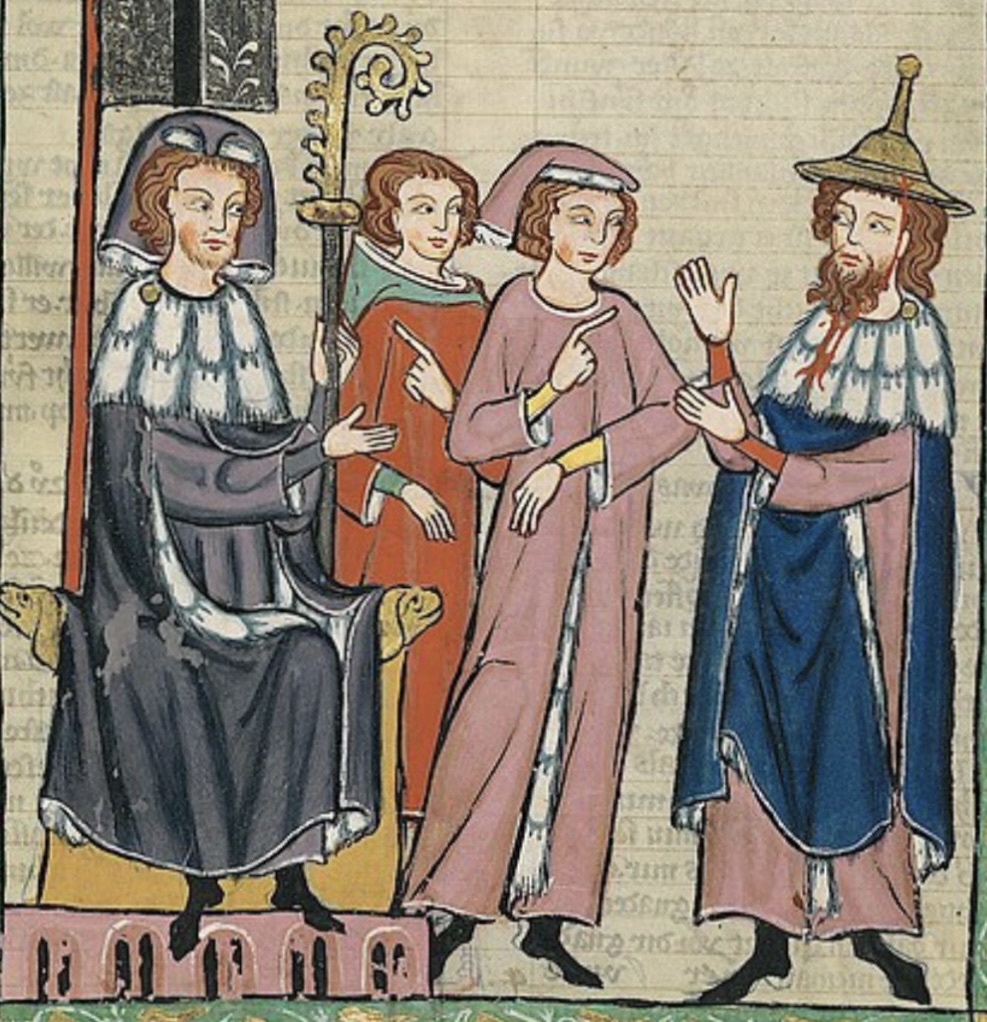
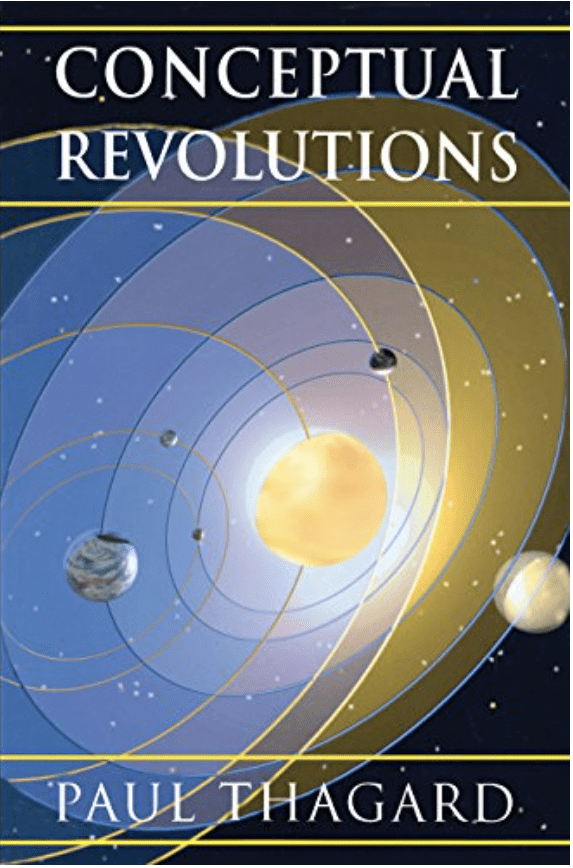
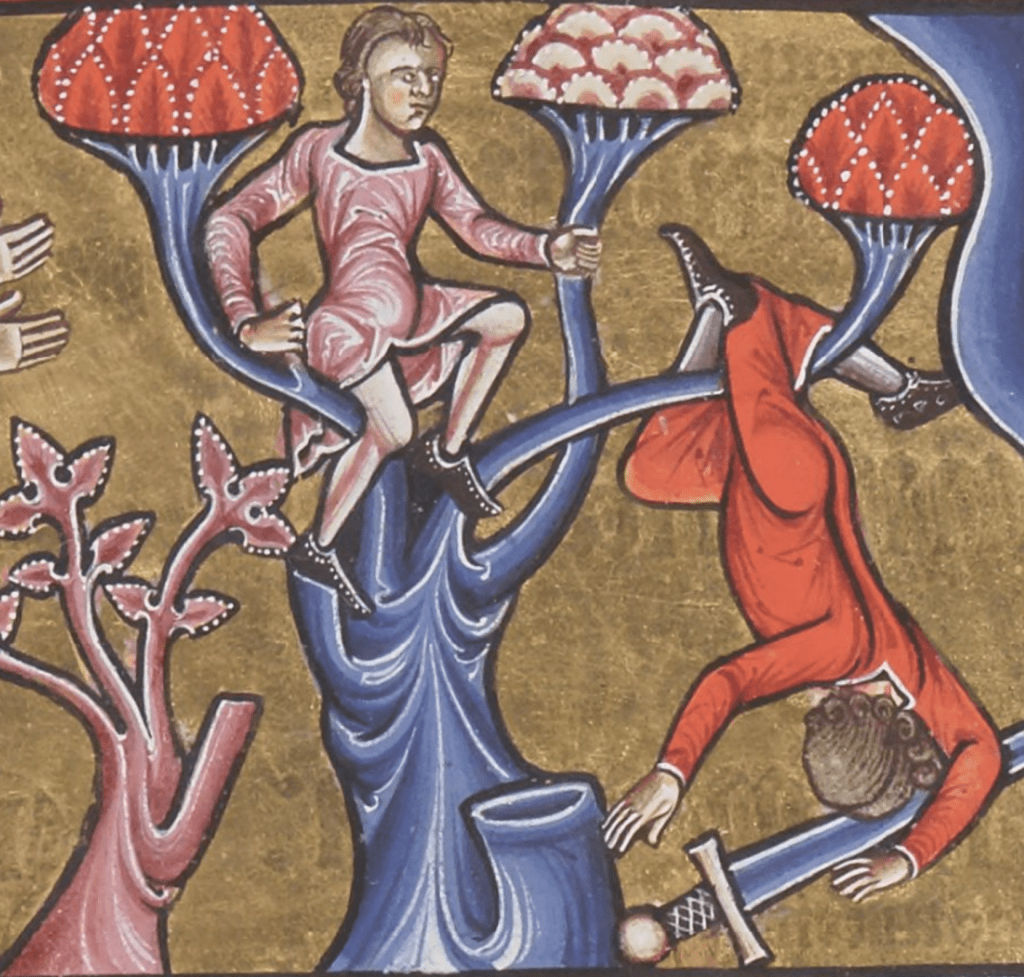


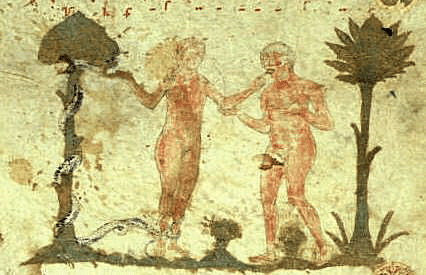


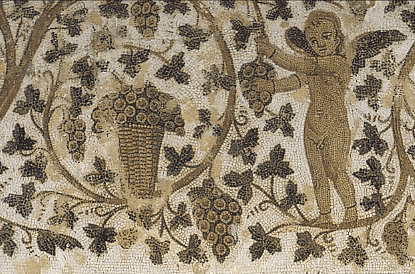


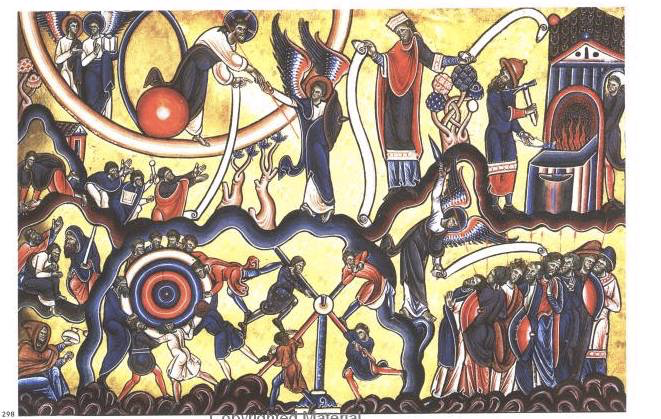


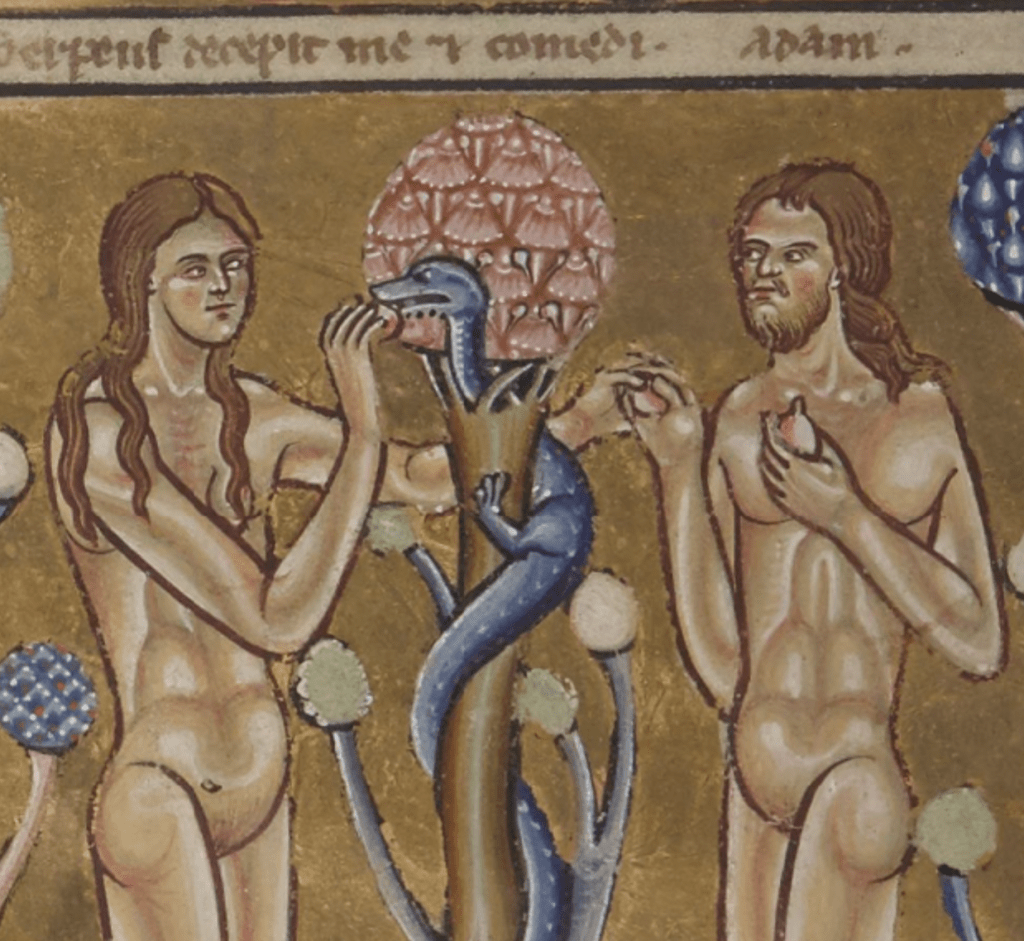

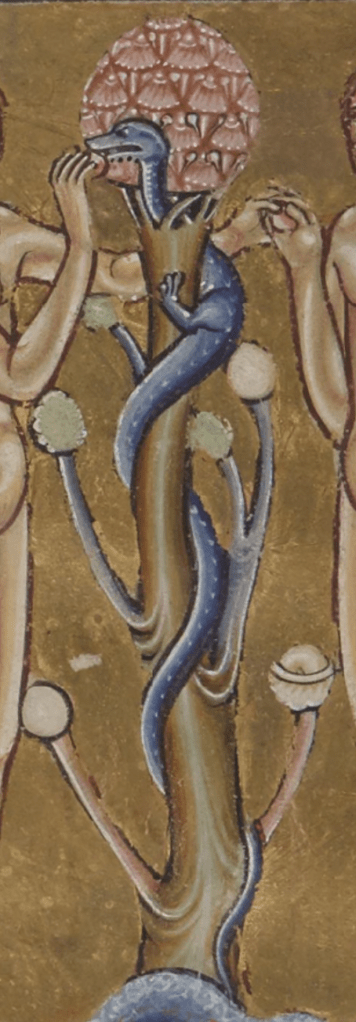



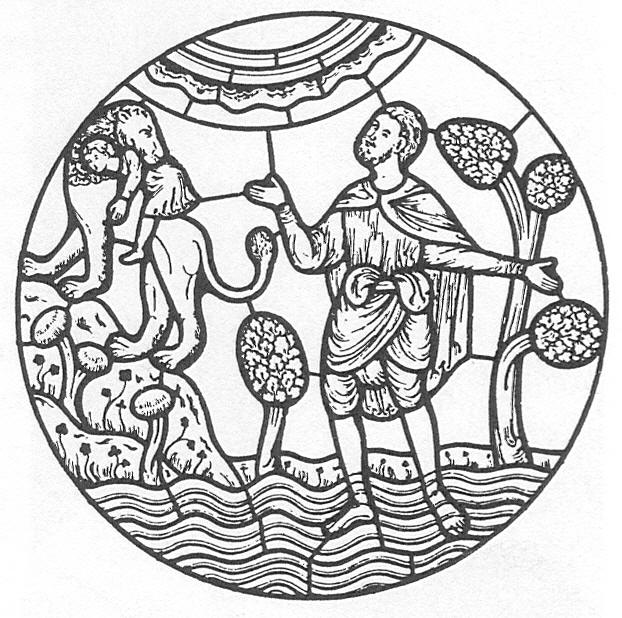
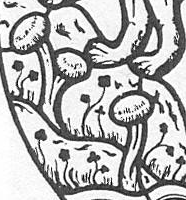
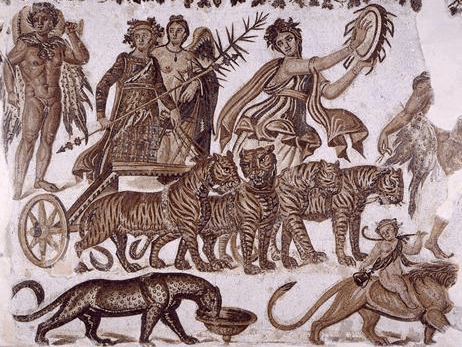
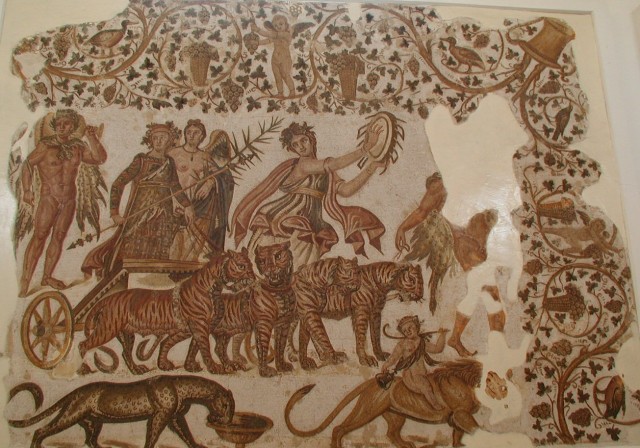
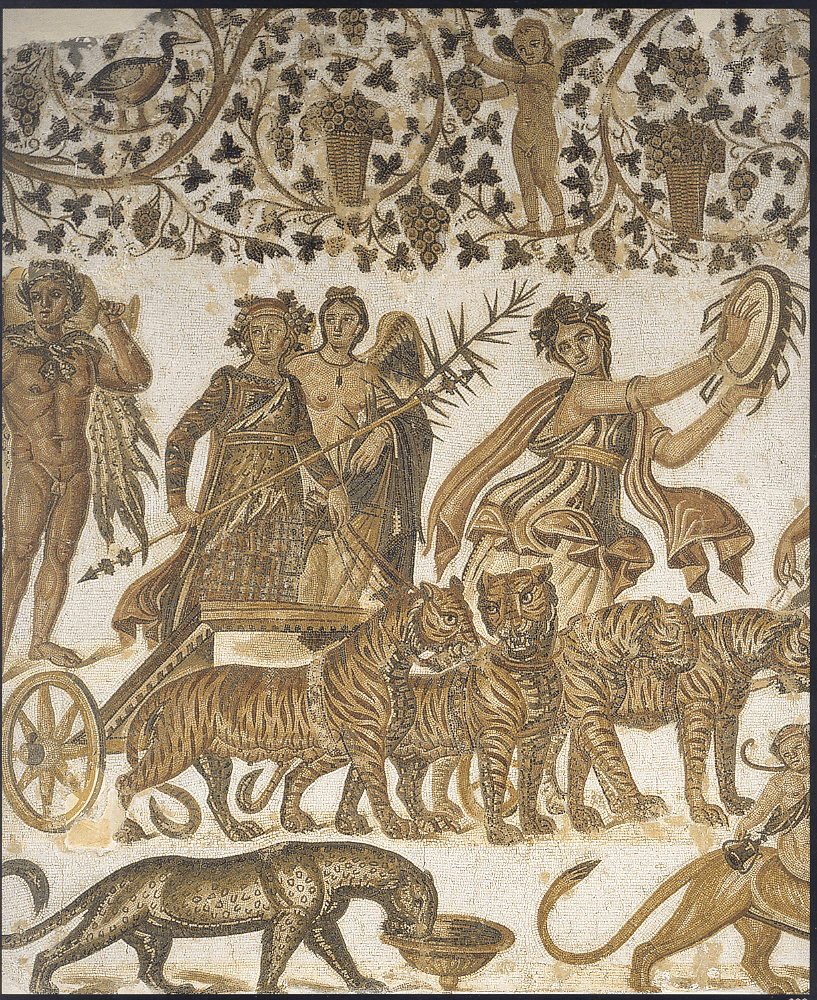



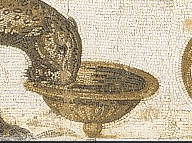


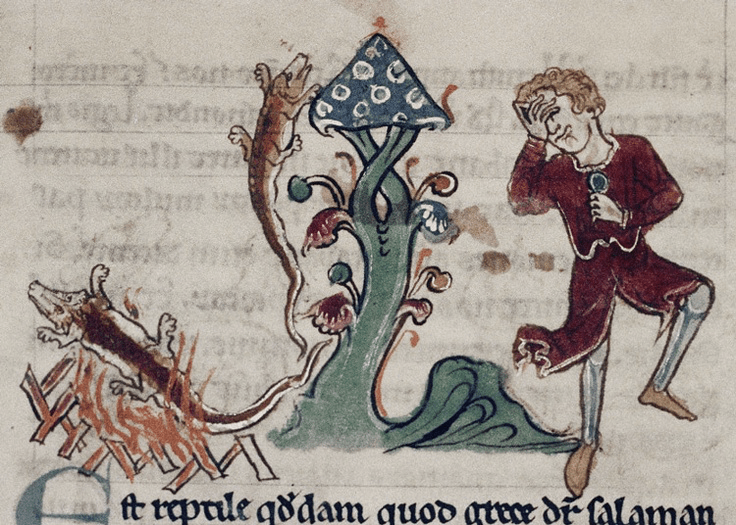

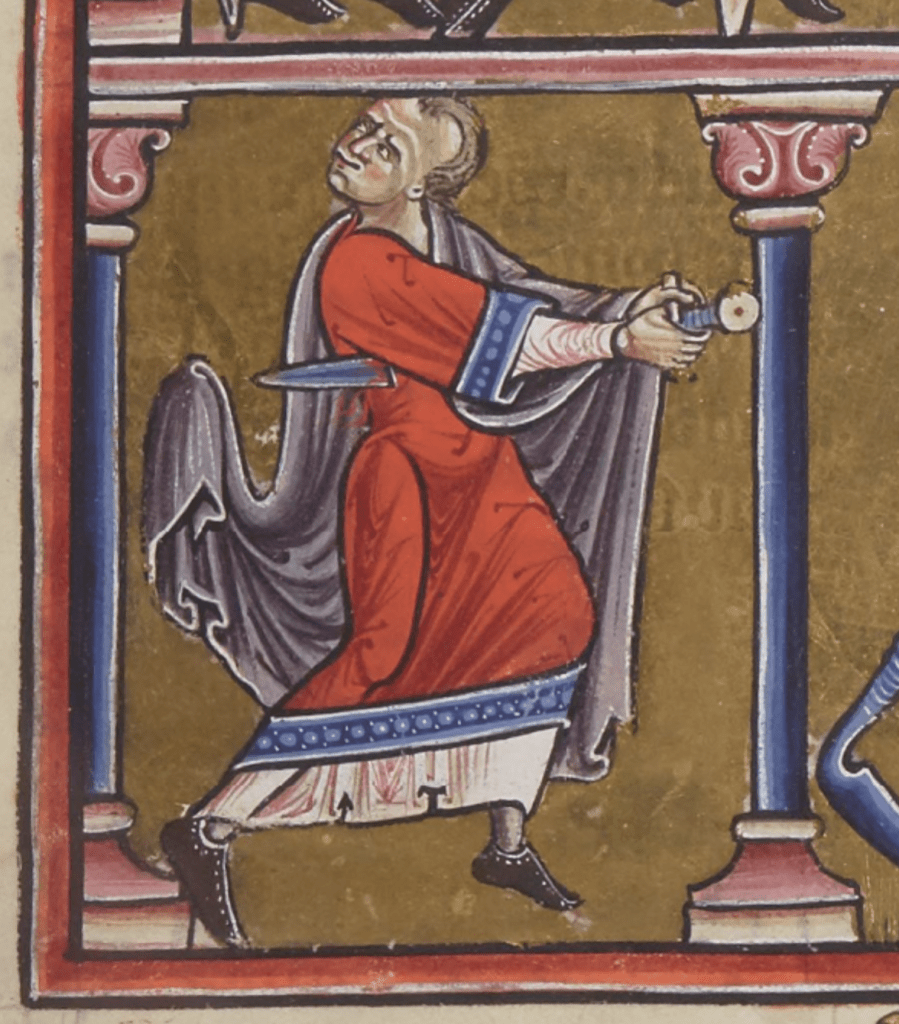
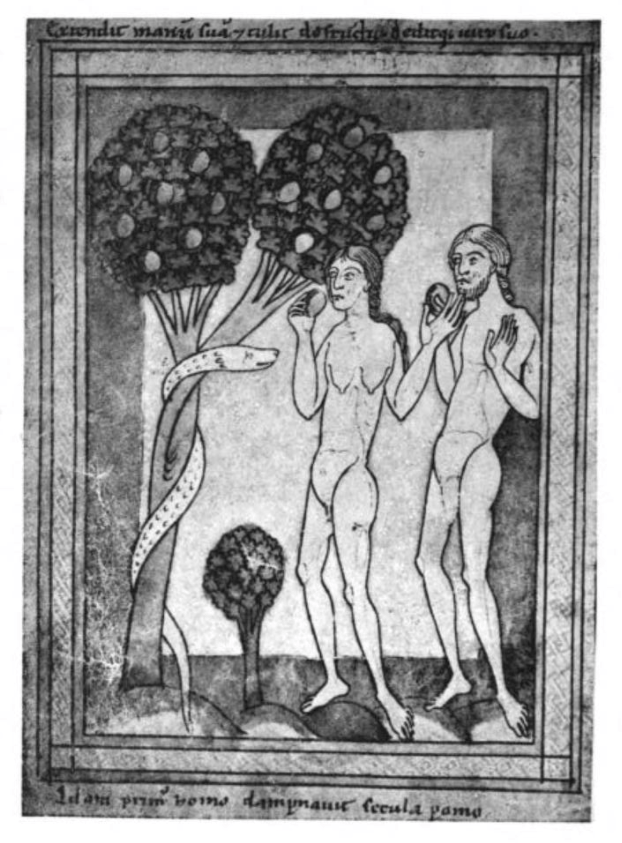
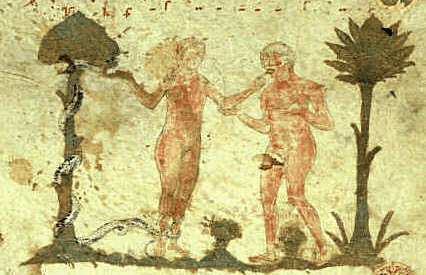

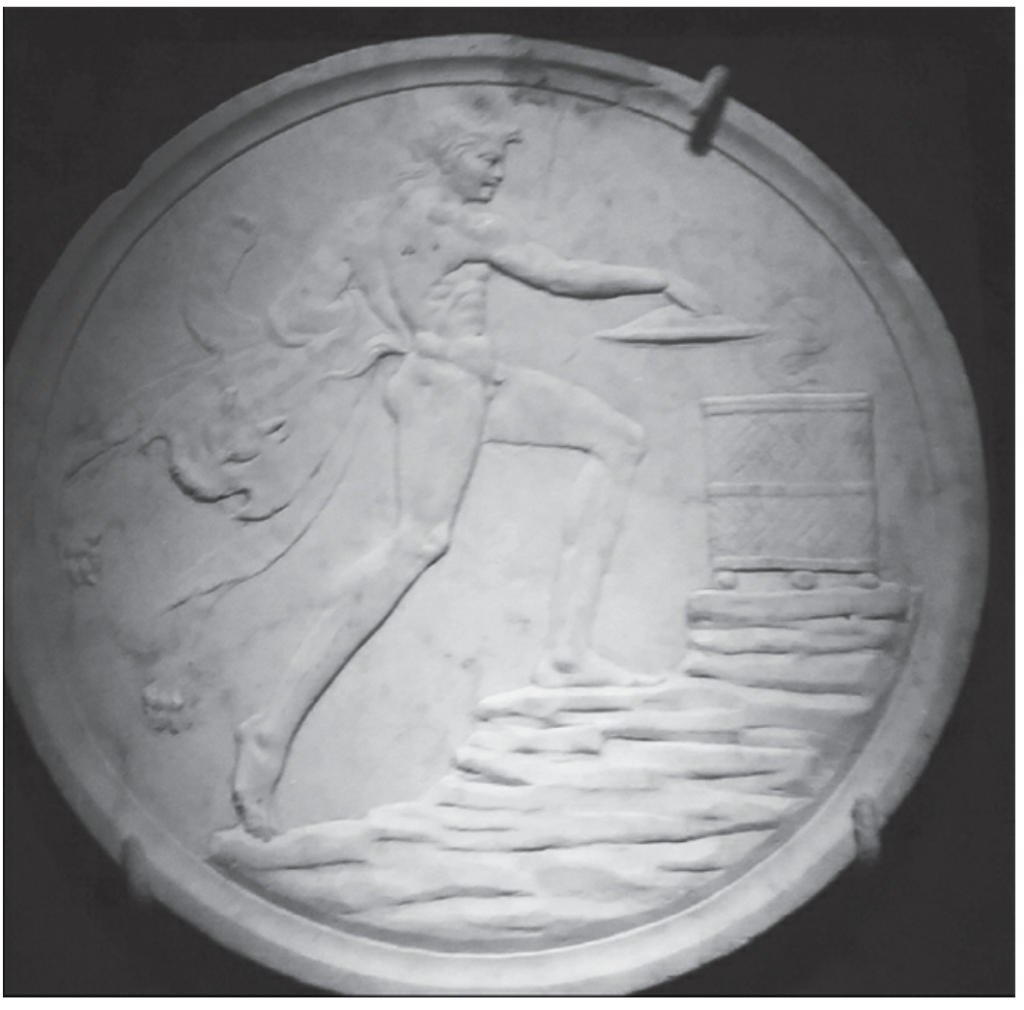
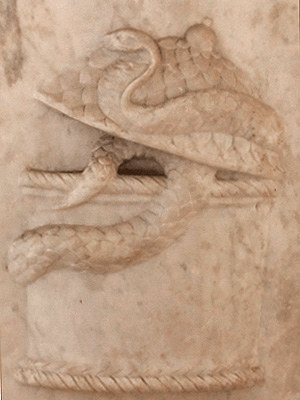
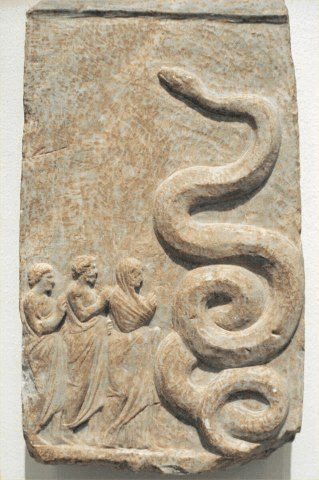
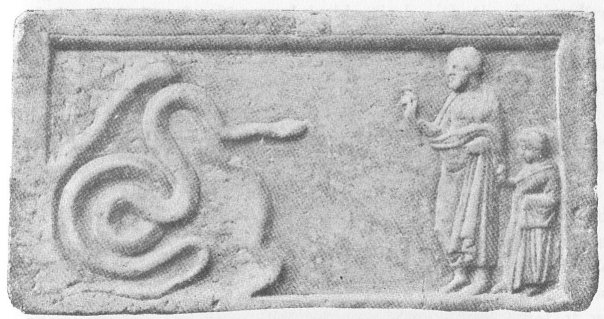
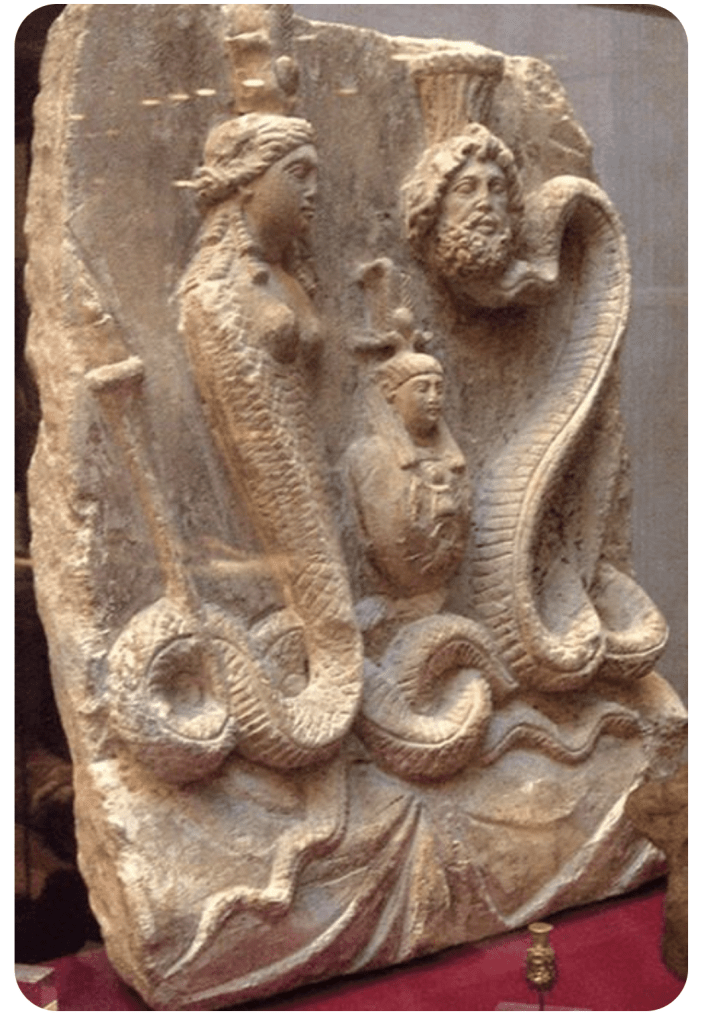
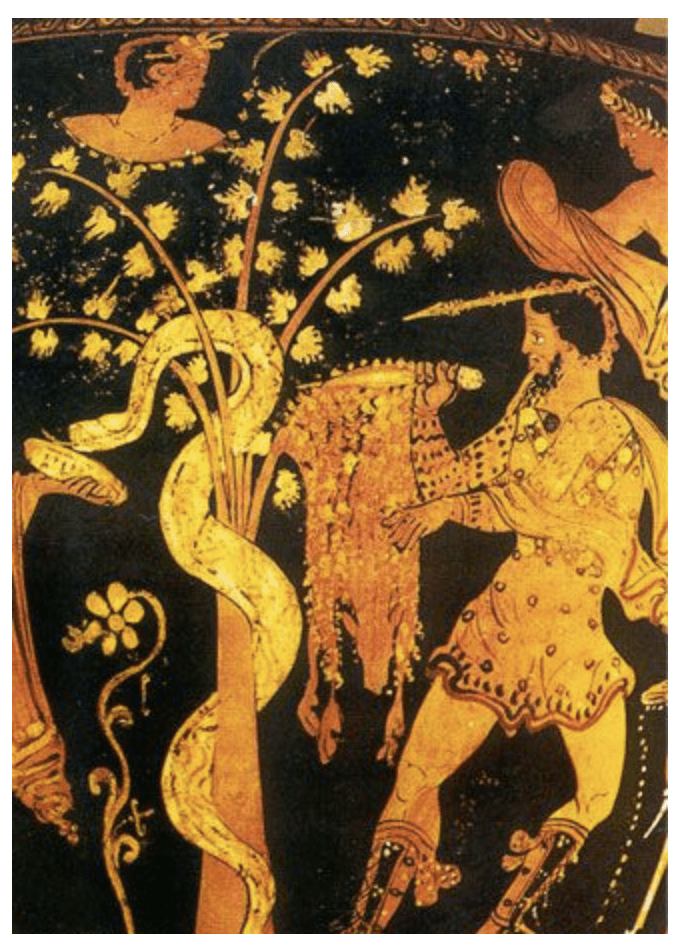
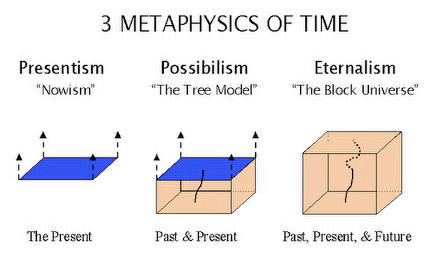
 The Egodeath theory