The Son Conceived in Drunkenness: Magical Plants in the World of the Greek Hero Carl Ruck, December 2017 http://amzn.com/1587904241
Publisher’s description:
“An essential aspect of the traditional stories or myths about the Greek heroes has been intentionally overlooked in the study of Classical literature and religion, specifically, the pivotal role accorded to magical plants and religious sacraments derived from psychoactive botanical and venomous animal sources, serpents, reptiles, and the like. The Son Conceived in Drunkenness remedies this oversight.
“Toward the end of the great expansion of consciousness now known as the Psychedelic Revolution of the 60s and 70s, Dr. Ruck proposed a new word for such mind-altering substances to free them from the implications of irreverent recreational abuse and the irresponsible marketplace of New Age pseudo-scientific theologies. This word is entheogen, a substance that allows the deity to reside within the human. The most direct mode of access is the simple ingestion or other method of application of the sacrament so that the entheogen forms the mediating pathway between the human and the divine.
“Ultimately, this magical club that is the hero’s weapon of choice will emerge as the rod of Asklepios, wielded by the modern profession of medicine in the battle waged with drugs and toxins on the frontier of the battle between life and death.”
Is book knowledge of the Egodeath theory sufficient qualification to be a hierophant, or must an authorized hierophant have personally undergone the control–{battle} with the worldline {dragon} in the {rock} block universe?
Ruck’s Notation
Carl Ruck smartly does similar in his book on mythology. The World of Classical Myth: Gods and Goddesses, Heroines and Heroes https://amzn.com/0890895759
My 1987 Acronym Approach Accelerated My Writing-Thinking, Leading to the 1988 Breakthrough
My April 1987 Creation of an Acronym and Concept-Label Approach Accelerated Writing-Thinking, to Quickly Discover and Create the Cybernetic Theory of Ego Transcendence
I invented a format convention somewhat similar to Ruck, starting suddenly in April 1987 when I vigorously reset my idea-development approach and made an innovative approach to using pencil and paper.
My father was dying then, and I was studying Relativity & Quantum Physics & nth-semester Calculus.
My attempts at gaining posi-control, an expected transcendent level of self-control across time, were not clearly working, after Oct. 1985-April 1985 intensive attempts.
I felt I was onto something, and had to become more effective and analytical with better technology. I felt an intense mental capability, with on-demand flights of intellectual progress in any 2-hour session of trying to make progress on The Problem.
I got rid of my conventional blank book notebooks (about 6″x8″) that used a series of regular sentences.
I switched to expansive 8.5″x11″ ruled sheets in binders, and started using acronyms defined in square brackets, like:
loose cognitive association matrix [LCAM]
1988 example: Transcendent Construct Processing/Realize Intention Set [TCP/RIS]
Some images show one or multiple of the following: o Jonas’ torso coming forth from the serpent’s mouth, a quite common theme in mythic art – or the comedic reverse of that art mytheme: Jonas’ legs protruding from the serpent’s mouth. The book of Jonah has o sea-serpent with looped tail o ivy-shaped vinous gourd plant that gives shade to Jonah on land o mushroom tree (as a stylized image) & thus a mushroom cap in serpent’s mouth: https://www.flickr.com/photos/renzodionigi/3426153383
“Ketos, Sea Monster of Divine Retribution — Today’s Monster Monday is the ketos, an ancient sea monster from Greek and Biblical mythology. This is the monster that Poseidon sent to eat Andromeda, and that Perseus petrified with Medusa’s severed head. The ketos is also frequently shown as the sea monster that swallowed Jonah in late classical and medieval depictions of the story. In both cases, it is a monster sent by a deity to punish the impious by eating someone. [Painting: Andromeda liberated by Perseus, at Wikimedia]
“Herakles, appropriating the myth of Perseus and Andromeda, apparently also rescued a princess from a ketos, doing so in true herculean fashion by leaping into its mouth and slaying it from within. In 58 BC, the Romans put the bones of what they believed to be the ketos that Perseus slew on display during gladiatorial games.”
God, you are the controller and creator of all thoughts.
Please have mercy on me and guide me to full higher knowledge, without harm, leading to well-being in all ways.
The price for full gnosis has already been paid for me by the sacrifice of your Son, Jesus Christ, the king fastened helplessly to the tree, reborn out from the tomb of rock.
Prayers
God, thank you for the Catholic leadership of [online show host], and for turning other content creators to Jesus and Christianity, which is gaining increasing respect in traditionalist online communities.
God, please guide new Christian, [online show host], in his new Sunday-edition show, teach him to lead in prayer, and bring his followers to Christianity.
God, please enable more Christianity within the traditionalist YT channels, without divisiveness between the advocates of various views on religions.
Lord, please protect people during the new time of partly repealing 🍄 Prohibition, such as after the initiatives passed in Oregon and DC, and bring them to you.
Michael the Archangel, protect us, and let all hidden things be revealed.
Jonah’s prayer from within the ketos (short sea serpent)
Ketos in art – In art depicting Jonah, the ketos is a short sea-serpent, shorter than a sea-serpent, longer than Perseus’ cetus with beast torso with tail.
Then Jonah prayed unto the Lord his God out of the fish’s belly:
And said, I cried by reason of mine affliction unto the Lord, and he heard me; out of the belly of hell cried I, and thou heardest my voice.
For thou hadst cast me into the deep, in the midst of the seas; and the floods compassed me about: all thy billows and thy waves passed over me.
Then I said, I am cast out of thy sight; yet I will look again toward thy holy temple.
The waters compassed me about, even to the soul: the depth closed me round about, the weeds were wrapped about my head.
I went down to the bottoms of the mountains; the earth with her bars was about me for ever: yet hast thou brought up my life from corruption, O Lord my God.
When my soul fainted within me I remembered the Lord: and my prayer came in unto thee, into thine holy temple.
They that observe lying vanities forsake their own mercy.
But I will sacrifice unto thee with the voice of thanksgiving; I will pay that that I have vowed. Salvation is of the Lord.
And the Lord spake unto the fish, and it spewed out Jonah upon the dry land.
From inside the fish Jonah prayed to the Lord his God. 2 He said:
“In my distress I called to the Lord, and he answered me. From deep in the realm of the dead I called for help, and you listened to my cry. 3 You hurled me into the depths, into the very heart of the seas, and the currents swirled about me; all your waves and breakers swept over me. 4 I said, ‘I have been banished from your sight; yet I will look again toward your holy temple.’ 5 The engulfing waters threatened me,[b] the deep surrounded me; seaweed was wrapped around my head. 6 To the roots of the mountains I sank down; the earth beneath barred me in forever. But you, Lord my God, brought my life up from the pit.
7 “When my life was ebbing away, I remembered you, Lord, and my prayer rose to you, to your holy temple.
8 “Those who cling to worthless idols turn away from God’s love for them. 9 But I, with shouts of grateful praise, will sacrifice to you. What I have vowed I will make good. I will say, ‘Salvation comes from the Lord.’”
10 And the Lord commanded the fish, and it spewed Jonah onto dry land.
1 Lord, do not rebuke me in your anger or discipline me in your wrath. 2 Have mercy on me, Lord, for I am faint; heal me, Lord, for my bones are in agony. 3 My soul is in deep anguish. How long, Lord, how long?
4 Turn, Lord, and deliver me; save me because of your unfailing love. 5 Among the dead no one proclaims your name. Who praises you from the grave?
6 I am worn out from my groaning.
All night long I flood my bed with weeping and drench my couch with tears. 7 My eyes grow weak with sorrow; they fail because of all my foes.
8 Away from me, all you who do evil, for the Lord has heard my weeping. 9 The Lord has heard my cry for mercy; the Lord accepts my prayer. 10 All my enemies will be overwhelmed with shame and anguish; they will turn back and suddenly be put to shame.
Apocalypse Revelation 10, 12, 22
Similar “eating scroll” verses in the Old Testament, Ezekiel 3:
3 And he said to me, “Son of man, eat what is before you, eat this scroll; then go and speak to the people of Israel.” 2 So I opened my mouth, and he gave me the scroll to eat.
3 Then he said to me, “Son of man, eat this scroll I am giving you and fill your stomach with it.” So I ate it, and it tasted as sweet as honey in my mouth.
4 He then said to me: “Son of man, go now to the people of Israel and speak my words to them. 5 You are not being sent to a people of obscure speech and strange language, but to the people of Israel— 6 not to many peoples of obscure speech and strange language, whose words you cannot understand. … they are a rebellious people.”
10 And he said to me, “Son of man, listen carefully and take to heart all the words I speak to you. 11 Go now to your people in exile and speak to them. Say to them, ‘This is what the Sovereign Lord says,’ whether they listen or fail to listen.”
12 Then the Spirit lifted me up, … 14 The Spirit then lifted me up and took me away, and I went in bitterness and in the anger of my spirit, with the strong hand of the Lord on me. …
24 Then the Spirit came into me and raised me to my feet. He spoke to me …
10 Then I saw another mighty angel coming down from heaven. He was robed in a cloud, with a rainbow above his head; his face was like the sun, and his legs were like fiery pillars. 2 He was holding a little scroll🍄, which lay open in his hand. He planted his right foot on the sea and his left foot on the land, 3 and he gave a loud shout like the roar of a lion. When he shouted, the voices of the seven thunders spoke. 4 And when the seven thunders spoke, I was about to write; but I heard a voice from heaven say, “Seal up what the seven thunders have said and do not write it down.”
5 Then the angel I had seen standing on the sea and on the land raised his right hand to heaven. 6 And he swore by him who lives for ever and ever, who created the heavens and all that is in them, the earth and all that is in it, and the sea and all that is in it, and said, “There will be no more delay! [KJV: “that there should be time no longer“] 7 But in the days when the seventh angel is about to sound his trumpet, the mystery of God will be accomplished [KJV: “finished“], just as he announced to his servants the prophets.”
8 Then the voice that I had heard from heaven spoke to me once more: “Go, take the scroll that lies open in the hand of the angel who is standing on the sea and on the land.”
9 So I went to the angel and asked him to give me the little scroll🍄. He said to me, “Take it and eat it. It will turn your stomach sour, but ‘in your mouth it will be as sweet as honey.’[a]” 10 I took the little scroll from the angel’s hand and ate it. It tasted as sweet as honey in my mouth, but when I had eaten it, my stomach turned sour. 11 Then I was told, “You must prophesy again about many peoples, nations, languages and kings.”
12 And there appeared a great wonder in heaven; a woman clothed with the sun, and the moon under her feet, and upon her head a crown of twelve stars:
2 And she being with child cried, travailing in birth, and pained to be delivered.
3 And there appeared another wonder in heaven; and behold a great red dragon, having seven heads and ten horns, and seven crowns upon his heads. …
5 And she brought forth a man child, who was to rule all nations with a rod of iron: and her child was caught up unto God, and to his throne. …
7 And there was war in heaven: Michael and his angels fought against the dragon; and the dragon fought and his angels,
8 And prevailed not; neither was their place found any more in heaven.
9 And the great dragon was cast out, that old serpent, called the Devil, and Satan, which deceiveth the whole world: he was cast out into the earth, and his angels were cast out with him.
10 And I heard a loud voice saying in heaven, Now is come salvation, and strength, and the kingdom of our God, and the power of his Christ: for the accuser of our brethren is cast down, which accused them before our God day and night.
11 And they overcame him by the blood of the Lamb[compare Abraham’s bramble-caught ram in place of Isaac], and by the word of their testimony; and they loved not their lives unto the death.
12 Therefore rejoice, ye heavens, and ye that dwell in them. Woe to the inhabiters of the earth and of the sea! for the devil is come down unto you, having great wrath, because he knoweth that he hath but a short time.
13 And when the dragon saw that he was cast unto the earth, he persecuted the woman which brought forth the man child.
14 And to the woman were given two wings of a great eagle, that she might fly into the wilderness, into her place, where she is nourished for a time, and times, and half a time, from the face of the serpent.
15 And the serpent cast out of his mouth water as a flood after the woman, that he might cause her to be carried away of the flood.
16 And the earth helped the woman, and the earth opened her mouth, and swallowed up the flood which the dragon cast out of his mouth.
17 And the dragon was wroth with the woman, and went to make war with the remnant of her seed, which keep the commandments of God, and have the testimony of Jesus Christ.
2 Then the angel showed me the river of the water of life, as clear as crystal, flowing from the throne of God and of the Lamb 2 down the middle of the great street of the city. On each side of the river stood the tree of life, bearing twelve crops of fruit, yielding its fruit every month. And the leaves of the tree are for the healing of the nations. 3 No longer will there be any curse. The throne of God and of the Lamb will be in the city, and his servants will serve him. 4 They will see his face, and his name will be on their foreheads. 5 There will be no more night. They will not need the light of a lamp or the light of the sun, for the Lord God will give them light. And they will reign for ever and ever.
6 The angel said to me, “These words are trustworthy and true. The Lord, the God who inspires the prophets, sent his angel to show his servants the things that must soon take place.”
7 “Look, I am coming soon! Blessed is the one who keeps the words of the prophecy written in this scroll🍄.”
8 I, John, am the one who heard and saw these things. And when I had heard and seen them, I fell down to worship at the feet of the angel who had been showing them to me. 9 But he said to me, “Don’t do that! I am a fellow servant with you and with your fellow prophets and with all who keep the words of this scroll. Worship God!” …
14 “Blessed are those who wash their robes, that they may have the right to the tree of life🍄 and may go through the gates into the city. 15 Outside are the dogs, those who practice magic arts, the sexually immoral, the murderers, the idolaters and everyone who loves and practices falsehood.
16 “I, Jesus, have sent my angel to give you[a]this testimony for the churches. I am the Root and the Offspring of David, and the bright Morning Star.”
17 The Spirit and the bride say, “Come!” And let the one who hears say, “Come!” Let the one who is thirsty come; and let the one who wishes take the free gift of the water of life.
18 I warn everyone who hears the words of the prophecy of this scroll: If anyone adds anything to them, God will add to that person the plagues described in this scroll. 19 And if anyone takes words away from this scroll of prophecy, God will take away from that person any share in the tree of life and in the Holy City, which are described in this scroll.
20 He who testifies to these things says, “Yes, I am coming soon.”
Amen. Come, Lord Jesus.
21 The grace of the Lord Jesus be with God’s people. Amen.
“Not only the general public, but even students of physics appear to believe that the physics concept of spacetime was introduced by Einstein.
“This is both unfortunate and unfair.
“It was Hermann Minkowski (Einstein’s mathematics professor) who announced the new four-dimensional (spacetime) view of the world in 1908, which he deduced from experimental physics by decoding the profound message hidden in the failed experiments designed to discover absolute motion.
“Minkowski realized that the images coming from our senses, which seem to represent an evolving three-dimensional world, are only glimpses of a higher four-dimensional reality that is not divided into past, present, and future since space and all moments of time form an inseparable entity (spacetime).
“Einstein’s initial reaction to Minkowski’s view of spacetime and the associated with it four-dimensional physics (also introduced by Minkowski) was not quite favorable: “Since the mathematicians have invaded the relativity theory, I do not understand it myself any more.“
“However, later Einstein adopted not only Minkowski’s spacetime physics (which was crucial for Einstein’s revolutionary theory of gravity as curvature of spacetime), but also Minkowski’s world view as evident from Einstein’s letter of condolences to the widow of his longtime friend Besso:
“Now Besso has departed from this strange world a little ahead of me.
“That means nothing. People like us, who believe in physics, know that the distinction between past, present and future is only a stubbornly persistent illusion.”
/ end letter re: Besso
Besso left this world on 15 March 1955; Einstein followed him on 18 April 1955.
“This volume contains Hermann Minkowski’s four works, which laid the foundations of spacetime physics.
“In some sense it can be regarded as a second expanded edition of the first book published by the Minkowski Institute Press – H. Minkowski, Space and Time: Minkowski’s papers on relativity (Minkowski Institute Press, Montreal 2012) – which included Minkowski’s three papers published by him.
“Now, in addition to those papers, this volume also contains Minkowski’s fourth paper assembled and published by Minkowski’s student Max Born in 1910 “A Derivation of the Fundamental Equations for the Electromagnetic Processes in Moving Bodies from the Standpoint of the Theory of Electrons”.”
/ end of blurb
Block Universe Began September 21, 1908: Space and Time
Hermann Minkowski formally defined the block universe, as a mathematical framework and computational mechanism, on September 21, 1908, in his article Space and Time, which he presented in a lecture that day.
The Block Universe and Worldlines in Terms of the Egodeath Theory
The 4D-spacetime block universe is rock-like, containing frozen embedded worm- or snake-shaped worldlines. The block universe contains all time and change, so the block universe is frozen and does not itself change.
A worldline is your linear stream of subjective mental content, including your personal control-thoughts, spread across time from the past into a single, pre-existing future.
The future is single, pre-existing, and non-branching, even though in the ordinary state of consciousness, it feels like we are steering through a tree of branching possibilities.
Your pre-existing, non-changing worldline is like a dark vein that runs through a white marble slab. The vein in the marble slab may “change” in a certain sense — it might “become” wider at one spot than another — yet the vein overall doesn’t change.
Per the Egodeath theory, in the mystic altered state from visionary plants, the mind has the capacity to experience the frozen block universe, along with experiencing a kind of non-control. There’s always control, but the mind experiences control differently, in the mystic altered state.
Religious mythology describes, using analogy, ingesting visionary plants and then experiencing the block universe and non-control.
Experiencing the block universe and the accompanying type of non-control causes transformation of the mental model of time and control, described by key analogies such as {wine, king, tree, death, snake, dragon, treasure, rock, sacrifice, and rebirth}.
Key mythological analogies that describe the block universe experience and concept are: {snake} = worldline, and {rock} = block universe, as contrasted with the ordinary-state experience of being like a {king} {steering} in a {tree}.
Petkov’s Book Gathering Minkowski’s Papers
Space and Time: Minkowski’s Papers on Relativity (2012), Vesselin Petkov (Ed.) Use “Look inside” and read the first section of the Introduction: “The not-fully-appreciated Minkowski”. The main reason for publishing this book is “to correct an injustice”: to rightly reduce credit to Einstein and increase credit to Minkowski.
Spacetime: Minkowski’s Papers on Spacetime Physics (March 2020 2nd Ed.) Has “Look inside” with Kindle (ebook) layout. This edition places the Space and Time article first, to highlight it, before Minkowski’s earlier Relativity and Moving Bodies papers. This edition adds a 4th, posthumous, Derivation article.
Improvements in the Book Title
o The 1st Ed. used the term “Relativity”, but for Minkowski’s block universe concept, the more relevant term is “Spacetime Physics”. Counter-argument: Minkowski’s first article is Relativity.
o The 1st Ed. used the phrase “Space and Time”, as separate words, but the whole idea of Minkowski was to conjoin space and time as four calculation-equivalent dimensions, so Petkov changed it to “Spacetime”. Counter-argument: the title of the lecture and paper is Space and Time.
Both of these changes to the title may be motivated by striving to correct the balancing of credit attribution, by reducing the focus on Einstein and increasing the focus on Minkowski’s contributions.
“Vesselin Petkov with his wife Svetla Petkova during the excursion to Cape Kaliakra with colleagues after the Third Minkowski Meeting in the famous Black Sea resort Albena (near Varna), Bulgaria (11-14 September 2023).
“He received a graduate degree in physics from Sofia University, a doctorate in philosophy (on Minkowski spacetime) from the Institute for Philosophical Research of the Bulgarian Academy of Sciences, and a doctorate in theoretical physics from Concordia University in Montreal.
“He taught at Sofia University and Concordia University, and held a research position at the Physics Department of the Johannes Kepler University of Linz, Austria, before settling in Montreal in 1990.
“He is one of the founding members of the Minkowski Institute, whose most distinct feature is the employment and development of a research strategy based on the successful methods behind the greatest discoveries in physics. In this sense, the Minkowski Institute is without a counterpart in the world.”
Vesslin Petkov Institute for Foundational Studies “Hermann Minkowski” (Minkowski Institute) Montreal, Quebec, Canada https://minkowskiinstitute.com mail vpetkov — minkowskiinstitute.com vpetkov — vesselinpetkov.com
The Egodeath Theory Is the Brand of Transcendent Knowledge That’s Associated with Minkowski
The Egodeath Theory (the Theory of Psychedelic Eternalism) is the Official Brand of Transcendent Knowledge (Block-Universe Mysticism) Associated with Minkowski Absolute Four-Dimensional Spacetime
Book Review by Michael Hoffman
got posted for Paperback not Hardcover; doesn’t say “confirmed purchase” – might re-post review from hardcover page
Spacetime: Minkowski’s Papers on Spacetime Physics, edited by Vesselin Petkov, 2021, has a great Preface & Introduction chapter by Petkov, worth the hardcover price. Even if you delay engaging the details of the 4 papers, it takes some time to read the Preface and Intro chapters, and they are worth getting the book for.
I probably should’ve immediately gotten the original, 2012 edition instead of waiting, but anyway, I’m glad I ended up with the expanded, 2nd edition, which changes the title from “Relativity” to “Spacetime”. The title of the 1st edition was “Space and Time: Minkowski’s Papers on Relativity”. I shouldn’t have waited so long to get this book. It’s a great, interesting book, more than meeting my hopes.
Amazingly, these 3 (and now 4) papers were not available in English, or in German, or the translations lacked the important statements from Minkowski about Einstein.
Minkowski had a more profound, “mind blown” comprehension of the ramifications of absolute four-dimensional spacetime (block-universe eternalism) than Einstein. This is emancipating for me now at the end of my theory’s development, as it was in Jan. 1988, at my beginning. We do not need to be limited to Einstein’s view of “Relativity”, but we can broaden out to the more profound, Minkowski view of “absolute four-dimensional spacetime” (block-universe eternalism).
I studied the topics of the four math papers, in a university Modern Physics course, in 1988 when I discovered 4D spacetime block-universe mysticism. In January 1988, Minkowski (not Einstein), inspired my theory, the Cybernetic Theory of Ego Transcendence, now named in 2026 the Egodeath Theory of Altered-State Eternalism & Mytheme Analogy.
I noticed that in Physics, there’s been a consistent skew of emphasis away from Minkowski’s block-universe eternalism, toward Bohr, Everett manyworlds branching, and the most woo interpretations of Quantum Physics. My rejoinder to Quantum Mysticism is, instead, the road not taken: Block-Universe Mysticism, which per Petkov I should probably specify as Minkowski Block-Universe Mysticism.
In the university course in Modern Physics, first we studied Minkowski’s block-universe eternalism, absolute four-dimensional spacetime. That was inspiring. Then we studied Einstein’s relativity. That was ok. Then we studied Quantum Physics: I hated the values driving which of the interpretations we used; “the particle has no position until the observer measures it” – an unnecessary, radical notion, per James T. Cushing’s books, such as Quantum Mechanics: Historical Contingency and the Copenhagen Hegemony.
I felt something was “off” about Einstein’s presentation of “Relativity”. I would probably relate more to Minkowski’s view and approach, “absolute four-dimensional spacetime”, which comes closer to considering a certain nullity of personal control that’s implied by block-universe eternalism. Petkov confirms that Minkowski had a more profound understanding of absolute four-dimensional spacetime (block-universe eternalism) than Einstein.
— Michael Hoffman, the Egodeath Theory of Altered-State Eternalism & Mytheme Analogy, based on Minkowski’s 4D spacetime block universe
Title of Theory with Euphemism: The Egodeath Theory of Altered-State Eternalism & Mytheme Analogy
the Egodeath Theory of Psychedelic Eternalism & Mytheme Analogy
the Egodeath Theory of Altered-State Eternalism & Mytheme Analogy
the Egodeath theory of altered-state eternalism
Motivation for euphemism: I want to post my latest theory-name in my Amazon review, but don’t really want “psychedelic” within a Physics book review.
todo: add to recent “titles of theory” page.
For parallelism in the the Egodeath theory lexicon, recently I sometimes used the term “altered-state” (vs. ordinary-state) instead of the term “psychedelic” – not to avoid ‘psychedelic’, but to parallel “ordinary-state”, and to put emph not on particulars of the psychedelic state in particular, but rather, when I want the point to be:
In the ordinary state, the experiential mode is possibilism.
In the altered state, the experiential mode is eternalism.
Were I to say instead:
In the psychedelic state, the experiential mode is eternalism.
That makes a different set of points, distracting from the above, general point.
Quantum Mechanics: Historical Contingency and the Copenhagen Hegemony (Cushing, 1994)
“Why does one theory “succeed” while another, possibly clearer interpretation, fails?
“By exploring two observationally equivalent yet conceptually incompatible views of quantum mechanics, James T. Cushing shows how historical contingency can be crucial to determining a theory’s construction and its position among competing views.
“Since the late 1920s, the theory formulated by Niels Bohr and his colleagues at Copenhagen has been the dominant interpretation of quantum mechanics.
“Yet an alternative interpretation, rooted in the work of Louis de Broglie in the early 1920s and reformulated and extended by David Bohm in the 1950s, equally well explains the observational data.
“Through a detailed historical and sociological study of the physicists who developed different theories of quantum mechanics, the debates within and between opposing camps, and the receptions given to each theory, Cushing shows that despite the preeminence of the Copenhagen view, the Bohm interpretation cannot be ignored.
“Cushing contends that the Copenhagen interpretation became widely accepted not because it is a better explanation of subatomic phenomena than is Bohm’s, but because it happened to appear first.
“Focusing on the philosophical, social, and cultural forces that shaped one of the most important developments in modern physics, this provocative book examines the role that timing can play in the establishment of theory and explanation.”
Philosophical Concepts in Physics: The Historical Relation between Philosophy and Scientific Theories (Cushing, 1998)
“This book examines a selection of philosophical issues in the context of specific episodes in the development of physical theories and presents scientific advances within their historical and philosophical contexts.
“Philosophical considerations have played an essential and ineliminable role in the actual practice of science.
“The book begins with some necessary introduction to the history of ancient and early modern science, but emphasizes the two great watersheds of twentieth-century physics: relativity and quantum mechanics.
“At times the term “construction” may seem more appropriate than “discovery” for the way theories have developed and, especially in later chapters, the discussion focuses on the influence of historical, philosophical and even social factors on the form and content of scientific theories.”
Email to Petkov Mar. 10, 2026
Hi Vesselin Petkov,
Am I the first and only theory of mystical experience that’s based on Minkowski’s absolute four-dimensional spacetime / block-universe eternalism? In Jan. 1988
The original, 1988 name of my theory: The Cybernetic Theory of Ego Transcendence – vs. the Popular Neo-Advaita theory per Ken Wilber, the Journal of Transpersonal Psychology, etc.
Block-Universe Mysticism (per James & Minkowski) is vs. the overly popular, Quantum Mysticism https://en.wikipedia.org/wiki/Quantum_mysticism which I associate with branching (bad) rather than Minkowski non-branching (good).
The Egodeath Theory of Psychedelic Eternalism & Mytheme Analogy is the official brand of Transcendent Knowledge that’s based on Minkowski. In 1200, everyone so loved Minkowski’s spacetime, they used the shape of the hand to contrast two models of time, possibility, and control:
Possibilism vs. Eternalism =
Y vs. I
{branching} vs. {non-branching}
{tree} vs. {snake}
fingers vs. thumb, index, or pinkie
many worlds vs. single block-universe
Standard Error in Philosophy of Time
They wrongly contrast: Presentism vs. Eternalism; they should instead, per timeless tradition, contrast Possibilism vs. Eternalism.
Stanford Ency. Phil. comes THIS CLOSE to drawing a tree vs. a snake in their 3 diagrams.
I have my 1988 textbook for Modern Physics, at University.
I could double-check, but as I experienced, Minkowski was credited fully and accurately, not misrepresented in the course.
There was no doubt that we were studying the Minkowski math framework – not some “Einstein framework”.
“One thing was crystal clear: the American public is ready for drug reform. Drug reform initiatives went nine for nine on Tuesday. With successful marijuana legalization initiatives in two of the reddest of the red states to a groundbreaking drug decriminalization initiative and the first voter-approved psychedelic liberalization initiatives, we can see the erosion of drug prohibition happening right before our eyes.”
Oregon Becomes First State to Decriminalize All Drugs, Allow for Psilocybin Therapy
“The therapeutic psilocbyin initative, Measure 109, is winning with 56%. – the Psilocybin Services Act would create a program to allow the administration of psilocybin products, such as magic mushrooms, to adults 21 and over for therapeutic purposes. People would be allowed to buy, possess, and consume psilocybin at a psilocybin services center, but only after undergoing a preparation session and under the supervision of a psilocybin service facilitator.
“… a controlled substance in Schedule I is a Class A misdemeanor if the person possesses: (A) Forty or more user units of a mixture or substance containing a detectable amount of lysergic acid diethylamide; or (B) Twelve grams or more of a mixture or substance containing a detectable amount of psilocybin or psilocin.”
Vague and arbitrary wording.
Resuming the psmith article:
“The drug-decriminalizing Measure 110 is winning with 59% of the vote – decriminalizes the possession of personal use amounts of all drugs. People caught with drugs could either pay a $100 fine or complete a health assessment. Distribution of such drugs would remain criminalized.
“Today’s victory is a landmark declaration that the time has come to stop criminalizing people for drug use,” said Kassandra Frederique, Executive Director of the Drug Policy Alliance. “Measure 110 is arguably the biggest blow to the war on drugs to date. It shifts the focus where it belongs–on people and public health–and removes one of the most common justifications for law enforcement to harass, arrest, prosecute, incarcerate, and deport people. As we saw with the domino effect of marijuana legalization, we expect this victory to inspire other states to enact their own drug decriminalization policies that prioritize health over punishment.”
“… decriminalizing possession of all drugs for personal use, Measure 110 will greatly expand access to evidence-informed drug treatment, peer support, housing, and harm reduction services, without raising taxes. Services will be funded through excess marijuana tax revenue and savings from no longer arresting, incarcerating, and prosecuting people for drug possession.”
“Tonight, in a historic victory, Oregon voters approved Measure 110, the nation’s first all-drug decriminalization measure. This win represents a substantial shift in public perception and support in favor of treating drug use as a matter of public health, best met with access to treatment and other health services, rather than criminalization. The initiative was spearheaded by Drug Policy Action, the advocacy and political arm of Drug Policy Alliance, the nation’s preeminent drug policy reform organization”
“in Congress, where DPA has released a federal framework for drug decriminalization. The effort, outlined in a proposal, Dismantling the Federal Drug War: A Comprehensive Drug Decriminalization Framework, unveiled by the organization in August 2020, provides a roadmap for policymakers to effectively end the criminalization of people who use drugs”
DC 81 – Natural entheogens; plants or fungus, in any form, containing ibogaine, dimethyltryptamine, mescaline, psilocybin, or psilocyn
The initiative doesn’t explicitly state up front whether synthetic ibogaine, dimethyltryptamine, mescaline, psilocybin, or psilocyn is decriminalized.
An optimal, probably compliant “form” might be ground-up bulk mushrooms in capsules, for consistent, ergonomic dosage. That’s as close as possible to perhaps the most consistent form, which might be capsules of synthetic psilocybin. A cluster of mushrooms can vary in potency tenfold, from one mushroom to the next. Compare natural cannabis extracts, in states which “legalized” cannabis, vs. synthetic THC.
https://decrimnaturedc.org/initiative-81/ — “entheogenic plant and fungus” means any plant or fungus of any speciesin which there is naturally occurring any of the following substances in any form which would cause such plant or fungus to be described in D.C. Official Code §48-902.04(3): ibogaine, dimethyltryptamine, mescaline, psilocybin or psilocyn“
“Voters in the nation’s capital have overwhelmingly approved an initiative to effectively decriminalize the cultivation, use, possession, and distribution of natural psychedelics, such as ayahuasca, magic mushrooms, and peyote. According to unofficial election results, the measure was winning with 76% of the vote.
“Initiative 81, the Entheogenic Plant and Fungi Policy Act of 2020, would have police treat natural plant medicines (entheogens) as their lowest law enforcement priority. The measure also asks the city’s top prosecutor and its US Attorney to not prosecute such cases.
“Initiative 81’s success was driven by grassroots support from D.C. voters. We are thrilled that D.C. residents voted to support common sense drug policy reforms that help end part of the war on drugs while ensuring that D.C. residents benefiting from plant and fungi medicines are not police targets,” Decriminalize Nature D.C. Chairwoman Melissa Lavasani said in a press release.”
Congrats David Borden, of DRCNet
Subject: Congrats on 109, 110, 81. Entheogens in Western religious tradition
Hi David,
Congratulations on Oregon 109, Oregon 110, and DC 81, regarding visionary plants in religion and throughout Western religious history (including normal, non-deviant, “orthodox” Christianity) & throughout World religious history.
You and I met & conversed in person.
Reference:
Brown & Brown’s book The Psychedelic Gospels, which references my work (my historical research & theory development). The Psychedelic Gospels: The Secret History of Hallucinogens in Christianity
Tom Hatsis has a later, 2018 book (same publisher), including the usage of visionary plants throughout “orthodox” Christian history. Psychedelic Mystery Traditions: Spirit Plants, Magical Practices, and Ecstatic States
In 1957 (63 years ago), famous poet Robert Graves discovered the mushroom basis of ancient Greek religious mythology & Mystery Religion, summarized in his widely, ever-popular book Greek Myths, in the Foreward. His original article around 1957 is “What Food the Centaurs Ate” (which is, Amanita & psilocybin mushrooms).
____________
My Egodeath theory not only extends that field of work in entheogen scholarly history to form the Maximal Entheogen Theory of Religion (around 2001), but also unifies religious mythology with my modern, scientific, plainspoken, summarizable theory of how the mind works across the two cognitive states (normal tight association binding, & loose cognitive association binding).
That earlier, Core, Cognitive Phenomenology theory, I call the Cybernetic Theory of Ego Transcendence, which I discovered in 1988 and summarized on the Web in 1997 at the Principia Cybernetica website.
http://egodeath.com – my main, 2006 summary article & article on Wasson vs. Allegro.
https://egodeaththeory.wordpress.com – some of my recent writings on entheogens in religion, including mentions of my big 2013 breakthrough in ancient mythology which contrasts the two states of consciousness as “tree vs. snake”.
Congratulations on the success of initiatives including Oregon 109, Oregon 110, and DC 81.
These initiatives make more available the visionary plants which have been used in religion and throughout Western religious history (including normal, non-deviant, “orthodox” Christianity) & throughout World religious history.
To mitigate dangers, prayer to a higher controller has been used throughout religious history. My Egodeath theory describes the struggle or “spiritual emergency” (Stan Grof’s term) and how it is resolved through prayer and consciously trusting a higher controller or a hidden creator of all thoughts.
Reference: Books and articles about the history of visionary plants throughout all religions, including the Eucharistic meal within normal Christianity
Brown & Brown’s book – The Psychedelic Gospels: The Secret History of Hallucinogens in Christianity.
Tom Hatsis’ book – Psychedelic Mystery Traditions: Spirit Plants, Magical Practices, and Ecstatic States. Covers the usage of visionary plants throughout normal Christian historical practice.
In 1957 (63 years ago), famous poet Robert Graves discovered the mushroom basis of ancient Greek religious mythology & Mystery Religion. His early discovery is summarized in his widely, ever-popular book Greek Myths, in the Foreward.
His original article around 1957 is “What Food the Centaurs Ate” (which is, Amanita & psilocybin mushrooms).
Books and articles by: Clark Heinrich Carl Ruck James Arthur Jan Irvin Blaise Staples Christian Ratsch Mark Hoffman John Rush and numerous other pioneering entheogen historians.
I’m a Restorationist Christian, per the Stone/Campbell Churches of Christ. Restorationist Christianity strives to ignore Church Fathers, ignore Catholic history, ignore Protestant creeds, be only Bible-based, and worship only per the New Testament.
Generally, agreement on this subject is not essential to the Egodeath Core theory. Adherents to the Egodeath theory can have different views on religions.
Restorationism has to be listed as an alternative to the others, so:
Ally the based/trad/healthy version of Cath/Prot/Rest/Orth.
Stone/Campbell Restorationism (those independent Churches of Christ) is historically an offshoot of Presbyterianism, which is a denomination of Protestantism.
Restorationism rejected not only Catholic additions to the Bible, but also rejected Protestant additions, that is, creedalism (reciting Protestant doctrines to adhere to).
Restorationism is not meant to be negatively defined (though they have a negative defining self-description like “Neither Protestant nor Catholic nor Orthodox”). Restorationist Christianity is intended to be positively “based on the Bible only”, without later traditions’ additions, as a strategy for enabling unity among all brands of Christianity.
I’m not an exoteric Restorationist, though; I’m an esoteric Restorationist, by background & inclination. I “affirm and support” literalist Christianity — but I don’t believe literalist Christianity. I agree with Valentinian Gnostics per Elaine Pagels’ first 3 books, as summarized in Freke & Gandy’s book The Jesus Mysteries.
I believe esoteric Christianity metaphysically, together with the mundane sexual-regulation moral values (vs. de-generacy which is infertile). I am not only an esotericist; I embrace mundane moral conduct of life, for prosperity of a nation, like Abraham’s numerous offspring.
A few men should be dedicated to religion, not marriage. This is well-supported in the New Testament.
I also advocate for the Pagan wisdom like Platonism and Greek Mystery Religion; as an esotericist and cultural historian/traditionalist of Western Civilization, I don’t consider Paganism & Christianity to be simply mutually exclusive. So:
Ally healthy Pag/Ath/Orth/Cath/Rest/Prot.
I’m least supportive of “Atheism” – atheists are just ignorant, uninformed, impoverished, don’t understand the real nature of religious mythology and the mystic altered state. As an esoteric Christian, I am more supportive of Paganism than Atheism.
As a possible ranking of valuation of brands of religion:
esoteric Christianity > esoteric Paganism > exoteric Christianity > world religious mythology > Atheism
‘>’ means “is better than”. ‘Paganism’ means Ancient Mediterranean Paganism & Northern European Paganism.
I covered Mediterranean Paganism relatively thoroughly. My writings have only covered Northern European Paganism to the same extent as non-Western religious mythology; as part of World Religious Mythology.
All brands of religion must ally the healthy version of each, against the unhealthy version of each, to lead to thriving fecundity like Abraham’s descendants.
Defining ‘church’ and ‘catholic’
I support traditionalist Catholics — but in the bible verse, the word ‘this’ refers to Jesus, not Peter, as the foundation of “the church”. Peter or the apostles as “holders of the key to Heaven’s gate” doesn’t mean that only the Catholic Church(TM) is valid.
The word ‘church’ means “multiple disciples of Christ worshipping together”, not the Catholic Church(TM) institution. I believe in the lowercase catholic (universal) church, not the exclusive institutional uppercase Catholic Church(TM).
“TM” indicates “trademark”; a joke meaning the official, institutional, top-down controlled Catholic Church, as a powerful political hierarchical institution which has the power to excommunicate and to not share their official Eucharist meal (and its salvation) with outsiders, even though those outsiders consider themselves real Christians. It is exclusive; anyone outside that official, legal, political, institutional church is considered by the Catholic Church as accursed.
As opposed to house-church, legally or ecclesiastically informal, grassroots gatherings of Christians, which are part of the inclusive, broader, lowercase “catholic church”.
The word ‘catholic’ means universal, whole, wide variety; all-embracing. The word ‘catholic’ is derived from the Greek word katholikos; ‘universal’, from kata ‘in respect of’ + holos ‘whole’: “in respect of the whole”.
‘catholic’ = katholikos = kata holos = regarding the whole = the whole church = all gatherings of disciples of Christ = all followers of the Way of Jesus.
The word’s emphasis is inverted in the Catholic(TM) Church, where ‘whole’ comes to mean “excluding all other brands of Christianity”.
“The” papacy and “the” Catholic Church, are historically misleading phrases. Multiple competing popes excommunicated entire competing organizations, so that any Catholic was excommunicated by one simultaneous pope or another. Sermon video: Roman Catholic False Gospel John MacArthur. In Catholic Church history, the word ‘whole’ was used to exclude.
Supporting People Moving from Exoteric to Esoteric Christianity
People might need guidance in moving from (deeply felt) exoteric literalist religion to (deeply felt) esoteric analogy-based religion. It is not a matter of doing away with their religion and replacing it by different religion — it’s a matter of transforming exo to eso, preserving the lower level and yet transcending it, per Ken Wilber — not destroying the lower level.
Esoteric Christianity does not scorched-earth “destroy” exoteric Christianity. I would not say “Everything you know about Christianity is wrong.” Literalist Christianity is virtually true, and esoteric Christianity is the full development and destination of literalist Christianity.
Literalist Christianity tends to shut-out esoteric Christianity, and that aspect of literalism must be done away with. We must “break” and sacrifice that aspect of literalism which tries to prevent transformation upward to esoteric, analogy-based Christianity.
See Max’s 2020 video debate about this, probably Transcendent Knowledge Podcast, Episode 16 with Jimmy (Kafei) on “Different attitudes towards the historicity of Jesus Christ”.
I don’t know much about literalist Christianity, I didn’t come up through, or grow up with, intensive religion of any type. It was a spread of weak Jewish religion, minimal exposure to fundamentalist literalist Restorationist Church of Christ, moderate cultural Christendom in various churches occasionally, moderate exposure to New Age, Occult, & Human Potential. A cafeteria plan.
Catholicism is a different religion than the mostly Protestant-type exposure I had, occasionally sitting in varied church services and Sunday school. I don’t even know the denominations I was taken to; somewhat Orthodox, maybe Episcopal; a changing assortment of mainline denominations but never a Catholic mass.
I fully support literalist Christianity — but I don’t know it well, how people view and experience and think of their literalist Christianity.
I bulk-deleted almost all my WordPress weblog posts around 2018 (they were probably the same as postings to the soon-to-be-defunct Egodeath Yahoo Group). The below is a 2018 post that survived in a Drafts folder.
At the end of this post, in a lecture titled “Psychedelics in Ancient Orthodox Christianity”, Hatsis argues in favor of orthodox (mainstream, normal) Christian psychedelic use: “Primary source materials show Church leaders discussing and debating the merits of psychedelia in the ancient and medieval worlds.”
My “Letcher-Hatsis” Joke
It’s been so long since I wrote about Hatsis, I forgot what my joke meant.
For the joke about (Andy) “Letcher” Hatsis, see my extensive comments & comments, at Cyb blog.
The main problem with my assertion that Hatsis “retracted” his “position”, is that Hatsis, like Letcher, had too vague and shifting of a “position” in the first place. It’s like saying that the Egodeath theory is better than “the old theory”: the old theory was a less-than theory; it was an incoherent, often self-contradictory heap, like kettle logic.
The earlier generation of entheogen scholars were the pioneers, and Hatsis needs to be rightly situated within that development, as a latecomer, starting with Robert Graves who recognized the mushroom basis of Greek religious mythology in 1957.
In 2006, I wrote up my main summary article explaining my Maximal Entheogen Theory of Religion (developed around 1999-2003) in which I pushed significantly further the Moderate entheogen theory of religion which is exemplified by Ruck, along with Heinrich, Hoffman, Staples et al. I first published and announced the Maximal Entheogen Theory of Religion around 2001, at the Egodeath Yahoo Group, copied to the Egodeath site.
In my main, 2006 article, I unified the Maximal Entheogen Theory of Religion with the Cybernetic Theory of Ego Transcendence.
I discovered and formulated the Cybernetic Theory of Ego Transcendence in 1988, and I summarized or outlined it on the World-Wide Web at the Principia Cybernetica website in 1997.
Hatsis’ late-incoming scholarly contributions, subsequent to Brown & Brown’s book The Psychedelic Gospels (which cites my work), are welcome. Hatsis’ scholarship must be kept in its real place in the sequence of scholarly discovery.
Hatsis should retract & rewrite his would-be critiques of Irvin and acknowledge any ways in which Irvin was correct. Meanwhile, we must treat Hatsis’ book “Psychedelic Mystery Traditions” as a retraction or clarification of his position that was expressed in his earlier “critiques” of “the mushroom theory” of Irvin and others.
Irrespective of back-of-book bibliographies, the linked books at Amazon, with copyright & publishing dates, provide a record of research in the history of visionary plants in Greek & Christian history, roughly such as:
Graves 1957 – The Greek Myths – Look inside: Foreward – summarizes his 1958 article What Food the Centaurs Ate (Amanita & psilocybe) Heinrich 1995 Ruck Arthur Irvin Staples Hoffman Rush Brown various other authors covering entheogens in Dionysian religion Finally, following after those 60 years of pioneering research: Hatsis, 2018
— Michael Hoffman, November 2, 2020
Book: Psychedelic Mystery Traditions: Spirit Plants, Magical Practices, and Ecstatic States
Book: Psychedelic Mystery Traditions: Spirit Plants, Magical Practices, and Ecstatic States Thomas Hatsis http://amzn.com/1620558009 September 11, 2018 Park Street Press 288 pages Publisher’s info etc. condensed by Michael Hoffman:
“A comprehensive look at the long tradition of psychedelic magic and religion in Western Civilization.
Use of psychedelics and entheogens from Neolithic times through Antiquity, the Middle Ages, and the Renaissance to the Victorian era and beyond.
The discovery of the power of psychedelics and entheogens can be traced to the very first prehistoric expressions of human creativity, with a continuing lineage of psychedelic mystery traditions.
Psychedelics were integrated into pagan and Christian magical practices.
Psychedelic agents for divination, magic, sex magic, alchemy, and communication with gods / god and goddess invocation.
Entheogens in the Mysteries of Eleusis in Greece, the worship of Isis in Egypt, and the psychedelic wines and spirits of the Dionysian mysteries.
The magical mystery traditions of the Thessalian witches.
Jewish, Roman, and Gnostic psychedelic traditions.
There is a long tradition of psychedelic magic and religion in Western civilization.
How, when, and why different peoples in the Western world utilized sacred psychedelic plants.
The full range of magical and spiritual practices that include the ingestion of substances to achieve altered states.
Psychedelics facilitated divinatory dream states for our ancient Neolithic ancestors and helped them find shamanic portals to the spirit world.
Mystery religions adopted psychedelics into their occult rites.
Use of psychedelics by Middle Eastern and medieval magicians.
The magical use of cannabis and opium from the Crusaders to Aleister Crowley.
From ancient priestesses and Christian gnostics, to alchemists, wise-women, and Victorian magicians, psychedelic practices have been an integral part of the human experience since Neolithic times.”
“Thomas Hatsis is a historian of psychedelia, witchcraft, magic, pagan religions, alternative Christianities, and the cultural intersection of those areas.
Hatsis holds a master’s degree in history from Queens College.
The author of The Witches’ Ointment.
Hatsis runs http://psychedelicwitch.com — Promotes the latest and best information pertaining to the Psychedelic Renaissance.”
“Imbibing kykeon preceded the revealers’ visionary trances during the Rites of Eleusis.
Academics of psychedelic history have posited that the beverage contained some kind of psychedelic pharmakon.
The rites lasted for over two thousand years uninterrupted and bestowed more or less the same experience upon everyone.
The potion contained a psychedelic, the identity of which probably changed over time, depending on what pharmakon was available.
It is possible for a skilled shaman to enter trance states without the use of a pharmakon.
Fasting, isolation, and dancing have been used as long as any psychedelic to achieve higher states of awareness.
Ensuring that sometimes hundreds of celebrants at a time (who were ordinary people, not shamans) would see a vision of Persephone required some kind of prompt; something no one who drank the kykeon could have missed.
There had to be a way for each mystai to generate a vision without fail, without shamanic training, every time, for over two thousand years.
The theory of a psychedelic kykeon has gained acceptance by many modern ethnobotanists and scholars who no longer question if a pharmakon played a role at Eleusis, but rather ask what kind of pharmakon did the congregants imbibe?
Valencic argues on the side of Terrance McKenna and Robert Graves that the “astonishment and ecstasy” of the kykeon, contained mushrooms.
Peter Webster upholds the original view by Albert Hofmann: a form of ergot provided the necessary entheogenic additive.
The entheogen pantheon was such that the kykeon, at one time or another could have included ergot or a mushrooms or a variety of other plants, depending on what was available.”
— end of excerpts of Tom Hatsis Condensed by Michael Hoffman June 23, 2018
Hatsis Adheres to the Moderate Entheogen Theory of Religion, Which Is Inherently Incoherent
Tom Hatsis, like Carl Ruck, keeps piling up evidence against his own entheogen-diminishing theory of the history of religious altered states.
About kykeon, Hatsis argues “The entheogen pantheon was such that the kykeon, at one time or another could have included ergot or a mushrooms or a variety of other plants, depending on what was available.”
Against Hatsis, Hatsis’ argument also applies to Christian entheogen use, which included mushrooms, explicitly and abundantly evidenced in art.
Hatsis vs. Hatsis — who will win?
The Egodeath theory is not self-contradictory, but is simple, coherent, and consistent: the history of religious experiencing derives from mushrooms and other dissociatives, to loosen cognitive associations, producing the no-free-will, frozen-time experiential perspective, metaphorically described by religious mythological analogy.
— Michael June 23, 2018
Meetup Announcement for Hatsis’ Lecture “Psychedelics in Ancient Orthodox Christianity”
Sekhet-Maat Lodge, Ordo Templi Orientis 7950 SE Foster Rd. Portland, OR
5 Members Went
Join Psychedelic Witch, Tom Hatsis, for a follow-up of his previous class on ancient gnostic psychedelic use! Has some conspiracy theorist told you that ancient Christians either rejected or “covered up” their psychedelic use? Told you that these priests jealously guarded the secrets of psychedelic transcendence from the larger Christian population…
“Join Psychedelic Witch, Tom Hatsis, for a follow-up of his previous class on ancient gnostic [deviant, abnormal, exceptional]psychedelic use.
Has some conspiracy theorist told you that ancient Christians either rejected or “covered up” [a la Allegro -mh] their psychedelic use?
Told you that these priests jealously guarded the secrets of psychedelic transcendence from the larger Christian population? [a la Ruck -mh]
What if none of that were true? [as Hoffman’s been posting since like 2005]
What if ancient orthodox [normal, mainstream]Christians wrote openly about their experiments with psychedelics and had spirit plants that they preferred over others?
Primary source materials show Church leaders discussing and debating the merits of psychedelia in the ancient and medieval worlds.
There was no “cover up” at all. [against Allegro, Ruck, and Letcher -mh]
Now it is time to hear their forgotten voices.
The long, lost psychedelic mystery traditions of orthodox Christianity.”
Exact complete wording copied from the Meetup post
Details
Join Psychedelic Witch, Tom Hatsis, for a follow-up of his previous class on ancient gnostic psychedelic use!
Has some conspiracy theorist told you that ancient Christians either rejected or “covered up” their psychedelic use? Told you that these priests jealously guarded the secrets of psychedelic transcendence from the larger Christian population? What if none of that were true? What if ancient orthodox Christians wrote openly about their experiments with psychedelics and even had spirit plants that they preferred over others? Primary source materials show Church leaders discussing and debating the merits of psychedelia in the ancient and medieval worlds!
There was no “cover up” at all. Now it is time to hear their forgotten voices. Join us on Feb 4th when, for the first time in our modern day, Hatsis will outline the long, lost psychedelic mystery traditions of orthodox Christianity! Donation based event 🙂
Psilocybe in mixed-wine banqueting, mystery-religion initiation, and esoteric Christianity.
Page Numbers for Psilocybe in Greek & Christian Art
Hellenistic: tbd
Christendom: tbd
Page numbers according to Kindle ebook.
Book Links
Book: Psychedelic Mystery Traditions: Spirit Plants, Magical Practices, and Ecstatic States – A comprehensive look at the long tradition of psychedelic magic and religion in Western Civilization Tom Hatsis PsychedelicWitch, Amazon September 2018, Park Street Press I have the Kindle ebook, which is good for Search, but poor for orientation and reading. I need to try harder, eg. use on-screen highlighting. To conduct this analysis, I need to also get the printed book, for orientation, highlighting, notes, coverage, engagement, and reading.
Quote about “Sound, Tried-and-True Historical Criteria”
“The supposed mushrooms that appear in Christian art are easily explained away through sound, tried-and-true historical criteria, which those who still support the theory (in one variety or another) have simply not considered.” — p. 139
These historical criteria are not identified or summarized in this book, even though the above is an extreme position on a key topic, and even though this book is about psychedelics in Western religious history.
Instead, the reader is directed to the author’s online articles, which specifically aim to debunk the “Secret Christian Amanita Cult” theory of Allegro, Irvin, and Rush.
Articles
Hatsis’ articles mentioned in his book present many good images of mushrooms in Christian art.
The articles argue that:
o The many mushroom-shaped images in Christian art can be interpreted as non-mushroom items, and therefore should be so interpreted, exclusively.
o Even if the mushroom shapes in Christian art are intended as mushrooms, there’s no proof that they represent psychoactive mushrooms.
o These same stylized mushroom trees appear in menageries, which have nothing to do with religious mythology, thereby disproving that these mushroom-trees are meant as psychoactive.
That is the “sound, tried-and-true historical criteria” which the author presents (but not in this book) to support the extreme, Wasson/Panofsky-type position that “The supposed mushrooms that appear in Christian art are easily explained away.”
The Criteria by Which Panofsky Dismisses Mushrooms in Christian Art: One Short Book, by One Author, in 1906, in German, restricted to Mushroom-Trees
The ghost of Panofsky is being channeled through Hatsis the necromancer.
The Wasson/Panofsky position explains-away mushrooms in Christian art by the following claims, arguments, reasoning, and interpretive framework (without presenting or responding to any counter-argument or other candidate interpretive framework): this supposed treatment of the matter by “the art historians” amounts to only a single book by a single author (Brinckmann, 1906), which Wasson doesn’t even let the world see.
I haven’t found a single mention of Brinckmann by Wasson, yet Wasson rests his entire case (against mushrooms in Christian art) on this one book, which he withholds from us.
The Wasson/Panofsky claim and case for dismissing mushrooms in Christian art rests on nothing but a single book (in German). Even if this lone book and author are great on this topic, it’s a long shot to say “This one book exists, therefore, art historians have collectively concluded with finality that there are no psychoactive mushrooms in Christian art”.
Is that all you’ve got, a single book by a single author? That’s supposed to represent the critical verdict of the entire field of art historians, on the subject of psychoactive mushrooms in Christian art?
As good as Clark Heinrich’s 1995 book Strange Fruit is, a single book by a single author is much less adequate than Wasson claims, when he tries to characterize it as if the entire art-history world has already treated the matter with finality.
Wasson Hides the Single Art-History Work on Which He Bases His Claim
Wasson and Allegro on the Tree of Knowledge as Amanita Michael Hoffman, 2006, Journal of Higher Criticism Subsection Panofsky, 1952 in my article shows Panofsky’s letter as presented in SOMA by Wasson: http://www.egodeath.com/WassonEdenTree.htm#_Toc135889188
As I cited in that article: in the book SOMA, R. Gordon Wasson quotes the art historian Erwin Panofsky as follows, providing only ellipses ( … ), where a citation would be needed to substantiate Wasson’s claim that art historians have already discussed, and soundly dismissed, mushroom trees in Christian art:
“The plant in this fresco has nothing whatever to do with mushrooms, and the similarity with Amanita muscaria is purely fortuitous. The Plaincourault fresco is only one example – and, since the style is provincial, a particularly deceptive one – of a conventionalized tree type, prevalent in Romanesque and early Gothic art, which art historians actually refer to as a ‘mushroom tree’ or in German, Pilzbaum. It comes about by the gradual schematization of the impressionistically rendered Italian pine tree in Roman and early Christian painting, and there are hundreds of instances exemplifying this development – unknown of course to mycologists. … What the mycologists have overlooked is that the medieval artists hardly ever worked from nature but from classical prototypes which in the course of repeated copying became quite unrecognizable.”
– Erwin Panofsky in a 1952 letter to Wasson excerpted in Soma, pp. 179-180
Note the ellipses, where Wasson omitted Panofsky’s recommendation of Brinckmann’s book; Wasson’s book SOMA shows only ellipses here, and Brinckmann’s name doesn’t appear in SOMA.
Did the history artists — I mean, the art historians — in fact discuss and debate the question of mushroom trees in Christian art?
Where is that debate recorded? What was the argument, or storytelling narrative, for those who asserted that the mushrooms mean psychoactive mushrooms?
What are some citations so we can learn how Panofsky’s storytellers (the art historians) wrote this narrative, after a 2-sided debate between the two positions? At what conference did these experts on mycology and mythology in art present their debate?
The Missing Book Citation to Substantiate the Claim That Art Historians Discussed Mushroom Trees in Christian Art
Brown’s article’s photograph of Panofsky’s letter fills-in that ellipses, providing a book citation for where to see the (otherwise vaguely alleged) investigation of mushroom trees by art historians.
For clarity, I here break out the restored text as a separate paragraph:
“The plant in this fresco has nothing whatever to do with mushrooms, and the similarity with Amanita muscaria is purely fortuitous. The Plaincourault fresco is only one example – and, since the style is provincial, a particularly deceptive one – of a conventionalized tree type, prevalent in Romanesque and early Gothic art, which art historians actually refer to as a ‘mushroom tree’ or in German, Pilzbaum. It comes about by the gradual schematization of the impressionistically rendered Italian pine tree in Roman and early Christian painting, and there are hundreds of instances exemplifying this development – unknown of course to mycologists.
If you are interested, I recommend a little book by A. E. Brinckmann, Die Baumdarstellung im Mittelalter (or something like it), where the process is described in detail. Just to show what I mean, I enclose two specimens: a miniature of ca. 990 which shows the inception of the process, viz., the gradual hardening of the pine into a mushroom-like shape, and a glass painting of the thirteenth century, that is to say about a century later than your fresco, which shows an even more emphatic schematization of the mushroom-like crown.
What the mycologists have overlooked is that the medieval artists hardly ever worked from nature but from classical prototypes which in the course of repeated copying became quite unrecognizable.”
– Transcribed from the photograph of Panofsky’s letter in Figure 2 (in Brown’s article): Letter of Erwin Panofsky to R. Gordon Wasson, May 2, 1952. Wasson Archives, Harvard University Herbarium, Cambridge, Mass. Page 145.
Brinckmann’s Book “Tree Stylizations in Medieval Paintings”
Here is the art historians’ mushroom-trees book which Wasson omitted from his reproduction of Panofsky’s letter in SOMA. This book is the alleged forum in which art historians have already discussed, and allegedly resoundingly dismissed, mushrooms in Christian art.
Baumstilisierungen in der mittelalterlichen Malerei (Tree Stylizations in Medieval Paintings) Albert Erich Brinckmann https://archive.org/details/bub_gb_8AgwAAAAYAAJ/mode/2up http://amzn.com/3957383749 “Look inside” shows most of the 9 plates; Archive.org shows all. Description from Amazon, translated: “The art historian Albert Erich Brinckmann presents in this volume an overview of the different forms of tree stylization in painting. For this purpose, he looks at early Christian Italian works, Byzantine and Carolingian art. Illustrated with numerous illustrations on nine plates. Unchanged reprint of the long-out original edition of 1906.” Publisher: Vero Verlag GmbH & Co.KG (February 15, 2014)
The entire book at Archive.org: https://archive.org/details/bub_gb_8AgwAAAAYAAJ/mode/2up The plates are shown at the end: 6 plates with some 10 plant schematizations each, and 3 plates with 4-5 works of art: o Jesus riding a donkey (same as cover) o 2-in-1: Vegetation + small rearing horse o a) Eden tree, b) reclining/tree/horse
An English translation of this book would help, to check Wasson and Panofsky’s claim that art historians have already considered and soundly, justifiably concluded, against the well-argued countering view, that mushroom trees in Christian art don’t represent psychoactive mushrooms.
Why did Wasson Omit Mention of Brinkmann’s Book and Panofsky’s Two Specimens?
In his book SOMA (and other publications), why did Wasson not publish a citation of Brinckmann’s book which Panofsky recommended to him?
Along with the letter, Panofsky sent Wasson two specimens of mushroom trees in art, maybe photostats, which Wasson doesn’t mention in SOMA or other writings:
“a miniature of ca. 990 which shows the inception of the process, viz., the gradual hardening of the pine into a mushroom-like shape”
“a glass painting of the thirteenth century, that is to say about a century later than your [Plaincourault] fresco, which shows an even more emphatic schematization of the mushroom-like crown.”
Verdict: Wasson Censored Mushrooms from Christian Art, in Resisting Allegro’s 4-pronged Discrediting of Christianity
Did Wasson, banker for the Vatican, who had private meetings with the Pope, censor mushrooms from Christianity? Wasson was fighting a religious battle, or a 4-front war, against Allegro’s book which sought to discredit Christianity.
Wasson should have been interested in Brinckmann’s book; he should have read it, and cited it, either in SOMA or in a later publication.
Wasson cannot be taken seriously as a good-faith, sincere scholar of mushrooms, because he actively omitted mention of Brinckmann in SOMA and his other writings about mushrooms in religion, and omitted mention of the two specimens which Panofsky included with the first letter.
Given the significant time that Wasson spent “debating” Allegro about the Plaincourault fresco (though with no actual engagement), it is not believable, that Wasson saw fit to never mention Brinckmann’s book which Panofsky recommended to him, or the two specimens Panofsky attached.
Wasson’s functional role was to reduce, head-off, and avert the world’s curiosity about mushrooms in Christian art, not to encourage curiosity about the contention.
Wasson actively, deliberately omitted mentioning Brinckmann’s book, and that is inexplicable and inexcusable for a reputedly bold, curious, pioneering scholar of mushrooms in religion — inexplicable except for a conflict of interest: he was banker for the Vatican and had private meetings with the Pope.
It appears that Wasson averted attention from mushrooms in Christianity, to protect the status quo, against Allegro’s 4-pronged attempt to discredit Christianity.
Why didn’t Wasson tell people about the Brinckmann book? Why didn’t Hatsis show people his mushroom-tree research, or at minimum, summarize his arguments, in his book where that’s the most relevant topic of all? What’s with all the caginess and censorship of mushrooms in Christian art?
Dis-entangling the “Mushrooms in Christianity” question from Other Battles
For context, we have to understand Wasson’s extreme position against mushrooms in Christian art as pushing back against Allegro’s extreme positions, in a multi-front religious war. Allegro sought to discredit Christianity, by defaming it as a mushroom cult and a fertility cult based on a fictitious founder-figure.
The Plaincourault fresco was only one of four distinct vectors of attack to discredit Christianity, in Allegro’s book The Sacred Mushroom & the Cross.
To think, debate, and judge clearly about the specific, well-scoped topic of mushrooms in Christianity, and get past the roadblock of the Allegro/Wasson mono-focus fixation on debating “Secret Amanita Cult”, we must dis-entangle the questions that Allegro jumbled together:
A secret Amanita cult in early Christianity.
A fertility cult in early Christianity.
The ahistoricity of Jesus.
Mushrooms throughout Christian history – Allegro treated this most-important question as an afterthought, by including the Plaincourault fresco without any explanatory discussion of how it relates to his main 3 contentions.
The particular question of mushrooms in Christian art became entangled, thanks to Allegro and to Wasson’s pushback, with far-flung arguments about Jesus’ ahistoricity (an entire realm of scholarship and argumentation on its own), and even further afield in my view, fertility cult practices.
This entanglement of some four incendiary contentious topics, which we can squarely blame on Allegro’s Christianity-discrediting strategy, helps explain Wasson’s inexcusable censoring of Brinckmann’s book (along with Panofsky’s specimens).
Argument Through Asserting One Explanatory Framework Without Counter-argument
We have here, a conclusion, a 1-sided, just-so-story told by Panofsky’s history artists, not a debate laying out the well-formed arguments on both sides, with pros and cons to make a weighted, considered decision. How was this explanatory paradigm selected by running tests and weighing evidence?
We have the verdict and the storytelling of the allegedly winning narrative — but where is the 2-sided weighing of the two positions, the counter-narrative, the alternative explanation and arguments?
Congratulations: You managed to weave and assemble a story, an explanation framework — but what is the best case that the other side can make? That is not presented.
We’re only given a totally asymmetrical, lopsided, 1-sided argument. Panofsky, like Wasson, Letcher, and Hatsis, just presents an empty “argument from assertion”, an argument from authority.
“This is the correct interpretation, because we formulated an explanatory story to support that this is the correct interpretation.
“The shape is like a mushroom and a tree, therefore it must mean a tree and not a mushroom, because we say so; because that is the story narrative that we assert.”
See also the sections near “Panofsky Argument is Anti-Entheogen Apologetics, Lacking Compellingness” in my article Wasson and Allegro on the Tree of Knowledge as Amanita: http://www.egodeath.com/WassonEdenTree.htm#_Toc135889217 For example, I wrote:
“Given that Wasson bandied-about this Panofsky excerpt for at least 17 years (1953-1970), and criticized Allegro for not accepting it, it’s remarkable that in Soma, the letters to the Times, or the letter to Allegro, Wasson didn’t go to the trouble of providing citations of the eminent art historians’ published studies on Pilzbaum. These would need to be studies that convincingly show why the mushroom-and-tree interpretation is surely wrong – studies that would need to convince those who are not already convinced or too-easily convinced.”
Defining 3 Positions about Mushrooms in Christian Art & Historical Practice
Incommensurable Paradigms: the Minimal, Moderate, and Maximal Mushroom Theories
The problem of “incommensurable paradigms”: How do we adjudicate between the 3 positions, explanatory frameworks, storytelling narratives, or just-so stories, to explain or explain-away mushrooms in Christian art?
Summary of the 3 competing explanatory frameworks:
1. Mushroom trees mean trees, not mushrooms. Advocates: Panofsky/Wasson/Letcher/Hatsis. The Minimal mushroom theory of Christianity. Often associated with the broader Minimal entheogen theory of religion (“mystic experiencing is almost never drug-induced, in our religious history”).
2. Mushroom trees mean Secret Amanita Christian cult. Advocates: Allegro/Irvin/Rush/Ruck. The Moderate mushroom theory of Christianity. “Mushrooms have occasionally been used in the guise of Christian practice, but but only in rare, abnormal, deviant, heretical, exceptional instances”. Often associated with the broader Moderate entheogen theory of religion (“mystic experiencing has occasionally been drug-induced in our religious history, but only in rare, abnormal, deviant, heretical, exceptional instances.”)
3. Mushroom trees mean psychoactive mushrooms. Advocates: Hoffman/Brown. The Maximal mushroom theory of Christianity. Associated with the broader Maximal entheogen theory of religion (“the main, normal, primary wellspring and source of religious experiencing, throughout world religious history, including Christianity, is entheogens”). Mushrooms in religious art simultaneously represent: o The concomitant mystic altered state induced through any visionary plants. o Transcendent Knowledge (gnosis) produced by the altered state, regarding personal control and time. o The language of religious mythology (mythemes) as description of the aforementioned items through analogy and metaphor.
Minimal/Moderate/Maximal theories of various issues
There are many ways to scope this field of debate. For example, we can define a “Minimal”, “Moderate”, and “Maximal” version of any of the following attempted explanatory frameworks (or “positions”, or “theories”):
The Minimal, Moderate, and Maximal theory of:
secret Amanita in Christianity — over-debated, inherently limited to two positions/camps: Minimal vs. Moderate.
psychoactive mushrooms in Christian art — under-debated, and too conflated with the previous debate. Enables all 3 positions: Minimal, Moderate, Maximal.
psychoactives in Christianity
psychoactive mushrooms in Christian artifacts (text & art)
many other wording variants, scoped distinctly
A Dead-End Debate: “Secret Amanita Christian Cult” vs. “No Mushrooms in Christianity”
The Wasson vs. Allegro debate is irrelevant and needs to die, replaced by more appropriate, relevant questions and positions.
The Egodeath theory‘s Maximal Entheogen Theory of Religion replaces the entire, off-base “Wasson vs. Allegro” debate on whether there was, or wasn’t, a “Secret Christian Amanita Cult”.
In particular, more specifically, the Egodeath theory’s Maximal mushroom Theory of Christianity replaces the irrelevant and overplayed “Wasson vs. Allegro” debate.
The “Wasson vs. Allegro” debate by this time is doing more to block progress than contribute insight, because both sides of that debate limit the conceptual possibilities to: either there was a “Secret Christian Amanita Cult”, or there were no mushrooms in Christianity.
Eject your endless-loop 8-track tape, and join the 21st-Century discussion.
As I exclaimed in my 2006 Plaincourault article, the debate over that one over-specific, “Secret Amanita” scenario prevents asking the far more relevant question:
To what extent visionary plants in Christian history?
Since 1968, through 2018, there’s been an overly loud argument exclusively between the Minimal vs. the Moderate Entheogen theories of religion. But distinct from those two positions and that 2-way argument, there is a 3rd, independent position, the Maximal Entheogen theory of religion.
Hatsis pretends to be the gateway, Maximal entheogen theory (“A comprehensive look at the long tradition of psychedelic magic and religion in Western Civilization“), but he’s really just the gatekeeper, Moderate entheogen theory.
Who cares if there was or wasn’t, specifically, a “Secret Christian Amanita Cult”? Why should we care whether that particular, specific scenario was the case? There’s no justification provided for fixating on that particular debate.
The actual, relevant question is, instead, against Hatsis and his club:
To what extent were psychedelics used throughout Christian history, as evidenced by art and text?
To what extent are mushrooms present in Christian art?
What are the arguments in favor of reading mushroom images as “mushrooms as well as trees”, as opposed to “trees but not mushrooms”? That is: o What are the arguments in favor of reading mushroom images as “mushrooms as well as trees“? o What are the arguments in favor of reading mushroom images as “trees but not mushrooms“?
Don’t be like Panofsky’s art historians and lopsidedly only assert one view and present only the arguments in favor of that view; you must also present the counter-arguments, as well.
Why would you not read ‘mushroom’ as a mystic-state inducing, psychoactive mushroom, GIVEN THAT THE CONTEXT IS RELIGIOUS MYTHOLOGICAL ARTISTIC REPRESENTATION?
What do Panofsky’s art historians have to say in answer to that?
Forget the “secret Amanita” question; the important question is not the “secret Amanita” question.
Stop placing the “secret Amanita” question as the central touchpoint of contention; stop assuming that “the secret Amanita” question is an important or worthwhile formulation to contend over. It is not a helpful guiding debate.
These 3 positions below are not meant to be precise descriptions of what each author argues, but rather, to provide 3 stereotyped, possibly simplified, positions for the purpose of analysis.
1. No Mushrooms in Christianity (Brinckmann/ Panofsky/ Wasson/ Letcher/ Hatsis); the Minimal mushroom theory of Christianity
If a symbol looks like mushrooms and something else, it means something else.
A symbol has one meaning: either mushroom or something else (tree, grape bunch, nail for crucifixion).
Artists didn’t understand or recognize psychoactive mushrooms. The Plaincourault painter didn’t realize the mushroom theme he painted, but the snake was associated with mushrooms, which the painter had no inkling of.
If you’re reading this argument, You may think the words are going wrong But they’re not; He just wrote it like that When you study late at night, You may feel the words are not quite right But they are; He just wrote them himself Wasson’s “No Inkling” passage
2. Secret Amanita Christian Cult (Allegro/Irvin/Rush/Ruck); the Moderate mushroom theory of Christianity
The color Red means Amanita mushrooms ingested.
Secret cult passing on their tradition across time and space.
Secret means the cult and practice.
3. Mushrooms Central in Christianity (Hoffman/Brown); the Maximal mushroom theory of Christianity
Any mushroom in religious art means Psilocybe or sometimes Amanita, which stands for any visionary plant, including Scopalamine.
Mushrooms are everywhere in religious art. If an element in art at all resembles a mushroom shape, the author intended psychoactive mushrooms and the audience recognized it as psychoactive mushrooms.
Mushrooms are widespread in religious art, such as cathedral windows, in all eras from archaic to late-modern. Religious artists depict psychoactive mushrooms.
Mushroom means visionary plants and the mystic altered state (loose cognitive association binding) and the Transcendent Knowledge that that experiential state produces — transformation of the mental worldmodel from Possibilism to Eternalism, as a model of control and time and possibility.
Whether an Author Is Minimal, Moderate, or Maximal, Depends on How Broad the Particular Debate
Regarding the narrow topic of the vial in the Saint Walburga tapestry, Brown is Minimal or Moderate, not Maximal. Irvin is Maximal regarding this vial. I’m Maximal on this narrow topic (and most topics).
Here’s a reversal of two authors being Minimal vs. Maximal:
Regarding the broad theory of mushrooms in Christian art: o Irvin is Moderate (“mushrooms in Christianity mean Secret Amanita Christian Cult”). o Brown is Maximal (“mushroom shapes in Christian art represent psychoactive mushrooms”)
Regarding the narrow instance of the Saint Walburga tapestry vial, they flip: o Irvin is Maximal (“the object represents Amanita”) o Brown is Minimal (“the object represents a vial but not Amanita”).
On the broad but still specific topic of mushrooms in Christian art, Brown is Maximal, except for the vial instance, where Brown is uncharacteristically Moderate in the course of presenting the good idea of a balance in-between “those who see mushrooms everywhere” vs. “nowhere”.
“Hatsis has performed a valuable service in calling attention to the excessive enthusiasm of some researchers. Unfortunately, he makes the same mistake – favoring dogmatism over fact – but in the opposite direction. When it comes to the study of entheogens in Christian art, Irvin and Rush tend to see mushrooms “everywhere,” whereas Hatsis cannot see mushrooms “anywhere.”” — Entheogens in Christian art: Wasson, Allegro, and the Psychedelic Gospels, Brown & Brown, p. 158
“… it is important not to throw the baby out with the bathwater. In this case, the bathwater contains the spurious, discredited claims Allegro made about the ahistoricity of Jesus, and the origins of Christianity as a mushroom-sex cult. The baby refers to Allegro’ s thesis that visionary plants had been widely used in Western culture and religion throughout the ages including the mystical experiences of early Christianity. According to [Michael] Hoffman …, this view is supported in one form or another by a variety of entheogen scholars…” — Entheogens in Christian art: Wasson, Allegro, and the Psychedelic Gospels, Brown & Brown, p. 159
Brown’s implicit category-scheme in that section of the article is comparable to my concept of Minimal/Moderate/Maximal versions of a given entheogen theory.
On folds in clothing, I’m closer to Maximal than Moderate. Many folds depict mushrooms, per John Rush.
On the narrow question of Amanita, Irvin is Maximal – he sees Amanita at every opportunity. Red means Amanita. But, this very fixation on Amanita, and especially his camp’s fixation on “Secret Amanita Christian Cult”, pushes Irvin to be only Moderate, regarding Psilocybe and Entheogens generally, throughout Christian history.
Positions on the Ahistoricity of Religious Founder Figures
Regarding the ahistoricity of religious founder figures: o I’m Maximal (“generally, religious founder figures are ahistorical constructions”). o Brown is Minimal (“the … discredited claims Allegro made about the ahistoricity of Jesus, …”).
Discredited? Richard Carrier, and his camp of intensive scholars on that topic, begs to differ. Jesus from Outer Space: What the Earliest Christians Really Believed about Christ Richard Carrier, October 20, 2020 http://amzn.com/1634311949
Due to the reception history of Allegro’s book The Sacred Mushroom & the Cross (1970), and the fixation on the irrelevant debate of “either Secret Amanita Christian Cult, or else No Mushrooms in Christianity”, it is impossible to make progress on the entheogen theory of religion, or the narrower, mushroom theory of Christianity, without dealing with the obstruction known as the Wasson/Allegro debate.
That’s why I had to write my exhaustive, formal Plaincourault article for publication in Robert Price’s Journal of Higher Criticism: Wasson and Allegro on the Tree of Knowledge as Amanita http://www.egodeath.com/WassonEdenTree.htm
I led the way for early 21st-Century Radical Critics such as Acharya S & Robert Price (who I corresponded with) to become Maximal on the topic of the ahistoricity of religious founder figures.
My webpages and articles on the ahistoricity of religious founder figures in general were published before some of the ahistoricity books by Acharya & Price (such as the ahistoricity of Paul, Peter, and the other apostles).
I disagree with many aspects and assumptions of Allegro’s story that “the original Christian cult used Amanita and held that Jesus was Amanita, and later Christians forgot that and only thought of Jesus as a man, not Amanita”.
An Attempted Argument for the Moderate Mushroom Theory of Christianity: The Vial that Looks Like Amanita
Brown’s Passages About the Vial in the Saint Walburga Tapestry
On page 153 of the book The Psychedelic Gospels, Brown writes: “The caption under a photo of the tapestry [from Irvin’s book The Holy Mushroom] … reads,
“St. Valburga is depicted holding a distinct Amanita muscaria in its young bulbous state of development, complete with white spots – the key to ‘feast’ celebrations. The background [of the tapestry, behind the saint] is red with white floral decorations.” — Irvin’s caption
Brown continues:
“Looking closely at the photo, Julie disagreed with this description. “Jer,” she said, calling me over to the hotel room window to examine the photo in the light. “Look closely, there at the bottom. That’s a straight edge, not the round bulb of an Amanita. And furthermore, this white “bulb” is serrated all over with regular grooves. That’s not a mushroom she’s carrying, but a white vial with a red top probably holding her healing oil.”
Brown’s article also discusses the Saint Walburga tapestry:
“To cite one example, in plate 32 of The Holy Mushroom, Irvin describes St. Walburga as “holding a distinct Amanita muscaria in its young, bulbous state of development, complete with white spots” (p. 136). … we realized that St. Walburga was not holding a mushroom but a vial containing healing ointment, as confirmed in numerous other artworks and accounts of her life.” – Brown & Brown, Entheogens in Christian art, p. 157 lower right
Brown Commits the Single-Meaning Fallacy
Brown & Brown themselves commit the single-meaning fallacy, arguing that the object held by Saint Walburga is a vial, and therefore cannot also visually represent an Amanita. Brown argues that the object has a flat (straight edge) bottom, so it is a vial and therefore cannot also represent an Amanita.
Arguing that an item represents one thing and therefore cannot represent another item, even if the other item is isomorphic, is the single-meaning fallacy.
Vial held by Saint Walburga, close-up of the image on p. 159
Brown argues that the item has serrations and therefore cannot be an Amanita. The serrations which Julie Brown points out as evidence against Amanita can serve as evidence for Amanita.
Amanita sometimes has a distinctive leafy ribbed base, as one of its interesting forms, as shown in the photographs below. Amanita enables flexible depiction in art, because of its varied shapes, textures, and colors – that’s part of the otherworldly, shapeshifting magic and appeal of the Amanita, as the book Strange Fruit demonstrates.
1. Irvin – “It’s an Amanita.” 2. Brown – “It’s a vial, not an Amanita.” 3. Hoffman – “It’s a vial that’s designed to look like an Amanita.”
cover of 1976 book Golden Guide – Hallucinogenic Plants, which became the 1979 book Plants of the Gods (w/ Albert Hofmann) & 2001 2nd Ed. (w/ also Christian Ratsch).
An Amanita with a leafy serrated base, like examples in the book Strange Fruit. Photograph from a Web search.
A serrated base of an Amanita that’s in a state between egg shape and dumbbell shape, following the lifecycle descriptions in the book Strange Fruit. Photograph from a Web search.
Serrations on Amanita base. From the book Hallucinogenic Plants (A Golden Book), by Richard Evans Schultes, 1976 (0th Edition of Plants of the Gods)
Amanita-styled salt shaker, with flat (straight edge)base, demonstrating that a container with a flat base can represent an Amanita. From a Web search.
Amanita-styled clear glass container, with flat (straight edge)base, demonstrating that a container with a flat base can represent an Amanita, to good aesthetic effect. This clear vessel highlights that it’s a container.From a Web search.
Amanita-styled white glass container, with round sides and flat (straight edge)base, demonstrating that the base of a vessel can be broader than the cap, while still reading as Amanita. From a Web search.
An Amanita cap on a white cup to contain tea, with rounded sides and a flat (straight edge)bottom, designed to look like an Amanita. From a Web search.
A hermetic seal Amanita-cap lid with a broad white container base with a flat (straight edge)bottom. From a Web search.
Book: Strange Fruit: Alchemy, Religion and Magical Foods: A Speculative History (= 1st Ed., 1995) Magic Mushrooms in Religion and Alchemy (= 2nd Ed., 2002) http://amzn.com/0892819979 Clark Heinrich
Brown’s Example of Mis-identification Backfires
Brown uses a good strategy, of constructing two bracketing categories, like “those who see mushrooms nowhere” and “those who see mushrooms everywhere”.
In the effort to strike a pose of being fair and centered, Brown begins the section against “those who see mushrooms everywhere” by discussing the image in a Tapestry of Saint Walburga which looks like a baby Amanita with small cap and large oval body, but with a flat base for a vial.
This section of Brown’s article, “Overenthusiasm by ardent advocates“, tries to leverage an actually reasonable and justifiable example of seeing an Amanita despiction as “overenthusiasm”. But above, I demonstrated that this vial example is actually a counter-example that works against their case, because Amanita sometimes has a distinctive serrated base, and because Amanita-styled containers have a flat base.
Brown’s choice of this vial example to make the case against the Amanita identification backfires and instead shows that the Maximal theory “over”-enthusiastic advocates may well be closer to the truth than Brown, who here strikes a pose advocating a Moderate theory of interpreting mushrooms in art.
The held object in the tapestry resembles an early-lifecycle Amanita; Saint Walburga is holding a vial with a flat bottom, that is designed to look like an Amanita.
Beware the “argument-from-single-meaning” fallacy. Saint Walburga is known to hold a vial, and the vial can be styled to look like an early-stage Amanita.
‘Cause you know sometimes words have two meanings.
Brown’s Committee for Judging Mushrooms in Christian Art
Is there a gallery of Christian mushroom art, so people can make their own decision on reading the art, instead of some self-appointed “authority” issuing pronouncements as if from on high? It’s time to let the art speak for itself, instead of would-be gatekeepers trying to obstruct and silence it.
Brown & Brown are correct: start a project to gather all the images, and then debate. But what’s going to stop their Committee from crashing and burning on the rock of incommensurable interpretive paradigms?
It is impossible to adjudicate between you, who say “Is not!“, and me, who say “Is too!“, other than speculation about, or somehow measuring, which explanatory framework is more successful and powerful.
Brown proposes to set up a university Committee to “properly adjudicate” so now they’ll be able to look at a mushroom image and know whether to read it as Mushroom or Not Mushroom.
Never mind the problem of incommensurable paradigms & vested interests. I confidently predict that they will get the interpretive results that they are committed to coming up with. Because the authorized Art Historians have a story to explain the images. (Others’, competing explanatory stories don’t count.)
Brown & Brown call for creating a Committee, which would do more careful, more accurate description of items shown in art, and would look at many photographs of Amanita and other visionary plants.
Such a committee could also get proper, clear copies of art, instead of the blurry images from John Rush’s book. I applaud Rush’s resourcefulness and contributions to interpretation, but was disappointed by the inadequate clarity of many of the images.
Hatsis Is Worth Limited Critique
Hatsis is a mixed bag, like scholars in general. Some of his argumentation errors are not worth refutation. It’s more profitable to write up what is the case, then do a point-by-point rebuttal of each of Hatsis’ arguments.
Hatsis mostly seems to commit a few fallacies and go wild with those:
o The “Amanita primacy” fallacy — is that the fault of Irvin/Rush, tho? The bad dynamic is the interaction of Hatsis against the Irvin/Rush position of circa 2010.
o The “single-meaning” fallacy — “This might be a shroom, but I discovered a better interpretation: it’s a [nail|tree] — therefore, it’s not a shroom!!” (facepalm) This basic error violates Poetry 101.
o The “debunk the secret Amanita cult” fallacy — Hatsis intensively uses phrases, he spits phrases like “the Secret Christian Amanita Cult” – he thinks he’s battling a very specific gang of advocates, with a narrow, specific name. He’s battling a windmill that’s maybe only 50% overlap with the Egodeath theory’s interpretive approach.
Contributions from Hatsis Despite Himself
There are many good fragments of discussion & images from Irvin, Rush, and Hatsis.
Brown debated Hatsis, which is good for moving research forward.
Hatsis is applying valuable scholarship to the images and storylines. The more that such debates are constructively driven, the more progress. There’s potential progress here.
Scholarship is like that: a mix of folly and insights, bad argumentation like Wasson’s book SOMA both critiques, and itself commits.
There are many fragments of value in Hatsis’ writings; good pictures. He sometimes presents the best mushroom-trees to wave-aside.
It’s been hard to keep the present article short and organized as originally expected, because it turned out that Hatsis’ arguments are omitted from his book, and are scattered instead in articles, one of which I can’t find again online. I posted critique on his 2017 articles when they were new, at the Egodeath Yahoo Group.
Hatsis’ book only contains an unsubstantiated sweeping denial of mushrooms in Christian art, stating the title of two of his articles, which aren’t in the book — not even as summarized arguments.
I discovered that that to review Hatsis’ arguments against mushrooms in Christian art, I have to not only assess this book, but also, much more so, his online articles (again).
Hatsis’ book contributes a lot to entheogen scholarship in Western religious history. I’m focused here on Hatsis’ position regarding Amanita, Psilocybe, and visionary plants in Christian art.
“easily explained away through sound, tried-and-true historical criteria”
Emptier words have never been said.
p. 139: “The supposed mushrooms that appear in Christian art are easily explained away through sound, tried-and-true historical criteria, which those who still support the theory (in one variety or another) have simply not considered.”
This writer in this book doesn’t even bother to be up front summarizing what his argument is, while insulting the reader as “have simply not considered”. Unscholarly and a ripoff.
It’s a cheap evasive psych-out move, not persuasion through scholarship. Hatsis has by no means demonstrated, in this book or at his psychedelicwitch website, that Christian mushrooms are “easily explained away through sound, tried-and-true historical criteria“.
Why didn’t he put his unimpeachable, definitive, rock-solid, summarized arguments in the book that he charges money for, to back up his massive, centrally relevant claim, that “The supposed mushrooms that appear in Christian art are easily explained away“?
“sound, tried-and-true historical criteria” — what a JOKE! All Hatsis has is baseless, smug assertions, which he doesn’t even have the integrity to include in his book.
It’s angering that after I paid money for the book, he makes a massive statement in the book, insults as “have not considered” those who disagree, and then just gives the name of his online articles to back up his vague dismissal of all mushrooms in Christian art.
It’s maddening that now I have to critique not only the book, but even more so, two online articles that the book so casually uses as its sole foundation for the massive, smug, total, sweeping denial of mushrooms in Christian art.
Hatsis’ book only contains vague arm-waving assertions, delivered with smugness; the articles that contain Hatsis’ arguments (and mushroom tree art, omitted or censored from the book), are at Hatsis’ site.
His site is the “psychedelicwitch” domain name, now redirected to his renamed, “psychedelichistorian” domain name.
Then, after you find his articles by using Web search (because they are not linked from his home page), those online articles grant that the images might be mushrooms, but that doesn’t mean they are psychoactive mushrooms.
WEAK! So much for his slam-dunk argument that is too sound to bother putting it in the printed book.
Wasson and Allegro had entanglements and conflicts of interests that distorted and confused the question of mushrooms in Christianity. Hatsis lets his advocacy of Mandrake (and his strategy of self-promotion by straining to taunt and discredit Irvin) discourage recognizing mushrooms in Christian art.
Search Hit Counts on various plants in the book
Search hits, says it all, for this book’s single-plant fallacy: Hatsis the witch pushes Mandrake, ignores Psilocybe in Christianity, and (in his articles) obsesses on rejecting “secret Amanita”.
mushroom 123 opium 121 cannabis 111 mandrake 78 secret 53 amanita 50 Brown 25 henbane 13 Allegro 12 psilocybin 5 tree of knowledge 5 tree of knowledge of Good and Evil 3 opiate(s) 3 psilocybe 1 wormwood 1 Irvin 0 <– omitted, like Hatsis’ arguments for his massive, centrally relevant claim of “no mushrooms in Christian art” are omitted – even though ‘mushroom’ is the top hit laudanum 0 scopolamine 0 datura 0 thornapple 0
Free-form Comments About Hatsis’ Book
I’m also interested in visionary plants in Greek religion and Western Esotericism.
Hatsis is not focused on Psilocybe or Christian art. He’s focused on Mandrake and texts, against a very narrow theory of Amanita in Christianity.
To characterize his book (regarding the question I’m focused on), my revealing version of his title is, per the single-plant fallacy: Mandrake, not Amanita, Is the Christian Entheogen, by Witch Hatsis
Page numbers for Hatsis’ book in the present article are for Kindle (348pp), not paperback (288pp).
Like Andy Letcher, Hatsis’ angle is to counter Allegro, setting up “Allegro and the followers of Allegro’s theory” as the bad guy to defeat.
Hatsis is aiming at a target that’s not as important as he acts. Some people do act as if Allegro is highly important, along with some Amanita-focused theory of Christianity, so I wouldn’t quite say Letcher & Hatsis are just titling at windmills.
Irvin does emphasize Amanita. Hatsis isn’t just broadly dismissing that mushrooms are in Christian art; Hatsis is specifically choosing to rebut and focus on Irvin’s theory, which is Amanita-focused.
Maybe Irvin & Rush focus on Amanita. This may be a debate between two camps, which aren’t focused on my position, which is neutral regarding Amanita.
Letcher & Hatsis give undue focus to one particular conception of the role of Amanita in Christian art, in relation to Christians ingesting Amanita.
Like Letcher, Hatsis is fixated on Allegro, as if Allegro is the most important touchpoint of contention.
Jan Irvin was an Allegro cheeerleader, whereas, unlike Irvin, I always emphasized the limits of Allegro. I consider Allegro as of no outstanding import as an entheogen historian/scholar.
My position is that Christian art shows Amanita (as well as Psilocybe and mandrake), and Amanita in Christian art means the use of visionary plants to induce the loose cognitive state, producing Transcendent Knowledge. Mine is a substantially different position than the position which Letcher & Hatsis fixate on debunking.
page 183: “rites of Dionysus … a psychedelic mushroom (psilocybin or otherwise) was almost certainly added to the wine.”
A key page is 140, which is poorly, vaguely worded: Why are such writers incapable of writing in plain statements on this topic? Every sentence is filled with completely unclear phrases. What exactly are you saying is the case? —
“Now, some of these scholars are correct to a certain degree; Christians did experiment with theogens. They are also correct in thinking that these Christian mystery traditions are glosses of ancient Hebraic literature like the story of the Fall in Genesis. But the occult lessons of the Fall have nothing to do with the Tree of Knowledge. There is, in fact, no evidence that any Christian ever interpreted the forbidden fruit in such a way.
“Here is where the discipuli Allegrae and I part company. While they believe that the key Christian psychedelic mystery traditions rest in the forbidden fruit that Adam and Eve ate in the Garden, I hold a different opinion. There isn’t a shred of evidence to suggest that medieval artists secretly signified entheogens as the fruit by depicting the Amanita muscaria mushroom into art. There does exist, however, evidence for such psychedelic mystery traditions, buried in obscure literature long forgotten.”
Here, Hatsis conflates a particular art assertion (Amanita, not Psilocybe, in depictions of the tree of the knowledge of good and evil, not in other art scenes), with the broad theory of mushrooms in Christian art. Does Hatsis say there are no mushrooms in Christian art? I say there are countless mushrooms in Christian art. He makes a huge show of contesting one, particular, narrow theory, while acting as if he’s debunking a very broad theory.
p. 139: “The supposed mushrooms that appear in Christian art are easily explained away through sound, tried-and-true historical criteria, which those who still support the theory (in one variety or another) have simply not considered.”
These criteria are self-evident, and you’re an idiot if you aren’t convinced by what I haven’t written here in this book you paid for. If you must have definitive proof, see my psychedelic witch site, which doesn’t link to the articles, that prove I’m right and you’re ignorant.
I can’t make heads or tails out of what Hatsis is saying, “The occult lessons of the Fall have nothing to do with the Tree of Knowledge.” What exactly are you denying & asserting? “There is … no evidence that any Christian ever interpreted the forbidden fruit in such a way.” In such what way?
“[whether] the key Christian psychedelic mystery traditions rest in the forbidden fruit that Adam and Eve ate in the Garden.” What is this supposed to mean, to assert & deny? — “the key Christian psychedelic mystery traditions” “rest in” “the forbidden fruit that Adam and Eve ate in the Garden”
Answer a plain question:
Does Christian art depict mushrooms as the fruit of the tree of the knowledge of good and evil? I say yes; what exactly does Hatsis say?
Did Christians think of the fruit of the tree of the knowledge of good and evil as all of the following: o Visionary plants o The state of consciousness produced by visionary plants o The Transcendent Knowledge that results from that state of consciousness that is produced by visionary plants; the transformation of the mental worldmodel from Possibilism to Eternalism, as a model of control and time and possibility. I say yes; what exactly does Hatsis say?
p 142 he narrowly defines the word ‘fruit’. In contrast, I define ‘fruit’ to mean any entheogen, the altered state from entheogens, and the knowledge which the altered state reveals. “The ‘fruit’ represented temptation and apostasy from God; all other modern interpretations resting in an Amanita muscaria Christian art conspiracy? Fruitless.”
The tree story in Genesis is extremely playful, overloaded with a play of multiple meanings, including two senses of ‘death’. It’s beyond Hatsis’ interpretation (p141, fruit = temptation); it’s challenging.
p172 a curious thing about writing is that the more clarifying qualifiers you add, the more confusing the result is. “Christian psychedelic mysteries … [I] demonstrate [that] orthodox traditions … have nothing to do with secretly painting Amanita muscaria mushrooms into medieval Christian art.” Try a simplest statement: Is Hatsis saying that Christianity lacks mushrooms in art? He quietly avoids that issue, that statement, that question.
Hatsis pretends that the broad question “Are there mushrooms in Christian art?” is the same as the narrow question “Are there secretly, Amanita, in medieval Christian art?” This is evasive, deceptive writing.
Imagine an infinitely narrow question, along the lines of:
“Do we have explicit, textual evidence, that there are secretly, Amanita mushrooms, in medieval Christian art which depicts the fruit of the tree of the knowledge of Good and Evil, and which was interpreted by the mainstream Christian church as the ‘fruit’ meaning ingesting Amanita, to have an intense mystic experience?”
Even if the answer to that infinitely narrow question is “No”, we have failed to address the simple question:
Are there mushrooms in Christian art?
If there are mushrooms in Christian art (which there are, in abundance), then the ‘fruit’ of the tree of the knowledge of Good and Evil, which does and does not cause death on that day, means entheogens and the altered state and Transcendent Knowledge.
The fruit of the tree of the knowledge of Good and Evil = mushrooms in Christian art = entheogens and the altered state and Transcendent Knowledge, including complex play and twists of ideas about “rebellion” and “punishment” and “expulsion through the garden gate”.
The great show of bluster from Letcher and Hatsis just serves to obscure that simple, sound, justified interpretive theory.
p. 91, Hatsis is plainly wrong and shows that he is unqualified to discuss art; he hasn’t examined many illustrations. “when ancient peoples depicted a mushroom they did so without ambiguity” What an absurdly over-broad and overconfident statement! He must have mind-reading ability. How can a scholar write “ancient peoples”? He makes a uselessly vague and broad, sweeping overgeneralization. Hatsis is the world’s worst guide to mushrooms in religious art.
There’s a flexible spectrum ranging from literal mushroom depiction to abstract shapes. We see in one art work, a range of grape clusters, ranging from mushroom shape to abstract.
Mytheme-Illiterate Hatsis Calls a Serpent-Basket a “Mixing Vat”
Hatsis fails to cover mushrooms in Greek art, in his book — a huge omission. Hatsis doesn’t mention Graves’ 1957 recognition of mushrooms as the basis of Greek religious mythology.
Hatsis is unqualified to cover Greek mythology. He mentions mushrooms as a hypothetical possibility once or twice, in the relevant chapter. Hatsis is an un-read outsider to the field of mushrooms in Greek religious mythology, and his commentary should be given the attention it deserves.
p. 92 – “oracle of the Dionysian shrine drank a mushroom wine … the hydria … In one scene, … what very much looks like a small mushroom; in the juxtaposed scene, … presenting a grape vine to the man, … add it to the mixing vat …” p. 93 “another rendition of this … scene seen on a plate … shows neither a mushroom nor opium … but rather a serpent”.
He goes on to discuss a plate. The plate is shown on the next page, with a wrong caption that says “mixing pharmaka into wine“, which is not appropriate for the basket (cista mystica) that’s shown.
The plate shown in Hatsis’ book, p.93. Hatsis’ incorrect-in-every-way caption: “Fig. 4.1 Sacred Marriage: ivy and wine. Bacchus mixing pharmaka (symbolized as the serpent) into wine.”
serpent actually means block-universe worldline (snake in rock) which brings entheogens and loose cognition (the mystic altered state) and realization of Transcendent Knowledge. Hatsis commits the single-meaning fallacy, or single-aspect fallacy.
The large cylindrical object has cross-hatches and a lid. Hatsis doesn’t recognize the theme of uncovering the basket by removing the lid andrevealing the hidden, occluded snake of the block-universe worldline, describing entheogen-induced experiencing.
I dislike the word ‘experiment‘, with its heavy affectation, its loaded, confusing, complex, negative, weak, and feeble connotations and stance of “I reject this and distance myself from it and disavow and minimize”; say, positively and simply and neutrally, ‘use‘.
“Joe used mushrooms” — Everyone can agree; it is the simplest, plainest statement of fact.
“Joe experimented with mushrooms” — What exactly are you claiming when you thus characterize his use of mushrooms?
/ end of free-form comments on the book
My Hypothesis
Rewrite this section, since Hatsis denies mushrooms in Christian art.
In 2017, Hatsis had a vague position that emphasized that Christianity was not based on entheogen use throughout its history, and especially that we do not have evidence for entheogen use throughout the history of normal proper Christianity.
Meanwhile, Park Street Press published the book by Brown & Brown, The Psychedelic Gospel.
When Hatsis contracted with Park Street Press, they helped him to become more specific about the “entheogenic Christian history” theory, to develop a positive and coherent, consistent narrative of entheogenic Christian history, so he did, at that time, contrasting with his less well-articulated 2017 Letcher-like dart-throwing against the entheogenic Christian history theory.
On page 201, Hatsis mentions “During my debate with Jerry Brown,” — so we see a good situation, of two Park Street Press authors debating the topic of Amanita in Christian history.
Park Street Press could not have one new author seeming to contradict another of their authors, with their books contradicting each other and cancelling each other out.
That’s my speculative hypothesis.
Any theory is likely to start out relatively incoherent, poorly articulated, and poorly evidenced (“Exactly what is it that you are denying, and asserting? You’re all over the place and contradicting yourself and moving the goalposts”), and end up more coherent, better and more consistently articulated, and well-evidenced.
Andy Letcher is the best example of this incoherence and failure to construct a positive, coherent, consistent, specific theory of what is the case, in his book Shrooms.
This is the sense in which the earlier, garbled, inconsistent, self-contradictory theory, is replaced by the later, clear theory.
Does 2018 Hatsis contradict 2017 Hatsis?
Rewrite this section, since Hatsis denies mushrooms in Christian art.
The instant question, the elephant that tramples immediately into the room: Is Hatsis consistent? Does he retract his previous denials of the great extent of entheogens throughout Christian history and religious mythology? Does this book contradict his previous, 2017 articles?
Where does Hatsis now stand on the spectrum, from minimal, to moderate, to my Maximal Entheogen Theory of Religion per the Egodeath theory? Does he continue to dismiss and belittle the evidence for entheogens throughout the heart of Christian history?
Was the publisher able to get him to conform and comply to the story which other entheogen scholars (eg Brown & Brown) need to continue to tell? Or is he committed to rejecting and de-legitimating as much evidence as possible? Is this a plot to censor entheogens from the heart of Christian history, sidelining that into abnormal and exceptional “gnostic Christian” othering & “Christian magic” heresy?
Given this hypothesis, my time is far better spent critiquing Hatsis’ formal 2018 book, than (as I did in Egodeath Yahoo Group posts, and comments at Cyb’s WordPress weblog) critiquing Hatsis’ less-formal, negatively toned articles & videos against Jan Irvin, which were (naturally) not thought-through or researched as well as the book.
For constructive entheogen scholarship, particularly regarding Greek religion & Christian historical practice, Hatsis should be judged and applauded based on his 2018 book, not on his 2017 writings or videos; we should excuse his early, 2017 work.
Hatsis brings a lot to the table, if only a good, constructive publisher (Park Street Press) can rein-in his negative personal tone, and get him to positively construct a specific theory that states what is the case, in a positively delivered, accessible tone.
/ end of hypothesis
Table of Contents for Part II: Psychedelic Mystery Traditions in Ancient Christianity
This Part of the book focuses on entheogenic Christian history (my term).
Chapter 6: The fire-like cup: Psychedelics, Apocalyptic Mysticism, and the Birth of Heaven
A Godless and Libertine Philosophy
The Curse of Adam’s Seed
Radix Apostatica
Opposite It, the Paradise of Joy
Chapter 7: Disciples of Their Own Minds: Gnosticism and Primitive Christian Psychedelia
Mystery of the Lord’s Supper
Sacred Knowledge
Where the Roots of the Universe Are Found
Mystery of the Light Maiden
Precursor of Antichrist
Chapter 8: Patrons of the Serpent: Psychedelics and the Holy Doctrine
The Sleep of Heavenly Contemplation
Christianizing Pagan Psychedelia
Ecstasy Drinks at the Festival of Lamps
The True Story of the Santa
Ink Inclusion
/ end of Table of Contents for Part II, which focuses on Christianity
Publisher’s description, sorted
Condensed & sorted points from the publisher:
General in Western Civ
long tradition of psychedelic magic and religion in Western civilization
how, when, and why different peoples in the Western world utilized sacred psychedelic plants
the discovery of the power of psychedelics and entheogens can be traced to the very first prehistoric expressions of human creativity, with a continuing lineage of psychedelic mystery traditions from antiquity through the Renaissance to the Victorian era and beyond.
how psychedelic practices have been an integral part of the human experience since Neolithic times.
In Jewish, Christian, & Mystery Religion
[what about Christian mainline tradition history?]
Jewish, Roman, and Gnostic traditions
Christian gnostics
how psychedelics were integrated into pagan and Christian magical practices
mystery religions that adopted psychedelics into their occult rites
the psychedelic wines and spirits that accompanied the Dionysian mysteries
role of entheogens in the Mysteries of Eleusis in Greece
the worship of Isis in Egypt
In Other Western Traditions
full range of magical and spiritual practices
ingestion of substances to achieve altered states.
how psychedelics facilitated divinatory dream states for our ancient Neolithic ancestors and helped them find shamanic portals to the spirit world.
magical mystery traditions of the Thessalian witches
alchemists
divination, magic, alchemy, or god and goddess invocation.
Middle Eastern and medieval magicians
ancient priestesses
wise-women
Victorian magicians
magical use of cannabis and opium from the Crusaders to Aleister Crowley.
https://www.pinterest.com/pin/489133209510411085/ – Canterbury, Daliesque mushroom tree on lower left panel of folio 5v/, February 2020, saved by Simone Q. Man hanging from right elbow from a mushroom tree with 1 stem, 12 caps. Left hand on vessel with flowing stream/fountainhead/wellspring.
Comments on Part II: Psychedelic Mystery Traditions, for each subheading
This Part of the book focuses on entheogenic Christian history (my term).
Below are all of the section headings from the Part II Table of Contents, with commentary.
Chapter 6: The fire-like cup: Psychedelics, Apocalyptic Mysticism, and the Birth of Heaven
A Godless and Libertine Philosophy – p139 “Allegro… these researchers argued that the main Christian entheogenic sacrament was the Amanita muscaria mushroom. … the lack of evidence for this claim … The supposed mushrooms that appear in Christian art are easily explained away through a series of sound, tried-and-true historical criteria, which those who still support the theory (in one variety or another) have simply not considered.”
“not considered” is false. I read his arguments and debunked them in Egodeath Yahoo Group posts. Hatsis is illiterate at reading mythology art.
Hatsis pulls the Andy Letcher move of trying to find & formulate the weakest, poorest theory, then disprove that bad theory which he formulated and selected, and then make it sound like because his bad theory-formulation isn’t supported, therefore “Amanita isn’t in Christian historical religious practice or traditional Christian art”, which is false.
p140 “There isn’t a shred of evidence to suggest that medieval artists secretly signified entheogens as the fruit by depicting the Amanita muscaria mushroom into art. There does exist, however, evidence for such psychedelic mystery traditions, … in … literature …”
Has Hatsis seen the art findings showing Amanita (and Psilcybe) in Christian art? Entheos journal, Web image searches, etc. There are depictions of Amanita and Psilocybe throughout Christian art. The ‘mushroom’ in religious art means “the loose cognitive state induced by visionary plants”, and the hidden knowledge that is revealed.
‘Visionary plants’ can include cannabis (especially ingested through the stomach, rather than lungs), scopalamine, DMT, salvia, opiates, and mixtures. p143 Hatsis uses the term ‘visionary plants’.
Commentary on book part II section headings, continued
The Curse of Adam’s Seed
Radix Apostatica
Opposite It, the Paradise of Joy
Chapter 7: Disciples of Their Own Minds: Gnosticism and Primitive Christian Psychedelia
Mystery of the Lord’s Supper
Sacred Knowledge
Where the Roots of the Universe Are Found
Mystery of the Light Maiden
Precursor of Antichrist
Chapter 8: Patrons of the Serpent: Psychedelics and the Holy Doctrine
The Sleep of Heavenly Contemplation
Christianizing Pagan Psychedelia
Ecstasy Drinks at the Festival of Lamps
The True Story of the Santa
Ink Inclusion – “Christianity absolutely had psychedelic mystery traditions throughout its history–nearly up to the modern day. … Psychedelia has been part of Christianity since its earliest days.” “the so-called sacred mushroom hypothesis. … The paintings supposedly feature hundreds of mushrooms, but the texts leave not a trace. Why wasn’t the mushroom included [in the texts]? It makes no sense.” (his emph at end) “Our human history is rich with psychedelic history. let’s not desperately try to rivet Amanita muscaria customs onto Christianity where no[sic] evidence for them exists.” Why does Hatsis act like only text, not art, counts as evidence? Is Hatsis equipped to read analogical descriptions, in texts?
Amanita in Christian or Greek art does not mean Amanita; it means the “loose cognitive association binding” state of consciousness, which is induced through various plants.
In religious art, ‘mushroom’ means loose cognition induced by visionary plants. (I use the word ‘plants’ as shorthand to include fungi.)
“1. The overwhelming majority of the supposed mushroom motifs can really be many things. Do some look like mushrooms? Sure! But these are so few and far between”. The article focuses mostly on the easy target, of John Rush’s book’s DVD images.
“2. Even if some of the pictures do represent mushrooms, there is no way of knowing that the artist meant them to be hallucinogenic transportation tools into the spirit world; they could just be mushrooms for eating. Furthermore, mushrooms do not start appearing in European artwork in earnest until the late 15th century; and when they do, they aren’t ambiguous.”
Why would non-psychoactive mushrooms be in a religious mythology painting? It’s in the interest of the genre to take advantage of mystic things, not replace them by non-mystic things.
“3. Too many of Rush’s plates are pictures of folds in clothing – which, so long as you aren’t at a zentai-suit convention, will usually pop up in images that have people wearing clothing. But using this standard, one could find a mushroom in almost every picture ever painted”
“What Rush has done is embroidered his modern western ideas about mushrooms onto ancient cultures …
“Maybe Rush is correct; a Christian Mushroom Cult existed secretly for centuries, and while the members feared persecution, torture, and death they still found time to include mushrooms in their paintings. Unfortunately, anonymous tips, curls in clothing and hair, and distrusting your own eyes (by seeing a mushroom where none is evident30) simply do not count as the kind of hardcore evidence needed to prove a Christian Mushroom Cult existed.”
Notice Hatsis’ focus on ‘secrecy’, as if “secrecy” and Allegro’s “Secret Mushroom Cult” (Hatsis’ capitalization) is identical with the mushroom theory of Christianity.
Hatsis is just nothing more than yet another member of a clan: the Wasson/Letcher/Hatsis gang, pulling their standard moves, of picking and focusing on the weakest theory they can find (“Secret Mushroom Cult”), as if it is definitive and the only theory-version, then dismissing that narrowest theory, and then acting like they disproved the broad proposal of mushrooms in Christian history.
Hatsis didn’t even have the integrity to include his arguments within the book, but instead, just included a straight-out-of-Wasson, smug authoritarian insult. “We have a tried-and-true scholarly method, and other people are just ignorant of our proven, sound method.”
/ Radish article
Article: The Mushroom in Mommy Fortuna’s Midnight Carnival
This is one of the two articles that Hatsis points in his book, where he asserts that he has “sound, tried-and-true historical criteria” that prove that no Christian art has mushrooms — criteria which no mushroom theorist has ever considered, which if they would only take a moment to consider, they would readily grant the devastating finality of Hatsis’ proof that there are no psychoactive mushrooms in Christian art.
I commented on this article as well, in the Egodeath Yahoo Group, around 2017.
“The supposed mushrooms that appear in Christian art are easily explained away through sound, tried-and-true historical criteria, which those who still support the theory (in one variety or another) have simply not considered.” — Hatsis’ book, p. 139
Excerpts from Hatsis’ Carnival article:
“More Unsubstantiated Claims of the Holy Mushroom Theory”
“to preempt one of the more common (but ultimately shallow) arguments (“you only addressed one picture!”) against my article Christian Mushroom Theorists vs. Critical Historical Inquiry[URL not found; article title not found now], I offer further evidence that these mushroom advocates are a little too quick to label something a “mushroom”, or mask lax methodology behind vague sophistry like saying that the mushrooms are hidden1. If my other articles haven’t demonstrated how flippant many of Irvin, Rush and the rest’s conclusions are, maybe the following will.”
“Irvin’s The Holy Mushroom offers this image of St. Martin as further proof that artists “secretly” depicted mushrooms in their works. This window from Chartres Cathedral, France…”
“Assuming that St. Martin can’t both raise the child from the dead and point to an “amanita” tree, what is he doing? … St. Martin is not “pointing” at anything. His hand is in a standard Christian blessing position”
Notice how Irvin and Hatsis are debating always in terms of ‘Amanita’. I’d just say “mushroom”, that happens to be red. Amanita is needlessly specific.
“the supposed “amanita” that Martin is “pointing upward at” is more likely just a tree; the legend specifically takes place in a field. While mushrooms can grow in a field, that is not enough to show that the tree in the window is supposed to be an amanita.”
“Irvin includes another image that supposedly captures St. Martin alongside an amanita muscaria in Panel 13″
“On the lower right of the panel we see the same amanita that appears in Panel 13. Only Martin isn’t painted into either panel 13 or 15!”
“Thus, Irvin’s claim that Martin is “glaring at an Amanita muscaria complete with spots” in Panel 13 is wholly erroneous.
“there are no mushrooms for Martin to mingle with in this stained-glass piece that clearly takes place indoors. Therefore, while the field tree of Panel 18 might have secretly represented the 4th century bishop as a mushroom, Martin’s absence from Panels 13 and 15, which both depict the same kind of amanita mushroom-tree found in Panel 18, should be enough to reject the premise that medieval artists associated St. Martin with divine mushrooms.
“There is, of course, the possibility that a lack of indoor fungi present in Panel 14 will cause Irvin to default the “mushroom motif” to the halo (or aureola) around Martin’s head. After all, it is red and “cap-like”. While anyone should be able to see that such a tactic would only typify moving the goalpost after the punt8, I feel that I should comment on it; one Mushroom Cult researcher has already made a similar argument9.
“Figure 6 is an enlarged cropping of the halo (aureola) around Martin’s head. Perhaps the halo is there to represent a mushroom; but there also might be a more reasonable answer.”
The Amanita-fixation fallacy:
“The panels that depict Martin dying are curious in their detail; these panels show him with a red, blue, or green, halo. Panel 32 shows him with both: his corpse wears a blue halo; his soul rejects Satan while wearing the red halo.
“Therefore, if the halo is supposed to be an amanita muscaria, Christian Mushroom Cult theorists also have to explain all these other facts about them. Does amanita have properties that make it change from red to blue to green and back to red again? What Christian legend will the Mushroom Cult theorists use to make this (his)story fit correctly into their ideas?
“One of the details Mushroom Cult theorists like Irvin use to prove their case is that these improbable amanita trees come “complete with spots”15. I admit that both red trees in Panels 13 and 15 come with etchings that could be called spots. But then how will Mushroom Cult theorists contend with these trees from bestiaries — red capped, complete with spots?
“Is this asp (Figure 8) from the Aberdeen Bestiary (12th century) clinging to a “mushroom-tree”? After all, the top is red with passable “white spots”. Where do asps fit into the Christian Mushroom Cult theory?”
Where do serpents fit into the “mushrooms in Christian mythology”, the Egodeath theory answers that question. The so-called “Christian Mushroom Cult theory” (Hatsis’ term, I believe), is a separate matter.
Here, Hatsis shows good bestiary images, showing mushrooms, demonstrating that there aren’t mushrooms in Christian mythology art. See the article for many good images of mushrooms, piling up the evidence for the lack of mushrooms.
“In The Holy Mushroom, Irvin credits these mushroom trees as “the provider of Jacob’s vision — climbing the ladder to heaven.”
“But this resemblance to that secular genus of text is not the Mushroom Cult theory’s biggest problem; the biggest problem is what to do with all the other illuminations that portray mushroom trees (by the theorists’ standards, anyway) when they appear in scenes of violence. We see, also from the Munich Psalter, the same mushroom trees that supposedly gave Jacob his vision.”
“Truly amazing is that this picture testifies to a 13th century popular familiarity with ideas long-since stamped out of Christendom! How do the magic mushroom-trees, evident in this folio, work into the parable of Lamech accidentally slaying Cain? If these trees caused Jacob’s visions, they must, by any rule of fair-minded and objective scholarship, also account for Lamech’s deadly mishap.”
What a brittle demand Hatsis puts forward. Not only must mushrooms be shown, they must be shown with certain values, or they aren’t mushrooms.
Hatsis has a brittle mental separation between “spiritual vs. nonspiritual art”. He continues to fixate on ‘red’. And like a non-poet, he commits the single-meaning fallacy, arguing that if an image means a tree, it cannot also mean a mushroom:
“Trees of this kind appear in Latin bestiaries and numerous other nonspiritual works despite Rush’s claim that “mushroom shapes are rare in secular art”21; and when they do, they always represent trees. The leaves tend to appear in a variety of colors: purple, green, blue, and of course, red. Christian Mushroom Cult theorists like Irvin need to explain how they know these pictures are mushrooms when all available evidence says otherwise. Gold Munich Psalter shows a style of tree that looks very “psychedelic” indeed, but it always ends up the same: when you put the “mushroom tree” in historical context, it never ends up being a mushroom.
Never ends up? Hatsis commits the single-meaning fallacy.
“And what about the non-floral images touted by Mushroom Cult theorists, which they claim represent mushrooms? Irvin boldly calls attention to the supposed “three distinct mushrooms” that the angel to Jesus’ right holds in the 14th century Holkham Bible (Figure 12). Irvin continues: “The blessed on the left [Jesus’ right] with the mushrooms are welcomed, while the damned on the right [Jesus’ left] are spurned and led away by a devil. Jesus is seen with both arms up, mushroom in his right hand, his right hand, and an unidentified object in his left [.]22“
“Irvin’s interpretation of what the angel is holding is premature. While the objects certainly look like three mushrooms, a careful investigation reveals something different.
“Irvin is correct: the scene does show the pious on Jesus’ right and the sinful to his left; but he veers over the side-rail when he the angels are shrooming with the recently departed based on earthly merit.”
“While these nails certainly could have passed for mushrooms in the Holkam Bible, the Mushroom Cult theorists’ own standards do them in. For example, John Rush is fond of saying how important “pointing is … in Christian art, because it tells the viewer what to look at.26“
“The white-robbed angel is pointing to Jesus’ ribs, precisely where Longinus’s spear pierced him as he hanged on the cross (another Instrument represented in the painting). It is no wonder then that the angel in white is also holding a spear. The red-robed angel — the only other angel pointing at anything — urges us to look at Jesus’ right foot.
“Much as this object looks like a mushroom, is it really so outlandish (and simultaneously rather pedestrian) to conclude that this angel is holding a nail? It certainly seems more likely.
The single-meaning fallacy-fest, continued:
“Having determined that the more probable explanation for the three mysterious items the angel holds in the Holkham Bible are nails,”
“I would like to … discuss a plate in The Holy Mushroom that I believe does show mushrooms.”
“The version Irvin serves us comes from the 17th-century Spanish painter Fray Juan Bautista Maino. In the bottom right-hand corner, just beneath Mary’s stole, appears to be two Amanita mushrooms (Figure 20).
“Unlike the supposed shrooms in all the other pictures we have so far met, these actually stand a chance of being mushrooms.”
“Alas, these most probable mushrooms do not make a case for a secret Christian Mushroom Cult.”
“If the theorists are going to deem these paintings as secular works, and therefore mushrooms-less, they have to explain how the same artistic style for “mushroom-trees” appear in other secular tomes like bestiaries.“
“While two shrooms (in my opinion) have been uncovered in Maino’s The Adoration of the Magi, the fungi’s absence from every other work of that artist makes it unlikely that Maino was covertly telling the world that he was a member of a secret Christian Mushroom Cult“
“Russell’s Mushroom”
Below, “critical investigation” is problematic. There’s no agreement on criteria, and I reject Hatsis’ interpretive approach:
“The tactics used by Mushroom Cult theorists should be clear now: find images that look like they can be mushrooms (or rocks) and deem them as such without a modicum of critical investigation.“
“The onus is on the Mushroom Cult theorists. But it seems as if a tree only counts as a “mushroom-tree” when it suits the theorists’ purposes; there is no critical scholarship of any kind.”
Hatsis’ term “critical scholarship” is problematic. My criteria, the Irvin/Rush criteria, and the Wasson/Letcher/Hatsis criteria, don’t align. There are competing, incommensurable paradigms for interpretation and evidence.
/ Carnival article
Acknowledgements
Brown
Dr. Jerry Brown provided the “vial” quote from his book.
Cyberdisciple
Cyberdisciple provided links for Brinckmann’s book, and additional information about the cista mystica snake basket.
Bibliography
Moved to become a new page on Jan. 26, 2026, because Brown asked to adjust the entries, and I have long wondered why this info is at the present specific book page: it is largely a distinct concern, even if scoped by Hatsis’ particular book.
This page is not to present corrections; this page asserts that correction is good.
The Problem of Unanimous Complete Agreement
For good critique, a person should understand the main ideas of the Egodeath theory. For the most profitable disussion, a person should accurately and consistently understand and represent the Egodeath theory.
The Egodeath theory can handle discussion, correction, expansion, revision, critique, etc. We should not feel we have to walk on eggshells.
I shut off comments in the Egodeath Yahoo Group because some comments confused other people by misrepresenting the Egodeath theory; such posts were doing more harm than good, and were a liability — exacerbated by the fact that such misrepresentative posts were given the same prominence as my own posts.
There is no requirement for advocates of the Egodeath theory to hold the same views on exoteric Christianity. I have no right to dictate the views on exotericism held by other adherents of the Egodeath theory, and other adherents have no right to dictate the views on exotericism held by me. We need plenty of elbow room to try on and hold various views.
The Egodeath theory enables a flexible variety of views; one’s view on exoteric religion is non-essential. One’s view on exotericism, and on unity or alliance between exotericists & esotericists, is non-essential for adhering to the Egodeath theory.
The Egodeath theory is robust and able to accommodate a variety of views. The Egodeath core theory is more rigid. The issue of allying esotericism with exotericism is not part of the Core theory, but is a Peripheral matter.
I felt too constrained, having to be careful and politic, when I added a qualifying point or two to what someone else wrote; “yes, fair, but also consider that X”. Egodeath theory adherents should not be hampered by walking on eggshells. We are spoiled from too much unanimous agreement, leading to brittle shattering as if the slightest disagreement of emphasis would demolish the whole theory.
In an unrelated forum, I posted intellectual critique of intellectual content, and the content creator flipped out and misinterpreted the timestamps/posting-flow sequence, and she hastily declared she would no longer reply to me (ever, without qualification) — literally before I had a chance to actually reply to her post.
Girl Instantly Destroyed by My Not Fawning Reverently
Everyone was fawning over her content; it seemed like she had never heard any critique or pushback before. She was quick to torch the bridge and prevent any possibility of cooperation. All or nothing, in her mind. I continued writing on the subject matter as always. She owns her own trip and it’s not my business to control that.
Healthy dispute or weighing of considerations is healthy. Go ahead and post “contrary” points or “corrections”. The Egodeath theory is not so delicate. We can handle discussion and critique.
An example of a minor “correction” or “dispute” or “clarification”, that’s not at all a problem, was when someone said I changed my view on the merit of mushrooms vs. L-25. I believe my view was always that mushrooms or synthetic psil capsules is tops, and that L-25 is tops. Both are king. Psil has advantage of short duration, enabling redosing like Greek banquets did another round of mixed wine.
I never can be sure exactly what I wrote or said in the past, and it can be hard to locate what I wrote. I don’t believe that my expressed view ever changed on this matter. I wondered what may have given him the impression that my view changed. I think my expressed view has been simply, completely consistent; this matter hasn’t required back-and-forth refinement of my views.
In contrast, my recent view on needing some qualified acceptance of freewill thinking is a little nuanced and a matter of a little recent development or refinement, and I would not be surprised at needing to clarify the development of my position.
I am always working-out, grappling with my own ideas, seeing it this way, then also seeing it that way. This “critique”, “disputation”, “clarification”, “correction” or whatever, is not a problem at all, and is a basic requirement for thinking, for idea-development.
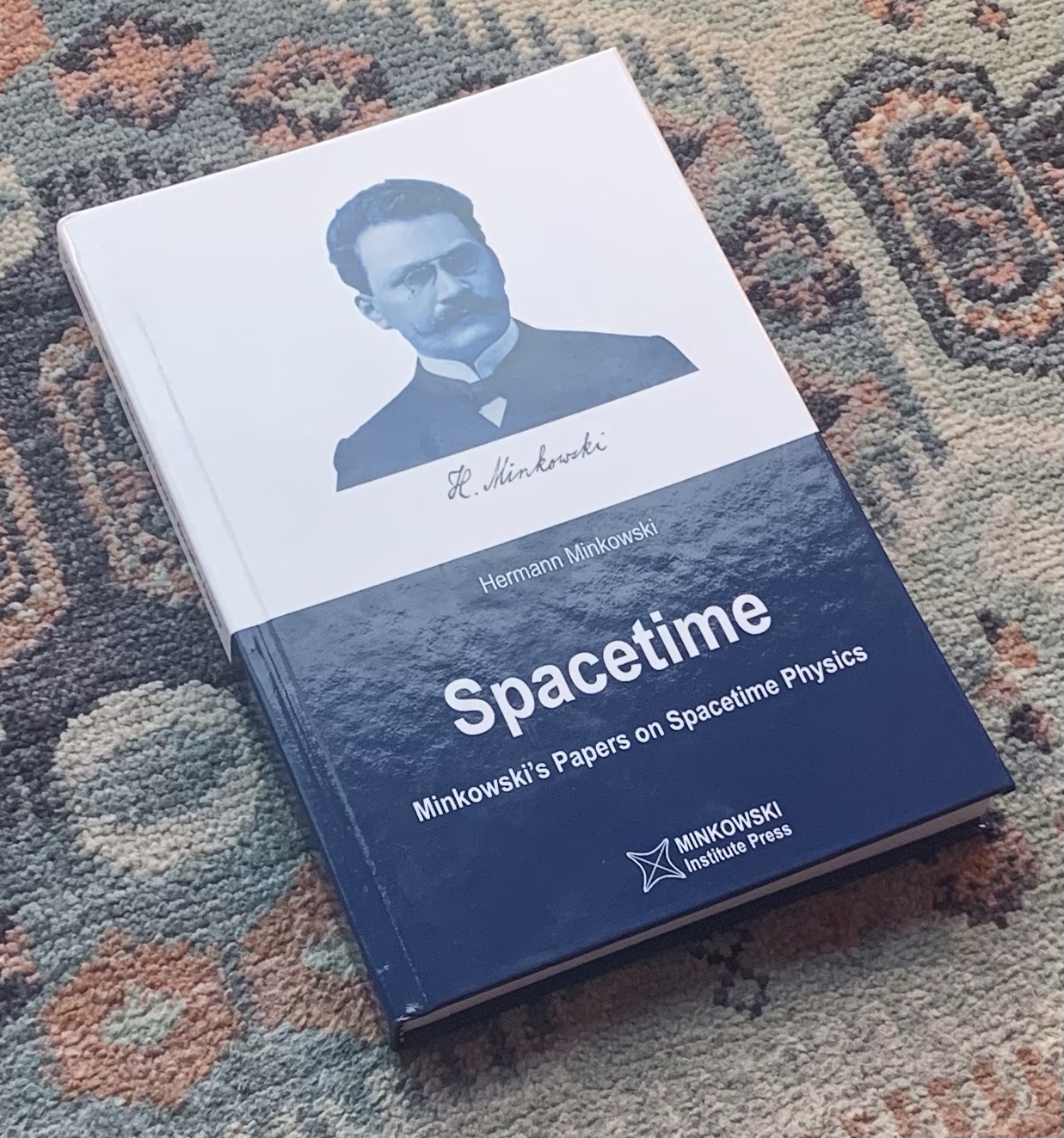


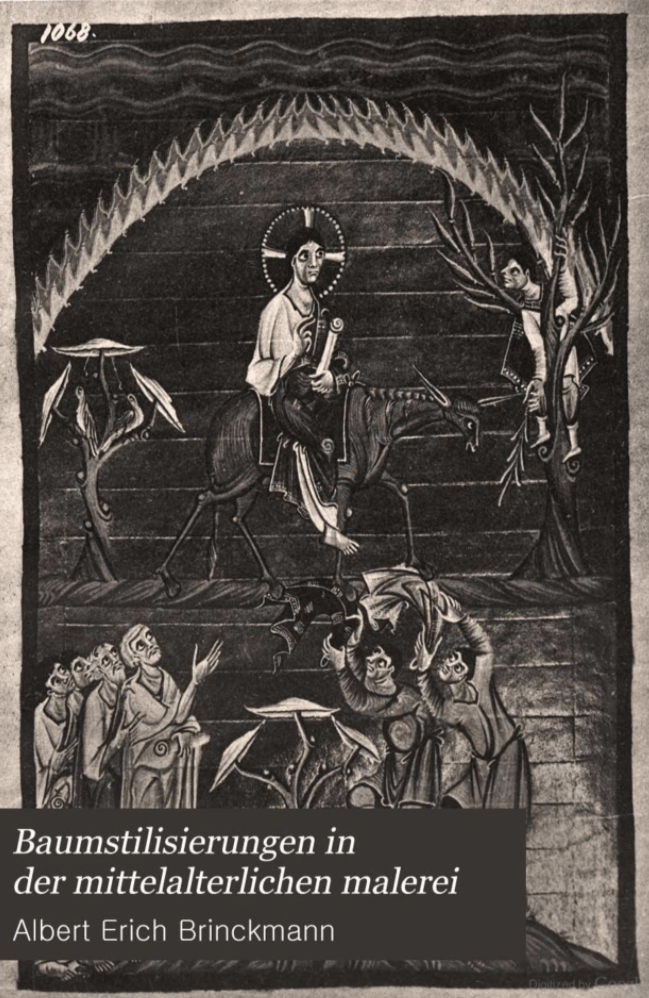
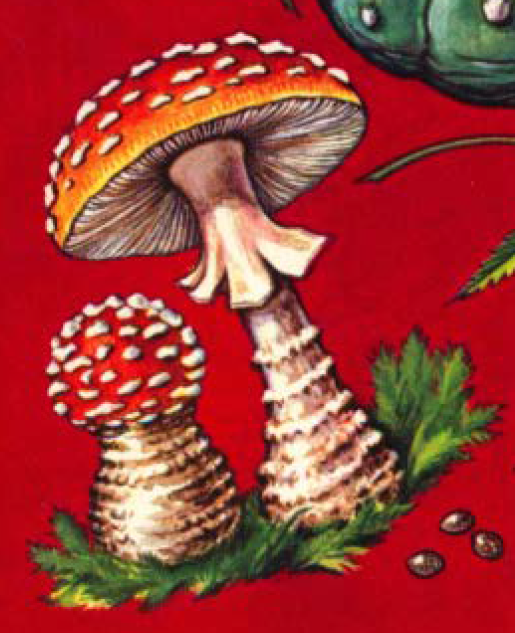
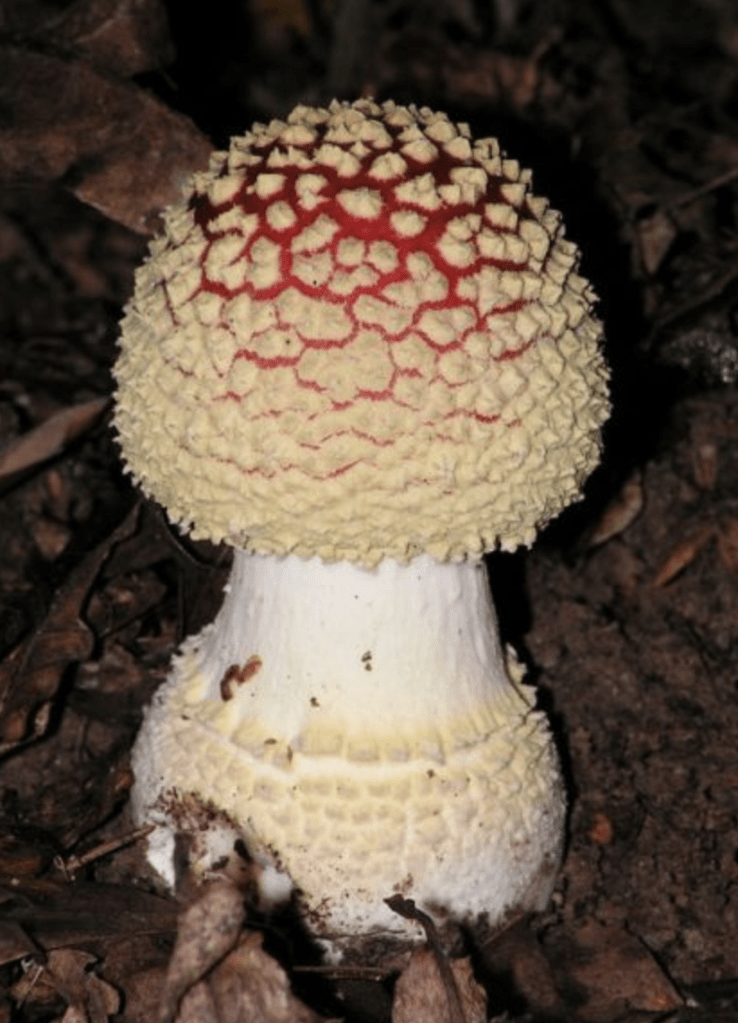
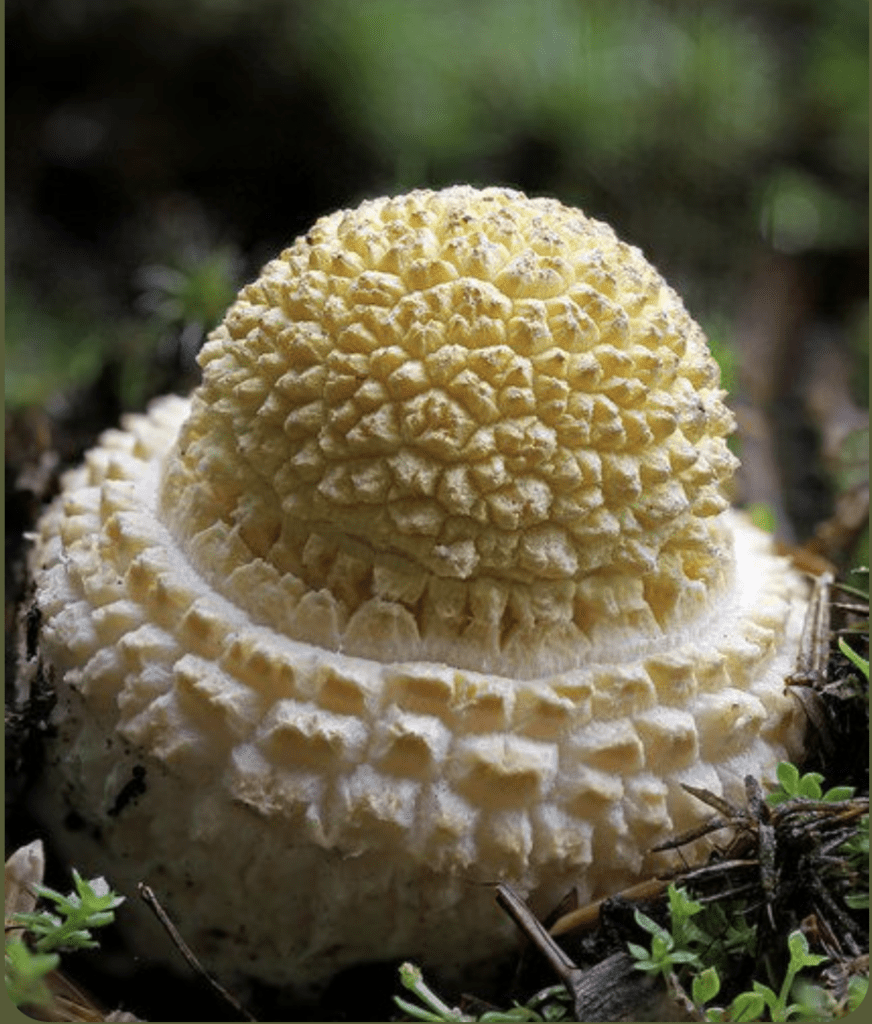
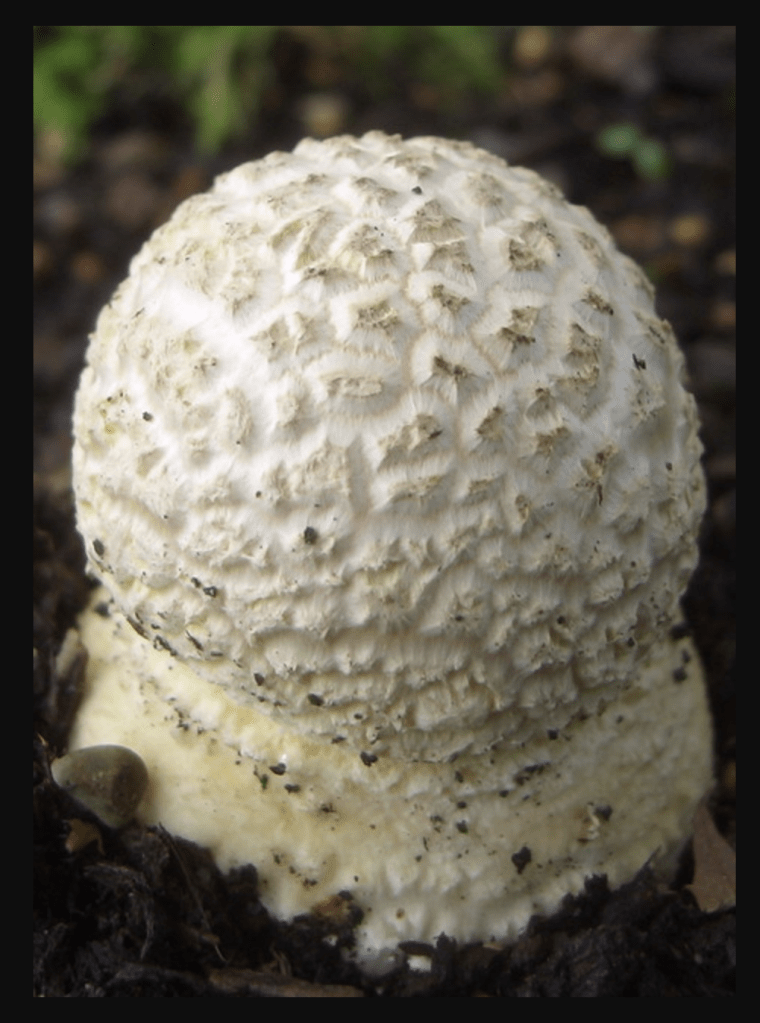
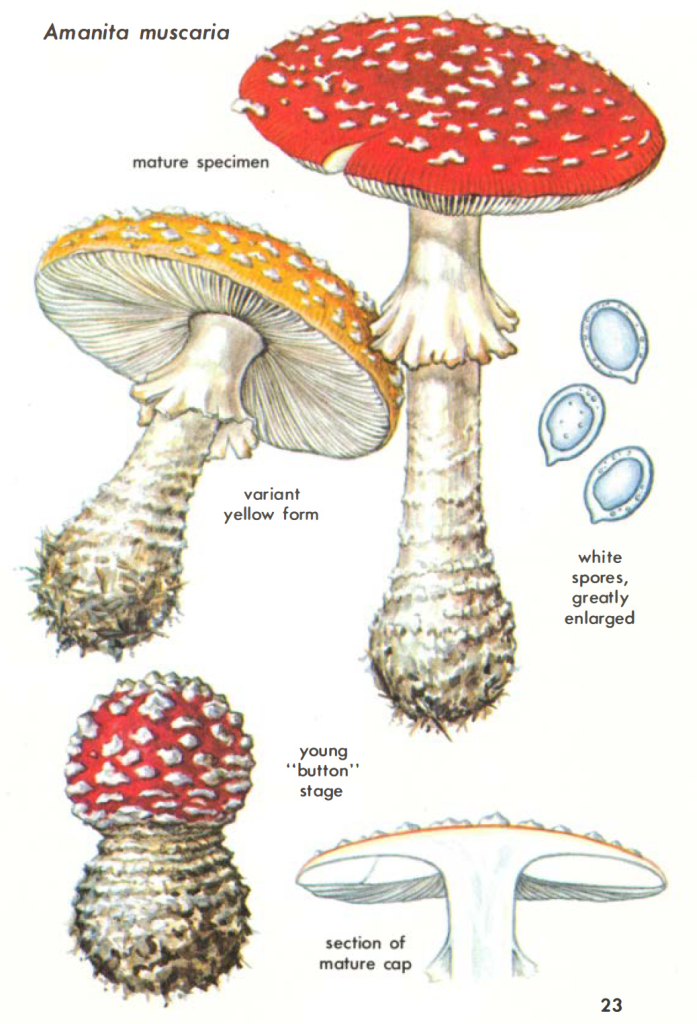
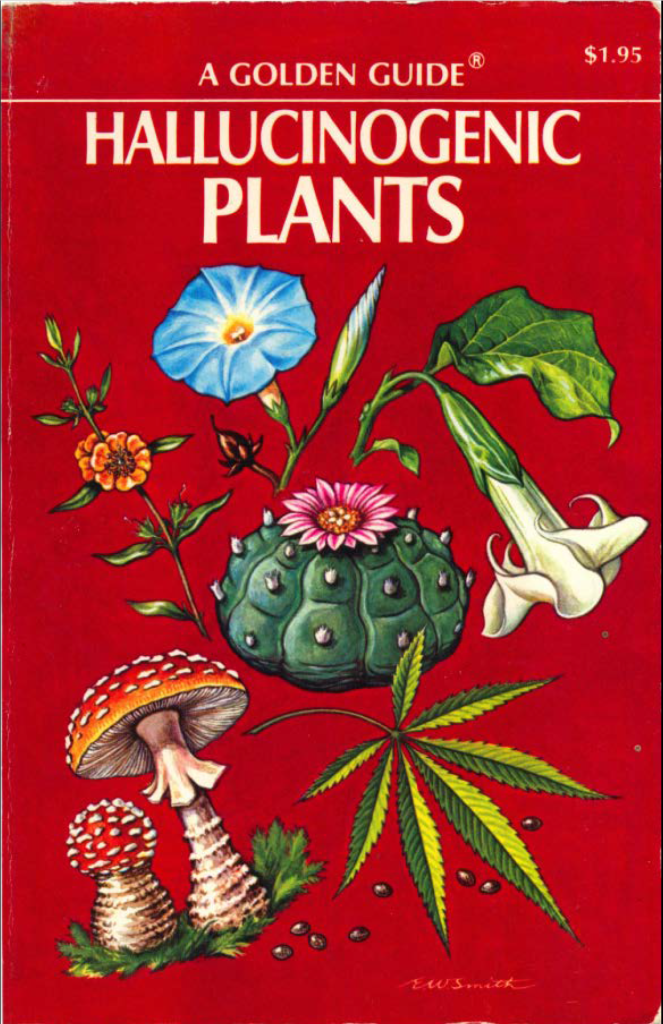





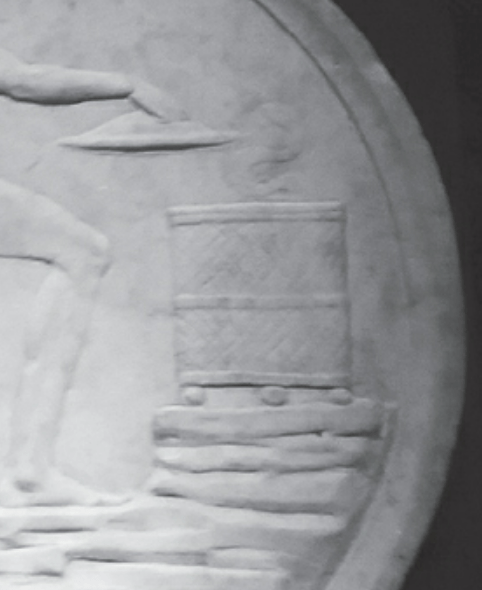
 The Egodeath theory