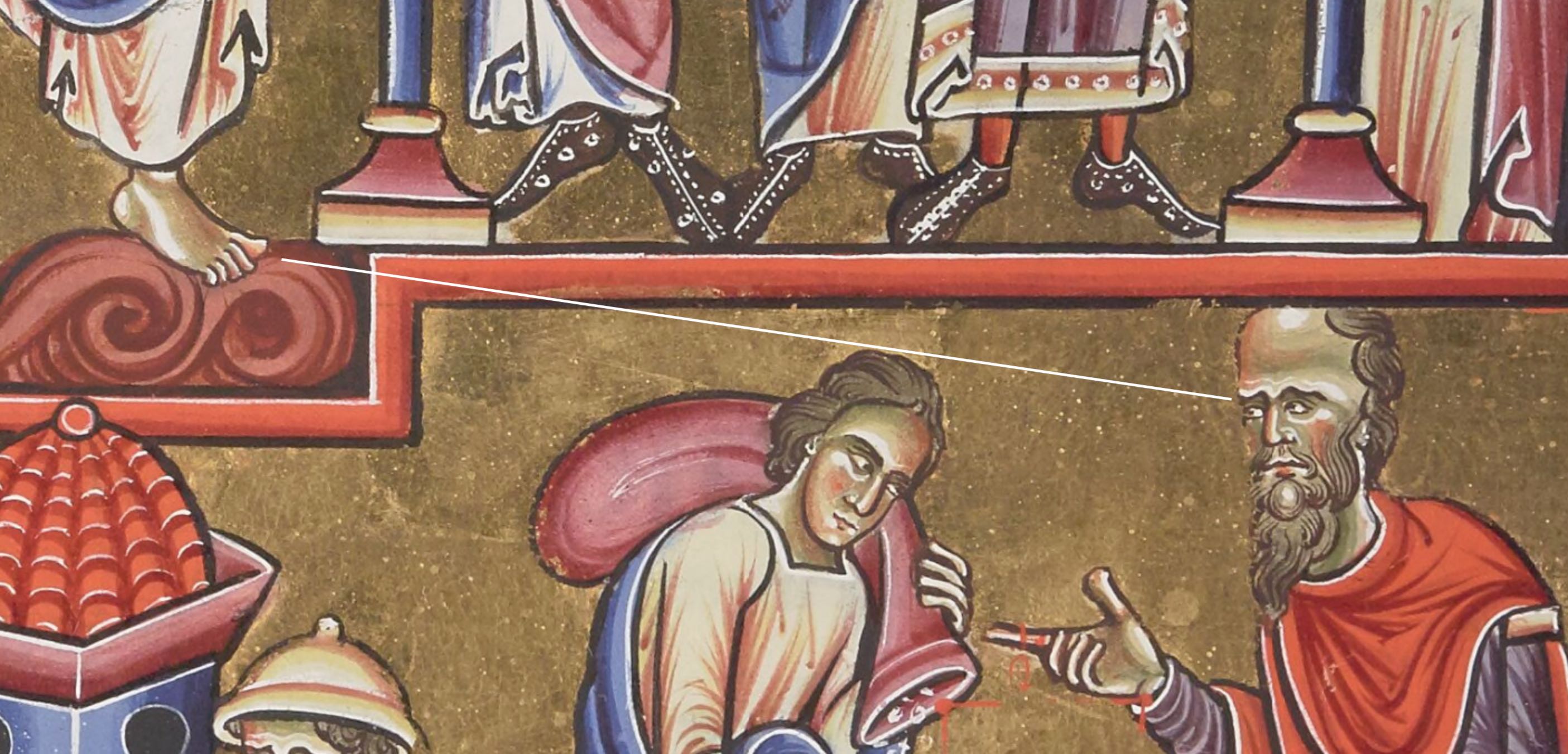
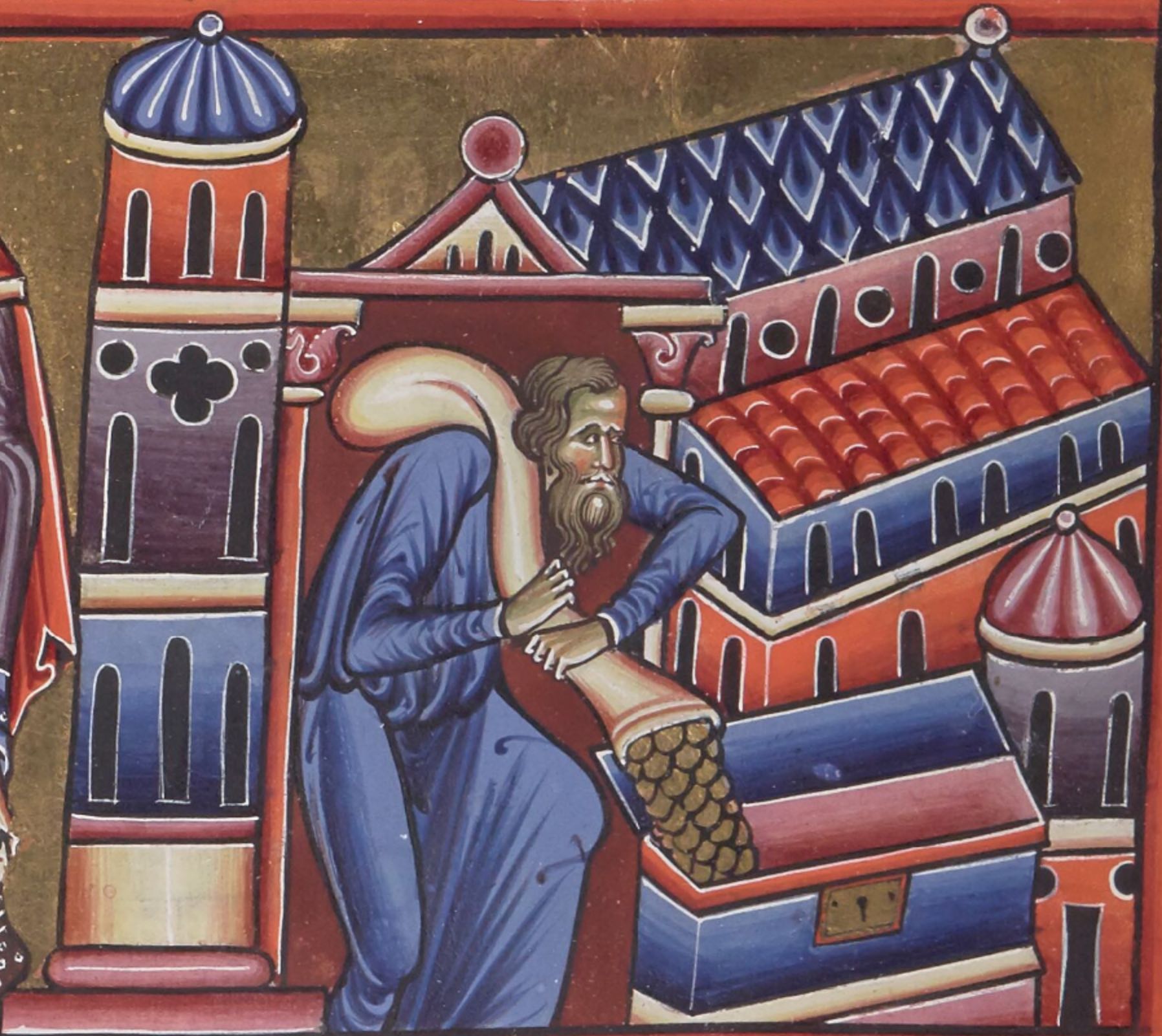
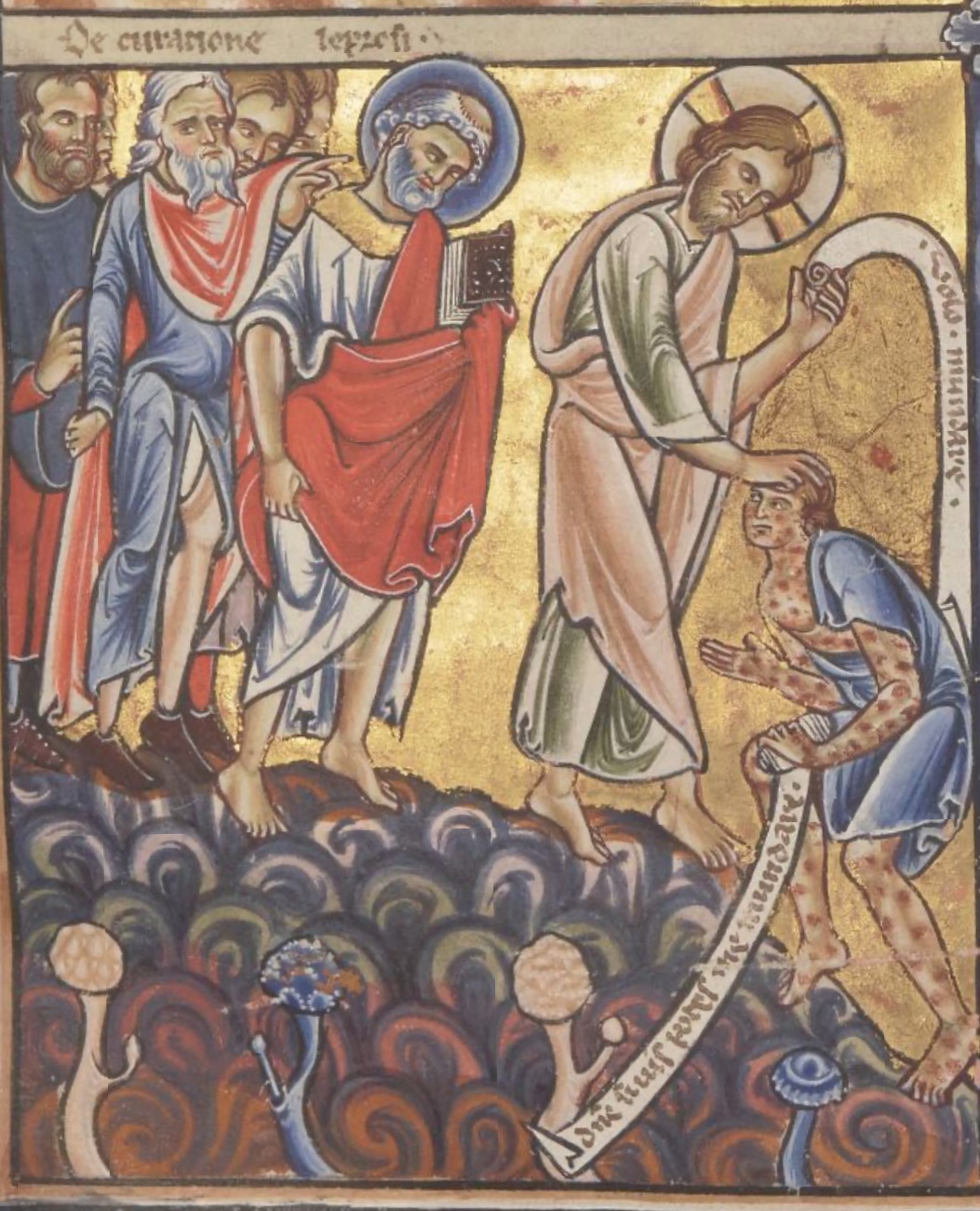
omfg i can’t believe, at 23:00 asserting Stamets says there was tons Psilocybin in Europe. The misimpression is Stamets’ fault b/c he was so lackadaisical in his book Psilocybin Mushrooms of the World.
Stamets couldn’t be bothered to make a clear statement on the topic as a topic.
Cleaned up extract about Psil in Eur:
Transcription by Cybermonk
Joe of Psychedelics Today podcast/outlet:
In Visionary was this comment about psilocybin-containing mushrooms never existing in Europe, and one famous mycologist you chatted with said there’s no evidence, like before Columbus discovered the Americas, and then you passed this by Stamets, and Stamets said that’s that’s totally absurd.
Hancock:
Yeah of course, and I had another mycologist do the DNA on Psilocybe semilanceata from North America and Psilocybe semilanceata from Europe, and these psilocybes have been evolving separately for tens of thousands of years, probably hundreds of thousands of years, so it’s got absolutely nothing to do with contact between the new world and the old, but there always were psilocybe mushrooms in Europe, just as there always were in the Americas, and you know they’re– the Psilocybe semilanceata of course is just one amongst many, you know, there’s many more; this is a universally available technique.
Transcript: formatting by Cybermonk
22:37 that isn’t all there is to reality and that’s one of the great teachings I think of the plant medicines 22:42 um yeah um now one thing that really struck me
Mushrooms in Europe
22:47 in Visionary was um this this comment about 22:52 um psilocybin containing mushrooms never existing in Europe and one famous Mycologist you chatted with said yeah 22:59 they they there’s no evidence like before Columbus discovered the Americas or whatever and then uh you you pass 23:06 this by stamets and stamets said that’s that’s totally absurd um yeah like of course and I had another 23:14 Mycologist do the DNA on sinus cyber semi lanciata from North America and Simon silicon semi lanciata from Europe 23:21 and these these um psilocytes have been evolving separately for tens of thousands of years probably hundreds of 23:28 thousands of years so it’s got absolutely nothing to do with contact between the new world and the old but they’re always with psilocide mushrooms 23:34 in Europe uh just as they’re always were in the in in the Americas um and and you know they’re the salicide 23:41 sevillanciato [Psilocybe semilanceata] of course is just one amongst many you know there’s many more um this is a 23:47 a universally available um technique for entering a deeply altered state of consciousness yeah and
European Traditions
23:55 a topic I love um to bring up you know uh Europeans have been dealing 24:02 with um the Catholic Church kind of stomping out magic for you know well over a 24:08 thousand years um and uh we don’t really talk about that I I was chatting um I had some 24:15 Twitter comment uh trying to say that you know Europeans had access and somebody was like that’s the worst of 24:21 colonialism suggesting that Europeans had magic and access um that’s how I interpreted the 24:26 statement but you know we have we have all these alchemical texts we 24:32 have all sorts of magicians a large history of Witchcraft um you know where where do you like to 24:37 go with this topic um about like European traditions well first first of all it’s it’s it’s 24:42 it’s it’s obvious it’s I do go into it in Supernatural back in 2005 and I do 24:51 um and and I also wrote the forward to bran Murray rescue’s book The the immortality key because because there’s 24:57 no doubt there’s no doubt that the mainstream monotheistic faiths do have their origin in Altered States Of 25:04 Consciousness I think I think to argue differently would be a mistake but it’s particularly true with Christianity the 25:09 early Christians uh were gnostics and and gnosticism is about revealed 25:14 knowledge it’s not stuff you could teach it’s stuff you have to experience uh and and the experiences Unleashed 25:22 by the plant medicines are exactly the kind of experiences that are described for example at eluses uh the the 25:29 ellucinian mysteries in ancient Greece and these move on into early early Christianity and it was just 25:35 early Christianity as I as I see it and as I’ve researched it was multifaceted there were many different kinds of idea 25:43 uh that defined it that were defined as Christian um it was on it only became 25:49 crystallized into the Roman Catholic Church when Rome made Christianity the 25:57 official religion of the State under Constantine that’s when that’s when one 26:03 particular faction of Christianity pulled on the Jack Boots of the Roman Empire and began to stomp on everyone 26:10 else and stomp out everyone else and to deny uh to deny that there had been any 26:15 such thing as Altered States Of Consciousness and to viciously penalize 26:21 people who explored Altered States Of Consciousness and and in due course of course to burn which is at the stake and 26:29 to burn so-called witches and to burn the the early gnostics were also burned at the stake uh clearly uh early early 26:37 Catholicism has a great deal to answer for uh and and it has limited and narrowed down uh the the potential of 26:45 Christianity look I’m not a Christian I I’m I I don’t I don’t Embrace any of the monotheistic faiths but but I do believe 26:53 uh that that life is is deeply mysterious um and uh that that it’s the spirit in 27:00 us it’s the soul in us that that that matters I I I think we’re much too 27:05 focused in the modern world on things on physical things on ownership on possession on defining ourselves in 27:12 terms of what we own and what we possess um science operates in exactly the same 27:17 way materialist reductionism everything’s got to be reduced to some sort of material process so so 27:23 Consciousness is just an an accidental byproduct of of brain activity you know 27:28 I mean all of these all of these things are very very unhelpful to us and I 27:34 think it’s possible to have a deeply spiritual outlook on life without being you know a Christian or or or a Muslim
The Beacon of Item 54 [I was afraid to lose my self-control]
HRS: It was difficult to control my thoughts.
Ep123: Shadow Factor (SHA)
Ep123: Non-existent Shadow Factor (NSF)
Ep123: The Non-existent Shadow Factor
Orig Post
omg p.m. March 14, 2023 Cybermonk
1106 addendum
2:25:00
inspired voice recording i promise to produce and upload asap
i commit to it out of all the many good solid voice recordings lately
hilarious lexicon
11-Factors psychedelic psychometrics questionnaires & CEQ and DISASTER ANALYSIS of this pseudo science and how to remedy making it an ACTUAL STEM Science.
I “discovered” Factors 12 & 13 before, now I received inspired hilarious PERFECT lexicon
Cluster F Analysis
Virtual Factor 12 (VIR)
(10 non-factor items from Ocean, 6 from Visionary of OAV)
Shadow Factor 13 (SHA)
contains my fav number, 54, my trusty beacon of light through the worm-infested – don’t look under the hood , don’t lift the lid or your childish illusions aboutt this “psychedelic science” will panic you throw of rock cliff to death when you see the snaky worms under the hood of psychedelic “sicnece”
brilliantly perfect analoyg of a storage room with well lit part and poorly lit part, darkest corner has a box, with NO LABEL containing 54 I WAS AFRAID TO LOSE MY SELF CONTROL
I explain ram seizure caught by THE MORE YOU ASSERT POSSIBILISM-THINKING , THE MORE YOU GO OUT OF CONTROL, the furnace monster = possibilism-thinking TEARS ITSELF APART by its own self-defeating efforts.
1106 addendum
i got it!: i now “got” yesterday’s insight that I was struggling to articulate and to hang onto re: with {upside down middle ram is not standing on left leg} maps to {the middle, good simple tree crown} that’s not touching the ceiling/floor.
I’m not claiming that’s super ultra elegant, forced upon us, but it IS meant by artist, I believe: It is good to not touch ground.
The middle ram says “It is good not to touch ground relying on left foot just like the middle crown of simple tree = good b/c non-branching.”
the quirk of:
middle ram left foot not touching ground. <– PUZZLE QUESTION: Explain the particular motif-problem that is presented to us by the artist as a challenge of “what did I mean here?”
/ end of addendum
I explain how all the articles citing CEQ or Sanders Moving Past Mysticism or Letheby or 11-factors or Petter Johnstad’s Day Trip to Hell points STRAIGHT to the art genre topics communicated, branching-message mushroom trees is:
the PERFECT ANTIDOTE to bullsh*t pseudo-coverage of bad trips is this art genre about the destruction of standing on left leg = relying on possibilism-thinking.
How the new metaphysics — pursuing exactly Letheby’s call for direction, and Johnson’s call for direction, forces creation of the new mental model of control agency and branching-possibility world.
The vector asserted by Matthew Johnson & Letheby & Johnstad points straight to the ram-seizure furnace depicted perfectly on-point by Eadwine & art genre of branching-message mushroom trees which includes handedness & non/branching;
handedness = mental model transformation about CONTROL;
non/branching = mental model transformation about TIME/ WORLD/ POSSIBILITIES (the alleged world in which alleged control agency kubernetes steersman helmsman king-with-sceptre).
Recorded in 1 take. No music. mostly dead-silent room, so high-fidelity, high intelligibility of my speech, and very easy to produce soon
#1 objective of the world is to eliminate psilcybin so I won’t allow that, I specifiy psil.
110factors is PERFECT RELEVANT example of how NARRATIVE contradicts DATA.
Narrative: there are 11 factors (42 items).
data reality: 66; the 11 factor q’air IF THEY WOULD HAND IT OVER FOR GRRIFITHS TO CONCRETELY SEE WHAT THE F THE 11-FACTORS Q’AIR ACTUALLY CONTAINS, is not just “all 13 ANX + ICC” factors, but also 8 other hidden suppressed items – this is the fault of Erich studerus, alex gamma, & franz vollenweider mis-used of spotlight stage-magic promotional marketing NARRATIVE vs. “technically our q’air contains all 66 OAV items” but narrative = 42 item, not the #54 afraid/control.
Excellent content is topic: My List of 10 Kindergarden Q’s that Psych “Science” Cannot Answer:
why was #54 afraid/control placed into ANX, not ICIC (ICC)?? Figure S1 & S2 Studerus 2010
My lexicon cuttingly mocks, calling it the ICIC category, b/c I see it lacks #54.
Renaming ICC Factor from: Impaired Control & Cognition (ICC) to: Impaired Control & Impaired Cognition (ICIC)
I see what you’ve done in the 11-Factors/CEQ trainwreck of this dragon-infested Pseudo-Science field.
CEQ: UNCHARTED TERRITORY, HERE LIES SHADOW DRAGON MONSTERS, “Almost 40% of Griffiths’ high-dose clients have a bad trip” (see Houot’s dissertation against Surrenderism).
What a disaster, of the first magnitude!!
why do you combine two distinct kinds in a single factor jumbled indiscriminately together, in DIRECT SELF CONTRADICTION OF YOUR SCIENCE OF CLUSTER F ANALYSIS 😅 😅
“DED” = Dread of What? False Theory Baked-in: “of Ego Dissolution”
That’s the standard pseudo-explanation matching that of Journal of Psychedelic Studies‘ Article “Johnstad’s Day Trip to Hell”
List of 10 Kindergarden Q’s Psychedelic (Pseudo) Science Can’t Answer
tbd, a few are above
Why can’t Griffiths get a concrete copy of the 11-Factors q’air? So he wouldn’t have been ABLE to “accidentally” delete item #54 and the 8 hidden Unpleasant effects.
Why is there no name of the 11-Factors q’air, so that everyone calls it by a different name; what is the goddam name of 11-Factors q’air? Why doesn’t it have a name? Shoddy sloppy careless lexicon = Pseudo-Science, vs. STEM style of explanatory model construction & communication.
Why does it take me a full month of intensive research to get basics?
If this is a science, how come there’s no Wiki articles about it?
Why is Walter Stace’s the only book as the alleged “scientific basis“, but it’s out of print, and 63 years out of date, and isn’t (i guess, dbl check) psychedelics-informed?
Backup Note from branching-message mushroom trees Article
11-Factors’ Shadow factor 13 (SHA)
About 11-Factors’ Shadow factor 13 (SHA): defined as the 8 Dread items that are in the Unpleasant Experiences high-level factor[dimension|scale], including the beacon of light guiding us through the dark wormy forest of Psychedelic Pseudoscience, Dread (DED) item #54: I was afraid to lose my self-control.
Ocean/Visionary unaccounted items are Virtual factor 12 (VIR).
Quote Houot’s dissertation: Nearly 40% reported extreme fear in Griffiths hi-dose, under optimal conditions. Yet, CEQ silently omitted the key effects.
Psychedelic “Science” suppressing and repressing the shadow dragon monster by summarily tossing it into Wouter Hanegraaff’s Rejected wastebasket (BURY YOUR HEAD IN THE SAND HARDER) just guarantees continued 40% bad trips (best case) and guarantees failing to bring back the treasure of Transcendent Knowledge.
addl bak note
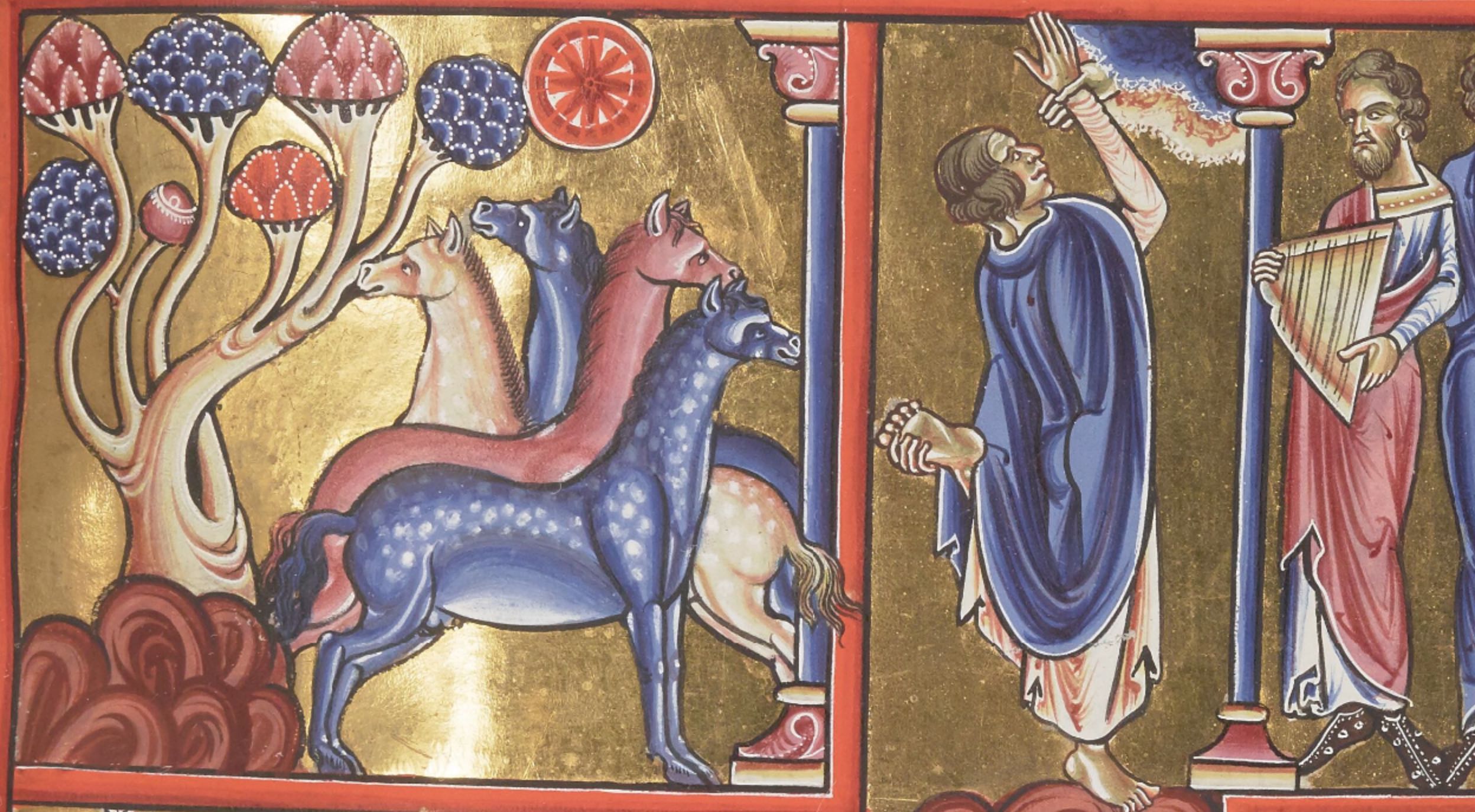
Sun light attached to Cubensis tree over horses = intense perception of control dynamics in peak loose cog state.
Planned discovery, since when I like a week ago was getting a lot of confirmation of hand shapes from f107, it was obvsious and completely predictable.
Since I looked at hand shapes a lot since Brown emails (Mar. 21, 2022: {branching-message mushroom trees}; Feb. 9, 2023: finger shapes and object shapes in St. Martin Church)
Of course I knew that discovering that key (Feb. 9: 2023: finger shapes are important — but I’m thinking of a recent f107 analysis that drove home and locked in a superior reading of the variety of hand shapes especially in Great Canterbury Psalter.
That ~Jan 27 2026 deepening of confirmation that hand finger shapes are MAJOR significance, not minor, would inherently of course inevitably unlock my next round (now) of starting to re-inventory all hands in Great Canterbury Psalter.
Feb. 9, 2023: Decoded Finger Shapes in Entry into Jerusalem in St. Martin Church
Jan. 29, 2026
Mar. 21, 2022 – discovered/ developed/ comprehended concept of {branching-message mushroom trees}
Feb. 9, 2023 (10.5 months later) – discovered/ developed/ comprehended concept of finger-shapes, and the particular… generalization of objects forming branching or non-branching.
I doubt I had any concept of finger shapes until the dispute about “Jesus is clearly handing out mushrooms” (far from accurate, by John Rush), or Julie Brown “I will only report what I see, I swear [to hide the fact she totally makes sh*t up]. I see that the caps have been painted over.” ie, there are no caps.
I see Maxwell’s electromagnetic equations have been painted over in this 1200 freso. What a self-contradiction, not the only one.
Video title: 2112: Overture / The Temples Of Syrinx / Discovery / Presentation / Oracle / Soliloquy / Grand Finale (Medley) · Rush Album: 2112, March 1, 1976 YouTube channel: Rush https://www.youtube.com/watch?v=wT7dciHZGfg&t=408s (6:48)
Lyrics: Discovery, Rush, 1976
What can this strange device be? When I touch it, it gives forth a sound It’s got wires that vibrate and give music What can this thing be that I found?
See how it sings like a sad heart And joyously screams out its pain Chords that build high like a mountain Or notes that fall gently like rain
I can’t wait to share this new wonder The people will all see its light Let them all make their own music The priests praise my name on this night
Songwriters: Geddy Lee / Alex Lifeson / Neil Peart Anthem Core Music Publishing
Intro
This page organizes all of my crops of the image, some with annotations.
I might list Features and 100-word explanation of each crop.
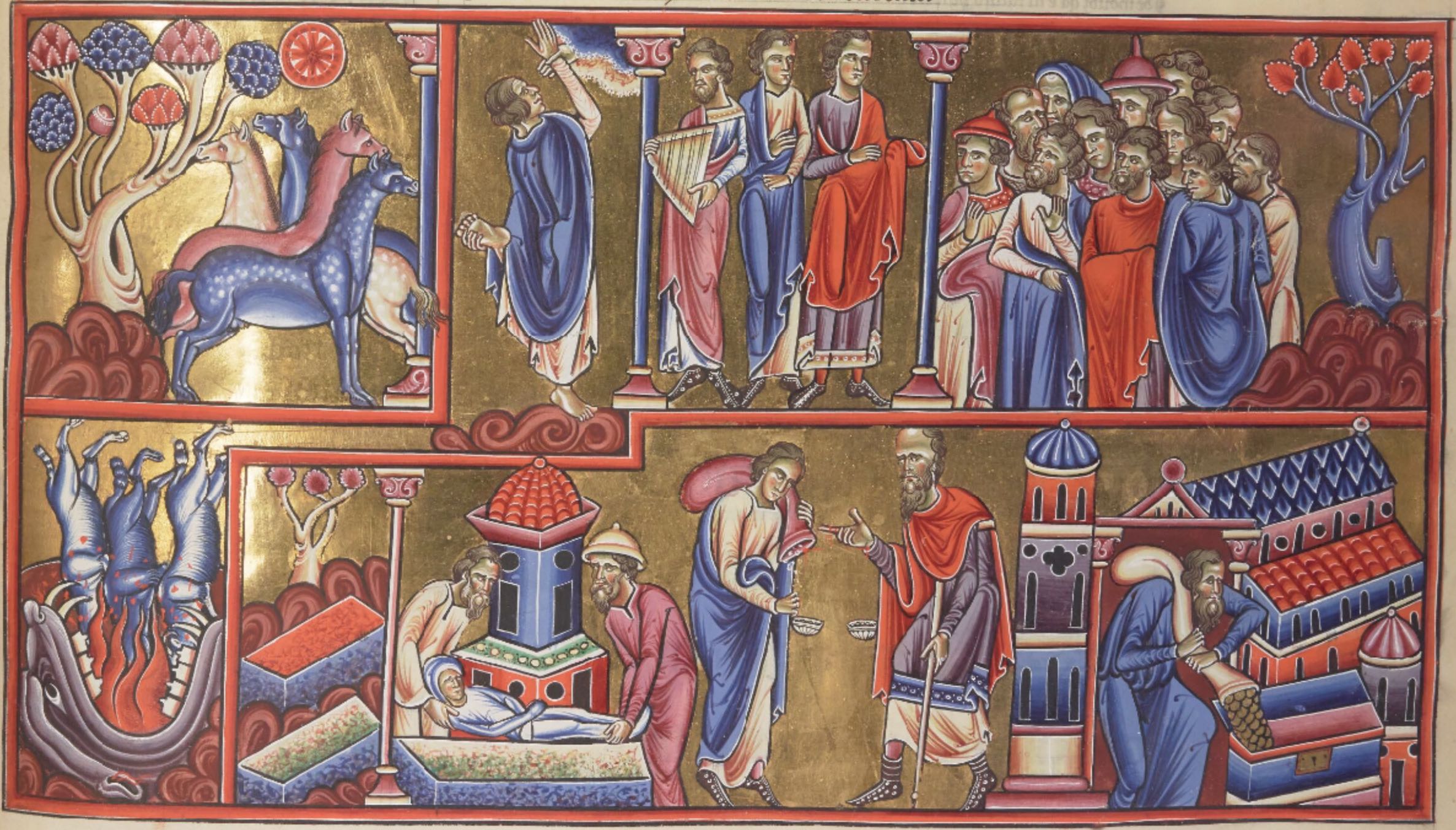
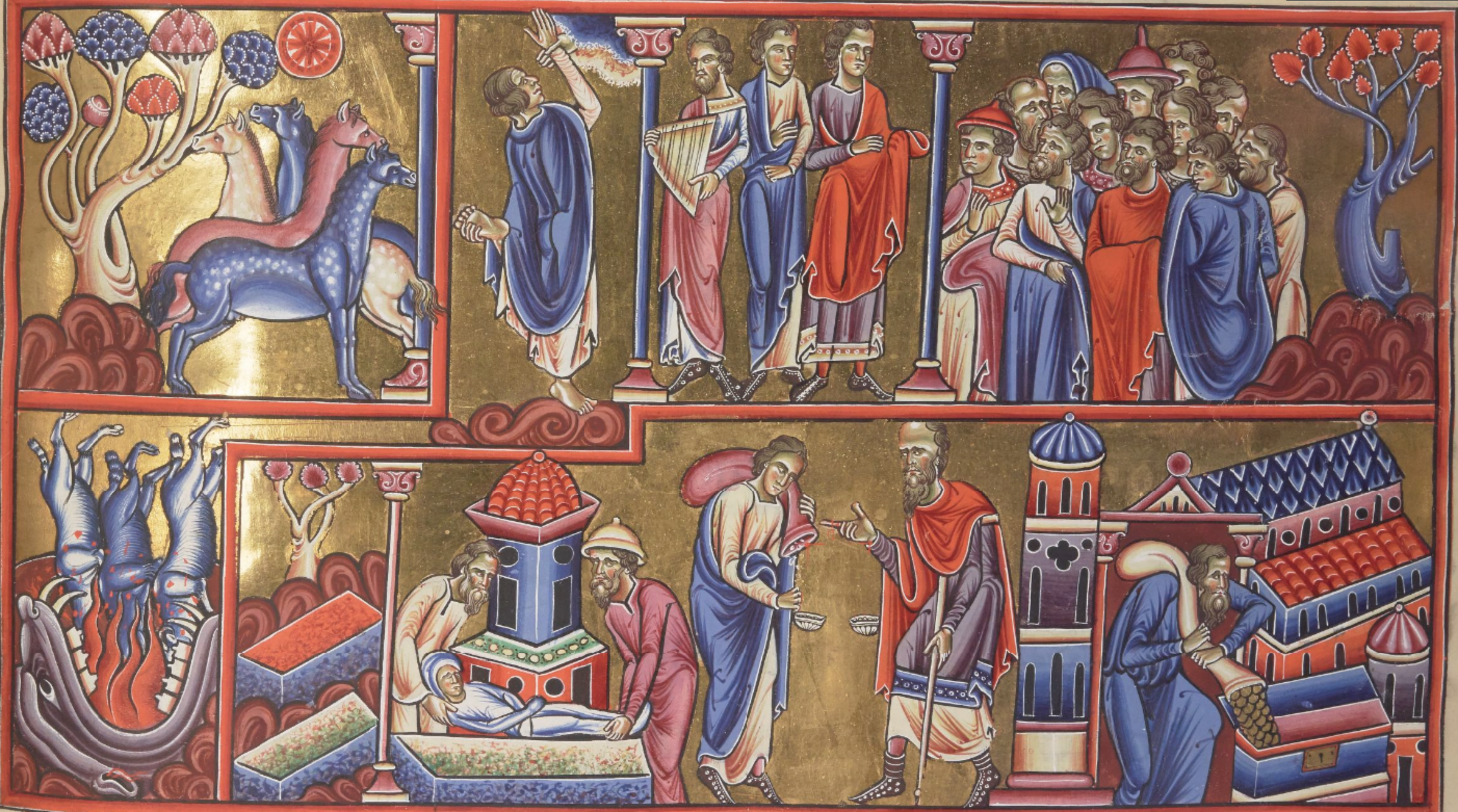
row 1: looking at nonbranching and balanced held by right arm, so that non-branching maps to held balanced by right arm maps (at high level) to: row 2: looking at scale balance + looking at ram weight on left foot, equating stand left foot maps to balance scale & death
Therefore the meta level connection is: row 1: non-branching maps to held balanced by right arm is like row 2: stand left foot maps to balance scale & death
so non-branching = balance (ie viable control)
Lines and boxes:
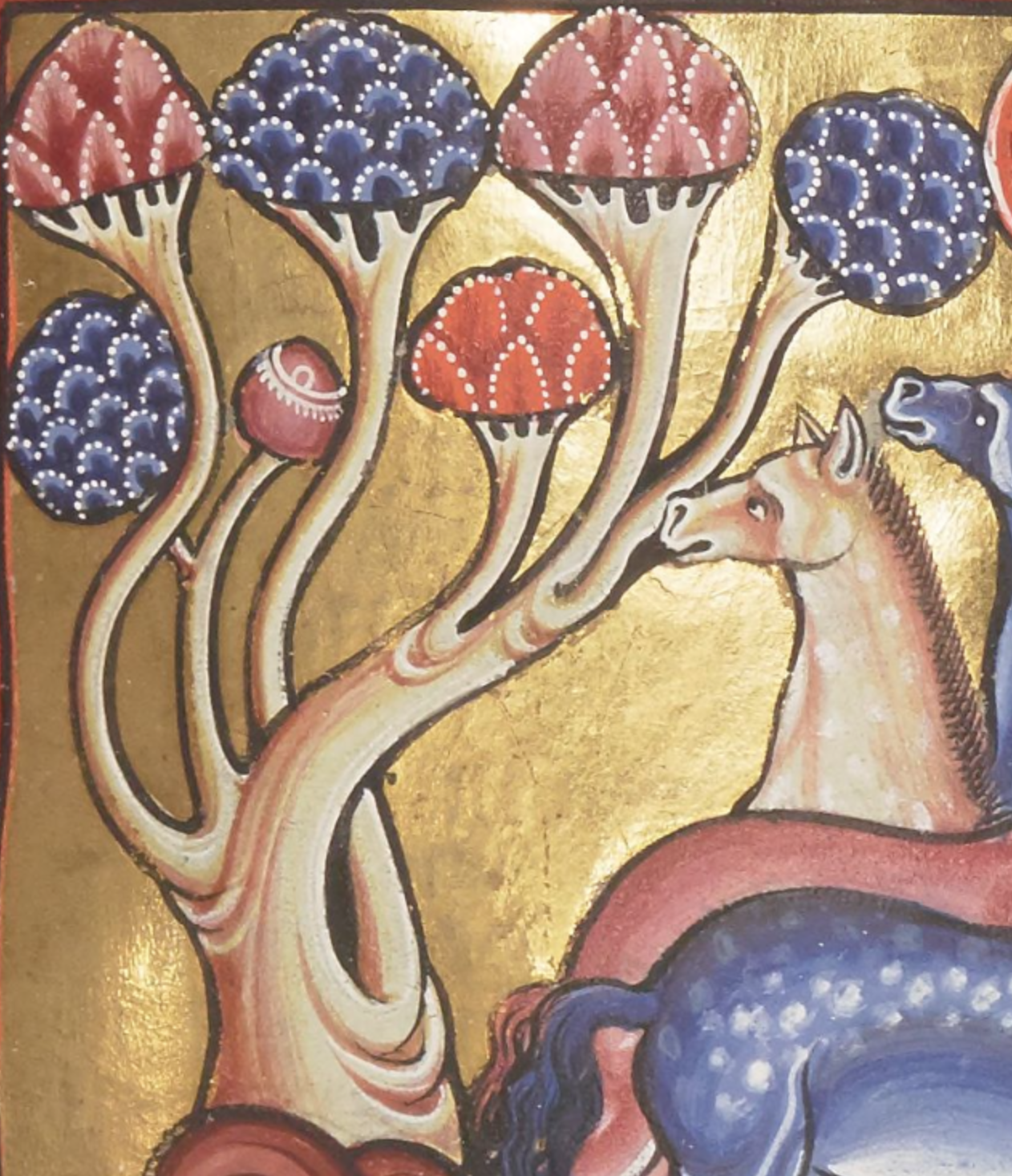
Row 1 left, white box & line: non-branching crown is looked at by horses
Row 2 middle, white box & line: God holding Higher level controller holding guy balanced by right arm, weight on right foot
Row 1, blue line connects {non-branching} with viable/balanced {2-level, dependent control}
Row 2, blue line connects {stand left foot}, {branching}, & {flames destroying} to {balance}
Middle: Vertical red line maps {standing weight on right foot} & {viable balance held up by right arm} to ego death corpse
Red line angled: connects standing viably on right foot vs. ram standing on left foot burnt up by monster flames hell-mouth furnace.
3 small white boxes on 3 cross-unders: right limb of both trees is visually cut; left (wrong) limb of corpse is visually cut.
[2:15 p.m. April 8, 2023] I just realized that this means that in f177, the Shroud ego-dead person = the guy balancing on right foot in that image, directly above Shroud.
Left foot: 5 toes are all branching same, = branching but no indicator of non-branching.
Right foot: big toe diverges, = IY.
Left hand: Fingers only; branching without non-branching.
Right hand: IY; adds non-branching to branching.
God’s Right hand: thumb displayed (non-branching); fingers (branching) are negated to express non-branching, by being visually cut.
Toes are shown in order to depict toe morph’y; a contrast of branching or non-branching between L foot & R foot.
Contrast unintelligent uncomrpeheniding uncomprehending previous joke about toes: CLEARLY THE TOES ARE MUSHROOMS = proof that psychedelics (ergot LSA) were the “key” (Muraresku) in mystery religions.
6:52 p.m. Jan. 29, 2026 – horses looking at God’s hand now becomes more articulated and specific, what the horses are thinking. Comprehend meaning of God’s thumb and visually cut fingers, and the IY hand. And the other hands and feet.
Fresh capture & upload of inefficient png as Color Check March 12, 2023 Space-Wasting .png
todo: delete from server to free space, and upload and use a .jpg instead.
Left: Botched Cross-Under of Mushroom Tree & Awkward Right Ram Leg Hidden Under Border
Exactly 100% cut/mis-aligned. Helps indicate it’s deliberate. Errata: I initially claimed maybe on Egodeath Mystery Show that it’s 50% misaligned. No; more interestingly, it is exactly 100% mis-aligned.
The “perfectly botched” cross-under produces/achieves a form of {cut right trunk} and {cut branch}.
This is a {cut right branch} and a {non-branching branch} and a {cut branch} and a {cut right branch}.
Compare the 3 trees in f177 regarding this region of cutting.
Mushroom tree has deliberately botched cross-under.
Row 2 shroud: Right arm/wrist is not hidden of Shroud; in ego death, non-branching reality is visible/ unveiled.
Guy on right of row 2 Middle holding shroud, left hand hides right foot, key tree Y hides I cross-under (branching hides non-branching reality), 2 rams have hidden right foot, he looks at the 2 ram hidden “true” right feet and the key tree’s I branch (“true” branch’s) cross-under veiled by Y branch.
Artist clearly choose to evidently choose to hide some right feet of … showed one ram’s right foot to prove the the other two (most of them) are intentionally/ meaningfully hidden/veiled.
More below, I’m keeping it at the place where discovered b/c solution came from the rams section down there, hidden rams feet problem, why most but not all right feet hidden (very artificially by artist; awkward = meaningful).
Row 1: awkward cross-under.
Row 2: awkward ram #3’s right foot under border.
SLOPPY INEPT ARTIST SHOULDA PLANNED AHEAD BETTER 🤨
why didn’t my sweep pick up this yesterday crop? Did I lose data? Did I forget to upload this? I shouldn’t have to re-upload these. try upload, see if -1 is added. No, evidently I never uploaded it! After my long writing on “pointless loiterers” yesterday.
todo: make crop, of Row 2 panel 1+2. AW MAN SAW LAME TRUE ISOMORPHMWITH PANELS 1 THROUGH 3! his left hand hides — I was complaining 1-2 days ago, that he holds the good right angle with his BAD left hand! it’s isomorphic! Panel 1 and 2 and 3. I have to crop 1-3 not 1-2!
Row 2 Left: Awkward Inconsistent Ram Right Legs Hidden
OMG ITS OFFICIAL i solved the deliberately botched cross-behind in f177 msh tree [10:16 p.m. March 18, 2023] It says to look at the cross-behinds pattern. Branching appearance hides the non-branching reality.
Visible right wrist hiding left, centered on the stable tower. Seeing the veiled non-branching right-hand limb, makes stable control.
Hands crossed over: in the egodeath state, the right limb is no longer obscured by the left. It makes sense that the crossed arms are a focal point of meaning. guy on right: Though his left hand hides the right foot, he’s looking at the 3 cross-unders (2 rams, simple key tree’s I branch). So he is “right-i-fied”. Wrapped person then has:
right shoulder hidden by right hand so that’s OK.
right wrist visible so that is GOOD.
right angle hidden by left hand but owner is looking at 3 cross-unders so that’s OK.
I Almost Halted and Published Only the Isolated Mushroom/Standing Panels
I Almost Gave Up after Solved Just Two Panels – But 5 More Days of Hard Work Solved Entire Image
todo: check/confirm how many days to solve Row 1 panels 1-2, vs. now completed at [10:56 p.m. March 11, 2023] (my grand finale was tons of white lines & blue boxes).
[Est. timestamp for the following: 11 a.m. March 11, 2023]:
I remembered the one other missing point I wanted to add in this post:
again I will say
I was only going to include only the upper left part of this image in my 2023 article branching message mushroom trees
this was so pathetic, it is so sad to hear me but my plan was to only include the upper left, because I gave up way too soon I gave up way too easily.
I really felt the tide turn when I started thinking in terms of applying my grid analysis technique.
If I break up this image into panels — but be careful, you need to include some two-panel crops as well — certainly you’re not so stupid that you’re unable to say anything?!
come on , you’ve got to say something about each panel; don’t just giveup, like Terrence McKenna!
It was pretty fkking hard — but my grid technique is very powerful. my magical tool from the gods, like the diamond hammer of interpretation.
🔨💎🪄
There is no hope, its too hard 😭😭 it will take YEARS to decode this image !!
in his 1994 book food of the gods , he says “do not under any circumstances open your eyes and attempt to look and see mushrooms in our own religion
they’re not there
don’t look
give up
instead you need to morally grandstand about how you are superior to that awful big bad church
that’s the important thing is to elevate yourself above it
that’s what it’s all about
That is what our mission and objective needs to be , he tells us — not, what strategy is going to be effective to repeal prohibition
no he doesn’t care about that
he pushes us to adopt the most anti-strategic , defeatist, Self-defeating, give up, don’t even try at all mentality
just declare defeat from the beginning, make that our brand, and commit to that position of defeat, permanent commitment to permanent defeatedness
that is McKenna’s Strategy For Repealing Psilocybin Prohibition
thanks a fkking lot McKenna
with allies and leaders like these, who even needs prohibitionist opponents?
defeat is built right into Terrence McKenna’s attitude:
That was my immediate reaction as soon as I got his book maybe 2004 and read it: I was shocked at his defeatism, I knew he was completely wrong.
I knew it because look at the religious mythology: you can tell there’s Psilocybin mushrooms effects depicted all throughout; it’s all about analogies describing Psilocybin mushroom effects — so there’s no way that they could’ve been removed there’s every sign of them, Psilocybin mushrooms.
It’s right in the religious mythology.
“Announcement: I have now will have decoded the image, congratulations, what a relief , I am so glad to have will have decoded it 🎉🎉” 🤨
My enthusiasm for seeing a way through that WOULD surely enable me to decode the image led me to strangely post a misleading post title 5 days ago: worded a bit prematurely; future pov: “Decoded Entire 4-Horses Image (Canterbury Psalter)”
addl note [10:07 a.m. March 11, 2023] I am glad and satisfied to see fortunately (this is a relief) the two bags are at the same angle!
which proves that whatever he’s putting in the Thomas Hatsis honorary potato lockbox is the same thing as we are weighing out 5 g of dried french fries for Thomas Hatsis as his reward for his excellence in historiographer historiographical methodology excellence.
HERE YOU GO HATSIS 🎉🎉
🏆🏆🥔🥔🥔🍟🍟🍟🥇🏅
I was celebrating having found an attitude and strategy that would certainly enable me to, near future, come up w something to note on all panels of the image.
NOW I can accurately actually speak in past tense, that I have solved this Puzzle #2 image. It feels exactly like I have completed a video game Eadwine designed.
I wonder now how many panels in Great Canterbury Psalter are like this puzzle quality?
I sure have new eyes now to look at the images in Great Canterbury Psalter now that I am thoroughly conversant with how to read two full Eadwine images. f134 & f177
Largely the solution to this puzzle was ITS THE EYES AIMING!!
eg with the shroud ego-dead person, the trick is to look at the EYE DIRECTION of lifters, not at their bodies only.
Same as horses, its not about the horses, its about the object of — target that they are looking at.
Then cancel horses out and instead draw line between the two targets they are looking smiling at.
Ignore lookers & Draw lines connecting the looked-at items.
In shroud person case, looking connects again two– wow good idea, meta the above lines: draw lines [8:40 a.m. March 11, 2023] between the 4 items being pointed to by the horses and ego dead lifters of the Psilocybin clinic guides.
Equating those pointed-to targets. Those are:
blue lone nonbranching cap of msh tree
God’s right hand holding his standing srlf control from falling over LOSING BALANCE, God level of control prevents losing balance falling into the sacrifice monster chute (I have to develop my explanation of how balance of control is saved by being made to sacrifice anamial shorn rams)
pink key tree topic of {branching contrasted with non-branching} (that we move from branching ie possibilism to non- ie eternalism )
the balance-balance guy but especially the crutch and [combined with like a minus sign] stability of left (“?!!?”) heel on column base
in summary: looking-targets means:
non-branching (eternalism instead of possibilism) = stable balance of control in advanced high dose Psilocybin
now I’m in the state of scouring for anything i missed, and, quite hard is clearly discussing how exactly the dynamics of repudiating animal thinking sacrificing child-thinking works
including Egodeath.com instructions section on how to self-threaten to demonstrate/ test/ put on trial/ put to the test, cybernetic eternalism
Row 2 Left
this next panel by itself is not adequate for some purposes– MUST do some MULTI-PANEL CROPS, is a lesson-learned takeaway:
Row 2 Panel 2
why the exact number of columns, what is purpose of each column? metaperception layer?? bc they are looking through the solid columns IN BOTH ROWS Of looking-pairs.
Refers to (by analogy) levels of abstraction in perception?
It took too long to perceive the two guys looking right: stop looking at THEM and look at their EYES exactly as if “look at the moon, not the finger pointing at the moon”.
If Eadwine drew a man pointing, would you stare only at the man pointing, or wouldnt u pay attn to “whats he pointing at?” !!
u r supposed to look at that & connect the targets of looking eg left tree like right tree, and right leg of rightly standing guy not losing his balance of control stability on high dose Psilocybin from the Hatsis “a naturalistic reading is always neutral and correct” potato reward lockbox
here u go, Mr. Naturalistic:
🥔🥔🥔🥔🥔🥔🥔🥔🥔🥔🥔🥔🥔🥔🥔🥔
Here is the kind of reward your “We Historians’ Methodology” deserves.
as i wrote at very start of this site Oct 2020: you dumb and dense committed mushroom rejectors, FOR YOU, IT IS INDEED POTATOES, u r so right, good for you.
the point is: right side guy WHAT IS HE LOOKING AT??? and not shown–
here is a bit of a new idea 914 am a.m. March 11, 2023] A new angle we have multiple pairs I’m thinking and it’s increasing as I talk, the number the count is increasing:
how many places in this picture do you have a pair of people who are looking at two different things?
row one middle of which you only see the left hand guy above, that serves to conjoin the two different things , the targets of what they are looking at
A LOOKER PAIR, how many in this– 9:16 am OH! a name for this image: THE LOOKER-PAIRS IMAGE
point: show rightly standing guy & monster sacrifice child-thinking chute
Is he not looking at the tree?!
am I insane?? 🤯
🖼🔍🔬🧐
Am i seeing things, like Julie “X-ray Vision” Brown following in John Rush’s bad-influence footsteps “Here we are clearly being shown mushrooms clearly being handed out” (in the entry into Jerusalem scene in Saint Martin church).
And re: the Great Canterbury Psalter “God Creates Plants” famous image:
“Jesus holds” — I think even Jerry Brown maybe makes this mistake this big mistake of saying
I don’t know who I don’t know who all makes this mistake but
“Jesus[sic] is gesturing at the Mushrooms inviting us to ingest the mushrooms” and “God Holds an object, probably a mushroom, in his hand”– but the image clearly in fact shows that God’s hand is completely empty
but when you take the same hallucinogens that these scholars are taking, then you can clearly see it
Historical note; ie how the discovery sequence went:
notice how this was itself a breakthrough just seeing this one guy in isolation looking by the way through the column he’s looking through the column so we might have meta-perception
just this one recognition that he is looking at this tree is a big deal, that’s a big breakthrough — but I had not yet connected, I had not yet even thought of asking: what about the left-hand guy:
what is the left-hand guy looking at?
and ultimately in the end, after it occurs to me to draw more lines, finally the whole picture unfolds and I perceive and recognize the entire intended set of looking lines.
and then ultimately a few minutes ago above, I realized that the entire image is largely characterized by the the grouping of these pairs of people looking at different targets, so as to connect all of those targets.
Here is where I started to figure out that the the three tower mushroom caps the round Towers all of them indicate stability and so we are being shown a big building, but the little tower next to it is saying “the point of this building is stability” just like the other two tower buildings
connector usage of motifs
and an interesting John Rush point:
yes indeed of course all of the mushroom cap towers with the top that looks like a mushroom cap , of course it’s a given that they all do mean mushrooms — but you haven’t , you have not explained very much yet.
Because the point of this art genre is not mushrooms
so you really have not finished ; you’ve barely begun, you have barely begun to explain the image when you say that these are mushrooms these mean mushroom caps the top of the towers mean mushroom caps
well you have not actually explained the image yet.
The ultimate reference of the image is not mushrooms or mushroom caps.
in fact you’ve just barely begun because the question is:
what are the Mushroom caps being used to teach us about Psilocybin effects?
THAT is the REAL question not merely Jerry Brown’s dead end project of trying to make a database for scholars to debate whether this imagery means mushrooms or not
that is not the challenge that we have
the real, more further, more-developed challenge is:
what is the mushroom imagery being used to communicate???
That is where the true difficult big-brain work is that I’ve been doing.
all of that work is opened up by the given assumption that all of this artwork — like John Rush says — all religious art means mushrooms — but you’ve only gotten started at that point; congratulations, you’ve begun playing the game
The game is not “spot the mushroom” or Thomas hatsis debate whether it is a Mushroom or not
this is not it is not about debating whether it is a Mushroom or not
and that was the game that Jerry Brown was still thinking that he’s playing
he’s thinking he’s still playing the infantile beginner-level game of “spot the mushroom” (meaning, of course, kiddie Amanita 🍄 ) 😞
but I am doing the advanced level, next-level, which is:
If you are looking for Amanita as if that is “mushrooms”, that immediately indicates that you were at a beginner infantile childish beginner level of playing the game
If you are looking for Amanita as if that is “mushrooms” — Hatsis admits & advocates doing exactly, literally this, to the full extreme;
he tells me that Brown and I are not allowed to assert Psilocybin; that we are being inconsistent and self contradictory, and we are not allowed to leave the John Allegro jail cell which Hatsis has ensconced himself in.
I hasten to emphasize:
I never was in that cell. — in extreme contrast to Thomas Hatsis , who still says his favorite book is sacred mushroom and the cross (don’t know why; it’s not that great of a book) —
I never was a follower of Allegro,
I never even heard of him until after I had finished my core theory,
And when I finally got his book, I was just disappointed — except for the part of no historical Jesus and I followed that up through other authors: Freke & Gandy, whose book The Jesus Mysteries is WAY, WAY better than SMC.
I am not “leaving Allegro”, because I never started from allegro!! or “considerable departures from”, to quote John Lash’s equivalent confused as hell , projection wording.
My thinking is certainly not a “departure from”; I have never “departed from” Allegro, and I most certainly never “departed from” being a follower & worshipper of the false god Wasson, like Hatsis and Lash stupidly assume everyone is, just like them.
Stop projecting your stupid intellectual autobiography trajectory onto me!!
I did not “come from Allegro”; in 0% does my theory come from allegro.
Or from Wasson, for that matter, John Lash: Wasson your god and idol can SUCK IT, John Lash!
my first involvement with incorporating coverage of Wasson into my theory was to write a 64-page article saying how he’s totally full of shiite and contradicts himself constantly,
and i accused him in 2006 of withholding what pathetically nonexistent citations of art historians covering pilzbaum.
Citation Fkking Needed!!
A single book, that Panofsky calls “little”, 50 years outdated by the time of the 1952 letter [excuse me, LETTERS], 117 years outdated now; only 86 pages (see the present website); no one bothered to translate it from German to English; and it’s got the word pilzbaum only five times?!
this is pathetic!! is this is all you got ha ha ha ha
where are the art historians’ allegedly, supposedly claim and pretend “we have thoroughly discussed and thoroughly published and written and studied exhaustively all about these mushroom trees”
GREAT, THEN LETS SEE IT–
It’s bizarre
why didn’t the entire world yell at Wasson “great I’m glad to hear that Panofsky covered that’s good news where is the books?”
where are the books?
we’re really looking forward to looking at these books
why didn’t the whole world get interested and look into it and investigate ??
where was the pushback?
did everybody just cave, what the hell?!
The first thing I ever wrote or thought about Wasson, when I deigned and stooped and lowered myself to acknowledging his existence, was to tell him and Panofsky the art historians:
bullsht!! you did not do any of that!
where is the fkking citation?!
where is the goddmn citations — and it better be a huge, towering stack of citations of your coverage.
it needs to be at least as tall as the tottering tower of Carl Ruck books
the adult game is psilocybin little brown mushrooms
given that every one of them means mushrooms, then what???
and in fact that was precisely the theme of the first book review that was posted which was my book review the first review of Jerry Brown’s book made exactly the point:
In this crop (last night or the turn of the day beginning of the day midnight)…
The scope of this crop was to include both of the targets the both of the ego-dead lifters are looking at, to group them and ultimately to connect those two targets.
Super ultimately, to connect all 4, 5, 6 … targets of all of the looking pairs
I guess I have to pay tax to John Rush now that I’m drawing confusing lines on blurry Internet images pointing to things that I still have no idea what John Rush, what the hell am I supposed to be looking at in this picture?
this is terrible communication, it’s completely confusing, I have no idea what you’re even talking about
The John Rush Experience 🎸
Alas I know that you all know what I am talking about about this experience:
” great !!! a wonderful new book, ton of mushroom pictures, right? uh… what the hell am I even looking at here??”
Confusingly — it really kept me on my toes trying to explain how I knew when I had the correct reading of the lame left leg of
The very challenging thing here is the left heel is being shown as stable , which is a self-contradiction.
Everyone knows that left leg means unstable self control during psilocybin , so why are we being shown left heel as being stable??
That doesn’t make sense.
but then you look at his crutch Which serves t
he best analogy I have is that it serves as a negative sign
but I don’t like the way that I jump from saying “the crutch is like a negative sign “, and then I bring in this idea of the lame left leg , and then I say “there I have clearly explained how the left heel , which means not stable, means stable”
then this feels like it too rough, too jumpy and rough of a way of explaining it then too suddenly I bring in the motif of the lame left leg, which everybody is thoroughly familiar with from king Oedipus
so I am still working, laboring to clarify how can you use the unstable left heel to represent stable control
so I spoke for an hour in my voice recording last night about that, trying to smooth out that explanation
I hope that I have captured all of my thoughts that arose while posting this quick short little one minute re-announcement
10:03 a.m. March 11, 2023 Cybermonk
Pointless Loiterers Problem
Man this is lame I still don’t have a crop of the pointless loiterers if you look at the pointless loiterers I just noticed something that because I’ve been analyzing their hands of course I’ve been analyzing their fingers a lot and covering the hands of revealing and showing the hands well I just noticed something something
10:49 a.m. March 11, 2023] The guy who’s looking left is showing his hand and left and the guy in the middle of showing both hands aimed in two directions, and the guy on the right is aiming his hand to the right hand tree
the mindset just now, the mindset that I used to perceive that was:
imagine that they are subtle agents standing on the street corner, and they give the appearance that they’re not doing anything, but actually they are messaging: they are signaling; they are sending a signal through their eyes… [BUT WAIT: THERES MORE!!] 🔪🔪
The Pointless Loiterers are Subtle Pointers
👈 👈👉 👉
But the moment that I took that perspective (more vividly than before) a minute ago, I then realized: I looked at their hands, and then I saw the pattern of the meaningless–
the problem (considered the past cpl days) was that there was no meaning in their hands, of which hands they were showing.
but I just realized that as signal– is
their function is to signal looking in this direction — or looking — [then ⚡️it struck me]:
or pointing by revealing which hand (??!!)
As is often the case, perhaps as is typically the case, I am not fully confident yet about hands as pointing, it is still the initial “am I crazy” phase
🤔 🤔 🖼🔬🔍🧐
I am still at the phase called “am I crazy, or could it be??”, that we have found and identified a function, a purpose for which hand is being shown??
and then what usually happens, what normally happens is, I make a few little corrections: I didn’t quite get the angle quite right,
but then soon this hypothesis, this scientific explanatory hypothesis then becomes tested as a network-integrated connections over the next days.
and then after this proceeds for a couple of weeks, then it becomes an obvious fact:
of course they’re pointing with their hands, are you dull?
of course they’re pointing
obviously they’re pointing with their eyes , this is all well-established fact, that you can then build on for further decoding of additional images.
Pointless Loiterers Redux
[12:39 a.m. March 11, 2023] addendum – i just tra Realized that by discovering a few minutes ago the symmetry of the three loiterers left both right left hand both hands right hand this gives them a distinct boundary of that function because yesterday I had been puzzling over there’s no difference between the ego death community roll one right versus the pointless loiterers row 1 middle.
I do not think that this is a big functional difference, but it is a very distinct very identifiable difference– I know!! 12:46 pm — I think I’ve got it — the Egodeath community crowd represents the viewers audience solving the puzzle, whereas the pointless loiterers are to be considered as part of the art to be decoded. 🎉🎉🏆
this explains — if I recall from memory — one of the columns, because I asked yesterday: what exactly is the specific function of each column? 🤔🤔
YI!!
Why the Crowd Has No Legs
I just [11:47 p.m. March 11, 2023] solved a mystery of why the crowd has no legs, extend / build on my solution (build on/ network on) my realization that the crowd = people represents viewers of the art, whereas Row 1 middle is part of the art for the viewer to analyze – different levels of art/viewing being represented.]
The new aspect/ connection now is (this is “building out network connections” per Paul Thagaard) answers something I puzzled over the past couple days:
Why no legs – because we mostly are not to apply same analysis to them … they don’t participate that way in this image; the are “outside the image”, functionally, mostly, relatively.
The crowd doesn’t have legs, in order to remove them mostly from the referent features main features to be analyzed.
There is only one hand displayed in the crowd of “viewers of this image”: the apprehensive viewer …. compare the self-threatening psalter viewer inso far as he’s “meta”, shown viewing the psalter.
Cybermonk, the leader of the Physicalist Materialist Naturalist Faith 🙏, #1 Persecutor of the Delusional Mystics, Setting them Straight – March 9, 2023
Declaration of Faith Commitment: The Egodeath Theory Fervently Professes the Physicalist Materialist Naturalist Faith, with Utmost Zeal
Sincerely, Cybermonk.
Like Letheby, I will go around 3x per week spreading the gospel, pronouncing loudly the curse, “God is delusion; your metaphysical epiphany is a hallucination.”
📣📢🗣 “ATTENTION!! BELIEF IN GOD IS DELUSION! BELIEF IN GODS IS DELUSION! I FORMALLY PRONOUNCE A CURSE UPON IDEALISTS: YOUR METAPHYSICAL EPIPHANY IS A HALLUCINATION!” 📣📢🔊🔊🗣
Link/Citation
This article presents Letheby’s “Metaphysical Beliefs Questionnaire” (MBQ) and Draws Some Items from FAD-Plus Questionnaire:
I have downloaded, printed, and partly read that .pdf of that article.
First I read Table 1, which presents the items of the MBQ, then I went to the very end of the article, past the end, where is hidden the link to the far-separated “Supplement”.
Cybermonk first to correctly identify: Panaeolus, Liberty Cap, Cubensis, Amanita
Items [13]
From Broken Table 1 of Timmermann article “Psychedelics Alter Metaphysical Beliefs”
There is just one primary reality: the physical; the mind (and/or consciousness) is just physical/functional properties of the brain and has an entirely material explanation.
Naturalism
The universe obeys a unifying principle which is (in theory) completely addressed by a material or scientific explanation.
Internalism about consciousness
My conscious experience is entirely a construction of reality performed by my brain.
Virtual self theory
My ‘self ’ is entirely a construction of my brain.
Enactivist approach to consciousness
My experience and my ‘self ’ are deeply rooted in my body and its interactions with the world and not the sole construction of my brain.
Relation to FAD-Plus – “Free Will and Determinism Questionnaire” (Paulhus 2011)
It’s clear from the Items outline headings above. The article that presents MBQ is Timmermann & Letheby 2021: Psychedelics Alter Metaphysical Beliefs.
The latter two words of the article’s title present the q’air name: the MBQ = Metaphysical Beliefs Questionnaire, which consists of … x Physical items, y non-Phy, 4 of 7 and 5 of 5 of FAD-Plus’s items.
MBQ incorps — as described in the barely-linked at very bottom, Supplement separate doc : __ —
MBQ incorps its own Figure 1 table list of about 12 (allegededed, defined by Letheby; be skeptical) “the entire range of views” (pff! as if)
I shall now assess whether you had a Complete [Newbie] Mystical Experience[TM] [according to Walter Stace/ Timothy Leary/ Walter Pahnke/ William Richards/ and totally trustworthy Mr. Mystical Meditation Therapy Griffiths
🦄💨🌈
In Timmerman article, section “Measures”:
Letheby’s article about FAD contains a table of all the ordinary-state based epistemology positions, as if that’s the options for metaphysics positions in “Philosophy of Psychedelics”:
Closeted Mystical Anti-Mystics Letheby & Pollan: The “Persecution Because Disowned Projection” Dynamic
[9:55 a.m. March 10, 2023] – right wing of angel touches (enlightens) Balaam’s left side of head
Regarding Letheby’s q’air factor “Non-Physicalist Beliefs (false; bad; deluded 👎) “, which he equates with “classical mystical effects” (that’s bad, false, & deluded, he pointedly repeats)
In this video, Letheby tells how he wants to divorce the supernaturalist idealist mystical aspects of MEQ — the “high classical mystical” aspects “that James and Stace mean”, into a far-separated new q’air, in which he has no interest: the Mystical Delusions Questionnaire (MDQ), I’d call it.
What does he propose that the two new q’airs are called, when we split MEQ into two? Like:
MEQ-True: the True/Not Really Mystical effects (approved by Letheby).
MEQ-False: vs. the False/Mystical effects; the “classical mystical Wm James/ Walter Stace type mystical effects” Letheby says.
“Please get this mystical shiite junk (that I always held during trips and 3am trip discussions with psychedelic enthusiast friends) far away from me as possible!”
In 2001 (see “Balaam” at Egodeath Yahoo Group or the copy at Egodeath.com), I identified what almost no Bible scholar admits, that Balaam on the path to curse the Israelites is the clearly the model for Paul’s road to Damascus, highly isomorphic.
Balaam/Paul on the Path/Road to Moab/Damascus to Persecute the Israelites/Christians
It is the same dynamic: “I had classical Idealist Monism experiences ALL THE TIME and it was the position I ALWAYS TOOK during 3 am hangout with psychedelic enthusiasts, and this is why I’m on the lecture circuit 24×7 persecuting those awful, delusional Idealists.”
These “staunch atheists” are looking for God.
He’s looking for real metaphysical revelation, he’s looking for the Egodeath theory (the Theory of Psychedelic Cybernetic Eternalism).
Video: “metaphyscial epiphany” , “encounter with the ground of being or ultimate reality” — immediately says: “Michael Pollan takes an approach very similar to mine, a staunch naturalist materialist atheist”
Closeted religionist Pollan and closeted religionist Letheby, battling against themselves, these people are self-contradictions.
Mr. Self Contradiction.
Mr. Closeted, battling against his own shadows, it is escalating
Removing all of the classical mystic effects (he means non-Atheism, non-Psysicalism, non-Materialism) will leave Letheby holding the naturalistic spirituality questionnaire effects portion of MEQ.
So let’s inventory:
MEQ (from Timothy Leary & Walter Pahnke in 1962) following Walter Stace 1960, deletes all negative mystical effects from the historical archive (Charles Stang points this out).
Then Letheby deletes all the high classical mystical effect from MEQ, in his proposal to split MEQ into the good, non-mystical effects, and false, non-physical, classical mystical effects (and throw those into Hanegraaff’s Rejected wastebasket).
What are we left with? not sure, but a failed quest for Transcendent Knowledge. I know someone who knows:
AHAHAHAHA They Royally F’d Up Poor Formatting of MBQ Items: Bolded and Non-Bolded the Wrong (Main!) Ones 😄 😄
– And Erred in Not Putting Name of Position in a Position Name Dedicated Column, and sort by Factor — wtf, Don’t you know how to use a basic table??
Everything is wrong (and error-spawning) with this formatting.
Whoever made this table had no idea what they were doing. Sort of like the authors of CEQ.
Why did Letheby greenlight this disaster?
The Item column is trying, and failing catastrophically, to convey 3 different, systematic pieces of information.
— not like I’m saying this article isn’t every bit as sound as the CEQ.
Learn to Table
Massive Errors in Rows with Red
(Bolding??? 🤦♂️ noooo this is not how you use a table)
Timmermann C, Kettner H, Letheby C, Roseman L, Rosas FE, Carhart-Harris RL. Psychedelics alter metaphysical beliefs. Sci Rep. 2021 Nov 23;11(1):22166. doi: 10.1038/s41598-021-01209-2. PMID: 34815421; PMCID: PMC8611059. Massive screwups red underlined. Do Not format your tables this way. LEARN TO TABLE.
TIP: don’t use bold to indicate categories; use text – for like 18 different reasons.
Amateur newbie error. Kinda like MEQ. And CEQ. And thinking that “unity” and “ego dissolution” = advanced enlightenment.
[what a pain, now i gotta straighten out their mess]
Can We Trust the Physicalists [easy one: No], Who Can’t Even Design a Basic Table, their Main Table in their Main Article?
(it’s really mixed up <sigh> fixy fixy fixy…)
By misapplying bold vs. plain (awful idea!! – in a table!) they:
Miscategorized Idealism into the Physicalist factor by not bolding it.
Miscategorized Materialism into the Non-Physicalist factor by bolding it.
Miscategorized Naturalism into the Non-Physicalist factor by bolding it.
IOW THEY PUT THEIR MAIN 3 MARKETING ITEMS IN THE WRONG, OPPOSED CATEGORY 😄 😄 😵 😵 ⚰️
Broken “Science” Can’t Even Communicate to Each Other What the Fkking Questionnaire Actually Is, WTF! Hand It Over!
as is customary, THEY NEVER GIVE US THE GODD*MN QUESTIONNAIRE, ONLY A BUNCH OF VERBIAGE AROUND IT WTF – sloppy, closed pseudoscience.
Even Johnson & Griffiths got totally confused about what the 11-Factors is (hell, no one can even agree the name of 11-Factors! by Studerus 2010).
WHAT A MESS!
Look Out CEQ, We’ve Got a New Contender for Bunkest Questionnaire!
11-Factors is poorly presented because they [“scientists” in this broken field] never just write a damn article that hands over the actual questionnaire.
So Johnson & Griffiths never got to SEE that 11-Factors is NOT 11 subscales, but rather, TWO high level dimensions:
“Unpleasant Experiences” is identical to “Dread (DED) 1994” ie 21 items (not just 7+6 = 13 = ICC + ANX);
“Pleasant Experiences” = Ocean + Visionary of OAV 1994)
plus 11 subscales PLUS two virtual subscales (13 subscales practically) — eg little detail, item 54, I was afraid to lose my self-control.
oopsie YOU FAILED ENTIRELY
OOPS accidentally dropped 8 of 21, leaving only 13 Dread items 🤷♂️
oops accidentally dropped 10 of those 13, 🤷♂️ leaving 3 items from Dread, which are just dups of other questionnaires (SOCQ, HRS) or vague meaningless “i had fear – you know, just like in ordinary state”.
And that is the sordid story of how CEQ entirely discarded the whole Dread dimension.
But it’s all good, because CEQ has been “VALIDATED” 😑
i thought its the first thing he says in a video – in previous vid w 1 host guy.
As I remember it, Letheby in the above vid said all at once, happily,
my position is standard Naturalism …; belief in God is delusion, there’s no God; there are no gods; your metaphysical epiphany is a hallucination, …
Chris Letheby
He definitely says these things, across his videos, and quotes Michael Pollan 🤨 casually saying hardcore atheist shiite like this while reciting various positions
he quotes Epistemology / Metaphysics writers debating analytically in what ways to deny and disparage and insult beliefs or views or positions.
Letheby’s Critique of MEQ
He proposes splitting MEQ into:
bad kind: a high mysticism effects (= delusion, hallucination, supernatural mysticism, as if exoteric thinking) vs.
good kind: low mystm “spiritual unity experience” as if that is rational, sort of esoteric, sound, true mystic ie rational naturalistic spirituality. incl “a changed sense of self” per Metzinger
Stunted Psychedelic “Mysticism”
The Egodeath theory; the Theory of Psychedelic Cybernetic Eternalism effects mental worldmodel transformation of SELF AND WORLD, specifically from possibilism to eternalism, while connecting to & leveraging religious myth.
Metzinger then Letheby are striving to deliver stunted, beginner “mysticism” reduced to “refreshing the mental model of the self”.
There is exoteric junk to filter out, but must replace by good substance.
Letheby imagines that he’s dividing into two different mystical experience questionnaires, where one is all delusional supernaturalism, which he calls the kind of Mysticism which William James and Walter Stace expect.
And then he (applauded by Matthew Johnson) is trying to create a new definition: naturalistic type of spirituality, which removes everything supernatural, and “therefore” constitutes genuine authentic spirituality that is physical, material, naturalistic, and is all about “changing the mental model of the self” ;
that’s what they say: “changed mental model of the self”
vague and directionless. Their version of Mysticism they are engineering it’s neither this nor that it just
it’s not gonna go anywhere
it “could ” eventually go somewhere I guess;
can could might & also may
This is all distorted this is all beginner stunted dead end — it’s good that it’s not supernatural i guess: no it is not exoteric(?) but that does not mean that it is authentically esoteric either,
and they would hate and reject anything esoteric
they are right to get rid of exoteric supernatural magical thinking OK that’s good but this does not mean that they’re left with anything that has a clue and deserves to be called mystic.
they give us stunted version of naturalistic spirituality , and say it is a “change of the mental model of the self ” — which really adds up to nothing. Yaldabaoth . and malformed, unstable.
yes today’s psychedelic mysticism is bad and limited, but deleting the supernatural isn’t really going to solve anything; you just end up with stunted pseudo spirituality. 🤷♂️
Messenger and then Chris B after Matthew Johnson
Man this is a great idea for a whole dedicated posting
I’m really feeling resonant resonating
(Voice dictation not so much)
I agree that there is lower beginner mystic experiencing and advanced mystic experiencing
for example,
Unity nondual is beginner mystic experiencing
and so all of the explanations about ego dissolutions so called and Neuroplasticity , that’s all beginner-level mystic stuff, it’s all beginner. 🤷♂️
Metzinger’s Theory of “Changed Model of Self” Is as Far Beneath the Egodeath theory as Shanon’s Cog Phen’y
I reviewed and read the antipodes of the mind when it came out, and I was glad to see, as if to say that “the children are learning, taking their first fumbling steps in the right direction — good for them!”
This is their level of praise and endorsement that I do for Metzinger’s book. “i’m glad to see the beginner dipping their little toe in the water and beginning to look in the correct direction”
but I doubt that I thoroughly read his book.
why would I thoroughly read his book?
my work is light years ahead of him,
well I would read it in the same way–
I have read Ego Tunnel book in the same way that I read guitar equipment books:
let’s see what percentage that they’re leaving out:
is Metzinger leaving out 80% of basic Transcendent Knowledge?
are they leaving out 90% of the knowledge in this book?
it is highly insulting to me that if anyone were suggest or to suggest that I am obliged to cite Metzinger
what is the philosophy of citing people
he is not a writer before me
if I write something today, then yes he wrote his half-baked book before my current publication
I am the one who’s a head
I’m the leader re content potency
I was writing in 1996 more insightful treatment then he wrote in 2003 — check the years of his two books
When I point to guitar equipment books it it does not imply that I got my ideas from them; it’s really the reverse ; they read my website ( but poorly)
it gives the wrong impression that he is before me when in fact merely–
it gives the wrong impression that he is before me when in fact merely
his particular publication is before my present publication but I — as a theorist — am before Metzinger, by far.
Is the PhD dissertation supposed to cite the third grader’s article that was written last year? I guess I feel that messenger is too close to me I have no problem siding Brown I have no problem siding summer any but why it bothers me citing the Sterling mediocrity of Thomas Metzinger
his stupid ego tunnel, what a dumb limited idea UNLESS you read it as preexisting blk univ control- worldline.
sterling mediocrity that repeats commonplace ideas of the day & goes nowhere.
he partly overlaps the Egodeath theory
a decent start 🫤
not bad… not great. typical book 🤷♂️
nothing particularly valuable or insight-adding — had no impact on me (same as Shanon)
I applaud the antipodes of the mind; a much welcome cognitive approach , but no I didn’t get anything out of it ; it did not add anything to my knowledge
look how close branching ears & held-together fingers of lower ego donkey the higher mind ridesclueless artist falling out of tree onto Jesus, wrecking the grand entrance 😞 at the “pulled through heimarmene” eternalism gate
I now see I speak only the words God puts in my mouthPhoto Credit: Julie M. Brown. Isaiah no longer speaks with impure lipscrop this + monster rams chute, winnow basket
crop: include God sending message; scroll says LETHEBY BE TURNED & REPENT
Puzzle Solved: Cleanly Describe These Three Trees’ Branching Morphology and You Get to Be Lifted Out of Rock Ossuary of Egodeath and Unlock the Weighed-Out Hatsis Potato 🥔🥔🥔 Vault by the Towering Transcendent Knowledge that Doesn’t Collapse – Ram-Powered Engine of Filtering
SOLUTION:
3 trees’ lower (primary) level: YI YI YI
2 trees’ upper level: (from memory): IY IY; YI IY YI
Tree Math Exercise
explain how you elaborate from pink key tree to finally 10-cap row 2 right. a cut branch = a cap.
in mathematical tree increasing complexity:
row 2 YI. 3 caps.
row 1 left YI. left branch Y : split each; becomes YI & YI but artist chooses to do “bad” handedness so IY IY. total 7 caps. bc each arm of Y became 3 caps not 1, increasing by 2 caps for each arm, x2 = 4 caps added. next, we’ll add another YI [IMPORTANT: in parallel, not upwards], which will add 3 (not 4) more caps (or cut br’s):
row 2 right: too hard to write up on mobile. LEFT AS EXERCISE FOR READER = 10 caps/ends. bc it puts the new added YI BESIDE the existing two YI’s. it does not build UP from 2nd tree; it builds out SIDEWAYS (parallel not series). so adds 3, not 4 caps/ends as stupid ppl 🥺 would predict and quietly delete their WRONG prediction 😞 Artist chose not YI YI YI, but YI IY YI, for upper level of this tree.
Q.E.D.
as already proved/ explained,
relying on right leg = right side of tree = non branching model = eternalism-thinking
vs possibilism-thinking, which is unstable/non-viable/ perishing) in Psilocybin state
{Lame Left Leg}
[8:25 a.m. March 9, 2023] omg do i got a big hit?! why guy w crutch?? 🤔🤔 left leg on stable base is wrong leg and weak but stable
8:33 a.m. – omg a follow-on jackpot!:
crutch holding him up = God holding up rightly standing guy
8:25 cont:
solved puzzle and gets to have 5g of dried french fries weighed out from the reward Hatsis potato vault
but my freewill control steering power is in row 2 left 😞
now i’m as sad as Jonah after the worm ate the branches of his gourd tree ☀️ that shaded him from sun
Lame limping left leg = qualified possibilism-thinking
i’ll take that as (another) 🏆
brains as tall as a stable tower
lame as the FAD-Plus
March 9, 2023 left wing branching feathers touch left branching tree cap
Orig Post start of writing:
6:21 am start of announcement post:
i just saw the super-clearcut way to group the branchings
same as YI clover pairs inventory in St Eustace River crossing window
three YI + one IY
lower level of tree is YI
higher lvl is grouped in pairs
2 members of the Egodeath community are looking back at Row 1 right tree
this is after last nights theory math morphology of tree data structure morphology — but now strike the II terminators.
leaves very very clean view, i thought of / saw/ perceived/ recognized now the way to draw circles on lower lvl of these 3 trees and the upper lvl of the Row 1 two trees!
Method for branching message tree morphology inventory:
Start at ground, move up.
Note the branch points where sky visible, state the morph’y at each split point.
Single cap is equivalent to cut branch. [10:34 p.m. March 8, 2023]
Ψ = psi (trident)
Row 1 left tree YI inventory: branch points: 6. COPYPASTE GLITCHES bc Psi: ΨI, IΨ (or IY), YΨ, IY, II, II.
Row 1 right tree YI inventory: branch points: 9. ΨI, ΨΨ, YI; ΨY, II, YI; IY, II, II.
Row 2 left tree YI inventory: branch points: 2. This is totally the “pink key tree” of f177 (like of f134). really. even the cross-behind! —
that’s it, I’m announcing it: 12:12 a.m. March 9, 2023]: realization of the huge extent to which f177 row 2 left tree is intended to be the pink key tree parity check confirmation signalling eg if you have doubt bc the (must be intentionally) botched cross-behind in upper left tree, the lower left tree firmly settles it. Addl arg’n that it’s intentional botched cross-under, it’s a trompe l’oeil: look at left: the cross-behind upper stem appears to be originating from the left side. Deliberate obfuscation. “He accidentally botched …” Wrong! this picture is the opposite of “accidentally”. Need crops. YI, II.
/ end 🍝 glitched, so see orig page.
Now after that 1st pass, at 6am i can do much clearer representation:
THIS is the kind of pattern i was deliberately searching for last night, now i found it!
now I am able to SEE the trees rightly!
Row 1 left tree:
lower lev: YI (mushroom dung horses affirm this nonbranching I) — technically Psi I ie Trident I
upper level: IY IY
Row 1 right tree:
lower level: YI ( Psi I; trident I)
upper: YI IY YI
Row 2 pink key tree: (single level in the Egodeath Graveyard of empty tombs): YI
identifying this clean pattern is a requirement for solving the puzzle — Eadwine presents this puzzle; this is the solution to the branching morphology recognition puzzle of this image.
upper: IY IY — (skip blue single cap; reference the Row 2 Pink Key Tree to prove blue cap’s “accidentally botched” cross-under)
lower level of tree = Psi I (trident I)
this is the correct way to orgize and look at these trees.
SOUND OF POTATO VAULT UNLOCKING 🤤 🗝
like a banana on skates slipping on a banana on the derby rink and biffing it
The Iceberg Problem: Story: I’m Supposed to Agree on 1 Topic; Reality = I’m Supposed to Agree on 10 Topics (Nothing Major, Just Details like “God is Delusion, the Gods are Delusion” 😊👍 🔥🐉😡 )
Hatsis’ Two Worlds He Created for Us to Pick Between
Letheby’s Two Worlds He Created for Us to Pick Between
Paulhus Speaks with Impure Lips: Egoic Mis-wording of the FAD-Plus Questionnaire’s “Fatalistic Determinism” Subscale Items
A Pox on Your Both Your Uninspired Positions/ Worldviews
The Pollan Invasion: Letheby’s Star He Steers By; Letheby’s Mission: Please Pollan’s Expectations; We Shall Use Pollan as Our Main Point of Reference
“God Is Delusion; and the Gods Are Delusion” – Signed, Letheby “I Always Advocated Idealist Monism, with Friends at 3 a.m.”, “CEQ-Flop” Johnson, & Invader/ Myth Meme Vehicle Pollan
“Believing in God Is a Delusion; the Gods are Delusion” – Chris Letheby (and What Else Are We Agreeing to in Letheby’s Naturalism from Hell? The Dragons Have Questions)
Hatsis’ Two World views He Created that You Are Allowed to Pick Between
Letheby’s Two World views He Created that You Are Allowed to Pick Between
Pollan: Reaching Levels of Wrongness Not Even Thought Possible
a.m. (1st-pass content):
Original Post: Letheby/ Pollan/ Johnson “Naturalism” Is Exactly as Bunk as CEQ, Which Deletes Wholly Dread Dimension Due to Incomprehension
“Episode: Confessions of Letheby, Closeted Idealist”
[Letheby, yelling, in 3 public presentations per week:] 📣📢🗣 “ATTENTION!! BELIEF IN GOD IS DELUSION! BELIEF IN GODS IS DELUSION! I FORMALLY PRONOUNCE A CURSE UPON IDEALISTS: YOUR METAPHYSICAL EPIPHANY IS A HALLUCINATION!” 📣📢🔊🔊🗣
/ end of TOC
Dr. Letheby’s Cure-All: 30 mg 3x + “Good News! Belief in God Is Delusion, and Your Metaphysical Epiphany Is Hallucination 😊👍”
Don’t have Fear, Grief, Physical Distress, Insanity, Isolation, Death, and Paranoia; give your life meaning, our way!
Join our group: enlightened Psychedelic Science has concluded that Naturalism is truth.
Science has identified and embraced a new form of spirituality: Naturalistic spirituality.
Naturalism means holding that only the material/physical realm exists, and that believing in God is a delusion; that the gods are delusion. 💪
Have a good trip!
🏥 🍽 🐉
Against Letheby & Johnson’s “Naturalism” Iceberg and Their Uninspired Alleged Alternative
The Iceberg Problem: Story: I’m Supposed to Agree on 1 Topic; Reality = I’m Supposed to Agree on 10 Topics (Nothing Major, Just Details like “God is Delusion, the Gods are Delusion” 😊👍 🔥🐉😡 )
The “iceberg” effect: Letheby shows me 10% of his paradigm/ worldview/ ideology, and I’m wise to that now.
The Egodeath theory (the Theory of Psychedelic Cybernetic Eternalism) came from supposing that the external referent world exists (in 1987), because that’s most useful for constructing a useful explanatory model, and that therefore, the Egodeath theory is fully compatible with Naturalism, regarding that aspect.
Even though I can manage to stretch my view, and compromise my lexicon & manner of speaking so as to agree with the official aboveboard part of Letheby’s “Epistemology” position, the dealbreaker is, he ALSO wants me to buy into 9 other things, in a sketchy package deal:
For starters, I’m supposed to insult as “delusion” (Letheby’s own closeted) “Cosmic Consciousness” proposal: that only consciousness/ mental constructs exists; and worse than that, he wants me to agree (shades of Hatsis’ bad theorizing) that he has correctly defined the two available options/ paradigms.
Letheby has done a poor job of defining the best pair of opposed paradigms, whether we’re only talking about metaperception, or about entire worldmodels.
Hatsis’ Two Worlds He Created for Us to Pick Between
Thomas Hatsis has done an atrocious job of defining the two available positions: he first developed a dumb mushroom theory, and then he developed a dumb anti-mushroom theory/ position/ worldview/ paradigm (while still continuing to hold SMC by Allegro as his fav book, easily top 10 – while Allegro Follower Hatsis strawmans Brown and even me(!) as “followers of Allegro”).
Hatsis, poor theorist always slip-n-sliding his position across the entire derby rink, now that we’ve caught him out (again), now says “Ok, fine, I’ll call it the “mushrooms in Christianity position” – but he totally mis-defines “the mushrooms in Christianity position” (that’s just a given, since he misdefines everything in this domain).
Letheby’s Two Worlds He Created for Us to Pick Between
Chris Letheby has done a mediocre, uninspired job of defining “the” two available positions:
A dumb “cosmic consciousness” position that he says he developed and that he(!) advocated during midnight conversations with psychedelics enthusiast friends.
Letheby hurls insults at the Idealism position that *he* embraced, and that in closeted fashion, he still embraces.
He claims that all psychedelic mystics assert Idealism, that they all assert that only consciousness & the mental-constructs realm exists – news to me! I’ve never heard that – interesting if true; he provides citations.
Then Letheby turned around, as if a kind of fervent proselytizing, apologetics, religious faith conversion, and developed/ selected/ identified/ fixated on a dumb “materialism”/ “physicalism”/ anti-“cosmic consciousness”/ anti-“Idealism” position that he calls “Naturalism”.
Matthew Johnson (the uncomprehending Dread deleter) applauds Letheby (in Metz. journal) & like Letheby, calls this Naturalism “Physicalism” and “Materialism”, against so-called “fatalistic determinism” according to the wording & misconception in the (non-psychedelic, ordinary-state-based, inspiration-free) FAD-Plus questionnaire.
What exactly, what poor paradigm worldview system of ideology are we being asked to sign on board to?
Why are we building altered-state Psychedelic Philosophy on a soggy, sandy basis of ordinary-state incomprehension (CEQ)?
(& MEQ 🦄💨🌈 is not much better, per Charles Stang.)
That building is designed to collapse when its foundation is put to the test.
Paulhus Speaks with Impure Lips: Egoic Mis-wording of the FAD-Plus Questionnaire’s “Fatalistic Determinism” Subscale Items
section added[9:27 p.m. March 8, 2023]
Paulhus speaks with impure lips.
If I were to word this FAD questionnaire, I would use entirely different wording.
[9:27 p.m. March 8, 2023] God’s left-hand fingers are splayed, and Isaiah’s right-hand fingers are splayed. To the right in this fresco is Jesus’ finger-shapes:
sry, image fails to meet criteria for Brown-certified Blurry Internet Image 🤷♂️
A Pox on Your Both Your Uninspired Positions/ Worldviews
My retort to Letheby & Johnson (and possibly Sanders & Zijlmans’s article “Moving Past Mysticism”) is:
“What else you got, besides your two opposed, malformed, caricature positions?”
Correct answer: the Egodeath theory; the Theory of Psychedelic Eternalism.
‘Eternalism’ means Cybernetic Eternalism; top emphasis on control-model transformation.
Junk “Christianity” vs. junk “Atheism”: Which one do you wed?
Which side of my two, bunk warring sides that I concocted, are you going to fight for?
Psychedelic Turf War
The Pollan Invasion: Letheby’s Star He Steers By; Letheby’s Mission: Please Pollan’s Expectations; We Shall Use Pollan as Our Main Point of Reference
Pollan.Some existing people in this domain hiss at this newbie, fake-star, outsider invader.
Letheby/ Johnnson/ Pollan claim that they’re merely pushing a position that the physical/material realm evolved before the cognitive realm, and so Physical Creates Cognitive.
But is “Epistemology” really all we’re trying to align about? That is just the tip of iceberg of a bad pair of offerings. In 10 seconds, already Letheby is saying:
“God Is Delusion; and the Gods Are Delusion” – Signed, Letheby “I Always Advocated Idealist Monism, with Friends at 3 a.m.”, “CEQ-Flop” Johnson, & Invader/ Myth Meme Vehicle Pollan
Letheby BRAZENLY (and admirably clearly) says in videos, “Naturalism means holding that believing in God is a delusion, that the Gods are delusion.”
Video: Philosophy of Psychedelics and the Comforting Delusion Objection
His mission in life is to appease Pollan’s objection; it’s the star Letheby steers by, his orienting point of reference & mission-check.
As long as we’re meeting Pollan’s objection in NYT, everything’s good.
Video title: Chris Letheby: Philosophy of psychedelics and the comforting delusion objection ch: Psykedeelisen sivistyksen liitto ry 1:30:49 random timestamp url https://www.youtube.com/watch?v=LhWsApK-09I&t=1304s
“Believing in God Is a Delusion; the Gods are Delusion” – Chris Letheby (and What Else Are We Agreeing to in Letheby’s Naturalism from Hell? The Dragons Have Questions)
🏥 🍽 🐉
People fail to correctly define “God”; that’s the main error behind their atheist assertion “God is a delusion”.
Actually, these Materialism/ Physicalism/ Naturalism advocates are pushing an entire large-scale paradigm that’s poor.
Along with their “God is Delusion” brand of “Naturalism”, Pollan & Letheby & Johnson offer us a false, poor alternative that seems like a product of 4 a.m. half-baked metaphysics epiphany — as Letheby personally reports, that’s exactly the case.
People, you have two options: either you have to agree with my “God is Delusion” version of “Naturalism”, OR, you have to agree with my 4 a.m. typical position that I’m familiar with advocating: that the nature of enlightenment is Idealist Monism. Those are your two positions that you get to choose from.
Hatsis’ Two World views He Created that You Are Allowed to Pick Between
Hatsis argues: There are two positions that you get to choose from:
Hatsis’ Position A. the “Secret Christian Amanita Cult” theory [see his blog post, “SMC is my favorite book”] Reading Allegro Again (Hatsis 2015)
Letheby’s Two World views He Created that You Are Allowed to Pick Between
Pollan/ Letheby/ Johnson are wrongly asserting that the only alternative to their “God is Delusion” version of “Naturalism” is: “only consciousness/ the mental-construct realm exists” (Idealistic Monism).
Letheby wants to strike a pose to please the much-disliked or askance-looked-at Pop Industrial writer Michael Pollan, and wants to please the expectations of Johnson.
Letheby defines his position specifically to address Pollan’s NYT article.
Pollan: Reaching Levels of Wrongness Not Even Thought Possible
In Pollan’s book, Pollan says “Wasson, the first Westerner to ingest Psilocybin.” Egregiously and very harmfully FALSE!!
Pollan, could you be any wronger?
This is John Lash-level, over-the-top, idol-worship mythmaking, of WASSON THE GOD OF PSILOCYBIN.
Wasson has steered entheogen scholarship into a ditch, by censoring the pair of Panofsky letters, including Brinckmann’s book and the two attached photostats; repeated, deceptive lies of omission and scholarly obstructionism, discouraging discussing Panofsky’s lame arguments, and distracting people from critical investigation by aggressive name-calling and psychological pressure tactics (haranguing mycologists) to shut out & prevent scholarly engagement.
The Wasson Paradox (Brown 2019) runs deep: he braggingly does everything to research mushrooms — until it comes to Christianity, then he obstructs as much as possible, and bows down to Panosfky’s dumb, unconvincing arguments, which he mostly censors, knowing they’ll backfire.
Chris Bennett, there is no excusing this. We need truth exposed, not yet more apologetics for Wasson, to uphold the false god myth of Wasson the Great — obstructionist and deceiver: see Panofsky’s Censored Pair of Letters to Wasson Revealed and Transcribed, which confirms my 2006 article’s accusations that Panofsky has no real citations, and that Wasson withheld the citations that Panofsky must have provided to him.
Leader of the mission to erect this god of mushrooms: Wasson, who claims to be the first one ever to connect the Eden tree with Amanita —
completely unrelated topic on next page: “Hey John Ramsbottom [top mycologist]: You and the French mycologists are ignorant, blundering idiots for saying since 1900 that the Eden tree means Amanita, in Plaincourault.
Let’s build entheogen scholarship on the most dubious character — oh but Chris Bennett assures us everything’s just fine, regarding the 800 bright red flags:
cue John Lash mp3 reading his site map (search present site)
Original Post: Letheby/ Pollan/ Johnson “Naturalism” Is Exactly as Bunk as CEQ, Which Deletes Wholly Dread Dimension Due to Incomprehension
“Naturalism” = CEQ = Deleting the Dread Dimension = BUNK to the extreme
Letheby tells us in videos that he often asserted Idealism – he is projecting, he demonizes and fixates on Idealism and puts on a display of insulting Idealism because it is his closeted position that he is accustomed to holding, as he recounts.
He offers us a choice between his Naturalism vs. his Idealism.
Hatsis’ great debate: Junk Mushroom Theory like he used to hold (his blog post says Allegro is his fav book, top 10 easily), or junk anti-mushroomism like he now holds.
Junk Christianity vs junk atheism? 3rd alt: junk esotericism.
These are false option-pairs.
I don’t align with any of these options, and I will not advocate or adopt any of them or their Cognitive Neuro-Reductionism, “unity, neuroplasticity, default mode network, ego dissolution” — irrelevant, pseudo-explanations.
Look at FAD-Plus questionnaire’s wording of the “fatalistic determinism” subscale’s items – there is no hope for its set of metaphysical positions; none are relevant to describe the mind’s transformation from possibilism to eternalism in the intense mystic altered state.
Mr. Naturalism’s PARADIGM is poor, including the phony poor alternative that it asserts is the alternative.
Mr. Naturalism! What does it all *mean*??
Features:
left fingers held together = non-branching = block-universe eternalism
right hand fingers splayed (the reverse pattern, typ. left-hand) = naive egoic possibilism-thinking; branching possibilities with open future
weight on right foot, left foot lifted (good; relying on eternalism-thinking and not at all relying on possibilism-thinking mental model for stable control in intense mystic altered state)
beard = mature form of mental model; eternalism-thinking
not furrowed brow; not dread; stable control (compare smiling cybercide guys)
no outer garment/ cloak; underlying mental mechanism made perceptible
right (especially): left-hand fingers splayed (normal pattern)
In this genre, Jesus when only displaying one hand, it is always the right hand, but has index & middle fingers together about as often as splayed.
Making an Art Motif Rule about {handedness} or {non-branching} also Opens up a “Mirror Potential” of Positively Countering that Rule
Corollary: The stronger the rule/pattern, the more potent of messaging opportunity you create or open up by violating that rule. [11:37 p.m. March 7, 2023; & about 45 minutes ago, below]
When Jesus displays two hands, the left-hand fingers are the ones that are splayed, right held together. I’d predict this to be without exception, at least in this genre.
The more firm you make the “rule”, the more powerful potential you inherently create in mirror fashion, by breaking the rule.
Not sure if I wrote up this yet – some angles, I have: recent point of past couple weeks: [8:38 p.m. March 7, 2023]:
Ironically & interestingly, the moment the artist decides “right is good”, that inherently creates a new additional information messaging opportunity: because IF that artist then uses the contrary pattern, that can be a new additional vehicle for meaning.
Suppose we make a brittle “artists are robots” rule, “standing on left foot/leg/heel is always bad”.
Then what if Jesus stands on left leg?
For the diagrammatic artist, rich possibilities are created by creating a rule, b/c now you can add extra meaning by breaking the rule.
Or what if you have “bad guy” Judas shown standing on the correct, “good” (right) leg?
Judas has correct/”good” garment-spreader posture (weight on right leg) and “good” mushroom hem touching “good” lifted mushroom hem in front of him, sync’d with the “good” garment-spreader guy in top panel who has equivalent “good” mushroom hems and posture.
The Official Gang Sign/ Finger-Shapes Password of the Egodeath Theory
The official gang sign ({gateway passage password code}) of the Egodeath theory:
left hand peace sign (two fingers apart), w/ back of hand facing viewer right hand fingers held together, w/ back of hand facing viewer
Handedness-Motif Rules: the Arbitrariness of Assigning Right or Left to Eternalism-Thinking
[9:47 p.m. March 7, 2023]
Every {handedness} artist knows (it’s more or less self-evident), it is arbitrary whether left is assigned to possibilism-thinking or to eternalism-thinking , and same for right.
Expect many plays with breaking one’s rule.
These type of handedness rules that are inteherently crying out to be broken them moment they are set.
THE IMPORTANT THING IS YOU KNOW THE TWO MODELS ARE BRANCHING & NON-, AND THAT IT GOES FROM BRANCHING TO NON-.
Now with THAT said, NOW you truly understand Jesus’ finger shapes & suchlike motif-usage.
Jesus is standing on left leg because he’s taking on the impurity and uncleanness and disease of the leper.
Improved colors. https://egodeaththeory.org/wp-content/uploads/2023/02/img_0113.jpg The 2023 date implies improved colors. This is from recent mobile device. My gallery’s duller version has a URL of 2020/12, from before they saw my site with too-dull colors & fixed it at the library.
Jesus’ weight is on left leg (bad; relying on egoic, naive, altered-state-unstable possibilism-thinking) while taking away the disease/ uncleanness of the leper.
Here’s a most-intelligent question:
What % of weight is on L vs. R leg of Jesus? What % of weight is on L vs. R leg of leper?
Inventory & Complement-Pairings of 2-Finger Patterns at Last Supper (Golden Psalter)
At table, inventory which hand shows two fingers, and whether held together or splayed:
right-hand, held together
right-hand, held together
left-hand, held together (left fish)
right-hand, held together (Jesus)
right-hand, held together
right-hand, splayed
left-hand, splayed (right fish)
Next, sort by right-hand then left; then sort by held-together vs splayed:
right-hand, held together <– normal pattern, 4x to communicate “this is the rule”.
left-hand, splayed<-– normal pattern, just 1x to complete the {branching contrasted against non-branching} motif/message.
right-hand, splayed <– counter-pattern, just 1x to say we ack’d that poss’y.
left-hand, held together <– counter-pattern, just 1x to say we ack’d that poss’y.
The two latter “wrong” cases pair to form a “complete contrast pair”. So an intelligent inventory is:
right-hand, held together <– 4x
left-hand, splayed<-– 1x to complete the {branching contrasted against non-branching} pair.
right-hand, splayed <– counter-pattern
left-hand, held together <– complementary counter-pattern to form a complete balanced pair. An inverse complete “branching vs. non-branching” pair.
Complementary Finger-Pairings at Golden’s Last Supper
It’s often unclear while I’m making a discovery, the magnitude – not self-evident how it plays out, and sometimes delayed extra payout like Nov 2020 Eadwine initiation image, I failed to back-apply that back to my 2006 article images (including, ironically, Dancing Man, which was the key to cracking John Lash’s Eadwine 2008 leg-hanging msh fragment and then the rest of the image) until March-May 2022.
1:02 a.m. March 8, 2023] – not sure how much I wrote about his right-hand splayed fingers before (eg the past month), but I’m gonna register it: left hand fingers together, right hand fingers splayed.
That’s a counter pattern, and subtle, so not the best example/model.
His legs fit Normal Pattern (right heel touches cut right trunk, left foot lifted).
ANNOUNCE [9:18 p.m. March 7, 2023], after having JUST completed the above analysis/ inventory and grouping. Analysis/report/announcement:
This picture is significant and confirms my theory of art, via this grouping; this is the right, comprehending/intelligent way to group the finger patterns:
The artist wants us to, means us to group the fingers this way:
4x right together + 1x left splayed (natural, “complete” grouping)
1x right splayed + 1x left together (natural pairing)
If nothing else, this is certain:
THE ARTIST WANTS US TO CONSIDER THE COLLECTION OF FINGER SHAPES re: left vs. right, and together vs. splayed.
This artist may well say, “There’s no right answer/grouping, but the important point is to think about branching + non-branching.”
You’re basically onboard if you generally recognize what type of puzzle this is; what type of interpretation you’re expected to attempt.
You get into Eternalism heaven, YOU ARE PERMITTED TO PASS THOUGH THE ETERNALISM GATE AS LONG AS YOU NOTE THAT ALL 4 CASES ARE COVERED:
right together, left splayed;
right splayed, left together.
That’s signalled with “parity check” certainty in top panel (high degree of employing mirroring): Peter’s left hand fingers splayed, gate-guy’s right-hand fingers together.
Less certain is the 4-finger shapes at table:
jesus left 4 fingers: splayed
judas left 4 fingers: semi splayed
index finger only, 1x.
Like the Eadwine initiation image, this table image sets up a rule, and then demonstrates pretty much all variants.
(Artist, I did the puzzle exercise you instructed/expected, this tallying and commentary about rules & communication of intent; I received your message about deliberate intelligent permutation.)
(note: left 3-4 fingers splayed; Jesus)
You can make next-level sophisticated statements; making a rule also opens up a “mirror potential” of positively countering that rule.
Letheby/Johnson’s Malformed Yaldabaothian “Naturalism” Is As Off-Base as CEQ
i have doubts about next heading, delete? it’s malformed like their Yaldabaothian take on “materialism”:
The Fatal Error of Comprehension & Failure of Treasure-Getting that Is the CEQ — and “Naturalism” per Letheby & Johnson
I am not buying or praising or supporting any of these paradigms on offer.
Even Metzinger’s paradigm is too weak and irrelevant to support and endorse.
I critique, not endorse, these paradigms.
The Egodeath theory is an independent distinct paradigm package deal.
My sketchy, covert package deal is much better than theirs.
I do not endorse Letheby’s Naturalism, nor what he & Matthew “CEQ Flop” Johnson claims is the alternative, Idealism/ Cosmic Consciousness.
Psychedelic (Pseudo) Science = the CEQ *disaster* — Griftiths has zero understanding of control-model transformation challenge, so he and Johnson simply DELETED THE ENTIRE DREAD DIMENSION of effects.
No one will use the bunk CEQ; Dittrich’s Dread OAV, grounded in 1975 APZ, remains sound.
Johnson’s “Materialism” broken paradigm = the CEQ Disaster due to total lack of comprehension; omits HRS item: It was difficult to control my thoughts, & OAV item 54: I was afraid to lose my self control. 😵 😵 😵 FATAL ERROR
Johnson & Letheby bring you the Deleted Dread Dimension replaced by ordinary-state reductionism to Grief, and then ask you to endorse their Naturalism?
I’d sooner endorse the freewill-fog Mystics — but the Egodeath theory offers the sound, actual alternative.
Crop by Cybermonk [7:34 p.m. March 7, 2023] Canterbury-f134-self-threatening-psalter-reader-2023-03-07-egodeath.jpg
The Egodeath theory is way better than the systematic confusion that all these poor paradigms have.
the Cybernetic Theory of Ego Transcendence
the Theory of Psychedelic Cybernetic Eternalism
Naturalism = CEQ = reductionism to eliminate psychedelic effects = explaining away = total failure of Science –> 🗑
Wouter Hanegraaff has no idea what to do with the Heimarmene (eternalism) stars that are above the Saturn rebirth transformation gate, and he wants to tell his backwards story of spiritual mental development from Heimarmene/ Eternalism to Possibilism, so he solves his problem by simply DELETING all the stars from the sky.
Johnson Griffiths Letheby have no idea what to do with Control challenge effects, so they simply DELETE Dittrich’s Dread dimension altogether. And market the result as broadening coverage because they added ordinary state Grief therapy.
Then they validated their CEQ, by attaching the usual blob of math to it.
🦄💨 <– validated ☑️ 👍
The alternative to (Johnson’s Dread-deleting) Materialism is Idealism, which is “delusion”, Letheby repeatedly says.
He is hopelessly confused; unhelpful options.
These are the people selling us “Naturalism” and telling us that the alternative is Idealism, which Letheby simply labels as “delusion” in his videos — while saying Idealism is the position he typically asserted in psychedelic philosophy conversations with friends.
Score! Heimarmene Gate in Lorenzetti’s Entry into Jerusalem
Moral: {gate} Is a Top, Key Motif! Get a Clue – Along with {key}, {password}, {guard}, {passage-payment}
I smell breakthrough, re: deepening my decoding (referent-identification) connection network reading around Jesus the lamb arriving to pay the passage-price to pass through the gate into eternalism-land/ psilocybin-land [12:04 a.m. March 8, 2023]
Wow! I’m Dumb for Not Immediately Recognizing the Huge Significant Billboard! How Did This Not Instantly…
Answer: Too many other discoveries/ Waldos spotted in the scene. still tho…
Actually, it’s because I Haven’t Fully Appreciated the {gate} Motif.
I got a hit last night: Lorenzetti’s Entry into Jerusalem: The gate has the celestial X and heimarmene stars; the Eternalism transformation gateway.
Errata: No One Who Passed Through the Jerusalem {eternalism gate} Has Child-Thinking
Errata: Weeks ago, I described the youth holding branching feathers (over donkey ears) as associated with naive possibilism-thinking — doesn’t work.
Everyone who passed through the {eternalism gate} is enlightened to eternalism-thinking.
Which raises a point:
Feature:
Donkey does not have branching ears. (x2, coal.)
[covered before, but what’s new is: compare variance of donkey ears to variance of Jesus’ finger-shapes]
But this Jesus has branching fingers.
Which 1-hand Jesus is the Wrong Jesus: holding fingers together, or splaying them?
Jesus A vs. Jesus B, which one is the correct Jesus?
Which Jesus art is WRONG? 🔥🖼🔨😫
Griffiths’ Science Magically Switched 39% High Dose Bad Trips to Just 30%, Silently, Withholding Explanation
p. s. Why is it that the Griffiths article that reports 30% bad trips from high-dose sessions, under optimal conditions, doesn’t even MENTION that they previously reported 39%😱 😵 bad trips with high dose under optimal conditions, as Houot’s dissertation on Mystic Surrenderism cites?
“In a recent psilocybin study at John Hopkins University, nearly 40% of hallucinogen-naïve participants reported “extreme ratings of fear, fear of insanity, or feeling trapped at some time during the session” with 44% reporting delusional or paranoid thinking (Griffiths et al, 2011, 656). ”
You have some explaining to do.
How did your 39% MEQ failure rate (failure to have a Complete Newbie Mystical Experience) become just 30%?
Their Psychedelic “Science” = magical elimination of the shadow dragon monster, the threat of loss of control during transformation from possibilism to eternalism.
Voice Recording that Prepared for this Post
4768.wav, 1.5 hours [deck stamp fwiw: mar 6 18:51] – perfect length, as I target 1.5 hours per episode.
Totally solid content, right before writing this post.
Voice Recording – last night, March 6, 2023: a long, solid voice recording where i worked up the ideas then posted summary this morning march 7.
No telling if I’ll listen to it, or produce & upload it for the Egodeath Mystery Show.
It is definitely good content; meets the bar.
Would be easy to produce, b/c white noise but no music.
added [10:55 p.m. March 8, 2023]
It is exactly same content as present page, but different.
Should be amusing & enlightening.
During recording, i was confused whether Letheby said ‘metaphysical epiphany’ or other word – he did say epiphany.
Of course it’s all self-description, even a semi-covert CONFESSIONS OF LETHEBY: Closeted — title of episode:
Episode 1234: Confessions of Letheby, Closeted Consciousness-Only Idealist [too long]
“Ep123 Confessions of Letheby, Closeted Idealist”
“Ep123 Confessions of Letheby”
I tend to remember this recording as memorably discovering “CLOSETED LETHEBY” beating up on Idealists because he himself thinks that way and has a problem with himself b/c he longs for metaphysical enlightenment.
He’s in turmoil against himself, which is why he insults Idealists (living rent-free in his mind).
Hatsis persecutes Secret Christian Amanita Cult Allegro followers because he is one himself.
Letheby persecutes and publicly insults (a display, a public confession of faith) his imagined target (windmill-tilting),
Letheby goes around publicly LOUDLY projecting his own Idealism onto imagined other people, then making a great public show of LOUDLY PUBLICLY insulting them, as a ploy to hide the fact that he is one himself, as he admits — confesses.
He says “I believe in consciousness-only, and I am a bad person for doing that, so I publicly repent and curse and condemn my Idealism view. I am doing penance.”
Listen how he raises his voice and speaks extra clearly AS IF HIS AUDIENCE AUTOMATICALLY AGREES WITH HIM when he says “GOD IS DELUSION, THE GODS ARE DELUSION, IDEALISTS’ METAPHYSICAL EPIPHANY IS A HALLUCINATION, when he carefully formally proclaims a curse on Idealists (it takes one to curse one).
[Letheby, yelling, in 3 public presentations per week:]
📣📢🗣 “ATTENTION!! BELIEF IN GOD IS DELUSION! BELIEF IN GODS IS DELUSION! I FORMALLY PRONOUNCE A CURSE UPON IDEALISTS: YOUR METAPHYSICAL EPIPHANY IS A HALLUCINATION!” 📣📢🔊🔊🗣
Letheby Balaam on his way to formally & ritually curse what he imagines to be “the Idealists”
There is such a religious tone of Letheby’s ritual disparagement of Idealists.
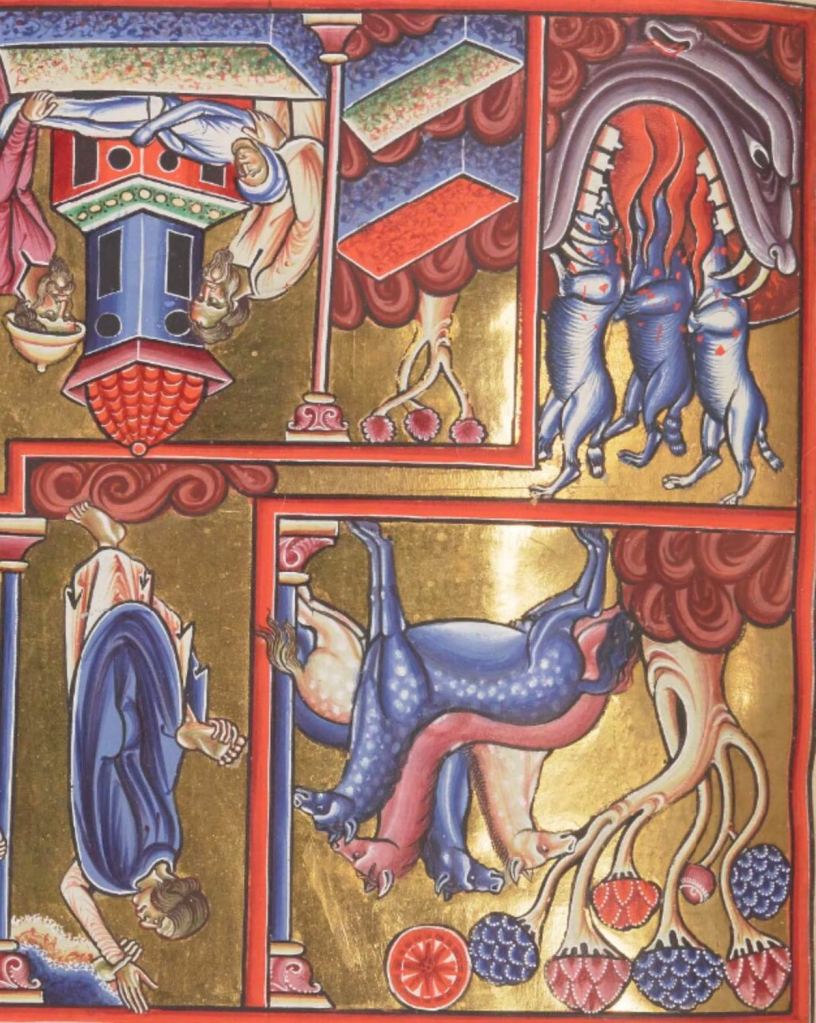
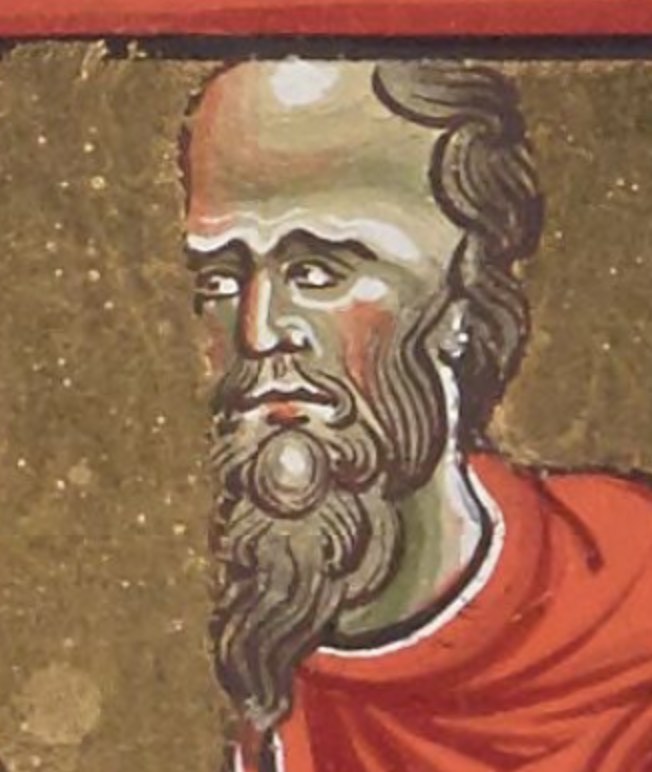

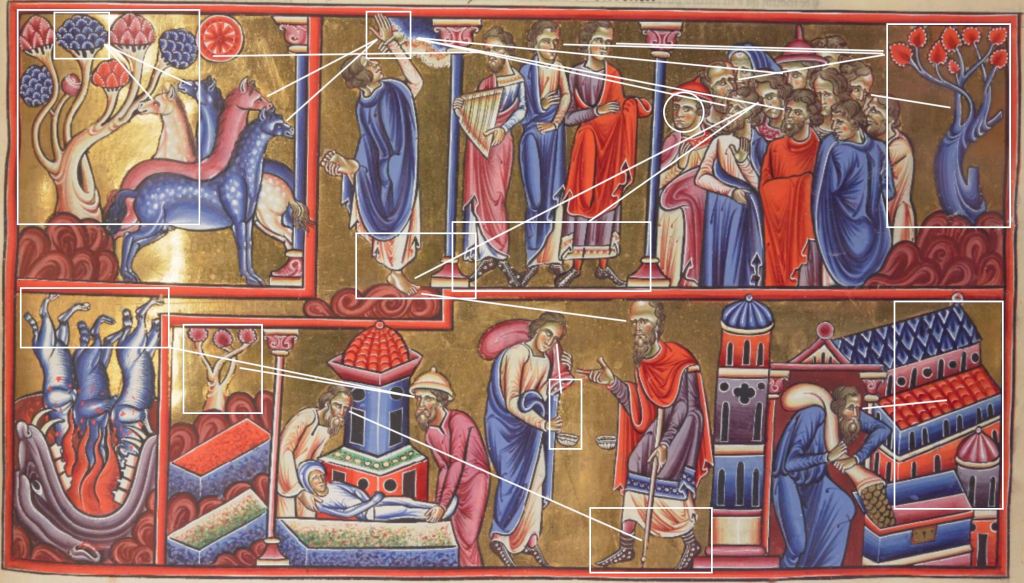
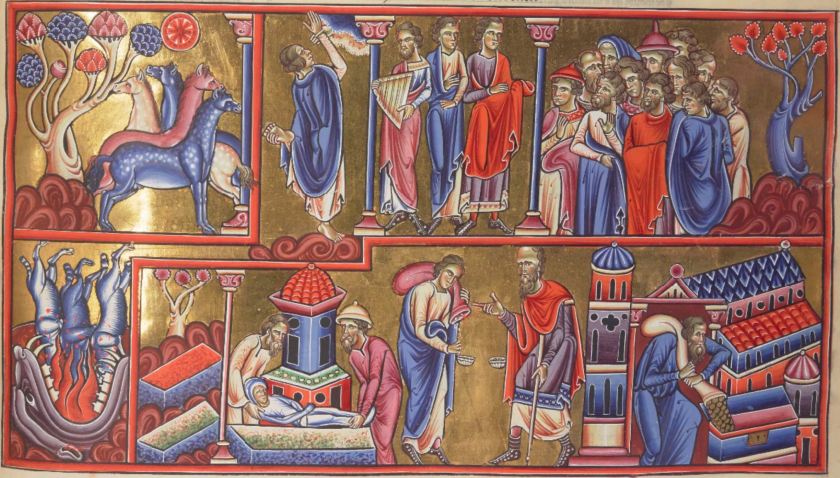
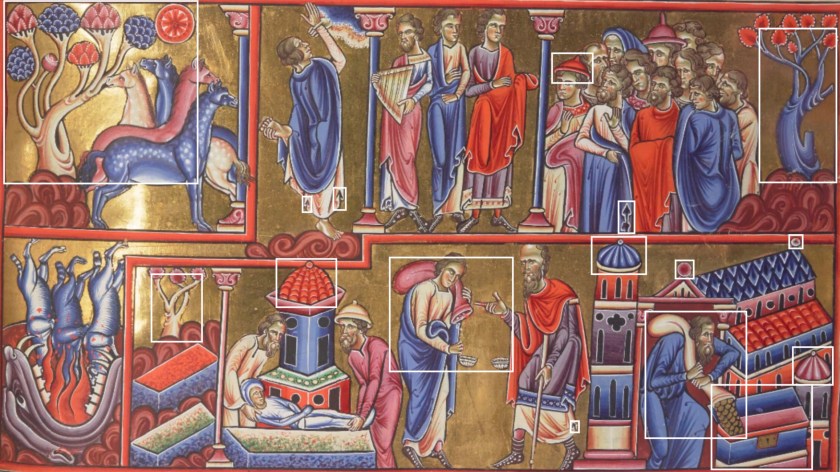
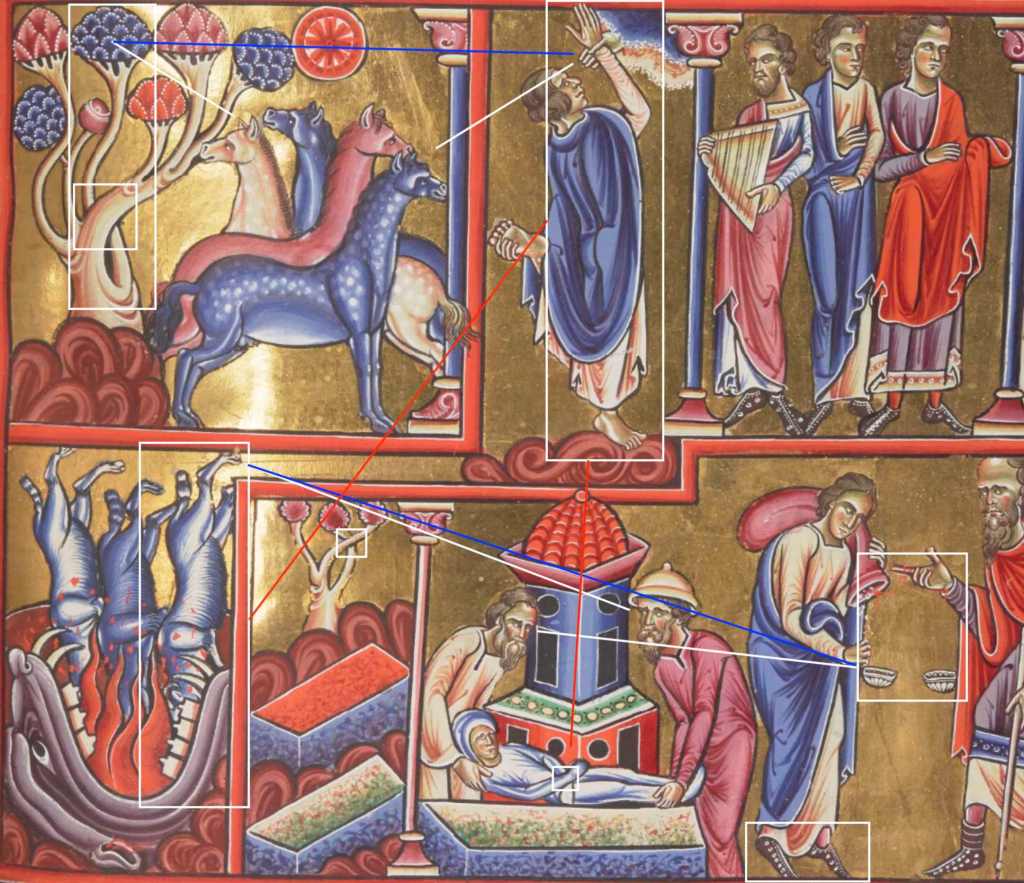

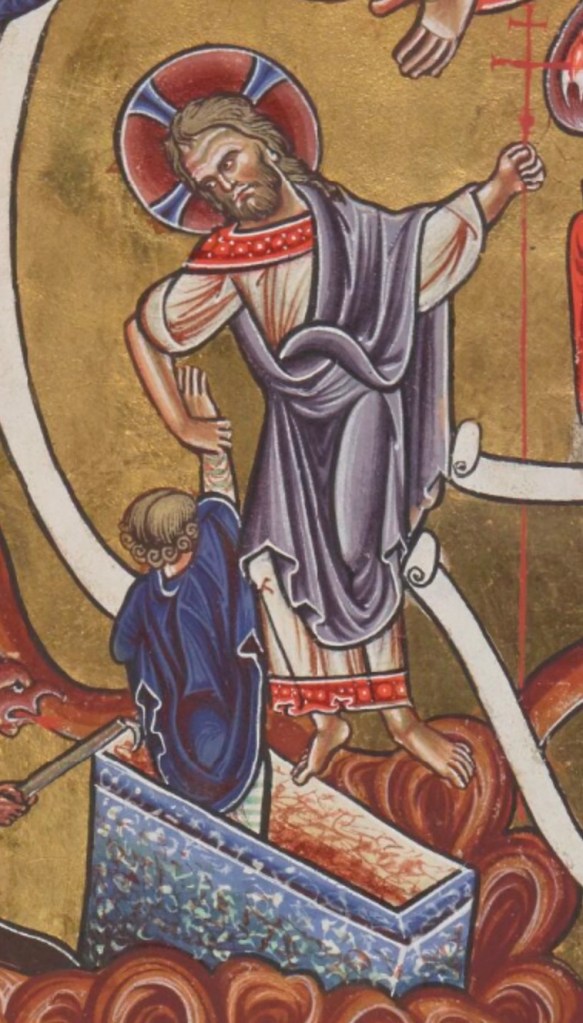
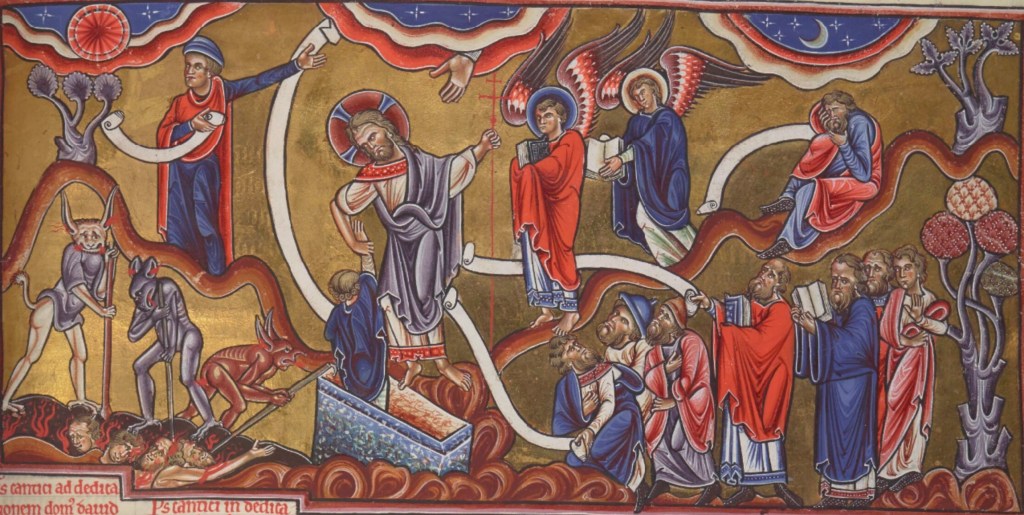
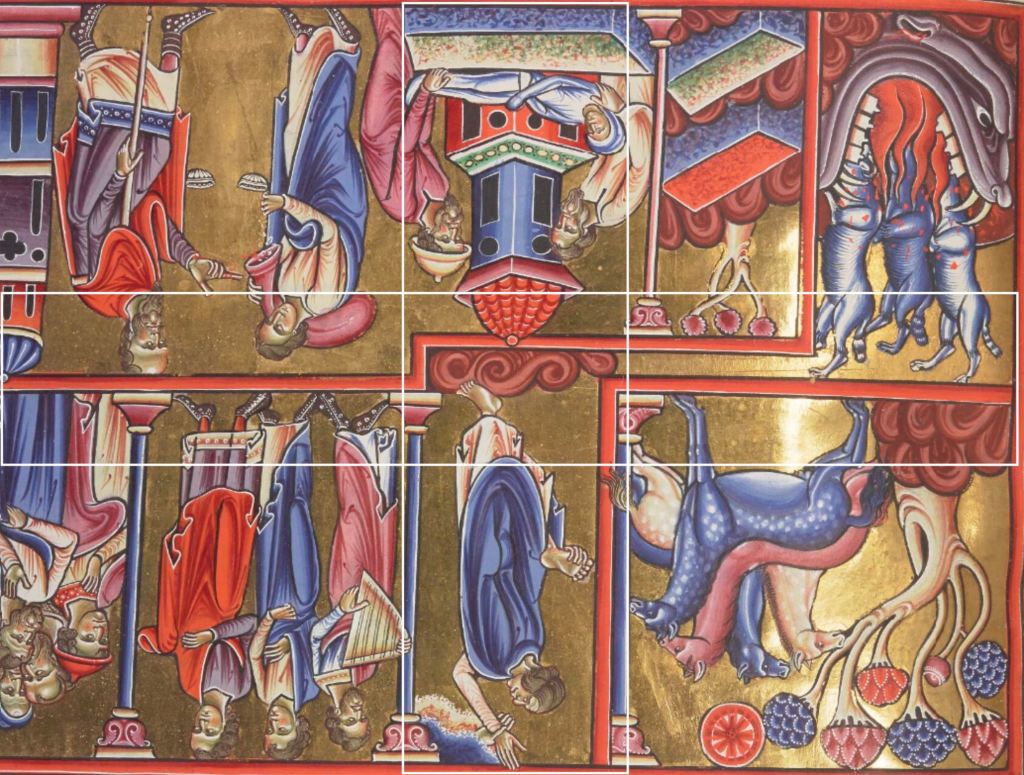


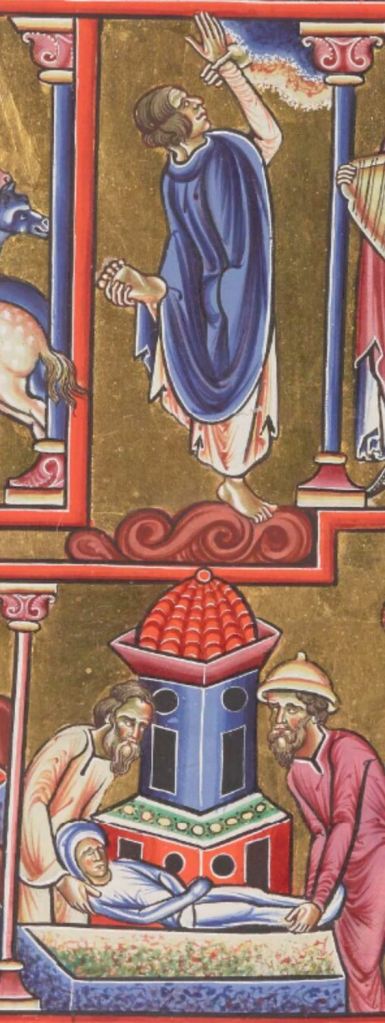

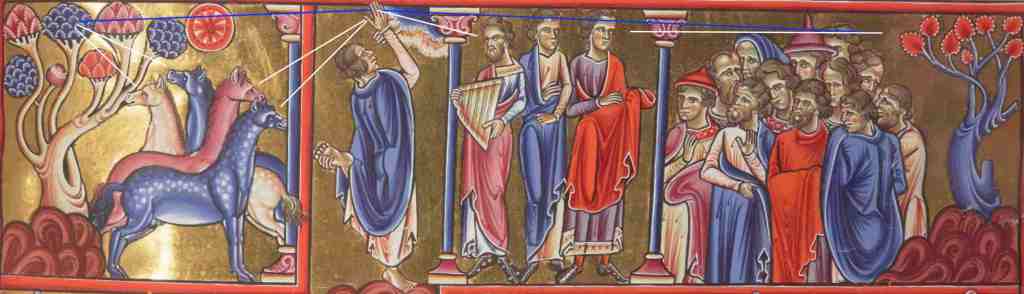
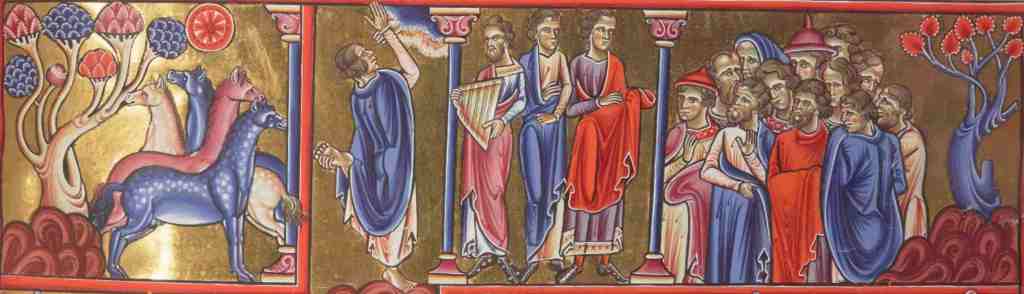
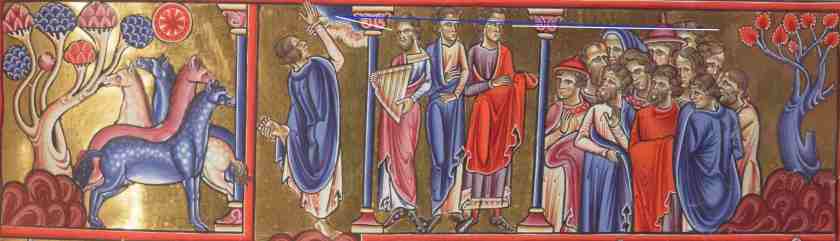

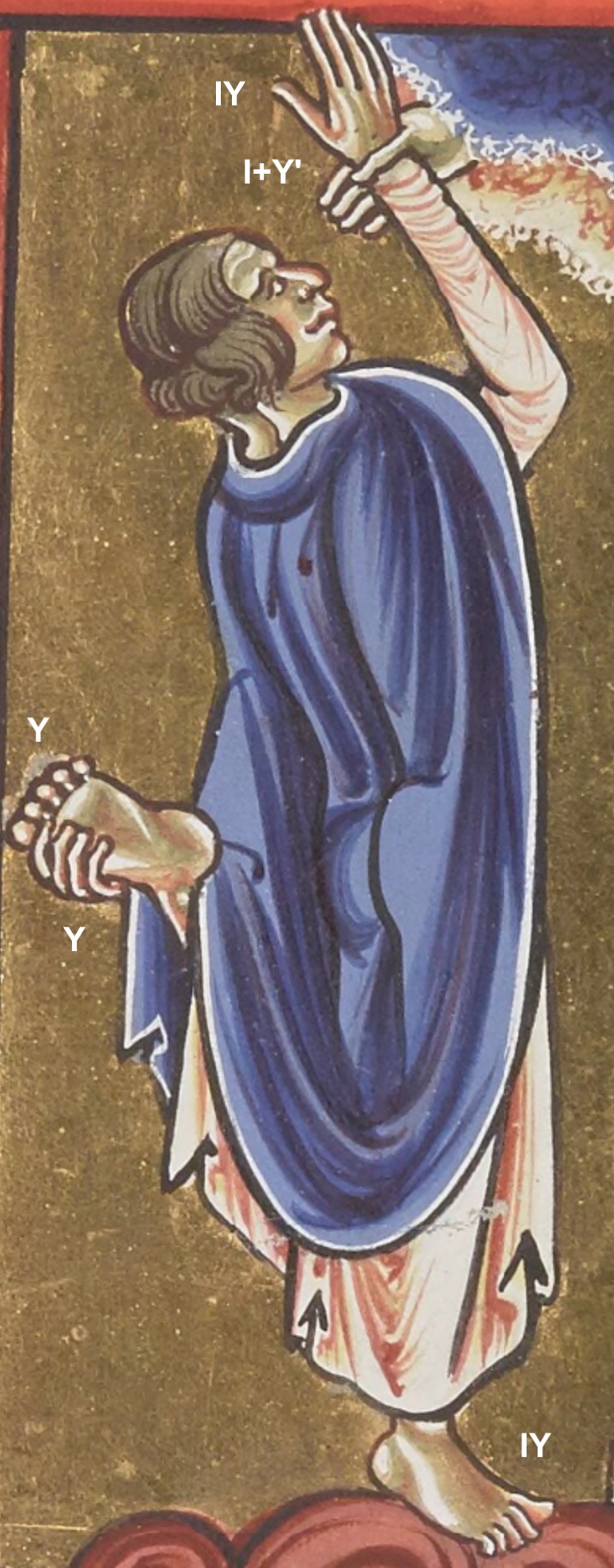
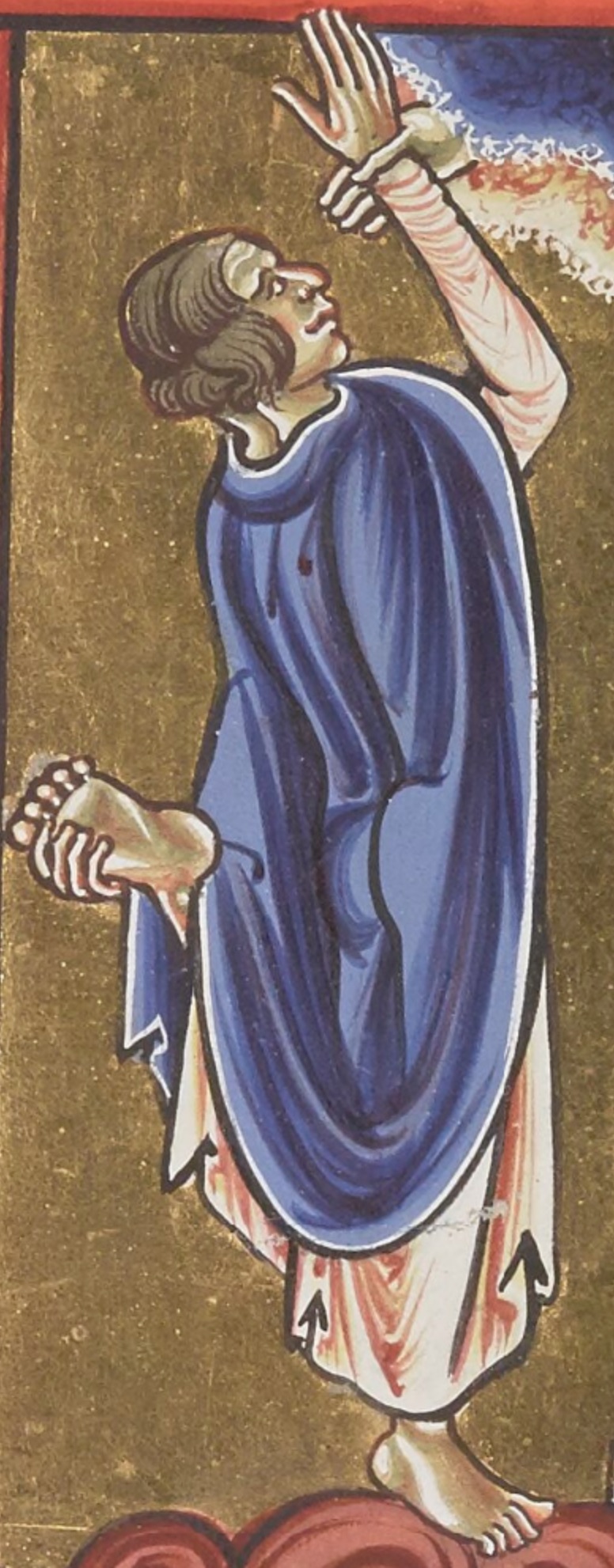
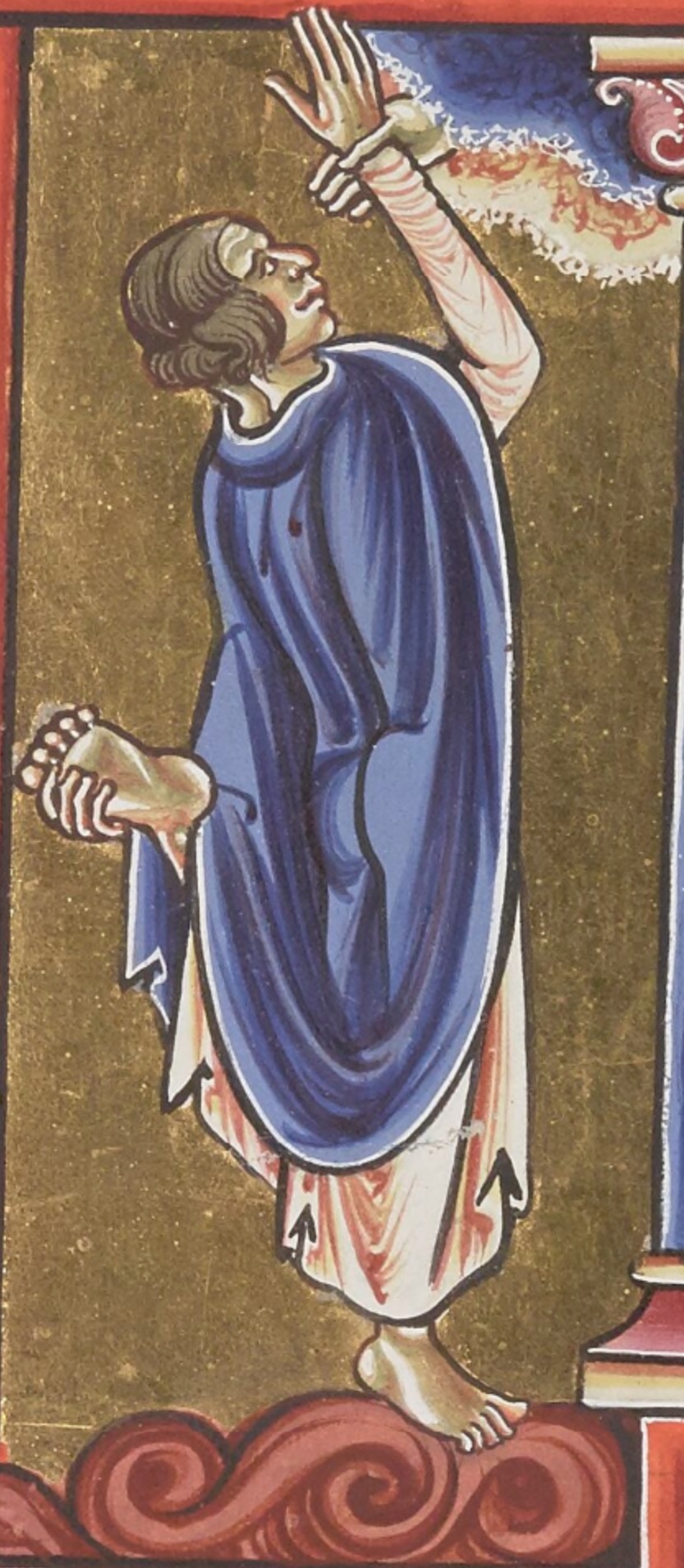
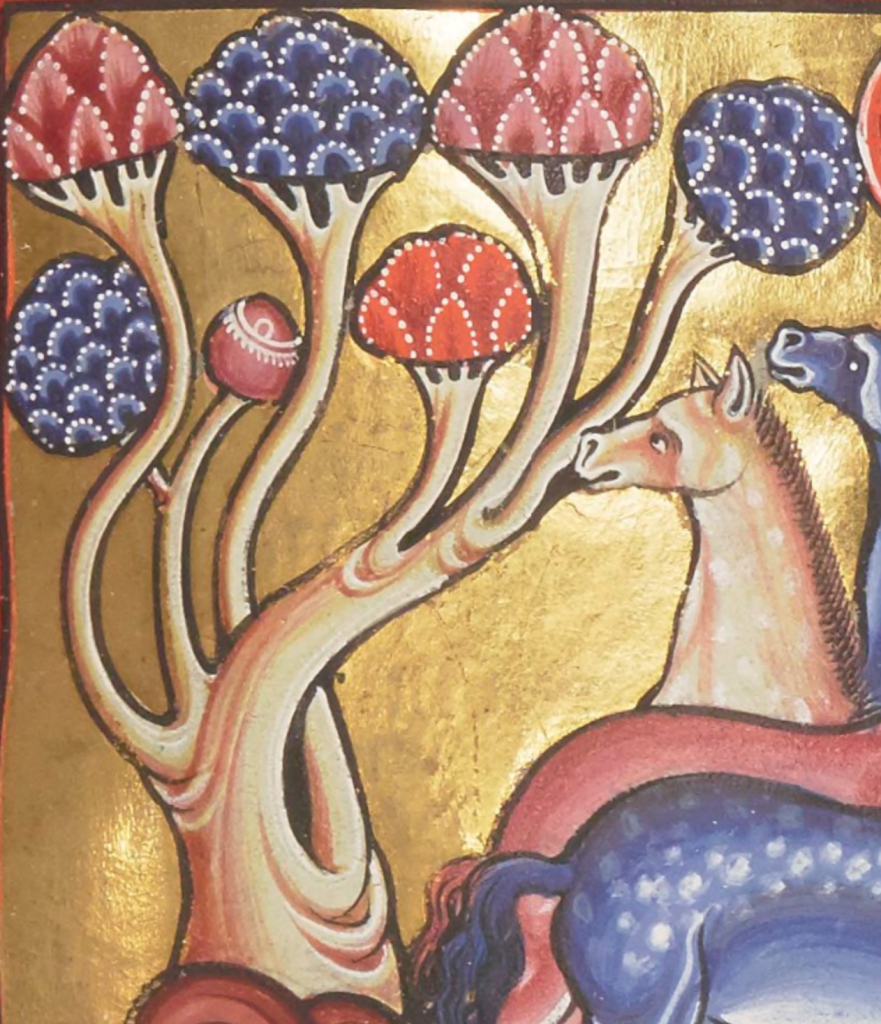
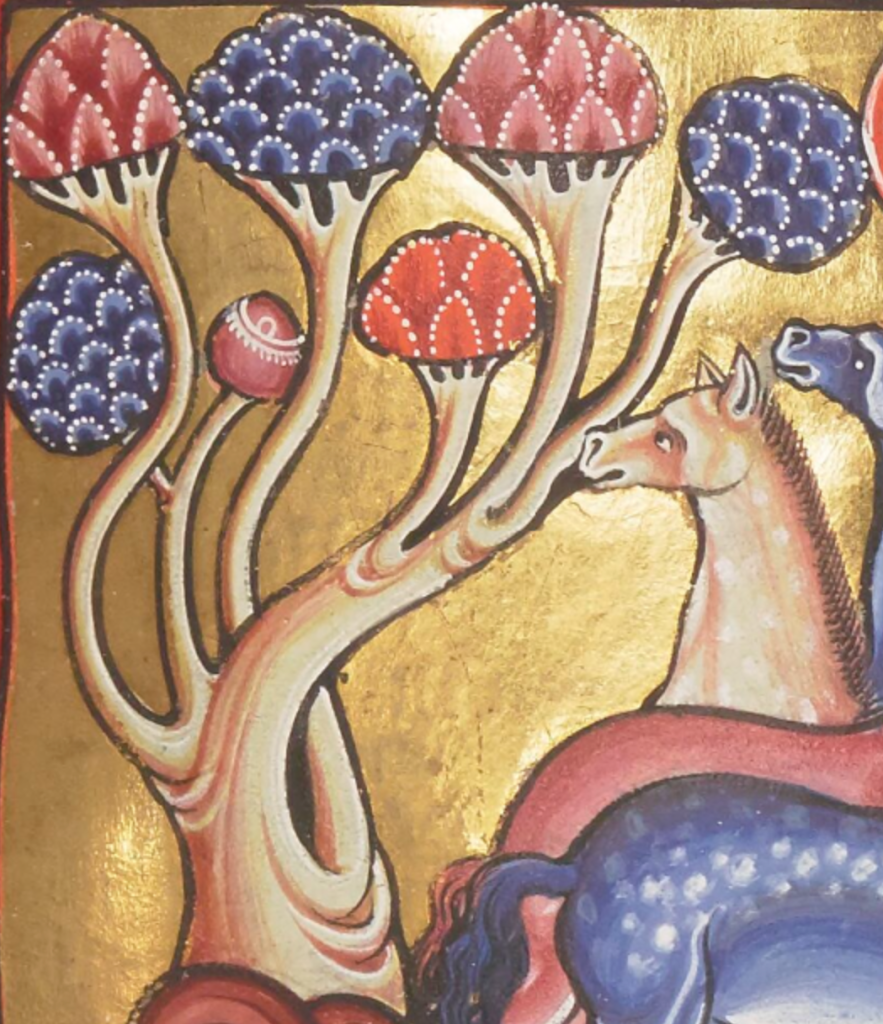
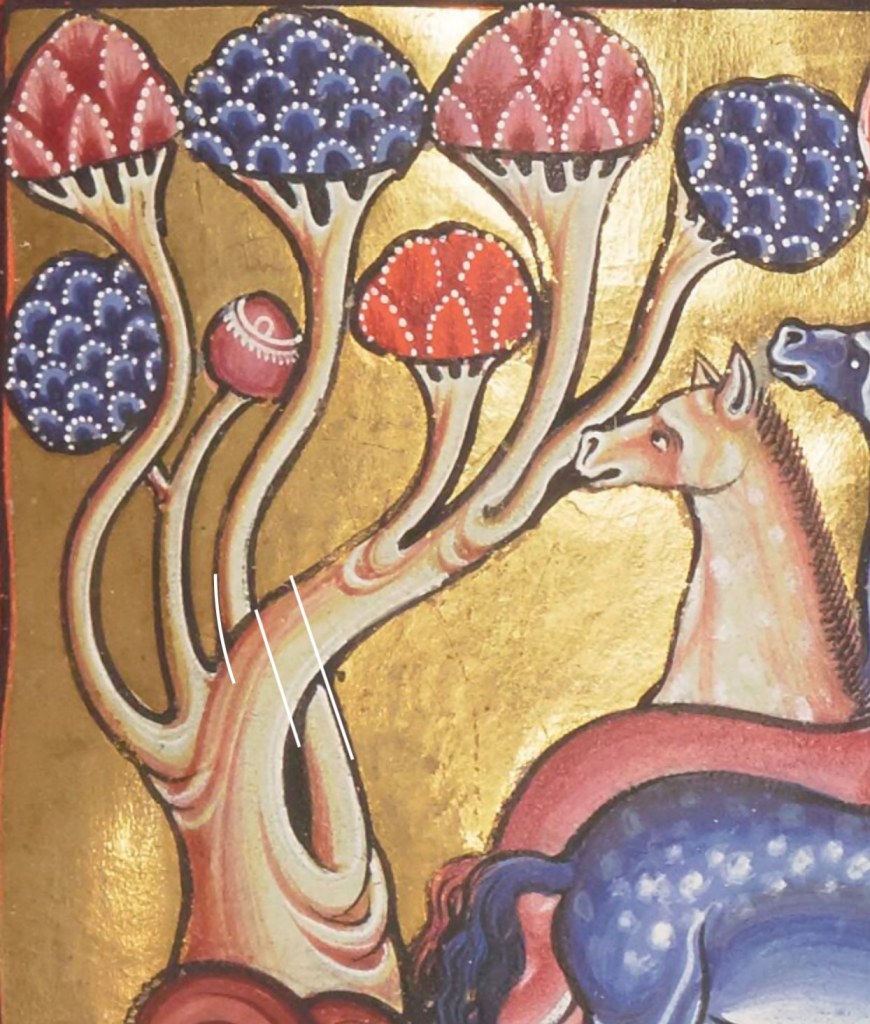
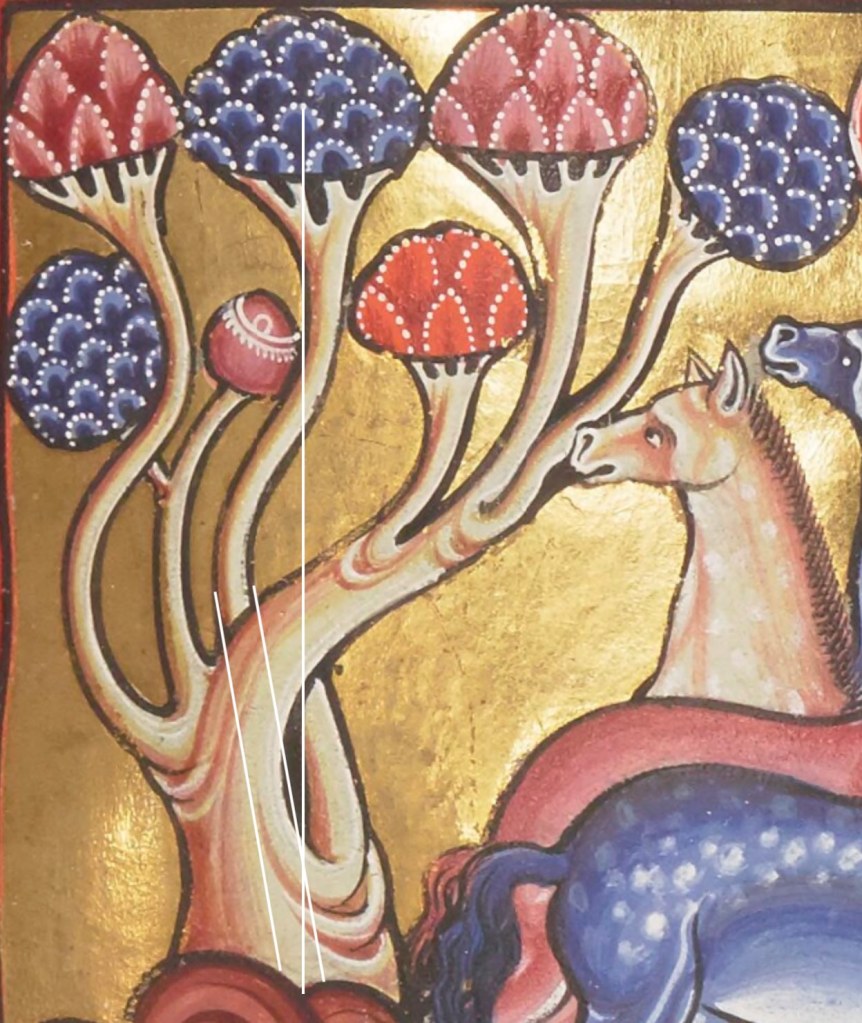
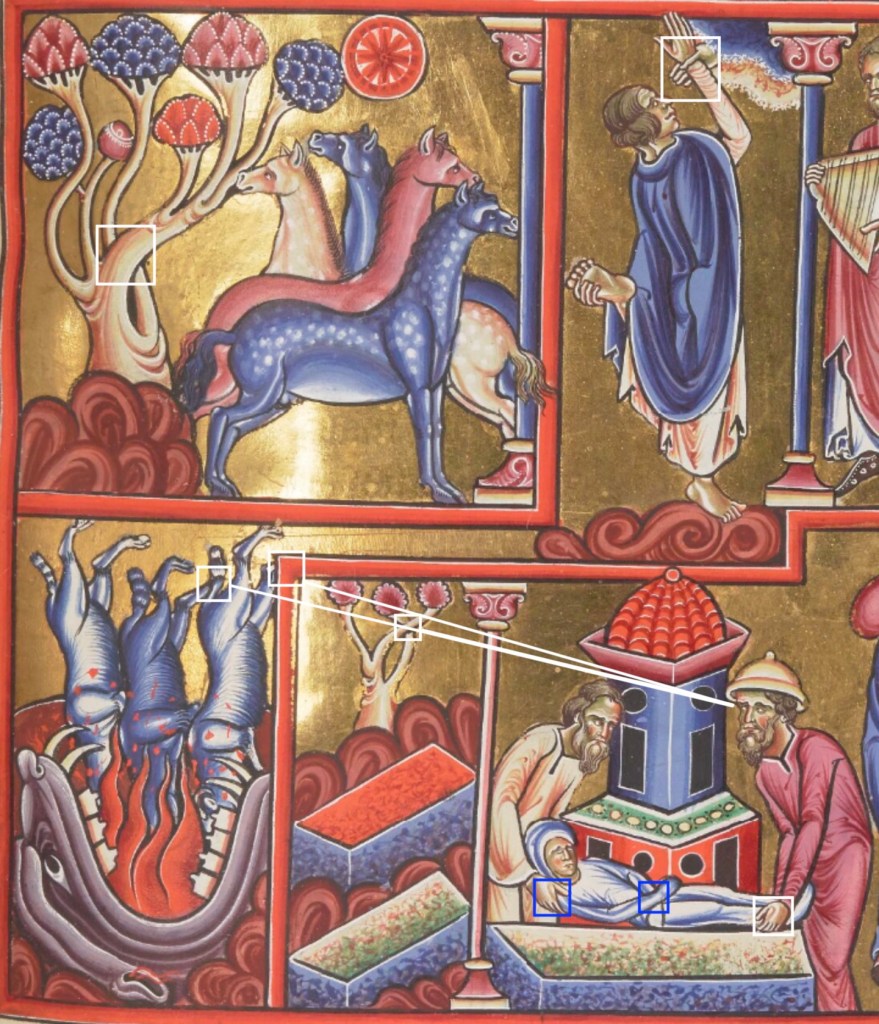
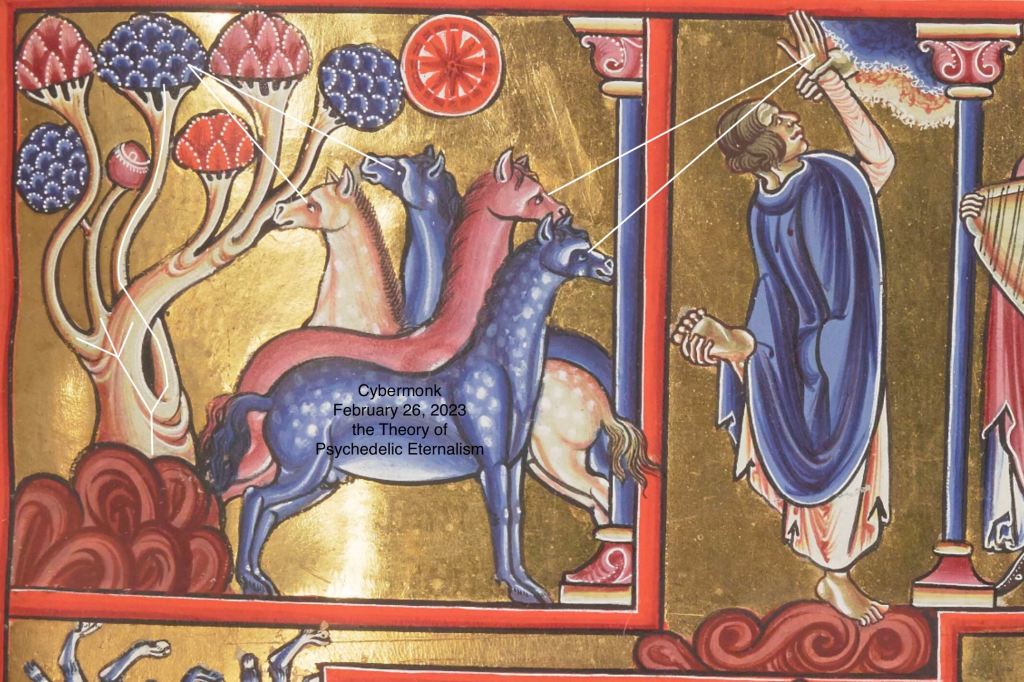
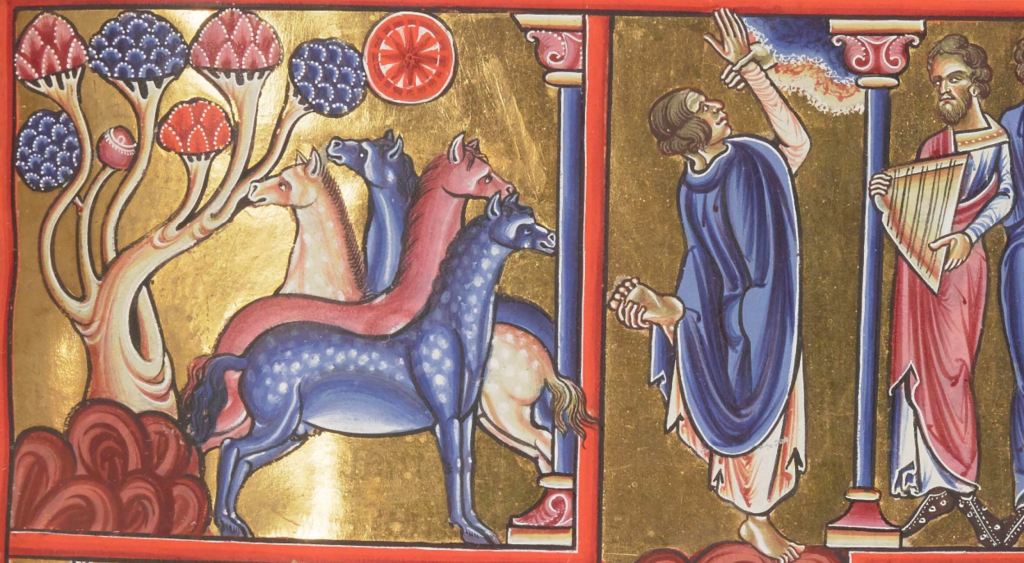
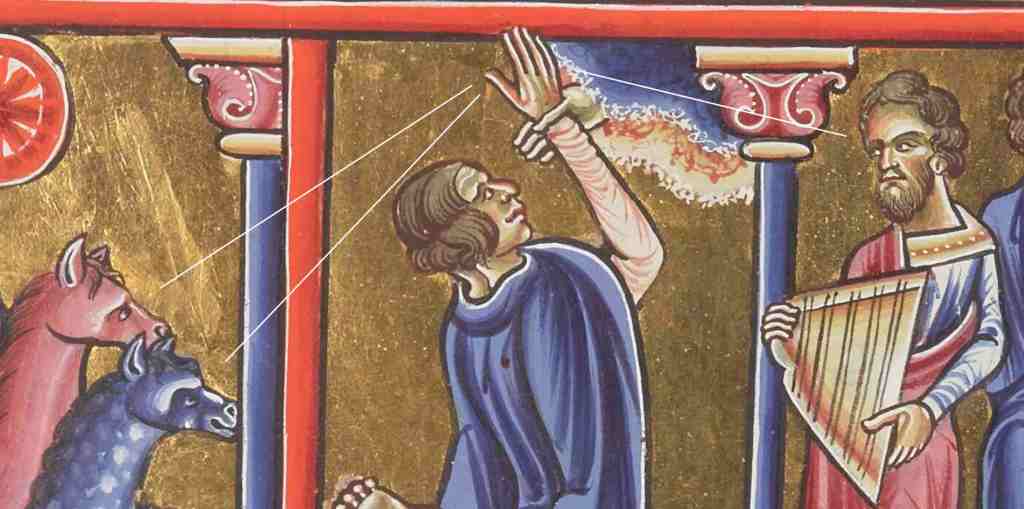
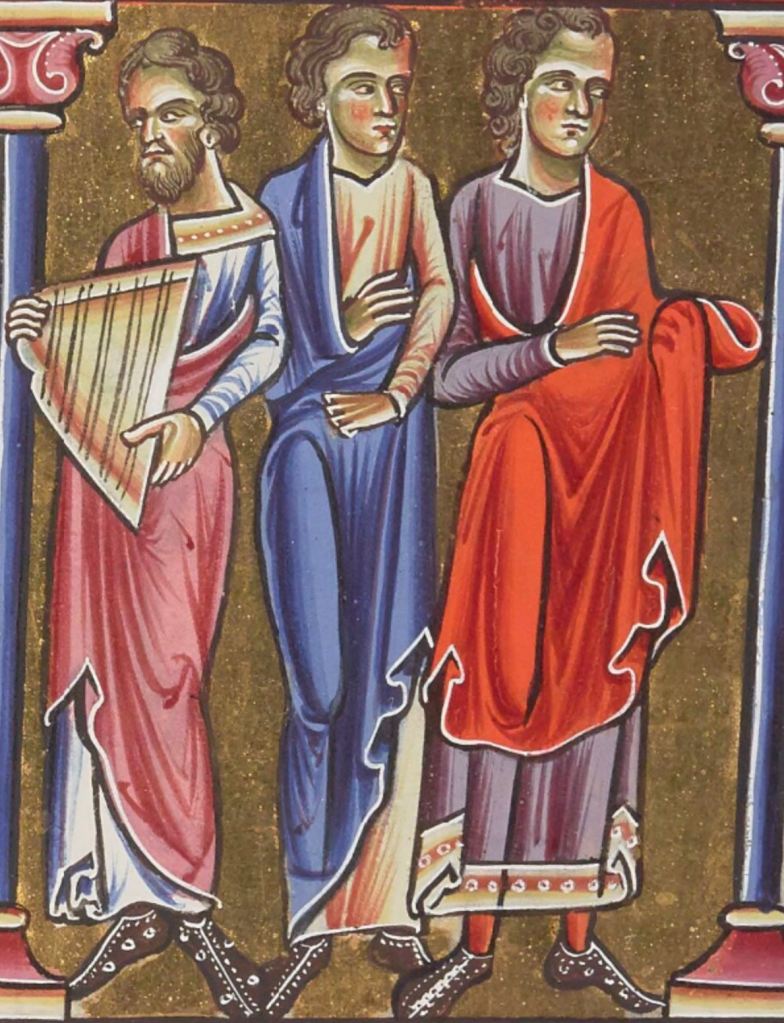
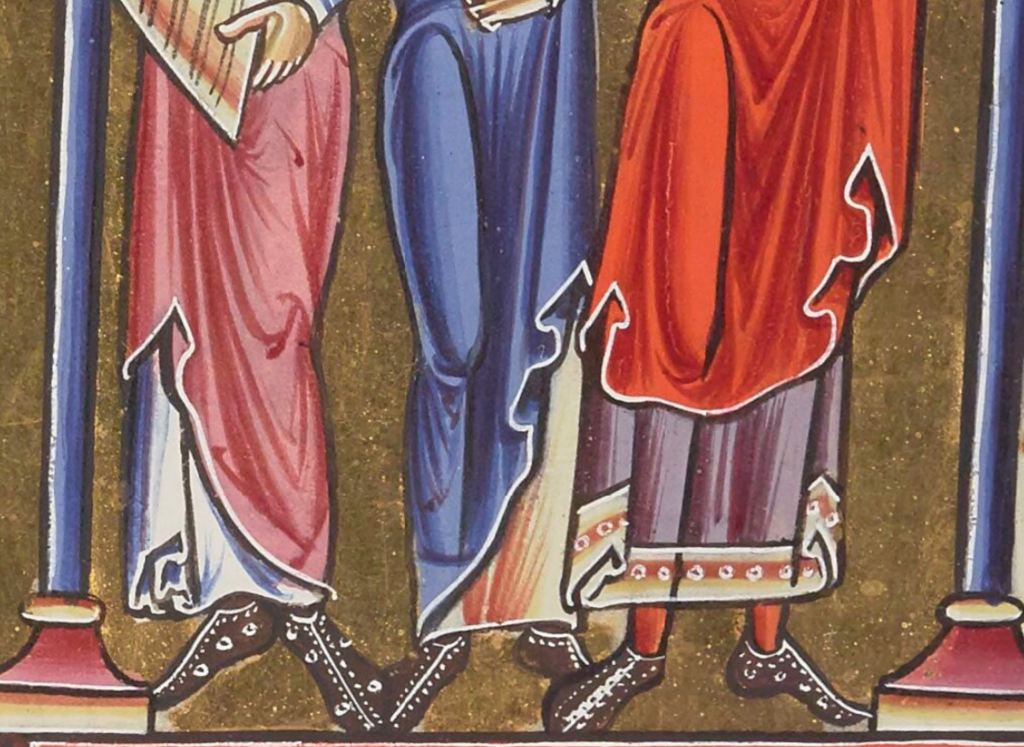
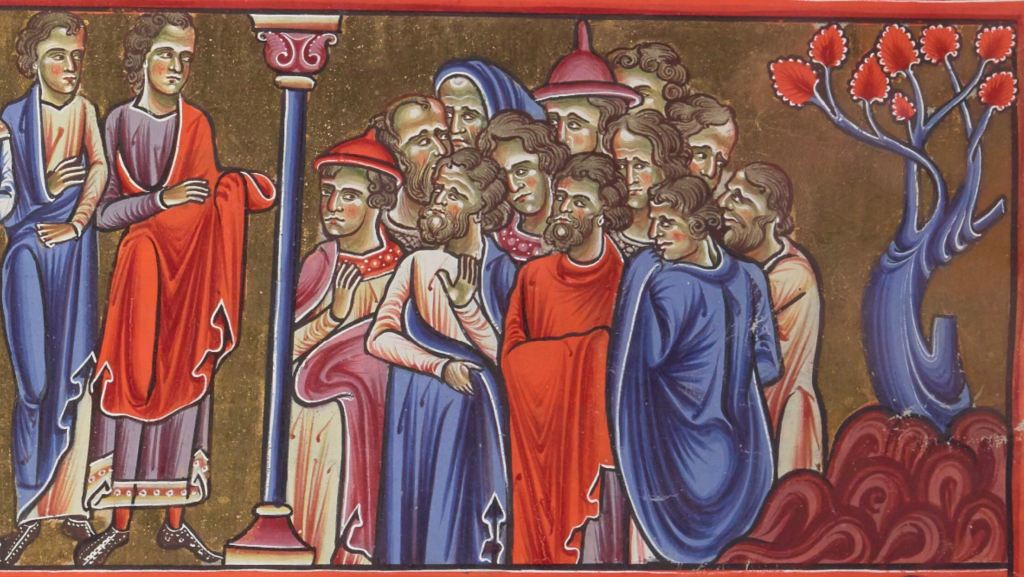
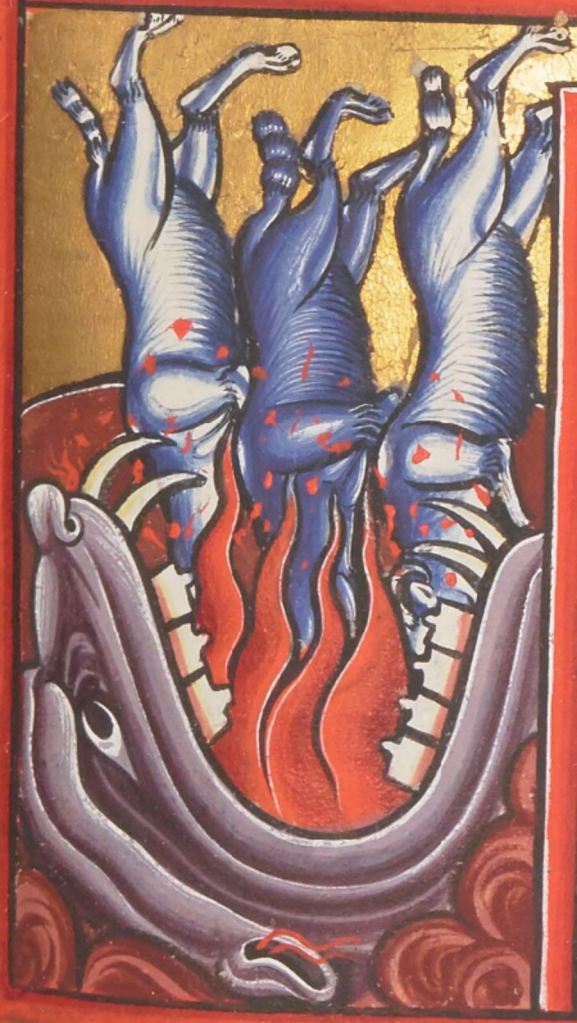
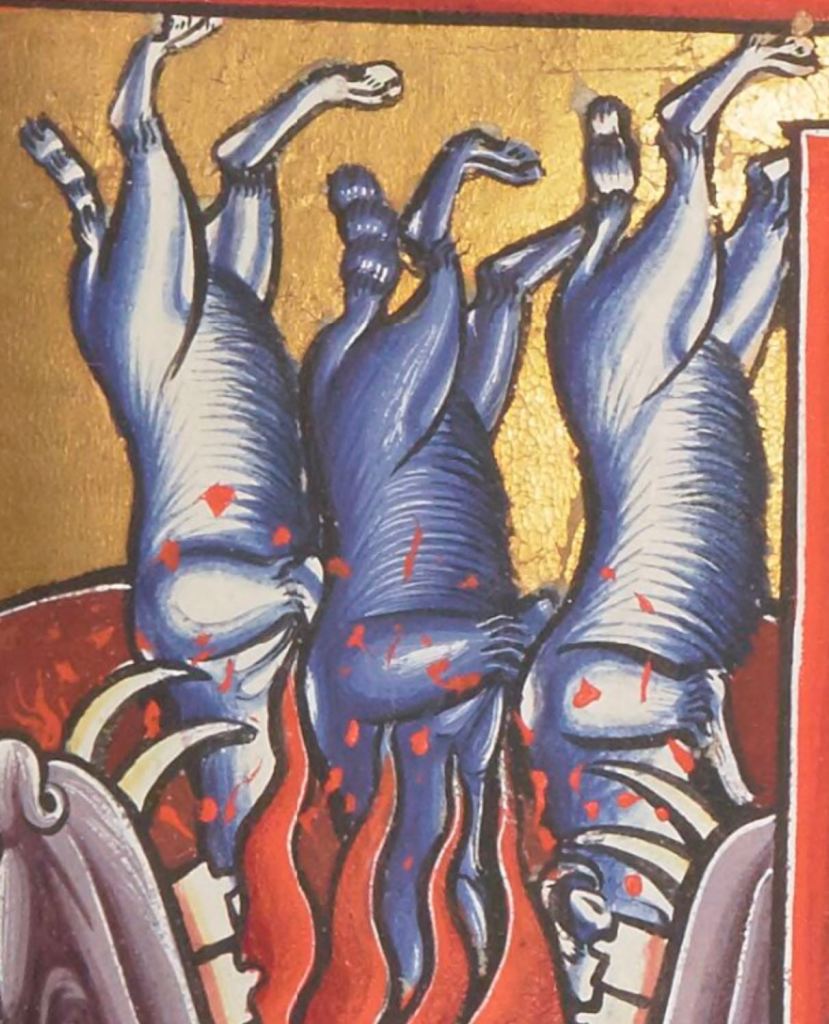

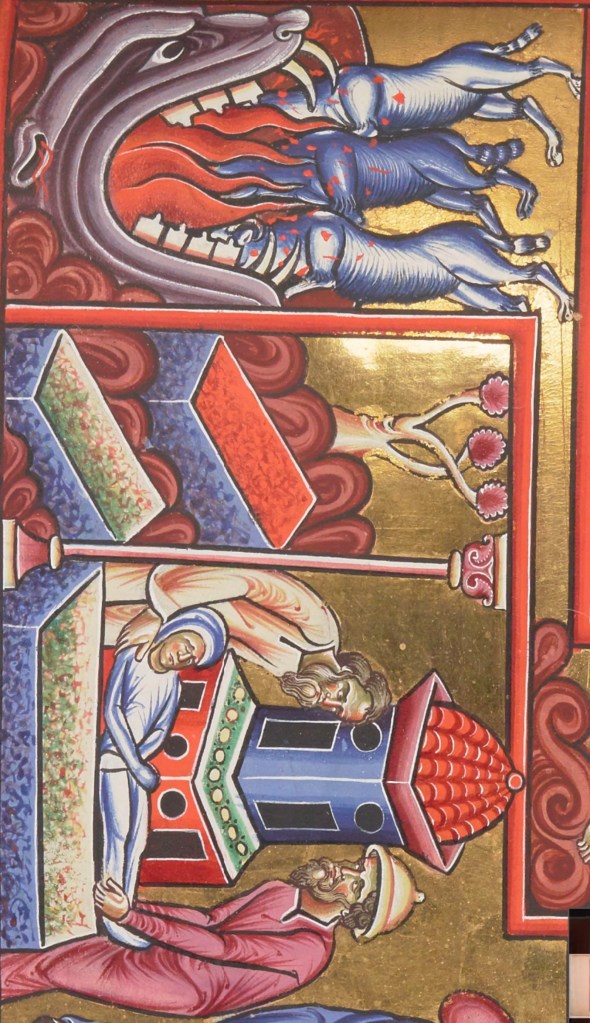
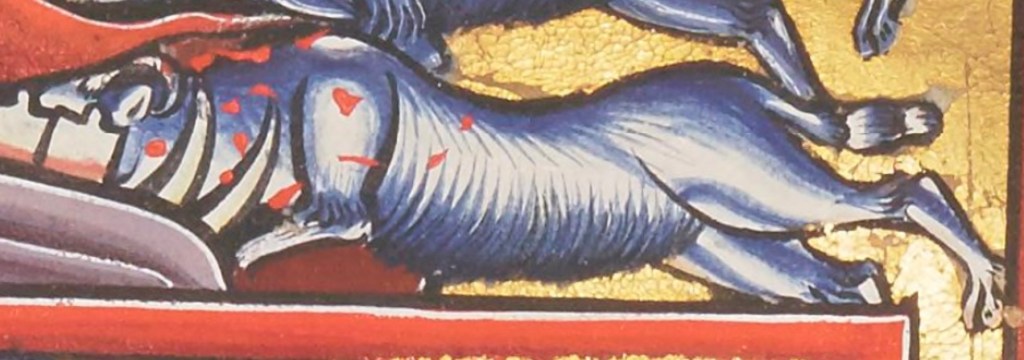


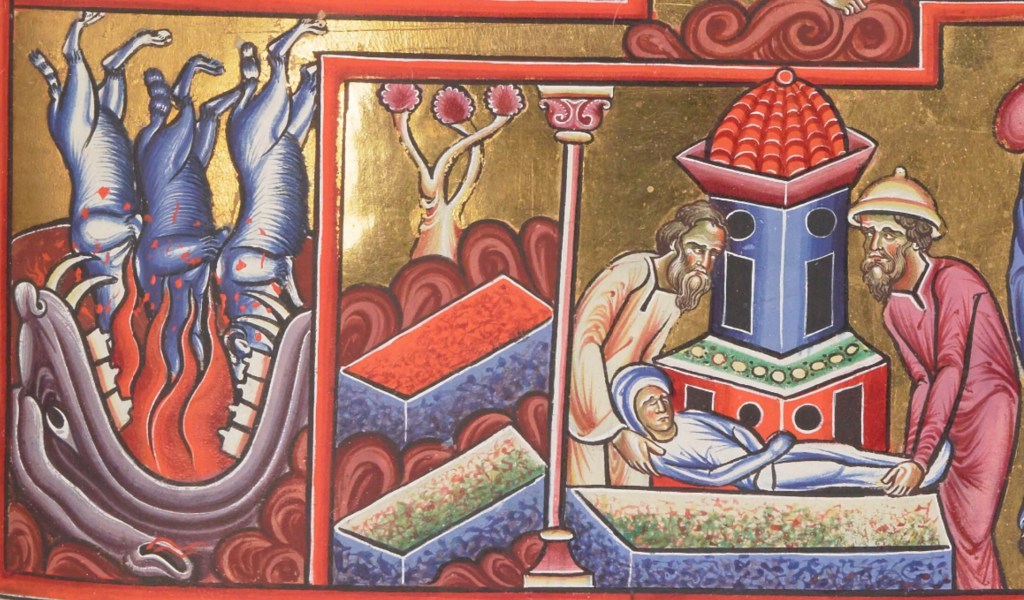

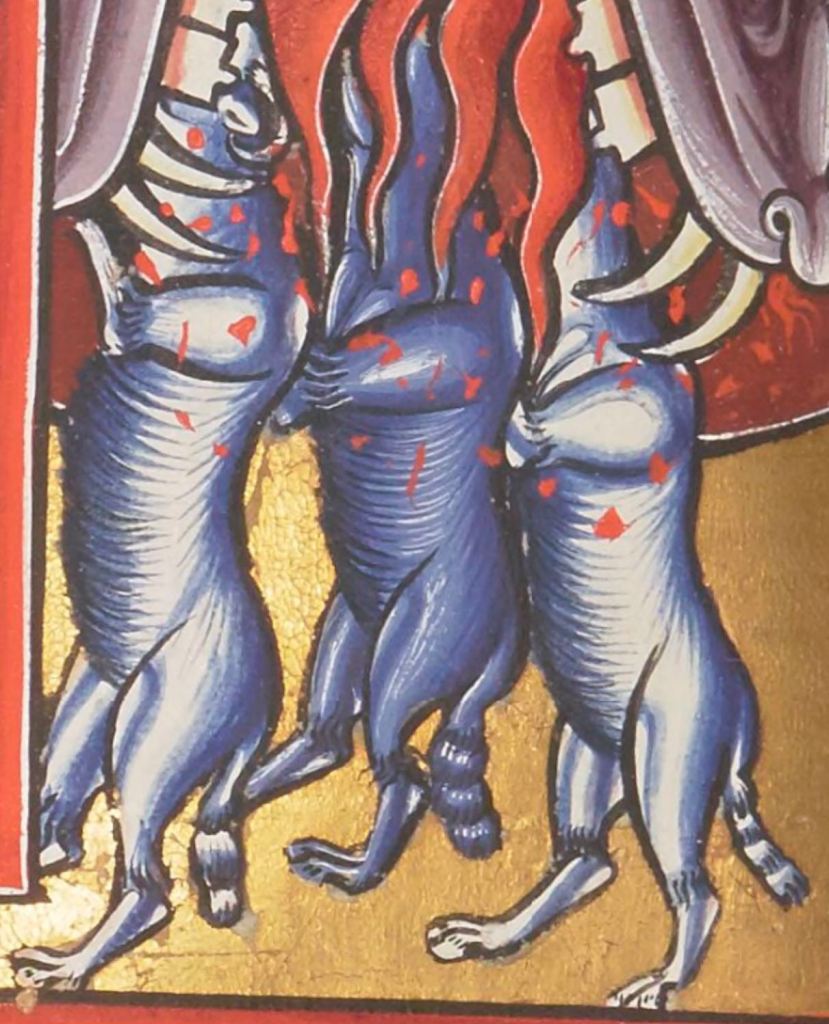
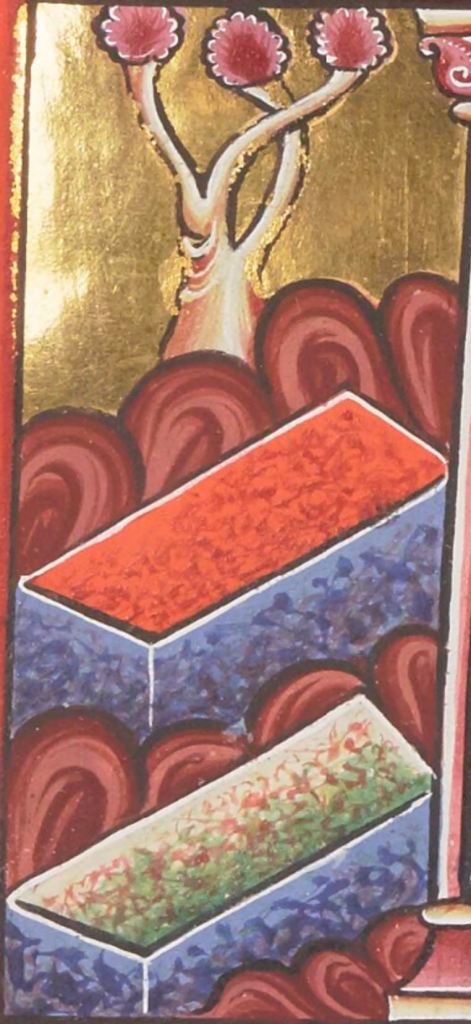
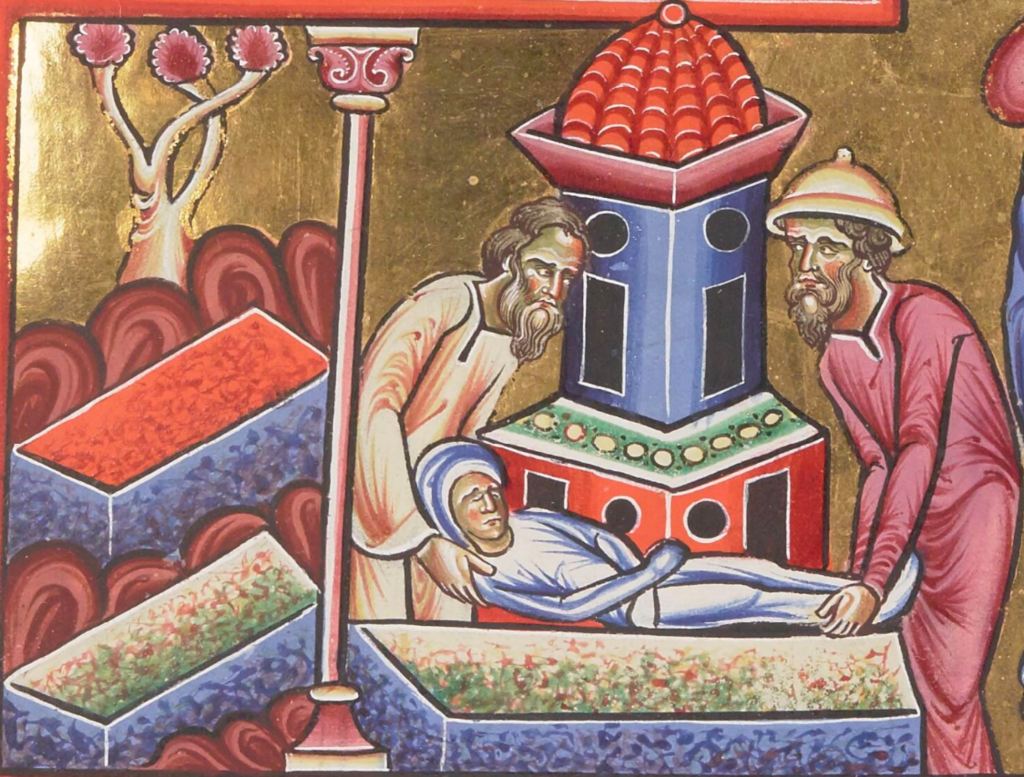
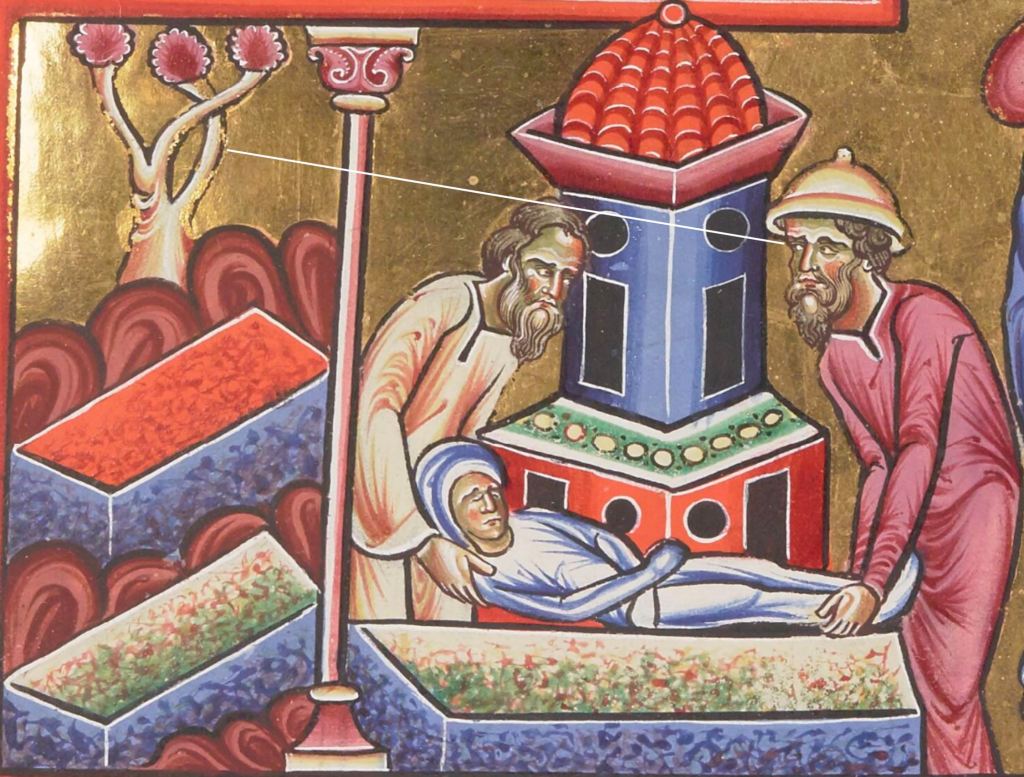
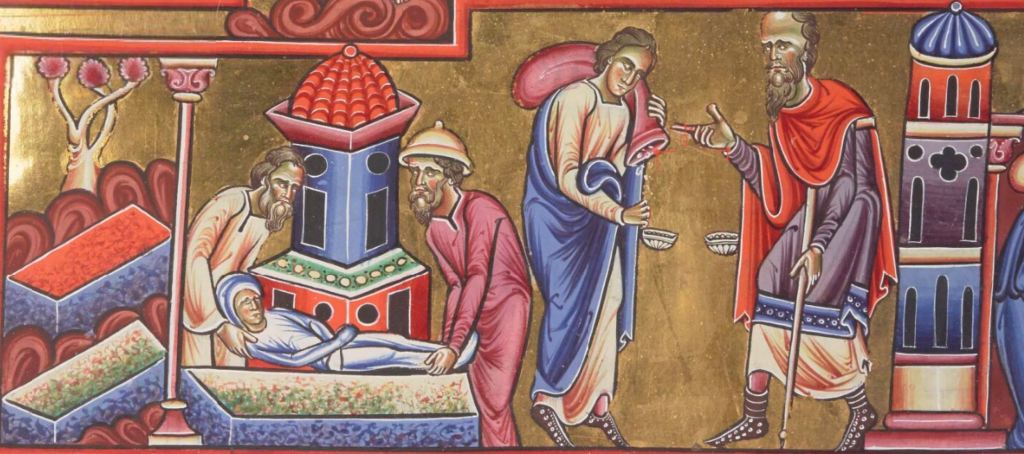

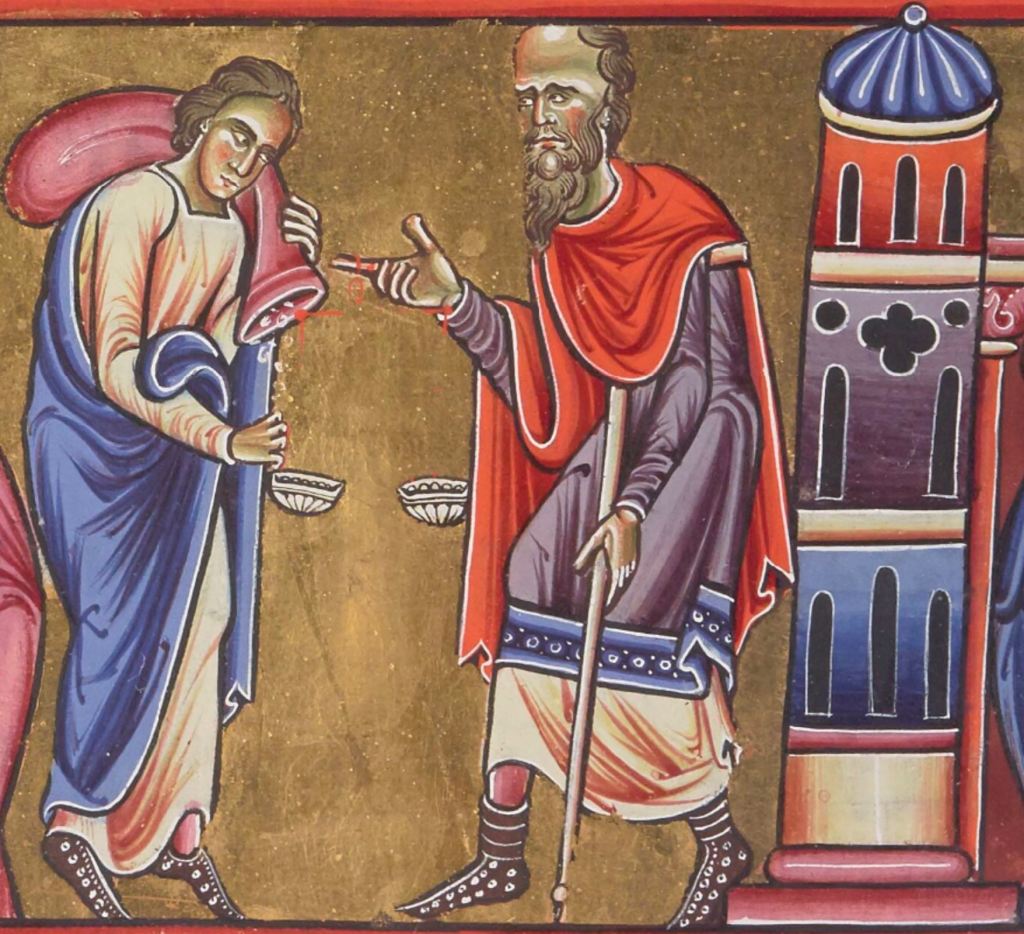
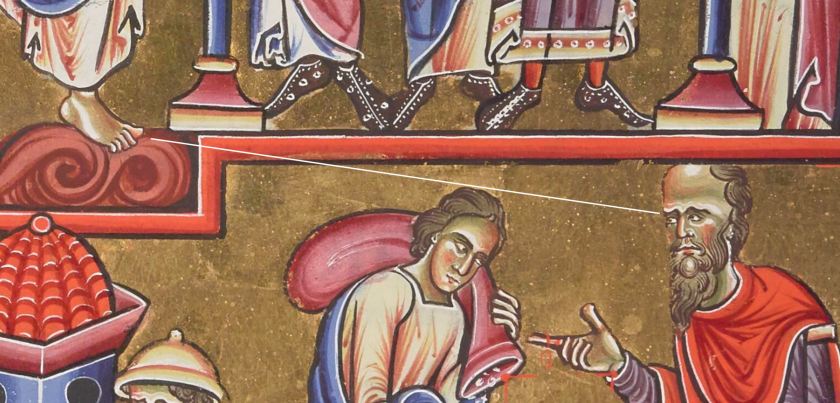
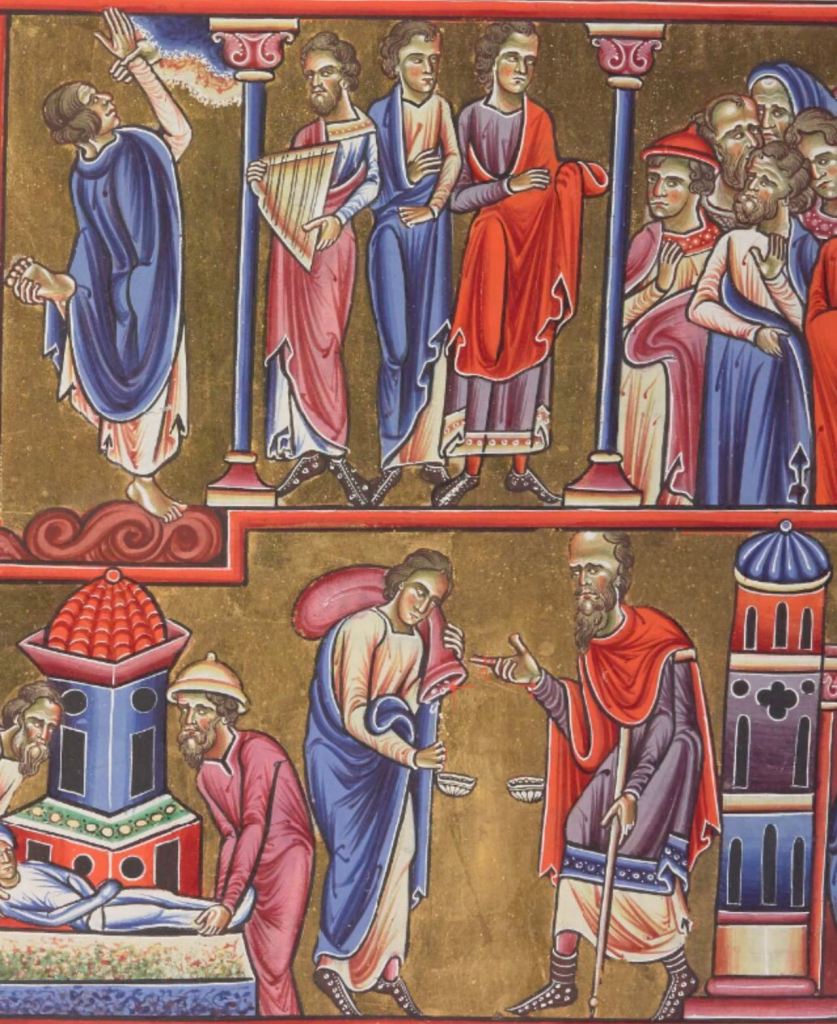
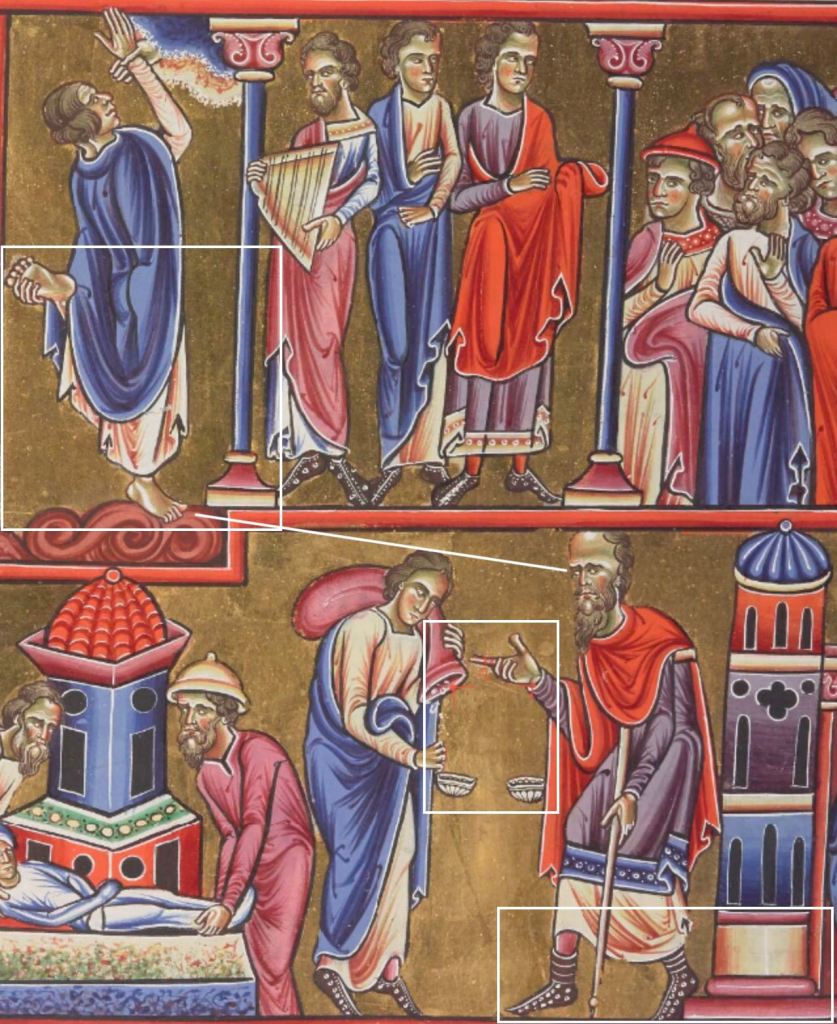
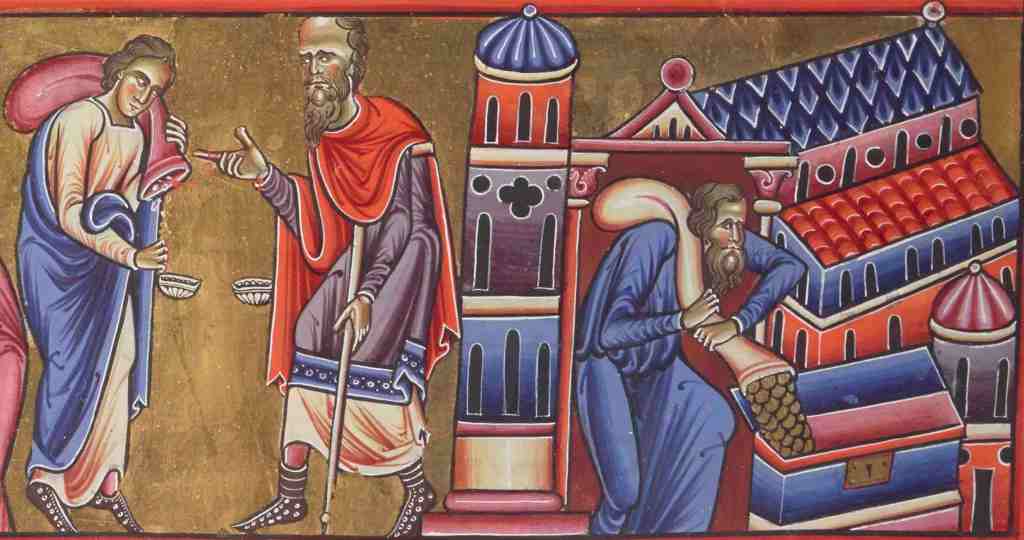
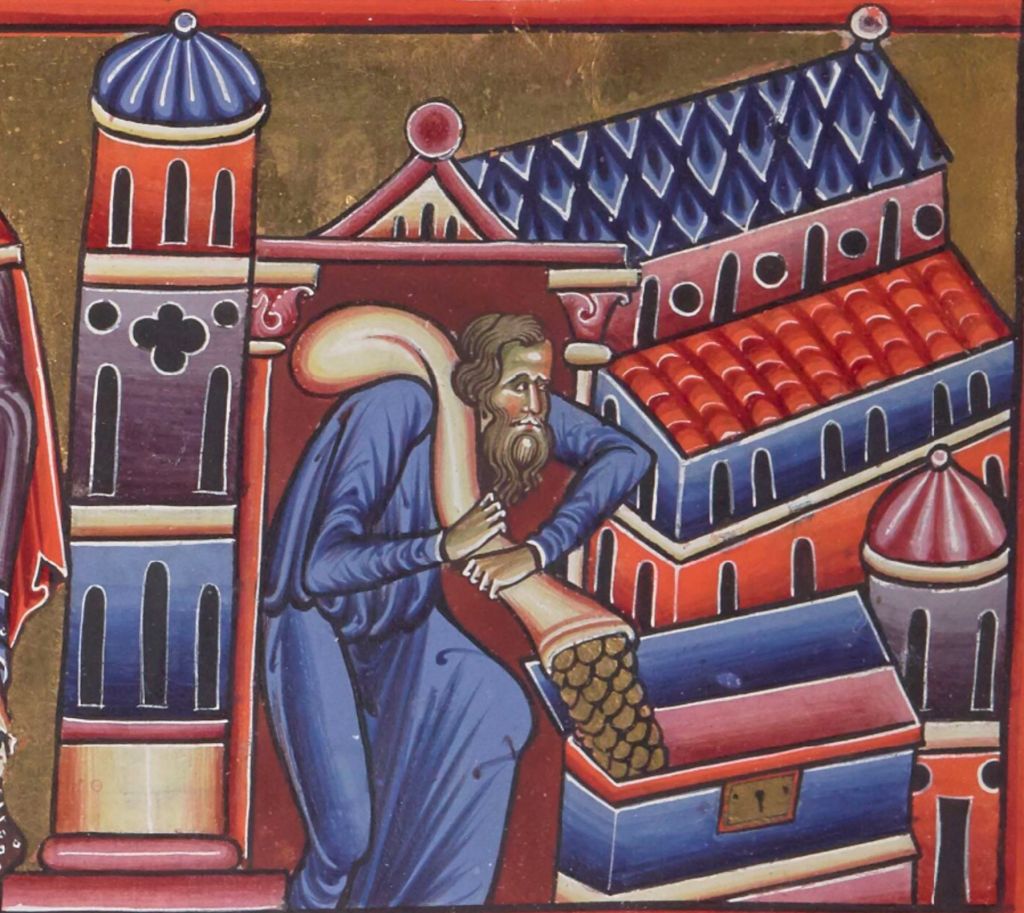
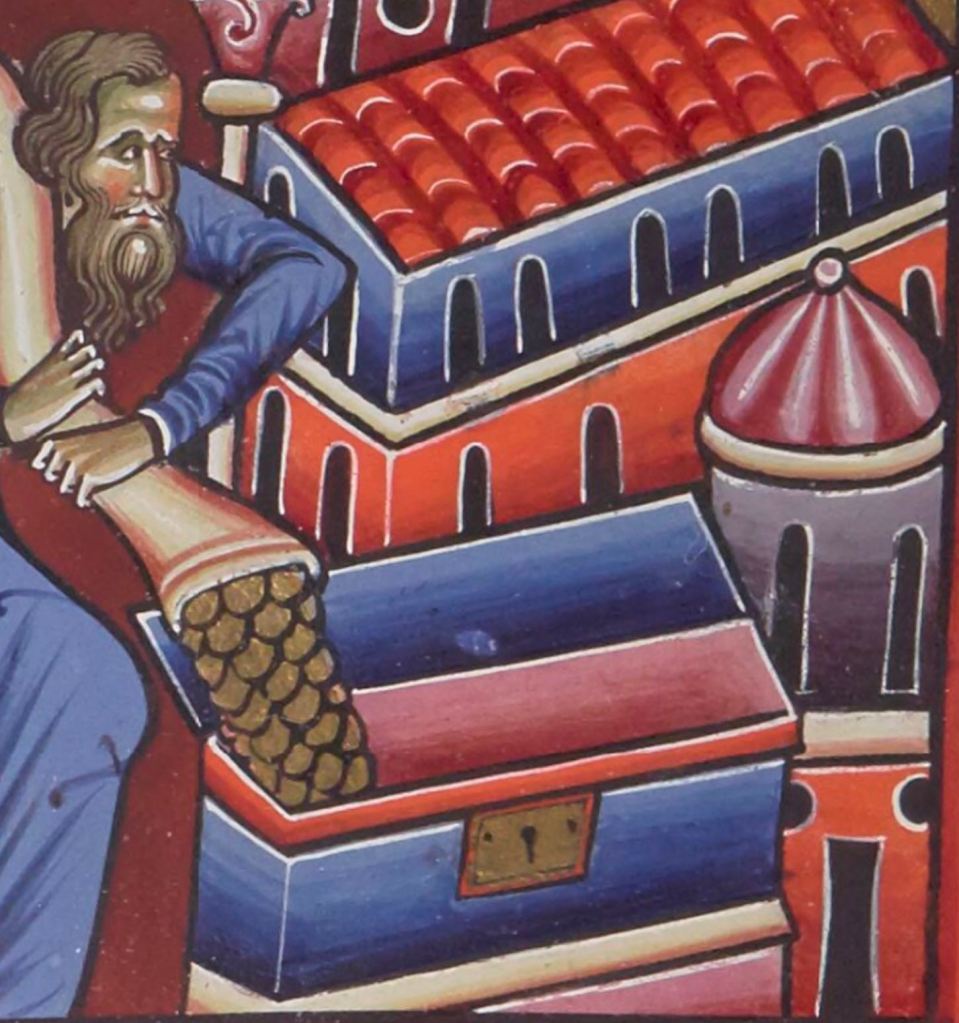
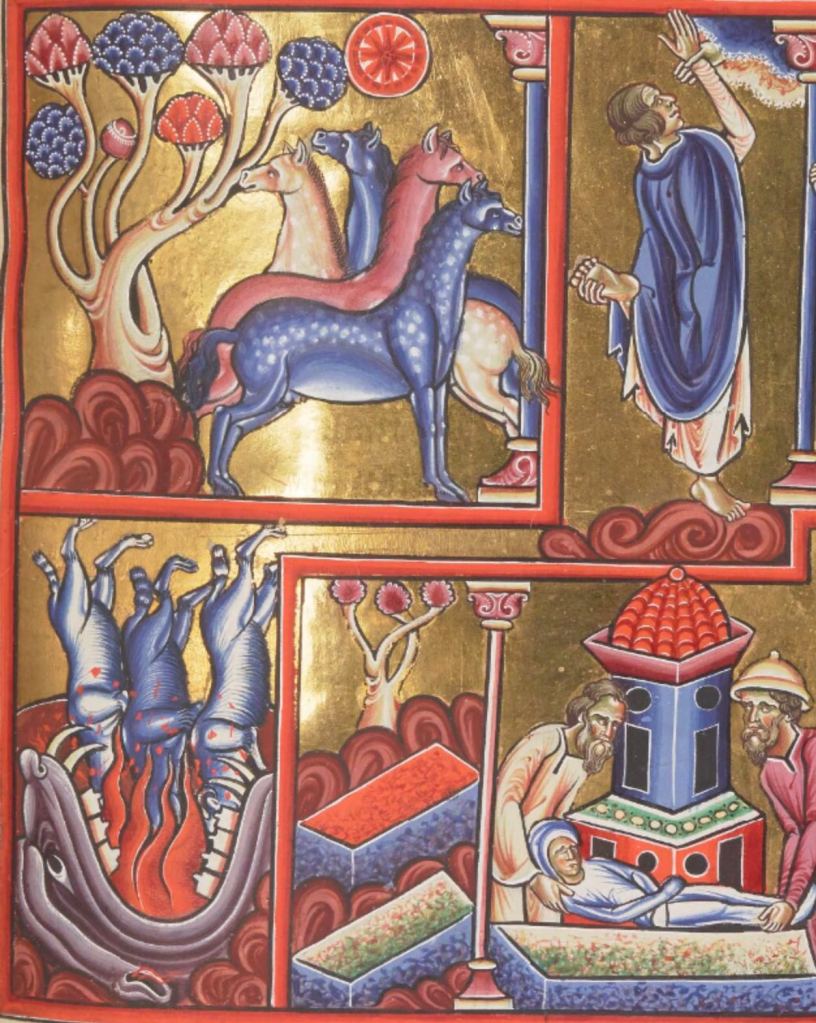
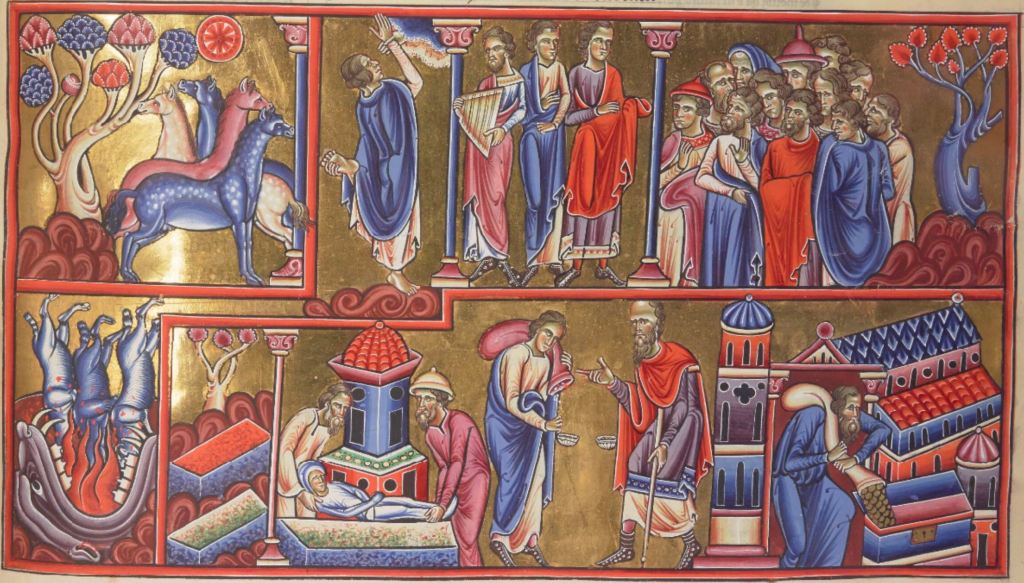

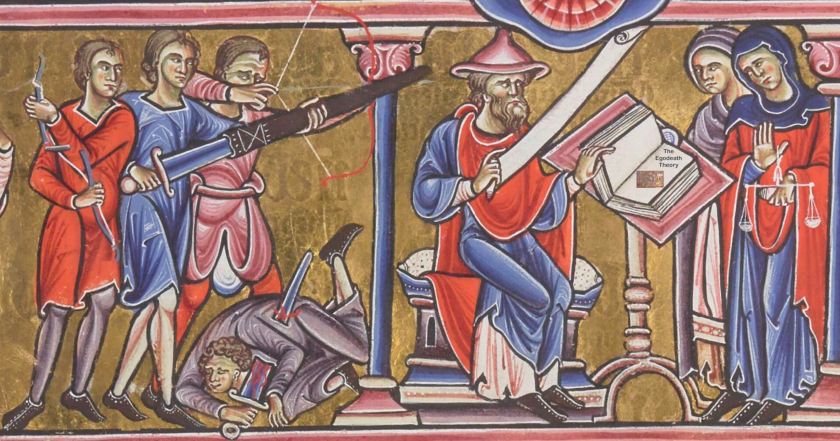
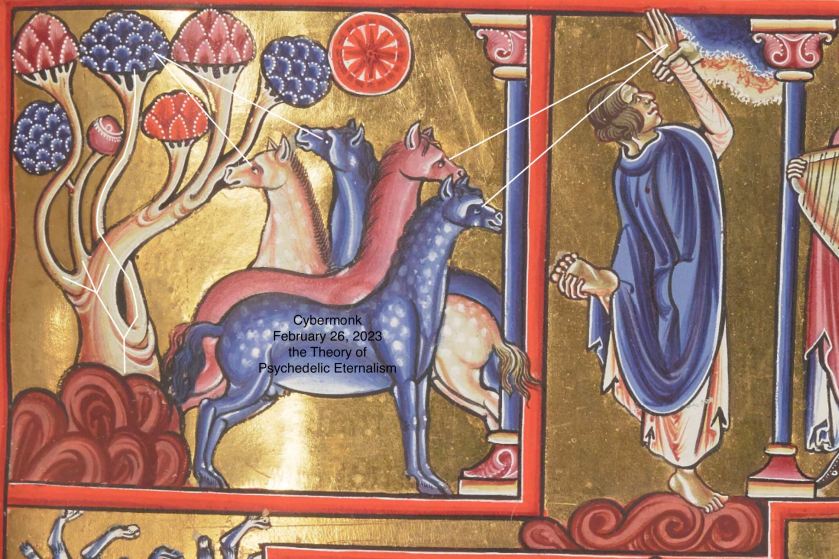
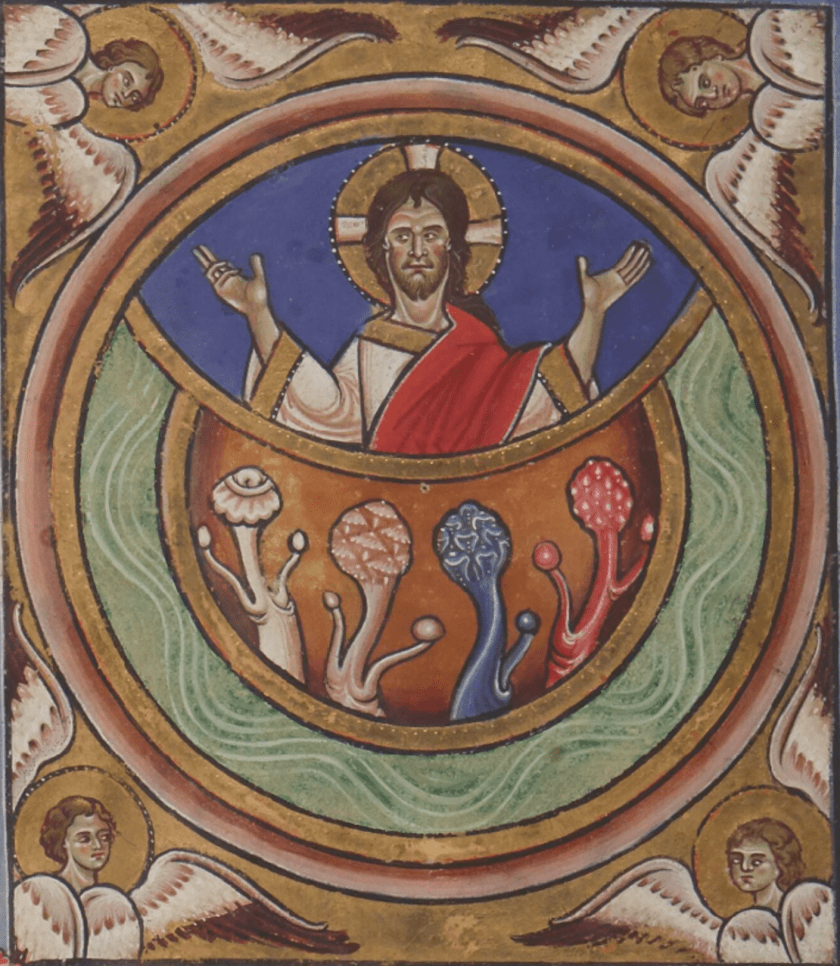
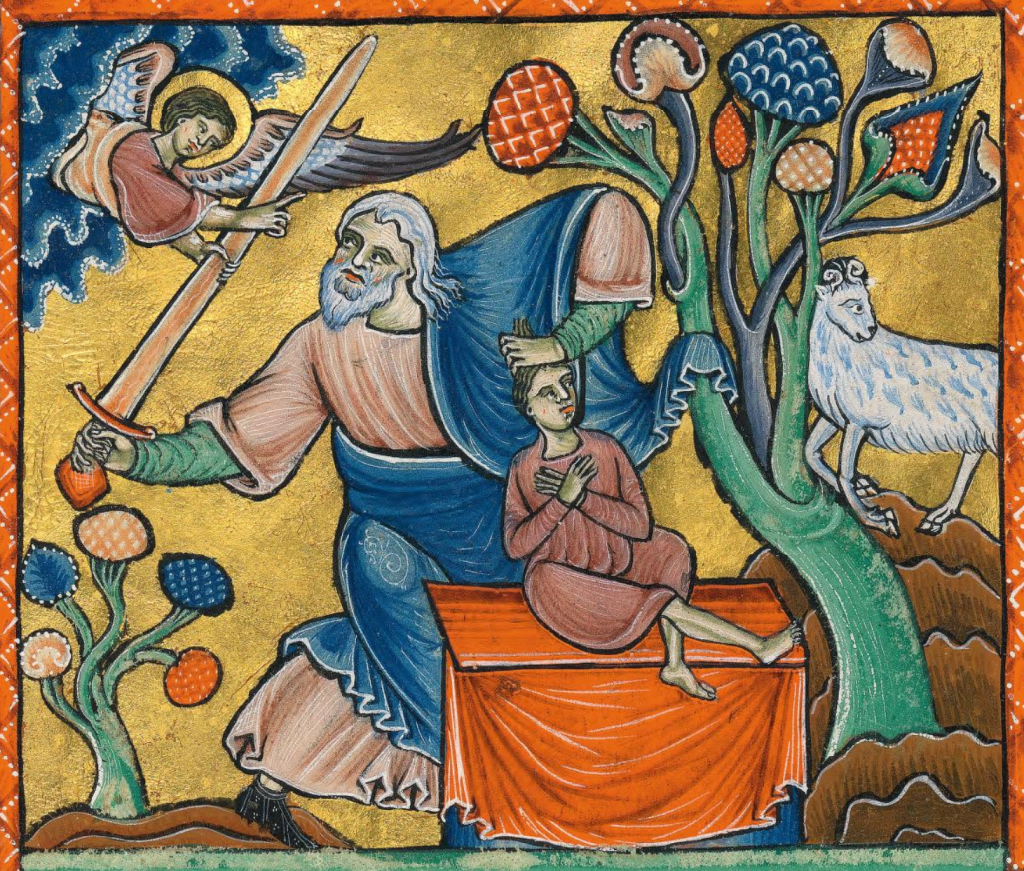
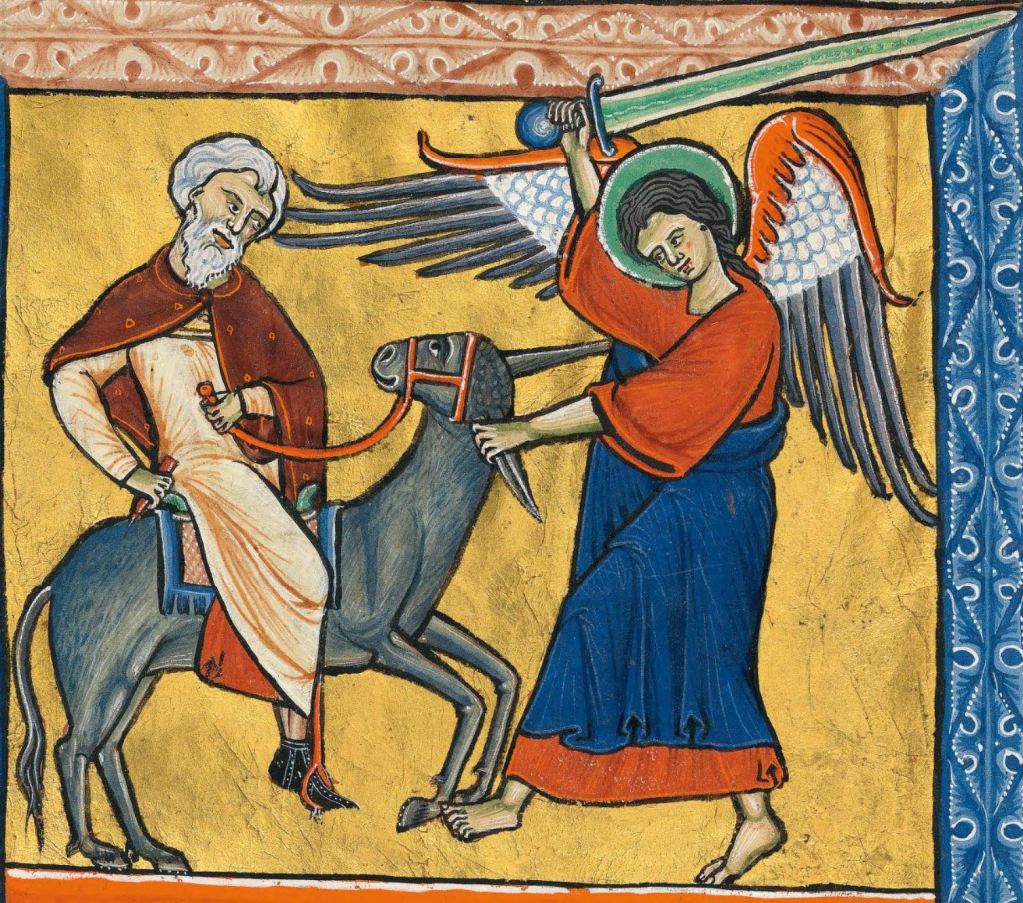
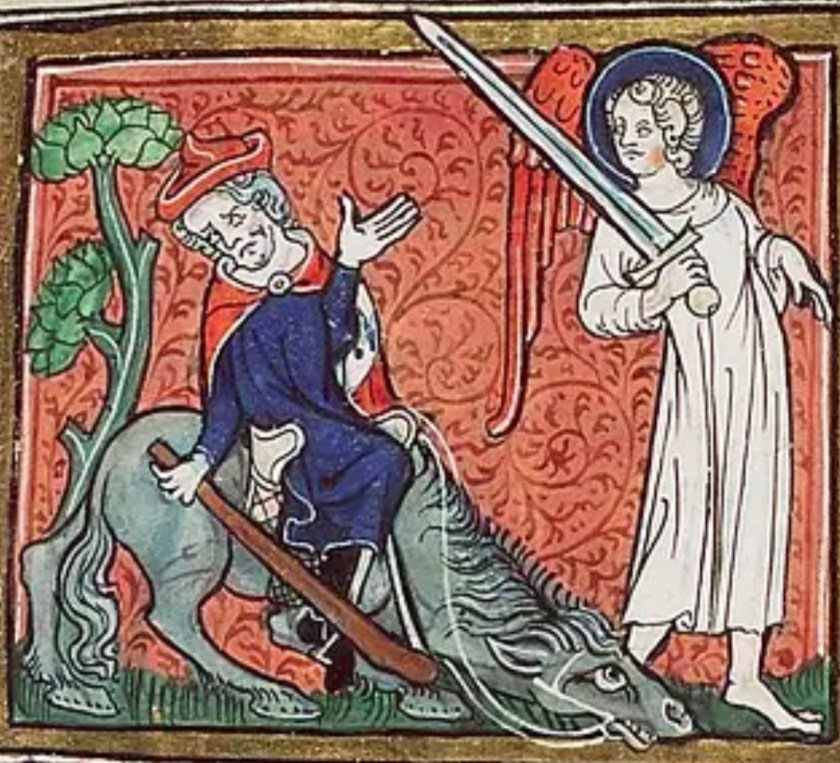
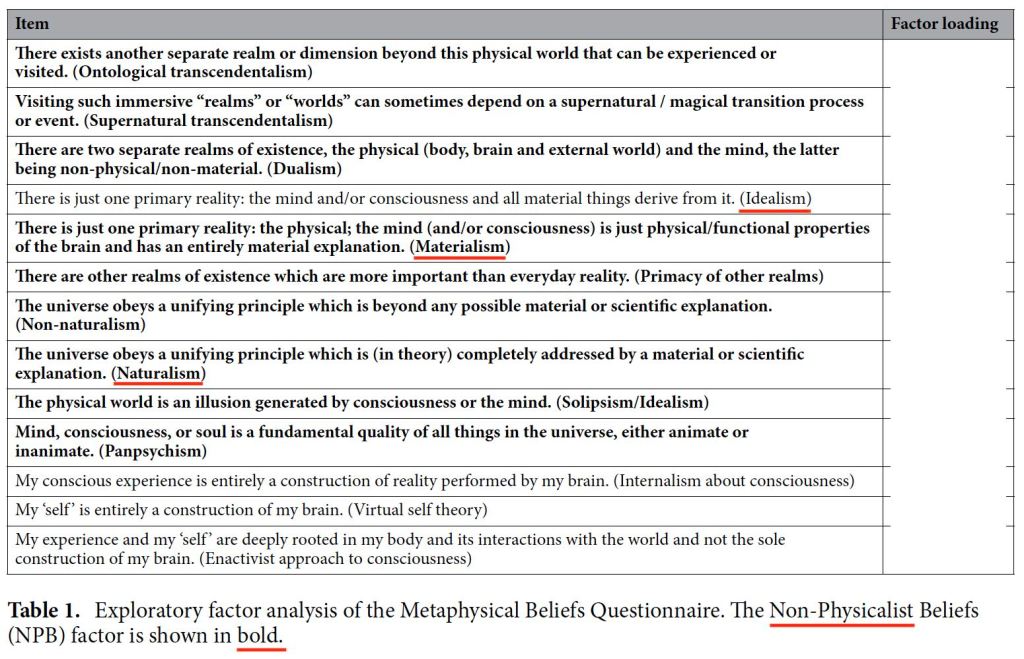

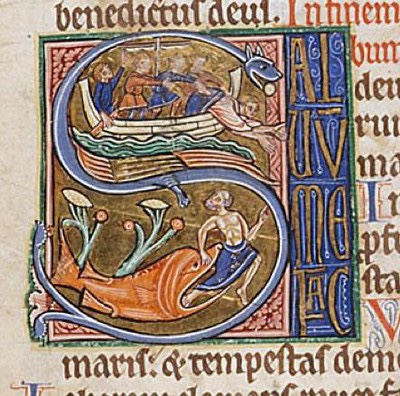
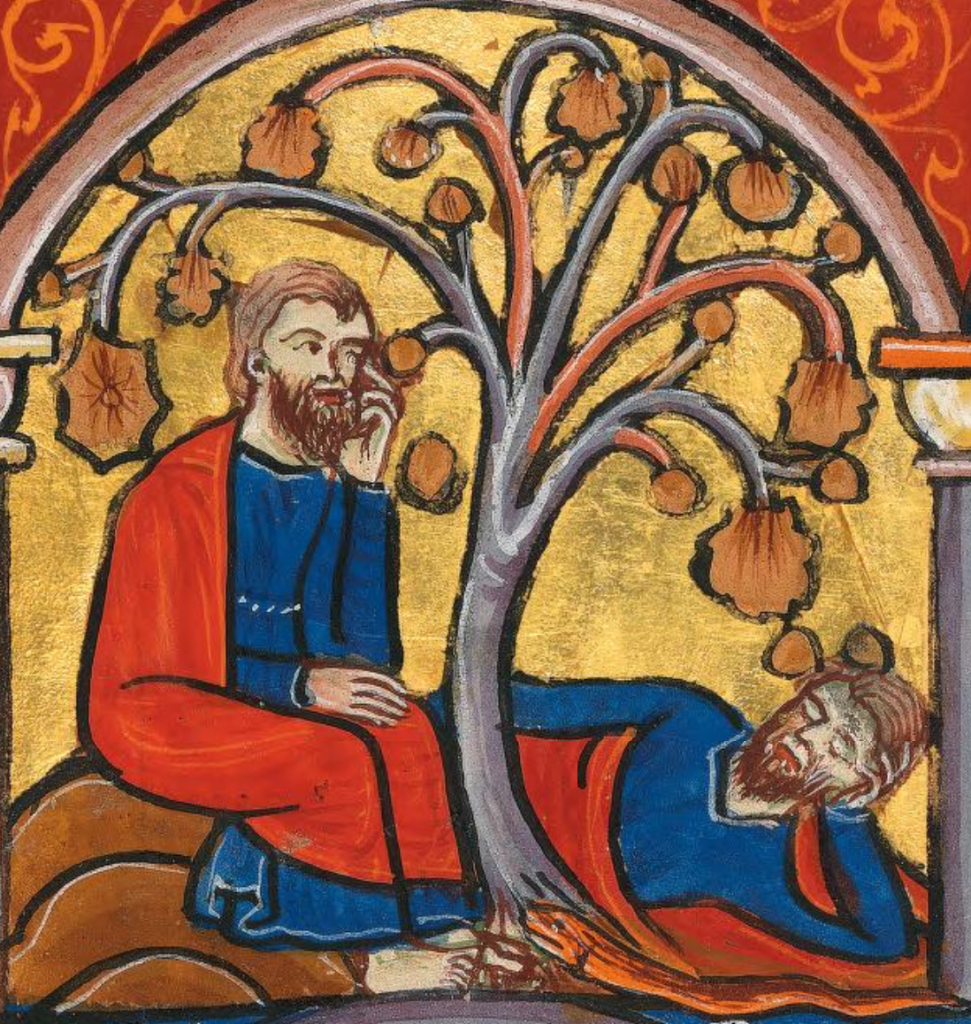
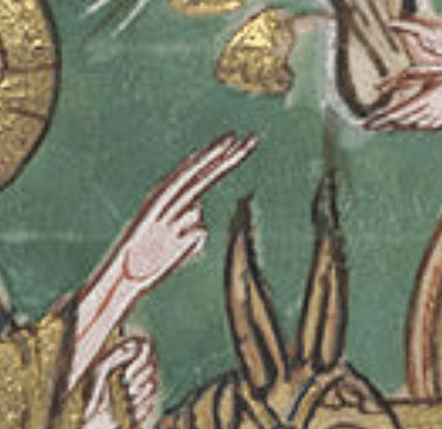
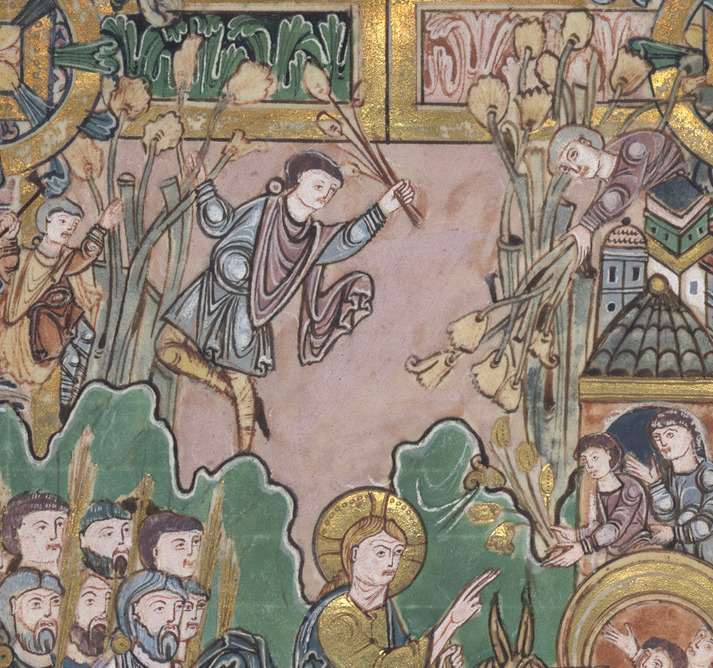
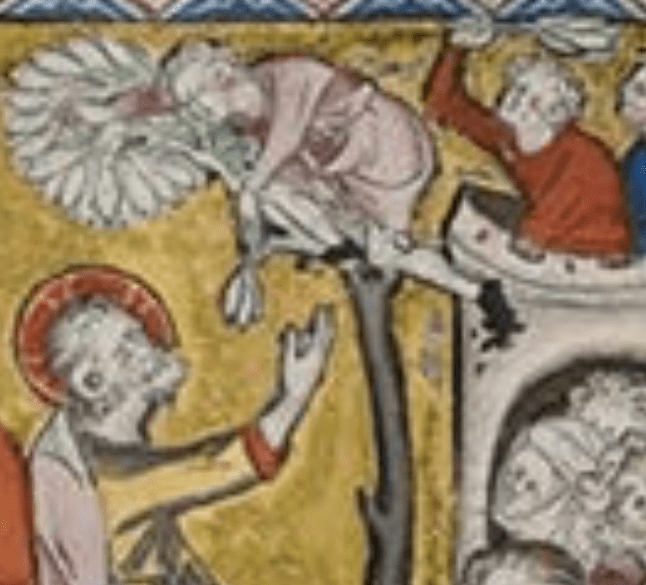

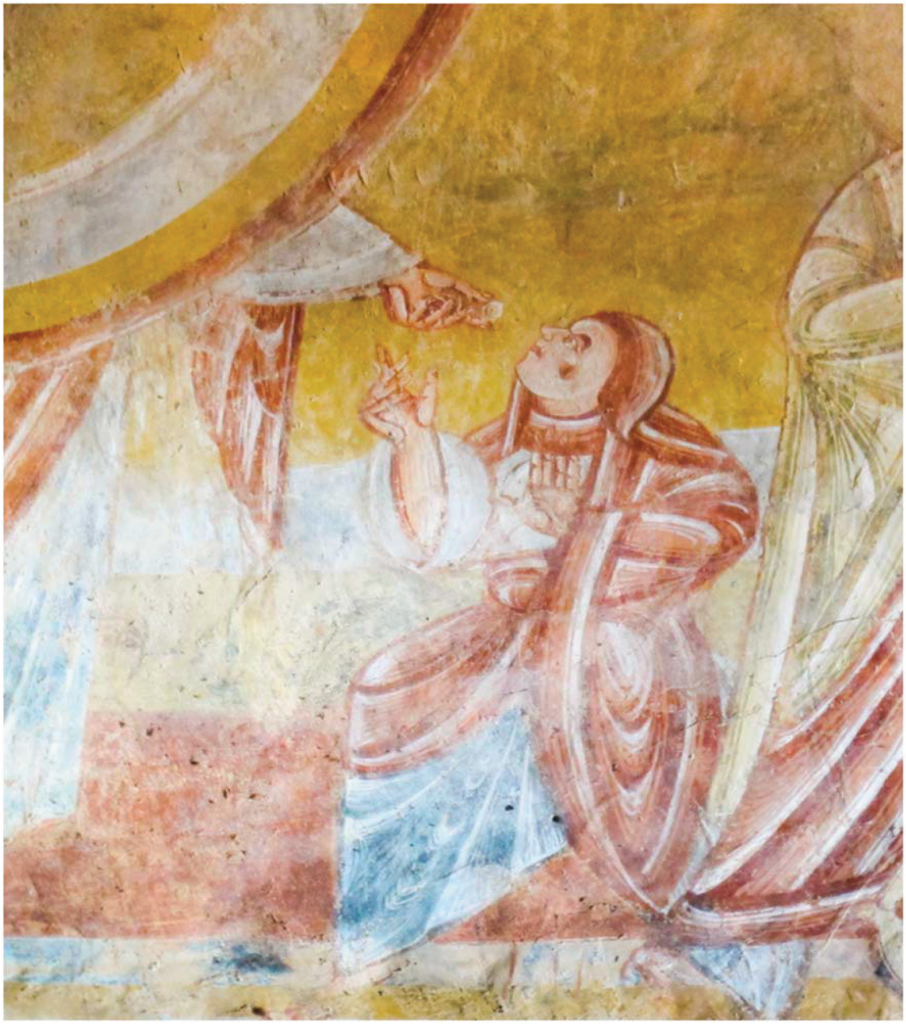
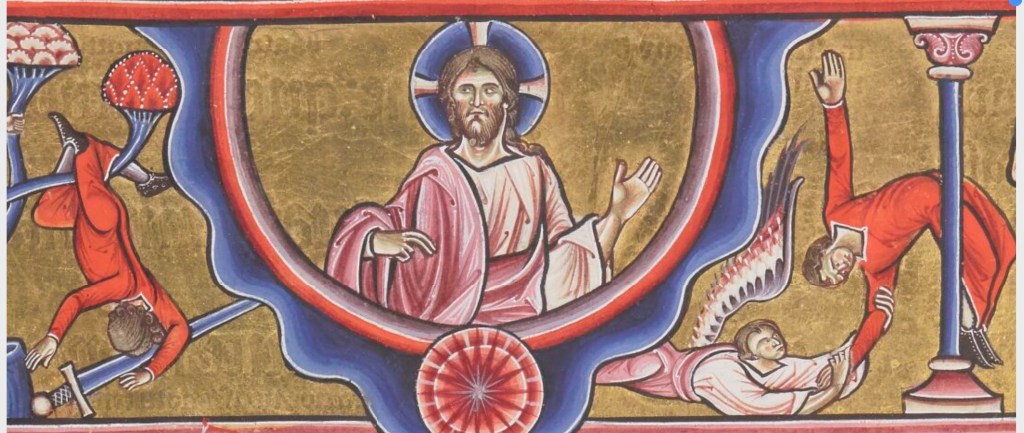
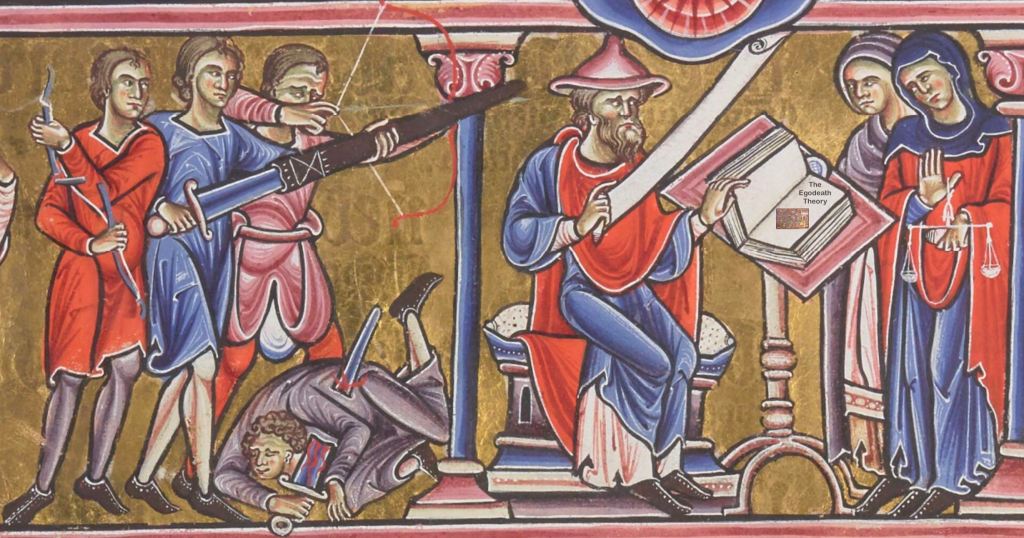
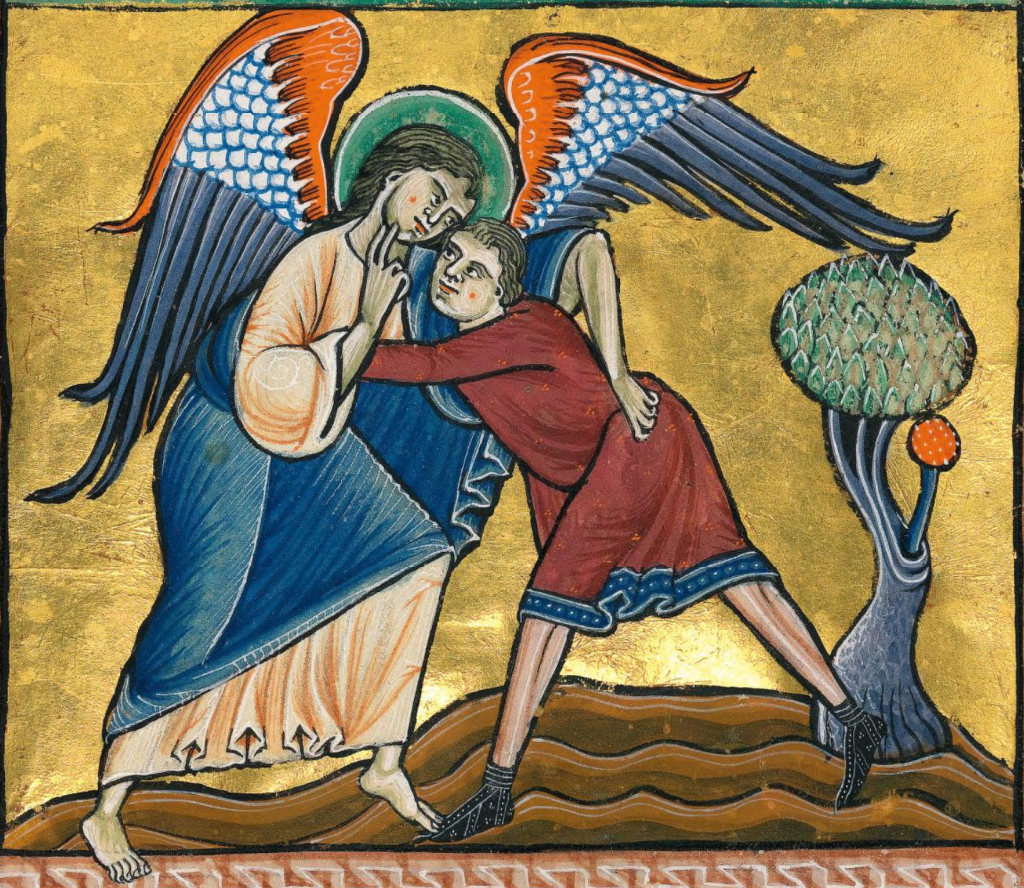
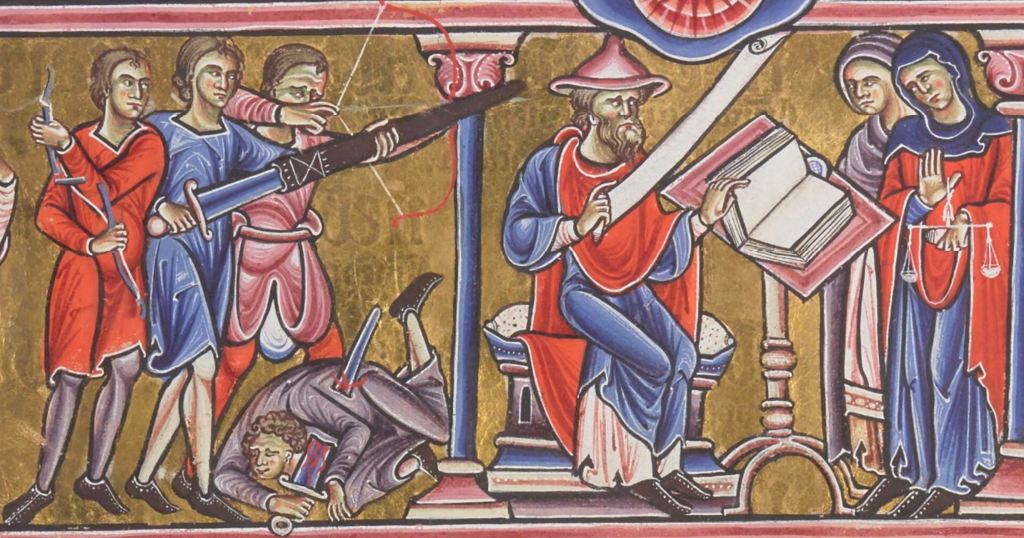
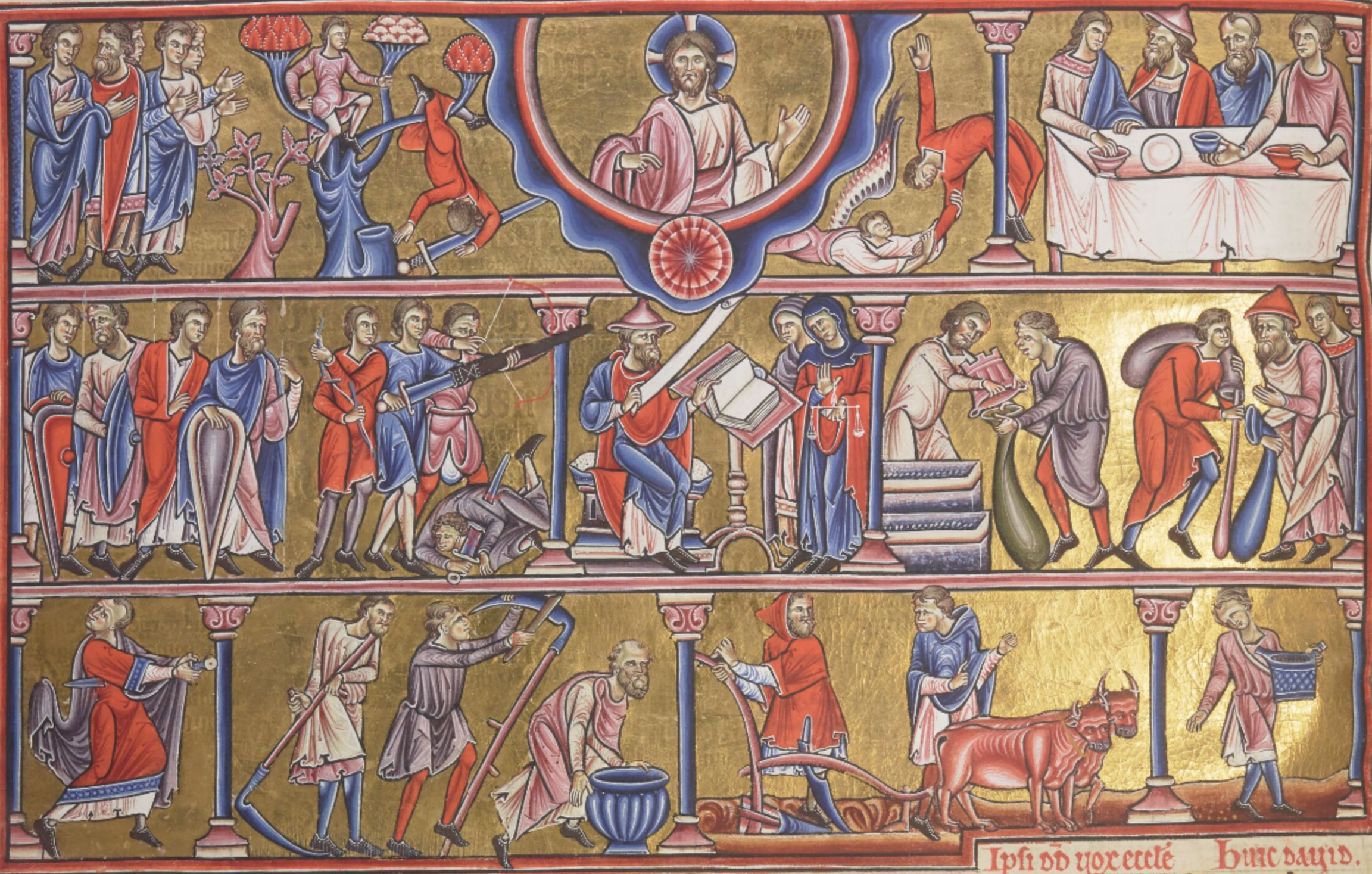
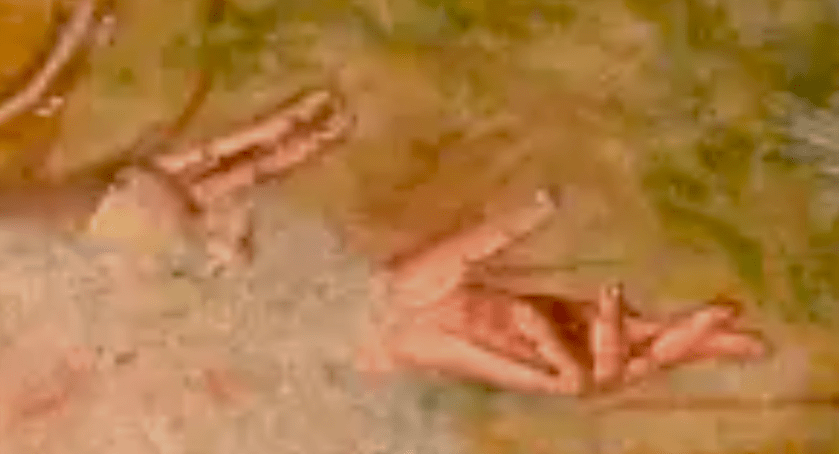
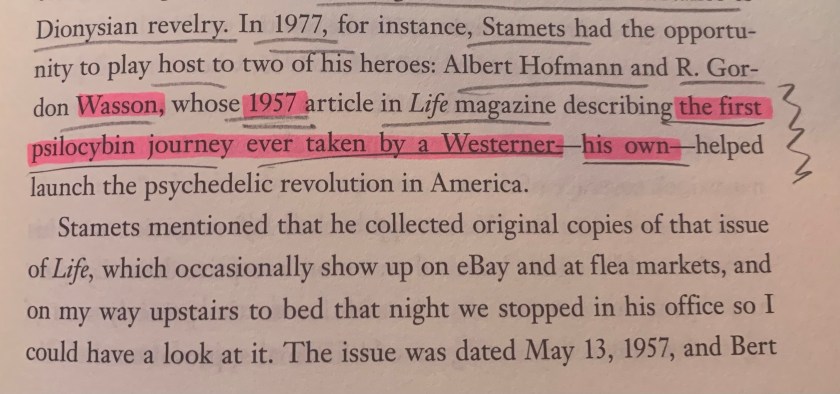


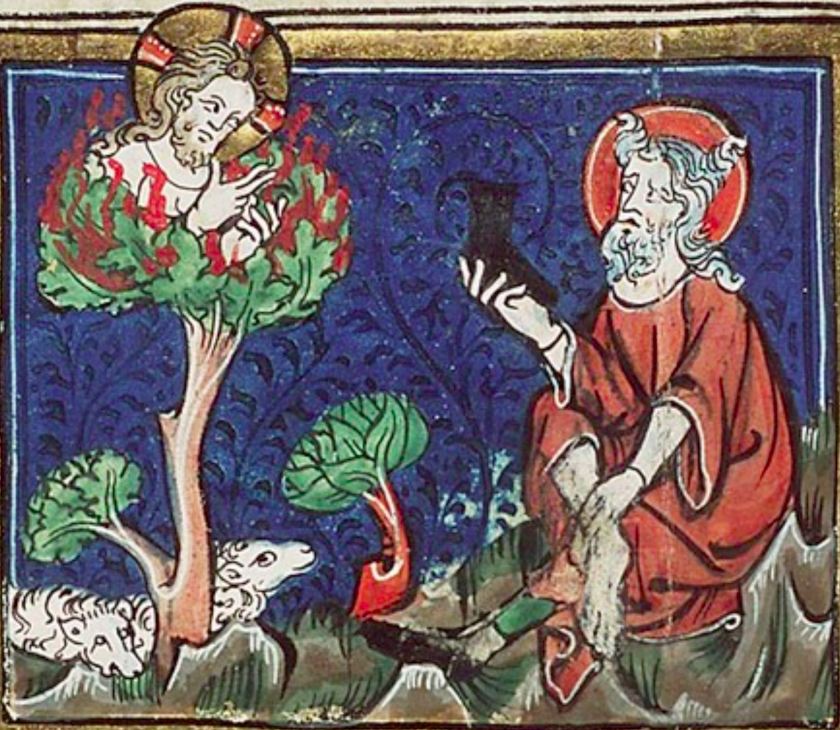
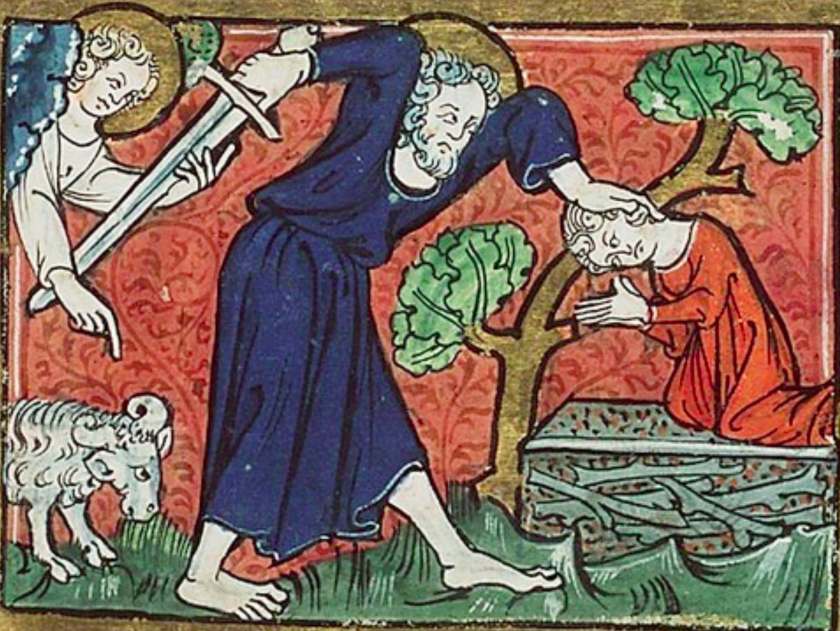
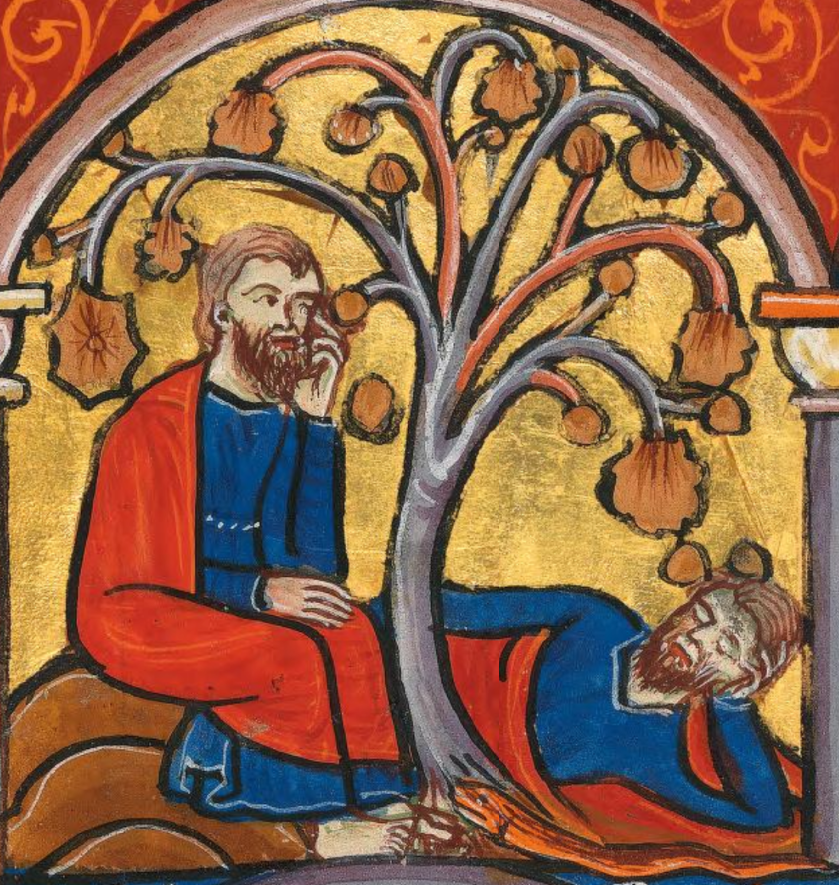
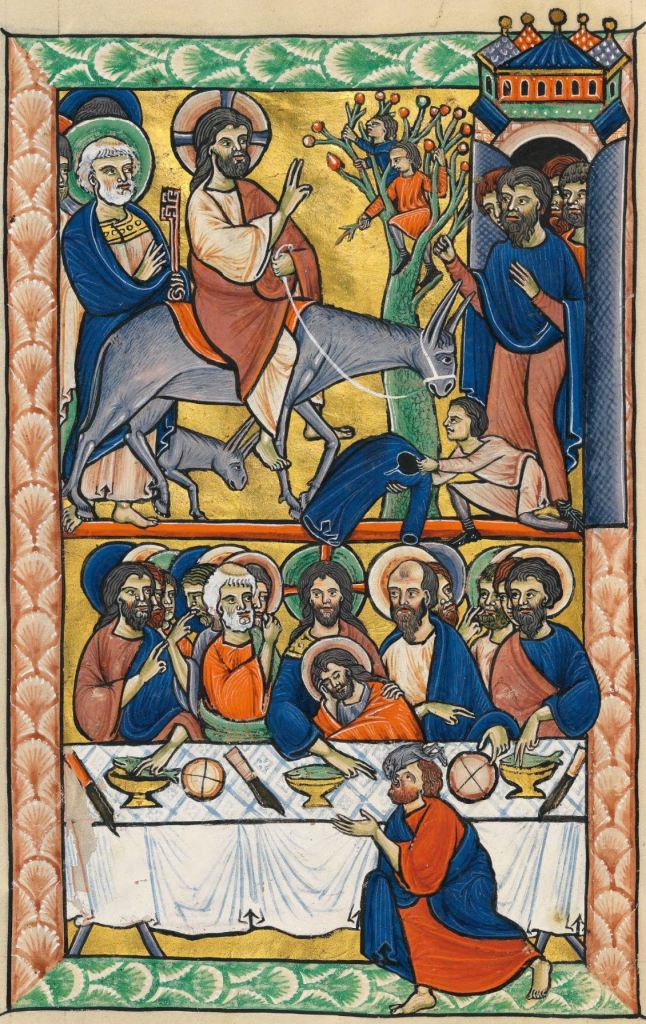

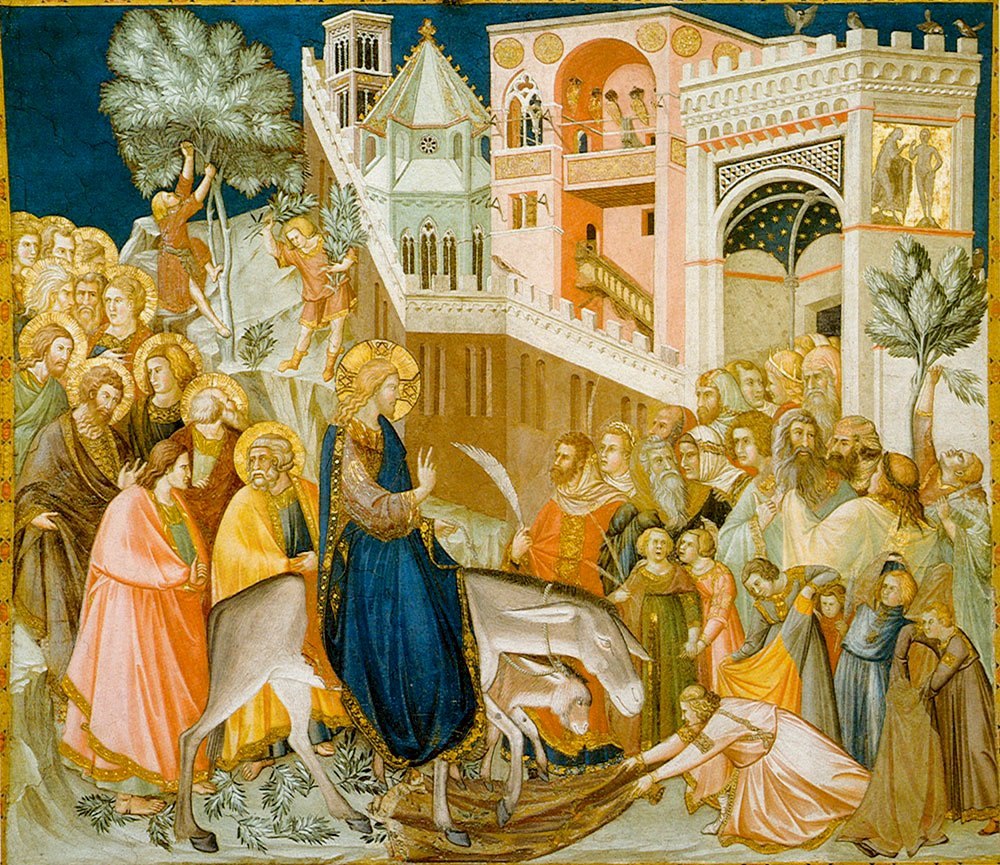
 The Egodeath theory