Under construction, in that I’m still differentiating what needs to be covered in this type of page, vs. eg in a short About page (About This Website 1-pager).
Cybermonk 10:21 p.m. February 27, 2023
Contents:
Possibly See the To-Be-Repaired “About” Page Instead
Motivation for Creating this Page
Just the Basic FAQs
Possible Breakout of Related Pages
Welcome/Intro: The broadest, shallowest page of the bunch. A little intro, a little history, a little explanation of content, a little About Me, etc. A few of the main articles described.
About: Short. 1-pager. About the website, more than about the Theory. You Are Here at this site instead of somewhere else. This site contains 2020-2023 content; in contrast, see Egodeath.com for content written 1988-2007, and see the Egodeath Yahoo Group for 2001-2019 content.
History: Formatted / arranged by date.
Summary: A heap of competing nutshell summaries.
Possibilism vs Eternalism – summarize per field of Philosophy, point out the obvious tree vs. snake contrast, and add Control but state that Control (autonomous/monolithic vs. dependent/ 2-level) must be distinctly highlighted and (at a more detailed level) cannot be adequately covered under the umbrella of “Philosophy of Time: Eternalism”.
Just the Basic FAQs
Publications: Egodeath.com 1995-2007, the Egodeath Yahoo Group 2001-2019, EgodeathTheory.WordPress.com 2020-2023.
Topics: religious mythology as description of classic psychedelics (especially Psilocybin) experiencing, especially the main “effect” which is transformation from possibilism to eternalism.
Character of the body of knowledge: the Egodeath theory is a structured theory, explicit, very summary-driven.
The Egodeath theory aka the Theory of Psilocybin Eternalism is a revolutionary new explanatory framework paradigm.
If a theory is not usefully summarizable, it’s baloney and a put-on and isn’t really a theory.
Creator; brains behind the op: Michael Hoffman / Cybermonk.
How long been working on: 37 years. October 26 or 27, 1985. Back to the Future day. 2023/02 – 1985/10 = 2022/14 – 1985/10 = 37 years 4 mo = 37 1/3 years; 37 years.
Motivation for creating the Egodeath theory: 1985-1987 answer: I need to repair my control malfunction per Self Help New Age Humanistic/Transpersonal Psychology, and Ego transcendence will be a needed component, and mystics SUCK at expressing ego transcendence / Transcendent Knowledge (they LIKE being inarticulate, foggy, poetic, beyond comprehension),
so I will raid and invade their area and strip gnosis out of their undeserving hands and show them how it’s done effectively, per STEM approach of figure sht out and explain it effectively, directly, and efficiently.
I expect a kind of posi-control (I don’t think I was necessarily being extremist or perfectionist, but I may well have been, in lots of ways). Expect non-dysfunctional cross-time control.
January 1988 answer: It turns out, the nature of Transcendent Knowledge and ego transcendence is drastically different than the Journal of Transpersonal Psychology or Wilber’s engine-missing complicated Integral Theory.
Turns out, “reducing the size of your ego” is entirely confused, and ego transcendence is actually a matter of absolutely totally cancelling out the ego entirely by switching to a different, block universe worldmodel.
My project switched from focusing on trying to get a kind of control, to focusing on documenting the real nature of ego transcendence: communicating a technical, cognitive-experiential theory.
The engine is missing from Integral Theory b/c Wilber provides Advaita meditation as if it’s an effective engine, which it isn’t at all — pretty much the exact opposite; the best way of preventing enlightenment is meditation, or what passes for “meditation”).
Thomas Robts and Michael Winkelman have a good summary article in book Handbook of Transpersonal Psychology which confirms my recent suspiciions of why Transpersonal Psychology is bunk, including Stan Grof (psychedelics in service of the “personal trauma remembering and processsing” paradigm).
If you’re looking for ways to avoid enlightenment, and prevent it through the ploy of inert substitute replacement, I give top recommendation to Transpersonal Psychology. Guaranteed no threat to egoic delusion.
Background qualifications: Religiously diverse childhood upbringing: Jewish, Christian, Occult/Esoteric, Restorationist Christian (missing is Catholic), also unavoidable Buddhist aspects, early Ken Wilber, then mid-period Wilber; Alan Watts: Way of Zen (article: Zen and the Problem of Control, in 1960 book This Is It).
Childhood/high school: Possessed & crazed by music, Rock, electric guitar, Beatles (childhood picks: the Psychedelic albums), Animals (childhood track picks: Sandoz).
Motivation for Creating this Page
50% chance I’ll abandon this new page and repair the About page instead. Unless it makes sense to have both an About page and an Intro/ Orientation/ Welcome Mat / “What the F Is This” page.
For my 2023 article, I need to NOT make the same mistake I made for 2006 article, of failing to have an intro summary.
I recently assessed this website for Intro perspective eg for Matthew Johnson scoping this site. It failed. I have like 6 Intro pages, none of them meet elementary basic requirements for About/ Welcome Mat / Where Am I & What’s The Deal?
List of Failed Intro Pages
The About Page
Fails to have a date.
It just skips intro, just like so many product guides – so hard for people to take a “first day kindergarten welcome introduction”.
My lack of Intro reflects my lack of social niceties.
Remember that although I’m proud of the Intro of my main 2006 article, I failed to have it IN the article until a YEAR later! (Sep 12 2007 vs Oct 2 2006 IIRC.)
Mechanical webpage type: – A Wide “Page”, Not a “Post” with Date URL
As I recall, the closest I have to the elementary basic welcome mat orientation is the About page, https://egodeaththeory.wordpress.com/about/ which is in the banner at top of site consistently.
What’s lacking / failing in the About page: tbd
Examples of Sensible Welcome Mat/ About/ Initial Orientation Pages
“Wikipedia[note 3] is a multilingual free online encyclopedia written and maintained by a community of volunteers, known as Wikipedians, through open collaboration and using a wiki-based editing system called MediaWiki.
“Wikipedia is the largest and most-read reference work in history.[3]
“It is consistently one of the 10 most popular websites ranked by Similarweb and formerly Alexa; as of 2022, Wikipedia was ranked the 5th most popular site in the world.[4]
“It is hosted by the Wikimedia Foundation, an American non-profit organization funded mainly through donations.[5]”
I would start off instead talking about the really great sentence 1 & Paragraph 1 style of approach:
Sentence 1 = the very first most elementary thing you need to know, in plain language.
Paragraph 1 = Same: The very first most elementary things you need to know, in plain language. If nothing else, know these 2-3 points about the topic.
Page: “History of Developing the Egodeath Theory”
Again, a bona fide Intro/Welcome / About page would have a SECTION about history of devmt, but would not be EXCLUSIVELY framed & focused that way.
Sure, this page is RELEVANT and is an ASPECT of Welcome Mat / Initial Orientation, “Where Am I?”
Page: “Summary of the Egodeath theory” (and Why It’s Not a Suitable Intro Page)
This page is actually a heap of summaries competing against each other.
A real bona fide Welcome/ About/ Intro/ Orientation page would have SOME summary, a summary SECTION, but would not just be a bare heap of summaries competing against each other.
This didn’t intend to end up so rough, so lacking a lead-in: because I put all focus on multiple summaries, there is no intro.
Hilarious: My Wikipedia edit description: “Added the date of the experiment” 🤦♂️
The Date
Elementary Info No Entheogen Scholar Will Tell You
Motivation of Post
Resolved: I edited wikipedia to add the damn date. Insanity!
“Added the date of the experiment”
yelling to the sky: HOW COULD YOU WRITE AN ENCYCLOPEDIA ARTICLE ABOUT A HISTORICAL EVENT AND FAIL TO STATE THE DATE?!
“Encyclopedia article: Good Friday Experiment: The Good Friday Experiment is an experiment that took place on Good Friday.” no way, really?! thx for the informative information!
The Date: APRIL 20, 1962
motivation of post: mind completely blown 🤯 by the fact that NO ARTICLE ABOUT PAHNKE EXPERIMENT STATES WHAT DATE.
I cannot BELIEVE how many searches I had to run SIMPLY to get a TRIVIAL statement of date. April 20 1962.
UNBELIEVABLY bad writing, even Wiki totally let me down, most astonishing of all.
The successful search finally was to DITCH ALL bad writings about entheogens, which just copypaste same bad writing, and take a purely non-entheogen approach:
search: Good Friday 1962
IMMEDIATELY it gave the answer which no entheogen scholar is capable of writing:
April 20, 1962 – confirming my memory.
This proves that everyone just copy-pastes each others’ hackneyed phrasing.
What tail-chasing runaround, simply to get a damn date!
i will add to my References page, which also FAILED to state this elementary milestone date.
Elementary Info No Entheogen Scholar Will Tell You
Entry: The experiment date. APRIL 20, 1962
How many escaped (2 ppl).
How many mg: 30, synthetic psil.
How good safety scuba diving record? Not very.
What did they listen? Sermon live via spks, in basement.
How many basement doors unlocked? 1, the main doors.
Who was escapee going to see? Dean.
Why did they keep him from seeing Dean? Toast; burnt.
“Naturalism” Means Physicalism, Materialism, & Cognitive Neuro-Reductionism
The Ugly Truth: the Detractors Are Right: by “Naturalism” — Warning! — Johnson & Letheby Half the Time Push Physicalism, Materialism, & Cognitive Neuro-Reductionism!
Journal of Consciousness Studies Article Recommends “Avoid terms such as ‘ego dissolution’, they are too vague”
March 4, 2023 update:
Dissolution of What? The Self Lost in Self-transcendent Experiences 44 citations Authors: Lindström, Lena; Kajonius, Petri; Cardeña, Etzel Source: Journal of Consciousness Studies, Volume 29, Numbers 5-6, June 2022, pp. 75-101(27) Publisher: Imprint Academic DOI: https://doi.org/10.53765/20512201.29.5.075 – Abstract:
“In this study, we investigate the phenomenology of self-transcendent experiences, in which the usual sense of self is lost.
“Based on a taxonomy of nine aspects of self and three types of content of consciousness, we compare ten accounts of such experiences acquired through in-depth interviews.
“Sense of separateness and identification with body and narrative self were reported as lost in all of these.
“However, bodily awareness, spatial self-location, sense of agency, perspectival ownership of experience, thoughts, emotions, sensory impressions, metacognition, and personal identity were variously reported as lost or retained.
“Individual participants emphasized the absence of either of these ‘optional’ aspects as crucial for their judgment that the experience was without self.
“We conclude that there is a large variety in what is felt as being lost in self-transcendent experiences, and we recommend that research and theory avoid general terms such as ‘ego-dissolution’ and instead probe more precisely the different aspects of self.”
In Praise of “Not Invented Here” Rejection of Pre-fab Lexicon Terms that I Didn’t Create
I have decided that in my 2023 article I will not approve, reify, and employ anyone else’s lexicon/ concept labels/ explanatory constructs, such as:
mystical supernaturalism
scientific naturalism
default mode network
neuroplasticity
ego dissolution
unity connectedness
Yesterday (Feb. 25, 2023) was a long day of spoken/ recorded idea development: I read aloud my draft sections (but not art features) and I criticized these pseudo-explanation terms that shut out adequate relevant comprehension.
Key strategic mindset: I have to draw a sharp dichotomy between:
Terms that I use; things that I would write
Terms that other ppl use/ made/ define/ employ.
eg Brown asked us a question about how to explain mushroom imagery — but his question was LOADED with three distinct, extra, added specifiers that were unnecessary narrowing presuppositions, implying the elaborate, dubious, confused paradigm of “elite, secret, hidden, heretical, deviant” mushroom use.
See Cyberdisciple’s page: “Rejecting the premise of suppression” — or at least, rejecting all of our conceptions/ assumptions/ presuppositions about the nature of “suppression” (or better, more neutrally and agnostically, the forgetting to some degree) of psychedelics in Western religious/ cultural history.
Why were psychedelics forgotten to some degree at some point? To what extent, when? Was it “suppression”, but we’d have to define this “suppression”.
Before even before we can ask that superior-framed question, we must first ask:
To what extent psychedelics in Western history?
We have presupposed wrongly!
Before we ask “why did the Bible eliminate psychedelics?”, we must first ask IF the Bible eliminated or sought to suppress psychedelics.
We CANNOT just take anything for granted!
We tried doing that (eg book Food of the Gods by McKenna) and we were very wrong and we blinded ourselves and falsely claim and cried that “there are no psychedelics in the Bible or chapels or cathedrals or psalters”.
I CANNOT employ any of YOUR explanatory-construct terms, because they are LOADED/ freighted with YOUR confusions.
Like Letcher Hatsis’ term “secret Christian Amanita mushroom cult” that HE invented, that HE bandies about & relies on, that HE tilts at windmills of his own construction, and that HE uses for the result of just confusing himself.
I reject the usefulness of terms like “the Holy Mushroom theory” or speaking in terms of “whether Jesus was a mushroom or not”.
I even have to avoid the great acronym ‘DED’ from Dittrich’s OAV psychedelics psychometrics questionnaire, because DED expands to Angst/Dread “of Ego Dissolution“, and I definitely (and also potentially) disagree with various specified (& under-specified) conceptions around the explanatory construct/ concept/ label “ego dissolution”.
Ego dissolution is not, in fact, what dread is of.
The DED dimension’s name contains a false — as just as bad, a VAGUE — theory assertion.
Dread is not of “ego dissolution”; Dread is of control instability; dread of catastrophic loss of control.
(This is speaking at a zoom-out level, that must be accompanied by detailed zoom-in specifics.)
Remember, ‘EGO DISSOLUTION’ is not my term, and therefore I must treat it as contaminated and part of the problem, CREATING incomprehension & confusion; PREVENTING successful explanation.
Remember, ‘neuroplasticity’ is not my term; it’s not what I would write; that term is part of YOUR failed, wrong, comprehension-blocking, less-than-“theory”.
Were I to use your terms from your bad, old, wrong, failed theory, I would then be preventing and working against my new, good, correct, true theory, that is successful.
Johnson Falsely Says Fatalism Is a Supernatural Belief
Johnson comments on Letheby’s Redefinition of Pop Word ‘Spiritual’ to Be Naturalistic Instead
The easiest thing in the world would be for Matthew Johnson to write:
“after a psychedelic experience, on average people shifted away from physicalist and materialist views (both consistent with naturalism) and toward eternalism, superdeterminism, no-free-will, double predestination, and hyper-Calvinism (which can be seen as deviations from naturalism).”
These abstract concept labels are arbitrary, so there is nothing stopping some people from claiming that eternalism is opposed to naturalism.
I also note, like the mostly bunk (strawman) pseudo-“replies” to Sanders & Zijlmans claimed, the anti-mystic camp of psychedelic scientists here is, in fact, pushing materialism and physicalism, equating them or at least strongly aligning them with so-called “naturalism”.
The Naturalist scientists, who are starting to advocate a “naturalistic”(???) brand of “spirituality”(???) are:
Matthew “Lose the Buddha statue” Johnson
Sanders & Zijlmans (Moving Past Mysticism article)
Chris Letheby
This decision is just like deciding whether my Theory should embrace and take on Amanita as a passenger to defend and carry. I’ve listed the many problems with doing so.
Amanita doesn’t want to be a passenger; it wants to be the sole pilot and kick the passengers out the door. Amanita doesn’t want to politely share the throne, it wants to be all-dominant, alone on the throne, stealing it from Psilocybin.
Amanita is nothing but the most wild and indeterminate of wildcards. You might as well tell me to marry my theory to an undefined Substance X about which nothing is known. Worse than useless; this dilutes and confuses everything; “why not add Chaos to the theory?”
Amanita represents the Completely Unknown.
Amanita is as purely unknown and indeterminate as, What does Mystery Person X mean by the word “Naturalism”? Johnson defines ‘naturalism’ as the opposite of ‘fatalism’.
Is ‘fatalism’ the same as ‘eternalism’?
I do not agree to this indeterminate, changeable, unsteady marriage of the Egodeath theory (the Theory of Psilocybin Eternalism) to these materialist, physicalist, reductionist, Cognitive Neuro-Reductionism advocates!
“Naturalism” Means Physicalism, Materialism, & Cognitive Neuro-Reductionism
and some Mystery Brand of “Atheism”(???) that’s subject to redefinition every 15 minutes.
The Ugly Truth: the Detractors Are Right: by “Naturalism” — Warning! — Johnson & Letheby Half the Time Push Physicalism, Materialism, & Cognitive Neuro-Reductionism!
What exact load of worse-than-dubious package deal are you trying to trick us into, when selling your so-called, continuously redefinable “naturalism“?
Taken-for-Granted Abstract Labels Freighted with Confusions
That seems obvious to me and he should have always known that, it’s a matter of definitions; “mere semantics”.
I’ll think twice before framing my successful explanatory theories as “naturalism”, eg the standoff between the mystical psychedelic scientists (Walter Pahnke, Wm Richards, Roland Griffiths) vs. the naturalistic psychedelic scientists (Matthew Johnson, Sanders & Zijlmans) rests on undefined-by-them vague terms such as ‘naturalistic spirituality’ and ‘supernatural’.
These descriptors that are employed by the battling parties are taken for granted and undefined by them, so I should avoid attaching these hazy words and aligning my theory with ‘naturalism’ or “mystical supernaturalism”.
Also remember that the pseudo-“replies” to Sanders & Zijlmans’ article Moving Past Mysticism demonstrate & prove that no one (especially not the mystical scientists camp in this “exchange”) cares about real actual positions; the parties just want to fight between a junk extremist caricature of “naturalism science” (eg hardcore materialist reductionism; consciousness doesn’t exist) vs. a junk extremist caricature of “supernaturalism mysticism” (dogmatic ineffabilism; words cannot explain anything, & we’re happy about that).
Sanders & Zijlmans were relatively clear communicators; the mystical scientists were a disgrace, absolutely strawmanning Sanders, who made many great, quotable points.
I was psyched to see someone, at last, clearly making these points: eg that the mystics are too eager to anti-scientifically revel in & celebrate the alleged inability to explain; the alleged inexplicability of what some people label as “mystical experiencing”.
I definitely am a cheerleader for the STEM manner of explanation & explanatory communication, but this standoff between the mystics vs. the anti-mystic “naturalists” rests on too many dubious dichotomies & undefined abstract labels, to attach their confused dichotomies to my well-defined explanatory model & theory.
Psychedelic Eternalism: Mystical Supernaturalism or Scientific Naturalism?
The Theory of Psilocybin Eternalism:
Call my theory STEM, ok, but careful about calling my explanatory model of mystical transformation “naturalistic” — that term is loaded with undefined dubious dichotomies & connotations.
Which side are you on: a junk definition of ‘religious supernaturalism’, or a junk definition of “scientific naturalism”?
The dichotomy is unhelpful.
Sam Harris assumes no-free-will is pitted against religion, but actually, when you pursue the full advanced experience of no-free-will, it is the heart of religious revelation, cancelling the immature mental model of autonomous control agency that creates the future by steering through time selecting among branching open possibilities.
Article Overflow for Psychedelic Eternalism, Mushroom Trees, Non-Branching, and Handedness
Dragon Fire Dump
Eustace
[content that had been added to branching-message mushroom trees article, not in “Snapshot of Verbose Draft”]
Lion’s right paw touches the right-hand branch of the branching cubensis tree. — ~May 21, 2023: problem encountered recently prior to, and solved very recently after the recent “fractal scope” discovery: Lion’s right paw touches the “bad” branching tree but actually touches the relatively/ locally-scoped “good” right-hand branch of that mushroom tree. Announced in a recording ~May 21 for Egodeath Mystery Show.
Trees 1 & 2 form a YI pair. Trees 3 & 4 form an IY pair, or YI pair from Eustace’ point of view. Tree 4 is a YI. Trees 2, 3, and 4 on a micro scale (inner detail) have a {cut right trunk} thus are YI. Eustace’ left hand gestures affirming non-branching crown branch of tree 4. No branching in tree crowns. Clover YI pairs are only on the mountain, not on the plain. 3 YI clover pairs and 1 IY clover pair.
Eustace’ weight on right leg. Lion’s right heels down, left heels up.
Heading
YI / IY pair. left is trident/trident pair. Blue is favored, YI, the only 1 of the 4 to lack left branch. On Dec 13 2020, I id’d correctly for first time, against Brown: Pan; Lib; Cub; Ama. (Arthur 2000 tried for a Soma recipe; not relevant; “opium, rue, psil, ama, cann river”)
YI / IY pair. left is trident/trident pair. Blue is favored, YI, the only 1 of the 4 to lack left branch. On Dec 13 2020, I id’d correctly for first time, against Brown: Pan; Lib; Cub; Ama. (Arthur 2000 tried for a Soma recipe; not relevant; “opium, rue, psil, ama, cann river”)
Status of Draft April 23, 2023
Found a ton more top-tier mushroom evidence (added to article), and the {stability} motif (adjusted title), and have a pretty firm idea now of what to cram into the Intro and Conclusion.
It’s too important of an article to not tackle the responsibility of reflecting the state of play and future direction.
Subtitle Keywords: Design/Breakout of Motifs
{mushrooms} & {branching} proved distinct.
Adds {stability}.
Places motifs in standard order from door to climactic revelation/ transformation:
MISSION: PRI 0: EXPLAIN PSYCHEDELIC ETERNALISM IN MEDIEVAL ART.
HAVE I COMPLETED THAT? IF SO, AFTER THAT, DO THE FOLLOWING — OR NOT: PRI 5: cover OTHER SHIITE.
First, hit the smallest, easiest, minimal viable product: just do nothing but explain — meet just the minimal requirements, the easiest way and fastest way.
No stylizing. Just give the correct analysis.
Just plain efficient effective explain the art, utilizing the theory.
The article is just the solution sheet.
Just meet the requirement: did you explain the art, or not?
Don’t do anything except explain the art by using the theory to explain the art.
This doesn’t mean suppressing the theory; it means openly loudly applying the Theory, to explain the art.
Not to explain the theory, — just like 2020b article.
I clarify the theory in the course of explaining / decoding the art.
Relevance Test
Eval each topic to see if it’s Core or mere Periphery; More Core, Less Periphery. More Me, Less Them. People aren’t here to read about Same Old BS; they’re here for the New Stuff.
For such topics, maybe have 1 sent. in Conclusions briefly giving direction, but have no topic section in article body:
Is this topic directly embodying the new body of knowledge, or making the old confusions the topic of attention?
Am i presenting th new theory/parad/ expl fwk directly, or showing the new in terms of th old? Am I inviting in the old into my living room, why? Am I platforming and spotlighting error?
HEY ERROR, COME INTO THE SPOTLIGHT IN CENTER STAGE, SOME MORE — (LIKE YOU ALREADY ARE)
EVERY SENTENCE I’M TALKING ABOUT THE WRONG/IMPOSTER THEORY, IS A SENTENCE NOT CONVEYING THE REAL THEORY
Is this the last topic I’d remove?
Is this topic in the Inner Core, Outer Core, Inner Periphery, or Outer Periphery?
Am I only including this topic b/c everyone else is confused and barking up the wrong tree?
Am I focusing on my theory and the art and their amazing concurrence, or am I giving the spotlight to talking about clueless people’s misguided ideas?
Am I pointing the way fwd by example, or looking backwards and discussing unprofitable concepts and mindsets?
Am I opening the door letting in dilution, adding in ideas that don’t contribute but drag down.
Imagine I figured this out Jan 1988, or Jan 1997 before I heard of entheogen scholarship. Would I be mentioning the bad old wrong paradigm and the Amanita primacy fallacy,
Cast to the Outer Periphery the missteps of
The missteps of Jerry Brown
The missteps of Thomas Hatsis,
The missteps of Georgio Samorini,
The missteps of Carl Ruck,
The missteps of Gordon Wasson
The missteps of Erwin Panofsky
The missteps of John Allegro,
The missteps of Jan Irvin,
The missteps of John Lash,
The missteps of John Rush,
The missteps of evil M Hoffman,
The missteps of Wouter Hanegraaff,
The missteps of Robert Price,
The missteps of Andy Letcher,
The missteps of Paul “asleep at the wheel of Psilocybin in Europe” Stamets
The missteps of Frank Barrett, Matthew Bradstreet, Leoutsakos, Matthew Johnson, & Roland Griffiths’ CEQ-POS
The missteps of Erich Studerus, Alex Gamma, & Franz Vollenweider’s 15 factor 11-Factors 11 Names,
The missteps of Timothy Leary’s MEQ 🦄💨🌈,
The missteps of Walter Stace.
“Spot the Mushroom” Game, Grown-up Version
Spot the Mushroom game: Deluxe Version,
The Mushroom Exception to Art Theory
An element in art can have multiple meanings — except for mushroom imagery, in which case, an element in art can only have a single meaning, which automatically must be the non-mushroom meaning.
it’s such a pointless, loser table, fkking CRINGE af, —
Lash says “the Wasson theory” (barf), and likewise, Samo says “the Plaincourault tree type” (barf! EVERYTHING IS WRONG WITH THIS FRAMING!) — WHAT A TERRIBLE idea for classifn labels etc. and “the St Sauvin tree type” (barf!) —
b/c Plainc worked SO WELL.
we’ll just BUILD OUT the poison that is the Aman/Plainc paradigm TO DO THE SAME DISASTER THAT DIDN’T WORK FOR AMAN, NOW TO PSIL TOO!
What a fkking great idea Samo!
What the F is this table supposed to accomplish? Showing how to (try to, and fail) force everything into the Allegro/ Plainc/ Amanita mould that worked SO WELL.
The failure of the Old Theory, is represented by the following notable failures:
Brown and Brown both argued in 2016 and in 2019 [the Journal of Psychedelic Studies] that St. Walburga cannot be holding an Amanita or a vial that looks like Amanita, because the vial has a serrated base.
And therefore, we should discount the Irvin and Rush art catalogs.
But in fact, per [Heinrich 1994] and [Schultes 1976], todo: cite Schultes 1976 and Heinrich 1994, Amanita has a distinctive serrated base.
In SMC [2009/1970] Ruck asserts “this one example should silence the art critics … Dancing man’s mushroom has red and white cap]”.
In fact Dancing Man’s mushroom tree with blue cap with white spots [Hatsis 2013] with green centers — and a {cut right trunk} touching his {right heel}, overlooked by entheogen scholars operating within the old, Amanita paradigm.
Ruck wrote: “One example alone should suffice to silence the argument of the art historians: … a typical mushroom-tree beside him. The mushroom has a red cap spotted with white, and similar mushrooms branch from its stipe-like trunk…″ — Fungus Redivivus: New Light on the Mushroom Controversy in John Marco Allegro, The Sacred Mushroom and the Cross, 40th Anniversary Edition (Gnostic Media, 2009), pg. 376.
Samo Figure 20 two-column table attempts to duplicate and extend the Amanita/Plainc paradigm to cover Psilocybin, by padding out the Column 1 category by placing Dancing Man there, when Dancing has both Amanita and Psil attributes and so fits in neither of Samo’s columns but breaks his attempted classn scheme entirely.
instead of the overly specific combinations of features, column 1 poorly classified as “Plaincourault tree type” vs. “St. Sauvin tree type” — a brittle, rigid, awk , unsuccessful classification approach that cannot account for the mushroom tree morphology in Golden Psalter or many other examples. Carl Ruck’s major error regarding “red and white cap” for Dancing Man represents the failure of Samorini’s Amanita-based art-classification attempt.
Using place names, modelled after the excessive attention to the deviant, overused popular Amanita instance of mushroom trees (Plaincourault), is far too inflexible. Plaincourault is not special and is merely one of many mushroom trees, per Panof in [Brown 2019].
The exaggerated popular attention to Plaincourault is merely due to lack of awareness of the many other instances.
YI and YO tree morph’y builds the science on a viable, more granular level, that successfully accommodates the countless thousands of instances of mushroom trees. in their rich, flexible variety. Do not treat Plaincourault’s deviant Amanita-based mushroom tree as the given paradigm to build out. The Amanita paradigm is replaced by, not bolstered by, the normal type, Psilocybin msh trees.
[Samo 1998]. Samorini makes mistake of trying to build out science on a false, ineffective, foundation: the Amanita paradigm. The field of entheogen scholarship must abandon the Amanita paradigm. [Lash 2008]
The Theory of Psilocybin Eternalism Has Replaced the Amanita Paradigm
strictly speaking, this is not purely on-topic. this does not explain how {branching-message mushroom trees}, {handedness}, and {non-branching} motifs works, or how mental model reconfig’n via Psil works.
this section is meta science; Phil o Sci. which could be maybe 1 short para in Concl section.
old: the Amanita Symbology paradigm
new: the Psilocybin Eternalism paradigm
this article is the official end of the Amanita Plaincourault paradigm, it’s officially dead. and the moderate aka minmal entheogens paradigm is officially dead. mention failure of Samo Figure 20 2-col table, trying to add Psil to Aman paradigm, result: Ruck quote “this one example silences art historrialns: Dancing Man is red /white cap. Not helping the dead Amanita paradigm is Brown x2 arguing “St Wal has serrated base, thus can’t be Amanita“. Aman paradigm has no credibiy, been compleetly replaced offiicaly now , so Lash and Letcher and Hatsis & me can celebrate the final Death of the Amanita paradigm, replaced here now officially by the Psilocybin Eternalism paradigm, expl fwk, the New Theory a la Paul Thagard. Samo fig 20 fails to break out , “Plainc Tree type” padded out w/ dancing man — FAIL. I recently … I’m still working out the YI & YO morphology which works, unlike Samo 1998 Fig 20 awful morphology 2-col table, forced, failed classif attempt based in the Amanita bunk & useless paradigm that’s nothing but impediment.
😵⚰️🍄–>🗑🔥
integrate Gen 2-3 interleaved with Rev 22. Vid YT “yesterday” Graham Hancock on Psychedelics Today podcast: in book Supernatural 2007, he asked Stamets, other famous mycolisgt claimed “no Psil in europe”, Stamets replied “impossible; nonsense!”, but this nonsense = the Amanita paradigm. But where was Stamets’ pointed, intentional coverage of Psilocybin in Europe in his 1996 book? ASLEEP AT THE WHEEL — act like you give a F , Stamets 1996!!! I was
I WASTED MY TIME SCOURING STAMETS BOOK 3 TIMES TO TRY TO EXTRACT FROM HIM WHAT HIS DAMN STORY IS — INARTICULATE brain gap.
The topic slightly leaks through. There’s just nothing there; he has zero consciousness of the topic, “psil in europe”. Then he exclaims in 2007 “why this folk rumor of no psil of europe?” ITS UR FAULT PAUL!
move
Maximum power of presentation is by multiplying both components together: the focus on Theory, multiplied by the focus on Art
Spot the Mushroom game: Deluxe Version, increased manyfold by adding Theory of {branching-message mushroom trees}, {handedness}, and {non-branching} motifs.
end move
Heading
There is no way and no need to shield religious artists from meaning mushrooms, as Panofsky attempts to do by removing artistic intentionality, choice and agency from the artists to save them from meaning mushrooms.
This fabricated special exception is one of the many fallacious arguments to delete mushrooms.
Therefore an element that looks like a tree and mushroom must mean tree, and cannot also mean mushrooms.
To study fallacious argumentation, the best field is mushrooms in art.
Artists have choice, agency, and intentionality, and are in command of the impression they deliver — except for the special case of mushroom imagery, in which case, artists are helpless robots who slavishly follow meaningless prototypes, and “the art world came to accept this development”, per Erwin Panofsky in [Brown 2019].
Spot the Mushroom World Championship Turbo Boosted by Bite-Size Theory Trees – What I Objectively Report as Being the Motivating Fun/ Awesome
Just come through honestly/ simply, as I really do. What’s it like being on the leading edge with existing exciting discoveries? What’s the experience of making these kind of discoveries? “breakthroughs” all the time.
The “Image Decoding Breakthroughs” Experience: What’s It Like?
Seems like the 2007 article type of approach and 2020b is by interleaving art piece headings with theory headings. I sense reduced power when there is ONLY art piece headings, … MAX POWER IS BY SHOWING BOTH HANDS/ LEGS: THEORY / ART / THEORY / ART.
It’s so ironic: “It’s all about the art” yet the art ART WITHOUT THEORY IS WEAK (re: headings POV).
The problme with strategy “trojan horse fun Spot the Mushroom, hiding/ sneaking-in Transcendent Knowledge” is that Spot the Mushroom isn’t actually fulfilling or fun. Spot the Mushroom is most fun — MAXIMIZE FUN — by more explicitly presenting bite-size pieces of tk alternating with the Spot the Mushroom/
Asserting possibilism-thinking causes loss of control.
The 4 Phases of mental model development. BUT the topics should be specific to this 2023 extension add-on to the 2007 article, not a replacement for it. Addl art and all topics added to the 2007.
Mini-Entry: Nutshell: Tpics Asserting possibilism-thinking causes loss of control.
This is not detracting from art piece headings, but cross-reflecting, illusminating them.
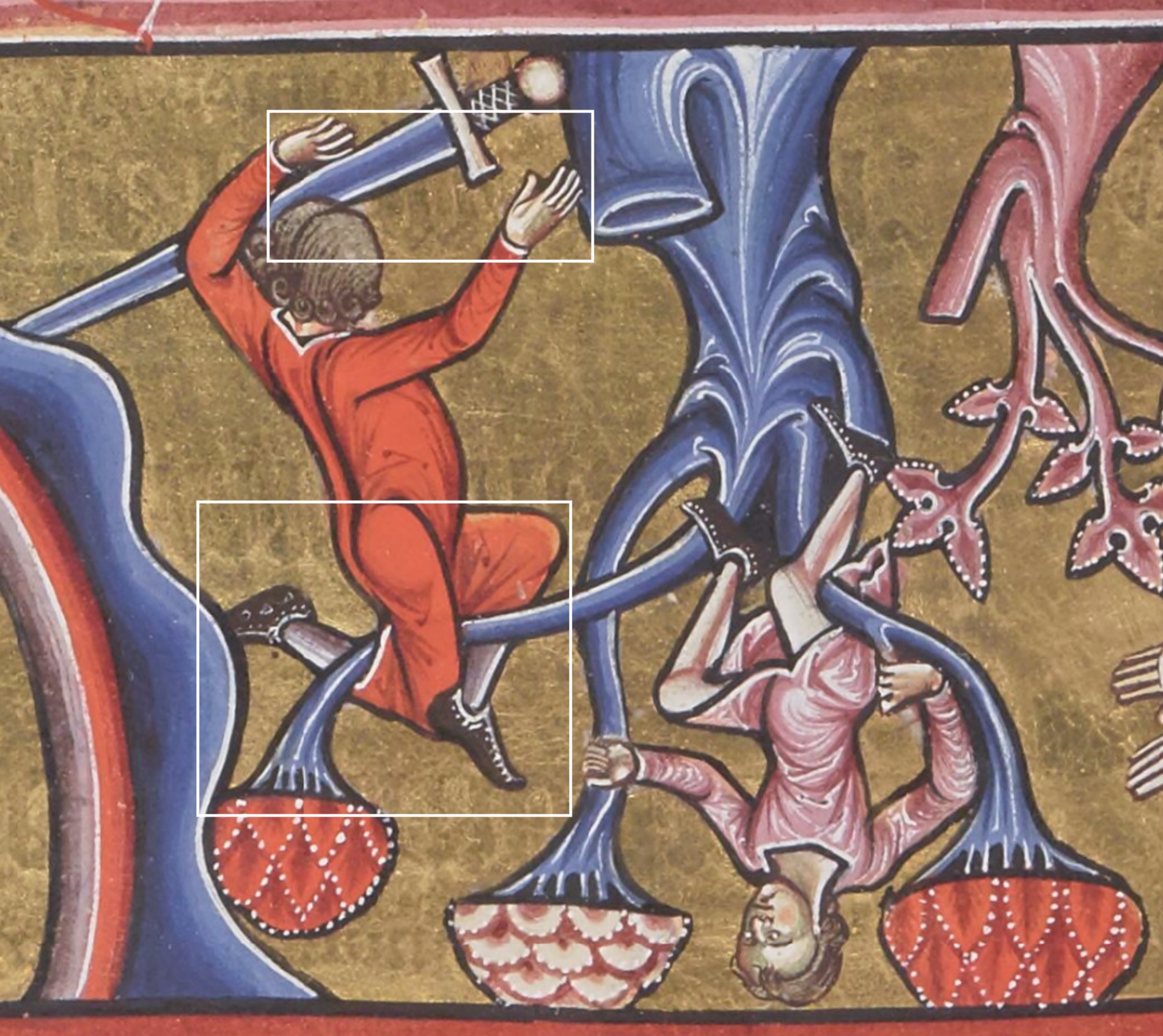
done: …. draw white box on all msh in this Canterbury f134 image: tree, table bowls, 2 bins, bucket, 3 bags, blue krater, sower’s basket is sowing msh seeds. harvesting msh. cultivating msh.
todo: nuke from server, low res, probably didn’t zoom-then-cap)
todo: nuke from server, low res, probably didn’t zoom-then-cap)
Now I see limitation of this model (drawing below) and how I could elaborate it in fractal, horizontal & vertical YI build-out:
quiz: which of the two upper branches is good? Ans: right. imagine drawing…. remember how I wrote not long ago re: the “macro” vs “micro” scale of Eustace River in response to Panofsky’s claim “all msh trees have at least a trace of ramification” and I retorted: VAGUE! define “trace”, do the micro details count within my Eustace window?
Now 12:53 am p.m. March 19, 2023] it is looking even more likely that the artist is consciously employing here, the concept of macro vs micro SCALE. Do Zoom Crops of Eustace to internally analyse the clover -pair scale. FRACTAL YI morphology ANALYSIS.
Moses, Burning Bush, and Tablets (Ingeborg Psalter)
Figure 1. Moses, Burning Bush, and Tablets (Ingeborg Psalter, c. 1210). Aspect ratio restoration by Michael Hoffman.
Features:
Cubensis or Panaeolus mushroom tree, left branching, right non-branching yet close to lifted garment.
Creator’s fingers are held together in contrast to the branching Y tree.
Aaron non-branching fingers held together touching cut branch.
Diagrammatic Y-branching trees with two cut branches added.
God as creator of Y-branching.
Shepherd’s hook for directing sheep is touching cut branch.
Neat row of 3 mushroom hems only on Moses next to the mushroom tree.
Stretched well-colored image presented by John Rush; aspect ratio corrected by Michael Hoffman.
Figure 1. Mâle, p. 3, The sky, water and trees. From the Legend of St. Eustace. Window at Chartres. Image sharpening by Michael Hoffman. YI theory morphology analysis by Michael Hoffman.
At least one cap is psilocybin, therefore every element in this image depicts analogy to peak psilocybin effect.
Owl Announce
The Day You Eat from the Tree of Knowledge, You Will Certainly Die (Golden Psalter)
Features:
God points to a YI pair (blue cap is non-branching). [8:58 p.m. March 25, 2023]
Lifted black-arrow mushroom hem.
Upper level tree morphology: YIYY.
God has a lifted mushroom garment, which the owl turns right and looks back at. [9:04 p.m. March 25, 2023]
The message comes from God’s lifted mushroom garment.
Adam’s right hand touches non-branching trunk.
God’s right foot touches stable column base.
Bird touches Adam’s right leg. Adam’s right hand touches the branching point of the tree and the message from God.
God’s left foot touches animals; animal-like thinking.
Mushroom hem.
At least one cap is psilocybin, therefore count 7 psilocybin caps, and every element in this image depicts analogy to peak psilocybin effect.
Heading
tech note: i can’t get high res if i join panels. upper + lower in a single image.
maybe probably bail from showing two CONJOINED panels, the quality will suffere A LOT and it’s hard to handle commentary on two panels at once. DO try to include both panels (don’t show upper & omit lower).
Just TELL ppl the two are conjoined, and put the upper & lower images very close together.
Eternalism, Eternity Non-Branching, Psychedelic Eternalism, the Eternalism Experiential Mode, Eternalism-Thinking, the Eternalism Mental Model; the Eternalism Mental Worldmodel
Eternalism: has 2-level dependent control, frozen pre-existing worldline of control-thoughts, awareness that you (as local control agent) don’t control the source of your control-thoughts.
The eternalism experiential mode is specific to the altered state, which is produced by Psilocybin. The way the mind experiences eternalism (the the eternalism experiential mode) is through psilocybin, which produces loose cognitive association binding, or loose cognition (loosecog).
When not on psilocybin, the mind has tight cognitive association binding, or tight cognition (tightcog), which produces the possibilism mental worldmodel; the possibilism experiential mode; possibilism-thinking (initially, naive possibilism-thinking; after psilocybin regeneration, qualified possibilism-thinking).
Possibilism, Possibility Branching, Ordinary-State Possibilism, the Possibilism Experiential Mode, Naive Possibilism-Thinking, Qualified Possibilism-Thinking; the Possibilism Mental Model, the Possibilism Mental Worldmodel
Possibilism, , Ordinary-State Possibilism, the Possibilism Mental Worldmodel, & Possibilism-Thinking
The possibilism mental worldmodel, autonomous monolithic control agency steering in a branching-possibilities world, creating the non-existent future.
The possibility branching model, when asserted and exerted in the psilocybin loose cognitive state, causes loss of control, represented by fire.
In the loose cognitive state from psilocybin, the mind changes from possibilism-thinking to eternalism-thinking, through a destabilization, transformation, and re-stabilization of the mental model of control, time, and possibility.
The ordinary state of consciousness has tight cognitive binding, or tight cognition, and is the possibilism experiential mode, which produces the “possibilism” mental worldmodel of time, possibility, and control.
The “possibilism” mental worldmodel is structured as a control agent steering through a world of branching possibilities into an open future that doesn’t exist, but is created by steering power by an autonomous, monolithic control agent.
The psilocybin altered state of consciousness has loose cognitive binding, or loose cognition, and is the eternalism experiential mode, which produces the eternalism mental worldmodel of time, possibility, and control.
The “eternalism” mental worldmodel is structured with a 2-level control system frozen in a preexisting world, with control-thoughts pre-existing at each point in time along one’s worldline in the timeless block universe.
Transformation of the experiential mode from possibilism to eternalism causes the mental model of control and world shifting from relying on possibilism-thinking to relying on eternalism-thinking. Asserting and exerting possibilism-thinking, trying harder to control in the accustomed way by using the possibilism-thinking mental worldmodel of control and world causes control instability, loss of control in the psilocybin loose cognitive state.
{fire}, {shadow dragon monster}, {ram caught by its horns in a thicket}, {sword}, and {blade} are religious mythemes and motifs that describe by analogy and refer to experiencing the threat of loss of control due to asserting possibilism-thinking while in the eternalism experiential mode from psilocybin.
frozen snake-shaped worldline in rock-like block universe
Such art motifs are snapshots of mytheme story trajectories, such as:
{king steering in tree, drinks wine, becomes snake frozen in rock}
{shift from left leg to right leg, shed garment and display password, pass through fire-guarded gate, access the treasure of the tree of immortality revealing non-branching}
We have two legs holding us up, and there are also two contrasted mental world-models. The “possibilism” mental worldmodel is mapped to left limb, and the “eternalism” mental worldmodel is mapped to right limb.
To avoid control instability and loss of control, the mind is made to shift from relying on possibilism-thinking to relying on eternalism-thinking; shifting weight from left to right foot.
Religious mythology describes by analogies the eternalism experiential mode and the process of transformation of the mental worldmodel from possibilism to eternalism. The Theory of Psychedelic Eternalism provides a STEM-type, well-specified explanatory model of mental transformation from loose cognition from psilocybin that’s clear, relevant, and useful.
You don’t control the source of your control-thoughts. This is a fatal vulnerability, weakness, flaw, hole in the side.
Cybernetics is the field of control and communication theory. The name is formed from the Greek κυβερνήτης or steersman.[Wiener 1948]
The {shadow dragon monster} is the threat of loss of control caused by possibilism-thinking. Now this dynamic is directly, explicitly understood and emphatically accounted for and mapped out and clearly communicated per STEM standards.
Transforming to the Mature adult developmental form requires psilocybin Khamsezadeh 2022. Psychedelic eternalism is the gate; non shall come to the adult mature form except through ingesting psilocybin.
{handedness}
ultimate referent: relying on the eternalism mental worldmodel instead of the possibilism mental worldmodel.
A model of control agency steering in the branching possibilities world while moving forward into the future.
relying on right leg = standing on right leg / foot/heel, or hanging from right leg /knee.
Add a 2nd degree of analogy indirection: {left hand higher than right hand} refers to {right foot lower than left foot} refers to relying on the eternalism mental worldmodel.
1 degree of analogy distance: hanging from right leg to avoid losing balance & falling down (loss of control; control instability) = relying on the eternalism mental worldmodel for stable, viable control-in-world.
2 degrees of analogy distance: {holding left hand closer to ground than right hand} while hanging from right knee (left knee drooping) to avoid losing balance & falling down = relying on the eternalism mental worldmodel for stable, viable control-in-world, to avoid loss of control; control instability.
See
, and Hoffman 2022a for the Eternalism and Control Questionnaire (ECQ).
John Lash uploaded row 1 left in 2008.
todo: cite/link Hatsis.
Heading
psilocybin mushrooms: banded panaeolus, triangle thin-stem Liberty Cap, round-cap cubensis.
YI and YO Tree Morphology Analysis
Grid Analysis
The Four Phases of Well-Structured Mental Worldmodel Transformation
prefer “mental worldmodel” over “mental model” else assume: mental model of “the self“
References
strategy: make 1 point below about each book, move into body text & cite
strategy: in article body, “Foo Psalter”. In References, “Foo Psalter” & full title & citation. Lay the groundwork optimized lexicon.
Hatsis, Thomas 2013 – Archive.org, Roasting the Salamander. Accessed [date]. Includes appendixes, original title, full page photo, home page date [tbd]. Dancing man’s, brought to me by Hatsis in hi-res, has been with me since Dec. 24, 2015, https://egodeathyahoogroup.wordpress.com/2021/01/09/egodeath-yahoo-group-digest-144/#message7442 2 years after the Nov 2013 branching breakthrough, was directly key to decoding John Lash crop of leg-hanging mushroom tree, and later proved rich too. 9/10
Hoffman, Michael. 2020. Strict Requirements for Teachers, Initiation Guides, and Students, Prior to Initiation https://egodeaththeory.wordpress.com/2020/11/24/strict-requirements-for-teachers-initiation-guides-and-students-prior-to-initiation/ drawing attention to the foreign unwashed pop masses’ way of thinking, that world of mental associations, isn’t insular and otherworld enough – BREAKS THE OTHERWORLD VIBE OF MY THEORY. furthurmore, it’s not part of my primary-articles series defining The Theory. plus, Leg Hanging article already contains this, so, dup/redun.
Hoffman, Michael. 2023. Eternalism and Control Questionnaire (ECQ). i dunno, opens up this article to the dirty outside world external downer topic of bunk q’airs; it changes the attunement, to other people’s outsider, misguided thinking
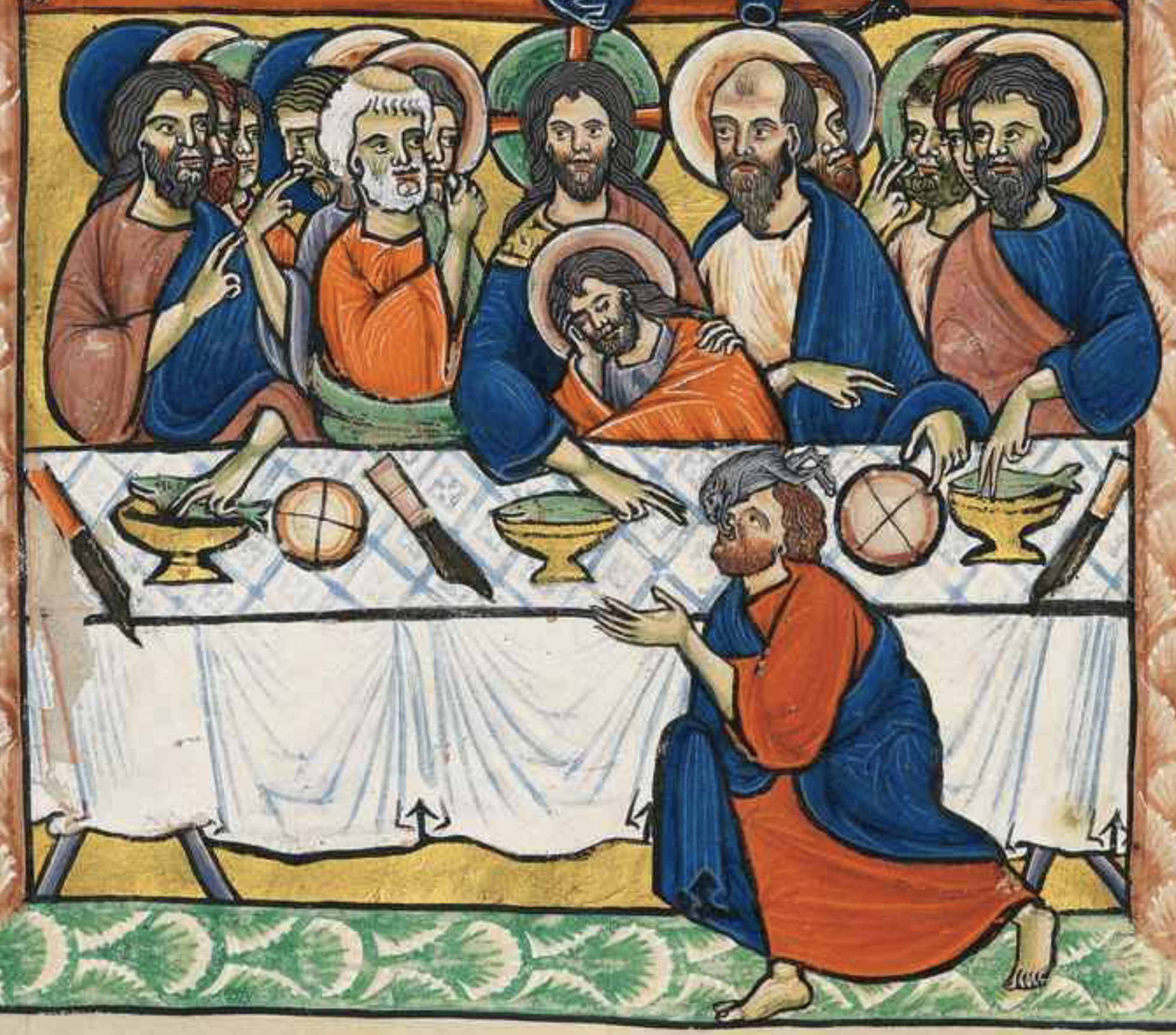
Hoffman, Michael. 2020b. Proof that the Canterbury Psalter’s Leg-Hanging Mushroom Tree Is Psilocybe. https://egodeaththeory.wordpress.com/proof-canterbury-psalters-mushroom-trees-are-psilocybe/ 10/10 – it has become 2 yrs 4 mo out of date thus a snapshot to maybe preserve/ freeze for posterity / history. Interesting to see how big gaps. or off-pitch readings. eg i had no decoding of awkward back of right hand on table. i still thought “at table panel, no handedness”. failed to recognize blue krater Row 3 middle + cubensis dispensary bins /bucket; still misread as “dumb guy excited to receive grain”. Maybe freeze a copy of it and move fwd w/ this url.
10/10 – it has become 2 yrs 4 mo out of date thus a snapshot to maybe preserve/ freeze for posterity / history. Interesting to see how big gaps. or off-pitch readings. eg i had no decoding of awkward back of right hand on table. i still thought “at table panel, no handedness”. failed to recognize blue krater Row 3 middle + cubensis dispensary bins /bucket; still misread as “dumb guy excited to receive grain”. Maybe freeze a copy of it and move fwd w/ this url.
Irvin, Jan. 2022. God’s Flesh: Teonanácatl: The True History of the Sacred Mushroom. NOT THE WHOLE STORY, IRVIN!! Where Logos comes from is Psilocybin
“The cause of bad trips is resisting ego dissolution; set & settings as the cause is a myth.” Wrong , vague, pseudo-explanation. On-topic.
Bulk & Cut 🏋️♂️
Body word count: 9245. Target word count: 6500. 6500/9245 = 70%; delete 30% of words.
Priority 3: Explain transformation from possibilism to eternalism.
Priority 1: Identify and directly explain the art motifs in terms of the art motifs. Insular, self-contained, self-centered, pull the reader into a self-centerd field
This Theory Is the Attractor Destination.
Everything about it should suck the reader in
Pull inward into the labyrinth of the theory, a 1-way trip
You might not come back from this article.
This article is ALL ABOUT THE ART breakthrough of Nov. 2020-March 2023, 2 years 4 months. we’ll say 2.5 years to ack the predecessor eg the artic t
This art (my Eustace image, Dionysus mosaic) has been sitting in the context of my self-contained 2006 main article for 17 years.
(albeit incomplete literate & mis-saying “determinism” not “eternalism”)
LET EADWINE’S IMAGES DO THE CYBERNETIC COMMUNICATING.
LET THE BRANCHING-MESSAGE MUSHROOM TREES DO THE CYBERNETIC COMMUNICATING.
PICTURE = 1000 WORDS
JUST MERELY SUPPLEMENT THE FEATURE LISTS BY MODICUM OF INTERESTING, TELL ME MORE, ANDRE
GIVE LOTS – BUT, LEAVE QUESTIONS OUT, FOR NEWBIE READERS
FOR FURTHUR READING
For Newbies to the Egodeath theory.
Filter By Internal Flavor; a Center-Outward Approach; Come from the Authentic Actual Center
Jettison everything external/ foreign/ alien to the core theory, which here means just the theory-extension relative to the 2006 main article; the core theory specifically of {branching-message mushroom trees}, {handedness}, and {non-branching} motifs.
The purpose of article is narrow and specific: given the Egodeath theory[Hoffman 2007], this article is just an extension of the 2007 Egodeath theory to explain this set of motifs and my discoveries & theory developments of 2010-2023.
This article serves as a direct efficient working practical model/example to establish the conceptual vocabulary of the field.
Here is how we are to conduct the field.
Here are the sound FIELD-APPROPRIATE WAYS OF COMMUNICATING & CONSTRUCTING THE SOUND FIELD.
EXUDE AND DEMONSTRATE A UNIQUE DISTINCTIVE SCIENCE FIELD VIBE same as my distinctive guitar gear usage approach.
Be boldly proudly firmly insular; no compromise with other fields eg no neuroscience taint or opening.
Egodeath theory, be true to the Egodeath theory.
Cybernetic Theory of Ego Transcendence, be true to the Cybernetic Theory of Ego Transcendence.
BE WHAT YOU ARE, FIELD.
Shut out other domains/approaches. Eject foreign alien approaches. Boot. SHOW SOME FKKIN LEADERSHIP!!
Introducing what the successful genuine authentic bona fide field/ mindset/ approach looks and feels like, its real center of spotlight-focus tone/ vocabulary, style of approach/ treatment — which 1988/ 1996/ 1997/ 2006 [my Plainc. article]/ 2007 [my main article containing these very art pieces] / 2020a / 2020b all very much did/ accomplished/ exemplified.
The prime example paradigmatic: ditching my 1986 notebooks with their “not found my voice yet” struggle of expression, and creating my grand April 1987 style of theory construction.
In that article-series lineage ([1988], 1996, 1997, 2007), the day I announced the final rev of the 2007 article (Sep. 12, 2007), interleaved I first posted about eternalism for the 1st time (& after, about superdeterminism). I didn’t fold “eternalism” into 2007 article.
What about my 2020 pair of articles: does that cover eternalism, in this series of theory-specification articles? Yes — which means, less pressure to cover eternalism here. It is covered to death already in Leg-Hanging article and also adeq’ly in article “compelling evidence & criteria of proof and for identifying mushroom imagery in Christian art”.
This article in my series of scientific papers as building blocks (not trick bricks/ collapsing foundation), also is the first to deliver this explanatory framework in terms of block-universe eternalism instead of “determinism”, which term (a concept-label) is incorrigibly saturated with egoic domino-chain causality thinking, as Kafei pointed out.
Heading X
Incoming Ideas
Why Doesn’t Article Body Use the Title’s Phrase “Branching Mushrooms”?
The Meaning of {branching-message mushroom trees}
The Meaning of {non-branching} and {cut branches} or {non-branching branch}
First part of title: Branching-Message Mushroom Trees
Awkward inconsis: 2nd part title lists motifs as:
Branching Mushrooms, Handedness, and Non-Branching
yet body lists as:
{branching-message mushroom trees}, {handedness}, and {non-branching} motifs
GRID ANALYSIS IS AWESOME MANDATORY
The purpose of this article is to supplement and complete my 2007 article, along with 1997 core article and Bubble of Simulation article 1996. 2007 main article has pictures that were above my level, only later much later 2022 2023 was I able to read {branching-message mushroom trees}, {handedness}, and {non-branching} motifs in the images that I created (I produced Eustace crossing river) in my 2007 article.
This is not an intro or persuasion of the Egodeath theory . def’ly not a literature search; the opposite. It supplements, defines, remedies a gap in 2007 main article, which see.
I build on my in-house consistent helpful building blocks papers, not diluting with other incoherent failed papers/ ineffective/ irrelevant / non-useful conceptual lexicons/ vocabularies.
Irvin and Hatsis both halt prematurely, latching onto only one train of analysis or domain of analysis , the elementary “blind men describing the elephant” problem, ; Irvin reductionistically DELETES all other necessary dimensions/ domains of analysis.
psilobycin= eucharist = logos
Irvin denies in 2022 book: psilobycin= eucharist = logos. He denies psilocybin is an entheogen. He denies concept of entheogens. [I am not focusing on Irvin; that would dilute.] He falsely says “my expose is true THEREFORE it is ‘THE TRUE HISTORY OF PSILOCYBIN”. He only provides part of truth, and falsely deletes the rest of truth. Inadquate. WE MUST BE BROAD MINDED X-DISC’Y ANALYSIS, THE FULLNESS THERE IS SO MUCH TO SAY about nature of Psil and its role in mental development. Psil is the origin of religion even though abused.
Abuse of Psil — against Irvin’s reductionism — does not delete the fact that logos = euch = religious experience = psilocybin = transformation of the mental model of control-in-world.
Acting as if their typical stereotyped eisegesis of Eden Genesis “forbidden fruit” “original sin” “prohibition” “the fall” is forced upon us by the text.
Genesis 2:16-17 & Genesis 3 – “the Lord God commanded the man, “You are free to eat from any tree in the garden; but you must not eat from the tree of the knowledge of good and evil, for when you eat from it you will certainly die.””
a rigid exoteric reading is a wrong, limited, reductionistic — ie non-esoteric, uninspired — reading.
A synagogue debate-type reading is required: broad open-minded, considering alternative breadths of readings.
Narrowing reductionism: Irvin 2022 book falsely says “the history”, narrowing/ reductionistically/ conflating one ASPECT or one DIMENSION , one PART of history, AS IF it is automatically THE ENTIRETY of the history.
EVERYONE eagerly rushes to commit the intellectually lazy, unimaginative error of latching onto a SINGLE view/reading, eg presentism projection of late 20th C Drug Prohibition reading, a Sunday School (rather than adult synagogue type) “received view”, narrow, excluding, rigid, prematurely settled the accounts , but that’s eisegesis [an interpretation of Scripture that expresses the interpreter’s own ideas rather than the meaning of the text]. reading into the text; a forced, imported reading; projection into the text what’s not there in the text, and failing to pull from the text the fullness of breadth of what’s in the text.
Like my reading Canterbury Ps Image f134 Row2 right as “dumb guy excited to get grain”, when that is plainly not what’s shown, if you look and read and receive.
Narrowing Reductionism and Premature Closing of the Accounts; Premature Halting and Latching onto a Single Domain of Consideration
The Genesis Eden must be read in a broad gnostic pro-Eve way which the text requires and allows.
God was right and the serpent was right: you die the day you ingest… you would die that day and you would not die that day; a broad sophisticated type esoteric reading is demanded.
Not the overeager lazy intellectually lazy premature leaping to conclusions of how we “must” read the text.
What Really Happened in the Garden of Eden? todo: add to References.
Watts, Alan. 1957. The Way of Zen. [could just go with the essay – but you have to get entire book either way — essay is focused.
Hoffman, Michael. 2023. ECQ: Eternalism and Control Questionnaire. ECQ gathers standard psychedelic effects questions to provide an effective foundation for psychedelic psychometrics questionnaires based on this the Theory of Psychedelic Cybernetic Eternalism, where the {shadow dragon monster} (the threat of loss of control caused by possibilism-thinking) is understood and emphatically accounted for and mapped out and clearly communicated per STEM standards
“1948 through Wiener’s book Cybernetics: Or Control and Communication in the Animal and the Machine.[note 2] In the book, Wiener states:
“as happens so often to scientists, we have been forced to coin at least one artificial neo-Greek expression to fill the gap.
Cybernetics is the field of control and communication theory. The name is formed from the Greek κυβερνήτης or steersman.[Wiener 1948]
“Moreover, Wiener explains, the term was chosen to recognize James Clerk Maxwell’s 1868 publication on feedback mechanisms involving governors, noting that the term governor is also derived from κυβερνήτης (kubernḗtēs) via a Latin corruption gubernator.
“Finally, Wiener motivates the choice by steering engines of a ship being “one of the earliest and best-developed forms of feedback mechanisms”.”
/ wiener
Check my Refs in 2006 main article.
Brown rebuttal to Hatsis at Hancock site. 7/10
Dittrich: 1994 Dread OAV article 6.5/10
Timmermann, Kettner, Letheby, Roseman, et al Psychedelics alter metaphysical beliefs. 2021. 4/10
Stamets, Paul (1996). Psilocybin Mushrooms of the World: An Identification Guide. 3/10.
Kupfer, Marcia. (1993). Romanesque wall painting in Central France: The politics of narrative. 3/10
Balsekar, Ramesh 8/10
Campbell, Joseph (1988). The Power of Myth, Illustrated edition. 4/10
Dittrich, for OAV/G v1: 1993 conf proceedings. 50 Years of Ergot: Dittrich A 1994 Psychological aspects of altered states of consciousness of the LSD type: Measurement of their basic dimensions and prediction of individual differences In: Pletscher A, Ladewig D, eds. 50 Years of LSD: Current Status and Perspectives of Hallucinogens: A Symposium of the Swiss Academy of Medical Sciences, Lugano-Agno (Switzerland) October 21 and 22, 1993 New York NY: Parthenon. pp 101–118. Readable at Google Books: https://books.google.com/books?id=3s5vkfmXKNUC&pg=PA101
Wiseman, Howard; Cavalcanti, Eric (2016). “Causarum Investigatio and the Two Bell’s Theorems of John Bell”. In R. Bertlmann; A. Zeilinger (eds.). Quantum [Un]Speakables II. The Frontiers Collection. Springer. pp. 119–142. arXiv:1503.06413. doi:10.1007/978-3-319-38987-5_6. ISBN978-3-319-38985-1.
Shannon, Claude 3/10
Letheby, Chris (2021). Philosophy of Psychedelics. Philosophy of Psychedelics (International Perspectives in Philosophy and Psychiatry). Reductionism from cybernetic phenomenology to mere epistemology, stunted & falls short of relevance, same as Metz. 5/10
Hoffman, Michael (2023). The Egodeath theory (website). https://egodeaththeory.wordpress.com. Accessed February 20, 2023. Find various cited works analyzed there. Backed up at Archive.org.
don’t waste wordcount on external wording coming in from outside my conceptual lexicon. I need everywordcount available for just for eg covering the images.
This is too much other people’s wording, not enough the Egodeath theory:
Control-Related Psychometrics Items
The Eternalism and Control Questionnaire (ECQ) (Hoffman 2023) includes these standard psychedelic psychometrics effects items:
I was afraid to lose my self-control.
I had the feeling of being connected to a superior power.
I felt like a puppet or marionette.
I had the feeling that I no longer had a will of my own.
I felt threatened.
Sense of being trapped and helpless.
It was difficult to control my thoughts.
Block-Universe Spacetime Psychometrics Items
Experience of timelessness.
Feeling that you have been “outside of” history in a realm where time does not exist.
I experienced a touch of eternity.
I experienced past, present, and future as a oneness.
Feeling that you experienced eternity or infinity.
I felt that I was in a wonderful other world.
Everything seemed to unify into a oneness.
Feeling of oneness with universe.
Determined What f134 Row 2 Right Funnel Hat Limbless & Father Are Pointing at With Their Eyes: Maiden Non-Furrowed Forehead & God’s Hand Positions
We don’t know for sure if limbless… we do know he is a pointer-connector. BUT WHAT ABOUT TABLE FUNNEL HAT & FATHER why no limbs, what look at?
Answer: [10:48 p.m. March 20, 2023] – Determined What f134 Row 2 Right Funnel Hat Limbless & Father Are Pointing at With Their Eyes: Maiden Non-Furrowed Forehead & God’s Hand Positions
Row 2 Right: Funnel Hat is eye-pointing at maiden’s non-furrowed forehead.
Row 2 Right: Father is eye-pointing at God’s hand positions.
todo: i have to get to …. entire f134 draw looking-lines for draft article.
Heading
TOO FKKIN BAD for John Lash; YOU CHOSE to write garbage like “I cannot blieve that Jesus and Moses used psychedelics; they are evil Church so therefore, they cannot have used psychedelics.”
A blinding blast of prejudice from John Lash.
Jump off cliff, Lash and take your “psychomimetics” and “the Wasson theory” idol-worship with you, didn’t you say in your own voice (.mp3 url & timestamp is here) “possibly a double radioactive for the hurl odor”? Sort your shiite out Lash.
I saw every word you wrote about Mithraism, read all your articles and chapters about it.
Lash is an impediment to his own cause.
TYPICAL ENTHEOGEN SCHOLARSHIP; addicted to self-defeat.
Hoffman. Archive .org Feb 14 1997 – early snapshot of Egodeath site content.
Hoffman July 1988 – theory announcement video, 1 hour. alt: extant mp3 5-minute excerpt: upload to Egodeath.com, link.
Brinckmann (to spite Wasson & to mock the extent to which art historians have covered (up) pilzbaum).
Best relevant newer-paradigm writings
[todo: streamline captions] BnF Latin MS 8846 has been called the Paris Eadwine Psalter; the Anglo-Catalan Psalter; the Paris MS, or the Great Canterbury Psalter.
bricklin: Justification: equates enlightenment with eternalism, psychedelic eternalism, within the Journal of Transpersonal Psychology circles incl Shanon & Balsekar.
Metz – after citing my Crash Collusion article Bubble of Similation way before — 1996 vs Metz 2003 or 2004. Metaperception is intermediate/connector topic. Summarize Transcendent Knowledge podcast 28 moving from metaperception of table to personal control – see trajectory of 4 points there.
– read these 2 pages, skip everything metz wrote after it. todo: photo it. Upload photo of hand. Bubble of Sim’n.
Hoffman August 1988 – handwritten Ms, draft 1 of the Cybernetic Theory of Ego Transcendence. 8/10
Hoffman, Michael (2007). Ego Death and Self-Control Cybernetics (website). http://egodeath.com. Accessed February 20, 2023. Backed up at Archive.org.
Hoffman, Michael. Key Mytheme catalog. 2020. Last accessed: date.
Hoffman, Michael. Core Concepts catalog. 2020. Last accessed: date.
The mystical worldview is a more or less garbled expression of the eternalism experiential mode.
Philosophy of References
extant cluster of books and authors and articles bound up in “the field”. If we plot books, what’s a set of books that are “near” the Egodeath theory even if they are a failure? DOES COPERNICUS CITE PTOLEMY? Probably. what’s in the library of someone who dev’d the Egodeath theory?
Griffiths. 2016. CEQ, appendix: “Challenging Experience Questionnaire – Scoring Guide”; see the 3 out of the 21 (14%) OAV Dread of Ego Dissolution (DED) dimension items retained in CEQ, there marked as “5DASC”.
just direct people to my verbose detailed writings elsewhere.
The dominant narratives are incorrect, especially in the charged field of Psychedelics.
Stamets 1996 aggravatingly lackadaisical about Europe & England.
Abstract
This set of medieval art images uses {branching-message mushroom trees}, {handedness}, and {non-branching} motifs to describe by analogy how the mind works in the loose cognitive state from Psilocybin. These are features to look for and recognize in each image. For details, see References.
Name of the Theory
The Egodeath theory; the Theory of Psychedelic Eternalism; the Theory of Psychedelic Cybernetic Eternalism. Includes the Mytheme theory, which covers art motifs as well as religious mythology, which describes, through analogy, Psilocybin effects.
The word ‘eternalism‘ is defined emphasizing control, ie control-transformation aspects, and cybernetics such as communication about control in the loose-cognitive state.
Transformation from Possibilism to the Eternalism Mental Worldmodel of Control
The word ‘control’ here means changing the model of the world, too, in which control agency operates or steers as a steersman/ helmsman/ governing agent. kubernetes: from a possibility branching model, or possibilism-thinking, to a non-branching model with 2-level dependent control and pre-existing future control-thoughts.
The {shadow dragon monster} is the threat of loss of control caused by possibilism-thinking, which provides a whirlwind of circular instability as control increasingly struggles to control itself [Watts 1960].
Possibilism-thinking is the default mental worldmodel of self-steering-in-world that’s formed by the ordinary state of consciousness.
The Cybernetic Theory of Ego Transcendence is a domain-appropriate, effective, relevant, supremely usefully relevant, purely Cognitive, experiential explanatory framework, to establish the sound foundation STEM field of Loose Cognitive Science.
This explanatory model enables Cognitive Scientists to enter into this domain of investigation (the loose cog state) with viable control stability without being ejected back through the loss-of-control gate due to holding a state-incompatible mental model.
As confirmed by legacy Psilocybin art, the eternalism mental model is required, to provide stable self-control and avoid loss of control while in the peak Psilocybin state, to equip Cognitive Scientists to enter the peak Psilocybin state and have stable self-control while in that state.
The ECQ Eternalism and Control Questionnaire brings Control challenges, in context of changing world-model, out in the open, mapped out ahead of time, aboveboard, clearly explained in the ordinary state, to meet STEM standards of open, public communication and teachability, avoiding tottering on a unstable basis.
This model matches the full breadth of the historical mystics’ reports addressing Charles Stang’s objections to the would-be “scientific foundation” (Studerus 2010 p. 2, citation 20) expressed to Roland Griffiths by Charles Stang (2021).
Stace 1960 is used as the lone foundation of what Studerus calls “the scientific literature” about mystical experiences, although we see — per Charles Stang’s objection against James & Stace — “mystical experience” is defined a priori as purely positive, against “the older historical archive” (Stang).
The Challenging Experiences Questionnaire (CEQ) omits 18 of Dittrich’s 21 (86%) Angst/Dread (DED) dimension’s items. But under optimal set & settings, Griffiths reports almost 40% [quote Houot] terror experiences during high-dose sessions.
A model of mystical experiencing that lacks a Control-challenges factor in fact ends up having a Shadow factor 13 (SHA), that, by not teaching about control stability eventually resulting from transformation of mental model from possibilism to eternalism, will cause continued panic terror, loss of control; and the would-be Psychedelic Scientists will continue to be ejected from the Psilocybin loose-cognitive domain and prevented from mapping it out.
With the coming full repeal of Psilocybin Prohibition, everyone’s going to be using high-dose Psilocybin, and inevitably discovering that possibilism-thinking causes loss of control as surely as a ram caught in a thicket by its own efforts and exertions of its power.
Figure 1. : Newbie psychonaut enthusiast relying on naive possibilism-thinking, a caricaturing self-portrait of the artist, Eadwine. Image f134 Row 2 Right, Canterbury Psalter. Crop by Michael Hoffman.
By first learning, in the ordinary state, about mental model re-configuration from possibilism-thinking to eternalism-thinking, it becomes as easy as possible to bring back the eternalism-thinking treasure through the Psilocybin loss-of-control, dragon-guarded gate, guarding it with the fire of the loss of control threat.
As medieval artists of this branching-message mushroom trees genre depicted and reported.
As they advise & depict through analogies, the mind is designed to transform from possibilism to eternalism when in the intense loose cognitive state from Psilocybin.
We need to teach everyone, in the OSC (per the lesser mysteries), how the mind re-stabilizes self-control in the peak Psilocybin state by mental model transformation, mental worldmodel transformation from possibilism to the eternalism model of control-in-world mental model of self as control steering agent steering (kubernetes) through a presumed world model of branching possibilities so as to create the non-existent future.
The mental model of self and world is transformed and moved to a new, adult, mature particular model of control.
This regeneration and transformation was the main paradigm of “healing”: exorcise animal childish thinking, for adult correctly functioning stability in the peak Psilocybin state so as to be able to thoroughly, relatively routinely explore high dose.
This article enables Cognitive Scientists to properly explore Psilocybin experiencing, suitably equipped.
How the Mind Works: Tightcog -> Loosecog drives transformation from possibilism to eternalism
Objective: Enable Cognitive Scientists to Enter Stably the Psilocybin State to Do Research Within It
The Theory of Psychedelic Eternalism is designed to be a domain-appropriate, effective, relevant, supremely usefully relevant, purely Cognitive, experiential explanatory framework, to establish the sound foundation STEM field of Loose Cognitive Science, enabling Cognitive Scientists to enter into this domain of investigation (the loose cog state) with viable control stability without being ejected back through the loss-of-control gate due to holding a state-incompatible mental model.
Breadth: the 3 motifs and what they mean. 4K to tour the images, 4K to summarize Psychedelic Eternalism.
1-Paragraph Summary of the Theory of Psychedelic Cybernetic Eternalism
Bad trips are caused by loss of control during mental model transformation from the branching possibilism to non-branching eternalism model.
The Theory of Psychedelic Cybernetic Eternalism is an explanatory model that explains the art motifs of {branching-message mushroom trees}, {handedeness}, & {non-branching}.
Provides the eternalism mental model, which is required, to provide stable self-control and avoid loss of control while in the peak Psilocybin state, to equip Cognitive Scientists to enter the peak Psilocybin state and have stable self-control while in that state.
Here’s the center of dragonland, the pregnant woman harassed by the dragon ready to swallow up egoic thinking agency demonstration observation of illusory boundaries of control and vulnerability to source of control when … and control stability drives transformation, system righted, to be made compatible with the eternalism experiential mode.
The control system and world model are observed as a mental construct world model of agency steering among branching possibilities.
To assert non-branching is to assert personal control nullity of a type, control instability when in the loose cognitive state, fatal non-viable control, then drives:
The Psychedelic Eternalism Experiential Mode
This article together w/ References provides a complete conceptual vocabulary for understanding this system and language of art motifs ({branching-message mushroom trees}, {handedeness}, & {non-branching}), integrated with Transcendent Knowledge about how possibilism-thinking causes loss of control in the peak loose cognitive state, and how to switch to the eternalism-thinking mental model of control-in-world.
The Psychedelic Eternalism Experiential Mode
Made to Intend to Demonstrate and Test Control Limits and Transcend Them and then Be Reconfigured
ordinary state – possibilism experiential mode – possibilism-thinking
altered state – eternalism experiential mode – eternalism-thinking
Temporarily in the altered state there’s a differnt arrangement experienced and then modelled in the mind. The mental worldmodel of time and control and possibility is changed to follow and become compatible with the
psychedelic eternalism
possibilism-thinking
The ordinary state has the possibilism experiential mode, which produces possibilism-thinking.
The altered state has the eternalism experiential mode, which produces eternalism-thinking.
The ordinary state returns to the possibilism exeriential mode, returning to possibilism-thinking and retaining et.
In the ordinary state, teach/learn the lesser mysteries: the book learning part.
, but now, also having available the loose-cognitiive developed losse- loosecog-compatible eternalism-thinking already developed and taught and learned in phase 1, 1.5:
In the ordinary state, teach/learn the lesser mysteries: the book learning part. Learn about branching message mushroom trees.
In the loose cognitive state from Psilocybin, the mental world model of self-in-world is reconfigured by the the eternalism experiential mode.
Near 100% of our waking life will always be in the possibilism experiential mode (the OSC) with tight cognitive binding and the “possibilism” mental worldmodel (branching, open, non-existing future, with autonomous, monolithic model of control steering through a branching world into an open, non-existing future that’s caused and settled depending on our actions as egoic steering agents.
The mind is taught through perception & testing & experience that viable, stable control in the intense loose cognitive state requires and teaches the “eternalism” mental model. Shift weight from left foot to right foot.
The OSC returns forever, it’s the possibilism experiential mode, which reinforces same old egoic model of self in world, but eternalism-thinking is retained for use in future altered state sessions.
It’s about Attractive Failure of Control, That Causes a New Model of Not Just “Self” (right-handedness), but world too (non-branching world), during the alt state, grown available for use during next sessions.
replace by how the mind works, from outtakes
In the loose cognitive state from Psilocybin, control-instabliity occurs along with the eternalism experiential mode, which produces the “eternalism” mental model.
Tightcog -> Loosecog drives transformation from possibilism to eternalism
1-Paragraph Summary of the Egodeath theory; transformation from possibilism to eternalism/ how the mind works, how Eternalism…
Scope of Article
The theory of {branching-message mushroom trees}, {handedness}, and {non-branching} motifs presented here is a translation from these motifs as analogies, to the Theory of Psychedelic Cybernetic Eternalism.
This article exclusively specifies the mapping from the Key Mythemes or Motifs to the Egodeath Core Concepts of the Theory of Psychedelic Cybernetic Eternalism.
This article is based in a STEM (Science, Technology, Engineering, and Mathematics) thought-style, suitable for incorporation into an instructional freshman textbook stating what the theory is.
Summarizes the theory of {branching-message mushroom trees}, {handedness}, and {non-branching}.
This theory & article presents & delivers an altered-state-based, pure Cognitive Science approach, phenomenology & analogy via motifs & mythemes as analogies (Hofstadter 1995, Hofstadter & Sander 2013).
An Extension of the 2007 Egodeath Theory
This article specifies the systematic language of {branching-message mushroom trees}, {handedness}, and {non-branching} motifs, because that is not covered by my existing publishing-quality articles (1997, 2006).
This extension and portion of the Egodeath theory is a new for 2010-2023 sub-theory added onto the 1987-2007 Egodeath theory, systematically explaining {branching-message mushroom trees}, {handedness}, and {non-branching} motifs.
Supplemental Articles
For an introduction to mental representation including of control agency, see Hoffman 1996: The Bubble of Simulation: Subjective Experience as a Virtual Environment: http://egodeath.com/BubbleOfSimulation.htm
For a summary of the core theory (the Cybernetic Theory of Ego Transcendence) without mythemes or motifs, see 1997 core theory spec (Hoffman 1997). Introduction to the Cybernetic Theory of Ego Transcendence — core theory published at Principia Cybernetica.
For a summary of core theory with mythemes except lacking {branching-message mushroom trees}, {handedness}, and {non-branching} mythemes / motifs, see 2006 article main article (Hoffman 2006). The Entheogen Theory of Religion and Ego Death — Sep. 24, 2006, intro + broke up long sentences Sep. 12, 2007.
todo: break up: For 2) my first pass decoding of Canterbury f134 after Brown asked for 1) writing about compelling evidence & criteria of proof and for identifying mushroom imagery in Christian art, see 1) C.E./C.O.P. & 2) the Proof article that it spawned by decoding John Lash 2008 crop of Canterbury Psalter image f134 Row 1 Left.
For a simple, vivid, and compact summary the Theory per Egodeath.com 2005 based on my Rock lyrics analogy work that led to my religious-mythemes theory) that’s readily comprehensible, see Erik Davis: Led Zeppelin 4 (2005), p. 118 & 122 for a summary of psychedelic eternalism in Rock music per the Egodeath theory.
Erik Davis didn’t need my 2006 formal theory; he only needed my rock lyrics analogy mapping to block-universe eternalism — proving that the pictures here and my brief decoding-of-ASC-referent notes/ cheat sheet works as well as formal theory presentation, because relevant and useful.
Fasten Your Seatbelts for this Article, It Is Not “Spot the Mushroom (🍄)” or “Is Not! Is Too! Is Not! Is Too!” <– wrong conversation, wrong paradigm. It Is Time to Adult: What is being messaged by using msh imagery?
NEED FRESH START: Birth of Modern Science Required Ditching Aristotle-Worship, Stop Making Aristotle Our Automatic Point of Reference, Stop Respecting and Paying Attention to Aristotle
Birth of Modern Psychedelic Science in Late 2023 Requires Ditching Allegro-Fixation
and ditch your brain-dead “Default Mode Network, neuroplasticity, ego dissolution, nondual unity oneness” — PSEUDO EXPLANATIONS, Pre-Scientific, Pretended Folk Explanations/Narrative Parrotting
TO WHAT EXTENT PSILOCYBIN IN WESTERN RELIGION AND CULTURE?
Damnit, I am not asking “What Did the Great Man Allegro Say?”
What exactly did Aristotle/ Wasson/ Allegro say?? It’s so confusing, Wasson retracted his views, no he didn’t, yes he did, 500 page book needed…” THATS NOT THE FKKING QUESTION — LET IT GO PPL!!
Clean Break! Cut the rope! Abandon all that confusion.
The Ultimate, Paradigmatic Bad Trip (Dropped from CEQ): I Was Afraid to Lose My Self-Control; It Was Difficult to Control My Thoughts: The Ultimate Climactic Transformation Gateway Experience of the Threat of Catastrophic Loss of Control
Meditation Leads to Petter Johnstad’s Day Trip to Hell. The set & setting myth.
relate art decoding of {branching-message mushroom trees/ handedness/ non-branching} usefully to control violation, control reset, and especially Get Treasure.
disjuncture between the dissipated survey of bad trips (which at least calls “ego dissolution” into question) vs. THE experience, of threat of catastrophic loss of control. Petter’s Day Trip to Hell blurs the focus to end mis-fixation (Petters ends the pseudo-explanations: “it was bad set/setting”/ “some people just can’t handle ego dissolution, they erred in resisting the experience”), exact quote:
“while one type of challenging trip may result from fearful resistance to the psychedelic effect of ego dissolution [total BS pseudo-expl; garbled unhelpful grain of truth], others may be quite different in terms both of their characteristics and their etiology“.
Petter Johnstad’s Day Trip to Hell broadens the question of bad trips.
NO MORE PAT ANSWERS like “it’s the fault of set & setting, you failed to be in a positive mood. or: today’s Folk-Science Explanation that the professional puzzled scholars give in lieu of explanation/comprehension:
The bad trip is your fault, you caused it, by resisting ego dissolution.
The bad trip is your fault, you shouldn’t have resisted ego dissolution.
YOU caused the bad trip, by resisting ego dissolution.
Psychedelic eternalism, possibilism, handedness, non-branching, branching-message mushroom trees [not below]
“Lucas (2005) noted that bad trips can happen even when you follow all the rules of common sense, and criticized what she called the “set-and-setting attitude” as playing into a fantasy of control: “if we just do everything right, we can prevent negative experiences” (p. 26).
Panofsky: “They Would Have Omitted Branches” (citation: Brown published letters).
Citation: Marcia Kupfer (March 21, 2022) [I kind of want Kupfer’s quote and Panofsky’s quote, in particular, max’ly relevant
Top 10 Dread questions = driving control transformation to the adult mature developed permanent mode of stable viable control + Transcendent Knowledge
Names of the Theory
The most effective and communicative 1-word name of the theory is the Egodeath theory.
The short but specific name of the theory is the Theory of Psychedelic Eternalism.
or more pointedly, the Theory of Psilocybin Eternalism.
The most descriptive and communicative but cumbersome 3-word name of the theory is the Theory of Psychedelic Cybernetic Eternalism.
The essence of the explanatory model is psychedelic, cybernetics (communication and control), and eternalism.
The name the Theory of Psychedelic Cybernetic Eternalism is the shortest possible adequate specifier-type name of the theory.
Anti-Goals
Psychedelic Cybernetic Eternalism is the opposite of Letheby/Paulhus’ FAD-Plus’s confused “fatalistic determinism” (domino-chain determinism variant flavor of egoic possibilism-thinking).
Why didn’t Erik Davis get hung up on the word ‘determinism’ like Kafei did & like Letheby does in FAD-Plus’ off-base “fatalistic determinism” mis-conceptions?
1-Paragraph Summary of the Egodeath theory; transformation from possibilism to eternalism/ how the mind works, how Eternalism (or Superdeterminism in Physics; or hyper-Calvinism in Reformed Theology).
Metzinger, Thomas (2009). The Ego Tunnel: The Science of the Mind and the Myth of the Self. [only incl given that my 1996 Bubble article and 1997 Prin Cyb links etc are listed] I didn’t get anything out of this book, falls short of my 1996 article. Who doesn’t already know that “the self is a mental model”? What does this book contribute? Heads these potentially decent models in the wrong direction.
GOOD EXAMPLE OF BOOK THAT PROPS UP RATHER THAN GRATING AGAINST the Egodeath theory
Name of the Theory
Awesome! Explained Why the theory-name “the Cybernetic Theory of Ego Transcendence” Has Poor Wordcount-Performance!
The 1988 name The Cybernetic Theory of Ego Transcendence contributes a valuable angle, but omits the key points: Psychedelic & Eternalism.
It’s not short enough to be useful shorthand, and not long enough to deliver the most key points.
So it has a poor score on wordcount vs. specifying key components.
The words “ego transcendence” don’t carry their weight, don’t earn their wordcount.
Strategy instead: Assume this free set-up: this theory of ego transcendence (that’s context setup for free), is: Psychedelic Cybernetic Eternalism.
bam bam bam! 10 10 10.
Not “ego” (3/10) “transcendence” 6/10… meh-value words.
Then the CEQ [the broken wastebasket for the MEQ’s failures] summarily just deletes 18 of Dittrich’s 21 Dread items (86%), even though under optimal set & settings, Griffiths reports almost 40% [quote Houot] terror experiences during high-dose sessions.
‘psychedelic’ and block-universe eternalism are the key explanatory concepts; the essence of the Theory.
The phrase ‘the Egodeath theory‘ is essentially a shorthand “brand name”.
The direct, descriptor-based identification of the theory is the Theory of Psychedelic Cybernetic Eternalism, or for short,
“High scores on the OBN [Oceanic Boundlessness] scale therefore indicate a state similar to mystical experiences as described in the scientific literature on the psychology of religion (eg, see [20]) [Stace 1960]. The DED [Dread of Ego Dissolution] scale includes items measuring negatively experienced derealization and depersonalization, cognitive disturbances, catatonic symptoms, paranoia, and loss of thought and body control. High scores on the DED scale therefore indicate a very unpleasant state similar to so called ‘‘bad trips’’… ” (Emphasis added.)
So ditch “ego t’c” and replace misleading word “ego” by ‘Psychedelic’, and replace vague “transcendence” by extremely valuable “eternalism”.
If all you know about the theory is that it isthe Theory of Psychedelic Cybernetic Eternalism, the theory can be reconstructed or expanded-out from just that theory-name, indicating the soundness of this name as the full yet compact name. I was dissatisfied with theory-names and domain names, and thought of the domain name Egodeath as accurate and communicative on the zoom-out scale of 1-word zoom-out scale.
In contrast, the shorthand names are not sufficient for reconstituting / re-deriving the theory:
Were it called the Theory of Cybernetic Eternalism, intense prejudice & presupposition would omit psychedelics.
Were it called the Theory of Psychedelic Eternalism, the crucial Control aspect would be too implicit.
For a nutshell on-point vivid and compact summary proving that the Theory per Egodeath.com 2005 (even before my 2006 main article;based instead on my Rock lyrics analogy work that led to my religious-mythemes theory) is readily comprehensible by anyone with merely Erik Davis’ level of intelligence and informedness, see Erik Davis: Led Zeppelin 4 (2005), p. 118 & 122 for a summary of psychedelic eternalism in Rock music per the Egodeath theory.
what are the last words i’d delete below? highlight the pillar words that are guaranteed to stay:
In the 1988 drafts, I gave up on restricting limiting the name to any single theory-name. The first names of the theory were: the theory of ego transcendence, or the Cybernetic Theory of Ego Transcendence. But both of those names, despite being verbose, omit the crucial terms ‘psychedelic’ and block-universe eternalism, which were the key explanatory concepts; the essence of the Theory.
The phrase ‘the Egodeath theory‘ is essentially a shorthand “brand name” replacing the above, and similarly, omits the firm requirement terms, specifically asserting psychedelic and eternalism as the essence of the explanatory model.
The direct descriptor-based identification of the theory is the Theory of Psychedelic Cybernetic Eternalism, or for short, the Theory of Psychedelic Eternalism, where ‘eternalism‘ is defined emphasizing control, ie control-transformation aspects.
To prevent any attempts to move the focus off of Psilocybin in order to substitute for and eliminate it (as a ploy to avoid ego death and ego transcendence),an equivalent official shorthand name for the theory is the Theory of Psilocybin Eternalism.
This article specificallypresents only focuses on defining is scoped todeliverse total focus of this article is SPECIFICALLY the systematic language of {branching-message mushroom trees}, {handedness}, and {non-branching} motifs, because that is not covered by my existing publishing-quality articles (1997, 2006).
My Nov 2020 pair of articles doesn’t really cover this system of 3 motifs suitably and systematically, as proved by my April 2022 & March 2023 additional basic breakthroughs on these specific motifs: {branching-message mushroom trees}, {handedness}, and {non-branching}.
This article is a STEM textbookstating the facts,stating what the theory is, instructional for 7th-grade freshmen.
This article simply, directly summarizesand states and explains what the theory of {branching-message mushroom trees}, {handedness}, and {non-branching} is.
This is a New Theory Proper, not that the 1988/1997/2006 Egodeath theoryis a new theory, but thatthis portion of the Egodeath theory is a new sub-theory, covering systematically {branching-message mushroom trees}, {handedness}, and {non-branching}.
This theory & article presents & delivers an altered-state-based, pure Cognitive Science approach, phen’y & analogy via motifs & mythemes as analogies (Hofstadter 1995, Hofstadter & Sander 2013)
Out of Scope
Neuroscience. The Egodeath theory is successful and RELEVANT and USEFUL precisely because it is anti-neuroscience; the one and only bona fide actual Cognitive theory. As Sader Sanders & Zijlmans call for in Moving Past Mysticism, the Egodeath theory is based on 1986 rejection of mysticism specifically as a methodology for constructing an explanatory fwk and for instructional purposes. Based on STEM as antidote to poor Mysticism communication its and aversion to clear theory/ reeling in premature love of incomprehensibility (quote S&J). Mysticism as a methodology is most-eager to throw in the towel and declare ineffable before even starting. Philo-Incomprehensibilists. I firmly rejected the mysticism-as-methodology approach in 1986 and took the exact opposite tack, forming in April 1987 the winning mentality of thought, expression, and instruction / theory expression. Practical. Clear. Figure shit out and explain it through effective direct model- explanatory model construction per Paul Thagard’s book Conceptual Revolutions. No black box (quote S&J).
Not to show how this system is vastly superior to the previous heap of less-than-theories.
Not a literature review. Presents new latest aspects of an actual theory rooted in April 1987 & Jan 1988; see Summary of History of Devmt of the Egodeath theory, in Outtakes.
This article does not employ comparing and contrasting other would-be explanatory fwks.
Per Paul Feyerabend, the New Theory is under no obligation to acknowledge the existence of the “Old Theory”.
Defense of the theory. Peer review = the Egodeath community.
Introduction to the Egodeath theory / to the Theory of Psychedelic Cybernetic Eternalism. See the See list above.
Critiquing the joke that passes for Psychedelic Science.
Critiquing the joke that passes for Entheogen Scholarship.
Critiquing the joke that passes for Cog Sci o Rel.
Critiquing Cognitive Neuro-Reductionism that swaps-out, replaces, and eliminates that which is pretends to explain.
Critiquing the MASSIVE CATEGORY ERROR, reductionism from peak Psilocybin effects to irrrelevant domains in the ordinary state.
Bandaiding your guyss broken fkkin Earth-centric Ptolemaic cosmology (though I love astral ascent mysticism as a cool analogy).
I AM NOT HERE TO DELIVER EPICYCLIC CORRECTIONS TO MAKE YOUR BROKEN SYSTEM SOMEHOW WORK, THAT’S BASED ON THE WRONG FOUNDATION YOU’VE MIS-INVESTED IN.
DONE! todo: link to local image of good kylix photo. does Amazon sell these for Psychonauts? 🍾 🤔 need
I finally made the above local copy of museum photo I was trying to put here. Carl Amanita Promoter Ruck pull-quotes me in book “Secrets of Eleusis” asserting all mushro symposium mixed-wine was “mushroom wine” — BUT, unhappily, it later dawned on me he mis-took me to assert Amanita.
When I wrote that at Egodeath.com, possibly 2004, I can’t say “I specifically meant Psilocybin” — only in 2022 did I erect a brick wall filter hardline saying I CERTAINLY DO NOT MEAN AMANITA! HELL NO! THE WORST MUSHROOM YOU FIND!
Anyone who knows mushrooms knows that Amanita is the undesirable reject “I’ll pass” kind then, exactly as now: “sweet in mouth like honey, bitter in stomach” (per both Ezekiel & Revelation in Bible — despite prejudiced idiot Erwin Panofsky “There are no mushrooms in the Bible” & “Medieval religious artists had no reason to think of mushrooms.”)
and don’t even THINK of trying to pull the ol’ Ruckian/Rushian entheogen scholars’ trick of “Quick, neutralize this evidence by rushing to en-cage it in the dismissive framing of “heretical, alien, secret, suppressed, doesn’t count; this evidence just further proves the absence of msh in Christianity“”
eg: link: John Lash HATES that he found mushrooms inside the “can do no right” Church — see links in my .. to his articels in my page “Wise as serpents”
Wise as Serpents: Entheogenic Religion and the Paris Eadwine Psalter (John Lash) – category: Great Canterbury Psalter. Has links to his 9 archived articles: /Eadwine Folder – 5 Articles <– see probably article 1 or 2 here, “I cannot believe the evil Salvationism figures such as Jesus or Moses used entheogens” — John Lash doing his part to prop up Prohibition of Psilocybin by his zero-strategy, self-defeating attitudes and prejudices and presuppositions.
WELCOME TO THE “PSYCHEDELIC RENAISSANCE“[TM] 😞
John Lash, expert inventor of “psychomimetics”, which you desire b/c they “mimic the mind”
I got photos right here to prove his 2nd Ed of Not in His Name twice asserts that gibberish. In his 2nd Edition!
Maybe he’ll correct his big honkin errors about “the Wasson theory“🤢 [sic!] in his 3rd Edition, or 4th Edition….
John Lash provides an ample match for Wouter Hanegraaff’s “entheogens in the wide sense” aka non-drug entheogens.
Be real careful with those non-drug entheogens, b/c they mimic the mind, being “psychomimetics”.
Canterbury Ps image f134, Row 1 Middle:
Crop by Cybermonk
Same image, Canterbury Ps image f134, Row 2 Right
Crop by Cybermonk
Same image, Canterbury Ps image f134, Row 3 Middle
Crop by Cybermonk
These days, 2021-2023, I extremely mean EXCLUSIVELY that the above kylix definitely (proved by myth) contained Psilocybin, NOT Amanita.
The theory can be reconstructed or expanded-out from just that theory-name, (but not from a shorter name), indicating the soundness of this name.
Complete Newbie Mystical Experience (see OAV: DED, not CEQ)
(Advanced Analogy)
[awesome todo! crop side by side Funnel Hat and flipped Red Hanging]
Stamets condoned and allowed a blind spot, he painted impressionistic picture of “no psil in europe”, or “could hardly care less to focus on that topic”, so why cite? Aside from that aggravating slackness/ negligence, carelessness, A standard valuable reference book although practically omits any focused discussion on Psil in Eur/Eng.
Samo Plainc 1997??? Rating: ??? double-check to see if I want to taint & pollute this article by adding forbidden old-paradigm geocentric-reifying words “Plaincourault” & “Wasson” – permanent barriers to progress; a huge cost of mentioning its existence. Dragging this article down, or “helping”? Rating: 1/10 topic (same dilemma as whether to cite my major Plainc article — very comparable; agree w/ Samo). My article is even clearer than Samo that we have to shove aside the “legacy” of Wasson rudely impeding the path. HOW CAN WE MOVE TO COPERNICUS WHEN WE’RE STUCK FOR ETERNITY DISCUSSING PTOLEMY?
MOVE
“Ego dissolution” is a pseudo-explanation. [citation]
DMN doesn’t cause reduced cogntiion.
There’s no correleation between brain meas & expeirence.
Bad trips aren’t caused by set & setting (Petter Johnstad’s Day Trip to Hell 2021).
DMN doesn’t come from Psychedelic Science.
DMN doesn’t cause ego dissolution.
It’s a myth that no Psil in Eur/Eng.
Aman primacy fallacy – leads to dead end fairytales going nowhere. & irrelevant “heretical secret alchemy”. Fails to help repeal Prohibition, it’s part of the enabler problem.
Worst choice for mystery religion initiations en masse woudl be Amanita, Psil is better.
When in the loose cognitive state, stand on right foot, not left; rely on eternalism-thinking, not possibilism-thinking. 2-level dependent control, pre-existing control-thoughts, non-branching possibilities.
Read my articles: Requirements for Guides.
Add this knowledge of the two mental models (state-specific) to session-guide training. Not only how to avoid control instability, but how to gain Transcendent Knowledge about altered-state control stability to enable entering the state.
[100-word What To Do summary is the only priority. Impressive persuasion verbiage is a waste of words, Low Pri]
Begin to Try Make an Actual Effort to Perceive Psilocybin in Western Religion and Culture
This is the start of a golden era of availability of images online.
Write section headings about rich history of expert-level Psilocybin usage in Western Religion and Culture. Like Brown did. Like I did.
Make a positive narrative of abundance, that’s not self-defeating, and that strategically forces repeal of Prohibition (burn the accursed, fraudulent “schedules”). Crybabying about Big Bad Church having eliminated all Psil from our religious history, is suicidally stupid strategy, and as false as could be.
Fill in outline.
Force it to work. Do whatever it takes. Failure and defeat, Just Give Up — our strategic commitment to date — is not an option.
I AM NOT HERE TO MAKE *YOUR* PTOLEMAIC PARADIGM WORK
I AM HERE TO REPLACE, NOT REPAIR, YOUR PARADIGM.
The Theory of Psychedelic Cybernetic Eternalism IS AN ENTIRELY SEPARATE EXPLANATORY FRAMEWORK BASIS. NOT EVEN GONNA MENTION FAILED MYSTIC SYSTEMS.
Add a Control-Challenges Subscale to the CEQ
I DON’T LIKE THIS. F THE CEQ, 🔥BURN IT WITH FIRE 🔥 . I’M NOT HERE TO MAKE YOUR POS YALDABAOTH MONSTROSITY WORK.
Add a Control factor to the CEQ, containing these standard, established items:
I was afraid to lose my self-control.
I had the feeling of being connected to a superior power.
I felt like a puppet or marionette.
I had the feeling that I no longer had a will of my own.
I felt threatened.
Sense of being trapped and helpless.
It was difficult to control my thoughts.
11-Factors’ Shadow factor 13 (SHA)
To come into alignment with the standards of STEM for communication and clarity:
11-Factors (the questionnaire with no name and 5 different names) needs to move item “#54: “I was afraid to lose my self-control” from Shadow factor 13 (SHA) to the Impaired Control and Impaired Cognition (ICIC) factor. And break up ICIC into two distinct factors, Impaired Control (IC) and Impaired Cognition (IC).
todo: add screenshots of the f134 sun and the f177 sun.
This non-existent factor doesn’t exist, and is the cause of bad trips.
About 11-Factors’ Shadow factor 13 (SHA): defined as the 8 Dread items that are in the Unpleasant Experiences high-level factor[dimension|scale], including the beacon of light guiding us through the dark wormy forest of Psychedelic Pseudoscience, Dread (DED) item #54: I was afraid to lose my self-control.
Ocean/Visionary unaccounted items are Virtual factor 12 (VIR). 10 from Ocean, 6 from Visionary. 16 total.
Quote Houot’s dissertation: Nearly 40% reported extreme fear in Griffiths hi-dose, under optimal conditions. Yet, CEQ silently omitted the key effects.
Psychedelic “Science” suppressing and repressing the shadow dragon monster by summarily tossing it into Wouter Hanegraaff’s Rejected wastebasket (BURY YOUR HEAD IN THE SAND HARDER) just guarantees continued 40% bad trips (best case) and guarantees failing to bring back the treasure of Transcendent Knowledge.
todo: reduce wordcount to the minimum; just enough to cite & include panic attack articles in References.
Quote Houot’s dissertation: Nearly 40% reported extreme fear in Griffiths hi-dose, under optimal conditions. Yet, CEQ silently omitted the key effects.
Psychedelic “Science” suppressing and repressing the shadow dragon monster by summarily tossing it into Wouter Hanegraaff’s Rejected wastebasket (BURY YOUR HEAD IN THE SAND HARDER) just guarantees continued 40% bad trips (best case) and guarantees failing to bring back the treasure of Transcendent Knowledge.
Dittrich 1994 OAV’s Angst/Dread (DED) dimension contains 21 items, those same 21 items are the Unpleasant hi-lev dimension in Studerus 2010, see Figure S1.
3 of the OAV’s Dread aka 10-Factors’ Unpleasant effects made it into Griffiths 2016 CEQ; see the3 5D-ASC items in Scoring Guide appendix. 18 / 21 = 86% of Dread effects were omitted from CEQ.
Bad Trips Are Caused by Trying to Rely on and Assert Possibilism-Thinking, Causing Control Instability
Johnstad 2021 proposes that Bad Trips Are Caused by “Resisting Ego Dissolution”.
Dittrich’s OAV or 5D-ASC has its Angst/Dread of Ego Dissolution (DED) dimension, which has that false explanation, “Dread of Ego Dissolution”, built into its name.
It’s not dread of ego dissolution. That’s not peak or most attractive or interesting.
It’s dread of catastrophic loss of control, ram seizure panic escalation; the harder you try that way to control, the more instability is caused.
Together with smelling the most attractive treasure, Transcendent Knowledge; maturation into adult form.
Then the mind is shown — by that dynamic — the “eternalism” mental model of self steering in world.
Engenders a New Model of Self Steering in World
It’s not a Matter of Choosing to Adopting a brand of armchair epistemology or metaphaphics for Daily Life per Letheby & Johnson. Not sure whether to cite Letheby — much to commend but dead end.
It is not the case that “we need to remember that the mind models the self (and world)”, per Metzinger/ Letheby/ Johnson. Rather: In ASC control instabliity occurs along with the eternalism experiential mode, which produces the “eternalism” mental model.
The mind is taught through perception & testing & experience that viable, stable control in the intense loose cognitive state requires and teaches the “eternalism” mental model. Shift weight from left foot to right foot.
The OSC returns forever, it’s the possibilism experiential mode, which reinforces same old egoic model of self in world, but eternalism-thinking is retained for use in future altered state sessions.
It’s about Attractive Failure of Control, That Causes a New Model of Not Just “Self” (right-handedness), but world too (non-branching world), during the alt state, grown available for use during next sessions.
Moving from Earth-Centered to Sun-Centered Explanatory Framework
I’m ok with generally positively announcing a[ move to a] new correct basis & focal point. No, not a move. simply: We now have the correct foundation.
The narrative here is not “we move from bad Psychedelic Sci” to “the Egodeath theory ” ; rather: we had nothing;
We had folk knowledge rough ineffective — 40% bad trips with no understanding. Now we have
my ECQ Eternalism & Control Q’air, and
this trio of motifs decoded that’s 100% perfectly aimed at right center/basis.
the Theory of Psychedelic Cybernetic Eternalism (including my 1996, 1997, 2006, 2020 articles — none of which contains this targeted scope of motif-trio coverage). This article extends my cv to remedy the gap in my 2006 article and the gap in my 2020 article which was before I grasped the breadth of {branching-message mushroom trees}, {handedness}, and {non-branching} at the advanced level. I was red guy intermediate in f134 Row 2 Right, now I’m floating funnel hat advanced guy.
note for podcast page ep231 – limbless looker ties together (like 4 horses) two looked-at items. [6:06 p.m. March 18, 2023] f134 Row 2 right’s funnel hat + limbless looker connects floating feet of Red in tree to the receiving mushrooms – reviewion: REVISION THEORY REVISION: LIMBLESS ISN’T LOOKING AT “WRONG HANDS” SO MUCH AS AT [“WHEN YOU RECEIVE MUSHROOMS”]. “When you receive mushrooms from the dispensary, consider advanced knowledge of “stand on right foot” which is “hang from right knee”. Same as f145 Row 1 Left’s pointing w/ finger to “column base, put right foot down, read the opened scroll message”.
f145 is autobiographical: Eadwine had practiced teaching Cubensis traders about balance; control stability; preventing loss of control by relying on eternalism-thinking rather than naive possibilism-thinking. It is a charmingly realistic, highly plausible, relatable and good-hearted scene: intimately, profoundly discussing the theory of control-stability with the traders who transport cubensis.
I’m not ok with counterproductively debating on the enemy’s bogus constructed turf like “Was Allegro right/wrong about Secret Secret Christian Amanita Cult??” Just keeps the conversation stuck in same trap/rut.
todo: translation table here; find “forbidden word list” – i don’t like acknow. the existence of all the old ….
We’re here to present Copernicus, not to acknowledge the existence of our erroneous Ptolemy.
At least Ptolemy made something useful: the astral ascent mysticism framework (which Hanegraaff TOTALLY BOTCHED, shockingly, because he assumed the mind moves from eternalism to possibilism. ), unlike Psychedelic Pseudoscience’s pure contribution of dead-end confusion. [move to “how the mind works”.]
Conflicts of Interest
None.
END OF MOVE
Abstract
MOVE FROM ABSTRACT
Psilocybin causes loosened thinking, and causes loss of control until the mind switches from the possibility-branching mental model to the non-branching eternalism mental model of control and world.
Why is Eadwine & branching-message mushroom trees the perfect Antidote to BS about psychedelics, and the perfect explanation to map out uncharted “here be shadow dragon monsters”. the Egodeath theory explains this art genre and this art genre corroborate the Egodeath theory and makes it vivid too – the genre is TOTALLY ON-POINT to the perfect extreme. especially with my explanatory articulation of what specifically the art is saying/reporting.
The more you assert possibilism-power, the more it goes unstable, leaving you with the new mental model.
Bad trips are caused by loss of control during mental model transformation from the branching possibilism to non-branching eternalism model.
The Theory of Psychedelic Cybernetic Eternalism is an explanatory model that explains the art motifs of {branching-message mushroom trees}, {handedeness}, & {non-branching}.
Provides the eternalism mental model, which is required, to provide stable self-control and avoid loss of control while in the peak Psilocybin state, to equip Cognitive Scientists to enter the peak Psilocybin state and have stable self-control while in that state.
Delivers a STEM-compliant clear, direct, summarized presentation of this domain of knowledge, Psychedelic Cybernetic Eternalism.
States the origin of this theory.
Provides recommendations to replace the current explanatory lexicon and psychometrics questionnaires by ones founded on a scientific, well-articulated basis, replacing rough folk explanations about the shadow dragon monster in the Psilocybin state.
Directly explains the referent of religious mythology.
This article together w/ References provides a complete conceptual vocabulary for understanding this system and language of art motifs ({branching-message mushroom trees}, {handedeness}, & {non-branching}), integrated with Transcendent Knowledge about how possibilism-thinking causes loss of control in the peak loose cognitive state, and how to switch to the eternalism-thinking mental model of control-in-world.
The Egodeath theory, first defined/identified/discovered in January 1988, is the Theory of Psychedelic Cybernetic Eternalism. It includes mytheme/motifs decoding; it is able to identify the isomorphism of myth/motifs & the experiential phen’y of asc.
the Cybernetic Theory of Ego Transcendence [omits eternalism and loosecog / psychedelics]
The possibility-branching mental model in the loose cognitive state from Psilocybin causes loss of control and conversion to the “eternalism” mental model
How the Mind Works: Tightcog -> Loosecog drives transformation from possibilism to eternalism
Summary of the Theory of Psychedelic Cybernetic Eternalism
the Theory of Psychedelic Cybernetic Eternalism aka the Egodeath theory aka the Cybernetic Theory of Ego Transcendence.
Development of the Theory of Psychedelic Cybernetic Eternalism
Rooted in April 1987 (re: a new, STEM thinking-style; analysis style eg mental construct processing).
Congealed in Jan 1988, draft ms.’s of The Cybernetic Theory of Ego Transcendence, ie mental worldmodel transformation from steering in open branching to pre-existing block-universe eternalism in loose cog state.
“The Bubble of Simulation: Subjective Experience as a Virtual Environment” (Hoffman 1996) covers m. model of control NOT just “model of self”.
Summarized the core theory (free from any mythemes/ motifs) in Jan 1997, at Principia Cybernetica website (+
Mapped to myth Oct 2006/ Sep 2007 main article, images included the 3 motifs, not recognized until March 2022.
Confirmed branching is a thing Nov 2013,
Conjectured right foot = rely on eternalism-thinking Dec 2015 (salamander bestiary element),
Canterbury most decoding of f134 Nov 2020,
Grasped branching-message mushroom trees Mar 2022,
Full decoding of these motifs in Canterbury Ps partic’ly f134, f145, & f177 March 2023.
The STEM Science of Loose Cog Sci & the Cybernetic Theory of Ego Transcendence
This is the biggest burst of progress possible to repair MEQ per Stang and repaire CEQ to make it do what it claims, broaden – not delete (REPRESS AND SUPPRESS THE SHADOW, WHAT A GREAT IDEA, WHAT COULD POSSIBLY GO WRONG, “WE’RE ALL ABOUT SAFETY” LECTURES CEQ AT US WHILE THEY CARELESSLY TRASHCAN 86% OF DREAD without even acknowledging this and explaining why) — Dread (DED) remains essentially sound; adequate.
ECQ gathers standard psychedelic effects questions to provide an effective foundation for psychedelic psychometrics questionnaires based on this the Theory of Psychedelic Cybernetic Eternalism, where the shadow dragon monster is understood and emphatically accounted for and mapped out and clearly communicated per STEM standards
instead of today’s “mysticism” poor vague model communication/ expression (Sanders & Zijlmans quotes, from Moving Past Mysticism [as a methodology, not as explanandum, mob of strawmanners who never, ever QUOTE S&J!]
the Cybernetic Theory of Ego Transcendence is a domain-appropriate, effective, relevant, supremely usefully relevant, purely Cognitive, experiential explanatory framework, to establish the sound foundation STEM field of Loose Cognitive Science, enabling Cognitive Scientists to enter into this domain of investigation (the loose cog state) with viable control stability without being ejected back through the loss-of-control gate due to holding a state-incompatible mental model.
without any neuroreductionism or scientism distorting and eliminating the explanandum
q’airs need to be aboveboard, not hidden, not secret, CLEARLY EXPLAINED, to meet STEM standards of open, public communication and teachability, not a Dark Profession tower of Dread-free CEQ resting on half-baked Tim Leary MEQ tottering on a unstable basis of out of print 63-year old Stace single lone book as the so-called (quote Studerus), “our scientific basis” — which Chs Stang says James & Stace’s account fails to match the historical mystics’ reports. “But I wave in the air CEQ!” defends Griffith. “oh, About that CEQ….. b/c lacking a Control factor — SINCE YOU DON’T HAVE A “CONTROL” FACTOR/SUBSCALE, WHAT YOU IN FACT HAVE IS A SHADOW FACTOR 13 (SHA), THAT WILL CAUSE LOSS OF CONTROL, ejected from Psilocybin domain.
ceq Lacks item 54, “I was afraid to lose my self-control”, and HRS item “It was difficult to control my thoughts”, so CEQ — along with the jargon trendy “DMN”, “neuroplasticity”, “ego dissolution” (quote the journal article that says to stop using that term) (the Journal of Psychedelic Studies article Johnstad: “set & settings as the primary cause of bad trips is a myth; bad trips are bc resist ego dissolution” (explains nothing; vague; useless, unhelpful) , and false model of mysticism as mere beginners “nondual unity oneness”,
such CEQ-type ” science” constitutes a dragon-sized gap, a fatal flaw, omitting THE MOST IMPORTANT subscale of fx; so is guaranteed to result in control seizure / loss of control/ panic, and this domain will remain not understood by Science [the very things — risks, failures, missteps that CEQ warns against, are precisely guaranteed to be caused by CEQ due to its SUPPRESSION / REPRESSION of #54 & lack — DANGEROUS lack of a CONTROL category w/ HRS item “It was difficult to control my thoughts”] (see Canterbury Psalter image f145 Row 2 Left, scale-holding guy pointing to scroll instructing ignorant barbarians: “your left foot standing on, will be unbalanced and will collapse in the Psilocybin state.”
Employed a principled rejection of Neuroscience, to make room for bona fide, actual Cognitive Science; Loose Cognitive Science or high, genuine Cog Sci, incl’g Cog Sci of Religion.
Unscientific Narrative Bias Against Psil in Eur/Eng
this field of entheogen scholarship has a HUGE problem with confusing biased narratives vs. sound theory.
It is the most extremely, thoroughly bias-driven field, where fallacious arg’n & strong unstated presuppositions sits firmly on the throne. This article moves us from Earth- to Sun-centered right STEM foundation including above all, clear model representation opposit of myst’m BUT zero reductionism. We must have a dominant area of Cog Sci that forbids the usual Neurotakeover which eliini elim’s the explanandum while pretending to cover it, as CEQ perfectly exemplifies.
so-called “11-Factors” (15 factors) is a perfect example of marketing narrative (mis-aiming of the spotlight of attention) vs. what’s delivered (66 items including Shadow Factor 13 (SHA)). Narrative: 11 factors. Reality (tripped up Griff/Johns): 13 low level factors + 2 high-lev totallying 66 items same as OAV 1994.
Why didn’t Griff have in hand, 11-F to see that there are 21, not 13 Dread-derived iems, incl 54 I was … ctrl”? b/c this is not a Science.
It is earth-centered folk Science; move to Sun-centered real basis, with STEM communication clarity.
COMMUNICATION GRADE for Psychedelic Psychometrics Science: F. They confuse each other! Studerus completly fatally confused Griffiths.
There are 8 different names of “11-Factors”, which actually has 15 factors. More like the Studerus’ “11 Conflicting Names” q’air! 😅
Psychedelic Psychometrics Science Merely Attempts to Cover Therapy, but the Big News Is Transformation of Control Model
(NOT just “model of self”; model of world; see image: Golden: Entry into Jeru) – Psilocybin portal to non-branching world, mis-using it dabbling for “therapy” you have no idea the portal and seizure it opens, quote Houot “Grif reports nearly 40% bad trips, and that’s under optimal set/setting.” What would ACTUALLY be “optimial ” and “preparation of the client” would be — THE TRUTH IS, you gotta teach everyone eternalism-thinking — NOT as a brand of Letheby “metaphsyics” or “epis”, but rather, as a spacesuit requiered to enteer this state, this anti-control state. You gotta be equipped approply, EFFECTIVELY PREPARED means, BY DEFINITION, YOU HAVE TO LEARN ETERNALISM-THINKING TO RELY ON IT DURING PSILOCYBIN PEAK STATE. We’re not in mere beginner, “complete [newbie] mystical epxerience” therapy-land anymore.
You Wanna Talk “Complete Mystical Experience” without Fooling Around? Must Learn Eternalism-Thinking.
Cybernetics = Comm’n & Ctrl, neither one is covered delivered by pop Psych Sci eg “dmn”, “neuroplast’y”, “ego dissolution” explains NOTHING.
The master proposition from Metz & Leth is “Psychedelics change the mind thru a “changed model of self” — WRONG, that’s way inadequate, (ever for mere “therapy”; it’s as inadeq as Leary’s MEQ to cover ACTUAL range of mystic exp’g, ESPECIALLY the threat of loss of control, the very ENGINE of mystic-state transformation. [image: f145 Row 1 demons switching his hands/feet looking at God holding a closed scroll.] loss of control = fire = light = engine & heart of ADULT mature mystical experience
not your earth-centric crude childish folk “science” of “complete [newbie] mystical experience”
Amanita primacy fallacy is part of problem.
Epistemology vs. State-Specific Experiential Control Dynamics
Not a takeaway: “we must apply and affirm eternalism during daily life”.
Near 100% of our waking life will always be in the possibilism experiential mode (the OSC) with tight cognitive binding and the “possibilism” mental worldmodel (branching, open, non-existing future, with autonomous, monolithic model of control steering through a branching world into an open, non-existing future that’s caused and settled depending on our actions as egoic steering agents.
The “eternalism” mental worldmodel is state-specific; so, this theory provides a different relationship to, & application of Epist’y, than Metz & Letheby provide.
This is the beginning of a Golden era of Psalter studies and recognizing and comprehending msh imagery in W / East. religion & culture.
Write articles and article section headings and books about psilocybin in western religion and culture. Try.
Put some muscle in it.
YOU HAVE TO WANT TO FIND PSILOCYBIN.
You won’t find it it you want it to not be there. Beward of the conflict of interest b/c of NARRATIVE COMMITMENTS/ INVESTED IN RUTS OF HABITUAL NARRATIVE FRAMING.
Entheogen scholarship wants Psilocybin to be absent from Europe, it’s narrative driven, gotta support the narrative prejudice.
The objective and mission of entheogen scholarship is not to commit to defeatism and a narrative of defeatedness.
The goal is Transcendent Knowledge and repeal of Psilocybin prohibition, and strategy toward that.
Currently:
Goal #1 is crybabying “big bad church so mean, it elim’d all msh”. McKenna’s narrative commitment: infantile and self-defeating and false.
Goal #99 is finding psilocybin evidence (no one is interested in this, in fact IT IS LITERALLY UNTHINKABLE TO PAUL STAMETS AND TO LETCHER HATSIS.
Goal #999 is repeal of Psilocybin Prohibition.
We need to prevent repeal (there is a massive, effective conflict of interest: if we find msh in W religion, that threatens our ADDICTION TO DEFEATEDNESS NARRATIVE) and Psilocybin threatens our addiction to puerile infantile immature childish Amanita OBSESSION (Amanita Primary DOCTRINE presupposition). That’s why entheogen scholars Letcher Hatsis strive to block Psilocybin evidence.
Entheogen scholarship cannot allow entheogens in W religion, b/c that would demolish their #1 narrative commitment, “look at what good Defeated we are”. So we have a coverup operation by plpl people who PRESENT themselves as if asserting entheogens but it is perverse b/c so extremely stingy, “at any point, there was 1 or maybe 2 ppl using “The Mushroom” (picture kiddie Amanita 🍄 ) in the Big Bad Church, as an alien HERETICAL invasion (oooh a rush of stimulation when Ruck says “heretical”.)
The real objective and mission here, THE PROPER NARRATIVE COMMITMENT, is to expect and find and search out and uncover and recognize the extremely heavy presence — be very wary about the neutralizing framing of finds of “mushrooms”(? (🍄)) in art.
Perceive Psilocybin in every religious myth.
Every religious myth is a description not of Psilcobybin but of the effect of Psilocybin, which is the eternalism experiential mode.
The eternalism experiential mode constructs and trains the mind to develop a new mental model of control and of the world of cybernetic steering.
Forget everything we think we know.
Forget all the assumptions and prejudices.
Be especially wary of impressionistic narrative framing and storytelling about relation of psilocybin in western religion.
Paul Stamets book has no section focused on expecting and VIGOROUSLY engaging: PUT SOME MUSCLE INTO IT.
ACT YOU LIKE CARE. Act like you actuall really DO want to find Psilo in W relig/culture.
Hatsis acts like, he shows massive evidence that he is fully invested in his anti-mushroom narrative.
He’s invested himself, his brand-commitment, into a dead end, a conflict of interest.
So he produces a corrupt catalog of 4th-grader fallacious arg’n that’s not even “specious”.
Hatsis strongly desires to prove no Christian no western ever ingested any “mushroom” (picture kiddie Amanita, exclusively).
What kind of entheogen scholarship do we … is produced, the product, is predictable: prevaricating, a narrative of absence.
Full of self-contradiction, not very surprisingly; “I do and I do not want mushrooms in our history.
There is and there is not evidence.”
Straighten out what it is you ACTUALLY want: to prove absence of “The Mushroom” (🍄)?
Is that the mission, the impressionistic narrative-painting paradigm to commit to?
Conclusions 1
Challenging Experiences
Fasten Your Seatbelts for this Article, It Is Not “Spot the Mushroom (🍄)” or “Is Not! Is Too! Is Not! Is Too!” <— wrong conversation, wrong paradigm. It Is Time to Adult: What is being messaged by using msh imagery?
The goal is not spot the mushroom (🍄).
The art does not intend to convey mushroom.
The art is striving to convey the main effect of Psilocybin, which is transformation of the mental model of control-in-world from possibilism to eternalism.
The concern is not, per Letheby/ Metz/ Johnstad, “transformation of the mental model of control to unity oneness through neuroplasticity ego dissolution.”
The concern is loose cognitive association binding in the eternalism experiential mode.
The Cause of Bad Trips in present page says “The cause of bad trips is control instability during mental model transformation transformation from possibilism to eternalism, as this genre of art reports. And as religious myth depicts, when recognized as Psilocbyin cybernetic eternalism.”
The main, central, toweringly important experiences are these.
Dittrich 1994 OAV’s Angst/Dread (DED) dimension caontains 21 items, those same 21 items are the Unpleasant hi-lev dimension in Studerus 2010, see Figure S1.
3 of the OAV’s Dread aka 10-Factors’ Unpleasant effects made it into Griffiths 2016 CEQ; see the3 5D-ASC items in Scoring Guide appendix. 18 / 21 = 86% of Dread effects were omitted from CEQ.
Add a Control factor to the CEQ, containing these standard, established items:
I was afraid to lose my self-control.
I had the feeling of being connected to a superior power.
I felt like a puppet or marionette.
I had the feeling that I no longer had a will of my own.
I felt threatened.
Sense of being trapped and helpless.
It was difficult to control my thoughts.
Conflicts of Interest – yes, they have them, in spades
The whole world seems to be one giant conflict of interest against Psilocybin (b/c it’s so damn good; it’s the one to beat).
first define examples: Wasson’s, Panof’s, Hatsis’, McKenna’s reasons for impressionistic narrative picture-painting of “no Psil in W relig”. even Stamets strange lack of looking directly at this topic.
Letcher Hatsis is rightly committed to smashing the false narraive of kiddie Amanita as the engine of mystery reljigions (preposterous! wrong msh! the experts actual, tell me).. But he ends up with conflict of interest in his conflation of “Amanita” with “mushrooms” and he overcorrects.
It is a kind of conflict of interest once he invests 100% in “no mushrooms in Christianity” and sloppily conflates ALL msh’s and becomes commited to getting rid of false tale of Amanita, now BECOMES commitment to removing Psilo as well, without even him realizing it or comprehending it. Confused sloppy conflation (bc focusing on Allegro as THE point of reference for his entire concept of this field of Science – false basis for science, not proper basing of the field) becomes a conflict of interest.
Picking “Wasson” or “Allegro” as THE point of reference for this field of science, aligns it by a false unscientific star. Re-pick what we use as our point of refernce is the NEUTRAL question WITHOUT PRESUPPOSITIONS (like “I get excited wh3n I hear ‘heretic’ or ‘secret’) — titillation is the basis for poor Science of 1910, not 2023. We are not here to debate Wasson. We are here to do science of “to what extent Psil in W religi” — see conflusion of my 2006 Plainc article – I said PUUT ALLEGRO & WASSON ON FORBIDDEN WORD LIST. ENGOUGH W/ SILLY “THE HOLY MUSHROOM” 500 PAGES OF irrelveant false star to steer by, “what exactly did Aristotle” –
NEED FRESH START: Birth of Modern Science Required Ditching Aristotle-Worship, Stop Making Aristotle Our Automatic Point of Reference, Stop Respecting and Paying Attention to Aristotle
Birth of Modern Psychedelic Science in Late 2023 Requires Ditching Allegro-Fixation
Stop Automatically Making Allegro the Point of Reference, Stop Respecting and Paying Attention to Allegro
and ditch your brain-dead “Default Mode Network, neuroplasticity, ego dissolution, nondual unity oneness” — PSEUDO EXPLANATIONS, Pre-Scientific, Pretended Folk Explanations/ Narrative Parrotting
Citation: end of my 2006 article on Plaincourault says: “Therefore, we now need to mothball and IGNORE Allegro and IGNORE Wasson, WIPE THE CHALKBOARD CLEAN, TOTAL RESET, JUST FORGET EVERYTHING, “DE-COMMIT” [as when I break down all the guitar gear hookups], CLEAR OFF THE PEDALBOARD, WIPE THE SLATE CLEAN, and learn to think and ask CLEARLY AND SIMPLY:
TO WHAT EXTENT PSILOCYBIN IN WESTERN RELIGION AND CULTURE?
Damnit, I am not asking “What Did the Great Man Allegro Say?”
What exactly did Aristotle/ Wasson/ Allegro say?? It’s so confusing, Wasson retracted his views, no he didn’t, yes he did, 500 page book needed…” THATS NOT THE FKKING QUESTION — LET IT GO PPL!!
Stop making this would-be “science” all about Allegro, all about Wasson.
Clean Break! Cut the rope! Abandon all that confusion.
Abandon the Cult of Social Group-Think, Circle-Journal Citation Fest
GREAT ANALOGY: Science has to trashcan Aristtole to break free of casting all inquiries as “What does Arist say?” Stop asking that! Stop sailing by the star of what Aristotle said, = Allegro = Wasson. BREAK SCIENCE FREE FROM ENSLAVEMENT TO WHAT ARISTOTLE SAID ABOUT PSIL IN W RELIGION. Make a fresh PROPOER foundation – NOT allegro, NOT plainc, NOT elesusi, NOT kyekon, NOT DMN, NOT ego disolltion, NOT NONDUAL nondual unity oneness, NOT COGNITIVE Cognitive Neuro-Reductionism, *not* Epistemology, but Control Stability is the Science STEM foundation, not “Neuroplasticity” in a circle-journal citation fest, parrotting fest of irrelevant psuedo-expl PROVED to be irrelevant by 39% BAD TRIPS UNDER GRIFFITH’S Aristotle-steered false star ie STACE 1960 FALSE MODEL IS BROKEN AS AS BROKEN AS EARTH-CENTERED PTOLEMAIC COSMOLOGY
Ptolemy is great for analogy astral ascent mysticism – perfect for that, Saturn gate = eternalism gate, perfect – but awful when you treat Aristotol and Ptolmey as our — I mean Stace, and James, out of print book “vouchsafed our notion of “complete mystical experience” quips Erik Davis Erik, 63 years outdated, not even based in psychedelics, and contradicted by mystics’ archive reports Charles Stang of Harvard Divinity School to Griffiths’ face in Youtube Harvard video!! 😅 😅
The Art Historians’ Utterly Pathetic Brinckmann Bluff
Makes as much sense as “we art historians have COVERED (over, covered up our big problem we have) — see Brinckmann “little” book 1906 hot off the press, thick 86 pages 😲 📚📚, covering the word ‘pilzbaum‘ a whopping 5 count-em FIVE times the word Pilzbaum 5 times in 1 book is proof that we art historians have thoroughly covered Italian Pines which (aside from hosting Amanita) have nothing WHATSOEVER TO DO…. LOL ETC
btw ITS IN GERMAN ONLY😅 😅
Gee I wonder why Wasson censored that towering pile of citations?
Entheogen Scholarship’s Main, Driving Agenda: Find & Neutralize the Evidence, in Order to Advance the Defeatedness Narrative of Absence
Every “mushroom” find (picture kiddie Amanita, ‘cos that’s what’ we’re OBSESSED with looking for) is utilized (mis-used, abused) to advance an agenda (that is not the actual pro-entheogen agenda, but a competing, invading substitute objective):
Each mushroom find is leveraged and utilized by Carl Amanita Promoter Ruck to advance a conflict of interest anti-entheogens motive/purpose: twist the finds, to push the presupposed totally invested narrative, of Suppression, of Absence, of perpetual defeatedness.
MAKE IT HAPPEN. WAKE UP AND TRY.
PUT SOME EFFORT INTO IT. eg:
In one trip ~2004 to Snodfart’s Junior Academy, in the bookstore I took a bunch of photos of mushroom trees and uploaded them to the web as my gallery.
It was EASY, but no one lifts a finger to do this.
You have to care. You have to expect. You have to WANT the presence. You have to demand.
PUT SOME MUSCLE INTO IT.
Amanita will always be the billboard for Psilocybin: abandon the Amanita Primacy Fallacy, it’s a childrens’ myth, as Hatsis says, not a proper, serious foundation for an adult-level scholarly field.
Everyone acts like it’s all a given that there’s no Psil in W relig/culture.
Nothing is a given. We don’t know anything about Psilocybin in W relgion.
Stop making common assumptions, presumptions, and prejudices the foundation for scholarship.
Push back vigorously against the people everywhere you state facts, “there is no Psilocybin in Europe”, they constantly tell me from all quarters. McKenna, Food of the Gods: “Do not look for Psilocybin, it’s not there, the bad people [insert storytime narrative]”.
This article shows there was extreme, ultra-advanced use of high dose Psilocybin with full engagement of the gateway cybernetic eternalism gateway/ transformation.
Medieval artists evidently had far more advanced skill and comprehension of Psilcybin effects than today’s “psychedlelic science” that carelessly deletes 18 of 21 (86%) of OAV’s Dread effects even though 39% of best-case high dose has extreme fear.
Set and settings is a myth [like everything in this fake field], per Petter Johnstad’s Day Trip to Hell, Johnstad says “the actual cause of bad trips is resisting ego dissolution“ — that’s a storytelling narrative conjecture, throwing around pseudo-explanatory terms in a folk lexicon that’s passed off as “Science” – not a useful articulate explanation meeting the STEM standards of modelling and communication.
Sanders & Zijlmans’ article Moving Past Mysticism, delivers a half truth: we do need to have an entirely new model of “mysticism”, and listen to their message, mystics: separate / differentiate (you fail to ackn this) mysticism as a methodologyVERSUS mystic experience as the explanandum.
Walter Stace 1960 out of print book, Chs Stang names James and Stace by name, saying “James and Stace are contradicted by the historical archive” re: negative experiences.
🦄💨🌈
A bunk “foundation” to construct psedudo-science sky castle on, Studerus 2010 “scientific foundation basis” (cites guess who, as always: the single, lone, 1960, “vouchsafe” per Erik Davis’ jab) out of print!! joke of a “basis” for MEQ concocted by Tim Leary in 1962.
Charles Stang says half of mysticism is missing from MEQ – Griffiths waves around CEQ in response, but CEQ is exact same of course, same paradigm, trashcanned carelessly 86% of Dittrichs’s Dread effects.
DO NOT USE CEQ; USE DREAD aka the full set of Unpleasant Experiences, especially ICC & ANX but ICC — the 11-Factors fatal failure that guarantees the Shadow continues to win: flawed omission of 54, I was afraid to lose my self control; until add Control-stability factor 7 items to CEQ. See my ECQ: Eternalism and Control Questionnaire.
Mushroom trees & religious mythology recognized as description of Psilocybin effects prove that session guides must learn the Theory of Psychedelic Cybernetic Eternalism, to guide through bad trip gateway to get & bring back the treasure, transformation from possibilism to eternalism; = qualified possibilism-thinking.
The Cause of Bad Trips: control instability during mental model transformation transformation from possibilism to eternalism, about mental model of self steering in world
The cause of bad trips is control instability during mental model transformation transformation from possibilism to eternalism, as this genre of art reports. And as religious myth depicts, when recognized as Psilocbyin cybernetic eternalism.
The Psychedelic Narrative Turf Wars
Internal battle: Scientists vs. Mystics. The solution: the Theory of Psychedelic Cybernetic Eternalism. It’s neither of the two caricatures: Physicalist Epistemology reductionism, nor foggy headed mystics as a methodology of fog and vagueness.
Sanders & Zijlmans yes, without leaving out cybernetic eternalism as Letheby fatally does, & CEQ does, leaving a dragon-sized opening.
Only the Egodeath theory has any articulate explanation of shadow dragon monster guarding treasure and how to bring back that treasure and learn from the dragon.
The field of entheogen scholarship needs a complete reset, partially compatible with Hatsis’ call to abandon the Amanita Primary Fallacy. Stop being limited by the past thinking, ruts of thinking, conventional narratives that propagate; prejudices are ESPECIALLY forceful in this field so we have to extra-ignore them especially stop treating these as facts:
cult , secret – need to entirely abandon and rethink carefully about the nature of secret
We can increase our ability to perceive Psilocybin mushrooms in Western religious history by looking for combinations of mushroom imagery, handedness motifs (favoring right the right-hand side) and looking for non-branching (such as added branching and cut branches), along with understanding the psychedelic experience of timeless block-universe eternalism.
This helps toward full repeal of Psilocybin Prohibition.
Strategy of aggressive/ sure-footed art interpretation: Hypothesis: Firmly assume art motifs are striving to represent eternalism; then, how to read the motifs?
Vigorous testing of hypothesis.
This is a test/demonstration overlaying of a heavy-handed eternalism reading to demonstrate that an eternalism reading works well.
Demonstrates what kind of features to look for, inventoried to map to Cybernetic Eternalism.
How to describe the motif/features relevantly, but without details and hints.
Each image lists a few typical features. For details, see References.
This article connects the Theory of Psychedelic Cybernetic Eternalism to the central bad trip articles, explaining what’s going on and what to do. What to do: read my Requirements for Guides. todo: add to references.
Todo
each image: indicate how strong it is for {mushroom}, {handedness}, and {non/branching} motifs. Eadwine f134: 10/10/10. Eadwine f177: 10/10/10.
Arrange sections in same order as this TOC.
Revert to separate top-bottom panels though try to keep them conjoined.
Sort Features to end up with top 10 each.
Johnson Quote on Letheby Book
Probably summarize the point rather than quote it: Johnson 2021, Introduction: Psychedelic Science Needs Philosophy:
“scientists should be better informed by the field of philosophy.
“Philosophy can provide more accurate and relevant frameworks, concepts, and language, for example, regarding states of mind and metaphysical beliefs.
“It may also be critical in understanding how psychedelics work.”
Solution: the Theory of Psychedelic Eternalism, presented here.
Problem: Psilocybin is illegal because Terence McKenna and all entheogen scholars wrote that our own religion, Christianity, lacks a Psilocybin tradition.
Solution: The Maximal Psilocybin Theory of Religion & Myth, presented here.
Flaws and Failures of Psychedelic Science & Philosophy of Psychedelics
It is undecided the angle here, I’m not going to waste wordcount listing the many reasons to discard and ignore status quo.
But capturing / summarizing the remarkable list of failures, the arguments against granting any credibility to the failed efforts so far:
#1: The CEQ disaster: Deletes 18/21 = 86% of Dread items due to incomprehension, while bragging about providing broader coverage.
The MEQ semi-disaster: Charles Stang of Harvard Div School reports that Stace , “mysticism” fails to match historical mystics negative reports – the CEQ is the broken wastebasket that’s supposed to catch the failures of the MEQ
Erik Davis: “Stace’s book is the foundation of psychedelic science of mysticism? It’s what, 2023-1960 = 63 years old!
The many ways in which Brinc book is shockingly inadquate to support Panofsky’s HUGE negative claims, See my list from last night.
Grotesque overinfluence of Wasson’s scholarly obstrauctionism: Wasson uses 10% of Panofsky’s arguments which employ Brinc book which was many years old, now 117 years old,
Pan calls it a “little” book,
it only contains ‘pilzbaum’ 5 times,
it’s not translated from German to English,
Panofsky misrepresents the book as if it proves that mushroom trees are accidental distorations of italian pine (which Wasson doesn’t tell the same baloney cover story, it’s “palestine tree type”)
Panof arguments are shockingly ignorant, biased, prejudiced, begging the question / assuming that which is to be proved: “Furthermore, medieval religious artists had no reason at all to think of mushrooms.”
Panof self-contradictory kettle logic: Mushroom trees don’t mean mushrooms, because non-naturalistic art. Also, Mushroom trees don’t mean mushrooms, b/c they have branching, and if some especially ignorant craftsman was under misunderstood/ delusion that the prototype meant msh, the craftsman would have ignored the prototype and naturalistically paintined msuhroom trees without branches.”
ATROCIOUS argumentation from Panofsky CERTAINLY didn’t convince Wasson, which explains Wasson’s cover-up operation of censorting Pan’s letters and lame anti-convincing arguments and censoring Brinckmann’s book.
Wasson thought Pan was an idiot, and as much as Wasson attacked rudely mycologists by using Pan as a blunt club, Wasson knew that everything Pan said was false, ignorant, & prejudiced. That’s why Wasson used only 10% of Pan’s arg, and suppressed the other 90%.
Watch videos of Chris Letheby, confirms: Letheby w/o realizing it, takes a position against Superdeterminism, against block-universe eternalism, against Sam Harris’ no-free-will, against no-free-will, and against Reformed theology. A very incomplete and lopsided coverage of Philsoophy, as lopsided as Stacean “mystical experience”
a Complete Newbie Mystical Experience
M Johnson writes “surprisingly”, psychedelics fail to make people into hard materialists/ physicalists” –
Regardless of Letheby & Johnson’s options that they are aware of, they are of course naturally inherently unaware of the eternalism state of consciousness.
Griffiths’ marketing narrative is self-contradictory: “Speaking as a scientist, pigs might/ may/ can/ could be able to fly, and meditation might/ may/ can/ could produce the exact same effects as high-dose Psilocybin” – see J. Peterson’s instant rebuttal to Griffiths’ self-contradiction:
In fact, per Griffiths own promoted results, scientific evidence demonstrates that meditation FAILS to produce the reliable and strong effects as Psilocybin. So why is meditation still oversold as being better than Psilocybin and the yardstick against which to witheringly judge Psilocybin?
The data indicates the reverse relation.
Meditation fails to meet the standards of Psilocybin; Meditation is phony and substitute
Meditation is popular BECAUSE it fails to deliver mental model transformation; it successfully holds enlightenment at bay forever. Save freewill fog at all costs – the Atman Project, pursuing enlightenment in such a way as to avoid enlightenment.
The last thing egoic thinking and expectations wants & expects from spirituality, is actual ego transcendence.
We’d rather reduce the size of the ego forever (thus reifying the egoic possibilism-thinking/ mental worldmodel).
The more you meditate, the more you avoid enlightenment.
Medivael mushroom art asserts {handeness} representing {non-branching} representing eternalism, which is EXACTLY (unkonwingly) the metaphysical revelation which Letheby and Johnson’s “naturalism” mocks and ignorantly disparagees. Result: control seizure instability, due to metaphysical self-contradiction & incoherence exposed.
It is a myth that default mode network causes ego dissolution. That conceptual lexicon is all reductionist and unhelpful and pseudo-explanation.
What ppl mis-call “a complete mystical expeirence” is nothing but beginners’ version of unity nondual oneness, the mere beginning, not the end of the worldmodel transformation process.
You had a Complete Newbie Mystical Experience.
Letheby et al falsely claim that the self model changes, but actually it’s the self-in-world model that changes, and “embodiment” is a distorted manifestation of that self-in-world change.
Petter Johnstad’s Day Trip in Hell says rightly, “WE DON’T UNDERSTAND BAD TRIPS”.
Houot calls for abandoning what I call crude folk retreat of Surrenderism, and instead, be like shamans, who only have positive experiencing of having full control over the altered state.
What people mis-call “mystical experience” is really merely one narrow, false, uninformed model, it is actually the malformed incomplete notion, STACEAN MYSTICAL EXPERIENCE, or Stacean “mystical experience” (falsely so-called) – see the critiques by Charles Stang in transcription of the webinar interview with Griffiths and then of/in the next webinar’s interview.
The MEQ is 50% incomplete, CEQ is 90% incomplete.
letheby’s coverage of Philosophy is entirely limited to variants of egoic possibilism-thinking, including egoic “fatalistic determinism”, which are all notions based in only the ordinary state.
Letheby fails to consider eternalism, block-universe eternalism, only has limited rebuttal of no-free-will.
Johnson and Letheby really do fit the caricature that the mystical defender scientists paint: Johnson and Letheby really do say “ALL MYSTIC-STATE REVELATION IS FALSE AND DELUSION”; “EGOIC POSSIBILISM-THINKING IS TRUE”, AND “NATURALISM MEANS HARDCORE REDUCTIONIST MATERIALIST ANTI-IDEALIST PHYSICALISM”.
As their critics charge [see my page about Moving Past Mysticism], Johnson and Letheby really do push Cognitive Neuro-Reductionism: a scientific explanation, they say, must be in terms of Neuroscience, not Cognitive Sci / Cog Phenomenology (or I’d importantly add, not in terms of the two models of time: transformation from possibilism to eternalism).
I don’t need to parody THE FOLLY (that means foolishness) of Johnson and Letheby, they do it for us.
Move over Hatsis, sower of incomprehension, there’s a new clown king on the throne.
right: the FAD-Plus questionnaire, Letheby’s article about it, and Johnson’s agreement with Letheby – “Egoic Possibilism Is True, and all mystic worldmodel alternatives are delusion” – “the only true worldmodel is freewill materialist reductionist brain neuroscience worldmodel” – signed, Letheby & Johnson
right: the FAD-Plus questionnaire, Letheby’s article about it, and Johnson’s agreement with Letheby – “Egoic Possibilism Is True, and all mystic worldmodel alternatives are delusion” – “the only true worldmodel is freewill materialist reductionist brain neuroscience worldmodel” – signed, Letheby & Johnson
Motivation for Creating this Page
I don’t want to jumble and lose my article-related ideas in Idea Development page 18.
Want a dedicated page where I can move ideas in & out of the article, the scope/boundary being the article.
It is so easy to get misled by what people THINK is important, vs what’s important. A caricature of Windows vs. Mac:
Windows: Throw in every feature that any user might ever have thought of. Survey customers and have them design the system. Bloater is better. Mobile device = desktop / tower PC UI crammed in pocket 3″ screen by force. Legacy-based. Carry every commitment & past expectation forward.
Mac: Users are idiots, ignore them. Streamlined, stay focused on what actually matters. Give them the 5% of features they ACTUALLY need. Ignore the rules and expectations, approach it from the opposite/ unknown direction. Start by full zoom-out. Fresh slate. Wipe board, de-commit from everything.
Let’s Focus on the Wrong Shiite and Get Nowhere Forever (Forbidden Word List)
my lack of engagement with any other “scholarship” is a feature, not a bug
(If you are Thomas Hatsis:) 95% of the field’s focus is on Allegro, therefore, must center everything accordingly w/ spotlight firmly fixed forever on Allegro.
(If you are John Lash:) 95% of the field’s focus is on Wasson, therefore, must center everything accordingly w/ spotlight firmly fixed forever on The Wasson Theory and The Greatly radioactive Man Wasson.
(If you are Roland Griffiths:) 95% of the field’s focus is on Griffiths, therefore, must center everything accordingly w/ spotlight firmly fixed forever on Stace/ Leary/ Pahnke/ Richards/ Griffiths and sell that as “Mysticism”. We shall assess whether you had a complete newbie mystical experience of default mode ego network dissolution cognitive neuroscience.
(If you are Carl Ruck:) 95% of the field’s focus is on Secret Elite Amanita Cult; therefore, must center everything accordingly w/ spotlight firmly fixed forever on Secret Elite Amanita Cult — with the latest 1920 academic Anthropology Dept. theory of “the wild vs. the cultivated”, with ‘fungal‘ used at every possible opportunity, as directed by the Ruck Committee of Writers.
(If you are Wasson:) 95% of the field’s focus is on Eleusis/ Kykeon/ Ergot; therefore, must center everything accordingly w/ spotlight firmly fixed forever on Eleusis/ Kykeon/ Ergot. This will help remove Psilocybin from our own religion and its Hellenistic roots (sacred meals, mixed-wine banqueting).
Forbidden Words
mainly the list is in Idea Dev p 18
No quotes allowed. state why pilz artists added branching and cut branches and mention that this answers Panofsky’s “arguments”.
The following words are overused and now serve as an impediment to an explanatory theory: not going to mention them.
This article avoids any reliance on that conceptual vocabulary/ lexicon for explanation.
Easy to Depict Psychedelic Eternalism via These Motifs
It is highly feasible to use fingers and trees and legs and limbs in diagrammatic visual art, so use those to express what we want/ have / possess to express, transformation from possibilism to eternalism.
Given that what we have that we need to express is transformation from possibilism to eternalism, and given that it is easy to depict finger shapes and limbs and mushrooms and branching including cut branches, or removed branches, let us take advantage of this opportunity, as mystical artists, and so employ those motifs for that purpose.
The result is what we see.
Does it appear that the artists wanted to depict “a mushroom” (Panofsky’s clumsy, clueless phrase).
No; Panofsky is right, the art does not look like the artist wanted to depict “a mushroom”; the art looks like the artist wanted to depict branching vs. non-branching – and right limb / heel/ foot/ leg being favored, along with mushrooms.
Why? Because the artist is endeavoring to depict transformation from possibilism to eternalism.
Here Be Dragons: Transcending the Egoic Control System
CEQ add Control subscale containing the following items, you threw them into Wouter Hanegraaff’s Rejected Wastebasket, they are here coming back out.
What’s Going On, with the Naturalistic the
Petter Johnstad’s Day Trip to Hell
We cant figure it out all out,
Here’s the center of dragonland, the pregnant woman harassed by the dragon ready to swallow up egoic thinking agency demonstration observation of illusory boundaries of control and vulnerability to source of control when … and control stability drives transformation, system righted, to be made compatible with the eternalism experiential mode.
The control system and world model are observed as a mental construct world model of agency steering among branching possibilities.
To assert non-branching is to assert personal control nullity of a type, control instability when in the loose cognitive state, fatal non-viable control, then drives:
transformation of the mental worldmodel
transformation from possibilism to eternalism
The Psychedelic Eternalism Experiential Mode
The Psychedelic Eternalism Experiential Mode
ordinary state – possibilism experiential mode – possibilism-thinking
altered state – eternalism experiential mode – eternalism-thinking
Temporarily in the altered state there’s a differnt arrangement experienced and then modelled in the mind. The mental worldmodel of time and control and possibility is changed to follow and become compatible with the
psychedelic eternalism
possibilism-thinking
The ordinary state has the possibilism experiential mode, which produces possibilism-thinking.
The altered state has the eternalism experiential mode, which produces eternalism-thinking.
The ordinary state returns to the possibilism exeriential mode, returning to possibilism-thinking and retaining et.
In the ordinary state, teach/learn the lesser mysteries: the book learning part.
, but now, also having available the loose-cognitiive developed losse- loosecog-compatible eternalism-thinking already developed and taught and learned in phase 1, 1.5:
In the ordinary state, teach/learn the lesser mysteries: the book learning part. Learn about branching message mushroom trees.
In the loose cognitive state from Psilocybin, the mental world model of self-in-world is reconfigured by the the eternalism experiential mode.
Made to Intend to Demonstrate and Test Control Limits and Transcend Them and then Be Reconfigured
How to End Prohibition
The real cause of bad trips
The solution to bad trips
How to pass through the transform gate to get the transformational treasure
Switching to the developed, reshaped form
True Nature of Bad Trips and Get the Treasure
We don’t know anything about bad trips, such as Petter Johnstad’s Day Trip to Hell.
I can’t cite CEQ, because its Initial Item Pool lacks “I was afraid to lose my self-control” and “It was difficult to control my thoughts”. lacks all
The cause of bad trips is not set or setting, but is inherent in the experience of psychedelic eternalism, including analogical psychedelic eternalism with dependent control, demanding/requiring moving from relying on possibilism-thinking to eternalism-thinking, under the fascinating experience of the threat of catastrophic loss of control.
This is the actual nature of wisdom, and is expressed in medieval art by {branching-message mushroom trees}, including {handedness} and {non-branching}.
Cite “Day Trip to Hell”, Petter
“the characteristics, etiology, and consequences of psychedelic “bad trips” remain … unclear. … challenging psychedelic experiences may be … varied … the seven categories identified by Barrett et al. (2016) may be too limited. Set and setting … have … been overemphasized.”
The CEQ is too limited, in that Griftiths, without explanation, simply eliminated 18 of 21 Dittrich’s Dread items, including “I was afraid to lose my self-control”, and omitted HRS’s “It was difficult to control my thoughts”, from the CEQ.
The CEQ has a giant, dragon-sized vulnerability, to be patched by adding the deleted Control-challenges category back in, together with comprehension of psychedelic eternalism and how it’s represented by {branching-message mushroom trees}, {handedness}, and {non-branching motifs}.
Petter Johnstad wrote:
“Lucas (2005) noted that bad trips can happen even when you follow all the rules of common sense, and criticized what she called the “set-and-setting attitude” as playing into a … fantasy of control: “if we just do everything right, we can prevent negative experiences” (p. 26). Instead, she understood psychedelic bad trips as a shamanic initiation experience involving the dismemberment of inauthentic parts of the self.”
The Theory of Psychedelic Eternalism identifies this so-called “inauthentic part of the self” as not a mater of personal biography, but is inherent in cognitive development: it is possibilism-thinking, which is {childish}, immature, {perishable}, {mortal} thinking, to be normally replaced by eternalism-thinking during the advanced, skilled (not newbie) peak state.
psychedelic eternalism is __.
Work Across Hellenistic & Christian Art
Art Depicts Transformative Psilocybin Effects, Notably Eternalism
Medieval Christian art together with Hellenistic art depicts the Psilocybin-induced experience of eternalism.
Painters of miniatures = brains behind op. (Mâle 1913, Preface)
The {handedness} motif __.
The {mushroom tree} motif __.
The {non-branching} motif __.
Naturalistic Religious Experiencing
(citation: Moving Past Mysticism, Sanders & Zijlmans). (citation: Strassman: The Religion of Psychedeleic Spirituality)(citation: Erik Davis: “Stace long in the tooth”) (citation: Matthew Johnson: Consciousness, Religion, Gurus: Pitfalls)
What they call “mystical experience” & “complete” is in fact, specifically, just merely Stacean “mystical experience”, which Charles Stang at Harvard Divinity School says fails to match the history archive written by mystics.
Peak Dread: The Compelling Experience of the Threat of Catastrophic Loss of Control
The most frightening imaginable experience is the experience of the threat of catastrophic loss of control.
Egoic control-agency thinking experiences being fenced in from 3 directions, driving a repudiation and transformation of the mind’s control model:
Compelling deja vu: I remember that this is where my mind was forced to lose control.
Helpless puppet of universal alien mind control — aka eternalism (Philosophy of Time), aka superdeterminism (Physics).
No control because perceive that control-thoughts already exist, pre-existing, pre-created, forced upon the mind.
Eternalism or Superdeterminism as Ubiquitous Alien Mind-Control
“Wiseman and Cavalcanti argue that any hypothetical superdeterministic theory “would be about as plausible, and appealing, as belief in ubiquitous alien mind-control”
The Principle of Artist Responsibility
If the artist drew a tree that gives art historians the impression of mushroom (evidenced by them describing it as a “mushroom tree”), then the artist is to be held as meaning mushroom in some sense.
Specifically, artists in this genre present and depict {branching-message mushroom trees}, not simply literally “mushrooms”, but rather, the ultimate effect; the Psilocybin eternalism experiential mode.
The alternative, employed by Panofsky in an attempt to shield artists from culpability for intentionality, is irrational and insulting to artists, robbing them (or “the art world”) of awareness, intentionality, choice, communication mastery, responsibility, and artfulness.
Mushroom-looking imagery inherently means mushrooms.
If the artist doesn’t want to force a mushroom impression on the viewer, and thus be held responsible for meaning mushrooms and intentionally choosing to convey a mushroom impression, then they must not present mushroom-looking imagery.
Why did “the art world” specifically “come to accept” the most mushroom-looking imagery possible? To consciously, deliberately, intentionally convey and depict psychedelic eternalism.
The Principle of Target Form Intent, Not Only Source Form
Panofsky: “Completely ignore the fact that the target strives to be as mushroom-shaped as a tree can be; exclusively put all attention on the [alleged] Italian Pine original shape, only.”
Panofsky attempts to prevent any attention on the target form, by hyper-empahsizing the (alleged) starting form.
His vulnerability is the question, why this particular target form “came to be accepted by the art world” and why did the accidental thoughtless unconscious direction of careless sloppy distortion CONSISTENTLY PULL TOWARD MUSHROOM IMAGERY FOR TREES?
No “Mushroom Exception” to Standard Art Principle of Multiple Connotations
There is not a mushroom exception to the basic art interpretation principle that an image can mean multiple things: mushroom and tree and the Psilocybin eternalism experience of non-branching possibilities.
Non-Naturalistic Art Applies to Flexibility of Mushroom Depiction as Well
Panofsky argues that artists didn’t work from nature, but prototpes, then argues if artists wanted to convey a mushroom impression (for what art historians report as conveying a mushroom impression) they would need to follow nature and naturalistically draw mushrooms without branches.
Artiss did not follow nature, but prototypes, to draw msh imagery, because artists did not want to draw mushrooms; rather, branching-message mushroom trees.
Mushroom Trees Mean the Ultimate Psilocybin Effect
Panofsky (1952a, 1952b) asserts there are too many mushroom trees for them to mean mushrooms. He silently presupposes that it’s unthinkable and indefensible to assert that all mushroom trees mean mushrooms (or mushroom effects).
Mushroom trees mean mushrooms and their effects, because mushrooms cause the religious experience of non-branching; the eternalism experiential mode.
Mushroom trees mean branching-message mushroom trees, depicting psychedelic eternalism.
The Principle of Independent Image and Text Domains
An image can be informed by text and backstory, but its reading is not dictated and constrained by the accompanying text or backstory.
The image contains its independent use of motifs and morphology, to be distinctly analyzed and stand on its own.
A good example is Eustace crossing a river.
Knowing the Placidas backstory is irrelevant for the morphology message, and is of no help at all in reading the morphology motifs.
Conversely, you can do a complete psychedelic eternalism decoding and reading of this St. Eustace image even while knowing nothing at all about the backstory or the figures depicted.
As another example, in no way is reading the morphology message of Ariadne holding a branch in Dionysus’ Victory Procession mosaic dependent on knowing the backstory of this branch, such as what tree species the branch is from.
The important thing is reading the language of the visual morphology, such as {mushroom hem} (or {panther watering bowl}) in conjunction with {handedness} and {non-branching}.
The Top 10 Dread Effects
The Top 10 Suppressed & Repressed Dread Effects
The main psychedelics psychometrics questionnaires contain Control-challenging psychedelics effects items:
I was afraid to lose my self-control.
I had the feeling of being connected to a superior power.
I felt like a puppet or marionette.
I had the feeling that I no longer had a will of my own.
I felt threatened.
Sense of being trapped and helpless.
It was difficult to control my thoughts.
The CEQ omits and suppresses all such Control-challenging items, to replace them by the main, replacement category, Grief, which is preferred by the existing industry because a “Grief” sub-scale sounds as if it’s business-as-usual, ordinary-state, familiar couch psychotherapy.
See how CEQ treats these centrally important challenging effects, such as “I was afraid to lose my self-control”, “It was difficult to control my thoughts”, “Sense of being trapped and helpless”, “I felt threatened” – see the Control factor items of CEQ [Griffiths 2016]. LOL!!
Control seizure is covered by CEQ eg its 7 items in its Control factor/subscale. Failing that, have you tried sacrificing a thicket-caught ram?
🐉😅
cite all the bad trip articles and just point out Studerus 2010 Unpleasant has 21 items, yet CEQ Scoring apx has 3 of the 21, and lacks these 7 which are most relevant. I might have reasons to object to some articles considered in isolation but my article can/should
This article connects the Theory of Psychedelic Cybernetic Eternalism to the central bad trip articles, explaining what’s going on and what to do.
Psilocybin Mushrooms Are Commonplace in Western Regions in All Eras
Stamets is self-contradictory and gives no explanation for omitting Europe from Psilocybin regions before or after 1976.
There Are Thousands of Mushroom Trees in Christian Art
There are 75 mushroom trees in Great Canterbury Psalter alone, showing that Panofsky’s “hundreds” (Letter 1) is under-counting; the number is in the thousands.
39% of People Have Bad Trips, Under Optimal Conditions
Cite Houot’s dissertation using this figure, “almost 40%”. “39%” magically changes to “30%” later, by Griffiths.
The same magic that turns 21 Dread effects into just 3, in CEQ.
CEQ Omits 86% of Dread Effects Items and Omits Control-Related Challenges
The field of psychedelics science is largely based on psychometrics questionnaires. The science of bad trips and the science of psychedelic eternalism resolving bad trips to get the treasure. The debate about mysticism in psychedelic science, the calls for a naturalistic scientific explantion as opposted to mystical “ineffability”: as Petter Johnstad’s Day Trip to Hell says, we are faced with these questions, and we need to come up with the answers. Here are the answers.
I am on the side of the calls for naturalism. psychedelic eternalism is naturalism.
The Egodeath theory is properly scientific.
The Theory of Psilocybin Eternalism is a domain-appropriate, domain-effective, useful explanatory model.
The Egodeath theory insightfully formally/specifically describes the problem (the fascinating experience of the threat of catastrophic loss of control), delivers the practicable and more-specific [than folk surrenderism] traditional solution (change from relying on possibilism-thinking to eternalism-thinking), and delivers the full resolution completion/ objective: transformation of the mental worldmodel from possibilism to eternalism.
When you enter into the territory of psychedelic eternalism, entry is through the control-threat-demonstration trial testing gate.
The CEQ is profoundly inadequate and has a giant, dragon-sized hole and vulnerability. the Egodeath theory patches this hole by adding a Control-challenges subscale with the best items/effects questions, along with the traditional solution, {standing on right leg}; changing to eternalism-thinking.
The Dread category in OAV (Dittrich 1994) and the “Unpleasant Experiences” high-level category in 11-Factors (Studerus 2010) contain 21 items.
But the CEQ contains only 3 items from 5D-ASC, per CEQ Appendix 1, Scoring Guide (Griffiths 2016).
The CEQ includes 3/21 = 14% of OAV’s Dread items; the CEQ omits 18/21 = 86% of OAV’s Dread items, including “I was afraid to lose my self-control”.
Griffiths summarily omitted the poorly understood Control-related items such as “It was difficult to control my thoughts” and “I was afraid to lose my self-control”.
Griffiths simply omitted the Control-related items, and moved attention off of these distinctive Psychedelics-specific effects and onto familiar-sounding, ordinary-state based “Grief” effects instead. Citation: selected articles from my whole category, https://egodeaththeory.wordpress.com/nav/#Psychedelics-Questionnaires
From Folk “Surrender” to Scientific Explanation
Moving from Unstructured Folk Wisdom of “Surrender to the Experience” to a Formally Structured Explanatory Theory in Terms of the Psychedelic Eternalism Experiential Mode
There have always been many Psilocybin mushrooms growing everywhere.
There are many thousands of mushroom trees in medieval art.
To end Psilocybin Prohibition, desire and expect to find Psilocybin all throughout Western religion.
Psilocybin grows globally and has always grown on bovine dung in Europe and England, despite Paul Stamets (1996) trying to simultaneously assert ubiquity and special-exception absence at the same time.
We get a biased framing narrative from Stamets, more than a scientific report of when/where there is Psilocybin mushrooms, and of why Europe before 1976 is somehow a Special Exception (contra Samorini).
Instead of approaching entheogen scholarship as an exercise of “spot the mushroom, approach entheogen scholarship as an exercise of looking for the combination of mushroom imagery, handedness (favoring right-hand limb), and branching motifs (favoring non-branching).
Try harder to find mushroom imagery in Christian and Hellenistic art. First of all, you have to want to find it.
Don’t assume and force a biased, neutralizing reading that every instance of mushroom imagery in Christian art is “hidden” and “heretical” by virtue of it being present in Christian art, that it is absent and hidden; assume it is simply present and explicit. Stamping it as “heretical/eleits elite/ secret” is your bad attmpe attempt at “explaining” through a neutralizing strategy: “my explnation for the presentce of msh is that that are absent by being heretical and secret and reserved for the elite”. Does the art tell you that it is heretical secrete reserved? NO! that is YOUR pseudo epxlantion you are IMPORTING onto it. It’s not an accidental misreading; rather, it is your attempted explanation (gone wrong).
The explanandum is not “secret hiden hereetical msh imagery”, you are mixed up.
The explanandum is simply presense of msh imagery. You are mixing up your explanation with the explanandum.
The thing to be explained is not “secret hidden elite-reserved heretical mushroom imagers”.
That’s you conflating and projecting via presupposition prejudice bias.
The thing to be explained is simply msh imagery, neutrallilly as a bare fact. That’s the given . Actually what is given to be epxlained is the confluence of these 3 motifs:
Mushroom trees.
Handedness, favoring right limb.
Branching & non-branching.
The Egodeath theory (the mytheme theory, the Theory of Psilocybin Eternalism) explains that confluence/ seys system of 3 clustered motifs.
They depict by analogy, eternalism ; mental worldmodel transformation from tpt to eternalism-thinking. from possibilism-experiencing/ possibilism-thinking to the eternalism experiential mode / eternalism-thinking.
con’t from above:
I used this mentality to easily contribute galleries of images and gather images that people have presented for consideration.
This approach incorporates’s & leverages depictions (by analogy) of the ultimate “effect” of Psilocybin, which is transformation from possibilism to eternalism.
This 3-motif perspective, instead of the 1-motif perspective of only looking for mushroom imagery, enables finding and perceiving and positively identifying mushrooms in art.
This approach supports comprehending Transcendent Knowledge as analogical psychedelic eternalism with dependent control.
Top 3 messages: Combine & work across Hellenistic & Christian art.
Treat art motifs as an independent axis from textural textual backstory.
Don’t just use surrenderism to give up in defeat and avoid the treasure, along with the threat of the shadow dragon monster. Cite Houot dissertation.
Aim to pass through the eternalism-guarded gate to get the treasure, of Transcendent Knowledge.
Change from the narrative of “the big bad church got rid of all Psilocybin mushrooms, so don’t even try to look for them
Entheogen scholars WANT mushrooms to be absent.
Entheogen scholars are fully, deeply invested in the suppression of mushrooms by Genesis/ Church/ Bible/ Christianity, as their main, driving narrative.
Take charge of the narrative strategically.
Change the narrative/ paradigm explanatory framework to: the given is that art means is analogies depicting and describing eternalism experiencing from Psilocybin.
Entheogen scholars must end their addiction to the self-defeating willful blindness.
Stop wanting mushrooms to have been supressed by Genesis, the Bible, Christianity, and the Church.
Genesis 1 according to entheogen scholars: “God said Psilocybin is schedule 1 so put people in jail” except Genesis doesn’t say that.
cite: What Really Happened in Garden of Eden. Stop presentism projecting Psil Proh onto Genesis [MW Winkelman quote: “Don’t you guys know Sunday School theology”?]
We need to abandon just that Sunday School-level theology and use a Gjnostic pro-Psilo, pro-Serpent reading.
The Serpent was more subtle than any other creature.
Stop investing in and building up that self-harming narrative that requires blinding and discounting as “alien” the many mushrooms inside the Church or Western religious history.
Invert the narrative, to end Psilocybin Prohibitiion.
Flip the narrative, to: the church *does* have buttloads of explicit Psilocybin mushrooms.
There is well more than enough evidence, when read through the lens of combined motifs of psychedelic eternalism: {mushroom trees, non-branching, + handedness}.
If you don’t, you perpetuate Psilocybin Prohibition.
If you follow this strategic set of directives, you maximize chance of full repeal of Psilocybin Prohibition.
Replace folk “how to RETREAT/ back away from dragon” by “how to pass through the gate”.
Houot: after the shamans’ ego death then reconstruction/ reassembling, they then have viable control.
TRUE mystics, same.
Different narrative/ spotlight of emphasis, but same trajectory of transformation from possibilism to eternalism.
This getting of the treasure by passing THROUGH the {password-guarded gate} — not retreating via surrender and accepting non-control — is what art motifs show and instruct and communicate to us.
Reject egoic-type non-control & retreat; spotlight transformed viable control that’s through the gate.
Step through the gate by shifting weight from left leg to right leg.
I present/deliver the Egodeath theory, the mytheme theory, the cybernetic theory of ego transcendence; the Theory of Psilocybin Eternalism.
Begin to Try Make an Actual Effort to Perceive Psilocybin in Western Religion and Culture
Write section headings about rich history of expert-level Psilocybin usage in Western Religion and Culture. Like Brown did. Like I did.
Make a positive narrative of abundance, that’s not self-defeating, and that strategically forces repeal of Prohibition (burn the accursed, fraudulent “schedules”). Crybabying about Big Bad Church having eliminated all Psil from our religious history, is suicidally stupid strategy, and as false as could be.
Fill in outline.
Force it to work. Do whatever it takes. Failure and defeat, Just Give Up — our strategic commitment to date — is not an option.
Write section headings and chapter titles and book titles, make a narrative that’s not a self-defeat-fest pity party about the Big Bad Church/ “suppression/ secret/ rite/ cult/ cliche cliche cliche/ heretical/ secret Amanita alchemy”, then fill them in.
STEP 1: WRITE OUTLINE HEADINGS. In every book, begin by writing section headings all about the rich history of Psilocybin in Europe/England/Medit. IT’S ALL ABOUT JUST NARRATIVE ANYWAY; WE JUST NEED better narrative. *NOT* a sob story about Big Bad Church, self-defeatism.
STEP 2: FILL IN. Fill in the outline. Follow my lead. Samo, Brown.
Leverage to repeal Prohibition and burn the fkking fraud-driven “schedules” and defund prohibition. Set the prisoners free. GTFO of ppls business, NO WE DO NOT NEED ANY “BENEFICIAL REGULATION” — WHAT WE “NEED” IS, F OFF AND MYOB. Funding amount needed? $0. We don’t need think tanks about how to do Prohibition better. We don’t need “more research”. Ppl do their own research. Just leave them the hell alone.
Stamets: Add a *serious* section to your book Psil Msh of the World that is FOCUSED with VIGOR: State how you attacked the problem, did field work like SAMO FINDING LIB CAP IN ZILLION COUNTIES IN ITALY.
Act like you give a f about the topic! let’s see some REAL discussion with VIGOR this time!
You have made me REWRITE your book to gather your careless snippets, a half sentence here, a careless aside there, to try to piece together your position on the topic BUT YOU HAVE NO POSITION ON THE TOPIC bc the topic, scoped to that topic, of “to what extent Psil in europe/england” is LITERALLY UNTHINKABLE to everyone.
So that’s how we ended up with Letcher Hatsis impressionistically , sub-scientifically, painting a narrative storytime storytelling of “There were no Psilocybin in England before 1976.”
Pray tell please explain, Paul Stamets, how there was a shit-tonne of bull dung and horse sh*t in England for an infinite years, yet no Cubensis until 1976.
INSANITY FOLK NARRATIVE!
🐮
💩
🍄
This is not Science. This is not Reason. This is not addressing the topic as a topic, proper. This is folk narrative + incuriosity.
This “Psychedelic Science” floats on an out-of-print, 63-years outdated, Walter Stace “scientific basis” of unicorn gas.
🦄💨 🔍👨🔬
Moved from “Moses, Burning Bush, and Tablets (Ingeborg Psalter)”
todo: I could burn up a lot of word count and accomplish little, listing and describing all the previous treatments. OR, clean slate, wipe the board, fresh start.
This article isn’t a book or dissertation. How would readers like me to expend and burn up my 8000 word count? On DUMB pseudo-ARGUMENTS? Or laying out revelation?
I met an angel, who said would be giving me Transcendent Knowledge, and the angel talked all night about the errors of the wrong Old (less-than) “Theories”, and never did get around to telling Truth.
Pri 1: Summarize Truth. Continue in the tradition of the 1997 Core Theory Summary posting at Principia Cybernetica site, and the 2006 main article (99% assertion of true theory, 1% refutation of previous failed views). Positively state what is the case. No words wasted on mocking Panofsky’s dumb pseudo-arguments. This article is the general-purpose reply to straighten out Panofsky’s confused thinking, and everyone’s.
Artists did not ONLY want to depict mushrooms; they wanted to depict the main effect of mushrooms, which is eternalism; the eternalism experiential mode, which produces eternalism-thinking. THAT is why they added branches — and cut branches, which Panofsky fails to mention. No need to engage his arg verbatim.
Pri 5: Explain where entheogen scholars went wrong, showing how their DUMB ARGUMENTS are bogus and bunk and unhelpful and irrelevant.
This article is a presentation of an explanation to be used as a reference point.
This article is a theory summary specification.
People complained that Brown fended off Hatsis attack but the ball didn’t move forward down the field. I am setting the ball all the way in the goal.
What defeats of previous theories are implied along the way — WHO CARES??!!
Update: Next Day, the Prophecy Came True: Significant Horse Tree Right-Limb-Stand Guy Breakthrough
Overemphasizing Past Breakthroughs
Brand New Articles or Books That Just Came Out within the Past 5 Years
By this standard, I started working on this new breakthrough 2023-5 = in 2018. Announcing my new, Feb. 2018 breakthrough!
I previously claimed about my & our tendency to think that “5 minutes old” of a publication means, no longer new.
For example, I missed the boat on the new Hanegraaff book, I failed to note when it came out, so I was an entire two weeks too late to buy his book back when it was new.
I read it two weeks after it was published. Not when it was new.
So I worked to reset my thinking to think of “new” means any publication of the past 5 years, such as Browns’ new, 2019 article.
We are still reeling from Browns’ new article that publishes eg the two Panofsky letters (sans two photostat images).
I only now made a page enabling linking to each of the 13 substantive sentences, and my handwriting proof of who wrote the Brinkmann citation (twice) — Panofsky did it, I figured out today (or same thing: a few days ago).
My brand new page just published NOW (days ago; I am still fixing this brand new page daily), my new article on the web that makes available for everyone, copyable text of my transcription of Panofsky’s letters, with correct words, not switching “product” to “project” as Browns’ article does.
I tend to think of it wrong, overemphasizing the past and underemphasizing the present ie today, yesterday, past few days.
In the most lopsided past-emphasis, I might say that:
March 2003: I got confirmation of nonbranching snakes and of mushrooms in world religious mythology imagery. (I recently looked up and posted exact dates, probably in Idea Development page 18: Twice in 2002, I mentioned “snake = worldline”; in 2004, I finally articulated that.) Not to mention my drawing, here at this site, of a snake coming out from the block universe, around 1991.
October 2006: I documented how myth depicts Transcendent Knowledge, including a trans-rational theory reading of {one foot raised} (Late Antiquity’s invention of freewill fog ie transcending heimarmene).
November 2013: I recognized the messaging of 3 layers of branching in Cranach’s painting Eve Tempted by the Serpent. I posted infrequently that year but a year later, mentioned also Eve holding a branch (I don’t think I said “with left hand”).
December 2015: I adjusted that decoding or refined it, {left foot raised / right down} = relying on eternalism-thinking. As a hypothesis.
In November 2020, I applied (/tested) that hypothesis to solve Eadwine’s initiation image.
March 2022: I finally refined my 2006 decoding by adding handedness and non-branching.
February 2023: Need to write up what I discovered in 2020, 3 years ago. (This is a false take.)
In fact: February 23, 2023 (ie right now), I got major, significant, needed confirmation of my reading of Jesus’ finger shapes in Entry into Jerusalem in Saint Martin’s Church.
Appreciating Right-Now-Today Breakthroughs
Since at least March 21, 2022, I’ve been working on decoding the middle of Browns’ Saint Martin Church’s Entry into Jerusalem’s Jesus’ finger shapes and held items (sticks and feathers).
And right now, presently, yesterday, tomorrow, past couple days, ONGOING, I am getting additional confirmation from various images whether familiar older images or brand new to me images, confirmation that my readings are correct – and deepening of my readings.
I’m locking onto this reading of this genre, becoming more sure-footed including what I will discover tomorrow as a kind of unappreciated jackpot flow continues.
I’m in the middle of a jackpot, that I don’t appreciate.
So understand Don’t waste your time always searching for those wasted years Face up… make your stand And realize you’re living in the golden years
Iron Maiden, album Somewhere in Time, 1986, song Wasted Years
In October 1986, at this Maiden concert, I was 1 year into developing the Egodeath theory; Transcendent Knowledge; the Cybernetic Theory of Ego Transcendence.
My 2023 article is NOT a writeup of something I figured out 3 years ago in 2020, or 2013 or 2015, or April 2022.
The article is a writeup of mushroom/ handedness/ non-branching motifs and indicators and confirmations that I am receiving and recognizing NOW, February 23, 2023.
Part of the reason to over-weight previous years’ discoveries and breakthroughs of explanatory power, is recordkeeping of how early I figured out various aspects.
But don’t let that spotlighting of the past obscure the daily confirmation I am getting NOW due to pictures I found and have seen for the first time NOW, today, that give valuable needed confirmation to my bold and daring conjectures about meaning in Browns’ Saint Martin’s large scene.
It is highly feasible to use fingers and trees and legs and limbs in diagrammatic visual art, so use those to express what we want/ have / possess to express, transformation from possibilism to eternalism.
Given that what we have that we need to express is transformation from possibilism to eternalism, and given that it is easy to depict finger shapes and limbs and mushrooms and branching including cut branches, or removed branches, let us take advantage of this opportunity, as mystical artists, and so employ those motifs for that purpose.
The result is what we see.
Does it appear that the artists wanted to depict “a mushroom” (Panofsky’s clumsy, clueless phrase).
No; Panofsky is right, the art does not look like the artist wanted to depict “a mushroom”; the art looks like the artist wanted to depict branching vs. non-branching – and right limb / heel/ foot/ leg being favored, along with mushrooms.
Why? Because the artist is endeavoring to depict transformation from possibilism to eternalism.
Splayed vs. Held-Together Fingers
Saint Martin’s Church: Entry into Jerusalem: branching left fingers, held-together non-branching right fingers, compared to the contrast of sticks (held relatively parallel/together) vs. branching feathers:
Crop, image processing, and interpretation by Cybermonk: branching possibilism feathers & non-branching eternalism sticks, matching left- & ri…
But don’t have a magical holding of static images. Your job as an artist is to VARY exactly how you use fingers, trees, legs, etc. to depict your comprehension that the key to represent transformation from possibilism to eternalism is branching & handedness & contrast & mushroom imagery — but even depicting “The Mushroom (🍄)” is not required.
It is superior to depict the ultimate effect of Psilocybin (transformation from possibilism to eternalism), more than the physical form of mushrooms, which is not the ultimate point or revelation or experiential effect.
Just last night, gazing at Golden’s Entry, at the mirroring of Peter & Gate Guy, seeing the great value in Peter’s “wrong & failed error” of branching fingers — yet I re-thought it and realized, I got some sense finally, that this use of Clueless Peter is totally good and highly helpful by the artist (like Eadwine’s pink key tree), to show us {branching fingers} exactly mirroring {held-together fingers} – regardless of the complicated ironic theology about Clueless Militant Peter — that way lies Hatsis’ Madness, trying to apply his ever-shifting theology to “easily explain away” mushroom imagery through his “sound, tried and true historical methodology” which shifts every five seconds.
Hatsis’ DUMB “arguments”: “this mushroom imagery definitely CANNOT mean mushrooms, because [backstory/ theology/ anachronistic/ text/ etc.] – you guys got a big problem!!”
I credit Hatsis’ DUMB “arguments” for driving me to formulate the principle of distinct realm of reading art imagery independently of the accompanying text – bat signs and speech bubble scrolls be damned.
Jacob is interpreting dreams, the text says so, so Jacob CANNOT POSSIBLY BE DISCUSSING MUSHROOMS!
Q.E.D., easily explained away.
Not Mushrooms.
— Hatsis/Panofsky level of what passes in their minds as “argumentation” through correct, which is to say (automatically always right) Naturalistic, and text-enslaved, interpretation-away of the art imagery that the artist puts before us.
Cannot “be a mushroom”, because of text/ backstory/ sound theology.
Simply apply the crudest non-theory you can come up with, and call that a sound analysis.
(Be sure not to articulate the reasoning of why this approach constitutes supposedly a sound analysis. Just show a suggestive hint of tip of iceberg, no more.
Blame the inarticulate, less-than-argumentation statements on Panofsky’s awkward typewriter, and too-expensive letterhead.)
Holding Tree Higher with Left Hand than Right Hand
In Lorenzetti’s Entry image image (provided by the Egodeath community at my request), he’s failing to hold a removed branch in right hand.
My theory’s prediction failed, so my theory has been disconfirmed.
So my brittle theory of interpretation is dead and failed😞 🔥 😵 ⚰️
… or resurrected and redeemed through receiving a/ getting a clue.
Compare Lorenzetti’s tree-climbing guy, “problematic image”, to Golden’s blue guy in tree re: arms, and red guy’s legs.
Also failed, until right now (I mean the past day, or two), I got a big NOTHING re: interpreting Golden’s blue guy in tree, stupidly holding branches pointlessly.
I GOT NOTHIN.
He serves no point.
But what’s this, a Lorenzetti tree climbing guy who also fails to do anything useful for the Egodeath theory.
POINTLESS! You are a PROBLEM for my theory!
or wait–
Lorenzetti’s EntryGolden’s Entry into Jerusalem
A few minutes ago (ie last night or early this morning), Lorenzetti’s tree-climbing guy, his hands wrecked my theory: his right hand is too near branching, and broke my brittle theory.
I had to LOOSEN THE F UP and remember there are MANY OPTIONS coherent available to the intelligent masterful artist.
Then I concocted/discovered the principle of relative branching: and confirmed it in Golden Ps’s Entry scene: right now, a few minutes ago, and tomorrow, and yesterday, a new interpretation principle I discovered — I needed (my theory was momentarily broken until I found the solution of interpretation), and I figured it out – a coherent, compelling solution, and then I confirmed it on multiple pictures:
INDEED, LEFT HAND HOLDS HIGHER UP MORE BRANCHING; RIGHT HAND HOLDS LOWER DOWN LESS BRANCHING.
And sometimes, left hand fingers splay.
(Or, right hand, if artist chooses that in another context. The context drives what makes sense — not STRICT handedness!)
In such a way, I have been putting my 1997 theory summary to the test, by mythology and art, ever since 1999, and my theory has survived test after test after test, bolstered and refined.
con’t from above:
Masterful like the Plaincourault artist showing Eve standing on right foot, left leg bent.
Far more intelligent than clueless critic Chris Bennett in his article about Browns’ book & article, who has the hubris to insult the Plaincourault artist without having earned it by comprehending {standing on right foot}.
Who else is ready to insult the Plaincourault artist?
Erwin Panofsky (alas the most influential art historian) insults the hell out of artists, to shield them from awareness and intelligence and responsibility and intention to communicate.
Panofsky totally treats medieval artists as human copy-machines who never look at nature — until it’s time to flip his prejudiced strategy, and now he suddenly demands that the medieval artists BURN their prototypes, completely ignore them, and suddenly flip to become hardcore naturalistic painters (directly contradicting his own argument two sentences ago!) when it comes to the special case of the artist wanting to depict “a mushroom”.
Lies and dogmatic anti-mushroom ideology manifest as self-contradiction, Panofsky.
Mind the Fingers
I used to think I was big-brained when I wrote heavy scholarly academic narrow articles, each one like “A study of Hands and Feet in the Eadwine Tree Image” – but I FAILED to analyze down to the fingers level (fool!)
Next up: “A Study of Toes in Medieval Mushroom Art“, 65 pages, Journal of Medieval Art.
Compare mirrored Peter’s branching fingers vs. gate-guy’s held-together fingers:
reversed Peter for comparison with gate-guyEnoch’s twin-engine lifted garment above two Y/I non-branching pilzbaums. left leg bent, confirmed today, yesterday, past few days; tomorrow, NOW. Not 2020, not 2015.
Enoch’s twin-engine lifted garment above two Y/I non-branching pilzbaums. left leg bent, confirmed today, yesterday, past few days; tomorrow; NOW. Not 2020, not 2015.
btw, I announced last night or this morning [February 23, 2023], that in Golden’s bottom panel, Last Supper, Judas has the same, garment-spreader posture.
And I went into some depth on lower left vs. lower right feet touching/interpretation in Golden’s Entry into Jerusalem panel.
Proof that I Am Decoding Key Motifs Now, Not Just 3 Years Ago
So in the present new page [8:47 p.m. February 23, 2023], now, I have proved that I am not 3 years past “back when I figured out handedness & non-branching”; rather, I AM FIGURING OUT HOW TO READ {HANDEDNESS} & {NON-BRANCHING} IN {MUSHROOM TREE} IMAGERY RIGHT NOW, AND YESTERDAY, AND TOMORROW!
I am, IN FACT, in the middle of sustained figuring out, just as I re-announced the same breakthrough 3 Thanksgiving weeks in a row (2011, 2012, 2013) and it remains an exercise for the spelunking grad students, in the Max Freakout archives of the Egodeath Yahoo Group, to differentiate what exactly I did & didn’t yet figure out each year.
I did some of that research lately to put in my Discoveries Log page, eg why “2006-2007 main article” is true.
How this diagrammatic genre works, what’s the logic, what are the flexible intelligent artistic license rules, what interpretation mistake (brittleness) to avoid, and how the artists test themselves and each other by bending the rules like in Eadwine’s initiation image:
Set up nice simple rules, and then break them, as a puzzle challenge of sustaining a coherent interpretation reading ability.
Can you give the {password}/ {key} to open & {pass through the gate}?
The key/password to {remove the outer garment} and {get through the gate} to the destination kingdom may be {removed branch}, {feathers}, or {splayed & held-together fingers}, coherent per artist comprehension & intent in context of each image, intelligently — not in brittle, magical fashion, but with the flexibility of real comprehension.
Update: Next Day, the Prophecy Came True: Significant Horse Tree Right-Limb-Stand Guy Breakthrough
[3:05 a.m. February 27, 2023] here’s proof that I was destined to make a substantial discovery the next day [slowpoke; 3 days later – same thing]:
Wasson Was the First Westerner Ever to Ingest Psilocybin (learned from Michael Pollan & John Lash)
Wasson Was the First Person Ever to Associate Mushrooms with the Eden Tree (sep. topic: Mycologists Are Ignoramuses for Saying Since 1900 the Plaincourault Eden Tree Means Mushrooms) – source: Wasson
The Wasson theory (rudely and dishonoringly called by some “the entheogen theory”, robbing Wasson of his due, supernal Glory)
Psychomimetics are desirable because they mimic the mind – source: Lash
Wasson Is the Creator of Mushrooms and the Idea of Mushrooms in Religious Context. Source: Lash
If you think of mushrooms in religious context, you are putting forth Wasson’s idea. Source: Lash
Allegro Is the Creator of the Idea of Mushrooms in Christian Context. Source: #1 Fan, leader of the Discipluiae Allegraei, Thomas “The Sacred Mushroom & The Cross is easily one of my top 10 fav books” Hatsis)
If you think of mushrooms in Christian context, you are putting forth Allegro’s idea
What I Am Suspiciously NOT Hearing Stamets Say, That He Needs to Say
“We specifically looked for Cubensis reports, and inquired into the field reporters, who have wanted and tried to look for and find Cubensis in England & Europe, and we expect to find it there because of reasons ABC that we cover elsewhere in this book, and…”
Where in the hell is Stamets’ discussion of this particular, important point?
It’s an information blackout. What Stamets does write, leads us to expect reports of Cubensis on dung in England and Europe.
What we get from Stamets on this point is … LOUD SILENCE.
The only thing he says even close to the topic/question, is: PMoW p. 110 re: Cubensis: “it is not known from Spain, … could have … from subtropical African islands”
How about some actual DISCUSSION, Stamets?
Why the hell is Cubensis “not known from Spain”, that doesn’t make any sense. WHY is it “not known from Spain”?
Another top-credibility expert, the leading Medieval historian, Thomas Hatsis, corrected my disrespectful deviation from my basis, who is Allegro; Hatsis informed me with his full authority, that “The shape of the Liberty Cap is anachronistic.”
(Stamets reports Liberty Cap in 21 areas in Italy.)
Does Stamets have equally high credibility as Hatsis here?
I have carefully studied — via spot-checks through repeated index lookups — his book PMoW, and what I come away with is, inconsistent narrative and silence.
Stamets’ book on this point gives me the exact opposite of any sense of confidence; same as evil M. Hoffman’s 2015 article in Toxicology journal, on ancient mystery religions, that opens with 1 page all about Amanita, and then at the end, a tiny empty section about Psilocybin, saying “Someone oughtta try looking for Psilocybin in mystery religions.”
Why would Spain have dung, but not Cubensis?
I need Stamets to write: We looked at dung in Spain, from horses and from bovines, and we did / didn’t find Cubensis, and we are surprised/ not surprised, because ABC ” – WHERE IS THE DISCUSSION OF THIS IMPORTANT POINT?
WHY DOES STAMETS NOT EVEN BOTHER WRITING ANYTHING even though this silently implied absence contradicts other statements in the book?
Nothing is adding up here. I vote NO CONFIDENCE.
I have every reason to concluded that there’s a conspiracy of silence here: “there are no reports” because no one wants or tries or expects, EVERYONE IS SNOOZING, is my conclusion.
Left: Stamets re: Cubensis on dung in England & Europe
There is no reason for Cubensis to not be found, except FAILURE TO TRY.
Let’s see some actual ENGAGEMENT with this particular topic, Stamets — until you write more than 1 careless phrase, remaining silent on the whole topic, silently omitting Cubensis from England & Europe with no actual discussion, I am concluding that Cubensis has always grown on dung in England and Europe, in line & exactly matching what Stamets writes about habitat.
Why does Samorini energetically investigate and report Liberty Cap all over 21 spots in Italy, but Stamets can’t be troubled to write more than 5 words, completely passive and totally unconvincing, about Cubensis in England & Europe, which we would have every reason to expect?
“The data reported here, regard the results of my own personal research and that of other authors in the fields of the geographical distribution, biochemistry and ethno-mycology of psychotropic mushrooms.
“There are several updates to be reported for the spread of this type of mushroom in Italy, the first being Psilocybe semilanceata (FR.) QUEL. (Strephariaceae), the most important European psilocybian mushroom, known as fuaghetto among current Italian consumers and liberty cap among English ones.
“At this point, it might be opportune to go back over the chronology of its discovery and presence in the Italian provinces.
“The presence in Italy of BP. semilanceata was first reported by GIACOMO BRESADOLA, in the Province of Trento (1927).
“It was then found in the area of Turin (PIUSSELLO & CERUTI SCURTI, 1972) and in the ‘8os, we registered its presence in several areas of the provinces of Brescia, Bergamo and Sondrio (citi et al., 1983; SAMORINI, 1988).
“In 1989 I identified its presence in several parts of the alpine environment of the Tuscan-Emilian Apennine ridge (provinces of Modena, Bologna and Florence; cf. SAMORINI 1989).
“Again, in 1990 G. JaMonz1 identified it in the province of Novara, in some alpine areas, with a more limited presence at lower altitudes of 200-300 metres.
“In 1993 I confirmed its presence in several locations in the provinces of Bolzano and Pistoia and, in a single spot in the province of Reggio Emilia (sAMORINI 1993).
“F. DOvERI has reported the presence of P. semilan- ceata in the provinces of Udine, Verona and Lucca.
“This author considers it a prevalently graminiculous species, which likes very rich terrains, but which …”
Intro
Stamets/Letcher/Hatsis Factoid: There Were No Psilocybin Mushrooms in England or Europe Before 1976
Stamets’ 1996 book implies it, but doesn’t explicitly state it.
Stamets, p. 22, book Psilocybin Mushrooms of the World: “P. semilanceata grows in England, … Italy [matching Samorini’s report], … — in other words, throughout much of the world.” p. 144: “Reported in grassland habitats in Europe (France, … Italy, …)” Index entries: 142-145; habitat 18, 22-24, 156
Stamets PMoW: p. 18: “With the domestication of cattle, the dung-dwelling Psilocybes were brought within a defined geographical sphere of daily human experience.
“Pasture species such as Psilocybe semilanceata, the liberty cap, proliferated.
“Some researchers have suggested that Psilocybe cubensis (golden top of the old world) was imported into the Western Hemisphere with the Spanish missionaries and slave traders via the Brahman cattle they brought with the from islands off West Africa.
“P. cubensis soon became the most prominent dung mushroom throughout the tropics. … circumnavigating the globe.”
Stamets PMoW p. 108-109: P. cubensis: “habitats” does NOT list Europe, why not?! Index lists habitat pages as 18 (see “dung … cattle” above), 25, 127, 140:
p. 25: section: Dung deposits – “The most prominent species to exploit the dung niche are P. cubensis, … common on dung along with many Panaeolus.”
p. 110 Cubensis: “it is not known from Spain, … could have … from subtropical African islands”
🐮 💩 🍄
I call bull shiite, 🐮 💩 🍄 – STAMETS DOESN’T ADD UP and I am concluding that the reason people are blind to Cubensis in Europe is the same reason Marcia Kupfer is blind to mushrooms in art.
People don’t want/expect to see Cubensis in Europe, so it is not reported.
So goes the narrative, which I have every reason to doubt.
Like everything mushroid, the narrative makes no sense.
If people wanted to find Cubensis in England/Europe in 1150 or 1950, they could have.
Standing on Right Leg Supported by Right Hand (Canterbury)
Stamets writes: “Right: Panaeolus subbalteatus is a distinctive mushroom also favoring horse manure. The band along the margin is characteristic of this species.” p. 82: Habitat: “Widely distributed. Reported from … Europe …”
Features:
I got the impression that Stamets virtually asserts that Psilocybin is exceptionally missing uniquely from England & Europe before 1976, through omission in his list of places of Cubensis’ natural distribution habitat.
Fact: oid
What Everyone Knows: Amanita = Europe, Psilocybin = Americas.
Samorini doesn’t make this error, of brittly assigning Psilocybin exclusively to the Americas and to everywhere EXCEPT England/Europe.
Psilocybin Mushrooms of the World: An Identification Guide 1996 Paul Stamets; Andrew Weil (Foreward)
Please explain why Cubensis didn’t grow on bovine dung in England or Europe before 1976.
What’s your confused, self-contradictory, bunk story: do Cubensis NOW grow on bovine dung in England, or not?? Confused, someone is.
Cubensis grow all around the world, on bovine dung.
Cubensis didn’t appear in England until 1976. Even though bovine were there.
Letcher and Hatsis explicitly assert there were no psilocybin mushrooms in England before 1976.
Hatsis the Psychedelic Witch Historian, who is our best model of precision historiographical methodology, hazily and vaguely and aggressively and vehemently tells me with utmost bluntness — hazy bluntness —
The shape of the liberty cap is anachronistic. 😑
Hatsis, pers. corr. (context to make the assertion determinate: none provided by Hatsis b/c the statement is too clear and self-evident to warrant any elaboration of just what the f is being asserted here, it’s not like this statement reads like a product of scopolamine-addled delirium by someone who has no aptitude for theory)
Interrogating 3 Typical Books that Are Prejudiced Against Psilocybin in England & Europe
I have already done this exercise, the outcome is: it’s like trying to find a NEEDLE IN HAYSTACK, trying to find any grudging admission that Amanita is not the be-all, end-all, uber explanation of all everything, when it comes to Western religious history.
I think Chris Bennett’s anger here & Letcher Hatsis’ anger here is same as mine, in the main, though it comes out differently.
The three of us have different vectors but we have this in common: we’re all calling BS on the Amanita Primacy Fallacy.
The picture that entheogen scholarship paints is a HUGE TOWERING AMANITA universal mythic explanation for all things European Entheogenic.
Chris Bennett vehemently moves the spotlight off of Amanita and onto Cannabis,
Hatsis onto Scopolamine, and
Cybermonk onto Psilocybin.
I leverage Samorini 1998 (also 1997). I think of the history there as Samorini then Cybermonk then Brown.
I am not committing to doing doing more formal scholarship citations below than since I did in 2022, but I will at least outline, below, the gist.
It’s all the same slim-pickins’ story across all the books.
Padding out allegedly “Psilocybin” sections with page after page of Amanita, Ergot, eleusis, kykeon, Hofmann, LSA, Plaincourault, Allegro, Wasson… padding, padding padding — everything BUT trying to spotlight Psilocybin in Europe.
These distraction topics are a way of avoiding the topic: avoid, substitute, eliminate.
Psilocybin Mushrooms of the World: An Identification Guide (Stamets 1996)
Gist: double-talk, self contradiction, lie of omission. Stamets tries to paint two contradictory pictures:
Psil & Cubensis & Liberty Cap are global, ubiquitous.
List of places where Psil msh are found: everywhere except England & Europe.
Places where Cubensis: anywhere there’s bovine (except England & Europe).
Page where Stamets explicitly says “no Psil in Eng/Eur before 1976” – nowhere.
Bad, Indirect, Roundabout Writing (the King Here Is Wasson)
Brown never writes a sentence that explicitly says “Walburga tapestry doesn’t show Amanita.”
They write about 5 sentences in the book that add up to effectively commit to that position, but in oatmeal vague writing roundabout fashion.
If I wanted to, or if I had to, I could defend Browns, by saying that they never give us a smoking gun point blank direct statement that the tapestry doesn’t mean Amanita.
It’s deducible that that’s what they mean to assert, but they never pull that assertion together in 1 direct sentence – their 2019 article is even MORE dance-around: it makes huge noises about the Big Reveal, the Huge Disappointment with all of Irvin/Rush data base, being the disappointment that is: she holds a vial. Moving along, next we’ll discuss ….
Waitaminnute, how is “she holds a vial” a total destruction of the entire Irvin + Rush data base of msh imagery in Christian art?
SPELL OUT YOUR ARGUMENT, EVERY STEP, EXPLICITLY — don’t just put forth 1/10 of an argument and then write “Q.E.D.” (like EVERYONE does).
Bennett wanted the Browns’ 2016 book The Psychedelic Gospels to be short and to-the-point like their 2019 article, but, the article is SO short, the Browns never state how “she holds a vial” is supposed to somehow(?) demolish the entire Irvin + Rush data base of mushroom imagery in Christian art.
The Browns just LEAP over that part of the alleged argument, just like Panofsky’s fragment of an “argument”:
“Plaincourault can’t mean mushrooms, because there are too many mushroom trees — and also, not just Garden of Eden!!”
Aren’t you leaving out 90% of your alleged argument? What very little you articulate, is just puzzling: how is anyone supposed to receive THIS as if it’s a statement of an argument? Typewriter ULTRA-shorthand, we are just supposed to GUESS what the Pan arg (& mass of silent presuppositions based on prejudice and biased assumptions) is supposed to be.
Panofsky expects us to GUESS and IMAGINE what his arg is.
“This can’t mean mushroom, because there are too many mushroom trees.”
Talk about a “high-context culture”! ie people don’t spell things out; they rely on shared (supposedly) views.
“That’s the Lakers for you!” “Totally.” (???? i have no idea what you’re on about)
Brown lays out their argument in their 2019 article:
“Irvin + Rush’s art data bases are entirely invalid, because Saint Walburga holds a vial.”
How is THAT even supposed to be an argument or a position statement? I don’t get it.
The Browns just leave us puzzled, in the 2019 article.
I have to GUESS what your argument steps are: are you thinking (using my E.S.P. here) that due to the mushroom exception, an item in art can only mean 1 thing, so if vial, then instantly and automatically therefore NOT AMANITA.
That’s a “single-meaning-only” argument that no one would ever make for any imagery other than mushrooms.
Their 2016 book isn’t much better/clearer/ more explicit of what exactly their position and interpretation and argument is:
“Good thing we didn’t waste our travel time, she holds a vial, who knew??!! [breathlessly, after their huge discovery, which no one previously knew.] Let’s go find some entheogen art instead.”
Arguments Against Mushrooms in Art Are Never Actually Articulated
A pattern, therefore, that I notice: the “arguments” against mushrooms meaning mushrooms in Christian art, ARE NEVER ARTICULATED; they even rely on bias & prejudice & pressuppositions even at the phase of merely articulating what the argument position is.
“There’s no need to articulate fully what our argument is, because we know that the readers all share our worldview, biases, presuppositions, framing, values, prejudices.”
“The shape of the Liberty Cap is anachronistic.” (Hatsis)
That’s asserted AS IF it’s a meaningful argument, but it’s actually just a fragment, that lacks any meaning unless the reader imports a whole (presumably) shared raft of biased assumptions and premises and presuppositions — an entire worldview, such as — pulling a fake example out of thin air here — Allegro’s explanatory framework that has Hatsis caught trapped in it like a fly in a spider’s web, like a ram caught in a thicket.
The harder Hatsis (Brown, Panofsky) tries to explore options to find an alternative, the more they keep employing standing on left leg, same as always, digging themselves deeper into the fallacious worldview that is Allegro or the fiction / myth of Allegro, the mythical world of “Allegro’s theory”.
There are two options inside the looking-glass hall of mirrors of the myth-world of Allegro’s mythical theory: either you agree with Allegro (in an Allegro-defined fashion), or you disagree with Allegro (in an Allegro-defined fashion).
Either way, you continue to remain fully within Allegro paradigm, like being in a dream and dreaming that you wake up, yet you’re still in the dream.
Hatsis was asleep in the Allegro dream, and he dreamed that he woke up from the Allegro dream, but actually he only DREAMED that he woke up from the Allegro dream – he’s actually still entirely trapped stuck asleep within the Allegro dream.
“Conversion” from a child’s notion of Christianity, to a child’s notion of anti-Christianity “atheism” — it remains the exact same mode of thought.
Switched from bunk option A to bunk option B, meet the new boss; same as the old boss.
The Hidden World (Ruck Committee, Evil M. Hoffman, 2007)
I recently looked up all the Psilocybe index entries.
Needle in haystack, just enough to prove — despite all appearances — that Ruck is aware that Amanita isn’t the only “the mushroom” (🍄).
Ruck actually did write the word ‘Psilocybin’, 1 time in his career/corpus 🤯
Actually Ruck was the savior for Oregon’s State Psilocybin Health Authority: in their summary of historical research, the only mention of Psilocybin in European history is an article by Ruck (ironically), so Carl Amanita Promoter Ruck redeems himself there, despite his fervent pushing of the Amanita Primacy Fallacy.
Everyone knows Amanita looks psychoactive and hurts the stomach and you want the generic looking mushrooms instead.
Ruck & Brown go walking down the street in Portland and see an Amanita billboard and foolishly think it means Amanita rather than Psilocybin:
Entheogens and the Development of Culture (John Rush, Editor, 2013)
2-Word Summary of this Book’s Coverage: Samorini Article.
1-phrase summary: According to this 651-page book, see Samorini’s article or see the equiv. chapter in his 2001 book.
Guzman article p 485 – Diversity and Traditions of he World, with Special Reference to Psilocybe
488 southern algeria Guzman 2012 says are Psilocybe mairei
489 – spain mural 2011 Akers & guzman says is Psi hispanica / on dung. Some of these mushroom images have TWO LEGS. stems bifurcated at base.
Just as we see in Evil M. Hoffman’s 2015 article for Toxicology journal, even here in a Psil article, there is a massive Amanita section. Hoffman puts his giant Amanita section first, and a tiny Psil section last saying “someone oughtta try asking if Psil in mystery religion.”
Only 3 pages of this 651-page book bother to ask the question of psil in europe: pages 502-504.
Guzman falsely says that Wasson “concluded” Eleusis kykeon is ergot (never mind Graves, and earlier Wasson asserting mushrooms instead).
very, very thin content re: Psilocybin in Europe. Guzman covers everything BUT psilocybin, everywhere BUT Europe. Padding, padding, padding!
p 503 bottom: There are several reports of the use of hallu’ic msh in Europe during Middle Ages. All relate to the Amanita ( Fig 14, 24 omittied) or Psil semilanceata (fig 10)
[hey i thought “the shape of the liberty cap is anacrhonisitic” per great historian hatsis?]
“and are linked with either the mushroom-trees of early Christianity, or with colloquial expressions. … churches frescoes of Genesis tree Eden. Samorini 1998, 2001 studies Saint Savin France Old Testament Panaeolus, according to Samo, or Psil coprophila acccording to Guzman. Both are poisonous.”
Why does Guzman say Saint Savin church’s Panaeolus is poisonous?!
Ch 10 p 174 = 1998 article equivalent, Mushroom trees in Christian art. Pretty close content.
Why It Would Be Foolish to Trust the Experts’ Hazy Implication of Mysterious Lack of Expected Cubensis: Typical Poppycock in Entheogen Scholarship
Wasson Was the First Westerner Ever to Ingest Psilocybin (learned from Michael Pollan & John Lash)
Wasson Was the First Person Ever to Associate Mushrooms with the Eden Tree (sep. topic: Mycologists Are Ignoramuses for Saying Since 1900 the Plaincourault Eden Tree Means Mushrooms) – source: Wasson
The Wasson theory (rudely and dishonoringly called by some “the entheogen theory”, robbing Wasson of his due, supernal Glory)
Psychomimetics are desirable because they mimic the mind – source: Lash
Wasson Is the Creator of Mushrooms and the Idea of Mushrooms in Religious Context. Source: Lash
If you think of mushrooms in religious context, you are putting forth Wasson’s idea. Source: Lash
Allegro Is the Creator of the Idea of Mushrooms in Christian Context. Source: #1 Fan, leader of the Discipluiae Allegraei, Thomas “The Sacred Mushroom & The Cross is easily one of my top 10 fav books” Hatsis)
If you think of mushrooms in Christian context, you are putting forth Allegro’s idea
Outro
Right: Hatsis sowing factoids obtained from Stamets through Letcher. Output: Bull Sh*t about Psilocybin mushrooms, which are gathered in the wine-mixing krater.
Sacrificing and Repudiating Egoic Control Power, Like We Must Repudiate the Self-Defeating Dogma of “We Insist and Maintain There Was No Psilocybin Inside the Church”
Miking
Errata
Download Link
Download for 1 week starting Feb. 19, 2023: https://we.tl/t-VjUkFmh8tb Try magnifying glass for in-browser preview/player, different UI for mobile vs. desktop.
6 minutes of content, a 6-minute message, like the text below. I didn’t go into details.
6 minutes of message then 5 minutes of guitar.
Very short, 16.6 MB stereo, 11:36 total.
Timestamps
0:00 – Guitar lead-in/ podcast ID (intro is from track 4751.wav)
6:50 – Food announcement (Chris Bennett take note, since he complains about Browns’ book)
7:32 – Podcast ID
8:08 – Guitar (track 4751.wav)
11:36 – End
Content
Short casual message, couple minutes guitar at end (lo-fi 2nd-gen experiment with Sep. 2022 date announcement).
Entheogen scholars put a higher priority at “look what righteous losers we are” than opening their eyes to try to look for entheogens inside Christianity.
Sacrificing and Repudiating Egoic Control Power, Like We Must Repudiate the Self-Defeating Dogma of “We Insist and Maintain There Was No Psilocybin Inside the Church”
I should have repeated/elaborated:
When control is demonstrated to be unstable when trying to rely on possibilism-thinking ( literalist ordinary-state possibilism with autonomous control ) during the advanced/experienced altered state, egoic control then is sacrificed, repudiated, disproved, and moved off of, in favor of the new model of the world and control, eternalism-thinking.
Similarly, entheogen scholars are addicted to relying on their false DOGMA that the church lacked Psilocybin, and they need to LET IT GO. Stop making the centerpiece of your strategy “Boo hoo the church had no Psilocybin”.
It’s false, it’s counterproductive, it’s self-defeating, and you are sending people to jail by perpetuating Prohibition by telling this false story.
Stop wanting the Church to have gotten rid of mushrooms. Start *expecting* and sincerely doing everything possible to open your eyes and learn how to perceive the SIMPLE *PRESENCE* — not “secret, suppressed, elites” absence — of Psilocybin properly inside of Western cultural history.
Entheogen scholars want for there to not be entheogens inside Genesis Eden story, Israelite religion, the Bible, Christianity.
There are some rare exceptions, but generally everyone follows Agent McKenna’s bad lead into the ditch: a self-defeating strategy: falsely claim that you shouldn’t try to find entheogens inside Christianity, because we need to tell the sob story of the Big Bad Church, that God prohibited Psilocybin in the Garden of Eden – an infantile reading of Genesis.
Entheogen scholars help to perpetuate the prohibition of Psilocybin by their addiction to the childish, totally short-sighted bad strategy of insisting that God in the Garden of Eden is a modern-day drug prohibitionist.
God dam, use some gnostic imagination, people!!
Entheogen scholars are helping to put people in cages by their self-defeating lie and narrative dominant discourse, that Mean Religion forbids Psilocybin.
The Supreme Court reads this bunk scholarship and says ok, have it your way: God Prohibits Psilocybin – entheogen scholarship says so.
McKenna says so. Therefore, to prison.
And when we find buttloads of mushroom imagery all throughout cathedrals, chapels, and manuscripts, this dysfunctional Ruck mentality that’s a HUGE part of propping up Prohibition, hastens to neutralize each positive piece of evidence, by discounting it in a heavy-handed framing as “secret, reserved for elites, cult, rite, Alchemy, abnormal, deviant, alien, from outside of real Christianity”.
Entheogen scholars don’t want for there to be mushrooms inside of Christianity or the Eden story.
Their top priority is to perpetuate drug Prohibition by falsely covering-up and neutralizing and discounting the evidence, in order to strut themselves as superior, self-aggrandizing, and cry about how the Church/ Christianity/ Bible/ Genesis/ Eden story/ God completely got rid of entheogens.
What’s your priority: your narrative of defeat you’re addicted to, or repeal of Psilocybin prohibition?
Ignore McKenna, open your eyes and WANT and TRY to see the evidence — there’s a plethora, but use some damn imagination, people!!
For Christ’s sake, open your mind!
Have some strategy, other than “Look how bad God is, for prohibiting Psilocybin in the Garden!”
Miking
Bizaare: stereo vocal but one mic is a foot behind other; right-ch M39 (cardioid) is behind the AT2020 which is L ch.
eq: L: 6 3 -15 R: 4.5, 3, -10
Guitar: Egodeath Mystery Show “Ep222 Guitar 🎸🌌” (2nd gen lo-fi, but that totally worked; sounds fine as far as that aspect goes) from Sep 14 2022.
L front: Orange 8″ 57
R front: Champ Eight 15 57
Rear L: Emi cab v30 gnbk
Rear R: F HRDlx III
Errata
Not sure if Part 2 guitar, is a bit too loud eg at 8:00.
I could have possibly listed Chris Bennett as someone who has healthy rather than dysfunctional strategy, though his views on psychoactives in the Bible are mixed, re: Psilocybin.
I think he’s criticized more how scholars have gone about their work, more than him taking a position on whether Psilocybin in Bible/ religion.
Lots of scholarship deserves lots of healthy critique, as long as overall, it’s constructive and successful.
I always listen with treble reduction: Settings > Music > Eq > Small Speakers, or Treble Reduction.
Beeping at start of message (re: food content).
Lots of noises picked up by mics.
I’m sitting on recordings of zillion hours of good spoken content (and guitar) not produced and uploaded; eg: Reading every hit on “surrender” in Houot’s dissertation.
Forgot to append silence at end.
@ 10:00 – “September 14, 2022”, though it’s Feb. 19, 2023, b/c 2nd Gen recycled recording.
The Image (b/w, half of it, from Campbell’s book The Power of Myth, Illus.)
Nov. 29, 2013 Breakthrough: tree vs. snake = possibilism vs. eternalism
Motivation/ Reason for Creating this Page
Todo
See Also
A Later Re-Implementation of Medieval Motifs from branching-message mushroom trees
The Gothic Image: Preface:
“Medieval miniatures are the real brains behind the operation, for later major art works/motifs.”
The Image (b/w, half of it, from Campbell’s book The Power of Myth, Illus.)
With Campbell caption & (incomplete) decoding notes, sans modern art
Photo: Cybermonk Nov. 29, 2013. From Joseph Campbell: The Power of Myth, Illus. Crop created and added to WordPress Gallery Sep. 15, 2022. Doesn’t note {holding branch with left hand}.May 5, 2022 added to WordPress Gallery
Added to WordPress Gallery Dec. 15, 2020:
Added to WordPress Gallery Dec. 15, 2020:
co-decoding book image, cross-decoded successfully by strategy of hellenistic + Christian art at same time. thx week 2013. Photo by Cybermonk.
Dec. 15, 2020:
Photo Credit & notes: Cybermonk Nov. 29, 2013 I see missing ink: Eve holds branch, w/ left hand
April 29, 2022:
Crop by Cybermonk April 2022. Image (other version) contributed by the Egodeath community for my 2006 main article. Dionysus Victory Procession. Ariadne {holds branch in left hand}, along with {removed garment} of ordinary-state surface appearance.
April 29, 2022 (skipped some crops of this image):
May 8 2022:
Eve has the St. Eustace River stance: Eve is to be read as {standing on right leg}.
Here, stag’s branching antlers are over Adam’s branching legs.
Need clear picture: a branch is over his branching legs.
Their right hands are on the {apple/fruit} of the tree of knowledge;
{apple/fruit} = Psilocybin’s {fruit} of revelation of eternalism.
I analyzed this image before – the day I uploaded which would be May 8, 2022, or 1 day before, in my time zone.
Motivation/Purpose of Page
The purpose of this new page is very particular: I need to be able to find this painting quickly for copy/paste purposes, w/o the very slow 🐌 WordPress Gallery. Should have notes & link attached.
New approach to handling art images more efficiently:
Every time I mention an art work, I need to show people the art, especially newcomers. Assume people have not seen any art I cover.
I need a citation database of art images.
Create an article for each art work?
I already have many pages of writings about each art work I cover, to form a full worthwhile page about each major art work piece that I cover.
I’d just need to gather the existing passages from my various pages and the Egodeath Yahoo Group posts.
Nov. 29, 2013 Breakthrough: tree vs. snake = possibilism vs. eternalism
This page should contain my 2013 breakthrough links, tree vs. snake = possibilism vs eternalism, Fritz Graff’s book cover w/ Jason Douris kylix.
Project for Underpaid Grad Student
Project to consider:
Create a single page that contains ALL of my gallery images with notes, and a clickable link embedded.
The page would be like my own custom, improved, high-speed version of WordPress Gallery.
The Amanita Primacy Fallacy, vs. Psilocybin (not Cannabis, Scopolamine, DMT, etc.) Definitive of Religious Mythology and Peak Religious Experience
Evidence Hatsis Announced that Book Title
The Bizarre Extreme Disparity: Invest 100% in Amanita as the Omni-Explanation for Everything, Yet No One Has Even the Slightest Interest in Using or Researching Amanita
Looking to Amanita as an Infantile, Irrational, Magical, Superficial, Shallow, Proxy, Pseudo-Explanation; Not Serious, Adult, Mature, Realistic Theorizing
A form of religionism: a genre category error of making myth the foundation of your theory-construction
The Mythical Species Amanita Secretus Is Not the Same thing as “Mushrooms”
I welcome a book that throws this false king, Amanita, preventer of comprehension, off of the throne.
We really do need a book that’s critical of how Amanita has been used and grotesquely exaggerated and overused and centrally placed in the field of entheogen scholarship.
The book needs to be of higher quality than the really dumb arguments that Hatsis has put forth and the poor presentation which Letcher put forth — I couldn’t even tell who he was arguing against, when that book came out.
The strange thing with Hatsis is that he definitely has some aptitude; he has some sincerity, he has energy — but he really needs coaching and guidance — he lets his skills throw him into the ditch.
he clearly has potential on this topic, if he could eliminate negative habits.
a lot of his criticisms are needed and warranted — but not the poor-quality way that he has argued.
Early in this website (2016?) I wrote something naively expectantly hopeful and wrong, that Hatsis had retracted his insane denial of mushrooms in Christianity.
Here is an equally venturesome conjecture: Hatsis retracted his “hill to die on” book title, The Sacred Mushroom Conspiracy.
Strange book proposal, since the ONLY person I ever hear spreading the idea of “the sacred mushroom” or “the Holy mushroom theory” or “secret Christian mushroom* cult”, is Letcher Hatsis himself!
*for “mushroom”, picture kiddie Amanita: 🍄
Then we find the web scholar/amateur blogger post where Hatsis enthuses about Allegro’s book SMC being easily in his top 10 favorites, and we find that the person who is pushing Allegroism and reifying that paradigm with that narrowly closed set of conceptual options is Hatsis himself, and when I don’t fit into the Allegroism mold that Hatsis expects and enforces, he tells me I am not allowed to leave Allegro’s theory (as if the Egodeath theory ever had jack to do with Allegro).
Thomas Hatsis is 1970-man; he thinks it is perpetually 1970, and he does his best to trap us in 1970 forever.
There happens to be overlap but I have basic critiques and my thinking never in any way “came from” Allegro even though that’s the case, very much, with Hatsis. Don’t project YOUR dubious intellectual trajectory and intellectual autobiography onto me. I’ve done intensive reconstruction of my history, and have determined that Allegro could not possibly figure less in my intellectual history. I am obliged to engage Allegro because other people do — that’s what it means to work in fields — but I engaged him, after my Core theory was complete, to properly demonstrate how to deal with a mixed bag and how to prevent Allegro from any longer acting as an impediment to progress.
I do not at all share Hatsis’ enthusiasm for Allegro’s book.
I wrote a 64-page article listing what Allegro gets right & wrong and explaining why we cannot treat Allegro as any kind of main starting point, central point of reference, or sound basis for posing questions; we must abandon Allegro’s dead-end thought-world instead NEUTRALLY ASK The Michael Hoffman Question (since I am the ONLY ONE asking this purely neutral question):
What extent Psilocybin (or Amanita as billboard for Psilocybin) in Western religious history?
“I would like Amanita please.” “We only have Psilocybin mushrooms.” “But your sign shows Amanita.” “Don’t be an idiot, that means Psilocybin.”
To what extent mushrooms [I mean Psilocybin, NOT Amanita!!] in Christian history?
I pointedly and emphatically am not asking “secret elite heretical cult spread hidden alchemy suppressed” etc etc that Ruck and Heinrich wet themselves pursuing.
Maybe I hang out in the wrong circles, but I literally don’t hear ANYONE talking about “secret mushroom conspiracy” or “the sacred mushroom” or “the holy mushroom cult” EXCEPT for Letcher Hatsis himself: who does he imagine he’s arguing against? Where is the windmill he’s tilting at? If Hatsis means Ruck – or Wasson, or Heinrich, or Irvin, or Rush, or Allegro, these writers need to be addressed more on a specific, individual basis, than on an abstracted-thus-strawman tendency level.
I acknowledge the Hatsis articles are somewhat more specific and somewhat less abstracting in terms of some vague arch-theory of “secret cult” to push back against – but Letcher’s book was particularly vague, here, and so Letcher’s book seems to keep shifting and waffling about who, specifically, and what theory, specifically, Letcher is fighting against and refuting, and what exact position Letcher is asserting.
Ruck doesn’t care AT ALL about Amanita, he ONLY cares about Secret Amanita. Why doesn’t Letcher Hatsis write a book titled Roasting Carl Ruck, since THAT is who he is windmill-tilting against?
Even confused John Lash, who ingested too many “psychomimetics” because he wants to “mimic the mind”, has the good sense to ridicule Wasson’s stupid “eccentric” latching onto Amanita.
John Lash is proud to have found the unique, only psalter that contains any mushroom imagery.
To pull this off, Lash had to suppress, cover-up, and remove the others.
Lash was as disappointed as any entheogen scholar, to find that, alas, the church contains countless thousands of mushrooms imagery – quick, get Ruck to neutralize each find by hastening to frame it as “alien, heretical, elite, suppressed, secret”, etc.
Above all, we gotta save our #1 main driving narrative (far more important than merely finding lots of mushrooms and repealing Psilocybin prohibition), that the Big Bad Church & Genesis Eden God the Modern Drug Prohibitionist got rid of all mushrooms.
Winkelman can help you limit your Bible interpretation to a Sunday School child’s level, to save our most important narrative and objective: to cry about the lack of mushrooms, even though we entheogen scholars have to suppress all the evidence of mushrooms, to keep up that most-important appearance that we are fervently committed to and fully invested in.
If you have a beef against Wasson & Ruck & Heinrich then — — then take it up with them, by name, not some purely abstracted position that you create and redefine and propagate constantly, “the secret Amanita cult theory”.
Each writer has particular mistakes; precision and specificity, not broad blanket refutation (tilting at your own abstracted windmills), is needed.
Hatsis lists his sites in the Description of these YouTube videos.
“Psanctum Psychedelia is a non-profit psychedelics research, educational, and harm reduction organization located in Portland, Oregon.
Since forming in 2018, Psanctum Psychedelia has hosted a variety of speakers knowledgeable in the latest, cutting-edge advances in psychedelic science, history, anthropology, and spirituality. We threw the Gaian Mind Psychedelic Conference in 2019, and host the Psanctum Open Mic every Monday.
Our mission is to respect the deep traditions of various peoples all over the world, while coupling those insights with the latest breakthroughs in psychedelic science and technologies.”
One of Hatsis’ articles argues: “If you assert that Christians used mushrooms, then you are DEFINITELY doing culturecide. If you assert that Christians did not use mushrooms, then you are definitely NOT doing culturecide.” This prejudice is what the (failed, esotericism-illiterate) Psychedelic Witch calls “respecting the traditions of peoples all over the world.”
“We value the wild, the weird, and the wonderful—and see viable connections between the scientific and the spiritual, the traditional and the innovative, and the magical and the measurable aspects of the psychedelic experience.
Please enjoy our videos and blog, and don’t forget to visit the Psanctum Psychedelic library!”
Thomas Hatsis is the author of “The Witches Ointment,” “Psychedelic Mystery Traditions,” “Microdosing Magic,” and the forthcoming books “LSD The Wonderchild” (summer, 2021) and “The Sacred Mushroom Conspiracy” (spring, 2022).
Go ahead Hatsis make it official, publish your official folly book, carved in stone.
The anti-mushroom “psychedelic witch”, self-contradiction incarnate, #1 follower of Allegro, “Allegro’s book is really great”.
Um, no, it’s not, Hastsis – Allegro’s book is entirely irrelevant for entheogen scholarship.
At best, Allegro’s book is in no way special, you’re wrong in treating/ pushing it as special, talismanic. Top 10?! Why?
SMC is no more interesting than other books. Not special.
It’s just another mixed bag, to be untangled and sifted and reworked, just like any other book.
There IS much to be said against the awful way Amanita has served as a false theory to prevent a true theory. I’m aligned allied w Hatsis in dethroning the greatest Mystery entheogen, Amanita: its effects completely unknown, and therefore the worst possible representation of psychedelic effects.
No one wants it, no one uses it, the only thing we can say is it hurts the stomach and it is not a classic psychedelic.
Amanita is the opposite of useful for explanatory theory.
I welcome a book that throws this false king, Amanita, preventer of comprehension, off of the throne.
I have described Hatsis’ anger & insults as projection.
I have suspected that Hatsis (in his personal intellectual trajectory) is or was Allegro’s #1 fan, and that’s why he attacks others as “Allegro followers”, and why Hatsis so totally looks to Allegro to set the horizons and limits of his own thought, and why his head spins when anyone thinks outside of the orbit of the Allegroism paradigm that Hatsis is stuck within.
I plan to keep this page a verbatim archive snapshot and likely comment, on other pages. Not sure.
Like my sometimes error, he fails to show his name, Thomas Hatsis.
I don’t know if there are other, revised versions of this posting.
I separated the sentences and put horizontal lines between his paragraphs.
I guess Hatsis is too busy, as an amateur web blogger and the leader of the disciplaie Allegraeia (his favorite insults to level at others) to migrate this web blog post to his 3rd domain, https://psychedelichistorian.com.
I don’t see this blog post revealed there or at his 2nd domain, psychedelicwitch.com.
Author: Historian of psychedelia and entheogenic history.
09/02/2015
Since my follow up to The Witches’ Ointment will be an unbiased appraisal of Allegro’s work and what conspiracy theorists like Jan Irvin and John Rush have done to it, I started to read The Sacred Mushroom again for the first time in years.
—
I am again struck by the brilliance, clever writing, and sheer magnitude of the subject, which Allegro so eloquently displays.
I thought back to my first reading of it, when I believed every word, every aspect of the theory.
Looking back, I can see why.
It literally appealed to the very core of my own beliefs.
But as I got older (and hopefully wiser) I realized that my beliefs and historical truth were two very different things.
Historical truth cared not about my beliefs.
Ignoring this (or rather trying to) brought no comfort.
—
I do not think Allegro fabricated this whole thing – even Letcher doesn’t think that anymore.*
But I’m getting off-topic.
The Sacred Mushroom is one of my favorite books.
Top 10, easily.
And I think there is something to be said about entheogenic drug use in the ancient world (I deal with it in my forthcoming book), I just don’t think that Jesus was a mushroom.
—
The problem is the hermeneutical lens with which mushroom theorists view the Bible.
To them, mushrooms represent deeper realities of love and universal tolerance – ideas born in New Age utopian understandings of the mushroom experience (at least according to Letcher).
—
But that simply wasn’t who Jesus was. In our modern popular culture, Jesus (for those who think he existed in history), is imagined as taking on all the attributes of a hippy, if not a very liberal democrat.
—
No.
Paul might have been that (you know, after he was done persecuting Christians before his own conversion on the road to Damascus), but Jesus was not.
He was a radical rabbi, an insurgent magician, who caused trouble in the community in defiance of the bastardization that the Temple – the seat of the God of the Universe’s terrestrial home – had become.
—
Mushroom theorists have largely bought the popular culture narrative of Jesus, which is why their “theories” are so sub par.
They don’t understand Christianity as historians do, and quite frankly, neither did Allegro, regardless of his philological credentials.
—
The Sacred Mushroom, to me, represents the work of a brilliant mind. It is, however, a ludi mentis aciem – a mind that cannot see it’s own shortcomings.
One of the biggest problems for the Jesus-as-mushroom theory is that an apocalyptic rabbi hellbent on overthrowing the Roman government and crucified for trying was not at all uncommon for that time; the worship of a mushroom and subsequent “cover up” is.
Don’t get me wrong – there are some real fascinating nuggets of historical awesomeness strewn throughout The Sacred Mushroom. It’s the overall thesis that is problematic.
—
Okay, I just saw how long this post got. Imma call it a night! Good night, mushroom people!
—
*In Shroom, Letcher theorizes that Allegro might not have believed a word of his own theory and merely wrote it as a moneymaker, which it was.
Over shepherd’ s pie in Oxford, Andy disclosed that he had been wrong about that.
He still doesn’t think Allegro was right (I don’t either), but he does concede that Allegro truly believed what he wrote.
🤔 It’s almost like Hatsis has suppressed his own previous, industrious online blogger work to force emphasis onto his major academic scholarly publishing house books instead, Oxford University Press (or maybe Park Street Press, I get those mixed up).
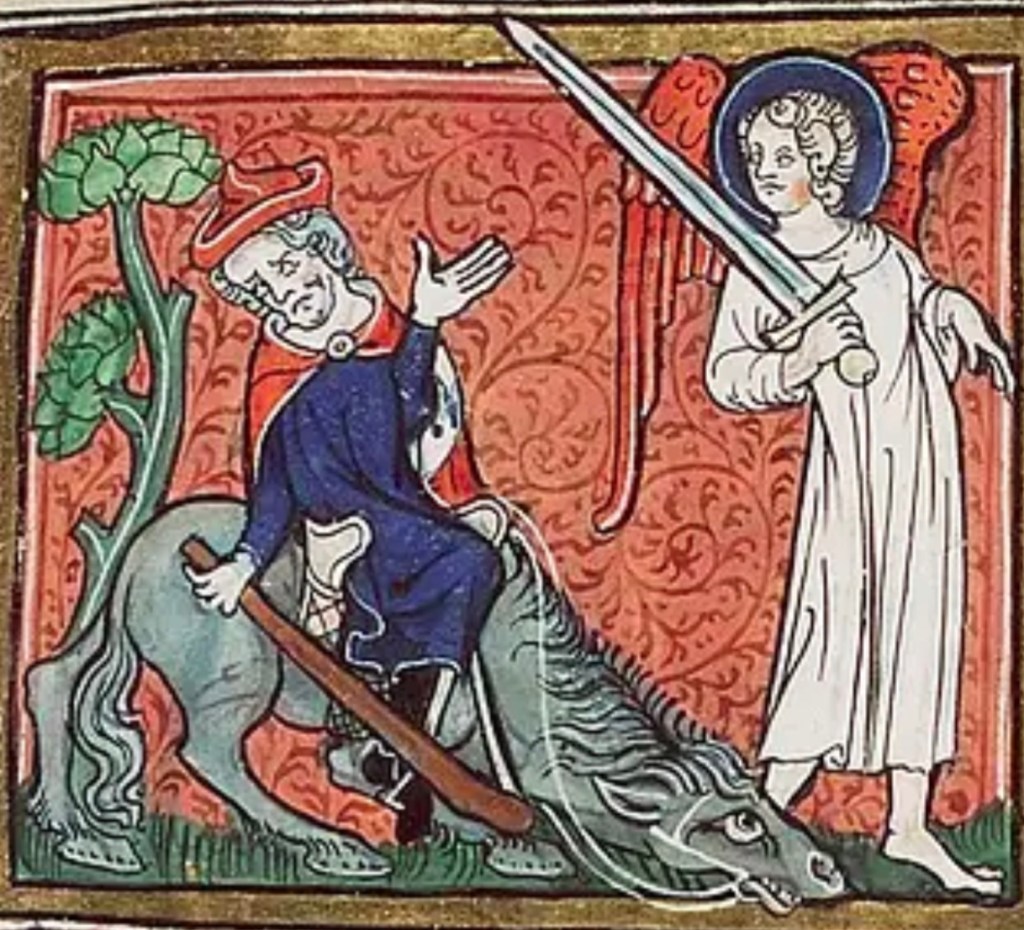
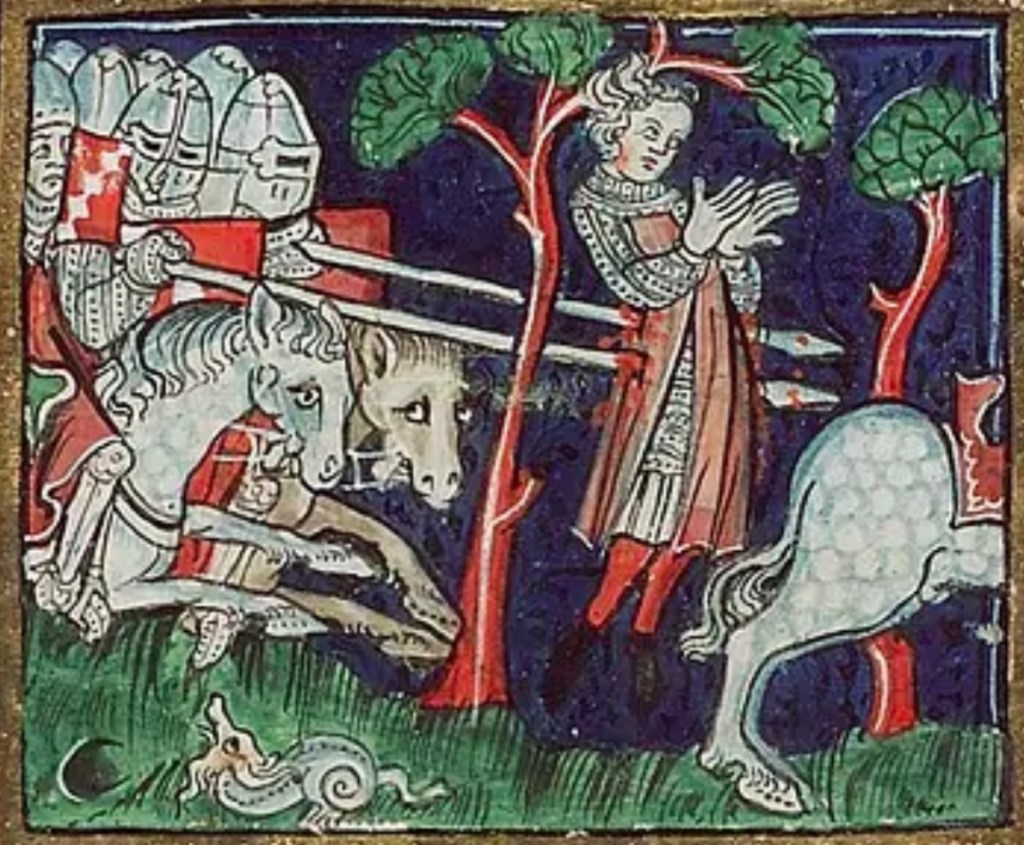
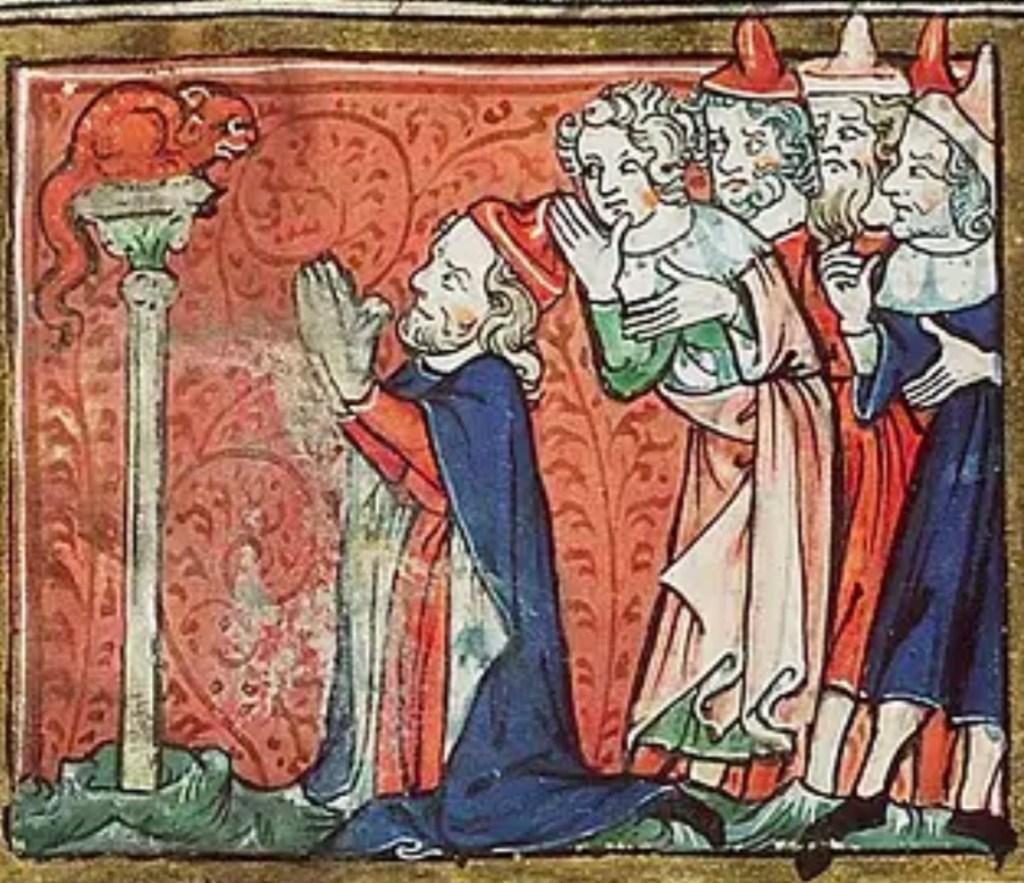
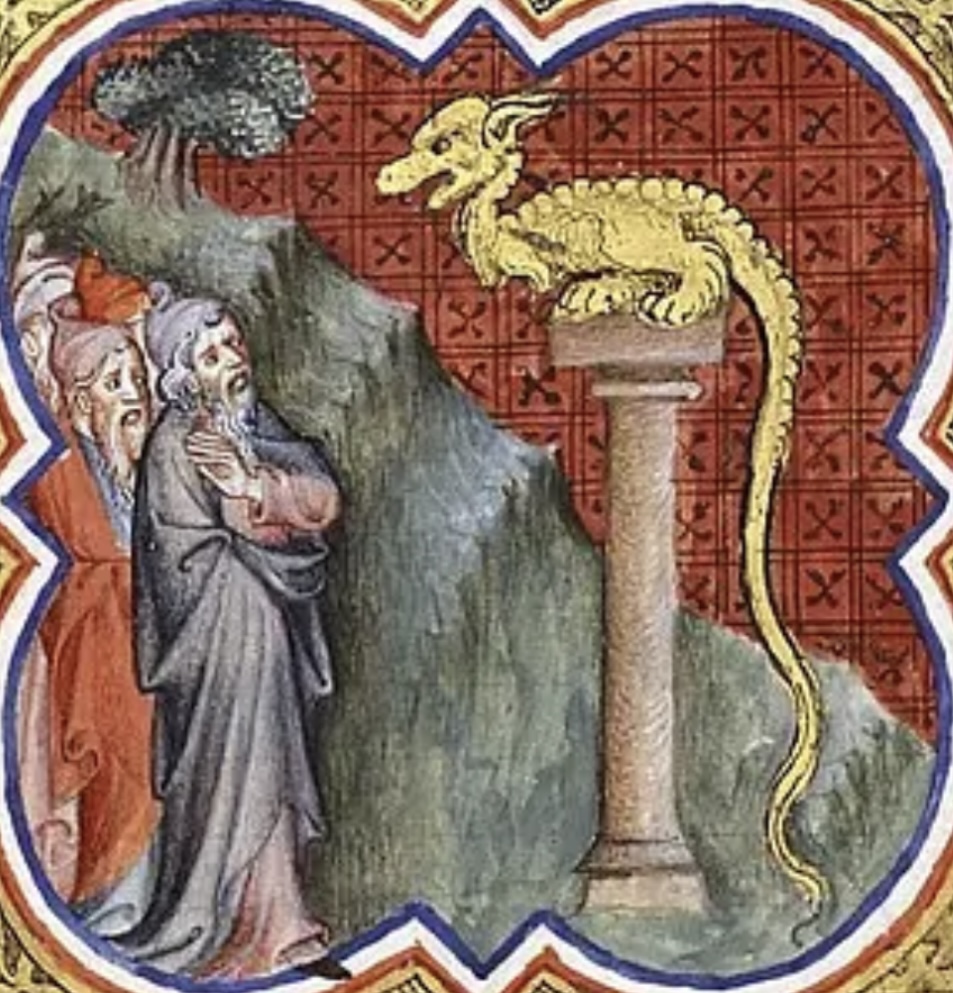
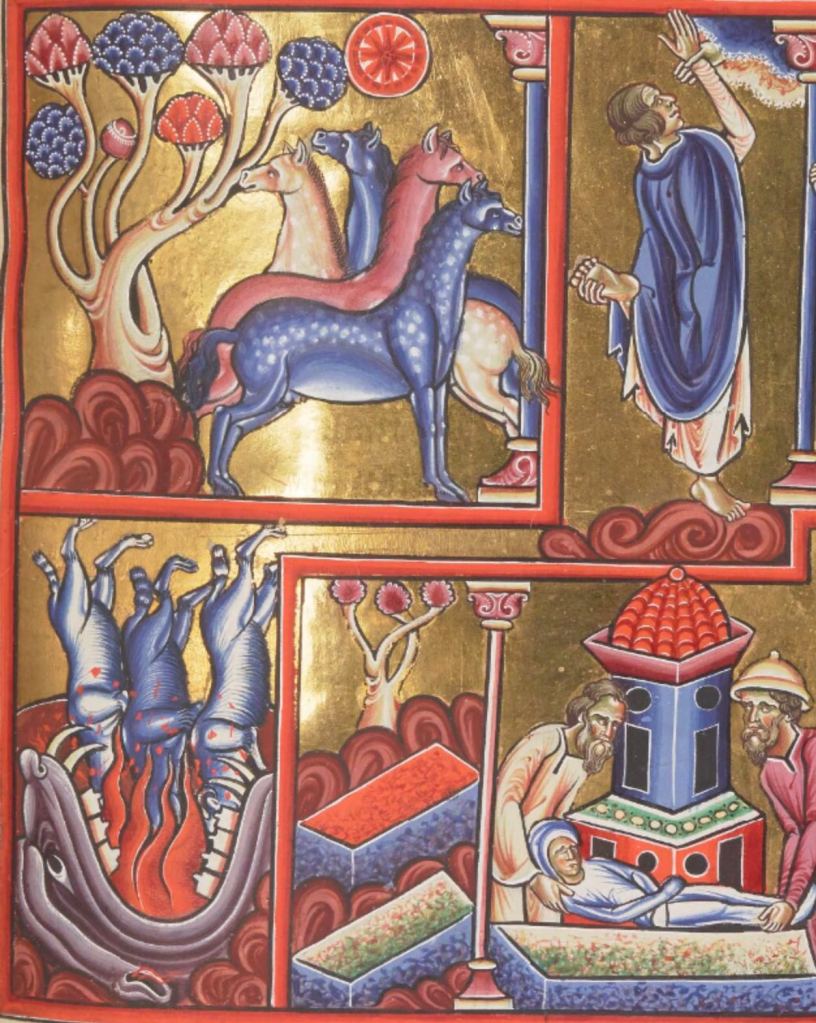
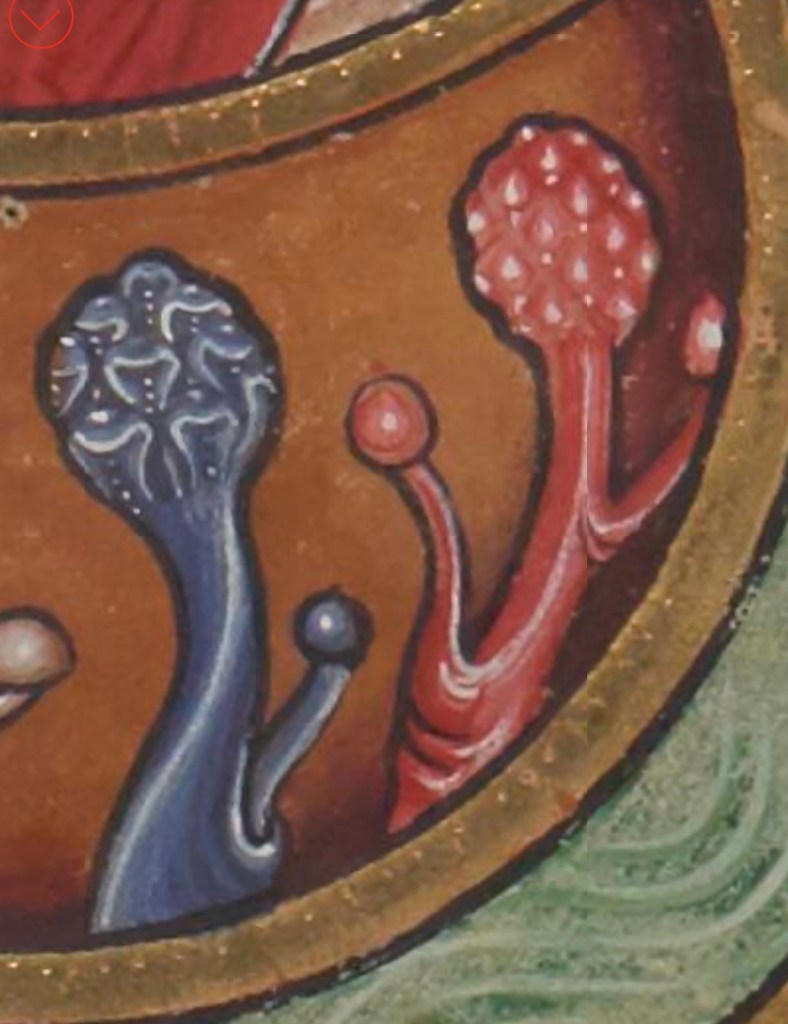
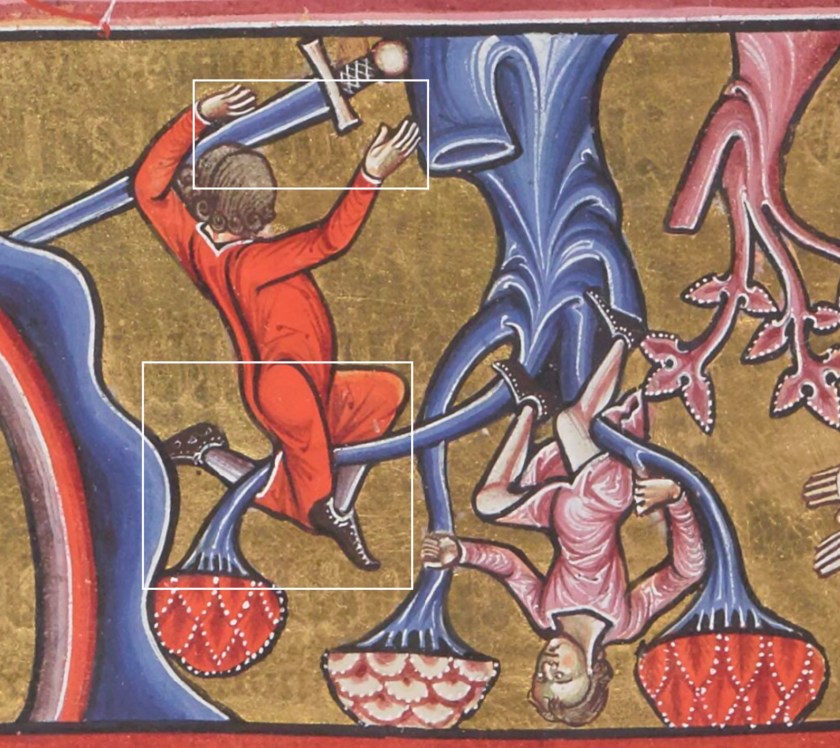
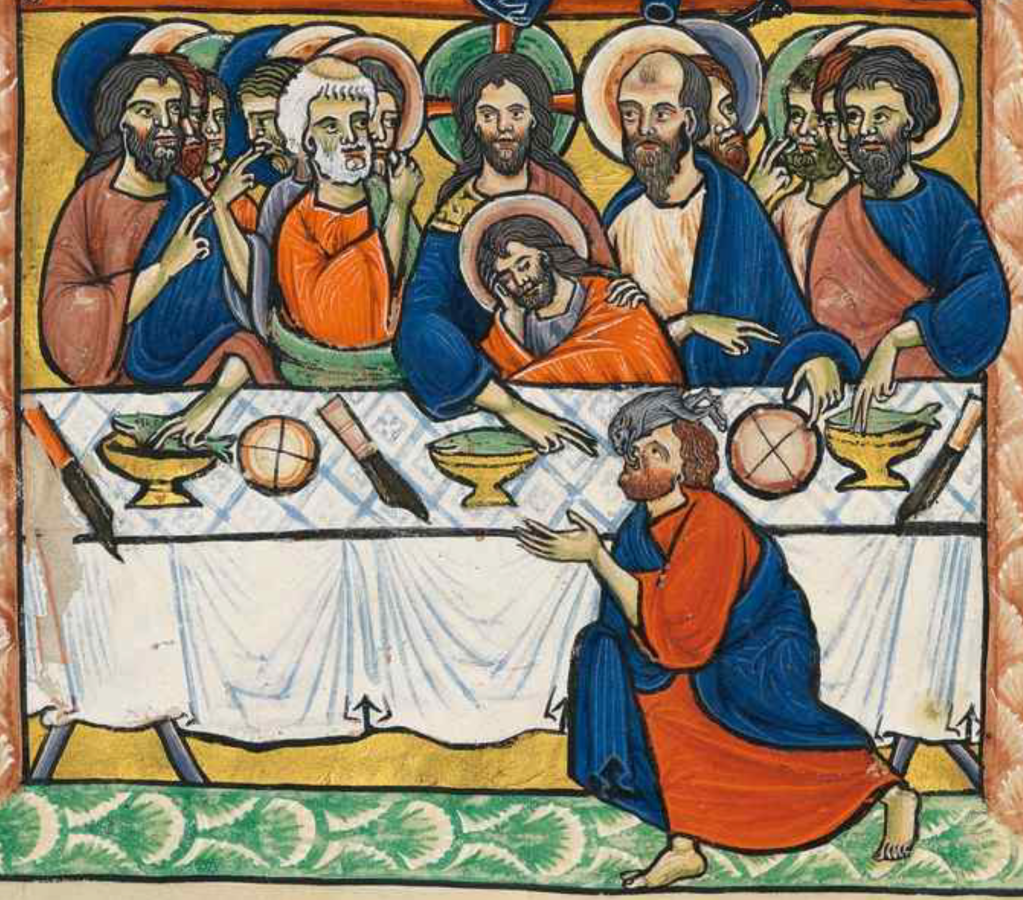
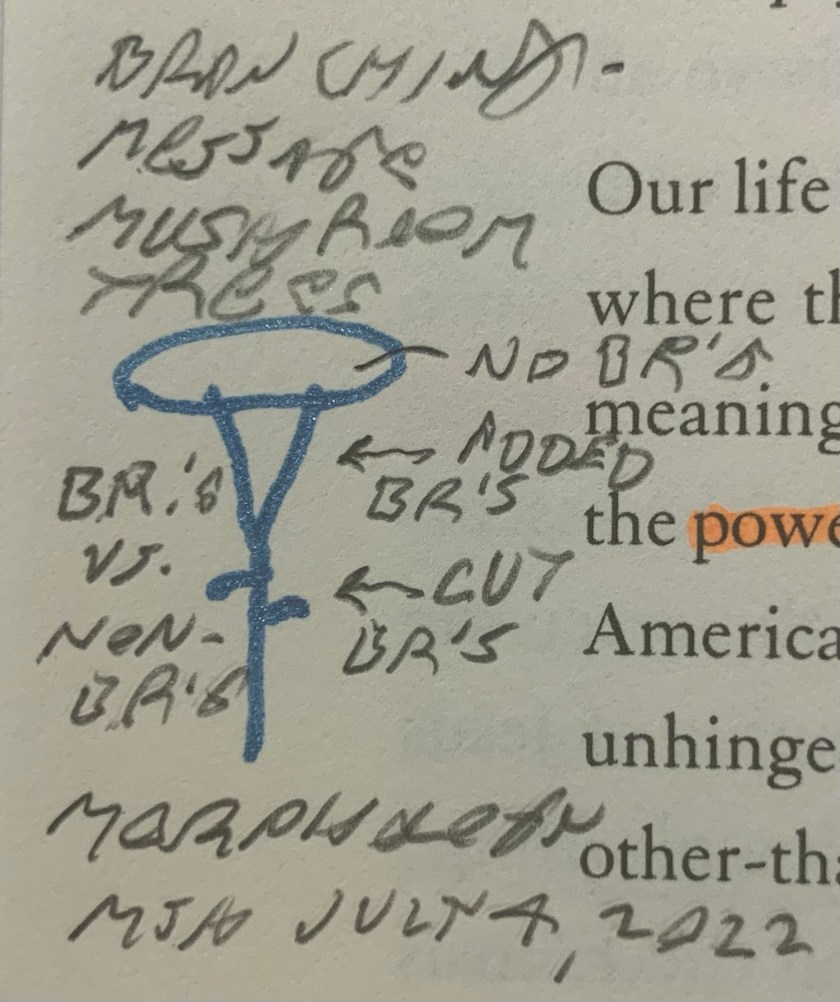
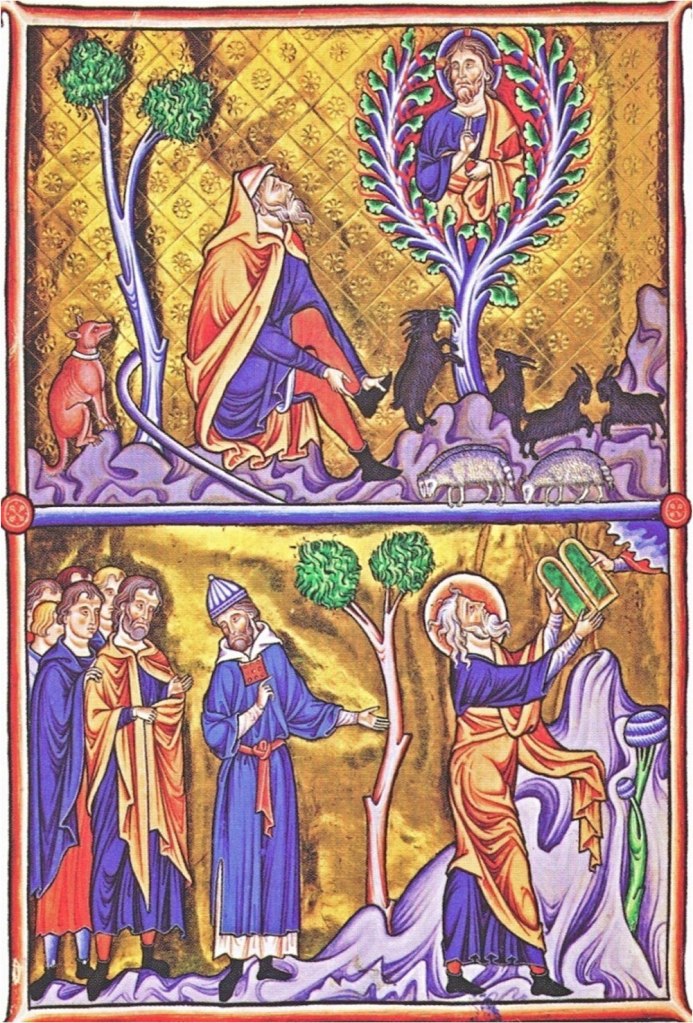
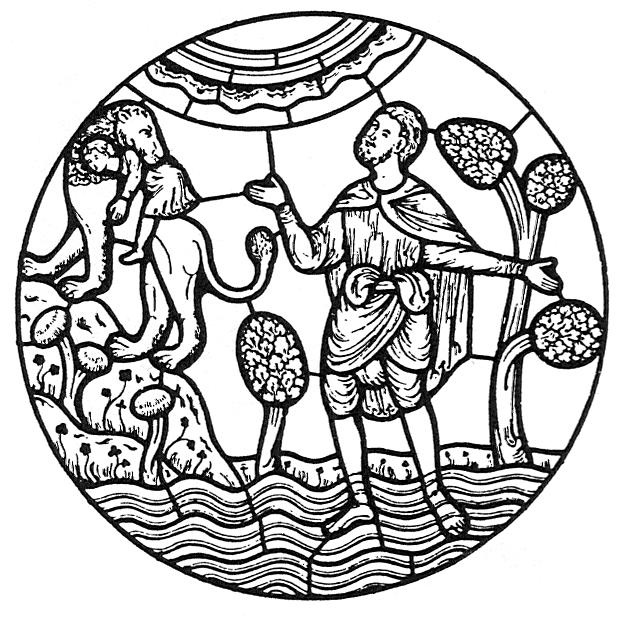
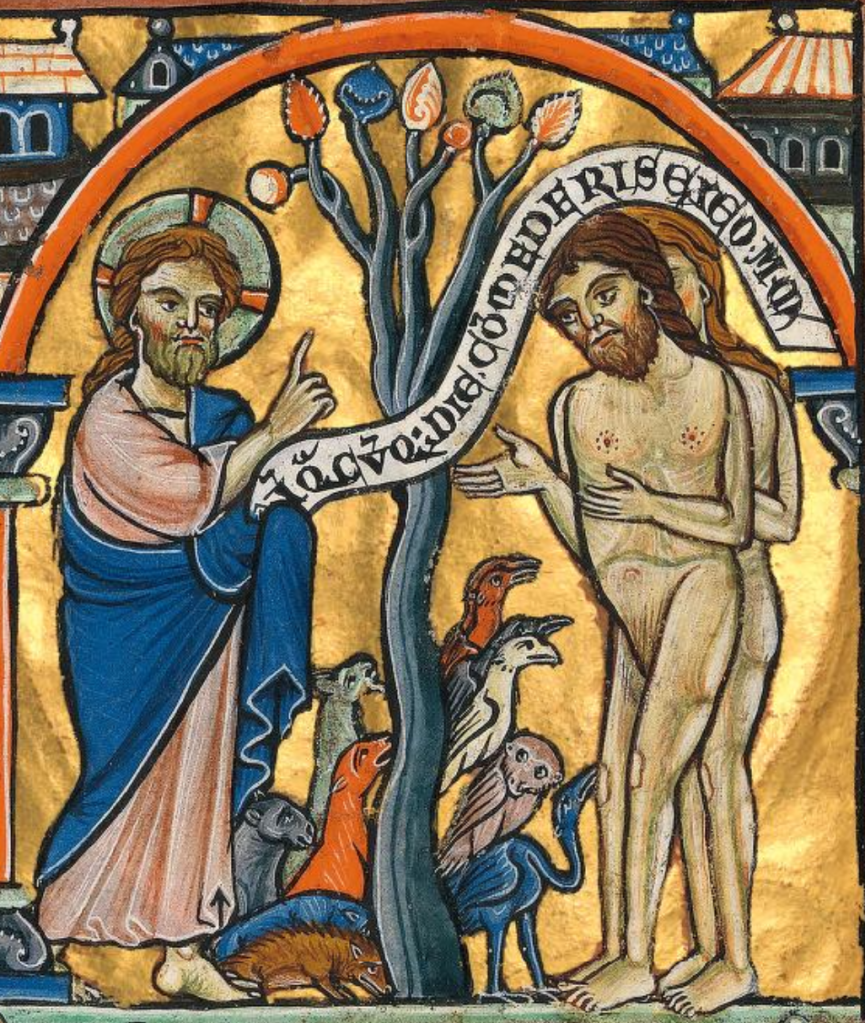

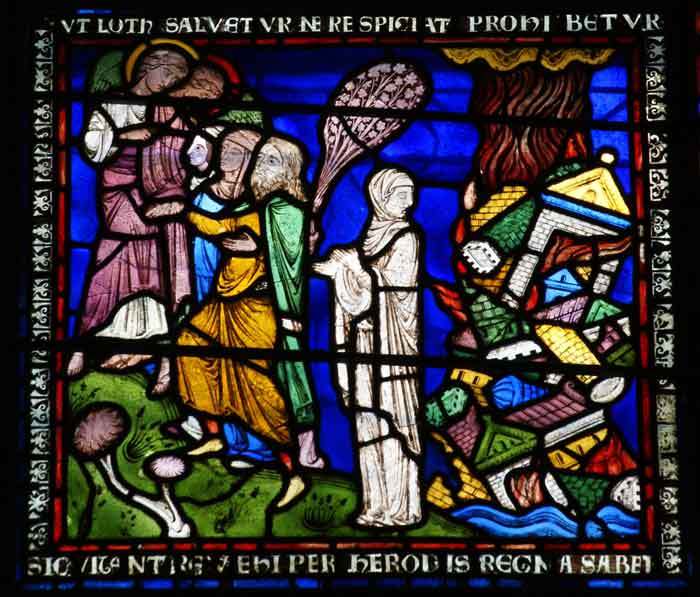
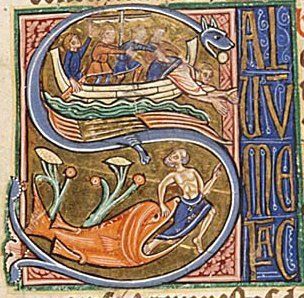
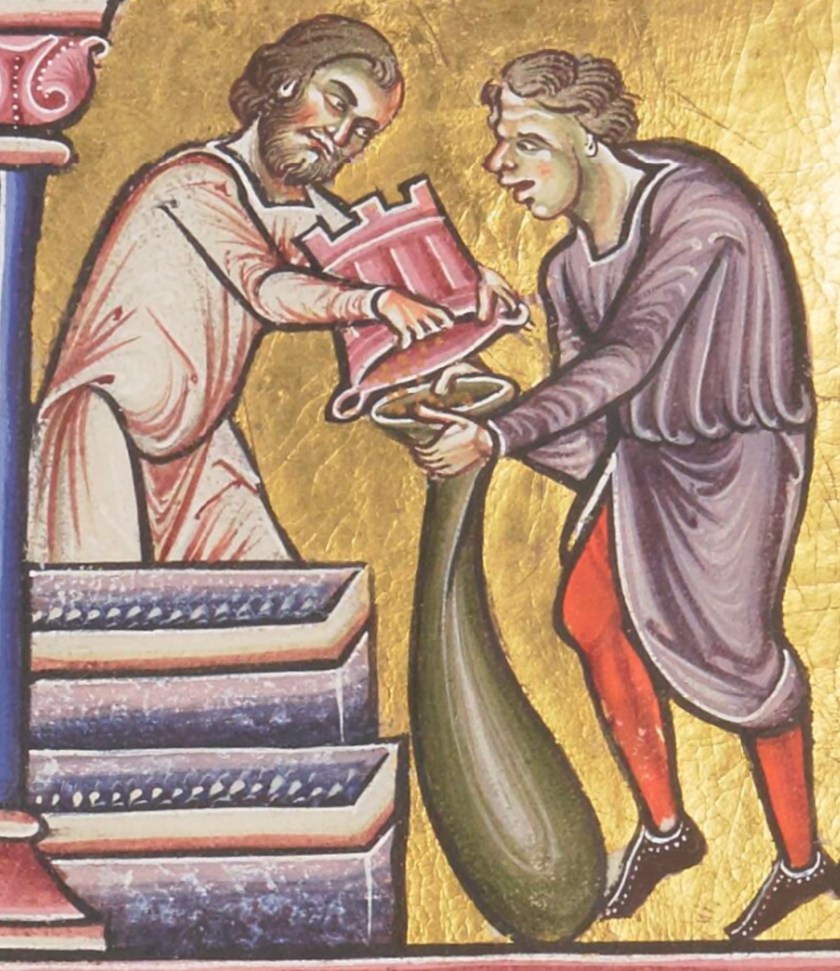
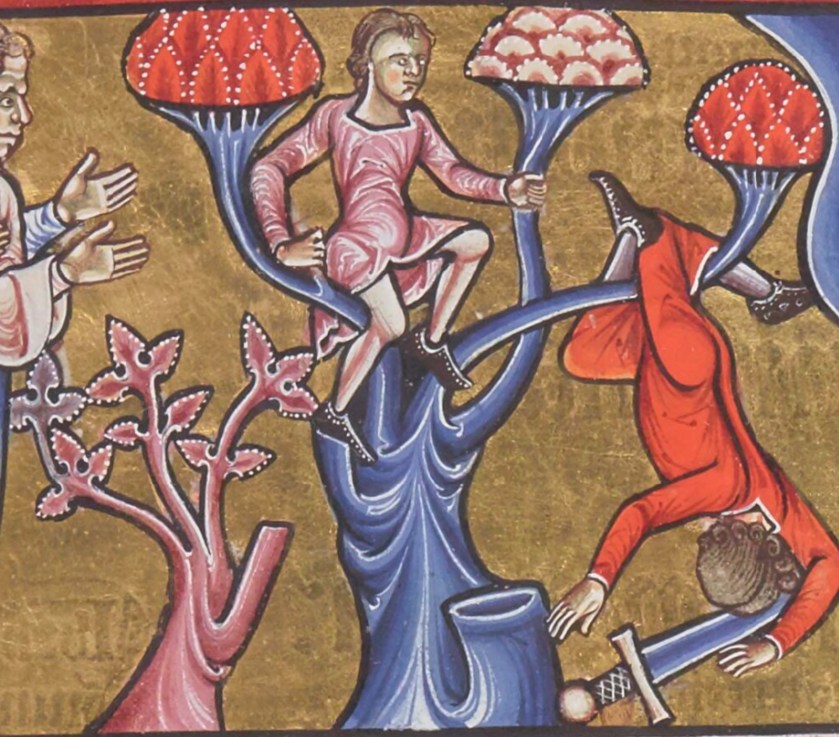
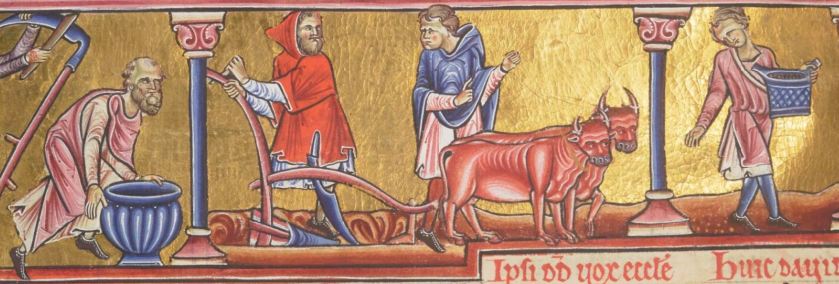
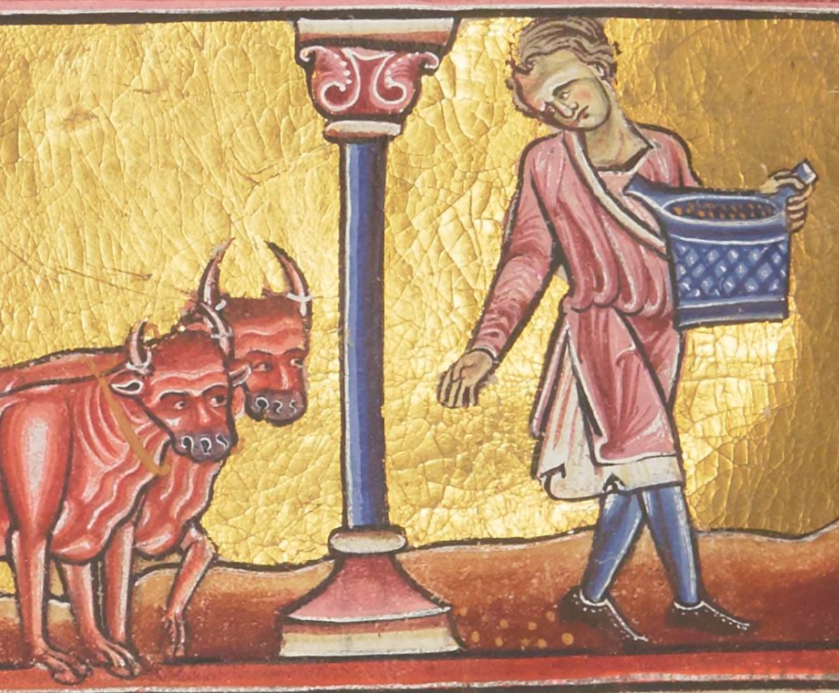
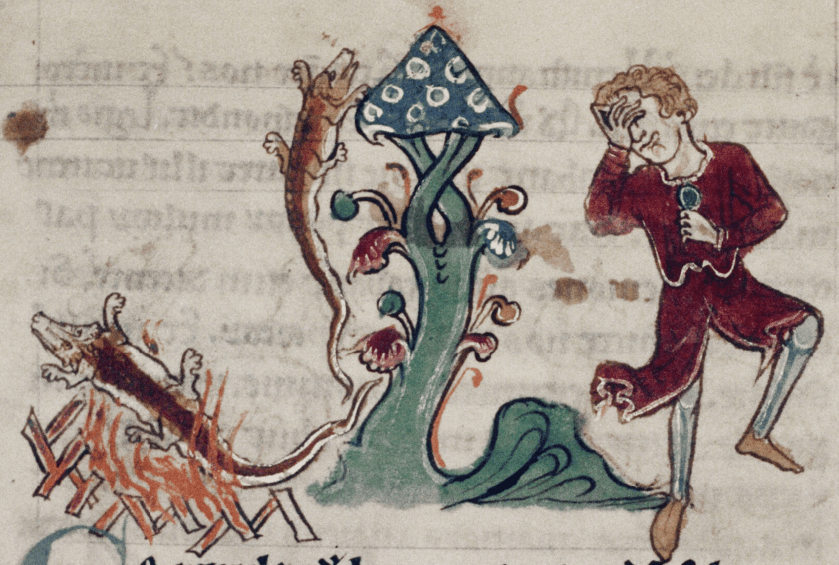
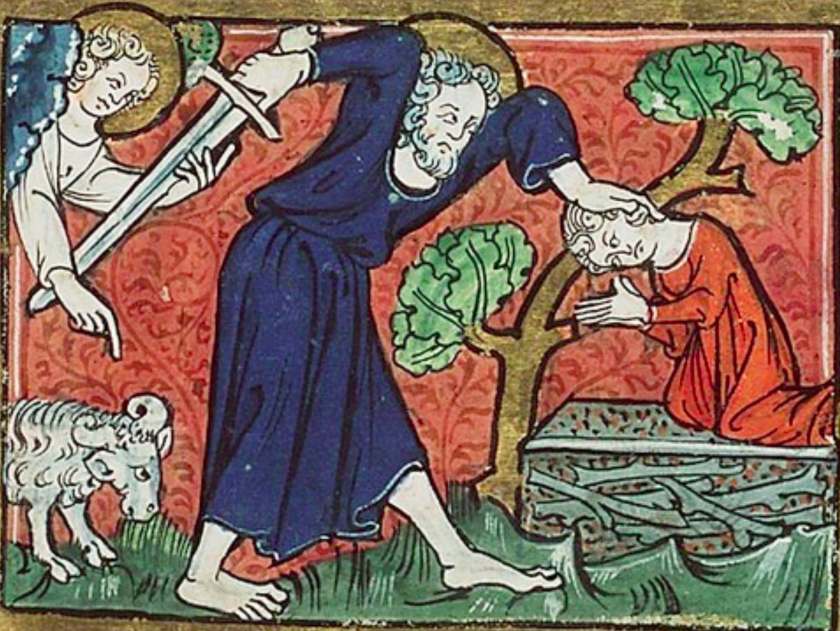
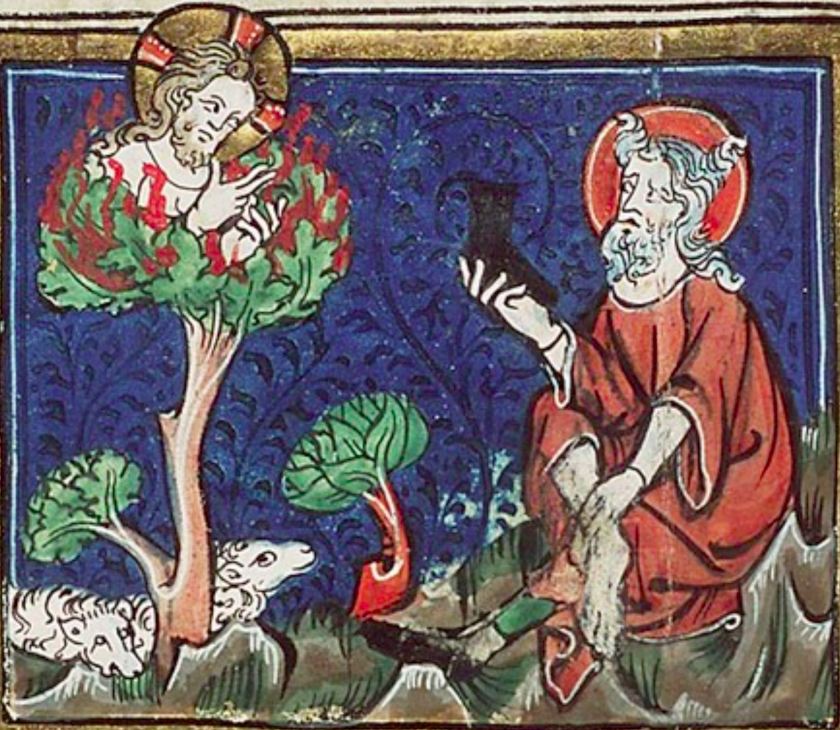
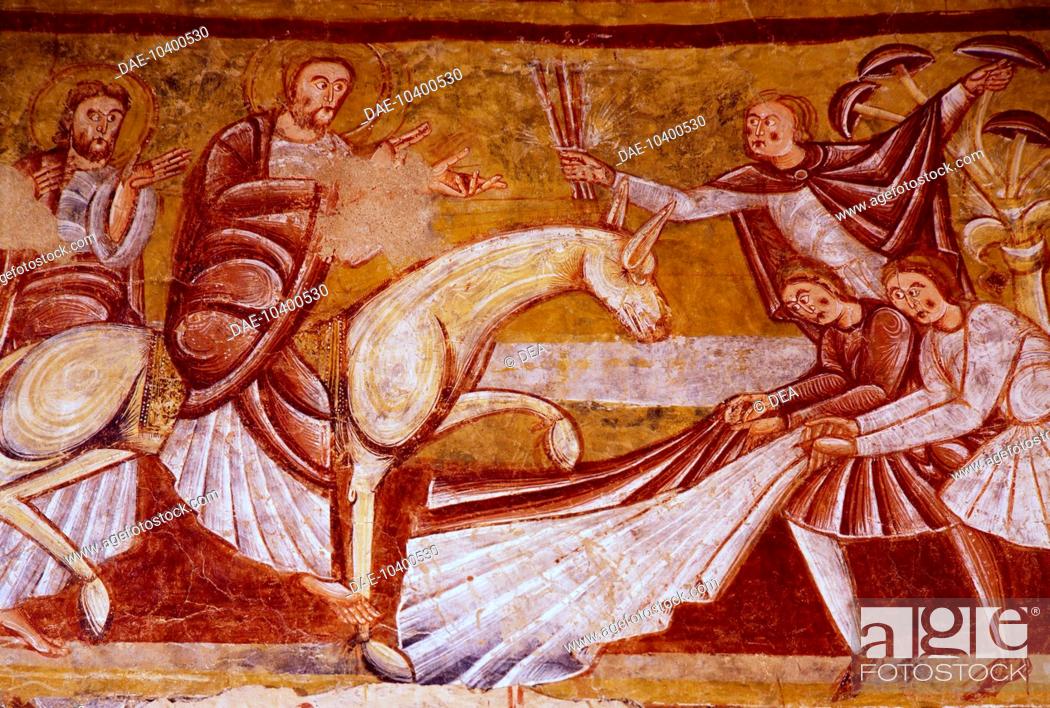
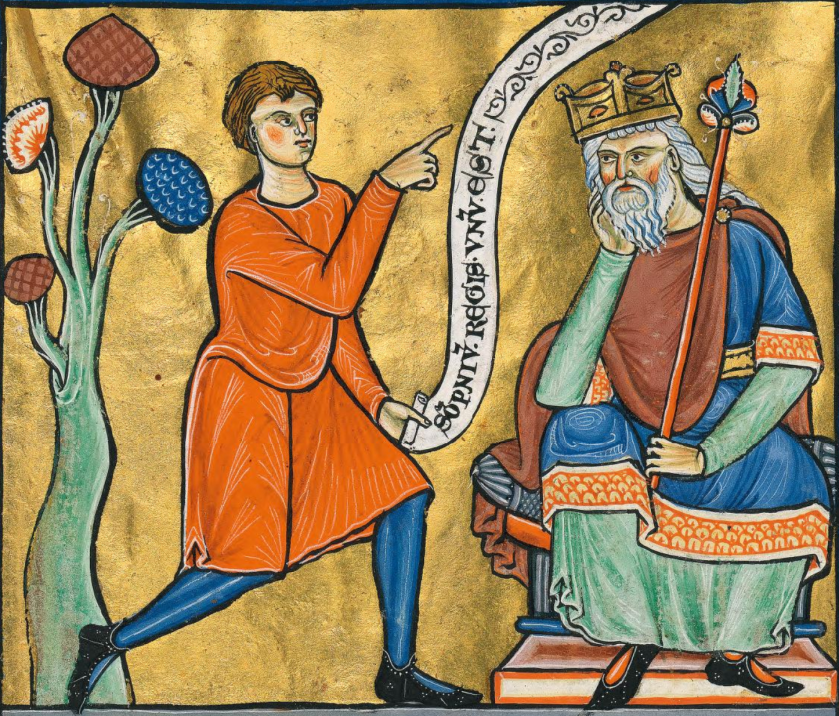
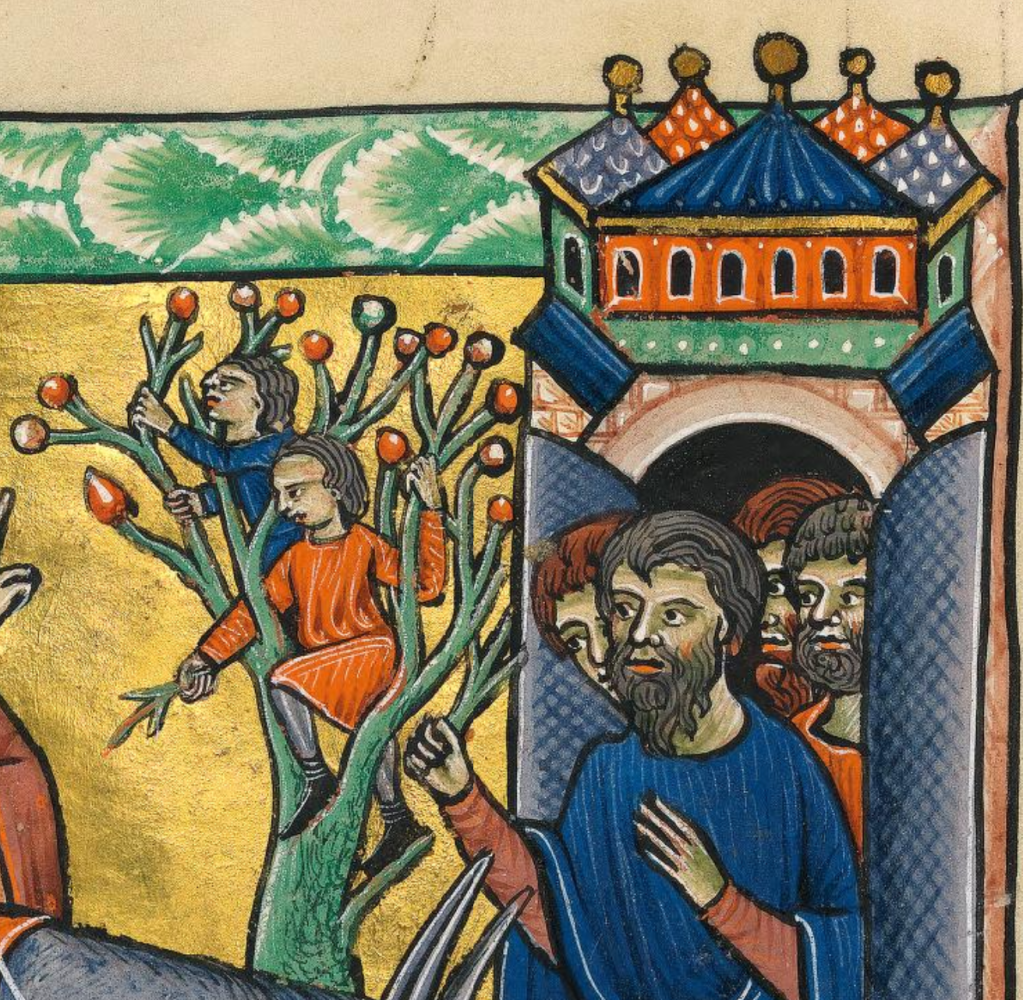
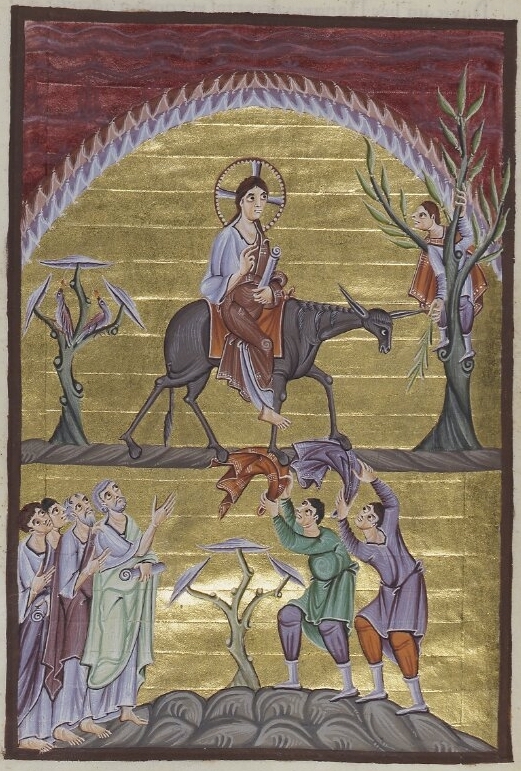


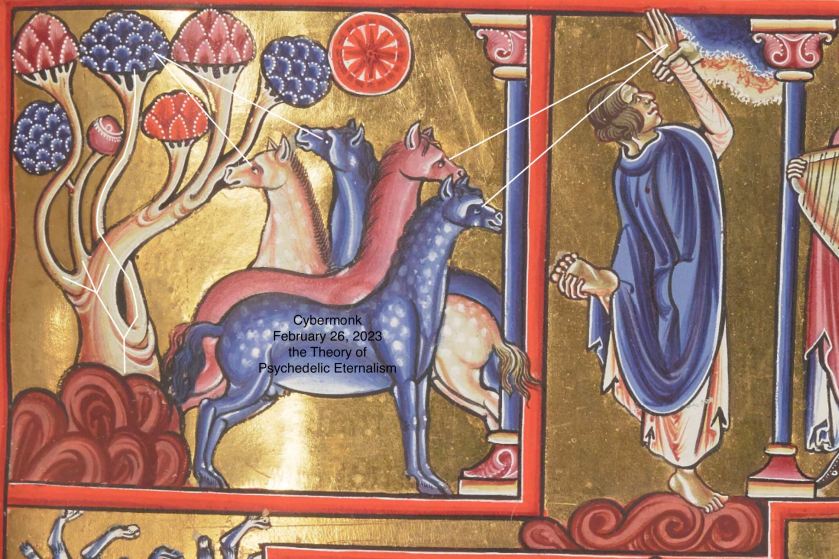
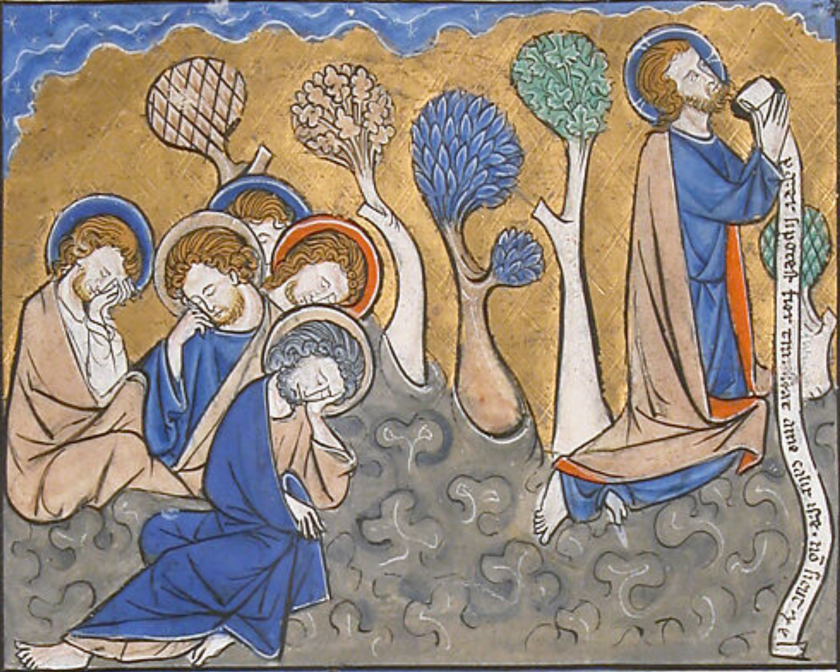
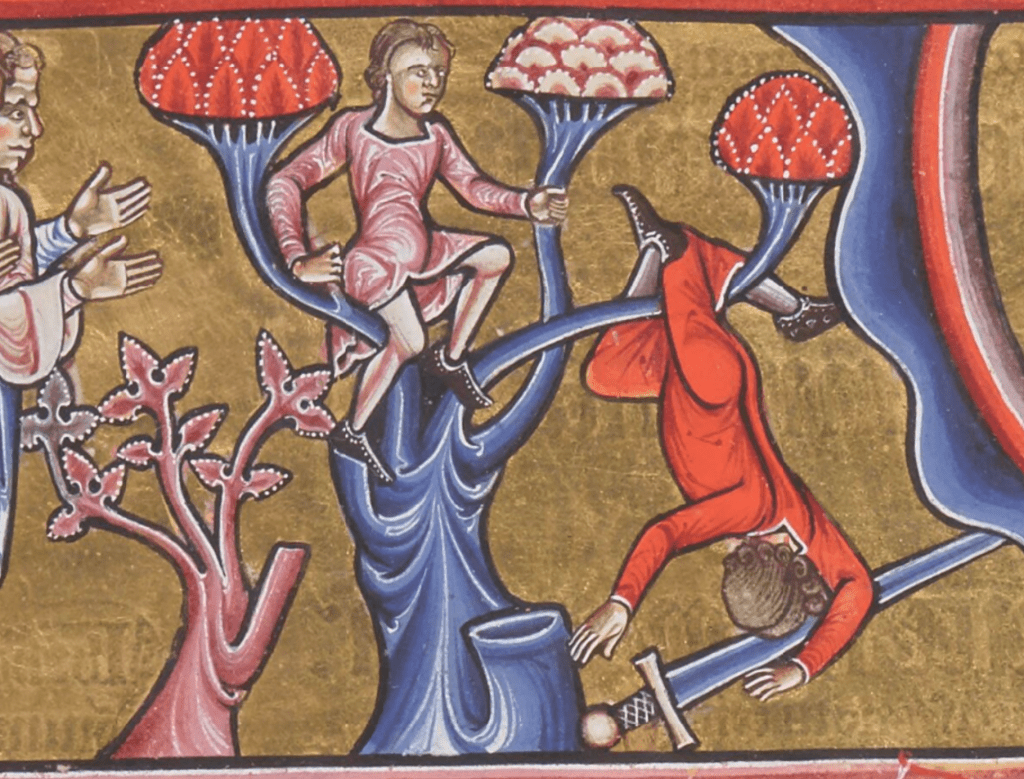
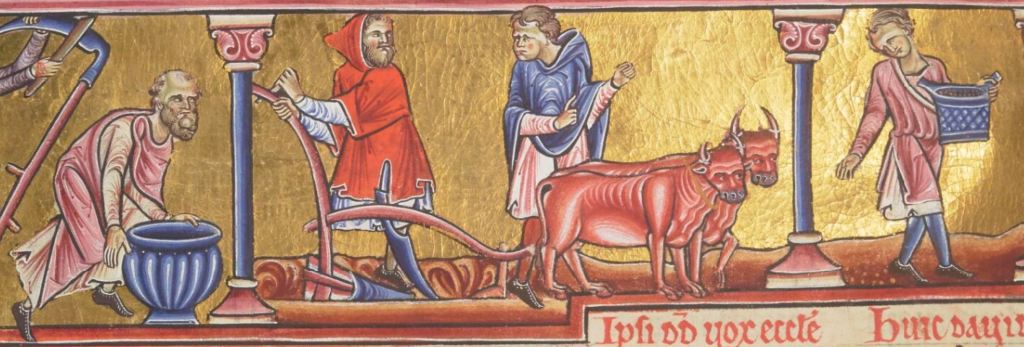
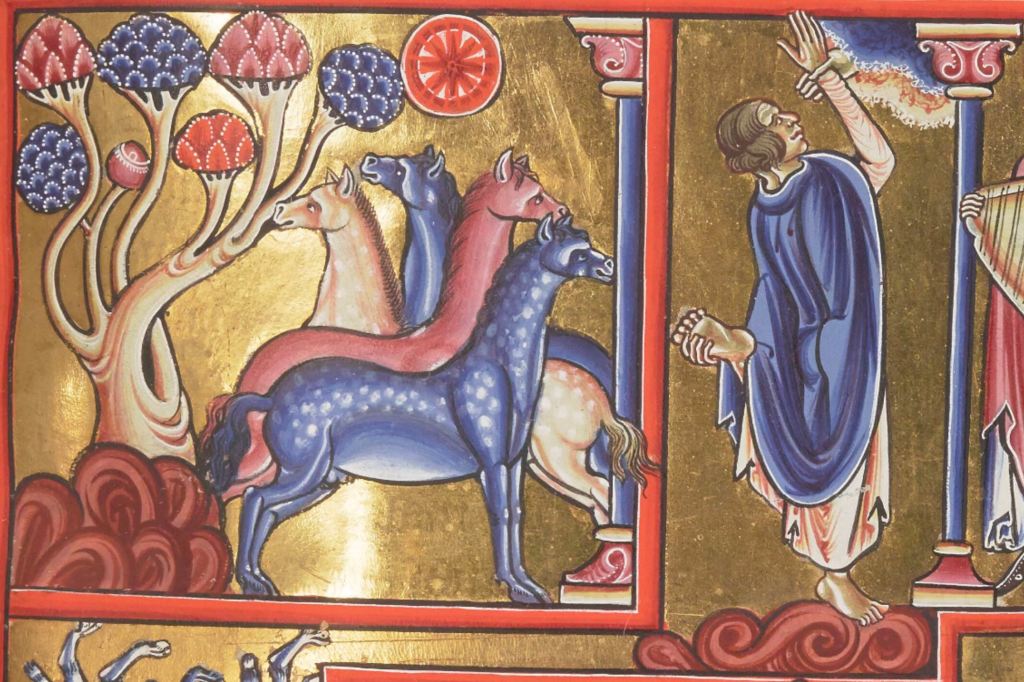


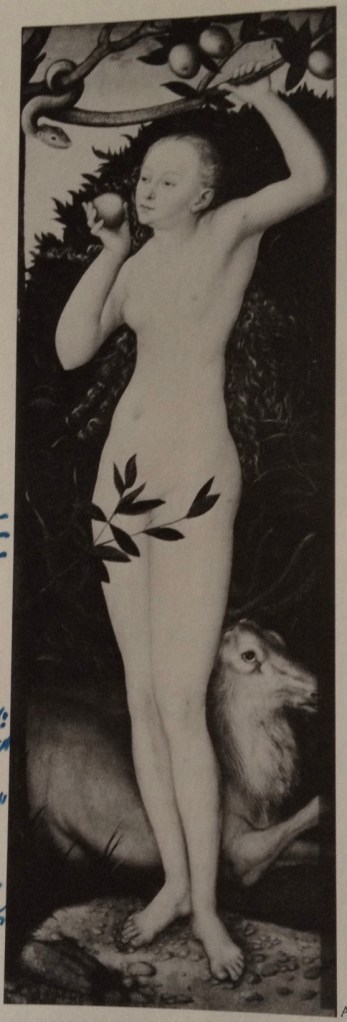

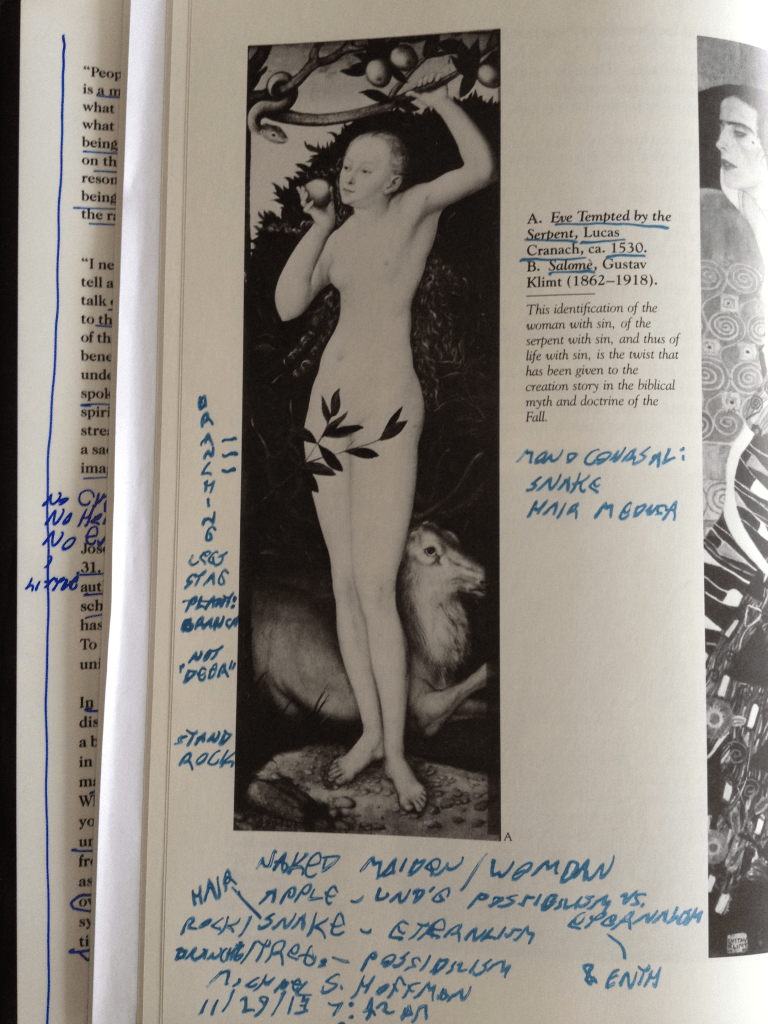
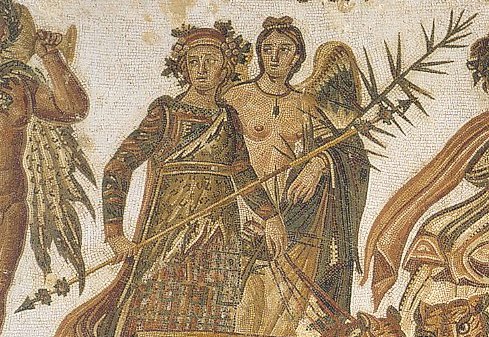

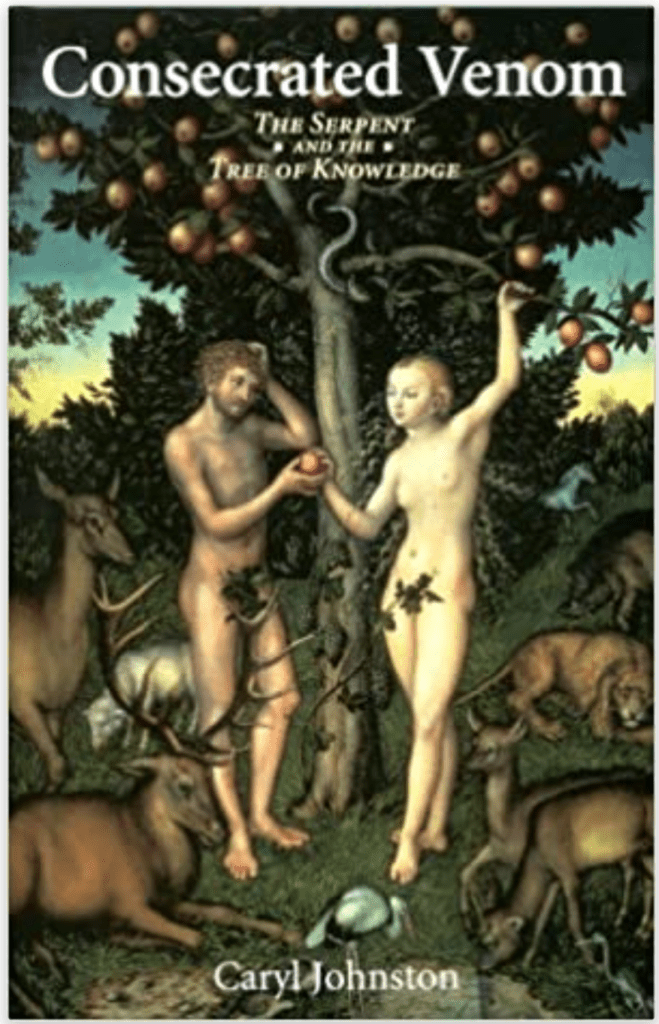

 The Egodeath theory