Hoffman, M. (1985–2007b). Gallery: Christian mushroom-trees. Retrieved from http://www.egodeath.com/WassonEdenTree.htm#_Toc135889185 – Goes to article: Wasson and Allegro on the Tree of Knowledge as Amanita Section heading: Gallery: Christian Mushroom Trees
The two links are not clickable in the Brown article (web view & PDF).
The Immortality Key: The Secret History of the Religion with No Name Author: Jerry B. Brown
Pages: 5–8 Online Publication Date: 11 Mar 2021 Publication Date: 11 May 2021 Article Category: Book Review DOI: https://doi.org/10.1556/2054.2021.00170 ERRATUM TO THIS ARTICLE
“In her interview for Richard L. Miller’s new book, Psychedelic Wisdom, Julie M. Brown, M.A. – psychotherapist, psychonaut, and coauthor The Psychedelic Gospels – describes her cosmic consciousness experience, see Julie’s presentation to Aware Project in LA: https://vimeo.com/367537082.”
Sacred Plants and the Gnostic Church (Lupu/Brown 2014)
Christianity’s Psychedelic History (Brown 2022 at Hancock Site)
Christianity’s Psychedelic History: Reply to Thomas Hatsis’ Review of The Psychedelic Gospels Jerry Brown 24th February 2022 https://grahamhancock.com/brownj1/
Citation of the Egodeath theory website
Brown wrote (personal communication, Jan. 22, 2023 and possibly earlier):
“As you know, Cyberdisciple provided material contributions to this article, which are acknowledged in the footnotes.
“And, near the end of the article I cite you as follows:
“Mushroom images in art: The field is also in need of robust categories for classifying depictions of mushrooms in art.
“For example, Samorini proposes a two-fold typology of mushroom trees, using the Plaincourault Amanita muscaria and the Saint Savin psilocybin mushroom as ideal types.21
“I find Hoffman’s categories useful for classifying the two varieties of MICA that we photographed at the following religious sites. The text in parentheses indicates the black and white Figure (Fig.) or color Plate (P) in The Psychedelic Gospels that displays our photographs of these images.”
ASC – images suggesting altered states of consciousness
Chapel of Plaincourault, France (P5)
Chartres Cathedral, France (P18)
/ end of Brown excerpt
Hatsis Email to Brown
Not sure if I’ll keep this here or move some to Idea Development page 15. This might be low-value, needless distraction.
Brown wrote (personal communication, Jan. 22, 2023 and possibly earlier):
“Here (below) is the threatening and slanderous email that Hatsis sent me on August 22, 2019, to which I refer in the first paragraph of my article.
“Due to Tom’s objection that this email was “confidential,” I was not allowed by the Hancock editor to include this email it in my Reply to Hatsis.
“As you see, this email which is reprinted in full below – except for Hatsis’ email address – is not marked “confidential.”
“After receiving this email, I stopped debating Hatsis and broke off communications with him with an email that said “I am a scholar not a mud wrestler.”
On Thu, Aug 22, 2019 at 2:02 PM Psychedelic Witch <…> wrote to Dr. Brown:
“The *moment* I am disrespected, called a liar (in not so many words), or accused of foul-play simply because Jerry is ignorant of medieval history (and medieval art, and medieval Christian history, and ancient Christian history, and ancient Gnostic history, and medieval heresy, and ancient Jewish history, and all the relevant languages needed to actually answer this question), I am going to unload on this entire nonsensical idea in a way that will have those who believe this bullshit crying in a corner.
“I’ve been too generous and nice, and I will NOT be walked over or insulted again.
“You give me respect and I am happy to return in kind. Lie about me once more, accuse me of anything, and the kid gloves come off.
Their enemies didn’t accuse Christians of mushrooms – therefore, what follows?
In his earliest article, for a UK journal, Hatsis a priori assumes that mushrooms were so reviled by everyone in antiquity, that we know that Christians didn’t use mushrooms, because if they did, their adversaries would have accused them of this heinous act.
This argument is untenable, since enemies accused enemies of everything that was considered bad.
The fact that the Christians’ enemies, who accused them of all things that were considered bad, didn’t accuse Christians of mushrooms, indicates that Antiquity didn’t consider mushrooms bad.
Hatsis is the anti-mushroom psychedelic witch, projecting his own intense disparagement of mushrooms onto Antiquity.
No one would make the erroneous argument he makes, except by projecting one’s own thoroughgoing anti-mushroom attitude onto Antiquity.
Incoherent “Culturecide” Charge Is Begging the Question
Beg the question much?
In one of his online articles, Hatsis falsely argues that if you assert Christians used mushrooms, you are [definitely] committing culturecide, by overwriting their culture by your own invented projections.
But how does he know he is not the one forcing his own misinterpretations upon mushroom imagery artists?
He ought to have written that if we say Christians did, or didn’t, use entheogens, we MIGHT risk committing culturecide, but we can’t know how to avoid that, until we figure out whether they did or didn’t.
It is stunning how bad Hatsis’ arguments are. He seems to have low aptitude for reading, writing, and thinking.
I am not passing judgment on all of Hatsis’ contributions or potential, but saying he is as mixed a bag as any scholar… a particularly mixed bag.
Course at Psychedelics Today: Psychedelics: Past, Present, and Future
An in-depth understanding of the history and science of psychedelics
Motivation for creating page: I can’t find my pages and sections about Browns’ work at this WordPress site.
Key Questions from Brown About “Secret” Mushrooms
Exact quote from Brown (personal comm.): Sep 7, 2021 Su: Battles in field; “secrecy” and evidence
“If a psychoactive mushroom rite were widely practiced, but only among the ecclesiastic/pagan elites and their initiates, during the Middle Ages, where do we draw the line between labelling this as “secret” or affirm that the evidence supports the maximal thesis, and what nuance (if any) needs to be added to support either position?”
If a psychoactive mushroom rite were widely practiced, but only among the ecclesiastic/pagan elites and their initiates, during the Middle Ages:
Where do we draw the line between labelling this as “secret”, or affirm that the evidence supports the maximal thesis?
What nuance (if any) needs to be added to support either position?
Video: The Psychedelic Gospels: Evidence of Entheogens in Christian Art (Breaking Convention ch., 2019)
Vid title: Dr Jerry B Brown – The Psychedelic Gospels: Evidence of Entheogens in Christian Art Uploaded Sep 26, 2019
Brown’s Nov 9 2020 email: “And, lastly, here’s the video of my presentation at that 2019 Breaking Convention.
“FYI, there’s also a video of Hatsis’s presentation as well.
“These individual presentations took place separately from the debate.
Vid blurb:
“The Psychedelic Gospels: Evidence of Entheogens in Christian Art
“Based on stunning photographs of psychoactive mushrooms found in churches and cathedrals in Europe and the Middle East, this presentation documents original research on the presence of entheogens in early and medieval Christian art. After making the surprising discovery of a sculpture of an Amanita muscaria mushroom in Rosslyn Chapel, Scotland, my wife/coauthor Julie and I set out to investigate the presence of entheogens in Christian art: in frescoes, illuminated manuscripts, mosaics, sculptures and stained-glass windows. At the churches and cathedrals studied, we utilised an interdisciplinary approach combining in-depth anthropological field work with art history, church history and ethnobotany.
“The key results are threefold. First, we found compelling evidence of sacred mushrooms (both Amanita muscaria and Psilocybe) in Christian art in religious centres as diverse as small parish chapels (France), high holy places (England and Germany), early basilicas (Italy) and remote cave churches (Turkey). Second, based on these findings we proposed the “Theory of the Psychedelic Gospels,” which argues that Christianity has a psychedelic history. Third, these discoveries resolve the epic controversy between ethnobotanist R. Gordon Wasson and linguist John Marco Allegro, which has cast a long shadow over the study of entheogens in Christianity. These results are significant ̶ and controversial.
“If the theory of the psychedelic gospels is validated, the scientific and religious communities will have to rethink the history and perhaps even the origins of Christianity. For this reason, in The Psychedelic Gospels: The Secret History of Hallucinogens in Christianity (2016), we call for the establishment of an Interdisciplinary Committee on the Psychedelic Gospels in order to document and evaluate the presence of psychedelics in Christian art.
“Jerry B. Brown, Ph.D., is an author, anthropologist and activist. From 1972 to 2014 he served as founding professor of anthropology at Florida International University in Miami, where he taught a course on “Psychedelics and Culture.” He is coauthor with Julie M. Brown of The Psychedelic Gospels: The Secret History of Hallucinogens in Christianity (2016). He is also coauthor of “Sacred Plans and the Gnostic Church,” Journal of Ancient History (2014) and of the forthcoming “Entheogens in Christian Art: Wasson, Allegro and the Psychedelic Gospels,” Journal of Psychedelic Studies (2019).
Thomas Hatsis and Jerry B.Brown go head to head to debate this question.
Filmed at The University of Greenwich, London, as a collaborative event between Breaking Convention and The University of Greenwich Psychedelic Society on 14 Aug 2019.
Brown Asked if We Wrote About Compelling Evidence & Criteria of Proof on Nov. 10, 2020
Exact quote:
“Have you, Cyb or anyone outlined what compelling evidence, or criteria of proof would be?”
To Brown Jan. 22, 2023: Critique of Panofsky’s Letters
Thanks, I read your email of Apr. 27, 2022 today.
Did you photograph Panofsky’s letters? I’m not sure how to credit them, other than that you published them, Brown & Brown 2019.
There are many more points to critique in Panofsky’s letters, and Wasson’s abuse of them, than what you covered in your 2019 article. I’ve posted & spoken about these critiques and what’s revealed.
You didn’t note that:
Wasson looked up and hand-wrote the detailed Brinckmann book name and author name, on Letter 1, and Wasson censored the citation in Letter 1, and that Panofsky’s 2nd Letter again strongly recommended the Brinckmann book.
Never does Wasson let leak, actual scholarship: do not mention Brinckmann’s book (against Panofsky’s attempt to provide a semblance of scholarly citation).
Also you didn’t mention:
Such damning evidence of anti-scholarship by Wasson: that Panofsky attached two pilzbaum photostat images, which Wasson makes sure to not show or publish or mention.
Panofsky’s arguments are full of giant holes, revealed by your publishing Letter 1 & 2 together.
The iceberg effect: 90% of Panofsky’s argument rests on unstated presuppositions; he only provides a sketch of the surface of the argument, and counts on the reader to gullibly assume the rest and follow Panofsky’s biased lead.
__________________________
Citation $&*@!! Needed! Where’s the $&*@!! citations, Wasson?!
Highly valuable to me, Panofsky letter 2 confirms my 2005 accusation of Wasson withholding scholarly citations that Panofsky certainly must have provided to back up the extremely strong assertion that art historians have covered pilzbaum. I failed to make this my #1 summary point at top of article, though I bitterly complained all through the article.
“Why should we trust Wasson’s stated judgment (“what I have found is the unanimous view of those competent in Romanesque art”) and his unstated process of his finding of competence, especially when he declares that “those competent … Art historians of course do not read books about mushrooms”? Wasson refrains from giving us even a single shred of evidence, withholding the details (assuming there are any details to withhold) that led the art historians to their conclusion – or dogma or party line – that mushroom trees aren’t mushrooms. He delivers forth only the supposed conclusion, painting a scene as hazy, undefined, and unspecific as Saint Paul on the earthly life of Christ.
“Wasson doesn’t provide any citations of published scholarly studies of ‘mushroom trees’ or ‘Pilzbaum’, where we can weigh the merit of the art historians’ confident consensus and see how or whether they’ve addressed the most-persuasive objections to their consensus view.”
“Wasson doesn’t show us any citations of published scholarly studies of ‘mushroom trees’ or ‘Pilzbaum’: the result is 1-sided apologetics; within this presentation, we are only permitted to hear the opening assertions and position statement of one party in the debate, not to see how that position responds to the other side’s objections.
“Wasson didn’t go to the trouble of providing citations of the eminent art historians’ published studies on Pilzbaum. These would need to be studies that convincingly show why the mushroom-and-tree interpretation is surely wrong …”
“With no citations given of published, thorough studies, the result is an argument from authority. Wasson’s unscholarly attitude and method here, toward his readers, is striking. We’re not even supposed to wonder how exactly the art historians reached their conclusions on this highly relevant and interesting matter; we’re to mentally picture hazy, idealized, intensive scholarly research, producing unimpeachable, compelling results, and imagine the conclusions as having been tested in the fire of robust critical examination. Either this, or we’re supposed to be impressed and compelled solely by the arguments contained in Panofsky’s letter, as though it were impossible to think of any objections to his sparse argumentation.”
That was pretty insightful/resourceful critique from me in 2006 based only on a fragment of Letter 1. I wish I noted Wasson’s ellipses right where I knew & deduced that there must be a citation (Brinckmann’s book).
I image-processed the images of Panofsky’s two letters and re-printed them out, much clearer.
Your 2019 article body has a transcription typo, I read it aloud and the letter photo out loud, a subtle word swap changed the meaning and my critique of Panofsky (in voice recording Egodeath Mystery Show podcast episode), which I had to correct.
“the finished product” [Panofsky’s fabricated “template”] vs. “the finished project” [the Plainc. fresco]. Back to the sources!
All software has bugs, all articles have errors. Including my 2006 Plaincourault article, to my surprise while reading it aloud on the Egodeath Mystery Show podcast.
In that article, I especially wish I had listed summary item 1: Wasson must be withholding citations that Panofsky certainly must have provided. It turns out, your 2019 article reveals that Panofsky attached images as proof that art historians have acknowledged pilzbaum and it’s not entirely bluster, Panofsky’s claim that art historians have treated/ covered/ discussed pilzbaum.
— Cybermonk
Photographs of Panofsky’s Two Letters to Wasson
Per Brown (pers. corr.), cite the letters as shown.
“some especially ignorant craftsman may have misunderstood the finished product, viz., the “Pilzbaum”, as a real mushroom. But even that is not very probable because even the most mushroom-like specimens show at least some trace of ramification; if the artists had labored under the delusion that the model before him was meant to be a mushroom rather than a schematized tree he would have omitted the branches altogether.” – The most influential art historian, Erwin Panofsky
“Erwin Panofsky.- Please keep my poor little pictures as long as you wish. And I really recommend to look up that little book by A. E. Brinckmann.”
In 2005, I wrote:
“Wasson refrains from giving us even a single shred of evidence, withholding the details (assuming there are any details to withhold) that led the art historians to their conclusion – or dogma or party line – that mushroom trees aren’t mushrooms.”
Images and Crops from St. Martin’s Chapel, Julie M. Brown Photographs
~~
todo: add remaining such entire Julie images & crops here.
Email Jan. 22, 2023 to Brown
Hatsis claimed that his misspelled term Discipuli Allegrae isn’t literally asserting that Brown is or I am literally a follower of Allegro; but merely means anyone who asserts that mushrooms areintertwined with Christianity.
This denial is B.S. from Hatsis. In fact, Hatsis really does think that anyone who asserts “mushrooms” (an entirely problematic term) in Christian history is literally a follower of Allegro.
I have PROOF of this in Hatsis’ email to me where he asserts like, “the ONLY reason that you guys have switched to asserting Psilocybin instead of Amanita is because Allegro …”
I (semi-jokingly) have no idea what he wrote after that – it doesn’t matter, because he just completely sank himself and revealed his unconscious presupposition paradigm.
Hatsis is projecting: because HE started off gullibly a follower of Allegro, he ASSUMES that everyone else comes from initially following Allegro, just as Hatsis did.
In fact, the Egodeath theory, including the radical maximal entheogen theory of religion, has exactly ZERO influence from Allegro.
I’ve posted and written up details about that already, in intellectual autobiography thread/posts.
In no sense whatsoever does the Egodeath theory or the maximal entheogen theory of religion come from Allegro.
Nor is the Egodeath theory (the Theory of Psychedelic Eternalism) in any sense a “variant of” or “departure from” Wasson’s theory, as John Lash equivalently assumes of everyone who ever thinks any thought about visionary plants in connection with religion.
Through some mysterious process of attribution that Lash hasn’t explained, if you think “mushroom+religion”, then Wasson must have put his idea into your mind, somehow.
Through some mysterious process of attribution that Hatsis hasn’t explained, if you think “mushroom+religion”, then Allegro must have put his idea into your mind, somehow.
(What about Richard Schultes, or Robert Graves though — don’t all your thoughts belong to him, instead of Wasson or Allegro?)
You could make a (weak) case that the Egodeath theory was influenced by things I rejected: mysticism, meditation, and esotericism.
But there is no case for the Egodeath theory being influenced by Allegro (or Wasson) – as a matter of historical development of my Theory.
But Hatsis cannot imagine such a thing as entheogen scholarship that’s not influenced by or coming from Allegro.
Equivalently, John Lash cannot imagine such a thing as entheogen scholarship that’s not influenced by or coming from Wasson.
No Such Thing as Cubensis, Panaeolus, or Liberty Cap in Europe Before 1976
Beware that in this context, whenever Hatsis writes or says “mushroom”, he strictly means Amanita, and considers (if forced to think) Psilocybin to not exist in the West prior to 1976, following Paul Stamets’ preposterous implied assertion than Cubensis didn’t grow on bovine dung in Europe before 1976.
The un-qualified word ‘mushrooms’ is as unusable, now, as the word “entheogen” which Wouter Hanegraaff has ruined by diluting and cheapening to death.
From now on, everyone must specify explicitly “Amanita” and/or “Psilocybin mushrooms”, not just “mushrooms”, which Wasson/ Allegro/ Ruck/ Heinrich/ Irvin/ Rush has mis-led everyone (read: Hatsis) into treating as an exact synonym of Amanita, thus eliminating any ability to consider Psilocybin.
We have to FORCE the spotlight of attention, the primacy and center of the cosmos, to shift from Eleusis/ ergot/ kykeon and from Allegro/ Amanita/ Plaincourault to Canterbury/ Psilocybin/ Samorini/ sacred meals & mixed wine banqueting.
Dominant narratives/discourses work by eliminating the real thing by substituting a fake substitute in its place.
The function of focusing on Kykeon/ Amanita/ Plaincourault/ Allegro is to prevent thinking about Psilocybin mixed wine.
— Cybermonk, Jan 22, 2023
Followup Message
I found the “Your view is because Allegro …” assertion from the anti-mushroom psychedelic witch.
“The thing is, you are all looking for mushrooms* in Christian art because Allegro said there were amanita muscaria (not psilocybe) buried in text (not art).
I’ve talked to Carl Ruck about this and he agrees with me** – Allegro was wrong about the etymological thing.
So you are sort of in this hypocritical position where you don’t even believe the very foundation from which you base your theory.
There is an irony here that is so symphonic in its poetical implications.
So, in short, the Liberty Cap claim does not amount to much.***
You want to move the conversation away from the fly agaric because there is no evidence for it.
Sorry, dude, but I’m not fooled by your sleight of hand at all. “
/end of Hatsis’s excerpt
See link for more tomfoolery context.
There IS evidence for Amanita, but more important & relevant is perceiving the copious evidence for Psilocybin.
*Beware: For Hatsis, the word ‘mushrooms’ means exclusively Amanita.
**Carl Ruck is the one pushing the “Secret Amanita Cult” theory that you [Hatsis] are intent on disproving, against your faithful buddy Ruck who I heard you in the livestream say “I agree with Ruck!”.
I agree with you, on most of that rejection of Ruck’s thesis of “Secret Christian Amanita Cult”, as you have named it.
I read aloud all of Hatsis’ set of online anti-Irvin/ anti-Rush articles, in past episodes of Egodeath Mystery Show.
In Hatsis’ articles, he routinely argues that the neutral, scientific assumption that avoids culturecide projection, is the Naturalistic interpretation.
Such a prejudice is baseless.
Sep 7 2021 email, from Cyb, Su: “Battles in field, “secrecy”, and evidence –
Cyb, In your innocent & vulnerable discussion about sophisticated art interpretation of meaning more than one thing:
You forgot about The Mushroom Exception.
In art and letters, things mean more than one thing – EXCEPT when one of those things is entheogens; in that case, a thing in art/letters can only have one meaning: the naturalistic, meaning ordinary-state mundane item, certainly not visionary plants.
______________________________
What You Really Mean, Based on Etymology
Also re: the Nadeau’s short critique of TIK, pdf at Acad.edu, I was glad that the third fallacy Nathan pointed out was (as Wouter Hanegraaff does re: ‘entheogen’) the “etymology sets the meaning of a word” fallacy.
Eleusinian Eleusinian Mysteries, Eucharistic Myths: Problems for B. Muraresku’s Immortality Key Nathan Nadeau
“The Root Fallacy: presupposes that a word actually has a meaning essentially bound up with its shape or its components (etymology over usage).[9]”
“[9] Carson, D. A. Exegetical Fallacies, (Grand Rapids: Baker Books, 1996), 28. Carson isaccessible, but ideally one will reference James Barr, Semantics of Biblical Language.”
Nadeau bolsters my claim, that in 2012 chapter for Christopher Patridge’s book Contemporary Esotericism, where Wouter Hanegraaff titled his keynote paper “Entheogenic Esotericism”, Hanegraaff puts forth a grade-school level of fallacious argument, that the “real meaning” of ‘entheogen’ is “anything that anyone could possibly claim gives a religious experience” (which is, actually, the Universal Set, as I immediately proved via lamp, dishtowel, and car engine, on the Egodeath Mystery Show podcast).
The effort to lift every claimed mystic technique up to the now (inconsistently) venerated level of ‘entheogen’, fails, and only succeeds at lowering the word ‘entheogen’ to be completely worthless, watered down, cheapened, and denatured.
Like Erik Davis directed Hanegraaff on Twitter: fine, go ahead and wreck the word ‘entheogens’ and make it worthless, but stay well away from our word ‘psychedelic’ and its etymology.
— Cybermonk
Graham Hancock Facebook Forum about Brown’s Rebuttal Article
Graham Hancock posted Brown’s AoM article on his Facebook account.
There, the article received over 1.5K likes and hundreds of Comments, many of which Brown responded to.
Graham’s goal regarding the Hatsis & Brown articles is to provide a neutral platform for civil debate on the question of mushrooms in Christian art.
Hancock has over 400,000k followers on Facebook, who are primed to hear more on the question of mushrooms in Christian art.
“It is our pleasure to welcome Julie and Jerry Brown, authors of The Psychedelic Gospels: The Secret History of Hallucinogens in Christianity, as our featured authors for November. [2021]
“Their book takes the reader on an anthropological journey throughout Europe and the Middle East.
“They provide compelling visual evidence that documents the role visionary plants have played in Christianity,
challenging the reader to rethink what they believe they know about the origins of Judeo-Christianity and the life of Jesus.
Carl Ruck in Dec. 2021 is working on Plaincourault images.
I was a little surprised that in April 2022 I was able to contribute to interpreting/decoding Plaincourault re: mythemes of {handedness} & {non-branching}.
The Egodeath theory = the Theory of Psychedelic Eternalism.
My theory’s prediction is that:
The fresco ought to favor right leg/limb.
And ought to find branching and non-branching features added.
As I’ve done countless times while testing the Egodeath theory as an [undefeated] explanatory hypothesis, held breath and analyzed fresco…
As typically, had to do some visual-elements processing … … had to stand and test postures.
Confirmed. Eve’s weight is on right foot, not left.
Right foot is on ground, left isn’t.
Left foot is based on right foot which is on ground.
= rely on eternalism-thinking, instead of familiar (ordinary-state based) possibilism-thinking, to have viable stable control in the altered state.
And I did decoding in the realm of The Psy Gospels bones analysis. Flesh cloaks underlying bones, revealed by Psilocybin represented by Psilocybin’s billboard, which is and was and will be 🍄.
— Cybermonk
Derby Team
Julie M. Brown is coauthor of The Psychedelic Gospels and anything else here attributed to the Browns.
This means that any mistakes in their co-written books or articles are twice as major, which conveniently gives two criticisms/exposes for the price of one.
If Julie can’t handle the criticism, stay out of the roller derby rink; it’s a man’s sport.
Master of Science in Philosophy of Science, Technology and Society
A thesis submitted to the Faculty of Behavioural, Management and Social Sciences of the University of Twente in partial fulfillment of the requirements for the degree of Master of Science MSc Philosophy of Science, Technology and Society
First supervisor/examiner: Dr. Michael Nagenborg Second reader/examiner: Prof. Dr. Lissa Roberts
Intro
This dissertation is a strategic call to Copy Shamans Who “Never Have a Negative Experience” and “Who Have Full Control Over Psychedelics Experience”.
“The central question guiding this study is: In what ways can modern users conceptualize the psychedelic experience that counters the current fear-laden discourse on drugs?
“Misconceptions and falsehoods conflate current ways of considering drugs in general and psychedelics in particular.
“Fears of psychedelics serve as the framework to apply philosophies of mind and technology to the reexamination and amendment of psychedelic concepts and terms. Governmental and religious institutional actors fear psychedelic users will:
harm one’s self and others because psychedelics are still falsely believed to have analogous properties to mental illness;
the incommunicability of seemingly non-rational states cause disjunction between shared sociocultural knowledge; and
psychedelics are arguably similar to mystical experiences, thus mainstream religion fears individuals’ direct access to divine realms, which could upend their hierarchical and spiritually monopolistic power structures.
“Next, modern researchers commonly advise users to “surrender” to psychedelic experiences, a term likely adopted from mysticism.
“Since surrender implies a master role is at play, a discussion on master-subject relations emerge when confronting the “psychedelic Other,” i.e. the spatial context, experiential content, and originating from within or without users’ minds.
“To better understand users’ fears, an analysis of known and unknown fears provide context to the ultimate psychedelic fear, that of a conscious and intelligent unknown presence.” … you forgot: … which has the power to control your thoughts and intentions.
“Against these fears of psychedelic Others, a new conception of (altered) states of self develops that considers the current debate in cognitive neuroscience and philosophy.
“Narrative and minimal selves are co-present during psychedelic experiences depending on dosage and intoxication levels, and a new qualitative framework is proffered to understand these implications.
“Finally, it is suggested that modern psychedelic users need not abandon the prototypical mystic to conceptualize their experiences, but instead might consider another prototypical figure, the shaman.”
“Rather than dealing in surrender and fear like mystics and modern users, drug-taking shamans control and master their experiences through the joint use of symbolism, techniques, and technologies.
“A change in prototype also has epistemological significance, that is, from perennialist to constructivist approaches when considering psychedelically subjective knowledge.
“In view of built narratives regarding self and knowledge, i.e. narrative self and epistemological constructivism, analysis shows how shamans use symbols with technologies to control their experiences and the idea of symbolico-technological relations is proposed.
“The above philosophical insights have prescriptive consequences that provide new opportunities for modern society and users to conceptualize psychedelic experiences, to control them, and as a result, to reduce fear.”
/ end of Houot Abstract
Introduction Section of Dissertation
From Houot’s Introduction:
“The abovementioned practices intrigue, and, benefit many people in need; yet, the opposite side of the psychedelic coin is hardly discussed in great detail, that of the negative experience or “bad trip,” the fear people experience.
“In a recent psilocybin study at John Hopkins University, nearly 40% [39%] of hallucinogen-naïve participants reported “extreme ratings of fear, fear of insanity, or feeling trapped at some time during the session” with 44% reporting delusional or paranoid thinking (Griffiths et al, 2011, 656). ” – “39%” confirmed [despite the “30%” in CEQ article for same high-dose amount 0.429 mg/kg = 30mg/70kg as written in 2011 article “Psilocybin occasioned mystical-type”!]
“I want to know more about the why and what people are fearful of.“
(Also here’s the time course plot I was looking to find again! Gentle mound shape. I too noticed in another Griffiths article, – and posted about it at this site – the dose-dependent effect. Higher dose -> 40% panic-terror trips.)
Griffiths there writes:
“Psilocybin-induced fear/anxiety or delusions [section heading]
“Although volunteers were carefully screened and psychologically prepared, and close interpersonal support was provided during sessions, on questionnaires completed at the end of the session, 39% of participants (seven of 18) had extreme ratings of fear, fear of insanity, or feeling trapped at some time during the session.
“Such episodes occurred in [whopping] six of seven of these participants after the 30 mg/70 kg [high] dose and in [measly] one of seven after the 20 mg/70 kg dose [medium dose?].
“Monitor ratings of peak anxiety/fear during the session showed dose-rated increases, with each dose producing a significantly higher rating than the lower doses (Table 1).
“After 30 mg/70 kg, monitor ratings of anxiety/fear across the session showed varying time courses of onset and duration, with peak effects of anxiety/fear being rated as early as 60 min in some participants, but as late as 180 or 240 min in others (see Fig. 2 for illustrative data).”
What Houot Gets Wrong
Houot incorrectly states that the ultimate fear is of unknown entities. That completely misses the point.
The ultimate fear is of the threat of catastrophic loss of control of the mind, including because of an uncontrollable higher controller, that’s the creator of your near-future personal control thoughts.
Dates are all wrong in the body of the text – very amateurish and confusing and unhelpful and a pain, you have to keep checking the actual dates in the Bibliography and even then some dates of publication are wrong.
The rough, folk-psychology description, {surrender}, ultimately means transformation from possibilism-thinking; from mental worldmodel transformation from possibilism to eternalism.
Start relying on right leg instead of left leg; move off left onto right.
Surrender and jettison reliance on habitual possibilism-thinking as the basis for seemingly powerful agency steering in apparent branching possibilities.
Jettisoning Jonah
Withhold not the child-thinking, yet harm not the lad: surrender is equivalent to sacrifice.
Surrender = formally repudiate reliance on naive possibilism-thinking; affirm and rely on eternalism-thinking instead, in the peak advanced mystic altered state.
Half of the Publication Dates in the Body Are Grossly Incorrect (Freud 1999)
Are you not aware that Freud was long dead by 1999?
The blame must be the advisors: Why did they let this amateurish mistake remain?
The most awkward thing about this dissertation is the incorrect publication years in the body of the text.
It drives me up the wall and is highly unhelpful and confusing, that Houot quotes the book that Huxley wrote in 1999.
You can’t trust any dates in the body of the text, and have to check the Bibliography to get the real dates.
Publication Dates off by 2 Years or 70 Years
There are 9 years – not 6! – between The Perennial Philosophy and The Doors of Perception: Published 1954 vs. 1954.
I’ve seen articles by someone like Griffiths stating Perennial Philosophy was published 1957, and Doors of Perception 1953.
Where are they getting these wrong dates?
That’s only 6 years apart.
Explanation of Doors “1953”: May 1953 is the date of ingesting mescaline.
Houot misstates “Huxley 1947” for Perennial Philosophy, when the official copyright page reads 1944 & 1945.
Where are people copying this wrong date from? What book the other day says “Perennial Philosophy 1947” and “Doors of Perception 1953”?
I must have spoken about this on Egodeath Mystery Show, I swear I posted something mocking this dissertation’s reasoning:
“Just become shamans instead of mystics, b/c shamans never have issues”.
I’m certain I wrote something, but finding my rare word ‘shaman’ didn’t turn up my previous mention of this article.
Houot’s Griffiths References I didn’t need to use
[figuratively speaking; joking b/c almost same year] Griffiths’ reply to my 2007 main article which started the Psychedelic Renaissance: Griffiths, R. R., Richards, W. A., McCann, U., & Jesse, R. (2006). Psilocybin can occasion mystical-type experiences having substantial and sustained personal meaning and spiritual significance. Psychopharmacology, 187(3), 268-283.
Griffiths, R. R., Richards, W. A., Johnson, M. W., McCann, U. D., & Jesse, R. (2008). Mystical-type experiences occasioned by psilocybin mediate the attribution of personal meaning and spiritual significance 14 months later. Journal of Psychopharmacology, 22(6), 621-632.
Griffiths, R. R. (2018). Personal email communication on October 24-25, 2018. Griffiths confirms that it’s arbitrary, Walter Stace’s assertion/ assessment that “60% fulfillment of these mystical effects constitutes a complete mystical experience”.
“Intellectuals qualified to investigate consciousness – namely, philosophers, especially phenomenologists – generally fall silent when it comes to chemically altered states.”
HEARTILY AGREE!
“This paper familiarizes philosophers how phenomenology is currently being used or might be applied to investigate psychedelic-induced states, and primarily to inform psychedelic researchers of any field what available methods exist that can add greater subjective and phenomenological nuance to their research goals.
“Discussed methods range from first-person phenomenological reduction to various naturalized and applied phenomenology.
“Special attention is devoted to the neurophenomenology method for its ability to reveal new insights between quantitative and qualitative data, particularly regarding neurophysiological mechanisms related to first-person experiences.
“A chief aim for phenomenologists is to get as close as possible to the lived experience to discover its structures of consciousness; for this reason, phenomenology broadly speaking is a favorable attitude or method to advance understanding of visionary experiences.”
They did not have a Stace/ Leary/ Pahnke/ Griffiths “Complete [Newbie] Mystical Experience”.
That ultimate Psilocybin “effect”, gaining transformed control (fulfilling Houot’s 2019 dissertation) by transformation from the possibilism to eternalism mental worldmodel, requires the complete series of ten sessions of re-dosing two bowls of Cubensis at t3 hours.
Download for 1 week starting Jan. 20 2023: https://we.tl/t-GFa6LEWDDB I should make an instructions page: about WeTransfer site; how I transfer .mp3 to mobile device; using Music player EQ presets.
Content: Houot based the entire 65-page Master’s dissertation on the usual unthinking, prejudiced, unconscious assumption: NO MYSTIC EVER USED PSILOCYBIN MYSTICISM DIDN’T COME FROM PSILOCYBIN
Jan 21 (next day) I read more of the dissertation. As always, partly right, partly off-base. Yes we can have “more control” and we can “avoid Surrenderism” – but in some sense, we gain less control, and transforming the mental model of control and world is equivalent to surrendering. You surrender your old mental model and jettison it, to gain stable viable control that is fit for the Psilocybin Eternalism state, experiential mode.
Content
0:00 – Intro guitar (4711.wav of Jan 20 2023)
0:24 – Intro voice
0:52 – Content
How to find the extreme maximal position.
The only authentic meditation is Psilocybin meditation.
The only authentic mysticism is Psilocybin mysticism.
The only authentic esotericism is Psilocybin esotericism.
Shutting out evil future me from taking a more hardline extreme position.
59:13 – Guitar (8:09 total; remainder of episode)
1:04:16 – Guitar: Mirror tail fadeout
1:05:04 – Guitar: Lost ending of track 3, rev
1:07:22 – End
Guitar
Artist: Illumination Valve Song: 🎸🌌 Rebirth into the Sphere of Shattered Stars, track 3 of 4, final 2.5 minutes, including the wished-for sweet sustained extra ending found! ☺️ 🎉 12:45-15:15. Song is named BLENDR1 on the deck.
This expose amounts to showing the uncontrollability of the Spirit of Psilocybin and makes a mockery of the efforts of psychedelic beginner Science to understand and control the loose cognitive state.
If only they had the Egodeath theory — the Theory of Psychedelic Eternalism — this would have been prevented. 😑 Or not. 🤷♂️
This page corrects my slightly off memory, I thought the escapee made it upstairs to talk with a priest, but actually he was on his way to a dean.
That changes slightly the backdrop for my joke about rooting for the escapee from the psychedelic experiment, April 20, 1962.
Huston Smith wrote:
“Realizing that he was overpowered – barely, for under the influence his strength was like Samson’s – John, tightly flanked, submitted to being walked back to the chapel where Wally [Walter Pahnke] injected an antidote. [maybe thorazine/CPZ]
“Immediately he was back in his right mind but with total amnesia as to what had occurred.
“It took twenty-four hours for all the pieces of the episode to come back to him and be fitted into place.
“God, it turned out, had chosen him to announce to the world the dawning millennium of peace and good will.
“(As often happens in such cases, the actual wording of the message made little sense to normal ears.)
“In his homily in the chapel, John broke the news to our congregation, but he needed to get it to the world at large, which was what caused him to leave the chapel.
“When, walking down Commonwealth Avenue, he saw the plaque announcing “Dean of the College of Liberal Arts” by the entrance to 745 Commonwealth Avenue, it occurred to him that deans have influence, so if he could get to that dean, that dean would call a press conference that would complete John’s mission.
“The postman’s packet was for the dean, he felt sure, so if he attached himself to it, it would take him to his targeted dean.”
Don’t run away from the psychedelic experiment room confinement
It would be irresponsible to joke about encouraging volunteers for 3 dried grams worth of Golden Teacher (= 30 mg psil.) to escape from their confinement to eyeshades, headphones, and entrapping blanket, where you are only permitted to get up to use the bathroom and even then, the door is kept ajar.
Guidelines for Safety – Johnson/ Griffiths/ Williams
Human Hallucinogen Research: Guidelines for Safety Johnson M, Richards W, Griffiths R. 2008 Journal of Psychopharmacology, 22, 603-620. 22(6):603-20. doi: 10.1177/0269881108093587. Epub 2008 Jul 1. PMID: 18593734; PMCID: PMC3056407. https://www.ncbi.nlm.nih.gov/pmc/articles/PMC3056407/
At certain increasingly sketchy web hosts, even if you don’t touch your files at all, the host company makes sure to degrade and corrupt your bits over time. No wonder I set up WordPress.
WordPress has actually been reliable, after I figured out certain things.
Egodeath.com’s host’s reliability plummeted off a cliff re: reliability, as Max Freakout knows. They messed up my files and URLs behavior. 😠
todo: Fix the defaulting around “index.html” for the link that’s in Brown & Brown 2019 article pointing to a section of the Egodeath.com home page.
to test: amptone.com amptone.com/index.html egodeath.com egodeath.com/index.html
Hoffman, M. (1985–2007b). Gallery: Christian mushroom-trees. Retrieved from http://www.egodeath.com/WassonEdenTree.htm#_Toc135889185 – correctly goes to Gallery: Christian Mushroom Trees, but the two links are fragmented in the Brown article (web view & PDF).
Admin Settings Page Shows Exact UTC Actual Day & Time of Post
update March 19, 2023:
I determined in past couple days, apparently I’m shown a datetime stamp in Editing view that gives the precise UTC day & minute of initial posting of a “post” page.
Also it seems that:
If I post after 5pm, the URL and the date shown on rendered page adds 1 day, so negatively misrepresents when I posted.
If I post before 5pm, the rendered date is accurate/correct.
Purpose
Official posting for scholarly records. — Cybermonk 11:40 pm Jan. 17, 2023
I always [no, apparently only if I post after 5pm] see tomorrow’s date when I post a page.
I don’t know the time zone difference, but if I create and post a page on Monday, the URL and displayed date show Tuesday.
This must be factored into account.
I might write actual date time at top of each page. My manually written dates inside a page are more precise than the URL and displayed date, generally subtract 1 day, is what I’ve been seeing.
The roughly per-day URL is good to have, but off by 1.
If a post says June 3, I posted it June 2 – but don’t know the details.
Guidelines for Danger
Griffiths 2008 Guidelines for Safety. Hopkins trip room.
Article: Human Hallucinogen Research: Guidelines for Safety https://www.ncbi.nlm.nih.gov/pmc/articles/PMC3056407/ Matthew “Lose the Buddha statue” Johnson William “O.G.” Richards Roland “Don’t Dread DED; Grief Instead” Griffiths 2008 Journal of Psychopharmacology, 22, 603-620.
Old Hat by 1962, Tail End of 1950s Heyday of Scientific Psychedelic Session Research
Was there scientific study of ergot in the 1950s that was similar to the sessions done by Pahnke 1962, Richards 1975, Dittrich 1975, Griffiths 2006, & Johnson? Pahnke was the first to do what?
What was new with the Pahnke Richards Dittrich Griffiths sessions/ research & psychometrics?
Drugs and Mysticism: An Analysis of the Relationship between Psychedelic Drugs and the Mystical Consciousness Harvard University Press Walter Pahnke, June 1963 Psilosophy.info – Full text of Pahnke’s 1963 dissertation book, created from MAPS scans of the typed dissertation: http://en.psilosophy.info/drugs_and_mysticism.html –
“Within a week all subjects had completed a 147-item questionnaire which had been designed to measure phenomena of the typology of mysticism on a qualitative, numerical scale.”
“Acknowledgments: The author wishes to express his deep gratitude for the support and encouragement of many members of the academic community who made this study possible in a troubled [why write ‘troubled’ in June 1963?] but promising area of research. Particular appreciation is extended to Dr. Hans Hofmann, who was a continuing source of counsel and inspiration, and to Dr. Timothy Leary, who assisted with the execution of the experiment. Through the guidance of the thesis committee [The Committee on Higher Degrees in History and Philosophy of Religion], the author’s perspectives have been clarified and deepened.”
Preface begins with a false dichotomy: “This dissertation was an empirical study designed to investigate the similarities and differences between experiences described by mystics and those induced by psychedelic (or mind-manifesting) drugs such as d-lysergic acid diethylamide (LSD), psilocybin, and mescaline.”
Did you go up to the mountaintop where God told you this given fact, that mystics didn’t use psychedelics?
How does everyone know so much, with so much certainty, about “the traditional, non-drug methods of the mystics”?
The dissertation book is a: Thesis presented to The Committee on Higher Degrees in History and Philosophy of Religion in partial fulfillment of the requirements for the degree of Doctor of Philosophy in the subject of Religion and Society, Harvard University, Cambridge, Massachusetts, June, 1963.
“The Mystical Experience Questionnaire (MEQ) was developed by Pahnke (1963, 1969) as a tool for the evaluation of single mystical experiences occasioned by hallucinogens. The MEQ is based on Stace’s conceptual framework (1960)…” – MacLean 2012, Factor Analysis of the Mystical Experience Questionnaire: A Study of Experiences Occasioned by the Hallucinogen Psilocybin Book: Walter Stace, 1960: Mysticism and Philosophy. When was SOCQ?
Good Friday Experiment/ March Chapel Experiment Friday, April 20, 1962, Walter Pahnke, Advisors Timothy Leary
A recent article lists the date; I bet they got the date from my wikipedia edit.
I shouldn’t have had to spend 15 minutes trying in vain to find the date mentioned in articles about the experiment; I gave up and used a calendar app page to look up the date myself purely from the calendar, not from any article about Pahnke’s experiment bc NONE of those articles, in 15 minutes of searching, gave the damn date!
Every single article or webpage, in 15 minutes of research, said “Good Friday of 1962”; not one of them gave the day number.
I’m surprised at this pattern, also seen in bad citations like “William James, Varieties, 2005″. or “mid Xth Century” have to translate to normal, standardized, specific date eg year number.
The Psychedelic Experience Scale (PES) (revived by Stocker 2024)
The Revival of the Psychedelic Experience Scale: Revealing Its Extended-Mystical, Visual, and Distressing Experiential Spectrum with LSD and Psilocybin Studies Stocker, Kurt, Matthias Hartmann, Laura Ley, Anna M Becker, Friederike Holze, and Matthias E. Liechti. 2024. Journal of Psychopharmacology 38: 80–100. [CrossRef] [PubMed] Cole’s article says about that work, “a helpful review of the history of the MEQ from its earliest complete form in 1975 until the present version“
Counseling, peak experiences and the human encounter with death: An empirical study of the efficacy of DPT-assisted counseling in enhancing quality of life of persons with terminal cancer and their closest family members William Richards 1975 PhD diss. UCLA
The following is an instance of the MEQ43 questionnaire, lacking the SOCQ’s other, 57 distractor items. PDF includes categories and their items. States of Consciousness Questionnaire [SOCQ] and Pahnke-Richards Mystical Experience Questionnaire [MEQ] https://www.ocf.berkeley.edu/~jfkihlstrom/ConsciousnessWeb/Psychedelics/States-of-Consciousness-Questionnaire-and-Pahnke.pdf It lists 7 categories (like MEQ30) not 4 (like MEQ43), but it’s easy to understand why they’d do that, if they are going to present any categories; MEQ43 collapses 4 together into 1.
That PDF lists 43 items, per top of PDF:
Internal Unity (6 items)
External Unity (6 items)
Transcendence of Time and Space (8 items)
Ineffability and Paradoxicality (5 items)
Sense of Sacredness (7 items)
Noetic Quality (4 items)
Deeply-Felt Positive Mood (7 items)
That PDF says at bottom: Source: RR Griffiths, WA Richards, U McCann, R Jesse. 2006. “Psilocybin can occasion mystical-type experiences having substantial and sustained personal meaning and spiritual significance.” Psychopharmacology (Berl). 187(3), 268-83, commentaries 284-292. Available on the Council of Spiritual Practices’ Psilocybin Research page (pdf). http://csp.org/psilocybin/ http://www.csp.org/psilocybin/Hopkins-CSP-Psilocybin2006.pdf http://files.csp.org/Psilocybin/Hopkins-CSP-Psilocybin2006.pdf – bottom has the grouped questions – but only the 43 MEQ questions, no trace of the 57 distractor questions, of which CEQ initial pool selected 24, omitting 33 (which I haven’t found yet).
APZ (Dittrich 1975)
Dittrich A (1975) Zusammenstellung eines fragebogens (APZ) zur erfassung abnormer psychischer zustände [Construction of a questionnaire (APZ) for assessing abnormal mental states] Z Klin Psychol Psychiatr Psychother 23: 12–20.
The 3 O/A/V dimensions of APZ were identified / published by Dittrich 1985.
v1 O + A + V = how many items? From memory:
13 22 +14 = 49 items, but often the G-ASC’s etiology-indep. items are added: + 23 = 72 items (or 49 items) in the OAV of 1985/1993 for APZ 1975.
That led to creating/publishing an improved questionnaire called “OAV” in 1994, 66 items (simpler tallies b/c no etiology-dependent items).
Where did the 23 G-ASC items go? Hypoth: They were merged into the O/ A/ V dimensions to bloat them out. taking Ocean from 13 to 27 in ’94, taking Angst/Dread from 22 to 21 in ’94, taking Ocean from 14 to 18 in ’94.
Maybe that is how the 72-item O/A/V 1985/1993 became the 66-item OAV 1994.
Hypothesis: Maybe the 158-72=86 etiology-dependent items of APZ were separated into the BETA questionnaire, which became dimension 4 & 5 later: Auditory, and Reduction of Vigilance.
O/A/V for APZ 1975 (Dittrich 1985)
International study on altered states of consciousness (ISASC): Summary of the results Dittrich A, Vonarx S, Staub S 1985 Ger J Psychol 9: 319–339. https://psycnet.apa.org/record/1986-26371-001
Dittrich in 1985 presents the O, A, V, and probably G-ASC dimensions found in APZ[158]
Dittrich A 1994 Psychological aspects of altered states of consciousness of the LSD type: Measurement of their basic dimensions and prediction of individual differences In: Pletscher A, Ladewig D, eds. 50 Years of LSD: Current Status and Perspectives of Hallucinogens: A Symposium of the Swiss Academy of Medical Sciences, Lugano-Agno (Switzerland) October 21 and 22, 1993 New York NY: Parthenon. pp 101–118. Readable at Google Books: https://books.google.com/books?id=3s5vkfmXKNUC&pg=PA101
I have this printed out (it was worth producing). As valuable as CEQ printout or 11-Factors.
This isn’t OAV 1994 (66 items). As Dittrich presents, this original version of OAV for the 1975 APZ has 72 items, 3-1/2 dimensions (O/A/V & G-ASC).
Dittrich 1994 (Oct. 1993) in book 50 Years of LSD
Swiss Academy of the Medical Sciences. Proceedings of a Symposium of the Swiss Academy of Medical Sciences, Lugano-Agno (Switzerland), October 21-22, 1993. Pharmacological and clinical research on LSD, for pharmacologists or psychiatrists. 17 contributors, 5 U.S.
Bodmer I, Dittrich A, Lamparter D. Aussergewöhnliche Bewusstseinszustände – Ihre gemeinsame Struktur und Messung [Altered states of consciousness – Their common structure and assessment]. 1994 In: Hofmann A, Leuner H, editors. Welten des Bewusstseins. Bd. 3, Experimentelle Psychologie, Neurobiologie und Chemie. Berlin, Germany: VWB; 1994. pp. 45–58.
This article is about Dittrich 1994 OAV with inflated O & V, shrunken A, in book Worlds of Consciousness, Volume 3 (German) Ocean 13 -> 27 Angst/Dread 22 -> 21 Visionary 14 -> 18 G-ASC 23 -> no longer exists distinct from the now 66 O/A/V items.
Annual journal book that in 1994 defines OAV: Worlds of Consciousness Bodmer, I., Dittrich, A. & Lamparter, D. in Welten des Bewusstseins. Bd. 3 (eds. Hofmann, A. & Leuner, H.) 45–58 (Experimentelle Psychologie, Neurobiologie und Chemie., 1994).
Annual journal book that in 1994 defines OAV: Worlds of Consciousness Bodmer, I., Dittrich, A. & Lamparter, D. in Welten des Bewusstseins. Bd. 3 (eds. Hofmann, A. & Leuner, H.) 45–58 (Experimentelle Psychologie, Neurobiologie und Chemie., 1994).
Dittrich 1998 article about OAV questionnaire [66 items] with improved (tilted positive) OAV items compared to APZ [158 items]
Dittrich A (1998) The standardized psychometric assessment of altered states of consciousness (ASCs) in humans Pharmacopsychiatry 31: 80–84. https://pubmed.ncbi.nlm.nih.gov/9754838/ – paywall for PDF fulltext
5D-ASC’s Two Extra Dimensions, as a Separate “BETA” Questionnaire, Is Mentioned in 1998 Article
The BETA questionnaire measures the dimensions “Vigilance Reduction (VIR)” and “Auditive Alteration (AVE).
That 1998 mention of dimensions 4 & 5 (though as a separate, “BETA” questionnaire) corroborates Studerus’ 2010 claim that 5D-ASC data was gathered starting in 2000, not in 2006 when the 5D (German) article was published.
These dimensions are expected to be etiology-dependent. When people say APZ has 72 items in 3 main categories, they mean 158 items of APZ have 72 divided into: 13 Ocean 22 Angst 14 Dread 23 G-ASC that are etiology-independent. 72 TOTAL etiology-independent. Source: Dittrich 1993 (1994), which I have printed out.
Hypothesis: the other 158-72=86 items (the etiology-dependent items of the 1975 APZ) became the BETA questionnaire around 1988, which then became the Auditory & Reduction of Vigilance dimensions #4 and #5 of the (private in 1999) (announced in 2006) 5D-ASC.
5D-ASC Intro (Dittrich 2006, German)
Dittrich, A, Lamparter, D, Maurer, M (2006) 5D-ABZ: German garbled from pdf, see Studerus 2010: References. Try copying from the original in-browser version, instead of Adobe Acrobat. Fragebogen zur Erfassung Aussergewo¨hnlicher Bewusstseinszusta¨nde. Eine kurze Einfu¨hrung [5D-ASC: Questionnaire for the assessment of altered states of consciousness. A short introduction]. Zurich, Switzerland: PSIN PLUS.
Dittrich 2006 5D-ASC (German) Adding 2 Positive Dimensions to Reduce Negative from 1/3 to 1/5
Guidelines for Safety (Johnson 2008)
Human Hallucinogen Research: Guidelines for Safety Johnson M, Richards W, Griffiths R. 2008 Journal of Psychopharmacology, 22, 603-620. 22(6):603-20. doi: 10.1177/0269881108093587. Epub 2008 Jul 1. PMID: 18593734; PMCID: PMC3056407. https://www.ncbi.nlm.nih.gov/pmc/articles/PMC3056407/
5D-ASC: Questionnaire for the assessment of altered states of consciousness. A short introduction. Dittrich, A, Lamparter, D, Maurer, M (2010) Zurich, Switzerland: PSIN PLUS.
link (good luck finding) – Unobtanium. Library.
The {evil king} sent the {hero} to obtain the 5D-ASC Intro article by Dittrich, knowing that this impossible task, {impossible for any mortal} unless {assisted by magic tools from the gods} would lead to the hero’s {death} while trying to {get the treasure} that’s {guarded by the dragon}.
Figure S2 is similar. See the important captures where I trace the shuffling shell game of question 54, for the 3 magicians to perform the Vanishing Dragon trick 🎩🪄🎩🪄🎩🪄💨🐉 🤷♂️ which made the five rival Griffiths magicians so envious, they went on to perform: the Vanishing Dread (DED) Dimension trick 🎩🪄🎩🪄🎩🪄🎩🪄🎩🪄💨😱 🤷♂️:
“In its most recent iteration, the MEQ was administered along with 57 distracter items in a 100-item instrument called the States of Consciousness Questionnaire (SOCQ) (Griffiths et al. 2006; Griffiths et al. 2008; Griffiths et al. 2011). Relevant to the present study, although the wording and number of distracter items have changed over the years, the mystical items have remained largely consistent since the inception of the MEQ (see Pahnke 1969).” – MacLean 2012
Psilocybin can occasion mystical-type experiences (Griffiths 2006)
Psilocybin can occasion mystical-type experiences having substantial and sustained personal meaning and spiritual significance Griffiths, Roland R.; Richards, William A.; McCann, Una; Jesse, Robert. 2006 Psychopharmacology. 2006; 187(3):268–83. [PubMed: 16826400] https://pubmed.ncbi.nlm.nih.gov/16826400/
March 4, 2023 – Most of the present page fails to link to my local pages yet. But the above link is to my local page.
SOCQ/MEQ30 (MacLean 2012)
Note: Later = Smaller, thus lower down on this page. 43 items = ~1963. 30 items = ~2012.
MacLean, K. A., Leoutsakos, J.-M. S., Johnson, M. W. & Griffiths, R. R. Factor Analysis of the Mystical Experience Questionnaire: A Study of Experiences Occasioned by the Hallucinogen Psilocybin. J. Sci. Study Relig.51, 721–737 (2012). https://pubmed.ncbi.nlm.nih.gov/23316089/
Validation of the revised Mystical Experience Questionnaire in experimental sessions with psilocybin Frederick Barrett, Mathew “No Buddha Statues” Johnson, Roland Griffiths 2015 https://pubmed.ncbi.nlm.nih.gov/26442957/ – for PDF, click “FREE Full text PMC” button in upper right
The CEQ Isn’t a Real, Authentic, Legitimate, Safe, Usable, or Insight-Delivering Questionnaire
Caution, the CEQ isn’t a real questionnaire; it’s just a cross-questionnaire mockup exercise.
MEQ fails to incorporate negative mystical experences, and CEQ which is intended to cover negative instead discards most of the psychedelic-specific negative experiences.
The Studerus article about the 11-Factors q’air assumes that per Stace 1960, “negative mystical experiences” is a self-contradiction; “NO SUCH THING AS A NEGATIVE MYSTICAL EXPERIENCE”.
Griffiths’ team cannot be relied on, they are too positive (mystical experiences are always rainbows & unicorns) and too ordinary-state based in the selection of items for the CEQ’s Initial Item Pool and then deleting the 64 down to 24, willy-nilly in anti-scientific arbitrary way, as proved by the lack of any real OAV Angst/Dread items or 11-Factors high-level Unpleasant category items in the final 26 questions.
The extant CEQ needs to be scrapped, it’s an unscientific scheme to eliminate authentically psychedelic negative experiences, simply DELETING 18 of 21 of Dittrich’s 1994 Dread of Ego Dissolution effects questions/items, and creating for themselves a new, Grief category — conveniently sounding like the ordinary-state couch psychotherapy Grief counseling profession of services — and gathering more questions in their new Grief category than any other category (factor).
Strategy: Eliminate all the negative psychedelics-specific distinctive state-specific effects (Volition & Control challenges; the threat of catastrophic loss of control of thinking 😱🐉🚪💎) and put the spotlight on ordinary-state-based, state-generic Grief counseling instead. BUNK!
😱🐉🚪💎🌳🐍🍄🏆😇🍄🚪⚡️🍄
The Isolation factor has 3 versions of the same Isolation effect from 3 questionnaires.
They warn not to use their bunk Paranoia factor, because one of the two questions is about aggression, not paranoia.
There are about 7 dup questions (b/c of picking equivalent items from 3 questionnaires and wanting to pad-out their 6, no make it 7 factors) in the final set of 26 items, making hash out of the defense “We had to get rid of all of Dittrich’s Angst/Dread effects to streamline the questionnaire.”
ECQ: Eternalism and Control Questionnaire (Hoffman 2022)
It is strange how this (out of print) book is treated as THE “scientific” foundation for the so-called “mystical” aspect of all of the entire psychedelic psychometrics science.
All these questionnaires stand or fall with this one book.
And if you ask too many questions, the mystical scientists fall back to James 1902.
And Huxley 1954 Doors of Perception and The Perennial Philosophy (1944).
Philosophy of Mysticism: Raids on the Ineffable (Jones 2017)
A 2017 followup book, for 1960 Stace: Mysticism and Philosophy:
Philosophy of Mysticism: Raids on the Ineffable Richard Jones, 2017
That’s probably the 1st Edition of the book that became The Psychology of Religion: An Empirical Approach, which is associated with the Hood lifetime mystical experience questionnaire. Amazon concurs in title of that webpage: says “1st Edition”.
Interesting: I posted on Dec. 1, 2013 in the Egodeath Yahoo Group (strangely, the posting before my big “tree vs. snake” breakthrough announcement), my Amazon review of Roberts’ book, mentions Hood’s book which says Merkur says mystics used entheogens.
The Psychedelic Future of the Mind: How Entheogens Are Enhancing Cognition, Boosting Intelligence, and Raising Values Thomas Roberts http://amazon.com/o/asin/1594774595 January 2013
About Roberts’ book, my review says:
“This book — its authors — reify habitually the uncritically adopted unspoken Prohibitionist-compliant dogma, a hazy, incoherent dogma, that scholars understand how Christian mystics throughout history accessed the intense mystic altered state, and we know that they accessed it through meditation, and we know they didn’t access it through drugs.
“It is unthinkable and unwriteable by Walsh and Roberts — mis-leaders of reform — to consider the question I pose: to what extent were visionary plants used by Christians throughout history?
“Roberts contradicts the evidence he has collected: he cites the book The Psychology of Religion by Hood et al The Psychology of Religion: An Empirical Approach (http://amazon.com/o/asin/1606233033), which states that Dan Merkur has shown in his book The Psychedelic Sacrament: Manna, Meditation, and Mystical Experience (http://amazon.com/o/asin/089281862X) that Jewish mystics used visionary plants.” – Cybermonk, Amazon book review
Sacred Knowledge: Psychedelics and Religious Experiences (Richards 2016)
Richards started with Pahnke, helped Pahnke refine the late-1960s MEQ Mystical Experience Questionnaire, is part of the Griffiths/Hopkins/Johnson group.
“Recent clinical trials show that psychedelics such as LSD and psilocybin can be given safely in controlled conditions, and can cause lasting psychological benefits with one or two administrations.
“Supervised psychedelic sessions can reduce symptoms of anxiety, depression, and addiction, and improve well-being in healthy volunteers, for months or even years.
“But these benefits seem to be mediated by “mystical” experiences of cosmic consciousness, which prompts a philosophical concern:
“do psychedelics cause psychological benefits by inducing false or implausible beliefs about the metaphysical nature of reality?
“This book is the first scholarly monograph in English devoted to the philosophical analysis of psychedelic drugs.
“Its central focus is the apparent conflict between the growing use of psychedelics in psychiatry and the philosophical worldview of naturalism.
“Within the book, Letheby integrates empirical evidence and philosophical considerations in the service of a simple conclusion:
“this “Comforting Delusion Objection” to psychedelic therapy fails.
“While exotic metaphysical ideas do sometimes come up, they are not, on closer inspection, the central driver of change in psychedelic therapy.
“Psychedelics lead to lasting benefits by altering the sense of self, and changing how people relate to their own minds and lives-not by changing their beliefs about the ultimate nature of reality.
“The upshot is that a traditional conception of psychedelics as agents of insight and spirituality can be reconciled with naturalism (the philosophical position that the natural world is all there is).
“Controlled psychedelic use can lead to genuine forms of knowledge gain and spiritual growth-even if no Cosmic Consciousness or transcendent divine Reality exists.
“Philosophy of Psychedelics is an indispensable guide to the literature for researchers already engaged in the field of psychedelic psychiatry, and for researchers-especially philosophers-who want to become acquainted with this increasingly topical field.”
Philosophy and Psychedelics: Frameworks for Exceptional Experience (Hauskeller 2022)
“In this rapidly growing area of study, this is the first volume to explore the philosophy of psychedelic experience, from a range of interdisciplinary and cross-cultural perspectives.
“In doing so, Philosophy and Psychedelics reveals just why the place of psychedelics in our societies should not be left to medical sciences alone, as psychedelic experience opens up new perspectives on fundamental philosophical questions relating to human experience, ethics, and the metaphysics of mind.
“Mapping a range of philosophical responses to the surge in studies into psychedelic drugs in the cognitive sciences, this go-to volume examines topics including
psychedelics and the role of governance;
psychedelics and mysticism;
what psychedelics can tell us about dyadic thankfulness; and
psychedelics as ways to gain new knowledge.
“Written by leading international scholars, the essays cover Western and non-Western traditions, from analytic philosophy to Zen Buddhism, and discuss a variety of hallucinogens, such as LSD, MDMA, and Ayahuasca, in order to build a much-needed bridge between the rapidly growing scientific research and the philosophy behind psychedelic experience.”
The Psychedelic Renaissance (Sessa 2012/2017)
The Psychedelic Renaissance: Reassessing the Role of Psychedelic Drugs in 21st Century Psychiatry and Society Second Edition 2017 (2012) Ben Sessa
I need a single page I can point to when I discuss questionnaires and articles about them.
Right now, references are scattered across my various pages/posts about psychedelic psychometrics questionnaires.
References from APZ page
heading retired. I copied Ref section from my APZ page to here.
References from My OAV page
heading retired. I copied Ref section from my OAV page to here.
References from My 11-Factors page
heading retired. I copied Ref section from my OAV page to here. 1 item only.
Todo
Link from each questionnaire page (eg References section) to here.
In each entry/section here, link to my corresponding questionnaire page.
Print out Griffiths 2006.
Print out Griffiths 2008.
done? Copy from the References sections at the bottom of my pages about psychedelic psychometrics questionnaires to here. Done, I think. Find any specific stragglers as needed.
done: Make a heading for each article, including the year.
The Illusion of Will, Self, and Time: William James’s Reluctant Guide to Enlightenment Jonathan Bricklin January 2, 2016 http://amzn.com/143845628X SUNY Series in Transpersonal and Humanistic Psychology
This book and author has ties among:
Philosophy of Eternalism
Enlightenment from altered-state revelation
The Journal of Transpersonal Psychology
The Journal of Consciousness Studies
Consciousness Studies
Psychedelics in late 20th C. spirituality
Altered states
Ramesh Balsekar (no-free-will)
Benny Shanon (Cognitive Phenomenology of Ayahuasca)
Table of Contents
Commentary
Jonathan Bricklin equates “Enlightenment” with the altered-state revelation of eternalism.
Bricklin uses terms including “monism, Parmenides, eternalism”, vs. “Pluriverse”.
I purchased this book on Dec. 30, 2015 before it was available on Jan. 2, 2016.
Bricklin’s book is part of Consciousness Studies, the Journal of Transpersonal Psychology, & Journal of Consciousness Studies, and was reviewed in draft by Benny Shanon & Ramesh Balsekar.
This book has the key topics, like mystic experiencing of eternalism, but nothing about experience of the threat of control loss.
Anything that this book has about control cancellation that drives transformation of the mental worldmodel from possibilism to eternalism, is faintly expressed, compared to in the Egodeath theory.
Bricklin’s book The Illusion of Will, Self, and Time: William James’s Reluctant Guide to Enlightenment (SUNY series in Transpersonal and Humanistic Psychology), equates “enlightenment” with eternalism.
Balsekar asserted no-free-will as enlightenment, among the Ken Wilber Integral Theory crowd.
Benny Shanon = Ayahuasca from a Psychedelics Cognitive Phenomenology approach like the Egodeath theory.
This book covers various peripheral topics, and doesn’t go into the key topics deeply like the Egodeath theory does.
Such books by Sam Harris, Balsekar, Shanon, Campbell, and Bricklin don’t bring the ideas together tightly and simply, as the Egodeath theory does.
The book is keyed to Indian religious philosophy; Bricklin makes India the origin of Greece’s eternalism.
p 337 cites 1999 Kingsley’s book, for the Eastern roots of Eleatic spirituality.
I note that Dionysus’ victory parade returns “from India”.
Customer Comments
“Most neuroscientists don’t believe in free will.
The Buddha did not believe in self.
Einstein [what of Minkowski?] did not believe in time.
“Separately, these beliefs foster forlornness. But as Bricklin shows here with exceptional clarity, when they are woven together, the opposite occurs: the illusion of will, self, and time is a coherent context for the most profound spiritual experiences from ancient times to our own.”
“assembles from James hints of a reality stranger than most of us have likely ever imagined. very-readable …
“lays out a path through timelessness … a path well worth walking, not just for what it may reveal of reality, but for what it reveals about the deepest questions asked by one of humanity’s best minds, fully contextualized by cross-connections to his contemporaries, and other thinkers and researchers from ancient to present.”
Quote from Bricklin’s Book
Page 333: notes for the Eternalism chapter (15). McTaggart, 1908, 457: “Time is unreal … in all ages the belief in the unreality of time has proved singularly attractive.
“In the philosophy and religion of the East, this doctrine is of cardinal importance.
“And in the West, the same doctrine continually recurs, both among philosophers and among theologians.
“Theology never holds itself apart from mysticism for any long period, and almost all mysticism denies the reality of time.”
I took note (around 1988) that William James added his word ‘iron’. Yet I’ve had surprising trouble getting simple easy confirmation of this famous usage. This Oxford encyclopedia entry doesn’t quite have the whole phrase “iron block universe”.
I finally found a tiny bit of partial confirmation, but I thought (the past few years) it would be trivially easy to confirm James’ disparaging distinctive catch phrase casting shade on the “iron block universe”.
The ‘determinism’ article is poor: zilch conception, at least on p. 1, of eternalism, despite mentioning James’ “iron block universe”.
A fault is that even William James, as quoted in this article, defines the “iron block universe” in not eternalism terms, but merely in domino-chain sequential causality terms.
Article: Faithful excerpts condensed by Cybermonk (removed words only); see book for exact quotes:
(I need to create a page defining how I condense; define several levels of accuracy.)
Oxford wrote:
“earlier events, a prior series of effects, a causal chain, causal connection”
“future events are fixed and unalterable”
Fails to say “already exist”!
Causal-chain determinism is still rooted in egoic possibilism open-future thinking, where you have the power to create your future control-thoughts; you just don’t have the power to create them any other way than you are determined.
The key question and distinction is: How is the future caused and created?
By horizontal causality; the earlier state causes the subsequent state.
By vertical causality (term that I coined); all times are created at once, including all of your near-future control-thoughts.
This article like typical near-100% of philosophy, is not eternalism, but is a distinct in-between hybrid: the “possibilism” mental worldmodel, but add a “single-path” constraint.
Position 1) possibilism, an open, variable future that’s controlled/ created by you, the steersman agent.
Position 1.5) possibilism + causal-chain determinism, you are the creator of your future control thoughts but you are forced to create them in one inevitable way that’s caused by the past moving to the future. God created the world at the beginning of time, wound up the clockwork mechanism at t[0].
Position 2) eternalism; your future control-thoughts already timelessly are pre-existing and pre-created. God created all times at once, in an interlocked order, per Bricklin’s book. No linear temporal causal sequence. An earlier state doesn’t “cause” the subsequent state.
Oxford continues:
“what William James called ‘the iron block universe‘:
That confirms my expected-easy finding that confirms my certain recollection that James said “iron block universe” rather than “block universe”.
Quote of Portions of Phrase “Iron Block Universe”
William James wrote (exact quote from Oxford but paragraph breaks added):
“those parts of the universealready laid down appoint and decree what other parts shall be.
“The future has no ambiguous possibilities hidden in its womb: the part we call the present is compatible with only one totality.
“Any other future complement than the one fixed from eternity is impossible.
“The whole is in each and every parts, and welds it with the rest into an absolute unity, an iron block in which there can be no equivocation or shadow of turning.”
/ end of James quote
Oxford continues:
“only what actually happens could possibly have happened. There are no genuine alternatives to be realized.”
The Psilocybin Revelation of No Possibility-Branching
right leg: rely on non-branching mental worldmodel
worldline snake frozen in block-universe rock
Photo credit: Julie M. Brown
Photo credit: Julie M. Brown. Used by permission.
From Jerry Brown in March 2022 when he quoted from their 2019 article, fresco scholar woman’s book writing “youths in trees cutting away at the branches” with the 2019 article’s clearer highlighting than the Browns’ 2016 book.
Donkey’s left leg lifted, right leg relied on (a standard trope in this era/genre that I discovered and published/ announced in 2022).
The arrived/ epiphany of the higher-level controller/creator arrives in perception from Psilocybin, the revelation of non-branching; block-universe eternalism.
Oxford perpetuates the egoic, possibilism-thinking, in-time assumption.
“fates … having power over the future.”
“Many great philosophers have been determinists.”
Yeah but how many great philosophers were block-universe eternalists?
“whether we ourselves, persons, are subject tocausalnecessity.”
“Philosophers have cared less about whether or not the rest of the universe is determined — what they have cared more about is whether or not our lives are determined.”
“all our choices, decisions, intensions, other mental events, and our actions are effects of other [prior in time] equally necessitated events.”
“identical with the problem of freedom, or the free will problem.”
“our concept of moral responsibility. … attitudes such as resentment and gratitude.”
“Determinism puts in doubt all life-hopes, personal feelings, knowledge, moral responsibility, the rightness of actions, and the moral standing of persons.”
“Deliberation makes sense only if genuine alternatives are available to us. If determinism is true, only one course is genuinely open to me, so, my deliberation is irrational.”
Search Links
James wrote “iron block”; apparently not “iron block universe”.
This book, which I preordered in late 2015, is better than I assessed; I just have to keep expectations in check.
I posted a couple scattered subsections in pages, which required unmanageable many-to-many linking, which indicated I need to have a single dedicated page that all minor sections in other pages can link to.
Oxford Philosophy Book Hypnotized by “Determinism” Fails to Grasp Concept of Timeless Block Universe, Though Even a News Site Gets It
The dull-minded Philosophers fail to grasp block-universe eternalism because they are ossified stuck in the “determinism” concept; causal-chain determinism even when they say “block universe”.
The field of Philosophy – in this book – is stupefied by the egoic, possibilism-thinking based, domino-chain misconception of the block universe.
Oxford gets the “block universe” concept all backwards & reversed, conflating “block universe” (frozen-time block-universe eternalism) with mere domino-chain, in-time, causal-chain “determinism“.
Event Snodfart’s Junior Academy gets it, though their challenge is on the art front: they are incapable of drawing a tree, as I was drawing in high school.

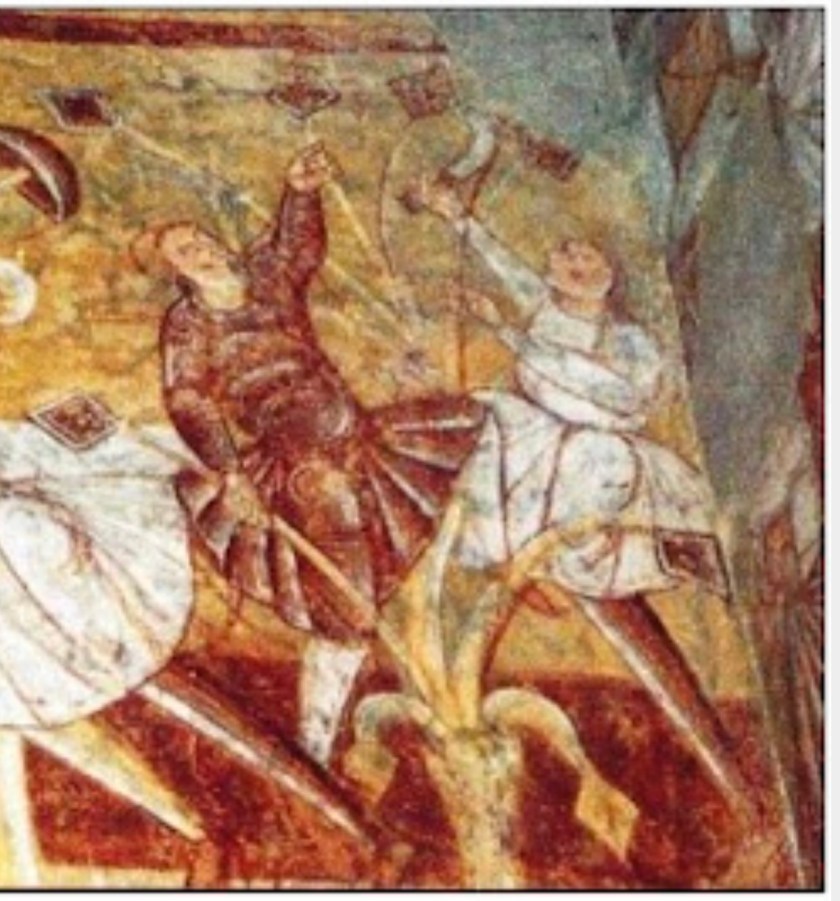

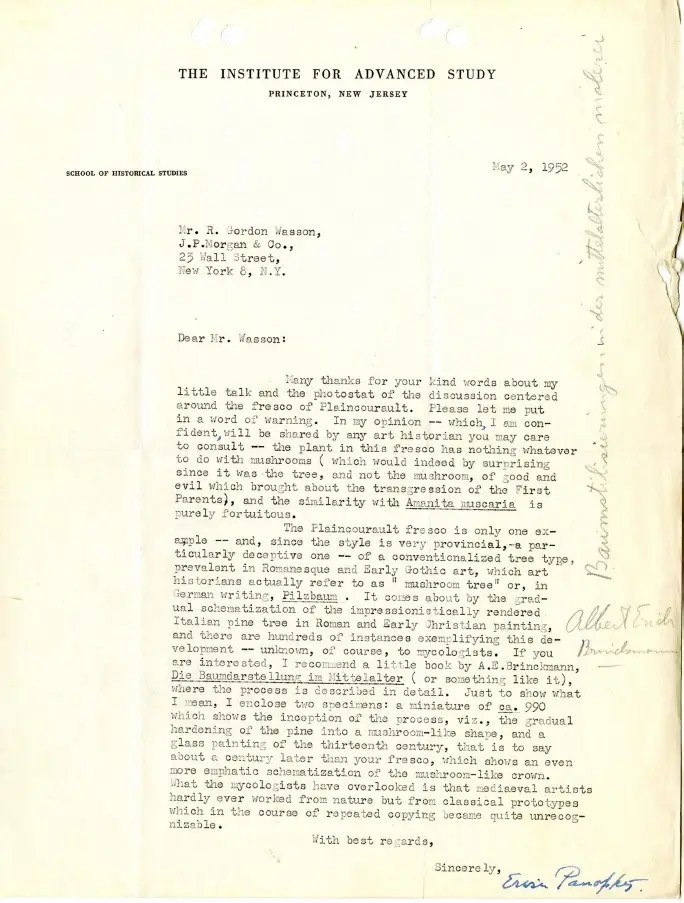
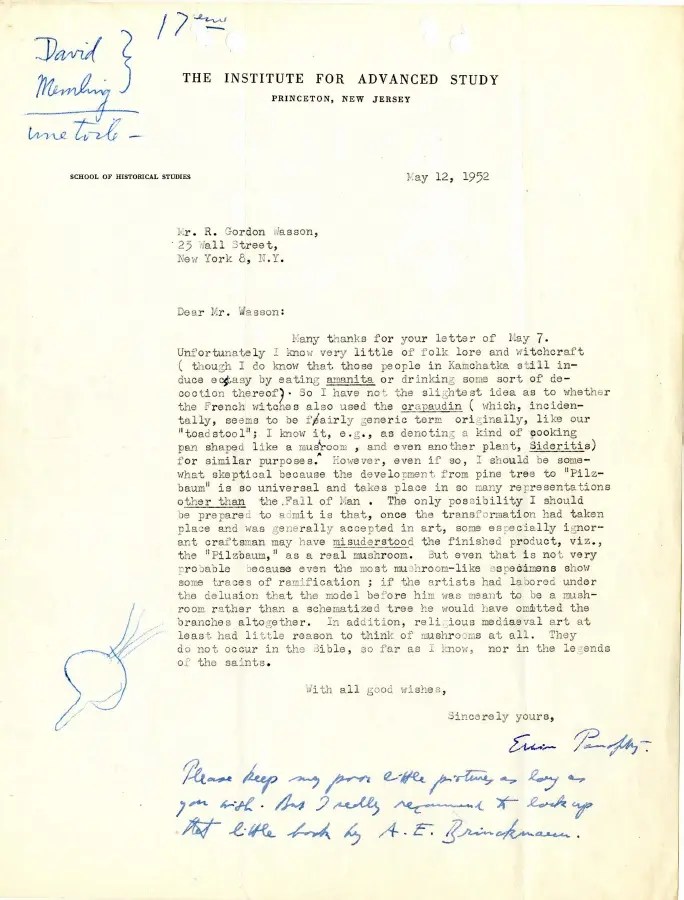

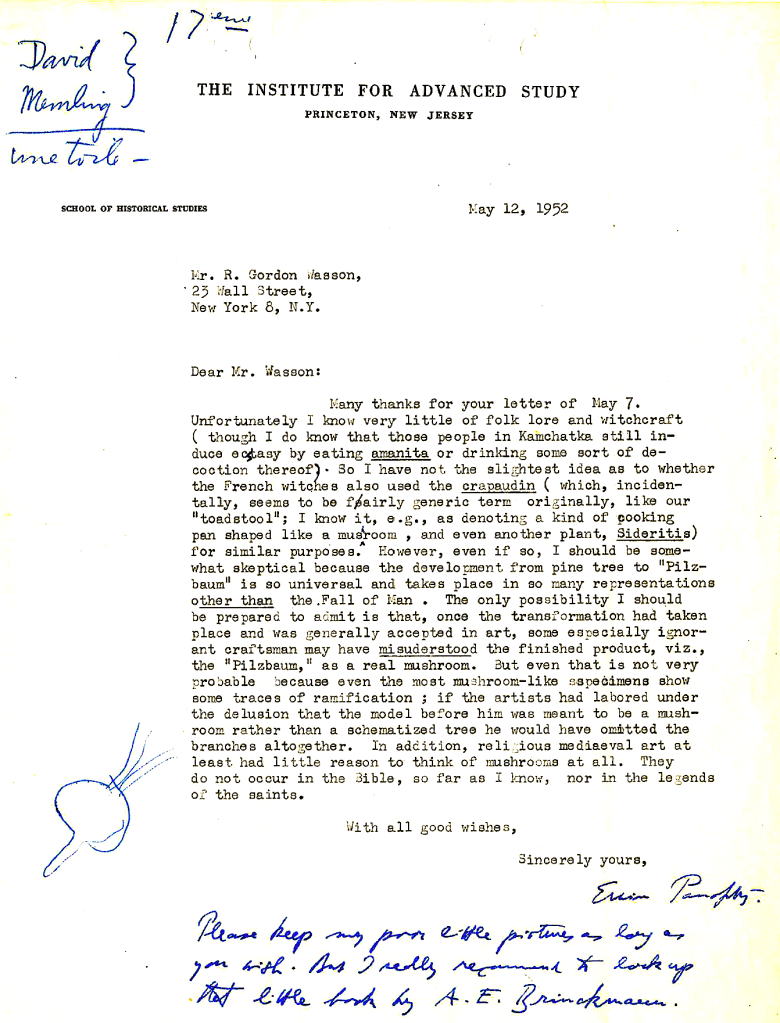



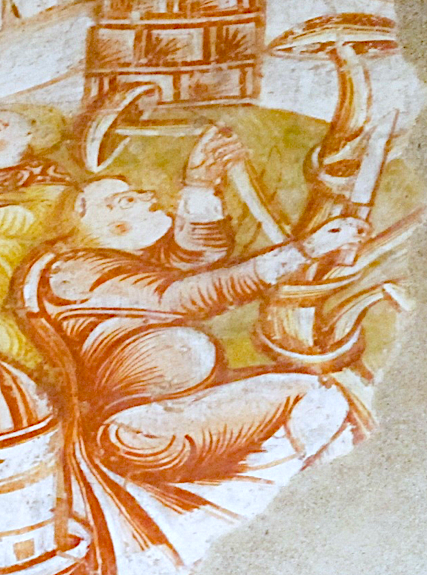
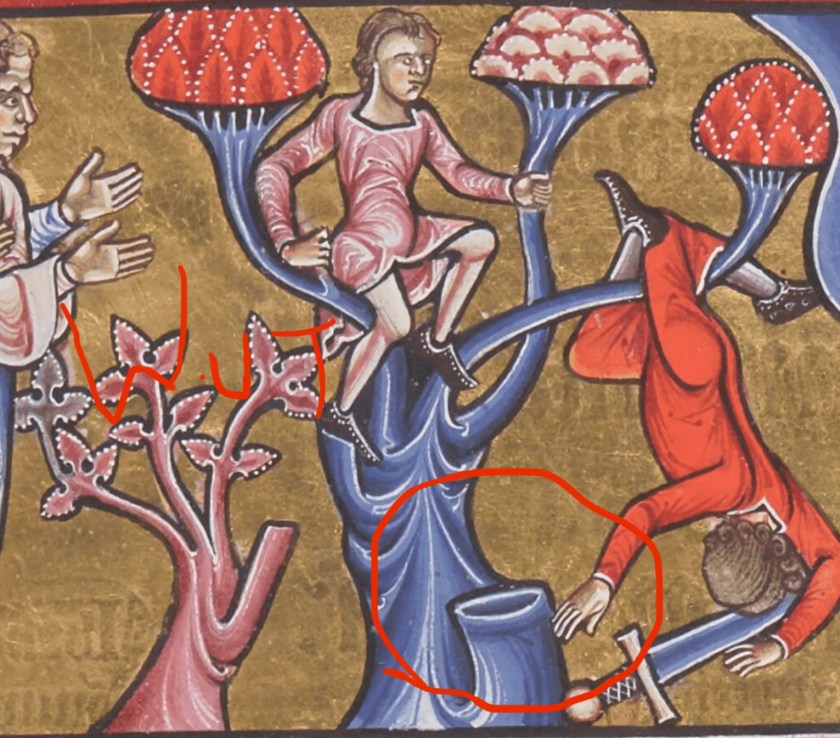

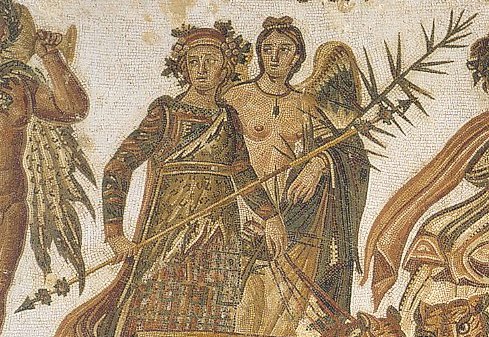


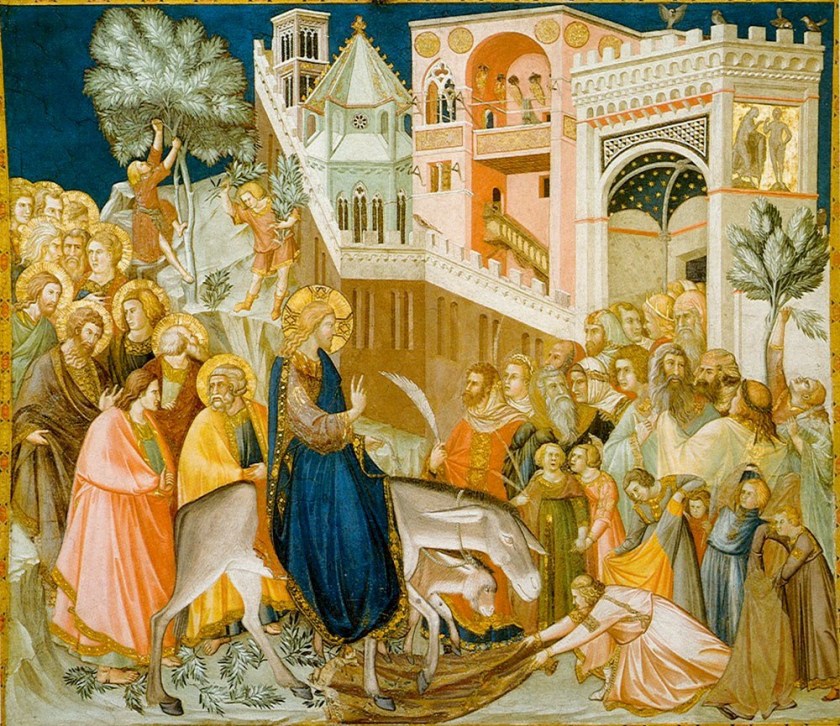
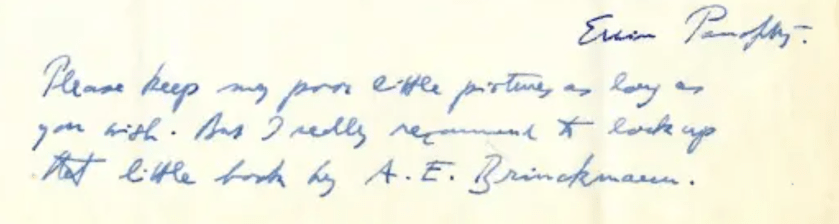
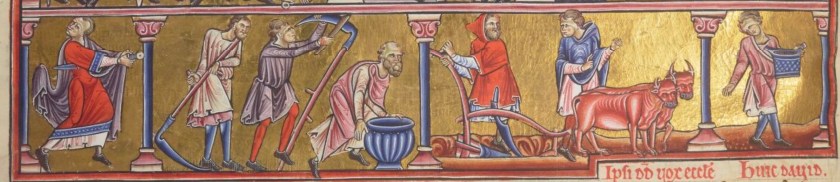




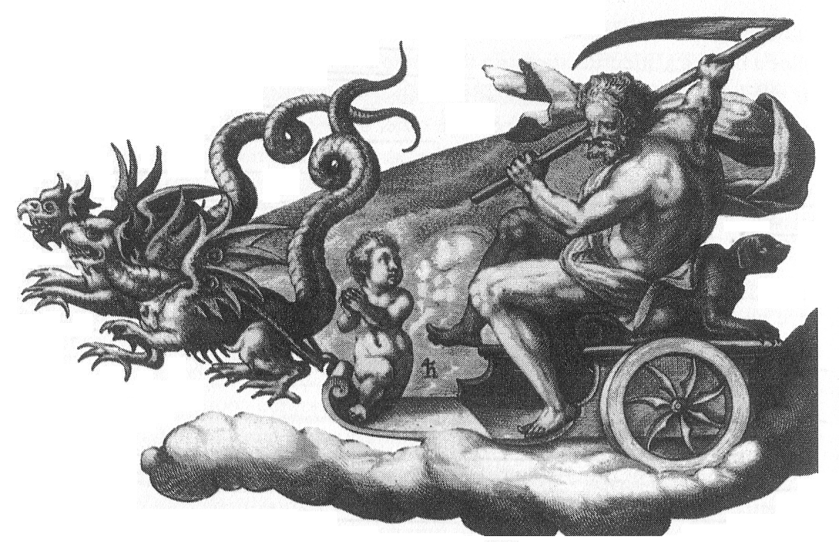
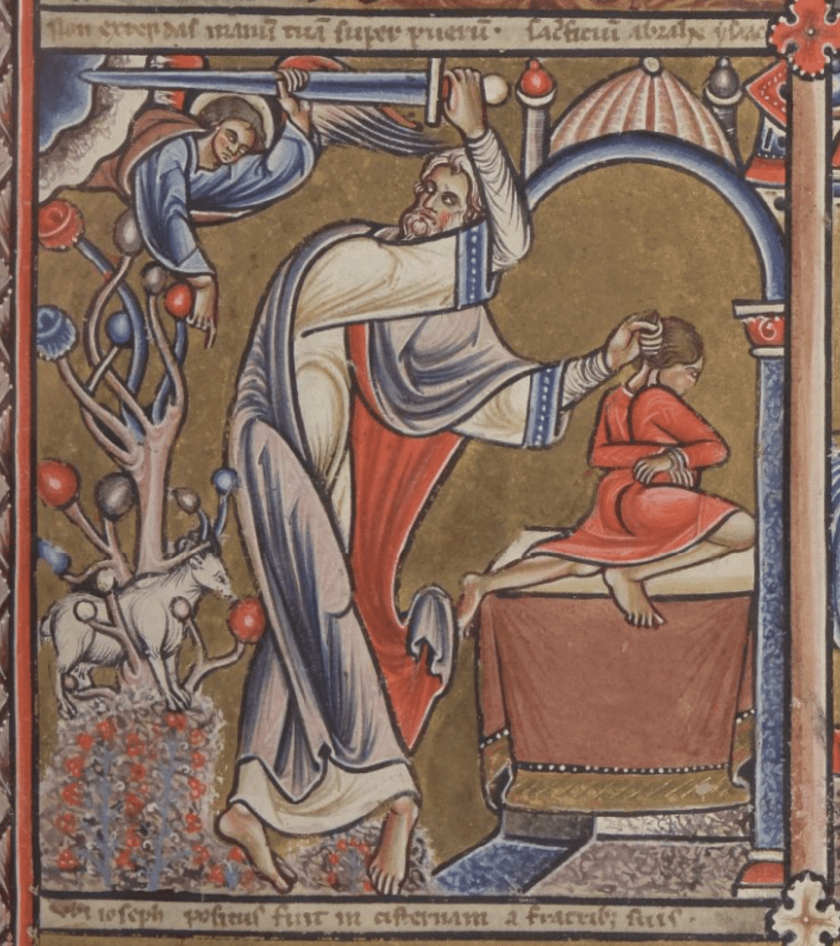
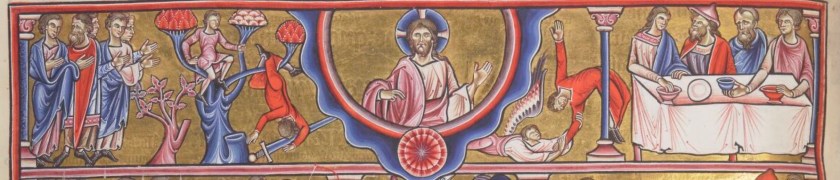
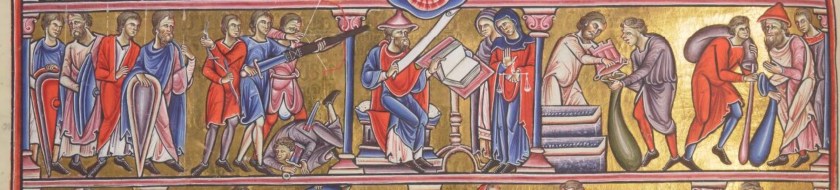
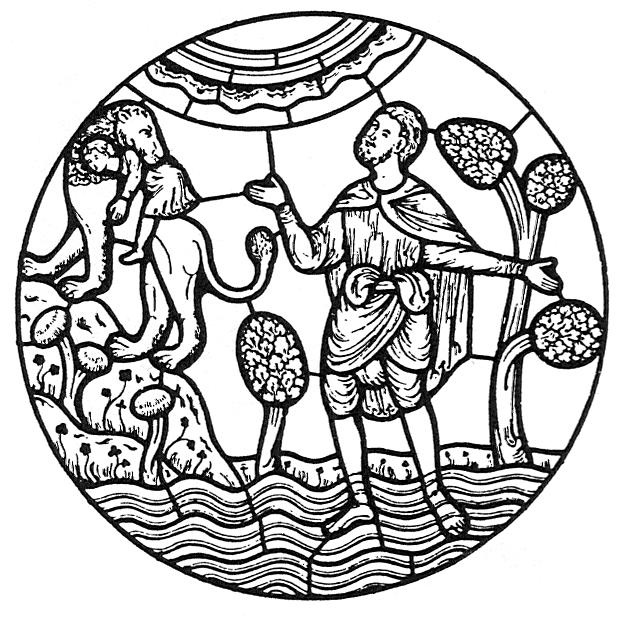

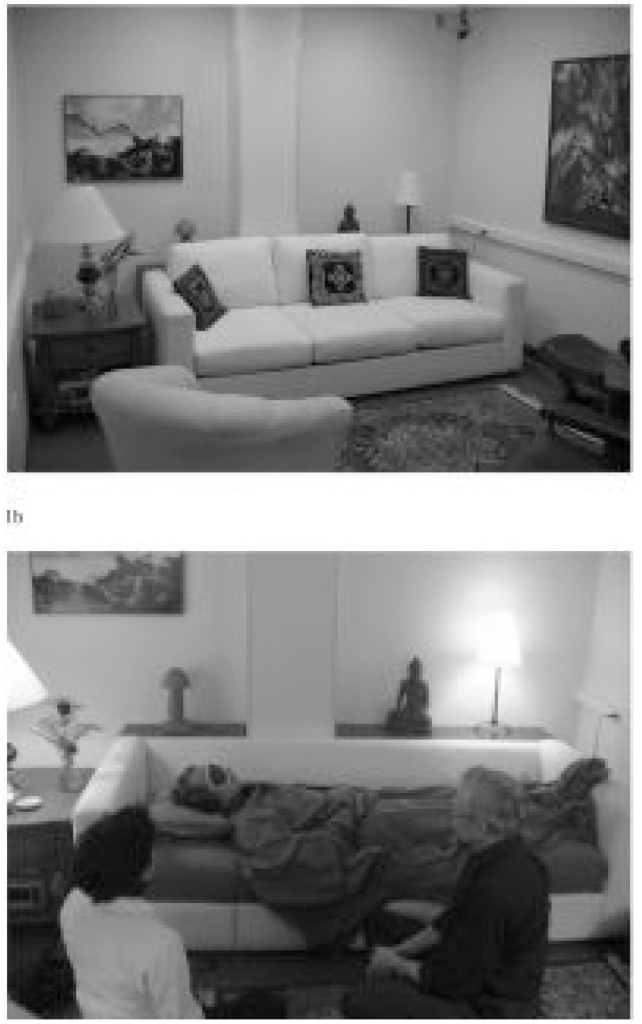
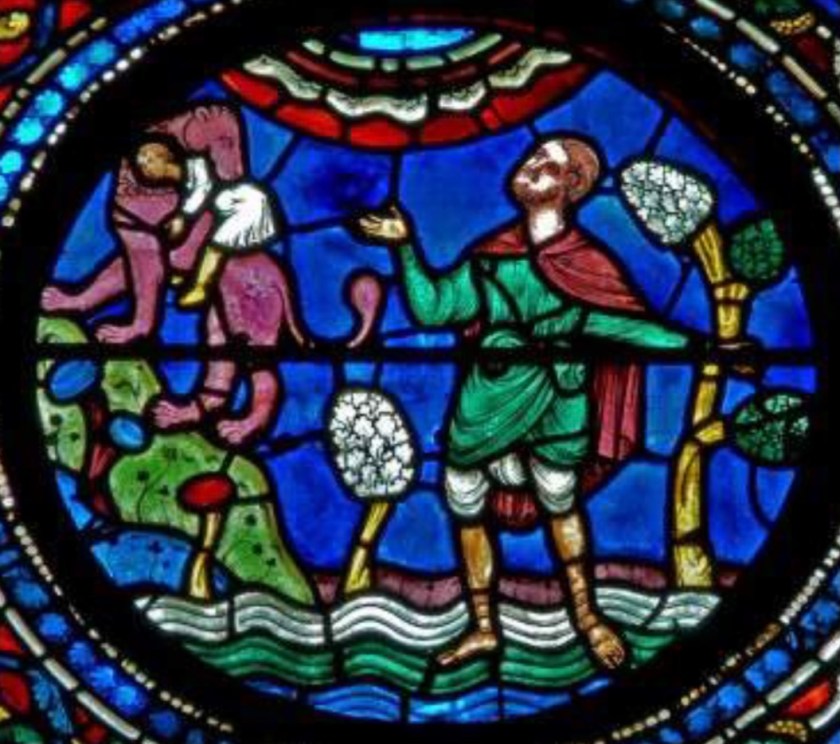

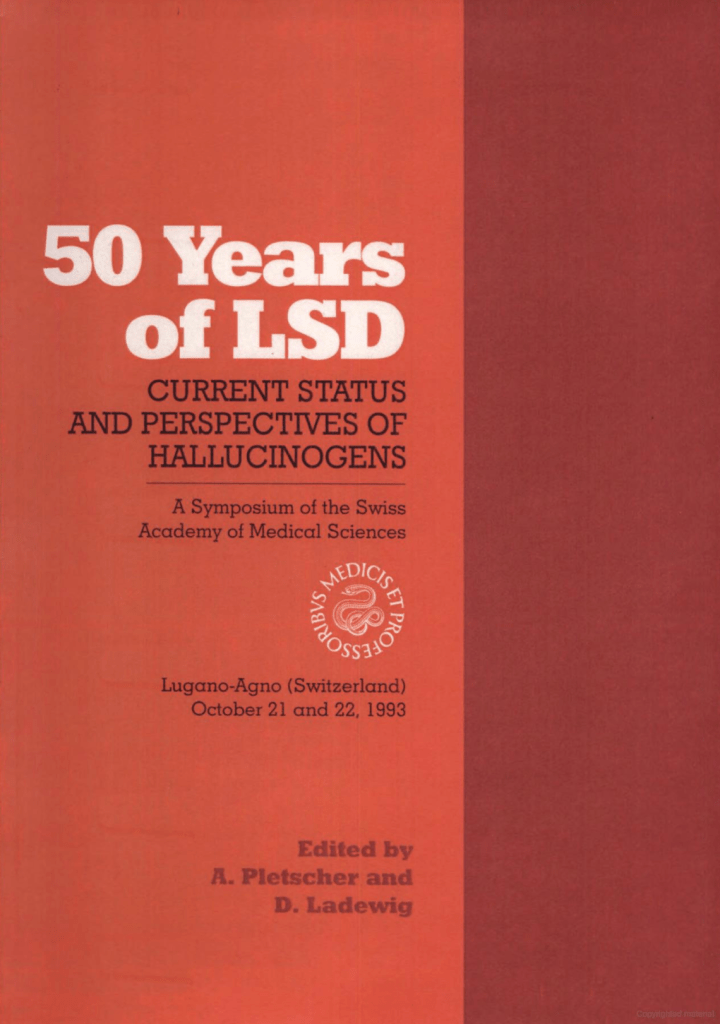
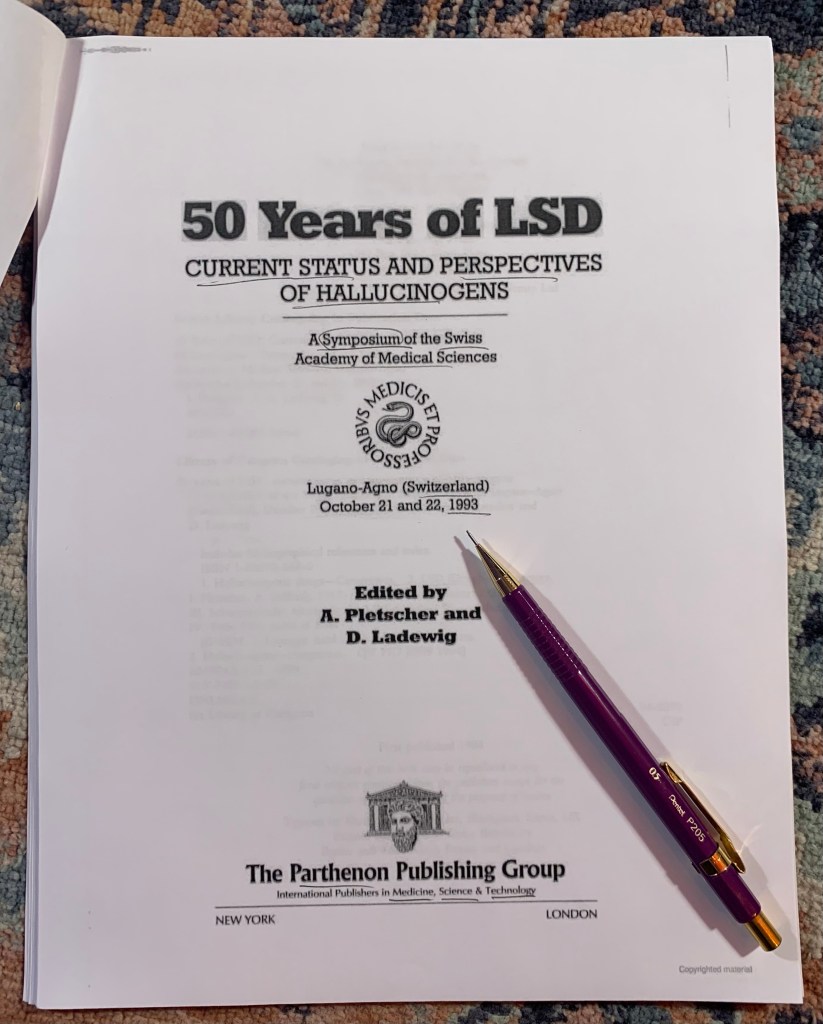
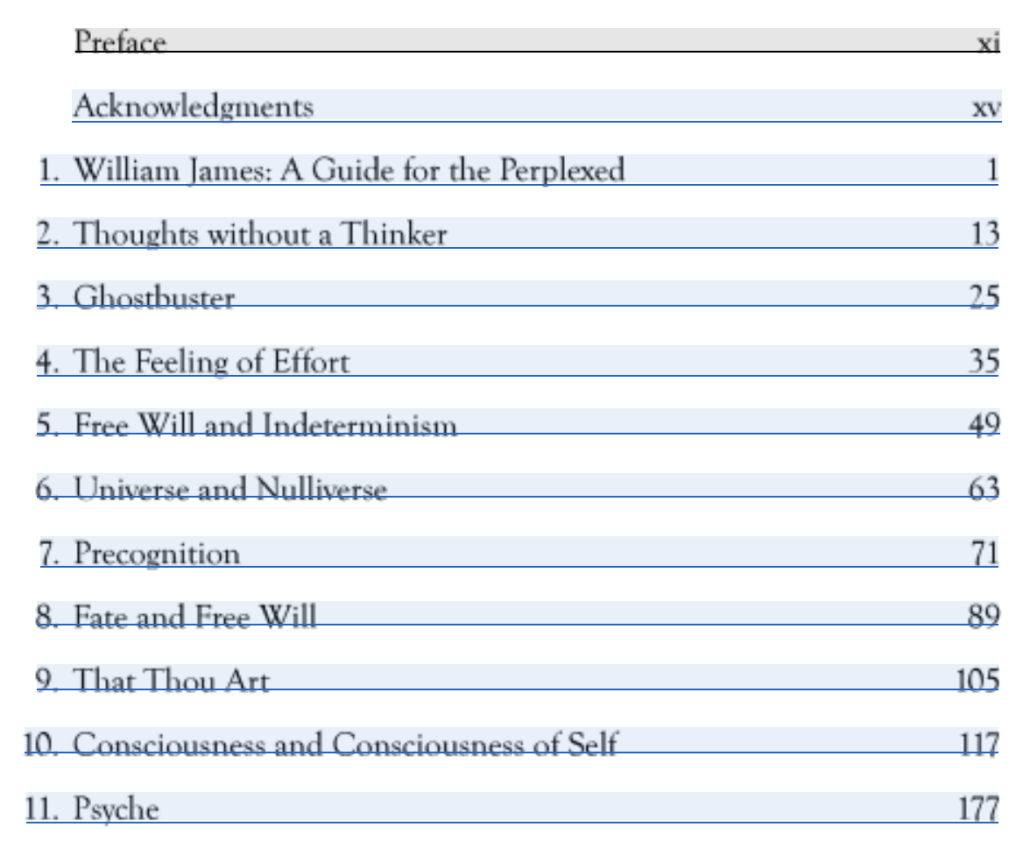
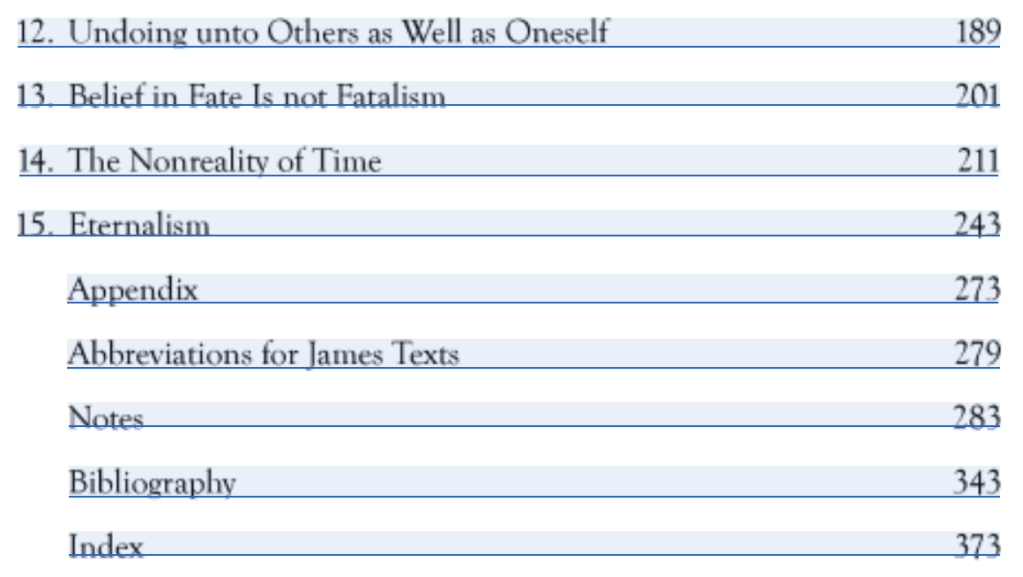
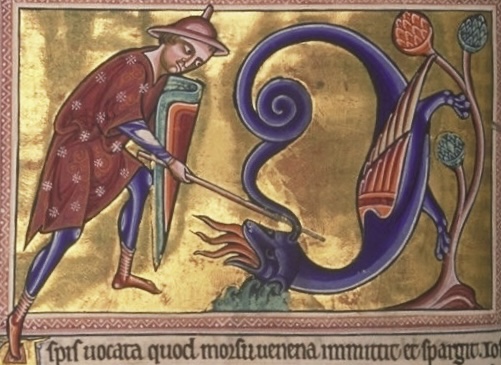

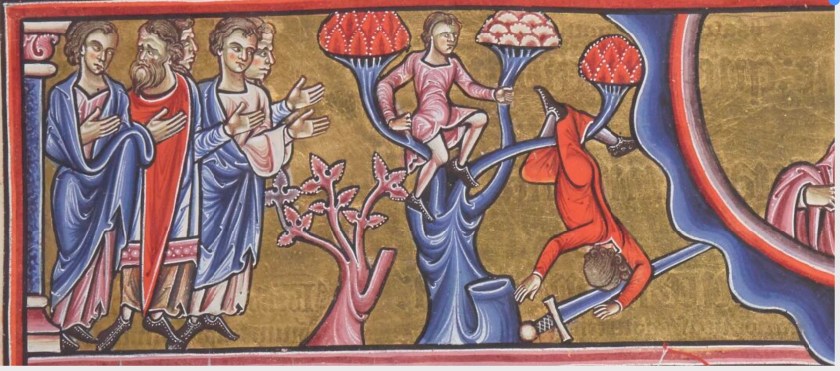
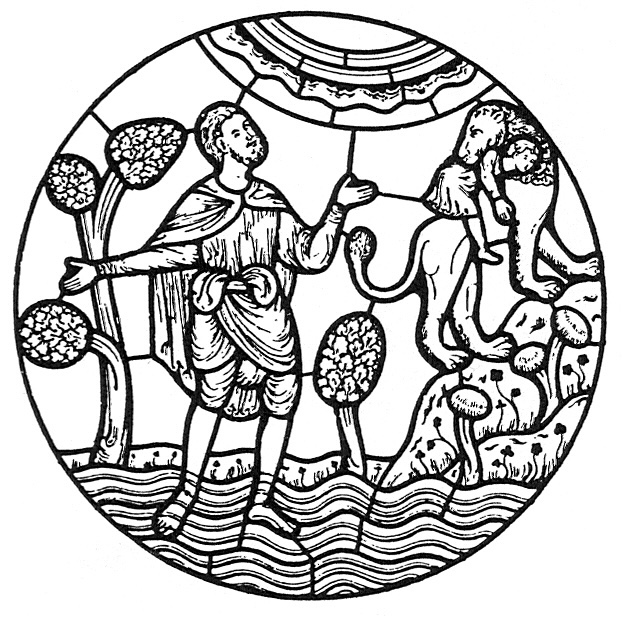

 The Egodeath theory