This questionnaire selects and groups the key phrases that describe experiencing eternalism and its control-transformation aspects that are reported by the 5D-ASC, SOCQ, HRS, & EDI (Ego Dissolution Inventory) psychedelic effects questionnaires.
Dimensions/ Scales/ Factors
Block-Universe Eternalism (Time) [12 items]
Experience of timelessness.
Feeling that you have been “outside of” history in a realm where time does not exist.
I experienced a touch of eternity.
I experienced past, present, and future as a oneness.
Feeling that you experienced eternity or infinity.
Loss of your usual sense of time.
Sense of being “outside of” time, beyond past and future.
My sense of time and space was altered as if I was dreaming.
Time passed slowly in a tormenting way.
Change in rate of time passing.
My thoughts and actions were slowed down.
The passing of time was altered.
Block-Universe Spatial Unity [17 items]
I felt that I was in a wonderful other world.
Everything seemed to unify into a oneness.
Feel of oneness with universe.
Experience of the insight that “all is One”.
I felt at one with the universe
Experience of oneness or unity with objects and/or persons perceived in your surroundings.
Loss of your usual sense of space.
Experience of oneness in relation to an “inner world” within.
I felt a sense of union with others
The boundaries between myself and my surroundings seemed to blur.
I felt one with my surroundings.
Freedom from the limitations of your personal self and feeling a unity or bond with what was felt to be greater than your personal self.
Experience of the fusion of your personal self into a larger whole.
Experience of unity with ultimate reality.
Experiences of intense pressures on various parts of your body.
I felt as if I no longer had a body.
It seemed to me as though I did not have a body anymore.
Non-Control, Egoic Agency Suspension [22 items]
It was difficult to control my thoughts.
Frustrating attempt to control the experience.
I had the feeling that I no longer had my own will.
I had the feeling that I no longer had a will of my own.
Feel presence of a numinous force, higher power, God.
I felt connected to a higher power.
I had the feeling of being connected to a superior power.
I felt incapable of making even the smallest decision.
I had difficulty making even the smallest decision.
In control. [scale]
Experience of confusion, disorientation and/or chaos.
I lost all sense of ego.
Change in strength of sense of self.
I experienced a dissolution of my “self” or ego.
I experienced a disintegration of my “self” or ego.
Sense of profound humility before the majesty of what was felt to be sacred or holy.
All notion of self and identity dissolved away.
Loss of your usual identity.
I felt extraordinary powers within myself.
Able to “let go”.
I heard complete sentences without knowing where they came from.
A voice commented on everything I thought although no one was there.
Threat of Loss of Control [20 items]
I had the feeling that something terrible was going to happen.
I had the feeling something horrible would happen.
I was afraid of losing control over myself.
I was afraid to lose my self-control.
Sense of being trapped and helpless.
I felt threatened.
I felt as if dark forces had overtaken me.
I felt like a puppet or marionette.
I felt like a marionette.
I felt as if I were paralyzed.
I felt surrendered to dark powers.
I was scared without knowing exactly why.
I was afraid without being able to say exactly why.
Feeling that people were plotting against you.
I had suspicious ideas or the belief that others were against me.
Experience of fear.
I felt tormented.
I felt anxious.
Frightened.
Visions of demons, devils or other wrathful deities.
Control Model Transformation [26 items]
I felt I was being transformed forever in a miraculous way.
I had very original thoughts.
Able to focus attention.
I felt very profound.
I had insights into connections that had previously puzzled me.
I gained clarity into connections that puzzled me before.
New thoughts or insights.
My imagination was extremely vivid.
Gain of insightful knowledge experienced at an intuitive level.
Some everyday things acquired special meaning.
Things in my environment had a new strange meaning.
Things around me had a new strange meaning for me.
Feel reborn.
Profound experience of your own death.
Feelings of grief.
Feeling of being rejected or unwanted.
Excited.
Difference in feeling of reality of experiences compared to everyday experience.
Feeling that the consciousness experienced during part of the session was more real than your normal awareness of everyday reality.
I had feelings of unreality.
I experienced my surroundings as strange and weird.
The world seemed to me beyond good and evil.
Change in sense of sanity.
Fear that you might lose your mind or go insane.
I was afraid that the state I was in would last forever.
My experience had religious aspects to it.
Objectives of the ECQ
The Eternalism and Control Questionnaire (ECQ) directly addresses the peak challenging experience for safety.
Research that’s informed by the ECQ will provide the greatest number of successful transformation experiences, while minimizing turmoil.
A major, distinctive reported challenging effect of psilocybin is the experience of eternalism and control-model transformation, as the Eternalism and Control Questionnaire demonstrates and highlights.
This questionnaire research enables people to freely use psilocybin while having viable stable control that is compatible with the psilocybin eternalism state of consciousness.
Key Phrases Describing Experiencing Eternalism and Its Control Transformation Aspects
The Eternalism and Control Questionnaire highlights phrases of the standard questionnaire items that describe the experience of eternalism and control transformation.
This questionnaire collects and groups key phrases that describe experiencing eternalism and its control-transformation aspects.
The shadow is usefully identified by the ECQ and the Egodeath theory as: the control-threat that’s posed by the experience of eternalism during mental model transformation in the loose cognitive association state from psilocybin.
The Egodeath theory is corroborated by its match with these eternalism and control effects that are reported by these questionnaire items.
{king steering in tree} {stand left leg} {see dragon snake monster} {guarded gate} {stand right leg} {snake frozen in rock} {treasure fruit immortality} {pass in and out} {prize}
Effects Categories Matched
The coverage provided by the ECQ and its categories of eternalism and control effects is approximately equivalent to these 5D-ASC categories:
Experience of unity
Spiritual experience
Anxiety
Impaired control and cognition
Insightfulness
The coverage provided by the ECQ includes selected items in all of the 5D-ASC top-level categories:
Oceanic boundlessness (OB, OBN)
Dread of ego dissolution (DED); anxious ego-dissolution (AED)
Visionary restructuralization (VR, VRS)
That’s an example of Domain Dynamics:
Visionary restructuralization is involved in control transformation.
Visionary restructuralization is mental model transformation in the loose cognitive state, and elevated awareness able to perceive cognition, which helps drive control-model transformation.
Visionary restructuralization is involved in the eternalism experiential state, driving control mental model transformation.
The three dimensions that are defined in the OAV inventory of psychedelic effects are oceanic boundlessness, dread of ego dissolution, & visionary restructuralization.
History of Dimensions: APZ, OAV, 5D-ASC, 11 Factors
APZ: 0 – 1975
OAV: 3 – 1994 (identified in 1985)
5D-ASC: 5 – 2006 – keeps the OAV 3, adds 2 supp’l unused dimensions.
11 Factors: 11 – 2010 – they replace & fit within the OAV 3 dimensions.
The main 3 of the 5 dimensions which are defined in Dittrich’s v2 of APZ, OAV (1994, identified in 1985): oceanic boundlessness, dread of ego dissolution, & visionary restructuralization.
The name “OAV” indicates that here is when Dittrich defined the main 3 dimensions (along with General): O, A, V = OB, AEA (DED), VR.
APZ (1975) used 0 categories.
OAV (1994) used 3 dimensions (identified in 1985): oceanic boundlessness, dread of ego dissolution, visionary restructuralization.
5D-ASC (2006) added two rarely used dimensions (auditory alterations, reduction of vigilance).
Studerus 2010 replaced the 3 main broad dimensions by more granular breakout of those 3 main dimensions to 11 more granular dimensions.
Oceanic boundlessness, dread of ego dissolution, & visionary restructuralization fit together and work all together to transform from naive possibilism-thinking to eternalism-thinking.
Egoic control agency is tested and experimented with by the God-mode mind, by combining oceanic boundlessness, dread of ego dissolution, and visionary restructuralization, working together toward the specific end, of transforming the mental model to be imperishable, no longer subject to that type of control-collapse.
Visionary restructuralization – control transformation mental model transferring control reliance onto a different foundation/ source.
Questionnaires Used
This questionnaire includes effects questions from these main psychedelics questionnaires:
Five-Dimensional Altered States of Consciousness (5D-ASC)
Hallucinogen Rating Scale (HRS)
States of Consciousness Questionnaire (SOCQ)
… Mystical Experiences Questionnaire (MEQ)
Ego Dissolution Inventory (EDI)
The ECQ questionnaire proves that the Egodeath theory (psychedelic eternalism) successfully explains the most important of the challenging effects – the shadow (dragon monster).
The ECQ questionnaire together with the Egodeath theory is essential for understanding the nature of the most interesting risk of psychedelics, the experience of threat of loss of control while transforming thinking.
Relation Between ECQ, the Main Psychedelic Questionnaires, and the Egodeath Theory
The ECQ bridges the standard psychedelic questionnaires with the Egodeath theory.
Designing the Eternalism and Control Questionnaire (ECQ)
The Egodeath theory here defines a new subset-based questionnaire comparable to the Challenging Experiences Questionnaire (CEQ), by selecting psychedelic effects questions from the main standard questionnaires: the Eternalism and Control Questionnaire (ECQ).
This ECQ questionnaire lists and groups the eternalism and control-transformation effects that are in the psychedelics effects questionnaires.
Strategy for further grouping into categories per the Egodeath theory – check the 1997 outline topic categories, and the topic categories in the Core Concepts page.
The ECQ is presently missing some questions from some of the main questionnaires, which are surprisingly hard to find.
See my per-questionnaire posts to identify the item numbers and name of which questionnaire each effect item is from.
The Inadequacy of the CEQ
The Challenging Experiences Questionnaire (CEQ) is inadequate and doesn’t deliver on its stated strategic coverage of all of the reported negative experiences.
When the Initial Pool of 64 questions was reduced to the final set of 26 questions, all of the control-loss related questions were removed, leaving the peak challenging experience without any coverage.
The CEQ doesn’t discuss the decision to remove the control-loss questions; this selection process is undocumented.
The main objective of the CEQ wasn’t met: to provide a superset of the scope of challenging effects that are covered by the main questionnaires.
The main questionnaires cover an important negative effect that the CEQ removes from their scope of coverage: control-loss problems.
The CEQ isn’t driven by a comprehension of eternalism including control challenges, but the Eternalism and Control Questionnaire is.
The ECQ covers control-loss effects as its focus together with experiencing eternalism – providing a better treatment of these effects than the SOCQ, HRS, and 5D-ASC.
The ECQ provides the safety coverage and framework of comprehension to effectively provide the coverage which CEQ Initial Pool had but the final CEQ lacks and declined to cover.
Charles Stang’s assertion stands, despite the CEQ. Roland Griffiths claims to match negative as well as positive mystic experiencing effects, but upon examination of the 26 final items vs. the 64 Initial Pool items, the CEQ delivers woefully inadequate coverage of major, common, quintessential psychedelic effects, of non-control challenges during transformation of control agency.
Researchers need to continue using DED (dread of ego dissolution), ICC (impaired control and cognition), and now this ECQ, because the CEQ has a fatal gap in coverage of negative effects, that the main instruments cover.
The CEQ claims to deliver a superset of the main instruments’ negative effects coverage, but it’s actually only a partial overlap.
The CEQ fails to provide the complete coverage that it claims, and so – by its own argument – it leaves risky challenges without coverage or acknowledgement, suppressing the shadow, failing to acknowledge the commonplace experience of the threat of catastrophic loss of control while transforming to the eternalism mental world model.
At the same time CEQ added Depression, claiming complete coverage, then they shrank to exclude all ICC control-related problems, so that the CEQ fails to do what it claims: provide full coverage of the negative, challenging effects that are actually reported by mystics and by the main questionnaires.
We cannot remove control-loss questions even if we add psychotherapy-conformant depression questions to the previous questionnaires.
Why is CEQ removing coverage of control-loss questions, instead of providing the superset of coverage that they claimed motivated the creation of the CEQ?
Control-loss effects need to be recognized and understood, as they are by the ECQ.
Mental World Model Transformation and Control Transformation
The guarded gate is between Saturn and the sphere of the fixed stars, represented by the zodiac.morphology match identified by Cybermonk Dec. 24 2022, a.m. 🍄🎄Photo: Cybermonk
Keywords for the Egodeath theory highlighted by Cybermonk – key words about experiencing eternalism and its control aspects.
News flash update: Jan 13, 2023:
Griffiths didn’t pick item “It was difficult to control my thoughts.” !!
HOW COULD YOU RECKON THAT THE EFFECT “It was difficult to control my thoughts” IS NOT CHALLENGING — even though it says “IT WAS DIFFICULT“?
So I am now adding notes from CEQ article’s HRS section of “Initial Item Pool” (Apx 2) to here: item numbers and WHICH QUESTIONS GRIFFITHS OMITTED AS “NOT POTENTIALLY CHALLENGING”.
Bizarre Omissions from CEQ Initial Item Pool
It was difficult to control my thoughts. CEQ: “not challenging” (!!) really?
I had suspicious ideas or the belief that others were against me. CEQ: “not challenging” (!) really?
Given that Griffiths struggled mightily with their flawed and broken category “Paranoia” that they warn people not to use, why didn’t they pad out their broken Paranoia CEQ factor (category) by adding this HRS question?
Griffiths demonstrates great enthusiasm for padding out their other fabricated pseudo-“categories” by 3 dups of the identical same single effect, “felt isolated” AND “feel isolated” AND “feeling of isolation” –> yay, its a 3-item category! 🤗
Answer/hypothesis: b/c they didn’t add their 7th, Paranoia factor until the last minute, seat of the pants method, out-of-band; see that Paranoia Bunk Factor paragraph in CEQ article Griffiths 2016, p. 13:
“An accepted clinical definition of “paranoia” is “unfounded fears that others intend harm to the individual” (Freeman et al., 2015).
“While one item of the paranoia scale of the CEQ is consistent with this definition (“feeling that people were plotting against you”), the other (“experience of antagonism toward people around you”), while likely related, is not closely consistent with this definition.
“Thus, the CEQ paranoia scale may be viewed as a crude measure of the clinical construct of “paranoia”, and the external validity of the paranoia scale may be somewhat restricted by this limitation.”
Change in strength of sense of self. CEQ: “not challenging” – really?
Feel presence of a numinous force, higher power, God. CEQ: “not challenging” – really? subjection to higher power isn’t challenging?
I had feelings of unreality. CEQ: “not challenging” – really?
Change in rate of thinking. CEQ: “not challenging” – really?
I heard voices or sounds that were not real. CEQ: “not challenging” really?
Change in effort of breathing CEQ: “not challenging” – really? having to effortfully breathe isn’t challenging?
The 99 Effects Questions
find “really?” below:
My body or body parts seemed to change their shape or position. CEQ: “not challenging”
My surroundings seemed to change in size, depth, or shape. CEQ: “not challenging”
The passing of time was altered. CEQ: “not challenging”
I had feelings of unreality. CEQ: “not challenging” – really?
It was difficult to control my thoughts. CEQ: “not challenging” (!!) really?
The intensity of colors changed. CEQ: “not challenging”
The intensity of sound changed. CEQ: “not challenging”
I heard voices or sounds that were not real. CEQ: “not challenging” really?
I had the idea that events, objects, or other people had particular meaning that was specific for me. CEQ: “not challenging”
I had suspicious ideas or the belief that others were against me. CEQ: “not challenging” (!) really?
I felt high. CEQ: “not challenging”
I felt drowsy. CEQ: “not challenging”
25. I felt anxious. CEQ Initial Item Pool
A rush CEQ: “not challenging”
Change in salivation CEQ: “not challenging”
Body feels different CEQ: “not challenging”
Change in sense of body weight CEQ: “not challenging”
Feel as if moving falling flying through space CEQ: “not challenging”
Change in body temperature CEQ: “not challenging”
Electric /tingling feeling CEQ: “not challenging”
9. Pressure or weight in chest or abdomen CEQ Initial Item Pool
10. Shaky feelings inside CEQ Initial Item Pool
11. Feel body shake or tremble CEQ Initial Item Pool
16. Physically restless CEQ Initial Item Pool
Sexual feelings CEQ: “not challenging”
21. Feel removed, detached, separated from body CEQ Initial Item Pool
25. Anxious again: CEQ Initial Item Pool
26. Frightened CEQ Initial Item Pool
Feel like laughing CEQ: “not challenging”
Excited CEQ: “not challenging”
Awe, Amazement CEQ: “not challenging”
Safe CEQ: “not challenging”
Feel presence of a numinous force, higher power, God. CEQ: “not challenging” – really? subjection to higher power isn’t challenging?
Euphoria CEQ: “not challenging”
Change in feelings of closeness to people in room. CEQ: “not challenging”
Change in “amount” of emotions. CEQ: “not challenging”
Emotions seem different than usual CEQ: “not challenging”
Feel of oneness with universe CEQ: “not challenging”
44. Feel isolated from people and things CEQ Initial Item Pool
Feel reborn CEQ: “not challenging”
Like the experience CEQ: “not challenging”
48. How soon would you like to repeat the experience CEQ Initial Item Pool
Desire for the experience regularly CEQ: “not challenging”
Flushed CEQ: “not challenging”
Change in skin sensitivity CEQ: “not challenging”
A sound or sounds accompanying the experience CEQ: “not challenging”
Sounds in room sound different CEQ: “not challenging”
Change in distinctiveness of sounds CEQ: “not challenging”
Visual effects CEQ: “not challenging”
Room looks different CEQ: “not challenging”
Change in brightness of objects in room. CEQ: “not challenging”
Change in visual distinctiveness of objects in room CEQ: “not challenging”
Room overlaid with visual patterns CEQ: “not challenging”
Eyes open visual field vibrating or jiggling. CEQ: “not challenging”
Visual images. CEQ: “not challenging”
Kaleidoscopic nature of visual images. CEQ: “not challenging”
Difference in brightness of visions compared to usual daylight vision. CEQ: “not challenging”
Dimensionality of images. CEQ: “not challenging”
Movement within images. CEQ: “not challenging”
White light CEQ: “not challenging”
Sense of speed CEQ: “not challenging”
74. Contradictory feelings at the same time CEQ Initial Item Pool
75. Sense of chaos CEQ Initial Item Pool
Change in strength of sense of self. CEQ: “not challenging” – really?
New thoughts or insights CEQ: “not challenging”
Change in rate of thinking. CEQ: “not challenging” – really?
Change in quality of thinking CEQ: “not challenging”
Difference in feeling of reality of experiences compared to everyday experience. CEQ: “not challenging”
Dreamlike nature of the experiences. CEQ: “not challenging”
Insights into personal or occupational concerns. CEQ: “not challenging”
Change in rate of time passing. CEQ: “not challenging”
88. Change in sense of sanity. CEQ Initial Item Pool
89. Urge to close eyes CEQ Initial Item Pool – why?
Change in effort of breathing CEQ: “not challenging” – really? having to effortfully breathe isn’t challenging?
Able to follow the sequence of events CEQ: “not challenging”
Able to “let go” CEQ: “not challenging”
Able to focus attention CEQ: “not challenging”
94. In control CEQ Initial Item Pool
Able to move around if asked to CEQ: “not challenging”
96. Able to remind yourself of being in a clinical room, being administered a drug, the temporary nature of the experience. CEQ Initial Item Pool
Amount of time between when the drug was administered and feeling an effect. (Put time)
Waxing and waning of the experience. CEQ: “not challenging”
“Originally developed to quantify acute effects of synthetic dimethyltryptamine (DMT), the Hallucinogen Rating Scale has become a frequently used instrument in the assessment of hallucinogen induced ASCs.
“Characteristic effects of hallucinogenic substances are covered by a collection of 100 items conceptually distinct in six distinct dimensions:”
Somaesthesia
“Interoceptive, visceral, and cutaneous/tactile effects
The faculty of being sensitive to stimuli originated inside the body (e.g. Urge to urinate; Urge to move bowels; Sexual feelings) “18. Urge to urinate” is in CEQ Initial Item Pool, “19. … bowels” is in CEQ Initial Item Pool
Affect
“Emotional as well as affective responses (e.g.
Feel like laughing;
Feel presence of numinous force, higher power, God;
Awe, amazement).
Perception
“Changes in the process of perceiving.
Alterations in the ordinary visual, auditory, gustatory, and olfactory experiences (e.g. Change in visual distinctness of objects in room;
Visual synesthesia (“seeing” sound or other non-visual perception);
Kaleidoscopic nature of images/ visions/ hallucinations).
Cognition
“Alterations in thought processes or content (e.g.
Sense of chaos;
Memories of childhood;
Change in rate of thinking).
Volition
“Changes in the interactive capacity such as
the faculty of making deliberate choices or decisions.
Alterations in the ability to willfully interact can be addressed to themselves, the environment, or certain aspects of the experience (e.g.
Able to focus attention;
Able to remind yourself of being in a research room, being administered a drug,
the temporary nature of the experience;
Able to follow the sequence of effects).
Intensity
The overall strength and the course of the experience (e.g. Waxing and waning of the experience; Intensity; High).
List of Categories
The HRS has these subscales:
intensity
somaesthesia
affect
perception
cognition
volition
Defines 11 subscales instead of the 3 OAV or 5 5D categories:
There are only 83 items from the spreadsheet I found, where are the others to make 99 total? 16 are missing. These questions are sure unclear and choppy.
Really strange choppy wording of some items. Poorly written, inarticulate.
A non-numbered list, try find better format: (CEQ article gives numbers for the Initial Pool’s HRS q’s)
SOCQ includes Walter Pahnke’s Good Friday Experiment’s Mystical Experiences Questionnaire (MEQ).
References
Pahnke, W. N. Drugs and Mysticism. International Journal of Parapsychology8, 295–314 (1966).
Pahnke, W. N. Drugs and mysticism: An analysis of the relationship between psychedelic drugs and the mystical consciousness. Harvard University Press, 1963
Sorted by number is available in “Supplement4_PES_English-and-German.docx”.
Complete, from Stocker “Supplement3_PES_Factors_Themes.xls“:
THE PSYCHEDELIC EXPERIENCE SCALE (PES100): OVERVIEW FACTORS AND THEMES
MYSTICAL — INTERNAL UNITY
12. Feeling that you experienced eternity or infinity.
35. Freedom from the limitations of your personal self and feeling a unity or bond with what was felt to be greater than your personal self.
41. Experience of pure being and pure awareness (beyond the world of sense impressions).
54. Experience of oneness in relation to an “inner world” within.
77. Experience of the fusion of your personal self into a larger whole.
83. Experience of unity with ultimate reality.
MYSTICAL — EXTERNAL UNITY
14. Experience of oneness or unity with objects and/or persons perceived in your surroundings.
47. Experience of the insight that “all is One”.
74. Awareness of the life or living presence in all things.
MYSTICAL — NOETIC QUALITY
9. Gain of insightful knowledge experienced at an intuitive level.
22. Certainty of encounter with ultimate reality (in the sense of being able to “know” and “see” what is really real) at some time during your experience.
69. You are convinced now, as you look back on your experience, that in it you encountered ultimate reality (i.e., that you “knew” and “saw” what was really real).
MYSTICAL — SACREDNESS
36. Sense of being at a spiritual height.
55. Sense of reverence.
73. Feeling that you experienced something profoundly sacred and holy.
POSITIVE MOOD
5. Experience of amazement.
18. Feelings of tenderness and gentleness.
30. Feelings of peace and tranquility.
43. Experience of ecstasy.
80. Sense of awe or awesomeness.
87. Feelings of joy.
TRANSCENDENCE OF TIME AND SPACE
2. Loss of your usual sense of time.
15. Loss of your usual sense of space.
29. Loss of usual awareness of where you were.
34. Sense of being “outside of” time, beyond past and future.
48. Being in a realm with no space boundaries.
65. Experience of timelessness.
INEFFABILITY
6. Sense that the experience cannot be described adequately in words.
23. Feeling that you could not do justice to your experience by describing it in words.
86. Feeling that it would be difficult to communicate your own experience to others who have not had similar experiences.
PARADOXICALITY
19. Experience of a paradoxical awareness that two apparently opposite principles or situations are both true.
26. Loss of your usual identity.
42. Feeling that you were “outside of” history in a realm where time does not exist.
51. Loss of feelings of difference between yourself and objects or persons in your surroundings.
59. Sense that in order to describe parts of your experience you would have to use statements that appear to be illogical, involving contradictions and paradoxes.
CONNECTEDNESS
58. Increase in the beauty and significance of music. [Connected to beauty]
60. Feelings of universal or infinite love. [Connected to spiritual principle]
62. Intuitive insight into the inner nature of objects and/or persons in your surroundings. [Connected to others and/or the world]
95. Experience of increased awareness of beauty. [Connected to beauty]
99. Increased awareness of the importance of interpersonal relationships. [Connected to others]
VISUAL EXPERIENCE
1. Visions of abstract geometric patterns of colored lines.
17. Visions of art objects (e.g. mosaics, statues, jewelry, buildings) that reflect expert craftsmanship.
38. With open eyes, seeing objects around you turn into great works of art.
DISTRESSING EXPERIENCE
13. Emotional and/or physical suffering.
16. Feelings of despair.
28. Sense of being trapped and helpless.
45. Experience of isolation and loneliness.
52. Experience of fear.
Personal/Transpersonal Transition
70. Profound experience of your own death.
84. Feeling of disintegration, falling apart.
85. Fear that you might lose your mind or go insane.
Personal/Transpersonal Post-Transition
25. Experience of radiant, golden light.
67. Visions of brilliant white light.
100. Feeling of being reborn.
MORE MYSTICAL EXPERIENCE: Nonordinary Consciousness More Real Than Ordinary Consciousness
3. Feeling that the consciousness experienced during part of the session was more real than your normal awareness of everyday reality.
MORE MYSTICAL EXPERIENCE: Humility
8. Sense of the limitations and smallness of your everyday personality in contrast to the Infinite.
31. Sense of profound humility before the majesty of what was felt to be sacred or holy.
MORE MYSTICAL EXPERIENCE: Dynamically Unfolding Extrovertive Mystical Experience
27. With eyes open, seeing something in your surroundings more and more intensely and then feeling as though you and it become one.
MORE VISUAL EXPERIENCE (at times possibly also only “sensed” rather than actually “seen”):
MORE VISUAL EXPERIENCE: Out-of-Body/Detached-Perspective-Point Experience
53. Sense of being outside your body.
68. Experience of exploring organs, tissues or cells of your own body.
MORE VISUAL EXPERIENCE: Archetypes/Entities
37. Visions of demons, devils or other wrathful deities.
49. Visions of angels, cherubim or seraphim.
56. Visions of blissful or compassionate deities.
71. Visions of beautiful jewels and precious stones.
82. Visions of events in the life of Christ (e.g. birth, crucifixion, resurrection, etc.).
96. Vision of a religious Personage (e.g. Moses, Christ, Buddha, etc.).
97. Visions of landscapes (e.g. oceans, mountains, deserts, etc.).
MORE VISUAL EXPERIENCE: Age Regression
20. Sense of decreasing in body size to infancy or early childhood.
33. Convincing feeling that you relived experiences that you had as an infant during your biological birth.
92. Reliving of sensations and feelings associated with past surgery, illness or accidents
98. Reliving of situations and events from your childhood.
MORE VISUAL EXPERIENCE: Travel or Contact With the Past
7. Sense of passing through stages in evolution.
75. Convincing feeling of contact with people who have died.
81. Convincing experiences of life in civilizations that existed in another time and/or place (e.g. Ancient Egypt or Rome, Renaissance France, Colonial America, etc.).
90. Convincing feelings of reliving part of another life prior to your birth (a previous incarnation).
MORE VISUAL EXPERIENCE: Transformation Into An Animal
94. Sense of becoming a specific animal and feeling like that animal.”
MORE VISUAL EXPERIENCE: Sexual Organs
11. Visions of sexual organs (genitals, breasts).
MORE VISUAL EXPERIENCE: Extrasensory Perception
46. Convincing feeling that you obtained information about people or events in an extrasensory manner (telepathy, clairvoyance, precognition, etc.).
MORE VISUAL EXPERIENCE: Repulsive Material
39. Experience of repulsive biological material (urine, feces, pus, dead flesh, etc).
MORE DISTRESSING EXPERIENCE: Confrontation with Emotions
4. Feelings of anger or aggression.
57. Feeling of being rejected or unwanted.
88. Feelings of guilt.
91. Feelings of grief.”
MORE DISTRESSING EXPERIENCE: Paranoia
40. Feeling that people were plotting against you.
72. Experience of antagonism toward your guide or assistant guide.
MORE DISTRESSING EXPERIENCE: Separated From The World
76. Sense of being separated from the normal world, as though you were enclosed in a silent glass chamber with thick walls.
MORE DISTRESSING EXPERIENCE: Meaninglessness/Absurdity of Life
61. Experience of meaninglessness and absurdity of life.
MORE DISTRESSING EXPERIENCE: Physical distress
89. Experiences of intense pressures on various parts of your body.
TRIPARTITE MIND (COGNITION/AFFECT/CONATION) MISCELLANEOUS EXPERIENCE:
TRIPARTITE MIND: Cognition: Cognitive excellence
32. Feeling that you could think with an unusually high degree of sharpness and clarity.
79. Feeling of being extremely sensitive to fine nuances of meaning between different words.
TRIPARTITE MIND: Cognition: Rapid Thought
44. Thoughts and ideas flashing by very rapidly.
TRIPARTITE MIND: Cognition: Delusion of Grandeur
24. Feelings of being more important than other people and having a very important task to accomplish.
TRIPARTITE MIND: Cognition: Impaired Cognition
21. Experience of confusion, disorientation and/or chaos.
TRIPARTITE MIND: Affect: Exaltation
50. Feelings of exaltation.
TRIPARTITE MIND: Affect: Closeness With Guide
63. Feeling of emotional closeness with your guide or assistant guide.
TRIPARTITE MIND: Affect: Return Reluctance
64. Feeling of reluctance to return to normal consciousness.
TRIPARTITE MIND: Affect: Sexual Excitement [could be nonordinary, more “”‘spiritual’ rather than ‘erotic’ in nature”” (Pahnke & Richards, 1966, p. 180)]
78. Experience of sexual excitement.
TRIPARTITE MIND: Affect: Overflowing Energy
10. Experience of overflowing energy.
TRIPARTITE MIND: Conation: Impaired Volition
66. Frustrating attempt to control the experience.
The 100 SOCQ Questions about Psychedelic Effects [incomplete]
Keywords for the Egodeath theory highlighted by Cybermonk – key words about experiencing eternalism and its control aspects.
2. Loss of your usual sense of time.
3. Feeling that the consciousness experienced during part of the session was more real than your normal awareness of everyday reality.
4. Feelings of anger or aggression.
5. Experience of amazement.
6. Sense that the experience cannot be described adequately in words.
8. Sense of the limitations and smallness of your everyday personality in contrast to the Infinite.
9. Gain of insightful knowledge experienced at an intuitive level.
10. Experience of overflowing energy.
12. Feeling that you experienced eternity or infinity.
13. Emotional and/or physical suffering.
14. Experience of oneness or unity with objects and/or persons perceived in your surroundings.
15. Loss of your usual sense of space.
16. Feelings of despair.
18. Feelings of tenderness and gentleness.
19. Experience of a paradoxical awareness that two apparently opposite principles or situations are both true.
21. Experience of confusion, disorientation and/or chaos.
22. Certainty of encounter with ultimate reality (in the sense of being able to “know” and “see” what is really real ) at some time during your session.
23. Feeling that you could not do justice to your experience by describing it in words.
26. Loss of your usual identity.
27. With eyes open, seeing something in your surroundings more and more intensely and then feeling as though you and it become one.
28. Sense of being trapped and helpless.
29. Loss of usual awareness of where you were.
30. Feelings of peace and tranquility.
31. Sense of profound humility before the majesty of what was felt to be sacred or holy.
34. Sense of being “outside of” time, beyond past and future.
35. Freedom from the limitations of your personal self and feeling a unity or bond with what was felt to be greater than your personal self.
36. Sense of being at a spiritual height.
37. Visions of demons, devils or other wrathful deities.
39. Experience of repulsive biological material (urine, feces, pus, dead flesh, etc.)
40. Feeling that people were plotting against you.
41. Experience of pure Being and pure awareness (beyond the world of sense impressions).
42. Feeling that you have been “outside of” history in a realm where time does not exist.
43. Experience of ecstasy.
44. Thoughts and ideas flashing by very rapidly.
45. Experience of isolation and loneliness.
47. Experience of the insight that “all is One”.
48. Being in a realm with no space boundaries.
50. Feelings of exaltation.
51. Loss of feelings of difference between yourself and objects or persons in your surroundings.
52. Experience of fear.
54. Experience of oneness in relation to an “inner world” within.
55. Sense of reverence.
57. Feeling of being rejected or unwanted.
59. Sense that in order to describe parts of your experience you would have to use statements that appear to be illogical, involving contradictions and paradoxes.
60. Feelings of universal or infinite love.
61. Experience of meaninglessness and absurdity of life.
62. Intuitive insight into the inner nature of objects and/or persons in your surroundings.
65. Experience of timelessness.
66. Frustrating attempt to control the experience.
69. You are convinced now, as you look back on your experience, that in it you encountered ultimate reality (i.e. that you “knew” and “saw” what was really real).
70. Profound experience of your own death.
72. Experience of antagonism toward people around you.
73. Feeling that you experienced something profoundly sacred and holy.
74. Awareness of the life or living presence in all things.
75. Convincing feeling of contact with people who have died.
76. Sense of being separated from the normal world, as though you were enclosed in a thick, silent glass chamber.
77. Experience of the fusion of your personal self into a larger whole.
80. Sense of awe or awesomeness.
83. Experience of unity with ultimate reality.
84. Feeling of disintegration, falling apart.
85. Fear that you might lose your mind or go insane.
86. Feeling that it would be difficult to communicate your own experience to others who have not had similar experiences.
87. Feelings of joy.
88. Feelings of guilt.
89. Experiences of intense pressures on various parts of your body.
33 of the distractor questions are not found yet. Why do they make it impossible to simply get the list of the 100 questions?
I moved headings to a separate list.
I sorted numerically mixing all of the MEQ questions with the distractor questions which were in CEQ initial pool.
I have separated the headings/categories into a separate list. I’m interested in words in questions, and in category labels, but not interested in their use of categories.
I was going to sort 1-100 in order, but they make it as hard as possible [IMPOSSIBLE] to just simply get the list of all 100 questions.
VIII. Feeling That a Dragon Is Going to Eat the Entire Clinic
Source: RR Griffiths, WA Richards, U McCann, R Jesse. 2006. “Psilocybin can occasion mystical-type experiences having substantial and sustained personal meaning and spiritual significance.” Psychopharmacology (Berl). 187(3), 268-83, commentaries 284-292. Available on the Council of Spiritual Practices’ Psilocybin Research page (pdf). http://csp.org/psilocybin/ http://www.csp.org/psilocybin/Hopkins-CSP-Psilocybin2006.pdf http://files.csp.org/Psilocybin/Hopkins-CSP-Psilocybin2006.pdf – bottom has the grouped questions – but only the 43 MEQ questions, no trace of the 57 distractor questions, of which CEQ initial pool selected 24, omitting 33 (which I haven’t found yet).
“The States of Consciousness Questionnaire (SOCQ) was developed [1970] to assess the occurrence features of the change in consciousness induced by psilocybin [Pahnke’s Good Friday experiment]
“The SOCQ consists of 100 items, 43 of which are from the MEQ.”
“The remaining 57 items in the questionnaire served as distracter items.”
But a big problem in Stocker 2023 article is, the item count switches back and forth between “the 57 distractor items” and suddenly, mysteriously, “the 70 distractor items” – as if it doesn’t redefine the term.
Moving from MEQ43 to MEQ30 while the SOCQ superset remains fixed at 100 items, means that 13 “mystical items” from MEQ43 magically transformed into “distractor items” – need to EXPLAIN how that transformation (reclassification) makes sense.
“Mystical” is misconceived, producing indeterminate switching of classification.
Need Dedicated Page for Each Version of the Questionnaire
Plan: Need postings/pages titled like:
APZ (1975) (Dittrich)
OAV (1994) (Dittrich)
5D-ASC (2006) (Dittrich)
11-Factor (2010) (Studerus)
CEQ; Challenging Experiences Questionnaire (2016) (Griffiths); formed by gathering a few [3/21 = 14%] of the negative items from OAV, SOCQ, & HRS.
I am particularly interested in OAV: not 5D, not 11-Factor, but straight-up OAV.
Mainly interested in OAV 1994, more than the OAV 1985 that Dittrich identified within APZ 1975.
OAV has 66 questions and the only place I found them is Studerus 2010 Figure S1 – tree hierarchy.
I have to suppose how Dittrich presents the G-ASC General questions. I think those General questions are not in the O, A, or V dimensions.
I identified where O, A, and V would be shown in Studerus article’s figure S1 instead of the 11 smaller (preliminary) 11-Factors categories.
CEQ isn’t exactly in the lineage from Dittrich; CEQ draws from the 11-Factor hostile replacement of the OAV categories which also removes I think I counted 17 general G-ASC questions, and 7 (not 5 like article Studerus mis-counts) category-questions eg from Dittrich’s Angst/Dread category’s 17 questions Studerus deletes 4 questions (54, 41, 62, & 38 if memory serves).
These to-be-removed questions are shown in Studerus Fig S1 tree supplement, but not in Figure 1 in the article.
OAV 1994 Dedicated Page
Dedicated page for OAV only, because it has a good Dread category:
66 OAV Questions in 3 Broad Categories + General, with Added Preliminary 11-Factor Subcategories
This is not purely the OAV set of 66, because it additionally includes the initial version of the hostile (competing, alternative) replacement Studerus tree hierarchy per transitional Figure S1 (supplemental; a separate document from the 11-Factor 2010 Studerus .pdf article.
Keywords for the Egodeath theory highlighted by Cybermonk – key words about experiencing eternalism and its control aspects.
Update Dec. 27 2022: Added missing items that are found in Figure S2 hierarchy tree but not in Figure 1: Added 17 General factor (category) items. Added 7 items in “factors” (categories). Total: 24 added questions.Now there are 66 questions here, 1-66. Added 3 alternate names of factors/ categories.
The 66 omits the Auditory dimension, and the Reduction of Vigilance dimension. Not sure yet of the total items count in 5D-ASC 2006. 137 is a guess or tally from memory, possibly from PES 1962 Pahnke instead: as in, going backwards: MEQ30, MEQ43, MEQ137 = maybe PES 1962.
General (G-ASC)
These questions are in Studerus Figure S1 but not in Figure 1. todo: are these questions outside of O, A, V dimensions? If so, these are ADDITIONAL negative effects that weren’t even CONSIDERED for the initial pool of items for CEQ.
59. Time passed tormentingly slow.
36. I experienced an unbearable emptiness.
3. I felt surrendered to dark powers.
55. I stayed frozen in a very unnatural position for quite a long time.
40. Things came to mind, which I thought I had forgotten long ago.
64. I was able to remember certain events unusually clearly.
4. I saw things that I knew were not real.
2. Bodily sensations were very delightful.
22. Worries and anxieties of everyday life seemed unimportant to me.
50. I felt totally free and released from all responsibilities.
9. I felt I was being transformed forever in a marvelous way.
1. I felt like I was in a fantastic other world.
23. Like in a dream, time and space were changed.
31. The world appeared to me beyond good and evil.
26. I felt unusual powers in myself.
47. Many things seemed unbelievably funny to me.
58. Things around me appeared smaller or larger.
Oceanic Boundlessness (OB, OBN)
Major legacy OAV category #1. The ‘O’ of OAV.
Experience of Unity
48. The boundaries between myself and my surroundings seemed to blur. (in Figure S1 only)
10. Everything seemed to unify into an oneness.
21. It seemed to me that my environment and I were one.
27. I experienced a touch of eternity.
28. Conflict and contradictions seem to dissolve.
35. I experienced past, present and future as an oneness.
Religious Experience/ Spiritual Experience
6. I had the feeling of being connected to a superior power.
56. I experienced a kind of awe.
66. My experience had religious aspects.
Blissful State
61. Everything around me seemed animated. (in Figure S1 only)
39. Many things appeared to be breathtakingly beautiful. (in Figure S1 only)
7. I enjoyed boundless pleasure.
60. I experienced a profound peace in myself.
65. I experienced an all-embracing love.
Disembodiment
15. It seemed to me as though I did not have a body anymore.
42. I had the feeling of being outside of my body.
62. Everything around me was happening so fast that I could no longer follow what was going on. (in Figure S1 only)
41. My body seemed to me numb, dead and weird. (in Figure S1 only)
5. I felt like a marionette.
16. I had difficulty making even the smallest decision.
24. I had difficulty in distinguishing important from unimportant things.
33. I felt as though I were paralyzed.
44. I felt isolated from everything and everyone.
45. I was not able to complete a thought, my thought repeatedly became disconnected.
53. I had the feeling that I no longer had a will of my own.
Anxiety
54. I was afraid to lose my self-control. (in Figure S1 only)
12. I felt tormented. (in Figure S1 only)
19. I was afraid that the state I was in would last forever.
29. I was afraid without being able to say exactly why.
30. I experienced everything terrifyingly distorted.
32. I experienced my surroundings as strange and weird.
38. I felt threatened.
63. I had the feeling something horrible would happen.
Visionary Restructuralization (VR, VRS)
Major legacy OAV category #3. The ‘V’ of OAV.
Insightfulness
34. I felt very profound.
46. I gained clarity into connections that puzzled me before.
52. I had very original thoughts.
Vivid Imagery/ Complex Imagery
25. I saw scenes rolling by in total darkness or with my eyes closed.
49. I could see pictures from my past or fantasy extremely clearly.
57. My imagination was extremely vivid.
Elementary Visual Alterations/ Elementary Imagery
8. I saw regular patterns in complete darkness or with closed eyes.
13. I saw colors before me in total darkness or with closed eyes.
20. I saw lights or flashes of light in total darkness or with closed eyes.
Audio-Visual Synesthesia
11. Noises seemed to influence what I saw.
14. The shapes of things seemed to change by sounds and noises.
51. The colors of things seemed to be changed by sounds and noises.
Changed Meaning of Percepts
17. Everyday things gained a special meaning.
18. Things around me had a new strange meaning for me.
37. Objects around me engaged me emotionally much more than usual.
Source/Origin of the Above List
From page 9, Studerus 2010. Caption is on page 10 top.
The other, hierarchy diagram Figure S1 from Studerus 2010 lists 66 items. 66 – 42 = 24[fact check?] G-ASC (general) items, which don’t go into the 11 categories. https://www.ncbi.nlm.nih.gov/pmc/articles/PMC2930851/
“5D-ASC1.pdf” translated from German to English has 94 items (14 pages),
These are from pdf “5-Dimensional Altered States of Consciousness Rating Scale (5D-ASC) A. Dittrich, D. Lamparter, M. Maurer Translation from the original German by Felix Hasler and Rael Cahn“ The translations are easy to match with Studerus 66 items from OAV; the other 94-66 = 28 items probably are dims 4 & 5, Aud + ReducVigil; that would be avg 14 items each.
3. I felt surrendered to dark powers. [Studerus Figure S1 G-ASC question]
1. I felt that I was in a wonderful other world.
2. My thoughts and actions were slowed down.
3. Bodily sensations were very enjoyable.
4. I heard single words without knowing where they came from.
5. I heard rings and tones without knowing where they came from.
6. I felt as if dark forces had overtaken me.
7. I saw things I knew were not real.
8. I felt like a puppet or marionette.
9. I felt connected to a higher power.
10. I felt sleepy.
11. A melody occured to me that I had to constantly repeat.
12. I experienced boundless pleasure.
13. Meaningless noises sounded like real words or phrases.
14. I saw regular patterns with closed eyes or in complete darkness.
15. I felt drunk.
16. I felt I was being transformed forever in a miraculous way.
17. I felt that I was on the verge of unconsciousness.
18. Everything seemed to unify into a oneness.
19. I heard my thoughts as if I had spoken them out loud.
20. Sounds seemed to influence what I saw.
21. I felt tormented.
22. I saw colors with closed eyes or in complete darkness.
23. Shapes seemed to be changed by sounds or noises.
24. I perceived everything as blurry, as if through a kind of fog.
25. A voice commented on everything I thought although no one was there.
26. I felt as if I no longer had a body.
27. I felt incapable of making even the smallest decision.
28. Some everyday things acquired special meaning.
29. I felt drowsy.
30. I heard complete sentences without knowing where they came from.
31. Things in my environment had a new strange meaning.
32. I was afraid that the state I was in would last forever.
33. I saw brightness or flashes of light with closed eyes or in complete darkness.
34. I felt one with my surroundings.
35. Worries and anxieties of everyday life felt unimportant.
36. My sense of time and space was altered as if I was dreaming.
37. My perception was blurred.
38. I had difficulties in distinguishing important from unimportant.
39. I saw whole scenes roll by with closed eyes or in complete darkness.
40. I felt extraordinary powers within myself.
41. I experienced a touch of eternity.
42. Conflicts and contradictions seemed to dissolve.
43. I was scared without knowing exactly why.
44. I experienced everything as frighteningly distorted.
45. The world seemed to me beyond good and evil.
46. I experienced my surroundings as strange and weird.
47. I felt as if I were paralyzed.
48. I heard music without knowing where it came from.
49. heard something faintly that I could not identify.
50. I felt very profound.
51. I felt numb.
52. I experienced past, present, and future as a oneness.
53. I experienced unbearable emptiness.
54. Objects in my surroundings engaged me emotionally much more than usual.
55. From an initially diffuse noise, which I could not identify as real, clear rings and tones evolved.
56. I felt threatened.
57. Many things appeared to me as breathtakingly beautiful.
58. Things came to my mind that I thought long forgotten.
59. I felt like I do shortly before falling asleep.
60. My body felt numb, lifeless, and/or alien.
61. I felt as if I was half-asleep.
62. I had the impression I was out of my body.
63. I felt as if I was floating.
64. I felt isolated from everything and everyone.
65. I heard voices that did not come from the surroundings as usual.
66. I heard something like a buzzing, swooshing, or humming without recognizing the cause.
67. I was not able to complete a thought; my thoughts repeatedly became disconnected.
68. I felt I was about to fall asleep.
69. I had insights into connections that had previously puzzled me.
70. Many things seemed incredibly funny to me.
71. The boundaries between myself and my surroundings seemed to blur.
72. I could see images from my memory or imagination with extreme clarity.
73. I felt totally free and released from all obligations.
74. I heard diffuse noises without knowing where they came from.
75. The colors of things seemed to be altered by sounds or noises.
76. Sounds and noises were fainter than usual.
77. I had very original thoughts.
78. I had the feeling that I no longer had my own will.
79. I was afraid of losing control over myself.
80. I stayed frozen in an very unnatural position for an extended period of time.
81. I experienced a kind of awe.
82. My imagination was extremely vivid.
83. Things in my surroundings appeared smaller or larger.
84. I felt exhausted.
85. Time passed slowly in a tormenting way.
86. I experienced profound inner peace.
87. Everything around me seemed to be animated with life.
88. Everything happened so fast that I could not follow it all.
89. I had the feeling that something terrible was going to happen.
90. I was able to remember certain events with exceeding clarity.
91. I experienced an all-embracing love.
92. There were sounds in the room that I feel were unlikely to have been real.
93. I heard a ticking, knocking, ringing, or rattling without being able to recognize the cause.
Dittrich v3 = 5D-ASC – adds two rarely used top-level dimensions: auditory, other.
The Huge Amount of Research this Page Took
I have to propagate year corrections in my pages (for 5D, change from 1999 to 2006). I’m the first one to plainly and clearly identify the actual timeline. Fixed in the present page.
The experts are making elementary mistakes about the publication years of Dittrich’s versions of his questionnaires, in their key publications.
It took me a lot of intensive research merely to get the correct years of publishing each version of the Dittrich questionnaires! And of the 11-factors categorization.
Now I’m better placed to obtain the 5D-ASC specification. It’s 2006, and doesn’t have the 11 factors.
– Cybermonk December 24, 2022 🍄🎄
The 5D-ASC Test for Non-Ordinary States of Consciousness: Background and Purpose
Barry Klein, PhD, General Psychology Tests and Measurement (PSYC-8316) Walden University March, 2012
“The current 5D-ASC test is an extension of the OAV instrument, which, in turn, is based on Dittrich’s APZ (“Abnormer Psychischer Zustaende” — Abnormal Mental States) questionnaire, and the two revisions mentioned are widely used for self-reporting subjective experiences of ASC.”
“OAV” stands for the German equivalents of the original three dimensions used:”
“One article (MacLean, Johnson, & Griffiths, 2011) gives these [main, first three] groupings as OSE, AIA, and VUS, respectively.” [weird acronyms, check article/ cited report]
OAV = Oceanic / Anxiety/ Visionary
5 Dimensions adds two more dimensions: Auditory/ Vigilance-Reduction [little used]”
Definition, Characterization, Themes of the 5 Dimensions
I started this section based on Klein’s descriptions, then added Studerus’.
Per Klein 2012: states associated with mysticism and religion euphoric or exalted states of non-self being at one with everything time distortion or sense of timelessness
Dread of Ego Dissolution (DED, AED) – Definition, Characterization, Themes
Dread or Anxiety of Ego-death (DED or AED [AIA in one report]) [the ‘A’ of OAV] [false dichotomy: negative experiencing therefore not mystic] [“ego death” is probably incorrect – check vs. “dissolution”] “cognitive disturbances negative depersonalization paranoia loss of control “thought disorder anxiety arousal loss of self-control“
DED per Studerus 2010: “negatively experienced derealization negatively experienced depersonalization cognitive disturbances catatonic symptoms paranoia loss of thought and body control”
False statement based on Walter Stace’s Fundamental 1961 Error: “negatively … therefore … very unpleasant … bad trips” [ie not mystical]
[the ‘V’ of OAV] “hallucinations of all kinds changes in the meanings of percepts and symbols changes in meaning and perception” Subcategories: “basic illusions and hallucinations background hallucinations synaesthesia altered meaning of percepts aided memory facilitated imagination”
VRS per Studerus 2010: “visual (pseudo)-hallucinations illusions auditory-visual synesthesiae changes in the meaning of percepts.”
Reduction of Vigilance (RV, VIR) – Definition, Characterization, Themes
“states of drowsiness reduced alertness diminished cognitive function”
little used
For more info about whether the 11 categories are below those 5 dimensions, see one of the cited Studerus papers.
“In the most recent version of the [APZ/OAV] test (5D-ASC), additional components include Auditory Alterations (AA) and Reduction of Vigilance (RV).
These two versions [OAV, 5D-ASC] of the Dittrich questionnaire have been used all over the world in at least 70 studies, mainly to report on psychedelic drugs, … but also including studies dealing with various induction methods and psychosis.”
The Irony of the Name “Five-Dimensional”
People only use the original 3 categories:
Oceanic Boundlessness (OB, OBN)
Dread of Ego Dissolution (DED, AED)
Visionary Restructuralization (VR, VRS)
No one uses categories 4 & 5:
Auditory Alterations (AA, AUA)
Reduction of Vigilance (RV, VIR)
No one uses those high-level “dimensions” whether 3 or 5.
The 3 or 5 high-level dimensions/categories are from Dittrich’s OAV then Dittrich’s 2006 5D-ASC. But people don’t use either his 1975 3 dimensions nor his 2006 5 high-level dimensions; they instead use the 2010 lower-level 11 categories by Studerus/ Gamma/ Vollenweider 2010.
So in practice, since 2010, “5D-ASC” is actually used as if “11D-ASC”.
That’s like how in 1988-1997, the Egodeath theory tried to have 12 same-level Principles, but things really came together in 2006 main article, by reducing to 4 quadrants – but there remain 13 sections in the Egodeath theory Core Concepts catalog.
Takeaway: Confirms the need for flexible zoom-in/ zoom-out.
In the Conclusion, they say don’t use VRS, because those are really OBN items (I don’t follow how that would be).
Ego Death Effects Experiences Not Allowed 🚫⚰️
Another strange thing: there’s a DED category, yet no questions in 5D-ASC are about ‘dead’/ ‘died’/ ‘dying’ effects.
Stace’s False Dichotomy: Mystic = Positive
Psychedelic Psychometrics “Science” = Walter Stace’s Fantasy of “Mystical = Positive”
False statement based on Walter Stace’s Fundamental 1961 Error: Studerus page 2: “positive … therefore … similar to mystical experiences as described in the scientific literature on the psychology of religion (eg, see [Stace 1961])”]
positive … therefore … similar to mystical experiences … negatively … therefore … similar to … bad trips”
Studerus, Gamma, & Vollenweider 1961 p. 2 Psychometric evaluation of the altered states of consciousness rating scale (OAV), p. 2
All of this would-be scientific psychedelics theory rests on the sand of Stace 1961’s unscientific false assumption that mystic experiencing is simply positive. The result?
CEQ Study 2 deletes all of the questions about control-loss, replacing them by vague “fear”, and then finds that the survey gives the same results as Study 1 (the Initial Pool of effects questions including control-loss questions) and is “therefore validated”.
Validated garbage; the CEQ is incapable of gathering info about volition and control loss, it is blind except totally vague “fear”, aka “shadow”, to detect the experience of the threat of catastrophic loss of control.
Why doesn’t the CEQ have a vague question with the word ‘shadow’?
It has “I was afraid but I didn’t know why”.
self-threatening psalter image viewer
The G-ASC High-Level Category
Studerus’ char’zn:
G-ASC: “general measure of consciousness alteration.”
The 5 Dimensions of Altered-State Effects
Oceanic Boundlessness (OB, OBN)
Dread of Ego Dissolution (DED, AED)
Visionary Restructuralization (VR, VRS)
Auditory Alterations (AA, AUA) – little used
Reduction of Vigilance (RV, VIR) – little used
Experience of unity
Spiritual experience
Blissful state
Insightfulness
Disembodiment
Impaired control and cognition
Anxiety
Complex imagery
Elementary imagery
Audio-visual synesthesia
Changed meaning of perception
Do the 11 categories form a tree under those 5 top-level categories?
No, it’s a tree under (fit into) the 3 main/orig high-level categs, ignoring the later 2 unpopular high-level categs.
Per Studerus 2010, the main 3 dimensions (OBN, DED, VRS) are broken up into — or replaced by — a set of 11 “subscales” (lower-level categories), which don’t cover the added two, unpopular AA & RV dimensions (higher-level categories).
How the 11 Low-Level Categories Fit Into the 3 Main High-Level Categories
2-level hierarchy of the useful 3 of the 5 high-level categories & the 11 low-level categories of psychedelic effects:
Oceanic Boundlessness (OB, OBN)
Experience of unity
Spiritual experience
Blissful state
Disembodiment
Dread of Ego Dissolution (DED, AED)
Impaired control and cognition (ICC)
Anxiety (ANX)
Visionary Restructuralization (VR, VRS)
Changed meaning of perception
Audio-visual synesthesia
Complex imagery
Insightfulness
Elementary imagery
General altered state effects (G-ASC)
Effects not assigned to the 3 OAV dimensions or 11 granular categories.
Griffiths’ CEQ removes all effects questions that are in the most important group, “impaired control and cognition (ICC)” (= the “volition” category in the HRS inventory), except keeps “I feel isolated” only.
Studerus Categorizes “Dread of Ego Dissolution” as “Unpleasant”, and “Oceanic Boundlessness” & “Visionary Restructuralization” as “Pleasant”
Here’s how Figure S1 in Studerus 2010 – tree hierarchy diagram:
Unpleasant Experiences
Dread of Ego Dissolution (DED, AED)
Impaired control and cognition (ICC) – CEQ omits every item except “I feel isolated”
Anxiety (ANX)
Pleasant Experiences
Oceanic Boundlessness (OB, OBN)
Spiritual experience
Experience of unity
Blissful state
Disembodiment
Visionary Restructuralization (VR, VRS)
Changed meaning of perception
Audio-visual synesthesia
Complex imagery
Insightfulness
Elementary imagery
General altered state effects (G-ASC) – 72 individual non-categorized effects/ questions are shown assigned to General, in the diagram. Studerus 2010 p. 2 discusses.
The diagram doesn’t explicitly show labels for the 3 legacy top-level categories (OB, DED, VR).
APZ History
todo – use / see Studerus 2010 p. 2 to fill in this section.
Created by: Dittrich
Created when: 1975
Citation:
Dittrich A 1975 Zusammenstellung eines Fragebogens (APZ) zur Erfassung abnormer psychischer Zusta¨nde [Construction of a questionnaire (APZ) for assessing abnormal mental states]. Z Klin Psychol Psychiatr Psychother 23: 12–20.
Number of effects/ questions/ items:
158 (Studerus 2010 p 2 left)
Number of categories:
Trick question. In 1975, no categories were defined. In 1985, Dittrich identified 3 dimensions. In 1994, OAV was created (Dittrich, Bodmer, Lamparter). Citation: Studerus 2010, p. 2 right top & p. 17 right.
OAV History: 1994
Created by: Bodmer, Dittrich, & Lamparter
Created when: 1994
Citation:
Bodmer I, Dittrich A, Lamparter D 1994 Aussergewo¨hnliche Bewusstseinszusta¨nde – Ihre gemeinsame Struktur und Messung [Altered states of consciousness – Their common structure and assessment] In: Hofmann A, Leuner H, eds. Welten des Bewusstseins. Bd. 3, Experimentelle Psychologie, Neurobiologie und Chemie. Berlin, Germany: VWB. pp 45–58.
Number of effects/ questions/ items: 72 per APZ
Number of categories: todo
3-4:
Bodmer et al dev’d OAV. Discussed in Studerus 2010 p. 2.
5D-ASC History
todo
Created by:
Created when:
Citation:
Number of effects/ questions/ items:
Number of categories:
11 Granular Categories History
todo
Created by: Erich Studerus, Alex Gamma, Franz Vollenweider
Scope = OAV, = the 3 main categories of 5D. Plus the General items (G-ASC) from [APZ? | OAV?].
Number of categories: 11. Does Studerus 2010 show the 11 within the legacy 3 broad dimensions? __ todo.
Diagram S1 (“Hierarchical item clustering tree diagram”) shows “Unpleasant Experiences” and “Pleasant Experiences” as the 2 top-level categories or characterizations containing the 11 new fine-grained categories, doesn’t mention the 3 legacy dimensions.
DED was divided into ICC+ANX in 2010 by Studerus
Who Divided DED into ICC+ANX, When? Ans: Not 5D, Which Uses Broad Dimensions, so, Studerus 2010.
The “impaired control and cognition” (ICC) “factor” (granular category) was defined in 2010 – it was not identified in 1985, or published in OAV in 1994, or part of 5D 2006 (which still used broad, not granular categories).
IMPORTANT HISTORY SUMMARY: Before 2010, only the broader DED/AEA (dread of ego dissolution) dimension was defined. The “dread of ego dissolution” (DED/AEA) broad dimension was:
Identified in 1985.
Published as part of OAV in 1994.
Accompanied by two added broad dimensions in 2006.
Replaced by ICC+ANX granular factors in 2010.
Take me to the year the Egodeath theory development started and Dittman identified the “dread of ego dissolution” (DED/AEA) dimension for his 1975 APV questionnaire.
DED was incorporated into Dittman’s 1994 OAV version of the questionnaire.
DED was superseded in 2010 by Studerus’ “impaired control and cognition” (ICC) & “anxiety” (ANX) factors.
Whose idea was it, when, to split DED/AEA (dread of ego dissolution) into ICC (impaired control and cognition) + ANX (Anxiety)? Answer: Studerus 2010. Not 5D-ASC 2006, which still uses the broad “dimensions” that Dittman identified in 1985.
Dittrich 2006, when publishing 5D-ASC? – No, hint is in name: the 5 dimensions are O, A, V, and two new ones, plus general, and therefore 5D-ASC continues to use the broad dimension “oceanic boundlessness” (OB) rather than the granular 11 categories (“factors”).
Studerus 2010, when defining the 11 categories (“factors”)
From 2016 CEQ article:
“A recent psychometric analysis identified 11 plausible sub-scales of the 5DASC, which include the impaired cognition and control (ICC), and anxiety (ANX) scales (Studerus et al., 2010). The 13 items of the 5DASC that constitute the [later defined!] ICC and ANX sub-scales were retained for the initial item pool”
Studerus et al., 2010 =
Tricky! You can say ICC+ANX is “from 5D” – but, 5D-ASC in 2006 doesn’t define them; they are retrofits extracted/applied to 5D 4 years later.
The hint is in the name “5D”, meaning 3+2 broad (not granular) categories, one is dread of ego dissolution (DED).
The 2006 5D-ASC article doesn’t mention the two subdivisions “of DED” or “that replaced DED” that were defined 4 years later: impaired control and cognition (ICC) & anxiety (ANX).
a factor = narrow category of questions – aka sub-scale
a dimension = broad question category
a measure, a scale = questionnaire, list of psychedelic effects/ questions
Griffith Removed Paranoia and Volition-Control Questions, then Restored Paranoia – Similarly Restore Volition-Control
Paranoia and Volition-Control Questions Got Removed, then Paranoia was added back in later – but Volition-Control questions – which are genuinely numerous, not like the “fear” question dup’d 3 times – , then added Paranoia back in – but now needs do same for Volition-Control just same as corrected error of removing Paranoia.
The Volition-Control questions/ effects are genuinely numerous.
Studerus: “We have a problem: too many Dread of Ego Dissolution (DED) questions, and too few Oceanic Boundlessness and Visionary Restructuralization questions.”
What they end up doing: Dividing each of the 3 unevenly to create more of the positive categories of questions, 4 or 5, but only divide DED dimension into 2 factors (cats of q’s).
Griffiths removed Paranoia and Volition-Control, then added Paranoia back in – but now needs do same for Volition-Control, just the same as he corrected his error of removing Paranoia.
Not explained: Why did you remove the Paranoia question – explicitly discuss each question, stop hiding behind a cloak of math. “Based on math, we deleted 30 questions, including the Paranoia and Volition-Control.”
Why, specifically, did you remove each particular Paranoia q?
WHY DO YOU KEEP REMOVING NEGATIVE ITEMS? Because they already have a problem per Studerus 2010:
The Dread dimension (the negative dimension) has too many questions.
The Ocean and Visionary dimensions (the positive dimensions) have too few questions.
Studerus 2010
Griffiths was under pressure to diminish the total number of negative effects while he was adding Depression/Sad/Grief effects questions.
That damn problem category, Dread of Ego Dissolution (Volition Control) and the “volition control” category (ICC, impaired control and cognition, and HRS’s volition factor –
Just like you screwed up and removed Paranoia items from the 64 initial pool creating 6 factors containing 24 items, and you had to awkwardly un-remove them for end up with your 7 so-called “final” factors and so-called “final set of 26 items”
They did an intermediate, seat-of-the-pants, late-in the game self-correction phase.
Why did they remove the Paranoia questions?
They’ve already set a precedent, restoring questions and not explaining why they screwed up and removed all of the Paranoia questions and took so long to correct their removal of important effects – now self-correct again and add back in the the Volition-Control questions that you similarly shouldn’t have removed.
What other negativ equestions did you remove, and what are you trying to remove so many negative questions? To try to offset the fact that you’re adding Depression questions, your’re trying to KEEP A CAP ON RATIO OF NEGATIVE TO POSITIVE EFFECTS.
Added a 7th factor/categ to restore the Paranoia questions.
Similarly, add an 8th factor/categ to restore the Volition-Control questions.
Context: their mission is to add Depression questions.
Why did you remove so many questions, from 64 to 24, then you realized you removed too many.
Griffiths team: WHY DID YOU AGGRESSIVELY REDUCE 64 questions TO ONLY 24?
I thought you wanted a comprehensive, broadened coverage.
What’s the decision process to pick the size 64 or 24?
What exactly was your decision process to aim for 64 or 24 or 26 or as I’m saying, you were in error to discard questions, as you found out when you late in the game added the Paranoia questions back in.
Why did you remove the Paranoia questions?
Articulate your decision process: Black magic?
Your math only serves to cloak what your decision process was when removing specific items from the initial pool to produce the final CEQ set of questions.
Why did you remove the Volition-Control questions? Add them back, just like you corrected your error with removing Paranoia questions.
You seem to focus too much on adding your pet couch psychotherapy effects questions: Sad, Depressed, Grief.
You remove all kinds of questions willy-nilly, never stating your decision process except “We messed up and restored Paranoia questions, because it’s common”.
If Paranoia is common, then what possessed you to remove the Paranoia questions? Answer: our adding Depression questions conflicts with Studerus’ call to have more positive effects and fewer negative effects in psychedelics experiences.
“We felt bad adding so many negative questions when Studerus complained that there are too many negative effects and not enough positive effects. So we deleted all kinds of other negative effects while adding out Depression negative effects.”
You only provide vague math, never an explanation of why you remove each specific question – except you give 1 sentence about your decision process for restoring the Paranoia questions, “it’s common”.
We are only given math at a broad level, without any discussion of whether to remove each specific question. Your math is objectively unclear and vague. You need to discuss removing each effect, or else your method is arbitrary – as it was for Paranoia questions: you arbitrarily removed them, then restored them.
Where’s the decision process for each question? The process you’re using is no process, since you don’t document your removal process of removing questions.
The math you present near “removed” is not a decision process for a specific question.
History of the Dittrich Publications
Here are the first References from Studerus 2010, by date.
Summary/Findings
Years of publishing the questionnaires (APZ, OAV, 5D-ASC) or add-on retrofit categories (11 “factors”), or partial subsets (CEQ, ECQ).
APZ = 1975 – Dittrich – questionnaire.
OAV = 1994 – Dittrich – questionnaire (dimensions identified in 1985 by Dittrich).
5D-ASC = 2006 – Dittrich – questionnaire.
11 factors = 2010 – Studerus – add-on retrofit to replace the main 3 dimensions.
(CEQ = 2016) – Griffiths – partial subset also drawing items from SOCQ & HRS.
(ECQ = 2022) – Cybermonk – partial subset (focusing on Eternalism and Control effects) drawing items from 5D-ASC, SOCQ, & HRS and defining new categories for those items:
OMG IT HAS BEEN SO HARD TO FIGURE THAT OUT! – Cybermonk December 24, 2022 🍄🎄
ECQ defines 5 specialized categories for eternalism and control transformation effects:
Block-Universe Eternalism (Time)
Block-Universe Spatial Unity
Non-Control, Egoic Agency Suspension
Threat of Loss of Control
Control Model Transformation
CEQ defines 7 specialized categories for challenging experiences:
Fear
Grief
Physical Distress
Insanity
Isolation
Death
Paranoia
Control = Volition = Impaired Control – not challenging, per Griffiths
🏥 🍽 🐉
CEQ –> ECQ Challenging Experiences –> Eternalism Control since Griffiths has it all backwards, tossing “Impaired Control / Volition” into the river (as “not challenging experiences”) along with Browns’ St. Walburga tapestry that’s totally not Amanita.
Keep the citation numbers here, keyed in Studerus 2010: “Dittrich’s APZ (Abnormal Mental States) questionnaire [1–4] and its revised versions, OAV [5] and 5D-ASC [6,7]”
Errata: Studerus 2010 Falsely States 5D-ASC Was Published in 1999 – It’s Actually 2006
Damnit now I have to correct his error in my pages.
(not 1999!), 2010 keep “2006 NOT 1999” note here until I make corrections in my posts – todo. Find “1999” in the articles, who’s been writing “1999” re: what? answer:
“an extended version of the OAV, called 5D-ASC (‘‘five dimensions of ASC questionnaire’’) was published in 1999 [7]” – Studerus 2010; Psychometric Evaluation of the Altered States of Consciousness Rating Scale (OAV). This looks like a Studerus error! Reference 7 is:
7) Dittrich, A, Lamparter, D, Maurer, M (2010) 5D-ASC: Questionnaire for the assessment of altered states of consciousness. A short introduction. Zurich, Switzerland: PSIN PLUS.
How can it possibly be 1999, Studerus doesn’t even list a 1999 References entry!
And why does Studerus cite a 2010 article to support the claim that “5D-ASC was published in 1999”?
The CEQ article has no references about any related 1999 publication.
an extended version of the OAV, called 5D-ASC (‘‘five dimensions of ASC questionnaire’’) was published in 1999 [7]
Reference 7: Dittrich 2010
Studerus 2010, page 3
Errata: Griffiths Falsely Says/Implies: “APV 1975, OAV 1998, 5D-ASC 2010” Actually: APV 1975, OAV 1994, 5D-ASC 2006
the various forms of Dittrich’s Altered States of Consciousness questionnaires (Dittrich, 1975, 1998; Studerus et al., 2010)
CEQ article, Griffiths 2016
CEQ ariticle’s References entries:
Dittrich A (1975) Zusammenstellung eines fragebogens (APZ) zur erfassung abnormer psychischer zustände [Construction of a questionnaire (APZ) for assessing abnormal mental states]. Z Klin Psychol Psychiatr Psychother 23: 12–20. Correct. APZ = 1975.
Dittrich A (1998) The standardized psychometric assessment of altered states of consciousness (ASCs) in humans. Pharmacopsychiatry 31: 80–84. Incorrect if this vague terse passing citation is supposed to represent OAV, which actually = 1994 per Studerus p. 1: “Dittrich’s APZ (Abnormal Mental States) questionnaire [1–4] and its revised versions, OAV [5] and 5D-ASC [6,7]” – Studerus’ Reference 5 is: “Bodmer I, Dittrich A, Lamparter D (1994) Aussergewo¨hnliche Bewusstseinszusta¨nde – Ihre gemeinsame Struktur und Messung [Altered states of consciousness – Their common structure and assessment]. In: Hofmann A, Leuner H, eds. Welten des Bewusstseins. Bd. 3, Experimentelle Psychologie, Neurobiologie und Chemie. Berlin, Germany: VWB. pp 45–58.”
Studerus E, Gamma A and Vollenweider FX (2010) Psychometric evaluation of the altered states of consciousness rating scale (OAV). PloS One 5: e12412.
How “Oceanic Boundlessness”, “Dread of Ego Dissolution”, & “Visionary Restructuralization” All Produce Eternalism Ego Death
How the High-Level Effects Categories “Oceanic Boundlessness (OB, OBN), Dread of Ego Dissolution (DED, AED), and Visionary Restructuralization (VR, VRS) Are Related to Eternalism-Driven Ego Death and Control Model Transformation
The psilocybin eternalism experience is not only of time & space (per OBN effects), but also control agency (per DED effects) within the no-longer-branching world.
The mental model transforms driven by this experiencing and perception (per VRS effects).
There’s a broad general 4th category too:
General altered state effects (G-ASC)
Heading
Actually I think I got this hierarchy nesting correct, either I saw it somewhere or have just read sufficiently so I’m pretty certain.
… to confirm that such a hierarchy is defined in Dittrich’s spec’n of OAV or 5D-ASC.
It’s ridiculous that no one – Studerus 2010 – bothers to specify whether the 3 categories get replaced by 11 per a messy relationship, or is a simple mapping/ containment/ tree.
Tipado’s article supports my claim that this point is failed to be doc’d – it vaguely says that the set of 11 is contained in the set of 3 high-level, but doesn’t show the nesting/ mapping/ containment!
The category DED in OAV got replaced by ICC+ANX in 5D-ASC.
Dittrich’s 3 broad dimensions (ocean, dread, visionary) dating back to OAV (198x) are more or less directly referenced, even since Studerus’ 2010’s replacement of the 3 high-level (broader) dimensions by the 11 lower-level (granular) categories.
5-Dimensional Altered States of Consciousness Rating Scale
(5D-ASC)
A. Dittrich, D. Lamparter, M. Maurer
Translation from the original German by Felix Hasler and Rael Cahn
article summarizing: https://healingmaps.com/five-dimensions-altered-states-of-consciousness/ – they don’t say “dread of ego dissolution” for one category, they say for one of the top three categories… maybe they have broken out the three categories in a different way or with different wording but it says “anxious”, not “dread”:
“Although it has five-dimensional in the name, it’s actually* an 11-dimensional scale, and occupies* three genres or themes of psychedelic trips.”
*Do you mean that there are 5 top-level categories, then 11 2nd-level categories?
Update: Answer: The 11 low-level categs are supposed to either replace or (more likely) fit into the 3 main high-level cats.
The 2 other, unpopular high-level categs are outside the 11 low-level categs.
Why not just put a hierarchical outline at top, if it’s a 2-level tree (3-level including the questions).
“Those three themes are:
Visionary Restructuralization. This covers visuals experienced in trips
Oceanic Boundlessness. Covers general blissful or otherworldly experiences in trips
Anxious Ego-Dissolution. Essentially, this is physical dissociation or hyperfocus within a trip
[General altered state effects (G-ASC)]
“Within those three themes are eleven dimensions:
Experience of Unity
Spiritual Experience
Blissful State
Insightfulness
Disembodiment
Impaired Control and Cognition
Anxiety
Complex Imagery
Elementary Imagery
Audio-Visual Synesthesia
Changed Meanings of Percepts
— Cybermonk, December 22, 2022
Research Questions
How many dimensions or categories has APZ?
todo
5D-ASC (2006) has 5 or 6 dimensions: Global, Ocean, Dread, Visionary, (the main dimensions) Auditory, Vigilance.
5D-ASC per Studerus 2010 has 11 or 12 categories replacing the 3 main dimensions: Global + 11.
What year was OAZ created?
todo
What Does CEQ Claim About Being a Superset of OAV’s DED Category and 5D-ASC’s ICC+ANX Categories?
todo
To do this, I have to narrate podcasts to get in the headspace of page 2 of the CEQ article.
Here are the criticism of why we need a clearer view specifically pulled out and focused on, of the negative experiences – they are hidden folded into the undifferentiated positive effects, in the HRS, SOCQ, and OAV & 5D-ASCC in the following ways:
How negative effects are obscured in HRS: __
How negative effects are obscured in SOCQ: __
How negative effects are obscured in OAV: __
How negative effects are obscured in 5D-ASC: __
See Also
Reference numbers, eg 2-5, are from Studerus’ 2010 article that defines the 11 factors to replace the 1985-identified 3 dimensions.
1975: Dittrich publishes APZ, no dimensions defined
2. Dittrich A (1975) German garbled from pdf, see Studerus 2010: References. Zusammenstellung eines Fragebogens (APZ) zur Erfassung abnormer psychischer Zusta¨nde [ Construction of a questionnaire (APZ) for assessing abnormal mental states Z Klin Psychol Psychiatr Psychother 23: 12–20.
3. Dittrich A (1985) A¨tiologie-unabha¨ngige Strukturen vera¨nderter Wachbewusstseinszusta ¨nde. Ergebnisse empirischer Untersuchungen u¨ber Halluzinogene I. und II. Ordnung, sensorische Deprivation, hypnagoge Zusta¨nde, hypnotische Verfahren sowie Reizu¨berflutung [ German garbled from pdf, see Studerus 2010: References. Etiology-independent structures of altered states of consciousness. Results of empirical studies on hallucinogens of the first and second order, sensory deprivation, hypnagogic states, hypnotic procedures, and sensory overload]. Stuttgart, Germany: Enke.
1994: Dittrich Publishes OAV
5. Bodmer I, Dittrich A, Lamparter D (1994) Aussergewo¨hnliche Bewusstseinszusta ¨nde – Ihre gemeinsame Struktur und Messung [ German garbled from pdf, see Studerus 2010: References. Altered states of consciousness – Their common structure and assessment] In: Hofmann A, Leuner H, eds. Welten des Bewusstseins. Bd. 3, Experimentelle Psychologie, Neurobiologie und Chemie. Berlin, Germany: VWB. pp 45–58.
1996: Dittrich publishes [about use of OAV?]
4. Dittrich, A (1996) German garbled from pdf, see Studerus 2010: References. A¨tiologie-unabha¨ngige Strukturen vera¨ nderter Wachbewusstseinszusta ¨nde.Ergebnisse empirischer Untersuchungen u¨ber Halluzinogene I. und II. Ordnung, sensorische Deprivation, hypnagoge Zusta¨nde, hypnotische Verfahren sowie Reizu¨berflutung [Etiology-independent structures of altered states of consciousness. Results of empirical studies on hallucinogens of the first and second order, sensory deprivation, hypnagogic states, hypnotic procedures, and sensory overload]. Berlin, Germany: VWB.
1998: Dittrich publishes about use of OAV again?
1. Dittrich A (1998) The standardized psychometric assessment of altered states of consciousness (ASCs) in humans. Pharmacopsychiatry 31: 80–84. 10.1055/s-2007-979351.
1998: Dittrich publishes about us of OAV again? CEQ bib implies 1998 = OAV, 2010 = 5D-ASC [that’s a flaw in CEQ article!] but Studerus bib shows 5D is 2006
2006: Dittrich publishes 5D-ASC
Studerus is more credible than CEQ article here; CEQ misreps 5D as 2010, but it’s actually 2006.
6. Dittrich, A, Lamparter, D, Maurer, M (2006) 5D-ABZ: German garbled from pdf, see Studerus 2010: References. Fragebogen zur Erfassung Aussergewo¨hnlicher Bewusstseinszusta¨nde. Eine kurze Einfu¨hrung [5D-ASC: Questionnaire for the assessment of altered states of consciousness. A short introduction]. Zurich, Switzerland: PSIN PLUS.
Not findable in English. The publishing in German is a big reason why it’s so impossible to get any straight answers in English, and why there are errors in Griffiths’ CEQ article and in Studerus’s 2010 article about when 5D-ASC was published.
Errata: Studerus 2010 Falsely States 5D-ASC Was Published in 1999 – It’s Actually 2006.
Errata: Griffiths 2016 Falsely Says/Implies: OAV 1998, 5D-ASC 2010. Actually, OAV 1994, 5D-ASC 2006.
Just show me the damn specification of the 5D-ASC! Unobtainium. Not Available, in English.
2010: Dittrich’s Overview of 5D-ASC
7. Dittrich, A, Lamparter, D, Maurer, M (2010) 5D-ASC: Questionnaire for the assessment of altered states of consciousness. A short introduction. Zurich, Switzerland: PSIN PLUS.
Proposes 11 dimensions for the OAV or 5D-ASC: Studerus E, Gamma A and Vollenweider FX (2010) Psychometric evaluation of the altered states of consciousness rating scale (OAV) https://www.ncbi.nlm.nih.gov/pmc/articles/PMC2930851/
This is the article that contains these good solid numbered citations of Dittrich’s publications.
Not a Dittrich publication, but the CEQ is what I’m tracking the timeline for.
Other See Also References Links
The article that defines 5D-ASC is in German, that could explain variant wordings of items in English.
Griffiths’ CEQ article cites “Dittrich 2010” and “Studerus 2010”:
Nonexistent, fake, make-believe article that doesn’t exist, yet everyone copies and pastes the citation: 5D-ASC: Questionnaire for the Assessment Of Altered States of Consciousness. A Short Introduction Dittrich A, Lamparter D and Maurer M (2010) TODO: NEED URL WTF THIS ARTICLE DOES NOT EXIST, IT IS NOT FOUND IN ANY DATABASE OF ARTICLES. THIS FIELD SUCKS! The basis for this field of science is fantasy, air, nothing. aka Walter Stace’s lopsided imaginings, aka unicorns & rainbows
Psychedelic Psychometrics “Science” = Walter Stace’s Fantasy of “Mystical = Positive”
Proposes 11 dimensions for the OAV or 5D-ASC: Studerus E, Gamma A and Vollenweider FX (2010) Psychometric evaluation of the altered states of consciousness rating scale (OAV) https://www.ncbi.nlm.nih.gov/pmc/articles/PMC2930851/
Dittrich A 1975 Zusammenstellung eines fragebogens (APZ) zur erfassung abnormer psychischer zustände [Construction of a questionnaire (APZ) for assessing abnormal mental states] Z Klin Psychol Psychiatr Psychother 23: 12–20.
Dittrich A 1998 The standardized psychometric assessment of altered states of consciousness (ASCs) in humans Pharmacopsychiatry 31: 80–84.
Dittrich A, Lamparter D and Maurer M 2010 5D-ASC: Questionnaire for the Assessment Of Altered States of Consciousness. A Short Introduction Zürich, Switzerland: PSIN PLUS.
The relation of the questionnaires to Mystic experiencing
Generally these 3 main questionnaires were developed for the purpose of comparing them to “the traditional nondrug methods of the mystics” – as if we knew ANYTHING about mystics not ever using psychedelics.
Psychedelics vs. the traditional non-drug methods of the mystics. 😑
Begger La Question
We have zero basis to simply assume (as if a definite given) that mystics didn’t get their experiencing from psychedelics, we are going purely on pre-assumption, baseless prejudice, and sheer biased assumptions.
We have increasing evidence that historically the source of the Mystics’ experiencing was psychedelics.
Objectives and motivations of Roland Griffiths’ CEQ questionnaire
Roland Griffiths’ derivative CEQ questionnaire (drawing negative fx q’s from SOCQ, HRS, & 5D-ASC) is motivated by:
safety through predictors of negative experiencing
safety for clients or voyagers
safety to protect and preserve researchers ability to be allowed to research these things
justifying psychotherapy
to support the claim that Hopkins has covered the full range of negative mystical effects (though the final CEQ actually ended up deleting the most important negative mystical psychedelic effects, control-loss).
Roland Griffiths’ CEQ authoring team, in the final phase of creating the CEQ, it was a disaster, such a complete disaster, though the intriguing thing is that their intermediate initial pool of questions was sound.
The article about the CEQ talks about how they used their judgment to select the initial poll of questions.
The final resulting CEQ has obvious problems, ridiculous features like three identical questions within the Fear category, and the complete omission and deletion of the control problems category.
It is clear that their judgment is crap.
Whoever applied their judgment during reducing the initial pool of 64 questions down to the final set of 26 questions, whoever did that has crap judgment, their judgment corrupted by a conflict of interest.
This CEQ questionnaire in the end achieves and accomplishes nothing more than getting rid of the interesting, unique, distinctive control questions, and replacing them by run-of-the-mill psychotherapy industry depression and grief questions. 😴
The reason they did that, their conflict of interest ulterior motive that made them have such a terrible judgment, is because they’re interested in & attuned to selling psychotherapy.
They’re not interested in grappling with transcending self-control power to gain Transcendent Knowledge.
The Big Pharma Psychedelics Industrial Complex is not conceptually equipped to deal with that, with mystic intense negative experiencing; only unless they can shoehorn (Procrustean bed) force psychedelic experience into their pre-fabricated, ordinary state-based psychotherapy model, which has nothing to do with psychedelics or mystical experiencing or revelation of Transcendent Knowledge Gnosis.
They say that it is in their interest to identify all of the negative experiences, which they initially do in their initial pool of questions
But when the marketing department took over the final phase of creating the CEQ, what sort of judgment did they (the psychotherapy business development team/role, not the Scientist role) use to make that final culling?
I am working backwards from their terrible final set of 26 questions, which they’ve gotten rid of all the interesting ones, and then I’m looking at the CEQ’s initial pool of 64 questions, which is more interesting – but their judgment ( this team, all the CEQ authors) their judgment is completely called into question.
As good as their intermediate pool of 64 questions is, I have to trashcan all of their work and start from scratch and go back to the sources
– go back to the three main questionnaires myself and ignore their CEQ subset process.
Then I need to highlight the bold words, the key words myself, because my judgment is sound, and the Roland Griffiths CEQ authors’ judgment is proven to be a failure, compromised by the late involvement of the psychotherapy marketing department completely derailing and demolishing what would have been a scientific questionnaire development process.
I would pick a different set of questions for the initial pool of negative effects.
The url of the present page shows that this page mostly covers the 5D questionnaire.
This posting is where I realized that there are three main questionnaires, just as indicated in the CEQ article: SOCQ, HRS, & 5D-ASC. as you can see from my previous postings it was very unclear with the hierarchy and subsets and breakouts and derivative questionnaire subsets are.
for example when Charles Stang accused Roland Griffiths of failing to cover negative effects of psychedelics when Griffiths claimed that he was covering mystical experiences, Roland Griffiths replied that his team had indeed covered negative experiences and the proof of that is that they created the CEQ subset of questions that was drawn from these three main questionnaires.
Version one and version two and version three of one of these three questionnaires has three different names so this is very confusing.
Those three names are, in historical order: APV, OAV, 5D-ASC.
This is an intermediate preliminary posting, not a final posting that will list out the effects/ questions from these major inventories of altered-state effects a.k.a. questionnaires.
I don’t think I will use this posting to list the questions, but it is an intermediate research page.
Conclusion: I will post this posting that’s focused on this 5D questionnaire, but actually what I need to do is the three main questionnaires: SOCQ (includes MEQ), 5D-ASC, & HRS.
It has taken a lot of research for a couple of days to determine and learn how to read the CEQ article to determine that I will have the bases covered really well if I list all of the questions from these three questionnaires, and sweep aside all the subsets, and all the different rearrangements of these effects questions.
I’m not very curious about reviewing again the Walter Stace list of mystic experiences.
I am presently more interested in what standardized ASC effects questions were derived from or compared to such lists of mystical experiences.
I’m not all that interested in other people’s rearrangements of these questions I need to see the raw original upstream questions themselves.
It is extremely high interest, very high relevance to know that people dismiss entire categories of effects when they are studying negative effects; they say:
“all these other effects are positive and therefore mystical, and so will ignore those, and we’re only going to look at the negative and therefore non-mystical effects“
I feel like when I look at Paul Stamets book of mushroom Psilocybin around the world and it all looks very official – until it dawned on me: this doesn’t make any sense at all!
This is got to be riddled with major fundamental errors and huge blind spots!
All built on unthinking, baseless assumptions and prejudice.
There were no psilocybin mushrooms in England or Europe before 1976. 😑
Stamets 1996, Letcher 2007, Hatsis 2019
– bullshiite!
🐮💩🍄
This is the tottering foundation which I saw it in October 2002 – these Moderate (aka Minimal) Secret Entheogen Scholarship guys are way off base; the whole thing is way off base.
Design of postings to cover these three main questionnaires (inventories of altered-state effects)
I should have three separate postings: one for each of those 3 main questionnaires.
I will discover whether EDI is just a redundant subset, just yet another collection of a selected subset of the standard sets of questions.
Then gather the ~300 questions into a single webpage, and then organize them by category, after I apply bold and bold red to my favorite key words.
At this point I cannot predict which words that I am interested in – I guess “puppet marionette helpless control loss” words I are my main interest I guess.
each posting would list the ~100 questions for each questionnaire with bold added by me.
Roland Griffiths’ CEQ article can’t even spell it right: it’s 5D-ASC, not “5-DASC”. 🤦♂️ Question 1: Did you have trouble comprehending basic stuff? ______
I need to list the ~100 questions from each of them, to make a list of ~300 questions, and then highlight in bold and bold red the key words per the Egodeath theory.
5D Google Doc
don’t know why this is a Google docs maybe this is it or maybe this is a copy of it but anyway here is that darn important list of questions and effects
The moment I feel zero confidence about this document because I’m looking for 94 questions, I believe, not 66:
I have not yet extracted the list of 66 [94?] questions and then add bold and red bold on the Egodeath theory key words.
D/k if I should also be looking at the SOCQ and HRS, which CEQ drew from much more than from the 5D-ASC.
I need to check Roland Griffiths CEQ article and see why they drew from the other two questionnaires more than from this one.
5D-ASC is the main latest set of questions that is a v2 expanded superset of the OAV questions.
This is a (competing w SOCQ & HRS?) standard set of questions that everybody is using as far as I can tell so far, for all the different mystic altered state questionnaires.
all built on the tottering foundation of assumptions of Walter Stace’s mystic list.
“Dittrich’s APZ (Abnormal Mental States) questionnaire [1]–[4] and its revised versions, OAV [5] and 5D-ASC [6], [7], are among the most widely used self-report questionnaires for assessing subjective experiences of ASC in retrospect.
“Although originally developed in German, these questionnaires have been translated into many different languages and applied internationally in approximately 70 experimental studies.
“The majority of these studies have used these questionnaires to assess ASC induced by psycho-active drugs, particularly psilocybin…”
Generations of the APV
V1 = APV (1975) – Abnormal Mental States. No dimensions/categories, AFAIK as of Dec 24 2022 a.m.
V2 = OAV (1994) – incorp’s the 3 dimensions that were id’d in 1985.
V3 = 5D-ASC (2006) – adds two dimensions no one uses.
V4 = 11 factors (2010, Studerus) – replace/ fit into the 3 main OAV dimensions
OAV’s name states the 3 main dimensions: OAV = O+A+V = Ocean = Anxiety/Dread + Visionary.
No Auditory or Vigilance dimensions (added in 2006 to make 5 dimensions).
CEQ Partly Draws from APV v3 = 5D-ASC
CEQ initially adds 7 of the OAV ICC q’s & 6 of the OAV ANX q’s – and also adds many more q’s from two entirely(?) different sources: SOCQ & HRS, and then deletes the control-loss effects/questions (keeping 1 lame ICC q & 2 lame ANX q’s, discarding 10 of those 13 initial-pool q’s) while adding Grief/ Isolation/ depression q’s/fx.
ICC = impaired control and cognition fx categ from OAV
ANX = anxiety fx categ from OAV
Article: Understanding The Five Dimensional Altered States Of Consciousness (5D-ASC)
“The 5D-ASC and other tests of ASC have too much focus on superficial or external features such as blissfulness, anxiety, impairment of cognition and control, hypnagogia,
“I may have to design a supplementary test with sufficient depth and acknowledgement of the psychic structures involved. Candidate tests are enumerated in the Usage of Results section”
CEQ started or they ran a survey consisting of three questionnaires:
HRS 99 effects – CEQ uses 27 of these to contrib to their initial pool.
5D-ASC (which Griffiths misspells as 5-DASC!!) CEQ took all 13 ICC + ANX effects (not 9 other categs) to add to their initial pool.
SOCQ – 100 effects: 43 from MEQ + 57 distractor fx from nowhere. Roland G’s CEQ uses 0 MEQ effects, and 24 of 57 distractor effects/w’s for their initial pool of fx.
So it seems I need to list all fx/q’s from all these q’airs:
5D-ASC lists 94 fx
HRS lists 99 fx
SOCQ lists 100 fx
MEQ 43+? lists fx – no I think I can ignore the MEQ (regardless of 43 versus 30 effects), because the 43 original MEQ questions /effects are listed already in the SOCQ.
Also:
EDI lists 8 fx and is “new”. link is below.
and then bold the key words.
I don’t know if I will at all be concerned with categories of the effects;
I am more interested in getting a good look at all of the keywords
this is really the next step for me is not to devise categories or criticize categories, but rather, the next step for me is to bold the important key words.
incoherent reference entry from a sketchy analysis article:
“7. Dittrich, A, Lamparter, D, Maurer, M . A short introduction. Zurich, Switzerland: PSIN PLUS; 2010. 5D-ASC: Questionnaire for the assessment of altered states of consciousness. [Google Scholar]
“The most frequently used version of the MEQ is the 43-item Mystical Experience Questionnaire (MEQ43), also called the Pahnke–Richards Mystical Experience Questionnaire. The MEQ43 contains 43 items that were theoretically derived and qualitatively organized into seven subscales (internal unity, external unity, sacredness, noetic quality, positive mood, transcendence of time and space, and ineffability).
“The most recently developed version of the MEQ (the 30-item revised Mystical Experience Questionnaire, or MEQ30) was developed and validated through factor analysis of retrospective accounts of profound experiences with psilocybin-containing mushrooms (MacLean et al., 2012).
“That analysis yielded a four- factor structure of the MEQ30, containing 30 items from the pre- vious MEQ43, which was typically administered within the 100-item States of Consciousness Questionnaire [SOCQ] (Griffiths et al., 2006, 2011).
“The four factors [fx subcategs] of the MEQ30 are: mystical (including items from the internal unity, external unity, noetic quality, and sacredness scales of the MEQ43), positive mood, transcendence of time and space, and ineffability (all three of which include items from their respective MEQ43 scales).
“Thus, the MEQ30 retains items from each qualitative subscale in the original MEQ43, but in a reduced number of dimensions.”
Should I ignore the reduced set of 30 questions and list out the original 43 questions instead – will I lose and miss anything other than the stupid categories?
SOCQ still contains the orig 43 it seems, therefore ignore MEQ and use SOCQ.
I just read that article that proposed replacing those 3 categories by 11 smaller categories.
you can tell by the name of it that the version 3 (“5D…”) does not use 3 categories, it uses 5 categories. Adds “vigilance reduction” (VIR) and “auditory alterations” (AUA), which add 28 fx:
Math check:
v2 = OAV 66 fx
v2 = 5D-ASC 94 fx
66 + 28 = 94 ✅
therefore if you start with the 5D’s five categories of psychedelic effects, and then replace 3 of those categories (the 3 from the v2 = OAV) by the proposed more granular breakout of 11 categories, you would then have 11+2 = 13 categories.
I have no idea whether this idea of 11 categories replacing the original three was carried forward, or is popular.
“Future studies must clarify whether the common variance between the 28 items that are unique to the 5D-ASC is sufficiently well explained by the two hypothesized factors “vigilance reduction” (VIR) and “auditory alterations” (AUA).
“Since we have shown that the OBN [oceanic boundlessness], DED [dread of ego dissolution] and VRS [visionary restructuralization] scales can be split into many reliable and valid subscales, it is conceivable that the same could be done with the VIR and AUA scales.”
I believe that the 11 categories that are proposed for the version 2 (OAV) to replace the 3 categories would be carried forward into the 5D scheme (simply ignore the added distinct new categories of “auditory” and the other one).
I think that all fits with the article that I just read about the 11 proposed categories that article does discuss both the older OAV and the newer 5D questionnaires and explains why they don’t use the 5D.
These 11 categories would apply to both the V2 (OAV) and the V3 (5D).
Very good view of 11 standardized (or, proposed to become the standardized) categories of the 66 standard altered-state effects – negative then positive. Containing the 66* OAV questionnaire questions about altered state effects.
todo: List those OAV 66* questions here.
*Roland Griffiths’ CEQ article page 4 says that the 5DASC questionnaire (which is version three of APV; OAV is v2) contains 94 effects questions, not 66.
confirmed:
v1= APV in 1975
v2 = OAV lists 66 fx/q’s
v3 = 5D-ASC lists 94 fx/q’s in 1999
Terminology
the word scale means a set of questions/ effects
the word subscale means a subset of questions / effects
the word item means question or altered state effect
Article: “Psychometric Evaluation of the Altered States of Consciousness Rating Scale (OAV)”
that diagram is analyzed by the 2010 article which I have just read and comprehended:
I read and comprehended that article now while creating potential podcast voice recordings with e-guitar.
I found that good numbered list of the 66 questions that = OAV, although I think that the five dimensional other version of the survey has a superset of these questions so i rather want that. todo –
“Although the newest version of Dittrich’s ASC rating scales (ie, the 5D-ASC) contains 94 items, this study has only analyzed the 66 items that it shares with the second newest version (ie, the OAV).
“Future studies must clarify whether the common variance between the 28 items that are unique to the 5D-ASC is sufficiently well explained by the two hypothesized factors “vigilance reduction” (VIR) and “auditory alterations” (AUA).
“Since we have shown that the OBN, DED and VRS scales can be split into many reliable and valid subscales, it is conceivable that the same could be done with the VIR and AUA scales.”
that’s what I need to still look up later
but for now here is a great list of the 66 questions about altered State experiences.
the emphasis and purpose of this article is the establish new categories of questions, which I’m not very interested at all on the categories of questions, although
I am interested in their bad-foundation claim that mystical experiences are exclusively positive, per Stace who provides the false foundation of this entire massive statistical analysis exercise
it’s all the interpretation of it is all Bunk’d because it misconceived exactly as Charles Stang accused Roland Griffiths
we build all of this house on the foundation of sand, falsely claiming that mystical experiences are exclusively positive.
must link here to the Stace list of positive-only mystic expc. todo.
“Psychometric Evaluation of the Altered States of Consciousness Rating Scale (OAV)”
The article link is above, which I read and comprehended just now.
Erich Studerus, Alex Gamma, and Franz X. Vollenweider , 2010
Motivation for this posting
I found an article proposing to break out the OAV’s altered state questions/ effects into a set of 11 rather than a set of three groups.
I don’t know how influential this 11-category breakout is, but here’s a great view of the 11 categs and especially the 66 OAV questions/ effects.
This is the best clearest presentation that I found so far of the hypotheses
ALL of these questionaires, all of these categorizations of the APZ orig q’s make the fatal error underlying all of the statistical analysis about sets of questions about altered state effects
they put the entire thing on a bad basis of Stace’s description of mystical experiences which are exclusively positive, and therefore if you have a negative Psilocybin experience, it is – by a bad definition – “not a mystical experience”.
This set of 11 categories of altered state affects replaces the earlier overly broad set of only three effects that didn’t work very well when they attempted to divide the effects into the two positive categories and one negative effect category called
The 3 Old, Bad Categories
dread of ego dissolution (DED) – A huge set of questions about effects about helpless marionette loss of control and dragon attack 🐉 no control of will
oceanic boundlessness (OBN) – A too-small set of questions.
visionary restructuralization (VRS) – A too-small set of questions.
The 11 New, Good Categories
Negative:
anxiety
impaired control and cognition
Positive:
Audio-Visual synesthesia
vivid imagery
Elementary visual alterations
blissful state
insightfulness
religious experience
experience of unity
changed meaning of percepts
disembodiment
/ end of the 11 new categories of altered-state effects — scope = OAV q’s
why is voice dictation not able to pick up the most clear and elementary words 😤
Quality of Acute Psychedelic Experience Predicts Therapeutic Efficacy of Psilocybin for Treatment-Resistant Depression
Phenomenological assessment of psychedelics induced experiences: Translation and validation of the German Challenging Experience Questionnaire (CEQ) and Ego-Dissolution Inventory (EDI)
Wonderland Miami Exposes Growing Rift in Psychedelic Community
The Narrowing of Psychedelic Discourse
Unscientific, Non-Existent “Scientific” Questionnaires – Black Magic Posing as Science
Why are these questionnaire specifications unavailable, yet they claim to be scientific? Cough it up!
How come Griffiths has access to an OAV or 5D and a SOCQ and a HRS specification of these, and yet, they are impossible to obtain on the Web in 2022?
We must see the categories (including G-ASC General) in English, and the list of questions in each category, including Dittrich’s OAV or 5D-ASC question #54 which is allegedly sometimes in the Dread dimension, but sometimes not: “I was afraid to lose my self-control.”
What Ever Happened to Dittrich’s Dread Question 54, “I was afraid to lose my self-control”?
This section is a Dec. 27, 2022 Update: Big Question.
p 4 CEQ article:
The 13 (or 17???) items of the 5DASC that constitute the ICC and ANX sub-scales were retained for the initial item pool for the CEQ.”
What happened to Studerus’ Figure S1 tree hierarchy question within factor (category) Anxiety:
“54. I was afraid to lose my self-control“
Usually Studerus omits it. Are there 9 questions, or 7, in the Anxiety category?
Sciencey Bafflegab Glossary
item = question. scale = set of questions. sub-scale = set of questions.
Typical “item” within a “sub-scale”:
Question 0. Did you experience the threat of catastrophic loss of control? ___
were there any dragons involved?? 🐉
The “Dread of Ego Dissolution” (DED) Dimension’s Items
5. I felt like a marionette.
16. I had difficulty making even the smallest decision.
24. I had difficulty in distinguishing important from unimportant things.
33. I felt as though I were paralyzed.
44. I felt isolated from everything and everyone.
45. I was not able to complete a thought, my thought repeatedly became disconnected.
53. I had the feeling that I no longer had a will of my own.
19. I was afraid that the state I was in would last forever.
29. I was afraid without being able to say exactly why.
30. I experienced everything terrifyingly distorted.
32. I experienced my surroundings as strange and weird.
38. I felt threatened.
63. I had the feeling something horrible would happen.
The Research that was Required to Gather These Questions
The DED items were identified in 1985. Or at least the category of some of the 1975 APV items was identified, if not these items. In German.
The DED items were used to create OAV (Ocean/Dread/Visionary) questionnaire in 1994.
The DED items were divided into the “Impaired Control and Cognition” (ICC) + “Anxiety” (ANX) Factors in 2010.
The DED dimension has 13 items/ effects/ questions.
The DED dimension (“dread” = “anxiety”, the ‘A’ in the name “OAV”) was split up by Studerus 2010 into two “factors”:
“impaired cognition and control” (ICC) – 7 items/ effects/ questions
“anxiety” (ANX) – 6 items/ effects/ questions
Prayer: Jesus of the Web, please show me the DED questions in English. Answered, one way or another:
Later findings: indirect answer: the DED “dimension” (id’d 1985, incorp’d in OAV 1994) was replaced in 2010 per Studerus by ICC+ANX “factors”.
So to back-derive what the list of DED questions must have been defined as by Dittman in 1985 (for APV) or 1994 (for OAV) or 2006 (for 5D-ASC), see the items/ effects/ questions in page 9, Studerus 2010.
The “Dread of Ego Dissolution” (DED/AED) Dimension of the OAV & 5D-ASC Questionnaires
Dittrich’s Extracted DED questions, in German
3. Dittrich A. Stuttgart, Germany: Enke; 1985. Ätiologie-unabhängige Strukturen veränderter Wachbewusstseinszustände. Ergebnisse empirischer Untersuchungen über Halluzinogene I. und II. Ordnung, sensorische Deprivation, hypnagoge Zustände, hypnotische Verfahren sowie Reizüberflutung [Etiology-independent structures of altered states of consciousness. Results of empirical studies on hallucinogens of the first and second order, sensory deprivation, hypnagogic states, hypnotic procedures, and sensory overload]. [Google Scholar]
4. Dittrich, A . Berlin, Germany: VWB; 1996. Ätiologie-unabhängige Strukturen veränderter Wachbewusstseinszustände.Ergebnisse empirischer Untersuchungen über Halluzinogene I. und II. Ordnung, sensorische Deprivation, hypnagoge Zustände, hypnotische Verfahren sowie Reizüberflutung [Etiology-independent structures of altered states of consciousness. Results of empirical studies on hallucinogens of the first and second order, sensory deprivation, hypnagogic states, hypnotic procedures, and sensory overload]. [Google Scholar]
The Bad Trip questionnaire.
Lacks grief/ depression/ isolation according to CEQ article.
5-Dimensional Altered States of Consciousness Rating Scale (5D-ASC; 5DASC)
5D-ASC includes questions used to extract the Dread of Ego Dissolution (DED) dimension (sub-scale) in German, by Dittrich
“Dittrich [3], [4] determined three oblique primary and one secondary etiology-independent dimensions. The three primary dimensions were termed “oceanic boundlessness” (OBN), “dread of ego dissolution” (DED) and “visionary restructuralization” (VRS).
“The OBN scale basically includes items measuring positively experienced depersonalization and derealization, deeply-felt positive mood, and experiences of unity. High scores on the OBN scale therefore indicate a state similar to mystical experiences as described in the scientific literature on the psychology of religion (eg, see [20]).
“The DED scale includes items measuring negatively experiencedderealization and depersonalization, cognitive disturbances, catatonic symptoms, paranoia, and loss of thought and body control. High scores on the DED scale therefore indicate a very unpleasant state similar to so called “bad trips” described by drug-users. “
“The VRS scale contains items measuring visual (pseudo)-hallucinations, illusions, auditory-visual synesthesiae, and changes in the meaning of percepts.
“APZ scales … several weaknesses were also recognized. For example, the binary item response format of the APZ was too crude to measure subtle alterations of consciousness.
“Furthermore, the OBN and VRS dimensions contained a relatively low number of items, and
“the conceptual breadth of the VRS dimension was considered too narrow. Bodmer et al. [5] therefore developed a psychometrically improved version called OAV. The abbreviation OAV stands for the German names of the three dimensions OBN, DED, and VRS.
“Because the OAV was supposed to measure the primary three dimensions of the APZ only, its item pool was primarily derived from 72 etiology-independent items of the APZ. However, the response format was changed from binary to visual analogue, several items were re-worded, some new items were introduced, and some items were completely dropped.
“The reformulation of items aimed not only at reducing cross-loadings, decreasing ambiguity, and enhancing ease of understanding, but also at widening the conceptual breadth of the OBN and VRS dimensions.
“Whereas the OBN dimension was changed toward a more complete assessment of mystical experiences by incorporating items that were formulated on the basis of six of the nine categories of mystical experiences proposed by Stace[20],
“the VRS dimension was conceptually widened by incorporating items that measure an increase of imaginations, associations, and memory retrieval.
“The re-conceptualization of the VRS dimension was mainly driven by theoretical considerations of Leuner [22], [23], who had hypothesized that visual hallucinations are associated with an increased internal stimulus production.
“The original OAV validation study [5], … indicated that the questionnaire revision successfully improved several psychometric properties, including item discriminations, simple structure and scale reliabilities.
“High correlations of OBN, DED, and VRS scales across the two questionnaire versions suggested that these scales measure similar constructs in both questionnaires. Results obtained by the APZ and OAV can therefore be compared by transforming the scales through linear equations[24].
Mystical Experiences Questionnaire (MEQ)
Factor Analysis of the Mystical Experience Questionnaire: A Study of Experiences Occasioned by the Hallucinogen Psilocybin MacLean KA, Leoutsakos J-MS, Johnson MW, Griffiths RR. J Sci Study Relig. 2012;51: 721–737. pmid:23316089
Ego-Dissolution and Psychedelics: Validation of the Ego-Dissolution Inventory (EDI) Nour MM, Evans L, Nutt D, Carhart-Harris RL. Front Hum Neurosci. 2016 Jun 14;10:269. doi: 10.3389/fnhum.2016.00269. PMID: 27378878; PMCID: PMC4906025.
Phenomenological assessment of psychedelics induced experiences: Translation and validation of the German Challenging Experience Questionnaire (CEQ) and Ego-Dissolution Inventory (EDI)
Phenomenological assessment of psychedelics induced experiences: Translation and validation of the German Challenging Experience Questionnaire (CEQ) and Ego-Dissolution Inventory (EDI) “German” different than Griffiths Johns Hopkins CEQ? No, “The 26-item [questions; 25 of them are versions of “Did you feel fear?”] Challenging Experience Questionnaire assesses multiple facets of psilocybin induced experiences on seven subscales [categories of questions], whereas the 8-item [8-question] Ego-Dissolution Inventory consists of a unidimensional scale [maybe means doesn’t define subcategories of the 8 questions] .”
“Confirmatory factor analysis suggested an acceptable fit of the 7-factor structure of the German Challenging Experience Questionnaire with overall good internal consistency for all subscales.”
translation:
Our dragon-free, God-free, mystic control seizure-free set of 7 categories of questions measured up.
👍 ✅ 🚫🐉
Never mind that the Psychotherapy Marketing Dept. stepped in to corrupt the final process of reducing the good set of 64 “items” in the Initial Pool down to 26 lopsided, effects-selective subset of “items” so as to retain the added depression “items” (bona fide valid additions beyond what’s covered in the scope of negative effects listed in DED and ICC) and during that same laudable process of expanding the scope of negative effects that are accounted for, SILENTLY, COVERTLY DELETED, WITHOUT EVEN A VENEER OF SCIENCEY-POSTURING DISCUSSION, THE “CONTROL-SEIZURE HELPLESS MARIONETTE WITH NO ABILITY TO CONTROL MY MIND” questions.
“we included seven items of the MEQ30 measuring unitive experience. We further selected twenty-five items of the OBN and the Dread of Ego-Dissolution (DED) scale of the 5DASC [10] which, as shown by a more recent study [11], can also be analyzed as Experience of Unity, Disembodiment, Impaired Control and Cognition, and Anxiety.”
“Finally, four items of the Altered Self-Awareness and the Altered Body Image subscales of the PCI were included as a joint measure of altered self-experience to explore their relationship with the EDI.”
I mis-spoke, was DED part of OAV? Hard to keep track.
DED is part of 5DASC, and an alternative grouping of the DED questions. As an alternative to DED subset of 5DASC questions is this newer re-categorization set of categories:
Experience of Unity
Disembodiment
Impaired Control and Cognition (ICC) – 7 q’s I think. CEQ picked the lamest one for the final cut of 26 q’s.
Anxiety (ANX) – 6 q’s I think. CEQ picked the lamest two for the final cut of 26 q’s.
Psychedelic Spotlight
Is the Mystical Experience Necessary for Psychedelic Therapy?
by James Kent onJune 17, 2022 – IS THIS THE JAMES KENT WHO DEMONIZED AND FLIPPED AGAINST PSYCHEDELICS covered by Transcendent Knowledge Podcast?
” mystical experiences on psychedelics are often defined in terms of oceanic boundlessness, ego dissolution, and universal interconnectedness.”
“These states are typically measured using a tool called the Mystical Experience Questionnaire (MEQ), a list of 30 questions developed to measure various mystical states experienced by psychedelic users. The questions track experiences like states of “pure being”, “reverence”, or “pure awareness”, as well as more fantastical features like “amazement”, “ineffability”, or “transcendence of time and space”.”
Fake “Journalists” Who Don’t Even Know 1950s Ergot Psychotherapy Legally Occurred
Fake “Journalists”, Only Motivated by Causing Trouble
Careful with the j-word, “journalists”, aka invaders, mudslingers, ignoramus outsider troublemakers, posers, wolves in sheeps clothing, only looking to destroy everything possible, accuse everyone of anything they can think of, and abuse the field of psychedelics to accomplish that, their non-psychedelics motivated, alien purpose.
The long-standing Atheism community was instantly destroyed in 2015 by such an alien invasion of outsider motives.
James Kent – As Prevaricating as Jan Irvin
“James Kent is the Editor of Psychedelic Spotlight, author of Psychedelic Information Theory, and is the host of the DoseNation podcast.”
I reviewed PIT around 2005 in discussion with James Kent, see Egodeath.com or maybe the Egodeath Yahoo Group archives.
Griffiths Says Their “Paranoia” Category of Effects Questions (Removed, then Restored 🤷♂️) Is Bunk
Everything raises flags about this Paranoia out-of-band, seat-of-the-pants Paranoia category that Griffiths added after all kinds of factor analysis (math to define 6– no, 7 🎩🪄 categories of psychedelic effects questions) was seemingly settled.
Trust Our Undocumented, Seat-of-the-Pants, Inconsistent and Prevaricating Judgment-Based Process That Has the Standard Blob of Math Attached
To form the initial pool of questions, Griffiths picked the fair Paranoia question (ok) and the bunk Paranoia question (why?).
Then to form the final set of questions, Griffiths removed the 2 Paranoia questions (why?), which were in the CEQ initial pool of 64 effects/questions.
Then after, and separate from, a bunch of factor analysis giving a set of question categories with 6 categories, at the last minute, they re-added the Paranoia category (category 7).
They don’t say why they ever removed the fair Paranoia question in the first place.
… just like they bizarrely, silently removed all of the Volition-Control questions, but they never caught their bad judgment and re-added those as category 8, which Factor (question category) Analysis ought to have told them to do.
FACTOR ANALYSIS IS ONLY AS GOOD AS YOUR INCONSISTENT JUDGMENT, as proved by your prevarication re: the Paranoia category of questions.
Factor Analysis can’t replace sound judgment.
The two Paranoia category questions are from the SOCQ questionnaire.
The first Paranoia question sucks because it asks if mere “people” are plotting against you – the reality cuts deeper; thoughts are plotting against you – too narrow wording, reductionistic to the social realm instead of altered-state personal control cybernetics where the “paranoia” effect really is.
I agree with Griffiths that the second question is bad – so WHY DIDN’T GRIFFITHS OMIT THE SECOND, IRRELEVANT “antagonism” QUESTION? b/c he had to pad out his late-added Paranoia category by using existing questions.
An accepted clinical definition of “paranoia” is “unfounded fears that others intend harm to the individual”.
[The effect question] (“experience of antagonism toward people around you”), while likely related, is not closely consistent with this definition.
Thus, the CEQ paranoia scale [category] may be viewed as a crude measure of the clinical construct of “paranoia”, and the external validity of the paranoia scale may be somewhat restricted by this limitation.
end of p. 13, CEQ article
“An accepted clinical definition of “paranoia” is “unfounded fears that others intend harm to the individual” (Freeman et al., 2015).
“While one item [effect question] of the paranoia scale [category] of the CEQ [questionnaire] is consistent with this definition (“feeling that people were plotting against you”), the other (“experience of antagonism toward people around you”), while likely related, is not closely consistent with this definition.
“Thus, the CEQ paranoia scale may be viewed as a crude measure of the clinical construct of “paranoia”, and the external validity of the paranoia scale [category] may be somewhat restricted by this limitation.”
Yet we’re still going to keep this question, which we selected for the initial pool, and then removed, and then re-added, and now point out is irrelevant and should be ignored by others.
Totally scientific 😑 , driven by Factor Analysis (aka spray some science math on it to obscure the giant gaps).
— end of p. 13, CEQ article
Spots in CEQ Article Where Griffiths Might Appear to Comprehend that Volition-Control Effects Are Challenging
The main evidence that makes it seem like Griffiths recognizes Volition-Control effects as challenging is that he picks them from the main questionnaires, including them in the initial pool of effects questions.
Given that Griffiths included the Volition-Control questions in the initial pool, that proves that Griffiths recognizes that Volition-Control effects are challenging.
BUT he is sure quick to remove all of the Volition-Control questions when reducing the 64 questions to 24 i mean 26 (keeping only 40% of the initial pool of questions).
And unlike Paranoia, he does not catch and manually fix the problem by last-minute creating an effects question category named Volition-Control.
Page 2 right column – OAV Dread section
This is suspicious; word-usage indicates actually no comprehension: look how readily and quickly Griffiths omits the word ‘control’, which Studerus 2010 provided:
Griffiths writes this dense paragraph containing intelligent recognition of Volition-Control effects as challenging:
“The OAV and 5DASC [sic; 5D-ASC] (and the preceding Abnormal Mental States (APZ) questionnaire) have been widely used …
“The OAV sub-scale “dread of ego dissolution” (DED) covers a wide range of negative experiences, and is generally considered an overall “bad trip” scale (Studerus et al., 2010).
“This meta-scale of possible negative effects covers many (e.g. panic, loss of ego/control, feelings of insanity) but not all (e.g. sadness/ grief/ depression) possible categories of challenging experiences.
“The DED scale also averages responses from a number of proposed categories of experience (panic, loss of ego[omits ‘control’ here], insanity) rather than giving an individual score for each.
“Studerus and colleagues (2010) revealed a rescoring of the 5DASC [5D-ASC] that includes a separate scale for impaired control and cognition, and for anxiety.
While these represent psychometrically justifiable subscales, these two sub-scales do not address shortcomings of the DED scale (e.g. they do not address the wide range of potential dimensions of challenging experience that are suggested by previous literature) [ie sadness/ grief/ depression].”
Other spots in the article re: control or loss:
p2: ” Clinical and experimental literature on psychedelics suggests a possible profile of challenging experiences that includes the following categories of experience: fear or panic, paranoia, sadness or depressed mood, anger, cognitive effects (e.g. confusion, loss of ego[doesn’t say ‘control’ here], loss of sanity, delusions, dissociation, depersonalization), perceptual effects (e.g. illusions), and physiological symptoms”
p4: “potentially challenging aspects of experiences with classic hallucinogens (such as emotional, social, and physical discomfort, pain, and suffering, disorientation, ego loss [doesn’t say ‘control’ here], loss of perception of time, isolation, and confusion).”
P 14 left: ego dissolution, death, dying, loss of self-referential processing, losing a sense of sanity, experiencing their own death, loss of control of the mind, fear, panic
There’s a long paragraph with many key phrases that give the impression that Griffiths comprehends that volition-control effects are challenging:
I added highlighting and broke up per sentences:
“Scores on the insanity and death factors of the CEQ were positively associated with ratings of the meaningfulness of the reported experience in both Study 1 and Study 2.
“Scores on the fear factor were negatively associated with spiritual significance, while scores on the death factor were positively associated with spiritual significance of reported experiences in both studies.
“To the extent that individuals might construe or relate the loss of self-referential processing that is often reported during mystical experiences as feeling as though they are losing a sense of sanity or experiencing their own death, an encounter with this facet of challenging experience may be expected to covary with both the meaningfulness and the spiritual significance of an experience.
“The subjective experience of one’s own death and loss of control of the mind might somehow allow for the type of unity experience that leads to spiritual and meaningful experiences.
“However, scores on the death factor of the CEQ were negatively associated with change in well-being attributed to challenging experiences.
“While the experience of ego dissolution (Nour et al., 2016) and mystical experience (Barrett et al., 2015) are positively associated with well-being, it is not completely clear that the items of the ‘death’ subscale of the CEQ (“Profound experience of your own death” and “Feel as if dead or dying”) are collinear with either mystical experience or ego dissolution.
“The positive association between wellbeing and both mystical experience and ego dissolution, contrasted against the negative association between wellbeing and the ‘death’ scale of the CEQ in both Study 1 and Study 2, suggests that there may be something unique about the subjective experience described as ‘death’ or ‘dying’ during a challenging experience that may detract from wellbeing, and this may have implications for therapeutic efficacy of psychedelics in clinical trials.
“Thus, future work may benefit from further elucidating the relationship between ego dissolution or mystical experience and the ‘death’ factor of the CEQ.
“Scores on the fear factor of the CEQ were associated with an increase in well-being attributed to challenging experiences and negatively predicted meaningfulness and spiritual significance of challenging experiences.
“Fear may generally detract from a spiritual experience, but the crucible of panic during a challenging experience might still lead to positive outcomes.”
Initial Pool Questions from SOCQ, HRS, & OAV Has 7 Volition-Control Questions
Includes the entire set of 13 (17??) Dread questions, presented as two groups per Studerus 2010: Impaired control and cognition (ICC); Anxiety (ANX).
I judge 7 of the Initial Item Pool questions as genuinely about Volition-Control challenging experiences (but 0 items in the later, final set of CEQ questions).
Studerus’ article in Fig 1 shows 13 questions, in Figure S1, shows 17 questions including 4 added questions not in Griffiths: “I was afraid to lose control.” And 3 others.
Griffiths’ article never mentions Studerus’ mysteriously sourced question that’s allegedly from OAV, “I was afraid to lose control.“
The best view of the Griffiths 7 categories and 26 questions – the final set of questions & categories – is page 21, “CEQ Scoring Guide”.
How many Volition-Control questions from each questionnaire are in the initial item pool for CEQ? Ans: 2, 1, 4 (7 total) (None Are in Final Set)
These are not questions scoped by Dittrich’s inclusion of them in his “Dread of Ego Dissolution” dimension/ category.
Nor by Studerus’ “Impaired cognition and control” sub-category of Dittrich’s Dread dimension.
These are the questions from Griffiths’ Initial Pool that I assess as actual Volition-Control questions:
SOCQ: 2 #28: trapped and helpless. #66: Frustrating attempt to control the experience.
HRS: 1 “In control”
5D-ASC (OAV): 4 #5: I felt like a marionette. #16: Difficulty making any decision. #33: paralyzed. #53: I no longer had a will of my own.
Given the full sets of questions, did Griffiths do a good job of picking all the challenging effects, for the initial pool?
So far as I can tell, he did fine, there.
How Many Challenging Effects Questions Does Griffiths Allow in the Final Set of 26, from SOCQ, HRS, & 5D-ASC (OAV)? Ans: 9, 14, 3
Stats: CEQ ends up with how many questions from SOCQ, from HRS, from 5D-ASC (OAV)? Only 3! And they are lame effects/q’s.
SOCQ: 9 challenging effects/questions
HRS: 14 challenging effects/questions
5D-ASC (OAV): 3 challenging effects/questions
Where Did Studerus One Time Only Get the Question for the Anxiety Category, “I was afraid to lose my self-control“?
research todo
Does Studerus have 6, or 8 questions in their Anxiety category of effects questions? Always 6 – except in Figure S1 hierarchy tree.
What’s in OAV or 5D? This question? Which dimension is it in, it must be in DED Dread of Ego Dissolution. Or: is this question in Dittrich’s non-category “G-ASC (general)” category?
Why isn’t this question in Griffiths’ Initial Pool?
Spots in CEQ Article Where Griffiths Apparently Fails to Comprehend that Volition-Control Effects Are Challenging
page 2 col 2 top: HRS section:
“Of the six sub-scales of the HRS (i.e. affect, cognition, intensity, perception, somaesthesia, and volition), one might hypothesize that the affect, cognition, and somaesthesia subscales might be most sensitive to challenging experiences.” – p. 2, CEQ article. Fails to list volition as challenging.
Final Set of Effects/Questions Removes All Volition-Control Items
See CEQ article page 21, “Scoring Guide”.
Venn Diagram Showing How CEQ [Beta] Did Cover All Negative Effects, but CEQ [Final]Silently Shrank to Omit Control-Loss Effects
CEQ’s false claim to provide complete coverage of all negative psychedelic effects compared to DED and ICC (+ANX)
CEQ final 26 questions cover Depression but silently removeControl-loss questions.
Gold/yellow circle = Actual negative effects of psychedelics
Bronze/orange circle: DED& ICC sets of questions
Blue circle = CEQ[Beta] (Initial Pool of 64 questions) & CEQ[Final] (26 questions)
CEQ [BETA] = ACTUAL COMPLETE COVERAGE OF NEGATIVE PSYCHEDELIC EFFECTS
THE FALSELY STILL-CLAIMED “COMPLETE COVERAGE”
SHADOW DRAGON MONSTER IGNORED! BY CEQ [FINAL] – USE DED OR ICC OR CEQ [BETA] INSTEAD
“REPRESS THAT SHADOW!” – PSYCHOTHERAPY MARKETING DEPT.
CEQ Authors Fail to Recognize that the Shadow Lives in the “Volition” Subscale
Clueless sentence in CEQ article:
Of the six sub-scales of the HRS (i.e. affect, cognition, intensity, perception, somaesthesia, and volition), one might hypothesize that the affect, cognition, and somaesthesia subscales might be most sensitive to challenging experiences.
Griffiths et al, “The Challenging Experience Questionnaire: Characterization of challenging experiences with psilocybin mushrooms”, 2016, p. 2
They failed to list “volition” as an expected challenging area of effects!
The CEQ authors demonstrate further that they fail to recognize that the shadow lives in the “volition” subscale.
You don’t think “volition” subscale might be among the most sensitive to challenging experiences?!
You really don’t know anything – tone-deaf to the nature of the challenges. No wonder you discarded the control-loss items (effects questions).
Griffiths’ assessment of which subscales might be most sensitive to challenging experiences:
affect 😱 – the psychotherapy industry expects familiar-type, personal mood challenges.
cognition 😱
intensity
perception
somaesthesia 😱
volition 😊 <– the psychotherapy industry doesn’t expect volition-control challenges.
Reality; what the reported data say:
affect
cognition
intensity
perception
somaesthesia
volition 😱 <–
But he’s unable to measure and correct his attempted improved instrument, since he a-priori discarded the ICC control-loss (volition) items!
Announcing CEQ v2.0
When the Browns threw the Walburga tapestry into the river, they forfeited their leadership of the Psychedelic Gospels Theory, and I picked up their fumble, and I then got to define version 2 of the Psychedelic Gospels Theory.
When Roland Griffiths allowed the Psychotherapy Marketing department to corrupt the CEQ project when reducing the initial (authentic) pool 64 questions down to 26, he forfeited his ownership of the CEQ, and I picked up the fumble, and I now get to define version 2 of the CEQ.
Announcing the Cybermonk-corrected revised version 2 of the Roland Griffiths Challenging Experiences Questionnaire, CEQ v2.0. 🎉
published yesterday or technically published earlier today perhaps
CEQ v2 restores the integrity and honesty and sincerity of the initial pool initial version of the CEQ set of questions and set of categories of questions about ALL, let me repeat all negative effects –
especially, above all, and at the top of the Venn diagram, towering above all else, far above grief and isolation and depression and isolation, is control seizure:
My elevating of control problems is in agreement with the DED questionnaire and the ICC set of questions,
and then CEQ authors claim that “we have provided a super set of the DED” when they have ended up doing no such thing, but have ended up deleting negative experiences – exactly vindicating Charles Stang accused Roland Griffiths of violating and not matching the mystics’ data reports, in public, on a video interview on the Harvard YouTube channel.
Roland Griffiths attempted to defend himself against Charles Staggs accusation of whitewashing away the negative mystic experiences, by claiming that he has covered this in the CEQ
but what does CEQ does it is a ploy to embrace negative psychotherapy-friendly fear and grief and depression and isolation – Which is fine so far as that goes.
it’s not very convincing at all because their fear category merely contains three identical redundant questions, it’s basically got a single question inside of their entire category, and they claim to cover all the entire set of negative effects by their set of seven questions
But these are terrible categories, lacking “Control”, and they can’t even properly populate their “Fear” category of negative effects; it’s just the same question repeated three times, obviously inconsequential differences of wording, of three completely equivalent ways of wording the exact same question three times.
The CEQ authors fraudulently and dishonestly deleted the control-problem questions, and pretended like they didn’t do that, and they continue to fraudulently put present themselves and misrepresent themselves as if their final set of 26 questions covers the full range of negative effects, by virtue of adding depression – but at the same time that they did that, they fraudulently, covertly, and dishonestly, against Science, deleted entirely the control seizure questions.
👑 Experiencing the transformative threat of the catastrophic loss of control
Experiencing the threat of the catastrophic loss of control, is king of all of the negative effects, and it is restored back onto the king and its rightful place on the throne at the top of the Venn diagram of ALL negative psychedelic effects.
Roland Griffiths’ group is guilty not at the point in time when they gathered the 64 questions, but they are guilty when they handed over to the psychotherapy marketing department, they permitted and allowed the marketing department to delete God, to delete that through which we are saved:
they committed the great offenses against the dragon, the great offenses against the mystic altered state as Charles Stang on the Harvard interview video said to Roland Griffiths and called him out on his unscientific, data-ignoring misrepresentation of the nature and scope of mystical experiences.
to defend himself, Roland Griffith claimed that he created the CEQ challenging experiences questionnaire.
However, I have found that this questionnaire is a fraud and anti-scientific deception to delete God and delete the main mystical experience through which we are transformed and saved.
Griffits permitted the Psychotherapy Marketing dept. to delete the shadow dragon momster gate guard which converts and transforms the mental model to be God-aware – that got deleted by the psychotherapy marketing department.
the pathetic end result of the fraudulent CEQ questionnaire is reverted fallen backwards , Psychological regression per Ken Wilber’s sense, reverted back to a dangerously incomplete mere subset, an incomplete subset of negative experiences, which therefore puts people into danger, as he himself argues is the result of putting forth a subset.
kudos to the CEQ (which is corrupt and compromised) for including depression, for adding that to the DED and ICC scope of questions.
A curse upon this fraudulent anti-scientific CEQ which has the religiously affront, an insult to religion, when they deleted the Control Seizure category and deleted all the control loss seizure instructional dragon threatening helpless paralyzed marionette questions.
God is unhappy I tell you, with this infernal godforsaken CEQ from hell.
Roland Griffiths has invoked the Furies in his hubristic audacity of allowing the marketing psychotherapy department to delete the dragon.
Hera was furious because Heracles omitted to give her honor.
I am not pronouncing a curse upon the psychedelic clients that are subjected to this stunted subset of negative effects which rolein Griffiths delivers to them.
I am pronouncing a curse upon CEQ version 1 brought to you by the psychotherapy marketing, biased, unscientific department.
🏥 🍽 🐉
dragon go get em
Johns Hopkins marketing department big Pharma psychedelic industrial complex who has the affront and hubristic audacity offensive to God and Hera and the invoking the furies of the gods and of the dragons, provoking the dragon and provoking the Furies by having the audacity to delete the DED (dread of ego dissolution) questions from the fraudulent CEQ version 1.
Johns Hopkins Marketing Department Big Pharma Psychedelic Industrial Complex
🦵😵 🐉🚪🦵💎🌳🍄😇🍄🏆
relying on left leg possibility branching free will model can’t get you through the dragon guard gate guarded by the dragon of no-free-will heimarmene fate possibilism-thinking to get the treasure of Transcendent Knowledge and mental completed perfected transformation development enlightenment, able to endure the high dose psilocybin state with control stability.
Brown has reconsidered, due to my October 2020 article proving St Walburga holds a vial that’s shaped as an Amanita.
See my posting yesterday which adds back in the “Control” category of control problem questions, and adds back in the deleted ICC questions (and the question about being “helpless” from the SOCQ survey).
so now Brown has earned his cred as a religiously converted member of the Ardent Advocates, a.k.a. the radical Maximal entheogen theory of religion.
And I now get to define version 2 of his psychedelic gospels theory.
assume mushrooms everywhere, until proven otherwise – and even then, continue assuming mushrooms everywhere.
Thus we win the Grid Game.
The question is not: did the religion use psychedelics?
the question is always:
which psychedelics did they use? during which season? and
did they use Amanita, or did they only use a Amanita as a billboard to represent psilocybin little brown mushrooms?
as Dale Pendell writes in sentence 1 within his amanita section: amanita is the most world famous entheogen which nobody uses, and is a symbol of entheogens.
Honoring High Dose Without Dishonoring Medium
46:00 – Ruck on the Psychedelic origin of Christianity:
Correction:
46:00 – Ruck on the Secret Psychedelic origin of Christianity:
The today’s episode of psychedelics today podcast interview with Timothy Leary’s son and they discuss giving honor to high-dose which I agree with that we do need to give honor to high-dose per Max Freakout and Kafei, though we do after giving that its dues and after honoring high-dose we must then,
we all understand that we cannot make high dose a requirement for a completed perfection of initiation, that must be available to all eighth graders so to speak but must be available to everybody through medium dose perhaps, and explaining the Egodeath theory to all rites of passage eighth graders or 18 or 21.
They are already ingesting it and the theory explanation, the mystery has already been revealed, published on the World Wide Web.
True in Mythemeland
an interesting theme of today’s voice recordings was we need to distinguish between literal reality versus making statements which apply to the land of mythology.
In the land of mythology, the most popular psychedelic is Amanita.
in the realm of reality, nobody at all ever uses 🍄
Brian Muraresku has been doing very helpful helping Carl rock a lot although both of them overly focus on Eleusis at the expense of Psilocybin, but Carl Ruck has gotten into Psilocybin a tiny bit in his scholarship – he is quoted in the Oregon Psilocybin measure research-gathering article.
Everyone uses Amanita only as a symbol, not as a literal psychedelic. that is true now and therefore for the exact same reason that is true in our history of art.
I would make an exception: that people used Amanita as a fallback when they were unable to find the real thing of desire, which is psilocybin.
in their 2016 book combined with their 2019 article, Browns dismissed Ardent Advocate Jan Irvin’s evidence plate and Browns claimed that the tapestry does not depict a psychoactive mushroom,
Because the tapestry has serrations on the base, but Amanita does not have serrations on the base.
And because instead the tapestry depicts a vial, and as we know, in the case of mushrooms uniquely, a figure in art cannot mean two things;
if it can mean something other than mushrooms then the art imagery must mean that, and therefore cannot mean mushrooms as well.
This is the mushroom exception to the rule that all images in art carry multiple meanings – unless one of those meanings is mushroom, in which case, the imagery cannot convey that meaning, and can only convey the non-mushroom meaning.
RE Schultes
Stang Confirmed: Griffiths Whitewashes Mystic Experiencing and Doesn’t Match the Reported Data
When Roland Griffiths’ marketing department took over their research project and reduced the questions to produce a subset of actual negative psychedelic experiences (utterly demolishing their entire selling point of their whole need for the CEQ and why the previous questionnaires are inadequate) they forfeited their authenticity the Roland Griffiths Group lost their scientific credentials and credibility at that point; the marketing department took over and their CEQ project became corrupted.
Stangs Whitewash Critique Confirmed Griffiths CEQs Initial Question Pool Covers All Challenging Experiences but Final Pool Returns to a Subset of Negative Effects to Replace and Remove Control Loss Effects by Psychotherapy Compliant Grief and Isolation Questions
Voice dictation after I have recorded about many hours of speaking today
fantastic best result of today’s podcast recordings which I have not produced or uploaded :
the best result is my idea for the set of three Venn diagrams to represent brilliantly Yesterdays three days of research on what’s wrong with the CEQ
how the CEQ began as a legitimate and honest sincere project that was true and authentic through the phase of gathering the initial pool of 64 questions: so far so good.
Up to that point, Rollin Griffiths can claim to Charles Stang that he has indeed accurately represented mystical experiences, including their negative affects including all of their negative effects, unlike the previous DED & ICC+ANX surveys.
DED (Dread of Ego Dissolution) scale (set of q’s)
ICC (impaired control and cognition 7 q’s) + ANX (anxiety 6 q’s)
to do: print out and podcast on DED, because it’s the real deal, it delivers the goods, not like Roland Griffiths fraudulent bullsht bunk posturing that endangers people.
this is his own lecture thrown back in his face against them.
If I wanted to be constructive
I advise Roland Griffiths create version two of CEQ
yesterday in my constructive posting I added, I corrected and fixed and repaired the CEQ , by adding back in the ICC control category of control seizure problems effects .
and I added back in the deleted questions about control loss which were drawn from the ICC.
Griffiths you are endangering people by failing to take into account the symptoms and effects which you have eliminated, your Big Pharma Psychotherapy Industry marketing department has eliminated, against science.
Conflict of interest has caused the Griffiths research group to at first be honest and authentic and then to be corrupted when they moved from the 64 questions down to trashcan (throwing into Wouter Hanegraaff’s Rejected wastebasket) the questions about control seizure psychedelic challenging effects.
Griffiths group has eliminated the negative control loss effects, and you’re putting people in danger because of doing so.
I’m turning your own argument against you.
The challenging experience is questionnaire set of 26 questions from Roland Griffiths and Charles Stang accused Roland Griffiths of whitewashing to falsely represent mystic experiences as being positive
and in his defense roleand Griffith pointed to his 2016 challenging experiences questionnaire
but this questionnaire is bunk and fraudulent and Charles Stang is correct
The questionnaire is honest and scientific and true during the intermediate initial pool of questions of 64 questions does in fact cover the full range of negative psychedelic affects
but the final result 26 questions is dishonest and fraudulent
it’s a magic trick a dishonest deceptive magic trick that at the same time as they justifiably and correctly add questions about depression and grief, isolation, they covertly delete the intractable control problem questions
You don’t control the source of your control thoughts
did you feel like a helpless marionette with no ability to control your will or to control your thoughts ?
we better eliminate that ICC / DED question, that doesn’t fit our professional psychotherapy model
but we’re not gonna go back and modify our text where we claim to provide the coverage of the entire set of negative affects;
we’re still going to persist in making that claim , even though now in phase 2 we have deleted the entire class of control seizure loss problem questions, which are covered faithfully and scientifically by the previous DED and ICC questionnaires
We are Going to continue claiming that CEQ is a superset of DED and ICC which are the bad trip questionnaires, because we have added depression and isolation and grief – BUT THEN after the initial pool of 64 questions we are now going to delete all of the questions about control laws so that we are no longer in fact a super set of DED and ICC
yet we’re going to continue pretending that we are delivering a super set.
we are going to use the true claim that DED fails to cover depression, we’re going to use that as the excuse and pretext to covertly delete the entire class of control seizure problem questions, which the DED covers and which are in fact negative effects which are from psychedelics
but our survey will not cover that area of affects, but we will claim that we do
The science-driven initial pool for the CEQ had no categories, but it only had a free form list of all 64 questions that they picked, which they did a good job of picking out the correct available questions from the previous questionnaires.
the final version of the CEQ (7 categs, 26 q’s) was driven by marketing by psychotherapy Freudian couch psychoanalysis model which cannot handle transcend knowledge control los seizure issues but is used to handling grief isolation and depression so they use this opportunity in between the initial pool of 64 questions
was handled by scientists honest true scientists correctly picked the initial poll of questions which was in fact as claimed a super set of negative of the previous surveys to achieve correct scope of coverage of all negative effects of psychedelics
but phase 2 when reducing 64 questions down to 26 questions was fraudulent and dishonest and anti-scientific and it was driven by the psychotherapy marketing department
They took the opportunity when everyone was looking at the pool of initial questions and they pointed out the inadequate scope of coverage of the questions about control and so they didn’t use this as an excuse to Ashley delete not add to not supplement but delete and remove and eliminate the negative affects regarding control seizure loss problems
We have got to get rid of the marionette with no control over the will, said the psychotherapy marketers, I don’t know how to handle that and it’s bad public relations so we are on our own turf are safe ground our save space when we add questions about depression and grief and isolation
that’s our bag , that’s our turf, that’s our territory, so we are going to add those questions, and we are going to use this opportunity while everyone is applauding for our superset of the DED and a superset of the ICC.
I will provide a set of three Venn diagrams.
Venn number 1: before the CEQ we see that there’s a big area of negative effects in reality, but we see that the scope of the DED questions and the scope of the ICC questions is inadequate and smaller circles that failed to include depression grief isolation fx .
so it is true that a new survey set of questions is needed that covers all of the negative affects not only the control effects but also additionally including depression grief isolation effects.
Venn number 2: during the initial pool of 64 questions, which is honest and true and adequate. The actual set of negative experiences matches the set of 64 questions , and then within that circle is the smaller circle of DED questions and ICC questions – which include control questions, but they omit depression isolation grief questions.
Venn number 3: the CEQ’s final set of 26 questions in seven categories, with covertly fraudulently and dishonestly a subset of negative effects. Only contains a subset of DED questions and a subset of ICC questions (NOT a superset as claimed and as in the initial pool of 64) designed to covertly eliminate control loss problems, which cannot be handled by the psychotherapy model. The proof that they are lying and that’s proof that this is covert is the body of the article continues to claim that the character of the CEQ is that it comprehensively matches all of the negative experiencing, whereas the DED & ICC, they say, only covers a subset.
Venn diagram number three is extremely enlightening and instructive at a glance:
I will place control loss effects at the top of the all inclusive big circle,
and then
I will draw a dotted line as the same big circle – this is the false claim that CEQ (now reduced from 64 to 26 q’s) continues to match the full circle.
then I draw a solid line that has a dip in the top of it as a smaller circle that’s smaller than the big circle
and this warped final CEQ circle dips down at the top to avoid including control seizure effects.
then draw the DED and the ICC circles which do cover the control seizure effects, at the top of the big all-inclusive circle
and then show that at the bottom of the big circle is depression effects, which are included in the CEQ but are not included in the DED or ICC sets of questions.
/ Venn 3 diags
A fraudulent dishonest and deceptive final result version of the CEQ is not true to their marketing claims within the body of the article which claims that they are a superset of DED and ICC so as to cover the entire scope of negative psychedelic affects fx.
actually a subset of negative experiences and actually a subset of the DED and a subset of the ICC questions despite the claims by drawing attention to the intermediate 64 questions claims to be a adequate set covering all negative affects
The Psychedelic Turf War
Roland Griffiths’ CEQ’s Questions:
Add Psychotherapy-Compliant Depression Questions,
Remove Volition Control Questions,
Falsely Claims Being a Superset,
Endangers Clients and Research,
Adds Risk,
Claims Broader Superset,
Reverts to a Mere Subset of Questions,
Thus Endangering People and Research
While recording many hours of podcast voice recording idea development today,
my idea for a posting watching the Psychedelics Today podcast: a posting titled:
at war with the Mystics
the Psilocybin turf war
the psychedelic turf war
— Cybermonk, December 22, 2022
See Also
References
Griffiths’ CEQ article; the article that develops and presents the CEQ:
In the present, less complete page, I’m starting from the list of 64 questions which the CEQ authors did a fair job of gathering as their initial pool of questions to pick from, and then I’m picking my own subset of 26 questions, in contrast to the poor, low-relevance, dup-filled set of 26 questions which the CEQ authors picked for their CEQ.
I guarantee that this set of 26 out of the 64 Initial Pool questions will score higher in every way than the terrible set of 26 questions which the CEQ authors picked.
The CEQ authors deleted all the good, control-loss questions, and then picked 6 nice and safe redundant questions (Experienced fear? Were you afraid? Were you frightened? Did you have fright? Were you apprehensive?) – duplicate, broad, vague, safe, sanitized questions.
The CEQ authors value PR more than safety and achieving Transcendent Knowledge, so they got rid of the control-loss questions, with the excuse “Those control-loss questions weren’t hitting the impressively broad width of challenging experiences like our superior categories of questions.” 😑
Here’s their “reasoning” or flimsy excuse to delete the control-loss questions:
“the 5DASC … includes a separate scale [subset of questions] for impaired control and cognition, and for anxiety. While these represent psychometrically justifiable subscales [subsets of questions], these two sub-scales do not address shortcomings of the [OAV questionnaire’s] DED [dread of ego dissolution] scale (e.g. they do not address the wide range of potential dimensions of challenging experience that are suggested by previous literature).” – CEQ article, p. 2
Translation: That’s why we created our own, vague and broad “Fear” category instead of the frighteningly too-specific and narrow “Impaired control/cognition” category of questions, and that’s why we deleted all of the control-loss questions.
Our PR marketing department also appreciated this diffusive broadening of the range of challenges to stop putting the spotlight on just that one little narrow challenge, the over-specific, too-narrow experience of the threat of catastrophic loss of control.
Our marketing department was afraid and terrified of our CEQ discussing dread of ego dissolution or impaired control/cognition, so we needed to broaden that category of questions away into the trash can and replace it by safe categories containing more tractable questions, to protect the safety of our PR marketing department – as we’ve urged, safety must come first.
In the name of breadth of challenging effects, we had to get rid of the control-loss questions and the “Impaired control/cognition” category of questions, and replace it by a broad-ranging, “fear” set of questions which ranges all the way from fear, to fright, to being afraid.
Our PR marketing department was afraid and filled with terror, they were bad tripping over losing control over our messaging to The Public.
So, to uphold the safety of our PR efforts and Do No Harm there, we applied our mathy-looking analysis apparatus to cover up the fact that we didn’t ever specify a reason to remove the “Impaired control/cognition” questions; we merely stated that a broader range of questions than that one subset of questions is needed.

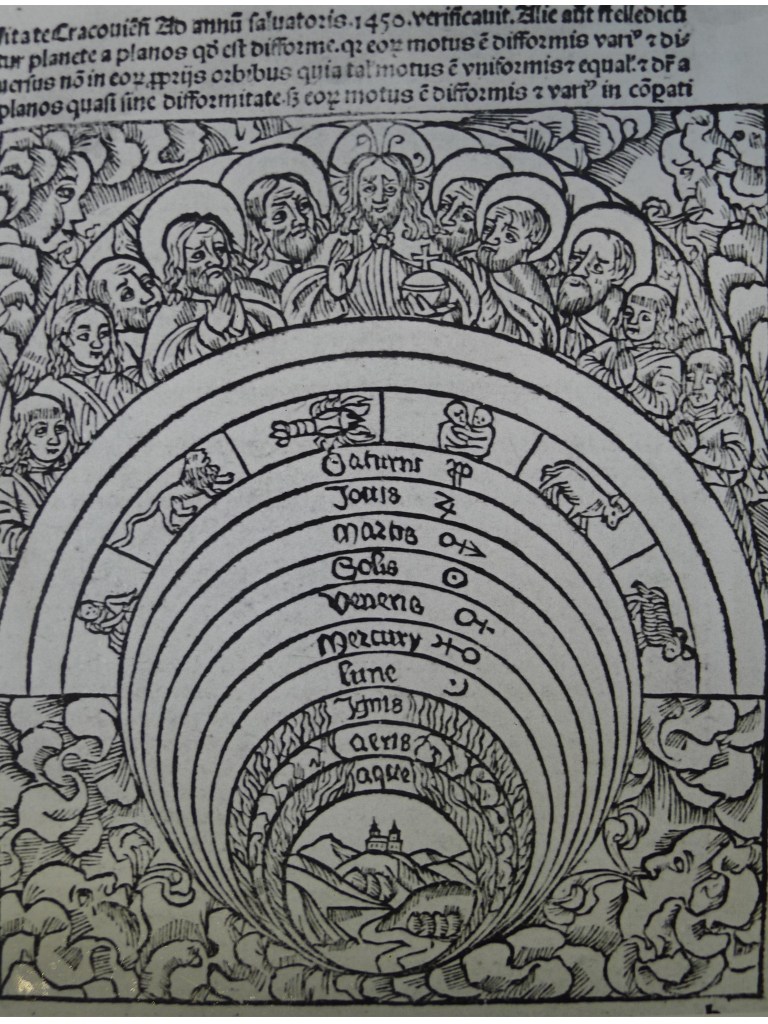
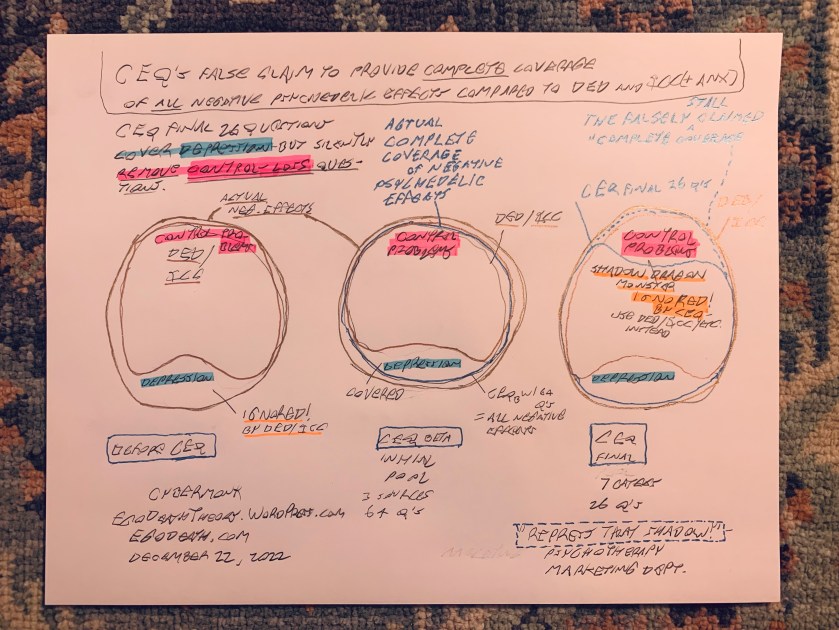




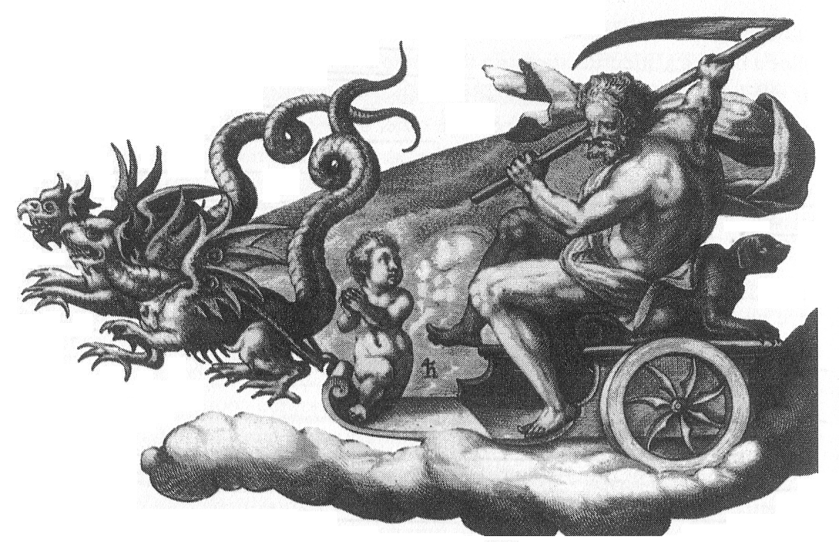
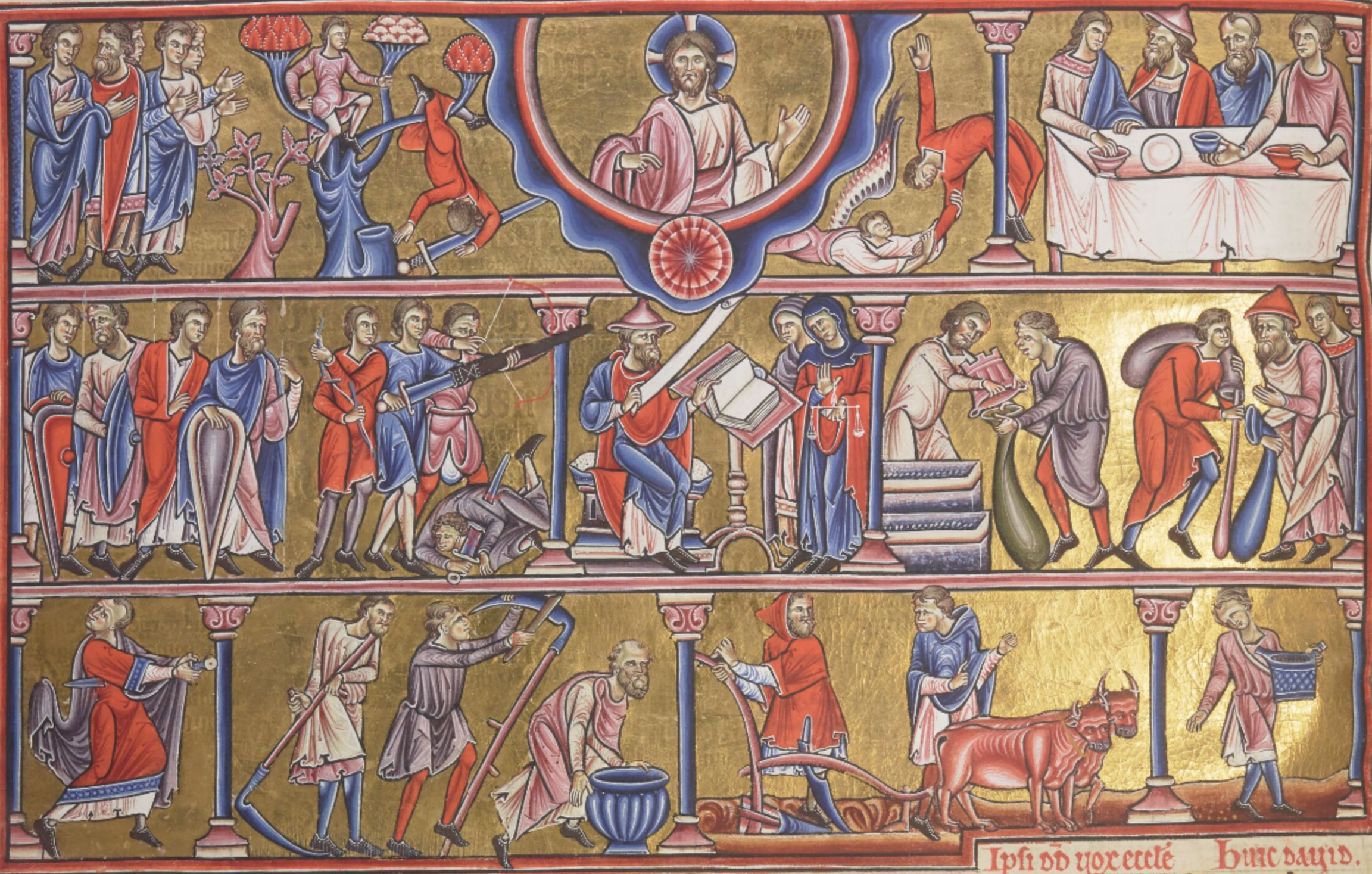


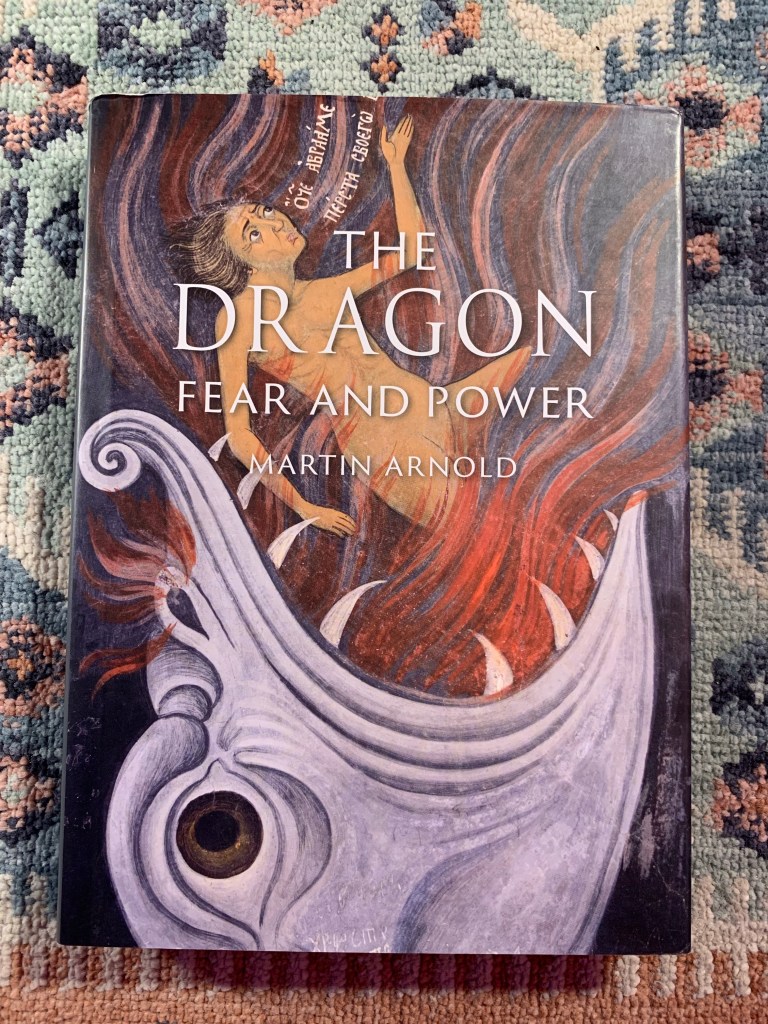


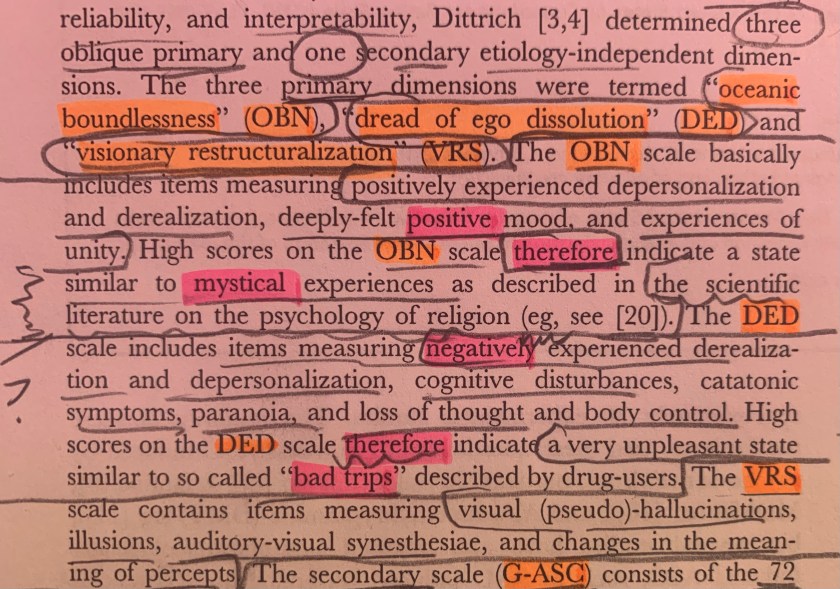



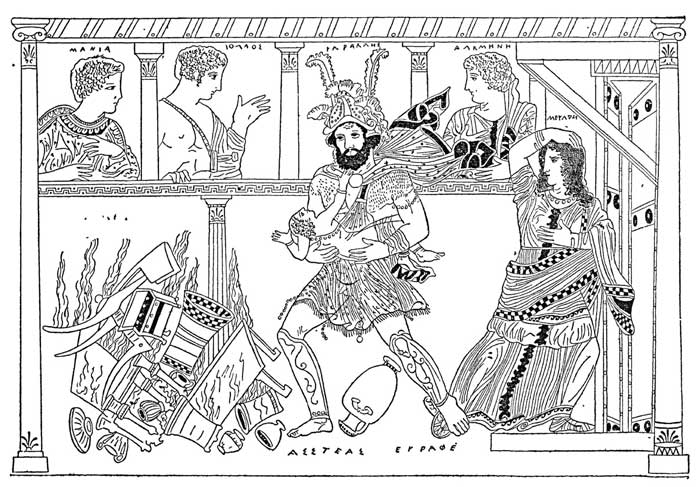



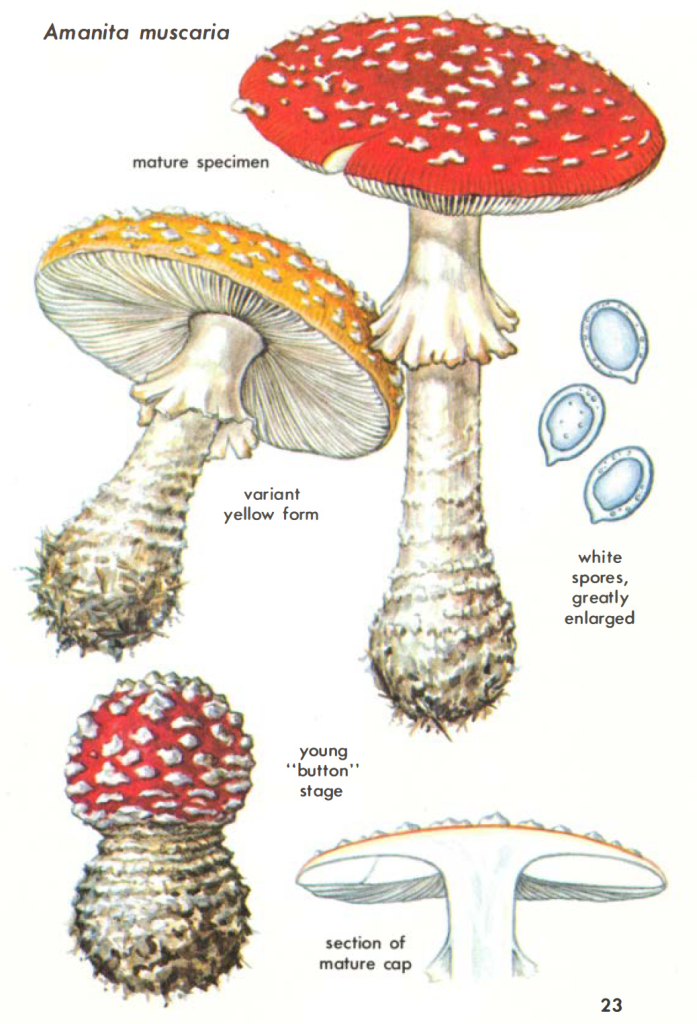


 The Egodeath theory
