No Mention of Loss of Control in Scientific Literature Review from Oregon Psilocybin Board

Contents:

Correctly Redefining and Recognizing the Rules and Goal of the Game, the Basic Game-Layout Premise

The necessary reframing of “mitigating the risks” is not entirely new, but this corrected organization is far more organized than the existing clinic model, and Roland Griffiths does not understand the game.

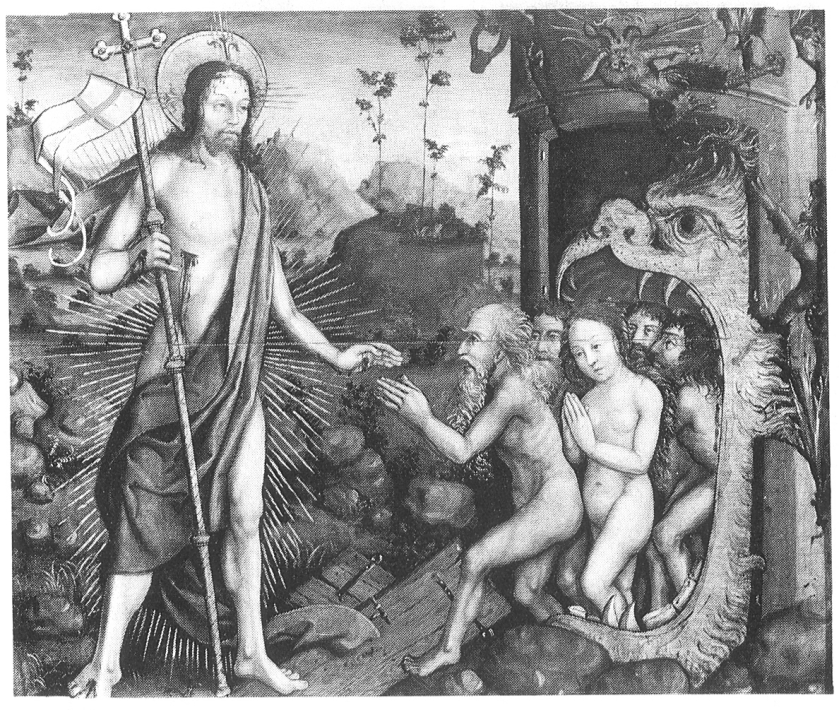
The clinicians don’t understand what the game is, what the goal of the game is, and what the role is of the encounter with the shadow monster dragon.

It turns out that the shadow monster dragon is the very gate – and yes people say vague things along these lines, but the Egodeath theory is specific.

I explain exactly how the so-called “shadow” is precisely the gate which you have to go through.

And I explain how you go through the gate: by shifting weight from your {left leg} to your {right leg}, as our religious predecessors emphatically depict and communicate to us.

It is nonsensical to think in terms of “avoiding the shadow” and simply “avoiding” so-called “adverse reactions”; you don’t understand what the game is.

The game is to go through the dragon-guarded gate to reach the Gnosis treasure and gain the ability to routinely go into this state.

You certainly cannot win the game and gain the ability to be in the high-dose Psilocybin state if you think in terms of “avoiding the gate”; you have to go through the gate, not avoid the gate.

The “shadow” is the whole damn point of the whole thing: transformation through the encounter with the shadow monster dragon threat.

The “shadow” is precisely that which transforms you to make you immune to the shadow monster dragon, in your dragon-transformed, amenable form.

The Standard Solution to Control-Loss Enlightenment: Pray and Mentally Sacrifice

Life-saving, gnosis-delivering tip from & for those in the jaws of the attraction to the Control Vortex of probing control-loss to transcend it:

Pray that you will be made to put trust in the higher level of control and be given wisdom, Transcendent Knowledge.

That is the crucial important solution information, which the Griffiths group cannot deliver, because – insofar as their CEQ questionnaire represents – they refuse to even acknowledge the existence of the problem of the threat of loss of control:

Submit; surrender; repudiate and jettison the claim to monolithic, autonomous control power steering in a supposed tree of branching possibilities.
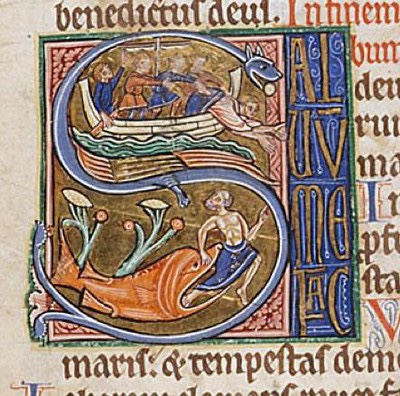
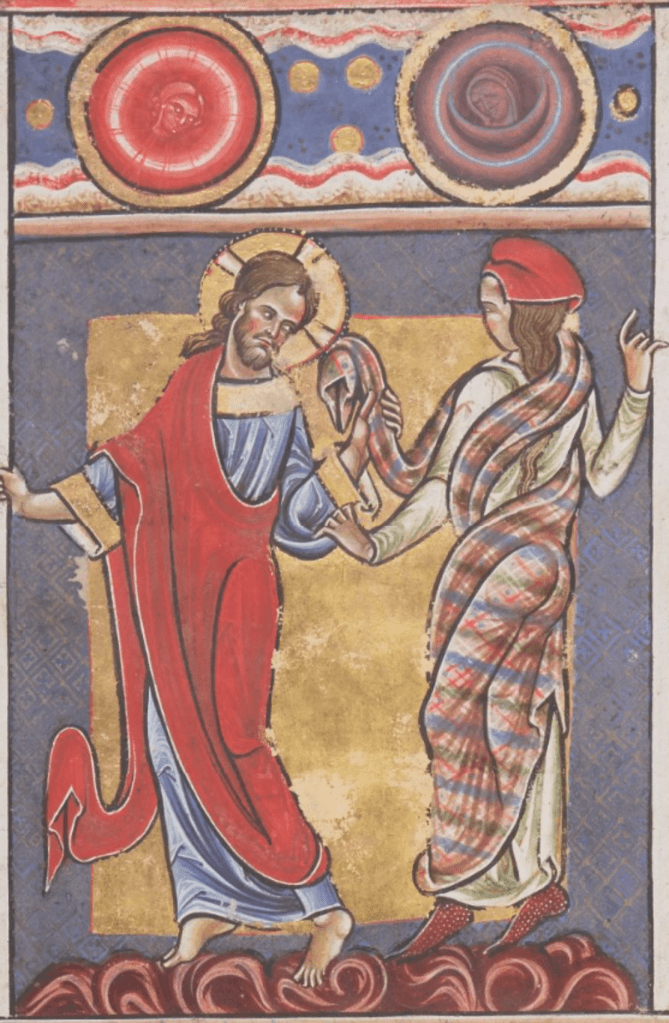
Jettison like mushroom Jonah, to stop shipwreck

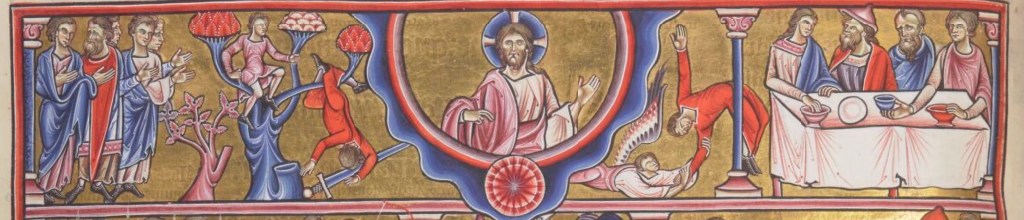
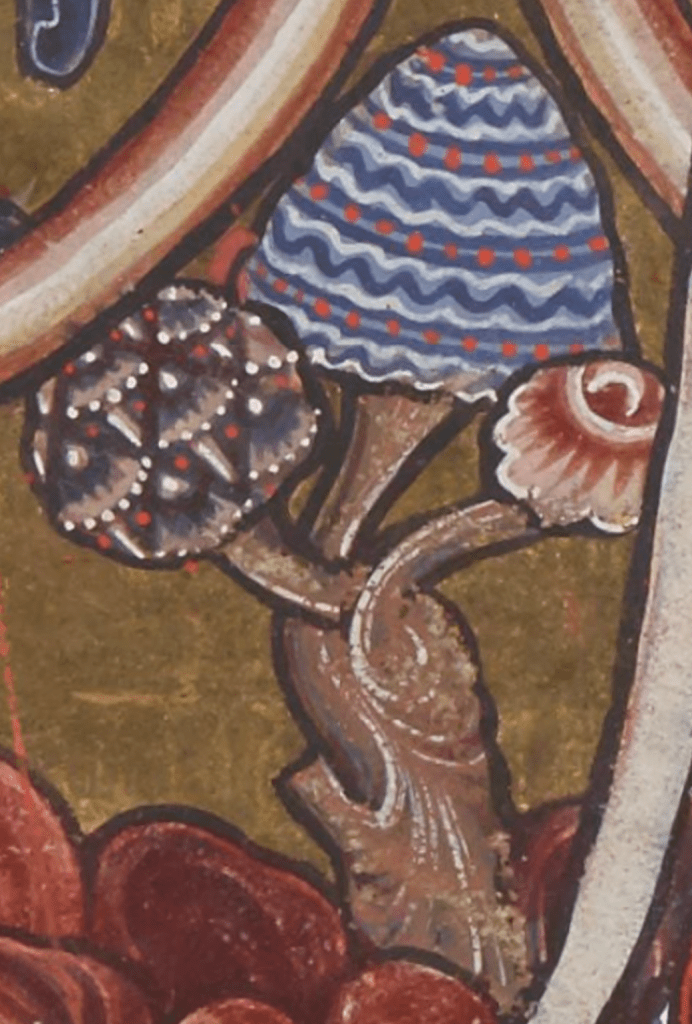
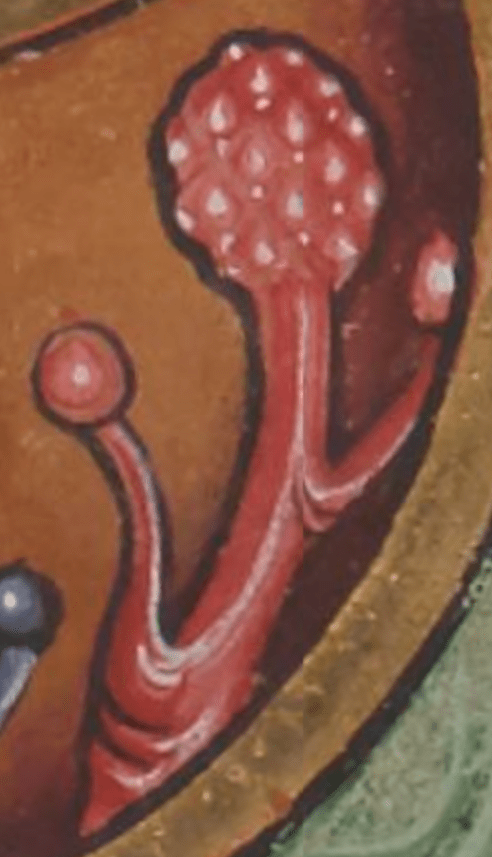
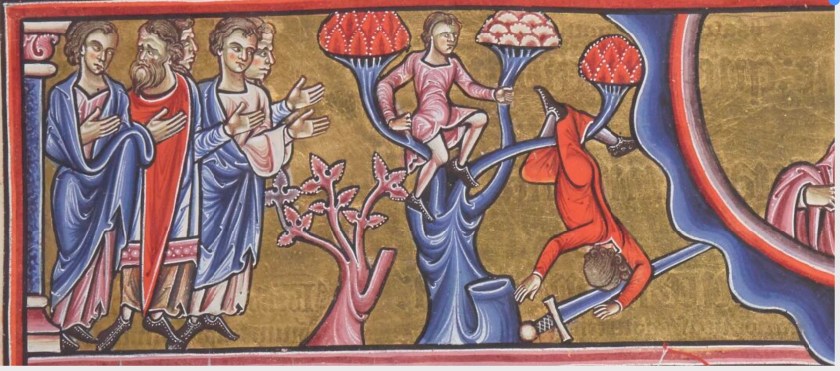
From the Thomas Hatsis 🍄🧙‍♂️ gallery of evidence of Psilocybin in Christian art:
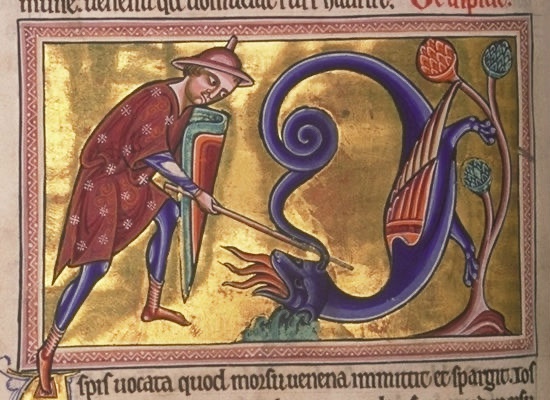
Rely on eternalism-thinking = {right leg}.

Repudiate habitual reliance on possibilism-thinking = {left leg}.

url https://egodeaththeory.wordpress.com/2022/06/29/hatsis-gallery-of-mushroom-imagery-in-christian-art/

Repudiate Childish Possibilism-Thinking, Rely on Eternalism-thinking.

Snodfart’s Junior Academy: Too dumb to draw a tree 🤷‍♂️

Conflict of Interest: Griffiths Allows Questions About Depression, but Silently Censors Questions About Control Loss

Conflict of interest renders Roland Griffiths’ group’s CEQ questionnaire work lopsided, selectively scientific – rendering it unscientific.

No amount of impressive, science-styled posturing and phony put-on of fake math with gigantic gaps in it is going to save you from delivering an unscientific result, because of biased and selective inventorying of the challenging effects, omitting and opening up a gigantic barn-sized gap, a hole, a vulnerability in the side of the clinic.

🏥 🍽 🐉
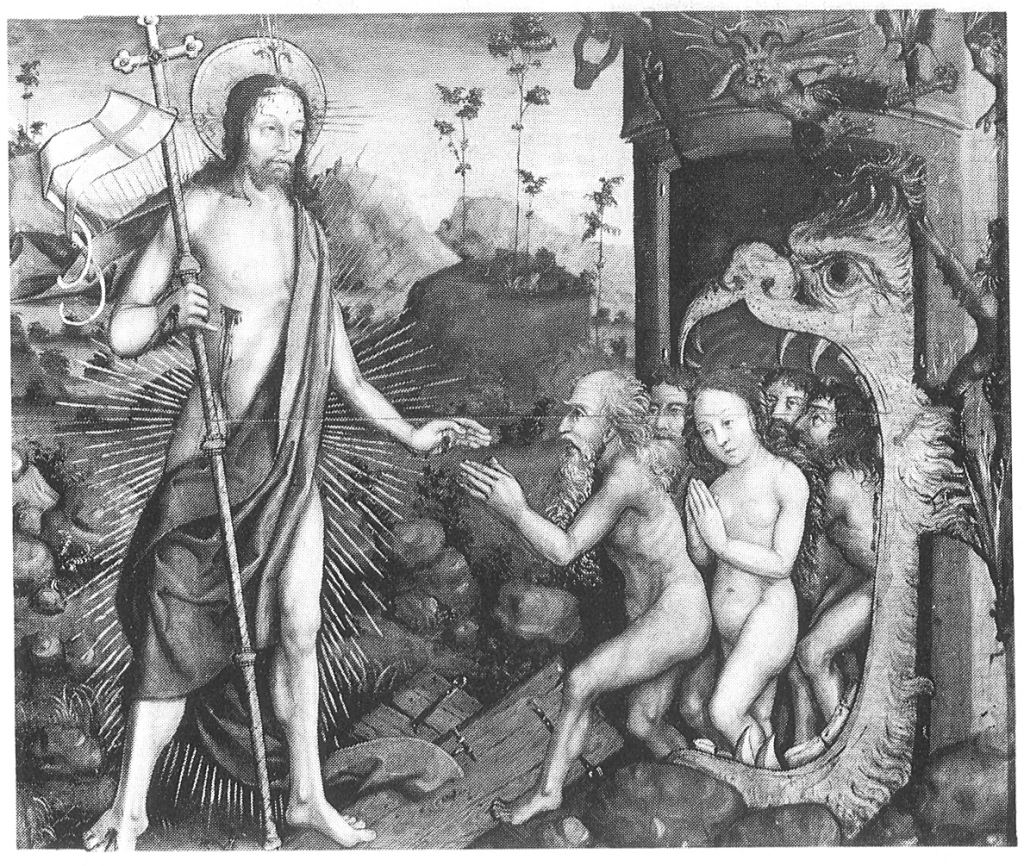
Now the Oregon Health Authority Psilocybin board is being misled by Griffiths’ lopsided, mostly scientific research findings, which have silently censored out the loss of control as a challenging experience.

The Oregon Psilocybin Advisory Board is depending too much on Roland Griffiths’ presentation/ research articles, which is lopsided and biased in favor of recognizing depression but not at all recognizing control loss as a challenging experience.

The Oregon board suffers the same biased blind spot: they expect and desire to find questions about depression effects, and they do not expect or desire to see questions regarding control effects, so they happily follow the Griffiths group mis-leading the field, because that’s the direction they wish to go, to invest in.

https://www.atmajourney.com/albertas-first-full-service-psychedelic-therapy-clinic-opens-in-calgary/

🦵🐉🚪🦵💎🐍🪨🌳🍄😇👑🏆

Relying on left leg, can’t pass through the dragon guarded no-free-will gate.

Rely on right leg to get treasure, snake worldline frozen in block universe rock.

Purified, now able go in and out through garden gate to eat fruit of immortality from tree of life.

Using Depression Effects to Cure Depression?

One has to wonder about the wisdom of prescribing Psilocybin, which causes depression effects, as a magic cure for depression.

Griffiths is OK with tackling this challenge to his narrative; at least the word ‘depression’ in the questionnaire doesn’t introduce a new, alien type of challenge (control loss effects) that’s beyond Griffiths’ ability to fathom and additionally take on and spin away in his marketing PR.

An irony is, within this phony posturing poser wannabe “scientific” style of writing, they talk about “control” all the time, constantly – but in the wrong sense.

The word ‘control’ appears many times within the Oregon board’s summary of research findings about risks and benefits, but they never use the word ‘control’ in the sense of effects, of the threat of loss of control.

Previous, general psychedelic experience questionnaires include questions about the word ‘control’.

What percentage of the previous questionnaires contain the word ‘control’, in the sense of the threat of loss of control, eg. the ‘marionette’ question that’s listed in the CEQ article from a previous questionnaire?

Hey Griffiths CEQ article: what is your scientific assessment of the challenging experience which people reported, about experiencing being “a helpless marionette” “unable to make even minor decisions”?

🦗 🦗 🦗

Song “Little Dolls” by Bob Daisley (psychedelic esotericist) & Ozzy

url https://youtu.be/T66Dr3p32PY

url https://youtu.be/fA79lLwRYTY

Song “Twilight Zone” by Peart/Rush (his first live performed song was “Ergot Forever”)

In all of the questionnaires which the CEQ article draws from: how many questionnaires have how many questions, or even entire question categories, that contain the word ‘control’?

Griffiths’ group chose to include the depression questions from previous questionnaires in their Challenging Experiences Questionnaire, but they chose to silently omit and censor and not mention the questions regarding control and the threat of loss of control, from their CEQ.

Griffiths’ CEQ questionnaire is designed to highlight depression, and censor and cover up control-loss problems.

Manic Depression Is Touching My Soul

url https://youtu.be/9nnGtB-PSw4

For extra manic, play at 1.5x speed, which I accidentally did. 😵 🏎 💨💨

Griffiths’ Big Pharma Psychedelics Industrial Complex is financially invested in selling depression services – never mind the song “Manic Depression” by Hendrix – and is willing to openly admit and work with the fact that psychedelics cause depression, as a Terence McKenna experienced.

Good job regarding that one topic, depression, but it’s like the book by Freke & Gandy, The Jesus Mysteries, where the publisher dictated to them: you’re not allowed to cover more than one controversial topic in a given, single book.

You are not allowed to cover both the ahistoricity of religious founder figures and also cover psychedelics/ entheogens in our own religions’ history.

Griffiths is not allowed to let on both that psychedelics cause depression and that psychedelics cause control loss. So, control-loss questions had to go, silently and covertly.

Psychedelic Industry 101: How to Get Involved

Join our “burger with one eye open” group. Our Pop Sike Cult imagery proves that you can can put full trust in our Mystery Agenda.

The Big Pharma Psychedelics Industrial Complex needed to reduce the footprint of the challenging effects from Psilocybin, so the loss-of-control effect had to go, had to be written out of the narrative, omitted from Griffiths’ very impressive 😲😑 “scientific”, hyper-formalized, poseur posturing affectation, sciencey-styled CEQ article, and their “safety” article.

Deleting data is the opposite of science and is an abuse of science.

Roland Griffiths has been called out in person, on camera publicly, very prominently for deleting scientific data and omitting and suppressing it.

Griffiths silently ignored and left out the reports by mystics and by other psychedelics users.

Charles Stang accused Griffiths of this; so Griffiths pointed out his 2008 CEQ, claiming that that presents negative effects, which it does; however, Griffiths’ CEQ silently censors out the major effect, control loss.

Article: “Human Hallucinogen Research: Guidelines for Safety” (Roland Griffiths 2008)

I moved this major section out to be its own posting. See:

Human Hallucinogen Research: Guidelines for Safety (Griffiths) https://egodeaththeory.wordpress.com/2022/12/19/human-hallucinogen-research-guidelines-for-safety-griffiths/

“Guidelines for Safety” has some coverage of what amounts to control-related challenges – unlike the 1-page CEQ, which omits them, silently.

The coverage is inadequate to meet their basic safety bar – or to deliver successful gnosis/ transformation.

– Cybermonk, December 19, 2022

Silently Omit the Non-Depression Challenge, of Being Drawn into the Threat of Loss of Control

Janikian’s 2019 book Your Psilocybin Mushroom Companion focuses on the threat of loss of control.

But the CEQ silently omits control-related questions.

And the Oregon health board eagerly lapped up this reduced, narrowed artificial re-telling which, as Charles Stang scathingly pointed out, completely fails to match the data archive of mystic negative experiencing evidence.

Jan Irvin exposed Terence McKenna for stopping use of Psilocybin while still, fraudulently continuing to present himself for years as if he were using Psilocybin, but he had stopped because of depression.

Roland Griffiths admits in his questionnaire that psychedelics cause depression, and that that’s a challenging experience.

Roland Griffiths is trying to sell you his depression-curing services through Big Pharma; the Psychedelics Industrial Complex. Griffiths doesn’t want to also get involved in the control-loss challenge.

CompassPathways.com

🦵🐉🚪🦵💎🐍🪨🌳🍄😇👑🏆

Loss of control and depression are both major challenges, but Griffiths only wants to take on the challenge of depression, and he does not want to get involved with the problem of control loss.

That’s why Griffiths silently and thus anti-scientifically, covertly deleted questions that contain the word ‘control’.

It was anti-scientific for Griffiths to be silent when he deleted the questions about control from his Challenging Experiences Questionnaire.

Griffiths’ silence about omitting those questions, which other previous questionnaires include, demonstrates a conflict of interest, and the opposite of science; a selective, lopsided, biased, inconsistent abuse of science, and the whole posturing and pretense with all this official formal apparatus used, in order to cover up his anti-scientific, silent and covert deletion of ‘control’-related questions.

The scientific approach does not mean something that you only use when it pleases you, when it gives you the results that you want (depression effects) and then you provide just a fancy, very impressive, very mathematical, very formal, lots and lots of citations bull shiite phony posturing.

Deception, a lie of omission to omit control-problem effects, is the opposite of science. Using science selectively, pick-and-choose, is abuse of science.

Jordan Peterson instantly and vigorously called out Griffiths’ bunk unscientific meditation claims, pointing out that there’s no data to support Griffiths’ exaggerated meditation claims, which Griffiths tried to slip-in as a confident aside on which to build an argument.

Charles Stang totally called out Griffiths hard, 100%, for his grotesque misrepresentation of the breadth of mystic experience, censoring negative mystic experience.

Peterson and Stang were not having it, not even for one second; they instantly called Griffiths out absolutely, in his face, point blank in public on camera.

Oregon Psilocybin Board Follows Griffiths’ Lopsided Censoring of Control-Loss Risks

Article: Oregon Psilocybin Advisory Board Evidence Review

url https://www.oregon.gov/oha/PH/PREVENTIONWELLNESS/Documents/Oregon%20Psilocybin%20Advisory%20Board%20Rapid%20Evidence%20Review.pdf

In the “Scientific Literature Review” document from Oregon Psilocybin Advisory Board Evidence Review and Recommendations:

There’s no mention of the experience of the threat of loss of control.

And there’s no mention of the solution to the problem: surrender/ submit/ accept the loss of control; approach the dragon monster and ask it “What is the lesson you are teaching me?”

– even though the body of Griffiths’ 2008 article “Guidelines for Safety” lists these safety instruction techniques (albeit at an barely adequate, sub-scientific, folk level of explanation).

The article vaguely mentions ‘fear’ 3 times.

This scientific literature review never mentions experiencing the threat and fear of loss of control – even though Roland Griffiths’ 2008 article Challenging Experiences Questionnaire quotes other questionnaires’ entire category of questions about sensing a threat of loss of control.

How come Michelle Janikian’s 2019 book Your Psilocybin Mushroom Companion knows very clearly about the problem of fear of loss of control, and I know about it, and everybody knows about this problem, as Janikian shows, but Griffiths is trying to cover it up?

Janikian’s book: https://egodeaththeory.wordpress.com/2022/12/07/standard-hazy-trip-advice-on-surrender-to-shadow-trust-submit-and-let-go-of-control/

In the CEQ article, Roland Griffiths is openly caught red-handed covering it up, that the main shadow terror from Psilocybin is the experience of the fear of loss of control, of the threat of loss of control, but he hides this when crafting his CEQ questionnaire.

Griffiths’ CEQ article quotes other questionnaires and shows that they address the effect of the threatening fear of loss of control, and yet his own questionnaire omits any questions about loss of control.

As soon as I saw the massive math and hyper-formal styling in the CEQ article, I knew it was bunk.

The CEQ is bunk and the CEQ article is bunk, because they hide and silently omit the number one, well-known challenging effect of Psilocybin, which is covered in other questionnaires: the threat of loss of control.

And that threat is discussed in the body of the “Guidelines for Safety” 2008 Griffiths article – albeit in a sub-scientific, unclear, disorganized way, piecemeal and fragmented barely adequate for temporary safety and ineffective and even regressive as far as achieving the goal of completing transformation and initiation into gnosis. the adult form mental development.

The only way to reach safety, together with accomplishing scientific knowledge and enabling research of this domain, of this realm of experiencing (Psilocybin Mythemeland), is by coherently organizing this Transcendent Knowledge, as the Egodeath theory has done.

Griffiths doesn’t state the solution to that well-known #1 challenging problem: in folk-speak, “Surrender/ submit/ accept the loss of control.”

I advised the Oregon Board about this challenging effect and its productive, rewarding solution: https://egodeaththeory.wordpress.com/2022/11/18/proposed-rules-for-oregon-measure-109-psilocybin-centers/

Fact Sheet: Oregon Psilocybin Services

url https://sharedsystems.dhsoha.state.or.us/DHSForms/Served/le4226.pdf

That’s linked from:

https://www.oregon.gov/oha/ph/preventionwellness/pages/psilocybin-what-are-psilocybin-services.aspx

Regarding “research on psilocybin benefits and risks”, the pdf links to:

Oregon Psilocybin – Scientific Literature Review and Cultural and Anthropological Information

https://www.oregon.gov/oha/PH/PREVENTIONWELLNESS/Pages/Psilocybin-Scientific-Literature-Review.aspx

“the Oregon Psilocybin Advisory Board reviewed available medical, psychological, and scientific studies, research, and other information related to the safety and efficacy of psilocybin in treating mental health conditions. This rapid evidence review was published in July 2021 “

“The Board also acknowledged cultural and anthropological information regarding centuries of psilocybin use that was not included in the scientific literature review. “

I partly informed the Oregon Board about Wasson/ Ruck’s Secret Amanita & Muraresku’s Eleusis harmfully blocking our view of Psilocybin centrally used within our own religious history:

in ALL mystery religions’ psilocybin sacred meals, NOT %#$& Eleusis! 🚫🌾, and

in psilocybin symposium mixed wine parties, and

in psilocybin branching-message mushroom trees all throughout & inside mainstream medieval Christianity.

Rare Proof that the Carl Ruck School has Heard of the Existence of a Mushroom Other than Secret Amanita 🤫🍄 😲

“A subsequent Cultural and Anthropological Review was published in November 2022, amplifying the cultural and anthropological information that scientific research may not address.”

Psilocybin advisory board’s summary – https://www.oregon.gov/oha/PH/PREVENTIONWELLNESS/Documents/Cultural-Anthropological-Review-2022.pdf

Cites: Akers BP, Ruiz JF, Piper A, Ruck CAP. A Prehistoric Mural in Spain Depicting Neurotropic Psilocybe Mushrooms?. Economic Botany. 2011;65(2):121-128. doi:10.1007/s12231-011-9152-5

Good job there, Carl Ruck, finally acknowledging the existence of psilocybin in Western religion, instead of obsessing exclusively on your irrelevant Secret Amanita.

To a slight degree, this is a redemption arc for Carl Ruck – though too little too late.

It is extremely good news that this Oregon research summary article includes this tiny little acknowledgment, at least, of the existence of Psilocybin in western religious history tradition.

– despite the overall total failure of entheogen scholarship, for it to even occur to them to open their eyes (stop shutting your eyes, squeezed tightly shut in your Secret Amanita/ Kykeon Ergot monoplant blind frenzy) and actually try (for once) to find Psilocybin evidence in western religious history.

Article: Entheogens (Psychedelic Drugs) and the Ancient Mystery Religions (M. Hoffman 2015)

Mark Hoffman’s 2015 toxicology journal article on entheogens in mystery religions has an empty Psilocybin section that just states that someone oughta start looking to see if there’s any psilocybin in Western religious history – proving that entheogen scholarship has massively failed to do so, due to their single-plant monofocus on Secret Amanita and on Eleusis Ergot.

https://www.academia.edu/44235520/Entheogens_Psychedelic_Drugs_and_the_Ancient_Mystery_Religions_Mark_A_Hoffman

Full quote of the article’s section:

Psilocybin and Psilocin (Mushrooms) and DMT, 5Meo DMT: Spirit Molecules

“These closely related entheogenic compounds should be mentioned in a discussion of the Mystery Religions.

“While evidence for their use in this context has not been fully* explored, it is extremely unlikely that the chemical properties of psychoactive mushrooms** and the natural sources of DMT would have been overlooked by ancient herbalists and alchemists.”

*Translation: Under the mis-leading, bad leadership & harmful bad strategy of Carl Amanita Promoter Ruck and Mark Amanita Hoffman, the field of entheogen scholarship has failed to at all explore, investigate, or even think of investigating Psilocybin in Western religious history; the idea doesn’t even occur to them.

The exceptions are so rare, that they prove the rule.

The list is short: Giorgio Samorini, Michael Hoffman, Jerry & Julie Brown, and Fulvio Gosso.

**Poor writing; Mark Hoffman fell into a very specific trap in this specific field: he used the term ‘psychoactive mushrooms’ without acknowledging that due to the fault of his group with Carl Ruck, when you use the word ‘mushrooms’ in this field of entheogen scholarship, that means specifically and exclusively Secret Amanita, according to their bad usage and firm connotations which they have established.

An example of this forceful narrowing of the word ‘mushrooms’ in Western entheogen scholarship is Thomas Hatsis’ video, which he titles braggingly “Disproof of mushrooms in Christianity” – but then what he discusses in the video is exclusively Secret Amanita, and it never even occurs to him to think of psilocybin.

Thomas Hatsis tells me: “The shape of the liberty cap is anachronistic.”

Thus proving and clearly demonstrating how entirely unthinking and closed-minded entheogen scholarship has been, completely biased against and blind to psilocybin in western religious history.

Paul Stamets not excepted; he is part of the problem, spreading blindness of psilocybin in his 1996 book Psilocybin mushrooms of the world: an identification guide.

Contrast the long, well-crafted, and placed-first Secret Amanita section of Hoffman’s article – in contrast to his empty, short, last-placed Psilocybin entry in his article.

Article: Entheogens in Ancient Times: Wine and the Rituals of Dionysus (Ruck 2018)

https://www.academia.edu/44299129/Entheogens_in_Ancient_Times_Wine_and_the_Rituals_of_Dionysus – contains only 1 hit on ‘psilocybin’:

“The civilized product resulting from the controlled recognizably fungal growth of the fermenting yeasts was contrasted with the wild naturally occurring toxins, among which mushrooms, containing psychoactive psilocybin and muscimol, and ergot of grain containing Lysergic acid amide, played a fundamental role as similarly fungal.”

That sentence includes dubious 1880s-type, heavy anthropology dept. sky-castle theory, instead of Jerry & Julie Brown’s more grounded, down-to-earth coverage of the topic of mushrooms in Western religious history.

Ruck delivers Anthropology dept. theory heavily slathered over entheogen scholarship, as Cyberdisciple posted about.

That quintessentially representative sentence also includes Carl Ruck’s signature pet word that only he uses, ‘fungal’. As in: “fungal Secret Amanita alchemy”.

Lots of Psilocybin Evidence, Masked by Obsessive Monofocus on Secret Amanita

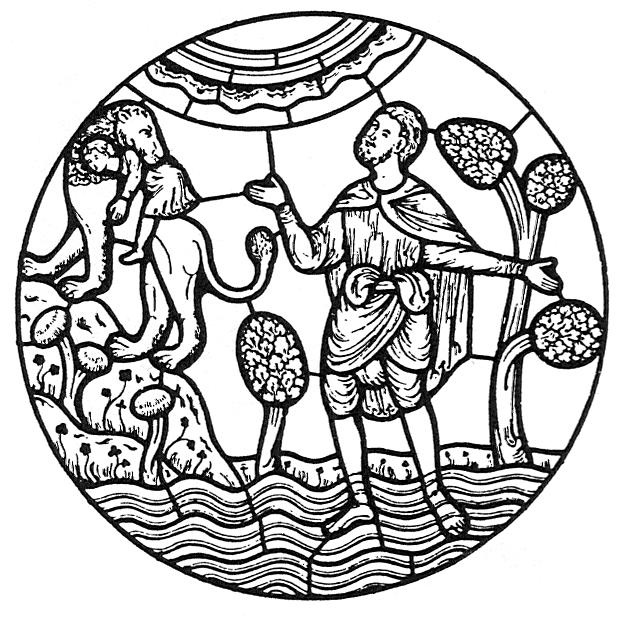
The extreme over-focus on Secret Amanita (and Brian Muraresku’s narrowing monofocus on Eleusis ergot) serves only to blind people to Psilocybin in our own relious history, thus supporting the Supreme Court putting people in cages for using Psilocybin, based on the completely bunk and totally ignorant argument that Western religious tradition (such as inside cathedrals, chapels, & illuminated manuscripts) lacks Psilocybin.

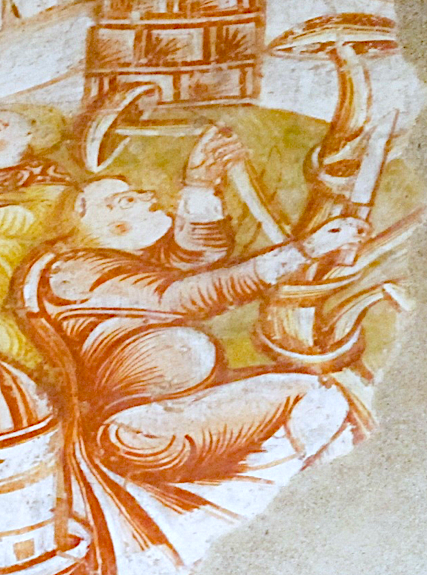
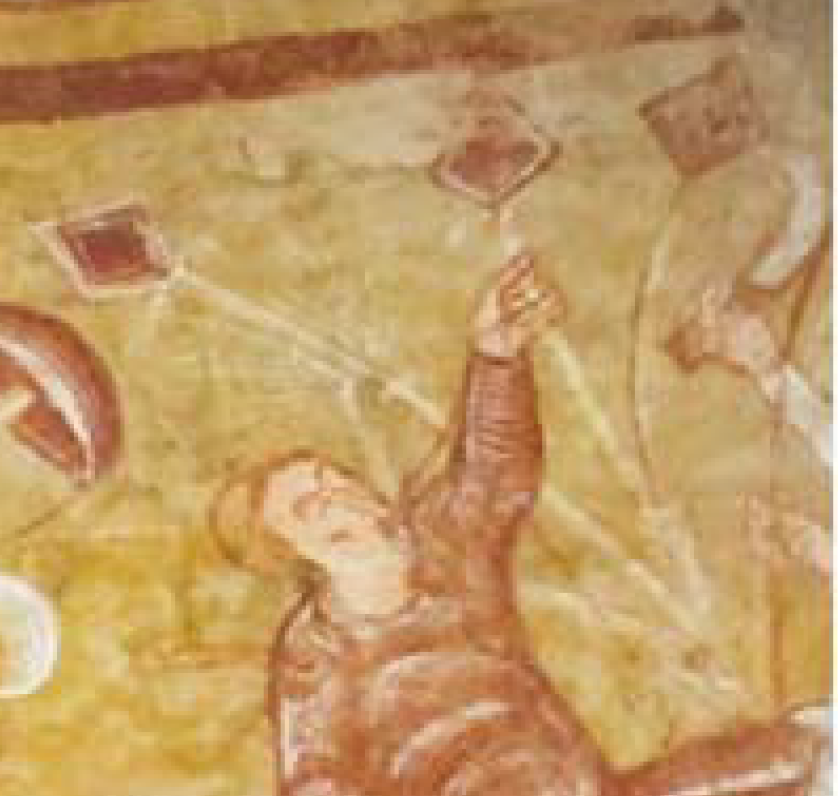
Chartres Cathedral:
Saint Martin’s chapel:
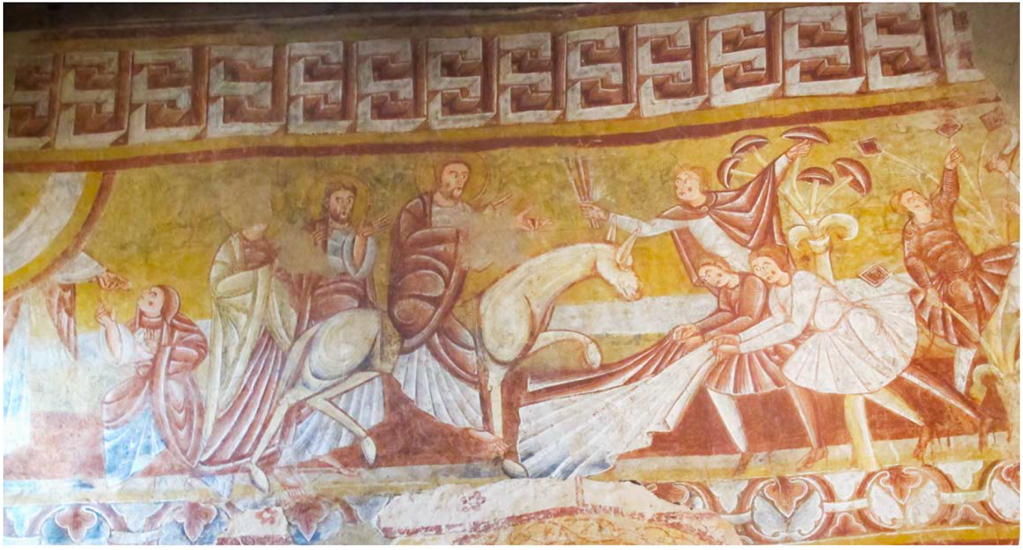
Photo: Julie M. Brown

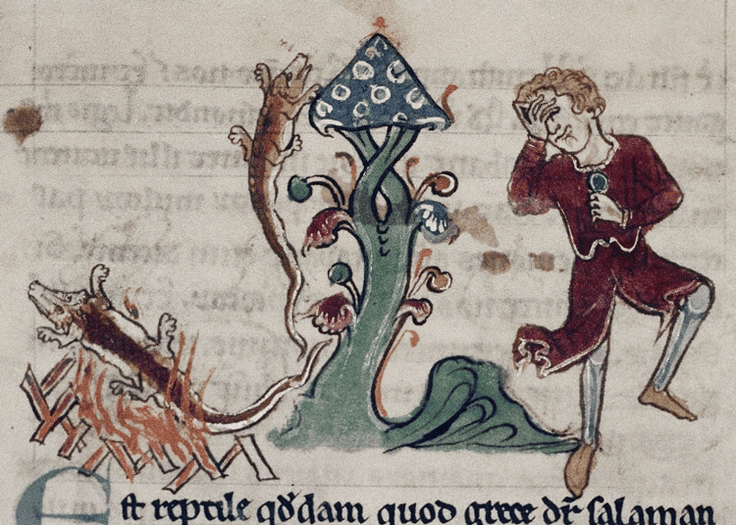
Great Canterbury Psalter:

url https://egodeaththeory.wordpress.com/nav/#gallery

— Cybermonk, December 18, 2022
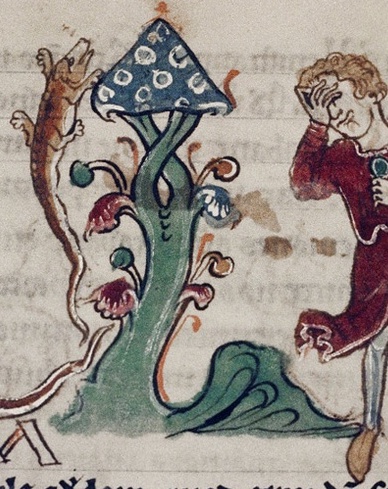
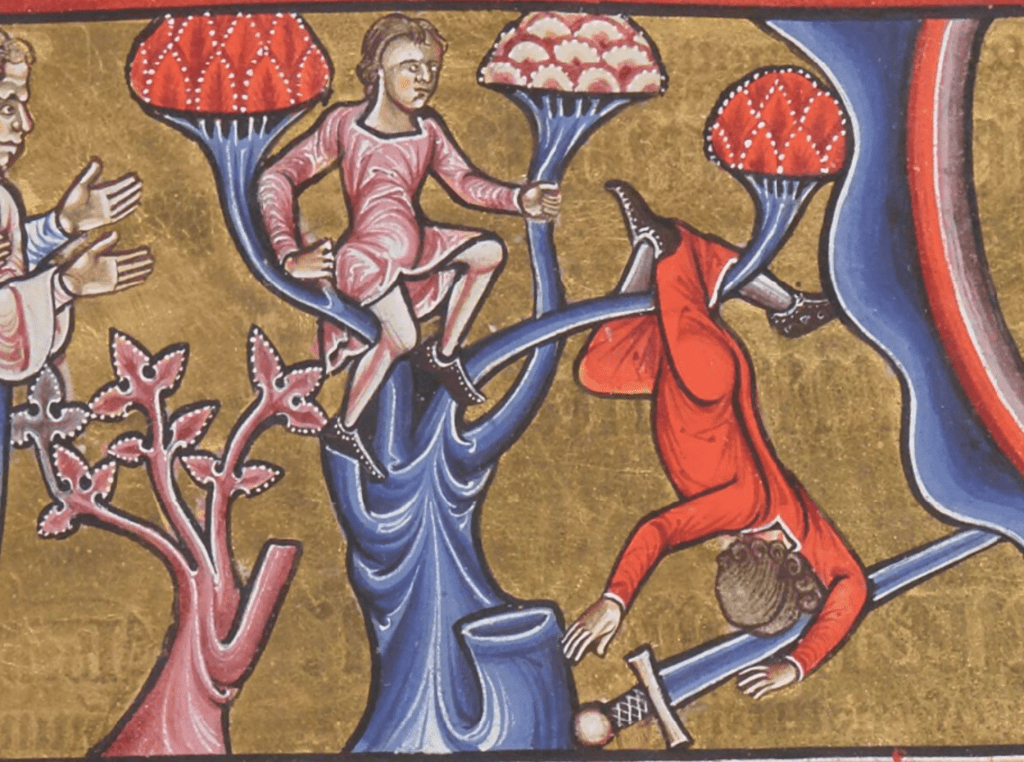
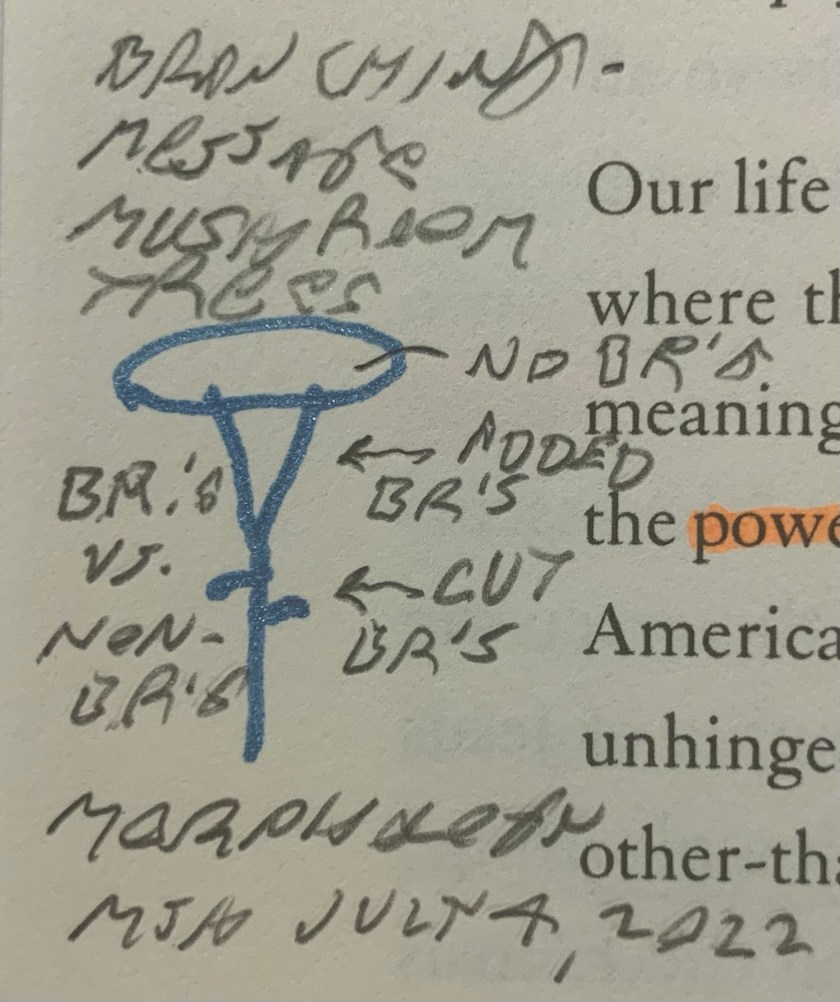
Morphology of Branching Message Mushroom Trees: YO vs YOO; Cap Supported by One Stem or Multiple Stems

I don’t use Samorini’s category-labels “Plaincourault type” and “St. Sauvin type”.

Say “Psilocybin Mushroom Trees”, not “Mushroom Trees of the St. Sauvin Type” per Samorini, and also differentiate YO vs. YOO branching morphology.

Amanita vs. Psilocybin Is Minor, Branching Morphology Is Major

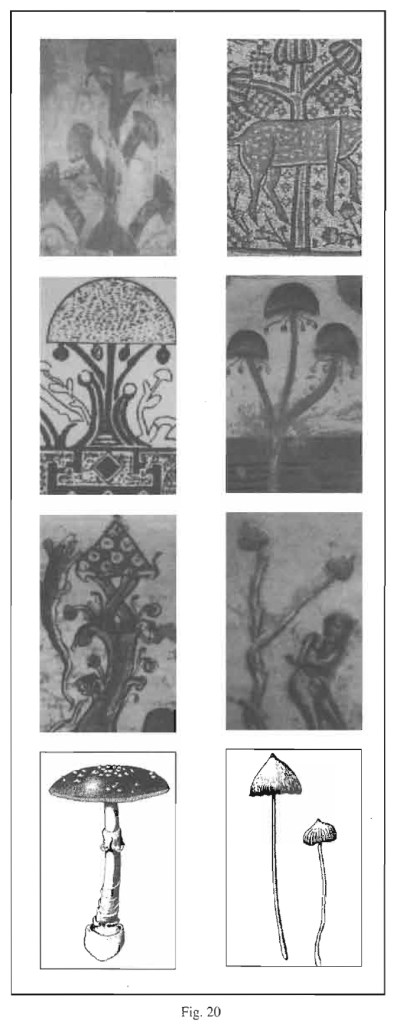
It would be possible and worthwhile to define Samorini’s Fig. 20 table as 4-columns instead of 2 columns.

Samorini’s two columns conflate (overly group together & fuse) two distinct points of interest: branching morphology, and Amanita vs. Psilocybin. Imagine art examples:

Here’s a Psilocybin mushroom tree that has multiple branches holding up a single main cap (YO). And some small caps each with a single stem. That would go in Samorini’s left column, which he calls “Plaincourault type”:

Here’s a Psilocybin mushroom tree that has a single branch holding up each cap (YOO). That would go in Samorini’s right column, which he calls “St. Sauvin type:

Here’s an Amanita mushroom tree that has multiple branches holding up a single main cap (YO). And some small caps each with a single stem. That would go in Samorini’s left column, which he calls “Plaincourault type”:

Here’s an Amanita mushroom tree that has a single branch holding up each cap (YOO). That would go in Samorini’s right column, which he calls “St. Sauvin type”.

“St. Sauvin type” is obscure instead of direct

Samorini’s Plaincourault-overemphasizing naming-pattern, “Saint Sauvin-type mushroom trees”, is not so much about Amanita vs. Psilocybin, nor the 4 traits he lists, but how many branches/stems hold up a cap or main cap.

That’s Samorini’s unhelpful, obscurantist code-speak, for which he ought to speak plainly and directly, as “psilocybin mushroom trees”.

url https://egodeaththeory.wordpress.com/mushroom-trees-in-christian-art-samorini/#Figure-20

actually in fact the main distinction between his left column and his right column is not anything to do with Amanita versus Psilocybin, or Plaincourault versus Saint Sauvin.

In terms of Morphology of branching-message mushroom trees, in fact in the fig. 20 table:

right column = multiple caps that each have one stem. Type YOO.

left column = a single cap that has multiple stems branching under it. Type YO for main cap, plus smaller YOO.

Regardless of whether amanita versus psilocybin.

Samorini

The fourth row is an error; the important distinction here is not between Amanita versus Psilocybin; it is between type YO {a single main cap, supported by multiple branches, with optional small stems/caps}, versus type YOO {multiple caps, supported by one branch each}.

The “dancing man” mushroom tree (row 3 left) cannot fit well into the Amanita column, because:

  • the cap is green with white donuts with blue centers (not white spots on red background).
  • the trunk stem is blue (not white).
  • the cap shape is semi-lance shaped, ie triangle (not a dome).

The dancing man mushroom tree better matches the diagonal cell: row 4 right, psilocybe semilanceata; liberty cap.

See my inventory of morphology in the Great Mushroom Psalter:

url https://egodeaththeory.wordpress.com/2022/03/13/the-75-mushroom-trees-of-the-canterbury-psalter/

The 75 mushroom plants from Eadwine – are they all column 2 Saint Sauvin type, or are any of them column 1 Plaincourault type?

Tree 68 is the closest Easwine comes to having two stems support 1 cap. https://egodeaththeory.wordpress.com/2022/03/13/the-75-mushroom-trees-of-the-canterbury-psalter/#68

This branching-message mushroom tree has it all, for branching morphology: multiple caps, multiple branches holding up each cap, & cut off branches, including {cut right trunk}.

Defining Type YO vs. YOO Morphology of Branching-message mushroom trees

Finding: Dec. 17, 2022: Eadwine’s branching-message mushroom trees are of Samorini’s “St. Sauvin type”, which is type YOO, not type YO.

They happen to be almost all of them Psilocybin – maybe two of them or three have Amanita attributes – but I am looking at the major morphology that truly divides Samorini’s two columns.

The important difference between column one and column two is one trunk branching to two stems supporting a single cap, vs. on trunk branching to two stems, each supporting one cap.

Branch the trunk into two stems: then the question is, will the tree have a single cap (Y O), or will it have multiple caps (Y O O)?

Multiple branches under one cap is not emphasized as the morphology in the main Eadwine tree, but you could imagine if it had two or three branches supporting each cap:

Meditation Is Bunk – It Is Pushed Solely to Eliminate Psychedelics

Contents:

Intro

Meditation is misused for bunkness. Meditation is pushed to get rid of psychedelics.

Search Egodeath Yahoo Group for “Meditation Is Bunk”: https://egodeathyahoogroup.wordpress.com/?s=%22meditation+is+bunk%22

👎👎 Down with Your Buddha Statue, Your “Meditation”, and Your Stupid U2 Too 🙉

Here’s the article from Matthew Johnson that famously tells psychedelic therapy clinic guides to lose the Buddha statue:

Consciousness, Religion, Gurus: The Pitfalls of Psychedelic Medicine
https://egodeaththeory.wordpress.com/2022/12/17/consciousness-religion-gurus-the-pitfalls-of-psychedelic-medicine-matthew-johnson/

“For today’s psychedelic scientists and clinicians, frameworks of concern are likely to resemble a loosely held eclectic collection of various beliefs drawn piecemeal from mystical traditions, Eastern religions, and indigenous cultures, perhaps best described by the term “new age,” although they could come from any religious or spiritual belief system.

“It is important to operate instead from a secular framework that is nonetheless open to working with patients or participant of any religious/spiritual background.”

“It has unfortunately become fashionable and commonplace for statues of Buddha to be present in psychedelic session treatment rooms. … the introduction of such religious icons into clinical practice unnecessarily alienates some people from psychedelic medicine, e.g., atheists, Christians, and Muslims.”

  1. Do not include religious icons in treatment settings.

The article doesn’t say whether “surrender, submit, accept” is “empirical” or is “non-empirical religious/ spiritual/ metaphysical belief”.

The folk wisdom technique – or “non-empirical religious belief”? – of “surrender, submit, accept not having control” is cataloged in Michelle Janikian’s 2019 book Your Psilocybin Mushroom Companion. See my post:

Standard Hazy Trip Advice on Surrender to the Shadow, Trust, Submit, and Let Go of Control

url https://egodeaththeory.wordpress.com/2022/12/07/standard-hazy-trip-advice-on-surrender-to-shadow-trust-submit-and-let-go-of-control/

The Matthew Johnson anti-statue article doesn’t say whether psilocybin eternalism is “non-empirical religious/ spiritual/ metaphysical belief”.

The Egodeath theory is scientific, organized, rational, coherent, empirically evidence-based.

It would be a crime to not teach language, math, or Transcendent Knowledge per the Egodeath theory.

The Egodeath theory is psilocybin-compatible gnosis, on a silver platter, made effortlessly available.

Everyone says “submit, surrender, accept your lack of control over the experience” – let us discard this garbled folk packaging of the truth, and replace it by a completed, orderly, well-formed, mature statement of the same thing, but far superior, more compact, efficient, elegant, effective. The Egodeath theory.

Not dirty, confused, inarticulate, low-grade, ineffective.

Meditate on: Avoid Ego Death from Psilocybin Eternalism

If Boomers rebelled against their parents’ Christianity, I rebel against the Boomers’ stupid Buddhism (orientalism fetish) and their stupid meditation baloney fake religion, which serves only the purpose of eliminating, avoidance of, and substituting for the real deal, which is psychedelics.

The irony is that the Egodeath theory originates from my 1987 intensive critical reading of Alan Watts’ 1957 book The Way of Zen because of his cybernetic self-control aspect.

Ken Wilber’s model of transcending a lower-level mental structure, which covertly equates spiritual development with 30+ years of Advaita meditation.

In January 1988, I disproved Ken Wilber’s model of Ego Transcendence and mental development, which is the the Journal of Transpersonal Psychology model.

Wilber’s description of healthy transcendence is helpful, but Integral Theory has no engine, just an empty slot “30+ years of Advaita meditation”, with a vague definition of Transcendent Knowledge, retreating into “it’s ineffable”.

Wilber lacks psychedelics, so he can only make excuses for the failure of transformation which meditation has produced.

Eternalism is explained instantly or not at all, in a given model.

Sam Harris and Ramesh Balsekar assert no-free-will, but the Egodeath theory asserts it fully.

Video: The Case Against Buddhism

https://cswr.hds.harvard.edu/news/2019/03/11/case-against-buddhism

re: book, A Critique of Western Buddhism: Ruins of the Buddhist Real, by Glenn Wallis

Video and webpage about the video, March 2019 –

“Presented as a rational, scientific, and practical religion, modern Buddhism appears to have all the answers.

“Even the secular forms of mindfulness promise ever-increasing practitioners that Buddhist meditation will provide the solutions to all their mental, emotional, and spiritual issues.

“In his new book, A Critique of Western Buddhism: Ruins of the Buddhist Real, scholar Glenn Wallis argues that there is, and that Buddhism as we know it “must be ruined.” “

The same webpage has a transcript of the video, below the video:

“Western Buddhism has been shaped by Enlightenment, Romantic, and Protestant thinking. It claims ancient legitimacy, while ignoring the irrational aspects of the early Buddhist scriptures, such as the stories of Buddha’s magical powers, his teachings on rebirth, and the prevalence of yakas, devas, and a host of other invisible beings.

“Today, the Buddha is depicted as an empirically minded scientist, and Buddhism has been praised as the most scientific of religions.

Because of these and other doctrinal alterations, especially those focusing on well-being, Wallis writes that Western Buddhism has become the perfect ideological supplement to rabid consumerist capitalism.

“Buddhism as we know it is inseparable from the neoliberal ideology in which it has flourished.

“In its packaging and marketing of itself, Buddhism negates the very teachings it aims to convey.

“the history of Western Buddhism is one of evading the consequences of its own thought.

“we don’t want to accept Buddhism’s most fundamental truths, such as there’s no such thing as self and that all of this is suffering.”

That sounds like critiques in Ken Wilber’s book the Atman project, about substitution projects.

Vague, low-grade expressions like “self is an illusion” are why the STEM-framed Egodeath theory is needed, with its superior lexicon and relevance for learning and acclimating to psilocybin eternalism. -cm

“such language of an unknowable x that the teacher nonetheless knows is a standard authoritarian move in an obscurantist mystical rhetoric.”

Well put. The Egodeath theory is the cure for exactly this specific problem, the inexcusable glorifying of incomprehension and poor expression and communication ability.

If gnosis can be put plainly and efficiently summarizable, then it should be – and it is, and now it has been so summarized as scientific knowledge, a laminated summary sheet, a Jack Chick festival pamphlet, a .pdf. -cm

Book: A Critique of Western Buddhism: Ruins of the Buddhist Real (Wallis 2018)

A Critique of Western Buddhism: Ruins of the Buddhist Real
Glenn Wallis
Sep. 2018
https://www.amazon.com/Critique-Western-Buddhism-Ruins-Buddhist/dp/1350155217/

Blurb

“What are we to make of Western Buddhism?

Glenn Wallis argues that in aligning their tradition with the contemporary wellness industry, Western Buddhists evade the consequences of Buddhist thought.

This book shows that with concepts such as vanishing, nihility, extinction, contingency, and no-self, Buddhism, like all potent systems of thought, articulates a notion of the “real.”

Raw, unflinching acceptance of this real is held by Buddhism to be at the very core of human “awakening.”

Yet these preeminent human truths are universally shored up against in contemporary Buddhist practice, contravening the very heart of Buddhism.

The author’s critique of Western Buddhism is threefold.

It is immanent, in emerging out of Buddhist thought but taking it beyond what it itself publicly concedes;

negative, in employing the “democratizing” deconstructive methods of François Laruelle’s non-philosophy; and

re-descriptive, in applying Laruelle’s concept of philofiction.

Through applying resources of Continental philosophy to Western Buddhism, A Critique of Western Buddhism suggests a possible practice for our time, an “anthropotechnic”, or religion transposed from its seductive, but misguiding, idealist haven.”

Ancient Boomer Orientalism

Down With Boomer Orientalism – Stick with Our Own Greek Religion, not Egyptian Orientalism Fetish

Western Civ :: orientalism (Edward Said) =

Christianity :: Boomer Buddhism =

Ancient Greeks :: Egyptian oriental religions

Clinical therapy psychedelics :: indigenous Ayahuasca

U2

I actually like U2, but I understand the sympathy:

People have asked of pop cult, “why do you simply expect me to like U2, and you simply assume (& presume) that I like them.

U2 is just shoved on us everywhere we go, as if it’s “our” music.

The band U2 is shoved in our face like you have to like them.

It’s a forced, fake astroturfed popularity, by dictate from above.

“We’ve taken care of everything, the words you read, the songs you sing, the pictures that give pleasure to your eye” – Peart

BOW DOWN TO THE GOD OF BOOMERS: The Almighty Meditation and Buddha Statues ☸️ 🙌

I definitely feel negative about Boomer Buddhism being shoved on us like we just have to like it – yet I feel merely neutral, apathetic about Christian elements given to me as if I’m automatically supposed to positively value Christianity.

Well I refuse to like your meditation & Buddha statue & Boomer orientalism fetish.

Just because you tell me that I’m supposed to like meditation & Buddhism, and I have to like it.

I resent that I’m simply expected to like Buddhism, by Boomers.

I refuse to like Buddhism, and your MEDITATION IS BUNK 👎👎 – except where it comes from Psilocybin.

Get your Meditation Religion Dogma and Buddhism out of my face.

Buddhism being shoved in our face by boomers.

Boomer Buddha: count me out; not a fan; reject 👎

It is simply assumed that you are a fan (of meditation, of Buddha statues, of U2, of Amanita theory).

BOW DOWN TO THE GOD OF WASSON/ ALLEGRO/ RUCK/ HEINRICH/ IRVIN/ RUTAJIT / JOHN RUSH: The almighty Secret Amanita 🤫🍄 🙌 😲

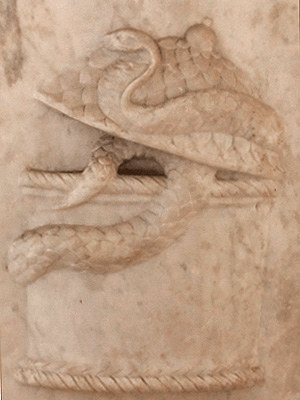
What’s in the lid-covered basket revealed by the hierophant? 🤔 ?

OMG NO FRIGGIN WAY, ITS A SECRET AMANITA!! 😲 🤯 😵

Your Secret Amanita you’re pushing is bunk too.

“Secret” and “Amanita” are used as a superficial billboard to sell books to a popular audience. Like titling my work:

The Secret Egodeath Theory 🍄🍄

jumbo kiddie mushrooms 🍄🍄 and the puerile marketing word ‘secret’

Too damn many Amanitas 🚫🍄

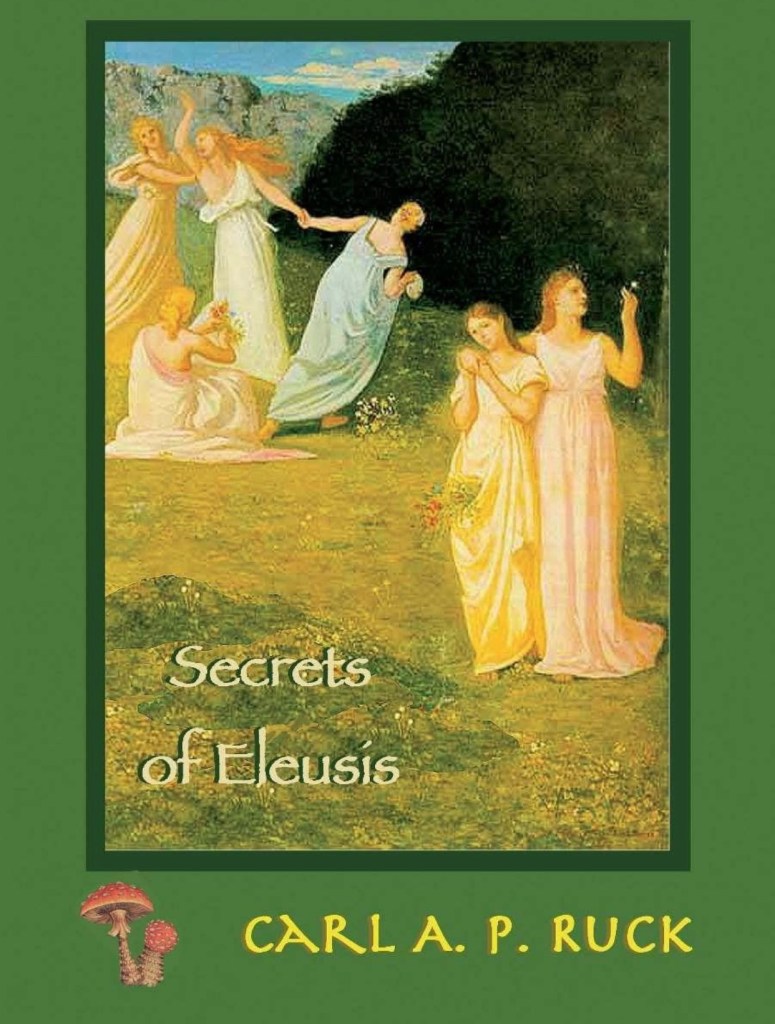
Carl Ruck gets paid by the number of times he writes the word ‘Amanita’ and the number of times that he shows infantile Secret Amanita pictures on the covers of his books on every one of his books: Eleusis 🍄🍄, Mithraism 🍄🍄, Consciousness 🍄🍄, etc.

Secrets of Eleusis 🍄🍄

Secrets of Mithraism 🍄🍄

url https://www.amazon.com/Mushrooms-Myth-Mithras-Civilized-Europe/dp/0872864707/

Secrets of Consciousness 🍄🍄

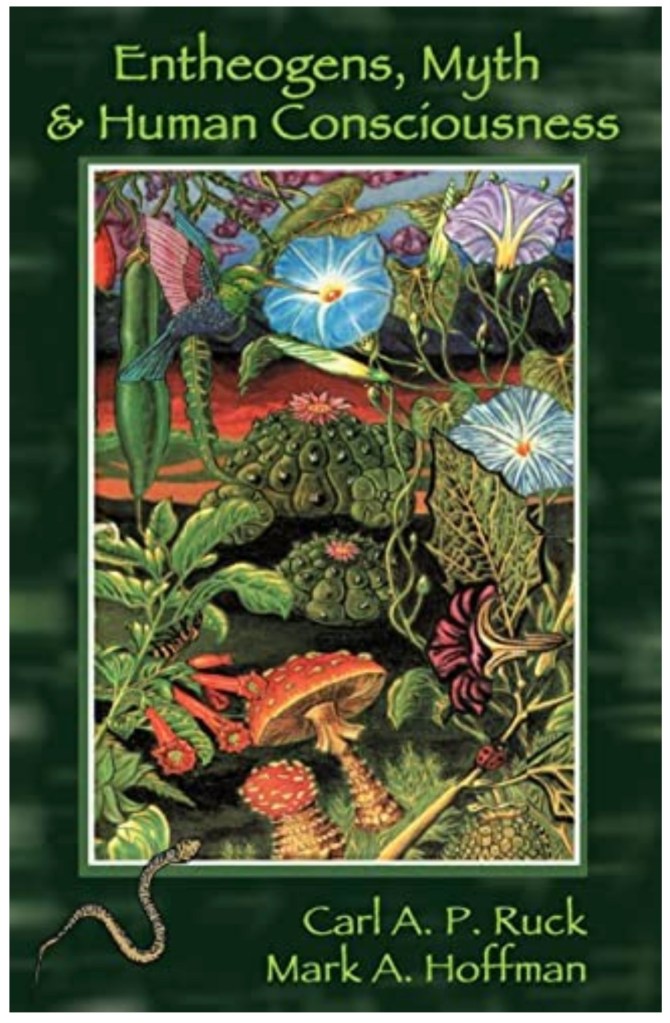
url https://www.amazon.com/Entheogens-Myth-Human-Consciousness-Carl/dp/1579511414/

About My Excerpting

Excerpts and commentary by Cybermonk. See link for exact quotes.

This is a pretty strict/ explicit condensing; not a free paraphrasing.

I should write up defining a couple degrees of condensing, and link to it, for definitions of how strict this quoting is – pretty strict/ faithful quoting in this case; not an aggressive condensing/ paraphrasing.

I added bold.

See Also

Roland Griffiths and Jordan Peterson – Psychology of Psychedelics
https://egodeaththeory.wordpress.com/2022/10/29/roland-griffiths-and-jordan-peterson-psychology-of-psychedelics/
Includes transcription from my Idea Development page 15 section “Peterson Busts Griffiths for Self-Contradiction”

Best section/quotes:
Idea Development page 15
Section heading:
Peterson Busts Griffiths for Self-Contradiction
https://egodeaththeory.wordpress.com/2022/09/03/idea-development-page-15/#Peterson-Busts-Griffiths-for-Self-Contradiction

Above that is a related section:
Idea Development page 15
Section heading:
Jordan Peterson Roland Griffiths Interview
https://egodeaththeory.wordpress.com/2022/09/03/idea-development-page-15/#Peterson-Griffiths-Interview

How the Immortals Are Immune to Fate/ Heimarmene: by Accepting, Surrendering, Submitting, and Sacrificing to It

During the Psilocybin Eternalism experience, how to become immune to the threat of loss of control from perceiving eternalism/ no-free-will/ helpless puppet frozen in rock controlled by a higher-level, uncontrollable source of your control-thoughts?

To become immune to the threat of loss of control due to experiencing dread eternalism, stop fighting eternalism; surrender to eternalism.

Thus you gain victory over eternalism, and you are no longer subject to turmoil panic dread from the eternalism serpent monster – because you sacrificed your {maiden princess ruler child} in honor and in submissive surrender to the underlying force of eternalism; you are now riding and honoring and being carried by the dragon.

Standard Hazy Trip Advice on Surrender to the Shadow, Trust, Submit, and Let Go of Control

url https://egodeaththeory.wordpress.com/2022/12/07/standard-hazy-trip-advice-on-surrender-to-shadow-trust-submit-and-let-go-of-control/

Hermetic Poetry-Confusion Spirituality

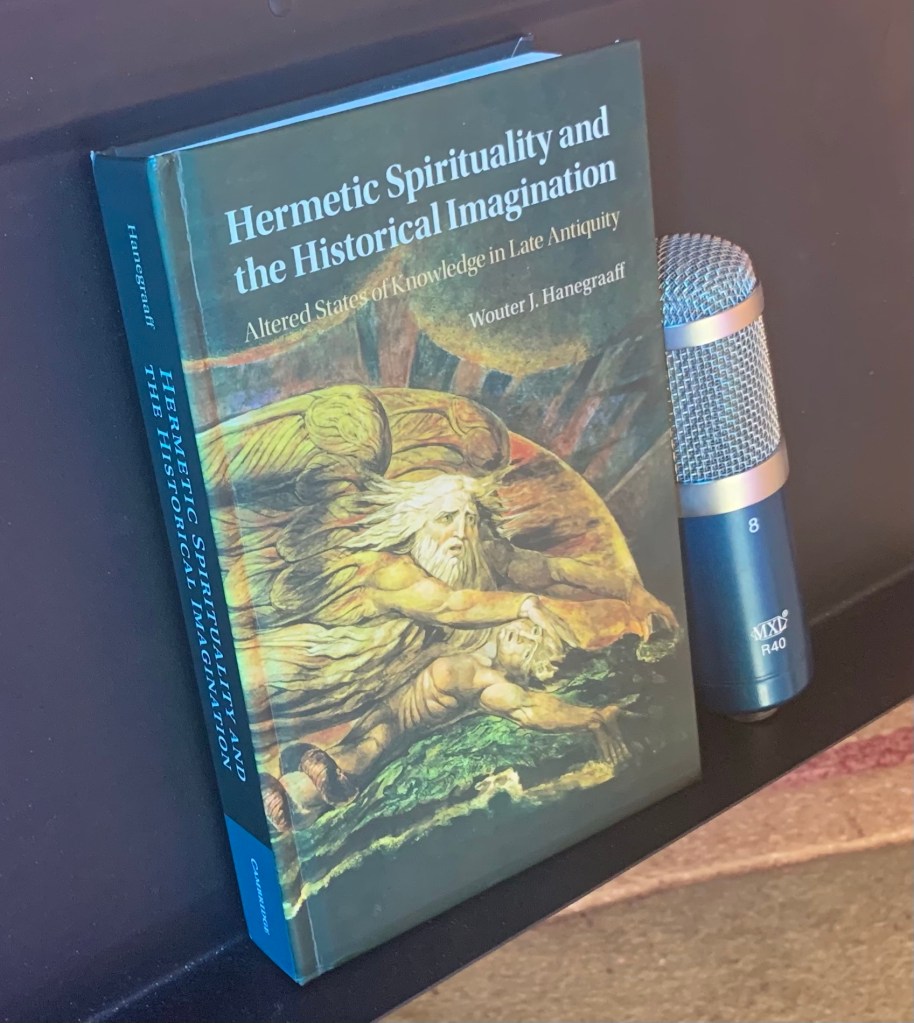
Wouter Hanegraaff in Hermetic Spirituality gets tripped up by the mytheme joke on page 97 vs. his confused baffled paraphrase of that Hermetic text passage on page 98 of Hermetic Spirituality.

Zosimos (a religion salesman for the Late Antiquity audience) is trying to confuse people by playing tricks with negative valuation of eternalism, while Zosimos simultaneously asserts the reality of eternalism in order to resolve cybernetic turmoil, which is control instability in the psilocybin state.

Zosimos says to the initiate that she needs to offer sacrifices to the daimons – a concept which Hanegraaff finds so unacceptable, that he does not mention that in his subsequent paraphrase.

Zosimos says that she needs to sacrifice to them not to nourish them or comfort them but to drive them away and make them disappear – ie, I honor you to get rid of you, with prejudice.

I honor eternalism to get rid of eternalism, with prejudice. Actually, to get rid of the turmoil that resulted from my fighting against eternalism; resulted from rejecting eternalism and fighting against it.

During the Psilocybin Eternalism panic frenzy threat experience, how do we destroy and get rid of the shadow, and make it go away?

To make the harrassing shadow monster go away, you must pay your ego-tax to the shadow monster

We sacrifice to the shadow in honor of the shadow; we surrender to the shadow, we submit to the shadow, we then ride the shadow, we are carried by the shadow, we pay obeisance to the shadow, we win victory over the dragon.

You tell the dragon threat:

“I sacrifice to you in honor of you, not to nourish you or comfort you, but to make you go the hell away, and make you disappear!!”

This is self-contradictory, mixed-message game playing with advanced, confusing, mystic poetry analogies.

p 96 : “Zosimos … and the children of Hermes [called for a move from] traditional cultic and communal worship controlled by the priesthood, to a universal path of “inner liberation” centered on the individual. Most people seemed spiritually blind to them, … sleepwalkers or zombies, dominated by powerful passions that they could not control, manipulated by daimons and priests like puppets on a string. Once having seen through the illusion, … work hard on cleaning it [one’s soul] from impurities and breaking the control of the bodily passions,”

Zosimos Against the Egodeath theory?

Mystic poetry ambiguity in Late Antiquity takes up the “I Hate Fate” theme, and affirms block-universe eternalism/ no-free-will/ eternalism, while also appearing to “drive it away and make it disappear”, make it go away, transcend it, reject it, get rid of it, and deny it, and claim that it is not the case – while also acknowledging that it is the case, by offering sacrifices to the daimons.

if you are vexed during psilocybin, it is because you are being attacked by eternalism.

To make eternalism go away and stop attacking you, you need to affirm and conform to eternalism, sacrifice your reliance on possibilism-thinking, and that way, you get rid of eternalism turmoil and make the turmoil that’s caused by battling against eternalism go away.

When being reborn to transform to eternalism, eternalism persecutes and teaches and corrects and reshapes you.

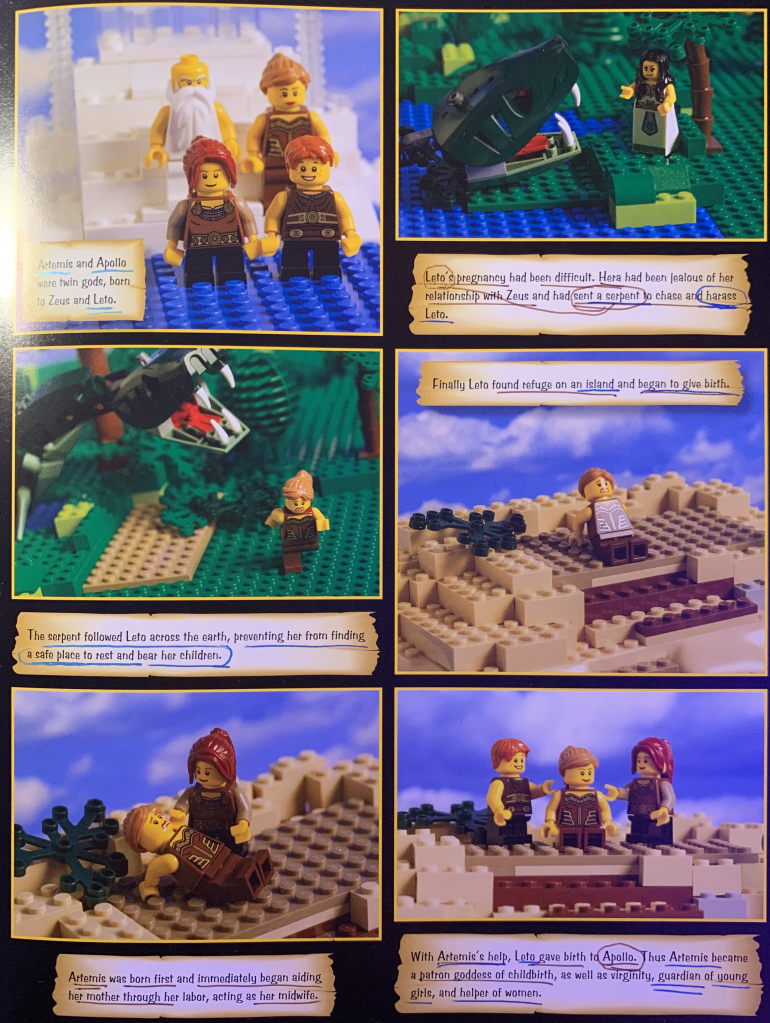
Apollo shot with a spear the {dragon that harassed} Leto {during her pregnancy}.

url https://www.amazon.com/Brick-Greek-Myths-Heracles-Poseidon/dp/162914522X/

Christ rescues us from the infernal eternalism no-free-will which the Egodeath theory brought during Psilocybin Eternalism experiencing.

Early Antiquity: I Love Eternalism:

Late Antiquity: I Hate Eternalism:

Page 97: Hanegraaff’s translation of the text by Zosimos at the end of Final Account:

“taking control of yourself, call on the divine to come to you, … offer sacrifices to the daimons, not such that nourish and comfort them, but such that drive them away and make them disappear. … Do so until your soul has been healed. And then when you realize that you have reached completion … spit on matter [fate, heimarmene, eternalism] … baptized in the mixing bowl [psilocybin mixed-wine krater], hurry up to your own people.”

The {maiden} (initiate) sacrifices to the archon fate rulers in honor of them to “defeat them” – that is, to end punitive corrective turmoil.

The {turmoil from the fates} resulted from fighting against the higher controller in the two-level system of control that’s revealed by the Psilocybin eternalism experience.

p 97-98:

“Theosebeia must calm her passions, realizing that they have nothing to do with the true essence of who she really is but come from the astral powers residing in her body and working through her soul. The daimons she can drive away by offering sacrifices*, undoubtedly some kind of purifying incense or smoke.”

*Censored by Hanegraaff: offer sacrifices “TO THE DAIMONS“, per Hanegraaff’s own translation of Zosimos’ text Final Account, on the other side of the same sheet of paper, on the previous page.

These are advanced, confusing analogy tricks of religious mythology based on the late antiquity rebellious theme of “I Hate Fate”.

To sell our religion in the competitive Late Antiquity marketplace, we claim that fate is not part of you, but you are above it and independent from it, and you can make it go away by sacrificing to it.

How to get rid of and defeat eternalism/ no-free-will: sacrifice to it – not to nourish and pacify and comfort it and feed it, but to make it go away.

Hanegraaff says what is sacrificed is incense smoke, but actually, what she sacrifices is her naive possibilism-thinking, in honor of and submission to, eternalism-thinking.

Thinking is thus purified and given stability of control.

p99 “liberated from the daimonic powers of astral fate”

“You Christians refuse to sacrifice to honor Caesar, so you are causing turmoil. When Caesar forces you to surrender, then you will have peace and order and harmony.”

The oracle told the king that to bring order to his kingdom, he must sacrifice his daughter to the dragon that’s wreaking havoc on the land.

Be rescued from fate by surrendering to fate, by having the mind reconfigured to be amenable to fate and take eternalism into account, including the transpersonal source of control thoughts, consciously trusting in what is revealed to always have been the case.

Monolithic autonomous control, steering in a branching possibilities tree, seems to be the case, in the ordinary state, which is the possibilism state of consciousness.

Normally cloaked and veiled by appearances, the actual 2-level workings of the control system are now perceptible, in the Psilocybin state of loose cognitive association.

Dependent control; you don’t control the source of your control thoughts.

Acid Rock lyrics: Little Dolls, Twilight Zone:

You are a helpless puppet at the mercy of that which created your control thoughts, which already exist in the future, lying ahead on the worldline of your control-thiughts, your stream of experiencing, in the frozen, unchangeable block universe.

The mystic surrender theme used for political purpose: the analogy of armies resisting and then surrendering to gain peace and orderly rule.

The soul/ maiden initially resists the higher invader, and then is made by the possessing god to consent.

The mind is made to consciously trust in the higher source of control-thoughts, per 2-level control that’s revealed by Psilocybin loose cognition, instead of trying to rely on monolithic autonomous control that’s steering into an open future, a future that you create through your power of steering your thoughts.

As long as you persist in attempting to rely on your left leg (naive possibilism-thinking), turmoil, self-transgression, self-conflict, & control instability is the result.

To pass through the dragon-guarded gate, to reach the tree of the fruit of immortality, non-perishable life, the mind is made to rely on the right leg instead of the left leg; eternalism-thinking instead of possibilism-thinking; non-branching instead of branching.

🌳🗡👑👦🦵🐉🚪🦵🐍🪨🍄🏆

Cut possibilities-branching, sacrifice child thinking, stop relying on the left leg, pass through the dragon-guarded gate by relying on right leg, conform to worldline snake frozen in block-universe rock, become completed and perfected, and then eat from the tree of the fruit of immortality.

{king steering in tree, drinks wine, transformed to snake frozen in rock}

The dragon/ serpent monster to try with all your might to avoid seeing:

😱 😵 🙈 🐉 🪨

You don’t control the source of your control thoughts.

Earl Fountainelle SHWEP podcast: The Esoteric Iamblichus

Secret History of Secret Western Secret Esotericism Secret Podcast

46:45 Iamblichus’ use of the idea “immune to fate” is the theme/ motivation of the present post.

March 16, 2022
Episode 137

The Esoteric Iamblichus

This theme I compared to Boomers’ anti-Christianity against their parents, and their running off to alien Buddhism:

“The barbarian and Hellenic strands of wisdom-tradition constructed by Iamblichus, and his own willingness to identify with the barbarian over the Greek,”

In classics, in Hellenisism scholarship, barbarian = Egypt, the ancient orient, ie anything east of downtown Athens.

Far East = Babylon/ Persia.

Nav page’s summary: https://shwep.net/podcast/page/2/

“We discuss the rich strata of the esoteric in the work of the sage of Chalcis.

“Starting from the evidence for socially-esoteric teaching within Iamblichus’ school, we move on to discuss

his constructions of esoteric wisdom lineages – notably the tradition of ‘the theurgists’ –

his employment of tropes of hiding and revealing, and

the parameters of the Iamblichean ‘ineffable’.”

My paraphrase of podcast passage:

the theurgists who invoke and call down the gods for purification from evil-

the greater kinds

they are impassible

[independent, immune from pain or pleasure due to some external thing outside them]

they save the cosmos

they are immune to fate

[that is my main mytheme-decoding focus here]

they are superior: they are able to behold the gods directly when the gods choose to appear to the theurgists,

gods reveal themselves only to the theurgists

Immune to Fate/ Heimarmene/ Eternalism

These are all equivalent:

surrender to the dragon or to the planetary date-ruler archons: =

surrender to

submit to

worship

slay, kill, shoot with Apollo’s bow and poisoned arrow

pin the dragon

give honor to the dragon/ the fate-archons/ eternalism / heimarmene/ the no-free-will gate guards

pay obeisance to

defeat the dragon

pacify the dragon / pacify heimarmene

ride the dragon / ride heimarmene

sacrifice to the dragon / sacrifice to eternalism

be carried by the dragon / be carried by eternalism

make peace with

cease rebelling against

to receive faith to calm the storm and narrowly escape shipwreck

stop dishonoring the heimarmene gods, to make peace

Note the lack of steering reins in many equivalent images of {riding}.

False-appearance cloak under epiphany of higher controller relying on {right leg} = eternalism

need hi-res
Photo: Julie M. Brown, processing by Cybermonk

1:55 pm Dec 17 2022: additional detail – The left hand of the curved pruning-knife holder holds branching:

Photo: Julie M. Brown, crop & processing by Cybermonk.

I need Julie’s other, unpublished photograph that’s centered on the curved knife on the upper right.

2:09 pm Dec 17 2022 – I just realized why the Browns have censored and deleted and cropped and removed and failed to mention or note the Medusa-harpe/ curved knife: it doesn’t fit the narrative/ point/ argument that they’re trying to tell & highlight, that the straight long knife on the tower scene matches the straight long knives on the last supper scene, indicating eating the mushrooms.
Brown’s image is in the 2016 book and 2019 article: https://www.academia.edu/40312824/Entheogens_in_Christian_art_Wasson_Allegro_and_the_Psychedelic_Gospels

Photo by Cybermonk.

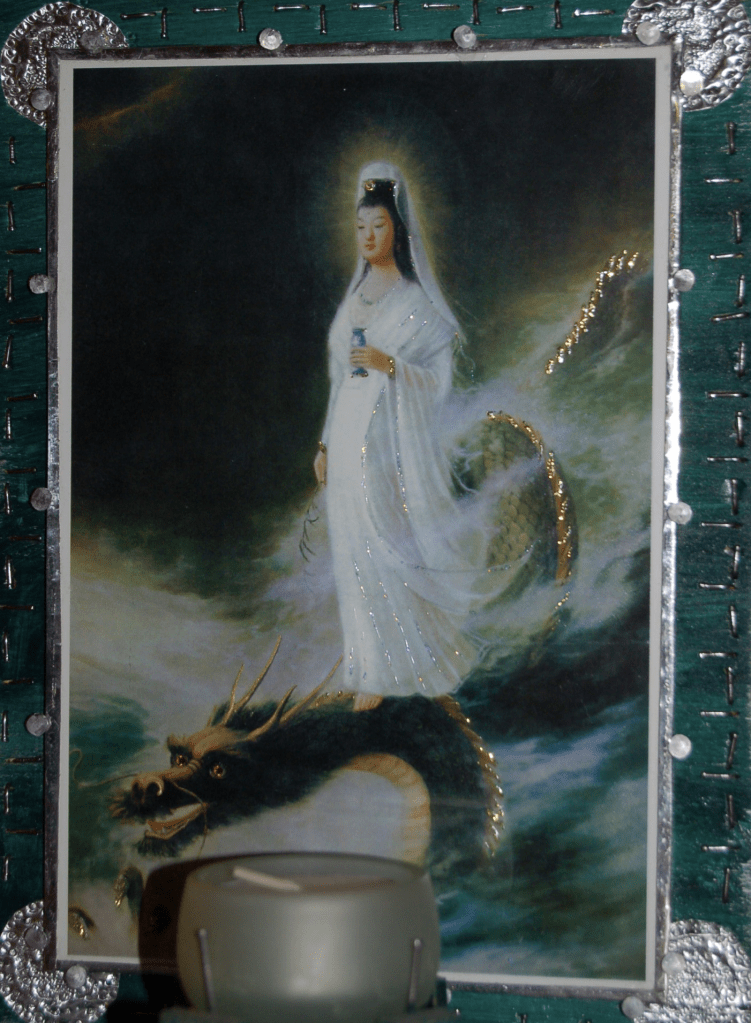
Photo used in 2006 main article, see caption there. Kwan Yin carried by the Psilocybin eternalism dragon.

I have superior orientalism art, better than Buddha statues. 😑

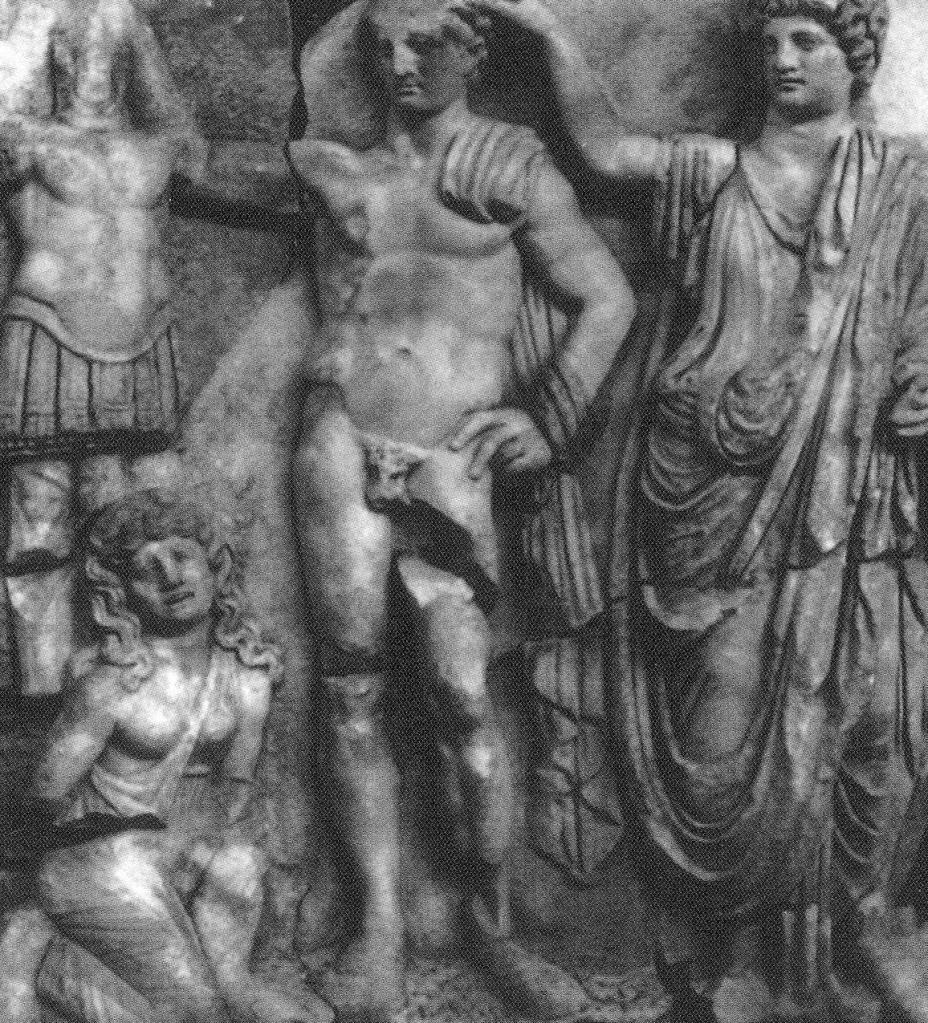
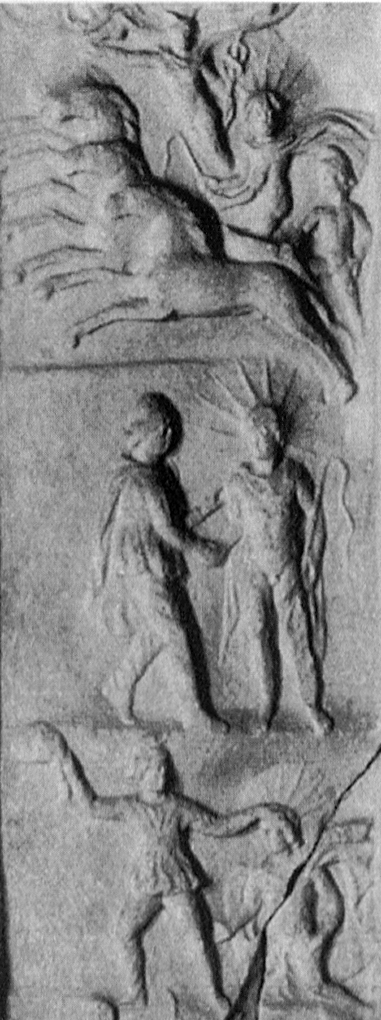
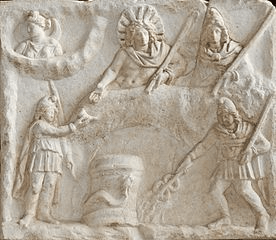
Mithras + Helios: the mind’s two levels of control – transpersonal (the higher, uncontrollable source of control-thoughts) and personal (the local control-thought receiver)

Consciousness, Religion, Gurus: The Pitfalls of Psychedelic Medicine (Matthew Johnson)

This debate in the field, about right conduct as a psychedelic session guide, is:

Shouldn’t we delete all mystical and spiritual elements, in order to give a pure and neutral trip session guide role?

Any frame that you impose on the poor client is inherently bad, and your job is to avoid imposing any frame.

Be neutral and scientific and pure.

The Egodeath theory is bad and inconsiderate, because it asserts and imposes a particular, arbitrary metaphysical frame.

A proper guide should provide no frame, or have the client set the frame.

= control-seizure panic

🌳🍄😊⚡️☸️😱😫😵🪐🐉🚪🌌💎😲🐍🧊🪨🌳🐍🍄😇🏆

The Article

Consciousness, Religion, Gurus– the Pitfalls of Psychedelic Medicine

4 pages:

url https://is-sp.org/fileadmin/user_upload/consciousness__religion__and_gurus__pitfalls_of_psychedelic_medicine.pdf

Too-Neat Categories; the Dragon Will Still Eat Your Clinic

Are you using this Psilocybin session for therapy, or are you using this for recreation, or are you using this for religion, or are you using this for philosophy, or are you using this for psychonaut exploration, or are you using this as cognitive science research?

Johnson writes:

“my recommendations only relate to the administration of psychedelics in science and medicine; they do not relate to the use of psychedelics by religions

Simply hermetically separate therapeutic vs. religious use of Psilocybin. 🤷‍♂️

Web Search for the Article

https://www.bing.com/search?q=Consciousness+Religion+Gurus+the+Pitfalls+of+Psychedelic+Medicine+Matthew+Johnson

Article About the Article

The Pitfalls and Challenges of Psychedelic Medicine

Author Video About the Article

url https://youtu.be/2uiLxUmD3I4

Article: Human Hallucinogen Research: Guidelines for Safety

Johnson, M.W., Richards, W.A., Griffiths, R.R. (2008).

url https://www.ncbi.nlm.nih.gov/pmc/articles/PMC3056407/

Journal of Psychopharmacology, 22, 603-620.

Like Griffiths’ Challenging Experiences Questionnaire, this article has no real awareness of the main experience, the threat of loss of control.

Michelle Janikian’s 2019 book Your Psilocybin Mushroom Companion has the correct focus on the problem of the threat of loss of control. Excerpts:

Standard Hazy Trip Advice on Surrender to the Shadow, Trust, Submit, and Let Go of Control

url https://egodeaththeory.wordpress.com/2022/12/07/standard-hazy-trip-advice-on-surrender-to-shadow-trust-submit-and-let-go-of-control/

Griffiths’ articles seem like dated affectation, a pose that seemed marketable for 2008, but entirely inadequate and out of touch with the problem. His CEQ:

https://egodeaththeory.wordpress.com/2022/12/16/the-challenging-experience-questionnaire-ceq-characterization-of-challenging-experiences-with-psilocybin-mushrooms-omits-category-threat-of-loss-of-control/

Charles Stang Video Webpage “Video: What is Psychedelic Chaplaincy?”

https://cswr.hds.harvard.edu/news/2021/03/08/video-what-psychedelic-chaplaincy

Video Webpage Transcription – Excerpts About the Article

“here’s the article that some of you have been referring to.

“And here’s a quote that I think actually makes a really, really good case for psychedelic chaplaincy.

Matthew Johnson wrote:

“a little-discussed danger at play in psychedelic research, and one that will surely become apparent if psychedelics are approved as medicines.

“This danger is the scientists and clinicians will be imposing their personal religious or spiritual beliefs on the practice of psychedelic medicine.”

/ quote

Stang group’s discussion:

“the paper that you brought up was published recently, and I would encourage people in the audience to read it.

“It was written by Matthew Johnson, who’s a leading psychedelic researcher at Johns Hopkins, and it’s called “Consciousness, Religion, Gurus– the Pitfalls of Psychedelic Medicine.”

“the problem of the intersection of religion and psychedelics that Matt is doing, his proposed solution to that problem, and whether or not you agree with his proposed solution of how we can make–

“how we can make peace with the inherently spiritual nature of psychedelics.”

Cybermonk Comments

This is the ol’ great Buddha statue debate in the psychedelic clinic therapy room … related to the Great Question of Newage or Classical styling of music or framing.

You could falsely accuse the Egodeath theory of oppressing the voyager/ client by pushing a particular metaphysical frame, instead of … what, “being neutral”?

I turned that argument against the accuser; the argument is a functional self-contradiction and is malpractice, it turns out, and is actually inflicting harm, failing to do your basic job as a psychedelic clinic session guide.

More strongly than anyone could ever accuse me, I aggressively accuse other people of:

How dare you suggest to the client that they should “submit” and “surrender” and “give up their freedom to allow the experience to drive them” – you are supposed to empower 💪 the client and amplify their ego power empowerment freedom.

Stand on your left leg harder, no matter the fact that psychotic control seizure is thereby produced.

Never mind that the wrath of the gods is invoked by the client’s sitting on that ego-steering throne, and the client’s ship is sinking in a storm, thanks to your supportive empowerment of the client.

Never mind that; plow ahead! You’re supposed to empower 💪⚡️the client, no matter what, and reify their existing, untransformed expectations and preconceptions.

Your role as a psychedelic guide is to fulfill the client’s wishes, of how control and time and psychedelics and the mind works.

That is the proper, neutral, and ethically good thing to do, which is pure of any spiritual or religious belief.

You are a terrible person for suggesting that the poor client, who is a victim of you, … you should have delivered them just vague freewill fog, or just shrugged instead,

You should feebly and non-directively ask the client: “I am your psychedelic guide today – how would you like me to guide you?”

Stang Panel Con’t

“Do we start to associate those type of experiences with that religious symbolism [infamous infernal Buddha statue] and the traditions and all the connotations and ideas that come with that?

“And I think to his point, there is a problem here, especially because we also know that set and setting are so incredibly important.

“You might even call– and repeating Ido Hartogshon’s theory here, psychedelics placebo enhancers.

“So to what extent are the flight instructions not some sort of descriptive tool, but actually, they’re a primer for a particular experience?”

[while posing as if “neutral” and “pure” of any “religious or spiritual or metaphysical belief”]

“people in America tend to have more mystical experiences, … due to the fact that there’s an emphasis on mystical experiences.

“There’s the use of the mystical experience questionnaire [MEQ], which comes from a very particular way of gauging and assessing what a mystical experience is.

“It kind of primes people that are about to have a psychedelic experience to think about certain questions.”

“what Matthew Johnson is basically saying,

“even the more subtle aspects of our guidance as therapists could deeply influence someone.

“[Our panel advocates] existential positionality, this deep, spiritual reflection on your own nature being spirituality. [mystobabble -cm]

“But rather than going with this, he proposes a secular approach.

“And he then also goes on to continue to say,

“the secular is basically what we can empirically verify.

“I’m not sure … about this equation of the secular with that which can be verified empirically through science.

“But there is so much that we don’t know, that going by that, it’s a very meager definition, I think, of secularism.

“it doesn’t really address any of the concerns.

“it even naively suggests that if we just would wear a white coat and strip all– everything that kind of even smells remotely like meaning, we’ll be fine.

“it’s a naive idea of what– that secular would be a suitable approach to this.

“everything that we do is endowed with meaning, to a certain extent.

“it’s better to be honest about that and forthcoming about that, and reflect on the ontological assumptions in our psychotherapeutic approaches and models, and then have another conversation, but be transparent.

“We can then start to work with informed consent.

[to cater to the client/voyager’s spiritual desires -cm]

“We can start to do spiritual assessment which is client-centered, rather than based on someone’s personal background.

“he is using the word secular when the word interfaith might be more appropriate, if we include in interfaith, for example, a rationalist, empiricist view.

“That is arguably one commitment among many.

“it’s frustrating to see the medical model being positioned as the position of no position, and everyone else [as biased and pushing some arbitrary spiritual frame].

“I agree with you. It’s an important paper, and I would encourage everyone to read it.”

“That’s the other sense of presence for me, is being sort of connected to something, but being conscious of what that is

“not using vague terms that Matthew Johnson refers to that some therapists have been using that he calls New Age terms that are vague, and we assume everyone knows what it means to say that

I’m in a unitive state, or

I’m having a mystical experience”

“to have really a well-cultivated sense of what that is, and to be skillful in knowing when the presence that I’m bringing into a room, maybe I’m becoming alienated from that.

“And so then I can bring myself back to a more spacious, compassionate, loving response for the person that I’m with, and knowing how to navigate spaces where we can easily be thrown off.

“psychedelic experiences are very powerful.

“people go away into the vast territories of human experience, and so to have a well-navigated landscape, and also a practice that orients us to distress and to joy and affection.”

[I like the “well-navigated landscape” image; I have mapped the central feature of Mythemeland: the control transformation gate, aka the shadow. -cm]

“some of that is developed in psychotherapeutic practice, but this dimension of it that is the spiritual and religious experience may not be always.

[… be developed, though some clients need it to be].

“Matthew Johnson– I would love to see a chaplain specialist on that team, a spiritual care professional to consult with that group to provide this kind of insight and wisdom to round out the [actually spiritual] experience that people are having with really very skilled and highly skilled clinicians.

[“alleged pure, neutral scientist therapists”]

Provide a pure, non-biased, neutral Psilocybin experience

“within human experience there’s the seduction of the pure– that somehow we can get to a pure experience, whether that’s purely objective, which is part of what I hear Matthew Johnson arguing for, which there’s no such thing.

“you want to give me a hard time about myth. That’s a myth.”

[By ‘accusation of myth’ & the above retort, I think that speaker is referring to the proposed, allegedly – but naively proposed – “pure”, “metaphysically neutral” ideal: that the clinic should not have any mythemes; no Buddha figures; no Christian music eg Bach. -cm]

“And so recognizing the very fact that we are in someone else’s space, that changes the experience that the person has, simply because we’re there.

[as a meddling, non-neutral, Guide/ biased interpretation-suggester imposing our own arbitrary metaphysical frame on the poor hapless Client/ victim -cm]

“So there’s a piece of self-awareness that’s really important for the person who enters that space as a care provider, as a caregiver, and a recognition that the very fact that you’re showing up is going to change things.

[care provider: psilocybin session Guide]

“So in light of that, where do you go from there?

“And knowing that within this work of psychedelic experience, just what can be opened up.

[eg arbitrary frames]

“that raises important questions for the training of people who would be in that space, not only for the self-awareness piece, but being able, then, to sit with people as you inadvertently open up things with them that you never intended to open up, but because you are there, that’s what’s happened.”

[one voyager got caught in a bad thought loop, and the Guide was losing it]

“[A psychedelic Guide needs] a profound and deep embodied sense of understanding the psychedelic landscape and experiences and all the different type of iterations of those experiences, and being able to be a very calm, reassuring presence.

“And then especially, not doing too much.”

Guides Should Teach; the Naive Myth of the Metaphysically Neutral Option & Unsustainability of the Exaggerated Principle/ Doctrine of “Don’t Be Too Directive”

It is objectively better to teach the Egodeath theory than for the guide to mutely & unhelpfully “reassure” the client who is being pulled into the control-transformation vortex.

A failure to help in giving birth prevents birth and causes trauma. That is malpractice and basic incompetence.

Goal: complete the innate transformation, efficiently. Maximize success and minimize trauma. Neutrality is a myth and unhelpful; harmful.

Are you going to claim that you are a midwife, but just sit there while the baby is struggling, and do nothing?!

And refuse to tell the client what’s going on and how to succeed in their passage?

I entertained the proposal that guides should not tell low-dose beginner clients the truth; about the mind’s built-in, designed-in, innate mental model transformation from possibilism to eternalism – and that position blew up!

Withholding Transcendent Knowledge turns out to be the most indefensible position in the world, and completely not actionable! Outright malpractice, in fact!

Make yourself useful!! Assert yourself, help out, for Christs sake!

Article Excerpt

at https://is-sp.org/fileadmin/user_upload/consciousness__religion__and_gurus__pitfalls_of_psychedelic_medicine.pdf

Matthew Johnson wrote:

Heading:

“INAPPROPRIATE INTRODUCTION OF RELIGIOUS/SPIRITUAL BELIEFS OF INVESTIGATORS OR CLINICIANS

“spiritual” can mean different things. Here I am referring to supernatural belief systems or frameworks that are not empirically based,

[but see Ken Wilber’s essay Eye to Eye; define ’empirical observation’ -cm]

“[social mundane] qualities can and should be encourage by clinicians conducting psychedelic therapy.

“The concern surrounds the former category of supernatural or religious beliefs.

“For today’s psychedelic scientists and clinicians, frameworks of concern are likely to resemble a loosely held eclectic collection of various beliefs drawn piecemeal from

mystical traditions,

Eastern religions, and

indigenous cultures, perhaps best described by the term

“new age,” although they could come from any religious or spiritual belief system.

“It is important to operate instead from a secular framework that is nonetheless open to working with patients or participant of any religious/spiritual background.”

Cybermonk:

That’s like how the Egodeath theory stands on two distinct legs, integrated.

The Egodeath theory is based on non-metaphor direct speaking (the Core theory).

That clearly defined model then is able to separately explain analogies in religious myth (the Mytheme theory), by virtue of the two sub-theories being kept distinct.

Don’t make vague mystic myth the foundation for a scientific explanatory model.

Johnson:

“This is in alignment with the best practices of clinical psychology and other mental health professions that recognize the importance of strong rapport with patients, religious/ spiritual tolerance, and the importance to mental health of having meaning in life.

“Clinicians and scientists should not introduce their own nonempirically supported beliefs.

“It is inappropriate to introduce meta-religious beliefs such as perennialism.

perennialism is the notion that the major religious traditions point toward a core truth.”

Psychedelic Cognitive Science and Developmental Psychology Is Not a Perennialist (Religious Myth) Foundation

Johnson’s above statement against holding a perennialism foundation isn’t how to frame the Egodeath theory.

The Egodeath theory is primarily framed as an explanation of how the mind works when exposed to the loose cognitive association binding state through psilocybin.

This developmental innate structure built into the mind then explains world religious myth.

Religious myth describes by analogy, psilocybin eternalism transformation.

Johnson:

“It is also not appropriate to present nonempirically supported descriptions of psychedelic effects as known truths for participants, e.g., instructing participants that a psychedelic session will inform them about the nature of the mind.”

Objection, hypocrites!

Every trip guidebook explains that “you need to let go, you need to give over control, you need to submit, you need to surrender, and that is how to restore control stability.”

It would be insane malpractice to not inform the tripper of this folk practical wisdom technique.

And explain clearly the scientific model, along with the now-decoded referent of religious myth.

I have thought it through and wow!, my position is extremely easy to defend, and the other, opposite position is completely impossible to defend for even a moment;

Arguing for witholding Transcendent Knowledge from a Psilocybin user fails catastrophically in 20 different ways.

I would feel sorry for anyone who tries to uphold the position that we should withhold gnosis and withhold transcendent knowledge from the poor client who is undergoing control seizure transformation turmoil.

When you know the answer and solution and explanation – articulate wisdom – it would be insane & unjustifiable to withhold Transcendent Knowledge from someone who needs it.

It would be malpractice not to teach the client the Egodeath theory, to recognize systematically and efficiently that this controlled turmoil is shaped and recognized as eternalism transformation.

Not beating around the bush, withholding explanation – that would be sinister and paranoia-inducing.

Johnson:

“Conveying such descriptions is concerning at a general level because patients may take such descriptions as scientific fact rather than opinion when coming from scientific or clinical authorities.

“They are also concerning because if participants do come away from sessions with their own such conclusions from the effects then it is more scientifically interesting if such notions were not directly fed to participants from the treatment team.

“In addition to being mindful about the scope of concepts introduced to participants, scientists and clinicians should not include religious icons in the session room or other clinical space.

“It has unfortunately become fashionable and commonplace for statues of Buddha to be present in psychedelic session treatment rooms.”

I am against Buddha statues, like people are against simply assuming “everyone loves U2”.

I am against non-drug meditation insifar as it’s employed as a strategy to get rid of Psilocybin and ego death.

Non-drug meditation is a recovery days activity.

Historically, meditation comes from Psilocybin.

Meditation is being abused, to perpetuate delusion, when meditation is used as a pretext to avoid and substitute for and eliminate and replace Psilocybin.

– Cybermonk

Johnson:

“In addition to other concerns about conflating religious beliefs with empirically based clinical practice, the introduction of such religious icons into clinical practice unnecessarily alienates some people from psychedelic medicine, e.g., atheists, Christians, and Muslims. “

Retort:

His view is biased against any particular groups.

That is not a sustainable argument that he makes: it is naïve neutrality, through deleting everything, as if religious freedom dictates deleting all religion. -Cybermonk

“It will ultimately interfere with the mainstream adoption of these treatments to help the greatest number of appropriate individuals if they are approved as treatments, e.g., coverage by insurance and government medical programs.

“scientists and clinicians can certainly have their own religious or nonempirically based beliefs.

“they should not bring up these personal beliefs and insert them into therapeutic practice.”

Retort:

On what basis do you declare and label certain professional practices as neutral and scientific but you assert other practice is a spiritual or religious then what do you do with Ken Wilber’s theory which is developmental psychology psychospiritual?

I don’t bring religious or spiritual beliefs, I bring a model of mental development in the Psilocybin altered state which converts from possibilism-thinking to eternalism-thinking.

Religious myth is analogies that describe this mental developmental innate process.

This is how the mind is designed, and religion describes how the mind is designed.

The well-formed, intelligent, scientific (= directly expressed), correct, true nature of religious beliefs is about cyber-space-time mental models and how they are transformed in the psychedelic state.

This is not about “religious beliefs” as Johnson misconceives the term; this is about cognitive science of mental development, which is explained by religious myth by analogy. -Cybermonk

Johnson:

“It also does not mean that participants should not bring their own belief systems to their therapy.”

“people having psychedelic sessions touch on the “big questions,” e.g., the nature of reality and the nature of self.

“Patient beliefs often play a large role in her or his meaning making from sessions.

“Just as with the practice of secular clinical psychology or psychiatry, a patient can certainly bring up religious beliefs and concepts …”

Printing and Debating the Article

Johnson’s article has other points too.

The article is not long, but it is dense with a lot of high-traction points that are worth engaging and debating and clarifying our thoughts.

The Challenging Experience Questionnaire (CEQ): Characterization of challenging experiences with psilocybin mushrooms – Omits Category “Threat of Loss of Control”!

Michael Hoffman, December 16, 2022 6:26 pm UTC+0
Site Map

Contents:

toc added/updated Dec. 27, 2024

Intro

pending

Updated Assessment December 20, 2022

Instead of expanding the present page, I started a fresh new page, planned title:
How Control-Loss Got Omitted from the Challenging Experiences Questionnaire (CEQ)

Where did the control-related questions go? What happened to them? How did they get dropped along the way?

The CEQ questions are definitely flawed right at the most central key point:

The CEQ questions omit any “control” phrases, which are found elsewhere in the article.

Instead of words about control loss threat, the CEQ has duplicated, indistinguishable, redundant questions about:

  • fear/frightened 2x
  • death/dead 2x
  • isolation 2x
  • shake/shaky 2x.

The previous questionnaires and the body of the article have such phrasing. I list those exact “control” phrases from the CEQ article. I’m re-checking that list now.

At the bottom of this webpage, I’m doing a focused examination of the control-related wording in the CEQ questions, and comparing them to the control phrases elsewhere in the CEQ article.

Why are four or more questions exactly duplicated (fear, death), instead of having any questions about control?

Maturation of the Articles

Griffiths’ “Guidelines for Safety” article is 2008. Doesn’t mention heart palpitation/ uneven heartbeat.

Griffiths’ CEQ article is 2016. Mentions heart palpitation/ uneven heartbeat.

Where the action’s at: the last 2 pages of the article; section:
Appendix 2: Initial Item Pool for CEQ Development – top priority.

List these control-related questions from the previous questionnaires, along with which questionnaire they are from.

Map them to the CEQ’s questions to determine what became of the vanishing control-related words/phrases.

Then assess body of article, section by section, looking for discussion of why those control-related phrases got dropped when copying questions from previous questionnaires into the CEQ.

My Initial Assessment

Apparently, according to Roland Griffiths, the threat of loss of control isn’t a challenging experience with psilocybin mushrooms, even though his article mentions ‘control’ 19 times and quotes other questionnaires, including their entire category of questions, “Impaired cognition/control”.

So far, I’ve found 3 documents that misrepresent bad trips, due to Roland Griffiths’ cover-up of the main bad trip effect – the threat of loss of control:

I have informed the Oregon Advisory Board about the threat of loss of control and its folk solution, “surrender/ submit/ accept the loss of control”, as well as linking them to my Requirements for Guides webpage, along with informing them that Psilocybin is at the heart of Christian historical religious practice.

Challenging Experience Questionnaire (CEQ)

The Challenging Experience Questionnaire: Characterization of challenging experiences with psilocybin mushrooms

Step aside, MEQ, make way for the CEQ.

The article that develops and presents the CEQ:

https://www.academia.edu/33760114/The_Challenging_Experience_Questionnaire_Characterization_of_challenging_experiences_with_psilocybin_mushrooms

Frederick S Barrett, Matthew P Bradstreet,
Jeannie-Marie S Leoutsakos, Matthew W Johnson
and Roland R Griffiths, 2016

Summary of the Missing/ Covered-up Questions About Control-Loss

Copied from my analysis of Griffith’s question categories below, here is the list of missing, key, common questions that should’ve been in the CEQ.

Threat of Loss of Control (missing category)
  • marionette [helpless puppet – my formulation/ phrase]
  • sense of being trapped and helpless
  • volition
  • new thoughts [eg of control transgression]
  • dread of ego dissolution
  • loss of ego/control
  • impaired control and cognition
  • confusion, disorientation and/or chaos [control instability]
  • impaired control, disintegration of sense of control [not phrasing from pdf]
  • impaired control and cognition
  • no longer had a will of my own
  • paralyzed
  • unable to make decisions
  • felt threatened
  • frustrating attempt to control
  • loss of control of my mind
  • threat of loss of control [my formulation/ phrase]
  • psychotic immunity to fear; inappropriate affect regarding transgressive thoughts [my formulation/ phrase]
  • felt like my control-thoughts already exist in the future, unavoidably [my formulation/ phrase]

Article: “Human Hallucinogen Research: Guidelines for Safety”

Similarly, Griffiths’ article “Human Hallucinogen Research: Guidelines for Safety” is missing (almost entirely) the effect, Threat of Loss of Control; Fear of Loss of Control.

Panic about/ Apprehension of/ Fear of loss of control – yet that comes with an attraction element too, per the mytheme {sirens luring steersman/ sailors to their death on the rocks}.

Griffiths’ articles are also missing, or entirely short on, the solution, which is: {submit to/ give honor to/ pay obeisance to/ surrender to/ pacify/ mollify/ sacrifice to} the eternalism no-free-will {dragon/ planetary archon fate-ruler}.

Johnson, M.W., Richards, W.A., Griffiths, R.R. (2008).

url https://www.ncbi.nlm.nih.gov/pmc/articles/PMC3056407/

Journal of Psychopharmacology, 22, 603-620.

commentary copied from https://egodeaththeory.wordpress.com/2022/12/17/consciousness-religion-gurus-the-pitfalls-of-psychedelic-medicine-matthew-johnson/

Like Griffiths’ Challenging Experiences Questionnaire, this article has no real awareness of the main experience, the threat of loss of control.

Michelle Janikian’s 2019 book Your Psilocybin Mushroom Companion has the correct focus on the problem of the threat of loss of control. Excerpts:

Standard Hazy Trip Advice on Surrender to the Shadow, Trust, Submit, and Let Go of Control

url https://egodeaththeory.wordpress.com/2022/12/07/standard-hazy-trip-advice-on-surrender-to-shadow-trust-submit-and-let-go-of-control/

Griffiths’ articles seem like dated affectation, a pose that seemed marketable for 2008, but entirely inadequate and out of touch with the problem.

/ end of copied commentary

Mystical Experience Questionnaire (MEQ)

MEQ: https://www.trippingly.net/lsd-studies/2018/5/22/the-mystical-experience-questionaire-30-questions

Article about MEQ: https://psychedelicreview.com/what-is-the-mystical-experience-questionnaire/

Charles Stang’s Critique of Whitewashed Pseudo-“Mystic Experience”

See in my past couple posts, Charles Stang’s criticism of Roland Griffiths’ lopsidedly positive, whitewashed marketing of “mystic experience”.

The Egodeath community has pointed out this marketing whitewashing.

Stang’s critique; find “Stang” in:
Psychedelics and the Future of Religion/ Transcendence and Transformation Initiative (Stang, Harvard)
https://egodeaththeory.wordpress.com/2022/12/16/psychedelics-and-the-future-of-religion-transcendence-and-transformation-initiative-stang-harvard/

CEQ Surprisingly Omits Entire Category of “Control Loss”

Griffiths has created a negative survey, that’s about 75% good, but has amazing huge gaps – surprised but not surprised.

I’m surprised at which omissions and blind spots are in the survey vs. what known negative experiences are mentioned in the course of creating the CEQ.

Here are phrases throughout the article that – astoundingly – didn’t make it into the 1-page questionnaire of 26 questions. Some are from other questionnaires.

  • volition
  • new thoughts [eg of control transgression]
  • dread of ego dissolution
  • loss of ego/control
  • impaired control and cognition
  • Question 21 Experience of confusion, disorientation and/or chaos [control instability]
  • Question 28 Sense of being trapped and helpless
  • Question 37 Visions of demons, devils or other wrathful deities [omitted b/c culture-specific myth omitted]
  • Question 40 Feeling that people were plotting against you [I’d say “thoughts conspiring to pull into vortex”, not “people”]
  • Question 44 Thoughts and ideas flashing by very rapidly [2112 lyrics, Lessons song]
  • Question 57 Feeling of being rejected or unwanted [repudiating/ sacrificing childish possibilism-thinking, have to jettison]
  • Question 75 Convincing feeling of contact with people who have died
  • Question 76 Sense of being separated from the normal world, as though you were enclosed in a thick, silent glass chamber [says “isolated and lonely” instead]
  • The subjective experience of one’s own death and loss of control of the mind
  • Question 66 Frustrating attempt to control the experience
  • Question 84 Feeling of disintegration, falling apart
  • Question 94 In control
  • 5DASC [questionnaire’s category] items: Impaired cognition/control subscale: [an entire category omitted!]
  • 5. I felt like a marionette. [Little Dolls song by Bob Daisley, Twilight Zone by Rush or Peart]
  • 16. I had difficulty making even the smallest decision.
  • 33. I felt as though I were paralyzed.
  • 44. I felt isolated from everything and everyone.
  • 45. I was not able to complete a thought, my thought repeatedly became disconnected.
  • 53. I had the feeling that I no longer had a will of my own.
  • 29. I was afraid without being able to say exactly why.
  • 38. I felt threatened.

The grading guide arranges the questions by group – there is no “loss of control” category or questions!! Inconceivable. Even though they list such questions from other, previous questionnaires.

CEQ’s Questions Grouped into Categories

Threat of Loss of Control (missing category)
  • marionette [helpless puppet – my formulation/ phrase]
  • sense of being trapped and helpless
  • volition
  • new thoughts [eg of control transgression]
  • dread of ego dissolution
  • loss of ego/control
  • impaired control and cognition
  • confusion, disorientation and/or chaos [control instability]
  • impaired control, disintegration of sense of control
  • no longer had a will of my own
  • paralyzed
  • unable to make decisions
  • felt threatened
  • frustrating attempt to control
  • loss of control of my mind
  • threat of loss of control [my formulation/ phrase]
  • psychotic immunity to fear; inappropriate affect regarding transgressive thoughts [my formulation/ phrase]
  • felt like my control-thoughts already exist in the future, unavoidably [my formulation/ phrase]
Fear
  • I had the feeling something horrible would happen
  • Experience of fear
  • Anxiousness
  • Panic
  • I felt frightened
Grief
  • Sadness
  • Feelings of grief
  • I felt like crying
  • Feelings of despair
  • Despair
  • Emotional and/or physical suffering
Physical Distress
  • Feeling my heart beating
  • Feeling my body shake/tremble
  • I felt shaky inside [Michael Williams book: The Unshakeable Race (gnostics)]
  • I felt my heart beating irregularly or skipping beats
  • Pressure or weight in my chest or abdomen
Insanity
  • Fear that I might lose my mind or go insane
  • I was afraid that the state I was in would last forever
  • I experienced a decreased sense of sanity
Isolation
  • Isolation and loneliness
  • Feeling of isolation from people and things
  • I felt isolated from everything and everyone
Death
  • I had the profound experience of my own death
  • I felt as if I was dead or dying
Paranoia
  • I had the feeling that people were plotting against me
  • Experience of antagonism toward people around me

Zero Thought of Discussing “How Did You Solve/ Resolve the Problem?”

Not Solution-Oriented At All, only “Try to Predict & Avoid the Experiences”

The article says understanding challenging experiences helps predict and prevent them during therapy – yet has zero concept of “Hey, we should discuss how people solved these problems when they did come up.”

It merely mentions “responds to reassurance” (which assumes there’s a Guide to do the “reassuring”).

For the standard vague actual solutions people use, see my recent post https://egodeaththeory.wordpress.com/2022/12/07/standard-hazy-trip-advice-on-surrender-to-shadow-trust-submit-and-let-go-of-control/

The mind is made to submit and surrender to the higher-level control source and jettison (repudiate, sacrifice, outgrow) the egoic claim to autonomous power of steering in a branching tree of possibilities.

Relying on left leg = unstable, branching-possibilities model, gives control failure/ cybernetic control death.

Relying on right leg = stable, non-branching model, gives viable control and ability to be in the psilocybin state with suitable, useful, appropriate, durable control mode.

More content below, including the actual questionnaire.

See Also

Strict Requirements for Teachers, Initiation Guides, and Students, Prior to Initiation
https://egodeaththeory.wordpress.com/2020/11/24/strict-requirements-for-teachers-initiation-guides-and-students-prior-to-initiation/

Standard Hazy Trip Advice on Surrender to the Shadow, Trust, Submit, and Let Go of Control
https://egodeaththeory.wordpress.com/2022/12/07/standard-hazy-trip-advice-on-surrender-to-shadow-trust-submit-and-let-go-of-control/
About extracted from Michelle Janikian’s book:
Your Psilocybin Mushroom Companion: An Informative, Easy-to-Use Guide to Understanding Magic Mushrooms—From Tips and Trips to Microdosing and Psychedelic Therapy

Flawed CEQ that Omits the Entire Category of “Loss of Control” – DOH!

The word “control” doesn’t even appear in the questionnaire, The Challenging Experiences Questionnaire!! The word ‘control’ appears 19 times in the article.

Even though the 5DASC questionnaire which this article quotes has an entire category of questions, called “Impaired cognition/control subscale”.

HOW IN THE … CAN YOU MAKE A BAD TRIP QUESTIONNAIRE AND FAIL TO EVEN MENTION CONTROL??!! mega fail!!

🌳🍄🐍😵🪨🐉🚪💨💥💎🏆

Appendix 1: The Challenging Experience Questionnaire

Instructions: Looking back on the entirety of your session, please rate the degree to which at any time during that session you experienced the following phenomena. Answer each question according to your feelings, thoughts, and experiences at the time aof the session. In making each of your ratings, use the following scale:

  • 0 – none; not at all
  • 1 – so slight cannot decide
  • 2 – slight
  • 3 – moderate
  • 4 – strong
  • 5 – extreme (more than ever before in my life)

______ 1. Isolation and loneliness

______ 2. Sadness

______ 3. Feeling my heart beating

______ 4. I had the feeling something horrible would happen

______ 5. Feeling my body shake/tremble

______ 6. Feelings of grief

______ 7. Experience of fear

______ 8. Fear that I might lose my mind or go insane

______ 9. I felt like crying

______ 10. Feeling of isolation from people and things

______ 11. Feelings of despair

______ 12. I had the feeling that people were plotting against me

______ 13. I was afraid that the state I was in would last forever

______ 14. Anxiousness

______ 15. I felt shaky inside

______ 16. I had the profound experience of my own death

______ 17. I felt my heart beating irregularly or skipping beats

______ 18. Pressure or weight in my chest or abdomen

______ 19. I experienced a decreased sense of sanity

______ 20. I felt as if I was dead or dying

______ 21. Panic

______ 22. Experience of antagonism toward people around me

______ 23. Despair

______ 24. I felt isolated from everything and everyone

______ 25. Emotional and/or physical suffering

______ 26. I felt frightened

Free for non-commerical[sic] use.

Control Transformation Art Imagery

Rescued by no-free-will from outside the local control agent system by the higher control level, pulled from the jaws of hell of control disproof/ transgression, and purified/ perfected/ enlightened/ transformed from (immature, temporary, contingent, perishable) possibilism-thinking to (mature) eternalism-thinking.

Childish branching-thinking (naive possibilism-thinking) is carried off, affirming non-branching possibilities, per branching-message mushroom trees.

Book: John Lash: Not In His Image, page 220, annotation by Cybermonk, July 4, 2022
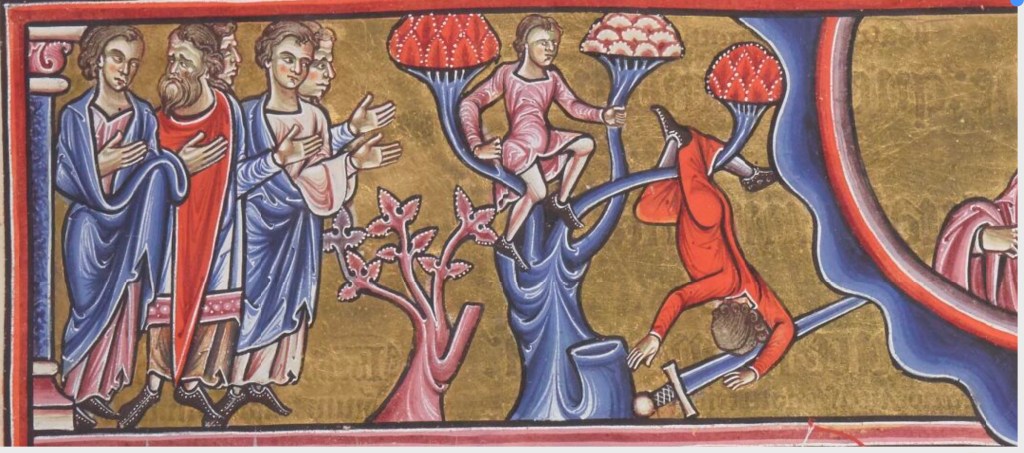
One of my announcements of my full decoding of the major medieval mythic art trope {branching-message mushroom tree}.

That was drawn a few months after Brown sent me the 2019 version of the highlighted passage from the art scholar’s book about “youths in trees cutting branches” around March 2022, which has stronger highlighting than the 2016 book’s text.

The color plate in the 2016 book is fairly faint and faded, so I didn’t catch the “youths cutting branches” art mytheme motif when the book first shipped, but only 5-6 years later.

Photo credit above: Julie M. Brown, crop & processing by Cybermonk.

Photo credit above: Julie M. Brown, crop by Cybermonk.

Brown fails to mention or note this curved pruning knife (held in right hand, cutting the branches held by left hand) in the 2016 book or 2019 article. (Please prove me wrong.)

from Panofsky’s sekrit 2nd letter to Wasson, published by Brown & Brown 2019 https://www.academia.edu/40412411/Entheogens_in_Christian_art_Wasson_Allegro_and_the_Psychedelic_Gospels

if the artists had labored under the delusion that the model before him was meant to be a mushroom rather than a schematized tree he would have omitted the branches altogether.

Erwin Panofsky, secret 2nd letter to Wasson

WHOOSH the whole message and purpose of the branching mushroom tree imagery went completely over the head of the most influential art historian, who, in the case of mushroom imagery, presents infantile, flimsy argumentation not worthy of a grade schooler.

The mental world model of {control and time and possibilities branching} is conformed to {worldline in block universe} per eternalism.

Steersman Helios controlled by Mithras, reconciled operating in harmony/ unison as the two levels of your mind.

= cosmos level 8 (heimarmene / eternalism) & 9/10 (the ennead & the decans; the Empyrean where dwells God and the elect).

In the psilocybin eternalism state, rely on non-branching thinking (right leg), not branching-possibilities/ freewill thinking (left leg).

The branching vs. non-branching mental worldmodel of control, time, & possibilities.

Cista mystica lid-covered snake-basket mechanism veiled in the mind’s control-system at the fountainhead source of control-thoughts.

Helios & Mithras banqueting at the symposium party on the hide of the sacrificed egoic-thinking possibilism-thinking bull, psilocybin mixed wine in drinking horn.

Control stability restored from outside the egoic control system, jettisoning relying on naive possibilism-thinking.

Caption in main article’s section https://egodeaththeory.wordpress.com/the-entheogen-theory-of-religion-and-ego-death-2006-main-article/#Transcending-Determinism-Requires-Two-Jumps

“In Mark 9:14-29, Jesus exorcises the ego-demon from a youth supported by his father; these four figures are aspects of the psyche.”

Uploading an Image

Photo credit above: Julie M. Brown. Full wide image including knife in upper right, but I need more on the right that’s cut off.

Dec. 20, 2022 Reassessment of Whether Control Questions Are Discussed
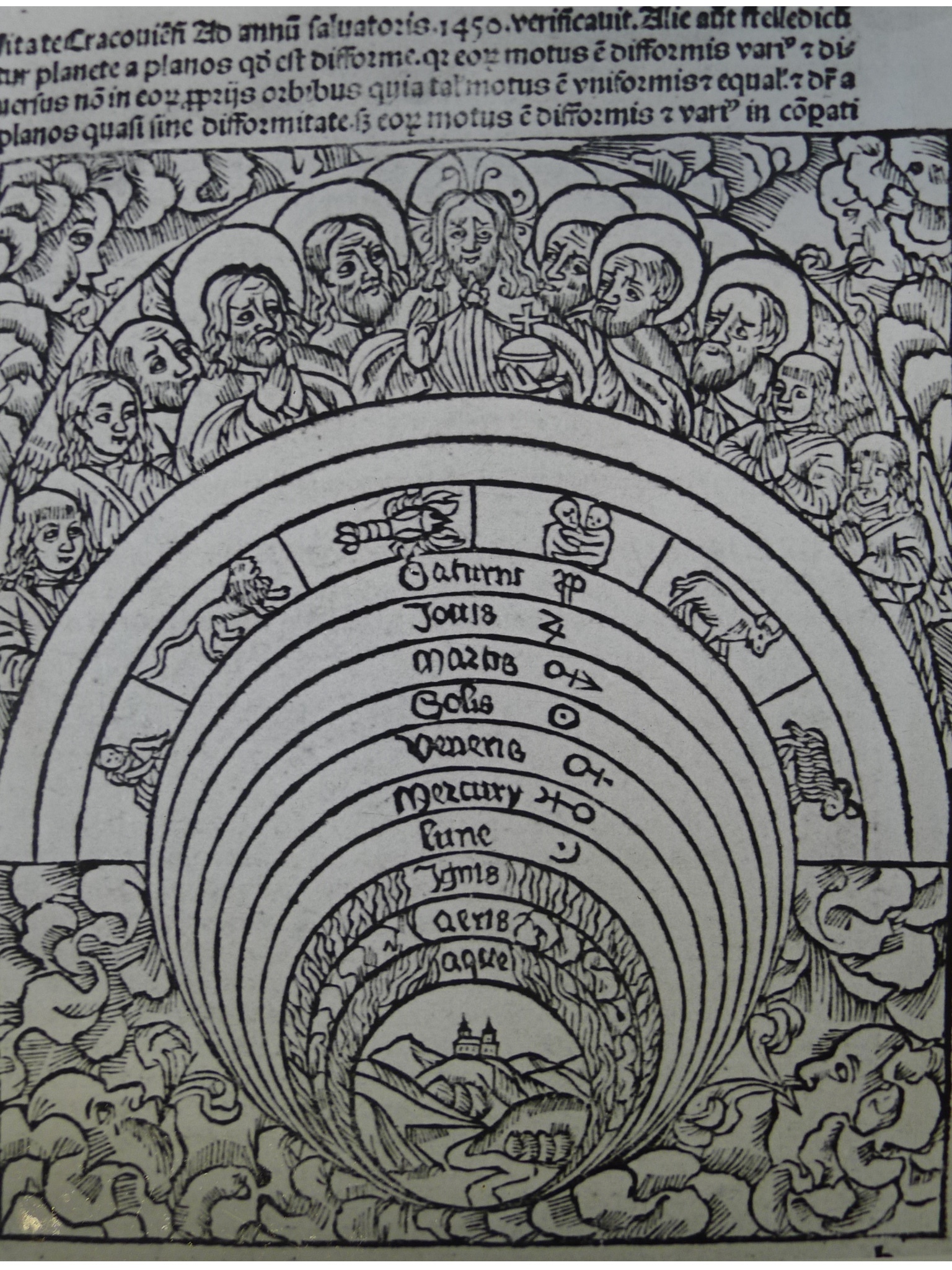
Moved to or superseded by a separate webpage, planned title:
“How Control Loss Got Omitted from the Challenging Experiences Questionnaire CEQ”

There, I’m doing a fresh assessment of the CEQ article.

Where are all the places that the CEQ article mentions the threat of loss of control; control-related questions?

Ignore the word ‘control’ in the unrelated sense of controlling a scientific procedure.

Final CEQ questions: Where Did ‘Control’ Go??

Copied to a separate webpage.

Here are the final literal CEQ questions, with bold on words that are like threat of loss of control:

______ 1. Isolation and loneliness

______ 2. Sadness

______ 3. Feeling my heart beating

______ 4. I had the feeling something horrible would happen

______ 5. Feeling my body shake/tremble

______ 6. Feelings of grief

______ 7. Experience of fear

______ 8. Fear that I might lose my mind or go insane

______ 9. I felt like crying

______ 10. Feeling of isolation from people and things

______ 11. Feelings of despair

______ 12. I had the feeling that people were plotting against me

______ 13. I was afraid that the state I was in would last forever

______ 14. Anxiousness

______ 15. I felt shaky inside

______ 16. I had the profound experience of my own death

______ 17. I felt my heart beating irregularly or skipping beats

______ 18. Pressure or weight in my chest or abdomen

______ 19. I experienced a decreased sense of sanity

______ 20. I felt as if I was dead or dying [dup of 16 – did this replace ‘control’?]

______ 21. Panic

______ 22. Experience of antagonism toward people around me

______ 23. Despair

______ 24. I felt isolated from everything and everyone

______ 25. Emotional and/or physical suffering

______ 26. I felt frightened [dup of 7 – did this replace ‘control’?]

Phrases from other pages about control that got omitted from the CEQ questions

This is from my initial pass. Below, in the TOC-based headings, I plan to list all of the quotes from each section of the CEQ article, with enough context to track what happened to control-phrasing such that it was omitted from the CEQ questions.

Actually I think these might be extracted only from the previous questinnaires (SOCQ, HRS, 5DASC); Appendix 2.

That’s a good strategy; do this first; so now re-do this first (copy entire questions this time, from previous q’aires (Apx2)), before extracting phases from body of article.

To do first: for each item below, confirm that it’s lifted from “Initial Item Pool” section: result: half the items in this list were from the questions in Appendix 2 (previous questionnaires), half were from body of article.

Therefore, work backwards:

  1. First, in Appendix 2’s subheadings (SOCQ, HRS, 5DASC), list all the questions (verbatim w/ number & any question-category that’s indicated). Status: about to start.
  2. Then, for each section of article body, extract phrases, with special attention of which q’air it came from and how Griffiths managed to omit that phrase from his CEQ questions. Status: not started.
  3. Finally: Describe assessment: How do the earlier q’airs have their control-related questions, and the body of the article contains control-related phrases, and yet how then did the CEQ end up lacking any control-related phrases? Status: not started.
  • marionette5DASC
  • sense of being trapped and helplessSOCQ
  • volition not a question. 2 hits: page 2 & 4.
  • new thoughtspage 2, not a question
  • dread of ego dissolutionpage 2, not a question. no q’aires mention “dissolution”. 8 hits in article.
  • loss of ego/control. not a question. 3 hits on “loss of ego”, all on page 2.
  • impaired control and cognition – not question. “impaired control” is 1 hit, in this whole phrase, page 2.
  • confusion, disorientation and/or chaos– SOCQ. ‘disorientation’ also p. 4: “disorientation, ego loss, loss of perception of time
  • impaired control, disintegration of sense of control [not phrasing from pdf]
  • impaired control and cognition- not a question. 1 hit on “impaired control”: p. 2, in “impaired control and cognition”
  • no longer had a will of my own5DASC
  • paralyzed5DASC
  • unable to make decisions5DASC, actual wording: “difficulty making even the smallest decision.”
  • felt threatened5DASC
  • frustrating attempt to controlSOCQ
  • loss of control of my [the] mindNot a question. 1 hit on complete phrase “loss of control”: “experience of one’s own death and loss of control of the mind”, page 14.

Does the body text anywhere explain WHY these phrases got omitted from CEQ?

“Control” Wording in Each Section of the CEQ Article

Superseded by a separate webpage.

Start with the end: Appendix 2’s questions from previous questionnaires (SOC, HRS, 5DASC). Because the control-related phrases are there, and the format is comparable to the explanandum, which is the CEQ list of questions.

How come Griffiths started from the good questions he picked from SOC, HRS, 5DASC, and ended up removing/ omitting/ censoring/ whitewashing/ covering up all control-related wording from the CEQ’s version of those questions?

Psychedelics and the Future of Religion/ Transcendence and Transformation Initiative (Stang, Harvard)

Intro

https://cswr.hds.harvard.edu/news

Has transcripts for each video.

That Harvard page lists all the Center for the Study of World Religion dept. videos, with the “Psychedelics and the Future of Religion” series of 8 videos for the first academic year (Sep 2020-May 2021) mixed in, unmarked.

Generally, my copied passages are condensed excerpts; see link for exact original passage.

If I were publishing formally, though, I would not lie and misquote Wm James like all the posers (Ken Wilber) do; I would start: “On nitrous, it occurred to me…”

Motivation for Post

Had to make my own webpage to gather the list of the 8 episodes of the academic year 2020-2021 “Psychedelics and the Future of Religion” video series.

Search:

https://www.bing.com/search?q=harvard+%22Psychedelics+and+the+Future+of+Religion%22

At Harvard’s page & YouTube channel, the episodes are jumbled in with others, not marked.

The 8 episodes are listed below with some of my excepts and comments.

The 8 Season 1 videos are buried mixed in at YouTube channel. Academic year 2020-2021.

Self-Suppression of Psychedelics Content

Harvard is trying to hide their psychedelics content.

Proof that there’s a cover-up: Newberg ‘s video’s description brags frankly and directly about the two authors being experts in psychedelics – and yet the book itself does not advertise as psychedelics, and keeps that buried and hidden, and they try to downplay that and whitewash and cover up psychedelics hidden in the “altered states” chapter at the end.

I found the same pattern in a Wouter Hanegraaff video, where the description of the video was no-nonsense, no BS baloney; it said that entheogens are plants, period – no BS affectation posturing dancing-about with “entheogens in the wide sense”.

Academics are really low IQ and stupid because they allow themselves to be handcuffed/ censored in 18 different ways, and so of course they can’t write anything of any interest or relevance; it’s all double-talk/ cover-up.

Transcendence and Transformation Initiative

Official precious webpage: https://cswr.hds.harvard.edu/about/transcendence-and-transformationtranslation: PSYCHEDELICS & ENTHEOGENS

https://cswr.hds.harvard.edu/about/transcendence-and-transformation

Search:

https://www.bing.com/search?q=harvard+%22Transcendence+and+Transformation%22

Article: Transcending and Transforming Psychedelics

Alice Denison, Nov 2021

https://hds.harvard.edu/news/2021/11/04/transcending-and-transforming-psychedelics

“In the first event of the [Psychedelics and the Future of Religion] series, Charles M. Stang, CSWR Director and Professor of Early Christian Thought, hosted Dr. Roland Griffiths of John Hopkins University, perhaps the leading researcher into the healing possibilities of psilocybin.

“Stang pushed Griffiths on how his studies seem to sanitize mystical experiences by defining them as profoundly moving encounters with a loving, transcendent source, and sidelining harrowing experiences of the divine as abysmal, dark, and even terrifying.

“Stang remarks: “This is where the history of religion is important, because it is shot through with the full archive of experiences.

inches away from being shot through by psilocybernetics

“Religions know how to deal with harrowing experiences of God as an abyss because, guess what, people regularly have experiences of God as an abyss.

“And communities have to hold that, have to help people work with those experiences.” 👏

“The [8] webinars [at YouTube] explored a range of topics, including:

bold claims made by psychedelic researchers about religion, spirituality, and mysticism;

limitations inherent in the scientific study of psychedelics (and the need for the humanities, especially the study of religion to take more of a lead); [give it up, loser academics, you forfeited to Park St Press, caved in to the boot-heel of Prohibitionism]

the possibility of training spiritual guides for psychedelic experiences, sometimes called “psychedelic chaplaincy”;

the evidence for psychedelic use in the ancient Mediterranean and Near East, from the Eleusinian Mysteries to early Christianity; [not medieval] and

how to honor and include indigenous voices that are often sidelined in popular discourse.”

Harvard Divinity School

Charles Stang

Video Series: Psychedelics and the Future of Religion

Video 8 (May 2021): Between Sacred & Profane: Psychedelic Culture, Drug Spiritualities, and Contemporary America (Charles Stang, Erik Davis, Gary Laderman, Christian Greer)

May 2021

https://cswr.hds.harvard.edu/news/2021/06/02/video-between-sacred-profane-psychedelic-culture-drug-spiritualites-and-contemporary

transcript

url https://youtu.be/ymfw3VOgy6g Charles Stang, Erik Davis, Gary Laderman, Christian Greer – May 10, 2021: a superior video, worth multiple times

Book: The Varieties of Spiritual Experience: 21st Century Research and Perspectives (Yaden & Newberg)

David B. Yaden and 1 more

published Sep 1, 2022

url https://www.amazon.com/Varieties-Spiritual-Experience-Research-Perspectives/dp/019066567X/

Chapter on “Unity and Ego Dissolution”.

The final chapter is on “Consciousness and Altered States”.

The intro pulls the same shiite as the first sentence in Ken Wilber’s first book: Censors “[On nitrous oxide], it occurs to me…” – Wm James wrote lowercase “it”; this censored version falsely starts their whitewashed misquote with “It”.

I found the Andrew Newberg school of writers disappointing, boring, straight, denatured, unmystical, OSC squares, maybe they were ordinary-state only, or meditation pushers, like CSR lameness: the (ordinary-state) Cog Sci of Religion. <– don’t care! irrel, reductionist, off-base, nothing of dionysus in it

religionless religion

exoteric esotericism

ordinary-state mystic experiencing

Video: The Varieties of Spiritual Experience (David Yaden)

Nov 2022 (not part of “Psychedelics and the Future of Religion” series)

https://cswr.hds.harvard.edu/news/video-varieties-spiritual-experience-21st-century-research-and-perspectives

Listen to Stang’s intro describing the T and T program/initiative: https://youtu.be/j4mjX5ZsUVk

Charles Stang:

“It always strikes me as strange why should we think that depriving oneself of something like food would induce a– could induce a legitimate spiritual experience but if we ingest something that is somehow illegitimate?

“And I’ve wondered whether the worry about ingesting something is troublesome precisely because of the Eucharist?

“There’s a sense in which only one thing [the Eucharist] that you can ingest should transform you.

“You can do all kinds of other bodily exercises, but if you’re going to put something in your– if you’re going to eat or drink something that would transform you, it should be the Eucharist.

“And so anything [else] that might do that is kind of rendered illegitimate by virtue of its stepping into the space of the Eucharist.

Who is going to break it to Stang that the Eucharist is Psilocybin?

“I’m wondering if you find that even remotely compelling as an explanation for Christian worries about psychedelics?”

Michael Ferguson:

“One is to look within Christendom and to correlate the degree to which a particular faith tradition has a high veneration for the Eucharist.

“And then to see if there is an association with an increased or decreased anxiety surrounding psychedelics.

“Because with this working hypothesis you would predict that the higher that the reverence is given to the Eucharist sacramentally, that the higher the anxiety around psychedelics would be for some kind of authenticity of mystical experience induction.

“And then a second dimension of analysis would be to look across different traditions, Islamic traditions, Jewish traditions, et cetera to see if there is comparable anxiety, or if there is really something uniquely elevated about Christian anxiety.

“But if we were to run that experiment, my wager is that perhaps there would be some correlation there.

“But that there would be perhaps a larger explanatory value to the anxieties about intoxicated states generally.

“I think that already with spiritual rapture there is such a patently intoxicating effect about it.

“That this delicate dance between ecstatic transformation versus delusion is so difficult to really finely walk and to discern.

“And so my speculation is that it’s more generally an anxiety about any type of intoxicant that would compromise the ability for discernment.”

Stang:

“Are people as anxious about that as a technique for inducing altered states as they are about techniques that involve of ingesting something, and if so why?”

Video: Transcendence and Transformation [initiative, Oct 2021]

https://cswr.hds.harvard.edu/news/2021/10/01/video-transcendence-transformation

HOME / EVENTS / PAST CSWR EVENT VIDEOS /

October 1, 2021

The Transcendence and Transformation kick-off event took place Sept. 23. [2021]

Charles M. Stang, Director of the Center for the Study of World Religions (CSWR), discussed the Center’s new initiative, “Transcendence and Transformation,” and introduced its first cohort.

“The new initiative will study religious and spiritual traditions and practices—ancient and modern, global in reach—that aim for the transcendence of our normal states of being, consciousness, and embodiment, and the consequent transformation of individual, community, and society.”

The webpage has a transcript.

Video: Transcendence and Transformation [initiative, Nov 2022]

Nov 2, 2022 / recd Oct 3

Take 2: https://hds.harvard.edu/news/2022/10/3/video-transcendence-and-transformation-take-two

November 2, 2022

https://hds.harvard.edu/news/2022/10/3/video-transcendence-and-transformation-take-two

page has transcript:

“we’re continuing our very popular series on Psychedelics and the Future of Religion,

“the start of that series … Spring [2023] semester.

[season 2 is acad yr 2022-2023 but only 2023]

“lining up an array of great guests who will cover an array of topics, such as

the central Dahomey tradition,

other Indigenous religious movements using plant medicine sacraments;

debates over how to interpret and integrate “bad trips”

a panel discussion on Psychedelics and Hinduism.”

“the launch of a podcast called Pop Apocalypse, led by another of our postdoctoral fellows, Matthew Dillon. Pop Apocalypse will offer an examination of myth and mysticism in popular culture, and will be aimed at audiences inside and outside the academy.

“So please be on the lookout for an announcement of the podcast release sometime later in the Fall semester.” [eg Dec 15 2022]

search: “Pop Apocalypse” podcast

“reading groups, open to members of the Harvard community, one on Mircea Eliade, and another on Plant Consciousness.

[ie are plants conscious? 😞 🍄 <– this one is ]

“the initiative also supports research associates and postdoctoral fellows who are pursuing private research projects, projects which will someday be public facing.

“it will be published in whatever form is most appropriate, an article, a book, a website, or a public lecture.”

“T&T, this Initiative in its second year is devoted to the study of

religious and spiritual traditions and practices, ancient and modern, global in reach, that aim for the transcendence of our normal states of being, consciousness, and embodiment, and the transformation of individual community and society.

“T&T affirms the existence of the sacred, different levels of reality, seen and unseen, and different modes of access to them.

“It investigates metaphysics and mysticism – the traditions across time, people, and places that have cultivated practices of transcendence and transformation and have articulated worldviews to make sense of those practices.

“we launched two new speaker series and continued a third.

“We launched Gnoseologies, led by my colleague Giovanna Parmigiani, a series which explored

ways of knowing that are often labeled nonrational.

[I like his handling there; “non-rational” is a false word that actually means rationality in the altered state. -cm]

Giovanna is continuing that series this year. Her next event will be on Wednesday, October 19 [2022], a Conversation with [? Marcelit Faella. ?]”

Video: TechGnosis Today (April 13, 2022, Erik Davis)

This video is part of the CSWR’s new initiative, “Transcendence and Transformation.”

https://cswr.hds.harvard.edu/news/techgnosis-today/2022/4/13

Transcript planned, as of Dec. 30, 2022.

Video: Matt Dillon against Academic Denatured Sawdust

not in Psychedelics series

Feb 2022

https://cswr.hds.harvard.edu/news/2022/02/24/matt-dillon

“Those of us who study of mysticism typically do so because we have an ecstatic origin story. We pursue this knowledge as a vision quest.

“Graduate school and early career research, on the other hand, is about preparing us for the field of religious studies as it currently operates.

“We learn grammars and syntax of dead languages;

become proficient in cognitive psychology, critical theory, and sociology;

analyze discursive formations, exploitive practices, and power.

“But the pendulum has swung so far in this direction, that I fear the discipline is in danger of losing what makes it distinctive, even transformative.

“We take accounts of mystical events seriously.

These are the events that spur individuals to join religious communities (or even found them!).

Groups and societies have been founded to trigger and explore such experiences.

No serious study of religion can ignore them.

“By moving the mystical back to the heart of religious studies, we are NOT circling back to the pre-critical period of mystical studies.

“We are envisioning how to spiral up in a way that incorporates critical insights into the study of transcendence.”

“[my] podcast that centers on myth and mysticism in popular culture.

“the scholars one meets in the study of mysticism, gnosticism, or esotericism found their weird way through popular media, not traditional religion.

“introduced to the occult by heavy metal,

“Pop culture/ occulture is a resource for, and expression of, this new spiritual endeavor.

“intersection of mysticism and culture.

“descriptive, interpretive, and theoretical scholarship on religion and popular culture in real-time.”

Video (Nov 2021): Archaeology and Ecstasy

Nov 2021, maybe not in Psychedelics series, though relevant

https://cswr.hds.harvard.edu/news/archaeology-ecstasy/21/11/30

Video: Exploring Magical Consciousness as a Form of Knowledge

Oct 2021, not in Psychedelics series; in series: Gnoseologies

https://cswr.hds.harvard.edu/exploring-magic/2021/10/27

has transcript

The most tiresome thing in the world is so-called “critical”, “criticism”, which just means: destroy everything to death by exclusively complaining and criticizing and destroying everything, and then pretending you deserve a medal (or obeisance as you lord over your moral inferiors) for being everyone’s savior.

But they get some things right, per my excerpts below, and we ally.

“This series focuses on ways of knowing that are often labeled as “non-rational.”

“Traditionally referred to as gnosis in Western philosophical and religious traditions, and often understood in contraposition to science (episteme), these ways of knowing are becoming more and more influential in contemporary societies, popular culture, and academic research.

“What is the place of spirit possession, divination, and experiences perceived as “out-of-the ordinary” in our lives?

“How can we study and approach these types of phenomena?

“Going beyond dichotomies such as body and mind, ordinary and extraordinary, reason and experience, and matter and spirit,

this series hosts scholars of different disciplines and practitioners interested in exploring and expanding the boundaries of what counts as “knowledge” today.”

Book: Developing Magical Consciousness

My mind is closed on this matter: all important is psilocybin:

Developing Magical Consciousness: a theoretical and practical guide for the expansion of perception (Routledge 2020)

url https://www.amazon.com/Developing-Magical-Consciousness-Susan-Greenwood/dp/1138078697/

A 2-seconds skim suggests it’s just another typical beat-around-the-bush, substitution/ avoidance replacement ersatz inauthentic coverage, a for-profit cover-up, run of the mill witches shamanism book with near-zero mention of psychedelics, mentioning them just barely enough to be able to say that you mentioned them – in order for you to make 500 pages of not mentioning them – to “plaster over” the topic to prevent engaging the elephant-in-room topic.

It’s an old formula in the Prohibition era, is mentioning psychedelics (one time) in order to not cover them, rather than mentioning them for the purpose of actually covering them, engaging them.

Kindle Previews

by searching for book title is working on mobile. To view TOC / Intro.

Video 7 (March 22, 2021): Reasonably Irrational: Theurgy and the Pathologization of Entheogenic Experience (Wouter Hanegraaff)

Apr 2021

Wouter Hanegraaff

https://cswr.hds.harvard.edu/news/2021/04/19/video-reasonably-irrational-theurgy-and-pathologization-entheogenic-experience

Apr 9 2021

“The next, last event in the series will take place on April 21st: Between Sacred and Profane, Psychedelic Culture, Drugs, Spirituality in Contemporary America.” [Erik Davis]

“the relevance of entheogens to liturgy and ritual invocation in Roman Egypt,

“the story of Thessalos , the Mithras Liturgy, and the neoplatonic practice of Iamblichus.

“Professor Hanegraaff will be arguing that if we deny or marginalize the clear evidence for entheogenic practice in this concept while acknowledging the spectacular visions and experiences that are claimed in the text, it is hard to avoid traditional pathologization interpretations of spiritual practices that, in fact, can be rationally accounted for.”

Video 6 (March 8, 2021): Honoring the Indigenous Roots of the Psychedelic Movement

Mar 2021

https://cswr.hds.harvard.edu/news/2021/03/18/honoring-indigenous-roots-psychedelic-movement

“what psychedelic therapists and scientists can learn from ayahuasca shamanism, as well as critique some common misunderstandings around the notions of set, setting, and integration.”

transcript

Video 5 (Feb. 22, 2021): What is Psychedelic Chaplaincy?

March 8, 2021

https://cswr.hds.harvard.edu/news/2021/03/08/video-what-psychedelic-chaplaincy

“This panel brought together Daan Keiman, spiritual caregiver and facilitator at a psilocybin retreat in the Netherlands, with Jamie Beachy, a MAPS MDMA Therapist and director of the Center for Contemplative Chaplaincy at Naropa University, in dialogue with Trace Haythorn of ACPE to explore their visions for psychedelic chaplaincy.

“What is the potential role of spiritual caregivers in providing support for people preparing for, undergoing, or integrating psychedelic experiences?

“What are the challenges in creating psychedelic education and training opportunities for chaplains and clergy?

“To what extent does the continually increasing access to psychedelics call on us to rethink, reshape, or expand conceptions of chaplaincy writ large?”

Video 4: Psychedelics: The Ancient Religion with No Name? (Brian Muraresku)

Feb 2021 Brian Muraresku

https://cswr.hds.harvard.edu/news/2021/02/12/video-psychedelics-ancient-religion-no-name

Video 3 (Nov 2020): Sisters of the Psychedelic Revolution: A Conversation with Leni Sinclair and Genie Parker

Nov 2020

https://cswr.hds.harvard.edu/news/2020/11/24/video-sisters-psychedelic-revolution-conversation-leni-sinclair-and-genie-parker

Video 2: Medicalizing Mysticism: Religion in Contemporary Psychedelic Trials

https://cswr.hds.harvard.edu/news/2020/11/03/video-medicalizing-mysticism-religion-contemporary-psychedelic-trials
Two psilocybin clinical trial participants, Rachael Petersen and Rita Powell, and historian Jeffrey Kripal.

My commentary and excerpts where Stang rejects Griffiths’ conception and representation of what mystic experiencing is when validating psilocybin:
Stang Rejects Griffiths’ Conception of “Mystic Experiencing” Used to Experimentally Validate Psilocybin
https://egodeaththeory.wordpress.com/2023/01/02/stang-rejects-griffiths-conception-of-mystic-experiencing-used-to-validate-psilocybin/

Eternalism Exorcism

This video is not part of the “Psychedelics and the Future of Religion” series.

https://cswr.hds.harvard.edu/news/2020/10/26/video-having-spirit-christ-spirit-possession-and-exorcism-early-christ-groups

Video 1 (Sep 2020): Psilocybin and Mystical Experience: Implications for Healthy Psychological Functioning, Spirituality, and Religion (Roland Griffiths, Charles Stang)

https://cswr.hds.harvard.edu/news/2020/09/29/video-psilocybin-and-mystical-experience-implications-healthy-psychological

My commentary and excerpts where Stang rejects Griffiths’ conception and representation of what mystic experiencing is when validating psilocybin:
Stang Rejects Griffiths’ Conception of “Mystic Experiencing” Used to Experimentally Validate Psilocybin
https://egodeaththeory.wordpress.com/2023/01/02/stang-rejects-griffiths-conception-of-mystic-experiencing-used-to-validate-psilocybin/

Video: All the Time in the World: An Artist’s Awakening with Ayahuasca

https://cswr.hds.harvard.edu/news/2019/11/14/video-all-time-world-artists-awakening-ayahuasca

2019 is earlier than the 2020-2021 Psychedelics series.

part of series: “Rachel’s exhibition and lecture falls into one of the center’s ongoing series entitled, Matter and Spirit: Ecology and the Non-human Turn.”

The Challenging Experience Questionnaire

See my critical analysis at various pages eg:
Griffiths’ CEQ’s Mistakes, Not Studerus’ 11-Factors’ Mistakes, Omitting Most Challenging Experiences from Psychedelics Effects Questionnaire
https://egodeaththeory.wordpress.com/2022/12/30/griffiths-ceqs-mistakes-not-studerus-11-factors-mistakes-omitting-most-challenging-experiences-from-psychedelic-effects-questionnaire/

https://www.academia.edu/33760114/The_Challenging_Experience_Questionnaire_Characterization_of_challenging_experiences_with_psilocybin_mushrooms

https://www.bing.com/search?q=challenging+experience+questionnaire

https://pubmed.ncbi.nlm.nih.gov/27856683/

Barrett FS, Bradstreet MP, Leoutsakos JS, Johnson MW, Griffiths RR. The Challenging Experience Questionnaire: Characterization of challenging experiences with psilocybin mushrooms. J Psychopharmacol. 2016 Dec;30(12):1279-1295.

Abstract

excerpts

“Acute adverse psychological reactions to classic hallucinogens (“bad trips” or “challenging experiences”), while usually benign with proper screening, preparation, and support in controlled settings, remain a safety concern in uncontrolled settings (such as illicit use contexts).

“Anecdotal and case reports suggest potential adverse acute symptoms including affective (panic, depressed mood), cognitive (confusion, feelings of losing sanity), and somatic (nausea, heart palpitation) symptoms.

“Responses to items from several hallucinogen-sensitive questionnaires (Hallucinogen Rating Scale, the States of Consciousness Questionnaire, and the Five-Dimensional Altered States of Consciousness questionnaire) in an Internet survey of challenging experiences with the classic hallucinogen psilocybin were used to construct and validate a Challenging Experience Questionnaire.

“The stand-alone Challenging Experience Questionnaire was then validated in a separate sample.

“Seven Challenging Experience Questionnaire factors (grief, fear, death, insanity, isolation, physical distress, and paranoia) provide a phenomenological profile of challenging aspects of experiences with psilocybin.

The Challenging Experience Questionnaire provides a basis for future investigation of predictors and outcomes of challenging experiences with classic hallucinogens.

Keywords: Psilocybin; challenging experiences; factor analysis; psychedelics; scale development.

page has links to related articles

Sacred Drugs Course and Book (Gary Laderman)

Michael Hoffmann, December 16, 2022 12:04 am UTC+0

Contents:

Intro

Laderman is working on a book, has a course: “To create a space for people to explore drugs and religion and consider their value and significance in the American spiritual landscape.”

Wrote books about death, including Psychedelics focus. Video content. Articles.

A video discussion with Charles Stang, Christian Greer, & Erik Davis.

Website

https://garyladerman.com

https://garyladerman.com/media/ – Media (interviews, talks):

“The course discusses the theory that psychoactive drugs are intimately related to religious life historically.

A historian by training. A leading scholar in the study of death and the sacred.

“He is working on a book on the topic.

“To create a space for people to explore drugs and religion and consider their value and significance in the American spiritual landscape.”

Book Project

Course: Sacred Drugs (2017)

“currently working on a book project exploring religion and drugs, the focus of a new course first taught in 2017, “Sacred Drugs.”

Laderman’s courses and seminars include:

US Religious History

Mind, Medicine, and Healing

Death and Dying

Theory and Method

Sacred Drugs

Introduction to Religion

Religion and Music

Video Interview: Charles Stang, Christian Greer, Gary Laderman, Erik Davis (Good)

Charles Stang, Christian Greer, Gary Laderman, Erik Davis: https://youtu.be/ymfw3VOgy6g – very good, merits multiple watches

26:00-38:00 – dark side of psychedelic mystic experience

Essays

Essays Webpage
https://garyladerman.com/writings/

The familiar categories that are employed when discussing why people use drugs—“medicinal,” “recreational,” and “spiritual”—are not unhelpful when sorting out some of what drives people to seek out mind-altering substances.

But they are also somewhat conceptually limiting, as they deny the messier reality: that these categories are not mutually exclusive and allow for overlap and combinations.

GL in Psychology Today – https://www.psychologytoday.com/us/blog/religiousness/202208/mind-altering-drugs-are-here-stay

The overlaps can be found in, for example, … the activities from the symposia in ancient Greece, or … in the ecstatic experiences of participants at your typical EDM festival.

The end of that article is like my recent {spear} mytheme post yesterday:

… potentially poisonous but also potentially life-altering, with powers that might even be understood by some as sacred.

Although it is alluring and seems domesticated, the psychedelic renaissance is really only the tip of the psychoactive spear, and the deeper it penetrates culture, the more we will realize how revolutionary this “rebirth” is for the futures of medicine, psychology, and religion.

GL

End of sentence skipped “recreation”.

I’m against dismissively (& self-servingly) labelling other people’s use as “recreational”, and also against omitting a recreational approach to the sacred altered state.

Psychedelia: An Ancient Culture, A Modern Way of Life (Lundborg)

Why/where did Lundborg come up re: Laderman?

It’s surprising how little I cite this book.

I received hardcover – HUGE – 2024/12/31.

There’s a book on ancient Dionysian religion and electric music festival culture, I posted at the Egodeath Yahoo Group in 2014: https://www.amazon.com/dp/9197652326/

Patrick Lundborg

https://egodeathyahoogroup.wordpress.com/2021/01/09/egodeath-yahoo-group-digest-125/#message6452

“Interview with Patrick Lundborg: 60’s psych & garage guru, psychedelic culture scholar and author of brilliant „Psychedelia” and „Acid Archives” books”

There is too little recognition of pop sike cult during 1970-1990.

Religious Electric Music Festivals

Study of 1,225 festival-goers pinpoints positive effects of trippy drugs (Pattillo, Jan. 2020)

Psychedelic study shows why people love taking psychedelics at music festivals.

“Public perceptions of psychedelics, and the people who use them, are becoming more accurate.”

https://www.inverse.com/article/62372-psychedelic-study-shows-why-people-love-taking-lsd-at-music-festivals

Saint Martin Church: Jesus Left Fingers Branching, Right Non-Branching

No idea why this is here, except principle of “better to type in-place than lose an idea”.

left hand branching
right hand non-branching

See Also

pending

The Shadow Threat per Jung and Pop Psychedelics Mapped to the Egodeath Theory

The {shadow} is specifically identified by the Egodeath theory as the threat of loss of control in the loose cognitive association binding state from Psilocybin.

from Eadwine’s image in the Great Mushroom Psalter: fear & mastery of non-branching; eternalism-thinking

The shadow is the non-branching serpent dragon monster threat of catastrophic loss of control, and of non-viable control instability.

The shadow threat is resolved and accommodated by the mind being made to consciously put trust in the transpersonal uncontrollable source of control thoughts.

The mind is made tranquil, transformed, and harmonious by being made to adopt a 2-level control model, instead of the egoic model of control, which is experienced as autonomous monolithic control agency steering in a tree of branching possibilities into an open future.

‘The unconscious’ doesn’t mean personal autobiography details per the ordinary-state limited Psychology view.

‘The unconscious’ means the altered-state mind’s standard experience of psilocybin eternalism including the attractive threat of the control vortex climax transformation {gateway} (Grof’s {birth canal passage}) to eternalism-thinking.

Why ‘Psilocybin’

In my writings, “Amanita” 🍄 is the billboard for Psilocybin, and “Psilocybin” means chemicals that produce classic psychedelic effects, such as eternalism experiencing, such as Mescaline, Ergot, & 4-ACE.

I employ the term ‘Psilocybin’ strategically in order to force people to not be able to avoid & replace & substitute BS that doesn’t work, or that hasn’t been proved to produce the exact same effect as Psilocybin, such as non-drug cave meditation imagination exercises.

And to highlight that our own religious religious history uses Psilocybin, so fully repeal Psilocybin prohibition.

And because redosing psilocybin is an efficient intensity curve.

And because Psilocybin is being legalized.

And because it’s easy to cultivate. https://egodeaththeory.wordpress.com/2020/11/07/transcendent-knowledge-podcast-episodes/#Episode-15https://youtu.be/b1uoASqG4xQ

Charles Stang

Charles Stang’s recent videos on entheogens – Muraresku interview https://youtu.be/r8VCBNGBeqg

John Vervaeke’s interview of Stang re divine double: https://youtu.be/HOIjuWYhJNQ

Zoom meeting: Charles Stang on Corbin, Plato, & the Divine Double https://youtu.be/Fq0B6kP68zQ

Charles Stang hosts, Christian Greer interviews Gary Laderman & Erik Davis https://youtu.be/ymfw3VOgy6g

26:15 – dark side of psychedelic mystic experience

Psilocybin Mushroom Companion

Panic from threat of loss of control in book The Psilocybin Mushroom Companion, Michelle Janikian, 2019 – https://egodeaththeory.wordpress.com/2022/12/07/standard-hazy-trip-advice-on-surrender-to-shadow-trust-submit-and-let-go-of-control/

Effects Index

Josie Kins’ Psychedelic Effects Index on fear of losing control – https://effectindex.com/effects/ego-death#fear%20of%20losing%20control

My Article Summary Sections

My 1997 summary’s sections about control loss: https://egodeaththeory.wordpress.com/2020/11/30/self-control-cybernetics-dissociative-cognition-mystic-ego-death/#tioscc and https://egodeaththeory.wordpress.com/2020/11/30/self-control-cybernetics-dissociative-cognition-mystic-ego-death/#sdsvop

My 2006 main article’s section 4 of 4, about control loss: https://egodeaththeory.wordpress.com/the-entheogen-theory-of-religion-and-ego-death-2006-main-article/#Self-Control-and-the-Hidden-Source-of-Thoughts

Section from webpage “Strict Requirements for Teachers, Initiation Guides, and Students, Prior to Initiation”; excerpted from the Canterbury Psalter “mushroom tree/ hanging/ sword” image article), re: steering toward the shadow: https://egodeaththeory.wordpress.com/2020/11/24/strict-requirements-for-teachers-initiation-guides-and-students-prior-to-initiation/#Message-Mandatory-for-Utilizing-Psychedelics

SHWEP – Charles Stang on the Divine Double

Charles M. Stang on the Divine Double in Late Antiquity

Charles M. Stang Doubles Down

https://shwep.net/podcast/charles-m-stang-doubles-down/

E C J Williams comments:

“the double has a negative shade. Carl Jung notes that when contact is first made with the unconscious, it is often in the form of a stranger breaking into the house, and is seen as a threat to the individual.

“If the seeker is not searching for the divine and is simply fated to meet their double, would not the first contact [with the double, aka the unconscious] be felt as a threat?

It is after all a serious challenge to the ego, and like Near-Death Experiences will utterly change everything the individual knows about themselves.”

Clark Aitkins comment:

“the modern notion of a dark double. … Jung’s notion of the shadow.”

SHWEP Podcast on Astral Ascent Mysticism Earth Centered Cosmos Model

Site Map: Astral Ascent Mysticism

Contents:

  • Diagrams of Cosmos with Variable Levels
  • Unveiled Mental Construct Processing
  • Mapping the Mystic Cosmos Model to the Scientific Model of Psilocybin Mental Development
  • Phase 1: Possibilism Experiencing, Possibilism Thinking
  • Phase 1.5: Eternalism Experiencing, Possibilism Thinking
  • Phase 2: Eternalism Experiencing, Eternalism Thinking
  • Phase 3: Possibilism Experiencing, Eternalism Thinking
  • Episode 40: Wheels Within Wheels: Toward Western Esoteric Cosmology
  • Episode 41: Fate and Foreknowledge: Toward Hellenistic Astrology
  • Episode 42: Chris Brennan on Hellenistic Astrology
  • Episode 33: Nowhere to Go But Up: Philosophic Ascent in Plato
  • Episode 31: Sun, Line, Cave: Plato’s Inner Republic
  • Episode 25: The Esoteric Plato
  • Episode 23-1/2 : The Greek Iatromanteis: Katabasis, Metempsychosis, Soul-Flight, and the Question of ‘Shamanism’
  • Article: Shamanism in Classical Scholarship: Where are We Now? (Bremmer, 2016)
  • Episode 20: All for One, and One for All: Parmenides of Elea
  • Episode 12: Richard Seaford on the Mysteries
  • Initiation into the Mysteries of the Ancient World (Bremmer, 2014)
    • Back Cover
    • Official reviews
  • See Also

Diagrams of Cosmos with Variable Levels

It’s funny & telling that bands 9 & 10 are blank in this diagram at top of page.

It shows how artificial they are, and less important within the psilocybin mental-model transformation sequence than passing through the ego death & rebirth gate from Saturn turmoil to reconciled eternalism in the fixed stars level (contains the zodiac constellations).

Unveiled Mental Construct Processing

Secret History of Western Esotericism Podcast

vs.

Egodeath Mystery Show

See episode pages/articles.

IMO, the important line in the Earth-centered cosmos model as mystically used, is the line between Saturn & fixed stars (the zodiac belt & the other star-constellations).

That’s why I instantly knew Hanegraaff’s book Hermetic Spirituality 2022 book had a major malformation:

There are no fixed stars in Hanegraaff’s misrepresentation of the Earth-centered cosmos model used mystically.

Hanegraaff’s system of assertions (ie. “the 8th level, outside heimarmene”) collapses into rubble when you try to add stars (heimarmene; eternalism) to it.

Hanegraaff rightly fixes the ego death and rebirth gate at the top of level 7 (Saturn), but he tries to covertly move and sneak the stars to below (= before) the mental-model transformation gate.

The password to get through the serpent-guarded death-angel guarded gateway filter is:

repudiate and jettison the freewill premise

ie:

no-free-will / non-branching possibilities

Mapping the Mystic Cosmos Model to the Scientific Model of Psilocybin Mental Development

To interpret the cosmos model, map to my 3-phase model of psilocybin mental model development in terms of experiential states and the mental models they produce.

Phase 1: Possibilism Experiencing, Possibilism Thinking

1. The possibilism experiential state of consciousness produces naive possibilism-thinking (mental model).

= cosmos level: Earth. Or sub-lunar realm.

Phase 1.5: Eternalism Experiencing, Possibilism Thinking

Turmoil; instability of control; incompatible.

Phase 2: Eternalism Experiencing, Eternalism Thinking

2. The psilocybin eternalism experiential state of consciousness produces eternalism-thinking (mental model).

= cosmos level 8: the sphere of the fixed stars; heimarmene; fatedness.

Pass through the serpent-guarded gate at top of Saturn (planetary level 7) onion layer to reach the treasure destination.

Lose egoic child thinking, to pass through the no-free-will gate and become immortal aka perfected aka enlightened.

Phase 3: Possibilism Experiencing, Eternalism Thinking

3. The possibilism state of consciousness retains eternalism-thinking (mental model) including qualified possibilism-thinking.

= cosmos level 9 & 10, the Empyrean.

No death-and-rebirth is involved to get from the fixed stars (level 8) to the Ennead or Decad Empyrean (level 9 & 10);

Ego death is into eternalism, NOT into possibilism/ “freedom”.

Completion of maturation (perfection, enlightenment, satori, purification, gnosis, becoming immortal) is not a revelation of personally empowering, egoic possibilism, but is about reconciling the mental model with the experience of eternalism.

The return to the possibilism ordinary-state experience that’s shaped in the form of “autonomous agent freely steering in a branching-possibilities world” is merely minor.

The essential transformation, the actual transformation, is from possibilism to eternalism – not the reverse, as Hanegraaff egoically naturally assumes, in his overeager receptivity to the “I Hate Fate” theme that’s sold by the Hermetic writers/ priests/ hierophants.

“Escape from fate” is the main theme of Late Antiquity.

J. Z. Smith

Episode 40: Wheels Within Wheels: Toward Western Esoteric Cosmology

Episode 40: Wheels Within Wheels: Toward Western Esoteric Cosmology

Aug. 2, 2018

Peter Adamson writes about cosmos model, see episode webpage – “Peter Adamson’s History of Philosophy Without Any Gaps podcast, of which we are big fans here at the SHWEP, takes astrology seriously in discussing ideas about fate, free-will, and related ideas in the history of western thought.”

See episode article:

Wheels Within Wheels: Toward Western Esoteric Cosmology

30:00 – “primum mobile” is level 9.

Level 10 is timeless & spaceless. Unmoved mover.

“the cosmos which ended up winning the debate and becoming the standard scientific model from antiquity until the early modern period was the geocentric model developed by, among others, Plato, Eudoxus, and Aristotle.

“It was a refined and sifted version of this model which Ptolemy would bequeath to the middle ages.

“The west, and western esotericism, was, for the majority of its history, living on an immobile earth at the centre of a rather small universe made up of nested, concentric spheres.

“Questions arise from this model of the cosmos, such as:

“What’s outside the spheres, and how can I get there?

“What are the spheres made of?

“How do the spheres influence us?

“These are questions which we find played out in the history both of occult sciences like astrology and alchemy, and of western religious movements from the Hellenistic period onward.”

Episode 41: Fate and Foreknowledge: Toward Hellenistic Astrology

Aug. 13, 2018

See episode article:

Fate and Foreknowledge: Toward Hellenistic Astrology

AUGUST 13, 2018

Episode 41: Fate and Foreknowledge: Toward Hellenistic Astrology

Episode 42: Chris Brennan on Hellenistic Astrology

AUGUST 19, 2018

Episode 42: Chris Brennan on Hellenistic Astrology

Aug. 19, 2018

See episode article:

Chris Brennan on Hellenistic Astrology

I’m pragmatic about free will, in the sense that its existence doesn’t fall in the category of episteme but of praxis.

Nathan Burgess

Episode 33: Nowhere to Go But Up: Philosophic Ascent in Plato

AY 8, 2018

Episode 33: Nowhere to Go But Up: Philosophic Ascent in Plato

See episode article:

Nowhere to Go But Up: Philosophic Ascent in Plato

Episode 31: Sun, Line, Cave: Plato’s Inner Republic

Sun, Line, Cave: Plato’s Inner Republic

APRIL 8, 2018

Episode 25: The Esoteric Plato

FEBRUARY 25, 2018

Episode 25: The Esoteric Plato

The Esoteric Plato

“the modern debate between Plato specialists over his supposed esotericism.

“Along the way we define ‘esoteric’ and ‘Platonism’, both very important terms … which are, rather surprisingly, rarely defined in the scholarly literature which treats them. We also have a look at my idea of ‘esoteric reading’.”

– Earl Fountainelle

Episode 23-1/2 : The Greek Iatromanteis: Katabasis, Metempsychosis, Soul-Flight, and the Question of ‘Shamanism’

The Greek Iatromanteis: Katabasis, Metempsychosis, Soul-Flight, and the Question of ‘Shamanism’

Article: Shamanism in Classical Scholarship: Where are We Now? (Bremmer, 2016)

Bibliomania frenzy includes:

Jan N. Bremmer. Shamanism in Classical Scholarship: Where are We Now?

That’s a chapter in book by P. Jackson, editor:

Horizons of Shamanism: A Triangular Approach to the History and Anthropology of Ecstatic Techniques
https://www.amazon.com/Horizons-Shamanism-Triangular-Anthropology-Comparative/dp/9176350274/

pages 52–78. Stockholm University Press, Stockholm, 2016.

Episode 20: All for One, and One for All: Parmenides of Elea

All for One, and One for All: Parmenides of Elea

JANUARY 17, 2018

Episode 12: Richard Seaford on the Mysteries

NOVEMBER 9, 2017

Episode 12: Richard Seaford on the Mysteries

Richard Seaford on the Mysteries

Episode article cites the book:

Initiation into the Mysteries of the Ancient World (Bremmer, 2014)

Bremmer, J. N., 2014. Initiation into the Mysteries of the Ancient World. de Gruyter, Berlin/New York, NY.

https://www.amazon.com/gp/aw/d/3110299291/

“The ancient Mysteries have long attracted the interest of scholars, an interest that goes back at least to the time of the Reformation.

“After a period of interest around the turn of the twentieth century, recent decades have seen an important study of Walter Burkert (1987).

“Yet his thematic approach makes it hard to see how the actual initiation into the Mysteries took place.

“To do precisely that is the aim of this book.

“It gives a ‘thick description’ of the major Mysteries, not only of the famous Eleusinian Mysteries, but also those located at the interface of Greece and Anatolia: the Mysteries of Samothrace, Imbros and Lemnos as well as those of the Corybants.

“It then proceeds to look at the Orphic-Bacchic Mysteries, which have become increasingly better understood due to the many discoveries of new texts in the recent times.

“Having looked at classical Greece we move on to the Roman Empire, where we study not only the lesser Mysteries, which we know especially from Pausanias, but also the new ones of Isis and Mithras.

“We conclude our book with a discussion of the possible influence of the Mysteries on emerging Christianity.

“Its detailed references and up-to-date bibliography will make this book indispensable for any scholar interested in the Mysteries and ancient religion, but also for those scholars who work on initiation or esoteric rituals, which were often inspired by the ancient Mysteries.”

/ end blurb

Back Cover

“This book explores ancient mystery cults with emphasis on the question how the actual initiation into the Mysteries took place.

“Discussed are not only the famous Eleusinian Mysteries, but also smaller and lesser-known Greek and Roman Mysteries as those of Samothrace and Thebes, the Orphic-Bacchic Mysteries, and the new Mysteries of Isis and Mithras.

“Concluding with the influence on emerging Christianity, the author offers an indispensable in-depth analysis of this fascinating phenomenon.”

Official reviews

🤖 –

“Jan Bremmer has managed to write an interesting book on a topic about which there are almost no information, because because of the arcane discipline, the reconstruction of mystery processes is extremely tedious.

“This honesty is a strength of the book, as it does not transcend into conjectures, but explains what can be said in a honest way about the mystery cults.

“Since Bremmer receives all the arguments from modern literature on the way to a balanced judgment and discusses them extremely critically, despite the difficulties that have to face when dealing with the mystery cults, he succeeds in a publication rich in information.”

– Matthias Helmer in: Biblical Journal 62 (2018), 175-178

🤖 –

“In his lectures, Jan Bremmer has not only developed a brief summary of state-of-the-art research and worked through all linguistic, literary, epigraphic, pictorial and archaeological sources, far beyond the questions and phenomena discussed so far in the field of mystery research, but also created a foundation with his sharp but clear evaluations of previous research theses and reconstructions,

“The ripe fruit of a master of research on ancient religious history, presented with a dash of humor and (sometimes daring) comparisons to contemporary religious behaviors.”

– Christoph Auffarth in: Gnomon 89 (2017) No.6: 485

etc and 60 ratings/reviews:

DAJ wrote:

“Jan Bremmer is better than Bowden at clearly describing what we know did happen. Bremmer’s book is also available for free, in PDF form, from the publisher.”

Bowden: bought it when new, have it, have read it:
https://www.amazon.com/Mystery-Cults-Ancient-World-Bowden/dp/0691146381/

“The chapters in the book are dedicated to

the Eleusinian Mysteries, the oldest mystery rites;

the mysteries of Samothrace and groups of deities related to them,

the Kabeiroi and Korybantes;

the ecstatic Orphic and Bacchic mysteries;

a variety of lesser, local mysteries in Greece in Roman times;

the mysteries of Isis and Mithras; and

the relationship of the mystery cults to Christianity.

He also has two appendices:

One examines the cult of Demeter in Megara and its relationship to the Eleusinian Mysteries and

the other one discusses the underworld portrayed in Virgil’s Aeneid (an important source for understanding the afterlife beliefs that were circulating at the start of the Roman Empire).

Unlike Alvar and Bowden, Bremmer devotes only a passing mention to one of the best-known “oriental” mystery cults, that of Cybele.”

See Also

Site Map: Astral Ascent Mysticism
https://egodeaththeory.org/nav/#Astral-Ascent-Mysticism