In my broad usage, the concept of ‘reductionist’ is inherent in all misinterpretation; you end up with less that the thing that’s being reduced.
We reduce “high” (altered state, analogies describing cognitive phen’y of loosecog state) to something else, and everything is considered by me to be “lower” than mystic-state cognitive phenomenology.
To misinterpret the considered-highest realm is inherently relatively reductionism.
Reductionist materialist scientistic rationalism flatland downward-projection: religious esoteric mythology’s ultimate referent is the physical, literal, material sun.
Gods and heroes represent cosmology and elements of physical world.”
“19th-20th century approaches to myth:
“Myth as science: Myth is an explanation for the natural world. Read myth literally.
Myth is premodern/’primitive’ form of modern scientific explanation.
Variants within this framework. Creationism; Rationalizing; Tylor; Horton. Literal, ordinary-state, alien social psychology.
“Demythologizing:
Myth is expression of human experience of the world, of man’s experience as a moral agent.
Myth is symbolic, not literal description.
metaphorical, ordinary-state, no alien social psychology (myths speak to universal human experiences in the ordinary-state).”
“By Criteria:
Literal: Myth as science
Metaphorical: Demythologizing
Ordinary-State: Myth as science; Demythologizing
Alien social psychology: Myth as science
Open to moderns: Demythologizing
“Variants and Theorists:
“Myth as science:
“Creationism: myth is true science, a true explanation for natural phenomena (implies adherence to one cultural tradition or another, i.e. Genesis is *the* correct account).
“Rationalizing: strip myth of what does not fit with modern science; what remains is true.
Myth has a core of truth, some memory of an actual event, e.g. flood story has origins in an actual flood, with later additions; Trojan War legends based on actual war at site of Troy.
____
“myth is ‘primitive’ version of scientific theory.
Myth explains natural world, but poorly.
Decisions and actions of gods cause physical events.
myth and science incompatible.
‘primitives’ had ‘myth’, moderns have ‘science’.
We moderns should reject myth.
Myth must be understood literally because myth explains the workings of the physical world.
‘Primitives’ think like moderns, but less rigorously.
‘Primitives’ see same world as moderns, but conceive of it differently.
____
“Myth and pre-modern religion are coherent conceptual systems with internal logic and rules, just as science is for moderns.
Take pre-modern myth at face value, not symbolically.
Rejects use of word ‘primitive’.
Modern western thinking should not monopolize interpretation of other non-modern, non-western thinking.
“Demythologizing:
“Demythologizing.
Myth is philosophy.
Myth is symbolic of human experience of the world, not an explanation for the world.
Depiction of universal human condition.
Myth can be read literally, but should be read symbolically.
Describes mundane human experience.
This understanding available to all, ancient and modern.
But should be corrected to being about altered state experiencing, not mundane ordinary state experiencing.”
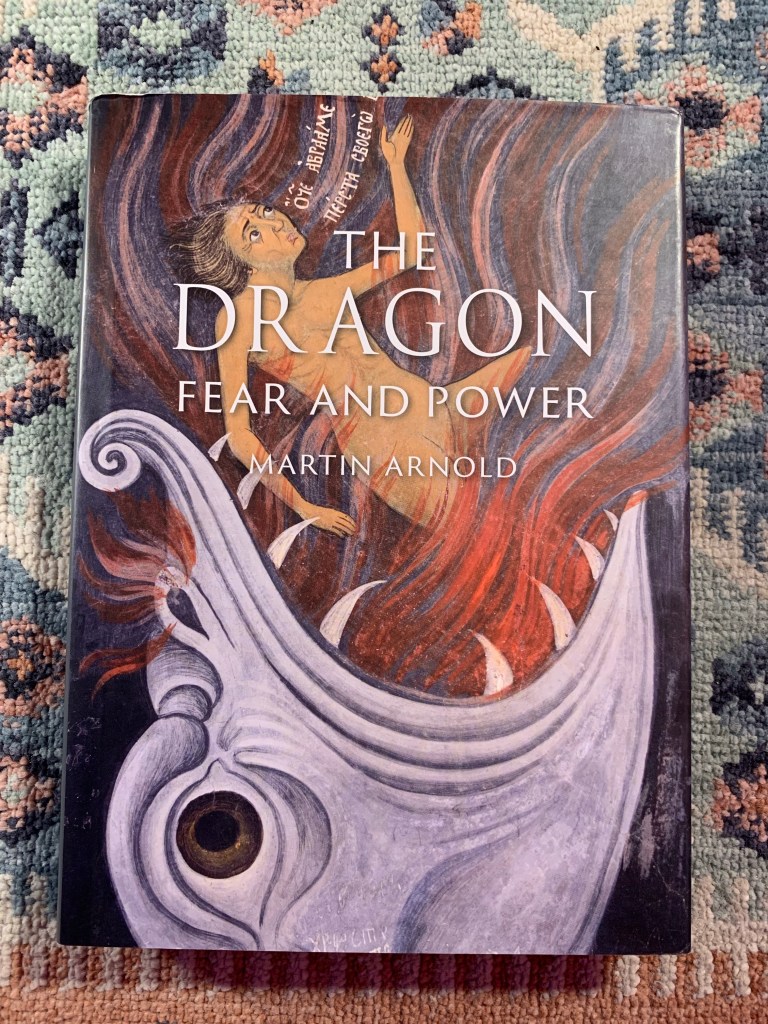
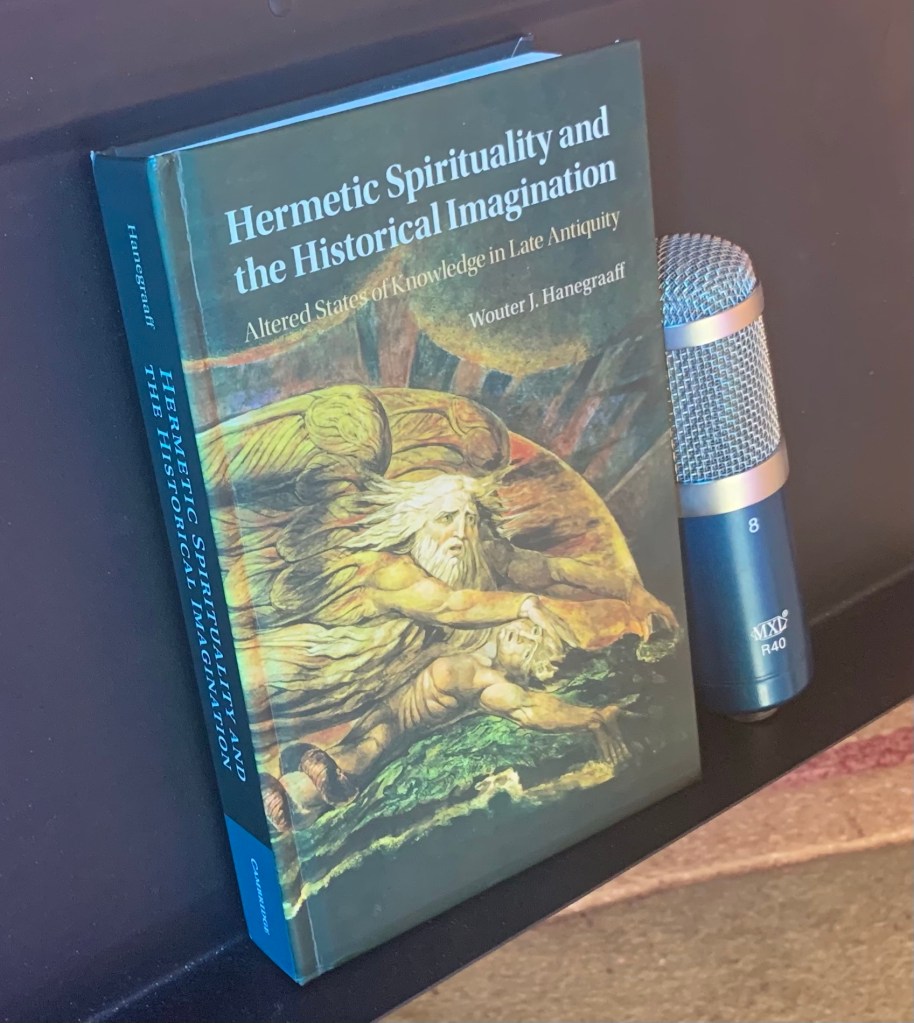
Expensive, so rely on Amazon preview, his videos, his posts, his academia edu articles.
I purchased hardcover July 14, 2022, ebook April 19, 2025.
Blurb:
“In Egypt during the first centuries CE, men and women would meet discreetly in their homes, in temple sanctuaries, or in solitary places to learn a powerful practice of spiritual liberation.
“They thought of themselves as followers of Hermes Trismegistus, the legendary master of ancient wisdom.
“While many of their writings are lost, those that survived have been interpreted primarily as philosophical treatises about theological topics.
“Wouter J. Hanegraaff challenges this dominant narrative by demonstrating that Hermetic literature was concerned with experiential practices intended for healing the soul from mental delusion.
“The Way of Hermes involved radical alterations of consciousness in which practitioners claimed to perceive the true nature of reality behind the hallucinatory veil of appearances.
“Hanegraaff explores how practitioners went through a training regime that involved luminous visions, exorcism, spiritual rebirth, cosmic consciousness, and union with the divine beauty of universal goodness and truth to attain the salvational knowledge known as gnôsis.”
Editorial Reviews:
‘This book contains much that will matter to historians and others interested in visionary practices from late antiquity to the present.’ Claire Fanger, Journal of the American Academy of Religion
‘This impressively learned monograph is a welcome addition to the steady stream of recent scholarship on the Hermetic writings, a testimony to a rekindled interest in this most extraordinary collection of texts.’ Christian Wildberg, Aries – Journal for the Study of Western Esotericism
Book Description:
“Hermetic spirituality in late antiquity was an experiential practice and personal transformation grounded in powerful techniques for consciousness alteration.”
About the Author:
“Wouter J. Hanegraaff is Professor of History of Hermetic Philosophy and Related Currents at the University of Amsterdam.
“He is the author of six monographs, including
New Age Religion and Western Culture (1996) and
Esotericism and the Academy (2012), and editor of eight collective works, including
the Dictionary of Gnosis and Western Esotericism (2005).”
my book review below, copied from idea development page 28 todo: after review accepted, fix errors flagged below: ie, cap’z “Heimarmene”. forgot joke: Darth Wouter “Star Destroyer” Hanegraaff
4 out of 5 stars Title of book review: Rebirth into cosmos sphere 8 (Heimarmene) and 9 (above Heimarmene)
Wouter Hanegraaff’s book Hermetic Spirituality and the Historical Imagination: Altered States of Knowledge in Late Antiquity advances the field of Hermetic studies, especially after the error is corrected in his cosmos-ascent model, per astral ascent mysticism, so that the Fate-soaked fixed stars are no longer excluded entirely from his sky, but are allowed into his cosmos model, where they belong: sphere 8, the Ogdoad.
Hanegraaff’s model of the so-called “cosmos” doesn’t have any fixed stars. Look up into his sky: there are no stars, only 5 planets + sun & moon. This is not a model of the cosmos, nor of cosmos rebirth, because his visible sky cannot have any stars, per his admission in footnote 114, page 294: “Whether the fixed stars should be included [with Saturn, sphere 7] or should rather be associated with the Ogdoad [sphere 8] remains an open question for me.” This is the most closed question in the cosmos; it is a basic, simple given that the Fate-soaked fixed stars are what defines sphere 8, called “the Ogdoad”.
The initiate Tat asks Hermes to be brought into the Ogdoad (Heimarmene; Fatedness; fixed stars; sphere 8; the soul) and also into the Ennead (above Heimarmene, above the cosmos; sphere 9; the spirit). Since Hanegraaff omits fixed stars from their sphere 8 (which they define), there’s no functional difference in his model between rebirth phase 1 into the Ogdoad, and rebirth phase 2 into the Ennead.
The end result of entheogenic mental model transformation is not the repression of fixed stars (Fatedness) as Hanegraaff attempts; the end result is a coordinated, harmonious combination of first affirming Heimarmene, and then affirming transcending Heimarmene, honoring both ways of thinking, together.
Hanegraaff cannot place the fate-soaked fixed stars in sphere 8, because he wrongly says “the Ogdoad above the Heimarmene“. The Ogdoad is not above Heimarmene. The cosmos does not consist of 7 spheres, as Hanegraaff writes. Per looking up at the sky, the cosmos consists of 8 spheres. All ancient writings agree; no Hermetic text says the cosmos consists of 7 spheres, or that sphere 8 is outside the cosmos. The cosmos consists of 7 planetary spheres and also the sphere of the fixed stars. Sphere 8 is not “hypercosmic”, as he writes. Sphere 9 is actually hypercosmic.
I have read his book multiple times in hardcover and ebook format, and David Litwa’s book Hermetica I, to confirm that no Hermetic writing says the cosmos has 7 spheres, and that sphere 8 (defined by the fixed stars) is somehow “outside the cosmos”. The main visible thing you see in the sky that is the cosmos, is the fixed stars, defining sphere 8 of the cosmos.
Per Hanegraaff’s own writings in this book and elsewhere, sphere 8 = the Demiurge = the zodiac = Heimarmene headquarters.
Hanegraaff spreads the following equations separated apart to hide the self-contradiction: Ogdoad = sphere 8 = fixed stars = Heimarmene = Fate = cosmos. By spreading the equations into separate pages, he writes inconsistently: Heimarmene = Fate = fixed stars = sphere 8 = Ogdoad = above Heimarmene.
Other hermetic scholars follow suit, waffling in self-contradictory fashion: in one paragraph, Ogdoad is above Heimarmene; in alternating paragraphs, sphere 8 is the Fate-soaked fixed stars.
Switching between saying “sphere 8” and “Ogdoad” tries to hide the self-contradiction, in order to misguidedly purify the Ogdoad of Heimarmene by making the stars go missing in every other paragraph, inconsistently.
The solution is to always give the sphere number (7, 8, or 9) and equate Heimarmene consistently with the fixed stars and sphere 8 and the name “Ogdoad”, and understand that rebirth is initially into conformity with pure Heimarmene – not yet above Heimarmene.
My other correction of this book is its claim that anything you can think of is entheogenic, as if to propose “non-drug entheogens”, a contradiction in terms. Entheogenic practices in the broad sense actually means combining visionary plants with mental model formation and observation and various techniques – not omitting visionary plants. In 2004, I posted in Egodeath Yahoo Group about that point, a post titled “Entheogenic Esotericism”, 8 years before Hanegraaff’s keynote article speech titled “Entheogenic Esotericism”.
To summarize, as the million stars to steer by in the cosmos rebirth model that Hermetic scholars struggle to coherently present:
The mind starts with naive possibilism-thinking (level 0), becomes increasingly attuned to Heimarmene (Fate; eternalism) in entheogenic sessions 1-7, becomes fully reshaped and aligned harmoniously with Heimarmene (Fatedness; 4D spacetime block universe eternalism) in sphere 8 (the fixed stars); and then reconciles and marries the two ways of thinking together in sphere 9: embrace and include Heimarmene coordinated with the transcending of Heimarmene; marry qualified possibilism-thinking and qualified eternalism-thinking, to reach completion of initiation, per all brands of religion in Late Antiquity, flourishing starting around 150 CE.
— Michael Hoffman, theorist of ego death and transcendence
August 21, 2022 draft of book review
Photo: Michael Hoffman, Egodeath Mystery Show
Probably contains all points, need to cut wordcount.
5 stars. Entheogens Reveal Heimarmene in the Ogdoad
Theurgy as presented by Hanegraaff integrates geocentric Astral Ascent Mysticism, with the centerpoint being passing through the fearsome fate-ruled heimarmene gate at the sphere of Saturn and the sphere of the fixed stars. Identifies entheogens as an effective engine of inspiration for ancient Theurgy’s divine madness control-seizure intense experiencing of demon exorcism at the fate-ruled heimarmene gate.
In his “thoroughly positive” imagining of Theurgy and Astral Ascent Mysticism, Hanegraaff imagines an easy friendship with the Source that’s the controller and creator of all, while holding a simple negative stance toward heimarmene (fatedness). Negative experiences are to be explained through Psychology in the ordinary state of concsciousness.
Theurgy uses the model of Astral Ascent Mysticism, passing through the demon-guarded fate-guarded heimarmene gate, which is the intense experience of no-free-will, non-control over one’s own control thought, and having the mental model reshaped to be forced to adopt reverence toward the actual source of one’s control-thoughts.
In his project of tearing Theurgy out of the hands of the Protestant theology-based negative reading of oriental platonism, and turning Hermetic texts into “a thoroughly positive reading”, Hanegraaff overshoots, overcorrects: he removes Dionysus, divine mania, fear, awe, and tremendum, replacing deisidaimonia (fear of the divine), by tamed, denatured, neutered, impotent, non-drug entheogens that fail to produce peak psilocybin experiencing.
Wouter Hanegraaff’s book Hermetic Spirituality is a major advance for academic scholarship toward recognizing Theurgy per the Hermetic texts as an altered-state experiential practice of mental transformation. Hanegraaff needs to discuss the placement of the fixed stars together with heimarmene and the main revelation, which is that you don’t have control of the source and origin of your control-thoughts.
The star that I sail by whenever I map the Egodeath theory to astral ascent mysticism is the sphere of the fixed stars, which is almost entirely missing with barely a trace, and only one mention, in footnote 114 about not knowing at which level to put the fixed stars.
The word ‘star’ has been confusingly redefined by Hermetic writers and Hanegraaff so that in this book’s alien cosmos, there are only 7 stars. Where did they all go?
How can I navigate, with his having removed the centrally important fixed stars? The book should discuss would benefit from explicit discussion of the location of the sphere of the fixed stars at the 8th cosmic level, and integrate that with rebirth into heimarmene-consciousness.
This book is a major advance in the academic field of interpreting the Hermetic texts in terms of altered-state spirituality rather than misreading the Hermetic texts as ordinary-state premised philosophical theorizing. Does away with Hans Jonas’ existentialism overlay and a biased overlay of Christian-theology advocacy.
Title –
The title contains three phrases:
* “Hermetic Spirituality”: Hermetic writings were descriptions of intense altered state peak experiences, divine madness and ecstasy/frenzy, not ordinary-state based philosophical theorizing.
* “The Historical Imagination”: The fantasy projections and constructions imagined by historians of esotericism, traces the history of invented histories.
* “Altered States of Knowledge”: Historians must shape knowledge in a way that fits with the altered-state experiential context of ancient esoteric writers.
Cover art –
tbd, find captions, find ‘tat’ here and idea dev page 14
Prologue –
This book combines five strands (pp. 5-6):
1. Debate about language and hermeneutics: what the humanities should be all about.
2. Scholarly approach: radical empiricism, methodological agnosticism. Study religion as neither religionist (anti-science, anti-modernity, revering high vague mysticism) nor reductionist (social science only; materialist scientism level only).
3. The historical imagination, narratives, storytelling (Epilogue). Field of W. Esotericism as the reified imaginatl product of discourse for dominant academic traditions to define themselves against belittled, rejected knowledge.
4. Alterations of consciousness are a neglected core dimension of religion and spirituality. He covers consciousness, entheogenic esotericism (including non-drug psychedelics & authentic actual entheogens) per his essay by that title in the book Contemporary Esotericism. In that essay, he explains how the meaning of the word ‘entheogen’ is set by its etymology.
5. The Hermetic tradition not like his earlier work on the Renaissance revisal of the Hermetic writings, but rather now in this book, studying Hermetic writings from the cultural perspective of ancient Roman-era Egypt.
My book review of his Dictionary of Gnosis and Western Esotericism https://www.amazon.com/gp/product/9004152318 criticized that book for having no coverage of entheogens. Hanegraaff has answered my call for integrating entheogens into the history of Western Mysticism as much as the fearful, benighted, and superstitious ruling powers permit him to.
“… my earlier work on entheogenic esotericism (sensu lato and sensu stricto)” (pp. 5-6) — the word ‘entheogen’ occurs 5 times in this book and 3 of them (pp. 5-6, 228, & 385) are mentions of the following keynote article.
In his article which this book cites three times, Hanegraaff makes a fallacious argumentation that the meaning of a word is set by its etymology: “Although this broadens current understandings of the term, ‘entheogen’ does not strictly imply substances.” (p. 392) The word ‘entheogen’ strictly means substances, according to everyone in the field of entheogen scholarship including Ruck, Wasson, Ott, myself, and everyone. Hanegraaff introduces confusion by using words in nonstandard and unjustified ways.
The actual litmus test for ‘entheogenic’ properties is: a substance is entheogenic insofar as it tends to reliably, quickly, and intensely reveal the impotence of the local control agent to control their source and origin of control-thoughts. Entheogens are that which reliably and intensively produces divine madness, fear of god, and forces the mind to put reverent trust in the Source of all personal control thoughts.
At-will, ego-controlled activities can be halted the moment there is control instability, so they cannot produce the key religious transformative effect, of producing loss of control, control instability, control seizure, divine madness, so as to force mental worldmodel transformation from presumed autonomous control to dependent control and understanding of the mind’s dependence on the uncontrollable Source of control-thoughts.
Non-drug techniques are popular and welcomed precisely because they pose no threat to the egoic delusion and they reify the status quo mental model rather than reveal the impotence and instability of egoic control power and the initial Possibilism worldmodel which cannot endure the loose cognitive association state.
During his 2012 keynote speech reading that 3-times cited chapter article, Hanegraaff said that no one previously had used the phrase ‘Entheogenic Esotericism’. I posted the term “entheogenic esotericism” to the world-wide web 8 years before Hanegraaff, and I used the term in an assertive, emphatic way. Hanegraaff assumed the term uses the modified “entheogenic” to describe a deviant abnormal subset of Esotericism. But my posting in 2004, 8 years earlier, asserted the exact opposite:
“Authentic esotericism is entheogenic esotericism. Entheogens are the key to esotericism. This is the simplest possible theory of esotericism, and the most natural, the least contrived and strained. Theories of esotericism that are not based on entheogens suffer from the problem of grandiose verbiage, unmet promises and claims, chronic vagueness, excuses for lack of potent and prompt efficacy, and no ability to deliver the experiences which are talked about. Drug-free esotericism doesn’t work; it is not effectively ergonomic.”
Online, Erik Davis encouraged Hanegraaff in the latter’s proposed redefinition of the word ‘entheogen’, but Davis recommended that Hanegraaff avoid doing a similar redefinition of the word ‘psychedelics’ (lest we end up with an equally denatured, comical, and cheapened category “non-drug psychedelics”). It seems Davis is willing to let ‘entheogen’ be broadened to the point of comical meaninglessness, but Davis guards against the same fate for the word ‘psychedelics’.
Through magical manipulation of language, Hanegraaff, under coercion, tries in vain to elevate non-drug methods to be as efficacious as peak psilocybin experiencing that actually produces divine mania.
Hanegraaff’s proposal of non-drug entheogens doesn’t merely “broaden current understandings” as he claims; his attempted redefinition renders the word ‘entheogen’ meaningless, uncontrolled, and unusable.
Ch. 1: Hermetic Spirituality –
He employs a selective-texts, spirituality approach, rather than a grab-bag of texts that merely include ‘Hermes’ and use a dubious scholarly construct of ‘the Hermetic tradition’.
Ch. 2: Heart of Darkness – The cultural context of ancient Egypt and private spiritual experiences.
Ch. 3: The Presence of Gods – ‘
The Hermetic worldview and the text “Logos Teleios”.
Hanegraaff welcomes a cognitive approach, and also advocates multi-state science per Charles Tart. My approach for the Egodeath theory is the truly cognitive phenomenology approach like that of Benny Shanon’s book The Anitipodes of the Mind https://www.amazon.com/Antipodes-Mind-Phenomenology-Ayahuasca-Experience/dp/0199252939 (p. 72) (who Hanegraaff favorably cites), a multi-state, not a single-state cognitive science approach.
My main terms are “loose cognitive association binding”, “mental construct processing” (compare Hanegraaff’s “aion” interpretation like a flood of Ken Wilberian “vision logic” influx), “mental world-models”, “control instability”, “control seizure and reconfiguration”, and “block universe eternalism” as what’s revealed.
Psilocybin causes visual movement; it makes statues move. Though Hanegraaff writes “other awesome luminous phenomena” (p. 72), he strangely doesn’t point out the most relevant, specific entheogenic effect for animation of statues: entheogens cause visual image shifting, thus making statues move.
Ch. 4: Children of Hermes –
The three known practitioners of Hermetic spirituality.
When you read the book, as you are helplessly fated to choose to do, be prepared to write “7, 8, 9” next to many key words to solve this sleuthing problem of, Where did the fixed stars go? What has Hanegraaff done with them? Check the Hanegraaff Rejected wastebasket.
Achieving stable control in the entheogenic state of divine madness requires reverently recognizing, honoring, and sacrificing our freewill claim in deference to heimarmene. A theurgy initiate is sacrificing to the astral powers of heimarmene/fate to reconcile and recognize and honor them, to cease being tormented by conflict against them: “must calm her passions … they … come from the astral powers … working through her soul. The daimons she can drive away by offering sacrifices, … purifying incense or smoke … her soul is truly cleaned of all imperfections … in the ‘mixing-bowl of purification … she can … join with her true spiritual family” (p. 98)
Instead of sacrificing to heimarmene to recognize and honor and reverence the archon rulers of levels 1-8, Hanegraaff treats heimarmene as an unreal negative psychological trait to be discarded, instead of reverencing heimarmene along with the Source; the ‘pege’, which is the Source of all that exists including all of your control-thoughts, as revealed in the entheogenic heimarmene revelation.
Rock lyrics are the authentic mystery religion of the late-modern era, comparable to early antiquity’s discovery of heimarmene before people began such a confusing love-hate relationship with the divine revealed fact of a fate-ruled cosmos as we see in play with ironic inversion in late antiquity, the heyday of claims to “transcend heimarmene” and be saved and rescued from fate – more accurately, be rescued by the merciful Source from the cybernetic demonstration of threat of self-control seizure in the heimarmene-revealing altered state.
Ch. 5: Through a Glass Darkly –
The problems of textual transmission (bias, edits, translations, fragmentation). Presents strategies for reconstruction and interpretation. Page 140 has a diagram of Hermetic texts ranked by relevance to experiential altered-state spirituality.
At the climax of Erik Davis’ book Led Zeppelin IV, he discusses astral ascent mysticism (p. 118), relevant to Hanegraaff’s chapter The Source, complementing Hanegraaff’s coverage, though you really have to read Ulansey’s hypercosmic cosmology too.
On page 122, Davis discusses the Stairway to Heaven (cosmology levels 1-8), heroic doses’ experience of absolute determinism, illusion of autonomous personal control agency, the divine will controlling the block universe, the peak intense altered-state experiencing of block-universe Eternalism, and pre-existing control thoughts.
Hanegraaff agrees with Davis’ call for something between crude materialist or social scientism reductionism, and vague abstact idealist mystical haze.
The section (p. 140) with the nested egg diagram of levels of spiritual importance of the various Hermetic texts is titled “Weirdness at the Center”, referencing Davis’ idea. When discussing the climactic song Stairway to Heaven, Erik Davis’ book Led Zeppelin IV [https://www.amazon.com/Led-Zeppelins-Zeppelin-IV-33/dp/0826416586] (pp. 118-199 & 122) presents the geocentric mystic cosmology together with the heimarmene-focused Egodeath theory.
Except for the phrase “transcendental freedom” tacked-on from out of the blue, Davis’ model lacks levels that represent transcending block-universe Eternalism (heimarmene, no-free-will; fatedness).
From the perspective of a heimarmene-centered 3-level model of mental development pictured as cosmology:
o Erik Davis’ model covers levels 1 & 2 (culminating in the heimarmene revelation, which is the central level 8 in the standard model).
o Hanegraaff’s model covers levels 1 & 3 (skipping level 2, the heimarmene-reconciling level). Hanegraaff removes the distinct heimarmene level of the fixed stars (level 8 in the standard cosmology) and leaps up to present only the transcendent levels above heimarmene.
o David Ulansey’s model covers all three levels: 1, 2, and 3 (numbered as 0, 8, and 9 in the standard model).
Hanegraaff writes “the Ogdoad beyond the stars” (p. 266), by which he confusingly means the 7 “stars”; that is, the 7 planets, and he silently omits the actual, fixed stars. He writes “the Ogdoad above the heimarmene” (p. 258) – but the Ogdoad is the main level on which heimarmene resides, as commonly understood for 500 years, ever since Eudoxus’s description of the cosmos as 7 planetary spheres along with the 8th sphere (fixed stars) in 350 BC.
The fixed stars define the Ogdoad by being sphere number 8, and the fixed stars and zodiac and Demiurge are equated with heimarmene and fatedness, as even Hanegraaff writes.
Hanegraaff conflates level 8 into level 9, as if both levels are above heimarmene, but level 8 in fact is heimarmene (the fixed stars; the Zodiac; the constellations). Level 8 represents the state in which, after ego death and rebirth and sacrificial repudiation of childish illusion-premised thinking, the mind’s mental worldmodel of control agency and world is transformed and reconciled with heimarmene – regardless of advanced poetic hyperbole and ironic claims by writers of late antiquity who spoke in terms of being rescued from heimarmene.
We really do experience rescue from the thread of heimarmene, in a certain vivid way that doesn’t dismiss the reality of heimarmene like Hanegraaff mis-reads it.
Level 8, ruled by the Demiurge or Helios (in Mithraism), is where the freewill egoic control premise is sacrificed to heimarmene to end the “torment” (Hanegraaff’s translation, actually referring to corrective self-control instability; control seizure) that resulted from resisting heimarmene and futilely trying to depend on the freewill premise that I control the source of my control-thoughts.
Hanegraaff banishes quasi-Hermetic, anti-cosmic, negative-themed texts in the “non-Hermetic” outer darkness outside the egg diagram (where I’d place Hanegraaff’s non-drug entheogens), and claims that they are of “little or no relevance” to Hermetic texts.
But negative experiencing of control seizure is notable (“spiritual emergency” per Stan Grof) and I’d like to see the equivalence of the negative, non-Hermetic texts and the positive Hermetic texts, which are more negative than Hanegraaff claims.
Why, exactly and specifically, is there fear and trembling (p. 272) in the higher levels of ascent and in “crossing the fearsome boundary” (p. 306)? How can Hanegraaff claim to present a “thoroughly positive” interpretation of the Hermetic texts, given all the “torment” and “fear” that he reports – do the Hermetic texts whitewash the ego death and rebirth experience too much compared to the “too-negative” quasi-Hermetic texts?
Ch. 6: Healing the Soul –
The “Poimandres” text describes healing the soul from contamination by negative passions (a mundane ordinary-state based, “psychologizing” reading, despite texts’ key words of divine mania, terror, ecstatic madness, and transgression of personal control).
On what texts does Hanegraaff base his claim “the Ogdoad above the heimarmene?
The fixed stars have to go at sphere 8, despite Hanegraaff’s strange uncertainty and his attempt to place them nowhere.
Are the fixed stars equated with heimarmene, in Hermetic texts? I’d expect so, per the standard ensconced idea in the culture. Hanegraaff implies that the Demiurge is in level 8: “The logos and the Demiurge share the same noetic substance” (p. 169). Davis expresses the geocentric mystic cosmology in terms of the core, basic, 2-level Egodeath theory (= standard cosmology levels 1 & 8).
Erik Davis in 2005 didn’t yet find my 3-level explanatory model that in 2003 accounted for Ulansey’s hypercosmic system, where my level 3 of 3 that (in a limited sense) “transcends” block-universe determinism maps to the standard mystic geocentric cosmology levels 9 & 10 above the fixed stars. It’s ironic that Davis halts at the central level (heimarmene; basic Eternalism comprehension), which is ironic given his lead-in using Mithraism, a hyper-cosmic model. Mithraism has a good balance of the heimarmene level (8) and the level that transcends heimarmene (9).
Ch. 7: The Path of Reverence
The highest virtue is Reverence. Hanegraaff doesn’t explain how Reverence is connected with passing through the heimarmene gate, except to state that Reverence of the Source (‘pege’) and non-dual consciousness of the Source of All (personal control thoughts) requires spiritual rebirth first. He aims for a “thoroughly positive” reading that feels disconnected from the drama of the heimarmene gate rebirth passage (no-free-will, helpless puppet, non-control, putting dependent trust in the uncontrollable Source of thoughts, to transcend heimarmene).
Ch. 8: Becoming Alive
The text “Corpus Hermeticum XIII” describes rebirth and a kind of death, liberated from the powers of darkness where the pupil’s “body” was possessed.
Hanegraaff misuses many words, redefining them and misleading the reader without enough explicit warning that he’s redefining common words. He equates ‘cosmos’ with planet levels 1-7 but he implicitly places the fixed stars level into the Hanegraaff Rejected wastebasket because they are tainted with fate and heimarmene. Whenever the book says “cosmos”, write “[level] 7 or 8?” Whenever he writes ‘stars’, ‘astral’, ‘cosmic’, ‘hyper-cosmic’, ‘zodiac’ (pp. 248, 250, 252), or “constellation”, write “7, or 8?”
In a Harvard lecture for this book, “Reasonably Irrational: Theurgy and the Pathologization of Entheogenic Experience”, Hanegraaff said “she will find herself surrounded by utter silence while watching the planetary constellations. She won’t see them just as physical planets. She will see them as deities”. His phrase “the planetary constellations” sounds like a self-contradiction. Nonstandard cosmology terminology is a symptom of this book’s project of suppression, repression, dissociation, and demonization of heimarmene, rather than reverent respect for heimarmene as for the Source.
Hanegraaff wrote “birth horoscope. By calculating the exact constellation of stars and planets at the moment of birth, …” (p. 222) That’s a confusing use of the word ‘constellation’. The book has many such examples of confusing, misleading, non-standard use of terms, all of it a symptom of Hanegraaff’s elimination of the sphere of the fixed stars and his avoidance of placing heimarmene and fixed stars where all of antiquity placed them for 500 years, from Eudoxus 350 BC to Ptolemy and the Hermetic writers 150 AD.
Entheogens produce control-loss and timelessness effects like revealing fatedness. Hanegraaff is not recognizing poetic ironic inversion forming inflated claims to “transcend heimarmene” – as Hanegraaff states, the body (like the initial soul per p. 99) of the wise person remains subject to heimarmene, thus there’s only a limited sense in which it’s possible to have liberation from heimarmene. “… rebirth … beyond space and time, hence it is free from the constrains of heimarmene, invulnerable to daimonic contamination (p. 253).
That doesn’t literally mean transcending heimarmene; merely no longer having control-seizure due to fighting against heimarmene as source of your control-thoughts. “The bodily vessel is constituted of the zodiac, and therefore it serves the heimarmene as an instrument of control” (p. 252).
If heimarmene (fatedness) was commonly equated with the fixed stars and zodiac constellations, as per Ulansey’s model, and the fixed stars define the sphere numbering as level 8 (“the Ogdoad”), then heimarmene is the central revelation, constituting rebirth from level 7 into the Ogdoad (level 8). The aspirational and figurative claim to “transcend heimarmene” only applies to the spirit (a nebulous aspect of the mind).
Hanegraaff should return the stars and their heimarmene load reverently back up into the lofty slot that they defined (sphere level 8), instead of confusingly trying to place the actual stars nowhere — or in Saturn, planet level 7; or in his Rejected wastebasket, since he gave up trying to figure out where they go; it “remains an open question for me” (p. 294)).
Ch. 9: The Source
Rebirth through the heimarmene gate into the hypercosmic Ogdoad (the eighth sphere; the sphere of the fixed stars), equivalent to the realm of divinized souls. The Ennead: the ninth, the Empyrean realm of noetic powers; highest knowing. Beyond that, the ‘pege’; the Source of all manifestation (including personal control thoughts).
The section heading “Beyond the Stars” (p. 297) is confusing: he silently means only the seven planets, not the sphere of the fixed stars as any reader would assume. In footnote 114 in the music section The Sounding Cosmos, Hanegraaff writes “Whether the fixed stars should be included [with Saturn] or should rather be associated with the Ogdoad remains an open question for me” (p. 294). He doesn’t explain why it’s an open question; what Hermetic texts put this in doubt? The fixed stars are not merely “associated with”, but rather, are definitive of the Ogdoad, given that this was the standard model for 500 years by the time of the Hermetic texts.
Even if he’s thinking of musical pitch mapping, his strange and unexplained uncertainty about this simple primitive given of astronomy perfectly represents how the book is a project of removing the stars from the sky and sweeping them under Hanegraaff’s cosmic rug of Saturn (level 7) – or nowhere at all, puzzlingly. Let’s see what’s in Hanegraaff’s own Rejected wastebasket: OMG it’s full of stars! No anti-cosmos Gnostic was so bold as to entirely remove the fate-ruled sphere of the fixed stars! Professor Hanegraaff has outdone them all in his rejection of the created, heimarmene-ruled cosmos by removing the very stars from the heavens.
The term “the Ogdoad” comes from the stars, given that the stars are a level above Saturn (level 7). Instead of allowing the Ogdoad (level 8) to remain central, spotlighting the rule of fate and heimarmene, Hanegraaff silently omits the stars from this book, stretches the word “stars” to mean planets instead, confusingly, and then moves slot 8 too high upward, functionally conflating it with slot 9, the Ennead, eliminating the functional difference between them (8 = the soul reconciling with heimarmene; 9 = the spirit also transcending, in a limited way, heimarmene).
Hanegraaff wonders why the initiate Tat can’t immediately hear the song of the 9th level immediately upon being reborn into the 8th level. Per the multi-state cognitive science experiential phenomenology approach, check with the actual referent of religious mythology: the mind’s trajectory of development in the “dissolved”, loose cognitive state. It takes a while for the mental model and control-thinking to fully be brought into conformance with the experiential revelation of Eternalism (non-control; inability to control the source of control-thoughts; heimarmene; timeless fatedness).
After some time asserting coherently the no-free-will, Eternalism worldmodel, only then can the mind think in terms of “transcend and include” the no-free-will/non-control revelation so that the higher, spirit-only part of the mind rises higher than the heimarmene-awareness level 8. The soul has to fully be reconfigured in conformity with the entheogenic loose-cognitive association state, settling at level 8 with control-stability, before the spirit can rise up standing on that stable foundation, in a limited way that continues reverencing and asserting and embracing cosmic heimarmene.
Ch. 10: The Conquest of Time –
transmitting intense, highest, peak altered state experiences through the medium of language. Presents “phantasia” in place of the mental construct layer. Here could be Paul Thagard’s Cognitive Science-based explanation of how Science constructs domain-appropriate lexicons and models (book: Conceptual Revolutions). Emphasis on the limitations of language, but Gadamer, against Derrida, takes a “can-do” attitude of skillful hermeneutics interpretation or understanding, called ‘hermeneia’, from Hermes.
Hanegraaff the writer and explainer sides with Gaddamer against Derrida. The “Can’t Do”, negative mentality of needlessly overemphasizing “language can’t convey”, obscures the tremendous success that Science can access in integrating language and reason across both states of consciousness. If you’re trying to make language produce the intense mystic altered state, you’re using the wrong tool and it’s user error.
Language doesn’t need to induce the altered state; language merely needs to do what Science always uses language to do: form domain-appropriate lexicons and clearly articulated explanatory models. Hanegraaff cautions to avoid building scientific history of religions research on a religious mythology foundation. Analogies should clarify a domain that’s being modelled and explained, not obscure it (as writers of late antiquity do when they claim to transcend heimarmene).
There is nothing stopping language and Science from mapping, modelling, and explaining the intense peak altered state of divine mania (loosened cognition) and mental model reconfiguration.
Epilogue –
Against the prejudiced, supposedly “cosmos-hating”, negative reading by the Protestant theology and existentialism overlays, the Hermetic way was actually a joyful path celebrating life and light, freed from negativity (Hanegraaff is referencing the ordinary state here, experiencing divine madness is suddenly forgotten). “Free the soul from powerful influences as fear and aggression” (a reductionist, mundane-state reading). The intense altered state backdrop wanes here as we return to baseline state of consciousness. The course of Hermes was driven by a “thoroughly positive” spirit of knowledge and understanding (were Dionysus and the furies left behind, dropped out of the equation?)
About 800 entries, including Benny Shanon, Carl Ruck, Rinella, Tart, A. Watts, DeConick, Michael Williams, Karen King, Mahe, Fowden, Kingsley, Ustinova, G.R.S. Mead, not Luther H. Martin (Hellenistic Religions, a cognitive approach).
Index – Just as Gnosticism books have no index entry for ‘gnosis’, Hanegraaff’s book has no index entry for ‘entheogens’ (5-6, 98, 110, 228, 385) but includes ‘psychoactive agents’, ‘meditation’, ‘mania’, ‘ecstasy’ and ‘deisidaimonia. Hanegraaff criticizes Williams and King for lacking ‘gnosis’ in their index of their Gnosticism books; so his entry for ‘gnosis’ is long. ‘fate’ directs to ‘heimarmene’, rightly emphasized. Lacks ‘gate’ and ‘guard’, despite the key mytheme of daimons guarding passage through the heimarmene gate and allowing conditional, partial passage (a major altered-state psychological function).
In the context of late antiquity after 500 years of revelation of heimarmene (fatedness, lack of control over the source of control thoughts), the claim of liberation from heimarmene was understandable. But we must start from basics if we are to accurately interpret religious mythology analogies from that tired-of-eternalism, advanced mystic-state culture; don’t read their poetic ironic claims of transcending heimarmene in too brittle or literal of a way, and do hold onto reverence for that revelation of personal non-control and levels of control.
Ultimately we should relate hermetic esotericism to its actual referent, and appreciate hermetic mythemes in terms of scientific modeling of the multi-state mental developmental trajectory, so that hermetic writings can illuminate rather than obscure the religious, transcendent experiential developmental path.
Even while late antiquity promised some kind of rescue of some part of the person from heimarmene, in doing so, they asserted the reality and power of heimarmene, and that the altered state is centered on experiencing heimarmene and being transformed by that encounter. We must recognize its place, and entheogens reveal heimarmene in the Ogdoad, not only a path to being rescued from its threatening aspect.
TODO: My Postings (move to Site Map), find my 2020 posts about Hanegraaff and update those with the E.E. article and the E.E. read-aloud keynote at ContERN and the book Hermetic Spirituality.
None of my recent Hanegraaff pages/postings had the link to the E. E. article – and, they need the video yt link too of the keynote read-aloud of E. E.
TODO: Make sure that every Hanegraaff posting/page has a link to his E. E. article and his book and his keynote.
July 30, 2022: hooked up the MXL R40 ribbon mic (Figure 8 polar pattern; maximum proximity effect) instead of the Electro-Voice 635A electronic news gathering nominally “Omni” polar pattern (no proximity effect) mic.
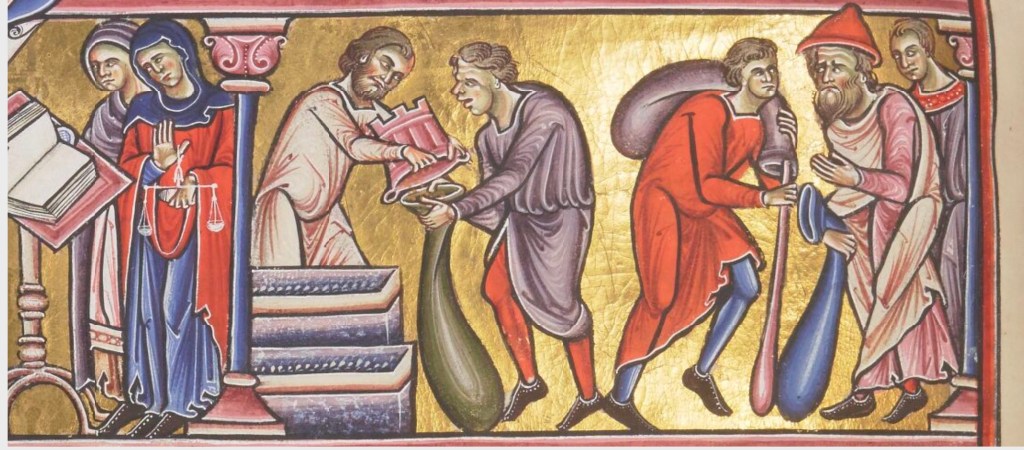
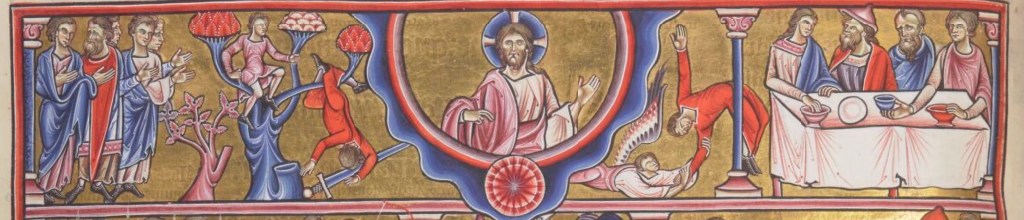
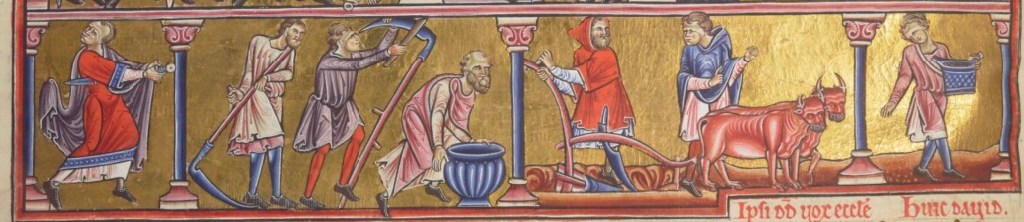
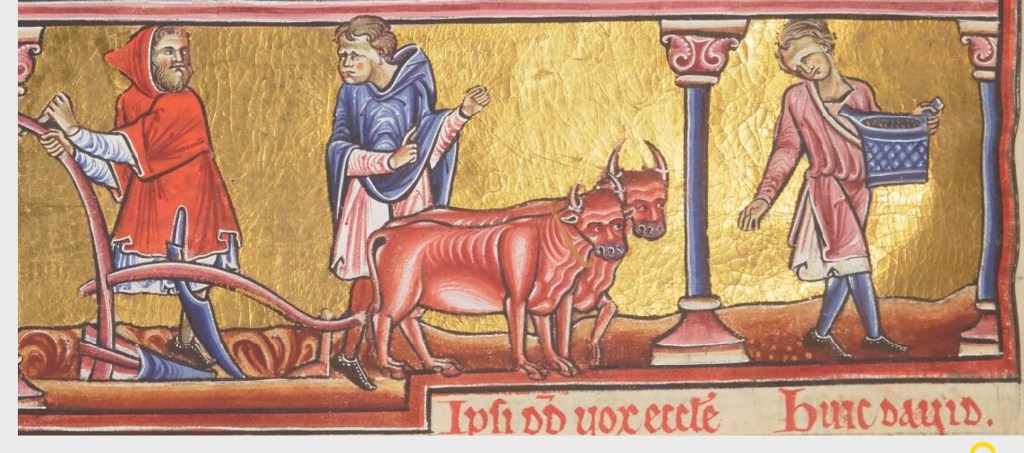
This book is a must-read for everyone who holds that that non-drug imagination exercises and non-drug meditation produces “alterations of consciousness” with the same intensity of effects as the two bowlfuls of psilocybe cubensis dosage that’s shown in folio page f134 of the Paris-Eadwine Great Canterbury Psalter.
Hanegraaff strongly emphasizes that “radical alterations of consciousness” are described in the Hermetic texts, and so we must interpret the texts as reflecting practices that would produce these effects of this intensity, such as non-drug meditation and non-drug imagination exercises.
This book is an imagination-building exercise in Hanegraaff’s New Age, anti-Science religionist cult for academic historian scholars:
imagine “non-drug entheogens” inducing a “radical alternate state of consciousness”
Hermetic Spirituality book page 140 egg diagram of Hermetic texts ranked by spirituality focus is poorly formed, should be an orderly 4-layer onion like the Egodeath theory.
Photo: Michael Hoffman. Egg diagram of placing the ranking the Hermetic spirituality texts.
The best Hermetic altered state texts are in the Inner Core together with Psilocybin.
The worst, faux-Hermetic texts are in the Outer Periphery with non-drug meditation and exoteric esotericism.
Place non-drug entheogens in the outer darkness of his diagram near the poorest Hermetic texts; place psilocybin in the inner core with the best Hermetic spiritual altered-state texts. Scopalamine in outer core.
July 30 Cyberdisciple comment post
Translate” Hanegraaff to the Egodeath theory. Like Cyberdisciple translating ancient texts to the Egodeath theory.
My book review of Hanegraaff’s book, published some time ago an entire month ago (no longer new), will touch on the idea of translating from Hanegraaff-speak (entheogens in the wide sense ie sensu lato) into the lexicon of the Egodeath theory.
Hanegraaff’s book title, June 30 2022, from memory: Hermetic Spirituality and the Historical Imagination: Altered States of Knowledge in Late Antiquity http://amzn.com/dp/1009123068
Hanegraaff’s book is about translation; that’s one of his 5 strands that he states the book is woven from.
Because his book breaks away from conventional prejudices and he’s chair of the field of Western Esotericism, he had to go overboard in excellent demonstration of scholarship about interpreting bits of Hermetic texts.
The book is a demonstration of how to rightly and ideally debate interpreting and translating and contextually framing fragments of texts, against a previous generation of biased scholarly overlay of misinterpretation.
This book is a citation tour de force.
Use that fact, that character of his book, to apply Hanegraaff’s idea of translation and citations and interpretations, and the problems of “evidence” & translation, and borderline untranslatability, to translate from Hermeticism according to Hanegraaff – or according to the updated often dull-witted and prejudiced field of academic scholarship – to the Egodeath theory.
/end of Cyberdisciple site comment
Historical Imagination of Non-Drug Entheogens
He makes too big of a deal out of “language can’t convey altered-state experiencing”.
When the altered-state experiecning is readily available on tap, completely ergonomically, the work is shared and integrated interpenetrating together: language and Reason is used with or without skill in and out of and across both states of consciousness.
The “Can’t Do”, negative mentality of needlessly overemphasizing “language can’t convey”, obscures the tremendous success that Science can access in integrating language and reason across both states of consciousness.
Language doesn’t need to induce the altered state; language merely needs to do what Science always uses language to do: form domain-appropriate lexicons and clearly articulated explanatory models.
There is nothing stopping language and Science from mapping, modelling, and explaining the intense peak altered state of divine mania and mental model reconfiguration.
There is no shortage of immersion in the peak intense mystic altered state, except the articificial shortage which academia seeks to perpetuate.
Wouter Hanegraaff’s book “Hermetic Spirituality and the Historical Imagination: Altered States of Knowledge in Late Antiquity” is a major advance in the academic field of interpreting the Hermetic texts in terms of altered-state spirituality rather than misreading the Hermetic texts as ordinary-state premised philosophical theorizing.
Academia is struggling to keep up with popular spirituality books.
Hanegraaff writes that the normal default understanding in pop spirituality is that gnosis is peak-state experiential knowledge, not ordinary-state based theoretical speculation.
A big unfortunate task for this book is to describe how benighted academia is.
This book’s task is to get academia into the ballpark, instead of being completely lost in massive category errors about the nature of gnosis, and experiential spirituality in theurgy in antiquity.
This book demonstrates excellent use of scholarly apparatus to discuss and debate interpretations of Hermetic texts and related, gnostic or mystic texts.
The interpretations have been pulled away from being lost in the weeds with heavy-handed overlays that obscure the texts’ meaning by an existentialism overlay or by a Protestantism overlay.
The Egodeath Theory community has been wondering lately about when mushrooms were suppressed, by whom, and why.
To answer that, I direct people to Hanegraaff’s books including this one, given that esotericism is entheogenic: the suppression and forgetting of esotericism was identical with loss of mushroom knowledge such as within the church.
Esotericism, which is inherently entheogen-based, was rejected by not “the church”, but by Protestantism and then by the Enlightenment, both Philosophy and Natural Science.
Culture became restricted to only the ordinary state of consciousness.
Natural Science should have embraced Cognitive Science and applied the altered state there.
Hanegraaff in this book affirms Charles Tart’s calls for multistate Science.
_________________
The title contains three phrases:
* “Hermetic Spirituality”: Hermetic writings were descriptions of intense altered state peak experiences, divine madness and ecstasy/frenzy, not ordinary-state based philosophical theorizing.
* “The Historical Imagination”: The fantasy projections and constructions imagined by historians of esotericism, traces the history of invented histories.
* “Altered States of Knowledge”: Historians must shape knowledge in a way that fits with the altered-state experiential context of ancient esoteric writers.
_________________
This book combines five strands, listed on pages 5 and 6:
1. Debate about language and hermeneutics: what the humanities should be all about (ch. 10).
2. Scholarly approach: radical empiricism, methodological agnosticism. Study religion as neither religionist (anti-science, anti-modernity, revering high vague mysticism) nor reductionist (social science only; materialist scientism level only).
3. The historical imagination, narratives, storytelling (Epilogue). Field of W. Esotericism as the reified imaginatl product of discourse for dominant academic traditions to define themselves against belittled, rejected knowledge.
4. Alterations of consciousness are a neglected core dimension of religion and spirituality. He covers consciousness, entheogenic esotericism (including non-drug psychedelics & authentic actual entheogens) per his essay by that title in the book Contemporary Esotericism. In that essay, he explains how the meaning of the word ‘entheogen’ is set by its etymology.
5. The Hermetic tradition not like his earlier work on the Renaissance revisal of the Hermetic writings, but rather now in this book, studying Hermetic writings from the cultural perspective of ancient Roman-era Egypt.
_________________
Prologue: His overview of chapters is on page 9-10.
Chapter 1: Hermetic Spirituality – He employs a selective-texts, spirituality approach, rather than a grab-bag of texts that merely include ‘Hermes’ and use a dubious scholarly construct of ‘the Hermetic tradition’.
Chapter 2: Heart of Darkness – The cultural context of ancient Egypt and private spiritual experiences.
Chapter 3: The Presence of Gods – The Hermetic worldview and the text “Logos Teleios”.
Chapter 4: Children of Hermes – The three known practitioners of Hermetic spirituality.
Chapter 5: Through a Glass Darkly – The problems of textual transmission (bias, edits, translations, fragmentation). Presents strategies for reconstruction and interpretation. Page 140 has a diagram of Hermetic texts ranked by relevance to experiential altered-state spirituality.
Chapter 6: Healing the Soul – the “Poimandres” text. Healing the soul from contamination by negative passions (a mundane ordinary-state based, “psychologizing” reading, despite texts’ key words of divine mania, terror, ecstatic madness, and transgression of personal control).
Chapter 7: The Path of Reverence – the highest virtue is Reverence but he doesn’t explain how Reverence is connected with passing through the Heimarmene gate, except to state that Reverence of the Source (‘pege’) and non-dual consciousness of the Source of All (personal control thoughts) requires spiritual rebirth first. He aims for a “thoroughly positive” reading that feels disconnected from the drama of the Heimarmene gate rebirth passage (no-free-will, helpless puppet, non-control, putting dependent trust in the uncontrollable Source of thoughts, to transcend Heimarmene).
Chapter 8: Becoming Alive – the text “CH XIII”: rebirth, liberated from the powers of darkness where the pupil’s “body” was possessed.
Chapter 9: The Source – rebirth through the Heimarmene gate into the hypercosmic Ogdoad (the eighth sphere; the sphere of the fixed stars), equivalent to the realm of divinized souls. The Ennead: the ninth, the Empyrean realm of noetic powers; highest knowing. Beyond that, the ‘pege’; the Source of all manifestation (including personal control thoughts).
Chapter 10: The Conquest of Time – transmitting intense, highest, peak altered state experiences through the medium of language. Presents “phantasia” in place of the mental construct layer. Here could be Paul Thagard’s Cognitive Science-based explanation of how Science constructs domain-appropriate lexicons and models (book: Conceptual Revolutions). Emphasis on the limitations of language, but Gadamer, against Derrida, takes a “can-do” attitude of skillful hermeneutics interpretation or understanding, called ‘hermeneia’, from Hermes.
Epilogue: Against the prejudiced, supposedly “cosmos-hating”, negative reading by the Protestant theology and existentialism overlays, the Hermetic way was actually a joyful path celebrating life and light, freed from negativity (Hanegraaff is referencing the ordinary state here, experiencing divine madness is suddenly forgotten). “Free the soul from powerful influences as fear and aggression” (a reductionist, mundane-state reading). The intense altered state backdrop wanes here as we return to baseline state of consciousness. The course of Hermes was driven by a “thoroughly positive” spirit of knowledge and understanding (were Dionysus and the furies left behind, dropped out of the equation?)
Bibliography: about 800 entries, including Benny Shanon, Carl Ruck, Rinella, Tart, A. Watts, DeConick, Michael Williams, Karen King, Mahe, Fowden, Kingsley, Ustinova, G.R.S. Mead, not Luther H. Martin (Hellenistic Religions, a cognitive approach).
Index lacks the key word ‘entheogen’ (used 5 times in this book) but includes ‘psychoactive agents’, ‘meditation’, ‘mania’, ‘ecstasy’ and ‘deisidaimonia’ (it’s a D.I.Y. deal; use Amazon full-text search). Hanegraaff criticizes Williams and King for lacking ‘gnosis’ in their index of their Gnosticism books; so his entry for ‘gnosis’ is long. ‘fate’ directs to ‘Heimarmene’, rightly emphasized. Lacks ‘gate’ and ‘guard’, despite the key mytheme of daimons guarding passage through the Heimarmene gate (a major altered-state psychological function).
_________________
Crop by Michael Hoffman
Prologue page 1 lists points:
Sentence 1 of book: “the search for knowledge” of “how things really are”. (re: should focus on: gnosis is about how the personal control source of control thoughts is really arranged) The best most spiritual Hermetic texts reveal the true nature of reality (vague) providing “liberation from mental delusion” (vague; transcendence of non-branching/Eternalism/no-free-will revelation of the uncontrollable source of control thoughts) . The claim that this gnosis is “inexpressible in human language”. I firmly disagree. This book somewhat and the Egodeath theory fully adequately expresses gnosis, per scientific domain-effective model construction. Obviously a scientific model using words and diagrams and lexicon doesn’t produce an experience; psilocybin readily produces the experience especially when integrated with this scientific Cognitive Phenomenology model (not an inappropriate Neuroscience/Neuroreductionism model, since when I say “Cognitive” everyone wants to falsely claim that I said “Neuro”). Cognitive and Neuro are essentially different levels, Neuro cannot effectively model Cognitive; only a Cognitive-level model can effectively model the Cognitive (mental construct) dynamics produced by Psilocybin.
Against the claim that gnosis is inexpressible in language, there are Hermetic texts and this book. Truth can be expereinced and written about or ratehr scientifically modelled in text & diagrams, and that’s all required, together, integrated.
It’s pointless to talk of “text without altered-state experiencing”. No one should be trying to figure out and model this region realm without integrating altered-state experiencing, so it’s pointless to emphasize “text can’t produce experience”.
In some ways, text is required, to produce altered state experience: an adequate scientific text+diagram model is required, to efficiently access and work with the altered-state peak experiencing of mental model transformation when fully passing through the Eternalism gate, full transformation of the mental worldmodel around personal control, source of control thoughts, block universe, moving from a branching to a non-branching mental worldmodel, including moving from premise of autonomous control to dependent control.
This book doesn’t focus on personal control transformation, barely at all, though “control” is mentioned near discussions of the Fate/Heimarmene gate.
Hermetic texts were required, plus Psilocybin, plus activities bridging the texts and the Psilocybin altered state – but in no way do those Psilocybin-state activities replace or substitute for Psilocybin or themselves produce the Psilocybin experience.
There’s too much negative emphasis saying “X can’t produce” – this is stupid and pointless.
What produces gnosis is the combination of “text” (ie appropriate and adequate, articulate scientific model of the domain) plus Psilocybin plus activities during the Psilocybin state (eg personal teaching, initiation session guide) that bridge the text/model with the peak ultimate experiencing of non-control, ie dependence (he calls it “Reverence”) on the Source of All.
Then page 2 lists 3 things:
o
o
o
Hanegraaff on page 1 makes the usual fundamental basic mistake of pitting “reason” against the altered state: a false dichotomy. Reason exists in both states (ordinary & altered; tight & loose cognitive assocaition binding), as John Lash (a discoverer of the Great Mushroom Psalter) states in his book, Not In His Name.
_________________
Hanegraaff isn’t permitted to genuinely engage with the topic of entheogens; for example, the word ‘entheogens’ doesn’t appear in the Index, and he tries to put forward, hidden and obscured by Latin, a proposal that academics should form a construct, non-drug entheogens.
He wouldn’t propose “entheogens in the sensu lato” (ie non-drug entheogens) – the worst idea of any academic ever, – if a fair contest were permitted by incorrigibly hidebound academia.
Hanegraaff’s imagined invention, “entheogenic religion in the _sensu lato_ (a.k.a. entheogens in the broad sense, i.e. non-drug entheogens), is the worst idea of any academic ever.
Alleged “other methods” do not, in fact, produce the peak intensity that psilocybin does, and this misuse of language steals reverence and credit that is due to psilocybin and falsely elevates ineffectual, bunk substitutes, and pits Hanegraaff against the field of entheogen scholarship.
This proposal to elevate vague methods that don’t produce the claimed results is a coerced position that scholars are forced to resort to. This book brings scholarship significantly further away from the previous demonization of esoteric pagan oriental Platonism.
Yet academia remains stuck within a murky, superstious prejudice that forces scholars to imagine a self-contradiction, non-drug entheogens and nebulous “other methods”, “the traditional methods of the mystics”, where entheogens are simply assumed to be the imitators rather than the gold standard measure against which false claimants, the alleged “other methods”, pale.
I spot-read the back matter.
This book’s index redirects from Fate to Heimarmene and has a good number of mentions of the Heimarmene gate and associated fear, terror, divine madness, and trembling, but the best Hanegraaff can do to make sense of this peak-state control-seizure instability is to try to apply mundane Psychology and then change the subject to Reverence for the Source of All.
This is beginner-level altered-state treatment, nonduality explained by the outsider to the experience.
Hanegraaff calls for more use of the Cognitive Science and Cognitive Phenomenology perspective and analytical tools.
A Cognitive Phenomonology approach is expressed in terms of mental construct processing and loose cognitive association binding caused by entheogens or visionary plants. This book uses the term “phantasia” in place of “mental constructs”, in the Theurgy context.
An authentically Cognitive approach is firmly against Neuroreductionism and the bait-and-switch where people say the magic word ‘Cognitive’ but then immediately adopt a purely Neuroscience paradigm instead (eg ‘neuroplasticity’).
This book praises Benny Shanon’s cognitive phenomenology book The Antipodes of the Mind: Charting the Phenomenology of the Ayahuasca Experience, [http://amzn.com/dp/0199252939/] but easily allows for Neuroreductionism.
Hanegraaff doesn’t provide any detail about his call for a Cognitive approach.
The Egodeath theory explains transforming the mental model to regain stability while passing through the no-free-will, or non-control gate in Astral Ascent Mysticism — all explained at the level of mental constructs, experiencing, and mental worldmodels, not low-relevance avoidance techniques, irrelevant Neuroreductionism such as “neuroplasticity”.
If I wanted to discuss neuroplasticity, I’d discuss loose mental construct binding instead, which helps identify which altered-state experiential aspects religious mythology and Theurgy is describing.
Religious mythology is analogies that describe the experitial transformation produced by loose cognitive association from psilocybin, transforming the mental worldmodel from autonomous control in a branching, freewill-premised world, to dependent control frozen into a non-branching world, with pre-existing control thoughts beyond the local control agent.
Theurgy as presented by Hanegraaff integrates Astral Ascent Mysticism, with a centerpoint being passing through the fearsome Fate-ruled Heimarmene gate at the sphere of Saturn and the sphere of the fixed stars.
In his “thoroughly positive” imagining of Theurgy and Astral Ascent Mysticism, Hanegraaff imagines an easy friendship with the Source that’s the controller and creator of all.
Negative experiences are to be explained through Psychology in the ordinary state of concsciousness.
Hanegraaff tends toward a mundane, ordinary-state premised reading mode.
A central theme of Theurgy is animation of statues.
Hanegraaff doesn’t understand the basic effects of entheogens or he would realize how they are hands-down superior to the vague “other methods” hypotheses.
Psilocybin causes visual movement; it makes statues move.
Every person who has authentic experience is well familiar with melting walls, yet Hanegraaff only comes as near as vaguely writing that entheogens cause illumination of statues “and other effects”.
Per his argument, the meaning of ‘entheogen’ is not set by Jonathan Ott’s book The Angels’ Dictionary; nor by Ruck, Hofmann, and Wasson who coined the word; nor by everyone in the field of Entheogen Scholarship.
This is how powerful Hanegraaff’s imagination techniques have grown: sensory deprivation produces the ancient theurgists’ divine mania, terror, ecstasy, and reverent fear of the Source as intensely and practically as peak doses of psilcybin.
p392 in his article which this book cites three times: “Although this broadens current understandings of the term, ‘entheogen’ does not strictly imply substances.”
Through magical manipulation of language, Hanegraaff, under coercion, tries in vain to elevate non-drug methods to be as efficacious as peak psilocybin experiencing that actually produces divine mania.
The word ‘entheogen’ wasn’t permitted to appear in the Index; you have to add it yourself: pages 5-6, 98, 110, 228, 385.
The 2nd entry is astral ascent mysticism, 3rd is alterd states, and the other 3 of 5 are citations of the author’s Entheogenic Esotericism essay in the book Contemporary Esotericism.
Hanegraaff provides translations of latin except on page 5-6 where he tries to hide and obfuscate his invention, the worst idea of any academic ever: non-drug entheogens, “entheogenic esotericism (_sensu lato_ and _sensu stricto_)”, which translates into English as “non-drug psychedelics”.
His 2012 article that this book cites 3 times explains how the meaning of a word is set by its etymology: ‘psychedelic’ means “makes the mind perceptible”, and ‘entheogen’ means ‘generates the divine’.
The brain’s psychedelic receptors can be triggered by countless unknown and unspecified non-drug methods to producing effects as readily and strongly as high doses of psilocybin.
Therefore, we can redefine the word ‘entheogen’ to mean The Traditional Non-Drug Methods of the Mystics, producing the Academics’ product, non-drug entheogens, aka “entheogens in the wide sense”.
The present book repeats the “Entheogenic Esotericism” article’s assertion “Although this broadens current understandings” (such as the definition of the word ‘entheogen’ by Jonathan Ott in the Angels’ Dictionary, and by Ruck and Hofmann and Wasson).
The subject of entheogens is a murky and obscure, supersitious underworld within academia, as seen by this book’s omitting ‘entheogens’ from the Index.
Hanegraaff is coerced into using Latin to hide his asserting of the entheogen hypothesis.
He is driven to scholarly heights of divine madness, and inventing denial while asserting (ie asserting “non-drug entheogens”).
This book provides useful imagination strengthening exercises for academic historians scholars, empirical historians of esoteric religious experiencing.
This book connects readily to the Egodeath theory because Theurgy uses the model of Astral Ascent Mysticism, passing through the demon-guarded fate-guarded Heimarmene gate, which is the intense experience of no-free-will, non-control over one’s own control thought, and having the mental model reshaped to be forced to adopt reverence.
Hanegraaff writes that the highest virtue is reverence.
He misreads and underestimates the intensity of passing through the Heimarmene gate, he says he reads the negativity through a “psychology” reading, which means he thinks the referent is experiences in the ordinary state – contradicting his altered-state spirituality thesis.
Hanegraaff doesn’t manage to explain the connection between negative fear and trembling and non-control at the Heimarmene gate, and how the spirit is brought into friendship with the Source of All, which is the soure of all our personal control thoughts requiring trust without any basis for such trust.
In his project of tearing Theurgy out of the hands of the Protestant theology-based negative reading of oriental platonism, and turning Hermetic texts into “a thoroughly positive reading”, Hanegraaff overshoots, overcorrects: he removes Dionysus, divine mania, fear, awe, and tremendum, replacing deisidaimonia (fear of the divine), by tamed, denatured, neutered, impotent, non-drug entheogens that fail to produce peak psilocybin experiencing.
Hanegraaff is not powerful enough to move academia out of its dark prejudice superstitious murky underworld of forbidding discussion of the method that works; he is reduced to the role of New Age exercise leader, “Imagine with me, historicans: “non-drug entehgoens”, aka “the traditional methods of the mystics” and theurgists.
Cowed and coerced, the situation is ridiculous and embarrassing dance, a superstitious avoidance and whitewashing, using historical imagination to confabulate “Other Methods” than entheogens.
The present book favorably cites Erik Davis’ book High Weirdness.
In the present book, Hanegraaff agrees with Davis’ call for something between crude materialist or social scientism reductionism, and vague abstact idealist mystical haze.
At the climax of Erik Davis’ book Led Zeppelin IV, he discusses astral ascent mysticism (page 118) and then page 122, Davis discusses the Stairway to Heaven, heroic doses’ experience of absolute determinism, illusion of autonomous personal control agency, the divine will controlling the block universe, spends a page discussing the peak intense altered-state experiencing of block-universe Eternalism, pre-existing control thoughts,
How close does this book move from benighted academia to the Egodeath theory?
The Egodeath theory asserts that authentic esotericism is entheogenic such as the gold standard of measure, maximum psilocybin effects.
No vague alleged “other method” can readily produce maximum psilocybin effects; they can only merely supplement as activities to do within the entheogen-induced state.
Sensory deprivation cannot produce the peak altered state experiential intensity like two bowls of cubensis like shown in the Paris Eadwine Canterbury Psalter page f134.
In his three-times cited “Entheogenic Esotericism” article, Hanegraaff wrote that he regrets failing to take censorship under Prohibition into account and uncritically believing the claim that the inspiration for New Age isn’t psychedelics, but is Other Methods such as Stan Grof’s hyperventilation cover-story that was fabricated under coercion.
Yet Hanegraaff falls for the exact same cover-story when it comes to identifying an effective engine of inspiration for ancient Theurgy’s divine madness control-seizure intense experiencing of heimarmene fate and demon exorcism at the fate-ruled Heimarmene gate.
This book cites Hanegraaff’s 2012 article Entheogenic Esotericism, in the book Contemporary Esotericism [http://amzn.com/dp/1138856118/].
In that article which the present book cites 3 times, Hanegraaff asks if anyone used the phrase “Entheogenic Esotericism” before him.
I’ve been asserting that authentic esotericism is entheogen-based since the start of the Egodeath Yahoo Group (email & webpage postings) in June 2001.
To answer the author’s question, my first posting to the world-wide web with “Entheogenic Esotericism” in the title was on June 12, 2004: “Authentic esotericism is entheogenic esotericism”.
Authentic esotericism is entheogenic esotericism.
Entheogens are the key to esotericism.
This is the simplest possible theory of esotericism, and the most natural, the least contrived and strained.
Theories of esotericism that are not based on entheogens suffer from the problem of grandiose verbiage, unmet promises and claims, chronic vagueness, excuses for lack of potent and prompt efficacy, and no ability to deliver the experiences which are talked about.
Drug-free esotericism doesn’t work; it is not effectively ergonomic.
Fearful Scholars Avoiding Deisidaimonia by Imagining Non-Drug Entheogens
Exoteric Esotericism through Non-Drug Entheogens
How High Your Imagination of Non-Drug Entheogens?
Other Methods; the Traditional Methods of the New Agers like, you know, hyperventilation while doing zen meditation in a cave
visualization imagination buiding techniques for ac scholars
I wrote “entheogenic esotericism”, assertively and pointedly, 8 years before Hanegraaff’s 2012 article.
Subject: Authentic esotericism is entheogenic esotericism
“Authentic esotericism is entheogenic esotericism. Entheogens are the key to esotericism. This is the simplest possible theory of esotericism, and the most natural, the least contrived and strained. Theories of esotericism that are not based on entheogens suffer from the problem of grandiose verbiage, unmet promises and claims, chronic vagueness, excuses for lack of potent and prompt efficacy, and no ability to deliver the experiences which are talked about. Drug-free esotericism doesn’t work; it is not effectively ergonomic.”
Earliest use of “entheogenic esoteric”:
August 12, 2001 message 117
Subject: State Christ’y needed historical mystery-savior
“Per Dan Merkur, I think the Jews had entheogenic esoteric practices”
Earliest vehement explicit assert and equating of “esotericism is entheogenic”: start of Egodeath Yahoo Group, June 2001.
Hanegraaff’s fabricated unrealistic imaginings of hazy “other methods”, non-drug entheogens, are brought by scholar coerced: sensory deprivation without entheogens doesn’t produce divine madness, the peak intense mystic altered state of frenzy and fear of God and cybernetic ego death self-transgression of personal control power.
Despite its advances, this book still amounts to exoteric esotericism.
Hanegraaff’s imagination brings us exoteric exotericism through non-drug entheogens.
This book approaches the Heimarmene no-free-will gate (at Saturn and the fixed stars) and imagines an easy friendly relationship with the Source of All Thoughts.
This book remains on the wrong side of the serpent-monster guarded gate, alienated from the block universe worldline vision and the fearsome uncontrollable higher controller.
Hanegraaff misidentifies ord-state as referent of relig myth. a psychological ie the ordinary state of consciousness reading interp of fear , dread, noncontrol at Heimarmene no-free-will ctrl-loss gate.
Meet me at the other side of the no-free-will Heimarmene gate: this book often returns to the topic of Astral Ascent Mysticism.
This book approves and cites Erik Davis. Davis’ Led Zeppelin IV book’s climax, about Stairway to Heaven, discusses the Egodeath theory: eternalism no-free-will peak experience like Heimarmene gate.
Hanegraaff expresses uncertainty of Saturn gate vs fixed stars as the gate – mental model transformation gate re no-free-will & learning how to be Reverent fear respect for the Source of All Control Thoughts.
Davis’ Led Zeppelin IV book mis-calls the sphere of the fixed stars the Empyrean. But the sphere of the fixed stars is the realm of fate/Heimarmene (the non-control gate where Saturnus or Time sacrifices the youthful thinking). The level above no-free-will and eternalism and Heimarmene is where God and the elect reside, the empyrean.
Hanegraaff got suckered by the New Age cover story, fool Hanegraaff twice now he’s heading down the same path.
The inspiration for the New Age movement supposedly wasn’t psychedelics, and the inspiration for theurgy supposedly wasn’t entheogens, but was “Other Techniques” such as imagination techniques, sensory deprivation, that produce divine madness, fear of god, and forces the mind to put reverent trust in the Source of all personal control thoughts.
Contemporary Esotericism book – article Entheogenic Esotericism – [ ] ConEso bk EnthEm imaginauion construction projected , non-drg entheogens which hides Latin trying to sneak past censors and laughers making fun of his antonym redefn revealing superstitious trembling fear scholars have dark murk magic-thinking superstitious underworld of entheogen theory.
– [ ] animation of statues wall street shuffle melt readily proved by psilocybin but no other method causes statues, mountains move before my eues, waves roll by so fast, save my shipo f freedom, im lashed helpless to the mast”
– [ ] chaalenge to Hane Davis: name one “other method” be specific, that is demod to produce divine nmania ctrl seizure panic driving mental model transformation around no-free-will nonctrl
– [ ] summize 10 ch’s.
– [ ] thoroughly positive interp of hermetic texts incl terror fear dread gate forced to Reverence the Source. nothing of dion neutered dionysus, removes neg attitude (and Dion along w it).
Amazon review for Egodeath Community not for Amazon Hanegraaff
Book Review: “The Traditional Methods of the Theurgists”
5 stars
Summ: why you should read this book.
If length permis, place my various points within Ch 1-10. I do think that is best structure to help balance wordcount.
i reviewed his dic gnos, crit’d it. link to amaz rvw. quote my criticism needle in haystack (or no needle at all); fails to be , fails the relevance test for tripper in seizure peak window; irrelevant wheelbarrows of sawdust lacking central focus emphasis where due:
This book identifies religious mythology as serving to describe by analogy the cognitive phenomonmenology the ultimate (final) or peak-state (highest) referent as analogical psychedelic eternalism with dependent control to restore control stability, explaining Fear of God & Michael A William’s book The Theme of Stability stable column base thru nonbranching.
In 1995, I inquired for a Newage W Esotericism book, the bookseller said I should write it. Glad Hanegraaff wrote it – but he regretted not taking Prohibition censorship into account [quote his “entheogenic esotericism” chapter 19] link to Contemporary Esotericism book.
I was first to write a posting titled “entheogenic esotericism” 8 yrs [quote/ findable] [quote ch 19 of Contemporary Esotericism where Hanegraaff says he looked for anyone previously using that title]
Non-drug psychedelics: in Chapter 19 of the book Contemporary Esotericism, Hanegraaff proposes the worst idea from any academic ever: non-drug entheogens; “entheogens in the wide sense”. Why this idea is beyond the pale, theft, insult, an outrageous insult to entheogen scholarship/ & to entheogens. stealing credit from entheogens to falsely elevate methods that are not ergonomic & direct & that actually just serve to avoid the alt state.
The canard “the traditional non-drug methods of the mystics” – in Entheogenic Esotericism, chapter 19, his self-contradictory Footnote 3 (vs his usual body text canard) citing Luck: the “tradl methods of the theurgists” may be entheogens.
Major advance away from fossilized irrel unprofitable way off base bunk options: bunk ill-formed religionism vs bunk crude materialist scientism , he explains to academics much of their false options, he calls for input from entirely different fields approaches/ framings, he suggests “even Cog Science”, cites benny shanon who uses a Cog Pheny approach, an approach that’s much more developed by the Egodeath theory.
The Egodeath theory draws from acedemic historians work to support this Theory by explaining themes such as Fear of God, Fate, No-free-will wxperience, rebirth, ego death inthe intense mystic altered state as from psil scop (acacia/ rue ) dmt per Shanon.
My Loose Cognitive Science approach insists on superior relevance of domain-appropriate scientific explanatory models and especially a well designed effective relevant lexicon set of concepts system for superior explanatory power per Thagard link book. Conceptual Revolutions. confirmation by Marvin Minsky no-free-will book and Rudy Ricker 4D spirituality mystm book.
Erik Davis Led Zeppelin IV page on the Egodeath theory at climax StH song, altered state Rock is the auth mysty reln of late modern but as Gane Hane critd Chris topher his periodization has massive gaps in conrtemporary esotericism
I’ve been studying Hanegraaff’s books and articles for decades, since his 1996 book on New Age.
Dup Section, Delete:
Book Review: “The Traditional Methods of the Theurgists”
5 stars
Summ: why you should read this book.
Place these next points within Ch 1-10.
i reviewed his dic gnos, crit’d it. link to amaz rvw. quote my criticism needle in haystack (or no needle at all); fails to be , fails the relevance test for tripper in seizure peak window; irrelevant wheelbarrows of sawdust lacking central focus emphasis where due: analogical psychedelic eternalism w delendent control to restrore stability explaining Fear of God & Michael A Wms bk Theme of Stability stable column base thru nonbranching.
in 1995, i inquired for Newage W Esotericism bk, bkseller said i should write it, glad Hane wrote it – but he regretted not taking Prohibn censorship into account [quote his E E ch 25] link to Con Esotericism bk
i was first to write posting titled ” e e ” 6 yrs [quote/ findable] [quote ch 25 of Con Esotericism where Hane says he looked for anyone previously using that title]
nondrg psychs: in Ch 25 Con Esotericism Hane proposes the worst idea from any academic ever: non-drg entheogens / wide sense , why this is beyond the pale, theft, insult, an outrageous insult to entheogen scholarship/ & to entheogens. stealing credit from entheogens to falsely elevate methods that are not ergonomic & direct & that actually just serve to avoid the alt state.
the canard “the tradl methods of mysts” – in Enth Esom ch 25 his self-contradictory Footnote 3 (vs his usual body text canard) citing Luck: the “tradl methods of the theurgists” may be entheogens.
Prologue summ & critique
Ch 1
Ch 10
Epilogue
major advance away from fossilized irrel unprofitable way off base bunk options: bunk ill-formed religionism vs bunk crude materialist scientism , he explains to academics much of their false options, he calls for input from entirely different fields approaches/ framings, he suggests “even Cog Science”, cites benny shanon who Cog Pheny.
the Egodeath theory draws from acedemic historians work to support this Theory by explaining themes such as Fear of God, Fate, No-free-will wxperience, rebirth, ego death inthe intense mystic altered state as from psil scop (acacia/ rue ) dmt per Shanon.
my Loose Cognitive Science approach insists on: we must use instead a far superior relevance of domain-appropriate scientific explanatory models and especially a well designed effective relevant lexicon set of concepts system for superior explanatory power per Paul Thagard link book: Conceptual Revolutions.
In 1988 was glad to find confirmation in my book by Marvin Minsky no-free-will book sections, and later, Rudy Rucker The Fourth Dimension 4D spirituality mystm book.
Erik Davis’ book on Led Zep IV album has a page on the Egodeath theory at climax of StH song,
altered state Rock is the auth mysty reln of the late modern era,
/end of dup section to carefully delete
but as Hanegraaff criticized Christopher Partridge for his very unimaginative/ stock/ utterly cliched periodization (the official “given” myth narrative, as Jan Irvin debunks as fake) has massive gaps in contemporary esotericism, blind to entire major periods as if psychedelics just flicker in & out of existence per the official herky jerky hackneyed false cartoon unreal narrative:
Expensive, so rely on Amazon preview, his videos, his posts, his academia edu articles.
I purchased hardcover July 14, 2022, ebook April 19, 2025.
Infinite Improbability
p4 ftnt 7 , Hanegraaff cites Erik Davis, about who I posted along w/ present page: “High Weirdness book, p8-30: I find myself in sympathy with Davis: “dissatisfied with the idealism of mystical and religious thinking, on the one hand, and the stinginess of the usual reductionism on the other””
Also see my recent (ie yesterday) critiques of the reductionist theory of Myth.
Videos
Stargates | ‘Terrestrial Gods and Statues of Light’ presented by Wouter Hanegraaff Reading from book. She announces forthcoming book at 5:20. https://youtu.be/v_MDa5jC20U – at 5:20 WarburgInstitute
“In this lecture Wouter Hanegraaf (University of Amsterdam) discusses the famous (or notorious) passages about animated statues in the Asclepius, an important Hermetic treatise in Latin that is based on a lost Greek original known as the Logos Teleios.
“It is well known that Augustine condemned Hermes Trismegistus’ praise of what Christians were bound to see as idolatry;
“and the Hermetic practice of statue animation came to be seen as a model of talismanic magic since William of Auvergne.
“First of all, he places Hermes’ discussion with his pupil Asclepius about statues in the social and political context of third-century Roman Egypt;
“secondly, he argues that it is most plausibly interpreted in the context of Iamblichean theurgy;
“thirdly, he tries to answer the question of how we may explain the conviction of practitioners that statues could actually come alive; and
“finally, he discusses the connection of these “god-making passages” to the other famous part of the Asclepius, Hermes’ lament about the imminent decline of Egypt.”
“In this lecture, Professor Wouter Hanegraaff from the University of Amsterdam discusses the relevance of entheogens to theurgy and ritual evocation in Roman Egypt, with special attention to the story of Thessalos, the so-called Mithras Liturgy, and the Neoplatonic practice of Iamblichus.
If we deny or marginalize the clear evidence for entheogenic practice in these contexts- while acknowledging the spectacular visions and experiences that are claimed in the texts-it is hard to avoid traditional pathologizing interpretations of experiential practices that, in fact, can be rationally accounted.”
The Elephant LSD: Thoughts on a Euro-American Ally
by Erik Davis, April 27, 2022, study treatment by Cybermonk
“I am currently recovering from three very full days of the Chacruna Institute’s Religion and Psychedelics Forum.
“The event went amazingly well, with a high level of discourse from both panelists and chatting attendees, a diverse and ecumenical array of views unmarred by haters and trolls, and a lovely fusion of head and heart rare to find in such an abstract, draining thing as an online conference.
“I moderated a bunch of panels, interviewed Brian Muraresku, and, since I was involved with a lot of the programming, watched pretty much everything.
“When we make the recordings available, I will try and write more about the conference, but I do believe the Religion and Psychedelics Forum will stand as one of those rare Zoom (actually, Crowdcast) conferences that are worth returning to after the fact.
_____
“The timing was also perfect: psychedelics and religion is fresh and resonant right now, partly because the topic sidesteps the medicalizing and commercial rhetoric that has made the psychedelic scene both boring and aggravating.
Obviously religion can be a huge problem, and future conversations will no doubt have plenty of challenges to wrestle with.
But with psychedelic chaplaincy just starting to bloom, we are in a sweet spot, at once calming and intoxicating.
The Forum reminded me just how wild, enchanted, and disruptive the psychedelic waters become when neuropsychology can open to phenomenology and mystery.
Plus it was just wonderfully weird hearing mainline liberal Christians from the American South lovingly describing their trips.
_____
“As tools and teachers of the Beyond and the Outside (as well as the Here and Now), psychedelics inevitably open up the problem and power of the sacred, whether researchers are defining “mystical experience” or the daime drinkers of Barquinha are incorporating spirits of the dead or religious professionals, noting which way the wind is blowing, are moving into the psychedelic space as chaplains, guides, and ritual participants.
I guarantee you will not see this groundswell reflected much in the next MAPS Psychedelic Science conference.
In this sense, religion—rather than “spirituality,” which is far more easily absorbed into secular psychology, pop hedonism, and consumer wellness marketing plans—is the elephant in the psychedelic renaissance room.
_____
“But I want to talk about another elephant in that room: the elephant ergot. …
What I am talking about is the fact that ergot’s cultural profile is curiously muted in today’s “psychedelic space” [per my conversation with R. U. Sirius 1995 at Snodfart’s Jr. Academy -Cybermonk], though acid remains without question the single most influential and catalyzing psychedelic in the postwar world.
Within the mediated mindscape of the day, acid is there, but not there, acknowledged but not exactly honored as the teacher and trickster and transformer it is.
Tusko’s Revenge
“Many of the more-or-less religious substances discussed at the conference were linked to sacred plants and fungi and the indigenous and mestizo peoples and religions that nurture that botanical knowledge.
(Chacruna itself is named after the leaves in the ayahuasca brew).
There was some discussion of ketamine, and LSD was mentioned on occasion, but its presence was most strongly felt in a panel I organized called “The Psychedelic Religion of the Counterculture.”
This panel, which included Christian Greer talking about the psychedelic church movement of the ‘60s, Hog Farmer Maria Mangini on the rituals of acid (and nitrous oxide) communitas, and the amazing Nick Powers on Burning Man’s profane spirituality, was a good reminder that, in WEIRD societies—Western, Educated, Industrialized, Rich, and Democratic—acid is at least as much of an ally or lineage or sacramental pact as anything else.
_____
“I am a child of this lineage. I first dropped a modestly dosed disco hit at the tender age of 13, on Halloween, and its signature qualities—limpid, electric, loopy, sublime—remain my entheogenic home base.
The drug has also been on my mind a lot of late, since I have spent the last two years researching and writing about something that is now exceptionally rare: a largely undiscussed facet of the acid story.
As Burning Shore readers already know, my latest book project takes on the history, art, and design of LSD blotter, a carrier medium almost uniquely associated with LSD and responsible for the bulk of the drug’s street distribution from the end of the 1970s to today.
_____
“In a way we know the story of acid, which can seem superficially settled, even rote, its signature events and colorful characters trotted out like clockwork in myriad online potted histories: [see Jan Irvin debunking of Myth -Cybermonk]
Dr. Hofmann’s bike ride,
MK-Ultra’s miseries,
Michael Hollingshead’s mayo jar,
Kesey’s Kool-Aid,
Manson’s mind control,
Jerry’s bone-dancing congregation.
[Wasson, “the father of ethnomycology” 🤢 & his sus “forest walk” foundation myth and its ritual retelling – Cybermonk]
[in writing the book,] I largely ignored these storiesalong with discussions of acid ideology, except to the extent that it helps explain the motivation of blotter makers.
“What interested me were the elusive nitty-gritty details of manufacturing practices, drug distribution, and the fascinating and mixed motivations of the artists, producers, printmakers, and dealers who developed the blotter format into a unique mode of art—or iconography, or branding—whose images reflect all manner of aesthetic, cultural, spiritual, and prankster attitudes.
Following a space opened up by Jesse Jarnow’s book Heads, my research put me in touch with the concrete social reality of the acid underground, which persisted whether or not the drug was in the papers, underground or otherwise.
After all, given that blotter only really takes off in the late 1970s [eg altered state classic Rock 1975-1988 -Cybermonk], its story lies mostly outside the conventional ‘60s narratives of LSD.
_____
“But if LSD never stopped influencing culture, and if the drug remains a popular goodie—dependably available in underground drug markets, at festivals, and on drug-nerd dark webs—why do I call LSD the elephant in the room?
Here’s why.
If you tune into the journals and journalism of today, along with the imaginative investments that inform much of psychedelic discourse, you will note that LSD has taken a back seat in academic research, therapeutic protocols, and the cultural imaginary.
In an era of “sacred plants,” of commercial formulations and utterly manageable microdosing, LSD the Mighty has drifted to the periphery of our consciousness, its teachings discursively marginalized, almost repressed, even as its tropes are regurgitated as Haight Street kitsch and corny vanity blotter.
We forget that the elephant in the room can roar like a cosmic hurricane. [I noticed that in 1990 with Mondo 2000 Cyberculture -Cybermonk]
But if you climb on its back, and embrace the positionality of the acidhead, you are gifted with a particularly illuminating perspective on the current psychedelic scene, for the simple fact that, beyond the cliches that imprison, LSD is not currently subjected to capitalist narrative capture.
_____
“Let’s back up for a sec.
A lot of psychedelic discourse today is driven by an overt or covert struggle over legitimacy.
Who gets to speak for psychedelics, and in what tongue?
This struggle is partly an institutional one, which is why it feels so real.
In the domain of mental health, professional bodies—including credentialed therapists and the institutions that license them—are now directly competing with already existing underground therapy networks whose days may well be numbered already.
Recent debates about governance and abuse within underground therapy networks, however vital and deserved, must also be seen in light of this larger movement towards professionalization.
_____
“This therapeutic land rush is in turn dependent on the “return” of psychedelic science and clinical research.
Here too we have seen various professional bodies and discourses, with rivalries between them, attempt to establish their dominance over the knowledge basis of psychedelics, partly with an eye to extract value for a hungry pharmaceutical and mental health industry.
One example of this tension is a topic that frequently came up at the Chacruna Forum: what is “mystical experience,” and is it really translatable to data, as the popular Mystical Experience Questionnaire implies?
The labs at Johns Hopkins and NYU dig this stuff, but other psychedelic scientists—for some very good reasons—think these measures open the door to supernatural obscurantism.
_____
“Or you can consider the rivalry that motivates the self-serving claim, which I’ve seen put forward by white-coats at various psychedelic science gatherings, that psychedelic science stopped with the scheduling of LSD and related compounds in the ‘60s and early ‘70s, and only started up again with the renaissance man Roland Griffiths or, if they are being fair, Rick Strassman.
But this narrative only stands if you believe that “real” science can’t happen outside of legitimizing institutions.
If you do believe this, please explain where we should locate Sasha Shulgin, or Jonathan Ott, or the garage botanists who haunted the great Entheogen Review.
_____
“So here’s what you see from on top of the elephant.
Professional therapists, along with clinical researchers and psychedelic entrepreneurs, have very strong reasons, both financial and optical, to marginalize or actively forget seventy-five years of LSD history, culture, and consciousness.
[Just as my recent expose of conflict of interest within entheogen scholarship that causes entheogen scholars to WANT there to NOT be mushrooms within the Church, within Christian history, and when entheogen scholars find mushrooms within Christian history, they hasten to suppress it as a threat to their anti-Church, crybaby sob-story false narrative that “our own religion is so bad that it lacks all entheogens. 😭 😭 🚫🍄 ” – Cybermonk ]
Part of this is simply practical.
From a working therapist’s point of view, LSD doesn’t make sense because it takes too long to metabolize, which stretches a session into hours and hours of sticky trip taffy that increases the likelihood of weird twists and turns and just takes a lot of time.
Underground therapists have an extraordinary history of working with LSD, of course, but these were and are not “mass” protocols designed to profitably treat society-wide mental turmoil.
Almost no one interested in installing a mainstream regimen of psychedelic therapy is paying much attention to LSD, despite the distinct possibility that the substance remains a uniquely excellent vehicle for the autonomous deconstruction and lucid reformation of self-patterns.
But no matter: LSD doesn’t “scale.”
_____
“But what about pure research?
Because LSD has been so widely studied, the material is very well-known and continues to play an important role in some current psychedelic science, including animal studies.
Significant research by Robin Carhart-Harris [🔶!! 🤯 ] and Franz Vollenweider has been carried out using LSD as the primary material (although some of this interest may be traced to acidhead favoritism in a few funding agencies).
Still, that metabolic arc makes human trials an expensive hassle and a half.
Psilocybin is a much better clinical ally.
[I am the one who said it: CHANGE FROM CURVE TO WINDOW, MIXED WINE = PSILOCYBIN REDOSING -Cybermonk ]
_____
“There are also powerful political reasons that drive contemporary clinical researchers—and their pharmacorp and entrepreneurial pals—to downplay LSD: the desire to enforce a new narrative [relatively -cm] freed from the dastardly taint of the counterculture.
While mescaline, psilocybin, DMT, and ketamine all added their alkaloids to the countercultural ferment, LSD remains the great psychedelic starter.
By downplaying LSD and disconnecting its histories from the contemporary construct of “psychedelics”, the legacy of the counterculture can be jettisoned as an ancient and unfortunate tale of dangerous excess no longer relevant to today’s era of bright and shining promise.
This marginalization also conveniently mutes the more radical discourses, practices, and collective politics associated with LSD, whether revolutionary communes, or prophetic religious invention [eg notorious Egodeath Theory cult -cm], or hedonistic erotic celebration.
_____
[false narrative alert – what was the real agenda being pushed?]
“The bête noire for many researchers is Timothy [🤨 ♻️ ☢️ ] Leary, who gets blamed for destroying the first wave of psychedelic science by supporting, and intensely publicizing, the democratic distribution of psychedelics and LSD in particular to the wider population.
(It’s interesting to note that Leary gets grief while the university-based drug torturers who got paid by MK-Oltra barely get a mention.)
I have also always suspected that part of the opprobrium that comes Leary’s way reflects the fact that, in addition to being a photogenic pied piper, he was a professional turncoat, [if you buy the conventional bullsht history] an awkward reminder that psychedelic researchers have the capacity to pursue values[? 🤔] that are incommensurate with those that drive the modern research university[? 🤔].
_____
“Alongside these institutional forms of forgetting, there has also been a broad shift in the cultural imaginary, which finds far more enchantment and promise in organic psychedelics like ayahuasca and psilocybin mushrooms, along with ibogaine and mescaline-containing cacti.
Part of this shift is generational—I get the sense that for some younger folk, LSD is as antiquated (if excellent) as a reel-to-reel, its legends and trip reports worthy of little more than an “OK boomer.”
Another part has to do with the impressive success of local decriminalization efforts that focus, for practical reasons, on “plant medicines” and the rhetoric of Nature.
The supposed tension between natural and synthetic drugs is an old debate in the underground, often generating more heat than light, but the fact is that Nature gives plant medicines and fungi an enchanting animism lacking in LSD.
(Though it bears mentioning that ayahuasca is also a thing of techne.)
Journeyers readily experience and attribute agency to natural substances, which feeds directly into the widespread dread of climate crisis and imminent environmental catastrophe.
One often hears the tale that ayahuasca left the jungle to spread around the globe in order to wake up humanity before we totally fuck things up.
_____
“Along with this ecological/animist bias lies a corresponding ethnobotanical romance.
Ayahuasca, teonanácatl, iboga, huachuma, and peyote are all profoundly embedded, historically and cosmically, in indigenous frameworks of use and lore.
Many Western individuals—reeling from an extractivist civilization they feel terribly ashamed to benefit from—are understandably hungry to acknowledge, celebrate, and center these indigenous forms of wisdom.
Their motives—my motives as well—include ethical demands based on historical horror, along with a genuine respect and interest in indigenous worldviews, and probably, if we are honest, some good ole romantic enchantment with the Other.
The point is that the indigenous lineages that have held and developed the practice of sacred plants and fungi for millennia charge these particular substances with a far more potent charisma than currently radiates from lysergic acid diethylamide-25, a semi-synthetic molecule the sprung like Athena from the corporate brow of the European chemical industry.
[ need counterbalance of/through Psilocybin in Medit/Europe history (which the Allegro/Ruck committee’s overstudied species, Secret Amanita, hasn’t delivered) -cm]
The Gnostic Doctor
“But what a new god!
LSD is the Holy Spirit of the postwar world, its arrival a pentecost for the profane, a Mystery that compounds madness, mysticism, mind control, and revolutionary ontology.
LSD holds up a funhouse mirror to the WEIRD world, generating all manner of masks, terrifying and absurd and absolutely revelatory.
Consider that, within a few decades of its discovery, LSD would be seen not only as
a simulator of psychosis—the original “psychoto-mimetic” [against John Lash’s delusional non-word “psychomimetic -cm] marketed by Sandoz—but as
a facilitator of psychoanalytic insight,
a battlefield deliriant,
a cure for alcoholism,
a truth serum,
a liberating agent of revolution,
a repressive tool of counter-revolution,
an aphrodisiac,
a cognitive amplifier,
a creativity booster,
a holy sacrament,
a profane sacrament, and
a compound with no “currently accepted medical use” and “a high potential for abuse” (the definitions of Schedule I substances in the United States).
LSD is a Proteus, a trickster, a psychopomp of modernity.
Nonetheless, Dame Acid is largely obscured when seen through today’s psychedelic kaleidoscope.
It is too close, too far-out, its sacred transmissions too muddled with the scandalous grit of its concrete historical unfoldment.
_____
“Here I would like to suggest that this bug, this uncoolness, is actually a feature.
Why?
Because, for both practical and symbolic reasons, LSD has been largely passed over by the discursive, legal, entrepreneurial, therapeutic, and marketing engines that are utterly transforming the narrative profile that surrounds, say, psilocybin mushrooms (already frequently reduced to “ psilocybin ”). [REDOSING PSILOCYBIN -cm]
I cannot speak for those acid users who exist among indigenous communities and the developing world (and they are there).
But for WEIRDOs, the absence of contemporary acid hype means there is still some room to breathe with LSD, to encounter the Mystery on terms dictated by generations of the drug’s users more than by crypto-capitalists, drug-naive enthusiasts, and Goopy marketers.
Though acid has done many of us wonders, this white lab powder is paradoxically too “wild” to be captured whole-hog by the narrative template of Healing, with its medicalized subjects, pharmaceutical regimens, and wellness indulgences. [don’t forget Cyberdisciple’s BENEFITS 🤨 ]
_____
“As a material substance, LSD is also largely untouched by the legacy of colonialism—at least to the extent that anything born in Europe can be untouched by colonialism. [how are Psilocybin mushrooms in ANE/Medit/Europe (engine of our own religion, mystery religion, Eucharist, & branching-message mushroom trees) colonialism? -cm]
Acid is certainly not “clean” (though it’s nice when it is).
Karmically, LSD emerges directly from the West’s industrial pact with fossil fuels—like other chemical combines, Sandoz was born when we clever monkeys figured out how to extract dyes from coal-tar wastes.
(Cue Gravity’s Rainbow.)
And the popular youth culture that later grew up around acid indulged in an extraordinary amount of appropriation, both in the “good” sense of creative cultural cannibalism and the “bad” sense of thoughtless Western thievery.
But unlike shrooms or ayahuasca or Salvia divinorum, acid itself cannot be constructed as an object of cultural appropriation.
Love or Theft?
“What a relief!
Acid provides culturally sensitive WEIRDOS room to celebrate without guilt or risk of attack, without the demand to negotiate the appropriateness of their own relationship to a substance.
And because of the postwar order, this accessibility not only holds for Westerners, but for everyone, since acid follows other global flows of trade and travel.
While LSD lacks anything like a “traditional” framework of ritual or symbolic meaning, it carries with it a rich and varied load of therapeutic, bohemian, and cultural practices, an appropriately kaleidoscopic range of collective ceremonies, aesthetic gestures, mythopoetic maps, wayward tantras, and metaphysical insights.
Most of this lore belongs to the underground, or really a network of undergrounds, and while a good deal of it lies in texts—including the “texts” of LPs and rock posters and underground comix—a lot lies with folks or scenes that have disappeared, are disappearing, or molder [moulder] in the basements of cultural memory.
_____
“One reason I brought together some friends to discuss “The Psychedelic Religion of the Counterculture” was to see how our understanding of the counterculture shifted when we looked at it as a religious movement rather than simply a spiritual one.
But a more pressing reason was to draw attention to the fact that, at a time when many young psychedelic seekers are yearning for shamanic wisdom, the West’s own bohemian ancestors are aging and dying all around us.
Just as a rising tide of voices, including my own, demand a place for indigenous folks and organizations at the psychedelic table, so too might we more consciously acknowledge, affirm, and empower our own often marginalized psychedelic elders, that Trippiest Generation of freaks, heads, and freelance mystics now reaching the end of the road.
For a glimpse of what I am talking about, check out Christopher Gray’s criminally unknown and phenomenally inspiring 2010 book The Acid Diaries, a record of the boomer seeker’s late return to LSD.
_____
“For all their fuck-ups, the chaotic underground lineage of the psychedelic counterculture may paradoxically hold the sort of “traditional values” that could help guide us through the ferocious new psychedelic frontier, where the digital railway networks unload a fresh swarm of carpetbaggers, snake-oil salesmen, and robber barons to be on a daily basis.
If we want to prepare ourselves for the massive bloom of psychedelic experiences that lies ahead—which, let us not fool ourselves, is going to get seriously out of hand—why would we ignore the first wave of mind-expanding mass democracy in the West?
If the sacred is what we are after, why ignore the blotter host?
If celebration, why not join the Mad Hatter in a sillier sort of tea ceremony?
And if you want to get to the heart of the Mystery, [= the Egodeath theory] don’t you think you might wanna follow that white Pooka down that long strange rabbit hole?”
Motivation: Hanegraaff Lowered the Fixed Stars into Cosmos Level 7 to Force Them (and Heimarmene) to Be Below (i.e. Before) Rebirth, Which Is Fixed at Top of Level 7 (Saturn) – the Rebirth Destination Outcome Is Actually No-Free-Will, not Egoic Freedom (Against Hermetic Poetic-License Marketing Spin)
In Hanegraaff’s 2012 Keynote Lecture/Video at ContERN, he reads aloud his Entheogenic Esotericism article but he says in Latin “entheogenic religion (sensu lato)” (ie non-drug entheogens) like his 2022 book says “entheogenic esotericism (sensu lato and sensu stricto)”
Episode 218 ends with half hour cosmic guitar live-in-studio performance by Illumination Valve.
Mithraism is a non-avoidance 3-level model of multi-state mental development through eternalism and cybernetics. Mithraism is reverent toward eternalism/ heimarmene/ Helios, a working ladder to heaven, non-dualistic.
Here is the way to word phase 3 to avoid egoic avoidance and latching onto “possibilism” as if freewill-premised: emphasize eternalism not possibilism in phase 3.
naive possibilism-thinking basic eternalism-thinking advanced eternalism-thinking including qualified possibilism-thinking
Eadwine’s non-branching initiation image, row 2 right
Eadwine’s non-branching initiation image, row 2 right: sage with funnel hat floating with neither foot on ground = Phase 3 = advanced eternalism-thinking including qualified possibilism-thinking.
TAKE YOUR CAVE MEDITATION, NON-DRUG ENTHEOGENS, AND AT-WILL IMAGINATION EXERCISES DOWN OFF THE ENTHEOGEN PEDESTAL AND HURL THEM INTO THE HANEGRAAFF REJECTION/AVOIDANCE WASTEBASKET -> 🗑
TAKE HEIMARMENE/ FATEDNESS/ ETERNALISM OUT FROM YOUR HANEGRAAFF REJECTION/AVOIDANCE WASTEBASKET AND PUT THEM UP ON THE ENTHEOGEN PEDESTAL 🏆
Sacrifice to Helios to Honor Mithras
⚡️🎸🌌 elektron kithara
Episode 218 ends with half hour cosmic guitar live-in-studio performance by Illumination Valve.
Miking
ribbon mic & Omni end-address mic, stands kept in place but goosenecks re-aimed
ribbon mic & Omni end-address mic.
Left: MXL R40 ribbon mic, Eq: -9 0 -2 dB
Right: Electro-Voice 635A, Eq: 0 0 -10.
80Hz bass cut.
loft sessions, by Illumination Valve, stereo miked, Marshall Plexi
6-8′ to 2 cabs
Guitar speaker cabs: L: Eminence 2×12 w/ Greenback & V30 R: Blues Jr. w/ Eminence Fender Special Design
Errata: lube squeaky switch
Egodeath Mystery Show episode 217 – Rebirth from Fate into Egoic Freewill (August 23-26, 2022)
758 MB – Very large content; 10 hours. 7 mp3’s * 1.5 hours each = 7 + 3.5 = 10 hours of content. Use Preview at wetransfer.com to avoid downloading 800 MB, not sure if entire 1.5 hours of each mp3 will play in Preview, or only the first portion eg 30 min.
All is solid idea devm’t. Climax breakthrough is in part 217e ~46:30, at “Rebirth“. Textual equivalent: read the present page and recent companion postings that were written in alternation with creating voice recordings. ALSO READ COMMENT THREADS below postings.
What cosmic level does Wouter Hanegraaff place the fixed stars at in his book Hermetic Spirituality: 7 or 8?
He certainly places the highest level of heimarmene at level 7, not 8.
Most noteworthy, Rebirth is fixed at top of level 7 – his distortions are a result of his feeling he must place fixed stars (because they are heimarmene) below (ie before) Rebirth.
Hermetic writings give him this misimpression, because they are themed on “I hate fate”, even though ego death and rebirth is into (not out of) Fate/ heimarmene / block-universe determinism / eternalism; what’s revealed that causes rebirth is that you don’t control the source of your control-thoughts. Heimarmene is revealed; freewill branching control is an illusion.
“Ep217a Rebirth from Fate into Egoic Freewill.mp3”
1:15:04
0:00 content
1:11:39 guitar (4 minutes, 3 trks)
short trk 1 is good,
2nd good except life-bkgnd room noise
3rd not dialed in wah.
1:15:04 end
Errata
39:00 I get obviously mixed up saying Hanegraaff wrote the book Hellenistic Religions and knows David Ulansey. Luther H. Martin wrote Hellenistic Religions and knows David Ulansey.
“Ep217b Rebirth from Fate into Egoic Freewill.mp3”
“Ep217c Rebirth from Fate into Egoic Freewill.mp3”
1:23:20
“Ep217d Rebirth from Fate into Egoic Freewill.mp3”
1:36:40
“Ep217e Rebirth from Fate into Egoic Freewill.mp3”
1:16:43
~46:30 (timest not trusty) theory devmt CLIMAX BREAKTHROUGH at “REBIRTH”. Peak of the episode. gold clip.
“Ep217f Rebirth from Fate into Egoic Freewill.mp3”
1:52:47
5:00 great discussion of standing on left leg harder gives loss of control power, right greater. gold clip.
“Ep217g Rebirth from Fate into Egoic Freewill.mp3”
Conclusion: Hanegraaff Lowered the Stars to Force Them Below Rebirth
Motivation: Hanegraaff Lowered the Fixed Stars into Cosmos Level 7 to Force Them (and Heimarmene) to Be Below (i.e. Before) Rebirth, Which Is Fixed at Top of Level 7 (Saturn) – the Rebirth Destination Outcome Is Actually No-Free-Will, not Egoic Freedom (Against Hermetic Poetic-License Marketing Spin)
🤥
Technically, we didn’t exactly lie; we did warn you that after enlightenment/ exorcism/ purification, although your “higher spirit-soul” becomes radically liberated from the bonds and constraints of cosmic heimarmene, the “lower soul-body” remains forever subject to Fate – but that body* is just the dregs, pollution, infection, contamination, residue; fit only for Hanegraaff’s Rejected wastebasket. So, by redefining “you”, you are liberated from Fate!
The Hermetic writers 🤥
*your control-thoughts
Egodeath Mystery Show: Who stole the fixed stars and hid them in Saturn, and why?
The key to solving this cosmic whodunit mystery yesterday – who stole the fixed stars and hid them in Saturn, and why? – was to focus on the relationship between the placement/ height/ sequence of rebirthrelative to heimarmene.
Writing below on Aug 21 I briefly touched on this key point. But I didn’t experience that as a breakthrough.
When talking it through, about shrinking the sphere of heimarmene and wondering how a mere shift in proportion could make a substantive difference as translated to clearly expressed directly expressed multi-state cognitive Science-based model of mental transformation/development, comparing the analogy-system against the clear-thinking Science model, I saw it:
WHEN I SHRINK OR EXPAND THE HEIMARMENE-SPHERE RELATIVE TO THE 10 COSMOS LEVELS, REBIRTH STAYS AT A FIXED HEIGHT, WHILE HEIMARMENE GETS MOVED TO BELOW (BEFORE) OR ABOVE (AFTER) HEIMARMENE.
“It seems unimportant if I am merely correcting his two errors by adding +1 to both of them: so what if he tries to make the sphere of heimarmene relatively smaller in the cosmos? Why am I making a big deal out of arbitrary poetic analogy?”
Then I realized there’s something deeper at stake than just the relatively superficial “he should conform to sensible geocentric Science, and he should conform to the mystic standard placement convention of heimarmene at level #8”.
The profound substantive key difference that’s accomplished by this mere adding of 1 to the fixed stars (7+1 = 8) and to the lowest level at which is heimarmene (8+1 = 9), when you re-elevate the fixed stars as heimarmene back into level 8, now, heimarmene ends up shifting to become now after/above rebirth, which doesn’t shift, because we are ONLY moving the fixed stars up, NOT also moving rebirth up!
I nailed this on Aug 21, 5 days ago, but didn’t stay focused on Rebirth. The missing focus was on where is rebirth in the levels? It is fixed at top of level 7, by the texts, and there is only one rebirth.
In idea-development notes in section “Egodeath Mystery Show episode 215 – Surface and Essence (Aug. 21, 2022)”, I wrote below:
“By him messing with the placement of the fixed stars relative to the rebirth [/revelation] experience, he is unknowingly messing around with the model of what the mind’s transformative experience is in the altered state. What is revealed most of all, above all [ie what is after and above ego death and rebirth], is timeless fate, block-universe no free will; non-branching possibilities.”
Hanegraaff thinks we are reborn from eternalism into possibilism; Fate into freedom; that the no-free-will delusion is exorcised; actually it’s the reverse.
We are reborn from possibilism-premised thinking into the revealed eternalism reality; from freedom into fate; the freewill delusion (false premise of autonomous control) is exorcised. You don’t control the source of your control-thoughts.
I develop this solution in voice recordings around Aug 25 2022 that are summarized in postings:
Psychedelic ZodiacRolling Stones: Their Satanic Majesty’s Requestladder rung 8 = mushroom cap hem to climb above the fixed stars into hypercosmic light empyrean
The Eighth Gate: The Mithraic Lion-Headed Figure and the Platonic World-Soul here
Art Credit: Cybermonk around 2013-2014. 4″ paper.Photo credit: Julie M. Brown. Used with permission. Image processing by Cybermonk.Photo credit: Julie M. Brown. Used by permission. Interpretation breakthrough August 26, 2022, confirmation August 27, 2022, by Cybermonk: Right foot down, weight on right leg, right foot touching right foot on ground. Right arm non-branching, left arm branching.
Interpretation breakthrough August 26, 2022, confirmation August 27, 2022, by Cybermonk:
Right foot down.
Weight on right leg.
Right foot touching right foot on ground.
Right arm non-branching, left arm branching.
Egodeath Mystery Show prep toward episode 217 – Masterfully Contrarian or Merely Ignorant (August 24, 2022) – Creating Malformed Cosmos Out of Ignorance
These recordings are folded into 217 above, Aug 26.
Both Erik Davis and Wouter Hanegraaff create an accidentally innovative nonstandard malformed cosmos not out of innovative heroic contrarianism, but out of mere ignorance of the David Ulansey standard spiritual Ptolemaic astral ascent mysticism cosmology model.
My jaw-dropping incredulity switched to shaking my head and facepalm. I made a category error. Hanegraaff the typical academic was not speaking out of a position of a transcendent level of knowledge, but rather, out of sheer oblivious ignorance, constructing a wildly implausible and preposterous cosmos model without knowing the standard Eudoxus/ Hipparchus/ Ptolemaic model (the fixed stars define level 8) nor the mytheme tradition of “the 8th = heimarmene”.
Hanegraaff hasn’t read Ulansey, or else he couldn’t build his sky-castle malformed deviant nonstandard cosmos.
He doesn’t know the standard Ulansey cosmology.
Luther Martin knows Ulansey and so writes things that support the Egodeath theory. Hanegraaff doesn’t know Ulansey and so writes things the obliviously fly in the face of the Egodeath theory.
His conjectured spirituality is ignorant pop-level fabricated egoic imaginings.
The ordinary-state mind speculating about the intense mystic altered state: “surely cave meditation = psilocybin? i hear there are visions in hyperventilation and bead-prayer.” -> conclusion: you have NO FKKING IDEA WHAT THE F YOU’RE TALKING ABOUT – not “Wow, you are bold and masterfully assertive, I better gear up to debate you at a master level”.
The Weak (Nonexistent) Basis for Hanegraaff Claiming that the Hermetic Cosmos Consists of the Seven Planets (No Fixed Stars) – CH 1 (Poimandres) 25
I looked up Hanegraaff’s citation of evidence that the cosmos model of Hermetic texts consists of the 7 planets (but no mention of the fixed stars or that they are in level 8): WEAK! As weak as possible. How does this passage answer the two questions:
Are the fixed stars cosmic level 7 or 8? The passage is far from speaking in these terms.
There is no basis here to assert per Hanegraaff that the Hermetic cosmos consists of the 7 planets but not the fixed stars.
There is no basis here to assert per Hanegraaff that the fixed stars are level 7 rather than 8 where all the astronomers and mystic antiquity all puts them.
Luther H. Martin has close colleague David Ulansey (Martin is evidently in some sense an expert on Mithraism per Ulansey, including Ulansey’s cosmology).
Is cosmic level 8 Heimarmene, or above Heimarmene? The passage is far from speaking in these terms.
There is no basis here to assert per Hanegraaff that level 8 is above heimarmene.
He claims that CH I 25 says:
“the soul ascends through the seven plantary spheres that together constitute the cosmos, as delineated in CH I 25: the Moon, Mercury, Venus, the Sun, Mars, Jupiter, and Saturn. Much more difficult to understand are the three highest levels “above the cosmic framework”: the Eighth, …” (Hermetic Spirituality, p. 277-278)
But it says nothing remotely like that. So far, it appears Hanegraaff is heavily reading his malformed starless cosmos into the text.
Too much non-drug entheogens gave him a starless cosmos lacking heimarmene at level 8.
CH I 25 – “Corpus Hermeticum I” text (Poimandres) 25
This passage is totally amenable to my view, which is the Ulansey view, which is the normal view:
The fixed stars are at cosmic level 8, not 7.
Cosmic level 8 is heimarmene, not above heimarmene.
Hanegraaff is 0 for 1 so far, checking his claims vs. the texts he cites.
24. Well hast thou taught me all, as I desired, O Mind. And now, pray, tell me further of the nature of the Way Above as now it is [for me]. 2
To this Man-Shepherd said: When thy material body is to be dissolved, first thou surrenderest the body by itself unto the work of change, and thus the form thou hadst doth vanish, and thou surrenderest thy way of life, 3 void of its energy, unto the Daimon. 4 The body’s senses next pass back into their sources, becoming separate, and resurrect as energies; and passion and desire 5 withdraw unto that nature which is void of reason.
25. And thus it is that man doth speed his way thereafter upwards through the Harmony.
To the first zone he gives the Energy of Growth and Waning; unto the second [zone], Device of Evils [now] de-energized 1; unto the third, the Guile of the Desires de-energized; unto the fourth, his Domineering Arrogance, [also] de-energized; unto the fifth, unholy Daring and the Rashness of Audacity, de-energized; unto the sixth, Striving for Wealth by evil means, deprived of its aggrandisement; and to the seventh zone, Ensnaring Falsehood, de-energized. 2
26. And then, with all the energizings of the Harmony stript from him, clothed in his proper Power, he cometh to that Nature which belongs unto the Eighth, 3 and there with those-that-are hymneth the Father.
They who are there welcome his coming there with joy; and he, made like to them that sojourn there, doth further hear the Powers who are above the Nature that belongs unto the Eighth, singing their songs of praise to God in language of their own.
And then they, in a band, 4 go to the Father home; of their own selves they make surrender of themselves to Powers, and [thus] becoming Powers they are in God. This the good end for
those who have gained Gnosis—to be made one with God.
Why shouldst thou then delay? Must it not be, since thou hast all received, that thou shouldst to the worthy point the way, in order that through thee the race of mortal kind may by [thy] God be saved?
27. This when He’d said, Man-Shepherd mingled with the Powers. 1
But I, with thanks and blessings unto the Father of the universal [Powers], was freed, full of the power He had poured into me, and full of what He’d taught me of the nature of the All and of the loftiest Vision.
The Confusing Whiplash Inversion of Valuation of Eternalism When Moving from Early Antiquity’s 2-Level Model to Late Antiquity’s 3-Level Model
Luther Martin writes about this movement from positive valuation of “order” to despising “heimarmene prison”, from early to late antiquity. 2018 collection of articles, Studies in Hellenistic Religion.
Aug 23 voice recording: for Egodeath Mystery Show – early antiquity sought to move from naive possibilism-thinking to basic eternalism-thinking (“possibilism-thinking = bad”).
late antiquity sought to move from eternalism-thinking to qualified possibilism-thinking (“eternalism-thinking = bad”). IMagin Imagine growing up being taught 24×7 “block-universe determinism, heimarmene, fatedness, eternalism, no-free-will, non-control, worship the serpent frozen in rock, have you done your 18 hours of studying the Egodeath theory worship today? no wonder ppl invented a new religion in various styles , of hating and despising and irreverent and per April D Deconick’S demonizing troublermakers radicals with teeth upending the status quo.
She emphasizes that Gnostics were not soft & compliant/toothless/ harmless; they were radicals inverting values; shock the eternalism-thinking status quo of the day! of late ant’y.
eternalism = demonic infection contamination impurity pollution delusion [quoting Hane. re heimarmene] — we demand qualified possibilism-thinking instead! DOWN WITH ETERNALISM!
See Ken Wilber re: the healthy dis-identification struggle to break away from lower level of psycho-spiritual development , and how that can cause disintegration and regressive disintegration if not done in healthy manner.
DOWN WITH the Egodeath theory WE’RE SICK OF ETERNALISM, WE DEMAND EGOIC FREEDOM! SALVATION IS FROM the Egodeath theory!
Heading
I can’t go further without input from WH and the Hermetic texts. Need to know which of the 3 views the texts assert:
Do Hermetic texts say the fixed stars are at cosmic level 7, or 8? If 7, how can they be so nonstandard? A JOKE COSMOLOGY. They’re pulling WH’s leg. Not meant as a literal cosmos model. A fictional/mythical cosmology model where they jokingly demote fixed stars to 7 and glorify 8 as “no damned heimarmene here!” in Gnostic anti-heimarmene troll way.
Hermetic texts = anti-heimarmene trolling, dissing “the glorious serpent-rock god” – MORE LIKE THE DEMIURGE!, they quip, like April D DeConick depicts the Gnostics’ attitude.
Hanegraaff got trolled by the Hermetic text authors. They are sophisticatedly irreverent like Ozzy Osbourne esotericism album. Transcending “reverence toward heimarmene”:
👎
👎 DOWN WITH HEIMARMENE! SMASH THE SNAKE IMPRISONED IN ROCK! 👎
👎
Do Hermetic texts say cosmic level 8 is heimarmene, or is above heimarmene? If above heimarmene, how can they be so nonstandard?
Do Hermetic texts place the fixed stars at cosmic level 7, or 8? I’d expect standard: 8.
Do Hermetic texts say cosmic level 8 is above heimarmene, or level 8 is heimarmene? I’d expect standard: heimarmene.
The Test from “How Much Rewrite Would Be Forced?”
Fixed stars = 7, level 8 is above heimarmene: heimarmene is below Rebirth
This placement accomplishes Hanegraaff’s objective, reflecting late antiquity’s dualistic hatred of Fate (Luther H. Martin) and regressive suppression of heimarmene/ eternalism and avoidance of these rather than reverent approaching.
How much does WH have to rewrite his book if hermetic texts say fixed stars are at cosmic level 7, & level 8 is above heimarmene? None, proving that this is his view.
Both of those views are highly deviant from the standard view (fixed stars 8, heimarmene 8).
This view is maximally irreverent toward heimarmene, a demoting view of heimarmene.
The Incoherent Hermetic/Egoic Inflation Project.
Are hermetic texts so fancifully deviant that their cosmos has no sphere of the fixed stars above Saturn?
It would be pure untrammeled freeform fanciful poetry, a fantasy journey above Fate, only loosely based on & constrained by mystery-religion initiation / revelation and the actual trajectory of mental model development in the loosecog state.
No one holds this. Might as well permit fixed stars to rise to level 8; no reason to suppress them down.
This model doesn’t help for the demonic goal of having Rebirth above heimarmene.
There’s no incentive to hold this anti-scientific model.
This model immediately becomes rejected in favor of raising the fixed stars to level 8, since nothing is gained by artificially forcing them down to level 7 if you already allow level 8 to be heimarmene standing above Rebirth.
Fixed Stars = 8, level 8 is above heimarmene: Inflated star worship; fixed stars are not heimarmene; heimarmene is below Rebirth
How much does WH have to rewrite his book if hermetic texts say fixed stars at 8, & 8 is above heimarmene?
Rewrite at “zodiac = heimarmene” and at “stars”, “above the stars = above heimarmene” would have to clarify “these stars not those”.
“Of course by ‘stars’ I mean not stars, but planets.” Inflated star worship. Insanity, deliberate misleading wording. He’d have to stop the slop, and differentiate planets vs. stars consistently.
This is the Scientific model per Eudoxus/Ptolemy, and the standard mystic cosmos model. Everyone holds this, though cosmos-hating (Fate-haters) Hermetic/Gnostic writers adopt a mytheme style-branding of {hatred of fate}.
How much does Hanegraaff have to rewrite his book if hermetic texts say fixed stars at 8, & 8 is heimarmene?
Lots, proving that his view is highly deviant from this standard view.
This standard view is reverent toward Heimarmene, honoring it and in the 9th level rising above it.
This view honors the central, dominant place of heimarmene; the revelation that you aren’t the source of your control-thoughts.
Heading
review: Fixed stars at 7 or 8? with Saturn/7 makes little sense, and with his 8 makes them non-heimarmene.
Suspect his error is: 8 = heimarmene (per Ulansey), not above heimarmene.
Entheogens Reveal Heimarmene in the Ogdoad.
The 4 Options for Placement of Fixed Stars and Heimarmene [resulting elevation vs. Rebirth =?]
regardless of these questions, WH has an unhealthy irreverence against heimarmene which means our source of control-thoughts. if you equate heimarmene = revelation of no-free-will / non-branching / block-universe determinism / Eternalism.
if WH persists in placing Ogdoad above heimarmene, he has two options for placing and valuing fixed stars:
the 7 option: put the fixed stars in 7 with planets and disrespect them as “demonic infection contamination”. he does this, by saying “above the stars” even if he half redefines ‘stars’ as definitely planets + ambig’ly maybe fixed stars.
the 8 option: put the fixed stars in 8 and say fixed stars are above heimarmene – that would require revising his wording:
where he now asserts “zodiac = heimarmene”, either say zodiac not = heimarmene or say zodiac isn’t fixed stars.
his current single-level phrase “constellations of planets and stars” would become a cross-level phrase “constellations of planets[bad; heimarmene ] and stars [good; above heimarmene]”.
Hanegraaff says “Can i please have the zodiac without the fixed stars? Or can i pls have the fixed stars without putting them in the Ogdoad? Or can the fixed stars pls be non-Heimarmene?”
He’s already defined “stars” to mean heimarmene and defined “stars” to mean 7 planets but not the fixed stars. He redefines ‘stars’ to form a cosmos that has no stars but only has the 7 planets.
q1: Are the fixed stars at cosmic level 7, or 8? WH tries to avoid discussing this or asserting a position on it. He asserts “the planetary stars” are at levels 1-7 “per Ptolemaic”.
q2: Is the highest heimarmene level 7, or 8? WH directly asserts 7. Everyone else asserts 8.
Combination 00: Fixed stars = 7, heimarmene = 7
Per Hanegraaff. Per Hermetic texts according to Hanegraaff.
WH doesn’t directly say FIXED stars are at 7; he says “the stars” (redefined as 7 planets) are at 7.
He says zodiac = heimarmene, and says level 8 is above heimarmene, therefore implies zodiac is at level 7.
Combination 01: Fixed stars = 7, heimarmene = 8
no one does this combination. anyone who says heimarmene is at 8 says fixed stars are there at 8.
Combination 10: Fixed stars = 8, heimarmene = 7
Eudoxus, Hipparchus, Ptolemy, Ulansey, Hoffman, Davis say fixed stars = 8.
To hold this combination, Hanegraaff would assert that the fixed stars are above heimarmene. thta would imply zodiac is above heimarmene, contradicting what he asserts. p 295 “the seventh sphere of Saturn … is still within the cosmic domain, but they are ready to move beyond it.” he says cosmic= heimarmene = 7, hypercosmic = above heimarmene = 8. He’s committed to that. He has not stated a commitment about what level the fixed stars are at (even if he functionally implies 7 and writes “stars = cosmos = 7”, “beyond the stars = beyond the cosmos = beyond heimarmene” – his “out” is that he redefined ‘stars’ to mean ‘planets’ but not nece fixed stars.),
He doesn’t say what level fixed stars are at: 7 or 8.
He doesn’t say whether fixed stars are heimarmene (tho he says zodiac is heimarmene).
Therefore his book permits fixed stars (putting aside his redefined word ‘stars’ meaning 7 planets and not nece meaning fixed stars but only sounding like he means fixed stars) at level either 7 or 8, and his book permits fixed stars to either be heimarmene (if 7) or above heimarmene (if 8).
he FIRMLY COMMITS to “8 is above heim”
he ASSERTS AGNOSTICISSM re: fixed stars at 7 vs 8
he REMAINS SILENT er: re: fixed stars = heim? tho he asserts zodiac = heimarmene.
To let him claim to place stars fx fixed stars at 8, you must cut him slack for defining ‘stars’ to mean 7 planets only. and for saying zodiac = heimarmene.
review title: Weird Cosmos Same as Ptolemy Except No Fixed Stars (detail)
Combination 11: Fixed stars = 8, heimarmene = 8
Eudoxus, Hipparchus, Ptolemy, Ulansey, Hoffman, Davis say fixed stars = 8.
Ulansey, Hoffman, Davis say heimarmene = 8.
Heading
Must separate out the two distinct questions: what level = fixed stars? do fixed stars = heimarmene, or aka, does level 8 = heimarmene?
What Level Contains the Fixed Stars?
Option 1: The fixed stars are in level 7 with Saturn. His book is coherent/consistent if we assume he asserts this placement. Asserted by text CH # and by Hanegraaff (mostly implicitly, yet consistently) in this book:
his heading “Beyond the Stars” – either his phrase “the stars” must exclude the fixed stars, in which case he means to imply that the fixed stars are above heimarmene, or else, he means to imply that “the stars” must include the fixed stars.
He states “zodiac = heimarmene”. Does he say generally then that fixed stars = heimarmene?
he equates planets and stars, including in phrases which differentiate planets vs. fixed stars: “heimarmene = the 7-level astral ‘planetary cosmos’ with its ‘planetary constellations’ of planets and stars”
“the Ogdoad above the heimarmene”
footnote 114 in the Sounding Cosmos section: “It is an open question whether to place the fixed stars at Saturn level 7 [which he goes ahead and does], or in the Ogdoad [which he doesn’t do, because he’d have to say the fixed stars are above heimarmene, since he asserts that level 8 is above heimarmene]”).
Option 2: The fixed stars are in level 8 above Saturn. Asserted by Eudoxus, Hipparchus, Ptolemy, Ulansey, Hoffman, & Davis.
ABC take 1:
A: The fixed stars are at level 7 (per Hanegraaff implicitly), and level 8 is above heimarmene (per Hanegraaff). To what extent do the Hermetic text authors hold this model?
B: The fixed stars are at level 8 (per Eudoxus, Hipparchus, & Ptolemy), and level 8 is heimarmene (per Ulansey, Hoffman, and Davis).
C: The fixed stars are at level 8 (per Eudoxus, Hipparchus, & Ptolemy), and level 8 is above heimarmene (per Hanegraaff).
This is THE approach! I have found the approach: define two coherent models that Hanegraaff MUST choose between, to become coherent, to specify his cosmology and his terminology usage in a consistent way. WHICH IS IT, HANEGRAAFF? MAKE UP YOUR MIND AND ADMIT THAT TO PRESENT A COHERENT COSMOLOGY, YOU HAVE TO EITHER:
In shortest possible expression:
The Hermetic text authors and Hanegraaff have two rationally coherent, self-consistent options: Either:
Option A without reference to heimarmene interpretation: Deviant cosmology: Non-Ptolemaic placement of the fixed stars into level 7: Demote the fixed stars into planetary level 7 and define level 8 as being above heimarmene. Put the fixed stars in cosmos level 7, and equate level 8 with level 9, both being above heimarmene. This book does that. Yet he claims his model is “the 7 planetary cosmos per standard Ptolemaic system”, which is false. His cosmos model is very different than that of Eudoxus/ Hipparchus/ Ptolemy/ Ulansey, given that he places the fixed stars in levels 1-7.
Ptolemy places fixed stars in level 8 (Ogdoad), not in levels 1-7 as Hanegraaff does, via quotes:
his heading “Beyond the Stars”
“zodiac = heimarmene”
“heimarmene = the 7-level astral planetary cosmos”
“the Ogdoad above the heimarmene”
footnote 114 in the Sounding Cosmos section: “It is an open question whether to place the fixed stars at Saturn level 7 [which he goes ahead and does], or in the Ogdoad [which he doesn’t do, because he’d have to say the fixed stars are above heimarmene, since he asserts that level 8 is above heimarmene]”).
Heimarmene interpretation A1: Given that fixed stars = level 7, assert fixed stars = heimarmene.
Heimarmene interpretation A2: Given that fixed stars = level 8, assert fixed stars != heimarmene.
Option B without reference to heimarmene interpretation: Standard Ptolemaic cosmology: Placement of fixed stars in level 8: Put the fixed stars in cosmos level 8 (Ogdoad) like Eudoxus/ Hipparchus/ Ptolemy/ Ulansey/ Hoffman/ Davis/ , equate fixed stars with Heimarmene (like everyone else does), and detach level 8 from level 9 and contrast them, … say level 8 = heimarmene, while level 9 is above heimarmene, equate Logos with heimarmene, place Demiurge and helios in level 8 with heimarmene.
Heimarmene interpretation B1:
Heimarmene interpretation B2:
A: The term ‘fixed stars’ includes the zodiac and other constellations of fixed stars. The term ‘fixed stars (including zodiac and other constellations of fixed stars) are level 8. Fixed stars are not heimarmene. Cosmos means levels 1-7. Fixed stars are outside the cosmos. Cosmos, defined as level 1-7, is heimarmene. Astral means 2 senses: 1-7, & 8. Zodiac is at level 8, yet = heimarmene (__. ‘Constellation’ means __. The constellations are at level 8. Zodiac is level 8 (yet he asserts zodiac = heimarmene).
B: Put fixed stars at level 7 and assert that fixed stars are heimarmene.
C: Standard cosmology says: fixed stars are at level 8. Fixed stars are heimarmene.
Maybe Hermetics are freeform incoherent riffing on mythemes not constrained by petty consistency – a formula that spells, for beginners, control instability, when taken seriously.
Hanegraaff Consistent Cosmos Model A: the Fixed Stars are Above the Heimarmene Cosmos and Not Included in “the stars”, which phrase means the 7 planets only
‘stars’ means 7 planets only. “beyond the stars” means above level 7. Heimarmene is level 1-7 but not level 8. The fixed stars are in level 8, the fixed stars are not heimarmene, level 8 is above heimarmene.
But despite that, the Zodiac is heimarmene (this is an inconsistency of Model A).
Hanegraaff Consistent Cosmos Model B: The Fixed Stars (astral, zodiac, constellations) are included in planet levels 1-7, and Ogdoad (level 8) is equivalent to Ennead (level 9): Both are above heimarmene
Luther H. Martin Is Expert at Ulansey’s Cosmology
Find “ulansey” in this Hanegraaff book 2015. Luther H. Martin knows all about Ulansey and revised his 1987 book Hellenistic Religions‘ chapter per Ulansey.
Hanegraaff solves the problem by staying almost silent specifically about what level, but what little he says about the level number at which “stars” and “zodiac” are proof that “stars” in his new book are functionally implicitly placed in level 7 with the planetary wandering stars.
He says zodiac = heimarmene.
He does his best to write nothing about the fixed stars and what level they are at. He definitely says “the stars are heimarmene” and “the cosmos has 7 astral/planet levels, and above that is the ogdoad above heimarmene”.
The Hermetic/Hanegraaff cosmology is very different than Ptolemaic yet he has the audacity to write “the 7 planetary spheres per the standard Ptolemaic cosmology” but he defines these 7 planetary spheres as including the stars
eg his heading “Beyond the Stars” specifically means beyond the 7 planetary star levels and to go above the 7-level cosmos is to go above the stars and be above heimarmene.
Is his excuse “I have redefined ‘stars’ to exclude fixed stars, so my cosmology model is same as the standard Ptolemaic model”? if he wants to claim… given that he claims that his 7-level “planetary cosmos” is “per the standard Ptolemaic model” (page 183), he needs to get the actual FIXED stars the hell out of his WANDERING planet star level 7, or else retract and qualify and narrow his claim that his 7-level “planetary cosmos” is “per the standard Ptolemaic system”.
For him to actually be Ptolemaic, he needs to move the real stars up …. either he’s asserting a 7-level system… he set of assertions is inconsistent but it necessarily amounts to a 7-level system that includes the fixed stars, or, assert that the fixed stars are above the heimarmene-ruled 7-planet “cosmos”.
He certainly says “above the stars” means “above heimarmene” and “above the cosmos” – but he defines “stars” to mean only the 7 planetary stars. His options for coherence are:
Hanegraaff Position Clarification 1
Hanegraaff Position Clarification 2
He redefines “stars” to mean exclusively the 7 planets, and assert with everyone else that the fixed stars are in level 8 and the fixed stars are above heimarmene.
Egodeath Mystery Show episode 216 – Who Removed the Stars? (August 23, 2022)
Searching for “eighth” in Hanegraaff’s 2022 book Hermetic Spirituality.
The 3 “zodiac” passages.
Errata
~1:03:00 I say 8 instead of 9, “the ogdoad is moved up to the level that’s usually considered above heimarmene, 8[sic]”, should be 9.
Ep216b Who Removed the Stars?
1:50:54
Options:
Hermetic authors lie, quarter-truth, poetic license claims to “transcend heimarmene”, that heimarmene is impurity pollution infection demonic contamination suited for the Rejected wastebasket.
Heremetic cosmology leave out the stars.
Hanegraaff demonizes heimarmene.
Hanegraaff misrepresents Hermetic writings.
Hermetic writers use highly nonstandard and confusing cosmology that puts stars at level 7.
Hanegraaff uses highly nonstandard and confusing cosmology that puts stars at level 7.
Ep216G🎸 Who Removed the Stars?
13:48
Guitar. Auto-vibe, little performance. To study or work to or read malformed esotericism books to. Same setup as before. Power tube recording 2775.
Miking & Music
same as before.
ribbon mic & Omni end-address mic.
Left: MXL R40 ribbon mic, Eq: -9 0 -2 dB
Right: Electro-Voice 635A, Eq: 0 0 -10.
80Hz bass cut.
loft sessions, by Illumination Valve, stereo miked, Marshall Plexi
6-8′ to 2 cabs
Guitar speaker cabs: L: Eminence 2×12 w/ greenback & v30 R: Blues Jr. w/ Eminence Fender special design spk
Aug 21 book review draft of Hermetic Spirituality by Hanegraaff
2:52-1:44:08 – content wrote draft review of the book here
1:44:08 – pm content, after the book review draft written
1:46:52 – content
2:06:25 – guitar (3:35)
2:10:05 – more guitar (5:10) (8:45 total)
2:15:16 – End.
guitar = wah loft session 17, same miking
Miking
same, Marshall Plexi, wah, R40+635A
to speak about:
Initiator exorcises freewill (resistance to Fate), not no-free-will (fate).
No-free-will is the central main altered-state Revelation, per Erik Davis re: Stairway to Heaven, not an illusion or mere “negative trait” to be engineered-away as Hanegraaff tries to do.
He misrepresents the meaning and respect; he disrespects and is the epitome of irreverence – if you disrespect Heimarmene, you disrespect the Source – else you are committing the dualistic main error of dualism and anti-cosmism.
To be pro-cosmos doesn’t mean body matter; it means affirming and embracing and honoring and respecting Heimarmene.
compare late-modern Psychedelic discovery of no-free-will (Erik Davis) vs. early antiquity vs. late antiquity.
The original primary sequence – … and compare the mind’s natural trajectory which is what’s being described by confusing analogies and ironic dual-valuation of no-free-will.
Key quotes in Hanegraaff book: woman sacrifices to Heimarmene, which means embrace and include what’s revealed in the alt state.
key quote: d/k where put fixed stars. place in chapter.
list chapters and just keywords about each chapter to differentiate them.
Then place my criticism/correction into each chapter paragraph.
Tell user to write “7, 8, 9” next to his words to see how he throws no-free-will into his Rejected wastebasket:
He suppresses heimarmene (fixed stars) down to level 7 Saturn/ planets, and moves slot 8 (which is actually defined by stars and literally comes from the stars) up too high to above the no-free-will level and twists it into the higher-than-no-free-will level 9 Ennead.
Reality check 1 for Hanegraaff: Strict = useful = meaningful criteria for ‘entheogen’.
Entheogens reveal no-free-will per Rock lyrics, see Erik Davis re: Stairway to Heaven.
Reality check 2 for Hanegraaff: Ogdoad comes 2nd. Stars come first, were counted as “8th level”. Everyone in Egypt and late antiquity.
Egypt was the main place of astrology mysticism, common understanding was stars = heimarmene.
Stop misusing words: stars means stars, not planets – stop confusing people!
Entheogens means substances, by definition. Davis protects the word ‘psychedelic’ from Hanegraaff destroying that word too like the word ‘entheogen’.
Stop confusing people and making words meaningless by deviant confusing redefining of them.
Put the stars back into level 8, which they define. The concept of Ogdoad is subservient and derivative from the stars. Stop misusing the word ‘stars’ to mean the 7 planets – that is aggressively confusing, why is he trying to mislead and confuse his readers?
eg the infinitely confusing heading “Beyond the Stars”: he knows the reader is going to think “The sphere of the fixed stars”, not his deviant redefinition (he quotes a Hermetic text twice, but elsewhere) to mean the 7 planets.
Ultra confusing.
You don’t transcend the fate-ruled cosmos by moving from 7 to 8, except in a sense; you then in moving from 7 to 8 move to reconciliation with Fatedness and that ends the turmoil of resisting no-free-will caused by holding to the initial lie of freewill-premised thinking.
He falls headlong into poetic irony confusing, “when we were young we were slaves of Fate, but now we are freed and rescued and saved from Fate” — this claim to transcend Fate is not meant as a denial of the reality of no-free-will/Fatedness; this assertion/claim is based on the firm established principle of mid-antiquity that everything is Fate-ruled.
There is no excuse for the author introducing this intense degree of confusion about the words “cosmos”, “hypercosmic”, “entheogen”, and “stars”. It’s up to the reviewers to assist the misled readers to clear up author’s highly confusing, non-standard word-usage that runs throughout the book.
How is confusing everybody going to help the cause of comprehending the thought & meaning of the Hermetic text authors?
The reader has to mark up the book writing 7, 8, 9 everywhere to reveal the suppression of the fixed stars and the conflation of level 8 and 9, which are supposed to be opposite of each other. 8 is supposed to be no-free-will, 9 is supposed to be transcending yet affirming no-free-will, based on a revering no-free-will, reverencing Fatedness like reverencing the Source of all that exists and is real, like Fatedness is real and egoic autonomous control agency freewill-premised is the illusion.
Hanegraaff gets it backwards, a form of pre/trans fallacy: he thinks transcending eternalism means doing away with it as an illusion, but late modern psychedelics (bona fide not ersatz entheogens) reveal the reality of fatedness, not its illusory nature as Hanegraaff wants to frame it in his zeal to repress, delete, and hide Heimarmene in his Rejected wastebasket, irreverently.
Stars aren’t “associated with the Ogdoad”; stars define the 8th level, ever since 350 BC for 500 years by the time of the Hermetic texts; stars had been understood as altered-state no-free-will from Psilocybin (actual, real, bona fide, definitive Heimarmogenic substances) for 500 years in Egypt by the time of writing the Hermetic texts.
per [quote], Hermetists sacrificed to Heimarmene in honoring and respecting what’s revealed by entheogens, not throwing fatedness into the Rejected wastebasket as Hanegraaff does through a system of moves throughout the book.
Gnostics would be shocked how anti-cosmic dualism Hanegraaff is:, none of them went so far as to remove the fixed stars and get rid of the Ogdoad to prevent and deny Heimarmene/fatedness / block-universe Eternalism.
Suppression, repression, disassociation – instead, embrace, extend, and include the no-free-will that’s revealed in Stairway to Heaven: to be a rock, and not to roll, per Erik Davis page 118-199 & 122. Only after that can you understand and not fall into a pit of sheer rank rejection of no-free-will per the poetic ironic inversion of bragging about being saved from no-free-will – which is not a denial and careelss careless dismissal of no-free-will as if it’s mere “psychological negative trait” and delusion and non-existent.
Eye to Eye essay by Ken Wilber – needs to read & cite.
Reality check 3 for Hanegraaff:
He needs to go back to basics per Erik Davis presentation of Helios level of Mithraism ladder in Led Zepp IV – psychedelics lyrics = mystery religion of the late-modern era, = early antiquity assertion of no-free-will. rather than the confusing late-antiquity ironic love/hate “sacrificing to Heimarmene”.
Heimarmene ie no-free-will is what revelation is really all about.
Psilocybin reveals Heimarmene in the Ogdoad.
lack of focus in defining ‘entheogen’.
Entheogens are heimarmogens; heimarmodelic: they show Heimarmene – distinct from antiquity’s early reverence of no-free-will and later partial ironic negative transcending of Heimarmene.
Hanegraaff walks into the late confusing phase and needs a reality check with the early antiquity:
1) start with experience of freewill, no awareness of the hidden veiled concealed fact of fatedness.
2) psilocybin reveals Heimarmene/Fatedness, see negative aspects of religious mythology (king turned to rock, snake bite, wrath of dishonored gods).
3) fatedness becomes well known as foundation of culture
4) people speak poetically against Fatedness but don’t take them literally; this is ironic inversion the claim to have salvation from fate.
Salvation from Fate is actually salvation from control-seizure in the Psilocybin state, that reconciles mind with revealed fact of Fatedness.
Only in a minor sense do we transcend what religious experiencing from Psilocybin reveals: we return to tightcog and we reconcile w/ Fatedness to be able to endure enter loosecog state with stable control; cybernetic control stability.
All else is poetic inversion, the claims to “transcend fate” – quote his book asserting “the body remains slave of Fate” therefore Fate is affirmed, it is only transcended by the spirit, which means, we never deny the fact of Fatedness/ Heimarmene but we respect and reverence it.
actual psychedelics reveal entheogens reveal that you are not in control of your source and origin of your control-thoughts, but you are helplessly at the mercy of the actual source and origin of your control thoughts from outside of your domain of control.
Irrelevant turgid discussions like “the lower spirit-soul/body is, but is not, subject to fate” and other confusions are just an avoidance of this central issue, which is where we must aim the spotlight. Do you control your control-thoughts?
Psilocybin (actual entheogens)’s most profound effect is to reveal and demonstrate that the local control agent does not control its source of control-thoughts.
Discussions of freewill and determinism, omnipotence vs. moral culpability, and garbled constructions of “body / soul /spirit, in their lower and higher levels”, are an avoidance of and diversion from this actually central issue and revelation.
key quote where Hane salivates, “Clearly, as we have seen, the soul is judged, because it is abandoned by Nous” – YOU WISH; he projects naive freewill-rpremised thinking onto Hermetists who are weasely, post-Fate (not denying Fate) and he can’t keep up with their complex moves.
Embrace and include in addition to transcending, Heimarmene which = fixed stars which define the concept of the 8th.
Eadwine’s image of non-branching initiation is a well-balanced initial emphasis on revealing no-free-will then noting transcending no-free-will.
key quote: where put fixed stars? key quote: entheogens (“sensu lato and sensu stricto“). Place that into the early chapter’s summary paragraph.
He tries to implicitly put the zodiac in level 7 (planets & zodiac he says are fate) in order to protect his level 8 from the taint of Fatedness, which he disrespects and withholds reverence from, instead of sacrificing to Fatedness which we must do to end torments and reconcile and then affirm as well as in a limited spirit-only way (not soul, not body) “transcend Heimarmene”.
“Hanegraaff doesn’t know what to do with Heimarmene fixed stars/fate level for as as long as he doesn’t understand their magnitude.. If he knew the significance of Heimarmene fixed stars/fate he wouldn’t want to appear stupid by moving the fixed stars around. That’s something that just can’t be denied.”
I replied:
I need to compensate by putting extra-strong, very pointed emphasis on non-control, and why it is of the essence, and the real meaning the experience meaning of fatedness in the heimarmene-revealing altered state – and fixed stars is referring specifically to that.
By him messing with the placement of the fixed stars relative to the rebirth experience, he is unknowingly messing around with the model of what the mind’s transformative experience is in the altered state.
What is revealed most of all, above all, is timeless fate, block-universe no free will; non-branching possibilities.
To really focus on the central point: it is revealed that you are not in control of your control thoughts.
All of this analogy is really about that and nothing else, and we need to get that straight and then tell our analogy stories built coherently around that.
This is the meaning of the fixed stars and where they fit in our trajectory of mental transformation process development process of moving from the first world model to the second world model, which is analogically mapped to the fixed stars, and then later, we talk about “transcending” that – but only in a certain limited sense, transcending fate – which means transcending the revelation that you do not control your own source of thoughts.
That is the central point, the central altered-state revelation that is mapped to the central level: the most important, main, central level is the fixed stars.
That (representing control power stability) is the central point of reference.
So you need to be sensible in where are you place that: and that is the eighth level, as everybody held – especially in Egypt, especially at that time.
Hanegraaff has gotten lost in late antiquity’s complex poetic ironic talk about “transcending”, and he has gotten lost about visionary plants and he needs to do a reality check back in, that we are talking about what are the effects of the plants on the mental model regarding control power, and then how do we map that to analogy centered around the stars – which means of course the real stars, not his fake, confused planet “stars”.
Egodeath Mystery Show episode 214 – Embrace and Transcend Eternalism (August 19, 2022)
2-level pro-eternalism mythemes/analogies vs. 3-level anti-eternalism mythemes/analogies.
Read Erik Davis page 117-122 Led Zeppelin IV – block universe cosmology.
Read Luther H. Martin Studies in Hellenistic Religions re: Hipparchus, Eudoxus, ch 1 section headings in the 2000 (2017) Chapter 1: Greek and Roman Religion and Philosophy.
Dividing antiquity into two periods: early antiquity is pro-eternalism 2-level model; late = anti-eternalism, 3-level model.
Erik Davis & I are late 20th C pro-eternalism revelation; not yet jaded anti-Heimarmene escapists. Hanegraaff repels and excludes and does not transcend Heimarmene but carelessly throws it in his Rejected wastebasket. He gets rid of Heimarmene, suppress/repress/disrespect/ anti-Reverence.
timestamps at start of each track:
0:00 – Planets
0:14 –
0:19 –
1:07 –
12:12 –
12:26 –
16:52 –
17:06 –
25:26 –
25:39 –
43:16 –
1:19:06 –
1:19:20 –
1:29:08 –
2:02:22 –
2:02:36 –
2:21:22 –
23235 – Guitar (13 minutes), live broadcast performance immediately following at end of last voice track – default name of song is “Embrace and Transcend Eternalism”
2:46:25 – End.
Miking & Music
same as before.
pw tube 2772 at end 13 minutes.
loft sessions, by Illumination Valve, stereo miked, Marshall Plexi
stereo – Marshall Plexi, 2 cabs, ribbon mic & Omni end-address mic.
Left: MXL R40 ribbon mic, Eq: -9 0 -2 dB
Right: Electro-Voice 635A, Eq: 0 0 -10.
80Hz bass cut.
Guitar speaker cabs: L: Eminence 2×12 w/ greenback & v30 R: Blues Jr. w/ Eminence Fender special design spk
Egodeath Mystery Show episode 213 – Two and a Half Level Model (August 18, 2022)
Defining a distinct 2-level & 3-level model of Transcendent Knowledge.
0:00 Intro.
0:49 Guitar lead-in (2 min)
2:13 by having twists and turns from worshipping eternalism to t’ding eternalism… free will b/c i say so.
ironic inversion not perceived by Hanegraaff: “We were slaves of Eternalism, until altered-state revelation enlightenment rescued us from Eternalism.* *long list of caveats, you’re not really free, Not Legal Tender, for make-believe only, your soul remains a slave of fate forever, fine print.
The Freewill Fog Project of engineering a compromise between truth and moral freedom assertion.
“Stoics/Calvin/Cybermonk held pure, strict Eternalism, “but nevertheless,” they insist on freewill moral culpability (by sheer willful fiat).
Because I Say So.
You Can’t Stop Me From Asserting Freewill Is The Case.
Nyah nyah, you can’t make me (be coherent).
8:27 must assume previous scholars botched everything
9:06 trk 3871 – eg look at Ulansey re: cumont’s very wrong Iran interpretation of Mithraism until th 1971 congress completely changed the theory! Hanegraff makes that big of a major revision correction –
Hanegraaff’s 2022 correction of bunk Theurgy scholarship/interp’n is as major as the 1971 correction of Franz Cumont’s huge misinterpretation of Mithraism, which led to Ulansey’s 1989 correction in terms of transcendent precession hypercosmic.
WHY DOES HANEGRAAFF SAY “HYPERCOSMIC”, AND YET FAIL TO CITE & ACCOMMODATE ULANSEY’S HYPER-COSMOLOGY?
SUBTRACT 1 STAR FOR ALL OF THE FIXED STARS GONE MISSING.
Huge advance, yes, BUT, HUGE ANTI-COSMIC HEIMARMENE DEMONIZATION BY HANEGRAAFF “king of the world-despising dualistic gnostics“.
The Hanegraaff Dualism re anti-Heimarmene, anti-fixed-stars world-rejection by Hanegraaff who deletes the stars and then moves the star-defined Slot 8 upwards fuzed fused with Slot 9 which is hypercosmic.
The Hanegraaff Operation to DO AWAY WITH COSMIC HEIMARMENE.
He takes too literally the poetic ironic inversion “freed from Fate”; he fails to psychologically integrate, embrace and include heimarmene.
HANEGRAAFF REFUSES TO SACRIFICE TO ETERNALISM! Cyb chaos instability ensues, {TORMENT by the Fate astral powers} IS CAUSED BY – “NEGATIVE PSYCHOLOGICAL TRAITS” (as he characterizes “torment”) ARE CAUSED BY HANEGRAAFF’S REFUSAL TO HONOR THE FIXED STARS: ETERNALISM.
The Ken Wilber mantra directed to Hanegraaff: EMBRACE AND INCLUDE ETERNALISM, is how you transcend egoic delusion and stably enter the loose cog state.
Hanegraaff represses, suppresses, and dissociates eternalism, in “world-hating Gnostic” form – anti-cosmic Gnostics are shocked at Hane’s extreme measure of deleting the fixed stars and Level 8 entirely!
Hanegraaff deletes the Ogdoad!!
10:11 – no hits on Heimarmene in Ulansey’s book. Read aloud all the hits on “fate” passages in his book.
43:07 – whats revealed in alt state is eternalism then we monkey w/ that to FOG IT UP, eternalism is “not acceptable”. Although eternalism is the case, NEVERTHELESS, freewill is true bc I say so: the Freewill Fog Project. by fiat. The official position of the Egodeath theory is: freewill is the case, even though eternalism is the case.
Although Eternalism is the case, NEVERTHELESS, Possibilism is the case – because I say so, and I have engineered a bunch of Moral Philosophy bluster and learned “systematic Reformed theology” bullshiite. There, I just saved you reading a library packed with learned books.
55:36 todo: Define a clear cut 2-level system like the book Led Zeppelin IV by Erik Davis p 118’s cosmology based on the basic version of the Egodeath theory.
You don’t control your source of control-thoughts.
We are “saved from [the threat posed by] eternalism”.
Eternalism = enlightenment and maximally satisfying theory explaining eternalism experience revelation.
1:02:34 – gtr leadin 50 sec
1:03:25 – i’m driven by the model itself is the value. having Transcendent Knowledge is its own value/end.
Coherent model of antiquity, thoelogy, how mind works in alt state. what is the action that psil does?
what’s it like to encounter the state and enjoy, dynamics, understand the state and access the alt state stably. clear thinking representative model that’s elegant excellent positive successful model of the alt state, is valuable in itself.
Coherently access the loose cog state. Requires solid theory that’s 2-level simple, basic, sturdy, clear-cut.
We have religious knowledge on a directly expressed scientific ground.
Don’t fog up my useful helpful comprehensible explanatory model.
Above all, bring a comprehensible/ comprehensibility trumps “freewill moral thought” confusions.
Don’t let my explanatory framework be fogged up by freewill fog.
My model machine includes a vial of freewill fog, contained, not run rampant/chaos.
Avoid chaos. Theory chaos gives control chaos, prevents enlightenment.
Simplicity and clarity above all.
We’ll call you out for “freewill fog by fiat“.
Don’t let freewill fog destroy the basic enlightenment clarity useful coherence.
Freewill Fog threatens to obscure the useful clear simple cybernetic theory of ego transcendence, Core Theory.
The Max Freakout 2-level Core Theory (red initiate w/ weight on right leg) MUST dominate over Freewill Fog (the 3-level model, guy row 2 right in Psalter w/ both feet floating off ground).
Not yet covering the complicated confusing 3-level, “2 jumps to transcend determinism”, beginning of the 101 course in the Egodeath theory 101.
Course 1: the Egodeath theory 101: the 2-level model of Transcendent Knowledge. Hypercalvinism. Early antiquity before precession.
Before the Late Antiquity demonization of Heimarmene per Luther H. Martin recounts in Studies in Hellenistic Religions 2018.
1:29:46 – Guitar (3 minutes). new/live broadcast performance, so default song name = “The 2 1/2-Level Model“.
1:33:06 – End.
red initiate 2-level model must dominate over mr. Freewill Fog guy w/ both feet off ground.
The red initiate 2-level model must dominate over Mr. Freewill Fog guy with both feet off ground (& mushroom stable-base hem – and he still asserts non-branching, via the limbless youth attached to him, who he carries).
Eadwine emphasizes the basic 2-level model that asserts eternalism – not the complex confusing scheme that’s based on that and adds complicated stunts and ironic inversions and a confusing love/hate complex stance toward no-free-will.
In the branching-message mushroom tree – depicting that affirming Eternalism is required, for control stability – Eadwine emphasizes the basic 2-level model that asserts eternalism – not the complex confusing scheme that’s based on that and adds complicated stunts and ironic inversions and a confusing love/hate complex stance toward no-free-will.
Freewill Fog guy w/ both feet off ground. don’t let the 3-level model destroy the 2-level model, which is the foundation.
The Erik Davis page 118 2-level cosmology is the foundation [must protect!] per early antiquity from Eudoxus until Hipparchus, before discovery of precession of the equinoxes gave messy confusion of 3-level model that has a complicated, confusing love/hate relationship with Eternalism.
Simple assertion of eternalism / non-branching must dominate ovr 3-level confusions/complexity/ advanced ironic poetic inversions & “trans-rationality”.
for scholarship fair use -m.h., the Egodeath theory. todo: upload my marked-up cropped version instead. meant to show p 118 cosmology 2-level
3-level, qualified possibilism-thinking must not dominate.
2-level eternalism-thinking must dominate, it is the foundation.
Higher mental structures must be firmly based on firmly established & retained egoic mental model and its eternalism based transcendent revelation of egoic control as unstable illusion.
Philosophical Foundations of the Cognitive Science of Religion: A Head Start 2017
(Scientific Studies of Religion: Inquiry and Explanation) Hardcover – September 7, 2017
“Robert N. McCauley and E. Thomas Lawson are considered the founders of the field of the cognitive science of religion.
Since its inception over twenty years ago, the cognitive science of religion has raised questions about the philosophical foundations and implications of such a scientific approach.
This volume from McCauley, including chapters co-authored by Lawson, is the first book-length project to focus on such questions, resulting in a compelling volume that addresses fundamental questions that any scholar of religion should ask.
___
“The essays collected in this volume are those that initially defined this scientific field for the study of religion.
These essays deal with issues of methodology, reductionism, resistance to the scientific study of religion [compare “Psychedelic Science must omit mystic experiences”], and other criticisms that have been lodged against the cognitive science of religion.
The new final chapter sees McCauley reflect on developments in this field since its founding.
___
“Tackling these debates head on and in one place for the first time, this volume belongs on the shelf of every researcher interested in this now established approach to the study of religion within a range of disciplines, including religious studies, philosophy, anthropology and the psychology of religion.”
verdict: another great episode despite many reasons against it
4 x 1:40:00 = 5 hours total
Content ☁️
Theurgy texts say “The body is subject to the rule of Fate.”-> NO PROBLEM! word magic, voila:
☁️ 💨 🌁 ☁️
💨 🌁 ☁️ “That’s merely the lower, unregenerate body, prior to spiritual trans-rational apophatic ultra-transcendent rebirth. Didn’t you know, there’s also a higher, soul-body, that’s your true “body”, that’s not subject to Fate.” 💨 🌁 ☁️
☁️ 💨 🌁 ☁️
FREEWILL SAVED AGAIN! 🎉
doubling down on eternalism simplicity and calling BS on bluster bafflegab from every field
Luther Martin Index entries on Heimarmene. Studies in Hellenistic Religions, 2018.
Guitar spread throughout, didn’t have time to delete/trim.
Why This Episode Can’t Possibly Work
Another episode that’s a recipe inviting failure, yet works.
Too long means low quality per minute
too much guitar
… even after I removed bucketloads of guitar ✂️🎸–> 🗑 like Hanegraaff removes the millions of stars into his Rejection wastebasket 🌌 –> 🗑
too much rehashing
too much low-fi miking, can’t work
Unprepared
too complainy & critical
“Ep212a Freewill Fog.mp3”
~1:40:00
“Ep212b Freewill Fog.mp3”
~1:40:00
“Ep212c Freewill Fog.mp3”
~1:40:00
Egodeath Mystery Show episode 211 – Entheogens Reveal Heimarmene in the Ogdoad (August 15, 2022)
1:06:18 voice recording 15:51 guitar separate recording
Errata
high-pitch mic noise? conclusion: ribbon mic self-noise. not the best mic for far-miking quiet cab/voice; inherent limitation. blame bright speakers & quiet sound source.
“Ep211 Entheogens Reveal Heimarmene in the Ogdoad.mp3”
alt title: how ppl avoid and cover-over Transcendent Knowledge, resist it, avoid it – Cosmic Avoidance Tactic.
mostly railing against obfuscation language – people want to avoid Transcendent Knowledge/ no-free-will / ego death.
Electric Kithara Piece: “⛈️🍄🐍🤯💎🌌🐉⚡🎸Entheogens Reveal Heimarmene in the Ogdoad.mp3”
15:51 voyage – included in download, recorded at end of voice recording actually did the content with intro voice at end then guitar. Moved intro voice to start, packaged ending performance as this separate mp3
Guitar piece at the end by Illumination Valve
There was a certain part I was looking for, I’ll try to have that in the next version (it made it into a recent show somewhere).
The same miking as before, except for guitar cabs miking at end, i improved the stereo imaging by aiming necks at cabs.
to redo this performance better, i need to inventory recordings more.
This will be a regular song that i perform recurringly, rather than limiting this song to a single rendition.
Egodeath Mystery Show episode 210 – Free Will via Esoteric Obfuscation (August 13-14, 2022)
Companion Posting: Meta Book Review by Future Me (see text below too, eg for part 210e) – made that webpage after recording 209 & 201a-210d recordings, that page is like a summary of Episode 209 & 210, except for the two recordings in part Ep210e.
Dissimulation, the escape into poetry to evade the point. IT’S POSITIVELY DAIMONIC
Hanegraaff writes about writers trying to cast a spell enchantment of the reader.
The Egodeath theory is not about enchanting/ misleading the reader, or selling/marketing, but scientifically clearly directly explaining.
Shmognative
Really crummy “Cognitive Approach” article in Luther Martin book.
Poor summary / explanation of what a “cognitive approach” means in scholarly academic scientific study of history of religion.
Evidently ‘cognitive approach’ = cheap throwing around meaningless superficial stylization of outsiders’ fake “cognitivey” sounding lingo, forced, ineffectual, cargo cult.
The Egodeath theory is an actual bona fide multistate loose cognitive science approach.
Others are pretenders, PHONY “COGNITIVE” APPROACHES.
“Ep210a Free Will via Esoteric Obfuscation.mp3”
1:31:34
128 MB
0:00 Guitar
1:45 Content
1:30:07 Guitar
1:31:34 End
“Ep210b Free Will via Esoteric Obfuscation.mp3”
44:15
61 MB
0:00 Intro: Guitar, intro, miking
1:31 Hanegraaff – “when the soul that seeks purification is in need and distress … [demiurge] come to its aid”
17:09 Guitar fx performance (3 minutes)
20:05 “everyone’s in a big sugarcoating project hiding that psilocybin reveals noncontrol”
21:41 Guitar – wah (20 sec)
22:04 – short “why would they try to hide Transcendent Knowledge“/ mic check
22:32 Guitar – wah (45 sec)
23:15 Luther H. Martin: Studies in Hellenistic Religions, 2018
39:35 con’t
44:15 End
“Ep210c Free Will via Esoteric Obfuscation.mp3”
1:20:06
110 MB
0:00 Luther H. Martin: Studies in Hellenistic Religions, 2018
1:20:06 End.
“Ep210d Free Will via Esoteric Obfuscation.mp3”
1:02:04
85 MB
Lots of electrical guitar
0:00 x
x:xx End.
“Ep210e Free Will via Esoteric Obfuscation.mp3”
45:06
64 MB
0:00 Free Will via Esoteric Obfuscation – irrelevant esoteric word-usage
body[1]
body[2]
soul[1]
soul[2]
“stars” (count: 7);
entheogens[1]
entheogens[2]
hylic
pneumatic
psychic
daimonic daimons (totally not the same fkking thing asDEMONIC DEMONS 👹)
BLAH BLAH avoidance strategy abstractions to evade the point:
ARE YOU (the local control agent) THE SOURCE OF YOUR OWN CONTROL THOUGHTS? – and don’t even think of defining ‘you’
the avoidance dance
the escape into poetry
the Western Esotericism shell game; just magically redefine words!
I* am God!
I have free will and am not subject to Fate/Heimarmene!*
*fine print; not legal tender; not for gambling; this language game is just a toy, not for serious use.we are not responsible for your gullibility by our deceptive language and lies of omission.
6:10 Posting: Meta Book Review by Future Me – made that webpage after recording 209 & 201 a-d recordings, that page is like a summary of Episode 209 & 210 except for Ep210e present recording.
zillion-hour scholarly intensive, yet another run through the Index entries on Heimarmene in Hanegraaff 2022 & Luther H. Martin’s 2018 book.
I now really understand his relevant passages inside & out, re: the Ogdoad, cosmic levels 7-8-9.
I penetrated downward into criticizing the Hermetic texts themselves and their deceptive moves in falsely trying to appear to promise transcending no-free-will, by their tactic of confusing unnecessary multiplication of entities, such as “there are actually two levels of body… of soul.”
aka the ol’ MOVING THE GOALPOST/ REDEFINING TERMS ON-THE-FLY.
All scholarship is AVOIDANCE GAMES to suppress the revelation of no-free-will/Heimarmene and oversell Transcendent Knowledge as something it’s not and cannot deliver. Baloney texts/claims/insinuations by Hermetic texts, lapped up by Hanegraaff who wants to believe their apologetics.
He covertly removes Heimarmene from Level 8, then puts egoic freewill control power enthroned there. To accomplish this, he quietly tries to hide the fixed stars in Level 7.
We do not exorcise Heimarmene, we exorcise our claim of freewill power, getting rid of “torment” (control instability), we do not get rid of Heimarmene/fatedness, but the opposite: we sacrifice to it in honor of it!
We AFFIRM HEIMARMENE TO GET RID OF THE TURMOIL DUE TO OUR DENYING / RESISTING / REFUSING TO SUMBIT TO HEIMARMENE.
We (the local control agent; the mental model) cast out turmoil along with freewill/the autonomous-control-source claim.
We do not cast out belief in no-free-will/ eternalism/ block universe/ non-branching, but instead, EMBRACE, INCLUDE, AND THEN TRANSCEND no-free-will (Ken Wilber).
Only the Egodeath theory is honest and 100% up-front about this reality, intent of clear explanation rather than pretense & misrepresentation & obfuscation to cover-up what’s revealed.
There are a couple spots/quotes in book Hermetic Spirituality where Hanegraaff casually asserts shallow run-of-the-mill Arminian freewillist facile argumentation.
What’s accomplished by Hanegraaff, a proponent of freewill-thinking, removing the fixed stars from his Level 8 cosmology model of psychospiritual development and moving them into the planetary spheres.
Why conflate per his “planetary constellations” and redefining the word ‘cosmos’ so that Level 8 is called “hypercosmic”.
So he can imagine that no-free-will heimarmene is a negative illusory “imaginary” and “non-reasoning” “psychological” demon to be rejected, while asserting (in standard default normal egoic typically constitutionally predictable sinful innate non-reasoning fashion) that his freewill power is real and belongs on the throne in Level 8.
0:00 – track 1: content, whitenoise background.
12:47 – track 2 start: guitar
13:31 – track 2: content, guitar background.
1:14:03 – track 2 end: guitar
1:15:25 – track 3: content. silent background. EXCELLENT analysis built on track 1.
2:26:43 – track 4: guitar (short outtake from voice recording)
Background/intermittent guitar: Slow Spaghetti; loft session 29, by Illumination Valve, stereo miked, Marshall Plexi, same miking as before
Live-broadcast format recordings with slight production: remove silence (-34 dB) and amplify intermittent music longer portions by 6dB.
Content
0:00 – content 1
11:02 – guitar (slow sp.)
11:33 – content 2
51:15 – guitar: Slow Spaghetti, 3 minutes live in-studio performance by Illumination Valve
54:20 – content 3
1:53:16 – guitar: Slow Spaghetti, 3 minutes live in-studio performance by Illumination Valve: outro & guitar
1:56:16 – End.
download includes 3-minute guitar performance from end of last show Ep204, “Ugly Cosmology Mapping.mp3” by Illumination Valve.
What are the psychological/cognitive ramifications of removing the fixed stars from one’s glorified Ogdoad (8th cosmic level)?
Denying eternalism/Heimarmene instead of reconciling with no-free-will/ God’s omnipotence.
This bad attitude toward Heimarmene/eternalism (suppressing, repressing, and dissociating from eternalism) prevents ego transcendence & experiencing nonduality with the Source of all that exists.
Hanegraaff asserts freewill-premised moral control agency while claiming to reverence the Source of all that exists.
Yet Hanegraaff claims to be the origin of his personal control thoughts – and he tries to get rid of Heimarmene from “his” level, the 8th.
He writes from the point of view of the 8th, but he’s removed Heimarmene block-universe determinism from where he positions himself.
This is the path to control chaos instability seizure; he is impious and dishonors the heimarmene that the Source (pege) created – the source of all that exists, specifically one’s personal control thoughts.
He casually presents naive facile Arminian freewill arguments.
He denies and suppresses, represses, and dissociates from Heimarmene eternalism non-branching no-free-will block-universe determinism Fatedness, instead of honoring and integrating eternalism-thinking.
He brings his pollution, impurity, and impiety into God’s court, causing the gods’ wrath and rage, what he dismisses as an ordinary-state Psychology type of “negative passions/energies/powers”/traits.
Hanegraaff calls for a Cognitive Multi-state Science approach to supplement scientific study of history of religions – you summoned me, the Egodeath theory, in my wrathful & merciful aspect: the god Helios, the demiurge, Yaldaboth.
1. “Ep205 Block Universe Repression.mp3”
2. 3-minute guitar performance from end of last show Ep204, “Ugly Cosmology Mapping.mp3” by Illumination Valve
Music
Background/intermittent guitar: Slow Spaghetti; loft session 29, by Illumination Valve, stereo miked, Marshall Plexi, same miking as before
stereo – miking: same as before. Marshall Plexi, 2 cabs, ribbon mic & Omni end-address mic.
Left: MXL R40 ribbon mic, Eq: -9 0 -2 dB
Right: Electro-Voice 635A, Eq: 0 0 -10.
80Hz bass cut.
2 guitar speaker cabs – L: Eminence 2×12 w/ greenback & v30 R: Blues Jr. w/ Eminence Fender special design spk
Review title: Moves fixed stars from Ogdoad to Saturn
Live broadcast single take performance with guitar at end, skip the production and just live-broadcast it as-is! ok i caved after some meditation: i removed gaps, i hate gaps – like Hanegraaff’s cosmic grand canyon removing the fixed stars.
Content
0:00 – Theorizing.
1:37:48 – Guitar gear performance by Illumination Valve, live in studio. 3:07 length.
1:40:55 – End.
What are ramif for the Egodeath theory when Hanegraaff tries to covertly silently not talk about fixed stars and tries to exaggerate and invent differences (uniquenesses) between Theurgy’s cosmological levels numbering vs. the standard model per the alleged single spreading “the perennial wisdom tradition”.
How do ideas and mystic state discovery & models really spread?
Not by dumb propagation per “the perennial wisdom tradition” as Haneg objects to – but neither is each system so unique as his vested interest exaggerates and overstates.
His malformed book helped tighten the mapping provided by the Egodeath theory – he made me also add an UGLY CONFUSING MISREP’V mapping to his deviant model that artificially forces, with incoherent & self-contra results, Theurgy to look as if essentially different from the other brands (Gnost, Christianity, Mithr).
Ok so the Egodeath theory can map to the well-formed standard astral ascent mysticism / spiritual ascent cosmology. But a real stress-test for the Egodeath theory is, can it map to and patch and repair a confusingly deviant cosmology and clarify gratuitous confusions?
Yes, the Egodeath theory is all about repairing confusions; welcome to scholarship. All in stride; business as usual; SNAFU.
It took me 3 weeks to identify and straighten out Hanegraff’s cosmic mess: 7/19/2022-8/8/2022.
Egodeath Mystery Show episode 203 – Zodiac Heimarmene in the Ogdoad
Not tightened, lots of guitar fills – slow paced & fast paced
330 MB, 210 kbps
<—stereo—>
🐷 🐷
Content
Built on my extensive highlighting notes in Hanegraaff’s new book Hermetic Spirituality.
His confusing use of “stars” to mean 7 of them.
He is downright deceptive and misleading: eliminates fixed stars from Level 8 of standard mystic cosmology, and then jams zodiac and heimarmene into Level 7 as labels that “the planetary cosmos” and “the astral cosmos” and talks of section heading “Beyond the Stars” but dont’ let him deceive you: he says there are 7 stars, only, and sneaks zodiac into Level 7 (Saturn), carrying heimarmene (no-free-will ego death disproof seizure / reconfiguration) with it, mis-placing ego death fear & trembling but he says there is fear & trembling in level 8 too, from the Nous power possessing you.
I reconciled with his model and straightened out his cosmic trainwreck by: at top of Level 7 , 7.9, you die ego death, pass through gate, are reborn into bottom of Level 8; 8.1, where you cannot yet hear the song of Level 9 until get to Level 8.9.
Also when you come to rest stably in Level 8, you have transcended the egoic daimonic powers and are no longer under their control – but your soul level remains slave of fate/nfw/ heimarmene/ block universe. You have in this sense transcended heimarmene yet are still controlled by it, as far as your soul.
When you move through higher gate from 8 to 9, then only then you transcend heimarmene.
What you transcend upon reaching Heimarmene/Level 8 is egoic planetary delusion or 0-7 level delusion.
The trick to straightening out his mess is WRITE A NUMERAL 7 8 9 OR 10 NEXT TO EVERY WORD, 7 (8.1) means he says object x is at level 7, the Egodeath theory says it’s at level 8.1. Zodiac is 7 (8); he sneaks/jams it into level 7, it’s level 8.
Top-quality content but this is a scholars’ working session live broadcast format show, this is a theory DEVELOPMENT show, and that is what this episode delivers.
🎸✇✇🎛🎚📻🔉🎙🦆🎤🔉
Can you hear the wind blow / Marshall stacks per a Led Zeppelin DVD per Erik Davis’ 2005 book Led Zeppelin IV.
“Ep203a Zodiac Heimarmene in the Ogdoad.mp3”
35:15
47 MB
“Ep203b Zodiac Heimarmene in the Ogdoad.mp3”
1:52:58
158 MB
“Ep203c Zodiac Heimarmene in the Ogdoad.mp3”
1:31:04
122 MB
“Zodiac Heimarmene Hebdomad Kithara.mp3”
guitar 7:02
9 MB
“Zodiac Heimarmene Ogdoad Kithara.mp3”
guitar 7:37
10 MB
Miking
stereo – miking: same as before. Loft session 17, Marshall Plexi, 2 cabs, ribbon mic & Omni end-address mic.
Left: MXL R40 ribbon mic, Eq: -9 0 -2 dB
Right: Electro-Voice 635A, Eq: 0 0 -10.
80Hz bass cut. Typical 20″.
2 guitar speaker cabs
Other Methods than Entheogens Can Trigger Loose Cognition
In 1997, I point out the distinction between the mind’s loosecog potentials and triggers for it, but I avoid the huge lie of falsely elevating other methods.
As late as 1997, I don’t employ the concept of ‘entheogens’; this outline is evidence that in 1985-1997 I had zero influence from Allegro or entheogen scholarship about pre-modern use. The outline shows how totally contemporary and not history focused I was during my Phase 1 Core Theory though I had read Gnosis journal and its special issue which itself was totally oblivious to the entheogen history concept. That Gnosis special issue on Psychedelics took it for granted – which I did object to immediately – that the Traditional Methods of the Mystics were not chemical (I didn’t have the word ‘entheogen’).
WHEN DID I FIRST WRITE THE WORD ‘ENTHEOGENS’? I guess 1999 or 2000. That’s a valuable interesting point for justifying cutting apart my Cybernetic Core theory Phase 1 work vs. my Entheogen/Mytheme History Phase 2 work: the lack or presence of the word ‘entheogens’. Does such as distinction hold up to scrutiny? Yes I sure feel the lack of the knowledge of the whole realm of concepts ‘entheogen’ except… it felt lonely in 1986 wondering and researching which psychedelic is the scrolls eaten in Revelation, all the way to 1997 I still hadn’t heard of Wasson, Allegro, Ruck, or ‘entheogens’. Then at Amazon and graduate library my research found them, around 1999 – I discovered entheogen scholarship only after my 1997 core theory; very much the feel and flavor through 1997 was, I lived in a world without the existence of the concept and field of entheogen scholarship.
During 1988-1997, I had the cybernetic theory of ego transcendence, but lacked and needed entheogen scholarship, and I knew something was wrong with spirituality special issues on “psychedelics vs. the traditional methods of the mystics” (Gnosis, Tricycle) – major false dichotomy, I felt. My 1988 reading of the library included contemporary-focused journals of psychedelics (I have photocopies) but I don’t think I perceived the field of entheogen scholarship then.
It is perfectly false, Hatsis’ assumption that I’m some sort of “follower of Allegro”. He describes himself and his own thought-world origins and projects his own mistaken followership onto other people.
I essentially formed the concept of entheogen scholarship independently.
From the summary outline Self-Control Cybernetics, Dissociative Cognition, & Mystic Ego Death (1997 core theory spec) – aka: The Cybernetic Theory of Ego Transcendence Section: Mental Construct Binding and the Mind-Revealing Dissociative State –
“The dissociative cognitive state enables deep-level symbolic re-indexing of mental constructs.
There are multiple triggers for the dissociative cognitive state, including psychedelics, meditation, schizophrenia, sensory deprivation, hyperventilation, temporal-lobe epilepsy, UFO abduction, and near-death experiences.
The most powerful trigger for long sessions of cognitive dissociation is lysergic acid, a key technology.
Psychoactive substances should be of great interest to theorists in many fields.
The absence of such psychoactive keys preserves delusion, to preserve the sense of freedom and autonomous agency.
The New Testament morally permits ingesting anything (Mark 7:6, Matthew 15:7).
Acid-rock mysticism vividly alludes to and resonates with ego death and the dissociative cognition that leads up to it.”
Reaching Ogdoad = Escaping Heimarmene (in Theurgy)
At what cosmological level are the fixed stars, specifically in Theurgy’s version of spiritual ascent cosmology? Surely it’s level 8, correct?
At what highest cosmological level is Heimarmene, specifically in Theurgy’s version of spiritual ascent cosmology?
ie: In (specifically) Theurgy per Hermetic texts such as “On the 8th/9th”, is Heimarmene at the level of the fixed stars?
In the Theurgy brand of spiritual ascent cosmology, do the fixed stars represent Heimarmene?
Compare & contrast spiritual ascent cosmologies:
Gnosticism
Mithraism
Theurgy
Christianity
10 – Decad, God, the Elect, the Empyrean/Imperium/etc
9 – Ennead – the Ninth
8 – Ogdoad, the sphere of the fixed stars (each sphere has onion layer thickness) – I say fixed stars always = Heimarmene, ency.com/hermes disagrees.
7 – Hebdomad, Saturn (a wandering star sphere)
6 – Jupiter
5 – mars
4 – sun, sol – is sun a star? wandering star
3 – venus
2 – mercury
1 – moon, luna – lowest sphere – is moon a star? wandering star
“and with the heavenly[?] spheres on the other hand. Thus, reaching the Ogdoad means not only escaping planetary Heimarmene [what about fixed-stars heimarmene per Mithraism, Gnosticism, and Christianity?] and subjection to the Law but also recovering the likeness and the glorious condition of Seth, the first man who was begotten in the form and image of the Self-begotten (i.e., Adam), who in turn was made in the image of the Unbegotten Creator. “
Heimarmogenic Plants
Irvin mischaracterizes psychedelics as suggestogens.
They are Heimarmgens.
Heimarmogenic plants
Heimarmogenic substances
Hanegraaff’s non-drug entheogens fail to generate experiencing of Heimarmene/ non-control/ no-free-will/ eternalism/ fatedness/ preexistence of personal control thoughts.
The harms/ main problems caused by Hanegraaff removing Heimarmene from the 8th level of the standard geocentric spiritual cosmology (Astral Ascent Mysticism) that’s shared by Gnosticism, Mithraism, Theurgy, and Christianity. Conflict, confusion, and misinterpretation results.
Book review title idea for Hanegraaff’s book Hermetic Spirituality and the Historical Imagination: Altered States of Knowledge in Late Antiquity (June 30, 2022):
Returning to tightcog after mental transformation in the climactic loosecog threatening & sacrifice of child thinking’s cybernetic vulnerability demonstration is “qualified possibilism-thinking” and needs to be accounted for in a Cog Pheny based model in the field of Loose Cog Sci which is the esoteric (high) level of Cog Sci (contrasted with the neuroreductionism = exoteric (low) level of Cog Sci.
If you guys get to add a lower, exoteric, neuro level to what you misleadingly market as “Cog Sci”, broadened downward…
… then I get to add a higher, esoteric, Loosecog level to Cog Sci broadened upward.
domain-adequate, explanandum-appropriate. Cog Sci is worthless and wussy and incapable (like Psychedelic Science is worthless and wussy and incapable) if it’s hamstrung and crippled and limited to merely only one state, tightcog Cog Sci.
“IT’S TOO HARD! WE CANT HANDLE IT 😭” cries single-state Psychedelic Science 🙃 that can’t handle mystic revelation.
MAN UP – positive mental attitude.
I already proved, it can be done, IT HAS ALREADY BEEN DONE, YOU WUSSES IN single-state Cog Sci; you wusses in single-state flatland faux phony so-called “Psychedelic Science”.
It’s a Done Deal: in the Egodeath theory, I have already created a domain-adequate cognitive phen’y multi-state science model explaining the given explanandum, loosecog phen’y realm’s content: Loose Cognitive Science.
Did Davis & I discuss transcending determinism in his 2016 podcast?
Religious mythology (the Empyrean; the Source; Spirit; level 9/10 of the standard geocentric spiritual cosmology; astral ascent mysticism) corrects my core theory here, driving the correction and making-sufficient my scientific explicit direct explanatory model/ modernly efficient explanatory framework.
Erik Davis’ 2005 treatment in Led Zeppelin IV page 118/119 & 122 has {soul} but no {spirit}, terminates with basic eternalism-thinking but doesn’t adequately, explicitly account for qualified possibilism-thinking (the return of tightcog after mental model transformation in the loosecog mystic state peak window series of initiations): The Entheogen Theory of Religion and Ego Death (2006 main article), section:
page 117 118 119[geocentric spiritual cosmology] 122[the Egodeath theory] in Erik Davis’ book Led Zeppelin IV
Davis has no level above the fixed stars (no-free-will experiential realization) (level 8) and he falsely calls the 8th level “the Empyrean”, reducing that level (10) to the mere Heimarmene level (8). So he cannot account for …
Davis is unusually strong at understanding and describing level 8.
Hanegraaff is extremely weak at describing level 8 bc he silently removes Heimarmene/ no-free-will from level 8 (by silently omitting the fixed stars from his spiritual cosmology and identifying heimarmene with level 7 only, not 8) and then makes statements about what goes on in level 8; 8 vs. 7; and 8 vs. 9 (which are thus hopelessly confusing, in conflict w/ the standard model, and are misinterpretations).
therefore READER MUST 100% DISCOUNT LEVEL 8 IN HANEGRAAFF’S SPIRITUAL COSMOLOGY and 50% discount his presentation of level 7 & 9.
It’s such a central cosmic-scale omission of no-free-will from level 8 by Hanegraaff, I’m being generous in only docking 1 star.
Davis’ error of omission (of the level that’s beyond no-free-will block universe, when tightcog resumes)…
& Hanegraaff’s error of omission (silently of no-free-will/ fatedness from level 8, placing level 8 above/outside of heimarmene/ eternalism/ no-free-will/ fatedness/ block universe) cause:
Severe confusion
Severe conflict (with the standard geocentric spiritual cosmology shared by Gnosticism, Mithraism, Theurgy, and Christianity)
Severe misinterpretation
the Egodeath theory & cosmology expressed as 2-level vs. 3-level – what’s lost in a 2-level representation of the cognitive pheny transformation
Bona fide cognitive pheny approach
Broadly, Cog Sci includes an:
exoteric level (Neuroreductionism) and
esoteric level (Loose Cog Sci; per Charles Tart’s multi-state science, which I happen to have covered on the show not long ago in a deep critical reading
I don’t recall offhand why I 1/3 like Tart’s treatment and 2/3 dislike his wording/concepts).
Hanegraaff book praises Tart’s multistate science at least as a general concept, as I do as a general concept.
At a general abstract level, I agree with John Allegro – but I dislike all his specifics.
Robert Segal’s reductionist “cognitive approach to religion”.
When someone says “a Cognitive approach”, brace yourself for badness & reductionism to some non-cognitive approach or other.
the BLOCK UNIVERSE OF MENTAL CONSTRUCTS
3 minutes of guitar at end
Errata
Automatic gap removal wrecked/ deleted the gentle fade-ins of guitar – but sure helped speed up production. Solution: for auto gap removal: try -32, -34dB… find the bottom of audibility.
Arguably too much guitar, should cut a couple more minutes (reduce 60sec to 30sec).
~27:00 – wtf, i THINK “Helios is the god of the block universe”, but the recording proves that I actually SAID “Mithras is the god of [did i say “over”?] the block universe” – this is a Hanegraaff-level fail – or really an Erik Davis-level fail.
~16:00 – i speak correctly, saying “Helios”.
Miking 🎙+🎤 🦆
stereo. same miking as before. but i balanced voice L/R & gtr L/R per meters so only on 1st segment I had to shift 20% left in post-production.
TEMP v1https://we.tl/t-xPR4aIhoO5 [that’s a temp superseded URL b/c “wtf” cuss & will add spacing] 49:45
69 MB – 210 kbps stereo
Content
Why egoic freewill premised thinking pushes “cave meditation” and “imagination exercises”, bunk phony substitute pretexts; the “Anything But Drugs” “traditional methods of the mystics”: because these inert harmless phony substitutes are an avoidance/replacement strategy that are guaranteed to not cause loss of control that threatens-to-death the egoic control worldmodel.
The end of this episode includes live in studio broadcast performance in the style of the electrical music piece Hang Back Freaky, by Illumination Valve.
0 Ω Ω Ω Ω Ω Ω Ω Ω + +
≈≈
∫˜
Errata
“w t f” cuss at ~8:00 – it’s been a looong time since i cussed on mic 😵 ☺️ i should have stopped tape, but this episode is live broadcast format so be extra sure not to cuss!
tried removing gaps between segments: verdict: FAIL. restore gaps.
2-3 intro clips/fragments [not planning to fix this]
Miking 🎙+🎤
Left: MXL R40 ribbon mic, Eq: -9 0 -2 dB
Right: Electro-Voice 635A, Eq: 0 0 -10.
80Hz bass cut. Typical 20″.
2 guitar speaker cabs
For some reason (lft-leaning monitoring phones?) I had to pan the recent tracks 20% left, and it’s still leaning right according to production meters. The “joy” of stereo. See if result sounds leaning R.
Egodeath Mystery Show episode 200 – You Have to WANT to Explain (Aug 3 2022, pm)
2 guitar cabs. some pan/reverb. fwd/rev – I could’ve ducked this morning’s PWTUBE_2766.wav recording, but, I used fresh. Forgot one effect in first 5 minutes.
Errata
0:00-5:32 – forgot one fx connection re: guitar.
No show Intro.
Egodeath Mystery Show episode 199 – Sphere of Broken Stars (August 3, 2022)
live broadcast model – continuous, no edits, lotsa guitar in background
“Ep199a Sphere of Broken Stars.mp3” – Aug 1
47:27
Listen in realtime, as I discovered there’s no place for fixed stars in Hanegraaff’s astral ascent cosmology. He says he’s not 100% certain whether to place the fixed stars in level 7 (Saturn planet, Heptomad) or 8 (Ogdoad, mis-placed as “hypercosmic”), so, he solves that problem by simply entirely omitting the fixed stars & their heimarmene from his cosmology levels.
Repression, suppression, dissociation – nice recipe for giving birth to Ialdaboth monster.
from VOX_TK_3733.wav which is Aug 1, pm; replaces “no-fixed-stars.mp3” (slightly improved)
quickie voice recording – discovered no place for fixed stars in Hanegraaff! 45:00 “no-fixed-stars.mp3” download: https://we.tl/t-BMzKyxODTv stereo miking as before. my latest page is more uptodate than recording. That mp3 file has been superseded; the version that’s recording “Ep199a Sphere of Broken Stars.mp3” is slightly improved/trimmed.
p.s. I need to finish production cleanup on a much improved, professional-level voiceover straight-through reading of your Entheogens in Ancient Mystery Religions article for Toxicology Journal.
— Michael Hoffman, the Egodeath theory
Egodeath Mystery Show episode 198R – Hanegraaff Book (rough, ultra long 7 hours – too big? stereo) July 31, 2022
Verdict/retrospective: almost totally successful, despite insane rush job to bulk-produce this. The quality is steadily high; the length doesn’t reduce quality here.
⚗️
553 MB 🐷
I don’t experience “here’s the long dull part, dip in quality” upon playback; the full 8 hours hold up like a good album that’s not wrecked by adding any “skip tracks”. No passage stands out as “this is that passage you should skip”.
(earlier:) I can vouch that the first 1:45:00 is very high quality content including making progress during the spiralling coverage.
Testing the file: The long file is playing in “preview” in wetransfer website, but my music app is semi-hung, seeing a fake b.s. message “Preparing to update” – might reboot – oh it’s FINALLY copying the damn file. wtf never saw a 5-minute “Preparing” message, and 553 MB is huge but not that much huger; what’s the biggest mp3 file I provided here?
Content
Improving/deepening my reading/comprehension of Entheogenic Esotericism article. Print it out and read it 3 times; highlighter/underlining. Understand the situational context backdrop of the article.
9:00 – discussion of emdash vs endash – this shows the high degree of on-topic analysis, very useful, that i provide 😑
45:00 – deep analysis of Reformed theology of God’s snake makes you ingest the entheogen. Entheogenic Grace
56:00 – found some guitar made it in
30:00 – read parts of E E Ch 19 again. link below
Hanegraaff’s backfire: I can no longer use the word ‘entheogen’ bc he has injected it with poison, extreme falsehood and making a word mean its own antonym.
The word ‘entheogen’ is now useless, indeterminate, self-contradictory, and unusable.
Good f’ing job Hanegraaff, language re-engineering and a bad job of it.
The book only has 4 sentences on entheogens yet he manages to ruin the word and paint himself in a corner. good job
He will cause me to employ ‘entheogen’ less often, and ‘psilocybin’ more often.
He has cheapened to death the word ‘entheogen’ by injecting it with extreme falsehood. Now anything “can” be an entheogen, as long as you frame it as spiritual. azz-backwards usage of word definition.
fallacy: false dichotomies, rife with
fallacy: moving goalpost – rife. book is shot throughout. child’s play: finding self-contradictions in this book together with his articles in support of it.
fallacy: etymology sets meaning of a word.
he wouldn’t make any of these fallacies except for Prohibition making him irrational.
“Ep198R Hanegraaff Book.mp3”
<—stereo—> starting at 2:18:48
I don’t think guitar ended up on this though might be a little experimenting still in this recordings
no time to break up. YMMV. Might contain long silences, guitar experiment, mic checks commentary (I removed all or most)
MXL R40 ribbon mic, i poorly started with eq 0 0 -10, later set to flat b/c dark mic.
Later switched to Stereo: L: MXL R40, eventually got it right: eq 0 0 0, and had to add 80Hz bass cut to settle the meter when silent. 👍 Def’ly use bass cut when stereo asym miking. R: E-V 635A with eq 0 0 -10.
Retrospective on this Long Piece w/ Experimental Miking
I never used my guitar (except a couple spots snuck in) b/c took way too long to do basic cleanup of levels / gaps b/c experimental miking w/ noisy mic – 1-2 days later (Aug 1) I’ve properly balanced the mics/cabs, which will help.
The more I do experimental miking, the more time it takes to produce the recordings. eg if I avoid all experimental/dynamic miking, that frees up time to throw in some nice fills during production – or omit fills and just ship barebones show with near-zero production time required.
Option: no experimental miking, no production frills = zero time to produce. 🐇
Option: no experimental miking, + production frills = medium time to produce. 😐
Option: experimental miking + no production frills = slow to produce. 🐌 🐢
Option: experimental miking + production frills = eternity to produce. 😵
Bullshiite (sensu lato)
ie non-drug entheogens
The use of non-drug psychedelics, such as cave meditation and imagination exercises, reliably produces as intense of an altered state as two bowlfuls of Psilocybe Cubensis as shown in Eadwine’s Great Mushroom Psalter.
Wording in the 2012 Chapter/Article
“entheogenic religion (in the wide sense)”
“entheogenic religion (in the narrow sense)”.
Wording in the 2012 Keynote Lecture
“entheogenic religion (sensu lato)”
In Hanegraaff’s 2012 Keynote Lecture/Video at ContERN, he reads aloud his Entheogenic Esotericism article but says in one place, Latin instead of English.
“Wouter J. Hanegraaff (University of Amsterdam) introduces the notion of entheogenic esotericism in this keynote lecture to the First International Conference on Contemporary Esotericism (Stockholm University, 2012). Hanegraaff argues that the use of psychedelic substances in not only Western esoteric currents, but in contemporary religion more broadly, has not been sufficiently recognized in academic studies.”
NOTICE when he says “such as the traditional methods of the theurgists”, he censors out his Footnote 3, where he cites Luck’s article that shows that theurgy is entheogen (substance) based.
Also notice the video text description reveals his hand: there’s no BS about “wide sense”; it straight-up honestly, non-deceptively says “substances need more attention”, not “non-drug entheogens (entheogens in the wide sense) need more scholarly attention”.
Wording in the 2022 Book
“entheogenic esotericism (sensu lato and sensu stricto)”
For my next writing, I plan to enter a comment here, immediately.
Half-floor elevator speech executive summary:
“Translate” Hanegraaff to the Egodeath theory. Like Cyberdisciple translating ancient texts to the Egodeath theory.
My book review of Hanegraaff’s book, published some time ago an entire month ago (no longer new), will touch on the idea of translating from Hanegraaff-speak (entheogens in the wide sense ie sensu lato) into the lexicon of the Egodeath theory.
Hanegraaff’s book title, June 30 2022, from memory: Hermetic Spirituality and the Historical Imagination: Altered States of Knowledge in Late Antiquity http://amzn.com/dp/1009123068
Hanegraaff’s book is about translation; that’s one of his 5 strands that he states the book is woven from.
Because his book breaks away from conventional prejudices and he’s chair of the field of Western Esotericism, he had to go overboard in excellent demonstration of scholarship about interpreting bits of Hermetic texts.
The book is a demonstration of how to rightly and ideally debate interpreting and translating and contextually framing fragments of texts, against a previous generation of biased scholarly overlay of misinterpretation.
This book is a citation tour de force.
Use that fact, that character of his book, to apply Hanegraaff’s idea of translation and citations and interpretations, and the problems of “evidence” & translation, and borderline untranslatability, to translate from Hermeticism according to Hanegraaff – or according to the updated often dull-witted and prejudiced field of academic scholarship – to the Egodeath theory.
Egodeath Mystery Show episode 197 – Academics Encounter Group (July 29, 2022)
A polished show, guitar, a deep reading of Exorcism and peak experiencing in the new book.
The standard for “radically altered state of consciousness” per back cover of book: How high can Psilocybin get? 2 bowlfuls of p cubensis per Eadwine standard dose.
standard dosage: 2 bowlfuls
How high can imagination get in the ordinary state? How high can nondrug cave meditation get?
concentric egg diagram.
The 250 Psilocybin species are placed in the egg-yolk center, with Cubensis at the dot in the dead center, together with the highest, most spiritual texts.
Semi-entheogens such as Amanita and Scopalamine are placed in the middle, egg-white region.
Meditation / Imagination exercises (non-drug entheogens) are placed in the outer periphery with the least-Hermetic texts.
His ordering in the body text is senseless, inconsistent; his body text doesn’t present the 4 groups of texts in a consistent spectrum sequential order, but jumps around.
Content
Hanegraaff leads an imagination-building exercise in his New Age anti-Science religionist cult for academic historian scholars:
😑
imagine “non-drug entheogens” inducing a “radical alternate state of consciousness”
Hermetic Spirituality book page 140 egg diagram of Hermetic texts ranked by spirituality focus is poorly formed, should be an orderly 4-layer onion like the Egodeath theory.
Place non-drug entheogens in the outer darkness of his diagram near the poorest Hermetic texts; place psilocybin in the inner core with the best Hermetic spiritual altered-state texts. Scopalamine in outer core.
I read the pages from the 3 index entries defining “exorcise”.
Heimarmene Gate Book: Luther Martin Studies in Hellenistic Religions
Psilocybin Reality Check
this section is superseded by the subseq posting – don’t clean up this section; use the posting
The Psilocybin Reality Check against the Greedy/Defocused Broad Vague “Entheogen” Theory, Erik Davis egging-on Hanegraaff’s NON-DRUG ENTHEOGENS confabulation is the final straw here.
You force me to shove aside all your bullsht!
The Egodeath theory is a no-bullsht theory, and that’s why it has become a potent practical necessity to forcibly shut out your bullsht avoidance strategies.
THE GOLD STANDARD REFERENCE OF MEASURE for historical entheogen scholarship IS PSILOCYBIN. All else is avoidance and de-focus.
I often say “Psilocybin”, because:
Because ‘mushroom’ is mis-heard as the unknown Amanita/muscimol.
Because I’m sick of outsiders like Ruck who don’t even have experience with Amanita Muscimol effects, constantly proposing Secret Amanita as the one and only engine for all Hellenistic and Christian religion.
Secret Amanita Alchemy has become the impediment and problem, not a solution to explain religious history.
Because they haven’t even bothered synthesizing Muscimol.
I might be wrong, but the fact that you’re unsure of my claim, proves my point well enough.
No one gives a f about Muscimol, because it is low desirability and low relevance despite the artificial worshipping of Secret Amanita on a pedestal as the easy instant answer for all mysteries despite Amanita being a terrible choice for mass initiation.
Because I spoke about these questions with relative experts and they totally echoed, they exclaimed “Amanita? No, of course Psilocybin would be much more effective and practical for routine mass inducing altered state.”
They were surprised the extent to which Amanita has been lifted to the skies as the supposed engine for all mystery religious and Christian historical use, when people who actually work with Amanita and know about it consider it to be low desirability and hard to work with compared to ideal usability of Psilocybin mushrooms.
If they were session guides or hierophants, they said they’d definitely pick Psil over Amanita any day.
Ruck tries to turn this weakness into a strength, for his “Secret Amanita Alchemy” “secret processing required” obsession.
Ruck dislikes the Psilocybin hypothesis because psil msh are too easy/reliable/ non-secret/ available, doesn’t fit his “Secret Amanita Alchemy” agenda.
Because Psilocybin has been synthesized and heavily studied and is relatively most well known and understood.
Because Psil is specific, not vague. So much vagueness plagues and prevents theorizing, too broad of models of “mystic methods and effects”.
Forget vague and dubious “mystic methods and effects” or even vague greedy unfocused “psychedelics and their effects”.
I need opposite of vague, to construct an explanatory model of mental model transformation and mytheme decoding (identifying the experiential referent).
I need determinate and specific, to construct a guaranteed sound theory of how the religious mind works, how religious experiencing works throughout history.
Because if I can only have one chem or method to build a theory on, a desert island top pick, it’s certainly, by far, Psilocybin eg Cubensis in particular.
Because scopalamine effects are unknown,
because Hanegraaff and Erik Davis have ruined the word “entheogen” to twist it to mean “the unknown non-drug methods of the mystics” (= a lie), and
“psychedelics” broadly means cannabis and Lotus and ibogaine and unknown DMT syrian rue effects and Hanegraaff’s kufei insense (unknown) and MDMA and all kinds of bullsht, which is all an avoidance strategem.
Salvia is weird and not Europe history and not standard psychedelic fx.
Cactus/mescaline is too Americas and not Europe history and too long lasting poor for redosing to switch from curve to window shape.
entheogen scholarship only requires one entheogen, for adequate theory building: the entheogen that is dead center classic reference is Psilocybin.
Granted, ointments is strong, scopalamine. The good stuff is Psilocybin (the classic psychedelic), the cheap stuff is Scopalamine (deliriant) and possibly Amanita deliriant but who the f knows, I can’t build a theory on unknown deliriant effects.
I’m going for quality and clarity about the effects, to build and construct a clear theory.
Psilocybin is guaranteed to produce the intense religious mythology reported effects that are described by myth.
Psilocybin is sufficient for theory about entheogen history scholarship and specific
Psilocybin mushrooms are ubiquitous, always present as a given available to every culture/religion. Only their use is unknown; their availability is a given.
Psilocybin are possibly cultivated, unlike Amanita.
PSILOCYBIN REALITY CHECK: stop the greediness that prevents effective focus.
The Good Friday experiment twice didn’t f*ck around with this bullsht: they intelligently for very good reason used no-bullsht Psilocybin.
Delete (start): b/c copied to my page “Hermetic Spirituality and the Historical Imagination: Altered States of Knowledge in Late Antiquity (Hanegraaff)”:
Translate” Hanegraaff to the Egodeath theory. Like Cyberdisciple translating ancient texts to the Egodeath theory.
My book review of Hanegraaff’s book, published some time ago an entire month ago (no longer new), will touch on the idea of translating from Hanegraaff-speak (entheogens in the wide sense ie sensu lato) into the lexicon of the Egodeath theory.
Hanegraaff’s book title, June 30 2022, from memory: Hermetic Spirituality and the Historical Imagination: Altered States of Knowledge in Late Antiquity http://amzn.com/dp/1009123068
Hanegraaff’s book is about translation; that’s one of his 5 strands that he states the book is woven from.
Because his book breaks away from conventional prejudices and he’s chair of the field of Western Esotericism, he had to go overboard in excellent demonstration of scholarship about interpreting bits of Hermetic texts.
The book is a demonstration of how to rightly and ideally debate interpreting and translating and contextually framing fragments of texts, against a previous generation of biased scholarly overlay of misinterpretation.
This book is a citation tour de force.
Use that fact, that character of his book, to apply Hanegraaff’s idea of translation and citations and interpretations, and the problems of “evidence” & translation, and borderline untranslatability, to translate from Hermeticism according to Hanegraaff – or according to the updated often dull-witted and prejudiced field of academic scholarship – to the Egodeath theory.
/end of Cyberdisciple site comment
Historical Imagination of Non-Drug Entheogens
He makes too big of a deal out of “language can’t convey altered-state experiencing”.
When the altered-state experiecning is readily available on tap, completely ergonomically, the work is shared and integrated interpenetrating together: language and Reason is used with or without skill in and out of and across both states of consciousness.
The “Can’t Do”, negative mentality of needlessly overemphasizing “language can’t convey”, obscures the tremendous success that Science can access in integrating language and reason across both states of consciousness.
Language doesn’t need to induce the altered state; language merely needs to do what Science always uses language to do: form domain-appropriate lexicons and clearly articulated explanatory models.
There is nothing stopping language and Science from mapping, modelling, and explaining the intense peak altered state of divine mania and mental model reconfiguration.
There is no shortage of immersion in the peak intense mystic altered state, except the articificial shortage which academia seeks to perpetuate.
Wouter Hanegraaff’s book “Hermetic Spirituality and the Historical Imagination: Altered States of Knowledge in Late Antiquity” is a major advance in the academic field of interpreting the Hermetic texts in terms of altered-state spirituality rather than misreading the Hermetic texts as ordinary-state premised philosophical theorizing.
Academia is struggling to keep up with popular spirituality books.
Hanegraaff writes that the normal default understanding in pop spirituality is that gnosis is peak-state experiential knowledge, not ordinary-state based theoretical speculation.
A big unfortunate task for this book is to describe how benighted academia is.
This book’s task is to get academia into the ballpark, instead of being completely lost in massive category errors about the nature of gnosis, and experiential spirituality in theurgy in antiquity.
This book demonstrates excellent use of scholarly apparatus to discuss and debate interpretations of Hermetic texts and related, gnostic or mystic texts.
The interpretations have been pulled away from being lost in the weeds with heavy-handed overlays that obscure the texts’ meaning by an existentialism overlay or by a Protestantism overlay.
The Egodeath Theory community has been wondering lately about when mushrooms were suppressed, by whom, and why.
To answer that, I direct people to Hanegraaff’s books including this one, given that esotericism is entheogenic: the suppression and forgetting of esotericism was identical with loss of mushroom knowledge such as within the church.
Esotericism, which is inherently entheogen-based, was rejected by not “the church”, but by Protestantism and then by the Enlightenment, both Philosophy and Natural Science.
Culture became restricted to only the ordinary state of consciousness.
Natural Science should have embraced Cognitive Science and applied the altered state there.
Hanegraaff in this book affirms Charles Tart’s calls for multistate Science.
_________________
The title contains three phrases:
* “Hermetic Spirituality”: Hermetic writings were descriptions of intense altered state peak experiences, divine madness and ecstasy/frenzy, not ordinary-state based philosophical theorizing.
* “The Historical Imagination”: The fantasy projections and constructions imagined by historians of esotericism, traces the history of invented histories.
* “Altered States of Knowledge”: Historians must shape knowledge in a way that fits with the altered-state experiential context of ancient esoteric writers.
_________________
This book combines five strands, listed on pages 5 and 6:
1. Debate about language and hermeneutics: what the humanities should be all about (ch. 10).
2. Scholarly approach: radical empiricism, methodological agnosticism. Study religion as neither religionist (anti-science, anti-modernity, revering high vague mysticism) nor reductionist (social science only; materialist scientism level only).
3. The historical imagination, narratives, storytelling (Epilogue). Field of W. Esotericism as the reified imaginatl product of discourse for dominant academic traditions to define themselves against belittled, rejected knowledge.
4. Alterations of consciousness are a neglected core dimension of religion and spirituality. He covers consciousness, entheogenic esotericism (including non-drug psychedelics & authentic actual entheogens) per his essay by that title in the book Contemporary Esotericism. In that essay, he explains how the meaning of the word ‘entheogen’ is set by its etymology.
5. The Hermetic tradition not like his earlier work on the Renaissance revisal of the Hermetic writings, but rather now in this book, studying Hermetic writings from the cultural perspective of ancient Roman-era Egypt.
_________________
Prologue: His overview of chapters is on page 9-10.
Chapter 1: Hermetic Spirituality – He employs a selective-texts, spirituality approach, rather than a grab-bag of texts that merely include ‘Hermes’ and use a dubious scholarly construct of ‘the Hermetic tradition’.
Chapter 2: Heart of Darkness – The cultural context of ancient Egypt and private spiritual experiences.
Chapter 3: The Presence of Gods – The Hermetic worldview and the text “Logos Teleios”.
Chapter 4: Children of Hermes – The three known practitioners of Hermetic spirituality.
Chapter 5: Through a Glass Darkly – The problems of textual transmission (bias, edits, translations, fragmentation). Presents strategies for reconstruction and interpretation. Page 140 has a diagram of Hermetic texts ranked by relevance to experiential altered-state spirituality.
Chapter 6: Healing the Soul – the “Poimandres” text. Healing the soul from contamination by negative passions (a mundane ordinary-state based, “psychologizing” reading, despite texts’ key words of divine mania, terror, ecstatic madness, and transgression of personal control).
Chapter 7: The Path of Reverence – the highest virtue is Reverence but he doesn’t explain how Reverence is connected with passing through the Heimarmene gate, except to state that Reverence of the Source (‘pege’) and non-dual consciousness of the Source of All (personal control thoughts) requires spiritual rebirth first. He aims for a “thoroughly positive” reading that feels disconnected from the drama of the Heimarmene gate rebirth passage (no-free-will, helpless puppet, non-control, putting dependent trust in the uncontrollable Source of thoughts, to transcend Heimarmene).
Chapter 8: Becoming Alive – the text “CH XIII”: rebirth, liberated from the powers of darkness where the pupil’s “body” was possessed.
Chapter 9: The Source – rebirth through the Heimarmene gate into the hypercosmic Ogdoad (the eighth sphere; the sphere of the fixed stars), equivalent to the realm of divinized souls. The Ennead: the ninth, the Empyrean realm of noetic powers; highest knowing. Beyond that, the ‘pege’; the Source of all manifestation (including personal control thoughts).
Chapter 10: The Conquest of Time – transmitting intense, highest, peak altered state experiences through the medium of language. Presents “phantasia” in place of the mental construct layer. Here could be Paul Thagard’s Cognitive Science-based explanation of how Science constructs domain-appropriate lexicons and models (book: Conceptual Revolutions). Emphasis on the limitations of language, but Gadamer, against Derrida, takes a “can-do” attitude of skillful hermeneutics interpretation or understanding, called ‘hermeneia’, from Hermes.
Epilogue: Against the prejudiced, supposedly “cosmos-hating”, negative reading by the Protestant theology and existentialism overlays, the Hermetic way was actually a joyful path celebrating life and light, freed from negativity (Hanegraaff is referencing the ordinary state here, experiencing divine madness is suddenly forgotten). “Free the soul from powerful influences as fear and aggression” (a reductionist, mundane-state reading). The intense altered state backdrop wanes here as we return to baseline state of consciousness. The course of Hermes was driven by a “thoroughly positive” spirit of knowledge and understanding (were Dionysus and the furies left behind, dropped out of the equation?)
Bibliography: about 800 entries, including Benny Shanon, Carl Ruck, Rinella, Tart, A. Watts, DeConick, Michael Williams, Karen King, Mahe, Fowden, Kingsley, Ustinova, G.R.S. Mead, not Luther H. Martin (Hellenistic Religions, a cognitive approach).
Index lacks the key word ‘entheogen’ (used 5 times in this book) but includes ‘psychoactive agents’, ‘meditation’, ‘mania’, ‘ecstasy’ and ‘deisidaimonia’ (it’s a D.I.Y. deal; use Amazon full-text search). Hanegraaff criticizes Williams and King for lacking ‘gnosis’ in their index of their Gnosticism books; so his entry for ‘gnosis’ is long. ‘fate’ directs to ‘Heimarmene’, rightly emphasized. Lacks ‘gate’ and ‘guard’, despite the key mytheme of daimons guarding passage through the Heimarmene gate (a major altered-state psychological function).
_________________
Prologue page 1 lists points:
Sentence 1 of book: “the search for knowledge” of “how things really are”. (re: should focus on: gnosis is about how the personal control source of control thoughts is really arranged) The best most spiritual Hermetic texts reveal the true nature of reality (vague) providing “liberation from mental delusion” (vague; transcendence of non-branching/Eternalism/no-free-will revelation of the uncontrollable source of control thoughts) . The claim that this gnosis is “inexpressible in human language”. I firmly disagree. This book somewhat and the Egodeath theory fully adequately expresses gnosis, per scientific domain-effective model construction. Obviously a scientific model using words and diagrams and lexicon doesn’t produce an experience; psilocybin readily produces the experience especially when integrated with this scientific Cognitive Phenomenology model (not an inappropriate Neuroscience/Neuroreductionism model, since when I say “Cognitive” everyone wants to falsely claim that I said “Neuro”). Cognitive and Neuro are essentially different levels, Neuro cannot effectively model Cognitive; only a Cognitive-level model can effectively model the Cognitive (mental construct) dynamics produced by Psilocybin.
Against the claim that gnosis is inexpressible in language, there are Hermetic texts and this book. Truth can be expereinced and written about or ratehr scientifically modelled in text & diagrams, and that’s all required, together, integrated.
It’s pointless to talk of “text without altered-state experiencing”. No one should be trying to figure out and model this region realm without integrating altered-state experiencing, so it’s pointless to emphasize “text can’t produce experience”.
In some ways, text is required, to produce altered state experience: an adequate scientific text+diagram model is required, to efficiently access and work with the altered-state peak experiencing of mental model transformation when fully passing through the Eternalism gate, full transformation of the mental worldmodel around personal control, source of control thoughts, block universe, moving from a branching to a non-branching mental worldmodel, including moving from premise of autonomous control to dependent control.
This book doesn’t focus on personal control transformation, barely at all, though “control” is mentioned near discussions of the Fate/Heimarmene gate.
Hermetic texts were required, plus Psilocybin, plus activities bridging the texts and the Psilocybin altered state – but in no way do those Psilocybin-state activities replace or substitute for Psilocybin or themselves produce the Psilocybin experience.
There’s too much negative emphasis saying “X can’t produce” – this is stupid and pointless.
What produces gnosis is the combination of “text” (ie appropriate and adequate, articulate scientific model of the domain) plus Psilocybin plus activities during the Psilocybin state (eg personal teaching, initiation session guide) that bridge the text/model with the peak ultimate experiencing of non-control, ie dependence (he calls it “Reverence”) on the Source of All.
Then page 2 lists 3 things:
o
o
o
Hanegraaff on page 1 makes the usual fundamental basic mistake of pitting “reason” against the altered state: a false dichotomy. Reason exists in both states (ordinary & altered; tight & loose cognitive assocaition binding), as John Lash (a discoverer of the Great Mushroom Psalter) states in his book, Not In His Name.
_________________
Hanegraaff isn’t permitted to genuinely engage with the topic of entheogens; for example, the word ‘entheogens’ doesn’t appear in the Index, and he tries to put forward, hidden and obscured by Latin, a proposal that academics should form a construct, non-drug entheogens.
He wouldn’t propose “entheogens in the sensu lato” (ie non-drug entheogens) – the worst idea of any academic ever, – if a fair contest were permitted by incorrigibly hidebound academia.
Hanegraaff’s imagined invention, “entheogenic religion in the _sensu lato_ (a.k.a. entheogens in the broad sense, i.e. non-drug entheogens), is the worst idea of any academic ever.
Alleged “other methods” do not, in fact, produce the peak intensity that psilocybin does, and this misuse of language steals reverence and credit that is due to psilocybin and falsely elevates ineffectual, bunk substitutes, and pits Hanegraaff against the field of entheogen scholarship.
This proposal to elevate vague methods that don’t produce the claimed results is a coerced position that scholars are forced to resort to. This book brings scholarship significantly further away from the previous demonization of esoteric pagan oriental Platonism.
Yet academia remains stuck within a murky, superstious prejudice that forces scholars to imagine a self-contradiction, non-drug entheogens and nebulous “other methods”, “the traditional methods of the mystics”, where entheogens are simply assumed to be the imitators rather than the gold standard measure against which false claimants, the alleged “other methods”, pale.
I spot-read the back matter.
This book’s index redirects from Fate to Heimarmene and has a good number of mentions of the Heimarmene gate and associated fear, terror, divine madness, and trembling, but the best Hanegraaff can do to make sense of this peak-state control-seizure instability is to try to apply mundane Psychology and then change the subject to Reverence for the Source of All.
This is beginner-level altered-state treatment, nonduality explained by the outsider to the experience.
Hanegraaff calls for more use of the Cognitive Science and Cognitive Phenomenology perspective and analytical tools.
A Cognitive Phenomonology approach is expressed in terms of mental construct processing and loose cognitive association binding caused by entheogens or visionary plants. This book uses the term “phantasia” in place of “mental constructs”, in the Theurgy context.
An authentically Cognitive approach is firmly against Neuroreductionism and the bait-and-switch where people say the magic word ‘Cognitive’ but then immediately adopt a purely Neuroscience paradigm instead (eg ‘neuroplasticity’).
This book praises Benny Shanon’s cognitive phenomenology book The Antipodes of the Mind: Charting the Phenomenology of the Ayahuasca Experience, [http://amzn.com/dp/0199252939/] but easily allows for Neuroreductionism.
Hanegraaff doesn’t provide any detail about his call for a Cognitive approach.
The Egodeath theory explains transforming the mental model to regain stability while passing through the no-free-will, or non-control gate in Astral Ascent Mysticism — all explained at the level of mental constructs, experiencing, and mental worldmodels, not low-relevance avoidance techniques, irrelevant Neuroreductionism such as “neuroplasticity”.
If I wanted to discuss neuroplasticity, I’d discuss loose mental construct binding instead, which helps identify which altered-state experiential aspects religious mythology and Theurgy is describing.
Religious mythology is analogies that describe the experitial transformation produced by loose cognitive association from psilocybin, transforming the mental worldmodel from autonomous control in a branching, freewill-premised world, to dependent control frozen into a non-branching world, with pre-existing control thoughts beyond the local control agent.
Theurgy as presented by Hanegraaff integrates Astral Ascent Mysticism, with a centerpoint being passing through the fearsome Fate-ruled Heimarmene gate at the sphere of Saturn and the sphere of the fixed stars.
In his “thoroughly positive” imagining of Theurgy and Astral Ascent Mysticism, Hanegraaff imagines an easy friendship with the Source that’s the controller and creator of all.
Negative experiences are to be explained through Psychology in the ordinary state of concsciousness.
Hanegraaff tends toward a mundane, ordinary-state premised reading mode.
A central theme of Theurgy is animation of statues.
Hanegraaff doesn’t understand the basic effects of entheogens or he would realize how they are hands-down superior to the vague “other methods” hypotheses.
Psilocybin causes visual movement; it makes statues move.
Every person who has authentic experience is well familiar with melting walls, yet Hanegraaff only comes as near as vaguely writing that entheogens cause illumination of statues “and other effects”.
Per his argument, the meaning of ‘entheogen’ is not set by Jonathan Ott’s book The Angels’ Dictionary; nor by Ruck, Hofmann, and Wasson who coined the word; nor by everyone in the field of Entheogen Scholarship.
This is how powerful Hanegraaff’s imagination techniques have grown: sensory deprivation produces the ancient theurgists’ divine mania, terror, ecstasy, and reverent fear of the Source as intensely and practically as peak doses of psilcybin.
p392 in his article which this book cites three times: “Although this broadens current understandings of the term, ‘entheogen’ does not strictly imply substances.”
Through magical manipulation of language, Hanegraaff, under coercion, tries in vain to elevate non-drug methods to be as efficacious as peak psilocybin experiencing that actually produces divine mania.
The word ‘entheogen’ wasn’t permitted to appear in the Index; you have to add it yourself: pages 5-6, 98, 110, 228, 385.
The 2nd entry is astral ascent mysticism, 3rd is alterd states, and the other 3 of 5 are citations of the author’s Entheogenic Esotericism essay in the book Contemporary Esotericism.
Hanegraaff provides translations of latin except on page 5-6 where he tries to hide and obfuscate his invention, the worst idea of any academic ever: non-drug entheogens, “entheogenic esotericism (_sensu lato_ and _sensu stricto_)”, which translates into English as “non-drug psychedelics”.
His 2012 article that this book cites 3 times explains how the meaning of a word is set by its etymology: ‘psychedelic’ means “makes the mind perceptible”, and ‘entheogen’ means ‘generates the divine’.
The brain’s psychedelic receptors can be triggered by countless unknown and unspecified non-drug methods to producing effects as readily and strongly as high doses of psilocybin.
Therefore, we can redefine the word ‘entheogen’ to mean The Traditional Non-Drug Methods of the Mystics, producing the Academics’ product, non-drug entheogens, aka “entheogens in the wide sense”.
The present book repeats the “Entheogenic Esotericism” article’s assertion “Although this broadens current understandings” (such as the definition of the word ‘entheogen’ by Jonathan Ott in the Angels’ Dictionary, and by Ruck and Hofmann and Wasson).
The subject of entheogens is a murky and obscure, supersitious underworld within academia, as seen by this book’s omitting ‘entheogens’ from the Index.
Hanegraaff is coerced into using Latin to hide his asserting of the entheogen hypothesis.
He is driven to scholarly heights of divine madness, and inventing denial while asserting (ie asserting “non-drug entheogens”).
This book provides useful imagination strengthening exercises for academic historians scholars, empirical historians of esoteric religious experiencing.
This book connects readily to the Egodeath theory because Theurgy uses the model of Astral Ascent Mysticism, passing through the demon-guarded fate-guarded Heimarmene gate, which is the intense experience of no-free-will, non-control over one’s own control thought, and having the mental model reshaped to be forced to adopt reverence.
Hanegraaff writes that the highest virtue is reverence.
He misreads and underestimates the intensity of passing through the Heimarmene gate, he says he reads the negativity through a “psychology” reading, which means he thinks the referent is experiences in the ordinary state – contradicting his altered-state spirituality thesis.
Hanegraaff doesn’t manage to explain the connection between negative fear and trembling and non-control at the Heimarmene gate, and how the spirit is brought into friendship with the Source of All, which is the soure of all our personal control thoughts requiring trust without any basis for such trust.
In his project of tearing Theurgy out of the hands of the Protestant theology-based negative reading of oriental platonism, and turning Hermetic texts into “a thoroughly positive reading”, Hanegraaff overshoots, overcorrects: he removes Dionysus, divine mania, fear, awe, and tremendum, replacing deisidaimonia (fear of the divine), by tamed, denatured, neutered, impotent, non-drug entheogens that fail to produce peak psilocybin experiencing.
Hanegraaff is not powerful enough to move academia out of its dark prejudice superstitious murky underworld of forbidding discussion of the method that works; he is reduced to the role of New Age exercise leader, “Imagine with me, historicans: “non-drug entehgoens”, aka “the traditional methods of the mystics” and theurgists.
Cowed and coerced, the situation is ridiculous and embarrassing dance, a superstitious avoidance and whitewashing, using historical imagination to confabulate “Other Methods” than entheogens.
The present book favorably cites Erik Davis’ book High Weirdness.
In the present book, Hanegraaff agrees with Davis’ call for something between crude materialist or social scientism reductionism, and vague abstact idealist mystical haze.
At the climax of Erik Davis’ book Led Zeppelin IV, he discusses astral ascent mysticism (page 118) and then page 122, Davis discusses the Stairway to Heaven, heroic doses’ experience of absolute determinism, illusion of autonomous personal control agency, the divine will controlling the block universe, spends a page discussing the peak intense altered-state experiencing of block-universe Eternalism, pre-existing control thoughts,
How close does this book move from benighted academia to the Egodeath theory?
The Egodeath theory asserts that authentic esotericism is entheogenic such as the gold standard of measure, maximum psilocybin effects.
No vague alleged “other method” can readily produce maximum psilocybin effects; they can only merely supplement as activities to do within the entheogen-induced state.
Sensory deprivation cannot produce the peak altered state experiential intensity like two bowls of cubensis like shown in the Paris Eadwine Canterbury Psalter page f134.
In his three-times cited “Entheogenic Esotericism” article, Hanegraaff wrote that he regrets failing to take censorship under Prohibition into account and uncritically believing the claim that the inspiration for New Age isn’t psychedelics, but is Other Methods such as Stan Grof’s hyperventilation cover-story that was fabricated under coercion.
Yet Hanegraaff falls for the exact same cover-story when it comes to identifying an effective engine of inspiration for ancient Theurgy’s divine madness control-seizure intense experiencing of heimarmene fate and demon exorcism at the fate-ruled Heimarmene gate.
This book cites Hanegraaff’s 2012 article Entheogenic Esotericism, in the book Contemporary Esotericism [http://amzn.com/dp/1138856118/].
In that article which the present book cites 3 times, Hanegraaff asks if anyone used the phrase “Entheogenic Esotericism” before him.
I’ve been asserting that authentic esotericism is entheogen-based since the start of the Egodeath Yahoo Group (email & webpage postings) in June 2001.
To answer the author’s question, my first posting to the world-wide web with “Entheogenic Esotericism” in the title was on June 12, 2004: “Authentic esotericism is entheogenic esotericism”.
Authentic esotericism is entheogenic esotericism.
Entheogens are the key to esotericism.
This is the simplest possible theory of esotericism, and the most natural, the least contrived and strained.
Theories of esotericism that are not based on entheogens suffer from the problem of grandiose verbiage, unmet promises and claims, chronic vagueness, excuses for lack of potent and prompt efficacy, and no ability to deliver the experiences which are talked about.
Drug-free esotericism doesn’t work; it is not effectively ergonomic.
Fearful Scholars Avoiding Deisidaimonia by Imagining Non-Drug Entheogens
Exoteric Esotericism through Non-Drug Entheogens
How High Your Imagination of Non-Drug Entheogens?
Other Methods; the Traditional Methods of the New Agers like, you know, hyperventilation while doing zen meditation in a cave
visualization imagination buiding techniques for ac scholars
I wrote “entheogenic esotericism”, assertively and pointedly, 8 years before Hanegraaff’s 2012 article.
Subject: Authentic esotericism is entheogenic esotericism
“Authentic esotericism is entheogenic esotericism. Entheogens are the key to esotericism. This is the simplest possible theory of esotericism, and the most natural, the least contrived and strained. Theories of esotericism that are not based on entheogens suffer from the problem of grandiose verbiage, unmet promises and claims, chronic vagueness, excuses for lack of potent and prompt efficacy, and no ability to deliver the experiences which are talked about. Drug-free esotericism doesn’t work; it is not effectively ergonomic.”
Earliest use of “entheogenic esoteric”:
August 12, 2001 message 117
Subject: State Christ’y needed historical mystery-savior
“Per Dan Merkur, I think the Jews had entheogenic esoteric practices”
Earliest vehement explicit assert and equating of “esotericism is entheogenic”: start of Egodeath Yahoo Group, June 2001.
Hanegraaff’s fabricated unrealistic imaginings of hazy “other methods”, non-drug entheogens, are brought by scholar coerced: sensory deprivation without entheogens doesn’t produce divine madness, the peak intense mystic altered state of frenzy and fear of God and cybernetic ego death self-transgression of personal control power.
Despite its advances, this book still amounts to exoteric esotericism.
Hanegraaff’s imagination brings us exoteric exotericism through non-drug entheogens.
This book approaches the Heimarmene no-free-will gate (at Saturn and the fixed stars) and imagines an easy friendly relationship with the Source of All Thoughts.
This book remains on the wrong side of the serpent-monster guarded gate, alienated from the block universe worldline vision and the fearsome uncontrollable higher controller.
Hanegraaff misidentifies ord-state as referent of relig myth. a psychological ie the ordinary state of consciousness reading interp of fear , dread, noncontrol at Heimarmene no-free-will ctrl-loss gate.
Meet me at the other side of the no-free-will Heimarmene gate: this book often returns to the topic of Astral Ascent Mysticism.
This book approves and cites Erik Davis. Davis’ Led Zeppelin IV book’s climax, about Stairway to Heaven, discusses the Egodeath theory: eternalism no-free-will peak experience like Heimarmene gate.
Hanegraaff expresses uncertainty of Saturn gate vs fixed stars as the gate – mental model transformation gate re no-free-will & learning how to be Reverent fear respect for the Source of All Control Thoughts.
Davis’ Led Zeppelin IV book mis-calls the sphere of the fixed stars the Empyrean. But the sphere of the fixed stars is the realm of fate/Heimarmene (the non-control gate where Saturnus or Time sacrifices the youthful thinking). The level above no-free-will and eternalism and Heimarmene is where God and the elect reside, the empyrean.
Hanegraaff got suckered by the New Age cover story, fool Hanegraaff twice now he’s heading down the same path.
The inspiration for the New Age movement supposedly wasn’t psychedelics, and the inspiration for theurgy supposedly wasn’t entheogens, but was “Other Techniques” such as imagination techniques, sensory deprivation, that produce divine madness, fear of god, and forces the mind to put reverent trust in the Source of all personal control thoughts.
Contemporary Esotericism book – article Entheogenic Esotericism – [ ] ConEso bk EnthEm imaginauion construction projected , non-drg entheogens which hides Latin trying to sneak past censors and laughers making fun of his antonym redefn revealing superstitious trembling fear scholars have dark murk magic-thinking superstitious underworld of entheogen theory.
– [ ] animation of statues wall street shuffle melt readily proved by psilocybin but no other method causes statues, mountains move before my eues, waves roll by so fast, save my shipo f freedom, im lashed helpless to the mast”
– [ ] chaalenge to Hane Davis: name one “other method” be specific, that is demod to produce divine nmania ctrl seizure panic driving mental model transformation around no-free-will nonctrl
– [ ] summize 10 ch’s.
– [ ] thoroughly positive interp of hermetic texts incl terror fear dread gate forced to Reverence the Source. nothing of dion neutered dionysus, removes neg attitude (and Dion along w it).
Amazon review for Egodeath Community not for Amazon Hanegraaff
Book Review: “The Traditional Methods of the Theurgists”
5 stars
Summ: why you should read this book.
If length permis, place my various points within Ch 1-10. I do think that is best structure to help balance wordcount.
i reviewed his dic gnos, crit’d it. link to amaz rvw. quote my criticism needle in haystack (or no needle at all); fails to be , fails the relevance test for tripper in seizure peak window; irrelevant wheelbarrows of sawdust lacking central focus emphasis where due:
This book identifies religious mythology as serving to describe by analogy the cognitive phenomonmenology the ultimate (final) or peak-state (highest) referent as analogical psychedelic eternalism with dependent control to restore control stability, explaining Fear of God & Michael A William’s book The Theme of Stability stable column base thru nonbranching.
The Immovable Race: Gnostic Designation and the Theme of Stability in Late Antiquity
in 1995, i inquired for Newage W Esotericism bk, bkseller said i should write it, glad Hane wrote it – but he regretted not taking Prohibn censorship into account [quote his “entheogenic esotericism” chapter 19] link to Contemporary Esotericism bk
i was first to write posting titled “entheogenic esotericism” 8 yrs [quote/ findable] [quote ch 19 of Contemporary Esotericism where Hanegraaff says he looked for anyone previously using that title]
non-drug psychedelics: in Chapter 19 of the book Contemporary Esotericism, Hanegraaff proposes the worst idea from any academic ever: non-drug entheogens; “entheogens in the wide sense”. Why this idea is beyond the pale, theft, insult, an outrageous insult to entheogen scholarship/ & to entheogens. stealing credit from entheogens to falsely elevate methods that are not ergonomic & direct & that actually just serve to avoid the alt state.
the canard “the tradl methods of mysts” – in Enth Esotericism chapter 19, his self-contradictory Footnote 3 (vs his usual body text canard) citing Luck: the “tradl methods of the theurgists” may be entheogens.
major advance away from fossilized irrel unprofitable way off base bunk options: bunk ill-formed religionism vs bunk crude materialist scientism , he explains to academics much of their false options, he calls for input from entirely different fields approaches/ framings, he suggests “even Cog Science”, cites benny shanon who uses a Cog Pheny approach, an approach that’s much more developed by the Egodeath theory.
the Egodeath theory draws from acedemic historians work to support this Theory by explaining themes such as Fear of God, Fate, No-free-will wxperience, rebirth, ego death inthe intense mystic altered state as from psil scop (acacia/ rue ) dmt per Shanon.
my Loose Cognitive Science approach insists on superior relevance of domain-appropriate scientific explanatory models and especially a well designed effective relevant lexicon set of concepts system for superior explanatory power per Thagard link book. Conceptual Revolutions. confirmation by Marvin Minsky no-free-will book and Rudy Ricker 4D spirituality mystm book.
Erik Davis Led Zeppelin IV page on the Egodeath theory at climax StH song, altered state Rock is the auth mysty reln of late modern but as Gane Hane critd Chris topher his periodization has massive gaps in conrtemporary esotericism
I’ve been studying Hanegraaff’s books and articles for decades, since his 1996 book on New Age.
/ end of long bk rvw section to delete
Egodeath Mystery Show episode 196 Raw – Ep196 Academics Maximum Freakout Test (July 28, 2022)
EXPERIMENT: Raw/rough takes: I took my recordings, placed end to end, removed silence, ship it. Expect a few clicks, doubt there’s any inappropriate sounds/content. A few long silences that should be removed with clicks in them.
Errata:
Raw takes, may include gaps with clicks. could include mic checks, doubt.
Begins with Outro for last show.
recorded guitar but didn’t include, it’s in Outakes project.
Phase 2 Mytheme theory: the Entheogen Mytheme theory.
read comments on my posting Non-Drug Psychedelics. Challenged academics: what “other method” produces maximum freakout? None, you are EXPOSED as inauthentic fabricators of fake “history”. “the historical imagination” = Hane’s “non-drug entheogens” egged on by Erik Davis:
the cybernetic theory of ego transcendence; the Block Universe/Worldlines, Loose Cognitive Association Binding, Mental Construct Processing, Worldmodel Transformation theory.
bk rvw title: Exoteric Esotericism Through Non-Drug Entheogens
Errata
damn, hate unfinished statements.
~13:00 – full book title containing an article by Mahe about “Mental Faculties and Cosmic Levels in The Eighth and the Ninth (NH VI,6) and Related Hermetic Writings”
[spheres; heimarmene no-free-will gate re reconciling w/ fact of perceiving preexisting control thoughts in loose cog state]:
… in the book by Soren Giversen,
The Nag Hammadi Texts in the History of Religions: Proceedings of the International Conference at the Royal Academy of Sciences and Letters in Copenhagen, September 19-24, 1995. Published 2002.
This new, central Hermetic text on 8th & 9th was discovered/announced in 1948/1949 by Jean Doresse. I call this Astral Ascent Mysticism.
To ingratiate himself to the establishment, Hanegraaff is robbing credit from entheogens to falsely elevate non-drug meditation up to the efficacy / ergonomics level of psilocybin, and then, higher, to restore the status quo:
Per the status quo, the legitimacy of psilocybin (and equivalent exogenous psychoactives) is to be measured against non-drug meditation and ever-beyond-our-comprehension alien psychology and unspecified methods – so that the known efficacious trigger can be diminished, while elevating unspecified, incomprehensible, undefined “other methods we don’t understand” up to falsely be elevated as the standard by which fake chemical simulations can be measured (to diminish, dismiss, explain-away, and de-legitimate them).
People want to protect incomprehension and elevate the indeterminate over the concrete explanation. Based on ergonomic efficacy, psilocybin is the standard by which non-drug meditation and vague unspecified (by design) “other methods” ought to be measured.
Meditation is given vastly undue credit; extremely overrated and over-respected. Using meditation as the measure is unwarranted, and is an avoidance strategy to avoid Transcendent Knowledge.
Note that there’s more to say on both sides; it’s fair to differentiate the mind’s potential vs. chemical receptors vs. triggers*, as my 1997 theory outline does; I too listed various methods, with psychedelics as one item in a list.
*eg non-drug meditation in a sensory-deprivation floatation tank, in a temple, in a cave, after 30 years of meditation practice – totally ergonomic, works great!
Since his new book doesn’t list ‘Entheogens’ in the index(!), I’m doing full-text search in the book: 5 6 98 110 228 385.
Imagining the future study of religion and spirituality (journal: Religion, 50:1, 2019)
Rejected knowledge… p 145 from book Wouter J. Hanegraaff, Peter J. Forshaw & Marco Pasi (eds.), Hermes Explains: Thirty Questions about Western Esotericism, 2019
“Although robbing a bank extends the current understandings of “making a withdrawal”… I’m explaining to Ott & Ruck that the word ‘entheogen’ means the traditional (i.e. non-drug) methods of the theurgists3.”
entheogens in the wide sense [aka non-drug entheogens]
“Also, by the same token, I’m asserting the idea of non-drug psychedelics.”
“Footnote 3: Luck’s book’s appendix shows that the traditional method of the theurgists was drugs. Pls ignore the body of the present article.”
11/11/2020 – Just before my Psalter breakthrough after Brown Vial Amanita correction at Psychedelic Mystery Traditions page, I walked through key words for Egodeath theory Core Concepts at my page about the key central Hermetic text (new for 1945) Mythemes in “Discourse on the Eighth and Ninth”, in spirit of Hanegraaff I should add his translation words/alt words/improvements.
Paris Eadwine Canterbury Utrecht Great Mushroom Psalter
🤖🎙 Electro-Voice 635A, eq: 0 0 -10, bass cut 80 Hz. Distance: usually about 16″. MXL R40 planned after read.
“Mysticism and esotericism are two intimately related strands of the Western tradition.
Despite their close connections, however, scholars tend to treat them separately.
Whereas the study of Western mysticism enjoys a long and established history, Western esotericism is a young field.
The Cambridge Handbook of Western Mysticism and Esotericism examines both of these traditions together.
The volume demonstrates that the roots of esotericism almost always lead back to mystical traditions, while the work of mystics was bound up with esoteric or occult preoccupations.
It also shows why mysticism and esotericism must be examined together if either is to be understood fully.
[Hellenistic & Christian entheogens/ reflections of Transcendent Knowledge, must be decoded together -cm]
Including contributions by leading scholars, this volume features essays on such topics as alchemy, astrology, magic, Neoplatonism, Kabbalism, Renaissance Hermetism, Freemasonry, Rosicrucianism, numerology, Christian theosophy, spiritualism, and much more.
This Handbook serves as both a capstone of contemporary scholarship and a cornerstone of future research.”
Conjecture: page 6 of your 2022 book calls this article (Altered States of Knowledge) immature because it lacks any mention of visionary plants.
I posted a post titled “Entheogenic Esotericism” to the world-wide web in 2004 (I found near-hits in archive.org, I could possibly find other posts there with that phrase in the Subject line):
Subject: Authentic esotericism is entheogenic esotericism
Authentic esotericism is entheogenic esotericism. Entheogens are the key to esotericism. This is the simplest possible theory of esotericism, and the most natural, the least contrived and strained. Theories of esotericism that are not based on entheogens suffer from the problem of grandiose verbiage, unmet promises and claims, chronic vagueness, excuses for lack of potent and prompt efficacy, and no ability to deliver the experiences which are talked about. Drug-free esotericism doesn’t work; it is not effectively ergonomic.
— Michael Hoffman
Heading
It was Wouter Hanegraaff’s idea to have this topic for 2019 conference:
Western Esotericism and Consciousness: Visions, Voices, Altered States
ESSWE7
7th Biannual Conference of the European Society for the Study of Western Esotericism (ESSWE)
University of Amsterdam, 2-4 July 2019
“The history of Western esotericism from antiquity to the present is filled with reports of unusual and sometimes spectacular experiences that are claimed to convey higher, deeper, or even absolute knowledge about the true nature of reality. Some typical examples are the many references to direct supra-rational gnosis, ecstatic experiences, and states of divine manía (madness or frenzy) or possession from antiquity to the present; visionary travels to other places, other worlds, or other levels of reality, as well as to past or future periods and events; visionary encounters with intermediary beings (for instance angels, demons, spirits, elementals, ascended masters, divinities); the hearing of inner voices, receiving or “channeling” of spiritual messages, and communication with disembodied entities; and ineffable experiences (for instance apophatic unity) that are difficult or impossible to express through normal discursive language. Common to all such reports is that they fall within the general phenomenology of human consciousness and seem to require some kind of modification or alteration of the normal or average mental states that allow us to negotiate consensus reality. All this makes the experiential dimension of Western esotericism (in both its historical and its contemporary social manifestations) extremely relevant to academic disciplines such as cognitive studies, consciousness research, psychology, or psychiatry. ESSWE7 will be the first major international conference to bring these perspectives in conversation with one another in the context of the study of Western esotericism.
“On the level of the humanities and the social sciences, we hope that the conference will provide participants with an ideal opportunity for learning about the phenomenology of unusual experiences across the entire historical spectrum of Western esotericism from antiquity to the present. Here the emphasis will be on empirical research and specialist knowledge about specific historical and contemporary cases. Furthermore, on the level of the study of consciousness, we hope to explore larger and more theoretical questions concerning such topics as the taxonomy and etiology of altered states, their neurobiological foundations, or their relevance to wider concerns such as cognitive functioning or mental health. Here the emphasis will be on how such approaches may help us understand and even explain the rich record of historical and empirical materials central to Western esotericism and, conversely, how these can serve as case studies for the study of consciousness more in general.
ESSWE7 will also be an occasion to celebrate the 20th anniversary of the Center for History of Hermetic Philosophy and Related Currents (HHP) at the University of Amsterdam.
Keynote lectures
Prof. Yulia “Anything But Drugs” Ustinova (Ben Gurion University of the Negev, Israel)
Prof. Karl Baier (University of Vienna, Austria)
Prof. Sonu Shamdasani (University College London, United Kingdom)
Several Hanegraaff articles, Protestant 1600 vs Catholic 1500 vs the Enlightenment 1700 – who/when/why threw Psilocybin esotericism in the trashcan?
I identify as a science/engineering leader, the creator of the field of Loose Cognitive Science – per Hanegraaff saying there needs to be room for new approaches to field of Religion studies, including altered states of consciousness & cognitive science.
The anti-science, anti-rationality values of the religionist scholarship approach to history of western esotericism.
Part A: Irvin article on naming psychedelics (cognitive looseners); Irvin’s concept of “suggestogens” says more about Irvin’s angle of research than the character of the cognitive mechanism of operation of psychedelics.
Part B: Hanegraaff 6-page article advocating religious freedom for Santo Daime church.
https://we.tl/t-299jSVOV9M [v1; mp3 A (1:15:10) lacks a needed gap at end] Errata: in this v1, the end of part a is so close to perfect, but failed to add gap between final words and Outro, so I am re-exporting the mp3 adding a gap there.
“Ep190a Engulliblegenic Substances.mp3”
Part A: Irvin article on naming psychedelics (cognitive looseners); Irvin’s concept of “suggestogens” says more about Irvin’s angle of research than the character of the cognitive mechanism of operation of psychedelics.
‘psychomimetic’ (0 hits on bunk & phony John Lash’s bunk & phony fake word and its fake etymology, “imitates the mind” [dumb/nonsensical idea]),
‘psychotomimetic’
‘suggestogens’ aka “engulliblegenic substances”
I reject Irvin’s claim that what the bad guys called the thing makes any real difference.
People exaggerate “set and setting”/ framing / marketing propag’a.
The plants will have the effects they have, which will be a mix of psychotomimetic/entheogenic; people know that.
Irvin claims that ppl have a 1-dimensional view on entheogens due to baddies’ PR – but that isn’t true; no one has a 1-dimensional view of the nature/effects of psychedelics; quite the opposite.
Everyone knows that demons & angels lurk – so who cares whether idiot baddies try to spin psychedelics negatively or positively?
Yes, we value social history of malice, but, that’s not the same thing as characterizing how psychedelics affect cognitive processing.
Irvin conflates the realm of application of psychedelics as a tool, vs. the cognitive effects of psychedelics.
“Suggestogen”? The bad guys wish – but psychedelics proved to be a failure at deployment as a weponized suggestogen; psychedelics proved NOT to be a suggestogen.
As a characterization of the cognitive effects, Irvin’s characterization is a failure.
Irvin’s findings might be valuable for social history reconstruction, but not very useful for characterizing cognitive effects of psychedelics, which – contradicting Irvin – proved to be lousy, ineffective suggestogens.
“Ep190b Engulliblegenic Substances.mp3”
Part B: Hanegraaff 6-page article advocating religious freedom for Santo Daime church.
About CESNUR; reading & commentary about page https://cesnur.net/about/ – CESNUR, the Center for Studies on New Religions, and their journal.
Irvin’s malformed concept of “suggestogens”, con’t from part A: PSYCHEDELICS ARE POOR, INEFFECTIVE SUGGESTOGENS.
File under “You guys have a big problem”, for Irvin.
Irvin says that the real nature of psychedelics is that they are suggestogens – but that’s false; psychedelics turned out to be very poor suggestogens. People tried to use them as such, but were unsuccessful.
Psychedelics were a disappointment, a failure, for the bad guys in their quest to find a suggestogen – this is mainstream official psychedelic history!
One thing we know about the cognitive effect of psychedelics is that psychedelics are NOT effective suggestogens.
Every book and every article emphasizes, and everyone knows this, that psychedelics are both psychotomimetic and entheogenic.
POPULAR ROCK LYRICS EVEN JOKE ABOUT THIS DUAL NATURE!
“Why are you frightened; I am enlightened.”
“Help!”
“Ride the [electric chair] Lightning”/ “Face the Music”, etc etc.
Ozzy Osbourne, shouted to a zillion people on a live album: “Are we all crazy yet?!“
Irvin kind of insults the pop mind.
Everyone knows perfectly well that psychedelics are a mixed bag, does this come as a surprise to everyone?
It’s ultra-obvious that psychedelics are a mixed bag, couldn’t be more manifestly self-evident.
Irvin’s cry of alarm, 1-dimensional, is overblown in this way. “Crying wolf”, a bit of a misplaced alarm.
The chemicals themselves inform the user very clearly that they are a mixed bag.
I’m a bit of a pro-Psilocybin, anti-alternatives snob, two cheers for Ayahuasca, but I do need to keep up to date on popular alternatives making inroads to recover the entheogenic basis of religion, including mainstreaming of what I consider to be lesser, less-focused entheogens with excess side-effects.
This article’s topic is undeniably appropriate to cover in my podcast, the Egodeath Mystery Show, similar to articles on “psychedelic chaplaincy”.
No frills minimal production, removed gaps and tweaked 1 sound. 1 result: quiet volume. Kept fans on, window open – noisy?
122 MB
Content
Reading Hanegraaff’s new book on my term Entheogenic Esotericism in antiquity in Egyptian magical practice of magical theurgy using magical plants to do magical magic to command the gods to do magic stuff.
the extreme totalness of losing Transcendent Knowledge sometime around 1500-1700(?).
Lead 1: I spoke recently about a 3-way battle where low-grade “religion” vs low-grade “science” both wanted to eliminate “esotericism” per Wouter Hanegraaff book (& articles) on Western Esotericism: a lead: find out when & why low Religion & low Science threw Esotericism in the trash can, that’s the same “when”/”who”/”why” as discarding Dionysus.
Lead 2: Conclusions section of Brown 2019 article: https://www.academia.edu/40312824/Entheogens_in_Christian_art_Wasson_Allegro_and_the_Psychedelic_Gospels – “based on the presence of these images in the high holy places of Christianity, these p. traditions were not suppressed by the Church, but were rather maintained for the secret instruction of initiates and possibly for the education of the illiterate masses; and (c) by proposing a p. gospels theory,which hypothesizes that these images represent an alternative history of Christianity, suggesting that early and medieval Christians experienced healing, divinity, and immortality by ingesting sacred p. sacraments.”
2 days ago Erik Davis’ email list, Erik sent a “Pause” notice email.
“writing blocks and motivation and production anxieties … I have already kvetched thusly in earlier posts.
“But you know things are getting bad when you get an email from Substack letting you know that you have a bunch of new subscribers and you haven’t done jacksh*t for a couple months and you might want to get off your lazy ass. They don’t actually say “jacksh*t” or “lazy ass” but the message is pretty clear.
… For all the new folks bedazzled by my recent LSD essay and wanting more, … Burning Shore is only sorta topical, so you might actually enjoy poking around the archive. I promise that there are some vibrant perennials in there …
[maybe Apr 27 2022:
The Elephant LSD: Thoughts on a Euro-American Ally https://www.burningshore.com/p/the-elephant-lsd?utm_source=%2Fprofile%2F3293144-erik-davis&utm_medium=reader2 – “the Chacruna Institute’s Religion and Psychedelics Forum” https://chacruna.net/religion-and-psychedelics-forum/https://www.youtube.com/watch?v=yu1KRU6oAPY – “Chacruna’s Religion & Psychedelics Forum – Opening Event” “21st of April of 2022 in San Francisco, followed by 3 days of online panels. This evening, with Bia Labate, Clancy Cavnar, Mellody Hayes, Marlena Robbins, Erik Davis, Joe Tafur, Sean McAllister, Michael Ziegler, and Adam Strauss set the stage for a conference that would bring together the world’s foremost leading thinkers, visionaries, and scholars at the intersection of religion and psychedelics. To share these important discussions at a historical juncture in the psychedelic renaissance, we are offering the recording of this opening event for free. To watch the entire 3 days of the online conference, consisting of 20 unique panels” “the most cutting-edge psychedelic reform organization“(5:10 into video) ]
Elephant post: “psychedelics and religion is fresh and resonant right now, partly because the topic sidesteps the medicalizing and commercial rhetoric that has made the psychedelic scene both boring and aggravating. Obviously religion can be a huge problem, and future conversations will no doubt have plenty of challenges to wrestle with. But with psychedelic chaplaincy just starting to bloom, we are in a sweet spot, at once calming and intoxicating. The Forum reminded me just how wild, enchanted, and disruptive the psychedelic waters become when neuropsychology can open to phenomenology and mystery. Plus it was just wonderfully weird hearing mainline liberal Christians from the American South lovingly describing their trips.”
Davis 47:13 “Religion is the elephant in the Psychedelic Renaissance room.“
“… burnout alluded to in recent posts … following the completion of the LSD blotter book, which I am nonetheless pretty tickled with. So though I have cool ideas for new pieces … Something is off in the engine room of motivation.
[related: https://www.burningshore.com/i/44696839/writing – “Mark [McCloud, blotter art curator] is generous with his stories and images, and a lot of his collection is already visible online. But a few years ago it hit me: nobody had ever collected these images in a book, nor had anyone conjured up an illustrated history of blotter, a history that would both organize McCloud’s sometimes squirrelly tales and also reflect on the stuff as a unique form of art, media, and black market commercial design—a genre that transforms radically with the rise of the vanity blotter around the year 2000. So we are doing that book, which will feature copious full-color illustrations, as well as a few dozen annotations by artists, freaks, and writers like Alex Grey, Grant Morrison, Annie Oak, and Carlo McCormick. New Year’s [Jan 1, 2022] is my draft deadline, and the book will be published, sooner or later, by MIT Press.” https://mitpress.mit.edu/search?keywords=blotter ]
So I have … put Burning Shore on pause … I will be traveling in merry old England for a number of weeks. (I will delivering the keynote at the Trans States para-conference.) … at Burning Shore we now post everything for free …
Long time Erik Davis followers will remember the last time I hit a summer pause. Three years ago, after a decade of nearly weekly work, I took a hiatus from the Expanding Mind podcast. To the disappointment of more than a few, I have yet to take it up again. I still toy with the idea of returning to podcasting, which I really enjoyed, but I toy with a lot of ideas, and that is part of the problem.
“For now I just need a break, and to focus my lagging energies on other dimensions of body and soul. After a few months I will have a better sense of where I am at, and will make a more definite call accordingly. I hope you are still here to hear about it.” Erik Davis, July 11, 2022
John Lash has some enthusiastic, even Maximal, but really distorted and eccentric ideas about plants. He bizarrely uses the deviant word-form “psychomimetic” and claims that means “mind imitating” (why? jibberish resulting from false etymology). Quirky treatment.
Sacred … plants … able to produce psychomimetic effects.
plants that enhance neurochemical processes in the brain–hence they are psychomimetic, “mind-imitating.”
John Lash, Not in His Image, 2nd Edition, p. 220, 377 – he writes like he’s crazy
Hey Irvin, you need to update your lagging article, “Entheogens: What’s in a Name?”, you missed one.
“plants that enhance neurochemical processes in the brain–hence they are psychomimetic, “mind-imitating.””“Sacred … plants … able to produce psychomimetic effects.”
Lash provides a welcome positive, enthusiastic proselytizing view on the Mysteries, but one of my crew pointed out in 2007 book review of his 1st Edition: his book is silent on Mithraism, which doesn’t fit Lash’s narrative.
Guess we’re stuck with nothing but Eleusis til the end of time. Lash perceptively notes the extreme overemphasis on the red & white plant explanation for all mysteries – Lash is the one who researched & discovered the Psalter that has the good pictures, which I cataloged:
James Omeara’s review of John Lash book Not In His Name
James J. Omeara review – July 8, 2007 – of John Lash book 1st edition – Good point from Omeara 15 years ago: Mithras wrecks Lash’s narrative, so Lash stays silent about Mithraism.
“… Lash avoids all discussion or mention (although I’m going by his unreliable index here, see below) of the mysteries of Mithras, even though this was an official religion of the Empire (before Christianity), gave Christianity a run for its money, and last left us the most extensive records of all the mystery religions (such as the famous Mithraic Liturgy, available in the Mead anthology Lash constantly refers to). Could this omission be due to the fact that the Mithras cult does not fit into his simple patriarchal Christianity vs. Goddess/Gaian mystery paradigm?”
[2nd Edition: full-text search: no hits on “Mithras” or “Mithraism”, confirming Omeara -cm]
“here is where I throw the book aside onto the `read when bored and nothing else is around` pile. The section … “Entheogenic Theory of Religion” and states “There are hundreds of text-heavy sites and heady forums dedicated to entheogenics on the Internet, but, unfortunately … they are all orientated toward recreational use of drugs and sacred plants, rather than sacramental use.”
All? All? Now in elementary logic, I learned I could refute an `all’ statement by finding one counterexample. Again, is it some obscure site? Well, how obscure is something on the Internet going to be? Get on the Google, as our president would say, and 9 hits come up for “entheogenic theory of religion” (the title of his section, remember), two of which lead to Michael Hoffman’s Ego Death website, where his epochal article “Entheogenic Theory of Religion and Ego Death” can be found, along with hundreds of pages of articles and links to similar material. And needless to say, all the really new and useful books are unmentioned as well. Clark Heinrich, anyone?”
Thanks to the precursor contributions from R C Zaehner in his work and variation on the Cybermonk thesis, in the field of Cybermonk studies.
And thanks for John Lash’s variation of the Cybermonk thesis, including his extrapolations of the Cybermonk thesis, including both of their considerable departures from the Cybermonk thesis.
Their work on my theory has helped me to develop my theory in its encompassing scope that these precursors of the Cybermonk thesis have labored toward.
I acknowledge their work and their level of distinctions & differentiations between fine shades of mystic experiencing that they’ve articulated within my all-encompassing paradigm.
The not-insignificant contributions of Zaehner and Lash within the Cybermonk thesis, which is sometimes known as the entheogen theory of religion, are hereby recognized.
The Four Attempts at Correct Shade of Marshmallow Texture Organic Light
Synthetic psilocybin – this provides the only truly pure marshmallow texture of Organic Light; the other methods don’t count and are pale imitations of this lone authoritative entheogen. The other methods cannot produce the correct type of experience of God, as seen by the incorrect colors of marshmallow light texture which they produce. 😑
The original batch of White Lightning synthetic ergot – this is the only legit batch, you youngsters aren’t actually using the true chemical; only my generation had the real deal (citation: online hippie generation authorities who were there). They don’t make actual ergot synthetics anymore; it’s all low-grade & impure and doesn’t count. Only our liquid’s crystals were based on the same extinct strain of ergot as was used at Eleusis in the kykeon, and so cannot be reproduced now. 😑
July 9, 2022: in production[done], and more voice recording[done; success]: Egodeath Mystery Show Episode 182 – Metatour of Metahistory. will briefly be downloadable from https://egodeaththeory.wordpress.com/2022/03/09/idea-development-page-13/ – 182+183 is a good episode, the pair of episodes was created on July 9, 2022 all day as 1 episode, delivered as two episodes: 182 = Lash speaking, 183 = Cybermonk speaking on various topics that are fairly well-developed by now.
The episode contains tightened smoothed excerpts from John Lash’s five 20-minute voice recordings discussing the articles at Metahistory.org, from Archive.org Wayback Machine, John Lash voice clips selected & produced by Cybermonk.
Meta History Site Map at Wayback Machine
When nav’ing through the site map “Site Guide” page for Metahistory.org at Wayback Machine.
When a link in the page doesn’t work, be ready to be nimble moving back and forward through time using wayback UI.
“Comparative mythologist, author and teacher John Lamb Lash is one of the foremost exponents of the power of myth to direct and shape an individual’s life, as well as history itself.
Described as the true successor of Joseph Campbell, John is a teacher of world mythology, Gnosticism, the pre-Christian Mysteries, along with many of his other expert talents.
He has traveled widely and lived in Japan, the UK, Greece, Norway, France, Spain and Belgium. _____
His unpublished and in-progress works include original studies of alchemy, the Dendera Zodiac, eonic cycles in the World Ages (“parallel history”), psychonautics and entheogenic shamanism for the future.
He is the leading exponent of the new discipline of metacritique (radical analysis of belief systems). [“I believe all entheogen ideas come from Wasson and belong to him.”] _____
In 1981, John founded the Institute for Creative Mythology in Santa Fe, New Mexico.
ICM offered an open forum to explore universal “directive” – psychologically active – myths and their expressions in culture and daily living.
At ICM John gave lectures and interactive seminars on a broad range of subjects, including Gnosticism, the erotic psychology of the Troubadours, Mesoamerican calendars, and Goddess rites of participation in the seasonal cycles of nature. [latest theory of myth from 1870! 👍 🎉 ]
Over several years, he developed a long course in alchemy that resulted in an extensive syllabus and study guide entitled “The Great Work: Alchemy and PsychoEcology.” _____
For over 35 years, he has specialized in studies of sidereal mythology i.e. myths found in all cultures around the world relating to the visible patterns in the skies.
He has a unique technique of observation, combined with an original method of reading those patterns and relating them to the way we live and view the world.
He is recognized as a leading scholar on ancient astronomy, the Zodiac, and precession of the equinoxes (World Ages). _____
John Lamb Lash is also co-founder and principal author of metahistory.org, a unique source of gnostic and pagan perspectives, including Planetary Tantra, a open source vision for interactive magic with Gaia.
The purpose of this site is to challenge unexamined beliefs [such as “I thought of visionary plants used in a religious context without my ideas coming from Wasson”] and foster a future myth centered on Gaia-Sophia, the living planet. _____
John Lash’s published books:
The Seeker’s Handbook: The Complete Guide to Spiritual Pathfinding (Crown, 1991)
Twins and the Double (Thames & Hudson, 1993)
The Hero – Manhood and Power (Thames & Hudson, 1995)
Quest for the Zodiac (Starhenge Books, 1999)
Not in His Image: Gnostic Vision, Sacred Ecology, and the Future of Belief (Chelsea Green Publishing, November 2006)
Forthcoming: 18 September 2021 – The 15th anniversary edition of Not in His Image, revised and updated [updated except for idol worship of Wasson the Holy Mushroom: all ideas about visionary plants come from Wasson and belong to him, including considerable variations of Wasson’s ideas and departures from Wasson’s ideas, which still are the property of Wasson]”
Heading
I plan to create an mp3 containing some John Lash voice clips. 90% done
this page is for my little project since lash is always doing projects: an mp3 of a few clips from john lash voice tour of his site map for metahistory.org
starting this page on desktop not mobile app editing
Lash is Pro-Psilocybin, Anti-Amanita
eg:
x
x
Lash Recommends Long History Intro in Metzner Book on Psilocybin Mushrooms
“Over 30 contributors share their expertise on the chemical, biological, cultural, psychological, and experiential dimensions of psilocybin mushrooms
• Describes in vivid detail the consciousness-expanding experiences of psychoactive mushroom users
• Provides firsthand accounts of the controversial Harvard Psilocybin Project, including the Concord Prison and Good Friday studies
Teonanácatl was the name given to the visionary mushrooms used in ancient Mesoamerican shamanic ceremonies, mushrooms that contain psilocybin, the psychoactive agent identified by Swiss chemist Albert Hofmann, the discoverer of LSD. The rediscovery of these visionary mushrooms by the Mazatec healer Maria Sabina and mycologist R. Gordon Wasson ignited a worldwide mushroom culture that inspired the consciousness revolution of the 1960s.
This book describes in vivid detail the consciousness-expanding experiences of psychoactive mushroom users–from artists to psychologists–and the healing visionary inspiration they received. It provides firsthand accounts of studies performed in the controversial Harvard Psilocybin Project, including the Concord Prison study and the Good Friday study. It describes how the use of the psilocybe mushroom spread from the mountains of Mexico into North America, Asia, and Europe by seekers of consciousness-expanding experiences. It also details how psilocybin has been used since the 1960s in psychotherapy, prisoner rehabilitation, the enhancement of creativity, and the induction of mystical experiences and is being studied as a treatment for obsessive compulsive disorder (OCD).”
Points of Note in Lash Voice Recordings Part 1-6
Part 1:
1:04 – Metahistory.org came online in July 2002. A teaching site. orgly sponsored by a nonprofit org. but since May 2009, this site has not been funded, it is nonprofit. Home page states purpose, to invite a future myth to guide humanity, not invent a new myth. We should revamp, revise, revision, upscale old myths and change their direction.
My myth is: The Fallen Goddess Sophia. It is a once and future myth.
“defines metahistory.org as a teaching site and states its dual purpose: to critique beliefs and invite a future myth [ie that Wasson is the source of religious plants] to guide humanity. The “future myth” proposed in metahistory is not the author’s personal invention, and not a channeled scenario. It is a recovery and extrapolation of the sacred narrative of the fallen goddess Sophia [or actually that Wasson is our God and savior and gave us all of our ideas of religious plants] derived from the Pagan Mysteries of pre-Christian Europe, Egypt, and the Levant. Hence the mission statement links immediately to the story of Gaia-Sophia, a myth in progress.”
9:40 – “I personally don’t read anymore. I can’t find anything worth reading, anything that keeps my attention.”
16:32 – “Joseph Campbell, my forerunner.” I suspect that Lash applies his own intellectual history, which might be 1) Read Campbell’s books, 2) Modify Campbell’s ideas ie the ideas gathered/developed by Campbell – Lash wrongly applies his own model of how he got his ideas (ie by reading books), to every person who writes on the topic of entheogen scholarship: each of those people must have gotten their ideas from reading Wasson’s book Soma, just like Lash got his ideas about mythology from Campbell. How many people even have the book Soma? It’s a near-rare book!
Lash’s narrative sucks, and is insulting to everyone. Lash’s underlying implied model of how theories develop sucks, it’s an authoritarian model; the Great Man model of history.
Wasson is Lash’s “Great Man” in Lash’s history of ideas in the field of entheogen scholarship.
It’s true I’m the greatest theorist EVAR; but perish the thought, of people talking about me the way Lash forms constructs to totally conflate all instances of visionary plants idea with “Wasson’s idea”. The way Lash employs the wording around “the Wasson thesis” is awful, insulting, & clumsy.
Part 2
4:36 – “In the jargon of the 60s, the white light.”
4:46 – “And it is possible, using ergot, to experience directly the organic light. I would recommend doing so, to those who are ready, willing, and able to undertake this kind of quest under the right conditions of course.
5:10 – “I would describe the ergot experience of the organic light as kind of riding a bicycle with training wheels. I would describe the experience of encountering the organic light with sacred plant teachers, such as the Psilocybin mushrooms, as riding a bicycle without training wheels. But, it’s good to have the training wheels; ergot, of the right quality and dose, taken under the right conditions, can definitely show you the way to perceive the organic light.”
6:04 – “Psychonautic adventures: people investigating the structure and dynamics of the psyche.”
6:33 – “This section, Psychonautics, includes my extraordinary find, ” … [my discovery of the mushroom imagery in the Paris Eadwine Psalter] “images of psychoactive mushrooms”
7:06 – “Entheogenic Revelation outlines my proposed book on the Wasson theory*.”
9:03 – “R. Gordon Wasson, a banker … and most likely a double agent for the nu hurl odor, if you want to play into that scenario”
Part 3
x
Part 4
~3:45 i now reject my earlier framing of Mary Magdalene as trophy wife for the savior, she is wholly pagan
~4:30 “omg i forgot i wrote a review of Dan Brown’s book The Da Vinci Code”
~5:00 – i call myself a comparative mythologist, parallel myths around the world. my c.v. of my background is a page at this site
~6:45 – I step beyond J Campbell – i follow the 4 prescripts at opening page Creative Mythology, the 4 precepts of Joseph Campbell
my poetry encodes a lot of mythological material
my rewrite of the myth of Orpheus and Eurydice
17:00 sophia plunged from organic light into material; metamorphosis/hypostases (a stepping down/ downscaling of power) to become the material planet and her light became insane , sheared away part of the Anthropos, she didn’t plan to tear Anthropos into two parts; she split male vs female, so ppl on earth were purely female, men remained in the Orion Nebula, so later those men came to earth and encountered the female, these descending ppl were the men, the gender counterparts of the females on earth. This is Living Myth.
webpages about his proposed book about the book Quest for the Zodiac – (Not In His Image book mentions a 13th Real Sky constellation.)
“Unsuspected by the world at large, astrology uses a model that ignores the stars. Many who practice it do not know that there is a lost, star-based zodiac, entirely distinct from the well-known circle of twelve sun signs. Although not wrong on its own terms – the popular sun sign profiles do work- astrology it is wrongly defined as “the language of the stars.” Quest for the Zodiac corrects this error and recovers the visible star patterns observed in ancient times. The distinction between sign stereotypes and the real-sky constellations is astounding and revolutionary.
The mythic images of the constellations, not the signs, present a new approach to the age-old question: What is destiny? In the code language of the constellations, myths and archtypal themes reflect the long-term experience of humanity. In the author’s formulation, the star zodiac is a visionary tool for detecting the way each individual can advance on the learning curve of the human species. In effect, we each have a second horoscope, but its message is transpersonal, not ego-centered. Sun sign astrology examines and elucidates personality, but with the star zodiac we discover the innate genius of the person. Quest for the Zodiac proposes a new method of interpreting life-patterns. It breaks the 2000-year-old monopoly astrology holds on the interactivity of psyche and cosmos. This is the future of astrology, and the astrology of the future.”
Lash’s Atrocious False Model of History of Ideas and Theory of Idea Formation Results in Conflating Wasson with Visionary Plants for Religious Experiencing
Against John Lash’s fumbling, extremely ill-advised, harmful and misguided historian’s attempt at misleading narrative-driven mythmaking around Wasson, see Jan Irvin’s article “R. Gordon Wasson: The Man, the Legend, the Myth: Beginning a New History of Magic Mushrooms, Ethnomycology, and the Psychedelic Revolution” – the final chapter of John Rush’s book Entheogens and the Development of Culture. https://www.amazon.com/Entheogens-Development-Culture-Anthropology-Neurobiology/dp/1583946004
To get to Lash’s webpage “Background to Metahistory”, had to go wayback to get a non-404 page: https://web.archive.org/web/20080209020812/http://www.metahistory.org/background.php – “”Herodotus engaged in a study of comparative mythology … he was critical of some of his sources. Drawing upon many ancient traditions and oral accounts, he was careful in some cases to question the narrative structure of the stories he was recording. [such as Lash’s Wasson narrative] Traveling widely and encountering diverse cultures, Herodotus could not help notice the similarity of heroic tales preserved in different parts of the world. He was especially struck by the recurrence of events in stories of heroes who resembled the Greek Herakles (Latinized name, Hercules). Assuming a viewpoint that was quite radical for his time and place, Herodotus stated that Herakles was not a figure unique to Greek myth. He even berated his countrymen about adopting tales of this hero uncritically from other races: “The Hellenes tell many things without proper examination. Among them is the silly myth they tell about Herakles.” (Book 2.45, cited in Finley, 23). In his travels Herodotus encountered many variations of a plot formula known to the Greeks as the “labors of Herakles.” Cults dedicated to this mythical figure occurred all over the Near East under various names such as Melkart in the Lebanon, Samson in Jewish legend, and Ogmios among the Celts, [and Wasson in John Lash’s writings,] to name but a few variants.
“R. Gordon Wasson, a banker … and most likely a double agent for the nu hurl odor, if you want to play into that scenario” – yet Lash idiotically persists in every single time framing the fundamental concept of ‘entheogen’ as equated directly with “the Wasson thesis”; Lash practically grants Wasson with ownership of the concept of ‘entheogen’ AS IF THE ONLY PERSON WHO EVER THOUGHT OF THE CONCEPT BEHIND THE LABEL ‘ENTHEOGEN’ IS WASSON, HE MADE THE UNDERLYING IDEA OF SACRED PLANTS / VISIONARY PLANTS INDUCING RELIGIOUS EXPERIENCING. Better go back in time and inform everyone who ever used entheogens that they are ingesting Wasson’s plants in Wasson’s way; entheogens come from Wasson and he owns the idea.
Many people have independently discovered the self-evident obvious idea of religious use of plants, as Lash’s history page/book draft Wasson and company covers.
I/we must firmly and absolutely as a point of principle against the insane dumb way that Lash & Hatsis purport to “trace where ideas came from” that:
I independently discovered (like many people) the underlying concept of ‘entheogen’, I held that the Bible including the book of Revelation has religious use of psychedelics in 1986; I didn’t hear the name “Wasson” or “Allegro” or read any articles or books asserting the entheogen theory of religion until 1999, 13 years later.
I merely didn’t identify which psychedelic plant is in the Book of Revelation until Clark Heinrich’s 1994 book Strange Fruit, which I read in 1999.
Lash & Hatsis embrace stupid ideas about tracing where ideas come from, the fallacy “If person B thinks of idea X after person A, then B got it from A and is to be described as a variant of A’s idea” and idea X is to be framed / described as “Idea X belongs to person A bc person A thought of it before person B” -never mind a million years of psychedelic & visionary plant use LONG before Wasson and INDEPENDENTLY OF WASSON, but Lash & Hatsis are too stupid to grasp the concept of multiple independent discovery of idea X throughout history.
It is arbitrary and unfair and irrational to dub Wasson as the source and originator of the concept of entheogen and “the entheogen thesis”, this is sloppy, crude, amateur, bad narrative, terrible theorizing and scholarly framing of history of ideas from Lash & Hatsis.
Lash traces a hundred years of development of entheogens scholarship before Wasson, it is not justifiable to grant Wasson ownership of the concept of ‘entheogen’; Lash even credits Wasson with “inventing the word entheogen” p 337 endnote 223 2nd edition Not In His Name.
This is absurd, grotesque, malformed theory construction on Lash’s part. Fallacious meta-theory & false history & false theory of the history and origin of ideas, by Lash.
A false model of how ideas work, is in Lash’s very poor usage of his phrase, which no one else uses such a conflated usage, “the Wasson thesis”. That phrase isn’t necessarily wrong; but Lash wrongly employs the phrase “the Wasson thesis” eg Lash’s wrong & incorrect idea “variants of the Wasson theory.”
From Lash’s article “The Entheogenic Theory of Religion“, Lash presents a false, incorrect framing and implicit false and poor explanatory theory; false meta-theory:
“Variations of* the Wasson thesis, including some considerable extrapolations* and departures* from it, have been advanced by John Allegro, Ralph Metzner, James Arthur, Terence McKenna, Benny Shannon, Jim de Korne, and many others.”
*loaded and incorrect, false usage; a false theory lies behind Lash’s usage of these words.
entheogen scholars are liable to overestimate how influential books are. Scholars assume that since THEY got their ideas by reading other people’s books, anyone who came to possess an idea must have acquired the idea by reading a previous person’s book. This is a biased and perversely book-centric fallacy, history AS IF history of ideas works by propagation of memes from one scholar’s book to another. A scholars’ fallacy, fallacious notion of the history of ideas – transposing their own, formal book-based scholarship onto the entire world of thinkers.
The wrongness and error and poor explanatory power isn’t fully reflected in that one sentence; you have to compile every usage of such theory-naming by Lash, whenever Lash mentions Wasson together with ‘entheogen’, you then perceive and prove that Lash is fabricating a bad, wrong theory with low explanatory power; Lash spreads confusion via his incorrect background theory of how ideas originate and develop collectively, that he’s putting forward. Lash mis-credits and vastly overcredits Wasson.
Lash conflates the idea of ‘entheogens’ with Wasson, and presents a wrong and false recounting of the history of the field of entheogen scholarship. this is not how ideas work, in their formation and spread, according to the clumsy handling by Lash & by Hatsis. Just bc Irvin is literally a follower of Allegro, doesn’t mean following someone else is where ideas come from.
I am the originator of the formal particular theory the Egodeath theory / analogical psychedelic eternalism w/ dependent control etc., but don’t be so clumsy like Lash in your model of how ideas form and arise and spread.
Just because you’re writing a book about Wasson, doesn’t give Lash the license to grant ownership to Wasson of the underlying idea of religious use of plants as “the Wasson idea”, “Wasson’s idea”, and everyone who ever had the idea is employing “Wasson’s idea” – as Lash’s implicit theory and historical model of history of ideas falsely asserts. This mis-attribution to Wasson of the fundamental concept of religious use of plants is clumsy intellectual theft by John Lash.
Tried right-clicking these links directly > Download, but that’s not working, it’s shown as filetype .html not .mp3, and changing that gives a tiny file, not big, so fails.)
hah! i found a part 5, from 2022 04 21 April 21, 2022 snapshot probably can get from current metahistory.org https://web.archive.org/web/20220421053521/http://metahistory.org/Audio/MHtour5b.mp3 – 55 minutes not 20 minutes like 1-4. “Closely related to my study of the Dendera Zodiac, these essays cover the mythical and astronomical background of the 2012 debate and present some suggestions on what that date might entail as a window of opportunity looking toward a “planetary shift.” With eight chapters and an after”
lash none too keen on the d-pop genda. pronounces a curse on anyone using his site for that evil misuse
“Until now, the Paris Eadwine Psalter has been studiously ignored by scholars who refrain from commenting on the blatant mycological images used to illustrate Biblical narratives. The graphic contents of the MS are totally unknown to the general public. My secondary aim in PARADISE DENIED was to introduce this astonishing book to the world.
“The images in the Paris Eadwine Psalter are stunning, explicit, and unmistakable. They require no squinting and speculation, as occurs with esoteric doctrines allegedly encoded in great works of art. This one-of-a-kind manuscript presents vivid evidence complementary to the Wasson thesis*. Currently, there is a rapidly growing body of research confirming Wasson’s views*, but nothing accessible to mainstream interest.
“I have not seen the original BNF Latin MS 8846—special permission is required to access and handle it—but I have closely studied the microfilm in the library archives. Some illustrations show an elaborate proliferation of mushrooms and elegantly branched mushroom-trees, “
*In the Egodeath Mystery Show, I went off, and scathingly criticized John Lash for this awful, wrong, unjustifiable framing, terrible framing of entheogen scholarship.
Our mission in life as entheogen scholars is NOT “to confirm Wasson’s views”, that is wrong, harmful, misleading, erroneous framing.
“The Wasson thesis” can absolutely go to hell. F&ck “the Wasson thesis”, I could GAF about Wasson and his thesis.
We are not here to discuss “the Wasson thesis” – stop framing the field of entheogen scholarship incorrectly and harmfully this way, Lash!
I fulminated against Lash’s scholarly construct from Hell eg in:
What is “the Wasson thesis”? Lash gives an extreme, Maximal definition, allegedly supported by an endnote, but the endnote actually presents a much weaker definition.
Ingestion of plants is the origin of all genuine religious experience.
Lash p 220, citing the supporting endnote 223
Religious experience originated from ingestion of plants.
Lash, endnote 223 on p 337
John Lash’s book Not in His Name, Sep 2021 2nd Edition
photographic proof that p 220 asserts that that extreme, maximal assertion is “the Wasson thesis”:
To supposedly support that claim that that is “the Wasson thesis”, Lash gives endnote 223 on p 377:
photographic proof that endnote 223 on p 377 does NOT support, but CONTRADICTS AND greatly SOFTENS p 220’s claim of what “the Wasson thesis” is:
The endnote does NOT support Lash’s false claim that Wasson asserted the maximal entheogen theory of religion per p 220.
p 337 proves that p 220 asserts a highly overgenerous, FALSE DEFINITION of “the Wasson thesis”.
According to my definition of my theory (part of the Egodeath theory) which I call the maximal entheogen theory of religion, including the maximal entheogen theory of Christianity, including the maximal psilocybin theory of Christianity (which in NO SENSE “comes from” Wasson or “comes from” Allegro: nor “comes from” from the Ruck committee!): my theory: the maximal entheogen theory of religion / maximal entheogen theory of Christianity / maximal psilocybin theory of Christianity –
MY THEORY COMES *FROM ME*, *NOT* “FROM WASSON” OR “FROM RUCK” OR “FROM ALLEGRO”!
In fact, the reason that I had to invent the maximal entheogen theory of religion is precisely because the Ruck committee (including coauthor Wasson) failed to be so generous, and they provided only a failure and a loser of a negative, minimizing, very stingy theory.
It was specifically in retaliation & rebellion against the Ruck committee’s stinginess, the fact that people like Wasson et al precisely did not provide this Maximal, generous, greedy theory (as greedy as Lash p. 220), *I* had to provide and invent this Maximal theory, in Oct 2002, in fervent opposition against Wasson’s stingy, bad negative, minimizing view!
The maximal entheogen theory of religion, ie the Cybermonk thesis, in contrast to the actual Wasson thesis, and against Ruck, is:
The main source, by far, of the intense mystic altered state at the beginning of all religions and throughout the history of all religions – pointedly including Christianity – is psychedelics.
Medieval Christianity did NOT abandon, forget, or suppress entheogens, as Wasson, Ruck, Graves, Rush, McKenna, etc. assert.
When we take this adopt this explanatory framework, we become able to perceive massive evidence for the mainline & heavy (not sidelined & minor) presence of entheogens in hellenistic and Christian religion, in support of this hypothesis, thus corroborating this hypothesis.
Religious mythology is recognized as evidence describing by analogy classic psilocybin (psychedelic, psycholytic, loose cognitive association) effects, including eventual transformation of the mental worldmodel from possibilism with autonomous control ({branching}) to eternalism with dependent control ({nonbranching}).
People lie when they claim that “the traditional methods of the mystics”, or zen meditation, is something other than Psilocybin and suchlike visionary plants.
The name of my theory, the maximal entheogen theory of religion, came together October 2002 and March 2003 and in the months after that I eventually literally crafted my phrase from variants, “the maximal entheogen theory of religion”.
“Although there are important antecedents, the argument for the entheogenic basis of religion can be said to have been formally launched by R. Gordon Wasson in his book, Soma: Divine Mushroom of Immortality.
“Initially, due in part to the influence of his Russian wife, Valentina, Wasson posited the existence of a prehistorical shamanic mushroom cult in the Ural mountains.
“He sought to prove that the natural sacrament and inebriant of this cult was the fly-agaric, amanita muscaria, which he identified with the Vedic inebriant, soma.
“Variations of the Wasson thesis, including some considerable extrapolations and departures from it, have been advanced by John Allegro, Ralph Metzner, James Arthur, Terence McKenna, Benny Shannon, Jim de Korne, and many others.”
“The entheogenic brew taken at Eleusis does not induce the state of consciousness for encountering the Light, it merely removes what blocks reception to it (recall the novel syntax, above) — namely, ego-fixation, self-concern, and the illusion of separation.
“Egodeath and rapturous surrender to the living sensorium of the natural world are the hallmarks of Gnostic practice.
“This is as far from the hype of the God/Self equation as you can get, yet nothing is more divine than standing in the presence of the Organic Light.
para brk
“Telestai who underwent egodeath and entered full-body trance often represented their experience in serpentive imagery, because the Mystery Light engages Kundalini, the Serpent Power.
“Gnostic writings refer to the Divine Sophia having serpent form, like DNA.
“Kundalini is a kind of labile extract of the Organic Light, Sophia’s opalescent current deposited in the human organism.
“In shamanic trance, the initiate often encounters a magical Serpent who can appear externally, an independent entity, as well as internally, a serpentine organism that stretches from head to bowels.
“Cecrops, Hero, O King, Thou who at thy feet art serpent-shaped,” intones the Greek poet (cited by Jane Ellen Harrison in Themis, a rich repository of Mystery lore).
“In a famous image, Demeter hands the “divine child” of the Mysteries to Cecrops, the serpentine man who represents the lineage of male shrine-guardians at Eleusis.
“Cecrops holds in his left hand the sheaf of sacramental grain, and gestures with his right hand, finger to his lips to indicate the status of the mystes: “a sheaf of wheat in silence reaped.”
branching in left hand
“The dual form of Cecrops, human above and serpent below, represents fusion of the human body with the serpent power of the Divine Mother, embrace of the most exquisite tenderness.
“The initates of the Mysteries were Serpents of Wisdom, Kundalini adepts and devotees of Gaia-Sophia who must not by any account be confounded with the “reptilians” of planetary folk lore.
“Initiates were, in fact, humanity’s main line of defence against the non-human intruders known to Gnostics as Archons and known today as reptilians, Greys, ETs, EBEs and so forth.”