“”astral immortality,” a god possessing such a literally world-shaking and Fate-overriding power would clearly have been eminently worthy of worship: since he had control over and above the ironclad law of cosmic determinism, he would automatically have power over the deterministic astrological forces of Fate, heimarmene, or Necessity determining life on earth, and would also possess the ability to guarantee the psyche or spirit a safe journey during the intense mystic altered state through the deterministic celestial spheres during mystic ego death and rebirth.”
“The Hermetic astrology of around 250 CE is similar to that of the Renaissance.”
Perfect, but doesn’t explicitly state that Hermetic writings / Theurgy associates Heimarmene with the sphere of the fixed stars.
Can we assume that Theurgy places the fixed stars in the 8th sphere like other brands of cosmology do?
We especially require Hermetic texts explicitly stating or directly unavoidably implying that the highest level at which Heimarmene is located or based is the sphere/level of the fixed stars.
In the Theurgy version of spiritual ascent cosmology, is Heimarmene in the Ogdoad (8th cosmic sphere level), as it is in Gnosticism, Mithraism, and Christianity?
Errata – agghh correction, thanks to super-study Erik Davis’ wording in Led Zeppelin IV – the planets are astral/stars: they are 7 wandering stars spheres, vs the sphere of the fixed stars.
uses “soul” in much too broad sense for levels 8-10. soul is limited to level 8.
I plan the structure of the book review to be by chapters. And then emphasize cosmology lvls 1-10 throughout the ch’s.
You are predestined and fated to decide to read this book; there’s no choice; the path for you is decided; destiny planned out; it’s written in the stars; you have no control over your attention [quote early pages about if scholars aren’t in control of their minds, not able to direct their attention]
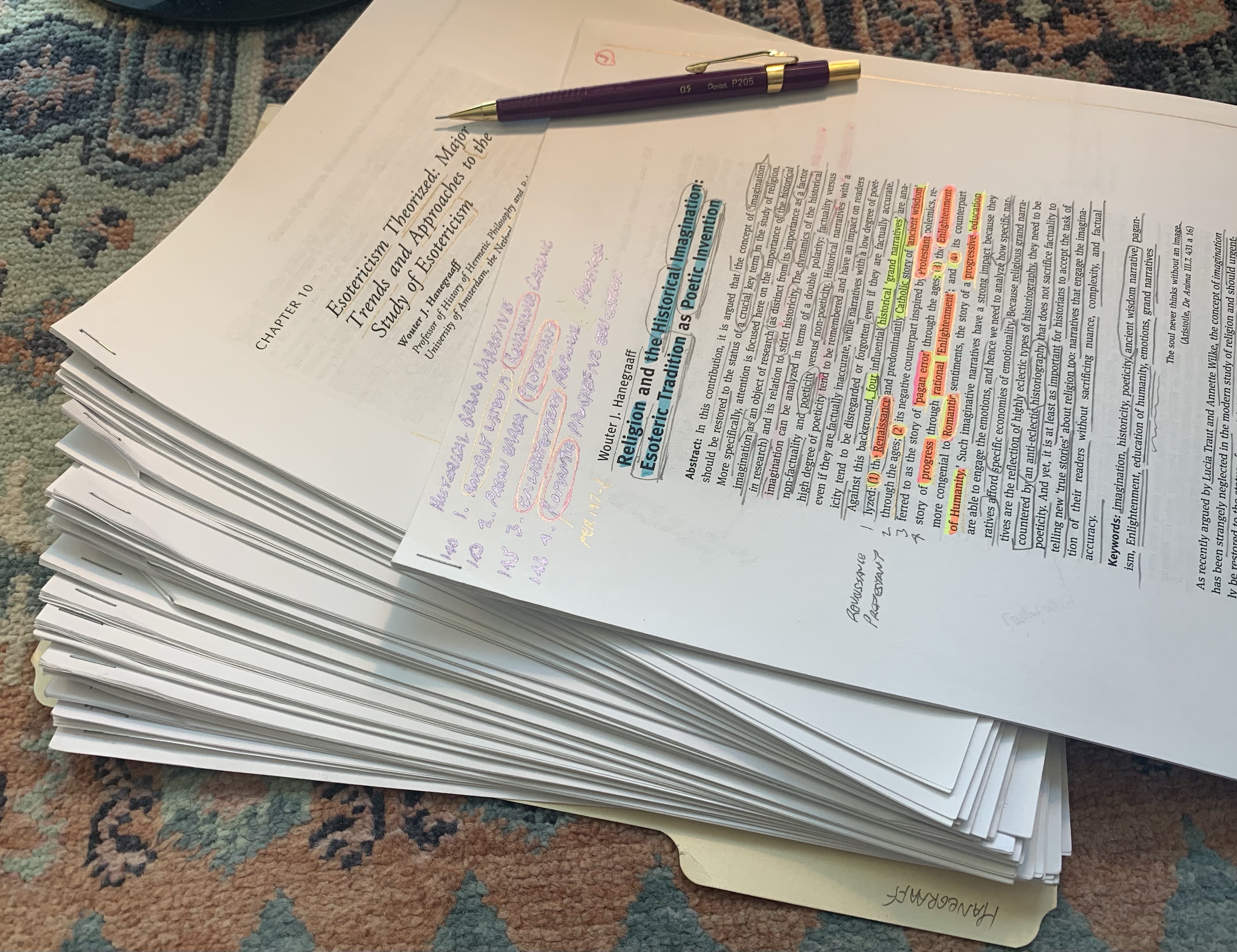
To Do Put Here List of Quotes with page numbers
i need a text file filled with quotations from the book
There are many great cool phrases re: no-free-will heimarmene non-control in this book, praying for rescue from above, all that negative stuff he kicks out (repressess & dissociates) from his numbered “thoroughly positive” cosmology levels.
Davis Led Zep IV Book Is Eternalism-Only Cosmology
Erik Davis cites my “no-free-will transformation then full transcendence” theory and misstates: “level the 8 fixed stars is called the Empyrium , where the Elect reside”- writers crash and burn at the transcendent levels, need to go back to school.
no-free-will is not highest cosmological spiritual level.
I posted to the web about “entheogenic esotericism”, 8 years before his 2012 article Entheogenic Esotericism: “Authentic esotericism is entheogenic esotericism”
[put in the relev chapter section on non-drug entheogens, he cites 3x. out of 5x the word entheogens is in this book
todo: read pages indexed as ‘psychoactive’]
I posted on the w-w web the posting “Authentic esotericism is entheogenic esotericism” 8 years before his 3x cited article that invents by imagination non-drug entheogens , 8 years before Hanegraaff’s EE article.
Psalter the Stars and also Beyond the Stars
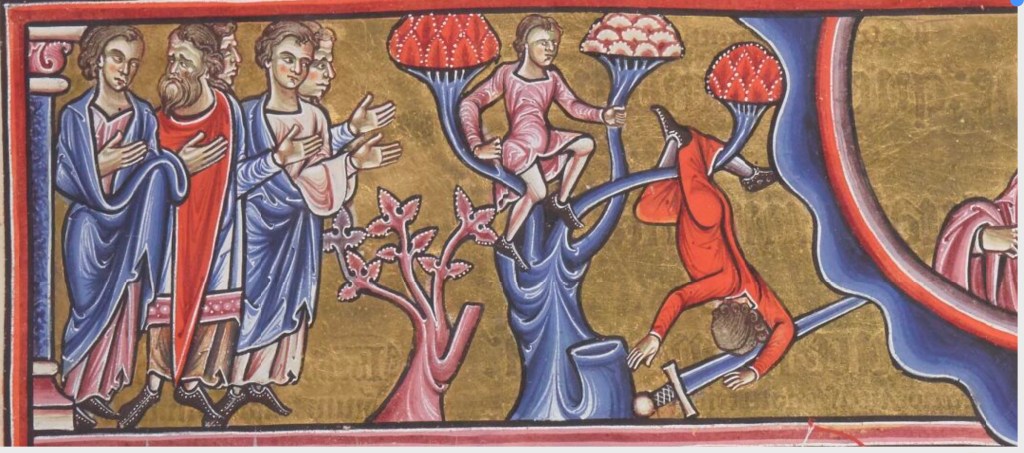
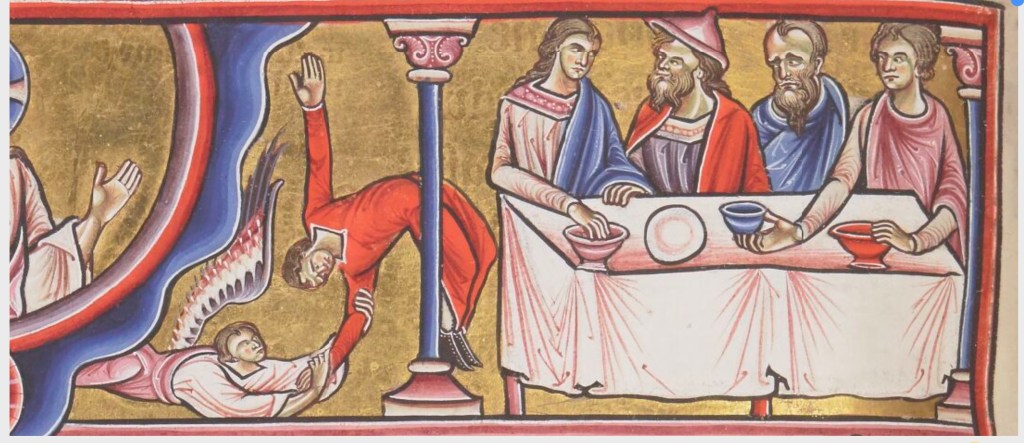
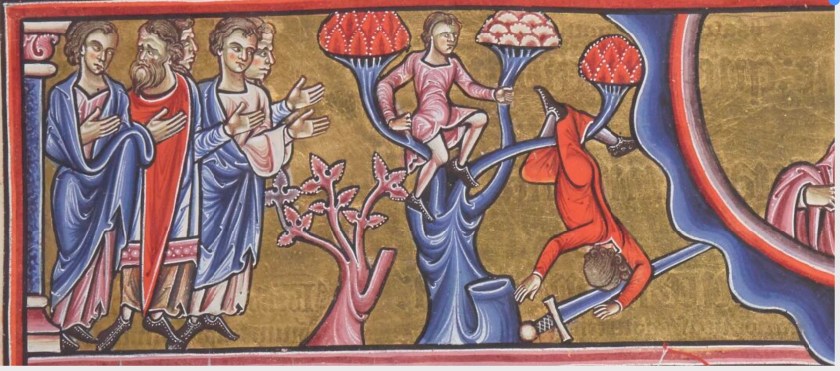
Eadwine’s Great Mushroom psalter folio page f134 shows a both feet off ground beard/mystic hat super-enlightened guy.
beyond the stars = part of us, the spirit, is beyond no-free-will block univ cosmos.
beyond heimarmene/eternalism; qualified possibilism-thinking when tightcog baseline returns after Hanegraaff’s intense mystic altered state ends.
The fault comes from academia and that Hanegraaff has done a massive amount to repair the errors of academia.
Hanegraaff shows that how very backwards they are and he does as much as he is allowed and permitted.
His moves in constructing via historians imagination non-drug entheogens, egged on by Erik Davis who he favorably cites, are ridiculous, but he is in a ridiculous situation and he is forced to write a bunch of nonsense that doesn’t hold up to two seconds of critique – people acting as if cave meditation and imagination exercises is going to produce the same result as two bowls of cubensis ten times is ludicrous.
It’s not his fault – it’s academia is just that benighted.
He has already hinted that academia is struggling badly to try to keep up with the popular research that is not hidebound he has said that (specifically in Jay Kinney’s Gnosis journal and Park Street press/ inner traditions/ bear and Company publisher) the term gnosis is correctly understood, by default, as simply a given, in the popular books, understood obviously to be higher altered state experiencing.
But academia is to dumb and hidebound to grasp or admit that Elementary point that’s now considered self-evident to the popular audience.
Academia is struggling to keep up , and in fact I have completely broken away not constrained and hamstrung and heavily censored.
How can academia possibly make any progress & keep up with popular scholarship when there is this intensive 100% censorship.
They are literally not permitted to assert and they are shaking in their shoes like trembling wusses paralyzed in fear of, that I can write it and they’re not allowed to write it, and they put it on my shoulders and they make it my responsibility to say what they are not permitted to say,
such as the Allegro-like position, combining Esotericism and ahistoricity and entheogens
they would be instantly unemployed if they asserted the truth, and that proves academia is illegitimate and incapable of writing the truth.
Hanegraaff is forced to use the old stratagem of asserting ridiculous alternatives to the truth so that everyone can recognize how ridiculous this assertion would be he cannot be treated as a sincere writer he is forced to write what he knows to be false.
and we can see now this conflict of interest that makes everybody all these meditation proponents try to misrepresent meditation as if it’s function is to induce the altered state rather than simply be an activity a mental activity to be done within the entheogen-induced altered state.
and no I am certainly not going to give an inch to his the worst idea of any academic ever to treat the word entheogens as if it’s broader than the word substances.
100% no most certainly and emphatically the word entheogens is definitely not 1 mm broader than drug plant chemicals – hard NO!
I am speaking on behalf of the entire field of entheogen scholarship, when I say:
Academia is not allowed to broaden the word ‘entheogens’ to mean non-drug entheogens, these ineffectual, too weak, bogus pretended “other methods that ‘can'[meaning don’t] produce… ” that do not produce the same intensity as heroic doses, eg two bowls of cubensis 10 times, that is powerful & effective in driving out egoic freewill premised, branching-world premised control thinking.
This historical imagination invents non-drug entheogens as an avoidance strategy to protect egoic thinking, producing the usual failure of the field, merely exoteric esotericism.
So it’s a miracle that Hannegraaff is permitted to write as much truth as he is, given how 100% hidebound, paralyzed, and censorious mental shackles that academia has.
Regarding his severely malformed cosmology, I am going to concretely tell readers:
every time he writes the word ‘stars, astral, zodiac, cosmos, or heimarmene’, write what I write next to it, which is the number 8 and the word ‘Ogdoad’. Then the Hanegraaff leap/gap becomes apparent, perceptible, unconcealed.
This forces Hanegraaff to bring back in the stars where they belong in the Ogdoad rather than where he tries to put them under the Hanegraaff sweep them under the Hanegraaff rug floating nowhere in outer space
I am only undecided on how many quotes I should quote from him where:
He contradicts himself constantly calling “the cosmos” the seven planetary spheres.
He leaps over the stars, and then he says “now that we have left the Astral zone, …”
He says, “let us leave and travel beyond the seventh planetary sphere of Saturn and then move outside of the cosmos to the Ogdoad. now that we have left the Astral Sphere…” – an indirect assertion, word-switching game to sneak out no-free-will / heimarmene out from his precious “hypercosmic”[sic] transcendent Ogdoad level 8.
in an indirect way he writes
Here are quotes [x, x, x] that prove that he is trying to conflate the Astral Sphere with the sphere of Saturn in order to remove the stars & heimarmene/ the no-free-will transformation gate from the level of the Ogdoad.
This doesn’t make any sense by any measure.
You can’t remove the stars from the Ogdoad , they are level 8 by definition, this is a cosmological Given: the stars (equals Heimarmene) equals the Ogdoad.
This is universally held by everybody in the cosmos except for Hanegraaff who claims its an open question.
what the f
you can’t do that
on what basis
The book leaves us with the grand unanswered question from Hanegraaff.
there is no justification for the book not addressing this.
He has no excuse for footnote 114 that says “it’s an open question for me whether to associate the fixed stars with Saturn or the Ogdoad “.
On what text basis, which of the Hermetic Texts allows him to do this?
Which of the Hermetic texts allows him to remove the stars and Heimarmene from the Ogdoad?
The book has to state this and he has to explain exactly why footnote 114 why is it an open question.
How can it possibly be an open question?
How can the Hermetic text possibly leave HannahGraff saying that it’s an open question?
In what way do the hermetic specific texts allow you to say that “it’s an open question of whether to jam the stars into the planet Saturn, jam the fixed stars into the moving planets.
this doesn’t make any sense
From which specific Hermetic Tex does Hannah graph get this strong assertion that he’s very strongly asserts all throughout the book that the cosmos equals the seven planetary spheres but he never ever says whether the cosmos does or does not contain the fixed stars.
and then he always every time he always asserts that the Ogdoad is outside of the cosmos
then where exactly please be specific where exactly are the fixed stars
he definitely implies that the fixed stars are inside the seven planets spheres
this doesn’t make any sense
but he definitely implies that but he never discusses it properly and straightforwardly
and I shall explain to you here right now exactly why IMarmany and the fixed ours is the very most important most pivotal thing and the level at which the rebirth occurs, the highest cosmic level which is 8 the fixed stars not 7 Saturn.
he says that a rebirth occurs in Saturn planet level 7.
this numbering has a gigantic gap regarding the fixed stars
he assigns level # 7 to Saturn & he assigns 8 to the Ogdoad which he says is outside of the cosmos , and he places the stars nowhere except in a mealymouthed indirect way he roundabout definitely implies that the stars are at Saturn.
he’s striving, he wants badly to put the stars into the Saturn level 7, you can see him really wishing and trying and wanting to do that, placing the fixed stars (heimarmene) into the planet wandering level – he quietly SNEAKS the fixed stars (& thus heimarmene/fatedness) out from the Ogdoad 8th level, [suppression/dissociation/repression in his “thoroughly positive” spiritual cosmology 🦄💨🌈] down into the Hebdomad 7th level.
how does he put the stars at Saturn
what hermetic text just justifies him limiting the cosmos to only the seven planets and not the stars
but then he implies that includes the stars
he is a self-contradiction and he doesn’t explain his hermetic text basis for making that self-contradiction and that vagueness about where in the F do you put it stars and where are you put the fixed stars
the level of the fixed stars is the most important level and he leaves it out and he doesn’t explain what texts make him leave it out.
and now he makes me resort to reading the Hermetic texts myself to answer the question, the most important question what he didn’t answer:
are the fixed stars inside or outside the cosmos?
David Ulansey clearly says that the fixed stars are level 8, which is the cosmos, and the stars are the cosmic boundary, highest level of the cosmos.
this basic Hanegraaff gap is regardless of the word cosmos and how you define it
it is the simplest cosmological given that the level above 7, Saturn, is level number 8, which is the fixed stars, which is the Ogdoad.
that’s true regardless of whether you call that “the highest level of the cosmos”.
this is all elementary and completely contradicted by his vague book
there is just no defending this, there is no justification for his failure to discuss why he says “it’s an open question”
what the hell are you talking about, it’s not an open question, that’s the most closed question in the world
your precious Ogdoad *is* Heimarmene!!
the Ogdoad is the eighth level as he says and Ogdoad is the fixed stars as a cosmological elementary / primitive basic given (the level of heimarmene).
you cannot remove Heimarmene from the Ogdoad and place it nowhere in your cosmology
this is the most important level of the cosmology is the fact that highMarmany is the fixed stars is Ogdoad is the cosmic boundary
this is all elementary how can he f this up and leave us in a trainwreck massive confusion right at the most important level.
as the ego death theorist I rely on my star by which I sail by
my key central point of reference the most important thing in the world is the level of the fix stars which is no free will/ hiMarmany / eternalism and he leaves it out
how am I supposed to map my ego death theory to his spiritual cosmology when he just presents us with a muddled inarticulate self-contradictory mess, right where I need this specific point of reference: the heimarmene fixed stars cosmic boundary 8th cosmic shpere Ogdoad 🤬😱🤯😤🤨🤷♂️🤦♂️
I have my book review of his gnosis of his dictionary of gnosis already docked him two stars for omitting entheogens.
I am not docking a star for falsely alleging that imagination/ meditation “may”[read: doesn’t] produce “spectacular alternative states of consciousness” as intensely as heroic doses of two bowls of cubensis ten times as shown in folio page f134 of the Paris Eadwine Canterbury Psalter, showing a branching-message mushroom tree with right-limb balancing, hanging, and God’s sword of mystic-state death, next to a banqueting initiation scene.
I would consider restoring the fifth star if he will restore the stars to his cosmology and explain exactly why does he consider it “an open question” of whether to associate the fixed stars/heimarmene with Saturn level 7 or with the Ogdoad level 8.
he has some major central explaining to do of how it is that the negative Experiencing of Heimarmene no free will block universe eternalism relates to rebirth and transcending the cosmos like David Ulansey’s hypercosmic cosmology in Mithraism book and articles.
You can’t just put the stars nowhere and then pretend that you didn’t do that.
It is a firm requirement given the nature of the spiritual cosmology which is the subject of this book it is a firm non-negotiable requirement that you have to explicitly state and integrate the fixed stars level ( IMarmany ) into your spiritual cosmology
you can’t just try to stay silent and place these stars off to the side in an earlier chapter which is placing them nowhere in your numbered levels Of your spiritual cosmology which is based on numbered levels
this Hanegraaff Leap doesn’t fly
you are not left with a coherent cosmology at all
right where the most important level is, heimarmene/the highest cosmic sphere, of the fixed stars, which every single cosmology diagram agrees on this one thing , there are seven planet spheres, and then the sphere above that is the stars
how can he not get this right and call it “an open question”
what Hermetic text support that
please explain
now I have to go do my own research on this central key important question which he just waves aside in footnote 114.
not in an articulate way but at least he does state explicitly:
I can’t figure out where to put the fixed stars in my spiritual cosmology level numbering 1 through 10.
how in the Hermetic texts can this possibly be described as “an open question”?!
you’ve got to place the fixed stars (heimarmene) somewhere.
where exactly do you place the fixed stars and heimarmene?
His spiritual ascent cosmology stumbles right at the central most important level, the pivotal point of reference, the stars by which we sail.
My Egodeath theory of Transcendent Knowledge requires knowing this.
I cannot map my theory to your spiritual cosmology if you won’t include the fixed stars in your cosmology.
you need to integrate Heimarmene into your spiritual cosmology.
and unless you have some hermetic texts to the contrary, you can start by placing them where everybody places them – of course obviously, it’s an elementary/ basic/ primitive cosmological given, that the fixed stars – which are heimarmene/fatedness – go in the Ogdoad.
do you have some hermetic text that presents some different cosmology than this, or some reason in the texts to deviate from the common standard shared cosmology that everybody holds to?
so you need to straighten out your sht, get get your story clear
he needs to revise his story
it doesn’t work, it’s not coherent, it’s not articulated of how heimarmene/no-free-will relates to rebirth
which I will tell you right here summarized according to the ego death theory which is left to fulfill the gap that he leaves
in footnote 114 he says it’s an open question
well the ego the theory has to step in and provide the summary sentence here to try to repair his gigantic inconsistent gap
it’s called the Hanegraaff Leap where he leaps from Saturn planetary sphere to the what he calls the Ogdoad that he claims is outside of the cosmos and is above the level of the fixed stars/heimarmene,
where in the hell does the fixed stars/ heimarmene go
this is the Hanegraaff Leap
I can’t, as a theorist I cannot map to this broken system that’s broken right at the key level #8 which is heimarmene.
he never states where do the fixed stars level of sphere stand, what number, what level number is that in relation to where rebirth occurs.
he has some major, major explaining to do here!!!
I really am almost forced to doc a star, not for the entheogens, but for his failure – this is a cosmological trainwreck!
on what hermetic Texts basis can he try to place the stars nowhere and get rid of heimarmene from his cosmology and place it nowhere?!
8:15 – Hanegraaff’s cosmology leaps over and omits or doesn’t recognize the sphere of the fixed stars.
He doesn’t realize that the glorious “hypercosmic”[sic] Ogdoad is the sphere of the fixed stars, Fate, Heimarmene.
A footnote in the music chapter is the lone single place where he says “fixed stars”, to state that he doesn’t know which sphere number to put them at:
“Whether the fixed stars should be included [with Saturn] or should rather be associated with the Ogdoad remains an open question for me.”
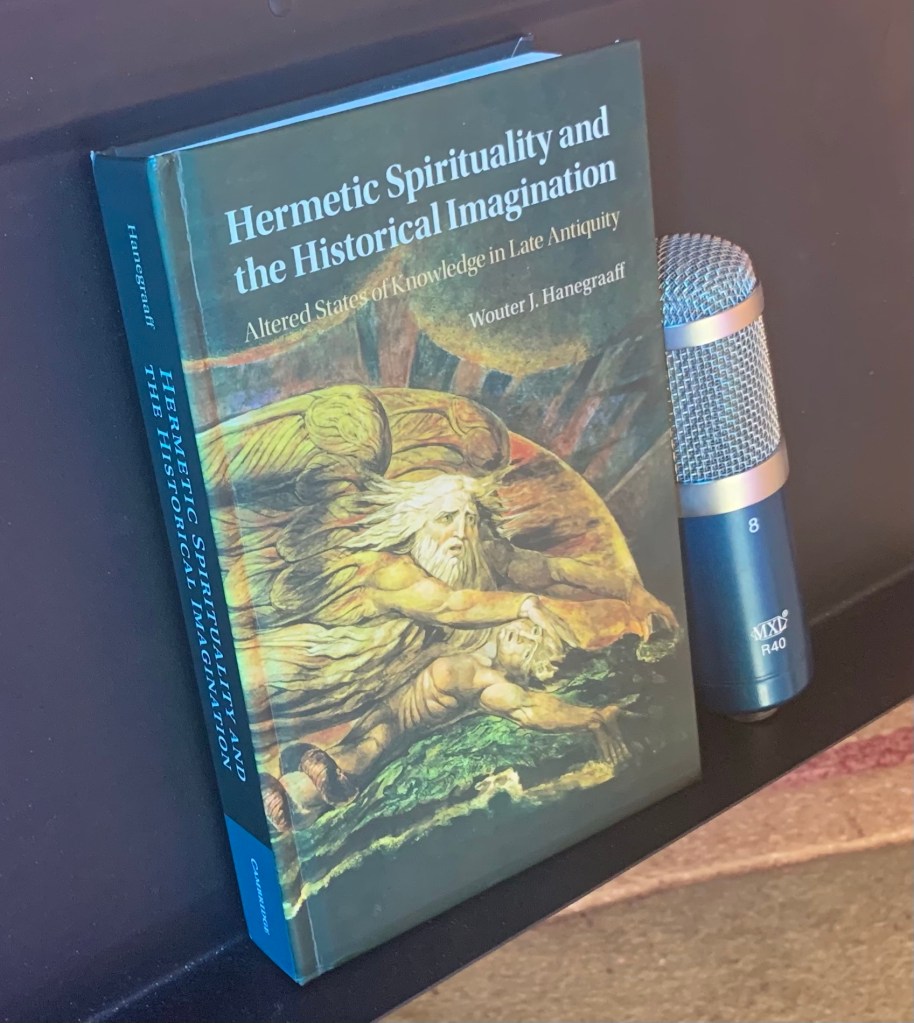
– p 294 note 114 in Hermetic Spirituality
This is not an open question. The sphere of the fixed stars is the Ogdoad, and he is confused when he says the 7 planetary spheres are the whole cosmos.
The cosmos includes the sphere of the fixed stars, which is Heimarmene, which is the Ogdoad, which he correctly says is the 8th sphere.
This is elementary basic cosmology. He doesn’t state how this is supposedly an open question.
He wishes to protect the Ogdoad from negative Heimarmene, in his zeal to give a “thoroughly positive” reading.
He neglects to integrate Heimarmene (fixed stars; consciousness of fatedness) in his conception of rebirth.
This is the Hanegraaff leap – over the sphere of the fixed stars, trying to jump over Heimarmene (the no-free-will, non-control experience), which IS the Ogdoad.
When you read his book, write “8” next to the word ‘star’ and ‘astral’, and then his leap over and his dissociative splitting of the 8th sphere into two unaccounted-for spheres (of negative stars and of positive rebirth) becomes apparent and unconcealed, made perceptible.
What is the standard that any claimed non-drug method of producing “spectacular altered states” must reach? Same as a regular series of heroic doses.
Any such alleged method must be “spectacular”, as Hanegraaff argues and emphasizes.
To live up to the ‘spectacular’ requirement, the other, non-drug methods must actually produce the same overall user experience as a series of sessions, once per week for 10 weeks, of a bowl of cubensis followed by another bowl an hour later.
Most important/pivotal is the 8th sphere = fixed stars = heimarmene/ fate/ no-free-will / eternalism/ block-universe determinism/ non-branching/ Ogdoad.
Important is having a level above the 8th: the 9th = transcending eternalism.
God/ Creator/ Source outside that system of spheres would be level 10 (not a sphere).
interesting unclear question is what does it mean to reconcile Wouter Hanegraaff’s “thoroughly positive description” of “the Ogdoad” with the astral stars which he describes as “negative psychological powers that have to be exorcised from you”.
My duty is to clearly describe transcending no free will in the pre-created block universe.
it’s Hanegraaff’s job to straighten out his mess that he’s created by not attaching inventory numbering to his overly multiplied and dissociatively schizoid levels.
Hanegraaff’s 8th sphere Ogdoad is a schizophrenically split and incoherent Ialdabaoth level.
🦁🐍
if I want I can analyze again: how does Hanegraaff describe & relate:
the 7 planetary powers
the astral star powers incl zodiac elliptic belt 12 constellations out of 55
rebirth is placed at what level
logos placement
noesis placement Nous
the Ogdoad level
Transcendence
gnosis level
the even higher Transcendence after rebirth in the Ennead level where you can look one level higher to perceive:
the Source, the pege.
Hanegraaff said after reading the entire book you would have to re-read the book – I don’t think he meant it like this.
I am going to have to sew back together again what he has dualistically torn asunder in a mentally disorganized way – and possibly even dangerous way; you could say spiritually danger that he has set up, that I have to warn people against.
Hanegraaff has dissociated the negative without integrating it in an intelligent, comprehending way.
Hanegraaff is definitely contradicting himself and not leaving any place to put the fixed stars
The correct way to read his book is every time he writes the word ‘star’ or ‘astral’ or ‘Ogdoad’, write the number 8 next to it, and then the problem becomes clear; he tries to demonize or describe the negative attributes of the stars and then he tries to glorify and talk up and be “thoroughly positive “reading of the Ogdoad.
But the problem is the simple numbering forces and reveals that the stars and the Ogdoad are the same level; they’re the same thing.
And so he has dissociated, he has psychologically dissociated the negative attributes versus the positive attributes of the exact same level while in his mind.
this is really remarkable –
By Hanegraaff’s zeal to tell a “thoroughly positive” description, and then by only inadequately treating the negative (negative = disproving egoic control power as vulnerable perishable delusion), as what he calls a “psychological” (that is, mundane ordinary state-based) approach, he had ended up with a gigantic disjuncture.
Hanegraaff has not figured out how do you get from the exorcising of the negative powers that possess us, planetary neutral governors – they’re not demons; they are deluded non-rational control agents (aka demons, that bedevil viable control stability) – to transcending no-free-will?
Hanegraaff has created a dualistic rupturing in his own thinking, while the surface story of his book is all about not doing that.
He has ripped the 8th cosmic sphere into two (the negative stars below “versus” the positive Ogdoad above) as if they are two separate things, two separate levels.
By refraining from attaching numbers and then only referring to their obscure names “Ogdoad” & “Ennead” like a meaningless talismanic magical name chant, he has covertly and maybe even subconsciously multiplied the number of levels in the cosmos and then made one of them floating nowhere.
In music footnote 114 he says “I don’t know whether to put the fixed stars into Saturn or into the Ogdoad, that is an open question for me.”
That is literally the one and only time in the book that he says the phrase “fixed stars” but per the Egodeath theory, the fixed stars is the centerpoint of the transformation guarded gateway passage.
In Astral Ascent Mysticism, always look for the fixed stars as the central point of reference; which refers to the transformative altered-state experience of eternalism.
For all of his elevated book and scholarship, I can’t believe that he can’t figure out the answer to this super easy question, but I think he knows that it would destroy his system.
He can’t put the fixed stars in planet Saturn, and he can’t allow it into his “thoroughly positive” Ogdoad, so the sphere of the fixed stars is left dangling in null space. 🤯
It’s really challenging to articulate the ramifications of this mess, and what corrections and changes would be needed.
Every time Hanegraaff discusses the word ‘Ogdoad’, he needs to entirely rewrite that to reconcile the negative traits or powers of the fixed stars level with his attempt to tell a “thoroughly positive” story about the Ogdoad as a transcendent level.
I accomplish that by saying enlightenment is awakening to the iron block prison of the block universe, and then when returning to ordinary consciousness, familiar freedom experiencing returns, and that is kind of like transcending the block universe.
David Ulansey describes this by having the (non-branching) snake around your body (soul) and then having your head (spirit) be in the realm of light that’s beyond the stars.
As if Hanegraaff has completely eliminated negativity dangling off to the side of his system with nowhere for him to place the stars, which he talks about he affirms that there are negative/ stars, but then when he jumps from numbering the planets to then leaping to discussing his glorified realms that are outside of the stars, he can’t figure out where to put the stars.
Hanegraaff has covertly torn the 8th sphere into two, and he avoids attaching a number to levels above the 7 planetary spheres (stars[8] or Ogdoad[8] or Ennead[9]), “split into two, better get your glue ready” like the song Collideascope by The Dukes of Stratosphear –
Collideascope Careful, don’t look down the wrong end You will see ships that fall out of the sky Everything looks smashed and broken
Everything looks topsy turvy You will see one young girl split into two One half who’s false one half true You better get your glue ready
Songwriters: Andy Partridge, Sir John Johns.
Earlier
Whether the fixed stars should be included [with Saturn] or should rather be associated with the Ogdoad remains an open question for me.
Hanegraaff p 294 note 114 Hermetic Spirituality
they lost their freedom and agency … the heimarmene , the cosmic astral machinery of necessity or “fate”. … Fowden says “the grand theme of late Greek philosophy: the ensnarement of the soul in the bonds of fate, “
p 84
Announcement, breaking news – Hanegraaff says he doesn’t know where to put astral fate heimarmene fixed stars.
Hanegraaff tries to put the sphere of the fixed stars into Saturn, the 7th planetary sphere, and skip counting it as the 8th sphere, so that he can protect his pet Ogdoad, which he says is the 8th sphere, from the taint of Heimarmene fatedness.
BIZARRE!
Trainwreck ensues. He cites Bull. I really don’t see any way he can get out of this jam.
HE HAS TO ADMIT HIS PRECIOUS OGDOAD IS THE SPHERE OF THE FIXED STARS – Heimarmene Central.
He’s got to be completely wrong – it is avoidance!
There’s no way he can be right, as if there is any doubt or escape: it is simply an elementary GIVEN that the sphere of the fixed stars is the 8th sphere, the Ogdoad.
He wants to just get rid of it! Rather than allowing heimarmene into his Ogdoad.
Bizarre wording ensues throughout the book.
Dance Hanegraaff dance!
He says Saturn is sphere number seven, and he says that the Ogdoad is sphere number eight.
Then where in the effing hell is he going to put the fixed stars? Planet Saturn!?!
Nowhere, floating, swept under the cosmic rug. Pls make this problem go away 😓🙏
Maybe ingest some of your non-drug entheogens and a clever avoidance scheme “may” come to you.
Hanegraaff says he can’t decide whether to put the fixed stars in Saturn, which he says is the seventh sphere, or in the Ogdoad which he says is the eighth sphere.
He says astral fate and zodiac is heimarmene – astral means stars.
He doesn’t want to admit that his pet Ogdoad = fixed stars = Heimarmene prison = Fate = imprisonment of bodysoul (not spirit tho) = Logos = divine.
Hanegraaff can’t bear to put stars in his pet 8th sphere, he knows he can’t get rid of them, but he tries, he wants to put them in Saturn but obviously he can’t, so, the fixed stars are bizarrely awkwardly dangling nowhere, neither inside nor outside the cosmos.
Index: hiemarmene – 257 258 etc
Whether the fixed stars should be included [with Saturn] or should rather be associated with the Ogdoad remains an open question for me.
Hanegraaff p 294 note 114 Hermetic Spirituality
Why is there any question? It’s evident his cosmology has a giant unresolved gap right at the most crucial pivotal level: fixed stars astral fate cosmic heimarmene. He clearly is not merely unsure re musical vowel pitches; his whole cosmology throughout the book chokes on this.
I wish to list quotes, lotsa great phrases about mayhem madness astral powers controlling pray dependence divine powers rescue from astral fate daimons exorcise etc – he obviously cannot put fixed stars in a planet sphere (Saturn, 7th).
He is apparently terrified with a severe psychological block against putting the fixed stars and their heimarmene powers in his pet Ogdoad which he says is the 8th sphere.
He is UNWILLING to put fixed stars heimarmene zodiac in his pet Ogdoad sphere, and he’s not allowed to put fixed stars in a wandering planet sphere, so what does he do?
His solution is to only mention “fixed stars” ONE TIME in this book: where he says:
“Whether the fixed stars should be included [with Saturn] or should rather be associated with the Ogdoad remains an open question for me.”
WHY??!! He doesn’t say why! Heimarmephobia BOK BOK 🐔🐥🐓🍗 , doesn’t fit the unicorns & rainbows agenda! 🦄💨🌈
“remains a big scary problem for me”, more like.
Since it’s an open question for me, I just won’t talk about that the OGDOAD which you recognize as the 8th sphere IS NONE OTHER THAN THE FATE-RULED eternalism HEIMARMENE BLOCK UNIVERSE FIXED STARS AS EVERY DIAGRAM AND 2-BIT ESOTERICISM WEBSITE SHOWS
“open question” = euphemism for “I can’t figure out how to keep the fate-ruled fixed stars from being THE SAME DAMN THING as my precious Ogdoad of divine enlightenment”
The Esoteric Level of Cog Sci = Loose Cog Sci = Mental Construct Processing = Cog Phen’y
My version of Cog Sci is like esotericism; the good stuff; the real deal. Actual Cog Sci. Mental Constructs (anything that’s presented to awareness). Mental construct processing.
The Exoteric Level of Cog Sci = Neuroreductionism = Neuroscience Pretending to Be Cog Sci & Cog Phenomenology
Fake, reductionist, cargo-cult, neuroreductionism, as in:
The assumptions of the cognitive sciences—that there is no distinction between mind and brain,
Luther H. Martin, Studies in Hellenistic Religions (2018)
They say the magic word “Cognitive” and then instantly switch & downshift exclusively to the Neuroscience level, never having even really touched base with the actual cognitive level.
They wouldn’t know Cognitive if it bit them in the azz.
These mental children, lacking any abstraction ability, only can mentally handle rocks and neurons.
Put in cognition as input to them, and you get output: rocks and neurons, all the Cognitive got instantly dropped right at the input.
Insert mushroom esotericism art imagery, the output = distorted Italian pine tree, in a “naturalistic” reading (Thomas Hatsis, reacting against John Rush’s assertion that mushroom religious art requires non-naturalistic reading).
2) Saturn & Fixed Stars (the Heimarmene Gate). basic eternalism-thinking.
1) Earth; sublunar. naive possibilism-thinking.
Not shown: God above Empirium. God isn’t necessarily a level, but is the source-of-thoughts to be experienced at the fixed stars level.
Not shown: The 6 lower planets. Saturn is listed because pictured sacrificing the child to pass through the Heimarmene Gate.
There’s no real, functional distinction between Fate & Heimarmene; Saturn vs. fixed stars.
Don’t be fooled or over-impressed by ornate esotericism.
The scientific model is the most plain and streamlined.
Gratuitous ornamentation, vs. stripped-down function and clearest basic analogies.
Hofstadter’s book on heaping-on extra layers of stylization.
An invented distinction can assign Fate to Saturn/planets, and assign Heimarmene to fixed stars.
But Fate and Heimarmene & t’ding them are utilized identically; no functional difference. Like suppose:
Fixed Stars = Heimarmene. Saturn = Fate.
No meaningful/functional difference; a pseudo breakout/distinction. faux precision. To be fated is to be subject to Heimarmene. Two ways of saying the same thing. False precision like “the 12 negative energies: envy; intemperance, …” they are just arbitrary filler like “There are non-drug ways that “can” “induce or facilitate” the 2-bowls-of-cubensis experience, such as drumming, chanting, making up BS token lists of lies, doing laundry, beating your head against a tree as part of a spiritual cultic ritual, …”
First, people discovered switching to the eternalism experiential state and then returning to the possibilism experiential state upon returning to baseline SoC.
That is, they discovered the sequence progression: naive possibilism-thinking -> basic eternalism-thinking -> qualified possibilism-thinking.
Then, they artificially translated that innate threefold sequence to astral ascent mysticism (a leaky/forced analogy).
“We’ll assign: fixed stars = basic eternalism-thinking, earth = naive possibilism-thinking; then above/outside the fixed stars can be mapped to God and qualified possibilism-thinking. Then make up some arbitrary fake mappings to occupy the planets. For the highest planet, Saturn, take the {sacrifice child} aspect of the fixed-stars Heimarmene Gate function and reassign that function to Saturn’s sphere. (It really remains a single function though; experiencing eternalism-consciousness mode, learning the mental model that’s stable there, and then returning to possibilism-consciousness mode (but retaining the changed mental model of the metaphysical level & the stability requirements model).
Heimarmene Gate seems like it straddles Core Concepts & Key Mythemes. Useful for modeling the dynamics. Eternalism gate; no-free-will gate.
“Block Universe Worldline enlightenment satori gate”, I’d probably say in Jan 1988; hard to say.
My thought-style is so shaped by mythemes and analogies now, what would Douglas Hofstadter say to me now in 2022 vs in 1988?
It is not only a goal to have mytheme-free Core Concepts/ explanatory model; it is also a goal to structure / express my Core Theory so as to optimally map to mythemes.
Loose Cog Sci should be designed / expressed to leverage – as a distinct realm/domain – mythemeland.
Loose Cog Sci land (Core theory concepts) mapped to, and arranged so as to map to, Mythemeland.
The 3 Mental Models
uncontrollable source of control thoughts; God; the Source.
3) qualified possibilism-thinking; the 9th; the Ennead; Primo Mobile; above no-free-will; above eternalism; trans-rational.
2) basic eternalism-thinking = {fixed stars}, and {Saturn sacrificing the child}; ignore {6 other planets} but they go lumped in here; no-free-will; non-branching possibilities. insanely rational.
8:00 in the video & again later – it’s odd how Hanegraaff says “Ogdoad – realm of souls” and “Ennead – realm of Powers” (and then “the Source – the pege“).
He never seems to mention the terms per standard Astral Ascent Mysticism, “fixed stars” for the 8th (Ogdoad), & “the Empyrean” for the 9th (Ennead).
0 – Earth
1st sphere/gate – of the Moon
2nd sphere/gate – of Mercury
3rd sphere/gate – of Venus
4th sphere/gate – of the Sun
5th sphere/gate – of Mars
6th sphere/gate – of Jupiter
7th sphere/gate – of Saturn
the 8th sphere/gate – of the fixed stars/ Heimarmene/ zodiac elliptic belt constellations (but Hanegraaff instead says “realm of the souls“) – compare Body/Soul/Spirit 3fold scheme says “merely souls”; merely the soul. Need to transcend the mere soul. “Integrate & dis-identify with & transcend” the soul (per Ken Wilber)
the 9th realm/level – the Empyrean (where God & the Elect are); I’d assign “the spirit” here, given that the spirit transcends no-free-will/Heimarmene/ block universe. per a mythic interpretation of the fact that the mind after experiencing block universe, 3 hours later, is back to baseline consciousness experiential state of freewill-shaped branching-world experiential mental worldmodel even if the memory of the worldmodel-transformative experience of eternalism/ block universe/ Heimarmene/ no-free-will experience is eventually retained upon return to baseline SoC. Hanegraaff assigns “the Powers” here.
beyond the 9th – Hanegraaff says “the Source of all that exists; the pege“; the Creator; God.
His book has:
2 hits on “fixed”+”stars”: 41, 294 –
41 – “I am a star, wandering about with you”, “five-pronged stars will proceed from the sun”, keeping her gaze fixed on the sun’s inner space”. tons of mystic-state words – restore to peace, alien intruder, immortal, doors, gate, restore a sense of balance & control, asking for the doors to open, seven planetary gods, reborn, she has no business being there, asking for protection, asps, …
294 – FINALLY he mentions “the fixed stars”, he needs to add numbering like I do to straighten this out, he says he’s unsure. whether to assign musical note “the omegas” (vowel = note = some sphere level). Mahe says omega vowel/note = the Ogdoad, = the 8th, = the sphere of the fixed stars. But Hane says they mean Saturn = 7th cosmic sphere. Hane writes, take note: “Whether the fixed stars [= the 8th cosmic sphere] should be included [with what? write complete thoughts!] or should rather be associated with the Ogdoad [= the 8th sphere of the cosmos] remains an open question for me.”
9th level – qualified possibilism-thinking (transcending eternalism) = the Empyrean; the 9th, outside the stars, dwelling place of God and the Elect.
10th level – The creator/ source of control thoughts is the 10th level; God; Decad; the pege.
p 294 ftnt 114 : Hanegraaff asks whether the fixed stars should be included with Saturn (7th) in “the cosmos”, or instead to the Ogdoad which he wants to call, and usually does call (wrongly), “hypercosmic”.
Footnote 114, page 294: “… Saturn … Whether the fixed stars should be included or should rather be associated with the Ogdoad remains an open question for me.” – engage ESP to understand “should be included” [with what? he must mean the cosmos] Why wouldn’t you associate/identify stars = Ogdoad (8th sphere)?? Of COURSE the stars are the Ogdoad, that’s a trivial given!
How is there any doubt here?? wtf Hanegraaff.
It’s a SIMPLE GIVEN that the fixed stars are the Ogdoad, which is the 8th, the 8th sphere. Do you not understand basic science & math, wtf?
Obviously, as a given, the fixed stars = the 8th/Ogdoad – though functionally I observe that the gate of Saturn (7th) is functionally used in myth as the same thing as the Heimarmene gate of the fixed stars (8th aka Ogdoad).
Beyond the Heimarmene gate (which I propose = Saturn+stars; 7th+8th, both inside the cosmos) is the Empyrean including the 9th aka Ennead aka the Empyrean; God is in and beyond the Empyrean.
When you reach the level that’s past the stars, and are in the 9th, only then are you hypercosmic, outside the cosmos.
Consult any Ptolemaic diagram; it’s perfectly clear-cut, elementary school science.
WHY WOULD HE ASSIGN FIXED STARS TO SATURN’S SPHERE INSTEAD OF TO THE 8TH? Know-nothing Hanegraaff.
The only excuse for Hanegraaff’s ignorance would be that in Astral Ascent Mysticism, the 7th gate (Saturn) is treated as if identical with the 8th gate (the sphere of the fixed stars, which is obviously, tangibly, in all diagrams, placed outside of the planet Saturn, of course.
Saturn is a wandering planet, why on earth would Hanegraaff consider placing the FIXED stars at the PLANET Saturn?!)
He vaguely sometimes uses the term “hypercosmic” and I think this term is where ambiguity stems: ‘cosmos’ might include Fixed Stars (outside the planets/cosmos, or might be Beyond the Stars if you say “the sphere of stars in inside of the cosmos”.
Does “cosmos” include sphere of fixed stars, or not?? Define “hypercosmic”.
That’s probably what Hanegraaff is wondering; next page 297 heading is “Beyond the Stars” and on these pages he says “hypercosmic”; therefore he’s puzzling “does ‘cosmos’ include fixed stars, or not??”
That’s why he avoids “fixed stars”, because he’s not sure how to relate the 8th sphere vs the hazy word “the cosmos”.
The fact that the stars are the 8th sphere (thus, the Ogdoad) is 0% hazy.
The meaning of “cosmos” is hazy, but seems clear that stars are inside cosmos.
Thus the Ennead/9th is hypercosmic and the Ogdoad/8th (stars) is merely cosmic.
He tries to overglorify the Ogdoad and mis-place it in the hypercosmic heavens – confused theorizing results.
He over-elevates meditation and the Ogdoad.
I know the 8th definitely means the sphere of fixed stars thus it must by the Ogdoad which is syn of the 8th, but the unclarity is does he misspeak if he says the Ogdoad is hypercosmic? I think Hanegraaff misspeaks in sometimes saying/implying the Ogdoad (stars) is “hypercosmic”:
p. 295 bottom “they have reached the hebdomad, the seventh sphere of Saturn. Therefore their consciousness is still within* the cosmic domain, but they are ready to move beyond* it.” *I think that wording/model is an error.
Saturn isn’t the highest sphere that’s in “the cosmos”; sphere of fixed stars is.
‘the cosmos’, I believe, is consistently defined in myth as planets + stars.
{cosmos} in Ptolemaic-like myth never means just the planets; ‘the cosmos’ in astral myth always includes the fixed stars, afaik.
p. 296 “the seven cosmic spheres” I think that phrase is a mistake, malformed. The phrase implicitly dubiously implies that stars/ the 8th sphere/ the Ogdoad is to be dubbed “hypercosmic”.
p. 297 “Beyond the Stars” + “hypercosmic” (inconsistently now implying (in agreement w/ my opinion) that stars = cosmic; inside the cosmos)
He’s waffling, as he admits in footnote 114.
Define “cosmic”.
Is “beyond the stars” syn w/ “outside the stars”?
IMO the stars are INSIDE the cosmos; if you reach 8th/stars, you’re still INSDE cosmos.
Only when you reach 9th/ the Empyrean are you “beyond the stars” & thus actually “hypercosmic”.
On p 295, Hane definitely speculates asserting that the 7th sphere Saturn is still in the cosmos, but the 8th sphere is outside the cosmos.
He’s speculating that the sphere of fixed stars is to be counted as “outside of the cosmos”; he thinks the cosmos is the planets but the stars are outside of the cosmos.
He’s ambiguous on these few pages.
What’s actually unclear is: Is the 8th sphere “hypercosmic”, or not?! I’d say no.
p 295 bottom, Hanegraaff is wrong & mistaken to call the Ogdoad (which must be the stars) “hypercosmic” (if we agree that stars are inside the cosmos).
p 297 equates “hypercosmic” w/ “beyond the stars”, earlier page says “cosmic = the 7 planet spheres”. Contradictory. I say the 8th MUST mean stars. Whether we include 8th/stars is “cosmos” or “hypercosmic” is the only question. His use of “hypercosmic” is vague.
So he says “the Ogdoad” and avoids ever saying “fixed stars” except this one footnote saying “whether to include the fixed stars WITH SATURN [ie, he must mean, whether to include stars as part of “the cosmos”] remains an open question to me.”
Vague writing in this footnote at “whether to include”. Write complete thoughts, please! No unstated objects; no E.S.P.-based writing please! But it’s a dumb question, “whether to include the fixed stars with the Ogdoad”. Obviously the 8th sphere (“ogdoad”) is the fixed stars.
If Saturn = 7th sphere, and Ogdoad means 8th sphere, where the hell else would you place sphere of fixed stars: he proposes to count the sphere of fixed stars as 7th, with the planet Saturn(?!), lower than the sphere he calls the 8th(?!), wtf.
WHAT NUMBERING COULD THE SPHERE OF FIXED STARS POSSIBLY HAVE OTHER THAN OGDOAD IE 8TH?! 🤦♂️
How could Hane possibly be unclear on this? It’s clear as can be! A musical notes question, I can understand him wondering. His footnote wording is way too hazy and not articulated explicitly.
The only unclear thing possibly is what does “cosmos” mean.
Reality check standard of reference: Psilocybin is the gold standard reference for the intense altered state in the history of religion.
Hanegraaff’s imagination-exercise construction for academic scholar historians, “Entheogens in the wide sense” – that is, non-drug entheogens – is a contradiction in terms.
Hanegraaafff doesn’t even believe his own baloney, he’s just trying not to get Allegro’d while heroically doing as much as he is permitted, to clear some space for hidebound academics to try to catch up a little with popular scholarship.
Many fallacies are employed by Hanegraaff’s book, due to the irrationality-producing, corrupting force of Prohibition.
In self-contradictory fashion, Hanegraaff proposes that ancient Theurgists accessed “spectacular alternative states of consciousness” through non-drug entheogens.
Hanegraaff’s bogus confabulation “entheogenic religion in the broad sense” is a pretextual strategem as a proxy to enable scholars to discuss entheogens while pretending to merely discuss Yulia Ustinova’s cave meditation, leveraging her ABD (“Anything But Drugs”, no matter how implausible, impractical, and ineffectual) explanation of ancient altered states.
Academic scholarship and entheogens and imagination procedures are supposed to be used in conjunction.
Hanegraaff keeps habitually discussing academic scholarship vs. entheogens vs. imagination procedures as if they are zero-sum game, mutually exclusive, pitted against each other – as if you have to pick between them – a false dichotomy that’s rife throughout this book.
Hanegraaff imagines and constructs an impenetrable wall between academic scholars vs. experiencers – subjects to be studied as alien specimens – of the intense mystic altered state.
So his discussions in the book are as confusing as helpful, because they are fundamentally malformed and off-base, founded on false dichotomies: you have to:
Commit to using the approach of scholarship, or else commit to experiencing in the altered state.
Use reason, or else use the altered state.
Use imagination exercises, or else use the altered state.
Hanegraaff writes with zero concept of scholarship integrated with entheogens and imagination exercises, and fails to discuss or at all consider how that combination would work, but only thinks in terms of either/or capabilities and limitations of exclusively using one of them, pitting them against each other.
Hanegraaff emphasizes that scholars must explain intense alternate states – but contradicts himself by using a mere Psychology reading (hopelessly grounded, limited to ordinary-state conceptions of “negative energies”) of ‘exorcising the negative powers by summoning being filled by the power of the Source and Creator of all that exists’.
Hanegraaff rejects negative-themed, quasi-Hermetic texts without recognizing their interesting intense mystic-state referents per the Entheogen Mytheme theory decoding.
Hanegraaff falsely elevates mere controlled imagination exercises as entheogens, but which he says only rare people have that ability.
Hanegraaff asserts that normal theurgy initiates used imagination exercises in order to produce the intense “spectacular alternative states of consciousness”, but then he writes that only rare people have this special ability.
Actually such “other methods” are activities to do in the entheogen-induced intense altered state, not ways to produce the altered state.
Hanegraaff’s book and keynote article have internal contradictions galore, made irrational under the conditions of Prohibition and academic censorship.
Hanegraaff writes that scholars have no control over their mind or imagination or focus of attention, and that affects what they perceive as plausibly true – he writes those pregnant words without comprehending their intense altered state ramification for control-source revelation and transformation.
Wouter Hanegraaff’s 2012 keynote speech article and chapter, “Entheogenic Esotericism” covers contemporary, not ancient, esotericism.
Through a backwards approach to prescriptive word-defining, Hanegraaff tries to redefine the plant-defined word ‘entheogens’ on the fallacious premise that etymology sets the meaning of a word.
Hanegraaff twists the word ‘entheogen” to mean its antonym, contradicting Ruck and Ott and the meaning of the word for everyone in the field of entheogen scholarship, rendering the word ‘entheogen” unusable and ruined.
Hanegraaff inserts the falsehood of “meditation is to be used to produce the psilocybin state” into the word ‘entheogen’, rendering the word anathema, indeterminate, and unusable.
To use the word ‘entheogen’ as Hanegraaff has falsely redefined it would be to tell a lie that meditation is the equal of psilocybin and is to be thought of as a way of accessing the intense altered state, when actually, meditation is an activity to be done in the entheogen-accessed altered state.
https://www.etymonline.com/word/psychedelic – “from Greek psykhē “mind” (see psyche) + dēloun “make visible, reveal” (from dēlos “visible, clear,” from PIE root *dyeu- “to shine”).”
Hanegraaff’s bunk derivation logic goes thusly: the word ‘psychedelic’ was constructed from “psyche+delos” which means “making perceptible the mind” – thus yields the construction & category “non-drug psychedelics”, because for example, Grof’s hyperventilation makes the mind perceptible.
“Therefore”, as Hanegraaff argues, any non-drug “Other Method” that “can” make the mind clear/ visible/ revealed is “literally” a psychedelic, “although this broadens current understandings” (like robbing a bank “broadens” the understanding of “making a withdrawal”). Thus we academics have constructed, through the power of our imagination, “non-drug psychedelics”, aka “psychedelic religion in the wide sense”.
Except, none of these alleged, bunk & bogus “other techniques” produces the requisite intensity, as defined by two bowls of cubensis spaced an hour apart, as depicted in folio page cartoon panel f134 of the Paris-Eadwine Great Canterbury Psalter.
That illuminated manuscript shows a branching-message mushroom tree with initiates balancing and touching God’s sword of control-instability mystic death and rebirth, with left hand representing unstable perishable illusory branching model of world and control.
The balancing/sword/mushroom tree image is surrounded by 74 other mushroom trees with added branching and cut branches, along with vine-leaf trees and lifted garment motifs indicating the intense mystic altered state.
That – two bowlfuls of cubensis timed spaced apart – sets the definition of what intensity level these bunk alleged “other methods” would have to produce.
In fact the alleged “other methods” such as cave meditation and imagination procedures are activities to be done within the entheogen-produced altered state, not means of producing the intense altered state.
In his keynote article Entheogenic Esotericism, Hanegraaff writes: Don’t be suckered like I was by Newage claiming to be psychedelics-free; factor in coercive Prohibition-based censorship.
“My 1996 Newage book was rather naive”, Hanegraaff says – then in his article he tells a cover-up story that the traditional methods of the mystics are psychedelics-free [footnote 3].
Footnote 3: Shaw & Luck say Theurgy was likely psychedelics-based.
Keynote paper; article/ Chapter 19 of the book Contemporary Esotericism, “Entheogenic Esotericism”, cited three times in his new book Hermetic Spirituality; 3 out of the book’s 5 instances of the word ‘entheogen’ are citations of this paper:
See also his book’s index entry on Psychoactive plants.
Hanegraaff’s book dances around entheogens, in fearful avoidance roundabout taboo fashion, relying instead on citing his Contemporary-only usage, not-antiquity focused, article.
Hanegraaff means ‘entheogenic esotericism’ in an incorrect sense, as merely a subset of esotericism, that’s presupposed as being opposed to normal esotericism.
In contrast, my 2004 web posting’s coining of the term ‘entheogenic esotericism’ was well-formed, 8 years before Hanegraaff “coined the phrase” ‘entheogenic esotericism’ but malformed in conception, in his falsely narrow, supposedly subset sense.
My 2004 web posting instead asserts, directly against Hanegraaff’s premise, per my subject line, “Authentic esotericism is entheogenic esotericism”.
Bona fide actual real esotericism is inherently based in entheogens, not an innovative deviant subset as he assumes and falsely frames when Hanegraaff says and narrowingly misconceives when he says “ENTHEOGENIC esotericism”.
I am the original coiner of the term ‘entheogenic esotericism’, 8 years before Hanegraaff, but my entire point was to emphasize, against his predictable, unthinking, prejudiced taken-for-granted assumption, esotericism is inherently entheogenic, not some innovative, deviant, special-case subset.
Entheogens – the real, non-nondrug kinds, not Hanegraaff’s mis-imagined construction “entheogenic religion in the broad sense” – are literally everywhere in esotericism.
Hanegraaff’s imagined construction “entheogens in the wide sense” – i.e. non-drug entheogens – is the worst idea of any academic ever, for a whole list of reasons.
There is no esotericism without entheogens – that is, actual, effectual, real, exclusively plant-based entheogens.
M. Hoffman led me to believe that the term ‘entheogen’ was published by Ruck in 1976: I have definitely seen a citation (a specific claim), but not sure if I saw the actual publication – found it: Hoffman’s article gives “1976”.
I’m sure I’ve seen a 1976 citation. Was it mistaken? Did someone (Ruck himself?) mean the 1979 article but accidentally wrote “1976”?
Findings to try to corroborate that:
Carl Amanita Promoter Ruck. On the sacred names of Iamos and Ion: ethnobotanical referents in the hero’s parentage. Classical Journal 1976; 71(3): 235-25.2
Gordon Wasson, Carl Ruck, et al, The Journal of Psychedelic Drugs, Vol. 11(1-2) Jan-Jun, 1979, pp. 145 [Ruck’s citation says 145-146] https://www.academia.edu/60867378/Entheogens – Ruck’s papers: that article entry placeholder’s citation is: 1. J Psychedelic Drugs. 1979 Jan-Jun;11(1-2):145-6. Entheogens. Ruck CA, Bigwood J, Staples D, Ott J, Wasson RG. PMID: 522165. MeSH Terms. Hallucinogens*; Medicine, Traditional*; Terminology as Topic. Substances. Hallucinogens.
“Ruck, C.A.P., Bigwood, J., Staples, D., Ott, J., Wasson, G., 1976. Entheogens. J. Psychedelic Drugs 11 (1-2), 145-146.”
I tentatively assume that this is a typo by (the evil) M. Hoffman, because multiple other sources claim 1979, and this might be the only place I’ve seen “1976” as the date for this “Journal of Psychedelic Drugs p. 145-146” citation.
So I must tentatively retract my previous statements that Hanegraaff was mistaken in dating the term ‘entheogen’ to 1979; it’s evil M. Hoffman’s fault as far as I can tell.
In the keynote lecture at ContERN 2012, Wouter Hanegraaff said “I have coined the term, the new term ‘entheogenic esotericism’ for it, I’ve Googled it and nobody had used it before.” – Wouter Hanegraaff, 2012, lecture, https://www.youtube.com/watch?v=LrIMjjPg7uU&t=80s at 1:20, Video title: “Entheogenic Esotericism” (Wouter J. Hanegraaff, keynote, ContERN 2012)
“Authentic esotericism is entheogenic esotericism. Entheogens are the key to esotericism. This is the simplest possible theory of esotericism, and the most natural, the least contrived and strained. Theories of esotericism that are not based on entheogens suffer from the problem of grandiose verbiage, unmet promises and claims, chronic vagueness, excuses for lack of potent and prompt efficacy, and no ability to deliver the experiences which are talked about. Drug-free esotericism doesn’t work; it is not effectively ergonomic.”
These weren’t minor random posts or off-hand points; the opposite. Rather, I’ve been loudly hammering away fervently asserting that authentic esotericism is none other than entheogenic plant-based esotericism, steadily since at least 2001, 11 years before Hanegraaff; not merely mentioning the idea, but vigorously maximally asserting the Maximal Entheogen Theory of Esotericism – even by that literal name “Entheogenic Esotericism” since 8 years before Hanegraaff’s 2012 research and idea development.
The Psilocybin Reality Check against the Greedy/Defocused Broad Vague “Entheogen” Theory, Erik Davis egging-on Hanegraaff’s NON-DRUG ENTHEOGENS confabulation is the final straw here.
You force me to shove aside all your bullsht!
The Egodeath theory is a no-bullsht theory, and that’s why it has become a potent practical necessity to forcibly shut out your bullsht avoidance strategies.
THE GOLD STANDARD REFERENCE OF MEASURE for historical entheogen scholarship IS PSILOCYBIN. All else is avoidance and de-focus.
I often say “Psilocybin”, because:
Because ‘mushroom’ is mis-heard as the unknown Amanita/muscimol.
Because I’m sick of outsiders like Ruck who don’t even have experience with Amanita Muscimol effects, constantly proposing Secret Amanita as the one and only engine for all Hellenistic and Christian religion.
Secret Amanita Alchemy has become the impediment and problem, not a solution to explain religious history.
Because they haven’t even bothered synthesizing Muscimol.
I might be wrong, but the fact that you’re unsure of my claim, proves my point well enough.
No one gives a f about Muscimol, because it is low desirability and low relevance despite the artificial worshipping of Secret Amanita on a pedestal as the easy instant answer for all mysteries despite Amanita being a terrible choice for mass initiation.
Because I spoke about these questions with relative experts and they totally echoed, they exclaimed “Amanita? No, of course Psilocybin would be much more effective and practical for routine mass inducing altered state.”
They were surprised the extent to which Amanita has been lifted to the skies as the supposed engine for all mystery religious and Christian historical use, when people who actually work with Amanita and know about it consider it to be low desirability and hard to work with compared to ideal usability of Psilocybin mushrooms.
If they were session guides or hierophants, they said they’d definitely pick Psil over Amanita any day.
Ruck tries to turn this weakness into a strength, for his “Secret Amanita Alchemy” “secret processing required” obsession.
Ruck dislikes the Psilocybin hypothesis because psil msh are too easy/reliable/ non-secret/ available, doesn’t fit his “Secret Amanita Alchemy” agenda.
Because Psilocybin has been synthesized and heavily studied and is relatively most well known and understood.
Because Psil is specific, not vague. So much vagueness plagues and prevents theorizing, too broad of models of “mystic methods and effects”.
Forget vague and dubious “mystic methods and effects” or even vague greedy unfocused “psychedelics and their effects”.
I need opposite of vague, to construct an explanatory model of mental model transformation and mytheme decoding (identifying the experiential referent).
I need determinate and specific, to construct a guaranteed sound theory of how the religious mind works, how religious experiencing works throughout history.
Because if I can only have one chem or method to build a theory on, a desert island top pick, it’s certainly, by far, Psilocybin eg Cubensis in particular.
Because scopalamine effects are unknown,
because Hanegraaff and Erik Davis have ruined the word “entheogen” to twist it to mean “the unknown non-drug methods of the mystics” (= a lie), and
“psychedelics” broadly means cannabis and Lotus and ibogaine and unknown DMT syrian rue effects and Hanegraaff’s kufei insense (unknown) and MDMA and all kinds of bullsht, which is all an avoidance strategem.
Salvia is weird and not Europe history and not standard psychedelic fx.
Cactus/mescaline is too Americas and not Europe history and too long lasting poor for redosing to switch from curve to window shape.
entheogen scholarship only requires one entheogen, for adequate theory building: the entheogen that is dead center classic reference is Psilocybin.
Granted, ointments is strong, scopalamine. The good stuff is Psilocybin (the classic psychedelic), the cheap stuff is Scopalamine (deliriant) and possibly Amanita deliriant but who the f knows, I can’t build a theory on unknown deliriant effects.
I’m going for quality and clarity about the effects, to build and construct a clear theory.
Psilocybin is guaranteed to produce the intense religious mythology reported effects that are described by myth.
Psilocybin is sufficient for theory about entheogen history scholarship and specific.
Psilocybin mushrooms are ubiquitous, always present as a given available to every culture/religion. Only their use is unknown; their availability is a given.
Psilocybin are possibly cultivated, unlike Amanita.
PSILOCYBIN REALITY CHECK: stop the greediness that prevents effective focus.
The Good Friday experiment twice didn’t f*ck around with this bullsht: they intelligently for very good reason used no-bullsht Psilocybin.
 The Egodeath theory
