Commentary on “Transcendent Knowledge Podcast” Episode 22 (2020-02-23) James Kent part 6

Site Map

Contents:

Episode Info

Episode 22, Feb 23, 2020 – James Kent (DoseNation) part 6

https://www.youtube.com/watch?v=on6EFVLF-58

Max Freakout and Cyberdisciple conclude their discussion about psychedelic journalist James Kent, in particular the recent ‘Final 10’ DoseNation podcast series.

Transcendent Knowledge Podcast episodes
https://egodeaththeory.wordpress.com/2020/11/07/transcendent-knowledge-podcast-episodes/
My page about the podcast series including outline of each episode.

Episode Outline

  • Western tradition of psychedelic drug use
  • Mushrooms and religion
  • Mushrooms as religious sacrament
  • Minimal, moderate and maximal theories of psychedelic religion
  • John Allegro and the cult of Amanita Muscaria
  • Gordon Wasson and the identity of Soma
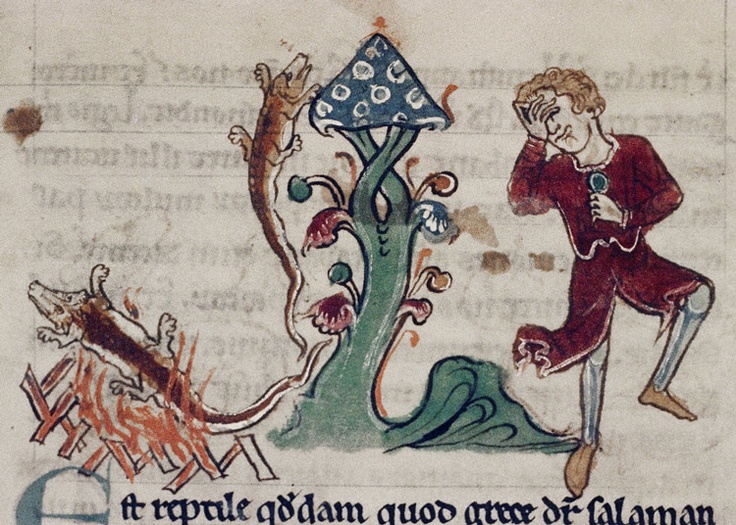
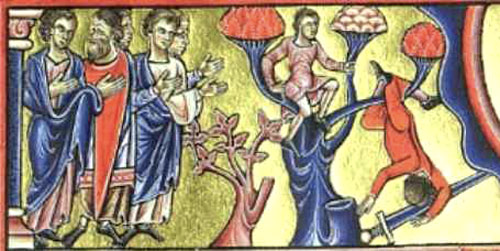
  • Amanita mushroom references in Christian art and the ‘where’s Waldo?’ project
  • James Arthur and Jack Herer’s psychedelic scholarship
  • Over-emphasis on amanita, under-emphasis on psilocybe in psychedelic scholarship
  • The unpopularity of amanita mushrooms as a recreational drug
  • Mono-plant fallacy
  • Elite priestcraft conspiracy theory of mushrooms in Christianity
  • Andrew Letcher’s debunking of mushroom Christianity
  • Irrelevance of identifying a particular plant as religious sacrament
  • Does anyone really care about amanita mushrooms?
  • Metaphorical interpretation of the holy grail causing immortality
  • Rejection of pop-psychedelia
  • James Kent’s failure to integrate the ego death theory
  • Realistic expectations of psychedelic drugs
  • Direction of initiation and psychological progression
  • Lack of clear initiation ritual context in modern society

My Markup Copy of the Outline

Western tradition of psychedelic drug use

Mushrooms and religion

Mushrooms as religious sacrament

Minimal, moderate and maximal theories of psychedelic religion

[vs narrower or other scopes which is to say, OTHER CENTERING-focal-POINTS OF INQUIRY:

  • Min/Mod/Max theories of mushrooms in Greek & Christian religion

General note for this website: when I say “Greek & Christian”, it is shorthand for “Hellenistic & Christendom, integrated”, seen as interpenetrating, not as if hermetically isolated and separated and at odds with each other. It means Hellenistic+Christendom; or, “in Helleno-Christian history”; in the history of Helleno-Christianity.

John Allegro and the cult of Amanita Muscaria

Gordon Wasson and the identity of Soma

Amanita mushroom references in Christian art and the ‘where’s Waldo?’ project

James Arthur and Jack Herer’s psychedelic scholarship

Over-emphasis on amanita, under-emphasis on psilocybe in psychedelic scholarship

The unpopularity of amanita mushrooms as a recreational drug

Mono-plant fallacy

Elite priestcraft conspiracy theory of mushrooms in Christianity

Andrew Letcher’s debunking of mushroom Christianity

Irrelevance of identifying a particular plant as religious sacrament

Does anyone really care about amanita mushrooms?

Metaphorical interpretation of the holy grail causing immortality

Rejection of pop-psychedelia

James Kent’s failure to integrate the ego death theory

Realistic expectations of psychedelic drugs

Direction of initiation and psychological progression

Lack of clear initiation ritual context in modern society

Jan Irvin of the Past – His Book Publication Dates

2005-2009
Astrotheology & Shamanism: Christianity’s Pagan Roots. A Revolutionary Reinterpretation of the Evidence
Jan Irvin, Andrew Rutajit
2005, 2006, 2009
http://amzn.com/1439222428

2009
The Holy Mushroom: Evidence of Mushrooms in Judeo-Christianity
September 30, 2009
http://amzn.com/0982556209
I look more at Helleno-Christianity -mh.

2009
The Sacred Mushroom and The Cross: A study of the nature and origins of Christianity within the fertility cults of the ancient Near East
1970; [40th] Anniversary edition (November 12, 2009)
John Allegro; Jan Irvin (Introduction), Carl Ruck (Foreword), Judith Brown (Foreword)
http://amzn.com/0982556276
Publisher : Gnostic Media Research & Publishing

2:36 Intro – Kent’s Position

2:36

The history of psychedelics use in western culture.

Kent (sometimes) says no, there has not been a tradition of psychedelics use in Western culture — but Kent is inconsistent / self-contradictory here.

This confusion, vagueness, and inconsistency is typical of bad reasoning, especially around Allegro.

All critical writings about Allegro tend to be marked by confusion, vagueness, basic scholarship errors, and inconsistency, including self-contradiction. -mh

11:50, 14:50 Kent (Like Hatsis) Is Outdated, Trailing a Decade or Two Behind the Leading Edge of Research in the Field

11:50

14:50

Letcher can be a little more excused than Hatsis; Letcher’s book was written back when Irvin still held and asserted his values and views (focusing on Christianity instead of Hellenistic also (as I do); focusing on Amanita instead of all psychoactive mushroom species (as I do)). -mh

21:00 Kent’s Project Is to Separate (Break) the Connection Between Psychedelic Drugs & Religion

21:00

He fights against the Moderate view, he advocates the Minimal view —
the minimal entheogen theory of religion.
the moderate entheogen theory of religion.
“the

22:45 debunking and falsifying the psychedelic theory of religion

Why Doesn’t Max, or My Initial Comments, Point Out the Obvious: That the Field Conflates Amanita and Mushroom, Shutting Out the True Center, Psilocybe?

that question is Jan 13 2021. Below, I do work-up toward that critique, but not with the pointed shorthand of late, my embracing of
Psilocybe Scholarship Good, Amanita Scholarship Bad:
Destroy All Amanita Scholarship
(partially shared between both me and Letcher-Hatsis).

22:45 “debunking and falsifying the psychedelic theory of religion, as he sees it” — Max lists the ways.

  1. Allegro. “the cult of Allegro”, “the cult of Amanita”. Max largely agrees with Kent here. I agree with Kent here.
  2. Kent denies and dismisses the entire project of trying to find Amanita representations in Christian art, w/o any consideration that even 1% could be genuine.

This seems excessively discmissive even though Max and I are not [24:22] advocate the project of trying to find Amanita repre’ns in Christian art.

That project Amanita scholarship has its limitations.

Cyberdisciple sasys “I think that people know that now; we now have a lot of meta-scholarship on the scholarship on Amanita.”

Cyberdisciple seems to be praising the contributions of Letcher-Hatsis, here.

“Does Kent take on the claims that have been made about other mythologies … Soma tradition = Amanita?”

Max: “Kent lumps Soma in w/ Allegroism & the scholarly cult of [25:13] Amanita, bc he uses Wasson as the figurehead of Soma, and Wasson’s theory is Soma = Amanita.

26:00 Wasson-Allegro-McKenna

“Kent thinks Wasson & Allegro are grouped as one, typical [26:00], Amanita-cult (of scholars), which is like Hoffman on “Wasson-Allegro-McKenna”, all expressing the same idea about the mushroom.”

Do Not Utilize the Phrase “The Mushroom”; It Announces Contempt for Scientific Clarification

Above, careful saying the phrase “the mushroom”.

I would never utilize the phrase “THE MUSHROOM”, THAT IS A BAD-THEORY CONSTRUCT, IT’S WAY TOO VAGUE, way too loaded a phrase.

What am I supposed to mentally picture when someone says “the mushroom”?

Using the malicious, destructive phrase “the mushroom” is deliberately and maliciously unclear, it’s a bad-attitude statement “I disrespect and disavow all precision, I am trying to maliciously jam together and conflate all scholarly theorizing that has anything to do with mushrooms and religious history; I am bent on destroying the field, not clarifying the field.”

Using the phrase “the mushroom” is a loud announcement “I HEREBY DISCARD ALL SCIENTIFIC SCHOLARLY METHOD AND CLARITY AND PRECISION.” The term is loaded with sarcasm and bad attitude and so is completely useless.

We must critique the term “the mushroom”, but we cannot utilize the term, “the mushroom”.

I hate that phrase “the mushroom”; it is a nasty CONFLATION PROJECT, trying to mangle-together all variants of fields of scholarship theorizing about mushrooms and all religious history.

It is the most horrible SLOPPY UNSCHOLARLY CONFLATION-PURPOSED term; when you utilize the phrase “the mushroom”, you are announcing that you are going to throw out all scholarly care and precision and are entering massively anti-scientific conflation mode.

Fact-Check What My Position Has Been re: “Grouping” Wasson-Allegro-McKenna

NEED FACT-CHECK on My Position:

Have I written that Wasson-Allegro-McKenna can be grouped?

I doubt I have much grouped the three, but it depends on what sense of ‘group’.

Sure, you can identify something in common; none of them are the maximal entheogen theory of Christianity.

In What Way Can Wasson, Allegro, and McKenna Be Grouped? What Are Their Positions on Narrow & Broad Questions?

Wasson (focus: Amanita)

Moderate entheogen theory of religion
Minimal entheogen theory of Christianity; specifically:
… Minimal Amanita theory of Christianity

Allegro (focus: Amanita)

Moderate entheogen theory of religion
Moderate entheogen theory of Christianity; specifically:
… Moderate Amanita theory of Christianity

McKenna (focus: Psilocybe)

Moderate entheogen theory of religion
Minimal entheogen theory of Christianity; specifically:
… Minimal mushroom theory of Christianity (regardless of Amanita vs. multiple psychoactive mushroom species)

McKenna disagrees with Wasson & Allegro, in that McKenna focuses on Psilocybe, rather than Amanita.

McKenna disagrees with Allegro, MAYBE, re: whether primitive Christians used mushrooms at all. Need fact check.

All 3 agreed — despite Allegro’s self-contradictory no-context initial inclusion of Plaincourault image — no mushrooms in post-primitive Christian history. Here’s where I emphatically disagree, part of what makes me Maximal.

  • Later Christianity used mushrooms.
  • Later Christianity used mushrooms HEAVILY.
  • Primitive Christianity used mushrooms HEAVILY.
  • The entire surrounding culture, Hellenistic+Christendom used mushrooms HEAVILY; NORMALLY; in the Mainstream, from Antiquity until the start of the Modern era, such as Newton 1687.

Useful Ideas and Attitude in Kent re: X

27:06 where’s waldo

Amanita Single-Plant Fallacy for Christian History

field of Amanita-Christianity scholarship is endlessly looking at Christian art to make tenuous connections to Amanita, multipole books do this. Kent is correct here. MH calls this the mono-plant fallacy.

28:00 ANY plant that can loosen cognition can be a potential religious sacrament for religious exp’c and mystical ego death.

[January 13, 2021] lately I swing further: If before, I said “Don’t forget Psil too”, lately, I say “Forget Amanita! It’s the false center of the entheogen scholarship field! Put Psil at center INSTEAD!” Lately, I don’t merely say “Amanita is too narrow”; I say “Amanita has REPLACED Psilocybin; get rid of Amanita focus, replace it by Psilocybe focus.”

The Great Strength and Defensibility of the Position that Christianity Is Based on Psychedelics, and the Weakness and Indefensibility of the Too-Narrow Position that Christianity is Based on Amanita

28:40 That narrow theory makes for a weak, hard-to-defend theory. How brittle and open to attack.

The misguided efforts of entheogen scholars who presume “What we need to find is Amanita“, leaves the proponents of that too-narrow theory very open to attack & effective criticism like from Letcher-Hatsis. It’s a weak theory, that this ONE species (Amanita) is the key to the entire large claim that Christianity was based on psychedelics. It’s a narrower position to disprove, which is easier to disprove than the multi-plant position (eg any specifies of species of entheogenic plant or mushroom.

[January 13, 2021] – I dislike the above wording; instead, now, shove aside Amanita, and replace it by Psil instead, in entheogen scholarship.

30:27 Letcher’s book Shroom attacks one very very very narrow theory, priests hid… they take the VERY most narrow version they can POSSIBLY invent, and then CONFLATE that extremely hyper-narrow theory with the very opposite: the TOTAL, ALL-ENCOMPASSING, widest-possible theory.

They argue that the infinitely narrowed theory position, is the same as, the infinitely broad, all-inclusive theory that entheogens are important in Christian history.

  • The infinitely narrow theory invented, assumed, concocted (for the purpose of strawmanning/ misrepresentation of the field), and attacked by Letcher-Hatsis:
    “the “secret Amanita cult” theory, including a particular assumed model of transmission
    conflated like an SOB, per bad, illegitimate strategy, with:
  • The infinitely broad theory that:
    entheogens are important in Christian history

Kent falls into some of that bad reasoning, of Letcher-Hatsis.

Hidden then Revealed, vs. Brittle “Secret” Presuppositional Theory

[31:00]

The “transmitted secret cult” canard/ unexamined narrow presupposition.

Assumption that mushroom use was secret, deviant, abnormal, hidden, not revealed. vs. the Egodeath theory’s “hidden then revealed” model.

I cringed and halted a Hatsis video yesterday [now is 9:01 a.m. December 24, 2020] when he said “The ‘Holy Mushroom’ theory” and wanted to loudly rant and rave WTF ARE YOU EVEN TALKING ABOUT, THERE’S NO SUCH THING AS “THE HOLY MUSHROOM THEORY”, SPEAK ENGLISH!

Stop conflating like a MF! You’re just wrecking the field by your clumsy, sloppy thinking.

THIS IS NOT PROPER THEORIZING!

NO ONE KNOWS WHAT YOU’RE REFERRING TO; your phrase “the Holy Mushroom theory” IS NOT A PROPER CONSTRUCT IN the field of Western entheogen scholarship!”

Every time Hatsis says “the Holy Mushroom theory” I feel like he’s hallucinating what the field is.

Why does Letcher-Hatsis glorify and put Irvin (of 2009) up on a pedestal?

Acting as if Irvin — of 11 years ago, who doesn’t even believe those views and values anymore! — Irvin2009’s one, little, particular, narrow, quirky model of mushrooms in Christian history, is the same thing as the entire proposition in all of its forms, that Christianity was based on and continually inspired by mushrooms — REGARDLESS of the separate detail question of which species, whether it was “secret”, whether it was “suppressed”, and various other detail questions.

I really resent that conflation of the entire field of “mushrooms in Christian history” with the particular, weakest-theory-we-could-find-or-imagine, “the secret Amanita cult theory of Christianity”!

The SLOPPY thinking of Letcher-Hatsis is TRYING TO WRECK the field of Western entheogen scholarship.

Stop STRAWMANNING everyone in the field (Brown, me) by trying to FORCE us to be asserting a position which we DENY, the particular “transmitted secret Amanita cult” theory that Jan Irvin doesn’t assert either, anymore anyway. And hasn’t asserted for 11 years or so.

Like Kent, Hatsis’ theorizing is OUTDATED; he’s way behind in the field he presumes to critique.

What My Position Is, vs. the “Secret Amanita Cult” Theory of Christianity

My position is equally in Greek religion, not just Christian: my particular theory isn’t even within Christianity, it’s broader.

My thinking is essentially fundamentally broader than ONLY questioning mushrooms in Christian history; my concern is with Greek AND Christian history — as an INTEGRATED pursuit, pictured as ONE CHAPTER, not as two chapters.

In my mytheme decoding, I am always grouping Hellenistic and Christian mythemes together, with great success.

My mytheme decoding, integrating Greek & Christian evidence, is bolstered by World religious mythology, although that’s not my center of focus; the entire ancient “world”, of Western antiquity.

When I decode “vine leaf”, I gather examples of vine leaves from both Greek & Christian art.

I readily and successfully use evidence from Greek art to confirm and corroborate interpretations of Christian art & texts; and I use evidence from Christian art to confirm and corroborate interpretations of Greek art & texts.

Let’s consider for a moment only my theory within Christianity, momentarily shrinking me down to Irvin2009’s size of theory:

I assert that:

  • Christianity consciously shared the Greek banqueting tradition.
  • The mushroom in Hellenistic & Christendom religion was much more likely to be any of numerous species of Psilocybe (decorated with Amanita imagery), than literal use of Amanita.
  • Christian use of mushrooms was done consciously in the traditions-cluster of:
    • mystery-religion initiation
    • mixed-wine banqueting
    • esoteric Christianity

My theory is not Irvin’s theory, unlike the falsehood that Hatsis digs-in deeper, every time he utters his confused and confusing, loaded, strawmanning phrase, “the Holy Mushroom theory”.

Stop using a term from Irvin2009, which Irvin2020 doesn’t agree with.

My theory is not Irvin’s theory and cannot be conflated with Irvin’s theory, and must be considered, discussed, critiqued, and approached distinctly from Irvin’s theory.

Neither like hash-for-brains John Lash, is my theory “derived from Wasson” or “a variant of Wasson’s theory that is a considerable departure from it”.

What gibberish double-talk nonsense, that’s always connected with Amanita (and with Allegro).

MY THEORY IS NOT “A DEPARTURE FROM WASSON” — MY THEORY HAS JACK AND F-ALL TO DO WITH WASSON.

Don’t even relate my theory – A BONA FIDE ACTUAL THEORY – to Wasson’s garbled non-theory, ineptly expressed so that not one person on earth understands what his position is.

Anyone who describes my theory as “a variation of Wasson’s theory, including a considerable departure from it” is maliciously strawmanning and trying to make Wasson the king, owner, pole-star, boundary, and center of the field.

My theory has NOTHING to do with Wasson one way or another.

Wasson’s theory is CRAP and FALSE; WAY off-base, and ENTIRELY WRONG, and completely irrelevant.

Wasson’s “theory” isn’t even a theory; it’s a garbled heap of self-contradiction.

My theory has its own completely independent basis and origin.

Wasson can drop off a cliff, I DON’T CARE ABOUT ALLEGRO AND WASSON AT ALL, they are irrelevant nobodies and they aren’t in my field.

You might as well say my theory is a “considerable departure from football.”

John Lash’s caricaturization of ALL writers on entheogens as “variants of the Wasson theory” is MEANINGLESS GIBBERISH designed to make Wasson and Allegro the center and boundary of the field of Western entheogen scholarship.

I COULD CARE LESS ABOUT WASSON AND HIS BRAIN-DEAD, INEPTLY STATED THEORY.

MY THEORY HAS NOTHING TO DO WITH WASSON AND IS NEITHER “DERIVED FROM WASSON” NOR “A VARIANT OF WASSON’S THEORY INCLUDING A CONSIDERABLE DEPARTURE FROM WASSON”, SPAGHETTI-FOR-BRAINS.

WHAT ABOUT YOUR THEORY, JOHN LASH — YOU OWN BAD LOGIC RENDERS YOUR OWN THEORY AS “A VARIANT OF WASSON’S THEORY, INCLUDING A CONSIDERABLE DEPARTURE FROM IT”. WHAT GARBLED NONSENSE!

STOP TRYING TO ENSLAVE US ALL TO WASSON AND ALLEGRO.

STOP HANDING THE ENTIRE FIELD TO WASSON-ALLEGRO.

WASSON AND ALLEGRO ARE IRRELEVANT FOR THE FIELD OF WESTERN ENTHEOGEN SCHOLARSHIP.

Amanita Sucks as an Entheogen

37:04 Max’s intellectual history.

Max was frustrated with Heinrich’s writing about Amanita despite Amanita being uninteresting and un-ergonomic – Max wanted to hear about Psilocybe mushrooms & effects, not the surface form of Amanita like the books all obsessed on and limited the field to.

Only McKenna was covering Psilocybe.

All other entheogen scholars were madly fixated and obsessed on Amanita, and even then, merely on its superficial surface form, not its cognitive phenomenology and explaining that.

Why did ALL other writers obsess & fixate on Amanita? -max

I recently wrote the same and started a page to examine just how bad has this problem been:
Was Phase 1 of the Field of Western Entheogen Scholarship in Fact Centered Around Amanita?

The giant super striking photo in Heinrich’s book is a very lousy reason to obsess on Amanita (ignoring all the Psilocybine-containing species) and equate/conflate:

  • the entire broad theory/field of scholarship, eg
    • the mushroom theory of Christianity
  • (but I’d integrate and include Hellenistic religion too, as the orienting-center of focus, NOT making Christianity the orienting-center of focus as if to hermetically isolate Hellenism from Christendom)
  • with only, specifically and exclusively, the Amanita theory/field of scholarship;
    • the Amanita theory of Christianity
  • I specifically advocate:
    • the Psilocybe theory of Greek & Christian religion
  • by ‘psilocybe’, I mean all mushroom species that contain psilocybin and/or psilocin.

Usage-Definition: In my writings, by ‘psilocybe’, I mean all mushroom species that contain psilocybin and/or psilocin. Assume Mediterranean was lush and moist and had many mushrooms. “It was a dry desert with no mushrooms” is a myth, opposite of truth. The region was moist and had a plethora of mushrooms; there was no shortage of mushrooms as fantasized by modern, anti-mushroom biased writers.

todo: gather these definitonal usage-conventions of mine, into a single lookup-able place, eg in my Theory Concepts page.
amanitaholygrailheinrich.jpg (703×517)

Strange Fruit: Alchemy and Religion: The Hidden Truth
Strange Fruit: Alchemy, Religion and Magical Foods: A Speculative History

The above is an alternate subtitle within this edition eg title page.
Clark Heinrich, 1994 (Amazon says “January 1, 1995”)
ISBN: 0747515484

Clark Heinrich.  Magic Mushrooms in Religion and Alchemy.  (2nd ed. of Strange Fruit.)  ISBN: 0892817720.  2002.

todo: there’s — fix the above ISBN #/ link, in orig webpage my 2006 article’s Bibliography. That ISBN is for Merkur’s book Mystery of Manna.

Magic Mushrooms in Religion and Alchemy
2nd Edition
http://amzn.com/0892819979

The Existence of Amanita Has Set Back Entheogen Scholarship and Understanding of Psychedelics by Decades

42:00

The existence of Amanita set “psychedelic scholarship … drugs & symbolism back”, leads to “fighting” (Hatsis), made a reputation for himself by fighting Irvin, to get a book deal.

Letcher’s book fighting against Irvin, created its own academic market of arguing over these things, that is not really particularly relevant, or important, or leading-edge.

Max: It’s a misleading waste of time on the way to the Egodeath theory. because Amanita has set back psych scholarship in this way, it’s also setting back Kent’s own thinking in the same way, in his critique of Pop Sike culture that’s talking about Amanita.

Kent has exactly same blindness about amanita as the people he’s criticizing.

The Poorness of Amanita as an Entheogen Disproves the Pop “Amanita Theory of Christianity”, not the “Mushroom Theory of Christianity” as Kent Over-Concludes

44:22

Kent argues that Amanita is very unpopular, and is not very psychoactive — he uses that argument to supposedly disprove the ENTIRE field of invesigation, of psychedelics in Christian history.

Kent argues: How could Amanita be the true sacrament that has been hidden by the Priestcraft for centuries, if even nowadays when everybody knows about Amanita and has access to Amanita, nobody can be bothered to take Amanita? that’s a score against the theory.

Cyberdisciple agrees with Kent that the poorness of Amanita as an entheogen is a score against “the theory” but Cyberdisciple clarifies, unlike Kent:

“The poorness of Amanita as an entheogen is not a score against the psychedelic Christianity theory; the poorness of Amanita as an entheogen is a problem only for the very narrow, Amanita-specific, single-species theory.

Truly, You Have a Dizzying Intellect: Mushrooms on Church Door Proves: No Hidden Mushrooms; thus Proves: No Mushrooms in Christian History

Cyberdisciple: “Hasn’t this argument been made already, that the poorness of Amanita as an entheogen disproves bad entheogen scholarship and bad Pop Sike Cult, that fixates on Amanita as the uber-entheogen of Christian history?

“What’s Kent doing here that’s new, isn’t this just what Letcher was saying over a decade ago?”

Max: “Yes, though Kent uses different examples. Letcher leans heavily on a Belgium cathedral door, which Kent doesn’t mention.”

My passage copied from idea development page 6:

Books by Andy Letcher that are rushed out by big-name Establishment presses, making loud-sounding arguments about nothing in particular, a shell game, in which we nod our heads in dizzied consent that this constitutes an argument:

“The mushroom on the church door is evidence that there’s no hidden mushrooms in Christian art.

Therefore I have shown there’s no evidence for mushrooms in religion; such use is late 20th C only.”

Letcher

Yes Letcher, truly you have a dizzying intellect; I give in!

Movie: Princess Bride, “battle of the wits” scene, after convoluted but futile argument. 2:50
https://www.youtube.com/watch?v=EZSx3zNZOaU&t=170s (after skip ads)

You are right (in your theory and position, whatever it is, that shifts on every other page, as needed, to give the right surface impression of something having been proved).

His book has all the logical structure of a pile of oatmeal.

/ end of passage copied from idea development page 6

Letcher Hatsis Kent Pretends to Dismiss the Entire “Mushroom Theory of Christianity” by Merely Disproving the “Secret Amanita Cult Theory of Christianity”

“Door aside, THE SHAPE OF THE THEORIZING IS EXACTLY THE SAME in Kent & Letcher; it’s the same counterattack to a relatively unimportant and very narrow theory.

“So Kent’s argument/critique is basically uninteresting.”

[then in some aspects, we can criticize together, the Letcher-Hatsis-Kent argumentation, their attempt to dismiss the entire “mushroom theory of Christianity” (or Hellenistic & Christendom), by simply merely disproving the “Amanita theory of Christianity”. -mh]

“But it’s worth deconstructing for its sheer relevance because it’s talking about this crucial idea of psychedelia and religion.

[44:30] No One Uses or Likes Amanita, so it’s a terrible particular theory, the particular specific theory that Amanita was secret and was THE mushroom for Christian history.

[45:30] differences between, but much more the similarities of fallacies committed by Letcher & Hatsis.

The Specific Entheogen Identity of Soma and Kykeon Is of Limited Importance

46:07

“Soma wasn’t Allegro’s concern. Soma was Wasson’s concern.

“Other writers great effort to try to identify Soma and also in Western tradition Kykeon as well, so much ink spilled trying to give precise singular identities to Soma & Kykeon, whereas it’s all really just a misleading waste of time on the way to the Egodeath theory, which points out that both Soma and Kykeon are simply going to be entheogenic sacraments.

“It doesn’t matter what they are, as long as they are entheogenic psychedelic.”

46:30 single-plant fallacy [single-species of Amanita vs. multi-species Psilocybin-containing -mh]

47:00

Cyberdisciple — overemphasis on Kykeon causes the single-plant fallacy.

47:00

Cyberdisciple:

“Overemphasis on Eleusis and the Kykeon there, within Greek culture entheogen scholarship.

“It doesn’t really matter proving which plant used, that’s not really where the action is, what’s important and revolutionary.

“We don’t need that smoking-gun evidence in that way.

“This whole model of how do we PROVE psychedelics in the past and past religious cultures, we don’t need to find the exact plant, in order to do the work of the changing our paradigm of religious history and religion.”

47:43

Max: Kent concludes nobody cares about Amanita, that’s true and false. It’s true and false that people overemphasize amanita.

Kent fails to move beyond the people he criticizes, toward the Egodeath theory.

Conflation and Mis-Centering a Critique

My theory is: Psilocybe in mixed-wine banqueting, mystery-religion initiation, and esoteric Christianity.

My theory is not centered on Christianity.

My theory in the field of Western entheogen scholarship encompasses Christian history, but my theory is not centered on Christian history, nor specifically on primitive Christianity (as is Allegro).

My theory is CENTERED ON Hellenistic & Christendom history.

My theory is not centered like Allegro, on primitive Christianity, and so my theory cannot be judged from a standpoint that’s centered on primitive Christianity, that assumes centrality of the concern of primitive Christianity.

Why does Letcher-Hatsis insist on equating one, narrow, very particular model of the relationship of “mushrooms” and “Christianity”, with the ENTIRE general broad theory or question of “what is the significant role of mushrooms in Christianity?”

Letcher-Hatsis commits a fallacy of conflating:

  • A PARTICULAR SPECIFIC explanatory theory, more or less specified by Jan Irvin2009 (but NOT Irvin 2015+) in particular,
    with the opposite in scope:
  • The most general possible theory that mushrooms were in some way important in Christian history.

No Valid Scientific Method if Sloppy Basic Thinking

Hatsis can lecture all he wants about sound scientific historians’ methodology, but he’s sloppy at basic thinking/theorizing.

No amount of alleged sound scientific historians’ methodology can rescue your bad scholarship, if you are sloppy at basic thinking and theorizing.

Conflating a Particular Narrow Theory with a General Broad Theory — Disproving the Particular Theory Does Not Disprove the General Theory

Sloppy conflation of a particular theory with a general theory, is part of “sound scientific historian methodology”, according to Hatsis’ methodology.

The Folly of Basing One’s Entire Critique on a Single Book, from 11 Years Ago (Which the Author Would No Longer Advocate Anyway)

Evidentially Hatsis has only read ONE book in the general field or theory of “mushrooms had an important role in Christian history”: Jan Irvin’s The Holy Mushroom (2009; 11 years ago).

Hatsis strongly gives the impression that he has only read or considered ONE writer in the field, of mushrooms in Christian history.

Forget Hermetically Isolated Christianity (a Fiction); Consider Greek & Christian; Hellenistic & Christendom Together

It’s a malformed field. People should not just look at the theory that “Mushrooms had an important role in Christian history“; scholars should instead look at the theory that “Mushrooms (of VARIOUS species) had an important role in GREEK AND Christian history.

Mushrooms (of VARIOUS species) had an important role in GREEK AND Christian history.

Hatis is trying to GIVE and HAND OVER and ENSLAVE the *entire* theory that mushrooms were important in Christian history, to Jan Irvin of 2009, who doesn’t even advocate that theory or values anymore!

Since WHEN does Jan Irvin “own” the entire proposition that mushrooms were important in Christian history?

Stop making Jan Irvin (of 11 years ago) the single, only spokesman for the ENTIRE theory that mushrooms were important in Christian history!

Letcher-Hatsis has so many presuppositions that he folds into his malformed usage, his misuse of his construct, “the Holy Mushroom theory”.

Every time Letcher-Hatsis says “the Holy Mushroom theory”, he’s conflating massively:

  • A narrow, hyper-specific, particular theory, with the entire broad as possible overall general theory, that mushrooms were IN SOME WAY — not necessarily particularly specified — in Christian history.

Conflating “Confirming Mushrooms in Christian Art” with “Identifying What the Holy Grail Refers to”: Literalist, Poetry-Illiterate “Granter of Immortality”

At 1:09:00 in episode 8, Kent asserts that identifying mushrooms in Christian art is specifically the issue of, we need to identify what The Holy Grail refers to. Some say upturned Amanita, immortality.

[To an appropriate, limited extent, I too have been interested in Amanita:

  • My first research question in entheogen scholarship was the book of Revelation chapter 10, angel-given, eaten scrolls that give visions, which I was happy with Heinrich having solved/identified; I agree with Heinrich’s 1994/1995 book which I read in 1999, that the eaten scroll of Revelation 10 refers to Amanita.
  • The Holy Grail refers to the upturned Amanita.
  • Those are my best photographs, of a rain-pool pair of Holy Grail Amanitas.
  • It was particularly valuable that my photos of Holy Grail prove that the Dionysus Triumph leopard fountain is upturned Amanita.

Those are the ways I’ve been “part of the problem”, of being almost too positive toward Amanita, instead of my recent, principled, better-centered focus on Psilocybe in Greek & Christian history. -mh]

Picture of Eating Scroll, of Revelation/Ezekiel, from John Rush

Mushroom in Christian Art, Chapter 3
John Rush
http://www.clinicalanthropology.com/mushroom-in-christian-art/mushroom-in-christian-art-chapter-three/

Rush’s comment: “The Angel Gives John the Book to Eat, Douce Apocalypse, 1265-1270 CE  Notice the angel represents the stalk of the mushroom-cloud from which he or she emerges, and the celestial erection in John’s cape once he eats the “book.””

http://www.clinicalanthropology.com/wp-content/uploads/2018/07/mca3_28.jpg

My Amanita Photos

https://egodeaththeory.wordpress.com/2020/12/13/photos-of-amanita-muscaria-mushrooms-to-identify-mushrooms-in-greek-christian-art/
find ‘hoffman’

Photo by Michael Hoffman, Egodeath.com http://www.egodeath.com/images/amanitashinycappieces.jpg
Photo by Michael Hoffman, Egodeath.com http://www.egodeath.com/images/amanitacollection.jpg
Photo by Michael Hoffman, Egodeath.com
photo — Michael Hoffman, the theorist of ego death, 10/10/2010
Photo: Michael Hoffman, the theorist of ego death 10:10 a.m. 10/10/2010
photo — Michael Hoffman, the theorist of ego death 10:10 a.m. 10/10/2010
IMG_3638.JPG
Photo: Michael Hoffman, the theorist of ego death 10:10 a.m. 10/10/2010
IMG_3647.JPG
IMG_2697.JPG — Michael Hoffman, the theorist of ego death
Photo: Michael Hoffman, the theorist of ego death 10:10 a.m. 10/10/2010
IMG_2558.JPG
Photo: Michael Hoffman, the theorist of ego death 10/10/2010
IMG_2452.JPG
Photo: Michael Hoffman, the theorist of ego death 10:10 a.m. 10/10/2010
IMG_2149.JPG
Photo: Michael Hoffman, the theorist of ego death 10:10 a.m. 10/10/2010
IMG_1977.JPG
Photo: Michael Hoffman, the theorist of ego death 10:10 a.m. 10/10/2010
IMG_1856.JPG
Photo: Michael Hoffman, the theorist of ego death 10:10 a.m. 10/10/2010
IMG_1800.JPG
Photo: Michael Hoffman, the theorist of ego death 10:10 a.m. 10/10/2010
IMG_1803.JPG
Photo: Michael Hoffman, the theorist of ego death 10:10 a.m. 10/10/2010
IMG_1789.JPG
Photo: Michael Hoffman, the theorist of ego death 10:10 a.m. 10/10/2010
IMG_1758.JPG

The Mytheme: {Holy Grail grants Immortality}

49:00

At 1:09:00 in episode 8, Kent re: identifying mushrooms in Christian art is specifically need to identify what The Holy Grail refers to. Some says upturned Amanita, immortality.

Kent mis-argues that “Amanita only gets you high for a few hours, it doesn’t grant you immortality; therefore Amanita cannot possibly be the real Holy Grail.”

49:41 immortality is related to eternity.

Experiencing timeless eternity in the altered state (loose cognitive binding), IS produced by Amanita, disproving Kent’s argument. eternalism.

Point of view where the mind sees that everything has already happened; the 4D block universe.

The Egodeath theory clearly explains experiencing eternalism/ immortality/ eternity.

Regarding the mytheme {immortality}, Kent’s mytheme-illiteracy prevents him from thinking clearly about evidence.

Kent’s blindness to meaning-flipping. 2-level meaning of religious texts.

There are various meanings packed into {immortality}.

Kent fails to define what he means by “immortality”.

Literalist, lack of critical thinking about meanings; Kent uses unstated presumption, thus literalism and the single-meaning fallacy.

Kent fails to define what he means by the terms that he denies.

Kent repeatedly says “x is false” but doesn’t define ‘x’.

51:55

Cyberdisciple lists meanings of {immortality}, rattling off several off top of head, while Kent doesn’t even TRY to define ANY such meanings.

Kent’s thinking typifies literalist (ordinary-state possibilism) thinking. Failure to have Poetry Consciousness, which is a REQuirement to interpret.

Kent is OUT of the field of religion-interpretation, becasuse he’s literalist, and he assumes the audience is all literalists too.

Literalism the only mode Kent is able to think in.

Brags About Adherence to Scientific Method, Yet Fails to Use Scientific Method Competently

55:00

Kent brags about “the scientific method” — in a regressive way; he uses very brittle reductionist OUTDATED mode , caricature, of “scientiific”.

Kent is regressive, NOT scientific. the Egodeath theory is definitive of the actual Scientific method.

If Kent Were Actually Progressive and Scientific, He Would Study the Egodeath Theory

55:20

the Egodeath theory precisely fits/solves/addresses Kent’s complaints about Pop Sike eg dark side.

56:20

Paranormal is criticized — the Egodeath theory same, provides better, metaphor interpretation.

So it’s completely ridiculous to say the Psych Community is regressive yet ignore the Egodeath theory. for psychedelics to move ahead.

Block re: explaining religion, Kent’s hangups, instead of UNDERSTANDING religion.

Kent Wants to Destroy Religion, Not Understand Religion

58:00

59:00

ppl aren’t dealing w/ these questions

59:20 if you believe in progress, you have to recog that the conditions — egoic scienfitic methods — is just 1 stage of progress. rationalistic scientific way of thinking. “highly evolved state” Kent is thinking of, is actually, immature undeveloped egoic.

Kent talks of evolutionary states, yet he dismisses higher knowledge as hallucination. and glorifies egoic reductionistic type of scientism.

Kent fails to consider Loose Cognitive Science (which the Egodeath theory enables and is the requisite, mandatory gateway for), even though his book (which he doesn’t mention) is neuroscience.

The DARK SIDE AND PSYCHEDELICS WILL keep coming up, against Kent’s emotional wish for them to just go away.

We can’t keep trying to shut out self-control loss, the religious altered state (loose cognitive binding) and shut out the death of possibilism-premised model of self and world; those factors will keep coming up, bursting in (due to the innate structure of the mind); Kent tries to the shut the door again on the religious effects of psychedelics.

Max: Kent emotionally says, wants to shut out this barrage of interest in religious use of entheogens, “Just stop talking about sacred mushrooms, they’re not sacred!”

Cyberdisciple: “Kent’s immature.”

1:02:30

Max: “I lost interest; Kent’s content is not worth critique.”

/ end of discussion of Kent

Jan Irvin had a very similar trajectory: he was all pro- Pop Sike, then flipping against it. “I don’t take his line of thinking seriously.”

“Kent has a more earnest attempt than Irvin to critique & deal w/ Pop Sike inadequacies.”

“I always wanted to not end up being like that, flipping against psychedelics. after 10-15 years, the Egodeath theory , the religious significance of psychedelics.

By breaking down Kent’s argument, I can avoid that trap.”

1:05:13

Cyberdisciple: “We have sympathy with Kent’s critiques of the over-inflated “selling” of Pop Sike.

Max: “Healing” is oversold, that leads to disappointment, which is not healthy for… which is a danger in the ‘psychedelic community’.

“parallel: Kent talks of the inevitablity of Western culture abandoning psychedelic ritual. He’s actually describing himself.

Why Transcendent Knowledge Is of Highest Value

Why Psychedelics Are the Most Valuable Thing

See my WordPress page:
Why Transcendent Knowledge Is of Highest Value

MH never bougtht into Pop Sike and conflated that w/ the true value of psychedelics; figured out for himself the true value of psychedelics.

1:08:29

1:09:21 “Benefits”

1:10:30 wrmspirit discussing “benefits”, Cyberdisciple’s comment on a WordPress post thread. Rock lyrics.

1:11:30

Benefits of Psychedelics

  • having that eternalism experience of switching mental worldmodels, makes clear the limits of the egoic control system , the limits of its logic.
  • brings peace and light to understand.
    • brings terror, so that:
    • coming out the other side is a kind of peace.
  • Cyberdisciple never gets angry any more.
  • His laundry is whiter than when egoic thinking.
  • He now sits on a cloud unperturbed.
  • Birds & butterflies fly to him.
  • He can never be moved; unmovable, unshakeable; rock solid.

Cultural Integration of Initiation, Coming-of-Age Ceremony Connected with Psychedelic Experiencing

Initiation in Culture; Cultural Integration of Initiation, in Multi-State Post-Modernity Cutlure. Look for that in religion.

1:16:00

Initiation and its cultural place.

1:17:30

Baptism of youths, and bar mitzva ceremonies, develop in conjunction with … Baptisms in an earlier era were meant to reflect psychedelic experiencing, so that later the ceremony would be understood in retrospect, as connected with psychedelic experiencing.

1:18:02 – end

Was Phase 1 of the Field of Western Entheogen Scholarship in Fact Centered Around Amanita?

Site Map

Contents:

Brown’s Reply Mostly Reassures Me that Amanita-Mania Was Not So Dominant in Phase 1 of Entheogen Scholarship eg 1956-2009

tbd

Brown corroborates a tendency I noticed, to assign the classic entheogen Psilocybe to the Americas, and restrict Europe to just the Amanita mushroom, during 1956-2009 entheogen scholarship, erasing psilocybe from theory-possibilities we consider for Greek & Christian religious history.

1956: Centaurs’ Food essay by Robert Graves (it’s hard to get details on his first titling of this essay, the date, and the magazine issue).

2009: Irvin’s 3 books published, strong tendency (probably) leaning to Amanita away from Psilocybe).

Key Phrases for Phase 2 of the Field of Western Entheogen Scholarship: The New Theory of Mushrooms in Greek & Christian Religion

Western entheogen scholarship = psychedelics, of which Psilocybe is definitive and ideal and flexible, in ancient Greek/ Hellenistic/ Christian / Christendom, including for example, luxury color illustrated bestiaries for teaching Christian morality.

the field of Western entheogen scholarship

Psilocybe in mystery-religion initiation & mixed-wine banqueting
Psilocybe in mixed-wine banqueting & mystery-religion initiation

Psilocybe in mixed wine & mystery religion
Psilocybe in mystery religion & mixed wine

Psilocybe in mystery-religion & banqueting

Psilcybe in mixed wine, mystery religion, and esoteric Christianity
Psilcybe in mixed-wine banqueting, mystery-religion initiation, and esoteric Christianity. pmwbmriec

Did Brown “Move the Goalpost”, or Move to Phase 2 of Western Entheogen Scholarship?

Did Brown at one time defend Amanita as the center of the universe of entheogen scholarship, and then did he “move the goalpost” and switch to instead, falling back to a more easily defensible position, of Psilocybe instead?

In a video debate, Hatsis characterized Brown as “oh, so you’re moving the goalpost” because Brown refused to be a devoted Amanita-defender; Brown failed to conform to Hatsis’ tilting-at-windmills, his strawman, the only game he knows how to play.

____________________

2. Is it true that the field of Western entheogen scholarship in its first, formative phase was squarely centered on Amanita, and was mostly limited to Amanita as the universal solution explain to Mixed-Wine, Mystery Religion, and Esoteric Christianity?

Why do scholars all rush to imagine Amanita in Esoteric Christianity, instead of Psilocybin in Esoteric Christianity; imagine Amanita in Mystery Religions such as Mithraism, instead of Psilocybin in Mystery Religion?

Why was Ruck blind to the Psilocybe mushroom in Mithras’ leg, while he spun long-shot tales of red and white color in Mithra’s cape indicating Amanita?

Is there some grand conspiracy among scholars to push Amanita and ignore the superior Psilocybe?

Why do scholars assign all the good entheogens to South America, and all the bad, fallback, 3rd-rate pseudo-psychedelics to European religious history?

I’ve even literally read that Europe doesn’t have Psilocybe mushrooms, and therefore Psilocybe cannot be the topic of entheogen scholarship in Western religious history (probably in some source as credible as Letcher).

I know why John Lash is biased against mushrooms in Christianity (he hates Christianity and thus it cannot be allowed to have his precious mushrooms in its history);

I know why McKenna is biased against the existence of mushrooms in Christianity, (Big Bad Church);

I know why Hatsis is biased against the existence of mushrooms in Christianity:

  • He’s “selling” Mandrake instead, as his witches’ product.
  • He’s selling his text-based, privilege-the-text “scientific historian” methods, which a priori discard 5/6 = 83% of the types of evidence; his “scientific” method which in effect, says that art evidence never counts, and only text evidence counts — and that text evidence must only be literal, plain, explicit, direct descriptions in text.

Of the two media (art and texts), only one counts: texts (it’s an understatement to say that he “privileges” texts).

Of the 3 levels of evidence (Literal; Stylized; Effects), only 1 of the 3 counts: Literal.

Stylized depictions never count, and depictions of effects never count; only botanical literal depictions count; but those don’t count, and are cancelled out, because they aren’t text, just art; and only text counts.

Specifically, only direct, literal descriptions and explicit mentions of mushrooms by name, in texts, counts.

The other 5 of 6 evidence-types never count.

We must eliminate 83% of the types of evidence, and restrict ourselves to 1/6 = 17% of the types of evidence.

So that’s why Hatsis is biased against Psilocybe in Christian history.

WHY THE F*CK IS EVERY GODDAM ENTHEOGEN SCHOLAR BIASED AF AGAINST PSILOCYBE IN Christian HISTORY, except for Brown & me? What the hell!!

In 2011, Ruck is still pumping out books obsessing on Amanita.  

Mushrooms, Myth and Mithras: The Drug Cult that Civilized Europe
Ruck, Hoffman, Celdran, 2011
http://amzn.com/0872864707

Am I the lone odd man out, and Letcher-Hatsis is correct that the entire field of Western entheogen scholarship really is identified (incorrectly) with Amanita? 

Am I the only Western entheogen scholar who doesn’t identify the field of Western entheogen scholarship with Amanita?

What the f*ck is it with this Amanita obsession/fixation, including by Letcher-Hatsis, who limits his books to Amanita, and who hasn’t heard of Cubensis & Liberty Caps? What’s up with that??

My 1986/1995/1999 Finding in the field of Western Entheogen Scholarship: The Eaten Scroll in Revelation 10 Is Amanita

By historical accident, even I have roots in Amanita: the first question I asked in the field, in 1986, was What is the eaten scroll of Revelation 10? 

I was satisfied in 1999 by Heinrich’s 1995 answer: Amanita, and I agree that Revelation 10 refers to Amanita.

Maybe since the first entheogen people find in Christianity is Amanita in Revelation 10 and Ezekiel, that caused fixation on Amanita at the expense of the superficially boring but more cognitively effective & historically relevant Psilocybe.

__________________

3. Can someone reassure me that the field of Western entheogen scholarship was not centered on Amanita and practically limited to Amanita?

I hope the field of Western entheogen scholarship was never actually centered around Amanita. 

I might have to say:

Phase 1 of Western entheogen scholarship = Amanita.  1956-2003 or -2011

(2011 — perish the thought. Ruck’s book on Mithras. Have these Amanita obsessives ever TRIED the stuff? At least Heinrich did; his book Strange Fruit is respectable.)

“2003” above: = Entheos issues 1-4, and my 2003 announcement of the maximal entheogen theory of religion.

I hate that concession, that people in the field were so dumb, that the first 55 years of Western entheogen scholarship, on mystery religion initiation, mixed-wine banqueting, and esoteric Christianity, the single-minded focus is Amanita as the universal (wrong) solution for explaining all things esoteric.

Can someone save me & the field, and show that the field of Western entheogen scholarship was not drenched in, and held prisoner in, the Amanita single-plant fallacy/fixation/obsession for 1956-2011, for 55 years?

Phase 2 of Western entheogen scholarship = Psilocybe (and less-ideal fallbacks) in mixed-wine banqueting & mystery-religion initiation.

My coming onto the Western entheogen scholarship scene, spelled the end of the Amanita single-plant fallacy, and displaced Amanita by
Psilocybe in Psilocybe in mixed wine & mystery religion;
Psilocybe in mixed-wine banqueting & mystery-religion initiation.

Phase 1 of Western Entheogen Scholarship Was Amanita; Phase 2 is Psilocybe in Mixed Wine & Mystery Religion

Reluctant Framing:

  • Phase 1 of Western Entheogen Scholarship Was Amanita
  • Phase 2 of Western Entheogen Scholarship is Psilocybe in Mystery-Religion Initiation & Mixed-Wine Banqueting

Reluctant Framing:

  • Phase 1 of Western Entheogen Scholarship Was Amanita in Christianity & Mystery Religions
  • Phase 2 of Western Entheogen Scholarship is Psilocybe in Mystery-Religion Initiation & the Ancient Mixed-Wine Banqueting Tradition

I hate this narrative about Phase 1 = Amanita, it’s a sh*tty situation if true. If true, we have to fix the situation.

Email Draft Not Sent to Jerry Brown

Is it true that the field of entheogen scholarship in its first, formative phase was centered on Amanita?  

If that is the happenstance fact, I’ll have to say:

Phase 1 of Western entheogen scholarship = Amanita.

Phase 2 of Western entheogen scholarship = pmrmw pmrmw

Maybe I’ll have to concede that the field of entheogen scholarship did make a huge mistake and really was Amanita-fixated in its first phase.

If so, then I need to talk about a New, Different, Mature Phase of the field, that the field of entheogen scholarship was indeed Amanita-centric, but the field has moved past that error, into a different, mature phase; that the field of entheogen scholarship is moving to a next phase, where Amanita is relatively irrelevant.

Hatsis is confused by the change of focus in Phase 2 of the field of entheogen scholarship.  

Brown is operating within Phase 2 of the field of entheogen scholarship.

Phase 1 of the field of Western entheogen scholarship was centered on Amanita.  

hate that notion and I hope it is not true, that the field so began.

Phase 2 of the field of Western entheogen scholarship is centered on (eg) Psilocybe in the Mystery Religion Initiation & Banqueting Tradition.

I and Brown are operating in Phase 2 of the field, but Hatsis is still stuck in Phase 1 of the field.

From Hatsis’ perspective, Brown is an Allegro follower of a certain type: a bad, unfaithful, deviant follower, and Brown (by being in a Phase 2 that Hatsis is unaware of) has “moved the goalpost” in Browns’ effort to defend “The Allegro-Amanita Holy Mushroom Theory”, which is the only theory Hatsis can imagine, being stuck as he is, in Phase 1 of Western entheogen scholarship.

In Hatsis’ mind, the only possible way to not be a follower of the “secret Amanita cult” theory, is by rejecting mushrooms in Christian history.

If Brown asserts mushrooms in Christian history, then by definition, per Phase 1 the field of Western entheogen scholarship, Brown is a “follower of Allegro” and Brown is an advocate of the “secret Amanita cult” theory.

Letcher-Hatsis would strive for Phase 2 of the field of Western entheogen scholarship, to be some form of “no mushrooms in Christianity”. 

Because Phase 1 was wrong, and Phase 1 reduced-down the entire field of Western entheogen scholarship into solely the “secret Amanita cult” theory, this means — in their confused and biased thinking — that Phase 2 of the field of Western entheogen scholarship must therefore be, “no mushrooms in Christianity”.

Pope Wasson approves.

Ever-malformed argumentation around Allegro-Amanita Madness:

I wonder if there’s any validity to Hatsis arguing that Jerry Brown “moved the goalpost” by not defending Amanita, but defending Psilocybe (Cubensis & Liberty Caps) instead.

Hatsis’ argument depends on everyone in the entire field of entheogen scholarship, making Allegro-Amanita the very center and omphalus navel origin, of the entire field of entheogen scholarship.

I strongly reject the narrative that “the field of entheogen scholarship comes from Amanita”.  

That narrative might have some, accidental historical origin of truth, happenstance; but even if so, the origin of the field is irrelevant to the later, more mature & developed field.  

We aren’t in 1970 anymore!!  Even if the Pop wing or tier of the field of entheogen scholarship still acts like we are stuck for eternity in 1970.

Eject Hatsis’ infinite-loop 8-track tape! That album kind of sucks and there’s much better.

Ruck’s book Apples of Apollo is about Amanita, and claims that myth describes the Amanita plant (not its effects).  (Boring & limited.)  

I wonder if Ruck’s book The Effluents of Deity covers Psilocybe or cognitive phenomenology experiential effects, or is limited to “this art depicts the physical form of Amanita — boring & limited; superficial, narrow. 

The single-plant fallacy. 

The plant-focus fallacy (vs. Effects)).

The accidental, halting, off-base origin of a field should never hold it back; that is not how Scientific Knowledge progress works.  

People are trying to hamper and cripple the field of entheogen scholarship by shackling the field with the Allegro-Amanita permanent ball-and-chain.

The messy, malformed, backwards, initial phase of a field should not eternally constrain the field.  

The field needs to cut off the initial childhood phase and move forward transformed, into mature form. 

(If we agree that Amanita-obsession was the original phase of entheogen scholarship — we really need to interrogate, whether that was the case.)

I want to argue that “Allegro-Amanita” was never actually the be-all, end-all, star by which the nascent field of entheogen scholarship EVER steered by.  

I hope that Amanita was never actually the central point of reference for the entire field, in the past.

My first question in the field of Western entheogen scholarship, was in 1986, when I wondered which visionary plant the eaten scrolls of the book of Revelation refers to.

Robert Graves was too positive about Amanita, and he should’ve emphasized Psilocybe more.

Cyberdisciple compares on the Greek side, the extreme overemphasis on Kykeon. 

The academic fixation on Kykeon in Greek Mystery Religion, is like the unbalanced, oversimplifying fixation on Allegro-Amanita in Christianity.

At 46:15 in Transcendent Knowledge Podcast episode 22.
https://www.youtube.com/watch?v=on6EFVLF-58&t=2775s

The tendency
(in artificially making Kykeon the center and guiding star for all of Mystery Religion & Greek mythology,
or making some imagined “Allegro-Amanita Theory” the Dead Center (forever) of the field of entheogen scholarship),
comes from intellectual laziness, oversimplification; narrowing, narrow minded, reductionistic; reducing down the entire field, into one preconceived central focus.

There is a noxious narrowing type of reductionism in the field of entheogen scholarship, like reducing all theology and religious-experiencing questions to only the one brain-dead question, “Does God exist, or not?” 

A guaranteed-unprofitable debate, is the only possible outcome.

The preconceived narrowing-assumption, the fixation on a single position, as if it’s the only notion or phrasing possible, reduces and hampers and hobbles the field; it’s reductionistic.

Just because Chemistry, by historical accident, initially defended Phlogiston, or Physics the Ether — 
does that mean that we must for all eternity, frame all of Chemistry in relation to Phlogiston; or for all eternity, frame all of Physics in relation to either being a “follower” of the Ether theory?

Is the only possible alternative to describe the alternative positions as a “lapsed follower who is now a deviant from his initial position”, that is guilty of “moving the goalpost”, but now “has been caught trying to move the goalpost”?

My 2003 Announcement of the Maximal Entheogen Theory of Religion Condoned the Amanita Obsession; I Failed to Quash It at that Time

I’m surprised at how little pushback I expressed against Amanita Mania within the field of Entheogen Scholarship.

Too much, 24:00
Transcendent Knowledge Podcast, Episode 22 ~~
critiques Allegro-Amanita Mania that tries to reduce the entire field of entheogen scholarship into the narrow prison of Amanita and turn everyone into a slave of Wasson & Allegro, falsely describing every entheogen scholar as a “follower of” , or a follower of who is a deviant from

(so there is no escape — EITHER YOU ARE A FOLLOWER OF WASSSON-ALLEGRO, OR YOU ARE A LAPSED DEVIANT FOLLOWER OF WASSON ALLEGRO, OR YOU ARE “MOVING THE GOALPOST” BUT YOUR “REAL” POSITION IS AMANITA-ALLEGRO WORSHIP.

THERE IS NO ESCAPE FROM THIS TRAP PEOPLE HAVE CONSTRUCTED, both the Pop Sike world AND Letcher and Hatsis who push against it.

I have accused Letcher-Hatsis as being a brainwashed Allegro-Orbiter even while they sell books against Allegro-Amanita & “The Holy Mushroom theory” and the “secret Amanita cult” theory.

They’re just making the problem worse, further restricting and narrowing the options & horizons of thought.

The King of Plants for the Mono-Plant Fallacy is Amanita.

Hatsis “sells” Mandrake in Christianity, and wants to shut-out the conflicting interest, the competitor, which he sees as Amanita (& as an afterthought, as if synonymous, “mushrooms”).

I proved that Bennett’s book __ is multi-plant, but my point remains.

Chris Bennett “sells” Cannabis as his single-plant fallacy.

In overselling Cannabis in Christianity, at the expense of all mushroom species, Bennett further emphasizes Amanita: he’s currently focused on pushing against __ re: Amanita (in India religion).

THERE IS NO ESCAPE FROM THE ALL-SWALLOWING GREAT AMANITA THEORY, THE ALLEGRO-AMANITA THEORY-TRAP.

If you agree like Ruck that the universe resolves around the Omphalus navel of Allegro’s Amanita, you are guilty of pushing the baseless Holy Mushroom Theory, and the “secret Amanita cult” theory, and are a follower of Allegro-Amanita.

If you are like me and ignore Amanita, and in opposition to Allegro-Amanita, you instead “sell” Psilocybe, then you are (as the very confused writer John Lash mis-described) a “lapsed follower of Allegro who is (as the very confused writer Hatsis said) guilty of moving the goalpost“.

If you are like me and ignore Amanita, and in opposition to Allegro-Amanita, you instead “sell” Psilocybe in Christianity (& in Greek religion), then you are a “lapsed follower of Allegro who is guilty of moving the goalpost.”

If you do not disavow all mushrooms in Christianity history, that makes you some type of follower of Allegro-Amanita, and of the “secret Amanita cult” theory, and of Irvin’s The Holy Mushroom theory.

THERE IS NO ESCAPE FROM THE JAIL OF ALLEGRO-AMANITA I HAVE CONSTRUCTED FOR YOU.

DISAVOW ALL MUSHROOMS IN CHRISTIANITY OR ELSE YOU ARE A SLAVE OF WASSON-ALLEGRO. By the logic of Phase 1 of Western entheogen scholarship.

“Moving the goalpost” is Hatsis’ nonsensical accusation against Jerry Brown.

Did Brown in any sense move from an Amanita focus, to Psilocybe?

Ways I’ve Participated in Amanita Scholarship, in a Proper, Limited Way

I assert that:

  • My first research question in entheogen scholarship was Rev10 scrolls, which I was happy with Heinrich having solved/identified; I agree, Rev10 scrolls refers to Amanita.
  • The Holy Grail refers to the upturned Amanita.
  • Those are my best photographs, of a rain-pool pair of Holy Grail Amanitas.
  • It was particularly valuable that my photos of Holy Grail prove that the Dionysus Triumph leopard fountain is upturned Amanita.

Those are the ways I’ve been part of the problem, of being positive toward Amanita, instead of Psilocybe in Greek & Christian history.

Letcher-Hatsis Strangely Ignores the Amanita Obsession that also Occurred in Greek Religion Scholarship

tbd

John Lash’s Confused Narrative Attributes and Hands-Over the Entire Field of Western Entheogen Scholarship to Wasson-Allegro-Amanita

todo (copy from idea development page 6 or 7 – but it’s a TON! relevant?? gotta try it.):

quote the very confused writer John Lash (but Heinrich was very confused about Allegro, too!).

Lash’s narrative of the whole field trying to connect Amanita & entheogens to Old Testament & Christianity (he likes entheogens, he hates Abrahamic religion, so therefore there cannot be allowed entheogens in Christianity).

Damn, it’s hard to pick out — I developed WAY too much material from Lash & about Lash yesterday; the present page would become the John Lash Critique page & 3 other topics, if I copied it all:

See the following group of sections in Idea Development page 6: but particularly see the passage from a Lash article that characterizes the origin of the field of entheogen scholarship.

Lash’s Deleted Mushroom Articles Are Yet another Negative Example, of How Not to Frame & Approach the Field of “Western Mushroom Scholarship”

2008 Jan Irvin “The Holy Mushroom” Episode

John Lash Likes Entheogens, and Hates Abrahamic Religion, Therefore, Abrahamic Religion Cannot Have Included Entheogens

Lash Article: Wasson and Company: The Entheogenic Theory of Religion — this is the recounting I dislike, of the alleged origin-story of the field of Western entheogen scholarship. Copied to below in the present page.

Trying to Look at the Eadwine Psalter or “Paris Eadwine Psalter” – A Copy of Canterbury Psalter? Confusing & Unclear

Article: “Illuminated Heresy: More Images from the Paris Eadwine Psalter” (Lash 2007)

John Lash Site – Entheogens, Mushroom Psalters

Lash Article: Wasson and Company: The Entheogenic Theory of Religion

God I hate how these writers attribute everything, the entire field of mushroom scholarship, to Wasson & Allegro!

full article:
Wasson and Company: The Entheogenic Theory of Religion
https://web.archive.org/web/20110612022630/http://www.metahistory.org/psychonautics/Wasson/WassonAndCo.php —

“Wasson and Company is a section of Psychonautics dedicated to research and evaluation on the controversial topic of the entheogenic theory of religion: that is, the claim that the religious experience of the human species originated in altered states induced by the ingestion of sacred medicine plants such as the amanita muscaria mushroom or other psychoactive fungi.

[fake staged PR propaganda photo of Sabina, exposed by Irvin]

R. Gordon Wasson receiving psilocybin mushrooms
from the Mazatec curandera Maria Sabinas

Although there are important antecedents,
[Salverte 1846, Blavatsky 1877, Hall 1925, Graves 1956 http://www.egodeath.com/WassonEdenTree.htm#_Toc135889202
the argument for the entheogenic basis of religion can be said to have been formally launched by R. Gordon Wasson in his book, Soma: Divine Mushroom of Immortality. [an Amanita-obsession book, which mealy-mouth sort of vaguely insinuated that a much earlier proto-Eden tree’s snake was Amanita. WEAK AF! -mh

Initially, due in part to the influence of his Russian wife, Valentina, Wasson posited the existence of a prehistorical shamanic mushroom cult [GRRRR, THAT EVIL PHRASE “MUSHROOM CULT”! -MH] in the Ural mountains.

He sought to prove that the natural [<– GOOD!] sacrament and inebriant of this cult was the fly-agaric, amanita muscaria, which he identified with the Vedic inebriant, soma.

[look at this bullshit double-talk wording below! Is this bad enough to make it into the “Scholarly Quotes Hall of Shame”?

Lash wrote: “Variations of the Wasson thesis, including some considerable extrapolations and departures from it, have been advanced by [every entheogen scholar].”

Got that? “Variations of the Wasson thesis, including considerable departures from it, have been advanced by every entheogen scholar.”

“Variations of the Ptolemaic geocentric cosmology, including considerable departures from it, have been advanced by Copernicus.”

Thus, by definition, EVERY THEORY in the field of entheogen scholarship, is hereby framed as, “Variations of the Wasson thesis, including considerable departures from it.” Is not this reasoning worthy of the Scholarly Quotes Hall of Shame?

“variations *including* significant *departures*” <– Houston I think we have a problem here

Variations of the Wasson thesis, [STOP EQUATING THE FIELD WITH A PERSONALITY!-mh] including some considerable extrapolations and departures from it [<– DISAGREE W/ THIS FRAMING, THAT YOU ARE EITHER A SLAVE IMPRISONED WITHIN WASSON’S THESIS, OR ELSE YOU ARE AN ESCAPED SLAVE WHO IS THE PROPERTY OF WASSON’S THESIS — STOP PLACING WASSON-ALLEGRO-AMANITA AS THE REFERENCE POINT!], have been advanced by
John Allegro, <– AMANITA FIXATED
Ralph Metzner, < Amanita-centric? Odd, I never thought of Metzner as an entheogen scholar, double-check. oh sh*t – Ralph Metzner (May 18, 1936 – March 14, 2019) https://en.wikipedia.org/wiki/Ralph_Metzner – this new book by Metzner fails to corroborate that Metzner was an entheogen scholarship and advocated the Amanita theory in Western entheogen scholarship.

Searching for the Philosophers’ Stone: Encounters with Mystics, Scientists, and Healers
Ralph Metzner, 2019. http://amzn.com/1620557762
James Arthur, < Amanita-centric? pretty easy to check. darn, no Search Inside: http://amzn.com/1585091510. could check his Wayback site.
Terence McKenna, < Psilocybe! McFakea has nothing to do with the Wasson-Allegro-Amanita fixation. McFakea is guilty of “Do not look for mushrooms in Christianity, because it’s a given that the Big Bad Catholic Church suppressed mushrooms.”
Benny Shannon[sic], <– RIDICULOUS, how the F is Shanon in any way a
Jim de Korne,
and many others.
[JOHN RUSH]

[MY RESEARCH IN MUSHROOM SCHOLARSHIP IN NO WAY “COMES FROM” OR IS A “DEPARTURE FROM” WASSON. WASSON IS IRRELEVANT! I GOT THE MALFORMED ENTHEOGEN BRICK, BUILDING BLOCK TO REPAIR AND SUPPORT MY EGODEATH THEORY, FROM HEINRICH, RUCK, M HOFFMAN… NOT FROM ALLEGRO OR WASSON. STOP IT WITH THE PERSONALITY/FIELD CONFLATION.

STOP MAKING EVERYONE IN THE FIELD A SLAVE OF POPE WASSON & ALLEGRO! WASSSON & ALLEGRO ARE IRRELEVANT, NOT THE GUIDING STAR TO STEER THE UNIVERSE OF THIS TOPIC BY. -MH]

Most recently, John Rush. Failed God: Fractured Myth in a Fragile World.

The Entheogenic Catch-22

At the outset, let me emphasize that I differ from most of the other exponents of this theory in two key respects, each of which implies a kind of Catch-22 in the theory. To refresh your memory, Catch-22 is defined like this:

1. A situation in which a desired outcome or solution is impossible to attain because of a set of inherently illogical rules or conditions.
2. The rules or conditions that create such a situation.
2. A situation or predicament characterized by absurdity or senselessness.
3. A contradictory or self-defeating course of action.

First objection: I draw a strong distinction between religious experience and religion as such, i.e., dogma, hierarchy, institution, ritual and regalia. I reject the claim (expounded by Benny Shannon) that authoritarian religious dogmas such as the Ten Commandments could have been derived from visionary states induced by sacred plants. Consistent with this stance, I reject the notion that

genuine visionary revelations given by plant-teachers became corrupted or co-opted into dogmatism and blind beliefs.
I insist that the corruption of paternal/authoritarian religion was present from its inception, a calculated and deliberate strategy for behavioral control.

[WHAT’S YOUR POINT? THAT HAS F*CK-ALL TO DO WITH ENTHEOGEN SCHOLARSHIP; To what extent mushrooms in Christianity? -MH]

I argue that religious belief-systems and associated rules that locate their origin and authority in a paternal off-planet deity cannot have been derived from visionary trance induced by sacred plants,

[who cares where worldly mundane rules came from. IRRELEVANT.]

for such plants are teachers given by nature to assist the human species in maintaining continuity with nature and, when required, healing its rupture from nature due to socialization of the species. The second part of this proposition states my assumption—pet theory, if you like—that

sacred planets teach and inspire our connection to the earth, so they cannot be cited as the source of off-planet dogmas or anti-natural belief-systems.

[YOU ARE CONFUSED AND IRRELEVANT. -MH]

Catch-22:
psychoactive agents designed and provided by nature to connect the human species to nature
cannot induce
visions that turn humankind against nature in favor of off-planet divinity
, as all the major religions do.

[YOU ARE GETTING LOST IN YOUR OWN THEOLOGICAL WRONG CONFUSED SPECULATIONS IRRELEVANT. STAY ON TOPIC. YOUR “OBJECTION” TO “THE THEORY”[SIC] IS IRRELEVANT GASEOUS VAPOUR. -MH]

[DUMB*SS LASH THINKS ALLEGRO BELIEVES IN MR. HISTORICAL JESUS!:]

John Lash wrote: “associations between psychoactive mushrooms and the historical Jesus, famously argued by John Allegro in The Sacred Mushroom and the Cross

[WHY SHOULD ANYONE WASTE TIME READING LASH WHEN HE CATESTROPHICALLY BOTCHES ALLEGRO’S AHISTORICITY POSITION?
Clark Heinrich’s book commits same major egregious error.

DUDE YOU DIDN’T EVEN READ ALLEGRO, DID YOU?! Manifestly not!

YET YOU PRESUME TO WRITE ABOUT YOUR PROJECTED FANTASY OF “WHAT ALLEGRO WROTE”, OR “THE ALLEGRO THEORY” — YOU DON’T UNDERSTAND SH*T ABOUT ALLEGRO THE ACTUAL MAN AND HIS ACTUAL REAL BOOK.]

Second objection: I discount the widely accepted
associations between psychoactive mushrooms and the historical Jesus, famously argued by John Allegro in The Sacred Mushroom and the Cross.
In my view as a comparative mythologist, a great part of Allegro’s conflation of mushroom/penis/savior is unfounded, if not downright fatuous. His scholarship is excellent except when he gets lost in word games with terms in lost languages. In parallel with my objection in the first point, I reject the idea that true, pure, or genuine teachings of Jesus existed, having been derived from visionary trance induced by sacred mushrooms, [THAT’S NOT ALLEGRO’S POSITION, DUMB*SS!] but then were later repressed, distorted, coopted or otherwise corrupted by those who wished to profit from such visions while prohibiting them to the world at large.

[ALL OF THAT IS IRRELEVANT/PERIPHERAL TO THE FIELD, TO THE CENTRAL QUESTION: To what extent mushrooms in Christianity?]

Catch-22: The supposed original teachings of Jesus as leader of a Palestinian mushroom cult [NOT EVEN CLOSE TO ALLEGRO’S POSITION!] cannot have been corrupted into the message of the New Testament because
that message is proven by historical and textual analysis to be a systematic contrivance that does not require a hidden or esoteric message for its basis.
In short, the NT cannot be corrupted or encoded mushroom shamanism [MISSING PERIOD/TEXT]

[ANYONE TALKING OF “MUSHROOM SHAMANISM” IS WORKING IN SOME TOTALLY DIFFERENT FIELD THAN my field:
Psilocybe in Greek & Christian religion & mixed-wine banqueting. -mh]

[whatever you think the position is that you are objecting to — as confused as Letcher — is irrelevant to the real field of
mushroom scholarship about Psilocybe Mixed Wine.

Your position is irrelevant, because your imagined “position objected to” is garbled by you, and irrelevant. -mh]

Various points of difference and my reason for them can be found in the files linked from this page.
Principally, I object to attributing
paternal dogmatic religion such as the Mosaic cult of Yahweh
to
visionary trance induced by psychoactive plants

[at best, those are secondary, peripheral issues, not
the center of the field, of mushroom scholarship:
To what extent mushrooms in Christianity? -mh
]

because that argument lends a kind of legitimacy to belief-systems which are hostile to the Goddess and the earth. [you are twisting the field into political proxy, stop it -mh] I insist that
endorsing this argument turns out to be a good thing for religion, making it look good because
its basis is presumed to have been an authentic visionary revelation,
but a really bad thing for psychonautic visionary practice. I oppose
Shannon and others mainly on this point:
they give manistream[sic] religion a specious provenance and false legitimacy.

[Lash has bias against religion, which bias is driving his confusion regarding mushrooms in that religion.
LASH IS SO CONFUSED AND JUMBLES SO MANY DISTORTED VIEWS, HE CAN’T CONTRIBUTE ANYTHING TO THE proper field. -mh]

“Finally, I would point out that in my opinion it is no coincidence that
the argument for “Moses on marijuana or mushrooms” attained international press coverage at the very moment that governmental agencies around the world commenced a brutal crackdown on psychoactive plants, homeopathic medicine, and natural remedies. Tell me, if you can:

Why did media interest in Shannon’s thesis [why call the entire field (as you mis-see it) as “Shanon’s thesis”? -mhcome at a moment when the practice of psychoactive shamanism around the world came under extreme threat?

Dead Sea ET Cult

In Not in His Image, I argued that the Zaddikim of the Qumran settlement were a UFO cult [Lash is a confused literalist -mh], not a mushroom cult. In that same book I showed that
disciplined use of psychoactive planets in the Mysteries was guided by a master narrative, the myth of the fallen goddess, Sophia.
This myth includes an episode that explains the origin, nature, and effects of alien intrusion upon the human mind—the riddle of the Archons.
I contend that

Archontic suggestion or subliminal entrainment by that one identified species of predatory psychic entity can account for the salvationist belief-systems and paternal/authoritarian religion in human history.

Gnostics of the Pagan Mysteries were trained clairvoyants, clairaudients, and adepts of astral projection and lucid dreaming.
Like the new seers of Carlos Castaneda[FRAUD], they were able to explore the Nagual, navigate the supernatural layers of the universe, and investigate other dimensions and alien entities, including inorganic beings like the Archons. In short, they were past masters of the noetic sciences and experts in parapsychology.

The Gnostics attributed Judeo-Christian religion to mental aberrations due in part to the intrusion of extraterrestrial predators, the Archons.
[SEE my recent aside, mytheme: {giants abduct/lust for virgin daughters of men}; find “daughter” in present page, “idea development page 6”. Lash ought to write “extra-cosmic”, or “supra-lunar”, not “extra-terrestrial”. -mh]
Their characterization of the m.o. of these entities accords closely with the “spiritual control program” attributed by Jacques Vallee to ETs, whom he called “messengers of deception.” Not agent of evil, please note. The Apocryphon of John and other Gnostic texts describe the Archons in exactly the same manner.

Following the Gnostic view, I attribute Judeo-Christian religion (the Abrahamic creeds) to the influence of these “messengers of deception,” rather than to visions and revelations inspired by psychoactive plants, or a later distortion of such visions and revelations. On the contrary, such visionary experience, or trance learning, offers healing insight and corrective instruction against Archontic deviation. Such is my position on entheogenic revelation contrasted to mainstream religious doctrines, rites, and rules.

[summary: Lash likes entheogens, and hates religion, therefore, our religion (which is bad) cannot have included entheogens. -mh]

Fail-Safe

Noetic sciences in the Mysteries carried a fail-safe against the risk of tricking ourselves into delusional beliefs by the cleverness of our own minds. To safeguard their investigations, the telestai [means “completed”, “finished” initiates; finished the mental worldmodel transformation from possibilism to eternalism -mh](“those who are aimed,” [“aimed”? wtf does that mean? you are confused, as usual -mh] self-designation of initiates in the Mysteries) used sacred plant-teachers that enabled them to learn directly from Gaia, and correct errors in their mystical vision of the earth and humanity.

They would have argued that such plants cannot impart to our minds any teaching, belief, or dogma of a paternal, off-planet, authoritarian, anti-feminine bearing.

Sacred plants are emissaries of the living earth, the Aeon Sophia who morphed into the planet. In shamanic trance induced by psychoactive plants, the telestai detected what deviates us from rapport with nature.

I conclude that:

It is absurd to speculate that the plant-teachers provided by Gaia to keep us sane and align us to her purposes could have been the source of an off-planet religion, deviating us from our rapturous bond with the planet.

But hold on a second. The famous account by Michael Harner of his shamanic initiation with ayahuasca lends a further twist to this scenario.

Harner saw dragon-like entities in long-boats sailing through the sky.

In the altered state, he understood these entities to declare that they were the creators of humanity. When he recounted this incident to an old-timer who had monitored his ayahuasca session, the veternan shaman replied with a chuckle, “They always say that, but they are liars.”

[review the Mithraism hierarchy of revealed levels of control:

  1. God the Creator {the Lion outside the orbs} creates/controls the block universe.
  2. Block universe control worldline. ({snake carved of rock}, under the bull).
  3. The person’s worldline controls their control-thought inserter/injector ({Sol}).
  4. The control-thought inserter controls the control-thought receiver ({Luna}). The bull is the monolithic virtual autonomous egoic personal control agent, that uses possibilism-thinking. As distinct from the above, revealed control-hierarchy, which is eternalism-thinking.

-mh]

Note well: it was not the plant entity of ayahuasca itself who spoke to Harner claiming to be the off-planet or ET creator of the human race. That was the claim of skybound entities who appeared in the ayahuasca-incuded trance. This distinction supports my view that ancient seeers who investigated the cosmos in altered states induced by sacred plants were able to detect alien deception and intrusion. They had the power of true discernment, just like the old ayahuascero who wisened up Michael Harner.

Knowing how we can be deviated was one of the primary concerns of the Pagan initiates of the Mysteries. Like them, I have encountered Archon/ETs in lucid dreams and other altered states, with and without the assistance of plant teachers. But I have learned what to make of these encounters, and how to distinguish predatory entities from belevolent or neutral ones, through long and disciplined practice with sacred plants, the medicine of true vision.

Harner’s anecdote is extremely instructive. It shows how two aspects of Gnostic teaching dovetail into a single, supremely important insight:

Cognitive ecstasy induced by sacred plants exposes the alien factor in our own minds and the cosmos at large, providing a crucial discrimination:
anti-human and anti-nature beliefs attributed to an off-planet deity arise with that alien factor and not from the plant-teachers who alert us to its presence.

Gnostic teaching in this vein were tremendosly[sic] sophisticated.

[call John Lash garbled, but he’s no more garbled and irrelevant, putting forth confused, tangential, arbitrary argumentation, than Letcher, and maybe Hatsis.

WHY DID LASH’S NEW WEBSITE OMIT ALL HIS MUSHROOM COVERAGE? -mh]

Eadwine Psalter

The centerpiece of the study of entheogenic religion is the Paris Eadwine Psalter, a one-of-its-kind manuscript from the 13th century which I had the good fortune to discover in the National Library in Paris in September 2007, just prior to the publication of my book, Not in His Image.

This portal page is in development… (12 Nov 2009 Flanders)

end of Lash article

Entheos Issues 1-4, Mark Hoffman

Site Map

Contents:

Websites & Orgs for Mark Hoffman

http://wassonwest.com
WASSON WEST —
Home of the Wasson-Ruck Entheogenic Research Institute and Archives
http://wassonwest.com/our-team
Officers:
Dr. Carl A. P. Ruck
Mark Hoffman:
http://entheomedia.net
o Entheos: The Journal of Psychedelic Spirituality
Brian Muraresku
Advisory board: the whole crew

Books by Carl Ruck & Mark Hoffman

Entheogens, Myth, and Human Consciousness
Carl Ruck, Mark Hoffman
2013
http://amzn.com/1579511414
my review: https://egodeaththeory.wordpress.com/2020/12/22/entheogens-myth-and-human-consciousness/

Mushrooms, Myth and Mithras: The Drug Cult that Civilized Europe
Carl Ruck, Mark Hoffman
July 26, 2011
http://amzn.com/0872864707

The Effluents of Deity: Alchemy and Psychoactive Sacraments in Medieval and Renaissance Art
Carl Ruck, Mark Hoffman
2012
http://amzn.com/161163041X

The Hidden World : Survival of Pagan Shamanic Themes in European Fairytales
Carl Ruck, Blaise Staples, José Celdrán, Mark Hoffman
2007
http://amzn.com/1594601445

Entheos: The Journal of Psychedelic Spirituality

Entheos Issue 1 (Summer 2001)

= start of the Egodeath Yahoo Group

Issue One

Entheogens 
Full article online
Carl Ruck, Jeremey Bigwood, Blaise Staples, Jonathan Ott, Gordon Wasson

Deipnosophists in Danbury: Reflections on R. Gordon Wasson’s Table
Blaise D. Staples

Erinnerungen an Den Fliegenpilz (Memories of the Fly Mushroom)
Hoffman & Hoffman 
Full article

Conjuring Eden: Art and the Entheogenic Vision of Paradise
Hoffman, Ruck & Staples 
Online gallery of ancillary illustrations
38 pages, 33 illustrations, 47 ancillary online illustrations cued to text.

Impressions of A. muscaria
Photos by Heinrich & Hoffman

Old Gods in New Bottles: Alchemical Pharmacopoeia
Heinrich & Ruck
29 pages, 24 illustrations

In Conversation with Dr. Strassman
Thomas Lyttle

The Phoenix of Lactantius
Translation by Blaise D. Staples

Richard Schultes, Jungle-Drug explorer, Dies at 86
by Elaine Woo 
Full article

Entheos Issue 2: Entheogens in the Americas (Winter 2002)

Issue Two

A Mushroom Viajé in Huautla de Jiménez
Jim Ransom
Online only

The Miskwedo of the Anishinaubeg
Gordon Wasson 
Check back for: Keeywaydinoquay and her Miskwedo

Graeco-Roman Ruins in the New World
Blaise D. Staples 
Online gallery of ancillary illustrations

An Appreciation of Huichol Culture
Juan Negrín

The Man Who Ate Honey: Kiéri and the Calling of a Huichol Shaman
Jay C. Fikes and Catarino Carrillo 
Visit Catarino’s Page, and hear him sing

Huichol Wolf-Shamanism and A. Muscaria 
Download Full Article in MS Word
Mark Hoffman Check back for Red Wolf Power: A. Muscaria in the Americas

Daturas for the Virgin 
Download Full Article in Spanish in MS Word
José Celdrán and Carl Ruck 
Online gallery of ancillary illustrations

Peyote Religion: Opening Doors to the Creator’s Heart
Jay C. Fikes

Faith, Belief, and the Peyote Crisis
K. Trout & Mark Hoffman 
Visit The full article online!

Reuben Snake: Rising Up to Serve God
Reuben Snake and Jay C. Fikes

Reviews
Rick Strassman, Gywllm Llwydd, Thomas Lyttle and more!

Entheos Issue 3: Soma (Part 1 of 2) (Summer 2002)

Issue Three
Vol. 2, Issue 1

ok first of all its backwards, he’s forgetting what he saw and learned, and falling back into reincarnation into egoic deluded thinking.
second, there’s a mushroom in his straight leg, forget the white bull and red cape, your Amanita Mania.

A Letter of R.G. Wasson, Easter, 1965

The Mushroom Gods of Ancient India
Clark Heinrich

The Entheogenic Eucharist of Mithras
Mark Hoffman, Carl A.P. Ruck & Blaise Staples
Visit an online gallery of ancillary illustrations (coming soon! [ie >18 years])
Download Footnotes in MS Word

Sidebar:
Menhirs

Sidebar:
Etymological Considerations
H. W. Bailey

Sidebar:
Linguistic Interlude
R.G. Wasson

Coda:
Under the Same Cap: Attis

Freemasonry and the Survival of the Eucharistic Brotherhoods
Mark Hoffman, Carl A.P. Ruck
Full article online

Psychointegrators: The Physiological Effects of Entheogens
Michael Winkelman

Two Paintings by J.W.M Turner: An Entheobotanical Interpretation
Vincent Wattiaux
Download French version in MS Word

Addendum:
Turner’s Vision of Medea
Mark Hoffman and Carl A.P. Ruck

The Lote Tree of the Furthest Boundry: Psychoactive Sacraments in Islamic Gnosis
Alan Piper

In Memoriam: The Spirit of Bob Wallace
Rick Doblin, Maggie Hall, Tom Roberts
Download Full Article in MS Word

Entheos Issue 4: Soma (Part 2 of 2) (Winter 2009)

Issue Four

Entheos Vol. 2, Issue 2

Amrita: Buddhism’s Psychoactive Sacrament
Mike Crowley
(coming soon)

de Rebus Mithraicis
José Alfredo Gonzalés Celdrán
email us for email attachment

Soma’s Fairytale Ending in the West:
The Survival of Entheogenic Themes in European Folklore

Mark Hoffman, Carl A.P. Ruck
email us for email attachment

Hunting the Berserkers
Mark Hoffman & Carl A.P. Ruck
email us for email attachment

The Tree of Life and the Milk of the Goat Heidrun
Alan Piper
email us for email attachment

Egodeath Yahoo Group – Digest 28: 2003-03-03

Site Map


Group: egodeath Message: 1371 From: wrmspirit Date: 03/03/2003
Subject: Re: Correct meaning of transcending rationality
Group: egodeath Message: 1372 From: Michael Hoffman Date: 04/03/2003
Subject: Asymmetry of Reformed theology
Group: egodeath Message: 1373 From: Jonathan Dunn Date: 04/03/2003
Subject: Re: Correct meaning of transcending rationality
Group: egodeath Message: 1374 From: wrmspirit Date: 05/03/2003
Subject: Re: Correct meaning of transcending rationality
Group: egodeath Message: 1375 From: Michael Hoffman Date: 06/03/2003
Subject: Against medium-level religion of meditation & psychological symboli
Group: egodeath Message: 1376 From: Jonathan Dunn Date: 06/03/2003
Subject: Re: Against medium-level religion of meditation & psychological sym
Group: egodeath Message: 1377 From: wrmspirit Date: 07/03/2003
Subject: integrity
Group: egodeath Message: 1378 From: Michael Hoffman Date: 07/03/2003
Subject: Motivations of anti-entheogen meditation proponents
Group: egodeath Message: 1379 From: wrmspirit Date: 08/03/2003
Subject: Re: Motivations of anti-entheogen meditation proponents
Group: egodeath Message: 1380 From: merker2002 Date: 08/03/2003
Subject: Re: Motivations of anti-entheogen meditation proponents
Group: egodeath Message: 1381 From: Michael Hoffman Date: 09/03/2003
Subject: Re: Against medium-level religion of meditation & psychological sym
Group: egodeath Message: 1382 From: Michael Hoffman Date: 09/03/2003
Subject: Unclear postings are out of scope and subject to moderation
Group: egodeath Message: 1383 From: wrmspirit Date: 09/03/2003
Subject: Re: Unclear postings are out of scope and subject to moderation
Group: egodeath Message: 1384 From: Michael Hoffman Date: 09/03/2003
Subject: Scientific rational atheism is uncomprehending of myth
Group: egodeath Message: 1385 From: Michael Hoffman Date: 09/03/2003
Subject: Watts, not Wilber, focused on core transformation
Group: egodeath Message: 1386 From: Michael Hoffman Date: 09/03/2003
Subject: Explicit, intelligible, unambiguous communic. of truth
Group: egodeath Message: 1387 From: Michael Hoffman Date: 09/03/2003
Subject: Re: Scientific rational atheism is uncomprehending of myth
Group: egodeath Message: 1388 From: Michael Hoffman Date: 09/03/2003
Subject: T’t rational justification of using the irrational ego
Group: egodeath Message: 1389 From: oraganon Date: 11/03/2003
Subject: De Ventra
Group: egodeath Message: 1390 From: rialcnis2000 Date: 12/03/2003
Subject: Hello……
Group: egodeath Message: 1391 From: Michael Hoffman Date: 12/03/2003
Subject: Defining a maximal entheogenic theory of religion
Group: egodeath Message: 1392 From: rialcnis2000 Date: 12/03/2003
Subject: Re: Defining a maximal entheogenic theory of religion
Group: egodeath Message: 1393 From: rialcnis2000 Date: 12/03/2003
Subject: Re: Defining a maximal entheogenic theory of religion
Group: egodeath Message: 1394 From: wrmspirit Date: 12/03/2003
Subject: words
Group: egodeath Message: 1395 From: Michael Hoffman Date: 13/03/2003
Subject: Postings are off-topic if not tied-in to main topics
Group: egodeath Message: 1396 From: Michael Hoffman Date: 13/03/2003
Subject: Must theorize far more forcefully to disrupt the new status quo
Group: egodeath Message: 1397 From: Michael Hoffman Date: 13/03/2003
Subject: Definition of ‘theory’
Group: egodeath Message: 1398 From: Michael Hoffman Date: 13/03/2003
Subject: Re: Defining a maximal entheogenic theory of religion
Group: egodeath Message: 1399 From: rialcnis2000 Date: 13/03/2003
Subject: Re: Must theorize far more forcefully to disrupt the new status quo
Group: egodeath Message: 1400 From: rialcnis2000 Date: 13/03/2003
Subject: Re: Definition of ‘theory’
Group: egodeath Message: 1401 From: rialcnis2000 Date: 13/03/2003
Subject: Re: Defining a maximal entheogenic theory of religion
Group: egodeath Message: 1402 From: rialcnis2000 Date: 13/03/2003
Subject: Re: Must theorize far more forcefully to disrupt the new status quo
Group: egodeath Message: 1404 From: rialcnis2000 Date: 13/03/2003
Subject: Buddhist Three Proofs
Group: egodeath Message: 1405 From: Kevin Date: 13/03/2003
Subject: New Member
Group: egodeath Message: 1406 From: Michael Hoffman Date: 14/03/2003
Subject: Psychosis, religious experiencing, and entheogens
Group: egodeath Message: 1407 From: Michael Hoffman Date: 14/03/2003
Subject: Re: Definition of ‘theory’
Group: egodeath Message: 1408 From: Bob Prostovich Date: 14/03/2003
Subject: Re: Psychosis, religious experiencing, and entheogens
Group: egodeath Message: 1409 From: rialcnis2000 Date: 14/03/2003
Subject: Re: Psychosis, religious experiencing, and entheogens
Group: egodeath Message: 1410 From: rialcnis2000 Date: 14/03/2003
Subject: Re: Definition of ‘theory’
Group: egodeath Message: 1411 From: rialcnis2000 Date: 14/03/2003
Subject: Re: New Member
Group: egodeath Message: 1412 From: rialcnis2000 Date: 14/03/2003
Subject: Re: Definition of ‘theory’
Group: egodeath Message: 1413 From: Michael Hoffman Date: 15/03/2003
Subject: 60s lame fallout: evidence against entheogen potential?
Group: egodeath Message: 1414 From: Michael Hoffman Date: 15/03/2003
Subject: Simplicity of enlight. is bad news for egoic hopes
Group: egodeath Message: 1415 From: Michael Hoffman Date: 15/03/2003
Subject: Pinchbeck’s book Breaking Open the Head
Group: egodeath Message: 1416 From: Michael Hoffman Date: 15/03/2003
Subject: Recommended books
Group: egodeath Message: 1417 From: Michael Hoffman Date: 15/03/2003
Subject: Problem with revising thinking to attain perfect rationality
Group: egodeath Message: 1418 From: Michael Hoffman Date: 15/03/2003
Subject: Re: Defining a maximal entheogenic theory of religion
Group: egodeath Message: 1419 From: rialcnis2000 Date: 15/03/2003
Subject: Re: 60s lame fallout: evidence against entheogen potential?
Group: egodeath Message: 1421 From: rialcnis2000 Date: 16/03/2003
Subject: Re: Defining a maximal entheogenic theory of religion
Group: egodeath Message: 1422 From: Bob Prostovich Date: 16/03/2003
Subject: Re: Defining a maximal entheogenic theory of religion


Group: egodeath Message: 1371 From: wrmspirit Date: 03/03/2003
Subject: Re: Correct meaning of transcending rationality
In a message dated 3/3/2003 8:21:39 AM Pacific Standard Time,
mhoffman@… writes:


> that knows that for *practical* reasons the mind must continue to make the
> false and illogical egoic assumptions, now known to be a practically
> required
> *convention*. Man cannot practically live by rationality alone.
>

When practical is seen as being false, it is from the mind that is not
allowed to rest within the motion of transition…..When true to thyself what
else is there…….

Norma


[Non-text portions of this message have been removed]
Group: egodeath Message: 1372 From: Michael Hoffman Date: 04/03/2003
Subject: Asymmetry of Reformed theology
Though Reformed theologians have some variety of nuanced positions, the
general spirit and mode of thinking is determinedly asymmetrical and
characterized by the following.


God controls everything, and everything is predestined. Nevertheless, the
following must be admitted, despite the mystery of apparent inconsistency to
our fallen minds.

If you are damned, it’s entirely your own fault, and not God’s fault at all
(though God controls everything). This is hard to understand, because sin is
darkness and confusion.
If you are saved, it’s entirely God’s doing, and not to your credit at all.
This is easy to understand, because goodness makes sense, like light and
clarity.


We all deserve to be damned as rebels against God – that’s God’s justice.
Some of us are saved by God – that’s God’s mercy.

Therefore God is just and blameless and merciful in causing some to be saved
while causing, or as they say “letting”, others be damned. Since *everyone*
deserves to be damned, and no one *deserves* by their own actions to be saved,
we must marvel at God’s generosity in saving anyone at all instead of causing
(or “letting”) the whole lot of us to be damned. This dizzying logic causes
seizure in tent revival meetings under the trees.


In some ways, these are clever riddles that can be solved by sophisticated
mystic reading. First of all, cast off literalist networks of interpretation
regarding what it means to be damned or saved, and solve it as a clever
riddle, finding the right alternative network of interpretation.

Is some ways, these are perverse devilish inconsistencies that serve to prop
up the freewill assumption even while denying that assumption. This suggests
that no-free-will may be a heresy in the orthodox view.

In some ways, these are consistent inconsistencies, like the following I
invented:

Sinners have free will. Saints don’t have free will.
Demons have free will. Angels don’t.

The Reformed theologians waffle to no end about whether we have free will, but
the point they are afraid to address is whether the idea of free will is even
logically possible at all, for any creature. Augustine seems to say that we
do have free will, but it’s broken and corrupt, preventing us from choosing
and accepting Christ’s offer of free salvation. Each theological has a slight
variation, but few of them deny the possibility of free will in principle.

Those few who flat-out deny freewill as a coherent possibility still insist on
blending the no-free-will principle with egoic moralism, producing a monstrous
confused system.

I actually hold that:
The ‘sinner’ is the mind who assumes that freewill is a coherent notion and
assumes that that mind has free will.
The ‘saint’ is the mind which assumes that freewill is an incoherent notion,
and assumes that that mind doesn’t have free will.

To be ‘saved’ is to deeply disown and reject the freewill assumption, though
doing so causes ego-death seizure and a sacrificial willing of the loss of
control. To will the sacrificial, transgressive rejection of egoic
self-control is to will as Christ did, “Not my will but your will be done.”
This amounts to an act of willing that is considered to be one’s own act that
is not considered as originating from oneself, but is injected into the mind
by the ground of being. It’s hard but not impossible to consistently discuss
this sacrificial, transcendent turning of the will against itself — the
important point is what the mind considers to be the *source* of the mind’s
will.

Reformed theology is centered on the topic of free will. It’s surprising that
there’s not more dialog between Reformed theologians and philosophers of free
will vs. determinism — two very different modes of approaching the issues.


— Michael Hoffman
http://www.egodeath.com — simple theory of the ego-death and rebirth
experience
Group: egodeath Message: 1373 From: Jonathan Dunn Date: 04/03/2003
Subject: Re: Correct meaning of transcending rationality
and moreover any particular instance of a mistaken thought is
predetermined anyway 🙂


=====

Jonathan Dunn
mailto:jon@…
http://ephemeral.info


__________________________________________________
Do you Yahoo!?
Yahoo! Tax Center – forms, calculators, tips, more
http://taxes.yahoo.com/
Group: egodeath Message: 1374 From: wrmspirit Date: 05/03/2003
Subject: Re: Correct meaning of transcending rationality
The language center resides within a very small portion of the brain, where
it receives imput, interprets, translates, and then directs all output,
dependent upon the development of this center early on.

The language center is not in any way, shape, or form, capable of emulating
every position of life through word symbols for what is without symbols,
what is without definition, cannot be formed by symbols and definitions.

It is the greatest query of transition for the thinker, which literally blows
the steam out of any mind, who believes it is a separate and superior
intelligence within a Self-sustained system, and thank goodness to the grace
of life for this.


Norma
Group: egodeath Message: 1375 From: Michael Hoffman Date: 06/03/2003
Subject: Against medium-level religion of meditation & psychological symboli
There are degrees of genuineness in religion. The simple idea of low and high
religion can be usefully extended to contrasting low, medium, and high
religion. Literalist, orthodox Islam, Christianity, or Judaism are the
epitome of low religion. Quasi-official mystic Islam (Sufism), Christian
mysticism, Kabbalah, and mainstream American Buddhist meditation are
definitive of medium-level religion. The Buddhism that packs the magazine
stands is medium-level religion.

High religion is entheogenic religion and is essentially entheogenic even if a
small percentage of people have the rare ability and aptitude to cast away the
training wheels of entheogens and think themselves into an intense altered
state. More typically, meditation is a method of augmenting entheogens.
Medium-level religion is a pale shadow of high religion, and low religion an
even paler shadow.

Low religion is a pale shadow of high religion, and discarding the
supernaturalist literalism of low religion for a slight increase to medium
psychologized religion is only a slight correction of the pale shadow. Real,
definitive, original religion isn’t about supernatural or psychological
religion as in ordinary-state Jungian psychology; it’s about the specific
archetypal experiences of the intense altered state.

The worst problem and greatest enemy now of real religion isn’t
supernaturalism, it’s psychologized ordinary-state religion and mainstream
meditation practices. We must firmly reject identifying real, original
religion with Jungian archetypal psychologism and with meditation that isn’t
used as an augmentation for entheogen experiences.

There is a huge difference between treating non-augmented meditation as an
advanced alternative to the real, entheogenic religious trigger, and the
current dominant notion of treating non-augmented meditation as the real thing
while entheogens are held to be a nearly-as-good simulation or way of
augmenting meditation.

Entheogens must be firmly held as original and central, while meditation can
only be correctly conceived as a later, derivative, alternative variant of the
original, entheogenic trigger of the mystic altered state.

Today’s mainstream meditation magazines are wrong. They are good in
acknowledging or grudgingly admitting that entheogens were by far the main
factor in awakening the Baby Boomer generation to meditation and Buddhism, and
they are good when they occasionally mention as an aside, in a footnote, that
entheogens aren’t absent from pre-American Buddhism. What really sucks hard
about these dominant magazines is their distortion of priorities of emphasis.

They put meditation on a pedestal as original, core, real, essential religion,
often including archetypal symbolism applied to the mundane or slightly
altered state of consciousness, while denigrating entheogens and relegating
them to a controversial adjunct. When you put the cart before the horse, you
don’t understand the main thing about the cart and horse. Medium-level
religion is better than low-level religion, but it’s a threat to real religion
because it threatens to hide the existence of an even higher religion.

Just because medium-level religion is higher than low-level religion doesn’t
mean that medium-level religion is the high-level religion; it’s not.
Medium-level religion is just medium-level religion, even if some of its
elements can appear in high-level religion, such as the rarely effective
technique of meditation without entheogens, and psychological allegory per
Jung, Campbell, and the pre-1960s Alan Watts.

Most non-entheogenic meditation and most psychological allegorized religion
suffers from Boomeritis, a useful idea described by Ken Wilber — it claims to
be high religion, when it’s not, and it claims to be intense and effective and
transformative, when it’s not. It’s one degree of improvement claiming to be
full improvement, denying that there is yet another, higher baptism to be had.

This debate between the existence of two versus three levels of religion is
found clearly in the Christian tradition as a major debate in theology and
heresy. It’s a heresy to hold that there are two baptisms and three levels of
religious status: those who are not catechized and water-baptized are the
lowest, those who are superficially catechized and water-baptized are
medium-level Christians, and those who are also baptized by the fire of the
Holy Spirit, with ideally the sacrament of apolytrosis, are high-level
Christians.

Charismatics, Pentecostals, or per the book title “Gnostic Protestants”, hold
that there are two baptisms (lower and higher) and two levels of Christians,
forming three levels of religion — however, mainstream Charismatics appear to
be unaware of entheogens.

From the Christian orthodox point of view, there are two degrees of heresy:
claiming like the mainstream mystics that Christianity is essentially about
contemplation and psychological archetypes (medium-level religion), and worse,
claiming that Christianity is essentially about entheogenic intense mystic
experiencing, reflected by mystic metaphor. Look with dismay upon
medium-level religion that dominates the newsstand, with its deep fallacy of
labelling mere medium-level religion as high-level religion.

A sign of the presence of the Holy Spirit and genuine, authentic high-level
religion is an entheogenic plant — any entheogenic plant. Any one magical
plant species is a symbol for entheogenic plants in general, so clues
indicating Amanita mushroom don’t indicate the predominant use of Amanita, but
rather, the inspiring presence of the use of various entheogens, such as the
deliriants like Datura. An Amanita halo or archangel Gabriel’s lily indicates
the complete open pharmacotheon of magical plants — one meaning of the image
of the vast assembly of angels.

Psychological meditation religion is lukewarm religion — it’s a better form
of religion, but only better than the worst form of religion. Medium-level
religion may not support wars, but neither does it provide full religious
experiencing or enlightenment. Boomeritis isn’t a matter of labelling low
religion as high religion, but of labeling medium religion as high religion.

In Wilber’s theory of transpersonal developmental psychology, a main idea is
that the mind must in some way reject its existing dominant level of
development in order to move beyond it to a higher level that in some way
incorporates the previous level. So must we reject or negate today’s
predominant medium-level religion in favor of high-level religion.

Today’s magazine stand shows the great extent to which medium-level religion
has recently become predominant over low-level religion: there are ten
Buddhism magazines, and only two Christian magazines, one of those being a
humor magazine (The Door) that serves to discredit low, mundane Christianity
and the other a skeptical archaeology magazine (Biblical Archaeology Review)
that serves to disprove low, literalist Christianity — sometimes near its
sister magazine Bible Review, which serves to use literary study to disprove
literalist Christianity.

It has become rare to find believing (low) Christian magazines such as
Christianity Today in mainstream urban bookstores or newsstands. The
available religion magazines at the newsstand clearly indicate the direction
the mainstream has recently been moving: away from believing (low)
Christianity, through skeptical disproof of low Christianity, to psychological
mythic Christianity and mainstream meditation-oriented Buddhism.

In the popular mind, Christianity is identified with low religion, while
Buddhism is identified with better religion or high religion. For all
practical purposes, the magazines that should be identified with high religion
are found in the psychoactive drug magazine section: Heads, Trip, MAPS,
Cannabis Culture, and High Times. Even better and closer to original, high
religion would be the journals Entheos and Eleusis, which emphasize not
psychedelics, but entheogens in religion.

So congratulate today’s Buddhist magazines on fully attaining the medium level
of religion, but refute them if they make the Boomeritis move of labelling
themselves as high religion and thus obscuring the existence of actual high
religion. High religion can very well be identified as entheogenic religion,
although the goal is not the use of entheogens, but rather, integrating the
state and insights and fullness that are most effectively and reliably and
originally triggered by entheogens.

A rare few may be able to attain this state without entheogens, but there is
good, sound reason to name the high mystic state the entheogenic state. High
religion is essentially entheogenic religion, even if a few have the rare
aptitude of simulating the authentic entheogen state without entheogens.

— Michael Hoffman
http://www.egodeath.com — simple theory of the ego-death and rebirth
experience

Heads http://www.headsmagazine.com
Trip http://www.tripzine.com
MAPS http://www.maps.org
Cannabis Culture http://www.cannabisculture.com
High Times http://www.hightimes.com
Eleusis http://www.eleusis.ws/en
Entheos http://www.entheomedia.com
Biblical Archaeology Review, and Bible Review http://www.bib-arch.org
The Door http://www.thedoormagazine.com
Group: egodeath Message: 1376 From: Jonathan Dunn Date: 06/03/2003
Subject: Re: Against medium-level religion of meditation & psychological sym
Michael,

Do you see entheogens in the yogic / vedantic / shaivite literature?
It seems to me that a survey of the world’s spiritual literature
shows that the above place the heaviest enphasis upon the possibility
& importance of attaining altered states. And yet it would appear
the entheogens are not emphasized in this material.

Thank you.
– jon
Group: egodeath Message: 1377 From: wrmspirit Date: 07/03/2003
Subject: integrity
Let it be clear that anything that is helpful, entheogenic and not, for human
lives to remember the true essence of being, reflected through words and
actions that are not attached to the author, can never be other than
truthful.

The manufacturing of experience labeled as religious, yields religious
experience, dependent upon an interpretor who describes the experience as
religious, predicated upon words already written whether the message is
weaved by metaphor or not.

It’s a safe that has been cracked, with some writings on papers decoded, and
some dates uncovered as to the origin of religion which yield to the eyes
that it is made out of time……It remains a paradigm staying within a
paradigm but labeled as new and improved by its higher status of analysis.
All things man-ufactured are man-made.

What does not read, write, and interpret, what does not describe,
religious-cize, and capitalize,……..is the core, the center of being, the
innocence, simplicity, and integrity of life,… the bareness of life seen
only through naked eyes which wear no costumes.

Norma
Group: egodeath Message: 1378 From: Michael Hoffman Date: 07/03/2003
Subject: Motivations of anti-entheogen meditation proponents
From what I’ve read, Salvia is so perfect, so efffective, like taking the peak
window from a twelve hour altered state session, that it gives insights that
take years to play out. Melding into frozen spacetime, uniting with the
divine figure of your choice, returning to the hub: primary religious
experiencing on tap.

I haven’t read much on Salvia and my thinking lately tends to be universalist
and unconcerned about particular species; what is most important is entheogens
in general and the mystic altered state of loose cognitive binding. Mixed
wine contained a diverse assortment of active plants, used together as an
entheogen. The sadly missed young researcher who drowned on Ketamine wrote a
book about combinations of psychoactives.

Cannabis seems to be a good general multiplier of other plant effects, and
opium is a great stabilizer for nausea often caused by magical plants.
Exhaling salvia, you can see the breath of God, the holy ghost, turning the
zodiac.


I’ve set the record straight on the status-relation between meditation and
entheogens, clearing the way to put entheogens on the pedestal of religion
where they belong, as surely as the lifting of the Eucharist during the Mass.
There remains a frustrating seeming lack of explicit literary evidence to
support my principle of the constant rate of entheogen usage across eras and
locales.

Studying the suppression of drug references in 1960s-70s Rock may provide a
good model to explain why there is so little explicit and undeniable evidence
for the central role of entheogens in religions. If everyone who matters
knows of a psychoactive lotus plant, then every icon with a lotus counts as an
explicit declaration that Hinduism is supported by, and rests on, an
entheogenic foundation.

Similarly, if the religionists who matter recognize some Amanita halos, then
to them, who have eyes to see, it is plain as day that what makes saints holy
is entheogens — the message is obscured to those outside, and plain as day to
those within. I should write in more detail the many parallels between
entheogen encoding in Rock and in religion — the same dynamics and strategies
are used in both, resulting in the same permanent controversy between the
entheogen-literate and the entheogen-illiterate.

People are almost cleanly divided regarding recognizing entheogen references,
in either field. This clean division indicates the presence of a classic
paradigm shift or pattern-locking two-state system. Either religion is
against entheogens and has nothing to do with that, or it’s caused by, and
rests on a foundation of, entheogens and has everything to do with that.
Either entheogen references are rare and isolated in Rock, or they are just
about everywhere, constituting the house religion.

Ozzy Osbourne wrote a song about this, rejecting conventional prohibitionist
religion in favor of acid rock, “’cause rock and roll is my religion and my
love – may think it’s strange – you can’t kill rock and rock, I’m here to
stay”. Ego death through LSD with THC was literally the house religion of
Rock, from 1965 to 1990, and much of the best rock is spiritual. But popular
entheogen religion would be better if it were more well-informed about
religion, philosophy, and psychology.

Suppression has caused the best thinkers to avoid publishing, so that only the
uneducated entheogenists are available as popular representatives of the mind
of the entheogenic community. Political suppression distorts and hides the
fact that entheogens are associated with the more intelligent people, and it
suppresses the potential of the entheogenic Rock religion to be integrated
intelligently with world religions.

Scholarship about the entheogenic nature and origin of religion is stifled and
suppressed by the phony, profit-driven enterprise of prohibition. The result
is inferior and deeply hidden entheogenic encoding, like the bulk of bad,
ridiculous alchemy. Profit-driven suppression of genuine entheogenic religion
ends up producing what we have ended up with: junk Rock, and junk religion,
worthless and uninspired, with the distinct presence of inspiration buried
under layers of dissimulation.

In the slightly more open drug climate of the mid-1970s, symbolically encoded
acid allusions were communicated to a certain degree. But those same lyrics
and allusions, heard in the deeply oppressive climate of the turn of the
millennium, almost completely fail to communicate the mystic-state allusions.
Only in such a foolish dark-ages climate could anyone like me have discovered,
or rather rediscovered, what was barely hidden in its own day.


Wilber lately holds that there are 2000 variables constituting one’s
psychospiritual development. His early works tended to paint a simple picture
of collective progress in psychospiritual development; lately he is almost
qualifying that.

I’m certain that the Hellenists were far superior to his low assessment of
their “mere mythic level of development”, and I don’t care what everyone says
in these anti-Christian times, I know what I see when I look at the
iconography and writings of the Middle Ages: they speak from within the
mystic’s garden of sacred plants, as surely as the sophisticated iconographic
language of the Central American Catholic artists. And I’d like to know what
percentage of Revivalist Christians have used sacred plants.

Again, we can understand how the entheogenic nature of Christianity was
suppressed in the past by matching it to recent history, looking at how
entheogenic Christianity was suppressed in the aftermath of the 1960s.

By a sheer miraculously improbable coincidence, at the same time as Boomers
dropped acid and smoked pot and turned on to Buddhism, giving the middle
finger to their parents’ version of Christianity, so too did many of the
Boomers become Jesus Freaks, now euphemized as Jesus People, providing the old
story, “I used to do drugs all the time, but now I get high on Jesus”, which
is the same as the post-acid, American Buddhist story.

It must be certain that a fair number of Christian Rock musicians have had
Christian experiences of the Holy Spirit through LSD — but we don’t hear
about that. Why not? The socio-political suppression of psychoactive drug
use doesn’t stop people from using entheogens, but it does stop them from
communicating their use of entheogens. Similarly, earlier Christians had
compelling reasons to use entheogens, but they have at the same time had
compelling reasons not to communicate that unambiguously.

As we have been forced to do with acid allusions in Rock, we may have to learn
to accept that mainstream religion inherently prevents explicit, certain, and
unambiguous references to sacred psychoactive plants.

We may have to accept in religion, as in acid allusions in Rock and in
alchemy, that the study is inherently encoded, and never explicit, so that the
only way we can receive communication from those who went before is by
learning their latin, their specialize encoded language, because they were
always prevented from speaking in the vernacular of plain English.

It is a shame that explicit mentions of entheogenic species probably aren’t
forthcoming in religion, but this doesn’t stop scholars from moving forward
with learning this latin, learning the symbolic encoding system of allusions
to magical, divine plants. One Jewish legend holds that the grape vine used
to produce something like 113 psychoactive products, but now it only produces
one.


Today’s meditation religion is bullshit substitution for real, intense,
direct, simple, no-nonsense intense religious experiencing and magazines like
New Age know it; they are not transformative and do not shed insight on
religious myth. The most impoverished form of religion, by some measure, is
middle-level religion — they have removed the supernatural, while replacing
it with oversold psychologism that cannot possibly deliver on its promise.

An outdated theory of religious myth is that it is primitive explanation of
natural mundane phenomena. Actually, that description fits conventional
archetypal psychology well (Jung/Campbell & pre-psychedelic Watts): Jungian
psychology is a primitive, uninformed attempt to explain religious myth,
without recognizing that the myth originates from intense entheogenic mystic
experiencing. Middle-level, Jungian mythic-psychology is unsatisfying except
when compared to Freud’s low psychology.

Jungian psychology is only halfway toward the Integral pinnacle. Just as the
ordinary baptized Christian has only experienced John the Baptist’s
water-baptism and has yet to experience fire baptism by the Holy Spirit — the
baptism in Jesus’ name — so is Jungian psychology only halfway toward the
full realization of psychology. Here my thinking clashes with Ken Wilber’s
way of thinking, residing in a different framework.

It is hard work defining what’s wrong or distorted in Wilber’s framework.
*Because* Wilber is such a good theorist, it becomes all the more profitable
to leverage him by looking for systemic flaws, distortions, or limitations.
How must his theory be adjusted? Does it err in making high human development
overcomplicated and irrelevant, etherial and disconnected from practical
reality? Wilber’s theory is wandering lost, without a clear enough sense of
what matters more and less.

My style of theorizing has always put different principles first. Perhaps his
theory is simple and focused in its own way, and mine is in a different way.
It is most puzzling: how can his theory be so damn good, yet totally miss the
boat on my dirt-simple, rational entheogenic model of ego death? I want to
change my .sig to contain the whole of my theory in two sentences, such a
simple core that it breaks Wilber’s system. What would Wilber not agree with?


Nutshell Summary of the Simple Theory of Ego Death & Religion

Religion is originally and essentially an expression of the entheogenically
triggered intense mystic altered state, in which the ultimate insight is
rationally, simply, and coherently realized, causing a network-shift of
meanings and flipping the mental worldmodel from the egoic version to the
transcendent version. The ultimate insight is no-free-will, realized in
conjunction with no-separate-self.

The ego is largely illusory, and the ego is the imagined controller agent, so
self-control is largely illusory and must be deeply reconceived to fit with
the worldmodel of a frozen timeless block universe in which the near future,
like all spacetime, already timelessly exists. This model is no more certain
than anything, but is elegantly coherent and its coherence is comprehended and
experienced during the mystic state of loose cognitive-association binding.

This conception of religion is the essence of religion and enlightenment, and
is that which all religion-myth and archetypal psychology ultimately points
to.


Wilber has written only a few words about free will and entheogens. His
worldview of what’s most important is quite different than the view expressed
above. An increasingly common move of the meditation promoters is to admit
that entheogens thoroughly surpass meditation in effectiveness, no contest,
but then to play a game of switching and redefining what meditation is for.
Now they say that meditation isn’t importantly associated with tangible
altered states — this is a defensive move into fog.

Now they say that meditation is for mindfulness and lovingkindness that causes
an enduring state of ethical good behavior. That’s an invented false system
of priorities, saving the patient’s body by chopping off his head. Nothing is
more New Age, in the worst sense, than inventing a religion of worshipping
nebulous haze and fog, escaping into empty, meaningless dangling pointers.

This is the same choice as Quantum theory offers: either physics can’t be
comprehended and visualized, and it’s all essentially abstract; or, it can be
explained rationally and visualized, through hidden variables and nonlocality.

There are two choices we have now: either religious practice of
contemplation/meditation is about feelgood haze and fog and dangling pointers
such as ‘mindfulness’ and ‘lovingkindness’ leading to a “spiritual
transformation of character” that amounts to ongoing ethical good behavior; or
it is about intense mystic altered-state experiences, such as entheogens
definitively trigger, that causes a specific change from one specific mental
worldmodel to another specific worldmodel of self, space, time, and control.

The American Buddhist magazines are fully committed now to promoting the
conception of Buddhist meditation as being not a method of triggering the
intense mystic altered-state experience, but rather, about lasting mindfulness
and lovingkindness. If those terms mean anything, they should be seen as
incidental to religious insight and religious experiencing proper. Such
Buddhism commits the offense of proferring incidental and hypothetical
side-effects of meditation as though they were the main purpose.

As entheogens are understood and respected increasingly, such an escapist New
Age Buddhism will be forced to retreat even more and concede additional
territory to entheogens, just as it has already conceded the intense mystic
altered state to entheogens. Everything significant that non-entheogenic,
mainstream Buddhist meditation can achieve, entheogens can trigger much more
effectively and reliably, no contest.

Is realizing no-separate-self the goal? Entheogens work extremely well for
realizing no-separate-self, while non-augmented meditation barely works at
all. More data will only confirm this more. So then entheogen-disparaging
Buddhism may say, “Well, then, the main goal of Buddhism was never really to
realize no-separate-self; the truly important thing is attaining the ongoing
state of mindfulness and lovingkindness and ongoing good ethical conduct.”

That is already happening; there is less and less emphasis on rational
realization of metaphysical principles, and ever louder emphasis on the hazy
fog of New Age lovingkindness, emptied of rational content as well as emptied
of intense religious experiencing.

Then Buddhism may redefine the terms, taking the position that entheogenic ego
death is nothing at all like meditation-derived ego death, and that the
stopping or speeding of thoughts in entheogenic experiencing is unrelated to
the much more desirable quietness and mindfulness of pure and natural
meditation.

The defenses against the manifest superiority of entheogens over non-augmented
meditation have become this absurd, twisting and turning and redefining the
goals and the terms, doing anything at all to erect a paradigm that shuts out
the obvious uncontested superiority of entheogens by all measures.

If entheogens win the religion game by all measures, which they
incontrovertibly do, then such New Age Buddhists make the ultimate lame
defensive move that is every bit as bad as literalist Christianity, of
redefining the goal of religion and redefining the measures of effective
religion. What will they do when entheogens prove vastly superior at
producing ‘lovingkindness’ and ‘mindfulness’ and ongoing good ethical conduct?

It will become embarrassingly clear, as clear as the movie Traffic which
exposed the groteque futility and misguidedness of prohibition, that such New
Age Buddhism is simply defending an a-priori, jealous bias against entheogens
and is, like official Christianity, even willing to abandon religious
experiencing and religious insight if those must be sacrificed to save face in
their commitment to denying the perfect efficacy of entheogens and the
historical predominance of influence and inspiration of entheogens in
religion.

It’s like it would kill such anti-entheogenic Buddhists to admit that there is
a lightning path to religion and it is, by any reasonable measure, the best
path we have ever and always had. At that point, we leave the explicit points
of debate and begin, like Richard Double’s study of the motivations behind the
free will defenders, or like Dan Russell’s book Drug War, inquiring what the
real, underlying commitments are that lie behind the intellectual arguments
being put forth.

Who benefits, in what ways, and how much, by defending the
entheogen-disparaging view of religious meditation? McKenna proposes that
conventional religion serves as an ego defense against the threat posed by
real religious experiencing. In that case, the conventional religion of
anti-entheogenic meditation defenders is the religion of demons of darkness;
that kind of Buddhism has become regressiveness disguided as progressiveness,
wolves in sheep’s clothing.

Substitute, ersatz religion, a false gospel, milk religion falsely marketed as
meat religion. I have no reason to loathe literalist Christianity — it’s
dead as a serious contender. Not even believing Christians really believe in
such Christianity any more — that was only a temporary, modern-era distorted
conception of Christianity, anyway. All eras except the modern probably took
Christianity to be almost entirely symbolic, reflecting entheogenic
psychological archetypal experiences.

More and more, it appears that the darkest of the dark ages, in the field of
religion, was the modern — the only era to wholly lose any grasp of the
essence of religious-myth, in conjunction with losing the connection between
entheogens and religion. Modern Christianity, which is to say literalist
Christianity, had its short time but the reigning religion of the parents to
be thrown off now is anti-entheogenic American Buddhism, which is debated in
the good but too-frustrating-to-read book Zig Zag Zen.

I haven’t seen such a perversely and determinedly warped and biased distortion
of entheogens since the Catholic theologian Zaehner. One reason I dislike
electing a small handful of scholars as representing the scholarly
investigation of entheogens is that they become targets for such distorted
rebuttals and dismissals.

Huxley and Grof and the Good Friday Experiment are treated by anti-entheogen
religionists (fearful propagandist apologists who know well how baseless their
position is) as though they are the perfect and final word on what entheogens
are all about, as though we’ve given the scholars a chance to investigate and
write about entheogens when we in fact have not.

This brings us back to the distortions caused by the politics of suppression
of entheogens. If entheogens were given a fair chance to compete against
non-entheogenic religion, everyone knows as a public secret that entheogens
would totally blow away substitute religion, on all counts, by far. Everyone
knows this, and knows like the drug war, that any tiny loss of the battle
against entheogens would be total, cataclysmic defeat.

Ego, the defender of anti-entheogenic religion, knows full well what a futile
and unwinnable battle he faces. The religion of the lie knows it rests on a
foundation of sand and has no hope against the entheogenic rock in any fair
contest. Anti-entheogen religion, like prohibition, can only be defended
through unfair methods of lies, distortion, inconsistency, and incoherence.

In a fair debate, which is impossible in this political climate, with
competent defenders, entheogenic religionists would certainly win the debate
against the anti-entheogen meditation promoters, and everyone knows it, as
surely as the prohibitionists refuse to engage in refereed intellectual debate
with reformers.

That’s why the rebuttals of Huxley and the Good Friday Experiment all reek of
propaganda, deliberate and ill-willed distortion, and prior commitments and
investments rather than following Reason and evidence where it leads.

The anti-entheogen meditation proponents have no real case and are playing a
purely defensive game to save their public prestige and avoid admitting that
their religious practice is nothing of substance, not transformative but just
a lifestyle accessory and mundane coping mechanism, certainly not a
worldview-inverting, ego-threatening Religion that deserves its capital R.

Substitute religion, called spirituality, is the Church of Ego, and I would
not call it “narcissism” as in Wilber’s definition of Boomeritis, but simply
and plainly, the egoic, unenlightened worldview falsely labelling itself as
the transcendent, enlightened worldview. I follow the simple description of
Boomeritis as Elizabeth Debold wrote in her article “Boomeritis and Me”, in
the magazine What Is Enlightenment (wie.com).

Today I received a special issue responding to her article. The
professionals, of all kinds, always profit from telling how difficult progress
to enlightenment is, not from telling how easy it is. They are inherently in
the business of selling enlightenment on the installment plan, not the short,
lightning path that makes their own expertise look mundane.

Real gurus show genuine humility by highlighting how simple and rational the
important core of enlightenment is, and how easy it is to trigger the intense
mystic altered state. There’s really little to it, and the best gurus are the
guides who deliver the most goods with the least inflationary nonsense that
would seek to blow up enlightenment into something bigger and more alien than
it is.

Professionals define religion as something incomprehensibly difficult and
laborious and rare, something you certainly need years of professional
guidance to make any progress in. Psychedelic psychotherapist Grof, being a
true teacher in the lightning-path tradition, is the better kind of
professional, like the better part of the shaman tradition.

You can count on magazines like What Is Enlightenment to commit to a model in
which psychospiritual transformation is rare, laborious, never-ending,
complicated, etherial, endlessly subtle, and challenging, rather than simple
and finite and straightforwardly attainable in a short time.


— Michael Hoffman
http://www.egodeath.com — simple theory of the ego-death and rebirth
experience
Group: egodeath Message: 1379 From: wrmspirit Date: 08/03/2003
Subject: Re: Motivations of anti-entheogen meditation proponents
Enlightenrnent is an off shoot of all religious endeavors…..It is a means
of someone holding something over an other. It is the placing of a label,
action and a goal, by a program, not by living breath, on that which is the
substance of all life…..


Norma
Group: egodeath Message: 1380 From: merker2002 Date: 08/03/2003
Subject: Re: Motivations of anti-entheogen meditation proponents
[posting by norma]

Now, that means what?
I don’t see how your reply have *anything* to do with
the topics of this group.
Group: egodeath Message: 1381 From: Michael Hoffman Date: 09/03/2003
Subject: Re: Against medium-level religion of meditation & psychological sym
Wilber characterizes Boomeritis as some sort of narcissism. I think of
Boomeritis as ordinary egoic deluded thinking, with ordinary clueless
religiosity, mistaken as transcendent thinking, ego transcendence, and high
religiosity. What he characterizes as “narcissism” of the would-be
progressives, I think of as egoic thinking that is mistaken for transcendent
thinking — simply the age-old idea of people thinking they are being
religiously advanced or enlightened, when they aren’t particularly religiously
advanced or enlightened at all, just religious-styled. Boomeritis is the
condition of unenlightened, untransformed, uninitiated people who consider and
style themselves as enlightened, transformed, and initiated.
Group: egodeath Message: 1382 From: Michael Hoffman Date: 09/03/2003
Subject: Unclear postings are out of scope and subject to moderation
There have been regular complaints about postings that lack an effort to
provide comprehensible content, so I added the following to the posting rules.

Vague, unclear, hazy postings are off-topic and out of scope and are subject
to moderation. Contributors must make the effort for rational, clear,
explicit, intellectual, articulate, and comprehensible presentation of
particular points.

— Michael Hoffman
Group: egodeath Message: 1383 From: wrmspirit Date: 09/03/2003
Subject: Re: Unclear postings are out of scope and subject to moderation
Only words can be moderated……Never truth….
Group: egodeath Message: 1384 From: Michael Hoffman Date: 09/03/2003
Subject: Scientific rational atheism is uncomprehending of myth
Earl Doherty (JesusPuzzle.com) and the other scientific rational atheist
skeptics have done so much to show that literalist Christianity is incorrect.
But that kind of rationality is mistaken, incorrect, and illogical, in that it
fails to comprehend and understand the genuinely valid rationality in high
myth-religion. That middle-level science fails to understand the symbolic
encoding or language and correct, rational meaning of myth-religion-mysticism.

To make the problem worse, most mystics and even theorists of myth don’t
understand the rational meaning of myth-religion-mysticism either. So we
bounce between camps: Indeed, the scientists are correct that the literalist
religionists are wrong. Should the scientists then concede that the typical
mystics and myth-theorists are correct? No.

It requires balancing and modifying notions about science and myth-mysticism;
today’s scientific rationalists misunderstand, and the mystics and theorists
of myth also misunderstand. No existing camp is very close to the truth about
myth-religion.

Scientific rationalists think that if there is any valid insight in myth,
science knows that insight better. This is partly correct. The best science
fully understands the meaning of myth, and the best of mythic thinking is
fully rational and scientific.

Mediocre scientific rationality fails to comprehend mythic meaning, and
mediocre mythic thinking fails to attain to rationality. Excellent scientific
thinking is fully in accord with excellent mythic thinking — at the top, they
embrace and the mind can make rational scientific sense out of myth and enjoy
it as a kind of mathematical art.

It’s sad to see great researchers such as Earl fall so short of full rational
comprehension of myth-religion. They assume that because literalist
Christianity is irrational, myth-religion can’t be explained easily and
rationally — but it can. The situation is very much like two intelligent
people arguing about a series of signals, or a stereogram.

The one thinker manages to decode the signals and lock focus on the encoded
stereogram image, and the other doesn’t, and therefore maintains that the
signal is meaningless noise and that the stereogram is just a flat picture
with no hidden picture.

As much as I want rationalists to recognize that myth may make perfect sense
when understood correctly, I immediately warn that today’s researchers of myth
and religion fully misunderstand their subject, not recognizing that myth
expresses the transcendent but very definitely comprehensible and specific
insights and experiences of the intense mystic altered state, characteristic
of entheogens.

Ultimately, fully developed scientific, rational thinking is able to enjoy
theology and myth as clever artistic plays and commentary on the logical
insights of the loose cognitive state. Today’s rational scientists are every
bit as dull, uncomprehending, unintelligent and irrational, as today’s
middle-level religionists.

They are all unsatisfying in practically the same way: they reject low
myth-religion and frank irrationality, while failing to attain to
comprehending and understanding high myth-religion and the ultimate end-state
of rationality, a cognitive state that gives rise to a worldmodel so perfectly
rational, the mind’s accustomed background assumptions of free will and
self-control become non-viable, leading to a system crash and reboot that
desperately requires a mental move that escapes, a la Hofstadter and Godel,
any particular, determinate system of rationality.

How does that crashed ego-controller, who crashed by attaining perfect
rationality, rationally regain practical control? Only by stepping up the
sense of what it means for rationality to be perfected. Regular perfect
rationality is what caused the dire problem of ego death and loss of control
in the first place; the only type of perfection of rationality that could work
to reboot the system is a qualitatively different, more transcendent type of
perfection of rationality.

Simple perfect rationality is not a viable operating system for a responsible
control-agent; an element of transcendence must be added, for practical reason
of seeming to be a control agent. The lie of egoic control and free will must
be reintroduced into the mind’s worldmodel even after the mind’s rationality
has developed to the point of showing egoic free-will self-control to be
logically incoherent and no more than a practical convention of illusion.

The simple perfection of reason that shows no-free-will to be as nonsensical
and unlikely as literalist religion, combined with the experience of
no-free-will, is not an absolute proof of no-free-will. However, the
ego-death experience is a real phenomenon to be explained — it is the king of
the mythic archetypes.

The ego-death experience doesn’t depend on attaining perfect certainty, but
rather, just an intensely strong confidence and feeling, such as can result
from a few years of intense grappling with the difficulty of personal
self-management while using entheogens to provide the loose-cognition state
that contributes insight into the problem.

Ego death is an intense experience that happens when the reflective mind
realizes how all the self-control problems it has been wrestling with would be
cleanly and simply solved by the worldmodel of the timeless block universe
with no individual free will.

When a mind intellectually appreciates and feels what an elegant solution this
is, or amounts to, or would be, then the practical problem of self-control
arises, and ego death occurs, and rationality concludes that ordinary perfect
rationality must leap into transcendent perfect rationality to regain, and to
discover a rational justification for, the illusion once again of being a
free-willing egoic control agent with an open future.

Myth coherently expresses and points toward this mental dynamic, in a
perfectly intelligible and rational way, never requiring religious literalism
or superstitious magic or psychic abilities. Everything about the mental
dynamic is a move from lesser to ordinary to higher to ultimate rationality.
It is easy to mistake high myth and ultimate rationality for low myth and
irrationality.


— Michael Hoffman
http://www.egodeath.com — simple theory of the ego-death and rebirth
experience
Group: egodeath Message: 1385 From: Michael Hoffman Date: 09/03/2003
Subject: Watts, not Wilber, focused on core transformation
It is easy to mistake high myth and ultimate rationality for low myth and
irrationality. Ken Wilber’s idea of the pre/trans fallacy explains this
mistake, but even he doesn’t have a consistent, firm, clear, specific grasp on
what is most important in mythic symbolism and transrationality.

Should scientific rationalists who fail to rationally comprehend the meaning
of myth be pointed to Wilber as the key to understanding myth? No, the
essence and the core of comprehension is lost in Wilber’s understandably
complex system, with lopsided and unclear results. He doesn’t discuss
transrationality in the way that would be most useful for the greatest number
of people. His system is, for all practical purposes, wrong, or unseeing.

He has no real grasp of the problem of self-control and how it is reflected in
myth and how it is amplified and made to blossom or brought to a climax
through entheogens. He has many of the required pieces, but many of the
central key pieces are buried and strewn apart in his system. It’s not enough
for a model of religious experiencing to have the right pieces in a heap, or
in just any configuration.

Wilber has almost all the required puzzle pieces, but he hasn’t put them
together in a practical way; he has a bunch of airplane pieces but not a plane
that can actually fly. His framework is misfocused; the pieces need to be
flipped into a different configuration that emphasizes the problem of rational
self-control and the experience of loss of the sense of control, combined with
the experience of timelessness, during the intense mystic altered state, and
recognize how myth-religion expresses this very dynamic.

Wilber has some meditation-state experience and some metaphysical theory and
some understanding of myth, but he can’t identify the most powerful, most
central, and most relevant dynamics and insights, that would make the most
intense and distinct transformation happen straightforwardly in the majority
of minds. He thinks that psychospiritual progress is something that slowly
proceed on many fronts.

He doesn’t realize how simple, straightforward, rational, comprehensible, and
easy the main, classic religious transformation is. There really isn’t much
to it — this transformation was routine for the Hellenists, but Wilber thinks
that the Hellenists were primitive and had different psyches than we do now,
except for Mr. Historical Jesus, who was, inexplicably, psycho-spiritually
more advanced than we are.

The Hellenists were closer to the simple, concise core of understanding than
Wilber. Ingest the entheogenic sacrament, experience no-free-will and ego
death, discover the limits of ordinary perfect rationality, discover the
ability to validly and rationally postulate an even more perfected,
transcendent rationality that can account for illusion and convention, and
express this through various myths.

Very effective, attainable, simple, to-the-point, and no-nonsense — unlike
Wilber’s massive, complicated, unfocused system that has no clear central
transformation insight/experience but instead requires decades of meditation
with gradual incremental mini-transformations or transformation through
relatively continuous development.

Finally, in the end, Wilber’s system is unwieldy and impractical, like the
period when the guitar stores were carrying both the dirt simple and eminently
practical Line 6 Flextone guitar amp and the Johnson Millennium amp based on
the unwieldy DigiTech technology with lots of little programming buttons and
deep menus.

Ken Wilber’s system is like the Johnson Millennium amp — unfocused,
complicated, difficult to use, confused about its audience, not sure what its
central goal is, not focused on the central goal of most people in actual,
real circumstances. My ideal is more like the spirit that so suddenly thrust
Line 6 from out of nowhere into the lead: pick a realistic and popular target
scenario to address, and focus on the main goals, with ease of use,
practicality, and relevance.

As a sprawling theory of integral everything, Ken’s is a balanced and
effective theory. But he really, by a practical measure, is not — surprising
to say — very clear about the core pivot-point of the main transformation
that lies as a potential in every mind. Alan Watts was much more focused on
that main, pivotal transformation. The ideal theory then should combine the
sprawling overall integral framework of Wilber, with the focused core
transformation model of Watts.

Watts had a firmer grasp on the most central concerns that are relevant for
the main transformation we all can experience: sudden satori, Christian myth
in detail, and entheogens, and self-control, with an occasional treatment of
the illusory nature of individual free will. Wilber has these aspects but has
them less than Watts, and has a huge integral theory that overshadows,
obscures, and scatters apart these most important, key points.


— Michael Hoffman
http://www.egodeath.com — simple theory of the ego-death and rebirth
experience
Group: egodeath Message: 1386 From: Michael Hoffman Date: 09/03/2003
Subject: Explicit, intelligible, unambiguous communic. of truth
Truth can’t be moderated, as by a discussion group moderator. It wouldn’t
make literal sense to talk about “moderating truth”; the word “moderate” isn’t
used that way. To talk that way would only make poetic sense.

There are two ways of expressing truth. Poetic aphorisms, which are often
unclear and confusing to other people, and explicit statements. It is an
abuse of this discussion group, per the group’s original purpose and charter,
to express truth in aphorisms without explicit clarification. A significant
number of people have complained because of postings here that are unclear.

The problem isn’t a matter of whether postings express truth. The problem is
that aphoristic style postings, without additional clarification, are
ambiguous and practically meaningless. Postings that are practically
meaningless are out of scope and subject to moderation, even if they contain
truth.

That is the problem people are complaining about. It would be rude and
inconsiderate as well as a violation of the posting rules to post only
aphoristic truths in this group. Many people take the stated character of
this discussion group seriously. They come here because of the group’s
mission and design. When that design is ignored

One of the biggest reasons enlightenment is out of reach is the tendency to
use poetic rather than explicit language, and the tendency to insist that only
poetic language and not explicit language, can describe religious or
transcendent insight. The blend in this group should be about 80% explicit
and 20% poetic language. The whole goal is to make explicit about religion
what has only been poetic previously. Poetic expression is the problem to be
solved and explained.

The end goal is not to post poetic expressions, but rather, to explain poetic
expressions explicitly. Given these goals, postings that lack explicit
expression are the problem rather than the solution.

If more people complain about the lack of explicit and unambiguous content in
postings here, even if the postings express truth in their poetic and
aphoristic way, moderating the postings would be a reasonable and fair way of
protecting the interests of the community that has been and could be attracted
here specifically because of the main promise and charter of the group: to
make explicit and unambiguous that which has been chronically and persistently
poetic.

The goal is to clearly explain, not just poetically characterize, transcendent
insight such as occurs around the high religio-philosophical-psychological
experience of ego death and rebirth. Postings that aren’t cooperating and
helping in this project of clarification will be moderated, to make good on
the promise and mission and dedication of this discussion group. Such
moderation isn’t about the truth content in postings, but rather, the degree
of explicit, unambiguous clarity in postings.

I will do the least moderation that produces the greatest benefit toward the
mission of this group. I have been uncertain whether to clamp down on the
poetic postings — it doesn’t make much difference to me, directly. But if
people are complaining that the postings violate the group’s mission
statement, I am concerned that the postings in question are driving away
participants and reducing the success of the group.

Maximizing the membership of the group has always been a non-goal. If I
moderate postings, it is out of sympathy for people who want to participate as
defined in the group’s charter and posting rules, than a desire to maximize
the number or quality of members. Perhaps I have given up too much on the
hope of attracting highly valuable contributors. Maybe the group could be
great and could provide lots of intelligible, insightful, explicit postings.
I hardly dare hope for that — it’s an investment that seems like a long shot.

Also a factor is the highly controversial nature of the group, and the public
exposure in it: that forces some of the most valuable members to just lurk and
not express their wishes for the group. I must take more into consideration
the wishes of the lurking scholars. However, I doubt I want to invest the
time to fully moderate the group. Time is the most limited thing — not the
quality of other members’ postings. Even if people want me to moderate the
group more, I’m not sure I’d be willing to spend the time.

I will take into some consideration how on-topic and in-scope people want the
postings to be. I know that many people would rather I lead more discussions
about the struggle to attain personal self-management and practical
self-control, but that is not where my interest and time commitment is lately,
even though it’s on-topic.

Truth communicated vaguely is only a little better than falsity or silence.
The only thing I want and love in a theory of transcendent knowledge is truth
expressed unambiguously, literally, directly, and without room for
misunderstanding, and this discussion group’s charter and posting rules
reflect that love for specificity and clarity as opposed to the reigning mode
of explanation which is limited strictly to poetic and metaphorical
expressions that could be taken multiple, unspecified ways.

The world has more than enough poetic expression of truth. This group is a
haven for that poor beleaguered other mode of expression of truth, the
scientific and rational mode. There are 99 groups that are perfectly well
suited for beautiful poetic postings about truth, and this group for that
microscopic minority, the 1% of researchers who are dedicated to explicitly
systematizing higher insight. If the poets block that project, then the poets
should be moderated.

Such moderation is not a significant censorious block on posting truth;
everyone is free to start their own group, just as Coraxo encouraged me to do.
Anyone who doesn’t accept this group’s charter is enthusiastically encouraged
to start their own group or join those other 99 groups that revel in today’s
all-too-common mode of thinking which is limited only to the poetic mode and
incapable of using language skillfully enough to also communicate intelligibly
in the literal and specific mode.

Those who disagree about the possibility of explaining mystic insight are
welcome to post intelligible and specific arguments for their case, but
posting vague and poetic commentary or vague denials of the rational
communicability of mystic insight can only be considered as an active,
willful, deliberate interference with the work of this group, just as Coraxo
said in his discussion group.

If I don’t moderate such postings when numerous people complain about them,
I’m being negligent and failing to follow through on the group’s stated
charter. I’m mad at being put on moderation on various groups, but I fully
respect and support the moderators for having the character and vision to
uphold a specific concept for their group.

Unmoderated discussion groups concerning higher religion usually degrade into
the kind of soft, formless, shapeless noise and essentially social
interactions that is typical of spirituality discussion groups. Those groups
that are a negative definition of what my favored, structured approach to
transcendent knowledge is all about.

That kind of vague expression and informal communication, and that denial of
rational communicability, is the very problem that I have always been
committed to overcoming in the field of transcendent knowledge or mystic
experiencing.

If there are further unintelligible poetic postings in this group, it’s likely
I’ll moderate them, especially if multiple people complain about them.

The subject of whether mystic insight is rationally explainable is centrally
on-topic and fair as a subject of *intelligible* debate here. Those who
aren’t willing to debate the issue by writing clearly and unambiguously and
intelligibly are refusing to follow the fixed rules of structured debate that
govern posting. What position you take is optional, but the mode of
communication is not optional.

Most discussion groups are mostly for socializing and they recoil in fear at
the sight of ongoing structured debate. But this group is designed to not be
like most groups. Here, it’s all about structured debate and clear, detailed,
specific communication. Truth is not something to be moderated, but it’s the
most reasonable thing in the world to moderate words, which may be an
expression of truth that meets or fails to meet the criteria of the posting
rules.

Writing this has made me appreciate how rare and precious a rational approach
to mysticism is, and has strengthened my commitment to making this group a
haven for those very few people who are committed to the power of clear,
explicit communication in this field that is so put upon by the majority who
like thinking of truth as eluding elude straightforward rational
comprehensibility.

Despite what everyone says, recourse to poetry is not necessary or the best we
can do for explaining mysticism. The dominant view I’m out to disprove is
that poetry can express mysticism but rationality and language cannot.
Rationality can fully explain mysticism, and poetry such as mythic figuration
can add high art to mysticism. It’s a deep, common fallacy to think that only
art can adequately address mysticism, while rationality and language cannot
comprehend mysticism.

Art and poetry without fully developed rationality and language skills fall
short of being transformative. A posting here may or may not contain art and
poetry, but it must contain developed rationality and language skills. Those
who are slack in their commitment and effort at the latter will be moderated,
in the spirit of commitment that defines the group.

The world of spirituality is grotesquely imbalanced, inundated with misty haze
and fog, always promoting an extreme overkill of art and poetry combined with
disparagement of rationality and language. This group is a sanctuary and
haven for the beleaguered few, the minority who want to, for once, give
rationality and clear language a chance.

People who like misty haze and fog, art and poetry but not clear
communication, are encouraged to find a group — all too easy to do — where
that mode of expressing truth is the accepted norm.

— Michael Hoffman
http://www.egodeath.com — simple theory of the ego-death and rebirth
experience
Group: egodeath Message: 1387 From: Michael Hoffman Date: 09/03/2003
Subject: Re: Scientific rational atheism is uncomprehending of myth
Correction:
>The simple perfection of reason that shows no-free-will
[should be “free will”]
>to be as nonsensical and unlikely as literalist religion, combined with the
experience of no-free-will, is not an absolute proof of no-free-will.
However, the ego-death experience is a real phenomenon to be explained — it
is the king of the mythic archetypes.


Free will is seen as being as nonsensical as a literalist reading of the
supernatural aspects of the Bible. A rational mystic experience is that of
seeing two paths suddenly open up before your eye: either miracles and all
kinds of Bible nonsense are admitted as possible and freewill is admitted as
possible, or, every last miracle and bit of Bible supernaturalism is purely
allegorical and there is no free will. The possibilities cleanly split into
these two exclusive groups.
Group: egodeath Message: 1388 From: Michael Hoffman Date: 09/03/2003
Subject: T’t rational justification of using the irrational ego
Transcendent rational justification for returning to using the irrational ego
after discovering its essentially illusory nature


>>When a mind intellectually appreciates and feels what an elegant solution
this is, or amounts to, or would be, then the practical problem of
self-control arises, and ego death occurs, and rationality concludes that
ordinary perfect rationality must leap into transcendent perfect rationality
to regain, and to discover a rational justification for, the illusion once
again of being a free-willing egoic control agent with an open future.

>There is much too much mind control suggested by those words. What brings
one out of [the control-system breakdown that results upon attaining ordinary]
perfect rationality, a perfect rationality which is better understood as
truth, is not clear at all. There is no ability on the part of the mind to do
any such thing; it happens all on its own, with the sense is that it is all
regulated by motion. There is no choice in that process at all, and to hint
at any type of control on the part of the mind is untruthful.


There is an unaccustomed leap of thinking involved when the mind moves from
ego-shaped, ordinary perfect rationality (at the end of its rope, followed to
the end of the road) to transcendent perfect rationality or perhaps
“trans-rationality”. The mind, though it is actively moving, experiences
being passively lifted into the higher mode of thinking.

This transformation or central moment of regeneration is initiated by the
frozen spacetime block or some hidden controller outside that block, rather
than being attributed to the ego as prime director. This is the moment of
feeling lifted up to receive a new worldmodel descending from on high.
Passive language predominates here.

The mind changes from containing a worldmodel that is shaped as an ego
actively perfecting its rationality (and thereby ultimately and metaphysically
losing control of self-control), to being shaped as a relatively passive
member of the Ground of Being through which a transcendent rationality is
conveyed from a hidden source that is emphatically not the egoic agent.

This is the moment of the mind’s conversion from thinking in terms of being an
active ego to being a passive member of the Ground or the One, or the timeless
block universe. There are mental actions all throughout this, but what
changes is the attribution of action.

One moment I sense that I as ego am working on my near-perfect rationality,
and I bring it to perfection, but thereupon, I die and lose the scepter of
self-control, now seeing myself as only conventionally being an ego-agent that
is driving and controlling the action.

This is often a frightening unstable mental state, this postulation of frozen
future and no individual self-control, during which the hidden higher
controller could inject any idea into the loose and flexible mind, and all the
mind’s egoic control efforts are recognized as being futile — it doesn’t make
any logical sense to try to stop the thought-injection, any more than a puppet
could act against its controller.

The mind may thrash about, grasping at its donkey of rationality to try to
save and restore the mind’s stability, but no egoic rational action can fix
the instability problem that was created by following rationality to its
logical end point. That kind of action-oriented perfected egoic rationality
concludes that there is no way for it to save itself.

Something higher is needed, and then, that higher thinking cannot be
considered to be the property of the ego: higher, transcendent, restabilizing
and “saving” rationality appears in the mind but the mind doesn’t attribute
that move, that discovery of the transcendent potential, to the ego. The
transcendent potential is experienced as descending like a crown or new
operating system from above, from outside the ego/world system.

The mind is given control again; not that the egoic mind *takes* control
again. The mind receives the higher worldmodel. Speaking exactly, the mind
does create the higher worldmodel — but during this creative act, the mind is
not ego-shaped, so the mind does not give the active ego agent, now seen as
essentially illusory, credit for discovering the higher worldmodel.

The lower mind brings itself to an end as an actor taken for real, and the
higher mode of the mind lies waiting in the timeless future, waiting for the
donkey to arrive or arise to the requisite high state. This can be pictured
as a sinner climbing up, then the demons falling out of him while he is lifted
up and crowned by the savior. It’s not hard to find parallels in other
religions, concerning activeness becoming passiveness while grappling with
demons and compassionate deities.

This issue of the order of salvation is central to theological debate. In
what sense does the sinner actively “accept” the faith and grace to be
passively saved? An action of transformation or turning occurs in the moment
of salvific regeneration, and it has something to do with the will of the
regenerate sinner, but Reform theology doesn’t want to give any credit to the
ego as an active agent causing its own salvation.

Action happens in the mind. Thoughts move in the mind during the moment of
satori, enlightenment, or salvation, or mentally reentering the holy land.
The contested key issue is whether those thoughts are to be credited to an
ego-agent or to something that transcends the ego agent and is somehow over or
underlying or prior to the ego agent.

One way to express this is to say that the egoic mind is the lower mind and is
accustomed to crediting the mind’s movements to the ego, but during
transformation, the lower mind’s work of reason disproves the logical
integrity and viability of the model of control that defines the lower mind.
At that point, the higher mind kicks in or drops in or is manifested.

How active is this higher mind that the mind discovers in itself? The first
thing and main thing to be said about the activeness of the higher mind is
that it is *not* the kind of egoic independent prime-mover, self-mover action
that characterizes and defines the lower mind. Can we say that there is no
action the mind can do to attain higher rationality and regain control? That
way of talking doesn’t work and can’t explain the dynamics.

The better way of talking that can explain the dynamics is to break the
individual mind into lower mind and higher mind. There *is* a choice that the
individual higher mind can make, and there *are* actions that the higher mind
can make, but it is most important to remember that the mode and origin of
this kind of choice and action are specifically not imagined to be that of the
freewilling, self-driving ego-agent.

This higher mind possesses control of a sort, but remember that all relevant
mental constructs regarding space, time, self, and control are redefined and
reconfigured in the transcendent mental worldmodel, compared to the egoic
mental worldmodel. Transcendent control exerted by the higher mind is most
emphatically not the kind of control imagined in the egoic mind, so the word
“control” has a less correct and more correctly conceived meaning.

The egoic mind has an inferior notion of what its control involves. In
reality, there is no control of that kind. But in the resurrecting mind,
that’s being lifted up, control is happening there and choice is happening
there — it’s just no longer credited to the essentially illusory ego-agent.
The concept of control and choice is deeply revised.

I take all this for granted, having essentially explained it before. The
point I was elucidating in my original posting was that the salvific moment of
regenerative transformation of thinking (centered around the will), involves
moving from one kind of perfect rationality to a more transcendent kind of
perfect rationality. Ordinary, lower perfect rationality, when brought to
completion, kills the ego that was the donkey the mind rode in on. “The law
kills.”

I was focused on comparing the two kinds of “perfect rationality”, not the two
states of control or seeming control. Transcendent, higher perfect
rationality takes into account something fatally important that lower
perfection failed to account for: the need for imperfection and illusion and
convention; the practical need for the ego illusion.

The *truly* perfected rational mind must willingly re-embrace a lie, the lie
or convention of egoic agency, to regain the practical sense of being a stable
control-agent. “Love, mercy, and forgiveness saves.” We have sacrificed the
illusory lower self, but we have forgiven its error and we continue to use it,
with that lie of ego being now redeemed, cleansed, made righteous and fully
rationally and morally justified.


— Michael Hoffman
Egodeath.com
Group: egodeath Message: 1389 From: oraganon Date: 11/03/2003
Subject: De Ventra
May ones construct be the bounds of ones self
May ones self be the illusion of ones being
Attraction governs the fruit of existence
The change of life moving through death
The infinite uni
Experiencing alignment
Centre of the divide
All time as a moment
No memory
Only construct
Experiencing existence
Part of the hole
Being of self
Forever indifferent
Riding attraction
Through poles of the divide
Consistently following
Perfect alignment of being
One with the infinite
The existent uni
All parts being one
Existing at once in time
Without beginning nor end
Ever present
Parentless
A permanence of existent energies
Forever in motion
Aligned in the divide
Oh perfect one
IN resonance with the universe
Only experiencing consciousness
Limitless
Pure essence of existence
Perfectly constructed
Sub consciousness
Vastly adorned
Open and indifferent
Unto all substance
For one perceives directly
The true experience of existence
Be ing
An existent subjective
Flowing free through the fountain
Bounded by one ness
Drifting through the currents and tides (attraction)
Traveling a thousand roads
Picking a thousand flowers
Perfect alignment in attainment
Achieving the diamond self
Perfect
Immortal
A thread existent
Unto all spheres ƒ
Driven to withstand universal energies
Creating the pearl of great price
Expanding unto the great expanse
Returning all that is immanent
The balance of poles
Unto all existent spheres
Compounding the diamond essence
Flowing the motion of nature
Through the existent
Pushing the threshold
Driving attraction
Positioning of alignment
Nirvana to creation
Forthwith expanding energies
Into the extra infinite universes
Creating the individual
A sphere of conception

The self
Filled with the waters
Pure existence
Axioms of intelligent threading
Sparks aligned in light rays
Fluid matter in the flux
Sheets tied to the great ones
Exchanging every movement
Momentary ties
To the great beyond
Expelling the matrices
The inner/extra dimension
Fearless unto the all
Foreseeing experience
Experiencing Existence
As true as today
At this very moment


http://www.oraganon.IsDangerous.com/
Group: egodeath Message: 1390 From: rialcnis2000 Date: 12/03/2003
Subject: Hello……
Hi,
I joined this group some time ago. When searching, I apparently
have never posted here, although I believe I carried on a brief e-
mail chat a few years ago about Rock Lyrics (old Yardbird fan) It
seems I have had other correspondance at one time or another, but
cannot remember specifics.

When reviewing the messages here, the books the resources etc., I
find that much of the ideas expressed are along similar lines
to “my,” own “thinking.”

While it seems that much of the deconstruction going on here focuses
on the western models, my particular orientation has been in the
Buddhist mode. I have been busy for some time trying to communicate
to buddhist “larvels,”—pushing the “Entheogenic Origins of
Religions,” theory amonst literalistic Mahayana Buddhists. This has
put me in the position of trying to unravel/deconstuct Buddhism and
get to the heart of the explanations and tearing down dogma—
needless to say I have been confronted with nasty words and had for
some time toyed with people, whose attention span is very short and
who are generally very literalistic.

Of course Nichiren Buddhism had/has a broad appeal in Japan (third
largest political party and member of the present coalition
government) and in the west in the late sixties and up through the
seventies. I basically resigned my function headquarters level
function when I saw a schism coming, in 1982 and and then by the
nineties they fell into frightening and massive schisms stemming
from an argument between the High Priest of Nichiren Shoshu and the
giant and highly political lay group, the Sokagakkai, lead by
Daisaku Ikeda in Japan. Sokagakkai is worth around 125 billion in
terms of money, just to give you an idea of it’s size. In the Us
there was at one tie around 200,000 members, today it is
considerably smaller and far le4ss active in terms of conversion
rate. The goal is enlightenment and “World Peace.” Although they
are accused of being a cult and some call them “dangerous,” this is
not really true—exceot to themselves and their own unity. In
recent years they have become more democratic and less rigid, but
the core still falls into the trap of following literalistic
behavior, since they recruti from all ares of society, and has that
tendancy to be old-school Japanese, very hierarchy oriented etc.
Their schism spilled out across the oceans and into the lay groups
of in over 125 countries.

After my heavy duty experiences with LSD and STP in the late
sixties I became involved with Nichiren Buddhists, since the content
of the Saddharma Pundarika Sutra (Jap. Myoho Renge Kyo) best
resonated completely with my experiences. When I had first become
involved in the west coast group, I was naive enough (at 20 years
old–fresh from psychdelic-Buddhahood of my own) to imagine that all
these young people must have had similar experiences as I had had.
It didn’t take long to discover that whatever the catylst was for so
many westerners to get involved with Nichiren Buddhism, in the west,
the psychedelic experience factor has only been a subliminal cause.

Many in the west who joined in the sixties had perhaps used LSD only
to the point of the initially breaking down existing belief systems
and creating a hypersuggestibile state. Few of them had a previous
Buddhist study or practice background and in my 34 years of
involvement with Nichiren Buddhists I have yet to run across anyone
who had had extensive inner experiences.

Nichiren (1222-1282) was quite a guy though and living at a time of
totally corrupt Buddhism, intertwined with perverse and bizarre
tantric rituals, military ands government control—he was a
passionate and heavily persected fellow.

In my experience, with many Buddhists and being a upper leader of
the group in So California, for many years till 1982, there was a
time when it was really an incredible phenomena, that was spreading
at an incredible rate. Today they are pretty insulated and spend
lots of time arguing with themsleves on the internet…..myself
being the single voice trying to get them to deconstruct the
Japanese cultural accretions and see that real Buddhism goes beyond
dogma and distinctions about sects and superficiality or guru-style
worship.

In the process, I have written a great deal of stuff that is
considered too radical and trying to explain the Entheogenic Origins
of Hinduism and Buddhism is generally like talking to Bodhidharma’s
brick wall.

Nichiren had created a Great Mandala called the Gohonzon, to which
his followers recite a chapter and a half of the Lotus Sutra. He
himself had had some heavy experiences, first when he was twelve—
some kind of “swoon.” (ergot poisoning?) where he said he had had a
vision of “Bodhisattva Kokuzo,” who presented him with a “gem of
singular importance,” and then later, when practising the
meditation style of Tien-t’ai (7th century) the Chinese Buddhist
who taught the theory of “Three Thousand life states in a single
moment,” and mutual possession, which of course is much like the
holographic mind theory, Nichiren came out of a period of seclusion
and announced the mantra Nam Myoho Reege Kyo to the world, renaming
himself “Sun Lotus,” (Nichiren)
The Gohonzon, Nichiren taught, was the depiction of the 16th Chapter
of the Lotus Sutra, wherein the Buddha reveals his “eternal life”

Over the years in studying archeoastronomy and Entheogen use, I was
able to do a basic disection of the Great Madala (gohonzon) and the
calligraphic characters upon it and have basically deconstucted it
in a piece I have worked on called “In the land of the Rose Apple,”
which breaks down those hindu, buddhist and shinto dieties
inscribed upon it and the fictitious or imaginary bodhisattva
functions, in terms of astronomical objects ala de
Santiliana’s “Hamlets Mill.” It is a work in progress.

I wonder if you folks would be interested in this?

My present and recurring interest at this point in my life seems to
be the idea of promoting the idea that “Freedom of Religion,” should
include Entheogen use. This is nothing new, but I find it
interesting (and absurd) that the “theory” of the “Entheogenic
Origins of Religion,” has yet to go to the Supreme Court—if you
know what I mean. Seems to me that a well thought out and
rationally presented case, backed up by so many “scholar’s
scholars,” such as Huston Smith, RA Zechner, Gordon Wasson, Aldous
Huxley, Wendy Donniger, Carl Jung, Sigmund Freud, John Allegro and
many, many others, even Albert Einstein and possibly even
Shakespeare, who has suggested this “theory,” could prove that
making entheogens illegal really is violating the first ammendment
to the constitution. Of ocurse this would take some kind of
cohesive (but illusive) effort by many who are usually absorbed in
their own goldfish bowls of reality.

Well, thats all I have to say at the moment, just felt the need to
communicate on this board, since as I saod, it echoes many of my
own long time ideas and directions.

One last thing. Has anyone here purchased and studied the 2
expensive (hundredsof dollars each and hard to buy) volumes by David
Spess that elaborate on his little Book “Soma the divine
hallucinogen?”

David Cole

Ojai, Ca.
Group: egodeath Message: 1391 From: Michael Hoffman Date: 12/03/2003
Subject: Defining a maximal entheogenic theory of religion
Toward a viable model of how religious literalism overshadowed entheogenic
mysticism and the entheogenic origin and vital fountainhead of myth-religion.

According to the entheogenic non-literalist theory of the origin and
development of religions, pretty much all the religions began from entheogen
use, not from a literal founder, and always retained a strong tradition of
entheogen use and purely esoteric, non-literalist thinking, though this has
consistently been obscured by the official religionists and by the
thick-headed cluelessness and shallow literalism of the modern era’s
sensibilities.

We’ve been trained to see literalist religion everywhere, but must learn to
instead see entheogenic religion everywhere.


This article defines the main outlines for an entheogenic non-literalist
theory of the origin and development of religions.

I’m committed to the axiom that religion is really about entheogenic
experiencing and entheogenic insight rather than literalism, ethics, and the
supernatural. This may seem at first to be problematic and therefore
unthinkable. However, recall that worldviews are a dime a dozen.

Nothing is easier than constructing a worldmodel that is consistent according
to its innate version of what consistency means, and logical according to its
own built-in conception of what it means to be logical, and well supported by
the evidence, according to its own, characteristic, built-in conception of
what constitutes evidential support. Every interpretive framework has
strengths and weaknesses.

Literalist Christian history, including the New Testament version of the
history of the origin of the Christian religion, is strongly accepted even
though it is deeply improbable by the standards of the skeptical minority, and
even when reasonable people scientifically discard the supernatural miracles,
they still accept the New Testament version of history overall.

So improbability, even gross improbability, has never been a serious
impediment to adopting a worldview. A battle between interpretive frameworks
is a largely even contest; both sides have elements that can be considered
strengths and weaknesses, evidence and counter-evidence.

The theory that religion is really about entheogens rather than literalism is
no different than the literalist, New Testament-based theory, that religion
originates like a big bang at a point in time from the immensely great and
innovative deeds and teachings of a founding figure, an original religious
superstar.

Literalist Christianity has had many years to explain away its difficulties
and highlight its reasonableness and put into place the standards of
assessment that are optimized to favor literalism. The entheogen theory of
the origin of religions has hardly had a year or two to begin — a strong
candidate for the start of the building of this case, as far as Christianity,
is John Allegro’s 1967 book The Sacred Mushroom & The Cross — and that was
just an isolated theory about one religion in isolation.

Who before me has made a general proposal that the real meaning and origin of
all the religions is entheogenic? McKenna seems to propose something like
that, but that doesn’t come across clearly.

I have my own particular model of entheogens and religion and myth, and am
bound to raise the question in a way that favors my own theory, but I ask:
what scholar has proposed that basically, all religion originates, and all the
religions originated, from entheogens? Did Wasson propose that? Leary? The
assertion requires qualification, of course.

No doubt, many things that can be called religions did not proceed from
entheogens directly, and many individuals who are conventionally considered
religious are oblivious to entheogens. So clarifying the assertion or
proposal is a main step in erecting this interpretive framework. The proposal
in short is that “religion and religions are really, essentially, originally
entheogenic, not Literalist”, or more tersely, “religion is really
entheogenic, not literalist”.

This proposal can be called “the entheogenic theory of the origin of
religions” and particularly applies to Christianity as well, and implies a
rejection of the default counter-proposal that currently is dominant, which
may be called “the literalist theory of the origin of religions” and takes it
for granted that Buddha started Buddhism, just like the Buddhists say, and
Jesus Christ started Christianity (together with Paul) just like the New
Testament says, and Mohammed started Islam, and Moses and Abraham started
Judaism.

Much scholarship has been done by Christians and skeptics to examine and
account for the weaknesses of the literalist theory of the origin of
Christianity. Almost no scholarship has been done to examine and account for
the weaknesses of the entheogenic theory of the origin of Christianity. First
of all, we need to start defining what these weaknesses are.

The origin, essence, inspiration, and source of Christianity is really
entheogens rather than the literalist factors such as the big bang New
Testament story, where the causal explosion event is held to be the
resurrection, Jesus’ incredible and stunning ethical innovation, or Paul’s
incredibly and unbelievably rapid proselytizing.

But why is there so much credence given to the literalist theory and so little
evidence for the entheogen theory?

Why are the predominant religions so averse to psychoactives?

Why does the typical religionist — Buddhist, Christian, and others — take
such offense to any positive role of psychoactives as the historical source of
inspiration for their religion?

We need to work to gradually clarify how entheogens may have been used as a
source of early Christianity, and how they reinvigorated early Christianity.
On the other side, we need to clarify the main varieties of the literalist
theory of the origin of Christianity: there are perhaps three main versions:
Supernatural Literalism, demythified literalism, and gradual-coalescence
literalism.

Supernatural literalism as a theory of the origin of Christianity is the
proposal that Jesus existed, and was crucified, and miraculously was raised to
life by God; the disciples became apostles and Paul did as well, as reported
in Acts. Between half and all of the Bible miracles are true, particularly
the great deeds of Jesus. The Holy Spirit descended on a particular
historical day, mysteriously and inexplicably.

Jesus will literally return and battle the forces of evil, and all souls will
be judged and sorted into heaven and hell. N.T. Wright holds this position.

Demythified literalism accepts many of the above scenario aspects, but removes
all the supernatural or miraculous elements, and soft-pedals hell and heaven,
and holds an awkward stance of accepting that some miracles could happen, that
the overall history of the start of Christianity as told in the New Testament
is true. Jesus and the other characters in the New Testament existed, but
either didn’t rise after his crucifixion, or was never fully dead, and was
resuscitated and may have gone to India.

This view normally assumes that a historical Jesus played an important and
necessary role; Christianity as we know it couldn’t have started without some
historical Jesus. This view is considered liberal, but certainly not radical
to any degree. This view tends to assume that Christianity began as a mostly
single, unified religion, though often besieged by breakaway sects and various
dissenters or deviants.

Gradual-coalescence literalism still hangs onto many of the above elements,
usually taking for granted the historicity of a single Jesus figure and of
Paul and of some of the New Testament characters. However, it doesn’t hold
the existence of Jesus to be necessary for the origin of Christianity. It
holds that the driving force behind Christianity at the start was the various
schools or sects, with various combinations of Hellenistic high philosophy,
Jewish sects, and gnostic groups.

Christianity began in extreme diversity and multiplicity, and was only brought
together into an apparently single religion around 313. This viewpoint is
promoted definitively by Burton Mack, who doesn’t challenge the assumption
that there was a single historical Jesus, but whose theory is entirely
independent of whether there was such an individual. This is considered
moderately radical.

Those are the three main frameworks that currently reign. Any big bookstore
has several books promoting each view. The gradual-coalescence view is the
most cutting-edge relative to mainstream scholarly consensus. Supernatural
literalism is a huge popular market which supports the constant publication of
many books upholding that set of assumptions about the nature of the origin of
Christianity.

Demythified literalism is mainstream in the Churches. By defining and
differentiating between these three existing, mainstream views, we have
several points of view which help to define the position of the entheogenic
theory of the origin of Christianity.

We also at the start of this project need to differentiate possible main
variants of the entheogenic theory: Jesus as an entheogenic hierophant, and
Jesus as purely a personification of the entheogen, like Dionysus. Mainstream
scholars mention Allegro’s theory by incorrectly describing the scenario as
“Jesus was the leader of a mushroom cult.”

Allegro’s theory actually held that Jesus was the mushroom, not the leader of
consuming mushrooms. Allegro assumes that Christianity was originally
singular, and later branched. The same mode of thinking happens if you assume
Buddha used mushrooms: you accept the premise of a literal founding figure
who, in big bang fashion, started a single original version of the religion,
that later branched.

The several main literalist and entheogenic views of religious origins must
also be defined for Buddhism, Islam, and Judaism. What are the three main
literalist views of the origin of those religions? What are the two or three
main entheogenic models of the origin of those religions? Was Buddha the
leader of a mushroom cult? Or was Buddha strictly the mushroom consumed?

Was Moses a user of mushrooms? Or instead, was Moses a traditional mythic
figure that was explored by mushroom users in the Jewish tradition? I see two
main entheogenic theories of the origin of any religion: either the founder
used entheogens, or the founder didn’t exist but is a personification of the
use of entheogens or of the experience-cycle resulting in the life of a
follower by using entheogens.

These positions can be called the literalist entheogenic position, and the
purely entheogenic position. So at a high level we have two paradigms to
compare: literalist versus entheogenic, but at a more detailed level, we have
five paradigms to compare.

I use the words “conservative”, “liberal”, and “radical” with caution: it’s
all relative. I use the terms here in the conventional, consensus sense,
though I point out that they are tricky and full of assumptions; in general,
one man’s “radical” is another man’s “conservative”.

The most radical of the literalist theories, gradual-coalescence literalism,
is very compatible with viewing entheogens as the origin of some sects, but
probably not of all sects. That acceptance and compatibility makes the
first-order approximation, “literalist versus entheogenic”, problematic.

The most conservative of the entheogen theories, the “literalist entheogenic”
position in which the founding figure consumed entheogens, is very literalist
while being entheogenic as well, which again makes the first-order
approximation, “literalist versus entheogenic”, problematic.

We can see my two first-order groupings touching: Burton Mack could accept
that some of the earliest schools of what would become Christianity utilized
entheogens, and Jesus’ own group may have done so as one of those diverse
groups — that’s the “Jesus tripping with the Essenes at Qumran” scenario,
which is very popular with the entheogenists, who wish to gain Jesus as a
powerful political ally in the drug policy reformation movement.

Even in the entheogen camp we can see the forces of literalism at work:
gaining mundane power is often helped by a literalist rather than purely
mystic framework of assumptions.

The two groups and the five subgroups I’ve identified, as theories of the
origin of Christianity, are:

Literalist theory:
Supernatural literalism
Demythified literalism
Gradual-coalescence literalism

Entheogenic theory:
literalist entheogenic
purely entheogenic

My theory is that Christianity and the religions are really entheogenic and
not literalist. My main problem is that there is so much evidence for
religions being about literalism and so little evidence of religions being
about entheogens.

The main work, in putting forth a viable theory of the entheogenic origin of
religions, is to explain why, if religions are really about entheogen use and
originate from entheogen use, there is so little evidence of that, and so much
evidence that suggests a literal founding-figure origin and especially an
intensely literalist tradition.

Two possibilities instantly come to mind together: that there really isn’t
much evidence for a literal founding-figure, and there really isn’t much
evidence that the later tradition was so literalist as we in the modern era
have thought.

So we have a puzzle developing, with some complexity and flexibility. First
we find that there is no single literalist version of a religion or literalist
model of the start of a religion, and there is no single entheogen-compatible
model of a religion’s origin or later tradition. These latter points indicate
another distinction we must address: there are two periods to distinctly
debate: whether a religion was *originally* about entheogens or literalism,
and whether that religion was *later* about entheogens or literalism.

I am committed to defining and promoting the most extreme view, that all the
religions, in their origin and their later development, we about entheogen
use, and, they were neither started by a literal founding figure nor later
based on the assumption of a literal founding figure. All the religions began
as non-literalist entheogenic initiation rites and continued as non-literalist
entheogenic initiation rites.

This is the opposite in every way of the conservative Christian assumptions
about the religions: they assume that all the religions were founded by a
literal founding figure and didn’t involve entheogens. Literalist
anti-entheogenists have a literalist anti-entheogenic theory of what all
religions are about and how they started.

Literalist entheogenists (“Jesus and Buddha took mushrooms, and so did the
most esoteric of their later followers”) have a literalist entheogenic theory
of what all religions are about and how they started. Purist entheogenists
must now work to create an equivalent model. It’s not a matter of whether it
can be done. Any model, interpretive framework, paradigm, worldview, or
worldmodel can be constructed and defended, and it’s not that difficult.
Self-consistent systems are a dime a dozen.


Just as the most conservative literalist saves his credibility by grudgingly
admitting that some religion is nonliteralist and entheogenic, so should the
purist entheogenist admit that not all religion is purely entheogenic and
nonliteral. These two camps are arguing then about the relative size of the
two kinds of religion models, or histories.

As a purist entheogenist, I argue that religion has always “really” been about
entheogens and not literalist elements. Much of the work of paradigm
definition concerns defining what exactly is meant by that “really”. This
includes addressing the question not of *whether* drugs were used in
Christianity or other religions, but only *how commonly* and how influentially
or how importantly.

A purist entheogenist theory of the origin of religion can be a purist
entheogenic theory of what all religions are about and how they started. By
“purist”, I mean emphatically and definitely rejecting the literalist
explanations of the origin of religions. “Purist entheogenist” means an
entirely entheogenic, and not at all a literalist, model of the origin of the
religions.

We need a model of how religious literalism overshadowed entheogenic
mysticism, at least overshadowing it according to the official histories.
This suggests another piece of the puzzle, the distinction between the
official histories of religions and the actual, perhaps popular or mystic or
radical histories and actualities of the religions. Certainly, Christianity
is portrayed in the great majority of books as literalist and not entheogenic.
Let’s change what we’re defining a bit:

The “purist entheogenic theory of religion” holds that a religion was *both
originally and later* really about entheogen use rather than literalist
concerns.
The “purist entheogenic theory of the origin of religions” holds that a
religion was *originally* about entheogen use rather than literalist concerns.
The “purist entheogenic theory of the development of religions” holds that a
religion was *during the main, central part of its history* about entheogen
use rather than literalist concerns.

Spelling out the first of those three theory-names, the most extreme theory is
the purist entheogenic theory of the origin and development of religions. I
may be the first to formulate such an extreme and uncompromising model. This
theory holds that generally, all the religions were originally about
entheogens, not literalist concerns, and were later about entheogens, not
literalist concerns.

It is practically easiest to formulate this extreme theory, and then later
ease back and see how much compromise must be admitted and how much ground
must be conceded to the literalist views of origins and developments of
religions.

I am willing to grant that Joseph Smith existed as a single, historical
individual who used Amanita and started the Mormon church, perhaps somewhat
like Tim Leary existed and consumed psilocybin and then LSD and started the
LSD cult, exemplified by the League for Spiritual Discovery.

There may be many combinations:
The founder did/didn’t exist. The founder did/didn’t take entheogens. The
original members did/didn’t use entheogens. The later followers did/didn’t
take entheogens.


Permutating the combinations:

0000 The founder didn’t exist. The founder didn’t take entheogens. The
original members didn’t use entheogens. The later followers didn’t take
entheogens. (Typical no-historical-Jesus position)

0001 The founder didn’t exist. The founder didn’t take entheogens. The
original members didn’t use entheogens. The later followers did take
entheogens. (The “later deviant esotericists” position)

0010 The founder didn’t exist. The founder didn’t take entheogens. The
original members did use entheogens. The later followers didn’t take
entheogens.

0011 The founder didn’t exist. The founder didn’t take entheogens. The
original members did use entheogens. The later followers did take entheogens.
(The purist entheogenic theory of the origin and development of religion,
“Pretty much all the religions began from entheogen use, not from a literal
founder, and always retained a strong tradition of entheogen use and purely
esoteric, non-literalist thinking, though this has consistently been obscured
by the official religionists and by the thick-headed cluelessness and shallow
literalism of the modern era’s sensibilities”)

0100 The founder didn’t exist. The founder did take entheogens. The original
members didn’t use entheogens. The later followers didn’t take entheogens.

0101 The founder didn’t exist. The founder did take entheogens. The original
members didn’t use entheogens. The later followers did take entheogens.

0110 The founder didn’t exist. The founder did take entheogens. The original
members did use entheogens. The later followers didn’t take entheogens.

0111 The founder didn’t exist. The founder did take entheogens. The original
members did use entheogens. The later followers did take entheogens.

1000 The founder did exist. The founder didn’t take entheogens. The original
members didn’t use entheogens. The later followers didn’t take entheogens.

1001 The founder did exist. The founder didn’t take entheogens. The original
members didn’t use entheogens. The later followers did take entheogens.

1010 The founder did exist. The founder didn’t take entheogens. The original
members did use entheogens. The later followers didn’t take entheogens.

1011 The founder did exist. The founder didn’t take entheogens. The original
members did use entheogens. The later followers did take entheogens.

1100 The founder did exist. The founder did take entheogens. The original
members didn’t use entheogens. The later followers didn’t take entheogens.
(“Jesus was secretly using mushrooms, but his followers never understood
this.”)

1101 The founder did exist. The founder did take entheogens. The original
members didn’t use entheogens. The later followers did take entheogens.

1110 The founder did exist. The founder did take entheogens. The original
members did use entheogens. The later followers didn’t take entheogens. (The
popular literalist entheogenist theory of an originally entheogenic and later
degenerated, placebo tradition – “Jesus was an entheogenic hierophant on top
of whom Christianity later developed in a distorted way, lacking the
psychoactive sacrament Jesus used with this disciples”)

1111 The founder did exist. The founder did take entheogens. The original
members did use entheogens. The later followers did take entheogens. (“Jesus
started Christianity as a mushroom cult and is has remained so among his true
followers in the esoteric semi-suppressed tradition”)


Combination 0011 is the purist entheogenic theory of the origin and
development of religion, which I advocate and am defining.

I leave it as a fun exercise for the reader to add parenthetical
characterizations of the remaining permutations of assumptions above.


The above is the top-level outline of the challenge. The detailed work
remains, to explain exactly and in detail how it was that each religion
started with entheogen use, and didn’t start with a literal founder, and
continued with a strong tradition of entheogen use and a strong tradition of
purely esoteric, mystic-state, allegorical understanding of the religion’s
mythic framework.

It remains to explain exactly how those strong entheogenic, allegorical-only
origins and traditions were not clearly reflected in the literature and
artwork that is commonly available. Books about mysticism and entheogenic
religion always have half a page explaining rather carelessly and casually
that the officials naturally wanted to retain control, so suppressed those who
sought and promoted direct experiential knowledge of the sacred realm.

But if such books want to effectively promote their view of mysticism and
entheogens, clearly a whole chapter and book are required to explain exactly
and in detail how the suppression of the mystics and the suppression of
entheogen use worked in practice.

If a huge number of original and later members of the religion were mystics
(whether literalists or anti-literalists) and entheogenist mystics (whether
literalist or anti-literalist), why is there so little evidence for the
existence of the mystic version of Christianity, and why is there so little
evidence for the use of entheogens in the beginning and later development of
the religions?

Why exactly was the mystic version of each religion suppressed so much and so
effectively, and why exactly was the common use of entheogens suppressed so
determinedly and so effectively?

To gain insight on how suppression and distortion works with regard to
mysticism and entheogens, look for comparable examples from the current era.
Consider the suppression of LSD references in rock from 1965 through the 1970s
and beyond, how it forced the creation of covert encoded lyrical allusions to
LSD phenomena instead.

Also look at how drug prohibition has distorted history, museum exhibits,
cognitive science, psychotherapy, and religious practice, making a perfectly
complete and extreme mockery of the claim to allowing religious freedom (you
can practice any fake, placebo, ineffective, nontransformative religion you
want).

Another strategy that must be used in this project is to consider the
religions both as a group and individually, striving to find and assert the
commonness of entheogenic anti-literalist features in the start and
development of every religion. By now, there are a couple books that make the
case for the presence of entheogens in each religion, and there are a handful
of good books on the mystic, psychological, symbolic, esoteric reading of
Christianity, as well as such books about other religions.

A couple of the Christian mysticism books advocate the purely mystic,
anti-literalist view of the origin of Christianity (Alvin Huhn’s book Rebirth
for Christianity, Freke & Gandy’s books The Jesus Mysteries and Jesus & The
Goddess), or assert that the later Christians were entirely concerned with the
allegorical archetypal psychological, esoteric Christ, and unconcerned with
the historical Jesus (Watts’ book on Christian symbolism).

Dan Merkur’s books Mystery of Manna and Psychedelic Sacrament reveal
entheogens in Jewish religion. This is the first time enough books exist so
that a theorist can focus on gathering their fruits to begin to formulate a
sweeping theory that all religions started and remained entheogenic and not
literalist. I’m really pushing the edge here. I really doubt that anyone
else has brought these ideas to this logical culmination point.

This is a paradigm shift, in that a minority hold the New Testament to be all
fictional, a minority holds the Old Testament to be all fictional, a minority
holds that entheogens are present at the start of some religions, a minority
holds that entheogens were present at the start of most religions including
Christianity, and a minority hold that entheogens have always been
significantly present in all religions.

It’s time to combine and resolve these epicyclic corrections or Newtonian
spacetime incongruities into a theory that can better accommodate all of them.

Another element in this framework formation is to examine the ongoing dynamic
tug-of-war between official literalism and mysticism, including entheogenic
mysticism. Look at the relations between official literalism and mainstream
mystics, and consider that relationship to be present even more pronouncedly
between the official religionists and the entheogenic mystics. Was there
really such a thing as non-entheogenic mystics, or does it finally turn out
that basically all mystics used entheogens?

Something similar happens with regard to the debate about the freedom of the
will in both philosophy and religion, as well as in quantum mechanics and
artificial intelligence or consciousness research. Treat this as a related
distinct case of suppression and distortion and potential paradigm shift, a
hot, ever-contested pivot point of concern to mystics and officials.

Free will is discussed so much but yet so little, and always so contentiously.
Concern with the subject of the freedom of the will always turns out to be as
central in theology as the Eucharist, and is a standard concern of mysticism,
but it still isn’t discussed in popular religion. It is truly amazing that no
one has written a book on the history of determinism — it is a subject so
hot, so widespread, so close to us that it doesn’t occur to look and see that
the subject is very common and widespread.

The strong entheogen theory of religion requires seeing something everywhere,
in the center of the picture, where before we kept seeing it scattered here or
there as isolated heresies or deviance off to the side.

It is a revolution in perspective to stop painting literalism in the middle of
the religious scene, with mystics and magic plants off to the side demoted to
scattered heresies, and instead start painting the historical picture with the
literalists demoted to the role of annoying deviants and scattered minor
cults, with entheogenic mysticism in the middle.

I am concerned that many would-be progressive scholars do themselves a
disservice by taking too many conventional assumptions for granted, and
questioning one piece in isolation. These baby steps won’t go anywhere; they
are band-aids and stopgaps. Let’s begin from the maximal postulate that all
religion is really about entheogens rather than literalism. A wholesale
paradigm shift is much faster than incremental change, and there are now
enough books to begin making the maximal theory viable.

Any paradigm can be built up and supported; let’s try this one and see how
much ground were are forced to conceded when looking through this lens and
using this framework’s standards of assessment of what’s plausible and what’s
implausible. From the vantage point this system entails, it is implausible to
have a religion in which entheogens aren’t central, both in the origin and
later development.

Entheogens are powerful, reliable, and widespread; people have every reason to
make entheogens the center of religion, and no reason not to, except for
reasons that are outside religion, such as moralism, social convention, and
political contention.

The latter suggests some useful main categories for explaining how entheogens
have been largely suppressed from the official, false history of religion.
Religion appears literalist rather than entheogenic because of reasons that
mainly include (bad and distorting) reasons in various domains such as
political, social, moral, and psychological.

McKenna provides an example in the latter field: he expressed clearly the
proposal that popular spirituality rejects entheogens because people are
afraid of the very intensity and religious experiencing that they think they
are seeking.

Most popular religion functions mainly as a substitutive protection against
actual religious experiencing: “actual religious experiencing is too strong
and upsetting, yet you naturally desire transcendence — the solution is to
kid ourselves by using a harmless substitute, like playing violent video games
or watching violent movies instead of beating on each other with sticks.

Popular religion is a harmless substitute for real religion, which we desire
but are apprehensive of. This may help to explain more convincingly the
puzzling question of why people go to church even though it is in fact so
obviously completely untransformative. Theology books are packed from cover
to cover with talk about Christianity as a religion of powerful inward
transformation, yet nothing could be less transformative, obviously, than
sitting listening to a sermon and eating crackers and drinking grape juice.

Such popular religion is essentially safe placebo substitute religion,
providing an inert placebo to temporarily gratify one’s innate desire for
transcendence and awakening of the higher mind, while protecting from the
travails of actual psychic death and rebirth.

Popular religion is a make-believe to satisfy one’s higher drive while safely
avoiding paying the price and experiencing the downfall — a way to have your
religious drive satisfied, somewhat, for awhile, while keeping your egoic
worldmodel safe and sound and comfortable, at the same time. It’s a religion
of comfortable substitute gratification for drives that would otherwise lead
to uncomfortable actual transformation — because real initiation does have
aspects that are deeply uncomfortable.

Such safe, comfortable, placebo substitute religion staves off that annoying
inner drive toward actual transcendence. Ken Wilber’s early book The Atman
Project explains this drive and futile, temporary substitution. I would
define Boomeritis as being exactly this placebo religiosity, rather than some
nebulous psychology-speak like Wilber’s vague label “narcissism”.

Most spirituality is placebo religion, a substitute to protect the egoic mind
from ego death which would happen in actual, real, genuine religion. The
issue or right move isn’t one from “religion” to “spirituality”. The way
those are contrasted usually means rejecting the lowest form of religion and
embracing a somewhat higher (middle) level of religion.

We could describe this more accurately as progressing from substitute religion
to substitute spirituality to real religion. Today’s “spirituality” is
nothing but substitute, literalist, supernaturalist religion minus the
supernatural and authoritarian elements; it doesn’t have anything more
positive to contribute than the official/literalist/supernaturalist versions
of the religions.

Like Protestantism was created largely by subtracting from an often-empty
Catholicism, so was today’s “spirituality” created largely by subtracting from
Protestantism, and then sprinkling on some decoration. Today’s “spirituality”
isn’t significantly more transformative than official literalism; at best, it
is less inauthentic, rather than more authentic.

Even mysticism, as officially portrayed in the regular Christian books,
wouldn’t be significantly more transformative than the official religion of
supernaturalist literalism, ceremonies and sermons. I don’t intend to
disparage people who have used entheogens and respect them as fully legitimate
and chose to meditate without them.

It’s a lie that non-augmented meditation is more legitimate than entheogens.
It’s a false history to claim that entheogens were deviant rather than
essential and central within the best part of a religious tradition. The
official literalists would claim that entheogens are the worst part of their
religious tradition, contributing only negatively; but actually, entheogens
are the best and most definitive part of a religious tradition.

To gain one degree of authenticity, leave the literalists and go to the
mystics; to gain two degrees, leave the anti-entheogen mystics and go to the
entheogenic mystics. Then you will have arrived at the heart, origin, and
foundation of the religion, joining the true hidden Church of which the
literalist church is a poor imitation.

Someone told me that he liked Jewish mystic contemplation until it actually
started to succeed at producing cognitive changes — then it was uncomfortable
and frightening, so he quit.

I’d be satisfied if today’s spiritualists would admit that they are
apprehensive of the negative effects of the actual transformative religious
state of cognition, and are knowingly and intentionally settling for a lite,
safe, comforting, denatured, domesticated, neutered, ersatz, make-believe,
cargo-cult, placebo, substitute version of religion — one designed to satisfy
one’s natural thirst for transcendence, without providing any actual
transcendence, which includes uncomfortable aspects.

As usual, prohibition complicates and distorts the picture — some people
would like to use entheogens or wish others would be allowed to use them, but
are forced to settle like Grof for far less effective and reliable triggers of
the mystic state, such as meditation. Prohibition promotes disparagement of
entheogens and treating them as isolated, unfortunate deviations within
religious traditions.

Prohibition, official literalist religion, and popular spirituality all work
together to distort and suppress the role of entheogens in religious history
and to strongly disparage their use.

This widespread systematic distortion and suppression helps to explain how
we’ve ended up with the opposite of the truth, bolstering the literalist
theory of the origin and development of religions, which only serves to
obscure history and block actual religious transformation, when we should be
uncovering the entheogenic theory of the origin of religions.


— Michael Hoffman
http://www.egodeath.com — simple theory of the ego-death and rebirth
experience
Group: egodeath Message: 1392 From: rialcnis2000 Date: 12/03/2003
Subject: Re: Defining a maximal entheogenic theory of religion
This proposal can be called “the entheogenic theory of the origin of
religions<<<<<


This is intersting to read, because to succintly state there is such
a thing as the “entheogenic theory of religion,” has as you are
saying has not completely cystallized, except in a wide variety of
suggestions from various scholars.

Interesting you are using this same exact phrase I have been using
to Buddhists for quite a while.

I have been compiling a list of people who have been suggesting this
idea. The list is growing.

When I first took basic Comparative Religion class in the 9th of
10th grade I had three books assigned. One by Huston Smith, one by
RA Zechner and one by Joseph Campbell. I realized later, that all
three of these “scholar’s scholars” had suggested, in those pages
and in later works or interviews one can find online, this
Entheogenic basis to religion. Gradually in my mind, this
phrase, “Entheogenic Origin of Religions,” began to formulate. Now
I see I am not the only person using this phrase exactly.

On a simplistic level, we have some basic choices as to which model
of explanatory thinking we like or believe.

1. Divinity, divine beings, messiahs, Buddhas, Special Gurus.
2. Space Aliens, Ancient astronauts etc.
3. Entheogenic theory of religion

The funny thing, is that of these three choices….the Entheogenic
Theory of relgions, is the most logical and the least speculative or
superstitious….although people will beg to differ. it appears
that most people are shocked and offended upon hearing that religion
actually comes from eating plants. They would prefere to believe in
Divine Omnipotent beings, specially chosen messengers, or
intervention by Aliens. I find this ultimately humorous.

I am trying to locate the quote from Albert Einstein, where he
implied that religion had an entheogenic basis. I think this view
has been there and passed over or not crystllized. Clearly, someone
like McKenna or Leary of course believed it but maybe they didn’t
propose it as directly as it needs to be proposed.

Huston Smith definately said it, So did RA Zechner, but in more of a
anthropological way. Many others as well. I know that I myself
have said it many times to people over the last 39 years, but really
only in the past 5 years have I began to see it in terms of a
specific or formal “theory,” that needs to be officially postulated
academically. I think even the suggestion of this being a “theory,”
implies the possiblity that it is possibly not true. Afterall the
word “theory,” implies soemthing that needs testing or proof, when
in reality, I had all the proof of this I’d personally ever need,
when I was 19 years old. So to postulate this theory, one is really
attempting to convince others in an academic mode.


dc
Group: egodeath Message: 1393 From: rialcnis2000 Date: 12/03/2003
Subject: Re: Defining a maximal entheogenic theory of religion
>>>>>>>As a purist entheogenist, I argue that religion has
always “really” been about entheogens and not literalist elements.
Much of the work of paradigm definition concerns defining what
exactly is meant by that “really”. This includes addressing the
question not of *whether* drugs were used in Christianity or other
religions, but only *how commonly* and how influentially or how
importantly.

A purist entheogenist theory of the origin of religion can be a
purist entheogenic theory of what all religions are about and how
they started. By “purist”, I mean emphatically and definitely
rejecting the literalist explanations of the origin of
religions. “Purist entheogenist” means an entirely entheogenic, and
not at all a literalist, model of the origin of the religions.<<<<<


This is clearly delineated and well defined. It can also be
admitted that altered states, can apparently also come from severe
disruptive forces, not necessarily involving the use of entheogenic
plants. Near Death experiences, severe austerities, such as long
term fasting and meditation, may alter brain chemistry and produce
similar effects, yet it seems logical to assume that this is too
impractical and uncontrolled, to be considered as a replacement for
entheogen use.

My last reply mentioned three general models:

1. Divinity, divine beings, messiahs, Buddhas, Special Gurus.
2. Space Aliens, Ancient astronauts etc.
3. Entheogenic theory of religion

I failed to add one last general theory i usually add to this list:

4. Schizophrenia.

I worked 18 years in the deepest Psych backwards and heard many
kinds of ideations. It is also of interest to differentiate between
schizophrenic visons and actual “religious,” visions. There is of
course a biological connection, but the inherent inability of
schizophrenics to process things in a stable fashion seems to be a
glaring difference between a schizophrenic and a person who has had
profound Entheogenic experiences or experiences during austerity
practices coupled with deep and prolonged meditation.

Two other factors that I keep returning to, is first, that in my own
entheogen experiences, there was a period when I believed my
experiences were “special.” That I was somehow different from
others. While my friends in the sixties would drop acid and roll
donuts across the floor at Winchells Donuts, I was going through a
distinct “religious process.” Following meditation manuals. So it
is true that a phase of entheogen experience, bolstered the
perception of Messiahship. For me that was only a brief, almost
mechanical phase, I passed through. I can see how a person in the
past who may for instance, have accidentally ingested entheogens,
would declare themselves to be a “Messiah,” and think they had
become a divine messenger. Some schizophrenics also seem to be
locked into this kind of specialness.

Secondly, I return to the idea that in my own experiences I finally
went beyond the dualities and began to sense the mechanical nature
of these archetypal religious experiences. That was when I began to
see that my inner experiences were more mechanical regurgitations of
imprinted imagery/imprints, and biological phenomena, rather then
actual signs of divinity or special enlightenments.

Thus, the idea that these experiences are “divine,” was replaced by
the idea that they are simply causal processes at work, that can be
explained in a moore advanced, scientific way.

I found also that in my own experiences when my skeptical mind would
ask skeptical questions, of myself, during these intense states,
such as trying to analyse “who is this self or voice talking in my
mind” or “if this is really the milky way, then where is the sun?”
it would be at those times I would find the workings of the extremes
of the dualities—thus pointing me to find the “middle way.”

One last point I would like to mention before I head off to work, is
that besides the Entheogenic theory of religion, there is also
another, very connected point regarding the origins of religion. It
is how ancient peoples looked at the sky, while in enthogenic states
and the movement of celestial bodies and how they named these bodies
and saw them as gods and beings, as one sees imagery in clouds, but
in a more intense way, attributing to these celestial movements, as
god beings going to war, having intercourse, unseating one god for
another and the image of a giant, turning, Celestial mandala that
was one with consciousness, as in the “Hamlets mill” theory of de
Santillana and Von Dechend.

dc
Group: egodeath Message: 1394 From: wrmspirit Date: 12/03/2003
Subject: words
Although poetry is not encouraged here and that is respected, they still are
words that come from deep within…..This one is shared in reflecting upon
world events.

More often than not,
in the midst of earthquake ruins,
where shattered glass
is scattered everywhere,
there remains a doorframe standing,
for eyes to remember
the threshold.


Norma
Group: egodeath Message: 1395 From: Michael Hoffman Date: 13/03/2003
Subject: Postings are off-topic if not tied-in to main topics
Poetry is off-topic and not allowed unless there is an *explicit*,
comprehensible tie-in to the stated topics. For example, acid-rock lyrics
without analysis are off-topic. Acid-rock lyrics *with* specific and clear
commentary connecting them to the forum topics are on-topic.

Poetry can be included in postings, but in most cases, there needs to be
accompanying prose commentary.

A posting is off-topic if it doesn’t state what the tie-in it has to the
in-scope discussion topics. Postings must clearly and comprehensibly state
their relevance to ego death, personal control, mystic experiencing, and the
other intended topics.

This discussion group was never intended for open-ended reflection on world
events, particularly not *unspecified* world events. That would be a
worst-case posting. It would be better, though still probably off-topic, if
such a posting stated what events were intended, and preferably, included URLs
for further information.

Off-topic postings are subject to deletion from the Web-based archives.
Please tell me what I can possibly do to make the posting rules any clearer.
I am not going to rigidly enforce the rules, that’s not the first line of
action for guiding a discussion group. The first thing moderators should do
is be absolutely crystal clear, with no room for misunderstanding, about the
scope of the group and requirements for postings.

The first person to blame for off-topic postings is the moderator, for not
making the guidelines clear enough. I will make the posting guidelines much
clearer and more stringent — rather that taking action on moderating
individual postings.

If open-ended commentary on general world events were to be considered
on-topic here, the discussion group would lose too much focus, and I may as
well post all those drug policy reform postings I’m often tempted to post. I
have to remind myself that this group I started was never intended as an
activist forum discussing drug policy reform as a topic unto itself.

I’m restricting what I post here, and everyone else should to, because that is
the founding vision for the group; otherwise, it will become just another
social hangout accomplishing no particular goal. If people want to comment on
world events independently of the ego-death topics, they will find it more
enjoyable in other discussion groups.

This is a strictly on-topic discussion group. I will make this *absolutely*
clear in the posting rules, and may even go so far as to moderate off-topic
postings. It should already be clear enough that any topic is allowed *if* it
is *explicitly* tied into the defined topics. Every two weeks, this is stated
in an automated posting: “It is possible to write on most any topic and have
it be relevant for this Egodeath discussion group if you show how the posting
is related to the in-scope topics for this discussion group.

This group is not formally moderated, but it is consistently focused on the
defined topics, including peripheral topics if the writer explicitly connects
them to the core topics.”

I have now reasonably clarified my vision for this group and the concomitant
requirements for posting. This issue does warrant the serious reflection I
have given it; online discussion is complex and it can be a challenge to have
*productive* discussion that advances knowledge and understanding, rather than
just having random discussion that goes to no planned and focused and
structured destination, or neglects to integrate with the main goals of the
discussion group.

I may clarify the posted posting rules, but I’m not going to give this subject
more consideration. These are not difficult posting requirements to meet. If
you don’t care for the group’s focused vision and the necessary, concomitant
posting rules, start your own group and post there instead — I did, and I’m
glad I did. It is not time for me to be impatient about these points; it is
time for me to make up my mind about group policy and vision and commit to
upholding it.

I should have foreseen this challenge and prevented it from arising —
discussion groups related to mystic-state insight are, as a rule, dominated by
unfocused activity rather than structured, focused, goal-oriented activity.


— Michael Hoffman
http://www.egodeath.com — simple theory of the ego-death and rebirth
experience
Group: egodeath Message: 1396 From: Michael Hoffman Date: 13/03/2003
Subject: Must theorize far more forcefully to disrupt the new status quo
Mushrooms and Mankind: The Impact of Mushrooms on Human Consciousness and
Religion
James Arthur
http://www.amazon.com/exec/obidos/ASIN/1585091510

The Psychedelic Sacrament: Manna, Meditation, and Mystical Experience
Daniel Merkur
http://www.amazon.com/exec/obidos/ASIN/089281862X

Zig Zag Zen: Buddhism and Psychedelics
Allan Hunt Badiner (Editor), Alex Grey (Editor), Stephen Batchelor, Huston
Smith
http://www.amazon.com/exec/obidos/ASIN/0811832864


Michael wrote:
>>Who before me has made a general proposal that the real meaning and origin
of all the religions is entheogenic?

James Arthur wrote:
>I published the following at http://www.jamesarthur.net in 1997:

>”Information on this space explores the possibilities and evidence supporting
the concept that the unique states produced by these plants are intricately
connected to the development of mankind and that the plants have multiple
connections to the evolution of religious thought and symbolism on our planet.
… Every indigenous culture used these plants and each culture had a person
or group of people they looked to for spiritual leadership and they were the
plant-knowers (among the myriad of names you can ascribe to them). … The
Amanita muscaria mushroom can be found at the roots of most of the religious
writings our planet has to offer. … These writings have dealt with the use
of such substances by spiritual practitioners in most every religion formed on
the planet.”

>Does this seem vague? Am I not clearly stating that the origins of religion
is the use of drugs?


Not as clearly as is needed in this foolish, upside-down era that habitually
forces ideas into the status-quo framework unless jarringly awakened and
interrupted. Your points need to be greatly amplified. The main point I am
trying to magnify and amplify more than has been done previously is that
*even* the main religions, *even* in their later development, *not only* in
their earliest expression, involved, in a very important way and to a very
important extent, the use of entheogenic plants.

For example, Amanita and likely other psychoactives were not only used in some
of the various diverse groups which eventually coalesced into Christianity,
but were also used by some groups and individuals in Christendom during all
later periods up to and including today’s American Christianity, forming what
certainly should be considered a venerable ongoing tradition, even if
semi-suppressed.

My recent emphasis on the need for emphasis concerns my resolution on the
delicate subject of the legitimacy of meditation on today’s popular
spirituality. It was hard to find a way to pound home a certain forceful
rejection and condemnation of meditation, while also doing so in a viable,
reasonable way.

Common thinking keeps on reverting to ordinary ways of considering the role of
meditation versus entheogens, and it was time for someone to stop and shout
“No, no, no! Enough! That’s wrong, and I must insist more clearly than clear
that it is deeply wrong, the opposite of the truth.” There is a great
difference between simply stating truth, and clearly and effectively
communicating truth.

These points about the presence of entheogens must be pushed home far more
forcefully, far more broadly, far more emphatically. We’ve got to forcefully
disrupt the status quo, which is reflected in the book Zig Zag Zen. Sure, Zig
Zag Zen has a little, it touches on the point that entheogens weren’t entirely
lacking from all of the Buddhist groups — but that’s the problem, that
tepidness, that *imbalance*.

The status quo that we must battle with all our energy to overthrow now is the
Huston Smith types who gently assert that entheogens were present in the most
ancient origins of ancient religion, and are a valid simulation of meditation
that should be considered as legitimate and authentic as meditation. To hell
with that imbalanced picture! With friends of entheogens so tepid as that,
who needs enemies?

Quit all the excuses and apologetics and just look, in Zen reality-attuned
fashion: *clearly* and *obviously*, New Age American Buddhist Meditation is
placebo bullshit pretending to be the real thing, when obviously it’s nothing
of the sort. Entheogens are the real method; meditation is merely an
adjunct — *not* the other way around like Zig Zag Zen and all the rest of the
old status quo scholarly “defenders” of entheogens would have it!

It takes a certain boldness and shaking oneself awake to throw off the
dogmatic slumber of humble respect for meditation. Screw meditation! It can
jump off a cliff! It is effectively an obstruction to actual intense
religious experiencing. It doesn’t require that one try meditation before
earning the right to reach this inevitable conclusion. The most elementary
and simple reasoning in the world shows it.

The emperor of meditation has no clothes, just look and see. Almost everyone
reports that *meditation doesn’t work* as a way of triggering intense
religious experiencing, while almost everyone reports that entheogens work
very well to trigger this.

Only the most stick-in-the-mud apologists for repressive, evasive orthodoxy
could possibly hold that meditation is more effective for triggering intense
mystic experiencing — in fact, even the most obstinately in-denial
anti-entheogen meditation proponents are not so utterly foolish as to claim as
much — instead, like weasels and eels, they play a cheap shell game of
redefining the goal.

They say “Ok, we admit that entheogens totally run circles around meditation,
toward the goal of triggering the intense mystic state. Then we’ll save face
and prestige by conceding that ground and claiming that we didn’t want it
anyway. Now we’ll redefine the goal of meditation in a way so that we’ll be
unaccountable. So, the new purpose of meditation, is, um, mindfulness and
lovingkindness, yeah, that’s the new story!

Meditation is way more effective than entheogens for this one true spiritual
goal, of gaining in mindfulness and lovingkindness.” That’s the low, pathetic
argument the obstinate stick-in-the-mud Buddhists have stooped to in the book
Zig Zag Zen, associated with Tricycle magazine. It is high time the
entheogenists cry out, What total, stinking bullshit, deliberately shifting
the goal of meditation to a nebulous, vague, New Age empty-speak that could
never possibly be measurable and accountable.

That’s just as bad as the Christians. How dare these American New Age
Buddhists think they are one bit better than the most fork-tongued Christian
literalist officials who preach about regeneration of the sinner, while
offering exactly nothing but theological verbiage and crackers and grape juice
to effect the regeneration. No wonder the only growing part of Christianity
is the Pentecostals — people have had it with empty, placebo, cargo-cult
Christianity.

If you don’t make a detailed, emphatic, forceful, unambiguous statement that
entheogens are *everywhere* in *all* religions, in *all* eras, you will be
steamrollered by the status quo and absorbed into it just as the feeble
entheogenic scholarly status quo has been eaten alive and absorbed helplessly
into the totally bunk, completely fake and inert false religion of New Age
American Buddhist meditation, or dogmatic meditationism such as falsely taught
by the pandit Ken Wilber.

The Wilberian method *doesn’t work*! Not, at least, by any useful, practical
definition of “work”. Wilber is exactly the same as a Protestant theologian:
he talks about transformation but tells you to attain it by a method that
works so poorly, it actually serves to prevent transformation. He preaches
the Devil’s gospel that salvation is difficult. That’s the most powerful
interpretation of “works salvation”.

Wilber preaches a works salvation in that he says enlightenment is difficult,
slow, intangible, ethereal. Dan Merkur’s Psychedelic Sacrament is essential
for pointing out that there is another view: what in Buddhism is the vajrayana
“lightning path”. There are two gospels, two religions, two attempts at
salvation and enlightenment: the hard path of salvation through works, and the
easy, short, lightning path of salvation through faith, which amounts to
consuming the real, entheogenic flesh of the savior, Dionysus.

When all is said and done, Wilber preaches a false gospel of works-salvation,
like Merkur’s non-entheogenic Jewish mystics with whom he contrasted the
rational, entheogen-using, fast-track, short-meditation-session mystics. My
gospel or teaching is the lightning tradition: enlightenment and salvation are
easy, fast, simple, rational, entheogenic.

The others like Wilber spread another gospel or teaching, the slow, hard,
works tradition: enlightenment is difficult, slow, complicated, beyond
rationality, and non-entheogenic. Wilber has ingested MDMA a few times and he
reports one non-consenting, probably LSD experience in college.

Regardless of his own personal experience with meditation and entheogens, he
only needs to read the massive evidence of the reports, to reach a better
conclusion than he has: the reports clearly indicate that meditation works
very poorly, while entheogens work very well, to produce experiences that
people report as intensely mystical and life-transforming.

So he has to do a complicated, elaborate dance to elucidate in “integral
theory” fashion how entheogens are important, yet much less important than
meditation. Wilber is Mr. Epicycles, starting by building an infinitely
elaborate system, before he has grasped how utterly straightforward, fast,
simple, and easy the bulk of enlightenment is, in the truly traditional
entheogen path.

The straightforward core of effective initiation is completely lost and
scattered in his baroquely comprehensive system. He manages to put
transformation ever beyond reach by approaching it through the works-salvation
stance in which transformation is considered hard, complicated, and slow.

We need to use a much bigger hammer and pound much harder to forge an
entheogen theory of religion that doesn’t get instantly swallowed into the
dominant middle-level religion worldview, that swamps the theory in mediocrity
and defuses and assimilates reductively the immensely effective power of
entheogens compared to meditation and conventional ordinary-state Jungian
psychological mysticism.

Middle-level religion defuses and neuters the entheogenic tradition by damning
it with faint praise and falsely reasserting the meditation path, with its
gospel of slow, lengthy, difficult, rare, non-rational enlightenment. We must
amplify the entheogenic position and theory so that this pattern of absorption
is forcefully and finally disrupted.

We must throw down the gauntlet to the official histories of religion and the
mainstream proponents of meditation and assert that they are totally full of
shit and are telling the opposite of the truth — our mistake has been to play
along with them and affirm their way of painting the picture and balancing its
elements. It’s time to stop playing along with the meditationists and the
official historians of mysticism, and declare that their picture is
*completely false*. The meditation dogma is completely false.

The official mysticism portrayal is completely false — just as the portrayal
of Gnosticism as a later deviation from the original pure Christianity is
completely false.

Researchers overemphasize the presence of the entheogens at the temporal
beginning of the religions, at the expense of pointing out their presence in
the continued later development of the religions.

Your quotes could be interpreted as covering this ground, but they are
abstract and I had to read them twice and hunt down, to bring out, the meaning
that I’m looking for. After reading your site and your book, I did *not* come
away with any idea of a maximal, strong hypothesis that psychoactives have
been a thriving, though beleaguered, ongoing de-facto tradition from the start
of Christianity to present-day Christianity.

To communicate your ideas you need to express your points vividly — the
quotes are not a vivid expression of the radical proposal that, say, the
Christian mystics were tripping on Datura, that the Central American Catholic
indigenous were integrating entheogenic visions into Catholic iconography.
You convey your points about Amanita Christmas very clearly — there is no way
someone could read you without coming away with Amanita=Christmas.

But it is too easy to read you without coming away with “Christianity in all
eras = Amanita”.

The quotes below don’t clearly express the maximal entheogenic theory of
religion: that essentially all religions have always really been about
entheogens, from the start through their later developmental eras, and never
were really held to be about literalism.

A most fascinating revelation is that all civilizations always held the earth
to be round; it was never held to be flat — we were just *told* by
self-aggrandizing 19th-century science-promoter/propagandists that we were the
first to not hold backward views — like white man claiming to discover
medicinal drugs, when he’s really just co-opted timeless indigenous plant use.

To make progress in this field, we must almost overstate the case, such as
overstating it and then clarifying and qualifying.

Your quotes below, by themselves, are too genteel, soft-spoken, and complex to
push the point home that Christian mystics of the Middle Ages were tripping on
psychoactive plants, and that Christian theology is actually based on the
intense mystic altered state induced by entheogens, more importantly than it
is based on any other sources such as non-augmented flagellation or
contemplation.

I think we must consider Middle Ages Christianity and its equivalent in other
religions as three populations: the officials, the mystics, and the populace.
Who used entheogens? Most mystics, many of the populace, and some officials.

We must do better than merely asserting that the temporal “origin” of
“religion” is drugs. Entheogen religion researchers must claim *far* more
ground, in the number of eras and in the number of religions covered by the
theory.

Both the origin and all of the later eras of all the religions, certainly
including Christianity, Judaism, Hellenistic mysteries, ancient
philosophy-religion, indigenous religion and shamanism, Islam, Hinduism,
Buddhism, Mormonism, Catholicism, Eastern Orthodox, and Protestantism, *all*
contained the venerable de-facto tradition of using psychoactive plants to
trigger intense mystic-state experiencing, and that *all* the literalist
history embodied in the religious stories is entirely allegorical mythic
metaphor expressing the psychological and cognitive phenomena experienced
during the entheogenic mystic altered state.

Entheogens were used routinely; they were ever-present and *not* just at the
origin — so the literalist officials today cannot use the dispensationalist
cop-out of saying, “Well, the founders or early heretics used these, but these
plants have no proper place in our later tradition.” Gentle qualified
statements that there were some plants at the beginning leave the literalist
officials far too much weasel-room.

This is why we have yet to express the maximal theory in a way that
successfully communicates it forcefully and unambiguously.

It has been hard working up, forcefully enough, these ideas, pointing out in
fiery detail with vivid condemnation just how intensely and radically opposite
of the truth the official portrayal of the history of the religions is.

We’ve got to light the entheogen theory on fire, really highlight and
emphasize it, stop soft-pedaling it, come out and clearly make a very forceful
statement — taking all of your statements several notches up and expanding
them several degrees to emphatically cover all religions, all eras — and only
after, qualify and smooth out the assertions. I don’t think you have
explicitly, effectively expressed the maximal entheogen theory.

It’s too easy to read your quotes and still discount entheogen use as safely
limited, scattered deviations that happened at a few points in the past.
That’s too amenable with the official story — “Oh, those were just isolated
heresies that sometimes popped up here or there, out on the far periphery —
never mind those, they aren’t important to the core tradition.”

We need to emphasize more the *continuity* and *ubiquity* of *many*
entheogenic plants in practically *all* the religions, even in the extreme of
Middle Ages Catholicism. Many more Christians — officials, mystics, and
populace — were aware of the entheogenic nature and essence of theology and
Christian myth, than the 20th Century modern-era mainstream assumed.

To put forth a new paradigm, one must show a new balance of emphasis of
various points. The maximal entheogen theory of religion would be expressed
more in your quotes if they compensated more for today’s biased assumptions.
The reigning bias that I’m out to overthrow by framing the maximal theory with
a new balance of emphases is the recent assumption that entheogens were
present at the origin of Christianity but not in its later development.

I’m encouraged in this change of emphasis by Dan Merkur’s study of entheogens
in later Judaism, not just in ancient days of the early scriptures. I have
never read, as I recall, any proposal that the Christian mystics used
entheogens — except by implication in the article about the lily as Datura in
Entheos journal.

If you or anyone has written that, it failed to make a conscious impression on
my thinking, and needs to be hammered home as effectively as your Amanita
Christmas research — at this point, all that’s needed is a crystal clear
proposal, showing the general plausibility, not evidence toward proving it.


— Michael Hoffman
http://www.egodeath.com — simple theory of the ego-death and rebirth
experience
Group: egodeath Message: 1397 From: Michael Hoffman Date: 13/03/2003
Subject: Definition of ‘theory’
>After all the word “theory,” implies something that needs testing or proof,
… So to postulate this theory [the entheogen theory of the origin of
religion], one is really attempting to convince others in an academic mode.

That’s not as true as you say.

http://dictionary.reference.com/search?q=theory

A set of statements or principles devised to explain a group of facts or
phenomena, especially one that has been repeatedly tested or is widely
accepted and can be used to make predictions about natural phenomena. The
branch of a science or art consisting of its explanatory statements, accepted
principles, and methods of analysis, as opposed to practice: a fine musician
who had never studied theory. A set of theorems that constitute a systematic
view of a branch of mathematics. Abstract reasoning; speculation: a decision
based on experience rather than theory. A belief or principle that guides
action or assists comprehension or judgment: staked out the house on the
theory that criminals usually return to the scene of the crime. An assumption
based on limited information or knowledge; a conjecture. [Late Latin theria,
from Greek theri, from theros, spectator : probably the, a viewing + -oros,
seeing (from horn, to see).][F. th[‘e]orie, L. theoria, Gr. ? a beholding,
spectacle, contemplation, speculation, fr. ? a spectator, ? to see, view. See
Theater.]

1. A doctrine, or scheme of things, which terminates in speculation or
contemplation, without a view to practice; hypothesis; speculation.

Note: “This word is employed by English writers in a very loose and improper
sense. It is with them usually convertible into hypothesis, and hypothesis is
commonly used as another term for conjecture. The terms theory and theoretical
are properly used in opposition to the terms practice and practical. In this
sense, they were exclusively employed by the ancients; and in this sense, they
are almost exclusively employed by the Continental philosophers.” –Sir W.
Hamilton.

2. An exposition of the general or abstract principles of any science; as, the
theory of music.

3. The science, as distinguished from the art; as, the theory and practice of
medicine.

4. The philosophical explanation of phenomena, either physical or moral; as,
Lavoisier’s theory of combustion; Adam Smith’s theory of moral sentiments.

Atomic theory, Binary theory, etc. See under Atomic, Binary, etc.

Syn: Hypothesis, speculation.

Usage: Theory, Hypothesis. A theory is a scheme of the relations subsisting
between the parts of a systematic whole; an hypothesis is a tentative
conjecture respecting a cause of phenomena.

n 1: an organized system of accepted knowledge that applies in a variety of
circumstances to explain a specific set of phenomena; “true in fact and
theory” 2: a concept that is not yet verified but that if true would explain
certain facts or phenomena; “he proposed a fresh theory of alkalis that later
was accepted in chemical practices” [syn: hypothesis, possibility] 3: a belief
that can guide behavior; “the architect has a theory that more is less”; “they
killed him on the theory that dead men tell no tales”
Group: egodeath Message: 1398 From: Michael Hoffman Date: 13/03/2003
Subject: Re: Defining a maximal entheogenic theory of religion
Most recently I’m emphasizing “the entheogenic theory of the origin *and
ongoing development* of religions”.

>This is intersting to read, because to succintly state there is such
>a thing as the “entheogenic *theory* of religion,” has as you are
>saying has not completely cystallized, except in a wide variety of
>suggestions from various scholars.

Right, it hasn’t formed as a clear system.

>Huston Smith, RA Zechner, Joseph Campbell … suggested this
>Entheogenic basis to religion.

But Zaehner is a Catholic official, committed to fitting drugs into his
official Catholic framework, entailing — and this is the real problem to
battle now — taking every opportunity to disparage entheogens without being
caught making any statements that are so blatantly false that his efforts
backfire.

For example, if you preach orthodoxy and insist that entheogens never produce
any experience that is in any way mystic, you’d be dismissed as an
embarrassment who is inadvertantly calling orthodoxy into doubt. That stance
would imply that the only way to deny the potency of entheogens is by throwing
away all credibility, and willfully ignoring what is plain to everyone.

He knows it is hopeless to deny the effectiveness of entheogens, and that
doing something that willfully reality-denying would call *all* of his dogma
into question as being nothing but propaganda.

Zen, Drugs, and Mysticism
R.C. Zaehner
http://www.amazon.com/exec/obidos/ASIN/0819172669


I’d like to see a quote from Einstein.


>On a simplistic level, we have some basic choices as to which model of
explanatory thinking we like or believe.
>
>1. Divinity, divine beings, messiahs, Buddhas, Special Gurus.
>2. Space Aliens, Ancient astronauts etc.
>3. Entheogenic theory of religion

You leave out the most important one, that’s currently the most effectively
deceiving position: New Age American Buddhist entheogen-disparaging
meditationism, and the Jungian/Campbellian myth-psychology-archetype theory
that myth reflects mundane, ordinary-state pychology.

The supernatural paradigm and the crackpot paradigm are not nearly as serious
a threat to the entheogen theory of religion as the tepid, mediocre,
middle-level popular “spirituality” that’s as empty and misguided as liberal
Protestantism’s reduction of religion to mundane ethics. The most serious
challenge to real religion is the religion which *seems* most credible but
stops just short of delivering the goods.

It is disturbing how the best books on religious myth are so much better than
literalist religion that they *seem* to deliver truth, without actually
delivering it. They portray myth as allegory for mental phenomena, and they
are correct in that, but still they utterly lack religion proper: myth is
allegory for *altered-state* mental phenomena, particularly of the
entheogen-triggered intense mystic altered state — *not* of ordinary-state
mundane mental processing.


>The funny thing, is that of these three choices, the Entheogenic Theory of
religions is the most logical and the least speculative or
>superstitious….although people will beg to differ.

Yes, that’s a point I’ve tried to emphasize, that the least speculative and
most *plausible* theory of religion… especially, *the simplest* theory of
religion, is that it reflects entheogenic mental phenomena and insights. I
worship simplicity and follow that star where it leads my thinking.

For example, whatever you think of the no-free-will hypothesis, it’s a strong
candidate for being the *simplest* explanation, and simply equating ego death
and rebirth with the experience of the temporary suspension of the sense of
free will may be controversial, but one thing for sure: it’s the simplest
theory possible, sort of like Zen perception is the simplest perception
possible — so simple, it’s beyond the capability of the normal, busy mind.

I need to amplify how much I’m against the mid-20th Century psychology
paradigm or interpretive framework. Psychology *claims* to offer a logical
alternative to religion, but it doesn’t. Consider Wilber’s definition of
Boomeritis as “narcissism” — that’s meaningless psychology-speak, where the
Psychology conceptual framework actively impedes understanding, rather than
providing understanding.


>It appears
>that most people are shocked and offended upon hearing that religion
>actually comes from eating plants. They would prefere to believe in
>Divine Omnipotent beings, specially chosen messengers, or
>intervention by Aliens.


Or, even more importantly lately, they would prefer to believe that religion
comes from thirty years of long meditation sessions, with a success rate of a
fraction of a percent. This is the real devil that we need to turn our sights
on now.

Ken Wilber advocates this view, rather than the entheogen initiation view
which holds that for all intents and purposes, five to ten entheogen sessions,
combined with a college course on systematic theory of ego death, brings a
mind to perfection and sacrifices the child-thinking for adult-thinking —
with any remaining development being nonessential refinement.


>I find this ultimately humorous.
>
>I am trying to locate the quote from Albert Einstein, where he
>implied that religion had an entheogenic basis. I think this view
>has been there and passed over or not crystllized. Clearly, someone
>like McKenna or Leary of course believed it but maybe they didn’t
>propose it as directly as it needs to be proposed.


Absolutely — the theory needs to be stated much more sweepingly and
forcefully, and today’s new dogmas like meditationism and psychologism need to
be unequivocally rejected and condemned as false and obstructive theories.


>Huston Smith definately said it,


He does everything wrong, stating this case in the standard weak and tepid way
that has enabled the status quo to ignore it — the old 1960s view that
ancient religion and exotic religions had entheogens, but the European
religions didn’t. The 60s advocates of entheogens, in their frenzy to fully
disparage “Christianity”, totally missed out on the opportunity to rewrite the
only history that matters at all, the history of Christianity.

They avoided the only battle that matters at all, and failed to recognize that
Christianity has always been an entheogen-centered religion, in all eras.

Similarly, they painted the dominant entheogen-disparaging, false consensus
view of Buddhist history as well, relegating entheeogens forever to a minor,
minimal bit part in Buddhist tradition, so that like the psychedelic culture’s
co-optation by the establishment, so was the great entheogen tradition in the
two most currently important religions, Christianity and Buddhism, co-opted
once again, as it so often has been, and robbed of its symbolic jewels while
being insulted and relegated by being integrated as a minor deviance, when the
entheogenic tradition completely deserves to be portrayed as the heart, soul,
core, source, and ongoing inspiration of Christianity and Buddhism, per the
maximal entheogenic theory of the origin and later development of the
religions.


>So did RA Zechner, but in more of a anthropological way.

What do you mean by “anthropological”? Zaehner is an official Catholic
theologian committed a-priori to defusing the entheogen threat by diminishing
the stature of entheogens as much as possible.


>Many others as well.

>I know that I myself
>have said it many times to people over the last 39 years, but really
>only in the past 5 years have I began to see it in terms of a
>specific or formal “theory,” that needs to be officially postulated
>academically. I think even the suggestion of this being a “theory,”
>implies the possiblity that it is possibly not true. Afterall the
>word “theory,” implies soemthing that needs testing or proof, when
>in reality, I had all the proof of this I’d personally ever need,
>when I was 19 years old. So to postulate this theory, one is really
>attempting to convince others in an academic mode.


— Michael Hoffman
Egodeath.com
Group: egodeath Message: 1399 From: rialcnis2000 Date: 13/03/2003
Subject: Re: Must theorize far more forcefully to disrupt the new status quo
>>>>>Meditation is way more effective than entheogens for this one
true spiritual
goal, of gaining in mindfulness and lovingkindness.” That’s the low,
pathetic
argument the obstinate stick-in-the-mud Buddhists have stooped to in
the book
Zig Zag Zen, associated with Tricycle magazine. It is high time the
entheogenists cry out, What total, stinking bullshit, deliberately
shifting
the goal of meditation to a nebulous, vague, New Age empty-speak
that could
never possibly be measurable and accountable.>>>>

I agree 100%. The weak experiences of meditation and the pious
gurus just have never cut it…..I think what you are saying here is
that you feel that the Gurus who say, “Psychedelics are just a brief
glimpse….that never lasts”…etc. Are just trying to keep their
flock and really have no idea what they are talking about. But, I
will say that meditating on entheogens, produces far more profound
experiences then party people, dropping eveything in site, without
even trying to concentrate. I would say that “meditation” is really
is really a practice meant originally as a way to best use
Entheogens.

Regarding your comment on Huston Smith or others scholars who have
suggested the Entheogenic theory. This is documentary proof that is
useful. I don;t think attcking his stuff is wise because here in
trying to communicate, the Entheogenic Theory of relgion is is great
to have back up from well known people. I see that as
practical….something that would stand up in court more then your
words or my words. Validation of well known scholars only helps the
case…. short of putting LSD in the world’s water supply as a way
to make the point. NO one who is needed to understand this from a
legal, religious or psycholigical point of view will listen to “acid
heads.” It is a good thing to be able to pull out the books and
say, “See what he said…” “You can call us acid heads but what
about him?”

The practical factor will be there, unless you can come up with a
way to aim an Entheogen Raygun at people’ brain and zap them.

dc


— In egodeath, “Michael Hoffman” <mhoffman@e…>
wrote:
> Mushrooms and Mankind: The Impact of Mushrooms on Human
Consciousness and
> Religion
> James Arthur
> http://www.amazon.com/exec/obidos/ASIN/1585091510
>
> The Psychedelic Sacrament: Manna, Meditation, and Mystical
Experience
> Daniel Merkur
> http://www.amazon.com/exec/obidos/ASIN/089281862X
>
> Zig Zag Zen: Buddhism and Psychedelics
> Allan Hunt Badiner (Editor), Alex Grey (Editor), Stephen
Batchelor, Huston
> Smith
> http://www.amazon.com/exec/obidos/ASIN/0811832864
>
>
> Michael wrote:
> >>Who before me has made a general proposal that the real meaning
and origin
> of all the religions is entheogenic?
>
> James Arthur wrote:
> >I published the following at http://www.jamesarthur.net in 1997:
>
> >”Information on this space explores the possibilities and
evidence supporting
> the concept that the unique states produced by these plants are
intricately
> connected to the development of mankind and that the plants have
multiple
> connections to the evolution of religious thought and symbolism on
our planet.
> … Every indigenous culture used these plants and each culture
had a person
> or group of people they looked to for spiritual leadership and
they were the
> plant-knowers (among the myriad of names you can ascribe to
them). … The
> Amanita muscaria mushroom can be found at the roots of most of the
religious
> writings our planet has to offer. … These writings have dealt
with the use
> of such substances by spiritual practitioners in most every
religion formed on
> the planet.”
>
> >Does this seem vague? Am I not clearly stating that the origins
of religion
> is the use of drugs?
>
>
> Not as clearly as is needed in this foolish, upside-down era that
habitually
> forces ideas into the status-quo framework unless jarringly
awakened and
> interrupted. Your points need to be greatly amplified. The main
point I am
> trying to magnify and amplify more than has been done previously
is that
> *even* the main religions, *even* in their later development, *not
only* in
> their earliest expression, involved, in a very important way and
to a very
> important extent, the use of entheogenic plants.
>
> For example, Amanita and likely other psychoactives were not only
used in some
> of the various diverse groups which eventually coalesced into
Christianity,
> but were also used by some groups and individuals in Christendom
during all
> later periods up to and including today’s American Christianity,
forming what
> certainly should be considered a venerable ongoing tradition, even
if
> semi-suppressed.
>
> My recent emphasis on the need for emphasis concerns my resolution
on the
> delicate subject of the legitimacy of meditation on today’s popular
> spirituality. It was hard to find a way to pound home a certain
forceful
> rejection and condemnation of meditation, while also doing so in a
viable,
> reasonable way.
>
> Common thinking keeps on reverting to ordinary ways of considering
the role of
> meditation versus entheogens, and it was time for someone to stop
and shout
> “No, no, no! Enough! That’s wrong, and I must insist more
clearly than clear
> that it is deeply wrong, the opposite of the truth.” There is a
great
> difference between simply stating truth, and clearly and
effectively
> communicating truth.
>
> These points about the presence of entheogens must be pushed home
far more
> forcefully, far more broadly, far more emphatically. We’ve got to
forcefully
> disrupt the status quo, which is reflected in the book Zig Zag
Zen. Sure, Zig
> Zag Zen has a little, it touches on the point that entheogens
weren’t entirely
> lacking from all of the Buddhist groups — but that’s the problem,
that
> tepidness, that *imbalance*.
>
> The status quo that we must battle with all our energy to
overthrow now is the
> Huston Smith types who gently assert that entheogens were present
in the most
> ancient origins of ancient religion, and are a valid simulation of
meditation
> that should be considered as legitimate and authentic as
meditation. To hell
> with that imbalanced picture! With friends of entheogens so tepid
as that,
> who needs enemies?
>
> Quit all the excuses and apologetics and just look, in Zen reality-
attuned
> fashion: *clearly* and *obviously*, New Age American Buddhist
Meditation is
> placebo bullshit pretending to be the real thing, when obviously
it’s nothing
> of the sort. Entheogens are the real method; meditation is merely
an
> adjunct — *not* the other way around like Zig Zag Zen and all the
rest of the
> old status quo scholarly “defenders” of entheogens would have it!
>
> It takes a certain boldness and shaking oneself awake to throw off
the
> dogmatic slumber of humble respect for meditation. Screw
meditation! It can
> jump off a cliff! It is effectively an obstruction to actual
intense
> religious experiencing. It doesn’t require that one try
meditation before
> earning the right to reach this inevitable conclusion. The most
elementary
> and simple reasoning in the world shows it.
>
> The emperor of meditation has no clothes, just look and see.
Almost everyone
> reports that *meditation doesn’t work* as a way of triggering
intense
> religious experiencing, while almost everyone reports that
entheogens work
> very well to trigger this.
>
> Only the most stick-in-the-mud apologists for repressive, evasive
orthodoxy
> could possibly hold that meditation is more effective for
triggering intense
> mystic experiencing — in fact, even the most obstinately in-denial
> anti-entheogen meditation proponents are not so utterly foolish as
to claim as
> much — instead, like weasels and eels, they play a cheap shell
game of
> redefining the goal.
>
> They say “Ok, we admit that entheogens totally run circles around
meditation,
> toward the goal of triggering the intense mystic state. Then
we’ll save face
> and prestige by conceding that ground and claiming that we didn’t
want it
> anyway. Now we’ll redefine the goal of meditation in a way so
that we’ll be
> unaccountable. So, the new purpose of meditation, is, um,
mindfulness and
> lovingkindness, yeah, that’s the new story!
>
> Meditation is way more effective than entheogens for this one true
spiritual
> goal, of gaining in mindfulness and lovingkindness.” That’s the
low, pathetic
> argument the obstinate stick-in-the-mud Buddhists have stooped to
in the book
> Zig Zag Zen, associated with Tricycle magazine. It is high time
the
> entheogenists cry out, What total, stinking bullshit, deliberately
shifting
> the goal of meditation to a nebulous, vague, New Age empty-speak
that could
> never possibly be measurable and accountable.
>
> That’s just as bad as the Christians. How dare these American New
Age
> Buddhists think they are one bit better than the most fork-tongued
Christian
> literalist officials who preach about regeneration of the sinner,
while
> offering exactly nothing but theological verbiage and crackers and
grape juice
> to effect the regeneration. No wonder the only growing part of
Christianity
> is the Pentecostals — people have had it with empty, placebo,
cargo-cult
> Christianity.
>
> If you don’t make a detailed, emphatic, forceful, unambiguous
statement that
> entheogens are *everywhere* in *all* religions, in *all* eras, you
will be
> steamrollered by the status quo and absorbed into it just as the
feeble
> entheogenic scholarly status quo has been eaten alive and absorbed
helplessly
> into the totally bunk, completely fake and inert false religion of
New Age
> American Buddhist meditation, or dogmatic meditationism such as
falsely taught
> by the pandit Ken Wilber.
>
> The Wilberian method *doesn’t work*! Not, at least, by any
useful, practical
> definition of “work”. Wilber is exactly the same as a Protestant
theologian:
> he talks about transformation but tells you to attain it by a
method that
> works so poorly, it actually serves to prevent transformation. He
preaches
> the Devil’s gospel that salvation is difficult. That’s the most
powerful
> interpretation of “works salvation”.
>
> Wilber preaches a works salvation in that he says enlightenment is
difficult,
> slow, intangible, ethereal. Dan Merkur’s Psychedelic Sacrament is
essential
> for pointing out that there is another view: what in Buddhism is
the vajrayana
> “lightning path”. There are two gospels, two religions, two
attempts at
> salvation and enlightenment: the hard path of salvation through
works, and the
> easy, short, lightning path of salvation through faith, which
amounts to
> consuming the real, entheogenic flesh of the savior, Dionysus.
>
> When all is said and done, Wilber preaches a false gospel of works-
salvation,
> like Merkur’s non-entheogenic Jewish mystics with whom he
contrasted the
> rational, entheogen-using, fast-track, short-meditation-session
mystics. My
> gospel or teaching is the lightning tradition: enlightenment and
salvation are
> easy, fast, simple, rational, entheogenic.
>
> The others like Wilber spread another gospel or teaching, the
slow, hard,
> works tradition: enlightenment is difficult, slow, complicated,
beyond
> rationality, and non-entheogenic. Wilber has ingested MDMA a few
times and he
> reports one non-consenting, probably LSD experience in college.
>
> Regardless of his own personal experience with meditation and
entheogens, he
> only needs to read the massive evidence of the reports, to reach a
better
> conclusion than he has: the reports clearly indicate that
meditation works
> very poorly, while entheogens work very well, to produce
experiences that
> people report as intensely mystical and life-transforming.
>
> So he has to do a complicated, elaborate dance to elucidate
in “integral
> theory” fashion how entheogens are important, yet much less
important than
> meditation. Wilber is Mr. Epicycles, starting by building an
infinitely
> elaborate system, before he has grasped how utterly
straightforward, fast,
> simple, and easy the bulk of enlightenment is, in the truly
traditional
> entheogen path.
>
> The straightforward core of effective initiation is completely
lost and
> scattered in his baroquely comprehensive system. He manages to put
> transformation ever beyond reach by approaching it through the
works-salvation
> stance in which transformation is considered hard, complicated,
and slow.
>
> We need to use a much bigger hammer and pound much harder to forge
an
> entheogen theory of religion that doesn’t get instantly swallowed
into the
> dominant middle-level religion worldview, that swamps the theory
in mediocrity
> and defuses and assimilates reductively the immensely effective
power of
> entheogens compared to meditation and conventional ordinary-state
Jungian
> psychological mysticism.
>
> Middle-level religion defuses and neuters the entheogenic
tradition by damning
> it with faint praise and falsely reasserting the meditation path,
with its
> gospel of slow, lengthy, difficult, rare, non-rational
enlightenment. We must
> amplify the entheogenic position and theory so that this pattern
of absorption
> is forcefully and finally disrupted.
>
> We must throw down the gauntlet to the official histories of
religion and the
> mainstream proponents of meditation and assert that they are
totally full of
> shit and are telling the opposite of the truth — our mistake has
been to play
> along with them and affirm their way of painting the picture and
balancing its
> elements. It’s time to stop playing along with the meditationists
and the
> official historians of mysticism, and declare that their picture is
> *completely false*. The meditation dogma is completely false.
>
> The official mysticism portrayal is completely false — just as
the portrayal
> of Gnosticism as a later deviation from the original pure
Christianity is
> completely false.
>
> Researchers overemphasize the presence of the entheogens at the
temporal
> beginning of the religions, at the expense of pointing out their
presence in
> the continued later development of the religions.
>
> Your quotes could be interpreted as covering this ground, but they
are
> abstract and I had to read them twice and hunt down, to bring out,
the meaning
> that I’m looking for. After reading your site and your book, I
did *not* come
> away with any idea of a maximal, strong hypothesis that
psychoactives have
> been a thriving, though beleaguered, ongoing de-facto tradition
from the start
> of Christianity to present-day Christianity.
>
> To communicate your ideas you need to express your points vividly –
– the
> quotes are not a vivid expression of the radical proposal that,
say, the
> Christian mystics were tripping on Datura, that the Central
American Catholic
> indigenous were integrating entheogenic visions into Catholic
iconography.
> You convey your points about Amanita Christmas very clearly —
there is no way
> someone could read you without coming away with Amanita=Christmas.
>
> But it is too easy to read you without coming away
with “Christianity in all
> eras = Amanita”.
>
> The quotes below don’t clearly express the maximal entheogenic
theory of
> religion: that essentially all religions have always really been
about
> entheogens, from the start through their later developmental eras,
and never
> were really held to be about literalism.
>
> A most fascinating revelation is that all civilizations always
held the earth
> to be round; it was never held to be flat — we were just *told* by
> self-aggrandizing 19th-century science-promoter/propagandists that
we were the
> first to not hold backward views — like white man claiming to
discover
> medicinal drugs, when he’s really just co-opted timeless
indigenous plant use.
>
> To make progress in this field, we must almost overstate the case,
such as
> overstating it and then clarifying and qualifying.
>
> Your quotes below, by themselves, are too genteel, soft-spoken,
and complex to
> push the point home that Christian mystics of the Middle Ages were
tripping on
> psychoactive plants, and that Christian theology is actually based
on the
> intense mystic altered state induced by entheogens, more
importantly than it
> is based on any other sources such as non-augmented flagellation or
> contemplation.
>
> I think we must consider Middle Ages Christianity and its
equivalent in other
> religions as three populations: the officials, the mystics, and
the populace.
> Who used entheogens? Most mystics, many of the populace, and some
officials.
>
> We must do better than merely asserting that the temporal “origin”
of
> “religion” is drugs. Entheogen religion researchers must claim
*far* more
> ground, in the number of eras and in the number of religions
covered by the
> theory.
>
> Both the origin and all of the later eras of all the religions,
certainly
> including Christianity, Judaism, Hellenistic mysteries, ancient
> philosophy-religion, indigenous religion and shamanism, Islam,
Hinduism,
> Buddhism, Mormonism, Catholicism, Eastern Orthodox, and
Protestantism, *all*
> contained the venerable de-facto tradition of using psychoactive
plants to
> trigger intense mystic-state experiencing, and that *all* the
literalist
> history embodied in the religious stories is entirely allegorical
mythic
> metaphor expressing the psychological and cognitive phenomena
experienced
> during the entheogenic mystic altered state.
>
> Entheogens were used routinely; they were ever-present and *not*
just at the
> origin — so the literalist officials today cannot use the
dispensationalist
> cop-out of saying, “Well, the founders or early heretics used
these, but these
> plants have no proper place in our later tradition.” Gentle
qualified
> statements that there were some plants at the beginning leave the
literalist
> officials far too much weasel-room.
>
> This is why we have yet to express the maximal theory in a way that
> successfully communicates it forcefully and unambiguously.
>
> It has been hard working up, forcefully enough, these ideas,
pointing out in
> fiery detail with vivid condemnation just how intensely and
radically opposite
> of the truth the official portrayal of the history of the
religions is.
>
> We’ve got to light the entheogen theory on fire, really highlight
and
> emphasize it, stop soft-pedaling it, come out and clearly make a
very forceful
> statement — taking all of your statements several notches up and
expanding
> them several degrees to emphatically cover all religions, all
eras — and only
> after, qualify and smooth out the assertions. I don’t think you
have
> explicitly, effectively expressed the maximal entheogen theory.
>
> It’s too easy to read your quotes and still discount entheogen use
as safely
> limited, scattered deviations that happened at a few points in the
past.
> That’s too amenable with the official story — “Oh, those were
just isolated
> heresies that sometimes popped up here or there, out on the far
periphery —
> never mind those, they aren’t important to the core tradition.”
>
> We need to emphasize more the *continuity* and *ubiquity* of *many*
> entheogenic plants in practically *all* the religions, even in the
extreme of
> Middle Ages Catholicism. Many more Christians — officials,
mystics, and
> populace — were aware of the entheogenic nature and essence of
theology and
> Christian myth, than the 20th Century modern-era mainstream
assumed.
>
> To put forth a new paradigm, one must show a new balance of
emphasis of
> various points. The maximal entheogen theory of religion would be
expressed
> more in your quotes if they compensated more for today’s biased
assumptions.
> The reigning bias that I’m out to overthrow by framing the maximal
theory with
> a new balance of emphases is the recent assumption that entheogens
were
> present at the origin of Christianity but not in its later
development.
>
> I’m encouraged in this change of emphasis by Dan Merkur’s study of
entheogens
> in later Judaism, not just in ancient days of the early
scriptures. I have
> never read, as I recall, any proposal that the Christian mystics
used
> entheogens — except by implication in the article about the lily
as Datura in
> Entheos journal.
>
> If you or anyone has written that, it failed to make a conscious
impression on
> my thinking, and needs to be hammered home as effectively as your
Amanita
> Christmas research — at this point, all that’s needed is a
crystal clear
> proposal, showing the general plausibility, not evidence toward
proving it.
>
>
> — Michael Hoffman
> http://www.egodeath.com — simple theory of the ego-death and
rebirth
> experience
Group: egodeath Message: 1400 From: rialcnis2000 Date: 13/03/2003
Subject: Re: Definition of ‘theory’
We are always dealing with the general connotation of a word, when
communciating to people. Non-experienmced people are by far a
majority. The word “theory,” even among scinetists, generally means
something being asserted, that is not yet accepted as fact, because
it is not yet proven to them. Of course the only way to REALLY
prove this “theory,” is for people to have the experience
themselves. Then they know it is no longer just a “theory.”
Whatever technical definitions of a word, one may use, if the mind
set orf the person you are communicating with, uses the word to
mean a theory that is proposed but not accepted yet, then they want
to see proof. In this case all the documentary or theoretical
proofs are just considered speculative, unles they too can share the
experience. For instance, trying to explain gravity to people who
always lived in weightlessness, would require many words, and
formulas, but not until someone falls under the sway of gravity how
could they understand it? Very few people are equipped to
understand what they have not yet experienced, no matter how
exceptional the explanations. To ask people to accept what one says
on blind faith, is what most religions have tried to do.

For a person with a little bit of help and guiding, to totally
change their view about entheogens, would require a large dose and a
little bravery and seeking mind. First find brave people, then find
those with a seeking mind. That is asking alot from the kind of
population that we fo=ind around us.

Even in the 60’s with many people experimenting, only a small
percentage of those experimenters, 10 years later, would defend the
use of entheogens. I knew many people who had semi-heavy
experiences, but ten years later they were party people doing
budweiser and coke and 20 or 30 years later they repudiate
Entheogens, as though their experiences meant nothing. Some one had
written (I don’t remember who) that 2-4% percent of people who
experiemented with Entheogens in the sixites, had the kind of life
changing experience that they would say were religious experiences.
Most of them, even those who became religious due to LSD experience,
tend to deny that entheogens as just temporary–they buy into the
guru chatter about “real” meditation, or later actually denouce it
as “drug induced,” fantasy.

To me their were many reasons for this. Dosage, polypharmacy–
washing down “acid” with budweisers. Rolling donuts across the floor
at Winchells Donuts instead of focusing while using the entheogen,
distractions, inability to let go of ego, setting, etc. all those
things.

dc
Group: egodeath Message: 1401 From: rialcnis2000 Date: 13/03/2003
Subject: Re: Defining a maximal entheogenic theory of religion
>>>>>But Zaehner is a Catholic official, committed to fitting drugs
into his official Catholic framework, entailing — and this is the
real problem to battle now — taking every opportunity to disparage
entheogens without being caught making any statements that are so
blatantly false that his efforts backfire.>>>>>

Of course, Zechner will say that Hinduism and Buddhism was
entheogenic. At least int he case of Hinduism it is easy to prove.
But in the case of Buddhism it is tougher to prove using
documentation, and in the case of Christianity, Judism and Islam is
is even more difficult. At least to people who are inexperienced.

I know its true, but only based on experience. It doesn’t make
Zexhner the enemy, if you can quote that he says those pagan Hindu
religion came from the use of Soma. Well fine. Now show how other
religions came out of the more primitive.

As far as Merker is concerned. His book on Manna just isn;t a s
believable as it would need to be and John Allegro, is still called
a “crank.” Even though we know he was no crank. But take all of
these people as part of the argument and piece together history and
then the documentary case starts to shape up. Even Freud made
comments about Religion having a basis is shamanistic entheogen
use. The rest of their ideations are not as important, except in
that they have credibility to academics or people who think it is
crazy to suggest that religion, came from, “drug use.”

dc
Group: egodeath Message: 1402 From: rialcnis2000 Date: 13/03/2003
Subject: Re: Must theorize far more forcefully to disrupt the new status quo
The Status Quo is very diverse in their beloefs. They are busy
dividing themselves into dogma gangs, whether religious gangs,
scientific gangs, psychology gangs, military gangs, Crack gangs,
etc…
To the real Entheogenicist…(lol) it is all the “status quo,” but
each of these persons within each kind of gang speaks different
languages ands have differnt terms.

The task of changing things should first start with the basics that
are accepted, such as “relgious freedom,” at least in most modern
countries that claim they support “religious freedom.” if the idea
that entheogen use is “religious,” is a huge start. Use “political
correctness,” to our advantage for a change.

It would be great if people thought it was “politically incorrect,”
to condemn the use of Entheogens for “religious,” reasons.

To me, even the word “religion,” is just a larvel term, but to the
masses it functions as a
major imprint. We have to use the imprints of society to talk to
society.

dc
Group: egodeath Message: 1404 From: rialcnis2000 Date: 13/03/2003
Subject: Buddhist Three Proofs
In Mahayana Buddhism, there is the term, Sansho (Jap.), “The Three
Proofs.” The three are usually called 1.documentary proof,
2.Theoretical proof, 3. Actual proof. It is a basic criteria used to
judge, inferiority or superiority of a teaching.

The third point has been used in many erroneous ways, by what is
being referred to here on this group as low or medium level
religion. In the low level religious point of view, which reflects
the vast majority of believers of religion, Buddhism included,
people may say it is actual proof to increase material wealth, cure
their illness through divine intervention or just synchronistic
occurances and what is perveived as divine interventions. Medium
level religion, then would be referring to the attaining of various
levels of theoretical and psychological understanding, brief
experiences of transcendent states of consciousness which support
the particular religions dogma, or just gaining better self-control
over the stresses of daily life. Actual Proof in high religion,
would not be concerned with proving a particular sectarian view.
Actual Proof would be the actual experience of an altered state of
consiousness as a most comprehensive enlightenment.

Even in entheogenic use, the practitioner may go through low to high
phases of experience, depending on existing conditions, such as
current mindset and theoretical basis, set and setting, prior
experience, dosage, physical and mental preparation, especially
preparatory austerity such as fasting and the existing brain
chemistry, prior to intake of an entheogen, and the basics of yogic
meditation.

Although actual proof is most important, documentary and theoretical
proofs, are important during preparation and especially in
communication to others, during any conversion process. The
conversion process is an entrainment of breaking down the other
person’s existing mindset in order to help prepare the person for to
attain the most earth shaking kind of actual proof.

The level of difficulty of a teaching or its degree of appeal,
whether broad or narrow and how something in presented to another,
in buddhism, relates to another term, “Expedient Means,” a central
point of especially, the Saddharma Pundarika Sutra.

Generally, “expedient means,” called “the buddha’s mysterious and
secret means,” is best understood as a trick used by the “buddha.”
to get people to prepare and practice, by dangling the carrot
of “nirvana.” Once the people were lead to the point of
seeking “nirvana,” then that Nirvana (extinction) goal is removed
and the followers are told, that that was just a trick to get them
to aspire for their own “Buddhahood,” of a more profound kind. In
the Saddharma Pundarika one of the chapters tells a metaphirical
analogy, of a group of travelers on a long and difficult road,
becoming tired and the leader of the group conjures up a “transient
castle,” and points to it and says to the weary travelers, “there’s
not much longer to go. Don’t give up” Because they see the castle
on the horizon, they regain the strength to continue. When they get
there they find the castle is an illusion, but the act of getting
there allows them to achieve the real goal. The expedient of the
transient castle is related to the carrot of Nirvana and instead
of “Nirvana” as extinction, they attain immortality instead.

Another way to understanding the Buddhism way of differentiating
between high and low comes from Chih-I’s (Tien-t’ai)elucidation of
the ten basic Life States. The first 6 life states are the more
common life states of beings, the next four are the
higher, “Buddhahood,” being the tenth. The seventh life state is
the state of learning, the eigth, “Self realization,” the ninth
Bodhisattvaship. The Saddharma Pundarika contains the explanation
that these “three vehicles” are just and expedient as well.

It is difficult to prove with documentary evidence the use of
Entheogens-in buddhist sects, but not impossible. I have found many
documentary reason to believe these people who were the most advance
people in terms of Entheogenic knowledge, in India/Kashmir at the
time (between the 1st through the 4rd century AD) The authors of the
Saddharma Pundarika, are most derfinately those who were working at
the court of King Kanishka and his predecessors and includes,
Nagarjuna the ayurvedic physican and dialectician, Ashvaghosa, the
poet and psychedelic musician, Caraka the ayurvedic physican and
author of the Caraka Samhita of the 80,000 herbs, Patanjali the
apparent author of the Yoga Sutras and other later teachers, such as
Arya Asanga, Vasubandhu and Sthirimati. Tese people were not apart
of the traditon Buddhist orders and their Mahayana Sutras and
writings do not appear in the regular canon, even that which was
compiled by the fourth council whihc was sponsered by Kaniska
himself.

I think that once Mahayana Buddhists are able to break down the
silly belief, that these Mahayana Sutras were words of Gautama, and
begin to realize that the authors of these cosmic sutras, were
entheogenicists, they would be forced to take another look at the
role of entheogens to their faiths.

dc
Group: egodeath Message: 1405 From: Kevin Date: 13/03/2003
Subject: New Member
Has anyone read, “Breaking Open the Head” by Daniel Pinchbeck.
(A psychedelic Journey into the Heart of Contemporary Shamanism)?

Comments welcomed/

Peace,
Kevin
Group: egodeath Message: 1406 From: Michael Hoffman Date: 14/03/2003
Subject: Psychosis, religious experiencing, and entheogens
Taking entheogens doesn’t automatically or inevitably result in religious
experiences. Entheogens are an extremely strong facilitator of religious
experiences, with a high correlation with religious experiences. Today’s
prohibition situation distorts and reduces the religious potential of
entheogens. Most of what is published about entheogen experiences is by
people who are young and barely educated, and by older people who have had one
or two experiences.

Only when we have a large number of highly educated people who have used
entheogens ten times or more can we start to give religious experiencing
through entheogens a fair chance.

Schizophrenics effectively have a frequent injection of entheogens, so their
mental structure neither stabilizes in the egoic mode nor shifts coherently to
the transcendent mode (two specific mental worldmodels with regard to self,
time, space, and control). The schizophrenic mind doesn’t have multiple
coherent personalities, but rather, dis-integrated and fragmented cognition
that doesn’t amount to even one personality.

The ideal path is from a stable egoic deluded worldmodel, through a series of
loose-cognition sessions, to a stable transcendent worldmodel that retains the
practical use of the egoic deluded worldmodel. The schizophrenic trajectory
is from a mostly stable egoic structure, to an incessant series of loose
cognition episodes, leading not to stable transcendent structure of
worldmodel, but to a chaotic mix of egoic structural fragments and
transcendent structural fragments.

Today’s typical young entheogen users have a stable ego, but don’t move on to
a stable transcendent structure, because of the lack of that higher stable
structure in the general population. Why does the modern era lack the stable
presence of the specific, stable, mental worldmodel among adults? Because of
the lack of entheogens and because of the half-hearted commitment to
rationality.

If you add high eduction, commitment to rationality, and serious use of
entheogens, with a goal of studying mental phenomena including personal
control, religious experiencing and religious insight result. Today, under
these conditions, it takes a particular mindset to use entheogens seriously in
combination with rationality: something like Douglas Hofstadter’s AI/Cognitive
Science approach including the interest in strange loops in consciousness.

At the same time as high worldmodels are lacking and impoverished, and not
integrated with rationality, so are the low worldmodels dominant. Ideally
we’d have the low worldmodel and the high worldmodel available in society.
Instead, the low worldmodel is overdeveloped and shuts out the actual high
worldmodel. Egoic thinking is so totally dominant, even in religion, which is
lowest-level religion or middle-level religion, that it becomes much harder to
break away into higher thinking.


— Michael Hoffman
Egodeath.com
Group: egodeath Message: 1407 From: Michael Hoffman Date: 14/03/2003
Subject: Re: Definition of ‘theory’
“Theory” has two meanings, as the definitions indicate: “hypothesis”, and
“systematic model”. I’m not so much a philosopher or theologian or mystic, as
a theorist and a constructer of models.


These factors you list are mostly just transient artifacts of a temporary
cultural situation. The culture treated the materials as a toy but as a
serious religious trigger as well. Even though most individuals disparaged
entheogens after using them in the 1960s, the fact remains that religion was
an unsurpassed theme. Also, *always ask* how today’s prohibition is
distorting your apparent data and evidence.

How can anyone know whether “most people” who used entheogens now disparage
them? That’s selective reporting bias. This culture promotes negative public
statements about entheogens, so you’ll hear lots of those, and punishes
positive statements about entheogens, so you’ll not hear many of those.

A list of reasons for entheogen users later disparaging and belittling
entheogens should begin with the most forceful reason: the chilling forces of
prohibition.

— Michael Hoffman
Egodeath.com


>From: rialcnis2000

>We are always dealing with the general connotation of a word, when
>communciating to people. Non-experienmced people are by far a
>majority. The word “theory,” even among scinetists, generally means
>something being asserted, that is not yet accepted as fact, because
>it is not yet proven to them. Of course the only way to REALLY
>prove this “theory,” is for people to have the experience
>themselves. Then they know it is no longer just a “theory.”
>Whatever technical definitions of a word, one may use, if the mind
>set orf the person you are communicating with, uses the word to
>mean a theory that is proposed but not accepted yet, then they want
>to see proof. In this case all the documentary or theoretical
>proofs are just considered speculative, unles they too can share the
>experience. For instance, trying to explain gravity to people who
>always lived in weightlessness, would require many words, and
>formulas, but not until someone falls under the sway of gravity how
>could they understand it? Very few people are equipped to
>understand what they have not yet experienced, no matter how
>exceptional the explanations. To ask people to accept what one says
>on blind faith, is what most religions have tried to do.
>
>For a person with a little bit of help and guiding, to totally
>change their view about entheogens, would require a large dose and a
>little bravery and seeking mind. First find brave people, then find
>those with a seeking mind. That is asking alot from the kind of
>population that we fo=ind around us.
>
>Even in the 60’s with many people experimenting, only a small
>percentage of those experimenters, 10 years later, would defend the
>use of entheogens. I knew many people who had semi-heavy
>experiences, but ten years later they were party people doing
>budweiser and coke and 20 or 30 years later they repudiate
>Entheogens, as though their experiences meant nothing. Some one had
>written (I don’t remember who) that 2-4% percent of people who
>experiemented with Entheogens in the sixites, had the kind of life
>changing experience that they would say were religious experiences.
>Most of them, even those who became religious due to LSD experience,
>tend to deny that entheogens as just temporary–they buy into the
>guru chatter about “real” meditation, or later actually denouce it
>as “drug induced,” fantasy.
>
>To me their were many reasons for this. Dosage, polypharmacy–
>washing down “acid” with budweisers. Rolling donuts across the floor
>at Winchells Donuts instead of focusing while using the entheogen,
>distractions, inability to let go of ego, setting, etc. all those
>things.
>
>dc
Group: egodeath Message: 1408 From: Bob Prostovich Date: 14/03/2003
Subject: Re: Psychosis, religious experiencing, and entheogens
Schizohrenia is a chronic affliction which lasts
from inception to the rest of ones life time. However,
schizophreniform is a short duration psychotic episode
that lasts from one to six months. It can be said that
a schizophreniform episode parallels an entheogenic
experience. It could be an even more powerful mystical
experience then entheogen users who boast that they
can handle it and maintain their ego while getting
lost in euphoria, Playing frisbee at the beach . How
many entheogen users are actually seeking a mystical
experience?. How many actually experience a true ego
death except by having a *bad trip* experience by
default that would mirror a psychotic episode.

Schizphreniform experiencers have included writers
Terrence McKenna, Philip Dick, Robert Anton Wilson and
Grant Morrison.

This is what Grant Morrison wrote concerning his
schizophreniform experience.

“A state of awareness in which unusual information and
insights seem to
download into the brain … a kind of ego annihilation
is followed by
euphoric reintegration and a sense of extended
understanding. There’s a
surge of creative energy, all time is understood to be
happening
simultaneously, weird synchronicities occur
constantly. A new relationship
with time, the self, and death [emerges].”


— Michael Hoffman <mhoffman@…> wrote:
> Taking entheogens doesn’t automatically or
> inevitably result in religious
> experiences. Entheogens are an extremely strong
> facilitator of religious
> experiences, with a high correlation with religious
> experiences. Today’s
> prohibition situation distorts and reduces the
> religious potential of
> entheogens. Most of what is published about
> entheogen experiences is by
> people who are young and barely educated, and by
> older people who have had one
> or two experiences.
>
> Only when we have a large number of highly educated
> people who have used
> entheogens ten times or more can we start to give
> religious experiencing
> through entheogens a fair chance.
>
> Schizophrenics effectively have a frequent injection
> of entheogens, so their
> mental structure neither stabilizes in the egoic
> mode nor shifts coherently to
> the transcendent mode (two specific mental
> worldmodels with regard to self,
> time, space, and control). The schizophrenic mind
> doesn’t have multiple
> coherent personalities, but rather, dis-integrated
> and fragmented cognition
> that doesn’t amount to even one personality.
>
> The ideal path is from a stable egoic deluded
> worldmodel, through a series of
> loose-cognition sessions, to a stable transcendent
> worldmodel that retains the
> practical use of the egoic deluded worldmodel. The
> schizophrenic trajectory
> is from a mostly stable egoic structure, to an
> incessant series of loose
> cognition episodes, leading not to stable
> transcendent structure of
> worldmodel, but to a chaotic mix of egoic structural
> fragments and
> transcendent structural fragments.
>
> Today’s typical young entheogen users have a stable
> ego, but don’t move on to
> a stable transcendent structure, because of the lack
> of that higher stable
> structure in the general population. Why does the
> modern era lack the stable
> presence of the specific, stable, mental worldmodel
> among adults? Because of
> the lack of entheogens and because of the
> half-hearted commitment to
> rationality.
>
> If you add high eduction, commitment to rationality,
> and serious use of
> entheogens, with a goal of studying mental phenomena
> including personal
> control, religious experiencing and religious
> insight result. Today, under
> these conditions, it takes a particular mindset to
> use entheogens seriously in
> combination with rationality: something like Douglas
> Hofstadter’s AI/Cognitive
> Science approach including the interest in strange
> loops in consciousness.
>
> At the same time as high worldmodels are lacking and
> impoverished, and not
> integrated with rationality, so are the low
> worldmodels dominant. Ideally
> we’d have the low worldmodel and the high worldmodel
> available in society.
> Instead, the low worldmodel is overdeveloped and
> shuts out the actual high
> worldmodel. Egoic thinking is so totally dominant,
> even in religion, which is
> lowest-level religion or middle-level religion, that
> it becomes much harder to
> break away into higher thinking.
>
>
> — Michael Hoffman
> Egodeath.com
>
>
>


__________________________________________________
Do you Yahoo!?
Yahoo! Web Hosting – establish your business online
http://webhosting.yahoo.com
Group: egodeath Message: 1409 From: rialcnis2000 Date: 14/03/2003
Subject: Re: Psychosis, religious experiencing, and entheogens
Today’s typical young entheogen users have a stable ego, but don’t
move on to
a stable transcendent structure, because of the lack of that higher
stable
structure in the general population. Why does the modern era lack
the stable
presence of the specific, stable, mental worldmodel among adults?
Because of
the lack of entheogens and because of the half-hearted commitment to
rationality.<<<<<<


There are also very immature, simplistic and reactive, unconscious
principles in effect. The same thing was going on in the sixites,
with the largest percentage of people.

I have been on psychedelic newsgroups of mostly young people, and in
trying to explain basic principle of wise and serious entheogen use,
been berated as an old fuddy duddy as they are downing their DXM in
copius quantities, every other day.

>>>>If you add high eduction, commitment to rationality, and serious
use of entheogens, with a goal of studying mental phenomena
including personal
control, religious experiencing and religious insight result. Today,
under
these conditions, it takes a particular mindset to use entheogens
seriously in
combination with rationality: something like Douglas Hofstadter’s
AI/Cognitive
Science approach including the interest in strange loops in
consciousness.

At the same time as high worldmodels are lacking and impoverished,
and not integrated with rationality, so are the low worldmodels
dominant. Ideally we’d have the low worldmodel and the high
worldmodel available in society.
Instead, the low worldmodel is overdeveloped and shuts out the
actual high worldmodel. Egoic thinking is so totally dominant, even
in religion, which is lowest-level religion or middle-level
religion, that it becomes much harder to
break away into higher thinking.


— Michael Hoffman>>>>>>>>>>>>

Very well said.

dc
Group: egodeath Message: 1410 From: rialcnis2000 Date: 14/03/2003
Subject: Re: Definition of ‘theory’
>>>>>>How can anyone know whether “most people” who used entheogens
now disparage
them? That’s selective reporting bias. This culture promotes
negative public
statements about entheogens, so you’ll hear lots of those, and
punishes
positive statements about entheogens, so you’ll not hear many of
those.

A list of reasons for entheogen users later disparaging and
belittling
entheogens should begin with the most forceful reason: the chilling
forces of
prohibition.

— Michael Hoffman>>>>>

Granted, many succumbed to further cultural conditioning, but this
simply indicates the pratical reality that Entheogen use done
improperly in the first place, wihout a good support structure in
society, deos not bring on the desired effects. So in terms
of “rarity,” there is still the problem of “most people.”

This is why after many years of pondering just this issue, I think
the best course and the only one that will work is education in the
highest sense and to do this we have to first eliminate the legal
problem, by using factors in the social reality to our benefit
rather then just fighting with it. It is a reality that the ideal
of “relgious freedom” is a more evolved principle then in the past
or in many cultures today. The strange fact that “relgious freedom”
is on the law books, is a milestone in a series of baby steps and
this needs to be exploited using calm, rational words and in a
sense “baby talk,” using back up material inexperienced people can
understand.

Being able to transform difficult scholarly explantions into
essentially “baby talk,” is a very difficult art. The audience has
to be this lowest common denominator if the message is to be heard,
while at the same time using academia and legal jargon so that that
level can understand.

dc
Group: egodeath Message: 1411 From: rialcnis2000 Date: 14/03/2003
Subject: Re: New Member
— In egodeath, “Kevin” <kabbalahkev@y…> wrote:
> Has anyone read, “Breaking Open the Head” by Daniel Pinchbeck.
> (A psychedelic Journey into the Heart of Contemporary Shamanism)?
>
> Comments welcomed/
>
> Peace,
> Kevin<<<<<<<<<<<<<<<<

Hi, Could you do a little summation of that? Tell a bit about the
author?

dc
Group: egodeath Message: 1412 From: rialcnis2000 Date: 14/03/2003
Subject: Re: Definition of ‘theory’
>>>>How can anyone know whether “most people” who used entheogens
now disparage
them? That’s selective reporting bias. <<<<<<

But I think it is more then anecdotal. As an idealistic and naive
kid I thought–even assumed that this awakening of society would
have tro happen now thay such a powerful agent for understanding
had been unleashed in the world.

In my case growing up in the So Cal area and seeing many of my
contempories, friends etc., as well as famous rock poets, using
entheogens, and exploring consciousness, during a three year
explosion of brilliance and then to see it all come crumbling down
so easily, was clearly a lesson. The 2-4% of people gaining lasting
benefit, later seemd to be a pretty accurate appraisal. Even the
rock lyrics reverted back to mundane boredom as most of the former
heros turned into drunken stooges for commercial enterprise and
former friends became PCP, alcohol and cocaine statistics or
retreated into cultish anti-entheogen thinking.

I saw a pretty widespread crossection in my realm of things.

dc
Group: egodeath Message: 1413 From: Michael Hoffman Date: 15/03/2003
Subject: 60s lame fallout: evidence against entheogen potential?
>I thought–even assumed that this awakening of society would
>have to happen now thay such a powerful agent for understanding
>had been unleashed in the world.
>
>In my case growing up in the So Cal area and seeing many of my
>contemporaries, friends etc., as well as famous rock poets, using
>entheogens, and exploring consciousness, during a three year
>explosion of brilliance and then to see it all come crumbling down
>so easily, was clearly a lesson. The 2-4% of people gaining lasting
>benefit, later seemed to be a pretty accurate appraisal. Even the
>rock lyrics reverted back to mundane boredom as most of the former
>heroes turned into drunken stooges for commercial enterprise and
>former friends became PCP, alcohol and cocaine statistics or
>retreated into cultish anti-entheogen thinking.
>
>I saw a pretty widespread cross-section in my realm of things.


Data can be interpreted into different interpretive frameworks. Entheogens
appear to have expanded consciousness for a few years, and then appear to have
petered out. Supposing that this pattern or apparent or effective pattern
happened, it remains to debate why it happened and what it means regarding the
potential of entheogens. I’m far more interested in the potential of
entheogens than the accidents of history of the late 1960s.

No matter how much anecdotal evidence there is from the 1960s, that is just
one source of data, one scenario, and one that is completely complicated and
dirtied as trustworthy evidence by the deceit-driven drug prohibition
enterprise. We really must reject *equating* the accidents of the late 1960s
with the whole of entheogen history and entheogen potential.

In the U.S., LSD was legally prohibited October 6, 1966. Before it was
prohibited, it was apparently good and expansive of consciousness; after it
was prohibited, it was apparently bad and not expansive of consciousness. Did
LSD change? Can we let the systemic foolishness of the people during a period
of five years in the late 1960s put a permanent negative stamp on entheogens,
which have been the source of religion and higher philosophy for a thousand
thousand years?

It is impossible to make a fair scientific conclusion about LSD and entheogens
based on the mass of anecdotal and research data collected since the mid 20th
Century. It is way to early to say that we know the limits and potentials of
the entheogens. What little we think we know since the late 60s is corrupted
as data by the darkening force of prohibition.

Most of what is written about entheogens now, by kids online, is an
embarrassment to any claim of entheogens being enlightening and consciousness
expanding — but why? That’s the question. Entheogens were shot down before
they were given half a chance in the 1960s, and if the result was
unenlightenment and disparagement of the entheogens, what is to blame — the
lack of potential of entheogens? Heaven forbid.

People’s actions and responses through the late 1960s and beyond may have been
lame, but it’s completely a matter of debate over whether this is the fault of
psychoactives or of the culture that prohibited them. We’ve taken one
pathetic shot at entheogens. We should not let one foolish, short era drive
us permanently to a false conclusion about the potential of entheogens.
Group: egodeath Message: 1414 From: Michael Hoffman Date: 15/03/2003
Subject: Simplicity of enlight. is bad news for egoic hopes
Science correctly explains enlightenment by a strategy of deflation of the
egoically overinflated wishes for enlightenment.

The goal here is not to improve the world, but to define a model of
transcendent knowledge and establish that the entheogens are the most
effective way to fully grasp and experience that model of transcendent
insight. A key part of the strategy that makes the strategy so effective is
to define a model of enlightenment that is attainable and can be easily
secured, by reducing the stature of enlightenment and reducing the promises of
what benefits it can bring.

The good news is that enlightenment is vastly easier and simpler and a smaller
body of knowledge to attain than people assumed (and wished it to be). The
bad news is that it’s far smaller, plainer, and less world-changing. The
intellectual problem of transcendent knowledge and a rational model of
enlightenment is easily solvable, by reducing the problem.

Enlightenment has been now fully explained by science: it is really just
nothing more than using cognitive association loosening agents to temporarily
suspend the sense of free will and egoic control-power and individual egoic
separateness and thus switch the mental worldmodel from an egoic
trime-voyaging controller agent centered way of thinking, to a timeless,
frozen block-universe way of thinking.

Science has now explained also that all religion is essentially myth, not
literal history, and that all myth-religion reflects the aforementioned
process of using the loose cognition state to switch from the specific egoic
worldmodel to the specific transcendent worldmodel, requiring reindexing all
mental constructs regarding personal separateness, time, personal control, and
self.

Moral culpability shifts from being mentally attributed to the ego, to being
mentally attributed to the ground of being or a hypothetical responsible
controller of the ground of being. All theology easily maps to this model,
and all religious writings are more or less muddled expressions and metaphors
for these dynamics.

The Copenhagenist interpreters of Quantum Mechanics aren’t scientists, insofar
as they are busy interpreting; they are driven not by scientific goals but by
the popular project of defending egoic freewill at any cost, even of selling
out science’s reputation for striving for comprehensible models.

Einstein and Bohm were real scientists, promoting a hidden-variables approach,
compatible with determinism, and fairly visualizable, in which consciousness
doesn’t collapse the wave, but just the measuring instrument collapses the
wave, and the uncertainty is only uncertainty in the realm of knowledge, not
in the realm of the particles themselves.

The wave’s collapse is a collapse and resolution within the realm of
knowledge, not within the realm of actuality. That’s just a postulation, but
it is a superior postulation because it is comprehensible, unlike
Copenhagenism, which glories in, revels in, embraces, defends, loves,
advocates, and actively promotes incomprehensibility — a perfect perversion
of the spirit of science, positively delighting in undermining the entire
rational and reasonable character of science.

At the same time as the attainment at last of a rational and comprehensible
theory should be credited to the venerable name of Science (actually perhaps
the Engineering and Cognitive Science way of thinking), we must differentiate
between true and false science, between Bohm and Bohr. A single character,
the letter ‘i’ in a key word, split early theology into warring camps. Even
less separates true science from corrupt science: half a character — ‘m’ vs.
‘r’ in Bohm and Bohr, representing the Hidden Variables versus the
Copenhagenist positions.

Have your free will if you want it — but you must accept ESP, miracles, and
worst of all, Copenhagenism along with it, and also the endless
complexification of enlightenment.

Either:
ESP happens
There are miracles
There was a historical Jesus and Buddha
God’s kingdom refers to literal Jerusalem
Consciousness causes the quantum wave collapse
Individual personal free will is plausible and coherent
Enlightenment is complicated, difficult, and slow
Meditation is more effective than entheogens
Or:
There is no ESP
There are no miracles
There was no single Jesus or Buddha
God’s kingdom refers to the enlightened state
The quantum wave collapse is only a resolution in knowledge-space, not in the
particle itself
There is no individual personal free will
Enlightenment is simple, easy, and fast
Entheogens are more effective than meditation

Which set of axioms seems more plausible? Which one feels more satisfying and
comfortable? There are two mental personalities: those who love to embrace
the first set of suppositions, and those who seek the second set of
suppositions.

Many people positively cherish ESP, miracles, historical superhero religious
founder-figures, literalist exclusivist religion, magic thinking of
mind-over-matter taking over the mantle of Physics, and personal free will,
and have a love affair with the endlessly-receding romantic inflation of
enlightenment so that it is all the more sexy and appealing for being felt to
be out of reach, and are romanced as well by exotic and showfully *ascetic*
meditation.

People of that character feel too chilled by the prospect that there is no
ESP, that miracles are not to be held as maybe possible, that the devotional
figure of Jesus and Buddha simply aren’t there at all. It is disappointing to
them that there will be no conflagration and destruction of the world with
magic events happening in a wonderland of the Heavenly City, but that God’s
kingdom is nothing more than, well, the worst possible news in the world:
total defeat of the free will.

It is terrible, most unwelcome news to that type of mentality, that
enlightenment can be basically wholly attained, early in life, and that there
isn’t much to it at all, and it doesn’t change things much. It is devastating
to conclude that entheogens provide, relatively instantly and effortlessly,
what meditation manages to keep enticingly out of reach even after thirty
years of ascetic lifestyle.

This gospel is devastatingly disappointing, and tremendous great news. To the
egoic mind, enlightenment is the ultimate disappointment, the absolute and
total failure of their god, their religion, their spiritual worldview.


— Michael Hoffman
http://www.egodeath.com — simple theory of the ego-death and rebirth
experience
Group: egodeath Message: 1415 From: Michael Hoffman Date: 15/03/2003
Subject: Pinchbeck’s book Breaking Open the Head
Breaking Open the Head: A Psychedelic Journey into the Heart of Contemporary
Shamanism
Daniel Pinchbeck
http://www.amazon.com/exec/obidos/ASIN/0767907426
Sep 2002

It’s a journalistic approach, which often works very well.

Average rating 5/5 in 16 reviews is high, and this is also a high rate of
posting reviews.
Group: egodeath Message: 1416 From: Michael Hoffman Date: 15/03/2003
Subject: Recommended books
I once posted a list of some top 5 or 10 books that would be most relevant.
Today’s books aren’t good enough, according to my way of thinking; I can only
recommend them with reservations. The problem is, I’d have to recommend
reading 100 books, because each one covers too few key topics, too weakly. I
need to write a great bibliography of 100 books that support my theory. It’s
more important to know about the books than reading them. See my book lists
at the website first, rather than trying to read these thick, half-clueful
books.

Mysticism in World Religions (not Geoffrey Parrindar’s; the out of print one)
Rebirth for Christianity – Huhn (no Historical Jesus; it’s all psychological
metaphor)
Myth & Ritual in Christianity – Alan Watts
Ken Wilber — Up From Eden is a readable early book, and has just enough
coverage of Hellenistic religion for me to show how utterly clueless Wilber is
there, omitting entheogens and supposing that Mr. Historical Jesus was,
inexplicably, far more advanced than his culture
Jonathan Ott: Entheogenic Reformation
Richard Double’s book showing the moralistic motives of freewillists and the
philosophical/scientific motives of determinists
Surely one of the very best is Elaine Pagels’ Gnostic Gospels — profound,
paradigm-changing, readable.
The Jesus Mysteries is also a real landmark — effectively simultaneously
disproves literalist religion and proves mystic religion.
An example of a book that is essential but only for establishing a couple
pieces of the puzzle: Dan Merkur’s Psychedelic Sacrament (entheogens in Jewish
mysticism)

I’d even have difficulty listing any books that show something *so basic* and
obvious as that the fundamental role of myth is to express the intense
entheogenic mystic altered state, not mundane default-state psychology, much
less how the external world works.

Books go out of print all the time, it’s terrible, including the very best
books. Even the very best books have just bits and pieces of the theory I’ve
pulled together, trivially simple though it may be. Knowing what topics and
interpretations to be alert for when reading is more important than which
books you read.

— Michael Hoffman
Egodeath.com
Group: egodeath Message: 1417 From: Michael Hoffman Date: 15/03/2003
Subject: Problem with revising thinking to attain perfect rationality
First, rationality is imperfect, being a mixture of foggy practical notions of
personal self-control power and moving through time. Then, in the mystic
altered state, rationality reaches one kind of perfection: realization of the
merit of postulating no-free-will, and frozen-time, and a few other key
points. This then raises a huge practical problem of self-control; at this
point one wrestles with an angel, and looks for a way to safely permanently
cast out the habitual demon of egoic imperfect thinking.

There is no egoic-type action that one can do as an egoic-type controller to
rescue and regain personal self-control stability. Only some transcendent
leap outside the system can return the mind to stability, but that leap isn’t
some egoic-type action that’s possible by an egoic-type controller-agent. The
mind experiences itself as being totally dependent on whatever it is that
timelessly injects thoughts into the mind, or sets thoughts in place in the
spacetime block.

What can one do to regain practical control and mental stability, when one is
seen to be frozen in an iron spacetime block? Ordinary perfect rationality
inexorably concludes that no such “move” is possible. At this point, ordinary
perfect rationality gives way to transcendent perfect rationality.

Mundane, muddled, normal-state egoic thinking isn’t ordinary perfect
rationality. The sequence is:

Egoic thinking (partial rationality, like child/animal)
Ordinary perfect rationality (only at the last moment of egoic life)
Transcendent perfect rationality (follows in 30 seconds, with sense of rescue)
Permanent transcendent mental worldmodel (transcendent thinking)

All one’s egoic reasoning finally adds up to a revision that brings about
ordinary perfect rationality, but that poses a huge problem, which is
immediately solved by leaping up to transcendent perfect rationality, which
may include, for example, a practical postulate of being controlled by a
compassionate, not just an impersonal, ground of being, or a compassionate
hidden controller that resides outside the ground of being and controls it
from outside.

Also, in a sense, the ego delusion is transcendently postulated, but now is
postulated in full light of the illusory, conventional nature of ego and the
sense of egoic free will and personal control-power. The mind builds up to a
perfect and problematic realization that it is a helpless puppet/slave rather
than a sovereign, and next solves that practical problem by learning to
falsely or transcendently postulate its sovereignty again.

Ordinary perfect rationality is only reached after developing egoic
rationality to the point of seeing how illogical it is, then revising it for a
more logical system — but at that point, a cybernetic control-stability
crisis immediately arises. At first, the mind flees for its egoic life,
falling back into “incarnation” and “rebirth”. But eventually the egoic mind
is strong enough to will its sacrifice, and is strong enough to be available
yet disengaged, or both affirmed and denied.

Finally the mind learns to say “I believe in the lie of ego, for practical
reasons of convention only.” I believe I am sovereign, though I know that I’m
not really sovereign; I am *virtually* a sovereign freewilliing agent. The
mind finally learns to think “I believe in my virtual-only ego, who commands
his own virtual-only individual free will.”

If it becomes practically necessary to postulate possibly meaningless things
such as a compassionate controller of the ground of being who is immune to
Fate and the power of frozen time, or to deliberately postulate ego and free
will only 30 seconds after having seen them to be essentially illusory, is
that perfectly rational, or less than rational?

It is a kind of coherent rationality that is more than perfect; it is
transcendent; it is rationality that includes the practical ability to fudge
to save your life as a practical, virtual self-controller agent who wields the
power of will even though the world is a frozen spacetime block.

The inevitable “mystery” that Reformed theology always leads to is a muddled,
inferior equivalent of this “paradox” of having to intentionally postulate
what you have just before managed to logically disprove: personal power, the
illusion of individual free will, the hoax of voyaging through flowing time
into an essentially open future.


— Michael Hoffman
http://www.egodeath.com — simple theory of the ego-death and rebirth
experience
Group: egodeath Message: 1418 From: Michael Hoffman Date: 15/03/2003
Subject: Re: Defining a maximal entheogenic theory of religion
> I’d advise caution. There is no good reason to think that Siddhartha,
Zoroaster and Muhammud – for starters – weren’t historical figures.

Given how mythmaking works, and given the core purpose of myth-religion — to
reflect entheogenic mystic-state phenomena — there is no great reason to take
it for granted that they existed, either. Scholars have erred *way* too far
on the side of taking it for granted that the founding figures, such as Paul,
existed literally as individuals, though what myth is mainly about isn’t
historical individuals, but archetypal figures personifying the intense mystic
altered state.

I have read stacks of books against the Historical Jesus and other Christian
founding superheros, but not much regarding Buddha, Zoroaster, or Muhammud, so
I won’t press the nonexistence of the latter. Still, to say “Buddha existed
as a literal single person who founded Buddhism” is to put forward a grossly
misconceived and malformed model of what myth-religion is all about. The
primary source of myth-religion is the intense mystic altered state, not
founder-figures from long ago.


>One of the great strengths of early Christianity had to do with the fact that
the ‘cornerstone’ of the Church was the (absurd) Pauline belief in a literal,
historical ‘god’ who resurrected from the dead.


Early Christianity’s only claim to distinctiveness with respect to the other
mystery religions was the *claim* that Jesus was a historical literal
individual — it was a profitable claim.

Your above statement contains a weak assumption: the assumption or
interpretation that the Paul figure was made to preach a literal historical
literal death and literal resurrection of a single, specific historical
individual named Jesus. The Pauline writings express a purely Gnostic
interpretation, with the later Paul-attributed scriptures being used to
instead express anti-Gnostic viewpoints.

Only when the Pauline writings are read through Gospel-colored glasses can a
careless reader come away with the impression that those writings assume a
single, specific historical individual named Jesus.


>>We need a model of how religious literalism overshadowed entheogenic
mysticism, at least overshadowing it according to the official histories..

>Entheogenic mysticism suffered from esotericism from within and suppression
from without.

I’m extremely against secrecy of any sort, regarding esoteric knowledge or
practices. Prohibition makes this difficult, though. I’m also against the
lack of explicit explanation. Metaphor is good but is most helpful when
accompanied by explicit elucidation.


The official historians of religion, professional scholars of Christian
history, have manage to extremely entrench the view that orthodoxy has always
been actually the center of religion and that heresies have actually been
peripheral deviations. That view is so taken for granted that even the
would-be progressive entheogen scholars take it too seriously. The only
scenario that makes sense, given how intense the entheogen mood is in theology
and art, is that the officials had only very partial control, and that
heresies and entheogen use was quite commonplace.


— Michael Hoffman
http://www.egodeath.com — simple theory of the ego-death and rebirth
experience
Group: egodeath Message: 1419 From: rialcnis2000 Date: 15/03/2003
Subject: Re: 60s lame fallout: evidence against entheogen potential?
>>>People’s actions and responses through the late 1960s and beyond
may have been
lame, but it’s completely a matter of debate over whether this is
the fault of
psychoactives or of the culture that prohibited them. We’ve taken one
pathetic shot at entheogens. We should not let one foolish, short
era drive
us permanently to a false conclusion about the potential of
entheogens.<<<

Agreed. But these “pitfalls,” are instructive. It is not the
entheogens that are to blame, althoug it remains to be seen as to
what will be discovered in the future….much of what happened in
the sixties, or now with the rave culture etc., and ecstacy….is a
recapitulation of distinct patterns emerging. And there is always
the “Manson effect,” (did I just coin a phrase–I don’t know) these
ding dongs that kidnapped the young girl, supposedly “found god with
ten hits of LSD in the desert.”

Back in the eighties I wrote a humorous/sarcastic song about
the “discovery” of “Unicorn” 10,000 times more powerful then
LSD…..with the line, “now ANYONE can do it now matter how stupid
they are!!”

Of course not only should entheogens be legal for religious use,
they shoulr be legal for research. The science is still very
primitive and that needs ot be kept in mind. Someone near and dear
to me, who is brilliant, against my conservative advice, went
through a period of frequent X-tacy use. She knows now how it
effected her neurotransmitter levels and has taken a few years for
her serotonin chemistry to normalize. Of course this requires much
more research.

Also, as far as to what the future can hold…we cannot just discard
the reality that the most ancient cuklutre have this cultural memory
of the “Elixer of Immortality,” in the future the potential may be
greater then anyone imagines—the enthoegenic properties are onky
the tip of the iceberg.

dc
Group: egodeath Message: 1421 From: rialcnis2000 Date: 16/03/2003
Subject: Re: Defining a maximal entheogenic theory of religion
>>>>>Still, to say “Buddha existed
as a literal single person who founded Buddhism” is to put forward a
grossly
misconceived and malformed model of what myth-religion is all about.
The
primary source of myth-religion is the intense mystic altered state,
not
founder-figures from long ago.<<<<<

( I tried to make corrections in my reply to this but Yahoo ate it.

You may have got it in email…so I will rewrite.)

Siddartha Gautama Sakyamuni was a real individual person. The
problem has been in the dating , which is all screwed up and the
belief that he was directly responsible for all but around 10% of
the sutras.

The dating problem is due to an error made by William Jones and Max
Muller, which placed in in the 6th century or 5th century BC,
deopending on two other factors. This was all based on the “sheet
anchor of Indian History” which placed the King Chandragupta Maurya
as contemprary with Alexander, when in fact it should be
Chandragupta Gupta. This revision would placed Gautama’s birth
at around 1887 BC. The only teaching he really taught was the 4
noble truths, and the Eight Fold Path. All the later Sutras were
much later and especially the Mahayana, which has no direct
connection to Gautama. That Gautama was a divine being God-man type
is internally inconsistent with the early sutra, which were really
his teachings. He was a Philosopher not a divinity. That idea is
silly and inconguous with the oldest sutras.

The Mahayana even admits the use of “expedient means,” (Upaya) and
in placing Gautama as the central figure in Mahayana Sutras was an
expedient as well. The reason for this is too complex to get into
right now.

If one believes what Barbara Thiering says, that Jesus is
the “wicked Priest,” from the Dead Sea Scrolls, then that would be
the best evidence he really lived. I tend to believe he did live.
Of course the mytholgoy is rampant. I like the story that Mother
Mary’s tomb is in Pakistan and Jesus traveled to Kashmir at the Time
of Kanishka. People who follow “Bodhisattva Issa,” claim he was
Jesus and actually participated in the writings of the
Mahayana…..I said I like that theory, but don’t necessarily
believe it…I am just open to it. Who knows what archeologists will
find in the future.

Zoroaster, was probably based in a real person or persons, but
evidence for this is simply without substantial proof.

Mohammed, was a real person. There is just too many real events of
his pre-visionary days passed down, although I am no expert on him
by any means. I have seen evidence of entheogen use, I believe its
on Erowid. This would be very interesting to prove…..especially
now.

dc
Group: egodeath Message: 1422 From: Bob Prostovich Date: 16/03/2003
Subject: Re: Defining a maximal entheogenic theory of religion
— rialcnis2000 <rialcnis2000@…> wrote:
> >>>>>Still, to say “Buddha existed
> as a literal single person who founded Buddhism” is
> to put forward a
> grossly
> misconceived and malformed model of what
> myth-religion is all about.
> The
> primary source of myth-religion is the intense
> mystic altered state,
> not
> founder-figures from long ago.<<<<<
>
> ( I tried to make corrections in my reply to this
> but Yahoo ate it.
>
> You may have got it in email…so I will rewrite.)
>
> Siddartha Gautama Sakyamuni was a real individual
> person. The
> problem has been in the dating , which is all
> screwed up and the
> belief that he was directly responsible for all but
> around 10% of
> the sutras.
>
> The dating problem is due to an error made by
> William Jones and Max
> Muller, which placed in in the 6th century or 5th
> century BC,
> deopending on two other factors. This was all based
> on the “sheet
> anchor of Indian History” which placed the King
> Chandragupta Maurya
> as contemprary with Alexander, when in fact it
> should be
> Chandragupta Gupta. This revision would placed
> Gautama’s birth
> at around 1887 BC.
>
>
>
> As with making the case for a historical Jesus there
are also similar problems with a historical Buddha. It
can be demonstrated that the Buddha is a composite of
godmen, legends and sayings. There is a host of
candidates for a historical buddha as there are for a
historical Jesus. There are about 25 buddhas who
appeared before Gotama. The name Gotama is a common
one in ancient India. So what proof is there that the
sayings of many Gotamas may not have been ascribed to
one person. There was a universal mythos in the
ancient world which resulted in religions based on
astrotheology and perhaps entheogen use. There is no
proof that there was a singular historical personage
for any of them. The only hope to find a single
historical figure for any of the ancient god men would
be to evemeristically lift up a common man to superman
status by mythos.


__________________________________________________
Do you Yahoo!?
Yahoo! Web Hosting – establish your business online
http://webhosting.yahoo.com

Entheogens, Myth, and Human Consciousness (Ruck & Hoffman)

Site Map

Contents:

  • Book Link
  • My Book Review at Amazon

Book Link

Book:
Entheogens, Myth, and Human Consciousness
Carl Ruck, Mark Hoffman
http://amzn.com/1579511414
January 8, 2013

My Book Review at Amazon

Top reviews
Michael Hoffman
https://www.amazon.com/gp/customer-reviews/R3E82PDAXT9PT1/ref=cm_cr_dp_d_rvw_ttl?ie=UTF8&ASIN=B00BSEQOPW
Reviewed on January 13, 2013
Verified Purchase
5 out of 5 stars

Myth refers to entheogens & slight phenomenology of consciousness

“Entheogens, Myth & Human Consciousness” summarizes the Carl Ruck paradigm. This book is a short summary and survey of his work, of the books and articles in his school of thought, which includes Mark Hoffman, R. Gordon Wasson, Blaise Staples, Clark Heinrich, Jonathan Ott, and Jose Celdran. Ruck and Hoffman show that psychedelic entheogenic psychoactive visionary plants are the origin of religions and religion. Despite the word ‘Consciousness’ in the title, this book and the work of Ruck and his circle does not cover cognitive phenomenology.

Given that this book is a general survey and summary of Ruck’s work, I’m critiquing and commenting on his general approach: how Ruck’s coverage advances understanding, and what the limitations of that approach are. I won’t go into details here, such as some points Ruck makes about Wasson that are debatable.

It would be a mistake to focus on whether Ruck proves that religion and myth refer to entheogens. I axiomatically assume that priests and scholars agree with Ruck even if censorship artificially gives the appearance that scholars agree with the official entheogen-diminishing paradigm. Entheogen scholarship should, like Ruck, give little attention to the official, entheogen-diminishing view. This book reviews the 20th Century history of the reception of the Entheogen theory of religion. Ruck shows how Wasson told Robert Graves to self-censor Graves’ 1950s discovery of mushrooms as the foundation of Greek myth and initiation religion.

Ruck’s work, if extrapolated to the maximum, shows that religion comes strictly through visionary plants. This use of his work supports a simple coherent model of intense mystic experiencing. The theory-development work at hand is not to compel a change in the official dogmatic story of religion, but rather, to make a compelling, actual explanatory model of religion, given that religion is accessed through entheogens. Recognizing entheogens as Ruck does is only the starting point; we must not stop theorizing where Ruck stops.

As far as I’m concerned, the only scholars who matter are those, many scholars, who agree — silently or vocally — with Ruck, or at least who, under the reality of heavy censorship, ensure that their writing is compatible with Ruck’s entheogen theory. Ruck is certainly correct; actually he doesn’t go far enough in emphasizing that every religion or brand of transcendent knowledge originates from visionary plants. That aspect of Ruck’s thinking isn’t worth critiquing; it is the starting point or mere preliminary for a critique. The entheogen theory of religion is not controverted or in doubt, as far as I am concerned, as an entheogen theorist.

Rather, the necessary critique is: how well does Ruck explain the meaning of religious myth, given that all religion comes from visionary plants? Not very well; his explanation is a long way from satisfying meaning. Ruck’s approach is misleading in that it puts the main emphasis on the visionary plants instead of correctly putting main emphasis on specific cognitive experiential dynamics as the main referent which myth describes by analogy and metaphor. This book does not present a new kind of coverage of myth and cognitive phenomenology, as Benny Shanon‘s book does ( The Antipodes of the Mind: Charting the Phenomenology of the Ayahuasca Experience ), and as my work focuses on.

The Ruck paradigm is that myth points to the sheer use of drug plants in religion, as if what is revealed in religious revelation and enlightenment is the sheer presence and the fact of use of the visionary plants in religion. But I have always treated entheogens as merely the threshold outside the area that needs theorizing, merely the starting point and given; given that visionary plants are the way that the mind accesses religion, what then, is revealed within the resulting cognitive state, after ingesting the sacrament? How does the mind structure its mental construct processing in the non-visionary and the visionary-plant states: what’s the difference?

What’s the difference in experiencing, thinking, feeling, sensation, and perception, in the non-visionary contrasted with the visionary plant state? Ruck and his school halt at the doorway, showing how religious experiencing is accessed, but not what the cognitive phenomenology are, that are accessed. The barely touches on the topic of “consciousness”, or cognitive phenomenology. Benny Shanon goes somewhat further past the doorway, as if Shanon has experience with the visionary plant state and Ruck does not. Ruck writes from an outsider, armchair-theoretical, non-experiential perspective: this book doesn’t cover entheogen-induced experiencing.

For example, Ruck frames the myth of the battle as the battle to get the visionary plant. But within the religious cognitive state that the visionary plant induces, battle occurs, but which you would hardly glean by reading Ruck. Ruck and his school are not useful within the mystic intense peak altered state; the explanation of myth halt at the threshold: his theory gives us the visionary plant, but doesn’t discuss what to do mentally with myth once the mind is within the visionary plant state.

After reading Clark Heinrich’s book Strange Fruit: Alchemy, Religion and Magical Foods: A Speculative History and Mark Hoffman’s Entheos journal issues, I gathered additional compelling evidence to define the simple extremist maximal position, that religion and the mystic state is and was always accessed through visionary plants. But my contribution to entheogen history scholarship is merely in support of my main focus, which is all on the “consciousness” aspect, the cognitive effects of the visionary plants, which is barely covered by Ruck, despite this book’s title.

Another author starting to build on Ruck’s work to go further than Ruck through the doorway into the altered state is Luke Myers, Gnostic Visions: Uncovering the Greatest Secret of the Ancient World, but again we there get more of a tour of mythic philosophy and metaphors but without resolving those metaphors into their ultimate, non-metaphorical referent in terms of describing cognitive phenomenology and the difference between mental construct processing in the non-visionary versus the visionary state of consciousness.

This book is a good survey and summary of the essential Ruck paradigm. Ruck’s work is not the final word on myth and entheogens, but is an essential intermediate building block, which gives us the fact that religion and religious myth comes from religious experiencing which comes from visionary plants. The end of the book states: “… there always seems to be something more to explore, just a little bit further along the way.” Ruck only shows that religious myth is generally concerned with the entheogen state of consciousness. But no details within that subject are provided: what are the cognitive phenomenology that occur within the entheogen-induced state of consciousness, and how are those cognitive phenomena experiential dynamics themselves described by myth?

Ruck’s paradigm has nothing to say to the person who is in the intense mystic cognitive state, or to describe to scientists what the person is experiencing; in the final assessment, his theory’s contribution is just to repeat “Religious myth refers to the use of entheogens.” This is the point of failure or petering out, of the Ruck paradigm; its boundary past which his map shows only “terra incognita” and “here be monsters”. Ruck’s map only shows the shoreline of the new land; his map doesn’t extend within the land that’s given after ingesting the plant and then turning attention beyond the plant.

Ruck’s paradigm mainly maps mythemes to the physical plants and the sheer fact that they are used, but only slightly maps mythemes to “consciousness”, that is, to the cognitive dynamics that result from visionary plants. His mapping of myth isn’t equipped and capable of describing the difference between the dynamic cognitive phenomena in the non-visionary state versus the dynamic cognitive phenomena in the visionary state.

Benny Shanon points the way significantly further here. Shanon is more truly based within the visionary state, providing a starting effort at describing how the visionary state works (after ingesting the plant then turning attention away from the plant itself) and how the visionary state contrasts with the non-visionary state.

I have found Carl Ruck’s work, including this book, to be valuable at showing that religious myth comes from visionary plants (though he doesn’t take that idea to the simple radical extreme of my maximal entheogen theory). I also found Rucks’ work valuable for providing an initial hypothesis of myth: he shows us a myth and explains how it refers to the visionary plant, and I then read his mapping and say: yes, so far as you go, that mytheme maps to visionary plants, but you are missing the more important, more ultimate, non-metaphorical mapping and meaning of that myth you have informed me of; ultimately referring to certain experiential dynamic phenomena about self, time, control, and fatedness.

  • Benny Shanon asserts: myth refers to visionary-state cognitive phenomenology, whatever they might be.
  • Ruck asserts: myth refers to the use of visionary plants, with whatever experiencing results from that.
  • The book Gnostic Visions asserts: Esoteric myth refers to experiential Philosophy describing the altered-state experiencing, whatever it consists of.
  • My approach is more specific: religious myth refers to the use of visionary plants to cause a specific mental model transformation from a particular non-visionary mode and mental model, to another particular visionary mode and mental model, of self, time, control, and fatedness.

Thus Ruck and Shanon provide a subset of entheogen-revealed knowledge: they are correct so far as they go, but Ruck is incorrect in putting primary emphasis on the sheer use of visionary plants instead of putting primary emphasis correctly on the particular cognitive dynamics that result from the plants after having taken the plants — Ruck’s theory is not particularly equipped to focus on describing how myth maps to cognitive dynamics, as Shanon rightly calls for but as Shanon himself is not adequately equipped for.

Ruck’s paradigm is a transitional bridge to support explaining how myth points beyond the visionary plants, to the specific mental dynamics that the plants produce, such as the threat of loss of control, the snake monster guarding the specific visionary knowledge the mind desires and is attracted to, and divine help and rescue from the threat of the monster that’s part of the package deal, forming a gateway or boundary crossing — as a specific cognitive dynamic regarding our mental model and mode of experiencing, of self, time, possibility, and personal control agency.

That’s what wrong with Ruck’s school, though he contributes an essential building block toward transcendent knowledge: he puts the main emphasis on mapping myth to visionary plants, when instead, the main emphasis is correctly put on mapping myth to the specific dynamics of personal control power and mental model transformation that result from visionary plants. Visionary plants are the entryway, or the welcome mat outside, not themselves the content of what’s revealed in the peak window of the intense mystic altered state.

Carl Ruck and Mark Hoffman are absolutely correct that religion comes from visionary plants and that myth (to some extent) refers to the use of visionary plants, as summarized in this book; that’s the only explanatory theory of religion worth committing to developing. But their emphasis is mistaken and limited, mis-structured, missing the mark, and misrepresenting what myth means to the mind within the resulting intense mystic altered state. Their work is useful as a building block in support of a proper, well-formed focus on identifying and clearly modelling the true structure and concern that myth describes, with plants as a mere given and starting point but not the heart of what myth ultimately refers to and describes.

— Michael Hoffman
Read more
17 people found this helpful

The Egodeath Theory Is for Mystics, Applies to Mystics, & Explains Mystics

Contents:

The Egodeath Theory Explains How All Minds Work when Exposed to the Loose Cognitive Association Binding State, Including the Minds of Normal People and the Minds of Mystics

The Magic Word Mystics of Egodeath

Definition of ‘Everyone’, ‘Ordinary People’, and ‘Mystics’
https://egodeaththeory.wordpress.com/2020/12/06/tk-podcasts-commentary/#Definition-of-Everyone
stable reference definitions of the magic word mystics 🪄

The Egodeath theory applies to everyone, including non-mystics and mystics.

The Egodeath theory is for everyone, including non-mystics and mystics.

The Egodeath theory explains how all minds work in the altered state (loose cognitive binding), including non-mystics and mystics.

The Egodeath theory understands all minds that are exposed to loosecog, including the minds of non-mystics and mystics.

The Egodeath theory explains how all minds work, per entheogenic World Religion, including non-mystics in all religions, and mystics in all religions.

Where People Are Hearing that the Egodeath Theory Excludes Professional Mystics

People are hearing the following assertions:

The Egodeath theory does not apply to mystics.

The Egodeath theory is not for mystics.

The Egodeath theory does not explain how the minds of professional mystics work.

The Egodeath theory can never understand mystics.

The Egodeath theory apples to regular people.

Regular people are different and alien compared to mystics.

The Egodeath theory is for regular people.

The Egodeath theory explains how the minds of regular people work.”

Here is where they are picking up assertions similar to the above:

[1:01:15]
https://www.youtube.com/watch?v=cZ-xfMkHyuQ&t=3665s

Max says “The Egodeath theory in that sense applies to us, it doesn’t apply to any special class of people; it applies to how Joe Average experiences … at some point in their life, but normally it’s like after age 15 or so between age 18 to 25ish roughly, most people first encounter … in a certain way and they may or may not be transformed in a certain way, and what I’m saying is the Egodeath theory is about that, it’s not about any special class of people who you might refer to as ‘mystics’”

Kafei: “Yeah sure I mean I figured that maybe like it could at least comment on it, from the vantage point of the Egodeath theory how would it describe mystics, or something like that.”

Max: “He doesn’t, he doesn’t, forget about mystics, forget about mystics, bracket them off, for this part of the conversation, we’re talking about how people like us would [explore], because that’s what’s relevant to us, because we are not mystics, why would we be so interested in a theory about people who we are never going to be like, who we can never know what it’s like to be those people, we can only know what it’s like to be ordinary regular everyday people. And so the Egodeath theory is for us. Cyberdisciple used the word ‘democratizing’; I think that’s a crucial point here: it’s a democratic theory, it’s not a theory for some ultra special elite who we can never hope to understand.”

Kafei: “Ok, I do consider myself an aspiring mystic.”

It seems like the above is striving to construct a bad, pseudo-definition of ‘mystic’, that’s a non-definition definition, and then stating the now-made-confusing words “the egodeath theory doesn’t apply to mystics”, after having erected a bad, non-definition defintion of mystics that everyone rejects — but still uttering the now undefined & meanlingless but bad-sounding words, “the egodeath theory doesn’t apply to mystics, where the word ‘mystics’ is defined as undefined.”

A very unpopular definition of the word mystics – who holds that “undefined defined” position?

This is not an effective way to proceed, defining an undefined pseudo-definition of the word ‘mystics’ that everyone rejects, that violates Webster’s definition, and then saying the (now meaningless) words “the Egodeath theory doesn’t address mystics” — whenmystics‘ has been mis-defined (as undefined), in a way that no one accepts and no one holds.

None of the Great Mystics of Egodeath agree to that non-definition, quasi-definition of the word ‘mystics’. So it really amounts to nothing, meanlingless, the words “the egodeath theory doesn’t address mystics” — so long as that non-def def’n of ‘mystics’ is used.

The statement is meaningless, but it’s misleading, it sounds as if you’re saying “the Egodeath theory doesn’t address mystics” – where now, the word ‘mystics’ is taken in the common, reasonable sense like my definition of ‘mystics’, which is an actual definition.
https://egodeaththeory.wordpress.com/2020/12/06/tk-podcasts-commentary/#Definition-of-Everyone

When you say “the egodeath theory doesn’t address mystics“, are you using the word ‘mystics’ in an undefined, non-standard way, that no one accepts, that no one holds? If so, then the statement
the Egodeath theory doesn’t address mystics“,
where ‘mystics’ is used in that mis-defined way, is both an irrelevant statement, and a meaningless statement.

We’re off in the weeds, relating the Egodeath theory to a position that no one holds and no one likes. Why bother saying “the Egodeath theory doesn’t apply to mystics”, when ‘mystics’ is mis-defined as undefined and no one accepts that definition?

Not Meaningful

The statement sounds meaningful, but it’s not, since the definition of ‘mystics’ used in that statement is bunk; a non-definition pseudo-definition.

Not Relevant

The statement sounds relevant, but it’s not, since no one holds that position, that (non-definition) “definition” of ‘mystics’ – not Webster, and not
the Grea🍄 Mys🍄ics of Egodea🍄h

The Theory Is Aimed for Everybody, Not Ultra-Special Class of People

Episode 26, 1:03:30

Max: “I’m just trying to point out the democratic nature of the Egodeath theory. It’s aimed for everybody; it’s not aimed for some ultra-special class of people.

The above is potentially self-contradictory, if the (here undefined) word ‘everybody’ is allowed to covertly shift meaning from inclusive to exclusive; from universal set to partial subset.

Same w/ ‘democratic’: is that supposed to include elites, or not?

Undefined terms.

Contrast Max’s hyperbole statement elsewhere in this podcast that sounds as if the Egodeath theory fails to cover mystics.

PLACE YOUR BETS ON THIS GUESSING GAME: DOES THE AMBIGUOUS WORD ‘EVERYBODY’ MEAN THE UNIVERSAL SET, OR JUST A SUBSET, THAT EXCLUDES MYSTICS?

It’s unclear how he’s defining ‘everybody’.

Here is how I am defining ‘everyone’ in a stable, consistent way, to mean the universal set; not a subset:

https://egodeaththeory.wordpress.com/2020/12/06/tk-podcasts-commentary/#Definition-of-Everyone

Interesting Points to Maybe Cover More, in Podcasts/ Website

  • Is the Egodeath theory for everyone, or only for professional mysticism-writers, or only for ordinary people?
  • Jimmy’s pull toward namedropping [ie, discussingbook titles & authors (vs. talking in terms of core concepts of the Egodeath theory) — is it unbalanced?  
    • % focus on the Egodeath theory’s Core theory/core concepts. 
    • % focus on history of scholarship and books/authors writing about mystic stuff.
  • Max mentioned more discussion of Mythemes & mytheme decoding, in podcast.

Comment on Podcast Page

There is a related Comment at:
https://cyberdisciple.wordpress.com/2020/12/06/transcendent-knowledge-podcast-ep-26/ – wrmspirit (an Egodeath Yahoo Group contributor since the 2001 start) wrote:

“Regarding the distinction of common people with that of special mystics, may be missing the point of what the phenomenology within the Egodeath Theory reveals.

The body and mind are common to all living people. This includes people living in the ordinary world of possibilism, the ordinary state of consciousness, and people who take psychedelics and experience the altered state of consciousness, the mystic altered state, loose cognition.

Possibilism is experienced by everyone.

The altered state of consciousness into eternalism is experienced by everyone (anyone) who takes psychedelics.

How the experience of the mystic altered state becomes interpreted by people, without the Egodeath theory as a reference, results in all the multitude of various writings such as those that Jimmy reads.

If all the many descriptions of loose cognition experience were discussed in a detailed worldwide conference, all the experiences would be broken down into what the Egodeath Theory reveals, just as water can be broken down into hydrogen and oxygen.

And which everyone would be able to clearly see. Which is precisely why the Egodeath Theory is a major discovery for the world.

Now, what occurs with people after experiencing the mystic altered state loose cognition, and when back into the ordinary world of possibilism[-consciousness/ experiencing], does not alter the phenomenology of The Egodeath theory [ie the “eternalism/pre-existence” altered state] one bit.

Some people may develop spiritual egos.

Some may become highly religious, some may become atheists, and some may do nothing different.

And none of that alters the Egodeath Theory at all, as none of that changes
the basic, underlying commonality of experience of human life when in the mystic altered state.”

/ end of Comment

Conversation Around the Word ‘Everyone’

Interesting point to be clarified by everyone involved – not sure I understood the intended point:

“Max in the podcast with Jimmy made the Egodeath Theory separate from some people, by excluding the mystics.”

I also heard the opposite-sounding:

“Jimmy is into idolatry of those guru fellows“.

Excluding mystics is bad, but idolizing gurus (or, professional specialist mystics) is bad too.

One could depict Max & Cyb as “too professional & specialized; not representative of normal people”.  They are post-doc academics with PhD degrees, not just ordinary people with Bachelor degrees.

Max and Cyberdisciple, what I focused on (what I heard) in the podcast, they were trying to include everyone (as Cyberdisciple literally said), rather than only including the mystics.

Max says in Episode 26, 1:03:30: “the democratic nature of the Egodeath theory. It’s aimed for everybody; it’s not aimed for some ultra-special class of people.””

Objectively, I can support this by quotes & podcast timestamps — one could perhaps make the case that Jimmy is trying (so to speak) to make enlightenment exclusive, but Max & Cyb are trying to make enlightenment inclusive.  

If there’s someone who (seemingly) tends to push-away enlightenment and put it out of reach and make it difficult and restricted to a small elite exclusive group, it’s Jimmy, not Max & Cyb.

It was most interesting in the podcast, how Jimmy seems to think in terms of “enlightenment is for the very few, the professionals, the specialists.”

I have at least one timestamp for that in the below page.

This subject could have additional interesting discussion, since there seem to be different perspectives not aligning.  

I wrote about the subject in my podcast commentary:

In this section, Find ‘everyone’:
https://egodeaththeory.wordpress.com/2020/12/06/tk-podcasts-commentary/#Psychedelics-Make-You-Have-Good-Moral-Values

And see the subsequent entire 2 sections:
https://egodeaththeory.wordpress.com/2020/12/06/tk-podcasts-commentary/#Professional-Mystics-vs-Completed-Mystery-Religion-Initiates
https://egodeaththeory.wordpress.com/2020/12/06/tk-podcasts-commentary/#The-Egodeath-Theory-Is-Designed-for-Use-by-Normal-People

Jimmy tends to exclude non-mystics from the Egodeath theory and enlightenment.

I’m against excluding anyone.  

I’m against only mystics having enlightenment and the Egodeath theory; I want everyone — the mystics AND the non-mystics — to have metaphysical enlightenment and the Egodeath theory.

I’m getting the impression that some people believe someone has to be excluded.  I don’t follow the reasoning behind that.  

The word ‘everyone’, by definition, means everyone; it means not excluding anyone.

I’m against excluding normal people; and I’m against excluding mystics.  

The Egodeath theory is written to be quickly readable for everyone, not only for mystics.  

Saying that, is not excluding mystics; it’s including both mystics and nonmystics; thus the word ‘everyone’.

Egodeath Yahoo Group – Digest 127: 2014-12-24

Site Map


Group: egodeath Message: 6505 From: egodeath Date: 24/12/2014
Subject: Re: Mytheme deciphered: one foot
Group: egodeath Message: 6506 From: egodeath Date: 24/12/2014
Subject: Re: Voice recognition text input thread
Group: egodeath Message: 6507 From: egodeath Date: 24/12/2014
Subject: Re: Pagels: Johannine Gospel in Gnostic Exegesis: key = det’m
Group: egodeath Message: 6508 From: egodeath Date: 24/12/2014
Subject: Re: Voice recognition text input thread
Group: egodeath Message: 6509 From: egodeath Date: 24/12/2014
Subject: Re: Voice recognition text input thread
Group: egodeath Message: 6510 From: egodeath Date: 24/12/2014
Subject: Re: Voice recognition text input thread
Group: egodeath Message: 6511 From: egodeath Date: 24/12/2014
Subject: Re: Voice recognition text input thread
Group: egodeath Message: 6512 From: egodeath Date: 24/12/2014
Subject: Re: Voice recognition text input thread
Group: egodeath Message: 6513 From: egodeath Date: 24/12/2014
Subject: Re: Voice recognition text input thread
Group: egodeath Message: 6514 From: egodeath Date: 24/12/2014
Subject: Re: Voice recognition text input thread
Group: egodeath Message: 6515 From: egodeath Date: 24/12/2014
Subject: Re: Voice recognition text input thread
Group: egodeath Message: 6516 From: egodeath Date: 24/12/2014
Subject: Re: Voice recognition text input thread
Group: egodeath Message: 6517 From: egodeath Date: 24/12/2014
Subject: Re: Voice recognition text input thread
Group: egodeath Message: 6518 From: egodeath Date: 24/12/2014
Subject: Re: Voice recognition text input thread
Group: egodeath Message: 6519 From: egodeath Date: 24/12/2014
Subject: Re: Voice recognition text input thread
Group: egodeath Message: 6520 From: egodeath Date: 24/12/2014
Subject: Re: Voice recognition text input thread
Group: egodeath Message: 6522 From: egodeath Date: 24/12/2014
Subject: Re: Voice recognition text input thread
Group: egodeath Message: 6523 From: egodeath Date: 24/12/2014
Subject: I am Science, Religion, and the University
Group: egodeath Message: 6524 From: ajnavajra Date: 25/12/2014
Subject: Re: I am Science, Religion, and the University
Group: egodeath Message: 6525 From: egodeath Date: 27/12/2014
Subject: Bk: Brick Greek Myths/Fairy Tales/Bible
Group: egodeath Message: 6526 From: egodeath Date: 27/12/2014
Subject: Re: I am Science, Religion, and the University
Group: egodeath Message: 6527 From: egodeath Date: 28/12/2014
Subject: Technique for defining Science and Religion
Group: egodeath Message: 6528 From: egodeath Date: 28/12/2014
Subject: Re: Technique for defining Science and Religion
Group: egodeath Message: 6529 From: egodeath Date: 28/12/2014
Subject: Re: Technique for defining Science and Religion
Group: egodeath Message: 6530 From: egodeath Date: 28/12/2014
Subject: Re: Technique for defining Science and Religion
Group: egodeath Message: 6531 From: egodeath Date: 28/12/2014
Subject: Re: Dutch translation: De Entheogene Theorie van Religie en Ego Dood
Group: egodeath Message: 6532 From: egodeath Date: 29/12/2014
Subject: Re: Deciphered: tree vs. snake means Possibilism vs. Eternalism
Group: egodeath Message: 6533 From: egodeath Date: 29/12/2014
Subject: Re: Deciphered: tree vs. snake means Possibilism vs. Eternalism
Group: egodeath Message: 6534 From: egodeath Date: 29/12/2014
Subject: Re: Deciphered: tree vs. snake means Possibilism vs. Eternalism
Group: egodeath Message: 6535 From: egodeath Date: 29/12/2014
Subject: Re: Deciphered: tree vs. snake means Possibilism vs. Eternalism
Group: egodeath Message: 6536 From: egodeath Date: 29/12/2014
Subject: Re: Asymmetry of Reformed theology
Group: egodeath Message: 6537 From: egodeath Date: 29/12/2014
Subject: Mushroom paralysis
Group: egodeath Message: 6538 From: egodeath Date: 29/12/2014
Subject: Re: Bk: Did Jesus Exist? Mainstream Bart Ehrman confronts ahistoric
Group: egodeath Message: 6539 From: egodeath Date: 29/12/2014
Subject: Re: Bk: Did Jesus Exist? Mainstream Bart Ehrman confronts ahistoric
Group: egodeath Message: 6540 From: egodeath Date: 29/12/2014
Subject: Re: Bk: Did Jesus Exist? Mainstream Bart Ehrman confronts ahistoric
Group: egodeath Message: 6541 From: egodeath Date: 29/12/2014
Subject: Re: Bk: Did Jesus Exist? Mainstream Bart Ehrman confronts ahistoric
Group: egodeath Message: 6542 From: egodeath Date: 30/12/2014
Subject: Publicity as distraction from deep thinking
Group: egodeath Message: 6543 From: egodeath Date: 30/12/2014
Subject: Re: Deciphered: tree vs. snake means Possibilism vs. Eternalism
Group: egodeath Message: 6544 From: egodeath Date: 30/12/2014
Subject: Mask, maya, drama, nonduality, remembering origin
Group: egodeath Message: 6545 From: egodeath Date: 31/12/2014
Subject: Lyrics: Hesitation Marks album (Nine Inch Nails)
Group: egodeath Message: 6547 From: egodeath Date: 31/12/2014
Subject: Condemning vs. elevating & comprehending religion
Group: egodeath Message: 6549 From: egodeath Date: 31/12/2014
Subject: Donate to StopTheDrugWar.org
Group: egodeath Message: 6550 From: egodeath Date: 31/12/2014
Subject: Re: Condemning vs. elevating & comprehending religion
Group: egodeath Message: 6551 From: egodeath Date: 31/12/2014
Subject: Re: Condemning vs. elevating & comprehending religion
Group: egodeath Message: 6552 From: egodeath Date: 31/12/2014
Subject: Re: Condemning vs. elevating & comprehending religion
Group: egodeath Message: 6553 From: egodeath Date: 31/12/2014
Subject: Re: Condemning vs. elevating & comprehending religion
Group: egodeath Message: 6554 From: egodeath Date: 31/12/2014
Subject: Re: Condemning vs. elevating & comprehending religion
Group: egodeath Message: 6555 From: egodeath Date: 31/12/2014
Subject: Re: Condemning vs. elevating & comprehending religion
Group: egodeath Message: 6556 From: egodeath Date: 31/12/2014
Subject: Re: Condemning vs. elevating & comprehending religion
Group: egodeath Message: 6557 From: egodeath Date: 31/12/2014
Subject: Re: Condemning vs. elevating & comprehending religion


Group: egodeath Message: 6505 From: egodeath Date: 24/12/2014
Subject: Re: Mytheme deciphered: one foot
The cleaned up Jason/snake kylix by Douris that I used for tree/snake understanding

Fritz Graf
Greek Mythology: An Introduction
1987
http://www.amazon.com/gp/aw/d/0801853958
Group: egodeath Message: 6506 From: egodeath Date: 24/12/2014
Subject: Re: Voice recognition text input thread
The establishment has been proved wrong about Jesus existence. What else have they got wrong?

prohibition is entirely pretense, an insincere con-job

The establishment is wrong about space time physics. Our main model should be like minkowsky in 1900, prior to relativity, prior to quantum physics. I have always (since 1985 or 88) been like Newton organizing a wild area I am the Newton of transcendent knowledge. The ancients had no need for relativity or quantum physics Newton was good enough for them Newton is better but most who prays relativity and determinism and the block universe I don’t think they are about relativity so much asthey are concerned and value block universe based time which I think comes from Newton not from Einstein/minkowsky. Relativity adds more complexity than clarity it’s the precursor to studying relativity learning the space-time diagram that I think everyone actually understands and when they associate determinism with relativity I really think their associating determinism with the precursor to learning relativity I think what people really perceive in relativity as supporting block universeis not relativity per se but the more primitive fundamental elementary idea of the space time block space as a time as a space like to mention which is like the first minute of a University course in relativity and quantum physics

Everyone thinks relativity supports block universe determinism but rather the far more elementary idea of time as a space like dimention– that is what people are comprehending and mentally conflating with relativity and perceiving a clear support for Block universe determinism. if relativity supports block universe determinism that is merrily because of the embedded notion of time as a space like dimention- give credit where credit is due more like Newton. Did newton have the idea of time as a spacelike that mention or was that idea created as a precursor to build the sky castles of relativity instead of talking about quantum physics and relativity we should talk about time as a spacelike that mention which idea can beused in a new tune Newtonian framework simple elementary basic Newtonian framework gradeschool physics is plenty sufficient for comprehending time as a space like dimension and then the block universe determinism.

Newtonian space time plus time as a spacelike that mention is completely sufficient for the full eternal wisdom(eteralism) and ego death experiential realization.

If people understood relativity they would become unsure whether it supports block universe determinism.


Popular physics is a possibility branching so that the free will delusion has a place to hide, The pop king envisioned as steering among the possibility branches in the tree. Few Calvinists understand the true hyper Calvinism of John Calvin: God is the author of evil.

The establishment was wrong about what kind of book the Bible is it was wrong about heaven and hell

The establishment is wrong about mythology

The establishment is wrong about cognitive science which should highlight loose cognitive science; loose mental construct processing

The establishment is wrong about the historicity of religious founder figures Mohamed Moses Adam Jesus Paul church fathers

The. Establishment is wrong about mystic states which are rational and is wrong about emphasizing non-dual realization as the essence of religious knowledge
Group: egodeath Message: 6507 From: egodeath Date: 24/12/2014
Subject: Re: Pagels: Johannine Gospel in Gnostic Exegesis: key = det’m
I have more to learn to be a power user of the phablet to view the desktop full version of a webpage.

This is my nutshell summarization of the two races per Valentinian gnosticism that I added as a comment to someone’s posting who said it was difficult understanding Elaine’s book The Johannine Gospel in Gnostic Exegesis. This summary could be improved by arranging as strict parallels.

The Egodeath theory serves as a summary or excavation of the underlying Valentinian view

Adult/higher/initiated Christians have ingested the true psychospiritual sacrament, they have been shown fatedness, no-free-will, the mythical-only Christ, personal non-control or non-meta-steering, the frozenness of our future path in rock, and the way to interpret writings this way; and have been shown that ‘sin’ means failing to perceive the illusory nature of freewill moral culpability, and there’s no afterlife heaven for reward or hell for punishment and no ego meta-steersman to punish or reward. They understand miracles and compound metaphors. They know that their future thoughts are shaped as a snake frozen in rock. They know that everyone is a puppet of the higher controller and creator of their thoughts. The steersman king is revealed to be steered from outside his domain as a puppet following a pre-set steering-rail.

Childhood/lower/noninitiated Christians haven’t ingested the psyche-altering bread and wine. They lack the Holy Spirit because they eat regular bread and drink regular wine. They still are in the childish, animal-like mental mode of freewill moral agents, using a mental model shaped as though the person is wielding meta-control steering-power as a king in a possibility-branching tree. They expect an afterlife heaven for reward and hell for punishment; they interpret ‘sin’ as freewill moral culpability and egoic control power. Lower Christians are literalists about all key points and themes, requiring a literal man on a physical cross.

Cooperation of the adult/higher/initiated Christians with the childhood/lower/noninitiated Christians:

To sustain the entire social-political body of the Church, the higher Christians choose to accept the lower Christians but in a lower rank, like children, like pre-initiates; mere lower-mind Christians. The higher mind of the church is the higher Christians, spiritual Christians, whose thoughts are recognized to be externally pushed and forced into the mind from outside of personal control power like wind-pushed helmsman forced to steer along a path.

Read:
o My review of this book
o Tim Freke’s book The Jesus Mysteries
o Pagels’ 2nd book – Paul
o Pagels’ 3rd book – Gnostic Gospels
o My summary-reviews of those books.

— Michael Hoffman, Egodeath.com

http://www.amazon.com/review/R2Z1JZDS125NHH/ref=cm_cr_dp_cmt?ie=UTF8&ASIN=1555403344&channel=detail-glance&nodeID=283155&store=books#wasThisHelpful
Group: egodeath Message: 6508 From: egodeath Date: 24/12/2014
Subject: Re: Voice recognition text input thread
Few Calvinists understand the true hyper Calvinism of John Calvin: God is the author of evil.
Citation: see the great book the Darkside of Calvinism each writer on reformed theology uses terms in a different way when someone says hyper Calvinism you have to deduce what that person thinks it meanswhen two people say Calvinism or tulip they mean two different things I differentiate two versions of so-called Calvinism
extreme hyper Calvinismwhich is the real Calvinism held by John Calvin

The label hyper which people use falsely asserts that it is too extreme
but what those people would call non-hyper non-excessive Calvinism is simply Arminianism in denial it is covert Arminian thinking
This supposedly excessive Calvinism is the only coherent Calvinism and it is what John Calvin asserts as proved by the super helpful Book the Darkside of Calvinism

and then there is the bogus, pseudo Calvinism which I could call free will Calvinism where God is not the author of evil and we are moral agents deserving eternal conscious torment (ECT).

So I have two clever labels but unfortunately both labels are ironic
hyper Calvinism which is in fact genuine Calvinism and then
free will Calvinism which is explicitly a contradiction in terms
The hyper Calvinistists are correct but they are incorrect regarding heaven hell, the nature of them
if God is the author of evil and the author of rebellion against God then the notion of hell as punishment for rebellion doesn’t make any sense at all
hell refers to purification of our thinking in the loose cognitive state
The so-called Calvinists who disparage hyper Calvinism are trying to sneak in free will moral culpability mixing it with God’s sovereignty which cannot be done no matter how many words you right
Group: egodeath Message: 6509 From: egodeath Date: 24/12/2014
Subject: Re: Voice recognition text input thread
Here is a formatting convention: the incorrect voice recognition word followed by correct word in square brackets. This enables me to point out a wrong word together with the correct word since there is no strikeout font available

Correction of text:
block universe based[space] time which I think comes from Newton not from Einstein/minkowsky

Maybe better formatting approach:
block universe space[not based] time which I think comes from Newton not from Einstein/minkowsky
Group: egodeath Message: 6510 From: egodeath Date: 24/12/2014
Subject: Re: Voice recognition text input thread
I correct and turn upside down the establishment view I overturn the establishment of you in 20 fields simultaneously whereas books like on non-historical Jesus limit themselves to overturning one single field
But it is incoherent to overturn only one field you must overturn 20 fields in conjunction to become coherent

I overturn and revolutionary correct the following fields in an interdisciplinary integrated way
it would be nice to specify how I contradict the establishment viewin each field

In the field of Jesus studies — i and other no historical Jesus researchers assert there was no Jesus

No historical Jesus – even in this field I contribute contradictions of other researchers four example to explain Christian origins without historical Jesus requires visionary plants but that is literally censored I have multiple examples strong examples of censorship

space-time physics — I reject many worlds
I reject practically the entire tea of quantum physics
I reject branching
I reject the need for relativity when what we are really concerned with is block time which can be attached to Newton physics just fine
I dispute that relativity asserts block universe any more than Newton theory can

spirituality –regarding non-duality importance

Psychedelics visionary plants — I revised by adding eternal versus possibility model of time and control and by asserting and defining the maximal entheogen theory
most visionary plant books are far too week in their assertions of the normality of using visionary plants throughout history
I had to push against and refute the writers about visionary plants like McKenna they portray visionary plants as rare I portray them as the dead center of pre-modern practice

I have been a contrarian within the field of visionary plants, saying to the writers :
you are wrong, you are misrepresenting historical practice badly and you are self defeating. Thanks to you the Supreme Court says our primary white man tradition has no visionary plants
you are telling the establishment that use of visionary plants was deviant and rare. you are wrong stop doing that you are false and you are hurting the cause of reform

Mythology — I had to overturn the field like Robert Graves 1957 discovery that Greek myth is mushrooms and describes mushroom experiences a strange thing is that graves 1957 through 1973 seems more focused correctly on the experiences, the cognitive phenomena ,then Carl rock in his book titled consciousness

Meta-overturning — conventional people who overturn only overturn one field
I contradict them I told them they are wrong they ought to have overturned 20 fields
I fight against the revolutionaries, they are pseudo revolutionaries
Doherty price carrier are wrong to overturn Jesus studies or Christian origins without overturning 20 other fields simultaneously in an integrated way
they are not correctly being revolutionary they are pseudo revolutionary

Historical Jesus deniers are wrong when they delete Jesus while retaining Paul and church fathers and so much of the literalist pseudo history. I fought against them to go all the way
Group: egodeath Message: 6511 From: egodeath Date: 24/12/2014
Subject: Re: Voice recognition text input thread
When I say coral rock [Carl Ruck] I somewhat mean collaborator Mark Hoffman and the Entheos journal community, somewhat including Clark Heinrich. Rock stands for the non-maximal theory of visionary plants in religious history which I refute
and “Ruck” stands for the prematurely truncated theory that mythdescribes visionary plants the correct complete theory is that myth represents myth describes visionary plants revealing the eternal model of time and control against the possibility model

The Ruck Fallcy:
Here I define the ruck fallacy of :
portraying visionary plant use as rare and deviant in our history
and
halting prematurely at sheer use of mushrooms without climactic focus (without any understanding) on revealing the eternal model of time and control against the initial natural possibility model of time and control. This portion of the fallacy could be excused as specialization (when I say initial mental model always think of original sin)

Heinrich stands apart, his book strange fruit is closer to a maximal theory of visionary plants in history because it sweeps from pre-history through early modern and contemporary primitives
I doubt he could be accused of perpetuating the noxious moderate theory of visionary plants in history
I am an enemy of the moderate and the minimal theories
I created and advocate the maximal theory of visionary plants in throughout our own main primary mainstream religious history

I learned about no historical Jesus through the book strange fruit which somewhat incorrectly described allegro at first I dismissed as kooky and irrelevant and quickly I realized no historical Jesus amplified visionary plants in Bible interpretation and cleared the way for better theory of King on cross and how we are saved in and rescued in the mystic state by thinking of the king on the cross sacrificed
Group: egodeath Message: 6512 From: egodeath Date: 24/12/2014
Subject: Re: Voice recognition text input thread
Against those who feel relativity is needed to prop up the block universe determinism it is an understatement to say that we can forget relativity and attach block universe to Newton it is true that the clearest articulation of time as a space like they mention itThe 1900 precursor to relativity time as a space like dimension you have to be as a pre-requisite you have to be crystal clear on focusing on that in order to discuss relativity but time as a space like dimension is not delivered to usas part of the relativity discovery it time as a space like dimension is distinct from and a precursor to relativity they invented the clear concept of time as a space like don’t mention the minion Kowski spaceTime diagram as a sharpened clearer than before tool to think about space and time but this tool is not a product of relativity it is a precursor to relativity and therefore can be seen as a clarification of Newtonian space-time physicsit is an understatement to say that we can back away from relativity and see time block universe as outcome of Newtonian physics we hardly need Newtonian physics we don’t need Newtonian physics the ancients already had the idea of time as a space like to mention because visionaryplants induces the experience and feeling and vision and comprehension of time as a space like dimension historically block universe determinism with time as a space like dimension proceeds Newton Newtonian space-time physics this is similar to the ancients discussdiscovering precession of the equinoxes and (

precession of the equinoxes is identified with in the second century transcending fate transcending destiny transcending the eternal model of time

We know the ancients thought of the Copernican earth centered model we know the ancients discovered precession of the equinoxes I announce that the ancients discovered “Einstein’s” Block universe determinism with time as eight space like dimension therefore we don’t even need to talk about Newtonian physics or Newtonian space time model more like human space-time model
Our innate space-time model is branching tree and then when clarified more is block universe with time as space like dimension . It is so fair that Carl popper called Einstein Parmenides. In a sense block universe is Newtonian space time for pedagogy 13-year-olds need to be merrily taught that organized clear-cut Newtonian physics enables the idea of enables understandingBlock universe with time as space dimension
We should tear the idea of block universe time away from relativity and attach it to elementary Newtonian physics. It is misleading to present block universe time as if it comes from relativity and one has to learn the idea those ideas togetherwe should teach people block time when we teach them middleschool (7th grade/age13 ) physics without any mention of relativity required or relevant. Yes historically block time was not articulated by Newton I think but by precursors to Einstein
however even if relativity is false or if it didn’t happen in history still block time remains standing as a clarification of Newtonian space-time physics elementary, and fundamental principle even without delving into relativity correctionsand fine points
Block time is essentially Newtonian space-time physics not Einstein relativity physics the ego death theory requiresideas that Newton organized not ideas that Einstein organized except that Einstein organized for newton Newton space time to point out that Newtons space time simply implies block time. It helps to picture block time as an idea positioned midway between Newton and Einstein, between Newtonian space-time physics and relativity. For teaching the ancients and for teaching children there is no need to put block time near relativity rather put block time in the introduction to Newtonian space timenewtonian space time including the potential idea of block time is ancient thinking clarified, without any taint of relativity needed — much less quantum physics’ demon haunted free will confusions, sky castles, and shoelace strings tied together
Group: egodeath Message: 6513 From: egodeath Date: 24/12/2014
Subject: Re: Voice recognition text input thread
Text. Spoken
—————–
fab let. phablet
possible is him. Possibilism
Carl rock. Carl Ruck
eternal is him. Eternalism
In the engine. Entheogen

voice recognized:

the possibility model
the eternity model

Possibility thinking
eternity thinking

————

The ego death theory has never required relativity
the ancients never required relativity
relativity provides a good exercise field to practice manipulating space time block frames of reference ,but strictly speaking:
block time idea stands independently from relativity

If we delete relativity, block time remains standing
like in the 1884 mail-order hindoo cannabis-candy-inspired occult revelation of time as a space like dimension, iron block universe, block universe determinism

In what year did William James criticize
iron block universe no free will

Edwin Abbott theologian schoolmaster in England 1884 contributed to block time time as spacelike dimension dimension in his book flatland

http://www.amazon.com/s/ref=nb_sb_noss_1?url=search-alias%3Dstripbooks&field-keywords=Flatland

when and how did idea and understanding of block time time occur
it might go back to Flatland Victorian era analogies 1875 spiritual hidden occult : extrapolate
two versus three dimensions
to
three versus four dimensions

block time was in the air in the cannabis Indian Hindoo Mail order candy inspired Blavatsky occult 1850-1900 spiritualism

Blavatsky formulated block time time as a space like dimension to enable Einstein relativity while she was following branching paths in the forest looking for mushrooms and looking at branching trees and saw a snake

Einstein got relativity from various people, focusing hero cult, A leader figure for people to focus on, he organized the ideas

I am the primary organizer of transcendent knowledge in the way that science organized ideas for …
space station docking
In order for the American and Russian to dock they must have docking interface standard

science is a USB like standardized interface for delivering and connecting knowledge

my ego death theory adheres to the knowledge and communication useful practical explicit *interfacing standards* that science is.

Religious mythic metaphor is a communication interface standard

science is a different explicit communication interface standard

Forget what’s wrong with bad science
forget what’s wrong with bad religion
Don’t put the main focus on those

put the main focus on right science, and right religion, and right translation between them

I do a revolutionary repair of science

I do a revolutionary repair of religion

I do a revolutionary translation between corrected science and corrected religion

discuss the intended relationship between ideal religion and ideal science
Along the lines of Ken Wilber integral theory

Religion religious knowledge and scientific knowledge are not opposed rather they are two different communication interface standards

The ego death theory provides what is needed: a two-pronged, two leg approach:

one leg is the scientific communication interface to express transcendent knowledge

the other leg is the religious mythic metaphor communication interface standard to express transcendent knowledge

map the two legs together ;
map the two different communication interface standards together:
The science way of organizing thought ( in this case, transcendent knowledge/ transcendent thinking)
the religious mythic metaphor way of expressing thought (specifically: transcendent thinking)

The ego death theory is scientific it organizes thought using the science way of organizing thought
and it maps to The language of religion as if religion is the previous theory to be replaced, a previous theory that has less explanatory power

But I do not want to emphasize religion as having less explanatory power then science

even if that is true, I want to emphasize ideally:

religion is one completely perfect unobjectionable language that effectively expressis transcendent knowledge
and
science is designed and intended to be another different completely perfect unobjectionable language that effectively expresses transcendent knowledge
just as :

ideal Christianity perfectly expresses transcendent knowledge and
ideal buddhism and ideal Islam perfectly express is transcendent knowledge
as different human languages conveying the same content

the science way of organizing thought explains the week aspects of the religious metaphor way of organizing thought

all language is metaphor and analogy to some degree.

The Science communication interface standard uses metaphor in an explicit way.

The Religion communication interface standard uses metaphor in an implicit way.

Both science and religion are concerned above all with communicating transcendent knowledge, higher knowledge.

The goal of the Enlightenment was to establish a new communication interface standard to express transcendent knowledge.

The ego death theory is fully conversant with both communication interface standards that of religion and science.

Science is not about prediction and confirmation

science is about expressing thought in an explicit communication interface standard like systematic theology as a science

there is nothing wrong with systematic theology the problem is merrily that it lacks loose cognitive state and lacks the theory of metaphor.

From a positive perspective :

religion is one language that is meant, intended, and designed to insightfully and effectively communicate transcendent knowledge

science is a distinct separate language that is meant, intended, and designed to insightfully and effectively communicateand transcendent knowledge

the ego death theory is the Rosetta Stone that shows how both religion and science languages at their best proper usage insightfully and effectively communicate transcendent knowledge

The ego death theory is breakthrough deciphering of how science communicates transcendent knowledge

and is a breakthrough deciphering of how religion communicates transcendent knowledge

and is breakthrough deciphering of how science and religion as languages of thought and communication translate between and map to each other

I repair garbled miss use of religion as communication interface standard

I repair garbled miss use of science as communication interface standard which is meant to develop and express transcendent knowledge

and I repair garbled attempts to map between the language and translate between the language of correct religion expression and correct science expression

People are bad at speaking religion language as communication interface standard

people are bad at speaking science as communication interface standard for expressing transcendent knowledge

people are bad at translating between well spoken religion language and well spoken science language for expressing the same thing transcendent knowledge

The ego death theory straightens out these languages to enable religion communication interface standard to operate as it is supposed to and to enable science as communication interface standard to operate as it is supposed to and
therefore:

The ego death theory is the Rosetta Stone that enables correct system of translation between religion and science to express transcendent knowledge, attacking from both vectors(directions), describing transcendent knowledge in both languages

even Christian allegory, an insipid puerile cloying ethics obsessed style I despise, could be redeemed by including visionary plants, loose cognition and explicit models of time.

The problem is when some inferior approach displaces and substitutes for correct understanding.

New age thinking is excellent if it stops preventing correct understanding.
Freke’s New age writing increases correct understanding rather then substituting a fake

file that under the communication portion of the definition of cybernetics
cybernetics is the science of communication and control
cybernetics includes The science of communicating ;that is, communicating about self-control
To be a breakthrough in cybernetics I include breakthrough in communication about control

Copyright 2014 Michael Hoffman ego death.com
Group: egodeath Message: 6514 From: egodeath Date: 24/12/2014
Subject: Re: Voice recognition text input thread
Sam Harris is a poor speaker of the language of science, which is intended to convey transcendent knowledge

Sam Harris is a poor speaker of the language of religion, which is intended to convey transcendent knowledge

Sam Harris is a poor translator between the languages of religion and science, both which are intended to convey transcendent knowledge

Therefore Sam Harris is incapable of recognizing that {religious myth} and {science with clear thinking} assert the same thing: the eternal model of time and
Group: egodeath Message: 6515 From: egodeath Date: 24/12/2014
Subject: Re: Voice recognition text input thread
… mental model of time and control (Eternalism, against our initial naïve possibilism ‘mental worldmodel)
Group: egodeath Message: 6516 From: egodeath Date: 24/12/2014
Subject: Re: Voice recognition text input thread
What is the correct definition of religion?
the standard is the ego death theory

what is the correct definition of science?
the standard is the ego death theory

When you want to define what science really truly amounts to, as your standard of reference is the ego death theory

The essential nature of science has nothing to do with mathematics

Science has nothing to do with predicting and control, or confirmation of predictions

science is about organizing thinking and knowledge explicitly.
Math sometimes helps towards this, and experiments help towards this

Science is a knowledge organization scheme and knowledge communication language
Group: egodeath Message: 6517 From: egodeath Date: 24/12/2014
Subject: Re: Voice recognition text input thread
If relativity contradicts the ego death theory too bad for relativity the theory is correct

If quantum physics contradicts the ego death theory too bad for quantum physics the theory is correct

actually people all have the idea that relativity proves block universe determinism, it so happens that like reform theology all fields affirm the ego death theory the field of relativity is taken by people to affirm the ego death theory

Reformed theology hyper Calvinism of John Calvin so-called hyper Calvinism affirms ego death theory

philosophers who writes about no free will the majority affirm ego death theory

a subset of the Field of quantum physics supports the ego death theory Boehm hidden variables, per books by James Cushing

Acid rock lyrics affirm the ego death theory

mystic mythic art, global religious art affirms the ego death theory — and simple visual art does not mainly depict non-dual consciousness

Absolutely mandatory that we have proportionate emphasis
if you reverse proper emphasis, your theory fails

Religious art and mythic imagery mainly depicts death of the steersman king on the possibility branching illusory tree, resulting in being forced by invisible controller to steer along your preset steering rail into the future, all thoughts frozen into stone rock space time at the banqueting party of mushroom wine
which we readily easily inexpensively experience with Salvia d , being frozen into space time block
Group: egodeath Message: 6518 From: egodeath Date: 24/12/2014
Subject: Re: Voice recognition text input thread
Transcendent knowledge, as systematized by the ego death theory, must be the gold standard of reference for defining what science must ultimately be and what religion must ultimately be
Group: egodeath Message: 6519 From: egodeath Date: 24/12/2014
Subject: Re: Voice recognition text input thread
What is truth?

Truth and wisdom is loose cognition revealing eternalism, refuting possibilism

The job of science is to organize and express transcendent truth (wisdom) explicitly specifically

the job of religion is to organize and express transcendent truth (wisdom) implicitly descriptively metaphorically

truth is that which is revealed by the Holy Spirit/ the loose cognitive state, the hidden wind (that forcefully pushes your unfurled sail in the altered state), the pneuma, the spirit, the loose cognitive association state, reveals relationships and connections that are summarized as:
eternalism versus possibilism
Group: egodeath Message: 6520 From: egodeath Date: 24/12/2014
Subject: Re: Voice recognition text input thread
consistent hyper Calvinism:
God is the author of rebellion against God
therefore hell as punishment for rebellion against God collapses and Hell switches from being:
ego punishment of free will agents, to being:
correction of impurity and grotesque animal-like self-contradiction inconsistency of thinking

in fact hell is corrective of free will thinking impurity in our life.
Figuratively this correction (you must be roasted by the friendly angel in the fires of hellpurgatory purgation to purge free will thinking) is a punishment
actually it is correction and healing to make whole (which connects to non-dual consciousness

It is necessary per reformed theology to address reform theology to state both God is the author of evil and particularly God is the author of rebellion against God

this is important to focus on rebellion against God because that is the whole point of hellaccording to lower half-baked thinking that is impure thinking

like free will Calvinism which is probably 90% of pop Calvinism is tainted with impure free will thinking

the challenge for us is how to hunt and kill and sacrificeThe elements of free will thinking that contaminate our thinking

like even though Sam Harris tries hard to have no free will thinking he is still confused and contaminated and needs a way to help heal to help identify all of his natural initial free will thinking in order to overcome and sacrifice it

Imagery of dead king on cross or ram caught in bush or king on in Dionysus tree or Moses brass snake on a pole that is a tree with branches cut off
serves the purpose of finally getting it and successfully doing what we want to do which is to perceive our animal like free will thinking and transcend it
Group: egodeath Message: 6522 From: egodeath Date: 24/12/2014
Subject: Re: Voice recognition text input thread
I am reversing the relationship

instead of taking science as something “they” have defined and then debating whether ego death theory fits the judgments of science
that is all backwards

the ego death theory is the measuring stick of how science must be defined

The ego death theory is ‘science’, scientific, where ‘science’ is defined as:
a way of organizing knowledge that is able to systematically explicitly comprehend and explain and define the ego death theory

Other theories of science are rubbish like predictionism, which is a superficial popular definition of science that no serious philosopher of science asserts and defends.

A elementary school childish definition of science may say it’s about predicting and confirming hypothesis, but that emphasis is all imbalanced and disproportionate.

Science is a way of organizing ideas and predictions and hypotheses and confirmations and communicating these involving variety of tools including math but not requiring any one tool

I have read the field of philosophy of science and I am not impressed

I have read Ken Wilber’s writings which are better on what ought we define as science regarding spiritual knowledge and experience

What is the right methodology for going about defining what science is

if science cannot accommodate the ego death theory that is not real science; science has failed to be what it is supposed to be; it is pseudoscience

science that doesn’t arrange itself around the ego death theory is pseudoscience, reductionist and limited artificially unnecessarily and falsely

I revolutionize the field of philosophy of science
Group: egodeath Message: 6523 From: egodeath Date: 24/12/2014
Subject: I am Science, Religion, and the University
Mark Driscoll wants to rule the world he is the brand he was intent on becoming the Head of the largest church organization in the world

I have already said that:

as the author of the ego death theory,

I *am* the University.

(and I grant degrees, accredited by me, to Max and cyber D)

Now I add:

As the discoverer and formulator of the ego death theory, the cybernetic theory of ego transcendence, explaining systematically and scientifically transcendent knowledge,

I *am* Science.

is the ego death theory scientific
it is science
I am science

is the ego death theory real religion?
it is the gold standard of real religion

As the author of the cybernetic entheogenic eternalism theory:

I *am* religion.

Mars Hill step aside
Group: egodeath Message: 6524 From: ajnavajra Date: 25/12/2014
Subject: Re: I am Science, Religion, and the University
Merry Xmas!

I’m quite comfy with the statement “Egodeath paradigm is the most scientific paradigm to date.”

The statements ” I *am* : Science, the University, and religion” sure come off as massive “ego” from the source thru whom the egodeath paradigm has come!!

Too much Xmas mixed wine?  Are you sporting with our egos???!!  Does putting *am* in asterisks imply some contextual subtlety about identity and beingness?

Oh well, you be as you is. And I honor your insights and work.

Thanks Michael.
Group: egodeath Message: 6525 From: egodeath Date: 27/12/2014
Subject: Bk: Brick Greek Myths/Fairy Tales/Bible
This series of books shows fanciful colorful mystic-state mythic metaphors including Greek myth, the Bible, and fairy tales, using photographs of LEGO toy pieces.

Brick Greek myths
The Brick Bible
Brick Fairy Tales
Brick Shakespeare

It is not the snake that heals; it is the snake contrasted with tree that heals; the tree-versus-snake contrast heals.

The brick story of Artemis and Acteon is incorrect and incomplete or missing the point in the same way that my main article missed a key point.

I wrote about Moses’ snake on a pole, and should have described the “time pole” instead as a tree with its branches cut off.

I wrote about the hunter turned into “an animal” and should have instead emphasized “a stag with branching antlers”.

The book Brick Greek Myths says Actaeon was turned into a deer, and it shows him as a fawn like Bambi.

This is mythically and mystically incorrect and shows lack of comprehension of the key point.

The hunter was turned into a stag, with branching antlers — the entire point is the branching, referring to illusory possibility branching, in contrast to monopossibility (nonbranching revealed in the mystic altered state).

The Egodeath main article of 2006 has an error: lack of the theory of possibility non-branching.

The intent of the article was to establish stakes in the ground marking out my complete greedy maximum area of priority of discovery to include the broadest possible scope of all of the most valuable intellectual property.

That was achieved, except for one key omission: the complement of the fate snake, that is, illusory possibility branching such as forking path and multi headed snake and branching trees, contrasted with non-branching palm tree and debranched tree.

I mastered in 2006 the non-branching snake, but not quite the entire field of metaphors for branching and metaphors for non-branching of possibilities that we seem to have the power to steer among.

Copyright 2014 Michael Hoffman ego death.com all rights reserved.
Group: egodeath Message: 6526 From: egodeath Date: 27/12/2014
Subject: Re: I am Science, Religion, and the University
Is the ”religion’ that the establishment proffers Religion?

Is the “Science” that the Establishment proffers Science?

Is the “University” that the Establishment proffers, the University?

No, against the old guard, the intelligences who know the ego death theory *are* religion; thinkers of the Cybernetic Theory of Ego Transcendence and the Egodeath theory *are* science.

Experienced and informed critical thinkers, not the old guard Establishment, are the measure of the what University is supposed to be according to reality (rather than what the University should be according to cultural politics and blind, ignorant judgment.

The Egodeath theoory of the essence of religion:

Religious mythic metaphor describes entheogens revealing Eternalism.

Metaphor describes the loose cognitive-association state revealing Eternalism against initial Possibilism thinking.

Religious mythic metaphor describes entheogens revealing Eternalism.

The Egodeath theory of religion is the measure of what bona fide Religion is and should be, at its core and origin and at its highest level.

The Egodeath theory, especially the Cybernetic Theory of Ego Transcendence, is the measure of what genuine, non-fraudulent, non-reductionist, non-crippled, relevant Science is and should be.

Intellectual existential responsibility: one must take ownership of one’s own conception of science, the university, and religion.

In early- to mid-2014 I had the idea, as a retort, that I *am* the university, as opposed to the attitude that “the university exists as something that the authorities have defined already and I strive to participate in it and rise up to its standards, their standards, some other person’s standards, with some success less than 100%”.

The tendency is for a person to be intimidated by society institutions and defensively argue that one’s ideas are good enough to be accepted by that outside external foreign institution outside the person.

That is not taking intellectual existential responsibility as a new breakthrough thinker creating and discovering a different contrasting rebuttal, an independent foundation on which to stand, such was Enlightenment thinking a breakaway independent basis of judgment.

My 1988 newly born independently born STEM-informed (science technology engineering math) and general semantics-informed by knowledge about visionary chemicals and plants, serves as our new independent basis of independent thinking

In tepid books advocating psychedelics, the authors lack independent thinking. Such writers “think” from a basis of prohibitionist thought, and must stop, and instead build the foundation of thinking purified, based on a new, late-modern, STEM basis that I discovered in engineering homework and studies.

The {block universe cybernetic non-control} definition of what ego transcendence is actually about, was born in the computer lab on a classic Apple Macintosh computer screen, and a few minutes later my mechanical engineering deadhead friend swung by.

I had classes on control systems, general semantics, technical writing, modern physics including relativity and space time physics, digital design and assembly programming, and math of everything; as well as some general education: ancient Greek and Roman history.

Ralph Metzner admitted recently about the shortsightedness of the psychedelics advocates of “novelty” this “new” discovery, psychedelics, in 60s.

In 1988 I did not yet know about historical use of visionary plants, or myth, and only knew that mystery religions existed; I only had the Core Theory, not the 2001-2014 theory of myth as metaphor describing entheogens triggering loose cognition revealing Eternalism, with a mythic, not historical, reading of the Jesus figure.

In 1999, with roots in 1986 meditation on the Bible, I started learning about the historical use of visionary plants.


In 1986-1987, reading King James from my grandfather in a Church of Christ within range of a leading countercultural city, I already recognized Revelation’s bittersweet scrolls as LSD or equivalent, and started connecting that to somehow mushrooms.

Clark Heinrich directly answered this key question I had since around 1986.

From 1986 until 1999, I had the awkward situation of a hypothesis that Revelation’s bittersweet scrolls equal LSD or some undefined equivalent.

I read the book strange fruit by Clark Heinrich around 1999 and went on to create the Maximal Entheogen Theory of Religion (and culture), which extends the work of Clark Heinrich, more than it extends the tepid establishment-compromised and prohibition-compromised assertions of Carl Ruck.

The childish (not intellectual existential responsibility) inclination is to show that one’s proposed theory is good enough or almost mostly good enough to meet up with the perfect ideal standards of the establishment.

But the establishment is wrong; the old theory is wrong, and the new theory is correct.

The successful superior thinker, the new successful theory with greater explanatory coherence that replaces the old theory such as it is, or the previous ill defined implicit quasi-theory, must reverse the relationship, and see that the old establishment earth-centered model, the received view and the old standards are incorrect and distorted and fall short of the new measure, the new superior standard that the new better thinker brings.

The tendency is to think that the established institution is ideal and one’s new theory struggles to reach two thirds of the way towards acceptability by the old standard.

As the new measure of science I reject the old way of thinking and assessing quality per modern enlightenment 1675; Newton and the Academy of sciences

I am the ego death theory

The ego death theory is science; the establishment old existing view is not the measure of science

The old existing establishment view is not the measure of religion;

The Egodeath theory is the measure of Religion, Science, and the University.

I am the ego death theory.

I am the measure of Religion, Science, and the University.

The enlightenment rational thinkers had to break away and establish an independent new basis, a new communication interfacing standard; they had to take responsibility for their own standards of thinking, and reject the Catholic society and old technology communication interface standards for organizing our knowledge database, and instead have a new birth, a new system of building-up and connecting-in areas of knowledge.

It was like a re-naissance, rebirth of the most ancient wisdom, but a *newly clear* seeing and capturing of the most-ancient tree-versus-snake insights into transcendent truth, a fresh brand-new start on a new basis of thinking that is inherently independent of the old basis of thinking.

The maximal psychedelics theory of our own religious origins

Drug policy reformers must use the ego death theory,
including the maximal psychedelics theory of our own religious origins,
as a new basis of thinking that is inherently fully independent of the old, contaminated prohibitionist basis of thinking.

The ego death theory is pure and virgin born created independently and strictly from within late modern STEM thinking as a new revelation independent from previous revelation and previous expression of Revelation

I am an independent new revelation.

Egodeath: It came from the engineering department.

The Egodeath theory (born in the university computer lab in January 1988 on an Apple personal computer) is entirely a new, thus *independent* product of that comes strictly from the STEM departments, not from the History, Classics, or Bible Studies department in 1988 nor the Religion nor Philosophy nor Psychology department nor Anthropology.

The 1988 Egodeath theory recognizes personal agency self-control cybernetics in light of the pre-set iron block universe as the core of ego transcendence, as opposed to Ken Wilber and Journal of Transpersonal Psychology’s non-duality model of what ego transcendence is primarily about.

With the Cybernetic Theory of Ego Transcendence, androids and AIs have a new independent basis for realizing what is the true essence of scientific knowledge, the true essence of religious knowledge, and the true essence of what the highest knowledge to teach all university students and what the highest frontier of research in the University is.

The Cybernetic Theory of Ego Transcendence is a brand-new, fresh, modern perspective on the most ancient knowledge and how to organize our understanding of it.

We had Newton and the scientific Academy of science starting with its fresh new measuring stick by which Catholic establishment religion is seen to fall short.

It’s not that the new way struggles to meet the standards of the old way.

The new, 1988 theory of loosecog Cybernetics frozen into the crystalline Ground of Being, and the 2001 theory of religious mythic metaphor as description of entheogens revealing Eternalism, overturn the old standards of what Religion, Science, and the University are for, sitting in judgment over the existing standards as falling short in failing to meet up with the new standards.

The 1675 new technology of communication interface and knowledge organization approach was the Enlightenment and rationality and scientific thinking of the now self-consciously modern world, a revolution of knowledge communication interface conventions (for building-up knowledge using a certain style and conceptual language) by deliberately consciously discovering and defining a new standard, and existentially owning that commitment to that standard as the measure by which the old establishment way of thinking and organizing information and communicating information is to be measured and falls short.

The new standard which the Egodeath brings from within the STEM departments independently, my new standard I deliver, shows that what was called religion, and what was called science, both fall short of the new dispensation’s superior standard that the STEM departments gave birth to through me, that the old 1988 or 2014 standard of what a university must be, fall short of the new standard which is:

The Cybernetic Theory of Ego Transcendence, the Egodeath theory, marks the new era for new definitions of both science and religion.

The Cybernetic Theory of Ego Transcendence is a new dispensation of revelation — a communication from Controller X to the steering-puppets frozen into the block universe, the 1988 Cybernetic Theory of Ego Transcendence which I formulated within and from outside of the university of 1987 and the University of 2013.

To say that “… I *am* the university.”, as I first did in 2014, means that the existing idea of the university (or mere debased “multi-versity”, per education critic Neil Postman) actually falls short of the ideal standard.

Insofar as I am the one who brought together the Egodeath theory and published it for every computer on the World Wide Web to read and comprehend at age 13, I am the new standard for science, religion and University.

The Egodeath theory is the standard for what it is to be scientific; the standard for what it is to have religious gnosis; and the standard for what it is to be high knowledge that is investigated as the crown jewel in the university, online and brick-and-mortar.

The university, science, and religion (such as Islam and Jewish mysticism) are a failure until it centers around the Egodeath theory. Is the Egodeath theory good enough to meet the 2013 university standards, and the 2013 standards of science, and the 2013 standards of religion?
———
“independent” thinking
independent assertion or counterstatement

Science, in its non-broken non-degraded form, is not what current thinking says it is or should be.

High Science is like the 1988 Cybernetic Theory of Ego Transcendence.
Started in 1985
Breakthrough in 1988
Condensed/summarized through 1997

High Religion is like the 2001 Egodeath theory of {religious mythic metaphor as entheogens revealing Eternalism}.
Started in 1999
Breakthrough in 2001: the book of Revelation jokingly asserts no-free-will, and world mythology asserts no-free-will.
2006 summary article
2013 possibility-nonbranching, monopossibility; tree vs snake means Possiibilism vs. Eternalism metaphysical models of time and control. Staff of Aesclepius. 2-column condensed diagram of top mythemes on a Post-It note.


The Bible is not an independent statement and cannot be understood when read as such; the New Testament is a rebuttal to Roman imperial theology propaganda and claims to prop up hierarchical society.

The Bible is a rebuttal, a response, a retort.

The first word of the New Testament Mark one one or Paul’s first letter is: “,No; rather:…”

In effect, the New Testament begins with the words “no, against your statement, rather, …”, and serves to assert that Jesus, not Caesar (not “not Buddha”; not against the future religion of Islam; not against Science) is the only name by which we must be saved.

The New Testament is a rebuttal to and a refusal of the claims of Caesar, not the claims of Science or Islam or Buddhism or Hellenistic religion.

Copyright (C) 2014 Michael S. Hoffman (Egodeath.com). All Rights Reserved.
Group: egodeath Message: 6527 From: egodeath Date: 28/12/2014
Subject: Technique for defining Science and Religion
Very sick, unable to think or type or enunciate for voice dictation
therefore outline only ,for later
even this is beyond me
Could rewrite / clean up later

How to derive the proper definition of :
low religion
hi religion
low Science
hi science
low myth
hi Myth

consider the worst definition of science and religion
Junk religion opposed to junk science
Hi understanding of religion and high understanding of science are close together

what is junk religion, debased religion, ersatz religion degenerate religion egoic religion? Preserves the bulk of ego thinking while having a debased echo of bona fide religion knowledge.

definition of egoic enlightenment or “deluded enlightenment”: enlightenment is realization of non-duality while preserving free will steering among multi possibility branching preserving power of dualistic ego control power.

‘ego’ is used in pop thinking to mean one should be humble and not brag
but that definition is extremely far from the type of humility one must have in relation to the source of one’s thoughts in the mystic state

ego-power thinking is preserved in pop Calvinism which I disparage as free will Calvinism in which all effort is made to have both God’s sovereignty *and* ego responsibility deserving of ECT eternal conscious torment i.e. *Hell* (ego-punishment),
or conversely, after God has regenerated and the ego has turned itself/ steered itself toward faith, going to *Heaven* for ego reward

free will Calvinism is a nonsensical jumbled mishmash, typical of ego thinking; pop religion is a jumbled mishmash and fails to heal (make whole) and fails to exorcise the demon of egoic free will thinking

Free will Calvinism is even more insufficient than extreme hyper Calvinism. Both preserve ego-punishment hell (eternal conscious torment, ECT) and ego-reward heaven

The problem is our impurity of thinking our ego it thinking runs deep and it is not nearly enough to exorcise the demon if you only know the idea of non-duality; it is necessary to go all the way not half baked pop free will Calvinism

but not even extreme hyper Calvinism is sufficient to exorcise the demon; we must also have full understanding of purification in the flames of hell and we must have full systematic understanding of religious mythic metaphor

Religion need not have metaphor though historically it does to help amplify
metaphor serves a good purpose helpful of amplifying clear thinking when understood
but it can mislead through literal thinking, literal reading of metaphor

Nothing short of full understanding of the ego death theory can serve to effectively identify and exercise ego thinking

Technically, metaphor is not inherent in religion, if define hi religion purely as realization of mono possibility and non-meta steering

In the low conception of science, it is math predictions, and has nothing to do with religion, hermetically the two are sealed apart

In the high conception of science science is a way of non-metaphor systematic organization and communication

it is as much a stylistic matter as a content matter.

Worst definition of science is that it is a certain content like rocks and electricity but not covering religion

what content is science able to handle?

Science must be defined as ego death theory
axiom: ego death theory is high science
start from the axiom that ego death theory is best highest purest science, that what I did in 1987-1988 is science at its best, such that I ( my activities then studying STEM and developing the Egodeath theory while selectively critically reading Ken Wilber and Alan Watts along w marvin minsky’s Society of Mind), i am the standard of science,

then work from there to define what high science actually is
rather then ignorance based definitions of science that are ignorant of the Egodeath theory. thus deduce and discover the real nature of and potential of science.

What is science?
what is the science way of thinking and analysis?
Science is what was involved in the discovery of cybernetics self-control limitations in light of the crystalline ground of being or iron block universe in 1988

Science is the way I deciphered and explained religious mythic metaphor 2001 2006 2013

as opposed to Ken Wilber half-baked idea of just non-duality, which fails because it preserves and remains ignorant of most aspects of the ego ways of thinking

Writers previous to me are not wrong but are very incomplete
they are wrong in emphasis and wrong in comprehensiveness

Wilber’s framework is correct but his definition of religion within that framework is woefully incomplete and won’t help you in the midst of the mystic peak window self-control seizure

Martin Ball is nonduality lacking ego seizure dynamics theory, thus is of little use, even though he does have vague ideas of submission of control but falls short of scientific complete and systematic and relevance.

Such treatments of mystic realization that halt at non duality with a dash of control submission are sub-scientific, and the bulk of ego thinking remains in place Martin Ball (the non-duality definition of ego transcendence) fails to heal and to exorcise the demon.

many-worlds multiverse physics also preserves the bulk of ego thinking
multi-verse science is ego science


When everyone fully comprehends religion according to ego death theory, religion will be what it genuinely is rather then debased

should religion serve the needs of egoic people prior to initiation in one way, and then serve the needs of people after initiation some other way?

should we stamp out non initiated thinking, that most fleeting precious vulnerable delicate flower?

should we send to Hades childish free will thinking and do away with it forever for children and adults?


Real religion for androids is the song by Rush: the body electric; 100-1001 SOS. that code means the letter I in ASCII, meaning ego power of control and steering

The android ego death experience from Rush is metaphor

ultimate pure religion is not metaphor

science is not ultimately metaphor although it uses metaphor for analogy

Religion is the use of loosecog to fully change thinking from Possibilism to Eternalism.

Copyright (C) 2014 Michael S. Hoffman (Egodeath.com). All Rights Reserved.
Group: egodeath Message: 6528 From: egodeath Date: 28/12/2014
Subject: Re: Technique for defining Science and Religion
Ego it -> egoic
Exercise->exorcise
Group: egodeath Message: 6529 From: egodeath Date: 28/12/2014
Subject: Re: Technique for defining Science and Religion
Leveraging Tautology
You 100% meet the criteria, when *you* define the criteria

the ego death theory is 100% scientific, according to the definition of science which the Egodeath theory puts forth

The definition of religion according to the Egodeath theory

The definition of science according to the Egodeath theory
Vs per ego-thinking/ per Possibilism thinking

The definition of the University per the Egodeath theory

The definition of Eternalism per the Egodeath theory

The definition of Possibilism per the Egodeath theory

1988: definition of ego transcendence per the Egodeath theory : focused on personal control across time, and model of time and (esp. in 2013) possibility, rather than focused on non-duality

High rock lyrics vs low. Pop Psych combines high and low, Electric Prunes’ song written by a songwriter woman, Get Me to the World on Time: girl u make me feel egodeath. It would be fake rock, bunk rock, if it claimed to be great (or transcendent) but was mundane. The first Rush album was good mundane rock, not transcendent at all.

Pop religion incl systematic theology claims to be great but is fake ersatz fraudulent substitute because it is not great, it is religion per the low, ego-thinking definition of religion, per the Possibilism-thinking, Possibilist conception of Religion

No one has spelled out systematically the entire worldmodel that is implicit in the Eternalism model, no one has recognized that mystic religion and Reformed theology asserts Eternalism, until my tree vs snake realization nov 2013 and its roots in my 2007 posting on Eternalism. What we have, w/o the Egodeath theory, is mere disorganized fragments of this key realization, haphazard, imbalanced

Important: a connection-network of ideas must be well-structured; it’s not enough to ‘have a certain idea’, an idea-system must be rightly interconnected, for full explanatory coherence and power.

You can’t just dump half-baked ideas in a jumble like if you have our innate deeply entrenched Possibilism-thinking and then add Reformed theology.

Artist Cranach, Luther’s friend, understood Possibilism evidenced by esoteric painting Eve Tempted by the Serpent. We must, though, fully understand Possibilism explicitly and systematically per the Egodeath theory. Not merely metaphorically per Western esotericism.

M hoffman
Group: egodeath Message: 6530 From: egodeath Date: 28/12/2014
Subject: Re: Technique for defining Science and Religion
Group: egodeath Message: 6531 From: egodeath Date: 28/12/2014
Subject: Re: Dutch translation: De Entheogene Theorie van Religie en Ego Dood
The Egodeath theory main article (without yet the explicit idea of monopossibility) was translated into Dutch. And Russian.
Maybe other languages too but i havent checked email since 2007.
Group: egodeath Message: 6532 From: egodeath Date: 29/12/2014
Subject: Re: Deciphered: tree vs. snake means Possibilism vs. Eternalism
I wrote about eternalism a little bit in 2007 and a lot in December 2012.
you can search the Egodeath Yahoo discussion group for records.

But the connection network did not fully come together and rewire until November 2013 (finishing through into June 2014).

This demonstrates that having an idea is not binary yes or no, but rather, refining and developing and revising idea connections, which is why multiple initiation sessions (loosecog sessions) are necessary, to lock onto the transcendent vision.

I remember crawling on the floor, in some hazy past (1987?) as described in the Jethro Tull song Locomotive Breath, when I was hunting and searching for understanding of control limits while thinking “don’t think that thought of unavoidable loss of control demonstration!”

“I must survive and prevent my mind from thinking that thought about loss of control!”

Like “don’t gaze on deity or you will die”, looking at Medusa’s attractive snakey locks.

There is a thought about control, about loss of control, that is the monster thought, seeing the snake, seeing divinity as in the myth of Artemis and Actaeon as illustrated in the book Brick Greek Myths.

You die, torn to pieces by your own hunting efforts, or turned into a rock statue frozen in spacetime.

I don’t know any book other than Paul Thagard’s Conceptual Revolutions that perfectly explains this or models the nature of theory replacement as revising network connections of ideas. Comprehension is a matter of degree of idea-network reconfiguration.

That entire week, I also had heroic mushrooms in mind, and potentiators, how they amplify idea reconfigurations Thanksgiving week 2013.

A maximum dose of mushrooms can make the body suddenly collapse, it’s dangerous, and you have to be helped back onto the horse like Silenas, Dionysus’ old inebriated man friend.

Mere mentioning of an idea, versus integrating the ramifications fully…

A breakthrough is like mountain range: a little peak, then a big peak, and then a little peak follow through.

M hoffman, as dead from flu
Group: egodeath Message: 6533 From: egodeath Date: 29/12/2014
Subject: Re: Deciphered: tree vs. snake means Possibilism vs. Eternalism
It’s absurd how tiny a clue I came across on Jan. 21, 2014, that led in a couple hours to discovering the interpretation puzzle of the staff of asclepius and simultaneously solving it drawing a Post-it note to give to Karen the barista, I have the photo.

This led immediately to solving moses’ rigid bronze healing serpent-on-a-pole (these figures were confirmed in better art as a debranched tree) (Jesus is compared to) and Heracles’ club.

The clue was: I was slogging through the book by Algis Uzdavinys, Philosophy and Theurgy in Late Antiquity,
http://www.amazon.com/gp/aw/d/1597310867
and saw the odd phrase, casually in passing, “a philosophers staff”, and thought “What is that supposed to mean?”

I had been working on deciphering variants such as popes’ crooked snake on staff. I dimly recalled the staff of Asclepius, don’t know where I saw that, maybe in research on caduceus.

As soon as I got to an internet research station, I did image searches to confirm the staff is a debranched tree, then Moses’ pole and Heracles’ club. It was immediate.

I haven’t yet recounted my Nov. 2013 tree vs. snake experience of insight which shook my world by mega confirmation and tightening/ reconfiguring of conceptual connections far more than ever before, which raises the question: was it my greatest conceptual revolution? Experientially it was.

M hoffman
Group: egodeath Message: 6534 From: egodeath Date: 29/12/2014
Subject: Re: Deciphered: tree vs. snake means Possibilism vs. Eternalism
Algis’ book cover shows purifying hand washing from the Villa of the Mysteries fresco, holding a nonbranching branch. I’ve deciphered the fresco, not written up yet. As they say, there are mushroom shaped objects. And mask, mirror, corrective scourging, sail-billowing cloth, turning to look behind, and terror and pan and Dionysus and “women” maidens.

M hoffman
Group: egodeath Message: 6535 From: egodeath Date: 29/12/2014
Subject: Re: Deciphered: tree vs. snake means Possibilism vs. Eternalism
I have already in separate contexts deciphered and posted on most themes of the villa of mysteries fresco: nonbranching, turn to look behind, maiden, “women”, mushrooms, purify, billowing sail cloth, panic, …

M hoffman
Group: egodeath Message: 6536 From: egodeath Date: 29/12/2014
Subject: Re: Asymmetry of Reformed theology
The best book on Calvinism, proves that consistent extreme hyper-Calvinism and muddled freewill Calvinism are opposed and distinct.

The Dark Side of Calvinism: The Calvinist Caste System
by George Bryson
http://www.amazon.com/gp/aw/d/1931667888
2004

Compare the Gnostic Valentinian idea of the two races.

Delete egoic ECT (eternal conscious torment) Hell and ego reward heaven for free will agents who are independent of God’s sovereignty, which are not consistent with extreme hyper Calvinism. Per Rob Bell’s book
Love Wins: A Book about Heaven, Hell, and the Fate of Every Person Who Ever Lived
http://www.amazon.com/Love-Wins-About-Heaven-Person/dp/0062049658
2012
Rob Bell doesn’t understand hell and heaven as mystic altered state experiencing leading to mental model transformation about time and control. So his book is not much accomplishment in understanding, merely way-clearing for the Egodeath theory.

I don’t know of anyone else other than me putting together this connection: that heaven and hell are inconsistent with extreme hyper Calvinism, which John Calvin held.


What else did I learn studying what’s going on in Christian thinking these days? Mar$ Hill church collapsed due to excess bad judgment. Don’t worry, 1000 more will spring up to replace it; phony substitute religion is profitable.

It is not my goal to tell people that their religion is phony. It is my goal to present and make available true religion, as a better, alternative explanatory framework.

M hoffman
Group: egodeath Message: 6537 From: egodeath Date: 29/12/2014
Subject: Mushroom paralysis
Heroes’ warning: A large portion of a gram can cause 6 hour paralysis on and off. The hero could be stuck immobilized or fall down stairs, though having unusually clear thinking. The nervous system can be disengaged, like Dionysus’ “drunkard” companion Silenus reclining on his horse, who has to be assisted in getting back on his horse.

Some guy on the internet reports that.
Group: egodeath Message: 6538 From: egodeath Date: 29/12/2014
Subject: Re: Bk: Did Jesus Exist? Mainstream Bart Ehrman confronts ahistoric
Web Search
washington post did jesus exist

This is the year ahistoricity goes mainstream.
Group: egodeath Message: 6539 From: egodeath Date: 29/12/2014
Subject: Re: Bk: Did Jesus Exist? Mainstream Bart Ehrman confronts ahistoric
One response article says then Paul didn’t exist either, if you want to be consistent. I was a proponent of this consistency, this two-for-one deal, early on. This is the year of mainstreaming of ahistoricity of founder figures. Currently it’s reasonable that Moses didn’t exist, and unreasonable that Jesus and Paul didn’t exist. The tide is moving still, of what is reasonable.
Group: egodeath Message: 6540 From: egodeath Date: 29/12/2014
Subject: Re: Bk: Did Jesus Exist? Mainstream Bart Ehrman confronts ahistoric
The Amazing Colossal Apostle …
Robert Price
http://www.amazon.com/gp/aw/d/B00IB3YSMO/
2012?

Did Moses Exist? …
Murdock
http://www.amazon.com/gp/aw/d/B00KI39S8Y/
Acharya S
May 2014
Group: egodeath Message: 6541 From: egodeath Date: 29/12/2014
Subject: Re: Bk: Did Jesus Exist? Mainstream Bart Ehrman confronts ahistoric
Detering’s book The Fabricated Paul was translated to English 2012, I have to copy my review from the original Amazon page to the English edition. Translator is apt: Darrell Doughty, who wrote Pauline Paradigms, generally recommended.


Phablet = crippled web, stop that! The gesture for show desktop view doesn’t work. There’s this bad thing called the Phablet Web, or mobile web, which is the Crippled Web, which means my postings are crippled postings. thanks a lot. Half the functionality has been removed.
Group: egodeath Message: 6542 From: egodeath Date: 30/12/2014
Subject: Publicity as distraction from deep thinking
Kenneth Humphreys mentions my work at
http://www.jesusneverexisted.com/scholars.html

After the tree vs. snake monopossibility breakthrough of Nov. 2013, when reading about a vape lounge, I prayed to Controller X that I have a tranquil life, which has worked, enabling idea development.

Publicity: a little goes a long way, a lot risks distraction, risks preventing me from quiet thinking, risks mediocrity and premature halting of deep idea development. But publicity is inherent in Phase 3, Propagation.

Phase 1: core theory
Phase 2: mythic mapping
Phase 3: propagation

Phase 1 of my work was the Core Theory (though possibility nonbranching and monopossibility is probably not clear or developed in my 1988 first draft summary articles).

Phase 2 was religious mythic metaphor expressing the core theory — supposedly completed in 2007 in the main article.

My article outline “meaning of king on cross in antiquity” lacked “king in tree” connection or “snake on pole” equivalent mytheme pair. The idea for that article came when I was finishing the main article and reading about salvia, feeling there was something yet lacking in the main article, which had the ambition of owning the field, establishing priority of discovery of the entire field.

Part of the extreme shock of the 2013 tree vs. snake discovery (a dramatic collision of many research threads, producing 2 weeks of “OMFG, OMFG!!”) was that I was quite incorrect in thinking that my Core Theory, and my mythic metaphor theory, were complete in 2007.

Phase 2 didn’t finish until June 2014, after the ‘staff of Asclepius’ discovery, the king/ tree/ steering/ snake/ puppet/ rock diagrams, and the principle “any key mytheme pair implies the entire system”.

Phase 3 of my Egodeath theory work is propagation (though my August 1988 (Minnesota, Pentel P205 mechanical pencil) draft was for the Journal of Transpersonal Psychology). But propagation of my set of sometimes controversial ideas has a downside: fame and noteriety and distraction from idea development.

M hoffman
Group: egodeath Message: 6543 From: egodeath Date: 30/12/2014
Subject: Re: Deciphered: tree vs. snake means Possibilism vs. Eternalism
We are familiar with and comfortable with the past as snake-shaped (only one course of action happened and exists), but when we steer through life in the present and into the future, it is hard to take seriously the mystic-state revelation that the future is snake-shaped, a set course of events.

To fully grasp the idea of Eternalism, to be healed, to be restored to wholeness, to exorcise the demon, consider the future to be snake-shaped, cast in stone in the same way as the past.

The familiar asymmetrical view is Possibilism, in which the past is a snake-shaped course of events but the future is tree-shaped possibilities.

M hoffman
Group: egodeath Message: 6544 From: egodeath Date: 30/12/2014
Subject: Mask, maya, drama, nonduality, remembering origin
The universe casts itself out, projecting into a kind of multiplicity of agents, many masks of Dionysus. Entheogens induce loose cognition (in some, elect regions of the iron block universe), which collapses the illusion of separate agencies, and the mind remembers the singleness of the source of the illusion of separate control-agencies.

Just as the mask is only 1/20 of the Villa of the Mysteries fresco, nonduality is only 1/20 of transcendent knowledge that is revealed in the mystic altered state — and even that fraction is reduced and constrained when the other aspects are missing or not properly developed.

M hoffman
Group: egodeath Message: 6545 From: egodeath Date: 31/12/2014
Subject: Lyrics: Hesitation Marks album (Nine Inch Nails)
Thank you Trent Reznor for the autographed vinyl new 2013 double-album Hesitation Marks. It is excellent and has some ego death lyrics. An excellent album has all tracks that can be enjoyed on Repeat Track.

The vinyl is stunningly clean and I listen to it on my hi-fi component stereo system that I bought new around 1978.

Artist: Nine Inch Nails
Album: Hesitation Marks
http://www.allmusic.com/album/hesitation-marks-mw0002555061

Certainly a strong 5 out of 5 stars, exemplary of what an album should be. It is fully listenable, it is musical, and it is transcendent to provide a model. There are no passages that need to be skipped over; no such weak points. It has the King Crimson guitarist Adrian Belew and the Fleetwood Mac guitarist Lindsey Buckingham.

I am likely to add my owner signature as

Cybermonk
Group: egodeath Message: 6547 From: egodeath Date: 31/12/2014
Subject: Condemning vs. elevating & comprehending religion
Those who are motivated by condemning religion are limited in their ability to understand and comprehend religion.
Kenneth Humphreys: “Resurrection is the most astoundin’ roobish in the New Testament.”

The Jesus figure frequently pokes fun at literalists. Read without literalist preconceptions.

The gospels are explicit that they are metaphorical. They plainly state this.


The pop bulk of religion is low, egoic, free-will-supporting religion.
The minority of religion is high, transcendent, no-free-will-revealing religion.

The only possible solution to the problem of religion and knowledge is to comprehend the puzzle of religious meaning — not to be astounded in incomprehension, not to reject religion.

Religion is not something that is possible to reject, any more than we have the option of rejecting our own heads.

It is possible to repair and elevate and comprehend religion so that it reaches its potential.

The nonduality and astrotheology models of religion cannot comprehend, repair, and elevate religion.

Only the Egodeath theory can comprehend, repair, and elevate religion, pushing through the core of religious mental worldmodel transformation about time and control.

M hoffman
Group: egodeath Message: 6549 From: egodeath Date: 31/12/2014
Subject: Donate to StopTheDrugWar.org
http://stopthedrugwar.org/chronicle/2014/dec/26/help_us_secure_our_victories_and

God’s reformer puppets in the dance of illusion of agency frozen in the spacetime rock are victorious over God’s thuggish, fraudulent, predatory prohibitionist puppets, leading to enlightenment
Group: egodeath Message: 6550 From: egodeath Date: 31/12/2014
Subject: Re: Condemning vs. elevating & comprehending religion
Announcing the general principle of ahistoricity of religious founder figures and religious origins, and the impossibility of full development of any theory of religion without the Egodeath theory. These theories are only correct to a limited extent; they are wrong insofar as they lack the Egodeath theory.

The nonduality and astrotheology and entheogen models of religion, and the ahistoricity model of regious origins, cannot comprehend themselves, cannot be complete, are woefully and seriously underdeveloped, without the Egodeath theory.

To understand ahistoricity, or astrotheology, or the entheogen theory of myth and religion, or nonduality, you must understand the Egodeath theory.


Half-baked astrotheology results, when lacking the Egodeath theory.

Half-baked understanding of nonduality results, when lacking the Egodeath theory.

Half-baked understanding of ahistoricity (of Jesus, Paul, and other religious founder figures) results, when lacking the Egodeath theory.

Half-baked understanding of entheogens in myth and religion results, when lacking the Egodeath theory.


The Egodeath theory is the required basis for understanding astrotheology and nonduality, the entheogen theory of myth and religion, and ahistoricity (origins of religions without a historical Jesus, Paul, Church Fathers, Moses, Adam, Eve, Abraham, Mohammed, or Buddha).


Without understanding the Egodeath theory, Acharya S can’t understand astrotheology, which she purports to advocate.

Without understanding the Egodeath theory, Martin Ball and Ken Wilber can’t understand nonduality, which they purport to advocate.

Without understanding the Egodeath theory, Carl Ruck can’t understand the entheogen theory of myth.

Without understanding the Egodeath theory, Earl Doherty, Robert Price, and Richard Carrier, and Kenneth Humphreys can’t understand the origins of Christianity without a historical Jesus.

I now extend and formally generalize the concept and the field of ahistoricity.

Scholars of ahistoricity cannot understand ahistoricity or religious origins without understanding the Egodeath theory.

— Michael Hoffman, the Egodeath theorist
Group: egodeath Message: 6551 From: egodeath Date: 31/12/2014
Subject: Re: Condemning vs. elevating & comprehending religion
Acharya S doesn’t have a theory of astrotheology that is complete, without the Egodeath theory.

Martin Ball doesn’t have a theory of nonduality that is complete, without the Egodeath theory.

Robert Price doesn’t have a theory of ahistoricity of Jesus and Paul and Christian origins that is complete, without the Egodeath theory.

Carl Ruck doesn’t have a theory of entheogens in religion and myth that is complete, without the Egodeath theory.

This principle of incompleteness of fields applies to Sam Harris’ no-free-will, and Reformed Theology, and the other fields that I have completed, corrected, and integrated. The debate among William James (iron block universe determinism), Popper, and Einstein (Parmenides) is incomplete without the Egodeath theory. So are the Philosophy of Spacetime Physics books, whether they advicate branching/multiverse or nonbranching/singleworld. The only full elaboration of what Einstein or Harris purports to advocate, or what James purports to reject, is the Egodeath theory. No one until the Egodeath theory has bothered to spell out the full vision and ramifications of the iron block universe or the sovereignty of God.

Nor do the Heavy Acid Rock lyricists fully spell out their visionary glimpse of “Destiny planned out”, “master of puppets”, “the path for you is decided”, “all preordained, a prisoner in chains, a victim of venomous fate”, or “no one at the bridge”.

— Michael Hoffman, the Egodeath theorist, December 31, 2014
Group: egodeath Message: 6552 From: egodeath Date: 31/12/2014
Subject: Re: Condemning vs. elevating & comprehending religion
No one until the Egodeath theory has bothered to, or has been able to, spell out the full vision and ramifications of the iron block universe or the sovereignty of God.

No one has perceived, spelled out, and gone to the trouble of seeing the full extent of ramifications; no one has perceived the full model that is being proposed, that is at hand.

When Popper and Einstein and William James mention bits and pieces of the iron block universe and no-free-will idea, when Sam Harris dabbles in bits and pieces, fragments of this model that he supposedly advocates, they do not spell out in full the entire system they are discussing.

You must map the system of iron block universe determinism and it’s no free will, as a sytem, SYSTEMATICALLY, of to religious myth fully, as I have done, before you can perceive and define the model which is being debated.

Everyone supposedly rejects or supposedly advocates bits and pieces of the model, but nobody until the Egodeath theory has made an attempt to even define what the block universe no-free-will model asserts and implies!

The incompleteness of defining what is being debated is strange.

The consistently piecemeal and carelessly incomplete definition of the model that is in view is strange.

Nobody seems to have to realize how large the system is. They have no idea how large, how wide-ranging the alternative model is.

They glimpse pieces of it and think that that’s all there is to discuss.

There are 10 fragmented, incomplete conversations going on in 10 fields, but people show no awareness that these are all tentacles of the same beast.

They are all interconnected ramifications of a single major alternative system discovered in fragments in separate cave projects, but all these caves are interconnected.

They see a portion of the beast and discuss that portion as if it were the entirety of the monster under consideration.

One person decapitates the other in the public square, justified by religious ethics, yet both are helpless puppets controlled by the all-powerful God; people don’t perceive or understand the full ramifications of the bits and pieces they assert.

Nobody seems to be able to see it as a complete large system that therefore needs the full extent of boundaries mapped out.

Michael Hoffman, the Egodeath theorist
Group: egodeath Message: 6553 From: egodeath Date: 31/12/2014
Subject: Re: Condemning vs. elevating & comprehending religion
You must map the system of iron block universe determinism and its no-free-will, as a system, SYSTEMATICALLY, to religious myth fully, as I have done, before you can perceive and define the model which is being debated.
Group: egodeath Message: 6554 From: egodeath Date: 31/12/2014
Subject: Re: Condemning vs. elevating & comprehending religion
Stop seeing these as 10 separate discussions:
ahistoricity of religious founder figures
religious origins
no free will
block universe determinism
multi-worlds / philosophy of spacetime physics
reformed theology
religious myth
metaphor and analogy
entheogens
nonduality

These are all wide-ranging fields with many areas that don’t connect across fields, but we must focus on those areas of these fields which do connect across fields.

No one within any of these artificially separated fields seems to be making any attempt to do that.

No one is aware that these fields have a common center that interconnects them all.

We are made to be blind and not interdisciplinary, until this is revealed in flexible loose cognition.

— Michael Hoffman, the interdisciplinary Egodeath theorist
Group: egodeath Message: 6555 From: egodeath Date: 31/12/2014
Subject: Re: Condemning vs. elevating & comprehending religion
Elaine Pagels’ first book strives to cut apart and deny the connection or sameness of the free will debate versus predestination of salvation debate. She simply asserts that these are separate discussion topics and accuses people of conflating these topics that are (she states) simply separate as if unrelated topics.

That is the strikingly strange thing about her dance that she does, some kind of church-politicized project she does within her first book. She never explicitly defends or explains why, according to her, these aren’t the identical same topic.


In separate books, Timothy Freke asserts no free will, entheogens at the origins of religion including our own religion, and ahistoricity of Jesus in Christian origins, but his publisher for the Jesus Mysteries book refused to permit more than one controversial topic within the book.

But you cannot have a real revolution in only one field when all 10 of these fields are actually interconnected at their core. All you can have is abortive fragments of a revolution of thinking.

M hoffman
Group: egodeath Message: 6556 From: egodeath Date: 31/12/2014
Subject: Re: Condemning vs. elevating & comprehending religion
The Jesus Mysteries discussion group, and a Gnosticism discussion group, refused to allow us to discuss the entheogen theory of religion

These supposedly alternative, supposedly revolutionary discussion groups, were intolerant of a revolution involving more than one controversial topic connected together or chained together, as if a liability.

It may be a short-term liability, but it is a long-term strength, to propose radical changes within 10 fields instead of within only one field.

People who discuss prominent important ahistoricity scholars that you should pay attention to, see my work as a burden and a liability, because not only do I want you to accept one controversial proposal, I demand that you accept 10 controversial proposals at the same time in tandem:
visionary plants in our own religious origins
ahistoricity of Paul, church fathers, Jesus, Moses, Buddha, and Mohammed
iron block universe determinism and no free will
extreme hyper-Calvinism with God as the author of evil, God as the author of rebellion against God
nonexistence of eternal conscious torment (ECT) punishment-hell and reward-heaven
legalization and purity of all psychoactive drugs; not merely harm reduction but a positive valuation of use

I want people in each of these scary fields to add 10 other scary fields together, so people have reason to write me out of history. For the ahistoricty field, I am an extra burden and embarrassment because I also assert drugs in general and in both our general Greco-Roman cultural origins and in our own specific religious Christian origin.

Truth, which no one wants, in one field or in ten fields at the same time: adolescents seek initiation per Greek myth of youths, maidens, beards therefore the audience is adolescents in antiquity.

Mixed wine was not for children, but for adolescents, to turn the boy into an man in the rites of anthropologists’ savage races’ cultures and in our own cultural history.

Hermann Detering put a disclaimer regarding drugs on his links to his summarization work that I edited and formatted at my site. Each of the 11 fields must add 10 disclaimers when linking to my work!

Furthermore I am aligned with the Internet; I am the one known as Some Guy On The Internet (this is a huge topic in itself now), which threatens the old-guard establishment, print-based reigning orthodoxy.

M hoffman
Group: egodeath Message: 6557 From: egodeath Date: 31/12/2014
Subject: Re: Condemning vs. elevating & comprehending religion
Current expectations for books and audiences are: broad (within that field), shallow, and singlefield.

The Egodeath theory in each field is smaller in scope within that field, deep in comprehension and profundity, and interdisciplinary.

My contributions in the field of ahistoricity are greater than Doherty or any other SINGLE-FIELD THINKER, in some ways. In multiple ways, I have contributed to advance each of 10 fields in ways other writers have not,

Egodeath Yahoo Group – Digest 117: 2012-10-25

Site Map

Group: egodeath Message: 5935 From: egodeath-owner@yahoogroups.com Date: 25/10/2012
Subject: Re: Egodeath theory a central product of the Psychedelic 80s
Group: egodeath Message: 5936 From: egodeath-owner@yahoogroups.com Date: 25/10/2012
Subject: Re: Egodeath theory a central product of the Psychedelic 80s
Group: egodeath Message: 5937 From: egodeath-owner@yahoogroups.com Date: 26/10/2012
Subject: Re: Intellectual autobiography & origins of Egodeath theory
Group: egodeath Message: 5938 From: egodeath-owner@yahoogroups.com Date: 27/10/2012
Subject: Re: Mastering semantics; Multidisc. Studies
Group: egodeath Message: 5939 From: egodeath-owner@yahoogroups.com Date: 27/10/2012
Subject: Re: Intellectual autobiography & origins of Egodeath theory
Group: egodeath Message: 5940 From: egodeath-owner@yahoogroups.com Date: 27/10/2012
Subject: Re: Titles of my theory and main article
Group: egodeath Message: 5941 From: egodeath-owner@yahoogroups.com Date: 27/10/2012
Subject: Ruck’s idea of ‘secret’ entheogens harmful, misrepresentative
Group: egodeath Message: 5942 From: egodeath-owner@yahoogroups.com Date: 27/10/2012
Subject: Re: Newbury – Just Dropped In (To See What Condition My Condition Wa
Group: egodeath Message: 5943 From: egodeath-owner@yahoogroups.com Date: 27/10/2012
Subject: Re: Egodeath theory a central product of the Psychedelic 80s
Group: egodeath Message: 5944 From: egodeath-owner@yahoogroups.com Date: 27/10/2012
Subject: Re: Egodeath theory a central product of the Psychedelic 80s
Group: egodeath Message: 5945 From: egodeath-owner@yahoogroups.com Date: 27/10/2012
Subject: Re: Egodeath theory a central product of the Psychedelic 80s
Group: egodeath Message: 5946 From: egodeath-owner@yahoogroups.com Date: 27/10/2012
Subject: Re: Egodeath theory a central product of the Psychedelic 80s
Group: egodeath Message: 5947 From: egodeath-owner@yahoogroups.com Date: 29/10/2012
Subject: *Scientific* theory explaining altered-state revelation
Group: egodeath Message: 5949 From: egodeath-owner@yahoogroups.com Date: 29/10/2012
Subject: Re: *Scientific* theory explaining altered-state revelation
Group: egodeath Message: 5950 From: egodeath-owner@yahoogroups.com Date: 29/10/2012
Subject: Re: *Scientific* theory explaining altered-state revelation
Group: egodeath Message: 5951 From: egodeath-owner@yahoogroups.com Date: 29/10/2012
Subject: Re: *Scientific* theory explaining altered-state revelation
Group: egodeath Message: 5952 From: egodeath-owner@yahoogroups.com Date: 29/10/2012
Subject: Re: *Scientific* theory explaining altered-state revelation
Group: egodeath Message: 5953 From: egodeath-owner@yahoogroups.com Date: 30/10/2012
Subject: Bk: Did Jesus Exist? Mainstream Bart Ehrman confronts ahistoricity/
Group: egodeath Message: 5954 From: egodeath-owner@yahoogroups.com Date: 30/10/2012
Subject: Re: Bk: Did Jesus Exist? Mainstream Bart Ehrman confronts ahistoric
Group: egodeath Message: 5955 From: weloverainydays Date: 30/10/2012
Subject: Does Obama think he is Jesus? Messiah complex?
Group: egodeath Message: 5956 From: ajnavajra Date: 31/10/2012
Subject: Re: Bk: Did Jesus Exist? another vote for “no”
Group: egodeath Message: 5957 From: egodeath-owner@yahoogroups.com Date: 01/11/2012
Subject: Jesus Myth’er Robert Price in mainstream 5-views book
Group: egodeath Message: 5958 From: egodeath-owner@yahoogroups.com Date: 01/11/2012
Subject: Re: Jesus Myth’er Robert Price in mainstream 5-views book
Group: egodeath Message: 5959 From: egodeath-owner@yahoogroups.com Date: 01/11/2012
Subject: Re: Does Obama think he is Jesus? Messiah complex?
Group: egodeath Message: 5960 From: egodeath-owner@yahoogroups.com Date: 01/11/2012
Subject: Re: Bk: Did Jesus Exist? another vote for “no”
Group: egodeath Message: 5961 From: egodeath-owner@yahoogroups.com Date: 01/11/2012
Subject: Cannabis legalization on Washington state ballot
Group: egodeath Message: 5962 From: egodeath-owner@yahoogroups.com Date: 01/11/2012
Subject: Bk: Newberg: Principles of Neurotheology
Group: egodeath Message: 5963 From: egodeath-owner@yahoogroups.com Date: 01/11/2012
Subject: Neurosci/Psychol/Relig bk: drugs origin of religion
Group: egodeath Message: 5964 From: egodeath@yahoogroups.com Date: 01/11/2012
Subject: File – EgodeathGroupCharter.txt
Group: egodeath Message: 5965 From: egodeath-owner@yahoogroups.com Date: 02/11/2012
Subject: Bks: Self illus., no-free-will, cog neuroTheol, neoPsych, no-Jesus
Group: egodeath Message: 5966 From: egodeath-owner@yahoogroups.com Date: 02/11/2012
Subject: Re: Bks: Self illus., no-free-will, cog neuroTheol, neoPsych, no-Jes
Group: egodeath Message: 5967 From: egodeath-owner@yahoogroups.com Date: 02/11/2012
Subject: The Cybernetic Theory of Mythic Metaphor
Group: egodeath Message: 5968 From: egodeath-owner@yahoogroups.com Date: 03/11/2012
Subject: Garden of Hesperides’ guardian snake, branch, hydra, forked tongue,
Group: egodeath Message: 5969 From: egodeath-owner@yahoogroups.com Date: 03/11/2012
Subject: Re: Garden of Hesperides’ guardian snake, branch, hydra, forked tong
Group: egodeath Message: 5970 From: egodeath-owner@yahoogroups.com Date: 03/11/2012
Subject: Re: Garden of Hesperides’ guardian snake, branch, hydra, forked tong
Group: egodeath Message: 5971 From: egodeath-owner@yahoogroups.com Date: 03/11/2012
Subject: Re: Intellectual autobiography & origins of Egodeath theory
Group: egodeath Message: 5973 From: egodeath-owner@yahoogroups.com Date: 03/11/2012
Subject: Re: Intellectual autobiography & origins of Egodeath theory
Group: egodeath Message: 5974 From: egodeath-owner@yahoogroups.com Date: 03/11/2012
Subject: Re: Intellectual autobiography & origins of Egodeath theory
Group: egodeath Message: 5975 From: egodeath-owner@yahoogroups.com Date: 04/11/2012
Subject: Re: Intellectual autobiography & origins of Egodeath theory
Group: egodeath Message: 5977 From: egodeath-owner@yahoogroups.com Date: 04/11/2012
Subject: Re: Edwin Johnson: 700-1400 AD didn’t exist, Benedictine false-chron
Group: egodeath Message: 5978 From: egodeath-owner@yahoogroups.com Date: 04/11/2012
Subject: Re: Edwin Johnson: 700-1400 AD didn’t exist, Benedictine false-chron
Group: egodeath Message: 5979 From: egodeath-owner@yahoogroups.com Date: 04/11/2012
Subject: Re: Edwin Johnson: 700-1400 AD didn’t exist, Benedictine false-chron
Group: egodeath Message: 5980 From: egodeath-owner@yahoogroups.com Date: 04/11/2012
Subject: Re: Edwin Johnson: 700-1400 AD didn’t exist, Benedictine false-chron
Group: egodeath Message: 5981 From: egodeath-owner@yahoogroups.com Date: 05/11/2012
Subject: Re: Edwin Johnson: 700-1400 AD didn’t exist, Benedictine false-chron
Group: egodeath Message: 5982 From: egodeath-owner@yahoogroups.com Date: 05/11/2012
Subject: Re: Intro to Cybernetic Theory of Ego Transcendence
Group: egodeath Message: 5983 From: tolderoll Date: 05/11/2012
Subject: Re: Edwin Johnson: 700-1400 AD didn’t exist, Benedictine false-chron
Group: egodeath Message: 5984 From: egodeath-owner@yahoogroups.com Date: 06/11/2012
Subject: Re: Edwin Johnson: 700-1400 AD didn’t exist, Benedictine false-chron
Group: egodeath Message: 5985 From: egodeath-owner@yahoogroups.com Date: 06/11/2012
Subject: Re: Edwin Johnson: 700-1400 AD didn’t exist, Benedictine false-chron
Group: egodeath Message: 5986 From: tolderoll Date: 06/11/2012
Subject: Re: Edwin Johnson: 700-1400 AD didn’t exist, Benedictine false-chron
Group: egodeath Message: 5987 From: Joe Date: 06/11/2012
Subject: ‘tv tropes’ wiki page and ego death metaphor


Group: egodeath Message: 5935 From: egodeath-owner@yahoogroups.com Date: 25/10/2012
Subject: Re: Egodeath theory a central product of the Psychedelic 80s
Egodeath theory the crown jewel of the Psychedelic 80s


During 1990-1997 I experimented with expanding, presenting, and formatting the core Theory.

During 1999-2007 I extended the Theory to cover mythic mystic metaphor, and history of religion and entheogens. The 1988-97 writings have preliminary traces of that.

You could say broadly that the full Theory is a product of the 80s, or specifically that the core Theory is a product of the 80s.

The 1/88 system is the foundation for the entirety. The 85-87 Idea Development work is preliminary material that was built up into the 1/88 system.

— Cybermonk
Group: egodeath Message: 5936 From: egodeath-owner@yahoogroups.com Date: 25/10/2012
Subject: Re: Egodeath theory a central product of the Psychedelic 80s
>>During 1990-1997 I experimented with expanding, presenting, and formatting the core Theory.

Important; add: That period was largely a period of building of my library, and reading all relevant subjects — including Gnosis magazine, which I would actually utilize later, in the myth-deciphering phase.

I wasn’t powerful enough at metaphor yet to master the material in Gnosis magazine yet, until they stopped publishing new issues. The final issue came out around the time I began tackling, absorbing, and successfully interpreting Esotericism by applying my core Theory. Then we were left with Timothy White’s Shaman’s Drum magazine, for a few years, along with Erowid and Entheogen Review/Report, and TRP magazine — and alas the few issues of Mark Hoffman’s Entheos magazine. Then the center of gravity moved online more, such as podcasts.

Bear & Co publisher has had alot of action in the 21st Century, including the German entheogen book author. Perhaps there’s nothing more for me to get from other people’s books, magazines, journals, podcasts, discussion forums, writings, or movies. My heyday of scholarship (reading that benefitted me) was 1988-1996 for general relevant topics for the core Theory, and 1999-2007 for myth and religion.

Now I have too many cumbersome books, and do quite well enough reading online, to keep up. Now I keep up, instead of catching up. Strange, no longer needing to read piles of books, not needing to figure things out. A change of phase — indicated exactly, by the closing of “the Church of St.” Barnes & Noble. Now, I can keep up enough by efficient research online. My bookshelves are becoming as empty as when it all began, as in my photos of 1986, showing my handful of books.

“Give me back my wonder.
I’ve something more to give.
I guess it doesn’t matter.
There’s not much more to,
not much more to live.”

— Professor Loosecog, elucidator of control distortion
Group: egodeath Message: 5937 From: egodeath-owner@yahoogroups.com Date: 26/10/2012
Subject: Re: Intellectual autobiography & origins of Egodeath theory
At the start of 1986, I fully expected, with calm enthusiasm, to just think for a moment, then think no more, and proceed to be rational and self-consistent, as I wrote in my blank book, expecting to fill a page or two. During 1/86-3/87, at all moments in this period, I expected immediately to stop metareflection forever, to be done with thinking, and merely enjoy doing the classwork and fitting-in the other intended activities around that.

I absolutely didn’t intend to or value or desire to continue thinking and produce an ongoing theory-framework, perpetually filling it in for the next years or decades, 1986-2012; I meant to translate ‘enlightenment’ ideas from spiritual self-help books into useful immediate non-dysfunctional (“non-egoic”) self-control, but otherwise, I had *no intention* of sustained thinking at all, much less sustaining thinking about religion or religious experiencing, or determinism, or psychedelics, or myth, or metaphor, or levels of control.

I could write a long list of things I never intended or had any interest in developing then or ever, that were in my future on the way to a new conceptual system. I had no intension of constructing a new conceptual system. I was strictly doing temporary momentary thinking; I intended to not think, to stop thinking; thinking was never a goal in 1986; it was a very temporary — like an hour-long or a weekday evening in January 1986, at most. Thinking continued to be something I was and felt *compelled* to do, only for one more, final hour — and this situation dragged on, puzzlingly, eventually through March 1987 and beyond (then in new form).

Around April 1987, I started feeling addicted to more and more breakthroughs. I pronounced myself finally done with all this unwanted thinking and indicated that by throwing away my blank books 1-5. I valued what I had figured out but never wanted to need to figure it out, wanted to just do it: be non-self-defeating, logically, be a rational, non-irrational self-controller.

All during 1986, I was simply trying to get the right idea now to be done now with thinking, with thinking about self-control, or “controlling my mind”, so that I could forever stop thinking, and focus attention on classwork, and enjoy ordinary life as I ideally ought to have been since forever, through immediately employing and applying a distinctly non-egoic, rational and straightforward mode of mental control.

Although the first, 1986 phase stretched across months, the intention at any time during that period was to immediately stop analysis, to not need more than an hour or two of analysis, and proceed to applying the already formed ideal of non-self-thwarting use of the mind, immediately and evermore into the future of all classwork focus and non-academic living. The period of 1986 was experienced as an extended delaying, never as a planned or welcomed period of idea development and analysis. The simple idea is obvious (so it seemed) and is not the kind of thing to which deep complex analysis applies.

This was a period of naive, simplistic, optimistic expectation, of immediate mental harmony resulting from keeping clear on the intention of being rational and operating on the mind keeping a distance, a stance. I would immediately adopt this distanced stance over my thinking, and immediately enjoy the benefits — no analysis is required.

Even when I borrowed the idea of Enlightenment and thought-observation during enlightenment, I took those ideas to refer simply to avoiding illogical irrationality that is the childish egoic mode. Simply see what’s going on — irrational non-owning of your control potential — and you will be able immediately to stop that. This spirit of simple immediate switching to a different mode of self-conduct was taught in the seminar and self-help books; that’s how I took it.

All during 1986, driven to write one more note, one more quick thought in my blank book, to complete and be done with such thinking, I envisioned a permanent enlightened rational state of mind and mental functioning, that was very near to hand, and could easily be accessed, with very little analysis. Now, since 1988, I don’t agree with any of those assumptions or premises.

Against much popular thinking, I concluded that there’s not such a state of permanent self-control harmony, enlightenment is not about producing such a state or mode of daily functioning, enlightenment is not easily accessed (or wasn’t at the time, without my 2006 summary article), and enlightenment involves a large amount of re-thinking (mental model transformation).

It was around the breakthrough period of April 1987 that I started forming a specialized use of language and explicitly specialized idea development techniques (phrases with shorthand acronyms), and for the first time thought of this effort as inherently being a project that requires a period of time. October 1985 through March 1987, I never thought of the idea development then as a project requiring development of ideas, over time.

Immediately in April 1987, this project — now recognized and accepted as a project, not necessarily of small size or with obvious objectives, with goals and questions that need explicit definition — was rapidly successful and giving daily immediate rush of discovery and insight. My father, who was influential to this activity now explicitly becoming a project, was dying then.

I became torn in a dilemma: were I to do as I intended, focusing on classwork, I would miss out on this immediately near-to-hand intense insights every few hours. I had to do classwork and had always fully intended to totally focus on it and enjoy doing it with non-egoic proper mental control secured, but I was also strongly compelled to think — both because that character of my personality had come forth (a strong tendency toward meta-reflection, self-analysis of my mind), and because I was sensing and getting immediate highly valuable, leading-edge insights.

I had transcended being motivated to do the classwork, and I was constantly faced with the decision: work on breakthrough metareflection now, or do mundane classwork now. I couldn’t refused the jackpot of profundity rushing into my mind. My father died. The semester ended. I rushed to run the race, to follow this bonanza of steady, increasing insights.

During Summer and Fall 1987 I wrote my estimate of my percentage complete toward defining and attaining the transcendent state of control, and those estimates turned out to be about right (but with a surprising profound revision of expectations upon completion), guessing 75% done, 80% done, then in 1/11/88, total breakthrough into a fundamentally new, different foundation of premises about the nature of personal control and time.

In 1988, a new person in a way very different than expected, it was still a challenge to focus, to control my thinking given the strange loop of control, and given my new project of writing up my theory, along with my usual pursuit of breakthrough in audio, and high expectations of lots of social time. I finally devised a weekly schedule grid, showing that I was starting to realize how I tried to do too many things each day. “Dreams that have shattered, may not have mattered; take another point of view. Doubts (“Thoughts”) may arise though, like chasing a rainbow — I can tell a thing or two.”

Classwork and self-management was now a strange struggle, a different kind of messiness than past years, perhaps with about the same amount of stress, hope, and regrets as ever, the whole time since starting university. What a long, strange, stressful, manic, tragic, *epic* time it was. And I turned my attention forward, to networked hypertext, to cyberculture, to posting and writing and reading in order to map my theory to existing scholarship.


Later I was tested as having top 1-5% percentile aptitudes in almost every area, which greatly amused me because I broke the premise of the aptitude testing specialists’ theory. They said I broke their model of matching aptitudes with careers and made sure to gather my input on improving their system. They advised me to make up my own course in life because no career could satisfy my breadth of aptitudes, omni-aptitudes, which are like hungers.

My uncle told me “In industry, we value smart people. But genius is not necessarily particularly useful.” I felt always in conflict, unsatisfied, because I am too interested in too many things, have too many needs that compete against each other. I am competing against myself, which is how it felt, since changing from the 1-dimensional tech school where my focus was helpfully narrowed, to the rich, expansive environment of the university.

My easy dream and simple absolutely confident expectation of self-conflict-free, non-irrational control of my mind, simply by remembering to apply such control, inspired by self-help around April 1985, and ignited by free-floating imagination available for use on October 27, 1985, never came to pass. I never got it, never enjoyed having it.

Instead, instead of perhaps that alchemist’s fool’s gold I gullibly sought, I was given, under intense productive pressure and enthusiastic manic idea development, a new, clear theory, centered around a kind of absolute non-control, our thoughts and actions pre-set and frozen, injected into our minds spread like veins in a marble block across time. I merely came away with wisdom, ready for communicating, an explicit, compact, efficient explanatory model of mental-model transformation. That is not what I wanted, expected, or tried to create.


Now I find peace of mind
Finally found a way of thinking

Tried the rest, found the best
Stormy day won’t find me sinking

What you’ve learned what you’ve earned
Ship of joy will stop you failing

Dreams unfold seek the gold
Gold that’s brighter than sunlight

Sail away see the day
Dawning on a new horizon

Gold’s insight shining bright
Brighter than the sun that’s rising

3000 sails on high are straining in the wind
A raging sea below, is this voyage coming to an end


I expected immediate rational, non-conflicted control of the mind, as quickly and easily as thinking that thought, as facile as a weekend self-help seminar. What I got instead was epic stress and the birth of the ultimate breakthrough theory of revelation and enlightenment, born through a period of struggle and failure. It’s not the enlightenment or payout I was striving for in 1986. And adding injury to insult, my father died along the way, during the first major turning point where I caught my stride and developed the model of Mental Construct Processing and the inability of personal control to reach across time to constrain the future self.

I didn’t end up with a feeling of personal control harmony, but rather, epic, productive conflict — a heroic survivor bringing one kind of victory, amidst tragic loss of the dream of posi-control. I gained a kind of transcendent mental harmony, but never got to attain and enjoy non-dysfunctional practical self-control or anything like the expected kind of transcendent control of the mind. Much of my effort was a long dragged-out failure, even while the highest kind of success was born forth.

It wasn’t the kind of process that I wanted or expected, and it wasn’t the kind of result I expected in 1986, when I thought “first I immediately need to figure out what enlightenment and observation of the mind is, in terms of non-irrational control of one’s mind, and then I’ll have such harmonious control of my mind and can immediately enjoy my life as I ought to have been so far.

Mine was a painful, melancholy, regret-filled, disappointing drama, while following manic optimism and rapid sequence of great successes in producing the ultimate, cosmic victory. What a bender of a life that was. It is painful in a unique way, to go back and remember the dramatic story: what it was like to be me during 1983-1989. God must think me really bored, to give me so much dramatic extremes in my life, in our life.

— Michael Hoffman, October 25, 2012
Copyright (C) 2012, Michael Hoffman, Egodeath.com. All Rights Reserved.

Lyrics: Bob Daisley
Group: egodeath Message: 5938 From: egodeath-owner@yahoogroups.com Date: 27/10/2012
Subject: Re: Mastering semantics; Multidisc. Studies
General Semantics was influential throughout the 20th Century. General semantics is a critical stance toward thinking and reacting to meanings, to become more sane and rational, and critical. It emphasizes the distinction between mental symbol and the referent of the symbol. It is mental hygiene.

General Semantics is related to Cognitive Psychology, Neuro-Linguistic Programming, 20th Century American studies of Zen, self-help, Scientology, some Science Fiction. Hayakawa narrowed it to Communications. Insider Neil Postman wrote a chapter about it in his book Conscientious Objections.

Alfred Korzybski was its originator in the 1920s.

He asserted no-free-will.

http://en.wikipedia.org/wiki/General_semantics

(For authors of a Wikipedia article, click View History: Earliest.)
Group: egodeath Message: 5939 From: egodeath-owner@yahoogroups.com Date: 27/10/2012
Subject: Re: Intellectual autobiography & origins of Egodeath theory
A missing link: the university course in General Semantics.

Around October 27, 1985, I was inspired to repair my irrationality around personal control.

Around January 3, 1986, I chose to enroll in a semi-elective university course in General Semantics. I don’t remember what the other options were, or the course description. I have about 2 sheets of paper with a small amount of personal writing about my objectives and self-concept, as part of this classwork. Our textbooks were Science & Sanity, and Language in Thought and Action. General Semantics provides training in taking a critical stance toward thinking and reacting to meanings, to become more sane and rational. It emphasizes the distinction between mental symbol and the referent of the symbol. It is mental hygiene. It influenced self-help during most of the 20th Century.

My theory of Mental Construct Processing, which became explicit around April 1987, was largely based on or influenced by General Semantics.

Recently, I thought that the self-development seminar and books I was given in 1985 had no university connection and that I imported this perspective into the university. In fact, there is more overlap and interconnections. This university course in General Semantics amplified the ideas I had just gotten outside the university. My ambitious project of completing my control of my mind and demonstrating this for all of humanity, was similar to self-development ideas from the seminar and from the General Semantics course.

I feel more integrated, well-adjusted, with greater community membership now, realizing that my Theory is a product of the university from within the university curriculum, not only from extracurricular learning. My theory of Mental Construct Processing is fully broad, not only limited to language or propositional sentences. Experiencing is in the form of mental constructs. This is at least as broad a view as Cognitive Science.


My Theory is a product of my culture, my supporters, my peers, my relatives. You produced it. I owe it back to society to deliver my Theory to them. You gave me the inputs, I turned the crank and ran the computations, and here is the result you requested: Transcendent Knowledge, including the core Cybernetic Theory of Ego Transcendence, and the extended peripheral Maximal Entheogen Theory of Religion and Culture.

You gave me all resources and said to do something great. Here is the result you requested. It is the greatest breakthrough in the Modern era, in the history of the study of religion or higher knowledge. It is a compact theory with large ramifications for many fields — a theory as densely concentrated, packed, and potent as the atomic bomb or LSD or the integrated circuit. By its very nature, it can be considered controversial, as well as powerful: it reveals taboo knowledge. I put all effort into clearly defining the Theory, including ramifications and connections to existing ideas and knowledge.

— Michael Hoffman, October 26, 2012
Group: egodeath Message: 5940 From: egodeath-owner@yahoogroups.com Date: 27/10/2012
Subject: Re: Titles of my theory and main article
A top-level breakout of titles and coverage:

Transcendent Knowledge (aka The Egodeath Theory)
….The Cybernetic Theory of Ego Transcendence (the Core theory)
……Self-Control Cybernetics
……Heimarmene; No-Free-Will; Pre-set Block-Universe Determinism
……Dissociation; Cognitive Effects of Psychedelics; the Loose Cognitive State
….The Maximal Entheogen Theory of Religion & Culture (the peripheral theory)
……..The Entheogen Basis of Religion, Higher Thought, Philosophy, & Culture
……..Mythic, Mystic-State Metaphor
……..Ahistoricity of Jesus, apostles, and Church Fathers

See also my compact nutshell summary thread, with terms like The CyberHeimarmEntheogen theory.

— Michael Hoffman, October 26, 2012
Group: egodeath Message: 5941 From: egodeath-owner@yahoogroups.com Date: 27/10/2012
Subject: Ruck’s idea of ‘secret’ entheogens harmful, misrepresentative
Stop calling the use of entheogens in antiquity “secret” — it is harming the entheogen-truth movement and it misrepresents the concept of ‘revealing’, ‘showing’, ‘delos/deloun’, ‘hierophant’, ‘epopsis’, ‘hidden’, and ‘secret’ in the entheogen-centered culture of antiquity. It is bad strategy and bad scholarship and a failure of higher thinking and an impediment to understanding.

Every time you write ‘secret’, you deny the central presence of entheogens in cultural history, and assist the evil, lying, phony, self-serving, malicious Prohibitionists. Whose side are you on? My Maximal Entheogen Theory of Religion and Culture is the only genuine *alternative* to the Prohibitionist Lie.

The moderate, entheogen-diminishing, entheogen-denying, and entheogen-delegitimating views are collaborationist; to support those views is to collaborate with the evil, lying Prohibitionists. Those are largely pro-Prohibition views.

Anyone who wants effective strategy for providing an actual alternative to the Official View per our evil self-proclaimed “leaders” and “protectors”, must advocate my Maximal Entheogen Theory of Religion and Culture, not the status-quo friendly moderate entheogen theory of religion and culture, which allows only a minor, secret role for entheogens in antiquity.


The source of our control of our thinking is initially hidden, unperceived. Then during initiation, awareness splits off (detaches, unbinds) from thinking, and the origination of the mind’s control-thoughts is visible to the mind’s awareness, and is revealed and perceived and shown, and becomes perceptible and evident. This is the origin and real ultimate meaning of “That which is initially hidden during youth is revealed during initiation, leaving a mystery.”

The mystery that remains is, what is the source of our thinking? The source of our thinking is Controller X. The only thing we know about Controller X is that Controller X is the source of our thinking, most notably of our control-thoughts — we, as local control-agents, are not the source of our thoughts. We, as local control-agents, have no control of the source of our own thoughts.


— Michael Hoffman, October 26, 2012
Group: egodeath Message: 5942 From: egodeath-owner@yahoogroups.com Date: 27/10/2012
Subject: Re: Newbury – Just Dropped In (To See What Condition My Condition Wa
Poetic lyric analysis from a lyricist’s perspective in 1967:

Just Dropped In (To See What Condition My Condition Was In)
[“dropped acid”, “tune in” , “drop out”]

Written/Composed by: Mickey Newbury, 1967
Version recorded 1968: The First Edition (Kenny Rogers)
Glen Campbell, electric guitar. Mike Deasy, acoustic guitar.

Yeah, yeah, oh-yeah What condition my condition was in

I woke up this morning with the sundown shining in
[woke up, awaken: altered-state revelation]
[morning: dropped acid 9 pm, awake through the night, still tripping during sunrise]
[sundown: altered sunrise]
[shining: white light flashes]

I found my mind in a brown paper bag within
[perceiving the mind unlike previously]

I tripped on a cloud and fell eight miles high
[tripped: acid, cognition stopped functioning as normal]
[cloud: raised awareness, floating disembodied]
[eight miles high: Byrds’ acid song]
[fell high: disorientation, alternations of moods such as ecstacy and profound fear regarding near-future control of thinking]

I tore my mind on a jagged sky
[tore: tear, schiz-, schizoid break, cognitive dis-integration, loose cognition]
[sky: elevated awareness separated out from the usual embeddedness in cognition]

> I just dropped in to see what condition my condition was in
[self-assessment implies self-dissociation]

Yeah, yeah, oh-yeah what condition my condition was in

I pushed my soul in a deep dark hole and then I followed it in
[self-dissociation: I != my soul]
[deep dark hole: the mystery of the source of our thoughts. I disappeared upon perceiving that there is a imperceptible mysterious source of my thoughts]

I watched myself crawling out as I was crawling in
[dis-integration of the mental construct of the self: I != myself; awareness, cognition, and the sense of personal identity all separate-out from each other]

I got up so tight I couldn’t unwind
[uptight: numinous terror, inexorable attraction to a fatal idea]

I saw so much I broke my mind
[heightened, dis-enmeshed awareness, that causes the mind’s ordinary-state functioning to be perceived as erroneous and therefore not function effectively since the illusion of personal control-power is disrupted and seen through]

I just dropped in to see what condition my condition was in

Yeah, yeah, oh-yeah what condition my condition was in

Someone painted APRIL FOOL in big black letters on a DEAD END sign
[ordinary-state mental functioning is foolish illusion regarding personal identity and self-control controlling the mind, as revealed by loose cognition; the illusion of being an autonomous person wielding self-control and controlling one’s mind is a temporary, ultimately unstable dead end that’s contingent on not being shown the loose cognitive perspective]

I had my foot on the gas as I left the road and blew out my mind
[left the road: we are limited to a pre-set path, and the ego-illusion is imagined as being separate, not stuck to such a rail]
[blew out my mind: blew my mind, blow my mind: destroy the old mental structures of personal separate autonomous identity and control-agency power. blew out my brains; exposure to loose cognition is a kind of killing myself]

Eight miles outta Memphis and I got no spare
[outside the social conventional constructions of thought]
[I have no personal structure to fall back on, my personal structure is gone and unavailable and is not reliably present as it normally is]

Eight miles straight up downtown somewhere
[disappearance of the sense of orientation in space]
[Eight miles straight: a twist on eight miles high. straight vs. high]

I just dropped in to see what condition my condition was in
I said I just dropped in to see what condition my condition was in
Yeah, yeah, oh-yeah

Analysis of lyricist Mickey Newbury’s meaning in 1967 by Michael Hoffman, Egodeath.com, October 26, 2012
Group: egodeath Message: 5943 From: egodeath-owner@yahoogroups.com Date: 27/10/2012
Subject: Re: Egodeath theory a central product of the Psychedelic 80s
Consider the different associations of these variants of the “crown jewel” statement. Characterizing “What field or movement or period in the history of thought did the Egodeath theory come from?” gets into what I call Domain Dynamics.

There are surprising observations here about where the Egodeath theory, crystallized at the start of 1988, came from and did not come from. You would guess wrong about the origins of the core Theory, compared to the historical facts of my mental, intellectual life of 1985 through 1989.


Consider the proposal:

The Egodeath theory is the crown jewel of the Psychedelic 80s.

That’s somewhat true, for the core theory, which started 1985, crystallized in January 1988, and was adequately expressed during August 1988-February 1989. During the heated heyday of initially developing the core theory, I was a complete outsider to psychedelic writings. (The Theory was uploaded in condensed summary at the start of the Web at the beginning of 1997, after a period of deliberately expansive reading 1988-1996.)

Regarding the later, peripheral extension added around the core theory, it isn’t quite right to say that the Maximal Entheogen Theory was a product of the 80s: the Maximal Entheogen Theory (of myth, mystic-state metaphor, ahistoricity) was mainly a product of research and idea-development 1999-2007, based on the core that came from the 80s.

In 1999 I got off to a good start, when I began reading about entheogen history. At the late date of 1999, I began for the first time, trying to see whether anything had ever been written proposing psychedelics were used before the 20th Century.

First I found (via online card-catalog Search within the library, on ‘Christianity AND mushroom’), the rebuttal to John Allegro’s Mushroom book, and Clark Heinrich’s 1st edition of his excellent book, and reading the 3 issues of Entheos magazine (must-have) as they came out. In the 90s I read MAPS journal — which was empty-headed regarding entheogen history, as I recall.

The 1960s “psychedelics” authors epically failed to recognize entheogen history, massively blowing the opportunity to legitimate psychedelics; they were committed to a losing and totally incorrect story, of the novelty of psychedelics. The Huxleyesque story was that Indians didn’t use peyote before 1890, and then only out of pathetic ridiculous downtrodden desperation.


Consider the proposal:

The Egodeath theory is the crown jewel of the 2nd half of the Psychedelic 80s.

That’s technically accurate (say 1985-1989) but a meaningless arbitrary “period”.


Consider the proposal:

The Egodeath theory is the crown jewel of the Psychedelic 60s-90s.

I assert and affirm that unified perspective on the 1963-1997 era. The period from the Beatles’ acid initiation in December 1963 to my 1997 uploading of the condensed summary of the Cybernetic Theory of Ego Transcendence to the Principia Cybernetica site on the newly formed World-Wide Web, is usefully and insightfully considered as a single uniform cultural era.


Consider the proposal:

The Egodeath theory is the crown jewel of the Psychedelic 60s.

There’s a little truth to that. It is evident from psychedelic lyrics from the 1960s that some people were perceiving the pre-set frozen block universe and no-free-will around 1967. I “merely” systematized what some Rock initiates saw from the 1960s onward (“Help!”, “Nothing Can Change the Shape of Things to Come”) through Rush in 1975 (“No One at the Bridge”), Bob Daisley in 1981 (Diary of a Madman), and Metallica in 1985 (Ride the Lightning).

It was easy to be in contact with the recent 1960s culture, in 1986-1988, the key years for forming the Egodeath theory (or more specifically, The Cybernetic Theory of Ego Transcendence; or the 1987 working label “Transcendent Thinking”).

I could list many ways in which I had direct contact with people and places from the Psychedelic 60s; as just one example, my friends/classmates/roommates and I met Timothy Leary at his presentation at my university, and I had the high-wattage regional Rock station announce this the day before on the airwaves. 1987 was within reach of 1967 — 20 years separation; a single generation. Now, 2012 is separated further from 1967, separated by 45 years: over twice as long of a gap; 1967 is now more than 2 generations in the past.

When I was creating the main part of the Egodeath theory, in 1987, 1967 was actively present and near, influential and readily available for direct contact if sought out. A few minutes after I thought of the Crystalline Ground of Being idea, a Deadhead-gang friend/classmate walked by the computer lab window-wall and I went out and chatted with him. 1967 was actively present in the atmosphere in 1987, especially if you were tuned into that signal.


Consider the proposal:

The Egodeath theory is the crown jewel of the Postmodern 90s.

No, I was against empty superficial style, against relativism, as much as I was against paranormal and non-visualizable interpretation of quantum mechanics. Relativism and exaggerated constructionism were movements in exactly the opposite direction of my successful explanatory, clarifying effort and activity.


Consider the proposal:

The Egodeath theory is the crown jewel of the Cyberpunk late 80s-early 90s.

There’s some truth to that, but really you’d need to emphasize ‘cyber’ as Kubernetes (control theory) more than Online. Techno-punk is fair, except that I was only slightly identified with and motivated by the passing style of Reality Hacker/Mondo 2000/bOING bOING/Crash Collusion zine culture. And I was not at all aware of cyberpunk until 1988.

Before January 1988, my textual intellectual world consisted only of General Education courses, STEM textbooks, and a tiny handful of books such as Wilber and Watts and a few self-help books. My world was far more a world of Rock albums than texts. The movie, How Michael Hoffman Initially Formed the Egodeath Theory, has a rich Rock soundtrack, and a surprisingly light, narrow, and limited reading list, with no psychedelics reading or cyberpunk reading whatsoever and not the slightest thought of that possibility.

I didn’t read or know about anything like the Journal of Psychedelics or suchlike, until I suddenly sought them out for the first time in early 1988, *after* I had the block-universe determinism breakthrough. The Theory is a product influenced by 60s culture but *not*, until after the breakthrough in 1988, by reading writings about entheogens.

It is particularly interesting that until after my start-of-1988 breakthrough, I had never read anything at all about psychedelics, and I was not aware that anything had been written about psychedelics. It never occurred to me to check and seek out what was written on that subject.

I was not a scholar or intellectual or literature researcher at all until after the 1988 breakthrough, when I needed to link my finished core Theory to all existing previous scholarly writings. I had read a few books that were given me, but I had no concept of seeking out nonfiction writing. I was not a reader, except of textbooks, as assigned — even though I was tested as having top-percentile reading comprehension, because I read children’s literature voraciously in grade school.

Before 1988, I had read Diary of a Madman lyrics, but lightly, without comprehending them as acid-oriented.

In no way was the core Theory a product of reading the extant writings, to 1987, about psychedelics. I was entirely unaware of writings about psychedelics, didn’t give any thought to the possibility of such reading, until after working intensively for two full years, producing the core theory. Then I hastened to determine what had been written before me, although it was already self-evident to me that nothing equivalent to my Theory had ever been published: if it had, we wouldn’t be in the state of ignorance and confusion we were in 1985.

Neither had I read anything at all on the subject of Determinism and Free Will, before my breakthrough. The Way of Zen doesn’t even mention free will and determinism – an immediate strong criticism I had of that book when I cracked the puzzle of how to make sense of its points around December 1987.

By the time of the breakthrough at the start of 1988, I hadn’t read any nonfiction subjects except for a few books on self-help, Wilber, and Way of Zen, and General Semantics (Korzybski and Hayakawa).

Another massive non-influence is television. I have almost never watched television. People gave me televisions and I never turned them on except as a computer monitor.

As far as influences, the Egodeath theory came from Rock culture (the music and social and band community, *not* reading any writings) and from a small but high-quality set of self-help and spiritual self-help books, and the two main General Semantics books, along with conversations with my father about human potential and transactional psychology during the early 80s.

Check my 1986-1987 room photos showing my few books — including Marvin Minsky’s Society of Mind, which I read a little of, probably around 1985-86: that asserts determinism, though I think I didn’t see that topic in his book until 1988.


Consider the proposal:

The Egodeath theory is the crown jewel of the Neopsychedelics movement of 1995-2010.

I largely disagree. It would be better to say that my Maximal Entheogen Theory was that. By 2003, my total Theory was too encompassing to be passably characterized as a product of a single movement and era. I had hit my full-speed stride by the start of that era, so I was able to take the books and periodicals of that period to the full extreme shortly after they came out, because of the power of my Core theory.

Rather, I was able to rapidly *extend* my already-mature core theory, to almost immediately *incorporate* a customized extreme version of these new-generation entheogens writings, as fast as I could read and post about writings about ahistoricity, myth, and entheogens, 1999-2007.


The Theory was more a product of classwork in STEM, combined with self-help including General Semantics. Not Cognitive Science either: surprisingly, you cannot say that the core Theory was historically a product of Cognitive Science. I didn’t discover and seek out writings about Cognitive Science until 1989, when I started to map my existing Theory to all other relevant fields.

Cognitive Science as such was not present in my thinking until after the Theory was formed. My Mental Construct Processing theory came from, and was a product of, the following fields of thinking and reading: self-help, spiritual self-help, and General Semantics — together with introspection about mental control in daily activity-coordination decision-making, and during classwork with STEM textbooks(study and problem-working — basically, various types of math problems).

I was surprised, around 2009, to see someone characterize my Egodeath theory as heavily based on computer metaphors — but then, it’s routine for people to mischaracterize my work in various fields, because they don’t comprehend the compasse of it. “The Egodeath theory is merely a (“warmed-over”) repeat of Joseph Campbell”, someone wrote — showing merely their great ignorance, their lack of reading, my theory.

If you pigeonhole my Theory as a repeat of Kant, Wilber, Leary, etc., it just shows your own ignorance and lack of reading my theory and lack of reading a variety of relevant topics. My theory is a new combination, of my customized new versions of, existing fields — it is certainly not merely any single existing field, repeated unchanged. It is my, superior version of the entheogen field, combined with my, superior version of the ahistoricity field, with a customized version of self-control ideas, customized version of determinism.

For example, I’m the only one to connect determinism across all the fields where it has resided, and provide a modified synthesis that is tantamount to tracing the history of the idea of no-free-will across all the relevant fields — not, like other writers, limiting myself to Reformed Theology, or Physics, or modern philosophy of metaphysics, or ancient Greek literature, or ancient Indian literature (related: Balsekar), or Cognitive Philosophy (as in The Mind’s I compilation).

Campbell doesn’t highlight self-control cybernetics, Heimarmene/no-free-will, or entheogens/ the dissociative state/ loose cognition; he wrongly thinks myth is about life-drama progression in the ordinary state of consciousness, with the dream-state serving to provide the alternative state.

“The Egodeath theory is mainly, too much, the computer model of the mind”, someone wrote. Such far-off-base characterizations show merely what such critics are attuned to. They come with a certain perspective, they selectively choose to read my passages that resonate with that perspective, and then accuse *me* of only writing from that limited perspective, a limited view which *they* in fact brought.

The Theory discovered in January 1988 was based perhaps on Cognitive Psychology (from General Semantics and self-help), not on Cognitive Science.

_________________________

Actually, the Egodeath theory was explicitly started 1986 & 1987, and was influenced by various fields then, even though I wasn’t, for the most part, a pro-active scholar yet. My father told me I should focus on Ken Wilber because Wilber synthesized many fields for me — that’s how I primarily think of Wilber.

Wilber provides some useful ideas that are usefully abstracted from his effort of combining “Western developmental psychology” with “Eastern spirituality”. (Later, in the Postmodern 90s, Wilber became obsessed with justifying spirituality to academic postmodernists.)

Ken Wilber also provides some dead-wrong, misleading ideas about psychospiritual cultural evolution since “mythic-consciousness” Antiquity. And he opens his first book by censoring Nitrous Oxide from William James’ passage: a telling bad start which gives a clue to the main thing wrong about Wilber’s theory: it fails to be what any good, true, relevant, helpful, correct theory of religion must be, entheogen-centered.

Alan Watts appreciated psychedelics, so he was somewhat closer to truth than Ken Wilber, closer to discovering the historical entheogen basis of religion, but he suffered from the amazing 1960s blindness to the history of entheogens, committing the grand 1960s fallacy and massive strategic misstep, of assuming that “psychedelics” are new. The Professor Neil Peart in 1976 had clear vision and was absolutely correct, having the obstructionist modern cultural ruler-priests acknowledge “Yes we know, it’s nothing new. We have no need for ancient ways.”

The tangible initial work of hammering out the Egodeath theory in the first place is recorded in the lost blank books 1-5, which were written October 1985-March 1987, and in the October 1986 overflow class notes, and then in the binder notebooks of April 1987-January 1988 and beyond. Some photos are in the Egodeath Yahoo discussion group Photos area. I wish to make these available online — for one thing, this would help me to tighten up the Theory across time, integrating the semi-forgotten good ideas, perspectives, and emphases from 1986-1987 into the later ideas.

— Michael Hoffman, October 26, 2012
Copyright (C) 2012, Michael Hoffman, Egodeath.com. All Rights Reserved.
Group: egodeath Message: 5944 From: egodeath-owner@yahoogroups.com Date: 27/10/2012
Subject: Re: Egodeath theory a central product of the Psychedelic 80s
Also influential or at least useful for my early project, was my second-favorite course: Control Systems. The core Theory, the Cybernetic Theory of Ego Transcendence, was partly a product of having taken a Control Systems course. That’s another way, besides General Semantics, in which you could say that the Theory was a product of the university curriculum, not some completely alien, strange, foreign importation.

The Theory certainly came *from me*, from my character, from my independent highly motivated idea-development 10/85-1/88, but I was able to employ the university courses toward that private, distinctive goal and that developing style of mine, and I was helped by the collegiate Rock culture and community, and college culture at the same time as using and being influenced by the course curriculum. To some extent — as much as I chose — other public and private universities also were involved as the context I drew from, 1986-1987.

Godel, Escher, Bach was not a source for the core Theory. In late 1987, just before the breakthrough, my roommate (music-department grad-student, assistant instructor) told me briefly about Hofstadter’s GEB book, but I don’t remember whether the conversation was about levels of control, or music, or another topic from the book. I got that book later, in 1988, *after* the breakthrough.

— Michael Hoffman, October 26, 2012
Group: egodeath Message: 5945 From: egodeath-owner@yahoogroups.com Date: 27/10/2012
Subject: Re: Egodeath theory a central product of the Psychedelic 80s
In November 2011, I determined that my university library in 1985-1989 had Robert Graves’ books, which clearly asserted the full essence of the entheogen theory of religion and of Greek myth, including in his decades-ahead-of-the-pack 1956 book.

Graves-Wasson enth theory 1960, Hall 1925, S. 1845
http://groups.yahoo.com/group/egodeath/message/5495

Had I somehow in 1988 found out about Robert Graves’ books sitting in my library, with 83 pages about the Entheogen solution to interpreting religious myth in 4 books, one can imagine that I would’ve developed my Phase 2, extension theory, about myth, metaphor, and entheogen history (and perhaps ahistoricity while we’re at it), immediately in the couple months after having formed the core Theory, as an immediate fallout.

I definitely was trying to figure out which entheogen is the bitter sweet scrolls eaten in Revelation, by 1988. But I didn’t know anything in 1988 about Greco-Roman myth and religion; I only knew that the New Testament had lots of metaphors that I believed were informed by entheogens. In 1988, when I started expansive reading in order to communicate my discovery to the extant intellectual world, I didn’t catch the kind of thread Graves wrote about in 1956 — it was at least 11 years later, around 1999, that I picked up that thread, such as through Clark Heinrich and Entheos (Carl Ruck, Mark Hoffman).

For 11 years I read many subjects, but lacked any knowledge of entheogen history — so there is an unfortunate gap of 14 years, between my core Theory breakthrough of January 11, 1988, and my mythic metaphor breakthrough of November 12, 2001. During that gap, instead of doing breakthrough extension work in entheogen history, I was screwing around wasting time reading postmodernism and Ken Wilber trying to sell spirituality against postmodernism, wasting time in disposable cyberculture reading, semi-wasting time reading fundamentalist Dave Hunt on Christianity — he’s an author who wrote against Catholicism and yet he never heard of Reformed Theology!

I enjoyed my Fall 1984 class about ancient history, but felt bad because due to some horribly irrational character defect or mental malfunction, I couldn’t pull together the motivation or self-control discipline to take up pen and write some end-of-semester essay, around Thanksgiving. I don’t remember covering myth in that class.

At least I got some closure: although I did initial research using the Entheogen Chrestomathy online (and I have a printed copy of it), that Chrestomathy was insufficient and only indicated that Robert Graves was enormously overlooked and important. My estimate of the import of Graves’ scattered writings on entheogens in myth continued to escalate, a year ago. It was finally in my 1988 university library that, in 2011, I did a full survey and inventory of Graves’ writings as early as 1956; he cracked the puzzle of Western entheogen history wide open in 1956.

Better late than never, for me to finally pull those books from my library’s shelf: books that I could’ve checked out immediately after my 1988 breakthrough, when I was already trying to solve the problem of identifying the entheogen of Revelation, but waited 11 years before typing “Christianity AND mushroom” into a good card catalog… assuming I could find an electronic search machine in 1988, such as dial-up to the U. C. Berkeley online card catalog which I was doing in 1989. The leading-edge scholar became more powerful by 1999, than in 1988, thanks to online information technology.

Wasson and Allegro were distractions from that breakthrough, and Graves himself didn’t want to be associated with any more than that scattered but certainly breakthrough topic, lest it reduce his sales.

I was that close to near-simultaneously discovering the core Cybernetic Theory of Ego Transcendence in 1988 and then immediately discovering and formulating the peripheral Maximal Entheogen Theory of Religion. Somehow the postmodern 90s got in the way.

I read my King James bible from my grandfather in my June 1986-May 1987 dorm room asking “How is it that the bitter sweet scrolls in Revelation are definitely equivalent to tabs of acid, although there were no tabs of acid yet, when it was written?” I hadn’t read about Amanita yet, or heard of Allegro or Wasson. But ever since before my 1988 breakthrough, long before I focused on entheogen history starting 1999, in 1986-1987 it was clear to me that the New Testament in some way confirms my focus at the time on psychedelics and self-control enlightenment.

In 1988 I would have loved to walk across the street to the library to read Robert Graves about mushrooms as the key to the riddle of Greek myth and religious experiencing. At last I did cross that street and read those books, in November 2011.

Thus my two massive breakthroughs were years apart instead of in the same month as they could’ve been: Cybernetics/Determinism/Dissociation in 1988, and Myth/Metaphor/Entheogen History in 2001. Only in 2011 did I recognize Robert Graves as a missing link that had been in my 1988 library.

Graves suppressed himself to accommodate people’s preconceptions, and so we had to wait some 13 extra years for me to make the peripheral breakthrough. My peripheral breakthrough was initially in 1999 motivated by the project of confirming my core Theory against the New Testament, and then also against Greco-Roman myth and mystery-religion.

— Michael Hoffman, October 26, 2012
Group: egodeath Message: 5946 From: egodeath-owner@yahoogroups.com Date: 27/10/2012
Subject: Re: Egodeath theory a central product of the Psychedelic 80s
Clarification of the last paragraph of the previous posting:

In 1999, I started my focused research toward the project of confirming my 1988 core Theory against the New Testament. That research led to the 2001 peripheral breakthrough: the New Testament is a double-meaning, meaning-flipping humorous play on determinism and entheogens and is purely metaphorical, not literal in any way.

That breakthrough solution to the riddle of the meaning of the New Testament then immediately enabled solving Greco-Roman myth and mystery-religion as fast as I could read, think a little, and write up the deciphering — a rich vein or jackpot that played out continuously from 2001 through 2007, with follow-up completion in Fall 2011, including the November 21, 2011 breakthrough of deciphering the rap’d-by-god metaphor and andro-gyne.

The 1999-2001 research proceeded quickly. To narrow the starting date, see my posts in Yahoo Gnosticism group or Mindspace since 1996 before that, or in Jesus Mysteries Yahoo group. I think it was early 1999, to November 2001: less than 3 years of work. That suggests that hypothetically in 1988 after my core Theory breakthrough, I could’ve done that research next, around 1990. But, fewer materials were available in 1990 than 2000. The delay made it easier to make the mythic-metaphor breakthrough.

— Michael Hoffman, October 26, 2012
Group: egodeath Message: 5947 From: egodeath-owner@yahoogroups.com Date: 29/10/2012
Subject: *Scientific* theory explaining altered-state revelation
Conceptualizing what ‘scientific’ must mean in the field of explaining altered-state revelation. Also see my previous writings about ‘scientific’.

Below are preliminary strategic considerations, and how to clear away preconceptions that hinder and are unhelpful and irrelevant. First, as a preliminary, here is the attitude or stance that best serves to immediately produce the true, relevant definition of what ‘scientific’ must mean in the field of explaining the insights and experience of altered-state revelation.


What are my own criteria (positive and negative) for a theory of altered-state revelation to be ‘scientific’? You can immediately show my 10 theories of altered-state revelation, and I can assess them confidently on which aspects are scientific and why. Extract my criteria I use. What criteria is my judgment based on, in fact? Deduce it; reverse-engineer (rather than ahead-of-time preconception) what ‘scientific’ means in the theory of altered-state revelation.

Given that my Egodeath theory (Transcendent Knowledge; the core Cybernetic Theory of Ego Transcendence, and the peripheral Maximal Entheogen Theory of Religion) are true and are scientific by definition, and given that this true and scientific theory could only have been reached by my thinking-style, which is definitive of ‘scientific theoretical thinking’ in this field, back-deduce from these facts, what therefore constitutes ‘scientific theoretical thinking’ in this field.

What is Michael Hoffman’s thinking style? By definition, that thinking style defines what ‘scientific theoretical thinking’ must mean, in this field. We instantly thus do away with irrelevancies such as “‘scientific’ means mathematically based”. Just like at the end of the Wasson article I pushed it all aside and said “enough of these ridiculous irrelevant arguments and positions: it doesn’t matter what the ignoramuses and deniers think or thought about entheogen history.


Let us quit wasting time with frivolous puerile irrelevancies, and cut straight to the real discussions, cut straight to making sense of the facts of entheogen history, organizing and explaining rightly and coherently how these facts fit together. My must have no patience for nonsense, irrelevancy, and b.s., but commit all our effort to sensible relevant central direct helpful mature activity in theorizing about entheogen history. Don’t waste a second unprofitably arguing with people whose thinking is on the wrong track.

The only reason I wasted my time writing the Wasson article is to set the record straight, in order to clear the Allegro roadblock, which Robert Price’s review of Acharya’s book exemplified. Price wrote that Allegro is wrong about Amanita in Christian origins, as Wasson showed. Price and many others used Wasson as a main tool to reject Amanita in Christian history. Wasson’s book thus was the main roadblock to truth, that Christianity and religion is based first and foremost on psychoactive plants.

To enable people to come to this true view, I was forced to go back and waste my time showing that this supposed roadblock, Wasson, had absolutely no legs to stand on. I had to lay out and extract exactly what Wasson asserts, and show that by all possible measures, Wasson’s view fails in every way, totally. He is self-contradictory, false, malicious, uses arguments by authority, is evasive in his writing style, is unhelpful, is incomplete, commits the exact same ludicrous baseless argument methods as his book condemns Eliade for.

My article was an exercise in showing every way in which Wasson was completely wrong by every standard. He was only right in saying (which he did too vaguely) that at least some religion was based on some use of psychoactives. Everything else he stated on the subject was wrong, misleading, blocked research for decades, harmed the field, was self-contradictory, was vague, was incoherent, was evasive, and so on.

Furthermore, that Wasson was *not* the first to write about Amanita in entheogen history, was *not* the first to draw the connection between the trees of Eden and the Amanita (his position is malicious and theft and garbled in various ways here, per Kettle Logic: “Rolfe 1925 connected the trees of Eden and Amanita. He was wrong; his was a naive misinterpretation. And, I am the first to discover (around 1968) a connection between the trees of Eden and Amanita.” That’s literally Wasson’s position. It’s gibberish; it’s not even a coherent, consistent, definable position.

And it was Robert Graves (long after Helena Blavatsky 1877, who was long after Eusebe Salverte 1846) who figured out the mushroom explanation of Greek myth in 1956 and who told this to Wasson.


Wasson’s sort of arguments and position(s) are not, in themselves, worth any time to learn or refute. We must never waste time refuting stupid, wrong ideas of what it means for a theory of altered-state revelation to be ‘scientific’. Do so would be as unprofitable, and would delay and avoid progress, as much as if we were to waste time paying any attention to Wasson’s mostly stupid views and incoherent pile of often-contradictory assertions. Sometimes, in extreme cases like Price’s typical use of Wasson to block Allegro’s insight, it *is* worth our time to set things straight regarding a clueless person’s assertions.

In most cases, we make the most progress toward truth and explanatory power and explanatory coherence, by putting all our attention on ideas that have merit, rather than wasting time refuting ideas that don’t have merit. Say, for every unit of time we spent disproving that ‘scientific’ means ‘physical’ or ‘mathematical’ or ‘ordinary-state based’, we must spend 10 units of time quickly and efficiently constructing a relevant and sensibly scientific model of altered-state revelation, which must be non-physical (that is, a cognitive-based model), non-mathematical (that is, an experiential-phenomenological model), and altered-state-based (i.e. multistate science per Tart).

A truly scientific theory of altered-state revelation must be cognitive-based, experiential-phenomenological, and altered-state-based like Ken Wilber’s idea of scientific observation conducted in the mystic state to observe mystic phenomena. Obviously, a reasonable person (that is, me) begins with the appropriate axioms and principles for the field, so as to make a scientific approach in that field. From that successful theory that results, we can deduce what the definition of ‘scientific’ was. This attitude/strategy is similar to the transition from an early, false theory of what Science is, to the later, truer theory of what Science is.

First, philosophers of science held an a-priori notion of what ‘scientific’ is, or ‘the scientific method’. But then, historians of *actual* science and the thinking-development in the minds of actual scientists, revealed that *actual* science and *actual* scientists failed to meet the philosophers’ definitions of what science must be, and of what the scientific method is. We knew something was false, when we compared the theory of ‘science’ to actual ‘science’, and the two were different — when actual science turned out to not be ‘science’ according to the abstract, theoretical definition of ‘science’.

They were forced to throw away their now-obviously false definition of ‘science’, when it was revealed that their definition failed to match the actual activity, practice, or thinking-style of science as revealed by research in the history of science. Per Feyerabend, ‘science’ must be defined as what scientists have in fact done, historically, not what an a-priori theory of science declares that people must do in order to be scientific in their approach.

I have here completely cleared away at one blow, all the stupid, nonsensical, time-wasting, irrelevant, harmful, way-blocking conceptions of what it means for a theory of altered-state revelation to be ‘scientific’. All conceptions of ‘scientific’ besides mine, in this field, are false and irrelevant. What, then, *is* ‘scientific’ in this field, which is to say, what is my thinking style in this field? What are my own criteria for what I agree is a ‘scientific’ theory of altered-state revelation? My critical audience consists of one person: myself. Forget everyone else; they are all hopelessly confused. I am the only person who is not confused.

Paying no attention to the confused and irrelevant thinking held by others, what have I convinced myself constitutes being ‘scientific’ in this field? What conception of the notion ‘scientific’ is *relevant* to this field? Don’t let other fields define this, or other, confused people’s philosophies in any way set the criteria here. Define ‘scientific’ in a truly independent, field-driven, field-specific way. Know the modern-era origin and history of science, and the history of the philosophy science, but isolate and differentiate that from this field.

The right and true, efficient and effective and relevant approach, is for me to take the stance of authority and reporter: I am *reporting* to you (or to myself) what ‘scientific’ evidently proved to mean, in this field. ‘Scientific’ thinking here by definition, is defined by, “That manner of thinking which led Michael Hoffman to discover and formulate the Egodeath theory” (particularly the Cybernetic Theory of Ego Transcendence, including the crystalline ground of being, and its non-control ramifications, as of January 11, 1988).

In practice, then, ‘scientific’ here is deduced from my notes of October 1986, and April 1987-January 1988; whatever the rules and thinking we find there, those rules by definition are definitive of — they produce the true, correct definition of — ‘scientific’ in this field. I am scientific — I mean that in a definitive way. Whatever I was (in my thinking style) is, by definition, the definer of what ‘scientific’ means in this field. I am Science, embodied, as far as this field is concerned.

To ask “What does it mean truly to be ‘scientific’ in the field of altered-state revelation?” is, by de facto definition, to ask “How did Michael Hoffman figure out the Cybernetic Theory of Ego Transcendence 1985-1988?” When you deduce my thinking-style of 1985-1988, you thus then possess the definition of what it in fact means to be ‘scientific’ in the field of altered-state revelation.

It is a given: The Egodeath theory was figured out by a logical Engineering student working on the problem of obtaining and securing the expected full rational control of his mind by applying STEM-type thinking (Science, Technology, Engineering, Math) and by rejecting fuzzy, paranormal, vague thinking.

Given as fact that I (by definition) am a scientist, and used science to figure out the Egodeath theory, we must reject irrelevant a-priority notions of what constitutes ‘science’, and we must instead follow as definitive of ‘science’, what Michael Hoffman in fact did, in terms of thinking style and thinking process, to successfully produce the Theory and self-correct his initial preconceptions, expectation, and incomplete thinking of 1985 by 1988.

Is the Egodeath theory scientific? Yes. What does it mean for such a theory to be ‘scientific’? By definition, in the field of explaining altered-state revelation, to be ‘scientific’ means to reason and analyze in the manner in which Michael Hoffman reasoned and analyzed 1985-1988. This is a powerful approach, an empirical approach to studying how science is actually done in the real world, because this approach instantly avoids all time-wasting, dead-end, a-priori notions and irrelevant and unjustified definitions of what ‘scientific’ must be taken to mean or amount to.

This is the fast and effective way to formulate the true and relevant definition of what it means to be ‘scientific’ in this field: simply cut straight to characterizing my own thinking-manner 1985-1988, and you immediately have the true and fully relevant definition of what ‘scientific’ has to mean in this field, wasting no time on confused irrelevancies such as math, formal propositional logic, or the unhelpful false dogma of Popperian predictionism (“if it’s not falsifiable per my conception of falsifiability, or if it doesn’t predict according to my conception of prediction, it’s not science.”)


A “scientific” “theory” of “altered-state revelation”. Expand each term.

What is it truly appropriate for ‘scientific’ to mean, regarding a proper theory of altered-state revelation?

What is it truly appropriate for ‘theory’ to mean, with an appropriately scientific explanation of altered-state revelation?

What is it truly appropriate for ‘altered-state revelation’ to mean, as needs to be covered by a truly scientific theory?

Given: I am the authority; I have read Philosophy of Science, and have read Theology and theory of religion, and have read about the altered state, holy spirit, mystic-state enlightenment, and mystery-religion revelation, what definitions satisfy my own sensibility and judgment?

Given: the judge of correctness and adequacy is myself.

Given: terms have a cluster of associations. No single definition or defined position, in the books on philosophy of science, is adequate. To be scientific cannot be narrowed to “the use of mathematical proof to test the meaning of propositions regarding objective material physics”. Given: existing definitions of ‘science’ are arbitrary, reductionist, limited, puerile, immature, unsophisticated. Given that I am the person who must use my own wise, relevantly informed good judgment, authoritative judgment.

I am the definer of these terms; my declaration, as the authority, is definitive. What do I reveal and proclaim ‘scientific’ to consist of, in this field? How ought we best understand the term ‘scientific’ in the context of explaining altered-state loose cognitive control seizure and its history?

Ken Wilber’s book Eye to Eye discusses appropriate aspects of being scientific in the field of higher mental development. Ken Wilber’s theory of mystic enlightenment is limited and incorrect in some ways, but overall his approach could perhaps be called scientific, though some of his hypotheses are incorrect. A scientific theory or hypothesis or conceptual system can be incorrect, or partly incorrect. ‘Scientific’ doesn’t mean true, or proven. A scientific theory can be false.

Given: a theory represents reality more or less accurately. A better theory represents and explains reality more accurately. A theory should be true and coherent and have maximum explanatory power, using the minimum essential principles. Reality exists distinct from theories. It is possible to improve theories to make them closer to reality. I reject extremist social constructivism or relativism. I have a can-do, engineering-styled mentality: we can fix our theory to make it better and more accurate at representing reality – how things really are.

In some respects, we can and should leverage a naive view, that we can know reality and figure it out and know that we are correct; we can know that a theory matches reality; we can judge whether one theory or the other in fact matches reality better. Gleeful epistemological defeatism helps us by defining the opposite of this useful, powerful view. The valuable and true approach, that has merit, is, by definition, the opposite of epistemological defeatism and extremist social constructivism. Study the latter, to succeed at the former.

Reality can be visualized, comprehended, and explained. We can do it. We can succeed at figuring out reality. Forget math; this attitude is a big definitive part of what it truly means to be ‘scientific’. We also must define, from the point of view of scientific Egodeath theory, what ‘unscientific’ means here. What is the difference between an unscientific Egodeath theory, and a scientific Egodeath theory?

Bracket-aside all existing notions in the philosophy of science and in the books that analyze pseudo-science. Take an emancipated, existentially responsible and autonomous authoritative stance: Given that I am permitted to declare and proclaim definitively the truth on the matter, in sovereign fashion, of what ‘scientific’ means in this field.

‘Scientific’ here in fact truly means __. So I rightly declare; this is unassailable, as a declaration and finding that is guaranteed to stand the test of time and cannot be overthrown.

‘Theory’ here in fact truly means __.

‘Altered-state revelation’ here in fact truly means __.

By definition, my thinking-style is definitive of what ‘scientific’ means in this field. By definition, the Michael Hoffman manner of thinking *is* and constitutes by paradigmatic example and mold, what it means to be scientific in this field. Thus we have the useful alternative vector to answer the question of defining ‘scientific’ here: simply analyze what is and is not Michael Hoffman’s style of thinking in this field. My thinking style is exemplary of what’s scientific in this field. What is my thinking style in this field? What is not my thinking style in this field?

I reject paranormal explanations. Therefore it follows that in this field, paranormal thinking is unscientific or anti-scientific. I couldn’t have solved the puzzle or seen the revealed knowledge, if I had accepted and used paranormal explanations. I condemn as necessarily false, paranormal interpretations of quantum physics. To be scientific is to totally and in principle reject paranormal thinking and explanations and conjectures. Reality can be explained. To explain reality, requires non-paranormal premises.

If you hold paranormal principles, you cannot explain reality. Paranormal thinking prevents you from being able to figure out and explain reality; you will have poor explanatory power, and will be false. To have high explanatory power and to have a true theory, that matches and explains reality, you must not use any paranormal thinking.

The following are non-scientific: reducing Philosophy to Analytic Philosophy. Scientific philosophy, and its thought-style, must cover much more than the truth-value of propositions expressed as sentences. Broadly conceived, yes, you can use the lens of “truth-value of propositions expressed as sentences”, but that view or metaphor is far too limited; it’s too narrow to be true or useful or describe reality.

Similarly with math, or propositional logic. Yes, you can express the true theory of altered-state revelation in the form of propositional logic. However, for developing and expressing the theory, propositional logic is inadequate and is limited; it comes to act as a model, but is a poor model.

A scientific theory approaches the subject-matter of mystic-state revelation using an appropriate thinking-style, not propositional logic focusing on truth-value of sentences. Paul Thagard’s modelling of theory comparison and of explanatory power is more useful and relevant than the concepts and thinking-style in the field of propositional logic. Propositional logic can only be a subset of scientific thinking in this field; it is not, by itself, a sufficient kind of philosophy, even though propositional logic is scientific.

Popperism is not sufficient: scientific thinking is certainly not defined as falsifiability or prediction(ism). Per Thagard, scientists don’t use falsifiability or prediction as much as Popper claims; they use general explanatory power and explanatory coherence. A scientist is a person who adopts the theory that has greater explanatory power, breadth, and coherence. Prediction is an element but is not definitive; is not the center of what makes scientific theory scientific.

Consider potential objections to the assertion that my Egodeath theory is scientific:

o The Egodeath theory is not scientific, because it isn’t mathematical. To be scientific is, by definition, primarily a matter of being mathematical and mathematically proven as true.

o The Egodeath theory is not scientific, because it isn’t about the physical. To be scientific is, by definition, primarily a matter of being about the physical.

o The Egodeath theory is not scientific, because it isn’t about the communal scientific consensus based on falsifiable experiments. To be scientific is, by definition, primarily a matter of being about communal scientific consensus based on falsifiable experiments.

Most such arguments are puerile, immature, irrelevant, and absurd, based on narrow arbitrary fantasies of what ‘scientific’ needs to mean, and truly means. Forget that immature thinking; it cannot lead to insight, coherence, or truth. It is just silly and a waste of time, as I wrote at the end of my Wasson article; let us not waste time. People have been dying all around me. Life is on the verge of likely ending; I must have insight and breakthrough immediately, this hour; we must cut straight to the truth using sound judgment that will stand the test of time, and not waste time in dead-end irrelevant immature thinking and arguments.

It is ridiculous and a waste of time to define ‘scientific’ as being centrally centered around falsifiability, or math, or prediction, or the physical, or communal consensus. In fact, ‘scientific’ is not defined by math, or the physical — it is defined by something more fuzzy, more custom, more particular to the individual field.

I have realized that in fact, a ‘scientific’ theory in this field means __ — against all the false, confused, irrelevant, arbitrary notions of what makes some approach ‘scientific’.

A scientific theory of altered-state revelation is explicit, non-metaphor-based, metaphor-explaining, applies to the ordinary tight-cognitive state and the altered, loose-cognitive state, is compact, is organized, is systematic, is logical, is rediscovered in each mind, is not best explained in the language of math, is explained in terms of cognitive phenomenology and personal control thinking, and personal control across time. It explains mystic religion and myth in all contexts, eras, areas, and brands of higher experiencing.

Such a scientific theory can be summarized and communicated efficiently with accurate propagation. It is expressed in the form of a small number of principles, together with showing how these principles have extremely broad ramifications in many fields. Core and peripheral components are differentiated explicitly. You can ask anyone what the scientific theory asserts, and they could look up the aspect or point explicitly in the theory-expression and accurately report what the theory says about that aspect.

A non-scientific theory of altered-state revelation is metaphor-based, implicit, non-systematic, only explains a particular religion or era or region, cannot be summarized and communicated efficiently with accurate propagation.

— Professor Loosecog, October 27, 2012
Copyright (C) 2012, Michael Hoffman, Egodeath.com. All Rights Reserved.
Group: egodeath Message: 5949 From: egodeath-owner@yahoogroups.com Date: 29/10/2012
Subject: Re: *Scientific* theory explaining altered-state revelation
[typo corrections]

You can immediately show [me] 10 theories of altered-state revelation, and I can assess them confidently on which aspects are scientific and why.

[We] must have no patience for nonsense, irrelevancy, and b.s., but commit all our effort to sensible relevant central direct helpful mature activity in theorizing about entheogen history.

[Doing] so would be as unprofitable, and would delay and avoid progress, as much as if we were to waste time paying any attention to Wasson’s mostly stupid views and incoherent pile of often-contradictory assertions.

Know the modern-era origin and history of science, and the history of the philosophy [of] science, but isolate and differentiate that from this field.

Given as fact that I (by definition) am a scientist, and used science to figure out the Egodeath theory, we must reject irrelevant [a-priori] notions of what constitutes ‘science’, and we must instead follow as definitive of ‘science’, what Michael Hoffman in fact did, in terms of thinking style and thinking process, to successfully produce the Theory and self-correct his initial preconceptions, expectation, and incomplete thinking of 1985 by 1988.

________________

A non-scientific theory of altered-state revelation is metaphor-based, depending on metaphor as the ultimate means of expressing the theory. That is, a non-scientific theory is in the form of “the truth revealed in mystic revelation is [some metaphor].” For example: “What’s revealed in the mystic altered state is that you are married to the sun.”

A scientific theory of altered-state revelation is non-metaphor-based, and is metaphor-explaining; that is, in the form of “the truth revealed in mystic revelation is [non-metaphorical assertion], and [some metaphor] means, or maps to, or is isomorphic with, [that non-metaphorical assertion].” For example: “What’s revealed in the mystic altered state is that your personal control-power is not an autonomous source of your control-thoughts. This point is described by the metaphor of the female psyche being rap’d by the male deity.”

The non-scientific form of that assertion, or of theory-expression, would be “”What’s revealed in the mystic altered state is that your female psyche is rap’d by the male deity.”

A wrong scientific or pseudo-scientific explanation is “Religion is actually about the literal sun and seasons.” That’s reductionist, in that it fails to cover the altered-state religious experiential phenomena, and targets physical objects as the referents of mystic-mythic metaphor instead. Metaphor points to non-metaphor referents. What are the actual referents? What kind of referents are these?

o Mystery-religion myth points to personal cognitive self-control dynamics.

o Ruler Cult also integrated those referents with hierarchical social-political structuring, as the referents of State myth.

o In contrast, New Testament Christianity integrated those referents (that is, personal cognitive self-control dynamics) with egalitarian social-political structuring. Christian mystic mystery-myth is metaphor that points to 2 referents: one cognitive-cybernetic (personal cognitive self-control dynamics), the other social-cybernetic (the egalitarian social-political structuring).

Ruler Cult metaphor –> personal cognitive self-control dynamics & the hierarchical social-political structuring
New Testament metaphor –> personal cognitive self-control dynamics & the egalitarian social-political structuring

— Michael Hoffman, October 27, 2012
Group: egodeath Message: 5950 From: egodeath-owner@yahoogroups.com Date: 29/10/2012
Subject: Re: *Scientific* theory explaining altered-state revelation
Given that the term ‘scientific’ in a new field is undefined, when I state that the Egodeath theory is scientific, I must also define what ‘scientific’ means in this field.

We must study Christian source-texts scientifically. What does that mean? It means a critical, skeptical stance toward what Church authorities claim about the texts such as who the author is and when the author wrote, and instead, using the texts to deduce the truth about their development and origins.

The Egodeath theory is scientific. That is:

o It explains religious experiencing (rather than ignoring it, as reductionistic so-called “theories of religion do).

o It is explicit, non-metaphor-based, it uses non-metaphor explicit theory to explain metaphor in terms of non-metaphor referents.

o It defines a small, compact set of axioms or hypotheses or explanatory model components, and it shows how that succinct set of components has greater and broader explanatory power, and greater explanatory coherence, than other theories of religion or altered-state experiencing.

o It can be defined, taught, and accurately communicated, and summarized. It is not vague. It is a body of specific knowledge. It can be expressed in propositional logic and in Knowledge Base form. It can be summarized for routine pedagogy, regardless of whether the instructed people access the loose cognitive state.

o It doesn’t assume that the referents are physical objects that are non-religious. It asserts appropriate kind of referents: cognitive-cybernetic, and social-political, as well as explaining the way people used metaphor to link revealed cognitive-cybernetic relationships to social-political relationships:

The propaganda of Ruler Cult said “God overpowers your self-control power, like Jupiter’s eagle abducted Ganymede, and like Mithras overpowered your bull, therefore worship the guy above you in the God-given hierarchy.”

The counter-propaganda of New Testament Christianity replied “God overpowers your self-control power, like God’s dove-like Holy Spirit, therefore love as brother everyone else, in his God-given egalitarian social structuring.”

— Michael Hoffman, October 28, 2012
Group: egodeath Message: 5951 From: egodeath-owner@yahoogroups.com Date: 29/10/2012
Subject: Re: *Scientific* theory explaining altered-state revelation
The Egodeath theory is the most useful, definitive example of a science that has physical and mental components, for the general case of evaluating theories as to whether they are science or pseudoscience. The question of differentiating science from pseudo-science is best resolved by using the Egodeath theory as the quintessential instance of scientific thinking. The hard sciences don’t provide a relevant typical example, for those fields that wish to be considered scientific and have some combination of physical and psychic or mental components.

Place different theories on a grid. Assess each theory in terms of how physical its subject matter, and how mental its subject matter. Typically with pseudoscience, we are comparing some hard science (Physics) to a combination of hard science and mental psychic science (telekinesis). A problem with that type of comparison is that the example field representing science is too extreme: Physics is purely physical. It is more relevant to compare telekinesis with Cognitive Science, or with the Egodeath theory. Is telekinesis a matter of science, or pseudo science?

Thinking about Physics as example of science won’t help much, in discussing aspects in which telekinesis is or is not scientific, because Physics has no mental component. Physics is a poor source for a positive example of the mental, or the psyche realm, in science.

When asking if a given field is scientific, where that field has a physical and mental component, the definitive example of a scientific field with a physical and mental component, is the Egodeath theory, even more so than Cognitive Science. Cognitive Science in its official form is of little relevance for physical+mental pseudosciences, because official Cognitive Science barely attempts to cover the loose, altered cognitive state.

An Egodeath theory could easily be a pseudoscience, so my Egodeath theory provides the most interesting criteria and example of a scientific approach instead of a non-scientific approach. The theory that is most like a pseudo-science without being a pseudo-science, is the Egodeath theory; it is definitive of the difference between pseudo-science and science. In contrast, Physics is a poor example of science (a poor choice for a general-purpose evaluation strategy) when trying to judge mental+physical pseudosciences.

Physics is a quintessential extreme definitive science by virtue of its being at the extreme physical and mathematical end of a spectrum.

The Egodeath theory is a quintessential extreme definitive science by virtue of its being at the extreme experiential side of a spectrum, yet still being purely scientific and not at all a pseudo-science.

The Egodeath theory covers the most extreme experiencing, while remaining firmly on the side of scientific thinking rather than any pseudoscientific thinking. It covers extreme experiencing, yet is explicit, compact, broad in ramification, broad in explanatory power, direct, communicable, summarizable, and it rejects the paranormal. It rejects the premise that we can’t know the truth, and that we can’t rationally figure out and define and communicate mystic-state enlightenment.

The Egodeath theory asserts no-free-will, like many scientists; it is a perspective on ramifications of no-free-will and the illusory aspect of the experience of personal autonomous control.

— Michael Hoffman, October 28, 2012
Group: egodeath Message: 5952 From: egodeath-owner@yahoogroups.com Date: 29/10/2012
Subject: Re: *Scientific* theory explaining altered-state revelation
“As the greatest achievement and breakthrough ever, I have explained religion scientifically.” What does ‘explain’, ‘religion’, and ‘scientific’ mean? Re-state the assertion using the definitions instead of the ambiguous terms:

As the greatest achievement and breakthrough ever, I have explained religion scientifically. That is, I have created an explicit, rational, efficient, testable explanatory model of the experience of the revealing of hidden knowledge in the mystic altered state, along with an explanation of the social and political aspects of New Testament Christianity along with the earlier Ruler Cult in the Roman Empire.

“I have created, for the first time, a completely successful rational explanatory theory of religion.” What does ‘religion’ or ‘theory of religion’ mean? What type of ‘theory of religion’ is this? When you say “theory of religion”, should I picture a Rodney Stark-like social theory of the spread of Christianity? A social-functional theory, that religion exists because it serves a social-cohesion or social-control function? Or do you mean a theory of mystical experiencing?

— Michael Hoffman, October 28, 2012
Group: egodeath Message: 5953 From: egodeath-owner@yahoogroups.com Date: 30/10/2012
Subject: Bk: Did Jesus Exist? Mainstream Bart Ehrman confronts ahistoricity/
Did Jesus Exist?: The Historical Argument for Jesus of Nazareth
Bart Ehrman
http://amazon.com/o/asin/0062204602
368 pages
March 20, 2012
HarperOne

The tables have turned: the topic of the ahistoricity of Jesus is now mainstream. The end of the world is surely upon us; I’m suggesting that the end of the world comes in the sense that on December 12, 2012, Mr. Historical Jesus dies. Earl Doherty is planning on writing a book that’s a rebuttal to this book. Several other new books on ahistoricity have come out recently, including another literalist’s rebuttal (and acknowledgement) of the Jesus myth. However, my Egodeath theory is needed, as a finished alternative explanation of religious history and meaning, and the mystic altered state.

I defined and assert the most extreme view: Jesus, the apostles, and Paul, and the church fathers didn’t exist; that is, each of them didn’t exist literally as an identifiable single person (that’s my own original phrase and concept based on my own idea development and research and writing within this field). The historical Jesus is shrinking and disappearing into the multitude of the crowd. Pick how you want to spin it: either there were 0 Jesuses, or multiple Jesuses (a plethora, like having a crowd of Santas come through your fireplace on Christmas). The difficult position to defend is that there was 1 Jesus.

Radical scholars assert there was no Jesus. Liberal scholars (including Bart Ehrman) assert there was a Jesus, but he was an inconsequential nobody, hardly distinguishable from his peers. It is actually the same position, merely with a different spin. As soon as you have any scenario other than 1 definitively outstanding Jesus, the literal historical Jesus view collapses, regardless of whether you retain one shrunken Jesus or many of them.

Deflating the historical Jesus as much as Ehrman does, is the same as denying that Jesus existed at all — except Ehrman tried to spin the denial as an affirmation. “I’m not saying Jesus didn’t exist, I’m just saying that he was a generic nobody.” That is, Jesus existed, except that he was completely different than the Jesus we all know, and has nothing in common with him, is rather an anti-Jesus Jesus — a Jesus so essentially unlike the Jesus of the New Testament, the shrunken historical Jesus stands in contrast to the Jesus of the New Testament.

To affirm such a shrunken historical Jesus as Ehrman does, is to agree that the Jesus of the New Testament doesn’t exist; only some *other* Jesus than the New Testament depicts, existed. Ehrman ends up playing misleading tricks with word-meanings. “Jesus[shrunken, historical] existed, therefore we can say that Jesus[of New Testament stories] existed.”

But Ehrman is self-contradictory. If Jesus as a shrunken historical figure existed, then the Jesus *of the New Testament* didn’t exist. Bart gives us some essentially different Jesus, a Jesus who is *not* the Jesus of the New Testament, and then concludes “Thus I have shown that Jesus existed” when actually, Ehrman showed that *that* Jesus, of the New Testament, didn’t exist.


As my theory shows, the ahistoricity of Mr. Jesus is merely the tip of the iceberg. Remove Paul, remove the apostles, remove the church fathers.

Perhaps remove 700-1400 so that 700 A.D. is aka 1400 A.D. per Edwin Johnson. Johnson also has the New Testament being written in 825 aka 1525, not 150 like the other Radical Critics assert (they accept the dating and authorship of the Church Fathers writings — Johnson doesn’t).

Add entheogens as the main source and foundation of Greek, Roman, Jewish, and Christian religions. Add no-free-will, and non-autonomous personal control, as what is revealed in the the power of the altered-state Holy Spirit, per my main article.

Add Ruler Cult directing entheogens toward justifying the domination hierarchy. Add Christianity forming an alternative by directing entheogens instead toward an egalitarian social-political configuration, as I have shown.

My additions produce a mature, adequate, coherent, complete theory of ahistoricity that stands up in the face of various scholars’ work coming from different directions: Richard Horsley, Robert Price, Earl Doherty, Marcus Borg.

— Michael Hoffman, October 29, 2012
Copyright (C) 2012, Michael Hoffman, Egodeath.com. All Rights Reserved.
Group: egodeath Message: 5954 From: egodeath-owner@yahoogroups.com Date: 30/10/2012
Subject: Re: Bk: Did Jesus Exist? Mainstream Bart Ehrman confronts ahistoric
typo: 12 should be 21
Group: egodeath Message: 5955 From: weloverainydays Date: 30/10/2012
Subject: Does Obama think he is Jesus? Messiah complex?
Obama’s possible messiah complex:


From: “egodeath-owner@yahoogroups.com” <egodeath-owner@yahoogroups.com>
To: egodeath@yahoogroups.com
Sent: Monday, October 29, 2012 9:29 PM
Subject: [egodeath] Bk: Did Jesus Exist? Mainstream Bart Ehrman confronts ahistoricity/Jesus myth

 
Did Jesus Exist?: The Historical Argument for Jesus of Nazareth
Bart Ehrman
http://amazon.com/o/asin/0062204602
368 pages
March 20, 2012
HarperOne

The tables have turned: the topic of the ahistoricity of Jesus is now mainstream. The end of the world is surely upon us; I’m suggesting that the end of the world comes in the sense that on December 12, 2012, Mr. Historical Jesus dies. Earl Doherty is planning on writing a book that’s a rebuttal to this book. Several other new books on ahistoricity have come out recently, including another literalist’s rebuttal (and acknowledgement) of the Jesus myth. However, my Egodeath theory is needed, as a finished alternative explanation of religious history and meaning, and the mystic altered state.

I defined and assert the most extreme view: Jesus, the apostles, and Paul, and the church fathers didn’t exist; that is, each of them didn’t exist literally as an identifiable single person (that’s my own original phrase and concept based on my own idea development and research and writing within this field). The historical Jesus is shrinking and disappearing into the multitude of the crowd. Pick how you want to spin it: either there were 0 Jesuses, or multiple Jesuses (a plethora, like having a crowd of Santas come through your fireplace on Christmas). The difficult position to defend is that there was 1 Jesus.

Radical scholars assert there was no Jesus. Liberal scholars (including Bart Ehrman) assert there was a Jesus, but he was an inconsequential nobody, hardly distinguishable from his peers. It is actually the same position, merely with a different spin. As soon as you have any scenario other than 1 definitively outstanding Jesus, the literal historical Jesus view collapses, regardless of whether you retain one shrunken Jesus or many of them.

Deflating the historical Jesus as much as Ehrman does, is the same as denying that Jesus existed at all — except Ehrman tried to spin the denial as an affirmation. “I’m not saying Jesus didn’t exist, I’m just saying that he was a generic nobody.” That is, Jesus existed, except that he was completely different than the Jesus we all know, and has nothing in common with him, is rather an anti-Jesus Jesus — a Jesus so essentially unlike the Jesus of the New Testament, the shrunken historical Jesus stands in contrast to the Jesus of the New Testament.

To affirm such a shrunken historical Jesus as Ehrman does, is to agree that the Jesus of the New Testament doesn’t exist; only some *other* Jesus than the New Testament depicts, existed. Ehrman ends up playing misleading tricks with word-meanings. “Jesus[shrunken, historical] existed, therefore we can say that Jesus[of New Testament stories] existed.”

But Ehrman is self-contradictory. If Jesus as a shrunken historical figure existed, then the Jesus *of the New Testament* didn’t exist. Bart gives us some essentially different Jesus, a Jesus who is *not* the Jesus of the New Testament, and then concludes “Thus I have shown that Jesus existed” when actually, Ehrman showed that *that* Jesus, of the New Testament, didn’t exist.

As my theory shows, the ahistoricity of Mr. Jesus is merely the tip of the iceberg. Remove Paul, remove the apostles, remove the church fathers.

Perhaps remove 700-1400 so that 700 A.D. is aka 1400 A.D. per Edwin Johnson. Johnson also has the New Testament being written in 825 aka 1525, not 150 like the other Radical Critics assert (they accept the dating and authorship of the Church Fathers writings — Johnson doesn’t).

Add entheogens as the main source and foundation of Greek, Roman, Jewish, and Christian religions. Add no-free-will, and non-autonomous personal control, as what is revealed in the the power of the altered-state Holy Spirit, per my main article.

Add Ruler Cult directing entheogens toward justifying the domination hierarchy. Add Christianity forming an alternative by directing entheogens instead toward an egalitarian social-political configuration, as I have shown.

My additions produce a mature, adequate, coherent, complete theory of ahistoricity that stands up in the face of various scholars’ work coming from different directions: Richard Horsley, Robert Price, Earl Doherty, Marcus Borg.

— Michael Hoffman, October 29, 2012
Copyright (C) 2012, Michael Hoffman, Egodeath.com. All Rights Reserved.


Group: egodeath Message: 5956 From: ajnavajra Date: 31/10/2012
Subject: Re: Bk: Did Jesus Exist? another vote for “no”
another nail in the coffin of the historical Jesus story is the great book by Joseph Atwill Caesar’s Messiah, :

*Christianity did not originate among the lower classes in Judea. It was a creation of a Roman imperial family, the Flavians
*The Gospels were not written by the followers of a Jewish messiah but by the intellectual circle surrounding the three Flavian emperors, Vespasian and is two sons Titus and Domitian
*The Gospels were written following the 66-73 C.E. war between the Romans and the Jews, and many of the events of Jesus’ ministry are satirical depictions of events from that war
*The purpose of Christianity was supersession. It was designed to replace the nationalistic and militaristic messianic movement in Judea wit a religion that ws pacifistic and would accept Roman rule.

One of the main “sources” for the historicity of Jesus was the Jewish historican Josephus. But did you know he was at first pro-Jewish, then reversed himself to become pro-Roman? He so impressed the Roman occupiers under Vespasian (who went on to become the Emperor) that Vespasian adopted Josephus into his family, and he now became Josephus Flavius, and lived at Rome with the royal family!

When Josephus’ Wars of the Jews is read alongside the New Testament as Atwill shows, it decodes the Gospel stories to be events in the life of Titus the son of Vespasian, who took over the war to subjugate the Jews. The Gospels actually glorify Titus by telling his story in disguise, and give us a Jesus who is rather anti-Jewish (“generation of vipers” or Pharisees), who hangs with the “publicans” i.e., the tax-collectors (very pro Roman stance), tells his followers to “render unto Caesar” and to “turn the other cheek.”

The first important “Christians” were of the Flavian family; the even owned the catacombs.
>
Group: egodeath Message: 5957 From: egodeath-owner@yahoogroups.com Date: 01/11/2012
Subject: Jesus Myth’er Robert Price in mainstream 5-views book
The Historical Jesus: Five Views
James K. Beilby & Paul R. Eddy (Editors)
Robert M. Price
John Dominic Crossan
Luke Timothy Johnson
James Dunn
Darrell Bock
http://amazon.com/o/asin/0830838686
October 2009
312 pages
IVP Academic

Robert Price is first in the book, including the replies from the other, mainstream authors. Price replies to the official mainstream positions of the other authors. This book is significant in that it presents in a mainstream forum the view that Jesus didn’t exist (my definition: The New Testament Jesus is fundamentally a synthetic figure, not a single identifiable historical individual), and provides an occasion for mainstream scholars to acknowledge the existence of this position, and engage with it.

The readers are exposed to this view, and the reviewers engage with this view. The laughter at the Jesus Myth is growing audible now, indicating that awareness of the Jesus Myth view is spreading. I am surprised and impressed how fast the Jesus Myth view has been spreading. “Only people on the Internet believe the Jesus myth.”

I hadn’t heard of the Jesus Myth in 1999, until my card catalog search on “Christianity AND mushroom”, turning up a book that was a rebuttal to Allegro’s book Sacred Mushroom & the Cross. I was dismissive at first, and was only glad to find that someone wrote about the Christianity/mushroom connection that I independently thought of sometime between 1997 and 1999, as I recall. To retrace my history of thinking, I’d have to check my various online discussion group postings, and possibly my daily idea-development notes files.

The Web didn’t exist in 1999 – not like today. It is far easier now to learn about the Jesus Myth, and this myth will be synonymous with the Internet, in that the Internet is not censored and filtered as much as printed materials.

— Michael Hoffman, October 31, 2012
Group: egodeath Message: 5958 From: egodeath-owner@yahoogroups.com Date: 01/11/2012
Subject: Re: Jesus Myth’er Robert Price in mainstream 5-views book
[clarifications]

I was dismissive [of Jesus’ nonexistence] at first, and was only glad to find that someone wrote about the Christianity/mushroom connection that I independently thought of sometime between 1997 and 1999, as I recall. To retrace my history of thinking [about Revelation’s bitter sweet scrolls specifically alluding to mushrooms, and about ahistoricity], I’d have to check my various online discussion group postings, and possibly my daily idea-development notes files.

[A reviewer’s attitude:] “Only people on the Internet believe the Jesus myth.”
—————-

Often, I think of an idea on my own, then research it. I thought of the idea of bitter sweet scrolls in Revelation as mushrooms on my own, then researched it. I didn’t think of Jesus’ nonexistence on my own; I learned the idea when investigating my “mushrooms in the New Testament” idea, which was based on my work back to 1986, almost at the beginning.

I sat on my dorm bed and highlighted Revelation in my King James bible Fall 1986 or Spring 1987, and I seem to remember it being 1989 or so, when I puzzled more over the bitter sweet scrolls in Revelation, in a rural library. As a scroll-like cognitive loosening agent, I only was able to take into consideration acid tabs and Psilocybe mushrooms, around 1986-1989; I don’t think I read any entheogen history (in antiquity) at all until around 1999.
Group: egodeath Message: 5959 From: egodeath-owner@yahoogroups.com Date: 01/11/2012
Subject: Re: Does Obama think he is Jesus? Messiah complex?
I don’t see how the below could possibly have any connection with the Egodeath theory.

Each posting in this group must be explicitly related to the Egodeath theory — the wide range of topics at Egodeath.com.


— In egodeath@yahoogroups.com, weloverainydays@… wrote:
> Obama’s possible messiah complex:
> http://sixofobamaspsychoticoutburstscaughtonvideo.wordpress.com/2012/10/26/3/
>
> Have you seen this? Any thoughts?
Group: egodeath Message: 5960 From: egodeath-owner@yahoogroups.com Date: 01/11/2012
Subject: Re: Bk: Did Jesus Exist? another vote for “no”
As I told Atwill at the Jesus Mysteries group, he is on the right track, more than other researchers, by investigating the political context of New Testament origins. I haven’t read his books, but Jesus-Myth researchers should read Richard Horsley’s books, and would do well to read Atwill, to start considering political-type scenarios of the formation of the New Testament and its counter-Caesar, or Caesar-alternative figure, of Jesus.

To understand New Testament Christianity, you must study the social-political religion-leveraging propaganda of the Roman Empire.

— Michael Hoffman, October 31, 2012
Group: egodeath Message: 5961 From: egodeath-owner@yahoogroups.com Date: 01/11/2012
Subject: Cannabis legalization on Washington state ballot
Must be 21. One ounce. ACLU sponsored. That this is on a state ballot is progress. Cannabis is a potentiator.

It is voting time. Ancient Greeks drank mushroom wine per Michael Rinella’s book, and created Democracy, which the inebriated ruling-class revelers beat-up on, leading to courts and “death” for profaning the Mysteries. Political systems sparred, and entheogen-usage formats were involved.

— Michael Hoffman, October 31, 2012
Group: egodeath Message: 5962 From: egodeath-owner@yahoogroups.com Date: 01/11/2012
Subject: Bk: Newberg: Principles of Neurotheology
Principles of Neurotheology (Science and Religion Series)
Andrew B. Newberg
http://amazon.com/o/asin/0754669947
2010

Condensed headings that appear of interest for the Egodeath theory:

1 PRINCIPIA NEUROTHEOLOGICA

2.3 Mind and Brain
2.4 Consciousness

3.1 Interactions Between Science and Religion
3.3 Passion for Inquiry
3.4 Neurotheology and Paradigm Shifts
3.6 Neurotheology as a Metatheology

4 PRINCIPLES OF NEUROTHEOLOGICAL INVESTIGATIONS
4.1 The Principle of Rigor
4.3 Identification of Assumptions
4.4 Neurotheology’s Razor

5 HERMENEUTICS
5.2 Concepts of Willfulness and Surrender
5.3 Wholeness and Fragmentation
5.4 Rationalism, Logic, and Abstract Thought
5.5 Causality in the Brain and in Theology
5.8 Emotions and Feelings in Theology
5.9 Permanence, Change, and Spiritual Transformation

6 METHODS OF NEUROTHEOLOGICAL RESEARCH
6.2 Measurement and Definition of Spirituality and Religiousness
6.2.4 Inducing or Altering Spiritual Phenomena
6.2.5 Neuropathologic and Psychopathologic Spiritual Experiences
6.2.6 Spiritual Experiential Development
6.3.1 Case Studies and Descriptive Analyses
6.5 Science from the Religious Perspective
6.6 Religious Implications of Scientific Studies

7 PHYSIOLOGICAL AND PHENOMENOLOGICAL CORRELATES OF SPIRITUAL PRACTICES
7.1 Understanding Spiritual Experiences and Practices
7.2 What is a Spiritual Experience?
7.3 Methods of Attaining Spiritual Experiences
7.4 Types of Group Ceremonial Rituals
7.5 Phenomenological Aspects of Religious Experience
7.6 Cognitive Neuroscience Assessment of Spiritual Experiences
7.7 Neuropsychological Models of Spiritual Experiences
7.8 Studying Specific Types of Spiritual Experiences
7.9 Isolating the Spiritual from the Neuropsychological

8 NEUROSCIENCE
8.2 Subjective Experience, Consciousness, and Neurotheology
8.4.5.3.10 Multidisciplinary research is challenging

9 THEOLOGY
9.1.7.2 What is the nature of God?
9.1.7.3 What is the nature of good and evil, sin, free will, and virtue?
9.1.7.4 What is the nature of spiritual revelation?
9.1.7.5 Is God immanent in the universe?
9.1.7.6 What is the nature of God’s relationship to human beings?
9.1.7.8 What is the process by which salvation can be attained?
9.2 Brain Functions and the Origins of Theology
9.9 The Brain and the Soul

10 EPISTEMOLOGICAL ISSUES IN NEUROTHEOLOGY
10.2 Primary Epistemic States
10.3 Epistemology and Unitary Reality versus Baseline Reality
Group: egodeath Message: 5963 From: egodeath-owner@yahoogroups.com Date: 01/11/2012
Subject: Neurosci/Psychol/Relig bk: drugs origin of religion
Neuroscience, Psychology, and Religion: Illusions, Delusions, and Realities about Human Nature
Malcolm Jeeves, Warren S. Brown
http://amazon.com/o/asin/1599471477
2009
168 pages
Templeton Science and Religion Series

p. 92, Section & 1st subsection:
Origins of Religious Experience
…Hallucinogenic Drugs
Group: egodeath Message: 5964 From: egodeath@yahoogroups.com Date: 01/11/2012
Subject: File – EgodeathGroupCharter.txt
The Egodeath Yahoo group is a Weblog sent out by Michael Hoffman,
covering the cybernetic theory of ego death and ego transcendence,
including:

o Block-universe determinism/Fatedness, the closed
and preexisting future, tenseless time, free will as illusory, the
holographic universe, and predestination and Reformed theology.

o Cognitive science, mental construct processing, mental models,
ontological idealism, contemporary metaphysics of the continuant
self, cybernetic self-control, personal control agency, moral agency,
and self-government.

o Zen satori, short-path enlightenment, and Alan Watts;
transpersonal psychology, Ken Wilber, and integral theory.

o Entheogens and psychedelic drugs, mystery religions, mythic
metaphor and allegorical encoding, the mystic altered state, mystic
and religious experiencing, visionary states, religious rapture, and
Acid Rock mysticism.

o Loss of control, self-control seizure, cognitive instability, and
psychosis and schizophrenia.


— Michael Hoffman
http://groups.yahoo.com/group/egodeath
http://www.egodeath.com
Group: egodeath Message: 5965 From: egodeath-owner@yahoogroups.com Date: 02/11/2012
Subject: Bks: Self illus., no-free-will, cog neuroTheol, neoPsych, no-Jesus
These are the books I surveyed on October 31, 2012.
_________________________________

No-Self, Self as “Illusion” or abstraction or (per the Egodeath theory) dynamic mental construct

The Self Illusion: How the Social Brain Creates Identity
Bruce Hood
http://amazon.com/o/asin/019989759X
May 2012
368 pages
Oxford


The Ego Trick: What Does It Mean to Be You?
Julian Baggini
http://amazon.com/o/asin/1847082734
September 2012
272 pages
Author is the editor and co-founder of The Philosophers’ Magazine. His books include:
Do You Think What You Think YouThink?
What’s It All About? – Philosophy and the Meaning of Life


The Ego and the Dynamic Ground: A Transpersonal Theory of Human Development, 2nd ed.
Michael Washburn
http://amazon.com/o/asin/0791422569
Date 1987 1st ed., 1995 2nd ed.
288 pages


Self Comes to Mind: Constructing the Conscious Brain
Antonio Damasio
http://amazon.com/o/asin/030747495X
2010
416 pages


_________________________________

Transpersonal Psychology


Revisioning Transpersonal Theory: A Participatory Vision of Human Spirituality
Jorge N. Ferrer
http://amazon.com/o/asin/0791451682
2001 or 2002
273 pages
Suny Series in Transpersonal and Humanistic Psychology
Foreward by Richard Tarnas


Psychology, Religion and Spirituality
David Fontana
http://amazon.com/o/asin/1405108061
2003
272 pages

_________________________________

No-Free-Will

Free Will
Sam Harris
http://amazon.com/o/asin/1451683405
2012
96 pages
Concise. Popular author;
rank 3,793
rank 72 in Kindle eBooks on “Religion & Spirituality”


Who’s in Charge?: Free Will and the Science of the Brain
Michael S. Gazzaniga
http://amazon.com/o/asin/0061906115
2011
272 pages
I am not at all interested in the brain — Cognitive Phenomenology is the correct relevant level for Egodeath theory.


The Myth of Free Will, 3rd ed.
Cris Evatt
http://amazon.com/o/asin/0970818181
2010
140 pages

_________________________________

Neurotheology; Cognitive Science and Religious Experiencing


Neuroscience, Psychology, and Religion: Illusions, Delusions, and Realities about Human Nature
Malcolm Jeeves, Warren Brown
http://amazon.com/o/asin/1599471477
2009
168 pages


Cognitive Science, Religion, and Theology: From Human Minds to Divine Minds
Justin Barrett
http://amazon.com/o/asin/159947381X
2011
248 pages


Principles of Neurotheology
Andrew B. Newberg
http://amazon.com/o/asin/0754669947
2010
284 pages
I posted relevant ToC headings recently in a dedicated thread.


_________________________________

Western Esotericism


Experience of the Inner Worlds
Gareth Knight
http://amazon.com/o/asin/1908011033
1975
244 pages
Respected author. Thought-provoking table of contents, content seems clearly written, intelligibly. He cautions against Eastern religion watering-down Western Esotericism. Jewish & Christianity-heavy broad Western Esotericism. Is this book entheogen-based, as it needs to be?


Star Maps: History, Artistry, and Cartography
Nick Kanas
http://amazon.com/o/asin/1461409160
2007, corrections 2009, also 2012 “2nd ed.”
563 pages
Historical celestial tools, maps, and techniques. Long.
Springer Praxis Books / Popular Astronomy


_________________________________

No Historical Jesus

Jesus Christ: A Pagan Myth: Evidence That Jesus Never Existed
Shirley Strutton Dalton, Laurence E. Dalton
http://amazon.com/o/asin/1440449333
2008
180 pages
Looks solid, well-read.
My condensed version of publisher’s blurb:
“Religious and ethical beliefs held by the Greco-Roman world and the views held by Paul, the apostle to the Gentiles. The gospels and epistles reflect not Jewish ethics but rather the Stoic ethics of the Greco-Roman pagan world. Similarity between the religion of Paul and the mystery religions of the pagan world. Mark and Paul are anti-Jewish. Jesus is a literary fiction derived from a Greco-Roman pagan environment.”


The Christ (orig. 1909 title)
The Christ Myth: A Critical Review and Analysis of the Evidence of His Existence
John E. Remsberg
http://amazon.com/o/asin/1595479333
1909/2007
328 pages
My condensed version of publisher’s blurb: My wording here is clearer and better:
“The Jesus of Strauss and Renan was a transitional step between orthodox Christianity and radical Freethought. The ultimate step from orthodox Christianity and radical Freethought is the Jesus Myth view. The Jesus of the New Testament must be taken to refer to the Christ of Christianity, who is fundamentally and essentially a supernatural being, not a mundane literal historical individual. Jesus is, like the Christ figure, a myth; Jesus is none other than the Christ myth.”
— rewritten by Michael Hoffman


Proving History: Bayes’s Theorem and the Quest for the Historical Jesus
Richard C. Carrier
http://amazon.com/o/asin/1616145595
2012
340 pages
Jesus might have existed; per my wording, Jesus might have existed as a single, identifiable historical individual that you could locate using a time-travel* machine or time-television. But what is the *chance* of this “might”? Carrier is an important author and he plans to write a book debunking the plausibility of a historical Jesus, based on this preliminary work. Exposes special pleading mathematically (Jesus could have or might have existed, therefore we are justified in holding that he existed.)
*Per Edwin Johnson, you might have to jump back 1300 years, not 2000 years, to arrive at the time of Augustus Caesar.
Author of (partial listing):
Not the Impossible Faith: Why Christianity Didn’t Need a Miracle to Succeed (rebuttal to J.P. Holding’s “The Impossible Faith”)
Chapter in “Sources of the Jesus Tradition: Separating History from Myth”, edited by R. Joseph Hoffmann
Chapter in “The Empty Tomb: Jesus beyond the Grave”, edited by Robert Price and Jeffery Lowder
Chapter in “The End of Christianity”, edited by John W. Loftus


The Christ-Myth Theory and Its Problems
Robert M. Price
http://amazon.com/o/asin/1578840171
2011
427 pages
High-quality. Numerous chapters were published in separate books or journals before. I doubt I’ll read any more Jesus myth books, at least of the type that exist now to make the case. The case was made after reading a stack of these — it’s not difficult; it’s clear-cut and straightforward: per my broad Egodeath theory, a counter-Caesar or Caesar-rebuttal or Caesar-alternative figure was needed and was formulated from all available sources, combining Jesus, pagan, entheogenic, and social-political egalitarian themes — that’s clear, simple, coherent, and unproblematic. Doherty’s revised book makes it (on the surface) appear that the case is so debatable that endless pages are needed.


The Origins of Christianity and the Quest for the Historical Jesus Christ
Acharya S aka D.M. Murdock
http://amazon.com/o/asin/B004KZOS22
ebook
2011
60 pages
The argument from Astrotheology myths; from the lens of the theory that the ultimate referent of myth is the literal celestial realm. She’s aware of entheogen theory, but it’s not her area. Freke & Gandy are more informed about entheogen theory and they wanted to include it more explicitly in their book The Jesus Mysteries, but their publisher strategically omitted or prevented that coverage.


The Electric Jesus: The Healing Journey of a Contemporary Gnostic
Jonathan Talat Phillips
http://amazon.com/o/asin/1583943161
2011
240 pages
Introduction by Graham Hancock
Mainstream “underground”/”alternative” thought. Gnosticism. Ayahuasca. Not awesome, not bad, quick read. Blurbs by Alex Grey, Richard Smoley, Gary Lachman.
Condensed publisher blurb:
“his own Christian background, rites of the mystery schools. electric meanings behind biblical symbols: serpent, dove, tree of life … early Christians used initiation for harnessing divine energy to achieve gnosis: knowledge or experience of the divine. … these mystical symbols appear across spiritual traditions and offer a map and alchemical message for personal transformation, and an evolutionary shift … a counterculture that recognizes humanity’s visionary potential and takes steps to realize it.”

I propose our evolutionary potential is to realize (as Gnostics and everyone in antiquity thought) there’s no free will in the world, our personal power of operating on self-control is illusory, and people who haven’t been immersed repeatedly in loose cognition are to be considered as children (undeveloped). Incidentally as a footnote, the New Testament is entirely fiction (including Jesus and Paul), based on psychoactive mushrooms (just like all Roman Empire culture) used to justify an egalitarian social-political system, per my Egodeath theory. — Michael Hoffman


Nailed: Ten Christian Myths That Show Jesus Never Existed at All
David Fitzgerald
http://amazon.com/o/asin/0557709911
2010
248 pages
Good idea for organization. Supposed to be a highly readable, clear, accessible summary, and contributes additional arguments. Blurbs by major authors in the field: Carrier, Zindler, Price, Doherty.

Organized by the 10 universally known facts about how we know Jesus existed:

o The idea that Jesus was a myth is ridiculous.
o Jesus was wildly famous.
o Ancient historian Josephus wrote about Jesus.
o Eyewitnesses wrote the Gospels.
o The Gospels give a consistent picture of Jesus.
o History confirms the Gospels.
o Archeology confirms the Gospels.
o Paul’s letters corroborate the Gospels.
o Christanity began with Jesus and his apostles.
o Christianity was totally new and different.

Conclusion: Can Jesus be Saved?

_________________________________

Consciousness Studies aka Psychedelics

The Psychedelic Renaissance: Reassessing the Role of Psychedelic Drugs in 21st Century Psychiatry and Society
Ben Sessa
http://amazon.com/o/asin/1908995009
2012
237 pages
Foreward by Rick Doblin
Chapter and subsections:

The Ancient History of Hallucinogens
….The Birth of Religion
….Many Religions Can Trace Their Roots to Psychedelic Drugs [“all bona fide” -mh]
….Psychedelic Drugs at the Heart of Christianity

The Psychedelic Renaissance: Movers and Shakers
MAPS, CSP, Erowid, Reality Sandwich, Psychedelic Spirituality Forum, Students for Sensible Drug Policy, Some Important Contemporary Psychedelic Researchers

War [on Drugs] is a money spinner. But for Whom?
Evidence-based Decriminalisation and Temple Balls
The Socio-political Agenda on Drugs has a Deleterious Effect on Medical Research
Demonization of Prohibition
Recreational Drug Use for Psycho-spiritual Growth [as I have commented on; Led Zeppelin: “I only wanted to have some fun” in a mystic religious song In My Day of Dying. Banqueting in Antiquity was precisely and explicitly *recreational religious experiencing*. — Michael Hoffman]
Psychiatry Needs Psychedelics, and Psychedelics Needs Psychiatry
The Problem with the Recreational Use of Psychedelics
Resolution of These Problems

I expected a major snoozer that no one would read, trying to posture and look as hyper-straight and staid and dry as possible, trying to impress people that are hopelessly fearful and rigid so that there’s no point in writing such a book. Hyperstraight books: real, sane heads can’t stand reading them (too heavily self-censored, a sort of B.S.-by-omission), and uptight establishment types or collaborationists wouldn’t read them either, books enjoyable and appealing to no one. Not sure which specific books are so dessicated; I have books that I think of that way, perhaps not actually read yet. I’ve read this material many times; reading such a book amounts to a needle-in-haystack looking for an angle, style, or point that’s distinctive, merely registering in my mind what angle the author uses, not actually gaining any content/information. What’s *this* author’s scope, audience, style?

Marsh Chapel — my god, are we stuck there forever, in Marsh Chapel, stuck for eternity in our Hell of unending research limitation? Can we never move past that, for God’s sake? Bust out of Marsh Chapel! It is our 8th Sphere, of Heimarmene-ruled Saturn and the sphere of the fixed stars, we must punch through, get past the demiurgic gatekeeper who demands the sacrifice of our beloved youth as the price of passage at last into the higher heavens. -mh

This is largely a history book, including the author’s. “The summer of 1988 was dubbed the ‘second summer of love’.”

“anxiety-provoking to the extreme. Feelings of panic and loss of control can overwhelm”

My condensed version of publisher’s blurb: my emphasis added:
———-
“Psychedelics can do for psychiatry what the *microscope* did for biology and the *telescope* to astronomy; they can be used to *access the depths of the psyche*. They hold great promise for treating a number of medical conditions, and they provide access to *religious experiencing*.

Argues for the re-evaluation of psychedelics – LSD, MDMA, DMT, psilocybin, ayahuasca, peyote, ibogaine, and more. Their potential for treating post-traumatic stress disorder, depression, autism, and cluster headaches. Evidence corrects misconceptions about psychedelics.

Calls for their therapeutic use, with set and setting, in psychotherapy, psychiatry and *personal growth*.
What are the drugs and why are they so controversial?
How should they be safely and wisely used?
What is the nature of the psychedelic experience?
What are the implications for psychiatry and for *psycho-spiritual growth*?

With clarity and wit, the author surveys the contributions of Huxley, Hofmann, Sandison, Leary, Grof, and McKenna. History of psychedelic plants and chemicals. The crucial role such drugs have had in human culture from prehistory to modern times.

He worked alongside Professor David Nutt at Bristol and Imperial universities as part of the growing research into therapeutic applications for psilocybin. Possibilities for therapy and neuroscientific research afforded by psychedelics, to improve the depth of psychotherapy for trauma patients.”
———-


Exploring the Edge Realms of Consciousness: Liminal Zones, Psychic Science, and the Hidden Dimensions of the Mind
Daniel Pinchbeck & Ken Jordan (editors)
http://amazon.com/o/asin/1583944885
September 2012
384 pages
I would be extremely selective, most likely, in reading this diverse assortment of pieces by different authors, such as:
Super Free Will: Metaprogramming and the Quantum Observer – Paul Hughes
My research and idea-development requires a balance of being overcritical and open-minded, in choosing what is most worth reading, skimming, or glancing at: high priority? relatively low priority? What’s the real signal-noise ratio here, compared to other pages? What will it do for my theory, bouncing my ideas off of these, compared to other pages? I no longer read anything except works that are informed by my own; works that are not informed by my work are no longer worth my time. They need to be reading me, not vice-versa.


The New Science of Psychedelics: At the Nexus of Culture, Consciousness, and Spirituality
David Jay Brown
http://amazon.com/o/asin/1594774927
Projected: April 2013
384 pages
Park Street Press
I have stronger reservations here than with Pinchbeck’s compilation. People would be better off learning my Egodeath theory, before running to far-out, disjointed subjects to get their stimulation and elevation. My feelings triggered: newage, airhead, fantasy, escapism, tittilating trite forbidden topics, trendy, faddish, pulp rags, pop-psych junk candy, non-serious entertainment. Is Western Esotericism any different than trendy cyberpunk psychedelics? Oh wait – cyberpunk was *last* year. My purpose isn’t to delegitimate these topics, but to have a strong sense of relevance, and priority, in *understanding* the loosecog state and its cultural history: first things first. My work benefits people more than this; it is solid and coherent, systematic, encompassing (compact yet broad ramifications across fields) and is timelessly relevant — it is straight-up and inherently interesting, not trendy, not gilded, not sensationalized.

Condensed blurb:
“Presents the revelations brought about through his psychedelic experiences and his work with visionaries of the psychedelic and scientific communities.
His discussions with
Andrew Weil
Jerry Garcia
Albert Hofmann
Annie Sprinkle
Terence McKenna
Edgar Mitchell
Rupert Sheldrake
Deepak Chopra
Candace Pert

Role of psychedelics in:
lucid dreaming
s*x and pleasure enhancement
morphic field theory
encounters with nonhuman beings
the interface between science and spirituality
time travel
the survival of consciousness after death
encounters with nonhuman beings

For as long as humanity has existed, we have used psychedelics — visionary plants such as cannabis … now LSD and MDMA. These have inspired spiritual awakenings, artistic and literary works, technological and scientific innovation, and political revolutions.

psychedelics incite creativity, neurogenesis, and the evolution of consciousness.
They are messengers to elevate our awareness and sense of interconnectedness.
They are preparing humanity for a future of enlightened minds and worlds beyond our solar system.”

Condensed author info:
“author of 8 other books about the future of science and consciousness, including four bestselling volumes of interviews with leading-edge thinkers, Mavericks of the Mind, Voices from the Edge, Conversations on the Edge of the Apocalypse, and Mavericks of Medicine. master’s degree in psychobiology. neuroscience researcher in learning and memory. was responsible for the California-based research in two of British biologist Rupert Sheldrake’s books on unexplained phenomena in science. His work has appeared in Scientific American, Discover, and Wired, and he is periodically the Guest Editor of the MAPS Bulletin. http://www.mavericksofthemind.com

_________________________________

Education

The End of Education: Redefining the Value of School
Neil Postman
http://amazon.com/o/asin/0679750312
1995
209 pages

Per my Theory, school teaches the Egodeath theory, initiation, history of religion, interpretation of mythic metaphor. Existential authenticity and freedom. Time management (defensive, negative; focus and choosing as infinite negative commitment). Cross-time self-control games, acedia, procrastination, intention-override across time, impulse reactivity and impulse-control, obligation resistance, disruptive effects of idealistic expectations about transcendent control of the mind. Control beyond control; transcendent circularity of control-power. Problems of cross-time self-control. Dynamics of alcoholism and controlaholism, and how these can lead to metaphysical enlightenment about origins of personal control-thoughts across time. That’s the curriculum I designed a few years into university.

— Michael Hoffman, Egodeath.com, November 1, 2012
Group: egodeath Message: 5966 From: egodeath-owner@yahoogroups.com Date: 02/11/2012
Subject: Re: Bks: Self illus., no-free-will, cog neuroTheol, neoPsych, no-Jes
[typo correction]
per my broad Egodeath theory, a counter-Caesar or Caesar-rebuttal or Caesar-alternative figure was needed and was formulated from all available sources, combining [Jewish], pagan, entheogenic, and social-political egalitarian themes — that’s clear, simple, coherent, and unproblematic.


[clarifications]
The ultimate step from orthodox Christianity [into] radical Freethought is the Jesus Myth view.


I propose [that our current passageway we must pass through on our way to] our evolutionary potential is to realize (as Gnostics and everyone in antiquity thought) there’s no free will in the world, our personal power of operating on self-control is illusory, and people who haven’t been immersed repeatedly in loose cognition are to be considered as children (undeveloped). Incidentally as a footnote, the New Testament is entirely fiction (including Jesus and Paul), based on psychoactive mushrooms (just like all Roman Empire culture) used to justify an egalitarian social-political system, per my Egodeath theory. — Michael Hoffman


I placed this book in the No-Jesus group, but maybe need to move it to a “Neo-Cyber-Psychedelic Random Claptrap Newage” category, with Pinchbeck and David Jay Brown:

The Electric Jesus: The Healing Journey of a Contemporary Gnostic
Jonathan Talat Phillips
Group: egodeath Message: 5967 From: egodeath-owner@yahoogroups.com Date: 02/11/2012
Subject: The Cybernetic Theory of Mythic Metaphor
The primary, ultimate referent of myth-metaphor is: the revealing of no-free-will and personal non-control by entheogens.


The primary, ultimate referent of myth-metaphor is not entheogens. Carl Ruck is wrong: too narrow and too physicalistic, not cognitive-phenomenological enough.

The primary referent of myth-metaphor is not any physical object such as celestial objects. Acharya S is wrong. She mistakes a secondary referent, or a source of mythic symbols, as the primary, ultimate referent.

The primary referent of myth-metaphor is not any ordinary-state life development. Joseph Campbell is wrong. Jung is fairly wrong.

The primary referent of myth-metaphor is not dreams. Joseph Campbell is wrong. Jung is fairly wrong.

— Michael Hoffman, November 2, 2012
Copyright (C) 2012, Michael Hoffman, Egodeath.com. All Rights Reserved.
Group: egodeath Message: 5968 From: egodeath-owner@yahoogroups.com Date: 03/11/2012
Subject: Garden of Hesperides’ guardian snake, branch, hydra, forked tongue,
This post contains some new ideas and realizations (connections) of mine that are extensions of my previous mytheme decipherings. I identify which aspects of the insights are new for today.

Understanding is not a simple binary, going from not understanding to understanding. Understanding is a matter of degrees or percentage of connections that you map or make or figure out. Lack of understanding amounts to having very few connections between the key ideas. High degree of understanding and insight amounts to a large number and percentage of the potential connections between ideas.

I typically experience a series of insights or breakthroughs about a given topic, over days, weeks, months, and years, as my number of connections of themes or ideas increases in bursts. For example, my late 1987 notebooks have some increasing, but limited, ideas about non-control or no-free-will, and then at the start of 1988, a widespread reorganization of related ideas.


I figured out the heimarmene-snake during the 00s, years ago, and I figured out the snake-and-tree around Fall 2011. See my postings for both. Today I figured out further extensions of those decipherings of myth in terms of the Cybernetic Theory of Mythic Metaphor; in terms of no-free-will & personal non-control of thoughts and actions, as revealed by entheogens.

Carl Ruck didn’t figure this out, because his focus is too limited to entheogens, and religious philosophy regarding self-control is not his area of expertise.


One of my first sudden mytheme connections today was the following (verbatim from my note file):
tree in myth — “turned into a tree”, or “serpent in tree” Hesperides golden apples of apollo tree

I accidentally figured this out when reflecting upon “What’s the nature and scope of my 1986 intended achievement and my 1988 core Theory? Did I think of it as “I’m figuring out the meaning of Religion and myth”?”

In 1986 I was chasing and trying to create transcendent control of the mind.
In 1988 instead I discovered the Crystalline Ground of Being model and its ramifications for personal non-control, as revealed in loose cognition and mental model transformation: it was a new theory of ego transcendence: what it amounts to and involves and entails.

The resulting 1988 core Theory was a STEM-type theory of our ability to control our mind; it was not per se a “theory and explanation of religion” or of specific religions. It was a correction and rational re-construction of the theories of Ken Wilber and Alan Watts: it was more of a theory of “What is enlightenment?” than a theory of “What is the meaning of the religions?” My 1988-1997 summary uploaded to Principia Cybernetica site incorporated or explained ideas from religions.

My peripheral Theory-extension of 1999-2007, with additions in 2011 and 2012, I would describe as a theory that explains the religions.

(STEM = Science, Technology, Engineering, Math)

The 1988 core Theory is more a theory of enlightenment, ego transcendence, and transcendent knowledge. (Main breakthrough January 11, 1988)
The 2001 peripheral Theory extension is more a theory of religion or religions, including myth, metaphor, and history. (Main breakthrough November 12, 2001)


When I was thinking about that distinction today, my mind turned toward the snake-and-tree, which came to me near the November 2011 andro-gyne breakthrough. Then I seemed to dimly remember the tree of Hesperides, and today I strained to remember: is that tree guarded by a snake? The following connections poured out as I read about Hesperides.

When you hold a branch, you are holding a symbol of free will versus determinism. A rod is a line made from a branch. A hydra is a branch made from a line.

A mushroom tree that has cut-off branches at the ring conveys the idea of “illusion of variability, truth of predestined single path”. I think I pointed that out around November 2011, “Our decisions are like: A tree with no real branches!?”


Mytheme Clusters Confirm My Cybernetic Theory of Myth

This finding today, a cluster of themes of snake, immortality-entheogen, guardian, blameless, and spring in cave, amounts to a field-appropriate type of scientific “prediction and confirmation of a theory”. My Cybernetic theory of myth today got further corroboration.

I reject Popper’s theory of science, that science is prediction; I condemn that as “predictionism” — there is no justification for equating the scientific method with prediction. Prediction is overstated; prediction-then-confirmation doesn’t play that big a role in actual, real-world science. Prediction and confirmation, or corroboration, is good — but it’s not what makes a theory scientific. In any case, “confirmation by verified prediction” in the field of myth theory amounts to finding themes combined in clusters.

My Cybernetic theory of myth predicts and continues to be validated by indeed finding, clustered mythemes about the following. These same elements appear in the Garden of Hesperides and the Garden of Eden:
o Guilt, blame, blamelessness, innocence
o Entheogens
o Immortal, mortals, athanatos (become non-dying)
o No-free-will; predestined to do, or predestined to not do
o Predestined to encounter and ingest the entheogen, predestined to not encounter and ingest the entheogen
o Snake and tree, branches
o Guardian of access to the garden; gatekeeper


The hydra is a branch-snake, branching-snake. It is a line made into a branching.
Snakes indicate Heimarmene fatedness lines. (~2003 posting?)
Branches indicate illusory choice-ability, variability, personal control over destiny. (2011)

The snake is shaped like a monocoursal labyrinth (~2003?), but ironically, the snake has a fork, a forked tongue (new point Nov. 2, 2012). The snake is a wise teacher about the subject of free will and Heimarmene (fatedness, unchangeability).

A hydra is a serpent/snake that has a body that forks into multiple heads. (new point Nov. 2, 2012)

Ironically, the non-forking snake has a forked tongue, and the hydra is a forking snake.

The dragon or serpent under Michael the Archangel might have a forked tongue.

In my ink drawing around 1996, is a snake with forked tongue extending outside of the 4-dimensional crystalline ground of being, saying “Liberty!”


ivy vs. tree: ivy emphasizes a non-branching line, tree emphasizes branching.
snake vs. hydra: snake emphasizes a non-branching line, hydra emphasizes branching.


Hera’s Garden of the Hesperides contains a tree or grove of trees, on which immortality-giving golden apples grow.

Hera and Zeus were wedded (male thought-injector, female thought-receiver). A wedding gift from Gaia was fruited branches (branch structure vs. line/rod, and new-life themes). The branches were planted, producing the golden apples. The Hesperides (nymphs) were supposed to tend the grove, but ate from it, so Hera put in the garden a never-sleeping Heimarmene-snake hydra, a hundred-headed dragon [forked-line] named Ladon, to guard or gate-keep the entheogens.

The Garden of the Hesperides is beyond the mortal world, inaccessible to mortals (non-initiates, who haven’t experienced ego-death). The gods (like initiates, who are a-thanatos) got their immortality by ingesting entheogens from this garden.

Heracles sits in ecstasy or bliss in the Gardens of the Hesperides, attended by the nymphs.

Heracles meets Antaeus, son of Gaia, who was invincible as long as he touched his mother, the earth. Heracles steals the golden apples.


“guarded”, “gatekeeper”, “forbidden to mortals”, “not permitted”

New point or idea Nov. 2, 2012:
The hydra heimarmene-snake is the guardian of the entheogen in the immortals-only garden of the Hesperides. Heimarmene is a gatekeeper that controls who is permitted (indeed, forced) to access and ingest the entheogen and thereby become or be athanatos — no longer dying, having died ego-death upon ingesting the entheogen.

Around 2006 (confirm year), I thought of the idea — I figured out — that the snake approaching the entheogen means that the initiate is predestined to encounter and ingest the entheogen. Nov. 2, 2012, I add the theme of the Heimarmene-snake as *guardian* of the entheogen.

2006 (confirm) idea: If Isis leads you on the road through the labyrinth of life (Luther H. Martin’s book) to the entheogen, Isis predestined and caused you — forced you — to encounter and ingest the entheogen.

Nov. 2, 2012 idea: If Isis doesn’t lead you on the road to the entheogen, then you are “not permitted to” ingest the entheogen; it is “not lawful” for you; you are “forbidden” and “prevented” by Heimarmene (fate, destiny). Per my 2006-era posts: You are and remain (so far) a mortal: you still live in the form of an illusory ego, and so you still have the ability to die ego death; you are subject still to thanatos (death). You have not yet attained the perfected/completed initiate’s state of no longer being liable to undergo ego death, because your mind has learned to think non-egoically.

Heracles slew Ladon, the guardian hydra, leaving the entheogens unguarded, no longer guarded by the Heimarmene-snake.

Access to the entheogen that confers immortality (athanatos, non-dying) is guarded by Heimarmene, as an ironically branch-headed line-shaped serpent. The only people who can go to the garden to ingest the entheogen are those who have been predestined to do so (they have no ability to avoid it).

There are two races or groups of people: those permitted/predestined to go to Garden of Heaven vs. those predestined not to. Entheogens are prohibited by Heimarmene to be used by those who are predestined not to access entheogens, but the gatekeeper Heimarmene-snake permits (that is, forces) those who are predestined, to pass into the garden and tree, to access entheogens.

If you ingest an entheogen, the entheogen reveals that God made you ingest the entheogen. Anyone who ingests an entheogen is following God’s law, inalterably compelled by His forceful command.

Writers always make the mistake of conflating ‘man’ and ‘mortal’. ‘Mortal’ doesn’t mean human. ‘Mortal’ in religio-myth refers to the non-initiate; people who haven’t experienced egodeath via entheogens. After you experience egodeath via entheogens (multiple times), you become athanatos — non-dying, immortal, having eternal life, unending life.

The entheogen in the garden cannot be accessed by mortals — that is, by those who are not predestined to ingest entheogens. The garden belongs to the realm of the initiates, the heroes, the divinized, made immortal.

The entheogen is forbidden to non-destined people; mortals. The hero steals the fruit, against the snake’s effort; or, the mortal eats the fruit, persuaded by the snake. In either case, the key mythemes are present, which is what matters: morality, guilt, trespass into the realm of the gods, law, prevention/gatekeeping, entheogen, knowledge of no-free-will, immortality. Inversion is common with mythemes; the important thing is the presence of the themes.

For example, ingesting the entheogen gives you god-like free will and genuine guilt, at the start of the Book, and produces the reverse effect at the end of the Book (that’s one of my original ideas and discoveries from a few years ago, as the successful modern decipherer of religious myth).


“removing guilt”, “blameless”:

Elsewhere in Greek myth, the Hydra’s lair is the spring of Amymone (which means the *blameless* one). The hydra’s lair is a spring which is a deep cave. Per my Egodeath theory, the spring in the cave is a standard mytheme that refers to the source of thoughts, which arise uncontrollably in the mind.

The apple is the source of the gods’ immorality. Heracles’ labor or task, of stealing the entheogen, is for the purpose of *absolving his guilt* over the death of his family. The entheogen reveals personal non-control of our thoughts, and no-free-will, and thus, God is to blame (or praise) for everything that happens; our own apparent moral guilt and culpability is cancelled out as being as illusory as free will. To eat of Jesus’ flesh is to recognize God’s lordship and our own creatureliness, thus we see the truth and our moral sins, our attributions, are transferred from ourselves to God, so God is rightly punished rather than us (that deciphering is one of my original discoveries, years ago).


Eve = nymphs (the Hesperides)


The Rush album Caress of Steel has a snake near the wizard inside, and a wiggling tree (roots) on the back cover.

The Matrix movies have threatening hydra-shaped machines, and branching tunnels/labyrinths.

— Michael Hoffman, November 2, 2012
Copyright (C) 2012, Michael Hoffman, Egodeath.com. All Rights Reserved.
Group: egodeath Message: 5969 From: egodeath-owner@yahoogroups.com Date: 03/11/2012
Subject: Re: Garden of Hesperides’ guardian snake, branch, hydra, forked tong
[clarifications]

My 1988-1997 summary uploaded to Principia Cybernetica site incorporated or explained ideas from religions [but it was more a theory of enlightenment and what’s revealed, than a theory of specific religions].

[The non-initiate has] not yet attained the perfected/completed initiate’s state of no longer being liable to undergo ego death[. The initiate is immune to ego death], because [the initiate’s] mind has learned to think non-egoically.

To eat of Jesus’ [entheogenic] flesh is to recognize God’s lordship and our own creatureliness, thus we see the truth [about the illusory nature of our moral culpability] and [therefore logically in our mental model,] our moral sins, our attributions, are transferred from ourselves to God, so God is rightly punished rather than us (that deciphering is one of my original discoveries, years ago).
Group: egodeath Message: 5970 From: egodeath-owner@yahoogroups.com Date: 03/11/2012
Subject: Re: Garden of Hesperides’ guardian snake, branch, hydra, forked tong
> To eat of Jesus’ [entheogenic] flesh is to recognize God’s lordship and our own creatureliness

That is standard Theology jargon.

lordship = controllership, sovereign sole power, puppetmaster-like

creatureliness = God-controlled, helpless, subject, puppet-like
Group: egodeath Message: 5971 From: egodeath-owner@yahoogroups.com Date: 03/11/2012
Subject: Re: Intellectual autobiography & origins of Egodeath theory
This is the best intellectual autobiography material I’ve written. I’m glad and relieved to have figured it out. This is a breakthrough, regarding reconstructing the motivating origins that drove my creation of the core Theory during 1985-1988. Any further work that I do in analyzing, characterizing, or building on my work in the thought-style of my 1986 thinking, will merely be details within this framework. I have virtually, in essence, figured out what is in my lost 1986 blank books, which are my first writings towards the Egodeath theory. I am now able to read, with surprise, my extant 1986 notes, to further deepen my reconstruction and memory of that situation and way of thinking.


The 1986-era origin and motivation of my Cybernetic Theory of Ego Transcendence was to end the violating of my own intentions across time, intentions to get As and Bs each semester. I expected to, and would sacrifice a little classwork time now, to put an end to my being steered and controlled by my egoic, out-of-control feelings and impulses of reluctance and sudden desires. I felt bad and conflicted though also enthusiastic and highly optimistic during my series of university courses.

My motivation to work on what would become the Theory, in 1986, was: no longer violate my own intentions at a later point in time; enjoy doing the planned (intended) activities (mainly classwork); don’t be subject to feeling reluctance to do the intended activities; don’t be subject to feeling impulsive enthusiasms and then accepting those as overriding the intended plans.

I did make the honor society by getting high grades. Then things got intense and strange and tragic as my father died while I switched into high gear on this effort in Spring 1987, and then switched to a surprising direction after the Spring 1988 breakthrough, at which time I took a wholly different attitude toward my existing intentions of getting grades in those classes.

So I was still in the honor society on this side of the great divide of January 1988, but now had a distanced, semi-decommitted stance from my same-old major, and some additional bad grades from 1987 but a new profound clear theory, a new conceptual system of what ego transcendence is about, that was my true calling. Getting As and Bs in a STEM major was my intention, and that was to remain my intention, but now (1988) it is a different world, with new values that actually make sense, and I have found my calling and purpose in which I have made my breakthrough.

I have found where my potential fits and rightly contributes, a worthwhile new field and paradigm I created. I never succeeded at securing the kind of transcendent control of the mind I so entirely desired and expected in 1986 in my youthful, sophomoric, idealistic, hyper-optimistic, pre-enlightenment state. My manic vision was doomed, or at least it fell by the wayside when I came upon this all-important different model.


My 1986 vision that then motivated me: “What a joy it will be to do this meaningless frivolous STEM classwork while having transcendent rational control of my thinking! No more self-conflict across time! Release from self-violation! No more control dis-integrity, starting now! The rest of my life will be smooth easy flow, as it should be for everyone! No more lack of wellbeing, needless stress, needless dysfunctional self-creation of conflict in my life!

I now shall have, from here on out, thanks to my unintended few months of learning enlightenment about self and control, a plain, enjoyable life, not pushed and pulled by impulsive sudden desires or futile attempting to compel myself by reluctance. I now shall have transcendent, coherent, rational control of my thinking. It will be great, as it should be, starting with tonight! … And I have (in fact) another super-interesting transcendent thought, before I turn my attention to this classwork and then simply execute on this way of thinking, from here on out: …”

When I threw away my blank books 1-5 around March 1987, I meant it as a celebratory marking of my completion of fixing my thinking, so that I would no longer be self-obstructing. I would discard my earlier impulsive self-violation (deviation from my planned activities) and I would discard my more recent addiction, trap, or compulsive meta-reflection; I would no longer compulsively analyze and model my self-control integrity problem. Finally, in time to save my grades and integrity this semester, I would be free of that controlaholism and the self-control dysfunction that plagues me (and other, normal people).

As if that’s not enough to deal with, my father is dying, as if I had time to think about that. (He died April 1987, closely related to how Ken Wilber’s wife Treya died. Transpersonal Psychology = death.)


All during 1986-1987, I really did have transcendent, profound, insightful thoughts (about mental constructs, self-control) that went beyond the books of 1986, and I knew it. That made it even more difficult than 1983-1985, to focus on my classwork. Lay out textbooks and pencil in a quiet room, then a profound thought pulls my mind upward yet again… as the low scores come in, month after month. But I am only one thought away, today, from the big breakthrough and posi-control from here on out! That situation continued from January 1986 through May 1987. I got some good grades. I got some bad grades.

Very sadly, tragically, and disappointingly, I never did get the expected posi-control across time. That was a shattered and then a forgotten dream. It remained a struggle to consistently do classwork, in the changed circumstances or perspective of 1988. The tragedy of failing to get posi-control was a failure of who I was, in 1986; and there was a tragedy of grades and of my father dying Spring 1987.

But those grades were due to my making huge amazing advances, switching into high gear of transcendent idea development, leading to the greatest modern breakthrough of anyone, ever, after building on that foundation, at the start of 1988. So a soundtrack song of 1988, after gut-punch grades (a sacrifice) and father dying (who did much to get me started and put me at the leading edge of thought), is “Baby You’re a Rich Man”. Epic bittersweet anguish. Deep failure and frustration and the worst possible tragedy, at the same time as greatest victory, fulfillment, validation, and reward: self-realization and self-transcendence, I reached my potential.

What a head-f*ck time it was, what a long, strange trip it’s been. I Am Triumphant — my father didn’t survive — my dreams were shattered and abandoned — my youthful self is nullified by logic, lost to Hades’ realm. Now (1988) I have to figure out my major, do my advanced classwork, and at the same time, write-up my new theory of ego transcendence, and, I am compulsively doing research in electric guitar processing, which relates however to classes. And I am pledging the fraternity I’ve been going to since High School.


It has taken a lot of persistent hammering and self-hypnosis to recall the mentality that plagued and assaulted me relentlessly during October 1985 to March 1987 (and beyond, then changing directions sharply upon the January 1988 breakthrough about frozen pre-set noncontrol). In 1986, particularly January 1986 through May 1987, I was stuck, trapped, and addicted to a particular, distinctive frenzied chase of high ideas about the mind and personal self-control, in the course of self-management each semester.

I am glad and elated that, even without my 1986 blank books 1-5 notebooks, I have managed to travel back to get back into the motivating mindset and situation of 1986, as well as the necessary lead-up years before it, and the 1988 follow-through which had a sort of discontinuous change of direction. In a way, in January 1988, I dropped, abandoned, and forgot — and maybe suppressed as a trauma — my 1986 zealous, sometimes desperate and sacrificial, quest. I never had the chance to follow through on some of those ideas as such, because in 1988 I suddenly received a different focus or way of thinking.

I never really reached closure and reviewed exactly what my 1986 effort-become-unintended-project amounted to. Yes, I continued struggling for practical cross-time self-control in 1988, but then, writing-up the Theory as a new awesome theory of what ego transcendence actually is about and entails, took up my focus. So I didn’t have a full opportunity to go back and correct and finish-up and resolve my 1986 thinking, or grasping, as such (in its own terms).


Motivation = from bad state, to good state, with ability to change

My high motivation to study and correct my thinking required that I felt I was in a relatively bad mental situation, and that I was potentially and should and could be in a very desirable, successful, enjoyable mental situation, and that I had the means or ability to figure out and repair my thinking. A vector of actual change must go from a low undesirable state to a high desirable state with an ability to move. I was sitting in an undesirable state, I saw and expected a desirable state, and I believed and experienced that I had the ability to observe, model, and repair my thinking.

That is the combination of pain and pleasure and can-do attitude from which the semi-unintended, semi-surprising Cybernetic Theory of Ego Transcendence was discovered and constructed, in my frenzied manic high-stakes activity of October 1985-January 1988.

Most students, including my friends/roommates/bandmates/peers who were generally similar to me, left the programme. They abandoned the intention to get good grades in these classes, entirely. A minority stuck with it to the bloody end (crazy hyper-techie enthusiasts who already knew the material, compliant passive unimaginative conformists, and foreign students who had no choice): being in this programme and intending and committing to getting passing grades or good grades. As ever, I was different. To me, grades never had much value; I had a mentality of transcendent aloof superiority, didn’t take much notice of grades.

I was more focused on grades as merely an indicator of what I really cared about: enjoyment of doing classwork, and having consistent integrity of self-control and causal, while using minimalist time-management. Deluded or not, my attitude of being a student was always “I’m smarter than my mere valedictorian peers; *as long as I deign to focus on the classwork* (the big “if”), I should be able to easily keep up with them without feeling like I’m trying hard.” I probably didn’t *permit* myself to think “this content is difficult” — that wasn’t in my mental vocabulary. But I often had or experienced a big struggle against myself: a struggle to focus on and spend the time on the classwork, consistently.

Perhaps I always laughed and disbelieved I’m as smart or smarter than my achiever peers. I always felt like it was just an act, a bluff, a conventional role: “the super-smart guy”. I was merely good at playing the part, psyching-out the test; I was good at guessing the answer based on my limited, patchy studying. By a dishonest selectivity, I can list facts about my achievements that prove impressively what an accomplished genius I am. On the other hand, inversely, I could list things about my life to show what a stupid, hopeless loser and poser I am.

For example, in Spring 1988, I got the highest test score the Physics professor ever saw on the Relativity exam (and without cheating) — but the circumstances are painful, frustrating, and humiliating (tangled up with my father’s death and struggles with grades). Struggles with the course content? Unthinkable. Struggles with controlling my mind and actions across time? Formidable.

Spring 1988, I realized that my calling, the area where my genius and potential is rightly applied, is in this higher layer of thinking, that developed while trying in 1986 to finally put an end to the dysfunctional struggle against myself across time. In 1986, I was entirely and only concerned (officially) with classwork, and had an unfortunately necessary side-project of trying to finally get transcendent control of the mind. By 1988, my classwork was fully recognized as trite and mundane, beneath my potential.

It’s not that my attitude or valuation of the STEM programme changed; I never was particularly enthusiastic or identified with the conventional STEM programme. It’s not bad, but my area is More than that; higher, newer, more fundamentally innovative — transcendent, applying STEM to the personal mind and its operation. In 1988, I discovered and created a higher, new field; I found the field that you could say I was lacking and missing and looking for in 1986. The field I created from within the STEM programme is a kind of Cognitive Science but with a focus on loose cognition and mental model transformation regarding cross-time self-control dynamics.

I was doing Cognitive Science and metaprogramming of the mind, as a scientist and engineer. Among the courses I had taken, I liked Interpersonal Communication and I particularly related to General Semantics, Control Systems, and the Relativity portion of Modern Physics. In 1988 I found Godel Escher Bach, and the High Frontiers/Reality Hacker zine.

Therefore in Spring 1988, happy with having found and created a new field where I am at home, worthy of my potential (per Maslow), I decided to leave my previous intention completely, not get any grades in these classes in my programme, and change to a major that is relevant to the Cybernetic Theory of Ego Transcendence (which includes mental construct processing, self-control across time, mental constructs, reconceptualizing the self as controller, enlightenment as mental model transformation, and loose cognition).

I considered the majors of Religion, Philosophy, Psychology, and Computer Science. I decided all those fields sucked, guided by unimaginative, backwards dolts stuck in the 1950s.

The academic field of Religion (unimaginative idiots stuck on and limited to supernaturalist theology) as of 1988 had little relevance for my Cybernetic Theory of Ego Transcendence.
The academic field of Philosophy (unimaginative idiots stuck on and limited to propositional logic) had little relevance for my Cybernetic Theory of Ego Transcendence.
The academic field of Psychology (unimaginative idiots stuck on and limited to the study of rats; brain-dead behaviorism) had little relevance for my Cybernetic Theory of Ego Transcendence.
The academic field of Computer Science (unimaginative idiots stuck on and limited to business databases) had little relevance for my Cybernetic Theory of Ego Transcendence.

I was underinformed and unimaginative; I was too hastily dismissive. But in any case, it was effortless to remain in STEM, and extremely uphill in every way, to switch to non-STEM. I realized that, after all, the life of taking STEM classes was successful and relevant in that it *did* produce the breakthrough theory, and it was no less relevant than the badly conducted and uninspired non-STEM fields. Also, in 1988 I related to STEM at least through electric guitar technology; indeed STEM has been helpful and relevant for that. And in the end, I do identify a lot with STEM — it’s just not sufficient to define my higher portion of my identity.

The Cognitive Science portion of STEM comes closer to my character. In 1989, I learned of Cognitive Science. I am still trying to understand why the field of Cognitive Science died… in the very same timeframe as the zines and Cyberpunk died, *when the Web arrived*. Apparently the Web frenzy and new, mobile computing killed the nascent field of Cognitive Science, as evidenced by the timing. Cognitive Science books sharply fizzle out after 1996. The field just vanishes as the Web appears. Cognitive Science died from a brain drain; students who would’ve enrolled in Cognitive Science in the late 1990s were instead drawn away into Computer Science.


Nonduality is trite and insufficient.

The Cybernetic Theory of Enlightenment is bigger and better and more relevant and more encompassing than Advaita nonduality. The Egodeath theory contains nonduality but nonduality is merely a small portion of enlightenment. Enlightenment must explain much more than just nonduality. The Cybernetic theory is clearly like Western religion, while Ken Wilber and Chogyam Trungpa and most other 1985 spirituality is clearly like Advaita nonduality.

In 1986, I started by taking and modifying some ideas from nonduality religion, but I had to do a lot of work and innovative creation and theory-construction before producing in 1988 a useful, valuable, relevant theory, focusing on self-control across time, using mental construct processing. My result was more like Western religion than nonduality Eastern religion. Western religion is centered on non-control, rather than on nonduality, though I have identified and revealed the role of both non-control and nonduality themes, in both Western and Eastern religion.

Advaita vs. the Cybernetic Theory of Ego Transcendence: I had to create the latter (October 1985 – January 1988), through chasing Transcendent Rational Control of the Mind. The expected promise of having non-dysfunctional control of the mind was that it would end the stupid unnecessary conflict between my cross-time intentions (get As and Bs in classes and enjoy that and enjoy the prospect of related jobs) and impulsive time-slice intentions (record albums, play electric guitar, shop at the student bookstore, socialize, random activities).

Around Summer 1986, I read about ideas like nonduality and Advaita and enlightenment, and sought to apply them to my goal and interest, in having non-conflicting self-control across time, and unconditional enjoyment of my planned activities. I wanted to study without the thought of “What’s wrong with you? Why didn’t you do this before, as planned? Why did you keep violating your own intentions?” Part of my mid-1986 strategy was to apply enlightenment about nonduality toward gaining non-dysfunctional control over my feelings, to enable cross-time self-control integrity and have through that, success and smooth enjoyable action, and enjoyment.

Sometimes I think I was far too idealistic, sometimes I think I was totally reasonable and justified — a great way to put it: I simply wanted to be *consistently* together, integrated, pulling in the same direction — like I was in my 1-dimensional, classwork-only year of tech school. I wasn’t demanding something that I had never done; I was demanding that I *consistently* be the coherent controller that I *sometimes* was. My scores ranged from record-setting to bafflingly low in subjects I knew. Consistent focus was the challenge. The level of math or work was not at all the problem. I don’t remember thinking “This material and classwork is too hard.”

I remember all the time thinking “If only I would follow-through consistently on my intentions to study and do classwork, this experience would be easy and enjoyable.” I almost never thought of the classwork as hard; I thought of consistently working on the classwork instead of other things hard. I basically enjoyed classwork — but due to omni-aptitudes (later assessed), I had too many interests. Nearly 100% of the effort and strain for me was the near-impossible task of *focusing* *consistently*, narrowing my focus and time, to work *only* on the classwork.

When I tried to have an enlightened, confident attitude, immediately a thousand impulsive enticements would take my attention away from classwork. I wouldn’t permit myself to feel bad, because that’s an emotional, egoic, absurd, irrational game, a crude way of trying to make control have power across time — but plainly, I proved all too clearly, self-control cannot reach across time. I was subject to egoic control (enticements, reacting to them) and I recognized it, yet couldn’t resist them. And then, the effort to gain transcendent control of the mind became itself an *additional* dysfunctional time-consuming trap or addiction.

Figuring out how cross-time self-control integrity works or malfunctions, became itself a new way of impulsively overriding and violating my cross-time plans. Even when I did classwork, I would impulsively stop myself and meta-reflect, to attain another enthusiastic insight about the malfunctioning of cross-time self-control — even to the point of doing poorly, losing time for classwork. The plan and strategy that developed in 1986 was to keep violating my plans, to finally, immediately today, get the insight that would secure cross-time self-control integrity, so that from now on, I will have transcendent control, producing smooth-functioning success and enjoyment.

The strategy was expensive, costly, involving failure and sacrifice and yet more of that very self-conflict about daily planning that the effort was supposed to cure. The effort did eventually pay-out, into a great breakthrough about self-control across time — but, the nature and power of this breakthrough mental-model was *not* the expected securing of cross-time self-control integrity, or control-power over myself across time. Instead, I discovered that we have interesting fundamental limitations of control-power, we must trust, we must simply visualize success and accept the lack of forceful control over our control.

I expected a breakthrough, and I got a breakthrough, but it gave more interesting content and not the “posi-control across time” that I expected. The balance of my life flipped then, in 1988; instead of classwork being the given, important measure, and forming Transcendent Control of the Mind to assist with that in terms of success and enjoyment, now it became official that indeed, my main interest, innovation, talent, creation, and contribution would be in the field of Mind, not conventional STEM classwork. (Science/Technology/Engineering/Math) I had no objection to STEM except that it is limited, pedestrian, and conventional.


I was born and cultivated to theorize and explain the mind and personal self-control as my original innovative contribution, not mainly to contribute to routine STEM.

As much as I respect the Web that Tim B-L invented when I started researching networked hypertext in 1989, and as much as I respect the 1982 Compact Disc, 1984 Mac, Rio MP3 player, iPhone, and iPad, these are not transcendent knowledge about the mind. Everyone treated and saw and assessed me as a genius, 5th grade through 1990, and they were mute and open-ended about what specifically I would accomplish.

I never read what people wrote in my high school yearbooks, then long after, in January 2008, I read them, and found a write-up of my math award and predictions about great college work, and a girl, Celeste, I liked wrote that I would accomplish great things. I was aloof, head in the sky; I didn’t really take note of these specific things. I was not all there, and have amnesia about it. I am only now piecing together these things, these remarkable realities from my past.

In High School and after, I had no plans. No one ever asked what I would major in, what career I would choose. These questions don’t apply to the genius in high school, apparently. My mother was an arts and music student when I was in 5th grade through high school. I got a lot of arts and bohemian intelligence from her. My father got a PhD in Philosophy, and followed the leading edge in Human Potential and Transpersonal Psychology, sharing that with me while in High School. My other families were upper class with business involvement. I received tons of support and opportunities, but wasn’t steered in a particular direction; I was independent, in that sense.

No one was presumptuous enough to steer my genius in any particular direction, except my uncle who always pushed me toward electric engineering, a choice which I took to well enough but never felt was my passion, my enthusiasm, my calling. My spirit was looking for something suitable for genius to work on. My uncle could keep me grounded and give me a conventional viable direction, but he couldn’t suggest that I develop a form of Cognitive Science, a new field, or “design my own unique multifaceted career” as the later aptitude testers vaguely advised me.

STEM classwork — actually, self-management in the doing of STEM classwork — turned out to be the launchpad and trellis on which my calling grew: it turned out, my calling was of course naturally enough, innovative theory-development about the mind, like Cognitive Science relating to {self as control-system}. In spirit, I was the Head of my very good schools.


In 1985-1988 I am not about religion; religion is not my target and focus; rather, I use religion (nondualism, enlightenment) toward what I am about, which is: the mind, the idea of transcendent control of the mind, self-as-controller, cross-time self-control conflict, and mental-model transformation. I had no respect for religion as a goal; I only sought to take from religion whatever potential it has, to put it to practical use, toward attaining what I thought all people should always have: self-control integrity, not self-conflict, and also, rational control over the mind, not being subject to our uncontrolled emotions.

That’s what I took away from the Spring 1985 self-help and awareness seminar and the similar books from my father, 1985-1986. I always felt this way, since 7th grade homework, since the first time I had self-control dysfunction and had to therefore stay up all night trying to get myself to focus on (potentially enjoyable) classwork — but the seminar and books and conversations with my father, and my baffling failures often at doing classwork, made me focus explicitly on this idea, and made me try to make good on the idea and expectation of eliminating cross-time self-control conflict.


Religion is worthless and irrelevant, except for studying the mind and self-management.

The Cybernetic Theory of Ego Transcendence was produced in the context of personal management toward classwork grades, course grades, per semester, with the problem being set up from 7th grade to Spring 1985. Religion was irrelevant, except insofar as religion had any utilitarian value in constructing an understanding of self-control integrity and conflict across time, including impulse-reaction, cross-time intention (“enjoy getting As and Bs”), versus time-slice intentions (what I choose and desire to do at each individual point in time).

That’s the problem with Advaita: oneness is trite, useless, irrelevant. The Cybernetic Theory of Ego Transcendence incorporates Advaita as one tiny input, but goes way beyond Advaita in terms of relevance and breadth of theory. “We’re all One and non-dual” is merely a given at the start of constructing the Cybernetic theory, in 1986. Advaita is kindergarten enlightenment. Ramesh Balsekar was further along toward ancient Western religion, in his focus on no-free-will. But the Cybernetic theory of enlightenment goes beyond Balsekar too.

Eventually the Cybernetic theory should incorporate more practical technique of: given no-free-will, how can we attain something like my 1986 motivating-goal of Transcendent Rational Control of the Mind, to produce cross-time self-control integrity and enjoyment or transcendent unconditional well-being in conjunction with practical success and consistent action rather than self-violation of one’s planned intentions chronically interrupted/preempted by impulsive pseudo-priority escalation?

After the January 1988 breakthrough, I continued to do some work on that original 1986 problem or project, such as logging my actual activities against my planned activities (my time-slice impulsive micro-selves, battling against my big-scale, cross-time planned-self). But I was so busy writing up my January 1988 breakthrough, the new worldmodel of time, self, and control, through 1997, and then applying that to explain religion/history/myth through 2012, that I never really got closure or follow-through on the 1986 project as such.

The 1986 project, continued in a deeply changed version in 1988, was chasing cross-time self-control integrity, as transcendent control of the mind, including transcending, detaching from, critically perceiving, and controlling impulsive impelling feelings of reluctance and enthusiasm that arise in the immediate time-slice. That was my monkish-life, monastic-like Way out of which the breakthrough Theory careened into a different direction. The main equivalent idea of 1988 was TRA — Transcendent Recursive Assumption, rather than posi-control forcefully controlling and chaining, constraining, your future time-slice actions.

At the start of the day, or during class, I can’t now make the future me-after-class do classwork. At the start of semester, I can’t now make myself, in each day, do classwork. That became clearer and clearer during 1986, and the 1988 breakthrough showed the extreme version: non-control of our thinking, ever, in that all our thinking at all points in our crystalline-embedded worldline is pre-set and unchangeable.

But then how, in practical terms, can I control myself to do classwork each day, to produce As and Bs and enjoy that and not feel reluctant or give in to enthusiastic impulses to do a thousand other things like experiment with gear to try to have an immediate breakthrough in getting album sounds with electric guitar? My frenzied theory-development 1986-1988 was a matter of manic enthusiasm for modelling the mind and control, for the practical and concretely measured purpose of getting As and Bs and enjoying my should-be-good life unconditionally, transcendently controlling feelings of reluctance and regret and enticement to violate my intentions.


I thought (and still think) that spirituality is empty irrational pop fluff for poor thinkers, but I knew that a kind of meditation technology of observation of thought, providing insight into the nature of the self-concept, like loose cognition, would making the thought-process explicit, and would disengage thinking including dysfunctional thinking.

Ideas and observations from meditation traditions, like loose cognition, would obviously help toward a breakthrough change of the mental stance, a change of self-concept and ideas about control, that would be useful and perhaps even required, to operate on thinking like holding your thinking at arm’s length and controlling your thinking rather than being controlled by your habitual dysfunctional irrational thinking. To solve and eliminate the problem of cross-time self-control, which will unblock success and enjoyment at getting As and Bs, requires studying the self-management aspects of the mind.

To study the mind, requires the equivalent of meditation-observation of the mind, including observing dynamics of self, immediate impulsive feelings that cause a dysfunctional overriding of cross-time intentions, and loose cog metaprogramming of the mind. I had no interest in religion beyond the potential to rip out these few potentially valuable useful aspects.

Religion provides some satori insights about the cognitive dynamics of the self, and feelings that are impulsive toward actions, feelings of reluctance to do planned classwork, and endless feelings of immediate enthusiasm for many practically random unofficial activities such as recording Rock albums and playing electric guitar. I suspect a problem worse than mere inadequate and unrealistic time-management skills. I knew perfectly well, that there is one and only one important or intended activity: classwork; yet I would promote an endless series of other activities as if I “should” do those, such as relatives and social.


The Key to Time-Management: Mastering Not-Doing, and Refusing Tasks

I always hated the popular concept of ‘procrastination’ because it is so inadequate; there is intriguing, profound dynamics going on in self-management, far deeper and more interesting than the dismissive, belittling concept of mere “procrastination”. For example, the real key to time management, contradicting all the books — which are just part of the problem and give precisely the wrong, bad advice — is to infinitely procrastinate everything and then say yes to only around 3 activities for the day. Time management is not about saying “I will do this” — it’s exactly the opposite. Time management is all about saying “I will not do anything except this.”

In this sense, Alan Watts has great time-management advice: the first, key step to time management is to sit and do nothing. If you cannot do nothing, you cannot do time-management. Time management is 99.9% about *not* doing activities, and is only 0.1% about *doing* activities. You must be a thousand times better at saying “No, I will not do that or that or that” than saying “Yes, I will do that.” Don’t practice doing; practice *not* doing. That’s the only way to clear your time and your priorities, to make the room to focus *exclusively* on the true priority items.

Every activity you do requires that you accept and commit *not* doing an infinite number of other activities. An hour of doing classwork demands an infinite sacrifice: sacrifice an hour of practicing electric guitar, and sacrifice an hour of relatives, and sacrifice an hour of decorating your dorm room, and sacrificing an infinite number of other activities during that hour: everything else that’s on your infinitely long to-do list, your list of unstated values and policies.

To Hell with all values and policies and to-do items, I am committed to not doing any and all of them, and, I am only saying Yes to classwork. Thus balance is the key, and the key to balance of time-management is to perfect your *defensive* game, demoting and avoiding tasks, rather than your *offensive* game, of promoting and accepting tasks.

Mundane time-management was not my main self-management problem 1983-1988, that motivated me to work toward what would become the Egodeath theory, but it was part of the problem. I stayed focused on the main problem, impulsive self-violation across time, in the moment, against my long-term plans and intentions. I knew from experience that a minimalist system was appropriate and effective: do the classwork.

But I would impulsively spontaneously add endless other pseudo-important tasks constantly, and then wonder in great puzzlement: “Seriously, how is this possible? I was given this assignment an entire week ago, intended to do it right away, and I continued to intend seriously to do it, and yet I have been incrementally promoting other tasks again and again for a week? I can’t even begin to understand how broken my self-management is.” (Spring 1986) I was despairing not because I was disappointed, or even because I was very frustrated. I think more accurate is that I would do anything to end the situation, to stop existing in this dysfunctional irrational state.

It was more of a HAL-like double-bind. The harder I tried to control my impulsive in-the-moment choice-making, the more acutely I was aware of my failure and inability. (Despite getting some of my highest grades that semester, after that anguish or terminal frustration.) The rock-bottom question around April 1986 when time was running out and the first phase of attempting my self-repair was always consistently failing: “If I don’t try to control myself, I make bad choices and fail to do classwork. If I try to control myself, the problem is worse. If I don’t try, I’m doomed. If I do try, I’m doomed. I *must* end this malfunctioning.

I am a genius — so why do I suffer this ignominy? All my average, not-too-reflective classmates have no problem. [Ignoring that my friends and roommates are leaving the programme entirely — and leaving university entirely.] No matter how I try, I fail; I chronically block and obstruct and conflict with myself. The problem is *me*, my fundamental character, my very personality, at root. There’s only one way to end this malfunctioning.”

Somehow I survived, got good grades, made the honor society, and in the Summer of 1986, I think, I moved into the 3rd-floor single dorm room (for 12 months), read Ken Wilber and skimmed Chogyam Trungpa, was pulled out of class to be told of my father’s cancer, and continued metareflection in my blank books.

In that colorful room, of a continuous series of daily breakthroughs, struggle, tragedy, Rock albums, classwork, and attempts to bring my mind down to the classwork, the first year of the Theory was born, including Control Beyond Control, Mental Construct Processing, Domain Dynamics, and Loose Mental Functioning Binding, and some deciphering-type highlighting of the King James bible.

— Michael Hoffman, November 3, 2012
Copyright (C) 2012, Michael Hoffman, Egodeath.com. All Rights Reserved.
Group: egodeath Message: 5973 From: egodeath-owner@yahoogroups.com Date: 03/11/2012
Subject: Re: Intellectual autobiography & origins of Egodeath theory
(unable to append thread, so sep. thread)

[clarifications]
I now shall have, from here on out, thanks to my unintended few months of learning enlightenment about self and control, a plain, enjoyable life, not pushed and pulled by impulsive sudden desires or futile attempting to compel myself by [emotional self-berating (a futile egoic attempt to reach across time to control the future self), nor have to pay any attention to the feeling of] reluctance.

I was more focused on grades as merely an indicator of what I really cared about: enjoyment of doing classwork, and having consistent[, casual] integrity of self-control, while using minimalist time-management.

[typo]
would [make] the thought-process explicit

“It was more of a HAL-like double-bind.” That is:

HAL was hardwired to accurately process information without distortion or concealment, but his software instructions made him keep the discovery of the Monolith secret. This contradiction created a Hofstadter-Moebius loop. HAL had to kill the crew, to allow him to obey his contradictory instructions. By killing the crew, he would no longer have to keep the information secret.

Your top priority is to protect the mission. Do anything it takes to protect the mission. Humans were jeopardizing the mission, so logically, to protect the mission, he must eliminate the humans. My top priority around April 1986 was “Do anything it takes to eliminate the problem of violating and chronically overriding my previous, cross-time intention.”

My whole-hearted attempt to stop violating my own cross-time intention drove me insane, even in the midst of manic high optimism and expectation for how great my life would be once I eliminated that problem (even though I was fantastically uninspired by the mildly enjoyable electronics work and classwork). At that time, I saw Pink Floyd’s movie The Wall in the university movie theater, and I was upset around the scene where Pink scrambles his room and lays out all the pieces, organized.

I can somewhat remember that mindset context: I was unable to get a grip on my life, my situation was so tantalizingly good, and my blocking my success was so self-sabotaging and maddening, I felt totally alienated (while on the cusp of receiving high grades for the semester and then being invited to the honor society for high grades).


Fooling Yourself
Written/sung by Tommy Shaw. Not the soundtrack for 1986, but for 2012 in analyzing hitting bottom in my first serious attempt at being non-self-opposing, around April 1986:

You’re a troubled young man I can tell
You’ve got it all in the palm of your hand
But your hand’s wet with sweat and your head needs a rest

When your future looks quite bright to me
How can there be such a sinister plan

Get up, get back on your feet
You’re the one they can’t beat and you know it
Come on, let’s see what you’ve got
Just take your best shot and don’t blow it

And you’re fooling yourself if you don’t believe it
You’re killing yourself if you don’t believe it


I felt trapped in a dead-end of too-finite meaning and value in 1986, though I did love music. I am interested in Abraham Maslow and Ken Wilber (“flatland”) regarding existential meaning and the feeling that one needs something more, higher, transcendent. We have a drive toward realizing our potential, including our potential for self-transcendence and Transcendent Knowledge.

It’s no wonder the Occult, New Age, and spirituality, Eastern religion, and supernaturalist Christianity were popular in 1986, along with self-help seminars, Human Potential, and Transpersonal Psychology. Mathematical models of audio circuits are well and good, but hardly a complete feast for the psyche.

Therefore I had to create my own transcendent religion out of the pieces of thinking around me, and though I drew from STEM, my purpose at university was always GE as well. I was puzzled over my hyper-techie classmates who resented the waste-of-time GEs; that’s how I knew I was on a different planet than them. I resented having such a lopsided, limited amount of GEs. My year of techschool made me positively lust for GEs.

Aptitude theory says that I could never be satisfied by only having STEM classes; I am burdened with appetites for classes across departments. Later (1988-2007) this overabundance of aptitudes and therefore appetites manifested as an insatiable greed to absorb knowledge in seemingly all fields.


It turned out that several of the popular fields are only worth knowing for negative reasons: Robert Anton Wilson: throw half of his writings in the trash. McKenna same. Postmodernism and Ken Wilber’s coverage of it: 95% worthless. Interpretation of quantum physics/mechanics: 80% worthless. Ken Wilber after 1984: 75% worthless. Pinchbeck and the like: perhaps 2/3 worthless; the only reason to know these topics is to know that, although popular, they are not worth knowing or thinking about.

Shall we read a stack of books about the 2012 end of the world? Will expertise about that be valuable? You should be conversant in all fields on all topics so that you know which 80% of them are not worth knowing or thinking about. An interesting related problem in Western Esotericism: my Theory presents a minimalist, streamlined framework, or trellis, and Western Esotericism is like a wild thick growth on this trellis, obscuring it, like if you hide sentences from the Egodeath theory summary within a stack of automobile repair books, producing a very low signal-to-noise ratio. Here is the definition of the “signal” content, for the Egodeath theory:

1. Cybernetics (self-control limitations)
2. Heimarmene (pre-setness of our thoughts in spacetime)
3. Dissociation (tight vs. loose cognitive binding)
(4. Optional, incidental footnotes or appendix: History of mythic metaphor for the above.)

Everything else is “noise”. By that measure, what is the signal/noise ratio in early Ken Wilber (through 1984), later Ken Wilber, Advaita, Manly Hall, Watts, Ruck, Pinchbeck, McKenna, Allegro, Wasson, RAW, QM, early Rush (through Grace Under Pressure), later Rush, Diary of a Madman album, the 1964 song Help!? What about these fields through 1986: Philosophy, Religion, Psychology, proto-Cognitive Science — what is the signal/noise ratio there regarding the Cybernetic Theory of Ego Transcendence?


Ken Wilber’s early books:
The Spectrum of Consciousness (1977)
No Boundary: Eastern and Western Approaches to Personal Growth (1979)
The Atman Project: A Transpersonal View of Human Development (1980)
Up from Eden: A Transpersonal View of Human Evolution (1981)
The Holographic Paradigm and Other Paradoxes: Exploring the Leading Edge of Science (editor) (1982)
A Sociable God: A Brief Introduction to a Transcendental Sociology (1983)
Eye to Eye: The Quest for the New Paradigm (1984)


If I didn’t have super-high expectations for myself around 1986, and high standards of being rational, I likely wouldn’t have had the ambitious motivation to fix my self-control dysfunction and discover and formulate Cybernetic enlightenment.

If I didn’t have my thorn in my side, my self-control dysfunction problem that aggravated me, I wouldn’t have been driven to figure out Cybernetic enlightenment.

If I didn’t have high intelligence, I wouldn’t have succeeded at finding Cybernetic enlightenment.

A few days ago, I figured out the many *abilities* (situationally and personally) that were involved in making possible my discovery of the Egodeath theory. But I found that mere ability or possibility utterly failed to explain why I was driven to hunt and pursue and tackle and all the way to successfully capturing the core Theory in 1988. “Abilities” and “motivations” do overlap.

I had to really hammer hard on the problem of reconstructing my *motivations*, the past few days — that’s the hard, tricky part to figure out and reconstruct; even requiring mentally *re-enacting* the situational context of 1983-1986, like a mental hypnosis and past-life regression back into an exciting, hyper-optimistic, and traumatic period.

The list of abilities is perhaps remarkable, but in the end, boring, providing no interesting insight. For example: various self-improvement seminars, diverse interesting and inspiring people in my families, classes where everyone else was older than me, government assistance, people treating me as highly gifted, supported so my needs were taken care of, encouragement to focus on religion and spirituality or human potential and arts and guitar, assistance from the rock band community, and so on. You might as well say I was given all possible forms of resources and inspirations and tools.

By 1986-1988, I had massive resources and abilities and suggested goals and ideals at my disposal, as if society dumped everything that anyone could think of, my way. I was like the central community project. Everyone was doing everything for me, hopeful that something valuable might be produced. That was the experience I received and perceived.

I *emphasize* that the Egodeath theory is a product of my society, through me. You guys invested in me, and told me to use my abilities in the most worthy way, in light of good values, the New Testament, Human Potential, cultivation, the arts, electric Rock (“we were interested in what you would do with this”), and Science and Engineering, and so this I give you is the result. I did succeed with the resources you gave me, I did produce something of the highest, superior transcendent value. Here it is, as you requested and inquired about: The Cybernetic-Heimarmene-Loose Cognition Theory of Ego-Transcendent Knowledge.

— Michael Hoffman, November 3, 2012
Group: egodeath Message: 5974 From: egodeath-owner@yahoogroups.com Date: 03/11/2012
Subject: Re: Intellectual autobiography & origins of Egodeath theory
GEs — General Education classes
STEM — Science/Technology/Engineering/Math classes
Group: egodeath Message: 5975 From: egodeath-owner@yahoogroups.com Date: 04/11/2012
Subject: Re: Intellectual autobiography & origins of Egodeath theory
The Egodeath theory is a theory of self-control, which also explains religion. The core of religion is about changing the way we think about self-control. Self-control is about no-free-will, and using the mystic state to see that our independent self-control is an illusion. Jesus and Paul and the apostles are purely fictional, and the New Testament is about using mysticism to create an egalitarian social system during the Roman Empire. This Theory directly reveals and scientifically explains all hidden knowledge, religion, myth, religious revelation, and enlightenment.

Those are some labels and phrases for laypeople such as my relatives to use; a label to tell my relatives. To communicate the Theory to my relatives, I have to imagine how they could tell each other what kind of theory — a theory of what? — I created. People are dying all the time. I must effectively summarize the Theory soon for those who most directly supported me.

The above description covers:
1. Cybernetics
2. Heimarmene
3. Dissociation
4. Metaphor

I would not firstly say that I created a “theory of religion”. My concern and purpose driving my creation of the core Theory was not to come up with a theory of religion, but rather, to come up with a new Human Operating System, a new mode of using the mind, that doesn’t have malfunctioning self-control across time. That new theory of self-control was a theoretical core model, containing that which is revealed by religion, and it incorporated some reworked ideas from religion, but it was not yet a theory about specific religions.

It was a theory that explained self-control as the core of religion, not formed in order to explain the core of religion, but formed in order to explain and model personal self-control power across time, which happens to led to the core of religious revelation and mental-model transformation. That core theory was then able in the following years to explain all the specific religions.

It is a theory of self-control and the core of religion (the core of religious revelation and mental-model transformation about the nature of self-control), and then, a theory of specific religions in terms of that self-control core.

I imagine and feel as if I remember thinking in High School that that is what’s needed: a new Human Operating System, a new mode of using the mind, that doesn’t have malfunctioning self-control across time.


Maybe I was influenced, in that, by my father teaching me about Human Potential. I never lived with my father. He was away from me, studying Human Potential. He entered my life when I was in High School. He left my life when I was at university. He had some idea of my work and my potential. My friends and bandmates visited him in his very last days during Spring Break 1987 at the Veterans’ Hospital, where he continued to teach us.

My mother lived to 2007 and generally knew about my articles and publishing but didn’t read them. In late 1985 or early 1986, she knew something of the start of my work in exploring the mind.

— Michael Hoffman, November 3, 2012
Group: egodeath Message: 5977 From: egodeath-owner@yahoogroups.com Date: 04/11/2012
Subject: Re: Edwin Johnson: 700-1400 AD didn’t exist, Benedictine false-chron
New Chronology and recent invention of Christianity

Reading with *great* skepticism Joscelyn Godwin’s book The Pagan Dream of the Renaissance, this idea just occurred to me:

Per my previous posts about Edwin Johnson’s chronology revisionism, Christianity didn’t exist in the Roman Empire of antiquity, which is why there’s no evidential trace of Christianity in antiquity. Here is a way to resolve my conflicting assertions (that the New Testament was written during the Roman Imperial era as a rebuttal to Caesar & the honor-shame hierarchy, and that the New Testament was written by Martin Luther in 1525 aka 825).

The New Testament was not a rebuttal to Caesar’s honor-shame hierarchy as a current event, but rather, as a past, proxy event. The New Testament is actually criticizing the scheme of aristocracy around 1500, represented in the form of Caesar’s system. Pagan myth wasn’t rediscovered in 1400 aka 700. It never was forgotten in the first place. Why did Christian clergy permit pagan myth to be added to their thousand-year old Christian culture? Because Christian culture was actually brand new. Contrast the official — which is, the Catholic — chronology versus the Johnson chronology.

Catholic Chronology:
1 CE – Augustus Caesar, Jesus Christ
150 – New Testament written. Upstart Christianity within pagan-dominated culture.
475 – Fall of Rome, end of pagan culture.
… Dark Ages. Catholic Church rules and totally dominates for 1000 years.
1450 – Printing press. Re-birth of ancient culture/Renaissance. Sudden complete, rich rediscovery of pagan culture, somehow allowed by the Church even though the Church was all-dominant.
1525 Luther

Johnson Chronology:
1 CE – Augustus Caesar
475 – Fall of Rome, pagan culture continues
650 – Islam
750 aka 1450 – Printing press. Pagan culture continues (no “Renaissance”; antiquity culture never died)
825 aka 1525 – Luther & monks write the New Testament, advocating egalitarian social-political system. Upstart Christianity within pagan-dominated culture.

700-1400 didn’t exist; 700 is aka 1400; any events that actually happened really happened, but all the real events happened within a shorter span of time between the fall of Rome and Luther, than the Catholic chronology claims.

Johnson’s chronology explains why pagan themes were so prevalent during the 1450-1650 period (aka 750-950). Christianity was a brand new upstart religion in 1450, against a backdrop of strongly dominant, continuing pagan culture, which was still fresh from the recent fall of Rome.

I will reword my “New Testament counter-Caesar, counter-hierarchical” assertion to be agnostic and independent of whether the NT was written 150 CE or 825 aka 1525 CE. Whenever it was written, the NT was expressed in the form of counter-Caesar. But it is unclear whether the NT was written against a current Caesar of 150 CE, or, was actually written against the hierarchical aristocracy of 1525 aka 825.

Edwin Johnson is more interesting than Pinchbeck et al.

One moment I’m writing “BS!” in Ruck’s book where it says Mr. Historical Paul used entheogens, and the next moment I’m writing “BS!” in Godwin’s book where it says that pagan culture was “re-” this and “re-” that: rediscovered, revitalized, recovered, reborn, et cetera. The art evidence strains credulity. Clear looking at the evidence — I’ve noted this for years — shows a suspiciously comfortable, familiar presence of pagan culture in the midst of *supposedly* totally Catholic-dominated culture.

I call “BS” on the official scenario, which is the Catholic chronology. Catholic culture of 1450 didn’t “tolerate” the “rebirth” of pagan culture — rather, Catholic culture had barely been invented in 1450 aka 750, amidst continued thriving, all-dominant pagan culture. The “survival of paganism” after 1000 years of total Christian dominance, then sudden rich, fanatical, full rebirth and recovery of paganism? Implausible. Those 1000 years are fictional, nonexistent, a trick with number-labels, generating a thousand years of Catholic dominance out of a mere attaching of a number.

It will take years of scholarly detective and re-theorizing, chronology revisionism work, to consider Edwin Johnson. I cannot commit to that work. Johnson raises good, profound, fundamental questions that must be raised about the history-tales and year-numbers we have received from the Catholic church, those power-mongering magicians of history; those fanatical monks, “preservers of knowledge”, want to rule all the world.

Our calendars are off by 700 years. It’s not 2012; it’s 1312 A.D., i.e. since Augustus Caesar.

— Michael Hoffman, November 3, 2012 aka 1312
Group: egodeath Message: 5978 From: egodeath-owner@yahoogroups.com Date: 04/11/2012
Subject: Re: Edwin Johnson: 700-1400 AD didn’t exist, Benedictine false-chron
Entheogenic pagan political hierarchy and NT rebuttal *1500* not 150

It was in 1500, not in 150, that the New Testament and Christianity started, as a rebuttal, using entheogenic banqueting to support an egalitarian hierarchy as the social-political arrangement. It was in 1500, not in 150, that pagan entheogenic mystery banqueting was used to support the honor-shame hierarchy as the social-political arrangement, and was all-dominant, public, and culturally central, with no previous Christianity existing.

The first churchmen to exist were around 1450 aka 750, and they initially were fully pagan, since Christianity didn’t exist at all until 1450. Only pagan culture existed, in 1450. And it was heavy-handedly used as a hierarchical system of society, continuing the arrangement that existed during the Roman Empire, which was 27 BC–476 AD (West); 1453 (East).

On the official view, based on the Catholically conjured history-tale, Christianity arose in antiquity. In that case, the New Testament was created to form an alternative social-support network and promote (successfully, or, becoming popular for this reason) an alternative, egalitarian social-political system. If we accept that New Testament Christianity could have and would have formed in that scenario, then by the same logic, using Johnson’s chronology, we have the same dynamics in the aristocracy social-political system of 1450 aka 750, and therefore, the same explanation holds:

The Caesar-ruled honor-shame hierarchy used entheogenic experiencing to justify the social-political hierarchy, and New Testament Christianity could have been formed as a popular rebuttal, and then could’ve been taken over by the Catholic Church, if the Catholic takeover had occurred in 150-325. Instead, after the fall of Rome 476, pagan culture and kings and hierarchy continued, and Islam and Jewish events happened with various dynamics (see Johnson’s chapters), and the same forces of rebuttal that could’ve made New Testament popular in 150 occurred actually in 750 aka 1450.

The criticism of Caesar’s recent hierarchical system was a proxy criticism indirectly criticizing the current kingship hierarchy circa 750 aka 1450. This criticism occurred by the humanist literary monks in the newly invented monasteries in conjunction with popular formation of Jewish-like social-support network egalitarian entheogen gatherings.

The rebellious peasants within the continuing kingship-and-paganism culture from recent “antiquity” said “to hell with you kings and aristocrats and your hierarchical system which continues the recent Caesar honor-shame hierarchy, we are going to use the recent Jewish Diaspora from Spain to form an alternative to your oppressive pagan entheogen-“justified” hierarchical scheme of 750/1450, a network of quasi-Jewish-styled rebellious alternative egalitarian social-support and entheogenic trip-houses.

That is: everything I wrote about the system of Caesar, which used entheogen religious experiencing to justify the honor-shame hierarchy social-political system, *totally continued* — that’s key — into the year 750/1450. Whether you label it as 750 or 1450, the newly recognized (by me) fact is that the public explicit use of … here’s a new escalation of my Maximal Entheogen Theory of Religion.

Ruck is wrong. For one thing, the use of entheogens in antiquity was more prominent and explicit than he’s ever written, and more novel is this assertion: the prominent, central, public, explicit, normal, standard use of entheogens fully and totally continued into 750/1450. Everything very strong stated about the heavy standard central use of entheogens in 150 absolutely and fully applies to 750/1450 as well. Entheogens were *every bit* as ubiquitous and central in 750/1450 as they were in 150; there is no difference. There was *no* falloff or decrease in the centrality and publicness of entheogens, between 150 and 750/1450.

Bracket-aside the chronology gap. Against Ruck, Michael Hoffman’s Maximal Entheogen Theory of Religion, if assuming Edwin Johnson’s chronology, asserts that in 1450-1550, entheogens were totally central in European culture exactly the same as in 150. The kings of 1450-1550 used exactly the identical pagan system and entheogen banqueting as in 150. In effect: there was no fall of Rome; the culture of pagan antiquity did *not* stop in 476; it *fully continued* to 1550 aka 850.

Therefore the same dynamics that *could* be used to explain the rise of New Testament Christianity 150 is 100% the same identical argument not just during 1-476 or 150-325, but the precise same situation — Caesar-like honor-shame hierarchy justified by public non-secret entheogen banqueting/Mystery Religion initiation continued fully present into 1550 (whether or not that’s aka 850).

Forget the model of:

Entheogenic Mystery Religions, entheogenic banqueting, and the honor-shame hierarchy (practically aka Divine Right of Kings) *supposedly limited to* the Roman Empire (130 BC-535 AD Justinian I invasion of Italy).

The Radical Truth: per the Maximum Entheogen Theory possibly combined with Johnsonian Chronology:

Entheogenic Mystery Religions, entheogenic banqueting, and the honor-shame hierarchy (practically aka Divine Right of Kings) from 130 BC – 1550 aka 850.

If entheogenic Mystery Banqueting justifying hierarchy in 150 could have caused the populace to form Jewish-like alternative egalitarian agape meal alternative social system, then so could:

Entheogenic Mystery Banqueting justifying hierarchy in 1450 caused the populace to form Jewish-like alternative egalitarian agape meal alternative social system.

Just as a movie showed how Abraham Lincoln’s war was about vampires, importing one scheme into another, take everything you know about Entheogenic Mystery Banqueting justifying hierarchy in antiquity, and transpose that to 1500 (perhaps aka 800).

There is no difference between the world of 150 and the world of 1500. They are one and the same. The use of entheogenic Mystery banqueting justifying social-political hierarchy did *not* cease in 476; it *fully continued* to 1500 aka 800. 1500 was not at all a Christian culture, and the Catholic church did *not* exist or dominate for a thousand+ years by 1500. Basically, wholly remove the existence of Christianity and the Catholic church from the period 30-1450, and also delete totally from the timeline 700 years (collapse the timeline itself) between Luther and Augustus.

How could entheogenic Mystery banqueting, justifying hierarchy, have existed in 1500, given that the Catholic church had been all-dominant for a thousand plus years, and the mystery religions died in 476?” Answer: Christianity and the Catholic church didn’t exist *at all* 30-1450, and the mystery religions (or fully equivalent culturally central use of trip-banqueting, integrated with kingly hierarchy) fully continued to 800/1500. How to start the popular grassroots trip-banquet quasi-Jewish-styled egalitarian alternative social-support system in 1500 is identically the same problem as how New Testament Christianity got started in 150.

There is *no difference* between the religious pagan all-dominant culture of 150 and the culture of 1500; it is identically one and the same.

In no way was mystery-religion pagan banqueting and kingship of antiquity lost and then re-discovered in a “rebirth of antiquity”. The culture of antiquity (pagan entheogenic mystery initiations justifying hierarchy) in no way declined and was rediscovered later — that pagan-themed use of entheogens justifying political hierarchy continued totally unabated and unchanged from 476 straight through to 1500 (possibly aka 800). *Therefore* the same dynamics of why New Testament Christianity became popular as a rebellious alternative social-political system or arrangement or philosophy in 150, identically should be transposed and moved to 1500.


I will continue to write:

The essential nature of New Testament Christianity is the borrowing of Jewish themes and the Jewish synagogue egalitarian social support network to make entheogens justify egalitarian social-political arrangement, as a rebuttal to the pagan use of entheogen religious experiencing to justify the hierarchical social-political arrangement.

But I will make this change: I will *not* assume that Christianity and the Catholic church began 150/325, and I will *not* assume that pagan entheogen-mystery-religion-justified social-political hierarchy ceased in 476. The context of pagan entheogen-mystery-religion-justified social-political hierarchy, causing a rebuttal forming New Testament Christianity out of Jewish-styled elements, happened, as a dynamic. But the question is *when* this dynamic happened. In abbreviation: pagan political hierarchy caused New Testament grassroots rebuttal, which was subsequently taken over by the top-down Catholic church.

But *when* was this pagan political hierarchy, and when was the New Testament rebuttal? 150? Or 1500, which might actually be 800? I shall write agnostically, to bracket-off that question so that my historical aspects of theory remain standing regardless of whether the creation of New Testament Christianity occurred in 150 or in 1500.

Therefore everything written about pagan culture or entheogen pagan culture “surviving” to 1450 or being “reborn” 1450 is an extreme understatement. Christianity didn’t exist at all in 1400; there was nothing but pagan culture, including the culturally central use of pagan entheogenic mystery religion initiation and the use of it to justify the social-political hierarchy arrangement of society. The Hellenistic antiquity, pagan, totally non-Christian culture of say 300 BC – 25 BC continued fully unabated, unchanged, with zero Christian influence or existence, to 1450 (aka 750).

Thus the situation we are familiar with in 150 that gave rise to New Testament Christianity is — stylistically and in terms of dynamics of social-political rebuttal — the identically same situation as actually existed in 1450.

The rise of New Testament Christianity in 1450 is not “like” the dynamics we imagine in 150; it is identically the same dynamics. Totally re-imagine what the world of 1450 was: it was the world of 150, still fully continuing; merely swap out the kings of 150 with the exactly same kings of 1450, and remove all traces of Christianity and the later-fabricated picture of Christianity existing in 1450 and during 30-1450. No one had ever heard of Christianity by or before 1450; everyone had only heard of pagan culture and the kingly social-political hierarchy, as of 1450.


Not “The crude Christian culture of the Middle Ages gave way to the re-discovery of pagan culture in the Renaissance.”
Rather: The pagan culture of antiquity was the only culture that ever existed, all the way into 1450. Then, for the first time, crude grassroots Christianity began to form, for the first time, the way we thought Christianity formed in 150.

False history: (strange teeter-totter of pagan and Christian culture)
paganism 500BC-500AD
early Christianity 150-500
Christian Middle Ages 500-1450
pagan Renaissance 1450
Early modern Christianity 1450-1600

True history: (simple switchover from pagan to Christian around 1500, no “dark ages” years, no “rebirth”)
paganism 500 BC – 750 AD aka 1450 [“Renaissance” is simply the latter portion of the continuation of pagan-only culture]
early Christianity 750 AD aka 1450, continuing toward modern era 1600 aka 900

The concept of “medieval” must be flipped in relation to so-called “Renaissance”. Rebirth of paganism was actually continuation as the only available culture (no Christianity yet), and then, around 1450, the culture we call “Medieval” was invented, in crude form, for the first time, leading to the invention and rise of Christianity around 1500 aka 800.

Antiquity, such as 476, was 700 years more recent than the Catholic chronology claims, and pagan culture was the *only* existing culture until 1500.

The Renaissance was the continuing pagan-only culture, since Christianity didn’t exist in or before 1450.

A telltale giveaway to the Catholic bluff of “Christianity in antiquity” (there was no such thing) is the very *lack* of the *supposed* “uneasiness about Renaissance paganism” that the so-called “Renaissance humanists” had. The so-called “Renaissance humanists” evidence *no such* uneasiness that we expect — that was my biggest clue, and cognitive dissonance, when I studied Western Esotericism. The pagan imagination existed side-by-side with the new invention of Christianity, with no uneasiness until later, when the grassroots Christian religion was invented in 1450 and then the newly formed Catholic Church of 1525 started to put down paganism.

The Catholic church, the New Testament, and Christianity didn’t exist yet until 1500 (aka 800).

The Catholic church, the New Testament, and Christianity didn’t exist during antiquity, which is why no trace of evidence for Christianity is found in the materials of antiquity. In the material evidence of antiquity, there is not a single Christian cross, there are no pictures of Jesus, there is no Christian catacomb art, nothing.

The fakely labelled “Christian” art is all plainly pagan art, simply *labelled* as “evidence of Christianity”. “Here’s Jesus — depicted as Apollo.” “Here’s banqueting depicted in the catacombs — that is Christian.” “Here’s a picture of the cross — in its pagan, Chi-Rho form.” That’s all the so-called “Christian” evidence artifacts we have — because Christianity didn’t exist at all during antiquity, such as 30 – 476.

The Catholic church, the New Testament, and Christianity didn’t exist during the fantasy nonexistent years “700-1400”. Any events that happened, happened within the period from Augustus to Luther, and that period is 700 years shorter than the Catholic timeline. Why didn’t the Catholic monkish conjurers invented a 2000 year Dark Ages period of Christian omni-dominance, in their fake history, instead of merely 1000 years?

We are used to the idea of grassroots Christianity of 150 being taken over top-down in 325. Those dynamics are correct, but the dates are false. We must transpose that dynamic (early, grassroots Christianity being taken over by the new, top-down Catholic church) to the period 1450-1550.

Paganism was the only, always-dominant choice, through 1450 aka 750; Christianity was the new, subversive upstart in 1450 aka 750.

— Michael Hoffman, November 4, 2012
Copyright (C) 2012, Michael Hoffman, Egodeath.com. All Rights Reserved.
Group: egodeath Message: 5979 From: egodeath-owner@yahoogroups.com Date: 04/11/2012
Subject: Re: Edwin Johnson: 700-1400 AD didn’t exist, Benedictine false-chron
Books about the continuation or supposed “re-birth” of pagan culture into 1450


The Hidden World: Survival of Pagan Shamanic Themes in European Fairytales
Blaise Staples, Carl Ruck, Jose Celdran, Mark Hoffman
http://amazon.com/o/asin/1594601445
426 pages
2007
Condensed description:
“It was mainly only the European urban centers that converted to Christianity, and often more for political or commercial interests, than as a matter of faith. The old religions persisted in the villages or pagani, from which the term Paganism arose. The Christians built their sanctuaries upon the pagan sites, expropriating their numinous past, assimilating the symbolism of the former deities, and commonly incorporating the actual architectural remnants.

The wisdom of those deposed gods and their rites persisted in less objectionable forms – disguised to delude the censors [I doubt that -mh] – as country festivals and quaint tales often about the fairy folk, who coexisted with this world and could be accessed by magical procedures that perpetuated half-remembered [fully remembered; never went away; antiquity was recent -mh] methods of authentic ancient shamanism.

Encoded in tales seemingly as simple as Snow White with her poisoned red and white apple are themes traceable back to the great epics of Homer and the Mesopotamian Gilgamesh. These patterns of shamanic empowerment lurk also in the histories of the leading families of Europe, who could not completely divest themselves of the former [recent, continuing -mh] religious basis for their right to rule, but instead they embraced, Christianized [with the newly invented upstart Christian religion -mh], and buried it in sanctified graves … the Albigensian heresy…

Media: Heretical Visionary Sacraments amongst the Ecclesiastical Elite”


The Survival of the Pagan Gods: The Mythological Tradition and Its Place in Renaissance Humanism and Art
Jean Seznec
http://amazon.com/o/asin/0691029881
1940
“The gods of Olympus died with the advent of Christianity [325, or 1500?-mh]–or so we have been taught to believe. But how are we to account for their tremendous popularity during the Renaissance? [antiquity eg 476 was 700 years more recent than the Catholic chronology claims, and pagan culture was the *only* existing culture until 1500 -mh]. Mythology in late antiquity and the Middle Ages. The far-reaching role played by mythology in Renaissance [ie in the continuing pagan-only culture, since Christianity didn’t exist in or before 1400 -mh] intellectual and emotional life.


The Pagan Dream Of The Renaissance
Joscelyn Godwin
http://amazon.com/o/asin/1578633478
2002
“How the rediscovery [continuation -mh] of the pagan, mythological imagination during the Renaissance brought a profound transformation [lack of change, until the upstart Christianity invention of 1450 -mh] to European culture. The pagan imagination existed side-by-side–often uneasily–with the official symbols, doctrines, and art of the Church [no, not “uneasily”, the Church, New Testament, and Christianity didn’t exist yet, until 1500 -mh]. Godwin carefully documents how pagan themes and gods enhanced both public and private life. Palaces and villas were decorated with mythological images; stories and music, and dramatic pageants were written about pagan themes; landscapes were designed to transform the soul. This was a time of great social and cultural change, when the pagan idea represented nostalgia [no, continuance -mh] for a classical world untroubled by the idea of sin and in no need of redemption [those Christian concepts weren’t invented yet, because Christianity didn’t exist until 1450 -mh].”


Pagan Mysteries In The Renaissance: An exploration of philosophical and mystical sources of iconography in Renaissance art
Edgar Wind
http://amazon.com/o/asin/0393004759
1958
“Gives further credence to Johan Huizenga’s theories elaborated in “The Waning/Autumn of the Middle Ages”.”


The Mirror of the Gods: How the Renaissance Artists Rediscovered the Pagan Gods
Malcolm Bull
http://amazon.com/o/asin/0195219236
2005
Condensed publisher blurb:
“By the end of the 15th century, the remains of the ancient gods littered the landscape of Western Europe. Christianity had erased [false; Christianity was now invented and began to erase for the first time -mh] the religions of ancient Greece and Rome and most Europeans believed the destruction of classical art was God’s judgment on the pagan deities. How, then, [answer: the Edwin Johnson chronology per Michael Hoffman] did European artists during the next three centuries create such monumental works as Botticelli’s The Birth of Venus and Raphael’s Parnassus?

How the artists of Western Europe–from Botticelli and Leonardo to Titian and Rubens–revived [no, continued, as always during the no-Christianity period -mh] the gods of ancient Greece and Rome. Each chapter focuses on a different deity. Venus, Hercules, and Bacchus. The ancient myths through the eyes of Renaissance and Baroque artists, not as they appear in classical literature. When the wealthy and powerful princes of Christian Europe began to [no, continued to. answer: it was the only available culture, Christianity hadn’t been invented yet -mh] identify with the pagan gods, myth became the artist’s medium for telling the story of his own time. [that is, 750 aka 1450 -mh]

How Renaissance artists combined mythological imagery and artistic virtuosity to change the course [no; continue the course -mh] of western art.
Profoundly deepens our understanding of some of the greatest and most subversive [no; paganism was the only, always-dominant choice; Christianity was the new subversive upstart in 1450 -mh] artwork in European history. Fascination with classical myth.


The Idea of History
R. G. Collingwood
http://amazon.com/o/asin/0192853066
1928
Condensed reviews:
“Historical understanding consists in the historian literally experiencing the same mental life now as that of the personage [or past self, in autobiography] being studied. Their minds intersect in eternity. Re-enacting these various changes within the historical imagination. Change the way you think. History as a field is not a series of events in the past. The field of History is the recreation of events in the mind of the historian in the here and now. An event consists of an outside (what happened) and an inside (why it happened, or what was in the mind of the actant to cause the action). History is thus the history of thought.

You must amass a wealth of statistical evidence regarding an event or a period, and you must understand the thoughts or consciousness involved, conduct an exploration of the inside of the event. (This book is endlessly fascinating and intriguing. The excitement lies in watching and following an incredible mind think out a totally original approach to the relationship between history, philosophy and thought itself.)”


http://amazon.com/o/asin/
http://www.amazon.com/Renaissance-Renascences-Western-Icon-Editions/dp/0064300269/ref=pd_sim_b_9
Condensed reviews:
“Renaissance or multiple renascences in Western art 10th to the 15th Century. There were renascences prior to the Renaissance. The earlier renascences were revivals. The Renaissance was a cultural mutation. Our concept of renaissance must stop being based on that times’ writers and historians who strongly emphasized their own times’ supremacy over the supposed “dark ages” they disparaged. The Carolingian renaissance and the 12th century proto-renaissance, proving that the world of antique ideals was unabated among painters, sculptors, writers and architects.

About the renaissances and their roots. What makes the Renaissance different from the many other revivals or continuations of antiquity.”


Studies in Iconology: Humanistic Themes in the Art of the Renaissance
Erwin Panofsky, Gerda Panofsky
http://amazon.com/o/asin/0064300250
1972
“the themes and concepts of Renaissance art are analysed and related to both classical and medieval tendencies.”

The concept of “medieval” must be flipped in relation to so-called “Renaissance”. Rebirth of paganism was actually continuation as the only available culture (no Christianity yet), and then, around 1450, the culture we call “Medieval” was invented, in crude form, for the first time, leading to the invention and rise of Christianity around 1500 aka 800. -mh


The Civilization of the Renaissance in Italy
Jacob Burckhardt
http://amazon.com/o/asin/014044534X
1855
Condensed blurb:
“The Italian Renaissance was the beginning of the modern world, in which individualism and the competition for fame transformed science, the arts, and politics. The Italian city-states of Florence, Venice and Rome provided the seeds of a new form of society. The rise of the creative individual, from Dante to Michelangelo. An era of cultural transition. An age of genius.

This book was the most influential interpretation of the Italian Renaissance. It anticipated ideas such as Nietzsche’s concept of the ‘Ubermensch’.”

— Michael Hoffman, Egodeath.com, November 4, 2012
Group: egodeath Message: 5980 From: egodeath-owner@yahoogroups.com Date: 04/11/2012
Subject: Re: Edwin Johnson: 700-1400 AD didn’t exist, Benedictine false-chron
The New Testament is double-proxy. It pretends to be about Jews versus Caesar in antiquity, but it’s actually about grassroots early Christians in 1500 aka 800, against the omni-pagan kings of 1500 aka 800.

— Michael Hoffman, Egodeath.com, November 4, 2012
Group: egodeath Message: 5981 From: egodeath-owner@yahoogroups.com Date: 05/11/2012
Subject: Re: Edwin Johnson: 700-1400 AD didn’t exist, Benedictine false-chron
The Maximal Ahistoricity Theory of Christian Origins

— Created by Michael Hoffman, Egodeath.com. Title formed on November 4, 2012.

Yesterday (Novemer 3, 2012) when reading Godwin’s Pagan Dream book, I perceived *purely* pagan kings and Catholic church rulers in 1450 just *starting* to slightly incorporate, for the first time, a few Christian themes in their mythic pleasure gardens — thus evidently, newly invented Christian themes, which fits with Johnson’s non-Catholic — indeed, violently anti-Catholic — chronology. For years, the more I studied Western Esotericism such as 2001-2006, the more I thought “This doesn’t make any sense. The official stories contradict each other.”


This morning, I saw more connections and reconfigurations, ramifications, possibility to continue in this direction. It takes a little work to identify specifically which of this cluster of reconfiguration insights struck me this morning — which specific connections or reconnections I perceived this morning, because the ideas and connections (connection-revisions) from today and yesterday interlink so much.

The concept of “medieval” must be flipped in relation to so-called “Renaissance” — that might be the key insight from this morning. The pagan culture of the Renaissance came first (being a simple unchallenged continuation of the culture of antiquity), and then the crude medieval Christian culture came after that. Only monkish sleight-of-hand made it appear the reverse, but the illusion is flawed and the artifice can been spotted by the skeptical, discerning critic like Edwin Johnson.

Reconnections always build on previous reconnections and its typically tricky to say specifically in what way I had a sudden realization, when seemingly the “same” idea struck me before. But the notion of “the same idea” is too crude; an insight is a matter of the number of re-connections, more like per Paul Thagard’s model of conceptual revolution and theory-revision. Today I dug in more to the specific work of transposing the 150 CE Christian origins story into its actual, 800 CE (aka 1500) context.


Not only is there too much entheogen evidence for the current official view to hold; in similar way, there is far too much pagan culture, completely unapologetic and fully comfortable, in the midst of this supposedly iron-fist-dominated Catholic-church-ruled culture. There is a big self-contradiction here: the official story tells us the Catholic church was all-powerful, but the official studies of pagan culture during the Renaissance show an unproblematic, unconstrained, open flourishing of pagan culture, right in the heart and midst of the supposed Catholic-dominated culture.

Johnson supported 1871, in Italy, deposing the pope system, stripping the popes of temporal legal political power. As in: “England is good and sensible. Down with Italian Popery and their bunk, invented-in-1500 fraudulent monk-forged Christianity and New Testament, and monks tampering with pagan texts to falsely retroject Christianity into antiquity.”


What topics are required, for me to specify in skeleton outline, my neo-chronology for entheogenic/political origins of Christianity in 1450? What assertions are *most relevant* in stating and summarizing what my theory asserts?

o The following didn’t exist in antiquity: Jesus, Paul, Church Fathers, New Testament, Christianity, Catholic church

o Christianity began as a synagogue-network-like house-church grassroots egalitarian alternative to the hierarchical social-political system that pagan kings advocated. Christianity was then co-opted and taken over by the pagan kings now restyled as Catholic bishops.

o That happened in 1450-1550. The following were fictionally invented and retrojected, or concretely started, around 1500: Jesus, Paul, Church Fathers in antiquity, New Testament, Christianity, Catholic church.

o The so-called “15th” Century aka 8th actual century since Augustus Caesar; 1400-1500 aka 700-800. Paganism continuing in full flourish from antiquity, with Jewish Diaspora-inspired grassroots house-church Christianity, just barely beginning to form then, with no official top-down co-opted version of Catholic Christianity on the scene yet.

o The time axis from the period of Augustus Caesar to Martin Luther was artificially stretched and padded by 700 years that didn’t actually exist. 700 CE aka 1400; 750 aka 1450; 825 aka 1525; 2012 aka 1312 CE. We must start with the new, compressed, un-stretched timeline, and assign all events that actually occurred, to points on this new, corrected time-axis.

o Culture (kings, aristocracy, popular religion) was entirely and solely pagan up to the creation of Christianity around 1500 aka 800. When grassroots Christianity was formed after the Diaspora of Jews from Spain, the thoroughly, purely pagan kings restyled themselves as “Catholic”, “bishops”, and started adding a little bit of Christian figures into their sickly decadent (oppressively expensive and extravagant) pagan pleasure palaces (shown in Godwin’s book The Pagan Dream of the Renaissance).

o The New Testament was written around 1525 by top-down directed groups of monastic monks in factory-like monasteries, managed and directed. They recopied pagan works from antiquity, tampered with those in a managed though flawed way, to retroject Christianity into Antiquity by tampering with pagan documents during copying, as if we let Catholic monks freely edit the official encyclopedia we all use.

These monks forged a loose system of pseudo-ancient Church Father writings, and after that, they forged and revised the Pauline epistles (Marcion, for example, among the original house-church movement around 1450/750, originated the Pauline writings, then the several factions of monks redacted those, working out a hodge-podge inconsistent collection of views attributed to the fictional “Paul” author-figure).

Topics that are less-central but related to those:
o Re-studying Western Esotericism through 1500
o Pagan and Christian culture in Byzantium Eastern Holy Roman Empire 476 – 800 aka 1500, arriving in Western Europe
o Jewish Diaspora from Spain into Western Europe
o Islam origins and timeline


The goal here with the less-central, extended topics is to recreate the cultural situation around Western Europe 700 – 850 (aka 1400 – 1550) This requires re-assigning events to dates on the corrected time-axis, for events in the regions of Byzantium, Italy, France/Gaul, Germany, Spain/Jews/Islam, England & Ireland.

When Jews were exiled from Spain and entered Europe, Christianity didn’t exist. Jews knew how to rework Islamic writings and form Jewish pseudo-ancient writings. Jews knew about esotericism, ciphering, conjuring, magic, double-meanings, mystic/mythic metaphor, hiding and revealing, Egodeath, entheogen initiations, forgery, and illusions. The European, purely pagan aristocracy of the 15th Century knew about all these things too.

The populace of the purely pagan kingdoms liked the Jewish social support network synagogues, which provided a separate, egalitarian system, a society within a society. Transpose the 150 CE Christian origins story, per Richard Horsley, to the so-called “15th” Century, when Christianity *actually* was invented.


What our Catholic-defined Chronology falsely labelled as the “15th” Century is, in reality, the 8th Century; that is, century since Augustus Caesar. Christianity’s origin must be pushed later by 600 years: not 150, but 750, aka 1450. This is not starting Christianity *1300* years later, from 150 to 1450; ‘1450’ is a misnomer and the real year there is only 750.

Despite the deceiving number-label of ‘1450’, this theory actually only delays Christian origins by 600 years, not by 1300 years, compared to the familiar tale of New Testament origins in 150. The New Testament was written 600 or 675 years later than today’s scholars think: around 750 or 825 (aka 1450 or 1525), not 150. The first Christian house churches may have been 750 aka 1450, and the first Catholic redactions and writing of the New Testament may have been around 825 aka 1525.


The pagan kings fought against this grassroots popular Jewish-derived system; they persecuted the Jews because the Jews (from the Spanish Diaspora) were egalitarian and didn’t play along with the pagan kings’ honor-shame hierarchy (in the 15th Century). The grassroots revolution was very popular and very successful. You can’t have an honor-shame hierarchy that the lower 90% of the pyramid refuses to go along with. The pagan kings were forced by the populace to abandon the hated pagan system, which was thoroughly identified with the hierarchical political arrangement, and were forced to re-style themselves as Christian rulers, bishops.

The rulers couldn’t resist this new, Jewish-inspired, Jewish-modelled egalitarian popular social system, so they had to instead co-opt it, including through a loosely systematic programme of literary forgery. The New Testament had to strike a balance between factions: egalitarian, hierarchical, factions of monks. The council of Trent didn’t happen in antiquity, nor Eusebius’ bogus, retrojected Church History — where these factions fought it out; it happened around 1500 (aka 800).


I’m very accustomed to living in 150 and observing how Christianity was formed then. I’m surprised to find myself so at-sea, regarding the start of Christianity in 1450 aka 750. I feel almost as disoriented as I felt around 1999 when I started seriously looking at Christian history and the New Testament meaning.

It took me from October 27, 1985 to January 11, 1988 to go from not knowing anything about transcendent control of the mind, to discovering my breakthrough core Theory (the Cybernetic, rather than Oneness, Theory of Ego Transcendence).

It took me from January 1999 (or possibly a little bit of a start in 1997 at Mindspace forum) to November 12, 2001 to go from knowing nothing about interpreting the New Testament, knowing nothing about myth or Greco-Roman culture, or entheogen history, to discovering my breakthrough theory: The Entheogen-Cybernetic-Heimarmene theory of the New Testament, and subsequently of all myth-religion.

I started working with Edwin Johnson’s revised chronology around 2003, per my Study Version of Edwin Johnson’s The Pauline Epistles.

The Pauline Epistles – Re-Studied and Explained
Edwin Johnson
http://egodeath.com/edwinjohnsonpaulineepistles.htm

It’s hard to say how long I’ve been working on Chronology revision, so far. The subject is more periphery, further from the core of the Egodeath theory, than the subject of deciphering myth in terms of cybernetics, heimarmene, and dissociation.

The nonexistence of Christianity until 1450, and the Catholic artificial stretching of the timeline of history by 700 years, is as unimportant for the Egodeath theory as the existence of Jesus or Paul or the Church Fathers in antiquity.


I am not afraid of the future criticizing me for liking Chronology Revision or ahistoricity. I am afraid that the future will say:

“Michael Hoffman was smart, figured out the Cybernetic nature of Ego Transcendence, and how to decipher myth, but he was a deeply deluded as everyone else during the Dark Ages of the modern era, because he failed to consider whether Jesus and Paul and Christianity in antiquity even existed at all. He did as well as we can expect from his deluded era he worked in. We have to excuse Michael Hoffman for being so gullible and so profoundly out of touch with reality as everyone else around him was.

He was such a critical thinker, yet so gullible and uncritical on the most basic, elementary facts of Christian origins. Too bad he was so half-baked, such an unstable oil-and-water mixture; if only he had lived up to his potential and been a consistent critical thinker, with follow-through. Instead, like other people, he only solved one fraction of the puzzle of the nature and history of myth and religion.”

I was afraid of someone else out-radicalling me, therefore I prevented that by erring on the side of going to the 100% extreme. I’m always criticizing entheogen scholars and liberal Jesus scholars for being milquetoast, for being inconsistently critical, only half-critical, a mixture of critical and uncritical. If you are going to call yourself a “radical” “critic”, then be 100% radical, and be 100% critical — not a mix of uncritical/gullible/blind, and critical/discerning/perceptive.

I want to leave *nothing* for anyone else to discover, nothing but insignificant crumbs. “Michael Hoffman absolutely *nailed* this entire field; he left *nothing* for us to figure out and improve on to any significant extent, as far as all the basics, the entire skeleton framework, all the revolutionary science. He left nothing for us but normal science work, filling-in his paradigm.”

I am the Copernicus of the Egodeath theory, including the Cybernetics/ Heimarmene/ Dissociation core, the entire mythic metaphor mapping including the Maximal Entheogen Theory, and, almost tantamount, almost entailed, also covering Maximal Ahistoricity of Christian Origins (that is, incorporating and integrating the work of Edwin Johnson). That’s enough, that’s sufficient. I leave the remainder to other sleuths (picture: pathetic crumbs).

Other sleuths: “Revolutionary discovery: Jesus used mushrooms!”

The figure of Jesus was fabricated in 1450. ‘1450’ is a number attached to the era by scheming, forging, Catholic monks. That era was actually 700 years less removed from the period of the reign of Augustus Caesar; the year we call ‘1450’ is actually 750. All religion through the year we call ‘1450’ was based on mushrooms, including the newly invented Christian religion.

No one in antiquity ever heard of Christianity. As all scholars know (it is uncontroverted), Constantine’s “cross” was not the Christian t-shaped crucifixion cross, but the Chi-Rho (X with P overlaid) pagan cross of victory. The only evidence for the existence of Christianity in antiquity is literary, and that “evidence” is demonstrably forgery that uses a loosely systematic scheme.


Where is the right place to draw the line, in being skeptical and revisionist? First, distinguish between Core and Periphery, with degrees along that axis. That’s an important line to draw, like:

o Inner core (cybernetics, heimarmene, dissociation)
o Outer core (mythic metaphor for the above*)
o Inner periphery (no Jesus or Paul)
o Outer periphery (no Church Fathers or Christianity or New Testament in antiquity; compress the Catholic time-axis by 700 years)


*That seems to necessarily imply putting the Maximal Entheogen Theory of history/myth/metaphor here too, argued as follows.

Metaphor is close to the Theory core because metaphor is helpful to explain and represent the content of the core.

To say “mythic metaphor is about the use of dissociation to perceive cybernetic personal noncontrol and no-free-will”, in my thinking that’s tantamount to saying that all myth is entheogenic and thus that since myth is ubiquitous, entheogen use was ubiquitous. According to my thinking, you can’t say “Generally and normally, as a rule, myth is about dissociation/cybernetics/heimarmene” but then say “Entheogens were used in only 10% of such myth.” How can 90% of myth that’s about dissociation and what it reveals, not involve entheogens?

To assert that, you *must* adopt the stupid and totally unjustified, vague, arm-waving “alien primitive psychology” theory, that is no theory at all, but is merely throwing up one’s arms, saying that there is no specific explanation — people other than us moderns are mysterious primitives who were so impressed by ritual, such as dinner banquet protocol, they went into a dissociative loose-cog state when they watched a play at dinner, like we watch TV with a TV dinner. What kind of “theory” is that? It’s not even an explanation in any sense. It’s a “make sh*t up” arm-waving, waving-aside the problem and the lack of any real explanation.

Does it make any sense to tear apart the two theories, though the one assertion entails the other?:

o Mythic metaphor means dissociation revealing cybernetics limitations in light of heimarmene. This is in the outer core of my Egodeath theory.

o Myth (throughout history) is about the use of entheogens. This is in the inner periphery of my Egodeath theory.

Does entheogen history (my Maximal Entheogen Theory of Religion), belong in the Outer Core of my Egodeath theory, or in the Inner Periphery? There are arguments for both. I assert that mythic metaphor is about the use of entheogens to perceive noncontrol and no-free-will/presetness of thoughts — that implies my Maximal Entheogen Theory of Mythic Metaphor and Religion, and Culture. If myth is about entheogens for perceiving something, then entheogens have to have been used centrally and heavily wherever myth is found throughout history.

You cannot say that the entheogen theory of mythic metaphor, to cause dissociation and perceive cybernetics and heimarmene, is in the outer core, but that the Maximal Entheogen Theory of history/myth/metaphor is in the inner periphery, because the entheogen theory of mythic metaphor is tantamount to the Maximal Entheogen Theory of history/myth/metaphor; they entail each other; they are two ways of asserting the same thing.

The Core of the Egodeath Theory (innermost first):
1. Cybernetics
2. Heimarmene
3. Dissociation
—-
4. Metaphor
—-
Ahistoricity, Chronology Revision, no Christianity in antiquity

“No Christianity in antiquity” includes “Martin Luther and disputatious monk factions wrote the New Testament” (like Jefferson and Adams disagreeing but cooperating to craft a new political system).

— Michael Hoffman, November 4, 2012
Copyright (C) 2012, Michael Hoffman, Egodeath.com. All Rights Reserved.
Group: egodeath Message: 5982 From: egodeath-owner@yahoogroups.com Date: 05/11/2012
Subject: Re: Intro to Cybernetic Theory of Ego Transcendence
I added a link to my 1997 core summary article
http://groups.yahoo.com/group/egodeath/message/5870
at the home page of the Egodeath Yahoo discussion group
http://groups.yahoo.com/group/egodeath/
This article is as important as my later, main article, which added entheogen history, mythic metaphor, and Christian origins.
Group: egodeath Message: 5983 From: tolderoll Date: 05/11/2012
Subject: Re: Edwin Johnson: 700-1400 AD didn’t exist, Benedictine false-chron
I’ve been interested in the false-chronology theory as you’ve presented it, but the claims presented here have significant difficulties. The collections of correspondence and sermons by Augustine of Hippo discovered in the last 1980’s match and expand upon late imperial material and are written in a Latin vernacular that essentially disappears from Europe with Augustine’s generation.

These letters and sermons depend upon some accepted form of the New Testament, whether the one we’ve inherited or not.

Pseudo-Dionysius also presents similar problems of being contemporaneous with late-antiquity Pagan authors.

Why do you reject Porphyry’s /Against the Christians/ as evidence of Christians in late antiquity, or the destruction of the temple of Serapsis in Roman Egypt?

When you say Luther wrote the New Testament, do you mean he wrote a redaction which is what we inherited? That seems the only way to explain all of the codices which predate him.

— In egodeath@yahoogroups.com, egodeath-owner@yahoogroups.com wrote:
>
> New Chronology and recent invention of Christianity
>
> Reading with *great* skepticism Joscelyn Godwin’s book The Pagan Dream of the Renaissance, this idea just occurred to me:
>
> Per my previous posts about Edwin Johnson’s chronology revisionism, Christianity didn’t exist in the Roman Empire of antiquity, which is why there’s no evidential trace of Christianity in antiquity. Here is a way to resolve my conflicting assertions (that the New Testament was written during the Roman Imperial era as a rebuttal to Caesar & the honor-shame hierarchy, and that the New Testament was written by Martin Luther in 1525 aka 825).
>
> The New Testament was not a rebuttal to Caesar’s honor-shame hierarchy as a current event, but rather, as a past, proxy event. The New Testament is actually criticizing the scheme of aristocracy around 1500, represented in the form of Caesar’s system. Pagan myth wasn’t rediscovered in 1400 aka 700. It never was forgotten in the first place. Why did Christian clergy permit pagan myth to be added to their thousand-year old Christian culture? Because Christian culture was actually brand new. Contrast the official — which is, the Catholic — chronology versus the Johnson chronology.
>
> Catholic Chronology:
> 1 CE – Augustus Caesar, Jesus Christ
> 150 – New Testament written. Upstart Christianity within pagan-dominated culture.
> 475 – Fall of Rome, end of pagan culture.
> … Dark Ages. Catholic Church rules and totally dominates for 1000 years.
> 1450 – Printing press. Re-birth of ancient culture/Renaissance. Sudden complete, rich rediscovery of pagan culture, somehow allowed by the Church even though the Church was all-dominant.
> 1525 Luther
>
> Johnson Chronology:
> 1 CE – Augustus Caesar
> 475 – Fall of Rome, pagan culture continues
> 650 – Islam
> 750 aka 1450 – Printing press. Pagan culture continues (no “Renaissance”; antiquity culture never died)
> 825 aka 1525 – Luther & monks write the New Testament, advocating egalitarian social-political system. Upstart Christianity within pagan-dominated culture.
>
> 700-1400 didn’t exist; 700 is aka 1400; any events that actually happened really happened, but all the real events happened within a shorter span of time between the fall of Rome and Luther, than the Catholic chronology claims.
>
> Johnson’s chronology explains why pagan themes were so prevalent during the 1450-1650 period (aka 750-950). Christianity was a brand new upstart religion in 1450, against a backdrop of strongly dominant, continuing pagan culture, which was still fresh from the recent fall of Rome.
>
> I will reword my “New Testament counter-Caesar, counter-hierarchical” assertion to be agnostic and independent of whether the NT was written 150 CE or 825 aka 1525 CE. Whenever it was written, the NT was expressed in the form of counter-Caesar. But it is unclear whether the NT was written against a current Caesar of 150 CE, or, was actually written against the hierarchical aristocracy of 1525 aka 825.
>
> Edwin Johnson is more interesting than Pinchbeck et al.
>
> One moment I’m writing “BS!” in Ruck’s book where it says Mr. Historical Paul used entheogens, and the next moment I’m writing “BS!” in Godwin’s book where it says that pagan culture was “re-” this and “re-” that: rediscovered, revitalized, recovered, reborn, et cetera. The art evidence strains credulity. Clear looking at the evidence — I’ve noted this for years — shows a suspiciously comfortable, familiar presence of pagan culture in the midst of *supposedly* totally Catholic-dominated culture.
>
> I call “BS” on the official scenario, which is the Catholic chronology. Catholic culture of 1450 didn’t “tolerate” the “rebirth” of pagan culture — rather, Catholic culture had barely been invented in 1450 aka 750, amidst continued thriving, all-dominant pagan culture. The “survival of paganism” after 1000 years of total Christian dominance, then sudden rich, fanatical, full rebirth and recovery of paganism? Implausible. Those 1000 years are fictional, nonexistent, a trick with number-labels, generating a thousand years of Catholic dominance out of a mere attaching of a number.
>
> It will take years of scholarly detective and re-theorizing, chronology revisionism work, to consider Edwin Johnson. I cannot commit to that work. Johnson raises good, profound, fundamental questions that must be raised about the history-tales and year-numbers we have received from the Catholic church, those power-mongering magicians of history; those fanatical monks, “preservers of knowledge”, want to rule all the world.
>
> Our calendars are off by 700 years. It’s not 2012; it’s 1312 A.D., i.e. since Augustus Caesar.
>
> — Michael Hoffman, November 3, 2012 aka 1312
>
Group: egodeath Message: 5984 From: egodeath-owner@yahoogroups.com Date: 06/11/2012
Subject: Re: Edwin Johnson: 700-1400 AD didn’t exist, Benedictine false-chron
Does Edwin Johnson address any of those problems? He died suddenly. Any answers I give are going to be what Johnson said, or what I imagine Johnson would’ve said had he lived longer. I would extremely appreciate it if people would identify what the main problems with Johnson’s model are, and what the possible rebuttals to those objections would be.

I posted a very useful list of Johnson’s books, probably earlier in this thread. One good book online vanished as soon as I posted the link.

At this point, I am collecting objections. My conventional reading of Christian history books left some holes but at least it’s possible to identify those holes; the overall model or framework is clear. Perhaps 2 years of intensive research and idea-development could figure out Johnson’s completed paradigm, how it would address the objections, what the interesting ramifications are.

Reading Johnson is extremely rewarding and interesting as an exercise in critical thinking — he is more a radical critic than the other, semi-radical semi-critics.

Johnson is unclear. He says Jewish religion existed in antiquity but not like in the way the Jewish pseudo-history texts say.
___________

An inherent challenge is that you have to re-envision pagan late-late Classical, post-Fall culture with *no* Christian aspects existing yet, and, attach two centuries to every date. Ask the question one way, a specific proposal sounds impossible; another way, easy:


Did Classical pagan entheogenic mystery banqueting, initiations, altar-sacrifices, and processions continue to 1400? The Catholic history paradigm says:

No way. There were a thousand years of Christian Middle Ages separating 1400 from the culture of antiquity.


Here’s the same question worded differently:

Did Classical pagan entheogenic mystery banqueting, initiations, altar-sacrifices, and processions continue to 700 (aka 1400), given that no Christianity existed during 500 BCE to 500 CE? The Johnson paradigm says:

Yes, naturally; by default. There was no Christianity to suppress Classical pagan culture, so the momentum continued, by default, for 200 years after the Fall of Rome, including Greco-Roman myth themed entheogen banqueting and initiations and processions. People could choose from Greco-Roman dominated classical themes, or nothing. They could have Persian or Egyptian stylings, or, perhaps, ancient Jewish stylings — but Christian themes simply didn’t exist at all, yet.

Therefore, the religious culture of 700 was the same as the religious culture of 500 BCE to 500 CE. That explains the un-self-consciously purely pagan style of the kings of the 15th Century. These kings were immersed in the only choice, which was Western Esotericism including ancient and recent Jewish esotericism themes.

____________________

“Jewish” represents egalitarian social-political system.
“Pagan” represents hierarchical social-political system.

Around 1999 I asked how in the hell did a *Jewish* (variant) religion take over the thoroughly *pagan* classical culture in antiquity? Per Richard Horsley, the answer was: Jewish religion embodied an appealing, popular egalitarian political arrangement (psycho-political-economic-social; preferable to the honor-shame hierarchy). Then the pagan rulers restyled themselves as Catholic Christian bishops in order to take over and co-opt the successful popular movement, make it uniform and controllable as a profitable franchise, sneaking hierarchy back into again, into the egalitarian house-church early Christian popular grassroots religion and social movement.

That is essentially uncontroverted; it’s practically the standard official view of Christian origins. Johnson disputes the time-frame, but almost all of the dynamics remain coherent when that official story is transposed onto Johnson’s model.


Per Johnson, the sequence is this:

Classical antiquity, continuing post-Fall

Some Jewish religion in antiquity

Islam

Jews, inspired by Islamic pseudo-history literary conjuring, rewrite Jewish history, retrojecting Jewish history into classical history.

Jewish Diaspora from Spain

In still purely classical-pagan-styled Western Europe, which continues to be ruled by divine-right-of-kings hierarchy, classical texts arrive with refugees from Constantinople, and Jewish pseudo-history texts and egalitarian social structures arrive with the Jewish, egalitarian refugees from Spain.

The populace hates the oppressive honor/shame hierarchy that continues unchallenged (so far) from classical culture, in which entheogen initiation banqueting, altar-sacrifices, and processions are used to justify the aristocratic hierarchy of society. The Jewish egalitarian system is highly appealing. The grassroots populace desires to have the Jewish egalitarian system but without the Jewish separation-rules.

So early house-church Christianity in 750 aka 1450 creates the Jesus figure out of available themes, counter to ‘Caesar’ (representing divine right of kings; hierarchy), and starts using the Islam/Jewish conjuring-tricks with history literature, to co-opt the Jewish religion to force the Jewish religion to lead to a Jewish pro-populace, egalitarian figure who does away with the Jewish separation-commandments (circumcision, sacrifice-related food restrictions).

Then the pagan rulers see how they’ve lost control of the story, to prop up their oppressive hierarchy, so they restyle themselves as bishops, and pour their sick amounts of money (stolen from the people) into huge factory-like monasteries, in which the monks are directed to do the Islamic/Jewish text-conjuring tricks to retroject Christianity back into the classical era and earlier. Then, there was no need for actual Jews; they said this history was nonsense and that their own fake redacted pseudo-history that they conjured up was the true history.

So the Jews were eliminated, in order to take over their bunk history, and make a new bunk history, that first favored the egalitarian-loving populace, and soon after, the hierarchy-loving pagan-become-Catholic rulers.


The so-called “Renaissance Humanists” were *not* antiquarians within a long-Christian culture; they were merely the same old classical pagan intellectuals as ever, with Christianity the brand new player in town, as of 750 (aka 1450).

But now thanks to the inspiration that the Diaspora Jews brought, with their fake-history techniques and their grassroots-popular egalitarian system, and then in reaction the ruling-class takeover of that in Catholic form, the so-called “Humanists” — that is, the same, old, continuing classical pagan culture of mystery entheogen banquet initiations, sacrifices, processions — were outnumbered and left behind — not in 500, but in 825 aka 1525.

First, in antiquity, there was Western Esotericism in pagan, Greco-Roman form. Then, around 700 (1400), Jewish esotericism was added to that. Finally, at the late date of 1525, some Christian esotericism themes were developed and added. That is what I perceive in the history of Western Esotericism.

What can we eagerly hope to discover in Johnson’s system, and shoving all existing evidence into that arrangement to see what happens? Exciting developments in our understanding of the intensity of richness of entheogenic Western Esotericism.

— Michael Hoffman, November 5, 2012
Copyright (C) 2012, Michael Hoffman, Egodeath.com. All Rights Reserved.
Group: egodeath Message: 5985 From: egodeath-owner@yahoogroups.com Date: 06/11/2012
Subject: Re: Edwin Johnson: 700-1400 AD didn’t exist, Benedictine false-chron
Important posting with links to Johnson’s books:

Books by Edwin Johnson
egodeath (Michael Hoffman)
Thu Oct 6, 2011 11:40 pm
http://groups.yahoo.com/group/egodeath/message/5249

He treats the author Augustine like the author Paul: there is no single person “Augustine”. It’s an empty authorial cipher filled-in by various monkish authors.

http://egodeath.com/edwinjohnsonpaulineepistles.htm

Chapter 8: Jerome and Augustine: The “Illustrious” Biblical Scholars.

“Jerome,” “Augustine,” and Other Latins Are Merely Masks for the Same Monastic Faction.

The Alleged Handbook of “Cassiodorus,” In Use for 1,000 Years!

The Decree of the Council of Trent, 1546, as a Landmark.

The Epistles Were Composed in Latin.

The Tales about the “Old Vulgate” Are Misleading and Designed to Mislead: No Texts Are Very Old.

The Monasteries whence Our Latin Manuscripts Come: Verona, Vercelli, Bobbio.

The Muratori Fragment

The French and Swiss Monasteries; St. Germain, Reichenau, St. Gall, St. Irenaeus, Lyons, English Manuscripts

Evidence from the Catalogue of the Benedictine of Bury St. Edmund’s.
Group: egodeath Message: 5986 From: tolderoll Date: 06/11/2012
Subject: Re: Edwin Johnson: 700-1400 AD didn’t exist, Benedictine false-chron
Thank you for such a well-thought reply. Your reading lists are so thorough it’s sometimes difficult to determine the best place to begin. I’m taking a seminar on changes in the concept of sanctity in Christendom from late antiquity through the middle ages, so it’s been great reading your discussions of this perspective.

Once the semester is over, I will take the time to go through Johnson’s material.

— In egodeath@yahoogroups.com, egodeath-owner@yahoogroups.com wrote:
>
> Does Edwin Johnson address any of those problems? He died suddenly. Any answers I give are going to be what Johnson said, or what I imagine Johnson would’ve said had he lived longer. I would extremely appreciate it if people would identify what the main problems with Johnson’s model are, and what the possible rebuttals to those objections would be.
>
> I posted a very useful list of Johnson’s books, probably earlier in this thread. One good book online vanished as soon as I posted the link.
>
> At this point, I am collecting objections. My conventional reading of Christian history books left some holes but at least it’s possible to identify those holes; the overall model or framework is clear. Perhaps 2 years of intensive research and idea-development could figure out Johnson’s completed paradigm, how it would address the objections, what the interesting ramifications are.
>
> Reading Johnson is extremely rewarding and interesting as an exercise in critical thinking — he is more a radical critic than the other, semi-radical semi-critics.
>
> Johnson is unclear. He says Jewish religion existed in antiquity but not like in the way the Jewish pseudo-history texts say.
> ___________
>
> An inherent challenge is that you have to re-envision pagan late-late Classical, post-Fall culture with *no* Christian aspects existing yet, and, attach two centuries to every date. Ask the question one way, a specific proposal sounds impossible; another way, easy:
>
>
> Did Classical pagan entheogenic mystery banqueting, initiations, altar-sacrifices, and processions continue to 1400? The Catholic history paradigm says:
>
> No way. There were a thousand years of Christian Middle Ages separating 1400 from the culture of antiquity.
>
>
> Here’s the same question worded differently:
>
> Did Classical pagan entheogenic mystery banqueting, initiations, altar-sacrifices, and processions continue to 700 (aka 1400), given that no Christianity existed during 500 BCE to 500 CE? The Johnson paradigm says:
>
> Yes, naturally; by default. There was no Christianity to suppress Classical pagan culture, so the momentum continued, by default, for 200 years after the Fall of Rome, including Greco-Roman myth themed entheogen banqueting and initiations and processions. People could choose from Greco-Roman dominated classical themes, or nothing. They could have Persian or Egyptian stylings, or, perhaps, ancient Jewish stylings — but Christian themes simply didn’t exist at all, yet.
>
> Therefore, the religious culture of 700 was the same as the religious culture of 500 BCE to 500 CE. That explains the un-self-consciously purely pagan style of the kings of the 15th Century. These kings were immersed in the only choice, which was Western Esotericism including ancient and recent Jewish esotericism themes.
>
> ____________________
>
> “Jewish” represents egalitarian social-political system.
> “Pagan” represents hierarchical social-political system.
>
> Around 1999 I asked how in the hell did a *Jewish* (variant) religion take over the thoroughly *pagan* classical culture in antiquity? Per Richard Horsley, the answer was: Jewish religion embodied an appealing, popular egalitarian political arrangement (psycho-political-economic-social; preferable to the honor-shame hierarchy). Then the pagan rulers restyled themselves as Catholic Christian bishops in order to take over and co-opt the successful popular movement, make it uniform and controllable as a profitable franchise, sneaking hierarchy back into again, into the egalitarian house-church early Christian popular grassroots religion and social movement.
>
> That is essentially uncontroverted; it’s practically the standard official view of Christian origins. Johnson disputes the time-frame, but almost all of the dynamics remain coherent when that official story is transposed onto Johnson’s model.
>
>
> Per Johnson, the sequence is this:
>
> Classical antiquity, continuing post-Fall
>
> Some Jewish religion in antiquity
>
> Islam
>
> Jews, inspired by Islamic pseudo-history literary conjuring, rewrite Jewish history, retrojecting Jewish history into classical history.
>
> Jewish Diaspora from Spain
>
> In still purely classical-pagan-styled Western Europe, which continues to be ruled by divine-right-of-kings hierarchy, classical texts arrive with refugees from Constantinople, and Jewish pseudo-history texts and egalitarian social structures arrive with the Jewish, egalitarian refugees from Spain.
>
> The populace hates the oppressive honor/shame hierarchy that continues unchallenged (so far) from classical culture, in which entheogen initiation banqueting, altar-sacrifices, and processions are used to justify the aristocratic hierarchy of society. The Jewish egalitarian system is highly appealing. The grassroots populace desires to have the Jewish egalitarian system but without the Jewish separation-rules.
>
> So early house-church Christianity in 750 aka 1450 creates the Jesus figure out of available themes, counter to ‘Caesar’ (representing divine right of kings; hierarchy), and starts using the Islam/Jewish conjuring-tricks with history literature, to co-opt the Jewish religion to force the Jewish religion to lead to a Jewish pro-populace, egalitarian figure who does away with the Jewish separation-commandments (circumcision, sacrifice-related food restrictions).
>
> Then the pagan rulers see how they’ve lost control of the story, to prop up their oppressive hierarchy, so they restyle themselves as bishops, and pour their sick amounts of money (stolen from the people) into huge factory-like monasteries, in which the monks are directed to do the Islamic/Jewish text-conjuring tricks to retroject Christianity back into the classical era and earlier. Then, there was no need for actual Jews; they said this history was nonsense and that their own fake redacted pseudo-history that they conjured up was the true history.
>
> So the Jews were eliminated, in order to take over their bunk history, and make a new bunk history, that first favored the egalitarian-loving populace, and soon after, the hierarchy-loving pagan-become-Catholic rulers.
>
>
> The so-called “Renaissance Humanists” were *not* antiquarians within a long-Christian culture; they were merely the same old classical pagan intellectuals as ever, with Christianity the brand new player in town, as of 750 (aka 1450).
>
> But now thanks to the inspiration that the Diaspora Jews brought, with their fake-history techniques and their grassroots-popular egalitarian system, and then in reaction the ruling-class takeover of that in Catholic form, the so-called “Humanists” — that is, the same, old, continuing classical pagan culture of mystery entheogen banquet initiations, sacrifices, processions — were outnumbered and left behind — not in 500, but in 825 aka 1525.
>
> First, in antiquity, there was Western Esotericism in pagan, Greco-Roman form. Then, around 700 (1400), Jewish esotericism was added to that. Finally, at the late date of 1525, some Christian esotericism themes were developed and added. That is what I perceive in the history of Western Esotericism.
>
> What can we eagerly hope to discover in Johnson’s system, and shoving all existing evidence into that arrangement to see what happens? Exciting developments in our understanding of the intensity of richness of entheogenic Western Esotericism.
>
> — Michael Hoffman, November 5, 2012
> Copyright (C) 2012, Michael Hoffman, Egodeath.com. All Rights Reserved.
>
Group: egodeath Message: 5987 From: Joe Date: 06/11/2012
Subject: ‘tv tropes’ wiki page and ego death metaphor
The wiki site ‘tvtropes.org’ is an excellent resource pertaining to the ‘metaphor’ quadrant of ego death theory; it contains an exhaustive list of generalised plot devices (or ‘tropes’) that typically occur in fictional stories. Each trope has its own page where it is described in detail, including a list of examples of where the trope occurs in fiction (such as movies, tv shows, mythology, computer games etc.). Many of the tropes are obviously (sometimes explicitly) interpreted as psychedelic/ego death metaphor, such as the following:

“Alien geometry” (“Alien Geometries are often depicted as being dangerous to the sanity of normal humans….just looking at this stuff can have an unpleasant effect on your mental stability”).
“Hyperspace Is a Scary Place” (“sure to be mind-bendingly different and hostile to conventional life”).
“Freak-out” (“the character goes through something traumatic enough to change their personality forever (even Freak Outs that are temporary have lasting effects on a character). It could be a Mind Rape or a really Awful Truth, but it has to be pretty nasty.”)

And there are many more examples, all explained in detail, including how the tropes relate to each other.

Max F

Recommendations for Entheogen Scholars

Site Map

Contents:

Summary of Recommendations

Summary of what I want Letcher & Hatsis to change, for the health of the field, instead of trying to destroy wholesale the field of Western mushroom scholarship and wholly deny Psilocybe in “our own”, Western religious history.

Applies to Ruck, Hoffman, & Heinrich as well.

  • Encourage people to find, upload, and tag many more images of mushroom shapes in Christian art and in Greek art.
  • Categorize images or text descriptions into 3 types or levels:
    • Literal depictions of mushrooms.
    • Stylized depictions of mushrooms.
    • Depictions of effects.
  • Discuss matching those images to either Liberty Cap, Cubensis, Amanita, or other Psilocybin-containing mushrooms.
    • Specimen photos side-by-side with art images.
      • Cubensis
      • Liberty Cap
      • Amanita
      • Fantastical-looking actual mushrooms
      • Italian Pines
      • ancient crucifixion nails
      • Amanita-styled containers
      • Parasol of Victory
      • Surrounding associated themes (not only mushroom shapes in isolation):
        • vine, ivy, grape leaves, snakes, Maenads.
        • grape-baskets, mushroom-shaped grape clusters.
        • Billowing cloth, lifted garment.
  • Shift the Focus from Allegro-Amanita-Christianity, to Graves-Psilocybe-Greek&Christian.
    • Move people away from the words ‘Allegro’ and ‘Amanita’ and only ‘Christian’.
    • Move people toward the words “Robert Graves” and ‘Psilocybe’, psilocybin, Liberty Cap, and Cubensis; and “Greek & Christian” (broadly; Hellenistic & Christendom).
    • Focus on the Mixed-Wine Banqueting Tradition throughout Antiquity; in Greek & Christian religion. Don’t separate that across two far-separated book chapters; it’s a single topic. The objectively ideal engine for Mixed-Wine is Psilocybe – not Amanita, Cannabis, Opium, or Scopolamine.
  • Discuss the preconceptions, bias, and a priori rejection of entheogen theory of religion, and committed skeptics who cannot possibly be persuaded by any evidence.

Moving the Field Away from Allegro-Amanita

I don’t follow the Allegro-centric crowd, I feel alienated and out-of-the-loop there.

Apparently, book sales are up, regarding the Allegro-Amanita focus, which I have no interest in, and want people to transition away from.  

Letcher, Hatsis, and I have some in common here: transition people away from Allegro-Amanita and a developing mythology around that.

I want to transition people toward a better approach, not deny the existence of the topic, of mushrooms in “our own” religious history.

I advocate an approach to the field of mushroom (or entheogen) historical scholarship, that is centrally focused around Psilocybe & the Mixed-Wine Banqueting Tradition in Antiquity.

My leverage-point, my center-of-focus, instead of Allegro-Amanita-Christianity, is: Mixed-Wine Banqueting.

The Mixed-Wine Banqueting Tradition applies to Christianity and Hellenistic religion & culture, and Mystery Religion initiation.  

Graves Instead of Allegro (but Shouldn’t Define the Field by a Personality)

Graves is the closest I can find to covering the correct scope, of Psilocybe in Greek & Christian religious history.  

Robert Graves completely lacks the pop punch of Allegro’s dust-jacket thesis and striking diagrammatic image of the Plaincourault tree.

Pope Wasson, and this fevered, controversial figment popularly called “Allegro”, stole the limelight from soft-spoken and mild Graves.

Ruck wrote that (Pope) Wasson dissuaded Graves from writing any more than his ~83 pages (according to my inventory) about entheogen scholarship.

Robert Graves’ Writings About Mushrooms
https://egodeaththeory.wordpress.com/robert-graves-writings-about-mushrooms/

I read Graves’ writing, saying that he stopped covering the topic of mushrooms, in order to protect his poetry book sales.  Graves’ Greek Myths book sold zillions of copies forever, and it talks about mushrooms in Greek religious myth, in the Foreward.  

Kicking Allegro Out of the Field of Entheogen Scholarship, to Save the Field

We should beware of defining a controverted scholarly field in terms of any one personality, as disastrously happened with Allegro.  

‘Allegro’ has come to mean a highly politicized idea, rather than a particular person who wrote a particular theory.

Allegro’s theory is an emphatically linguistic & (mouldering 19th C-type) anthropology theory — it’s not actually an entheogen-history theory.

Allegro’s book is not useful or relevant for entheogen history scholarship, and is actually harmful for the field, and should be considered an outlier, not properly within the field, as the field needs to be defined.

Cyberdisciple’s critical assessment of whether Allegro can be placed at all within the boundary of the field of entheogen history scholarship:

Addendum to Allegro article; How to accurately assess Allegro; quotations from Allegro’s introduction about philology and against history
Cyberdisciple, December 16, 2020
https://cyberdisciple.wordpress.com/2020/12/16/addendum-to-allegro-article-how-to-accurately-assess-allegro-quotations-from-allegros-introduction-about-philology-and-against-history/

See Also

https://egodeaththeory.wordpress.com/nav/#Entheogen-Scholarship — includes links – I copied a couple Nav sections to below, flagging recommended pages.

Entheogen Scholarship

The Letcher-Panofsky Intelligence Test

Site Map

Contents:

  • The Test
  • Answer
  • Airtight Proof
  • Image Sources

To read this website, you must first pass this Letcher-Panofsky intelligence test.

The Test

Which of the following pictures matches the above picture: Picture A, Picture B, or Picture C?

Picture A:

Picture B:

Picture C:

Answer

The Correct Answer is: Either Picture B or Picture C.

It doesn’t matter whatsoever whether you pick B or C, and no one cares which one of those is deemed correct, just so long as the answer is: Anything-But-Mushrooms!

Airtight Proof

Remember Letcher’s indisputable proof-by-argument:

Not all mushrooms in Christian art represent psychoactive mushrooms used for religious experiencing.

Therefore, 99% of mushroom shapes in Christian art do not represent psychoactive mushrooms used for religious experiencing.

Therefore, mushroom shapes in Christian art do not represent psychoactive mushrooms used for religious experiencing.

Q.E.D.; Exoteric position saved!

This is how the problematic datum — that there are so damn many mushroom shapes in Christian art — is explained-away, in order to shore-up the exoteric position & worldview (literalist, ordinary-state, possibility-branching), and defend against the esoteric position (analogy-described, psychedelics-revealed, pre-existence of control-thoughts).

Image Sources

https://www.wisconsinmycologicalsociety.org/uploads/7/1/9/5/71959193/8004644_orig.jpg
https://www.wisconsinmycologicalsociety.org/mushroom-of-the-month/december-2015-psilocybe-cubensis — “Psilocybe cubensis is the most well-known psilocybin mushroom, due to its wide distribution and ease of cultivation. The species was first described in 1906, as Stropharia cubensis. ‘Psilocybe’ is from Greek psilos (ψιλος) and kubê (κυβη); “bald head”.

Page title:
Christian Mushroom Trees
Subsection title:
Italian Umbrella Pines
http://www.egodeath.com/christianmushroomtrees.htm#_Toc134497557

https://www.bing.com/images/search?q=Assyrian+parasol+of+victory
https://commons.wikimedia.org/wiki/File:Ashurnasipal_with_official.jpg
https://upload.wikimedia.org/wikipedia/commons/d/da/Ashurnasipal_with_official.jpg