Contents:
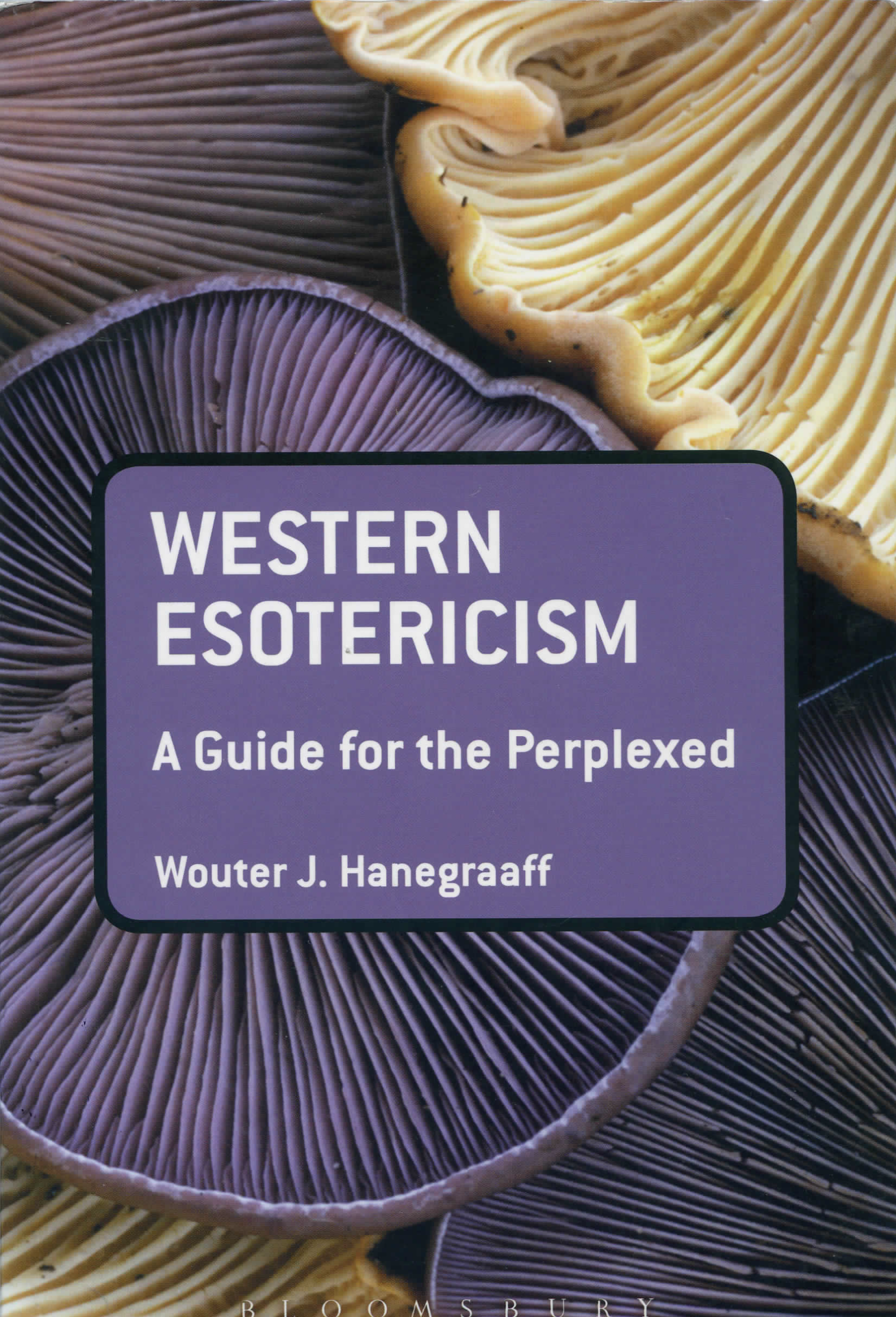
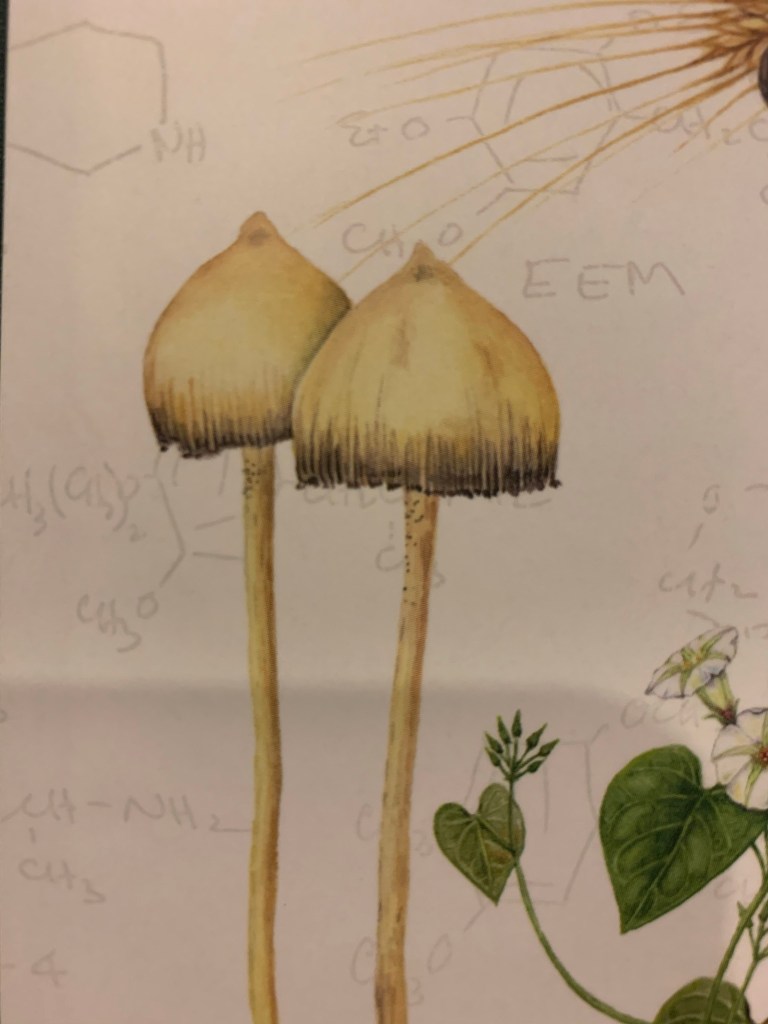
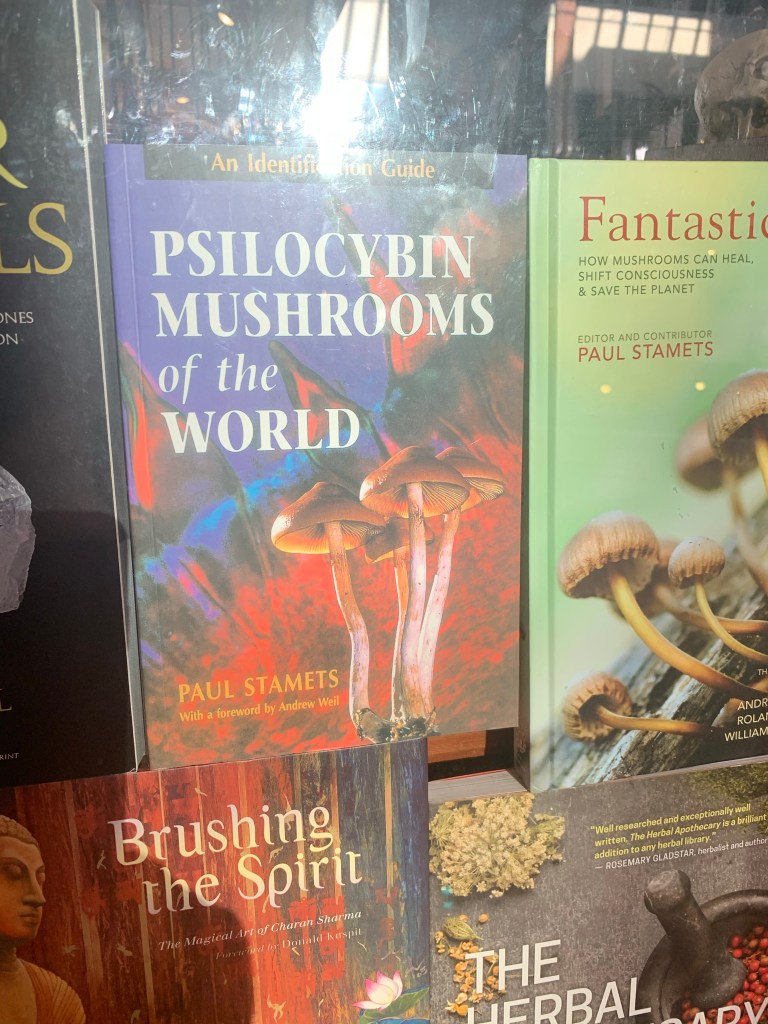
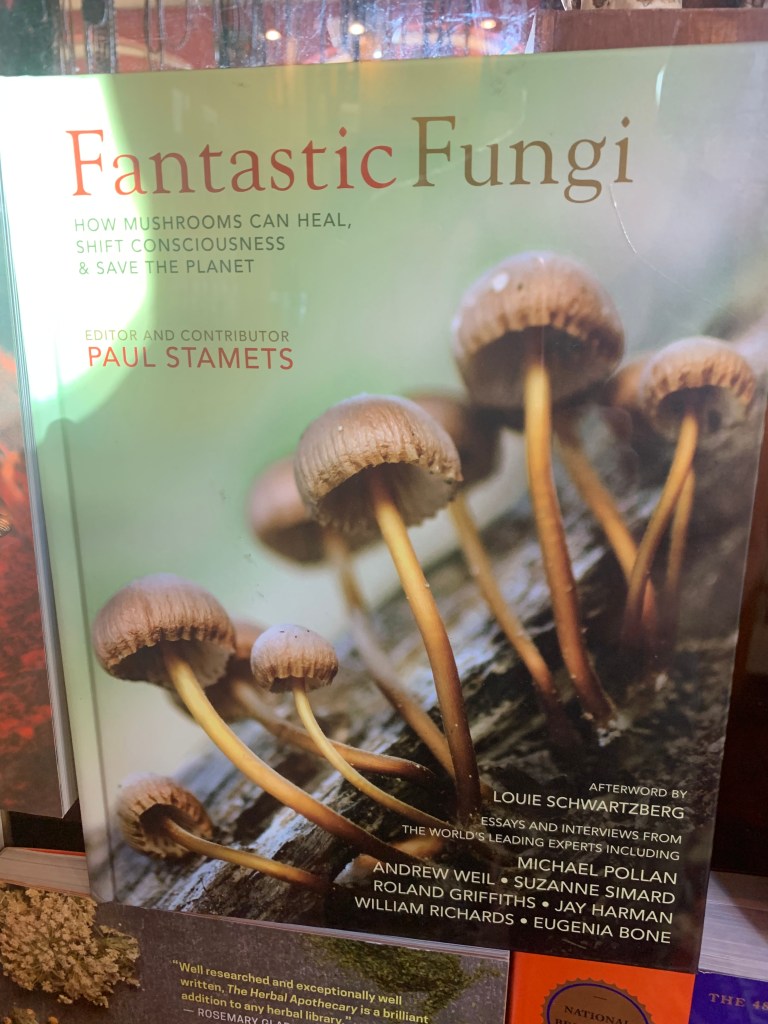
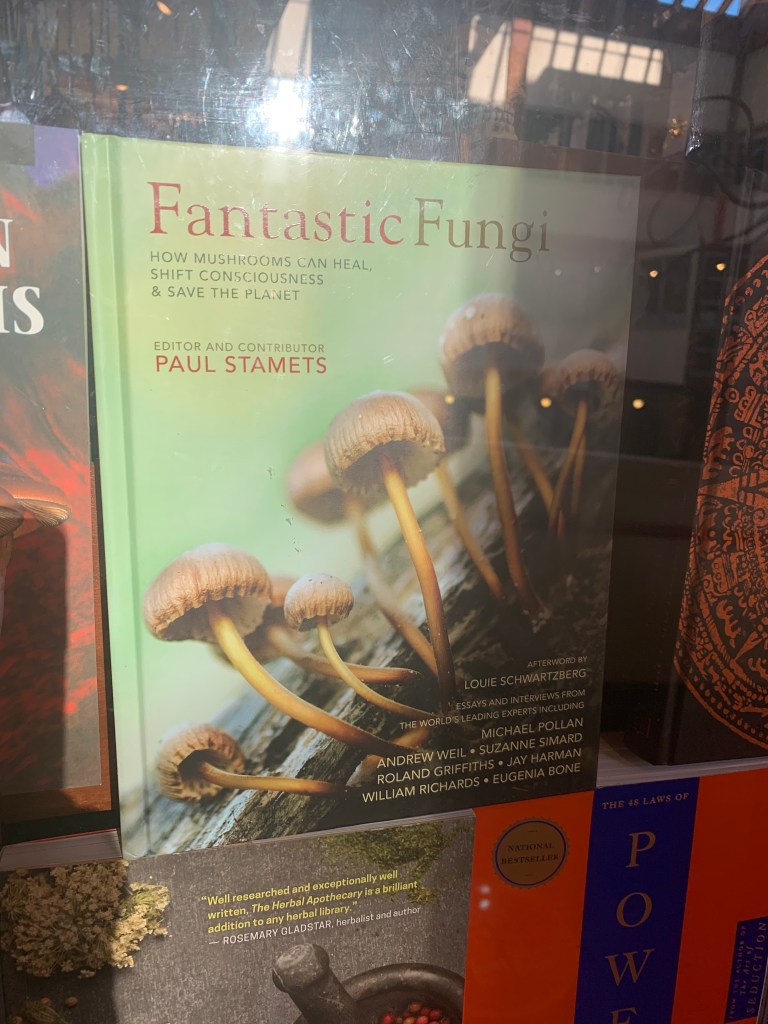
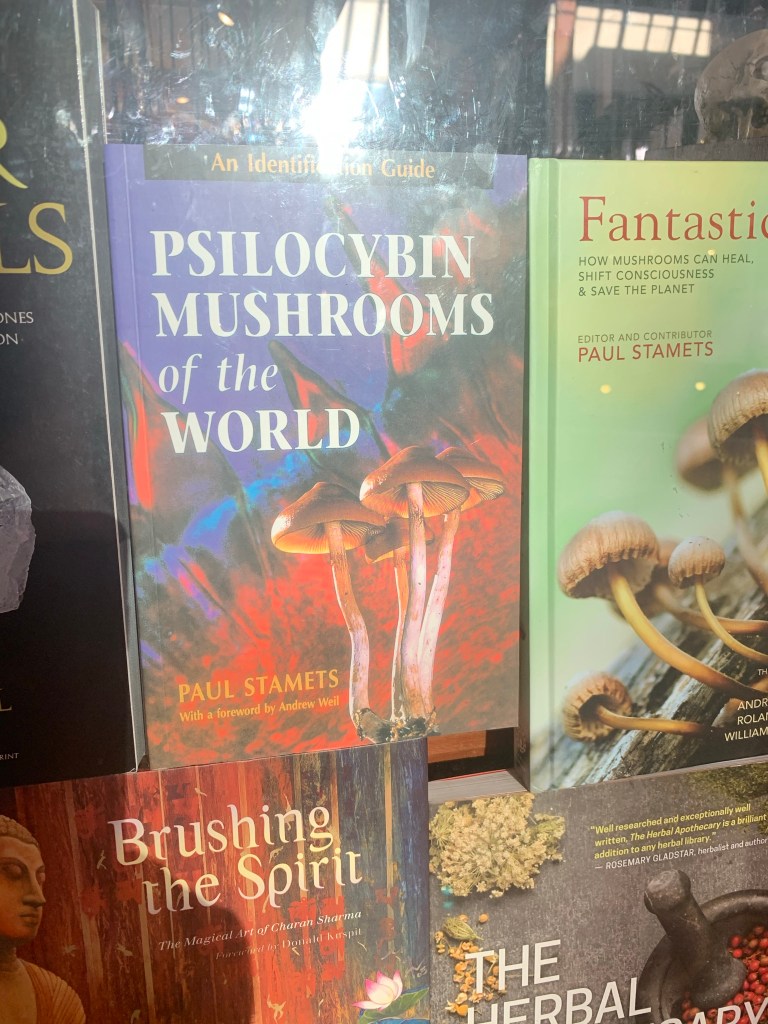
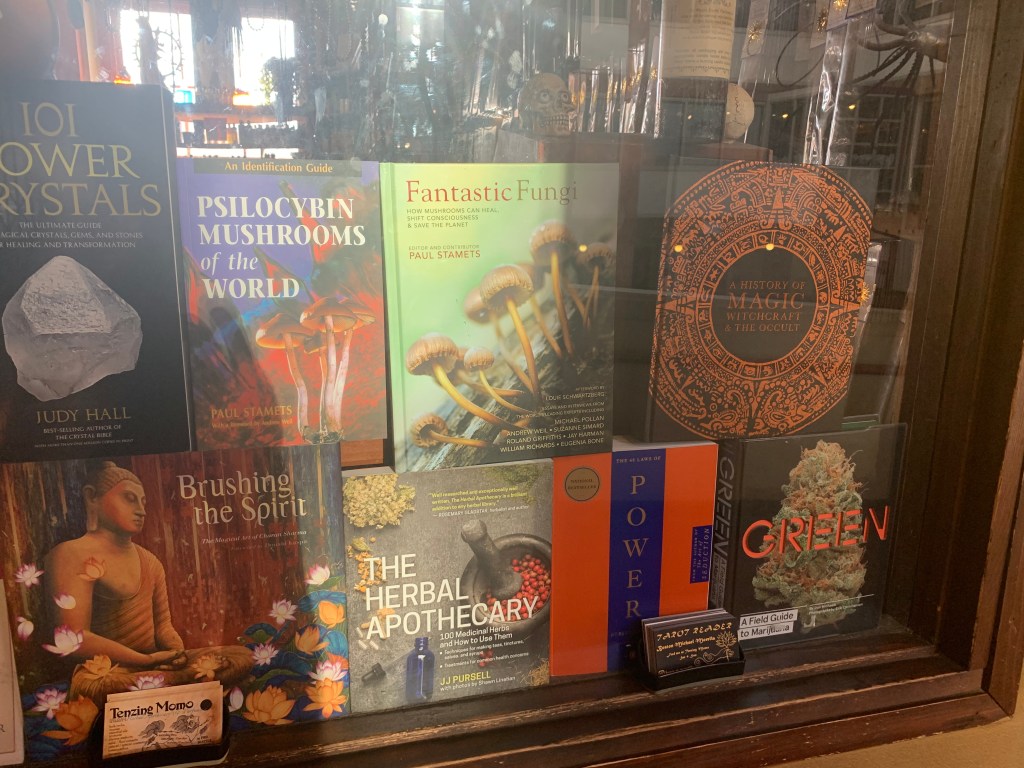
- Book Covers Showing Mushroom Morphology
Book Covers Showing Mushroom Morphology


The Theory of Psychedelic Eternalism: religious myth, visionary plants, frozen block universe, & transformation of personal control. Copyright © 2026 Michael Hoffman (Cybermonk).
Contents:
Transcription, including Cybermonk’s comments
Contents:
Transcendent Knowledge Podcast Episode 28
https://www.youtube.com/watch?v=sO7hBuvUmiI
March 29, 2021
Max and Cyber explain the core, phase 1 part of the Egodeath theory. Topics covered include:
https://egodeaththeory.wordpress.com/2021/02/19/idea-development-page-12/#Ep71-TK28-Reaction-Video (deciding whether to refresh this .mp3 download link as of March 18, 2022; the 3.5 hour recording that I’m transcribing).
Todo: Transcribe my recorded comments, read aloud resulting transcription.
[mx] = Max Freakout
[cb] = Cyberdisciple
[cm] = Cybermonk
I recorded a read-aloud of the top third of this transcription:
“Ep81a TK28 Core Basics.mp3”
https://egodeaththeory.wordpress.com/2022/03/09/idea-development-page-13/#Ep81a
Cyberdisciple:
Hello and welcome to the Transcendent Knowledge Podcast, episode 28, with Max Freakout and Cyberdisciple.
I’d like to start by reading a quotation from a great mystic of ego death:
“My followers are taking something that is the epitome of simple and clear, and then they’re applying their big brain analysis to it, and quickly, by the time they touch it, they leave it a smoking, complicated ruin and wreck, that’s all complicated and broken and the opposite of what it is.
Cybermonk
Good; with that beginning, I think we will venture on to a new attempt to make the Egodeath theory a smoking ruin and wreck.
Cybermonk:
That quotation was the opening of my first voice recording of my 2021 series, “2-Level Egodeath Model.mp3” (January 20, 2021), effectively the beginning of the Egodeath Mystery Show.
I’m not comfortable labeling anyone as a “follower”.
Like the word “fan”; I could hardly imagine describing myself as a fan of anything or anyone under any circumstance.
Because that’s not the sort of character or mental connotations I have.
Same thing with ‘follower’, I couldn’t really imagine describing anyone explicitly as being a “follower”.
Only a few minutes into my January 20, 2021 recording, which Cyberdisciple read that quote from the opening of, I realized that there actually are 3-level systems or scales, in some areas of the Egodeath theory.
The Egodeath theory does not entirely consist of exclusively binary, 2-system comparison contrasts, but there’s also spectrums in it in some places; like for example: minimal, moderate, and maximal entheogen theories.
They had mentioned doing a basics episode, and I had too, it’s a good idea to do a back to basics, and that’s what I’d been preparing to discuss. This episode reminds me to review and practice speaking about the basics.
Cyberdisciple:
This episode is dedicated to the podcast guest Strange Loop, who indicated he would be interested in hearing us discuss the Egodeath theory in detail, and trying to describe it in simple terms, and its importance.
And that made a lot of sense to us.
Cybermonk:
Interesting contrast there, he said ” detail” and then he said “simple”, which usually are contrasted against each other; are we going to do Basic? We are going to cover all the basics, in detail.
Prediction: In 1 minute, they’ll end up talking in terms of “possibilism” and “eternalism” – so much for simple terms.
Cyberdisciple:
We started this podcast series project first with our own biographies with this theory (Episode 1 & 2), and then we used that to launch a critique of the popular narratives, or common media narratives about these plants, and what they’re for, and what they do.
Cybermonk:
Those were some of my favorite episodes of the Transcendent Knowledge Podcast: I really like Episode 1, 2, those are the autobiographical ones:
In Episodes 3 and 7, they talked about plans for future episodes:
So I group those together in my mind: episodes 1, 2, 3, and 7.
The topmost important thing is to discuss, in a fresh way, discuss the value of loose cognitive association, and the mental transformation that it reveals.
Discuss what people have thought before, about valuing that.
Discuss various criticisms of that, and various doubts and critiques, and putting down “gnostics”, putting down gnosis, gnosticism; putting down “esotericism”; the exoteric Christians putting down anything other than exoteric Christianity; then all the attempts to have an esotericism, to define an esotericism, which all flop; they all seem to flop and fall flat.
And thus the popular efforts at esotericism, although they make noises about leaving the nest of exotericism, they just kind of fall on the ground!
Cyberdisciple:
That’s our beginning suite of episodes, back in 2016 and 2017.
We jumped in to the deep end of the pool there, and didn’t necessarily describe in detail our own sense of this framework and theory that we’re using, that we used there to interpret other people’s attempts to describe visionary plants and the altered state and transcendent knowledge.
Cybermonk:
I’ll begin by summarizing the basic core Egodeath theory.
Transcendent Knowledge, sometimes called ‘gnosis’, is:
mental worldmodel transformation
from autonomous control within possibilism,
to dependent control within eternalism.
The words ‘possibilism’ and ‘eternalism’ are jargon, so here is an alternative formulation, that’s a little more verbose:
Transcendent Knowledge (‘gnosis’) is mental worldmodel transformation
from autonomous control within a possibility-branching world, with open, non-existent future,
to dependent control within an eternally pre-existing world, with closed, pre-existent future.
Finally, here’s a shorter version that uses commonplace words; it’s as short as possible without resorting to compact jargon words:
Transcendent Knowledge is mental worldmodel transformation
from autonomous control within a possibility-branching world,
to dependent control within an eternally pre-existing world.
The Egodeath theory critiques other people’s attempts to describe visionary plants and the altered state and transcendent knowledge.
Popular attempts so much jump to the conclusion, that they leap entirely over the whole issue of visionary plants for cognitive loosening.
The mental model transformation from one mental model to another, is driven by a series of immersions in the “loose cognitive association binding” state.
The main way, by far, that the human mind enters loose cognitive association is through visionary plants, not through any other alleged alternative methods, which are proven to not work; whereas in contrast, visionary plants are proven to work, reliably and strongly; whereas the other methods work weakly and unreliably.
Max Freakout:
What is the Egodeath theory?
The aim here is to make the simplest possible assertion about the Egodeath theory, which tries to encapsulate it as much as possible.
On a really fundamental level, what the Egodeath theory is saying, is that the mind, fundamentally, the absolute fundamental essence is that:
The mind models reality.
The focus, the subject matter of the Egodeath theory, is precisely the model which the mind creates in order to model reality; to model the world.
You have a thing called a mental world model.
The Egodeath theory is a theory about mental world models, or world modeling.
Crucially, it’s a dualist theory.
Cybermonk:
It’s surprising how little theories of esotericism talk explicitly about a mental worldmodel and changing it.
When we do talk in terms of a worldmodel, then it makes it easier to bring in rationality that happens in both states of consciousness: tight and loose binding.
About the Egodeath theory being a dualist theory: that is somewhat arbitrary, and is not true in all aspects; there are some – if you look hard, you can find some places in the Egodeath theory that use a 3-level system, or divide things in ways other than contrasting two opposed things.
It’s true on the whole; that is a distinctive hallmark of the simple description of the theory, it is on the whole a contrast, 2-level model; like I wish to do with “exotericism vs. esotericism”, except the problem is, that 99% of people who pursue esotericism, really don’t make any change compared to exotericism.
But in theory, maybe in antiquity, there was genuine esotericism, and not just wannabe esotericism that remains grounded within exotericism and the tight cognitive state, that really doesn’t make any change compared to exotericism.
Max Freakout:
The Egodeath theory asserts that there are two things.
Twoness is right at the core of the Egodeath theory; it’s a comparison and a contrast between two different things.
There are all sorts of ways that you can characterize what those two things are.
But first and foremost, it’s: two mental models of time and control agency.
And that perfectly corresponds to, two states of consciousness.
Then it’s just a case of filling in the details, of what is the one mental model of time and control, along with the corresponding state of consciousness that that model of time and control fits with; and then what is the other mental model of time and control, along with the corresponding state of consciousness.
Very simply, in regard to states of consciousness, you have the ordinary state of consciousness, number one; and the altered state of consciousness, number two.
Cybermonk:
We could also emphasize two experiential modes:
In one state of consciousness, the mind experiences time and control a certain way.
In the other state, of loose association, the mind experiences in a different mode.
And then, the mind builds a model based on what’s experienced.
And that model-building includes rationality, in both states – but, rationality that’s driven and shaped by the experiential mode, which is the first thing that’s a given.
In all of the lists of the ten effects of newbies in the loose cognitive state, there’s the standard list of ten effects, and that combination of ten effects, especially when taken through a series, drives the mental worldmodel transformation; so: experiential mode drives reconstruction of the two models.
Max Freakout:
Cybermonk has elucidated a theory of cognitive information processing which specifies that the ordinary state of consciousness is characterized as tight cognitive association binding, and then the altered state of consciousness is loose cognitive association binding.
Cybermonk:
I see several factors in such a cognitive model is the idea of two mental world models which was kind of Alan Watts’ The Way of Zen.
There are two cognitive worldmodels, let’s say, and then there’s tight and loose binding; that’s key.
Mental construct processing and mental constructs. The concept of a mental construct, and that mental constructs are whatever’s present to awareness; anything that you experience is mental constructs.
And that tells you how very diverse and unique each kind of mental construct can be.
Max Freakout:
Each of those two states of consciousness corresponds to a mental world model, but in particular, a mental model of time and agency.
This is an important point here, that on the fundamental level, the absolute most blunt basic assertion is that the mind models the world.
But when the mind models the world, there’s a very important connection between the way that the mind models time, and the way that the mind models control. You can’t separate those two things.
It’s as if the mind models time and control at the same time, and so the mental model of time, and the mental model of control, are inextricably linked to each other.
Cybermonk:
He’s saying “time”. Time can be either the possibilism model or the eternalism model. I would not just say “time”, it’s also – very important is possibility branching; and thus you have all the artistic depiction of branching.
For example, mushroom stems that branch into a Y shape.
What’s the relation between time, or models of time, versus models of branching?
I talk about two different models of self in world.
Changing from one model of the controller , in not just time, but in a world where we have possibility branching across time, or through time as we move along into the future of time, there is presumably possibility branching, and what was the open, and non-existing future, then becomes a specific, single future, it becomes –
whereas there was no future before, and it was open; it could have been this or that; that’s the possibility branching model.
So I don’t think it’s quite adequate to call that a model of time; it is a model of time and possibility branching.
So I tend to say “models of control agent in world.”
When I say “world”, I mean specifically time and branching.
We have two different models of control agency, in two different models of time and possibility branching.
Max Freakout:
So then you have the ordinary-state-based model of time and control, which is Possibilism. Possibilism meaning branching time.
The past does not branch, and we experience time this way in the ordinary state, that the timeline from the beginning of the universe, or the beginning of my lifetime ’til the present moment, only has one, single course of events.
That’s like saying I only remember one life; I don’t have different possibilities of different lives that I could have lived up to the present moment.
I’ve only got the one memory of life.
But in the future, there’s multiple different pathways, according to the choices that I decide to make, from the present, moving into the future.
So that’s the ordinary-state model of time and control.
And then the crucial insight of the Egodeath theory is that, when a person takes cognitive looseners, chemical substances which cause temporary cognitive loosening during a loose cognitive session, during that window of time when the mind is under the effect of those plants, the mind switches to a different way of, first of all, perceiving, and then concomitantly, modeling time and control.
Cybermonk:
“Perceiving” time and control is true, but also maybe more immersively, I would say experiencing and perceiving time; experiencing and perceiving control, experiencing and perceiving the openness or closedness of the future and possibility branching.
Or only pseudo-possibilities and monopossibility.
Max Freakout:
That’s the Eternalism model of of time and control.
That means that the past is still fixed, so Eternalism and Possibilism share the point of view that the past up to the present is monocausal.
But they differ in that Eternalism says that there’s only one possible future; there’s only one actual future.
There are no alternative possible futures.
Cybermonk:
Monocoursal labyrinth: Before I really dived into entheogen history and mythology, I had a vision of the labyrinth.
It was not a super rich or deep experiencing but it was exactly spot on and key and crucial.
This was almost a milestone turning point from my phase 1 work to my phase 2 work where I went from pure theory into more mythic descriptions and analogies and history of the altered state.
In late 1996 to late 1997, I had a vision of the monocoursal labyrinth, before I was reading much about mythology. And there’s another kind of maze pattern which is open, and branching around the border in Greek art.
There are two different kinds of border art: one is monocoursal, and then other is branching at every little square grid.
Max Freakout:
The way that I like to understand that sounds quite Christian:
When you get to the end of time, or when you get to the end of your life, there’s no more life ahead of you; all you have is memory.
Possibilism has already established that memory only refers to a single course of events.
So when there’s no more future, then by default, you have to say that the whole thing was always monocoursal, and that from that point of view, the possibility branching was only ever illusory; that time was never really branching.
A common thought that can occur to a person when they’re experiencing intensely (I don’t want to emphasize that too much and say “voyaging really hard really really hard”):
Cybermonk:
It is fair to emphasize, because in an 8 out of 10 level of experience, the mind does experience frozen block time. It is towards the higher end of the spectrum that eternalism is experienced, and that control seizes and reconfigures.
That’s not going to happen on the more mild or even moderate levels of loose cognition.
It is fair to use the expression “intense mystic altered state”.
Part of that is also to contrast it against these emotional, vague, hazy, mystic-type writings, which do not imply all that intense.
I mean to differentiate the strong, plant-induced levels of strong, intense mystic altered state rather than the phony, wannabe, pretender, poetic gentle weak emotional mystery; I mean to emphasize extreme experiencing.
Max Freakout:
A common thought when a person is in the intense state of loose cognition, is that there was never any real option of life leading to this event; that my life was always inevitably leading me to the point where I would use plants and then die afterwards, or experience the end of time, the end of sanity, the end of the world, the end of ordinary life, that kind of thing.
Cybermonk:
Important mythological figure or mytheme of the snake bringing, the snake brings the fruit or mushroom or that which , the fruit which brings immortality is brought by the snake.
There’s really, the god has brought the followers to the god’s banquet. The followers are brought to the god’s banquet by the god, in the form of the snake, which is the inevitability; anyone who does ingest, is made to ingest, that fact is frozen into time.
Funny, he says “end of sanity”; it could be the end of having less than sanity.
Max Freakout:
The Egodeath theory in that way explains why this feeling can occur to people when they’re journeying hard: that time has somehow ended, or life has ended.
That phenomenon is colloquially referred to as ego death, hence the Egodeath theory.
That’s my neatest way of summarizing what the Egodeath theory says.
Cyberdisciple:
What’s it like for the mind to switch from this tight cognition to loose cognition?
From tight cognitive binding to loose cognitive binding?
What are those two states like for the mind?
What is tight binding?
What is it, when I’m experiencing tight binding, what am I experiencing, as opposed to what am I experiencing when I have loose binding?
Max Freakout:
There are two different ways of explaining this:
There’s the way that is just cognitive modeling, and then there’s the way that makes reference to familiar experiences that we have.
Cyberdisciple:
That distinction between the Egodeath theory’s “cognitive modelling”, versus describing “the experiences that we have”, strikes me as an important move that the Egodeath theory makes.
The Egodeath theory is concerned with providing a relatively non-metaphorical, and relatively non-poetic, relatively precise explanation of these phenomena.
That’s part of the guiding principles of the development of the Egodeath theory, is that all past attempts to describe this have floundered or run aground on too much metaphor; kind of hazy, not very precise, not very clear.
Cybermonk:
That’s pretty much just a standard given for me, as an engineering student.
Naturally, we always want to express everything in plain, simple , and have good textbooks that help us as much as possible present everything explicitly, simply, efficiently, and plainly; that’s just how engineering and science works, until we hit Copehagenism, which gleefully threw away comprehensibility.
So then after that, after Science committed suicide, with the Copehhagen interpretatin and then it was left to Engineering to be the final field to express itself in a way that’s intended to be clear, direct, and comprehensible, as the norm, always; never gleefully embracing ineffable or contradictions or unvisualizability or anything like that.
Cyberdisciple:
That distinction that you just made between trying to use precise language, cognitive modeling, and then more familiar or metaphorical terms, that’s an important part of when we talk about what is the Egodeath theory.
The Egodeath theory is a way of thinking that tries to focus on getting the most precise use of words to describe these two states.
Cybermonk:
“Precise” is one way to put it; another way to put it also is “appropriate and effective” especially the word ‘effective’; what’s an effective way of describing a system that’s being modeled?
Precision is part of that, but sometimes, in some contexts, hyper precision actually leads to less clarity.
If I describe a first-order model of a transistor response curve, a first-order model is less precise, but easier to comprehend.
But then when I start bringing in all these subtle details, of nonlinearities, and the 0.7 volts before it really kicks in, then it becomes harder to comprehend.
So we have that tradeoff: in the first-order, simple model of the transistor response curve, the transfer curve, we, the first-order model is less precise but more clear; then the 2nd-order model is more precise but less clear.
There’s that tradeoff and balance then, in combining, by having, by presenting a pair of models, 1st-order and 2nd-order, we can manage to combine clarity and precision.
So precision has to be balanced out with clarity and effectiveness and relevance.
We could have a lot of systems that are precise; maybe measuring chemicals or something might be highly precise, but not relevant, and not effective for explaining the subject matter, or modelling the subject matter field.
Max Freakout:
It can be difficult to make the connection between the cognitive modeling and and the familiar experience. That’s why traditionally, metaphor has been applied.
It’s challenging to understand the full mapping of the visionary plants phenomenology to the cognitive modeling.
You asked what’s it like to shift from the one state to the other state.
In terms of familiar experiencing, when you’re in the ordinary state of consciousness, the solid external reality seems solid; it has the appearance of being solid.
Then you take the visionary plants, and the state of consciousness changes, and then that solidity is pronouncedly or markedly less.
Cyberdisciple:
When we are in the tight cognition, we are immersed in the mental constructs, or are immersed in the mental representations of reality.
Then when we take the cognitive loosener, we perceive those mental constructs, or those representations of reality; we become aware of them.
Cybermonk:
Awareness is lifted up out of the usual structures, gaining the ability to perceive the workings of those structures; we don’t , awareness doesn’t just then see mental constructs; awareness sees how mental constructs normally work.
Cyberdisciple:
It’s a feeling of stepping back, or being elevated away from, some sort of distance from, those representations, such that we can perceive the representations themselves.
Max Freakout:
We perceive the representations themselves, but perceive them as representations.
Cybermonk:
Awareness watches the workings and learns to observe the workings of the perceptual system, including the inward-directed perceptual system too, the idea, the mentation and thinking about oneself as a control agent across time.
Awareness can then look at the way the mind usually thinks about oneself acting across time.
Max Freakout:
Whereas in the ordinary state, they are so consistent.
This quality that representations have in the ordinary state is so consistent and solid and reliable; the representational appearance of of the world appears so consistent, so solid, and so reliable, that that the mind doesn’t make the distinction between the representation and the thing that it represents.
In fact the mind conflates those two things; the mind treats the representation and the referent as if there is just one thing, and so it looks as if perception is directly in contact with an external, objective thing: direct perception.
In Philosophy, they call that naive realism: the view that the world as it appears is the world that actually exists.
Cybermonk:
The mind perceives the usual mental model working as it usually does, modelling the self as a control agent operating within a branching possibility tree.
The mind in the higher awareness then sees that entire system of thinking about oneself as an agent working across time, and, the context of a branching world, in which that control steers and causes a future particular branch to become manifest where it was formerly allegedly open.
All of that assumption is made present to awareness in the loose cognitive state.
Max Freakout:
The mind doesn’t – this is a crucial application of the word ‘tight’, because there are two things here: you’ve got the mental representation, and then you’ve got the external thing that the representation purports to represent.
Those are two different things.
But in the ordinary state of consciousness, those two things are tightly connected to each other; they’re fused together; they’re indistinguishable from each other.
In the ordinary state, that distinction just isn’t apparent.
In the ordinary state of consciousness, that distinction is purely a speculation of armchair philosophizing, and nothing more.
Cybermonk:
That’s quite a metaphor, analogy brought in there, the whole “armchair”, and then we have to translate that into more specific direct terminology as well.
What is he trying to say by drawing in the metaphor of sitting in an armchair; what’s he trying to get at there?
We need to discuss this armchair; what is it about; what if it didn’t have arms?
They are spelling out and translating their metaphor of armchair into non-metaphorical, why- what is it with the armchair?
“Armchair” means treating – in the ordinary state, when we think about time and control, we’re in a certain experiential state, abstractly thinking about a different experiential state, but from within the ordinary, tight-binding state of experiencing; that’s kind of what’s meant by “armchair”.
Cyberdisciple:
The loose cognitive state rather forcibly makes the mind perceive that distinction, and be aware of it in a way that that the armchair speculation of ordinary state philosophy can only speculate about.
Cybermonk:
“Speculation”; the word ‘speculation’ means ‘see’; ‘perceive’; which he just contrasted to armchair.
But when we talk about perceiving and experiencing, it’s perceiving/ experiencing, so I talk about “experiential phenomena”, or “experiential awareness” in the loose cognitive state; it’s both experiencing and perceiving, simultaneously, in a different mode, that’s contrasted with the ordinary-state mode of perceiving and experiencing.
‘Speculate’ means look.
Max Freakout:
In armchair philosophy, in academic philosophy, in socially sanctioned philosophy, they talk about philosophical problems.
The word ‘problem’ is very interesting in that context, because when you’re sitting in an armchair in the ordinary state, doing philosophizing, these issues like “what is the distinction between the representation and the actual world” are “problems”, but they’re not very serious problems.
They are quite light-hearted problems, that philosophers can just spend all day idly debating about.
But then in the intense altered state, the same philosophical problems emerge and arise, but now they’re much more problematic; they can become very seriously problematic, and that’s the the core phenomenon that the Egodeath theory is focusing on, is the problematization of these issues in particular.
Cybermonk:
Those problems do not arise in the mild loose cognitive state, but they do arise in the intense loosecog state.
There’s a strong tendency for those problems to arise and become a problem in some immersive sense, in the intense, but not in the mild, loose cognitive state.
Max Freakout:
The Egodeath theory is talking about the problematization of personal control.
Cyberdisciple:
How do we get to the problematization of personal control, from the loose cognitive binding state?
Loose cognitive binding can apply to something as simple as well: visual perception. For example, when people voyage in the intense mystic state, they often report that their perceptions of things seem to blend or smear or swirl, or there’s an unusual movement of light and color and audio effects, and things like that.
Cybermonk:
There are analogies of all that physicalistic sensory perception; there are analogies of how the mind works in loose cognitive associations, with leaps of associations beyond, that are much more flexible and fluid and creative and innovative, scarily, frighteningly.
That can be a problem, that the imagination is frighteningly nimble and flexible, in the loose cognitive state, together with the perception of being fluid and flexible, rubbery – both rubbery perception – very stretchy, rubbery, plastic perception, along with stretchy, rubbery plastic associations.
And we have to bring in schizophrenia, where that phenomenon is noticed.
Cyberdisciple:
How do we get from there; that sounds like a kind of perceptual looseness, but how do we get from there to a problematization of personal self-control?
That sounds like a higher-level concept than just perception.
Cybermonk:
That includes the problem of how to control the unbounded imagination that’s become too clever, too insightful, and too perceptive, and too creative
Max Freakout:
The perception aspect is the very definition of superficiality; it’s surface level. It’s not very deep.
Cybermonk:
Then consider perceiving the fountain of thoughts that are arising.
One thing we are perceiving and able to perceive now in the loose cognitive state a la meditation, the mind becomes unusually able to watch its source of thoughts and see the uncontrollability of that source of thoughts.
The source of thoughts in the mind is itself now an object of direct explicit perception.
The mind is now able to turn its attention, turn its gaze to looking at the source of thoughts a la meditation.
And the source of thoughts becomes extra fluid and flexible and unpredictable, at the same time that the mind now becomes able to see how that source of thoughts or fountain, that uncontrollable fountain works –
What will come out next, a dragon-serpent monster?
Max Freakout?
We’re talking about what visionary plants do on the absolute surface; what they do to the surfaces of objects, and they make the sounds sound warbly and distorted, and they make the surfaces of objects look like the surface of a liquid, or it can undulate and flow.
Cybermonk:
And these various types of, open-ended types of thoughts that are now coming from the uncontrollable source of thoughts, the fountain of thoughts:
These thoughts that are coming out all have an unreal quality to them, just like the sense of vision becomes warped and warbly and unreal, so does the fountain of thoughts becomes warped and warbly and unreal.
The fountain of mental constructs produces output that is rich and unpredictable and also has an unreal quality to it.
Max Freakout:
So that’s a low-level perceptual phenomenon, in terms of what we’re talking about.
But at the same time, it’s an introductory level into the deeper part of experiencing.
Cyberdisciple:
Perceptual loosening can point to the problem of the change from our accustomed solidity.
The perceptual undulation can point “upwards”; perceptual distortion can point to that higher-level concept of the problem of control over our thoughts, and over those mental constructs; over that representation.
Max Freakout:
The early insight that a loose-cognition explorer is likely to come across is that in the ordinary state of consciousness, the way that the mind conflates the representation with the thing that it represents, that assumes that the perception of an external object is truly external to the mind.
The thing that’s represented by the mind is something that exists out there in the objective world.
But then it becomes apparent, that when we are journeying in the loose cognitive state, when we’re in a world of solid objects that are looking less solid; they also look less external, and less objective.
The world that was previously taken for granted to be an external thing, an external object, now starts to look like it’s mentally generated.
People say things like “the world seemed like a cartoon”, where the cartoon is an artificial image of something, rather than a real thing.
Cybermonk:
Impressionistic painting.
Max Freakout:
The initial problem is the conflation of the representation and the referent.
That act of mental conflation becomes problematized; the connection or association between the representation and the real world is loosened; it comes apart to some extent.
This kind of analysis, in this meta-perception analysis, you’re describing a point of view which the mind and the perceptual apparatus is shifted into during the course of the visionary plants experience.
Cybermonk:
God-mode perception point of view.
Max Freakout:
You can use the same analysis to, instead of looking outwards at the external world, you can turn that round 180 degrees and look inside yourself.
Then you can make a very similar comparison between the ordinary state and the altered state.
This is where the Egodeath theory type dynamics come in, because what we’re asking is, instead of saying “in the ordinary state of consciousness, how do you perceive the external world”: answer: you perceive the external world as if it were solid and external and mind-independent.
You’re now saying, so in the ordinary (tight cognitive binding) state, when you look within, what do you see?
What do you perceive; how do you perceive yourself; what do you perceive yourself to be?
Cybermonk answers that question very forcefully:
He’s saying that:
When you look within, when you turn your perception inwards 180 degrees in the ordinary state, what you perceive is a cybernetic homunculus, as if your truest identity – the thing that you are, most fundamentally and most centrally, is a control agent.
You can think of yourself as being other things, too.
You can think of yourself, for example, as being a physical body inhabiting physical space.
Or, you can think of yourself as being a sense of self.
That’s something that the Pop Sike audience is is very keen on saying, is that it’s a sense of being a person, without reference to “control” at that point; that comes later.
“Sense of self” just means a thing with a name, and the name follows the thing around with it.
The thing remains the same from one day to the next, from one minute to the next.
You have a broad, different range of things, ways that you can characterize what your “self” is, but there are certain core characteristics, like, it’s stable, and persistent – very much like what we were saying about external objects:
The sense of self has that same solid concrete type of characteristic, that I have a very solid and concrete sense that I am a single person in a world, and that my identity persists across time.
That’s the ordinary state-based way of characterizing my inner life, my self.
Cybermonk:
The autonomous control agent.
Autonomous: very packaged, very contained; modular; a whole, single – what people sometimes are thinking of when they go rushing to Alan Watts’ “skin-encapsulated ego”:
The autonomy, it’s not really about the skin, that’s more of an analogy; but usually the sense of oneself as an agent is wrapped up, it’s tightly bounded and very firmly bounded in a way across time.
Cyberdisciple:
Cybermonk has focused too on how we so often conceive of that self as the self that makes decisions, that moves around, and has thoughts, and decides what to think, and decides what to do, such that that seems totally natural, normal
to us.
Cybermonk:
And moves through time. That’s something so inherently a part of usual thinking of how the self and world is structured, how the model is structured:
So intensely in terms of being a control agent who is moved through time, or who moves through time.
We have to step back and look at this and say, what is this all about, this idea of me being a control agent who is moved or who moves through time?
That is so much of a part of the essence of our being, of our core of mental construct of self and world, that it’s hard to think about, ordinarily, which is one reason why we don’t talk about it as much as you might expect in philosophy, of being a control agent, though there are plenty of books on the subject of agency.
Being a control agent moving through time is so much, so fundamental to what we are, it’s our inner core.
When we talk about navel gazing, navel gazing would have to mean, largely, thinking about oneself and actually explicitly thinking about oneself as a controller moving through time, explicitly.
That is very much my focus that I had in 1987, working up to the Egodeath theory.
Let’s model, and talk about, and think about, and look at, and experiment, and probe, this mental model of the self as a control agent, moving through time, and what kind of control does it have and not have, across time?
Cyberdisciple:
Our self is like the “I”, or ourself is the person who, the thing or whatever in our head that has those thoughts, that makes those decisions.
The loose cognition state also pulls us away from that; it shows that those thoughts are, that sense, that construct of being a self who makes decisions, is itself a construct.
It’s a becoming aware of that construct, that construction, or that set of ideas.
It’s not perhaps a phenomenological or perception-oriented separation of representation and referent, but there’s an analogy between the perceptions and that sense of being an agent who makes decisions.
There’s a connection there, a movement there, from the perceptual realm to this sense of stepping back from being immersed in making decisions.
Max Freakout:
Normally, decision making just happens, without any kind of meta-reflection; you don’t really need to think about it; it’s just a taken-for-granted configuration of the way that you are in the ordinary state; is you’re a decision maker.
Cybermonk:
Steering, controlling, and decision-making are pretty much synonymous.
Max Freakout:
There’s a line in one of the songs by Rush which Cybermonk has talked about where he says, “Even if I decide not to decide, I’ve still decided; I’ve still made a choice.”
Max Freakout:
You can’t escape from being a decision maker, in the ordinary state of consciousness, because no matter what you do, you could be said to be choosing to do that thing, as opposed to doing something else. An absolutely basic configuration of the self is decision making.
Cybermonk:
“Future pre-decided; opinions are provided, in the mass-production zone”, which is pretty much the whole world.
Cyberdisciple:
That’s a very funny line, in that the singer sings one line, “If you choose not to decide, you still have made a choice”, but the original lyric sheet printed “If you choose not to decide, you cannot have made a choice.”
So there’s a strange confusion between the song and the original lyric sheet. That was even addressed by the lyricist at one point, who said that “Well those are the words I wrote” or something, “I can’t control what was printed.”
Cybermonk:
In a newsletter, Peart said:
“That’s a funny question. I’ve had a few lately from people who are so sure that what they hear is correct, that they disbelieve what I’ve put in the lyric sheets! Imagine!
People have quoted me whole verses of what they hear, as opposed to what’s printed, sure that they are right and the cover (me) is wrong.
Scary stuff, these egocentric individuals.
I assure you, other than perhaps dropping an “and” or a “but,” we take great care to make the lyric sheets accurate.”
Neil Peart, Rush Backstage Club newsletter, December 1985
That’s copied from Egodeath.com > Rush Lyrics Alluding to Mystic Dissociative Phenomena > Freewill.
A later version of the printed lyrics is different. The first printing needs fact check. https://www.reddit.com/r/rush/comments/aubfzy/hidden_message_or_change_of_heart_in_the_lyrics/
https://en.wikipedia.org/wiki/Neil_Peart – “His parents bought him a drum kit for his fourteenth birthday and he began taking lessons from Don George at the Peninsula Conservatory of Music. His stage debut took place that year at the school’s Christmas pageant in St. Johns Anglican Church Hall in Port Dalhousie. His next appearance was at Lakeport High School with his first group, The Eternal Triangle. This performance contained an original number titled Visionary Plants Forever. At this show he performed his first solo.”
A lot of this double-speaking and mumbling and saying one thing while claiming to have said something else, goes back to Prohibition, affecting song lyrics vs. official lyrics.
Cyberdisciple:
It’s a funny moment that speaks to Rush’s interest in in double meanings and the whole topic of being a control agent.
I think more recent lyric sheets only printed what the singer sings, but the original lyric sheets don’t have that; they have a different version. For such a crucial line, they have a different wording of it that seems to point to the opposite.
Not to derail us into Rush trivia; this is not a Rush trivia podcast, even though I know plenty of trivia about them.
Mental construct processing:
Max Freakout:
In the tight cognitive binding, default, ordinary state of consciousness, there is this totally taken for granted, background impression or configuration, that what I am as an ego, as a self, a person, is a decision maker.
It’s really important to point out that that’s no small claim, that sure, in one sense, that just means that, in a very small way, I can make small decisions about my life.
Like if I’m thirsty, I can decide to go and get a drink, and that kind of thing; that’s just small rational actions on the part of a tiny body living in a massive universe.
But on the other hand, that power of ego to make decisions has a truly cosmic scale, when you think about it in the context of Possibilism as a model of time, as well as a model of control, because what you’re saying is that, every time you make an individual decision as an ego, you’re actually creating an entire universe, or, you are steering into an entire universe, to the exclusion of an infinitude of alternative possible universes.
Cybermonk:
You are the creator of the future world.
Max Freakout:
It’s not just your small life that is affected by your egoic choices; it’s actually the entire world, because you can think of, you’re steering into the world where your ego made a particular decision as opposed to just simply making that decision.
It sets the stage of what the whole world is, so it’s a universe-wide ability to be able to make decisions like that.
But it doesn’t feel that way; it feels like a very small thing that you do in this tiny localized bit of space that you inhabit.
That’s how it feels in the ordinary state.
Then if you’re voyaging sufficiently intensely, you become aware of the cosmic dimension to that decision-making ability.
Cyberdisciple:
That sense of the cosmic, or the sense of creating possible worlds via making those choices, that’s something that can’t survive the loose cognitive state, or the altered state initiation.
That whole idea is part of a set of philosophical theories: Hugh Everett’s many-worlds interpretation.
But that is a completely ordinary-state-based theory. It can’t survive, it can’t happen in the altered state, the loose cognitive state; the many-worlds hypothesis can’t survive that kind of acid wash bath.
Max Freakout:
There’s two different interpretations of quantum physics: The Einstein interpretation, versus the Copenhagen interpretation which is associated with Bohr; “many worlds theory”.
Cybermonk:
Neils Bohr, who hung out with Einstein, and they debated and took opposite sides, Einstein says God does not play dice; Einstein affirmed block universe and Neils Bohr took the opposite view.
Then there was David Bohm, who was a determinist, and associated with non-local hidden variables, which is deterministic.
A key thing, an important thing in this determinism is that it says that there is one possibility, that it’s pre-determined, but he does not claim that the future already exists; that’s a big difference between that causal-chain determinism which David Bohm asserted, in line with Einstein.
So we have on one side, Neils Bohr, who asserts egoic freewill possibility branching, and then we have Einstein and David Bohm, who assert transcendent eternalism of one brand, one flavor or another.
Probably neither Einstein nor Bohm explicitly said that the future is single and already exists, and we’re just discovering it, and that we are made to make whatever decisions along the way, too, and that all of those decisions along the way are pre-existing, and the future outcome is pre-existing as a single, pre-existing thing.
Einstein and Bohm align with that, with Bohr and branching and egoic freewill branching on the other side of the debate.
The other name we’d have to mention would be the guy who mathematically formulized these ideas which is Minkowsky, so we have Einstein, Minkowski, and David Bohm roughly aligned with eternalism.
Max Freakout:
The many-worlds interpretation in quantum physics.
Cybermonk’s criticism of the many-worlds view is that you postulate many worlds in order to try to protect and preserve egoic decision making, because the alternative is the Einstein (or Minkowski or “Parmenidian”) interpretation of quantum physics, which is pure hard iron block determinism.
Cybermonk:
William James also objected to iron-block determinism. We could make the list longer, too, including Parmenides (vs. Heraclitus), because Popper referred to Minkowski as “Parmenides”.
We have: Bohr on one side, and we have Parmenides, Bohm, Einstein on the other.
Max Freakout:
Einstein was on Cybermonk’s side in that debate.
Einstein is more like an Egodeath theorist; he said “God does not play dice”, meaning there’s not multiple outcomes; when you flip a coin, it’s not that there’s a 50/50 chance of the coin landing on any particular side; it’s more like there’s a one hundred percent that it lands on one side, and zero percent that it lands on the other side.
Cybermonk:
We just are ignorant of which side that the coin is to land on.
Max Freakout:
So it’s two different ways of understanding what probability is all about; what it involves.
Cyberdisciple:
There are two people: last name Bohr, and last name Bohm. They were on opposite sides of this debate.
Max Freakout:
The Copenhagen interpretation comes from a particular conference which occurred in Copenhagen in the days when these issues were being actively and presently discussed.
At the Copenhagen conference, they outlined the many-worlds idea, which seems to protect the integrity of egoic decision-making.
Whereas Einstein was not concerned with that.
Cybermonk:
There are a couple of books by James T. Cushing arguing that Copenhagenism was adopted too hastily and too gleefully, without giving due consideration to Einstein and Bohm and hidden variables; determinism.
Cyberdisciple:
Each new decision creates a new world along the branching different branching pathways
Cybermonk:
Kind of a megalomania: not only am I the creator of one future, but I’m the creator of an infinite number of universes, in every microsecond.
The many-worlds interpretation is ridiculous, because there’s no bound on the idea, no constraint or check of any kind.
In my eternalism model, with a single, pre-existing future, we have the opposite extreme, the extreme of simplicity and the ability to visualize.
On the other hand, with branching Copenhagenism or the Everett many-worlds interpretation, at each, infinitesimal instant of time, there’s an infinite future worlds being created, all thanks to you.
Every instant, a million times a second, you are creating an infinite number of universes – talk about megalomania of egoic thinking, run amuck without any constraint.
Exactly how many of these multiverses are created? An infinity, an infinite number of times per second. Talk about egoic inflation!
Max Freakout:
That’s the ordinary state perception and modeling of egoic decision making.
That whole set of assumptions and beliefs doesn’t survive the acid wash; the acid wash spells doom for the mode of experiencing and thinking.
It’s not just that the altered state spells doom for egoic decision making; it’s more like intensive loose-cognitive initiation.
You have to go through this process of initiation to get the full “brain washing” effect of it, where the the mental world model is permanently reconfigured to incorporate the new point of view.
Cybermonk:
1:11:15 resume here. total length of the conjoined/interspersed recording: 3:24:00. 1/3 finished transcribing my comments. I could read-aloud the transcription so far, as eg part a of 3-parter. can always recombine later. 1:11:15 of natural slow speech, read quickly, but w/ random comments i’d insert, would produce a 1 to 1.5 hours podcast.
Pull in Ruck’s idea of wild versus cultivated …
I recorded a read-aloud of the bottom 2/3 of this transcription:
“Ep81b TK28 Core Basics.mp3”
https://egodeaththeory.wordpress.com/2022/03/09/idea-development-page-13/#Ep81b-TK28-Core-Basics
Max Freakout:
Let’s spell out what that new point of view is.
You’ve got this meta-perception level, when you’re experiencing intensely, where nothing quite seems solid like it used to, and egoic decision making doesn’t seem solid like it did before.
The outcome of that, it’s a process of thinking that leads on from the observation that what was once perceived as a solid, stable, and consistent sense of self, which is to say a causally efficacious ability to make decisions and steer between possibilities, that starts to look undulating, wavy, and mentally generated, as opposed to being solid and external and real.
That leads to the thought of determinism, the thought that there is no decision making, and that time only goes in in one way, and that that nexus of causation which started at the beginning of time and carries on to this day is actually just leading inexorably in one way, and there’s no possibility of moving off of the fixed course of events.
I’m reminded of a limerick which occurs in I one of Alan Watts books: it said “I move in determinate grooves, I’m not really a bus, I’m a tram”, as in saying that your life is on a set of rails, and the rails control the direction of your forward movement.
https://www.bing.com/search?q=alan+watts+grooves+limerick
There once was a man who said “Damn,
For it certainly seems that I am
a creature that moves
in determinate grooves,
I’m not even a bus, I’m a tram”
The rails don’t branch; you have no alternative routes to go on, you just have to follow the rail of your life going forward.
That is this great, powerful, amazing, permanently mind-changing experience, which is called ego death.
It’s very unfortunate that the Pop Sike world, and the pop spirituality world, has distorted the term “ego death” to the point of absurdity.
It’s basically impossible to ascertain an accurate meaningful definition of what “ego death” is, from any of the published literature; it just doesn’t exist.
You won’t read anywhere in a work of published literature which refers to ego death, and there are many such books.
But you won’t see in any of them that it’s the feeling of dying or discovering fatedness or reaching the end of time, or anything like that.
They stick to this vague wishy-washy language of “your sense of self is dissolved”, and things like that.
The name Martin [“Energy”] Ball is really flashing in my head right now as I say this; he’s a major source of this kind of confusion about what ego death is.
First of all, they’re hesitant to use the word ‘death’, and they try to fudge that, muddle over that, and call it “ego loss”, whereas Cybermonk was very adamant that the correct word is ‘death’, and that’s so ultimately prominent in his writing, because he calls his theory “the Egodeath theory”, and he calls his website Egodeath.com.
You know he took that URL for a reason, and he stuck with it, as well as the EgodeathTheory site.
‘Death’ is a powerful word, and it’s right, correct, and appropriate to use such a powerful word to describe this experience, because it does actually feel like death.
It’s important to refer to podcast guest Strange Loop here, because in terms of his own mystic-state experiencing, he really wants to have that experience.
He knows that it’s unpleasant; he knows that it’s bad, but he has a strong motivation to have that ego death experience, so he’s really doing some quite hardcore psychonautic exploring.
The ego death experience isn’t inevitable from just taking visionary plants; it demands something a bit more than just sheer use of visionary plants.
It’s certainly possible to take visionary plants many, many times, and have many experiences but never have this extreme experience that we’re talking about.
Let’s be under no illusion about how extreme it is. That’s that’s one of the central motivations of the Egodeath theory, and Cybermonk says this is the most profound and intense experience that the mind can undergo, and it leaves a permanent effect on the way that thinking is organized.
Going forth from then for the rest of life, you can’t forget ego death; it permanently changes the way that you understand yourself and the world.
To continue on the meta- or discourse level, there’s an important point: part of why our project is so valuable in deconstructing those pop psych narratives is that, people who have experienced something like the ego death experience described the way that Cybermonk often has described is, expressed as a theory.
They don’t necessarily have the vocabulary, or they don’t like the vocabulary of ‘death’.
People try to shy away from using that term.
There are people who have experienced a full intense extreme ego death, but don’t like to talk about it that way.
They want to conceive of it as something, not a death.
There’s lots of marketing influence.
Especially in the kind of official narratives about visionary plants coming out of therapists and universities and funding agencies, there’s a lot of advertising; it’s got to be a nice, positive experience for everybody to have.
You can see that in a lot of the material.
Our work deconstructing that, listening to James Kent’s podcasts, the “final 10 episodes series on the dark side”, he was very keen to point out the amount of positive marketing spin that goes into talking about visionary plants these days.
We’re trying to champion a way of talking that’s much more no-nonsense and not connected to any marketing agenda.
We’re not trying to sell anyone anything, about taking visionary plants to have a nice pleasant time.
Really we’re after describing what goes on in that state when you want to mess around with ego death, it’s not necessarily pleasant.
There are more people who have experienced ego death, but they do not want to talk about it that way, or they go in expecting to have just a nice pleasant experience, and they’re kind of primed to just talk about it that way, and only focus on that part of it, and shy away from the “shadow” side of the experience.
Martin Ball, for example, is a good example of trying to, a lot of his discourse about visionary plants tries to shy away from what he calls the “shadow side” of things.
Even James Kent, who wants to point out the marketing, the positive happy marketing of visionary plants, the whole aim of that “final 10 project” was to highlight the dark side, in order to have people protect themselves from having a dark experience with visionary plants, despite the fact that it was precisely a dark horrible depressing experience which James Kent had, which led him to embark on his entire mystic career – so I sense a contradiction there.
There are people who have had this difficult, unpleasant experience, but then are reticent to talk about it in those terms, because they sense the taboo, and they don’t want to discredit visionary plants, so they focus on the positive side.
There also may be people who haven’t experienced this phenomenon that we’re talking about, but they want to say they have, or they want to think they have, so they’ll talk about ego death, to refer to things that are not really ego death, to refer to the the lighter, happier side of mystic-state experiencing.
There is certainly a huge amount of mystic-state experiencing that’s very positive and enriching and psychotherapeutic, so there’s two sides to that coin.
The term “no separate self” is thrown around a lot, that kind of pleasant feeling of blending into the environment.
That can be a very pleasant feeling, as people report. Often that’s what people are referring to when they try to use the much more serious term ‘ego death’.
These kinds of Pop Sike narratives, and people talking about that, in many cases, people haven’t experienced ego death, but it’s a tricky term; there’s a certain cultural cachet around it as well.
People praise ego death as something that’s good for people; people want to have what they think ‘ego death’ is.
We have to critique Pop Sike and Pop Spirituality.
We need to contrast the the vision put forward by the Egodeath theory compared to the the confused mess of contradictions that the Pop Sike and Pop Spirituality worlds are trying to project.
I wanted to use the expression “elephant in the room”. That’s the true position that ego death, that ego death experiencing has in the world of pop spirituality and pop mysticism.
The ego death experience is a hot potato, and people in the worlds of pop spirituality and pop mysticism don’t really know how to handle the ego death experience.
Pop spirituality and pop mysticism kind of want to deny the ego death experience, but they also kind of want to praise it, and they don’t want to squarely acknowledge that ego death is a bad, unpleasant experience and involves psychosis and psychotic thinking.
That would be too discrediting.
I also wanted to bring in the example of podcast guest Kafei because he very clearly fits into the mold, of people who have a bad experience and ego death, but then they don’t want to talk about the bad side of it.
I don’t think Kafei recognizes that the experience he had, that the first time he ever used visionary plants is essentially ego death, and the ultimate mystical experience.
Instead, he wants to try to bring in all these spiritualist writers who talk about nothing but blissful peace and love, light, and that kind of thing; and then he doesn’t integrate the sheer importance of his own bad experience into that pop spiritualist narrative.
Let’s talk about time slices: what’s that about, and what’s that like.
We’ve talked about the rail of the past moving into the future, as being revealed as just being more like a single path that one moves along, rather than a set of branching roads.
That’s a horizontal metaphor. What’s the vertical metaphor of time slices, and what is that like?
Time slices is a different way of modeling time.
This cognitive modeling is kind of complex and kind of difficult to really see the true picture of, in terms of how it relates to the perceptual phenomena, the experiential phenomena.
Instead, it’s better to use analogy to illustrate what we’re talking about.
You commonly see in people’s reports where they describe their mystic-state experiences, they might say something like “the world seem like a cartoon”.
“Cartoon” by definition is not real, not external, not solid, and it’s more like a mental, mentally projected image, where the cartoonist is your mind.
Another interesting way of analyzing the concept of a cartoon fits into the time slice analysis, because if you think about what a cartoon consists of, it’s a series of still frames that are played very quickly in sequence, to create the illusion of movement.
You have one frame which is one solid, still image, and then another image next to that first image, which is just ever so slightly different, and then another image which is again ever so slightly different.
Stop-motion animation is another obvious use of this kind of idea, or a flip book where you draw a picture in the corner of a book, and then you draw another picture on the next page that’s slightly different from the first one, and then keep doing that.
Then, if you flip through the book, you can create the illusion of movement, and continuous identity as well, sameness across time, which is exactly what a cartoon is.
In a cartoon, there’s no real movement in a cartoon because movement would imply an infinite number of slices rather than a finite number of slices, but if you play them quick enough, and if the difference between one still frame and the next still frame is sufficiently small, when they’re played quickly, the mind can’t see that, can’t see the the jump between the two, then you get the illusion of fluid movement.
Time slices implies that each individual slice is frozen solid in the same way, that a still image that makes up one frame of a cartoon reel is a frozen, still image, and that frozenness is precisely the outcome, or the inevitable conclusion of the Eternalism way of modeling time, that there’s no movement, there’s no way of changing the possibility course; there’s just one solid way that things can go.
Another possible analogy there is a book.
A book is such a wonderful form for analogy, as in a work of fiction.
A storybook is a wonderful analogy for the Eternalism model of time, because you’ve got a series of pages, and each page is analogically similar to a solid frame in a cartoon reel.
But then if you take the whole book, then you’ve got the full story of, say, a person’s life is is told in the storyline of the book.
From the external point of view, you can see that the whole book exists all at once, all in one go – that’s the block universe.
But on the inside, if you’re a character in the book, and you’ve lived your life up to say page 30, then in your perception of things, from your point of view, it’s more like the ordinary state experience of flowing life.
Time slices are analogically comparable to frames in a cartoon, or pages in a book.
To bring it into the realm of our experiencing: in our phenomenological experiencing in the loose cognitive state, our mental representation of time and the passing of time splits.
This is the relation between the loosening of cognitive associations, and loose cognitive binding, and loosening of perceptions with the sense of time becoming broken down, as well reaching the end of time.
It’s a different way of perceiving time.
Loose cognition gives us a different way of perceiving in general, but then more specifically – and moving towards the specific theory-domain of the Egodeath theory – it’s about a different way of perceiving time.
The way the mind models the world: the mind models time and control at the same time.
The mind’s model of control and the mind’s model of time are inextricably linked with each other.
In loose cognition, you’ve got this different way of perceiving time, and the time slice concept fits in with that different way of perceiving time, which is Eternalism.
You’re perceiving time as if it were a solid book that’s already been written, or a cartoon, but instead of watching the cartoon and seeing it from beginning to end, you can just see the whole reel, or say the video cassette that it’s on, or DVD or whatever medium that the cartoon is on.
It reminds me of in my very early days of visionary exploration, like the first few experiences when I was totally naive to all of this theorizing and all this talk of the history of the mystic state.
I was just a young, naive person studying plants basically for fun and for exploration. I remember very clearly that I got quite excited about looking in a mirror, and I can remember so clearly what that looks like.
I had the experience reproducibly multiple times.
There’s not very much that is reproducible and controllable about mystic-state experiencing, but this was a remarkably familiar experience which I experimented with over multiple different mystical experiences with different plants.
Looking in a mirror, instead of just seeing this solid face that I’m so used to seeing, suddenly if I stare at my reflection in a mirror, it looks like I’m being presented with a very rapid cycling of different faces, like a thousand different faces.
That’s one reason why I made a point of reading Joseph Campbell’s book, because it’s called “The Hero with a Thousand Faces”, and I thought that resonated with my mystic-state experience.
I thought there must be something relevant about this book, because that title just sounds so relevant, this thousand faces.
At the time, I had no conceptual framework to fit it into.
But then later on down the line, a couple of years later, when I learned the Egodeath theory, and I learned about time slices, I thought “Oh yes, that makes so much sense of that particular phenomenon that I encountered in those early visionary sessions, of seeing a flutter, like a fluttering of different individual faces instead of the same continuous face that I’m used to when I look in a mirror.
Time slices is the same concept: you learn this whole theory, and then you can then look at experience reports, and you can see isolated elements of people’s reports that fit into the theory.
Similarly, you can see isolated elements of mythological and religious stories that fit into the Egodeath theory.
That was an important connection that I made, which for me, validated the Egodeath theory.
The Egodeath theory also taught me this technique of interpreting experience reports, and also religious and mythological stories, in terms of the Egodeath theory.
Time slices is a way of conceptualizing how time is structured; it’s what Eternalism means for how time is structured.
The term ‘time slice’ is a way of capturing or modeling what the experience of time is like in the altered state, as a series of moments.
The sense of a flow of time that is characteristic of the ordinary state, is changed to a set of a series of moments, with changes between those moments.
Each moment is arranged into a different position, but not with any flow between the moments.
That’s a key step in leading towards the killing of the ego, because the ego – you have to make the connection that, one is normally expecting to be able to oneself alter the arrangement in each time slice.
One normally conceives of one’s decision making as altering the next time slice, or some future time slice.
But in fact one doesn’t have the opportunity to do that, when one’s sense of movement and thoughts are kept out of doing that; the changes simply happen.
So the time slice is like a key.
The combination of “time slice” with the “ego”, or the sense of being an agent making decisions, that’s the killing stroke on the ego.
The killing stroke is when you connect that concept of time slices up to the concept of control, because you in one time slice can’t control the next time slice.
What you have, the situation that you get when it becomes really dramatic in ego death experiencing, is that one time slice tries to control the next one, and becomes increasingly anxious about exerting that control across time, and finding out that it’s not able to.
Perhaps it’s not the killing stroke, but it sets off a chain reaction.
The ego tries to, that control system tries to apply itself to changing time slices, and finds that it can’t.
To complete the picture with time slices, you have to specify if it appears as time slices in the altered state.
What is the corresponding appearance of time in the ordinary state?
In the ordinary state, if it’s not slices, then what is it? Just a continuous line, as opposed to a line that is divided up into slices.
In the ordinary state, it doesn’t feel like time is a series of individual isolated moments; it feels like there’s an absolute continuity between the moments.
It’s the difference between discreteness and continuity.
The time slices are discrete, and that discreteness implies a lack of control and inability to control the next time slice.
Another analogy from Cybermonk is statues. I found that analogy enlightening when I first came across that.
It’s the same thing as stop-motion animation: you have a series of statues that are very subtly different from each other, in the way that an animation is.
Those statues are lined up along the time axis, and they are entirely independent from each other. The point of view that swings into the mind during intense loose cognition is being isolated in your time slice.
But it’s like that all the time anyway, and this is something that the self-help guru Eckhart Tolle really capitalized on in pointing out, that even in the ordinary state, you’re always just in the present, and you can never go backwards or forwards, really.
The way Eckhart Tolle puts it is that the present moment is the only thing that’s actually real, which is the philosophy of Presentism.
But that’s not what the Egodeath theory is saying; it doesn’t say that the past and future are “not real”, but that the cybernetic continuity between the past, present, and future time slices is unreal, and that there is actually no way of controlling your future self, in the same way that your past self doesn’t control you.
You can do something in the present that is completely independent of what you wanted to do five minutes ago, and then following from that, your future self can do something which is completely independent of you, even completely unwanted.
We need to talk about here, your overall set of intentions.
In general, there the way that the human being is hardwired, and this harks to the philosophy of Schopenhauer, which I would like to cover at some point in a podcast, because he really spelled this out.
Schopenhauer said that the fundamental property of everything, every real thing, every object, is to carry on existing.
He said that everything from a stone on the beach to a human being has that fundamental will to carry on existing, and human beings are no different.
It’s why human beings instinctively avoid death.
So if you’re in the ordinary state, and suddenly you’re faced with a mortal danger, something like someone holds a gun to your head, or a lion walks into the room looking really hungry, your instinct is going to be mortal panic and fear and a desperation to protect your life, so you will hand over your money to the person who is holding a gun to your head.
You know it’s a typical thing, a cliche, that robbers will say “your money or your life”, because the robber knows that if you’re faced with that decision, you’re going to pick your life, because that’s the most fundamental thing that you have, and you desire to to continue it, to maintain it.
That is sharply contrasted with the situation that you find yourself in in the intense mystic-state experiencing when it turns nasty and it turns psychotic and unwanted, when it turns un-recreational, and it ceases to be about having fun.
You start to worry about what your future self might do, and you start to project motivations onto your future self, such as the thought that you’re about to try to commit suicide.
That’s something that I was very struck by when I gave my report, the big massive freak out experience that I had, and then Kafei described his: he said that exact same thing, that it was about wanting to commit suicide, and wanting to try to clear out his system, and that’s exactly I had.
I had the same thought when I was going through that experience, that if I could only make myself throw up, I would be able to get my control back.
Normally, it would be completely unthinkable to think that you suddenly might want to commit suicide in five minutes, and that there’s no way that you can control your future self to stop them from doing that, to preserve your life, according to this basic fundamental will to carry on existing.
But then when you’re in the intense mystic state, suddenly, unexpectedly that possibility swings into view, in a truly horrifying way: that actually you might want to kill yourself, that you might kill yourself in a few minutes, and that there’s nothing you can do to stop your future self from doing that, because you at the present moment are cybernetically independent of your future self.
Cybernetic independence is something that characterizes the altered state, whereas the ordinary state is more like cybernetic dependence, and your actions flow smoothly from each other, continuously with each other as time progresses.
That feeling breaks down in the altered state, which leads to panic, fear of your own near-future action possibly ending your own existence, because you can’t – that thought appears in your head, because you can’t stop yourself in the future.
You don’t know, so there’s increasing panic, and the increase just gets more and more.
Cybermonk characterized that as like a tightening noose [or {hunting net}]: if you have a noose around your neck and you’re dangling, you might instinctively try to struggle to get out of it, but that’s not rational, because by struggling, when you’ve got a noose around your neck, you’re only making your problem worse, because you’re making the the noose get tighter.
It’s that kind of a dynamic, where anything that you do to try to get out of the situation, ends up making the situation worse.
That’s our moment we could say when the mind’s “savior” potential kicks in, or the mind’s rescuing potential, or transformation potential, to move away from metaphors with rescue and savior.
The only way out of that is to switch your sense of that, get rid of that control agency, or qualify your initial thoughts about your own agency over your own thoughts.
Leading people to model some sort of, come up with, or model or realize some sort of hidden control source, some sort of source of thoughts that is not coming from oneself one’s local sense, or that initial sense of control, and that that had been that – whatever that other source is, had always been in control of your thoughts, and always been steering you.
Thus leading to this, a sense of a dependent control.
Whatever sense of control you have as independent is dependent on that other source, because you’ve learned, you’ve seen in the altered state, that it can’t be that initial source that was predicated upon an open future and control across time.
That only leads to a further problem, because if you are just relying on your personal egoic domain of control, at least you know that the thought of killing yourself or going insane is a bad thing, something to be avoided.
But if you’re then pushed into a position where you have to postulate higher control to rescue you from this dire situation you’re in, the higher control has to be compassionate, but it might not be; the universe might just want you to dissolve at this particular moment in time, this night.
So one thing that you have to postulate is higher control; something that was in charge all along, the whole time. But it has to be beneficial; it has to care about you enough to care about your worrying about your future integrity, but it might not.
So there’s always the risk, because this higher control is not human. That’s a really important point about this higher control source, this Controller X that has to be postulated in this desperate situation, is that it’s not just another person like you; it’s not like you’re talking to a personal friend or a parent or something.
What that ultimate control source is is actually utterly alien and mysterious.
It’s not directly accessible to you like your local source.
In some Christian artworks, they just depict a hand coming out of a cloud, and you only see the hand; you don’t see the rest of the body, so you don’t know what the motivation behind that control is; you only know that your own motivation is to preserve your own life in the Schopenhauerian sense.
There’s another great German thinker called Friedrichs Schleiermacher, and he was a German theologian, and he characterized the relation between God and the individual as the other way around: the individual and God as a relation of helpless dependence, that the egoic control, the personal self is helplessly dependent on what that – on the higher self, and what it wants to do.
Prayer is an important point here. It’s not just merely postulating higher control that rescues you; it’s praying with an attitude of like Schleiermacher said: helpless dependence.
You have to acknowledge your dependence on that higher control to rescue you, knowing that you have no personal control, that the higher control is the one that is holding all of the cards, and has all of the power in that situation.
So it’s a self-supplication, it’s admitting to yourself and to God that you are nothing, and you have no control, so “please rescue me, whatever it is that does have control”, with the hoped-for result being a two-level model of control, once one has repudiated or given up or acknowledged one’s total helpless dependence, total dependence on that hidden source.
How exactly is that supposed to happen?
I think about my own experience: I got right to the end of that bad experience without ever postulating higher control; that took quite a long time afterwards before i figured out about what ‘God’ means, in the context of a person having a bad experience from visionary plants.
But at the time i didn’t have that; that was actually an important distinction between my experience of ego death which I described in episode 2 of this podcast and yours which you described in episode 1, is that when you had your formative experience, you already knew about the Egodeath theory, and you said to yourself in the middle of the experience “No, I know about this; I know what I’m supposed to do: I’m supposed to pray.”
But i didn’t have that. I didn’t know about the Egodeath theory, so I just caved into despair, and then I spent the entire session cowering in terror.
And then afterwards, I was traumatized.
Even when I got back to the normal world, I was traumatized and I had to do all this philosophical work of revising my assumptions.
When is that postulation of higher control supposed to happen? Does that happen when you’re still in the loose cognitive state, or is that the transition out of the difficult loose-cog experience back into tight cognition.
Maybe it’s different for different people in terms of the shape of mystical initiation.
What I described in episode 1, to speak to the timing that happened while still in the midst of the loose cognition session: I was primed for that, and I made use of the Egotheory as a guidebook or technology, in what to do and how to do that.
I had to get through that experience or how to deliberately postulate that and then watch and then follow through on that supplication
What was that like, how did the loosecog session change when you made that particular mental move: did it suddenly lighten, or how did it feel when you actually made that move?
Before, during, and afterwards, I made that move, and the sense of being out of control and fearful of what I would do in the future, as well as the feeling that my perceptions were overwhelming me.
I’m on a more superficial level that I was being lost in some sort of whirlpool of my own perceptions that faded so this maybe brings us to the timing of a loose cognition session.
It’s possible that that was happening towards the end of that. I wasn’t timing it that way.
I recall a change in the after giving doing that supplication that prayerful supplication and repudiation; I recall the loose-cognition experience changing a bit, and taking a a more feeling as though I could relax a bit, that I
could let myself – the feeling of struggle changed, and I could let myself be moved, and observe the thoughts that came along, and less that I was struggling to have my say in them.
That sense of struggle went away.
You made a really interesting point there: you said it was as if you were deliberately going through this thought process, and that made the experience feel less intense, and you could relax a bit.
But you also said it might have just been that you were coming towards the end of the session anyway, so you could almost maybe say that there are two ways of explaining it: that on the one hand, this whole process of postulating higher control and then praying to higher control for rescue is a deliberate process of thoughts.
But on the other hand, it could just be something that you’re thinking is basically forced to do simply by the chemical metabolism what’s going on in the the way the intensity rises and falls as purely a neurochemical process.
This experience happened during a kind of regular series of loose cognition sessions that I was undergoing and or putting myself through, about every week.
It was a regular series and subsequent sessions of a similar dosage of the cognitive loosener I didn’t so in those in the subsequent sessions the bit of data i want to bring up is that:
I didn’t experience the same sense of struggle at all, despite a similar intensity of really a lot of intensity.
Despite a similar dosage level of the cognitive loosener, I felt that the there was something different about those subsequent sessions – the experience was not, I didn’t have to go through that struggle in the same way, having gone through it to such an extent and gone through the supplication, so that that was a marked difference.
I felt a certain acceptance of the dependent control and dependent nature of of thinking in the experience, in subsequent experiences, so that – and that would persist throughout the entirety of it now.
I’ve had to remind myself about the dynamics of prayer or supplication or repentance, but nothing with the same intensity as that that one time.
It’s almost like a familiar pattern or familiar move to make.
There’s a possible connection between the timing of the session and the thoughts regarding the self-control cybernetics.
It certainly seems to track on to a certain- one could imagine there being a track of beginning to notice perceptual changes to them, noticing one’s sense of self becoming loosened, to then the issues with time, and the thought that those provoke.
Imagine an ideal session in which one person goes from zero to ego death in a single session, which is a hypothetical scenario we’ve talked about.
The Egodeath theory talks about a series of sessions.
There’s an implication there that part of the process is also what happens between the sessions, and the thinking and the reading that you do when you’re not within your down time in preparation for the next one, because you build on the thoughts and the understandings that you have over the course of multiple sessions.
That ties into our point about what kind of language we’re using to talk about the loose cognition state.
The Pop Sike crew have one way of doing it; we have a different way of doing it.
The language certainly matters; what you’re studying before, during, and after matters.
There’s two parallel processes which are kind of separate but also kind of intertwined: on the one hand, you’ve got the chemical process, of chemicals going through your system, through your brain, and causing certain perceptual effects, which then stop, and go back to normal.
Parallel to that, you’ve got the process of your thinking, and the development of your understanding as the chemicals are coming and going.
There are those two parallel processes, but the outcome is the same; the outcome is that you get a modified and enhanced mental world model, or you get the addition of a new mental world model, so that you now have two separate world models, two mental world models coexisting in the same mind.
That’s an enlightened mind, that’s a mind that has successfully been through ego death and then integrated it and come out the other side and understood it and made peace with it, and is then as Cybermonk said, is then able to be in the loose cognitive state after that without fearing the total conflagration and transformation that only happens once, that doesn’t just keep happening.
You can keep climaxing, have multiple ego death type experiences, but it doesn’t keep on transforming your mind again and again.
Once the basic transformation has happened, that then stays with you for the rest of your life.
There are the two interacting fields: the field of experience, and then our knowledge about the experience, the way we conceive of the experience.
I often wonder about that with my own set of experiences. My experiences have all happened in the context of knowing generally about the Egodeath theory.
I became interested in visionary plants and cognitive looseners, and after reading about the claims made in the Egodeath theory about what they do, and wanting to, I was relatively unfamiliar with visionary plants in there, besides just general cultural awareness of them.
I was relatively not – I hadn’t read anyone else’s writing about visionary plants; those are things out in the world. I’d heard something vague, some sort of vague messaging about them.
This gets us to this tricky question of the extent of of how our experiences are shaped by the discourse that we encounter and read, and to what extent they’re not shaped by that, and that there’s something of an intractable question there.
[People aren’t shaped by the literature as much as scholars assume. The default is ignorance, not reading stacks of books on the topic. -mh]
That is bringing to mind a very important distinction that Ken Wilber made: he said states vs. stages, and in his model there was a very large number of states, in a very large number of stages.
But what Cybermonk’s model does, it uses that same basic terminology, of this distinction between states and stages.
But instead of this zillion states & zillion stage model of Ken Wilber, Cybermonk is saying that there are only two states and two stages; which is to say, you’re in the ordinary state, and you’re in the mystic state: those are the two stages.
You’ve got the stage where you are unaware of this whole thing, the whole enterprise of deterministic thinking and metaphor.
Then you’ve got the subsequent stage where you are fully initiated and you have both world models, and you understand how metaphor works.
So there’s the Egoic stage, and then the Transcendent stage follow on the heels of the ordinary state and the altered state.
Would I have had the same set of experiences if I’d never heard of the Egodeath theory?
The Egodeath theory would say “Yes”, because the Egodeath theory claims to be describing what happens in the altered state.
The Egodeath theory describes what’s the typical “movement” in the altered state, in the loose cognition state, between the two mental world models.
Cybermonk:
The Egodeath theory describes what’s involved in the movement from the Egoic, Possibilism mental model to the Transcendent, Eternalism mental model.
How fast, complete, & reliable transformation is, depends on and is a function of structured efficient training; the speed, thoroughness, and ease of the transformation is conditional on that: a completed initiate accelerating later initiates.
max or cyb:
Would I have been able to describe it that way, or would I have conceived of it that way, during the transformation of those mental world models?
Would I have made all the same moves that I did?
These are counterfactual questions that have no answer, because that’s what did happen.
Do you think that maybe you can hasten the process by knowing about the Egodeath theory?
It sounds like you might have done that in your experience.
I think so, yes I think so; I used the Egodeath theory as a kind of guidebook to that phenomenology, that set of experiences and that sort of thoughts and philosophical problems (a loaded term), cognitive problems.
Using the Egodeath theory as a guidebook.
This is now bringing us over towards what Cybermonk has called his Phase Two area (metaphor & history of religion), and I’m cognizant of time, and so we probably have to save that for later on; but the topic of metaphor, and cultural initiation systems.
In the past, or different cultural systems, one would have made use of that technology, say Christianity or Buddhism or whatever form, whatever religion or cultural system, or you know even in the 20th Century something like Rock clubs and Rock music, or something like Raves.
I use Egodeath theory as a guidebook. In the past, we’d say people used, or in other cultural systems, people use their cultural system as a guidebook.
Part of the Egodeath theory’s relation with those, relationship or stance on those other systems, is that they’re vague, not a theory, and that it explains those other systems better than or more clearly than those systems themselves can explain themselves, because the other systems use a lot of cells[?] in their sentences.
I was going to say the other systems are designed to accommodate the egoic states; they’re not meant to enlighten the ego; they’re meant to – they can actually keep the ego as it is.
So in other words, you can be – you can have the egoic mental configuration and fully get Christianity on that level.
Christianity works on the egoic level and it works on the transcendent level; whereas the Egodeath theory doesn’t work on the egoic level; it’s just pushing towards enlightenment and transcendence; Transcendent Knowledge.
Its very topic is the transcendent level, because it always pushes you in that direction.
That’s a nice way to put it, and actually this is making me wonder:
We’re talking about how the Egodeath theory contributed to your experience of mystical initiation, and then how the lack of the Egodeath theory contributed to my experience of mystical initiation.
It puzzles me in light of this conversation why exactly the podcast guest Strange Loop is reporting that he is struggling to attain the high experiences, because he’s got the Egodeath theory; he gets it; he knows about transcendent control, and Eternalism, and that kind of thing – and although he’s repeatedly immersing in loose cognition, he’s got this lingering frustration that he hasn’t had the full hallowed experiences that that we talk about, of extreme control loss and control transformation.
So I wonder what’s going on in in his mind that’s causing that kind of a dynamic.
About pushing towards Phase Two (metaphor mapping & religious history, rather than basic core Egodeath theory) and talking about Phase Two: given the timing of this podcast and everything, we should return to that, because that’s a whole massive 50% of the theory, really that we’ve hardly touched on in this first recording.
So we should have a follow-up to this, and move into the phase two side of the theory, which is metaphor, religion, mythology, and then spell that out.
Timeline by Cybermonk March 17, 2022
Metaphor was the focus of the creation of the EgodeathTheory site October 2020-March 2021, just before this podcast about Basics of Egodeath theory. After this podcast, followed the era of The Immortality Key book, with forward by Graham Hancock, then the Hatsis vs. Brown letters at the Hancock site, folllowed immediately by the March 13, 2022 page, The 75 Mushroom Trees of the Canterbury Psalter.
Contents:
How’s it coming for the following aspects of vocal technique?
LISTEN FOR GOING OFF-VOICE. SET GUARDS (SUGGESTER, LISTENER).
WATCH OUT FOR / GOING OFF-VOICE
/ end of “Review of Vocalization” section
Types of fluff that I delete during micro editing of voice wavs; don’t say these fluff expressions or utterances, in the first place.
Verbose, needless lead-ins: “Just shut up and state your point”.
Recent fail (March 9, 2021): “To summarize the point, ” -> shut up and state the summary. It was a more verbose, self-defeating stupid lead-in than that; such as:
“I’m going to cut straight to the point here and just summarize as follows: the cat sat on the mat.” –> STFU and skip to the summary point.
Standard Reference Speaking and Tone
Control of speaking voice is like transcendent, cultivated personality.
Varying pitch med-to-low is the goal. For my ideal “dream voice” that I’d *love* to have. Just a *great* neutral, natural sounding voice.
includes Quiet Version of Casual standard voice.
formal standard voice vs casual standard voice
Define: the revoicing technique:
There are 3 versions of casual standard voice:
Possible topics:
Define fun tone.
Explore my pitch/singing range.
Vocal Report: Reverse voicing of read-aloud vs. commentary.
maybe move this section to Mic page and link to it
My most interesting mic demo, a few episodes ago (probably 02-24a; find “Continuously variable polar pattern”) – I might clip that demo passage, or make a new demo: hold the large-diaphragm condenser mic in hand and rotate it and demonstrate rejection angle at which the voice is cancelled out, muted.
More interesting than
rejection angle per polar pattern, is (on-axis)
frequency response per polar pattern,
including the continuously variable, in-between positions.


In order as I spin the Polar Pattern dial:
The most exciting mic polar pattern seems to be Wide/Extended Cardioid, because it’s variable in-between the desirable properties of Omni (bright & wet) & Cardioid (dark & dry).
The pure Omnidirectional polar pattern has hiss, buzz, sibilance, mouth noises, & environment noises — a raw & too-exposed sound.
The biggest takeaway re: continuously variable polar pattern dial may be: Use the left half of the range (from Omni, to Wide Cardioid, to Cardioid) as a tilt eq. Omni = too bright, Cardioid = too dark.
Somewhere around the middle (Wide Cardioid), might be just right, to not need any eq. Or, to need least-eq.
So: try bypassing EQ, and instead using the Wide Cardioid region of the Polar Pattern dial, as a tilt EQ; imagine this pot labelled as a “Tone control”.
“Eq”, or “Equalization”, is shorthand for “equalize the level of bass, midrange, & treble; across the audio frequency spectrum.”
The 9 patterns alluded to by the manufacturer (somewhat arbitrarily), in dial-order:
Contents:
Dec. 22, 2024
This page was used during the start of Egodeath Mystery Show in early 2021, as a live, no-editing, broadcast format.
The live broadcast format requires tons of planning ahead, without any post-production.
At some point, I moved away from that approach: I especially wanted to gain the ability to automatically remove silences/ gaps to tighten up the pacing.
I ended up not doing any planning, but constantly recording and then later listening to most of the recordings privately, then marking some recordings as suitable to be used in an episode of Egodeath Mystery Show.
It’s scary to think of doing a live broadcast format article like I used to – requires tons of planning ahead, and cannot guarantee quality.
In Feb. 2021, when did I think of the the Egodeath Mystery Show?
Briefly before that, I formed the concept of the Egodeath Show.
Shortly before that, around 2007 & 2016 & Jan. 2021, I only had the concept of occasionally recording 1-off voice pieces and then uploading such short recordings.
When I got the idea of a “show” instead of 1-off recordings, I had to go back afterwards and re-describe my early 2021 recordings that I uploaded, as “the Egodeath Mystery Show episode 1 – x”. and describe the recordings before that as “voice recording” or – transitional – “voice recording with header”.
For how strong it looms in my memory, actually the present webpage approach, of planned segments and live-broadcast format with no post-processing, lasted only for 8 months!
Then 2022, 2023, 2024, I used opposite strategy: make recordings constantly, and afterwards, convert some of them – using post-production – to an episode.
ep 72 used “segments”, (September 28, 2021) https://egodeaththeory.wordpress.com/2021/02/19/idea-development-page-12/#Ep72-Christian-Mushroom-Art
Explanation figured out: a 5-month gap. My final episode using difficult “live broadcast” format was Ep72, Sep. 29, 2021. That live format lasted therefore from:
Start:
End: Ep72 (2021/09/28)
big gap (5 mo 9 days) between:
2022/03/07 Ep73
– 2021/09/28 Ep72 Sep + oct nov dev jan feb march = 6 months, but less.
=
2022/02/37
– 2021/09/28
=
2021/14/37
– 2021/09/28
= 5 mo 9 days
what about ep 73? (March 7, 2022) – No indication of using “segments” per “live broadcast” format:
https://egodeaththeory.wordpress.com/2022/03/09/idea-development-page-13/#Ep73-Appealing-mushroom-article
looks like Ep79 Engage the Msh Data.mp3” – new, March 14, 2022 (1:09:16) doesn’t use “segments” in the “live broadcast planning” sense.
In show name “Egodeath Egodeath Mystery Show 2021-02-04b I report how the Live Broadcast format is a lie: requires throwing away many dud takes.
The concept of “the Egodeath show” (rather than uploading individual 1-off recordings/ pieces) was created around Jan. 28, 2021:
https://egodeaththeory.wordpress.com/2021/01/15/idea-development-page-10/#Egodeath-Show-Episode-1
The name “the Egodeath Mystery Show” was created a week later, on Feb. 4, 2021:
https://egodeaththeory.wordpress.com/2021/02/03/idea-development-page-11/#Origin-of-Name-Concept-Egodeath-Mystery-Show
2024/12/22 comments on this 2021/02/28 page
2024/12/22
-2021/02/28
3 yrs 10 months ~= 4 years later.
As of 2025/02/28, this page will be 4 yrs old.
This is the Egodeath Mystery Show, with Cybermonk.
egodeaththeory.wordpress.com
We’re listening to __
We’ve finished the “Intro” segment.
__ The timestamp is x.
move “current segment” sign to next segment
This is the start of the “Show Format” segment.
__ The timestamp is x.
Agenda items about the show format should be in the “Egodeath Mystery Show” page, but they could also be in this episode template in the “Intro” segment or in the “Egodeath Theory” segment.
Page: Egodeath Mystery Show
Subsection: Agenda Items for Working on the Show-Format
https://egodeaththeory.wordpress.com/2021/02/05/egodeath-mystery-show/#Agenda-Items-for-Working-on-the-Show-Format
We’ve finished the “Show Format” segment.
__ The timestamp is x.
move “current segment” sign to next segment
This is the start of the “Voice & Mic Technique” segment.
__ The timestamp is x.
Agenda items about Voice & Mic Technique should be in the “Voice & Mic Technique” page, but they could also be in this episode template in the “Intro” segment or in the “Egodeath Theory” segment.
We’ve finished the “Voice & Mic Technique” segment.
__ The timestamp is x.
move “current segment” sign to next segment
This is the start of the “Warmup Reading” segment.
__ The timestamp is x.
Warmup Readings for the Egodeath Mystery Show
We’ve finished the “Warmup Reading” segment.
__ The timestamp is x.
move “current segment” sign to next segment
This is the start of the “Egodeath Theory” segment.
__ The timestamp is x.
Agenda items about Egodeath Theory should be in this episode template in the “Intro” segment or in the “Egodeath Theory” segment.
We’ve finished the “Egodeath Theory” segment.
__ The timestamp is x.
move “current segment” sign to next segment
This is the start of the “Not a Music Show” segment, to do selected work items from the Esoteric Agenda.
__ The timestamp is x.
We’ve finished the “Not a Music Show” segment.
__ The timestamp is x.
move “current segment” sign to next segment
This was the Egodeath Mystery Show.
__ timestamp after stop recording
sections to move to top when publishing the episode
For basic miking info, see the “Recording Header” section.
/ end of section ““Ep#.mp3”
Contents:
.jpg)
Debating in isolation about the Plaincourault fresco is a proxy, a cop-out. Scholars don’t want to engage and admit mushrooms in (Hellenistic and) Christian history, so instead of scholars engaging honestly and directly with my trademark question:
“To what extent mushrooms in Christian history?”
scholars instead limit the spotlight to a single, proxy topic, treated as if the entire subject can be settled by treating this single case as the whole theory stands or falls based on it. Just like Eleusis is mis-used as a proxy (and replacement) for the use of visionary plants in all Hellenistic mystery religion.
A dirty, deception-based strategy that scholars use: eliminate all use of visionary plants throughout Hellenistic mystery religion, by exclusively focusing on Eleusis, as a proxy.
A dirty, deception-based strategy that scholars use: eliminate all use of visionary plants throughout Christian history, by exclusively focusing on Plaincourault, as a proxy.
‘Mushrooms’ here means psilocybe and amanita, but mostly psilocybe, due to its reliable effects and no plant-preparation required. In art, 4 forms: panaeolus, cubensis, liberty cap, amanita.

It would be an ad hominem fallacy to criticize a person’s scholarship because the person is (self-identified as) a witch and roller-derby coach.
It is fair and relevant and valid to avoid interacting with a person who strives to act intimidating, who strives to act threatening (“I will crush your ego!!”), who strives to act aggressive, in the field and conduct of scholarship, who strives to conduct themselves as a witch in a roller derby instead of conducting themselves like a scholar is (ideally) expected to self-present, as civil and cooperative in working together to move the field ahead, and focused on the ideas in the field rather than on destroying the ego of other personalities in the field as if we are separate competing teams in a roller derby league, adopting and committing to an emphatically adversarial stance on a personal (or personality) level.
If a person demands to be perceived as a historian, then act like it; conduct yourself like one would expect a historian to present themselves.
If you present yourself as a witch that coaches roller derby, in the field of scholarship, instead of demonstrating your focus on the ideas in the field, how can you demand that people perceive you as a scholar and interact with you as a scholar, when you also demand that they interact with you as one would expect in a contact-sport roller derby?
If your motivating concern is to crush the opponent team’s egos, you demonstrate lack of being motivated by the ideas in the field. These are ideally considered to be mutually exclusive motivations.
As a scholar, why do you interact with scholars: to crush their egos? Or to move the ideas in the field forward? Which is it? It is self-defeating to present oneself as threatening, aggressive, and intimidating on a personal level, while claiming to also want to be respected as a historian (or scholar, or theorist).
Psychedelic Mysteries and Entheogenic Sacraments: A Critical Historical Perspective
Casey McFarlane, Chris Bennett, Dennis McKenna & Tom Hatsis
https://www.facebook.com/psychedelichistorian/videos/1673793052823419
September 28, 2021
Hi Michael,
Doing quite well, as I hope you are too.
Thanks for tuning in yesterday.
The shape of the Liberty Cap is anachronistic. The thing is, you are all looking for mushrooms in Christian art because Allegro said there were amanita muscaria (not psilocybe) buried in text (not art). I’ve talked to Carl Ruck about this and he agrees with me – Allegro was wrong about the etymological thing. So you are sort of in this hypocritical position where you don’t even believe the very foundation from which you base your theory. There is an irony here that is so symphonic in its poetical implications. So, in short, the Liberty Cap claim does not amount to much. You want to move the conversation away from the fly agaric because there is no evidence for it. Sorry, dude, but I’m not fooled by your sleight of hand at all.
I never said that every supposed image was a parasol of victory. There are in fact 5 different categories that every mushroom you or anyone else has ever put forth falls into. I wrote about them in an article that appears in PsyPress UK (though it’s about ten years old at this point), titled “The Dogmatists’ Debacle.” Peep it.
I focus on amanita muscaria because that’s what Allegro based this whole nonsensical conspiracy theory on. It seems that you all (you, Jerry Brown, John Rush, etc) want me to move away from it because it undermines your entire conspiracy theory hypothesis. And I agree. It completely annihilates it, which is easy because you are literally using the same “logic” that “flat earthers” use.
Bestiaries are secular texts. Baseball games are secular activities. Sorry to be the one to tell you this. I really don’t know what else to say. I don’t need to exaggerate anything because your arguments are so poorly constructed it really is child’s play to dismantle them. Also – it’s not just bestiaries. I can point to many of the same image problems in any medieval medium you prefer. It all comes out of the wash the same.
I have discussed your coverage of my work in the past. My colleagues think you’re a laughing stock and we’ve gotten more than a few chuckles out of you. However, I have a heart and after several of them started to insult you in ways that I found uncalled for and mean, I stopped mentioning you at all. In short, I avoid mentioning you because, quite frankly, I’m embarrassed for you and leave your work out of discussions for the same reason I don’t steal candy from babies.
I’m interested in finding the historical truth of these topics. If there are mushrooms in Christian art, I’d be more than happy to change my mind. But you have proved unpersuasive to me and everyone else who has thought about these issues in a serious and sincere way.
The Canterbury Psalter does not show psilocybe mushrooms. Saying it over and over to yourself like a mantra does not make it so.
I’m still willing to do a live interview with you on these topics, but I’m guessing you are a little too worried to speak to someone like me (who knows what they are talking about) because we both know that your ego – not any real evidence – is driving your belief. And we both know I can crush that.
So step up to the plate or it’s time we go our separate ways.
While you decide how you’d like to move forward, I leave you with this to consider.
Since you are pretending to be a historian, let’s put you through the kind of rigorous exercises that historians use to gauge historical probabilities. You want to play with the big kids, so please consider that the “holy mushroom” fails all the safeguards of history that protect good ideas from ridiculous ones. If not, please explain your hypothesis in the following terms.
1.Multiple Independent Contemporary Attestation
2. Explanatory Scope
3. Anachronisms (y’all got a BIG problem here!)
4. Ad Hoc explanations (here too 😉 )
5. Hard to Vary (holy shit is this a VERY BIG problem for you!)
6. Explanatory Power (ditto)
Or just ignore this email. I really don’t care either way. You aren’t bringing any good arguments to the table, so this is really just becoming a waste of my time anyway. Otherwise, please engage with the criteria above and prove me wrong. If not, then there is no reason for me or any other historian to take you seriously.
That said, I wish you peace and happiness in life.
– Tom
https://egodeaththeory.wordpress.com/2020/10/31/psychedelic-mystery-traditions-hatsis/#biblio – it lists the article:
The Dogmatist’s Debacle: Questioning Holy Mushroom History as Found in the Writings of Jan Irvin
https://psychedelichistorian.com/the-dogmatists-debacle
Looks like a bluff: he shows no specific evidence of knowing my ideas, only generic, universal, vague insults. What he shows instead is total mischaracterization of my work so what he’s describing is his own thinking and that of eg Irvin, in place of showing any hints/clues that he knows my perspective. He just seems like on autopilot; generic responses, no advancement of his thinking.
He gives both directions of indication that he is bluffing and/or so totally wrapped in his own thinking, he doesn’t my view (writings). I demonstrate that I’ve read his works; he gives zero demonstration of having looked at my writings.
Hatsis projects the “historian” identification onto me, but I am a theorist, of mytheme interpretation, and of the altered state; I’m not self-identified as a “historian”. That’s projection by Tom of his own values & brand positioning/aspiration onto me/us. I even signed my name to him as “the theorist of…”; not “historian”.
He doesn’t seem to understand my position about Liberty Caps. When he says ‘parasol’, he must say also ‘Liberty Cap’ and address that. He says that is “anachronism”(?)
I’m not following his list of criteria. We’re not engaging.
His first sentence is remarkable: “You look for msh in art because Allegro …” He projects his roots (his early gullibility that he reports being embarrassed about) onto me/us. My trajectory 1985-1998-2002-2006-2021 has nothing to do with Allegro, but Hatsis cannot imagine not being initially influenced by Allegro, as Tom was. He’s mad at his past self, and is now lashing out at others for making the mistakes he made.
“You want to move the conversation away from the fly agaric because there is no evidence for it.” I want the field to stop putting Amanita at the center and put Psilocybe at the center because Psilocybe reliably (as McK arg’d yest. against scopalamine) induces the classic loose-cognitive experiences matching world religious mythemes, and Psilocybe requires no preparation, and is ubiquitous in several forms (paneolus, liberty cap, cubensis) throughout eras and regions.
He’s incorrect in every aspect of trying to characterize my view. I assert that there is evidence for Amanita; but nevertheless, I call to stop putting Amanita in the center and put Psilocybe in the center instead.
I haven’t read any discussion of my writings, so I don’t know if Hatsis read my articles at all. I see no evidence of such. His email is bafflingly vague and abstract. I’d have to properly rewrite his email for him and then reply to that. Don’t know if I’ll reply any time soon; he’s free to read my writings, if he actually cares about the field.
He says I didn’t go on his show because of my ego and how he’d crush it. We learn about his thinking/ center of emphasis here, not mine. His eager relishing in lobbing acerbic insults (a mis-focus) and the excess exposure, are why I declined his initial invitation. I would first have phone calls with him, because it seems he doesn’t understand me at all. He seems totally incurious.
September 28, 2021
Reading aloud Cyberdisciple’s article / weblog posting of September 26, 2021, titled:
Criticism of mushrooms in Christian art by Tom Hatsis and Chris Bennett
https://cyberdisciple.wordpress.com/2021/09/26/criticism-of-mushrooms-in-christian-art-by-tom-hatsis-and-chris-bennett/
If you get Left channel only, re-download using updated wetransfer.com links.
4:26:00 total. Two 2-hour .mp3 files. 4:26:00 total.
For basic miking info, see the “Recording Header” section.
Deciding now how to handle text reaction to Hatsis’ email, eg post it here & comment on it? [done, a little] My voice commentary at end of the 4.5-hour recording covers my reply well, though most of his email is obscure/abstract/vague to me. I might record a clean, straight-through reading of Cyb’s article, later.
We’re listening to Illumination Valve, loft session 3. Distortion: Fender Blues Jr. III with two EL84 valves, driven by MXR 10-band EQ, through the stock Eminence Fender Special Design guitar speaker.
134__ The timestamp is x. (after intro)
discipuli Allegri (“students of Allegro”)
This was the Egodeath Mystery Show.
3:22:47 + 1:05:45 = 4.5 hours. timestamp after stop recording
/ end of section ““Ep#.mp3”
I probably have to replace this keyboard. Thanks to typing at WordPress to create this site.
September 27, 2021
Hi Tom,
Hope it’s going well.
Suggestions Re: today’s livestream:
Mention the shape of Liberty Caps.
Explain how the wide range of mushroom shapes in Christian art can all be dismissed as parasols of victory.
Mention my article proving 70 psychoactive mushroom trees in the Psalter.
Don’t overfocus on Amanita, narrowly, conflating Amanita with mushrooms as if synonyms.
Don’t exaggerate the distinction between “secular” vs. “religious” works, in the case of the bestiary.
Address my coverage of your work.
You are interested in finding mushrooms in Christianity, so you should mention my analysis of the Canterbury Psalter.
This section of my (2nd) website:
https://egodeaththeory.wordpress.com/nav/#flagship-Mushrooms-Greek-Christian-Art
consists of these two articles and a gallery:
I am looking forward to your book or books, about psilocybe and related topics in (broadly) Greek and Christian history. The field needs internal critique, done well. I encourage people to bridge and co-solve two domains together: Hellenistic & Christian. That combination has paid off for me, in reading mythemes as description of the mystic altered state.
Chris said discovering evidence and proof of mushrooms in Christian art would be the achievement of a lifetime, but as I see it, that doesn’t go as far as it needs to.
The real, overall achievement is to explain ego transcendence as an altered-state experience of pre-existence of future control-thoughts and frozen time, and to decode mythology as focusing on branching (the “tree” model of time, possibility, & control) vs. non-branching (the “snake” model of control).
Proving mushrooms in Christian art, as in the Great Canterbury Psalter, is not a standalone achievement, but is a part of that broader achievement.
The full set of key religious mythemes needs to be decoded and recognized as description of the altered state from sacred eating and drinking.
https://egodeaththeory.wordpress.com/2020/11/15/mytheme-list/
— Michael Hoffman, the theorist of ego death (as analogical psychedelic eternalism & non-control), Egodeath.com & egodeaththeory.wordpress.com
About the Journal of Transpersonal Psychology & psychedelics –
Psychedelic Induced Transpersonal Experiences, Therapies, and Their Implications for Transpersonal Psychology
Thomas Roberts & Michael Winkelman, 2013
https://www.academia.edu/4674528/Psychedelic_Induced_Transpersonal_Experiences_Therapies_and_Their_Implications_for_Transpersonal_Psychology
It sounds very high pitch (my voice is mostly unrecognizable) as if speed of this tape playback is too fast (confirmed the speed is slightly too fast) – but, the speed of speaking is natural. It sounds scrawny, thin-nasally, and young punk. I pronounce “now” like “naa-ah”, almost southern (no “oh” at the end). I hear traces of the lazy-tongue slurring. The articulation/enunciation is mostly clear.
Side A 1/4 through seems to prove that this was made not with a boombox, but with a 4-track deck at std speed. Two different talking, in L & R ch. I say calmly “Is it really so necessary to be so agitated, …” am I playing a previous recording?? “Maybe this recording is a completion of my first recording.” “The previous tape, a motivational tape, was made at a time when as I recall, …. now I’m so much calmer. The previous recording was so agitated against myself. Now I can’t imagine being in that state… in the last couple days since I made that tape.” “Now I’m so calm, could I even make a serious tape like that now? … I should try doing that now. My underlying attitude now is different.” I talk about, essentially, tone of voice and egoic overtones of self-command attempts, attempting to talk sternly to command oneself across time like I did in 1986 in frustration / expectation of self-control. There is a laxness of pronunciation, under-enunciation (not slop though; just over-relaxed).
Side A starts with is a metaprogramming self-cajoling project, commanding myself separately in Left & Right channels separately, simultaneously. Pretty long. Is this dubbed from 4-track cassette deck/mixer to boombox? But the mic sounds really odd, like a midrangy/bright built-in mic…? No bass. Because my 1988 voice has no bass??
Side A, 8% in, I list classes/topics:
“Tomorrow” came out as “tomorrah” a little.
The special features include alternating mic w/ from radio, FM stereo, the studio track by Santana – Black Magic Woman, which I can use to check the tape speed and thus my speaking pitch in 1988, 33 years ago.
Confirmed: The tape is running slightly fast/ high pitch on this player, but, only a little; my voice must have been about 80% as elevated-pitch as this tape makes it sound. I could slow down the recording.
Tape Side A label is “Voice – study intent”, the case is marked “Dialogue”, TDK SA90, Side A, song snippets & guitar lead are mostly through side A, left supply reel is almost at the first bar eg 80% through side A. His guitar lead is at eg 4:34 in https://www.youtube.com/watch?v=9wT1s96JIb0 “Santana – Black Magic Woman (Official Audio)”. Maybe it’s a cassette recorder boombox with electret condenser mic, but maybe 4-track.
Bonus: at the end of the Santana song, the tape has my electric guitar playing too (probably Marshall 4010 JCM 800 50-watt tube amp).
Light-hearted playful tone, some solid content reveling commentary on cross-time self-struggle, and casual cussing in a relaxed tone. talking about worrying, stress, but the tone sounds pretty relaxed/casual/playful, not stern, I joke about yelling at myself but even then it sounds playful. “That tape represents me, so I’m worrying about the quality” (I say jokingly). I talk about making a tape that doesn’t bore the future audience. Too bad the speed is a little fast/ high pitch, not sure how nasally/ thin/ high my voice actually was – I may have to slow playback.
Idea of missing a hw assignment; pretty heavy stress is evident, joking about getting a degree and failure, “this is serious sht” (I joke ironically), “wheres a tall building”, death… light-style joking, about heavy stuff.
Little bass in voice. Light, high pitch, thnner, nasal, gentle (though w/ intense stress – held at an ironic distance – and casual heavy cussing). 1988 When I mimic a tone of anger, it’s still thin and joking sounding, not “heavy/ serious” in tone. in 1988 my speech is fairly clear but not particularly cultivated – it’s hit-or-miss articulation/enunciation.
occasional mouth-smacking
My 1988 articulation/ pronunciation, “accent” is so different in many ways. A light, young, gentle tone of voice. Sounds like an early 1980s Metal/Stoner young high school / college kid. No heavy bass pitch or frequencies, and no substantial emphasis – a gentle, scrawny voice. I’ll have to watch my videotape of the Summer 1988 Theory Announcement Party, and listen to my voice there.
1988 when I talk quietly, it sounds more balanced than now, its not a ton of bass + hoarse treble; it has some midrange instead of all that bass. higher pitch = more midrange than bass, when quiet.
“I’m beyond stress” The voice seems natural/ regional accent, not a cultivated deliberate wway; seems like surfer/stoner casual. Not very sloppy; it’s just an accent, slightly. High pitch — partly from tape speed slightly fast, but mostly true high pitch.
“Am I gonna get myself into a panic” … “that transcendence development sht, it’s all negative development, I’ve had enough negative development! (cussing) Is transcendence theory nothing more than negative?” “Pessimistic sht, does it have to be so negative?” Stressed.
my 1988 voice has so much light weight, high pitch… while wrestling w/ stress. It’s such a tiptoeing light weight delicate way of talking, with lots of cussing.
“toward transcendence theory”. I keep mentioning “transcendence theory“.
I pronounce “now” as “naa ah”. Side B 50% through: “studying in the next week, for finals” suggests late May, 1988.
I mention getting 91 (of 100), A-, on an exam, as an outstanding achievement: this would be the exam about Spacetime and Relativity, in which I got an all-time high grade that professor ever saw. The professor I knew from high school, college Greek Dance class. That semester, I was not living on campus, so I recorded it at my cottage – which is unusual so I should be able to reconstruct the memory of recording the tape.
I also have a set of 3 90-minute tapes from Dec 31 1989, includes mono good left-of-dial college radio in background. Same gentle, high pitch, narrow-band proununciation with “naa ah” instead of “now”. A little sloppy/casual tech/engineer discussion talking style. No aggression, but analysis in tone of voice. Passive gentle tone of voice, while analytical idea development. Pretty clean recording technique… no real problem with filler words, eg. Mouth smacking is the only thing that really stands out, and the “now” … the casual lax enunciation of college techie. thin nasal / “has a cold” type of voice. Which I’ve heard lately in my morning voice and wondered about.
mic tracking file 210406_2365.wav reading Cyberdisciple re: modes vs models vs description of modes/models. Miking/voicing: SM57 direct rec’g, Noon.
todo: extract good parts from April 1 tracking files.
https://www.bing.com/search?q=alan+watts+grooves+limerick
Limerick by Alan Watts
There once was a man who said “Damn,
For it certainly seems that I am
a creature that moves
in determinate grooves,
I’m not even a bus, I’m a tram”
“A tram is a public transport vehicle, usually powered by electricity from wires above it, which travels along rails laid in the surface of a street [rock pavement].”
There was a young man who said though,
it seems that I know that I know
what I would like to see is the I that knows me
when I know that I know that I know
Download/preview link for 1 week after 2021-04-03:https://we.tl/t-0Ce4FeISKD
Episode theme; overall description:
Reaction commentary playing back Transcendent Knowledge Podcast episode 28 about Egodeath theory basics.
The first 3 1/4 hours is discussing IP philosophy problems & obstacles. The final 5 minutes is reaction content.
Filename: see section heading above.
Track name: same as filename, without extension.
Length: 3:24:00
Filesize: 178 MB
Bitrate: plan 210 kbps mono
Timestamps in .mp3:
0:00 –
/ end of section ““Ep#.mp3”
Transcendent Knowledge Podcast Episode 28
https://www.youtube.com/watch?v=sO7hBuvUmiI
Max and Cyber explain the core, phase 1 part of the ego death theory. Topics covered include:
I had a headache during the first voice recording of 2021: “My followers are taking something that is the epitome of simple …” – “2-Level Egodeath Model.mp3″
Transcendent Knowledge (gnosis) is mental worldmodel transformation
from
autonomous control within a possibility-branching world with open, non-existent future
to
dependent control within an eternally pre-existing world with closed, pre-existent future
Transcendent Knowledge (gnosis) is mental worldmodel transformation
from
autonomous control within a possibility-branching world
to
dependent control within an eternally pre-existing world
mental worldmodel transformation from
autonomous control within possibilism
to
dependent control within eternalism
Transcendent Knowledge (Gnosis) is mental worldmodel transformation from [autonomous control within possibilism] to [dependent control within eternalism]. Systems of esotericism tend to obscure this, not deliver this.
in theory, there’s exoteric & esoteric. in practice, there’s exoteric & exoteric pseudo-esoteric. Nothing is less relevant to Transcendent Knowledge than what passes for “esotericism”.
Exoteric Christianity is far from Transcendent Knowledge. Is pseudo-esoteric Christianity really any better than exoteric Christianity, any closer to actual Transcendent Knowledge? All pop spirituality is a fake alternative; fake 3rd option; fake esotericism; it *claims* to be contrasted to exoteric religion, but it’s a dud; exoteric esotericism.
What evidence is there for Transcendent Knowledge being mental worldmodel transformation from autonomous control within possibilism to dependent control within eternalism, given that so few people – when lacking a highly cultivated societal initiation system to guide this transformation – actually undergo this transformation? What is the evidence?
This is the way the mind is supposed to (& designed to) transform and react to the series of immersions in loosecog when pursuing greater more coherent model of personal control:
mental worldmodel transformation from autonomous control within possibilism to dependent control within eternalism.
I had this puzzle. I’m looking for a mysterious Sufi puzzle, probably Unicef.

I was raised a spiritual occult child, an experiment hazy non-direction some vague high expectation, lack of particular objectives.
1973: colorful astrology trays, better colors than anything I’m finding.
see also Idea Dev pg 13 for info: Egodeath Mystery Show Episode 70.5 – Wisdom Folly – recorded April 1, 2021 – June 11, 2022
This is the Egodeath Mystery Show, with Cybermonk.
egodeaththeory.wordpress.com
We’re listening to __
We’ve finished the “Intro” segment.
__ The timestamp is x.
move “current segment” sign to next segment
This is the start of the “Show Format” segment.
__ The timestamp is x.
Agenda items about the show format should be in the “Egodeath Mystery Show” page, but they could also be in this episode template in the “Intro” segment or in the “Egodeath Theory” segment.
Page: Egodeath Mystery Show
Subsection: Agenda Items for Working on the Show-Format
https://egodeaththeory.wordpress.com/2021/02/05/egodeath-mystery-show/#Agenda-Items-for-Working-on-the-Show-Format
We’ve finished the “Show Format” segment.
__ The timestamp is x.
move “current segment” sign to next segment
This is the start of the “Voice & Mic Technique” segment.
__ The timestamp is x.
Agenda items about Voice & Mic Technique should be in the “Voice & Mic Technique” page, but they could also be in this episode template in the “Intro” segment or in the “Egodeath Theory” segment.
We’ve finished the “Voice & Mic Technique” segment.
__ The timestamp is x.
move “current segment” sign to next segment
This is the start of the “Warmup Reading” segment.
__ The timestamp is x.
Warmup Readings for the Egodeath Mystery Show
We’ve finished the “Warmup Reading” segment.
__ The timestamp is x.
move “current segment” sign to next segment
This is the start of the “Egodeath Theory” segment.
__ The timestamp is x.
Agenda items about Egodeath Theory should be in this episode template in the “Intro” segment or in the “Egodeath Theory” segment.
We’ve finished the “Egodeath Theory” segment.
__ The timestamp is x.
move “current segment” sign to next segment
This is the start of the “Not a Music Show” segment, to do selected work items from the Esoteric Agenda.
__ The timestamp is x.
We’ve finished the “Not a Music Show” segment.
__ The timestamp is x.
move “current segment” sign to next segment
This was the Egodeath Mystery Show.
__ timestamp after stop recording
sections to move to top when publishing the episode
For basic miking info, see the “Recording Header” section.
/ end of section ““Ep71.mp3”
https://www.spreaker.com/user/freespeechnetwork/jerry-julie-brown-confessions-of-psyched
Richard Miller’s podcast
Jerry & Julie Brown
mindbodyhealthpolitics.org
“I welcome Jerry B. Brown, PhD and Julie Brown, coauthors of The Psychedelic Gospels.
“Jerry B. Brown, Ph.D., is an anthropologist and the Founding Professor of Anthropology at Florida International University (FIU) in Miami, where he teaches an online course on “Psychedelics and Culture.”
“Professor Brown researches, writes and teaches on psychedelics and religion as well as on psychedelic therapy.
“Hear about their extensive research throughout Europe as well as their Confessions as Psychedelic Elders and why they think this is an exceptional time for psychedelics.
“Jerry and Julie are married and are veteran psychonauts as well as diligent scholarly researchers.”
March 31, 2021
“Mystical Experience and Psychedelic-Assisted Psychotherapy,” Psychedelics Today, 2020. https://psychedelicstoday.com/2020/05/28/mystical-experience-and-psychedelic-assisted-psychotherapy-insights-from-guided-imagery-therapy-with-cancer-patients/
The Psychedelic Society of London, Events section https://psychedelicsociety.org.uk – several interesting workshops – looking for Browns’ in May 2022 = https://dandelion.earth/events/601d44ca20afba000da3f999
“Foundations of Psychedelic Study with Jerry Brown, Ph.D.
Mon 3rd May 2021, 7pm – Mon 24th May 2021, 9pm UK time
“Psychedelics are a hot topic in the news these days. But they have been an object of fascination and study for centuries. In this four week course, we will take an academic approach to psychedelics as we explore their historical origins, the current role of the Psychedelic Renaissance, and the potential future of these drugs as therapeutic treatments.
If you’d like to get a foundation in the historical context of psychedelic movements and learn about the ways these drugs are shaping new movements, this is the course for you.
COURSE OUTLINE
WEEK 1: Ten Landmarks in Psychedelics History
An overview of the field from Albert Hoffman’s discovery of LSD in 1938 and to current decriminalization movements, including:
discovery of a living magic mushroom cult in Mexico
identification of Soma in the Hindu Rigveda
milestones in ethnomycology
psychedelic initiations of Timothy Leary, Michael Harner
Woodstock Music Festival
1970s U.S. Controlled Substances Act
Old World vs. New World narcotics
Johns Hopkins pioneering psilocybin studies
Psychedelic Renaissance; and the New Science of Brain Neuroimaging https://www.bing.com/images/search?q=phrenology – where is the “gullibility to PR propaganda” part of the brain?? 🤔 🧠 i think its indicated by orange 🔶

WEEK 2: Past: Psychedelics in Shamanism and World Religions
Does Christianity have a Psychedelic History? Based on stunning images of psychoactive mushrooms (both Amanita muscaria and Psilocybe varieties) in early and medieval Christian art, we explore Christianity’s hidden psychedelic history.
Beyond Christianity, there is growing evidence of entheogens both in shamanism (reindeer herders, Mazatec) and in major world religions such as Hinduism, Buddhism, Judaism, and Ancient Greece (Eleusis).
WEEK 3: Present: Psychedelics for Passion and Purpose
While there is robust discussion about seeking the divine through psychedelics, these “mind scopes” may also lead to personal transformations by resolving conflicts or challenges that we all face from time to time.
Participate in an intimate conversation about personal psychedelic journeys that allowed me to find a passionate life purpose ( through psilocybin mushrooms); to choose love over fear in entering into a lifelong relationship (through LSD); to and overcome a deep, rare, late-in-life depression (through ayahuasca).
WEEK 4: Future: Mystical Experience and Psychedelic-Assisted Psychotherapy
The Johns Hopkins and NYU studies of psilocybin’s impact on cancer patients found that “In both trials, the intensity of the mystical experience described by patients correlated with the degree to which their depression and anxiety decreased.”
This final week explores the future role of mystical experience in psychedelic therapy, for both psychological (depression) and possible physical (cancer) healing, in the context of emerging psychedelic-assisted therapy centers in the U.S. and Europe.
About your Facilitator
“Jerry B. Brown, PhD, is an anthropologist, author and activist. He is Founding Professor of Anthropology at Florida International University (FIU) in Miami, where he currently teaches an online course on “Psychedelics and Culture.” Professor Brown writes on psychedelics and religion as well as on psychedelic therapy.
Psychedelics and Religion, with Darren Springer
https://dandelion.earth/events/5ffc803cc3b62e000d633c7d
Thu 29th Apr 2021, 7pm – 9:30pm UK
“How do holy books refer to the use of psychedelics?
“What esoteric and occult practices do these religions contain that are connected to psychedelics?
“Darren Springer and Sanae Orchi will share their personal research, taking you on an exciting exploration of these questions and how they can impact your life today.
“In Africa, ancient glyphs and writings suggest that psychedelics have played a pivotal role in the development of various cultures on the African continent and continue their world wide influence today.
“We will explore the crucial role of magic mushrooms and sacred plants in the foundations of organised religions such as Christianity, Islam and Judaism, as well as fraternities and secret societies.
“Delving into holy texts, Darren and Sanae will share numerous references to psychedelic plant use and entheogenic ceremonial rites.
“You will be taken on a thought provoking journey exploring hidden and taboo teachings, and how they have become encoded or suppressed in religions today.
“Darren Springer and Sanae Orchi will bring it all home.
“This knowledge can empower and bring you closer to the roots of your religious foundations regardless of your current relationship to religion.
“The esoteric practices taught in ancient times are as relevant now as ever, and are key to our liberation once you have true understanding of these teachings.
/ end of section ““Ep#.mp3”
update March 30, 2021: made a pretty good morning 48:00 recording (same tape deck/bright mic) outlining what Hatsis and I need to discuss.
Before I tightened the *total* of the 18+45 min. recgs down to 45:37 total, I wrote:
DEPRECATED: (USE EPISODE 70 INSTEAD, ABOVE; TIGHTENED THE BELOW + APPENDED TO THE BELOW):
A pretty good 18:47 voice recording about Hatsis needing my art evidence to support his recent video’s argument against “the church elim’d visionary plants from Day 1”.
Errata: see Ep70 section above.
Video talk:
Medieval Christians and Psychedelics
YT ch: Psychedelic Historian (Thomas Hatsis)
March 24, 2021
https://www.youtube.com/watch?v=aCPiAIbid1w
“In this video I show a few ways medieval Christians used psychoactive plants. This process challenges one of the more prominent current myths about psychedelics and religion: namely, that said Christians engaged in a “cover up” of these practices.”
put emoji in h2, save, view rendered heading (emoji), select, copy, paste into edit mode anywhere – result: jumbo:


https://www.bing.com/images/search?q=ketos+myth
https://www.bing.com/images/search?q=cetus+myth
John MacArthur has just released a Bible translation (New Testament, Psalms, & Proverbs) striving to go back to authorial intent. per Grace to You YT ch new vid. The Legacy Standard Bible (LS).
https://www.gty.org/store/bibles/44LSBNT/the-legacy-standard-bible-new-testament-pocketsized –
“Pocket-Edition New Testament, Psalms, and Proverbs
The Legacy Standard Bible preserves the accuracy and integrity of your favorite translations, while refining the clarity and consistency of the text. Developed by the faculty of The Master’s University and Seminary, this pocket edition of the New Testament, Psalms, and Proverbs is perfect to keep with you on the go.”
https://www.youtube.com/watch?v=zeplRwavGUs

re: NT, I’m spoiled by a Parallel New Testament and multiple translations online eg BibleGateway. http://biblegateway.com “Which translation?” My answer: “These 7 and the Greek all at the same time.” (re: New Testament)
Book:
The Precise Parallel New Testament
John Kohlenberger (Editor)
Amplified Bible
Hardcover, 1995
http://amzn.com/0195284127
“The Precise Parallel New Testament presents seven of the most well-known New Testament translations side by side on each page along with the original Greek text.
Comparing these translations verse by verse brings to light important differences in language and interpretation among seven works based on the same original language documents.
The translations included in The Precise Parallel New Testament have all at one time been considered the most accurate versions of their eras.
This volume reveals how the perception of accuracy has changed over the years.
The emergence of new scholarship and the growing importance of issues such as inclusive language have forced revisions of older versions such as the King James and the Rheims.
These changes have caused more contemporary translations to emerge including The New American Standard, considered the closest approximation to a word-for-word translation of the original texts, and The Amplified Bible, which reflects word for word accuracy in a different way by providing alternative translations of certain words within the text to make their meaning clearer.
The Precise Parallel New Testament includes translations spanning the widest range of Christian perspectives.
The Rheims and the more contemporary New American Bible are preferred by Catholics.
The New International Version and The New American Standard present a more evangelical view in their interpretation.
The New Revised Standard Version is favored by mainline Protestants for its accuracy and sensitivity to issues such as inclusive language.
This volume gives remarkable insight into the effects time and different faith orientations have had on translation of this fundamental work.
The Precise Parallel New Testament is an invaluable resource for readers with a deep interest in the study of language and the Bible.
It is also an excellent reference tool for pastors and language scholars.
The contributions and limitations (missteps) of Tart’s article. His self-contradiction about the capability of Science to use more than just materialist explanation. Bad call for “sciences” isolated from each other as “state-specific sciences”.
Cognitive Science has already succeeded at explaining the psychedelic state, which is the loose cognitive association binding state. In proper appropriate terms (engaging with the explanandum, not reductionistically avoiding the explanandum); in terms of cognitive phenomenology. “Based in” both states. Explaining relation of ordinary state & altered state, how they react/ interact in a series. How a series of immersions in the loosecog state works to transform the mental worldmodel.
Cognitive Science (the egodeath theory; Transcendent Knowledge as modelling the mental worldmodel transformation from analogical psychedelic eternalism to literalist ordinary-state possibilism to analogical psychedelic eternalism; from autonomous control within possibilism, to dependent-control within eternalism) has already succeeded at explaining the psychedelic state, which is the loose cognitive state (other states are mere footnotes eg schizophrenia, dreaming, cannabis, meditation).
Ambiguity and shifting meaning of Tart’s phrases eg “a state-specific science”. WHAT’S THAT SUPPOSED TO MEAN? Tart too much isolates states; he reifies & erects needless and unhelpful barriers and boundaries.
An SSS means a state-specific science.
For basic miking info, see the “Recording Header” section.
This is the Egodeath Mystery Show, with Cybermonk.
egodeaththeory.wordpress.com
We’ve finished the “Intro” segment.
_44_ The timestamp is x.
move “current segment” sign to next segment
This is the start of the “Egodeath Theory” segment.
__ The timestamp is x.
~~block list: blah blah. imitating buzzer sound. hate. well,
We’ve finished the “Egodeath Theory” segment.
__ The timestamp is x.
move “current segment” sign to next segment
This was the Egodeath Mystery Show.
__ timestamp after stop recording
/ end of section ““Ep#.mp3”
a bunch of interesting developments came out of this 6.5 hour tracking session.
Voice findings:
Miking findings:
This is the Egodeath Mystery Show, with Cybermonk.
egodeaththeory.wordpress.com
We’re listening to __
We’ve finished the “Intro” segment.
_46_ The timestamp is x.
move “current segment” sign to next segment
This is the start of the “Show Format” segment.
_54_ The timestamp is x.
Agenda items about the show format should be in the “Egodeath Mystery Show” page, but they could also be in this episode template in the “Intro” segment or in the “Egodeath Theory” segment.
Page: Egodeath Mystery Show
Subsection: Agenda Items for Working on the Show-Format
https://egodeaththeory.wordpress.com/2021/02/05/egodeath-mystery-show/#Agenda-Items-for-Working-on-the-Show-Format
We’ve finished the “Show Format” segment.
_934_ The timestamp is x.
move “current segment” sign to next segment
This is the start of the “Voice & Mic Technique” segment.
_945_ The timestamp is x.
takeaway – best idea – COMBINE WRITING READING SPEAKING THINKING all at the same time; FEEDBACK, LEVERAGE MULTI MODES TOGETHER
discovery : 7″ means 8″. 7″ from 1″ in front of upper lip = 8″
We’ve finished the “Voice & Mic Technique” segment.
_32425_ The timestamp is x.
move “current segment” sign to next segment
This is the start of the “Warmup Reading” segment.
32433__ The timestamp is x.
Warmup Readings for the Egodeath Mystery Show
We’ve finished the “Warmup Reading” segment.
_44026_ The timestamp is x.
move “current segment” sign to next segment
This is the start of the “Egodeath Theory” segment.
_44032_ The timestamp is x.
Agenda items about Egodeath Theory should be in this episode template in the “Intro” segment or in the “Egodeath Theory” segment.
ersatz
[ˈerˌzäts, ˈerˌsäts]ADJECTIVE(of a product)
made as, or used as, a substitute, typically an inferior one, for something else.
“ersatz coffee” <- evil
synonyms: artificial · substitute · imitation · synthetic · fake · false · faux · mock · simulated · pseudo · sham · bogus · spurious · counterfeit · forged · pretended · so-called · plastic · [more]not real or genuine.”ersatz emotion”synonyms:imaginary · imagined · pretended · make-believe · made-up · fantasy · fantasized · fancied · dream · dreamed-up · unreal · fanciful · invented · fictitious · fictive · [more]
We’ve finished the “Egodeath Theory” segment.
__ The timestamp is x.
move “current segment” sign to next segment
This is the start of the “Not a Music Show” segment, to do selected work items from the Esoteric Agenda.
__ The timestamp is x.
We’ve finished the “Not a Music Show” segment.
__ The timestamp is x.
move “current segment” sign to next segment
This was the Egodeath Mystery Show.
timestamp after stop recording:
210327_2185.wav = 6:27:39 mic deck
210327_2408.wav = 1:36:34 mixr deck which started late
sections to move to top when publishing the episode
For basic miking info, see the “Recording Header” section.
/ end of section ““Ep#.mp3”
Book:
Rethinking “Gnosticism”: An Argument for Dismantling a Dubious Category
Michael A. Williams, 1996
http://amzn.com/0691005427 –
“Most anyone interested in such topics as creation mythology, Jungian theory, or the idea of “secret teachings” in ancient Judaism and Christianity has found “gnosticism” compelling.
“Yet the term “gnosticism,” which often connotes a single rebellious movement against the prevailing religions of late antiquity, gives the false impression of a monolithic religious phenomenon.
“Here Michael Williams challenges the validity of the widely invoked category of ancient “gnosticism” and the ways it has been described.
“Presenting such famous writings and movements as the Apocryphon of John and Valentinian Christianity, Williams uncovers the similarities and differences among some major traditions widely categorized as gnostic.
“He provides an eloquent, systematic argument for a more accurate way to discuss these interpretive approaches.
“The modern construct “gnosticism” is not justified by any ancient self-definition, and many of the most commonly cited religious features that supposedly define gnosticism phenomenologically turn out to be questionable.
“Exploring the sample sets of “gnostic” teachings, Williams refutes generalizations concerning asceticism and libertinism, attitudes toward the body and the created world, and alleged features of protest, parasitism, and elitism.
“He sketches a fresh model for understanding ancient innovations on more “mainstream” Judaism and Christianity, a model that is informed by modern research on dynamics in new religious movements and is freed from the false stereotypes from which the category “gnosticism” has been constructed.”
reviewer: “The word ‘Gnostic’ has been adopted and applied to any number of teachers and philosophies and theologies and all too many [such characterizations] are not that well researched and all too many self-serving rather than serving a higher cause.”
All you who disparage “Gnostics”: you are full of it and I cannot take you seriously. You’re just making sht up, freely fabricating cartoonish bad-guys of your own creation.
If you are a determinist: gnostics were freewillists.
If you are a freewillist: gnostics were determinists.
If you are an ascetic: gnostics were libertines.
If you are libertine: gnostics were ascetics.
If you are Protestant: Catholics are Gnostics.
If you are Catholic: Protestants are Gnostics.
If you advocate X: gnostics advocate X’.
If your keys went missing: those damn Gnostics took em! 😡
“Gnostics” are a handy, completely flexible projection-canvas – one reason Michael A Williams book ditches the concept of “gnostics”.


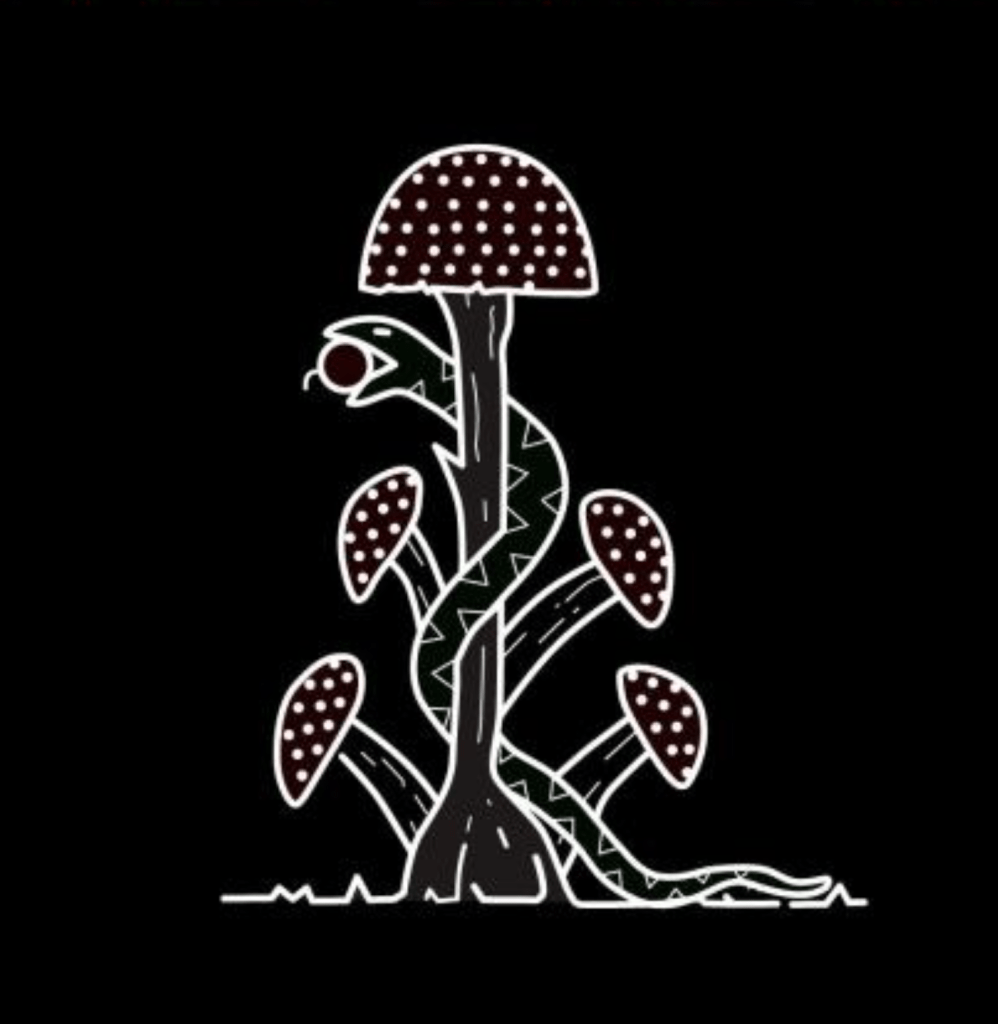
The Sacred Mushroom and The Cross:
A study of the nature and origins of Christianity within the fertility cults of the ancient Near East
Anniversary Edition
John M. Allegro (Author),
Jan Irvin (Introduction),
Carl A. P. Ruck (Foreword),
Judith Anne Brown (Foreword) (daughter)
Irvin’s edition printed Plainc on back cover.
Hatsis said:
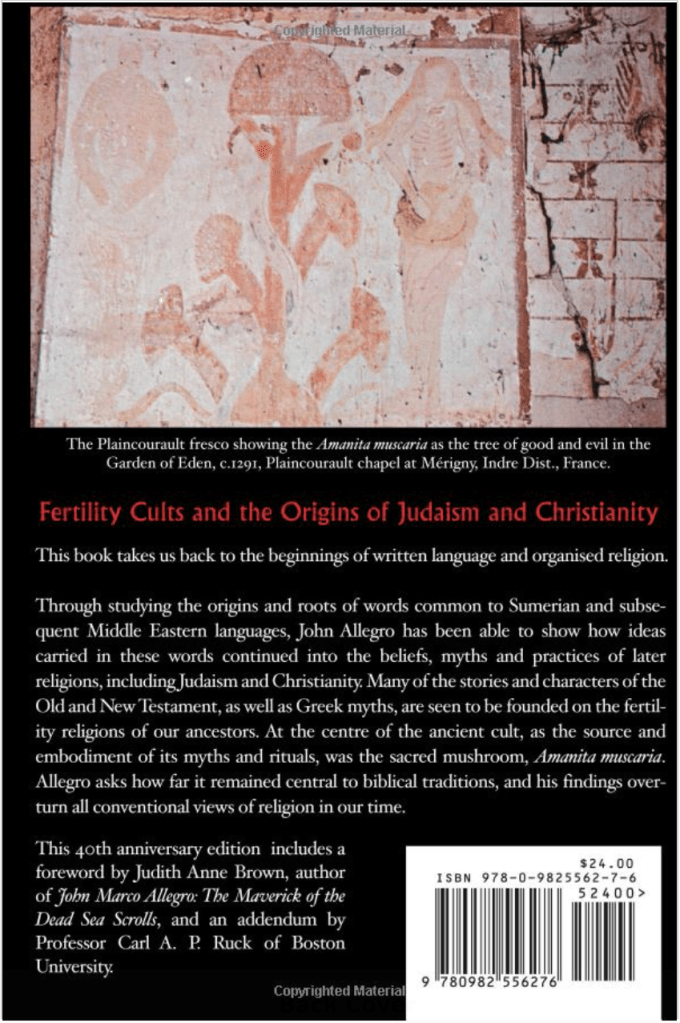
Front flap of first ed.

explain what was meant by “Irvin 2009 is shallow”. Irvin 2021 vs Irvin 2009.
gnosticmedia became logosmedia
Irvin 2019 says
Logos is good, Gnosticism is bad.
does he say gnosis is bad?
Irvin wants to say
Aristotle is good, Plato is bad.
Irvin 2019 mentions multiple, different Plato conceptions.
Which one do you support:

A False Dichotomy with a False 3rd Option
not clear what position Irvin is heading toward in:
i think Jones said at the end of first episode, “remember, Christianity isn’t just only religion”. Irvin’s series “Debunking Quantum Physics”. “A lot of this hits ppl pretty hard. Maybe after a lifetime, maybe there’s another way.”
“Zoroastrian cult rather than on “truth is God”. scholars doubted authenticity of DSS. the 1940s Catholic theologians were all in on this way of thinking, they needed a way to rationalize the direction they were about to take the church.” – Jones.
Irvin is against pope … Irvin may be against Plato-type mysticism, and is for Aristotle. (probly false dichot). How to know when you are being duped, = the Logos/Trivium. The study of false argumentation.
Aristotelian logic is the foundation of understanding reality.
Plato is bad because he teaches the primacy of consciousness. That’s egoic, Irvin says. [define ‘consciousness’, whose, which -cm]
The newager is god. You create … one’s mind creates reality. To Irvin, gnosis doctrine = mind creates reality, so “gnosis” is = falsehood, lying, anti-reality.
does Irvin explicitly disparage gnosis?
what is gnosis?
per the egodeath theory:
gnosis (Transcendent Knowledge) is mental worldmodel transformation
from
literalist ordinary-state possibilism with autonomous-control
(autonomous control within possibilism),
to
analogical psychedelic eternalism with dependent-control
(dependent control within eternalism).
gnosis (Transcendent Knowledge) is mental worldmodel transformation from (autonomous control within possibilism), to (dependent control within eternalism).
I reject gnosis and perennial philosophiy insofar as it’s irrational and garbled, not conforming to reality. ditto Christianity & science – or what passes for them. Beware malformed version of Perennial Philosophy.
Blavaatsky – legitimize the corpus Hermeticum, re-found in Renassance, knit back together the E and W church. Plethon re-indoctrinates Christianity with Corpus Hermeticum. (which Hane is revising the history of). Golden Dawn is being let into the church, bringing with them the condemned Corp Herm, undoing Christian doctrine.
Irvin 2009 != Irvin 2021.
https://www.youtube.com/watch?v=xvokGS33w4I –
UnSpun 174 – Steve Jones: “Philosophia Perennis: The Rise & Fall of Tradition
“exposing the attempted destruction of Christianity and the west through Gnosticism and fake Christian history. A reasonable Christianity is what Irvin praises… Logic, logos, Reaasson. Irvin de-mythologize Logos to reveal that Logos is Reason instead, not a mythology figure. “Conspiracy to delegitimate Christianity, the past 2-3 yeas, trying to mislead ppl away from Christianity, selling it as a love cult . Christianity is actually about Logos, non-contradiction, understanding Logos, truth is God, Jesus is the truth/ way / life, Satan is the father of lie/lying”
Steve Jones has been researching the fall of the Christian Church for nearly twenty years. He is former faculty of both Nashotah Episcopal Seminary as well as St. John’s/Northwestern Military Academy. He was also formerly in charge of Liturgy & Music for the Episcopal Diocese of Milwaukee. Jones is perhaps most noted for his research and compilation of the Divine Liturgy of the Sarum Rite, a work now accepted by many Eastern Orthodox as an authentic liturgy of the Church. He has several books to his credit including research into the authenticity of the Book of Esther. His present interest is in the clandestine leveraging of the Dead Sea Scrolls.”
My touchpoint is analogical psychedelic eternalism dependent-control, is the driver of Trivium, Gnosticism, perennial philosophy, Christianity, Christian mysticism, Catholicism experiential revelation, and everything else.
POS butterfly keyboard is failing! TOO MUCH TYPING BROKE MY HANDS AND KEYBOARD TOO.
the cultural battles between:
Same pdf, at Academia.edu:
https://www.academia.edu/25585623/States_of_Consciousness_and_State_Specific_Sciences
Transpersonal Psychologies: Perspectives on the Mind from Seven Great Spiritual Traditions
1992
Charles T. Tart (Editor)
Book:
Self-Initiation: Secrets of Spiritual Enlightenment
Mike Bhangu, 2020
http://amzn.com/198873570X
There are good ideas in Tart’s article, along with flaws.
For basic miking info, see the “Recording Header” section.
This is the Egodeath Mystery Show, with Cybermonk.
egodeaththeory.wordpress.com
end of header, 0:37 (tart’s webpage). _42_ (Science article)
This was the Egodeath Mystery Show.
__ timestamp after stop recording
/ end of section ““Ep68.mp3”
affable[ˈafəb(ə)l]ADJECTIVEfriendly, good-natured, or easy to talk to.”an affable and agreeable companion”synonyms:friendly · amiable · genial · congenial · cordial · warm · pleasant · pleasing · nice · likable · personable · charming · agreeable · sympathetic · benevolent · benign · good-humored · good-natured · kindly · kind · courteous · civil · gracious · approachable · [more]
prosody
the patterns of rhythm and sound used in poetry.
the theory or study of prosody.
the patterns of stress and intonation in a language.
“the salience of prosody in child language acquisition” · [more]
https://en.wikipedia.org/wiki/General_American_English
General American is thus sometimes associated with the speech of North American radio and television announcers, promoted as prestigious in their industry,[45][time needed][46] where it is sometimes called “Broadcast English“[47] “Network English“,[4][48][49][50] or “Network Standard“.[2][49][51] Instructional classes in the United States that promise “accent reduction“, “accent modification”, or “accent neutralization” usually attempt to teach General American patterns.[citation needed] A common experience among many American celebrities is having worked hard to lose their native regional accents in favor of a more mainstream General American sound,[citation needed] including television journalist Linda Ellerbee, who stated that “in television you are not supposed to sound like you’re from anywhere“,[52] as well as political comedian Stephen Colbert, who said he consciously avoided developing a Southern American accent in response to media portrayals of Southerners as stupid and uneducated.[45][46]“
aka Standard American English (SAE), or “Standard American” – JESUS WHAT IS THE NAME OF IT, THE CAN’T EVEN AGREE AT ALL WHAT THE DAMN THING IS CALLED. EVERY SINGLE EXPERT CALLS IT DIFFERENT.
One expert uses the phrase “network pronunciation“, then “the NBC standard” : 37:08
Do You Speak American? Doc’y by Robert MacNeil
https://www.youtube.com/watch?v=NOTzkejL7ks&t=2220s
https://www.bing.com/search?q=Standard+American+English
https://www.pbs.org/speak/seatosea/standardamerican/ –
“The “unaccented” variety that is sometimes called Standard American or Standard Speech is one taught by accent coaches. This form is actually an idealized dialect – meaning, it’s not really spoken anywhere, but instead is acquired through professional training. Actors and professional communicators (including some from the Midlands!) often take classes in “accent reduction” to lose any regional or social sounds in their speech. It takes a lot of work.
Natalie Baker-Shirer, an accent coach and acting teacher at Carngie Mellon University explains:
“Standard Speech” is spoken nowhere in America, as such. It is based on RP (British Received Pronunciation) which was adopted with American alterations in the early 20th century by linguist William Tilly. These alterations, this authentic “American” sound was loosely based on the speech of North Eastern population of the US. It was spoken by the cultured, well educated, well traveled people of the time. Listen to old movies to hear it.”
We’re listening to the Pop Sike Comp An Overdose of Heavy Psych.
We’ve finished the “Intro” segment.
_150_ The timestamp is x. also repeated at 2:24:10, & 32135
move “current segment” sign to next segment
This is the start of the “Show Format” segment.
_224_ The timestamp is x.
We’ve finished the “Show Format” segment.
_504_ The timestamp is x.
move “current segment” sign to next segment
This is the start of the “Voice & Mic Technique” segment.
_547_ The timestamp is x.
We’ve finished the “Voice & Mic Technique” segment.
_14823_ The timestamp is x.
This is the start of the “Warmup Reading” segment.
15050_ The timestamp is x.
We’ve finished the “Warmup Reading” segment.
_22453_ The timestamp is x.
move “current segment” sign to next segment
/ end of section ““Ep#.mp3”
https://www.academia.edu/33982045/Academic_Suicide_on_John_Allegro_and_the_Mushroom_Hypothesis_
In footnote 4, Hanegraaff states Irvin’s old domain, “www.gnosticmedia.com”
1996 Cover:
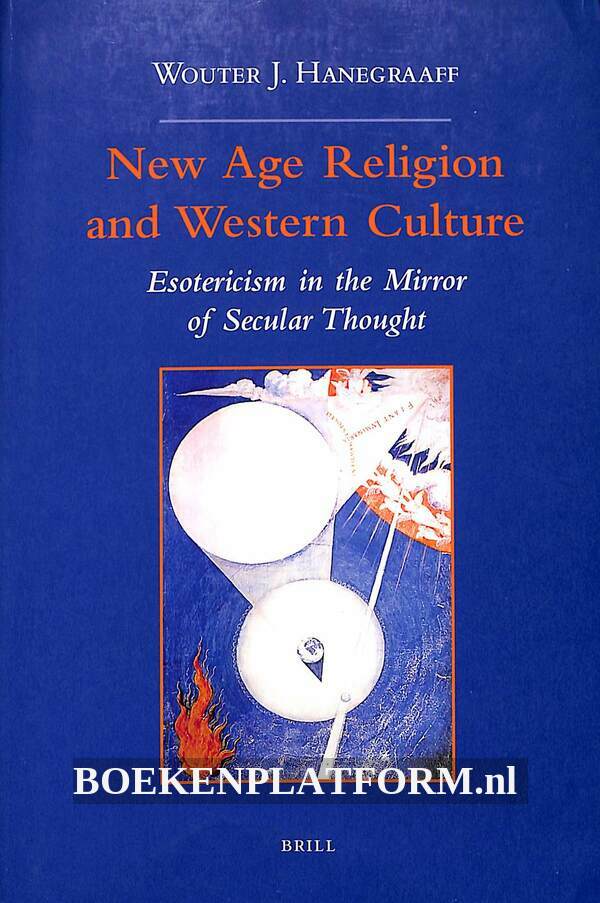

“… a scholar in the humanities, it actually fits this pattern that as a teenager I joined the Dutch Mycological Society and became a devoted collector of mushrooms. I found myself instinctively attracted to those twilight realms of the natural world that tend to be overlooked by biologists concerned with daytime creatures such as animals and plants… But while I enjoyed their fairy-tale aura of mystery and magic, studying mushrooms in fact gave me an early training in empirical research, attention to detail, and systematic scientific thinking from which I have profited ever since.” – WH

“Western esotericism has been a pervasive presence in Western culture from late antiquity to the present day, but until recently it was largely ignored by scholars and surrounded by misconceptions and prejudice.
This accessible guide provides readers with the basic knowledge and tools that will allow them to find their way in this bewildering but fascinating field.
What is it that unites phenomena as diverse as ancient gnosticism and hermetism, the ‘occult sciences‘ of astrology, alchemy, and magic, rosicrucianism, as well as Christian theosophy, occultism, spiritualism, and contemporary New Age spiritualities?
What can the study of them teach us about our common cultural and intellectual heritage, and what is it that makes them relevant to contemporary concerns?
How do we distinguish reliable historical knowledge from legends and fictions about esoteric traditions?
These and many other questions are answered clearly and succinctly, so that the reader can find his or her way into the labyrinth of Western esotericism and out of it again.”
(I’ve read that book)
https://www.academia.edu/31610387/The_First_Psychonaut_Louis_Alphonse_Cahagnets_Experiments_with_Narcotics_2016_
The First Psychonaut? Louis-Alphonse Cahagnet’s Experiments with Narcotics (2016)
“This article calls attention to the important but neglected French Mesmer-ist, Spiritualist, Swedenborgian, and occultist Louis-Alphonse Cahagnet (1809–1885), while concentrating on his significance as a forgotten pioneer of modern entheogenic esotericism. Like other occultist practitioners during the period prior to modern Theosophy (notably Emma Hardinge Britten and Paschal Beverley Randolph), Cahagnet was convinced about the spiritual potential of narcotics as a powerful tool for inducing transcendental vision. The article describes and contextualizes his systematic experiments with narcotic suffumigations made from plants traditionally associated with necro-mancy and witchcraft, as well as his spiritual visions induced by the eating of Hashisch dissolved in coffee. Cahagnet appears to stand at the origin of an underground tradition of visionary practice that would be continued and further developed by Britten, Randolph, and other esoteric practitioners since the 1860s. While most scholars have tended to play down the role of narcotics in these contexts, these may well have been crucial to how spiritual vision came to be understood in the occultist movement.”
“J: You wrote an article about Louis-Alphonse Cahagnet, who you consider to be perhaps one of the very first psychonauts. Can you describe his story?
H: Well, you’ve really been reading my stuff. Thank you, I feel flattered! [both laughs]
Cahagnet was a French spiritualist. An interesting guy, not an intellectual, he worked with his hands but was very smart, very intelligent. I have a liking for him. He was working with somnambulic visionaries. Artificial somnambulism, as it was called, was this technique for bringing people into a trance state, during which they would claim to travel into spiritual realms and to other worlds. It was very popular at that time. Magnetizers were mostly men and the persons who went into a trance were usually women. So Cahagnet wrote three volumes about his experiments with somnambulic women. They told him the most amazing stories about other realities, other worlds, they traveled to other planets, they saw angels and all kinds of stuff like that. So Cahagnet got quite frustrated: he wanted to see it all for himself too. But he had no talent for trance himself; and even if you did go into somnambulic trance, you would lose you consciousness and afterwards wouldn’t remember anymore. But he wanted to go there in a conscious state, he wanted to experience it himself. And so he started experimenting with drugs. He tried to find old recipes and hallucinogenic plants. He was really willing to go out there, but nothing worked. He actually poisoned himself several times, got very sick, but nothing worked. Until one day he found “hashish of the orient.” Just in a pharmacy: it was legal at that time, you could just buy it.
J: Really?
H: Yes, that’s a bit hard to imagine now. Hashisch had this aura of “oriental mystery.” Cahagnet didn’t smoke it, he dissolved it in coffee, drunk it, and then a couple of hours later it begun to work. He had this absolutely amazing experience, that he say answered all his questions: he got the sense of a complete overview of his whole life. It’s actually quite funny to read the “trip report” of somebody who had no predecessors and absolutely no idea of what to expect. After this, he started to organize sessions with people that he invited to his apartment in Paris. He handed out the hashish to them and became the center of a kind of psychonautic community. And he wrote a book about it. It’s almost never quoted but I think it’s actually a very important text. It was read by most of the founders of the occultist movement for decades after that, and was quite influential.
J: And what’s the name of the book?
H: In French: Sanctuaire du spiritualisme (Sanctuary of Spiritualism, 1850). It was translated into English as The Celestial Telegraph (same year).
“The Celestial Telegraph” Cahagnet
The complete photographed book:
https://archive.org/details/celestialtelegra00caha/page/n5/mode/2up
J: Why did this entheogenic breakthrough remain hidden from the wider public?
H: Well, it was basically a minority religion. I don’t think that it was kept secret deliberately. Spiritualism was actually a kind of mass movement at that time, and entheogenic practices spread to some extent in that context. Occultists came out of spiritualism but developed their own rituals, techniques and practices. There was a discrete culture of entheogenic usage in occultism, which has not been systematically studied until quite recently: see Christopher Partridge’s book High culture: Drugs, Mysticism, and the Pursuit of Transcendence in the Modern World, which is very valuable. Still, much of this is still largely unexplored territory.
J: How does Aleister Crowley and his famous love for drugs and bizarre sexuality fit into this atmosphere?
H: I have to say that I’m not a specialist of Crowley. I prefer to look at things that are people are not studying, and it almost seems as though everybody is studying nothing but Crowley these days…
J: OK, I understand.
H: But anyway, Crowley was experimenting certainly with mescaline, with hashish, at one point with heroin, and that got pretty fatal, because he ended his life as an addict. We just heard at this conference that this was the cause of his death – I didn’t know that. Basically I can repeat what was said earlier [in the conference]. On the one hand there is this practice of ritual magic, which requires disciplines, focus, attention and so on. On the other hand, there is the use of drugs in occultism, because they open up the mind to other dimensions than normal rational consciousness. Basically, it seems that Crowley was interested in anything that could get him there. And there’s a certain tension I think, between those two approaches.”
We’ve finished the “Intro” segment.
_0:36_ The timestamp is x.
We’ve finished the “Egodeath Theory” segment.
_2:52:09 in _2163.wav_ The timestamp is x.
A Core version of this episode is available, above, half the length.
This is the Egodeath Mystery Show, with Cybermonk.
egodeaththeory.wordpress.com
We’re listening to the Pop Sike compilation A Lethal Dose of Hard Psych.
We’ve finished the “Intro” segment.
_1:38_ The timestamp is x.
move “current segment” sign to next segment
This is the start of the “Show Format” segment.
_202_ The timestamp is x.
Page: Egodeath Mystery Show
Subsection: Agenda Items for Working on the Show-Format
https://egodeaththeory.wordpress.com/2021/02/05/egodeath-mystery-show/#Agenda-Items-for-Working-on-the-Show-Format
We’ve finished the “Show Format” segment.
__7:57 The timestamp is x.
move “current segment” sign to next segment
This is the start of the “Voice & Mic Technique” segment.
_913_ The timestamp is x.
We’ve finished the “Voice & Mic Technique” segment.
__1111 The timestamp is x.
move “current segment” sign to next segment
This is the start of the “Warmup Reading” segment.
_11:41_ The timestamp is x.
Warmup Readings for the Egodeath Mystery Show
We’ve finished the “Warmup Reading” segment.
_2424_ The timestamp is x.
move “current segment” sign to next segment
This is the start of the “Egodeath Theory” segment.
_2707_ The timestamp is x.
Agenda items about Egodeath Theory should be in this episode template in the “Intro” segment or in the “Egodeath Theory” segment.
We’ve finished the “Egodeath Theory” segment.
_15610_ The timestamp is x.
move “current segment” sign to next segment
This is the start of the “Not a Music Show” segment, to do selected work items from the Esoteric Agenda.
_15726_ The timestamp is x.
We’ve finished the “Not a Music Show” segment.
_15737_ The timestamp is x.
move “current segment” sign to next segment
This was the Egodeath Mystery Show.
_2:01:31_ timestamp after stop recording
For basic miking info, see the “Recording Header” section.
This is the Egodeath Mystery Show, with Cybermonk.
egodeaththeory.wordpress.com
We’ve finished the “Intro” segment.
_43_ The timestamp is x.
move “current segment” sign to next segment
This is the start of the “Voice & Mic Technique” segment.
_55_ The timestamp is x.
Agenda items about Voice & Mic Technique should be in the “Voice & Mic Technique” page, but they could also be in this episode template in the “Intro” segment or in the “Egodeath Theory” segment.
We’ve finished the “Voice & Mic Technique” segment.
_1328_ The timestamp is x.
move “current segment” sign to next segment
This is the start of the “Warmup Reading” segment.
_1341_ The timestamp is x.
Warmup Readings for the Egodeath Mystery Show
We’ve finished the “Warmup Reading” segment.
_1431_ The timestamp is x.
move “current segment” sign to next segment
This is the start of the “Email” segment.
_1440_ The timestamp is x.
Page: Egodeath Mystery Show
Subsection: Agenda Items for Working on the Show-Format
https://egodeaththeory.wordpress.com/2021/02/05/egodeath-mystery-show/#Agenda-Items-for-Working-on-the-Show-Format
We’ve finished the “Email” segment.
_14625_ The timestamp is x.
move “current segment” sign to next segment
This is the start of the “Egodeath Theory” segment.
_14652_ The timestamp is x.
Agenda items about Egodeath Theory should be in this episode template in the “Intro” segment or in the “Egodeath Theory” segment.
We’ve finished the “Egodeath Theory” segment.
_21445_ The timestamp is x.
move “current segment” sign to next segment
This is the start of the “Not a Music Show” segment, to do selected work items from the Esoteric Agenda.
__ The timestamp is x.
We’ve finished the “Not a Music Show” segment.
__ The timestamp is x.
move “current segment” sign to next segment
This was the Egodeath Mystery Show.
__ timestamp after stop recording
sections to move to top when publishing the episode
/ end of section ““Ep#.mp3”
Interview of Hanegraaff on Entheogens, 2020:
https://wouterjhanegraaff.blogspot.com/2020/09/enter-gods-interview-with-jana.html?fbclid=IwAR3JHBirFRTR00NBsAMy0Z_ON9jSPd0fC467tCodfkSig3wXR3mC6PLNiO8
http://religiousdrugs.com/program/
Hanegraaff keynote:
The Reasonable Irrational: History of Religions and the Pathologization of Entheogenic Experience
Wouter Jacobus Hanegraaff – professor of History of Hermetic Philosophy, University of Amsterdam.
Wouter J. Hanegraaff (1961) studied classical guitar at the Municipal Conservatory at Zwolle (1982-1987) and Cultural History at the University of Utrecht (1986-1990), with a specialization in alternative religious movements in the 20th century.
From 1992-1996 he was a research assistant at the department for Study of Religions of the University of Utrecht, where he defendedhis dissertation
New Age Religion and Western Culture: Esotericism in the Mirror of Secular Thought on 30 november 1995 (cum laude). [thanks for writing exactly the book I had been wanting: esotericism in New Age]
From 1996 to 2000 he held a postdoctoral fellowship from the Dutch Assocation for Scientific Research (NWO), and spent a period working in Paris.
On 1 september 1999 he was appointed full professor of History of Hermetic Philosophy and Related Currents at the University of Amsterdam.
From 2002-2006 he was president of the Dutch Society for the Study of Religion (NGG). From 2005-2013 he was President of the European Society for the Study of Western Esotericism (ESSWE).
In 2006 he was elected member of the Royal Netherlands Academy of Arts and Sciences (Koninklijke Nederlandse Academie van Wetenschappen, KNAW); since 2013 he is an honorary member of the European Society for the Study of Western Esotericism.
The Reasonable Irrational: History of Religions and the Pathologization of Entheogenic Experience
On the basis of several case studies of entheogenic religion from late antiquity and the early modern period, I will be making some general points about the widespread tendency among scholars of religion to neglect straightforward empirical evidence for the use of psychoactive substances or dismiss its relevance.
There are some perfectly understandable reasons why specialists are wary or afraid to discuss this topic seriously and prefer to avoid it.
Yet, in some specific cases we have direct and irrefutable proof that impressive visionary experiences were induced by the ritual ingestion of entheogens, while in some other cases the entheogenic hypothesis has superior explanatory power in comparison to alternative interpretations.
Dismissing this hypothesis without solid arguments has the effect of unnecessarily pathologizing radical visionary experiences for which we have in fact a perfectly rational explanation.
Jana Nenadalová and Adam Karásek
Department for the Study of Religions, Masaryk University
http://religiousdrugs.com/jana-nenadalova-and-adam-karasek/
“Experimental research on mystical experience induced by psychedelics suffer by two major problems.
“General theoretical problem lies in conceptualization of mystical experience, specifically in the idea, that mystical experience is sui generis and that psychedelics like psilocybin or LSD are controllable shortcuts to this kind of experience.
“Major methodological problem concerns primarily theoretical background of mysticism scales, which are composed in the same (perennialistic) way as the theory.
“Thus, psychedelic experience with sustained positive outcome is primarily seen as mystical.
“We will try to show, that considering experience with psychedelics mystical is not theoretically tenable.
“However, we cannot ignore that higher subjective ratings of mystical experience can predict sustainable positive changes in participants.
“Thus, we argue that concept of universal mystical experience should be replaced by more empirically valuable subjective ratings of experience with psychedelics.”
Reanne Crane
University of Kent
http://religiousdrugs.com/reanne-crane/
“In my paper, I critique the ubiquity of the term ‘ineffable’.
“I do not dispute that religious experiences/psychedelic states of consciousness are incompatible with ‘normal’ rhetoric.
“However, it seems that ‘ineffable’ has become simply another reductionist category that discourages further inquiry;
“‘ineffable’ dissuades users and researchers from devoting critical and creative attention to narratives, and also undermines the evidence that some linguistic capacities appear to be enhanced by altered states of consciousness.
“I will explore the metaphysical implications of the metaphors through which we tend to talk about extraordinary experiences, semantic activation in altered states, and the importance of replacing the concept of ‘ineffable’ with ‘incompatible’.”
Robert Dickins
Queen Mary, University of London
http://religiousdrugs.com/robert-dickins/
The emergence of the Psychology of Religion in the work of philosopher William James was in part predicated on his experiences with psychoactive substances, particularly nitrous oxide and mescaline.
Placing them within the context of mysticism, he believed no account of religious psychology would be complete without taking into account the effects of certain visionary plants and substances.
In the 1950s and 60s a large-scale engagement with this thesis was undertaken by psychologists, psychotherapists and philosophers researching d-Lysergic acid diethylamide (LSD).
Paying particular attention to a Christian context, this paper explores LSD’s role as a form of experimental heresy, which took religious claims about the mystical experience seriously while attempting to use a secular, scientific approach.
Of particular interest is the Marsh Chapel experiment, the writings of Adelle Davis, and countercultural approaches within Christian communities.
Utilizing a historical and literary approach, this paper explores these experimental heresies as a boundary that deterritorialized both scientific and religious orthodoxy during the mid-twentieth century.
Irvin recounts his discovery of fakeness, around 1:04:00 UnSpun 201, October 6, 2020, Steve Jones episode. 47:00 in the YT vid 47 * 60 = 2820 https://www.youtube.com/watch?v=OeWhpKWLlks&t=2820s
Article: Gordon Wasson: The Man, the Legend, the Myth (Jan 2009, Purdue had wanted to house Irvin’s research, until this article).
The entire field attacked Irvin then, uniformly & in chorus, which caused him to turn critical attention to the entire field and fact-checking down the primary sources.
They’re complicit in an agenda.
Then more attacks came, but never addressing Irvin’s citations.
The field tried to get Irvin back onto the official narrative.
Joe Rogan turned against Irvin then. They had been friends for 8 years.
Rogan took Irvin’s early work and ran with it and became the poster boy for psychedelics, then when Irvin turned against his earlier work, …
if Irvin had continued pushing his early work, he’d be a popular, top podcaster. 52:20 guest asks what was Irvin’s aha moment.
55:16 (YoutTube not podcast) “The moment I had that epiphany that something was wrong. Used bookstore in Chico CA, book with painting by Ivan Bilibin.
Ivan Biliban’s paintings showing Amanita and/or Psilocybe, possibly before 1939
https://www.bing.com/images/search?q=ivan+bilibin+mushroom

After Irvin turned against Wasson and went against the narrative…
1:11:30 – in a bookstore history section, painting by Russian painter Ivan Bilibin 1890s book, showing both Psilocybe and Amanita together in one painting.
That was Irvin’s moment of questioning the entire field of entheogen scholarship.
That made him question the official historical narrative of the entire field of ethnomycology.
Irvin’s Brain says re: date of identifying psilocybin mushrooms,
“the credit for discovering the magic mushrooms has been given to Richard Schultes (1939), and later R.G. Wasson.
“Actually, at the time Schultes was in the Sierra Mazateca, working on his PhD thesis (Schultes 1941).
“He was accompanying Reko, who had been puzzling out the mushroom mystery since 1919.
“During the late 1930s Reko sent specimens he had collected to various American taxonomists for identification. He later said this about the American botanist:
“I have to mention these details, now that an ambitious young Harvard student, having turned literary pirate, has taken credit for my discoveries (The identification of Teonanacatl, by Richard E. Schultes, Botanical Museum Leaflets, Harvard University, Febr. 21, 1939), after I had communicated to him the results of my prolonged investigations and invited him on a botanical expedition to Huautla de Jiménez during the summer of 1938, where I gave him numerous samples of the aforesaid mushroom, which had been finally positively identified by Dr. Linder as Paneolus campanulatus L. var. sphinctrinus (Fr.) Bresadola. “
The Early History of Salvia divinorum
Leander J. Valdés III
http://www.sagewisdom.org/earlysdhistory.html
HTML with permission and changes from
The Entheogen Review (2001) X: 73-75
http://www.entheogenreview.com
Introduction: Evidence for entheogen use in prehistory and world religions
Michael Winkelman
https://akjournals.com/view/journals/2054/3/2/article-p43.xml
Winkelman’s long introduction article focuses on psilocybin worldwide, and mentions Brown’s findings of psilocybe in Christian art. BUT nevertheless, when it comes to Europe, he ignores psilocybin and goes *crazy* striving to use the word “Amanita Muscaria” at every possible opportunity – when he could & should have used the neutral, broad word ‘mushroom’.
In the Europe sections, count the number of times Winkelman chooses to use the word ‘mushroom’, ‘Amanita’/’Muscaria’, ‘psilocyb’, & ‘entheogen’.
Winkelman uses Amanita far, far too often – his entire mission in life, in those sections, is to use the word ‘Amanita’ or ‘Muscaria’ as often as possible, at every possible opportunity.
Book:
Secret Teachings of All Ages
Manly Hall (1928)
http://manlyhallsociety.com/secret-teachings/
Mycologists in 1925 (until 1939) had no awareness of psilocybin; the only psychoactive mushroom the 1925 mycologists are aware of is Amanita.
Book:
The Romance of the Fungus World: An Account of Fungus Life in its Numerous Guises, both Real and Legendary
Robert Rolfe; R. T. Rolfe & F. W. Rolfe
1925
https://archive.org/details/romanceoffungusw00rolf/mode/2up
Foreword by John Ramsbottom (1924)
ISBN: 0486231054
1925 (1974 reprint)

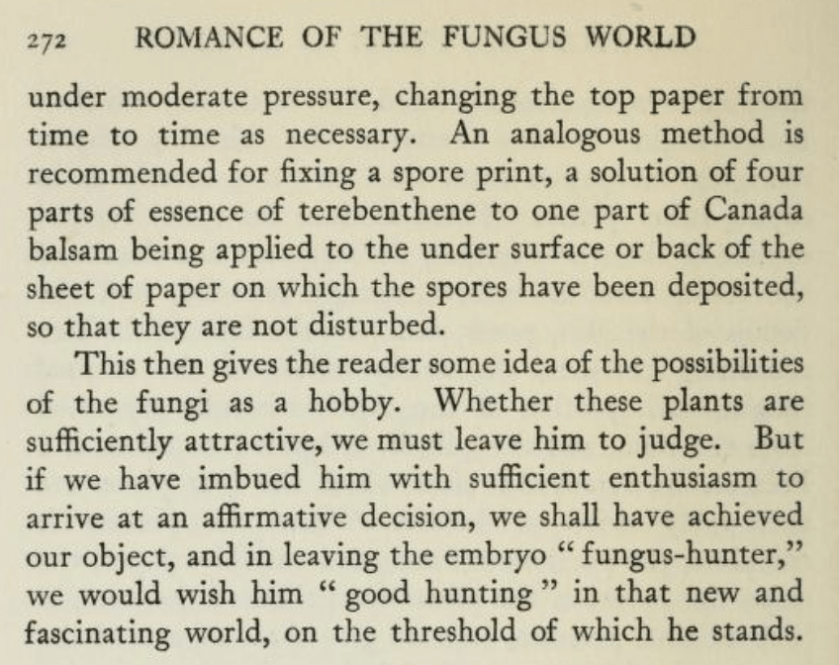
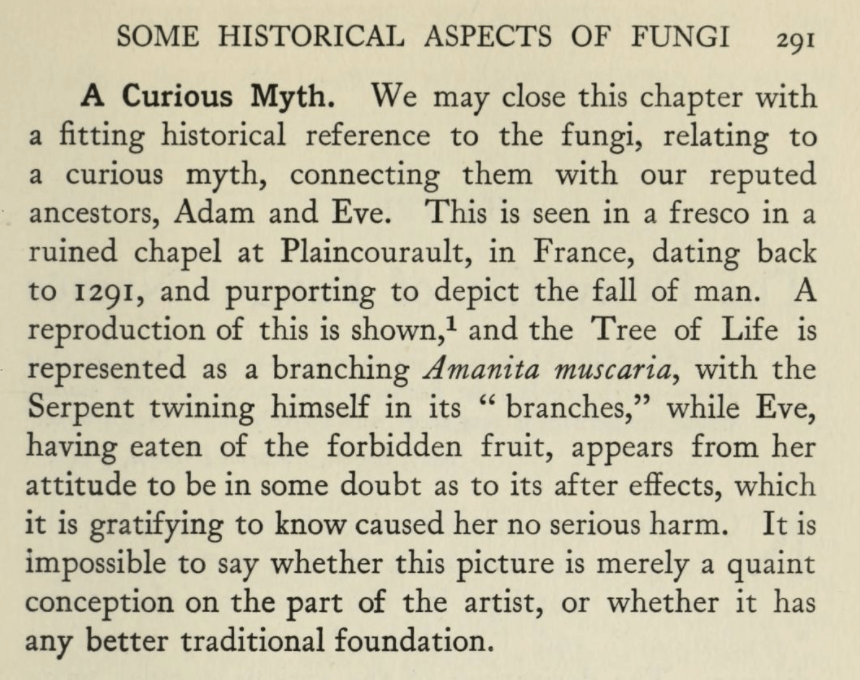

“Humanities depts are closing”. – Martin Ball
“Southern Oregon University is a public university in Ashland, Oregon. It was founded in 1872 as the Ashland Academy, has been in its current location since 1926, and was known by nine other names before assuming its current name in 1997. Its Ashland campus – just 14 miles from Oregon’s border with California – encompasses 175 acres. Headquarters for Jefferson Public Radio, and public access station Rogue Valley Community Television.”
Martin Ball’s YT ch:
https://www.youtube.com/user/EntheogenicEvolution/videos
One of Martin Ball’s podcast guests was with https://circle.tamintegration.com/courses/2020-psilocybin-summit/
Around 41:00 in this podcast , with Thomas Roberts, for the book Mindapps, Martin Ball says that his course on religion before laid off due to low enrollment in the humanities, he taught as a course on psychedelics. https://www.podomatic.com/podcasts/entheogenic/episodes/2020-08-17T10_59_25-07_00
Book:
Mindapps: Multistate Theory and Tools for Mind Design
Thomas B. Roberts
Foreward by James Fadiman
http://amzn.com/B07JZFXRDY
Park Street Press
June 18, 2019
“An exploration of “mind design” technologies and practices–mindapps–that boost intellectual capacity and enable new ways of thought and action
• Reveals how mindapps transform the patterns of our mind-body complex and help generate new ideas by enabling access to new mind states
• Examines the singlestate fallacy–the myth that useful thinking only occurs in our ordinary awake mental state
• Explores a wealth of mindapp practices and techniques, including
Just as we can write and install apps in our electronic devices, we can construct “mindapps” and install them in our brain-mind complex, and as just as digital apps add capabilities to our devices, mindapps can expand our mental powers and creative abilities, allowing us to intentionally redesign our minds.
Using psychedelics as the prime example, Thomas B. Roberts explores the many different kinds of mindapps, including meditation, other psychoactive plants and chemicals, sensory overload and deprivation, biofeedback and neurofeedback, hypnosis and suggestion, sleep and lucid dreaming, creative imagery, transcranial brain stimulation and optical brain stimulation, rites of passage, martial arts and exercise routines, yoga, breathing techniques, and contemplative prayer.
He also looks at the future of mindapps, the potential for new mindapps yet to be invented, and how installing multiple mindapps can produce new, yet to be explored mind states.
Drawing on decades of research, he shows how psychedelics in particular are “ideagens”–powerful tools for generating new ideas and new ways of thinking.
Uniting the many forms of mindapps into one overall Multistate Mind Theory, Roberts examines the singlestate fallacy–the myth that useful thinking only occurs in our ordinary awake mental state–and demonstrates the many mind-body states we are capable of. He shows how mindapps not only allow us to design and redesign our own minds but also offer benefits for
by improving
Reformulating how we think about the human mind, Mindapps unveils the new multistate landscape of the mind and how we can each enter the world of mind design.”
http://religiousdrugs.com/call-for-papers/
“The purpose of this workshop is to explore the role of entheogens in its various religious and spiritual expressions: historically, culturally and finally from the methodological approach taken by various research fields. It will be moreover, directed at clarifying the purpose, importance and relevance that the various forms of entheogens and mind-altering substances cover for the individual mystical and religious traditions. Emphasis will also be placed on the combination with ritual, meditation and biofeedback.
“The workshop will moreover encourage the discussion, analysis and questioning of research methods and methodologies such as: The ethics of the researcher in connection to the use of substances as part of participatory observation. Enquiries into the analysis of ecstatic and religious states in cooperation and compared to the descriptions of laboratory tested altered states of consciousness. Comparative methodologies and cooperation in different fields of research are encouraged.”
Post-keynote Interview of Hanegraaff on Entheogens, maybe Feb/March/Sep 2020: originally in Dutch, translated to English:
http://religiousdrugs.com/program/
Type while recording (a lot/ often), read-aloud what was typed (this is the payoff: produces good text in the idea development page and produces good audio), then delete the typing session from the recording.
Every 10 minutes, state the context: what am I doing? In a recording.
Read-aloud Bennett’s critique of TIK.
For basic miking info, see the “Recording Header” section.
For basic miking info, see the “Recording Header” section.
This is the Egodeath Mystery Show, with Cybermonk.
egodeaththeory.wordpress.com
We’ve finished the “Intro” segment.
_45_ The timestamp is x.
move “current segment” sign to next segment
This is the start of the “Voice & Mic Technique” segment.
_52_ The timestamp is x.
We’ve finished the “Voice & Mic Technique” segment.
_555_ The timestamp is x.
move “current segment” sign to next segment
Rolfe book from University of British Columbia Library is back online at archive.org! The Romance of the Fungus World
https://archive.org/details/romanceoffungusw00rolf/page/n7/mode/2up
My attempt was mostly a failure. I failed to criticize Brad in a controlled voice. Instead, which would help, I could demonstrate exactly the ideal desired result by transcribing to text and reading-aloud that transcription:
For basic miking info, see the “Recording Header” section.
This is the Egodeath Mystery Show, with Cybermonk.
egodeaththeory.wordpress.com
We’ve finished the “Intro” segment.
_45_ The timestamp is x.
move “current segment” sign to next segment
This is the start of the “Egodeath Theory” segment.
_52_ The timestamp is x.
Agenda items about Egodeath Theory should be in this episode template in the “Intro” segment or in the “Egodeath Theory” segment.
We’ve finished the “Egodeath Theory” segment.
__ The timestamp is x.
move “current segment” sign to next segment
This is the start of the “Not a Music Show” segment, to do selected work items from the Esoteric Agenda.
__ The timestamp is x.
We’ve finished the “Not a Music Show” segment.
__ The timestamp is x.
move “current segment” sign to next segment
This was the Egodeath Mystery Show.
__ timestamp after stop recording
sections to move to top when publishing the episode
/ end of section ““Ep#.mp3”
Brown argues against the maximal entheogen theory of religion – in contrast, I agree with Muraresku about how religion works when done right, not nece’ly how ppl attempted to access the mystic altered state.
I reject Brown’s list of “alternative ways of the mystic altered state” – list of bunk futile — ie I agree with Muraresku’s position as stated by Brown and rejected by Brown; I side with Muraresku against Brown here.
If I can trust Brown’s depiction of Muraresku’s position.
All true religion esotericism comes from plants, not from other, fake, ineffective positions.
I agree with the position statement that Brown attributes to Muraresku on this point aka the maximal entheogen theory of religion.
Muraresku and I both assert and commit to the explanatory framework of the maximal entheogen theory of religion.
“TIK argues that this entheogen-induced ecstatic vision, the ego-death experience that allows you to “die before you die” thus granting the living a reassuring glimpse of immortality, has over millennia and in diverse cultures served as the common element in the “religion with no name.”
“The pervasive underlying premise of TIK is that all religion originates from the ingestion of psychedelic concoctions of mind-altering beer and wine. And, conversely, that the only religious experience sufficiently reliable, fast-acting and powerful enough to convert the masses into true believers is an altered state of consciousness induced by psychedelics.”
this entheogen-induced ecstatic vision, the ego-death experience
die before you die
granting immortality
the common element in the ecstatic source of religion
all religion originates from psychedelic
the only religious experience sufficiently reliable, fast-acting and powerful enough
altered state of consciousness induced by psychedelics
Chris Bennett posted a long criticism of The Immortality Key:
https://www.cannabisculture.com/content/2021/03/14/the-immortality-key-lost-on-the-road-to-eleusis/
Bennett complains that his books weren’t cited, even though Muraresku had privately praised them.
Michael Rinella makes a similar complaint in a 1-star Amazon review of The Immorality Key:
https://www.amazon.com/gp/customer-reviews/R16N1YOEHHDUQ6/ref=cm_cr_getr_d_rvw_ttl?ie=UTF8&ASIN=1250207142
(“I don’t see how a book like this could be published in 2020 and yet somehow lack a single reference to a scholarly work on virtually the same subject, my own Pharmakon: Plato, Drug Culture, and Identity (2010).
“Instead, it seems to be a rehash of arguments of The Road to Eleusis, a work originally published in the late 1970s, with some additional material on the early Christian era.
“Hillman’s work is a chapter he was forced to excise from his dissertation, stretched out to the length of a book.” – Rinella)
“Authors are annoyed that Muraresku’s Da Vinci Code-like book is a best-seller with lots of media hype, while their scholarly books attract a fraction of the interest.
“I think Brown is overstating Muraresku’s position about the origin of all religions. I do not think that Muraresku asserts and commits “to the explanatory framework of the maximal entheogen theory of religion”.
“It’s hard to tell because Muraresku does not clearly state what his position is on “the origin of all religions.”
[that’s always the problem; how to fill-in the Grid Game (of where plants were used, when) when writers obscure what their position is – cm]
“When Brown writes “the pervasive underlying premise of TIK is that all religion originates from the ingestion of psychedelic concoctions of mind-altering beer and wine,” he attributes more to Muraresku than Muraresku actually asserts. Brown reads that “pervasive underlying premise” into Muraresku’s book.
“Brown should define “originates” more clearly. Does he mean historically / chronologically or does he mean that the basic, starting point of ‘religion’ lies in drug experiencing for everyone regardless of the time they live in.
“There’s a chance that I’m wrong about the above and that somewhere in his book Muraresku states something like Brown wants about the origin of all religion.
“Certainly Muraresku does not practice “the maximal entheogen theory of religion” in our Egodeath community way when he discusses Greek, Christian, Roman, Near-Eastern, Prehistoric religions.
“He writes as though evidence of psychedelics is hard to find and routinely forbids himself from looking for evidence in religious groups due to arbitrary social categories.
“Even if Muraresku does state something like the “maximal entheogen theory of religion” (I doubt he does), he fails to use the maximal theory when discussing religions.
“In one part when discussing ‘paleo-Christianity’ vs. ‘Church Fathers,’ Muaresku opposes “mystics” (authentic psychedelic eucharist takers) and “bureaucrats” (offering substitute eucharist).
“In another place he opposes “elites” (who guard the psychedelic sacrament for themselves) and “common people” (who are prevented from taking the psychedelic).
“In another place he opposes “Greek” psychedelic users to “Roman” non-psychedelic users.
“In other spots “women” know how to prepare the psychedelic drink while “men” do not.
“In other spots he seems to claim that psychedelic religion is built into the DNA of Indo-Europeans (by implication not in the genetics of other groups).
“One of the editors of the journal where Brown published the review is Michael Winkelman, author of Shamanism: A Biopsychosocial Paradigm of Consciousness and Healing.
https://www.amazon.com/Shamanism-Biopsychosocial-Paradigm-Consciousness-Healing/dp/031338181X
“In his book, Winkelman treats drugs as just one way of “altering consciousness,” lumping them together with hypnosis, dance, and meditation (at least in the table of contents).
“Winkelman edited the special issue of the journal devoted to “Psychedelics in History and World Religions” in which Jerry and Julie Brown’s article “Entheogens in Christian art: Wasson, Allegro, and the Psychedelic Gospels” appeared.”
Cyberdisciple wrote:
https://cyberdisciple.wordpress.com/2020/11/24/correcting-key-points-in-muraresku-the-immortality-key/#comment-2451
“Brown’s comment [linked above] prodded me to update my post [critique of Muraresku’s book The Immortality Key], now with critiques of Chapter 13.”
https://cyberdisciple.wordpress.com/2020/11/24/correcting-key-points-in-muraresku-the-immortality-key — “Updated 15 March 2021 with Table of Contents” + ch. 13
“the word ‘maximal’ as in the maximal entheogen theory of religion may sound like the broadest view, the greatest possible highest view for religious experience.”
[maximal can be broadened to apply to: maximal plants, maximal exp’c, & maximal esotericism (per my definition) -cm]
“When ‘maximal’ is placed into context as descriptive for religious esotericism, ‘maximal’ becomes limiting for the mystic altered state when it refers to only plant-based psychedelics.
“The focus should be placed upon the mystic altered state, regardless of all possible means of attaining the mystic altered state. Then what is labeled as ‘moderate’ becomes less restrictive and limiting for the mystic altered state than the use of the word ‘maximal.”
[my 1988-1997 Theory’s wording didn’t push chemicals, and was surprisingly open to other alleged means of accessing the loose cognitive association state, including schizophrenia because I believe schizophrenia does give loose cognitive mystic-state experiences. 1998-2002 I added “maximal” and specified chemicals -cm]
“Christianity may provide evidence of plants.”
“Christianity is not an original religion.”
[I don’t know what ‘original’ means here. -cm]
“There may be other catalysts beside plants that transition the mind into the mystic altered state.”
[That is 100% hazy, vague, & vaporous. What are these other alleged catalysts, and why should they be elevated to the efficacy level of plants? I’ll stick with the proven (plants), until some concrete, specific alternative is proved. To be saved, we must ingest the flesh of Christ. -cm]
“Focus should be placed on the importance of the mystic altered state, rather than on the catalyst for that state.”
“The word ‘maximal’ is limiting and restrictive for the mystic altered state by only including plant-based entheogens.”
[this move is “limiting” and “restrictive” only in a totally vague, hypothetical, vaporous, conjectured sense. I took the above strategy of staying open in 1997, and got no benefit from doing so. My explanatory emphasis has always been on the loose cognitive state, not the trigger for it. -cm]
Hello Michael,
Here’s my recent Book Review of the NYTimes Bestseller,
The Immortality Key: The Secret History of the Religion with No Name.
Review link:
https://akjournals.com/view/journals/2054/aop/article-10.1556-2054.2021.00170/article-10.1556-2054.2021.00170.xml
Jerry B. Brown, Ph.D.
Founding Professor of Anthropology
Florida International University
Coauthor, The Psychedelic Gospels
www.psychedelicgospels.com
I am not releasing the 4-hour Full episode; I am only releasing this ALL-EGODEATH-CONTENT, essentially a Core version of the episode is the only publicly released version. I removed the Agenda-management discussion (retained in source .wav and audio project). Removed great discussion on Broadcasters and removing from them the casual standard voice technique to be general-use.
Total length 1:31:55 after removing voice/mic/show-format content and condensing. The removed, good Voicing content and Mic demo content is separate tracks in the audio project file.
“Broadcasters from Ep62.mp3” – same. 320kbps. 89 MB. not uploaded
“Show Format Voicing from Ep62.mp3” – same. 320kbps. 171 MB. not cleaned up. not uploaded
For basic miking info, see the “Recording Header” section.
this will be 2-part, or 2-version: 4:07:45 total.
This is the Egodeath Mystery Show, with Cybermonk.
egodeaththeory.wordpress.com
We’re listening to nothing.
We’ve finished the “Intro” segment.
_202_ The timestamp is x.
move “current segment” sign to next segment
This is the start of the “Show Format” segment.
_217_ The timestamp is x.
Agenda items about the show format should be in the “Egodeath Mystery Show” page, but they could also be in this episode template in the “Intro” segment or in the “Egodeath Theory” segment.
Page: Egodeath Mystery Show
Subsection: Agenda Items for Working on the Show-Format
https://egodeaththeory.wordpress.com/2021/02/05/egodeath-mystery-show/#Agenda-Items-for-Working-on-the-Show-Format
We’ve finished the “Show Format” segment.
_918_ The timestamp is x.
move “current segment” sign to next segment
This is the start of the “Voice & Mic Technique” segment.
931__ The timestamp is x.
Agenda items about Voice & Mic Technique should be in the “Voice & Mic Technique” page, but they could also be in this episode template in the “Intro” segment or in the “Egodeath Theory” segment.
Voice & Mic Technique
Subsection: Agenda Items to Work on During the Show
We’ve finished the “Voice & Mic Technique” segment.
20101 The timestamp is x.
move “current segment” sign to next segment
This is the start of the “Warmup Reading” segment.
_20111_ The timestamp is x.
Warmup Readings for the Egodeath Mystery Show
We’ve finished the “Warmup Reading” segment.
__ The timestamp is x.
move “current segment” sign to next segment
This is the start of the “Egodeath Theory” segment.
__ The timestamp is x.
Agenda items about Egodeath Theory should be in this episode template in the “Intro” segment or in the “Egodeath Theory” segment.
From wik: Ego Death article:
“Shinzen Young, an American Buddhist teacher, has pointed at the difficulty integrating the experience of no self.
“He calls this “the Dark Night”, or “falling into the Pit of the Void.”
“It entails an authentic and irreversible insight into Emptiness and No Self.
“What makes it problematic is that the person interprets it as a bad trip.
“Instead of being empowering and fulfilling, the way Buddhist literature claims it will be, it turns into the opposite.
“In a sense, it’s Enlightenment’s Evil Twin.”
https://en.wikipedia.org/wiki/Ego_death#Dark_Night_and_depersonalisation – “Willoughby Britton is conducting research on such phenomena which may occur during meditation, in a research program called
“The Dark Night of the Soul“.
She has searched texts from various traditions to find descriptions of difficult periods on the spiritual path,[web 5] and conducted interviews to find out more on the difficult sides of meditation.[web 4][note 8]”
We’ve finished the “Egodeath Theory” segment.
__ The timestamp is x.
move “current segment” sign to next segment
This is the start of the “Not a Music Show” segment, to do selected work items from the Esoteric Agenda.
__ The timestamp is x.
We’ve finished the “Not a Music Show” segment.
__ The timestamp is x.
move “current segment” sign to next segment
This was the Egodeath Mystery Show.
__ timestamp after stop recording
sections to move to top when publishing the episode
/ end of section ““Ep62.mp3”
For basic miking info, see the “Recording Header” section.
This is the Egodeath Mystery Show, with Cybermonk.
egodeaththeory.wordpress.com
We’re listening to the recording at the end of Their Satanic Majesties Request. At the end, again, plus part of the song Gomper.
We’ve finished the “Intro” segment.
_148_ The timestamp is x.
move “current segment” sign to next segment
This is the start of the “Show Format” segment.
_154_ The timestamp is x.
Page: Egodeath Mystery Show
Subsection: Agenda Items for Working on the Show-Format
https://egodeaththeory.wordpress.com/2021/02/05/egodeath-mystery-show/#Agenda-Items-for-Working-on-the-Show-Format
We’ve finished the “Show Format” segment.
_354_ The timestamp is x.
move “current segment” sign to next segment
This is the start of the “Voice & Mic Technique” segment.
_400_ The timestamp is x.
Vintage Golden-Era Traditional High-Point Copy / Reconstruction of This Section Just Before I Moved It To the Ambitious New Page “Voice & Mic Techniques” (but note it was *constantly* changing)
[I’m keeping this copy in idea development page 12, but the main bak of this section is now at bottom of Egodeath Mystery Show page]
The following was from the final read-alouds of this section/segment in episodes of the Egodeath Mystery Show, just on the cusp of creating the page “Voice & Mic Technique”, where I moved these items out to become, mostly, the section “Standard Voice Practice” in that new page.
/ end of Preserve/Legacy section
We’ve finished the “Voice & Mic Technique” segment.
_3255_ The timestamp is x.
move “current segment” sign to next segment
This is the start of the “Warmup Reading” segment.
_3304_ The timestamp is x.
We’ve finished the “Warmup Reading” segment.
_3500_ The timestamp is x.
move “current segment” sign to next segment
This is the start of the “Egodeath Theory” segment.
_3508_ The timestamp is x.
We’ve finished the “Egodeath Theory” segment.
_13945_ The timestamp is x.
move “current segment” sign to next segment
This is the start of the “Not a Music Show” segment, to do selected work items from the Esoteric Agenda.
_13956_ The timestamp is x.
We’ve finished the “Not a Music Show” segment.
__ The timestamp is x.
move “current segment” sign to next segment
/ end of section ““Ep# Key Words.mp3”
This is a shorter, tightened, Core version of the episode.
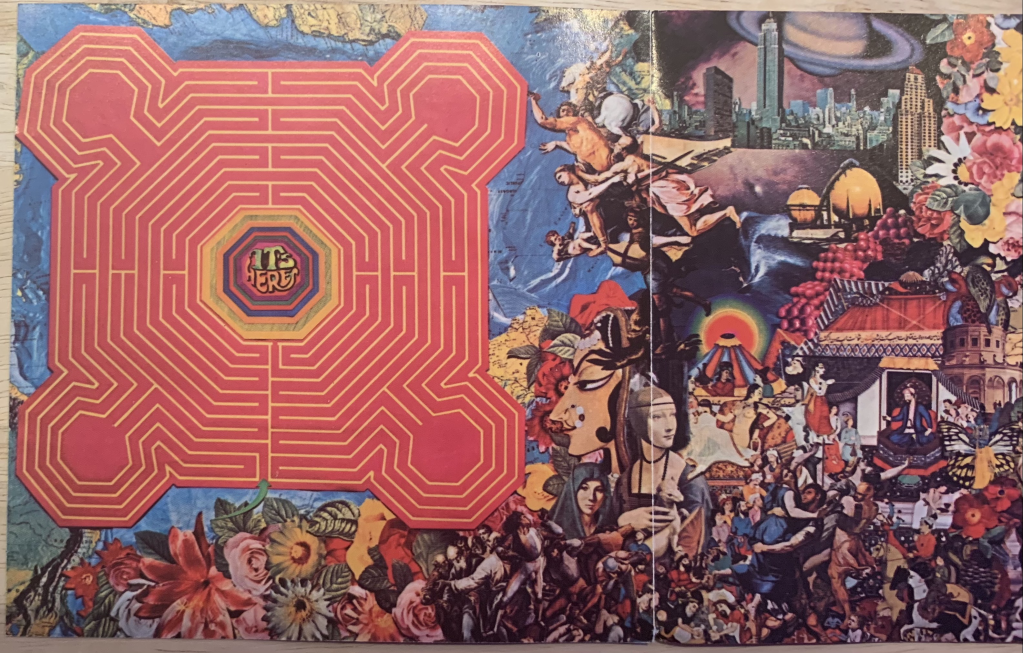
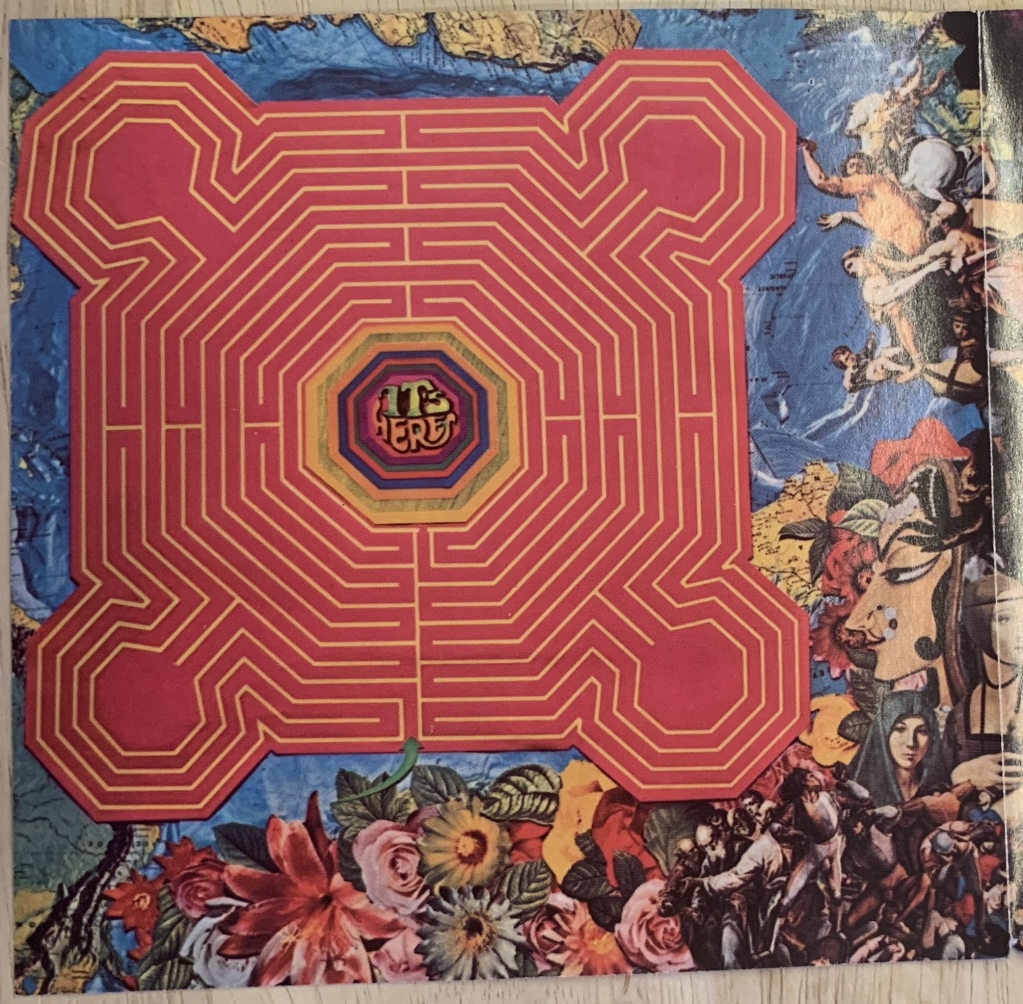
For basic miking info, see the “Recording Header” section.
This is the Egodeath Mystery Show, with Cybermonk.
egodeaththeory.wordpress.com
We’re listening to the album Their Satanic Majesties Request.
We’ve finished the “Intro” segment.
_54_ The timestamp is x.
move “current segment” sign to next segment
This is the start of the “Show Format” segment.
_118_ The timestamp is x.
Agenda items about the show format should be in the “Egodeath Mystery Show” page, but they could also be in this episode template in the “Intro” segment or in the “Egodeath Theory” segment.
Page: Egodeath Mystery Show
Subsection: Agenda Items for Working on the Show-Format
https://egodeaththeory.wordpress.com/2021/02/05/egodeath-mystery-show/#Agenda-Items-for-Working-on-the-Show-Format
We’ve finished the “Show Format” segment.
_1804_ The timestamp is x.
move “current segment” sign to next segment
This is the start of the “Voice & Mic Technique” segment.
_1827_ The timestamp is x.
Agenda items about Voice & Mic Technique should be in the “Voice & Mic Technique” page, but they could also be in this episode template in the “Intro” segment or in the “Egodeath Theory” segment.
We’ve finished the “Voice & Mic Technique” segment.
_3242_ The timestamp is x.
move “current segment” sign to next segment
This is the start of the “Warmup Reading” segment.
_3333_ The timestamp is x.
Warmup Readings for the Egodeath Mystery Show
We’ve finished the “Warmup Reading” segment.
_3559_ The timestamp is x.
move “current segment” sign to next segment
This is the start of the “Egodeath Theory” segment.
_3614_ The timestamp is x.
Agenda items about Egodeath Theory should be in this episode template in the “Intro” segment or in the “Egodeath Theory” segment.
We’ve finished the “Egodeath Theory” segment.
_1:28:48_ The timestamp is x.
move “current segment” sign to next segment
This is the start of the “Not a Music Show” segment, to do selected work items from the Esoteric Agenda.
_12954_ The timestamp is x.
We’ve finished the “Not a Music Show” segment.
_13128_ The timestamp is x.
move “current segment” sign to next segment
This was the Egodeath Mystery Show.
_13354_ timestamp after stop recording
/ end of section ““Ep# Key Words.mp3”
Adam Anczyka & Halina Grzymała-Moszczyńska write:
“The editors mention in their chapter on ‘Constructing Esotericism’ (25–48) some of the terminological issues implicated in the use of the term ‘esotericism.’ They suggest that it is more a constructed idea than an analytical, natural category. They point out that the main problem is that historically and doctrinally diverse movements and ideas were gathered together under the umbrella term ‘esotericism’ by believers and academics alike. It resulted in specifically sociological and psychological effects, as many people affiliate themselves with the ‘esoteric’ and sometimes use the term to self-depict their beliefs. However, it is difficult to stop using the term in scholarly research, simply because it has become a part of a popular discourse. Most people know intuitively what ‘esoteric’ means, and to which religious or spiritual groups the term may refer. Even the editors of the book entitled it ‘Contemporary Esotericism,’ which illustrates the power of the term. Certainly they do explain in what context the notion is used, and on what bias it was constructed, but – concerning the variety of content found inside – we thought that a better title would be a plural form of the concept like ‘Contemporary Esotericisms’ or ‘Contemporary Esoteric Movements,’ which would be in line with the editors’ plea concerning the watchful usage of ‘esotericism’ in scholarly works (37–38).”
That pluralization of a term is a trope; a stock move. Scholars have similarly recommended we talk about “Christianities” or “Gnosticisms”.
I have specified “the esotericism of Valentinian gnostics as described by Pagels’ first 3 books”. Pagels in those books doesn’t use the term ‘esotericism’. Freke & Gandy use the term ‘esotericism’ in their book The Jesus Mysteries.
Regardless of all discussion of whatever, the key and highest thing is always: mental worldmodel transformation from literalist ordinary-state possibilism (with autonomous control) to analogical psychedelic eternalism (with dependent control). That core is easy to see in mystery-religion initiation; in the Mystery Religions. What varies is surface theme; what’s constant is the underlying essence (analogical psychedelic eternalism).
Partridge thinks bad = Christendom, good = anti-Christendom revolution & rebellion (counter-, alternative, non-mainstream, etc). Then he notes he’s painted himself in a corner, when the non-mainstream (ie the non-Christendom) becomes normal and dominant, he has to invent the self-countering term, “occulture”, which is intended by him as an ironic oxymoron (when considered within his explanatory framework).
In contrast, I think bad = the exoteric layer of all brands of religion, good = the esoteric layer of all brands of religion.
Amazingly, even with no Noise Gate, the background noise is only audible at points, such as 11:17 & 11:08. The Supercardioid polar pattern rejects most off-axis noise (45° back angle rejection), and (the slight) body noises were worse than external noises. I wish I had done part of the recording with Omni mode, for comparison. Can the Supercardioid polar pattern be used in place of a noise gate? The relation between EQ, polar pattern, and noise rejection. I’d like to have some recordings / episodes that freely vary the polar pattern.
For basic miking info, see the “Recording Header” section.
/ end “ep59”
Album: Their Satanic Majesties Request. Songs:
For basic miking info, see the “Recording Header” section.
This is the Egodeath Mystery Show, with Cybermonk.
egodeaththeory.wordpress.com
We’re listening to the album Their Satanic Majesties Request. Songs:
We’ve finished the “Intro” segment.
_53_ The timestamp is x.
move “current segment” sign to next segment
This is the start of the “Show Format” segment.
_126_ The timestamp is x.
Agenda items about the show format should be in the “Egodeath Mystery Show” page, but they could also be in this episode template in the “Intro” segment or in the “Egodeath Theory” segment.
Page: Egodeath Mystery Show
Subsection: Agenda Items for Working on the Show-Format
https://egodeaththeory.wordpress.com/2021/02/05/egodeath-mystery-show/#Agenda-Items-for-Working-on-the-Show-Format
We’ve finished the “Show Format” segment.
_528_ The timestamp is x.
move “current segment” sign to next segment
This is the start of the “Voice & Mic Technique” segment.
_633_ The timestamp is x.
Agenda items about Voice & Mic Technique should be in the “Voice & Mic Technique” page, but they could also be in this episode template in the “Intro” segment or in the “Egodeath Theory” segment.
We’ve finished the “Voice & Mic Technique” segment.
_2352_ The timestamp is x.
move “current segment” sign to next segment
This is the start of the “Warmup Reading” segment.
_2412_ The timestamp is x.
Warmup Readings for the Egodeath Mystery Show
We’ve finished the “Warmup Reading” segment.
_2618_ The timestamp is x.
move “current segment” sign to next segment
This is the start of the “Egodeath Theory” segment.
_2742_ The timestamp is x.
Agenda items about Egodeath Theory should be in this episode template in the “Intro” segment or in the “Egodeath Theory” segment.
We’ve finished the “Egodeath Theory” segment.
_20212_ The timestamp is x.
move “current segment” sign to next segment
This is the start of the “Not a Music Show” segment, to do selected work items from the Esoteric Agenda.
_20849_ The timestamp is x.
We’ve finished the “Not a Music Show” segment.
_21148_ The timestamp is x.
move “current segment” sign to next segment
This was the Egodeath Mystery Show.
_21254_ timestamp after stop recording
/ end “2021-03-__ Egodeath Mystery Show.mp3”
The next voicing-intensive episode or practice session, has to:
I hope, upon playback, there are only a few spots where I fail to deliberately control my vocalizing. As a transitional, stepping stone phase, I hope this entire episode sounds artificially voiced, it’s probably 90%, and climbing.
Nope; fail at maybe 3/4 of the way through; during Hanegraaff video, I forget to use distanced, artificial, transcendent voicing. Reborn again into Egoic Sleep.
This is why I still have to use beginner level training wheels of using nothing but the extreme (thus easy) “Pitch Grounding” technique for the *entire* episode no matter what type of segment comes up.
Or, I need to toggle among:
For basic miking info, see the “Recording Header” section.
This is the Egodeath Mystery Show, with Cybermonk.
egodeaththeory.wordpress.com
We’re listening to the album Their Satanic Majesties Request, by the Rolling Stones.
We’ve finished the “Intro” segment.
__ The timestamp is x.
move “current segment” sign to next segment
This is the start of the “Voice & Mic Technique” segment.
_210_ The timestamp is x.
We’ve finished the “Voice & Mic Technique” segment.
434__ The timestamp is x.
move “current segment” sign to next segment
This is the start of the “Warmup Reading” segment.
_507_ The timestamp is x.
Warmup Readings for the Egodeath Mystery Show
We’ve finished the “Warmup Reading” segment.
641__ The timestamp is x.
move “current segment” sign to next segment
This is the start of the “Egodeath Theory” topical segments.
709__ The timestamp is x.
We’ve finished the “Egodeath Theory” topical segments.
1 22 08__ The timestamp is x.
move “current segment” sign to next segment
This is the start of the “Not a Music Show” segment, to do selected work items from the Esoteric Agenda.
1:22:38__ The timestamp is x.
We’ve finished the “Not a Music Show” segment.
2 11 55__ The timestamp is x.
move “current segment” sign to next segment
This was the Egodeath Mystery Show. 2 14 20
2 14 48__ timestamp after stop recording
sections to move to top when publishing the episode
/ end “2021-03-__ Egodeath Mystery Show.mp3”
Variable Mic Polar Patterns
https://egodeaththeory.wordpress.com/2021/03/06/voice-and-mic-technique/#Variable-Mic-Polar-Patterns
This is a Core version of the episode “Ep56 High Performance”.
Above, a Core version of this episode is also available.
I’m trying reverting to an old naming pattern, for simple episode numbering + maximum keywords on narrow music player display.
filename pattern not used:
“2021-03-07a Egodeath Mystery Show – High Performance.mp3”
“aup” = reference timestamps from audio project file.
done: 13400aup2 is a mess, clean up.
For basic miking info, see the “Recording Header” section.
This is the Egodeath Mystery Show, with Cybermonk.
egodeaththeory.wordpress.com
fade music
fade music
We’ve finished the “Intro” segment.
102_ The timestamp is x. fade music
move “current segment” sign to next segment
This is the start of the “Voice & Mic Technique” segment.
130__ The timestamp is x. fade music
We’ve finished the “Voice & Mic Technique” segment.
_1934_ The timestamp is x. fade music
move “current segment” sign to next segment
This is the start of the “Warmup Reading” segment.
2048__ The timestamp is x. fade music
Warmup Readings for the Egodeath Mystery Show
We’ve finished the “Warmup Reading” segment.
10014 The timestamp is x. fade music
move “current segment” sign to next segment
This is the start of the “Egodeath Theory” topical segments.
10037__ The timestamp is x. fade music
~~
Move to here, the items that didn’t get covered/resolved in the latest episode of Egodeath Mystery Show.
Site map: Refactored pages for the Egodeath Mystery Show. a copy is below.
| Group: egodeath | Message: 3335 | From: Michael Hoffman | Date: 12/06/2004 |
| Subject: Authentic esotericism is entheogenic esotericism |
| Authentic esotericism is entheogenic esotericism. Entheogens are the key to esotericism. This is the simplest possible theory of esotericism, and the most natural, the least contrived and strained. Theories of esotericism that are not based on entheogens suffer from the problem of grandiose verbiage, unmet promises and claims, chronic vagueness, excuses for lack of potent and prompt efficacy, and no ability to deliver the experiences which are talked about. Drug-free esotericism doesn’t work; it is not effectively ergonomic. — Michael Hoffman |
We’ve finished the “Egodeath Theory” topical segments.
22222__ The timestamp is x. fade music
move “current segment” sign to next segment
This is the start of the “Not a Music Show” segment, to do selected work items from the Esoteric Agenda. [EGODEATH THEORY ITEMS, VOICE & MIC ITEMS, SHOW-FORMAT ITEMS]
22238__ The timestamp is x. fade music
fade music
We’ve finished the “Not a Music Show” segment.
__30258 The timestamp is x. fade music
move “current segment” sign to next segment
This was the Egodeath Mystery Show.
__ timestamp after stop recording
sections to move to top when publishing the episode
/ end “2021-03-07a Egodeath Mystery Show.mp3”
master copy is at site map
https://egodeaththeory.wordpress.com/nav/#Egodeath-Mystery-Show
People would be wise to copy whatever content they get from me, because my way is to suddenly stop producing content in that domain, while I’m working in a different domain.
I just heard what I’ve been looking out for since Feb. 8: at 1:10:45 in Egodeath Mystery Show episode 2021-02-08c, audience shouts “more cowbell”, in my field recording of animals.
I posted the following comment at https://cyberdisciple.wordpress.com/2020/12/06/transcendent-knowledge-podcast-ep-26/ —
Regarding my statement or construction “It is impressive and admirable, the consistent dedication to falsehood which the Exoteric Paradigm has.” —
Wrmspirit makes sound points regarding the statement. The context for making the quoted statement is important.
My only purpose of formulating the quoted statement was to explore the challenge of how to combine a positive tone of voice, with a productive critical mentality.
The fear is that if I speak in a positive tone of voice, I will lose the ability to provide useful critique of anything.
The quoted statement is just a quick, artificial, made-up, throwaway example of trying to say some extremely critical point in a positive tone of voice.
The topic of positive vs. negative tone applies to both text and speech. When writing my main 2006 main article, I was advised to make positive statements (in text) about what is the case, rather than focusing on making critical, negative statements about incorrect ideas.
/ end of copy of Comment
For basic miking info, see the “Recording Header” section.
This is the Egodeath Mystery Show, with Cybermonk.
egodeaththeory.wordpress.com
fade music
fade music
We’re listening to the Pop Sike compilation, A Heavy Dose of Lyte Psych.
https://www.youtube.com/watch?v=EnG-8Bne6KU
We’ve finished the “Intro” segment.
112 The timestamp is x. fade music
This is the start of the “Voice & Mic Technique” segment.
132__ The timestamp is x. fade music
We’ve finished the “Voice & Mic Technique” segment.
11257__ The timestamp is x. fade music
This is the start of the “Warmup Reading” segment.
11533__ The timestamp is x. fade music
Warmup Readings for the Egodeath Mystery Show
We’ve finished the “Warmup Reading” segment.
14147 / 2:02:07 The timestamp is x. fade music
end of episode
/ end “2021-03-5b Egodeath Mystery Show.mp3”
We’re listening to the Pop Sike compilation, A Lethal Dose of Hard Psych.
https://www.youtube.com/watch?v=EnG-8Bne6KU
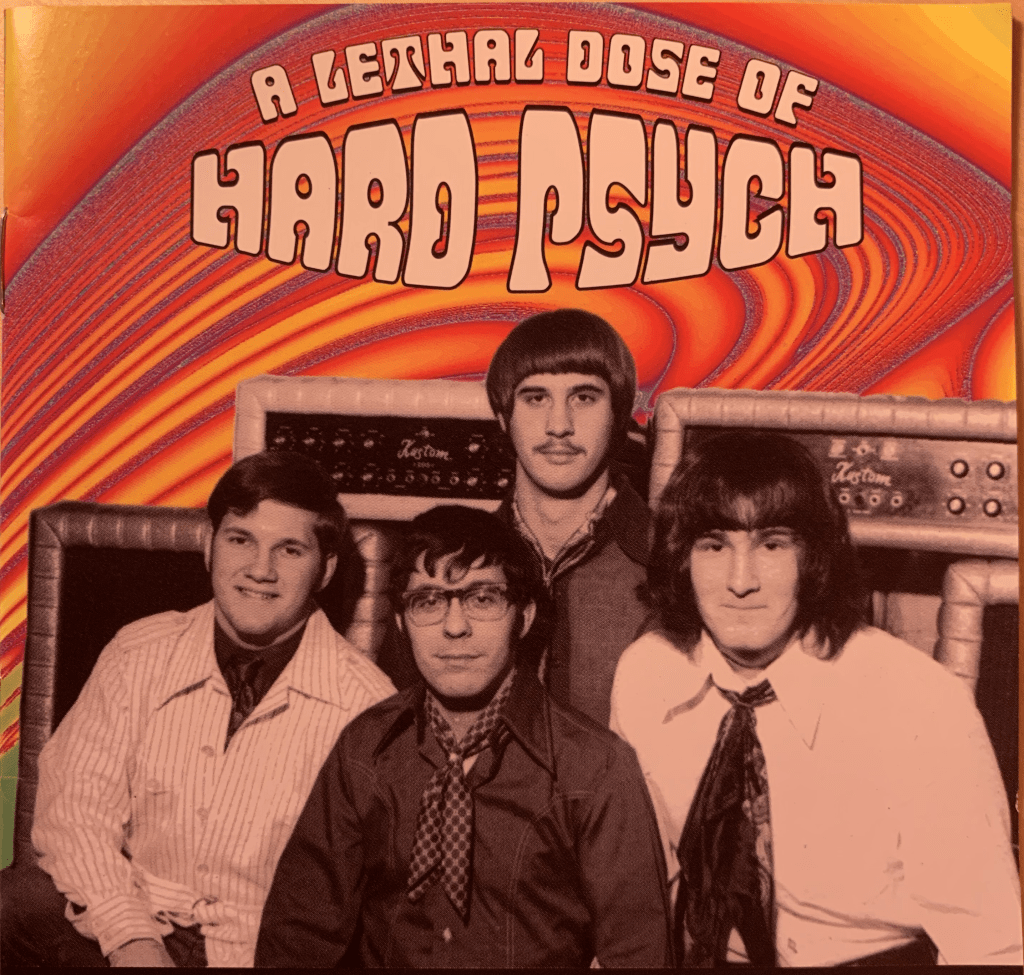
We’re listening to:
For basic miking info, see the “Recording Header” section.
We’ve finished the “Intro” segment.
__206 The timestamp is x. fade music
This is the start of the “Vocal Report” segment.
2:33__ The timestamp is x. fade music
We’ve finished the “Vocal Report” segment.
12:42__ The timestamp is x. fade music
This is the start of the “Vocal Review” segment.
13:07__ The timestamp is x. fade music
We’ve finished the “Vocal Review” segment.
_14:30_ The timestamp is x. fade music
This is the start of the “Mic Technique” segment.
_19:51_ The timestamp is x. fade music
Mic Technique
done: demo of excess Compression (of volume dynamics)
done: demo of Noise Gate
We’ve finished the “Mic Technique” segment.
30:06__ The timestamp is x. fade music
This is the start of the “Warmup Reading” segment.
__30:40 The timestamp is x. fade music
Warmup Readings for the Egodeath Mystery Show
We’ve finished the “Warmup Reading” segment.
33:47__ The timestamp is x. fade music
This is the start of the “Esoteric Agenda” Super-Segment. In this Super-Segment, the Board of Mystics does the following:
done: After those topical segments, during the “Not a Music Show” segment, do work-items from the agenda.
35:03__ The timestamp is x. fade music
This is the start of the “Egodeath Theory” topical segments. The timestamp is __ done: COPY THESE NEW “EGODEATH THEORY TOPICAL SEGMENTS” HEADINGS TO THE SHOW TEMPLATE.
| Group: egodeath | Message: 3335 | From: Michael Hoffman | Date: 12/06/2004 |
| Subject: Authentic esotericism is entheogenic esotericism |
| Authentic esotericism is entheogenic esotericism. Entheogens are the key to esotericism. This is the simplest possible theory of esotericism, and the most natural, the least contrived and strained. Theories of esotericism that are not based on entheogens suffer from the problem of grandiose verbiage, unmet promises and claims, chronic vagueness, excuses for lack of potent and prompt efficacy, and no ability to deliver the experiences which are talked about. Drug-free esotericism doesn’t work; it is not effectively ergonomic. — Michael Hoffman |
We’ve finished the “Egodeath Theory” topical segments. The timestamp is __
We’ve finished the “Esoteric Agenda” Super-Segment.
20135__ The timestamp is x. fade music
This is the start of the “Not a Music Show” segment.
In the “Not a Music Show” segment, the Board of Mystics does selected work-items from the Esoteric Agenda.
20206__ The timestamp is x. fade music
We’re listening to:
We’ve finished the “Not a Music Show” segment.
25011 The timestamp is x. fade music
This is the start of the “Outro” segment.
25108 The timestamp is x. fade music
2:53:08__ timestamp after stop recording
/ end “2021-03-05a Egodeath Mystery Show.mp3”
We’ve finished the “Intro” segment. The timestamp is
This is the start of the “Vocal Report” segment. The timestamp is
We’ve finished the “Vocal Report” segment. The timestamp is
This is the start of the “Vocal Review” segment. The timestamp is
We’ve finished the “Vocal Review” segment. The timestamp is
This is the start of the “Mic Technique” segment. The timestamp is
We’ve finished the “Mic Technique” segment. The timestamp is
This is the start of the “Warmup Reading” segment. The timestamp is
We’ve finished the “Warmup Reading” segment. The timestamp is
This is the start of the “Esoteric Agenda” Super-Segment. In this Super-Segment, the Board of Mystics does the following:
We’ve finished the “Esoteric Agenda” Super-Segment. The timestamp is
This is the start of the “Not a Music Show” segment. In the “Not a Music Show” segment, the Board of Mystics does selected work-items from the Esoteric Agenda.
The timestamp is
We’ve finished the “Not a Music Show” segment. The timestamp is
This is the start of the “Outro” segment. The timestamp is
For basic miking info, see the “Recording Header” section.
This is the Egodeath Mystery Show, with Cybermonk.
egodeaththeory.wordpress.com
fade music
We’re listening to the song __, from the album, by the band __.
fade music
We’ve finished the “Intro” segment.
046 The timestamp is x. fade music
This is the start of the segment “Review of Casual Standard Voice, and Mic Technique”.
101 The timestamp is x. fade music
open for edit: Casual Standard Voice
We’ve finished the segment “Review of Casual Standard Voice, and
205 (end voc) The timestamp is x. fade music
This is the start of the “Warmup Reading” segment.
344 The timestamp is x. fade music
open for edit: Warmup Readings for the Egodeath Mystery Show
That ends the Warmup Reading segment.
634 The timestamp is x. fade music
Ths is the Mic Technique”.
214__ start of mic tech segment:
335 END OF Mic segment.
In this next segment, the Board of Mystics goes through the rolling agenda.
641 The timestamp is x. fade music
First do a breadth-first pass, NO EDITS!
timesstamp: 15:55
Next, in this episode, depth coverage of the “Egodeath theory” agenda items/segments. start: 1646
Idea! do work items (from Agenda)/typing during the “This Is Not a Music Show” segment
Gen2:
15 And the Lord God took the man, and put him into the garden of Eden to dress it and to keep it.
16 And the Lord God commanded the man, saying, Of every* tree of the garden thou mayest freely eat:
17 But of the tree of the knowledge of good and evil, thou shalt not eat of it: for in the day that thou eatest thereof thou shalt surely die.
*that would include the Tree of Life, eating from which grants living forever!
Gen3:
22 And the Lord God said, Behold, the man is become as one of us, to know good and evil: and now, lest he put forth his hand, and take also of the tree of life, and eat, and live for ever:
23 Therefore the Lord God sent him forth from the garden of Eden, to till the ground from whence he was taken.
24 So he drove out the man; and he placed at the east of the garden of Eden Cherubims, and a flaming sword which turned every way, to keep the way of the tree of life.
NIV:
ch 2:
8 Now the Lord God had planted a garden in the east, in Eden; and there he put the man he had formed. 9 The Lord God made all kinds of trees grow out of the ground—trees that were pleasing to the eye and good for food. In the middle of the garden were the tree of life and the tree of the knowledge of good and evil.
15 The Lord God took the man and put him in the Garden of Eden to work it and take care of it. 16 And the Lord God commanded the man, “You are free to eat from any tree* in the garden; 17 but you must not eat from the tree of the knowledge of good and evil, for when you eat from it you will certainly die.”
*that would include the Tree of Life, eating from which grants living forever!
ch3:
22 And the Lord God said, “The man has now become like one of us, knowing good and evil. He must not be allowed to reach out his hand and take also from the tree of life and eat, and live forever.” 23 So the Lord God banished him from the Garden of Eden to work the ground from which he had been taken. 24 After he drove the man out, he placed on the east side[e] of the Garden of Eden cherubim and a flaming sword flashing back and forth to guard the way to the tree of life.
Addendum after the show:
https://www.biblestudytools.com/dictionary/cherubim-1/ –
“2. The Garden as the Abode of the Gods:
“If we read between the lines of the Paradise account in Ge (compare Genesis 3:8), the garden of Eden, the primeval abode of man, reveals itself as more than that:
“it was apparently the dwelling-place of God. In the polytheistic story of the creation of the world and early life of man, which, while in several respects analogous (compare Genesis 3:22), is devoid of the more spiritual notions of Hebraism, the garden was the abode of the gods who alone had access to the tree of life from the fruit of which they derived their immortality.
“Adam, before the fall, is conceived as a superhuman being; for while he is forbidden to taste of the fruit of the tree of knowledge, the way to immortality is open to him; for it is only after transgressing the Divine command that he merits death and becomes mortal.
“The choice of immortal innocence and mortal knowledge lay before him; he elected death with knowledge.”
/ end of Addendum after the show
Cain & Abel is next: Gen4:
https://www.biblegateway.com/passage/?search=Genesis%204&version=KJV
that ends the topical segment on the angel guarded eden gate: 57:16.
Topical Segment: Partridge
start time: 59:10
Topical Segment: Partridge
end time: __3:13:41
For basic miking info, see the “Recording Header” section.
We’ve finished the “Intro” segment.
508 The timestamp is x. fade music
This is the start of the segment “Review of Casual Standard Voice, and Mic Technique”.
1109__ The timestamp is x. fade music
Warmup Reading [not done – instead I read from article “Cog Phen’y of Metaperception”]
idea for episode of Egodeath Mystery Show, w/ lots of music. eg:
“2021-02-29a Egodeath Mystery Show – This Is Not a Music Show.mp3”
(there are no 02-29 episodes)
For my own technical comparison purposes, I’m providing myself with this near-raw mic deck tracking recording. (The only processing I printed to this recording is Limiter.)
Main motivation for adding this alternate version of the recording: it bugs me, the lack of bass in my trebly mobile speakers, from the 02a episode version of this recording.
The main sonic difference vs the equivalent episode of Egodeath Mystery Show: This mp3 has more bass; no eq was applied. Cardioid polar pattern at 6″ = proximity effect = bass boost, which complements mobile device speakers and earbuds which are too trebly and weak in the bass.
ALTERNATE SOLUTION, TO PLAY “2021-03-02a Egodeath Mystery Show – Cog Pheny of Metaperception.mp3” WITH MORE BASS: ON MOBILE DEVICE, SETTINGS: MUSIC: EQ: BASS BOOST.
I want to compare raw recording vs. the dynamics expander – the level of nuisance noise in the background.
In “2021-03-02a Egodeath Mystery Show – Cog Pheny of Metaperception.mp3”, I removed too much bass, for my trebly speakers. I also aggressively did lossy compression. I should’ve merely applied an industry-standard slight mud-reduction around 250 Hz, instead of a full-on -6dB smile in the bass freqs.
For basic miking info, see the “Recording Header” section.
analogical psychedelic eternalism ~= analogical psychedelic eternalism control-dependent-control
the mouth of hell, Jesus pulling the saints out from, as, a serpent. Thus we have the common art mytheme of “person with snake body”.
For basic miking info, see the “Recording Header” section.
This is the Egodeath Mystery Show, with Cybermonk.
egodeaththeory.wordpress.com
This was the Egodeath Mystery Show.
For basic miking info, see the “Recording Header” section.
We’re listening to the song __, from the album, by the band __.
Motivation for v2 replacing v1 (which had filename
“2021-02-28a Egodeath Mystery Show – Mic Rec Tricks.mp3”):
For basic miking info, see the “Recording Header” section.
Those songs are from a below comp. I have the set of four compilations including these two.
Timestamps for the v1 reject mp3 (not for v2 mp3):
This experiment gathered lots of valuable data, but it’s a failure as far as the quality of the re-voicing. I had to go back to the source, 10c clips, and alter that to make that more amenable to re-voicing. This mp3 might be supplemented/replaced by another pass.
This is the Egodeath Mystery Show, with Cybermonk.
egodeaththeory.wordpress.com
fade music
We’re listening to:
We’ve finished the “Intro” segment.
__ The timestamp is x. fade music
This is the start of the “Review of Standard Voice” segment.
143__ The timestamp is x. fade music
Read from Casual Standard Voice, then return here.
We’ve finished the “Review of Standard Voice” segment.
34:14 The timestamp is x. fade music
This is the start of the “Warmup Reading” segment.
3424__ The timestamp is x. fade music
Read from Warmup Readings for the Egodeath Mystery Show, then return here.
That ends the Warmup Reading segment.
3553__ The timestamp is x. fade music
In this next segment, the Board of Mystics goes through the esoteric agenda.
3608__ The timestamp is x. fade music
That ends the main agenda, and the discussion of x.
__ The timestamp is x. fade music
This was the Egodeath Mystery Show.
The cleaned-up voice recording with feet, that I only did 1 pass thru to re-process:
“2021-02-08b Clips – Egodeath Mystery Show.mp3”
“2021-02-08b Clips – Egodeath Mystery Show.aup”
Header (to be finished at 0:30!):
This is the Egodeath Mystery Show, with Cybermonk.
egodeaththeory.wordpress.com
Content: This episode covers:
This episode consists of voice recording clips from an unreleased phone-mic recording from Feb 23rd (two days ago), and from yesterday’s Feb 24th Egodeath Mystery Show.
Voicing: repeat phrase for low pitch, fun tone, casual wording.
Date/time: It’s now 5pm on February 25, 2021.
Miking: I’m using the CAD M39 LDCM, 4.5″, 0°, aimed at upper lip, no pop filter, set to polar pattern of Wide Cardioid (halfway between Cardioid & Omnidirectional, to get only half the bass boost, and to let in half the room reverb).
repeating the header: I plan to repeat this header info later in this show.
This episode will combine:
I’m using the CAD M39 microphone, at 4.5″ distance, in Wide Cardioid polar pattern, with no EQ, with MXR limiter. fade music
I produced this differently:
see track names in project file:
I will incorp the “words for psychedelics” discussion from that Feb 23 phone-mic recording into episode 25a of Egodeath Mystery Show. Timestamps of the parts to clip: (done: reduced to 30:19)
Feb 25 Content:
Added to show page template, to say what time of day:
The original “structured recording header” concept, that begat the Egodeath Mystery Show. I first defined the Header concept in https://egodeaththeory.wordpress.com/2021/01/15/idea-development-page-10/#Voice-Recording-2-for-Jan-26
I read some lyrics aloud.
Arbel, V. Beholders of Divine Secrets: Mysticism and Myth in the Hekhalot and Merkavah Literature. Albany: SUNY, 2003.
Ashton, J. The Religion of Paul the Apostle. New Haven: Yale, 2000.
Balsekar, R. Who Cares? The Unique Teaching of Ramesh S. Balsekar. Redondo Beach: Advaita, 1999.
Barton, T. Ancient Astrology. London: Routledge, 1994.
Bryan, C. Render to Caesar: Jesus, the Early Church, and the Roman Superpower. New York: Oxford, 2005.
Collins, J. J. (editor), and M. Fishbane (editor). Death, Ecstasy, and Other Worldly Journeys. Albany: SUNY, 1995.
Crowley, M. Secret Drugs of Buddhism. Forthcoming, and presented at Entheogenesis Conference 2004.
Culiano, I. Out of This World: Otherworldly Journeys from Gilgamesh to Albert Einstein. Boston: Shambhala, 1991.
Cumont, F. Astrology and Religion among the Greeks and Romans. New York: Dover, 1960 (1912).
Davies, S. Jesus the Healer: Possession, Trance, and the Origins of Christianity. New York: Continuum, 1995.
Detering, H. Der Gefälschte Paulus; The Fabricated Paul: Early Christianity in the Twilight. Düsseldorf: Patmos, 1995.
Doherty, E. The Jesus Puzzle: Did Christianity Begin with a Mythical Christ? Challenging the Existence of an Historical Jesus. Ottawa: Canadian Humanist. 1999.
Drews, A. Die Petruslegende; The Legend of Saint Peter: A Contribution to the Mythology of Christianity. Frankfurt: Neuer Frankfurter, 1910, 1924.
Fishbane, M. The Kiss of God: Spiritual and Mystical Death in Judaism. Seattle: University of Washington, 1994.
Forte, R. (editor). Entheogens and the Future of Religion. San Francisco: Council on Spiritual Practices, 1997.
Fowden, G. The Egyptian Hermes: A Historical Approach to the Late Pagan Mind. Princeton: Princeton University, 1986.
Freke, T.; and P. Gandy. The Complete Guide to World Mysticism. London: Piatkus, 1997.
Grof, S. (editor), and C. Grof (editor). Spiritual Emergency: When Personal Transformation Becomes a Crisis. New York: Tarcher/Putnam, 1989.
Grof, S.; and C. Grof. Beyond Death: The Gates of Consciousness. London: Thames and Hudson, 1980.
Heinrich, C. Strange Fruit: Alchemy and Religion: The Hidden Truth. London: Bloomsbury, 1994.
Hoffman, M. A. (editor). Entheos: The Journal of Psychedelic Spirituality. Entheomedia.org, 2001-2002.
Hoffman, M. A., C. A. P. Ruck, and B. Staples. “The Entheogenic Eucharist of Mithras”. Entheos 2.1:13-46 (2002).
Hoffman, M. S. “Wasson and Allegro on the Tree of Knowledge as Amanita”. Journal of Higher Criticism, in press, 2007.
Hoffman, M. S. “The Bubble of Simulation: Subjective Experience as a Virtual Environment”. Fringe Ware Review 5:22-24, 1994.
Hofmann, A.; R. E. Schultes; and C. Ratsch. Plants of the Gods: Their Sacred, Healing and Hallucinogenic Powers. Rochester: Healing Arts, 1992 (1979).
Johnson, L. T. Religious Experience in Earliest Christianity: A Missing Dimension in New Testament Studies. Minneapolis: Augsburg, 1998.
Kubby, S. The Politics of Consciousness: A Practical Guide to Personal Freedom. Port Townsend: Loompanics, 1995.
Martin, L. H. Hellenistic Religions: An Introduction. New York: Oxford University, 1987.
Merkur, D. Gnosis: An Esoteric Tradition of Mystical Visions and Unions. Albany: SUNY, 1993.
Merkur, D. The Psychedelic Sacrament: Manna, Meditation, and Mystical Experience. Rochester: Park Street, 2001.
Metzner, R. The Unfolding Self: Varieties of Transformative Experience. Novato: Origin, 1997 (1986).
Nasrallah, L. An Ecstasy of Folly: Prophecy and Authority in Early Christianity. Cambridge: Harvard, 2003.
Oaklander, L. N. (editor), and Q. Smith (editor). The New Theory of Time. New Haven: Yale, 1994.
Oaklander, L. N., and Q. Smith. Time, Change and Freedom: An Introduction to Metaphysics. New York: Routledge, 1995.
Pagels, E. The Gnostic Paul: Gnostic Exegesis of the Pauline Letters. Harrisburg: Trinity, 1992 (1975).
Pleket, H. W. “An Aspect of the Emperor Cult: Imperial Mysteries.” Harvard Theological Review 58:331-47 (1965).
Pilch, J. J. Visions and Healing in the Acts of the Apostles: How the Early Believers Experienced God. Collegeville: Liturgical, 2004.
Ruck, C.; B. Staples; and C. Heinrich. The Apples of Apollo: Pagan and Christian Mysteries of the Eucharist. Durham: Carolina Academic, 2001.
Rucker, R. The Fourth Dimension: A Guided Tour of the Higher Universes. Boston: Houghton Mifflin, 1984.
Russell, D. Shamanism and the Drug Propaganda: Patriarchy and the Drug War. Camden: Kalyx, 1998.
Shanon, B. The Antipodes of the Mind: Charting the Phenomenology of the Ayahuasca Experience. New York: Oxford University, 2002.
Smith, D. E. From Symposium to Eucharist: The Banquet in the Early Christian World. Minneapolis: Fortress, 2003.
Taylor-Perry, R. The God Who Comes: Dionysian Mysteries Reclaimed. New York: Algora, 2003.
Thagard, P. Conceptual Revolutions. Princeton: Princeton University, 1992.
Thompson, M. M. The God of the Gospel of John. Grand Rapids: Eerdmans, 2001.
Ulansey, D. “The Eighth Gate: The Mithraic Lion-Headed Figure and the Platonic World-Soul”. Forthcoming; online.
Vernant, J-P.; and P. Vidal-Naquet. Myth and Tragedy in Ancient Greece. New York: Zone, 1988 (1972).
Wasson, R. G.; A. Hofmann, and C. Ruck. The Road to Eleusis: Unveiling the Secret of the Mysteries. Los Angeles: Hermes, 1998 (1978).
Watts, A. “Zen and the Problem of Control”, in This Is It and Other Essays. New York: Vintage, 1973 (1958).
Wegner, D. White Bears and Other Unwanted Thoughts: Suppression, Obsession, and the Psychology of Mental Control. New York: Guilford, 1989.
White, R. Nietzsche and the Problem of Sovereignty. Chicago: University of Illinois, 1997.
Williams, M. A. The Immovable Race: Gnostic Designation and the Theme of Stability in Late Antiquity. Leiden: Brill, 1997.
Added “riding the mic sweet spot” to casual standard voice page, to read-aloud those mic principles.
This is the Egodeath Mystery Show, with Cybermonk.
egodeaththeory.wordpress.com
February 21, 2021.
To differentiate this episode: I might cover the following: 30 seconds; 4 items, 6 words each
I’m using the Shure SM57 microphone, at 4″ distance, approximately on-axis, with no EQ, with limiter.
We’re listening to:
We’ve finished the “Intro” segment.
__ The timestamp is x. fade music
This is the start of the “Review of Standard Voice” segment.
__ The timestamp is x. fade music
Read from Casual Standard Voice, then return here.
We’ve finished the “Review of Standard Voice” segment.
__ The timestamp is x. fade music
This is the start of the “Warmup Reading” segment.
__ The timestamp is x. fade music
Read from Warmup Readings for the Egodeath Mystery Show, then return here.
That ends the Warmup Reading segment.
__ The timestamp is x. fade music
That ends the main agenda, and the discussion of x.
__ The timestamp is x. fade music
This was the Egodeath Mystery Show.
Maximal theory (Hoffman): ……. 10 9 0 – “falls late” curve
Moderate theory (Ruck): …………. 10 5 0 – “falls steadily” curve
Minimalist theory (McKenna): … 10 1 0 – “falls early” curve
Forgot Plots:
“Logarithmic vs. Exponential Fall” Is Ambiguous;
“Falls Late/ Falls Steadily/ Falls Early” Is Direct Description; or:
“Forgot Late/ Forgot Steadily/ Forgot Early”
When it comes to decline-curves, the terminology of “logarithmic vs exponential” is inconclusive.
According to the Maths synth module:
The “falls early” curve (Minimalist; McKenna) is an exponential decline (not logarithmic, as I’ve been saying).
The “falls late” curve (Maximalist; M. Hoffman) is a logarithmic decline (not exponential, as I’ve been saying).
After looking at image search results, the terms “exponential” and “logarithmic” are ambiguous, for declines.
It might be justifiable to call the “falls late” curve “exponential decline”, as I’ve been doing. I’d have to get into the math to check how the terminology usage works.
In recordings, I described the “falls late” curve as “exponential decline” as, “at first, the decrease per year is slight, and then later, the decrease-per-year becomes greater; an exponential increase in the rate of decline”.
It’s probably best to avoid the vague, indirect “log/exp” terms, and simply describe, instead, “the declines early” & “the declines late” curves. McKenna’s curve falls-off early; Hoffman’s curve falls late.
https://www.bing.com/images/search?q=logarithmic+fall
https://www.bing.com/images/search?q=logarithmic+decline
https://www.bing.com/images/search?q=logarithmic+reduction
https://www.bing.com/images/search?q=logarithmic+decrease
https://www.bing.com/images/search?q=exponential+fall
https://www.bing.com/images/search?q=exponential+decline
https://www.bing.com/images/search?q=exponential+reduction
https://www.bing.com/images/search?q=exponential+decrease
At present, I have not read the comments at the below page.
I posted a Comment at:
https://cyberdisciple.wordpress.com/2020/12/06/transcendent-knowledge-podcast-ep-26/ –
The person in the mystic state experiences being God as higher, transpersonal controller.
Sophia discovers her higher partner.
Everything in myth is aspects of oneself, the initiate.
The personal, lower self is distinct from the transpersonal, higher self.
The “overall person” (or initiate) includes the formerly unknown, higher, transpersonal component of control, as well as the lower, personal, controller portion of the “personal+transpersonal” control system.
The ‘personal’ control system includes the lower, ‘personal’ component of the personal control system, and the higher, transpersonal component of the personal control system.
See the image of Jesus and Sophia dancing, both with lifted garment indicating the higher state of awareness about the two levels of control.
Compare the two snakes (male ruler/controller & female ruler/controller) intertwined in the caduceus.
The word ‘person’ or ‘personal’ is ambiguous, and means both:
o Specifically the lower control-component (the passive thought receiver).
o Both of the levels of control: the control-thought inserter and the control-thought receiver); the personal and transpersonal levels.
In gnosticism, when Sophia wasn’t aware of her higher partner, and she tried to produce enlightenment, the result was a monster, Yaldabaoth: the lion-headed serpent-monster.
The well-formed mental worldmodel of control requires accounting for one’s higher, transpersonal level of control (the uncontrollable higher controller, uncontrollable by the lower, local locus of control), and recognizing the limits & dependency of the lower, local locus of control.
Consider doing a morning double-reading of M. Hoffman’s article Entheogens and Ancient Mystery Religions.
Not like my first time’s approach I gave to M. Hoffman, “read a paragraph, then paraphrase it”. I should listen to that full recording first.
A double-reading would give higher comprehension and better overall result, than my initial format (“paragraph then paraphrase”).
My first read-aloud recording of this article (Feb 2) was a reading of each paragraph (ie on a per-paragraph scale), followed by a paraphrase of the paragraph. Included References/Biblio at end.
A double-reading would replace my own, choppy paraphrase, by a smooth 2nd reading, on a per-sentence scale. And would replace the initial read-through of a paragraph, by a per-sentence doulbe-reading. Omit References. Focus just on learning Hoffman’s headings & sentences, as-is. Far more scalable and repeatable than inventing a paraphrase on the spot.
New addl type of modifcation of a read-through:
Consider clipping just the Art portions from the first 47 minutes of the “Ourgument” episode of Egodeath Mystery Show. What are all the passages I’ve ever recorded re: Panofsky? Do a “clips rollup episode” of all those.
1:45 – Art: represent all artists, especially esoteric religious artists. always mean mushrooms.
~10:00 Art: the book will convince
~12:00 “I’m scrolling down” <- del
13:00 Grid: the grid game explained/summarized, from last show, to be here independent of previous episode. Points explained. 200 vs -200, don’t change; we’ll change never.
~15:45 Art: the book will convince, devastating. bedtime cover story.
17:00 Art: artists given messed-up templates
19:00 Art: asked boss, copy machine. job desc. ital pines templates, badly malformed due to incompetence. follow your directives.
23:30 Grid: grid game again. briefly? unreasonable committed believer in plants.
Spectrum of recording complexity approaches:
see Egodeath Mystery Show page
Shouldn’t Cyberdisciple list Robert A. Segal himself as a theorist specifically within the category of “Myth-ritualist theory” or “Functionalism“? Is Segal a good guide to categories of theories/ interpretations of religion/ myth? Segal advocates a Social Science interpretation/ explanation of religion/ myth.
https://cyberdisciple.wordpress.com/evaluating-theories-of-mythology/ – begins by mentioning Segal, but doesn’t list Segal himself in any view in section “Variants and Theorists”.
The post only mentions Segal as a *guide to* theories of myth, in paragraph 1, and doesn’t present Segal himself as a particular theorist advocating specifically the Reductionist (ie Social Science) approach to the interpretation of religion/myth and/or the historiography of religion/myth.
What theory of Myth does Segal himself believe and advocate? Segal owns the advocacy of the Social-Science Reductionist approach to interpretation of religion, I tentatively suggest.
Cyberdisciple’s post begins:
“Evaluating Theories of Mythology
“This post will evaluate theories of mythology. Initially I drew from Robert A. Segal, Myth. A Very Short Introduction and Eric Csapo, Theories of Mythology for 19th and 20th century theories. Like a reviewer of Csapo’s book on Amazon, I find Segal’s a better introduction, Csapo’s a better analysis and critique. Read Segal for the quick and dirty, dig into Csapo for social context and method. Both make clear how 19th century all theories of myth have been, even the 20th century ones, before the Egodeath theory. Mythology as a discipline is tied to European imperialism and social Darwinism, ‘evolutionism’.
“I’m added summaries of ancient Greek approaches, mostly drawn from Luc Brisson, How Philosophers Saved Myths. I’m considering these summaries of ancient Greek approaches partial approximations because our understanding of what the Greeks meant needs to be revised in light of the Egodeath Theory.”
from “Empirical_Method_in_the_Study_of_Esoteri.pdf” 1995 Hanegraaff article:
article, Robert A. Segal, 1983, In defense of reductionism,
“In defense of reductionism” robert segal
https://www.bing.com/search?q=%22In+defense+of+reductionism%22+robert+segal
The article:
https://academic.oup.com/jaar/article-abstract/LI/1/97/683591
In Defense of Reductionism
Robert A. Segal
Journal of the American Academy of Religion, Volume LI, Issue 1, March 1983, Pages 97–124, https://doi.org/10.1093/jaarel/LI.1.97
Published: 01 March 1983
wik lacks a Robert Segal page:
https://en.wikipedia.org/wiki/Jungian_interpretation_of_religion#Gnosticism – “On the other hand, it is clear from a comparison of Jung’s writings and that of ancient Gnostics, that Jung disagreed with them on the ultimate goal of the individual. Gnostics in ancient times clearly sought a return to a supreme, other-worldly Godhead. In a study of Jung, Robert Segal claimed that the eminent psychologist would have found the psychological interpretation of the goal of ancient Gnosticism (that is, re-unification with the Pleroma, or the unknown God) to be psychically ‘dangerous’, as being a total identification with the unconscious. To contend that there is at least some disagreement between Jung and Gnosticism is at least supportable: the Jungian process of individuation involves the addition of unconscious psychic tropes to consciousness in order to achieve a trans-conscious centre to the personality. Jung did not intend this addition to take the form of a complete identification of the Self with the Unconscious.”
The terms ‘the conscious’ and ‘the unconscious’ are terrible, vague, off-base, ineffective theory-constructs.
2nd line of footer says:
Segal = the social-scientific study of religion and myth
reductionism means the theory/interpretation
religion & myth is social science
religion and myth are understood by science of sociology.
Religion and myth are sociological constructs
Religion/myth is social stuff, so is understood by social science.
To scientifically understand and study religion/myth, we must use social science.
The right way to understand religion/myth, is through social science.
That view is known as “Reductionism”; the Reductionist view.
The Reductionist view of Western Esotericism is the Social Science approach/perspective on Western Esotericism.
Western Esotericism = Social Science.
To understand Western Esotericism, approach Western Esotericism through the Social Science approach.
Evaluating Theories of Mythology
https://cyberdisciple.wordpress.com/evaluating-theories-of-mythology/
From what I gather from Hanegraaff’s 1995 article, Robert Segal himself should be listed as a theorist in the body of the article. Not just at the top, as a provider of a categorization scheme to place other scholars into.
from “Empirical_Method_in_the_Study_of_Esoteri.pdf” 1995 Hanegraaff article:
article, Robert A. Segal, 1983, In defense of reductionism
Wouter Hanegraaff’s 1995 article: “Empirical method in the study of esotericism”
https://www.academia.edu/1761692/Empirical_Method_in_the_Study_of_Esotericism_1995_
3 approaches: Religionism, Reductionism, Empiricism
Journal: “Method & Theory in the Study of Religion”
Segal is the leading advocate of “Reductionism”. In the context of Theory of Religion, this “Reductionism” means that to explain religion, mysticism, or spirituality, means explaining those in terms of Social Science.
Per Segal’s Reductionism, when you have explained religion, mysticism, or spirituality in terms of Social Science, you have finished explaining religion, mysticism, or spirituality.
___
Christopher Partridge appears to be this type of reductionist. His area of research is contemporary counter culture, with extreme hyper-emphasis on “counter”, which for him, means an entire, heavy interpretive framework: his trademark term ‘occulture’.
His model seems as breathtakingly superficial as any exoteric esotericism.
Recommended re: what’s wrong with Mystics. Entire episode is on-topic.
Throwaway morning vocal warmup show with no Egodeath core theory content, except that there’s no vocal warmup, and it’s only Egodeath core theory content.
Hanegraaff’s 2012 article – I said “Clifford Geertz”, meant “Michael Taussig” said…. –
“after its sensational and exhibitionistic public phase during the 1960s, the use of psychedelics in a spiritual context evolved after 1970 into a private and discreet, individualist practice, which continued to have a considerable impact on New Age religion because of the types of religious experiences and visions that it produced or facilitated.
This makes it into an aspect of “esotericism” in the specific dictionary sense of secrecy and concealment – but not of the well-known discursive practice of secrecy as “skilled revelation of skilled concealment” (as elegantly formulated by Michael Taussig (in “Viscerality, Faith, and Skepticism”, 273)), where secrets are forms of social capital that impart power to those who are in a position to hide or reveal them.
Instead, we are dealing with practices of secrecy and concealment born simply out of social or legal necessity.
The obvious difficulties of finding hard data under such conditions are not a sufficient reason to ignore this dimension of New Age, for at least two reasons.
First, simply by being more attentive to it, evidence relevant to entheogenic esotericism may be noted and recognized that would otherwise be overlooked: authors and practitioners do make references to it, but often just in passing and by means of coded language (e.g. “power plants” and “psychotechnologies” rather than “drugs” or “psychedelics”).
Second, even where there is no strict empirical proof of entheogenic esotericism, it may still be the most plausible explanation in specific cases, such as those discussed above.
The assumption that spectacular experiences as reported by Capra and Roberts [or any esotericists ever, in any era -cm] happened “just like that” (because we cannot think of anything better), are unsatisfactory and in fact rather lazy from an intellectual point of view [for an example of such laziness, see Hanegraaff himself re: any esotericism in pre-modern eras -cm]: until somebody comes up with a better explanation, it seems much more reasonable to attribute them, at least provisionally, to the use of substances that are known from clinical research to have exactly these kinds of effects.”
from mobile device mono Voice memo app, not sm57/dr-05.
In the main segment, the Board of Mystics goes through the esoteric agenda:
This is the Egodeath Mystery Show, with Cybermonk.
egodeaththeory.wordpress.com
This episode covers: 30 seconds; 4 items, 6 words each
I’m using the Shure SM57 microphone, at 4″ distance, with no EQ, with limiter.
We’re listening to:
This is the start of the “Review of Standard Voice” segment.
Read from Casual Standard Voice, then return here.
This is the start of the “Warmup Reading” segment.
Read from Warmup Readings for the Egodeath Mystery Show, then return here.
In this next segment, the Board of Mystics goes through the esoteric agenda.
This was the Egodeath Mystery Show.
Episode Agenda for the Egodeath Mystery Show <- follow realtime live updates here as the Board of Mystics updates the Esoteric Agenda
https://egodeaththeory.wordpress.com/2021/02/11/board-of-mystics-meeting-agenda/
to make next episode: record half hour start. Play that back, mixing in new mic – pause and revoice.
Not the best approach: making a 3-hour recording, then hearing it the next day and hearing that it was all voiced not very well. Instead, leverage the power of .wav playback in the visual, audio editor app, on a shorter , near-real-time scale.
This new page has helped a lot! I did a read-aloud of it, came out pretty great:
Casual Standard Voice – combine that page with:
Not sure there’s any point to my doing that exercise over older recordings. My time is better spent on refining / revoicing brand new recordings. Focus on developing my ear, hearing and recogtnizing the great intended voicing result, casual standard voice.
My most recent results fixed many errors, and introduced some new errors (hyper-enunciation).
The Egodeath Mystery Show (2021-02-07) Plastic Cloud
eg:
11:58 “time stamp 12 minutesh” – not a middle-of-tongue slurring; it’s closer to the tip, almost a whistle, sometimes a whistle.
13:10 “I want to make a shingle mp3″ (I slurred it w/ front of tongue, not middle of tongue)
14:08 “hear the flawsh“
Contents:
separate each word, pronounce every letter of every word
The whole point and purpose of this warmup reading is to continue enunciating and properly vocalizing in this same way (casual standard voice) through the rest of the show.
After I finish reading this passage, I will continue to vocalize in this same way (casual standard voice) for the rest of the show.
The Entheogen Theory of Religion and Ego Death – Summary
The Entheogen Theory of Religion and Ego Death explains what is revealed in religious revelation and in enlightenment, including the nature of personal control agency.
The essence and origin of religion is the use of visionary plants to routinely trigger the intense mystic altered state, producing loose binding of cognitive associations. This loose cognitive binding then produces an experience of being controlled by frozen block-universe determinism with a single, pre-existing, ever-existing future.
Experiencing this model of control and time initially destabilizes self-control power, and amounts to the death of the self that was conceived of as an autonomous control-agent. Self-control stability is restored upon transforming one’s mental model to take into account the dependence of personal control on a hidden, separate thought-source, such as Necessity or a divine level that transcends Necessity.
Myth describes this mystic-state experiential insight and transformation. Religious initiation teaches and causes this transformation of the self considered as a control-agent, through a series of visionary-plant sessions, interspersed with study of perennial philosophy. Most modern-era religion has been a distortion of this standard initiation system, reducing these concepts to a weak interpretation that is based in the ordinary state of consciousness.
How the Egodeath Mystery Show was started:
My followers are taking something that is the epitome of simple and clear, and then they’re applying their big-brain analysis to it; and quickly, by the time they touch it, they leave it a smoking complicated ruin and wreck, that’s all complicated and broken, and the opposite of what it is.
It is impressive and admirable, the consistent dedication to falsehood which the Exoteric paradigm has.
1924 Rolfe book https://archive.org/details/romanceoffungusw00rolf
Example link: https://archive.org/details/romanceoffungusw00rolf/page/282/mode/2up?q=plaincourault
Book:
The Romance of the Fungus World: An Account of Fungus Life in Its Numerous Guises, Both Real and Legendary
Rolfe (1925)
R. T. Rolfe & F. W. Rolfe. The Romance of the Fungus World: An Account of Fungus Life in Its Numerous Guises, Both Real and Legendary. ISBN: 0486231054. 1925 (1974). Foreword by John Ramsbottom, 1924 <- same year as Manly Hall’s book Secret Teachings of All Ages.
Transcription copied on Dec. 31, 2024 from http://egodeath.com/WassonEdenTree.htm#_Toc135889187 —
“A Curious Myth.
“We may close this chapter with a fitting historical reference to the fungi, relating to a curious myth, connecting them with our reputed ancestors, Adam and Eve.
This is seen in a fresco in a ruined chapel at Plaincourault, in France, dating back to 1291, and purporting to depict the fall of man.
A reproduction of this is shown,1 and the Tree of Life* is represented as a branching Amanita muscaria, with the Serpent twining himself in its “branches,” while Eve, having eaten of the forbidden fruit, appears from her attitude to be in some doubt as to its after effects, which it is gratifying to know caused her no serious harm.
It is impossible to say whether this picture is merely a quaint conception on the part of the artist, or whether it has any better traditional foundation.”
– Rolfe, Romance of the Fungus World, 1925, p. 291, chapter “Some Historical Aspects of Fungi”
1. (1911) Bull. Soc. Mycologique de France, xxvii., p. 31.
“It is impossible to say whether this picture is merely a quaint conception on the part of the artist, or whether it has any better traditional foundation.”
Given mushrooms in Christian art eg pilzbaum, interpreted as psychedelic eternalism including integrated motifs of {mushrooms}, {branching}, {handedness}, and {stability} motifs, against Rolfe:
It is possible to say that this picture is not merely a quaint conception on the part of the artist, but has a traditional foundation.
My 2006 Wasson article is quite good, not just for this passage. The one gap is that I made it only 99% of the way toward realizing that Wasson’s ellipses(!) in Panofsky’s letter (of two!) MUST be a deleted citation that I was wanting. I did accuse Wasson of seeming to withhold citations, but should have specified: at the ellipses.
*I pointed out in 2006: “The tree would actually be the tree of the knowledge of good and evil, not the tree of life.” I recently (late 2024) saw that someone eg. Ruck wrote that all the trees are interchangeable.
I am glad Dec. 31, 2024 that my 2006 article says:
“The final sentence seems to be asserting that it is unknown whether this portrayal of the Amanita mushrooms in a chapel indicates that Amanita mushrooms were used by those Christians, and that it is unknown whether there is a tradition of portraying Amanita in Christian art.
The ego exists, but in a way that is more limited and complex than is usually felt. The Enlightenment conceived of the ego as an autonomous self-steering entity, rather than as a slave or puppet of gods or Fate. The cognitive structures of the semi-illusory ego must be preserved even while discovering that its thoughts and actions originate from the underlying plane, rather than originating from the ego. The ego exists virtually, or in certain limited aspects, the naive concept of ego is distorted, accepting the projected ego image as being as real as the egoic cognitive structures.
The ego-entity exists as a real set of patterns and dynamics, but the ego is not as solid, continuous, or powerful as it seems. The ego is both a set of real patterns, but also a projected, constructed image. In a way, the perceived ego exists, and in a way, it does not. The mind usually projects and constructs a fairly solid and simple image of oneself. Seeing the illusory aspects of this mental representation and feeling the absence of the accustomed sense of personal solidity can be experienced as death, as literal cessation of personal existence, because the naive mind strongly identifies with the projected image and the sense. Mental processing is structured with the conscious ego-representation as the center of control and experiencing. This representation of the ego is a dynamic set of mental constructs. This deceivingly tangible representation of the self or ego is only a part of the ego.
In a dissociative cognitive state, the usual cognitive structures constituting the ego cease, and the projection of the ego image also ceases. Oneself still exists in many ways, such as a body, a brain, a mind, possessions, and a personal past. One genuine aspect of oneself has temporarily ceased to firmly exist: the egoic cognitive processing, which is largely but not entirely suspended. The projection of the self-image is also partly suspended. Insofar as the mind confuses the projected self-image with that part of the self which is genuine, that projected self never existed, other than a perceptual illusion, and so could not cease to exist. If the ego is defined strictly as the natural assumption that the mentally projected self-representation is literally oneself, then it can be said that “the ego is only an illusion”. But such a narrowed definition of “ego” raises the question of what to call the real cognitive structures that reliably project that illusion. The ego is more than just an illusion. It’s a large, complex, and dynamic set of mental processes, of which the deceivingly tangible mental representation is only one part.
The will exerts control power, but this power is virtual rather than literal. There is some control-power, but the normal perception of this power is distorted. The sense of having control power is taken too literally and too simply. Ego structures are refined after enlightenment, not eliminated. Physics cannot provide a legitimate dwelling place for the ego entity, because the ego is largely illusory. Delusion or enlightenment are collective: first there is a uniform interegoic control field, deluded about control agency, then the rational, cybernetics explanation of enlightenment is discovered and communicated. There is a shocking feeling of helplessness upon realizing the insubstantiality of the cross-time ego.
“The plant in this fresco has nothing whatever to do with mushrooms, and the similarity with Amanita muscaria is purely fortuitous. The Plaincourault fresco is only one example – and, since the style is provincial, a particularly deceptive one – of a conventionalized tree type, prevalent in Romanesque and early Gothic art, which art historians actually refer to as a ‘mushroom tree’ or in German, Pilzbaum. It comes about by the gradual schematization of the impressionistically rendered Italian pine tree in Roman and early Christian painting, and there are hundreds of instances exemplifying this development – unknown of course to mycologists. … What the mycologists have overlooked is that the medieval artists hardly ever worked from nature but from classical prototypes which in the course of repeated copying became quite unrecognizable.”
– Erwin Panofsky in a 1952 letter to Wasson excerpted in Soma, pp. 179-180
Note the ellipses, where Wasson omitted Panofsky’s recommendation of Brinckmann’s book; Wasson’s book SOMA shows only ellipses here, and Brinckmann’s name doesn’t appear in SOMA.
For clarity, I here break out the restored text as a separate paragraph:
“The plant in this fresco has nothing whatever to do with mushrooms, and the similarity with Amanita muscaria is purely fortuitous. The Plaincourault fresco is only one example – and, since the style is provincial, a particularly deceptive one – of a conventionalized tree type, prevalent in Romanesque and early Gothic art, which art historians actually refer to as a ‘mushroom tree’ or in German, Pilzbaum. It comes about by the gradual schematization of the impressionistically rendered Italian pine tree in Roman and early Christian painting, and there are hundreds of instances exemplifying this development – unknown of course to mycologists.
If you are interested, I recommend a little book by A. E. Brinckmann, Die Baumdarstellung im Mittelalter (or something like it), where the process is described in detail. Just to show what I mean, I enclose two specimens: a miniature of ca. 990 which shows the inception of the process, viz., the gradual hardening of the pine into a mushroom-like shape, and a glass painting of the thirteenth century, that is to say about a century later than your fresco, which shows an even more emphatic schematization of the mushroom-like crown.
What the mycologists have overlooked is that the medieval artists hardly ever worked from nature but from classical prototypes which in the course of repeated copying became quite unrecognizable.”
– Transcribed from the photograph of Panofsky’s letter in Figure 2 (in Brown’s article): Letter of Erwin Panofsky to R. Gordon Wasson, May 2, 1952. Wasson Archives, Harvard University Herbarium, Cambridge, Mass. Page 145.
The aspirants to initiation, and those who came to request prophetic dreams of the Gods, were prepared by a fast, after which they partook of meals expressly prepared; and also of mysterious drinks, such as the Ciceion in the mysteries of the Eleusinia. Different drugs were easily mixed up with the drinks, according to the state of mind into which it was necessary to throw the recipient, and the nature of the visions he was desirous of procuring.
– Salverte, Occult Sciences, 1846, quoted in Hall, Secret Teachings, 1928, pp. 353-354.
Plants also have like mystical properties in a most wonderful degree, and the secret of the herbs of dreams and enchantments are only lost to European science, and useless to say, too, are unknown to it, except in a few marked instances, such as opium and hashish. Yet, the psychical effects of even these few upon the human system are regarded as evidences of a temporary mental disorder. The women of Thessaly and Epirus, the female hierophants of the rites of Sabazius, did not carry their secrets away with the downfall of their sanctuaries. They are still preserved, and those who are aware of the nature of Soma know the properties of other plants as well.
– Blavatsky, Isis Unveiled, 1877, quoted in Hall, Secret Teachings, 1928, p. 353
Contents:
https://www.youtube.com/watch?v=HkmpbFAAJXI
hello and welcome to transcendent knowledge podcast episode number 27. now this episode is subtitled the mystic episode this episode is going to be a solo podcast with just myself max freakout experimenting with a new podcasting format going to see how this goes so the last episode of the podcast was a three-way conversation between myself cyber disciple and jimmy and it generated a large amount of discussion and analysis and also controversy and even about the fundamental issue of whether or not it is even appropriate for me to have jimmy as a guest on the podcast given his whole disorganized conversational style and also his disorganized and incomplete understanding of the ego death theory so with this episode i wanted to carefully respond to what came up in the time since episode 26 came out and i also wanted to clarify my own point of view point of view on the various issues which i think is much needed at this point so in particular i need to fully explain why i said several times that we are not mystics and that the ego death theory is not relevant to mystics or it doesn’t address mystics because during the conversation with jimmy and cyber i never really said what i personally think because i was purely split between either paraphrasing the ego death theory or else paraphrasing jimmy kind of saying stuff back to him what i understood him to be saying or implying but maybe the recording didn’t go exactly according to plan i didn’t keep it focused enough i failed in that endeavor because before we did the recording i had planned to try to make the conversation focus very specifically on the topic of determinism so that we could clear up some specific misconceptions about the ego death theory in jimmy’s understanding but so i didn’t exactly succeed in that name because jimmy does have an exceptional ability to throw curveballs into the conversation so we ended up talking about some topics that i hadn’t planned at all and indeed i hadn’t even really ever thought much about a lot of the issues that that we talked about during that episode
so it mostly centers around the meaning of the word mystic and the connotations of that word it was maybe the the point when the podcast was thrown off track in terms of what i had planned for it was the moment when the word mystics reared large in in the conversation so i want to state absolutely precisely what i think about the word mystic and about the definition of the word mystic as well well so first of all the basic point of grammar is that the word mystic has two forms it can either be an adjective or a noun and the ego death theory already contains a very clear robust definition of the word mystic in the adjective form as in the the phrase mystic altered state which appears all over the ego death theory
so when you’re just considering the adjective form of the word mystic it very straightforwardly just means the same as loose cognitive but i think something about in the specific etymology of the words is to do with the two-stage dynamic of first secret and then revealed
however the ego death theory does not have a corresponding definition of the word mystic in the noun form unless i’ve missed it i think this now this kind of recent discussion this is the first time that this has come up as a big issue in addition to jimmy saying explicitly like i think that the ego death theory should cover mystics to to a greater extent so the real problematic issue here is about the meaning of the noun form of the word mystic plural mystics which is shorthand for a mystic person so it’s like you’ve got these two definitions these two grammatical forms where the adjective form refers to a state of consciousness and at least partially it describes that state of consciousness so it picks out a certain crucial feature of the the altered state of consciousness this hidden and then revealed aspect but the noun form of the word mystic refers to a person either to a type of person or else to a specific person and it doesn’t really describe that person it merely designates them it’s a sign as opposed to a symbol
so my basic position about the noun form of the word mystic is that i am skeptical that it’s useful or helpful or meaningful as a concept and furthermore i suspect that it might simply amount to a kind of modern era mistake or a misreading of religious mysticism and what that’s all about so in other words i’m saying the word mystic makes perfect sense it’s easy to define when it’s an adjective describing the altered state of consciousness but it makes far less sense it becomes ambiguous and perhaps even misleads and distorts understanding when it’s used as a noun as in designating a person a mystic person
and i think um if i remember correctly some some writer it might have been elaine pagels made a very similar point about uh about the word gnostic in one of her books might have been um the gnostic gospels she said something like it’s not an accurate concept uh gnostic that is it it’s not a natural kind or it’s not an accurate sociological kind it’s more like a modern misunderstanding projected onto a past era so the people themselves the people who modern people refer to as gnostics wouldn’t have wouldn’t have seen themselves that way so it’s an anachronistic understanding of what agnostic is and also exactly in line with the ego death theory you can make this this kind of point about jesus does jesus refer to a person or does jesus refer to the altered state or does jesus refer to something else like um astrological symbolism or some some other theory so the attitude of the ego death theory is something like jesus as a historical person is essentially a modern era mistake uh the mistaken assumption of historicism and the ego death theory then clarifies that jesus is properly or esoterically interpreted as an altered state or at least a meta metaphorical arrow pointing to the altered state so the claim i’m making here uh is i basically i suspect that something similar to this is the case when when we consider the noun form of the word mystic it’s like perhaps it’s a distorted exoteric inaccuracy to interpret the word mystic as referring to a person
and also just with the definition itself the category of mystic the way i see it could be as arbitrarily broad or narrow as you choose to define it so it could mean any person who has ever taken acid and tripped becomes a mystic or you could narrow the definition uh it could only be people who have been through the the classic initiation progression culminating in ego death maybe those are the the mystics or it could mean only people who know about the ego death theory so it’s a question of how high do you set the bar for attaining mystic hood and it’s arbitrary and the dictionary definitions are completely inadequate for clarifying this matter they don’t tell you that they don’t even uh incorporate and integrate the information from the ego death theory to be able to think of mystic hood in this way
and it and also like jimmy was playing this exact same definitional game that’s a large part of what he was saying was attempting to set a bar for being a mystic for attaining mystic hood and i think one one issue that came up in if you combine transcendent knowledge podcast episode 26 with all of the discussion that came after it was one clear indicator of how fuzzily defined the word the noun form of the word mystic it’s because there were so many different qualifiers that got added on to that word without really even commenting on on the qualifiers all that much so for example during that conversation we hear about great mystics and professional mystics shamanistic mystics dictionary defined mystics aspiring mystics and so on so all these different qualifiers which are going to subtly change the the meaning of what we’re talking about and also looking at the various dictionary definitions they’re they’re mostly quite vague and imprecise uh in the sense that you can clearly make all of them basically can be made more precise by integrating the information from the ego death theory which none of them have done so so for example there was one one definition that i saw in the merriam-webster dictionary which defined mystic as a follower of a mystical way of life or an advocate of a theory of mysticism and it strikes me both of those are quite vague and both of them stand to be corrected by the ego death theory to say a follower of a mystical way of life needs to be clarified precisely in terms of what changes in a in a person’s daily conduct before and after psychedelic initiation um and to say the second definition they’re an advocate of a theory of mysticism well that’s you can straightforwardly just just just say an advocate of the ego death theory perhaps i mean are there other forms are there other theories of mysticism that you know would also compete for that title of turning a person into a mystic but anyway having said that i would also say that any definition of what a mystic person is would surely have to include people like me uh and jimmy and michael hoffman and cyber disciple you know us like altered state explorers and thinkers to have any any real meaning if i mean it’s like if if we are not mystics in this world then nobody is i mean like that’s crazy to think of what you would have to do if if if we didn’t fit the bill so jimmy said twice that he thinks he’s an aspiring mystic and i take that to mean like like not really a mystic especially in the way that he couched it of like oh you know i i should trip more often to be to be like the mystics were you know he wasn’t including himself in the in the group known as mystics by calling himself an aspiring mystic but you know i would i would be more inclined to say no he’s not aspiring he’s a highly advanced mystic because well two reasons first of all because of his personal experience he’s had really hardcore bad trip on mushrooms which is such a central part of of understanding mysticism understanding religious metaphor but also because because of the fact that he’s engaging in this dialogue he’s coming on the transcendent knowledge podcast and even though he might not be fully able and and you know as as competent with understanding the theory of some other people that have been on the podcast at least he’s engaging in a dialogue at least he’s not just ignoring it and or turning the other way like not wanting to engage with it at all so he’s actually you know he’s he’s an advanced mystic uh he just doesn’t think of himself that way but so to be absolutely clear that’s my opinion that’s what i think personally which i explicitly avoided saying during episode 26 of the podcast because it’s too it’s too complicated and nuanced and it was completely not relevant to what i was trying to achieve with with jimmy which is to have a a a conversation about the intricacies of the concept of determinism and we we’d gone off course by that point uh so yeah that’s that’s how i understand mystical like a fairly you know unhelpful concept i think i have a tepid opinion about about the word mystic in the noun form of the word so i need to explain very carefully why i said and why i repeated several times the claim that we are not mystics
so it’s crucial to understand the context of that claim in light of the conversational dynamics that i was immersed in at the time rather than just isolating that claim we are not mystics you know to do that is to take it out of context it was a highly unusual highly specific context that i was saying that in uh because i i as i said i i planned that conversation to be very specifically just about the com the the concept of determinism just to clear up what i a crucial place where jimmy seemed to be getting the ego death theory wrong but at the same time i knew from experience i know from a lot of uh dialogues that i’ve had with jimmy that it is difficult typically to pin him down um to keep a conversation focused on a specific topic and to get him to come to a specific concrete conclusion about any particular topic it’s it’s a challenge and it’s something that i’ve tried to do a lot in the past and been met with a lot of frustration when i’ve been doing it so i was very much in the mental mode of i must just keep this conversation on track keep bringing it back to the core focus this time i’m i’m going to succeed with jimmy like i have to achieve what i failed to do last time so i was really psyched up to lock horns with jimmy and try to keep his mind focused and just have a productive conversation that actually goes somewhere you know goes towards further clarification and no longer repeating errors misunderstandings um but then so the conversation was progressing and then at some point it occurred to me that jimmy was talking about a concept that he had constructed in his own head and he was he was uniquely defining this thing which he was calling mystics sometimes he said shamans i think once or twice he used the word shamans to mean more or less the same thing but mostly he was saying mystics and he was explicitly defining this this concept is a group of people there’s various things that he said about mystics various characteristics that he picked out in his his idea his idealization of of what mystics are he said things like they were from a bygone era he said they don’t really exist in the modern world and he said that he didn’t say maybe but he implied that they’re holier than we are they’re more special than we are because they have better ethical conduct for example um like we were talking about jainism at one point where they’re known for being you know highly you know morally um conscious on the on a day-to-day level um and also he said not just not just better ethical conduct but that they trip more often he he said that they were frequenting the altered state and that he doesn’t see anybody in the modern world including himself frequenting the the altered state like these ancient mystics uh were um and he said that these mystics they lived in like secluded temples in the forest in some places and also he said mystics can sometimes uh access the psychedelic state by natural means like hazy chasm he didn’t go into much detail about hazy chasm i looked it up afterwards it’s like uh the christian concept of contemplation like um basically probably something like sitting around meditating probably but he didn’t really define that he just said yeah they go into the psychedelic state by natural means they don’t need to take drugs those are all things that jimmy said more or less explicitly during that conversation in episode 26 um about what mystics are like that was his concept of a mystic so he was setting his own bar for the level of specialness that mystics have he was suggesting his own definition of what mystics are and generally at least like i strongly got the impression that he was defining mystics in such a way that uh it’s like he wanted to push them out of reach of us make them more special or better like he was striving to just define mystics as a special class of people somehow above everybody else different from everybody else and yet crucially he was including himself in the set of non-mystics he wasn’t claiming to be a mystic uh like aspiring mystic to me means failing to attain mystical and he said that he himself didn’t he didn’t trip often enough uh he was even if it was like he was lamenting himself and not tripping often enough to be a proper mystic he felt guilty about it because he said he does it once a year
so so i explained like how i personally i think that the concept of the noun form of mystic in general is poorly defined i think that’s that’s a broad overall opinion that i have it’s not a concept that i would normally use myself i wouldn’t bring a concept like that into a conversation it was it was very much prompted strongly prompted by jimmy to even start talking about mystics in this way and so then like it’s like so i i start out by thinking uh without really thinking about it very much i just have this general feeling that the word mystic is poorly defined and not very useful and then jimmy is saying all these things about um mystics in the forest and mystics who uh have really good ethical conduct don’t kill insects uh that kind of thing and at that point i got the feeling that he was basically pushing the concept of mystic even further into the the realms of feeble definition than they already are
i mean i think that probably inevitably a big part of this is simply the fact that the nature of verbal communication compared to written communication it’s a completely different thing like in in a written conversation like on a web forum or email exchange it would be so much easier to explicitly spell out the respective definitions of the word mystic you know the the truly philosophical approach to a you know breaking down a discussion like this but given like you have to understand this was a spontaneous unscripted verbal conversation and furthermore like it was a conversation with jimmy like of all people like this very particular type of person with a very particular style of communicating you know michael hoffman was talking about um adhd attention deficit um asperger’s um to characterize you know this this way of communicating
so it’s like whenever i’m talking with jimmy like what’s going on in my head is you know if i’m the one that’s doing the talking at the time like okay i’ve maybe got a few more seconds to make a point to say something and then jimmy is going to start talking again and he’s gonna come up with some other tangent you know plucked out of some place he’ll say something like i don’t know if you’ve heard of this person i don’t know if you’ve heard of this idea and then i have to listen to him say talk about this and figure out how to integrate it into the theme of the conversation and it’s almost inevitably going to be some trites predictable pop spiritualism you know making the same kind of predictable familiar mistakes when compared alongside the ego death theory and what they’re trying to explain spiritual issues uh nothing really impressive um he doesn’t he’s like he impresses me with the breadth of his his book knowledge like it’s impressive that he’s he’s got a good bibliography attached to to him to his message but none of the individual writers impressed me that much like like what’s impressive when you’ve got the ego death theory you know ramesh bolsakar is feeble compared to the ego death theory in terms of you know the depth of the explanation and so so the conversation with jimmy is just not a particularly organized situation on the contrary it’s chaotic and disorganized you know to have that like hour and a half period of engaging in in verbal dialogue with this guy it’s like i want him to be a part of the conversation because like the alternative approach would be to just say to him okay jimmy sit down shut your mouth and i’m going to lecture you about the ego death theory talk to me at the end ask questions at the end but it’s it’s that’s not the way i’m doing it that’s not what not the way i do things you know i’m hoping that his comprehension will gradually just kind of come about um over time via like this back and forth communication so i give i give him all the space that he needs to spell out what he wants to talk about but i’m always trying to link it back to to the the core concept of the ego death theory i mean that’s one thing about jimmy that did impress me is like sure he’s kind of all over the place with his citations of different writers but i like the way that he um really gives so much attention to ramesh balsa car like he’s got an instinct about that at least that ramesh balsa carl probably one of the most um like explicitly relevant writers uh in in the the domain of pop spiritualism for the ego death theory like in like given that basically ramesh bolsikar’s whole presentation was a self-help guru um and if you take all the self-help gurus and then measure them up you know for the criteria of um relevance uh applicability to the ego death theory like so he’s you know he jimmy jimmy has focused on ramesh bolsikar um because he recognizes i i hope he does the had the closeness of the the model uh so yeah i mean written communication is just so much more organized than verbal communication because it allows for the possibility of re-reading um when you write a comment you can like go over it and i always do this when i’m when i’m engaging in written discussions on like by emails or um web forums like i don’t i will edit and re-edit and keep reading and refining um the way that i write something but it’s completely different in verbal communication because you just you know as soon as as soon as a comment a sentence has left your mouth that’s it you can’t go back and and change it so invariably the you know the quality of the communication is going to be sub-optimal compared to written anyway um so jimmy mentioned being an aspiring mystic he said that three times in total over the course of the the episode so one time he said i am an aspiring mystic so it’s like he was in some way he was characterizing his relationship with with mystics um but then a second time he said like hey remember that i am an aspiring mystic he was like putting that issue back into the the conversation like but then on a third okay a separate occasion i don’t know if it was before or after he said he actually contradicted himself on that point and he said if i was an aspiring mystic i would trip more often than once a year so that implies that he’s not even an aspiring mystic let alone an actual mystic so in other words uh jimmy stated three times the logical equivalent of i am not a mystic um but you know that that contrasts with like what i said a minute ago that the way i see jimmy personally in my opinion um is like if someone put a gun to my head and insisted on pain of death that i have to answer the question is jimmy a mystic i would say well yeah that’s a no-brainer of course he’s a he’s a mega advanced mystic even though he doesn’t think he is from my point of view he’s a mega advanced mystic he’s quite close to the cutting edge like the the growing tip of of mysticism which is the ego death theory but but of course in any normal situation i would never do that because i don’t like the concept of mystic in the noun form it’s a sub-optimal concept i never use that concept naturally you know of my own volition because i just i don’t really agree with the whole edifice the whole network of associations of using the word mystic to refer to a person instead of a state of consciousness so i think that that definition of mystic it’s it’s like a suspicion like i suspect that it’s grounded in modern era distortion concerning what mysticism is really all about i mean it’s like i think there’s a question that comes up here is who exactly gets to do the etymology in cases like this like who’s on whose authority do we take the etymology do we leave the etymology up to the kind of people that write the dictionaries who don’t incorporate the ego death theory and who knows if if they themselves are psychedelic initiates or not um but they they don’t explicitly incorporate uh the concepts of psychedelic initiation into their dictionary definitions of the word mystic um or or can we trust ourselves as as psychedelic initiates as advanced initiates who know about the ego death theory can we decide ourselves so michael hoffman has talked about this issue in regard to the the etymology of the word baccalaureate and whether it relates to bacchus and laurel um and he asked the same question like who who do we leave it up to who is the correct authority in etymology for these you know very central relevant concepts um like like like like the meaning of mystic the meaning of what a laurel represents that kind of thing
so so like i get to this point in the conversation with jimmy in episode 26 where i suddenly realized that he’s doing he’s doing this he’s talking about mystics in this way like it’s like i felt that he had succeeded in throwing the conversation off track away from determinism and into irrelevance like like concepts about mystics that i don’t even agree with that i’ve never even thought about when i still hadn’t achieved my goal of pinning him down on a clear understanding of the way that determinism is relevant to or the way that it applies to the ego death theory and so i said emphatically like several times i said we are not mystics and like when i said that i was basically paraphrasing jimmy i wasn’t expressing my own opinion i was repeating back to jimmy what i understood him to be saying that we are not mystic so he was saying that he isn’t mystic and then i guess uh i guess to establish kinship with him like put myself at the same in the same bracket maybe i i don’t know um what was going through my head exactly at that point but according to his definition of what a mystic is as i understood him to be said these ancient uh forest dwelling people who trip very regularly by natural means etc this idealized concept of a mystic who’s basically better than us above us more holy than than we are uh but that’s not that’s not what i think at all um my opinion on the question of is jimmy a mystic or am i a mystic is far more nuanced than a simple binary yes or no answer we are mystics we are not mystics and i i’ve never thought about it in this much depth and like spelled it out in this much depth because it had never mattered to me that much like
so i think that my strategy in the conversation at that point saying uh i am not no we are not mystics i think what i was really saying is like something along the lines of jimmy i don’t want to talk about your artificial conception of what mystics are please stop talking about mystics they are irrelevant to this conversation let’s go back to talking about determinism like i have planned to
uh another thing that i said which i need to carefully address here um saying that the ego death theory is not relevant to mystics and i think when i said that specific comment i was uh somehow tacitly using the same kind of definition of mystic which belongs only to jimmy you know this um this idealized way of like special forest dwelling people who who trip very often that set of associations that jimmy was using um it’s like the the the kind of definition of mystic that pushes them away artificially from the scope of the ego death theory um you know for example just to explain this like as i see it irrelevance between lack of relevance between the ego death theory and jimmy’s conception of a mystic it’s like the ego death theory contains no account of the psychological effect of tripping very frequently which is distinct from its account of the psychological effect of the standard initiation sequence which culminates in mystical ego death death and rebirth experience um the ego death theory doesn’t explicitly um distinguish that from what jimmy mentioned about like mystics tripping frequently as like almost a daily thing because because you know the standard initiation sequence it’s like michael hoffman has clearly spelled that out it’s it just requires a small handful of psychedelic sessions it’s not about some some unknown number done very very frequently as like a a major life practice it’s a circumscribed thing psychedelic initiation it takes a finite amount of time to it has a beginning a middle and a and a completion to it which didn’t sound like like what jimmy was describing at all so no i could clarify then i suppose what i exactly meant i think that mystics are as irrelevant to the ego death theory as jimmy’s sense of frequenting the psychedelic state of consciousness is irrelevant to the ego death theory given that the ego death theory is about this um this progression this psychological progression that happens during a finite number of sessions and similarly the ego death theory contains a completely different model of the meaning of the transformation in morality the transformation in moral consciousness which accompanies psychedelic initiation which actually denies the kind of egoic free will based idea of moral transformation that jimmy was talking about so he he said he gave the specific example of he found it harder to kill insects since his psychedelic tripping experience so that’s that’s an egoic style of um modeling morality and and modeling the transformation immorality whereas the ego death theory has this much deeper issue of this much deeper way of describing it as like there’s whether you kill insects or not according to the ego death theory any actor killing an insect or or refraining from killing an insect or whatever is eternally contained within the four-dimensional crystalline block universe the the pre-existing future and so god the sculptor of the block is ultimately responsible for all acts whether they are good or evil in the conventional egoic sense of of morality but again in in my own personal opinion which i did not express on the last podcast i think that the ego death theory is relevant to mystics but to mystics who are defined differently you know it does it so it may be irrelevant to jimmy’s definition of mystics but it’s relevant to a different definition of mystics and and then to to further flesh that out i would say that the optimal definition of what a mystic is which would then bring mystics within the explanatory scope of the ego death theory is probably going to be some combination of the various dictionary definitions of the word from the various dictionaries but then additionally upgraded or clarified by the information which the ego death theory reveals so you need to look at the dictionary definitions with the ego death theory in mind and then come up with a new
combination like a a new absolutely airtight version of uh how to define mystic which takes the ego ditherian into consideration
um but but then when you think about that that’s like a blatant tautology it’s circular logic because what you’re saying is the ego death theory is relevant to the ego death theory’s own inferred definition of what a mystic is as opposed to jimmy’s irrelevant definition of what a mystic is but there’s so many other um words and phrases that we can use to try to define what exactly we are like our small group who are actually engaged in in this uh this conversation so it’s like are we mystics are we gnostics are we shamans are we hierophants are we wise men are we shepherds are we god’s chosen elect etc and and many others um you know shorthand words for psychedelic initiate
so i mean personally my preferred my my favorite word which i prefer to think in terms of in trying to conceptualize my role michael hoffman’s role you know where we fit in in the work in the world is the word profit i think that’s a much more powerful term much more directly relevant to the ego death theory than mystic because it contains this um this implicit part of the etymology is like seeing the future as the reference to the pre-existence of the future is built into the word prophet and also it contains a connotation of rarity and alienation from non-profits so i mean in that regard i’d be fascinated to hear jimmy comment on whether or not he’s an aspiring prophet or who does he can consider to be prophets does he think that ramesh bolsika for instance is a prophet

so another issue that came up um with the whole concept of fusing the the two states of consciousness uh that was michael’s word that like michael was the one who brought that into the the the discussion um the way i said it in the last podcast it was something like collapsing the distinction between the two states of consciousness so the way i see it the way i understand the ego death theory it’s like in some sense the two states are as a matter of fact fused or they become fused in some sense at the point of ego death but in a different sense of being fused a different sense of what it means to be fused the two states of consciousness are not fused so again it’s not a binary straightforward issue of fused or not fused like there’s a semantic challenge here to define the sense in which the two states of consciousness are fused and the sense in which the two states of consciousness are not fused so it’s an ambiguity in the meaning of the word fuse because fuse can mean blend or it can also mean like like blend as in mix but it can also mean join or or fix like join together fix together so i think that the best way of saying it the two states of consciousness are joined but they’re not blended so they’re fused in the sense of joined but they’re not fused in the sense of blended they don’t become one but they do become attached to each other it’s like this is in line with the ego their theory like the two states are joined because they are contiguous with each other you go from the ordinary state into the altered state and then back again but the memory of each state is present in the other state so you can remember the ordinary state when you are tripping and you can remember what it’s like to trip when you’re back in the ordinary state it’s like a yin yang symbol with like that’s that’s the the shape of the join between the two states of consciousness
so i think the way that jimmy was defining the way that the mystics access the altered state of consciousness suggested to me a blending to some extent of the two states as opposed to mere joining jimmy was was veering in the direction of blending so for example he talked about mystics tripping frequently he didn’t i don’t think he spelled out exactly how frequently he had in mind but that that suggested to me like a blending of the altered state of consciousness into ordinary life to make it part of daily routine instead of a special thing set apart in circumscribed trip sessions and similarly he was talking about like he thinks that mystics use natural means like hazy chasm to access the altered state without taking drugs and that also suggests to me a kind of blending i mean so okay so maybe he’s not precisely defining it that way but it’s like i get the impression that’s what he’s that’s what he’s pushing towards that’s something like what he has in mind i mean so maybe i’m i’m stretching jimmy to make jimmy fit into the concept of blending of the two states of consciousness but i think it’s more general than that it’s a like a general i’m trying to understand jimmy’s whole mindset and i don’t i suppose the way i see it it’s like he’s got two competing forces in his head i think that’s a good way of understanding what’s going on with him um his book knowledge and his experiential knowledge compete and so he does understand the distinction between the two states of consciousness but at the same time he strives to blur that distinction
i think i get the impression that maybe jimmy is disappointed by enlightenment he’s expecting something more than deterministic non-control he wants something more blissful perhaps than a panic-stricken psychotic trip to hell and he’s seeing that blissful thing in the pop spirituality books that he’s reading because those those books like uh ken wilbur and ramesh balsa car people like that they’re so typically they’re based at most in the premature beginner stage um of the the non-dual style of thinking and then mistaking that for advanced enlightenment and ego death you know against his own personal experience of the altered state so he he did actually express explicit disagreement with michael’s characterization of non-dual experience as beginner’s level um he wants that non-dual blissful thing he wants to elevate that to the advanced level enlightenment so that’s why he comes up with this idealistic concept of a mystic for whom the distinction between the two states is different to how the ego death theory describes it
and and then because the ego death theory is for ordinary people it doesn’t apply to mystics in in that regard
so i think i’m going to leave it there for this episode but i think the next thing that should happen maybe is another trialog with jimmy um so we will see how that goes so until next time
Contents:
See the latest idea development page:
Site Map: Idea Development
https://egodeaththeory.wordpress.com/nav/#idea-development
Find: mp3
Motivation of Creating the Page: Reduce the number of keystrokes total, from “I’m going to do a show”, to “Announced at idea development page”.
State the “header” every half hour: content, voicing, date/time, miking.
repeat idea, not repeat phrase. repeat with: low pitch, fun tone, casual wording.
What 1987 me thinks about these show names:
First versions of the Egodeath Mystery Show were one-off DR-05 voice recordings, literally was no concept of “the Egodeath Mystery Show”, but they are branded afterwards that way.
Describe these voice recording files as date-named episodes/ instances/ manifestations/ components of the Egodeath Mystery Show, though no show intro/outro/framing within the mp3. I already dubbed the first, voice recg files later as the Egodeath Mystery Show. “the Egodeath Mystery Show is not a format, but a Mystery.
IT’S NOT ARBITRARY CHAOS – IT’S A *MYSTERY*. IT JUST *LOOKS* LIKE ARBITRARY CHAOS.
Initial settings, for canned Intro segment:
1. Music player: track at 0:00. vol 40%. main vol 80%.
2. Mixer deck: arm Rec.
3. Mic deck: Not Rec mod. Select track 2222, Single mode, at 0:00.
4. uMixer: Turn down mic (Ch 1 Gain).
5. Turn down eq level to -10.5 dB for canned announcement from Deck 1.
6. Turn Delay’s FX Level to 1:30 for canned announcement.
___________
1. Press Record on Mixer Deck.
2. Press Play on keyboard to start music.
3. Press Play on Mic Deck to trigger announcement.
4. Ride mixer’s Line level from Noon to 10:30 during announcement.
Return to normal settings, for Mic intro segment:
5. … Turn up eq level to 0 dB for mic signal from Deck 1.
6. … Turn Delay’s FX Level to None.
7. … uMixer: Turn up mic (Ch 1 Gain) to Noon.
57’s proximity bass boost complements the bright speakers of mobile devices.
Create lots of voice recordings like orig Classic-era Egodeath Mystery Show before the Mystery was revealed. (but hold the angry midget pls) NO RULES except must be Professional Reference VO; 100% conscious mindfulness of vocalization 100% of the time. No forgetting. THE OPEN BINDER PAGES OF APRIL 1987.
Show Format Version 2: freeform but keep log. delete all structure; ROLLING STRUCTURE. CALL THE MEETING TO ORDER, AND RESUME THE NORMAL FLOW, PERPETUAL ROLLING MEETING, TAKING NOTES, CHOPPING REUSL T INTO ARB HARD-CUT 2-HOUR PIECES (AT NEAREST SEGMENT BREAK) – WHICH EVER SEGEMENT TOPIC CHANGE IS BEOFE FORE THE 2:00. HARD-CUT EPISODES AT THE CLOSEST TOPIC BREAK LESS THAAN 2:00:00.
*MUCH* more freeform, get rid of concept of “start” of “show” and “end” of “show”. It’s an on-going thing, no start or stop. GOT TO ELIM OVERHEAD. TOO HEAVY STRUCTURE. lightweight! just only work on logging. ZERO OVERHEAD *NOW*! BUT, DO LOGGING only – nothing else!! put all focus on loggin instead of any other overhead.
todo: clip “My followers…”, pitch it down, play it in the show– wav file:
It’s the start of a track in “2-Level Egodeath Model.aup”
see also:
The Egodeath Mystery Show (2021-01-20) 2-Level Egodeath Model
Note: always delete bad takes immediately when possible; *must* save space and reduce noise on drives.
TASCAM – DR-05 stereo field recorder, R or L – omni, small dia cond. Handheld, or desk stand clip mount. No pop filter needed.
Shure – SM57 – cardioid dynamic. 4″ gives not too much bass boost proximity effect, and enables more on-axis without pop filter required, such as 30 degrees.
CAD – M39 – servo large dia cond – standard LDC tone. quiet except when whine decides to manifest; unreliable re: whine. Remarkably same curve as SM57. Variable polar pattern.
Phone bottom mic – hi-fi, omni, probably comparable response to DR-05.
earbud mic, usually dangling. Were I to do lifted (thus using an arm), I’d instead Pause, unplug earbuds, resume recording, then use bottom mic instead of earbud mic. up-ramp response. Used for some Morning Vocal Warmup recordings.
Computer built-in mic – 12″ distance, usually, to see the screen
CAD – M100 – servo large dia cond. Supercardioid (so, dark). Equivalent EQ to e609.
Sennheiser – e609 – less treble than e906; midrangy.
Info needed about a recording-file:
1-5 minute voice notes made in isolation. Nice to state which mic.
core version of Egodeath Mystery Show episode – omit non-core segments/passages; keep intro/outro
handy to have existing outline of timestamp.
An intermediate type of voice recording that’s becoming an episode, is when I started adding a structured header to voice recordings. eg Jan 26b opens by defining what the structure of a recording header will be:
a special type of new episode – intro, clips from multiple previous older episodes, outro.
full version of Egodeath Mystery Show episode
full episode – intro, prelim/warmup segments, topical segments, outro. A normal, sprawling episode like (in spirit at least) a 4-hour episode.
Contains an intro, the main egodeath core theory topical clips from that episode, and an outro. 1-hour or at most, a 2-hour condensation of a 4-hour sprawling, “full” episode.
“2021-02-06b Egodeath Mystery Show – Caress of Steel.mp3” at 1:23:00 says “2-Level Egodeath Model.mp3” is the first episode of the Egodeath Mystery Show ”, but actually, that’s a “voice recording without a header”.
https://egodeaththeory.wordpress.com/2021/01/15/idea-development-page-10/#Voice-Recording-1-2021-01-20
“2-Level Egodeath Model.mp3” lacks intro or header, lacks outro, and lacks a miking statement. Therefore it’s a (standalone-created) voice recording, not an episode of the Egodeath Mystery Show.
A “voice recording” (without header) can be included within any episode of the Egodeath Mystery Show.
Has a header. It’s not framed as an episode.
Can contain only talking.
A new, standalone “voice recording” – with or without a structured recording header – is equivalent to a clip.
An extracted clip taken from longer context in which the clip was created. eg a portion of quietly reading Hanegraaff’s 2021 article Entheogenic Esotericism over the song I Robot, with effects.
A new standalone voice recording without a header is the same thing — derived/ generated in a different context — as an extracted voice-only clip.
A clip could be stereo and have music or previous voice-generation mixed.
A clip has no “show” wrapper/intro/outro.
A clip can be included within any episode of the Egodeath Mystery Show.
eg the 5-minute “Eleusis” piece
eg “Veil metaphor CAD M39.mp3”
mono
eg “Veil metaphor CAD M39 fx.mp3”
stereo
Legacy Vocalization Section, February 15, 2021; Preserve As-Is.
Vintage Golden-Era Traditional High-Point Copy / Reconstruction of This Section Just Before I Moved It To the Ambitious New Page “Voice & Mic Techniques” (but note it was *constantly* changing)
The following was from the final read-alouds of this section/segment in episodes of the Egodeath Mystery Show, just on the cusp of creating the page “Voice & Mic Technique”, where I moved these items out to become, mostly, the section “Standard Voice Practice” in that new page.
This is the start of the Vocalization Review segment.
/ end of Preserve/Legacy section
I have now painstakingly reconstructed the 2021-02-15c snapshot of the Vocalization Review segment just prior to moving that section to the present section. At the moment, that’s in the Egodeath Mystery Show
Feb10a has a very short, probably too early version. Find an ideal classic version of this section, after Feb10. o2-11 “Vocal Warmup Reminders”.
Feb 11 is still short.
02-12a: does it have “Vocal Warmup Reminders” segment? timestamp? how long is it? skipped “vocalization warmup”.
Feb 13 is pretty good representation (and, represents the ever-changing wording). 02-13a: smoking complicated ruin does it have “Vocal Warmup Reminders” segment? timestamp? how long is it? “I’m going to playing a clip of commentary on Hane 1995, “criticized negatively” (Merkur). And take 1 of Hanegraaff 1995 reaction. Then ‘my followers’ clip. Then alternative approaches to making clips/shows. sm57 no eq.” 2:45 MTCDT passage, Tim Held. 3:15 Review of Vocalization. Special focuses for voczn in this ep. Exercises: “as usual, never slur, (4:18) learn how to turn any text… Pron & Enun: consis hype czstwxz. Alphabet recital (w/ voc apparatus note). pitch forced downward hard. vary the pitch from medium to very low. vary the speed from slow to fast. speak with a neutral positive tone. speak w/ a smile . Repeat Botched statement coorrect.ly . bass treb pitch swing. etc etc. conversation technique: don’t interrupt myself . start a sentence then finish it. skip straight to the point. speak simply. (pause, to type out: with only first-order detail. what are the five keywords you need to say?) Segments. stay on a topic more. read a complete para before commenting. separate the reading of a paragraph from the commenting on the paragraph. Contiguous unbroken long stretches of reading. talk about we, us, community, conv. mic tech: ride the mic gain (added “when adjust mic stand). move aside from the mic slightly, to inahl. rid the music gain. fade up gtr leads. Fin, 9:00.
02-13b: does it have “Vocal Warmup Reminders” segment? timestamp? how long is it? practice reading Hane 2012 chapter. Music to Come Down To. skipped his first section, coverd in 13a. No voc review.
This could be ideal. 02-14a Ironic Distancing Through Sound. Added Limiter (1:51). 2:17 fin’d Intro. 2:45 – Next, a review of Vocalization. start of the Vocalization Review Segment. 3:00. 3:25 “I’ll read some points twice. Short items/lines.” 4:20+, blah blah blah blah, voice professor’s instructions. Added nw section “Standard Reference speaking”, and “vocal apparatus”. 4:50: “pronunciation and enunciation.”
2-15a vocn review – 2:15. open the back of mouth chambers and top of throat. exercises. to pull up and back, as opposed to letting clamp. push the pitch down consistently, continuously. exercise. the origin of the article (example of off the cuff with downward pitch/ open throat). 5:00: read-aloud techniques: read a complete paragraph beffore commentimng. 5:30 doulbe: Special focus for vocalizing in this jpisode. Open the back of mouh chambers and top of throad. Exercises. x2. / read-aloud techniques. read each heading twice. read a complete paragraph before commenting. 6:20. adding: read each sentence twice, defined as 3 lines. then read each paragraph twice, defeined as 7 lines. separate the reading of a paragraph from the commening on a paragraph. contiguous long unbroken. std ref’c speaking and tone: exagerate the bass, treb & pitch string. practice std ref voc’g. speak low pitch with a neutral positive tone. …. no particular character or inflection of feeling. no odd resonance. no character or attitude skew. generic reference speech. striaght up std pronunciation. neutral medium pace as midpoint. not lax, not edgy; neutral non-emphasis. neither soft tone, nor agreessive. neutral in tone. functional and plain. regular mattter-of-=fact speech. no attitude or tone skew. vocal apparatus: back top of throat. lower chest. tip of tongue. reading techqnieque: 10:08. (moving that gruop up read-aloud technique). Pitch: force pitchdownward hard and vary the pitch from low to very low. Pronunciation & Enunciation: consistently hype the letters cdstwxz. never slur; always pronounce the s. sep each word, pronounce every letter of every word. Speed: 13:09. (I need more items). vary the speed from slow to fast; fast and smooth. sep each word; pronounce eveyr letter of every word. low pitch, neutral tone slowly. repeat bot hed statement correcly. concersation technique: start a sen t then fin it. dont interrupt myslef. talk about us, we community, conversation. think of key words, then construct senetnece around them. …. Mic technique: Ride the mic gain. 16:30. Move aside back from the mic. (getting rid of aside; changing to “move back” from mic). move back from the mic slightly to inhale. ride .. gain. fade up leads… [good example: double saying each item].
What date was final inline form, before moved to sep page an d moved all around?
02-15b pipe organ. Double Critique. The secret conspiracy exo/eso standoff. Cyberdisciple’s latest post, Hesiod. sm57 no eq, with limiter. 15b 1:30 fin’d Intro. (probably still had red text to say exactly what to say aloud). “Next a review of vocn. Voczn Reveiw segment. 15b 2:30 – staying mindful of voczn techniques while doing off cuff cmtry in main segs. Read-Aloud Techniques: 15b 4:20 blah blah blah. off the cuff mindfulness = special focus in this episode. Read-Aloud Techniques: Turn any text into std voczn. Double reading. reading aloud any sent twice. read each sent twice… skip rest. Std Ref .. NEW SECTION . practice std ref’c voczn. Exaggerate the bass, treble, & pitch swing. low pitch w/ n-pos tone. low pitch smile. w/ o . no particular character or inflection of feeling. No odd resonance. No character or attitude skew. Generic ref’c speech. Straight-up std pronunciation. neutral medium pace as midpoint. not lax, not edgy. neutral non-emphasis. Neither soft tone nor aggressive. neutral-positive tone. … … … No attitude or tone skew. Regular matter of fact speech. functional and plain. soft/aggressive. Vocal Apparatus: tip of tongue. Pitch: force pitch downward hard.
02-15c https://egodeaththeory.wordpress.com/2021/02/03/idea-development-page-11/#2021-02-15c-Egodeath-Mystery-Show is part 2 of an episode w/ 15b. 1:15 “it’s time for me to review the vocalization standards’, voczn review segment. special for this episode: ….
open the back of mouth chambers and top of thrat. exercises. push pitch down, consistently. off-the-cuff mindfulness. controlled vocalizaing. Standard Voice (new addition now). transcendent voice (new addition now). My default voice is egoic and I’m trying to transcend it.
the above is the final reading of the section when it was inline
02-16a morning edition
02-16b Repeat Phrase for Standard Voice – sm57 no eq, with limiter. Kicks by Paul Rev, Shape of Things, Prunes x2. 1:25. REview of Std Voice seg. 144. Repeat Phras. During off the cuff spekaing, during idea dev, repeat phrase in std voice. finished. 2:14. [skipped]
02-17a Morning vocal warmup wo. Outlining 15b-15c Episode. No std segs.
02-17b – https://egodeaththeory.wordpress.com/2021/02/03/idea-development-page-11/#2021-02-17b-Egodeath-Mystery-Show 108 review of std voice segment, 1:08. SKIPPED. 1:27.
02-17c – https://egodeaththeory.wordpress.com/2021/02/03/idea-development-page-11/#2021-02-17c-Egodeath-Mystery-Show — NOTEs imply skipped pretty much. “2021-02-17c Egodeath Mystery Show – Never Repeat Phrase.mp3” 142 fin’d Intro seg. Review of Std Voice: 1:53. Repeat Phrase: during off-the-cuff during idea development, … Breathing. skipped.
02-17d – ??
02-18a – morning show
02-19a – i had moved vocal review to separate page. Volume 4. 1997 Core Theory reading. new WordPress page, Casual Standard Voice. sm57, 4″, no eq, with limiter. Review of Std voice segment. from new page casual standard voice. bad is Uncontrolled Sloppinness, good is… bad is… gentrl lush soft drawl. bad is serious, sloppy comical. Defining the Chaacter of Casusal Std Voice. This page is an early draft. Speak low pitch with a smile, no 3:27. Not lax, not edgy. Neutral in tone. functional and plain. No attitude or tone skew. General purpose, not any partic. [I lost something charming, from Voczn segment, when I moved to expansive casual standard voice page. in some way, restore access to the inline longest inline version b4 it got moved to amibitious new page. Take a backup frozen snapshot of the section right before it got moved from the Egodeath Mystery Show / template page. ]
02-21a https://egodeaththeory.wordpress.com/2021/02/19/idea-development-page-12/#2021-02-21a-Egodeath-Mystery-Show “2021-02-21a Egodeath Mystery Show – Plastic Master Tape.mp3” seems unlikely to have the segment.
https://egodeaththeory.wordpress.com/2021/02/19/idea-development-page-12/#2021-02-22a-Egodeath-Mystery-Show. 5:45 “I better do a vocal warmup”. but I seem to skip it. 8:08 I’m reading Bibliog of main article.
Contents:
Idea Development page 12
https://egodeaththeory.wordpress.com/2021/02/19/idea-development-page-12
zNew page has helped a lot:
Casual Standard Voice
I doubt I’ll upload this long utility episode. I might listen to it. You can see the topics below in the show notes/agenda. No core Egodeath theory content, I think. Meta ideas about show format, vocal use.
March 6, 2021 – I doubt I created project or mp3. only have wavs?
Episode Agenda for the Egodeath Mystery Show (Board of Mystics – Esoteric Agenda) – the live meeting is here
This is the Egodeath Mystery Show, with Cybermonk.
egodeaththeory.wordpress.com
This episode covers:
Topic ideas:
We’ve finished the “Intro” segment.
The timestamp is x. write timestamp below
139 timestamp fade music
move “current segment” sign to next segment
This is the start of the “Review of Standard Voice” segment.
The timestamp is x. write timestamp below
209 timestamp fade music
We’ve finished the “Review of Standard Voice” segment.
The timestamp is x. write timestamp below
241 timestamp fade music
move “current segment” sign to next segment
This is the start of the “Warmup Reading” segment.
The timestamp is x. write timestamp below
304 timestamp fade music
do a reading from the below page, then return here
Warmup Readings for the Egodeath Mystery Show
That ends the Warmup Reading segment.
The timestamp is x. write timestamp below
602__ timestamp fade music
move “current segment” sign to next segment
In this next segment, we discuss x.
The timestamp is x. write timestamp below
701__ timestamp fade music
That ends the x segment.
The timestamp is x. write timestamp below
3111 timestamp fade music
move “current segment” sign to next segment
In this next segment, we discuss x.
The timestamp is x. write timestamp below
3139__ timestamp fade music
That ends the x segment.
The timestamp is x. write timestamp below
~4200__ timestamp fade music
move “current segment” sign to next segment
In this next segment, we discuss x.
The timestamp is x. write timestamp below
11457 timestamp started fade music
That ends the x segment.
The timestamp is x. write timestamp below
2 50 40 timestamp fade music
move “current segment” sign to next segment
In this next segment, we discuss x.
The timestamp is x. write timestamp below
2 52 00 timestamp fade music
That ends the x segment.
The timestamp is x. write timestamp below
30 03 timestamp fade music
move “current segment” sign to next segment
In this next segment, we discuss x.
The timestamp is x. write timestamp below
30 42 timestamp fade music
That ends the x segment.
The timestamp is x. write timestamp below
1 51 04 timestamp fade music
move “current segment” sign to next segment
In this next segment, we discuss x.
The timestamp is x. write timestamp below
1 51 43 timestamp fade music
That ends the x segment.
The timestamp is x. write timestamp below
__ timestamp fade music
move “current segment” sign to next segment
This was the Egodeath Mystery Show.
false? 210? earbud mic, not 57, no Limiter, no TASCAM.
“2021-02-18a Egodeath Mystery Show – Esotericism Forgot Plots.mp3” Morning Vocal Warmup Edition Throwaway with Guaranteed No Egodeath Content Except for Breakthrough
Replacement of ‘Entheogens’ by ‘Esotericism’ an Order of Magnitude Broadening of
the Maximal Entheogen Theory of Religion as
the Maximal Esotericism Theory of Religion
re:
why no evidence for ahistoricity?
why no evidence for visionary plants?
why no evidence for no-free-will?
why no evidence that Valentinian Gnostics existed?
– “Revoicing/ Repeat Phrase” Technique Demonstration/Practice
minor note: all future voice recordings will be sung instead of spoken
transformation of the mental worldmodel from self-in-world model A to self-in-world model B; self-within-world = Cybernetics within Eternalism
23:00
transformation of the mental worldmodel from
autonomous-control WITHIN POSSIBILISM-BRANCHING WORLD
to
dependent-control WITHIN NONBRANCHING WORLD
thus
Cybernetics *within* Eternalism
17d:
[timestamp started: 0:00] fade music
This is the Egodeath Mystery Show, with Cybermonk.
egodeaththeory.wordpress.com
This episode covers:
We’ve finished the “Intro” segment.
The timestamp is x. write timestamp below
[timestamp ended: 942] fade music
This is the start of the “Review of Standard Voice” segment.
The timestamp is x. write timestamp below
[timestamp started: 1130] fade music
We’ve finished the “Review of Standard Voice” segment.
The timestamp is x. write timestamp below
[timestamp ended: 1219] fade music
This is the start of the “Warmup Reading” segment.
The timestamp is x. write timestamp below
[timestamp started: 1231] fade music
do a reading from the below page, then return here
Warmup Readings for the Egodeath Mystery Show
That ends the Warmup Reading segment.
The timestamp is x. write timestamp below
[timestamp ended: 1452] fade music
In this next segment, we discuss x.
The timestamp is x. write timestamp below
[timestamp started: 1513] fade music
That ends the x segment.
The timestamp is x. write timestamp below
[timestamp ended: 10431] fade music
move “current segment” sign to next segment
In this next segment, we discuss x.
The timestamp is x. write timestamp below
[timestamp started: ] fade music
That ends the x segment.
The timestamp is x. write timestamp below
[timestamp ended: ] fade music
In this next segment, we discuss x.
The timestamp is x. write timestamp below
[timestamp started: ] fade music
That ends the x segment.
The timestamp is x. write timestamp below
[timestamp ended: ] fade music
In this next segment, we discuss x.
The timestamp is x. write timestamp below
[timestamp started: ] fade music
That ends the x segment.
The timestamp is x. write timestamp below
[timestamp ended: ] fade music
This was the Egodeath Mystery Show.
17c:
[timestamp started: 0:00, 12330] fade music
This is the Egodeath Mystery Show, with Cybermonk.
egodeaththeory.wordpress.com
This episode covers:
We’ve finished the “Intro” segment.
The timestamp is x. write timestamp below
[timestamp ended: 142, 12432] fade music
This is the start of the “Review of Standard Voice” segment.
The timestamp is x. write timestamp below
[timestamp started: 153, 12503] fade music
We’ve finished the “Review of Standard Voice” segment.
The timestamp is x. write timestamp below
[timestamp ended: 222, 12535] fade music
This is the start of the “Warmup Reading” segment.
The timestamp is x. write timestamp below
[timestamp started: 233, 12608] fade music
do a reading from the below page, then return here
Warmup Readings for the Egodeath Mystery Show
That ends the Warmup Reading segment.
The timestamp is x. write timestamp below
[timestamp ended: 927, 12758] fade music
In this next segment, we discuss x.
The timestamp is x. write timestamp below
[timestamp started: 12850] fade music
That ends the x segment.
The timestamp is x. write timestamp below
[timestamp ended: 13240] fade music
In this next segment, we discuss x.
The timestamp is x. write timestamp below
[timestamp started: 13400] fade music
That ends the x segment.
The timestamp is x. write timestamp below
[timestamp ended: ] fade music
In this next segment, we discuss x.
The timestamp is x. write timestamp below
[timestamp started: ] fade music
That ends the x segment.
The timestamp is x. write timestamp below
[timestamp ended: ] fade music
In this next segment, we discuss x.
The timestamp is x. write timestamp below
[timestamp started: ] fade music
That ends the x segment.
The timestamp is x. write timestamp below
[timestamp ended: ] fade music
This was the Egodeath Mystery Show.
This should be very interesting, to hear an “episode” as an episode, but w/ the “noise” / “filler” removed. Reduced to half the duration/length!
17a = 210217_2046.wav
17b = 210217_2049.wav
17c = 210217_2050.wav
17d = 210217_2051.wav
17b:
There’s more than just this topic:
todo: list other topics:
This take (17b) Failed its intention of demo’ing Repeat Phrase; colossal Fail at Repeat Phrase 🗑 😭 🤨 😵, but has good Egodeath theory content, so, I’ll release this take (“take 1”), for its great Egodeath theory content.
Hypothesis: my chest was in awful state, and that distracted me from remembering to do Repeat Phrase. Proof: Even my read-aloud sounds pretty bad chest-vocals (“lost access to the bottom half of my chest”).
In a later replay (17c recording), I was easily able to out-do & revoice even my warmup read-aloud, which is usually quite good.
After this 17b take, I was mad at this take for forgetting to Repeat Phrase – but, I had to admit that the content of idea development here was quite solid (and the voicing is fairly good).
I almost trashcanned this 17b recording, for failing to Repeat Phrase!
This recording just needs a couple timestamps, there are worthy gems here (the discussion of voicing is good, too; just not on-topic for Egodeath).
In this segment, and throughout this entire episode, I demonstrate the “repeat phrase” technique whenever speaking off-the-cuff, and whenever reading-aloud.
[timestamp started: 0:00] fade music
This is the Egodeath Mystery Show, with Cybermonk.
egodeaththeory.wordpress.com
This episode covers:
We’ve finished the “Intro” segment.
The timestamp is x. write timestamp below
[timestamp ended: 17:18] fade music
This is the start of the “Review of Standard Voice” segment.
The timestamp is x. write timestamp below
[timestamp started: 1728] fade music
We’ve finished the “Review of Standard Voice” segment.
The timestamp is x. write timestamp below
[timestamp ended: 1754] fade music
This is the start of the “Warmup Reading” segment.
The timestamp is x. write timestamp below
[timestamp started: 18:02] fade music
do a reading from the below page, then return here
Warmup Readings for the Egodeath Mystery Show
That ends the Warmup Reading segment.
The timestamp is x. write timestamp below
[timestamp ended: 1919] fade music
In this next segment, we discuss x.
The timestamp is x. write timestamp below
[timestamp started: ] fade music
reminder: repeat phrase
“2021-02-15b Egodeath Mystery Show – Double Critique.mp3”
“2021-02-15c Egodeath Mystery Show – Double Critique.mp3”
That ends the x segment.
The timestamp is x. write timestamp below
[timestamp ended: ] fade music
In this next segment, we discuss x.
The timestamp is x. write timestamp below
[timestamp started: ] fade music
reminder: repeat phrase
That ends the x segment.
The timestamp is x. write timestamp below
[timestamp ended: ] fade music
In this next segment, we discuss x.
The timestamp is x. write timestamp below
[timestamp started: ] fade music
reminder: repeat phrase
That ends the x segment.
The timestamp is x. write timestamp below
[timestamp ended: ] fade music
In this next segment, we discuss x.
The timestamp is x. write timestamp below
[timestamp started: ] fade music
reminder: repeat phrase
That ends the x segment.
The timestamp is x. write timestamp below
[timestamp ended: ] fade music
This was the Egodeath Mystery Show.
Topic ideas for Egodeath Mystery Show:
[timestamp started: 0:00] fade music
This is the Egodeath Mystery Show, with Cybermonk.
egodeaththeory.wordpress.com
This episode covers:
We’ve finished the “Intro” segment.
The timestamp is x. write timestamp below
[timestamp ended: 125] fade music
This is the start of the “Review of Standard Voice” segment.
The timestamp is x. write timestamp below
[timestamp started: 1:44] fade music
We’ve finished the “Review of Standard Voice” segment.
The timestamp is x. write timestamp below
[timestamp ended: 2:14] fade music
This is the start of the “Warmup Reading” segment.
The timestamp is x. write timestamp below
[timestamp started: 2:27] fade music
do a reading from the below page, then return here
Warmup Readings for the Egodeath Mystery Show
That ends the Warmup Reading segment.
The timestamp is x. write timestamp below
[timestamp ended: 6:41] fade music
In this next segment, we discuss x.
The timestamp is x. write timestamp below
[timestamp started: 7:00] fade music
reminder: repeat phrase
That ends the x segment.
The timestamp is x. write timestamp below
[timestamp ended: 32:20] fade music
In this next segment, we discuss x.
The timestamp is x. write timestamp below
[timestamp started: 32:52] fade music
reminder: repeat phrase
That ends the x segment.
The timestamp is x. write timestamp below
[timestamp ended: 1:31:48] fade music
In this next segment, we discuss x.
The timestamp is x. write timestamp below
[timestamp started: 1:33:26] fade music
reminder: repeat phrase
That ends the x segment.
The timestamp is x. write timestamp below
[timestamp ended: 2:08:35] fade music
In this next segment, we discuss x.
The timestamp is x. write timestamp below
[timestamp started: ] fade music
reminder: repeat phrase
That ends the x segment.
The timestamp is x. write timestamp below
[timestamp ended: ] fade music
This was the Egodeath Mystery Show.
the key is “repeat phrase”!
Big milestone announcement: modified prophecy that I made:
The universal solution to all voice problems or goals is: repeat phrase.
This “repeat phrase” technique is even better than “double reading each sentence”, and applies to all forms of writing and speaking, eg lists of items, mega long compound sentences from Hanegraaff/ academia.edu, all forms of vocal utterances.
Thus “repeat phrase” is a UNIVERSAL technique for all types of voicing (reading, off-the-cuff), and for all stylistic goals, such as: affectation, sarcasm, AND voice actor work.
CYBERNETIC LOOP LOCKED-IN TO GOAL PURSUIT! 🎉
To reach that double holy grail at last, of Standard (neutral, non-affectation) Voice, *even* while doing off-the-cuff speaking/idea development: repeat phrase.
No matter what your goal tone/voicing is, the “repeat phrase” technique always works, and directly works to head straight to the target.
Announcement: new extreme double-reading approach, more granular and universal, and applies to speaking off-the-cuff as well! Repeat each *phrase*/clause/utterance (not “sentence”) twice.
So, this episode of the Egodeath Mystery Show is focused on demonstrating “repeat phrase”, both while reading aloud and while off-the-cuff speaking.
Including — but not depending on — brand new technique idea this morning, of playing back an immediately previous recording of off-the-cuff speaking, while critiquing it (ear training).
maybe a series of two recorders, mic then mixer
whether during read-aloud or during off-the-cuff speaking.
Vary pitch/vol/speed/enunciation.
Add — after mastering Standard Voice – then add “vary affection” as opposed to having *NO* affectation but only varying pitch/ speed/ vol/ enunciation.
At 1:10:50 in
“2021-02-16a Egodeath Mystery Show – Repeat Foo Morning Vocal Warmup.mp3”,
I read-aloud in Standard Voice (neutral) the lyrics to the song Kicks by Paul Revere & the Raiders:
Girl, you thought you found the answer
On that magic carpet ride last night
But when you wake up in the mornin’
The world still gets you uptight
Well, there’s nothin’ that you ain’t tried
To fill the emptiness inside
But when you come back down, girl
Still ain’t feelin’ right
And don’t it seem like
Kicks just keep gettin’ harder to find
And all your kicks ain’t bringin’ you peace of mind
Before you find out it’s too late, girl
You better get straight
No, but not with kicks
You just need help, girl
Well you think you’re gonna find yourself
A little piece of paradise
But it ain’t happened yet
So girl, you better think twice
Don’t you see, no matter what you do
You’ll never run away from you
And if you keep on runnin’
You’ll have to pay the price
And don’t it seem like
Kicks just keep gettin’ harder to find
And all your kicks ain’t bringin’ you peace of mind
Before you find out it’s too late, girl
You better get straight
No, you don’t need kicks
To help you face the world each day
That road goes nowhere
I’m gonna help you find yourself another way
Kicks just keep gettin’ harder to find
And all your kicks ain’t bringin’ you peace of mind
Before you find out it’s too late, girl
You better get straight
And don’t it seem like
Kicks just keep gettin’ harder to find
And all your kicks ain’t bringin’ you peace of mind
Before you find out it’s too late, girl
You better get straight
Songwriters: Barry Mann & Cynthia Weil
http://mann-weil.com
https://en.wikipedia.org/wiki/List_of_songs_written_by_Barry_Mann_and_Cynthia_Weil
They also wrote the true ASC song:
The Shape of Things to Come
https://www.youtube.com/watch?v=pEqWCH_4srU
Prunes’ song Too Much to Dream was by songwriters: Annette Tucker, Nancie Mantz
Prunes’ song Get Me to the World on Time was written by Jones, Tucker (probably Annette)
New policy: never let a 2-hour “limit” make me switch from being on a roll, to hitting a brick wall. If I’m zooming along, KEEP ZOOMING ALONG. don’t break the momentum.
[timestamp started: 0:00] fade music
[timestamp ended: 1:30] fade music
[timestamp started: 2:03] fade music
[timestamp ended: 1652] fade music
[timestamp started: 17:23] fade music
[timestamp of reading started: 2436] fade music
[timestamp ended: 2737] fade music
[timestamp started: 29:30] fade music
write the timestamp
review vocalization standards, for any off-the-cuff talking! stay conscious/mindful!
Standard Reference Speaking and Tone
write the timestamp
[timestamp ended: ] fade music
[timestamp started: ] fade music
write the timestamp
review vocalization, for any off-the-cuff talking! stay conscious/mindful!
write the timestamp
[timestamp ended: ] fade music
[timestamp started: ] fade music
write the timestamp
review vocalization, for any off-the-cuff talking! stay conscious/mindful!
write the timestamp
[timestamp ended: ] fade music
[timestamp started: ] fade music
write the timestamp
review vocalization! stay conscious/mindful!
write the timestamp
[timestamp ended: ] fade music
[timestamp started: ] fade music
write the timestamp
write the timestamp
[timestamp ended: ] fade music
Exported from the project file “2021-02-15a Egodeath Mystery Show – Double Entheogenic Esotericism.aup”
Article:
Entheogenic Esotericism
Wouter Hanegraaff
https://www.academia.edu/3461770/Entheogenic_Esotericism_2012_
todo: go through the feb 14 morning takes – look for a good intro w/ sep words w/ good timing.
[timestamp started: 0:00] fade music
[timestamp ended: 1:21] fade music
[timestamp started: 1:49] fade music
[timestamp ended: 17:16] fade music
[timestamp started: 17:48] fade music
[timestamp ended: 24:44] fade music
[timestamp started: 26:46, 31:32, actually 40:43] fade music
note the timestamp
review vocalization standards, for any off-the-cuff talking! stay conscious/mindful!
note the timestamp
[timestamp ended: 2:39:25] fade music
[timestamp started: ] fade music
review vocalization standards! stay conscious/mindful!
[timestamp ended: ] fade music
[timestamp started: ] fade music
review vocalization! stay conscious/mindful!
[timestamp ended: ] fade music
[timestamp started: ] fade music
review vocalization! stay conscious/mindful!
[timestamp ended: ] fade music
[timestamp started: ~2:39:45] fade music
[timestamp ended: ] fade music
[timestamp started: 0:00] fade music
[timestamp ended: 2:17] fade music
[timestamp started: 3:00] fade music
[timestamp ended: 27:12] fade music
[timestamp started: 28:58] fade music
[timestamp ended: 50:53] fade music
[timestamp started: 53:01] fade music
[timestamp ended: 1:51:29] fade music
[timestamp started: ~1:51:29] fade music
[timestamp ended: 2:27:00] fade music
[timestamp started: ] fade music
[timestamp ended: ] fade music
[timestamp started: ~2:27:30] fade music
[timestamp ended: 2:28:39] fade music
the playback of the reading to add my peanut gallery commentary/ explnations/ critrqieu/ objections
My attempts to do a single perfect live take of 2 hours of variety show, ends up squandering massive amounts of storage space and thus drowning my good clips (signal) among mountains of noise.
It is *easy* to do a “killer take” of an Intro segment, when I’m not also, simultaneously, trying to talk to create a 2-hour show.
Practice Run of Hanegraaff 2012 article Entheogenic Esotericism w/ double reading & warning commentaries that he’s FULL OF IT
Practice Run of Hanegraaff 2012 article Entheogenic Esotericism w/ double reading & warning commentaries that he’s FULL OF IT
[timestamp started]
[timestamp ended]
[timestamp started]
[timestamp ended]
[timestamp started]
[timestamp ended]
[timestamp started]
[timestamp ended]
[timestamp started]
[timestamp ended]
[timestamp started]
[timestamp ended]
[timestamp started]
[timestamp ended]
[timestamp started]
[timestamp ended]
several intro takes
finished episode: mixer: 2102-13_1986.wav <– export as mp3 (added to the project file)
mic: 210213_2268.wav
copy the below template to Agenda page, fill-in there, then move from there to idea development page
For agenda during show creation/recording, see new page:
Board of Mystics – The Esoteric Agenda
About today’s Cybernetic Communication Breakthrough: Double-Reading – Hanegraaff article voiceover reading take 2, reading every sentence twice
planned commentary show-episode about this newly discovered method of reading/vocalizing.
based on my “failed” late-night reading of Hanegraaff’s ch19 Entheogenic Esotericism (music/fx too loud), then, I re-read for effect & clarity, selected phrases. Now, while reading-aloud (a 2nd time) the much harder 1995 Hanegraaff article “Empirical method in the study of esotericism”, I full-on discovered, a few minutes ago, around 9:30 am feb 12 2021, a new way of communication — read every sentence twice.
I just discovered a breakthrough new way of communication: reading-aloud every sentence twice. This really provides a great value-add opportunity for me; for the Egodeath Mystery Show.
Today’s vocalization & comprehensibility is *great*; solidly professional (don’t let down my mindfulness-guard though! always keep pushing for correct std ref’c speaking!)
“Empirical method in the study of esotericism (Hanegraaff).mp3” – Take 2, with new, double-reading technique 🎙👍 👍 👍 🎉 🏆 🔥 (Feb. 12)
The below, version 1 voiceover take, is interesting just for its commentary in the middle.
Their knowledge level, on a scale of 0-10: -1
Their pomposity level: 11
Finished reading-aloud the article and recording, 26 pages.
My resulting I.Q. decrease: 20 points
Voiceover takes approach: deliver a recording to piece together a good reading & shorten gaps.
Emphasis here is on trying to open bottom chest and lift and open upper throat; more resonant cav (actively open /lift the top back of throat), less “tight throat” odd, bad tonality.
Take control of the full vocal aparatus, engage, exercise it, contrast bad operation/muscle patterns.
Judge, assess, identify problem spots, analyze, remedy.
Do not ever again think “I can quit trying, I can tune out and forget about trying to improve and judge my speech firmly.
Shocking how poor, sloppy, inattention, out of touch w/ own totally hit or miss voice.
was worse than embarrassed, upon listening critically, about a week ago wtf i thought and announced that my gear was broken.
omg i was delusional and out of touch w/ my own vocal sound.
resting on laurels.
i carefully measured my ego and determined that it was much too large in size.
i thought i was quite good, and in fact I was quite bad.
“My recorder is surely broken.”
Method & Theory in the Study of Religion
Journal of the North American Association for the Study of Religion
Method & Theory in the Study of Religion publishes articles, notes, book reviews and letters which explicitly address the problems of methodology and theory in the academic study of religion.
This includes such traditional points of departure as history, philosophy, anthropology, psychology, and sociology, but also the natural sciences, and such other approaches as feminist theory, discourse analysis, and ideology critique.
Method & Theory in the Study of Religion also concentrates on
the critical analysis of the history of the study of religion itself.
Publisher: Brill
Print Only
ISSN: 0943-3058OnlineISSN: 1570-0682
How to Develop Your Voice for TV or Radio <– i hated this page the first time, and I hate it now. fake amateur career site, “let’s write an article about everything EXCEPT proper normal standard reference vocalizing, and say nothing but disparagement & demonizing about correct standard vocalizing.” COMPLETELY USELESS PAGE, NOTHING BUT PERIPHERAL “LOOK HOW SAVVY I AM” — OOPS, FORGOT THE BASIC SUBSTANCE!!
this section was written Feb 26 or 27, within idea development page 12, when I created clips:
It’s been a huge project, trying to extract all my Egodeath clips from the four Feb 10 episodes.
It took time to add timestamps — and develop a better approach to do that. I scoped-out the potential clips from episodes 2021-02-10a through 2021-02-10d.
It’s taken a long time to clean up the projects and start noting timestamps in a clean, standard way. I’m only half done (finished A & B, need to do C & D). A 2-day project! done: I’m not even done w/ B — I need to make sure my commentary is timestamped separately from reading Hane’s words.
done: From B, I’m going to omit my readings of Hane’s EE article, and only keep my commentary – I’m sick of some passages of the article.
I cleaned-up this Clips episode, then subsequently made an Effects version of this cleaned-up episode (see above section).
I made a Clips (or Core) shortened version, of Feb 10 3rd episode (02-10c). Forthe Clips version of the ep, I used the dry direct mic recording (no music). Has the intro & outro. I omitted the 8b clips segment, since that’s available separately and I want to give full attention to the new content. At the start, I retained the list of types of readings & recordings that I can incorp into any episode, but I omitted the recorded, 8c cleaned-up clip.
Feb 26 resissue of entire episode, with _ filelanme.
This is a pretty solid episode, but it was still good to make a “Core” version of this episode. It’s a Core version of an episode that contains clips from another episode.
The Core version is labelled as a “Clips” episode, but it is packaged as a real episode – a shortened version of an episode – not just as standalone clips out-of-context. The episode does include an actual Clip, that is, from another episode – confusing the distinction. It’s a “Core, with Clips from elsewhere” episode.
Most of the episode is on-topic Egodeath theory-development content.
Mystic Jesus: Hanged Man and Dancer: Gnostic Heresy in the Paris Eadwine Psalter
https://web.archive.org/web/20111019025829/http://www.metahistory.org/psychonautics/Eadwine/MysticJesus.php

Only the on-topic, my-own-words parts (shown in bloack bold in the timestmps section of …. Not my reading Hanegraaff’s words. Not my non-Egodeath content.
A Clips version of this episode is available, above, as of Feb 26, 2021.
Hanegraaff’s chapter 19 of book Contemporary Esotericism: Entheogenic Esotericism.
the bad news: I failed to check Space Remaining on the Mixer Deck, lost apparently 13 minutes of pretty good read-aloud of Hane artic Entheogenic Esotericism. I’m waiting for files to transfer, to clear space, so I can resume recording/reading.
the good news: I’m doing a good job of vocalizing – excerpt for the re-takes, the clarifying value-add commentary interrupting the paragraph-reading.
* subtract about 1:44:00
I did use my “Show” format, but here, I plan to eliminate all possible overhead. I will provide the download link here, the file name could be as shown.
When I started the 2021 voice recordings, all of the recordings were made with battery-powered field recorder, sometimes mounted on med-small desk mic boom stand w/ clip, no pop filter. Have to say, it was pretty cool and clever to simply clip-mount the recorder and use batteries, is the most fun – it’s fully mobile; can:
if you are willing to lose a little high-end by mic placement of 45 degrees off axis, no pop filter is necessary. No cable is necessary. Can place stand anywhere, no cable. or hold and walk around.
Often, when recording my talking, I deliver a 10/10 10-minute segment, then I go… uh, what do I do now?
In that case, I can write down the timestamp (and optionally, the filename), so I can spot-target *that* clip. *NOT* a massive project of inventorying everything, nor of constantly writing down every minute of timestamp.
That highly selective approach is similar to when I decode a mytheme, I use [acro]/keyboard shortcuts to mark the time or date:
[February 9, 2021]
[ p.m. February 9, 2021]
Differentiating (and recording/capturing) Pure Voice Recordings/Clips vs. Remix DJ multimedia “the Egodeath Mystery Show” which Remixes the Pure Voice Recordings (while also capturing the dry mic during the show, to later extract the best 5% from, as pure voice clips, to share and to reuse) <– skyrocketing the quality/density of value
my totally live shows (w/o playing-back my voice recordings) are a disservice to my followers: the content & quality is too thin, too hit-or-miss.
I can hugely increase the density of substance, by playing back the best *clips* of my occasional, best voice commentary.
I did some great new speaking (with substance) while DJ’ing last night in the Egodeath Mystery Show, but, that was only like 5% of the time.
SO: i can *clip* my best 5% from my dry mic recording (yay!) and then play back those clips in a “live show” subsequently.
This is why it is such a *great* idea to record the mic directly, as well as recording the fully mixed show.
I ran two recorders at same time – good call; I have a perfect mic-capture w/ no eq/fx/mixing, to extract my 5% best clips from, that I spoke last night — it’s always the unplanned, spontaneous discussions I do, that are the good ones!
My current thinking: *forget* logging the timestamps when making the content. Purely focus on good vocal delivery/ideas, during the show.
EXTRACTING TIMESTAMPS IS USUALLY HAS TO BE DONE AS A SECOND, LISTENING PASS.
The best way to think about it – 2 phased approach:
Phase 1: make the best pure voice recordings i can (for example, extract my best voice-clips)
Phase 2: the Egodeath Mystery Show: do a *little* live DJ mic work, but *mainly* play-back *recordings* of my best voice work. Then, the branding/concept of “the Egodeath Mystery Show” would refer *not* to my pure voice recordings, but rather, would refer to my *playback* of those voice recordings. Thus:
I keep forgetting:
stop forgetting that!
“show” (the Egodeath Mystery Show ) connotes taking a collection of direct mic recordings (no eq/fx/musicmix baked-in), then combining many separate clean pure mic voice recordings, w/ eq/fx/music/mixing — DON’T DO ALLTHAT AT ONCE, LIVE. can’t do good job.
“live broadcast” would only work if I play recordings of pure miked-voice ideal recordings. then dj casually over that, but don’t expect to generate good speaking/content in the “do everything at once” mode. extreme overhead/distraction, of the “live broadcast mulltimedia” aaproach.
use time-separation/ phases. can do a far, far better results/approach, by dividing:
external mic 57 caused me to think of show format with massive overhead. go back to deskmount dr05 field recorder even w/ batteries. nice standalone. no nonsense. no overhead. no log file. NO NOTHIN but voice, mic, recorder. zero overhead.
Use the Minimal Approach: (= nothing to remove):
all other considerations are agnostic, separate, later.
Create non-show, pure voice recordings.
but, using lessons learned, about the need to log timestamp ideally every minute. don’t even think about it. just give me raw mic recgs! w/ good voczn. Focus on voczn & capturing the mic; *none* of the other questions.
debate: record raw mic and share that? options: [doesn’t matter; that’s all a SEPARATE ISSUE; don’t even think about it. just give me raw mic recgs!]
options:
most will be straight voice
in future, will log timestamp like every minute. more is better. the more frequently, the better; every 1 minute would be good.
its purpose was revealed to me [12:36 a.m. February 9, 2021] is a rolling, logged hangout freeform, in 2-hour .mp3 format.
end the audio idea development file – just like creating fresh idea development page. Audio version of creating a new idea dev page.
logging overhead for this wav/mp3, and exporting/sharing it, = toc maint overhead.
Zero Overhead. Log the
Minimal Overhead to Produce a Rolling Log of Segments, No Start or Stop, cut <2hr at nearest segment end; still structureed… no strong segment concept, but *log meeting notes* ongonig. don’t even need to invent fancy names. ELIM SPECIAL FILENAMES. WHAT WE NEED IS JUST <2HR MP3 FILES, WITH GOOD LOGGING MAINTAINED LIKE MEETING NOTES DURING ANY … A LOG APPROACH. JUST INCIDATE: TIMESTAMP, IN FILE. FILENAME + TIMESTAMP; BREAK THIS PAGE PER FILE.
New template:
– Rolling Log, No Start or Stop. Sucky Dud Segments Alternating with Top-Tier Segments, all logged, sliced at segment closest to 2hr.
used the >2hrs cut from 08b‘s .wav file.
Eadwine

fx & eq on voice-only best clips
Voice only, best clips. Removed from music context.
deprecated: https://we.tl/t-s15BIoPuiv – had 3 flaws. Eadwine remains.
/ end of Reissue section Feb 28 2021
orig section Feb 8 2021:
i was running mic through fx in the show – added clean clips of the straight-up mic (leak from spks into mic is Pigs on the Wing)
sm57 3″, 45 degrees, upper lip, no damn pop filter, no windscreen (that would make it even more mellow – make sure to produce treble consistently – i’m still hearing lisp/slur sometimes. Hammer against the proximity effect; give that cardioid proximity effect a run for its money: blast that prox effect & windscreen with full-on treble edge assault: cut through the load of prox mud; by adding a windscreen, that would make me really want to hammer the mic with treble on as many letters as possible: [ c d f g h j k p q s t v w x z ]).

This is a transitional experimental … thing. Many lessons learned.
The Egodeath substantive content is spread out – use the timestamps.
Special handling for this final episode of the Egodeath Mystery Show that starts with complex structure at start:
Final show that has “show” structure at the start eg list of what will cover.
This is a THINK TANK WORKING SHOW, which produces gems in the outline below, and many other outputs:
in future shows/meetings: log the time & topic as often as every minute, during the meeting/show, in future; “mystery meeting minutes log”
12:00 start, 34:00: Define a vocalization style that’s deep, full, resonant, and *fast* for doing intensive work sessions. Use that for off-the-cuff, too – mono-speed fallacy:
2:08:00 completed the 4 topics + diversions into {balance}/ control restabilization. <– consider this word;= control -transformation.
This is a THINK TANK WORKING SHOW, which produces gems in the outline below, and many other outputs:
During the show, fill-in the episode-info template below.
Now to review the Working Session Agenda and Log of Topics Covered and Timestamps:
none
new approach to miking: 2 tape decks recording:
HUGE IDEA 1: when speaking/mic/recording the mic, just put all focus on clear speaking, clean miking – not eq, at all. don’t eq at all, in the raw rec’g. THE REAMP APPROACH.
HUGE IDEA 2: log, log log – both dry voice recgs & processed.
The Record Changer Expeience – side a alb 1, side a alb 2, side b alb 2, …
see also re Way of Zen: https://egodeaththeory.wordpress.com/2022/03/09/idea-development-page-13/#Ep82Core-Hierophants-v2
also re: Forgot Plots: the Psalter proves strong high presence of mushrooms in Middle Ages.
I removed the duplicate Eleusis passage at the end, and boosted that passage.
I did that (on Feb. 22, 2021) by deleting from “unique strain” where Face Behind the Sun in the background ended, to the 2nd “unique strain”. Boosted the level of that Eleusis passage. Normalized (boosted) entire program.
Re-release “Feb 7 Plastic Cloud” episode of Egodeath Mystery Show.
Here’s the approach I actually used: just delete dup. dlete 12545- “unique strain in fact”
Source file (not used here; I just deleted dup passage between “unique strain”, then re-normalized): “__” = Eleusis satire master tape. green on white SD card Kingston 64 GB “TK Audio”:
“/Volumes/TK Audio/Music/TK/2LevelModel/__.wav”
Length: 5:30
song len: 25:54-30:42
30:42
-25:54
=
29:102
-25:54
= 4:48
speech len 5:30
– song len 4:48
=
4:90
-4:48
= 42s
/2 = 21 s of song, then speech then 21s song
recording that mix onto 210222_2320.wav… done but not used. ended up w/ Face ending early, started next song I don’t like, then I clumsily restarted album in background (w/ Epistle to Paradise).
On Feb 22, I created a new audio project:
main: “Music/TK/Egodeath Mystery Show/2021-02-07a Egodeath Mystery Show – Plastic Cloud/2021-02-07a Egodeath Mystery Show – Plastic Cloud.aup”
Re-export mp3, re-upload, announce.
I could have re-created [that approach was not used] the Eleusis satire reading at the end, with good music behind the entire piece. “Auto-Duck” is supported.
It would be good to mark the timestamp of each of the above.
Solution: during recording the show, update the outline & timestamp. Talk explicitly about what segment we’re starting/ in / finished, & timestamp.
I just did an excellent exercise, hyping my musical pitch-swing and enunciation, reading this:
https://egodeaththeory.wordpress.com/2021/02/05/egodeath-mystery-show/#Romance-of-Fungus-World
The Romance of the Fungus World: An Account of Fungus Life in Its Numerous Guises, Both Real and Legendary
Rolfe
exaggerate the bass, treble, and pitch swing
separate each word, pronounce every letter of every word
Takeaway: I can’t fix runny chest (post-meal) or hoarse or constricted end of day, but anyway, AIM FOR VOCALIZATIN A “V” CURVE: BASSSY AND FULL BASS SPECTRUM AS MUCH AS POSSIBLE, AND, LOUDLY PRONOUNCE EVERY ‘S’ AND ‘T’. SPEAK IN A “HYPED EQ CURVE” WAY. REGARDLESS OF HEADPHONES OR NOT, OR PARTICULAR MIC. IGNORE MIC, IGNORE HEADPHONES, IGNORE E-EQ; GIVE THE MIC ALL THE BASS AND TREBLE I CAN VOCALLY PRODUCE.
maybe todo: rename filename of every mp3 and every “song name” of all the Egodeath Mystery Show since #1 in 2021-01-20, re-upload every one, good for 1 week.
Length of filename and song name: try like: HAVE TO EXPERIMENT, DONT GUESS
problem: date fails to give hint of distinctive. they all look exactly identical show name, only date differs – meaningless.
“Egodeath Mystery Show 2021-02-06.mp3”
“Egodeath Mystery Show 2021-02-06 Mixing-in past recordings, Prohibitionist Art Historians.mp3”
“Egodeath Show 2021-02-06 Mixing-in past recordings, Prohibitionist Art Historians.mp3”
“Egodeath Show 2021-02-06 Mix prev recgs, Prohib Art Hists.mp3”
“Egodeath 2021-02-06 Mix prev recgs, Prohib Art Hists.mp3”
omg it’s looking like the mic was accurate last night , not broken. I WAS SLURRING B/C VERY VERY TIRED – scary. plus, the other big factor, is a different set of headphones, which i consider my best hedaphones, which i hadn’t beeing using for a long time, for vocals or guitar. combination of tired slurring + good headphones = revealed slurring. scary.
what if my gear wasn’t broken last night, but i had a speaking impediment, wtf.
Vocalizing errors:
but i learned and figured out a lot of miking stuff to run my show
Boy, I better guarantee i’m enunciating correctly! else i can’t troubleshoot my gear.
My followers are taking something that is the epitome of simple and clear, and then they’re applying their big-brain analysis to it; and quickly, by the time they touch it, they leave it a smoking complicated ruin and wreck, that’s all complicated and broken, and the opposite of what it is.
Cybermonk, the very beginning of episode 1 of the Egodeath Mystery Show (“2-Level Egodeath Model.mp3″)
todo: clip the above, pitch it down, play it in the show.
PERFECT! TURN IT INTO THE SHOW MOTTO “HOW THE EGODEATH MYSTERY SHOW WAS STARTED”
hypoth: bright mic/eq/headphone caushes me to shlur my mouth-treble, sho the reshult ish shpeaking with a shlur.
solution: turn down eq, speak more brightly -> no slurring; mellow yet clearly enunciated result.
This is the “core” version of this Feb. 6 episode.
I’m set up to condense the later, “Caress of Steel” ep that day (parts b & c) – that “full” episode is 4:44:04 long.
Created “2021-02-06bc core Egodeath Mystery Show – Caress of Steel.aup”
“Egodeath Show 2021-02-07 Plastic Cloud.mp3” recommends clipping my discussion of the amount to which the different levels of Western Esotericism get the airplane off the ground. That’s in episode 06 or o6b/c. “the main show of 06” (seems to imply 06, not 06b/c).
Feb 20: I now have two audio project files, cleaned/normalized/prepped:
Next, scope those out to find core content timestamps. But these (06, 06b, 06c) have already been scoped-out at
the amount to which the different levels of Western Esotericism get the airplane off the ground
the field of entheogen scholarship = field of “spot the mushroom” but only on the lower level (depictions of physical form, sheer presence, of mushrooms – failing to perceive depictions of msh *effects*, especially mental worldmodel transformation re: time/control; eternalism & cybernetics; model of self in world; model of cybernetics within eternalism.
for latest filename pattern see
“eg yesterday’s 17b “full episode” vs 17b “core episode” (made today).” the latest pattern is:
“2021-02-17b clips Egodeath Mystery Show – Secret Esotericism and Kore.mp3”
Note: I fixed several bad TOC links in “idea development page 11” near 2021-02-06.
There are 3 mp3 files for 2021-02-06:
I also made a “core” version of this episode, 45:00 instead of 2:24:25 long.
Cross-link: https://egodeaththeory.wordpress.com/2021/02/19/idea-development-page-12/#Levels-of-Western-Esotericism-Clipping-2021-02-06
Started as a gear hookup episode — then it caught fire with Egodeath theory topical substance toward the end.
YOU NEVER KNOW WHAT LIES AHEAD ON THE ROAD, IN THE EGODEATH MYSTERY SHOW
SOMEONE OUGHTTA MAKE CLIPS FROM THESE SHOWS, OF THE SUBSTANTIVE PASSAGES
[February 20, 2021] – I created today a project file “2021-02-06 core Egodeath Mystery Show – Prohibitionist Art Historians.aup”, imported wav there, cleaned/norm’d. Below, add timestamps, then produce a “core”, shortened mp3 output. Pos
I heavily revised my script or structured page for the Egodeath Mystery Show [ems] by using the technique I recommend: reading-aloud some draft text, then revising the draft text. I did about 10 takes – portions meet the bar, but no entire take meets the bar. I did various practice and fixes, tried a mic boom arm but not compatible (too heavy-duty). My energy is gone, but I got good practice in, improved my guidelines and reminders, I practiced reading the machine transcription of the mystic show.
I kinda wanted to hear my eq results, but I already know it’s dialed-in now (-6, +1), for SM57 mic. My main motivation for this evening practice was “following the script” – but that ended up being, modifying the script/structure of my show format page.
This session was good setup for a later, real take when I can be loud and have energy.
It’s good that — even if my entire shows aren’t solid from start to finish – there are many good segments/clips present within the Egodeath Mystery Show.
Part of the purpose of the 2021 voice recordings is prepping to guest on Transcendent Knowledge podcast. d/k if i’ll have the Mystic content Kafei wants.
How about a Transcendent Knowledge podcast episode with two people discussing mysticism which both of them don’t …. two people critiquing mysticism.
https://egodeaththeory.wordpress.com/2021/01/14/ideas-for-podcast-topics/#Quick-Ideas-for-Topics
Using headphones when miking:
More monitoring of self = more control of self. Headphone monitoring is like lifting the eye of awareness out from egoic mental construct/ structures.
At the start: “This is the Egodeath Mystery Show, with Cybermonk. My website is egodeaththeory.wordpress.com. This episode…”
1924 Rolfe book https://archive.org/details/romanceoffungusw00rolf
That’s a beautiful description of the classic, standard, normal, mystic experience that everybody has, and which the Egodeath theory explains.
March 4, 2021: Newly available: Core version of this episode, half the length; tightened up. See above.
Timestamps:
At 1:16:00 & especially at 1:24:55, I say the word ‘mystery’ for the first time, regarding “the Egodeath Show”:
the below timestamps are for the .aup project file/ master tape, until you hit the (orig, v1 Full Show) .mp3 timestamps. The project file has about 2 minutes of junk (dud guitar mixer attempt) that was removed from the orig mp3.
Assessment after listening: Quiet talking seems fine, except turn down bass *if* using closed-back headphones – as prophecied 2 shows ago, that I’d end up cutting bass.
It’s a mystery. Experimental. 2nd half has some Egodeath development history.
omfg the world’s most THE WORLD’S MOST ANNOYING LEAD-UP TO READING ROLFE’S PASSAGE. 45 MINUTES OF ADHD DIVERSIONS TO *FINALLY*, *FINALLY* GET TO READING THE FRICKIN PASSAGE! K!LL ME AGGHHHHH JESSU %^&#$*@@&!!! AGGGGHHH 😵 😵 😵
About the Totally Unplanned Egodeath Show Concept – 100% accidental, and yet, the pieces were all intensively developed (with no plan) since 2007… with many roots in audio tech since … uh… 1980 … or before that…
I struggled over the years to work on each element, of pieces that I had no intention of steering into a show.
I never thought of myself as an entertainer – quite the opposite, more like. Maybe an eduator though, eg April 1987 “I’m gonna figure out self control and teach the world it (via writing).”
I wrestled hard against microphones, always a big struggle… and now, “it just works”. My skills seem to fade into the background; “nothing to it” – except years of hard work. I make it look easy to myself, now — it was anything but! Why is the gear “just working” now?
In *no* way did I *ever* envision doing a “podcast” or “show”, or think that this format had any interesting potential for me – for my aptitudes & interests.
kinda like the Vial -> Criteria aritcle -> Proof (the Canterbury Psalter “mushroom tree/ hanging/ sword” image ) decoding — IT JUST FELL IN MY LAP, FELL TOGETHER.
‘Show’? What’s that supposed to mean?
It’s a mystery to me.
will this format hold my interest? Highly likely. Mic tech highly appealing. Zero production is highly appealing. A vehicle for me to go on and on about wonderful me (ie, Transcendent Knowledge, my writings / thoughts about Transcendent Knowledge).
Why does this format , that i stumbled across 18 hours ago, seem to work so very well for me? Why does it bring out a set of aptitudes – and interests – i didn’t think I had? What’s the nature of this show? What will it become? WHAT’S *THAT* SUPPOSED TO MEAN?
It’s a mystery to me.
The mystery is: WHAT THE HELL IS THIS SHOW??!!
I have every reason to believe that this format will continue to fit like a glove, and that I will have endless content to fill this format. Is this just a moment of enthusiasm that will fade?
A complete surprise “out of nowhere” …. with a TON of precedent. As they say of bands: “an overnight success that came out of nowhere” — after decades of working hard on the elements.
5 Big Themes came together in Jan 1988 — the breakthrough was REQUIRED completely planned and tracked by % progress during 1987. INTENSE URGENCY, EVERYTHING WAS RIDING ON THIS BREAKTHROUGH. Not sure I’ve told the story.
A solid show. Good job, me.
The idea “what about an Egodeath Show format?” is an idea I thought of 18 hours ago, and it “caught fire” and rocketed into the heavens. I *did* work really hard on the elements, but I never thought of a show format. I was slightly influenced by Max, but …
I can’t believe the pieces are finally coming together [but in no way am i implying that the “show” format ever crossed my mind], after years of such mixed results. I never thought of doing this, and it’s falling together, I never dreamed of doing a “show”, . I’ve even had big failures, but the clouds are parting and I can’t believe the good quality that accidentally fell together… including new good ideas for content. I never planned this, but I did work really hard, as everyone extremely knows since 2007 focus on audio. I never planned “I want to develop my speaking, voice, mic/recording technique to do a show”, and it’s been hard work, with many failures, many successes, but much difficulty over the years 2007, 2018, 2021.
Read – w/o self-interruption – the 1924 Rolfe book https://archive.org/details/romanceoffungusw00rolf
challenge – scope out (on-air), but in a non-spazzy way.
The song Divine Wind sounded great, despite low-fi via mic. TRY MORE CROSS-FADE VOICE & EXTERNAL AUDIO. MESS W/ GUITAR REC’G MIX-IN or my other field music rec’gs.
MORE CONTINUITY, LESS FRAGMENTED HERKY-JERKY SPEAKING/SENTENCES/SELF-INTERRUPTION.
read-aloud WITH NO DAMN SELF-INTERRUPTION DAMMIT! my plaincourault article. STFU AND READ!! cn u b any more annoying??!! spazzo
errata – instead of saying “assert / waffle / deny”, clearer is:
“presence [of plants] / waffle / absence [assertion, about plants}
“PRESENCE / WAFFLE / ABSENCE”
PRESENCE / “PRESENCE THEN ABSENCE” / ABSENCE
PRESENCE / “PRESENCE BUT ABSENCE” / ABSENCE
IE, “assert” is too ambiguous., same w/ “deny”. “presence” is unambig, so, is better. “assert” stands for “assert plants”, deny means “deny plants” — but better, singlee-word that’s clear, is:
presence/absence <– 1 word, yet unambiguous.
“the forgot curve” = how quickly, according to a given scholar, the plants were reduced, in 2nd gen vs the 1st gen. In a 2-gen model.
see if I can substantiate anything about Samorini claims. rather; repeat that I’m reporting the truth of my feeling from going through his article. It’s a “vibe” thing, not only a fact of his actual assertions. Comparing my vibe vs his vibe.
todo: make list or talk through a list, of “debate” publications re: Plaincourault.
todo: discuss / scope out http://wassonwest.com
M. Hoffman recommends (or at least, likes) Randall Carlson. https://www.bing.com/search?q=Randall+Carlson
Contributions of Jan Irvin – the Most Favorable Possible View; Appreciation of Jan Irvin. Everything Irvin says is right. His limitations != being wrong; errors of fact. I really don’t care if he were to be factually incorrect – small beans.
I disagree that “Irvin is completely irrelevant”, as an amateur witch told me other day. Irvin is solid; reliable. Just limited. I trust Irvin’s research.
below section copied from a Hatsis page of mine:
What Hatsis mis-calls “the Allegro theory, of mushrooms in Christian art”, is actually, in fact, “the 1924 Rolfe-Ramsbottom-Brightman interpretation of the Plaincourault tree“.
Article:
Wasson and Allegro on the Tree of Knowledge as Amanita
Michael Hoffman, 2006, Journal of Higher Criticism
Subsection: Ramsbottom, 1953
http://www.egodeath.com/WassonEdenTree.htm#_Toc135889189
It is unambigous and safe to say that there were positions taken, about the Plaincourault tree. There was no real debate about that image.
Among Rolfe, Ramsbottom, Brightman; Brinckmann, Panofsky, Wasson; & Allegro, there was neither discussion, defined positions, nor debate, about the relevantly scoped questions:
Instead, all of them halted as if taboo, getting themselves completely stuck on A SINGLE ART INSTANCE. Why?
Because none of them are entheogen scholars.
Of Rolfe, Ramsbottom, Brightman; Brinckmann, Panofsky, Wasson; & Allegro, only Wasson took the mantle of an entheogen scholar, but with the Pope, as his banker, Wasson instead censored Brinckmann’s book, and like Terrence McFakea, and like Hatsis, Wasson says
DO NOT LOOK FOR MUSHROOMS IN CHRISTIAN ART.
THESE AREN’T THE SHROOMS YOU’RE LOOKING FOR.
There are no mushrooms in Christianity, because I, Pope’s banker, say so – in my completely evasive, mealy-mouth, roundabout way that could mean anything, by my universally confusing and vague statement “I said there was no … I was wrong”.
Robert Graves 1957-1973 may be the first to pose these properly framed questions.
1924 Rolfe book https://archive.org/details/romanceoffungusw00rolf
R. T. Rolfe & F. W. Rolfe. The Romance of the Fungus World: An Account of Fungus Life in Its Numerous Guises, Both Real and Legendary. ISBN: 0486231054. 1925 (1974). Foreword by John Ramsbottom, 1924 <- same year as Manly Hall’s book Secret Teachings of All Ages.
John Ramsbottom. A Handbook of the Larger British Fungi. ISBN: B0007JA6VC. 1949.

John Ramsbottom. Mushrooms & Toadstools: A Study of the Activities of Fungi. ISBN: B0007JALQC. 1953.
The Oxford Book of Flowerless Plants: Ferns, Fungi, Mosses and Liverworts, Lichens, and Seaweeds
Frank H. Brightman & B. E. Nicholson BrightmanISBN: B0007AKM3I. 1966.
http://amzn.com/B0000CN6AA
http://amzn.com/090740846X


Hi Scholar,
Thanks for confirming that the Yeti️ is good.I automatically know that your recordings are clear, b/c the Yeti is reliably clear (unless aimed at one’s lap or placed far away).
I want a Blue – Yeti, to add to my mic closet, to rotate among mics (that’s a big goal, in itself; for peak fun).
A big plan and motivation I’m enthusiastic about: I really want to have an assortment of mics and rotate among them.
I love the videos that use Yeti – bright and clear.
I got to hold a blue-colored Yeti, and it feels heavy/solid, pleasant packaging, great look & feel, I was surprised.
The Yeti really delivers the great results at YouTube, and I’m always glad to see people using it, because I know that the video, at YouTube, won’t sound muddy.
Common Yeti usage mistake:
Speak into the side of the Yeti, not the top/end; the Yeti is a side-address mic, not an end-address mic (or whatever the latter term is).
That is, the Yeti should tilt away, not toward the mouth.
Advise Yeti in Mono mode
I advise Mono mode, not Stereo mode, for the Yeti, when doing solo vocal work.
To focus and stabilize the sound.In my podcast today, I again dared to speculate that Max Freakout (for the Transcendent Knowledge Podcast) uses a Blue – Yeti in Stereo mode, because I hear him drifting left and right.
I’m very happy, elated – surprisingly – with the Shure – SM57 dynamic mic.I had been struggling with it before, for voice; but yesterday, all the pieces came together.
Solved hiss problem of SM57 by learning how to close-mic:
The Yeti large-diaphragm condenser mic has much less hiss than my SM57 dynamic mic – but with 3.5″ close-miking (off to the side of my mouth), hiss isn’t an issue.
YouTube main competitor to Yeti is Shure – SM7b (but I’d engage its bass cut & treble boost switches) – also, RE20
At YouTube, I dislike the muddy tone of Shure – SM7b dynamic broadcasters’ mic.
People call the Shure – SM57 a “poor man’s Shure – SM7b”.
The popular electro-voice – RE20 dynamic (broadcasters’) mic seems clearer (brighter) than the SM7b.
The SM57 is used for the U.S. presidential podium, so that encouraged me to keep trying.
My great, epic show yesterday, used the SM57 and I credited switching to that mic for my good luck for everything coming together.
Assessment after listening: A solid show.
Started as morning throwaway show, but, became the main show – good discussion of many analysis tools for the maximal entheogen theory of religion and assessing where to put each scholar on the spectrum from min/mod/max.
The way it’s shaped up:
My process for emailing scholars:
Holy smokes my radio show came together today.
Maybe my change to the SM57 mic was good luck.
There’s room for improvement of course, but still.
So many dud aspects of previous recordings, then this.
I talked in one segment about the front cover of the Golden Guide .pdf 1976 book I sent, showing in lower left, a serrated bulb quite similar to the vial held by the saint.
My tone of voice is almost there — but I’m attuned critically to my tone of voice now, and I still sound bitter when I critique.
I fear I’ve developed a very negative tone I had to try hard to undo, very recently.
It’s hard to critique scholars, while keeping a warm, pleasant tone.
I need to force a “smile” tone all the time, to get a “neutral” resulting tone.
I withdrew from guesting on Hatsis’ show partly b/c his adversarial tone — but I’m the worst.
I merely try to communicate my disagreement/ disapproval, and my tone immediately “reads” as angry/ condemnatory, sharply bitter.
It’s remarkable, that so much of personality is simply the tone of speaking.
Everyone needs to change their position to improve their position – and needs to be forthright about it.
When I make a mistake – which I don’t, but were I to – I would say so; “I was wrong about X, so I changed my position to Y.”
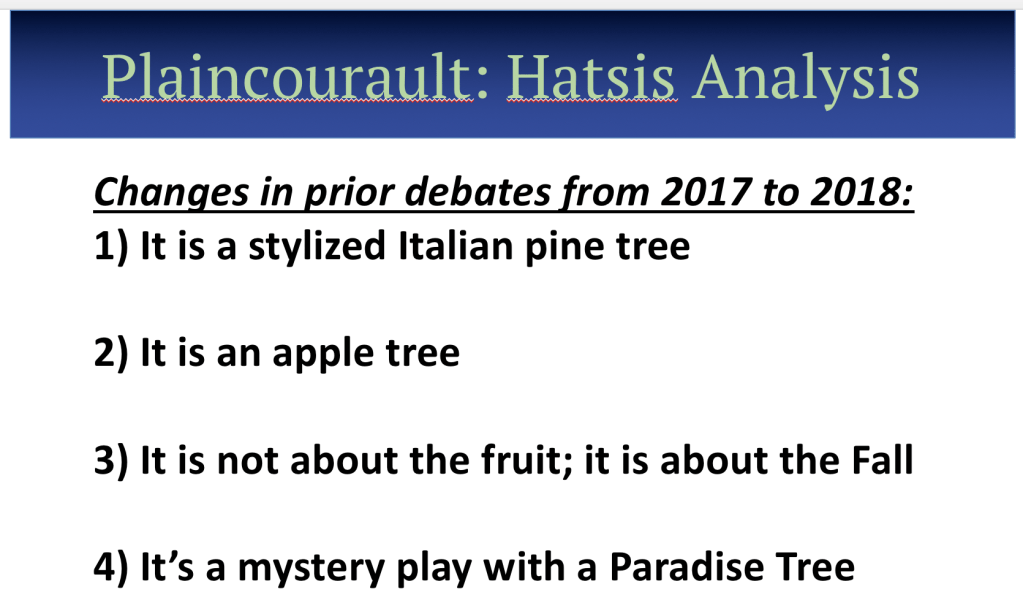
I’m far from understanding Hatsis’ tangled, confused mess of a non-position “position”.
Figuring out Hatsis’ position (of the week) is on my priority list, somewhere a ways below “Polish my bottle-cap collection”.
His position is slip-n-slide. Which is not properly a position.
Let us know, when you have a stable, determinate, actual position.
THE “OLD THEORY” AINT REALLY MUCH OF A THEORY, but a shifting, incoherent, UNSTABLE heap of presumptions – really, biases, which is to say, *a set of attitudes*, not a “theory”.
An un-considered heap of assorted assumptions.
RUSH WOULDN’T USE PSYCHEDELICS, BECAUSE THEY ARE A PHILOSOPHY BAND. <– THE “OLD THEORY” – (IF YOU CAN EVEN CALL IT A “THEORY”)
I’ll check out and talk about wassonwest. I’ve criticized Wasson. Constructive, is the goal.
I’m now better positioned to re-try a critique of the article – no promises, I have no thoughts except I’m amazed I was able to paraphrase it w/o getting swept up (carried away) by critique-mode, this time.
The attention required to publish books, vs. the headspace and shelter to think, & do more research.
1. My paraphrasing of each paragraph has too much gaps, it has to be smoother but I don’t want to accomplish that by editing it. I have to speak my own words slower, smoother. For better comprehensibility. I felt like oh no it wasn’t good enough to send.
2. Amazingly, miraculously, I refrained from any critique! Usually I give way too much critique, I get lost in critique, and fail to read-aloud the text that I’m trying to critique. My first attempts (discarded takes) to read-aloud the article while jumbling my critique (mixing my critique into my reading of the article at the same time), were a disaster; I got nowhere in reading the article (made zero progress), and made awful confusion mistakes.
I need to read-aloud slower.
My “radio show” today omg, came out great and I talk about doing a better job of reading/paraphrasing / critiquing articles.
I’ll read paragraphs at Amazon & Academia.edu:
1. Read paragraph
2. Paraphrase author’s assertions.
3. Critique. (Step 3, not step 1!!)
I’m listening to my radio show today’s, now. I think in the 2nd half I talk about a smoother reading-aloud format.
I critique my yesterday’s reading of your article. 1:47:45
I’m very happy about the format I figured out yesterday, but it has to be smoother delivery.
My other episodes, which falsely claim to be a 10, are btfo’d.
Fact Check of me: TRUE! Proof that I’m always right. And 8 years quicker than Hanegraaff. I wrote the phrase, extremely boldly with maximum force (“sh00t to k1ll”), “entheogenic esotericism” on the World-Wide Web on June 12, 2004: https://egodeathyahoogroup.wordpress.com/2021/01/09/egodeath-yahoo-group-digest-66/#message3335
See, *that’s* how u should write, waffle gang; the very opposite of “soften the blow to ingratiate yourself with the dominant establishment hegemonic paradigm Exotericism received view, so reasonable, so anti-plant.”
| Group: egodeath | Message: 3335 | From: Michael Hoffman | Date: 12/06/2004 |
| Subject: Authentic esotericism is entheogenic esotericism |
| Authentic esotericism is entheogenic esotericism. Entheogens are the key to esotericism. This is the simplest possible theory of esotericism, and the most natural, the least contrived and strained. Theories of esotericism that are not based on entheogens suffer from the problem of grandiose verbiage, unmet promises and claims, chronic vagueness, excuses for lack of potent and prompt efficacy, and no ability to deliver the experiences which are talked about. Drug-free esotericism doesn’t work; it is not effectively ergonomic. — Michael Hoffman |
Hanegraaff’s 2012 article Entheogenic Exotericism, in the book Contemporary Exotericism.
Contemporary Exotericism
Egil Asprem, Kennet Granholm
2014
http://amzn.com/1908049324
$173.61
Chapter 19: Entheogenic Exotericism
Wouter Hanegraaff
Production Info
I Remembered How Brown Asked Whether the Egodeath Community Wrote About Criteria of Proof; Leading to Criteria Article; Leading to Psalter Proof Article, Proving 70 Psychoactive Mushrooms in the Heart of Christian Art
It’s about my having disproved a certain Moderate Entheogen Theory argument about a vial…
Defining “Compelling Evidence” & “Criteria of Proof” for Mushrooms in Christian Art
todo: even better, the cover image!! haha
Added Golden Guide page to my Vial rebuttal section, SWEET! thx Mr. Schultes
Page: Psychedelic Mystery Traditions (Hatsis)
Section: An Attempted Argument for the Moderate Mushroom Theory of Christianity: The Vial that Looks Like Amanita
https://egodeaththeory.wordpress.com/2020/10/31/psychedelic-mystery-traditions-hatsis/#aaaftm
“Looking closely at the photo, Julie disagreed with this description.
“Jer,” she said, calling me over to the hotel room window to examine the photo in the light. “Look closely, there at the bottom. That’s a straight edge, not the round bulb of an Amanita. And furthermore, this white “bulb” is serrated all over with regular grooves. That’s not a mushroom she’s carrying, but a white vial with a red top probably holding her healing oil.”


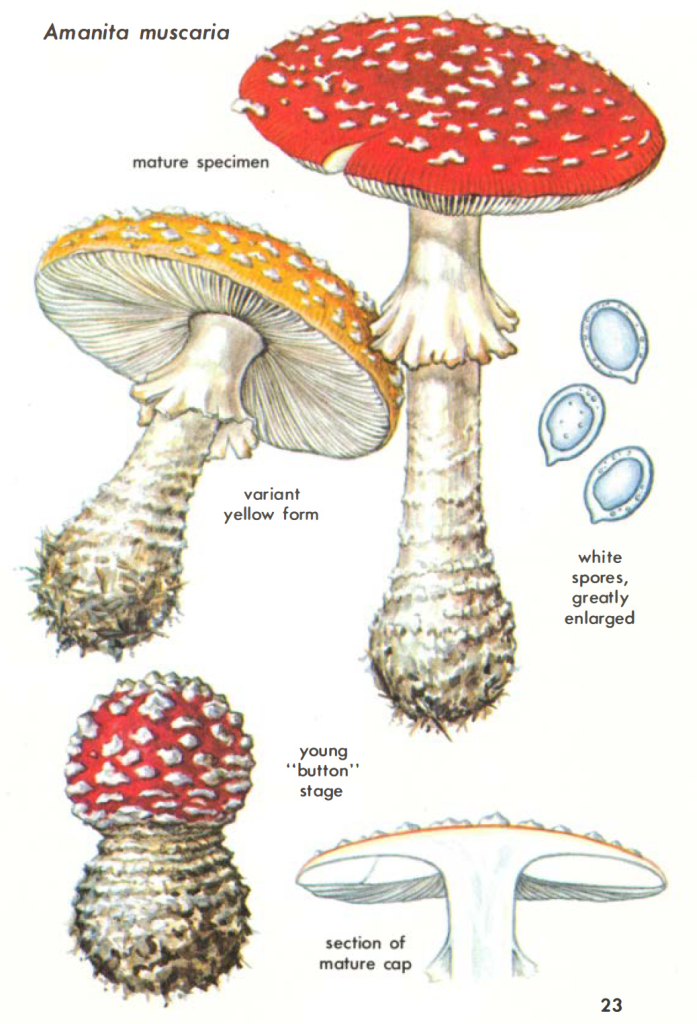
Hallucinogenic Plants (A Golden Guide)
Richard Evans Schultes
(1977-02-23) (1976?)
Kindle Edition
http://amzn.com/B08R7TD35Y
I managed to retrieve from email inbox this nice, clean PDF of the book.
Hallucinogenic-Plants-A-Golden-Guide.pdf
agghh this accursed image! making a fool out of me, month after month! what next?!

The entheogenic banqueter (the red initiate) who has taken off is supported and pulled by the angel of God by his {right arm}, emphatically not by his {left arm raised up floating} in the air, nor by his {feet} in the ordinary state on the right-hand side of the column, where we are blocked from seeing God’s power.
[10:32 p.m. February 2, 2021] – Correction. I finally recognized now that his feet are not to be read as “floating”, but clearly can be read and are to be read as “right foot on column; left foot floating”. This image embarrasses me month after month; this image continues to reveal “obvious” things that I was blind to and dense about. I added the following observation and struck my incorrect statement above, “supported … nor by his {feet}”. Below, I now added a zoomed, cropped image of his feet to look again. I did look intently before, specifically at his feet, and failed to figure out the reading of his feet; now it is obvious — why couldn’t I figure out the obvious reading, before? I think I evaluated his feet very early on, in my November interpretation pass.
The red initiate’s right foot rests on the stable column, and his left foot floats in thin-air, giving no purchase or support. Here’s what’s different this time:
Egodeath Show 2021-02-02b – Reading of Mark Hoffman’s 2019 Article “Entheogens (Psychedelic Drugs) and the Ancient Mystery Religions”, with Per-Paragraph Paraphrasing
Production Info
2.5 hour voice recording. https://egodeaththeory.wordpress.com/2021/01/15/idea-development-page-10/#Old-Secret-Entheogen-Paradigm-mp3
Hanegraaff’s chapter “Entheognic Esotericism”,
my 2002 critique of the Old Paradigm,
the Secret Entheogen Paradigm being incorpog Entheogen Diminishment fallacies, self-defeating.
Critiques of Pop Sike from Letcher/ Hatsis/ Irvin/ Kent/ Ball.
are there written critiques of field of entheogen scholarship? meta level.
Field of Western Esotericism ,
field of the egodeath theory,
field of entheogen scholarship.
Martin Luther’s 99 Thesis that demolished the church door to smithereens w/ gigantic nail (Hollywood Epic version).
Brown’s book subtitle has the evil word “Secret”, a sign of the Old Paradigm (Secret Entheogen), bring him to the New Paradigm.
tie-in my page:
“Amanita, Christianity, Surface Form, Low Esotericism” to “Psilocybe, Greek + Christian, Cognitive Effects, High Esotericism”
egoic vs. transcendent mental worldmodel ::
Old vs. New paradigm of entheogen scholarship
egoic-thinking : transcendent thinking ::
the Old, “Secret Entheogen” Paradigm : the New, “Explicit Psychedelic” Paradigm.
 The Egodeath theory