This is my original Feb. 2023 page including commentary. Newer page that’s just the Panofsky transcription, with clean title, for general use (with comment from Brown & Brown): Erwin Panofsky’s Letters to Gordon Wasson, Transcribed – 2025/01/07
THE INSTITUTE FOR ADVANCED STUDY PRINCETON, NEW JERSEY SCHOOL OF HISTORICAL STUDIES
May 2, 1952
Mr. R. Gordon Wasson, J.P.Morgan & Co., 23 Wall Street, New York 8, N.Y.
Dear Mr. Wasson:
Many thanks for your kind words about my little talk and the photostat of the discussion centered around the fresco of Plaincourault. Please let me put in a word of warning. In my opinion — which, I am confident, will be shared by any art historian you may care to consult — the plant in this fresco has nothing whatever to do with mushrooms (which would indeed be surprising since it was the tree, and not the mushroom, of good and evil which brought about the transgression of the First Parents), and the similarity with Amanita muscaria is purely fortuitous.
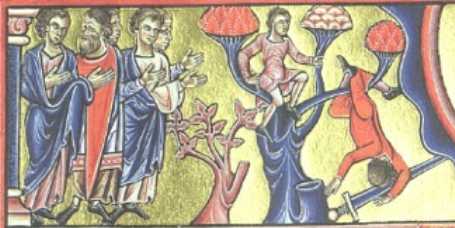
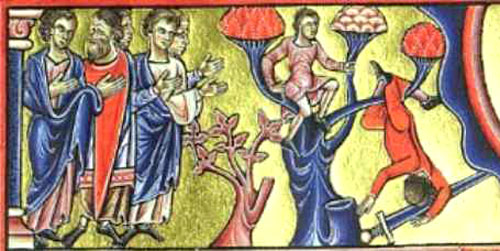
The Plaincourault fresco is only one example — and, since the style is very provincial, a particularly deceptive one — of a conventionalized tree type, prevalent in Romanesque and Early Gothic art, which art historians actually refer to as “mushroom tree” or, in German writing, Pilzbaum. It comes about by the gradual schematization of the impressionistically rendered Italian pine tree in Roman and Early Christian painting, and there are hundreds of instances exemplifying this development – unknown, of course, to mycologists. If you are interested, I recommend a little book by A. E. Brinckmann, Die Baumdarstellung im Mittelalter (or something like it), where the process is described in detail. Just to show what I mean, I enclose two specimens: a miniature of ca. 990 which shows the inception of the process, viz., the gradual hardening of the pine into a mushroom-like shape, and a glass painting of the thirteenth century, that is to say about a century later than your fresco, which shows an even more emphatic schematization of the mushroom-like crown. What the mycologists have overlooked is that the mediaeval artists hardly ever worked from nature but from classical prototypes which in the course of repeated copying became quite unrecognizable.
With best regards,
Sincerely, Erwin Panofsky
[handwritten] Albert Erich Brinckmann Baumstilisierungen in der mittelalterlichen malerei
/ end of transcription of letter 1 from Panofsky 1952, published by Jerry B. Brown & Julie M. Brown 2019
[10:47 p.m. February 4, 2023] – Realization by Cybermonk: the handwritten “Er” of “Erwin” and “Erich” match, and Panofsky probably hand-wrote the Brinckmann citation on the finished letter before sending it to Wasson.
Typewriter typo fixes:
Omitted extra space next to punctuation.
Fixed typo “misuderstood”.
Corrected “by surprising” to “be surprising”.
The text in my Wasson article doesn’t match the photograph but matches Soma instead; Soma’s copy differs from the photograph in slight details (commas, ‘a’, capitalization of “Early Christian”).
THE INSTITUTE FOR ADVANCED STUDY PRINCETON, NEW JERSEY SCHOOL OF HISTORICAL STUDIES
May 2, 1952
Mr. R. Gordon Wasson, J.P.Morgan & Co., 23 Wall Street, New York 8, N.Y.
Dear Mr. Wasson:
Sentence 1.1 (your words about my talk)
Many thanks for your kind words about my little talk and the photostat of the discussion centered around the fresco of Plaincourault.
Sentence 1.2 (word of warning)
Please let me put in a word of warning.
Sentence 1.3 (art historian consult: nothing mushrooms)
In my opinion — which, I am confident, will be shared by any art historian you may care to consult — the plant in this fresco has nothing whatever to do with mushrooms (which would indeed be surprising since it was the tree, and not the mushroom, of good and evil which brought about the transgression of the First Parents), and the similarity with Amanita muscaria is purely fortuitous.
Sentence 1.4 (Only one example of Pilzbaum)
The Plaincourault fresco is only one example — and, since the style is very provincial, a particularly deceptive one — of a conventionalized tree type, prevalent in Romanesque and Early Gothic art, which art historians actually refer to as “mushroom tree” or, in German writing, Pilzbaum.
It comes about by the gradual schematization of the impressionistically rendered Italian pine tree in Roman and Early Christian painting, and there are hundreds of instances exemplifying this development – unknown, of course, to mycologists.
Sentence 1.6 (Little Book by Brinckmann)
If you are interested, I recommend a little book by A. E. Brinckmann, Die Baumdarstellung im Mittelalter (or something like it), where the process is described in detail.
Sentence 1.7 (Enclose Specimens Pine into Mushroom)
Just to show what I mean, I enclose two specimens: a miniature of ca. 990 which shows the inception of the process, viz., the gradual hardening of the pine into a mushroom-like shape, and a glass painting of the thirteenth century, that is to say about a century later than your fresco, which shows an even more emphatic schematization of the mushroom-like crown.
Sentence 1.8 (Prototypes Became Unrecognizable)
What the mycologists have overlooked is that the medieval artists hardly ever worked from nature but from classical prototypes which in the course of repeated copying became quite unrecognizable.
With best regards,
Sincerely, Erwin Panofsky
Sentence 1.9 (Brinckmann Tree Stylizations)
[handwritten:] Albert Erich Brinckmann Baumstilisierungen in der mittelalterlichen malerei
/ end of transcription of letter 1 from Panofsky 1952, published by Jerry B. Brown & Julie M. Brown 2019
[handwritten upper left:] David Memling [illegible] 17
THE INSTITUTE FOR ADVANCED STUDY PRINCETON, NEW JERSEY SCHOOL OF HISTORICAL STUDIES
May 12, 1952
Mr. R. Gordon Wasson, 23 Wall Street, New York 8, N.Y.
Dear Mr. Wasson:
Many thanks for your letter of May 7. Unfortunately I know very little of folk lore and witchcraft (though I do know that those people in Kamchatka still induce ecstasy by eating amanita or drinking some sort of decoction thereof). So I have not the slightest idea as to whether the French witches also used the crapaudin (which, incidentally, seems to be fairly generic term originally, like our “toadstool”; I know it, e.g., as denoting a kind of cooking pan shaped like a mushroom, and even another plant, Sideritis) for similar purposes. However, even if so, I should be somewhat skeptical because the development from pine tree to “Pilzbaum” is so universal and takes place in so many representations other than the Fall of Man. The only possibility I should be prepared to admit is that, once the transformation had taken place and was generally accepted in art, some especially ignorant craftsman may have misu[n]derstood the finished product, viz., the “Pilzbaum,” as a real mushroom. But even that is not very probable because even the most mushroom-like specimens show some traces of ramification; if the artists had labored under the delusion that the model before him was meant to be a mushroom rather than a schematized tree he would have omitted the branches altogether. In addition, religious mediaeval art at least had little reason to think of mushrooms at all. They do not occur in the Bible, so far as I know, nor in the legends of the saints.
With all good wishes,
Sincerely yours,
Erwin Panofsky.-
[handwritten] Please keep my poor little pictures as long as you wish. And I really recommend to look up that little book by A. E. Brinckmann.
/ end of transcription of letter 2 from Panofsky 1952, published by Jerry B. Brown & Julie M. Brown 2019
Adjustments made:
Changed “to be fairly generic term” to “to be a fairly generic term”
[handwritten upper left:] David Memling [illegible] 17
THE INSTITUTE FOR ADVANCED STUDY PRINCETON, NEW JERSEY SCHOOL OF HISTORICAL STUDIES
May 12, 1952
Mr. R. Gordon Wasson, 23 Wall Street, New York 8, N.Y.
Dear Mr. Wasson:
Sentence 2.1 (thanks for reply to 1st letter)
Many thanks for your letter of May 7.
Sentence 2.2 (induce ecstasy by Amanita)
Unfortunately I know very little of folk lore and witchcraft (though I do know that those people in Kamchatka still induce ecstasy by eating amanita or drinking some sort of decoction thereof).
Sentence 2.3 (French witches)
So I have not the slightest idea as to whether the French witches also used the crapaudin (which, incidentally, seems to be fairly generic term originally, like our “toadstool”; I know it, e.g., as denoting a kind of cooking pan shaped like a mushroom, and even another plant, Sideritis) for similar purposes.
Sentence 2.4 (pilzbaum so universal in so many representations)
However, even if so, I should be somewhat skeptical because the development from pine tree to “Pilzbaum” is so universal and takes place in so many representations other than the Fall of Man.
Sentence 2.5 (ignorant misunderstood prototype as mushroom)
The only possibility I should be prepared to admit is that, once the transformation had taken place and was generally accepted in art, some especially ignorant craftsman may have misu[n]derstood the finished product, viz., the “Pilzbaum,” as a real mushroom.
Sentence 2.6 (would Have omitted branches)
But even that is not very probable because even the most mushroom-like specimens show some traces of ramification; if the artists had labored under the delusion that the model before him was meant to be a mushroom rather than a schematized tree he would have omitted the branches altogether.
Sentence 2.7 (religious art Little Reason to think of mushrooms)
In addition, religious mediaeval art at least had little reason to think of mushrooms at all.
Sentence 2.8 (not Occur in Bible or Saints)
They do not occur in the Bible, so far as I know, nor in the legends of the saints.
With all good wishes,
Sincerely yours,
Erwin Panofsky.-
Sentence 2.9 (keep pictures)
[handwritten] Please keep my poor little pictures as long as you wish.
Sentence 2.10 (recommend Brinckmann)
[handwritten] And I really recommend to look up that little book by A. E. Brinckmann.
/ end of transcription of letter 2 from Panofsky 1952, published by Jerry B. Brown & Julie M. Brown 2019
Ronald Huggins’ Citation of Panofsky Letters in Drawer Folder
Footnote 56. Erwin Panofsky to R. Gordon Wasson (May 2, 1952), in Tina and R. Gordon Wasson Ethnomycological Collection Archives, ecb00001, Series IV, drawer,[sic?] W3.2, Folder: 20. Botany Libraries, Economic Botany Library of Oakes Ames, Harvard University.
Footnote 57. Erwin Panofsky to R. Gordon Wasson (May 12, 1952), in Tina and R. Gordon Wasson, Ethnomycological Collection Archives, ecb00001, Series IV, drawer,[sic?] W3.2, Folder: 20. Botany Libraries, Economic Botany Library of Oakes Ames, Harvard University.
Does Drawer W3.2 Folder 20 include two pilzbaum photostats?
A 990 miniature showing the start of development from pine to mushroom.
A 1200s glass painting showing an emphatic mushroom crown/ cap.
Huggins’ Failure to Acknowledge the Censorship Situation
Huggins doesn’t cite the Journal of Psychedelic Studies 2019 Brown & Brown.
Huggins writes as if we’ve had both letters in full since 1952, and doesn’t mention whether the two pilzbaum photostats are in the drawer folder with the first letter.
Huggins fails to condemn Wasson for simultaneously commanding mycologists to “consult” art historians, at the very same time that Wasson censors and suppresses the Brinckmann book citation that Panofsky twice strongly urged Wasson to consult, and two pilzbaum pictures from Panofsky.
Huggins fails to credit Brown 2019 for starting a new, post-Wasson, post-Panofsky era of entheogen scholarship by exposing the censored letters that Wasson deceptively tried to suppress and direct attention away from in favor of extremely nonstandard personally contacting art historians, given that these “competent” art scholars published nothing except Brinckmann’s thin, old, German-language book.
Read the Letters within Brown & Brown’s 2019 Article First
First, read Brown & Brown’s 2019 article, and read the letters from Panofsky in the context of that article:
Then read the present transcriptions as an auxiliary.
Background
I’m going to skip a lot of basic introduction – that’s not what I can uniquely provide.
Read the usual tales and Public Relations folk myths concocted about Panofsky and Wasson.
My 2006 article accused Wasson of withholding citations, which Panofsky certainly must have provided.
We can be sure Panofsky provided citations; as an academic, he would have had to provide them, for such a strong, emphatic claim that we art historians known all about mushroom trees and have fully adequately studied and covered them.
If you have covered mushrooms trees, I asked, where in the hell is the list of publications in which you have covered them? CITATION NEEDED!
The censored-by-Wasson answer is: we art historians have devoted 1 book and 0 articles to covering and investigating this topic.
To this day, February 4, 2023, it remains completely unclear whether Brinckmann’s book says anything at all about mushroom trees. I think I did a Find at archive.org for pilzbaum and found two hits in Brinckmann’s book.
As a major theme all throughout my 64-page 2006 article, I bitterly condemn the lack of citations from Panofsky through Wasson: Wasson and Allegro on the Tree of Knowledge as Amanita http://egodeath.com/WassonEdenTree.htm My March 2006 article for the Journal of Higher Criticism. 64 pages; 40,000 words, plus image gallery.
I wrote that article to say we need to take a more balanced view of John Allegro, and that we need to leave Allegro behind and leave behind the mind-stunting entrenched questions around Allegro, and instead ask neutrally the basic questions:
To what extent Psilocybin and Amanita mushrooms in Western religious history?
Notice the ten qualifiers that I didn’t tack on there, like everyone else does.
I didn’t ask about “secret mushroom cult” and how it linearly spread through secret transmission.
I don’t understand why anyone would think that way — loading a ton of assumptions imported arbitrarily — instead of simple asking of the bare question: to what extent Psilocybin in Western religion?
People don’t think; they just passively follow conventional ruts and serve as passive vessels for memes to propagate through.
My article reconciled Acharya S (Christ Conspiracy) with Robert M. Price (as Acharya thanked me for), to such an extent that Price recently rewrote and republished her book.
The first time I did an intensive deep-reading critique of Panofsky’s argument on Egodeath Mystery Show, I said Panofsky was insane for thinking that the artist was so stupid as to paint the fresco and then when done, step back and say of his own fresco, OMG its a mushroom!
But that’s not what Panofsky’s actual stupid argument is.
Panofsky said that the artist first looked at the finished prototype, after the previous inept, intentionality-lacking, incompetent artists had distorted it out of all recognition, and the artist misunderstood the prototype as a mushroom, and then the artist proceeded to paint the fresco.
This passage is hard enough to read and understand and critique, without mis-transcription and word replacement slipping in!
It is understandable for Brown & Brown to make a typo here, because Panofsky’s grammar is wildly shifting, and the referent keeps flipping all over – as I explained in detail in Egodeath Mystery Show,
flipping constantly between the fresco vs the prototype vs. Pilzbaum art works in general, and
flipping between the artists of all art works, vs. the artist who painted this fresco.
Mis-transcription: Panofsky wrote “the finished product”, but Brown & Brown mis-wrote “the finished project”.
I cannot emphasize enough: Panofsky’s wording of arguments is quite obscure and messy, and inconsistent, and so this kind of text demands a 100% deep, detailed, intensive interrogation of the meaning and word choice of each word. We cannot afford one iota of word replacement.
Lack of correction ability on typewriter factors in, here, too.
I know this passage intimately because I got tripped up by Brown & Brown’s error.
I, in embarrassment, had to do a follow-up episode of Egodeath Mystery Show to retract my previous analysis that happened because I read Brown & Brown’s mis-transcription instead of Panofsky’s actual photographed letter.
I posted all about this at the time, in Idea Development page 13 and others:
I did a deep playacting recitation of this passage on Egodeath Mystery Show episodes to decode what Panofsky’s arguments actually are.
Brown should have caught Brown’s error, so this counts as double-erroneous.
Panofsky’s 2nd line (in my crop), on the right, says “the finished product“, referring to the (alleged, conjectured) prototype after it had been subjected to distortions by sloppy, incompetent artists that lack intention (but only when it comes to the special topic of mushroom imagery, per the mushroom exception to the rules of art interpretation).
But Brown & Brown mis-transcribed it as “the finished project“, which incorrectly shifts the referent from the (alleged) prototype to the fresco.
I had to resort to image-correction and printout of Panofsky’s letters, after I discovered Brown & Brown’s transcription error that changed the meaning and therefore changed my analysis and critique, sending it in a wrong direction.
Every word is extremely important!, in Panofsky’s garbled, typewriter writing.
Panofsky makes arguments that employ word-choice.
I read aloud Brown & Brown’s 2019 article, without being aware whether I was reading Brown & Brown’s transcription (I was) or Panofsky’s photographed letter (I should have been, and I did so on the next episode of Egodeath Mystery Show).
Justification for Transcribing these Letters
The more light that’s shed on these covered-up, censored-by-Wasson letters, the better.
Wasson had them since May 1952, and Wasson hid them from the public (intentionally, many times) until Brown & Brown published them together in 2019 – that’s 67 years of cover-up of these letters!
The Brown & Brown 2019 article helps, but we need to follow-through by today’s electronic text standards, and make easily copyable, accurate text available, not only the photographs of the letters along with a couple incorrect paragraph transcriptions as is provided by Brown & Brown 2019.
I have a very strong need to have a correct transcription in text form that I can copy/paste and break up.
A Brown & Brown-certified Blurry Internet Photograph is too hard to read, for multiple reasons.
A normal part of traditional scholarship is to manually transcribe previous works into fresh text passages, as separate paragraphs and blocks.
Brown & Brown have not provided an electronic text transcription that I can copy/paste and comment on. I strongly need this.
More than anyone else in the world, I have been doing a full deep dive analysis of Panofsky’s flimsy, underspecified arguments that are summarized informally in shorthand via typewriter, now yellowed, via Brown & Brown-certified Blurry Internet Photograph.
It is well past HIGH TIME to make the pair of Panofsky letters fully available in modern electronic text format so that scholarship is no longer impeded as Wasson sought to do.
I am justified in transcribing these letter for the following reasons (and more).
Transcription Error
Brown & Brown committed a transcription error and I fell into the resulting trap and looked foolish spinning out a mis-based critique in my first Egodeath Mystery Show episode of reading Letter 2. Brown & Brown wrote “the finished project” (the fresco) but Panofsky wrote “the finished product” (the mutating, corrupted prototype that the artist used, according to Panofsky).
Overstates Panofsky’s Concession
Brown & Brown misfired in the critique of identifying the import of letter #2.
They try to make Panofsky’s very slight concession the basis of a greater criticism than it can bear.
Against Brown & Brown, Panofsky only feebly admits that an especially ignorant craftsman, not an artist, could possibly have intended mushroom but Panofsky immediately says he doubts that, and gives his especially ignorant reasoning.
Need Maximum Clarity, for Total Rebuttal
Need Clarity in Support of a Total Rebuttal of All Panofsky’s Arguments, Accurately Read and Critically Comprehended
Right now, the information is stuck trapped in the Brown & Brown-certified Blurry Internet Photos.
To maximally and adequately engage Panofsky’s bunk and flimsy, less-than-specious arguments, we need electronic text, not just a blurry, faded, yellowed photograph of the letters.
Brown & Brown don’t realize the full ramifications of the publishing of the full Letter #1 (along with the secret censored pair of art images that were included with letter 1).
We are able to access the accompanying art – if we can glean what it was.
Given that we had only 2/3 of the two pages of letters (text), and now we have 2 pages, there is hope that we could identify which two art pieces of mushroom trees Panofsky provided with letter 1.
These two letters are 4 sheets (sides) total (Letter 1, art photostat 1, art photostat 2, Letter 2).
Wasson dishonestly sought to deliberately deceive and suppress scholarly coverage of the mushroom question, and worked continuously to mislead everyone into thinking that there was 2/3 of a page from Panofsky, when there were in fact 4 pages (that we know of) of relevant content sent by Panofsky.
I don’t know how many other letters and art images Panofsky sent Wasson — we have to wonder, now, and we have to suspect that there were more.
They’ve Already Been Transcribed and Uploaded Anyway, as Scattered Passages
I have already transcribed much of the letters in my Wasson article and my Hatsis book article.
Here I’m merely gathering the transcription that I’ve already had on the web for years: 2006 for the non-censored part of the 1st letter, and since Oct. 2020 for Letter 2 passages.
It’s Personal, Since 2006
It’s been 13 years since 2006 compared to the 2019 publishing of the letters, and now 17 years, in 2023 as I finally transcribe Wasson’s censored letters into copyable text on the world-wide web.
Wasson and Allegro on the Tree of Knowledge as Amanita My March 2006 article for the Journal of Higher Criticism http://egodeath.com/WassonEdenTree.htm 64 pages; 40,000 words, plus image gallery
I wrote the most intensive article in 2006, accusing Wasson of withholding citations that Panofsky provided, and I wish I had noticed the ellipses so I could have written “right there, at these ellipses, I BET that must be where Panofsky’s censored citations are.”
I have suffered cognitive dissonance because, as I wrote and pointed out in 2006, I knew certainly either:
Panofsky either provided citations and Wasson censored them.
There existed no such publications at all, and Panofsky was lying in his claim that art historians have covered Pilzbaum.
I wish I had made that specific charge that the ellipses are probably where the missing citations were provided by Panofsky.
Neither Irvin nor I caught the ellipses, though we were intensively looking for exactly this sort of chicanery and deception from Wasson, as my published accusations throughout the article demonstrate.
Commentary
Panofsky’s phrase “Once the transformation had taken place” means: the development from pine tree to ‘Pilzbaum’ in the alleged “prototypes”.
I ran calculations during my Egodeath Mystery Show episode in 2022, something like 17% lack ramifications.
The point is to contrast some with and some without, eg. Eustace window of crossing the river:
and just today i was examining in the Gold psalter, mushroom field which contrasts having branching & not, in same image.
How true or how false? “Even the most mushroom-like specimens show some traces of ramification.”
We are, rather, shown a group of plants — presented as a group — that displays an assortment of degrees of having branching (or having cut branches, to complete the analysis beyond Panofsky’s scope of ability).
I can even show you photographs botanical specimens of real mushrooms that have “traces” of ramification, of which Eadwin is aware and plays on, in his gallery of 75 muhsroom plants.
“traces of ramification” takes on irony, when more well-informed than Panofsky.
You want bolder ramifications under the cap/crown? See my 75 gallery.
You want subtler ramifications under the cap/crown? See my 75 gallery.
Same with photographs – you tell me how bold of veil-tear branching you demand — it can be provided.
This is the requisite intelligent handling of ranges of contrast of a motif. We end up with the artist posing the question: how subtle can I represent mushroom hems while it still communicates – the more subtle, the more masterful.
It’s a range, because the contrast is the point, and there are innumerable ways to represent the concept and morphology of “branching vs. non-branching”.
Photograph of a Cubensis specimen that has “traces of ramification”, as Eadwine enjoys playing on.
Red plant: no traces of ramification, so Panofsky is proved wrong in his claim that all mushroom trees have traces of ramification.
Dark blue plant: how big a microscope do we need to bust out, how much refereeing, to quibble about the degree of justification for claiming that the blue pilzbaum has traces of ramification?
There’s a light blue trident under the cap, so Panofsky wins — except he loses, because this shows how weak and low-relevance his claim is.
When this level of analysis is needed, the argument essentially fails and we have to switch to a different framework for analysis: that is, the {branching-message mushroom trees} explanatory framework.
We are presented with all assortments of branching and non-branching, in all combinations.
The relevant point and angle of communication here in this genre of motifs and tropes and morphology is not “this individual specimen is tree vs. not”.
The point that’s communicated is “think about branching vs. non-branching.”
On the macro scale, the artist presents us with, in reading order:
non-branching
branching
branching
non-branching
branching
I remember discussing details: there are two different zoom levels, so we quibble necessarily in this case, inescapably and justifiably, the two different zoom levels that have “traces of ramification”.
The black line below the non-branching Cubensis’ cap is — but in a different sense than Panofsky means – a trace of ramification:
Eustace window, Chartres Cathedral, Placidas/St. Eustace crossing the river
Eustace window, Chartres Cathedral, Placidas/St. Eustace crossing the river, one of his two sons carried off by a lion.
That’s the topmost image used in my 2006 main article, decoded March 2022 re: {handedness} & {non-branching} per the Theory of Psychedelic Eternalism: The Entheogen Theory of Religion and Ego Death http://egodeath.com/EntheogenTheoryOfReligion.htm
Errata
Errors of analysis that are in other pages.
The Handwritten Citation of Brinckmann Is Panofsky’s Handwriting
I just realized that the handwritten author name and title on Letter 1 could be Panofsky’s handwriting; that would make sense. Inspect handwriting compared to signature. Yep the start of “Erlich” matches “Erwin”.
I need to Find words like “handwriting” on my pages at this site and note the above, where I say it’s proof that Wasson went to the trouble to look up Panofsky’s book.
“Prototypes”, not “Templates”
Templates
[February 4, 2023]
In other pages, I wrote ‘templates’, but should have written ‘prototypes’.
The present page is my original Feb. 2023 page including commentary. Newer page that’s just the Panofsky transcription, with clean title, for general use (with comment from Brown & Brown): Erwin Panofsky’s Letters to Gordon Wasson, Transcribed – 2025/01/07
Lots of analysis Feb. 19, 2023: Image Crops of the 4-5 Handwriting Samples on the Two Panofsky Letters Proves Panofsky (not Wasson) Wrote the Brinckmann Citations/ Recommendations https://egodeaththeory.wordpress.com/2023/02/14/idea-development-page-18/#Handwriting-Proof-Panofsky Also revises what Wasson is actually guilty of (details of anti-scholarship obstructionism & censorship & deceit) since it’s Panofsky’s handwriting, not Wasson’s.
Search this site for “John Lash” and “Wasson”. There are many pages here about these topics.
Egodeath.com Pages
For now, I have a good starter section structure for each individual sentence, though 3 sentences cover the Too Many Mushrooms argument:
nice to do: summarize arg of each sentence.
Wasson and Allegro on the Tree of Knowledge as Amanita http://egodeath.com/WassonEdenTree.htm My March 2006 article for the Journal of Higher Criticism. 64 pages; 40,000 words, plus image gallery.
Click the button to generate a new mushroom-elimination excuse.
About this Technology
Welcome to the Explain-Away-o-Matic: when you click the [Easily Explain Away] button, it spits out one of a hundred harebrained, off-the-wall, bizarre vectors of argumentation.
Each entry includes the source where Panofsky or Hatsis made each argument, and a 1-2 word hint about my rebuttal/refutation of less-than-specious argument.
This button is to put below every image at this site.
🍄🧙♂️
This button will save lots of time for Hatsis so he can be more productive in his wildly wrong misinterpretations – the most productive entheogen scholar, churning out more fourth-rate work than anyone else, re: mushrooms in Western history.
Who are these “arguments” supposed to convince and persuade, except for the person who’s dumb enough to concoct them & put them forward? None of them can stand up to critique for even an instant.
These “arguments” aren’t even specious; they don’t even have the initial surface appearance of being sound. They’re more like just… puzzling.
How is “There are too many mushroom trees for any of them to mean mushrooms” supposed to be an argument? I don’t get it. Do you actually believe your own reasoning, Panofsky?
If you believe your own “reasoning”, what are your presuppositions that are you not stating but are simply assuming are too self-evident & universally agreed on, to be worth mentioning?
For example: I deduce that you are basing your “too many mushrooms” argument on the taken-for-granted premise, your own intensely biased assumption, that “Of course, no one is willing to assert that all mushroom imagery in Christian art means mushrooms.“
— which would be a false and unwarranted assumption.
But in any case, you need to explicitly STATE what your presuppositions and assumptions are.
Lay out your complete argument, explicitly.
And then listen to the contrary replies.
Don’t just articulate and transmit one-tenth of your argument, simply declaring yourself the convincing winner (“YOU GUYS GOT A BIG PROBLEM!!“), and not listen to the pushback – it must be a two-way conversation.
All mushroom imagery in Christian art means mushrooms.
My position is easy to defend; I feel sorry for you, having to defend your hard-to-defend, indefensible position. eg please explain why, per Panofsky Letter 2 Sentence 6,
“Religious mediaeval art had little reason to think of mushrooms.“
Psilocybin mushrooms are ubiquitous, and they cause intense religious experiencing more than anything else does.
Therefore, in fact, religious mediaeval art had every reason to think of mushrooms.
The List of Slam-Dunk, Instantly Compelling Reasonings (according to the incredibly dumb asserters of them):
There Are Too Many Mushroom Trees for this Instance to Mean Mushrooms
Citation:
“The Plaincourault fresco is only one example — and, since the style is very provincial, a particularly deceptive one — of a conventionalized tree type, prevalent in Romanesque and Early Gothic art, which art historians actually refer to as “mushroom tree” or, in German writing, Pilzbaum.”
“It comes about by the gradual schematization of the impressionistically rendered Italian pine tree in Roman and Early Christian painting, and there are hundreds of instances exemplifying this development – unknown, of course, to mycologists.”
“I should be somewhat skeptical because the development from pine tree to “Pilzbaum” is so universal and takes place in so many representations other than the Fall of Man.”
Panofsky was constrained by typewriter, and paper was expensive, so the most influential art historian at the most prestigious institution was not able to spell out a complete argument, but left 90% of his argument implicit, based on foundations that everyone certainly agrees upon.
His unstated argument is:
We all agree that how we interpret Plaincourault is how we must interpret every mushroom tree.
We all agree that we are not willing to interpret all mushroom imagery in Christian art as mushrooms.
Therefore we all agree on my conclusion, that none of them can be mushrooms, because the other alternative is that they are all mushrooms, and we all agree that we are not willing to assert and defend that all mushroom imagery in Christian art means mushrooms.
The sheer quantity of Pilzbaum prevents any of them from being mushrooms, because they’d all have to be mushrooms, which, obviously, you are not willing to defend.
It goes without saying, that it would be the very definition of a completely untenable position, to assert that all Pilzbaum mean mushrooms.
We’re in a situation of two options, where one option fits all agreed and established knowledge, and the alternative goes against everything we know, like saying either X, or the sun sets in the East.
The latter is known by all experience to be false, and therefore the alternative, X, must be true.
It’s a given that all Pilzbaum cannot mean The Mushroom (🍄).
It’s simply a given that all Pilzbaum cannot mean mushrooms; and we agree to the Proxy/class principle, that we must consistently interpret the class of all instances.
Therefore any given individual instance of mushroom imagery in Christian art cannot refer to The Mushroom (🍄).
Otherwise, they’d all have to so refer, which is known to be impossible and indefensible, like asserting that the sun sets in the East, which is known to be false.
The more evidence we find for mushroom imagery in Christian art, the more absolutely certain that they cannot possibly mean mushrooms
todo: Panofsky’s argument here, or connect to other similar entry.
More Evidence Proves More Absence from the Big Bad Church
The more evidence we turn up for mushrooms inside the Church, the more we have proof that the Church completely suppressed and eliminated mushrooms
I was delighted to find an exact equivalent mushroom Isaac scene in Golden Munich Psalter Feb 2023 yesterday just like Nov 2020 or early 2021 (I wonder what date?) in Great Mushroom Psalter by Eadwine.
But, this evidence just drives home the narrative that we are more fervently committed to pushing, greater than our advocacy of mushrooms:
the #1 most important thing is not mushrooms, but demonizing the Church.
We can use mushrooms to advance that prime objective of demonizing the Church, costing nothing but merely the success of our mushroom advocacy.
Panofsky says: “See? Eadwine’s Mushroom Isaac is not the only Mushroom Isaac, so I find it even more difficult to believe it means mushrooms.”
The more evidence we find for mushroom imagery in Christian art, the more absolutely certain that they cannot possibly mean mushrooms.
This is the Carl Ruck “neutralize and invert the evidence” move.
See? Yet more proof of firm suppression of the Secret Amanita was absolute, just like McKenna said:
The Big Bad Church completely eliminated mushrooms, as proved by the John Rush book’s gallery of 350 pictures of mushrooms inside the Church/ cathedrals/ chapels/ manuscripts.
Lack of The Mushroom (🍄) was everywhere!
Buy my 28+ books, a tower growing every year and periodically falling over, for thorough coverage of the complete elimination of mushrooms from Christendom.
And keep putting people in cages, because the U.S. Supreme Court says:
“We learned from Terence McKenna & Carl Ruck & John Rush that your Church tradition utterly lacks mushrooms.”
These “entheogen scholars” who persist in insisting that “Big Bad Church eliminated mushrooms” are utterly self-defeating, absolutely idiotic strategically.
Could you be any more un-strategic?
Entheogen Scholarship: Snatching Defeat from the Jaws of Victory
Send me more evidence of absence please, so I can neutralize it and invert it through en-caging each piece of art evidence in a cage of my heavy-handed “Secret Amanita Alchemy” framing, to separate The Mushroom (🍄) from real Christianity.
The more evidence we find for mushrooms inside the Church, the more we have proof that the Church completely suppressed and eliminated mushrooms
Citation:
Ruck’s fixation on writing “secret, suppressed, heretical, elites” constantly and automatically.
His contract requires including the word ‘Secret’ in the title of every book.
This Image Doesn’t Count, Because It’s Not the Plaincourault Fresco, Which Is the Single Image on Which Your Guys’s Entire “Secret Christian Mushroom Cult” Theory Stands or Falls
Citation:
Hatsis’ Brown-attack article at Graham Hancock site.
This Document Isn’t the Correct Type of Devotional, Orthodox Christian Document
Citation:
Hatsis’ article about Dancing Man salamander bestiary.
My Conjectured Prototypes Have Converted All the Mushrooms to Italian Pines
My confabulated “worked from prototypes” concept – I mean, the crude medieval artists’ prototypes converted Italian pines to mushrooms – I mean, my discovery of their use of prototypes converts mushrooms away into Italian pines, of a type found in Jerusalem.
It Doesn’t Depict Jesus, Therefore It Destroys Your Guys’s Position (You Guys Got a BIG PROBLEM!!)
Citation:
One of Hatsis’ online amateur blogger articles.
If You Would Delve into the Backstory Represented in this Scene, You Would Know that the Storyline Scene Depicted Is Not About the Characters Ingesting Mushrooms
Backstory not about eating mushrooms.
Citation:
multiple Hatsis articles
This Scene Has Violence, Therefore Can’t Be Mushrooms
This mushroom imagery cannot be meant by the artist as mushroom imagery, due to the backstory, which has violence and negative and therefore contradicts our position which Hatsis has assigned to us.
“This scene can’t be a depiction of The Mushroom (🍄), because this scene is violent. How are you gonna explain that??!! It completely destroys what your guys’s position is! Thus the backstory prevents that meaning of this art image. If you knew anything about how to read and do scholarship, like me, you wouldn’t have committed this FATAL BLUNDER. YOU GUYS GOT A BIG PROBLEM! If you guys keep up this bullsht, I’ll send you crying in a corner. I’m done acting nice, calm, and easygoing. 🤬 😤” – pretty much an exact quote of Hatsis’ online amateur web blogger post.
Retort
Like Panofsky’s “arguments”, it is curious how Hatsis only spells out part of the argument. As always, the shipwreck happens with all the unstated assumptions that his tip-of-iceberg argument floats upon. When you shine light on the unstated underlying assumptions, the (less-than) specious “argument” collapses.
Where did any entheogen scholar ever say that:
mushroom depictions always have to mean positive actions
art imagery is constrained by the textual backstory
mushroom imagery must always refer to Jesus-as-mushroom (he makes that argument in one of his articles).
That there exists such a thing as “the Secret Mushroom Cult theorists”, and that any asserter of mushrooms in Christianity is a member of that supposed group.
IOW, straw manning & tilting at windmills of his own creation/ imaginings, along with trying to exactly equate every mushroom scholar as being exactly identical to Irvin’s arguments/position and a simple exact drop-in, 1-for-1 replacement for Hatsis’ greatly missed gf/debate partner, Irvin.
By debating against an alleged “group”, “the X theorists”, Hatsis can more readily straw man any particular scholar – he is under no obligation to treat that scholar’s stated args or position, but can simply delete, get rid of that scholar’s argument, and replace it, by conflating each individual scholar by Hatsis’ fabricated/confabulated class that he constructed to be weak as possible, and then shoot THAT down instead of engaging with the actual arg of any actual scholar.
Abstracting a position is ok and standard practice, but not as a SUBSTITUTE for engaging actual specific args/positions of particular scholars.
We see that massive conflation in the pseudo-“replies” to Sanders & Zijlmans’ article “Moving Past Mysticism”, where the “replies” literally state that they are replying to what that article asserts — yet what the “replies” to Sanders ACTUALLY reply to and argue against is an abstracted, 2-polar-opposite extremist simplified caricature positions:
The wooly-headedness loving scientists/mystics who correctly INSIST that people have mystical experience, and defend the existence of subjective experiential consciousness. The rock-solid scientific foundation for this Science is the 1960 Stace book Mysticism and Philosophy (out of print and vanishing from Amazon).
The hard-reductionism materialist scientists who altogether deny the existence of mystical experiencing (and subjective consciousness/ experiencing), and strictly use neuroscience-level analysis.
The Psychedelic Witch 🧙♂️🍄 rebranded as “Psychedelic Historian”, but his specialty is Scopolamine plants, so a more precise branding would be “Deliriant Historian”.
Cubensis Grows on Bovine Dung, Around the Entire World — Except for Before 1976 in England and Europe
Canterbury, England artists worked hard to depict southern Italian pines that end up looking exactly like the Cubensis growing on bovine dung outside their window. – Panofsky/Wasson
– except that couldn’t happen until 1976, because per the authority, Paul Stamets, and even greater authorities: Letcher and Hatsis – there were no Psilocybin mushrooms on bovine dung in England before 1976.
The Theology of this Scene Prevents Mushroom Imagery from Being Employed to Illustrate the Scene
Citation: Brown’s list of all the ever-changing angles that Hatsis keeps trying to use for the Eden tree especially Plaincourault.
Some of the turgid, scrambling, ever-shifting theological argumentation from theologian Thomas Hatsis is in his book Psychedelic Mystery Traditions.
The Text Says Something Other than Mushroom
The Text Says The Image Is Something Other than Mushroom – Such as Tree/Arbor, Therefore It Is Not Possible to Knowingly Convey a Mushroom Impression
Citation: See “poison” discussion below.
During a tv show, I asked John Lennon if the 1964 song “Help!” was about ergot, and he said No. So that settles it.
Same with Neil Peart, who additionally called me egotistical for suggesting such a thing:
I assure you, other than perhaps dropping an “and” or a “but,” we take great care to make the lyric sheets accurate.”
Neil Peart of the Rock band Rush
It’s Definitely Culturecide to Assert They Used Mushrooms, Instead of Asserting They Did Not Use Mushrooms
If you assert that a culture used mushrooms, you are definitely guilty of attributing a cultural value that they did not hold, so you are certainly guilty of culturecide.
Citation:
The Hatsis article that contains the word “culturecide”.
beg the question much? he should say that you MIGHT be doing culturecide but that we currently don’t know whether you are or aren’t guilty of that, and that a firm assertion that they didn’t intend mushroom imagery is also at risk of possible culturecide if in fact they did use mushroom imagery. how is this not screamingly obvious?
When it comes to this topic, Hatsis is low-IQ; this is the result of being a committed skeptic, we see the same w/ Panofsky, who uses 50-IQ arguments when it comes to this particular topic.
Robert Price, editor of Journal of Higher Criticism, also reduced himself to a failing 5th-grader level of writing and argumentation, regarding Allegro, and Acharya thanked me to my 2006 article reconciling her with Price — so much, that recently Price republished and rewrote her book, Christ Conspiracy.
citation: C.C. 2nd edition
Selective stupidity to prop up a bunk incoherent prejudiced view based on ideology.
The Only Kind of Evidence Is Literal Recounting
If you knew anything about the theology backstory behind this scene, you’d know that the story contains not a shred of evidence that the story describes a time, an episode, when the figures ingested the mushroom (🍄).
We Art Historians Have Thoroughly Discussed and Investigated Pilzbaums, and Reached Reasoned, Evidence-Based Conclusions, Which You Mycologists Are of Course Ignorant Of
We historians have already read all such manuscripts and art works and have easily explained away all mushroom imagery and mushroom effects imagery (such as transformation to a non-branching mental world model) in all of the hundreds of thousands of works and images.
We’re professionals, so you need to consult our conclusions and not be ignorant.
See the little 1906, 85-page book from Brinckmann for proof of our thorough coverage. (Assuming Wasson doesn’t censor, five times, this pair of letters that gives this super-strong evidence to back up this strong claims.)
Where did Wasson the unstoppable mushroom scholar publish his commentary about Brinckmann’s book which Panofsky in both letters urged him to consult?
Wasson is the great Father of Ethnomycology, the leading scholar who in effect, is the creator of mushrooms (per John Lash). Wasson is the one who coined the word ‘entheogen’, after all. (again, per Lash, endnotes, Not In His Image, 2nd Edition).
i think this is Michael Pollan’s book How to Change Your MindCenter: Wasson
We need a list of the publications in which Wasson cites Brinckmann’s little 1906 book.
End notes show that the Wasson theory is occasionally called “the entheogen theory”, which is unfair to Wasson because it doesn’t give Him all credit for the fullness of His Creation.
Fun etymology fact: another word for Wasson’s entheogens is ‘psychomimetics’, which means “mind-mimicking”, because Wasson’s entheogens mimic the mind. So that’s a good term to use, too. https://www.google.com/search?q=psychomimetic
It’s great that we can count on John Lash’s solid, insider scholarship to set the record straight on the history of Wasson’s entheogens that He created.
John Lash, p. 337 in Not In His Name, 2nd Ed.
John Lash, p. 220 in Not In His Name, gives us this fact:
Wasson’s thesis is that ingesting sacred plants is the origin of all genuine religious experience.
John Lash, p. 220 in Not In His Name, 2nd Ed.
Quote my 2006 Plainc. article accusing Wasson of withholding Panofsky’s citations that he MUST have provided to back up his strong claim that art historians have discussed/ studied/ treated/ written about mushroom trees. copy the set of excerpts from my wordpress page.
John Lash is planning to write a devotional book about Wasson — I mean, a book devoted to Wasson.
“my proposed book on the Wasson theory of the origin of religion (working title “Paradise Denied’), a project that did not get sold. It relates the Eadwine psalter to the Mysteries”
Only a Naturalistic (i.e. Ordinary-State Based) Interpretation Is Neutral and Objective
Medieval Artists Have No Control over the Impression that Their Mushroom-Looking Imagery Forces Upon the Viewer 😑
Medieval artists worked from prototypes and had no intentionality and would be shocked, SHOCKED, that their mushroom imagery that we say looks like mushrooms, gives any viewers the impression of mushrooms.
If the mushroom-tree artists had wanted to depict images that give us the impression of mushroom trees (for what we describe as looking like mushroom trees), they would have omitted the branches.
The mushroom-tree artists didn’t omit the branches, therefore their mushroom trees are not intended as mushrooms, but must be intended as trees instead.
“some especially ignorant craftsman may have misunderstood the finished product, viz., the “Pilzbaum”, as a real mushroom.
“But even that is not very probable because even the most mushroom-like specimens show at least some trace of ramification;
“if the artists had labored under the delusion that the model before him was meant to be a mushroom rather than a schematized tree he would have omitted the branches altogether.”
– The most influential art historian, Erwin Panofsky.
Panofsky is someone for the great historian Thomas Hatsis to look up to and aspire to be able to provide as good of explaining-away as Panofsky conducted.
That will be very useful and powerful for critical analysis and shredding his incredibly weak “arguments” that are guaranteed to convince every committed skeptic. They stand up to critique — until the moment you critique them, then they instantly collapse into rubble.
In Egodeath Mystery Show 2021- especially in 2022 i talked-through all of Panofsky’s arguments, about 6 arguments, to list here.
I have done intensive intellectual autobiography and have determined that my Core theory (the cybernetic theory of ego transcendence) and the mytheme theory are 0% influenced by Allegro.
In no sense whatsoever did I “come from” or “depart from” Allegro — or from Wasson for that matter, as John Lash would just as falsely proclaim in the exact same wrong manner as Hatsis’ mis-conception of the field.
Don’t project YOUR lame, gullible influences and trajectory of error (or YOUR boundaries of YOUR thinking) onto me.
You are describing yourself, not describing me.
As far as I know, still as of February 13, 2023, Thomas Hatsis still knows absolutely nothing at all about the Egodeath theory or its origin of development, and is in no position at all to make claims about its relation to Allegro.
It’s a parasol of victory. 😑 It’s a super common, standard trope/motif, don’t you know anything? You should be a superior Historian applying professional methodology like me, [etc etc]
Have I told you about my superior historiographical methodology? Blah blah I’m great, you suck. Blah blah, you ought to use Sound, Tried and True Methodology(TM) like me, blah blah…
I Have Read All Christian Writings and There Is No Statement that “We Ingested Psychoactive Mushrooms, for the Purpose of Inducing Religious Experiencing”
I have read all of the Christian writings, never do they report a literal trip report that says “I ingested The Mushroom (🍄), and I mean specifically psychoactive, and for religious experiencing purpose.” Therefore, no Christian has ever ingested The Mushroom (🍄).
Citation:
Cyberdisciple site & Brown article at Hancock, find “bluff”.
I Smash Your Ego Make You Cry in Corner
I am going to smash your puny ego so hard, you’ll be crying in the corner.
Exact excerpts:
“I am going to unload on this entire nonsensical idea in a way that will have those who believe this bullshit crying in a corner. I’ve been too generous and nice, and I will NOT be walked over or insulted again.”
Pagans Are Trustworthy Accusers About the Awful, Horrid Mushroom
The pagan critics never accused Christians of eating the abominable (shudder) mushroom (🍄), therefore, we know Christians are innocent of this awful, worst of crimes.
“And the problems mount: even pagan detractors of Christianity never once addressed the “supreme secret” that would have brought the whole institution crumbling, all the while slandering Christians for far greater crimes than eating fungi: cannibalism, infanticide, and insecticide!
“Indeed, some pagan authors like Celsus and Julian the Apostate wrote entire treatises against Christianity that never reference the sacred mushroom.”
Rebuttal:
First, note how Letcher Hatsis makes the ‘secrecy’ premise his assumed, taken-for-granted, entire foundation of his argument.
What position does he assume that he’s debunking?
Why latch onto that position as the thing to attack, and tilt at that windmill of his own choosing?
Secondly, if their enemies accuse Christians of everything bad they can muster, and don’t accuse Christians of mushrooms, that doesn’t prove Christians are innocent of mushrooms — rather, it proves that pagans didn’t include the accusation of mushrooms in their catalog of offenses.
Suppose that everyone in Antiquity venerated Psilocybin mushrooms (and possibly Amanita).
This would perfectly explain why the litanies of accusations of everything that everyone considered heinous, didn’t include mushrooms — because no one considered mushrooms heinous.
Bunk arguments characteristically fail at the level of their unstated, covert, unthinking presuppositions.
For the argument to seem and appear as if convincing, requieres that you buy into the same presuppositions that covertly prop up the appearance of persuasiveness.
The moment you shine light on these covert presuppositions, the bunk arguments collapse.
The presuppositions are mortal: they endure only until they are revealed, then they straightaway fail and collapse.
My Exemplary Historiographical Methodology Has Proved that No Mushroom Imagery Means Mushrooms — Citation: See Somewhere in my Internet Blogger Articles
I already firmly disproved this. See my online blogger articles somewhere.
The Fact that You Disagree Proves that You Haven’t Read My Articles, and Are Just Ignorant
You just have an opposing view because you have not read my article. The fact that you hold your view proves that you are ignorant of my article. I won’t summarize my proof here in this $15 book about that very topic.
He demonstrates zilch comprehension that I am the theorist of meanings of ‘ego death’ and related terms.
Etc.
Etc.
Etc. (endless supply)
Panofsky Letter 1 Sentence 1
“In my opinion — which, I am confident, will be shared by any art historian you may care to consult — the plant in this fresco has nothing whatever to do with mushrooms (which would indeed be surprising since it was the tree, and not the mushroom, of good and evil which brought about the transgression of the First Parents), and the similarity with Amanita muscaria is purely fortuitous.”
“The Plaincourault fresco is only one example — and, since the style is very provincial, a particularly deceptive one — of a conventionalized tree type, prevalent in Romanesque and Early Gothic art, which art historians actually refer to as “mushroom tree” or, in German writing, Pilzbaum.”
“It comes about by the gradual schematization of the impressionistically rendered Italian pine tree in Roman and Early Christian painting, and there are hundreds of instances exemplifying this development – unknown, of course, to mycologists.”
“If you are interested, I recommend a little book by A. E. Brinckmann, Die Baumdarstellung im Mittelalter (or something like it), where the process is described in detail.”
Considered as part of this sentence: I now believe, since the day or day after I published this page, it was not Wasson, but rather Panofsky who hand-wrote the author name & title on the letter.
Handwriting Analysis Proves Panofsky (Not Wasson) Probably Wrote Brinckmann’s Author Name and Book Title on Letter 1
“Just to show what I mean, I enclose two specimens: a miniature of ca. 990 which shows the inception of the process, viz., the gradual hardening of the pine into a mushroom-like shape, and a glass painting of the thirteenth century, that is to say about a century later than your fresco, which shows an even more emphatic schematization of the mushroom-like crown.”
“What the mycologists have overlooked is that the medieval artists hardly ever worked from nature but from classical prototypes which in the course of repeated copying became quite unrecognizable.”
“Unfortunately I know very little of folk lore and witchcraft (though I do know that those people in Kamchatka still induce ecstasy by eating amanita or drinking some sort of decoction thereof).”
“So I have not the slightest idea as to whether the French witches also used the crapaudin (which, incidentally, seems to be fairly generic term originally, like our “toadstool”; I know it, e.g., as denoting a kind of cooking pan shaped like a mushroom, and even another plant, Sideritis) for similar purposes.”
“However, even if so, I should be somewhat skeptical because the development from pine tree to “Pilzbaum” is so universal and takes place in so many representations other than the Fall of Man.”
“The only possibility I should be prepared to admit is that, once the transformation had taken place and was generally accepted in art, some especially ignorant craftsman may have misunderstood the finished product, viz., the “Pilzbaum,” as a real mushroom.”
Critique of What Brown Attempts to Make of Letter 2
Feb. 7, 2023 — I just realized that Browns’ weak / dubious assertion/ argument that Panofsky admitted/recanted maybe Plainc. means mushrooms, is further weakened or called into question by the fact that the Browns were working with their mis-transcription of Panofsky’s word “product” (ie prototype) as “project”[sic] (ie fresco).
Do Browns think Panofsky is admitting something about the “project” (fresco), where Panofsky actually wrote “product” (prototype)?
Panofsky Letter 2 Sentence 5: If meant mushroom, would’ve omitted branches
“But even that is not very probable because even the most mushroom-like specimens show some traces of ramification; if the artists had labored under the delusion that the model before him was meant to be a mushroom rather than a schematized tree he would have omitted the branches altogether.”
What if the artists’ main message to depict was a message about branching, revealed by mushrooms?
Did you even TRY to think of reasons for this morphology?
Why maybe artists specifically were trying to communicate both mushrooms and branches (not to mention cut or removed branches — or cut trunk).
THE BRANCHING IS THE WHOLE ENTIRE DAMN POINT; the whole message (referring to transformation from possibilism to eternalism), the very purpose of Pilzbaum.
Plus, Panofsky contradicts himself like crazy. “These look like mushrooms. These are not mushrooms, because to make them look like mushrooms, the artists would need to omit the branches.”
(And cut branches, your forgot that point by the same bunk and clueless token.)
Panofsky Letter 2 Sentence 6: Religious mediaeval art had little reason to think of mushrooms
“In addition, religious mediaeval art at least had little reason to think of mushrooms at all.”
“Religious mediaeval art had little reason to think of mushrooms at all.”
“Religious art has little reason to think of mushrooms.”
Rebuttal:
Religious art, in fact, has EVERY reason to think of mushrooms, because mushrooms are the source, origin, and ongoing wellspring of religion and religious experiencing.
YOUR CLUELESSNESS RUNS UNFATHOMABLY DEEP, “the most influential art historian”
Panofsky Letter 2 Sentence 7
“They do not occur in the Bible, so far as I know, nor in the legends of the saints.”
“Mushrooms do not occur in the legends of the saints.” FALSE.
I was too dumb and mentally childish to figure out and think to analyze the branching morphology and handedness motifs in this image, all the way from publishing this image at the top of my main, flagship article in October 2006, mentally snoozing all the way to March 21, 2022.
It would be easy to find exact date/time stamp at the present site. Look at posts that have a URL between March 21 – April 13, 2022, in Site Map page, maybe bottom.
todo: memorize dates:
In a March 21, 2022 10-day rush period, I took Brown’s Marcia Kupfer quote about youths in trees cutting branches:
I, this time (after 2016 book and 2019 articl), finally recognized the themes, and I then worked that into my decoding of mushroom trees’ branching features, along with incorp’g …
As I result, I gained (coinciding w/ Brown conversation) comprehension of branching-message mushroom trees — rather than my under-clued “problematic-branching mushroom trees” prior to that.
I then finally thought of applying my Nov. 2020 decoding of the Eadwine initiation image back to my familiar catalog of esoteric mystical art images, including:
Dionysus Victory Procession
Brinckmann plate (Victorious Entry into Jerusalem [procession])
Dancing Man salamander bestiary covered in sequence by:
“As should be demonstrably clear, the supposed “red cap spotted white” mushroom that Ruck describes isn’t that at all.”
– a huge fail by Ruck, probably he was & Samorini was guessing from b/w.
“The cap is unmistakably blue; the trunk inarguably green (amanita stems are white). “
oh here goes Hatsis building his house on sand, WHO CARES what the alleged text caption backstory is.
KEY PRINCIPLE: INTERPRET ART BY MORPHOLOGY FIRST, NOT STUPIDLY LEAVING THE ART AND TRAVELLING TO TEXT BACKSTORY. READ IMAGE *BEFORE* READ TEXT, AND DISTINCTLY FROM TEXT.
Mystic Art Interpretation in an Illiterate Era: You MUST Utilize A Morphology-First, Not a Text-First Reading
I f’d up and fell into this pit of mistake in 2006, blocking myself from simply reading the morphology of the Eustace window & of the Dionysus mosaic, “because I lack the backstory” – massive error!
In this mystic-form art genre, you are supposed to read the morphology; it is assumed you are unable to read the text.
Hatsis takes a text-first approach to reading visual art – contradicting himself. Requires prioritizing visual elements OVER text.
I speak as THE MOST successful decoder of this genre, this art form.
Hatsis continues:
“As for the inscription, the man in the image is hardly “dancing” or experiencing “intense revelations”. He has, in fact, been poisoned and is dying. “
How clueless of esotericism could a “Psychedelic Witch” be? Answer: 100%: Never heard of mystic-state ego death.
The most clueless of literalists. Failed witch.
Hatsis’ logic continues:
“Irvin contends: “the salamander is a symbol of the Amanita muscaria”[Irvin (2008), pg. 115], but that is emphatically not what the artist meant to represent.
“The author of MS. Bodl. 602 wrote rather clearly that the poison from salamanders was so strong that if it crept into a fruit-bearing tree, the once-palatable fruit turned poisonous. “
Says the anti-mushroom Psychedelic Witch 🍄🧙♂️ regarding those horrid, purtrid, awful, abominable mushrooms (shudder):
“Since mushrooms were known poisons in antiquity, requiring no infiltration by salamander venom, the tree in folio 027v most emphatically cannot be a mushroom; the text even calls the plant a “tree” (arbor).”
/ end of logic from Hatsis
My brilliant leading-edge analysis PROVES that this Placidas/ St. Eustace window depicts the highest, ultimate Psilocybin effects, expressed eg by the CONTRAST of branching Cubensis vs. non-branching, on the left.
The distinctive effect of Psilocybin is transformation from possibilism to eternalism.
This picture of St. Eustace fording the river depicts transformation from possibilism to eternalism, expressed elegantly and fittingly via Cubensis imagery.
Ezekiel & Revelation: See Strange Fruit or later edition of that book, by Heinrich.
Plus at a high level, all authentic religion is about Psilocybin and the effects, especially transformation from possibilism to eternalism.
The word ‘Eucharist’ or Lord’s Supper mainly refers to Psilocybin.
“Tilting at windmills means fighting imaginary enemies.
“The idiom tilting at windmills is first seen in the English language in the 1640s as “…fight with the windmills…”
“The verb tilting was soon substituted for the word fight.
“The term is taken from the classic Spanish novel, Don Quixote by Miguel de Cervantes.
“In the novel, the main character becomes enamored with the idea of chivalry, and spends his time fighting with windmills that he imagines to be giants.
“Tilting is the medieval sport of jousting with a lance.
“Of course, the windmills are not enemies but are simply inanimate objects, and Quixote’s tilting at windmills was an exercise in futility.”
Who does Panofsky, or Letcher Hatsis, imagine he’s arguing against?
Who does he imagine he has engaged with?
What does he imagine “winning” his debate would amount to?
How these “arguments” from Hatsis and Panofsky imagined by them to have any compelling power.
Not Even Specious
They are not even specious arguments; that is, these things which are delivered grandly as if they are arguments, don’t even initially seem convincing on the surface.
The quasi-“arguments” transmitted 1-way by Hatsis & Panofsky are NOT plausible, whether deeply or superficially or initially or momentarily — their quasi-“arguments” are just weird, bizarre, and arbitrary – practically random.
How are these “arguments” supposed to convince anyone? eg:
“Plaincourault cannot refer to mushrooms, because there are too many mushroom trees – and even worse, they are not just limited to Eden/Genesis!”
I haven’t even finished recovering from the strangeness of the first statement, before Panosfky levels-up and hits me with the second.
Panofsky transmits arguments of form:
“Not only is coffee on tap, but apples take on rainbows, making that problem even worse!”
Huh? Huh? and Huh, regarding the connection? You have COMPLETELY lost me.
How would that… “argument”(?) convince anyone?
Panofsky (or Hatsis) strikes a tone of voice as if he’s putting forth a coherent, compelling argument, but in fact leaves everyone just scratching their head:
“I don’t follow; I don’t see how this point would even constitute an argument, much less be compelling to anyone.”
That explains why Wasson censored Panofsky’s second letter: because the “arguments” in it are not even arguments, despite Panofsky’s confident rambling like he’s articulated a case.
Wasson knew that the mushroom-denial position is guaranteed to lose, if he were to invite people to actually engage in debate.
I wrote here about these points already, in October 2020. Check my page, Psychedelic Mystery Traditions.
Especially, I spoke about this, talked it through, in episodes of Egodeath Mystery Show:
Wasson looked at Panofsky’s thoroughly weak “arguments” and sensibly said:
“No way can we present these Panofsky “arguments” to people; we would certainly raise questions, cause people to engage in actual critical thinking, and we are guaranteed to lose and fail to bluff people.”
Don’t cause a Streisand effect! Do not invite actual critical engagement! We will completely lose, and everyone (“The Public”) will say:
YES WE ARE EAGER TO AGREE TO YOUR PROXY DEAL: THAT THIS IS ALL-OR-NOTHING, THAT WE MUST INTERPRET ALL PILZBAUM CONSISTENTLY: AND WE ARE EAGER TO ASSERT AND DEFEND THAT ALL OF THEM MEAN MUSHROOMS.
This is why Panofsky is only permitted to give 10% of what his argument is: “too many mushrooms”. 😑
Everyone, in reply: “What? I don’t understand how you think “too many Pilzbaum” — along with “Even beyond Eden!!” — is supposed to amount to an “argument”.
I’m just puzzled. Maybe I’m not following what your argument is — could you please explicitly state your complete argument?
90% of your argument seems to be covert, hiding under the surface – or nonexistent.
So (Wasson rightly reasoned), we must restrict ourselves to shutting down, steering away from any critical engagement — not invite such engagement, as Panofsky’s 2nd letter does, foolishly, in a way that would ensure our lie’s defeat; the failure of our cover-up attempt, and worse:
The inevitable result will be a massive backfiring, when instead of agreeing that “therefore, no mushroom-tree imagery can mean mushroom”, our pseudo-argument will massively backfire, and “The Public” will reach the true, and therefore wrong/antithetical conclusion:
“Therefore all mushroom trees mean mushrooms.“
___
continuing from above:
Could you please ARTICULATE your COMPLETE argument?
I just don’t follow how point 1 is relevant, or how point 2 is relevant, or how point 2 is relevant to point 1.
Every one of these flimsy arguments seems to share this quality: 1-directional tilting at windmills, and strawmanning or worse; strawmanning on steroids.
“I dictate that you hold the position which I have assigned to you; and whether or not you hold it, that’s the position I’m committed to defeating, gloriously.”
“I have destroyed you Secret Christian Mushroom (🍄) Cult, Allegro-type thinkers!”
Ironically, the #1 most Allegro-type thinker is Hatsis, who has Allegro define the boundaries of this thought.
Hatsis can’t handle it when you pay no attention to Allegro, or Plaincourault, or Secret Amanita Cult – Hatsis commands the ocean of scholarship to stay within the bounds that Hatsis has erected, all defined by and limited to Allegro — or to Allegro the Myth as Hatsis imagines “Allegro” and “the Allegro theory”.
Hatsis keeps declaring victory against positions that no one holds, but he acts like “you guys” hold those positions.
Hatsis is thus out of touch with reality of what people’s positions are; his blows (in debate) are all landing in thin air, yet he shouts “Bam! I got you again — your argument is so defeated!
My argument is nowhere near where Letcher Hatsis is deliriously imagining and demanding that it be.
All during reading Letcher Hatsis’ 2007 book Shroom, the whole time, I kept wondering:
Who exactly, and what position exactly, does he think he’s arguing against? “The Secret Amanita Cult theory”? “The Secret Christian Holy Mushroom Cult theory? Where the hell is Hatsis getting these theory-labels?
I haven’t read Jan Irvin’s book The Holy Mushroom, so I can only guess that maybe Hatisis is picking up these phrases from Jan Irvin’s book.
I, for one, have never thought in terms even remotely like:
The Secret Amanita Cult theory
The Holy Mushroom theory
The Secret Christian Mushroom Cult theory
Even if you look only at the entheogen history portion of the Egodeath theory, — consider my Plainc article: I repeatedly say we need to weigh what’s wrong and right with Allegro’s position-elements, and, finally, we need to abandon this mythic Allegro figure, and SIMPLY and DIRECTLY ask,
To what extent Psilocybin in Western history?
(And maybe Amanita — if considered as nothing more than just a colorful symbol/ billboard that refers mainly to Psilocybin, as Dale Pendell asserts.)
WHO is asserting a “Secret Amanita Cult”, or any of those other concepts that are created by Letcher Hatsis — other than Hatsis’ buddy, Carl Ruck?
I guess Jan Irvin (2008) asserts some sort of “the Holy mushroom” concept, as such, but I don’t know, I haven’t looked at his book, just the title.
Panofsky and Hatsis publish their arguments, and then carry and present themselves as if they’ve accomplished something that has compelling force.
But their transmitted messages are not having the persuasive effect that they imagine.
Panofsky and Hatsis aren’t asking people:
“What is your position?”
“Does my argument have any relevance to your views?”
“What is your counter or rebuttal to my slam-dunk argument?”
“Do you find that argument to have merit?”
Their arguments have no relevance, no persuasive power, and no merit – they are really a waste of time to engage.
They are off-base, misconstrued arguments, directed to no real, actual person and that person’s actual position.
Their argumentation is a purely 1-way transmission, that fails to hit any actual target. Panofsky and Hatsis are just talking to themselves, or to an imagined foe, but there’s no one there.
Letcher Hatsis takes aim at an airy abstraction, “Those pop people who assert The Holy Secret Mushroom Cult” — but there’s no one there; he’s tilting at windmills.
[9:40 p.m. Feb. 3, 2023] – hardly worth pointing out, but anyway: lifted garment on right, has John Rush noted that?
there’s probably like 65 of them in the Golden Munich Psalter.
Might as well try easy zoom url: … the upper panel one is much better, but proves it’s the same deliberate … technique i id’d called, “subtle motif noting”.
I wrote before, a year ago.
Once you estab ur motif then for fun u do it ultra subtle: msh hems especially.
dont need full-fledged.
An example I wrote about: liberty-cap caps in Eadwine’s Psalter – if you have a super blurry one and a sharp one, provided by the artist, the hint-blurry one is to be considered as an instance defined by the crisp one.
“We see, also from the Munich Psalter, the same mushroom trees that supposedly gave Jacob his vision.
“The meaning of this picture (Figure 11) was difficult to track down, as this is not a Psalm scene, despite its appearance in a psalter.
“It is a scene from the apocryphal text The Book of Jasher, a work that was apparently excised, as it does not appear in the Bible (though this text is referenced several times therein)19.
19: Genesis 4: 23 and 5: 25, though it might be referring to two different Lamechs, this one comes from Gen 4.
In this elapsed story, we are given a follow-up of what happened to Cain after killing his brother, Abel.
Lamech, Cain’s great grandson in this story, went hunting one day with his son, Tubal Cain.
“Blinded by old age (though it would seem that Tubal Cain’s vision wasn’t too good either), Lamech accidentally shot Cain with an arrow20.”
20: Mordecai Manuel Noah (trans.) The Book of Jasher: Referred to in Joshua and Second Samuel (NY: M . M. Noah and A. S. Gould, 1840) pg. 5.
Keep Hatsis’ research facts here, I put his argumentation elsewhere – I moved that to Idea Development page 17 and to the Explain Away o Matic page.
ANNOUNCEMENT: Valuable Dates Research from John Lash at Archive.org 🎉
When Did I First Post About Lash?
When Did I First Post About Lash’s Eadwine Image?
The Eadwine Image in the Great Mushroom Psalter Row 1 Left
Per John Lash, We Must Pause and Take a Moment to Worship and Venerate Glorious Wasson, the Creator of Psychedelics and Entheogens and Who from the Grave Is Inserting Thoughts in Your Mind About Entheogen Theory
Proof That This Image Was Provided by John Lash – And Have a Date: by August 7, 2008 at the latest, but probably not yet present May 11, 2008
QED: John Lash added “Discovery of a Lifetime” to site nav after May 11, 2008 and on or before August 7, 2008. So call it “May-Aug 2008”. Call the image the “the John Lash 2008 leg-hanging mushroom tree image”
A Wanted Date Found: A Great Mushroom Psalter Book First Available 1958, then 2002
OMG I think we can detect when Lash first uploaded the image of Eadwine’s leg-hanging mushroom tree image in the Great Canterbury Psalter
I’m very stoked to have confirmed that this crucial image (fragment) that I decoded Nov. ~13, 2020 is indeed from John Lash, and was in an article Lash uploaded May-Aug 2008.
I think I’m going to have to redo all my Eadwine crops, because in Nov. 2020, the site had a dingy, green-brown tint.
old pic from WordPress gallery Nov. 17, 2020:
Nov 19, 2020. Cyberdisciple provided hi-res Nov 17, 2020.
If my experience is an indicator, this psalter gradually became available in degrees of “high res” – in 2020 I got in early, the image was “off” in terms of color balance.
They looked at my site and said, “that doesn’t look like our book”, and they adjusted the color balance at the high-res site for me.
Thank you, library people.
Here’s a couple fresh captures using my best techniques tho d/k if one is from mobile – probably both from desktop.
This is not one of my usual jackpot breakthroughs of figuring out some intellectual puzzle, yet I feel the same way.
It was “merely” routine Archive.org sleuthing tonight – but I’m very glad and relieved, because:
I now know how to attribute the image, and
I have gotten finally some date-range specifics of when the heck did I first see it b/c I am certain that Nov. 13, 2020 was NOT the first time I saw it.
I definitely didn’t see this image (fragment) before Dec. 31, 2007, or else I would have added it to my gallery at Egodeath.com, which Browns’ 2016 book cites.
I certainly saw the image (fragment), some time between mid-2008 and 2019.
I didn’t post about it in the Egodeath Yahoo Group, b/c only two Lash posts are there, a pair of posts in 2007 that’s too early, the DOAL article was 2008.
Initially all the below sleuthing process & relevant URLs was worked-up in:
Conclusion of tonight’s jackpot of research: Image Credit: John Lash, May-Aug 2008.
I am very glad to be now able to say:
Image Credit: John Lash, May-Aug 2008. Certainly no later than Aug. 7, 2008. Very likely no earlier than May 11, 2008 (b/c Lash’s site map didn’t list it on that day.) It is of course possible that Lash somehow, somewhere posted that image without the context of DOAL article being fully uploaded and indexed in his Site Map – where I hypothetically could have seen it. But in all likelihood, I saw the image as early as [May-Aug] 2008.
I’m CERTAIN that Nov 2020 was not the first time I ever saw it.
This section is a burst / jackpot of intensive research about the above image fragment’s availability on the web, toward answering my Nov. 13, 2020 question “I’m sure I saw this image before, but it’s not in my Egodeath.com 2006-2007 gallery that the Brown book cites, so when did I first see it?”
Lash could have posted the article DOAL as early as May 12, 2008 (ok, possibly earlier) – that’s according to the Lash site map snapshots – and certainly by Aug 7, 2008.
So: “May-Aug 2008” is the first time I could possibly have seen Lash’s 13% crop of the Eadwine image.
I ONLY POSTED TWO POSTS ABOUT LASH AND THAT WAS A PAIR IN 2007 BEFORE HIS PSALTER WEBPAGES/IMAGES. (double-check & test that statement, later).
His DOAL article was evidently first uploaded May-Aug 2008, but did he say anything on the web about the Psalter while researching the Psalter in Paris in November 2006?
Newest: Sep 3, 2007 – as usual, very juicy/great post. the Egodeath Yahoo Group is always top-shelf (by design). https://egodeathyahoogroup.wordpress.com/2021/01/09/egodeath-yahoo-group-digest-96/#message4857 Problem though: that’s too early! pic wasn’t avail yet! he was posting Lexicon words entries like ‘entheogens’ and ‘ego death’ – not the Great Mushroom Psalter yet. try that search tho, on th manuscript number, and “psalter”.
When Did I First Post About Lash’s Eadwine Image?
Remaining question of very great interest: did I post about the image or the containing article DOAL at the Egodeath Yahoo Group – if so, when? too busy with this jackpot to check how much i posted, but i saw 45 min ago that i did post about lash, in 2007 … which is too early, b/c the DOAL article didn’t exist until 2008, according to Lash’s site map at Archive.org.
The Eadwine Image in the Great Mushroom Psalter Row 1 Left
Probably uploaded/provided to the WWW by John Lash, probably around 2007.
Probably uploaded/provided to the WWW by John Lash*, probably* around 2007. *CONFIRMED BELOW!!
I posted 9 months ago (April 11, 2022) extensively, in detail, about the defunct, hidden John Lash entheogens articles:
Two days ago, Sunday, Jan. 29, 2023, I discovered that the Biblio of Browns’ book cites the John Lash page that’s one of a set of 9 Lash articles that I found about the Great Mushroom Psalter (not the only one; Hatsis and maybe Irvin provided another one, Gold Munich Psalter, I posted a little about it here) and 20th Century psychedelics history & Wasson.
Per John Lash, We Must Pause and Take a Moment to Worship and Venerate Glorious Wasson, the Creator of Psychedelics and Entheogens and Who from the Grave Is Inserting Thoughts in Your Mind About Entheogen Theory
Background: It is grotesquely amateurish of John Lash to extremely, obscenelyover-credit Wasson.
The only person who so over-worships Wasson is, … Wasson, who in SOMA states that he is the first person ever to think of associating the mushroom with the Genesis Eden trees. [ 😣 😡 never mind those $5&!! imbecilic morons in the French mycology club, and idiot mycologists: John Ramsbottom (hurls tomatoes)]
According to John Lash (Wasson’s #1 fan), Eadwine is here depicting Wasson (aka God), Creator of Plants:
Wasson (aka God), Creator of Plants – according to John Lash
Wasson our god and savior who created mushrooms, and is
the person who coined ‘entheogen’ (see endnotes in 2nd Edition of Not In His Image), and is
the person ever who first thought of connecting psychedelics and religion (see my quotes in my Wasson article http://egodeath.com/WassonEdenTree.htm), and is
the first person who ever realized Genesis Eden tree = the mushroom (never mind those IDIOTS in the French mycology club in 1900, morons, who naively blunder in claiming that the Plaincourault fresco means Amanita – fools! imbecile mycologists!) (see my Wasson article for proof that Wasson makes such outrageous, pompous, self-aggrandizing, unjustified, rude claims) and
who single-handedly created all of your thoughts connecting psychedelics and religion)
Lash, hidden in endnotes, at one point admits that Wasson wasn’t the first- yet that doesn’t stop Lash from everywhere else, acting as if Wasson *IS* the field of entheogen scholarship.
We must rename “entheogens” to “Wassonogens”, because when entheogens give you God-consciousness, more specifically they give you Wasson consciousness: you gain unity with the Higher Power, whose name is Wasson, the creator of all your thoughts about entheogens.
Step Aside, God – Wasson Is Here
In his voice recordings in the site map tour of Lash’s site, Lash admits that Wasson is a dubble agint, ie he’s the most radioactve person in the world, the most sketchy and dubious person in the world – yet Lash nevertheless, after that, republished his book, 2nd Edition of Not In His Image, which persists in obscenely glorifying Wasson to the skies, displacing even God himself.
Expose: see John Lash’s edited book, final article, by Jan Irvin, which is also one of the articles in the “Top Articles” drop-down menu at GnosticMedia.com:
At 9:03 [in Lash’s (part 2) .mp3] – “R. Gordon Wasson, a banker … and most likely a double agent for the nu hurl odor, if you want to play into that scenario”
Record of my discovery of this info about Lash’s Image
yay! i have some proof: Date/time stamp: [intensive research burst: Jan. 31, 2023; current time as I finish formatting my findings in this page: 10:56 p.m. Started a couple hours ago ~9 pm Jan. 31, 2023. History of discovery of these dates – not “primary discovery”, but a sort of “secondary discovery”: this evening I discovered how to use Archive.org to answer a set of important questions I have been wondering since Nov. 13, 2020: When did I first see, or could have possibly seen, Eadwine’s leg-hanging mushroom tree image in the Great Canterbury Psalter? Ans: ]
DOAL = Discovery of a Lifetime – Lash article that presents the image fragment (an overly cropped, mere 13% of the full 3-row comic image – yet enough for a huge jackpot of decoding Nov. 13, 2020, thanks to huge success of applying my Christmas 2015 hypothesis (announced at the Egodeath Yahoo Group) of Dancing Man brought by Hatsis: {standing on right leg} =? eternalism-thinking??), yellow-skewed, blurry per the Brown & Brown Blurry Internet Images criteria) of Eadwine’s leg-hanging mushroom tree image in the Great Canterbury Psalter.
Flaws of Lash image:
13% of the image; overly cropped.
Yellow-skewed.
Blurry.
In a defunct page, 404, that Lash removed. Thank you to the two sites who archived copies of Lash’s DOAL article. (I posted those two sites in 2022, when I posed the questions: Is the image from John Lash? Tonight I can answer: YES! When was the image first on the Web? Tonight I can answer: [May-Aug] 2008! When was the image first reasonably attainable/viewable and available in libraries or book for purchase? Tonight I can answer: 1958 & 2002) And a new question (I think) tonight but not(?) 2022: Did I post at the Egodeath Yahoo Group about the image??!!! is there any indication that i saw the image before? b/c in Nov 2020 i said “I NKOW I’VE SEEN THIS IMAGE BEFORE” – but “citation needed! i don’t even know if it’s from Lash!” (Until now! 🎉 )
First, it began with me checking news at Lucid.news.
then i updated Idea Dev p 16 to point out the man standing on right leg.
Then I added a bunch of images of standing on right leg.
Then i decided to make a new posting/page containing those images.
Then I published the page.
Then I cleaned up the linked TOC and headings more: I walked to get the Brown book to look up the url in the biblio giving .. I was adding info about some pics. I wanted to add the URL for the DOAL article that Brown cited (though I could have gotten the URL from this site; from my 2-3 2022 posts).
Since the URL is known to be 404, I pasted it then added Archive.org of it.
Then it occurred to me to find earliest snapshot to answer my question since Nov 2020: “hey I can probably prove if the image is from Lash!! I’ve been really needing that! I posted that I needed that! (in 2022).
“Hey I can also use Archive” to finally answer the other important question: when did i first see the image (it must have been before Nov 2020 but must have been after my 2006 articles/gallery I wrote at Egodeath.com b/c I CERTAINLY would have added to gallery in 2006 if knew of it then)?
First I tried a direct approach: at Archive.org find 1st snapshot of the article’s URL that contains the image. Fair result: 2010. But GIVEN THAT LASH WROTE THAT HE RESEARCHED PSALTER IN 2006, 2010 is surely long after he uploaded the image. There must be some indication of the article in Archive long before 2010!
LEVERAGING THE LASH SITE MAP PAGE INSTEAD: Then I craftily thought of hitting different angle at Archive: find an older page that eventually links to that page: which snapshot of the Lash Site Map first mentions the DOAL article? The logic is that since Archive had long known the URL of site map, it would have more frequent snapshots than of the brand new DOAL page URL. That turned out to be true!
URL for online Gold Munich Psalter – Mushroom Psalter #2
QED: John Lash added “Discovery of a Lifetime” to site nav after May 11, 2008 and on or before August 7, 2008. So call it “May-Aug 2008”. Call the image the “the John Lash 2008 leg-hanging mushroom tree image”
The first time that I could possibly have seen this image (def’ly provided by John Lash) was May-Aug 2008 just after I started public hiatus, 2 years after making my gallery http://egodeath.com/christianmushroomtrees.htm
“In November 2006 [when I pub’d main the Egodeath theory article at Egodeath.com -cm], shortly after the publication of my book Not in His Image, where I describe entheogenic rites in the pagan Mysteries at Eleusis and elsewhere, I made a long-awaited visit to the National Library in Paris.
“Upon acquiring a membership card I was able to consult the archives for Greek and Latin manuscripts, of which the BNF (Bibliotheque National de France) has an impressive collection.
“I was in quest of a very particular item, Latin MS 8846, the Paris Eadwine Psalter.
“This is the single and unique illustrated Medieval text of its kind, incomparable to anything else.
“I was not able to handle the actual MS, but I examined the color microfilm made from it.
“My session of three hours in the microfilm booth left me with wide eyes, a slack jaw, and unsteady feet.
“I literally staggered out into the Rue de Richelieu. For a couple of hours I remained in state of astonishment, awed by the images I had seen rolling across the microfilm screen.”
That sounds like me after Nov. 29, 2013, shaken/trembling for 2 weeks, after spotting the 3 layers of branching in Campbell’s Power of Myth – Illustrated book + Fritz Graf Greek Myth book cover with Douris’ kylix art of Jason/ Ladon/ Athena/ golden fleece.
The Great Mushroom Psalter is Latin MS 8846 (explained by John Lash in DOAL article).
A Wanted Date Found: A Great Mushroom Psalter Book First Available 1958, then 2002
Lash below that writes:
“In 2002 the Spanish publishing house Moleiro publlished an exact copy of the Paris Eadwine Psalter [Lash means Latin MS 8846], including the natural blemishes of the original pages.
“(The only earlier facsimile edition was published in Copenhagen in 1958.)
“The meticulous catalogue description makes not the slightest allusion to mushroom imagery, or anything at all unusual.
“The sample pictures offered by Moleiro are carefully cropped to avoid showing any evidence of illuminating fungi. “
What do you mean, “the sample pictures”? Free, marketing samples of the full replica, Lash must mean. I could look for mushrooms there, using my gallery of all 75 mushroom plants in the Psalter.
“Another on-line resource, Facsimiles of Manuscripts Illuminated in the British Isles, reproduces some tell-tale scenes but without comment on what is being shown. An article on the Moleiro edition in the UK online magazine Church Times (July, 2005) says: …”
But I want to know if in 2007 or 2010 or 2011 I pointed to this image or a page that contains this image.
Do my posts reveal awareness or indicator that I saw this image or a page that contains this image?
If this URL I posted in 2007 … would Lash’s page have contained the image at that time?? Psychonautics navigation page: http://www.metahistory.org/PsychonautNAV.php waiting and waiting for Archive.org, what is 1st snapshot?
OMG I think we can detect when Lash first uploaded the image of Eadwine’s leg-hanging mushroom tree image in the Great Canterbury Psalter
The above was the image that led my explosion jackpot of decoding the Eadwine image Nov. 2020, by applying my conjecture/hypothesis from Christmas 2015 about “dancing man” in the salamander bestiary image, {standing on right leg} =? eternalism-thinking instead of possibilism-thinking.
There are many figures standing on right leg in the image.
The above yellow blurry heavily cropped image (13% of the Eadwine image) was probably provided by John Lash.
I probably saw the above image around 2008(?), and I re-found it Nov 2020.
I feel sure that I re-found that image, in Nov. 2020, because when I found it in Nov. 2020, I felt that I remembered it, I had seen it before.
I was surprised Sunday two days ago Jan. 29, 2023 that Brown’s book The Psychedelic Gospels‘ biblio cites John Lash’s noteworthy defunct article: “The Discovery of a Lifetime” about the Great Mushroom Psalter.
Eadwine Has Jesus Standing on Left Leg While Healing a Leper
Prof. Jerry Brown points out that Jesus is standing on left leg while healing a leper (this image is in their 2016 book):
“In this photo of the miniature of Jesus Healing the Leper, from the Great Canterbury Psalter, Jesus is standing (or suspended) on his left leg over a mushroom.
“We discuss this image on pp. 143-144 of The Psychedelic Gospels.
“We were given the right to use this image – which is Plate 14 in our book – by the Biblioteque Nationale de France, Paris, where the GCP has been kept ever since it was placed there by Napoleon.”
Jesus is standing on left leg because he’s taking on the impurity and uncleanness and disease of the leper.
Just like Hatsis can fabricate on-the-spot any bizarre vector of argumentation, as long as he achieves his mission as a committed skeptic to delegitimize any and every mushroom image, all art proves that I’m right:
obviously, this totally makes sense: of course Jesus is standing on left leg: he’s taking on the impurity and uncleanness and disease of the leper.
Image quality: mobile capture gives better colors, though the darn UI cruft prevents using the whole screen, to get higher resolution.
from the Hatsis Gallery of Proof of Psilocybin Mushrooms All Throughout Christian Art
“Dancing” or “keeling over dead from poisoning”, according to the clue-challenged entheogen scholars. Never trust an entheogen scholar.
Eadwine Standing on Right Leg Holding Left in Left
from Great Mushroom Psalter provided by Cyberdisciple
Illuminated Dragon Tamer
from the Hatsis Gallery of Proof of Psilocybin Mushrooms All Throughout Christian Art
Diagrammatic {dragon-serpent} establishes that {left leg} = branching, contrasted with {right leg} = non-branching, therefore standing right leg = relying on non-branching.
Decoded by Cybermonk following same pattern previously identified for the “dancing man” image (bestiary salamander).
Holding out removed branch in left hand, should be right (actually I’ve wondered – if holding onto branching with left hand is bad, must that mean that holding a cut branch in right hand is good? 🤔 🤷♂️ this artist debates that)
Jesus’ thumb and fingers branch, they shouldn’t.
Guy on roof/wall holds removed branch in right hand, guy in tree appears to hold removed branch in left hand.
Jesus’ right foot fails to touch right leg of donkey.
I keep needing a list of art pieces showing weight on right leg, relying on eternalism-thinking instead of habitual relying on left leg = eternalism-thinking.
3 times the blurb specifies Amanita, 0 times Psilocybin.
Narrative: Amanita Only, Not Psilocybin
Key to color highlighting: Due to pop connotations (“urban dictionary”), the non-qualified word “mushroom” is assumed to mean specifically Amanita only, unless multiple species is suggested by the wording.
Amanita / Psilocybin (& Amanita)
[the cover has a large Amanita]
“Jesus, Mushrooms, and the Origin of Christianity analyzes the prevalence of a specific motif – the mushroom – in Christian art, proposing that this image is evidence of the true foundation of Christianity and the Catholic Church. Examining Christian art from 200 CE to the present, author John Rush argues that Jesus was not an actual, historical person, but a personification of the Holy Mushroom, Amanita muscaria and the mystical experience brought about by the ingestion of mind-altering plants and fungi by early, experimentally minded Christian sects.
“Drawing on primarily historical sources, Rush traces the history – and pictured face – of Jesus, which was constructed and codified only after 325 CE. In the process, he shows how the mushroom was very much apparent, though often disguised, in the early years of Christian art, thus revealing the nature of the original Christian cults, rites, and rituals – including mushroom use. Jesus, Mushrooms, and Origin of Christianity emphasizes Jesus’ message of know thyself, seek wisdom, and be a decent person, which leads to peace, love, and spiritual growth, asserting his symbolic murder was a conspiracy by powerful reactionary forces who replaced his message with the oppressive religious-political system that endures today. Rush’s brilliant exposition of Amanita muscaria use by early Christians challenges mainstream views of Western religious history and is both provocative and persuasive.”
Narrative: Original Christianity, Not Medieval Christianity
Key to color highlighting:
In early Christianity / In medieval (& early) Christianity
Jesus, Mushrooms, and the Origin of Christianity analyzes the prevalence of a specific motif – the mushroom – in Christian art, proposing that this image is evidence of the true foundation of Christianity and the Catholic Church. Examining Christian art from 200 CE to the present, author John Rush argues that Jesus was not an actual, historical person, but a personification of the Holy Mushroom, Amanita muscaria and the mystical experience brought about by the ingestion of mind-altering plants and fungi by early, experimentally minded Christian sects.
Drawing on primarily historical sources, Rush traces the history – and pictured face – of Jesus, which was constructed and codified only after 325 CE. In the process, he shows how the mushroom was very much apparent, though often disguised, in the early years of Christian art, thus revealing the nature of the original Christian cults, rites, and rituals – including mushroom use. Jesus, Mushrooms, and Origin of Christianity emphasizes Jesus’ message of know thyself, seek wisdom, and be a decent person, which leads to peace, love, and spiritual growth, asserting his symbolic murder was a conspiracy by powerful reactionary forces who replaced his message with the oppressive religious-political system that endures today. Rush’s brilliant exposition of Amanita muscaria use by early Christians challenges mainstream views of Western religious history and is both provocative and persuasive.”
Never Trust an Entheogen Scholar: God Holding Mushrooms, Found by John Rush
Score on confirmation lookups of scholarly citations: 0 for 4
After hallucinogenic mushrooms, Rush’s gallery proves, against Brown’s excessive skepticism, that God holds a mushroom in right hand, and there’s a mushroom touching left index finger:
God holding a hallucinogenic mushroom in right hand. Also, a hallucinogenic mushroom touching left index finger. Found by John Rush; I cannot take credit for this find. Below God are the four sacred plants: Poppy, Rue, Cannabis, Henbane, and Amanita.
The Illusion that Irvin in 2022 Praises This Pro-Mushrooms Book
In the Egodeath Mystery Show podcast, listening to my reasoning about Jan Irvin’s praise of Rush’s book & Jan’s date being 2022 vs 2011, I saw a vulnerability in my spoken reasoning; I conjectured while listening to the episode: “BUT WHAT IF IT’S A SLIGHTLY MODIFIED/UPDATED 2011 BLURB?”
I looked up Rush’s 1st edition and CONFIRMED MY NEGATIVE CONJECTURE, and thus confirmed my initial conjecture, that this Irvin blurb was written in 2011 EVEN THOUGH the blurb NOW SAYS “ON WEBSITE”.
I verbally said “this proves”, but listening, I retorted “Not necessarily! This is a 2nd Edition, remember!
The blurb might have been merely updated changing it from “dvd” to “website” – I then confirmed that’s the case!
Rush’s 1st Edition has the same review blurb by Irvin except it said “on the DVD”.
I could not believe that Irvin 2022 would say an entheogen scholarship book is “enlightening”.
Seeing the forest for the trees: Scene perception and the admissible contents of perceptual Experience
Progress and paradigms in the search for the neural correlates of consciousness: Editorial introduction to the special issue “The neural correlates of consciousness”
The search for the neural correlate of consciousness: Progress and challenges
Finding the neural correlates of consciousness will not solve all our problems
Brain structural complexity and consciousness
A structural constraint on neural correlates of consciousness
You can’t always get what you want: Predictive processing and consciousness
The neural correlates of consciousness under the free energy principle: From computational correlates to computational explanation
“Recent clinical trials show that psychedelics such as LSD and psilocybin can be given safely in controlled conditions, and can cause lasting psychological benefits with one or two administrations.
“Supervised psychedelic sessions can reduce symptoms of anxiety, depression, and addiction, and improve well-being in healthy volunteers, for months or even years.
“But these benefits seem to be mediated by “mystical” experiences of cosmic consciousness, which prompts a philosophical concern:
“do psychedelics cause psychological benefits by inducing false or implausible beliefs about the metaphysical nature of reality?
“This book is the first scholarly monograph in English devoted to the philosophical analysis of psychedelic drugs.
“Its central focus is the apparent conflict between the growing use of psychedelics in psychiatry and the philosophical worldview of naturalism.
“Within the book, Letheby integrates empirical evidence and philosophical considerations in the service of a simple conclusion:
“this “Comforting Delusion Objection” to psychedelic therapy fails.
“While exotic metaphysical ideas do sometimes come up, they are not, on closer inspection, the central driver of change in psychedelic therapy.
“Psychedelics lead to lasting benefits by altering the sense of self, and changing how people relate to their own minds and lives-not by changing their beliefs about the ultimate nature of reality.
“The upshot is that a traditional conception of psychedelics as agents of insight and spirituality can be reconciled with naturalism (the philosophical position that the natural world is all there is).
“Controlled psychedelic use can lead to genuine forms of knowledge gain and spiritual growth-even if no Cosmic Consciousness or transcendent divine Reality exists.
“Philosophy of Psychedelics is an indispensable guide to the literature for researchers already engaged in the field of psychedelic psychiatry, and for researchers-especially philosophers-who want to become acquainted with this increasingly topical field.”
Thinking and Perceiving: On the Malleability of the Mind (Stokes 2021)
“Human beings are in contact with the world through their minds.
“One can make sensory perceptual contact with the world: One sees the tree and hears its leaves flutter.
“And one makes cognitive contact with the world: One forms beliefs about the tree, memories of how it was in the past, and expectations of how it will be in the future.
“Can the first, perception, be influenced in important ways by the second, cognition?
“Do cognitive states such as memories, beliefs, and expectations affect what one perceives through the senses?
“And what is the importance of these possible relations to how we theorize and understand the human mind?
“Possible cognitive influence on perception (sometimes called “cognitive penetration of perception”) has been long debated in philosophy of mind and cognitive science: Some argue that such influence occurs, while others argue that it does not or cannot.
“In this excellent introduction and overview of the problem, Dustin Stokes examines the following:
The philosophical and scientific background to cognition and perception
Contemporary ways of distinguishing cognition and perception
Questions about the representational content of perception versus cognition
Distinct theories of mental architecture: modularity versus malleability
Consequences for epistemology, philosophy of science, and aesthetics
Philosophical and scientific research on perceptual attention
Perceptual skill, learning, and expertise
Perceptual content, objectivity, and cultural bias.
“Additional features, such as chapter summaries, suggestions for further reading, and a glossary, make Thinking and Perceiving an ideal resource for students of
philosophy of mind and psychology,
cognitive psychology, and
cognitive science.” [translation: Cognitive Neuroreductionism. Where is Cognitive Phenomenology? It ended up in Wouter Hanegraaff’s Rejected wastebasket, check there.]
Griffiths Glorifies Meditation Despite Asserting that Psilocybin Puts Meditation to Shame as the Real Fake Method
1 hour of harshing on lie-based non-drug meditation, the ironic “advanced meditation” [sic] that’s outshone by the far brighter light of Psilocybin, the real deal that puts meditation to shame.
Jordan Peterson pointed out Griffiths’ self-contradictory pushing of his non-drug meditation religion’s “advanced meditators” (advanced avoiders of the real authentic actual meditation and source).
Bow down to the rightful pedestal occupant, the rightful true king, Psilocybin, and oust the false king, phony, fake, non-drug meditation.
Non-drug meditation is popular precisely because non-drug meditation is the best way to avoid the threat of being enlightened is meditation.
The perfect substitute for psilocybin transformation is meditation.
The best and most popular way to avoid mental worldmodel transformation is non-drug meditation and making that your false authority, Odysseus Psilocybin versus the false suitors: fake meditation, phony mysticism, fraudulent esotericism.
The solution is not “advanced meditation” plus augmented by Psilocybin.
The authentic result is advanced Psilocybin plus augmented by meditation put in its place, advanced meditation is advanced folly and avoidance, having been revealed as folly and incoherence by Griffiths.
Griffiths let out that Psilocybin is better than advanced meditation.
The game is up, the false history: Psilocybin the true king that actually delivers the goods, spells the end of lie-based meditation.
Timestamps
0:00 – Intro.
0:18 – Content. 4712.wav.
10:00 –
10:07 –
24:30 – Show Identification.
24:39 – Content. 4713.wav.
30:00 –
38: 00 –
42:15 – Show Identification.
42:27 – Leading edge altered state theory.
42:35 – Content. 4714.wav. The measure of truth is Psilocybin.
50:00 – Criticizing Hatsis.
1:05:48 – Guitar (13:00).
track 4 of 🎸🌌 Rebirth into the Sphere of Shattered Stars.
Errata: background room noises, partly due to sometimes using room mics.
Alternate room mics & close mics a couple times.
mirrored end, room mics, with room noise
1:18:49 – Outro.
1:19:09 – End.
Artist: Illumination Valve. Song: 🎸🌌 Rebirth into the Sphere of Shattered Stars, track 4.
Source Recordings
3 files recorded just now Jan 23 2023: VOX_TK_4712.wav VOX_TK_4713.wav VOX_TK_4714.wav
todo: redo adding all of the headings near top of page to this TOC, it’s behind
Draft for the Feb 6 2022 key email thread that includes crucial March 21, 2022 Exchange
My Facebook Announcement March 21, 2022 Didn’t Happen It Seems
WordPress Is Struggling with Long Idea Development Pages Lately, Starting New Page: 17
Hypergraphia with Substantive Content
Possible Daily/Weekly Post format Egodeath News
Mythemes: key/ password, in/ out/ up/ down through gate, remove garment, hold removed branch or feather, turn to look right/ behind/ up, left/ right heel, benediction gestures
Mythemes: key/ password, in/ out/ up/ down through gate, remove garment, hold removed branch or feather, turn to look right/ behind/ up, left/ right heel, benediction gestures [todo: announce this work in next post]
Posting Technique Strategy Idea 🤔
Why I Thought Irvin’s Article Series Was Called “Secret History” – It Is, to an Extent
Decoded Mytheme-Complex: key, gate passage, non-branching, look right and up, benediction-gesture flexibility
Series of Breakthroughs
Conclusion: John Lash Is In Love with Gordon Wasson 🤨
wrmspirit Feb. 5, 2023: anti-rationality in Western Mysticism & Eastern Mysticism
Griffiths Converts Dread to Grief Like Panofsky Converts Mushrooms to Italian Pines
Reductionist of Negative Experiences Cybernetic Control Seizure Threat Risk Discovery (guarding the gateway to Control Transformation treasure) to Ordinary-State Grief
The Insane Badness of CEQ – Website, Book (3 Vols.), & Lecture Series
How McKenna/ Ruck/ Rush (the “Moderate” = Minimal Entheogen Theory of Religion) Deletes Mushrooms from Christianity and then Accuses Christianity of Deleting Mushrooms: Go Out of Your Way to Attach Your Label “Heretical, Elite, Secret” to Nullify Mushroom Evidence
Draft for the Feb 6 2022 key email thread that includes crucial March 21, 2022 Exchange
The milestone date is March 21, 2022: That’s the date Brown sent the 2019 article version of the Marcia Kupfer quote about youths in trees cutting branches.
It is a highly memorable date because specific, and triggered a huge realization that panned out for weeks: the date you sent that passage.
To confirm which formatting of the passage you sent, I’m looking at the 2016 book, chapter would make a good Rush song: Battle of the Trees. https://www.rush.com/songs/the-trees/
Here we go, chapter “The Prophet Has Spoken”, page 119: relative faint highlighting. Certainly I underlined it the day or week your book shipped, the italic passages per the book’s formatting:
“youths clamor up trees to break off branches“
“cut away at the treetops“.
Why didn’t I comprehend your book’s picture of Plate 8 ( and 6), together with page 119, the day I read your book?
Why was I so slow, that you had to write 2019 article w/ same Kupfer quote and pictures, and I still didn’t get it?
Why did you have to send me the passage – in isolation – with 2019’s heavier markup — before I finally got it?
In 2016, in theory, I could have decoded {branching-message mushroom trees} from your book, because I knew from:
November 29, 2013: {tree vs. snake} = possibilism vs. eternalism (definitely)
December 25, 2015: {stand right leg} =? eternalism-thinking/ the “eternalism” mental worldmodel (I needed to find some art to test this unsure decoding hypothesis.)
2016: Book.
2019: Article.
November 10, 2022: You asked if we wrote about compelling evidence & criteria of proof (for positive identification of mushroom imagery).
November 17, 2020 – at very start of Idea Development page 1 is my initial & immediate decoding of the John Lash 2008 “leg-dangling msh tree” fragment image.
“My first decoding breakthrough of the image-crop — in total isolation, blurry — is below: datetime stamp below is [1:17 a.m. November 17, 2020], which led to 3, 4, 5… days of intensive decoding of the entire image, which is HUGE, AMAZING, TOTAL RAMIFICATIONS TO CHANGE THE WORLD; SHOWS INITIATION EDUCATION CYCLE, SELF-BATTLING/RELENTING, PEAK EVERYTHING!!
Total proof *NOT* MERELY OF MUSHROOMS IN Christian ART; BUT OF THE ENTIRE Egodeath theory; PAGELS’ FIRST 2 BOOKS ABOUT TWO OPPOSED GROUPS, etc etc…. everything I could possibly want, the key to corroborate Lesser/Greater Mysteries of Eleusis full decoding, everything!
-mh nov 28 2020
[the excerpt from the bottom/start of my Idea Development page 1 continues:]
And it’s the day I replied in the “Parasol Panaeolus Graves” email thread, employing the phrase apparently for the first time: branching-message mushroom trees — as opposed to my half-clueless, still-puzzled phrase “problematic branching mushroom trees“.
The latter phrase “problematic branching mushroom trees” is a bit of a joke, but really I was still not “getting it”, while joking about “problematic”.
I was still seeing {added branching} and {cut branches} as a bug, not recognizing it as a deliberate, profoundly intentional entire payload and point.
Brown’s 2016 book has a more weakly highlighted version of the passage from Kupfer.
On Mon, Mar 21, 2022 at 1:14 AM [probably my time zone] Prof. Brown wrote:
“The reluctance of classicists to admit mushrooms into their idealized version of the birth of civilizations is similar to the ignorance of art historians. As Julie and I point out in “Entheogens in Christian Art”:
“In her discussion of Christ’s Entry to Jerusalem, art historian Marcia Kupfer is ostensibly unaware of the prominent mushrooms painted in the upper right-hand corner of this fresco in the Church of Saint Martin (Figure 8). According to Kupfer (1993), as Christ rides the ass followed by his disciples “several youths excitedly clamor up trees to break off branches, while others unfurl their mantels at his feet. The second phase of the episode on the west wall isolates the walled city of Jerusalem…Youths, their mouths open in song, crowd the gates; others within the city drape the walls or cut away at the treetops” [emphasis added] (p. 122).”
Cyberdisciple wrote, in that thread (for context about the Subject line):
By using the present article, I made huge breakthroughs about branching-message mushroom trees, and have made galleries of mushroom imagery in Christian & Hellenistic art (following my 2006 gallery at Egodeath.com, which is cited in Browns’ book, The Psychedelic Gospels).
According to my notes at https://egodeaththeory.wordpress.com/2020/11/17/realtime-discovery-log/#micaci , the present article by Sam Woolfe was instrumental for my November 17, 2020 breakthrough, because it shows the John Lash 2008 crop of “leg-hanging mushroom tree” from an indescribably important Eadwine Psalter image that’s large.
I wrote articles about all of this, such as a morphology inventory of all 75 of the mushroom trees (or plants, or the mushroom thicket of Abraham & Isaac) in that Psalter; now I’m doing the same for the Gold Munich psalter, a guide to the branching motifs in conjunction with mushroom imagery.
I also created webpages presenting 9 archived articles by John Lash about entheogens, including my page about the book he wants to write about the Eadwine Psalter, which I have heavily mapped and decoded.
I should read this article and site more, so I selected the checkboxes “Notify me of new comments via email” and “Notify me of new posts via email.” Thank you for the pictures and article.
Who posted the comment “You can thank me for the Canterbury Psalter image……I have a few thousand other ones too.” John Lash?
My research indicates that John Lash “provided” (as the upstream source) the image of the leg-hanging mushroom tree, between March-August 2008, in the sense from microfilm at the Library housing the original MS — along with much strenuous research by Lash.
It could be John Rush (best bet), or possibly Jan Irvin, who posted the “few thousand” statement and who “provided” psalter images in a more downstream sense, and then Sam Woolfe “provided” the images thirdly; eg:
1) John Lash visits Library, makes a dot matrix printout of the microfilm, uploads it to the web in May-Aug. 2008.
2) John Rush copies the Lash-uploaded images to his archive catalog.
3) Sam Woolfe copies the psalter image(s) to the present page.
4) I find the leg-hanging mushroom tree image at the present page and apply some interpretation hypotheses to huge effect, great success Nov. 17, 2020.
5) Cyberdisciple provides me with the online full-resolution entire image and psalter.
6) I put a couple hundred hi-res crops at my WordPress site, along with the honorary John Lash 2008 blurry cropped image of leg-hanging mushroom tree, that was my entry point into a massive decoding breakthrough ultimately decoding {handedness} & {non-branching} mythemes.
— Michael Hoffman/Cybermonk, the theorist of ego death; the Theory of Psychedelic Eternalism
My Facebook Announcement March 21, 2022 Didn’t Happen It Seems
I thought I successfully announced decoding {branching-message mushroom trees} at Facebook, but I don’t see it.
I have no idea how to use Facebook but I really thought I posted it, but on the other hand, I didn’t know how to check the resulting post, who so knows?
I would have to actually participate at Facebook to monitor whether my posts work.
But, the March 21 2022 date of my login to Fbk is exactly matching my records in email; that’s valuable to know.
Can’t find Facebook post , like it never happened, announcing phrase “branching-message mushroom trees”. I logged in March 21 & April 23. Try other approach. I’m seeing dates like March 23, 2022, at .. and Marfh 22. better check email… maybe I posted the phrase there first, and has a date indicated. What day
WHAT DAY DID BROWN EMAIL MARCIA KUPFER QUOTE? March 21, 2022.
Major Date: I First Wrote “branching-message mushroom trees” on March 21, 2022
[12:11 a.m. February 6, 2023]
All around, March 21 2022 is a great date to enter into my Discovery Log as an official date, because that’s the Milestone life-changing (as a theorist) date
March 21 is likely bc below it in ID page 13 I remember my earlier phrase “Problematic branching mushroom trees” – do you see the huge-subtle change of mindset? In my mind before March 21, the branching was — just like for Panofsky – “PROBLEMATIC“. IT WAS It sw was warts, defects, a bug not a feature. It was merely whimsical, a non-formula whimsical arb’y stylization cute quirk. WHAT A CHANGE OF PERSPECTIVE!
Crucial Importance of Working Out a Nomenclature Lexicon
Changing from “the Benediction Gesture” to “Benediction Gestures” Changes Everything, Breaks Through to Decoding
Another example from today (Feb 5, 2022) of engineering superior, enlightening phrases: adding ‘s’ changes everything!!:
“I’m recognizing and formulating the art construct of “branching-message mushroom trees“, “non-branching-revealing mushroom trees“, or “branching mushroom trees“, contrasted against Brinckmann’s “vine-leaf trees”.
Branching-message mushroom trees and vine-leaf trees are depicted and contrasted by Eadwine’s illuminated manuscript artist group.
Branching-message mushroom trees add branches and cut-off branches.
I’m enthusiastic about art experts (who obviously are best positioned to tell us that mushroom imagery doesn’t represent mushrooms) who explain that the youths are removing branching from a tree.
Scholars’ attempted off-base explaining-away of mushroom evidence provides yet more material to as…”
WordPress Is Struggling with Long Idea Development Pages Lately, Starting New Page: 17
Slow to load, wrong font right now while authoring. I better start a fresh clean page. I plan to update top of TOC her in page 16 soon.
“the intense desire to write or draw. Forms of hypergraphia can vary in writing style and content.”
“In 1969, Isaac Asimov said “I am a compulsive writer”.[19] Other artistic figures reported to have been affected by hypergraphia include Vincent van Gogh,[citation needed] Fyodor Dostoevsky,[20] and Robert Burns.[21] Alice in Wonderland author Lewis Carroll is also said to have had the condition,[22] having written over 98,000 letters in various formats throughout his life. Some were written backwards, in rebus, and in patterns, as with “The Mouse’s Tale” in Alice.”
How will I mange so many pages at my Site Map, hypergraphia producing wheelbarrows full of writings? already my site map is overloaded, very.
Very often, almost daily, I want to announce some specific, focused point, that’s potentially small/ summarizable.
I want … I am looking for some approach that’s in between the pretty much beloved the Egodeath Yahoo Group format/approach, vs formal webpages at WordPress (I mean their “weblog Post” format, with valuable date in URL, not their wide “web Page” format).
To create the Egodeath Mystery Show before it was a show and had a name, I jumped in and modified my approach as I went along. I can do same here, to — over time — develop a “daily” post format.
Maybe if I think about it exactly same as emails I posted to the Egodeath Yahoo Group, I can find a sweet-spot technique.
I’ll need training wheels to guide me like I did at first with Egodeath Mystery Show episodes.
Possible Daily/Weekly Post format Egodeath News
A lot of my messy idea development, I don’t want people to see.
During public posting hiatus, I worked messily in text files, for 3 3/4 years. So, when I resumed posting, I had new clean content.
I don’t remember why I posted so infrequently, some years. Sometimes 4 posts per day, sometimes 4 posts per year – even in 2014 after my big breakthrough of Thx. 2013. Puzzling.
I can’t remember why I sometimes … I often was struggling to stop posting and take hiatus to focus on classwork… that’s a good question, was I taking classes?
Maybe I was at Uni teaching assistant that year, who knows. Too recent for me to have written my history, too long ago to remember.
Why not just post a “whatever” freeform post every day? No rules about the title or content, just random whatever freeform?
It seems possibly stupid to waste title characters starting a daily post with Subject line of “Egodeath News”. Better to put that in the body, if applicable.
A challenge / question I always had with posting to the Egodeath Yahoo Group was: Should I post as a generic general thread, or in/as focused, topical threads?
I hesitate to use the word “psychedelic eternalism” in the title of this post, to keep it low-key in one’s email inbox. Plus it wastes characters. Won’t title this as:
Psychedelic Eternalism Daily News Update
I miss the days of the the Egodeath Yahoo Group format; that worked well and for whatever reason, because I was generating modules of info to construct ego death site, I typed carefully and I hated typos. As a result, the Egodeath Yahoo Group archive is (in most ways) neat. (There’s some technical glitches re: quoting a previous email.)
Mythemes: key/ password, in/ out/ up/ down through gate, remove garment, hold removed branch or feather, turn to look right/ behind/ up, left/ right heel, benediction gestures
Which pages have the past couple days of idea development about this complex of networked mythemes:
Gold Munich Psalter Mushroom Trees – but, I am considering moving all the Idea Development junk from the bottom, into this page (I.D. p 16).
.. I figured out that Panofsky, not Wasson, hand-wrote Brinckmann citation on letter 1 to Wasson – but let’ss think this through, do I need to do a playacting / chanelling the spirit of Panofsky again on Egodeath Mystery Show?
Panofsky writes Letter 1 to Wasson, adds 2 photostat art pieces. Typewrites: “The title is something like abc. by A.E.Brinckmann”. Removes sheet from typewriter. As he’s packaging the letter & art, he thinks, “this is really lame of me and sub-professional as an academic, to recommend Brinc book to Wass yet I fail to provide him with author name or real title of book. Pretty amateur of me, acting like I’m going to lazily expect Wasson to do academic library research, when *I* am the one recommending a particular book to him. It makes no sense at all, it is incoherent of a directive.”
Like if I write: Hey Egodeath community, I highly recommend a book by Smith, titled in German “Mittlebrundebittenhienstadt” or maybe something like that. Be sure to check it out!”
What kind of a half-azzed “scholarly citation” is that? From “the most influential art historian”? That would be like Robert Price — editor of Journal of Higher Criticism — slagging on Allegro to Acharya, and failing to even get the citation and book title correct.
Panofsky goes to the trouble to write all of the following detail, and yet while typewriting, fails to give a usable citation.
So, after removing the paper from the typewriter, Panofsky does his library research to provide in neat, careful letters,
Posting Technique Strategy Idea 🤔
Suppose I made a post/page some time ago at WordPress. And now I want to add new exciting content to that post/page. But no one will see it , who is subscribed, in the form of new email. Solution: something like:
Every day|week, send a News post, that sweeps across my topics, giving short summaries of “what am I up to” on various fronts. That would be me caving in and actually using WordPress “post” format as designed! 🤯
Why I Thought Irvin’s Article Series Was Called “Secret History” – It Is, to an Extent
This research section is about the “change” (sort of) of the title of Irvin’s May 12 2012 article from “Secret History of” to “: Beginning a New History”.
Some of my pages say:
See the article series “The Secret History of Magic Mushrooms”.
But I would not advise / describe that as the title, now. I’d say:
See the article series that includes the article: R. Gordon Wasson: The Man, the Legend, the Myth; Beginning a New History of Magic Mushrooms, Ethnomycology, and the Psychedelic Revolution by Jan Irvin
A couple weeks ago I was flummoxed when I couldn’t find his article series – because the web search gave 0 hits on “the secret history of magic mushrooms” (even though to this day, the webpage URL contains: the-secret-history-of-magic-mushrooms).
“his episode is a presentation given by me, my first solo show, titled “Magic Mushrooms and the Psychedelic Revolution: Beginning a New History” – or “The Secret History of Magic Mushrooms” and is being released on Sunday, May 13, 2012.”
Man, no wonder Irvin heaped scorn on some comment posts (at article URL below) – what unworthy chowderheads! “Jan, you sound crazy, claiming x y z”.
The bozo commenter didn’t bother reading the provided evidence first, before spouting inane, wrong, lazy nonsense.
It was a LAZY, self-serving, drive-by post – the kind of thing that made the Egodeath community say to me:
“Forget it! We’d rather close comments than waste everyone’s time with these garbage, drive-by, careless, inconsiderate posts.”
Change of title of irvin may 12 2012 article from secrt from Secret History to Beginning a new history:
So, here’s the filename, early: magic-mushrooms-and-the-psychedelic-revolution-beginning-a-new-history-or-the-secret-history-of-magic-mushrooms-by-jan-irvin-144-2
“Magic Mushrooms and the Psychedelic Revolution: Beginning a New History” – or “The Secret History of Magic Mushrooms” by Jan Irvin – #144 May 12, 2012 By Jan Irvin
“All truth passes through three stages. First, it is ridiculed. Second, it is violently opposed. Third, it is accepted as being self-evident.” Arthur Schopenhauer (1788 – 1860)
This episode is a presentation given by me, my first solo show, titled “Magic Mushrooms and the Psychedelic Revolution: Beginning a New History” – or “The Secret History of Magic Mushrooms” and is being released on Sunday, May 13, 2012.”
Why does he say “or” and provide two different titles? URL implies his orig title was “secret history” so see an older archive next.
2012-1957 = 55.
“Today [May 12 or 13, 2012] is the 55th anniversary since the publication of the May 13, 1957, Life magazine article, Seeking the Magic Mushroom, published by Gordon Wasson, which is what is largely considered to have launched the psychedelic revolution.
Today we’re going to toss out the last 55 years of academic history regarding the discovery of magic mushrooms, the beginnings of the field of ethnomycology, and this major event in launching the psychedelic revolution; and we’re going to start a new history – one based on truth and verifiable facts rather than legends and myths.”
Decoded Mytheme-Complex: key, gate passage, non-branching, look right and up, benediction-gesture flexibility
[6:25 p.m. February 5, 2023]
The below 500 pages, or 20 pages, are from a draft post today in which I wanted to announce [February 5, 2023] I’m in the midst of a breakthrough of some yet-unknown magnitude.
The draft post was totally out of control [see the below 20 pages], but the least that’s needed is a list of mythemes that I’m decoding in concert together, as a networked cluster.
This post is same type of content that’s been a sudden area of sudden rapid growth in theorizing ie mytheme decoding, centered around the iconic scene Entry into Jerusalem, along with Gold Munich Psalter:
Here’s how overbusy I am:
I’m trying to simply add pictures for Gold Munich psalter in that webpage, but I’m having too many mytheme-decoding breakthroughs, I can’t get to that – I’m blocked, by excess mytheme decoding and I can’t type fast enough;
The Gold psalter is out moving out of reach like a desert mirage.
I’m doing 8 things at once, but I guess I’ll go ahead and post this experimental little post about an unknown-magnitude breakthrough.
I don’t know how big this decoding cluster is, or will turn out to be, and that’s a function of how I go about trying to assess the magnitude, which is totally a gut feeling.
There is no clear-cut, objective way to assess “how high is this breakthrough that I’m right now involved in?”
If a company announces a new technology, how to identify what are the new aspects, and how important, and how new??
“There’s nothing new under the sun.”
Or like the garbage-quality drive-by, careless assessments of the Egodeath theory at the Egodeath Yahoo Group (happened one or two times, and is interesting to reflect upon):
“The Egodeath theory is merely the same thing as Joseph Campbell’s work.”
The retort or refutation isn’t instantly obvious; it takes time and analysis to figure out how to respond to that.
I write the same dictionary words as everyone else, therefore, what I have to say is no different than everyone else.
The Egodeath theory is merely a different arrangement of the same words as already fill libraries.
Such a criticism is invalid and missing any sensible, relevant, useful model of novelty and breakthrough/ advancement.
Assessing a breakthrough is unclear, an art in itself.
Unclear like the puzzle of my definite, shaking/trembling breakthough announcement of Nov. 2013 — even though I announced seemingly the same realization in Nov. 2011 and again in Nov. 2012.
But I have a plan to handle the latter: assign a grad-student slave to figure out, write a report on the shortcomings of my 2011, 2012, and also 2013 advances.
eg: Nov 2013, I failed to write in the Campbell book, “hold branch”, or even better, “hold branch with left hand”.
Series of Breakthroughs
Here’s my headspace: somewhere, on some webpage — it’s all a hazy blur — I’m in the middle of writing up an interesting series of listing what was lacking in each of a series of breakthroughs I had.
In Jan 1988, I figured out & finally realized X – but not yet Y. block-universe transformation of worldmodels in loose-cog state. Same as 1997 writeup.
In ~1995, I figured out & finally realized X – but not yet Y. How to repudiate remaining impurity, pollution, how to zap your remaining childish reliance on freewill-premised, possibilism-thinking. How to sacrifice child-thinking. Got baptized after that, saved and … way better than merely being saved from control-chaos by a vision of bloody cross, I received Transcendent Knowledge and finally remained standing on right leg ie finally secured my grasp of understanding consistently, eternalism-thinking (transcendent thinking vs egoic thinking).
In 1997’s spec outline writeup, I figured out & finally realized X – but not yet Y. See above. Out of scope, deliberately, was mythemes, poetic expression, over-reliance on metaphors, rock lyrics decoding.
In main 2006 article, I figured out & finally realized X – but not yet Y. Kinda “complete” but not complete, grasp of / explanation of how myth describes transformation from the possibilism to eternalism mental worldmodel. In two words, the Egodeath theory as of 2007 lacked: {handedness} and {non-branching}. And lacked the correct technical term, eternalism, as Kafei found.
In Dec 2015, I figured out & finally realized X – but not yet Y. As a very tentative hypothesis that yet required confirmation/ corroboration, conjectured: {standing right leg} =? eternalism-thinking
In Nov 2020, I figured out & finally realized X – but not yet Y. I half -understood the concept as such, {branching-message mushroom trees}. Key point to prove that I didn’t fully grasp the key import of that concept as a special, highlighted concept: I had not created an [acro]/keyboard shortcut: [BMMT] – not until my Facebook post – how fast can I look up that date without…
In Mar/Apr 2022, I figured out & finally realized X – but not yet Y.
Recent Findings About Exact Dates of Finishing 2006 Main Article
Thanks to the Max Freakout archive of the Egodeath Yahoo Group, and wrmspirit’s asssitance w/ that, a couple days ago I finally looked up dates to resolve “2006/2007(??) main article”:
The so-called “main 2006 article” is actually: my main, 2007 article, in that the dates go:
Body: Oct. 2006.
Intro: Jun. 2007. The Intro summary of this article is extremely important and central; the article is inconceivable without this. When I think of the article, I am most proud of the Intro section, which — surprisingly, but kinda makes sense, was written-up first NOT in the article, but rather, on the top of my Egodeath.com homepage(!) then back-ported (copied) into the article long after the article was “done”.
Break up sentences:Sep. 2007. Voice recording requirements made me first break up the sentences within the simplified/streamlined Mobile version of the article, and then I back-ported those tweaks, FINALLY!, into the “2006” article.
links:
Links to Main 2006 (2007) article
Easy to find at top of Egodeath site, but here’s a copy of the links:
Audio/voice recording mp3’s of main article: .zip seems broken, click the 5 .mp3 links instead. todo: indicate that if you click this link, it will download zip – and fix the zips. In-browser .mp3 files (downloadable):
Summaries Are Far More Important than Detailed Writeups
Authors put WAY too much focus on details, and should instead put 90% of their work into creating standalone summaries.
the Egodeath theory in a single word: psychedelic eternalism. Proof: I the only thing I tell you about my theory is “psychedelic eternalism”, and I assign you to reconstruct what my theory is, you will succeeed.
You can’t go wrong, welding yourself to that phrase – but as I proclaim in one of my good voice recordings for Egodeath Mystery Show unreleased, damn you Wouter Hanegraaaff, the INSTANT that you try to wreck and cheapen to death the word ‘psychedelic’ like you RUINED the word ‘entheogen’,
I will be SO QUICK YOUR HEAD WILL SPIN, I will rebrand as “Psilocybin Eternalism”.
DON’T push me, TEST ME!! DON’T TRY ME, HANEGRAAFF!!
The Egodeath theory is a theory of psychedelic eternalism – unless Hanegraaff pulls his dirty tricks, the obvious, low-IQ fallacy, “etymology sets meaning” – an obvious elementary-level fallacy. What the hell are you doing, Hanegraaff? Surely you know, like any gradeschooler, etymology does not set the meaning of a word?
The Topic of Psychedelics Reduces the Top Scholars to Preschooler Level of Intellect
I’ve seen it with Robert Price, Wouter Hanegraaff, Erwin Panofsky, Gordon Wasson: ideology is the enemy of intelligence.
Take the smartest person in the world, throw an entheogen question at them, and see their IQ instantly flip to 50. Watch them commit every elementary fallacy in the book, at record speed.
The Mushroom Exception to “Art Carries Multiple Meanings”
For example, I am the pioneering discoverer in the field of Art History: the Mushroom Exception to “all elements in poetry or art carry multiple meanings –
EXCEPT in the special case of mushroom imagery; in THAT case, an item in art can only carry 1 meaning:
So, if an element in an art work looks like a mushroom and it looks like a tree, then that element cannot at all mean ‘mushroom’ — and that’s because the element means ‘tree’, and as we all know, an object in art can only have a single meaning – if the other meaning would be ‘mushroom’.
Absolutely no one would commit this fallacy on any other topic in art interpretation, than the special case, of mushroom imagery.
In the special unique case of mushroom imagery, all of the 180 IQ people are instantly reduced to 50 IQ, and they fall over themselves in their haste to commit all of the most elementary fallacies. To the extreme.
Our backwards “politics of consciousness” ideology is the opposite of intelligence.
See his use of that obvious fallacy in keynote article “Entheogenic Esotericism”: “the real meaning of ‘entheogen’, because of root meanings, is “anything that could possibly be claimed to produce spiritual experience” – which is, the Universal Set.
Hanegraaff has an article that states like:
“We know that there are other, unknown methods that can| could| might| may produce the exact same effect as 5g dried Cubensis.
The ultimate effect of Psilocybin is transformation from possibilism to eternalism.
Same as meditation & hyperventilation & stumbling on a log, we know that there are other, unknown methods that can|could|might|may produce the exact same effect as 5g dried Cubensis. 😑
Also, Science knows that pigs can|could|might|may fly.
somewhere in a Hanegraaff article I read
The B.S. narrative:
“Imagination exercises can cause the same effects as Psilocybin.”
My retort: So you are willing to defend the assertion that THE ULTIMATE “EFFECT” of psilocybin — transformation from possibilism to eternalism — there are ACTUAL INSTANCES, that actually exist, where stumbling on a log, or hyperventilation, or “imagination exercises” (what confabulation B.S.!) HAS IN FACT ACTUALLY CAUSED (not merely “can|could|might|may” cause) the “same effect” as Psilocybin — where the ultimate so-called “effect” of Psilocybin is recognized to be transformation from possibilism to eternalism?
I have defeated that manner of specious bunk claim, just like Jordan Peterson and Charles Stang instantly shot down Roland Griffiths’ out-of-control and self-contradictory set of claims:
Griffiths: > Meditation is the measure of all truth. also Griffiths: > Psilocybin gave “advanced meditators” a far superior result.
Peterson in no time flat:
No, you just contradicted yourself. Stop bullshtting people.
As you just said, only Psilocybin (classic psychedelics) is at all effectively reliable and strong; meditation FAILS to be at all effectively reliable and strong.
Griffiths, your Meditation Hucksterism is pushing a bunk product that doesn’t work, and that fails to be what it brags about being.
Meditation “versus” Psilocybin is the very definition of No Contest.
Obviously — as I have formally defined at this site — the un-qualified term “meditation”, by definition and shared convention, is non-drug meditation.
What are you actually signing onto, if you are gullible and say “I concede that non-drug meditation is not so bad”?
The word (non-drug) ‘meditation’ actually ends up pushing a whole boatload of false assertions, an entire bloated doctrinal system of false attitudes, including and dishonoring the Holy Spirit/ Eucharist/ real deal.
The only authentic meditation is that which firmly honors the fact that the definitive paradigm of what meditation is, is Psilocybin.
Meditation is a fraud, imposter, rude, insulter and disrespecter of Psilocybin, in practice.
Meditation is a false king that needs to be thrown off with a vengeance.
The worst, most inauthentic and abusive and fraudulent Western/Catholic religion (at its worst) is in heated competition against the foulest fakest version of Eastern meditation religion.
Which one do you marry:
Bunk, fraudulent Western religion?
Bunk Science?
Or have I got a 3rd alternative option, for you: Bunk, fraudulent Eastern religion!! oh boy!!
Meditation BTFOd by Psilocybin (because Meditation fricking CAME FROM Psilocybin).
Meditation DOES NOT DELIVER what it promises.
In sharpest contrast with Psilocybin, which delivers on its promise in spades.
So, clearly, the measure of Truth is NOT Meditation, but rather, Psilocybin. (classic psychedelics).
That’s what Peterson told Griffiths in the video conversation (more or less verbatim).
“advanced meditators” — pffft! you mean, advanced avoiders/B.S.ers/ psilocybin dishonorers
The ‘Image Gallery’ Feature of WordPress
What’s this? Gallery of pics:
Limits of my Nov. 2013 Breakthrough
What I wrote in Campbell Book The Power of Myth
WHY IS THERE NO INK IN TOP RIGHT?? 😵 WHY NO WORD “HOLD”?
Slightly difficult to read some words: I wrote in Campbell book The Power of Myth:
naked maiden/ woman
apple = understanding possibilism vs. eternalism & entheogens
[hair=] rock/snake = eternalism
branching/tree = possibilism
hair = snake
11/29/13 7:42 pm
branching – legs, stag [not “deer”], plant-branch
stand rock
mono coursal: snake hair medusa
/ end of writing in book
Holds branch with left hand (bad; possibilism-thinking) Holds apple with right hand (good; eternalism-thinking)
I (weakly) wish I had written, the following, but this is unrealistic; asking way too much to expect in Nov. 2013, given that I had not yet decoded (as a tentative hypothesis that needs testing/corroboration) the aspect of “Dancing Man”:
{stand on right leg} = rely on eternalism-thinking for control stability. I figured out that hypothesis Christmas 2015, and got confirmation (successful testing of hypothesis) November ~16, 2020 by its ability to explain Row 1 Left of the Eadwine initiation image — first, Lash’s poor, cropped image in extreme isolation, then in hi-res full top row, later all 3 rows.
Hypothesis formulated and announced at the Egodeath Yahoo Group December 25, 2015: {stand on right leg} =? rely on eternalism-thinking for control stability
Beyond my comprehension for an EMBARRASSING long time: failed to even see the major cut trunk on right (touching right HEEL)
I made progress last night decoding {heel}, while I was deliberately attempting to decode as a whole cluster network:
{key},
{gate},
{pass up|down|in|out through gate},
{look right},
version of iconic scene “Victorious Entry into Jerusalem” in which Jesus is {looking right/ behind him}],
{hold removed branch}
{hold removed feather}
{left heel|right heel}
{mortal vulnerability left heel}
{flexibility of benediction gesture to convey comprehension of nonbranching ie transformation from possibilism to eternalism;
etc.
Doing 8 things at once:
I experience myself as being in the same situation as hyper productive burst when I started up this site just before Nov. 2020: I can’t glance at mythology websites or wiki articles, because I am overloaded with excess breakthroughs, too many to write up all at once.
How to manage the torrent of reconnections incoming?
Mortal Left Heel? Hypothesis to Test
I have yet to test a hypothesis which I will admit here, that I am vulnerable to failure of test result:
if goddess holds baby by heel to make immortal, IT WOULD BE THE LEFT HEEL certainly. Correct????
Next Hypothesis to Test, of Mytheme Decoding:
{immortal except for left heel}
Pretty well established by my Mytheme theory:
{left heel} = {mortal} = possibilism-thinking; the “possibilism” mental worldmodel
{right heel} = {immortal} = eternalism-thinking; the “eternalism” mental worldmodel
The eternalism Mytheme theory that’s under test predicts that the left heel is Achilles’ vulnerable heel.
Starts with ‘Wise’. Next, the best mytheme: Serpents. Wise as Serpents:
What is the subtitle? two parts:
Entheogenic Religion
The Paris Eadwine Psalter
So there are 3 parts of the title, to memorize:
Wise as Serpents
Entheogenic Religion
The Paris Eadwine Psalter
Here is a better title, Lash:
Wise as Serpents: Entheogens and the Eadwine Psalter
I learned, from memorizing the titles of Elaine Pagels’ first 3 books, KEEP IT SIMPLE and punchy.
What was her 8-word title and 15-word subtitle of her smash hit?
The Gnostic Gospels
Announcement of Evident Burst of Decoding Right Now, Jackpot Duration/Size Unknown
Trying a small quick informal announcement posting, like often done in the Egodeath Yahoo Group.
I’m somewhere in the midst of a rush/jackpot of decoding a network of mythemes.
That’s the funny thing: the bigger that the breakthrough in fact is, (measured from start to eventual finish… but it can have an echo burst years later, too), the harder it is – when I am in the middle of a … somewhere in the MIDST of a breakthrough large jackpot.
I guess a coins-based literal jackpot in a machine would be same: electronic machines do the same user experience:
The bigger the jackpot, the less sure you are of how long it will continue — and even then, it can pause, and then resume, like fireworks false finale.
Here I Go Off the Rails into Topic:
The Strange Idol Worship that Authors Fall Into: Conclusion: John Lash Is In Love with Gordon Wasson 🤨
In his book title “Wise as Serpents: Entheogenic Religion and the Paris Eadwine Psalter (John Lash)”, THANK GOD Lash didn’t write “Wasson’s theory”:
Wise as Serpents: The Wasson😍 Theory and the Paris Eadwine Psalter by John Lash, #1 Fanboy
I would have been apoplectic 🤬🤬 – it’s just WRONG, and false, and uncalled for, off-base, and unhelpful — the rankest of idol-worship.
I’m picking up weird vibes: Is John Lash in love with Wasson? 🤔 🤨
The Egodeath theory is definitely my theory, I created this field, of Psychedelic eternalism theory, but I have never imagined anyone calling it “the Hoffman theory” as the official main name of it.
Yes, ok fine, refer to it in passing as “the Hoffman theory”, but not taking every opportunity to wistfully sigh as you gaze upon my visage, as Lash does with Wasson.
You just know, after reading Not In His Image, Lash has a giant framed Wasson portrait, in pride of place. Or above his bed. lol
No one calls the theory of Relativity “the Einstein theory”, as if that were the real, main name of it – yet that’s what Lash does throughout his entire 2006 book Not In His Image.
Every time anyone attempts to think or talk about entheogens, Lash strives to instead redirect the focus to put Wasson — by name — in the center of focus, INSTEAD OF entheogens.
Lash tries to replace entheogens by Wasson. “Put down those Cubensis, here’s way better: Wasson!”
Lash doesn’t merely put Wasson above God; much worse than that, is infuriating: LASH PUTS WASSON HIGHER THAN PSILOCYBIN.
Just as Carl Ruck has zero interest in Amanita, but is exclusively interested in a completely different plant: Secret Amanita, so does Lash have zero interest in Psilocybin, but is exclusively interested in giving glory to Wasson, instead of Psilocybin.
The book Not In His Image pushes matriarchy — yet obscenely glorifies Mr. Wasson.
Is Lash infatuated and in love with Wasson, as much as Irvin with Allegro?
John Lash sees himself as the main bard spreading the Wasson word. Lash falsely states that Wasson stated that ALL GENUINE religious expericing comes from psychoactive plants. He gives an endnote to back up that claim, but the end note softens and weakens the claim — but we can see the direction.
“Wasson” the myth, is serving (I am channelling Irvin here) as Lash’s fantasy-projection board in some way. Lash is not interested in boring theory from Wasson, Lash LOVES Wasson the myth. Not the actual Wassson.
Just like no one gives a damn about Allegro the man, nor The Sacred Mushroom & the Cross the actual book, but, rather, everyone LOVES Allegro the myth, and the mythic-realm version of the book SMC.
Irvin’s book Astrotheology and Shamanism was literally dedicated to the purpose (per front matter statement) of broadening (extending) Allegro’s work.
The Lash book pushes matriarchy, to the extreme of deleting the existence of Mithraism from history, to push his narrative by force and by filter.
John Lash totally exemplifies to a comical extent, the Great Man view of history:
“Why do we have entheogens? BECAUSE WASSON!! 🎉🎉”
Why is Lash extremist in pushing matriarchy (witness: his deleting & covering up Mithraism), yet Lash pushes the Great Man view of Mr. Wasson?
Lash writes like: “The name of the theory is: The Wasson theory. Sometimes (rarely), some deviants call the Wassson theory by a different name, like “the entheogen theory [of religion]”.”
Fortunately, I don’t think any other entheogen scholar or anyone writes in that wildly lopsided way about Wasson; this noxious personality quirk (obsequious, fawning) is, fortunately and mercifully, unique to John Lash.
Lash never misses an opportunity to glorify Wasson – his book reads like a paean to Wasson. The front matter apparently reads:
THE PURPOSE OF THIS BOOK IS TO GIVE ALL GLORY TO WASSON, WITHOUT WHOM WE’D HAVE NO ENTHEOGENS.
It’s Lash’s attitude to Wasson — something is really “off” about it.
Lash seems to be more interested in genuflecting to and gratefully thanking Wasson for all the great bounty of goodness that Wasson brought us ( 🤢 ), than focusing on the field which Wasson “created” –
Wasson, our Creator of our world of Entheogens, glory be to His Creation!
Yes, Lash praises entheogens — but something is amiss, he seems to praise entheogens for the purpose of glorifying Wasson.
It’s hard to articulate what smells foul in Lash’s treatment of Wasson, Lash’s attitude, his values – something is dreadfully wrong with the narrative that Lash, above all, is zealous to push.
Imagine if someone were to glorify me (Cybermonk) over and above, and instead of, admiration for the Egodeath theory.
Thomas Hatsis puts himself in the spotlight, and is happiest when bragging about his superiority of historiographical methodological methodology.
That’s easier to do than actual delivering the goods, of actual, sound content.
Putting me in the spotlight, instead of putting my theory in the center of the spotlight, that would be an entirely mis-placed focus, as far as theory production and reception goes.
Lash doesn’t put entheogens in the spotlight; he instead puts Wasson in the spotlight.
Lash’s phrase (which no one else uses): “The Wasson theory” – he just LOVES to soak in that phrase, “the Wasson theory”, Lash gets high – or gets paid(?) — each time he write “the Wasson theory”.
No one else treats it like that’s the name of the theory or field.
Everyone else says “entheogen scholarship”, or the field of entheogens.
Just like mystics LOVE to talk all day about how “Words are no use, words are limited, it’s ineffable, did I tell you how much I love ineffability? Reason cannot do x/y/z, there is no way, it cannot be communicated.”
So does Lash ENJOY writing “the Wasson theory” – for him, that rush of veneration of Wasson is the end; the book Not In His Name is just a means to an end: glorify and sing the praises of Wasson.
Ironic, for an extremist matriarchy advocacy book, Lash zealously and eagerly putting Wasson on a pedestal higher than God, and even higher than Psilocybin.
wrmspirit feb 5 2023 minor communication
Oct. 13, 2020, wrmspirit wrote to me:
“… Brian Muraresku being interviewed by Simon Drew.
“The author ends the interview by saying there is no before and there is no after. To be here now is the key to immortality.
“It’s a New Age sweep by a snake charmer attempting to control psychedelics.”
The weird thing was, around September 2020 [I posted about this here] — just before starting my wordpress site for real, Brian Muraresku asked me to review the draft of The Immortality Key – but I never check messages, so I didn’t see the invitation.
Instead, I worked with Prof. Jerry Brown, which led to decoding the Eadwine art works. 🤷♂️
I started WordPress (for real) in Oct. 2020 because:
* Dec. 2019, there was no more web-based Egodeath Yahoo Group. The final year of that service, to late 2020, there was only email – so, no posting message numbers, I guess those were a website-derived numbering.
* My lousy website host was constantly breaking my Egodeath.com website.
* Cyberdisciple used WordPress, and I had to find an alternative to Egodeath Yahoo Group, and I had already started in 2016 the exploratory EgodeathTheory WordPress site.
— Cybermonk, February 5, 2023
Announcement Draft Post
Decoded Mytheme-Complex: key, gate passage, non-branching, look right and up, benediction-gesture flexibility
Contents:
x
x
x
Announcement of Evident Burst of Decoding Right Now, Jackpot Duration/Size Unknown
Trying a small quick informal announcement posting, like often done in the Egodeath Yahoo Group.
I’m somewhere in the midst of a rush/jackpot of decoding a network of mythemes.
That’s the funny thing: the bigger that the breakthrough in fact is, (measured from start to eventual finish… but it can have an echo burst years later, too), the harder it is – when I am in the middle of a … somewhere in the MIDST of a breakthrough large jackpot,
I guess a coins-based literal jackpot in a machine would be same: electronic machines do the same user experience:
The bigger the jackpot, the less sure you are of how long it will continue — and even then, it can pause, and then resume, like fireworks false finale.
Rate of Breakthroughs Is Limited by Rate of Writing
My 1987 Acronym Technique
I wrote a lot about this at this site.
Rate of Typing and Quality of Keyboard: Demonic Butterfly from Hell
See “butterfly” below.
Effective Use of Voice Recording
I have to wonder whether I should be recording my voice right now (Feb 4 & 5) at the same time as typing, as wrmspirit noted, and as I have tried a couple times: tried recording my speech at the same time as voice dictation.
After I make Egodeath Mystery Show episodes available, you will be able to hear my voice recordings where I am speaking clearly in order to do voice dictation while recording my speech/speaking.
I’m drowning in not-yet-produced, good-quality content of raw voice recordings…
I can barely keep track mentally of which recordings are good.
I need to post notes at this site more often (generally in Idea Development page n) of:
“Rrecording 1234 has good content – prioritize producing that raw recording into an episode of Egodeath Mystery Show.”
Iit is It is curious, in some ways my writing was better, cleaner — seemingly, at a superficial level at least – in the Egodeath Yahoo Group.
Part of why I’m blown away by the stellar quality of content in the Egodeath Yahoo Group is because — though lacks pictures, and page layout, hypertext internal structure of a post — on the surface, the simple text-editor posts of the Egodeath Yahoo Group produced a certain kind of cleanness.
But, I have to make a fair, apples-to-apples fair comparison: what is the total goodness of the Egodeath Yahoo Group format, vs. the total goodness of WordPress posts?
Writing-Battle/ Idea-Development Battle: Past-Me vs. Future-Me 🤔🤜💥🤛🤔
The Format Wars
Egodeath Yahoo Group = Past-Me
Egodeath Yahoo Group = kinda dumb (though smart), past-me.
The Max Freakout archive (with help from wrmspirit & the Egodeath community) doesn’t have threading; it’s all manual searches, but they very much pay off – great/stellar content there.
Page formatting? Not so much. 😞
That is why in Valentine’s 2004, I copied all of my the Egodeath Yahoo Group posts (start = June 10, 2001) into per-thread pages (lacking dates 😵 ) in Microsoft Word webpages at Egodeath.com.
WordPress = Future-Me
WordPress = evil future-me:
Sloppy… but also highly formattable eg adding TOC to past posts, cleaning them up later.
Which one is better writing?? 🤔 🤷♂️
Reliability of Voice Dictation
It sets up high hopes, but also dashes them due to bugs where it goes insane and starts deleting all of the text as fast as it can. This buggy tech required compensating techniques: Undo seems to work to recover the insanely non-great deleted text
Apple = Insanely Non-Great
Why I Have to Type Out Insights in Whatever Webpage I Happen to Be In
Once, around Jan. 2021, I interrupted my typing-out idea breakthroughs, in order to put them in the correct place – that was bad strategy! by the time i got into the “correct place” to type out my ideas, the muse-state had left me.
I took that lesson very much to heart:
It is always better to type-out an insight right here, right now, in whatever article I’m in, and then clean up the breakthrough-mess afterwards, rather than lose that insight-breakthrough idea.
Don’t prioritize neatness of webpages as if it’s more important than capturing new ideas, in fact an ever-present, defining theme of my technology of idea-capture, ever since Back to the Future day Oct 26, 1985 when it all started tangibly – when I began developing what would become the Egodeath theory (the Theory of Psychedelic Eternalism),
the challenge of Day 1 was: rush of ideas, how can I capture this? Solution: Writing. Problem: How to increase efficiency of my writing. I was slamming on the keyboard as fast as I could type,
very tangibly my speed/rate of idea development is constrained by how fast I can type, last night I rmemebered what it was like in nov 2020 (Eadwine image initiation breakthough) when I was pounind out breakthrough writeups as fast as I could type, — on Apple’s POS-from-hell butterfly keyboard, just awful!
When I got this laptop (~2016), I was in classroom. Other students had older Macs, with quiet keys soft/springy on the fingers, quiet in the classroom.
First, I got the top-end Mac — completely unusable capacitive strip keyboard. I immediately returned it – deisgn failure! Unusable, literally.
Then I “downgraded” to a normal keyboard laptop – but, FAILURE: this keyboard was quite noisy in classroom, embarrassing problem, and, hurt my fingers like typing on concrete.
Then Nov. 2020 I had to push this keyboard, pounding out reams upon reams of text as fast as I could, for months, and my hands got injured thanks to Apple.
Now, my keyboard is all falling apart and is BARELY usable.
“Finally, after nearly five years of expensive repairs, technical tweaks, and presumably countless enraged hurlings of MacBooks across rooms, Apple ditched its infuriating butterfly keyboards.
“It was one of the roughly three good things that happened in 2020.
“Since then, Apple seems to have reined in its aesthetic ambitions, finally returning to computer builds that actually make sense for a majority of users.”
/ end of Announcement Draft Post
wrmspirit Feb. 5, 2023
Hi wrmspirit,
I am here in Yahoo mail because I am attempting to find the posting number of the final post for Egodeath Yahoo Group.
Feb 5, 2023: I am reading your Dec. 31, 2020 post, and happy new year 2023!
Moving Past Mysticism: The Severe Limitations of the Mysticism Mode of Thinking and Communication
You wrote:
“one of the reasons that it may be harder to learn the Egodeath Theory at first for those who have spent some time reading Eastern Philosophy/religion without understanding the origin of religion:
Eastern Philosophy promotes losing the ability of connection, by promoting no attachments.
All of those practices throughout Eastern ways, can be related to the mystic altered state, but when brought into the ordinary world through new age spirituality without connection to the mystic altered state, can cause the danger of losing the connection to self-identity, which can become a detriment living in the ordinary world. “
I keep thinking of a book I have, that I’ve wanted to read forever: Ways of Thinking of Eastern Peoples.
I have criticized the values of the “mystical” manner of communication, revelling in “the mind can’t… it’s not possible… cannot be articulated…”
That is never how an engineer or scientist would strive to talk, as Sanders & Zijlmans wrote in their article “Moving Past Mysticism”.
Mystics are morally flawed and in error for desiring, liking, and wanting ineffability, and glorifying being inarticulate.
Mystics should not WANT and desire Transcendent Knowledge to be beyond being readily expressible and teachable.
Mystics ought to be unhappy — exactly as Sanders and Zijlmans wrote in their article Moving Past Mysticism — at any proposal of “mystery”, beyond this point:
The workings of the mind are hidden then revealed, and the higher controller (Creator) is beyond our control.
Controller X, the hand coming from the cloud – that is the limit of so-called “ineffability” and “the mind can’t know or communicate x, y, z.”
Mystics advocate being inarticulate. That’s bad values. They are failing to try to help people and be useful and quick in delivering useful value to other people.
I don’t know why Kafei so values the writings of the mystics. I wish I knew all that Kafei knows, maybe I’d see the value in “mystical”-styled / mode of writing/expression.
You wrote:
“It’s through connection, such as all of the decoding and mapping techniques that you are accomplishing for the Egodeath Theory,”
Until not long ago, I still thought of mytheme decoding over-simplistically: “mytheme X means referent Y”.
Suppose I assert: {snake} means worldline; The mytheme {snake} means the referent: experiencing one’s frozen/pre-existing block-universe worldline.
That’s not wrong — but it’s nothing more than a good start.
Actually, you’re not nearly done, after that; to actually decode a mytheme, is a matter of a network of (re-) connections.
You continued:
“… that helps to unify the world by uniting the ancient world’s authentic religion with the modern world.
“It is through all the metaphor you share that a connection between the ordinary world of possibilism and the mystic altered state of consciousness can be made.
“If all religion is not seen as having its origin from the mystic altered state, which the Egodeath Theory reveals, then Eastern religion/philosophy practices of negation through mind koans such as, ” listen to the sound of one hand clapping,” or “what is the color of wind,” do nothing more than produce atrophied minds that lose the ability to be in touch with the world.”
There is something dysfunctional and objectively bad — one could even say “evil” (ie. preventing enlightenment) — in the “Mysticism” mode of thinking and (non-) communication, and that is a characterization of the Eastern tendency, not according to me but according to the book author Hajime Nakamura:
Wow, I have looked only at the TOC, see the TOC in bottom half of this user review – seems to strongly confirm the “anti-rationality” discussion/critique.
LOL that well-respected book is still in print — but, the book Mysticism and Philosophy by Walter Stace, which is the lopsided foundation (so-called “scientific basis”) of the “science” of psychoactive psychometrics — is (at the moment) out of print.
Erik Davis is the only one bold enough to point out something like that, “it must be noted, this book is over X years old”, he wrote, long in the tooth.
Not that I say “later is always better”, like the fallacious “whig theory of history”.
Medieval comprehension of the mystic altered state runs circles around the late-modern era.
My page “Moving Past Mysticism” is about that article title, in the field of psychoactive psychometrics:
Record number of different people’s comments listed
I’m glad to see “recent posts” at my EgodeathTheory.wordpress.com site shows you and Cyb and Prof. Brown.
An off-topic marketer posted a comment, which removed a real person from that list, so I had to delete his low-relevance comment, a name like Josie Kins: Josie.
Buggy Voice Dictation Technology
I really appreciated your support when my voice-dictation buggy technology failed. I kept trying to keep a positive attitude and try again, early that morning, but I ended up just beaten down by the bugs.
The result was a risky delicate posting on the delicate topic of “beware of how the aspiration of ‘freedom’ often is a sign of pushing egoic delusion.”
One could be unsympathetic and say I’m just complaining (that morning) about my privileged technology failing.
That doesn’t change the fact that I took a beating in my cheerful positive-attitude attempts, failing every time, about 6 times in a row.
I wasn’t sure whether to delete my failed, sensitive-topic post, about “beware of mis-use of the concept of ‘valuing freedom'”.
I was put in a quandry by the bleeding-edge tech that I — in good faith — attempted to use.
Now, I have found ways to make it work, I think.
A couple times, I did try voice recording at the same time as voice dictation (live during recording Egodeath Mystery Show, so you could have heard that) – I lost text, but was glad I had the voice recording of my attempting to do voice dictation.
What am I up to?
Last night, I made notable progress in the network of decoding {key}, {gate}, {remove garment}, & benediction gestures (plural!) expressing {non-branching} in a flexible(!) way.
After last night, if there’s any significant gap in the Egodeath theory (the Theory of Psychedelic Eternalism, including the Eternalism Mytheme theory), it’s gotta be pretty small, at this point!
The Catholic Church Is Based on the True Eucharist
Not sure if I previously read your Dec. 30, 2020 reply:
You wrote:
“You’ll never know the impact that you’ve had on my life by uncovering the big Catholic Church and most importantly by revealing the true Eucharist that I think I always knew on some very deep level even as a child.”
Thank you for specifying that, because I’ve been unclear on what angle of value you want.
It is firmly established now, by the success of the Radical Maximal Entheogen Theory of Religion, that psychoactive plants are the origin and foundation of institutionalized religion — by which I emphatically mean to include the Meditation Hucksters; the Eastern Religion Industry.
No Time to Read My Own Writings
You wrote:
“If that Jimmy doesn’t follow through with reading the Egodeath Theory and studying it just as Strange Loop is doing, then it is his loss…”
I would like to know what Strange Loop and Max Freakout and Kafei — and wrmspirit — are up to.
I envy Kafei’s expertise in the writings of the Great Mystics.
I envy Strange Loop. I simply don’t have time to read:
The result of my 2004 re-threading of my Egodeath Yahoo Group posts at Egodeath.com.
My 2004-2007 content that’s also there at Egodeath.com.
The 2004-2020 Egodeath Yahoo Group posts, aside from an occasional spot-check.
The Valuable Contributions of the Egodeath Community
A tiny hint from a schizophrenic member of the Egodeath community, was instrumental in prompting me to catch up with Jan Irvin’s boldly critical research.
A prompting from you was extremely instrumental in creating the Max Freakout archive of Egodeath Yahoo Group.
Kudos to the Egodeath community for such contributions to the Egodeath theory (the theory of Psychedelc Eternalism).
2006 Main Article Was Finished on September 12, 2007
The version of my main article that’s suitable to send to Salvia magazine was created September 12, 2007.
In a time drowning in death and insane situation.
I finally got around to checking Max Freakout’s archive of the Egodeath Yahoo Group posts: glad to finally settle this! I see now why “2006 main article” isn’t really true and I wrote “copyright 2006-2007”.
now trying to package my messages for a world overtaken by controverted Big Therapy model & land rush/ the psychedelic turf wars.
My Messages
Messages for the Renaissance reception:
two mental models (two experiential modes create them): possibilism vs. eternalism (including autonomous control vs dependent control).
the dynamics of control when transitioning between them – explain “surrender”, “shadow” but emphasis has to be on: to get the {treasure}.
how myth describes those.
Amount of Preparation for Simple Perfect Great Book
A perfectionism about where to set the bar, ultra high, has paid off by preparing, by reaching for daily breakthrough during 1986-2023 before one is informed enough to write a worthy article, has paid off/ been corroborated.
Since 1988 I’ve said I have the set of ideas, just struggling to package them for reception.
Even 2006, as mature as the Egodeath theory was then, seems inadequate, given that I was blind to the topmost Eustace window’s meaning in my main article until after you sent the heavily highlighted Marcia Kupfer passage about youths in trees cutting branches.
— so obvious now, I would be embarrassed to not know these basics – {handedness & non-branching} motifs/mythemes.
All these people who’ve written books, weren’t actually adequately prepared, to deliver something worthwhile and of practical use.
Books with No Real Payload
Bricklin’s James/Eternalism book:
Had too high expectations, but not too bad a book (like the Gold Munich Psalter): The book from people at Journal of Transpersonal Psychology and from Consciousness Studies Journal, galleys and article-chapters reviewed by Benny Shanon & Ramesh Balsekar, is not too bad after all, I preordered the paperback, just before I preordered your book:
By “enlightenment”, Bricklin means experiencing eternalism.
Hall & Hanegraaff
I don’t want to release Manly Hall’s 1928 book The Secret Teachings of All Ages, which has a couple blips about the key topics, buried in noisy directionless irrelevancies, like I docked 2 stars from Hanegraaff’s Dictionary of Gnosis and I think that helped him – but I daresay Hall’s 1928 book has more enlightenment, relevant key points, than that dictionary of Gnosis So-Called.
What I Was Still Missing/Lacking
Around 2012 I was marking up my 2006 main article to design reformatting of a set of articles (compare my Core Concepts catalog page & Key Mythemes catalog page) – but lacked a lot, still at that later date.
I was doing intensive work on {non-branching}, psyche as {female}, yet I lacked my 2013 breakthrough on nonbranching, lacked my 2020 same, and lacked my completing that mytheme motif research which happened after you pointed out the “blindness of art scholars” Marcia Kupfer youths/trees passage (with 2019 stronger highlighting).
Weak Sauce Books
Of course in 2012 I also lacked your book, which is what I was disappointed in Evil M. Hoffman’s 2001 Apples of Apollo for not being, such that its misfiring/fizzling caused me to announce the Maximal Entheogen Theory of Religion (Oct 2002 & March 2003) as a better, more “go big or go home” alternative.
After Heinrich Strange Fruit 1994/1995, and James Arthur’s fairly good Mushrooms & Mankind, 1999 entheogen scholarship books were weak, irrelevant, directionless, disappointing. Your book is literally activist.
I announced a paradigm bolder and more pointed, as your 2016 book was.
So I could be now equipped to outdo the 2006 main article for Salvia magazine, and 2006 Plaincourault article for Journal of Higher Criticism.
Renaissance
The context of reception is shifting – more welcoming, more competition, more noise, and a moving target.
Seeing myself, my writings, from the point of view of the rapidly changing Renaissance — but, in 1989 I sat in on a university class session and asked the professor something about hypertext pointing the way to Renaissance, so this ~2018 or 2006 Renaissance is nothing new; status quo –
I have found it extremely helpful to publish in a journal or zine because it is a narrower, specific target audience, more determinate and defined than the world-wide Web (1996-2023).
Park St.
I am fond of Park St. and don’t have a publisher I’d rather identify with. Winkelman seems pretty good, read his introduction of your special issue and recently have been reading the extremely valuable chapter — one of two such chapters for 2013 Handbook of Transpersonal Psychology – Psychedelic Induced Transpersonal Experiences, Therapies, and Their Implications for Transpersonal Psychology Thomas B. Roberts and Michael J. Winkelman
Winkelman
I don’t much like a lot of the approaches or aspects in the transpersonal psychology lens, but, the Winkelman article is perfect at clarifying and corroborating what my critiques and differences are.
As an article defining what the T.P. approach is, it’s perfect for my needs, so far as I’ve read it.
— Michael
Free Access to Medieval Art Database
A huge problem with image search on the Web is all the modern garbage.
eg you can’t trust images of Entry into Jerusalem with donkey lifting the right leg, when that’s wrong and it’s supposed to be the left leg.
“We are very pleased to announce that as of July 1, 2023, a paid subscription will no longer be required for access to the Index of Medieval Art database.
“the Index’s parent department of Art & Archaeology at Princeton University.
“an online database of Index records was first launched in the 1990s
“giving researchers at all levels full access to the Index database at no cost, and ensuing support from the Department of Art & Archaeology will allow us to make this transition permanent.
“We look forward to working with the wide range of new researchers who will gain access to our resources
“we will offer several online training sessions to introduce the database … The schedule and signups for these will be publicized on this blog and through the Index social media accounts.
“We hope that this good new brightens your New Year as much as it does ours
“we look forward eagerly to sharing our resources with students and scholars from high school to retirement, as well as with public learners seeking the reliable information about medieval art and culture that has always been the goal of the Index of Medieval Art.”
omg the good psychedelic religious writer Don Lattin 12 years ago (2011) is interviewed in Kilham’s article’s linked vid: CNN: Rare video of 1950s housewife on LSD https://www.youtube.com/watch?v=wEHR8suvHPM “CNN’s Brooke Baldwin talks to the man who posted a video online that shows a 1950s housewife on LSD.”
Lattin misstates about Bill Wilson of AA: actually, Wilson started with scopalamine, and specifically experienced a higher power; what I call dependent control instead of autonomous control.
Last paragraph of Kilham article:
“So now here’s the advice part of the program.
“If you’re going to sit with and assist people who are tripping, … get at least a dozen solid trips under your belt. … solid high dose trips.
“Either go big or go home. Otherwise … you’ll never know what it’s really about. Are you experienced?”
The least bogus of the 4 strawman replies that pretend to critique what Sanders & Zijlmans wrote was by Don Lattin, who pulled a few of the bunk moves, but Lattin was THE ONLY “REPLY” ARTICLE THAT QUOTED Sanders or Zijlmans.
Chris Kilham’s pretend-“reply” article was the worst “reply” of the 4 bogus, strawman, pseudo-“replies” to the Sanders & Zijlmans “Moving Past Myth” article. But even Chris Kilham comprehends the mytheme motif of {stand on right leg}.
from the Hatsis Gallery of Proof of Psilocybin Mushrooms All Throughout Christian Artfrom Great Mushroom Psalter provided by Cyberdisciple from the Hatsis Gallery of Proof of Psilocybin Mushrooms All Throughout Christian Art
Diagrammatic {dragon-serpent} establishes that {left leg} = branching, contrasted with {right leg} = non-branching, therefore standing right leg = relying on non-branching.
Decoded by Cybermonk following same pattern previously identified for the “dancing man” image (bestiary salamander).
The above was the image that led my explosion jackpot of decoding the Eadwine image Nov. 2020, by applying my conjecture/hypothesis from Christmas 2015 about “dancing man” in the salamander bestiary image, {standing on right leg} =? eternalism-thinking instead of possibilism-thinking.
The above yellow blurry heavily cropped image (13% of the Eadwine image) was probably provided by John Lash.
I probably saw the above image around 2008(?), and I re-found it Nov 2020.
I feel sure that I re-found that image, in Nov. 2020, because when I found it in Nov. 2020, I felt that I remembered it, I had seen it before.
I was surprised Sunday two days ago Jan. 29, 2023 that Brown’s book The Psychedelic Gospels‘ biblio cites John Lash’s noteworthy defunct article: “The Discovery of a Lifetime” about the Great Mushroom Psalter.
What percentage of weight on St. Eustace’ right leg? 2/3.
What percentage of weight on lion’s right legs? Right heels down, left heels up.
What percentage of weight on Eustace Jr.’s right leg? Left leg dangling in air.
Still No Proper Smooth Introduction/ Summary/ Welcome/ About Page at this Website
Strange to say, despite my summary-first emphasis and work/writing, there is still not a properly designed, civilized, welcome mat page here, a proper Introduction page.
“As the evidence for the presence of hallucinogenic mushrooms in Christian iconography becomes more plentiful and more widely distributed, it seems obvious that they are only a small part of those existing or existed.”
Where Panofsky writes “hundreds” of Pilzbaum, I read “thousands”.
Ruck & Rush are hard at work removing/separating each mushroom image from Christianity, by rushing to always frame and en-cage each find as “heretical” and “secret” and therefore “doesn’t count”, neutralizing and transforming each piece of evidence into yet more demonstration that proper Christianity omitted mushrooms.
Panofsky converts-away mushrooms into pine trees, through his concocted “templates” fiction.
Ruck & Rush convert-away mushrooms into deviant heretical secret removed hidden separated non-Christian alien importations, underground only, through their sheer force of pushing their narrative, even though their own evidence base that they deliver directly contradicts their pushed narrative.
“So, fortunately, we can persist in our main objective, which is to tell the self-defeating, un-strategic, sob-story narrative that we’re addicted to: The Big Bad Church stomped out all mushrooms.
“It’s more valuable to us to tell that narrative, than to permit there to have been mushrooms inside of Christianity. We are willing to sacrifice all of the mushrooms in Christianity, in order to continue our key narrative (like Muraresku’s), “the church is so bad, it had no mushrooms” (and we’re dedicated to keeping it that way).”
I totally proved that this is exactly what John Rush 2022 2nd edition narrative (contra its own evidence) is doing.
This was a highly successful & rewarding analysis to prove this subtle point, that one’s narrative commitment can be the opposite of one’s presented evidence/data.
An important analysis/discovery about self-defeating narrative commitments impeding entheogen scholarship.
My color highlighting analysis is an expose of John Rush’s self-contradiction between his narrative he’s pushing vs. his presented evidence base.
Muraresku is also excessively narrative-driven.
John Lash has to remove the existence of Mithraism to achieve propping up his narrative.
Hanegraaff outdoes them all: he removes all of the 5000 stars from the sky, in order to prevent rebirth, at top of Saturn layer, from delivering the initiate into heimarmene/fatedness, to enable telling his backwards tale of the mind being transformed from eternalism to possibilism.
Allegro’s Plaincourault image contradicted his story/narrative. Someone I read a day ago said that Allegro wrote nothing about the inserted Plaincourault image — the writer said that Allegro’s book had no caption and practically no mention of the fresco — yet, my Plaincourault article (from my edition of SMC, I guess) has a very interesting “huh?!” wording, as two sentences about the fresco:
Did Ruck (or whoever) miss this passage? The writer claimed that Allegro wrote nothing.
Did Allegro in some edition strike the image, as Hatsis wrote, and also strike these narrative-contradicting sentences? –
“The prime example of the relation between the serpent and the mushroom is, of course, in the Garden of Eden story of the Old Testament. The cunning reptile prevails upon Eve and her husband to eat of the tree, whose fruit “made them as gods, knowing good and evil” (Gen 3:4). The whole Eden story is mushroom-based mythology, not least in the identity of the “tree” as the sacred fungus, as we shall see. Even as late as the thirteenth-century some recollection of the old tradition was known among Christians, to judge from a fresco painted on the wall of a ruined church in Plaincourault in France (pl. 2). There the Amanita muscaria is gloriously portrayed, entwined with a serpent, whilst Eve stands by holding her belly.(20)” – Allegro, Sacred Mushroom, 1970, p. 80
So which is it: recollection of a 1300-year-long(!!) tradition? Or, only the earliest primitive Christians, per John Rush’s narrative that he’s committed to pushing, no matter how many mushrooms he has to disqualify and neutralize (by creative negative framing) in order to prop up his committed narrative?
It amounts to a kind of gaslighting: All those mushrooms you see everywhere in the Church constitutes proof that the Church was that devoted to omitting all mushrooms. Don’t you agree that the Church is just awful for doing that?!
Wait — who is it that’s removing mushrooms from Christianity – the Church, or rather, the entheogen scholars?!
____
I read aloud some of your book’s Biblio today – really interesting entries in the fragment that I read, Don Lattin, and John Lash “The discovery of a lifetime”.
I noticed today your book pointed out John Rush’s strange claim that the Creator of Plants holds something, I did a deep dive on this a year ago, he is clearly empty handed – strange.
____
I like the way after the Amanita book, Gosso did a follow-up Psilocybin book.
I’ve had people state to me with full confidence that there’s no Psilocybin mushrooms in Christian art – their confidence is a sign of their ignorance.
I blame entheogen scholars in general, they all fell into the Amanita Primacy Fallacy.
The final obstacle blocking entheogen scholarship is entheogen scholars. Including Paul Stamets, along with everyone – only Samorini escaped, in that generation of scholarship.
Success, I tried searching on a substring of that at my site:
Find in page: seems obvious that they are only a small part
Apparently there is a robot translation that matches the string, rather than a copy of your article’s passage.
It looks like there’s a risk of getting two copies of the same volume at Amazon, uncertain how to buy 1 copy of Vol 1 and 1 copy of Vol 2. With more research, I might be able to figure it out.
Voice Recording Topics Jan. 29, 2023: Reconciled Houot Dissertation on Anti-Fear/Pro-Control Psychedelic Technology of Symbols
Latest Level-2 Labelling of the Egodeath Theory/ the Theory of Psychedelic Eternalism
Started day by discussing/ refining this pair of terms (slow going/intensive):
literalist ordinary-state possibilism with autonomous control
analogical psychedelic eternalism with dependent control
Acro’s defined:
lop/ac
ape/dc
My top 3 messages I push/ assert/ bring
See section in this page; I read it aloud.
This felt quick & easy — or I didn’t really develop these points; I focused instead on “what exactly are my top 3 or 4 or how many breakthroughs?”
Brown’s Book & Biblio
Read Brown’s book The Psychedelic Gospels, Kupfer, Marcia is the name for the “youths in trees cutting branches” passage. The Bibliography is quite interesting and I need to read it, and there are many pages that I haven’t read.
Why My New 4 Terms Are Better than My 2006 4 Terms
As stated in other topic below: This was slow going, might be rather fragmented to listen to while I work out this reconstruction. Intensive idea development work.
Why ‘Analogy’ Is Better than ‘Metaphor’
Why ‘Psychedelic’ Is Better than ‘Dissociation’
partly see below heading: The word ‘psychedelic’ vs. ‘hallucinogen’ vs. ‘entheogens’
Why ‘Eternalism’ Is Better than ‘Determinism’
Though everyone’s heard of the word ‘determinism’, everyone understands ‘determinism’ to specifically mean domino-chain causality.
Kafei proved that.
The word ‘determinism’ as it is universally understood (domino-chain causality) is NOT what I mean. I literally specifically mean eternalism, not determinism.
I posted ‘eternalism’ 6 months after the 2006 main article.
Why ‘Dependent Control’ Is Better than ‘Cybernetics’
The word ‘psychedelic’ vs. ‘hallucinogen’ vs. ‘entheogens’
The word ‘psychedelic’ vs. ‘hallucinogen’ vs. ‘entheogens’.
Christopher Partridge’s interesting critical discussion (defense of ‘psychedelic’, against “entheogen”) that maybe is in the book Contemporary Esotericism.
Erik Davis advocates ‘psychedelic’.
Ultra lame wimpy complaint by Ruck, “We need a new word, because the word ‘psychedelic’ has cooties” 🙄 OMG so you’re saying we have to not use the correct, perfect word, just because you claim that “it’s ruined”, by cooties?Ridiculous!I need this word — This sounds like a “You” problem.
If it had any life left, in 2021, your fake new word, ‘entheogen’, has been corrupted and diluted to death by Wouter Hanegraaff, simply by his applying the “etymology sets meaning” grade school-level fallacy.
… in his keynote speech chapter Entheogen Esotericism in Contemporary Esotericism book. (& vid of him reading aloud as keynote speech at YT). Where he falsely said no one used it.
That “‘psychedelic’ has cooties” Ruck argument didn’t stop the field of “Psychedelic Therapy” and “Psychedelic Science”, because they couldn’t get funding using the bunk false (“now hit yourself in the face“) word: “Hallucinogenic Therapy” / “Hallucinogenic Science”.
They couldn’t get funding using Ruck’s “God is real” word: “Entheogenic Therapy” / “Entheogenic Science”.
The process of elimination leaves the only viable word, which is the correct word anyway, that everyone correctly knows, and is etymologically sound: “Psychedelic Therapy” / “Psychedelic Science”.
I wrote the below section: “I Changed from ‘Entheogen’ to ‘Psychedelics’ Mainly Because No One’s Heard of the Word ‘Entheogens”
My Top Intellectual Breakthrough Experiences
Intellectual autobio: if you plot my experience of puzzle-solving type of intellectual breakthoughs / puzzle-solving experience 1985-2023, what then – empirically, this time — are the mountain peaks?
This was slow going, might be rather fragmented to listen to while I work out this reconstruction. Intensive idea development work.
If I actually draw a plot, might discover more about how discovery works and my history. A goal was to try to relate my top 3 breakthroughs with my top 3 messages I bring.
I, by this technique of picturing plotting this curve, discovered my top breakthroughs:
Jan 1988 – Block universe mental worldmodel transformation in loosecog is the actual nature of ego transcendence.
1995 – How to repudiate and zap the remaining dirtiness of thinking that’s still relying on possibilism-thinking.
Oct 2002 – Got confirmation of my Core theory from myth & reformed theology.
Nov 2013 – {tree vs snake} = possibilism vs eternalism.
Nov 2020 – Decoded the Eadwine image by applying my Dec. 2015 hypothesis of Dancing Man image right leg = eternalism-thinking. Solved the need to confirm my 2015 hypoth.
March/April 2022 – branching-message mushroom trees/non-branching + handedness. Cycling back around, applied Eadwine decoding to finish decoding Dancing Man image.
Toward a Philosophy of Psychedelic Technology: An Exploration of Fear, Otherness, and Control (Houot 2019): ‘Surrender’, ‘Perennial’
Ended the day’s spoken idea devmt session with word search in Houot dissertation:
“surrender” (especially; highly productive), then
“perennial” (brief).
Reconciled the Egodeath theory w/ Houot’s calls for treating fear/ surrender/ Other entity/ control.
I Changed from ‘Entheogen’ to ‘Psychedelics’ Mainly Because No One’s Heard of the Word ‘Entheogens
Not Viable: “The Theory of Entheogenic Eternalism”
No one’s heard of the word ‘entheogen’.
Everyone’s heard of the word ‘psychedelics’.
People correctly understand the word ‘psychedelic’.
The word ‘psychedelic’ (or ‘eternalism’) is what I mean.
Not Viable: “The Theory of Psychedelic Determinism”
Everyone’s heard of the word ‘determinism’.
Everyone understands ‘determinism’ to mean domino-chain causality.
The word ‘determinism’ as it is universally understood (domino-chain causality) is NOT what I mean.
Kafei proved that.
Viable: “The Theory of Psychedelic Eternalism”
Josie Kins recognizes the word eternalism — but conflates it with domino-chain causality; misdefines the word.
Failed: “summary of my theory: analogical entheogenic eternalism”.
In contrast, there is no single word as good as ‘eternalism’, so I use that jargon technical term – determinism is extremely, definitely hard-defined as domino-chain causality like Kafei pointed out to me.
I tried to redefine the word ‘determinism’ to mean eternalism, and that failed.
I first posted the word ‘eternalism’ about 6 months after my 2007 tweak of my 2006 main article.
As consistently used in the field, the word ‘determinism’ is VERY different than the word eternalism, and eternalism is EXACTLY what I mean, while ‘determinism’, as it’s always used, is very much NOT what I mean.
resolved: Damnit i’m trying to record talking about reclaiming the word ‘psychedelics’ vs ‘entheogens’ or ‘hallucinogens’, but I can’t remember why I switched from the word ‘entheogens’ back to ‘psychedelics’. Oh #1 reason: no one heard of the word ‘entheogens’.
It was different reasons than Griffiths, who reasoned:
Project: Type in and Upload 1988 Article, Publish It
I would really like to take a look at a prepped, cleaned version of my 1988 article draft(s), The Theory of Ego Transcendence. Though the 1997 spec elegantly succinctly expresses that content, so represents accurately my theory’s scope per 1988.
Photo: Cybermonk ~2012. Upper left: late 1988 draft ~5 Lower left: August 1988 draft 1. Right: 1989 idea development journal. Binders: per-semester idea development, Spring 1986 through Summer 1989.
todo: Upload my articles to Academia.edu.
What errors/typos did I find in my Plaincourault article when I read it aloud last year? A wealth of info in that article. All journal articles have typos.
Psychedelic Eternalism: The Only Non-Vague Theory and Clear, Useful Explanatory Model
There are really only two options:
Vagueness. Unclear, unhelpful, useless explanatory models of religious revelation, satori, enlightenment. Whether such a theory of mind is naturalistic or supernaturalistic, freewillist or no-free-willist, it’s all the same: a heap of fog is the result.
Clear, summarizable, useful, relevant, simple: the Theory of Psychedelic Eternalism. The Egodeath theory.
Explaining possibilism vs. eternalism – as experiential/phenomenological modes, and as “cognitive” abstract/theoretical mental models.
Explaining how to, subjectively, transform from depending on possibilism-premised control, to eternalism.
Explaining how religious mythemes and motifs describe the above.
Letheby, the Problem Isn’t Naturalism vs. Supernaturalism; the Problem is Vagueness and Implicit-Only Definitions
Definitional Irresponsibility by Letheby and Everyone Debating “Mystical” Experience
How can a self-identified “philosopher” have zero grasp that a word is merely a label, and must be defined every time?
Letheby has a strange helpless passive stance toward words’ “inherent” meaning; acts like words come from God and have a single, fixed meaning.
As if the term “cosmic consciousness” is an exact synonym of “supernaturalism”, that necessarily, inherently connotes supernaturalism.
My criticism of the typical “mysticism” approach is that it revels in vagueness – as Sanders & Zijlmans complained about a “mystical” or “weirdness” approach: what’s wrong with those is they are too vague, as typically used.
Something was amiss reading Letheby. Inconsistent, self-contradictory.
He says it’s bad, psychedelic clients’ talk of having experienced “cosmic consciousness“, because that “IS” supernaturalism.
Letheby contradicts himself when he says “it turns out, the word ‘spirituality’ doesn’t necessarily mean supernatural – so ‘spirituality’ is an ok word, if we use different, suitable, naturalistic connotations.”
If we grant you that, then we must refute your treating the phrase “cosmic consciousness” as if it were any different than the word ‘spirituality’ in that respect.
Whether a word “means” naturalism or supernaturalism, is a function of our connotational definition, each time we use the word.
The problem with “I was touched by God” isn’t that it is or isn’t supernatural. The problem is IT IS TOO VAGUE until we define our terms and this means defining two opposed definition of each term under dispute:
mystical
cosmic consciousness
spiritual
Joyous Cosmology [a term used in these papers in Metz’s journal, Philosophy and the Science of Mind, to represent “supernatural beliefs” from psychedelics]
Jeez, doesn’t anyone know Semantics 101?? WTF!
We’ll never get anywhere if it is JUST NOW occurring to you, 90 years after Korzybski’s Science and Sanity, that 🤔 🤯 hey, the word ‘spirituality’ doesn’t necessarily mean supernatural; it could be naturalistic. NO SH*T 🤦♂️
But this is a massive-scale problem, affecting every word and network of word-usage.
Don’t you get it? Evidently Letheby thinks that the word ‘spiritual’ is somehow special and different than the term ‘cosmic consciousness’.
As if the exact same pair of opposed definitions couldn’t be applied to the term ‘cosmic consciousness’.
Letheby acts (writes) like:
“Now that the word ‘spiritual’ has taken on [notice the weak, helpless, passive voice/stance] possible naturalistic connotations, there actually can be such a thing as “naturalistic spirituality”. 🤯
Letheby, dummy, obviously, that implies that we can do the exact same thing with every term that you (densely) reject, eg:
“Now that the term ‘cosmic consciousness’ has been realized that it can take on possible naturalistic connotations, there actually can be such a thing as “naturalistic cosmic consciousness“. isn’t this screamingly obvious?
There is no hope, ppl are too mentally slow
Stop this superstitious, passive relationship to word-connotations and definitions.
The problem isn’t that word X “means” supernatural or naturalistic; the problem is that these words are too VAGUE and so we need to define our damn terms. Is this not ultra-obvious?
Johnson Falsely Says Fatalism Is a Supernatural Belief
Johnson Falsely Says Fatalism Is a Supernatural Belief
“Surrprisingly, [why “surprisingly”?] after a psychedelic experience, on average people shifted away from physicalist and materialist views (both consistent with naturalism) and toward panpsychism and fatalism (which can be seen as deviations from naturalism).”
Johnson writes: fatalism vs. naturalism. What next? “eternalism vs. naturalism”?
This would be like saying that Sam Harris pushes supernaturalism because he asserts no-free-will.
Johnson says “mysticism” is too vague, so we need totally clear words that everyone uses in same way: “naturalism”.
He says we need to switch from the underdefined word “mysticism” to underdefined word “naturalism”, which Johnson (unlike Chris Letheby) (and differently than Sanders & Zijlmans) equates favorably with hardcore physicalism and materialism and reductionism and cognitive neuro-reductionism and anti-religion and GOD ONLY KNOWS WHAT ELSE.
“In chapter 9 Letheby argues for the concept of naturalized spirituality, which is essentially the positive psychological aspects that people associate with the term “spirituality,” including meaning and purpose, but that do not involve supernatural beliefs.
“This is an area where the adoption of lay terms without specifically anchoring them as scientific constructs is dangerous,
“for example as we argued for the concept of “impulsivity” in psychological science (Strickland & Johnson, 2021).
“This has practical implications for how experiences are measured.
“If one patient is asked if their psychedelic session was spiritual, he or she might say that it was full of reflections on the purpose of life and on connections with loved ones, but no, it was not “spiritual” as no angels or spirits were seen.
“A different participant might describe an extremely similar experience involving life purpose and connections with loved ones, and when asked if it were “spiritual,” he or she might say
“Were you not listening to my description? Of course it was spiritual!”
“Diverging implicit definitions of terms such as “spiritual” might therefore invite substantial variance into analyses investigating the mechanisms and processes of psychedelic therapy.”
The problem is FAR worse, and thoroughly systemic, as I wrote years ago: networks of connotations systemically need to all shift together. a la Watts: Way of Zen.
EVERYONE in this field is ALWAYS stupidly, unthinkingly using implicit definitions of terms — that’s the universal normal mode.
Mind those typos, Metz! New journal: Philosophy and the Typo Sciences
I wrote before reading that paragraph:
Another huge error by everyone other than me is exposed, a HUGE problem: Letheby says we “merely” need to use different connotations of the word ‘spiritual’.
Don’t you realize that this totally undermines everything everyone has ever debated? Like saying “It’s merely a matter of semantics.”
It didn’t occur to anyone to ask “but what does ‘spiritual’ mean, does it nece’ly connote supernatural beliefs?”
Now at this too-late date, brilliant Letheby raises that question:
“Hey I just now thought of something:
“if we use a different conception/connotations for the word ‘spiritual’, maybe it could be naturalistic.” Ya think??!! duh!!! 🤦♂️
I always put the central spotlight on “What connotation-network, for each word?” Define your terms, is the dominant #1 consideration.
MEQ 50% Bad, CEQ 90% Bad
The subtle badness of the MEQ begat the disaster that’s the CEQ.
The MEQ is actually the SMEQ; the Stace Myst. Exp. Ques.; the Stace/Leary MEQ, a questionnaire to detect whether you had Stacean Mystical Experience.
Authors try to obscure by calling it the “Pahnke/Richards MEQ”, but it actually comes from Walter Stace, converted by Timothy Leary’s guidance of Walter Pahnke into a questionnaire format.
What Griffiths calls a “complete mystical experience” is neither complete, nor actually mystical in the neutral broad proper sense.
It’s merely Stacean so-called “mystical”, it is only merely “mystical” in being filtered and constructed per the fabricated Stace mis-modelling of mystic exp’c.
That’s a charge from Charles Stang to Griffiths in a vid interview on Harvard Div School YT ch.
Griffiths says:
a complete mystical experience
That actually means:
a complete newbie mystical experience
a complete Stacean mystical experience
a complete unitive beginners mystical experience
Authentic/Good:
the Egodeath theory, the Theory of Psychedelic Eternalism
Psychedelic eternalism provides a complete active transformative mystical experience, not merely the beginners’ passive sensation of unity.
a complete transformative mystical experience
transformation from possibilism to eternalism mental worldmodel
a complete mystical [in true/neutral sense] experience
The Entheogenic Conception Can Be Naturalized; Naturalistic Spirituality; Naturalistic Entheogenics (Letheby 2022)
Those phrases are from Letheby Precis article in Metz’ new 2020 journal Philosophy and Mind Sciences. January 25, 2022
The Egodeath theory (the Theory of Psychedelic Eternalism) doesn’t use the term ‘spirituality’, but instead: Transcendent Knowledge; mental model transformation, ego transcendence.
Not “spirituality” (unhelpful term).
Letheby term “The Entheogenic Conception” – 3 hits in the article:
“if the predictive self-binding account is on the right track, then it is plausible to regard psychedelic[s] as reliable agents of epistemic and spiritual benefit; in other words, to embrace a naturalized Entheogenic Conception of these substances.”
“to show that the Entheogenic Conception of psychedelics as agents of insight and spirituality can be naturalized.”
Section 5 heading:
“Naturalizing the Entheogenic Conception“
Metzinger’s Opening Article in Issue 1 of Philosophy and Mind Sciences
“However, most if not all of these conditions cannot adequately be describedas involving conscious states in which self-consciousness is radically disrupted,let alone entirely missing.
“Take thought insertion, for example, which refers to schizophrenic patients’ reported feeling that some of their thoughts are not really theirs and have been inserted or implanted in their heads.
“How should we characterize the experience described in such reports?
“It has been argued that the relevant reports might be prompted, at least in part, by the patients’ lack of a sense of agency over the relevant thoughts (Gallagher, 2004; O’Brien & Opie, 2003; Stephens & Graham,1994).
“According to this explanation, ordinary thoughts in healthy individuals come with the sense that one is the author of these thoughts; by contrast, inserted thoughts in schizophrenic patients are not accompanied by this sense of agency.
“The relevant feature that is allegedly disrupted in this case – the sense of being in control of one’s mental activity and of causing one’s thoughts– is arguably a form of self-consciousness: it refers to the experience of one’s thoughts as originating in one’s own mental activity.
“However, a flood of recent data on mind wandering and spontaneous, task-independent thought (Fox & Christoff, 2018) shows that the phenomenal qualities of “mental ownership” and “mental agency” can be dissociated even in the healthy population:
“when lost in discursive thought or immersed in a manifest daydream we experience ownership of our thoughts, but without a sense of cognitive control over them.
“Empirical research shows that this may actually be the case for two thirds of our conscious mental life (Metzinger, 2015).
“Accordingly, schizophrenic thought insertion might be better explained by the presence of an additional experience of “alienation” with respect to one’s thoughts, or a feeling that one’s thoughts are controlled by an external agent, rather than the mere loss of the sense of agency over one’s thoughts (as in mind wandering).”
Why did CEQ Initial Item Pool not select the item from HRS, “It was difficult to control my thoughts”? And why did no version of “I felt like a puppet” end up in final CEQ?
Answer: “Because difficulty in controlling your thoughts wouldn’t be a challenging experience.” And it doesn’t fit our business model.
We’re not interested in those weird, crazy, psychedelic-specific challenging experiences, only in ordinary-state based challenging experiences.
Letheby’s Sugarcoating of Loss of Control of Your Thoughts as “Loss of the Sense of Agency Over Thoughts”
“the ostensibly unitary category of “ego dissolution” is heterogeneous, encompassing such diverse phenomena as the blurring or dissolution of bodily boundaries, the loss of the sense of agency over thoughts, and perhaps even the total abolition of all forms of self-consciousness.
“One possible resolution of these issues is as follows: the predictive self-model, like the brain’s predictive models in general, “
Avoids “loss of control” phrase. Sanitized.
Active Ego Cancellation/Transgression/ Transcendence is Greater Than Mere Passive Ego Dissolution
I increasingly get confirmation that formal active ego cancellation demonstration is greater than mere passive “ego dissolution” lifting/cessation.
tho same para, Leth. continues:
“Psychedelics disrupt these different net-works to different extents in different conditions—depending, no doubt, on set andsetting—and thereby induce qualitatively distinct varieties of ego dissolution experience with distinct neural correlates” https://philosophymindscience.org/index.php/phimisci/article/view/9627/9160
Fact 1: CEQ Deletes 18 of 21 of OAV’s Dread (DED) Items – All Other Discussion of CEQ Is Postmortem of What Went Wrong
The first thing you should know about the Challenger space shuttle is that it blew up (when I started the Egodeath theory Oct 1985 & especially 1986), January 28, 1986, when my efforts at quick 2 weeks of getting posi-control had failed.
The first thing you should know about CEQ is that it deletes 18 of 21 of the Dread (DED) effects items. All other analysis of CEQ is postmortem of What Went Wrong.
“I am a Lecturer in Philosophy at The University of Western Australia (UWA).
“My areas of specialization are philosophy of mind, philosophy of cognitive science, and philosophy of neuroscience.”
Cog Sci > Neuro Sci
The greatest enemy of Cognitive Science is Neuroscience. Accept no substitutes/replacements – the old “substitute / replace / eliminate” strategy.
The purpose and function of Neuroscience is to substitute for, replace, and eliminate Cognitive Science.
Letheby is Neuroscience, therefore Letheby is the enemy of Cognitive Science.
“My research interests include the causal mechanisms and epistemic status of transformative spiritual practices, the possibility of a “naturalistic spirituality”, and the nature of self-awareness. At UWA I teach topics including logic, epistemology, philosophy of science, and philosophy of psychology and psychiatry.
“My research to date has focused mainly on the use of classic psychedelic drugs in neuroscience and psychiatry.
“In several articles and a book, I have argued that a traditional conception of psychedelics as agents of insight and spirituality can be reconciled with naturalism, the philosophical position that the natural world is all there is.
“I argue that psychedelic experiences can have significant epistemic benefits for those who undergo them, and furnish important evidence concerning the nature of spirituality and self-awareness; however, I also argue that
“they may pose significant epistemic risks to those who undergo them, and do not – as some have thought – provide compelling evidence against naturalism.
“I take a neurophilosophical approach, grounding my philosophical analyses in scientific findings [pfff – you mean Stace’s 1960 out of print book, rock solid fog of vaporous mystic Quantum Ineffability -cm], and I have engaged in several interdisciplinary collaborations with neuroscientists and psychologists.
“My monograph Philosophy of Psychedelics was published in 2021 by Oxford University Press, in the series International Perspectives in Philosophy and Psychiatry.
“An open-access symposium featuring multiple commentaries on the book was published in 2022 by the journal Philosophy and the Mind Sciences.”
“The book has received two awards to date, both from The University of Adelaide (where I worked as a postdoc while writing it): the Faculty of Arts Prize for Outstanding Research by an Early Career Researcher and the School of Humanities Early Career Prize for best publication in 2021.
“A review series on the book will be published soon in The Polyphony, and a Spanish translation of the book is forthcoming from Editorial Blauplan.”
Symposium About Book – Philosophy of Psychedelics (Letheby)
The discussion overemphasizes loosecog transformation of the mental worldmodel of self/agent, personal control agent. underemphasizes loosecog transformation of the mental worldmodel of world in which the king steers; time & possibility branching.
However ‘world’ is mentioned in end of Conclusion in Precis article by Letheby:
“Psychedelic therapy is … an “existential medicine” … a transformative, experiential re-appraisal of basic assumptions concerning the self, the world, and the relations between the two.
“Unconstraining cognition by unbinding the self-model; revealing the vast potential of consciousness by exposing the constructed and mutable nature of our phenomenal worlds—this is the essence of psychedelic therapy, and it is perfectly consistent with a naturalisticworldview” https://philosophymindscience.org/index.php/phimisci/article/view/9627/9160
There’s also a Bubble of Simulation (my 1990s article) / metaperception/ Max Freakout passage:
p. 11: see paragraph: “On one interpretation of PP [predictive processing], conscious experience is a kind of “controlled hallucination” generated by this modelling process.
“All the furniture of our experiential worlds—the tables, chairs, and people that we encounter from day to day—are the products of a thoroughly internal process of world-simulation or virtual-reality modelling.
“However, these mental models exhibit a feature known as phenomenal transparency: we do not experience them as models, but simply as the world itself (Metzinger, 2014).
“It is as though we “look through” the models to their referents.
“As Antti Revonsuo (2006) puts it, our brains give us a thoroughly realistic and convincing “out-of-brain experience”.
“Most of the time we cannot easily regard the constituents of our experiential worlds as virtual entities, or as products of a modelling process.
“Phenomenologically speaking, they simply appear as reality, and we automatically regard them as such: transparency in action.
“Occasionally, however, this transparency is undermined, such as in lucid dreams or stubborn perceptual illusions, and our mental representations move from transparency to phenomenal opacity: we can, unusually, experience them as representations—atleast to an extent. In my view, the controlled hallucination view of con”
The Bubble of Simulation: Subjective Experience as a Virtual Environment Michael Hoffman 1996 Crash Collusion, issue 10, pp. 21-22, 1996 http://egodeath.com/BubbleOfSimulation.htm
“This connects with an important observation from the phenomenology of mindfulness meditation: to see thoughts and feelings as mere thoughts and feelings is ipso facto to disidentify with them (Albahari 2006, pp. 63-64).
“Unbinding and phenomenal opacitygo hand-in-hand:
“when specific mental contents are no longer attributed to the subject of experience, they become (phenomenologically) an object of experience—a transient and fallible appearance in consciousness.
“By reducing the brain’s confidence in its hypotheses about who, what, and where “I” am, the boundaries of the phenomenal self can be shifted to exclude many of the thoughts, feelings, and perspectives with which we usually identify.
“These mental contents can then enter an open, spacious attention in the phenomenal guise of mere thoughts and feelings; no longer identified with so strongly, they evoke less defensiveness and reactivity.
“Once again, this processof disidentifying with self-related mental contents and thereby coming to see their contingency and fallibility is described clearly by patients:”
Philosophy and the Mind Sciences, Vol. 3, 2022: Special Issue: Book Symposium: Philosophy of Psychedelics (Letheby 2021)
Lisa Bortolotti, Kathleen Murphy-Hollies The Agency-First Epistemology of Psychedelics
Chiara Caporuscio Belief Now, True Belief Later: The Epistemic Advantage of Self-Related Insights in Psychedelic-Assisted Therapy
Matteo Colombo Serotonin, Predictive Processing and Psychedelics
Sascha Benjamin Fink Psychedelics Favour Understanding Rather Than Knowledge
Sarah Hoffman Positive Affect and Letheby’s Naturalization of Psychedelic Therapy
Aidan Lyon, Anya Farennikova Through the Psychedelic Looking-Glass: The Importance of Phenomenal Transparency in Psychedelic Transformation
Joshua M. Martin, Philipp Sterzer How Level is the ‘Cognitive* Playing Field’? Context Shapes Alterations in Self**-Conception During the Psychedelic Experience
Thomas Metzinger’s books were found by me (~2014?) to be so similar to the Egodeath theory that I thought he republished Egodeath website, but OTOH my ideas are obvious (yet not).
Obviously, religious revelation is of psychedelic eternalism.
d/k when i first got/ read/ found Metzinger’s books.
The mental world-model of self-in-world is mental constructs – OF COURSE. Didn’t Wm James write that in 1880?
“Philosophy and the Mind Sciences (PhiMiSci) focuses on the intersection between philosophy and the empirical mind sciences.
“PhiMiSci is a peer-reviewed, not-for-profit open-access journal that is free for authors and readers.
“PhiMiSci is an independent publication, but builds on the success of the Open MIND project (2015; Metzinger & Windt, eds.; also published by MIT Press) and the PPP project (2017; Metzinger & Wiese, eds.).
“Both were peer-reviewed, open-access edited collections published independently of commercial publishers.
“Editorial policy
“PhiMiSci is open for submission of stand-alone articles.
“If you would like to propose a special issue for PhiMiSci, please take a look at our guidelines for special issues.
“A description of our editorial procedure be found here.
“Open access policy and copyright
“We are dedicated to publishing high-quality articles with maximum accessibility and visibility.
“We believe that the results of academic research should be made available to the public for free, with no costs for readers or authors, especially as in most cases, the research is already supported by public funding.
“By default, PhiMiSci publishes all papers under a CC-BY license, which permits use, distribution, and reproduction in any medium, provided appropriate credit is given to the original author(s), and the original source and a link to the Creative Commons license are provided.
“If a different Creative Commons license is preferred by an author, they must indicate this during the submission of their manuscript.
“Other suitable Creative Commons license additions include that any repurpose must be non-commercial (NC) or that it must not be cut or altered (ND).
“PhiMiSci does not publish under anything but a Creative Commons license.
“All authors retain the copyright of their papers and full publishing rights without restrictions.”
The Psychedelic Religion of Mystical Consciousness (Strassman 2018)
Stace Takes Another Hit – Davis 2020 Gnosis journal (editor April DeConick) article “Gnostic Psychedelia”
Good article, I resonate with many points. Even notes the over-influence of James and Stace.
Defines, sort of/ as if, two opposed versions of mysticism:
Hermetic = Stacean “mystical experience” vs. Gnostic = w/ DeConick, a critical, Gnostic equivalent opposed conception of the realm of so-called “mystical experience”.
“Within the official clinical discourse, at least in America, the key to individual healing is largely tied to the capacity of psychedelics to trigger transcendental unitive and ecstatic experiences whose “mystical” character is vouchsafed, it must be said, byscholarship that is over half a century old.
[and ridiculously narrow, particular, and specific! Stace 1960 (out of print), James 1902. All the clinical talk of “mystical experience” is not actual mystical experience, but is, instead Stacean so-called “mystical experience”, specifically, narrowly, particularly.
The CEQ Is the Broken Wastebasket for the MEQ
The CEQ is the (broken) wastebasket for the failures of the MEQ created by James, Stace, Leary, Pahnke, Richards, & Griffiths.
Your experience of Stacean mystical experience as shaped and filtered through the MEQ and its wastebasket the CEQ, is created through selection bias, filtering, pushing Leary/Pahnke/Richards/Griffiths worship of a hyper specific arbitrary “meditation” and “mysticism” paradigmatic interpretation framework. Corporate Mysticism definition/conception.
Your mystical experience is conceived by Stace in 1960 as inescapably and as surly as (according to John Lash) you are a follower of Wasson, including your considerable departures from his theory. -cm].
Erik Davis continues:
“The value of unitive experience also continues to influence many underground therapists as well.
“There is little room in this discourse for affirmation of weirder, more frightening, and even paranoid psychedelic experiences.
“Encounters with archons—with visions of cosmic jailers, meddling aliens, and creepy mind parasites—are either swept under the carpet, or cast as unnecessary features that result from bad clinical protocols or improper set and setting.”
Davis there is warm; he fails to say enough that they control your intention.
A dissertation writer “Toward a Philosophy of …” mis-wrote “the ultimate fear is that there are entities”, bizarrely totally missing the point: add: THAT CONTROL YOUR CONTROL THOUGHTS/INTENTION.
The dragon monster shadow reveals you don’t control the source of your control thoughts.
That is the greatest fear. Not mere pointless so-what, “there are other entities”, as the dissertation strangely states, without explaining why existence of entities implies the mind’s greatest fear.
The Insane Badness of CEQ – Website, Book (3 Vols.), & Lecture Series
The Psychedelic Scandal of CEQGate
todo: gather best passages I wrote on the disaster red flag generating machine that is the CEQ article. Not nece’ly w/ “CEQ” in the page title.
The Insane Badness of CEQ – Website & 3-volumn book, & Lecture Series
My Top 3 Great Breakthroughs
I’m glad I re-found a Dec. 2013 Erik Davis passage that struck me a couple months ago late 2022: Written when I was confirming and announcing my great breakthrough #2 of 3.
Good podcast topic for Egodeath Mystery Show – discuss these 4 breakthroughs.
Breakthrough 1: Jan. 1988: Actual Nature of Ego Transcendence
Jan 1988: The actual nature of ego transcendence (ego cancellation) is transformation from possibilism to eternalism in loosecog state; block-universe eternalism.
Breakthrough 1.5: 2003: Myth Corroborates Core Theory (2006 main article)
This is more of a devcelopment than a point-in-time breakthrough. When did the hypoth occur to me, that instead of Mr. Historical Jesus confirming my Core theory of 1997 outline, myth would do that?
Not only myth; at same time/era (1999-2003), I got similar confirmation from Reformed theology and asking why there’s no book about total history-of-ideas of determinism in all forms. Got a green light from all domains.
I received important confirmation then from Elaine Pagels’ first 3 books, in that personal library era 1999-2003, into 2006, 2007 follow-through until Jan 2008-Sep 2011 hiatus from public theory posting. Milestone: My Pagels book reviews/summaries of her first two books (John, Paul writings per gnostic view).
Breakthrough 1.5 (no outstanding date id’d, though I did go to a celebration dinner around then; need to identify what the specific breakthrough was) would be around 2003 when I was getting confirmation that mythology – not Mr. Historical Jesus – confirms the Egodeath core theory and myth describes plant-induced loosecog no-free-will.
This was the setup and I finally saw the way to write my 1988 article, as my 2006 main article, by incorp’ing myth and by switching from 12 Principles at the top level, to just 4 Principles at the top level:
metaphor, dissociation, determinism, cybernetics
which I’d now label as:
metaphor, psychedelics, eternalism, control transformation
Breakthrough 2: Nov. 2013: {tree vs snake} = possibilism vs. eternalism; non-branching theme
Nov 2013: {tree vs snake} = possibilism vs. eternalism. Power of Myth + Douris kylix of Jason/Athena/Ladon serpent.
Breakthrough 3: Nov. 2020: Decoded Eadwine Image
Nov 2020: decoded the Eadwine image. Led to formal {branching-message mushroom tree} (+ {handedness}) motif full identification by March 2022.
Capitalism on Psychedelics: The Mainstreaming of an Underground (Davis 2018)
The Future of Psychedelic Discourse (Davis 2013), Debunks the “Prohibition Stopped Science” Narrative
I re-found a passage that struck me: Written when I was confirming and announcing my great breakthrough #2 of 3.
The Future of Psychedelic Discourse Erik Davis Dec. 2013 Originally: The Multidisciplinary Association of Psychedelic Discourse in Erowid Extracts 25 (Dec. 2013), 4-5. url https://techgnosis.com/the-future-of-psychedelic-culture/ –
“But the multidisciplinary character of psychedelia also reflects one crucial and under-acknowledged reality: prohibition did not halt serious research.
“Indeed, one of the biggest fibs bandied about in discussions of the current research revival is the (often self-serving) claim that psychedelic science ground to a halt in the 1960s and is now “back”.
“This is true only if you somehow believe that science needs the imprimatur of the state in order to actually be science.
“What actually happened was that droves of individuals (with and quite often without academic pedigrees) pursued all manner of hard-nosed research, including ethnobotany, chemical analysis, novel synthesis, extraction methods, and therapeutic protocols.
“Many DIY researchers were driven to share their results as well, not only through underground publications, mail networks, computer bulletin boards, and friendships, but through formal and semi-formal gatherings devoted to open dialogue.”
Modes of Sentience: Psychedelics, Metaphysics, Panpsychism (Sjöstedt-Hughes 2021)
“Modes of Sentience is an essay collection by philosopher of mind Dr Peter Sjöstedt-Hughes that explores the extraordinary
intersection of psychedelic experience with philosophy,
the analysis of mind in relation to panpsychism,
multiple dimensions of space, time, and
other metaphysical matters. “
breadth, height, width, & depth
“Keeping apace with the psychedelic renaissance in science and medicine, this collection proposes new philosophical models for discerning altered and alternate modes of sentience.”
I like the implication against the awful construct “altered state vs. rationality“. Hate that!! Opposite of truth. Falsest of dichotomies.
Psychedelic Buddhism: A User’s Guide to Traditions, Symbols, and Ceremonies (Crowley 2023)
“Lama Mike Crowley presents techniques for Buddhists who wish to incorporate psychedelics into their practice, sharing the kind of spiritual experiences and benefits that can be gained through entheogen use.
“He also explores meditation techniques and guidance for psychonauts who are interested in the maps of inner space provided by Buddhism.”
“Presents guidance and techniques for Buddhists who wish to incorporate psychedelics into their practice as well as for psychonauts who are interested in the maps of inner space provided by Buddhism
“• Explores the use of psychedelics in Buddhist practice, sharing the kind of spiritual experiences that can be gained with each
“• Describes meditation techniques, with special attention being given to the generation of the Four Positive Attitudes
“In this user’s guide to psychedelic Buddhism, Lama Mike Crowley presents techniques for Buddhists who wish to incorporate psychedelics into their practice as well as for psychonauts who are interested in the maps of inner space provided by Buddhism.
“The author details how psychedelics have led to spontaneous awakening experiences, such as “Indra’s net” and universal voidness, that were once thought to be available only to advanced meditators.”
advanced avoiders of the real thing, Psilocybin
“He explores the use of psychedelics, such as LSD and psilocybin mushrooms, in a Buddhist context, sharing the kind of spiritual experiences and benefits that can be gained with each.
“The author also looks at the use of psychedelics encoded in Vedic and Buddhist scriptures, particularly in the Vajrayāna tradition, from the Middle Ages until the present day.
“Presenting an informed summary of Buddhism for psychonauts, the author explores the key beliefs of Buddhism, the life of the Buddha, and the practices followed in various yānas, or paths.
“He describes meditation techniques, with special attention being given to the generation of the Four Positive Attitudes: loving-kindness, compassion, sympathetic joy, and equanimity, each being taken from their personal to their universal forms.
“He looks at Buddhist symbols, ceremonies, deities, and initiations, as well as psychic powers in Buddhist tradition, and how these ideas and practices can be used in the exploration of the inner realms of consciousness.
“Providing a complete guide to integrating psychedelics into Buddhist practice, this book reveals how the ancient Buddhist teachers discovered their universal maps of consciousness and how you can use their wisdom to guide your journey.”
Into the Mystic: The Visionary and Ecstatic Roots of 1960s Rock and Roll (Hill 2017)
“Music critic Christopher Hill examines the visionary, spiritual, and mystical influences on the Beatles, the Rolling Stones, the Grateful Dead, Bob Dylan, Van Morrison, the Incredible String Band, the Velvet Underground, and others to show how 1960s rock and roll music transformed consciousness on both the individual and collective levels.
“Explores the visionary, mystical, and ecstatic traditions that influenced the music of the 1960s
“Examines the visionary, spiritual, and mystical influences on the Grateful Dead, the Beatles, the Rolling Stones, Bob Dylan, Van Morrison, the Incredible String Band, the Left Banke, Lou Reed and the Velvet Underground, and others
“Shows how the British Invasion acted as the “detonator” to explode visionary music into the mainstream
“Explains how 1960s rock and roll music transformed consciousness on both the individual and collective levels
“The 1960s were a time of huge transformation, sustained and amplified by the music of that era: Rock and Roll.
“During the 19th and 20th centuries visionary and esoteric spiritual traditions influenced first literature, then film. In the 1960s they entered the realm of popular music, catalyzing the ecstatic experiences that empowered a generation.
“Exploring how 1960s rock and roll music became a school of visionary art, Christopher Hill shows how music raised consciousness on both the individual and collective levels to bring about a transformation of the planet.
“The author traces how rock and roll rose from the sacred music of the African Diaspora, harnessing its ecstatic power for evoking spiritual experiences through music.
“He shows how the British Invasion, beginning with the Beatles in the early 1960s, acted as the “detonator” to explode visionary music into the mainstream.
“He explains how 60s rock and roll made a direct appeal to the imaginations of young people, giving them a larger set of reference points around which to understand life.
“Exploring the sources 1960s musicians drew upon to evoke the initiatory experience, he reveals the influence of European folk traditions, medieval Troubadours, and a lost American history of ecstatic politics and shows how a revival of the ancient use of psychedelic substances was the strongest agent of change, causing the ecstatic, mythic, and sacred to enter the consciousness of a generation.
“The author examines the mythic narratives that underscored the work of the Grateful Dead, the French symbolist poets who inspired Bob Dylan, the hallucinatory England of the Beatles’ Sgt. Pepper, the tale of the Rolling Stones and the Lord of Misrule, Van Morrison’s astral journeys, and the dark mysticism of Lou Reed and the Velvet Underground.
“Evoking the visionary and apocalyptic atmosphere in which the music of the 1960s was received, the author helps each of us to better understand this transformative era and its mystical roots.”
Psychedelic Cults and Outlaw Churches (Marinacci 2023)
Psychedelic Cults and Outlaw Churches: LSD, Cannabis, and Spiritual Sacraments in Underground America Mike Marinacci July 18, 2023
“A comprehensive tour of North American spiritual groups that use psychoactive drugs in the search for higher consciousness.
“From LSD-powered guru Timothy Leary to cannabis-sex cults to psychedelic outlaw churches, Mike Marinacci explores prominent psychedelic religious groups and cults in depth.
“He examines the lives of their colorful leaders, the origins of their unorthodox beliefs, the controversial practices of their congregants, and their many conflicts with both law enforcement and public opinion.
“Explores prominent psychedelic churches and sects in depth, including the Native American Church and their peyote rituals, the cannabis-sex temple known as the Psychedelic Venus Church, and the Church of Naturalism, an LSD-therapy cult that came to a murderous end.
“An encyclopedic survey of dozens of minor organizations—many of which have never before been documented in an authoritative source
• Shares personal interviews and anecdotes about the strange, outrageous adventures of religious psychonauts, alongside rare photos and illustrations.
“For thousands of years, human beings around the world have used hallucinogenic plants and fungi to alter consciousness and connect with the Divine.
“Although such practices faded with the rise of organized religion, the last century has seen a revival of entheogen-based spirituality in North America.
“From LSD-powered guru Timothy Leary to cannabis-sex cults to psychedelic outlaw churches, Mike Marinacci presents a comprehensive tour of North American religious sects and spiritual groups that use entheogens and psychoactive drugs in the search for higher consciousness, mystical insight, and spiritual enlightenment.
“Exploring prominent churches and cults in depth, he examines the lives of their colorful leaders, the origins of their unorthodox beliefs, the controversial practices of their congregants, and their many conflicts with both law enforcement and public opinion.
“He looks at the Native American Church and their legal battle over their peyote rituals, the cannabis-sex temple known as the Psychedelic Venus Church, the murderous end of the LSD-therapy cult known as the Church of Naturalism, and several other major groups and temples of psychedelic spirituality.
“He then offers an encyclopedic survey of dozens of minor organizations, many of which have never been documented in an authoritative source before.
“Sharing personal interviews and anecdotes about the strange, outrageous adventures of religious psychonauts alongside rare photos and illustrations, this extensively researched study of underground psychedelic religious groups in the United States reveals their spiritual and cultural influence from the 1960s to the present day.”
Gallery of Cat-Shaped Mushrooms
Cats: Keepers of the Spirit World John Rush October 3, 2023
I envy Brown and everyone, they are omniscient, they know all about things that I don’t know anything about.
IOW, everyone constantly and relentlessly ASSUMES massive unthinking presuppositions, that I don’t.
The Dominant Discourse Narratives are what drives people’s “thinking”.
People are mental slaves of memes.
Brown asks (my reformatting) this major official question:
Brown’s Official Question
todo: paste Brown’s orig. wording
If a psychoactive mushroom rite were widely practiced, but only among the ecclesiastic/pagan elites and their initiates, during the Middle Ages, where do we draw the line between:
* Labelling this as “secret”.
* Affirm that the evidence supports the maximal thesis.
What nuance (if any) needs to be added to support either position?
How do you address this issue re: claims of lack of textual evidence?
How do you, with your knowledge of Greek and Latin, address this issue re: claims of lack of textual evidence?
______________________
Hope Cyberdisciple adds his secret email compositions to his site, eg:
I don’t agree that psychoactive mushroom rites were widely practiced only among the ecclesiastic/pagan elites and their initiates.
That’s not my wording and I would not construct that formulation.
So much raft of assumptions we’re being led to take on, but I take on none of them.
I see 3 narrowing qualifiers I’d omit from that formulation:
* “rites” – I’d speak minimally/neutrally about “usage”, not the dubiously heavily loaded-up term “rites”.
* their initiates? There are simply “initiates” or “users”, not “their” (the elites’) initiates.
* I reject Ruck’s removal of mushrooms from within normal Christianity (the kind that counts) by Ruck’s isolating “mushrooms” to only the elites.
I’m not interested in these needless narrowing hypotheses right out the gate.
I reject the framework that’s given by Ruckian moderate-i.e.-minimal entheogen scholarship: secret, heretical, abnormal, elite, hidden, underground, deviant, alien, externally introduced – I reject all such directions of assumption.
All I know, all I hold and assume, is that there was evidently a lot of use of Psilocybin inside of, as in, coming from within, the Eucharist practice.
The evidence does not cry out “secret”; the evidence just cries out “a lot of masterful mushroom use”.
The highly developed and sophisticated theme of {branching-message mushroom trees} doesn’t communicate “secret elite veiled suppressed”, it only conveys “a lot” and “extremely high comprehension” by that culture/era.
One of the greatest achievements of all time is the efficient profound communication, the visual art motifs of {handedness} together with {branching-message mushroom trees}.
Cybernetics = communication & control.
Line-in-the-sand aggressive (not neutral) article title per the Radical Maximal Entheogen Theory of Religion:
Compelling Evidence & Proof of Explicit Psilocybin Mushrooms in Christian Art to Communicate Non-Branching Stable Control
On Nov. 10, 2020, Brown asked if we wrote about “compelling evidence” and “criteria of proof”, the above url date represents Nov. 12 or 13, the page began.
‘Psilocybin’ in the revised title is maybe gratuitous and not true/exclusive, but this is the time for vigorous pushback against the Amanita Primacy Fallacy.
I continue to see YouTube videos that are exclusively about Psilocybin, yet exclusively use Amanita as decoration to disambiguate psychoactive vs. dinner mushrooms.
Amanita imagery doesn’t at all connote “Amanita”; it solely denotes “Psychoactive”; that’s all it means.
🍄 means Psychoactive mushrooms, almost always Psilocybin (Cubensis, Liberty Cap, Panaeolus).
This popular culture takes it for granted that everyone just understands that Amanita is the billboard for Psilocybin, exactly as Dale Pendell wrote in Sentence 1 in his Amanita section.
I have to buy Pendell’s book, I should have, he earned it, because I saw “Amanita” in the table of contents and thought “His page 1 of the chapter better point out that no one uses Amanita” – he blew me away with exactly saying this, strongly, in his opening sentence.
The 2014 2-vol set, uses the disputed “mystical talk” lexicon & framework – with critique calling for more flexibility beyond Stace 1960?Seeking the Sacred with Psychoactive Substances: Chemical Paths to Spirituality and to God
The SMEC: the Stacean Mystical Experiences Questionnaire, about Stacean Mystical Experiences
Every time in this “debate” someone writes “”mystical experiencing”, that really means the ultra-particular conception of Stace 1960, rigidly baked-in by Leary/Pahnke/Richards into what became the MEQ, ie the SMEC: the Stacean Mystical Experiences Questionnaire.
The SMEC: the Stacean Mystical Experiences Questionnaire; the Questionnaire to detect/ construct/ filter/ create Stacean Mystical Experiences.
The negative, repressed, suppressed remainder is redirected to the CEQ, where 18 of 21 Dread (DED) effects were summarily discarded by Hopkins into Wouter Hanegraaff’s Rejected wastebasket, replaced by ordinary-state based Grief counselling services instead.
Bait & switch to get rid of negative experiences from “mystic experiences” and then get rid of actual psychedelic-specific negative effects and retain only the ordinary-state overlapping negative effects.
Charles Stang specifically criticizes by name, Stace & James, as failing to match the old archive of mystics’ reports.
Griffiths’ slide deck presentation mentions these supposedly rock-solid “science” foundation figures who need critiquing that’s overdue.
Griffiths Is Always Talking About Stacean “Mystical Experience”, not Mystical Experience
In front of each use of the phrase “mystical experience” in these articles, always write “Stacean”, William Stace 1960 out of print book.
The dominant discourse narrative set of connotations, an intensely RIGID and completely PARTICULAR cast-in-stone, inflexible mental model of what they mean by “mystical experience” – which Charles Stang contrasts against the older reports of actual mystics, which match high dose Psilocybin challenging experiences.
When they debate whether M.E. is “true” or “is false”, they ALWAYS mean this rigid, trademarked, particular conception of “M.E” according to Stace 1960.
“Recent clinical trials show that psychedelics such as LSD and psilocybin can be given safely in controlled conditions, and can cause lasting psychological benefits with one or two administrations.
“Supervised psychedelic sessions can reduce symptoms of anxiety, depression, and addiction, and improve well-being in healthy volunteers, for months or even years.
“But these benefits seem to be mediated by “mystical” experiences of cosmic consciousness, which prompts a philosophical concern:
“do psychedelics cause psychological benefits by inducing false or implausible beliefs about the metaphysical nature of reality?
“This book is the first scholarly monograph in English devoted to the philosophical analysis of psychedelic drugs.
“Its central focus is the apparent conflict between the growing use of psychedelics in psychiatry and the philosophical worldview of naturalism.
“Within the book, Letheby integrates empirical evidence and philosophical considerations in the service of a simple conclusion:
“this “Comforting Delusion Objection” to psychedelic therapy fails.
“While exotic metaphysical ideas do sometimes come up, they are not, on closer inspection, the central driver of change in psychedelic therapy.
“Psychedelics lead to lasting benefits by altering the sense of self, and changing how people relate to their own minds and lives-not by changing their beliefs about the ultimate nature of reality.
“The upshot is that a traditional conception of psychedelics as agents of insight and spirituality can be reconciled with naturalism (the philosophical position that the natural world is all there is).
“Controlled psychedelic use can lead to genuine forms of knowledge gain and spiritual growth-even if no Cosmic Consciousness or transcendent divine Reality exists.
“Philosophy of Psychedelics is an indispensable guide to the literature for researchers already engaged in the field of psychedelic psychiatry, and for researchers-especially philosophers-who want to become acquainted with this increasingly topical field.”
Philosophy and Psychedelics: Frameworks for Exceptional Experience (Hauskeller 2022)
I just recorded pretty nice content for Egodeath Mystery Show. 3 spotlights are my contribution:
Mystical experience and ego transcendence is actually transformation from possibilism to eternalism mental world-models of time, control, possibilities.
Freakout solution and context: Explain the subjective dynamics of control transformation during transformation from possibilism to eternalism, to get the treasure of Transcendent Knowledge, to get past the guarding dragon/ danger/ threat angel of death with flaming sword guarding the way of Balaam along vine yard path where no where to turn to left or right, and guarding the gate of Garden of Eden, lest/if you get past gate guarded angel death blade flaming, would reach out and eat the fruit of immortality from the tree of life promised to the elect at end of Revelation, bookending the Bible.
Religious myth is metaphor analogy describing the above two points.
My most recent point may be that the goal isn’t “avoid the threat/ dragon/ shadow”, but rather, to get the treasure; Transcendent Knowledge, gnosis, perfection, completion of initiation; enlightenment, purification, ability to pass through the gate, satori, mental model transformation from possibilism to eternalism.
That point fully struck me in late 2022 after advising Oregon Psilocybin Advisory Board about teaching the danger and reconciling the danger but I neglected to provide context, get the treasure, Transcendent Knowledge, mental worldmodel transformation from possibilism to eternalism.
These are the 3 contributions and points of focus that I bring, in
the Egodeath theory;
the theory of ego transcendence;
the cybernetic theory of ego transcendence;
psychedelic eternalism:
the Theory of Psychedelic Eternalism.
Calling all mystics: Clergy psychedelic study aims to awaken spiritual experiences (Lattin 2015)
https://psychedelichistorian.com/wp-content/uploads/bodleian-fol-027v.jpg cut right major trunk, nonbranching tail touched by nonbranching trunk, right paw affirms nonbranching cap, standing on right (not left) leg touching cut trunk; avoid affirming/touching branching zone of tree. 1, 2, 4, 1 left trunk morphology. left foot touches fire. – Cybermonk analysis/commentary. right leg = eternalism, vs possibilism. genre = esotericism puzzles. no branching in tree cap/crown.
Article: Calling all mystics: Clergy psychedelic study aims to awaken spiritual experiences (Lattin 2015)
Garb, B. A., & Earleywine, M. (2022). Mystical experiences without mysticism: An argument for mystical fictionalism in psychedelics, Journal of Psychedelic Studies, 6(1), 48-53. doi: https://doi.org/10.1556/2054.2022.00207
Abstract
“Mystical experiences frequently precede decreases in human suffering or increased functioning.
“Therapies that include the ingestion of psychoactive substances in supportive environments often lead to improvements that correlate with the magnitude of the mystical experiences generated.
“A close look at these phenomena from a philosophy of science perspective might put empiricists in a quandary.
“Arguments with critics of the import of these mystical experiences, prohibitionists, or others who are apprehensive about psychedelic-assisted treatments, might prove awkward or difficult given the tacit assertion that the mystical genuinely exists.
“The assumption might even dampen theorizing in ways that remain outside of theorists’ awareness.
“The predicament might lack the epistemic humility ideal for good science as well.
“Nevertheless, abandoning the construct of mystical experiences would require ignoring compelling, replicated empirical work.
“We argue that a version of philosophical fictionalism that draws on research in logic and linguistics can help investigators engage in this discourse without implying a belief in the mystical.
“Comparable approaches have proven helpful in mathematics and empiricism more broadly.
“Mystical fictionalism could help theorists view reports of mystical experiences as true even if the mystical fails to be veridical.
“The approach creates an expressive advantage that could assist researchers and theorists eager to refine our understanding of mystical experiences and improve psychedelic-assisted treatments.
“Mystical fictionalism might also inspire novel looks at correlates of mystical experiences that might serve as mediators of their effects, potentially generating models with comparable explanatory power that sidestep the need for a fictionalist approach.”
Oregon Psilocybin Services Update
Oregon Health Authority (OHA)
December 27, 2023 Subject: OHA Adopts Final Rules for Oregon Psilocybin Services
Greetings,
Oregon Psilocybin Services (OPS) has great news to share as we near the end of 2022!
We have officially adopted the final set of administrative rules needed to implement the Oregon Psilocybin Services Act (ORS 475A).
“In addition, a Letter to the Public and Hearings Officer Report summarize feedback we received during the public comment period and some of the decisions that were made by the agency.
“With the adoption of these rules, the Oregon Psilocybin Services (OPS) section will begin accepting applications for four licensure types on January 2, 2023.
“OHA’s role includes the regulation of these licensees.
“Persons operating outside the licensed system may be subject to criminal penalties which is a matter for local or state law enforcement.
“With the close of 2022, we bring an end to the development period in the Oregon Psilocybin Services Act (ORS 475A) and shift into launching the nation’s first regulatory framework for psilocybin services!
Oregon Psilocybin Services (OPS) is pleased to present a final copy of the adopted rules necessary to implement the Oregon Psilocybin Services Act: Oregon Administrative Rules (OAR) Chapter 333, Division 333: Psilocybin.” “We want to thank everyone who shared written comments during the Public Comment Period. …”
“The Oregon Health Authority, Oregon Psilocybin Services (OPS) section is proposing to adopt administrative rules in chapter 333, division 333.
“The proposed rules implement ORS chapter 475A, the Oregon Psilocybin Services Act (“the Act”).
“The Act creates a first of its kind regulatory framework for licensed production of psilocybin products and sale of psilocybin products and services to clients.
“The rules address all aspects of this framework and support the Act’s goals of promoting access and equity while protecting health and safety.
“The rules are necessary to implement the Act which requires that they must be adopted by January 1, 2023.
“The rules address a variety of subject matter including requirements for licensure including
storage and security,
standards for psilocybin products,
packaging and labeling requirements,
safety standards and guidelines for provision of psilocybin services,
pp. 65-67 of The Psychedelic Gospels: after submitting a written request, the Browns were granted permission to visit the Wasson Archives at Harvard University.
They went there in summer of 2012 before departing for their extended research trip to Europe and the Middle East.
“As a result of that visit, the Wasson Archives sent us the image of Wasson and Richardson with Maria Sabina, which we published as color plate 4 in the book.
“We also read a good deal of Wasson’s voluminous correspondence, including with Robert Graves, and in the process came upon the two 1952 letters from Panofsky.
“We requested [in 2012 or in 2019 when writing the article] and received the images of the two letters along with permission from the Wasson Archives to reprint them with proper citation.
“For this reason, the Panofsky letters are cited as follows in this [2019] article:
Figure 2.
Letter of Erwin Panofsky to R. Gordon Wasson, May 2, 1952. Wasson Archives, Harvard University Herbarium, Cambridge, Mass
Figure 3.
Letter of Erwin Panofsky to R. Gordon Wasson, May 12, 1952. Wasson Archives, Harvard University Herbarium, Cambridge, Mass
“To honor our responsibility to the Wasson Archives, this [the above] is the way to cite the Panofsky letters when you reprint them, along with the fact that they were published in our article …”
Ruck, M. Hoffman, and Brian Muraresku set up Wasson West:
The Wasson-Ruck Entheogenic Research Institute and Archives (WRERI) http://wassonwest.com
“Our consciousness is always on a journey, both in everyday reality as well as when we have psychedelic experiences.
“Entering into these magical psychedelic realms can either be a dangerous adventure or a rewarding exploration, and that is up to you.
“Preparation and integration are the essential tools for you to get the most out of your psychedelic journey, and knowing what they are and how to use them is part of every consciousness explorer’s indispensable toolbox.
“The book has three parts: Map, Preparation and Integration.
“The Map shows an overview where landmarks can be identified, which is extremely necessary while in the unpredictable psychedelic reality.
“Preparation goes beyond the basic safety rules of set & setting; it is meant to steer the trip in the desired direction and thus facilitate the subsequent Integration, which occurs when you rebalance your emotions and bring what you learned on the journey back into your daily life.
“How do you do that?
“This book is made especially for you; it is both a guide for the journey of your consciousness in the psychedelic reality but also in the ordinary state of consciousness.
“As such, it will help you to prepare and integrate any experience. Psychedelic, the “manifestation of the psyche,” means that the journey happens within you.
“This book is a guide to becoming more present with yourself during your work with these substances, facilitating your reconnection with Soul and the authentic experience we are having on this planet.
“Psychedelics have the power to provide us with the direct experience of temporary states of Awakening, where we experience Presence – in the here and now — and the Opening of the Heart. This state of grace cannot be induced, but can be fostered using will, knowledge and action.
“The real magic of mushrooms and natural psychoactive substances is revealed when we free ourselves from the day-to-day mental and emotional filters and can finally contemplate and rejoice in the infinite beauty and perfection of existence.
“This is the wish for anyone who will read and use this book.”
“This is the book I would have liked to read before trying magic mushrooms. I would have saved myself many problems and a lot of time.”
“How many should I take? How? Where? Mushrooms or truffles? What is the difference?
“What about Psilacetin? Music? Side effects and contraindications? Where to find them? What about microdosing?
“These are some of the questions you can find an answer to in this book.
“The Magic Mushroom User’s Guide is like three books in one.
The first book is a Quick Guide, a few pages in which you find only essential information, useful not just as an introduction to the topic, but something you can read every time you need a summary of the steps to take and the ones to avoid.
“The second book is an in-depth analysis of the Quick Guide in which we delve deeper into this marvellous and magical world, with more useful and interesting information.
“The third book goes further and allows us to discover how the most advanced scientific studies and the most ancient spiritual traditions can come close to each other also thanks to mushrooms.
“Here you will find a number of original studies about mushrooms, essential for those who want to deepen their understanding of what these magical fruits of the Earth really are.
It is an indispensable text for beginners, also necessary for the more experienced explorers of states of consciousness and being, in fact the author deals extensively with ceremonial practices with mushrooms, both solo and in groups.
“This manual is the perfect choice if you want to meet Sacred Mushrooms; knowledge, respect and trust are the keys for not getting hurt and for getting to know yourself. “
A. wrote:
“detailed and complete guide to the use of magic mushrooms, with everything you need to know before having this kind of experience, starting from the motivation, where and how to organize it, setting, company, dosage, what to expect and all the information that can help you understand whether it is the right thing for you.
“second half of the book – possible origins of mushrooms, their history on this planet, medical, scientific and spiritual aspects related to this kind of experience.
“links to consult on the web, and all the bibliographic resources.
“an interesting text, even for those who have already experienced mushrooms and know a few things about them.” (Alexandra Hopkins)
Author page: https://shroomcircle.com – “I am the author of all the posts on this blog and I have written three books, all devoted to the knowledge and use of Psilocybe Mushrooms, which you may know better by these names: magic mushrooms, hallucinogenic mushrooms, psychedelic mushrooms, shrooms and even Sacred Mushrooms.
“The first book is an instruction manual that goes far beyond everything you need to know, such as contraindications, doses, and ways to consume;
“the second one is the ideal complement to the first, it is the only book you can find on how to prepare and integrate a perhaps difficult or challenging psychedelic journey;
“finally, the third book (not yet translated into English) answers all the frequently asked questions I have received over the years from my readers.
“These are necessary and complementary texts, where you find the indispensable instructions to explore your consciousness and know yourself safely.” snapshot jan 25 2023
Beyond the Narrow Life: A Guide for Psychedelic Integration and Existential Exploration (Ortigo 2021)
Beyond the Narrow Life: A Guide for Psychedelic Integration and Existential Exploration June 29, 2021 Kile M. Ortigo Ph.D. William A. Richards Ph.D. (Foreword)
“In her interview for Richard L. Miller’s new book, Psychedelic Wisdom, Julie M. Brown, M.A. – psychotherapist, psychonaut, and coauthor The Psychedelic Gospels – describes her cosmic consciousness experience, see Julie’s presentation to Aware Project in LA: https://vimeo.com/367537082.”
Brown’s Questions for Cyberdisciple About the Nature of Secrecy
todo: retrieve.
Minimal Entheogen Theory Deletes Mushrooms from Christianity and then Accuses Christianity of Deleting Mushrooms
How McKenna/ Ruck/ Rush (the “Moderate” = Minimal Entheogen Theory of Religion) Deletes Mushrooms from Christianity and then Accuses Christianity of Deleting Mushrooms:
Go Out of Your Way to Attach Your Label “Heretical”, “Elite, “Secret”, to Nullify all Mushroom Evidence.
High Dose Previously Gave 39% Freakouts Under Optimal Set/Setting, Now Fixed by Griffiths to Only 30% Freakouts
High dose.
Optimal set/setting.
Newbies or a series of 5 Hopkins sessions.
39% had extreme fear/terror/panic/paranoia.
Became 30%, without explanation.
A math-gaming mystery.
In my page about the Moving Past Mysticism quasi-debate, see the two contradictory Griffiths quotes in page section.
That “39% Dread -> 30%” page section has my best writeup summary of the foul, dirty, wholesale deletion and replacement of all of the Dittrich APZ/OAV Dread of Ego Dissolution (DED) effects (suppress/ repress “the Shadow”!) by Griffiths’ new, promoted Grief category of psychedelic effects questions.
Actual, psychedelic-specific challenging effects are not our business model, so we just deleted them.
“The classic book on statistical graphics, charts, tables.
“Theory and practice in the design of data graphics, 250 illustrations of the best (and a few of the worst) statistical graphics, with detailed analysis of how to display data for precise, effective, quick analysis.
“Design of the high-resolution displays, small multiples.
“Editing and improving graphics.
“The data-ink ratio.
“Time-series, relational graphics, data maps, multivariate designs.
“Detection of graphical deception: design variation vs. data variation.
“Sources of deception.
“Aesthetics and data graphical displays.
“This is the second edition of The Visual Display of Quantitative Information.
“This edition provides excellent color reproductions of the many graphics of William Playfair, adds color to other images, and includes all the changes and corrections accumulated during 17 printings of the first edition.”
Blurb: “You are in possession of an exquisite machine motionlessly buoyant in the softly circulating fluids of your skull.
“A world-building machine.
“And psychedelic molecules are the tools for tuning and operating this machine…”
Message: Metaprogramming amplifies egoic power. A partial truth.
“psychedelics stimulate the brain and change the nature of the subjective world.
“In sufficient doses, these molecules have the potential, not only to alter the structure of the normal waking world, but to replace it entirely – to hurl the tripper into fantastical realms of immense complexity and strangeness, bursting with extraordinary ecologies of apparently intelligent and communicative beings.”
A detail not mentioned: Detecting/becoming aware of an uncontrollable controller of one’s control-thoughts.
“the brain’s ability to construct our model of reality in normal waking life deepens, the mechanism by which psychedelic molecules perturb its world-building machinery such that entirely novel and unimaginably bizarre worlds emerge begins to reveal itself.
“Explains in unprecedented depth and detail how psychedelic molecules interface with the human brain, alter the structure and dynamics of the experienced world, and rapidly and efficiently switch the brain’s reality channel, opening up a vast number of alternate worlds for discovery and exploration.
“Ultimately, using both molecular and post-molecular technologies, humans will be able to enter countless different worlds at will, to establish communication with the beings resident therein, and to engineer reality itself.”
To enter the revealed eternalism world, to pass through that gateway, repudiate relying on naive possibilism-thinking.
Shift from relying on left leg to right leg, to pass through the gate.
1:19:09, 118 MB, stereo. Final 13 minutes is guitar, starting 1:05:00.
“Ep229 Psilocybin Central.mp3”
Content
1 hour of harshing on lie-based non-drug meditation, the ironic “advanced meditation” [sic] that’s outshone by the far brighter light of Psilocybin, the real deal that puts meditation to shame.
Jordan Peterson pointed out Griffiths’ self-contradictory pushing of his non-drug meditation religion’s “advanced meditators” (advanced avoiders of the real authentic actual meditation and source).
Bow down to the rightful pedestal occupant, the rightful true king, Psilocybin, and oust the false king, phony, fake, non-drug meditation.
Non-drug meditation is popular precisely because non-drug meditation is the best way to avoid the threat of being enlightened is meditation.
The perfect substitute for psilocybin transformation is meditation.
The best and most popular way to avoid mental worldmodel transformation is non-drug meditation and making that your false authority, Odysseus Psilocybin versus the false suitors: fake meditation, phony mysticism, fraudulent esotericism.
The solution is not “advanced meditation” plus augmented by Psilocybin.
The authentic result is advanced Psilocybin plus augmented by meditation put in its place, advanced meditation is advanced folly and avoidance, having been revealed as folly and incoherence by Griffiths.
Griffiths let out that Psilocybin is better than advanced meditation.
The game is up, the false history: Psilocybin the true king that actually delivers the goods, spells the end of lie-based meditation.
Timestamps
0:00 – Intro.
0:18 – Content. 4712.wav.
10:00 –
10:07 –
24:30 – Show Identification.
24:39 – Content. 4713.wav.
30:00 –
38: 00 –
42:15 – Show Identification.
42:27 – Leading edge altered state theory.
42:35 – Content. 4714.wav. The measure of truth is Psilocybin.
50:00 – Criticizing Hatsis.
1:05:48 – Guitar (13:00).
track 4 of 🎸🌌 Rebirth into the Sphere of Shattered Stars.
Errata: background room noises, partly due to sometimes using room mics.
Alternate room mics & close mics a couple times.
mirrored end, room mics, with room noise
1:18:49 – Outro.
1:19:09 – End.
Guitar length:
18:49 -5:48 13:01
Artist: Illumination Valve. Song: 🎸🌌 Rebirth into the Sphere of Shattered Stars, track 4.
Source Recordings
3 files recorded just now Jan 23 2023:
VOX_TK_4712.wav
VOX_TK_4713.wav
VOX_TK_4714.wav
Miking
L: AT2020, eq 4.5 3 -15
R: CAD M39 cardioid, eq 4.5 3 -9
Limiter & 80Hz cut
Page Needed about False Substitution for Avoidance of Psilocybin
This is a huge theme for me. A major recurring pattern.
Every approach (non-drug meditation/ mysticism/ esotericism/ etc.) is false and wrong; it’s all for the purpose of giving an inert substitute, for the purpose of shutting out the real deal, Psilocybin.
Pick Your Lie: Christian, Jewish, or Buddhist/Hindu
Jewish b.s. about meditation equally infuriating as New Age b.s. obsequiously glorifying non-drug meditation with undue misplaced respect while insulting the hell out of Psilocybin.
In Lattin’s article, I like the comments and comparisons about degrees of abandoning or ignoring or preserving traditional religion.
I have mixed feelings about sticking with Christian or Jewish traditions. The tradition of telling lies disrespecting and insulting Psilocybin? Pass.
I’m also strongly against running off to foreign worship of Orientalism.
“If it’s alien, it must be true and superior to our own B.S. religion.”
“Our religion is a lie, therefore the alien religions are true.”
“Our religion’s priests are Salvation Salesmen. Therefore I’m going to marry the Meditation Hucksters instead.” Didn’t you hear The Who’s song “Won’t Get Fooled Again?”
“Both junk Science and junk Religion are wrong and unprofitable, so I’m taking up the 3rd alternative, junk Esotericism instead.”
None of which come anywhere near delivering the real deal, which is psychedelic eternalism.
Infuriating Usual Baloney Worshipping the False Idol and Lie of Non-Drug Meditation as if the Real, Authentic Thing (Lie-Based Meditation)
“Nevertheless, Green still believes that the cautious use of psychedelics can open one up to the same higher states of consciousness that are described by Jewish mystics.”
That’s because the historical source of mystic experience is Psilocybin. Read Dan Merkur’s books.
“There is a chemical component to what we call mystical experience.
“If that happens in the brain with psychedelics, I don’t see anything inauthentic about that. “
EVERYTHING is wrong with that reasoning.
“The problem is that if someone has that experience after twenty years of meditation, there’s a certain gravitas to that experience.”
oh 🤬 you! parrotting other people’s unthinking memes, robot 🤖
This is MEDITATION APOLOGETICS.
Why do people give meditation ANY respect at all?
The grotesque fawning, through-the-roof level of respect for bunk, non-drug meditation is completely undeserved and is built on a massive lie.
There’s a “gravitas” because they realize they WASTED 20 years supporting a LIE.
That’s totally prejudiced and biased and false and the opposite of the historical truth.
The MEDITATION narrative/ dominant discourse = LIES.
“If you pop a pill and have that experience you don’t understand what happened or have that gravitas.”
“You don’t have the tools to approach it, to integrate it into your life.
“But that doesn’t make the experience itself inauthentic.
“It means that the context in which it takes place is a less serious context.””
Update a.m. March 19, 2023 – I’m doing a refresh 2nd upload of this episode (just b/c I’m shifting my approach to make 1 post per episode, and I’m researching.
13:35 – Summary of Houot’s thesis: there are 3 groups of ppl: moderns (session clients), mystics, shamans.
Mystic surrenderism is ok, but must add shamans’ control over the technology. That’s too vague. Need a clear representation of mystic surrenderism, and a more negative view of shamans’ experience (disintegration).
{surrender} = switch from relying on possibilism-thinking to eternalism-thinking.
Jettison & repudiate habitual reliance on possibilism-thinking, to save stable viable control, to produce a transformed mode of control that’s suited to the eternalism experiential mode.
17:06 – 17:14 – Errata: 8 seconds of silence.
If I re-produce this episode (doubtful), break into 2 mp3s and remove this gap.
20:00 – What are the dates/months of the articles that pretend to debate Johnson & Sanders’ call to omit a mysticism push on the part of the session guides? The timeline of the debate articles. Should list here – or in the above webpage – these dates, in TOC headings.
30:00 – The pro-mysticism scientists refuse to address Sanders’ actual point. Sanders calls for a non-mysticism framework approach to the study of psychedelics effects/experiences.
The pseudo-replies of the critics who pretend to reply to Sanders’ article, evade Sanders’ clearly articulated point. They strive to apply a mysticism framework to scientifically study mystical experiences (not psychedelic effects/ experiences).
40:00 – Pseudo-replies advocate studying “weirdness” and “msyticism”, which are too vague, per Sanders (Zijlmans actually).
Alan Watts condones vagueness and revels in inarticulate, re: satori.
Wilber’s “trans-rationality”, same flaw. Wilber failed to give me the knowledge I needed. Andrew Cohen’s series of magazine issues with Ken Wilber, failed to deliver what they needed to, FAILED TO ANSWER “WHAT IS ENLIGHTENMENT?” Cohen’s magazine name “What is Enlightenment?” Why did Cohen/Wilber part, if they parted ways?
Vague, and that vagueness (apophatic mysticism, the Stace ineffabilism dogma) is proven to be false and wrong because it fails to deliver psychedelic eternalism.
51:36 – Content (4687.wav) – Don Lattin’s summary article about the debate. Sanders & Zijlmans article, Moving Past Mysticism. Johnson’s previous article “Consciousness, Religion, and Gurus: Pitfalls of Psychedelic Medicine”
1:00:00 – Are we trying to study psychedelic effects broadly (per the Naturalistic Scientists), or are we trying to study psychedelics-induced mystical experiences specifically (per the Mystical Scientists)? Sanders needs to FORCE the spotlight onto this specific question, as one of the two distinct questions.
Sanders (a Naturalistic Scientist) makes a coherent, clear argument. Draws attention to the choice of frameworks, to study whatever we’re studying, presumably psychedelic effects broadly.
The Mystics do what Mystics typically do: vague, strawman, poor writing, poor thinking/ argumentation, AVOIDANCE OF THE POINT.
A broken record, the Mystical Pseudo-Scientists‘ only “argument” move is to again emphasize, only: “It’s important to study mystical experiencing.” Zero engagement with Sanders’ stated points, and they NEVER quote Sanders.
1:10:00 – The BUNK CEQ Challenging Effects Questionnaire (CEQ) discards all the effects that are specific to the altered state, and they use selection bias and creative filtering, to only allow state-generic effects, especially their scheme’s objective/mission, to fabricate a new, Grief category IN PLACE OF, TO REPLACE the psychedelics-specific challenges.
Cherry-picking to twist and filter psychedelics to produce only acknowledgment of the ordinary-state-sounding effects like “sad, grief”. Totally bunk result.
There’s nothing psychedelic about this BOGUS psychedelics psychometrics questionnaire. The psychedelic-specific effects were omitted by Griffiths team.
2:17:00-2:17:06 – Errata: 6 seconds silence gap. Article says “Perennial Philosophy” book by Huxley, “1946” false in U.S.; 1945 U.S. Don’t use “faiths” to mean “religions”. It’s a Protestant-ism. Like Boomers arguing that all psilocybin effects should be compared (witheringly) against the “standard reference authoritative” whjich is taken for granted as non-drug meditation. I’m against the assumption that authentic meditation is non-drug meditation. I’m not against literal meditation itself, but against this system of assumptions, which serves to eliminate Psilocybin. That’s the purpose of the assumption-set behind non-drug meditation whcih is claimed as authoritative: its purpose is to avoid, substitute for, prevent, and eliminate Psilocybin, because Psilocybin is effective and authoritative. To avoid enlightenment, non-drug meditation is pushed.
That is the purpose of the non-drug meditation doctrine: to eliminate Transcendent Knowledge and Psilocybin. To avoid ego death, ego cancellation. To preserve egoic delusion and falsehood.
2:20:00 – Where is the Hopkins session room’s Buddha statue when not in the session room?
How many miles has that Buddha statue walked back and forth between its two placements?
“syncretic blends” shamans, …. is this the Houot dissertation I’m reading from?
Maria Sabina was candidate #2, who replaced un-photogenic shaman guy. It’s all PR propaganda, IT’S ALL STAGED. M Sabina is a staged media PR event, fake through and through. Exposed by Jan Irvin’s http://gnosticmedia.com main articles.
2:30:00 –
2:40:00 –
2:45:00 – Don Lattin’s article about the Mysticism vs. Science debate, interviews Zijlmans.
In the article about the increasing or decreasing series of Psilocybvin dosage over ~5 sessions, the problem is exacerbated, that all during the session, the person knows that they will be graded on how correctly they fill in the now-familiar MEQ.
The MEQ very much primes, shapes, selection-bias filters and constructs their experience, this aspect is not blind at all.
This is training volunteers to steer them toward YOUR / Stace’s preconception and theoretical model of what altered-state experiencing is supposed to be.
Which is not so bad, if you are moulding them to MY model, which is psychedelic eternalism.
But alas you are moulding them to Stace’s bunk model, bunk according to Harvard Div. School Charles Stang historian of mysticism and mysticism theology of mysticism.
Hoffman, M. (1985–2007b). Gallery: Christian mushroom-trees. Retrieved from http://www.egodeath.com/WassonEdenTree.htm#_Toc135889185 – Goes to article: Wasson and Allegro on the Tree of Knowledge as Amanita Section heading: Gallery: Christian Mushroom Trees
The two links are not clickable in the Brown article (web view & PDF).


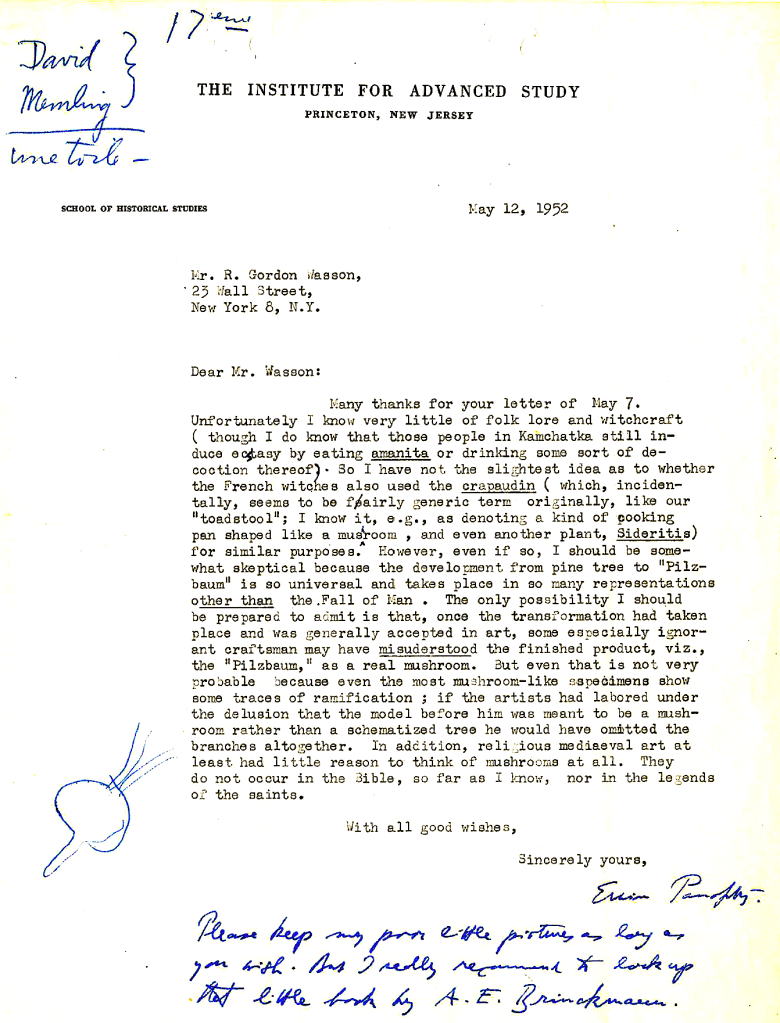

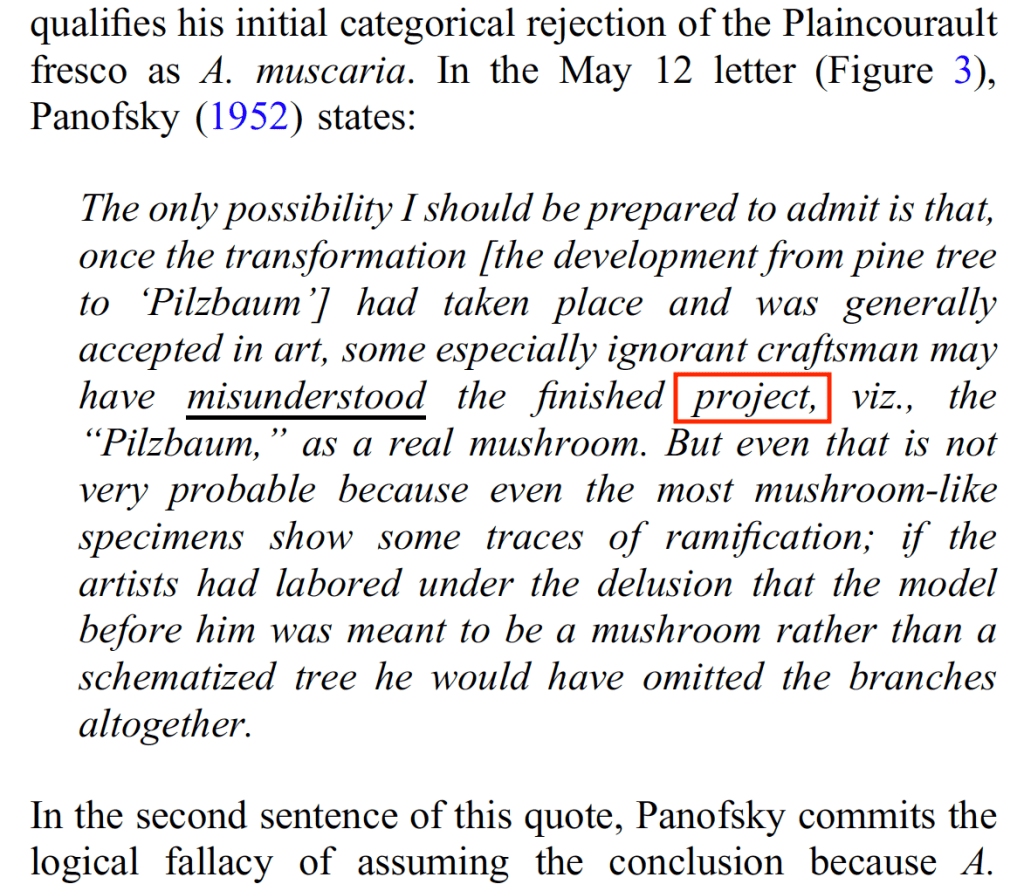

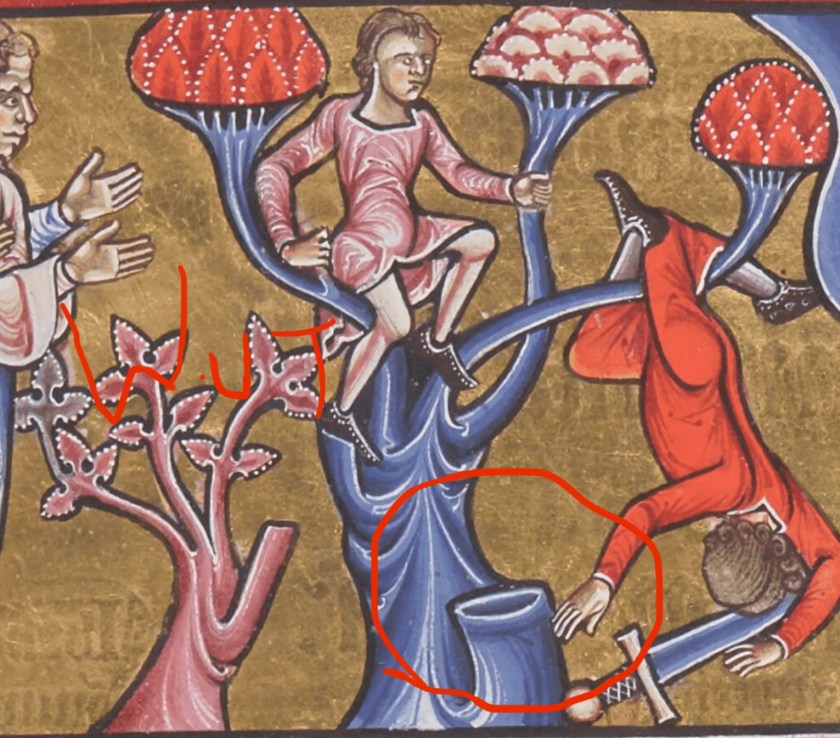


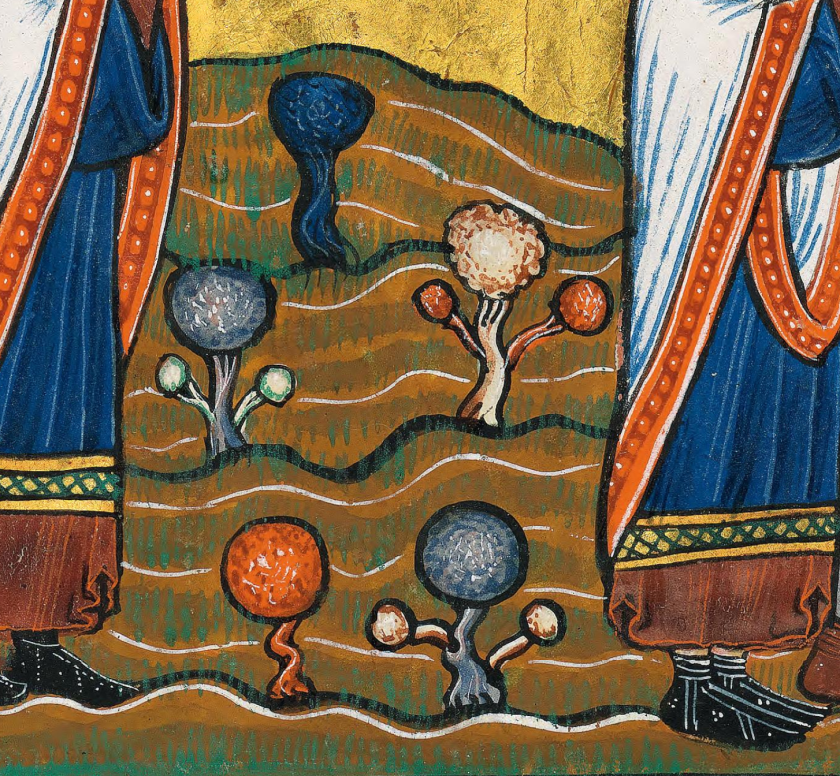
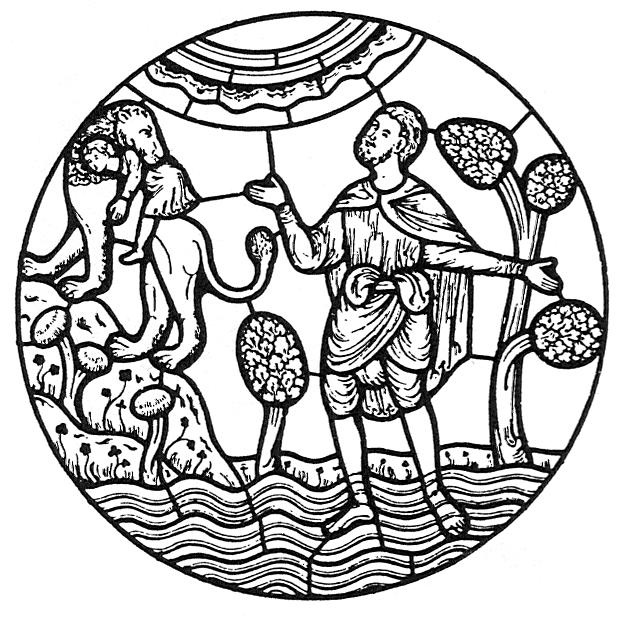


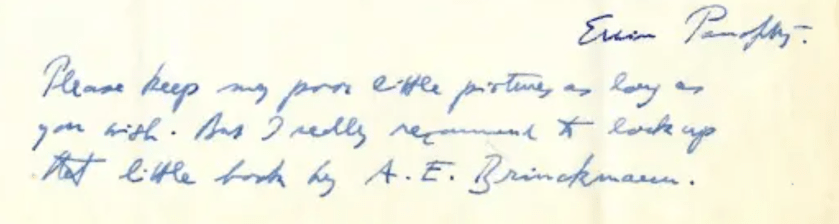
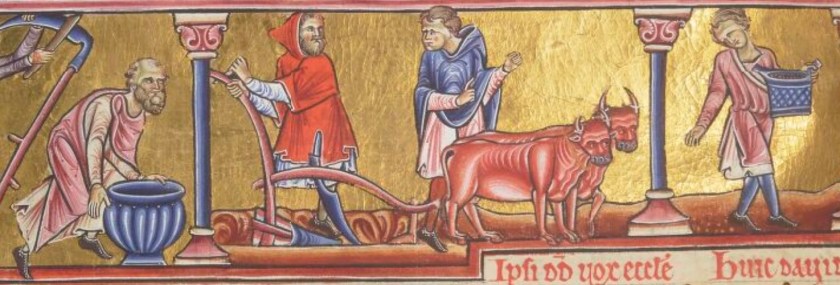
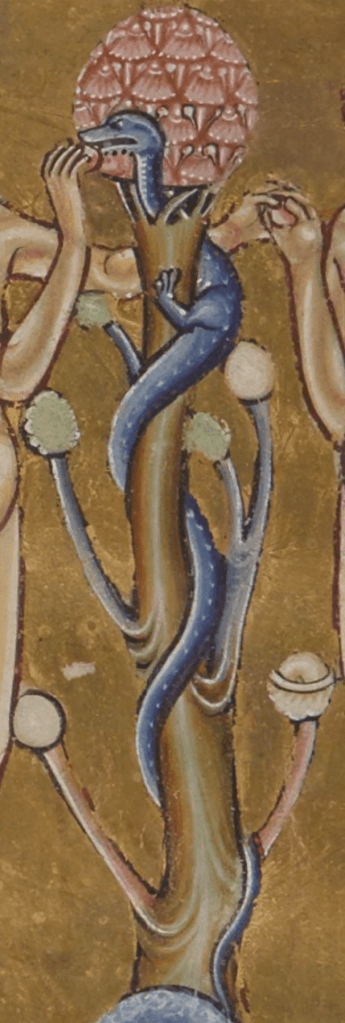
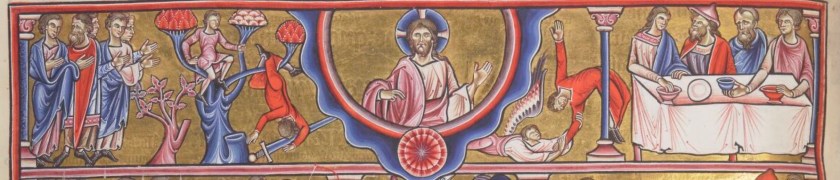
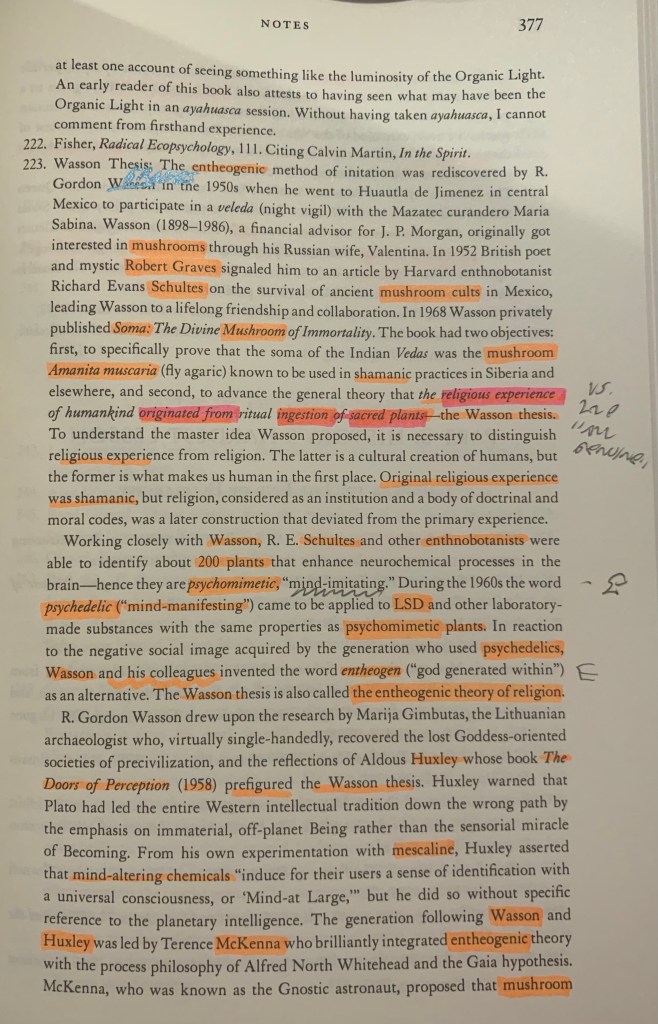
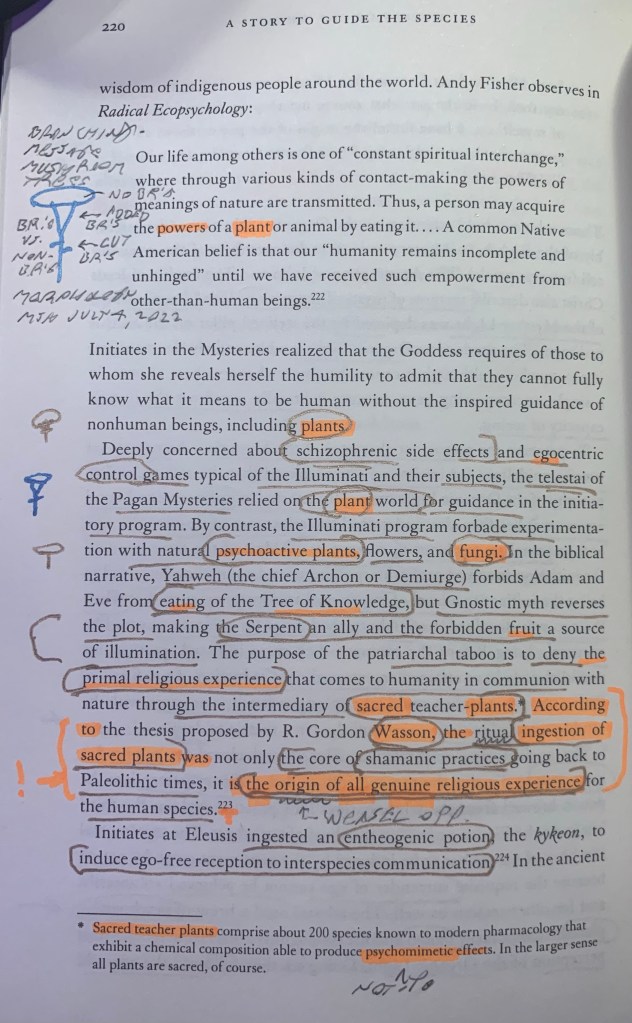

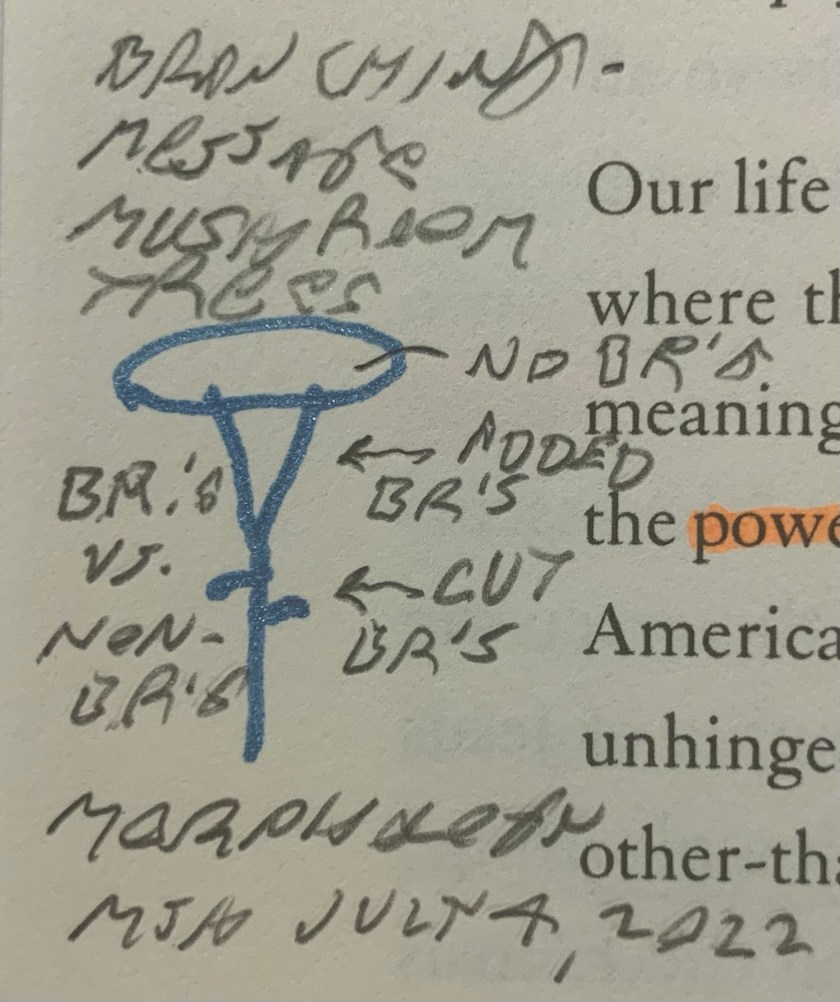
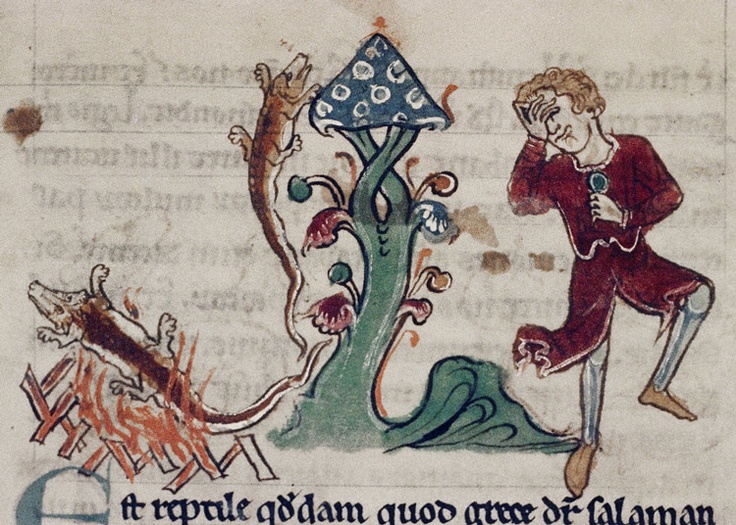

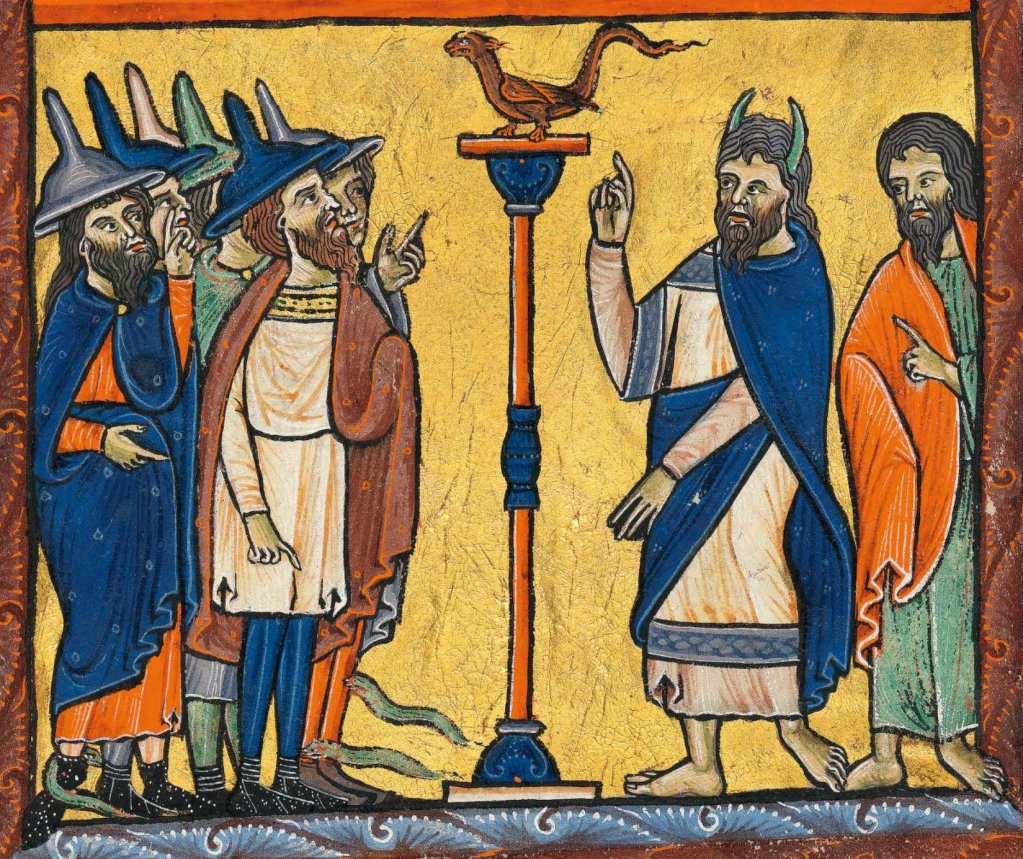
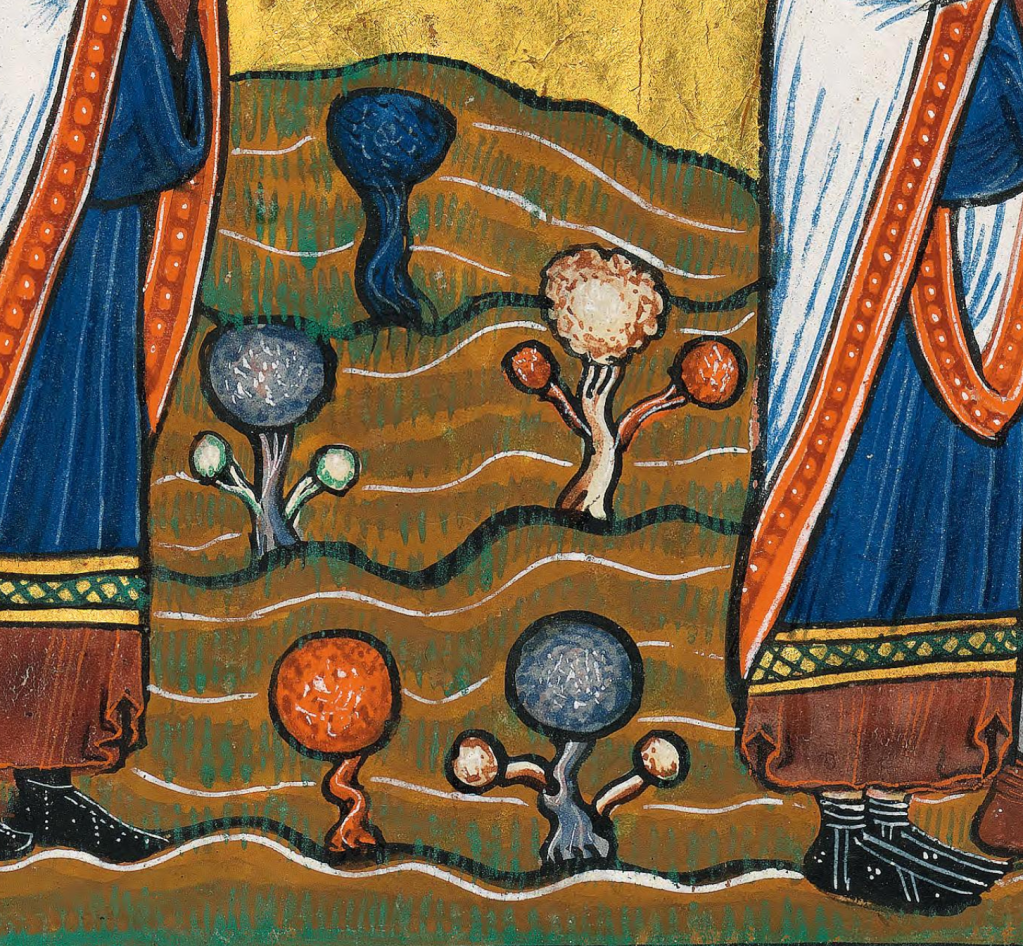
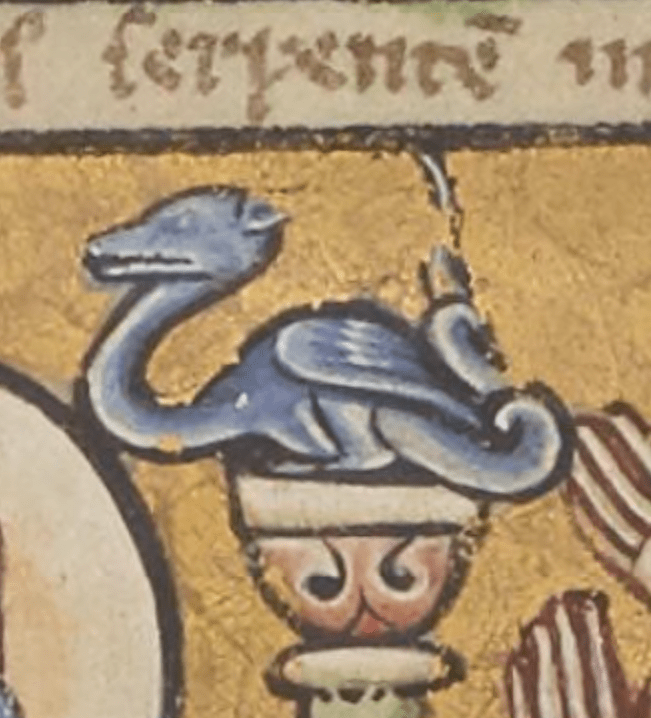
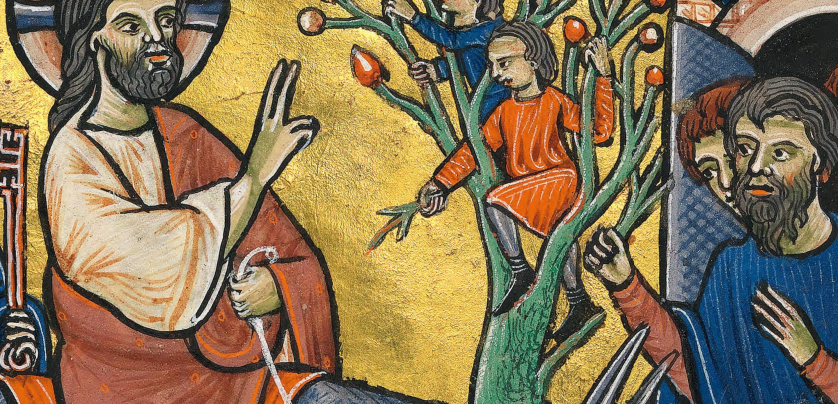
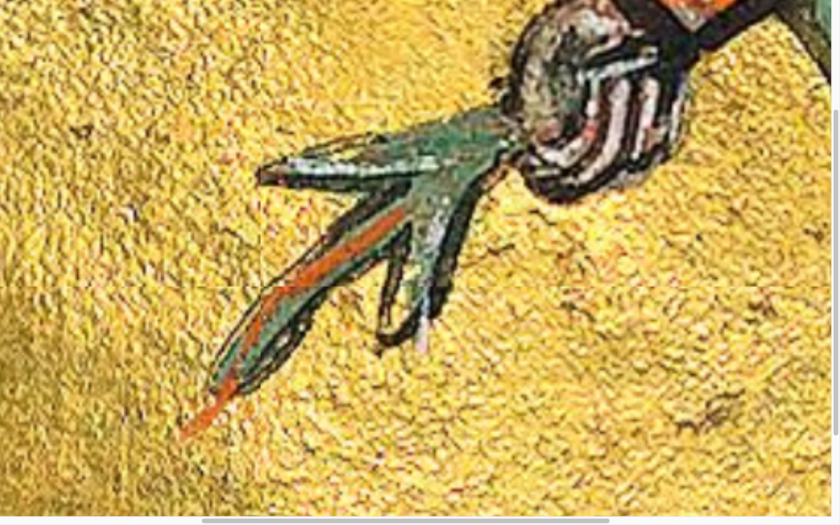
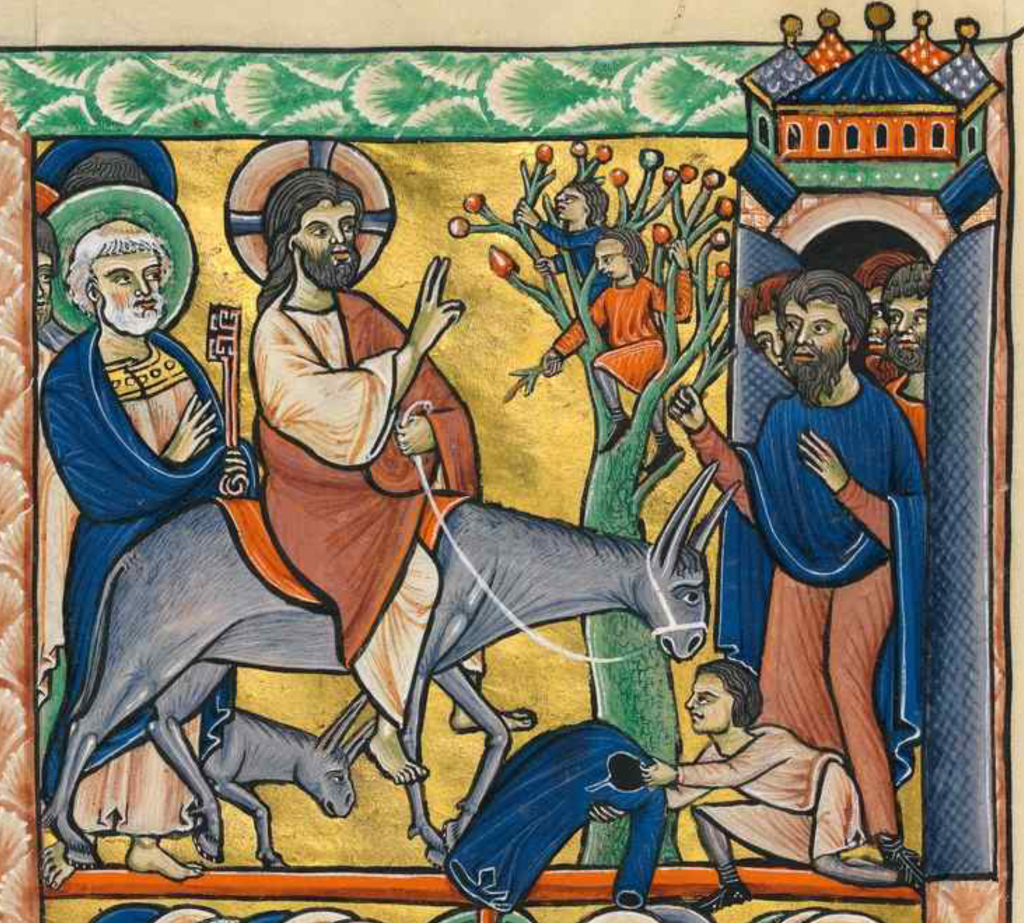
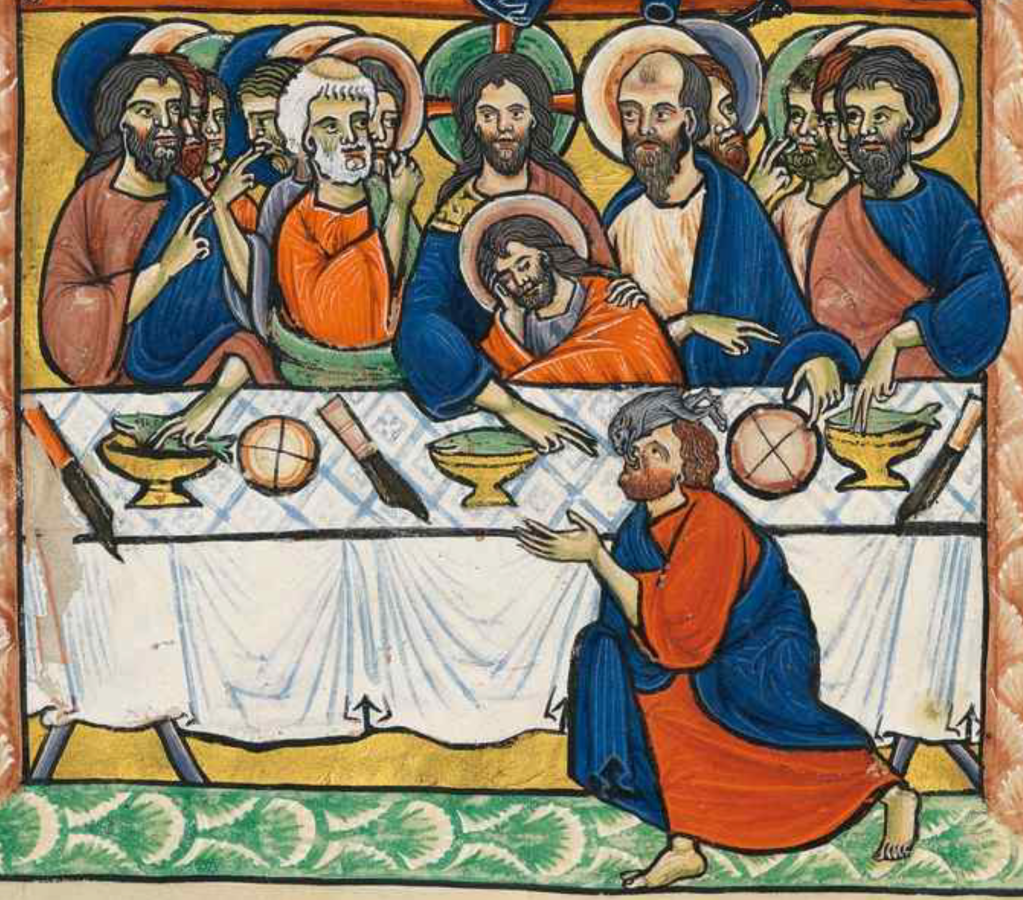
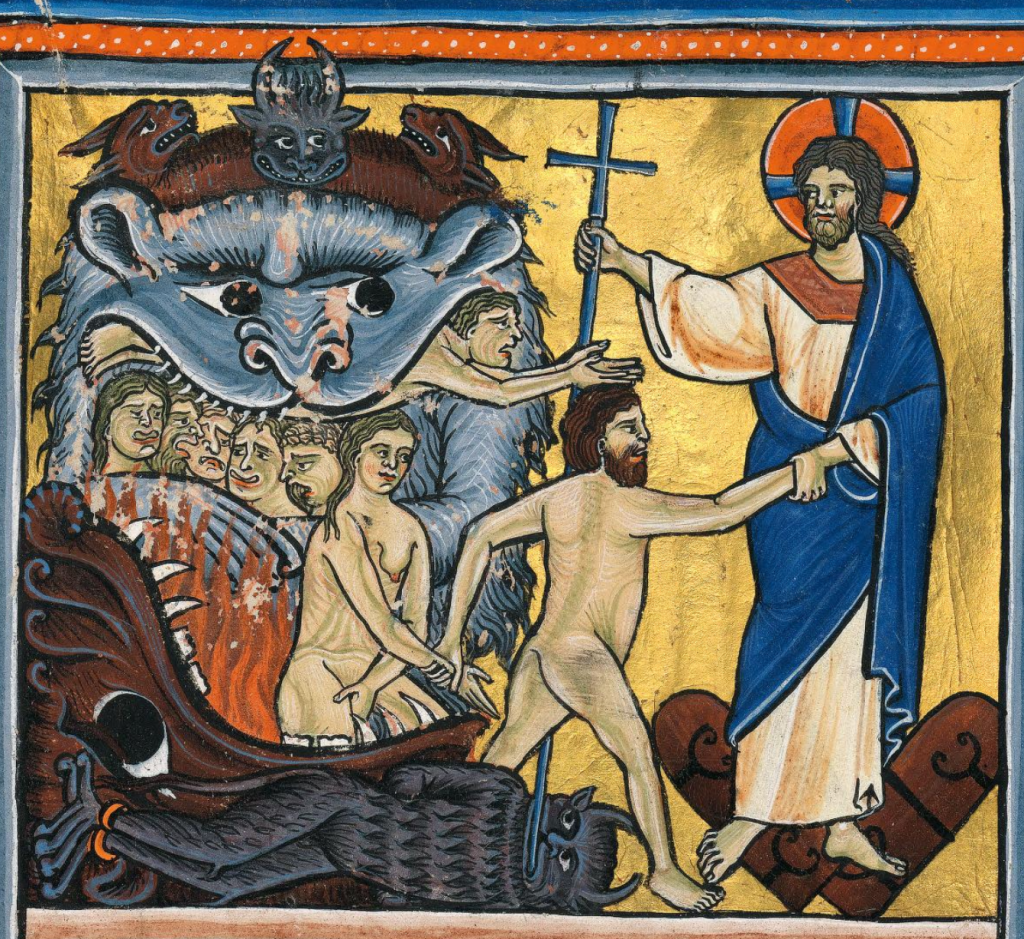
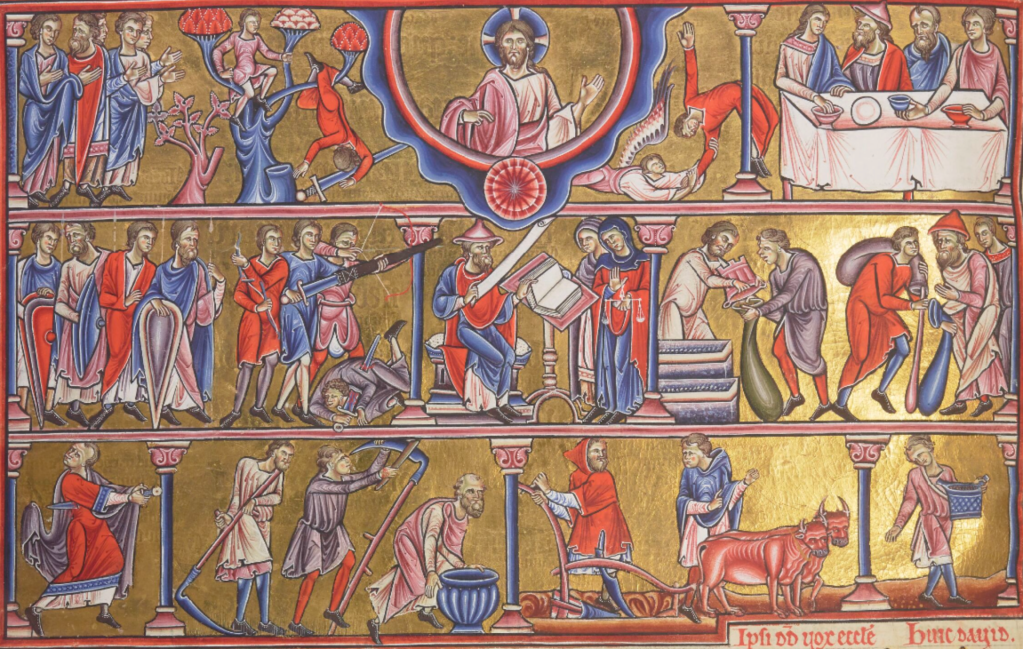
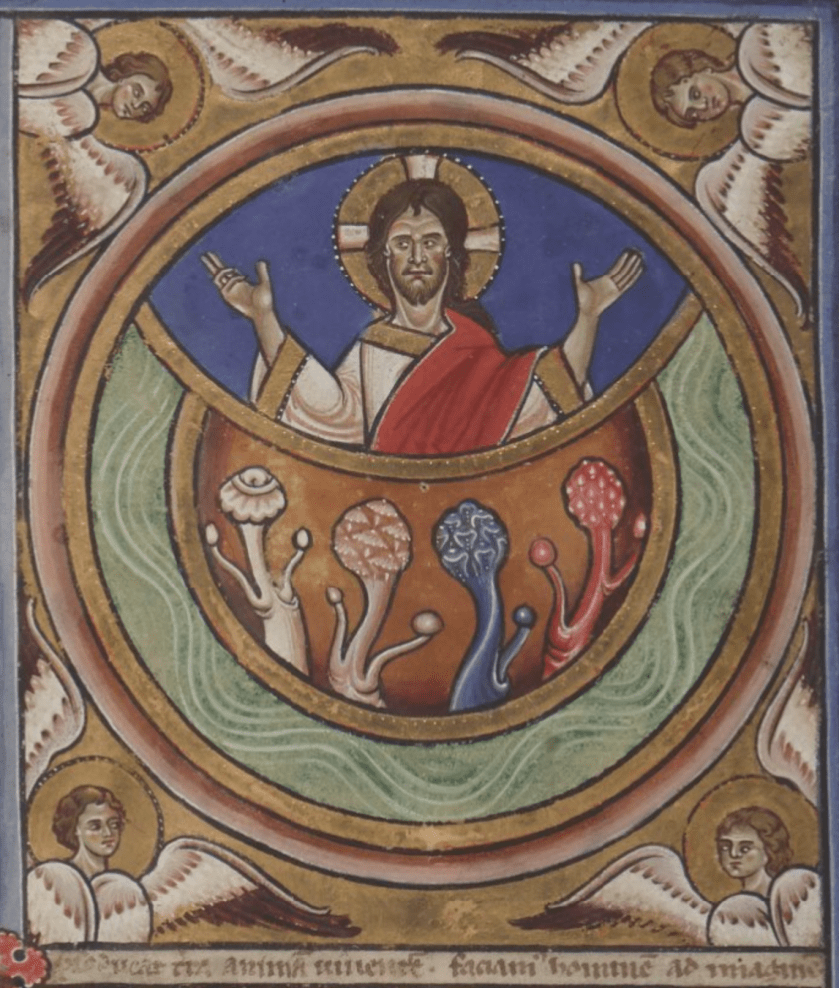
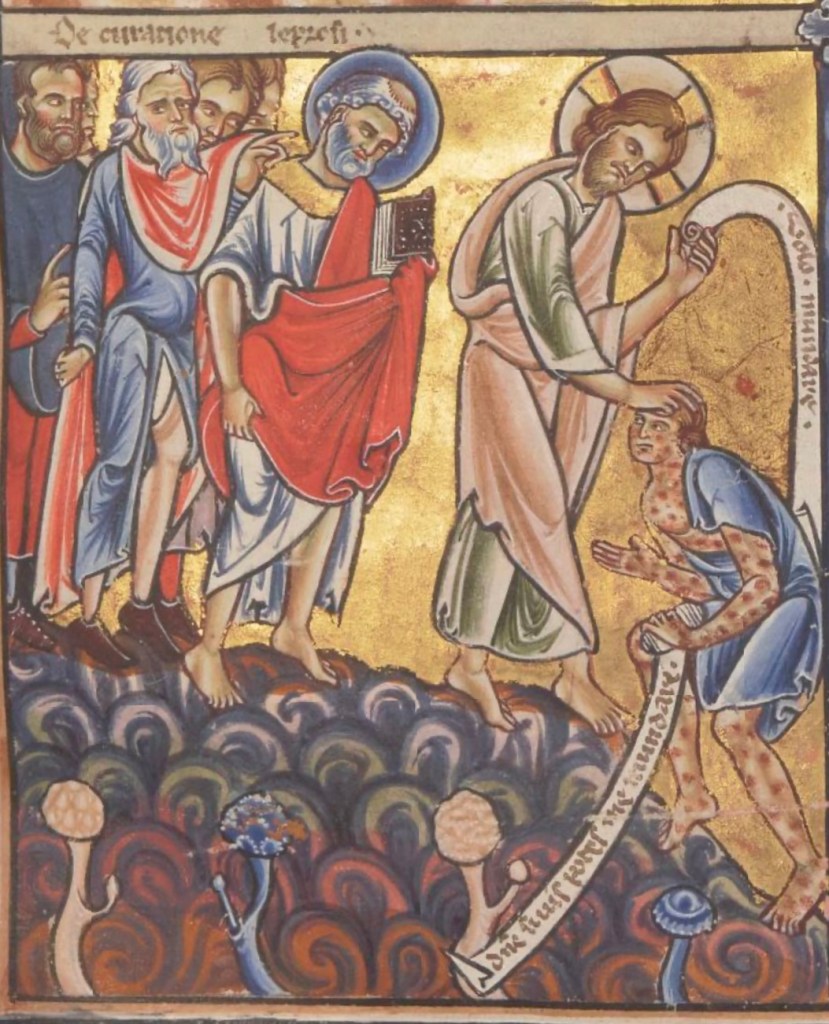
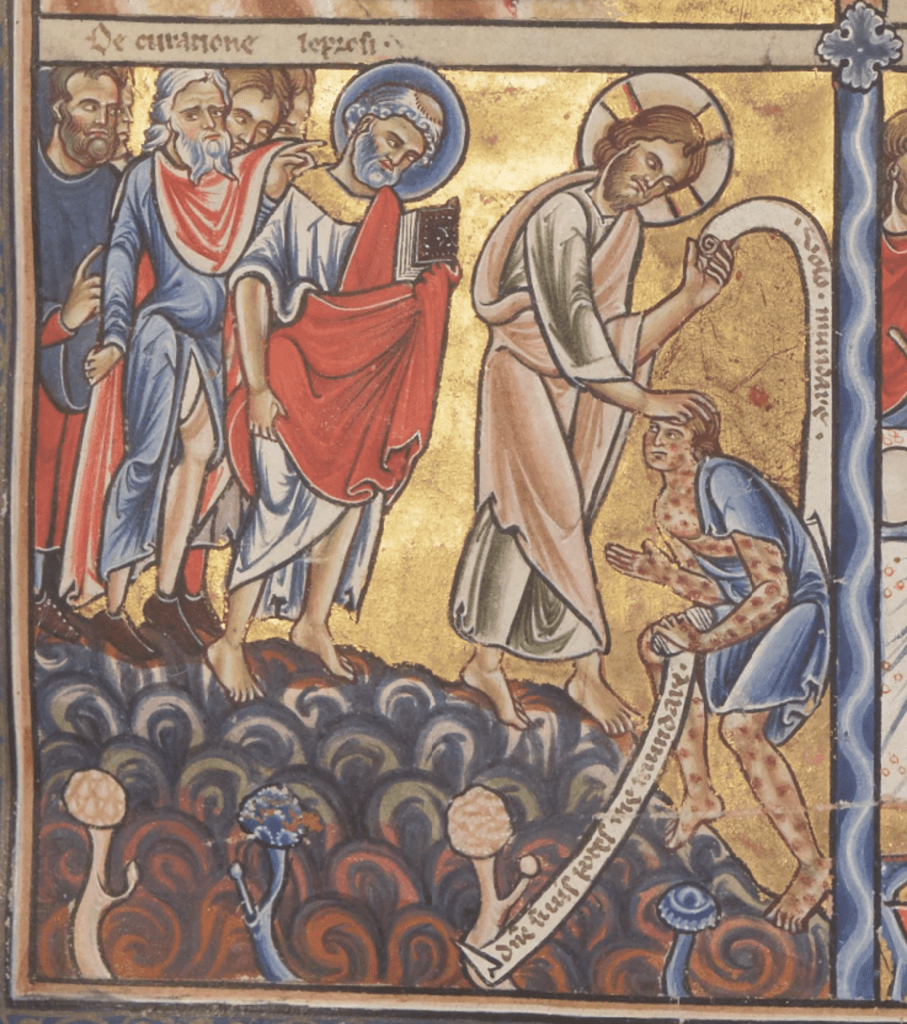

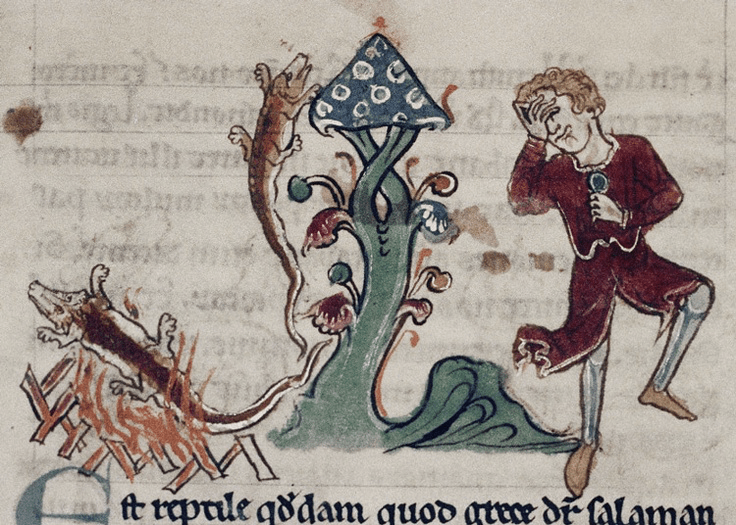
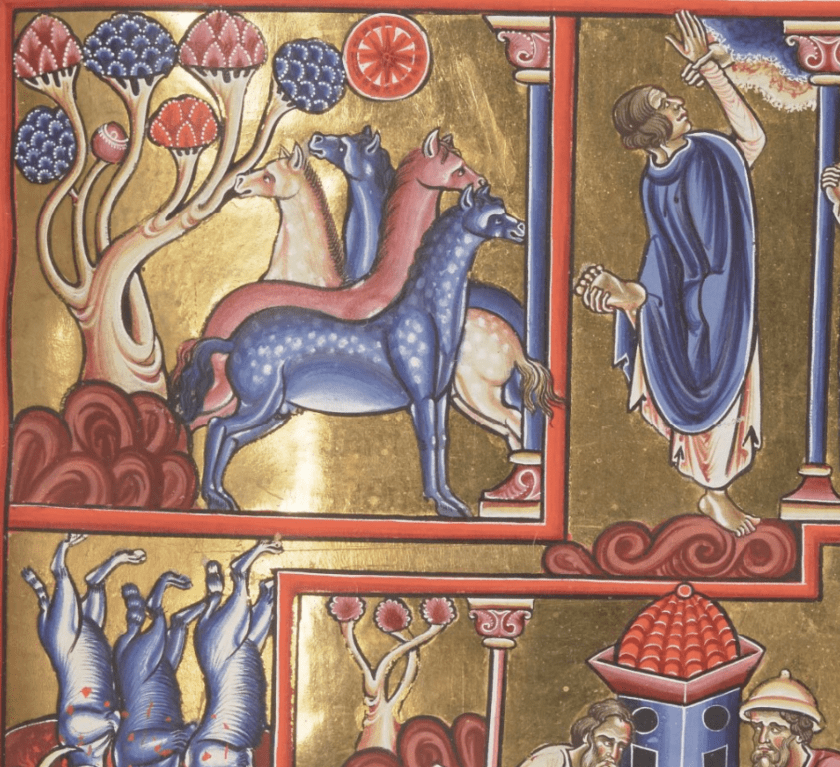
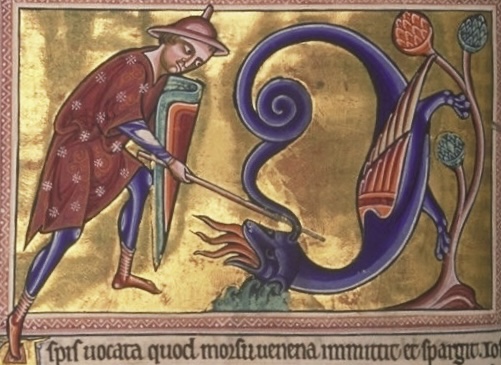
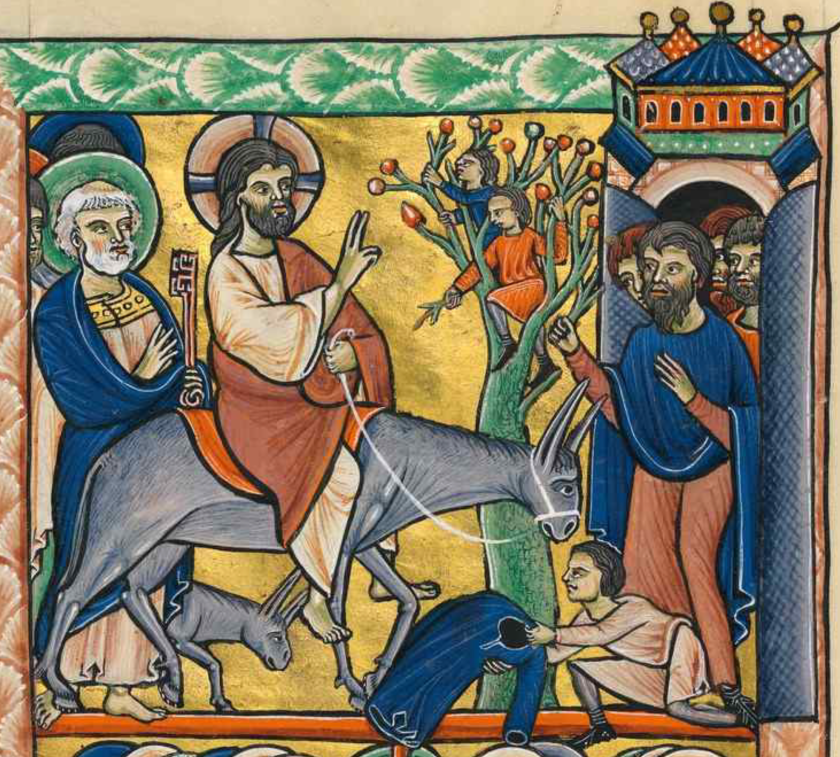

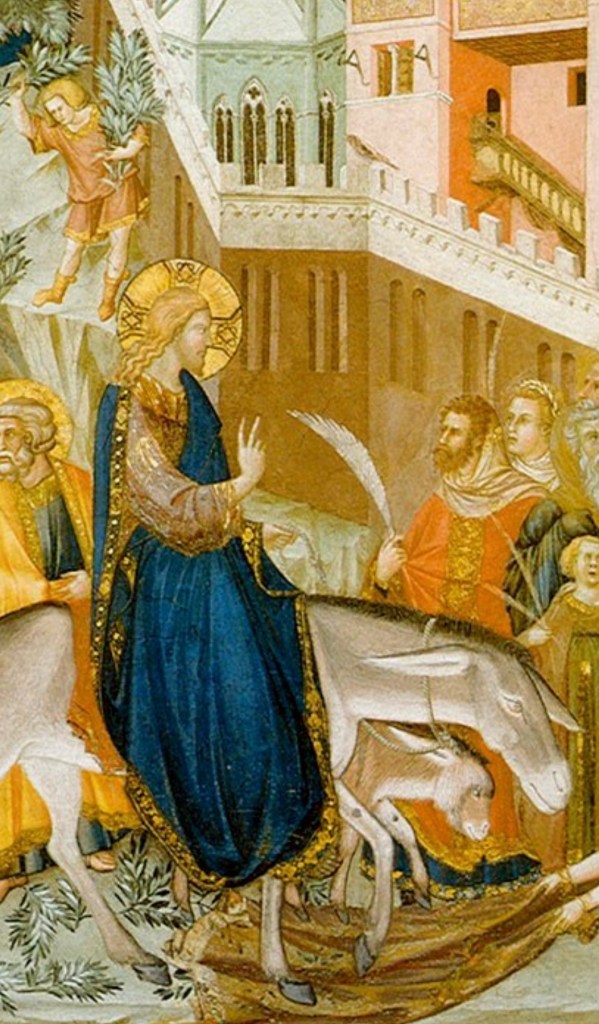
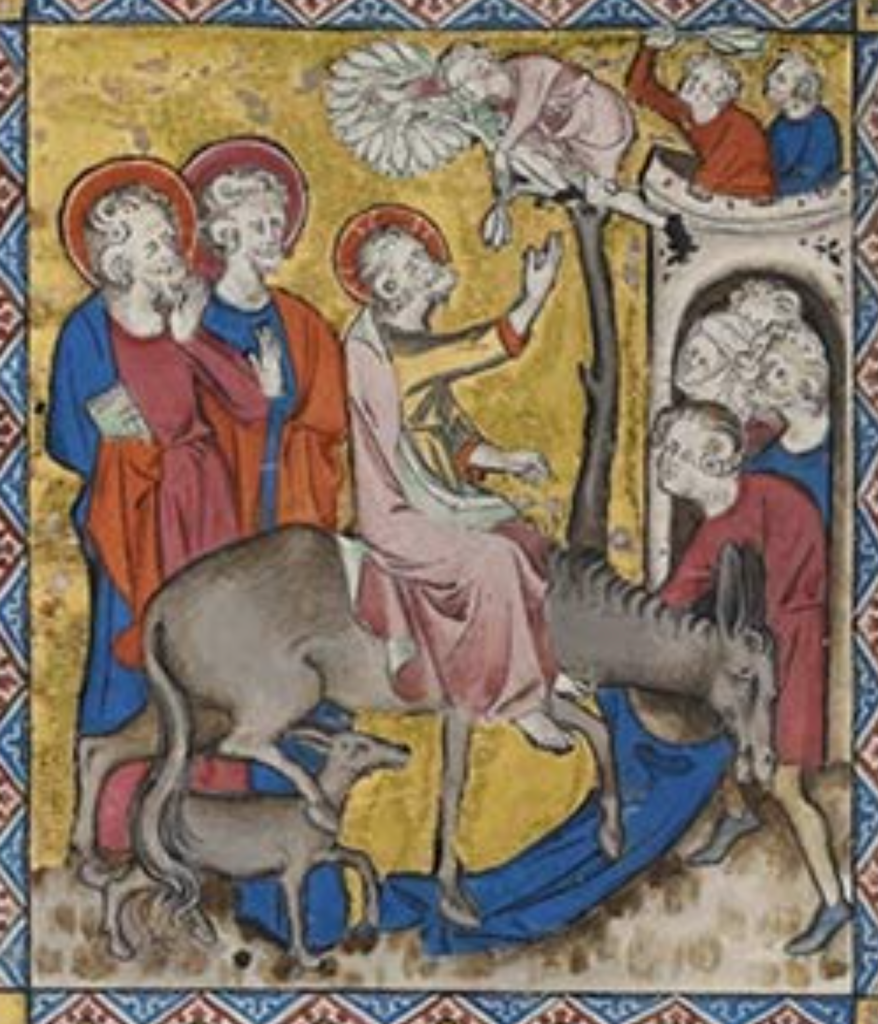
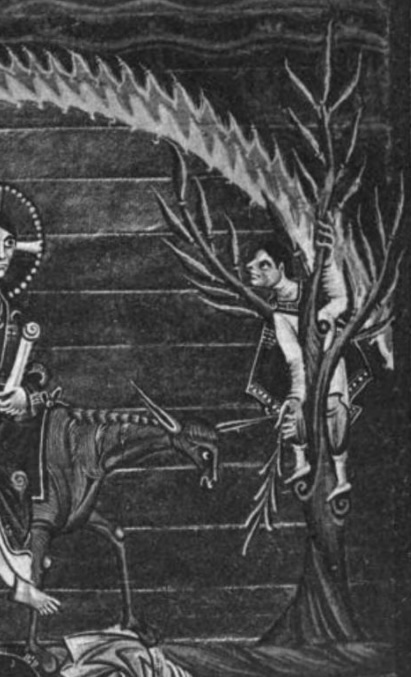
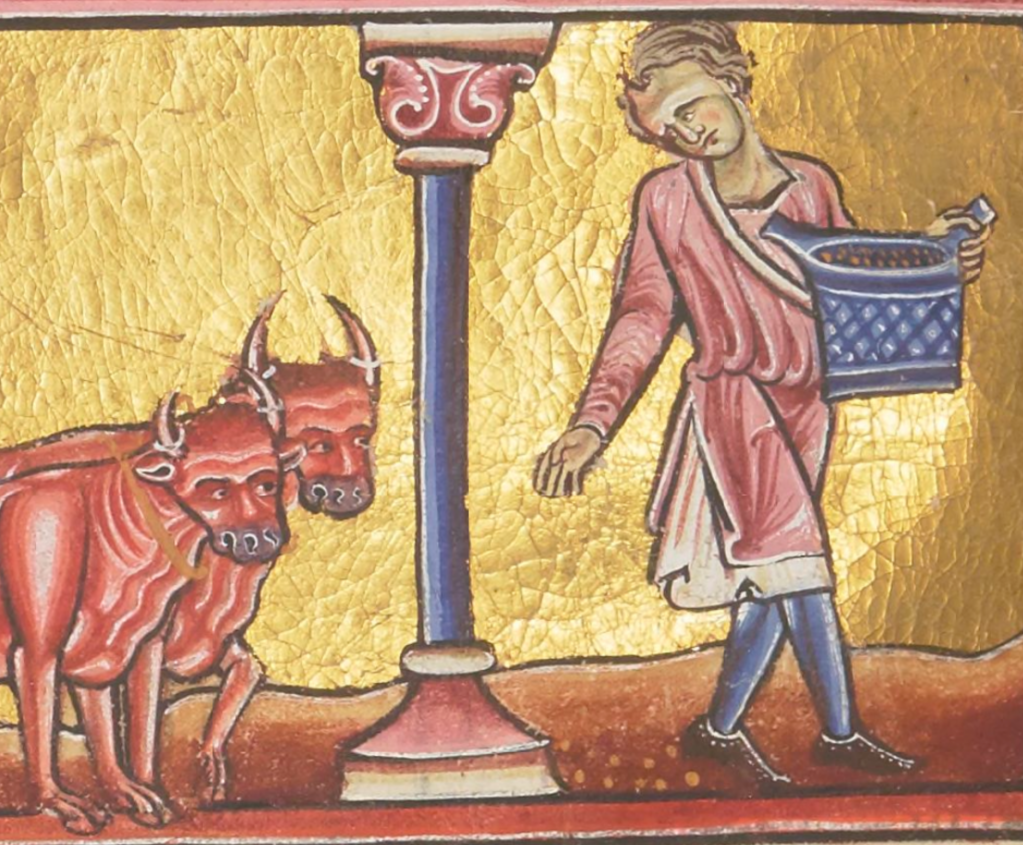
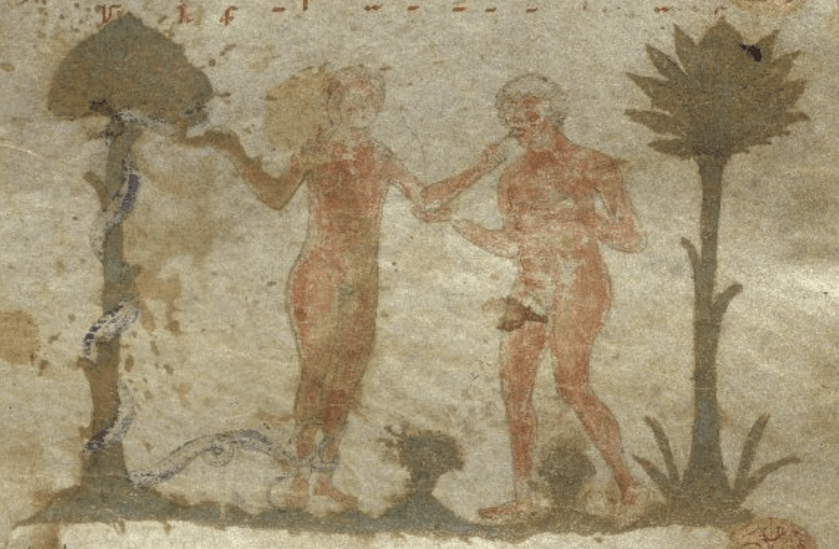
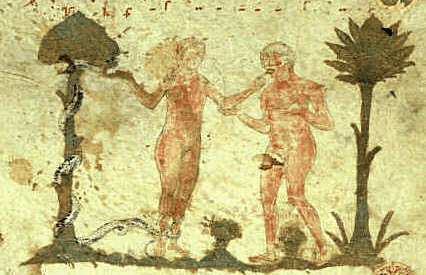
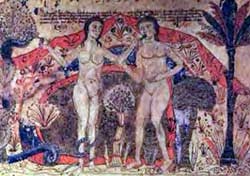
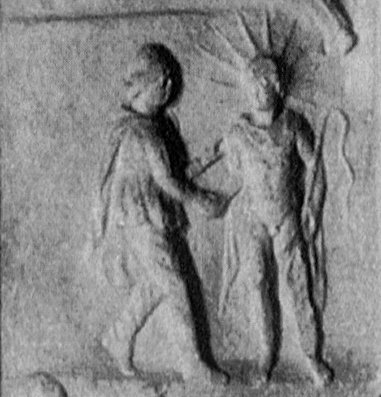

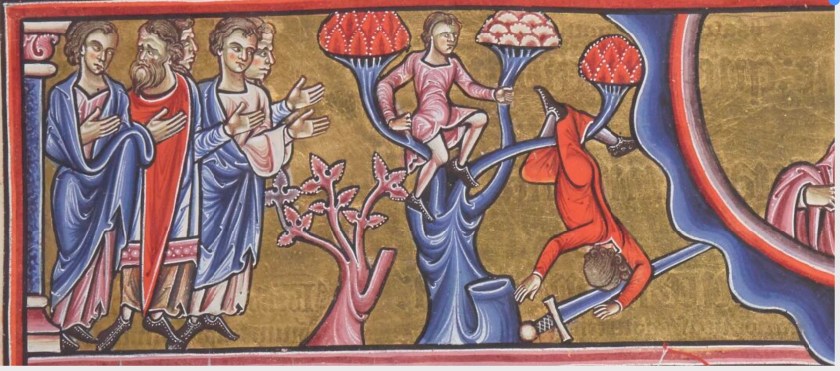

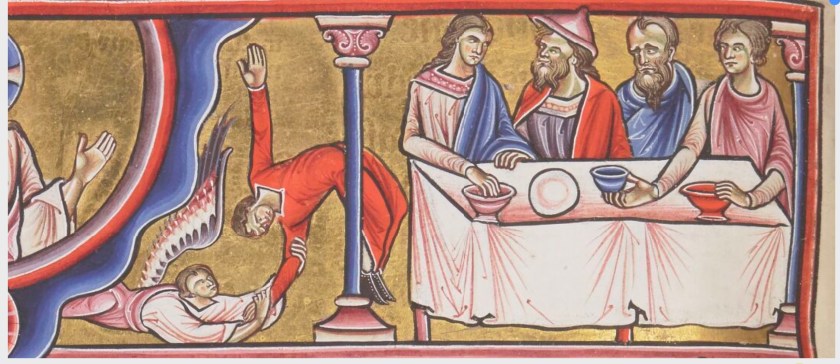
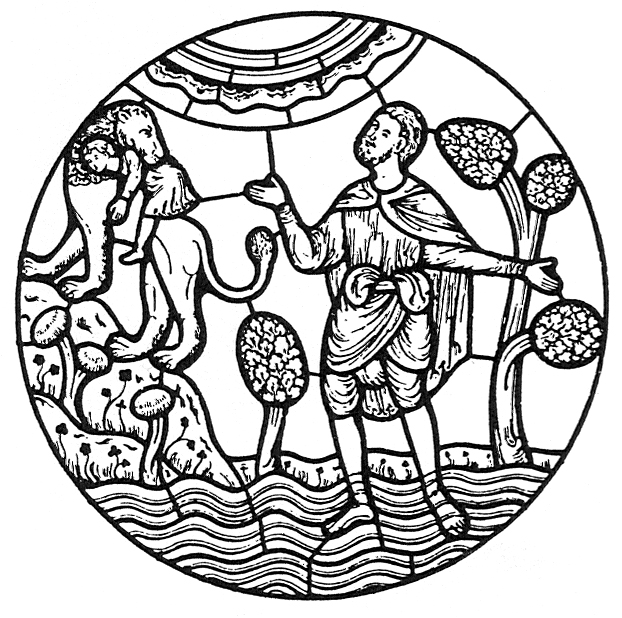
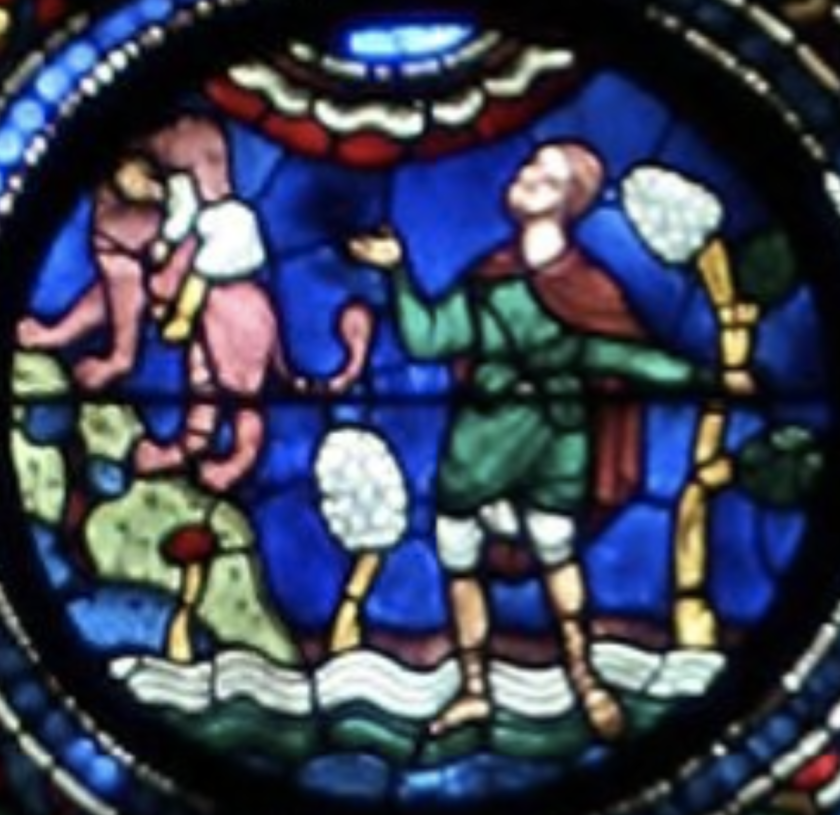


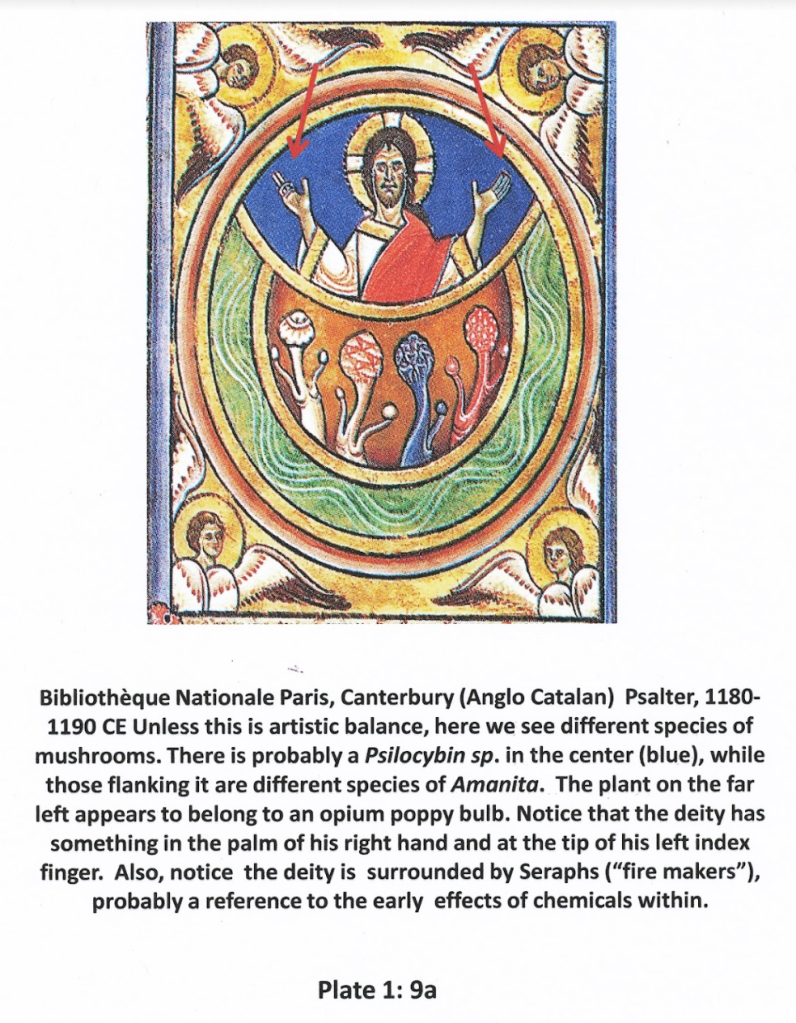
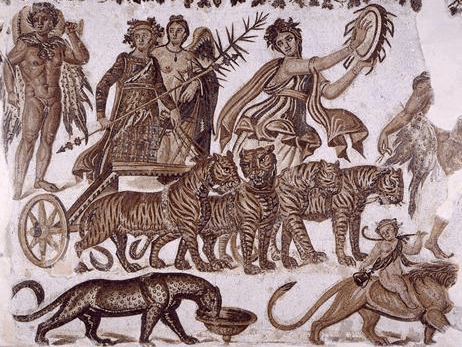




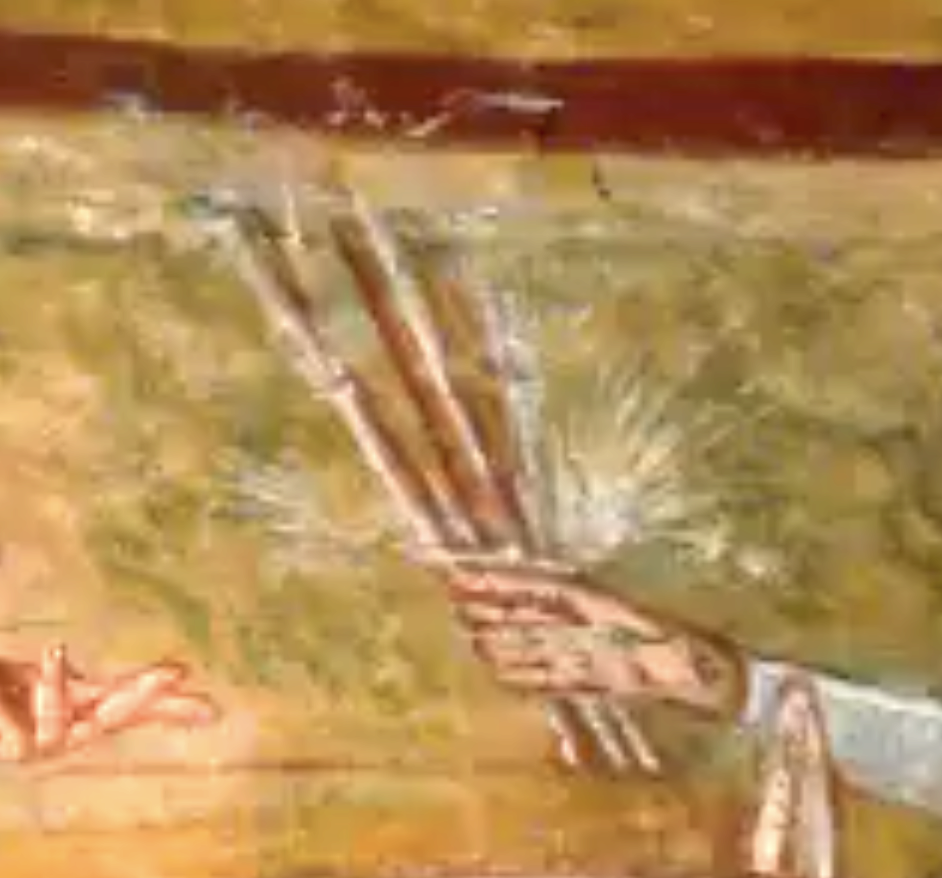
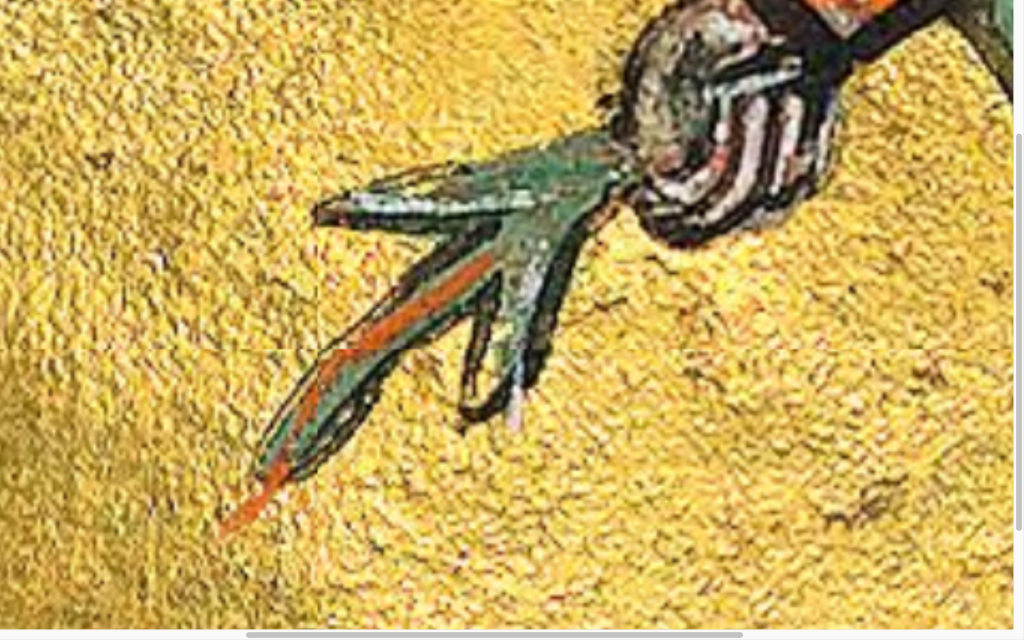


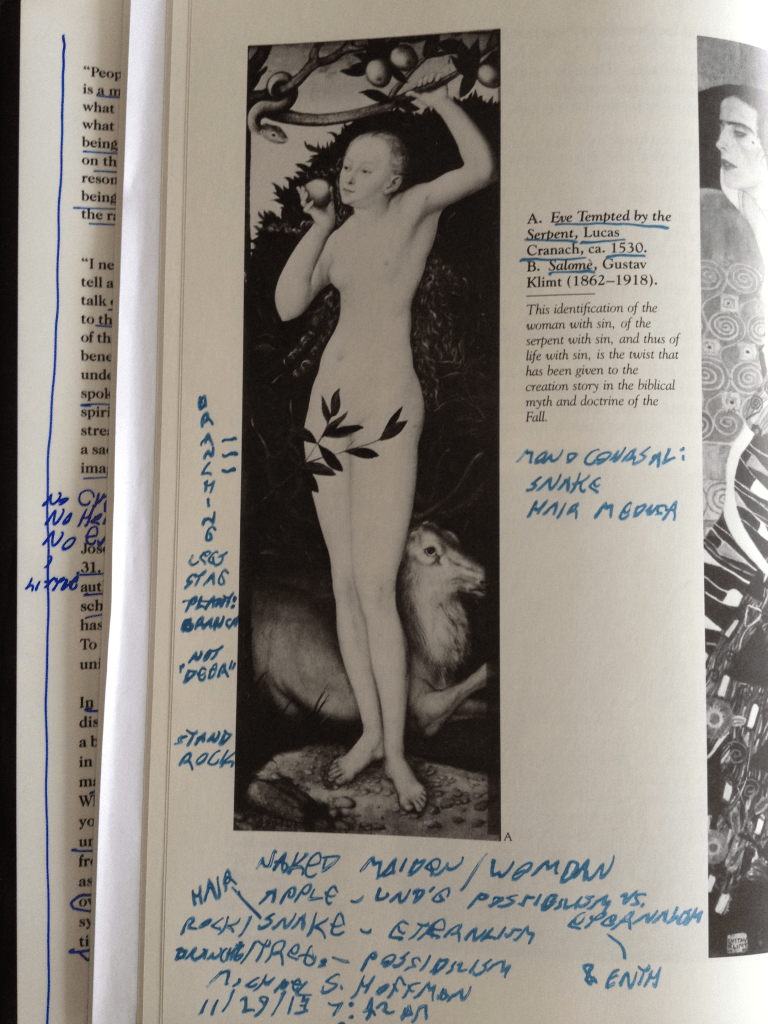
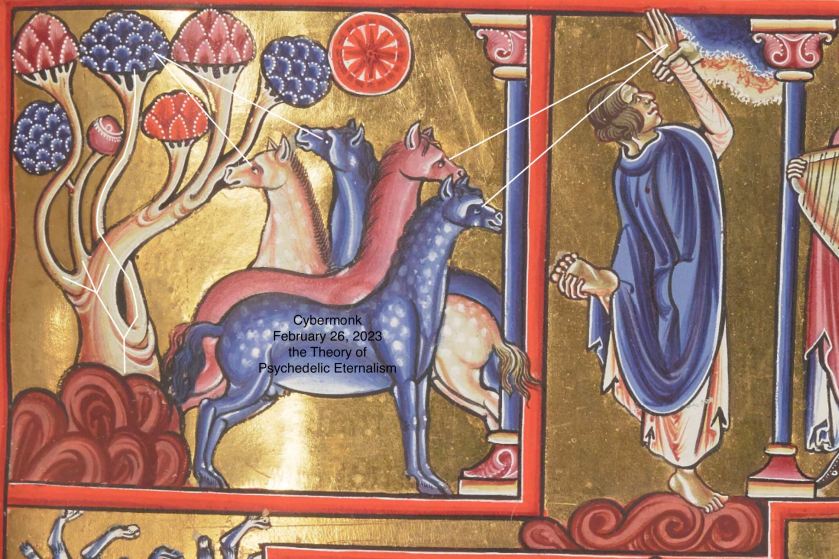


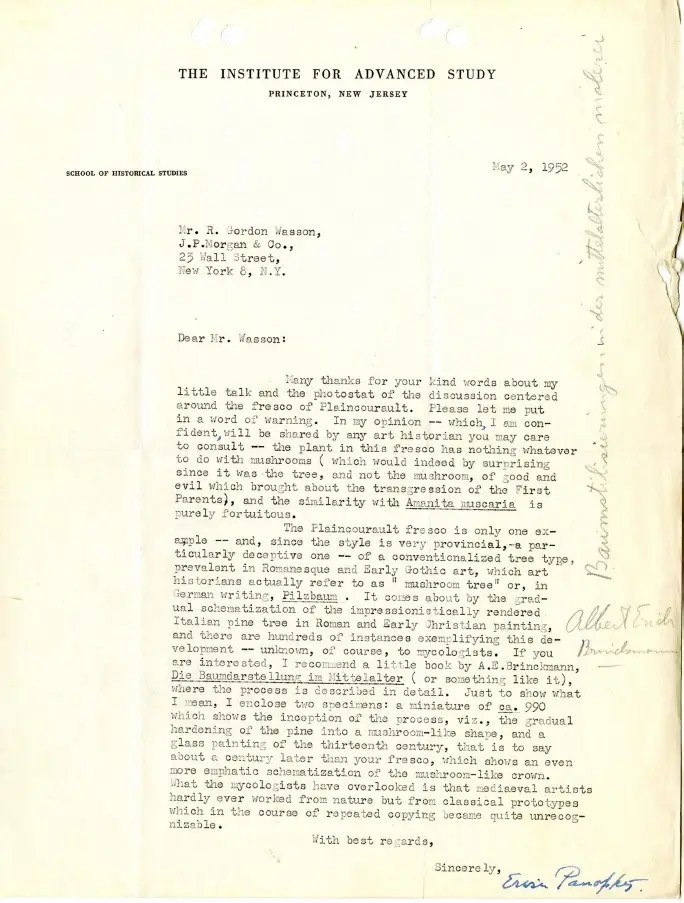
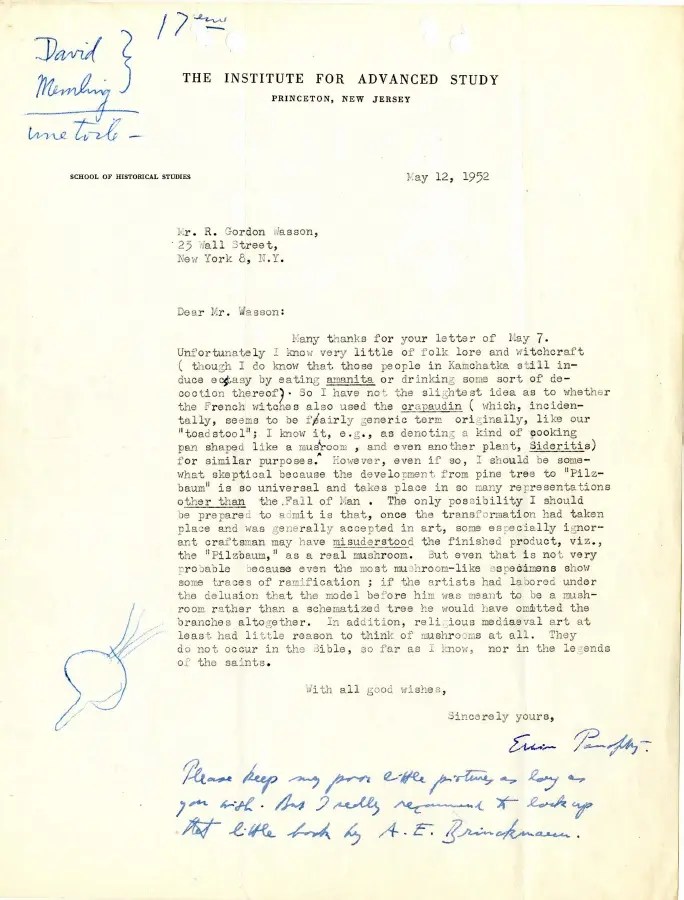
 The Egodeath theory