Astounding Omissions of Negative Psychedelic Effects from the Challenging Experiences Questionnaire’s (CEQ’s) Initial Item Pool – This Closed Science Is Pseudo-Science
News Flash! Apparently Griffiths Considers the HRS Questionnaire’s Effect “It was difficult to control my thoughts” as “Not Challenging”!!
Discovered/realized 8pm January 13, 2023, Cybermonk.
— that Griffiths looked at the HRS question “It was difficult to control my thoughts” and reckoned “Nope, not potentially a challenging experience. Omit from Initial Item Pool.”
Combine that with “We would NOT expect that HRS’ Volition category of effects are potentially significantly challenging.” (CEQ article Griffiths 2016)
No surprise that Griffiths, who defined in Science-based scientific terms, what exactly and scientifically constitutes “a complete [newbie] mystical experience”, cannot even IMAGINE that “It was difficult to control my thoughts” is challenging.
Motivation for This Page/Post
This staggering realization warrants a dedicated announcement, it’s on the same order as Griffiths’ omitting Question 54, “I was afraid to lose my self-control” from the CEQ Initial Item Pool and final set of CEQ items.
I did a whole investigation driven by the HUGE omission of 1994 OAV question 54, “I was afraid to lose my self-control.”
Today, I found an equally massive, shocking, stunning omission:
Griffiths chose not to add Rick Strassman’s HRS question “It was difficult to control my thoughts” to the CEQ’s Initial Item Pool – unbelievable! inconceivable!
“It was difficult” is not challenging??
Griffiths has NO IDEA what control-challenges are, and cannot even imagine or comprehend what such challenges would be; the possibility of control loss constituting a challenge.
Griffiths is doing a massive anti-Science sanitizing and whitewashing, even during the early relatively generous phase of forming of the Initial Item Pool of 64 items from the 3 main questionnaires.
Retraction of My Error: Griffiths Team Did Not Do a Decent Job Picking the Initial Item Pool
I said and wrote that CEQ team did a decent job of picking the Initial Item Pool of 64 challenging effects from 3 questionnaires.
I was wrong. Or they were only relatively decent in picking items for the CEQ’s Initial Item Pool.
Closed Science Is Pseudo-Science: Only Insiders Are Allowed to Access Psychedelic Psychometrics “Science”
Caveat: this Pseudo-Science of Psychedelic Psychometrics, which stands or falls with the “scientific” basis of Walter Stace’s 1960 book Mysticism and Philosophy, is CLOSED SCIENCE.
Unlike real Science, “the public” is not able to and not allowed to see the HRS questionnaire and which items are in which categories and tally the items.
“Sorry, our Science field that we fabricated behind closed doors (and hid behind the obscuring cloak of vague math, never discussing the actual effects that we omit and delete) is copyrighted, so there’s no correction mechanism via public Science.”
No One at the Bridge: Not Challenging
Artist: Rush Song: No One at the Bridge Year: 1975 – same year as Dittrich’s APZ questionnaire, which has 22 questions forming in 1985 the ‘A’ category of O/A/V: Oceanic Boundlessness/ Angst (Dread of Ego Dissolution (DED)) / Visionary Restructuralization.
9. I had difficulty in distinguishing important from unimportant things 32. My thinking was constantly being interrupted by insignificant thoughts 40. My own feelings seemed strange to me as though they did not belong to me 44. I felt tormented without knowing exactly why 55. I felt like a robot 56. My surroundings seemed peculiarly strange to me 64. I felt threatened without realizing by what 66. I had the feeling that I no longer had a will of my own 71. I was afraid without being able to say exactly why 83. I felt like a marionette 91. Everything around me was happening so fast that I could no longer follow what was really going on 105. I stayed frozen in a very unnatural position for quite a long time 107. I had difficulty making even the smallest decision 110. I felt as though I were paralyzed 131. Things around me appear distorted to me 133. Time passed more slowly than usual 136. I was not able to complete a thought; my thoughts repeatedly became disconnected 141. I felt isolated from everything and everyone 148. It seemed to me that I no longer have any feelings 156. It seemed to me as though there were an invisible wall between me and my surroundings 157. I observed myself as though I were a stranger 158. I felt a total emptiness in my head
54. I was afraid to lose my self-control. 3. I felt surrendered to dark powers. 12. I felt tormented. 59. Time passed tormentingly slow. 36. I experienced an unbearable emptiness. 55. I stayed frozen in a very unnatural position for quite a long time. 62. Everything around me was happening so fast that I could no longer follow what was going on. 41. My body seemed to me numb, dead and weird. 38. I felt threatened. 63. I had the feeling something horrible would happen. 29. I was afraid without being able to say exactly why.
19. I was afraid that the state I was in would last forever.
30. I experienced everything terrifyingly distorted.
32. I experienced my surroundings as strange and weird.
53. I had the feeling that I no longer had a will of my own.
5. I felt like a marionette.
33. I felt as though I were paralyzed.
16. I had difficulty making even the smallest decision.
24. I had difficulty in distinguishing important from unimportant things.
44. I felt isolated from everything and everyone.
45. I was not able to complete a thought, my thought repeatedly became disconnected.
Double Dread (DED) (43) effects from APZ and OAV Combined
Everything around me was happening so fast that I could no longer follow what was going on.
Everything around me was happening so fast that I could no longer follow what was really going on.
I experienced an unbearable emptiness.
I experienced everything terrifyingly distorted.
I experienced my surroundings as strange and weird.
I felt a total emptiness in my head.
I felt as though I were paralyzed.
I felt isolated from everything and everyone.
I felt like a marionette.
I felt like a robot.
I felt surrendered to dark powers.
I felt threatened without realizing by what.
I felt threatened.
😱🐉🚪💎🌳🍄🐍🪨🏆😇🍄🚪⚡️🍄
I felt tormented without knowing exactly why.
I felt tormented.
I had difficulty in distinguishing important from unimportant things.
I had difficulty making even the smallest decision.
I had the feeling something horrible would happen.
I had the feeling that I no longer had a will of my own.
I observed myself as though I were a stranger.
I stayed frozen in a very unnatural position for quite a long time.
I was afraid that the state I was in would last forever.
I was afraid to lose my self-control.
I was afraid without being able to say exactly why.
I was not able to complete a thought, my thought repeatedly became disconnected.
I was not able to complete a thought; my thoughts repeatedly became disconnected.
It seemed to me as though there were an invisible wall between me and my surroundings.
It seemed to me that I no longer have any feelings.
My body seemed to me numb, dead and weird.
My own feelings seemed strange to me as though they did not belong to me.
My surroundings seemed peculiarly strange to me.
My thinking was constantly being interrupted by insignificant thoughts.
To Matthew Johnson, to Add the ‘Control’ Category to the Challenging Experience Questionnaire (CEQ):
Subject: CEQ needs to add a “Control challenges” factor/category, including Question 54 😱
Hi Prof. Johnson,
I enjoyed your article Consciousness, Religion, and Gurus: Pitfalls of Psychedelic Medicine, and am looking forward to the psychedelic chaplaincy study.
Prof. Jerry Brown (The Psychedelic Gospels) recommended that I forward my recommendations and analysis of the CEQ to you.
The Challenging Experience Questionnaire (CEQ) is dangerous and ineffective. It has a giant vulnerability the size of a shadow dragon monster. Do not use the CEQ as-is.
The ‘Control’ Factor/Category to Add to CEQ
The CEQ needs to add this Control factor (category of psychedelic effects questions):
Control
5D-ASC 54. I was afraid to lose my self-control. 5D-ASC 6. I had the feeling of being connected to a superior power. 5D-ASC 5. I felt like a puppet or marionette. 5D-ASC 53. I had the feeling that I no longer had a will of my own. 5D-ASC 38. I felt threatened. SOCQ 28. Sense of being trapped and helpless. HRS #. It was difficult to control my thoughts.
These items are my top picks from the main questionnaires.
The Shadow Gatekeeper Explained and Reconciled
I have efficiently explained the battle with “the shadow”, in the Egodeath theory, which explains psychedelic eternalism.
Like Bob Jesse, I have an Electrical Engineering degree and am low-key working largely behind the scenes.
As an undergraduate in 1988, I used STEM-type thinking and language usage to create the Cybernetic Theory of Ego Transcendence (including loose cognitive binding to experience the block universe and worldlines) to explain usefully what the mystics’ approach is incapable of articulating.
It is crucial and urgent to add this Control category, with these items, to the CEQ. Question 54 is the shadow, and it is the most required question of all, yet CEQ overlooked it, proving that the CEQ needs a reality check and domain expertise.
11-Factors’ Impaired Control and Cognition category has issues too; the ICC factor is malformed without its central, definitive, characteristic Question 54, about fear specifically of control loss.
When people seek the gold treasure of Transcendent Knowledge, in order to pass through the dragon-guarded gate, they must repudiate naive possibilism-thinking and adopt eternalism-thinking (pictured as non-branching or {cut branching}, and {standing on right leg}).
In the popular Middle Ages motif inside of Christianity, branching-message mushroom trees, knowledge of reconciling with the experience of the threat of catastrophic loss of control was represented as relying on the right leg (and arm) rather than on the left leg.
{standing on right leg} to {defeat the dragon} (“the shadow” that you need to “surrender to”) and thus {get the treasure} and {be made able to pass in and out through the gate}
My original research, partly from writing an article for Prof. Jerry Brown, discovered the motif of branching-message mushroom trees densely in Christian art, and more sparsely in Hellenistic art as well.
This particular breakthrough (branching-message mushroom trees and handedness) was around November 2020, with roots back to October 1985 and panning out until July 2022.
CEQ Doesn’t Cover Negative Effects as Griffiths Claimed to Charles Stang
Other changes needed to the CEQ: Remove some 7 duplicate effects questions copied from multiple questionnaires. The “final” CEQ induces paranoia because it asks the same effect question two or three times.
Charles Stang is right, or more than right: the conception of “mystic experience” from Stace/ Pahnke/ Griffiths is malformed, missing negative experiencing. Griffiths defended his balanced coverage of the non-mystical negative mystical effects, by pointing to the CEQ.
That’s my area of specialty, so I examined the CEQ, only to discover that it omits and discards the main negative effects (loss of control), so the CEQ fails to do what Griffiths claims to Stang that it does.
Charles Stang, a historian of mysticism and theology of mysticism at Harvard, challenged and criticized Griffiths and the MEQ for using a conception of mysticism that fails to match the historical archive of reports from mystics.
Lopsidedly positive mystical experience is typical of newbies. Advanced psychedelic experience is concerned with the control-vortex capabilities of the mind to formally self-transgress personal control, which drives transformation of the mental model of control agency and branching world.
As psilocybin prohibition is repealed, more people will reach the advanced mystical experiences, which are negative, in the course of reaching the treasure of Transcendent Knowledge through transforming the model of personal control and time and branching possibilities.
The CEQ is the repressed, dissociated shadow of the MEQ.
The CEQ itself perpetuates the same problem as Charles Stang pointed out about the MEQ: the CEQ claims to broaden the Dread category, yet (with no explanation), the CEQ deletes 18 of the 21 questions (86%) of the Dread category, which is identical to 11-Factors’ “Unpleasant Experiences” high-level category, containing the same 21 items.
Dread or Unpleasant has not just 13 items (7 ICC + 6 ANX) that need to be added to the Initial Item Pool; there are 8 direct members of the Unpleasant high-level category as well, including the all-important item #54.
By omitting all of the control-challenge effects from the Dread/ Unpleasant category (deleting 18 of 21 items = 86%, keeping 3 of 21 items = 14%), the CEQ utterly fails to engage with the main advanced negative mystic experiencing.
The main, most distinctive and characteristic challenging psychedelics effect is not motivational vertigo (“Grief”), but rather, formal transgression of personal control, producing the advanced peak mystical experience of the threat of catastrophic loss of control.
The crisis experience of the threat of catastrophic loss of control is the precise naming and identification of “the shadow”, the threatening dragon monster, the gate-guard angel of death blocking the way to the treasure sought, which is Transcendent Knowledge and personal transformation of control agency in world.
Why on Earth does CEQ delete 86% of the Dread items, while claiming to broaden coverage of challenging psychedelic effects?!
The added Grief category does reflect a major effect, but where is the justification to delete 18 of the 21 Dread effects items, and have no Volition-Control challenges category in the CEQ?
Studerus was in error in poor communication that there are two high-level categories: Unpleasant Experiencing (21 items) and Pleasant Experiencing (45 items).
Studerus was in error in first placing the all-important Shadow question, #54, in Anxiety, and then in error in making #54 a direct member of the Unpleasant high-level category.
#54 is specifically fear of loss of control, and therefore it is the main item to define the Impaired Control and Cognition factor.
The factors in 11-Factors’ Unpleasant high-level category need to be constructed around item #54 placed in ICC.
Griffiths’ team was in error in adding only the 13 low-level ICC & ANX factor items to the CEQ’s Initial Item Pool. Griffiths needed to instead add all 21 of 11-Factors’ high-level Unpleasant category’s items to the CEQ’s Initial Item Pool – that would have included the misplaced, all-important Question #54, the shadow question, “I was afraid to lose my self-control.”
Subject line: Critique of Griffiths MEQ30 and other ME questionnaires Jan. 7, 2023
Prof. Jerry Brown on Challenging Experiences and Risks
Hi Michael,
Your recent posts critiquing Griffiths and others for ignoring challenging psychedelic experiences in evaluating mystical experiences brought to mind the following:
1/ The Dark Night of the Soul, Before Revelation (Campbell)
1/ The Dark Night of the Soul – described in mystical and psychological literature, including this quote from Wikipedia by Joseph Campbell: Joseph Campbell states:
“The dark night of the soul comes just before revelation. When everything is lost, and all seems darkness, then comes the new life and all that is needed.”
2/ Grof’s Basic Perinatal Matrix II. Early on in his work, Grof proposed these matrixes I-IV as a paradigm for the LSD experience.
Basic Perinatal Matrix II (BPM II) is that point in the birth when labor has started and we are being pushed up against the cervix by the mother’s contractions but the cervix has not yet begun to dilate or open.
This can be a very scary experience, and people in later life who were traumatized at this point in their birth may feel claustrophobia, existential angst, depression, feelings of terror, or other negative consequences.
Edgar Allen Poe may have been a BPM II baby as evidenced by his short story “The Pit and the Pendulum” where a character finds himself in a prison where walls are closing in on him and the only way out is down a bottomless pit.
3/ Bob Jesse’s concern in Lucid News Interview: Address Risks & Negative Experiences
01/06/2023 – A Psychedelic Pioneer’s 2023 Forecast http://eepurl.com/ihxulX – Lucid News email newsletter, January 6, 2023. Bob Jesse on risks:
3/ Bob Jesse’s concern, expressed in the Lucid News Interview that we are not addressing or educating about the risks or negative experiences that psychedelics can and do occasion.
KJ at Lucid News wrote:
“Surveying the landscape, Jesse noted that FDA trials for approval of MDMA and psychedelic medicines are progressing along a well-marked track, and should pave the way for insurance coverage for FDA-approved uses.
“So it’s the non-FDA routes we need to watch most carefully,” he [Bob Jesse] emailed. “With ballot and legislative initiatives [e.g., Oregon and Colorado] what expectations are being set?
“Word is getting out about the potential upsides of psychedelic use, but what about the risks?
“Some people don’t respond favorably, and occasionally the outcomes are negative.
“A few will have very bad outcomes.
“Our culture has developed intuitive understandings of activities that carry risks, like riding a bike, driving, and rock climbing.
“They’re usually quite safe — except when they aren’t.
“Western culture doesn’t yet have that kind of understanding, including risks and risk reduction, of psychedelics. We’re in an adolescent stage at most.” [emphasis added by Brown, on Jesse’s statements]
Reasons for Positive Framing of Mystic-State Experience
IMHO this approach by Griffiths and other leading researchers may be due to trying to position psychedelics positively to successfully navigate the media and political landscape surrounding the Psychedelic Renaissance and current research.
Regards, Jerry [January 7, 2023]
Reply to Brown about Risks Acknowledgement
People are underestimating the nature of the risk.
The peak risk is the central name of the game, the {dragon shadow threat} is what entheogens are ultimately all about.
The risk is not an incidental side effect, to steer away from; the risk is the main central gate to steer toward and master and navigate through.
To position psychedelics positively to successfully navigate the media and political landscape surrounding the Psychedelic Renaissance and current research, the field needs to recognize & comprehend that the {shadow dragon monster} threat is the threat to self-control stability during control-model transformation during switching from possibilism to eternalism in the eternalism altered state.
The eternalism explanation of the entheogenic altered state is an extremely small, specific, and simple explanatory model that fits with:
* The reported effects & risks.
* The reported folk solutions to the peak risk (“surrender, submit, accept your lack of control”).
* The transformation that’s the whole point of the game: gaining Transcendent Knowledge, gnosis, perfection, completion, the adult developmental form.
Fallacy: “Activity X has a risk, therefore disallow that activity.” Every activity has risks, yet we consider the balance of risks and benefits.
“We’re in an adolescent stage”
That is the stage of initiation and rites of passage from youth (or maiden) form to adult form.
Comprehend the dragon shadow threat, reconcile, stop thinking as a child, put away childish things, learn to stand on right leg instead of left leg.
Convert from possibilism-thinking to eternalism-thinking and sacrifice and jettison childish thinking to pass through the dragon-guarded gate to get the treasure, Transcendent Knowledge, the adult form which is compatible with the altered state
— unlike the childish, immature form of thinking – the childish conception of control agency in a branching world, creating one’s future in an open future.
That child dies in some sense, repudiated as non-viable in the altered state, in the course of the mind’s standard maturation/ initiation process.
* Forgotten, but not any more: The treasure, gnosis, Transcendent Knowledge, guarded by the threatening dragon monster shadow.
I noticed today that Jordan Peterson gets it right, during his interview of Griffiths:
“That’s specifically why you’re encouraged in mythological stories to confront the dragon and get the gold, that’s the basic story“
We don’t merely experience a random threat or risk as an isolated thing.
The threat is the main challenge for completing the game, the objective is to get the treasure, be able to pass in & out through the gate like God’s holy city and garden at the end of the Bible to access freely the sacrament of the non-dying.
The “isolated random risk” (the shadow) is actually specific and central.
We must go through the threat, the risk – the {shadow/ dragon/ monster} is the entire gateway and center of the whole pursuit: the dragon risk comes together with pursuit of the treasure of gnosis, Transcendent Knowledge, transformation.
Pursuing the {treasure} and successfully engaging & reconciling with the specific risk (the {shadow/ dragon}) produces a transformed acclimation of the constitution of the psyche, to become able to endure the altered state, and become re-naturalized as a member of the altered state realm.
Dark Night of the Soul per Joseph Campbell
Thanks, I wanted to check the definition of “dark night of the soul” which Charles Stang mentioned, to see if that concept covers the issue of reconciling with the {dragon/ shadow} of threat of non-control. Likely Griffiths & Stang & I have divergent conceptions of a dark night.
I accidentally bought a 2nd copy of Campbell’s book The Hero with a Thousand Faces – not bad.
Nice that I document my breakthrough work Thanksgiving 2013 – OH NO a photo of Thousand Faces, means I got a 2nd copy of it (again). It was a 4-Campbell breakthrough. Open: The Power of Myth, Illustrated Edition.
My first copy was with me in my Thanksgiving 2013 “tree vs. snake” breakthrough – but I don’t think I had looked at that book yet, only looked at pictures in The Power of Myth – Illustrated Version, the power which I experienced for weeks after that shaking confirmation of my couple years of speculation about {branching} vs. {non-branching} in mythemes.
Campbell, Power of Myth, a top-3-ever major breakthrough: got full confirmation of {branching} as a key mytheme. Didn’t register though yet that holding branch with left hand = possibilism-thinking.Non-branching tree; figured key formula: {tree vs. snake} = possibilism vs. eternalism by studying Hellenistic & Christian art in parallel, Nov. 2013 breakthrough
Still, in 2013 into 2014, I yet lacked articulate comprehension of:
{handedness} – I solved and explained this Christmas 2015. Relying on right leg/ right hand, not left leg/ left hand. left vs. right = possibilism (left, branching, bad, unstable) vs. eternalism (right, non-branching, good, stable). Where Possibilism and Eternalism are not just models of time, but of control and possibilities branching too.
{cut branches} – I solved and explained this Thanksgiving 2020. Asserts eternalism rather than possibilism.
{branching-message mushroom trees} – I solved and explained this March-July 2022.. Your youth with knife cutting branch on tower.
None of that is in Campbell. Campbell doesn’t explain {handedness} and {cut branches} and {branching-message mushroom trees}, which the Egodeath theory (the theory of psychedelic eternalism) has accomplished.
Photo Credit: Julie M. Brown. Crop, image processing, & mytheme decoding by Cybermonk, March 2022. Hold branch w/ left hand (possibilism-thinking), cut branch w/ right hand (eternalism-thinking).
Martin Arnold’s 2018 book The Dragon: Fear & Power claims that we can’t figure out what the dragon means, and the book reduces the {dragon} to the Social domain, reductionistically, not at all recognizing the dragon as an altered-state-specific denizen.
It was so hard to figure out handedness and branching-message mushroom trees, that good mushroom art was in my 2006 main article, and I only recognized the message of handedness & non-branching in 2022, 16 years later.
Now I’m extra happy with the dumb luck that my main article has absolutely profound branching and handedness messaging in the first and last illustrations, even if the text didn’t yet comprehend that, but just has my “here be dragons” un-completed effort to explain in 2006 Moses’ {healing rigid snake on a pole} — or on a {tree with cut branches}.
Dumb luck – but no coincidence actually, that where there is Psilocybin in art, there is profound representation of eternalism as non-branching, per my next great mytheme equation:
{branching vs. non-branching} = possibilism vs. eternalism
Much awesomer than realized during 2006-2021Took WAY too long to decode {holding branch w/ left hand}
This is a strange coincidence, I was going to reply with URLs for a pair of articles from lucid.news, and I see that your thread already has lucid.news content.
Your Jesse article in Lucid newsletter mentions the report I’m looking for: KJ quotes Bob Jesse:
“Jesse is also looking forward to the release of another much anticipated report: “This year will see publication of a controlled study conducted at Johns Hopkins and NYU, in which religious leaders of various traditions were given high-dose psilocybin sessions and asked to report their experiences through the lens of their tradition.”
CEQ Deletes the Main Negative Psychedelic Effects – Part 1
You [Brown] wrote:
“trying to position psychedelics positively to successfully navigate the media and political landscape surrounding the Psychedelic Renaissance and current research.”
Charles Stang inquired about coverage of negative mystical experiences, and so Griffiths said his Challenging Experiences Questionnaire (CEQ) is supposed to cover negative/ challenging/ risks — but CEQ fails, in its “final” version.
CEQ’s Initial Item Pool was not too bad, though that pool already overlooked the 8 (of 21) Dread questions which didn’t make the cut for the final version of 11-Factors’ Anxiety factor, or the Impaired Control and Cognition factor, of Studerus’ 11-Factors version of OAV.
One of those 8 questions (#54: “I was afraid to lose my self-control”) was key, and was initially in 11-Factors’ Anxiety factor/category — that’s how close Griffiths came to adding that important item to the Initial Item Pool – but it’s still likely Griffiths would have removed such good Control-challenge effects questions from the “final” CEQ.
The CEQ argues that we must protect client safety and protect continued research, by better accounting for the full range of challenging experiences, unlike the 21-question Dread category of the Dittrich questionnaire series:
APZ (22 Angst/Dread effects items)
OAV (21 Angst/Dread effects items)
5D-ASC (21 Angst/Dread effects items)
11-Factors replaces the OAV 1994 high-level dimensions/categories (O, A, & V).
11-Factors also adds 11 low-level factors/categories (practically 13)).
11-Factors adds the low-level factors/categories, 11 of them, and 2 phantom virtual factors or remnant factors begging to be overlooked.
The remnant factors/categories are:
Unpleasant Experiences (8 non-factor items vs. 13 factor members) – effects questions that are members of the high-level Unpleasant factor, but not of any low-level factor/category. “Factor 12”
Pleasant Experiences (16 non-factor items vs. many factor members) – effects questions that are members of the high-level Pleasant factor, but not of any low-level factor/category. “Factor 13”
11-Factors has a 21-item Unpleasant Experiences high-level category, which exactly matches the 21-item Angst/Dread dimension/category of OAV 1994 & of 5D-ASC.
The CEQ first gathers most (13 of 21) of the negative effects questions from OAV’s ‘Angst/Dread‘ category when picking 64 items from the 3 main questionnaires to form the Initial Item Pool.
But then CEQ recklessly discards most of the negative effects during a project of highlighting the favored new category of “Grief”, ignoring Control issues, to produce the “final” set of CEQ items (discarding Dread, adding Grief to replace – not augment! – Dread).
Instead of adding coverage of risks, Griffiths deleted(!) 18(!) of 21 effects questions (86%) from Angst/Dread.
This wild, uncontrolled bulk deletion of challenging effects questions increases risk, while claiming to decrease risk.
There’s no discussion about removing items, just vague broad math that obscures the “judgment” process that’s mentioned in the CEQ article:
“Twenty-seven items (spanning all six scales of the HRS) that were judged by the authors to assess a potentially challenging aspect of experience with classic hallucinogens were retained for the initial item pool for the CEQ.” – CEQ article Griffiths 2016 p. 4.
CEQ Deletes the Main Negative Psychedelic Effects – Part 2
Did Griffiths pick any of HRS’s Volition sub-scale items for CEQ’s Initial Item Pool? If so, that would contradict their statement on p. 2 that Volition effects are not expected and judged/hypothesized to be challenging:
“Of the six sub-scales of the HRS (i.e. affect, cognition, intensity, perception, somaesthesia, and volition), one might hypothesize that the affect, cognition, and somaesthesia subscales might be most sensitive to challenging experiences [unlike intensity, perception, and volition].”
The HRS, including showing each item in each category, is unobtainable. So I can’t answer whether Griffiths picked any of HRS’s Volition items for the CEQ Initial Item Pool.
The resulting CEQ is Griffiths’ “Science” done in the dark, under the occluding cover of misapplied math.
The 3 main questionnaires are:
SOCQ/MEQ43/MEQ30
HRS (Strassman)
APZ 1975
APZ with OAVG [1985]
OAV [1994] & BETA [1994?]
5D-ASC [2000 & 2006]
11-Factors [2010].
The CEQ article confusingly says “5D-ASC” (with typos actually) but in fact pulls from 11-Factors.
The CEQ Initial Item Pool is 64 questions from those 3 questionnaires. It ought to have been 8 more; 72.
The questions pulled in from 11-Factors is confused: Griffiths was supposed to pick the entire set of 21 Unpleasant Experiences items, but they only picked the subset of 13 of those items that are members of Anxiety (ANX) low-level factor or Impaired Control and Cognition (ICC) low-level factor.
Griffiths mistakenly ignored the 8 effects items that in 11-Factors ended up as direct members of the high-level category, Unpleasant Experiences.
Griffiths 2016 (CEQ) made the mistake because Studerus 2010 didn’t communicate well, that 11-Factors has two levels of categories, not just high-level O/A/V categories:
High-level categories of 11-Factors: 11-Factors conjoins O(ceanic) & V(isionary) to produce 45 Pleasant Experiences. “Unpleasant” is identical with OAV’s Angst/Dread (the same 21 effects items/questions). 45 + 21 = 66, identical with OAV’s 66 total items.
Low-level categories of 11-Factors: Omits 24 items of OAV’s 66, at this level; 66-24=42 items are in the 11 low-level factors/categories. Omits Unpleasant (8) & Pleasant (16) items that are members of high-level but not of any low-level factor/category.
Psychedelic Effects Question #54 😱
#54. I was afraid to lose my self-control.
😱🐉🚪💎🌳🍄🐍🏆😇🍄🚪⚡️🍄
In Studerus 2010 Figure S1 vs. S2 – watch how items / questions / effects move – Psychedelic Effects Question #54 😱🐉🚪💎🌳🍄🐍🏆😇🍄 moves out of Anxiety factor at some point, after Figure S2.
How Question #54 Eventually Moves Out from 11-Factors’ Anxiety Factor to Become a Direct Member of “Unpleasant” High-Level Category
These diagrams were added later.
In the first, Figure S1 tree hierarchy, the Anxiety factor (blue box) includes question #54: “I was afraid to lose my self-control”:
Studerus 2010 Figure S1, Unpleasant Experiences high-level category: Direct Unpleasant members items: 4 Anxiety factor items (blue box): 8 Impaired Control and Cognition factor items (green box): 9 Total: 21
In the second, Figure S2 tree hierarchy, the Anxiety factor continues to include question #54, and #12: “I felt tormented” is now a direct member of Unpleasant, removed from the Anxiety factor:
Studerus 2010 Figure S2, Unpleasant Experiences high-level category: Direct Unpleasant members items: 6 Anxiety factor items (blue box): 7 Impaired Control and Cognition factor items (green box): 8 Total: 21
In the final version of the factor categories, Figure 1 in the article p. 9, the Anxiety factor (bottom group) no longer includes #54, “I was afraid to lose my self-control”, between items #19 & #30:
Studerus 2010 Figure 1, page 9, final items in ICC & ANX factors, from the Unpleasant Experiences high-level category: Direct Unpleasant members items: 8 (not shown!) Anxiety factor items (bottom group): 6 Impaired Control and Cognition factor items (top group): 7 Total: 13 (8 Unpleasant items not represented)
CEQ Deletes the Main Negative Psychedelic Effects – Part 3
That’s how Griffiths failed to include the most important question, the main question I track that got disastrously overlooked: #54: “I was afraid to lose my self-control.”
Griffith’s psychometrics math is bad and not legit, evidenced by the lack of item #54 and similar items about Control challenges.
As the CEQ article argues, when risks aren’t accounted for, it is risky (for psychonauts & for researchers, to keep research permitted).
The CEQ, in its “final” version, increases risk compared to OAV’s Angst/Dread categories of 21 effects items/questions, since discards 18 Dread items and only retains 3 of those items, and not the most challenging items, such as #54.
CEQ can be somewhat repaired by adding my Control factor/category containing 7 items (deliberately 1 bigger than Griffiths’ pet new Grief category), but the ~7 dup questions probably need to be removed – it’s paranoia-inducing being asked the same effect question in 2 or 3 slightly different ways because dup’d across the source questionnaires.
The CEQ needs a reality check and a re-do, and an actual discussion of the content of every negative question that they omit from the resulting questionnaire.
Naturally, the people who made a lopsidedly positive MEQ are unable to make an actual CEQ. It’s the same team repeating the same kind of mistake. As if they are able to correct their habitual error of blind spots.
So I made my specialized Eternalism and Control Questionnaire (ECQ), to correctly supplement the CEQ which attempts and fails to band-aid the MEQ.
The CEQ is the repressed, dissociated shadow of the MEQ.
The “final” CEQ in effect discards the Dread questions – it retains 3 weak questions of OAV’s 21 Dread effects questions:
* CEQ keeps the Isolation question, to pad-out Griffiths’ Isolation pseudo-category (= 3 dup effects questions from the 3 main questionnaires). “I felt isolated from everything and everyone.”
* CEQ keeps a generic, vague Fear category question (I’ve got a bad feeling about this), “I had the feeling something horrible would happen.”
* CEQ keeps the “last forever” question to put in their Insanity category. “I was afraid that the state I was in would last forever.”
The important Control issues that the final CEQ fails to cover includes the main challenging experience, the experience of the threat of catastrophic loss of control – the terrifying {dragon monster} experience demanding surrender – and demanding sacrifice of the claim to autonomous egoic control agency in a branching world.
So I listed my 7 top recommended questionnaire items that need to be added in a Control factor (category) in the CEQ.
But even with my correction, the CEQ seems like a non-serious mockup/sketch, not a usable questionnaire.
CEQ is the repressed shadow of the MEQ (Mystical Experience Questionnaire).
CEQ Deletes the Main Negative Psychedelic Effects – Part 4
I hope people find some value in my questionnaire research, it was hard to find summary information. The claim to build a Science-based foundation seems to boil down to these psychometrics questionnaires, which are not beyond critique.
The CEQ (Challenging Experiences Questionnaire) is intended to address some objections. But CEQ is itself half-baked in its final result that doesn’t even seem usable, with 7 dup questions about the same effect from different questionnaires padding out the hit-or-miss categories.
At the moment, I’m searching to see if Griffiths yet published the 2015-started research, I don’t think it’s about Meditation, I think it’s about Psychedelic Chaplaincy, that he was mentioning on Jordan Peterson’s YouTube channel not long ago, May 2021 https://www.youtube.com/watch?v=NGIP-3Q-p_s&t=2635s but Griffiths has a pact to not talk about the results until the study is published.
Griffiths has been getting a lot of pushback. From Jordan Peterson, from Charles Stang, and I’ve found others.
That first Lucid article tells of a rabbi breaking away from, or moving through Griffiths’ experiments and then breaking away into a direction that’s not the brand of religion that’s baked into Griffiths’ model. The rabbi started the Jewish group Shefa: https://www.shefaflow.org/about-shefa
I even detect possible hints of Griffiths’ research partner Matthew Johnson wanting to break out of the Griffiths conception of religion or spirituality.
An earlier major article by Roland Griffiths & Matthew Johnson has photos of a Buddha statue in the clinic couch room (the last page):
Guidelines for Safety article, Figure 1: “The living room-like session room used in the Johns Hopkins hallucinogen research studies. …”
… and then more recently (2021 – 2008 = 13 years later), Johnson wrote the article Consciousness, Religion, and Gurus, the “lose the New Age symbolism” article discussed on Charles Stang’s Harvard series of webinars, Psychedelics and the Future of Religion (academic year 2020-2021, now folded into the newer “Transcendence and Transformation” initiative at Harvard Divinity School.
Jesse – “a key role for the media to play in educating about the full range of possible outcomes and contextualizing the negative ones.”
That comes down to recognizing the {shadow/ dragon} as threat of loss of control during pursuing Transcendent Knowledge and transformation to the adult form, while switching from possibilism-thinking to eternalism-thinking, in the eternalism state of consciousness.
The eternalism experiential mode, which eventually produces the eternalism mental world model of time, control, and possibilities.
Bricklin: Enlightenment = Eternalism
Bricklin’s book The Illusion of Will, Self, and Time: William James’s Reluctant Guide to Enlightenment (SUNY series in Transpersonal and Humanistic Psychology), equates “enlightenment” with eternalism.
That book is part of Consciousness Studies, the Journal of Transpersonal Psychology, & Journal of Consciousness Studies, and was reviewed in draft by Benny Shanon & Ramesh Balsekar.
Balsekar asserted no-free-will as enlightenment, among the Ken Wilber Integral Theory crowd.
Such books by Sam Harris, Balsekar, Shanon, Campbell, and Bricklin don’t bring the ideas together tightly and simply, as the Egodeath theory does.
The risk is the {shadow/ dragon}, is the threat of transgressive control instability during the transition from possibilism to eternalism – as a state, followed by producing a mental world model.
The state transition to the eternalism experiential mode transforms both egoic steering/controller thinking, and the branching-possibilities world in which steering and creating one’s future happens, or (normally) feels like it’s happening (according to the possibilism experiential mode, which is the ordinary state).
Reckon with This: Canterbury Mushroom Psalter
Jesse: “the historical and scientific evidence is overwhelming that entheogens, used appropriately, often occasion experiences that people describe as profoundly ‘spiritual’ or ‘religious’ (both of these terms are hard to pin down). Government and the culture will need to reckon with that“
The evidence is common because the source of religious experiencing is entheogens, as evidenced by branching-message mushroom trees and other mushroom imagery within the heart of Christian history — not only “early Christianity”, but Middle Ages, explicitly (not “hidden” or “secret”; not foreign or alien), inside the mainstream cathedrals and chapels and illuminated manuscripts
— as with my full uncovering of all 75 of the mushroom plants, with essential interpretation, in the Great Mushroom Psalter by Eadwine, November 2020 – March 2022.
Motivation of this page: I just produced a hardcopy of the 1993 Dittrich article / conference presentation.
I’m here reporting my observations and findings in that article. From the 1993 conference proceedings 1994 book:
DOCTORS AND PROFESSORS
THE PROFESSOR
Need a Dedicated Page for Each Variant of Each Questionnaire
Across the 3 main questionnaires lineages, it turns out, that it’s best to have a separate webpage covering each variant of each questionnaire.
The 3 main questionnaires lineages:
APZ/ OAV/ 5D-ASC/ 11-Factors
SOCQ/ MEQ43/ MEQ30/ CEQ
HRS – Hallucinogen Rating Scale (DMT, Rick Strassman)
11-Factors Variants
The 11-Factors article Studerus 2010 defines about 3 different versions of 11-Factors’ ICC & ANX categories – eg ANX initially contains (Figure S1) the key question 54: I was afraid to lose my self-control.”
Figure S1 = v1
Figure S2 = v2
final = v3.
Studerus 2010’s 11-Factors finally “dropped” item 54 (from the ANX factor, not entirely from the high-level Unpleasant subscale!). But Studerus doesn’t show the 2-level scheme in the article main document, only in a separate figure S1, then S2.
Studerus didn’t clearly depict that the Unplesant high-level category contains two factors and some non-factor members.
Earlier, per Figure S1, ANX and ICC contained more items.
Figure S2 removed 1 item from each of those factors.
The final version of 11-Factors removed 2 items from the ANX factor, and removed 2 items from the ICC factor, compared to Figure S1.
Therefore, challenging experiences = non-mystical, or anti-mystical.
The CEQ article defines two very different versions of CEQ:
CEQ[Initial Item Pool]
CEQ[final]
In 2016, Griffiths constructed CEQ’s Initial Item Pool by only picking Anxiety (ANX, 6 items) & “Impaired Control and Cognition” (ICC, 7 items) items (13 items total) from 11-Factors, instead of the entire inclusive “Unpleasant Experiences” subscale (21 items).
Griffiths omitted 8 challenging effects questions, including the important question 54.
Griffiths should have added the entire 21-item Unpleasant high-level scale from 11-Factors, not just the 13 items from ANX(6) + ICC(7) factors.
In 2016, Griffiths added CEQ as the repressed, dissociated complement of MEQ to handle and route/defuse the shadow, the “challenging & unpleasant therefore non-mystical“, or even anti-mystical, experiences.
When Griffiths had the CEQ Initial Item Pool of 64 items, they wanted to cut the CEQ items down a lot to be fewer than the 30 items of the revised MEQ.
OAV’s Dread factor contained 21 items and CEQ claimed to have broader coverage than Dread.
So CEQ ended up reduced from 64 to 26 items, halfway between the Dread count and the MEQ reduced count.
What scientific process did they use to cut down 64 to 24? (Then bumped to 26.)
Pick the maladies we’re familiar with from the psychotherapy profession, and delete strange, psychedelic effects questions that don’t match our bookshelf of conventional, ordinary-state psychotherapy books.
Like “marionette puppet with no will” — that’s strange, it doesn’t fit the plan, delete those items.
Drugs and Mysticism: An Analysis of the Relationship between Psychedelic Drugs and the Mystical Consciousness (Pahnke 1963 book)
Walter Pahnke, 1963
Thesis presented to The Committee on Higher Degrees in History and Philosophy of Religion in partial fulfillment of the requirements for the degree of Doctor of Philosophy in the subject of Religion and Society, Harvard University, Cambridge, Massachusetts, June, 1963.
CEQ Redirects Control-Transformation Bad Trippers into Ordinary-State Grief Psychotherapy Business
CEQ Serves to Develop Psychotherapy Business by “Catching” Bad Trippers and Re-routing them from Control Rebirth Transformation to Ordinary-state Grief Couch Psychotherapy Business Instead
CEQ is designed for “catching”/ re-routing bad trippers who got attracted into the Control-challenges control vortex, instead aborting their transformation and delivering them instead into the hands of the ordinary-state-based Grief psychotherapy marketing/ business development department.
Here’s my too-broad page trying to cover too many variants of Dittrich’s lineage questionnaire all at once:
I’m now studying Dittrich’s 1993/1994 discussion of what’s wrong with 1975 APZ’s O/A/V effects category counts, and how in 1994 we’re engineering a new questionnaire, called OAV, to remedy the too-negative effects of psychedelics.
The old scales (APZ) made psychedelics produce too many negative effects (eg p. 106: “a feeling of loss of control”). 😞
So we engineered this new scale (OAV) to register bad psychedelics effects as being only 47% as numerous as the good effects, instead of 81% as numerous. 🎉 😊
Article: Dittrich 1993/1994: Psychological aspects of altered states of consciousness of the LSD type: Measurement of their basic dimensions and prediction of individual differences in book: 50 Years of LSD: Current Status and Perspectives of Hallucinogens: A Symposium of the Swiss Academy of Medical Sciences, Lugano-Agno (Switzerland) October 21 and 22, 1993 Pletscher A, Ladewig D, eds.
1993/1994 Article Defines APZ’s O/A/V Effects Questions, Not OAV Questionnaire’s Improved Scheme
When did APZ give way to the OAV questionnaire?
The OAV questionnaire exists in 1989, in German, 4 years after Dittrich’s 1985 article that identifies O/A/V in 1975’s APZ questionnaire.
Here is a reference to the OAV questionnaire as early as 1989! Reference 16, Bodmer, a Results section on Dittrich 1993/1994 page 113:
“the three primary and the one secondary scale of the questionnaire OAV[16, 17].” 16 = Bodmer 1989, Konstruktion des Fragebogens OAV zure quantitativen Erfassung aussergewohnlicher Bewusstseinszustande (ABZ) [Construction of the questionnaire OAV for the quantitative recording of extraordinary states of consciousness (ABZ)]
In 1985, I started work on the Egodeath theory.
By 1989, after the Jan. 1988 breakthrough, I was investigating hypertext technology to publish the Cybernetic Theory of Ego Transcendence.
In 1993, I was describing the Egodeath theory on the WELL BBS, and there I discovered and announced the WWW, the Web, I estimated that I was one of the very first people at the WELL to announce or mention the w.w. Web.
Here as early as 1993 is Dittrich talking about “the follower of APZ, OAV, has become the standard”:
“A psychometrically improved version of the APZ exists in German.
“This questionnaire (‘OAV’) uses visual analog scales as a response instead of a ‘yes’ or ‘no’.
“‘APZ’ and ‘OAV’ scores can be transformed into each other by multiple regression equations.
“At least in Europe, the APZ questionnaire (or its follower, ‘OAV’) has become the standard instrument when assessing ASCs, which helps to integrate the international research.” – Dittrich 1993/1994
The Egodeath theory brings “the shadow” dragon monster into the light of Science.
“Peak Experiences” Is Defined by Dittrich as the Oceanic Heaven Dimension, Not the Dread Hell Dimension
page 116 at the end of the article body, Dittrich 1993/1994:
“In ASC-assisted psychotherapy it has been hypothesized by several therapists and researchers that ‘peak experiences‘ contribute substantially to the therapeutic outcome. This hypothesis can now be tested quantitatively using the corresponding scale of … (OSE) (oceanic boundlessness).”
Dittrich is biased and prejudiced and wrong.
Beginners’ medium-dose peak experience is Oceanic Boundlessness (OB).
Advanced high dose experience is Angst/Dread of Ego Dissolution (AED/AIA/DED).
Dr. Angst, Director of the Psychiatric Research Department
Repression of Angst/Dread:
“Acknowledgements” section of Dittrich 1993/1994, page 116:
“The studies on the common denominator of ASCs were performed at the Psychiatric University Clinic Burgholzli, Zurich, Research Department (Director: Prof. Dr med. J. Angst).”
Questions That Belong to a High-Level Category but Not a Low-Level Category Are Still Part of a Scale
page. 109 Dittrich 1993/1994:
“The four[?] APZ scales[?] are now available in psychometrically equivalent forms in English, …”
3 of the “four APZ scales” are O, A, & V.
What’s the other scale: the 72-O-A-V = 23 non-member items of the e-indep items, or, the entire set of 72? todo, research question
Here’s a simple driving question: How many items are in the fourth scale of “the four APZ scales”? 72, or 23??
Answer A: 23 items: Table 5, “Additional items of the APZ secondary[high-level 72 all-up] scale: ‘altered state of consciousness’ [probably = “G-ASC” mentioned in CEQ article], n=23 items
Apparently the winner:
Answer B: 72 items: G-ASC; the APZ secondary scale, ‘altered state of consciousness’; the 72 etiology-indep items/effects, including [for 1975 APZ questionnaire, not for 1994 OAV questionnaire] 13 O, 22 A, and 14 V items, and 23 items that are not in O or A or V categories.
72, per my excerpt including:
“Together with [23] other features, these correlating scales [O, A, & V] form a secondary scale, Altered States of Consciousness, describing common features of ASCs as a whole.” – Dittrich 1985, Abstract: https://psycnet.apa.org/record/1986-26371-001
This question and definition is highly relevant for Griffiths creating the CEQ patch for MEQ, where he starts by “accidentally overlooking” the 8 Unpleasant/Dread items that didn’t make it into the final version of the ICC or ANX factors defined by Studerus 2010.
If Griffiths had integrity when constructing the Initial Item Pool for CEQ, they should have grabbed the higher-level scale of all 21 Unpleasant Experiences (identical to OAV’s Dread dimension), not only the ICC+ANX 13 effects items.
Oops, accidentally reduced the negative effects of psychedelics by 8/21 = 38%
😇 🤷♂️ 😏 🤥 😬 🤐 😉
Too Many Hell Effects, Need More Heaven and Vision Effects
Dittrich 1994 (in book 50 Years of), p. 106:
“With reference to Huxley, it could be said that the three primary etiology-independent aspects of ASCs correspond to ‘heaven‘ [Oceanic Boundlessness], ‘hell‘ [Angst/Dread of Ego Dissolution] and ‘visions‘ [Visionary Restructuralization].”
p. 106, above that, gives the following four counts, using 1985’s O/A/V detection/analysis of the 1975 APZ questionnaire’s items:
APZ has:
Oceanic Heaven: 13 effects questions (too few, so in 1994’s OAV, we created more: 27). These 13 APZ effects questions are listed in Table 2, Dittrich 1993/1994.
Dread Hell: 22 effects questions (too many, so in 1994’s OAV, we created fewer: 21). These 22 APZ effects questions are listed in Table 3, Dittrich 1993/1994.
Visionary Visions: 14 (too few, so in 1994’s OAV, we created more: 18). These 14 APZ effects questions are listed in Table 4, Dittrich 1993/1994.
Members of the 72 e-indep that aren’t in O/A/V: 23 (is there an equiv # in 1994’s new OAV q’air?) These 23 APZ effects questions are listed in Table 5, Dittrich 1993/1994.
total: 72 etiology-independent effects questions. The other of APZ’s 158 q’s are etiology-dependent.
In 1975, figured out in 1985, before we repaired psychedelics to make them produce more O+V positive/mystical effects than negative/non-mystical effects, there were 13+14=27 good effects and 22 bad effects. Ratio of bad vs good was not acceptable: 22/27 =
The bad effects of psychedelics were 81% as numerous as the good effects.
😞
We need to press on the scales to make them produce many more good than bad effects.
OAV 1994 gives our improvement of the effects from psychedelics:
So instead, in 1994, we made psychedelics produce 27+18 = 45 good effects and 21 bad effects, 66 total in the O/A/V sets, ratio of bad vs good is now 21/45 = 47% bad effects;
The bad effects of psychedelics are now only 47% as numerous as the good effects.
🎉 😊
Studerus 2010 p. 2:
“Although reliabilities and validities of APZ scales were deemed to be acceptable … several weaknesses were also recognized. …
“the OBN and VRS dimensions contained a relatively low number of items, and the conceptual breadth of the VRS dimension was considered too narrow.
“Bodmer et al. [5] therefore developed a psychometrically improved version [of the APZ questionnaire] called [the] OAV [questionnaire].”
[“psychometrically improved” to reduce the % of negative psychedelics effects item counts -cm]
“The abbreviation OAV stands for the German names of the three dimensions OBN, [AED/] DED, and VRS.
“Because the OAV was supposed to measure the primary three dimensions of the APZ only [not the all-up, secondary, high-level set of effects items], its item pool was primarily derived from [the] 72 etiology-independent items of the [158-item] APZ.”
5. Bodmer I, Dittrich A, Lamparter D (1994) Aussergewo¨hnliche Bewusstseinszusta¨nde – Ihre gemeinsame Struktur und Messung [Altered states of consciousness – Their common structure and assessment]. In: Hofmann A, Leuner H, eds. Welten des Bewusstseins. Bd. 3, Experimentelle Psychologie, Neurobiologie und Chemie. Berlin, Germany: VWB. pp 45–58. See References below for more info.
I just printed out the article that’s prior to the above article, in English, 1993/1994, which is only about OAV counts in APZ, not the new OAV questionnaire and its “psychometrically improved” (to reduce the % of negative psychedelics effects) item counts.
APZ (158)
Etiology-Independent Items (72)
Item numbers are per 1975 APZ, not 1994 OAV.
Oceanic Boundlessness (13) (too few!)
Red Bold = of top interest for my Eternalism and Control Questionnaire (ECQ). Bold = of interest for ECQ.
1. I had the feeling everything around me was somehow unreal. 7. I felt as though I were floating 13. The boundary between myself and my surroundings seemed to blur 16. I felt totally free and released from all responsibilities 31. I had the feeling that I had been transferred to another world 34. It seemed to me that there were no more conflict and contradictions in the world 68. It seemed to me as though I did not have a body any more 84. I felt very happy and content for no outward reason 92. I could have sat for hours looking at something 95. I was completely indifferent toward everything 127. I experienced past present and future as a oneness 129. It seemed to me that my environment and I were one 147. It seemed to me that I was dreaming
Angst/Dread of Ego Dissolution (DED) (22) (too many!)
9. I had difficulty in distinguishing important from unimportant things 32. My thinking was constantly being interrupted by insignificant thoughts 40. My own feelings seemed strange to me as though they did not belong to me 44. I felt tormented without knowing exactly why 55. I felt like a robot 56. My surroundings seemed peculiarly strange to me 64. I felt threatened without realizing by what 66. I had the feeling that I no longer had a will of my own 71. I was afraid without being able to say exactly why 83. I felt like a marionette 91. Everything around me was happening so fast that I could no longer follow what was really going on 105. I stayed frozen in a very unnatural position for quite a long time 107. I had difficulty making even the smallest decision 110. I felt as though I were paralyzed 131. Things around me appear distorted to me 133. Time passed more slowly than usual 136. I was not able to complete a thought; my thoughts became repeatedly became disconnected 141. I felt isolated from everything and everyone 148. It seemed to me that I no longer have any feelings 156. It seemed to me as though there were an invisible wall between me and my surroundings 157. I observed myself as though I were a stranger 158. I felt a total emptiness in my head
Visionary Restructuralization (14) (too few!)
14. So many thoughts and feelings assailed me at once that I became confused 29. I saw lights or flashes of light in total darkness or with closed eyes 33. I saw scenes rolling by like in a film in total darkness or with my eyes closed 42. Objects around me engaged me emotionally much more than usual 43. Things around me seemed to be bigger than usual 51. Things around me had a new, strange meaning for me 70. I saw colors before me in total darkness or with closed-eyes 80. I saw things that I knew were not real 100. I saw regular patterns in complete darkness or with closed eyes 119. Something occurred to me and I did not know whether I had dreamt or actually experienced it 120. I saw strange things, which I now know were not real 128. Everyday things gained a special meaning for me 134. Sounds seemed to influence what I saw 138. The colors of the things I saw were changed by sounds and noises
Etiology-Independent Items Not in O, A, or V (23)
2. Sounds and noises sounded different than usual 3. Time passed faster than usual 6. I simply could not get rid of some unimportant thought 11. I became conscious of another ‘I’ being hidden behind my usual ‘I’ 19. The ground I was standing on seemed to be swaying 20. My ears were buzzing 22. I could not remember what had happened 2 h earlier 24. I had a vague feeling that something important would happen to me 28. Parts of my body seemed no longer to belong to me 39. I had the feeling my limbs were larger than usual 41. I was convinced that I had experienced the same situation before [3 reasons for ego death that fence you in: no control because control-thoughts already exist created for you; no control because subject to an uncontrollable higher controller; no control because overpoweringly compelling deja vu of this no-control -cm] 57. Things around me had a different smell than usual 58. I was tired and exhausted but at the same time wide awake 63. It seemed that I had once dreamt what I was experiencing 65. I perceived peculiar relationships between widely diverging matters 87. I had trouble distinguishing between what I imagined and what I really experienced 113. I no longer knew where I actually was 122. I had the feeling I could think faster or more clearly than usual 132. So many thoughts came to my mind that I was no longer able to organize them properly 137. I was too wide awake and too sensitive 139. I had the impression that everything occurring around me was related to me 146. I had a feeling that I could no longer control the movement of my body 152. I felt influenced by electric currents, rays, or hypnosis
todo: remove info from this section that was moved to the new dedicated References page.
Dittrich 1975 APZ
Dittrich A (1975) Zusammenstellung eines fragebogens (APZ) zur erfassung abnormer psychischer zustände [Construction of a questionnaire (APZ) for assessing abnormal mental states] Z Klin Psychol Psychiatr Psychother 23: 12–20.
Draw another goblet From the cask of ’43 Crimson misty mem’ry Hazy glimpse of me
Neil Peart, Caress of Steel album, 1975, song The Fountain of Lamneth
“In several previous experiments by the 1st author and colleagues (1981, 1982, in press [~= 1985]) on altered states of consciousness (ASCs) of healthy persons, the hypothesis was confirmed that
“ASCs have, irrespective of the means of induction, certain basic dimensions in common that can be reliably measured.
“It was confirmed that 3 primary scales are suitable for quantitative assessment [not according to Studerus 2010!] —Oceanic Boundlessness, Dread of Ego-Dissolution, and Visionary Restructuralization. [especially Studerus says don’t use the Visionary scale.]
“Together with [23] other features, these correlating scales [O, A, & V] form a secondary scale, Altered States of Consciousness, describing common features of ASCs as a whole.
Dittrich 1994 (Oct. 1993) in book 50 Years of LSD – Readable at Google Books
Sweet, I snagged every page of the article and made a nice printout of the front matter & article.
🌳🍄🐍🏆
Dittrich A 1994 Psychological aspects of altered states of consciousness of the LSD type: Measurement of their basic dimensions and prediction of individual differences In: Pletscher A, Ladewig D, eds. 50 Years of LSD: Current Status and Perspectives of Hallucinogens: A Symposium of the Swiss Academy of Medical Sciences, Lugano-Agno (Switzerland) October 21 and 22, 1993 New York NY: Parthenon. pp 101–118.
Swiss Academy of the Medical Sciences. Proceedings of a Symposium of the Swiss Academy of Medical Sciences, Lugano-Agno (Switzerland), October 21-22, 1993. Pharmacological and clinical research on LSD, for pharmacologists or psychiatrists. 17 contributors, 5 U.S.
Dittrich 1994 OAV with inflated O & V, shrunken A, in book Worlds of Consciousness, Volume 3 (German)
Bodmer I, Dittrich A, Lamparter D. Aussergewöhnliche Bewusstseinszustände – Ihre gemeinsame Struktur und Messung [Altered states of consciousness – Their common structure and assessment]. 1994 In: Hofmann A, Leuner H, editors. Welten des Bewusstseins. Bd. 3, Experimentelle Psychologie, Neurobiologie und Chemie. Berlin, Germany: VWB; 1994. pp. 45–58.
Annual journal book that in 1994 defines OAV: Worlds of Consciousness Bodmer, I., Dittrich, A. & Lamparter, D. in Welten des Bewusstseins. Bd. 3 (eds. Hofmann, A. & Leuner, H.) 45–58 (Experimentelle Psychologie, Neurobiologie und Chemie., 1994).
Dittrich 1998 article about OAV questionnaire [66 items] with improved (tilted positive) OAV items compared to APZ [158 items]
Dittrich A (1998) The standardized psychometric assessment of altered states of consciousness (ASCs) in humans Pharmacopsychiatry 31: 80–84. https://pubmed.ncbi.nlm.nih.gov/9754838/ – paywall for PDF fulltext
Abstract:
“The APZ questionnaire was developed in order to explore hypotheses on ASCs.
“First — in a series of 11 experiments using different induction methods on N = 393 healthy subjects — the hypothesis was tested that ASCs have major dimensions in common irrespective of the mode of their induction.
“In the International Study on Altered States of Consciousness (ISASC) the external validity of the experimental results was assessed.
“The ISASC was carried out on a total of N = 1133 subjects in six countries.
“The main results of the experimental studies were corroborated in the field studies.
“The results can be summarized as follows:
“the common denominator of ASCs is described by three oblique dimensions, designated as “Oceanic Boundlessness (OSE)”, “Dread of Ego Dissolution (AIA) [DED, AED]” and “Visionary Restructuralization (VUS)”.
“The reliability and validity of the scales are satisfactory.
“Tested versions of the APZ scales are available in English (UK, USA), German, Italian and Portuguese.
“Psychometrically as yet untested versions exist in Dutch, Finnish, French, Greek, Spanish and Russian.
“The APZ questionnaire has become the international standard for the assessment of ASCs, thus helping to integrate research.” [the 1993 Dittrich article in 50 Years book uses similar wording, p. 111]
5D-ASC’s Two Extra Dimensions, as a Separate “BETA” Questionnaire, Is Mentioned in 1998 Article
continuing from 1998 quoted passage above:
“A psychometrically improved version exists in German (OAV questionnaire).
“The BETA questionnaire, which measures the dimensions “Vigilance Reduction (VIR)” and “Auditive Alteration (AVE)” is also available in German. “
This 1998 mention of dimensions 4 & 5 (though as a separate, “BETA” questionnaire) corroborates Studerus’ 2010 claim that 5D-ASC data was gathered starting in 2000, not in 2006 when the 5D (German) article was published.
“These dimensions are most likely etiology-dependent.”
Dittrich 2006 5D-ASC (German) Adding 2 Positive Dimensions to Reduce Negative from 1/3 to 1/5
6. Dittrich, A, Lamparter, D, Maurer, M (2006) 5D-ABZ: German garbled from pdf, see Studerus 2010: References. Fragebogen zur Erfassung Aussergewo¨hnlicher Bewusstseinszusta¨nde. Eine kurze Einfu¨hrung [5D-ASC: Questionnaire for the assessment of altered states of consciousness. A short introduction]. Zurich, Switzerland: PSIN PLUS.
todo – link (good luck finding)
Dittrich 2010 5D-ASC (English)
Dittrich, A, Lamparter, D, Maurer, M (2010) 5D-ASC: Questionnaire for the assessment of altered states of consciousness. A short introduction. Zurich, Switzerland: PSIN PLUS.
This topic is distinct from basics “First of all, what is the 5D-ASC?” Keep 5D-ASC Reference page focused on that, not periphery relation to other q’airs.
APZ 1975, by Dittrich, 137(?) questions
OAV dimensions were id’d by Dittrich in 1985, within APZ.
OAV v2 1994, partial overlap w/ OAV 1985 items. I have a page covering both sets.
+ two aetiology-dependent dimensions 1993-1994 that probably became the Auditory & Reduced Vigilance dimensions.
5D-ASC 2006 (Dimensions: OAV + Aud + Reduction of Vigilance, probably plus ASC-G General dimension; if so, it is actually more like 6D-ASC) – good luck getting any answer on why General exists, probably same reason Shadow Factor 13 & Virtual Factor 12 exists in my telling of 11-Factors: effects which are too broad to fit into the lower, OAV dimensions.
Problems Using 11-Factors: Omits ASC-G negative items & hides Unpleasant items that aren’t in ICC or ANX factor
11 Factors or whatever it’s named if it even has a name, Studerus group not Dittrich – article says drew from 5D-ASC 2006, but more specifically they drew from just OAV 1994; 11-Factors totally ignores the low-interest Aud & ReducVigil dimensions. Actually it’s 15-Factors, in that it has four add’l factor-like categories of fx items:
“Pleasant experiences” hi-lev dim – barely mentioned in Studerus article.
“Unpleasant experiences” hi-lev dim – “
Virtual Factor 12
Shadow Factor 13
I think 11-F didn’t pick up any ASC-G items from Dittrich. Why not? Study Studerus article. I have a page/ section covering those items.
“11-Factors” – it’s not even determinate what the name of that q’air is!
That’s how unclear Studerus’ pair of articles is.
Can’t get a simple straight answer in this field.
Even Griffiths team when gathering initial item pool for CEQ seems confused about what 11-Factors is, which dimensions or factors contain each of Dittrich’s items – making it all too convenient for the Griffiths to “accidentally overlook” around 8+8 negative effects which didn’t end up in the subset of Angst/Dread questions, in the ICC or ANX factors,
because those negative effects items were in 11-F’s “Unpleasant” high-level dimension but not in ICC [Impaired Control and Cognition] or ANX [Anxiety] factors. 8 Unpleasant items were “hidden” in my Shadow Factor 13, within the Unpleasant Experiences high-level dimension.
or because those negative effects items were in OAV’s or 5D’s ASC-G General dim but not – for whatever reason – in 5D’s A/Angst/Dread dim. My critique has not yet gone into that ASC-G set of items, Dec 2022-Dec 2024.
If the items (psychedelic effects questions) are available, which is doubtful for most such q’airs, I’ll put them here.
DRAFT ARTICLE, sketchy, not trustworthy yet; a confusing and difficult area of “science”, hard to get any simple basic straight answers.
You are on the leading edge 🐉😱 of altered-state theory.
The good thing is, I know specifically what I’m looking for, to fill in this page, and this page has good structure to get clear on that.
Bad thing: It’s humbling and depressing, how hard this is to pull together intelligibly – resources might be better than 2 years ago Dec. 2022; re-search the web, to fill in this useful template.
https://en.wikipedia.org/wiki/APZ_questionnaire – How many errors can you fit in one sentence? — “First published in 1998 by Adolf Dittrich, the APZ questionnaire comprises three dimensions: “Oceanic Boundlessness (OSE)”, “Dread of Ego Dissolution (AIA)” and “Visionary Restructuralization (VUS)”.
APZ (1975) includes OAV, and more; in 1985 Dittrich id’d O/A/V within APZ; in 1994 Dittrich revised O/A/V and added Aud + ReductionVigilance dimensions;
Plus, there’s the G-ASC General dimension – which apparently in 1985/1993 was VWB (“asc”) and had 23 items including: 146: I had a feeling that I could no longer control the movement of my body (see elsewhere in this webpage, for other items).
A = Angstvolle Ichauflosung [AIA] Angst of Ego Dissolution [AED] Dread of Ego Dissolution [DED]
Plus, dread isn’t actually “of ego dissolution”; that’s not helpful and accurate; it’s vague.
And there are add’l negative items in G-ASC “secondary” ie higher level dimension, that aren’t in the “primary” ie lower level dimension, AED aka AIA aka DED.
For a different breakout, see 11 Factors, if that’s what its name is – not clear from the “validation” article about it. 11 Factors is same as OAV, though calling it “5DASC”, but is different at both the higher (secondary) level and the lower (primary) level.
Tallies from 1975 APZ Like Needed for 1994 OAV+G / 2006 5D-ASC
CEQ should have added to their initial item pool ALL the A/Angst/Dread dimension items, and the negative items in G-ASC dimension.
Perhaps 21+5 = 26 instead of just the 13 items from ICC + ANX factors of 11-factors – iow, Griffiths only drew from HALF of the negative items from 5D-ASC!
Then threw away 10 of those 13, leaving 3 of 21 or 3 of 26.
I have to double-check G-ASC items, but today Dec 29 2024, I might score even higher % failure, higher than dropping 18 of 21!
Suppose Griffiths for CEQ final version:
kept 3 out of 26 negative items = kept 12% of negative effects from 5D-ASC.
dropped 23 of 26 negative items = dropped 88% of negative effects from 5D-ASC.
To check that G-ASC negative item count, see G-ASC list below. But first, I have to check where I got that, and what the list really is – how could I have gotten it from Studerus?
The Unavailable, Closed “Science” of Psychedelic Psychometrics questionnaires
To reverse engineer what items the 5D-ASC has, I had to gather these lists from various places, for the dimensions:
G-ASC (General)
O, A, & V (Ocean, Angst, Visionary)
Aud, & ReducedVigil
This page is uneven/ inconsistent that way.
This page is an obscured view of the 5D-ASC items through the indirect filter of the 11-Factors article and its separate illustration files. It’s not as if I found Dittrich’s official English article listing the 5D items and copied them here. I had to deduce, type in, transcribe from PDF exhibits, etc.
I had to messily reverse-engineer these lists of items, and they are presented grouped per the 11 Factors q’air article, maybe not by Dittrich though his 1993 or 1994 English article shows some lists of items.
You simply want a link to the list of questions grouped into dimensions/ categories? That’s straightforward, right?
Simple basic info about Psychedelic Psychometrics questionnaires is difficult to get ahold of. “Difficult” is an understatement; a euphemism for IMPOSSIBLE. Plain and simple basic info about these items/ effects questions is not available.
The public is not allowed to see how this alleged “science” works. Only shown sciencey-looking Public Relations puff pieces with meaningless math and substitutes for plain comprehensible explanation:
“We dropped items 5, 6, 18, 54, & 16-1/2, because of reason A or B (cross-loading).”
“Terror of loss of control didn’t fit exclusively in any one of our separate categories we made up, so, we dropped it.
“If this grieves you, sign up for our psychedelic Grief therapy. It’s popular, because our Big Pharma institution invested heavily in promoting it.”
The present site, EgodeathTheory.WordPress.com, is the first place to ask what the q’airs are, what they contain, their lineage, why CEQ drew from OAV + SOCQ + HRS, etc.
Typical situation: There’s only 1 article about this “tremendously important” q’air, it’s in German not English, and the article never says what’s in the q’air, but just talks ABOUT the q’air without ever SHOWING the q’air list of items to you.
That’s the typical state of affairs in this domain of “SCIENCE”, as of 2022.
You are permitted to read an article that claims to “validate” a given q’air — even q’airs that basically don’t make any sense and can’t possibly be sound, such as the MEQ that’s based on a wrong, arbitrary, outdated, and controverted notion of “mystical experience”, as if science knew anything about mystical experience.
Studerus cites “based on the science”, as a hidden endnote, buried citation of “Stace 1960”, that passes for “science”.
It took a huge amount of research Dec. 2022 to work toward getting just basic answers about what these Psychedelic Psychometrics questionnaires are.
This new 2024 page has a good, most-useful outline of sections to fill in, and offhand I’m not sure how much of this info I have gathered in other, Dec. 2022 pages.
This Phase 1 Early Pseudo Science of Psychedelic Psychometrics q’airs started with Tim Leary & Walter Pahnke’s PES/MEQ/SOCQ in 1962, & Dittrich’s APZ starting 1975 (13 years later).
Motivation for Creating the Other, 5D-ASC Basic Reference Page
I have a page about the lineage from Dittrich covering all q’airs, and the URL is 5D-ASC specific, but the content is more like 10 different q’airs.
Instead of doing a ton of work to rework/ revise/ reduce/ refactor that page, easier to create fresh page, dedicated to 5D-ASC basics, with the desired template of sections needed.
Need a simple Reference page about each q’airs in the Dittrich lineage, eg:
APZ 1975
OAV 1985 found in the APZ (+ 2 aet-dep dims? check 1993 article)
Charles Stang Rejects Roland Griffiths’ Conception of “Mystic Experiencing” Used to Experimentally Scientifically Validate Psilocybin through Psychometric Questionnaires, Particularly the Mystical Experience Questionnaire (MEQ) Patched by the Challenging Experiences Questionnaire (CEQ)
What package deal, exactly, are we being asked to buy into, when we nod along with Roland Griffiths in 2006 announcing that psychedelic psychometric science has proved that Psilocybin causes so-called “mystical experience”?
Who is defining this alleged thing, “mystical experience”?
Answer: William James 1900, Walter Stace 1960, Walter Pahnke 1962, and Roland Griffiths 2006.
And formally baked into that conception and definition of “mystical experience” is, you must describe it as ineffable, or else you didn’t have a “complete mystical experience”.
Read the MEQ30 questions and the 4 categories – this is what we’re being asked to buy into.
For a copy of the questions and categories, and someone’s dubious definition of a “complete mystical experience”, see Figure 1 in Griffiths 2015:
Validation of the revised Mystical Experience Questionnaire in experimental sessions with psilocybin Frederick Barrett, Mathew Johnson, Roland Griffiths 2015 Pubmed url: https://pubmed.ncbi.nlm.nih.gov/26442957/ – for PDF, click “FREE Full text PMC” button in upper right. The 30 questions and 4 categories are shown in Figure 1 on page 15.
When looking at this set of 30 psilocybin effects questions in 4 categories critically, do you really buy into the paradigm that’s being used as if a scientific basis, here?
An intensively 1960-era Christian-brand/couched notion of what the intense mystic altered state is.
Charles Stang says “mystic experiencing” is distorted by Stace/ Pahnke/ Griffiths. I agree.
Charles Stang confronted Griffiths in the first episode of the Harvard video interview series, for failing to match the archive data reports of mystics, and misrepresenting mystic experiencing as solely positive and pleasant.
🦄💨🌈
It was through Stang’s challenging of Griffiths, prompting Griffiths to refer to his Challenging Experiences Questionnaire, that I learned Psychedelics Psychometrics and identified how the key peak ego death experience of the threat of catastrophic loss of control is represented or overlooked in psychedelics questionnaires.
— Cybermonk, December 30, 2022/ January 1, 2023
Irony or Self-Contradiction: Matthew “No Buddha Statues” Johnson Pushes the Highly Biased “Mystical Experience” Questionnaire (MEQ)
Update Jan 3, 2022: It doesn’t come across clearly at all from Charles Stang, that Stang criticizes MEQ as biased filtering/creation of a certain conception of “mysticism”.
Stang praises Matthew Johnson’s cautionary article that says ditch the Buddha statue and act neutral when prepping and guiding clinical psilocybin research & therapy – YET who is pushing the biased, lopsided, Christian-particular MEQ?
Matthew Johnson’s name is all over the MEQ articles! Many articles are Griffiths & Johnson re: Mysticism.
From CEQ article’s References:
Barrett FS, Johnson MW and Griffiths RR (2015) Validation of the revised mystical experience questionnaire in experimental sessions with psilocybin. J Psychopharmacol 29: 1182–1190.
Garcia-Romeu A, Griffiths RR and Johnson MW (2015) Psilocybin occasioned mystical experiences in the treatment of tobacco addiction. Curr Drug Abuse Rev 7: 157–164.
Griffiths RR, Johnson MW, Richards WA, et al. (2011) Psilocybin occasioned mystical-type experiences: Immediate and persisting dose related effects. Psychopharmacology 218: 649–665.
Griffiths RR, Richards W, Johnson MW, et al. (2008) Mystical-type experiences occasioned by psilocybin mediate the attribution of personal meaning and spiritual significance 14 months later. J Psychopharmacology 22: 621–632.
Johnson MW, Richards W and Griffiths RR (2008) Human hallucinogen research: Guidelines for safety. J Psychopharmacol 22: 603–620. Contains the usual folk, sub-scientific advice, “surrender, submit, accept your lack of control“.
MacLean KA, Johnson MW and Griffiths RR (2011) Mystical experiences occasioned by the hallucinogen psilocybin lead to increases in the personality domain of openness. J Psychopharmacol 25: 1453–1461.
Hypocritical of Johnson, a self-contradiction.
Push a 1960 Christian brand of “mystic experiencing” as the “scientific foundation” of the research to prove that Psilocybin produces 1960 Stace and 1962 Walter Pahnke style of Christian mysticism – and then caution session guides to not bring a bunch of religious bias and prompting and filtering and construction causing clients to have a certain particular New Age Buddhism brand of experiencing – but that’s exactly what the MEQ does in spades.
The “science” that Johnson and Griffiths push could hardly be more particularistic, with 1960 Christian “mysticism” brand baked in, thoroughly.
Johnson, how can you use the 1960 Stace foundation of your science, and then caution against Buddha New Age prompting, guiding, shaping, & bias of the clients’ experience?
“Welcome to our 1960 Christian Ineffability Mysticism Clinic, we don’t prompt and filter and pre-program your 1960 Christian Ineffability Brand Mysticism experience that we give you and measure your experience in terms of.”
The Science of Psychedelic Psychometrics Is Based on as Its Science Foundation an Out of Print 1960 Book of Walter Stace’s Conception of What Mystic Experiencing Is
Stace’s book is out of print. That happens all the time, but still this is a good representation of how narrowly biased and particualistic and brand-specific the MEQ is, and the MEQ is presented as the science foundation of all Griffiths’ and Johnson’s research.
Is Johnson secretly criticizing the Stace 1960 “scientific basis” of their MEQ-based science research, when he writes the article about “ditch the New Age Buddha symbolism from your science research clinic”?
I don’t want to make a Progressivism-based “outdated” argument against Stace… but Stace’s conception of mystic experiencing is outdated.
The book Mysticism and Philosophy (Stace 1960) is out of print at the moment.
That status represents the arbitrary culturally specific “scientific basis”, how Stace is inappropriately used as a “scientific basis” for MEQ.
Check instead, a possibly more broad and up to date view, check the Cambridge Handbook of Western Mysticism and Esotericism, which has good articles by Wouter Hanegraaff. 2016, 2019 paperback
“Mysticism and esotericism are two intimately related strands of the Western tradition.
“Despite their close connections, however, scholars tend to treat them separately.
“Whereas the study of Western mysticism enjoys a long and established history, Western esotericism is a young field.
“The Cambridge Handbook of Western Mysticism and Esotericism examines both of these traditions together.
“The volume demonstrates that the roots of esotericism almost always lead back to mystical traditions, while the work of mystics was bound up with esoteric or occult preoccupations.
“It also shows why mysticism and esotericism must be examined together if either is to be understood fully.
“Including contributions by leading scholars, this volume features essays on such topics as
alchemy,
astrology,
magic,
Neoplatonism,
Kabbalism,
Renaissance Hermetism,
Freemasonry,
Rosicrucianism,
numerology,
Christian theosophy,
spiritualism,
and much more.
This Handbook serves as both a capstone of contemporary scholarship and a cornerstone of future research.”
Even if we don’t make this book the “scientific foundation” for MEQ, at least this book’s breadth shows the caution that is needed when we employ the term “mystic experiencing”.
What raft of package-deal interpretations are we being asked to agree to by Griffiths and Matthew “No Newage Buddha Symbolism” Johnson, who heavily push as their “scientific foundation” their own dubious house-brand “Mystical Experience” questionnaire?
Our outdated outmoded culturally particularistic scientific basis is out of print:
“In contrast to other philosophers who have written on the topic of religious experience, Stace is a perennialist, searching for a meaningful way to discuss the similarities between documented cases of religious experience.
“He begins with this assumption, which to me seems like an intuitive place to start (as opposed to Katz. See “Language, Epistemology and Mysticism”) so like-minded readers may be drawn to his methods.
“Although this may seem like a very good place to start an inquiry into “mysticism,” upon closer inspection, his method leaves much to be desired.
“First and foremost, Stace makes little distinction between “experience” and “interpretation.”
“From the philosophy of mind, thinkers who wrote a few decades after Stace, such as Levine (see “Materialism and Qualia: The Explanatory Gap”), Nagel (see “What is it Like to be a Bat?”) and Jackson (see “Epiphenomenal Qualia”) have presented powerful cases concerning the vast and potentially unbridgeable gap between experience and its interpretation.
“I won’t reiterate Stace’s position here, but ultimately we have to ask; “What is accomplished by defining the “universal core” of religious experience linguistically when there is such a disparity between experience and the theories we use to explain it?”
“Can this be casually overlooked especially considering the “ineffable” nature of the experience?”
The concept of “ineffability” is the problem, not the solution, and I reject the concept, and I criticize employing this concept. -cm
“I do not fault Stace for not mentioning this due to the era in which he wrote, but this is a critique that needs serious attention.
“Compounding this point is the fact that Stace has had no religious experience of his own making it all the more dubious that he could make that which is by definition beyond human understanding meaningful.”
The Egodeath theory demonstrates that religious experiencing is well within language and understanding. -cm
“Stace also omits non-dual logic systems that seem more apt at addressing self-annihilation and religious experience (i.e., as found in the Diamond Sutra) than does the discourse of either/or logic.”
Self-annihilation doesn’t require non-dual logic (depending on what that term is supposed to mean). -cm
“When discussing an “experience” in the rational [usually ‘rational’ is a misnomer that actually means ordinary-state based -cm] sense where a grammatical subject and predicate are required, what can one seriously take Eckhart to mean when he asks God to rid him of all concepts of God while at the same time striving for his own annihilation? (see Sermon 52)”
I would never ask God to rid me of all concepts of God. That sounds like a dumb, defeatist, anti-STEM, self-defeating idea, and this is why in 1986 I rejected the genre of “Mysticism” as an explanatory paradigm and created instead the Cybernetic Theory of Ego Transcendence. -cm
“Also, to profess to have such a position that stands outside of both subject and object is metaphysical speculation.
“To force a grammatical subject and object onto an experience that is calling for neither seems to be akin to forcing a square peg through a round hole.”
“Or, as a wiser man than I once wrote, and I paraphrase, “It is as if Stace has a star-shaped cookie cutter, presses it into the dough of religious experience and then claims that the dough is star-shaped.”
Matthew “No Buddha Statues” Johnson & Roland Griffiths have a certain 1960 “mysticism”-shaped cookie cutter — they press it into the dough of psychedelic experience, and then claim that the dough is “mysticism”-shaped. -cm
“We also need to keep in mind that Stace speaks only incidentally of the body, which is to be expected considering the methodology of analytic philosophy.
“By doing so, he reduces religious experience to language, negating both the body and the unconscious.”
What raft of assumptions, what package deal, are we being asked to accede to, if we approve the concept “the unconscious”? -cm
“It is through the body and in the body that religious experience is cultivated and received.
“Also, the role of concentration on the breath which through prolonged focus in meditation and prayer bridges the conscious and unconscious is not mention in any way.”
Are we being asked here to assert that breathwork causes the exact same effects as Psilocybin? I completely disagree with this set of premises and conceptions. -cm
“I think that for a more full picture of this “universal core,” attention to both the body and the unconscious is needed.
“I would next like to critique Stace’s use of the categories of “extroverted” and “introverted.”
“He seems to use these in a phenomenological sense, roughly correlated to “inner” and “outer,” but he gives little attention to clarification.
“It seems that floating between these two perspectives is a “self,” which when discovered is the end-all of religious experience (much to the chagrin of Buddhism).
“He seems to have some initial insight to make this distinction, but he seems to take this for granted.
“I think that much insight can be gained by translating Stace’s use of these terms into the typology of Jung.“
The very heavy obscuring overlay that is Jungianism. If we could remove Jungianism, we could then perceive the domain that’s supposedly being explained by the heavy-handed Jungianism overlay. The Jungianism explanatory overlay is as harmful as helpful. The Egodeath theory is a far superior heavy-handed obscuring explanatory overlay. -cm
“By doing so, I believe that much of Stace’s agenda is exposed.
“For example, I think it is clear that Stace is some form of introverted, intuitive thinker, probably emphasizing the thinking due to his profession and method.”
I’m pro-thinking – but people falsely contrast thinking vs. the intense mystic altered state. They wrongly characterize the latter as “nonrational”, which is a misnomer focusing on the wrong thing.
The mystic state is loose cognitive association from Psilocybin, very much including rationality, occurring in the altered-state eternalism experiential mode. -cm
“His intuition is also evident by his perennialist‘s nature.
“As he is a philosopher, he finds truth in systematization, which I believe explains why Stace strongly favors other mystics who were intellectual enough to systemize their work.
“This bias is all the more evident where in the book Stace ridicules and insults Teresa of Avila for her anti-intellectualism at several points.
“His bias discredits and discounts those who simply have religious insight but do not systematize it, labeling such mystics as secondary in status.
“It is my opinion that Stace has given undue preference to those who happen to think like himself.
“It also is evident that in not further breaking down this typology, he makes a broad generalization between “introverted thinkers” and “extroverted feelers” in a very “either/or” sort of fashion excluding anything in the middle (i.e. an extroverted thinker or introverted feeler).
“In making this generalization, Stace presumes introversion to be categorically superior to extroversion as it often ends with rational analysis.”
Rational analysis in the altered state, is where it’s at. -cm
“I think Stace has undermined his own position by not thinking through the implications of this generalization.
“As an ultimate systematization, or even an initial step in systematizing religious experience, Stace fails, but that is not to say that he is not without merit (as per my 4 stars).
“If one reads him with such concern in mind, his optimism and drive to seek the universal is nothing short of inspiring, especially when compared to Katz (who denies anything meaningful can be said about religious experience).”
I probably strongly disagree with reviewer Ed and Katz and R. Griffiths and Matthew Johnson and Walter Stace. -cm
“I compare both Stace and Katz to watching some politically spun “news” program like Bill O’Rielly or John Stewart [2009].
“Sure, they may be fun, but one must keep in mind that both are catering to a specific bias.“
Bias is ok if it’s correct. -cm
“If you can remain mindful of such a bias, then you have a chance at seeing through to what lies beneath in order to conduct your own study.”
Stang’s Statements from Conversation with Griffiths, September 2020
Charles Stang September 2020 Webinar with Roland Griffiths
Charles Stang:
“about the category of mystical experience. I’m a historian of mysticism.
“the list of qualities of experiences deemed mystical derived from William James [1900] and [Walter] Stace [1960] doesn’t exactly correspond to the archive of mystical literature.
“two sets of experiences that I think seem kind of missing. And I don’t know if they’re in fact missing from these people’s [clinical psychedelics questionnaire] experiences, or whether they’ve been filtered out for any reason.
“profound experiences of divine darkness, which can be harrowing, challenging, compunctive [inducing anxiety?], even fearful. … menacing … overwhelming and overpowering. the idea that the divine might abandon you. abandonment is an enormous concern in mystical archives.
“generally experiences of divine darkness. Where do those come?
“The second general category which I didn’t see is the deeply personal encounter people have with other entities in mystical archives. … experiences of Christ, saints, angels, other mediating figures between you and the source.
“Now, some of you might say, well, those don’t qualify as fully mystical, because they are not experience of the source, the godhead itself.
“But they are often thought of as part of the choreography or the landscape of one’s approach to the godhead.
[landscape = important Stang point = package deal, entire realm of Mythemeland -cm]
“this disparity between the experiences you’ve collected and studied [eg Good Friday Experiment 1962, Griffiths 2006] and the [historical] archive I’m more familiar with.”
Roland Griffiths:
“we haven’t captured that systematically.
“it’s not part of the mystical experience questionnaire.
“the mystical experience questionnaire is tending to capture the light side of things.
“And of course there are these very dark experiences.
“And they’re kind of the classic challenging experience that come into play with psychedelics.
“And it may be the experience of the existential vacuum, of the void. “
Jan Irvin exposed T McKenna’s fraud, pretending to use high-dose psilocybin for years after he had stopped due to existential vertigo depression.
Psychedelic transcendent transgression of personal control is more important (central, definitive, peak) of a challenging effect than psychedelic existential void. -cm
“And that can be absolutely terrifying.
“But there’s no question that that comes up [in our psilocybin experiments].
“And we have an entirely different questionnaire, something called the challenging experience questionnaire.”
I don’t believe that the CEQ is a serious, actual, usable questionnaire. There are many very fishy things about it. -cm
“And we try to tap into that.
“We’ve been very interested in that feature.
“But I think psychometrically [per scientific measurement via questionnaires], it falls apart from at least what we’re describing as the classic mystical experience that’s positively balanced.”
APZ/ OAV/ 5D-ASC distinctly measures via psychometrics the positive (Ocean & Visionary) experiences and the negative (Angst/Dread) experiences.
11-Factors version of OAV distinctly measures via psychometrics the “Pleasant Experiences” and the “Unpleasant Experiences”.
How come SOCQ isn’t being used that way, with the MEQ part of it recognized as covering positive, and the non-MEQ part recognized as covering negative mystic effects? How come CEQ is so repressed and far separated from MEQ?
I just realized one thing now that I’m coupling CEQ as intended to be the negative complement of MEQ30:
Why did Griffiths agressively reduce the Initial Item Pool of 64 items down to 24 items? 24/64 = 38%.
Answer: to make CEQ smaller than MEQ30; to have fewer negative psychedelic effects than positive “therefore mystical” effects.
Charles Stang:
“that [lopsidedly positive] allegedly classic mystical experience is actually not in dialogue with the classics of mystical literature”
There, Stang criticizes Griffiths’ conception and characterization: what you are calling “mystical experience” is no such thing, it’s baloney and is not the actual mystical experience that mystics reported per the archive records.
Stang’s Statements from Conversation with Kripal, October 2020
Page’s blurb (not transcription):
“Amid the so-called psychedelic “renaissance” in science, researchers … report that they can occasion “mystical-type experiences” among trial volunteers being treated for … other conditions.
“Many studies correlate the strength of this experience with the therapeutic outcome.
“Other recent studies administer psychedelics to religious professionals without a clear therapeutic aim.
“In this case, an experience that might be assumed to be accessible to religious clergy through non-chemical means is administered within a “secular” biomedical framework.
“what happens when the clinical becomes religious and the religious becomes clinical?
“How are religion, mysticism, and spirituality invoked, studied, and understood within psychedelic clinical contexts?
“What unspoken ontological and theological claims are at work?”
transcript:
Charles Stang:
“The entire clinical container, including the dose, the so-called set and setting– … this entire clinical container is designed to increase the likelihood of a very specific type of experience– a positive, unitive [& ineffable -cm] experience with a conscious and loving source.
“And this is what is labeled the paradigmatic mystical-type experience.
“The research reports that people rate these psychedelically-induced experiences as among the most spiritually significant and personally meaningful in their lives.
“in September [2020 webinar video last month] … I pushed Roland [Griffiths] on some of these points.
“As an historian of religion, and specifically of mystical theology, I fear that there is a flattening of the complicated terrain of mystical experience at work in some of this research– a kind of selection bias for a certain kind of experience– namely, a unitive and positive [and ineffable -cm] one, to the exclusion of other experiences.“
[CEQ doesn’t correct this MEQ shortcoming; CEQ omits 86% of OAV’s “Dread of Ego Dissolution” effects/questions, aka 11-Factors’ “Unpleasant Experiencing” high-level category’s effects/questions -cm]
“And I fear that this selection bias skews the results.
“I don’t know that it skews the results or the research relevant to therapeutic outcomes.
“I do know that it skews the understanding of what mysticism is, and the full depth and diversity in the archive of mystical experiences.”
Webinar: Medicalizing Mysticism: Religion in Contemporary Psychedelic Trials
The Egodeath Theory is the Opposite of the Stace/ Pahnke/ Griffiths Conception of Mystical Experiencing
I disagree with Griffiths’ theological claims, to such an extent that I countered this Mysticism theory/ explanatory framework in 1985 by creating the Egodeath theory; the Cybernetic theory of Ego Transcendence:
Griffiths Believes in ineffability – you don’t have a “complete mystical experience”, according to Griffiths’ science assessment, unless you agree about ineffability. I don’t agree that ineffability is a helpful, useful, meaningful, valuable explanatory construct; “ineffability” is exactly the kind of wooly-headed mystical thinking that early modern science (like the Egodeath theory in 1987) sought to replace.
Griffiths assumes no mystics ever used psilocybin. But per the Entheogen Mytheme theory portion of the Egodeath theory, all mystics’ experiencing was through Psilocybin. Psilocybin is the Eucharist.
Christian mysticism. Like the word ‘faith’, ‘mysticism’ is exclusively a Christian word.
Griffiths’ conception of mysticism is exclusively positive. But religious mythology describes negative experiencing, from Psilocybin.
I reject the Mystical Experience Questionnaire (MEQ30 specifically), and its categories, and its questions, and its assessment of whether a person had a “complete mystical experience”.
1/4 of the questions of are about ineffability. If you didn’t report that you experienced ineffability, then Griffiths says you didn’t have a complete mystic experience.
That’s according to Griffiths’ interpretation of Walter Stace’s 1960 interpretation of Christian-based, Christian-flavored mystic experiencing.
During December 31, 2022 into January 1, 2023, I read Griffiths’ 2015 article on validating the MEQ:
Validation of the revised Mystical Experience Questionnaire in experimental sessions with psilocybin Frederick Barrett, Mathew Johnson, Roland Griffiths 2015 Pubmed url: https://pubmed.ncbi.nlm.nih.gov/26442957/ – for PDF, click “FREE Full text PMC” button in upper right. The 30 questions and 4 categories are shown in Figure 1 on page 15.
Griffiths 2015 presents the 30 MEQ questions in 4 categories.
Previously there were 43 MEQ questions in 7 categories, per Walter Pahnke around 1969 after the April 1962 Good Friday Experiment at Harvard under Leary & Alpert, based on Walter Stace’s 1960 book Mysticism and Philosophy.
Version 1 of MEQ is MEQ43, which has 7 categories of effects questions.
Version 2 of MEQ is MEQ30, which has 4 categories of effects questions. Four of the MEQ43 categories were combined into a single “Mystic experiencing” category. The other 3 of the 7 are retained as distinct categories.
Griffiths attempted to cover the incompleteness of MEQ by pointing to his CEQ – but my analysis determined that the CEQ is bunk:
CEQ deletes the experience of threat of loss of control, and replaces that by gathering and highlighting the Grief questions.
CEQ is supposed to cover a wider set of challenging psychedelics effects than OAV’s DED dimension, but actually, CEQ entirely deletes all of the Control challenges effects questions (definitively distinctive of the psychedelics state), and creates a new, heavily promoted Grief category of the questions instead, in their place.
Griffiths’ CEQ deletes 18 of 21 (86%) of Dittrich’s “Dread of Ego Dissolution” (DED) effects questions, while pretending and posturing and selling itself as adding a superset of OAV’s coverage of challenging aspects of psychedelics effects.
Dittrich’s 21 “Dread of Ego Dissolution” effects questions defined in the OAV and 5D-ASC questionnaire are the same items as Studerus’ 21 “Unpleasant Experiences” effects questions in the 11-Factors questionnaire (Studerus 2010 Figure S1 or S2, and find “pleasant”).
As Charles Stang, Historian of Mysticism rebutted Roland Griffiths in the Harvard Divinity School video after Griffiths presented his slides narrative, all this conception of ‘mystic’ rests on a solid wobbly “scientific” basis of Walter Stace 1960.
Stace misconceives mystic experience as all peace and light, per outsiders’ & beginners’ medium-dose, positive-only experience, so all this “Science” rests on a misconceived basis.
OAV & 11-Factors Conjoins Positive and Negative Effects; MEQ Dissociates and Represses Negative Effects into Woefully Inadequate CEQ
Dittrich’s OAV severs positive effects into Oceanic and Visionary dimensions, and separates negative effects into the Angst/Dread dimension.
Studerus’ 11-Factors’ high-level categories split apart those same dimensions as Unpleasant Experiences (identical to OAV’s Angst/Dread dimension) and Pleasant Experiences (identical to the combination of OAV’s Oceanic + Visionary dimensions).
Griffiths puts all focus on a self-contained instrument, MEQ.
Then, as if to patch that blatant mismatch with actual experiences, as an afterthought, they later create a dissociated, separate instrument, CEQ — which proceeds to nevertheless omit 86% (18 of 21) of the OAV’s Angst/Dread effects items.
Griffiths’ would-be patch (CEQ) has gigantic, dragon-sized hole in it: the Control-challenges questions and category are completely omitted and deleted and suppressed and disowned, repressed and denied to exist.
Exhibit A: OAV Dread Question 54: “I was afraid to lose my self-control.”
In Griffiths’ eagerness to shrink the negative effects of Psilocybin, when constructing the Initial Item Pool which consists of all challenging effects items from SOCQ, HRS, and OAV, when adding the negative effects from OAV, Griffiths adds only 11-Factors’ 13 ANX & ICC effects items, instead of adding all 21 of OAV’s Angst/”Dread of Ego Dissolution” effects items.
Or, identically, all 21 of 11-Factors’ high-level, “Unpleasant Experiences” effects items, which is an official category within the 11-Factors scale, that’s discussed by Studerus 2010 in two spots.
That’s starting with only 13 of 21, 62% of the OAV’s negative effects, or (identically) 11-Factors’ negative effects.
Then Griffiths recklessly, willy-nilly removes all of the Control-challenging effects from the Initial Item Pool, the CEQ ending up with only 3 out of the 21 negative effects (14%, deleting 86%) that are in OAV’s or 5D-ASC’s Dread, or 11-Factors’ Unpleasant dimension.
SOCQ – “States of Consciousness Questionnaire” https://egodeaththeory.wordpress.com/2022/12/23/socq-states-of-consciousness-questionnaire/ Lacks a section presenting the questions and categories of the MEQ30 or earlier MEQ43. With so many variants and subsets of the psychedelics psychometrics questionnaires, I need to create particular, narrowly focused pages, such as a page dedicated to the MEQ43, and another page for the later MEQ30.
One interesting finding that’s consistently reported in the psychometrics articles: mystic & challenging effects of psychedelics “are a function of dose”.
This confirms Max Freakout’s distinction between medium vs. high dose.
The really really really intense altered state =! moderate dose.
3 Levels of Effects
placebo nondrug or low-dose reports –> no mystic or challenging effects
medium-dose reports –> moderate mystic or challenging effects
high-dose reports –> intense mystic and challenging effects
Valuable Scientific Disconfirmations that Support the Egodeath Theory
Further supporting the Egodeath theory are these results from the science of psychedelics psychometrics questionnaires:
1) Psychometrics shows that non-drug meditation is bunk: non-drug meditation produces small mystical effects, rather than big mystical effects (like Psilocybin does embarrassingly well), against everybody’s prejudiced assumption.
This I call the Jordan Peterson objection, because he rebutted Roland Griffiths about this point – see the video.
2) Psychometrics shows that the important mystical effects are largely negative and not exclusively positive, against everybody’s prejudiced assumption.
This I call the Charles Stang objection, because he rebutted Roland Griffiths about this point – see the video.
The funny thing about both of these scientific findings is that neither of these prejudiced assumptions were intended to be put on trial through scientific testing and critique.
These were unconscious, culturally biased, foundational sacred cows that were never intended to be subjected to scientific critical testing.
1+1=3 😇🐮🙌
This posting is based on voice recordings today (December 31, 2022) working up these ideas.
Inadvertently, psychedelics psychometrics science shows that we need to move the center of the universe away from non-drug meditation to instead Psilocybin as the standard of measure.
The continued attempt to make non-drug meditation the standard of reference is not working!
Non-drug meditation does not provide a usable, successful data collection central point of reference.
Only Psilocybin has proved able to serve as the usable, reliable, repeatable, instense , detectable, scientifically measurable standard of reference for reporting mystic effects.
Inadvertently, the science of psychometrics shows that we need to change the model of mystic experiences, move the center of the universe away from Walter Stace’s 1961 unicorns & rainbows FANTASY of imagining, an outsiders’ expectations of what is mystic experiencing, to instead, embracing and emphasizing challenging experiences.
It turns out that the challenging experiences are the whole gateway to the proper conception of mystical experiences.
The stone that the builders rejected – the question for which Roland Griffith accidentally deliberately overlooked, the negative challenging effects, turn out to be the real nature of mystical experiencing, more at the center than the beginners low-dose positive effects.
Beginners’ low-dose positive-only mystic effects are not the true main effects.
The true main nature of mysticism it is not low-dose I had a warm glow feeling — this is beginner low-dose only.
Max Freakout & I & the psychometrics researchers & hi dose enthusiast Kalindi Yi & Kafei all agree that the interesting high-traction contrast discussion is medium-dose vs. high-dose.
Our existing data collection of placebo non-drug mystical effects is already covering the low-dose effects, and so we are not interested in any more coverage of low-dose but we all agree that contrasting medium and high dose is the most interesting and profitable.
It is a most profitable contrast and discussion and research to comparemedium-dose vs. high-dose.
Low-dose is not of interest, except that it is already represented perfectly well by placebo non-drug questionnaire responses.
We have already invested in low-dose research, and so far as we already have invested in collecting placebo non-drug mystical effects reports.
The psychometrics testers have concluded that there’s no meaningful difference between the responses provided by non-drug experiencers versus by low-dose; you can’t tell the two apart by the psychedelics psychometrics questionnaires.
The low-dose responses simply get mixed in with the placebo non-drug responses; there’s no way to tell them apart — that’s the data conclusion.
The so-called, would-be “mystical” questionnaires are wrong, and they are disconfirmed, because the actual nature of mystical experience is centered around the challenging effects.
___
I will define CEQ version 3: it will not be my correction of version 2 by adding Control challenge effects questions;
The initial version of CEQ (the 64-question initial item pool) gets an A-.
CEQ[64] lacks question 54 (“I was afraid to lose my self-control”), and it lacks categories.
Roland Griffiths’ so-called “final” version of the CEQ, CEQ[26] is entirely bunk; it gets an F grade.
The “final” CEQ lacks any Control-challenges questions, it (& the initial version too) failed to add 8 of the “Unpleasant” high-level category questions, which 11-Factors includes, and it lacks a Control-challenges category, and it is packed filled with 27% (7/26) duplicate questions, senselessly.
The result reads like a bizarre mockup, not something serious.
My draft mockup Eternalism and Control questionnaire (ECQ) is more serious than the “final” wtf CEQ questionnaire delivered by Roland Griffiths, and it’s no wonder that he’s getting intense pushback from the expert on/ the historian of mysticism Charles Stang, and from Jordan Peterson.
The CEQ article in fact presents two different CEQs.
I need to literally have a separate webpage covering the first CEQ and a different webpage covering the second CEQ ; they are entirely different.
There are multiple versions of every questionnaire, and this is confusing and complicated.
There are mystical experience questionnaire version one MEQ43 , versus MEQ30 second version; they deleted probably 13 negative effects questions to get their new and improved “PARSIMONIOUS” [ie delete all the negative experiences] mystical experience questionnaire which was driven by Mr. Unicorns and Rainbows, Roland Griffiths.
🦄💨🌈 📊🔬
I disagree with the way that Rolland Griffith (experimental psychedelic scientist) describes and discusses mystic experiencing.
I disagree with the way that Charles Stang (Historian of mysticism) describes mystic experiencing.
I don’t think either of them have a reality-based model of the nature of mystic experiencing.
The other posting will be on defining version 3 of CEQ. Challenging experiences questionnaire. by Roland Griffiths.
I have described that in the present posting well enough for now.
I might go ahead and post a starter posting of CEQ version 3, to give an outline of what that posting will contain.
The strategic lineage of CEQ questionnaire is: gathering a subset of [most of] “all” of the challenging questions from the three main questionnaires, which includes SOCQ minus the “mystical” questions (which are probably exclusively positive).
Rick Strassmann n-n-DMT-based HRS questionnaire. example his category on volition really is focused on volition effects from quick DMT.
Dittrich’s 1975 APZ/ 1994 OAV/ 2006 5D-ASC questionnaire (& then 11-Factors) is for the purpose of comparing effects from psychedelic versus other ways of inducing altered states.
5D-ASC: 2000 or 2006?
An unsolved contradiction is that Studerus’ 2010 11-factors article states that questionnaires filled in starting in 2000 used 5D-ASC , but questionnaires filled in before 2000 used OAV questionnaire –
But the official year in which 5D was published was 2006, not 2000, so I don’t know if it’s true or if it’s a mistake in their article, that we have filled-in 5D questionnaires from the year 2000+, when the 5D-ASC system was not published until 2006 (German), 2010 (English).
Maybe in 2000-2005 they used an unpublished prototype of 5D-ASC in development, I guess. 🤷♂️
Prediction: Negative = Non-mystical in SOCQ
Prediction: If you look at the questions in SOCQ which are not part of some version of the mystical experience questionnaire MEQ, I predict that all of the “non-mystical” questions will all be negative effects.
Studerus 2010 (11-Factors revision of OAV questionnaire) defines Ocean OB & Visionary VR dimensions effects as “positive … therefore … mystical” and Angst Dread Unpleasant effects per DED dimension effects as “negative … therefore … bad trip [instead of mystical]”.
The real, authentic questionnaire mystical experiences questionnaire is the entire SOCQ, emphatically including all of the challenging, negative effects.
Not only the shrinking subset of the 43 MEQ questions or later Griffiths’ 30 MEQ mystical experience questionnaire subset of questions.
Roland Griffiths actually does get one very important thing right: adding a Grief category of psychedelics effects questions.
Mystic effects include existential depression, and this tanked Terrence McKenna and caused him to covertly stop using mushrooms altogether, because of an existential meaning crisis.
The false model of mystical effects is the exclusively positive questions which are called the “mystical experience questionnaire” and that’s the false one.
Yesterday in voice recordings for Egodeath Mystery show, I asked a question which I could not answer:
What is my best-case wish of what I wish that the psychometrics would find?
What are the findings that I wish to see from psychedelic psychometrics science?
Psychometric science shows that you don’t get mystic effects from non-drug meditation.
Like Jordan Peterson objected and pointed out, science proves what I have been asserting, that non-drug meditation contemplation fails to deliver mystical experiencing.
Mystic effects from nondrug meditation are scientifically proved to be small rather than big, even though our society has an intensive prejudice that takes it as a matter of doctrine, a given from God from on high, it is simply held by everybody.
We all (baselessly) agree (ie imagine and fantasize) that mystic effects from non-drug meditation are big.
Unfortunately, the science data from psychometrics questionnaire data accidentally and inadvertently disproves this prejudiced assumption premise.
Our science data which we were trying to deploy in order to test psilocybin accidentally subjected our golden calf idol to scientific testing, and it was actually our idol, non-drug meditation failed us.
We never meant to subject it to actual serious sincere scientific testing.
We did not intend to test our shared prejudiced claim, our assumption, our faith-based assumption that meditation of course is the gold standard that produces strong, impressive, big mystic effects.
Run a science test:
Does Psilocybin produce big Mystic effects like meditation, or does it produce small mystic effects, in contrast with non-drug meditation?
Science’s answer:
Psilocybin produces big mystic effects.
Non-drug meditation produces small mystic effects. An UNEXPECTED SIDE-EFFECT/ side-finding that we weren’t trying to subject to serious critique!
Oh no, we accidentally put to the scientific test — our scientific testing backfired; neither camp expected this finding, because neither camp could even imagine subjecting our prejudiced assumption to critical testing!
Science data accidentally showed that it’s not a question of whether is psilocybin an imposter, but now the tables have turned, and the question is:
Is non-drug meditation the real imposter, the failed, attempted phony ersatz simulated alternative nontraditional method of accessing mystic experience?
This is the Jordan Peterson challenge question that he instantly retorted to Roland Griffiths.
The moment that Griffiths said the old tired invented construct, “meditation could/ can/ might/ may produce the exact same effects of psilocybin”, the moment he uttered that, Jordan Peterson instantly shot back:
No, the data does not support your repeated assertion; the data contradicts your repeated assertion (tale, narrative).
Your argument has no legs to stand on, it collapses; it fails.
You need to acknowledge the failure of your prejudiced assumption about meditation, putting it on a pedestal, with no basis to do so.
Your own scientific data, from the science that you keep trying to leverage, shows that it’s the exact opposite of what you are trying to argue strategically.
You’re trying to strategically argue that psilocybin produces big measurable mystic effects just like meditation produces big measurable mystic effects.
But you showed the reverse: you showed that the assumption that meditation produces big mystic effects is unscientific and countered by the data.
Only Psilocybin, and not non-drug meditation, produces big, intense, reliable strong vivid mystic effects.
So why do you persist in this baseless argument that psilocybin produces a strong big effect just like meditation produce a strong big effect, when the latter is unscientific and is disproved by your own science method?
Are we now to excuse the failure and overlook the failure of science to be able to corroborate the alleged big mystic effects of meditation, while at the same time, we leverage science to demonstrate that we can measure Psilocybin mystic effects?
If the science of psychedelic psychometrics is reliable and useful for measuring the big mystic effects from Psilocybin, how come this exact very same science is completely incapable of detecting any measurable mystic effects from nondrug meditation?
How can you argue that scientific measurements show that the effects are both big from Psilocybin and from nondrug meditation, when in fact when you go to demonstrate that, what you find instead is a complete asymmetry — not symmetry.
Your basic argument collapses.
Your own psychometric science proves that non-drug meditation produces small effects, notbig effects, so why do you keep saying that meditation “can/ could/ might/ and may” produce the exact same effects as psilocybin, when your data shows the opposite!
Are we supposed to respect your data and method, or not?
“You are being unscientific, and you are contradicting yourself, Roland Griffiths” says Jordan Peterson to him in the video interview.
We can conclude, as I have concluded/ asserted on the basis of theory coherence, that all of the mystic experiencing in the archive of the history of mysticism comes from Psilocybin.
NOT from the fictional fantasy imaginary chimera construct fabricated by clueless academics, their foundational assumption that the sun revolves around the earth.
They have falsely constructed their imagined fantasy, “the traditional nondrug methods of the mystics”.
Just like Jordan Peterson objected to Roland Griffiths repeatedly asserting that meditation “can could may and might” produce the exact same effects as Psilocybin.
This is very much not what they ever intended to argue or test or prove.
They are now defensively on their heels, trying to explain why their pet, advocated non-drug meditation fails to produce the exact same effects as Psilocybin – and that’s the opposite of what they were preferring to argue and assert and test.
They want to tell the story that psilocybin affects failed to measure up to meditation affects, or succeeded feebly – but they are always, ever forced to argue the exact opposite : they are forced to explain why meditation does not produce any scientifically measurable mystic effects and fails to produce the exact same effects as psilocybin.
This is the reverse of what how they wanted to frame the argument.
They wanted to make non-drug meditation the center of the cosmos; they wanted to make the reference point the effects which meditation produces.
But the problem is there are no such effects that are measurable.
We have every indication from our science data questionnaire psychometrics collection that there is no such thing as mystical effects non-drug induced.
This is not what they expected, and this is disconfirming something that, a premise that they were not even trying to test.
This shows how great science is, but the scientists have yet to acknowledge this disconfirming which occurred.
Jordan Peterson points out to the scientist role in Griffiths you need to acknowledge that your premise that you base your whole argument strategy on this premise of “the traditional non-drug methods of the mystics” is contradicted by your own data.
You keep arguing on the basis that psilocybin produces the same mystical effects as meditation produces, when your own data shows that there are no such effects from meditation, but only from psilocybin.
The effects for meditation are so pathetically weak and nonexistent and unmeasurable, that you cannot defend there being any such effects.
You cannot take zero effects and try to spin that as being mild and moderate and small but venerable, as if no problem.
You’re coming up completely empty-handed; you’ve got no evidence, you have a loud lack of any evidence for meditation producing mystic effects, whether positive or negative.
Jordan Peterson does a good job of expressing himself in terms of efficiency and efficacy and strength and reliability of the effects – big effects (efficacy) vs small effects.
Peterson shuts out this bad tired move that the meditation advocates do of trying to say that there are vanishingly small effects.
Meditation totally works great and is the reference standard which Psilocybin struggles to match — except nondrug meditation only works for one out of 1 million people (who is already schizophrenic) and it only works after 60 years of meditation, and it only produces weak effects.
The fact that non-drug meditation doesn’t provably measurably work for anybody just proves that everybody’s doing meditation wrong — but nondrug placebo meditation totally works great and produces totally big effects — except that it produces them so microscopically small effects and after such a long duration that it’s completely not measurable by science.
Zen Master Brad flips the goal post as extremely as a Thomas Hatsis:
You argue a very assertive assertion making gigantic promises, and then when you are challenged, you retreat to the other goal post, the exact opposite end of the field, where are you now claim that you’re not making any assertions about any effects that are at all measurable at all.
The moment someone stops challenging you , you immediately revert to making your aggressive firm assumptions talking big talk all day and night about the traditional non-drug methods of the mystic meditators/ contemplators.
Then when you’re challenged, you retreat to the opposite goal post at the opposite extreme end of the field, and say no I wasn’t asserting that there any detectable affects at all , and we can only measure it by five years later, does your neighbor say that you have good conduct of life? and if so , then we know that you had a mystic experience.
Then when you stop challenging Zen master Brad, he instantly reverts to the other goal post at the other end of the field , making his massive usual assertions about “the traditional non-drug methods of mystics ” which “exactly produce the exact same effects as psilocybin except way better and way more permanent”.
Then when you challenge him, he flips to the other goal post, and says “No, I never claimed that meditation has any detectable affects at all”.
And so on it goes back-and-forth, flipping the goalposts.
And Roland Griffiths is trying to sustain his flipping of the goal post, despite his own data.
Griffiths’ own psychometric scientific questionnaires show that there are no measurable mystical effects from non-drug meditation placebo ingesting, and yet he keeps on flipping back to his, reverting back to his usual canard, “the traditional nondrug methods of the Mystics” “which produces big mystical effects” – except that measurably is proved that they do not produce any measurable, big mystical effects.
Which is it you’re being inconsistent, you’re contradicting yourself, rolin Griffiths: you keep saying that you’re based on scientific measurements, but then you keep on discarding your own scientific measurements, and you persist in claiming falsely that your lab placebo non-drug meditation produces mystical effects, even though your questionnaire data prove that non-drug meditation does not deliver them (in any significant amount), and yet you keep on acting like you have that data – and Jordan Peterson pointed him out point blank on this self-contradiction.
Here was the intended set-up: we would measure whether psilocybin had small or big mystical effects, compared to meditation, which is assumed produces big mystical effects.
But what happened instead, what we accidentally disconfirmed, and what the scientific data actually proved instead of what we expected, This is the big versus small effects argument:
We found that meditation produces only small effects and psilocybin produces big effects , when what the naysayers expected to find was that psilocybin produces only small effects and meditation produces big effects.
But we found the exact opposite of that and that’s not what we wanted to test or find.
We either expected and desire —
One camp expected to find that psilocybin produces small mystic effects and meditation produces big mystic effects.
And the other camp wanted to find that psilocybin produces big mystic effects like meditation produces big mystic effects.
What the data found instead the experimental scientific data instead found – something that neither camp was expecting to find –
Per the radical Maximal Egodeath Theory, they found that psilocybin produces big mystical effects and that meditation produces small mystical effects (!!) 😱😵
This is a great way to argue to describe my position about the inefficiency of meditation.
This language that I just thought of big effects versus small effects, this is perfect for we thought that we could maybe do faultfinding with Psilocybin by saying grudgingly saying along with the Catholic apologist RC Zaehner (Mysticism Sacred & Profane), we thought we would grudgingly say we reluctantly admit that psilocybin does have some small mystical effects but they pale compared to the big mystical effects produced measurably and provably by “the non-drug traditional methods of the mystics”
Everybody was set up on the shared false assumption, the whole debate was set up so that both camps expected non-drug mystic effects are assumed (they agree to pretend) to be big and measurable and reproducible, but the argument was entirely regarding whether psilocybin would have the same big effects as meditation, or would only produce small effects
We found was the exact opposite, contradicting the shared assumption of both camps : we found that psilocybin has big effects and we found that meditation has small effects, which was not a possibility that either camp had considered.
This demands a massive 2-part paradigm shift.
We need to move the center of the universe away from the earth to the sun.
We need to move the center of the universe away from Amanita onto Psilocybin.
We need to move the center of the universe from nondrug meditation to Psilocybin.
No longer are we testing whether psilocybin has strong (big) or merely weak (small) mystical effects.
Suddenly that’s not what’s at issue; what’s at issue is what we did not expect to be at issue.
We are now subjecting meditation to judgment.
We expected to subject psilocybin to judgment but accidentally in advertently science did its job.
Science revealed that our fundamental premise was wrong, and now suddenly the tables have turned, and now it is non-drug meditation which is being subjected to judgment by scientific data — and coming up very short and very small.
You claim to be based on science, but when the science contradicts you, you keep on retaining and reverting to your same non-scientific set of assumptions.
The other accidental, awkward disconfirmation is when Jordan Peterson pushed back against Roland Griffiths, saying:
Why do you keep asserting as a fundamental component of your strategy, you keep on referring to “the mystical effects from non-drug meditation”, and yet the data don’t confirm that component of your strategic argument in favor of Psilocybin.
Your argument that you keep on sticking to and you keep on putting forth the same argument as zig zag Zen book which is based on special issue of Tricycle Buddhism magazine about “can fake & novel psychedelics simulate the real methods of the Eastern mystics?”
The same as the argument in the “special issue on Ersatz, Novel Psychedelics” of Gnosis magazine.
Psychedelics scientists (Walter Pahnke 1962, Griffiths 2006) who are trying to use psychedelic psychometrics science to prove that the mystical effects from psilocybin are the same (as big as) the mystical effects from non-drug meditation.
“Let us measure psilocybin mystic effects to see if they are big, like they are for meditation.”
You have run into, you have accidentally disconfirmed your fundamental premise that underlies the strategy that you’re trying to argue, that you’re trying to assert.
You intended to use the psychometrics questionnaire data to prove that you cannot disconfirm the efficacy of psilocybin to match non-drug meditation mystical effects.
But disconfirmation did not work the way that you intended it to work you accidentally disconfirmed the canard, the false notion , the unexamined premise underlying your whole strategic argument.
The premise that there exist such a thing as mystical non-drug meditation effects, you accidentally tested and disproved – you accidentally disconfirmed your assumption that you were not even trying to test.
You accidentally disconfirmed the assumption that non-drug meditation produces measurable, big mystic effects.
Jordan Peterson emphatically pushed back against Roland Griffiths this way.
Griffiths kept on repeatedly returning to the same strategic argument that the data measurement from these psychometric questionnaires proves that psilocybin produces as much mystic affects as non-drug meditation.
The result was the opposite of expected, so how do you keep making the same strategic argument, when your science demonstrated that there is no such thing as measurable, big mystic effects from non-drug meditation?
Science has successfully done its job by confounding our expectations.
We have accidentally proved in two different ways that the sun does not revolve around the earth, but rather, that the earth revolves around the sun, just as I have called to move the center of the universe of entheogen scholarship from Amanita/ Ergot to Psilocybin.
And move the center of the universe from Eleusis and Plaincourault to Canterbury.
We have falsely held as the center of the universe, these two unexamined premises that are taken for granted uncritically, the unconscious assumption that:
Mystics, the traditional non-drug methods of the mystics meditators/ contemplators.
Mystical effects are only positive, and are not negative effects.
Any challenging effect that you have is by definition not a part of mystic experiencing.
In the September 2020 interview where Roland Griffiths talks through his slide deck which is based on these two false premises which have been disconfirmed by his own scientific measurements instruments, psychedelics psychometrics questionnaires.
Griffiths has yet to acknowledge that both of his premises (he did not mean to test and subject to questioning these convention-founded sacred cows), both of his premises have been disconfirmed by his own experimental data.
This is pointed out by Jordan Peterson regarding efficacy of non-drug meditation to produce mystic effects.
It was pointed out by Charles Stang regarding the false assumption and definition underlying the entire project, the claim that we have a scientific basis in Walter Stace’s 1960 list of the exclusively positive mystical effects.
I find it tedious to go over that list of, that very all too well-known list of positive mystic effects, that were very unimpressive to me in 1985, which is why I created the Egodeath theory instead.
Your description of mystical effects is quite unhelpful and irrelevant to the problems that I am investigating:
What specifically is the nature of ego transcendence; what is the summary, in a useful, comprehensible summary, and the mystics are not delivering that.
The ‘Ineffable’ Axiom vs. Already Explained by the Egodeath Theory
I notice that their paradigm includes very prominently the ineffability premise.
I have already firmly disapproved the ineffability premise.
There is nothing ineffable about mystic revelation. A worthless word.
Language is fully adequate to describe intense mystical experience, just as much as language is effective for anything else.
So a part of what is being disconfirmed by science is the false assertion of ineffability.
There is a conflict, in effect, there is a conflict between the premise of ineffability versus the existence of the Egodeath theory as a successful explanatory framework.
One group of people makes a set of arguments using a set of Premises:
Roland Griffiths asserts that 25% one of the four main components of mystical experience by definition according to him, is ineffability.
The same set of people also falsely asserts the traditional nondrug methods of the mystics which can be measured in the laboratory meditation of placebo non-drug meditators — except that it cannot be measured, they found.
By using these psychedelics psychometrics questionnaires as a scientific instrument, there are no measurable mystic effects from non-drug meditation.
And they were planning on, they were counting on building their whole argument in favor of Psilocybin on the implicit, prejudice-founded premise that there are measurable mystical effects from non-drug meditation — but that side of the equation was inadvertently disconfirmed.
Just as we say of Zen Master Brad, when you push him and demand evidence, and you demand results, and you say where are the damned results, and then he backtracks and says there are no measurable results from our meditation.
Roland Griffiths talks routinely all the time about measurable effects, we need to make a system to measure the mystic effects from Psilocybin, and we will show that it matches the measured effects that we measure from nondrug meditation mystic effects.
But then they ran into disconfirming the wrong thing that was not supposed to be disconfirmed, and it pulls out their legitimacy argument strategy out from underneath them.
Yet they keep making the same unsustainable argument, they keep on putting forth this disconfirmed argument, this line of persuasion that fails and does not work, as Jordan Peterson pointed out to Griffiths.
Poor Roland Griffiths first and September 2020 Charles Stang shows that his scientific research is based on a bunk foundation of exclusively positive mysticism.
And then in May 2021, similarly, Jordan Peterson pushes back on Roland Griffiths, showing that his scientific data results did not confirm or disconfirm that psilocybin mystic effects match non-drug mystic methods, but rather, they disconfirmed the canard, the unexamined presupposition: “the traditional non-drug methods of the mystics, meditators/ contemplators”.
For strategy of clarity, I adopt the radical maximal extremist simplified simple model that mystic experiences come from Psilocybin.
The source of mystics’ experiences is Psilocybin.
This has been a profitable, productive basic model.
Roland Griffiths keeps on telling his narrative that we must accept the legitimacy of Psilocybin because our questionnaire psychometrics science data result proves that the mystical effects from Psilocybin match the mystical effects which are reported through our questionnaire by placebo-ingesting non-drug meditators.
Roland Griffiths contradicts himself because he says that their questionnaires failed to measure any mystical effects from nondrug meditation.
Yet Griffiths continues in his song and dance line of argumentation that the mystical effects from Psilocybin match the traditional nondrug methods of the Mystics meditators contemplator’s which we measure by our psychometrics Science questionnaire — except that we cannot measure any of them.
See Roland Griffiths 2012 “validation of the mystical experience questionnaire” article.
What do I wish ideally that psychometrics data would prove correct in the Egodeath theory?
The psychedelic psychometrics data indicates that there are no mystical effects from nondrug meditation measurable, except to prove that those effects are small and pathetic, very opposite of the assumed bragging posturing cocky confident claim that the gold standard of reference by which everything should be measured is non-drug meditation.
That bias is unsustainable when subjected to probing and testing and scientific data; the popular premise collapses, it cannot sustain the critical investigations of science.
The claim to put non-drug meditation on a pedestal as a gold standard of efficacy is disapproved by the scientific data and the scientific method.
Jordan Peterson pointed out it is now officially unscientific to claim that meditation produces big mystic effects.
THE DATA DOESNT SUPPORT THE POPULAR PREMISE THAT MEDITATION PRODUCES THE EXACT SAME EFFECTS AS PSILOCYBIN.
The data shows not that meditation produces big effects and psilocybin produces small effects, but the exact opposite: that psilocybin produces measurable, repeatable, intense big mystic effects, and that meditation (which was not supposed to be under trial, subjected to critique!) was revealed to — the emperor wears no clothes, and meditation is demonstrated by scientific measurement to produce only merely small mystic effects.
We get repeated, the data repeatedly and reliably shows that meditation fails to produce strong, big, reliable mystic effects.
Neither camp expected to find the latter; it was simply taken for granted that as an axiom that’s not subject to scientific testing, the axiom that it is a given that meditation produces the big effects.
And it is simply given as a fact that mystic experiencing is exclusively positive.
These axioms, these foundations were never thought of as something that would be subjected and humbled and reduced to being tested and probed and critically questioned by science.
We did not mean to test whether meditation’s mystic effects are big or small; we simply assumed as a matter of principle that we are to all agree that mystic effects are big.
This is a social cultural biased convention, this is not scientific.
This is not put forth as a scientific proposition that is expected to be tested, but rather the dogma, the doctrine that meditation constitutes and delivers the gold standard measure of reference,
We* were confused because we thought we were asserting a statement of fact, but in fact, we were all asserting a shared bias, a shared prejudice, an unconscious unexamined premise and foundational axiom.
*”we” here excludes me; I never for a moment bought– in fact I rejected my father’s drug-free newage counseling, I thought doesn’t add up to much.
We never realized that this is just a social construction, “the traditional non-drug methods of the mystic meditators/ contemplators”.
And when we held this prejudice, this social shared assumption, which we never expected to subject to testing, but then we created a science of psychometrics, and we confidently took it for granted that meditation produces big mystic effects, and that we would then measure whether Psilocybin produces big effects like meditation of course does, or whether it merely produces small effects, in contrast to what meditation is known to produce (as any meditation salesman can and does tell you).
But in the MEQ validation article 2012, Roland Griffiths’ data accidentally revealed that our shared social construct prejudice, the assumption that meditation delivers big mystical effects, was inadvertently disproved, and his questionnaire psychometric science was never intended or expected to show that result.
…. con’t from earlier above:
But those actually turn out to be unmeasurable.
Charles Stang pointed out it is now officially unscientific to claim that mystic experiencing is exclusively positive.
We need to move the center of the universe from the false model of {exclusively positive mystic experiencing, which is actually low-dose beginner experience} to instead center it around {negative mystic experiencing, which is high-dose advanced effects}.
Including the real type of transformation.
they’re always talking, all day and all night they’re talking about measuring mystical experiences in terms of their effects on your mundane, ordinary-state life afterwards.
We shall measure whether you had a mystical experience by asking your neighbor five years later, is your mundane conduct of life good, and improved from the jerk that you used to be before the mystic experience?
When people falsely try to measure, when Roland Griffiths attempts to measure whether you had a mystic experiencing, by looking to your ordinary conduct of life and your improved mundane life as evidence that you really did have a mystic experience, this is the wrong type of long-term transformation that they are looking for.
The genuine mystic experience, advanced multiple sessions, experienced and high-dose, and advanced (redosing / “secondary” “booster” dose forming a trapezoid dual mountain intensity curve) — Max Freakout’s “really really really intense” , powerful, advanced high-dose mystic experiences, repeated over 10 sessions, produces a transformation effect which is not their ordinary-state based, expected type of transformation effect.
The actual long term effect is transformation of your mental world model about time and control and possibilities branching.
Mental model transformation from possibilism-thinking to eternalism-thinking.
The 11-Factors Psychedelics Effects Questionnaire with All 13 Categories, All 66 Effects Questions, and Both Category Levels Shown in a Complete Hierarchy Tree (Studerus 2010)
Studerus is at fault for Griffiths’ mistake of overlooking the non-factor 8 Unpleasant effects that are in 11-Factors questionnaire, because Studerus fails to show their final resulting 11-Factors questionnaire, including:
Theme: Show us the final, concrete, hierarchical, tangible OAV or 11-Factors questionnaire, don’t just talk around it, indirectly.
Deliver the concrete thing, that’s all I ask!
11-Factor questionnaire authors failed to do that, and so Griffiths got confused and conflated the 21-item Dread category with the 13-item sum of ICC+ANX items from Studerus, losing 8 questions, including item 54: “I was afraid to lose my self-control.”
Dedication to Charles Stang
The present article is dedicated to Charles Stang.
Stang confronted Griffiths in the first episode of the Harvard video interview webinar series Psychedelics and the Future of Religion, for failing to match the archive data reports of mystics, and misrepresenting mystic experiencing as solely positive and pleasant.
— Cybermonk, December 30, 2022
The Secret Unknown “Unpleasant Experiences” and “Pleasant Experiences” High-Level Categories of the 11-Factors Questionnaire
If Studerus had better communicated that the 11-Factors questionnaire (or system of scales) has two different levels of categories, Griffiths would have added the “Unpleasant Experiences” 21-question high-level category to their Initial Item Pool, instead of only adding the 13 ANX+ICC factor items.
Then it would have been harder for Griffiths’ CEQ to end up with a paltry 3 of the 21 DED items, and harder to recklessly remove challenging psychedelics effects question 54: “I was afraid to lose my self-control.”
Studerus 2010 p. 16:
“However, even if only higher order factors [high-level categories for psychedelics effects] are considered, we have not found evidence for a parsimonious fit of a three-factorial solution [like OAV’s Ocean/ Angst/ Visionary high-level categories].
“The ICLUST [cluster/ category-detection software] procedure indicated that only two factors [Unpleasant vs. Pleasant] account for the variance between OAV items [effects questions] on a high level of the construct hierarchy.
“Whereas one of these two factors was equal to the original DED factor [OAV’s 21-question Dread of Ego Dissolution dimension], the other [category; Pleasant] consisted of OBN and VRS items [group together all the OAV’s 27 Oceanic Boundlessness + 18 Visionary Restructuralization effects questions].
“This suggests that, on a high level, the OAV items are best divided on the basis of whether they describe pleasant (OBN and VRS) or unpleasant (DED) experiences. …”
Next, Studerus says it’s good to have high-level categories as well as our 11 lower-level more granular categories of psychedelics effects, so our 11-Factor scheme includes also a high-level division of Unpleasant vs Pleasant:
“Thus, although the total scale is multidimensional [jumbles distinct effects categories] and therefore forms ambiguous correlations with other psychological constructs, the general factor saturation is high enough to justify its use for the prediction of complex criteria (cf. [68,89]).
“The same is true for the OBN, DED and VRS and the ‘‘pleasant’’ and ‘‘unpleasant’’ scales, which also showed strong general factor saturations despite clear rejection of unidimensionality [they jumble distinct categories of effects] by CFA [confirmatory factor analysis].”
They go on to say unlike Dittrich, they are going to form lower-level categories (11 Factors) as well as high-level categories (Unpleasant vs. Pleasant experiences).
See Figure S1, which shows large headings “Unpleasant Experiences” & “Pleaseant Experiences”:
Weasel Wording, Lie of Omission, or Accidental Conflation? Silent Scope Shrinking
p 2: “The OAV sub-scale “dread of ego dissolution” (DED) covers a wide range of negative experiences, and is generally considered an overall “bad trip” scale (Studerus et al., 2010).
“This meta-scale of possible negative effects covers many (e.g. panic, loss of ego/control, feelings of insanity) but not all (e.g. sadness/grief/ depression) possible categories of challenging experiences.”
Griffiths paints the connotation association: “Studerus” = DED (21 items) discussion. But below, suddenly, “Studerus” means only ICC+ANX (13 items).
The above scope of attention and critique is the ENTIRE DED dimension (21 questions). The scope silently narrows below to only 13 of 21:
“The 5DASC consists of 94 items …” – p. 4 Griffiths 2016 CEQ article
Then Griffiths gives the world’s most misleading, confused, confusing wording, along with drastically reducing scope from DED to only ICC+ANX:
“The 13 items of the 5DASC that constitute the ICC and ANX sub-scales were retained for the initial item pool for the CEQ.” – p. 4 Griffiths 2016 CEQ article
Above should have said, most clearly:
“The 21 items of the 5D-ASC that constitute the Dread of Ego Dissolution (DED) dimension (and the Unpleasant Experiences high-level scale of the 11-Factors questionnaire) were retained for the initial item pool for the CEQ.”
or at least:
“The 21 items of the 5D-ASC that constitute the Dread of Ego Dissolution (DED) dimension were retained for the initial item pool for the CEQ.”
or:
“The 21 items of the 5D-ASC that constitute the Unpleasant Experiences high-level scale of the 11-Factors questionnaire were retained for the initial item pool for the CEQ.”
lower on p 2 of Griffiths:
“Studerus and colleagues (2010) revealed a rescoring of the 5DASC that includes a separate scale for impaired control and cognition, and for anxiety [and includes also 8 DED questions not placed in those scales, but within the same high level scale, Unpleasant Experiences].
“While these represent psychometrically justifiable subscales, these two sub-scales [and what about the 8 non-factor member items?] do not address shortcomings of the DED scale (e.g. they do not address the wide range of potential dimensions of challenging experience that are suggested by previous literature).” p 2 Griffiths
The Entheogen Scholarship Comedy Show Continues, 21st-Century Style
So we’re going to remove 18 out of 21 effects question items, removing 86% of negative effects, to addwider coverage of negative effects than DED (21 effects) or than ICC+ANX (13 effects). Reducing 21 to 3 gives broader coverage than 21. Somehow.
Look at our wonderful Grief grouping of effects question items!
Such comprehensive, broadened coverage of negative psychedelic effects now!
All it took was removing 18 out of 21 of the DED questions we criticized for being too narrow of coverage.
Why It Was in Griffiths’ Interest to Make This Mistake of Conflating DED’s 21 Questions with 11-Factors’ 13 ICC+ANX Questions
Griffiths was eager to conflate OAV’s DED dimension with the shrunken subset that’s the ICC+ANX factor categories containing only 13 questions.
Doing so puts Griffiths 8/21 = 38% closer to their goal, of moving the limited, competitive spotlight of attention off of the DED/Dread questions and instead onto the new Grief set of questions that Griffiths is intent on gathering and tracking.
The PR narrative story tale is one of “adding scope of coverage beyond just Dread effects” – but the REAL STRATEGY under the cover of “broadening” is to MOVE attention, to REPLACE coverage, from Control to Grief; to REMOVE coverage of Control, which competes for attention – the main competitor – against Griffiths’ pet Grief category, the new biggest category instead of the old Control-challenges Dread category being the biggest category of negative effects questions.
Secret Mission: Get Rid of Control Coverage, and Add Grief Coverage Instead
Griffiths removes the Control challenges category and 18/21 of the Dread (DED) questions, and then makes their new Grief category bigger than any other category in their CEQ set of effects categories.
Studerus’ Error of Communication: the Supplemental Document Figure S1
Hey Griffiths: Some Easy Basic Little Questions for You:
How Many Dread Questions Are There? (21, not 13!)
How Many Questions Are in the 11-Factors Questionnaire? (66, not 42!)
“The items comprising the CEQ in Study 1 were taken from three separate and extensive instruments (the HRS, with 104 items total, the SOCQ with 100 items total, and the 5DASC with 42[sic] items), each with a different response format.” p. 9, Griffiths’ CEQ article 2016
Facts:
OAV has 66 items (questions).
11-Factors has those same 66 items.
42 of 11-Factors’ items are members of the 11 factors, 24 are direct members of high-level categories “Unpleasant Experiencing” (= DED, 21 items) or “Pleasant Experiencing” (= OB Ocean (27) + VR Visionary (18)). See Figure S1 & S2, Studerus 2010.
“5DASC with 42 items” is false. This should read:
11-Factors with 66 items: 42 factor member items and 24 direct members of the two high-level categories “Unpleasant Experiencing” & “Pleasant Experiencing”.
When 11-Factors says “we dropped an item”, they mean from a factor, not entirely; the item reverts to a direct member of the “Unpleasant Experiencing” or “Pleasant Experiencing” high-level category.
Griffiths mis-perceives 11-Factors as an exercise of entirely removing items, and CEQ becomes misguidedly a project of entirely removing items, removing 18 of 21 (86%) of negative psilocybin effects questions. While claiming to be a superset of DED’s 21 questions and covering broader scope.
No surprise that the too-positive creators of MEQ, when they go to cover their gap, again omit negative experiences, from their negative experiences complement (CEQ) to the MEQ.
CEQ is a malformed corrective epicycle; epicyclic correction of the malformed MEQ.
MEQ and CEQ are both incomplete; CEQ fails to complete MEQ.
Charles Stang is right, even after adding CEQ to MEQ. Griffiths continues to omit essential mystic experiences.
Mysticism (Christian brand, 1960) is the Old Theory. The Egodeath theory is the New Theory.
The Egodeath theory replaces the theory, the explanatory model, Mysticism 1960 per Walter Stace’s book Mysticism and Philosophy.
The Egodeath theory has and needs no equivalent of “the ineffable”, while Griffiths (following Pahnke and Stace) defines 1/4 of mystic experiencing as “ineffability”.
The actual nature of mystic-state experiencing is the eternalism experiential mode, vs. the possibilism experiential mode.
The eternalism mode causes formation of the “eternalism” mental model.
How Many Questions Are in 11-Factors’ “Unpleasant Experiences” High-Level Category? (Yes, Exists! 21, not 13)
This awful idea of a “supplement” Figure S1, which is and is not part of the 11-Factors article, is where it is tangible and clear that 11-Factors contains 66 questions including all 21 of the Dread questions from OAV – not just the 13 that are in the ICC+ANX factor subcategories.
Studerus lost 8 questions regarding clear effective communication, and that caused Griffiths to literally lose those 8 Dread effects questions entirely.
The result? Griffiths’ final Appendix 1 mockup set of 26 questions only includes 14% (3 of 21) of the Dread questions.
How to Eliminate 86% of the Bad Trip Effects from Psychedelics
After all is said and done by Studerus and then Griffiths’ misreading of Studerus, Griffth’s resulting Appendix 1 CEQ mockup questionnaire contains just 26 questions, and only 3 of those effects questions are from Dittrich’s OAV: Dread category of 21 negative effects.
3/21 = 14% kept, 86% discarded into Hanegraaff’s Rejected wastebasket, including question 54, “I was afraid to lose my self-control.”
😱🐉🚪🏆–>🗑
Griffiths by sloppy, careless, reckless accident removes 86% of bad trip effects from psychedelics, in the course of adding his pet “Grief” effects coverage category.
“OAV’s DED dimension (Angst/Dread of Ego Dissolution) is considered the “bad trip” questionnaire subset” – Griffiths, CEQ article.
By Griffiths’ accidental mistake due to Studerus’ poor communication of what the 11-Factors questionnaire is, Griffiths magically eliminates 18/21 = 86% of the negative, challenging effects from psychedelics. 🎉
Griffiths did not mean to ignore the 8 non-factor-member Unpleasant effects questions.
When Griffiths’ final page of the pdf article has heading “ICC” & “ANX”, it should have “Unpleasant” instead, or add “Unpleasant: General” containing 8 items in addition to the 7+6=13 items shown – to add to the Initial Pool which was intended to be all the challenging effects questions from all 3 questionnaires.
Not only the subset of the Dread questions which made it into the ICC or ANX factor-categories of 11-Factor questionnaire.
All 66 questions, in categories.
All de-facto categories: 13, not 11: cover questions which aren’t in the 11 factor-categories, which is a set of 8 Unpleasant questions and a set of 16 Pleasant questions. Leveral fully Figure S1 (or S2) hierarchy tree.
All 2 levels of categories:
Unpleasant (21 items) includes 3, not 2, subcategories: General – Unpleasant: 8 items <– overlooked by Griffiths, incl. question 54. ICC 7 items ANX 6 items total: 21 items. Not “all 13 ANX + ICC” per Griffiths as if that’s same as the Dread dimension’s questions from Dittrich, which has 21 not 13 items.
Pleasant (66-21 items = 45 = 27 Ocean + 18 Visionary) includes 10, not 9, subcategories: General – Pleasant (16 items) <– missing from clear representation Bliss Disembodiment Religious experiences Complex imagery etc.
11-Factor Questionnaire (66)
Numbers in parens are total contained item count of questions.
Divided into two high-level categories aka subscales: Unpleasant Experiences, and Pleasant Experiences, containing all 66 items.
Order the factor sections by Figure S1; eg Unpleasant Experiences first. Within each of the 11 factors, sort items by bold key terms first.
This high-level category defined by Studerus as part of their 11-Factors questionnaire has the same scope and 21 items as OAV’s A dimension; Dread of Ego Dissolution (DED) Anxious Ego Dissolution (AED) – the ‘A’ of OAV Angstvolle Ichauflösung (AIA)
Bold redmeans key for Control challenges, and experiencing Eternalism. Bold means high interest for psychedelics Control challenging aspects of effects.
For good views of the bold items of interest, see:
Unpleasant: General (8) – CEQ overlooks – Shadow Factor 13
🤦♂️💥🔥😵⚰️ 🐉🏆
54. I was afraid to lose my self-control. Fig S1: in Anxiety. Fatal Fail: CEQ overlooks this topmost DED question b/c it’s not in Studerus’ final set of items in ANX or ICC (it got “dropped” from the ANX factor due to cross-loading or ambiguity, eg it fits in ICC as well as ANX), so this challenging psychedelics effect wasn’t added to Griffiths’ Initial Item Pool that was supposed to consist of all challenging items from OAV (entire DED dimension they call “an overall bad trip scale”), SOCQ, & HRS questionnaires: “The OAV sub-scale “dread of ego dissolution” (DED) covers a wide range of negative experiences, and is generally considered an overall “bad trip” scale (Studerus et al., 2010).” – Griffiths 2016, p. 2
3. I felt surrendered to dark powers.
12. I felt tormented. Fig S1: in Anxiety.
59. Time passed tormentingly slow.
36. I experienced an unbearable emptiness.
55. I stayed frozen in a very unnatural position for quite a long time.
62. Everything around me was happening so fast that I could no longer follow what was going on. Fig S1: in ICC.
41. My body seemed to me numb, dead and weird. Fig S1: in ICC.
Evidence that the correct items are in this group: In Studerus 2010, see Figure S1 top – 4 non-factor members, + 2 items in Anx, + 2 items in ICC; those 4 items aren’t in Figure 1, therefore they reverted to direct members of Unpleasant (Figure S1 upper-right label).
Anxiety (6)
38. I felt threatened.
63. I had the feeling something horrible would happen. 1 of the 3 Unpleasant effects allowed in CEQ
29. I was afraid without being able to say exactly why.
19. I was afraid that the state I was in would last forever. 1 of the 3 Unpleasant effects allowed in CEQ
30. I experienced everything terrifyingly distorted.
32. I experienced my surroundings as strange and weird.
Impaired Control and Cognition (7)
53. I had the feeling that I no longer had a will of my own.
5. I felt like a marionette.
33. I felt as though I were paralyzed.
16. I had difficulty making even the smallest decision.
24. I had difficulty in distinguishing important from unimportant things.
44. I felt isolated from everything and everyone. 1 of the 3 Unpleasant effects allowed in CEQ
45. I was not able to complete a thought, my thought repeatedly became disconnected.
Pleasant Experiences (45) – overlooked high-level dimension
11-Factor Keeps All 21 Dread Questions, Griffiths Starts with only 13 of Those
The Mistake Is Not in Studerus’ 11-Factor Which Retains All 21 Angst/ Dread questions, in 11-Factors’ Unpleasant Experiences high-level category.
Studerus’ 2010 11-Factor article seems solid.
The mistake is not by Studerus (11-Factors); they didn’t remove any Dread questions, from their Unpleasant high-level category. eg see Studerus 2010 Figure S1 & S2, “hierarchy tree”.
Studerus only “dropped” Dread questions from their 11 Factor categories, not entirely from the set of all 66 OAV questions.
I speculate that Question 54: I was afraid to lose my self-control” was removed from ANX factor because it cross-loaded in the Impaired Control and Cognition (ICC) category as well.
I think Studerus needs a more robust comprehension of “impaired control” category, and question 54 should be placed in there.
I would reconceptualize 11-Factors’ Impaired Control and Cognition (ICC) category to be equated with the Volition category of Rick Strassman’s HRS questionnaire. I haven’t seen which questions are in Volition, to check how it’s conceptualized.
Studerus didn’t drop questions from the Angst/Dread aka Unpleasant high-level category, containing 21 questions.
11-Factor has all 66 OAV questions, and puts 42 of them in the 11 Factor categories, including 7 questions in ICC & 6 questions in ANX (13 of the 21 questions that are in the Unpleasant Effects high-level category).
Per Studerus:
11-Factors’ Unpleasant high-level category = all 21 questions in OAV’s Dread dimension. 11-Factors’ Pleasant high-level category = all questions from OAV’s Ocean & Visionary dimensions (66 OAV q’s -21 Dread q’s = 27 O + 18 V = 45 O+V questions).
The mistake is on the part of Griffiths group, starting with only the subset of “all 13” of the questions in the two factors of 11-Factors instead of what they should have started with in their Initial Item pool: “all 21” of the Angst/Dread questions from OAV.
Should Have Added the All 21 “Unpleasant” Questions to Initial Pool, Not Just the 13 ICC+ANX Questions
Since Griffiths brags about CEQ’s “complete” coverage of challenging experiences, they should have added all 21 of Studerus’ Unpleasant high-level category, to the initial item pool, not merely the 13 Studerus questions in Impaired Control and Cognition (ICC) + Anxiety (ANX) factor categories while ignoring 11-Factors’ other 8 Unpleasant Experiences questions.
Should Have Added the All 21 11-Factor “Unpleasant Experiences” (= OAV “Dread” Questions) to Initial Item Pool, Not Just “All 13” 11-Factor ICC+ANX Questions
Adding “all 13” questions from ICC+ANX of 11-Factor – they should have instead added “all 21” Dread questions from OAV, including 54 “I was afraid to lose my self-control”.
That’s the same as saying Griffiths should have added “All 21 Unpleasant Questions” not just “all 13 ICC+ANX” questions while ignoring the other 8 Unpleasant high-level category questions.
Should Have Kept a Volition-Control Category
Griffiths should have kept a Volition-Control category of questions, like HRS’ Volition category and a better-conceived version of the 11-Factors Impaired Cognition and Control factor/ category.
Should Have Kept More than 3 of the 21 OAV Angst/ Dread Questions (Kept 14%, Discarded 86%)
Should have kept more than just 3 of the 21 OAV Dread dimension questions, including item 54 “I was afraid to lose my self-control”.
Should Have Removed Dup Questions Obtained from Multiple Questionnaires
The CEQ Isolation pseudo-category is puffed up and fabricated with 3 instances of the same effect from 3 questionnaires.
How is the CEQ intended to be used, crossing across 3 equivalent instruments’ same effect question? Not explained by CEQ article.
Their mockup 26-question CEQ questionnaire doesn’t make sense. There are 7 dups; 7/26 = 27% dup questions, shattering any claim that “we had to get rid of 86% of the Dread questions to keep CEQ streamlined”.
If you wanted CEQ to be streamlined, you would have removed the 7 multi-questionnaire dups, leaving 26-7 = 19 items.





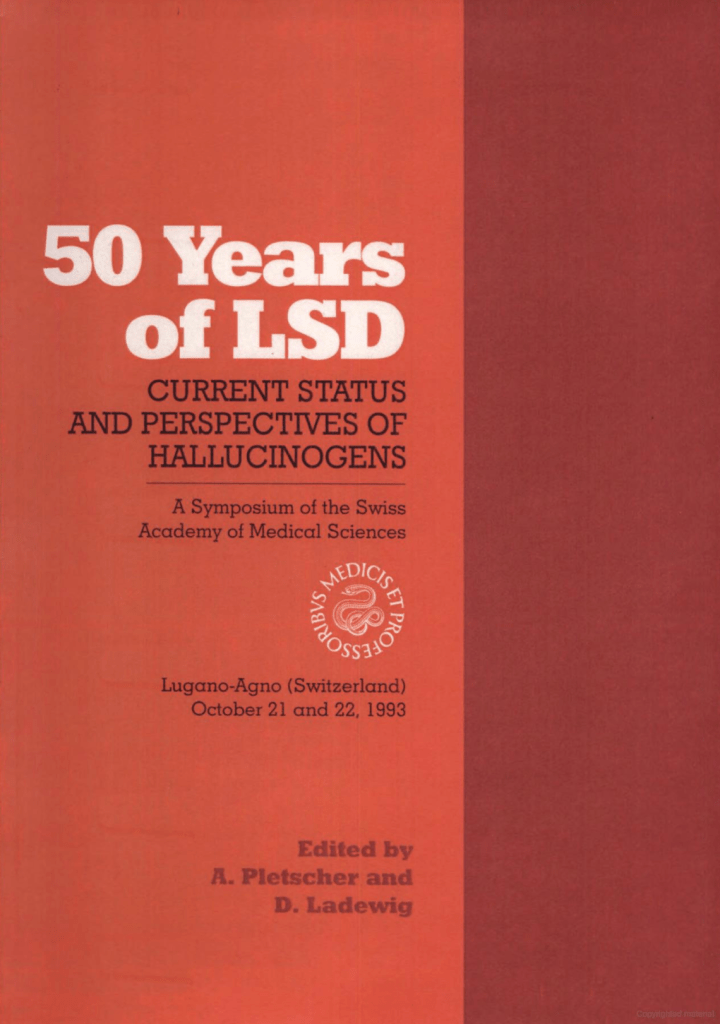

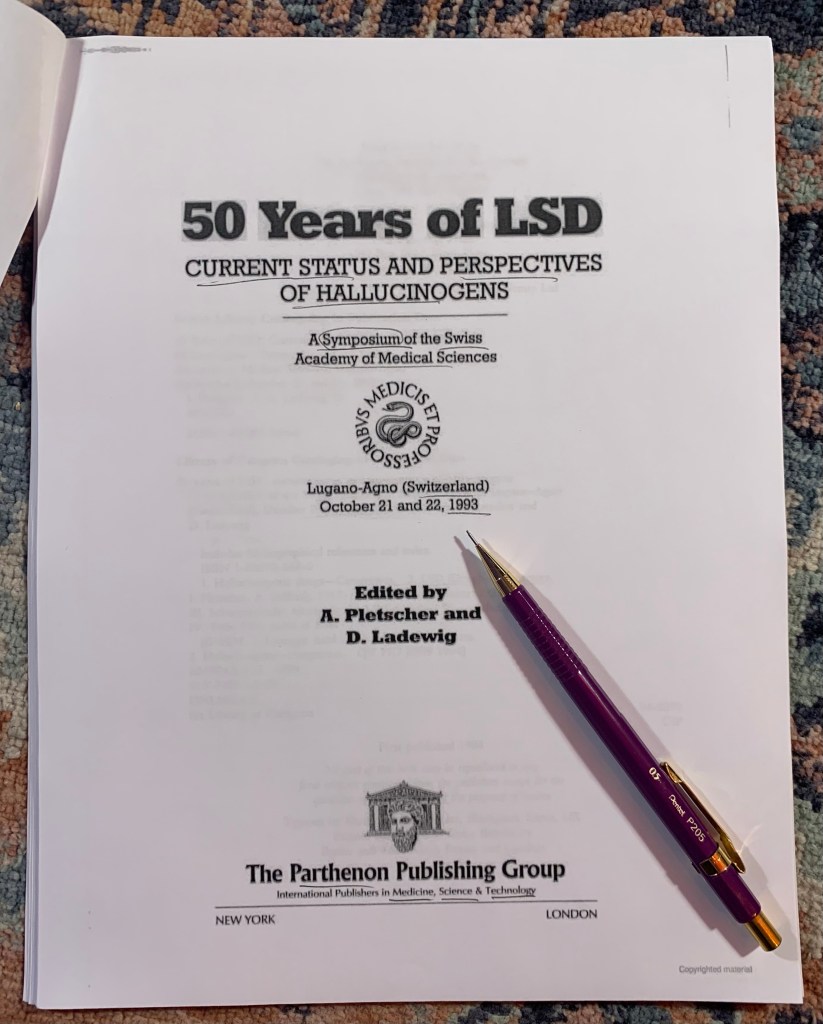

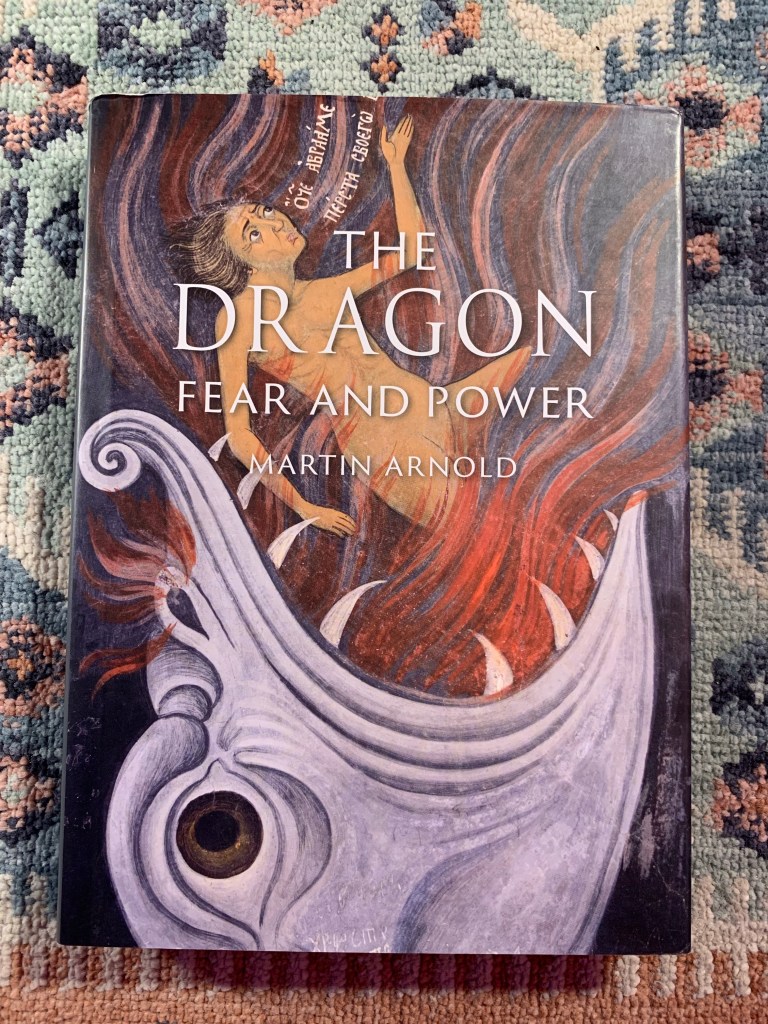



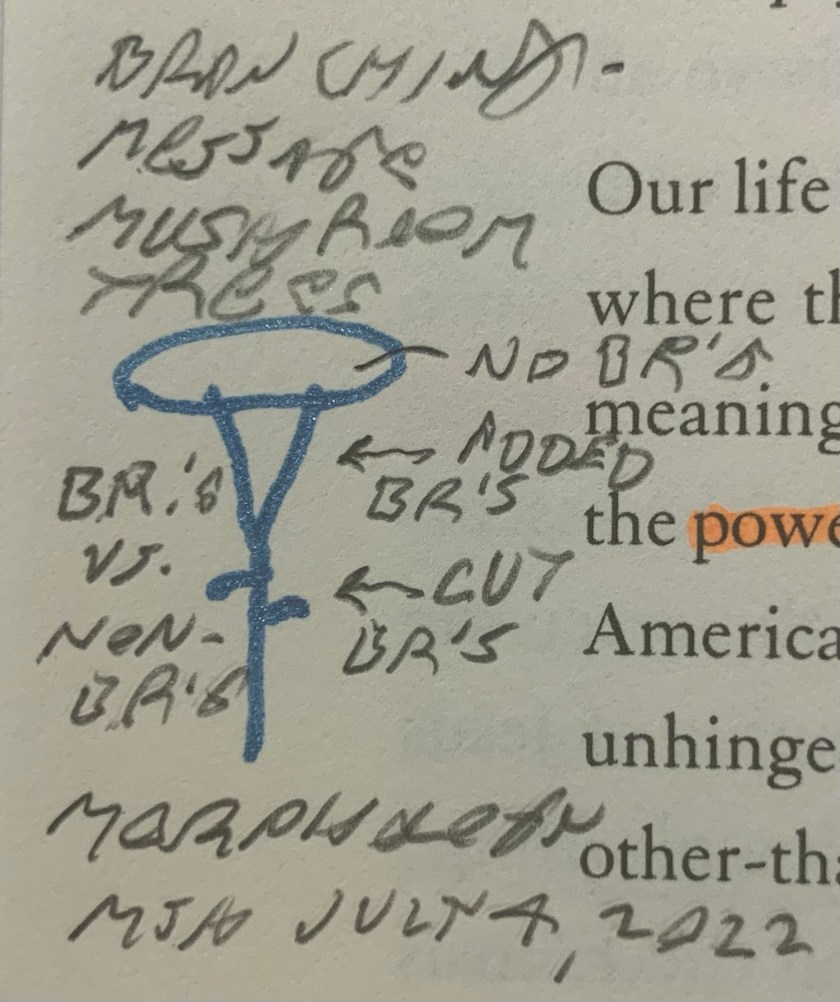
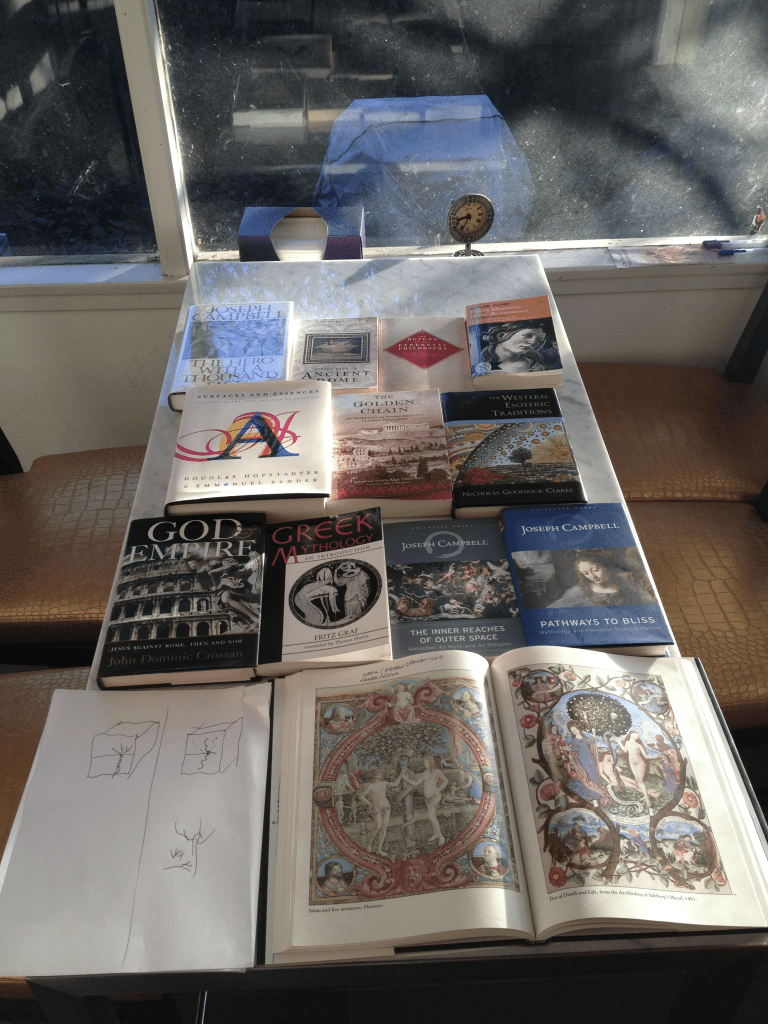
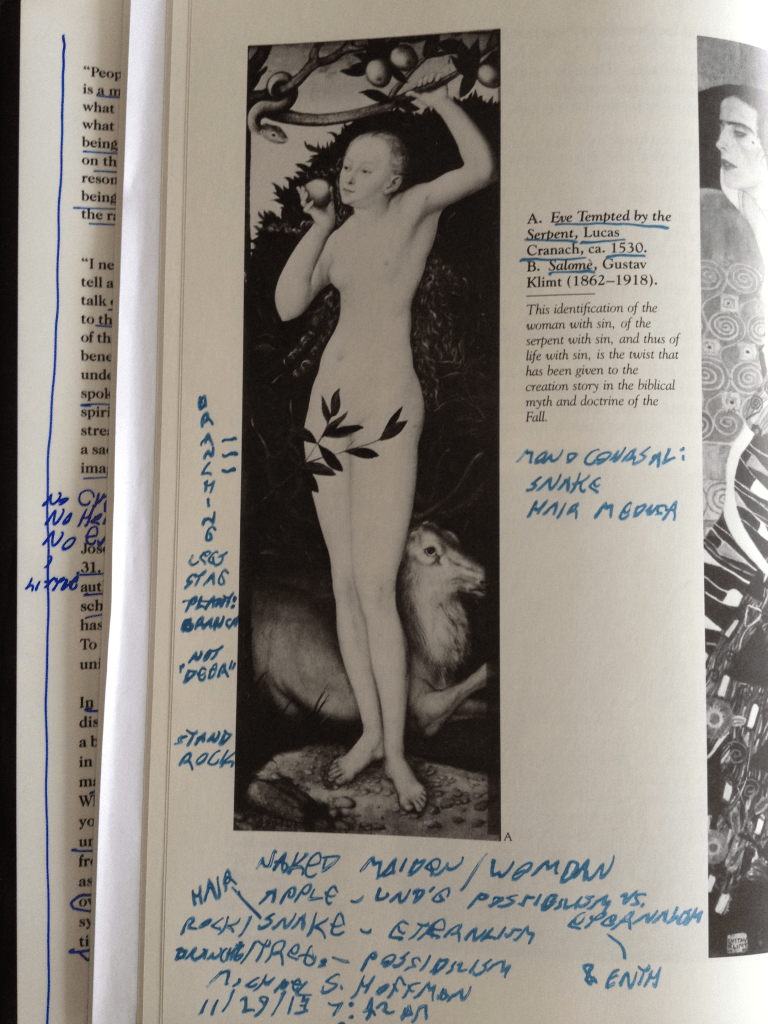




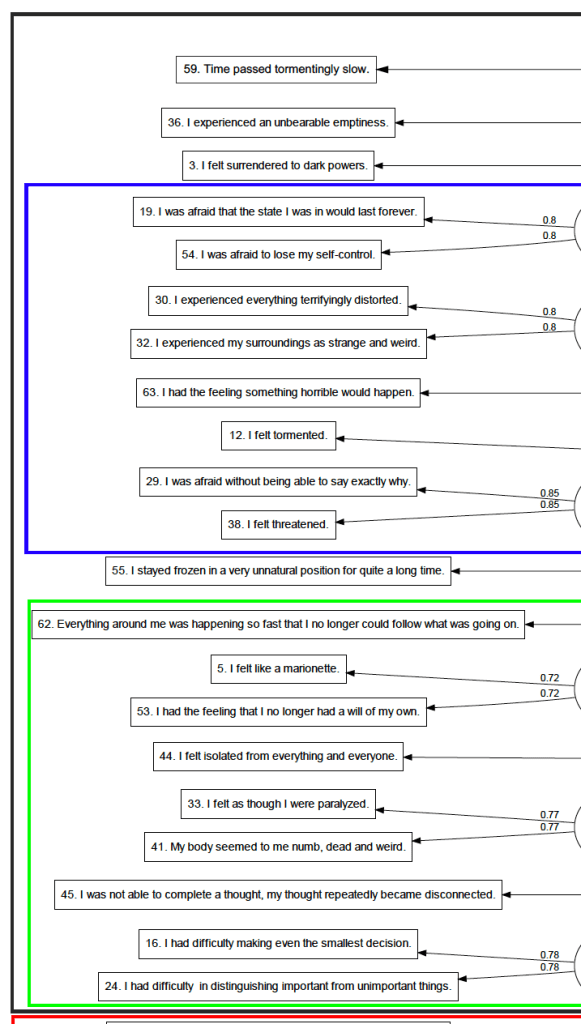
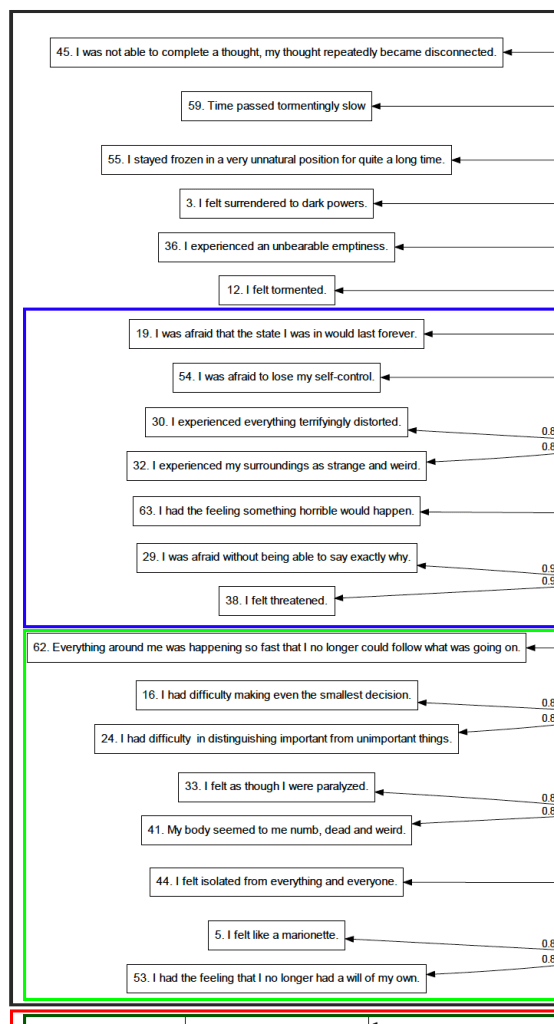
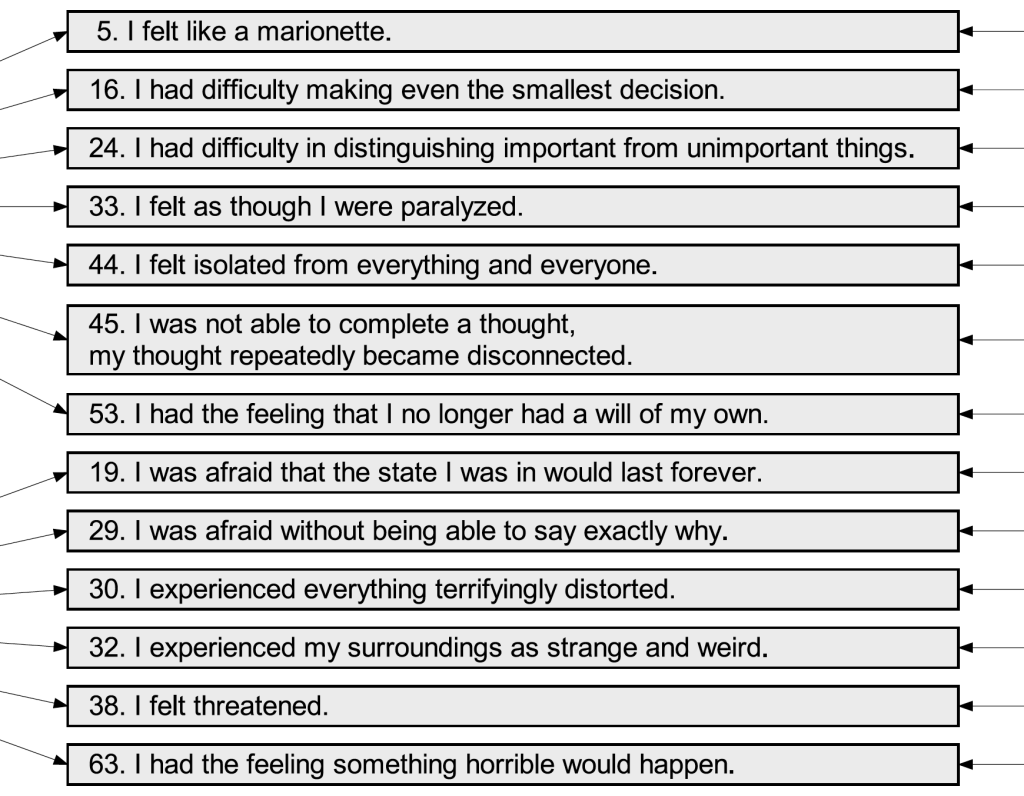
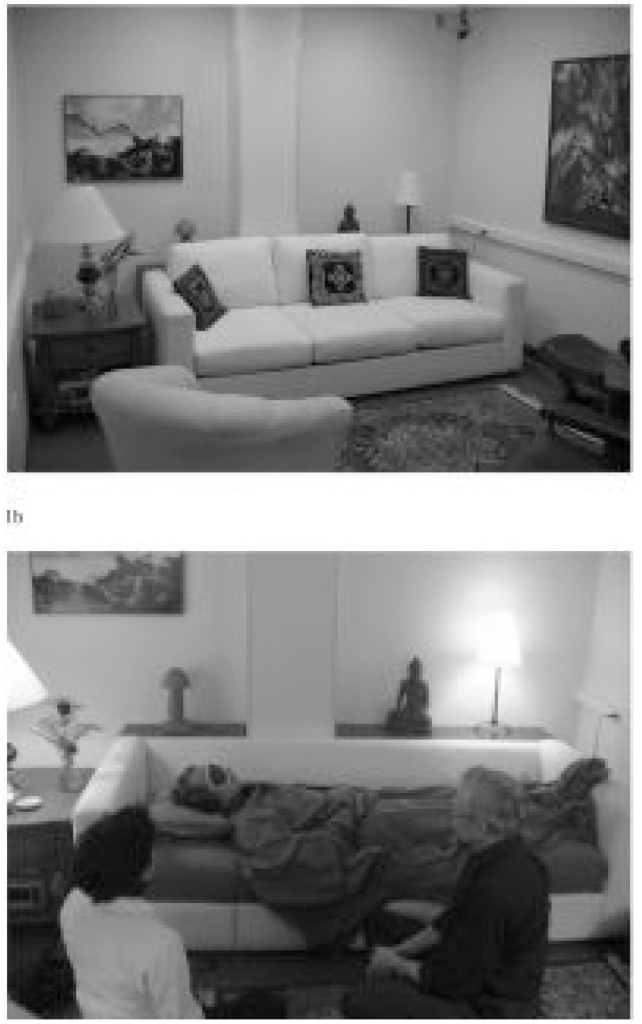





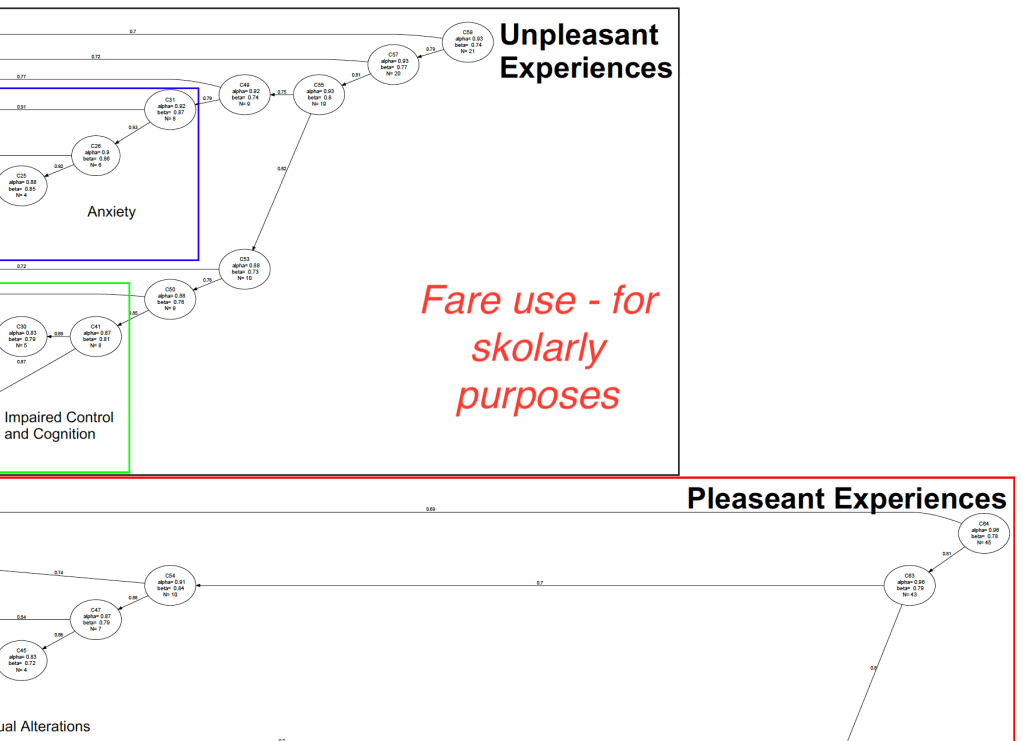
 The Egodeath theory