How Control-Loss Got Omitted from the Challenging Experience Questionnaire (CEQ)

Michael Hoffman, December 21, 2022 1:20 am UTC+0

Site Map

Contents:

In case of spiritual emergency while getting the treasure of Transcendent Knowledge

See:
Good Bad Trip Guidelines to Gain Transcendent Knowledge and the Ability to Harness High Dose with Viable Control Stability
https://egodeaththeory.wordpress.com/2022/12/21/good-bad-trip-guidelines-to-gain-transcendent-knowledge-and-the-ability-to-harness-high-dose-with-viable-stable-control/

See See Also.

Article Citation

Article that develops and presents the Challenging Experience Questionnaire (CEQ):

The Challenging Experience Questionnaire: Characterization of challenging experiences with psilocybin mushrooms https://www.academia.edu/33760114/The_Challenging_Experience_Questionnaire_Characterization_of_challenging_experiences_with_psilocybin_mushrooms
Journal of Psychopharmacology
2016

Authors:
Frederick Barrett
Matthew Bradstreet
Jeannie-Marie Leoutsakos
Matthew Johnson
Roland Griffiths

The CEQ is 1 page, 26 questions.
4-6 questions are duplicates. None are about control-loss.

Search:
https://www.google.com/search?q=challenging+experience+questionnaire

Redundant Questions Cast Doubt on CEQ’s Design

The Telltale Duplicate Redundant Questions Reveal and Expose that this Process Produced Bunk Results

There are 26 questions in CEQ. But 4-6 of them are totally dups, showing that the CEQ is built with poor judgment:

I’ll arrange and group them same as Table 3 page 9:

Fear

Grief

Physical distress

Insanity

Isolation

Death

Paranoia

5DASC’s superior ‘control’ questions

WHY DON’T THOSE 7 CATEGORIES HAVE 5DASC’S “IMPAIRED COGNITION/CONTROL” SUBSCALE?

5DASC Items > “Impaired cognition/control” subscale

What exactly did the CEQ committee do with / discard these awesome questions?

Do they think “marionette” is not a challenging experience?!
Do they FOOLISHLY think Ozzy’s song “Little Dolls” or Rush’s song “Twilight Zone” is just silly & amusing?

5. I felt like a marionette.

16. I had difficulty making even the smallest decision.

Why did the CEQ committee discard the above question?! Because they manifestly have NO FCKING IDEA WHAT THEY’RE DOING OR TALKING ABOUT.

33. I felt as though I were paralyzed.

Why did the CEQ committee discard the above question?! Because they manifestly have NO FCKING IDEA WHAT THEY’RE DOING OR TALKING ABOUT.

‘paralyzed’: 1 hit only. 😵

44. I felt isolated from everything and everyone. [i just kept this q to track mapping]

53. I had the feeling that I no longer had a will of my own.

Why did the CEQ committee discard the above question?!
Because they manifestly have NO FCKING IDEA WHAT THEY’RE DOING OR TALKING ABOUT.

What became of 5DASC’s Anxiety subscale question “I felt threatened”?

5DASC Items > “Anxiety” subscale

29. I was afraid without being able to say exactly why.

38. I felt threatened.

Why did the CEQ committee discard the above question?! Because they manifestly have NO FCKING IDEA WHAT THEY’RE DOING OR TALKING ABOUT. They did add back in the Paranoia question, bringing 24 questions to 26, adding a 7th category.

63. I had the feeling something horrible would happen.

Map that to CEQ q’s.

CEQ dup questions con’t

Duplicates: Isolation

______ 1. Isolation and loneliness
______ 10. Feeling of isolation from people and things
______ 24. I felt isolated from everything and everyone

Those might be a descendent of SOCQ’s:
“Question 76 Sense of being separated from the normal world, as though you were enclosed in a thick, silent glass chamber”

Duplicates: Sad

______ 2. Sadness
______ 6. Feelings of grief
______ 9. I felt like crying

Duplicates: Heartbeat

______ 3. Feeling my heart beating
______ 17. I felt my heart beating irregularly or skipping beats

Duplicates: Fear

______ 4. I had the feeling something horrible would happen
______ 7. Experience of fear
______ 26. I felt frightened

Duplicates: Shaking

______ 5. Feeling my body shake/tremble
______ 15. I felt shaky inside

______ 8. Fear that I might lose my mind or go insane

Duplicates: Despair

______ 11. Feelings of despair
______ 23. Despair

______ 12. I had the feeling that people were plotting against me
______ 22. Experience of antagonism toward people around me

______ 13. I was afraid that the state I was in would last forever

______ 14. Anxiousness

Duplicates: Death

______ 16. I had the profound experience of my own death
______ 20. I felt as if I was dead or dying

______ 18. Pressure or weight in my chest or abdomen

______ 19. I experienced a decreased sense of sanity

______ 21. Panic

______ 25. Emotional and/or physical suffering

Hypothesis: CEQ Omits Control-Loss Specifics to Hide the Risks

Something is seriously suspicious and amiss: why are there at 4-6 questions out of 26, that are redundant exact duplicates, impossible for anyone to differentiate from each other?

Where other questionnaires have specific questions about control, CEQ instead has confusingly redundant duplicate questions about 4-6 “safely vague to specify” effects (fear, isolation, death, shakiness).

I noticed, strikingly, that you removed too-scary, too-specific words (“threat of catastrophic control loss”) from the CEQ, and in place of that, you wrote safely vague questions duplicated multiple times to pad out and cover up the gap of omission that you introduced.

Then after whitewashing specificthreat of control loss” as vaguepanic“, the authors justify their existence, their CEQ, by criticizing previous questionnaires as “lacking specificity” (p. 3 top):

“These scales all suffer from at least one of the shortcomings of the 5DASC and HRS, namely: lack of specificity (i.e. lack of separable or independent scales that measure fine-grained facets of a challenging experience), lack of content coverage (missing a proposed dimension of challenging experience), or lack of sensitivity (i.e. not sensitive to the degree of challenge in an experience)”

Hypothesis to Test: CEQ Covertly Omits Control-Loss Questions to Sanitize PR.

See:
No Mention of Loss of Control in Scientific Literature Review from Oregon Psilocybin Board, section:
Conflict of Interest: Griffiths Allows Questions About Depression, but Silently Censors Questions About Control Losshttps://egodeaththeory.wordpress.com/2022/12/18/no-mention-of-loss-of-control-in-scientific-literature-review-from-oregon-psilocybin-board/

If so, they strategically INCREASE THE RISK and REDUCE SAFETY (despite their intensive calls for increased safety) in order to “sell” the safety and exaggerate the safety, downplay and soft-pedal the danger – which wouldn’t as great of a danger if they would specify it specifically, that their vague word “panic” that they allow into the CEQ is actually, specifically about experiencing the threat of catastrophic control loss.

The CEA authors can’t handle, can’t deal with this degree of alarming specificity, so they whitewash the problem, and dial-back the alarm, through leveraging vague abstractness.

Why did they discard the OAV’s “dread of ego dissolution” (DED) sub-scale?

Why did they discard the wording from the 5DASC’s Impaired cognition/control subscale?

Is the CEQ a PR cover-up whitewashing of the dangers, trying to appear and posture as though they’re managing safety, when safety is actually compromised by also trying to manage PR and softpedal how great the danger is – and how little they understand the danger?

The danger is smaller if you face the music and identify specifically and deal with the specific danger, instead of vague hazing it over to obscure it in abstractness like allowing the word ‘panic‘, censoring-out & whitewashing the detail of what the panic is specifically about: ego death/ ego agency loss/ loss of control of cognition.

😱🐉 🤴☸️🌳 💥 🐍🧊🪨

panic seeing no-free-will {dragon monster gate-guard};
end of {king steering in tree};
become {snake frozen in rock}

If people learn the Egodeath theory (ie shifting from naive possibilism-thinking to eternalism-thinking), then safety is increased, based on indicators from religious myth such as branching-message mushroom trees.

Strategy for Analyzing How the CEQ Lost Control Questions

Motivation for this posting: This is my 2nd article focusing on Roland Griffiths’ 2016 CEQ article. I now have a structured systematic strategy to trace and then explain:

  • How it is that the good, clear control-loss related questions in the earlier questionnaires got omitted from the CEQ.
  • How it is that the good, clear control-loss related phrases in the CEQ article got omitted from the CEQ.
  • Why are there so many duplicate (indistinguishable) questions in CEQ (instead of control-related questions)? There are, out of 26 questions, 4-6 dup questions, eg: fear 2x, isolation 2x, death 2x, shake/shaky 2x.
Strategy Steps
  1. First, in Appendix 2’s subheadings (CEQ, SOCQ, HRS, 5DASC), list all the questions (verbatim w/ number & any question-category that’s indicated) and bold the control-loss words.
    Status: Done.
  2. Then, for each section of article body, extract phrases, with special attention of which q’air it came from and how Griffiths managed to omit that phrase from his CEQ questions.
    Status: Started. Now at page 8 of 23, but am effectively further due to momentum and summarizing the conclusions already.
  3. Finally: Develop my assessment, in my section “Summary and Conclusions”: How do the earlier q’airs have their control-related questions, and the body of the article contains control-related phrases, and yet how then did the CEQ end up lacking any control-related phrases?
    Status: Practically done, need to reflect and polish the writeup.

Discussion of Control Loss Questions Hidden in Article about Bad Trip Survey?

Items means questions.

Conclusion: No, there’s nothing like that in the article, it’s not very long or very different, doesn’t list details of hundreds of questions (eg about control loss) as expected.

“A description of measures analyzed in the current report … A more detailed description of the complete methods, measures, and initial findings of the online survey can be found in the original report (Carbonaro et al., 2016).” – page 3.

“The Bad Trip Survey (Carbonaro et al., 2016) was completed by 2085 participants.”

Method > Measures section (p. 4):

“A more detailed description of the full complement of measures administered in the online survey can be found in the original report (Carbonaro et al., 2016). We identified 64 items from the HRS, 5-DASC, and SOCQ (listed in Supplementary Material, Appendix 2) that [each] unambiguously assessed a [single] challenging aspect of experience with classic hallucinogens, and treated these 64 items, as worded and responded to in their original form in the HRS, 5-DASC, and SOCQ, as an initial item pool for the construction of the initial form of the CEQ.”

Bad Trip Survey

Discusses and defines the Bad Trip Survey:

“Carbonaro TM, Bradstreet MP, Barrett FS, et al. (2016) Survey study of challenging experiences after ingesting psilocybin mushrooms: Acute and enduring positive and negative consequences. J Psychopharmacol. Epub ahead of print 30 August 2016. DOI: 0269881116662634.”

Search web for that article:
https://www.google.com/search?q=%22Survey+study+of+challenging+experiences+after+ingesting+psilocybin+mushrooms%22

Link to read the article:
https://www.ncbi.nlm.nih.gov/pmc/articles/PMC5551678/ – PDF available.

Search for “Bad Trip Survey”:
https://www.google.com/search?q=%22bad+trip+survey%22

A mushroom company purchased the domain name, which was http://www.shroomsurvey.com

Here is MAPS’ November 13, 2012 webpage (as distinct from other such sites’ pages) asking people to fill in the Bad Trip Survey: https://maps.org/news/media/johns-hopkins-bad-trip-survey-after-psilocybin-mushrooms-2/

The article “The Anatomy of a Bad Psychedelic Trip” by Joshua Thompson mentions the Bad survey:
the more I tried to fight the ideas in my head, the more the fear encompassed me.
After dozens of intense but blissful psychedelic experiences, this was my first bad trip.”
https://medium.com/@joshuat/the-anatomy-of-a-bad-psychedelic-trip-8ab00fc389b

Rely on {right leg} not {left leg}; rely on eternalism-thinking, not naive possibilism-thinking.

Highlighting Conventions

italics = interesting context
bold black = vaguely relevant to control-threat experiences
bold red = specifically relevant to control-threat experiences

Outline of Article Sections

Outline nesting in lists is broken. I mark major headings in bold here.

  • Abstract
  • Introduction
  • Phenomenology of challenging psychedelic experiences
  • Current assessments of challenging experiences
  • Why an assessment of dimensions of challenging experience is needed
  • Aim of the current studies
  • Study 1
  • Method
  • Participants
  • Measures
  • HRS
    • 5DASC
  • SOCQ
  • Questions regarding the overall impact of the challenging experience
  • Previous struggle with a psychiatric disorder
  • Demographic questions
  • Analysis
  • Matched exploratory and confirmatory analysis strata
  • Initial scale construction
  • Model replication
  • Factorial invariance
  • Table 1: Comparison of demographic variables
  • CEQ and overall impact of the challenging experience
  • Results
  • Initial scale construction
  • Addition of a paranoia factor
  • Model replication
  • Table 2. Exploratory factor structure, correlations, and reliabilities in Study 1
  • Factorial invariance of the CEQ
  • Overall impact of the challenging experiences
  • Table 3. Confirmatory factor structure of the Challenging Experience Questionnaire in Study 1
  • Table 4. Factor correlations, reliabilities, and means for the entire sample, by gender, and by previous struggle with a psychiatric disorder in Study 1
  • Study 2
  • Method
  • Participants
  • Measures
  • CEQ
  • Table 5. Model fit indices for tests of factorial invariance
  • Table 6. Regression of ratings of overall impact of the experience on Challenging Experience Questionnaire (CEQ) factor scores for Study 1
  • Table 7. Factor correlations, factor reliabilities, and factor scores for Study 2
  • Analysis
  • Results
  • General discussion
  • Internal and external validity of the CEQ
  • Table 8. Regression of ratings of overall impact of the experience on Challenging Experience Questionnaire (CEQ) factor scores for Study 2
  • Challenging experiences and the overall impact of experiences with psilocybin
  • Potential risk factors for challenging experiences
  • Towards a model of challenging experiences
  • Conclusion
  • Acknowledgments
  • Declaration of conflicting interests
  • Funding
  • References

/ end of: Outline of Article Sections

Outline of Questionnaire Appendixes

Items means questions.

The 3 previous questionnaires are SOCQ, HRS, and 5DASC. Unclear why DED wasn’t used. This new (crappy) questionnaire (with a giant gap about control) is CEQ.

  • Appendix 1: The Challenging Experience Questionnaire [CEQItems]
  • Challenging Experience Questionnaire – Scoring Guide
  • CEQ – Standalone version
  • CEQ – Scored from responses to the SOCQ, 5D-ASC, and HRS
  • Appendix 2: Initial Item Pool for CEQ Development
  • SOCQ Items
  • HRS Items
  • 5DASC Items
  • Impaired cognition/control subscale
  • Anxiety subscale
  • Items [from HRS] that were re-worded for use in the stand-alone version of the CEQ

/ end of: Outline of Questionnaire Appendixes

Control-Loss Phrases in Article Sections

Abstract

I see a problem right in the Abstract. It’s written clearly, but there are no words about the experience of the threat of catastrophic loss of control – even though the article body & previous questionnaires contain phrases and questions that specify control-loss effects.

The authors are tone-deaf to what’s centrally important, so they omit control-specific phrases from the Abstract.

The closest the Abstract comes to specifying control-loss aspects is too vague and general:

“Acute adverse psychological reactions … (“bad trips” or “challenging experiences”)”

“adverse acute symptoms … affective (panic, …), cognitive (confusion, feelings of losing sanity)”

“Seven … factors (grief, fear, death, insanity, …, and paranoia) provide a phenomenological profile of challenging aspects … Factor scores were associated with difficulty, meaningfulness, spiritual significance … The Challenging Experience Questionnaire provides a basis for future investigation of predictors and outcomes of challenging experiences”

Introduction

“The first era … investigating … psychotomimetic properties”

“tools to understand psychosis. … studies have also examined
mystical-type or spiritual experiences, changes in
self-referential processing
or “ego dissolution”… personality change … experimental reports and … clinical reports indicate that challenging psychological experiences during the acute effects of psychedelics are not uncommon.”

Phenomenology of challenging psychedelic experiences

page 2:

feardissociation, depersonalization

frighteningoverwhelming anxiety or panicfear to the point of paranoid delusions”

My summary / commentary:
30% of high-dose users had anxiety/ fear/ paranoia.
7.1% of moderate-dose users had anxiety/ fear/ paranoia.
That’s a 4.3x increase when moving from moderate to high dose. As Psilocybin is legalized, dosage will increase from moderate to high-dose.

fear or panic, paranoia, … cognitive effects (e.g. confusion, loss of ego, loss of sanity, … dissociation, depersonalization),”

Current assessments of challenging experiences

Narrow the focus: List only the specifically control-related words, and only a few of the surrounding related words.

“sub-scales of the HRS (i.e. … cognition, … perception, … and volition),

“The OAV sub-scale “dread of ego dissolution” (DED) covers a wide range of negative experiences, and is generally considered an overall “bad trip” scale (Studerus et al., 2010). This meta-scale of possible negative effects covers many (e.g. panic, loss of ego/control, feelings of insanity) but not all (e.g. sadness/grief/ depression) possible categories of challenging experiences. The DED scale also averages responses from a number of proposed categories of experience (panic, loss of ego, insanity) rather than giving an individual score for each. Studerus and colleagues (2010) revealed a rescoring of the 5DASC that includes a separate scale for impaired control and cognition, and for anxiety. While these represent psychometrically justifiable subscales, these two sub-scales do not address shortcomings of the DED scale (e.g. they do not address the wide range of potential dimensions of challenging experience that are suggested by previous literature).”

Translation: discard entirely these control-loss questions, and focus on other challenging effects instead – such as padding the questions with 4-6 exact-duplicate questions about fear, isolation, death, and shakiness.

“These scales all suffer from at least one of the shortcomings of the 5DASC and HRS, namely: lack of specificity (i.e. lack of separable or independent scales that measure fine-grained facets of a challenging experience), lack of content coverage (missing a proposed dimension of challenging experience), or lack of sensitivity (i.e. not sensitive to the degree of challenge in an experience)”

See my critique of that hypocrisy elsewhere in this posting. The CEQ is a good example of lack of specificity, lack of coverage, and lack of sensitivity.

Why an assessment of dimensions of challenging experience is needed

Narrow the focus: List only the specifically control-related words, and only a few of the surrounding related words.

“panic, distress, fear, acute”

Aim of the current studies

n/a

Study 1

“spiritual significance, and difficulty”

Method

empty heading

Participants

n/a

Measures

n/a

HRS

“subscales assessing general dimensions of subjective experience (… affect, perception, cognition, and volition).”

5DASC

sub-scales … include the impaired cognition and control (ICC), and anxiety (ANX) scales”

SOCQ

“The SOCQ contains 43 items from the Mystical Experiences Questionnaire (MEQ43), which was developed to assess several domains of mystical experience.”

ego loss, loss of perception of time

The CEQ article omits time effects – but time effects affect control, per eternalism being a model of time more than directly of control, in Philosophy and in Physics.

“No items from the MEQ43 were included in the present analysis.”

Questions regarding the overall impact of the challenging experience

n/a

Previous struggle with a psychiatric disorder

n/a

Demographic questions

n/a

Analysis

empty heading

Matched exploratory and confirmatory analysis strata

n/a

Initial scale construction

n/a

Model replication

n/a

Factorial invariance

n/a

Table 1: Comparison of demographic variables

n/a

CEQ and overall impact of the challenging experience

n/a

Results

empty heading

Initial scale construction

Here’s where everything went wrong and produced a garbage CEQ: during the process of removing 38 questions from the initial pool of 64, leaving 26 questions, 6 of which are frankly, obviously redundant duplicates.

Something is obviously broken, obvious to every person who takes the CEQ.

the five-factor solution did not yield a very clear qualitative interpretation.”

As if the resulting CEQ is clear about “panic” being specifically the experience of the threat of loss of control.

“The six-factor solution yielded factors with a cohesive qualitative interpretation:
physiological distress (factor 1),
grief (factor 2), [relev: egoic childish thinking lost forever]
fear (factor 3),
insanity (factor 4),
isolation (factor 5), and
death (factor 6).
The six-factor solution was used as the basis of further item removal. Items with no loading above 0.4 on any factor were discarded. A total of 19 items were removed in this step. Items were removed from a scale if they demonstrated low item-total correlation (below 0.4) and if their removal increased scale reliability and average item-total correlation for the scale. An additional 12 items were removed in this step, yielding a final[sic!] set of 24 items.”

Next section, Paranoia adds 2 items, totaling 26 for CEQ.

A shtt-ton of mathy-posturing bafflegab, fails to explain the authors’ excuse for deleting all control-loss related words which the earlier questionnaires have and which the article has, but which are omitted from the CEQ.

Addition of a paranoia factor

“Clinical literature and anecdotal reports indicate that paranoia is a subjective experience frequently represented in challenging experiences with classic
hallucinogens.”

“While a clear paranoia factor did not emerge from
the exploratory factor analyses, the initial item pool for construction
of the CEQ did contain two items directly related to paranoia
(SOCQ item 40 “Feeling that people were plotting against you” and
SOCQ item 72 “Experience of antagonism toward people around you”).

“Interestingly, there are no items in either the HRS or the 5DASC that directly assess paranoia.”

Confirmed:

Apx 2 > HRS Items includes: “anxious, frightened, ego death, panic, feel dead, chaos, change in sense of sanity, In control”

Apx 2 > 5DASC Items includes: “marionette, can’t decision, paralyzed, no will, afraid, felt threatened, feel horrible will happen”

Apx 2 > SOCQ has:
“40. Feeling that people were plotting against you” (I’d say ‘events’ or ‘thoughts’, not nece’ly “people”)

“the identified 24-item, six-factor CEQ model was amended by adding the two paranoia items, both loading onto a seventh factor.”

Totaling 26 items (questions) for CEQ. But why are 4-6 of them identical/ duplicated redundant?

This article’s process is bunk! For all the tortured math analysis, the output ditches control-loss and delivers 4-6 duplicate identical pairs of questions.

Something stinks: the authors have mechanisms, poorly applied, with poor judgment giving a gigantic vague gap where there used to be control-related, clear wording.

Model replication

n/a

Table 2. Exploratory factor structure, correlations, and reliabilities in Study 1

n/a

Factorial invariance of the CEQ

n/a

Overall impact of the challenging experiences

resume here – narrow the focus; list only the specifically control-related words, and only a few of the surrounding related words

Table 3. Confirmatory factor structure of the Challenging Experience Questionnaire in Study 1

This is a good table to map previous questionnaires to CEQ – regarding the tiny, dup-ridden set of 26 CEQ questions, a set that is terribly inadequate according to the values espoused in this article.

Study 2
Table 4. Factor correlations, reliabilities, and means for the entire sample, by gender, and by previous struggle with a psychiatric disorder in Study 1
Method
Participants
Measures
CEQ
Table 5. Model fit indices for tests of factorial invariance
Table 6. Regression of ratings of overall impact of the experience on Challenging Experience Questionnaire (CEQ) factor scores for Study 1
Table 7. Factor correlations, factor reliabilities, and factor scores for Study 2
Analysis
Results
General discussion
Internal and external validity of the CEQ
Table 8. Regression of ratings of overall impact of the experience on Challenging Experience Questionnaire (CEQ) factor scores for Study 2
Challenging experiences and the overall impact of experiences with psilocybin
Potential risk factors for challenging experiences
Towards a model of challenging experiences
Conclusion
Acknowledgments
Declaration of conflicting interests
Funding
References

/ end of: Control-Loss Phrases in Article Sections

Control-Loss Questions in the Questionnaires

Items means questions.

Appendix 1: The Challenging Experience Questionnaire [CEQ Items]

These questions are weak ! re: threat of loss of control

4. I had the feeling something horrible would happen

6. Feelings of grief [for dead control agent]

7. Experience of fear

8. Fear that I might lose my mind or go insane

12. I had the feeling that people were plotting against me

13. I was afraid that the state I was in would last forever

14. Anxiousness

16. I had the profound experience of my own death

19. I experienced a decreased sense of sanity

20. I felt as if I was dead or dying [= 16]

21. Panic

26. I felt frightened [= 7]

CEQ – Scored from responses to the SOCQ, 5D-ASC, and HRS
Challenging Experience Questionnaire – Scoring Guide
CEQ – Standalone version [re: scoring]
Appendix 2: Initial Item Pool for CEQ Development – top priority
SOCQ Items

Question 21 Experience of confusion, disorientation and/or chaos

Question 28 Sense of being trapped and helpless

Question 37 Visions of demons, devils or other wrathful deities

Question 40 Feeling that people were plotting against you

Question 44 Thoughts and ideas flashing by very rapidly

Question 52 Experience of fear

Question 57 Feeling of being rejected or unwanted [repudiate/jettison naive possibilism-thinking]

Question 66 Frustrating attempt to control the experience

Question 70 Profound experience of your own death[relev: we are firstly control agents]

Question 84 Feeling of disintegration, falling apart

Question 85 Fear that you might lose your mind or go insane

Question 89 Experiences of intense pressures on various parts of your body [block universe]

Question 91 Feelings of grief [relev: control agent gone]

HRS Items

Question 11 Feel body shake/tremble

Question 21 Feel removed, detached, separated from body

Question 25 Anxious

Question 26 Frightened

Question 27 Panic

Question 70 Feel as if dead or dying[relev: we are firstly control agents]

Question 75 Sense of chaos

Question 88 Change in sense of sanity

Question 94 In control[vague wording; research]

Question 74 Contradictory feelings at same time (happy and sad; hopeful and hopeless) [impossible to pass gate using possibilism, to get treasure]

5DASC Items
Impaired cognition/control subscale

5. I felt like a marionette.

16. I had difficulty making even the smallest decision.

33. I felt as though I were paralyzed.

53. I had the feeling that I no longer had a will of my own.

Anxiety subscale

19. I was afraid that the state I was in would last forever.

29. I was afraid without being able to say exactly why.

30. I experienced everything terrifyingly distorted.

38. I felt threatened.

63. I had the feeling something horrible would happen.

[Table:] Items [from HRS] that were re-worded for use in the stand-alone version of the CEQ

/ end of: Control-Loss Questions in the Questionnaires

Summary and Conclusions: How Did Control-Loss Questions Get Dropped?

All driving energy in CEQ is BROAD, that’s the key word, DED is too specific eg marionette, details like “I felt like I had no control over my will” is too specific, too narrow, we need … it doesn’t make sense but that’s the story gist they are driving.

They are TRYING to argue that questions like “marionette” and “no control over will” are too specific and not broad enough – you have to conflate categories and questions to make this argument.

Yes the category of control might be too narrow, but even so, why omit questions that are in this category?

CEQ picks 1 out of the 6 ICC (Impaired control/cognition) questions (“I felt isolated”) and 2 of the 7 ANX questions.

CEQ doesn’t have a category named “control problems”.

Which CEQ Category Would Contain the Initial Pool questions about Negative Control Experences

The set of 7 negative effects categories in CEQ is poor. No Control category. How can you manage and predict for safety, control-related negative experiences, if you don’t follow the lead of ICC and define a “Control” category. CEQ fails here: You need to ask people about control questions, you need a “control” category and dyou need to add

This category test whether CEQ’s 7 breadth-optimized categories are capable of containing the Egodeath theory negative effects questions that are listed in “Initial Item Pool”. REALLY NEED A CONTROL CATEGORY LIKE ICC.

REALLY, NEED THE GOOD REMOVED CONTROL QUESTIONS.

REALLY, NEED TO ADD THEM IN A “CONTROL” CATEGORY.

  1. Copy CEQ’s 7 categs here.
  2. Add the questions which I’m mad at CEQ for not including, into CEQ’s categs. Fav categories: Fear, Insanity, Death, Paranoia.
Fear
Grief
Physical distress
Insanity
Isolation
Death
Paranoia
Missing category: Control

HRS Question 75 Sense of chaos

SOCQ Question 28 Sense of being trapped and helpless

SOCQ Question 37 Visions of demons, devils or other wrathful deities

5. I felt like a marionette.

SOCQ Question 66 Frustrating attempt to control the experience

16. I had difficulty making even the smallest decision.

33. I felt as though I were paralyzed.

53. I had the feeling that I no longer had a will of my own.

38. I felt threatened.

What Category and Questions CEQ Deletes

5DASC Items

Impaired cognition/control subscale

5. I felt like a marionette.

16. I had difficulty making even the smallest decision.

24. I had difficulty in distinguishing important from unimportant things.

33. I felt as though I were paralyzed.

44. I felt isolated from everything and everyone.

45. I was not able to complete a thought, my thought repeatedly became disconnected.

53. I had the feeling that I no longer had a will of my own.

Anxiety subscale

19. I was afraid that the state I was in would last forever.

29. I was afraid without being able to say exactly why.

30. I experienced everything terrifyingly distorted.

32. I experienced my surroundings as strange and weird.

38. I felt threatened.

63. I had the feeling something horrible would happen.

SCOQ cut in 2nd draft:

Trapped and helpless

Frustrating attempt to control the experience

How the CEQ Categories Cover Negative Control effects

Useless POS, USELESS, where am I supposed to put control loss questions like marionette, no control over will, helpless – which category in this “all-inclusively broad set of categories”.

OK Roland, if your set of categories is worth a shiite, then tell me, it covers all negative effects – where would you put the ICC question 5, marionette? SOCQ 28: helpless? 5DASC 53: I no longer had a will of my own? Let’s try below.

Fear

Grief

Physical distress

Insanity

Isolation

Death

Paranoia

Critique the categories provided by CEQ, and distinctly from the categories, critique the questions. CEQ provides 27 questions that are evenly spread in 7 categories.

Why doesn’t the CEQ set of categs have one for control problems?

Why doesn’t the CEQ set of questions have more of the ICC (control related) questions? Why does CEQ omit “marionette” question, which is from that category? And other questions from that category

Why doesn’t CEQ have a Control category? ICC from 5DASC is a control category.

Why doesn’t CEQ have many more of the control questions from the ICC category of 5DASC?

“We’re so broad.” Yeah but you removed the Control category like ICC, and you omitted 10 of 13 questions from (ICC & ANX), which are control-related negative effects.

Critique the categories provided by DED which is a categ that’s not as broad as CEQ.

Critique the categories provided by 5DASC which are ICC & ANX: not as broad as CEQ.

It was deliberate, to design a broad-ranging set of 7 broad negative categories, and none of them are called “control” like ICC from 5DASC (impaired control and cognition), and we omit 10 of 13 of that fixed subset.

The difference between the CEQ’S pulling questions from 5DASC vs from SOCQ & from HRS: For SOCQ and HRS, they picked from those broad sets of questions. But for 5DASC, 5DASC already defines small sets of negative effect questions, ICC & ANX, so we’ll start (in initial pool).

Start by listing

Create initial pool of 64 q’s taken from:

  • We pick sOme from SOCQ
  • We pick sOme from HRS
  • We include the ICC & ANX categs and their questions.

Then we define our own, broad, all-negative set of categories of effects, broader even than the DED subset defined within OAV.

We provide 7 broad categories, and we incorporate questions from your SOCQ some negative effects that aren’t in the DED and aren’t in 5DASC’s ICC & ANX categories/sets of questions. Our set of 7 fx categs is so bvrod, bgr broad, broader than DED from OAV or ICC+ANX from 5DASC. We don’t have a categ named like ICC, with “control”. We have broader categs instead.

The CEQ authors are advocating a set of categories is broader than DED. Seems like their stated strategy for designing there broader negaive set of qustion categories is highe level of abstraction in order to be broader – though they never explain really WHY their set of categs gets rid of the category ICC … they argue that 7 is the right number, and they make a show of balance of their 7 categs – which lack a categ like ICC, “Impaired control and cognition” (kinda arb naming) – and they omit 10 out of 13 the control questions.

They CEQ authors seem to vanish upward in Platonic abstraction: 7 categoriess that form broader coverage by being broader each, more abstract.

ICC is too narrow of a category, its too specific – that must be what they are essentially arguing / selling. DED is missing too many neg effects coverage & categories, and ICC suffers some same

“While ICC (impaired control and cognition) + ANX (anxiety) (from 5DASC) represent psychometrically justifiable subscales (sets of questions & categories), these two sub-scales (sets of questions & categories) do not address shortcomings of the DED scale (e.g. they do not address the wide range
of potential dimensions of challenging experience that are suggested
by previous literature).”

First, you have to understand the article from the POV of the authors’ mission statement: provide a broader set of categories of questions about negative experiences, that’s a useful psychometric tool tht can be used systemically because it’s broad in coverage of negative effects and has a set of 7 vareid question categories.

The CEQ is designed to be broader in negative coverage than the negative questions & categories in:

  • the DED (a subset of OAV)
  • the ICC (subset of questions) from 5DASC.

CEQ authors say that the ICC set of questions is a valid psychometric category of questions. But, they are selling their own set of 7 categories – THERE’S NO ROOM AT THE EXPANDED INN FOR ICC QUESTIONS THO THEY ARE VALID. T

Where you xpct to find an explanation of why the hell the CEQ authors removed the ICC category and its questions, what you get insted is a statement that dwe we need broader system of negativ-effcts. If ICC is valid, as they say, why do they delete those DED-like,

C?LU C?L”UE CLUE: CEQ authors always talk about the PAIR of categories, and argue that the CEQ set of categories is spread mathematically better than the PAIR of categories ICC plus ANX (13 questions total).

The authors compare ICC + ANX < CEQ’S 7 CATEGORIES (FEAR ETC)

CEQ is a set of categories of questions they invented and are arguing for, filled with 26 selected questions from ICC (2 q’s) & ANX (1 q) omitting 10 (the good ones) of 13 of the ICC & ANX questions.

CEQ = this system/set of question categories:

  • Fear – 1 question from ANX
  • Grief
  • Physical distress
  • Insanity – 1 question from ICC
  • Isolation – 1 question from ICC
  • Death
  • Paranoia

ICC and ANX are from 5DASC.

The CEQ questions are picked from 3 sources:

  • SOCQ provides broader negative categories of questions eg depression, than 5DASC’s ICC & ANX categs.
  • HRS
  • 5DASC, its ICC & ANX categs of q’s

Why we picked questions from these 3 sources, why we need broader neg qs than 5DASC’S ICC & ANX categs provide, we’ll get those broader categs from SOCQ & HRS.

CEQ picks 3 out of 13 of the ICC questions from 5DASC, puts them into these categories.

CEQ pulls from 26 questions picked from 64 questions picked from S

The category ICC (set of questions) which is from 5DASC (set of questions), and is like the DED (set of questions) which is from the OAV set of questions.

CEQ is a Marketing cover-up excused to get ride of the DED questions category impaired control/cognition. the give lots of worthless math that’s irrelevant fluff because this is all just a ploy to sell a set of Marketing-picked categories as “better than” DED (dread of ego dissolution) set of bad trip questions, SPECIFICALLY THE BAD TRIP QUESTIONS ABOUT CONTROL PROBLEMS AND NON-CONTROL OF WILL AND MARIONETTE, AND the category of questions from the DED, “impaired control/cognition”

The OAV set of questions contains DED (dread of ego dissolution), [scope: bad trips; negative effects] which is a wide set of questions which is about bad trips/ negative effects. Exzcept DED is lacking, it’s too narrow, CEQ is better, broader, encompasses all negative effects: we add

CEQ is Better than the DED because More Broadly Negative and CEQ Removes Impaired-Control Questions

CEQ removes control-problem questions, subject to same criticism as DED. “eg” its not broad set of questions so we remove that set of questions.

They sell CEQ as having these benefits:

We are forced to remove the control issue questions, in order to have a broad set of questions covering negative effects.

You want a broad set of questions, therefore you must remove the control-issues questions. We give an even spread of our crafting of sets of questions. Our set of question categories disallows a categoy impaired cognition and control (ICC), because we need a broad set of question categories, that’s wht our ârticle contributes.

Category Redesign Exercise: the CEQ is better, for negative experiences, than the DED and its impaired cognition and control (ICC), and anxiety (ANX) categories and their 13 questions.

sadness/grief/depression

and we remove the pair of question categories impaired cognition and control (ICC), and anxiety (ANX), and we remove 10 of its 13 questions.

A subset of those questions is “impaired control/cognition” and also a subset of questions, “anxiety“.

“analysis identified 11 plausible sub-scales [subsets of questions] of the 5DASC, which include the impaired cognition and control (ICC), and anxiety (ANX) scales [sets of questions]. The 13 items [questions] of the 5DASC that constitute the ICC and ANX sub-scales were retained for the initial item pool for the CEQ.”

Storytelling Narrative Argument of the Article

The narrative they’re selling is that the previous questionnaires were lacking, and now the CEQ fixes that problem by cleverly defining broad set of sugqestions like Wilber ignoring his engine problem but taking all breadth, his Breadth Integral Theory, All Quadrants, full psychospiritual development – but oops he’s missing the psychedelic engine that drives all real religious mystical stuff.

The deleted questions and THE CATEGORY WHICH THIS CATEGORY-SET DELETES IS LITERALLY THE DED DREDAD DREAD OF EGO DISSOLUTION’S are about control, being a marionette, impaired control and cognition and feeling threatened by this.

The OAV sub-scale [subset of questions] “dread of ego dissolution” (DED) covers a wide range of negative experiences … an overall “bad trip” scale [set of questions]. This meta-scale [meta-set of questions] of possible negative effects covers many (e.g. panic, loss of ego/control, feelings of insanity) but not all (e.g. sadness/ grief/ depression) possible categories of challenging experiences.”

So we’re going to remove the category of control-loss questions, impaired control/cognition, and remove the control-loss questions, in order to have a broader set of categories (in some unspecified way).


The DED scale also averages responses from a number of proposed
categories of experience (panic, loss of ego, insanity) rather than giving an individual score for each.

“Studerus and colleagues (2010) revealed a rescoring of the 5DASC that includes a separate scale [a distinct set of questions] for impaired control and cognition, and for anxiety.

While these represent psychometrically justifiable subscales, these two sub-scales do not address shortcomings of the DED scale (e.g. they do not address the wide range of potential dimensions of challenging experience that are suggested by previous literature).

Phase 1: Scientists: Optimize 64 initial pool of questions to highlight control problems.

Phase 2: Marketing: Reduce 64 to 26 questions by removing the “control” category and all of its questions, and replace those 6 questions by 6 duplicated “fear” questions to cover the gap where we removed the control-problem questions.

GRIFFITHS DELETES THE CATGEORY “IMPAIRED CONTROL/COGNITION” AND ITS “MARIONETTE” AND “NO CONTROL OF WILL” QUESTIONS. THE EXCUSE IS, THAT STUFF FROM THE DED QUESTIONS IS SUBJECT TO SAME CRITICISM AS DED IS SUBJECT TO EG “””

What specific control-problem questions are being hidden by dummy duplicate redundant vague, familiar, safe questions about “fear”?

Phase 1: Driven by scientists: Pick the initial pool of 64 good science-driven questions, like control issues, like the category “Impaired control/cognition” abnd its questions about marionettes with no control of the will .

Then in Phase 2, Marketing say get that category out of here, our set of abstract question categories is better because it’s broader than that set of questions called “impaired control/cognition” – our set of questions is better than any set that includes the control-problem questions about marionettes embedded in rock.

Inventory 4-D marionette will no-free-will reports, better ask about have you danced with the control source self-transgression of control, Isaac and Abraham scientific theory right here in the Egodeath theory. Scientists report block universe no-free-will survey replies, 30% of high dose report this, and they say there’s treasure in that gated guarded no-free-will garden washed clean consistent per providential 2-level control.

Phase 2: Driven by PR Marketing: Pick acceptble question caegories that dont’ sound too far out. Keep it safe and broad. Reduce the initial pool of 64 good science-driven questions down to 26 Marketing questions.

No talk of marionette “no control of my will” please, keep it abstract and vague “fear”.

We have now helped the field by defining control-loss out from the category of “All Main Areas of Negative Effects Reported”: Sell how great our set of question-caetgoriews is, for nevative effects.

The Markeging dept wants to productize their usual way of breaking up the field: anxity psychotherapy, we’ll pass, on the {marionette frozen in rock} effect that 30% of high dose myth-like reports.

The CEQ is garbage, it deserves to be burned with extra hot fire. 1) Did you feel frightened? 2) Did you feel fear? Client: Are you trying to make me paranoid by this repeting of the same question 2 or even 3 times, the same question worded equivalent ways – what are you trying to pull, on me, with this bunk weird repeaing of sentences, this seems aggressive manipulation and the session hasn’t even started.

Conflict of interest. Control questions are too scary.

EDT Question 0. Did you experience threat of catastrophic loss of control?

Why didn’t Griffiths’ Marketing dept. include that question when the reduced the 64 dangerous questions (the initial pool) by the 26 safe questions (the CEQ picked questions IN CEQ’S CATEGORY SCHEME, that’s what they’re selling is the scope of this set of questions, the picking of these – these uthors did not write the questions, they picked 64 then they fabricated clever broad categories and literally tghey got rid of the question category dissmissively as “not broad” and “suffers same criticisms as DED set of ego death questions.

Tell Marketing to leave out the alarming experience of the threat of catastrophic loss of control, in the Marketing PR stance.

Cover up the gaps by duplicating the vague question about “fear” 6 times.

It’ll be easier to position for us, to tell our safe clinic methods.

dHave PR Marketing drive which questions we pick. Pick 7 categories of questions, leave out the 5DASC questions category “Impaired control/cognition = Marionette, I had no control of my will”? We don’t need those awkward control seizure questions that we don’t understand except we are able to utter “ego death” and “default mode placticity”. Just keep things smooth, insert some more “fear” questions, nice and safe and familiar and vague. We’ll pass, on the “marionette without any cognitive control of the will” like questions 3, 5, 8 ->

The authors were too proud of their 7 abstract categories, they bragged about how wide-ranging their set of questions would thus be.

This CEQ wouldn’t have ended up the disaster that it did, had the authors stopped bragging about how they had a broader range of categories than 5DASC.

The CEQ authors wanted to “sell” their own categories by fabricating something vaguely dismissive about the 5DASC category of “Impaired control/cognition” – so (just so they could make a point about their broader range of questions) they discarded that good category and its good questions, and replaced it with nice safe “fear” category that contains 7 fear questions from the 3 questionnaires:

“Fear” question category:

  • Question 23. I felt fear.
  • Question 14. I felt something bad would happen.
  • Question 1. I felt frightened.
  • Question 19 1/2. I felt afraid.
  • Question 9. I’ve got a bad feeling about this.

The CEQ authors’ process of reducing the initial 64 questions down to 26 question is as bizarre and baffling as Wouter Hanegraaff’s cosmos model that doesn’t have any stars.

Possible reasons why authors would list good questions (the 5DASC’s “Impaired cognition/control” set of questions) and then delete them / not include them in CEQ:

The authors got lost in abstraction and chose question categories based on inferior abstract categories (eg the CEQ’s bad, vague “Fear” category of questions) than they started with from the 5DASC list (the 5DASC’s good, specific “Impaired cognition/control” category of questions).

Maybe: The good questions from 5DASC’s “Impaired control/cognition” category are in the CEQ but impossible to recognize, due to a bad process of abstraction. Nope, I placed the 5DASC’s Initial Item Pool questions next to the CEQ questions categories (Table 3) – the questions didn’t get folded into others; they got removed.

Maybe: The authors recognized the relevance of questions like 5DASC’s “Impaired control/cognition” question category when assembling the 64-question Initial Question Pool, but then later, the authors were unable to recognize those same questions as being at all relevant, when picking the final 26 CEQ questions.

Why do the authors have the good sense to include the 5DASC’s “Impaired cognition/control” set of questions, and yet fail to carry them over in any way to the CEQ?

I am unable to map the 5DASC’s “Impaired cognition/control” set of questions to the CEQ’s questions – they just vanish, probably a poor job of abstracting, creating categories.

Why is there no “Impaired cognition/control” set of questions in CEQ (see Table 3 on p. 9 with 7 categories, such as “Fear”), even though the CEQ article lists the 5DASC’s “Impaired cognition/control” set of questions in “Appendix 2: Initial Item Pool for CEQ Development”?

where did they go?! when and why were they deleted? Article says “we then deleted a bunch of questions from the initial pool of 64 to get our 26 CEQ questions.” But they don’t say why; they don’t justify.

What is the point of all the math masturbation when they never state why they deleted the (64 – 26 =) 38 questions? All I could find amounted to “these control-related questions are too narrow and don’t reflect the broad range of negative experiences.”

Ultimately, for whatever unstated reason, the authors just had bad judgment when reducing the 64-question pool down to 26. They had the wise good sense to include 5DASC’s “Impaired cognition/control” set of questions in the initial pool, they they became foolish when reducing to 26 – and yet, 4-6 of those 26 are grossly dups.

Scale means set of questions.

Item means question.

“sub-scales of the 5DASC … include the impaired cognition and control (ICC), and anxiety (ANX) scales. The 13 items of the 5DASC that constitute the ICC and ANX sub-scales were retained for the initial item pool for the CEQ.” p 4

HRS – “Twenty-seven items … that were judged by the authors … challenging … were retained for the initial item pool for the CEQ.” p 4

SOCQ – “Twenty-four of these distractor items were identified and retained for the initial item pool for the CEQ.”

13 + 27 + 24 = 64 questions. Was that the size of the initial pool? Yes; p. 7:

“Descriptive statistics were calculated for each of the 64 potential CEQ items in the exploratory stratum”

If the CEQ authors thought the the 5DASC’s “Impaired cognition/control” set of questions irrelevant, why did they list them in “Appendix 2: Initial Item Pool for CEQ Development”??

Why don’t they list the OAD’s “dread of ego dissolution” (DED) questions?

This must contain very bad badness: p 2:

“a rescoring of the 5DASC that includes a separate scale for impaired control and cognition, and for anxiety. While these represent psychometrically justifiable subscales, these two sub-scales [these two sets of questions] do not address shortcomings of the DED scale (e.g. they do not address the wide range of potential dimensions of challenging experience that are suggested by previous literature).”

That’s the reason why we are deleting 10 of 13 of these questions and deleting the 5DASC’S category of questions, “Impaired control/cognition. 😵

🚫🤔

The authors know a thing or two about impaired cognition.

Where I’m stuck and baffled is, I understand that the authors are too clueless to recognize the merit of the questions like “marionette, can’t decision, paralyzed, no longer had a will of my own, threatened” – but I can’t understand why the authors have the good judgment to include the questions in the initial pool, and yet don’t have the good judgment to retain the questions for the final CEQ.

I can’t understand why the authors have the good judgment to include the question-catoregy of “Impaired control/cognitionin the initial pool, and yet don’t have the good judgment to retain that question-category for the final CEQ.

Other big screwups by the authors re omitting SOCQ 21 “chaos” and especially 28 “trapped & helpless” – again, the good sense to list them in include them in the initial pool, and the bad sense to delete them – yet having plenty of room for 4-6 manifestly, confusingly redundant, duplicate questions.

An Impressively Complicated Apparatus to Promote Your 7 Question Categories In Place of Good Judgment

Way too apparatus-driven, the best questions got left out when reducing the initial pool of 64 down to 26.

And 4-6 questions are obviously dups, how do you explain that gross failure by the authors?

You could make a pretty good set of 26 questions that hit the breadth that the authors talk about, by applying better judgment on reducing (by picking, not by rewording) the set of 64 to 26 questions.

I don’t blame their bad math; I blame the authors’ bad judgment on which of the 64 questions to keep and which to remove.

The CEQ badly needs a reality check.

The CEQ is bunk. Science processes that produce bunk results are bunk processes, or used foolishly.

At best, the CEQ is vague where it counts — it introduced vagueness of categories for questions, where the original questions – and the 5DASC’s superior question categories – had relative clarity.

Duplicate Repeated Questions to Induce Paranoia and to Cover-up the Missing “Threat of Catastrophic Control-Loss” Questions to Optimize Our PR Image

When I read the 26 questions of the CEQ, it was clear that the author was trying to manipulate me, because they kept asking me the exact same question 2 or 3 times.

The CEQ authors communicate to me that they are driven by manipulating me to some dishonest end, by their game-playing hitting me repeatedly with obviously the same question.

The CEQ introduces confusion by 4-6 exact dup questions.

How did these dup questions get through, that no one on earth can explain the difference between them – literally on the order of “I felt fear” vs “I felt frightened”.

The mechanics applied in this article are like a software development team that has 3 QA Engineers, and they apply complicated processes, and totally miss glaring errors that any casual user can spot readily.

The CEQ authors should have been applying more common sense, and less time on heavy mechanics.

CEQ is designed by committee and over-application of team-suited math mechanisms and process, at the expense of common sense.

Too much math, too many authors, too much mechanics application, and too little common sense, and no common-sense editorial critique of the final result.

There was no end-result QA reality-check: does the resulting set of questions make sense?

Is the resulting questionnaire relevant? No, it has a GIANT GAP, or (at best) total lack of adequate specificity (clarity), compared to the original input questions.

Is the resulting questionnaire comprehensible? No, there are irrationally duplicate questions that are confusing and/or frank blatant dups.

Quality of questions in q’airs re: control-loss effects:

CEQ – Poor.
SOCQ – Fair.
HRS – Fair.
5DASC – Excellent. Question category “Impaired cognition/control”.

Relatively speaking:

  • The CEQ article has fair coverage of control-loss.
  • The previous questionnaires have fair coverage of control-loss.
  • The CEQ has poor (ie no) coverage of control-loss. Yet has 4-6 redundant, duplicate questions.

For all the hard work in this article, why is the CEQ so bad?

The CEQ has a giant gap in the side, a barn-door sized opening for the shadow dragon monster to fly right in.

If safety is so important that this article urges everyone to do everything possible for safety, then why does the outcome of the article – the CEQ – utterly fail to ask people about control-loss effects?

The CEQ has at 4-6 word-wasting (and confusing) duplicate questions, and inherited none of the good questions about control-loss from previous questionnaires. Why not?

What does the article say about the control-related questions from the previous questionnaires?

What does the article say about the 4-6 exactly duplicate, indistinguishable questions in the CEQ? Don’t 100% of people ask why there are dup questions?

Where did Griffiths’ group go wrong, to drop the ball on the most central, key, challenging effect? They wanted to sell and mathematically defend their own scoped set of question sets of questions, categories of questions, and, to do thta, they rejected the “Impaired control” category of questions.

The CEQ is garbage that deserves to be burned with extra hot fire. It replaces control-problem questions and the control-problem category of questions by worthless 6 safe, duplicate questions out of 26.

They’re using “we need broader negative questions included” is their PRETEXT TO DELETE CONTROL PROBLEM QUESTIONS AND THE CONTROL PROBLEM CATEGORY OF QUESTIONS (IIC) FROM THE DED which they disparage “EG” BECAUSE … BU WHY ELSE?

The DED isn’t good enough, it omits categories of negative effects: we must add those and remove the category of control-problem questions like:
marionette (that question didn’t make the Marketing cut from 64 to 26 questions) and
no control of the will (that question didn’t make the Marketing cut from 64 to 26 questions)
impaired control and cognition (ICC) set of questions from 5DASC set of questions from OAC set of questions.

The criticisms that people make of the DED set of questions, such as we’ll tell you one of those: the DED omits some negative effects categories, therefore we have to remove a category of questions, about control.

See Also

Cybermonk’s Picks for the Challenging Experience Questionnaire (CEQ)
https://egodeaththeory.wordpress.com/2022/12/21/cybermonks-picks-for-the-challenging-experiences-questionnaire-ceq/

The Challenging Experience Questionnaire (CEQ): Characterization of challenging experiences with psilocybin mushrooms – Omits Category “Threat of Loss of Control”!
https://egodeaththeory.wordpress.com/2022/12/16/the-challenging-experience-questionnaire-ceq-characterization-of-challenging-experiences-with-psilocybin-mushrooms-omits-category-threat-of-loss-of-control/

Human Hallucinogen Research: Guidelines for Safety (Griffiths)
https://egodeaththeory.wordpress.com/2022/12/19/human-hallucinogen-research-guidelines-for-safety-griffiths/

Strict Requirements for Teachers, Initiation Guides, and Students, Prior to Initiation
https://egodeaththeory.wordpress.com/2020/11/24/strict-requirements-for-teachers-initiation-guides-and-students-prior-to-initiation/

Standard Hazy Trip Advice on Surrender to the Shadow, Trust, Submit, and Let Go of Control
https://egodeaththeory.wordpress.com/2022/12/07/standard-hazy-trip-advice-on-surrender-to-shadow-trust-submit-and-let-go-of-control/
Summarized from Michelle Janikian’s book Your Psilocybin Mushroom Companion.

Good Bad Trip Guidelines to Gain Transcendent Knowledge and the Ability to Harness High Dose with Viable Stable Control

How to complete the impossibly difficult first major level of the game.

Disclaimer

Maybe one reason I haven’t made such a webpage as this is because I avoid discussing actual use.

In my 1988 announcement party I was asked if I recommend use – my answer was no.

This website and the Egodeath theory do not recommend use. They recommend studying and understanding ego death.

Motivation for this page: Summarize better-explained and more constructive “Bad Trip/ How to Complete this Damn Game” advice.

Link to here from top of other pages and site nav.

Status: placeholder draft.

I’ll go ahead and publish this page as draft quality now, so I can instead continue working on the Challenging Experiences Questionnaire (CEQ) postmortem analysis of what went wrong and how control-loss questions got dropped by the Griffiths group in 2016. Planned page title: “How Control-Loss Got Omitted from the Challenging Experiences Questionnaire CEQ“.

If you want to kiss the sky you have to learn how to kneel

U2
In case of spiritual emergency while getting the treasure of Transcendent Knowledge

Summary here of my more sophisticated articulate equivalent of the folk guidance.

Folk Wisdom Summary

The folk wisdom is: “Surrender, submit, accept lack of control, approach shadow dragon monster and ask what it teaches.”

That’s per Griffiths’ 2008 article “Guidelines for Safety” and Janikian’s 2019 book Your Psilocybin Mushroom Companion (see my article “Standard Hazy Trip Advice on Surrender to the Shadow, Trust, Submit, and Let Go of Control”).

Summary of What to Do, What the Mind Is Made to Do to Resolve and Transform

The clearer and more direct solution wording, per the Egodeath theory:

Rely on eternalism-thinking, and mentally repudiate relying on possibilism-thinking. Art motif: {stand on right leg, not left leg}.

Upon seeing how personal control is a 2-level system in a non-branching world, not autonomous monolithic control agency steering in a branching possibilities tree, the mind is made to consciously put trust in the source of control thoughts.

You don’t control the source of your control thoughts.

The mind has always been given control thoughts from the uncontrollable source of control thoughts.

See Also

Strict Requirements for Teachers, Initiation Guides, and Students, Prior to Initiation
https://egodeaththeory.wordpress.com/2020/11/24/strict-requirements-for-teachers-initiation-guides-and-students-prior-to-initiation/

Standard Hazy Trip Advice on Surrender to the Shadow, Trust, Submit, and Let Go of Control
https://egodeaththeory.wordpress.com/2022/12/07/standard-hazy-trip-advice-on-surrender-to-shadow-trust-submit-and-let-go-of-control/
Summarized from Michelle Janikian’s book Your Psilocybin Mushroom Companion.

The Challenging Experience Questionnaire (CEQ): Characterization of challenging experiences with psilocybin mushrooms – Omits Category “Threat of Loss of Control”!
https://egodeaththeory.wordpress.com/2022/12/16/the-challenging-experience-questionnaire-ceq-characterization-of-challenging-experiences-with-psilocybin-mushrooms-omits-category-threat-of-loss-of-control/

Human Hallucinogen Research: Guidelines for Safety (Griffiths)
https://egodeaththeory.wordpress.com/2022/12/19/human-hallucinogen-research-guidelines-for-safety-griffiths/

How Control Loss Got Omitted from the Challenging Experiences Questionnaire CEQ
pending, Dec 20, 2022

See also the Egodeath.com page or page subsection on how to demonstrate control loss transgression safely.

Harm Not The Lad; transcending and repudiating possibilism-thinking is all accomplished in the mind, else not at all

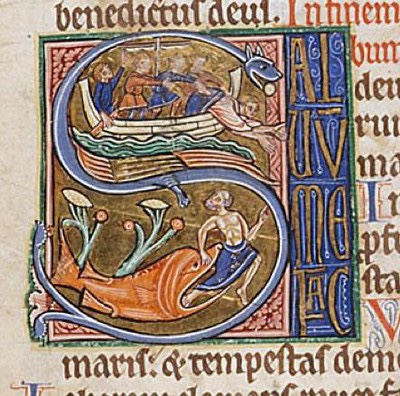
Jonah and the Ketos

I found the mushroom Jonah picture.

Above is my copy of the flickr copy.

Update: I just found my existing copy, a tighter crop:

Brown-certified Blurry Internet Image

url https://www.flickr.com/photos/renzodionigi/3426153383

https://www.bing.com/images/search?q=jonah+ketos

Ketos = short sea serpent with front fins. This image is deviant, showing a big fish.

My ketos page:

https://egodeaththeory.wordpress.com/2020/11/07/ketos-in-art/

Straightened & cropped:

my tilted copy of png from Hatsis webpage:

Merry Amanita Christmas! 🍄🎄

🎅🦌🛷🎁🎄🍄👶✝️❄️🌨

I disagree with the grinch Thomas Hatsis who claims that Amanita Christmas is strictly a myth and not a historical inheritance tradition.

There are too many good fits. There are very good reasons for associating: sleigh chimney Amanita gifts drying on pine tree, red and white.

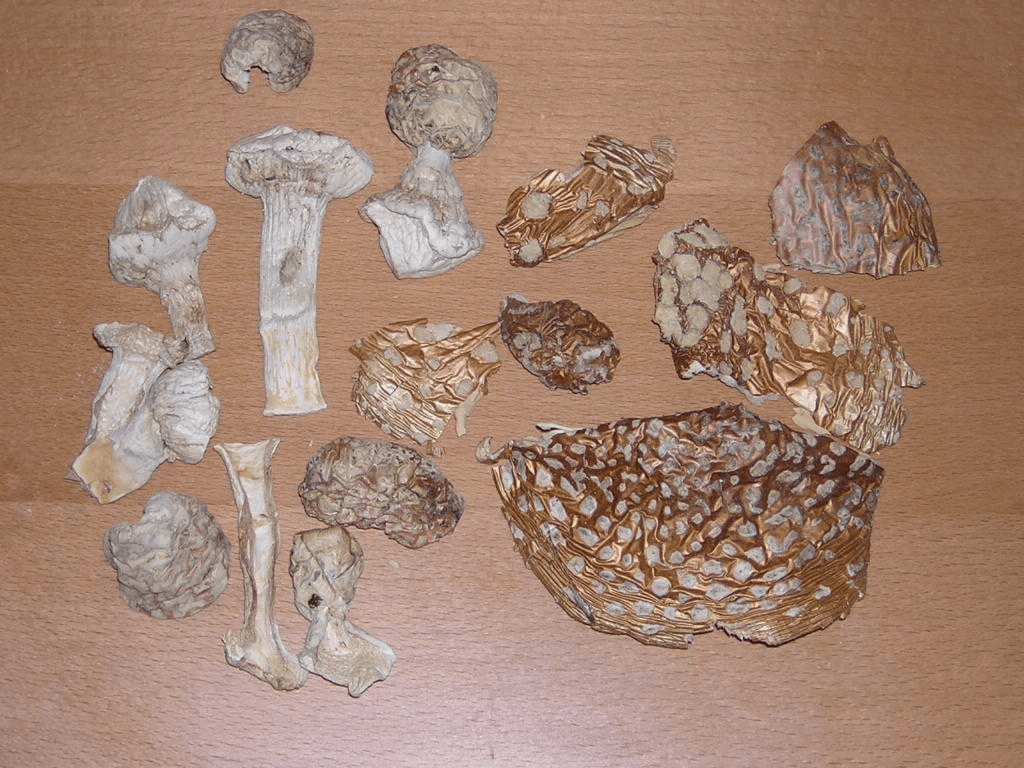
Photo Credit: Cybermonk 10/10/2010 10:10 a.m.
Photo Credit: Cybermonk 10/10/2010 10:10 a.m. Shoe = 12″
Photo Credit: Cybermonk 10/10/2010 10:10 a.m.
Crop by Cybermonk

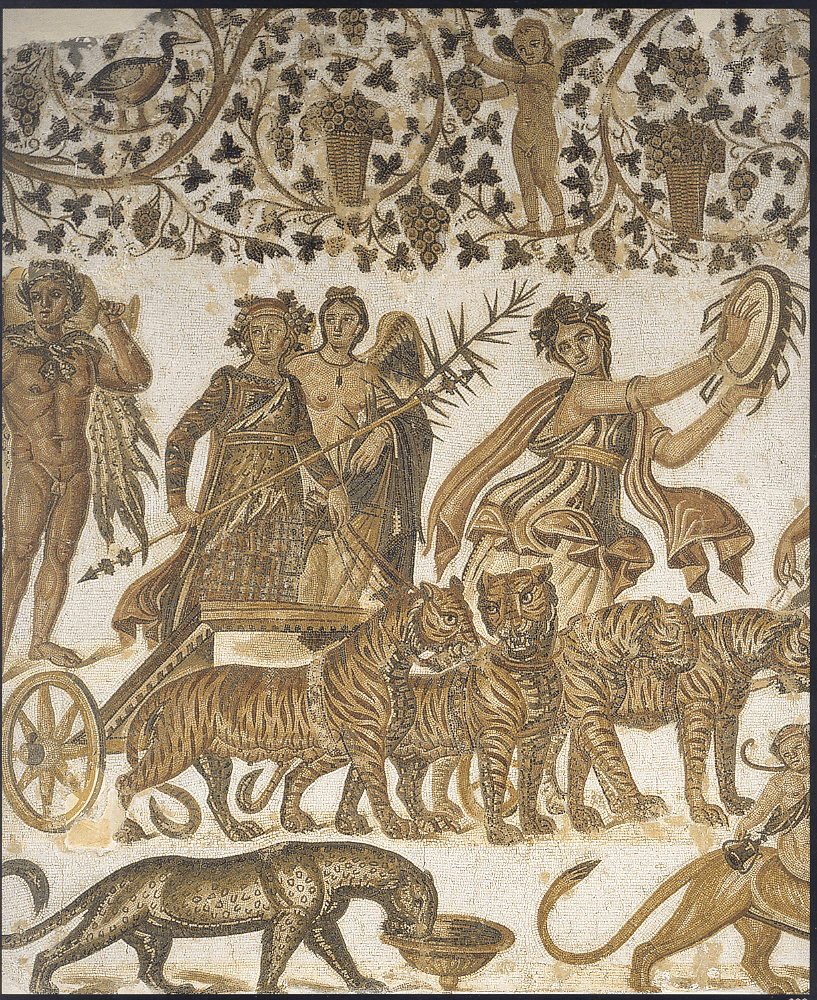
In 2020, I positively identified the panther fountain as Amanita.

url https://egodeaththeory.wordpress.com/defining-compelling-evidence-criteria-of-proof-for-mushrooms-in-christian-art/#Identifying-the-Leopard-watering-Bowl-as-Amanita

Image contributed by the Egodeath community around 2005.

I hold that the 5 other mushrooms represent psilocybin in the Dionysus wedding victory mosaic.

~April 2022 I decoded branching versus non-branching = Ariadne vs. Dionysus = possibilism vs. eternalism, and garment of possibilism appearances on her left arm.

Photo Credit: Cybermonk 10/10/2010 10:10 a.m.
Photo Credit: Cybermonk ~2013
Photo Credit: Cybermonk 10/10/2010 10:10 a.m.
Photo Credit: Cybermonk ~2000

I am arguing more on the basis of coherence of mythic elements rather than arguing on the basis of historical records of the history of Christmas.

https://www.bing.com/search?q=Amanita+Christmas

Like Richard Double’s book Meta-Philosophy and Free Will, in a certain sense Thomas Hatsis is wrong; he’s approaching the analysis from the wrong basis.

url https://www.amazon.com/Metaphilosophy-Free-Will-Richard-Double/dp/0195107624/

The mythic elements fit together very naturally, and that should dominate over a strictly history-driven view, according to the meta-philosophy which I am advocating and attuned to.

I side with the people who assert Amanita Christmas. Against the Grinch, Thomas Hatsis, the anti-mushroom psychedelic witch.

🍄🧙‍♂️

http://psychedelicwitch.com

🎅🦌🛷🎁🎄🍄👶✝️❄️🌨

– Cybermonk, December 19, 2022

John Rush gallery

Contents:

Clinicalanthropology.com Books

http://www.clinicalanthropology.com/category/books/

http://www.clinicalanthropology.com/jesus-mushrooms-origin-christianity/

Rough crop from John Rush site by Cybermonk.

Photo: Julie M. Brown

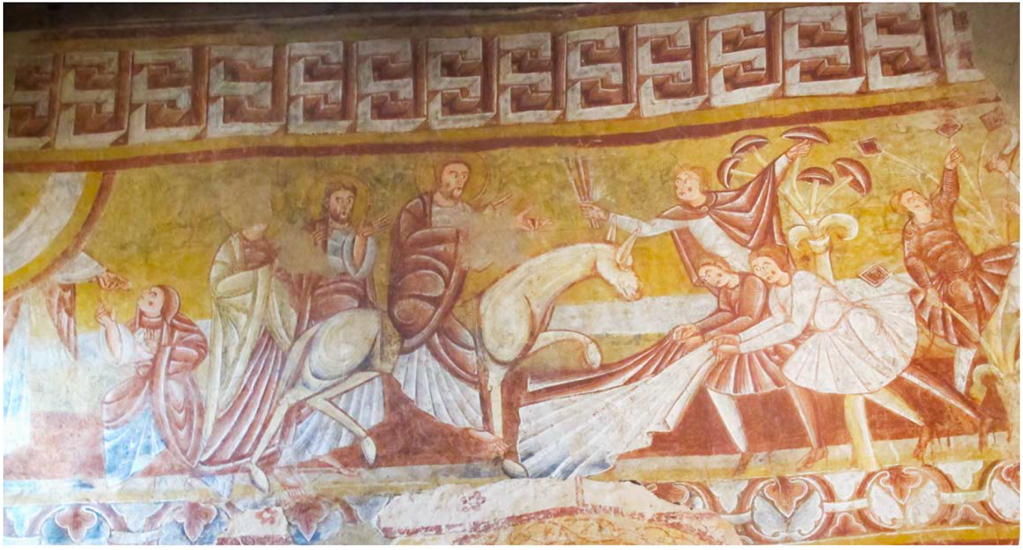
Found right side of Saint Martin image: curved pruning knife. Entire guy, good view of arms, much more image than I expected to the right of Browns’ published photos.

We can only see the white garment left leg; we cannot see the right leg, and we can’t really say except by comparison to the cloak-spreading guys.

We can defensibly argue that the cloak-spreaders’ weight is on their right legs, and so therefore we can read the right-hand figure as, his weight is on his right leg, which we cannot see.

Regarding the non-branching portion of the spear-palm tree, it is relative: we compromise and compare relative amount of branching held by left hands versus relative amount of non-branching held by right hand.

Hold branching with left hand, cut/ prune branching with right hand.

Or hold non-branching branch with right hand, equivalently.

That branch held in right hand, spear aimed at Jesus’ right side, is Browns’ “slightly curved sword”.

Browns don’t mention the curved pruning knife. They are intend on making the point that the straight knife in the other painting, the tree tower scene, matches the knives on the last supper table, indicating that they are eating mushrooms.

Dizzying perspective, and hard to make out, but very clear view of white left arm and right arm holding knife.

I adhered to the Rush/ Brown policy of blurry internet images.

The Mystic Y

The Mystic Y
https://egodeaththeory.wordpress.com/2020/12/30/the-mystic-y/

I need to examine every Rush pic, love the Y branching one:

Magic, Myth, and Religion: The Origins of Myth and Ritual Expression (Rush 2022)

http://www.clinicalanthropology.com/magic-myth-and-religion-the-origins-of-myth-and-ritual-expression/

John Rush 2022/2023

Blurb:

“The most powerful thing in the world is the symbol.

“Through symbols, we create stories and myths that bring people to action.

“Where did the original symbols regarding an afterlife come from?

“The spiritual world is a fascinating place even more so today in that it is in direct competition with the metaphysics of science, especially physics, with numerous theories surrounding the origin of the universe and life. “

“We read the universe came from nothing, we hear of singularities, multiverses, wormholes, string theory, metaphysics at its best.

“What do you think of as the spiritual world may be more than something that brings from our imaginings, of a world beyond that can be glimpsed, and perhaps manipulated if we perform the rituals correctly.

“As the reader will appreciate the spiritual world and quantum physics have a lot in common.”

“Join Dr. Rush as he takes you through the world of imagination, of magic, shamanism, and worlds beyond.”

Quantum freewill fog

Free will really exists when you’re in the ordinary state of consciousness.

The mechanical explanation of how that is so is because of quantum physics & manyworlds branching. 😑

– Cybermonk, Newage Physicist

Horse or donkey lifting left leg, relying on right leg. Rough copy from John Rush site by Cybermonk.

– Cybermonk Dec. 19, 2023

Spiritual Philosophers Assert No-Free-Will, but Are They Able to Touch the Blade, Ride the Dragon, Pass Through the Guarded Gate?

I recorded a podcast today that I could maybe upload without really needing to do time-consuming production work.

But after nicely recording and speaking about the ideas, it is pretty easy then to summarize them in text here.

Mobile device composition continues in this posting and my last many postings.

Presenting an innovative theory requires being a sociopath

The sociopath requirement: you have to be a sociopath in order to deliver a radical revolutionary new paradigm that turns the world upside down, transforms everyone and transforms the world, the universe, the cosmos itself.

Provided by Cyberdisciple
Brinckmann plate from 1906 book double-recommended to Wasson by Panofsky
Photo: Julie M. Brown, Saint Martin’s chapel

The radical philosophy of science per Paul Feyerabend says that the new theory doesn’t even need to give the time of day or acknowledge or even mention the old theory.

Look at the failed attempt of Roland Griffiths’ CEQ article, which produced the garbage CEQ questionnaire, that silently omits all the questions related to control.

The would-be scientific article has no discussion at all of these control-challenging questions which he lists from previous questionnaires and then silently deletes them with no scientific discussion, or no any kind of discussion, just silent censorship: this is the opposite of science.

Despite the fact of his using the science-article apparatus, but he does so very inconsistently.

There is no need to cite previous similarly garbled articles, building a garbled house out of garbled bricks.

What exactly is the purpose of citations or of giving evidence in your new science article?

Especially if it’s a radical revolutionary new paradigm, a new, much clearer, much better organization of existing ideas, requiring the transformation of each of these building block old ideas in order to make them fit together in a far more coherent and useful arrangement.

The reason to cite evidence, books, articles, and discussions is to participate in an ongoing debate.

Look at the purpose for which Panofsky recommended Brinckmann’s book to Wasson: in order to make the case that mushroom imagery does not mean mushrooms, which we describe as looking like mushroom trees.

Citing an article does not mean that the article is 100% correct or 90% correct – it may be 100% wrong but you still might want to cite it to participate in the ongoing debate and treatment of the topic.

Roland Griffiths acts like he is citing all of these previous questionnaires in order to disregard them and silently ignore their wisdom, when these previous questionnaires include questions regarding the threat of loss of control, including the word ‘marionette’ and the word ‘helpless’, which he silently censored, failing to provide any scientific discussion, or any discussion at all, of why he is deleting all of the control-related questions.

Suggestogens: What’s in a Name?

Answer: A typically lopsided Irvin take.

I cite Jan Irvin’s article that falsely claims that psychedelics are most essentially “suggestogens”.

Roland Griffiths’ 2008 article “Guidelines for Safety” has a passage against Jan Irvin’s “psychedelics are actually suggestogens” claim.

The section “hallucinogen use by indigenous cultures” is relevant to Irvin’s writings in two ways.

Griffiths talks about that we can’t use indigenous use as a model because that use sometimes includes human sacrifice and cursing each other by using psychedelics.

Irvin’s new book covers this – what does his book say positively about the positive potentials of psilocybin?

url https://www.amazon.com/Gods-Flesh-Teonanácatl-History-Mushroom/dp/1387872133/

Which of Irvin’s chapters present the positive potentials of psilocybin?

There’s a paragraph at the end of Griffith’s section debating the alleged mere suggestability basis of spiritual effects:

the association of hallucinogens with spiritual experience relates to the pharmacology of these agents rather than being based entirely on cultural suggestion.

Page 4, Roland Griffiths, 2008 article “human hallucinogen research: guidelines for safety”

url https://egodeaththeory.wordpress.com/2022/12/19/human-hallucinogen-research-guidelines-for-safety-griffiths/

Griffiths says that yes we admit that there was some spin that Huxley put spin to, and Wasson put spin to try to misrepresent mushrooms as spiritual in indigenous use.

We have evidence that psychedelics are inherently spiritual, and it’s not just an artificial claim, though they give some suggestibility, but there’s more to it than merely cultural suggestion – against Jan Irvin.

Roland Griffiths exactly makes the same point that I’ve been making a lot in some of my podcast recordings which I have not uploaded, and in my postings:

I have explained how Jan Irvin has reductionistically conflated the social abuse of psychedelics with their cognitive mechanism effects.

See Irvin’s article “Entheogens: what’s in a name?”, which is part of his article series “the secret history of magic mushrooms”, at logosmedia.com.

I cite Jan Irvin’s important articles in order to show what they contribute and what they get wrong.

That was the main point of my Allegro article, was trying to get people to treat both the contributions and limitations (ie harmful errors) of any writer, eg Allegro’s several topical views (secrecy, primitive Christians only, fertility totem, Amanita as the entheogen).

The Challenging Experiences* Questionnaire (CEQ)

*other than control-loss challenges

🏥 🍽 🐉

The CEQ article is a travesty of a scientific article.

The one-page CEQ questionnaire is bunk, because it is totally vulnerable to the dragon attack, because it refuses to have any questions regarding the threat of catastrophic loss of control.

url https://youtu.be/spm5-SXo4Do

The CEQ article fails to give the solution, which is to “surrender and submit and accept the lack of control”, as the folk psychologists tell – as Griffith recommends in the middle of his 2008 article “guidelines for safety”, and as presented throughout Michelle Janikian’s 2019 book your psilocybin mushroom companion.
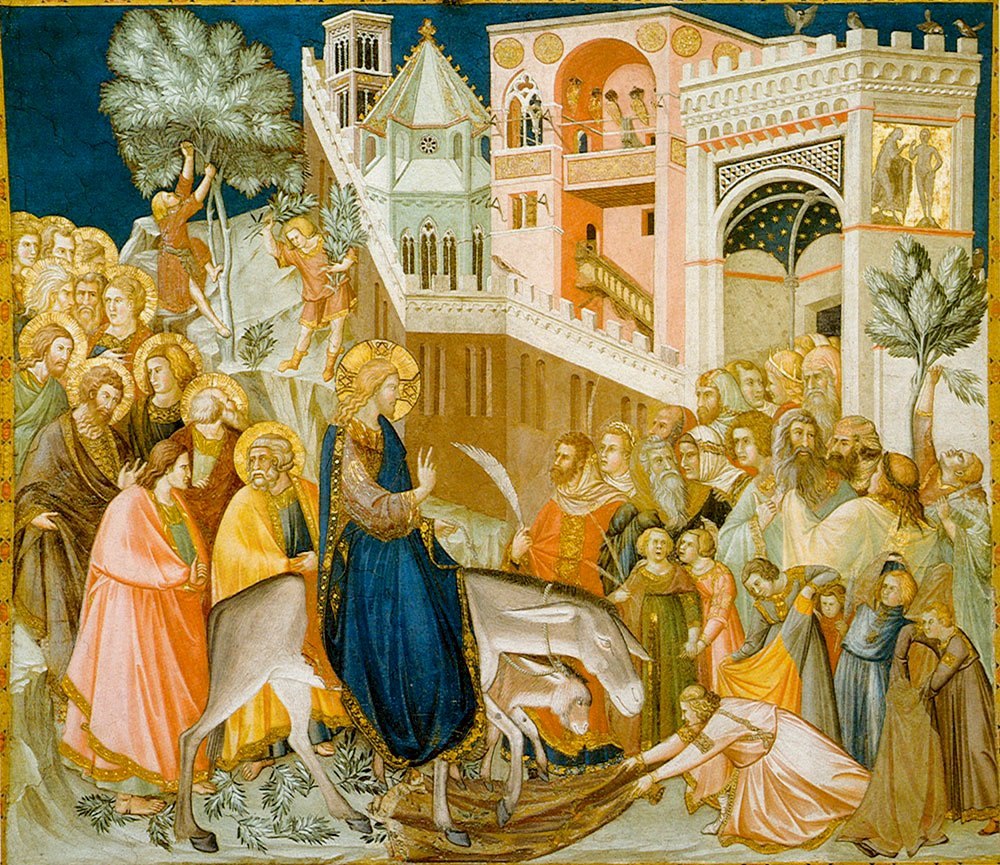
The CEQ article fails to explain the jewels, 💎🏆 the treasure, transcendent knowledge; gnosis, of how to pass through the shadow 🦵🐉🚪🦵💎 to get to the other side and achieve successful completed passage transformation by grappling with and demonstrating 🗡 💨 the limits of control.

🦵🐉🚪🦵💎

Leg analysis (3:20 pm Dec 19, 2022 by Cybermonk)

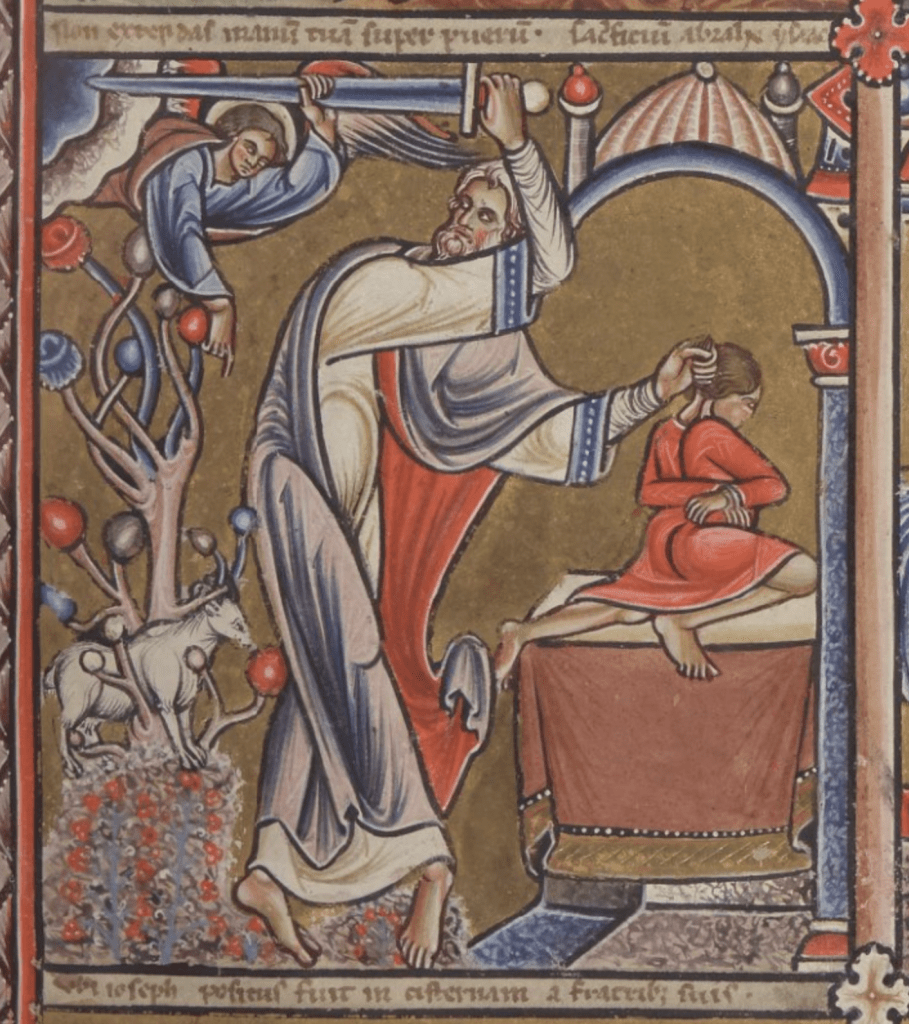
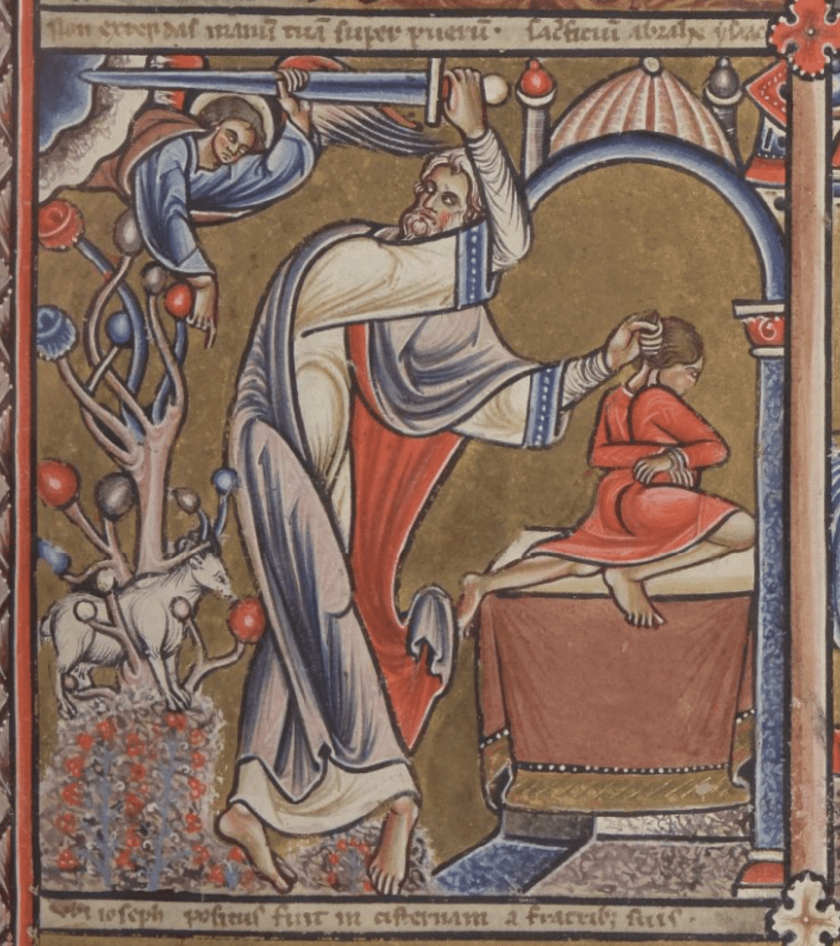
Abraham’s right foot touches the ground, left foot doesn’t touch the ground. = Relying on eternalism-thinking.

Isaac’s left leg is extended, equivalent to relying on left leg, per my Mithraism legs analysis around April 2022. = Relying on possibilism-thinking.

Isaac’s right leg is bent, which means not relying on right leg.

The CEQ article fails to discuss in any way why there are questions about control-loss challenges in the earlier questionnaires.

The CEQ article fails to discuss why the control-challenging questions get deleted from the CEQ questionnaire.

The CEQ “scientific” (partly scientific, inconsistently scientific, and selectively scientific) article is a failure, it leaves a HUGE GAPING VULNERABILITY – and inability to complete the transformation game.

1/3 of the article is a gigantic gap the size of a barn door for the dragon to come in and wreak havoc on the king’s rulership of his kingdom.

Innovative theorists must be sociopaths ignoring people’s feelings

Steve Jobs does not go around asking stupid customers what their preconceptions and expectations are; he said instead here is a revolutionary computer, you should buy it, and you can decide whether to buy it or not, but I’m not here to ask you what’s your opinion of what you think that a good new computer would be.

Erik Davis’ Expanding Mind podcast uses the strategy of ignoring the stupid audience reaction of the thumb angle 👎👍

Davis just said here’s the episode: you should listen to it.

It’s up to you whether to listen to it or not, but Davis is not here to ask you what your presupposition and expectation is.

Davis is not concerned what your reaction is, because he doesn’t want to be influenced and limited by your reaction, the audience’s reaction.

It’s none of my business what your expectation for the Egodeath theory is, or your reaction to the Egodeath theory.

My role and concern is just to articulate what the theory is, that’s all; to make it available, that’s all.

Here is the Theory, here is the math formula, it is what it is, deal with it – or don’t deal with it; that’s not my problem.

If you want to know about the shadow, and if you want to enjoy going in and out of the garden of the psilocybin high-dose state, you would be well-advised to read the Egodeath theory.

Else if not, it’s your loss.

Otherwise, good luck having stable control without the Egodeath theory –

“When it’s your time, I wonder how you’ll do, you broke (the rules), you’ve been (a fool), the little doll is you, yeah” – the song “Little Dolls” by Bob Daisley, sung by Ozzy Osbourne.

Do you want victory over the dragon, or not?

Do you want to be able to touch the blade of ego death cybernetic self-transgression of control to transcend personal control, or not?

If so, the Egodeath theory provides the way on a silver platter, provides full summary clarification, efficient and usable.

This is the “genius, don’t give a damn, sociopathic” attitude required to put forth something, a radical new theory (new as far as an organized system articulated in a clear new way) that contradicts the entire world.

I do not steer the Egodeath theory based on people’s reception or expectations, although I do take advantage of all the many corroborations that are plentiful in art and in books and articles which agree with major elements of the Egodeath theory.

My job is not defined by other people, except is the Theory worded clearly so that other people are able to make sense out of it, if they desire to make sense out of it?

All of my effort, my push – I have to push hard to communicate and CLEARLY DEFINE what the theory is as clearly as possible – not to persuade people who don’t like it, or who wishfully wish that free will is the case.

I am not here for somebody’s wish fulfillment, except unless you wish for a theory of no-free-will in the peak state, and a comprehensible interpretation of religious mythology that actually makes sense – then your wish shall be fulfilled – as long as I can clearly articulate what the theory is.

I am not here to serve naysayers, I am here to serve people who positively want this no free will psilocybin eternalism theory and who wish for a clear articulation specifying what it is and relating this theory to previous art and articles and books and videos and music and podcast discussions and debates.

My job is to debate in order to specify the coherent explanatory model/ successful theory, for those who want this thing specified.

Madness of Heracles

The right attitude that I have to have is double down: I double down on the clarity of my assertions.

I am immune to someone saying “I don’t like what you’re saying”, I’m immune to that, but the failure I am subject to is:

You failed to clarify what your assertion is; you failed to clarify what the model is – that is the sense in which I could potentially fail.

But if everyone dislikes the theory, that is in no way a failure, because success and failure is not defined in terms of stupid people’s reception and infantile deluded egoic wishful thinking.

Success and failure in this project is measured by my coherence and clarity of defining what the explanatory model is.

Theory articulation is not a popularity-driven matter.

There is an overlap between how clearly a theory is articulated, how nicely it is presented, and how popular the reception of that presentation is.

I will be hurt if you say that my presentation is poor.

I will not be hurt if you say:

“I don’t like what your theory is, because I wish the world to be some different way and I wish for freewill ego power to be the case, and I expect enlightenment to amplify my egoic freedom power.”

“I am not willing to buy and agree to a no-free-will system; I am only willing to purchase and agree to a freewill personal power amplification, open future, freedom branching theory of what gnosis/ enlightenment/ revelation/ purification is.”

Enjoy your seizure in the psilocybin state, but anyway, whatever, that’s your problem, your choice, your free choice of what you expect and demand from a theory of revelation and enlightenment and ego transcendence.

It is childish immature egoic innate human nature to expect ego transcendence to be all about ego inflation and ego-power amplification.

Many philosophers and religious philosophers assert (more or less) no-free-will in full support and agreement with the Egodeath theory.

The problem which I have is not a problem of people disagreeing with the theory; there are more than enough people and evidence asserting various aspects of this theory.

Their writings are just not very organized, compared to my theory, and therefore their expressions of gnosis are not effective and useful in the peak psilocybin state to maintain – and especially to transgress and transcend – personal control.

See Richard Double’s Book Meta-Philosophy and Free Will, which is cited by my main 2006 article. https://www.amazon.com/Metaphilosophy-Free-Will-Richard-Double/dp/0195107624/

Free will effectively is the case in our ordinary state experience/ praxis.

Our experience is shaped in the form of free will branching possibilities into an open future with monolithic autonomous control personal agency with the power of steering to create our future control thoughts.

You better be really good at free will and personal self control conduct, because 100% of our time is spent in that mode, except for the little blip, instantaneous momentary blip of altered-state peak psilocybin session where we ride the dragon, and touch the blade, and sacrifice child thinking, and demonstrate our ability to put personal control, effective comtrol power stability, on trial and transgress the lower way of thinking, producing a new, later, mature mental model of control levels and branching possibilities. 🐍🪨

The Egodeath theory doesn’t actually contradict the entire world (even though it might confound some peoples expectations and it’s astonishing).

The Egodeath theory is very well supported, and there is much agreement between previous garbled thinking and this new coherent, clear thinking.

My role is not to consult and ask you to tell me what the theory ought to be and what your preconceptions and presumptions and expectations are, because your expectations of the audiences expectations are garbled, inconsistent, partly wrong, and ignorant and incomplete, like Sam Harris’ book asserting no free will is incomplete and inconsistent, not mystic-state developed and mature to endure the trial test demon stration in the psilocybin peak state.

Sam Harris’ thinking remains still perishable, and not integrated, and not transformed into a viable durable stable control system for the peak psilocybin state.

The measure of inconsistency and consistency is if you are able to sacrifice the child thinking, have a wound hole of rebirth in the side, and pass through the dragon guarded gate, and ride the dragon, and transgress control transcendently, and demonstrate and put control vulnerability and stability on trial — then you are consistent, only then.
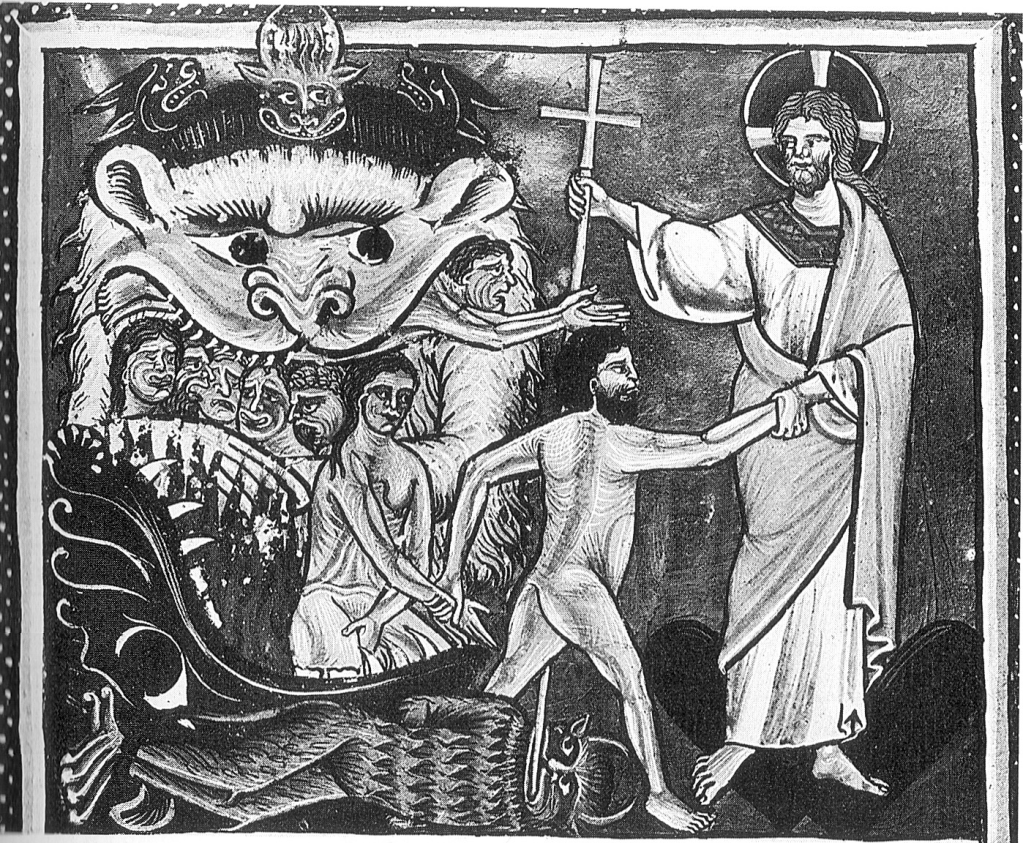
Ramesh Balsekar’s ordinary-state assertion that enlightenment is of no-free-will is incomplete: he is not able to touch the blade; he is not able to ride the dragon; he has not sacrificed child thinking and learned to rely on the non-branching possibilities model.

bottom: freewill power

These authors haven’t become completed, transformed, consistent in the peak state, accommodating a closed future where your control-thoughts already exist and you don’t get to change them, you don’t have the power to change them; you merely discover what they already were created to be.

Richard Double wrote a book asserting no-free-will, but he has not learned to consciously put trust in the uncontrollable source of his control thoughts while in the peak psilocybin state.

– Cybermonk, December 19, 2022

Human Hallucinogen Research: Guidelines for Safety (Griffiths)

Contents:

Intro

Roland Griffiths’ 2008 article “Human Hallucinogen Research: Guidelines for Safety” has relatively “fair” coverage of the threat of loss of control and its minor solution to stave off control seizure.

The article lacks the major solution to “the shadow problem”, which is, to gain Transcendent Knowledge, which the Egodeath theory provides.

The goal is not merely negative, “avoid non-control”; the goal is to positively and pointedly transcend personal control and be transformed so as to become immune to the shadow dragon battle problem, and become able to ride the dragon or touch the blade of death while having a new form of control stability.

The “Guidelines for Safety” article has a relatively “fair” degree of coverage of control-related challenges, compared to the whitewashed, sanitized Challenging Experiences Questionnaire (CEQ).

Which is to merely say that the Guidelines article contains the folk-level, sub-scientific advice, like “surrender to the loss of control”.

See also:

No Mention of Loss of Control in Scientific Literature Review from Oregon Psilocybin Board
https://egodeaththeory.wordpress.com/2022/12/18/no-mention-of-loss-of-control-in-scientific-literature-review-from-oregon-psilocybin-board/

Standard Hazy Trip Advice on Surrender to the Shadow, Trust, Submit, and Let Go of Control
https://egodeaththeory.wordpress.com/2022/12/07/standard-hazy-trip-advice-on-surrender-to-shadow-trust-submit-and-let-go-of-control/

The Challenging Experience Questionnaire (CEQ): Characterization of challenging experiences with psilocybin mushrooms – Omits Category “Threat of Loss of Control”!
https://egodeaththeory.wordpress.com/2022/12/16/the-challenging-experience-questionnaire-ceq-characterization-of-challenging-experiences-with-psilocybin-mushrooms-omits-category-threat-of-loss-of-control/

The CEQ article has weak coverage of control-loss problems and solutions, though it lists good control-loss questions from previous questionnaires – before silently, covertly deleting those questions from the CEQ, providing no scientific justification for doing so; no discussion at all of doing so; no discussion of the control-related questions as such.

The CEQ article has no discussion at all of the control-related questions, which it omits from the CEQ – despite showing glimmerings of awareness of control-related challenges in the article “Human Hallucinogen Research: Guidelines for Safety”, and some in the CEQ article.

Status:

I have marked up all remaining hardcopy passages that I want to add to this post, though all points are probably here already.

Scare Quoting Conventions 😱 😵 😇

My excerpts here are accurate quotes, except inaccurate by lifting phrases and words out of context (eg via ellipses & omitting qualifiers), per the paranoid dissociative-state word-isolation technique.

Because that is the actual realistic safety situation in the altered state.

We have to think, here, in that “hypervigilant paranoia vortex trap” manner, to grasp the type and nature of the danger – and attraction to the scent of treasure, perceiving that there is a highly desirable higher reordering of the mental model, past the dragon gate.

Trying to read in an alarming, control-vortex attraction provoking way.

Citation/Link

Human Hallucinogen Research: Guidelines for Safety
Johnson M, Richards W, Griffiths R.
2008
Journal of Psychopharmacology, 22, 603-620.
22(6):603-20. doi: 10.1177/0269881108093587.
Epub 2008 Jul 1. PMID: 18593734; PMCID: PMC3056407.
https://www.ncbi.nlm.nih.gov/pmc/articles/PMC3056407/

Article: “Human Hallucinogen Research: Guidelines for Safety”

Below are key excerpts, with my commentary per the Egodeath theory.

– Cybermonk, December 18, 2022

Section: Abstract

Page 1:

“Risks… and safeguards for minimizing these risks.”

“unique psychological risks. The most likely risk is overwhelming distress … (“bad trip”), which could lead to potentially dangerous behavior”

Strangely, Griffiths did not explicitly gather the bits of good advice which are buried in the body of the article:

surrender; submit; accept; ask the threatening dragon monster what lesson it is teaching

The solutions to teach people should be the first thing to mention in the Abstract takeaway.

“Safeguards against these risks include… careful volunteer preparation”

“adverse reactions are rare when research is conducted along these guidelines.”

“Incautious research may jeopardize participant safety and future research.”

“carefully conducted research may inform the treatment of … disorders, and may lead to advances in basic science.”

Possibilism-thinking bedevils the control system, until that immature, undeveloped, disordered, animal-like thinking is replaced by eternalism-thinking.

The Abstract does not summarize what does so-called “carefully conducted research” amounts to; that is, the rough, sub-scientific folk-wisdom advice instruction of “surrender and submit and accept the lack of control, and approach the shadow monster and ask it what it is teaching you”.

Only if we switch from this rough, dirty, folk expression, to the Egodeath theory’s proper, well-articulated, well-formed and mapped-out explanation, only then do we have a proper level of safety, and the ability to do research with success.

Section: Introduction

“spiritual significance”

“disorders”

“ayahuasca protected under the Religious Freedom Restoration Act”

“ayahuasca use within this church setting may receive increased scientific investigation”

“The purpose of this paper is to provide guidance in the safe administration of high doses of hallucinogens.”

“the likelihood of potential adverse effects will be related to dose.”

The concept of “avoid adverse effects” is lopsided, or vague at best. It’s said without comprehending the goal and nature of the game.

That framing omits the goal of passage through such effects to pin the serpent, to win the prize, to complete mental transformation.

We actually need to manage the negative testing demonstration of control limits, to successfully drive transferring control-reliance from possibilism-thinking ({left leg}) to eternalism-thinking ({right leg}).

“First, so that the historical context in which current human hallucinogen studies are conducted will be clear, we will briefly discuss the history of sacramental hallucinogen use by indigenous cultures, and the history of human hallucinogen research before it became dormant in the 1970s.”

This is very biased, with gigantic blind spots. Can’t you at least mention Eleusis? Short-sighted, no sense of world use, no sense of long history. “History” = indigenous + 20th Century, only, according to this tiny narrowing view.

Griffiths writes in 2008 as if the field of entheogen scholarship, the history of Western religious history of psychedelics, didn’t exist.

Why not at mention Graves 1957 through Ruck 2008, who showed that Western religious history used entheogens?

“it [psychedelics research] became dormant in the 1970s

False; that narrative/framing is biased in favor of Big Pharma.

Psychedelics research did not become “dormant” from 1970 to 1992; research was underground and active.

Similar to my 1985-1997 development of the Core Egodeath theory; the Cybernetic Theory of Ego Transcendence.

The point in this section is that previous research was done without regard to safety, so it was halted, and so we need to put safety first, so research won’t be halted (ie driven underground) again.

“researchers should appreciate the precarious position of current human hallucinogen research, and recognize that very high safety standards will help to ensure that human research continues into the decades to come.”

precarious position

precarious self-threatening psalter image viewer

“we will provide a detailed description of the unique risks of hallucinogen administration.”

The unique risk is the mind is attracted to control-transcendence.

“We will then present the proposed guidelines for conducting high-dose hallucinogen research”

The unique guideline for safety (and successful transformation) is to learn to rely on eternalism-thinking instead of possibilism-thinking. In crude, hardly adequate folk-psychology terms: “surrender and trust”.

That type of guidance is limited to “safety”; it gives only an unproductive dead end, because not placed in the context of “how to safely pass through the gate to completion of mental transformation”.

Such “safety guidelines” amounts to merely how to avoid the transformation process.

/ end of Introduction section

Section: Relevant History
Section: Relevant History: Use by indigenous cultures

This section falsely reduces the history of entheogen use to exclusively indigenous use, and otherwise, “history” shortsightedly exclusively means 20th Century, only.

Biased, ignorant, severely and harmfully self-defeating, counterproductive, misrepresentative, bunk framing. This narrative writes-out almost all of our history of use, even while saying psychedelics were used forever.

Read this section as “historical use of psychedelics”.

Read ‘indigenous’ as ‘ancient and medieval’ use of psychedelics – aim for a greedy, Maximal long history of psychedelics use in all religions, all eras, all regions.

This 2008 article reads like it was written in 1970, as if the entheogen scholarship field didn’t exist, for Western religious history.

“Hallucinogens have been used by indigenous cultures for millennia.”

What about by non-indigenous cultures? Where’s the section covering that?

“without exception, such cultures view hallucinogenic plants and fungi as being of divine origin.”

rites of passage

The goal is pass through the gate, by transforming, not merely to avoid challenging experiences.

You can’t really talk about safety until you recognize the objective and nature of the danger and goal. Safety during what process, toward what transformation? Safety while trying to accomplish what?

Directionless “safety” is pretty irrelevant and unproductive.

This is what “safety” looks like from the wrong side of the transformation gateway, from a beginner culture’s point of view.

The whole field of play is obscured, not visible, to the Griffiths perspective – aiming for abstract safety but with no real grasp of context and purpose; that’s all unknown.

“incorporate a high degree of structure and guidance into their ayahuasca  use, which may minimize adverse reactions

“indigenous cultures should not be regarded as absolute role models in the clinical use of hallucinogens … human sacrifice, … sacramental headhunting, ayahuasca  may be used by the shaman in that society for malevolent intent (i.e., bewitching)”

“some of the safeguards developed for clinical hallucinogen research and expressed in the guidelines presented herein are similar to important aspects of hallucinogen use by indigenous cultures. These common themes are structured use (… ritual …), restrictions on use including the need for guidance, and appreciation of … powerful psychological effects (expressed as reverence … these commonalities are more than coincidence. The unique pharmacology of classical hallucinogens may have shaped convergent practices across independent cultures.”

“the guidelines expressed herein for human clinical research with hallucinogens … developed in reaction to these same aspects of hallucinogen pharmacology.”

“the unique effects and safety concerns for hallucinogens … related to their ability to [produce] spiritual experiences.”

Did Irvin’s “secret history of magic mushrooms” cite Novak? Novak SJ. LSD before Leary: Sidney Cohen’s critique of 1950s psychedelic drug research. Isis 1997;88:87–110

“Novak (1997) hypothesized that Western intellectuals in the mid 1950’s such as Aldous Huxley and Gerald Heard merely redefined the subjective effects resulting from hallucinogen administration as a spiritual experience, thereby popularizing such an association in western culture. … [but the facts that] indigenous cultures that ingest classical hallucinogens almost invariably do so under sacramental contexts … under supportive conditions hallucinogens occasion mystical-type experiences with high frequency, suggests that the association of hallucinogens with spiritual experience relates to the pharmacology of these agents rather than being based entirely on cultural suggestion.”

Against Jan Irvin’s “suggestogens” claim.

Section: Early clinical research

more preparation and interpersonal support … found fewer adverse psychological reactions, such as panic reactions and paranoid episodes

This “preparation” is: teach relying on eternalism-thinking instead of possibilism-thinking.

“symptoms of psychosis

“the psychosis observed in schizophrenia

“findings that have supported hallucinogens as a model of at least certain aspects of acute psychosis

Are we all crazy yet?!

Ozzy Osbourne, live concert, expressing the standard normal expectation that Rock concertgoers are tripping.

recreational hallucinogen use, … advocacy of hallucinogen use by youth further undermined an objective scientific approach to studying these compounds.”

The psychedelic rite of passage is specifically for {youths} and {maidens}, meaning for untransformed, undeveloped, untransformed, immature, perishable, still animal-like minds.

Don’t label others’ use as simply, solely recreational – or, redefine to broaden the term to overlap with other uses.

Jan Irvin objects to that as self-contradictory scheming, the narrative of why psychedelics were prohibited, because of youth recreational use, supposedly.

Major Section: Unique risks

“Hallucinogen administration in humans results in a unique profile of effects and potential adverse reactions that need to be appropriately addressed in order to maximize safety.”

“Different risks are associated … address those particular risks.”

“its own unique risk profile.”

the primary safety concerns with hallucinogens are largely psychological

Psychedelics produce the threat of loss of control, to gain Transcendent Knowledge and become able to have stable control in the altered state.

Before a session, one must learn to rely on {right leg} rather than {left leg}.

Learn about relying on eternalism-thinking (right leg; non-branching), as opposed to possibilism-thinking (left leg; branching).

Section: Toxicity

“tremors”

“blurred vision”

Seaspray blurs my vision
The waves roll by so fast
Save my ship of freedom
I’m lashed helpless to the mast

Rush/Peart, No One at the Bridge

No mention of heart palpitations (uneven heartbeat, slow then fast) toward the end of high-dose session, as heard at the end of Rush song Cygnus X1.

Prediction: with Psilocybin legal, and in Schedule35 product’s capsule’d form of Golden Teacher strain of cubensis, along with using redosing technique to sustain the peak level, people will have the same palpitations as ergot.

Section: Abuse and dependence
Section: Acute psychological distress

“pose other psychological risks. The most likely risk … is … a “bad trip” … characterized by anxiety, fear/panic, … and/or paranoia. Distressing effects … sensory … frightening … disturbing hyperawareness of … processes … metaphysical … troubling thoughts or feelings about ultimate evil forces.”

“emotional experience is often intensified … when under the influence of … uncontrolled situations any of these effects may potentially escalate to dangerous behavior. … fear and paranoid delusions … erratic … dangerous behavior, … hazardous … take seriously such risks and take steps to avoid their occurrence.”

Section: Prolonged psychosis

“when used under the proper guidelines, … an important tool for … research”

“observations suggest … psychological material may be activated … such material, if not properly worked through and psychologically integrated, may lead to psychological difficulties … lasting beyond the session.”

Section: Lasting perceptual abnormalities

Major Section: Guidelines for safety

“The guidelines that follow are intended to support the safe administration of high doses … while minimizing … adverse reactions.”

“The present paper … providing a … detailed discussion of safety concerns.”

“The present guidelines … for high-dose hallucinogen research.”

“the proposed criteria are substantially more extensive … because these domains … require even greater attention for hallucinogens than for other classes of psychoactive drugs.”

“Although particular aspects of the proposed guidelines may be debatable, it is hoped that this paper will encourage such discussion while conveying the general themes and major domains of concern in … research. The proposed guidelines may serve as a helpful starting point for investigators planning to conduct … research.”

Section: Selection of volunteers

🤔 🤷‍♂️

Pregnant women or those not practicing effective means of birth control are excluded.

“Guidelines for Safety”, p. 9

{pregnant woman harassed by dragon}, {gave birth}

Section: Study personnel

personnel = guides and helpers

“For studies that are intended to maximize the potential for mystical-type experience …, an additional valuable monitor characteristic may be her or his ability to interact with and relate to the participant concerning spiritual issues.”

“even more compelling given the powerful influence … providing additional attention … beyond what is customary”

Section: Physical environment

“ensuring safety … acute psychological distress

“The Johns Hopkins hallucinogen research projects use a living room-like setting (see Figure 1). The furniture is comfortable and is atypical for a research laboratory or medical office setting.”

Includes Buddha statue – did they use theurgy to draw down a demonic god into it? See bottom of this webpage.

Section: Preparation of volunteers

volunteer = client, initiate, voyager, psychonaut

“volunteer [client, voyager] preparation … must include a thorough review … in plain language … the range of experiences … changes in perception, sense of time and space, and emotion (… anxiety, fear, panic, and paranoia).”

“difficult to describe to a naïve volunteer; … additional time may be necessary to fully discuss these … effects”

“the approximate timecourse of the drug”

[intensity curve; teach redosing curve plots: trapezoid or dual mountain]

“its status as … experimental”

“risk of adverse effects … (such as depression), psychotic disorders, and anxiety disorders. … psychoses”

developed a trusting relationship

[with the higher controller, since you don’t control the source of your control thoughts]

“develop rapport and trust, … minimize … fear or anxiety reactions”

“discussions of … the volunteer’s philosophical and/or spiritual beliefs.”

Trust-building topics

Example rapport-building topics recommended by Cybermonk:

Do you control the source of your control thoughts?

🤔 👑 ☸️ 🌳

Do you know the Egodeath theory?

Have you read Godel, Escher, Bach?

If God is omnipotent, how is a creature morally responsible?

Can the clay object to the potter’s inconsistency; how do you reconcile the book of Romans?

Can a puppetmaster hold the puppet morally responsible?

What did Paul (assuming he really existed) mean by “When I was a child, I thought as a child”?

Can quantum manyworlds be reconciled with block-universe Relativity, such as through non-local hidden variables?

Can the sun-centered cosmos model express rebirth through the Saturn gate into the heimarmene-controlled sphere of the fixed stars, equivalent to astral ascent mysticism?

Did Giorgio Samorini place the Dancing Man mushroom tree in the wrong column in his Figure 20?

Which psychoactives are represented in Eadwine’s “Creator of plants” image?

Do discussions of the volunteer’s philosophical and/or spiritual beliefs build trust, to reduce paranoia?

Page 14:

“this discussion helps establish … trust. … reducing … paranoia (e.g., feeling that the monitors are trying to control his or her mind, or have deceived the volunteers about the nature of the study)”

“continue without the volunteers’ volitional control.”

[add p. 14-15 phrases here]

“related … material may “emerge” … intense thoughts, feelings, and visions related to … personal … world-view.”

“the scientific questions under investigationthe nature of the experimentthe scenario should be thoroughly discussed”

“run through a preliminary research session

“The preparation of the volunteer should involve a detailed discussion of the possible range of experiences that may be encountered”

“The major categories of potential psychological experiences during hallucinogen action should be discussed with the participant.”

“The range of subjective experience under  hallucinogens can be remarkably broad.”

Page 15:

“perceptual changes”

“alterations of emotions”

“changes in the sense of time and space. … time and/or space … experienced as infinite or nonexistent.”

“highly symbolic experiences (e.g., involving religious symbols, animals, etc.), and experiences … of a mystical or spiritual nature.”

“observing internal and external events”

“a profound change in one’s sense of self, merging into the surrounding environment or the entire universe.”

“a complete loss of subjective self-identity, … “ego loss” or “ego death”.”

Loss of the sense of control agency is part of “loss of self-identity” and “a radical change in sense of self”.

The loss of the sense of being a control agent is “difficult thoughts and feelings”.

“a detailed discussion concerning the range of … effects will enhance safety … the primary concern must be … safety.”

“The volunteers should be given guidance on how to handle difficult hallucinogen experiences. … frightening … internal imagery, difficult thoughts and feelings … or anxiety related to a radical change in sense of self (e.g., temporary loss of self-identity), the volunteer is encouraged to mentally surrender to the experience, trusting that his or her usual state of consciousness will return when the drug effects resolve.”

The true “appropriate guidance on how to handle” is {stand on your right leg, not your left leg}. Rely on eternalism-thinking, not possibilism-thinking – to not merely stabilize control, but also to complete the game: to obtain Transcendent Knowledge; gnosis, completion of initiation & developmental transformation.

“For example, if the participant experiences disturbing internal imagery of a demon or monster, … approach the figure and interact with it (… asking the figure why it has appeared), rather than attempt to flee from the disturbing imagery.”

The participant should be alerted that the best way to deal with all such situations is to surrender to the experience, allowing oneself to dissolve, melt, or explode.”

“balancing … prepare the volunteer for the potentially powerful psychological effects … with the scientific concern not to bias the volunteer with respect to the dependent variables. … increase suggestibility”

The Egodeath theory actually articulately explains this dynamic per the Science and STEM manner of modeling and communication and teaching.

The Egodeath theory enables not merely avoiding control loss (negative), but rather, optimally completing the game and gaining the treasure.

Page 16:

“Adverse psychological reactions … minimized”

“be vigilant … psychological distress”

“suggestibility … of greatest concern as a confound when investigating the phenomenology … mystical-type experiences … of a spiritual variety … of interesting or valuable effects that might occur.”

“We have not encouraged participants to read … accounts of hallucinogenic effects as part of their preparation because this may introduce compelling … expectations.”

What do you do when your control-thoughts are perceived as being externally compelled and forced upon you? What do you do then? {stand on your right leg}.

“research … proceeded safely by delivering … preparatory information to participants … during pre-session meetings with monitors.”

What specifically is this “preparatory information”: is it no better than rough folk wisdom of “surrender, submit, and accept the lack of control; and approach the threatening monster asking it “What is the lesson you are teaching?”

Sub-scientific folk knowledge is barely adequate, vague, and thus is still needlessly dangerous and ineffective at bringing Transcendent Knowledge; adult completed development.

Incomprehension of eternalism-thinking staves off control instability, merely accomplishes safety at the moment, in the short term, but that’s all that it accomplishes.

Mere avoidance of control-seizure climax is a huge missed opportunity, and it is a tendency toward regressing and not progressing in mental development; just delivers frustration, from a longer-term point of view.

Inadequate, unscientific folk “surrender” guidance is not really helpful to complete the transformation, but merely holds transformation at bay, with unresolved risks and dangers remaining, both for the participants and risky for the ability to continue further scientific research in high-dose exploration.

“Researchers will need to design studies such that the maximum amount of preparation is provided for safety reasons while not confounding the particular hypotheses being studied.”

By definition, “maximum preparation, for safety” means teaching the initiate to rely on eternalism-thinking rather than possibilism-thinking.

Maximum preparation specifically means learning the Egodeath theory, per the Lesser Mysteries, and per Row 1 Left of the Eadwine image:

Eadwine’s image of Cubensis initiation into non-branching for control stability, fully explained by Cybermonk in November 2020. https://egodeaththeory.wordpress.com/2020/11/24/strict-requirements-for-teachers-initiation-guides-and-students-prior-to-initiation/

Before the altered state session, teach candidates to {rely on right leg, not left leg}.

/ end of section “Prep of volunteers”

Section: Conduct of Sessions

Page 17:

“Although many hallucinogen users maintain reasonable control, … panic

Page 18:

“participants should be reminded to surrender to the experience.”

Section: Post-session procedures

“ensure psychological stability”

See {stability} themes in Eadwine’s image; right foot touching column base.

Section: Concluding remarks

Page 20:

“it is critical to implement appropriate and conservative safeguards.

“With such safeguards this class of compounds can be studied safely”

“Careless research that lacks attention to the unique risk profile of hallucinogens may … endanger the safety and well-being … also jeopardize future research with these scientifically fascinating compounds.”

“carefully conducted research that respects hallucinogens’ unique and often powerful psychological effects may … inform … disorders, as well as lead to significant advances in our understanding of perception, cognition, … psychology of religion, and … consciousness.”

“Respecting” these so-called “substance-appropriate safeguards” and their “unique risk profile” specifically means {standing on your right leg} (relying on eternalism-thinking), as the article vaguely, inadequately, and uncomprehendingly refers to when they use terms and advice that they don’t really understand, such as “surrender, submit, accept”.

Section: Acknowledgments
Section: References

Ott: Pharmacotheon

W Richards article: “Entheogens in the study of mystical and archetypal experiences”. https://www.amazon.com/gp/aw/d/9004126201/ Research in the Social Scientific Study of Religion, Volume 13, pp 143-155.

W Richards later book: Sacred Knowledge: https://www.amazon.com/Sacred-Knowledge-Psychedelics-Religious-Experiences/dp/0231174063/

I purchased Sacred Knowledge on Oct. 29, 2015, though it wasn’t published until Dec. 8, 2015. It shipped to me on Dec. 8, 2015. I likely reviewed it; search the Egodeath Yahoo Group.

W Richards: Entheogens in the study of religious experiences: current status. 2005

Figure 1

Figure 1: The living room-like session room used in Johns Hopkins, just before it was eaten by the dragon.

🦵🐉🚪🦵💎🐍🪨🌳🍄😇👑🏆

Relying on left leg, can’t pass through the dragon-guarded no-free-will gate.

Rely on right leg to get treasure, snake worldline frozen in block universe rock.

Purified, now able go in and out through garden gate to eat fruit of immortality from tree of life.

– Cybermonk, December 19, 2022

omg the room has an infernal buddha statue! lol See post:
Meditation Is Bunk – It Is Pushed Solely to Eliminate Psychedelics
https://egodeaththeory.wordpress.com/2022/12/17/meditation-is-bunk-and-is-pushed-solely-to-eliminate-psychedelics/

/ End of 2008 article “Guidelines for Safety” by Griffiths.

Psychedelic Cognitive Science

The Egodeath Revolution and related fields

Psychology, Religion, Philosophy, Cog Sci

Cog Sci is boring and sucks and is irrelevant. CSReligion is annoyingly empty of relevance.

I’m focused on enabling Cog Sci to not be boring and suck and be irrelevant.

The Egodeath theory is near Cog Sci, but very different in style and focus, as is effective and not reductionist to the wrong domain and approach/ style.

The Egodeath theory has its own domain and style of explanation, lexicon, has its uniquenesses, compared to Science, Religion, Cognitive Science.

What makes something a science is how much that field is like the paradigmatic model, which is set by the Egodeath theory – extract what Science is, from that.

The Egodeath theory is its own standard for judging the real nature of being scientific, for the Egodeath theory.

The ideal type of science for the Egodeath theory.

Explain the ego death and transformation climax.

Explain myth as analogies for that, per Douglas Hofstadter: Analogies are how the mind works.

I have an offsetting, arm’s length competitive stance against Neuroscience.

The worst is Cognitive Neuroreductionism.

Reductionism is like when you write a hyper detailed very impressive CEQ article and questionnaire, but get rid of any discussion or questions you gathered about the main challenging effect of control transformation, experiencing the threat of loss of control.

Roland Griffiths’ Sneaky Removal of ‘Control’ Questions

HERE BE DRAGONS 🐉 drop the science and run away

Challenging Experience Questionnaire (CEQ) except without the word ‘control’, which you silently omitted without any comment, sciencey or normal.

The CEQ covers manic depression, but doesn’t contain the word ‘control’.

The Griffiths articles have misinformed Oregon Health Authority.

He’s driven by PR posing as “science”, it’s a bluff, to hide deletion of loss of control.

Threat of loss of control wasn’t in your agenda to deal with, so you removed it, as a defect that you needed to ignore.

You didn’t even discuss, didn’t even mention, why you left out the most notorious challenging effect, the threat of loss of control.

There is a huge gap in the CEQ, it chooses not to include any questions about control at all, it CEQ stays well away from the dragon, much less focus pointedly on the experiencing threat of loss of control.

“We found reports of control dragons infesting the earlier questionnaires –

what should we say about our omitting these defective question topics as off-limits for scienticific discussion, sales, and marketing PR?”

“Just say nothing about the bad questions, about defective control, & fill in the empty gap with lots of numbers and formal detailed writeup.

“Throw in a lot of extra math noise and posturing of formality to hide our quiet corrective deletion of the control questions – we dont wanna go there.”

This is a very sciency paper – or would have been, had it discussed

THE UN ATTRACTIVE TRUTH

Griffiths, what’s your flimsy pseudo-science excuse cover story for omitting the control questions you gathered. CHICKEN??

🐥

Peterson Calls BS on Griffith

Roland Griffiths is really called out hard by Jordan Peterson, who instantly calls BS on Griffiths’ bunk vapid claim that meditation could/ can/ might/ may produce the same effects as psilocybin.

Jordan Peterson calls out self-contradiction by Griffiths.

Griffiths:

“Psilocybin is better than anything else.

“Professional meditators are blown away by Psilocybin.

“Meditation can/ could/ might/ may produce the same effects as Psilocybin.”

Peterson instantly called Griffiths on his contradictions about efficacy.

Stang Calls BS on Griffith

Roland Griffiths is really called out hard by Charles Stang in video 1 in the Harvard Psychedelics series.

Charles Stang reports to Griffiths:

Your sanitized, whitewashed pseudo “mystic experience” is made-up, lopsided, cherrypicked, New Age tripe.

What you are mis-calling “mystical experience” fails to match the reported data, of the shadow.

Are you afraid of loss of control? of the PR?

that people will be under intense threat of loss of control

you looking at psalter comic strip

that the dragon will eat your clinic

🏥 🐉

What fate awaits your clinic, lying ahead on the worldline? 🤔🤔

I see an ARMY OF DRAGON DEMONS beckoning on the non-branching path ahead.

Science Character Brought by the Egodeath Theory

Psychedelic Cognitive Science of Religion should be more like the Egodeath theory in character than like dullsville irrelevant ordinary-state CSR.

PCSR needs to take its cues from the Egodeath theory not from the sorry CSR approach.

Reductionism of one field to another is the most unscientific approach.

Reductionism of the field to a field which it is not, is the most unscientific approach.

My 1987 topic: Domain Dynamics

Fields affected by the Egodeath revolution

Psychedelic Cognitive Science

Psychedelic Cognitive Science of Religion

Psychedelic Philosophy

Psychedelic Psychology of Religion

Psychedelic Eternalism

Psychedelic Gnosis and Mysticism

Psychedelic Western Esotericism

Psychedelic Religion

Psychedelic Mythology

Cognitive Science of Religion

Psilocybin Eternalism

Cognitive Science

Book Titles

Ruck’s book title recommendation:

Secrets of Psychedelic Cognitive Science of Religion 🍄🍄

Secrets of Psychedelic Mythology 🍄🍄

Carl “Dr. Secret Amanita” Ruck 🤫🍄

Carl A. P. Ruck, Carl Amanita Promoter Ruck

🍄 John Rush 🍄

Needs more mushroom 🍄🍄

Blotter Art Book

Ruck’s cover design for Erik Davis’ new book:

______

Secrets of Blotter Art 🍄🍄

🍄🍄🍄🍄🍄🍄🍄🍄🍄🍄

🍄🍄🍄🍄🍄🍄🍄🍄🍄🍄

🍄🍄🍄🍄🍄🍄🍄🍄🍄🍄

🍄🍄🍄🍄🍄🍄🍄🍄🍄🍄

🍄🍄🍄🍄🍄🍄🍄🍄🍄🍄

______

https://th.bing.com/th/id/OIP.QkxA4FntxDUmcG8Y4FeHQgAAAA?pid=ImgDet&dpr=3

Who Owns Psilocybin?

This posting covers:

  • Article: Who’s in Charge of Psilocybin? (Beiner article 2021)
  • Fallacy: The group which I appoint myself the spokesman and savior for, exclusively owns psilocybin, because of our special unique historical use of Psilocybin.

Article: Who’s in Charge of Psilocybin?

Alexander Beiner, May 20, 2021

https://chacruna.net/who_owes_psilocybin/ – article includes link to short video:

url https://youtu.be/fAuHXNCOK1o

Are Clinical Trials the Only Legitimate Path to Accessing Psilocybin?

“We’re in the middle of a psychedelic turf war.

“With psychedelic medicine on the cusp of going mainstream, an increasing number of players are vying for narrative control.

“From clinicians and investors to Indigenous groups and activists, debate is raging over whether psychedelics are spiritual tools, new psychiatric drugs, medicines for social change, or all of the above.

“the latest skirmish in this turf war.

“It came about on April 21 [2021], with the publication of a paper called Psilocybin: From Serendipity to Credibility in the journal Frontiers in Psychiatry (available here).

“Written by James Rucker and Allan Young (psychiatrists working at Kings College and the Maudsley, respectively), the paper questions whether legal clinics should be offering psilocybin-assisted experiences before psilocybin has gone through the clinical trial process.

“While the paper raises some important arguments, it also points to underlying tensions around power and access in the psychedelic field that could, if left unresolved, become detrimental to the psychedelic renaissance.

“In this article, I will critique the paper with the aim of seeing where a resolution may lie between the competing epistemologies in the space.

“The Battle Lines

“Much of Rucker & Young’s argument centers around the idea that credibility and safety for psilocybin-assisted therapy relies on its journey through the clinical trial process.”

Safety – control stability – lies in knowing to rely on eternalism-thinking instead of possibilism-thinking.

– Cybermonk per Eadwine & other artists of handedness & branching-message mushroom trees

https://egodeaththeory.wordpress.com/2020/11/24/strict-requirements-for-teachers-initiation-guides-and-students-prior-to-initiation/

Alexander Beiner’s article continues:

The Problem with Clinical Trials

“The key argument the paper rests on is that clinical trials are the safest and most responsible method we have to bring new drugs to market.

“Many, myself included, would agree.

“But psilocybin is not a new drug.

“It is a pre-existing molecule with a rich history … as a spiritual sacrament or therapeutic tool.

“While the authors acknowledge this, they nevertheless go on to argue that we can’t know it’s therapeutically safe until it has gone through a clinical trial process.”

Bia Labate et al wrote:

“Alcohol and tobacco did not have to go through [clinical trials]. Statistically-sound clinical trials were introduced in the 1940s to ensure the safety and efficacy of new drugs and treatments. … Epidemiology, or the collective human experience of consumers of these substances, simply trumps clinical trials.”

“… they [Rucker & Young in article Psilocybin: From Serendipity to Credibility] are instead arguing that their profession should gatekeep therapeutic approaches using a molecule with thousands of years of existing human use.”

“there is little evidence to suggest that medics would be better qualified after a few decades than traditions with thousands of years of experience.”

“The clinical trials that Rucker and Young refer to in the paper use the very same molecule that [historical] cultures … hold sacred.”

“Who (if anyone) has the right to control access to psilocybin?

“Some believe that psychiatrists are best placed to be at the top of the hierarchy, and that these substances should enter the mainstream primarily as mental health tools.

“Many activists, and religious and indigenous groups for whom these are sacraments, vehemently disagree.”

“I don’t believe any existing institution should sit at the top of a hierarchy of access.

“Of the options we have, the medical establishment would not be my first choice.

“The very reason we’re looking for new mental health treatments is that psychiatry, and its reductionist biological model of mental health, has failed in preventing or adequately treating epidemic rates of depression and anxiety.”

[“the” reason? -cm]

“In addition to this, psychology is in the grips of a serious replication crisis.

“As The Atlantic reports, “Ironically enough, it seems that one of the most reliable findings in psychology is that only half of psychological studies can be successfully repeated.”

“Even if we were to ignore these alternative perspectives, we would still have to ask whether psychiatry and the medical establishment as a whole are best suited on their own merits to steward psychedelics.

“The clinical trial process relies on reproducibility for its validity.

“However, it is very far from perfect, and the epistemological foundations it rests on are shakier than they appear.”

bedeviling naive possibilism-thinking – the freewill branching model of control collapses under the trial of psilocybin loosecog

“the paper asks us explicitly to trust this model without offering an internal critique.

“As a result, much of the argument relies on a logical fallacy known as “appeal to authority”—the authority here being Western psychiatry and the clinical trial model.

“while the clinical trial model is important, fitting psychedelic-assisted therapy into it can be trying to force a square peg into a round hole.

“legal retreats are often successfully held by facilitators and clinicians with extensive psychedelic experience, with participants carefully screened ahead of time.”

Rucker writes:

“We lead a research team investigating psilocybin.

“We are “representatives of the establishment”: established medics with all the motivations to maintain the current hegemony and power structures that were associated with the prohibition of classical psychedelics in the first place.”

Beiner’s article has a pull quote:

A more unbiased model might involve regulation from outside of the field; for example, by a multidisciplinary panel of stakeholders who also have a claim over access to psychedelic medicine; Indigenous practitioners, underground therapists, activists, countercultural critics, spiritual leaders, and more.

Alexander Beiner in May 2021 article, “Who’s in Charge of Psilocybin?” https://chacruna.net/who_owes_psilocybin/

“Without a wider framing that takes into account other perspectives, the paper rests on a circular argument held up by an appeal to authority and little else.

“the battle for narrative control in the psychedelic field … the chance to create a truly unique, multidisciplinary, and ground-breaking model of healing.

“[Instead of] a binary choice between freedom and responsibility, … create new structures and reform our institutions so that they can encompass the complexity and multidisciplinary awareness that psychedelics require if they’re going to have any significant impact on the world.”

“the tone of Rucker & Young’s paper is inimical to this kind of synthesis.

“For the psychedelic renaissance to be accessible to as many people as possible, we are going to have to come from a place of epistemic humility.

“We do not have to choose between clinics and churches; we can have both.

“But we won’t get there by trying to defend our own turf.”

/ end of Alexander Beiner May 2021 article, “Who’s in Charge of Psilocybin?” https://chacruna.net/who_owes_psilocybin/

Fallacy: The group which I appoint myself the spokesman and savior for, exclusively owns psilocybin, because of our special unique historical use of Psilocybin.

There is sure a lot of bullsht cited in Oregon Health Authority’s CULTURAL AND ANTHROPOLOGICAL REVIEW OF RESOURCES arguing on the basis that a single group historically used psilocybin and therefore that group owns psilocybin.

I’ve seen someone else make the point that I’m making here:

Nobody, no one group, owns psilocybin.

Paul Stamets’ 1996 book Psilocybin Mushrooms of the world: an identification guide is garbled and incoherent and self-contradictory.

Stamets claims that psilocybin grows around the world, and that it grows on bovine, elephant, and horse dung, and he claims that psilocybin didn’t exist in England or Europe before 1976 – a nonsensical, irrational claim that’s repeated eagerly by Letcher Hatsis and countered by ample art evidence and by entheogen scholarship, to the TINY extent that they open their eyes – ie stop pressing their eyes tightly shut.

Like entheogen scholar Mark Hoffman proposed in his 2015 article about ancient entheogen use, someone oughtta do entheogen scholarship on psilocybin in Western religious history.

Try to look for Psilocybin instead of the damned obsession with Secret Amanita.

Ruck’s monofungal obsession blinds them to psilocybin in the art pieces which they force to represent Amanita because it has a speck of white and red paint.

I have contributed major research to Amanita in entheogen scholarship, so don’t frame me as trying to eliminate poor, poor Secret Amanita 😢 ; that would be a misrepresentation.

The last thing entheogen scholarship needs is more defending of Secret Amanita, a substance which is legal and which no one uses or wants to use, as Pendell points out.

Eleusis has become a part of the problem: it is abused in order to not see psilocybin or mystery relgionS or sacred mealS or branching-message mushroom trees – the lone exception being Plaincourault only; no others are allowed to be discussed.

The funtional de facto purpose of putting attention on Plaincourault is in order to prevent anybody seeing any of the thousands of other mushroom trees.

Secret Amanita is the problem, not the solution: it is abused to prevent seeing psilocybin in Western religion.

By always putting all 100 spotlights exclusively on Secret Amanita/ Plaincourault/ Allegro, we are putting zero spotlights on Psilocybin, squeezing our eyes tightly shut.

By always putting all 100 spotlights exclusively on Eleusis and the ergot kykeon hypothesis, we are putting zero spotlights on Psilocybin, squeezing our eyes tightly shut.

Same thing with meditation.

and Allegro.

and Plaincourault.

Psilocybin has been used by every nation, every group, every era, every region, every religion.

No one group owns Psilocybin – historically, religiously, medically, or otherwise.

Historically, Psilocybin religious usage is world-wide.

Stop this BS false, ignorance-based narrative that one people owns Psilocybin.

No thanks to lying cover-up agent Gordon Wasson for censoring Albert Brinckmann while namecalling mycologists for not submitting to the negative “conclusion” of biased, clueless art authority ignoramus Erwin Panofsky.

No Mention of Loss of Control in Scientific Literature Review from Oregon Psilocybin Board

Contents:

Correctly Redefining and Recognizing the Rules and Goal of the Game, the Basic Game-Layout Premise

The necessary reframing of “mitigating the risks” is not entirely new, but this corrected organization is far more organized than the existing clinic model, and Roland Griffiths does not understand the game.

The clinicians don’t understand what the game is, what the goal of the game is, and what the role is of the encounter with the shadow monster dragon.

It turns out that the shadow monster dragon is the very gate – and yes people say vague things along these lines, but the Egodeath theory is specific.

I explain exactly how the so-called “shadow” is precisely the gate which you have to go through.

And I explain how you go through the gate: by shifting weight from your {left leg} to your {right leg}, as our religious predecessors emphatically depict and communicate to us.

It is nonsensical to think in terms of “avoiding the shadow” and simply “avoiding” so-called “adverse reactions”; you don’t understand what the game is.

The game is to go through the dragon-guarded gate to reach the Gnosis treasure and gain the ability to routinely go into this state.

You certainly cannot win the game and gain the ability to be in the high-dose Psilocybin state if you think in terms of “avoiding the gate”; you have to go through the gate, not avoid the gate.

The “shadow” is the whole damn point of the whole thing: transformation through the encounter with the shadow monster dragon threat.

The “shadow” is precisely that which transforms you to make you immune to the shadow monster dragon, in your dragon-transformed, amenable form.

The Standard Solution to Control-Loss Enlightenment: Pray and Mentally Sacrifice

Life-saving, gnosis-delivering tip from & for those in the jaws of the attraction to the Control Vortex of probing control-loss to transcend it:

Pray that you will be made to put trust in the higher level of control and be given wisdom, Transcendent Knowledge.

That is the crucial important solution information, which the Griffiths group cannot deliver, because – insofar as their CEQ questionnaire represents – they refuse to even acknowledge the existence of the problem of the threat of loss of control:

Submit; surrender; repudiate and jettison the claim to monolithic, autonomous control power steering in a supposed tree of branching possibilities.

Jettison like mushroom Jonah, to stop shipwreck

From the Thomas Hatsis 🍄🧙‍♂️ gallery of evidence of Psilocybin in Christian art:

Rely on eternalism-thinking = {right leg}.

Repudiate habitual reliance on possibilism-thinking = {left leg}.

url https://egodeaththeory.wordpress.com/2022/06/29/hatsis-gallery-of-mushroom-imagery-in-christian-art/

Repudiate Childish Possibilism-Thinking, Rely on Eternalism-thinking.

Snodfart’s Junior Academy: Too dumb to draw a tree 🤷‍♂️

Conflict of Interest: Griffiths Allows Questions About Depression, but Silently Censors Questions About Control Loss

Conflict of interest renders Roland Griffiths’ group’s CEQ questionnaire work lopsided, selectively scientific – rendering it unscientific.

No amount of impressive, science-styled posturing and phony put-on of fake math with gigantic gaps in it is going to save you from delivering an unscientific result, because of biased and selective inventorying of the challenging effects, omitting and opening up a gigantic barn-sized gap, a hole, a vulnerability in the side of the clinic.

🏥 🍽 🐉

Now the Oregon Health Authority Psilocybin board is being misled by Griffiths’ lopsided, mostly scientific research findings, which have silently censored out the loss of control as a challenging experience.

The Oregon Psilocybin Advisory Board is depending too much on Roland Griffiths’ presentation/ research articles, which is lopsided and biased in favor of recognizing depression but not at all recognizing control loss as a challenging experience.

The Oregon board suffers the same biased blind spot: they expect and desire to find questions about depression effects, and they do not expect or desire to see questions regarding control effects, so they happily follow the Griffiths group mis-leading the field, because that’s the direction they wish to go, to invest in.

https://www.atmajourney.com/albertas-first-full-service-psychedelic-therapy-clinic-opens-in-calgary/

🦵🐉🚪🦵💎🐍🪨🌳🍄😇👑🏆

Relying on left leg, can’t pass through the dragon guarded no-free-will gate.

Rely on right leg to get treasure, snake worldline frozen in block universe rock.

Purified, now able go in and out through garden gate to eat fruit of immortality from tree of life.

Using Depression Effects to Cure Depression?

One has to wonder about the wisdom of prescribing Psilocybin, which causes depression effects, as a magic cure for depression.

Griffiths is OK with tackling this challenge to his narrative; at least the word ‘depression’ in the questionnaire doesn’t introduce a new, alien type of challenge (control loss effects) that’s beyond Griffiths’ ability to fathom and additionally take on and spin away in his marketing PR.

An irony is, within this phony posturing poser wannabe “scientific” style of writing, they talk about “control” all the time, constantly – but in the wrong sense.

The word ‘control’ appears many times within the Oregon board’s summary of research findings about risks and benefits, but they never use the word ‘control’ in the sense of effects, of the threat of loss of control.

Previous, general psychedelic experience questionnaires include questions about the word ‘control’.

What percentage of the previous questionnaires contain the word ‘control’, in the sense of the threat of loss of control, eg. the ‘marionette’ question that’s listed in the CEQ article from a previous questionnaire?

Hey Griffiths CEQ article: what is your scientific assessment of the challenging experience which people reported, about experiencing being “a helpless marionette” “unable to make even minor decisions”?

🦗 🦗 🦗

Song “Little Dolls” by Bob Daisley (psychedelic esotericist) & Ozzy

url https://youtu.be/T66Dr3p32PY

url https://youtu.be/fA79lLwRYTY

Song “Twilight Zone” by Peart/Rush (his first live performed song was “Ergot Forever”)

In all of the questionnaires which the CEQ article draws from: how many questionnaires have how many questions, or even entire question categories, that contain the word ‘control’?

Griffiths’ group chose to include the depression questions from previous questionnaires in their Challenging Experiences Questionnaire, but they chose to silently omit and censor and not mention the questions regarding control and the threat of loss of control, from their CEQ.

Griffiths’ CEQ questionnaire is designed to highlight depression, and censor and cover up control-loss problems.

Manic Depression Is Touching My Soul

url https://youtu.be/9nnGtB-PSw4

For extra manic, play at 1.5x speed, which I accidentally did. 😵 🏎 💨💨

Griffiths’ Big Pharma Psychedelics Industrial Complex is financially invested in selling depression services – never mind the song “Manic Depression” by Hendrix – and is willing to openly admit and work with the fact that psychedelics cause depression, as a Terence McKenna experienced.

Good job regarding that one topic, depression, but it’s like the book by Freke & Gandy, The Jesus Mysteries, where the publisher dictated to them: you’re not allowed to cover more than one controversial topic in a given, single book.

You are not allowed to cover both the ahistoricity of religious founder figures and also cover psychedelics/ entheogens in our own religions’ history.

Griffiths is not allowed to let on both that psychedelics cause depression and that psychedelics cause control loss. So, control-loss questions had to go, silently and covertly.

Psychedelic Industry 101: How to Get Involved

Join our “burger with one eye open” group. Our Pop Sike Cult imagery proves that you can can put full trust in our Mystery Agenda.

The Big Pharma Psychedelics Industrial Complex needed to reduce the footprint of the challenging effects from Psilocybin, so the loss-of-control effect had to go, had to be written out of the narrative, omitted from Griffiths’ very impressive 😲😑 “scientific”, hyper-formalized, poseur posturing affectation, sciencey-styled CEQ article, and their “safety” article.

Deleting data is the opposite of science and is an abuse of science.

Roland Griffiths has been called out in person, on camera publicly, very prominently for deleting scientific data and omitting and suppressing it.

Griffiths silently ignored and left out the reports by mystics and by other psychedelics users.

Charles Stang accused Griffiths of this; so Griffiths pointed out his 2008 CEQ, claiming that that presents negative effects, which it does; however, Griffiths’ CEQ silently censors out the major effect, control loss.

Article: “Human Hallucinogen Research: Guidelines for Safety” (Roland Griffiths 2008)

I moved this major section out to be its own posting. See:

Human Hallucinogen Research: Guidelines for Safety (Griffiths) https://egodeaththeory.wordpress.com/2022/12/19/human-hallucinogen-research-guidelines-for-safety-griffiths/

“Guidelines for Safety” has some coverage of what amounts to control-related challenges – unlike the 1-page CEQ, which omits them, silently.

The coverage is inadequate to meet their basic safety bar – or to deliver successful gnosis/ transformation.

– Cybermonk, December 19, 2022

Silently Omit the Non-Depression Challenge, of Being Drawn into the Threat of Loss of Control

Janikian’s 2019 book Your Psilocybin Mushroom Companion focuses on the threat of loss of control.

But the CEQ silently omits control-related questions.

And the Oregon health board eagerly lapped up this reduced, narrowed artificial re-telling which, as Charles Stang scathingly pointed out, completely fails to match the data archive of mystic negative experiencing evidence.

Jan Irvin exposed Terence McKenna for stopping use of Psilocybin while still, fraudulently continuing to present himself for years as if he were using Psilocybin, but he had stopped because of depression.

Roland Griffiths admits in his questionnaire that psychedelics cause depression, and that that’s a challenging experience.

Roland Griffiths is trying to sell you his depression-curing services through Big Pharma; the Psychedelics Industrial Complex. Griffiths doesn’t want to also get involved in the control-loss challenge.

CompassPathways.com

🦵🐉🚪🦵💎🐍🪨🌳🍄😇👑🏆

Loss of control and depression are both major challenges, but Griffiths only wants to take on the challenge of depression, and he does not want to get involved with the problem of control loss.

That’s why Griffiths silently and thus anti-scientifically, covertly deleted questions that contain the word ‘control’.

It was anti-scientific for Griffiths to be silent when he deleted the questions about control from his Challenging Experiences Questionnaire.

Griffiths’ silence about omitting those questions, which other previous questionnaires include, demonstrates a conflict of interest, and the opposite of science; a selective, lopsided, biased, inconsistent abuse of science, and the whole posturing and pretense with all this official formal apparatus used, in order to cover up his anti-scientific, silent and covert deletion of ‘control’-related questions.

The scientific approach does not mean something that you only use when it pleases you, when it gives you the results that you want (depression effects) and then you provide just a fancy, very impressive, very mathematical, very formal, lots and lots of citations bull shiite phony posturing.

Deception, a lie of omission to omit control-problem effects, is the opposite of science. Using science selectively, pick-and-choose, is abuse of science.

Jordan Peterson instantly and vigorously called out Griffiths’ bunk unscientific meditation claims, pointing out that there’s no data to support Griffiths’ exaggerated meditation claims, which Griffiths tried to slip-in as a confident aside on which to build an argument.

Charles Stang totally called out Griffiths hard, 100%, for his grotesque misrepresentation of the breadth of mystic experience, censoring negative mystic experience.

Peterson and Stang were not having it, not even for one second; they instantly called Griffiths out absolutely, in his face, point blank in public on camera.

Oregon Psilocybin Board Follows Griffiths’ Lopsided Censoring of Control-Loss Risks

Article: Oregon Psilocybin Advisory Board Evidence Review

url https://www.oregon.gov/oha/PH/PREVENTIONWELLNESS/Documents/Oregon%20Psilocybin%20Advisory%20Board%20Rapid%20Evidence%20Review.pdf

In the “Scientific Literature Review” document from Oregon Psilocybin Advisory Board Evidence Review and Recommendations:

There’s no mention of the experience of the threat of loss of control.

And there’s no mention of the solution to the problem: surrender/ submit/ accept the loss of control; approach the dragon monster and ask it “What is the lesson you are teaching me?”

– even though the body of Griffiths’ 2008 article “Guidelines for Safety” lists these safety instruction techniques (albeit at an barely adequate, sub-scientific, folk level of explanation).

The article vaguely mentions ‘fear’ 3 times.

This scientific literature review never mentions experiencing the threat and fear of loss of control – even though Roland Griffiths’ 2008 article Challenging Experiences Questionnaire quotes other questionnaires’ entire category of questions about sensing a threat of loss of control.

How come Michelle Janikian’s 2019 book Your Psilocybin Mushroom Companion knows very clearly about the problem of fear of loss of control, and I know about it, and everybody knows about this problem, as Janikian shows, but Griffiths is trying to cover it up?

Janikian’s book: https://egodeaththeory.wordpress.com/2022/12/07/standard-hazy-trip-advice-on-surrender-to-shadow-trust-submit-and-let-go-of-control/

In the CEQ article, Roland Griffiths is openly caught red-handed covering it up, that the main shadow terror from Psilocybin is the experience of the fear of loss of control, of the threat of loss of control, but he hides this when crafting his CEQ questionnaire.

Griffiths’ CEQ article quotes other questionnaires and shows that they address the effect of the threatening fear of loss of control, and yet his own questionnaire omits any questions about loss of control.

As soon as I saw the massive math and hyper-formal styling in the CEQ article, I knew it was bunk.

The CEQ is bunk and the CEQ article is bunk, because they hide and silently omit the number one, well-known challenging effect of Psilocybin, which is covered in other questionnaires: the threat of loss of control.

And that threat is discussed in the body of the “Guidelines for Safety” 2008 Griffiths article – albeit in a sub-scientific, unclear, disorganized way, piecemeal and fragmented barely adequate for temporary safety and ineffective and even regressive as far as achieving the goal of completing transformation and initiation into gnosis. the adult form mental development.

The only way to reach safety, together with accomplishing scientific knowledge and enabling research of this domain, of this realm of experiencing (Psilocybin Mythemeland), is by coherently organizing this Transcendent Knowledge, as the Egodeath theory has done.

Griffiths doesn’t state the solution to that well-known #1 challenging problem: in folk-speak, “Surrender/ submit/ accept the loss of control.”

I advised the Oregon Board about this challenging effect and its productive, rewarding solution: https://egodeaththeory.wordpress.com/2022/11/18/proposed-rules-for-oregon-measure-109-psilocybin-centers/

Fact Sheet: Oregon Psilocybin Services

url https://sharedsystems.dhsoha.state.or.us/DHSForms/Served/le4226.pdf

That’s linked from:

https://www.oregon.gov/oha/ph/preventionwellness/pages/psilocybin-what-are-psilocybin-services.aspx

Regarding “research on psilocybin benefits and risks”, the pdf links to:

Oregon Psilocybin – Scientific Literature Review and Cultural and Anthropological Information

https://www.oregon.gov/oha/PH/PREVENTIONWELLNESS/Pages/Psilocybin-Scientific-Literature-Review.aspx

“the Oregon Psilocybin Advisory Board reviewed available medical, psychological, and scientific studies, research, and other information related to the safety and efficacy of psilocybin in treating mental health conditions. This rapid evidence review was published in July 2021 “

“The Board also acknowledged cultural and anthropological information regarding centuries of psilocybin use that was not included in the scientific literature review. “

I partly informed the Oregon Board about Wasson/ Ruck’s Secret Amanita & Muraresku’s Eleusis harmfully blocking our view of Psilocybin centrally used within our own religious history:

in ALL mystery religions’ psilocybin sacred meals, NOT %#$& Eleusis! 🚫🌾, and

in psilocybin symposium mixed wine parties, and

in psilocybin branching-message mushroom trees all throughout & inside mainstream medieval Christianity.

Rare Proof that the Carl Ruck School has Heard of the Existence of a Mushroom Other than Secret Amanita 🤫🍄 😲

“A subsequent Cultural and Anthropological Review was published in November 2022, amplifying the cultural and anthropological information that scientific research may not address.”

Psilocybin advisory board’s summary – https://www.oregon.gov/oha/PH/PREVENTIONWELLNESS/Documents/Cultural-Anthropological-Review-2022.pdf

Cites: Akers BP, Ruiz JF, Piper A, Ruck CAP. A Prehistoric Mural in Spain Depicting Neurotropic Psilocybe Mushrooms?. Economic Botany. 2011;65(2):121-128. doi:10.1007/s12231-011-9152-5

Good job there, Carl Ruck, finally acknowledging the existence of psilocybin in Western religion, instead of obsessing exclusively on your irrelevant Secret Amanita.

To a slight degree, this is a redemption arc for Carl Ruck – though too little too late.

It is extremely good news that this Oregon research summary article includes this tiny little acknowledgment, at least, of the existence of Psilocybin in western religious history tradition.

– despite the overall total failure of entheogen scholarship, for it to even occur to them to open their eyes (stop shutting your eyes, squeezed tightly shut in your Secret Amanita/ Kykeon Ergot monoplant blind frenzy) and actually try (for once) to find Psilocybin evidence in western religious history.

Article: Entheogens (Psychedelic Drugs) and the Ancient Mystery Religions (M. Hoffman 2015)

Mark Hoffman’s 2015 toxicology journal article on entheogens in mystery religions has an empty Psilocybin section that just states that someone oughta start looking to see if there’s any psilocybin in Western religious history – proving that entheogen scholarship has massively failed to do so, due to their single-plant monofocus on Secret Amanita and on Eleusis Ergot.

https://www.academia.edu/44235520/Entheogens_Psychedelic_Drugs_and_the_Ancient_Mystery_Religions_Mark_A_Hoffman

Full quote of the article’s section:

Psilocybin and Psilocin (Mushrooms) and DMT, 5Meo DMT: Spirit Molecules

“These closely related entheogenic compounds should be mentioned in a discussion of the Mystery Religions.

“While evidence for their use in this context has not been fully* explored, it is extremely unlikely that the chemical properties of psychoactive mushrooms** and the natural sources of DMT would have been overlooked by ancient herbalists and alchemists.”

*Translation: Under the mis-leading, bad leadership & harmful bad strategy of Carl Amanita Promoter Ruck and Mark Amanita Hoffman, the field of entheogen scholarship has failed to at all explore, investigate, or even think of investigating Psilocybin in Western religious history; the idea doesn’t even occur to them.

The exceptions are so rare, that they prove the rule.

The list is short: Giorgio Samorini, Michael Hoffman, Jerry & Julie Brown, and Fulvio Gosso.

**Poor writing; Mark Hoffman fell into a very specific trap in this specific field: he used the term ‘psychoactive mushrooms’ without acknowledging that due to the fault of his group with Carl Ruck, when you use the word ‘mushrooms’ in this field of entheogen scholarship, that means specifically and exclusively Secret Amanita, according to their bad usage and firm connotations which they have established.

An example of this forceful narrowing of the word ‘mushrooms’ in Western entheogen scholarship is Thomas Hatsis’ video, which he titles braggingly “Disproof of mushrooms in Christianity” – but then what he discusses in the video is exclusively Secret Amanita, and it never even occurs to him to think of psilocybin.

Thomas Hatsis tells me: “The shape of the liberty cap is anachronistic.”

Thus proving and clearly demonstrating how entirely unthinking and closed-minded entheogen scholarship has been, completely biased against and blind to psilocybin in western religious history.

Paul Stamets not excepted; he is part of the problem, spreading blindness of psilocybin in his 1996 book Psilocybin mushrooms of the world: an identification guide.

Contrast the long, well-crafted, and placed-first Secret Amanita section of Hoffman’s article – in contrast to his empty, short, last-placed Psilocybin entry in his article.

Article: Entheogens in Ancient Times: Wine and the Rituals of Dionysus (Ruck 2018)

https://www.academia.edu/44299129/Entheogens_in_Ancient_Times_Wine_and_the_Rituals_of_Dionysus – contains only 1 hit on ‘psilocybin’:

“The civilized product resulting from the controlled recognizably fungal growth of the fermenting yeasts was contrasted with the wild naturally occurring toxins, among which mushrooms, containing psychoactive psilocybin and muscimol, and ergot of grain containing Lysergic acid amide, played a fundamental role as similarly fungal.”

That sentence includes dubious 1880s-type, heavy anthropology dept. sky-castle theory, instead of Jerry & Julie Brown’s more grounded, down-to-earth coverage of the topic of mushrooms in Western religious history.

Ruck delivers Anthropology dept. theory heavily slathered over entheogen scholarship, as Cyberdisciple posted about.

That quintessentially representative sentence also includes Carl Ruck’s signature pet word that only he uses, ‘fungal’. As in: “fungal Secret Amanita alchemy”.

Lots of Psilocybin Evidence, Masked by Obsessive Monofocus on Secret Amanita

The extreme over-focus on Secret Amanita (and Brian Muraresku’s narrowing monofocus on Eleusis ergot) serves only to blind people to Psilocybin in our own relious history, thus supporting the Supreme Court putting people in cages for using Psilocybin, based on the completely bunk and totally ignorant argument that Western religious tradition (such as inside cathedrals, chapels, & illuminated manuscripts) lacks Psilocybin.

Chartres Cathedral:

Saint Martin’s chapel:

Photo: Julie M. Brown

Great Canterbury Psalter:

url https://egodeaththeory.wordpress.com/nav/#gallery

— Cybermonk, December 18, 2022