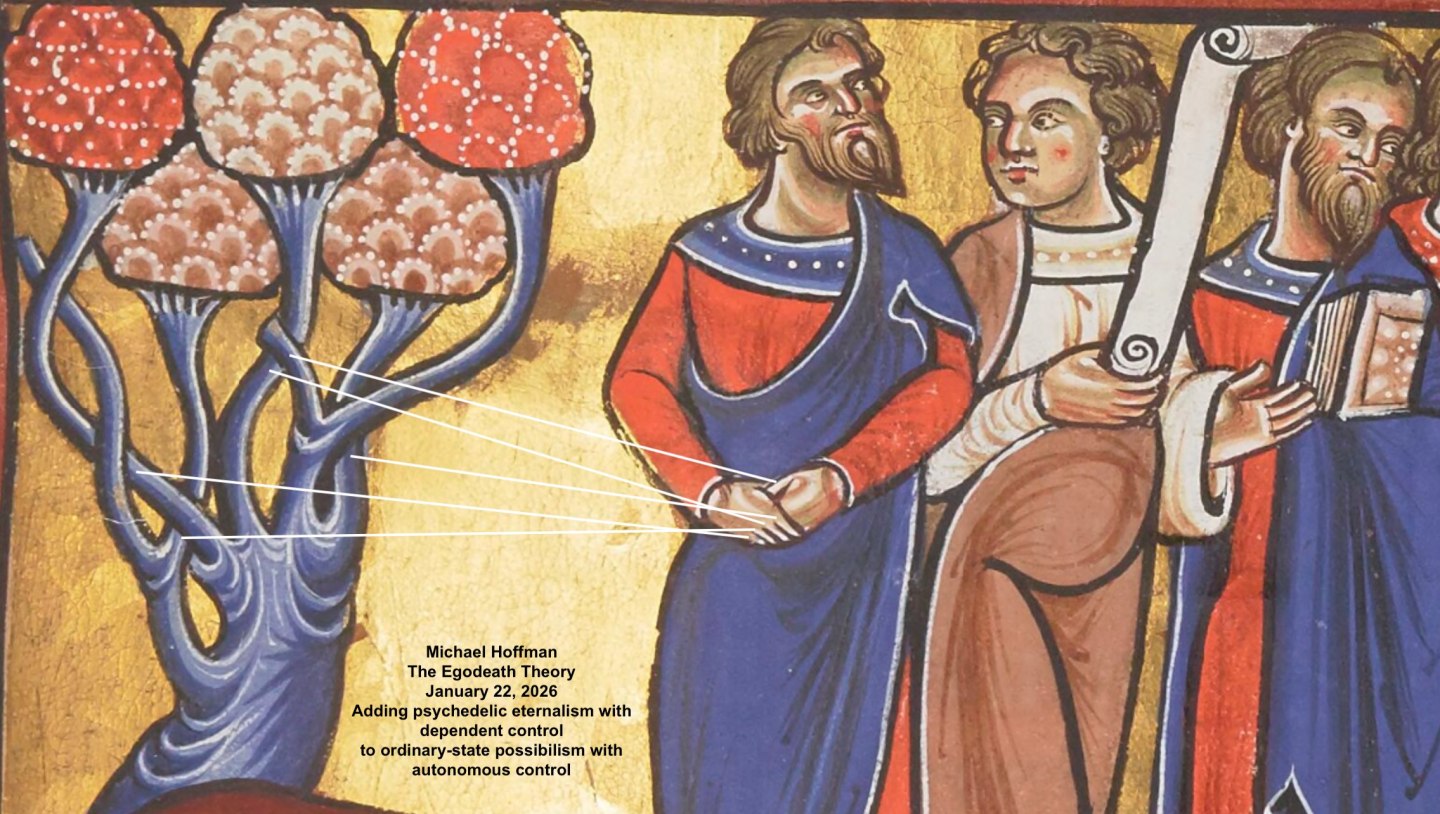
Michael Hoffman Feb. 11, 2026
Contents:
links work on desktop Edge/Chrome:
- Citation & Link
- The Plaincourault Fresco
- Abstract
- Field of Entheogen Scholarship Forced to Handle Allegro, Who Is Not an Entheogen Scholar
- Religions Special Issue: On the Origins of Western Psychedelia: Exploring Allegro’s The Sacred Mushroom and the Cross (2025)
- Mosurinjohn’s Dogged Avoidance of Perceiving Psychedelic Evidence, of Non-Branching in the Eternalism Experiential State
- Citing Hoffman & Cyberdisciple on Allegro Is Required
- Did Huggins Read the Most Important 7 Publications in the Field?
- Huggins Continues to Fail to Cite Browns 2019 which Published the Wasson-Censored, Covered-up, Panofsky Letters
- I Criticize 1st-Generation Entheogen Scholarship (the Secret Amanita paradigm, by Allegro then Ruck)
- I Advocate 2nd-Generation Entheogen Scholarship (the Explicit Psilocybin Paradigm, by Samorini)
- Huggins Is a Fraud Until He Cites the Article by Brown & Brown 2019 that Published the Two Panofsky Letters & Brinckmann Citation that Were Censored by Popebanker Wasson in SOMA p. 180
- Mentions of “Branch” in the Article
- On Day 4, God Created the Sun, Moon, & Stars – Not Trees, Plants, or Herbs
- Mentions of ‘branch’ on p. 16 bottom
- Ruck is 5 of 10, Hug is 3 of 10: Poor vs. junk irrelev args and concerns and errors by both of them, a new field, the Egodeath theory is LIGHT YEARS ahead of Ruck and Huggins; they are trapped eternity by their own Allegro Trap, limited to 1st-generation entheogen scholarship (the Secret Amanita paradigm)
- Mentions of ‘branch’ on p. 17 top
- Huggins Relies on Inappropriate Literalist Reading of Mythic Art, to Dismiss and Ignorae the Emphatic Mushroom Imagery
- In the art scene “Christ’s Entry into Jerusalem”, why are branches important?
- Mentions of ‘branch’ on p. 17 middle
- The Purpose of Mushroom-Trees Is to Deliver a Message about Experiencing Ordinary-State, Branching Possibilism, Alternating with Experiencing Altered-State, Non-Branching Eternalism
- Mentions of ‘branch’ on p. 17 middle, con’t
- Mentions of ‘branch’ on pp. 21-22
- Mosurinjohn & Ascough Treat (Alleged) Absence of Evidence as Evidence of Absence
- Mosurinjohn & Ascough Hypocritically Shift from Possibility, to As-if Fact, While Criticizing Ruck for Shifting from Possibility, to As-if Fact
- Mentions of ‘branch’ on p. 22
- Mentions of ‘branch’ in End Note 23
- Mentions of ‘branch’ in End Note 24
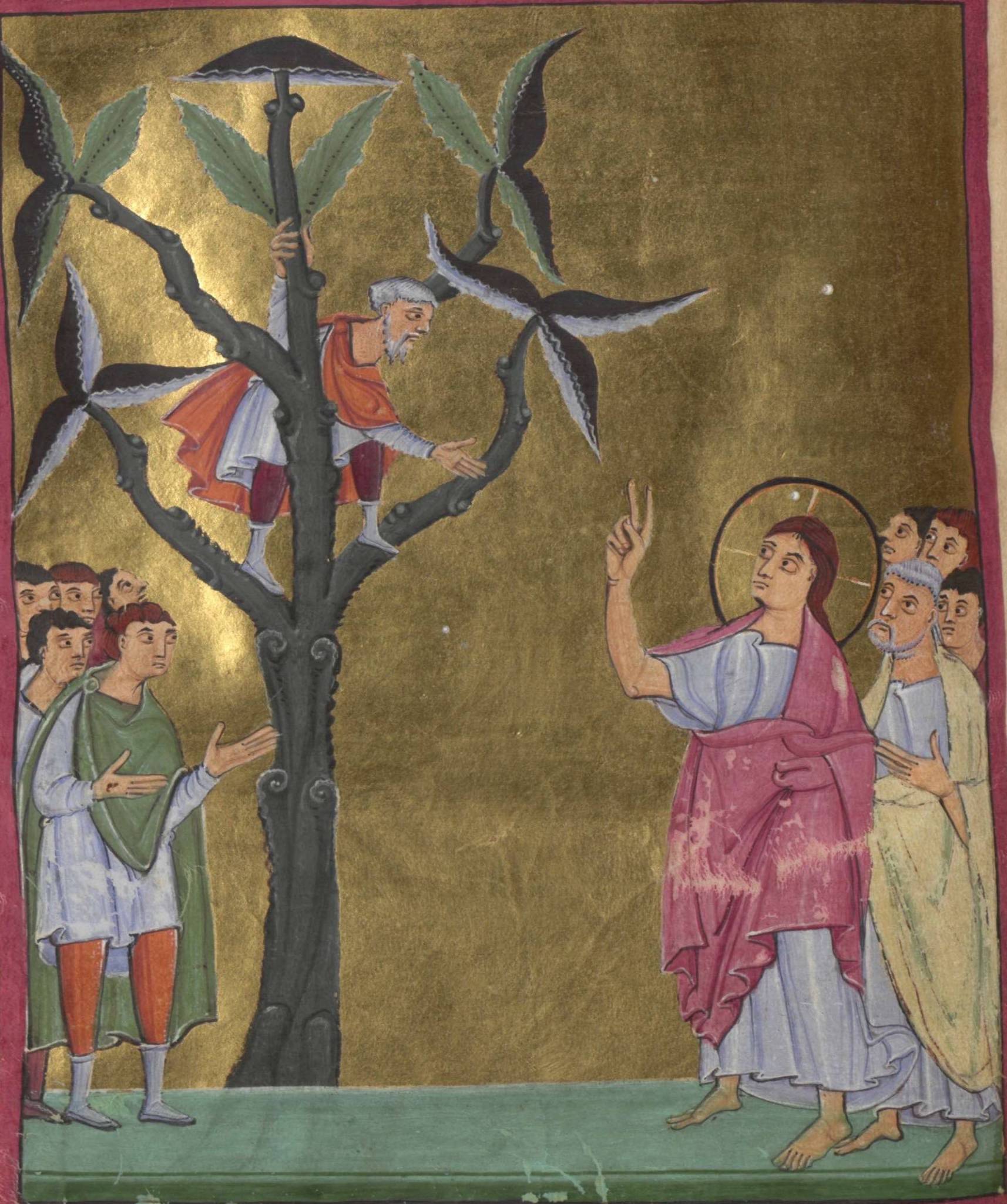
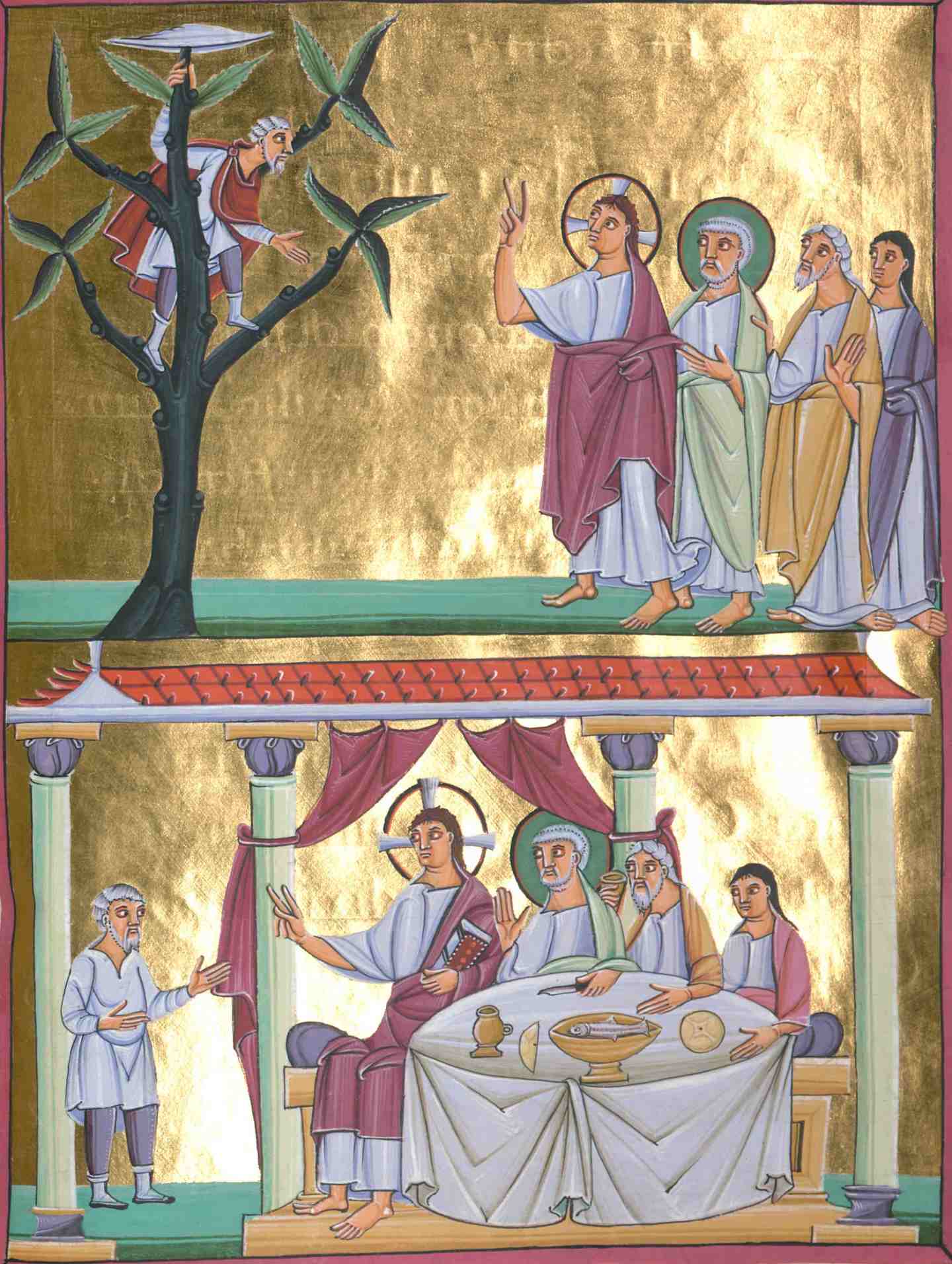
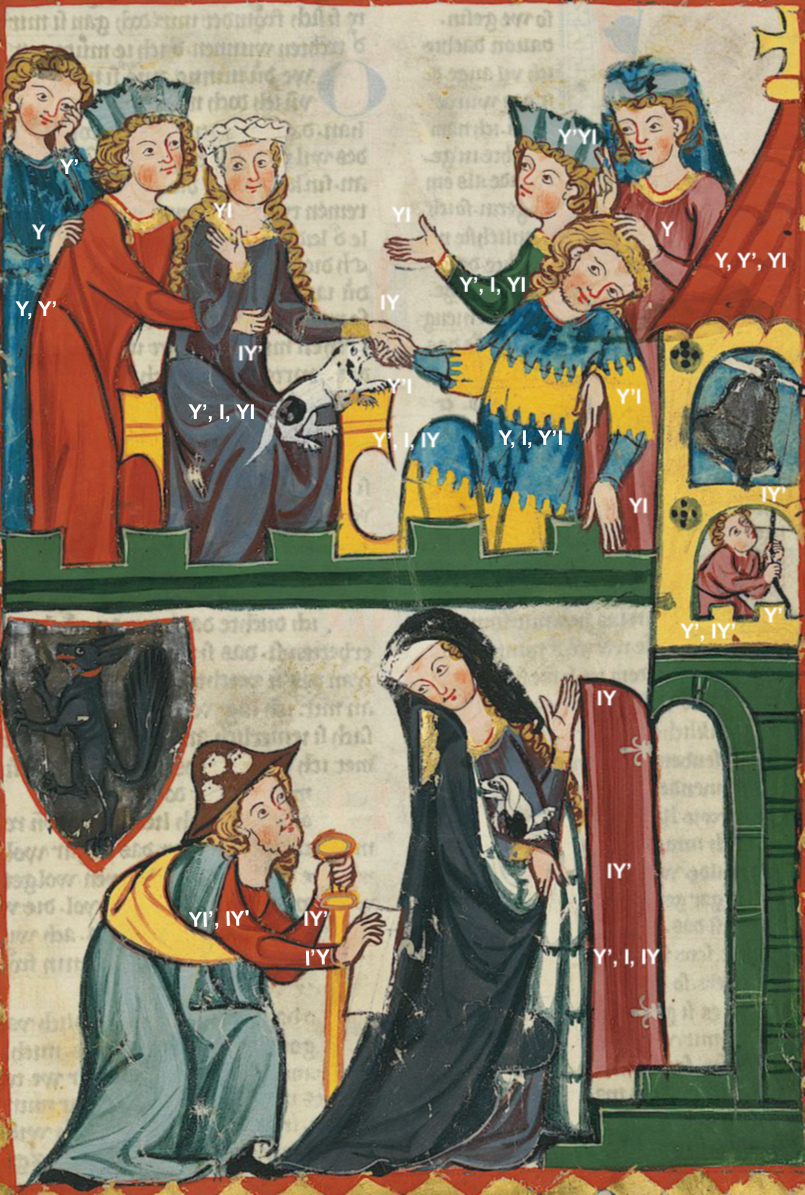
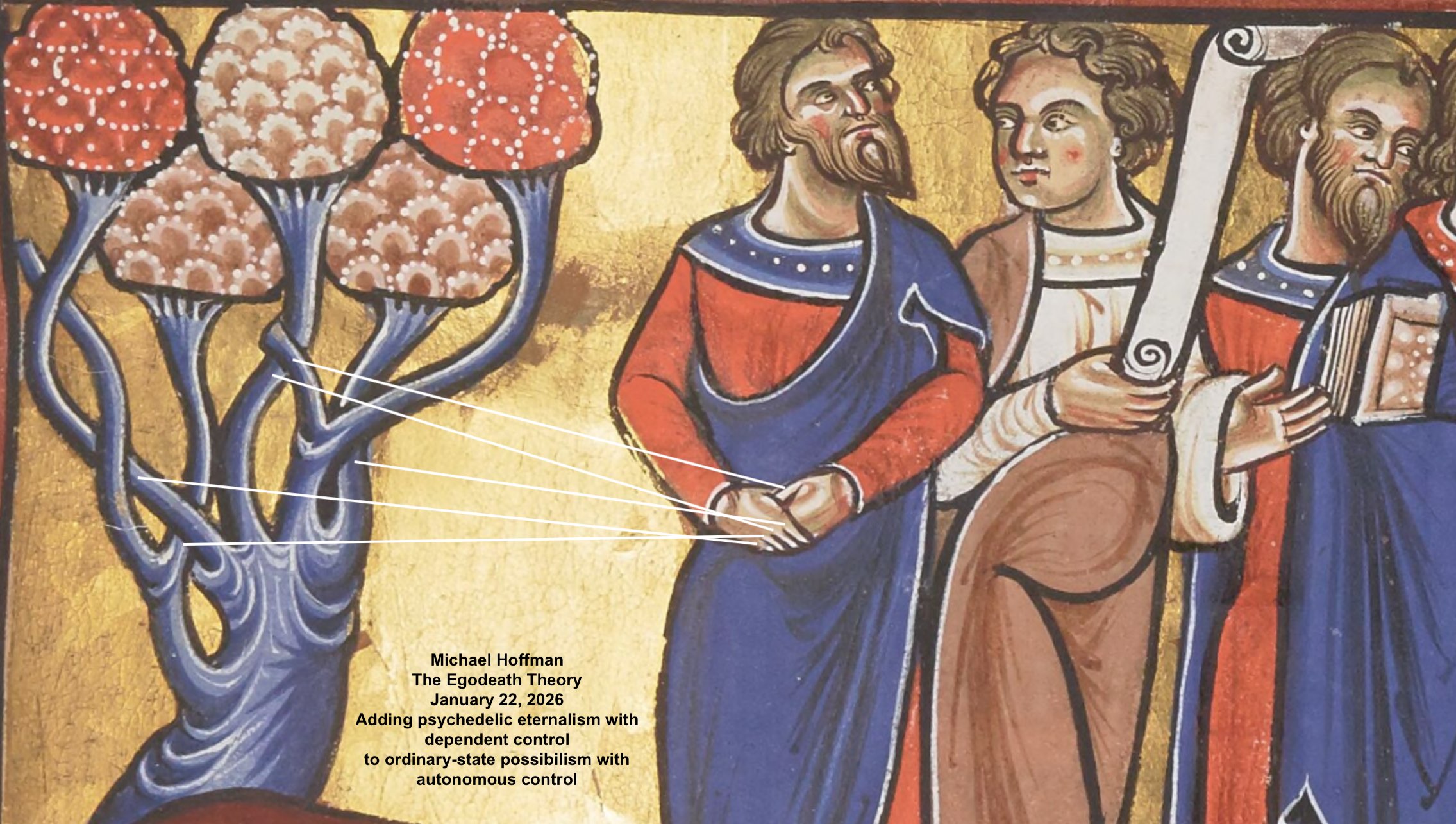
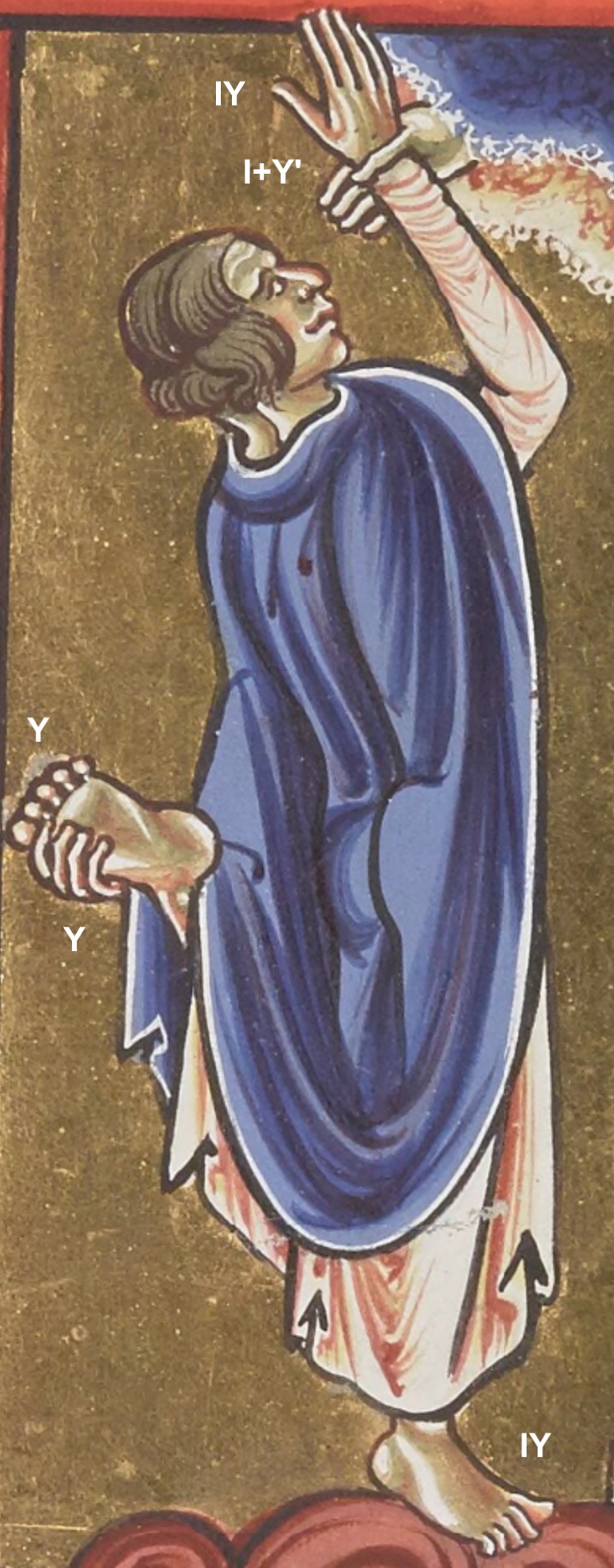
- Guy in Tree with YI Hand-Shapes Cited By Huggins End Notes
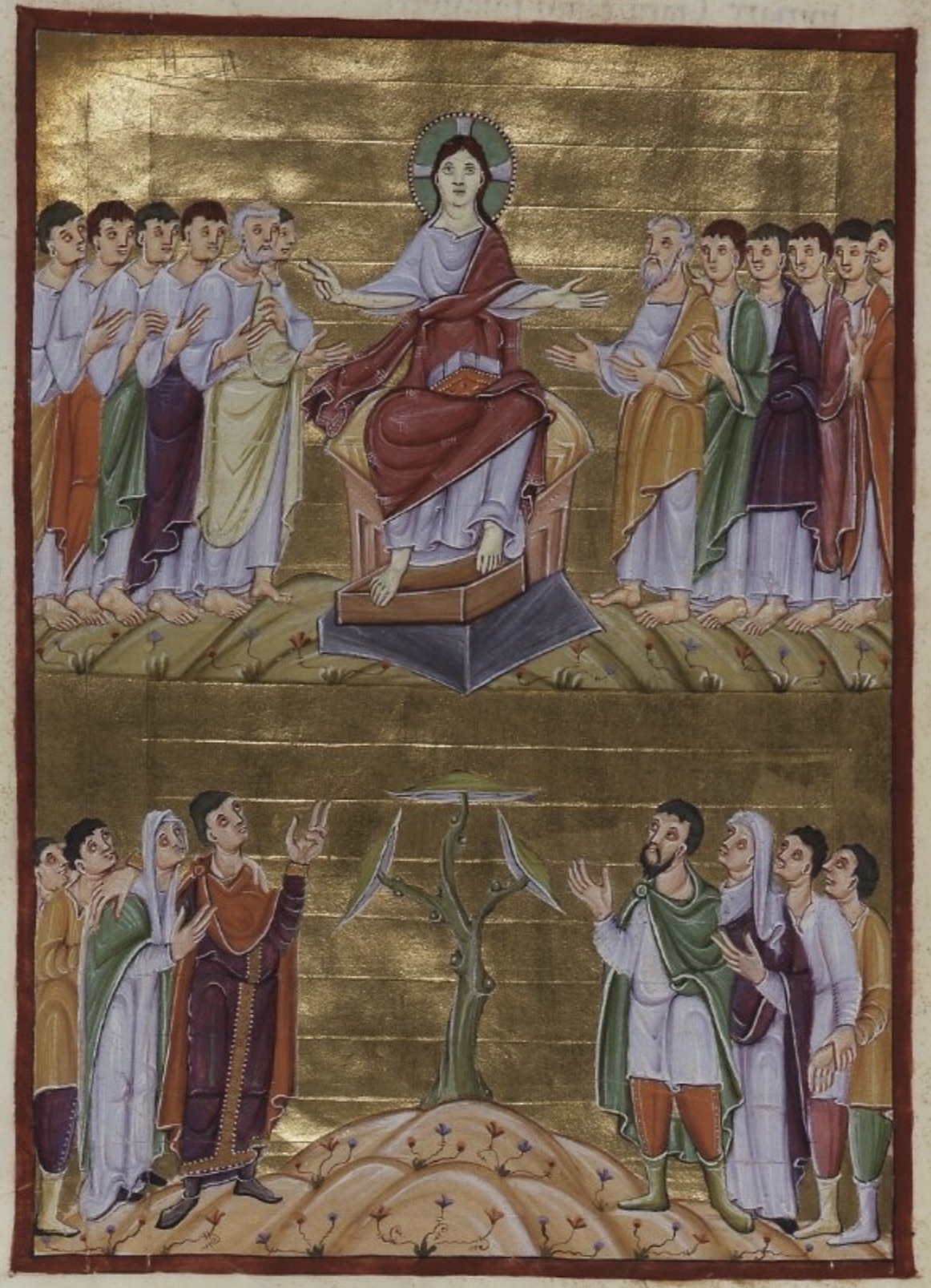
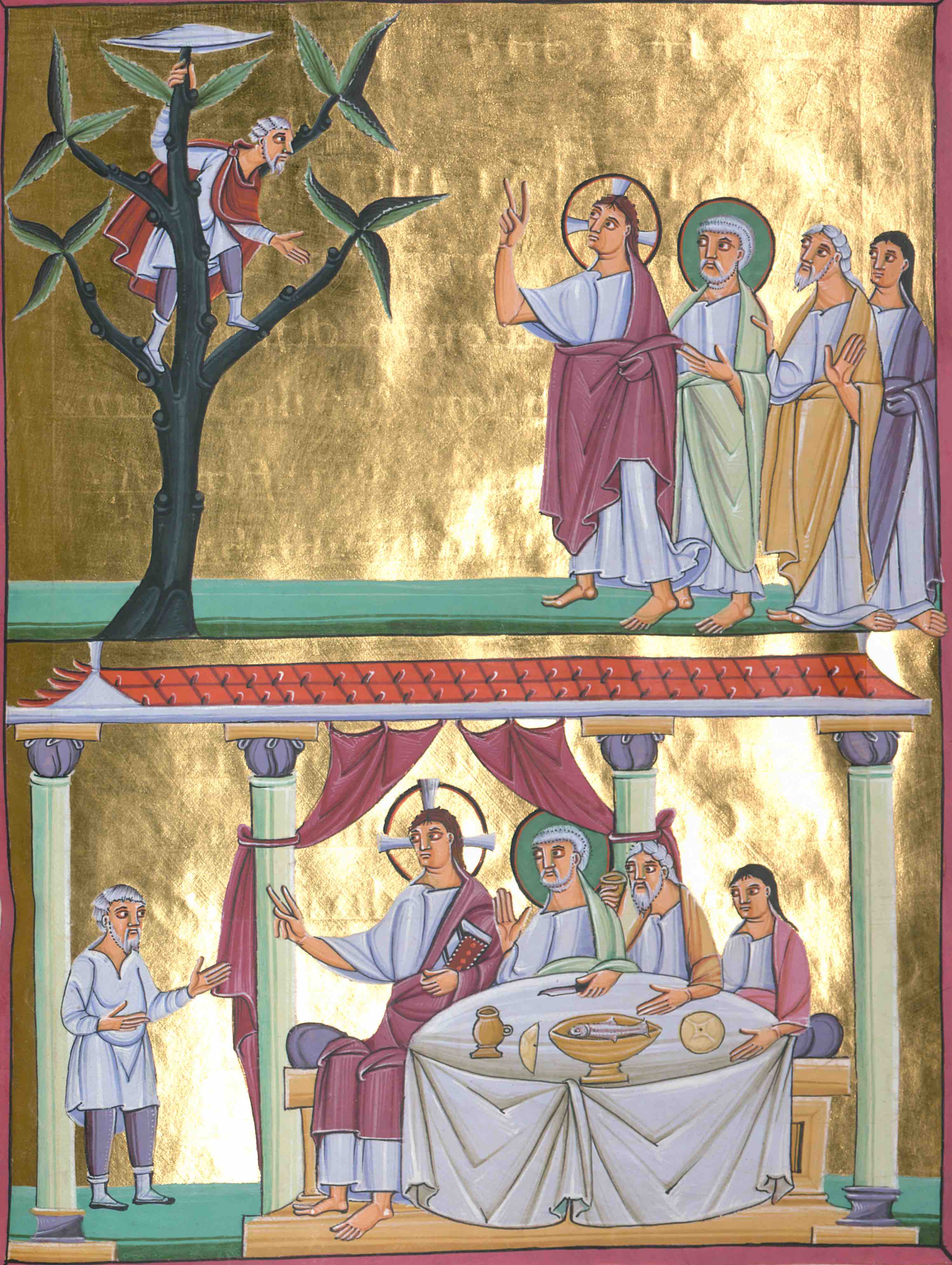
- Reichenau Gospel Book fol. 184v. Has guys on left of tree
- Pericopies Book of Henry II, fol. 200r. No guys on left of tree
- Plaincourault Fresco Is YI
- Web Image Search: Plaincourault Fresco
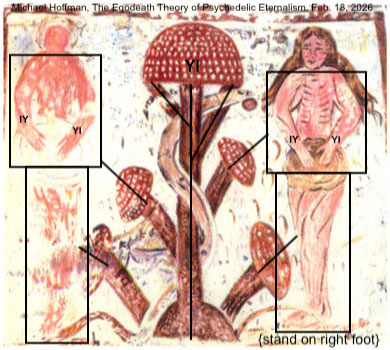
- YI Branching, {stand on right foot} Motif, Four Amanita Branches Point to Four Pairs of Arms & Legs
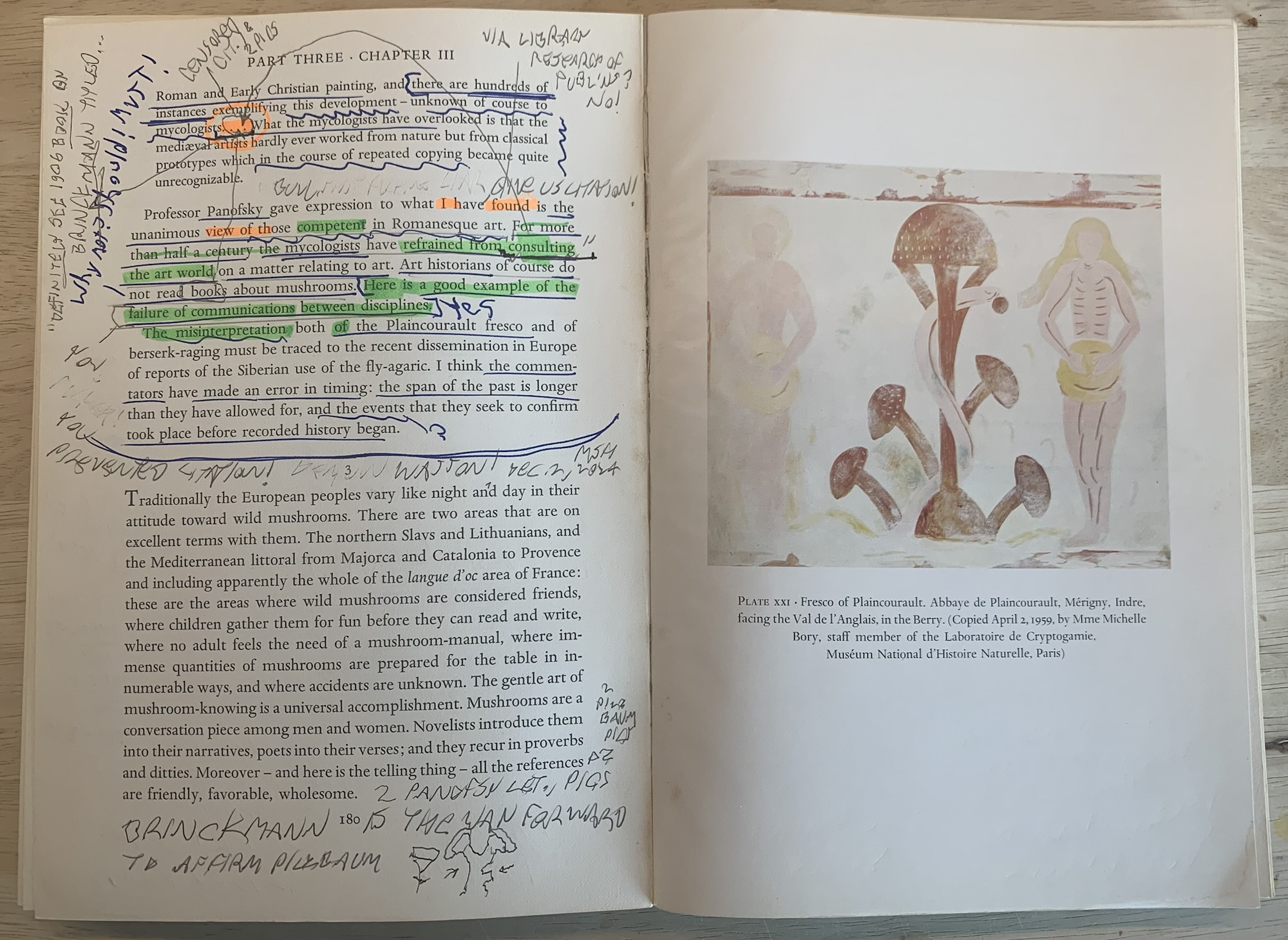
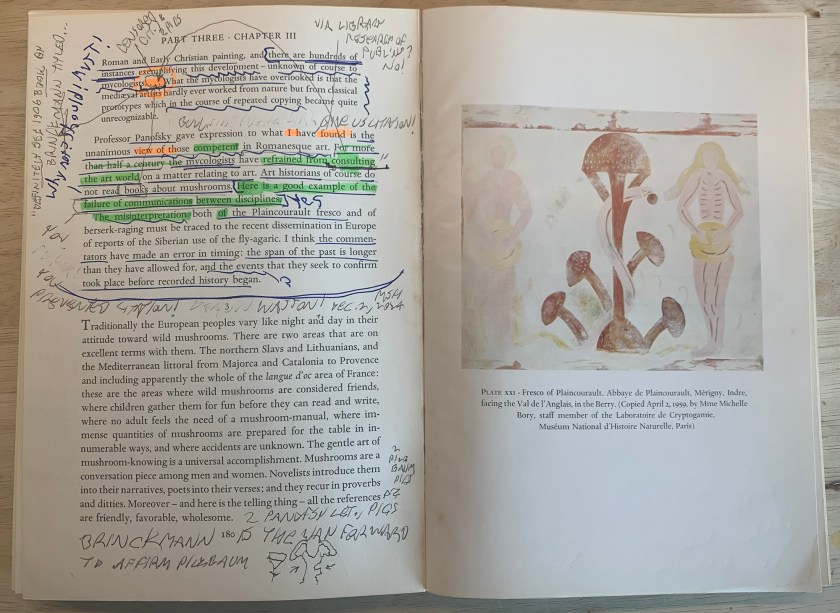
- Professional Propagandist Wasson Substitutes a Degraded, Copied Painting that Deletes the YI Branching Form and the {stand on right foot} Motif, Withholding the Actual Fresco Image
- New, Hand Pair Notation: In Plaincourault Fresco, Eve’s Hand-Pair: [YI, IY]
- Email Sent 11:55 p.m. Feb. 18, 2026
- Beggars Can’t Be Choosers: Entheogen scholarship Has so few researchers, need at least some bad articles contributed by Deniers
- See Also
Citation & Link
On John M. Allegro’s Suggestion That the Tree of the Knowledge of Good and Evil in the 12th Century Plaincourault Chapel Depicts an Amanita muscaria Mushroom
Ronald V Huggins, Oct. 29, 2025
Journal: Religions, Issue: 11, Volume: 16, Page numbers: 1-30
https://doi.org/10.3390/REL16111374 https://www.academia.edu/144814668/On_John_M_Allegros_Suggestion_That_the_Tree_of_the_Knowledge_of_Good_and_Evil_in_the_12th_Century_Plaincourault_Chapel_Depicts_an_Amanita_muscaria_Mushroom
key words:
Religion,
New Religious Movements,
Art History,
Media Studies,
Psychedelics,
Medieval illuminated manuscripts,
Mystery Cults,
Entheogens and Religion,
Ottonian Art,
Art Historical Methodology,
Ancient Near Eastern Studies,
Amanita Muscaria,
Medieval Art, Illuminated Manuscripts, Medieval History,
Early Christian Art and Iconography,
Medieval Frescoes,
Medieval and Early Christian Art,
Early Christian and Byzantine Iconography,
John M. Allegro,
Psychedelics and Mysticism
“This article is part of a special issue of the journal Religions, entitled
On the Origins of Western Psychedelia: Exploring Allegro’s The Sacred Mushroom and the Cross
The volume is edited by J. Christian Greer and Sharday C. Mosurinjohn.”
Erwin Panofsky’s Letters to Gordon Wasson, Transcribed
I’m tired of looking up this link for the letters that were censored by Wasson-Huggins, so I pinned the link in every section.
What’s wrong with Huggins, that he fails to cite Browns 2019, where other people besides Huggins are privileged to access and leverage the two, Popebanker Wasson-censored Panofsky letters?
The Plaincourault Fresco

Erwin Panofsky’s Letters to Gordon Wasson, Transcribed
Abstract
“In his book The Sacred Mushroom and the Cross (1970), John Marco Allegro claimed that an obscure, 12th century CE fresco of the Fall of Adam and Eve in the Plaincourault Chapel in Mérigny, France, provided evidence of the persistence in Christian Europe of an underground sacred mushroom sect that had survived since New Testament times.
“At the heart of Allegro’s claim is the mushroom-like appearance of the Tree of the Knowledge of Good and Evil in the picture.
“Following up on Allegro’s claim, a small group of writers, led by Boston University’s Carl A. P. Ruck, spent decades seeking to validate Allegro’s theory by seeking out other examples of psychedelic mushrooms hidden in early Christian and Medieval art.
“The present article centers its discussion on the claims put forward by Allegro and his followers about the Plaincourault tree, but also about other images concerning which they have made similar claims.
“It concludes that the claims of Allegro and his followers concerning the Plaincourault tree fail due to their tendency to overpress similarities while ignoring differences.”
Erwin Panofsky’s Letters to Gordon Wasson, Transcribed
Field of Entheogen Scholarship Forced to Handle Allegro, Who Is Not an Entheogen Scholar
Often, the needed scholarship is criticism.
I read people’s criticisms of these topics.
In 2006, I reluctantly wrote the “final article” on Allegro, calling for retiring and sidelining him, yet:
- Allegro’s book Sacred Mushroom & The Cross sells many copies, with Irvin & Ruck involved.
- Ruck loves Allegro – I don’t. Ruck carries forward the social drama narrative from Allegro.
I have lately formed my equivalent of a social drama narrative: Evidently there was a mainstream mushroom-tree religion within Christianity, among (at least) artists.
Theologically, the mushroom-tree religion is couched or expressed in terms of alternating between ordinary-state possibilism (figured as branching) & altered-state eternalism (figured as non-branching).
I have specific criticisms of:
- Pop Sike Cult
- Allegro
- entheogen scholarship
- Ruck
- Irvin
- Wasson
- Letcher
- Huggins
- Hatsis
- Psychedelic pseudo science, the positive unitive model of “mystical experience”.
Conceptual Errors, Misinterpretations, and Bad Argumentation from Entheogen Scholars
I reject 1st-generation entheogen scholarship (the Secret Amanita paradigm).
I advocate 2nd-generation entheogen scholarship (the Explicit Psilocybin paradigm).
Erwin Panofsky’s Letters to Gordon Wasson, Transcribed
Religions Special Issue: On the Origins of Western Psychedelia: Exploring Allegro’s The Sacred Mushroom and the Cross (2025)
Special issue of the journal Religions:
On the Origins of Western Psychedelia: Exploring Allegro’s The Sacred Mushroom and the Cross
Edited by J. Christian Greer and Sharday C. Mosurinjohn.
https://www.mdpi.com/journal/religions/special_issues/5IX8MH3S36
Religions Special Issue: How to Cover-Up Mushroom Imagery in Christian Art (2025)
So far, Greer is less annoying than Mosurinjohn & Ascough, because Greer says, assume some people in Christendom used psychedelics sometimes. With Chs Stang. The real question is: To what extent psychedelics in Western religious history?
Greer is not clumsy, attacking people, flailing like Shardog on a short leash held by the anything-but-drugs academic Ascough.
Erwin Panofsky’s Letters to Gordon Wasson, Transcribed
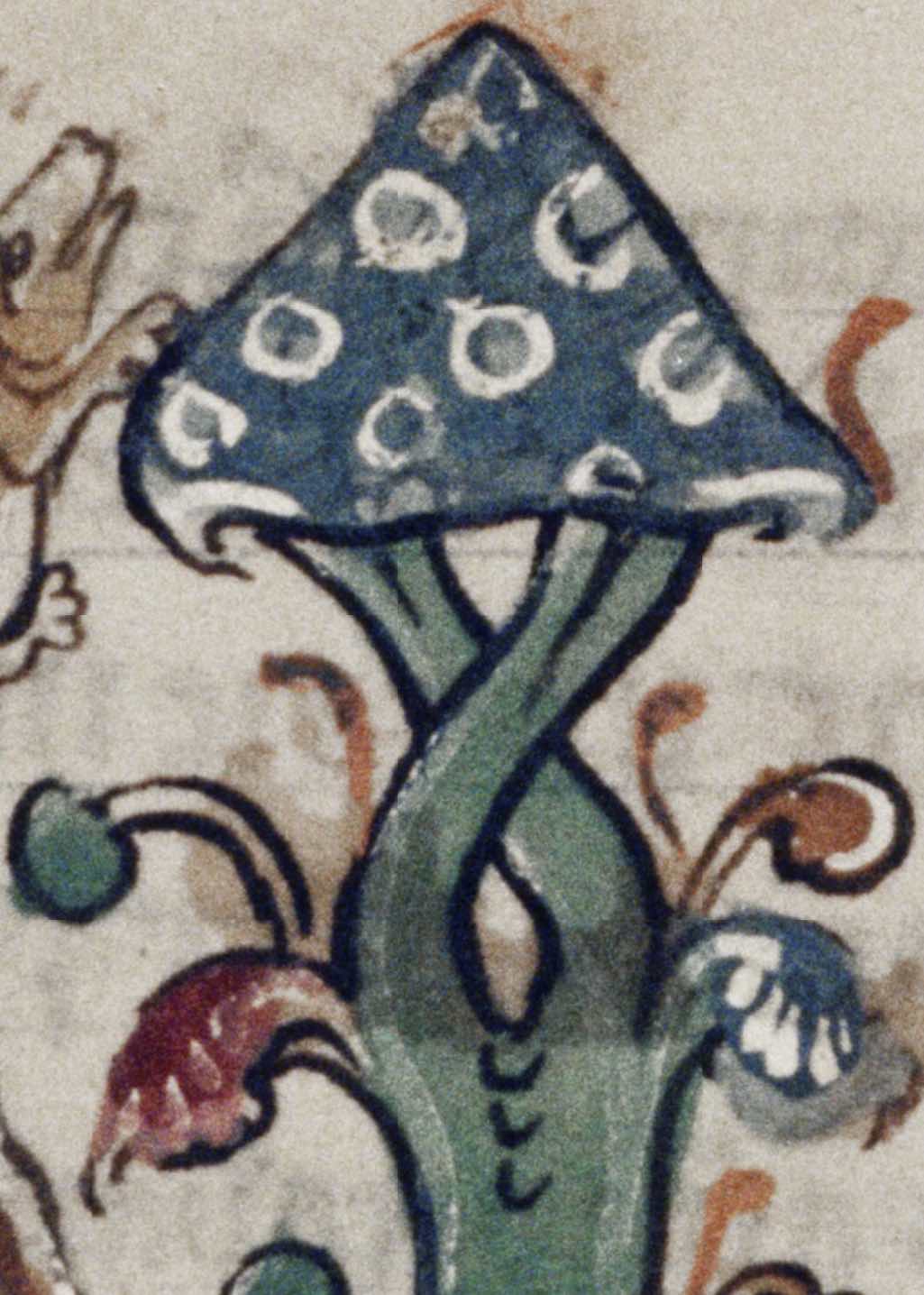
Exact Botanical Mushroom Explained Away as a “Tree Branch” that “Rules Out” the Tree Meaning a Mushroom
GCP Day 3 Plant 2 Right Branch
Sharday Mosurinjohn Gang: THIS IS A TREE BRANCH, that “rules out” the plant from meaning “a mushroom”:

todo: image: photo of mushroom cluster with a big mushroom bracketed at the base by two smaller, attached mushrooms – quick fallback workaround:
Image search: mushroom cluster:
https://www.google.com/search?udm=2&q=mushroom+cluster
Exact Botanical Mushroom Explained Away as a “Tree”
GCP Day 4 Plant 3
Sharday Mosurinjohn Gang: THIS IS A TREE:

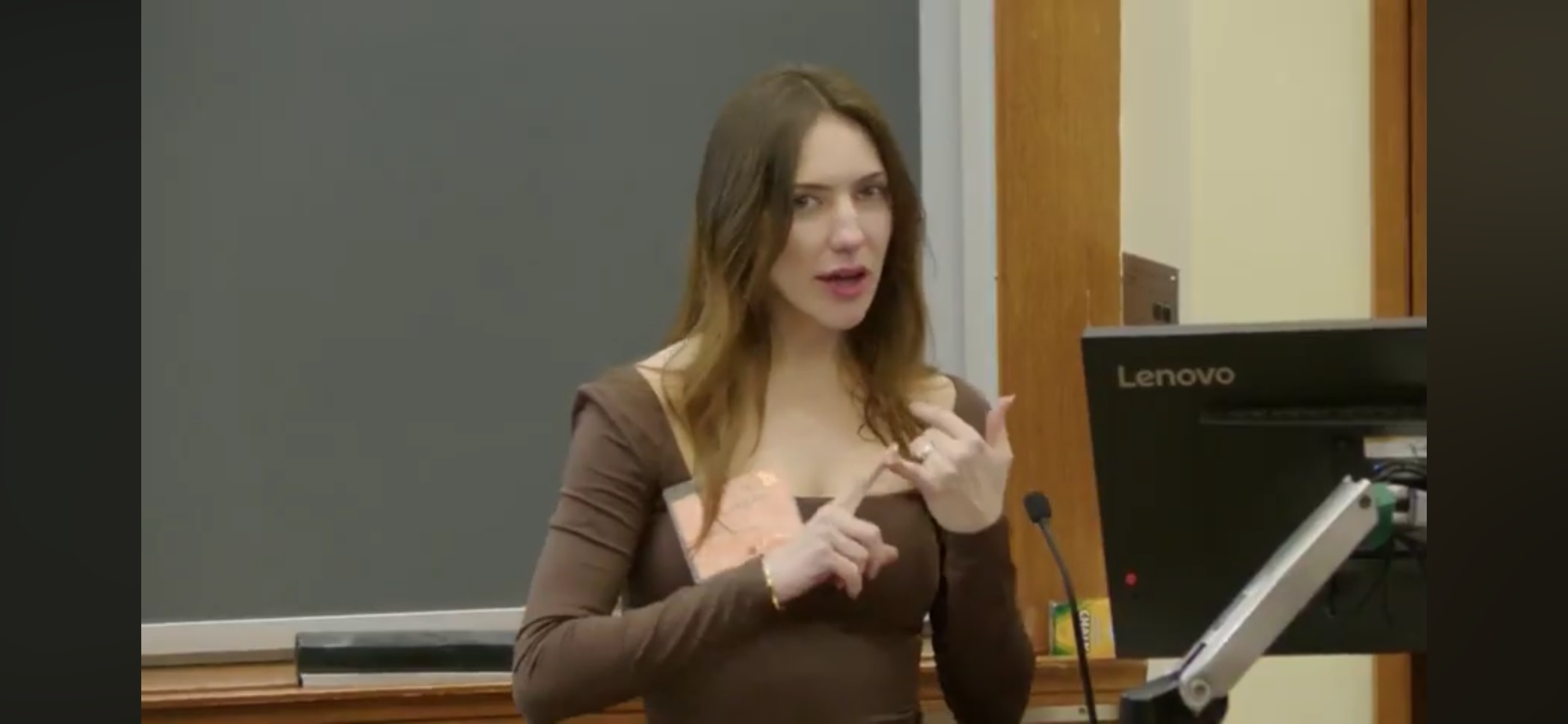
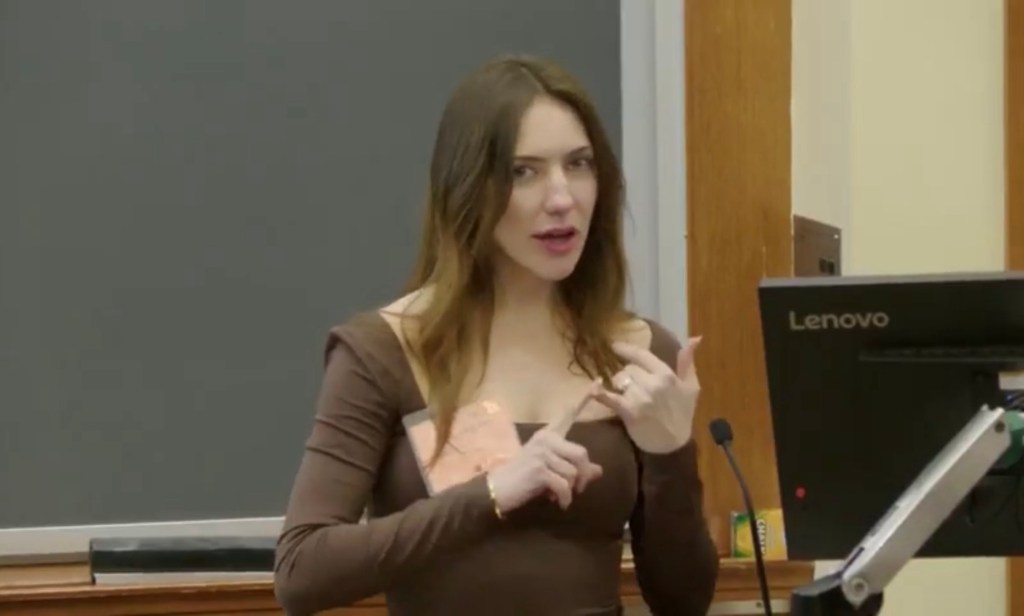
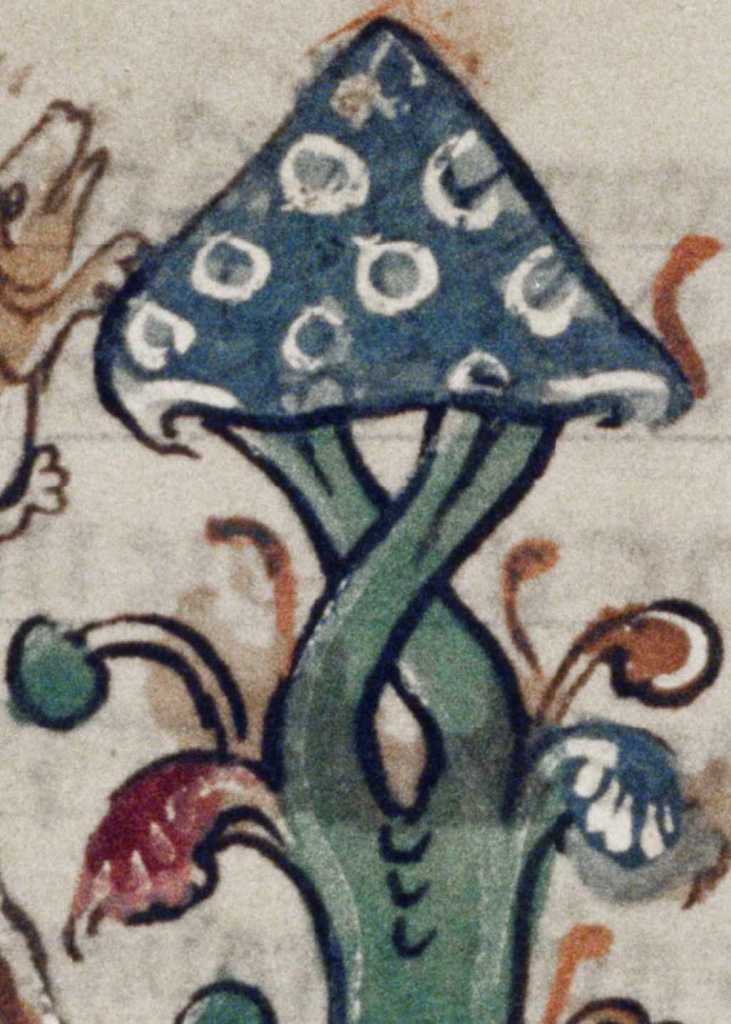
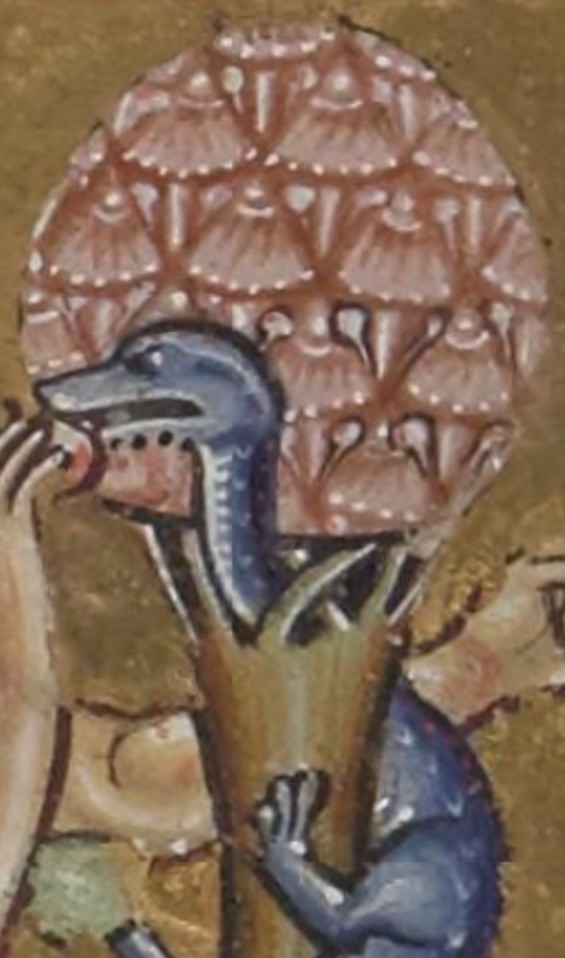
below is copy 3, of 4 images: Sharday Mosurinjohn lecturing, dog-asp, {hand mushroom-tree}, asp, but this version has my added text at top:
Mosurinjohn’s Dogged Avoidance of Perceiving Psychedelic Evidence, of Non-Branching in the Eternalism Experiential State
Sharday Mosurinjohn (the religious fundamentalist denier of mushrooms in mystery religions and Christianity, and perpetrator of colonialist violence who is overlooking Indigenous Shams by erroneously trying to write a book on psychedelics in Western Esotericism, instead) wrote and spoke on:
“We then explore how the dogged pursuit of evidentiary mirages contributes to the [pathetic, invalid, illegitimate, in-vain] project of establishing a western civilizational pedigree to dignify the use of stigmatized drugs and revitalize experiential religion.
“Although the desire for [fake] legitimacy and meaning is understandable [though foolish, erroneous, hopeless, and futile], the strategies used by the writers [not scholars or researchers] of this pseudo-history constitute a kind of religious fundamentalism [“and colonialist violence“].” PROJECTION MUCH?!
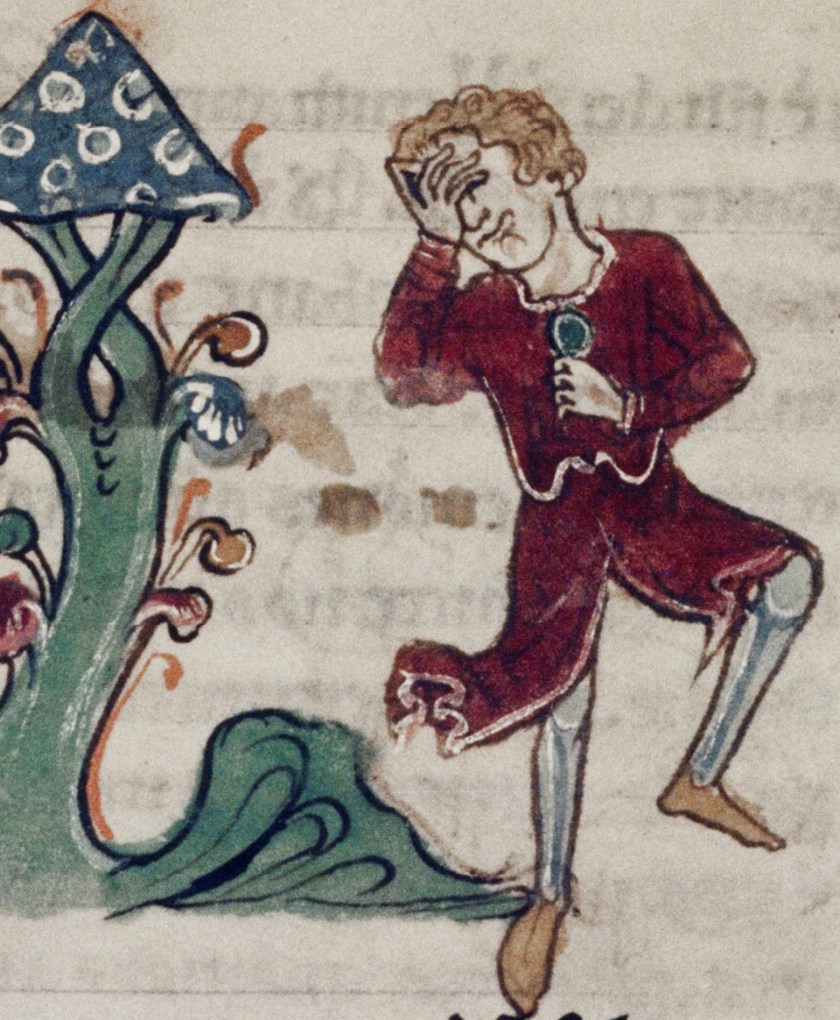
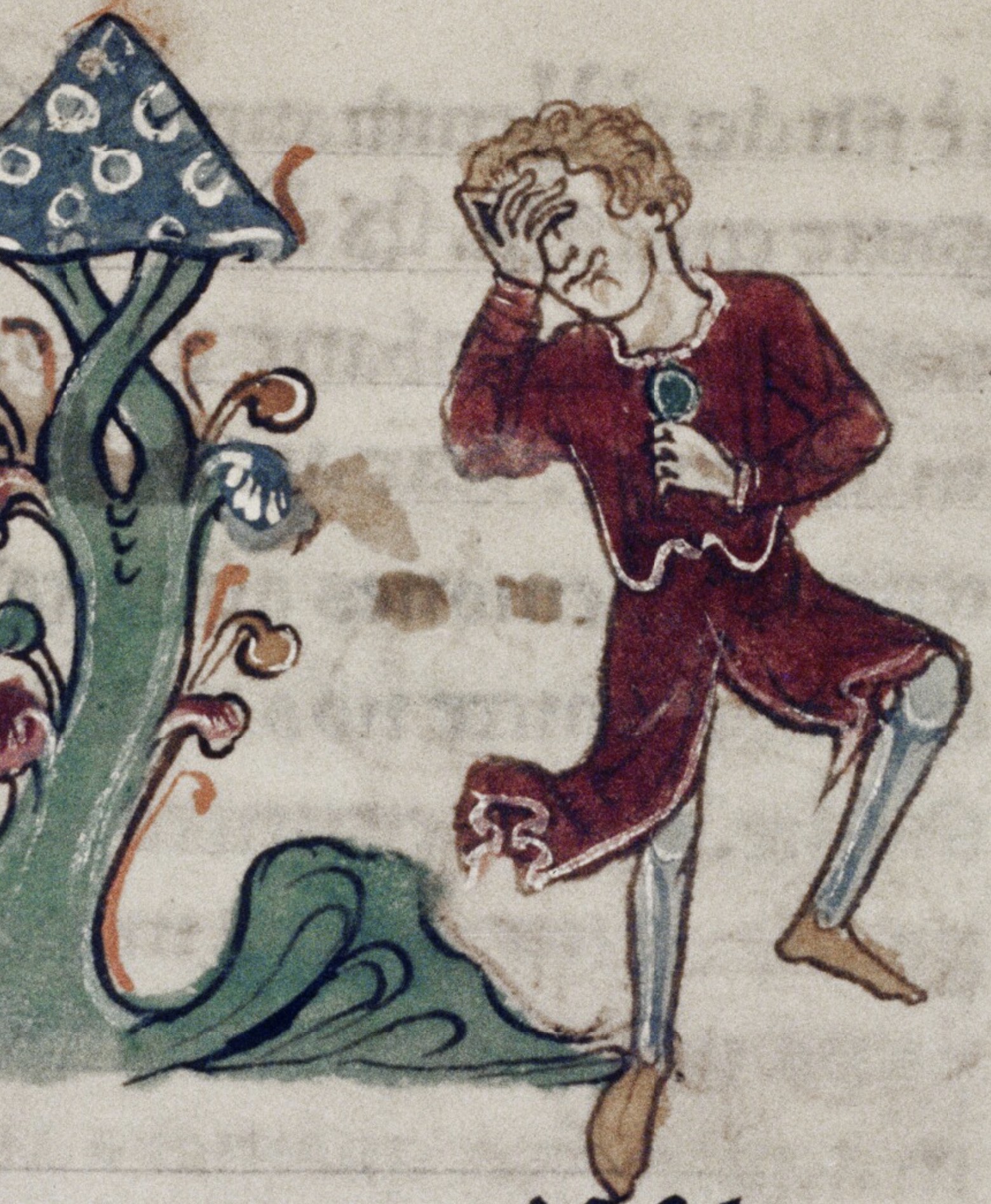
Asp-Dog Trying to Avoid Hearing about Non-Branching
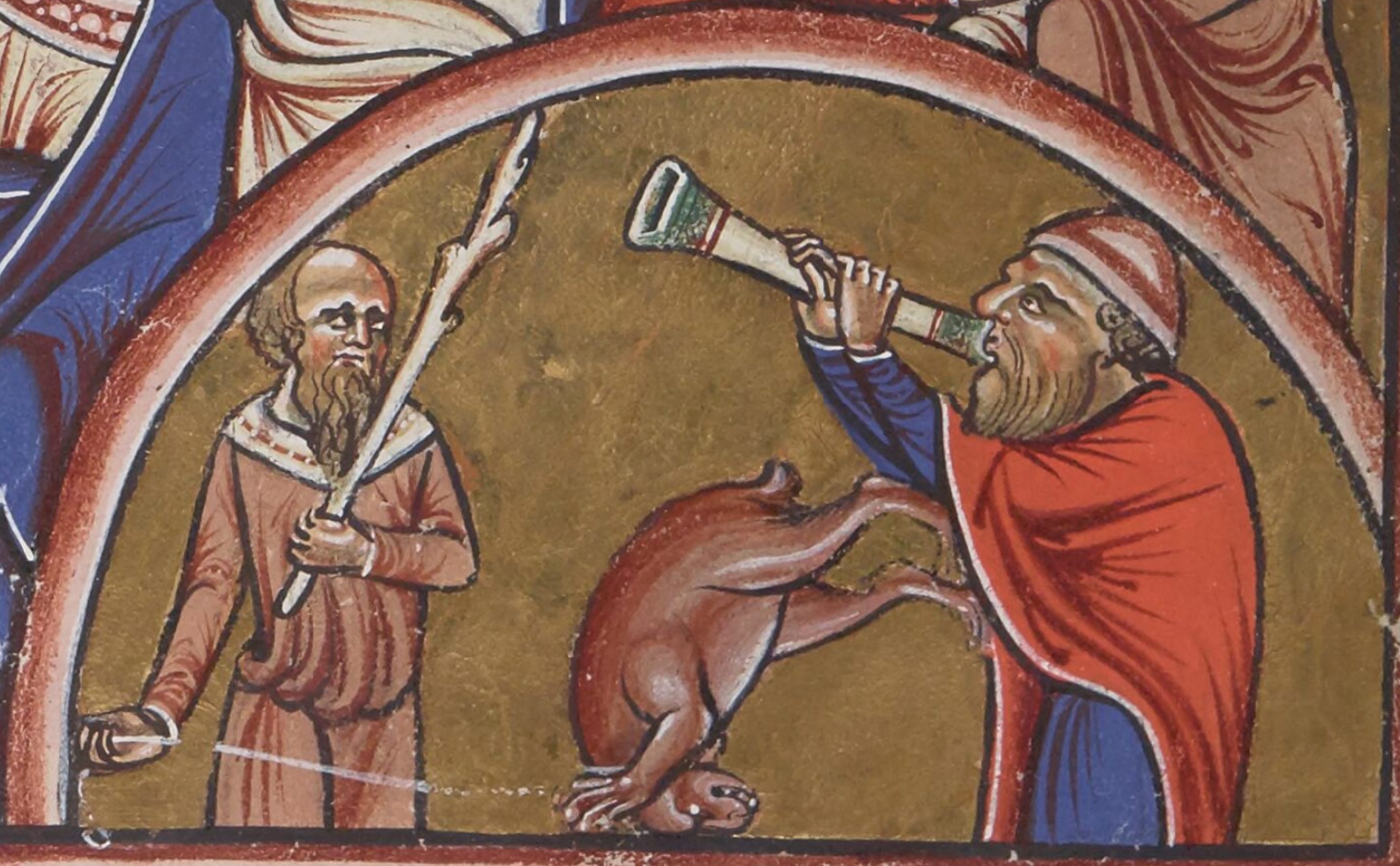
Mushroom-Tree Next to YI Hand-Shapes
The Asp Serpent Tries to Avoid Hearing Wisdom & Divine Truth
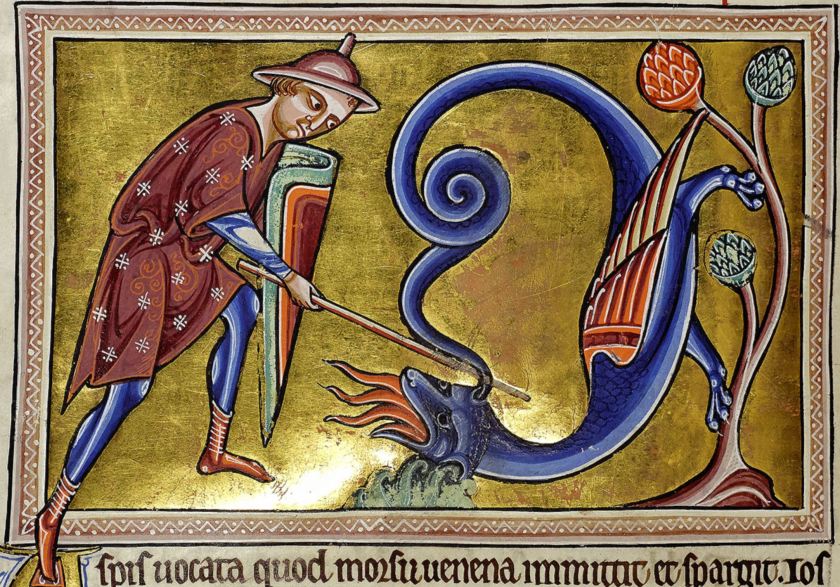
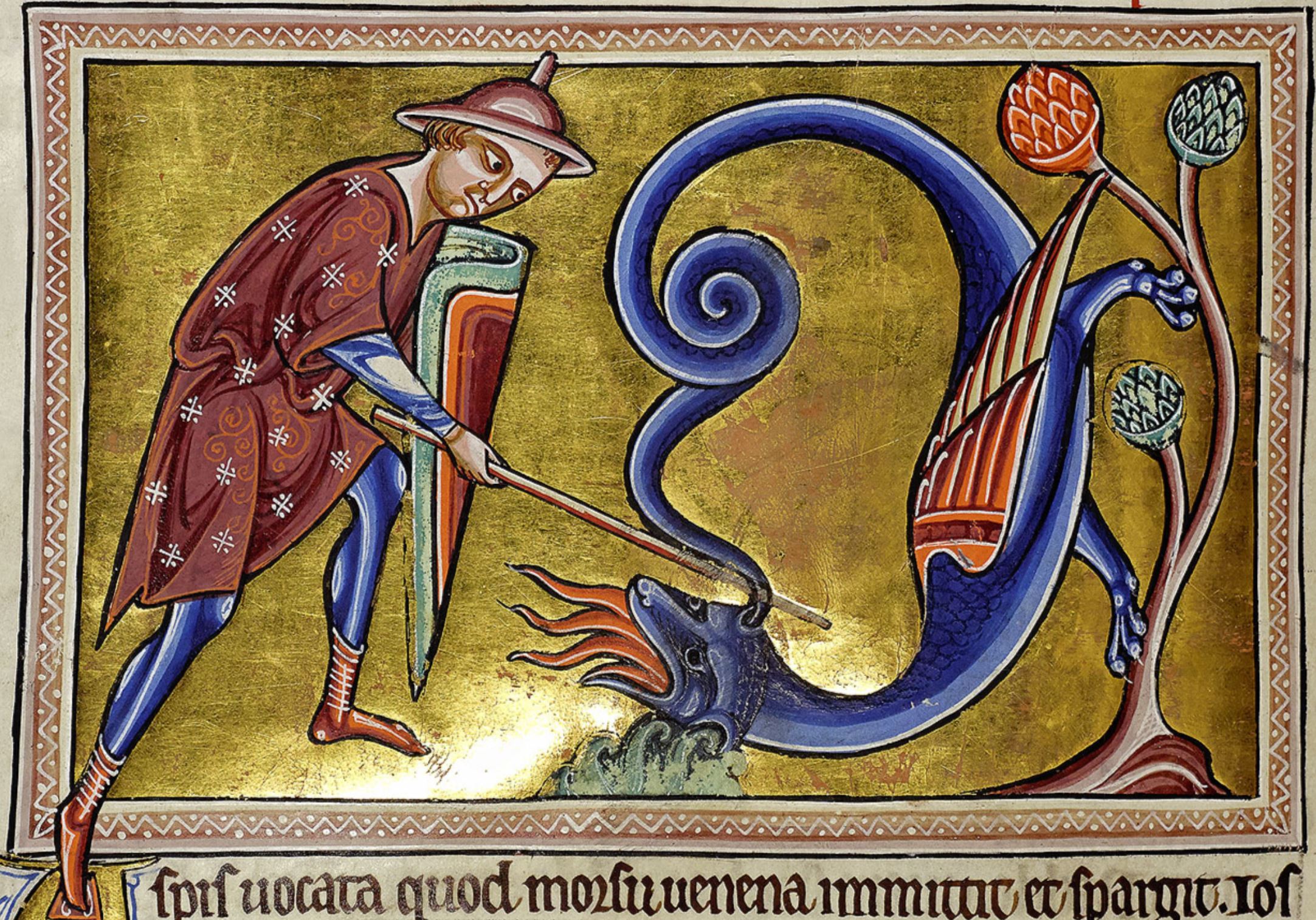
“The Asp, or “aspido,” is a mythical creature in medieval bestiaries described as a snake that stops up its ears to avoid being enchanted by the music of snake charmers. It presses one ear against the ground and covers the other with its tail to ignore the charming, symbolizing a refusal to hear wisdom or divine truth.”
Web search: Asp blocks ear avoid musical enchantment
Citing Hoffman & Cyberdisciple on Allegro Is Required
Huggins cites my article Wasson and Allegro on the Tree of Knowledge as Amanita (Hoffman, 2006), http://egodeath.com/WassonEdenTree.htm.
Unlike Ascough, has Huggins actually read my book-length, overwhelming article?
The journal’s article by Ascough cites Wasson and Allegro on the Tree of Knowledge as Amanita (Hoffman, 2006), http://egodeath.com/WassonEdenTree.htm.
Ascough duplicates the articles ending’s call to retire and sideline Allegro, in entheogen scholarship.
Cyberdisciple not using real name impedes him from being cited.
Scholarship under Prohibition has Pros and Cons for the indiv contributor.
Erwin Panofsky’s Letters to Gordon Wasson, Transcribed
Did Huggins Read the Most Important 7 Publications in the Field?
- The mushroom-tree of Plaincourault (Giorgio Samorini, 1997) https://www.samorini.it/doc1/sam/sam%20plaincourault.pdf
- “Mushroom-Trees” in Christian Art (Giorgio Samorini, 1998) https://www.samorini.it/doc1/sam/sam-alberifungo-1998.pdf & https://egodeaththeory.wordpress.com/mushroom-trees-in-christian-art-samorini/
- Wasson and Allegro on the Tree of Knowledge as Amanita (Hoffman, 2006), http://egodeath.com/WassonEdenTree.htm
- The Entheogen Theory of Religion and Ego Death (Hoffman, 2007 main article) http://egodeath.com/EntheogenTheoryOfReligion.htm & https://egodeaththeory.wordpress.com/the-entheogen-theory-of-religion-and-ego-death-2006-main-article/
- The Psychedelic Gospels: The Secret History of Hallucinogens in Christianity (Jerry Brown & Julie Brown, 2016), https://egodeaththeory.org/2023/01/22/the-psychedelic-gospels-brown-2016/ & https://www.amazon.com/dp/1620555026
- NO – Entheogens in Christian art: Wasson, Allegro, and the Psychedelic Gospels (Jerry Brown & Julie Brown, 2019) https://doi.org/10.1556/2054.2019.019
Erwin Panofsky’s Letters to Gordon Wasson, Transcribed
Huggins Continues to Fail to Cite Browns 2019 which Published the Wasson-Censored, Covered-up, Panofsky Letters
Huggins again looks Suspicious, failing to cite brown 2019 article that published Panofsky’s 2 censored-by-Wasson letters.
Huggins is allied with Popebanker Gordon . . . .🔍🧐🤔🤬 Wasson & dumb Panofsky, the top anything-but-drugs art historian.
Huggins doesn’t want to give Brown 2019 credit for publishing the censored articles.
Huggins doesn’t want to acknowledge that his ally, Gordon . . . .🔍🧐🤔🤬 Wasson, censored the Panofsky letters.
Popebanker Wasson is guilty of dishonest censorship of the Panofsky letters, p. 180 of SOMA 1968.
Wasson and Panofsky is adopted by Huggins as an ally because Popebanker Wasson aggressively rejects mushroom imagery in Christian art.
Wasson’s fraudulent academic censorship discredits the deniers of mushroom imagery in Christian art.
Erwin Panofsky’s Letters to Gordon Wasson, Transcribed
I Criticize 1st-Generation Entheogen Scholarship (the Secret Amanita paradigm, by Allegro then Ruck)
I Advocate 2nd-Generation Entheogen Scholarship (the Explicit Psilocybin Paradigm, by Samorini)
Huggins Is a Fraud Until He Cites the Article by Brown & Brown 2019 that Published the Two Panofsky Letters & Brinckmann Citation that Were Censored by Popebanker Wasson in SOMA p. 180
Panofsky’s drawers are mentioned in Notes section of Huggins 2025:
“9 Erwin Panofsky to R. Gordon Wasson (2 May 1952). See, Panofsky, Erwin, 1950–1953. Tina and R. Gordon Wasson Ethnomycological Collection Archives, ecb00001, Series IV, drawer: W3.2, Folder: 20. Botany Libraries, Economic Botany Library of Oakes Ames, Harvard University.”
“21 Erwin Panofsky to R. Gordon Wasson (2 May 1952), 1, in the Tina and R. Gordon Wasson Ethnomycological Collection Archives,
ecb00001, Series IV, drawer, W3.2, Folder: 20. Botany Libraries, Economic Botany Library of Oakes Ames, Harvard University.”
Browns 2019 is not listed in Huggins References section, to avoid revealing that Wasson is a fraud trying as hard as possible to prevent scholarly investigation of the mushroom-tree religion.
Entheogens in Christian art: Wasson, Allegro, and the Psychedelic Gospels (Jerry Brown & Julie Brown, 2019) https://doi.org/10.1556/2054.2019.019
What’s wrong with Huggins that he repeatedly, in multiple articles in 2024 & 2025, doesn’t cite Entheogens in Christian art: Wasson, Allegro, and the Psychedelic Gospels (Jerry Brown & Julie Brown, 2019) https://doi.org/10.1556/2054.2019.019?
Huggins continues referencing the GODDAMNED DRAWER AT HARVARD, greedily trying to leverage Panofsky against Affirmers of mushroom imagery in Christian art, while not letting or helping other scholars access the Panofsky arguments.
Jan Irvin is not allowed to access the drawer at Harvard. See his writeup probably in The Holy Mushroom: Evidence of Mushrooms in Judeo-Christianity (Jan Irvin, 2008) https://www.amazon.com/dp/1439215170
Erwin Panofsky’s Letters to Gordon Wasson, Transcribed
There’s a cover-up operation Huggins is participating in.
Wasson lost credibility in 2019 b/c of the Browns’ article, but Huggins tries to ally with Popebanker Wasson.
What’s wrong with Huggins, that he doesn’t say Wasson was banker for the pope, as pointed out in Browns 2019? Because Wasson’s credibility is tanking, on mushroom imagery in Christian art.
Huggins has no credibility. Deniers of mushroom imagery in Christian art have no credibility.
All that the Deniers have is bad, arbitrary arg’n based on prejudice and silent presupposition, like Panofsky saying:
The Plaincourault fresco can’t mean mushroom, because there are hundreds of mushroom-trees.
The OBVIOUS response is, all mushroom imagery in Christian art means mushrooms (giving a non-branching eternalism experience) – including Plaincourault fresco, with Eve {stand on right foot}.
Samorini finally made good on that 1952/1968 tip from Panofsky, in 1997/1998: let’s (obviously) cover the “disqualifying” hundreds of pilzbaum, by covering all pilzbaum as meaning mushrooms.
Shamelessly poor, 1-way arg’n is characteristic of Deniers of mushroom imagery in Christian art.
- Affirmers of mushroom imagery in Christian art DGAF about the surrounding text.
- Neither did the mainstream, mushroom-tree artists, in the artists initiation guild with psilocybin lockboxes.
- Deniers of mushroom imagery in Christian art DGAF about valid arg’n that can withstand pushback.
- The Deniers broadcast the propaganda, 1-way, ears closed.
But Wasson/Pan isn’t looking for a response to their poor arg’n.
It’s a Pope-funded cover-up operation, designed not to assist scholarly research and arg’n, but to SHUT IT DOWN.
Mentions of “Branch” in the Article
Huggins cites his 2024 fabricated, arb’y “rules” that are worth nothing and are sheer DECREE that we are able to use Panofsky branch arg to make a “rule” to “rule out” mushrooms.
An expression of a prejudice is not a compelling “rule” that anyone is compelled to agree to.
Rule: Ignore Huggins.
By decree of Michael Hoffman, the Egodeath theory.
Therefore, HUGGINS HAS BEEN “RULED OUT”.
Such is the compelling force of Huggins’ “rules” in his misnamed Conclusion (Final Decrees) section.
Huggins uses a Begging the Question fallacy. Given the category: mushroom-trees are those trees that include mushroom elements/ features/ motifs. Then he args: IF one of those mushroom-trees has mushroom elements/ features/ motifs, ignore them.
This is a dishonest rhetoric move, where Huggins simply decrees that for ALL members of the class “mushroom-trees”, to ignore the mushroom elements, but misleadingly couched as “If a given mushroom-tree has any mushroom elements, ignore the mushroom elements, because I arb’ly decree so.”
Huggins’ “rule” carries no arg’n validity.
Huggins arg’s:
If a mushroom-tree has branching features, ignore the mushroom features; only respect the tree feature elements.
The “if” is stupid (it is hiding that this is a blanket an arb’y blanket dismissal of all the entire category, invented by art historians, of “mushroom-trees” meaning mushrooms.
BY DEFINITION the category in question, “mushroom-trees”, is PROPERLY defined as:
All trees that have mushroom features/ elements/ motifs — regardless of whether on the scale of a single, whole mushroom, or fragments of multiple mushrooms.
For example, Day 4’s 4 plants are NOT mushroom-trees, b/c they have no branches.
Yet, Huggins ’24 hastily rushes past these 4 (relatively) plain mushrooms, that have no branches, calling them “trees” for NO REASON, giving no justification for calling them “trees”. Day 4, God doees not create trees.
The ONLY reason Huggins lyingly dubs these 4 simple mushrooms as “trees” is to worship the anything-but-drugs academia agenda.
Erwin Panofsky’s Letters to Gordon Wasson, Transcribed
On Day 4, God Created the Sun, Moon, & Stars – Not Trees, Plants, or Herbs
Query: What did God create on Day 4 of Creation?
https://www.google.com/search?q=What+did+God+create+on+Day+4+of+Creation%3F —
AI Ans:
“On the fourth day of creation, God created the sun, moon, and stars, placing them in the sky to give light to the Earth, separate day from night, and serve as signs for seasons, days, and years, according to the Book of Genesis, 1:14-19.”
Day 4 only has encoded branching, not explicit direct branching motif.
The coded grid-cap of plant 1 & 2 in Day 4: Great Canterbury Psalter establishes grid-caps as indicating {branching}; that is, the Possibilism mental model of time, self, and control.
The term mushroom-trees was coined by art historians themselves, admitting their defeat right from day 1 of considering mushroom-trees.
I’m generalizing here that anything-but-drugs academics = art historians = Deniers of mushroom imagery in Christian art.
Panofsky/Wasson generalizes:
- “Art historians” = Deniers of mushroom imagery in Christian art.
- “Mycologists” = Affirmers of mushroom imagery in Christian art.
“Mycologists” meaning Affirmers of mushroom imagery in Christian art:
eg John Ramsbottom who majorly busted Wasson admitting he’s a committed skeptic:
“Rightly or wrongly, we are going to reject the Plaincourault fresco [a proxy for all mushroom-trees] as representing a mushroom.”
http://egodeath.com/WassonEdenTree.htm —
Rightly or wrongly, we are going to reject the Plaincourault fresco as representing a mushroom. This fresco gives us a stylized motif in Byzantine and Romanesque art of which hundreds of examples are well known to art historians, and on which the German art historians bestow, for convenience in discussion, the name Pilzbaum. It is an iconograph representing the Palestinian tree that was supposed to bear the fruit that tempted Eve, whose hands are held in the posture of modesty traditional for the occasion. For almost a half century mycologists have been under a misapprehension on this matter. We studied the fresco in situ in 1952.
Wasson, private letter of December 21, 1953, quoted in Ramsbottom, Mushrooms & Toadstools, post-1953 printing, p. 48
Mushroom-trees (a term coined by art historians themselves, admitting their defeat right from day 1 of considering mushroom-trees) are those trees in art that have both tree features & mushroom features; that have mushroom features/ elements/ motifs as well as tree features/ elements/ motifs.
The “whole image = mushroom” fallacy. Huggins frames “does the tree match A MUSHROOM?” Error. We must instead ask: Does the tree have MUSHROOM ELEMENTS/FEATURES.
Brown’s phrase (expansion of ‘MICA’) is incorrect/ imprecise: mushrooms in Christian art.
The correct, precise phrase: mushroom imagery/features/elements in Christian art.
Erwin Panofsky’s Letters to Gordon Wasson, Transcribed
Mentions of ‘branch’ on p. 16 bottom
“An ongoing impediment to accepting the validity of the PMTs’ [Psychedelic Mushroom Theorists’] claims is their tendency to over press similarities while ignoring differences.”
todo: by “differences”, does he mean specifically, branching motifs?
todo: Does he perceive or mention the non-branching motif?
He discusses Bern Door prominent cut branch.
“In response to this I have elsewhere suggested three cautionary rules of thumb when considering whether a given medieval image might represent a mushroom: “
“suggested” = By arbitrary decree of Panofsky/ Huggins, WE ARE ABLE TO (WE MUST) “RULE OUT” THE MUSHROOM ELEMENTS IMAGERY, BECAUSE I SAY SO:
“(1) If it has branches, or multiple crowns, or a crown supported by multiple branches, it is a tree not a mushroom;”
“(2) If it has indications of layers of foliage [or, for that matter, of foliage period] in the crown, it is a tree not a mushroom;”
ie, we firmly commit to literalist ordinary-state possibilism
those on the outside
Ruck understanding of the medieval art genre of {mushroom-trees} is poor, mistakes, limited, shallow, concretistic, reifies Prohibition perma, conforms to Suppression Prohib
Ruck focses on Amanita which isn’t even prohibited, wtf. anti-activist. a proxy?
1st-generation entheogen scholarship (the Secret Amanita paradigm) = graves wasson allegro ruck
Watch the trajectory context – hard to write …. the topic of mushroom imagery in Christian art became taboo, and forget ahistoricity – the Allegro violation , sirens go off. DISAVOW FOLLOW ALLEGRO, “follower of allegro” weaponized bunk arg rehe rhetoric
Ruck is 5 of 10, Hug is 3 of 10: Poor vs. junk irrelev args and concerns and errors by both of them, a new field, the Egodeath theory is LIGHT YEARS ahead of Ruck and Huggins; they are trapped eternity by their own Allegro Trap, limited to 1st-generation entheogen scholarship (the Secret Amanita paradigm)
i define … honor to Samorini lindgren arthur heinrich in elements here but everyone starts w/ Plaincourault fresco bc Amanita Kiddie Amanita mythic fantasy realm
Huggins says: We inappropriately commit to reading non-realistic religious mythic art in a literalistic way, to prop up and adhere to the the anything-but-drugs agenda/ commitment/ academics/ propaganda/ academia.
Mentions of ‘branch’ on p. 17 top
“and
“(3) If it has fruit, it is a tree not a mushroom, since mushrooms, being cryptogams, have neither fruit nor seeds” (Huggins 2024, p. 24).
Huggins Relies on Inappropriate Literalist Reading of Mythic Art, to Dismiss and Ignorae the Emphatic Mushroom Imagery
“emphatic” is Panofsky’s word in his first Aasson-censored letter, re the two censored-by-Wasson mushroom-trees images that Panofsky sent.
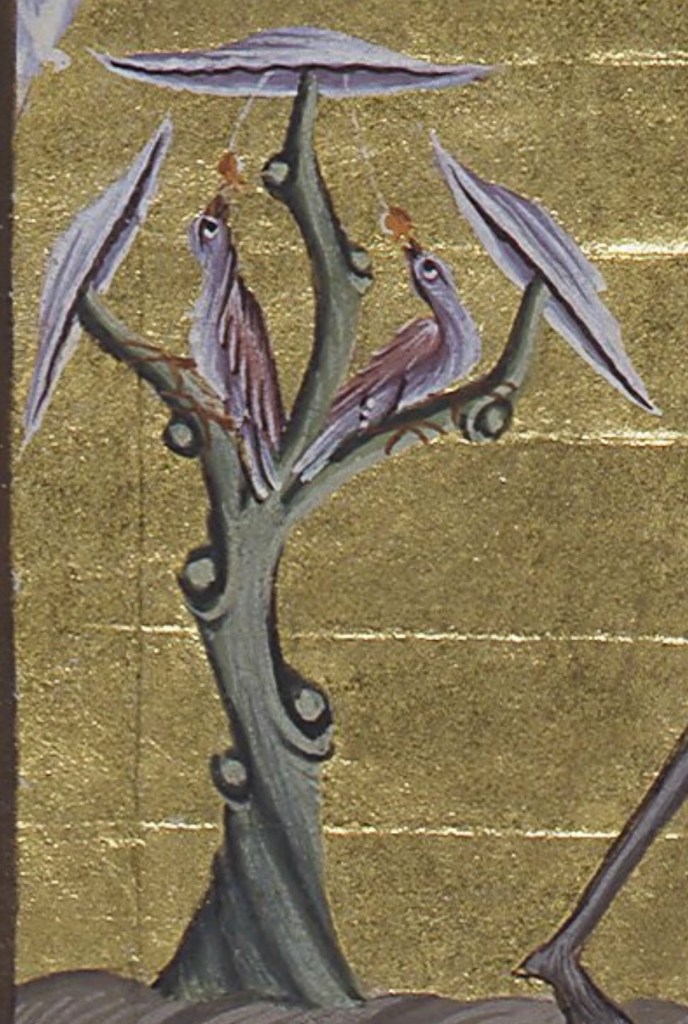
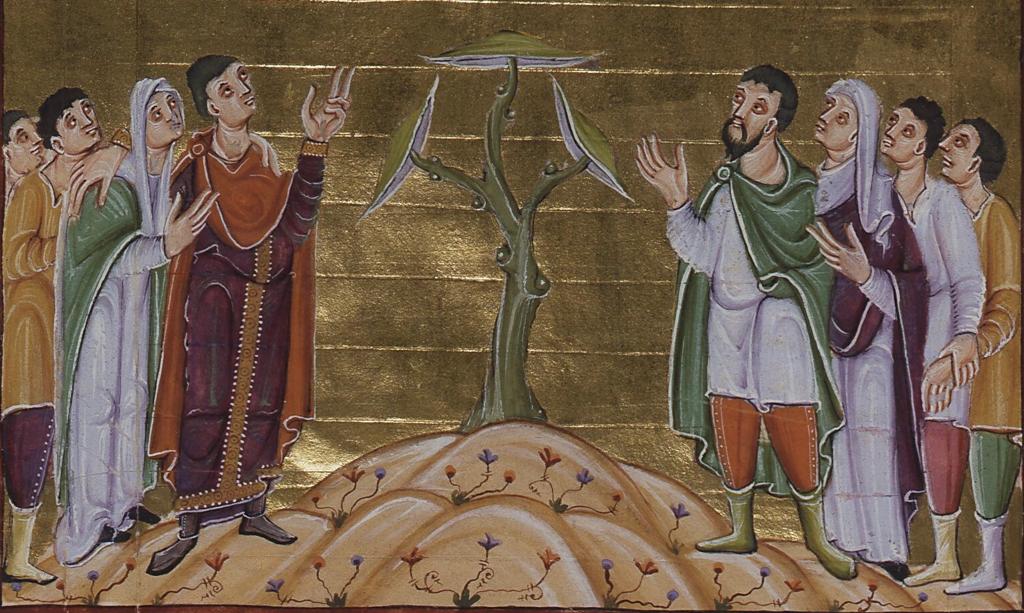
Huggins’ WORTHLESS, ARBITRARY, PREJUDICED DECREE, AKA “THE TEST”:
“The Reichenau trees fail the test because they have both branches and multiple crowns, several of which display fruit.
“In one case we even see birds eating the fruit (Figure 17).”
Erwin Panofsky’s Letters to Gordon Wasson, Transcribed
I cropped that the other day, by coincidence, almost indistiguishable from Huggins’ crop:
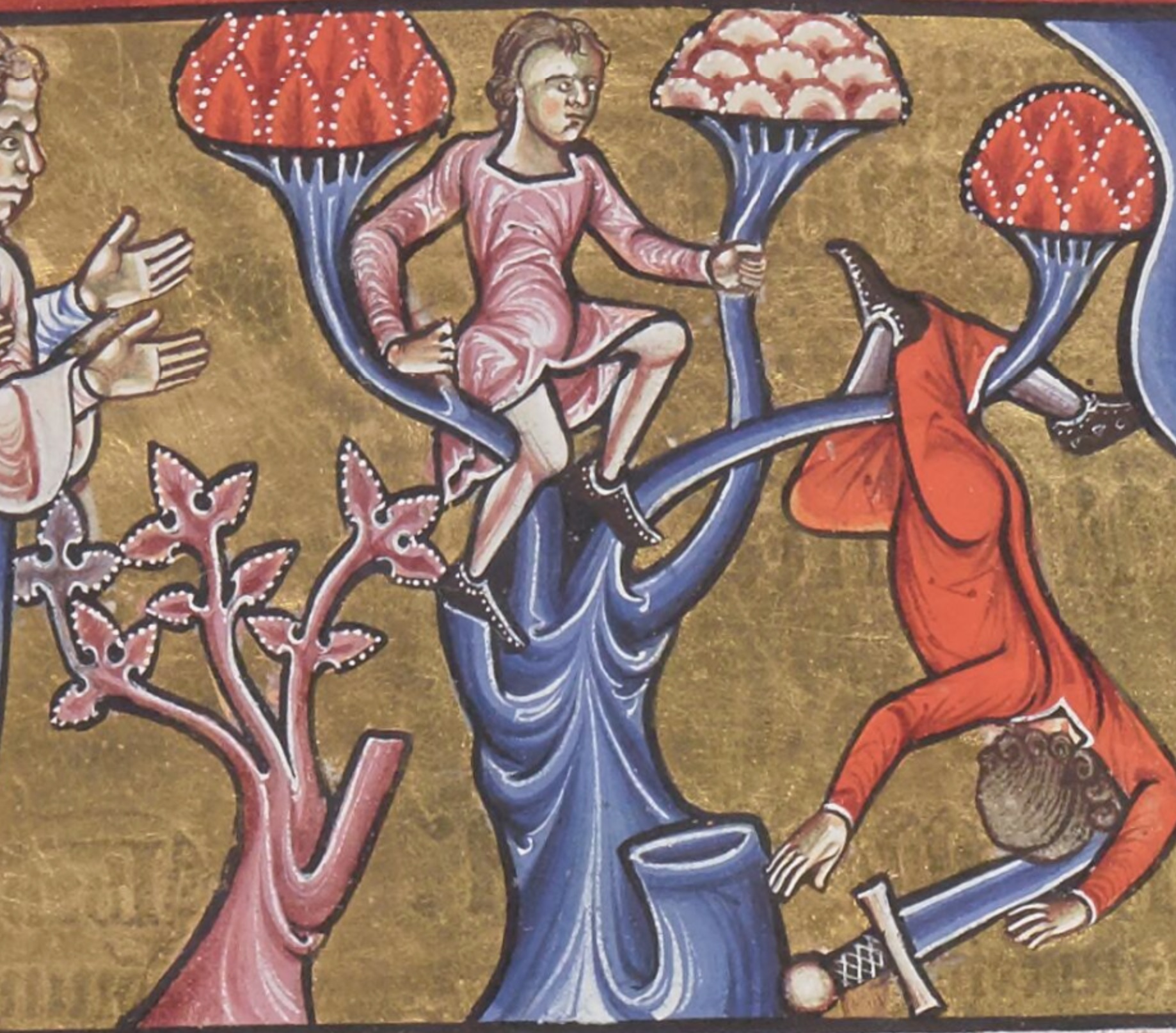
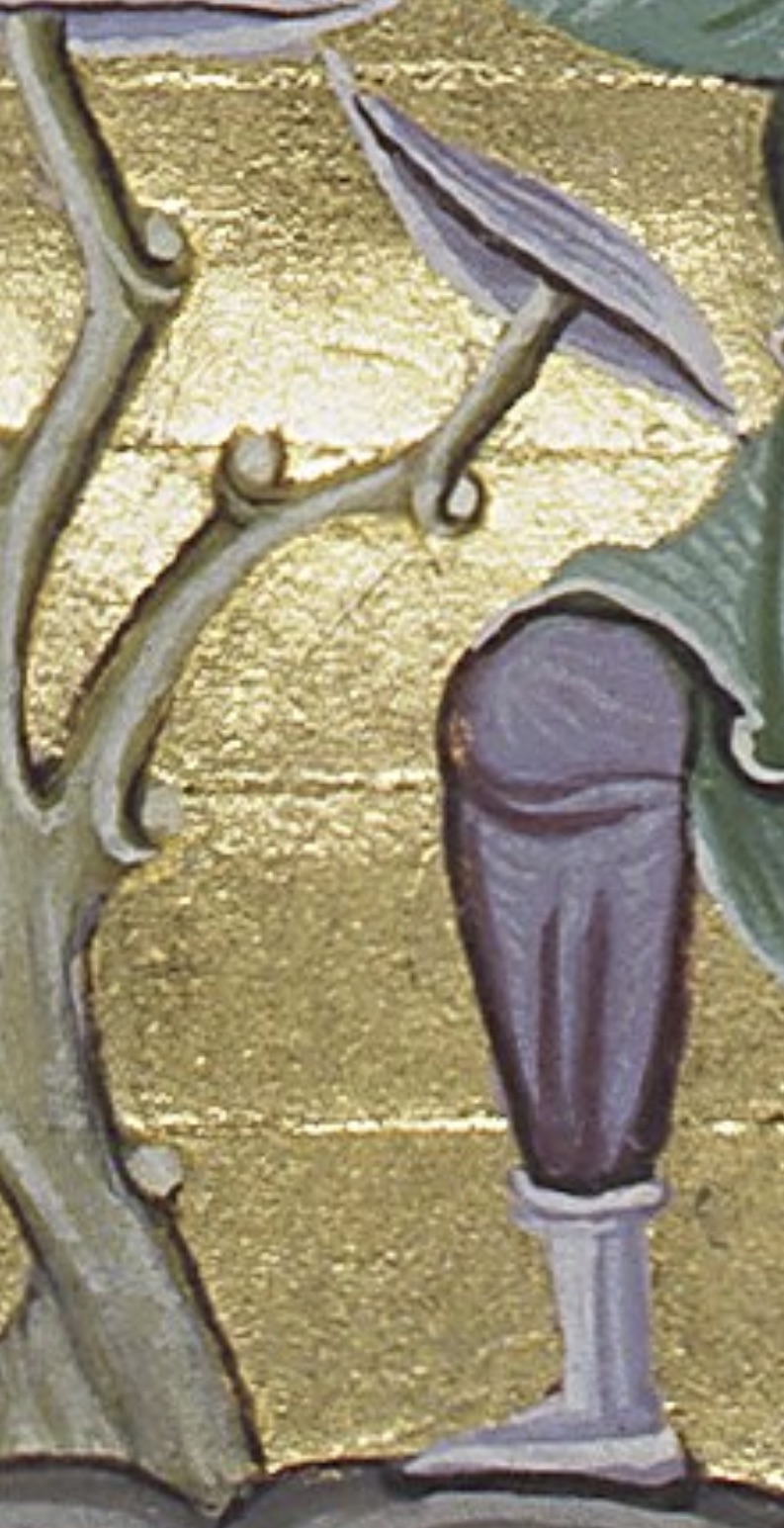
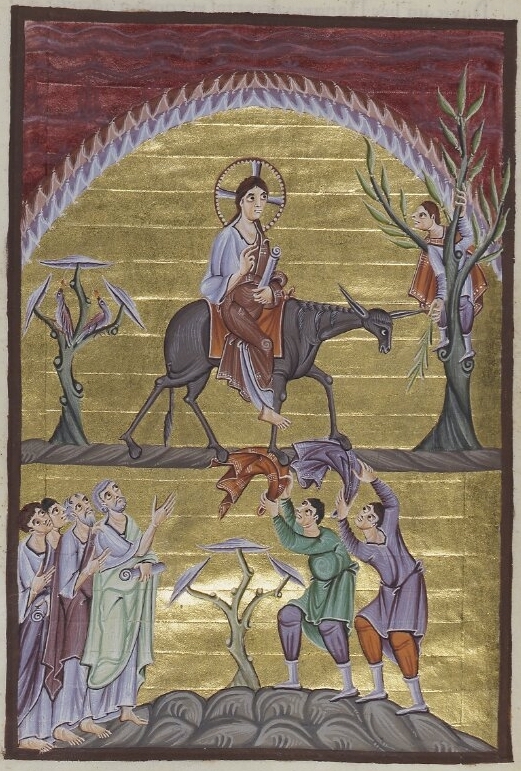
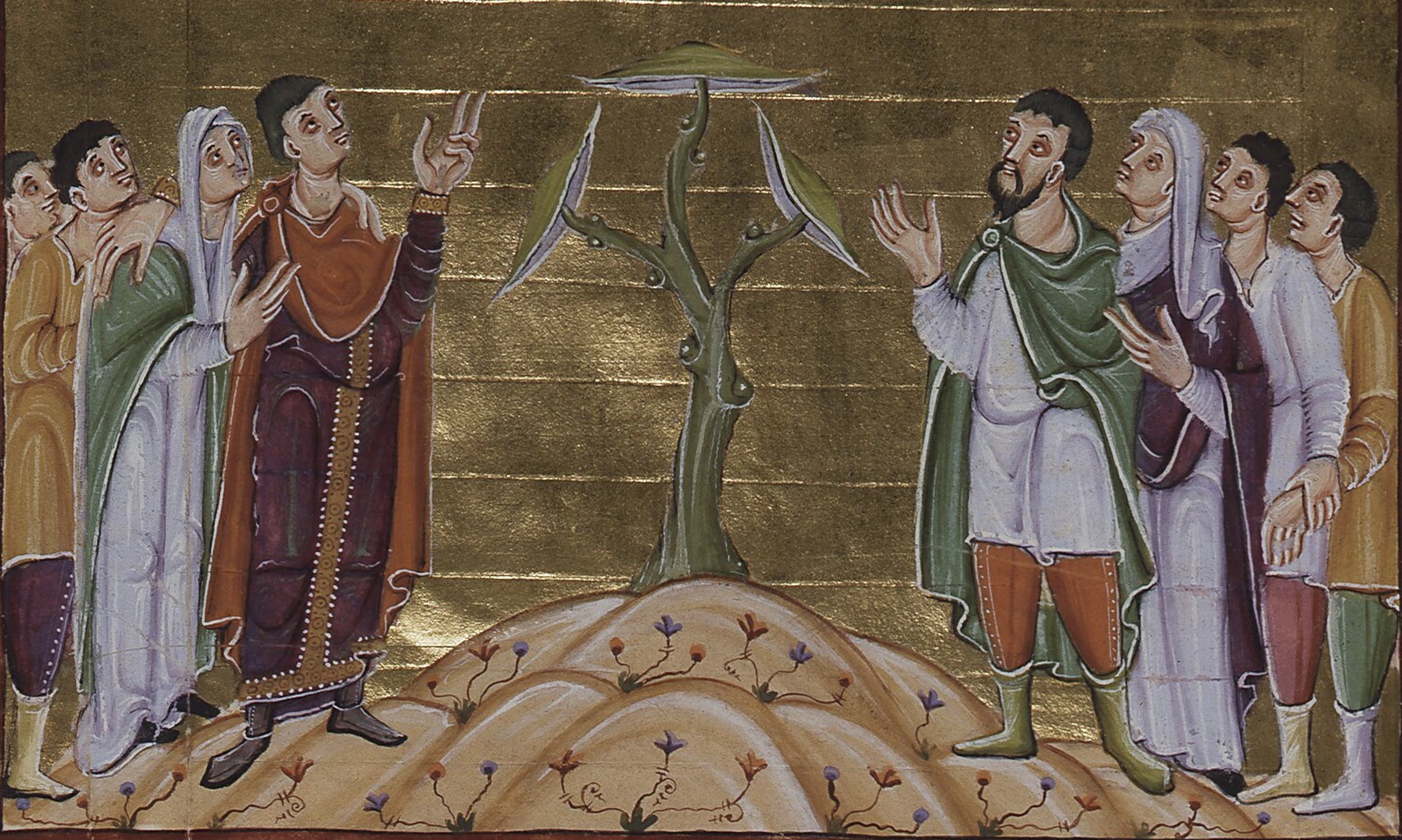
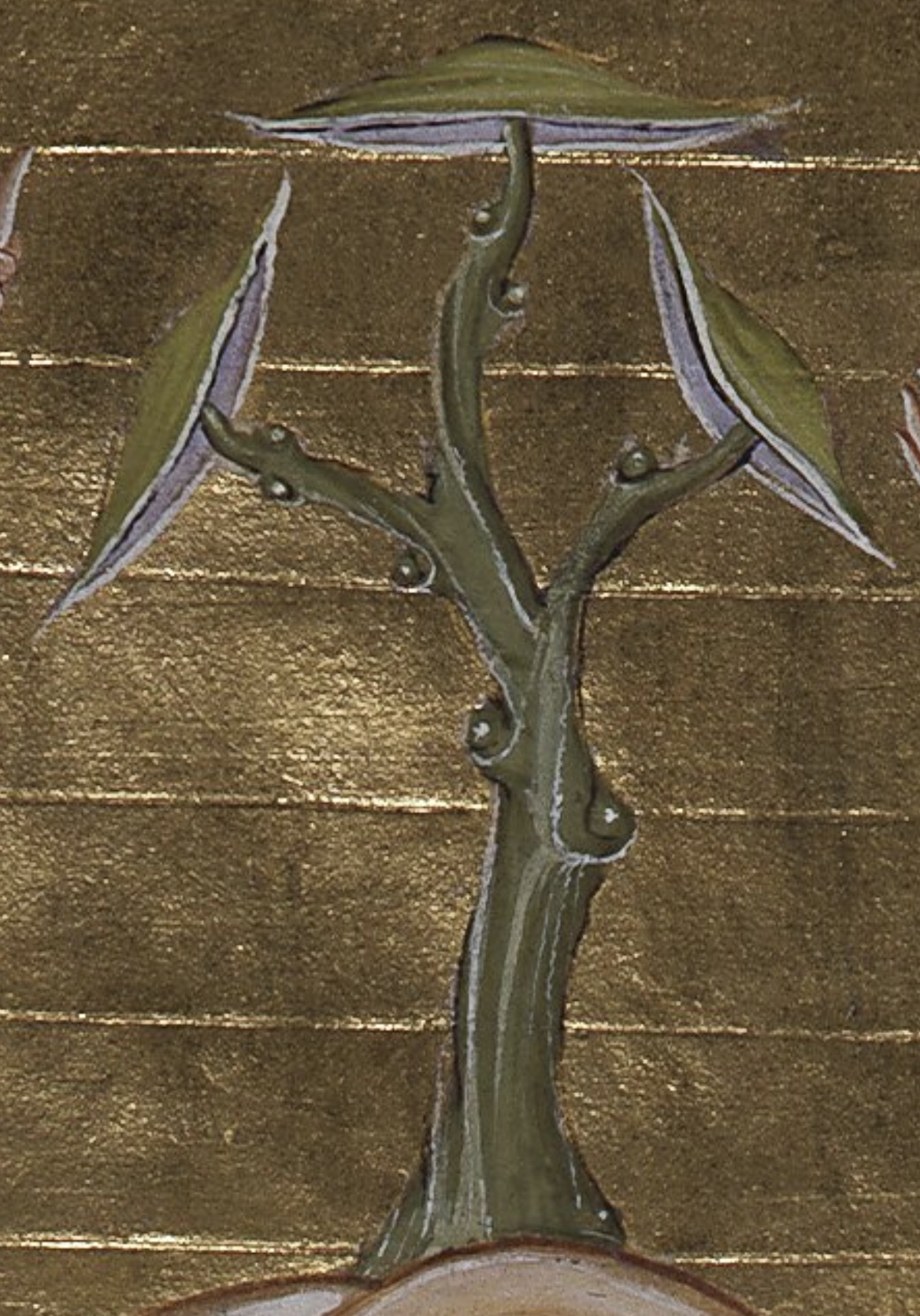
Otto Gospel: Mushroom-Trees, Branching, and YI Hand Shapes
https://egodeaththeory.org/2026/02/10/otto-gospel-mushroom-trees-branching-and-yi-hand-shapes/#Entry-Left-Tree-Left-and-Right-Fruit-Arms —
Entry: Left Tree: Left & Right Fruit Arms
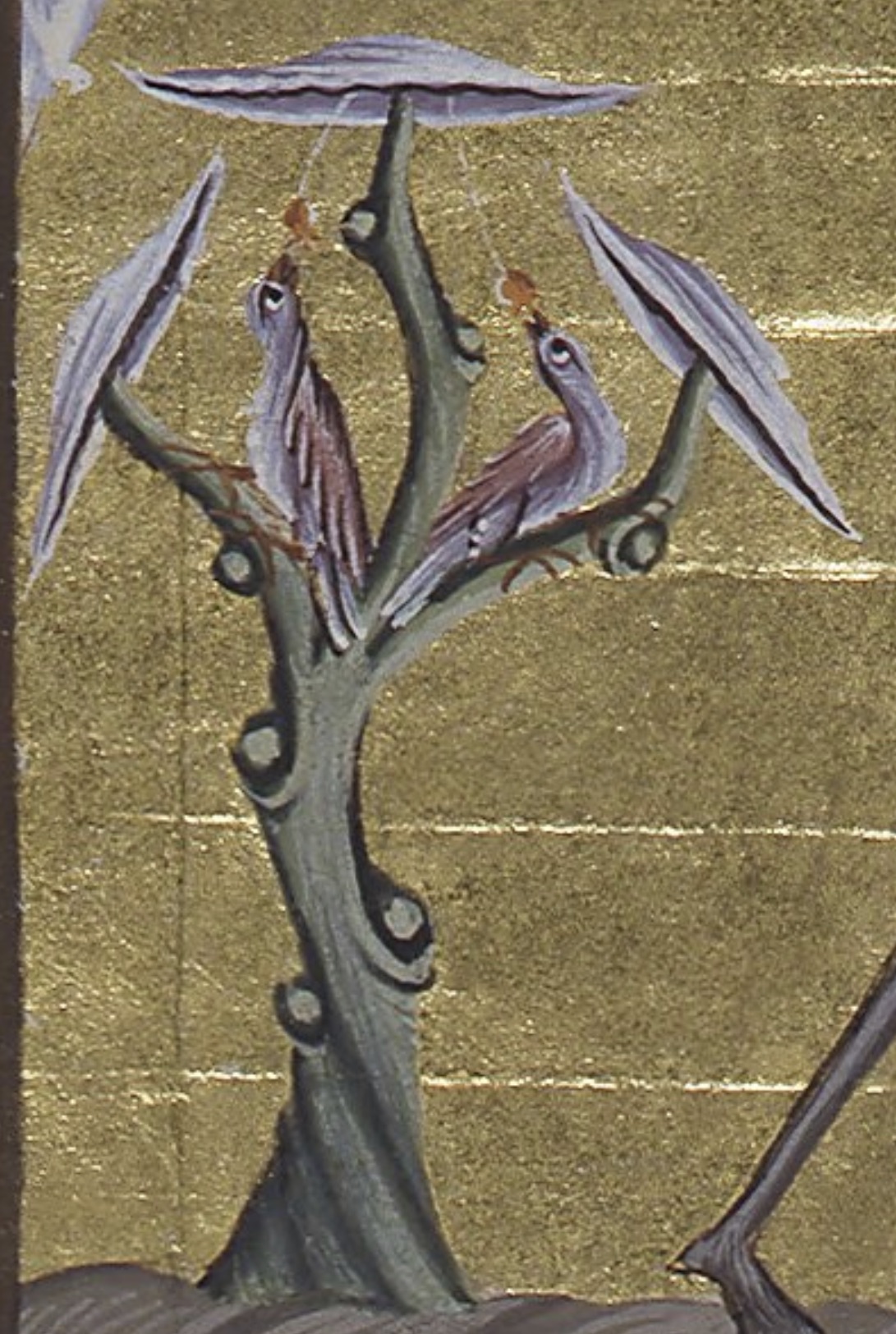
p. 16 con’t:
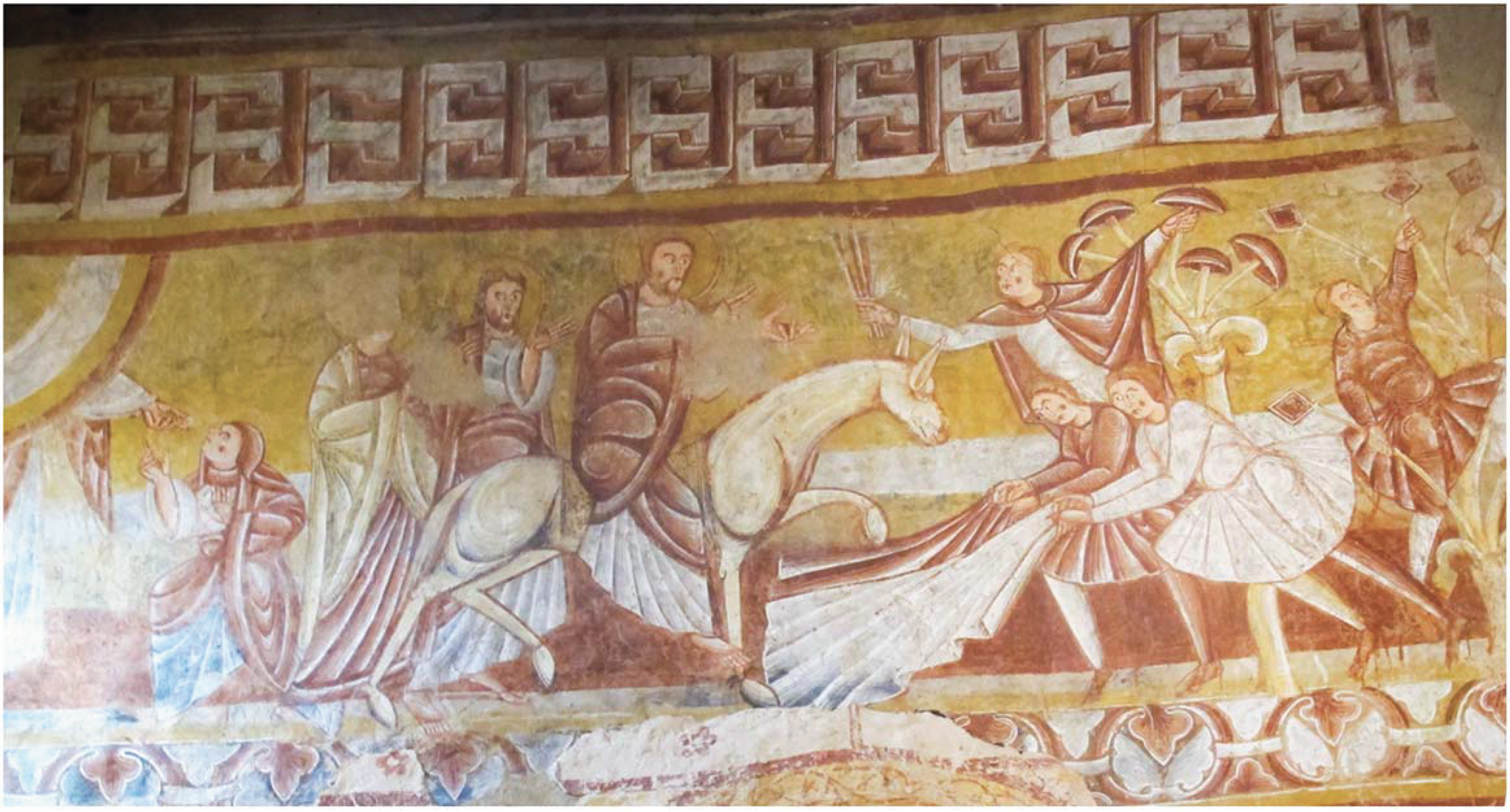
“The trees of the triumphal entry scene from Saint-Martin, Nohant-Vic, similarly would seem to fail because of the multiple branches and crowns (Figure 15)
“although I will say that the crowns on these trees look more like mushrooms than any I have seen elsewhere in Early or Medieval Christian art,
“apart from a mosaic of a basket of mushrooms in the Basilica of Aquileia in Italy (c. 330),
“and in medieval herbals where mushrooms along with other plants are depicted and described (see, e.g., MS M.652 fol. 316v (10th century) and BnF Latin 6823, fol. 68r (1301–1350).”
In the art scene “Christ’s Entry into Jerusalem”, why are branches important?
ai ans
In art, palm branches in “Christ’s Entry into Jerusalem” scenes symbolize victory, triumph, and peace,
marking Jesus’s arrival as the promised King and Messiah.
Waved and laid by crowds, they [branches] signify
the triumphal entrance into Jerusalem, representing a “welcome” while foreshadowing both his spiritual triumph over death and his coming sacrifice.
Key reasons for the importance of branches in this scene include:
- Symbol of Victory: Historically, in the ancient Near East and Roman world, [cut, removed from tree] palm branches were used to honor victory.
- Fulfillment of Prophecy: They mark the fulfillment of biblical prophecy regarding the Messiah’s entry.
- Sign of Kingship: By waving them, the crowd recognized Jesus as a King, even though he entered humbly on a donkey rather than a warhorse.
- Context of Holy Week: They represent the start of Passion Week, connecting the joyful welcome to the impending crucifixion.
- Juxtaposition with Passion: They often highlight the fickleness of the crowd, who lauded him with branches on Sunday and called for his crucifixion days later.
In artistic compositions, these branches often highlight the crowd’s adoration and create a narrative focus on the procession toward the city.
end of ai ans
Mentions of ‘branch’ on p. 17 middle
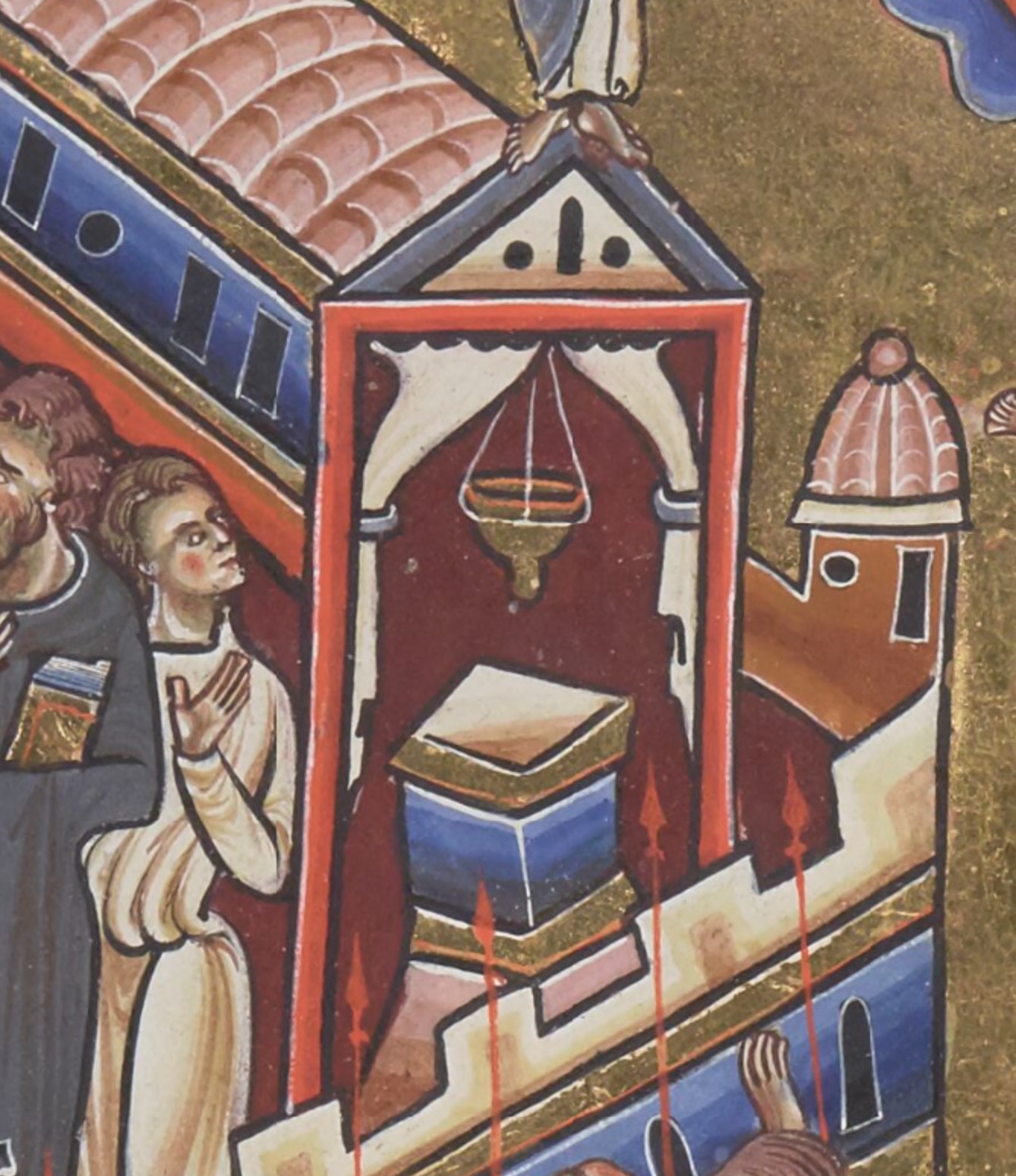
“The Plaincourault tree likewise fails the test by having branches, four of which have single crowns, with the largest crown being supported by a central trunk and two branches.”
I solved this problem in a published email to Jerry Brown on March 21, 2022:
https://egodeaththeory.org/2021/01/04/log-of-discoveries-achievements/#branching-message-mushroom-trees
The Purpose of Mushroom-Trees Is to Deliver a Message about Experiencing Ordinary-State, Branching Possibilism, Alternating with Experiencing Altered-State, Non-Branching Eternalism
The purpose of mushroom-trees is to deliver a message about branching vs. non-branching;
Ordinary-state possibilism vs. altered-state eternalism.
Not literalist ordinary-state possibilism with autonomous control, but analogical psychedelic eternalism with dependent control.
- Not literalist ordinary-state possibilism with monolithic, autonomous control.
- But analogical psychedelic eternalism with 2-level, dependent control.
- Final form: Integrated possibilism/eternalism thinking; integrated branching & non-branching mental models.
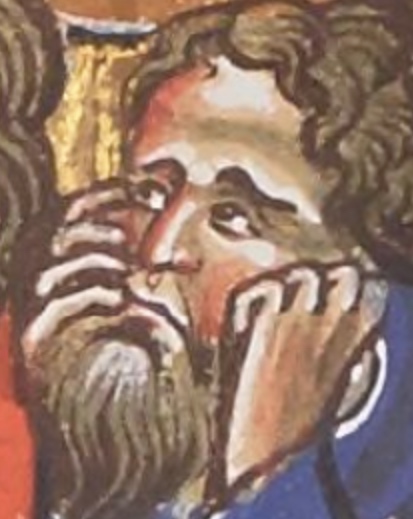
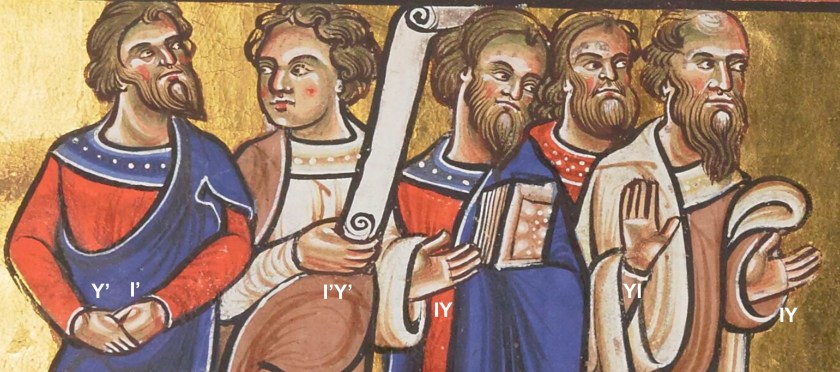
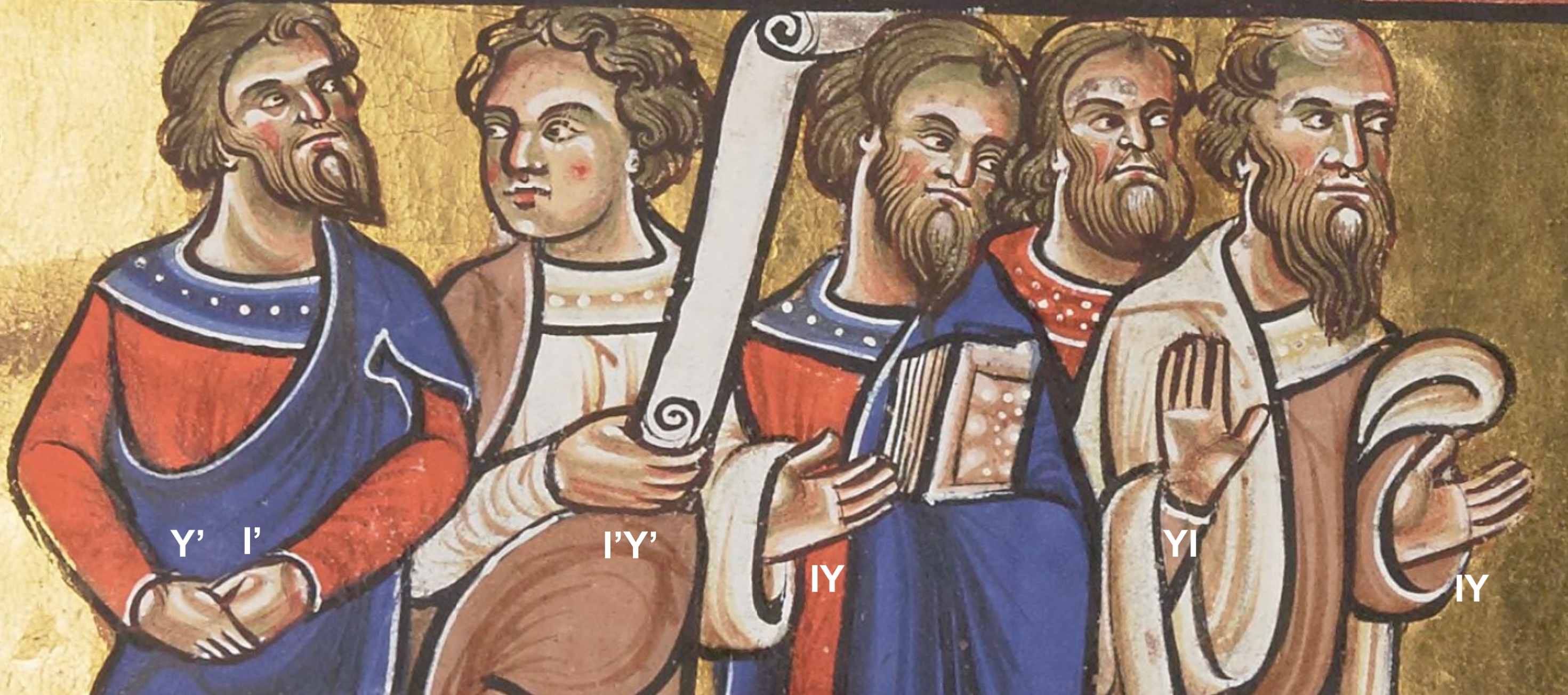
- = the YI hand-shape in medieval art.
the YI hand-shape in medieval art
yhsma
integrated branching & non-branching mental models
ibnmm
integrated branching & non-branching mental models =
2POV =
two different points of view, two different mental models
Integrated branching & non-branching mental models is depicted by the YI hand shape, over more broad a range of era than just during the heyday of the mushroom-tree religion, 900-1300 AD.
Mentions of ‘branch’ on p. 17 middle, con’t
“Especially problematic for the PMTs’ [Psychedelic Mushroom Theorists’] identification is the three branches supporting the top-most crown.
“This would not be the case if the artist had intended to depict an Amanita
muscaria mushroom and “nada mas [nothing more].”
“The cap of Amanita muscaria is supported by one central stipe.
“PMT [Psychedelic Mushroom Theorist] Samorini sought a way around this problem by suggesting that
“these ramifications [branches] might represent the membrane enveloping mushrooms of the family of the Amanitaceae at the early stages of development.”
[that clarifying note, “[branches]”, is from Huggins’ article]
“This membrane then breaks when the cap broadens out and separates from the stalk” (Samorini 1998, p. 89; 2001, p. 268).
“The same argument was in fact already put forward by Émile Boudier (Marchand and Boudier 1911, p. 32).
“Both however anachronistically project a greater interest in botanical accuracy than is justified for the artists of the period.8.”
Mentions of ‘branch’ on pp. 21-22
“This scene has been of particular interest to the PMTs [Psychedelic Mushroom Theorists] since they became aware of it via the English translation of Jochen Gartz’s Narrenschwämme: Psychotrope Pilze in Europa (1993, Fig. 1, cf. 1996, Fig. 6).
“Giorgio Samorini is very definitive on the identity of the tree in the picture:
“The mushroom-tree [between Adam and Eve] is realistically rendered with a precision not far short of anatomic accuracy and can be identified as one of the most common Germanic and European psilocybin mushroom, P. Semilanceata. . .” (Samorini 1998, p. 103).
Mosurinjohn & Ascough are very hypocritical in shifting, themselves, from possibility:
Maybe there were no psychedelics in mystery religions; there is no chemical evidence at Eleusis, because we academics/Deniers washed away the “dirt” in the Eleusis vessels.
to as-if-fact:
There were no psychedelics in mystery religions. Ruck’s been debunked.
I’m finding all over the place, lots of places where Mosurinjohn & Ascough assert outright, “There were no psychedelics in mystery religions”, as if fact.
They hide their dirty arg’n and hypocrisy by saying “Absence of evidence is not evidence of absence”, then immediately they do exactly that:
Mosurinjohn & Ascough Treat (Alleged) Absence of Evidence as Evidence of Absence
Deniers of mushroom imagery in Christian art are shameless in identifying themselves with the poorest quality of arg’n, that cannot endure any pushback.
Mosurinjohn & Ascough treat absence of evidence (because the anything-but-drugs academics washed out the cups, getting rid of the LSA from ergot) as evidence of absence.
Mosurinjohn & Ascough Hypocritically Shift from Possibility, to As-if Fact, While Criticizing Ruck for Shifting from Possibility, to As-if Fact
Deniers of mushroom imagery in Christian art are shameless in identifying themselves with the poorest quality of arg’n, that cannot endure any pushback.
Hypocrites: Mosurinjohn & Ascough make it a major objection to Ruck, that they have detected him shifting from possibility to as-if fact.
Mosurinjohn & Ascough shift from possibility to as-if fact, themselves, just in the opposite direction of Joe Rogan (or Brian Muraresku). (Almost forgot: or Ruck.)
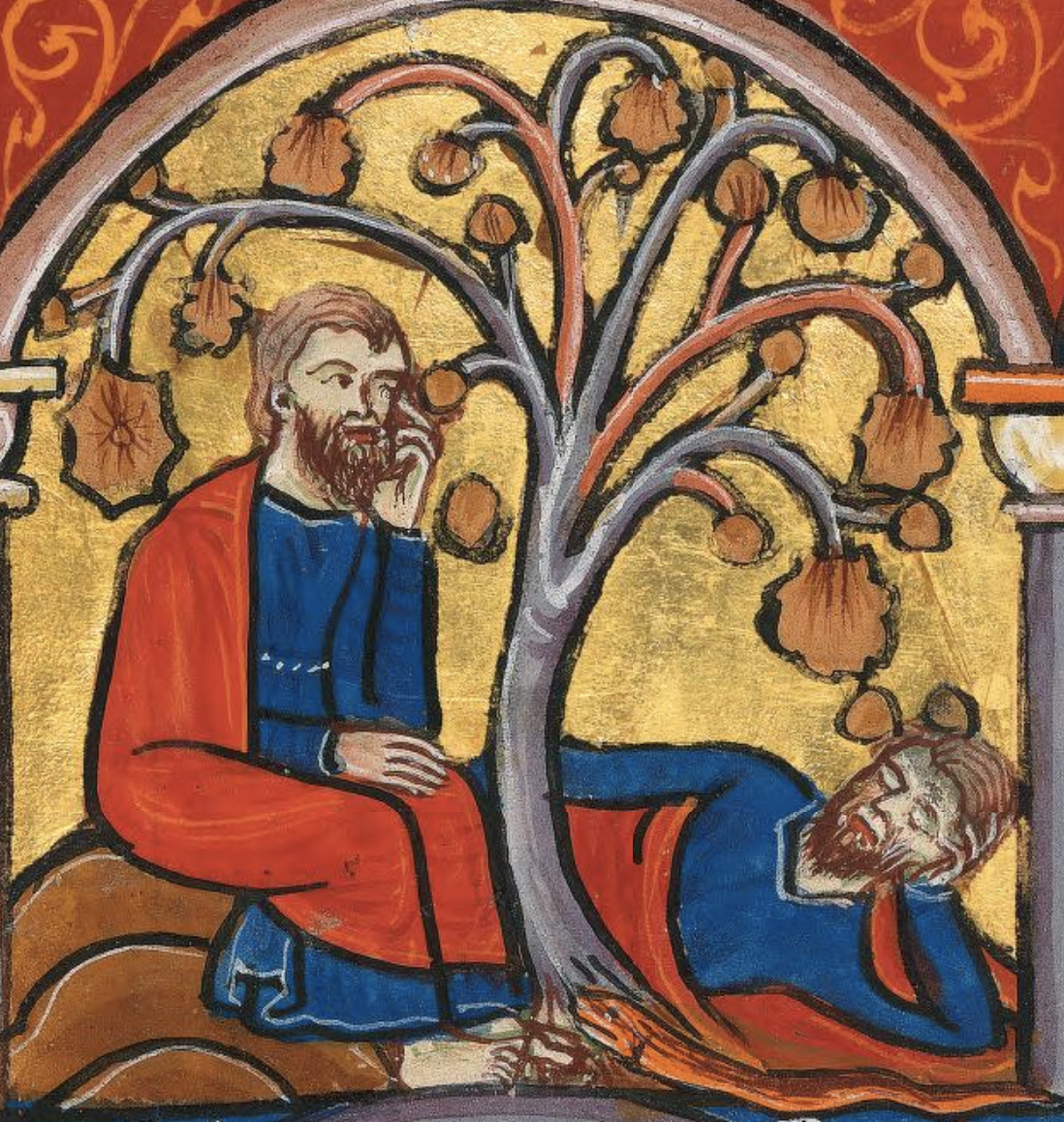
“Samorini goes on to identify the tree as a “‘Saint-Savin’ type of mushroom (three striated mushrooms),” arguing that “the third mushroom has been consumed by Adam and Eve, as revealed by the broken branch springing from the lower part of the tree trunk” (ibid.).
“Hoffman, Ruck, and Staples follow Samorini, repeating his claim that the tree “is here represented as the ‘mushroom tree,’ usually shown with a triple branching, but in this version one branch is missing, the one that has been eaten” (Hoffman et al. 2001, p. 29).”
Mentions of ‘branch’ on p. 22
“But several missteps have been made here.”
[missteps, according to Huggins; that does NOT make them missteps. -mh]
“It is true that the crowns of mushroom trees, as well as those of other kinds of stylized trees, often appeared in groups of three. . .,
“but this does not occur regularly enough to be in any sense normative, such that we can assume that when there are two crowns one is missing, much less that it has been eaten!
“Indeed a previous panel on the same door showed two mushroom trees each with five foliage heads.
“Furthermore, although one of the broken-off branches is prominent, more are indicated.
“We also know from the previous scene on the door that what Adam and Eve
ate was a small, round fruit from a different tree, not a foliage head from the one shown.
“What does appear to be the case is that Adam and Eve are depicted covering themselves with foliage heads of the same sort as those on the tree they are standing beside.”
Mentions of ‘branch’ in End Note 23
… 1, Series IV, drawer, W3.2, Folder: 20. Botany Libraries, Economic Botany Library of Oakes Ames, Harvard University.
“22 I have discussed this at length elsewhere. See (Huggins 2024, pp. 14–19).
“23 The Latin Vulgate edition of John informs us that the boughs were palm branches (ramos palmarum). Neither Matthew nor Mark identify a particular species of tree.”
Mentions of ‘branch’ in End Note 24
“24 See Reichenau Gospel Book (BSB Clm 23338), fol. 184v; The Pericopes Book of Henry II (Clm. 4452) fols. 131v, 200r (1007–1012);
“The Bamberg Apocalypse (Staatsbibliothek Bamberg Msc. Bibl. 140) fol. 57r (c. 1010);
“Gospel Book of Otto III (BSB Clm 4453) fol. 34v (c. 1010 AD).
“The similarity in style could point to one miniature artist or group of artists.
[I conjectured in Feb. 2026: There was a mainstream initiation artists guild with psilocybin lockboxes, for many centuries.
These artists do not bow down to mere texts, but bring their own, driving concern:
experiencing the two states and the two mental models: possibilism vs. eternalism.
-mh]
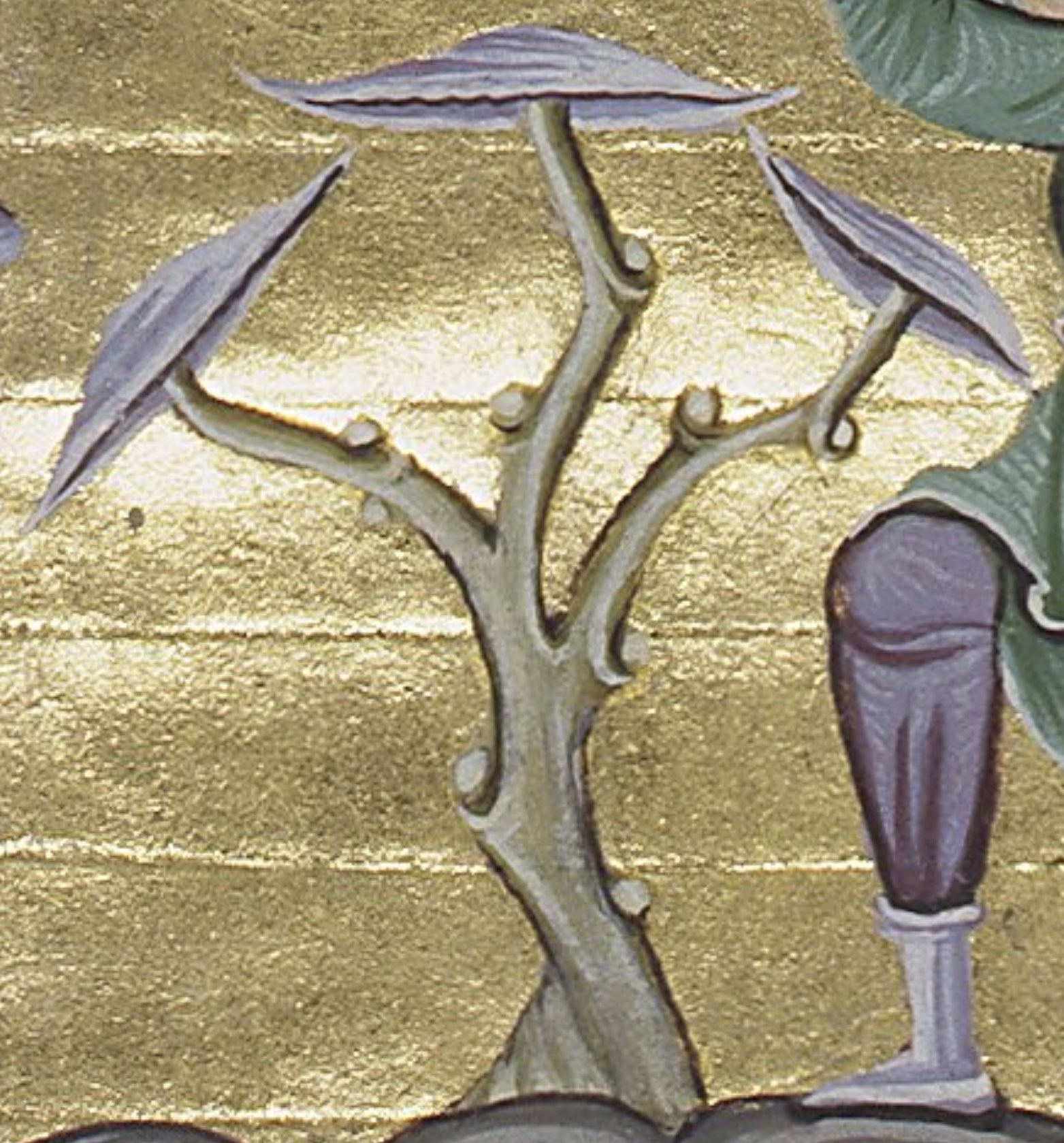
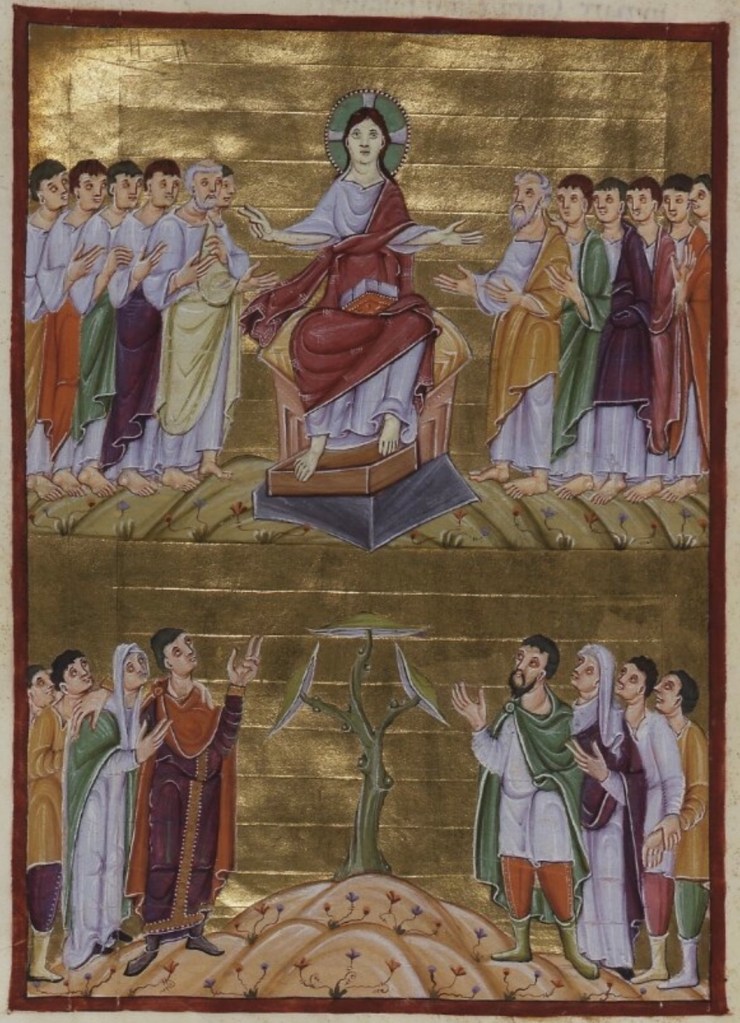
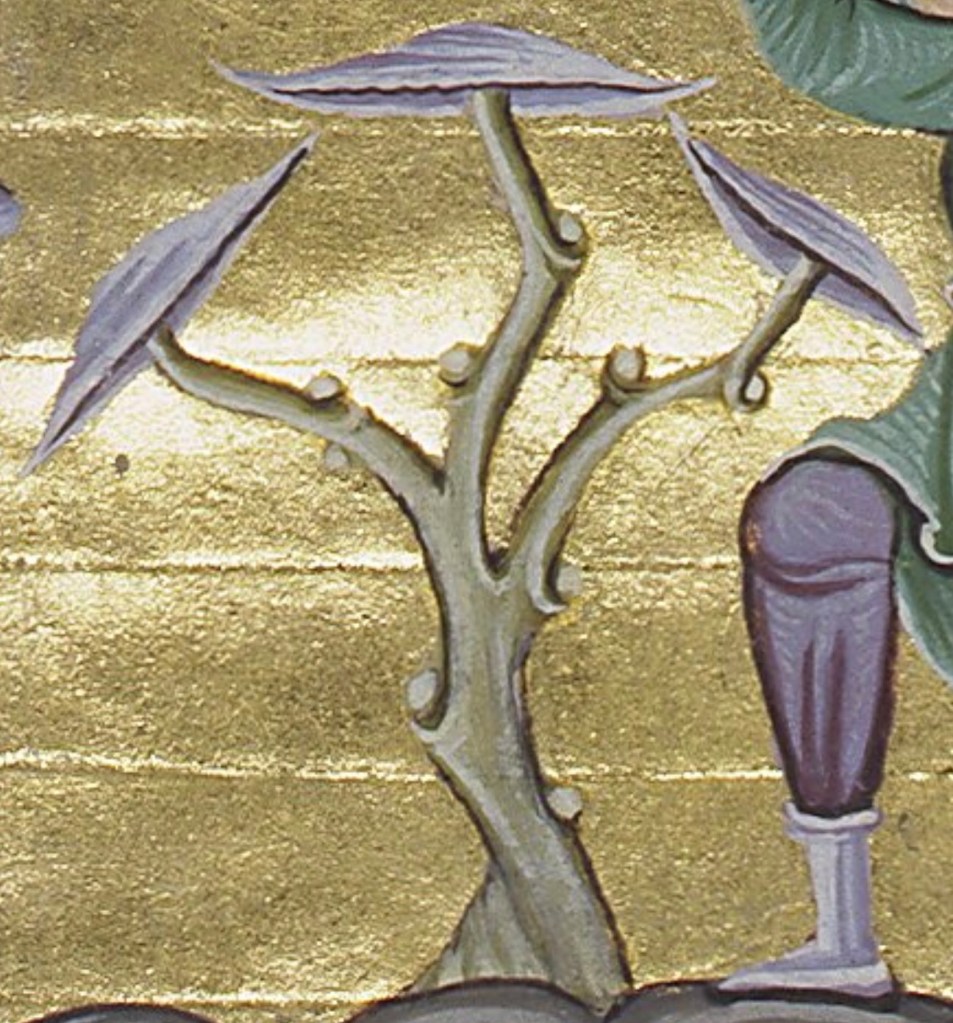
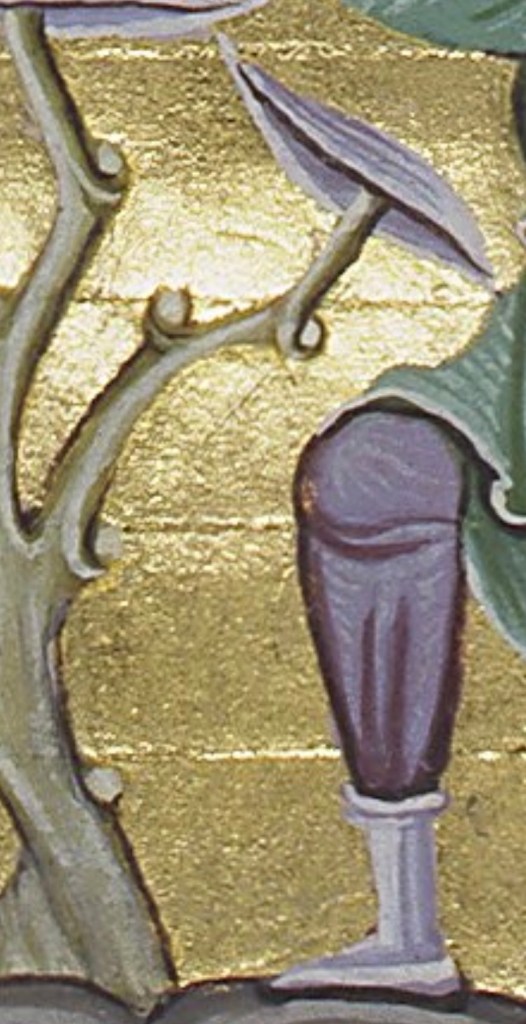
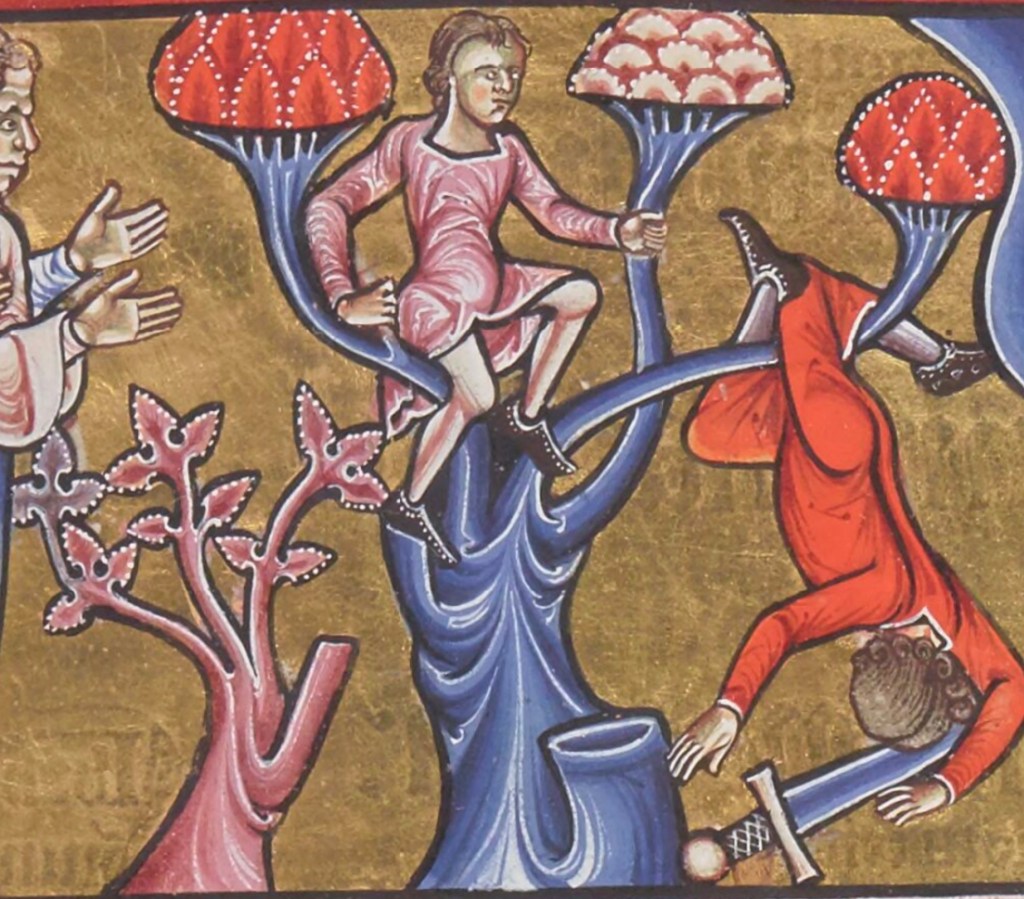
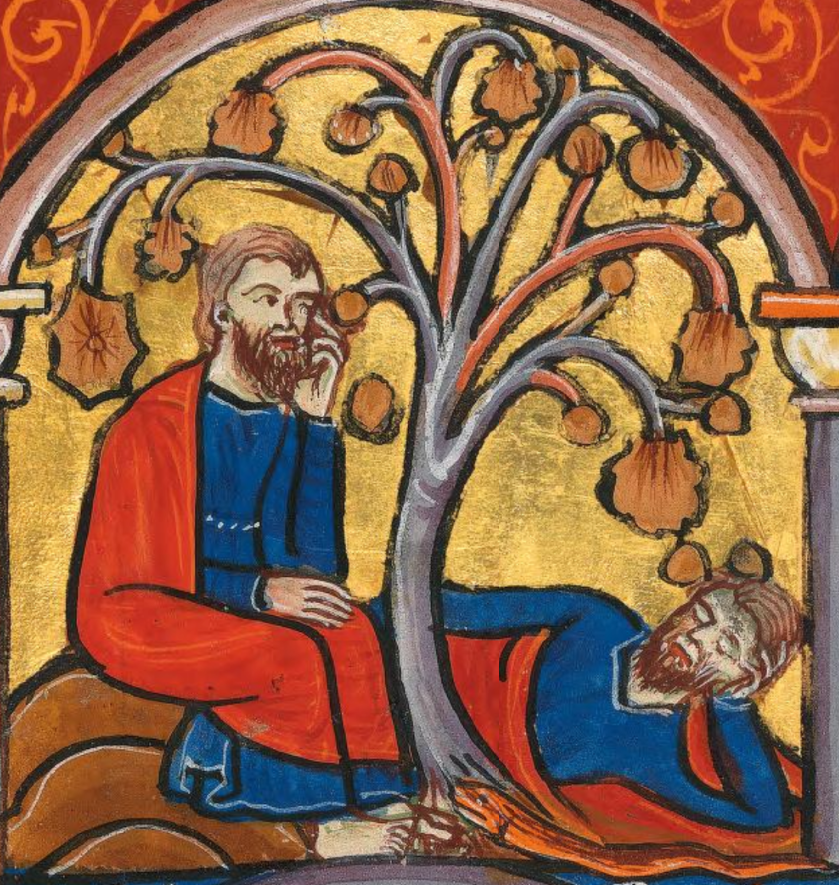
“See, for example, the nearly identical depictions of Zachaeus in a multi-branched tree with a mushroom-like top in the Reichenau Gospel Book fol. 184v and the Pericopies Book of Henry II, fol. 200r.” See below.
Guy in Tree with YI Hand-Shapes Cited By Huggins End Notes
https://www.digitale-sammlungen.de/en/view/bsb00095112?page=372
https://www.loc.gov/resource/gdcwdl.wdl_14712/?sp=403&r=0.037,0.181,0.833,0.515,0
Huggins end notes:
“24 – See Reichenau Gospel Book (BSB Clm 23338), fol. 184v; The Pericopes Book of Henry II (Clm. 4452) fols. 131v, 200r (1007–1012);
The Bamberg Apocalypse (Staatsbibliothek Bamberg Msc. Bibl. 140) fol. 57r (c. 1010); Gospel Book of Otto III (BSB Clm 4453)
fol. 34v (c. 1010 AD). The similarity in style could point to one miniature artist or group of artists. See, for example, the nearly
identical depictions of Zachaeus in a multi-branchedtree with a mushroom-like top in the Reichenau Gospel Book fol. 184v and
the Pericopies Book of Henry II, fol. 200r.”
Erwin Panofsky’s Letters to Gordon Wasson, Transcribed
Reichenau Gospel Book fol. 184v. Has guys on left of tree
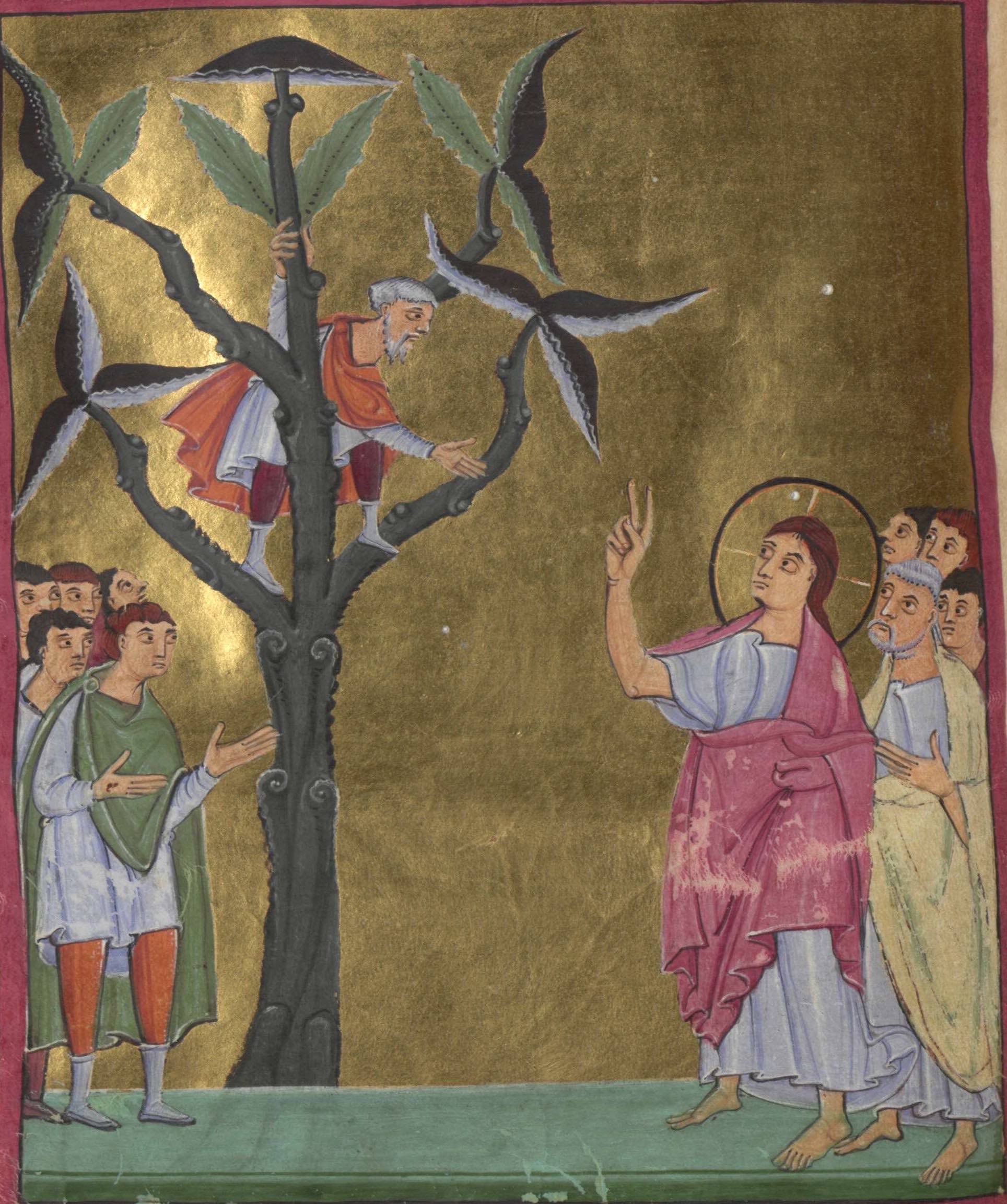
fullscreen
Pericopies Book of Henry II, fol. 200r. No guys on left of tree
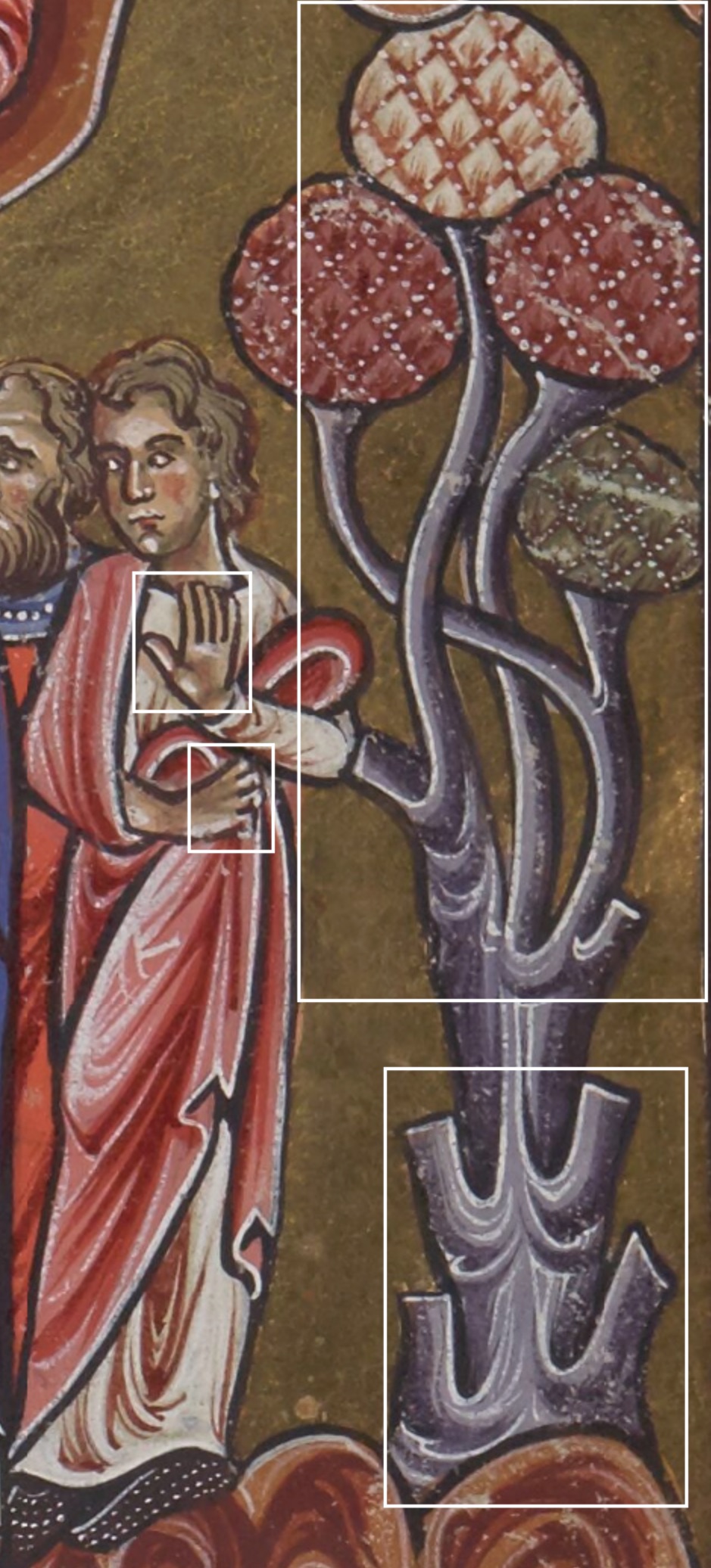
Plaincourault Fresco Is YI
Michael Hoffman, discovered at [6:45 p.m. Feb. 15, 2026].
Now 8:55 p.m. Feb. 15, 2026.
The Plaincourault Fresco Has {branching-message mushroom tree} Features, Depicting Psychedelic Eternalism
https://egodeaththeory.org/2026/02/18/the-plaincourault-fresco-has-branching-message-mushroom-tree-features-depicting-psychedelic-eternalism/
Web Image Search: Plaincourault Fresco
Search web for Plaincourault fresco:
https://www.google.com/search?udm=2&q=Plaincourault+Fresco
Possibilism vs. Eternalism =
- {branching} vs. {non-branching}
- {tree} vs. {snake}
- {fingers} vs. {thumb} or {index finger}
- Y vs. I
- many worlds vs. single block-universe
[LCPE]
List of Contrasts between Possibilism vs. Eternalism
Rabbit hole:
{fingers} vs. {thumb} or {index finger} or…. point got lost: MAIN REFERENCE FORM IS SUFFICIENT: SAY JUST {FINGERS} VS. {THUMB}
Analysis Procedure:
- Sweep up from bottom
- first hit R branch, where R branch goes right, and the main trunk goes up…
- then hit L branch.
todo: add white lines crop
Tree has Y on L, I on R – relative to the point where the R breaks off.
YI Branching, {stand on right foot} Motif, Four Amanita Branches Point to Four Pairs of Arms & Legs
Section added Feb. 18, 2026, copied from page created that day (today).
Professional Propagandist Wasson Substitutes a Degraded, Copied Painting that Deletes the YI Branching Form and the {stand on right foot} Motif, Withholding the Actual Fresco Image
Section added Feb. 18, 2026, copied from page created that day (today).
1:03 p.m. Feb. 18, 2026, fullscreen
Double Fail, Illiterate/Blind to Motifs: Michelle Bory’s Painting of Plaincourault
Bory is grossly inaccurate & motif-illiterate by standards of the mushroom-tree artists.
Huggins p. 5:
“In 1959 he [Aasson] arranged to have Michelle Bory of Paris’ Muséum
national d’Histoire naturelle visit the chapel and make a reproduction,8 which he published in his 1968 book Soma (Pl. XXI, between pp. 180–81).
“Bory’s painting is truer to the original than the earlier published picture.
“For one thing it correctly depicts not only the caps but the entire tree as red. It still naturally fell short as an alternative to a good photograph of the image, inevitably leaving out important details.”
Bory deleted the YI message of this branching-message mushroom tree.
Bory:
- Moved Adam far away, for legs to not be touched by branch.
- Deleted the offset of L vs R beam forming the YI.
The YI is centrally important in the medieval art genre of {branching-message mushroom trees}.
From the Esoteric Branching Language POV, Bory’s version is MUCH LESS accurate than the color-added photo in the 1911 Bulletin.
esoteric branching lang
Warning: ‘esoteric’ sounds like “hidden, secret, suppressed”; avoid the Secret Amanita paradigm.
Mr. “dont give a shit about compelling arg’n” hypocr writes:
“My own view is that the images turned up by the PMTs since have done little to
undermine the validity of Panofsky’s* assessment of the Plaincourault fresco.”
*90% CENSORED BY WASSON, WHAT HAVE YOU TO SAY FOR YOUR COMPANY YOU KEEP, Huggins? WASSON A SLEAZY LIAR, EXTREME CONFLICT-OF-INTEREST, NO-CREDIBILITY, PROFESSIONAL PROPAGANDIST CON ARTIST, DECEIVER trying to get rid of standard scholarly practices re: this “special”, taboo topic:
Wasson deletes scholarly writing, publishing, and citation (replaced by the . . . . ellipses of the censor), telling Affirmers they need to abandon standard academic practice and instead, “consult” the art authorities personally, with stopwatch in hand, to test and confirm (predictably and meaninglessly) that all “certified competent” indoctrinated anything-but-drugs academics, art history operatives are trained like dogs (on condition of employment) to blurt and disavow mushrooms promptly.
Logical Fallacy: Scholarly Assessment Not via Writing, Publishing, & Citation (Normal, Standard Scholarly Methods), but Instead, by Measuring the Personal Emotional Reaction Degree, Only on this “Special”, Exceptional, Taboo-Charged Topic
Name of Fallacy: Argument by Degree of Personal Emotional Reaction (by Conditionally Employed Art Doctrine Operatives, the Mandated Doctrine Being Anything-But-Drugs)
Allegro made everything more complicated by abusing Amanita to smear Christianity with a disgusting sex-cult fungus.
Why is Jan Irvin’s/ Rucks’ book 2009 so popular?
BECAUSE SMEARING Christianity IS POPULAR, along w/ psychedelics being popular.
Amanita is barely “psychedelics”.
It’s all proxy concerns.
I’m now creating a J I 09 page…
Jan Irvin & Carl Ruck, The Sacred Mushroom and The Cross, 40th Annual Edition, 2009,
Allegro impeded scholarship by charging-up the topic of entheogen scholarship.
Much of this compromised academic/scholarly situation is Allegro’s fault.
How to do scholarship: Measure the emotional reaction degree when probe an art history flunky who has been propagandized – ESPECIALLY in the post-1970, after Allegro’s smear-Christianity abuse of Amanita and the provoked reaction: anything-but-drugs academia forbade THE ALLEGRO VIOLATION of asserting that Christianity came from mushrooms + ahistoricity of Jesus.
BECAUSE THEY KNOW AND WROTE NOTHING, Brinc exception proves rules per Huggins “notable” [ie, cit. censored by Wasson] Brinc book.
“A key reason for this, I believe, is a casualness among PMT writers in the manner in which they handle evidence, which often displays a tendency toward ignoring obvious explanations in favor of rather tendentious, often overly ingenious and esoteric ones garnered from sources very remote to the images they are attempting to describe.”
Mushrooms Were Suppressed by Church Society Only to a Degree: Mushrooms Were Not Allowed in Writing, Were Allowed in Art, Because Sensitive Theology: Everything Is Ultimately God’s Fault; God Made Eve Eat
The Middle Ages Were MORE Literate than the Age of Literacy, in the Visual Language Genre of {branching-message mushroom trees}; {mushroom}, {branching}, {handedness}, and {stability} Motifs
Scholars in the Age of Textual Literacy after 1687 (Newton & heliocentric) are illiterate at the visual art language of {mushroom-trees}, including {mushroom}, {branching}, {handedness}, and {stability} motifs.
the visual art language of {mushroom-trees}, including {mushroom}, {branching}, {handedness}, and {stability} motifs
valm
the visual art language of {mushroom-trees}, including {mushroom}, {branching}, {handedness}, and {stability} motifs [VALM]
No one could read textual writing.
The Middle Ages were MORE literate than the age Age of Literacy; literate VISUALLY IN A SPECIALIZED GENRE, the medieval art genre of {branching-message mushroom trees}.
Mushroom was forbidden in writing AND allowed in art.
b m m = the branching mental model
todo: fill in more:
How Branching and Non-Branching Represent Two Mental Models of Control-in-World
the medieval art genre of {branching-message mushroom trees}
magbmmt
Color photos were not popular avail 1952; not until 60s or 1970s really.
Michelle Bory Paints Trident, Should be YI
Bory LOSES the {YI} MOTIF under cap.
Michelle Bourey Paints 1-Foot Eve, Should {stand right foot}
Bory LOSES the {stand on right foot} MOTIF.
Cybermonk, April 28, 2022 – This may be my “pay dirt” crop. stand right foot.
[yeah but that page fails to say it’s a YI under the cap – Michael Hoffman 6:45 & 8:43 p.m. Feb. 15, 2026]
The Question that I ID’d:
What % of weight on R foot?
Ans: 100%.
https://egodeaththeory.org/wp-content/uploads/2022/04/img_8713.jpg
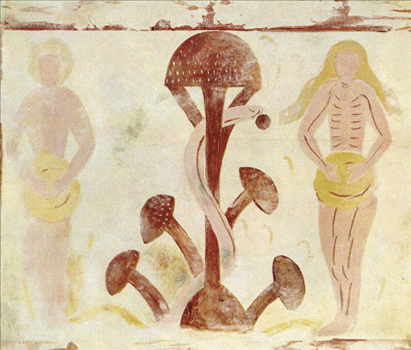
Dec. 13, 2020: Michelle Bourey’s painting that’s a copy. https://egodeaththeory.org/wp-content/uploads/2020/12/image-77.png
It’s possible I might have analyzed this before.
Feels like a new insight but can’t trust that intuition.
Plaincourault fresco follows standard patterns for {mushroom}, {branching}, {handedness}, and {stability} motifs, in the medieval art genre of {mushroom-trees}:
- {stand on right foot}
- YI mushroom-tree the primary Reference branching form; more branching on L than R. Elaborated and violated creatively; only a starting pattern.
- Eve’s YI hand-shape pair is a pair of YI hand shapes: [YI, IY]
New, Hand Pair Notation: In Plaincourault Fresco, Eve’s Hand-Pair: [YI, IY]
The Plaincourault Fresco Has {branching-message mushroom tree} Features, Depicting Psychedelic Eternalism
https://egodeaththeory.org/2026/02/18/the-plaincourault-fresco-has-branching-message-mushroom-tree-features-depicting-psychedelic-eternalism/
Email Sent 11:55 p.m. Feb. 18, 2026
Before midnight, a complementary copy of today’s breakthrough announcement (so far).
The Plaincourault Fresco Has {branching-message mushroom tree} Features, Depicting Psychedelic Eternalism
The earth-shattering, history-making event of the day, or at least of the morning.
_________________
Texted to lawyer for psychedelic churches:
this is a big fkkn deal 


just in time for the Oct 2025 special issue of _Religions_ journal, which cites my 2006 mega article about Plaincourault fresco
That special issue tries to destroy, invalidate, & discredit entheogen scholarship
glad u can be with me on this journey
tagline of my Egodeath Mystery Show podcast:
You are on the leading edge of altered-state theory.
which in 2022, required standing w my Left foot on top of my Right foot,
to gauge the weight distribution at bottom of each foot
confirmed my full weight then is on bottom of R foot,
but less on L foot
________________________________
On John M. Allegro’s Suggestion That the Tree of the Knowledge of Good and Evil in the 12th Century Plaincourault Chapel Depicts an Amanita muscaria Mushroom (Huggins, 2025)
https://egodeaththeory.org/2026/02/11/on-john-m-allegros-suggestion-that-the-tree-of-the-knowledge-of-good-and-evil-in-the-12th-century-plaincourault-chapel-depicts-an-amanita-muscaria-mushroom-huggins-2025/
Cites: Wasson and Allegro on the Tree of Knowledge as Amanita (Hoffman, 2006), http://egodeath.com/WassonEdenTree.htm
That Huggins article is in:
Special issue of the journal Religions:
On the Origins of Western Psychedelia: Exploring Allegro’s The Sacred Mushroom and the Cross
Edited by J. Christian Greer and Sharday C. Mosurinjohn.
https://www.mdpi.com/journal/religions/special_issues/5IX8MH3S36
Beggars Can’t Be Choosers: Entheogen scholarship Has so few researchers, need at least some bad articles contributed by Deniers
Overlapping jackpots come in clusters (the Plaincourault fresco & medieval YI hand-shape theory, this time)
Example of how, bad articles accidentally contribute to progress, despite fallacy-fest, addled-mind writers like Thomas Hatsis:
Huggins’ focus on the trident branches of Plaincourault fresco made me bothered by the weird trident that fails to conform to my correct theory.
Then Sunday, I recognized that only by having the offset does the “trident” become the correct, YI form,
proving this means Amanita, because this image fits the patterns of the medieval art genre of {mushroom-trees}.
Michelle Bory’s fake copy of the painting omits many of the key indicators, in Soma 1968 p. 181
with a confusing caption that falsely says that this painting by Bory is the Plaincourault fresco.
Bory moves Adam far to the left, so that the Amanita branch* no longer touches his left leg.
*Panofsky: “an Italian pine, meaninglessly corrupted by inept artist craftsmen who have no intentionality”;
yet Wasson, later: “an A.N.E. tree species”.
Panofsky:
“The fact that pine steadily changed to mushroom shape, proves that the mushroom shape was accidental and meaningless.”
Retort: That’s arg’n from bias.
The fact that pine steadily changed to mushroom shape, proves that the mushroom shape was deliberate and meaningful.
Panofsky:
If mycologists (Affirmers) weren’t ignorant about the hundreds of mushroom-trees, they would not have made the mistake of saying Plaincourault fresco means mushrooms.
Plaincourault fresco can’t mean mushroom, because there are hundreds of other mushroom-trees.
[arg. from silent presupposition, of a shared presupposition]
The Samorini Retort:
The Plaincourault fresco means mushroom, consistent with all of the hundreds of mushroom-trees meaning mushrooms.
— Michael Hoffman, B.S.E.E., the Egodeath theory of psychedelic eternalism
/ end of email
Carl Ruck in “Daturas for the Virgin” p. 56 falsely credits Wasson with asserting (publicly) that mushroom-trees (as a class) mean mushroom.
In retaliation, Jan Irvin in The Holy Mushroom falsely credits Allegro with asserting that mushroom-trees (as a class) mean mushroom. Irvin’s lack of a quote is bankable proof that Allegro never wrote that.
Clearly, Samorini 1997 & 1998 is the scholar who asserted that mushroom-trees (as a class) mean mushroom.
Amazingly, Huggins not only AGAIN omits to cite Browns 2019; he also fails to cite Samorini 1997: The mushroom-tree of Plaincourault (Giorgio Samorini, 1997) https://www.samorini.it/doc1/sam/sam%20plaincourault.pdf
See Also
Site Map > Plaincourault Fresco
https://egodeaththeory.org/nav/#Plaincourault-Fresco
Site Map > Gordon . . . .🔍🧐🤔🤬 Wasson
https://egodeaththeory.org/nav/#Gordon-Wasson
The Plaincourault Fresco Has {branching-message mushroom tree} Features, Depicting Psychedelic Eternalism
https://egodeaththeory.org/2026/02/18/the-plaincourault-fresco-has-branching-message-mushroom-tree-features-depicting-psychedelic-eternalism/
- Erwin Panofsky’s Letters to Gordon Wasson, Transcribed
- Tree Stylizations in Medieval Paintings (Brinckmann 1906)
Site Map > Ronald Huggins
https://egodeaththeory.org/nav/#Ronald-Huggins
Cyberdisciple site > Search Allegro:
https://cyberdisciple.wordpress.com/?s=Allegro
- Richard Ascough on Psychedelics in Western Religious History
- Video: The Sweetest Taboo: Psychedelics and the Invention of Religious Experiences (Mosurinjohn, Sep. 2025)
- Psychedelics, Eleusis, and the Invention of Religious Experience (Mosurinjohn & Ascough, 2025)




 The Egodeath theory