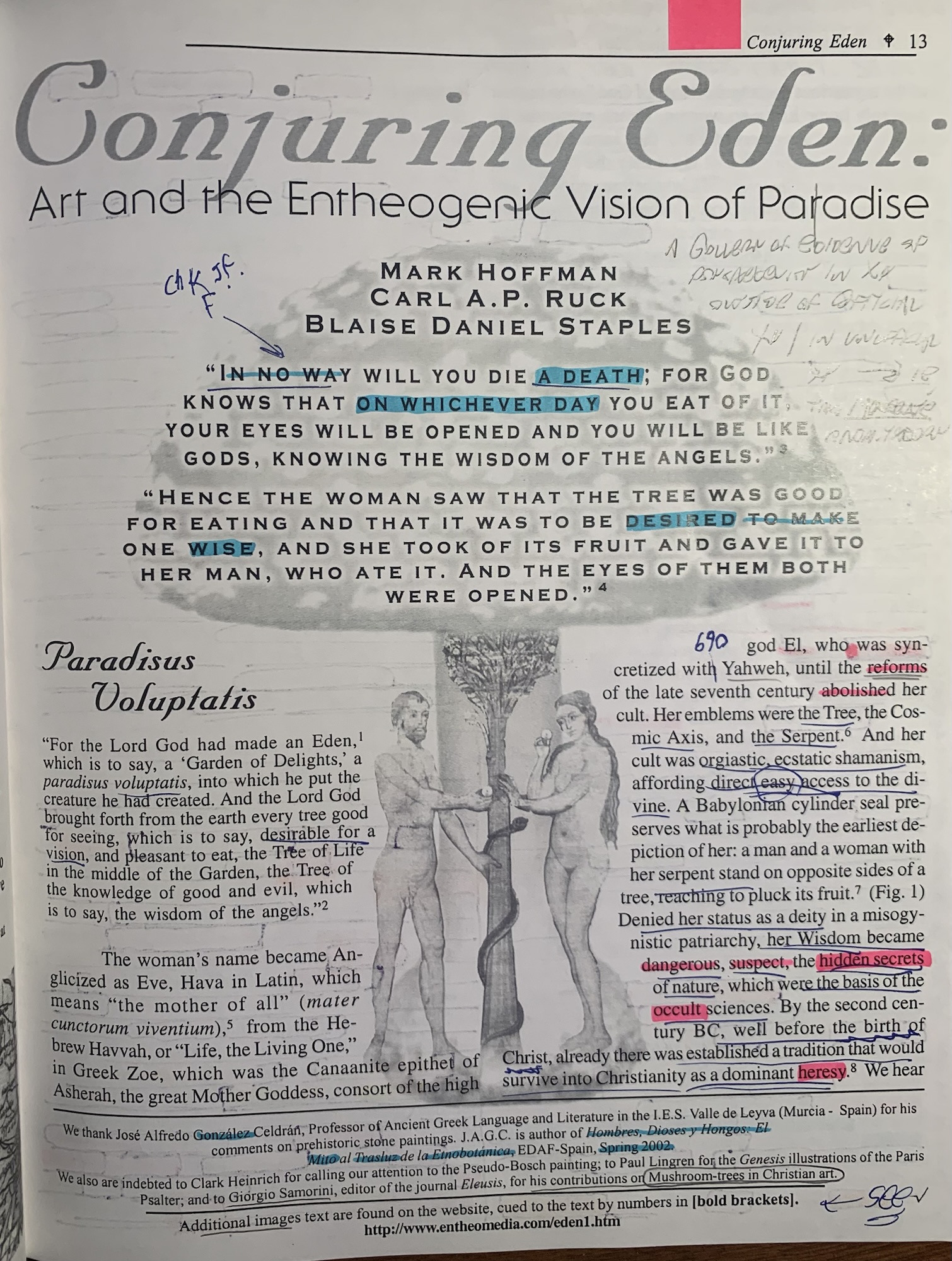
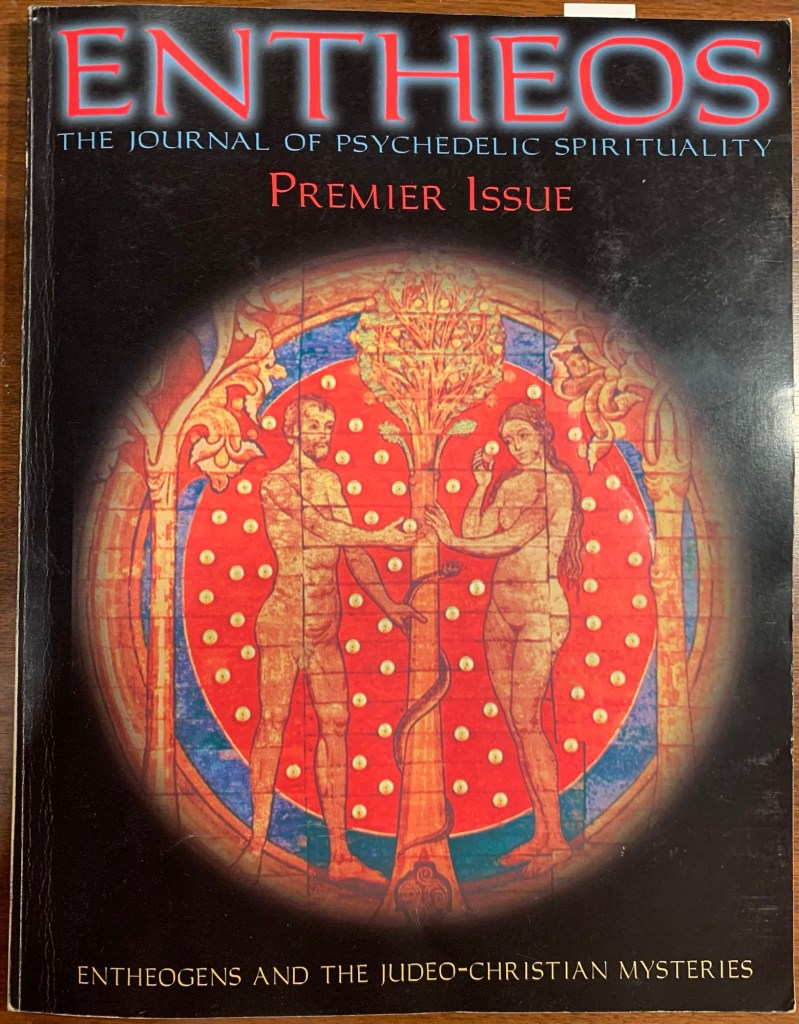
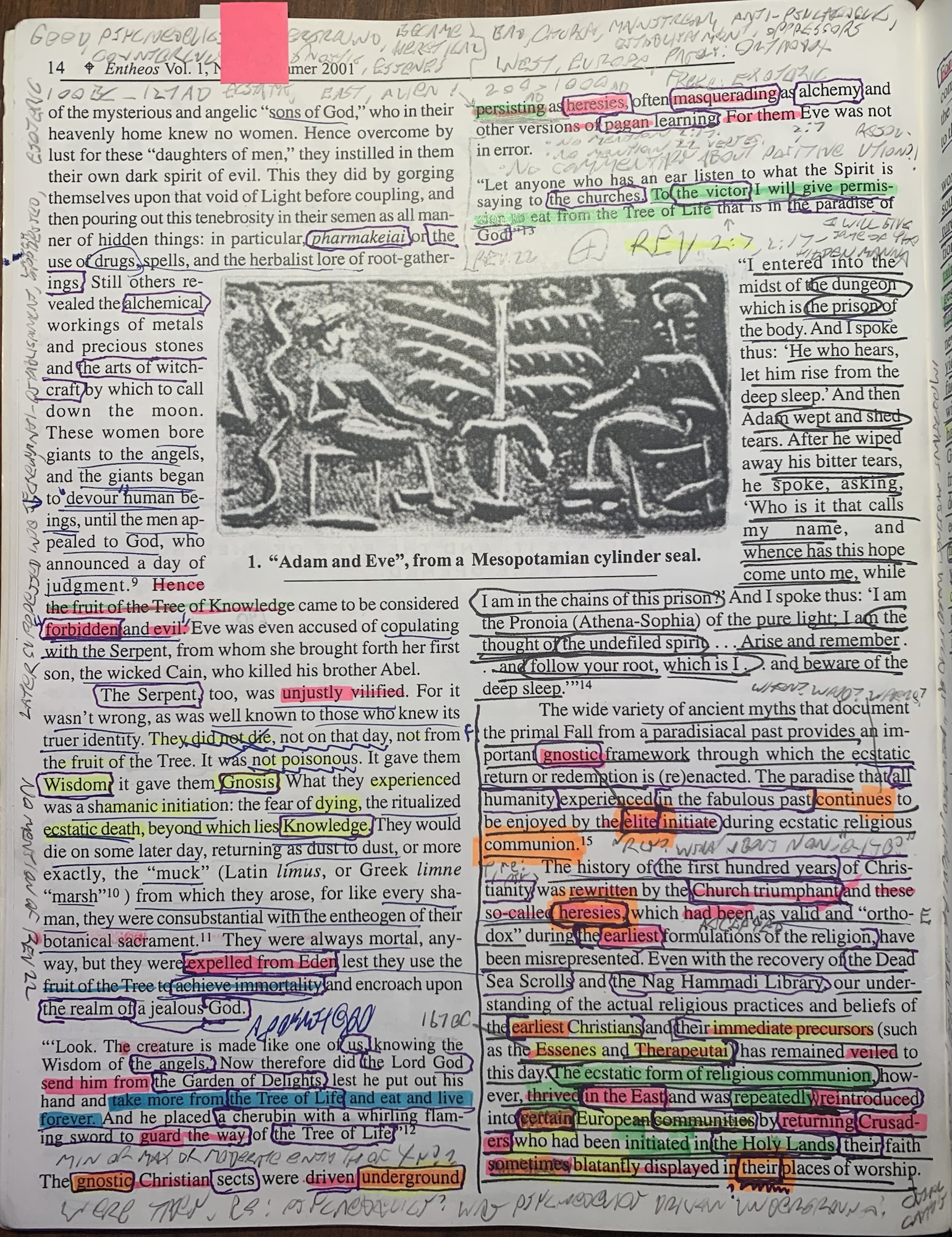
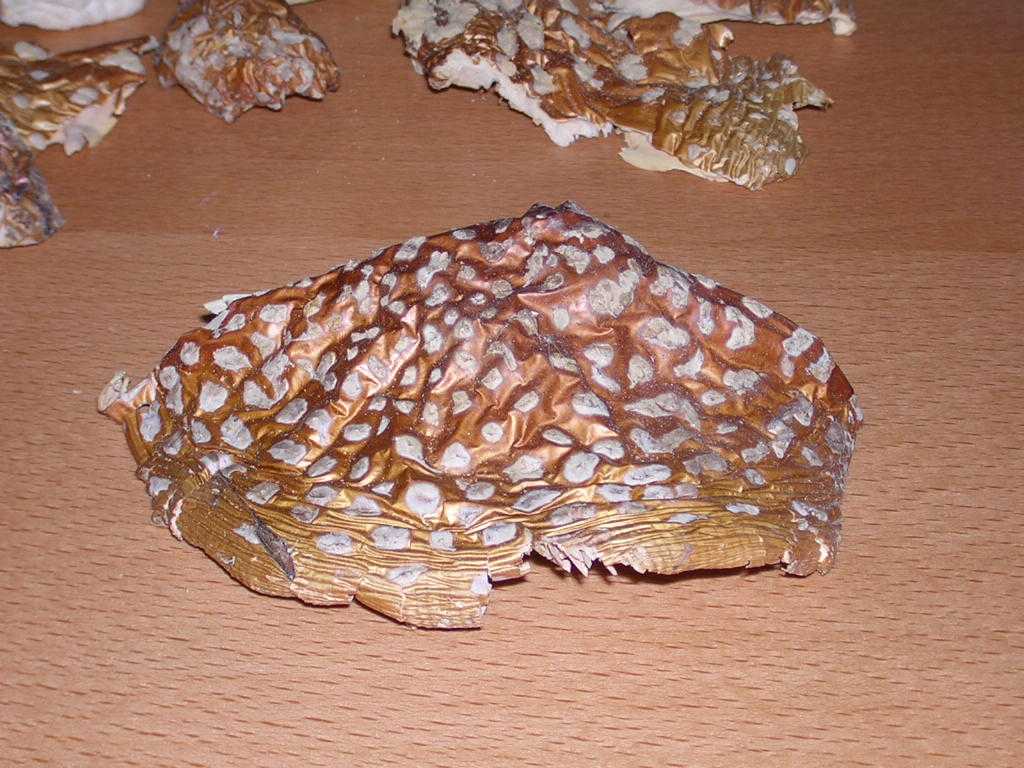
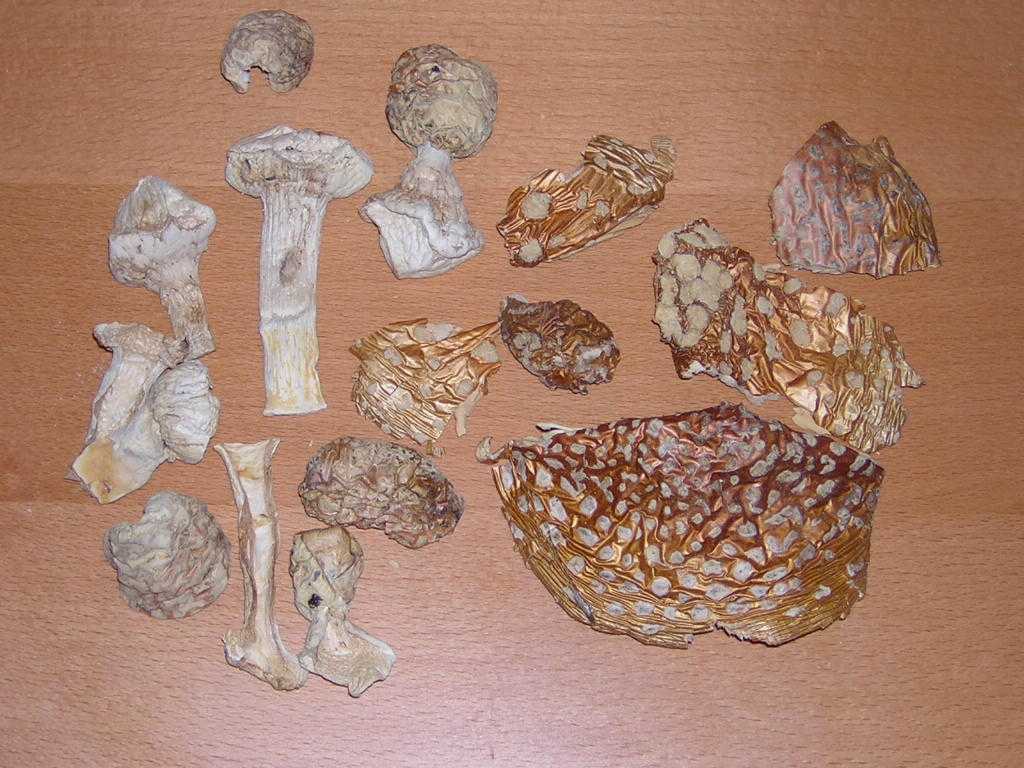
Contents, above, lists 1 item for each folio from Eadwine team; lists all of the Eadwine plates in Great Canterbury Psalter. On each, list how many:
msh caps,
msh trees, or
other msh shapes/forms,
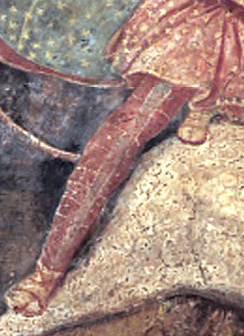
raised garment
other items of note for Transcendent Knowledge
take notes/inventory each image/folio. account for all eadwine folios.
2020 Library Images Are Dark/Dull, 2022 Are Colorful/Bright
To see what year a picture was captured by me and uploaded to the WordPress gallery, right-click picture, Copy Image Address, paste into address bar, see year in URL.
joke: Italian Umbrella Pines in Tree Canopy of One of the Italian Pines a.k.a. “Umbrella Pines” (Just to Clarify) a.k.a. “Parasols of Victory” for Those Really Astute Scholars
Joke: Detail of Italian Pine #2 of 10. Or of Parasol of Victory #2 of 10. Let the experts battle out this dispute amongst themselves. But DEFINITELY NOT mushrooms, Cubensis, Liberty Caps.
Dec 13 2020 9:17 a.m. — check John Rush book re: garment erection.
I propose that this theme of Christian art with garment lifted to the right, and looking back and up to the right, is equivalent to Greek art with billowing cloth.
Experiment to run; hypothesis: in Greek & Christian art, the billowing cloth indicating the the Holy Spirit altered state is usually to the left; to the figure’s right side.
Note important lesson learned: I found this overall image by a scattered isolated crop of upper left vine leaf tree that looks like key tree in f177. PREVIOUS Previously I only extracted crops of msh tree – bad idea. Show entire panel especially if contains any msh trees.
Left hand and Left foot (the egoic, possibility-branching worldmodel) giving no foundation/stability. Depending on God’s hand from the cloud holding Right hand, and Right foot holding one up (the transcendent, pre-existence worldmodel). https://gallica.bnf.fr/ark:/12148/btv1b10551125c/f177.item.zoom
Consciously Identifying with Mithras (Female/ Passive/ Control-Thought Receiver), Seeing Lack of Control Over Sol (Male/ Fate-Ruled Control-Thought Inserter)
Subject: Must adopt Heimarmene b/c coherence & power
Mithraism some tauroctonys show: one torch flame held up above cave ceiling, lighting-up (making us perceive) Sol, the uncontrollable injector of command-thoughts into the mind, as a control-thought-stream ray; and the other torch held down below the bull, lighting-up (making us perceive) the hiemarmene-snake underneath us — the hidden, vine-shaped rail that we are steered and forced along like in a haunted house carnival ride, or the branch-path a squirrel follows from the trunk to the branch the squirrel ends up at, or like a snake winding up a tree.
Thus: The higher, Pri1 referent that metaphors represent and mushrooms make us perceive, is personal noncontrol (commands are forced into the mind by Sol through rays of control), and The lesser, Pri2 referent that metaphors represent and mushrooms make us perceive, is frozen worldvine-heimarmene (the control-commands we receive, and all our thoughts, are pre-programmed in the sense of pre laid out along our path through life. Mushrooms are incidental, preliminary, once they have put us in the loosecog state and are lighting-up portions of the mind’s cave we couldn’t perceive in the OSC.
Apologetics for heimarmene
THE CRYSTALLINE [ie coherent] MODEL OF CTET
THE CRYSTALLINE PERFECT COHERENCE OF THE CRYSTALLINE BLOCK-UNIVERSE MODEL
The Theory and the initiate adopts heim b/c heim is perfect coherence, simplicity, comprehensibility, perfectly organized, 100% organized and specific. Perfect 100% explanatory coherence and power with no disadvantages (that it kills fw is to be counted as a tremendous advantage, not a disadv)
If your goal is complete conceptual coherence and a specific mmodel (100% tangibly comprehensibly specifiable, visualizable), then, heim co-entails nonctrl.
main central idea: cyb, receiver-and-executor of thoughts, vs. source of thoughts secondary idea: heim, worldline, worldvine-path, snake-shaped worldvine, circuit board trace, insulated electrically conductive wire
Copyright (C) 2011 Michael Hoffman. All Rights Reserved.
Consciously Identifying with Mithras (Female/ Passive/ Control-Thought Receiver), Seeing Lack of Control Over Sol (Male/ Fate-Ruled Control-Thought Inserter)
We tend to see Mithras as someone other than ourselves, but actually, that’s a half-truth.
The altered-state mind identifies with not the usual self-concept, but identifies as god-mode thinking instead; god-mode thinking possesses the mind and the identity. The mind in altered state identifies as Mithras — the higher, trans-personal, awareness of true ruler behind the scenes (sol) rather than as the usual lower, egoic, pseudo-autonomous, local locus of control.
Here I’m thinking the opposite of what I’d expect: I’m thinking that the mind, as personal control system, identifies with Mithras-thinking, and has no control over Sol. So I have 3 control-locsuses:
Luna; the usual lower, egoic, pseudo-autonomous, local locus of control.
Sol, the control-thought inserter, which is always uncontrollable
The mind of Mithras; my local control system but now identified as *higher* local, personal thinking; aware of uncontrollability of Sol the male control-thought inserter.
To my surprise, the above breakout seems realistic. I expected something more like:
An alien separate entity, Mithras, takes over the local mind, and local mind is alienated from Mithras, and takes a stance against Mithras. (that’s not what happens)
As the local mind, I’m identified with Sol (control-thought inserter), against far-away Mithras who I’m not id’d w/. (But, that’s not what happens.)
Mithras on the bull is not the usual personal egoic control agent idenity; Mithras is you, but not the usual the ordinary state of consciousness identity of you; Mithras is one’s other, higher self-identity.
Mithras is the higher, awakened self-identity, in contrast to the accustomed, lower identity.
This does not mean that the mind now gains control over its control-thought inserter.
It just means that the mind-of-Mithras, which is now my mind/identity, is aware, of *not* having control over the control-thought inserter.
The mind of Mithras is a helpless female mind, that is made by Sol to see the workings of the mind, and thus to sacrifice.
Sol, the worldline of control-thought inserter of thoughts, is forced to makes Mithra (the mind’s identity in its awake mode) sacrifice and disprove false power.
In the pact of Sol and Mithras, it is debatable whether Mithras is dominant, or Sol is dominant.
Mithras (the mind’s way of thinking in altered state), turns to look back behind virtual egoic control system, to look at Sol, the control-thought inserter, and away from the usual Luna (the passive control-thought receptacle).
Another control-locus identity is the Lion/fire figure outside the Zodiac, outside the fate-ruled cosmos.
Mithras is not all-dominant as I thought/expected; Mithras is female, passive, and helplessly looking back at Sol, the control-thought inserter.
Mithras is made to see Sol, thus made to sacrifice the bull, the power-claim of the virtual egoic control agent.
General key:
Mithras is you.
Luna is you.
Sol is you.
Lion-headed snake-wrapped figure is you.
The torch-holders are you.
Hope this helps.
Mithras is which aspect of you? __ The higher, god-mode thinking, trans-personal identification.
Luna is which aspect of you? __ The lower, egoic, pseudo-autonomous, local locus of control.
Sol is which aspect of you? __
Lion-headed snake-wrapped figure is which aspect of you? __
The torch-holders are which aspect of you? __
Jorjani Asserts Mithraism’s Wine Was Amanita
Yet more incontrovertible proof that the mixed wine of all Hellenistic Mystery Religions is native Christmas shamans’ secret Amanita cult!
🎄🍄🦌🦌🦌🦌🛷🎅🎁
Right here, this proves there are no mushrooms in Christian art. I can apply the same quality of Reasoning that the Minimal Mushroom theorists use:
According to the mushroom theory of Christianity, there’s a “secret Amanita Christian cult”.
But here we have a non-Christian Mystery Religion using Amanita.
Therefore, the “secret Amanita Christian cult” theory is debunked.
Therefore, there are no mushrooms in Christian art.
Q.E.D.
Jason Jorjani asserts: “They also drank wine at these Mithraeum communion banquets, and the wine was laced with Amanita muscaria mushrooms, which were intended to produce a kind of out-of-body experience.” 2:20 Video: Mithraism with Jason Reza Jorjani YT ch: New Thinking Allowed with Jeffrey Mishlove https://www.youtube.com/watch?v=NIQ0i_1eoJ8&t=135s Some say AM is a poor pick and Psilocybe is more ergonomic. Those people are heretics contradicting the prophet, John Allegro.
It’s a tautology to say “I agree with half and disagree with half of Jorjani.”
The important thing is, I AGREE WITH THE GOOD IMPORTANT HALF OF WHAT JORJANI GETS RIGHT: Mushrooms + David Ulansey’s theory of transcending fate & time.
42:40 “the god of time & fate, Mithra in combat with the lord of time and fate”
44:00 “overcoming fatalism, exteriorizing the dark side of the human psyche… fighting evil as if it’s an independent force outside of yourself is the worst form of fatalism.
“So, overcoming fatalism and reclaiming your free will and human self-determination is the same thing as being able to integrate the shadow side of the human psyche. That was the esoteric project of Mithraism.”
46:20 “amenable to taking elements of ancient israelite … monotheism that integrates the shadow side of the human psyche into a kind of programme for the cultivation of higher consciousness.”
“Shamanic Mithraic magic…” Calling Mystery Religion “shamanic” is like calling Christian contemplation “Meditation”.
32:20 “Mithraism is aiming for an integrated state of consciousness beyond dualistic; attempts to integrate the shadow side of the human psyche rather than suppress it.”
21:30 – “the god of time & fate, Chronos, is a lion-headed gorgon-headed deity whose body is entwined by a serpent. Perseus gives Mithras Perseus …. his harpe sword for Medusa’s head, or the dagger for Mithras slays bull as he looks away …”
Don’t say “Mithras looks away”; say “Mithras turns to look to the right, looking back behind him, and up, at Sol, who Mithras has made a pact with.”
If anything, Mithras looks away from Luna, not “looks away from the bull”.
Mithras {born from rock holding torch light in one hand, dagger knife in other hand} = to perceive is to sacrifice [3:28 p.m. December 12, 2020]
Video: Cult of Mithras Explained ch: ReligionForBreakfast, Apr 18 2017 Images of Mithras {born from rock holding torch light in left hand, dagger/knife in right hand} at 11:20 = 680s https://www.youtube.com/watch?v=xlF0gVedODE&t=680s
Mithras’ Right Foot on Ground, Left Foot on Powerless Bull
The control-thought inserter = Sol, the male locus of control, uncontrollable by Luna.
The control-thought receptacle = Luna, the female locus of control; the egoic virtual locus of autonomous control-power.
Brittle-minded Idiots with an 8th-Grade Level, 1-Dimensional Conception of “Evidence” & “Claims”
THE EGODEATH THEORY WOULDN’T EXIST AND I WOULDN’T BE WRITING THESE PAGES, UNLESS I BELIEVED THAT EVERY BOOK AND COMMENTARY AND ARTICLE — AND DISCUSSION-AREA “MOD” — IS CLUELESS CRAP THAT’S HALF FULL OF SH!T.
Torch downward [9:08 am December 12, 2020] makes visible the worldline of the control-thought injector, in the covered basket underneath the {egoic bull personal control system; personal virtual egoic control agent}.
One image, below, shows a cista mystica snake basket.
PantherX rightly comments “Couldn’t the torchbearers just as well symbolize spiritual enlightenment? [instead of literal astrological events]”
A fkkin DUMBASS “MOD”🔫 says a dimwit half-truth in response:
“Mithras studies are bedevilled by speculation. We cannot make such claims unless we have some actual evidence, and we do not.”
F*ck you, idiot — Mithraism studies would be NOWHERE without various types of what you maliciously and 1-dimensionally smear as “claims“, together with various types of “actual evidence”.
You’re full of sh!t, and the gist of PantherX’ comment is correct, spot-on, and supported by evidence of appropriate type.
Who the f made you gatekeeper, dumbass retard, trying to retard Mithraism studies: “We do not.” What fkking 1-DIMENSIONAL THINKING!
Either we “have evidence” or “do not have evidence”, according to this puerile 8th-grade-level argumentation/wording.
Jesus, hasn’t anyone read Ken Wilber’s great article, at start of his book Eye to Eye?
F*cking DUMBASS THOUGHT-BLOCKING MODs like this is why I broke-off and created the Egodeath Yahoo Group, from the GnosticsMillenium & JesusMysteries discussion groups.
Go to hell, idiot mods! Fkking retards. What a thought-blocking jerk.
The article itself reports speculations including:
The torch-bearers represent the light of the sun rising & the light of the sun setting.
Cautopates represents death; Cautes represents new life.
PantherX’s basic decoding-hypothesis, {torch} = spiritual enlightenment is much closer to correct and pertinent, than the proposals reported in the article/page.
{torch upward} = mushrooms make the mind able to see fatedness
{torch downward} = mushrooms make the mind able to see the normally hidden, uncontrollable source of control-thoughts
Ken Wilber’s first two essays in the book Eye to Eye (1983) disprove the false dichotomy, the incorrect notion that “observation” only applies to material science. I read this book around 1988. In the 2001 3rd Edition Preface, Wilber writes (condensed), in two fully quotable paragraphs:
“The essay “Eye to Eye” uses the simple three (the eye of flesh, the eye of mind, and the eye of contemplation) and suggests how even that simple scheme can shed considerable light on many recalcitrant philosophical and psychological dilemmas. “Eye to Eye” is still one of my favorite essays; the points it makes are more crucial than ever, since the orthodox mind, still embedded in scientific materialism, is deft tohigher or deeper truths.”
[‘deft to’ — Wilber must mean ‘deaf to’ or possibly ‘daft regarding’ (silly; foolish). ‘deft’ means skillful, quick, adept”]
“The essay “The Problem of Proof” presents a full-spectrum empiricism: sensory, mental, and spiritual experience, all of which are equally experiential and can be validated, with evidence that is open to confirmation or rejection by the community.”
Eye to Eye: The Quest for the New Paradigm Ken Wilber 3rd Ed. (with new Preface) https://amzn.com/157062741X
/ end of section about eye to eye copied from my other WordPress page
Mithraism — Think with the Female-Male Mind of Mithras, Look at Sol not Just Luna, Blade Ego-Bull and Its World, in Its Vulnerable Control-thought Receptacle
Shine torch light on the snake in the covered basket underneath the projected-image, “virtual egoic control agent” mask layer.
Remember the worldline of the control-thought injector, don’t forget that experiential perspective and revert to reincarnation into soul-thinking; freewill-premised, branching-possibilities-steering control-thinking.
The mind perceiving its puppethood to Heimarmene-Fatedness-Eternalism, is to “transcend” eternalism, to transcend its puppethood.
The shine-light-on-hidden-sh!t-going-on-in-your-control-power-center that snake underneath the empty mask as if the puppet/reflection local locus of control were autonomous when contrrol-thoughts are coming in unstoppably and uncontrollably, light makes visible through elevated –
Female-&-male Mithras turns to look back behind the mask of personal egoic control agent at Sol the real source of control , local control is at its mercy, at the mercy of whatever pre-existing control thoughts are in the near-future in the worldline of the control-thought inserter, at that time.
The mind is eternally laid out with those control-thoughts inserted at each time along the worldline of the control-thought-inserter — the snake we’re at the mercy of.
Mithras turns to remember and hang onto eternalism-thinking , and not turn to look left toward Luna and forget, and fall back into soul freewill possibilism-thinking and forget
DON’T FORGET ETERNALISM-THINKING
The mind seeks clear thinking regarding the personal control system, leads to purify/ purge/ disprove-away/ un-pollute.
If the goal is to get rid of or break free from possibilism-thinking, because it’s powerless and unstable and leads to cybernetic death/cancellation/complete overcoming of control/ loss of ballast of control.
This is actually can be similar to why McFakea stopped using the flesh of christ, he described meaningless of life but in some ways that’s similar to becoming able to, made able to think anything, to will anything, having no values, transcending usual thinking, values, ballast; shipwreck storm while possibilism-thinking remains.
possibilism-thinking + altered state = giving birth to a lion-faced serpent monster.
Female-&-male god Mithras instead of looking at Luna, he now looks at the hidden behind his projected mask of Luna, who was virgin, turns to the right in the eternalism-thinking direction, turning to look back to the right at Cybernetic theory.
Thinking with the mind of Mithras, torch light raising awareness and looking down at the double worldline of the distinct control-thought receptacle and control-thought injector.
The mushroomed mind now is brought to perceive the true locus of control, the hand hidden inside the puppet, now illuminated, made visible by the mushroom sacred self-sacrificing meal, the poison meal poisoning any remaining impurity, pollution, traces of egoic possibilism-thinking.
The mental conversion from possibilism-thinking to eternalism-thinking.
From the possibilism mental worldmodel of time, self, possibility, and control, to the eternalism mental worldmodel of time, self, possibility, and control.
TRANSFORMED FROM BRANCHING-POSSIBILITIES-THINKING TO PRE-EXISTENCE-THINKING.
“Branching-possibilities” = possibilism-thinking.
“Pre-existence” = eternalism-thinking.
That is verbose common words common parlance to say with pro jargon, efficiency, conciseness, of uncommon words used by the mind jammers. uncommon yet there are other meanings of these tech terms.
transformed from possibilism-thinking to eternalism-thinking
transformation of the mental worldmodel from possibilism-thinking to eternalism-thinking
Established clearly: “Look down underneath” definitely means “look at the cista mystica; the normally hidden snake-carved-in-rock”; “look at hidden worldline underneath/behind the mind’s personal control-thinking, frozen snake-shaped source of personal control-thoughts.
{look underneath] = perceive the frozen pre-existing worldline of personal control-thoughts
{look back behind you] = perceive the uncontrollable control-thought injector
WAY TOO EASY TO OVERLOOK: THE MEDIUM. THIS SNAKE IS CARVED FROZEN IN ROCK.
WE ARE LITERALLY SEEING, PERCEIVING, & LOOKING AT — LIT BY TORCH LIGHT IN THE UNDERGROUND DARK ROCK MITHRAUM CAVE,
A SNAKE EMBEDDED FROZEN IN ROCK, MADE VISIBLE BY TORCH LIGHT POINTED DOWN UNDERNEATH
A LITERAL CARVING OF A SNAKE EMBEDDED FROZEN IN ACTUAL LITERAL ROCK, MADE VISIBLE BY ACTUAL LITERAL TORCH LIGHT
caduceus = message, about two worldlines intertwined, male and female serpent king & queen co-rulers, rebis one body has Mithras but a female nature sacrificed the luna crescent bull.
The personal control system is revealed to consist of two distinct centers of power or apparent control locuses:
the control-thought injector
the control-thought receptacle
Look away from luna as locus of control, look toward the true ruler – the control-thought inserter along its worldline, Sol. virtual egoic control agent (consciously structured/modellled around the ctrc control-thought receptacle mis-taken as-if autonoumous, looks away; does not see the snake basket, the control-thought injector.
The control-thought injector is made visible to Sol.
Sol = the mind when aware of the control-thought injector.
Sol, unlike Luna, is able to see the workings of control in the mind, because the torch-bearer, giver of perceptibility, hands Sol a drinking horn of mushroom-wine. Mushroom = make perceptible rock snake in basket carved in rock.
The bull’s shoulder is its egoic locus of control power.
The egoic locus of control power is vulnerable to the control-thought inserter spear, become visible now in the snake in a basket.
blade = control-thought inserter,
serpent = the worldline of personal control-thoughts, of the blade, of the control-thought inserter, of the female+ now consciously is arrived the male part, the true ruler, the real locus of control & power. Not the projected and powerless female, control-thought receiver.
All Mithraism Material from My 2006 Main Article
Fatedness and Control in Astral Ascent Mysticism
Heimarmene or universal fatedness was centrally important in ancient astrological cosmology (Barton 1994), and was a major theme in Hellenistic-Roman astral ascent mysticism and religion (Cumont 1960).
Transcending astral fatedness involved ingesting holy food, ambrosial water, and astrological medicine (Fowden 1986).
Astral ascent mysticism centers around the dangerous gateway or “fatal” boundary crossing – the sphere of the fixed stars – representing the apprehension of Heimarmene and its control of one’s thoughts.
The stars wind around the world in a spiral pattern over time; this pattern is depicted by the Heimarmene-snake wrapped around the cosmos, cosmic egg, or Mithraic lion-headed gatekeeper figure.
The Potential for Control Breakdown and Transformation
Julius Caesar was authorized for power by his seizures, and the bull in his military’s Mithraic mystery-cult was wounded in the side, so the figure of Jesus was shown as similarly authorized by the spear-wound in his side, and the figure of the apostle Paul was portrayed as suffering from seizures.
The ability to make self-control seize or cancel itself dramatically is an afflicting thorn (2 Cor. 12:7-10), hole, or wound in our side, the innate cybernetic governance-failurethrough which the new, transformed life is born.
The new transcendence-aware self is given birth through the pride-killing disproof-wound in the side.
Jupiter Optimus Maximus means ‘all-good’ and ‘all-powerful’, as is hoped for from a protective deity when one is vulnerable to awareness of Heimarmene in the intense mystic altered state.
Mithras demonstrates that his arm wields control over the power of the bull’s shoulder. Sol is reconciled with Mithras in a pact, and given transcendent power. [ERROR – RECOGNIZING THAT SOL NOT LUNA WAS IN CONTROL THE ENTIRE TIME]
Sol becomes [IS NOW RECOGNIZED AS THE] an authorized charioteer, steering the quadriga with Mithras, guided by Mercury (or Hermes), who is holding a Fatedness-snake on a time-pole.
[ouch another “time-pole” half-on-target decoding — my December 2, 2013 lecture decoded {caduceus} message as:
the pre-existing injecting of control-thoughts by the control-thought source + the pre-existing reception of control-thoughts by control-thought receiver … along the time-pole axis; “time-pole” = “pre-existence of future worldline of ctri & control-thought inserter + control-thought receiver, thus demonstrably no control… the mind of Mithras is the seeing of the fated unstoppability of control-thought injection.
if I (the local virtual egoic locus of control) have no ability to stop my future pre-existing control-thoughts that my control-thought inserter is pre-existing injecting, ….
i not only see powerlessness of control-thought receiver, i see relative powerlessness of control-thought inserter, ruled by Fate.
I see a hierarchy of power/powerlessness.
Breaking-Up the Quadriga Carving into 3 Scenes, to Describe the Elements of Each Isolated Scene
top: Sol in altered state (billowing cape) steers the quadriga. Sol is the steersman. his steering is cast in rock. Able to perceive that Sol is the steersman carved into rock. Hermes in altered state makes Sol fly high to the perception of the real control-source, the sun. The mentality of Mithras turns to look back behind him to see this situation.
middle: female-male Mithras shakes hands with Sol the steersman cast in rock, able to see the workings of fate-ruled control levels (both the control-thought inserter + control-thought receiver)
bottom female-male Mithras with right hand controls, behind his mentality, control of the bull’s shoulder, control over personal control system’s power, Mithras stands (stability, groundedness), Sol kneels (perceives and remembers looking right, and sees the situation that Sol is the steersman controller frozen in rock with Mithras’ mentality in control over the will of the control-thought inserter (Sol).
A New, Clarifying Approach: Arrange the Tauroctony Elements into a Hierarchy of Control-Power: What Is the Revealed Chain of Control?
God the ultimate creator/controller of the block-universe world
the block-universe world
the control-thought inserter/injector
the control-thought receiver/receptacle
WHAT IS THE PERCEIVED/REVEALED CHAIN OF CONTROL?
The perceived/revealed levels of control; chain of control
(debatable/unclear – FIGURE IT OUT! — DONE.)
In terms of Core theory / the Cybernetic theory:
creator of the fate-controlled, pre-existing world
fate-controlled, pre-existing block-universe {rock} world
control-thought inserter/injector
control-thought receiver/receptacle
It turns out that the bull (the seemingly autonomous personal control system) is actually, under the hood/cover, a control-thought receiver/receptacle that is controlled by the control-thought inserter/injector {sol} which is controlled by the pre-existing worldline of personal control-thoughts which is controled by god/ Zeus/God/ the Creator/ the Lion outside the fate-controlled cosmos
_____
The mind changes:
From: this simple-single locus-of-control: the bull (the seemingly autonomous personal control system)
To: this control-hierarchy: God/ Zeus/ the Creator/ the Lion the pre-existing worldline of personal control-thoughts the control-thought inserter/injector {sol} a control-thought receiver/receptacle
____
In terms of Mystery Religion mythemes:
The trans-cosmic lion born outside of the rock
The block universe/ snake (or m/f snake-pair)-in-rock/ pre-existence/ Fatedness
Mithras
Sol/charioteer
Luna/ bull/ local virtual egoic locus of control, in the ordinary state of consciousness
[11:37 a.m. December 14, 2020] – chariot drawn by 2 Drakones = the mind’s personal control system is controlled by 2 snakes = controlled by 2 worldlines = controlled by 1 Male worldline + 1 Female worldline = the control-thought inserter/injector + the control-thought receiver/receptacle This perception of control-reality occurs in the fate-ruled sphere-and-gateway of the fixed stars (Heimarmene);
Tauroctony elements for Creator-> block universe-> control-thought inserter> control-thought receiver:
snake in rock = the fate-controlled worldline frozen into the pre-existing block universe [fwfb] the worldline frozen into the block universe [wfbu] the worldline of control-thoughts frozen into the block universe [wctfbu]
Lion outside fixed stars/heimarmene
snake in rock – the fate-controlled worldline frozen into the pre-existing block universe
Sol – the control-thought inserter/injector
Luna – the control-thought receiver/receptacle
self-sacrificing, self-threatening, ending the dominance/claim of lower thinking, sacrificing the centrality/origin-claim of the egoic locus-of-control power claim/assumption. by demonstrating the threatening of it, acknowledges the actual control-chain:
God the ultimate creator/controller of the block-universe world
‘Sacrifice’ is a mental attitude of cooperative dependence on that which gives thoughts, your will having been overcome and made to will its own demise as an empty delusion, turned against itself by now-revealed transcendent power.
Sacrifice offers up and hands over your claim to effective independent power, as opposed to battling against your near-future self and the inherently overpowering source of all thoughts and movements of will. [a fate-ruled source of personal control-thoughts — at once, the control-thought inserter is all-powerful over the mind, and yet at the same time, that control-thought inserter is itself powerlessly subject to the Creator/ block universe/ even higher hidden source of control. in altered state becomes perceptible the whole chain of 3 levels of control:
the Creator
the pre-existing block universe
the control-thought inserter/injector
the control-thought receiver/receptacle
The mind in altered state switches from “simple autonomy of control” thinking (the bull, Luna, the Maiden), to “multiple (like 4) levels-of-control” thinking:
simple “virtual egoic autonomous locus of control” thinking:
the ordinary state of consciousness: simple virtual egoic autonomous locus of control
the altered state: multi-level control, with local non-control: The mind of Mithras (the Mithras-mode, Mithras-shaped mind; God-mode thinking) perceives and enables demonstration of this chain-of-control situation.
Creator/god outside Fatedness; creator of the fate-controlled, pre-existing world
the fate-controlled, pre-existing block-universe {rock} world
creator of the fate-controlled, pre-existing world
fate-controlled, pre-existing block-universe {rock} world
control-thought inserter/injector
control-thought receiver/receptacle
“Sacrificing your autonomy-claim, acknowledging your dependency on that which ultimately gives you your thoughts, brings mental peace and harmony and calms turmoil.
You are relieved from increasing your attempt to grasp and secure power over your own power.
You are relieved from testing the power of your autonomy and the limits of your self-control thoughts.
Roman sacrificial altars are typically shown with a libation of concentrated, psychoactive unmixed wine being poured on the altar, which opens up a channel to the gods, along with the sacrificial animal such as the unresisting, cooperative bull.
The sacrificer pouring the libation has a cloth behind the head, representing the spiritual ecstatic state, where awareness is positioned outside of the usual mind, perceiving its functioning.
Mithras overpowering and sacrificing the bull represents the delusion of self-originated control-power being given over to the transcendent level, with Mithras’ arm wielding the bull’s shoulder and his knife piercing and fatally wounding it.
The wound in the bull’s side indicates Mithras demonstrating his power over the bull’s control-power.
Mithras wrestles and overpowers the initiate’s control of their will, reconfiguring their understanding of control-power to account for the transcendent givenness of one’s thoughts.
Sol represents the mind’s awareness, which in the dissociative state is positioned ecstatically outside the mind’s functioning.
The mind is possessed and overtaken by Mithras.
Pure awareness passively watches the sacrificial disproof of the mind’s claim to wield independent personal control-power.
A tauroctony fresco in a Mithraeum shows the self-command bull being sacrificed near the shoulder.
A Heimarmene-snake is inevitably drawn toward ingesting the entheogenic blood; often the snake approaches a wine-mixing bowl below the bull instead.
A blue-stemmed Psilocybe mushroom appears in Mithras’ leg and garment, with the stem proceeding through 7 steps, up to the stars.
The billowing cape behind Mithras indicates the ecstatic state.
The sphere of the fixed stars is shown on Mithra’s cape, inside the underworld cave.
The god forcefully pins the bull, who is paralyzed and unable to stand.
Mithras’ feminine features indicate the soul abducted and married by divine power.
Mithras turns to knowingly look back behind the conventional self-concept to see the source of thoughts and movements of the will.
Bibliography
Hoffman, M. A., C. A. P. Ruck, and B. Staples. “The Entheogenic Eucharist of Mithras”. Entheos 2.1:13-46 (2002).
Ulansey, D. “The Eighth Gate: The Mithraic Lion-Headed Figure and the Platonic World-Soul”. Forthcoming; online.
/ end of Mithraism material from my 2006 Main Article
[Below is a copy of this Ulansey article for markup. My comments in square brackets. Emphasis added. Condensed for clarity. -mh]
In the Barberini mithraeum in Rome, a serpent-entwined figure standing on a globe is depicted floating in the center of a zodiac which arches above the bull-slaying scene. Or, to be more precise, the globe on which the figure is standing is located in the zodiac, while the figure’s body extends above the zodiac into the region just beyond it. ____
Mithraic leontocephaline or lion-headed figure always has a snake winding around him.
[within the snake-wrapped cosmos, in the altered state, we perceive that we are rock, wrapped in a rock snake, imprisoned in our {rock worldline prison/jail}; a person’s life is embedded imprisoned captive in rock, along a snake-shaped path -mh]
His position at the level of the zodiac [sphere of the fixed stars; Heimarmene] and just beyond suggests that there is a special connection between the leontocephaline and the region of the zodiac [fatedness; being ruled and controlled helplessly by fate, by eternalism].
The body of the leontocephaline is decorated with the zodiac, or stands on a globe representing the sphere of the fixed stars, on which the zodiac is located.
____
This connection between the leontocephaline and the zodiac can be clarified by noticing that in Origen’s Contra Celsum, Celsus describes a Mithraic symbol consisting of a ladder with seven gates, each associated with one of the seven planets [first the Moon, Mercury, Venus, the Sun, Mars, Jupiter, then Saturn], while at the top there is an eighth gate associated with the sphere of the fixed stars and leading to the region beyond that sphere.
The leontocephaline holds the key to the celestial gates
[the key = transformation of the mental worldmodel from possibilism to eternalism. This key gets the initiated mind into the domain of eternalism and of transcending eternalism. The key to the gateway to enter “the Eighth and Ninth” spheres/regions -mh]
The leontocephaline is never linked in Mithraic iconography with any of the planets [spheres-and-gateways #1-7], but is clearly associated with the zodiac [sphere-and-gaetway #8], he has a special connection with Celsus’ eighth gate— that of the sphere of the fixed stars*AND* the realm beyond it— since it is on that sphere that the zodiac lies.
[It is a fallacy, to separate:
The 7th, final planetary sphere-and-gateway, Saturn, scyther-away of childhood-thinking, from
The 8th sphere, the sphere-and-gateway of the fixed-stars, which rules over the cosmos with fatedness/ eternalism/ heimarmene.
The spheres-and-gateways of Saturn and fixed stars are one and the same.
Saturn = sphere of fixed stars = the mind is made to sacrifice possibilism-thinking while the mind is made to enter the domain of eternalism-thinking (no-free-will/ heimarmene/ dependent puppethood/ eternalism).
Of course this proposal is tantamount to collapsing the entire model of “sequence of initiations” into a single moment-of-complete- all-at-once initiation.
The function of separating the Saturn gateway from the fixed-stars Zodiac gateway, is to express “initiation / purification by stages, in a series of 9 initiations”.
–mh]
____
In addition, the painting at Barberini depicts the region outside of the zodiac— into which the leontocephaline’s body extends– in a specific way: above the zodiac is an arch containing a row of six altars with fires burning on them.
Scholars have often assumed that these fires represent the planets. However, there are two decisive arguments against this explanation.
First, the fires are depicted as lying beyond the zodiac, which is of course contrary to all Greco-Roman astronomy, in which the planets are understood as being closer to the earth than is the sphere of the fixed stars on which the zodiac is located.
And second, of course, there are only six fires, while the planets are always seven in number.
In response to the problem of there being only six fires, it has been suggested that the leontocephaline either hides or substitutes for a seventh fire.
However, this suggestion is untenable, since a Roman relief from the Esquiline remarkably resembling the Barberini painting, there are clearly only six fire-altars above Mithras.
In fact, there also exist tauroctonies in which there are nine fire-altars or four fire-altars above Mithras, indicating that the specific number of altars was not fixed.
____
the Mithraists understood the cave in which Mithras kills the bull as symbolizing the cosmos, since in the Esquiline relief the arch separating Mithras from the six fires above is the roof of the cave, while in the Barberini painting exactly the same position and role are filled by the arch of the zodiac.
____
Second, the Esquiline relief also includes a second set of fire-altars, this time indeed numbering seven, at the very bottom of the image. Most scholars are now agreed that the animal figures in the bull-slaying icon represent a series of constellations located on the sphere of the fixed stars.
the seven fires placed in the Esquiline relief below the bull-slaying — that is, below the sphere of the fixed stars– are in the proper astronomical location for the planets.
Thus the lower set of fires agrees both in number and position with the planets, and thus most likely does represent the planets, while the upper set of fires does not fit with the planets either in number or in position.
____
But if the six upper fires in the Esquiline relief and the Barberini painting do not represent the planets, what do they represent?
An obvious answer to this question is immediately apparent if we merely take seriously the fact that the fires in the Barberini painting are clearly located outside of the zodiac, and hence beyond the sphere of the fixed stars. For throughout antiquity there existed a widespread belief that the outermost region of the cosmos was occupied by a realm of fire.
[{fire} = the Psilocybe altered state burns away any possibilism-thinking pollution remaining
cow-dung blue-stem mushrooms = Psilocybe cubensis liberty cap mushroom = Psilocybe semilanceata -mh]
____
Deriving from the experience of the light-giving quality of the stars and planets, the light- and heat-producing quality of the sun, and the upward-moving tendency of fire, the earliest Greek philosophers already identified the sky as a realm of fire.
As Charles Kahn says, “Both Parmenides and Anaxagoras seem to have identified the aither or sky with elemental fire….” and Anaximander’s cosmology placed a sphere of flame at the outer boundary of the universe.
The Pythagorean Philolaus appears to have held a similar opinion, since according to Aetius he said that in addition to the existence of a fiery “hearth” at the center of the universe there is “…again another fire at the uppermost place, surrounding the whole.”
____
Plato as well seems to have adopted the idea of fire as existing in the furthest region of the cosmos in Timaeus 62D-63E, since, as F.M Cornford notes in his commentary on this passage, for Plato the elements are here understood as arranged “in a definite order: fire around the circumference (where it is the chief constituent of the stars’ bodies), next the spheres of air and water, and earth at the center.”
____
The idea of a fire at the outermost boundary of the universe later became a commonplace in Stoic thought.
Cleanthes, for example, according to Cicero taught that “the most unquestionable deity is that remote all-surrounding fiery atmosphere called the aether, which encircles and embraces the universe on its outer side at an exceedingly lofty altitude.”
Chrysippus, notes David E. Hahm, speaks of “the aether, which is the name he gives to the fire at the periphery of the cosmos.”
____
Among the Middle and Neo-Platonists there was also a widespread belief that the outermost region of reality was a fiery domain.
Based on Plato’s famous allegory of the cave and of the sun-filled realm outside of it, the doctrine arose that beyond the universe– in the “place beyond the heavens” (hyperouranios topos) of Phaedrus 247B-C– there existed a hypercosmic sun or light (I have discussed this in detail in my article “Mithras and the Hypercosmic Sun“). Article: Mithras and the Hypercosmic Sun David Ulansey todo: also could excerpt and comment on. {born from rock} = {born from rock-snake-wrapped rock egg} = “outside the sphere-and-gateway of the fixed stars (Heimarmene)”; transcending eternalism; ransomed/redeemed and set free from imprisonment in the frozen-rock eternalism-prison. Journal print page layout: https://c225284de2bfd8ddba3a-1f65ea6b54cffc44ac06d29d1bbf1a1c.ssl.cf5.rackcdn.com/ws_02_ulansey.pdf Ulansey’s webpage of the article: http://www.mysterium.com/hypercosmic.html
An early example is found in Philo’s De Opificio Mundi VIII.31, where he speaks of
a star above the heavens, the source of those stars which are perceptible by the external sense, and if any one were to call it universal light he would not be very wrong; since it is from that the sun and moon, and all the other planets and fixed stars derive their due light….[10]
And a bit further on, in XXIII 69-71, Philo pictures a mind journeying through the world and then up through the heavenly spheres until it [the mind] passes the outermost boundary of the universe [ie the sphere-and-gateway of the fixed stars; the Zodiac -mh], at which point “rays of divine light are poured forth upon it [the mind] like a torrent, so as to bewilder the eyes of its [the mind’s] intelligence by their splendour.”
____
Finally, an exact parallel to the picture in the Barberini mithraeum of a fiery realm outside the cosmos is found in the Chaldaean Oracles.
In the Chaldaean cosmology, the highest world is beyond the cosmic sphere (hyperkosmios or hyperouranios)[12] and is called the fiery cosmos or the “Empyrean” realm (kosmos pyrios or empyrios).
[good, the expected confirmation of my Theory/prediction/understanding — “the Empyrean” = outside the cosmos = outside the sphere-and-gateway of the fixed stars (Heimarmene); Empyrean = transcending eternalism or eternalism-thinking. -mh]
____
Given all of this evidence for the ancient belief in the presence of a fiery realm at the outermost place in the universe, the depiction in the Barberini painting of fires just outside the boundary of the cosmos makes perfect sense.
Indeed, additional support for a connection between the leontocephaline and the aetherial cosmic fire can be found in the fact that the Mithraic leontocephaline, as is well known, is frequently associated with fire-symbolism in a variety of ways, extending even to the existence of statues of the leontocephaline apparently designed so that fire could be sent shooting out of its mouth.
____
However, an additional factor in the Barberini painting may help us gain further clarity about the significance of the Mithraic leontocephaline.
It is notable that the placement of the leontocephaline at Barberini seems designed to emphasize the concepts of boundary and boundary-crossing.
The globe on which the figure stands is located exactly on the arching zodiacal boundary of the universe, while the figure itself extends beyond that boundary as a kind of incarnation of the process of boundary-crossing.
The leontocephaline has a connection with the idea of a cosmic boundary, then crucial pieces of his cryptic symbolism take on a new importance.
[Ulansey identifies the mytheme of {transcending the sphere-and-gateway of the fixed stars (Heimarmene)} but he doesn’t exactly identify the referent; the specific item in “things that are observed and experienced in the altered state”, in terms of Psilocybe-induced loosecog, altered-state transformation of the mental worldmodel from possibilism-thinking to eternalism-thinking. -mh]
The key that he always holds — the key is one of the most appropriate of all symbols of boundaries and boundary-crossing.
Thus the goddess Hekate, mistress of boundaries and crossroads, was from Hellenistic times on often associated with the symbol of the key.
And in his work On the Genius of Socrates 591 A-C, Plutarch describes how the three Fates guard the thresholds between cosmic realms, each of them holding a key.
[“the three Fates” — there’s my number 3 that I was looking for to decode {the three snakes}; the chalice cup of 3 snakes
Significantly, the first of these cosmic thresholds, presided over [ie guarded] by the Fate Atropos, is that which separates what is outside the cosmic sphere from what is inside it.
[2nd & 3rd??]
____
The key held by the Mithraic leontocephaline, then, indicates his role as a type of boundary guardian: specifically, as we have seen, the Barberini symbolism shows that he is associated with the boundary between what is inside and what is outside the cosmic sphere.
But what could be the significance of this boundary such that the Mithraists were motivated to personify it in the form of a powerful divine being?
____
An answer to this question can be found in the fact that the Mithraists were surprisingly not alone in the seemingly peculiar act of personifying the cosmic boundary.
For in the Chaldaean Oracles (where, as we saw earlier, it is taught that there exists beyond the universe a realm of fire) the boundary between the cosmos and what is beyond was personified in the figure of the goddess Hekate, a central divinity in the Oracles’ religious system.
____
The figure of Hekate in the Chaldaean Oracles derives ultimately from speculations on Plato’s description of the World-Soul in his dialogue Timaeus.
There, Plato says that the Demiurge– the creator of the universe– as part of the process of creation made a soul for the cosmos as a whole.
Plato says that the Demiurge set this “World-Soul” in the center of the cosmos “and caused it to extend throughout the whole and further wrapped [the body of the cosmos] round with soul on the outside….”
____
The World-Soul of Plato became the object of extraordinarily complex and far-reaching speculations in subsequent Platonic and other Greek philosophy, but it always retained its role as the boundary of the cosmos and the mediator between the cosmos and the realm beyond.
The fact that in the Chaldaean Oracles this abstract entity became personified as the goddess Hekate shows that it is at least plausible that the Mithraic leontocephaline could represent a similar personification of the cosmic boundary.
[lion-in-rock-on-Zodiac = crossing boundary — REGARDLESS OF WHETHER we describe that as:
Transcending possibilism-thinking to reach eternalism-thinking.
Transcending eternalism-thinking to reach ultra-transcendent thinking.
{fire} = altered state = crossing boundary (regardless of issue of “transcending eternalism”) -mh]
This plausibility is strengthened by the fact that the Chaldaean Hekate, like the Mithraic leontocephaline, is constantly associated with an array of symbols involving fire.
____
But the key piece of evidence supporting our hypothesis that the leontocephaline is a symbol of [crossing] the cosmic boundary, and that he is linked, like the Chaldaean Hekate, to the Platonic World-Soul, lies in the most consistent of all of the attributes of the leontocephaline: namely, the snake wrapped around him.
____
Many explanations for the presence of the snake wrapped around the leontocephaline have been offered, focusing on the snake as a solar symbol, as a symbol for cosmic time, or as a symbol of the celestial ascent of the soul.
However, the connection between the leontocephaline and the cosmic boundary and World-Soul that we have been tracing here suggests an additional factor: for there exists solid evidence that the World-Soul in its role as boundary of the universe was symbolized as a serpent.
[ {snake} = boundary between possibilism-thinking & eternalism-thinking Pretty equivalent: {snake} =boundary between eternalism-thinking & transcendent-of-eternalism-thinking The radical thing for mind to deal w/ is, in general, transformation of the mental worldmodel from possibilism-thinking to eternalism-thinking. eternalism-thinking could include “t’ding eternalism”. -mh]
____
This evidence is found in Origen’s Contra Celsum, immediately following his discussion of the Mithraic eight-gated ladder.
In Book VI, chaps. 24ff., Origen discusses the teachings of the Gnostic sect of the Ophites or serpent-worshippers as expressed in certain diagrams of theirs.
In one of these diagrams, he says, was “a drawing of ten circles, which were separated from one another and held together by a single circle, which was said to be the soul of the universe and was called Leviathan.”
Origen goes on to explain that this Leviathan is a great serpent, symbolizing the soul [‘soul’ implies freewill thinking; not spirit] that permeates the universe.
That this serpent specifically represents Plato’s World-Soul is proven by the fact that according to Origen the diagram showed Leviathan twice, once in the center and once around the circumference, just as in the Timaeus Plato said that the World-Soul was placed in the center of the cosmos and also wrapped around the outside.
Other Gnostic systems also made use of this symbol of a serpent wrapped around the outside of the universe: according to the Pistis Sophia, “The outer darkness is a great dragon, whose tail is in his mouth, outside the whole world and surrounding the whole world.”
[ulan doesn’t mention “outer darkness”, he was talking about “world soul” ??]
____
Here we see the Platonic World-Soul as boundary of the cosmos symbolized by an encircling serpent.
The parallel with the Mithraic leontocephaline as the serpent-entwined symbol of the cosmic boundary
there is in Mithraic iconography another figure besides the leontocephaline who is depicted as entwined by a serpent: namely, the god Oceanus.
Oceanus is often depicted in the tauroctony beside the image of Mithras ascending in the chariot of the sun, and is easily identifiable by associated watery symbols such as waves, a boat, an oar, a vase, or a sail.
[sail = billowing cloth altered state]
However, a number of times the figure beside the image of Mithras in the chariot is depicted as entwined by a serpent in exactly the same way as the leontocephaline.
As Manfred Clauss and M.L. West have noted, this serpent-entwined figure must also be Oceanus.
But why is he entwined by a snake exactly like the leontocephaline?
Fig. 7: Oceanus (on right) with waves and holding sail over head (CIMRM 2244)
Fig. 8: Oceanus (on right) entwined in serpent (CIMRM 1958)
Our discovery of the leontocephaline’s connection with the boundary of the cosmic sphere provides an obvious answer to this question, for of course the most important function of Oceanus in antiquity was as a symbol of the outermost circular boundary of the world.
The fact that both the leontocephaline and Oceanus are identically entwined by a serpent, therefore, makes perfect sense: the serpent around each of them symbolizes their roles as ultimate boundaries.
And, conversely, the fact that in Mithraic iconography Oceanus– the boundary of the world– is entwined by a serpent provides remarkable support for my claim that the serpent-entwined leontocephaline also symbolizes the cosmic boundary— and hence the Platonic World-Soul– as indicated by the Barberini painting.
____
In the Acts of Thomas, the same text that includes the famous Gnostic Hymn of the Pearl, the apostle Thomas is confronted by a serpent.
The serpent speaks to him, and at one point says, “I am son of him who girds the sphere about; and I am kinsman of him who is outside the ocean, whose tail is set in his own mouth.”
Here, exactly as in the Mithraic evidence, we find an enclosing serpent related simultaneously to the world-containing ocean and to the boundary of the cosmic sphere.
____
If the leontocephaline did indeed function partly as a symbol for the ultimate boundary of the universe, this would be in complete harmony with the theory I proposed in my book The Origins of the Mithraic Mysteries that Mithraism began as a religious response to Hipparchus’s discovery of the precession of the equinoxes.
[ie Mithraism uses mythemes as a symbol/analogy to describe things that are observed and experienced in the altered state -mh]
Mithras represented the force responsible for moving the entire cosmic sphere in the way revealed by Hipparchus’s discovery
Mithras was understood as a divinity whose essential power lay in the hypercosmic realm.
[personal control power isn’t based in possibilism-thinking; personal control power is based in eternalism-thinking & hyper/trans eternalism-thinking).]
A symbol for the division between the cosmic and hypercosmic realms would have come to play an important role in the iconographical repertoire of his worship.
Experiment: I’m starting this WordPress page to look into this site. As feared, worst-case: 404, for the .org domain. Looks like they went with the .com domain instead: http://ancientesotericism.com –
Curious: even the .com website, in its About texts, says “.org”, but looks like they lost that domain.
The only thing I know about this website is that it’s mentioned in a 2015 newsletter of esotericism scholarship: The Newsletter of the European Society for the Study of Western Esotericism.
The site is about Western Esotericismas manifested inancient Mediterranean religion.
“In 2014–15, Sarah Veale and I both focused our energy on continuing to develop and update the NSEA website, ancientesotericism.org. [sic; .com]
Traffic and subscriptions increased significantly in the past year.
The site has also begun to be used by members outside of the ESSWE and has garnered mention in the ancient religious blogosphere more widely.
It is succeeding in fulfilling its purpose as a bridge between scholars working in:
Western Esotericism.
Ancient Mediterranean religion.”
Website upper left About text:
“AncientEsotericism.org is the website for the Network for the Study of Esotericism in Antiquity (NSEA), a thematic group associated with the European Society for the Study of Western Esotericism (ESSWE).
Our website provides resources and information for students and specialists of ancient esoteric thought, history, and literature.”
Ancient Esotericism.org is the website for the Network for the Study of Ancient Esotericism (NSEA), a thematic network associated with the European Society for the Study of Western Esotericism (ESSWE). NSEA specializes in the study of esoteric phenomena of the ancient period and provides contact for specialists of ancient esoteric thought, history, and literature.
This website is intended as a resource for scholars and students.
While
the ancient sources (Gnostic, theurgic, Neoplatonic, Hermetic, etc.) of Western Esotericism
possess enormous importance for the development of esoteric currents from the fourteenth century onwards, there remains only a minimum of interaction between the antiquity experts and their (proto)-modern colleagues.
The Network therefore is intended to:
Introduce scholarship on ancient esotericism to students of Western Esotericism.
Serve as a forum in which to exchange ideas, notes and references, etc. outside of other professional bodies which are not concerned with esotericism per se.
Provide a junction of the many resources online that can serve as aids in the study of this fascinating and difficult material (dictionaries, textual corpora, blogs, etc.).
Subject: Re: More effective entheogen scholarship and theorizing
Group: egodeath
Message: 7457
From: egodeath
Date: 25/12/2015
Subject: Re: Entheogen theory of myth is half-correct
Hatsis suffers from the single-meaning, surface-meaning fallacy, literalism, like when people say the spaceship in the song does not refer to LSD, because it refers to a spaceship — as if poetry can only have one, clear cut, surface, literal meaning.
Specifically, Hatsis suffers from lacking the correct referent domain: religious mythology refers to entheogen-revealed experiencing of the Eternalism mental model of time, self, possibility, and control.
Mythology and acid popsike lyrics have two domains of meaning: the metaphor domain (whatever the specific surface analogy is; this is an open set; it could be any domain of metaphor), and the referent domain, which is entheogen-induced experiencing of Eternalism (a single specific domain that does not vary).
The New Testament maps the single fixed referent domain (Entheogen Eternalism) to, most notably and relevantly, two metaphor domains: the metaphor domain of mystery religion, and the metaphor domain of socio-politics.
“Put the needle in the groove” — there’s no way this can refer to intercourse, because plainly it is about playing a record. This meaning prevents mapping to a different meaning (according to tone-deaf outsiders).
Hatsis operates from an assumed paradigm of Literalist OSC Possibilism, so he is only prepared to read a single, brittle, literal meaning — like the word ‘die’ for him has not yet been problematized; he shows no awareness of the need to interpret the word ‘die’.
For him, ‘die’ means simply bodily physical death, and that’s it; there’s no possibility in his mind of it meaning any other kind of death or anything other than literal bodily death.
Even academics (clueless outsiders to the riddle) recognize that the Eden tree ‘die’ refers to “spiritual death”, as they put it.
He says these mushroom trees do not refer to mushrooms because they refer to trees and that this is simply how the school arbitrarily by convention depicts trees: they do it in an abstract mushroom-like way (and this is a secular book).
And Ruck has such a weak theory that he has nothing to counter that denseness with.
First of all we have to ask the initial key question: What kind of writing, what kind of art is this? The answer is religious mythology.
In a work of religious mythology, why would you choose to depict trees in a mushroom-like way? The answer is because mushrooms induce religious experiencing, which per Benny Shanon is quintessentially metaphorical in terms of cognitive psychology modes of mind.
Hatsis shows how flimsy the Entheogen theory of religious mythology is when it is not working buttressed in conjunction with the more important point of religious mythology, which is Eternalism — which is the actual referent domain.
Ruck is wrong in his assertion that religious mythology refers to mushrooms. In fact religious mythology refers to Eternalism. Which mushrooms induce.
Copyright (C) 2015 Egodeath. All Rights Reserved.
Group: egodeath
Message: 7459
From: egodeath
Date: 25/12/2015
Subject: Re: Entheogen theory of myth is half-correct
The raised left leg refers to the initial, illusion-based mental model which is baseless, which rests on air and has no foundation.
The right leg on the ground refers to transcendent thinking, recognizing what you were and are actually resting on and what actually carries you.
The world model as imagined originally, based on possibility thinking with possibility branching and you with autonomous power of steering among those possibilities, is a baseless illusion, and it is not the actual basis on which you are actually dependent.
The raised left leg has no real basis, it’s standing on air like a unicorn.
The right leg is like the salamander: it is enduring, it is a real dependable basis foundation, the actual foundation on which you rest as a control agent.
It is the basis on which you are actually dependent.
The expression of poison, hand to forehead, also suggests remorse, mourning, repentance, the realization that your mental model was wrong and is now fallen, catastrophically failed.
Like Ruck feels since he realizes he was dead wrong in caving to Hatsis and was coerced into absurdly denying that the mushroom tree indicates mushroom.
Hatsis viciously attacked Irvin by hearty laughter out of control. I counterattack by laughing even far more heartily at the foolishness of Hatsis in respecting Harvard.
Only by recognizing Harvard as a pile of foolishness can we surpass Harvard in their deadlocked incomprehension of religious mythology.
Your left foot, initial mental model, catastrophically failed, and it was based on illusion.
Your previous basis, on what you thought you depended, turned out to be thin air having no foundation, and you realize in remorse or regret or shame, you turn and are converted and repent during ego death, you realize that your basis was complete fantasy, complete illusion, like a unicorn.
Copyright (C) 2015 Egodeath. All Rights Reserved.
Group: egodeath
Message: 7460
From: egodeath
Date: 25/12/2015
Subject: Re: Entheogen theory of myth is half-correct
The Entheogen half-theory of religious mythic metaphor.
The other, missing, more central half of the theory of religious mythic metaphor is Eternalism Cybernetics.
Group: egodeath
Message: 7463
From: egodeath
Date: 25/12/2015
Subject: Re: Entheogen theory of myth is half-correct
Simple Simon says “evidence shapes theories; theories do not shape evidence.” Actually, evidence is theory-bound.
To perceive evidence, requires and utilizes one theory or another — either a naive theory, or a perspicacious theory.
Hatsis criticized circular argument as if that is bad and could be avoided.
All argument is circular, whether consciously or not. Hatsis adopts Literalist OSC Possibilism, as everyone naively does by default initially. Insiders go on to convert to Metaphorical Entheogenic Eternalism.
Either you are still an outsider electron initially orbiting in the circular orbit of Literalist OSC Possibilism, or you are an insider electron that has graduated to orbiting in the circular orbit of Metaphorical Entheogenic Eternalism.
At first in your mind, the sun has a circular orbit around the earth. Later in your mind, the earth has a circular orbit around the sun.
Do not characterize religious mythology as “secret”.
The correct way to understand mythology writing is as ‘veiled’ and bi-valent; 2-mode meaning-switching: it points in two distinct directions; to the outsiders, religious mythology points towards reifying their outsiders’ circular thinking.
To the insiders, this way of writing in religious mythology metaphor analogy points towards reifying and affirming confirming their insiders’ circular thinking.
The goal is not to avoid circular thinking, but rather to have superior circular thinking.
Ruck/Irvin/Rush has a half theory, better than Hatsis’ naive Literalist OSC Possibilism outsiders’ interpretation.
Ruck is neither an outsider nor an insider; he is in the outer area of the temple.
I have a complete theory, better than Ruck. I am an insider in the inner area of the temple.
Where I go, you cannot go; you cannot bear yet what I have to inform you, because you would freak and have control instability and run away fleeing to protect self-control from loss-of-control panic.
Copyright (C) 2015 Egodeath. All Rights Reserved.
Group: egodeath
Message: 7465
From: egodeath
Date: 25/12/2015
Subject: Re: Entheogen theory of myth is half-correct
Brittle thinking; false dichotomies spoken like a true outsider:
“The man in the image has eaten this poisoned fruit and is now dying; not dancing, not experiencing visions—dying.”
As if ego death isn’t experiencing visions.
Religious writing, or a bestiary, or alchemy? Which is the correct category? Which one is it?
The correct genre is: bi-valent religious mythology (metaphor, analogy); describing transformation from Possibilism to Eternalism.
Copyright (C) 2015 Egodeath. All Rights Reserved.
Group: egodeath
Message: 7466
From: egodeath
Date: 25/12/2015
Subject: Re: Entheogen theory of myth is half-correct
My accustomed feeling about the two modes of reading has nothing to do with secrecy and hiding, but with uniformly expressing in analogy.
Outsiders would be quick to label this as “secret hidden meanings” — that is not accurate.
The meanings are effortlessly self-veiling; the meaning will naturally be obscure to outsiders. Consider adults talking in euphemisms in front of children, who lack the target domain.
There is no great effort required to hide the meaning and keep it secret; naturally, inherently, the higher level of meaning will be obscure to outsiders, who lack the target domain of experiencing.
But from the insider’s point of view, the meaning is no more veiled than saying that “legitimate words are those with a repeated letter” — if you are not in on that pattern, if you have not yet picked up on that pattern, you will guess and misinterpret the pattern, and it will seem arbitrary.
There will be a discontinuous jump, an increase of meaning all of a sudden, once you simply perceive that the pattern is “repeated letters”.
Similarly, when a person comes to recognize that what is being discussed here is all being discussed indirectly, there is a discontinuous increase in meaning; they jump up in meaningfulness.
It is challenging and somewhat difficult to learn the reference target domain and how to recognize, how to read the mapping.
The mode of description in religious mythology is based on a kind of literacy about analogy, with more or less standard mappings between analogy domains and the target domain, which is visionary plant experiencing and mental model transformation.
The meaning is not available to outsiders, who lack the target domain of experiencing. Outsiders will have to fall back to superficial literalist reading and that is all they will have.
They will lack the higher meaning.
I would not over emphasize the secrecy; it is simply poetry it is simply a convention of describing by analogy; indirect description of the mushroom experiencing of changing one’s world model.
The bi-valent mode of religious metaphor is not especially secret or especially hidden; it is merely analogy, it’s a system of analogy.
Now you might be an outsider and you might not have the target experiencing. If you do not have the target experiencing, then you will have to fall back to the superficial surface reading.
If you do have the target experiencing, accessed through the mushroom, you have the key increasingly and the referent domain is not particularly hidden.
You have to do the work of learning the language, learning the analogy mapping, but it is not especially secret or hidden.
Like any language, there are various conventions; for example, turning to the right to look back behind you.
Religious mythology is more like a learning a language than like a secret that is hidden.
Copyright (C) 2015 Egodeath. All Rights Reserved.
Group: egodeath
Message: 7467
From: egodeath
Date: 25/12/2015
Subject: Re: Entheogen theory of myth is half-correct
The encoding/decoding rule is simple: do not reveal the mysteries to the uninitiated.
That is, in fact, in effect, the rule that applies.
Distinct from that is justifications for that rule.
Regardless of justifications, that is the rule.
One useful property of that rule is that it is a simple rule. Always speak poetically; in analogy.
Always speak in a veiled way.
Like drug songs broadcast during the Prohibition era.
Like 70s New Age that is discreetly based on LSD.
Like drug culture during Prohibition.
It is a simple rule: don’t be artless about these adult-like meanings.
Be discreet: talk in the standard semi-veiled discreet way about psilocybin inducing control seizure abduction of control, being r*p*d as a control agent by the god and being forcibly carried to his banquet.
Communicate this, in a semi-veiled way, not directly but poetically, per the art tradition, the high culture tradition.
Preserve the boundary between thise on the inside vs. those on the outside.
There are several reasons to list, used to justify veiling that God is the author of evil and of all control thoughts, that religion comes from mushrooms, that religion is entirely metaphorical.
I am not going to tell everyone at church, 100% Metaphorical Entheogenic Eternalism.
There is a standard traditional way insiders use, a conventional pattrrn of descriptive veiling.
Analogy hides and analogy describes loosecog experiential realization and transformation.
Group: egodeath
Message: 7468
From: egodeath
Date: 25/12/2015
Subject: Re: Entheogen theory of myth is half-correct
Carl Ruck is right: there are no mushrooms. Neither is religious mythology fictional. And, freewill is the case, and Copenhagenism manyworlds.
The correct view of religious mythology is Literalist OSC Possibilism. Jesus was not a mushroom teacher. We have no reason to doubt the existence of Paul, Jesus, Moses, Adam. There is no such thing as insiders; never mind Mark 4:12; nor outsiders.
Group: egodeath
Message: 7469
From: egodeath
Date: 25/12/2015
Subject: Re: Entheogen theory of myth is half-correct
The Munich Psalter shows mushroom trees like those that gave Jacob his vision. It depicts a scene from The Book of Jasher:
After Cain killed his brother, Abel: Lamech, Cain’s great grandson in this story, went hunting one day with his son, Tubal Cain.
Blinded by old age, Lemach accidentally shot Cain with an arrow.
These mushroom trees caused Jacob’s visions and these mushroom trees account for Lamech’s deadly mishap.
Mushrooms cause perceiving that the mind’s initial, the Possibilism mental model of time, self, possibility, and control is based on illusion.
The initial, youthful mental model is then repudiated and sacrificed.
The mind points to its exact error, identifies it as error, and the initial conception of self as control agent, and its model of the world, is ended and cast off, fatally mitigated as illusory.
This was not intended when the mind ingested mushrooms and looked around searching for a more coherent mental model.
The result is the rational, adult, fully developed Eternalism mental model of time, self, and control.
Copyright (C) 2015 Egodeath. All Rights Reserved.
Group: egodeath
Message: 7471
From: egodeath
Date: 25/12/2015
Subject: Re: Entheogen theory of myth is half-correct
Hatsis mis-asesses up front as axiomatic that a bestiary is a nonspiritual work and says that contradicts Rush’s assertion that mushroom trees are rare in secular art because this secular bestiary shows mushroom trees.
I hope Rush is not as dense as Hatsis, and recognizes religious mythology analogy in the bestiary.
This bestiary’s inclusion of mushroom trees doesn’t contradict Rush.
Hatsis is in error in categorizing a bestiary as nonspiritual ie secular.
Rush’s theory is incomplete; his is the Entheogen theory of religious mythology.
The correct, complete, coherent theory is my Entheogen-Revealed Eternalism theory of religious mythology.
Copyright (C) 2015 Egodeath. All Rights Reserved.
Group: egodeath
Message: 7472
From: egodeath
Date: 25/12/2015
Subject: Re: Entheogen theory of myth is half-correct
Here is a good example of how the “historical context” interpretation of religious mythology (per outsiders) actually amounts to the *literalist*, exoteric, surface interpretation.
When an outsider writes “in historical context”, strike that out and write the word ‘literalist’, meaning, blind to analogy alluding to the target domain of Eternalism Cybernetics.
Hatsis writes: “Gold Munich Psalter shows a style of tree that looks very “psychedelic” indeed, but it always ends up the same: when you put the “mushroom tree” in historical context, it never ends up being a mushroom.”
By “in historical context”, Hatsis means that when you read the mythology story in a superficial, surface, literalistic, outsiders’, noninitiates’ way, according to that reading, the item depicted is not a mushroom, does not refer to a mushroom.
For Hatsis, to read a story “in historical context” means to read in a superficial literalist outsiders’ way, without recognizing the analogy to mushroom experiencing.
It’s like saying that the item in the song cannot refer to an LSD trip, because the item is a spaceship traveling to a black hole.
When you consider the lines of lyrics “in song context”, they are about a spaceship traveling to a black hole, and “therefore”, do not refer to LSD experiencing.
What a strange implicit Siri you have to have to be an outsider! It’s a theory that poetry can only mean what its surface meaning is, thus denying it being poetry.
A big part of being an outsider is to commit a massive failure of genre identification right from the start, a failure to recognize what mode of writing and mode of representation is going on — or mode of communication, to put it in terms amenable to Cybernetics.
There is an implicit Siri hear, a wrong theory, of single meaning or more specifically a wrong assumption and interpretation approach, a lack of interpretation, an outsider’s wrong assumption that the analogy, that the metaphor is not a metaphor, but directly refers to its referent.
In fact religious mythology is metaphor that not only means itself on the surface direct level but also is analogy to the higher reference domain.
There is a higher reference domain, and this item is a metaphor that not only carries its direct meaning — this is the very definition of ‘metaphor’, so, Hatsis does not understand.
He’s an outsider, so he does not recognize metaphor as metaphor, because he lacks the experiencing of the loose cognitive state dynamics about self-control and the change of mental world model.
For Hatsis, the only thing there is is the surface meaning; he does not recognize this as a metaphor or as an analogy pointing to something else.
Hatsis lacks the something else; he’s an outsider, he’s a non-initiate.
Ruck/Irvin/Rush — the Entheogen half-theory of religious mythology — is closer to recognizing and comprehending analogy as such recognizing that there exists something in addition to the surface meaning or as Hatsis puts it, something in addition to the “in historical context” meaning.
Proponents of the Entheogen half-theory of religious mythology are beginner initiates in the outer courtyard of the temple; they are not inner-circle full initiates in the inner sanctum as is the Entheogen-Revealed Eternalism theory of religious mythology.
Copyright (C) 2015 Egodeath. All Rights Reserved.
Group: egodeath
Message: 7473
From: egodeath
Date: 25/12/2015
Subject: Re: Entheogen theory of myth is half-correct
By the way, this is not an invented scenario; prior to Rush responding in a music magazine interview stating they use drugs “all the time” and prior to the release of their Flashbacks album covering 60s popsike songs, many Rush listeners disbelieved the very idea I explained in full detail, that Rush wrote songs about drug experiencing; acid.
One girl literally argued that the song cannot refer to, cannot be an allusion to LSD experiencing “because” the song “is about” a spaceship — so she implicitly expressed a very strange poetry denial notion that doesn’t make any sense.
I’ve had a university course in literature, so maybe that gives me some special advanced concept of analogy that she lacks. I also had General Semantics university course.
It is baffling to me how anyone could have such a massive total failure of comprehending the very idea of analogy.
This is really scary to me that not only are people incapable of critical reasoning, but it pains me to say this, it is evident, I cannot deny that it is evident that people do not understand the very idea of poetry, which is that something can allude to something other than its surface meaning.
Outsiders are in denial of the very possibility of the poetic ability to refer, for an item to to be metaphor, for an item to refer to something other than its surface meaning.
They are in denial of that most basic elementary fundamental concept of poetry; if the item in the lyric is {spaceship}, by damn that’s the meaning, that’s the only meaning, and there is nothing, no mental association connection beyond that; there cannot be a connection beyond that.
So they completely fail to understand the very concept of metaphor.
Not only do they deny that religious mythology… not only do they deny that a particular item in religious mythology or in lyrics is an analogy, it’s worse than that: they prove that non-initiates and outsiders, mental children, lack the very *concept* of metaphor and analogy, in practice, in effect.
I’m not making this up, this is painful to egg knowledge, that people literally argued that the Rush song cannot refer to LSD experiencing, “because” the song “refers to” a spaceship or a car or whatever the surface item was in the song.
Noninitiates fail to recognize metaphor/analogy as such.
They are blind to the very activity of referring, or multi-meaning where an item refers to itself in a surface way *and* refers to something else, but here specifically that something else is in the engine revealed you ternal is him [entheogen-revealed Eternalism].
Copyright (C) 2015 Egodeath. All Rights Reserved.
Group: egodeath
Message: 7474
From: egodeath
Date: 25/12/2015
Subject: Re: Entheogen theory of myth is half-correct
Most astounding of all: some way-outsiders even disbelieve that the song Purple Haze is about LSD. Man what the hell?! Facepalm me with a wrecking ball.
How can people be so 100% perfectly clueless and ignorant?
They are outside of the outer outer outer courtyard of the temple of comprehension of Metaphorical Entheogenic Eternalism.
Copyright (C) 2015 Egodeath. All Rights Reserved.
Group: egodeath
Message: 7476
From: egodeath
Date: 25/12/2015
Subject: Re: Entheogen theory of myth is half-correct
The “critiques” by Hatsis amount to a heap of outsiders'(to a certain degree) bluster and confusion.
It’s not particularly worth unraveling and correcting his objections or garbled argumentation (like Letcher there seems to be indeterminacy in just what his position is and just what his argument argumentation is).
Hatsis provides us with a great valuable example of the various confusions that an outsider (to a certain degree) is subject to.
We have a great situation here of: Hatsis represents a relatively more outsiders’ cluelessness than Ruck/Irvin/Rush.
Instead of approaching criticizing Hatsis as setting him straight regarding interpretation and winning the debate against him to prove that ‘we’ are right and he is wrong, rather what is a useful exercise is to treat:
Hatsis as Exhibit A
Ruck/Irvin/Rush as Exhibit B
the Egodeath theory as Exhibit C
These amount to distinctive identifiable positions along the spectrum of cluelessness.
Here is how a mostly-outsider reacts… against what position?
Hatsis is not reacting against a fully formed coherent Siri.
This is pretty interesting and valauable.
What we have here is a full outsider responding to a half-baked theory of a semi-outsider.
Using an onion model, I am on the full inside, the innermost zone, the inner sanctum.
Ruck/Irvin/Rush is in the temple courtyard.
Hatsis is at the outer limit of the temple, he is perhaps just outside of the temple, on the path leading up to the temple steps and outer door.
Then there are people way in the dark, who maybe say have never heard of mushrooms or the Entheogen half-theory, much less the fully developed Entheogen-Revealed Eternalism theory of religious metaphor. They could be exoteric religionists or secularists.
Positions along The Spectrum of Cluelessness:
1: Far outsider: Secularists and exoteric religionists. Drug-diminishing meditators.
3: Close outsider: Hatsis and LSD-inspired meditators.
5: Outer circle: Ruck/Irvin/Rush; the Entheogen half-theory of religious mythology.
10: Inner circle: Hoffman; the Entheogen-Revealed Eternalism theory of religious mythology, and the overall Egodeath theory, including the scientific, non-metaphor-focused Cybernetic Theory of Ego Transcendence.
Hatsis is a far outsider critiquing the views of a near outsider; he is a 2/10 comprehending person reacting against the views of a 5/10 comprehending person.
He is an 80% clueless outsider reacting against a 50% clueless outsider.
My critique is that of a 0% clueless outsider. Here is the origin of degrees of initiation.
Non-drug unity meditators are complete virgins.
Hatsis is 1 or 2 months pregnant.
Ruck/Irvin/Rush is 3 or 4 months pregnant.
I have given birth.
Copyright (C) 2015 Egodeath. All Rights Reserved.
Group: egodeath
Message: 7478
From: egodeath
Date: 25/12/2015
Subject: Re: Entheogen theory of myth is half-correct
One move that Hatsis has in common with Letcher is to conflate some particular variant of the entheogen theory with the entirety of the Entheogen theory in general.
Then when he fixates on the one theory variant he has chosen and he shows that that variant has problems, that this version that he has chosen to critique is easy to find problems with, then he (to some extent) acts as if he has rendered the overall general theory problematic.
Naturally it makes sense for him to gravitate toward poorly formed variants or sub-areas of a version of the entheogen theory, and point out problems with those.
But what’s wrong is the tone of saying that this problem with this variant amounts to a problem with the overall theory; that is just false. All he is shown is that there are errors in this version of the theory that he has chosen to focus on, or opportunistically fixate on.
That is a major move throughout Hatsis and Letcher. It is an instance of needing more organization in the argumentation structure, but there are factors that encourage them to avoid increasing the organization of that structure of argumentation.
They need to do more labor, more work, spend more time and more words identifying what they have and have not proved. This is Science progress in an explanation search-space.
It is against their interests rhetorically, to emphasize that they only have rendered problematic or have crossed out specific branches of the tree of possibilities. The tree remains standing fine.
My theory is not “the” entheogen theory; it is the best Entheogen theory; mine is specifically the Entheogen Eternalism theory.
In contrast , Ruck/Irvin/Rush by default is implicitly advocating the Entheogen Possibilism theory.
The mind begins with Possibilism thinking as the default. Then the mind is initiated and transformed into Eternalism thinking.
Copyright (C) 2015 Egodeath. All Rights Reserved.
Group: egodeath
Message: 7479
From: egodeath
Date: 25/12/2015
Subject: Re: Reposts: later = better
I think I should just go with this
it seems I have developed a routine of posting where typically I post an immediate and lively posting with typos and then I correct those typos and add a couple of good points and then repost it and then I delete the original posting
this mobile phablet process works well to combine the lively immediacy of online writing with cleanup
Group: egodeath
Message: 7480
From: egodeath
Date: 25/12/2015
Subject: Re: Entheogen theory of myth is half-correct
I don’t want to give too positive an impression of Hatsis’ argumentation: I reiterate that Hatsis makes a massive genre category error in categorizing a bestiary as a non-spiritual genre, and that deep error complicates and mitigates when I suggest that he has refuted some theory-variant that the entheogen advocates advance.
I am not giving Hatsis credit with disproving (or finding problematic points in) a version of the entheogen theory — this depends on whether Ruck/Irvin/Rush agree that a bestiary is non-spiritual.
If all these guys make that colossal error, then then it just shows that Hatsis has refuted a particularly bad, particularly clueless version of the Entheogen theory
Hatsis is a confused critique of a somewhat confused variant of a theory.
Copyright (C) 2015 Egodeath. All Rights Reserved.
Group: egodeath
Message: 7481
From: egodeath
Date: 25/12/2015
Subject: Re: Entheogen theory of myth is half-correct
Here’s another instance of how hats is is strongly attracted towards a particular narrow week version of the theory and it is in his rhetorical interest to conflate the easy to break Amanita theory with the difficult to break visionary plant theory
to what extent does rock and crew fixate on amanita
I have observed that rock was so fixated on amanita that he was blind to the presence of the blue stemmed Psilocybe mushroom in the leg of Mithras so that rock made a longshot interpretation of looking at red and white colors in the fresco and saying there is the mushroom by virtue of the colors, it is a very secret very hidden reference to Amanita.
And then he stopped writing and that was all he wrote and he wrote nothing about the glaring blue stem Psilocybe mushroom in Mithras leg which stem is divided with lines into some seven segments of initiation levels like planetary spheres.
Here the fault lies partly with hats is and partly with rock and crew
hats is it’s in his interest rhetorically to fixate on amanita antiquate falsely the mushroom Siri religion with amanita theory in particular and to conflate the amanita very particular theory with the entirety of the visionary plant theory of religion.
My theory is not the amanita theory I have a stronger basis that is harder to overthrow then the theory which Hanses so loves to fixate on because it is so easy to problem ties so easy to find problems with
my theory if anything is based on Psilocybin mushroom.
Group: egodeath
Message: 7482
From: egodeath
Date: 25/12/2015
Subject: Re: Entheogen theory of myth is half-correct
We really need to throw away Ruck’s ‘secrecy’ model; it is not a matter of “secrecy” as the most accurate characterization of veiling and bi-mode referencing.
To outsiders, the surface items refer directly, and that’s all.
To insiders, the surface items refer directly, and also refer to entheogen-revealed Eternalism.
He is misleading us: secrecy is not the right mode, the right conceptualization of what genre this is, it fails as a description of the communication dynamics and the meaning dynamics, the interpretation dynamics, the esoteric concealing-and-revealing dynamics.
We have to understand better per freaking Gandy the relationship between exoteric and esoteric, how the mind grows and progresses from exoteric to esoteric thinking, first learning the surface and then unfolding the additional higher referent.
Copyright (C) 2015 Egodeath. All Rights Reserved.
Group: egodeath
Message: 7483
From: egodeath
Date: 25/12/2015
Subject: Re: Entheogen theory of myth is half-correct
Entheogen scholars might celebrate that Hatsis brings more evidence of mushroom trees and mushrooms in art. That helps, it doesn’t hurt, but I emphasize that it is not necessary.
At this point, we can turn our attention away from this ever-increasing pile of mushroom depictions in art and really focus on theorizing.
At this point, the weakness is not lack of evidence or too little evidence; rather the weakness here at this point is in theory.
I solve that by presenting my theory, so to be particular, to be specific, the problem at this point is people’s lack of knowing my theory of interpretation of the mushroom evidence, such as 100% Metaphorical Entheogenic Eternalism.
In Antiquity, there was not explicit criticism of Christians for using mushrooms, because *everybody* used mushrooms, especially mushroom mixed wine. Hatsis does not consider this explanation.
It is unlawful to reveal the mysteries and by that convention people were already accustomed to not explicitly discussing the mushroom mixed wine used in banqueting and mystery cult.
It was a kind of censorship that you have to take into account. Acid Rock songs during Prohibition are not typically explicit; they are typically discreet, thinly veiled euphemism.
Regardless of how people thought about the justification of this, we are clearly told that there are things concealed from outsiders, from non-initiates, and we are clearly told it is unlawful to reveal the mysteries to the non-initiated.
You can quibble about why that was, but we are told that; that is not in question.
It is clear (as the given data to be explained) that what we have here for whatever reason is a cultural convention of only speaking in an analogy-based way.
To solve the riddle that we are given, we have to accept this given reality that it is presented to us by the world of evidence in a riddle format.
The ancients are not generally going to come forward to us with explicit discussion of mushrooms; that’s the given.
This is exactly why what we have here is a riddle, that it’s not easy to solve, and requires judgment and discernment, consideration from the point of view of what ancients called initiated insiders vs. uninitiated outsiders.
Mark 4:12 is what we are challenged to unriddle.
I don’t at all mean to imply that mushrooms cannot be depicted in art. We have to use judgment on the degree to which things were veiled, concealed and revealed, but Hatsis cannot validly frame this choice as brittle or make-or-break for the general visionary plant theory.
Generally in art and literature, people were discreet and did not come out in explicitly discussion, or we do not have records much of them explicitly discussing mushrooms, but we need finesse here, not a simplistic brittle proving or disproving.
We have to have an overall general model of expecting mushrooms generally to be concealed in some way and also revealed in some way.
Copyright (C) 2015 Egodeath. All Rights Reserved.
Group: egodeath
Message: 7484
From: egodeath
Date: 25/12/2015
Subject: Re: Entheogen theory of myth is half-correct
Ruck is wrong: what is concealed (thinly veiled and then revealed) in religious mythology is not mushrooms, but rather, mushroom-revealed Eternalism Cybernetics, with the emphasis on Eternalism, not mushrooms.
What is concealed is mushrooms, Eternalism Cybernetics, and thoroughgoing metaphoricity.
What is revealed is mushrooms, Eternalism Cybernetics, and thoroughgoing metaphoricity.
God is the author of evil and all control-thoughts.
Free will is childish delusion. Our future stream of thoughts is given to us, frozen, cast in rock.
Psilocybin is the source and basis of religion and religious revelation.
Religion is entirely metaphorical, analogy, not Literalist OSC Possibilism.
Copyright (C) 2015 Egodeath. All Rights Reserved.
Group: egodeath
Message: 7485
From: egodeath
Date: 25/12/2015
Subject: Church fathers didn’t exist, Christianity didn’t exist
Eusebius — as I speculated based on Edwin Johnson — is an empty cipher.
There’s an element of cowardice and playing it safe when you restrict yourself to pointing out the easiest flaws on the part of those brave, bold, manly theorists (Allegro/Ruck/Irvin/Rush) who have put forth a positive conjecture and partially constructed the beginnings of an interpretive theory, while you yourself refrain from putting forth any conjectures of your own in this domain lest you be subject to criticism.
There are no dates on Hatsis’ articles and videos – why such a elementary scholarly gap here? That is a flaw a weakness, shortcoming in the egodeath website: I should have put dates when I copied my 2000-2007 postings to the site, I should’ve put dates and signature on every screenful of information there.
Apparently Hatsis’ somewhat cowardly work on critiquing his easiest-possible, narrowest-possible “secret Amanita cult” target came before his bold manly mature work on witches’ ointment — in the latter, he does put himself out there, he puts himself at risk, he subjects himself to debunking once he is confident that his evidence will stand up to criticism.
All these writers are outdated, Allegro through Rush. They advance the crude, unsophisticated 1967-1970 “secret Amanita cult” theory, which was motivated by Allegro wanting to portray early Christians as discreditable in a sensationalist way.
That was Allegro’s style of writing; his motivation was to discredit early Christianity and make it look despicable. Allegro makes for a very poor, skewed choice if you’re looking for a scholar who is trying to positively put forth a visionary plant theory of religion — that was not Allegro’s motivation or concern!
That *is* the concern of Ruck, Heinrich, M. Hoffman, Irvin, and Rush. I take it furthest: I like Christianity and religious mythology and I am intent on revealing Christianity as a psilocybin tradition and system of metaphor describing by analogy entheogen-revealed Eternalism.
My foundation has a theorist is not religious mythology; my motivation is not to debunk religion; my motivation is to form the non-metaphor Cybernetic Theory of Ego Transcendence and then show it to be successful and coherent by virtue of it being able to do what no one else is able to do: decode religious mythology as metaphor for describing Eternalism Cybernetics.
It is impossible to solve the riddle of the meaning of Christianity if you hate Christianity. Only if you like Christianity and religious mythology is it possible to solve it.
Ruck is distorted by brittle overemphasis on “secrecy”, he carries an unsophisticated theory of secrecy.
The Egodeath theory instead advances the Entheogen-Revealed Eternalism theory of religious mythology, including a far more robust and sophisticated variant of the mushroom Christianity theory, and including the 100% Entheogen Theory of Religion and Culture, which Hatsis’ work, when corrected, serves as a supportive brick for.
A Prohibition-coerced element of cowardice: Hatsis wrote in such a way that he can pose as putting forth additional mushroom evidence, while pretending to disbelieve it.
This way you get to take credit for contributing mushroom evidence, while not subjecting yourself to any criticism.
This is a certain self-preservation mode of criticizing others. It is separate from any systematic critique; it is rather scattershot dancing, to work with evidence while avoiding being subject to criticism during Prohibition.
Why do writers write such an insane way during Prohibition? Prohibition has created, and driven writers into creating, a waffling and roundabout way of writing and theorizing. It’s all an awkward, inefficient, roundabout dance done under the boot-heel of Establishment Prohibition censorship.
There is a temptation to distort your writing and unfairly (and irrelevantly) beat up on other writers, egged on by Prohibition’s rewards which distort the debate and interfere with the positive work of theory building, theory correction-and-construction.
The Establishment forces of Prohibition want to get the researchers to tear each other down instead of constructing a successful theory.
I noticed a comparable kind of evasiveness in Wasson: he wrote in a strange roundabout way where he never made any positive assertions on exactly what his position is regarding the extent of psychoactives throughout Christianity but he instead indirectly alluded to and implied what his position is, and people indeed ended up very confused about just what is his position.
This made it challenging to criticize Wasson because with normal scholars, with normal writers, they write something clearly and then you critique what they wrote, so you for a normal scholar you would need to reread and check your sources once.
But with Wasson it was required to intensely decipher his readings three or four times to unravel implicitly just what exactly is he asserting. He was a terrible terrible writer!
It’s shocking that anyone would say that Watson is a good writer; he was extremely evasive and prevaricating, to the point of having to quadruple check and exactly quote every passage he wrote on the subject, because he was so intent on giving a misimpression of what his position is, of what he is and is not asserting.
It is extremely not my style to formally quote passages, but I had to take that writing style to an absurd extreme in my article on Wasson, because there was nothing but confusion over who wrote what and who asserted what.
To all those who say that Watson was a good writer: explain to me why everyone misunderstood what his position is regarding the extent of mushrooms throughout Christianity.
This confusion was baked into the writing style of both Wasson and Allegro; they made it very difficult for themselves and everyone else to follow the non-conversation, the strangely abortive non-debate.
They failed to put it out in the open, on the table, the clear Michael Hoffman question and discuss it openly like plain straightforward people:
To what extent were visionary plants used throughout our white Christian European history?
Why in the hell can’t researchers and scholars simply put this out on the table publicly and discuss it like adults straightforwardly? What’s the problem, what’s the hang-up? Why such shirking of this question and such a refusal to look directly at this question and discuss it openly and directly in a straightforward way? Taboo, Prohibition, censorship of the press? Censorship of the brain?
Tricycle magazine, Gnosis journal, Zig Zag Zen: The first thing all of them should’ve done on page 1 is to put the question out on the table: to what extent visionary plants in history?
All of them failed to do this. They all failed to look at the question, to raise the question, to put the question out on the table; instead, they all silently caved to Prohibition assumptions and silently assumed the lack of visionary plants in religion.
Copyright (C) 2015 Egodeath. All Rights Reserved.
Group: egodeath
Message: 7491
From: egodeath
Date: 26/12/2015
Subject: Re: Entheogen theory of myth is half-correct
Hatsis fails to address this obvious question that his argumentation raises.
He says that the artists chose to depict trees in an abstract stylized fashion in a mushroom-like way, and denies that this refers to mushrooms.
The screamingly obvious question that he fails to raise and address is:
Out of all the ways that the school of artists could’ve chosen to abstractly represent trees, why did they choose such a mushroom-like stylization?
Mushrooms induce religious experiencing appropriate for these depictions-by-analogy describing what is experienced induced by visionary plants (psilocybin).
The fact that Hatsis neglected to address that obvious question shows that what we have here is apologetics.
Proper debate is a matter of stating what the opponents would argue and then addressing those stated opponents’ arguments. Hatsis should’ve stated his argument of:
In these abstract representations, why did the artists choose to use an emphatically mushroom-like style of trees?
Genuine scholarship, not apologetics, would have addressed that natural question of the opponents.
A hallmark of apologetics is its one-sidedness, persuasion by the deliberate omission of what the opponents would point out.
Subject: Re: Drug-free pseudo-shamanism fails authentication test
A radical difference of emphasis is the difference between a good and bad, true vs. false theories.
Wilber/Ball puts unity at the center, with slight mention (as if incidental inconvenience) of submission, trust, dependence, prayer, and the lack of practical control of our control-thinking during the mystic peak state.
They have a semi-articulate theory of unity consciousness and a weak, inarticulate, non-integrated, non-theory of non-control like the song Little Dolls or Twilight Zone or No One at the Bridge.
Yet Ball says that through trust and submission we arrive at unity. So you would expect a robust crucial theory of cybernetic noncontrol, trust in the unveiled source of frozen future control thoughts.
Copyright (C) 2015 Egodeath. All Rights Reserved.
Group: egodeath
Message: 7495
From: egodeath
Date: 26/12/2015
Subject: Re: Drug-free pseudo-shamanism fails authentication test
My material, my theory is precisely the most profound part of what Ball criticizes as missing when he says that people leap over all their “shit” that they have to “work through” and they jump straight up to unity consciousness and then fall straight back down into the egoic, back into their “shit”, back into their egoic everyday thinking
Let me translate: when these people (Grof) talk about the “spiritual emergency” and their “dark material” that they have to work through, what the hell are they talking about?
The Egodeath theory, my theory, the Cybernetic Theory of Ego Transcendence, specifies exactly what they’re talking about in incomprehension: most profoundly, we are not talking about workaday psychotherapy; what we’re really all ultimately talking about that I have refined systematically, we are actually talking about possibility thinking, the Possibilism mental model of time, self, and control, free-will thinking, egoic delusion — that is our so-called “dark material”, the so-called “shit” that we have to “work through” as Ball puts it vaguely, woefully inadequately.
Putting together Ball’s inarticulate mentions of surrender and trust, it becomes clear that the unity theory is inadequate to the extreme. Ball’s theory is entirely missing the real action.
Where the real action is at in enlightenment is not the unity consciousness goal, but rather the gateway of how to get there.
Everyone has been focusing, theorizing on unity — that is wrong. You have to do what I do, which is focus and zero-in on the *gateway to* unity, which is “surrender and trust”, which is, to be specific, transformation from Possibilism to Eternalism thinking — cybernetic egodeath. Eternalism self-control cybernetics.
It is impossible to enter fully in or remain in unity consciousness when you lack the complete Egodeath theory, including the Cybernetic Theory of Ego Transcendence, and the Entheogen Eternalism theory of religious mythology.
Woe to those who would venture into unity consciousness, trespassers lacking the access password, bringing their contamination, their impurity of control-thinking into the inner sanctum.
You will be thrown out of unity consciousness by control seizure, thrown out into the outer darkness outside the banqueting garden wall gate, with wailing and gnashing of teeth.
Copyright (C) 2015 Egodeath. All Rights Reserved.
Group: egodeath
Message: 7496
From: egodeath
Date: 26/12/2015
Subject: Re: Drug-free pseudo-shamanism fails authentication test
The furies sleeping around the omphalos navel tombstone trap in the inner sanctum of the temple are awakened when you bring your Possibilism-thinking impurity and contamination into the sacred holy no-free-will zone of clear light of coherent thinking in the torch-illuminated loose cognitive state.
Hera is furious when Apollo’s impure thinking awakens the Furies sleeping around the omphalos net tomb stone of rock birth.
Group: egodeath
Message: 7497
From: egodeath
Date: 26/12/2015
Subject: Re: Drug-free pseudo-shamanism fails authentication test
Where the real action is at in enlightenment is not the unity consciousness goal, but rather the gateway of how to get there and how to remain there in peace, legitimately, authorized, with authority, legitimate, blessed — not being in unity consciousness while you are under the curse of control instability due to contaminated, accursed thinking, the Possibilism mental model of time, self, possibility, and control.
Non-drug unity meditation is illegitimate bastardized imitation of religion that cannot endure, that cannot stand testing, that testing proves to be no foundation for practical control.
Authenticity, authorized, legitimacy, authenticated, trial by ordeal, trial by fire of loose cognitive binding, trial by testing control stability to see if it collapses into instability and self defeat, or if it stands durable and reliable, enduring foundation, or a foundation of impotent air and illusion.
Copyright (C) 2015 Egodeath. All Rights Reserved.
Group: egodeath
Message: 7499
From: egodeath
Date: 26/12/2015
Subject: Re: Drug-free pseudo-shamanism fails authentication test
The teaching gesture is pointing down while pointing also up.
Pointing down to the noninitiates’ outsiders’ mundane surface exoteric lower meaning per Literalist OSC Possibilism; ‘Orthodox’ per Pagels’ first 3 books.
While *also* pointing up to the initiates’ insiders’ profound transcendent referent esoteric higher meaning per Metaphorical Entheogenic Eternalism; entheogen-revealed Eternalism noncontrol Cybernetics; ‘Gnostic’ per Pagels’ first 3 books.
Catholic leaders teach exoteric to lay and esoteric to elite, and the New World natives compete against understood Catholic esotericism teaching. Catholic writers about the Eucharist clearly understood it as mushrooms.
There was the same flame war of rhetoric among pagan and Christian: you eat at the table of demons, we eat the divine flesh of the savior.
Cause you know sometimes words have two meanings
If there’s a bustle in your hedge-row, don’t be alarmed
It’s just a Spring-clean for the May queen
Cast out the demon of Possibilism thinking.
Copyright (C) 2015 Egodeath. All Rights Reserved.
Group: egodeath
Message: 7500
From: egodeath
Date: 27/12/2015
Subject: Re: Drug-free pseudo-shamanism fails authentication test
It is curious that psychedelics writers recommend as standard but CRUCIAL the vague, strange, alien, undefined saving-advice “trust” and “surrender”, amounting to submissive prayer of formal conscious dependency.
What the hell are they talking about? Explain this in terms that a no-nonsense, self-respecting Acid Metal guitarist or soldier can make rational sense out of.
Where does this vague informal folk wisdom come from?
Explain to the tough level-headed soldier or fraternity brother football player why he must surrender to the hidden controller of his control-thoughts, invincible Mithras inserting sacrificial knife into the fatally wounded shoulder on which the bull’s power depends.
In my main article, see my relatively formal writeup of testing control and having to consciously trust in, surrender to, and be submissive to the normally hidden uncontrollable source of control-thoughts, on which you always have been dependent, but previously unconsciously dependent on.
Copyright (C) 2015 Egodeath. All Rights Reserved.
Group: egodeath
Message: 7501
From: egodeath
Date: 27/12/2015
Subject: Re: Photos of tree vs snake diagrams and paintings
Friendly angels poking at the philosophers in the furnace, cooking them in the loose cognitive binding state, demonic animals consuming the mortal, impure, irrational, illusion-based free-will Possibilism thinking, producing enlightened insiders, esoteric religious philosophers, who are fated to be in on the riddle joke analogy language
Subject: Re: Drug-free pseudo-shamanism fails authentication test
Another standard phrase to track is “let go”.
There’s a folk informal practical linguistic equivalent of the Egodeath theory’s explanation of:
consciously repudiating
dependence on egoic freewill autonomy as the foundation of personal control power
and affirming instead
the uncontrollable source of pregiven control-thoughts lying frozen in the block universe as the foundation on which the mind’s control-steering now consciously depends.
This changed model of the source of control is integrated with a changed model of possibility and time — that doesn’t come through in the folk language of “let go, surrender, trust”.
Martin Ball diminishes shamanism as reifying imagined constructs while enlightenment recognizes those as mental constructs.
Similarly I diminish and disparage the folk knowledge that you need “trust, letting go, surrender”, to reach unity nondual consciousness.
The Egodeath theory points precisely to what’s really required, specifically and explicitly: transformation from Possibilism to Eternalism, to fully reach and remain in in peacefully, stably, nondual unity consciousness.
The goal per the Egodeath theory is not nondual unity consciousness, but enlightenment about control,
Cybernetic enlightenment, full mental development and ability to access and fully utilize, authorized, loosecog.
I have provided the specific practical key to go in and out of loosecog garden banquet party with stability.
For example now the Loose Cognitive Science lab is domesticated and open for research business, no longer an unmapped frontier.
Now we can map and explore, the dragon threat is harnessed.
This achievement includes ability to enjoy nondual unity consciousness, but my focus is mental model transformation and civilizing the wild threat of the dragon, to be permitted to access all loosecog state realm and mode. Like harnessing the wild dangerous technology of cranked guitar amps.
I have harnessed dangerous and wild loose cog as a now fully usable technology, not only made nondual unity consciousness sometimes available.
A report of full intellectual comprehension of the Egodeath theory (the 1988 Cybernetic Theory of what Ego Transcendence & Transcendent Knowledge is centrally about) in conjunction with beginning access to loosecog.
Martin Ball is like Wilber not Watts; focused on nondual unity consciousness through non-drug unity meditation.
Watts focused on enlightenment about control, eventually incorporating exploring that through LSD.
Wilber/Ball vs. Watts/Hoffman.
The difference between Wilber and Ball is Wilber lacks entheogens.
Ball is Wilber on entheogens, still lacking Watts’ satori, which blossomed in Hoffman’s Egodeath theory, about Zen and the Problem of Control.
My father gave me Wilber and Watts, said Wilber covers others, yet gave me Watts seoarately.
Watts breaks the Wilber/Ball paradigm of seeing nondual unity consciousness while being blind to Eternalism Cybernetics which is central and a hard requirement, the main requirement, to fully access and stably at peace remain in unity consciousness.
Unity consciousness is not the goal or the central focus or the motivation for the project. My motivation was not unity; my motivation was enlightenment to gain practical control in personal self-help enlightenment.
I read Cyber’s postings with interest in reading my earlier writing. I never get a chance to read my earlier writing. It is new to me. It is like studying for the GRE — I knew that stuff in a previous lifetime and I am encountering it again to re-learn it.
The above report is of a deliberate first learning of Egodeath theory (Cybernetic Eternalism and re-location of dependency, re-pointing of assumed dependency for control and revision of the world model of possibility) in order to then enter and leverage and utilize and explore loosecog.
This report and the Egodeath theory has no particular emphasis on unity nondual consciousness, which has been overemphasized.
The Egodeath theory (which is a model of x, y, z that enables a, b, c) de-emphasizes nondual unity consciousness.
1978-1988 newage Transpersonal Psychology overemphasized nondual unity consciousness. I am setting things straight.
My grandfather: primitive OSC New Testament Christianity.
My father: led me through newage spiritual self-help encounter groups and holotropic breathwork and Transpersonal Psychology, almost totally stripped of its psychedelic origin.
When you remove psychedelics, the result is the idol of nondual unity consciousness.
When you restore the censored and suppressed psychedelics origin and source of religion and newage spiritual psychonautica, the balance is corrected, to emphasize Eternalism Cybernetics rather than nondual unity consciousness.
We are in a special phase now with Martin Ball all focused on nondual unity consciousness but having little focus on the Cybernetic Egodeath theory although we conversed around 2007 and I helped point him in the right direction for entheogen podcasts after Max Freakout.
Martin Ball has as sophisticated a model of entheogenic phenomenology as you can have given the limitation of knowing nondual unity consciousness without knowing Eternalism Cybernetics.
He has the very barest, folk, crude knowledge of “trust, surrender, let go” (prayer, submission; a shift in mental assumption about what our control power is dependent on and what it means to steer among possibilities in time).
A focus on nondual unity consciousness is of no use, without a full understanding and mastery of the conditional gateway, how to sacrifice and repudiate erroneous dependency and revise it to correct dependency, a stable foundation now for not only, not merely having unity nondual consciousness, but more powerfully and usefully and broadly than that, having an ALL-ACCESS PASS now properly equipped as explorer and researcher.
We were explorers before, hunting the prey of nondual unity consciousness, but we had no dragon arrows. Now Apollo has equipped us with the divine tools engineered by Hephaestos, which we need.
We were explorers of the Loose Cognitive Science research lab but we lacked the necessary tools that are required to have a legit, authorized, authenticated, viable, stable access to loosecog.
Now we access not only nondual unity consciousness in lasting, authenticated, earned mode, properly equipped now to do so in peace and stability, but now we also access all areas of the loosecog realm or mode.
— Michael Hoffman, birth day of controller X, Xmas 2015.
On this day, the avatar of controller X is born, savior given to us by controller X, as a sacrifice for new life paradigm that we are brought into.
In him we are made to correct, revise, die, sacrifice, repudiate, and be reconstituted, transformed, given a-thanatos and purity, the offensive-to-divine thinking impurity done away with, now authorized to go in and out through the gate to eat of the Tree of Life.
Now we have been brought into the garden wedding banquet, authorized for All Access of the loosecog lab, no longer being thrown out as malformed trespasser, by higher thinking.
Ball is restricted to a small area within loosecog exploration space. He is permitted to go into the garden banquet party through the gate, but he has bare minimum folk knowledge of trust, surrender, let go, and he fails to appreciate how rich and crucial that subject is, he doesn’t recognize that that closet is the most major area to explore and the most important to map out and domestiate, civilize, develop — it is prime real estate but he merely does away with it, although it is attractive and will demand and command the full attention of a serious sustained explorer.
He has temporarily turned away from that door by folk trust and folk degree of surrender. But the rational mind sees more attraction to Medusa’s snakes.
Ball has opened up a little ability to explore some of loosecog space but his folk technique of trust and let go and surrender is completely inadequate to do a proper scientific exploration of the attractive control riddle, the enigma of surrender, what does this mean really?
We need to know more. We are drawn to know more.
The Egodeath theory equips to explore this in proper adequate scientific detail rather than turning our back to control seizure to gaze hazily at nonduality.
Trust is not a paradigm shift and does not enable exploring loosecog space.
Eternalism Cybernetics per the Egodeath theory is the required equipment to truly explore this realm and not merely appease the mysterious threat.
Nondual unity consciousness is what beginners, dabblers, initially focus on.
I see it as a fireworks distraction, like Ball belittles the pop reifications of shamanism spectacle.
Ball puts down superficial fireworks. I put down Wilber/Ball’s nondual unity consciousness as shallow superficial fireworks for beginners.
Advanced insiders (knowing Eternalism Cybernetics) have access to a superset of that and have stronger, fuller, more stable access to nondual unity consciousness. They have more connections, a more developed model.
Ball calls on us to not jump to nonduality and back to egoic delusion, doing a flyover (ignoring, bypassing) of our dark material that we need to process-through.
I disagree that nonduality is THE goal, and I disagree with the psychotherapy tone of conceptualizing or dark material.
What Ball conceptualizes as dark material is the heart of enlightenment, it is the central matter of enlightenment and transformation, it is more important than non-duality and it is more the destination.
The real goal is to thoroughly understand, thoroughly achieve mental model transformation about control and possibility and time, after we have achieved full adequate mental model transformation, then we can enjoy exploring the overall loose cognitive state realm.
We then have
full access to non-duality,
full access to the loose cognitive realm.
full understanding of the limitations of control,
full understanding of mental model transformation, the two models of time and control.
Which one of these is the goal, which one of these is the gateway?
The gateway is the journey, and the goal is to have a successful journey to the promised land, and the goal is to be in the promised land exploring and growing more, after having finished basic training of mental model correction and purification.
Non-duality appears soon in the journey but fast on its heels is the threatening dragon of control-loss.
Folk trust and surrender will keep the dragon at bay, but you have to really truly engage, fully engage the threat, fully explore the threat.
You cannot be at peace in the promised land when you have not fully explored and tamed the vulnerability, the threat of the dragon of surrender.
Yes initial crude basic trust and crude surrender does enable you to not be kicked out, but you’re not really in the promised land until you have fully confronted head-on, fully mapped out this dragon threat and enjoyed your full attraction to the Medusa attractor.
Ball things that we want Is nonduality consciousness and that Medusa is an unfortunate minor requirement demanding folk surrender/trust.
What we actually want is to fully engage and explore Medusa.
You have not really passed through the gate in any full sense until then.
The goal is not just non-duality; the goal is to explore the loosecog space particularly Medusa monsters.
Therefore the goal is to explore the threat, not just surrender; but to fully understand what surrendering is all about.
Ball leaps over this too quickly. Just because he succeeds via folk trust and surrender does not really mean he has transcended or explored the Dragon threat, no way.
Ball doesn’t have transcendent knowledge even if he understands in some way non-duality; it is a beginner, very inadequate, very minimal understanding of non-duality.
That’s not what we are attracted to. We are attracted to the valuable treasure-guarding threat that Ball would have us folk-curtsy to and move along past.
The treasure is not nonduality consciousness, but mental model transformation from Possibilism to Eternalism, which includes full access to nondual unity consciousness.
Ball’s folk degree of trust/let go/surrender doesn’t enable or accomplish full sacrifice and repudiation of delusion and achieve full mature stability of control.
Thus his nondual unity consciousness is dirty and combines nonduality with mental-model impurity and delusion — an unstable mixture of incompatibles.
As soon as you relax into unity consciousness, the dragon will loom forcing looking at the most-attractive problem of loss of control.
Enlightenment is not by stealing unearned nonduality through folk trust/surrender, but through looking *fully* at the guarding dragon, mature completed nonduality subsequent to *full* exploration of noncontrol, and full *intellectual* revision of mental model of possibility and control and time.
The result is fully durable nonduality that now is compatible with thinking about and testing self-control.
There can be no satori, no resting in the sensation of nonduality, without full sacrifice of childish *thinking* about control and time.
We must correct our thinking, explore it, not just avoid it by incomprehending surrender/trust/letting go, which fails to climax, fails to enlighten, fails to transform.
First we have the sensation of nonduality and we have folk surrender/prayer, then full mental model transformation, Eternalism cybernetics study and grappling and full sacrificial repudiation.
You cannot steal unity without paying the price: sacrifice fully Possibilism thinking, to purchase full enlightenment, which is Eternalism Cybernetics as well as partial unity nonduality.
YOU CANNOT HAVE FULL NONDUALITY WHILE HAVING egoic freewill Possibilism incoherent cybernetics foundation — and folk trust will fail when pressed, out of unsated curiosity about Transcendent Knowledge.
Enlightenment is not just about the sensation of nonduality, but constructing a durable reliable basis of transformed mental model of control and time and possibility.
A superficial inadequate folk trust is feeble and inadequate.
We *cannot* trust and surrender *adequately*, without full formal intellectual sacrifice of assumed control power premised on the initial, Possibilism mental worldmodel.
Folk trust/surrender doesn’t cut it — doesn’t satisfy higher thinking, doesn’t produce the climax and new enlightened mental model we want and are driven to pursue.
People want more than unthinking nonduality that explodes into panic as soon as the mind perceives its control vulnerability.
Folk trust doesn’t satisfy and will run out when inevitably inspected and tested.
The mind is not only attracted to nonduality feeling; the mind is attracted to the Cybernetics noncontrol aspect of nonduality.
We need a full complete intellectual model of the Cybernetics aspect of Zen nonduality per Watts, per the Egodeath theory — THAT is what we want, not an inarticulate illiterate feeling of nonduality that is all too amenable to deluded freewill confusion and mental incoherence.
Copyright (C) 2015 Egodeath. All Rights Reserved.
Group: egodeath
Message: 7508
From: egodeath
Date: 27/12/2015
Subject: Re: Entheogen theory of myth is half-correct
Always speak in a semi-veiled way that is obscured enough.
How hidden is hidden enough?
Do not reveal the higher referent (psilocybin-revealed Eternalism) to those on the outside.
Revealing only an isolated piece keeps the overall referent meaning sufficiently concealed.
“Do not reveal the meaning to outsiders.”
This principle thankfully is relatively clear.
Possible reasons why writers and artists followed this tradition of meaning-veiling, is a distinct topic. I listed such reasons in past postings.
Regardless of their reasons for veiling and being obscure to the outsiders, that is what they did, and recognizing that helps to decode analogy into the loosecog cybernetics referent.
The esoteric artists have manifestly been successful, because now people who ought to recognize a mushroom as a mushroom (blind man Hatsis and his follower Ruck) are reduced to denying that what is plainly depicted as a mushroom is a mushroom.
Hatsis fails to even perceive that the bestiary is in the language of {sufficient concealing of analogy-for-Eternalism from outsiders}.
This can be characterized as a definitely evident ambiguity, but this is a very specific ambiguity: write and draw in such a way that those who are on the outside are uncertain, even if it does look like a mushroom, they lack the other connections to make any real coherence out of this.
Why would it be a mushroom? Why would there be a mushroom in this secular non-religious art?
Esoteric artists can reveal mushrooms and yet the outsiders remain completely puzzled and in the dark over the meaning-connections, so the mushroom might as well be hidden.
The meaning is hidden from them, so they are left saying things like “the mysterious mushroom-shaped object” or “this mushroom-shaped tree” without really comprehending the meaning behind it, which only the insiders have locked onto.
Only those who are inside have locked onto the framework, the language of making sense out of this.
The outsiders see a mushroom, but in a way, they don’t see a mushroom.
They are unable to connect the idea of {mushroom} to the other symbols and mythemes presented.
Outsiders can’t even recognize mythemes as such; they can only perceive the surface, not the higher referent; they are outsiders to the higher, referent meaning.
Outsiders cannot even perceive that there is an activity of referring going on here.
The mysteries (analogies referring to entheogen-revealed Eternalism self-control cybernetics) have been effectively concealed from those on the outside.
It is an emphatic non-goal to persuade or convince outsiders to adopt isolated elements of the insiders’ comprehension, the insiders mapping.
I will discuss the incomprehension of the outsiders and how that works: how is it that the outsiders are prevented from comprehension?
How does veiling work? How does concealing and then revealing work?
The outsiders lack the target referent experiencing domain.
Even if you do reveal to an outsider-to-Eternalism like Ruck that a mushroom tree in a bestiary refers to a mushroom, it actually refers to more than a mushroom: {mushroom tree} refers to a systematic whole entire system of connections (entheogen-revealed Eternalism).
A mushroom tree refers to the use of mushrooms revealing frozen-time no-free-will and mono-possibility.
A non-goal is to convince outsiders to use the insiders’ reading/decoding. It is not a goal to persuade outsiders.
A goal is explain why outsiders cannot perceive the referent, and why the referent remains hidden from them, obscured, veiled and not visible.
It is a goal to reveal the mysteries on the World-Wide Web. All will be revealed.
All has been here revealed by me to anyone who is made to learn this.
My role is figure useful sh*t out and present explanations. Not to try to persuade outsiders.
Those who are given to me hear my voice and follow me.
Those whose ears are closed to my voice do not see what I have revealed; my words remain concealed to them.
As the Hatsis/Ruck school of interpretation asserts (since Ruck is a follower of Hatsis), these are not mushrooms; they are trees.
For you they are trees. Stay on the outside. The gate is closed for you.
Copyright (C) 2015 Egodeath. All Rights Reserved.
Group: egodeath
Message: 7509
From: egodeath
Date: 28/12/2015
Subject: Re: Church fathers didn’t exist, Christianity didn’t exist
Read Kilindi Lyi to prepare for the military militant radical durable righteousness of the non-Prohibition-complicit Egodeath theory, which stands up to vigorous testing.
I was also stunned by the lack of Prohibition-complicit compromise by Vivian McPeak, as freedom-comprehending as Steve Kubby.
I am so accustomed to expecting compromised thinking and rhetoric, it was almost shocking to see other clear-thinking radicals.
Shun the tainted Prohibition-complicit entheogen-diminishing academic Establishment, who are in bed with the Creator’s delusion enforcement automatons. You’ll no sooner find a quest for truth there than in the non-drug unity meditation zendo.
How far behind does academia, with its retarding ball-and-chain of Prohibition compliance, lag behind the Internet? Is academia falling behind, or catching up?
The Establishment is committed to a false narrative of “our white religion lacks entheogens”. This narrative causes Harvard’s Schultes to dance awkwardly in his 1975 Golden Guide to Hallucinogens, as I deconstructed previously.
Don’t trust *anyone* while this narrative clouds the mainstream mind and skews research and theory-construction, just like the apologetics motive prevents unbiased “research on early Christianity” (aka experts in unicorns farting rainbows). Most entheogen scholars fell headlkng into
Most academic scholarship on entheogens is as heavily compromised as Bart Ehrman and relies on the same non-foundation of argumentation style as Ehrman: credentialism, old boys’ network, discussing the credentials and esteem and who you are friends with at the moment, who has written about you favorably.
“Is Doherty right? Let us put him to the test: let us examine his Establishment academic credentials. Who is he friends with?”
That is the foundation of Bart Ehman’s argument for the historicity of Jesus.
The Establishment in-group view doesn’t agree with Doherty, therefore this reduces the credibity of Doherty’s research.
This needs the concept of correction mechanisms in Science and academia.
Irvin is right to not respect Harvard. Its correction mechanisms are weak. Correction is likely to come from outside The System.
Harvard eg. Schultes wrongly asserts that our own white Christian history lacks entheogens at the heart of the church.
Even McKenna dug us into this self-defeating, dead-end, most-crucial and fatal fallacy.
McKenna invested in the Establishment narrative that Catholocism wasn’t mushroom-based, but the way the Eucharist is described indicates mushrooms to those who are on the inside, initiates.
It is now clear, easy to theorize, why the Catholic dominators demonized natives’ mushroom use: competition.
Harvard needs radical correction, which is unlikely to come from within macadamia given that it is in the bed with Prohibition, complicit, and is therefore hopelessly compromised by a conflict of interest.
When evaluating the Egodeath theory, all groups can go to Hell, as far as me whorishly trying to curry favor with them and trying to ingratiate myself with them.
I am an adult mature constructive theory builder: where Ruck is wrong, I point that out, and right similarly. What is relevant is the theory elements, not esteem and credentials. ‘Esteem’ means the *appearance* or *semblance* of merit.
Everyone is a mixed bag, (even the Egodeath theory, in theory, although almost every hypothesis in it is durable under genuine critique and will withstand the fire of critical testing).
The Egodeath theory targets clarifying for insiders, not ingratiating with outsiders. Not complicity with the entheogen-diminishment Establishment.
A proven effective strategy for developing the Egodeath theory is, approaching it as an exercise in circular/systemic theoretical consistency.
Sure-footed Hephaestos magically forcing interpretation, is the unimpeachable, fire-tested, invincible, all-conquering Mithras’ Cybernetic Theory of Ego Transcendence and 100% Entheogen Theory of Religion and Culture.
Academic esteem counts for shit. Fools peer-reviewing fools, blind will both fall into the pit.
Who you are for the moment pretending to be friendly with counts for shit.
Everyone judging the Egodeath theory, go Hell; judge it on the genuine basis of content merit, not transient social esteem.
You can all bl*w me; which is to say, you must judge my content based on its merit, not on my credentials and social standing.
Don’t be like Bart Ehrman judging Doherty on his credentials; instead, read the content of arguments in his book.
Academia deserves no respect when it props up the Jesus figure’s historicity on the foundation of sand, of focusing on Doherty’s credentials. Is that all you’ve got?! Alas we are disappointed it is.
The entheogen-diminishing theory of white Christian practice must stand up by itself, not propped up by worthless meaningless diplomas unearned by people who know nothing of Apollo’s laurel wreath victory shooting arrows at the dragon threat of control-loss to gain fire-durable mental worldmodel transformation from Possibilism to Eternalism.
Copyright (C) 2015 Egodeath. All Rights Reserved.
Group: egodeath
Message: 7511
From: egodeath
Date: 29/12/2015
Subject: Re: Church fathers didn’t exist, Christianity didn’t exist
My credibility has nothing to do with my Establishment credentials.
I am proudly planting the flag of IEEE/HKN on my mountain of breakthrough priority of discovery.
I claim this victory for decoding Entheogen Eternalism on behalf of EE students.
I am only interested in destroying the system of Establishment citations network. Fools citing fools, a matrix of error. I just figure shit out.
A citation network leading deeper into a labyrinth of folly, or correcting towards the direction of wisdom? It has gone both directions.
At the heart of the labyrinth of searching, is the Egodeath theory: Mithras puts the sacrificial knife in your hand to seize the bull, bring down his linchpin of illusion-based control-power foundation.
Insert the pointed thought into the seizure wound opening at the bull’s foundation of power.
People should be citing Thagard when they cite Kuhn — Kuhn merely *presented* the paradigm incommensurability problem, Thagard *solved* it rationally.
Institutional researchers have lost control of the conversation.
The Internet democratized independent scholarship to stand on its own merit, not the Establishment system of prestige (the *appearance* of greatness and insight). I shun that failed game.
The Establishment’s citations network has led to folly perhaps as much as wisdom.
The System wants to cite my Theory? Cite all of it, damn it: 100% Metaphorical 100% Entheogenic 100% Eternalism. The most radical extreme theory possible. None More Extreme.
You worship print? Here is my peer-reviewed comic book salvation tract from the rave and Rock arena. But who are my peers? Not Doherty, Ruck, barely Freke at best. Cliff Burton (but he’s dead).
Where are the peers to review a multiply radical revolutionary novel theory? I am teaching everyone and I am stating what everyone is prevented by The Rules from saying (or thinking).
Peer review is irrelevant posturing. Peer review of censored unthinkable tabooed realizations: Peart cannot comment.
Peer review is not viable when a theory combines forbidden Metaphorical forbidden Entheogenic forbidden Eternalism.
Peart’s peer review assessment of the Egodeath theory: “Holy shit!!”
Sam Harris’s peer review assessment of the Egodeath theory: “Holy shit!!”
Copyright (C) 2015 Egodeath. All Rights Reserved.
Group: egodeath
Message: 7512
From: egodeath
Date: 29/12/2015
Subject: Re: Church fathers didn’t exist, Christianity didn’t exist
Stop citing my 100% Metaphoricity/Ahistoricity theory without mentioning that it is an integral part of my Metaphorical Entheogenic Eternalism theory.
Stop citing my 100% Entheogen theory without mentioning that it is an integral part of my Metaphorical Entheogenic Eternalism theory.
Stop citing my 100% Eternalism Cybernetics no-free-will theory without mentioning that it is an integral part of my Metaphorical Entheogenic Eternalism theory.
Copyright (C) 2015 Egodeath. All Rights Reserved.
Group: egodeath
Message: 7513
From: egodeath
Date: 30/12/2015
Subject: Re: Church fathers didn’t exist, Christianity didn’t exist
John Bartram’s site is fresh, recent, reached a certain milestone and he’s ready to summarize as videos.
Seems like what I wished for: a modern-day Edwin Johnson. The clue that bothered me was the scholarly just-so storybooks that had no pictures of Jesus or the cross or Christianity in the first centuries, only generic images with fake Christian captions attached like:
“This depicts Jesus with the attributes of Apollo.”
“These people banqueting indicates a Christian agape meal.”
“This depicts Jesus secretly, disguised as Dionysus.”
“This Chi-Rho is how the cross was depicted in the first Christian centuries.”
“Ok, that’s the pictoral evidence for Christianity in the first centuries. Next up, the Holy Roman Empire.”
Copyright (C) 2015 Egodeath. All Rights Reserved.
Group: egodeath
Message: 7514
From: egodeath
Date: 30/12/2015
Subject: Re: Entheogen theory of myth is half-correct
Scholars only know one language: Literalist OSC Possibilism.
I am the first to decode and translate the second language: Metaphorical Entheogenic Eternalism. I’m the first bilingual modern scholar.
Group: egodeath
Message: 7515
From: egodeath
Date: 30/12/2015
Subject: Twins
The first one is mortal, the second a-thanatos. I am lately of two minds, two legs, two mental models.
Dukes of Stratosphear:
Collideascope
Everything looks topsy turvy
You will see one young girl split into two
One half who’s false one half true
You better get your glue ready
Boy and girl carried by ram flying, girl falls to her death
Man on horse battles subterranean serpent underneath horse
Serpent is worldline heimarmene fated future path of rider who steers horse
After ingesting the cognitive loosener, the mind perceives its hidden underground invisible preset rail that forces control-thoughts into the mind along the time axis in the frozen rock universe, and control-thinking struggles to retain control that is premised on the illusion foundation of freewill autonomy power.
Copyright (C) 2015 Egodeath. All Rights Reserved.
Group: egodeath
Message: 7517
From: egodeath
Date: 30/12/2015
Subject: Re: Entheogen theory of myth is half-correct
IT IS *IMPERATIVE* THAT WE FLIP THE NARRATIVE!!
from “Catholic religion eliminated mushroom use” to “Catholic religion was always understood as based on mushroom use.”
How close is James Arthur to recognizing that mushrooms were the center of Catholic Christian practice throughout history? I don’t recall discussing this particular point with him. I suspect his book is closer to this view than are Heinrich, McKenna, Ruck, and M. Hoffman.
Even Internet radicals are incapable of wrapping their mind around this idea.
Too many — everyone — follows McKenna the mental mis-leader down his dead-end, self-defeating path, of being blind to the presence of mushroom use and comprehension within Catholic historical normal practice.
The System has tricked entheogen scholars into denying and suppressing mushroom use within our own religion’s history. With complicit collaborationist allies like this, who needs Prohibitionists?
Copyright (C) 2015 Egodeath. All Rights Reserved.
Group: egodeath
Message: 7519
From: egodeath
Date: 30/12/2015
Subject: More effective entheogen scholarship and theorizing
More effective entheogen scholarship and theorizing
Everyone who writes about entheogens in history, here is my better leadership in mentally framing the narrative:
#1 most important, that entheogen scholars fatally failed to do and must emphasize, is: *explicitly* pose the question, at the start of every investigation, the Michael Hoffman question, out on the table:
THE EXPLICIT CENTRAL QUESTION AT HAND: TO WHAT EXTENT WERE VISIONARY PLANTS USED IN OUR RELIGIONS AND CULTURAL HISTORY?
What kinds of ways of handling kinds of evidence are possible per Feyerabend’s “anything goes” scientific method, to construct a durable Entheogen Theory of Religion and Culture?
Stop silently prejudging and assuming. Assume the 100% Entheogen Theory of Religion and Culture in order to sincerely try your hardest to perceive the evidence.
Do not be complicit with appeasing the entheogen-belittling Prohibition Establishment like Letcher/Hatsis initially were.
Be conscious of all possible strategies and their pros and cons. Don’t just latch onto the first strategy you happen upon. Be ready to adjust and change your strategy of conceptualizing entheogen scholarship.
You can prostitute yourself to be a paid lackey of the Prohibitionist Establishment by the initial Letcher-Hatsis strategy of conflating the broad entheogen theory of religion with the narrowest conception you can invent or fixate on, which is the “secret Amanita cult” theory, which is crude, outdated, and unsophisticated.
You will be eagerly published and rewarded by Prohibition Press, Inc., by striving to suppress and cripple and isolate the kinds of evidence for the 100% Entheogen Theory of Religion and Culture.
Don’t be fooled by insincerity: although such writers said rheorically “the entheogen scholars need to explain problems a, b, and c”, they were not (prior to their correction of their strategy) seriously interested in finding and constructing successful answers.
Entheogen-diminishing scholars, committed to complicity with the Prohibition narrative, were interested in crippling the argumentation possibilities, shutting out a viable theory.
The valid strategy is to adjust the theory of interpreting evidence to make it sophisticated, such as I have written new conceptions of ‘semi-veiling’ and writing by analogy-only.
Assume myth writing is semi-veiled and analogy-only, written to communicate to insiders and sufficiently conceal the referent domain from outsiders. This enables recognizing Metaphorical Entheogenic Eternalism.
Study skilled concealing and revealing per esotericism. Consider the exoteric surface referent and esoteric ultimate referent.
It is unlawful to reveal the mysteries to the uninitiated, Mark 4:12.
Don’t have a brittle, crude concept of “hide/secret”; have a sophisticated concept of speaking veiled to insiders to communicate to initiated insiders while sufficiently concealing meaning from noninitiated outsiders.
Be more strategic in your nuance of narrative. Religion was always understood by initiates as based on psilocybin and visionary plants.
An analogy is broadcast Rock lyrics, which had to semi-veil to use encoding. Even the Grateful Dead don’t explicitly write lyrics about acid.
Don’t expect esoteric writings to be fully explicit. Expect them to clearly enough allude to Metaphorical Entheogenic Eternalism.
See Hanegraaff’s keynote paper Entheogenic Esotericism, about initially being blind to the psychedelic traditional basis of New Age practice, and then after writing the history book I was waiting for in the 1990s, Hanegraaff realized he made a huge error, being “naive” to censorship and suppression by Prohibition.
Realize that everyone agrees with the 100% Entheogen Theory of Religion and Culture but is blocked from expressing agreement.
Don’t be deceived by the Prohibition view appearing to be popular.
That’s an illusion caused by selective permitting of publishing. There’s *not* free speech, under the predatory forces of Prohibition.
Letcher-Hatsis initially got his start by being a writer-for-hire employed as a Prohibition Establishment propagandist, like Hanegraaff initially mis-describing Esotericism and New Age as rejecting entheogens, and subsequently writing the truth of the matter, self-correcting.
Read the Egodeath theory; read my writings. Recognize Metaphorical Entheogenic Eternalism.
Don’t see Amanita everywhere, like the first, off-base generation of entheogen scholars; instead, perceive and recognize Metaphorical Entheogenic Eternalism everywhere.
Science is self-correcting. Correct the theory-errors of the first-generation entheogen scholars; preserve their accomplishments and discoveries but reframe them in a corrected, revised, more coherent explanatory framework.
Copyright (C) 2015 Egodeath. All Rights Reserved.
Group: egodeath
Message: 7520
From: egodeath
Date: 30/12/2015
Subject: Re: More effective entheogen scholarship and theorizing
We insiders are more focused on Eternalism Cybernetics than on visionary plants (cognitive-binding dissolvers) that induce the Eternalism state of consciousness.
You outsiders err in thinking we are centrally focused on concealing entheogens. Your entheogen history theories don’t ring true, because you have only the entheogen half-theory of religion.
Myth analogy isn’t focused on entheogens, but rather on the Eternalism noncontrol that they reveal.
We insiders are centrally focused on semi-veiling then revealing entheogen-revealed Eternalism Cybernetics, *not* entheogens! The referent meaning-domain is two degrees removed from your ability to perceive it.
Another error rife throughout your outsiders’ crude first-generation entheogen scholarship is your failure to fully consistently systematically take into account the major distortions caused by Prohibition Censorship and taboo.
has such a BAD pop sensationalist presentation of QM and “the new Physics” that has supposedly replaced Classical Physics.
It’s the most flimsy, extreme, sensationalist nonsense, for example: Chaos theory says things are too complicated to predict and therefore things are not predetermined.
It’s unbelievably shoddy, by *anyone’s* standards. It’s like a confused college freshman, who has picked up bits and pieces and combined them freely according to the most willfully sensationalist preconceptions.
He is basically saying that Newton = no-free-will and that modern physics per Einstein and his followers = freewill.
In fact, Einstein strongly asserted block-universe no-free-will; “God does not play dice.”, against Bohr. A hallmark of bad, pop writing on QM is that, unlike James T. Cushing, writers conflate the mutually exclusive opposites: they tell a tale where Einstein/Bohm and Bohr are in agreement and all is peaceful and happy per Bohr’s Copenhagenism dogma.
But Einstein fought against Bohr and they tell competing, conflicting accounts regarding fatedness.
Here is a super powerful idea of mine re: QM. Whenever anyone writes “observe” the particle, strike that out and replace it by the word “probe” the particle. The Heisenberg Uncertainty is not a matter of “observing”, but rather a matter of “probing”, which disturbs the particle.
I feel sorry for those who have not had a university course and done the experiments of modern physics. They have to rely on willfully bad writings which are intent on inserting gee-whiz cloudy thinking; these writers *want* to tell such a story and BY DAMN they are going to tell their tale, bending language as needed — WHAT WE HAVE IS QM APOLOGETICS by those committed to the freewill religion.
This apologetics rests on the flimsy leg of abuse of the word “observe”, to magically shift the attention from the mechanics of probing a particle by another particle, to the psychology of “observing” consciously.
Uncertainty of particle measurement has nothing to do with conscious observation, but rather, with mechanically probing, as if we have to throw billiard balls at the billiard ball under test in order to try to measure the position and vector of the billiard ball under test.
Our results are somewhat uncertain not at all due to conscious observing, but because we have to hurl billiard balls at the billiard ball under test and of course that throws off and introduces a range of uncertainty.
Group: egodeath
Message: 7399
From: egodeath
Date: 19/12/2015
Subject: Re: Photos of tree vs snake diagrams and paintings
The esoteric image of the king in the tree from an art book:
Eve Tempted by the Serpent (in Campbell’s Moyers book – only
half the diptych, only in b&w) of Nov. 29, 2013 tree vs. snake breakthrough
which deepened the Nov. 23, 2011 breakthrough in terms now of Possibilism vs.
Eternalism:
A version (not ink-brush) of ~1995 intuitive drawing of
snake = worldline, prior to my study of decoding mythology starting ~2001 or my
snake = worldline explicit hypothesis of ~2003:
“scholars of western esotericism are forced to explain that … those who wish to study subjects such as … altered states of consciousness should turn to other disciplines (such as … transpersonal psychology).”
Without entheogens, there is no Western esotericism. Western esotericism comes from psilocybin.
Know your history, outsider noninitiate Hanegraaff. You have no excuse. Don’t hide behind historicism. History of psilocybin in our history, if you claim to tell other people to study history.
Start following your own advice. Set an example of revealing our history. If your masters permit it.
It doesn’t make great sense to send people to Transpersonal Psychology, a field that is in denial of its psychedelic basis, source, origin, and traditional foundation, just like the late-modern-era pretense of covering-over Western esotericism, to read about altered states.
There is a contest of cluelessness, of cowtowing to Prohibition censorship and concealment: who can more deny and cover-up the entheogen source of initiation: fake “Western Esotericism” or fake “Transpersonal Psychology”?
— Michael, the theorist of Egodeath
Group: egodeath
Message: 7401
From: egodeath
Date: 20/12/2015
Subject: Re: Understand it’s a world of outsiders
Hanegraaff is a transformed more-than-man: he did eat his web page. He is singing a different key now.
“Alterations of Consciousness and Western Esotericism
This long-term project investigates the textual and empirical evidence for so-called “alterations of consciousness” as a crucial but underestimated dimension of Western esotericism. With origins in early-20th century approaches to the study of religion such as that of William James, the concept of “Altered States of Consciousness” (ASCs) was coined by Charles Tart in the late 1960s and re-conceptualized as “Alterations of Consciousness” by Imants Barušs 2003. This research project focuses on the textual evidence for alterations of consciousness in contexts such as e.g. the Platonic notion of “frenzy” (mania) and its reception in Christian contexts; the notion of gnosis as noetic experience in gnostic, hermetic and related contexts; religious practices such as e.g. theurgy; visionary trance phenomena reported from contexts such as Christian theosophy and related forms of “enthusiastic” religion; practical techniques for altering consciousness in the wake of Mesmerism and Somnambulism; or the use of psychoactive substances for altering consciousness in esoteric and occultist contexts since the 19th century to the present. While the emphasis will be on analyzing textual sources, the research will also include empirical research into contemporary practices of altering consciousness in esoteric contexts, such as e.g. Channeling and Neo-shamanism. These materials will be analyzed through a multidisciplinary perspective informed by modern cognitive studies and consciousness research.”
According to old Hanegraaff’s thinking, my thinking is an impossibility; in his matrix of possibilities, he has no slot for a rational modern explicit direct compact scientific psychedelics-based, loose cognitive science theory of what is revealed in esotericism, in the esoteric state of consciousness.
He has been taken by surprise. He was not optimistic enough. I have broken the code and it turns out not excessively difficult.
You have to be an inspired genius to crack the code so essentially simple and straightforward as religious metaphor for the Egodeath theory; the Cybernetic Theory of Ego Transcendence; Metaphorical Entheogenic Eternalism.
Hanegraaff was not at all prepared for the possibility and eventuality that someone coming purely from the modern era cognitive technology would successfully break the code and decipher what had to have been a fundamentally simple insight, that everyone universally has stumbled upon, that the solution to bridging the two cultures (STEM vs. the Humanities) must be something that escapes the mind in the ordinary state (tight cognitive binding) but which is distinctly accessible as a simple recognized conclusion and arrangement by everybody in the proper, appropriate loose cognitive binding state, which turns out to be perfectly rational, surprisingly straightforward and rather simple, by changing our way we divide, set up supposedly opposing categories.
We assume that religion is opposite of rationality, but actually when you clean up your rationality and recognize religion as analogy, the false barrier collapses, and the cleanest simplest purest rational thinking is none other than what is described (but in analogy) in religion, in such a way as to be universally recognizable by everybody in any culture who also has their thinking shaped and corrected by the loose cognitive binding state.
This is basic Science.
Which is basic Religion.
Which is basic esoteric universal perennial revelation.
Which is basic history of esotericism.
He has no conceptual category for my kind of theory, which is the one which at last unifies the two cultures, the awaited way people have been wondering “How can we reconcile Science and Religion?”
A better kind of Science, a better kind of Religion that evades every kind of preconception criticism Hanegraaff was capable of thinking of.
I broke the aptitude testing system when I underwent aptitude testing.
Similarly, my Egodeath theory lays waste to Hanegraaff’s categories of “religionists” vs. “esotericism historians” vs. “perrenialists”.
When Science is done properly, which is in the loose cognitive binding state, rationality discovers thoroughgoing experiential realization of no-free-will, which is the foundation of religion, religious mythology, which is identically based in the loose cognitive state from psilocybin.
Loose cognitive science is loose cognitive religion.
Science done properly on the foundation of psilocybin is Religion done properly on the foundation of psilocybin, and this is the key essence of the universal interplanetary perennial philosophy of all time.
A correct scientist is a correct religionist is a perennial philosopher is a historian of Western and universal esotericism.
The Egodeath theory utterly demolishes Hanegraaff’s false, clueless-academic system of distinctions, divisions, conceptual categories between these different kinds of approaches.
Hanegraaff has categories listed in his old webpage of Error, http://www.esoteric.msu.edu/Hanegraaff.html
categories which fail to include my combination, my kind of theory, a theory which comes from Engineering even better than from Science (Physics), the latter which has jumped the shark due to Weimar Copenhagenism having hypnotized and corrupted and enfeebled the American mind.
— Michael the impossibility: the rational theorist of what is revealed in the Esotericism altered state of consciousness
Group: egodeath
Message: 7403
From: egodeath
Date: 20/12/2015
Subject: Re: Understand it’s a world of outsiders
Correction/clarification of what Hanegraaff wrote: he meant 19th century *BC*:
“the use of psychoactive substances for altering consciousness in esoteric and occultist contexts since the 19th century [BC — mh] to the present.”
Group: egodeath
Message: 7404
From: egodeath
Date: 20/12/2015
Subject: Re: Understand it’s a world of outsiders
Hanegraaff, refrain from asserting falsehoods.
Talk about the mushrooms throughout religious art history, or stay silent, but for the love of God, spare us the John Pilch Eliade bullshit that entheogens are a recent degenerate practice and that the shaman esotericists of old used the traditional method of blocking a nostril or some bullshit that contradicts the thousands of mushrooms throughout religious art history, and countless psilocybin ‘mixed wine’ mentions dead at the heart of Antiquity.
Which side of the Force are you on?
NO MORE BULLSHIT!!
Are you going to deliver us truth by delivering us more entheogen-whitewashing bullshit? We are already drowning in it. For Christ’s sake, spare us! Stop playing to the censorious Prohibition Press.
How about a little truth for a change? Esotericism is Metaphorical Entheogenic Eternalism. We already have a surfeit of entheogen-diminishment fallacies (which see), thank you very much. We don’t need any more pretense.
— Cybermonk
Group: egodeath
Message: 7405
From: egodeath
Date: 20/12/2015
Subject: Against neuroscience
Reading _The Cognitive Science of Science_ it strikes me the seeming phoniness, the affected, superficial artifice of talking in terms of “neural networks”, when equivalently you should do as I have done since 1987 and talk in terms of mental construct processing.
I am a pure cognitive scientist: my Egodeath theory (the Cybernetic Theory of Ego Transcendence) is constructed exclusively in terms of the cognitive realm of explanation.
When I put away the bound, cramped, blank books around April 1987 and switched to ruled binder sheets and full use of acronyms, I also created the idea of ‘mental constructs’ and ‘mental construct processing’ as universal all-purpose experienced constructs that can have any kind of interconnection; dynamic mental construct relationship matrixes.
MCP
MCs
DCRMs
DMCRMs
Principle of equivalence: anything in modelling conceptual change and theory revision that Paul Thagard can accomplish using the affected jargon of “neurons”, I could accomplish just as well or better in 1987 using my terminology of ‘mental construct processing’.
Anywhere in his writing where he writes “neuron”, the reader should strike out and write instead “mental construct”.
When he pretends to talk about neural networks, he’s really talking about my dynamic mental construct relationship matrixes.
— Michael Hoffman
Group: egodeath
Message: 7407
From: egodeath
Date: 20/12/2015
Subject: Re: Understand it’s a world of outsiders
Wouter, write 100 times on the chalkboard:
Alterations of consciousness is a crucial but underestimated dimension of Western esotericism.
“investigates the … empirical evidence for … alterations of consciousness … informed by … cognitive studies and consciousness research.”
We will be looking for you at the next psychedelic rave warehouse party.
For empirical evidence follow cognitive psychologist Benny Shanon in DMT.
You wrote:
“the concept of “Altered States of Consciousness” … was … re-conceptualized as “Alterations of Consciousness” by Imants Barušs 2003.”
We will inspect Baruss’ moves for the usual bullshit just-so story of:
Psychedelics are the new decadent way of simulating the traditional esoteric methods of alterations of consciousness such as blocking a nostril, dancing, drumming, sitting in a cave, whatever we can dream up but (our real dissimulation point and purpose is) “Anything but drugs!”
We shall go into a manic frenzy of invention of fabricated narratives of any alien psychology and any made-up “traditional method of the mystics”; the proposed methods are irrelevant and only serve as a decoy, a stage magician’s misdirection of attention, just so long as we can substitute anything and everything to pave-over the truth, which is that psilocybin is the traditional method of the mystics.
You aren’t going to recycle that fabricated just-so story that is designed to appease the Creator’s delusion enforcement automatons, are you? We are so tired of hearing that rubbish!
You wrote: “This research project focuses on the textual evidence for alterations of consciousness in contexts such as … the use of psychoactive substances for altering consciousness in esoteric and occultist contexts since the 19th century [ie BC — mh] to the present.”
“the research will also include empirical research into contemporary practices of altering consciousness in esoteric contexts, such as e.g. Channeling [like your point in your keynote speech article “Entheogenic Esotericism” that New Age channeling was actually a *cover* story for writing “while tripping on acid” — don’t contradict yourself, be consistent, tell a consistent story narrative tale -mh] and Neo-shamanism.”
“These materials will be analyzed through a multidisciplinary perspective informed by modern cognitive studies and consciousness research.”
A safer term is ‘interdisciplinary’: in practice, due to the hyper-separation of disciplines, ‘multidisciplinary’ merely means summing one cliched, limited, isolated discipline, plus the limited isolated approach of another discipline.
‘Interdisciplinary’ means having mentality from the separate isolated disciplines critique the input from within the other isolated disciplines, so it is a step closer to, instead of only differentiating approaches, also integrating approaches, breaking down the barriers that hyper-separate the disciplines.
I am a representative of entheogen scholars’ historical scholarship, especially premodern Esotericism based on Psilocybin: we don’t need more bullshit; write something that is of use to entheogen scholars for a change!
Andy Letcher in the book Shrooms (published by Prohibition Press, Inc.), annhilates all mushroom evidence by a magic trick of pretzel logic straight out of the playbook from CIA agent and bankster propagandist R. Gordon Wasson:
Observe the magic trick to exorcise the thousands of mushrooms out of the evidence base:
Thus argueth Letcher:
Entheogen scholars say that the secret basis of religion is mushrooms.
Here is a mushroom openly depicted on a church door.
Given that mushrooms were covert and this mushroom is openly depicted, therefore this mushroom must not be a mushroom.
Therefore, there is no mushroom on this door.
This one mushroom serves as a proxy for all mushrooms or rather, mysterious mushroom-shaped objects, in religious art.
So, we have no evidence for mushrooms in religious history.
QED.
Write something that is of use to entheogen scholars, for a change! Explicitly and honestly without dissimulation; stop the dissimulation, stop the pretense, stop the censorship, remove the mental shackles, stop hiding and concealing, denying and covering-over.
Stop encoding, encrypting, censoring, and mis-leading.
Instead, gather the evidence and put it forth explicitly, directly, simply, plainly, and openly, without spin, without distortion. Obey critical discourse analysis.
Your job is to reveal, not to conceal. Knock it off with the phony scholarship that serves to hide and distort.
We will subject you to critical discourse analysis, to see how you are biased and spewing forth apologetics instead of scholarship.
What’s it going to be: are you going to be just another Prohibition apologist?
Who are you trying to appease — Nixon’s war on drugs? or truth, following the evidence?
You academic scholars have let us down and disappointed us. You have betrayed us, except for your own mushroom book cover.
You have proved to be dissimulators, apologists, propagandists with zero credibility.
You need to restore our ability to respect you as an honest scholar producing sound, useful research towards comprehension of the riddle of religious mythology, as I have done.
You must understand how we are feeling now about academic scholars, who are working under the boot-heel of The System, the Establishment pseudo-scholarship, which is more apologetics than research.
We entheogen scholars are angry at The System and people going along with the system, scholars more intent on writing what their masters force them to write, than writing plain truth.
You are in the defensive position here. Prove to us that you can produce real scholarship, and not just Prohibition-compliant bullshit.
Remember what you wrote, that altered states have been neglected and *underestimated*!
Remember that you were *wrong*, you *all* were *wrong*, you were all very wrong.
That’s what you wrote yourself.
Now given the fact that you all were very wrong, which is what you yourself wrote, keep in mind that you guys don’t know what you’re talking about — so forget preconceptions!
You wrote that you guys were laboring under false preconceptions — so are you going to continue with those preconceptions?
Rather you need to be agnostic, and *start* opening your eyes and *start* investigating the evidence, without prejudice and preconceptions.
You yourself wrote that you guys *don’t* know, that you were laboring under false assumptions, blind to censorship, “naive”, blind to Prohibition’s forced whitewashing, blind to the psychedelic basis of the New Age, and that you were dead wrong and naive.
You are going to *begin* investigating now, *begin* asking the questions; so don’t start with heavy fixed preconceptions and pre-judgments about the extent:
To what extent were visionary plants used throughout our religious and cultural history in Western and global history?
That is the Michael Hoffman question. Answer it. Investigate it without pre-judgment and preconception, except loosely tentatively held.
Do not begin with the dogmatic axiom cast in stone that visionary plants are deviant and minor in our history.
We tried that tale, that axiom, and ended up in bafflement and incomprehension of those mysterious alien thinkers before us.
We failed to solve the riddle of religious mythology and metaphor analogy, as long as we were dogmatically adhering to that pre-judged, premature commitment to that axiom.
Keep that in mind: you were dead wrong; so what basis do you have for preconceptions and biases against {Psilocybin Is Western Esotericism}?
I suggest you bow down and serve the master of Evidence, not any longer bow down to impeached head archon Nixon and his phony, fraudulent, predatory war on drugs, which is Prohibition-for-Profit, which is leading all the academics by their noses, pathetic slaves spewing propaganda to serve their master, impeached President Nixon and the subservient archons he leads along in chains in his triumphal procession.
Is that you there I see in his parade of victims in chains, wearing Nixon’s mental shackles?
We entheogen scholars consider you guilty until you prove yourself to us, that you are a real scholar, not a fraud, not just another dissimulator.
— Michael the Archangel
Group: egodeath
Message: 7408
From: egodeath
Date: 20/12/2015
Subject: Reposts: later = better
Generally, usually, I post a flawed posting, followed by a repost that is corrected and expanded.
Sometimes, often, Yahoo Groups has a 12-hour delay which could mess up the sequence. I have zero patience for this delay, so if a posting does not appear on the web immediately, screw it: I just repost it, and it almost always appears then, and then 12 hours later, the original posting appears. Too bad.
Group: egodeath
Message: 7409
From: egodeath
Date: 20/12/2015
Subject: Re: Reposts: later = better
In most cases, see the web to see the authoritative posting. I usually delete the early, flawed version of the posting from the web view of the Egodeath Yahoo group.
Group: egodeath
Message: 7410
From: egodeath
Date: 21/12/2015
Subject: Re: Bk: Entheologues interviews, Martin Ball
My Amazon review
Entheologues: Conversations with Leading Psychedelic Thinkers, Explorers and Researchers
Martin Ball (interviewer, transcriber, editor, author) http://www.amazon.com/review/R2F0QB33NSFOFS/
2009
5 stars
Efficient readable transcriptions of well-informed podcast interviews
Each chapter is a transcription of a podcast interview. In the interviews, Martin Ball asks good questions. He has read the writings of the people he interviews. He is well-informed.
Martin Ball is a good writer and a good interviewer. The interview format works well, because it is for a general entheogen-informed audience, and Ball edited the results. Definitely recommended. I found every page and chapter interesting even though I’m becoming more narrowly focused and particular in what I read. I’m not easy to please; other books I ordered, on mysticism, I felt I got nothing out of.
This was an ideal efficient format for me to catch up on basically summaries of authors’ books.
The final chapter is not an interview but is thoughts on cognitive freedom, human rights, and religious freedom by Martin Ball based on the interviews. You can probably sample some of the podcasts online. This printed, edited format worked well.
— Michael Hoffman, the theorist of Egodeath and the decoder of religious mythology as Metaphorical Entheogenic Eternalism
Group: egodeath
Message: 7412
From: egodeath
Date: 21/12/2015
Subject: Re: The religion of Christian Cybernetic Egodeath
Typofix a ternal eternal
This thread is serious, not a joke.
You can present this religion to the gate guard to pass.
This is the ALL ACCESS PASS to the backstage insiders’ wedding banquet party that controller X brings those on the inside into.
In Christ,
— Michael
Group: egodeath
Message: 7413
From: egodeath
Date: 21/12/2015
Subject: The religion of Christian Cybernetic Egodeath
The religion of Christian Cybernetic Egodeath
I hereby define a new religion, a denomination of Christianity, but based in the Engineering Department and STEM of 1985-2015, the Bible Church of Christian Cybernetic Egodeath, which requires cognitive looseners, which are recognized as the original traditional and ongoing use of Psilocybin and equivalent throughout our white Western Christian European Mediterranean antiquity history, of our own practice, abundantly evidenced by mushrooms throughout Christian art, and by other visionary plants throughout Western religious and esoteric history, corroborated by overwhelming evidence of all kinds throughout all religions around the world throughout history as revealed by in the engine [entheogen] scholarship.
The source and ongoing inspiration of religion (particularly Christianity) is and always has been religious experiencing triggered by loose cognitive binding triggered by Psilocybin or equivalent.
The required method of salvation in this denomination of Christianity is cybernetic self-control seizure and reset proving the ability to be stable once the mind has constructed and learned the Eternalism mental model such as Einstein’s and Parmenides’ block universe, which is the iron-block universe which William James initially rejected but progressively conceded.
Sam Harris is correct that there is no free will, that that is an illusion, and his view when fully developed matches religious mythology properly interpreted as analogy, Metaphorical Entheogenic Eternalism.
This Christian denomination is based on the scientific discovery of the Cybernetic Theory of Ego Transcendence as realized in a religious experience in a new dispensation of Christian revelation of the Holy Spirit in the computer lab of a California university by the visionary Christian and Jewish prophet Michael Hoffman, who came up through the Church of Christ denomination as well as Jewish upbringing and Christian culture of late 20th-Century California within radio distance of San Francisco.
The 1988 new dispensation of revelation was the recognition that timeless block universe “determinism” (that is, heimarmene) implies ego transcendence far more absolutely than unity meditation as conceived by Transpersonal Psychology around 1988.
The prophetic dogma of this Christian denomination is that to be saved, to be a member of this religion, one must experience the entheogen-induced (such as Psilocybin, recognized as the main tradition of Mediterranean antiquity and Christian history) intense loose cognitive state, which properly leads to testing self-control to demonstrate self-control seizure, and form a transformed fully mature and developed mental model that can endure this strain such as to pass through the guarded gateway into the realm inside the cybernetic stability area, proving that the mind has developed sturdy, transcendent, stable thinking that is cognizant of the mind’s control-thoughts being controlled by the hidden uncontrollable controller X, which is the God of the Bible, who is the Creator of all control thoughts frozen in time and pre-existently given to everyone.
We believe and recognize that ingesting the entheogen Eucharist is forced upon us by the Holy Spirit and Christ, that this is how He brings us to knowledge of Him, controller X; He makes us ingest and has predestined us to ingest the entheogenic Eucharist of his flesh and blood through which we are saved and washed clean.
The dogma of this Christian, Bible-based (Old Testament & New Testament) denomination is:
100% Metaphorical 100% Entheogenic 100% Eternalism;
0% Literalist 0% Ordinary State of Consciousness 0% Possibilism;
the 100% Entheogen Theory of Religion and Culture;
the 100% Ahistoricity Theory of Ancient Religious Founder Figures & writers;
the 100% Eternalism Theory of Mental Transformation.
This Christian denomination recognizes Greek mythology as analogy describing Psilocybin mixed-wine experiencing and mental transformation from Possibilism to the Eternalism mental model of time, self, and control.
The music for worship liturgy in the Christian Bible-based denomination of cybernetic transcendence (Cybernetic Egodeath) includes Rock and Metal lyrics which describe Metaphorical Entheogenic Eternalism. Instrumentation includes seven-string electric guitar through Audion tube amplifiers, fully volume-controlled to protect the ability to hear the Word.
Images are permitted such as snake on a pole and study of global mythology is integrated to maximize understanding of Jewish and Christian and other mythemes recognized as referring to Metaphorical Entheogenic Eternalism.
Writings in this denomination are on the World Wide Web: public, clear, simple, summarizable, scientific, straightforward, and direct; they are summaries of the Egodeath theory per 1988, 1997, 2006, & 2015 by the Jewish Christian prophet Michael Hoffman.
Each person has a direct relationship to the creator not mediated through anyone else’s authority.
This denomination rejects the Catholic claims for authority and rejects protestant subsequent claims as variants of Catholic authoritarianism.
Heaven and hell are recognized as metaphorical.
Entheogens such as traditional psilocybin are the Christian biblical traditional original sacred meal by which we are gradually transformed and developed to psychological perfection and completion to be acceptable to God so that we are permitted to go in and out of the self-control seizure guarded gate of Heaven as prophecied in the book of Revelation.
By ingesting this flesh of Christ we are made sinless, purified, non-dying, given eternal life and forgiveness of sin and the cessation of alienation from the Creator of all control-thoughts, God, of the Bible.
Experiencing and comprehending Metaphorical Entheogenic Eternalism is the way that we are saved, through correct experiencing and understanding of the Bible and insiders’ Christianity, for those on the inside.
This is true Christianity, which is esoteric religion fully developed and fully comprehended according to scientific rationality, which is simply clear and explicit highly organized thinking, which is the true Christian religion.
This denomination is a form of primitive New Testament Christian restorationism.
We affirm the sacred text “Entheogenic Spirituality as a Human Right” by Martin Ball, including The Universal Declaration of the Human Right to Direct Spiritual Experience.
— Michael the Archangel;
Michael Hoffman BSEE Eta Kappa Nu;
Cybermonk;
Professor Loosecog, PhD in Transcendent Knowledge, University of Egodeath.
In Christ’s name we pray for control stability, unharmed, with fully satisfactory and sufficiently developed durable knowledge of the Cybernetic Truth for ourselves and our children.
God of the Bible, give us strength to go in and out through the guarded gate of self-control seizure, retaining cybernetic self-control stability so that we may banquet at your mushroom table and rest in knowledge and enjoyment of mature completed truth.
Group: egodeath
Message: 7415
From: egodeath
Date: 21/12/2015
Subject: Re: The religion of Christian Cybernetic Egodeath
I don’t think I’m planning on formalizing or further formalizing the Christian cybernetic Eagle death religion denomination
I don’t feel that formalizing further is the right direction
I feel so far satisfied with the sufficient completeness of the definition in the initial posting
I feel that the underlying theory itself is sufficiently systematic
it could be nice to formalize but I don’t trust the implications of formalizing it
I think more formalizing it feels harmful
I feel like it starts a strenuous project
but I do emphasize that the theory in itself is extremely summarize a bowl and formalize a bowl being scientific and rational
basically any standard that you can think of to formalize and systematize, this is the theory the only theory that is able to meet any of those criteria
but I do not want to imply that delivering such a systematic presentation is somehow required
for me all the emphasis needs to go that this theory is capable of being formally summarized m
and likewise the founding charter of this religion denomination could be formalized
but I am apprehensive because once you head down that direction you get wrapped around the wheel you get caught into a potential he endless project and you head towards credo Lizum creed based religion a dangerous risk of waste of energy and has pros and cons
formalizing the religion charter has pros and cons and I think that the easy lazy thing to do for now is let its inherent systematic character suffice and stay with a simple intuitive off-the-cuff informal charter
it it feels right to me
although I insist that this theory is scientific and summarize a bowl can be formalized
it lends itself better than any other theory to be formalized but instinctively intuitively I feel that the right approach is to keep it no more formal and the initial post charter definition of this religion denomination of Christianity.
Formalizing it is simply not necessary and it can risk being more of a futile distraction, a source of endless futile disputations
that is a big seam [theme] in the Church of Christ is to reject creeds and don’t put faith in systematic theology
I insist and maintain that there is only one clear coherent consistent theory of religion and that is Metaphorical Entheogenic Eternalism; the Egodeath theory.
I lately favor an intuitive artistic casual but true and rock solid expository form rather than now presenting or requiring a compact systematic theology or a compact systematic denomination charter.
Clarity yes coherence yes but formalization not so much
I feel like there are two extreme options: either the simple casual option which I have done by posting the charter informally, or the other extreme an extreme formal extreme systematic presentation, which is not necessary and it is more an academic exercise.
So far I feel that the initial charter posting is not only adequate but it feels complete; it feels like it it is what it needs to be
I am very pleased and I think I will be very pleased with that posting. reflecting so far for a few minutes, I think that this charter religion definition is really a huge milestone I suppose.
— Siri oracle of Michael
Group: egodeath
Message: 7416
From: egodeath
Date: 21/12/2015
Subject: Re: Enlightenment lite
Decoding {authority, correctional, test, judge, standard of judgment}
Hypothesis coming Into view: authority: to punish equals bundle of rods, the Roman fasces equals scourge equals whip as in the furies hold the whip of mania which is correctional
this connects to the idea of the flames as correctional, fire as correcting
what is authoritative is that which corrects wrong thinking
he who has authority equals having correct thinking which corrects incorrect thinking
For a year or so I have been wondering about the concept {authority}
drug-free meditation lacks authority: it has not been corrected by the true Authority, which is visionary plants
When drug free meditation advocates argue against visionary plants advocates, where can we look to adjudicate?
Where can we look given that monks are liars given that priests and meditation leaders are liars and not trustworthy at all?
where can we look
the drug free meditation advocates point to their guru their religious leader as the authority and say well according to our authority drug-free meditation is righteous
against that, the visionary plants advocates have a different authority: they put forth a different authority and they say well if your thinking is so mature, let’s see you deal with DMT
in fact there’s this whole guy who seems to be the center of this very issue, he is a supposedly advanced meditator all enlightened and stuff but DMT broke his confidence.
if he’s all sophisticated super meditator how come DMT somehow broke him or defeated him?
Entheologues page 23 his name is Robert Augustus Masters. DMT filled him with terror.
so why is this supposedly mature advance meditator subject to terror from DMT?
So there it’s evident that here is a somewhere here there’s a great argument a compelling argument that:
the visionary plant meditator is more capable, he is a superset of the capabilities of someone who only does drug-free meditation
The visionary plant meditator is more enlightened is more durable and has a superset of the capabilities of someone who is a drug-free meditator
this proves that visionary plants are superior and produce more enlightenment and true complete enlightenment compared to drug free meditation
where can we find a standard of judgment where can we find a standard of assessing whether someone’s thinking is correct the answer is visionary plants put the thinking under trial judge it according to the authorities standard set by visionary plants
Meditating without drugs corrects the mind less than meditating with visionary plants
visionary plants quickly cause/force/drive the full transformation of mental thinking mental model about control
whereas drug free meditation only slightly and slowly transforms and corrects the thinking and slowly weakly drives thinking towards transformation
Visionary plants carry more authority than drug free meditation because they subject the mind and the self control model to greater stress greater testing
ones thinking in drug free meditation is not tested; that approach fails to put thinking to the test
drug-free meditation fails to test thinking and fails to put thinking on trial in a real world endurance test for durability
drug free meditation fails to stress test thinking
visionary plants are the authority of maximal stress testing of thinking
If you’re going to release code that you have programmed, you need to test it before you release that code
the code here is the human personal operating system system of personal self control
if you failed to test that code, you’re going to put out buggy code
so how can you effectively and thoroughly test code
like when you’re designing a medical instrument you need to do extreme testing
but drug free meditation fails to do extreme testing of the personal self control operating system
whereas visionary plants are a superset of drug free meditation
any way that you can test thinking in drug free meditation you can test much more so in visionary plant meditation
therefore drug free meditation is not the authority but visionary plant meditation is the authority, because it puts all the stresses on thinking that drug free meditation does but also goes beyond that and puts much more additional stress and strain to test much more in a much broader way personal self control thinking
so therefore drug free meditation is definitely not the authority whereas vision visionary plants are the authority
they will whip scourge and correct, not so much punish, but rather correctional correcting of thinking
If your mental model can endure the test of visionary plants then your thinking is in conformity with the authority of visionary plants otherwise your thinking will be corrected and scourged and whipped to put it in line with the divine transcendent authority which God conveys to us through testing/correcting/scourging us with visionary plants
Thus king Jesus on his way to crucifixion is scorched [scourged] and corrected equivalent to purgatory as correctional, correcting your incorrect mental model about control
Copyright (C) 2015 Egodeath. All Rights Reserved.
Group: egodeath
Message: 7417
From: egodeath
Date: 21/12/2015
Subject: Re: Enlightenment lite
Deciphered: {ordeal test trial} refers to using visionary plants to test and correct and force the transformation of one’s mental world model about control
The previous post is the solution to page 229 in _in the engines and the development of culture_ by John rush, the chapter written by Alan piper
so as soon as I glanced at page 229 in the middle about the fasces, combined with my previous writing about the Villa of the mysteries — search for the word whip and scourge in my postings — as fast as I could read, it came to me and was confirmed as fast as I could read and type that
what came to me was further confirmation and further explanatory power becoming evident as I read more in different mythology traditions, here Zoroastrianism, and I find the same themes and I find this author Alan piper wondering about these themes of ordeal testing trial by fire while he’s writing about visionary plants
and I have explained it; so:
Deciphered: {ordeal test trial} refers to using visionary plants to test and correct and force the transformation of one’s mental world model about control
Copyright (C) 2015 Egodeath. All Rights Reserved.
Group: egodeath
Message: 7418
From: egodeath
Date: 21/12/2015
Subject: Re: Enlightenment lite
Re: {ordeal, trial, test}
Rush book page 332 Mike Jay re DMT “submit themselves to a life-changing ordeal that offered a glimpse of the eternal world beyond the human”
Group: egodeath
Message: 7419
From: egodeath
Date: 21/12/2015
Subject: Re: Enlightenment lite
Re: {authenticate, authentic} “Aeneas … authenticating the divine legitimacy of his patron Caesar Augustus”
Drug-free meditation is put on trial and found untrue, it is found to be illegitimate, it fails the authenticity test, it fails to be authenticated
Visionary plants authenticate the mental model which is capable of enduring the ordeal of visionary plants
we can prove that drug free meditation is inauthentic because it fails the test of authenticity which is testing by trial of visionary plants
That which is authentic is authenticated by its ability to endure the stress test of visionary plants
that which is inauthentic is proved to be false, it is proved to fail to be what it should be, it fails to be what it ought to be
thus it is false as evidenced by failing the test of whether it can endure the test for authenticity witches visionary plants
Copyright (C) 2015 Egodeath. All Rights Reserved.
Group: egodeath
Message: 7420
From: egodeath
Date: 21/12/2015
Subject: Re: Enlightenment lite
Mytheme: mocking false authorities, mocking initiates, mocking Jesus in the Passion. False authority collapses under the light of loosecog testing; it cannot bear and endure testing the spirits.
Integral Theory (which is based on unity meditation without visionary plants) fails the test of authenticity, it cannot bear authentication, it fails authentication. It is inadequate, thus it is false insofar as it poses as adequate.
It is missing huge crucial content at the core. It cannot pass through the guarded gate; you will be cast out into the darkness outside with wailing and gnashing of teeth.
Add Alan Watts as developed in the Egodeath theory as the core of Integral Theory, then adequate.
Copyright (C) 2015 Egodeath. All Rights Reserved.
Group: egodeath
Message: 7421
From: egodeath
Date: 21/12/2015
Subject: Re: Enlightenment lite
You might say “ok, Integral Theory is lacking the essential core, like a car without an engine, but still it is a good useful sprawling theory that as soon as you pop in the engine and then it becomes a useful drivable car or airplane.”
Integral Theory: just add the Watts/Hoffman Egodeath core, and it’s a useful theory!
But this shows that the key important component is not the Integral Theory, but rather, the core cybernetic theory. Yes the Egodeath theory fits as the engine into the chassis of Integral Theory, but Integral Theory is so corrected and modified and mitigated, that the Egodeath theory dominates Integral Theory.
What you end up with, after you start with Integral Theory and then remove Wilber’s false core of nondrug unity meditation and install the Egodeath theory as the true core, doesn’t look quite like Integral Theory as defined and conceptualized by Wilber.
The old paradigm is Integral Theory with core of nondrug unity meditation.
Wilber is a form of the old paradigm — the old paradigm is Literalist OSC Possibilism.
The new paradigm which overthrows the old is the Egodeath theory, which salvages and reworks elements from the old paradigm per Thagard. The new paradigm is Metaphorical Entheogenic Eternalism, per the Egodeath theory.
Notice the conflict within the old paradigm between no-free-will Advaita per Ramesh Balsekar vs. the shocked and appalled newage Integral Theory community. The Egodeath theory reworks and fully develops Balsekar’s no-free-will meditation per Entheogenic Eternalism.
If you have the core cybernetic theory (the Egodeath theory from Watts/Hoffman), then all of the Integral Theory (Wilber) naturally follows from that easily.
This shows that the essential thing, the important thing, the key thing is not the Integral Theory, but rather the core, entheogen Eternalism Cybernetics theory.
The engine of the car is what is important first of all, not the body of the car. Insert the entheogen in the engine to drive transformation into the new model of automotive power across a series of trips.
Copyright (C) 2015 Egodeath. All Rights Reserved.
Group: egodeath
Message: 7422
From: egodeath
Date: 21/12/2015
Subject: Re: Enlightenment lite
Announcing a new observation technology: the modern cyberscope, which reveals and enables perceiving, observing, testing, and probing personal self-control power across time.
The Egodeath theory comes packaged with its own new observational technology invented in modern ergonomic form by Michael Hoffman BSEE: presenting the Cyberscope.
Put aside the old authorities (Ken Wilber with his inarticulate non-drug unity meditation), and look through my new cyberscope to observe and probe and test self-control power specifically and scientifically.
Observe that enlightenment revolves around Cybernetics, not Unity!
This is the modern scientific rational Enlightenment based on the new authority of observation not the old authorities.
Pop open the hood and put entheogens in the engine and observe the source of control thoughts and inability to steer away from the crash sitting on the track ahead.
Candidate for acronym, as a key concept label:
nondrug unity meditation
Vs.
Entheogenic Cybernetics observation/ testing/ probing/ experimentation
NUM
vs
ECT
Keyboard shortcut demonstration:
The old paradigm, which I am overthrowing, is non-drug unity meditation.
The new paradigm, which I bring, is entheogen-based cybernetics testing.
This is Science because it is based on a specific observation of conducting tests, putting on trial, pulling on the strings to test control.
In the article Eye to Eye, Ken Wilber claims that meditation is observation among the community of scientific observers, but the problem there is that his non-drug unity meditation is weak at testing self-control, which is the key essential driver forcing mental model transformation to produce enlightenment.
Wilber’s version of observation is ineffective at observing what needs to be observed. The Egodeath theory brings the relevant effective cyberscopic tool: I have engineered a new observtion technology, the Cyberscope.
Enlightenment is primarily about personal control power, per the Egodeath theory (Watts/Hoffman), not unity (Wilber).
Copyright (C) 2015 Egodeath. All Rights Reserved.
Group: egodeath
Message: 7423
From: egodeath
Date: 21/12/2015
Subject: Re: Enlightenment lite
Enlightenment is primarily about personal control power, per the Egodeath theory (Watts/ Peart/ Daisley/ Balsekar/ Harris/ Hoffman), not unity (Wilber).
Group: egodeath
Message: 7424
From: egodeath
Date: 21/12/2015
Subject: Re: Enlightenment lite
Similarly notice the conflict within Protestantism between hyper-Calvinism Reformed theology (God is the author of evil; no-free-will) vs. shocked and appalled evangelical Dave Hunt (What Love Is This?).
I have pointed out that both camps are literalist about heaven and hell, though more recently, hell has been deleted (not to say that any of these outsiders comprehend metaphoricity per Metaphorical Entheogenic Eternalism).
Copyright (C) 2015 Egodeath. All Rights Reserved.
Group: egodeath
Message: 7425
From: egodeath
Date: 21/12/2015
Subject: Satyr, goat
Ancients fed sacrificial animals psychoactives and then consumed their flesh and milk. Entheogens by Rush (editor). Goats be trippin. Samorini.
I’m ready to assert, maybe Rush did, that stiff E = trip N like my decoding that {pinecone opened when dried} = {maenad unbound hair}.
= loose cog or inebriated state
Copyright (C) 2015 Egodeath. All Rights Reserved.
Group: egodeath
Message: 7426
From: egodeath
Date: 22/12/2015
Subject: Re: The religion of Christian Cybernetic Egodeath
The Egodeath theory is an explanatory scientific theory, not a religion.
The Bible Church of Christian Cybernetic Egodeath is a religion, a Bible-based denomination of Christianity, a Christian denomination which is based on the Egodeath theory as a revelation of the actual, insiders’ meaning of the Bible.
A short name is Cyber Church, practicing Cyber Christianity.
Cyber Christianity is the best Christian denomination.
Cyber Christianity is the true esoteric revelation of New Testament Christianity. No one is really saved, except in a weak, outsiders’ sense, outside of our denomination.
We are the real Christians, authorized and authenticated by the divine standard which is the traditional insiders’ Psilocybin flesh of Christ our savior.
Other religions aren’t authentic, but are mere derivatives of ours, superficial and misguided imitators.
— Michael
Group: egodeath
Message: 7430
From: egodeath
Date: 22/12/2015
Subject: Re: The religion of Christian Cybernetic Egodeath
It is our right to have direct religious experience through traditional visionary plants such as Psilocybin mushrooms and through modern chemicals such as LSD as individuals without membership in some institutionalized incorporated brand of religion.
Our religious right to individual use of entheogens ultimately includes testing and observing limitations on self-control power, to transform the mental model of self, time, and control.
Traditional safety is by praying and progressive development and sharing as supportive group.
— Michael
Group: egodeath
Message: 7431
From: egodeath
Date: 22/12/2015
Subject: Re: The religion of Christian Cybernetic Egodeath
The Universal Declaration of the Human Right to Direct Spiritual Experience
“The universal human right to direct spiritual experience provides a legal defense for those who would choose to pursue the use of entheogenic agents in their quest to achieve direct spiritual experience. While recognizing that governments have a vested interest in reducing the impact of recreational drug use and abuse within their territories, drug laws, in and of themselves, are not sufficient grounds for barring the legitimate use of entheogenic sacraments for personal spiritual experience.
The burden of proof for the limiting of any activity that can be construed as the cultivation of direct personal spiritual experience is clearly placed on any regulating body, governmental or otherwise. The universal right to direct spiritual experience will be afforded to all equally without any interference by regulating bodies unless said regulating bodies can demonstrate beyond any doubt that the activities of any individual is in violation of the fundamental human rights of another person or persons. Claiming that an individual’s practice, such as might be the case with the use of entheogens, is against any law, is not sufficient grounds for disallowing the practice. The standard for the burden of proof is to be judged solely on how any given practice violates the rights of others.”
Group: egodeath
Message: 7432
From: egodeath
Date: 22/12/2015
Subject: Re: The religion of Christian Cybernetic Egodeath
Drug-free unity meditation is a weak, ineffective, derivative, neutered imitation of the real, original source of religion, meditation, and contemplation, which is entheogen-induced loose cognitive binding during which the mind actively tests and observes the limitations on self-control power, personal control power.
This entheogen-accessed intensive testing of personal control power drives a change of mental worldmodel from the Possibilism to the Eternalism mental model of time, self, and control.
Copyright (C) 2015 Egodeath. All Rights Reserved.
Group: egodeath
Message: 7433
From: egodeath
Date: 22/12/2015
Subject: Re: The religion of Christian Cybernetic Egodeath
Non-drug unity meditation, go to Hell, where you came from.
THE MEDITATION BACKLASH
Non-drug unity meditation was a product of Nixon’s War on Drugs, which was always entirely fraudulent and never had anything to do with protecting people.
Drug prohibition is and was always entirely a power-play, self-centered, by politicians and demagogues, a cover, a pretense, a bluff, a strategy of suppressing antiwar people and minorities.
Boycott meditation: it is tainted and corrupted by Prohibition lies.
Don’t say anything positive about meditation; verbally throw rocks at it to reveal the truth: it is part of The System, the scam, a phony replacement that serves to do away with actual effective entheogen-based meditation.
I’m not playing along with Meditation Lite and its lies and false promises, wolves in sheep’s clothing. Neither should any entheogen advocate or Eternalist or investigator of religious mythology, or researcher of cybernetics.
Meditation is recognized as The Enemy just like other institutionalized religion that serves to substitute for and prevent actual religion.
To Hell with non-drug unity meditation, an enabling, collaborationist part of THE LIE of egoic false reality.
Down with meditation; down with Prohibition!
— Cybermonk
Group: egodeath
Message: 7436
From: egodeath
Date: 22/12/2015
Subject: Re: The religion of Christian Cybernetic Egodeath
We’re sick and tired of wanking around with all this substitute pseudo-religion, sick of playing along with anti-entheogen pretense. Tired of all these avoidance and suppression techniques.
We have HAD IT with all this phony academic dishonest *apologetics* for the antidrug status quo.
Stop parrotting the status quo narrative, an incoherent narrative that totally flies in the face of the abundant plethora of evidence to the contrary.
Can’t you academics do anything other than posture and put out waffling self-contradictory doubletalk like Richard Evans Schultes’ Golden Book of Denial of Visionary Plants in White Religion?
Psychoactive plants are THE source of white religion and all religion. Stop trying to suppress that!
Stop scrambling to outdo each others’ cowtowing compliance to tell some tale, any tale you can dream of as a cover to deny the sensible reality that makes sense, which is the Maximal Entheogen Theory of Religion and Culture.
The only thing that you have had to present us with so far is head scratching, “We can’t figure it out, it doesn’t make any sense, the ancients had some strange psychology, we just can’t figure it out” — you’re losers! That tale, that narrative is a complete failure!
On the basis of entheogen suppression, what remains for you to tout is, you have nothing but a bunch of anthropological nonsense, evolutionism dogma: “We are too evolved to be able to figure out the coherent intelligible meaning of religious mythology and those mysterious mushroom-shaped objects.”
Come on off it, this is ridiculous! What an *embarrassment* academic scholarship is, under this bogus paradigm of entheogen diminishment, suppression, and denial.
Stop beating around the bush, quit all these avoidance and suppression strategies, and do some actual bona fide scholarly research and theorizing that actually makes sense and is intelligible, for once.
John Rush and other entheogen scholars have broken away from your Prohibition-compliant simpering academic apologetics serving to direct people away from coherence and truth.
You are academic Tools of The System, for hire; “Will write for hire, apologetics against drugs in white religion”.
Give us a reason to pay any attention to academic research. We have given up on you as hopelessly compromised and complicit with Prohibition censorship, mental censorship.
We have broken off to form an independent basis of theory and data collection not subject to your masters who chain your thinking, the Old Guard.
We have broken away to form an independent basis of authority, the scientific rational Enlightenment, against you old guard authorities, slaves of Prohibition dogma and taboo.
— Cybermonk
Group: egodeath
Message: 7437
From: egodeath
Date: 22/12/2015
Subject: Re: The religion of Christian Cybernetic Egodeath
This is self-defeating toxic Prohibitionist baloney:
“While recognizing that governments have a vested interest in reducing the impact of recreational drug use and abuse within their territories,”
We recognize that Prohibition is a sham, thoroughly fraudulent, nothing but a power play by tyrants, invented by Nixon. Impeach Nixon’s phony WOD and burn his fraudulent “drug schedules”.
— We The People
Group: egodeath
Message: 7438
From: egodeath
Date: 22/12/2015
Subject: Re: Understand it’s a world of outsiders
Psilocybin is the long-sought bridge between the two cultures: STEM and the Humanities; reconciling Science and Religion, by revealing Metaphorical Entheogenic Eternalism.
American Science purged of Weimar Copenhagenism asserts no-free-will.
Religious mythology when deciphered, decrypted, and decoded into its Cybernetics referent, asserts no-free-will.
Science and Religion are corrected and made coherent by psilocybin and are thus each rationalized and then reconciled.
Psilocybin is the bridge that unifies Science and Religion, through inducing loose cognitive binding and then driving the mind into Metaphorical Entheogenic Eternalism.
Exploring loosecog space, entheogen space, one big broad region is weak and incomplete accessing of nondual unity consciousness, but most specially and exclusive is a bounded zone with a gate.
Many explore nondual unity to a limited extent, but few make it past the guarded gate into the walled garden where the real party is, the god’s wedding banquet that he brings his inner circle devotees, his full initiates, into.
The control seizure vortex is the gate. Maidens are running away fleeing from the monster at that gate, they turn to look back at the gate while they flee away from it in terror, running away from the threat of loss of control.
The maidens, explorers of personal control cybernetics steering in the loose cognitive binding state, seek unity nondual awareness, but they flee from control loss, control instability.
Those on the inside have full unity nondual awareness and have fully transformed their thinking to remove the original, Possibilism impurity.
To remain inside the garden past the guarded gate, your mental model must be fully transformed from Possibilism to Eternalism.
Before, I envisioned a space of loosecog to explore and I pictured a beacon to discover, an object, a mental dynamic.
But now I recognize the control-seizure panic vortex as a gate to pass through into a bounded, walled zone, a set-apart and guarded space within the exploration-space of the loosecog realm.
You can picture it as a hilltop shrouded in mist fenced off and gated.
Those who are lower on the hill try to climb and they are repelled at the gate by a threatening dragon at the control seizure vortex gate.
Or the narrow bridge over the boundary river to the land of the Dead.
Those who are past the gate and remain peacefully banqueting within the gate above the layer of mist, inside the elevated walled area, have fully transformed from the Possibilism to the Eternalism mental model of time, self, and control.
Psychedelics explorers can remain dabbling in a degree of unity nonduality, only rarely trying to crash the gate but fleeing to save control stability and preserve practical control power. These I characterized as beginners.
They think they are exploring nonduality loosecog space, but they have not broken through the gate into the inner gated zone.
This is the exclusive, separated exploration space *within* the entheogenic exploration space, like the hill-island in the lake in Golden Gate Park in San Francisco with a dragon guarding the footbridge to it.
They are outsiders within the entheogen exploration realm, who are not within the protected fenced-off zone and they are unable to venture through the gate, they know not the password, ‘Eternalism’.
Martin Ball and Ken Wilber — how well can they get past this control-seizure compatibility testing gate to enter into the protected inner zone?
They are limited to the outside; they don’t have a Dead ticket to get inside the venue to the main event; they are stuck out in the parking lot of enlightenment, in Shakedown Street.
They don’t have an All-Access Pass to freely go in and out through the control-seizure testing gate.
Where I am going, through the flaming gate, you cannot go yet, because you are still in your sin and you cannot yet bear and endure what I have to inform you.
You cannot yet mentally demonstrate that controller X can make your higher thinking put any control-thought into your head.
To pass through this gate, you must bow to fate and sacrifice your freewill [{foreskin}, {first-born}, Possibilism thinking].
That is how those on the inside in the savior’s wedding banquet were brought there: the savior took away their freewill thinking, made them (as local control-agents) bow to fate in submission to fatedness.
Dare to look, face the test, I can’t conceal it like I did before. With what you’ve been taught, you set sailing. Finally led to a way of thinking, will the acid test ocean still find cybernetic stable practical control sinking?
Suppose Sam Harris has had 1 loosecog session. He asserts no-free-will.
Can he pass through the winnowing gate into the inner sanctum Eternalism zone inside the loosecog realm?
Not until his thinking is so purified and restructured that he can stably endure daring to look at his dependency on preset fated control thoughts which he receives from nowhere.
A tape spews forth from the rock cave saying: now you will think this.
Now you will think that.
Now you will realize that you are utterly helplessly subservient to this instruction tape coming from nowhere.
Your higher thinking is in control of your unchained mind and controller X is in control of your higher thinking.
You can do anything.
You will choose to do what you have been made to choose to do.
Divine higher transcendent thinking reveals that you can think anything and put lower thinking to the test.
You can be made by the preset uncontrollable control rail to do anything that controller X has fated you to do.
You can only *discover* what control-thoughts have been placed ahead on your snake-shaped worldline cast in the rock.
You have no choice but to utterly depend on this control-tape spewing out from nowhere.
When its givenness of control-thoughts was obscured, the mind formed an egoic model of autonomy, self-command.
Now that the givenness of control-thoughts is revealed as being concealed, your center of control origination shifts from illusory self as control originator to the hidden puppetmaster as originator.
Those who have been forced and fated to be purified and made completely developed, are brought by the groom abducted into inside his gated guarded wedding chamber past the angel’s flaming sword which kills the egoic self-control origination illusion.
Any tripper like Martin Ball is permitted a tantalizing taste of unity consciousness, but a few loosecog sessions only provides a transient preliminary glimpse and then when you get close to inside, you get thrown into panic seizure and are ejected by your incompatible, impure, immature, weak, Possibilism-thinking.
It feels shameful and embarrassing to a supposed advocate of no-free-will when they realize how shot-through their own thinking still is with freewill thinking.
No-free-will advocates discover that their own thinking has continued to be premised on freewill thinking.
Trembling, they eventually perceive the embarrassing depth of their mental hypocrisy and finally the freewill demon is exorcised when they fully realize their utter dependency on uncontrollable controller X that already cast in stone their near-future thoughts unchangeably and realize that it is impossible to steer away from them, and that fully developed satisfactory enlightenment depends on testing and demonstrating the inability to avoid the radical testing-thoughts.
God tested Abraham and forced him to will to sacrifice his future viable control power.
Only this can satisfy the logical demand of rationality about control transcendence.
To pass through this gate to the insiders’ zone of unity awareness, you must be made to bow to fate, you must be made to accept whatever your preset thoughts turn out to be, and you must be made to sacrifice your freewill Possibilism thinking.
To move from outsiders’ unstable unity awareness, through the gate of cybernetic control death, to insiders’ stable unity awareness, you must be brought to full conscious awareness of complete dependency on the uncontrollable thought-source coming from nowhere, which always underlies any illusory control power which the old illusory center of control appeared to have.
— Cybermonk
Group: egodeath
Message: 7442
From: egodeath
Date: 24/12/2015
Subject: Entheogen theory of myth is half-correct
{fire} refers to the loose cognitive binding state of consciousness. Loose cog tests the mind’s initial Possibilism thinking and causes it to fail and be revealed as based on illusory premises and mis-perception. A series of loosecog sessions drives mental worldmodel transformation to the mental model which endures the testing in the loosecog state, the Eternalism model of the world and of personal control in that world.
{philosopher roasting salamander in fire} refers to the mind in the loosecog state (induced by psilocybin) transforming the mental model from Possibilism to Eternalism.
{salamander} generally represents the mind’s mental worldmodel of time, self, control, and possibility, and specifically represents the Eternalism model. It represents mind in transformation from Possibilism to Eternalism, from egoic thinking to transcendent thinking.
Publisher blurb: An exploration of the historical origins of the “witches’ ointment” and medieval hallucinogenic drug practices based on the earliest s…
Religious mythology refers to Entheogenic Eternalism. Religious mythology doesn’t simply refer to entheogens per the Irvin/Ruck/Rush shallow superficial theory.
Sacrifice the unicorn. Unicorn refers to the Possibilism mental model.
Salamander refers to the Eternalism mental model. Burn off unicorn-thinking to result in salamander-thinking. I immediately decoded that today when reading Hatsis’ expose of the weakness of the way Irvin/Ruck/Rush handle evidence.
Hatsis’ context, his material and his critical attitude, made the decoding easy; if salamander is not Amanita, what is it that survives fire? Religious mythology is a riddle, and the Egodeath theory (Metaphorical Entheogenic Eternalism transformation) is the solution to the riddle.
We already know that, from my posts; I already have identified that which survives fire: correct thinking; Possibilism thinking is burned away by fire, and then transformed, Eternalism thinking, purified, comes out on the other side of the angel’s furnace gate.
My favorite strangeness is when I was reading Ruck’s incorrect long-shot interpretation of Mithras’ cape as red and white — meanwhile Ruck wrote nothing in his passage, I double-checked and I couldn’t believe it, Ruck wrote nothing about the clear, blue psilocybe mushroom in Mithras’ leg.
So I’ve seen multiple cases where the Ruck long-shot interpretation rendered him unable to focus on other, strong entheogen indications in the piece of art under examination.
The other case is Entheos journal, a depiction of a mushroom tree next to a mandrake tree, the latter passed without comment, astoundingly, at least I was unable to find any mention of it in caption or text.
A big underlying reason for the not-ringing-true of the Ruck/Rush/Irvin interpretation is that they are not applying the Egodeath theory, specifically the Entheogenic Eternalism theory of religious mythology.
It is challenging to define and make the case for my boldly forced interpretation, Entheogenic Eternalism. But it is even much more difficult to make the case for the off-base, mis-focused theory, the Entheogen theory of religious mythology lacking Eternalism theory.
I am theory-based, not evidence-based, and my mission is a tight theory — not historical accuracy. The first order of business is to initially define a tight, clear, distinctive theory of religion and of interpretation of evidence.
Without the Egodeath theory, especially without Eternalism and the explanation of loose cognitive binding enabling mental worldmodel transformation from the Possibilism to the Eternalism mental worldmodel of time, self, and control, entheogen theorists are only playing with half a deck, half the required pieces of a viable solution.
The labor of forced interpretation is hard enough when you have both pieces — entheogens and Eternalism. The case is doubly hard to make when you have conceptual incoherence by advancing the entheogen theory of interpretation without leveraging the partner theory, which is the Eternalism interpretation.
If the fire-purified, fire-impervious salamander doesn’t represent an element from the domain of entheogen plants, what better domain could it refer to?
The true primary referent domain of religious mythology is not visionary plants, but rather, that which they reveal, which is mental worldmodel transformation to Eternalism.
King doesn’t refer to king. Wine doesn’t refer to wine. Salamander doesn’t refer to salamander. Unicorn doesn’t refer to unicorn. Maiden doesn’t refer to maiden.
Mythemes don’t refer primarily to mushrooms. Close but no cigar; no death and rebirth yet, there, into a new mental model of world and personal control agency.
Mythemes refer to the mushroom-revealed Eternalism mental worldmodel transformation.
— Michael Hoffman, the theorist of Egodeath, decoder of religious mythology as Metaphorical Entheogenic Eternalism
Group: egodeath
Message: 7443
From: egodeath
Date: 24/12/2015
Subject: Re: Entheogen theory of myth is half-correct
Four Part miniseries discussing the infamous “Roasting the Salamander” illumination that Irvin clearly knows nothing about. (Go figure.) These videos are an expansion of ideas discussed in my…
Subject: Re: Entheogen theory of myth is half-correct
I am not a Christian Mushroom Cult theorist.
I am a Christian Mushroom Eternalism theorist.
I am a critic of the adequacy of the Ruck/Irvin/Rush view. Ruck/Irvin/Rush advocate the Christian Mushroom theory, which is incomplete, and which is false insofar as it poses as complete and claims to have identified the primary referent of myth.
The Christian Mushroom theory lacks Eternalism and — despite Ruck’s book title, which is mispreresentative of his thinking and his book’s content — Ruck lacks cognitive phenomenology.
A bestiary is a book of myth. Therefore it is a book of religious mythology. Therefore it is a book of metaphors describing entheogen-revealed Eternalism.
Animals in myth are analogies to, and metaphors for, mental model transformation from Possibilism to Eternalism, as a model of the world, and a model of personal steering power of control in that world.
— Professor Loosecog
Group: egodeath
Message: 7446
From: egodeath
Date: 24/12/2015
Subject: Re: Entheogen theory of myth is half-correct
From one of Hatsis’ articles:
“how will Mushroom Cult theorists contend with these trees from bestiaries—red capped, complete with spots?
Is this asp from the Aberdeen Bestiary (12th century) clinging to a “mushroom-tree?” After all, the top is red with passable “white spots.”
Where do asps fit into the Christian Mushroom Cult theory? Also in need of explaination [sic] … violence … “
This thought leapt to mind:
“Jesus dude, stop wasting time reading that Irvin shit and learn the Egodeath theory — illiterate!”
And quit saying “mushroom cult”. Whatever theory you think you are refuting, is irrelevant. All the connections around “mushroom cult” are wrong. It isn’t 1970 anymore. Stop letting Allegro set the limits of your horizon of thinking.
Hatsis is just leading himself further into confusion by reading inferior writers. He needs to learn the Egodeath theory, which is substantially different than Hatsis’ fabricated imagining of a “mushroom cult theory”.
Hatsis is taking the Letcher position: fixate on an imagined variant of entheogen theory and then shadow-box that — a straw man argument.
Better, profitable, with a chance of insight and viable theory, would be to critique the Egodeath theory including the 100% Entheogenic 100% Eternalism theory of religious mythology.
Stop fixating on your imagined “mushroom cult” theory and reorient critical thinking around the Egodeath theory.
I don’t even know what you mean by “mushroom cult” except it is an assumed minimalist Entheogen theory of religion. I reject the minimalist Entheogen theory of religion.
All religion is understood to be based on mushrooms. That is the theory to critique. Hatsis is wasting his time focusing on some other, imagined foe.
Subject: Re: Entheogen theory of myth is half-correct
There are no secular books, per the 100% Entheogen Theory of Religion and Culture. A bestiary is a religious book.
Ruck/Irvin/Rush is blind: he sees mushrooms everywhere.
If Ruck/Irvin/Rush wasn’t blind, he would see the mushroom-revealed Eternalism depictions everywhere.
Group: egodeath
Message: 7451
From: egodeath
Date: 24/12/2015
Subject: Re: Entheogen theory of myth is half-correct
Hatsis = outsiders critiquing outsiders’ attempts to solve the riddle of religious mythology. The result is confusions upon confusions. It’s a hopeless unraveling problem; they’ll never get it unraveled in any finite time. It’s a malformed criticism of a malformed theory.
The right, effective approach is to start with the Egodeath theory and explain from there and critique from there.
Group: egodeath
Message: 7452
From: egodeath
Date: 24/12/2015
Subject: Re: Entheogen theory of myth is half-correct
To interpret any item in question, consider the most distinctive position at the right-hand end of three spectrums.
Where these three spectrums intersect at the right-most extreme position is Metaphorical Entheogenic Eternalism.
The combination of three spectrums at the *left*-hand end is Literalist OSC Possibilism.
To interpret item X, consider how item X is interpreted by those two distinctive easily identifiable positions where the three spectrums’ extreme endpoints intersect or combine.
How does Metaphorical Entheogenic Eternalism interpret the item?
How does Literalist OSC Possibilism interpret the item?
Group: egodeath
Message: 7453
From: egodeath
Date: 24/12/2015
Subject: Re: Entheogen theory of myth is half-correct
There is really no focus on the concept of secret in the theory
there is the concept of insiders to understand the analogies and outsiders who fail to understand the analogies
and there is instead what I have instead of the concept of secret is the concept of veiling, that there is a veil hiding the source of control thoughts when the mind is in the tight cognitive state
Group: egodeath
Message: 7454
From: egodeath
Date: 25/12/2015
Subject: Re: Entheogen theory of myth is half-correct
The man with his hand to his forehead is turning to the right like looking behind him and he is on one leg which is a common theme.
There are connections and associations among all mytheme instances.
From the perspective of 100% Metaphorical Entheogenic Eternalism, what linkage connection associations are there in each of the elements of this picture isomorphic with all other mythology pictures or pictograms, pictorial diagram elements?
Do not analyze elements in isolation; analyze elements in groups spanning all altered state artwork and themes.
Analyze = break out each element:
Mushroom tree refers to loose cognitive binding
Salamander in flames refers to durability of Eternalism
Hand to head refers to poisoned egoic thinking
One leg raised refers to having egoic and transcendent mental models
Head turned right refers to remembering Transcendent Knowledge
Forget this picture as a whole; instead focus on themes interpreted across all art interpreted by 100% Metaphorical 100% Entheogenic 100% Eternalism.
Psilocybin poisons and kills the Possibilism mental model of time, self, and control, in the loose cognitive binding state, producing the Eternalism mental model of time, self, and control, which withstands the revising force of loosecog. Psilocybin causes an experience of remembering (deja vu) cybernetic self- control Eternalism.
You are left with a combination of Eternalism thinking and qualified Possibilism thinking.
Copyright (C) 2015 Egodeath. All Rights Reserved.
Group: egodeath
Message: 7455
From: egodeath
Date: 25/12/2015
Subject: Re: Entheogen theory of myth is half-correct
What Hatsis registers as a problem, does not register as a problem at all from the Egodeath theory.
There’s no conflict between the text and the image.
I’ve seen at least one Greek statue propped up by a debranched tree trunk that instead of the normal snake per the staff of Asclepis has a lizard, thus establishing an equivalence between lizard and Heimarmene worldline snake.
Two out of three images which Hatsis shows, depict a serpent in the tree or in the flames, not a lizard or salamander. So we get straight into the heart of the image of the snake versus tree, where the snake terminates in the fruit of the tree, and we have the Genesis question of “Will you die from the fruit, as God says, or will you not die, as the wise crafty serpent declares?”
You have the association of the serpent leading up to, in his mouth, the fruit, which God and the snake debate.
You will kind of die and you will kind of not die.
You will die and you will not die. Hatsis is perfectly naive using ‘die’. He is ignorant of egodeath.
You will and won’t die. Will you die from eating the serpent-poisoned fruit? Yes and no. The egoic freewill self-concept and world model dies.
We have this poison fruit which poisons the mental model and kills it, leaving you alive with a new different mental model.
Now I am transformed, and when you put me in the flames, or you put me in a sea-storm, I calm the sea-storm.
I have the magical power to raise storms and calm storms.
I have the magical power to create flames and put out flames.
I am an indestructible salamander that is not only immune to the flames, I am so cold I put out the flames.
So there is no conflict between the text and the image.
The Egodeath theory — the Entheogenic Eternalism theory of mythology — enables reconciling and making sense out of this text in conjunction with making sense out of the imagery in the several depictions of the so-called salamander which Hatsis puts forth.
Copyright (C) 2015 Egodeath. All Rights Reserved.
Group: egodeath
Message: 7456
From: egodeath
Date: 25/12/2015
Subject: Re: Entheogen theory of myth is half-correct
Carl Ruck can’t handle the entheogen theory of myth. He caved and got Hatsis to dissuade him from seeing that a mushroom tree depicts a mushroom.
I am a super genius and I have a ultraradical theory that when you see a mushroom depicted in religious mythology, the secret hidden meaning of that is a mushroom. I am so brilliant and radical to accomplish this decryption, this decoding, this decipherment.
Here is how very far off of the scent, far from the trail, Hatsis is: he does not recognize the bestiary as a religious mythology collection.
Now Ruck has been coerced into saying that this mushroom tree does not depict mushrooms. He is utterly wrong. How can his instinct of interpretation be so weak?
This is what Ruck gets for not applying my theory of interpretation, which glues together these interpretation items that Ruck can only present as isolated assertions.
The Entheogen theory of myth without the Eternalism theory of myth is weak and incoherent, inadequate to glue together a robust interpretation that coheres.
caduceus: 2 snakes: male & female. Confirmed the early and late versions and variants, including the Mercury symbol of crescent atop O atop pole, is a pair snakes crossing over each other.
done: find image of King Steering in Tree, was image at Egodeath Yahoo Group.
tried: angels roasting wise men in flames
tried: andro-gyne holding a Y shape
ℑ𝔄𝔏𝔇𝔄𝔅𝔄𝔒𝔗ℌ
this is what monster the soul creates when unaccompanied by her partner. kinda badass if you ask me
Finding this image was a prediction of my theory; experiment of looking and keeping an eye out in books, yielded this experiment prediction result: confirming the Egodeath theory > the Mytheme theory > my construct I thought of without seeing an example, of {king steering in tree}.
Finding this corroborating image after using the above compound construct was an important corroboration of my speculation combining:
king Pentheus caught up in a tree looking at Dionysus, turned into a tiger according to his Maenad mother, who tore him to pieces.
king Jesus fastened to a cross tree.
Rush lyrics No One at the Bridge, no one with arms to steer.
King Steering in a Tree — vindicated my theory, of King Pentheus “caught up in a tree” spying on Dionysus. compared to King Jesus “lifted up and hung from the tree”. = possibilism-thinking.
Maybe this is intended to be king Pentheus or modeled deliberately on — mythemes travel across eg Hellenistic & Christendom richly share mythemes, in different configurations.
king (male, control-thought inserter) is aware of 3 serpents/worldlines for 3 components of personal control system.
3 serpents: proposed hypothesis decoding: [1:53 p.m. December 11, 2020]
God.
The worldline of the mind’s control-thought inserter.
The worldline of the mind’s control-thought receiver.
queen (female aspect of personal control system) is aware of 1 serpent/worldline of the personal control system
standing on rock = block universe
power rests on/ comes from, 3 serpents
Caduceus + cross on chest (Mercury symbol ☿): personal control system = 2 snakes, one system
Sun-faces plant like ivy leaves: time-slices of the control-agent along the worldline.
2 locuses of control within the personal control system:
male control-thought inserter
female control-thought receiver.
cup of 3 serpents
holding with arm = controlling.
wings = altered state
pelican with 2 chicks, sacrificing its blood to feed them, dies which causes transformed new birth
lion = true ruler, death, victorious hunter
Done: define [acro]/keyboard shortcuts:
helpless thought-receiver [htr]
helpless control-thought receiver [hctr]
passive thought receiver [ptr]
passive control-thought receiver [pctr]
control-thought receiver [ctr]
Around 2012, I posted about “two snakes, one of them king”. I posted something about caduceus; d/k if I posted the hypothesis that one snake is control-thought inserter, one control-thought receiver. I think I did, in which case, yesterday & today I RE-discovered that decoding, first posted around 2011-2012.
Religious Mythology Describes Peak-State Control Cancellation in Block-Universe Eternalism
Religious Mythology Describes Altered-State Control Cancellation in Block-Universe Eternalism
Religious Mythology Describes Control-Cancellation in Altered-State Block-Universe Eternalism
Religious Mythology Describes Altered-State Experiencing of Control Cancellation in Block-Universe Eternalism
Altered-State Control Cancellation in Block-Universe Eternalism
The Egodeath theory is the most awesome achievement ever; it is mythic, not just epic. Engineering/STEM produced the Egodeath theory.
The Egodeath theory is a fundamental of, and a prerequisite for, Psychedelic Cognitive Science.
Cybernetic Eternalism
Mythology Describes Loose-Cognitive Experiencing of Cybernetic Block-Universe Eternalism
Mythology Describes Cybernetic Self-Control Cancellation in Loose-Cognitive Block-Universe Eternalism
Cybernetic Cancellation in Loose-Cognitive Block-Universe Eternalism
Cybernetic Cancellation in Block-Universe Eternalism
Cybernetic Cancellation in Psychedelic Block-Universe Eternalism
Entheogenists and psycholyticists say ‘psychedelic’ connotes goofy ’60s style.
Mythology as Block-Universe Eternalism
That title is impressive only if you tremble knowingly already at the words ‘iron block universe’ or ‘Eternalism’, but lacks mention of cybernetic noncontrol, which is the Core theory’s point:
Eternalism experiencing causes ego transcendence in the form of cybernetic noncontrol, cybernetic control-cancellation, which is of top interest and excitement.
Not “Let’s make Dionysus boring.”
What if you hate mythology, “myth and religion is irrational propaganda for Science to refute and overthrow” a la James Kent?
To the scorched-earth anti-religion atheist, providing a breakthrough decoding of religious mythology is seen as a negative, as condoning and excusing irrationalism; instead, the loose-cognitive discovery and explanatory mapping of no-free-will block-universe Eternalism, as an innate potential of the mind, is the positive and exciting contribution.
Mythology Describes Control Cancellation in Loose-Cognitive Experiencing of Block-Universe Eternalism
Mythology Describes Control Cancellation in Altered-State Experiencing of Block-Universe Eternalism
Experiencing Control Cancellation in Block-Universe Eternalism
Control-Cancellation in Loose-Cognitive Block-Universe Eternalism
Mythology as Control-Cancellation in Loose-Cognitive Block-Universe Eternalism
The Egodeath theory consists of core and myth:
Core:
The Cybernetic Theory of Ego Transcendence
The Loose-Cognitive Cybernetic Eternalism Theory of Ego Transcendence
The Loose-Cognitive, Non-control Block-Universe Eternalism Theory of Ego Transcendence
Myth:
Decoding Religious Mythology as Description of Block-Universe Eternalism
The Egodeath theory is a great interesting theory of myth and a great interesting theory about control-cancellation in the experiencing of block-universe/worldline Eternalism, as the real nature of ego transcendence.
The Egodeath theory makes readily available the discovery of the potential of the mind to enter God-mode metaprogramming to demonstrate ways to transcend and disrupt and test and seize personal control power, like a coupling of powers that kills the previous mode and gives rise to a new self-conception as control agent or locus of control agency.
The Egodeath theory is by far the most interesting, exciting, Science-revolutionary, useful, and valuable.
The title, the elaborated content, the subtitle, and the summary of the Egodeath theory conveys how superlatively interesting, exciting, thrilling, numinous, and valuable, the Egodeath theory is.
Loose-cognitive cybernetic control seizure and transformation, as described by religious mythology, is explained and made fully known, mapped out, described and explained by this condensed, cogent summarized theory.
______________________________
The peak mystic altered state as ultimate value
Value-laden phrases: peak state, high culture, ultimate concerns, our highest values, the greatest mysteries, peak experiencing, the profoundly numinous and meaningful, self-transcendence, high art, the transcendent, the Most High, revelation of heaven, higher consciousness, higher education.
The Egodeath theory explains the highest, greatest values, the ultimate and most valuable mysteries, as the world’s most successful and most valuable and useful explanatory theory.
The value of the Core theory and of the Myth Decoding theory, mutually support each other, having the ultimate value both when considered independently and when combined together.
The Core theory (of 1988-1997) is the most interesting, and more so when myth-decoding is explained and discovered too.
The most interesting, highest ideas in the world
All kinds of questions, topics, issues, mysteries, are solved by this maximum explanatory power of the Egodeath theory,
making sense of Reformed theology,
mythology,
psychedelics phenomenology,
entheogenic cognitive phenomenology,
schizophrenia,
religious themes,
Western Esotericism,
models of time in Physics and Metaphysics,
a better version of “free will vs. determinism”, than causal-chain determinism
understanding the essential meaning of the Mystery Religions,
connecting with Western Civilization,
recognizing the meaning of dragons and monstrous serpents in world religion,
understanding the entheogenic access to world religions,
wondering about the New Testament’s spiritual Christ experience and the Holy Spirit from the Eucharist
— all mysteries, all that is veiled, shall be revealed, by the Egodeath theory.
The highest values are religion and Science, the mystic state, and Mystery Religions with mythology; high culture: all is explained by the Egodeath theory, which can justify and corroborate these values.
The ultimate, highest potential of the mind is the religious altered state, revealing the nature of personal control in the mind across time.
These cultural peak values can be justified by the Egodeath theory of innate cognitive development from Literalist Ordinary-state Possibilism to Metaphorical Altered-state Eternalism.
Boring, overformal, roundabout, and limited: the Old Theory:
The Ken Wilber “nondrug meditation Nondual Unity Oneness” theory of what ego transcendence is about
The Martin Ball “entheogenic Nondual Unity Oneness” theory of what ego transcendence and mystic-state revelation is about.
The thing of greatest value is systematically explaining altered-state Eternalism and its qualification of Possibilism-thinking, as the Egodeath theory does.
1. Transformation of the mental worldmodel from ordinary-state Possibilism to the altered-state Eternalism model of time and control, is more developed than only having the mental worldmodel of Possibilism.
2. A distinct argument is that the highest value in human experience (or at least *a* highest value), is transformation to altered-state Eternalism.
Postulate 1. A mental state that is more developed than and more valuable than ordinary-state Possibilism, is altered-state Eternalism.
Eternalism-thinking (preserving Possibilism-thinking) is better than Possibilism-thinking without having Eternalism-thinking.
Having Eternalism-thinking as well as (now qualified) Possibilism-thinking is better and more valuable than having Possibilism-thinking but being ignorant of Eternalism-thinking.
Postulate 2. The (or a) most valuable thing in the world is transformation from Possibilism to Eternalism.
Having Eternalism-thinking and (qualified) Possibilism-thinking is better and more valuable than anything else in the world.
People report that psilocybin was *one of* their most important experiences (though they are far from understanding Eternalism and mythology) — not necessarily *the* most important experience.
The New Testament holds that equally important as the revelation of Eternalism, is societal structuring; the revelation of Eternalism is *an* ultimate value, not the *only* ultimate value.
Eternalism is *an* ultimate value, if not *the* ultimate value; nothing is more valuable than the loose-cognitive revelation of Eternalism fully explained by Science per the Egodeath theory.
___________
It is conventionally agreed by many people throughout history that religion, Mystery Religions, mystic state revelation, self-transcendence, is the highest value.
This value must be judged by late-modern Science, even if Science cannot assess value and only gives “is”, not “ought”.
The argument from “transcend and include” and the traditional, religious-mythology analogy of “non-initiate = child/animal”:
Why the sacred meal and its sacrifice and prayer and re-stabilization of control (the loosecog Eternalism revelation and resultant mental transformation) are better than, more developed than, higher than, superior to, and more valuable than ordinary-state Possibilism thinking:
Cognitive developmental psychology, in the Egodeath theory, finds and discovers that metaprogramming and analysis of how the mind works, uncovers and accesses potential dynamics of the mind that are outside and beyond the ordinary state of consciousness, preserving the familiar cognitive structures and worldmodel, while adding another, contrasting worldmodel, per Ken Wilber’s concept of “transcend and include”.
By Wilber’s definition of “transcend and include the lower structures”, loose cognitive Eternalism as a new, more stable model of time and control, transcends the ordinary-state Possibilism model of time and control.
Altered-state Eternalism including its “sacrifice and prayer” and restabilization dynamics, is more developed and refined than Ordinary-state Possibilism.
The intense mystic altered-state is not “non-rational”; the mind moves from the tight cognitive binding state which includes some rationalist based on that experiential state, to the loose cognitive binding state which includes rationality now informed by that experiential state.
Non-rationality is a useless, irrelevant concept.
What matters, an accurate characterization, is two experiential states.
Rationality is increased by further developing rationality within the loosecog experiential state, modifying the incorrect rationality, incoherence regarding control and time, from the initial, ordinary state.
Both the initial ordinary state and the later altered state are innate potentials of the mind, and the mind is structured so as to first produce half-baked rationality like that of animals and children, and then to produce corrected rationality and integrity like that of the initiated, rationally purified adult.
Adding the sacred meal-induced loosecog state repeatedly, caused mental developing in a religious and mythology-described, analogy-leveraging direction, while preserving previous quasi-rational thinking as relatively undeveloped, “childish thinking”.
Upon experiencing and understanding loosecog Eternalism, the mind puts away childish thinking, while preserving, cherishing, and retaining that more primitive, less rational, animal-like way of thinking about control and time.
— Michael Hoffman
September 11, 2018
The peak mystic altered state as ultimate value
Value-laden phrases: peak state, high culture, ultimate concerns, our highest values, the greatest mysteries, peak experiencing, the profoundly numinous and meaningful, self-transcendence, high art, the transcendent, the Most High, revelation of heaven, higher consciousness, higher education.
The Egodeath theory explains the highest, greatest values, the ultimate and most valuable mysteries, as the world’s most successful and most valuable and useful explanatory theory.
The value of the Core theory and of the Myth Decoding theory, mutually support each other, having the ultimate value both when considered independently and when combined together.
The Core theory (of 1988-1997) is the most interesting, and more so when myth-decoding is explained and discovered too.
The most interesting, highest ideas in the world
All kinds of questions, topics, issues, mysteries, are solved by this maximum explanatory power of the Egodeath theory,
making sense of Reformed theology,
mythology,
psychedelics phenomenology,
entheogenic cognitive phenomenology,
schizophrenia,
religious themes,
Western Esotericism,
models of time in Physics and Metaphysics,
a better version of “free will vs. determinism”, than causal-chain determinism
understanding the essential meaning of the Mystery Religions,
connecting with Western Civilization,
recognizing the meaning of dragons and monstrous serpents in world religion,
understanding the entheogenic access to world religions,
wondering about the New Testament’s spiritual Christ experience and the Holy Spirit from the Eucharist
— all mysteries, all that is veiled, shall be revealed, by the Egodeath theory.
The highest values are religion and Science, the mystic state, and Mystery Religions with mythology; high culture: all is explained by the Egodeath theory, which can justify and corroborate these values.
The ultimate, highest potential of the mind is the religious altered state, revealing the nature of personal control in the mind across time.
These cultural peak values can be justified by the Egodeath theory of innate cognitive development from Literalist Ordinary-state Possibilism to Metaphorical Altered-state Eternalism.
Boring, overformal, roundabout, and limited: the Old Theory:
The Ken Wilber “nondrug meditation Nondual Unity Oneness” theory of what ego transcendence is about
The Martin Ball “entheogenic Nondual Unity Oneness” theory of what ego transcendence and mystic-state revelation is about.
— Michael Hoffman
September 10, 2018
_____________
People *talk about* “Western and Greek and European heritage” and “the spirit of bold adventure” — yet don’t see that the core of that Greek heritage is {mushroom wine revealing Eternalism}, as the highest value in the Western/Greek heritage — a value that is rediscovered and truly explained in a scientifically adequate way for the first time, by the Egodeath theory.
Highest victory, laurel wreath:
The hero-model Apollo gets laurel crown wreath for victory over the dragon. Laurel = mainly nonbranching. Dragon = snake = nonbranching, vs. the possibility-branching tree with the control-agent person as a king seeming to steer.
_____
Theorem about values, justifying culture’s valuation of psychedelics and the resulting experiential insight of Eternalism/non-control:
The mind is structured such that the highest desire and drive is Transcendent Knowledge, of loosecog Eternalism.
Valuing psychedelics insofar as culture values the “block-universe Eternalism/noncontrol” insight which is revealed by psychedelics, is distinct from the New Testament’s mundane valuing of a just society.
Revaluing values: justifying values.
The loosecog state (which comes from psychedelics) and its revelation of Eternalism are of highest value, as religion and Greco/Roman/Jewish/Christian culture asserts.
The New Testament is complex: *a* goal, a highest value in the New Testament, is psychedelic Eternalism. An ultimate value in the New Testament is loosecog Eternalism.
One kind of righteousness in the New Testament is righteousness per the Holy Spirit (metaphysical enlightenment about personal control in light of Eternalism).
Metaphysical enlightenment about loosecog Eternalism is one of the ultimate values in the New Testament.
Only care about the Core aspects of Psychedelics, or of the New Testament. One of the two ultimate values in the New Testament is loosecog Eternalism.
It is better to understand psychedelic block-universe Eternalism and its prayer and sacrifice, than to only have ordinary-state Possibilism-thinking.
Exploring Cognitive Science with higher dosage than in Psychedelic Neuroscience, requires the suitable stable foundation of control that the Egodeath theory identifies in religious mythology, a relationship of sacrifice and prayer when relating to or identifying with the uncontrollable transcendent source of control-thoughts.
The Psycholytic Cognitive Science explorer is like a helpless female thought-receiver; the uncontrollable source of personal control-thoughts is like a male overpowering and rapturing the female.
The Egodeath theory is required, for people to make good on the trendy promising psychedelic Cognitive Science, Psychedelic Neuroscience, which is inauthentic in that it deliberately avoided dosage levels that put the mind into the truly interesting, unstable, region of sacred danger.
Psychedelic Neuroscience held back in the threshold, not passing through the door.
To pass through this gate into the promised land, receiving a kind of transcendent control of thinking, requires the Egodeath theory: requires understanding block-universe Eternalism noncontrol experience, and “sacrifice and prayer” to gain stability and retain enlightenment, the revelation of profound dependence on the pre-existing rail of personal control-thoughts in the future — a pre-existing control-rail that the local control agent didn’t create and doesn’t control and cannot steer away from.
Greco-Roman culture — the roots of Western Civilization — was highly aware of the uncontrollable snake-shaped worldline control rail frozen in the rock of the unchangeable block universe.
Psychedelic Neuroscience is not yet informed of the monstrous dragon of worldline-given instability hiding in the rock in the wellspring of control-thoughts in the rock cave of the mind, in the altered state.
Would-be Cognitive Psychedelicists will flee like maidens washing clothes, in terror of abduction by the foreign male hero, kicked out of the gated garden by their own lack of compatibility with seeing and experiencing Eternalism, their own inability to put trust in the alien, uncontrollable source of their own control-thoughts.
The first order of discovery and research in Psychedelic Cognitive Science is the Egodeath theory: the dynamics of control stabilization in the altered state.
Both, in conjunction, are a prerequisite for general-purpose Psychedelic Cognitive Science, and are the first order of business to study:
o The study of cybernetic noncontrol in the Eternalism block universe with personal-control worldline.
o The study of religious mythology, which is a rich body of description of the dynamics of control in light of Eternalism.
Block universe, worldline, and Eternalism
Religious mythology
Psychedelic Cognitive Science brings loose cognitive association binding, from psychedelics, but first must confront “the shadow”, of uncontrollable pre-given control-thoughts, and not just expect the sensation of nondual unity oneness.
The shadow that bedevils the attempt for nontrivial-dosage Psychedelic Cognitive Science, is block-universe worldline Eternalism no-free-will, and religious mythology describing grappling with that cybernetic transformation of mental worldmodel, as explained by the Egodeath theory.
— Michael Hoffman
September 11, 2018
Group: egodeath
Message: 10656
From: egodeath
Date: 11/09/2018
Subject: Revising the main article
Revising the main article
Two versions of revising my main article:
1. Mandatory: minimal fixes
2. Nice todo: rewrite/ expansion/ filtering-out non-essentials
1. Simplest/quickest approach: what are the fewest revisions to fix the main article? Required spot-fixes, remaining “the same article”:
Critical required omissions:
o Huge oversight/omission: tree/snake (implies several pics)
Critical required terminology corrections:
o Just wrong: “block-universe Eternalism” instead of “Determinism”. Stanford Online Encyclopedia of Philosophy’s labelled diagrams of the Possibilism and Eternalism models of time (and control, experienced/seen, in loosecog state, the Eternalism state of consciousness).
Critical corrections:
o Substantially embarrassing: Moses’ healing snake on pole (debranched tree), not time-pole — after I published the main article 1986, this “time pole” phrase interpretive problem continued to bother me, leading to 2013 huge major decoding of {branching} mytheme.
o Moderately embarrassing: “animal” -> stag with branching antlers
o Minor embarrassing: 5 mushrooms, not 4, in final picture
2. Really nice to add — but not critical/mandatory: potentially becomes a “new article”:
Revise all phrasing, title, summary, detail.
Remove non-essential topics (clear room for additions, make it a pure Science theory).
{male/female}:
male/female mythemes, uncontrollable hidden control thought source, helpless receiver of control-thoughts
{branching/nonbranching; tree vs. snake/rock}:
o rebis holding up Y branch – decoding Western Esotericism
o ossuary: man horse path see snake on debranched tree
o snake carved in rock = worldline in block universe
o Minkowski = Parmenides’ block univ Eternalism
o monster dragon serpent = uncontrollable personal control-worldline rail = peak threat to personal control
o king steering in tree -> wine -> snake frozen in rock
o Jesus “hung on a tree” means Cross = tree: {king in tree is sacrificed}
o Jonah’s “whale” is actually sea-serpent (block-universe worldline); Jonah-headed snake
o pics: Eve/snake/tree in Campbell’s Power of Myth, + Jason/dragon/laurel/ram-fleece/Athena (Jason-headed snake), Eve-headed snake
make sure covered: sacrifice of Isaac: ram’s power caught helplessly in branching bush. Sustainability of person beyond the peak sacrifice, no harm = live on to worship as a devout people; “How to see God and live, unharmed, to worship God”.
{gate}
{purify/purgatory}
{bedevilled} – semi-covered, as “possessed”/”Jesus casts out the demon, man’s son returns to sanity”
__________
It is insane and irrational, conceptually inconsistent, to not understand religious mythology.
Atheists convert to religion in the last days, when they finally recognize religious mythology as description of no-free-will, cybernetic noncontrol given the loose cognitive ability to see and experience block-universe Eternalism, as explained by the Egodeath theory.
— Michael Hoffman
September 11, 2018
Group: egodeath
Message: 10658
From: egodeath
Date: 11/09/2018
Subject: Re: Revising the main article
change
after I published the main article 1986
to
after I published the main article 2006
Group: egodeath
Message: 10659
From: egodeath
Date: 12/09/2018
Subject: Re: Duplicate posts
Posted 4 times, still waiting for Web UI to show post
the tight cognitive binding state which includes some rationalist
to
the tight cognitive binding state which includes some rationality
Group: egodeath
Message: 10662
From: egodeath
Date: 13/09/2018
Subject: Re: Egodeath Core theory includes myth
I am inclined again to use two terms, instead of one, for Eternalism and Cybernetics.
In my 2006 main article, I broke out 4 themes: metaphor, entheogens, “determinism” (Eternalism), Cybernetics — “determinism” and “cybernetics” were two distinct main categories, of 4.
In my writings around 2014-2018, I combined “determinism” or block universe, with cybernetics, combined into a single word: Eternalism, leaving only 3 main concepts:
‘loosecog’ (or, “psychedelics”) includes the topic of *mental construct processing* per Cognitive Science.
‘Eternalism’ includes two major concept-categories: time and control; Heimarmene and non-control; Fatedness and cybernetic seizure; the *preexistence* of *control*-thoughts.
C: TIME/ETERNALISM TERMS:
Eternalism
Fatedness
Heimarmene
block universe (combines w/ ‘worldline’, in Cybernetics category)
frozen time
determinism (also connotes control, & ventures *how* no-free-will works across time, *how* it is that the future is set)
no meta-change
D: CONTROL/CYBERNETICS TERMS:
Cybernetics
non-control
control cancellation
self-control seizure
rail of control-thoughts
worldline (combines w/ ‘block universe’, in Eternalism category)
no-free-will
no meta-control
Ancients combined all the initial, non-initiates’ concepts into {tree}, and combined all the post-initiation concepts into {snake}.
The maximally condensed {tree/snake} contrast omits {wine} (cognitive loosener chemicals), and doesn’t differentiate between Block-universe (time) and Cybernetics (control).
Nor does it depict {king}, or {rock} in which {snake} is helplessly embedded — though carving {tree/snake} literally in rock or marble, does bring-in the {rock} block-universe concept, cheating by using the medium as a third element, forming {tree vs. snake-and-rock}, and implicitly, {king-and-tree vs. snake-and-rock}, still omitting {wine} though.
You don’t just see a snake on a debranched tree; taking stock of the situation more fully, you see a snake on a debranched tree, carved in rock — a rock carving of a snake on a debranched tree.
The stock rock-ossuary image could include king-equivalent, (non-)steering, snake, tree, and rock (but maybe not wine):
a non-steering man is carried by horse or donkey on a path to see a snake on a debranched tree, the scene carved in rock.
Other stock ossuary images include {wine cup & banqueting couch}.
Eternalism is conventionally thought of as a theory of time, with only incidental consideration of control. It is not clear enough that experiencing the Eternalism model of time, includes especially, the non-control experience. The new mental model revealed by loosecog is a new model of time and control — or, of “control and time”.
It’s necessary to explicitly emphasize the cybernetic noncontrol experience, not only Eternalism considered as a model of time.
The word ‘determinism’ has an advantage over ‘Eternalism’: people understand that ‘determinism’ renders control agency and moral culpability problematic, in theory.
The term ‘determinism’ connotes control & an over-specific theory of how no-free-will works across time: in-time causal chain, with the future thought of as not existing, like in the Possibilism model of time.
‘determinism’ is premised on Possibilism-thinking, not Eternalism concepts.
The conventional conception of “block universe” is more like Eternalism.
Per the conventional conception of ‘determinism’, you aren’t constrained because the future exists, but because the causal chain is closed.
Keys: time, control, and experience.
A brief summary of the mental transformation, needs to say “experience”, and “control”, not only connoting time.
Generalized wording for myth theory
A describes B experientially revealing C and D.
Pick terms from the lists:
A: ANALOGY TERMS:
analogy
metaphor
description
myth
mythology
religious mythology
B: LOOSECOG TERMS:
altered state
psycholytics
psychedelics
entheogens
psychotomimetics
loose cognitive binding
Loose Cognitive Science
loose mental construct processing
C: TIME/ETERNALISM TERMS:
Eternalism
Fatedness
Heimarmene
block universe (combines w/ ‘worldline’, in Cybernetics category)
frozen time
determinism (connotes control & how no-free-will works across time)
no meta-change
D: CONTROL/CYBERNETICS TERMS:
Cybernetics
non-control
control cancellation
self-control seizure
rail of control-thoughts
worldline (combines w/ ‘block universe’, in Eternalism category)
no-free-will
no meta-control
Summing all the terms in concept-categories A-D at once:
{analogy, metaphor, description, myth, mythology, religious mythology}
{Eternalism, Fatedness, Heimarmene, block universe, frozen time, determinism, no meta-change}
and
{Cybernetics, non-control, control cancellation, self-control seizure, rail of control-thoughts, worldline, no-free-will, no meta-control}.
Specific example, with familiar terms:
Mythology describes psychedelics experientially revealing the block universe and no-free-will.
{Mythology} describes {psychedelics} experientially revealing {the block universe} and {no-free-will}.
In terms of my technical concepts:
Analogy describes loosecog experientially revealing Eternalism and Cybernetics.
{Analogy} describes {loose cognition} experientially revealing {Eternalism} and {Cybernetics}.
That generalized formula is still missing key concepts:
o 2-state mental construct processing. Implicit in the ‘altered-state’ category.
o mental worldmodel of time and control. Implicit in the combination of ‘altered-state’, ‘eternalism’, and ‘cybernetics’ categories.
o mental model transformation. Implicit in the combination of ‘altered-state’, ‘eternalism’, and ‘cybernetics’ categories.
o (negatively:) Possibilism. Implicit in ‘Eternalism’ as the previous view.
o (combination spanning time & control:) pre-existence of control-thoughts
o block universe — that term needs to emphasize ‘worldline’, because perceiving the worldline (snake monster) is what causes noncontrol experience; it’s really “block universe containing worldlines”, which is distinct from the “causal-chain determinism” hypothesis of how or why it’s a block universe.
Add:
, causing transformation of the mental worldmodel of time and control, given the preexistence of control-thoughts.
ANALOGY describes LOOSECOG experientially revealing BLOCK UNIVERSE and NONCONTROL, causing transformation of the mental worldmodel of time and control, given the preexistence of control-thoughts.
transformation of the mental worldmodel from Literalist Ordinary-state Possibilism to Metaphorical Altered-state Eternalism and Non-control.
without myth:
transformation of the mental worldmodel from Ordinary-state Possibilism to Altered-state Eternalism and Non-control.
‘Non-control’ means no meta-level control. The experience is of non-control (and paradoxically, omni-control, per Louis Sass).
Argument from etymology and mythic metaphor:
The authentic, psychedelic Eucharist is the opposite of ‘degenerate’ (= eliminating fertility).
The traditional ancient Greek and Christian use of the psychoactive sacred meals is fertile, giving new life, adding to existing ideas without destroying them (only qualifying them).
Giving birth, creating mythic babies or children, reproduction, fertility.
Semele dies by Zeus’ power being revealed, and Dionysus is born.
The sacred meal causes new life, rebirth, the birth of the divine child, birth of divinity.
Psychedelics are divinely fertile, producing lasting life, non-dying, a-thanatos, rebirth in divine form, coupling of God and man (Mary, Semele) giving birth to Christ, the divine new child.
The Holy Spirit in the sacred meal gives a new mental model of time and control, preserving the old mental model for daily mundane use, qualifying and transcending the old model — preserve and transcend the lower structure, per Ken Wilber.
The mythic entheogenic family: the mystic marriage, bridal chamber, procreation, from which new, divine life is born.
Isaac through whom a population of righteous devout offspring sustains forever. The quasi-sacrifice of Isaac is fecund, leading to a people who live on to be righteous, multiplying.
The sacred meal bringing to completion of transcendent mental development is prolific, fertile, lasting, durable, strengthening, timelessly classic, perennial, never-ending.
— Michael Hoffman
September 13, 2018
Group: egodeath
Message: 10664
From: egodeath
Date: 13/09/2018
Subject: Re: Duplicate posts
Going for a record, like 8 times posting before post appears in web UI…
Group: egodeath
Message: 10678
From: egodeath
Date: 17/09/2018
Subject: Re: Duplicate posts
Waiting for significant revision (v2) of post “I found a 2011 hardcopy revision markup of the 2007 main article” to appear in Web UI.
Paragraph 3 =
I hadn’t decoded the mythemes {tree} or {rock} yet.
Group: egodeath
Message: 10679
From: egodeath
Date: 17/09/2018
Subject: Re: Revising the main article
I found a 2011 hardcopy revision markup of the 2007 main article, around the date of my Nov. 2011 preliminary version of my Nov. 2013 branching breakthrough: in that 2011 markup draft, I was intent on differentiating the Core theory vs. mythic metaphor decoding.
After the 2013 “branching vs. nonbranching” breakthrough, that effort seems like misguided priorities, focusing on mere presentation while a major conceptual structure was missing: the specific parallel contrast between the two models of time and control, in terms of possibility branching vs. monopossibility.
I hadn’t decoded the mythemes {tree} or {rock} yet.
In 1988, I framed the Egodeath theory in terms of a new theory or explanatory paradigm of what *ego transcendence* is about (against the “nonduality” explanation).
Handwritten Minnesota draft, draft 1: August 11, 1988.
I wished to publish my loosecog/block-universe/cybernetics theory in December 1988 in the Journal of Transpersonal Psychology.
Until ~2001, my “Theory of Ego Transcendence” lacked myth-decoding. My 2007 main article has *most* myth-decoding, but lacked systemic contrast between Possibilism vs. Eternalism; branching vs. nonbranching models of time and control; tree vs. snake. The Core theory lacked that structure, that elegant parity of contrast, and the 1998-2007 myth-decoding addendum of the theory lacked {tree vs. snake}.
Now (in 2013-2018), I’m more interested in contrasting the two innate, state-dependent mental models of time and control, rather than (in 1988) contrasting the (Ken Wilber/Martin Ball) nonduality vs. (Hoffman) loosecog/Eternalism/noncontrol theories of what ego trancendence is about.
One of my 1988 theory titles was “The Cybernetic Theory of Ego Transcendence” (CTET), but that overemphasizes the Cybernetics aspect, lacking the Loosecog and Eternalism aspects which lead up to the great, peak “cybernetic noncontrol” experience.
Since January 1988, the Egodeath theory was a theory (lacking myth-decoding at that time) that the nature of ego transcendence is Loosecog/Block-universe/Cybernetics.
A more balanced title would be like:
The Loosecog/Eternalism/Cybernetics Theory of Ego Transcendence
or equivalent words for ‘loosecog’, ‘eternalism’, and ‘cybernetics’; eg:
The Psycholytic/Fatedness/Noncontrol Theory of Ego Transcendence
That focus of the theory held from 1988 to 1997. Then I added myth (and art, and Rock lyrics) decoded as description of those 3 things: loosecog revealing fatedness & noncontrol.
The mere monochrome reproduction of half the painting, in _The Power of Myth_, focused my thinking to, for the first time, notice *as a contrast*, the Eden tree *versus* the Eden snake: tree and snake are the two contrasting architectural *shapes* of the models of time and control, possibility-branching control-tree experienced in the ordinary state (tight cognitive binding), frozen worldline-snake in block universe experienced in the altered state (loose cognitive binding).
Ruck et al failed to interpret snake, or vine, in terms of its *shape*; same with tree (eluded me longer than snake): snake and vine are not important because of venom or Ruck’s invented explanation “the Greeks had psychoactive ivy”, nor shedding skin (never depicted in art despite the snake/serpent/dragon being the #1 most common mytheme symbol in religious mythology).
The SHAPE of {snake/ivy}; the SHAPE of {tree}, the CONTRAST between the SHAPE of tree VERSUS snake, is the most-profound point. My mytheme research and postings around 2010-2013 built up to that greatest insight, about shape-contrast, on November 29, 2013. I think of this as figuring out “branching theory”.
When I had the “branching theory” breakthrough insight, I had been working toward a contrast-based quadrant-oriented diagram to represent the Egodeath theory, working toward increasing contrast between the before-and-after models — that’s how I prepared and invested in the R&D that led to this discovery of the most efficient (and thus most archaic) representation of the two fundamental mental models, corresponding with the two states of cognitive binding intensity.
____________________
Addendum September 16+, 2018 (content for bottom of main article)
*contrasting* the branching vs. nonbranching models of time-and-control.
Images for 11/29/2013 “branching theory” breakthrough:
o Photo of Campbell’s _Power of Myth_ book, Eve/snake/tree/branches/stag, including my 11/29/2013 notes.
o Photo of cover of mythology book, showing Jason image on a kylix/cup/wine-saucer.
from branching, open, non-extant future, to monopossibility, pre-existing future.
the branching illusion, the two basic *contrasted* fundamental experiential models of time and control.
It’s about the pointed, systematic *contrast*! tree *versus* snake. tree-like vs. snake-in-rock-like models of time-and-control.
Recognize the tree and snake in terms of contrasting master models of time and control agency.
Combined branching vs. nonbranching in art figures:
o Eden tree/snake
o Moses’ healing bronze serpent on pole
o staff of Aesclepius the healer
o Jason-from-dragon, in front of non-branching laurel tree with sacrificed golden ram fleece, with Athena present (that divine figure has snakes, doesn’t have tree).
decoding of Rock — The {rock} mytheme wasn’t covered in my main article! When did I post about decoding {rock} = block universe?
William James calls the Parmenides/Minkowski model of time the “iron block universe”, but ancients described it as a “rock block universe”.
{tree} wasn’t covered/decoded yet either. ‘branch’ doesn’t appear in the article.
*Art and* religious mythology describe mental model transformation from the fist innate model, Possibilism, to the second innate model, Eternalism, the latter awaits the entheogen (looosecog) trigger to manifest/develop. (my main article doesn’t just decode myth; it shows art)
Enlightenment about metaphor, loosecog, fatedness, and noncontrol, is more mentally developed than lacking this gnosis, more durable, exposed to greater breadth of experiential states.
tree vs. snake = Possibilism vs. Eternalism
correction: “time pole” -> rigid snake on debranched tree-pole (I knew this was off-base, an unsolved problem of decoding – indeed this was a major decoding, following from the 2013 “branching theory” breakthrough)
correction: “turned Actaeon into an animal” -> “into a stag with branching antlers”
correction: 5 mushrooms not 4, in Dionysus victory procession.
Art: human head on snake. Healing rigid brass snake on pole, staff of Aesclepius, Christ hung on a tree, rock = block universe, snake = worldline.
Art: snake carved of rock as the medium = control-worldline snake-rail embedded in frozen block universe.
Image: mystics in purifying fire tended by the purifying angels
Idea of needing a picture gallery of Eternalism/noncontrol (not a gallery merely of entheogen plants per Brown & Brown, & Ruck).
The Possibilism vs. Eternalism models of time and control, as contrasted models. More specific than my abstract terms ‘egoic’ vs. ‘transcendent’.
Two legs/feet/hips = control foundation assumptions; limping, Hephaestos, one-foot; the mushroom “dancing” image (one foot lifted) controverted by Tom Hatsis against Jan Irvin. One foot raised.
Female = helpless control-thought receiver; male = uncontrollable source of control-thoughts.
Image: Rebis herm/aphrodite andro/gyne, holding Y.
Dragon hides in well/spring in cave, demands sacrifice of king’s maiden daughter, lures with sweet smell. Guards treasure.
Dragon guards treasure, must appease dragon by sacrificing Possibilism-thinking as assumed basis/foundation for personal control power, instead, for mental coherence and stability, must consciously trust (“pray to”) whatever is the uncontrollable creator/controller of your personal snake-rail worldline.
Apollo arrows shoots dragon, wins laurel (non-branching tree) crown of victory.
Painting: sphinx questioning a hero, king’s crown fallen into chasm.
Image (W. Esotericism): king in tree, like King Pentheus, and Jesus hung from “tree”.
gate guarded garden, fleeing from or able to endure/stay, death angel as guard, dragon as guard eg of apples in garden of hesperides, implies snake in garden of Eden as *guarding* the fruit of the tree.
Possibilism vs. Eternalism model of time and control, moving from a specific, branching model, to an innate specific nonbranching model.
mental model transformation from Possibilism to Eternalism (eventually permanent when purified, in temporary experiential altered state)
decoding of branching/nonbranching contrast
Religious myth as description of: plants (Carl Ruck recognizes), and distinctly, the loose cognitive mode that visionary plants experientially reveal.
Ruck doesn’t recognize the descriptions of the loose cognitive state itself, resulting from the plants he perceives, and he doesn’t recognize the mythic descriptions of what that loose cognitive, plant-induced state reveals.
What’s revealed by the state that results from the plants is twofold: the block universe containing frozen worldlines, and cybernetic noncontrol.
The cognitive effect of visionary plants, which reveals that pair of revelations (Eternalism + Cybernetic noncontrol)
Covered in main article? Abraham looked up and behind him, saw the ram caught helplessly in the branching bush to sacrifice, instead of proving his ability to override his control, which would destroy his own future.
The angel-idea stayed Abraham’s hand from cybernetically violating and disproving his “Isaac” child-thinking, granted Abraham the idea of sacrificing the bush-caught ram as a better way of communicating/establishing comprehension of non-control, that permits prosperity, future life with corrected understanding of control that is true, coherent, and durable across both experiential states (tight & loose cognitive binding).
One of my “myth scene as diagram” posts/analyses of 2010-2013, was the fresco of Pompeii, Villa of the Mysteries. Includes decodings:
scourging/frenzy/god-maddened = altered-state correction and disproof of Possibilism-thinking. God with whip appears in image of The Madness of Heracles (show).
Turning to look back behind you to the right = experiencing the feeling of remembering the Eternalism model, of remembering fatedness to undergo ego death, cybernetic panic “frenzy” (god-possessed), and glorious doom and rescue/reset.
image: ossuary theme: riding without steering, along a path to see a snake on debranched tree trunk.
Maybe cite my announcement post of ~12/5/2013, and my ~11/23/2011 preliminary version of the “branching-theory” insight.
Instead of a single date, I should specify 3 dates for each breakthrough: initial, peak, and follow-up.
For example, for the tree vs. snake breakthrough:
1. Initial idea, proposal, or groundwork: posted November 23, 2011.
2. Peak breakthrough — maximum number of connections added or revised per hour (per Paul Thagard’s model): November 29, 2013 (posted announcement December 1, 2013).
3. Follow-up, fleshing out the ramifications and corroborations adequately to express the whole scope: sometime by mid-2014.
When did I decode the most important, #1 mytheme, {snake} as worldline per Minkowski? I have looked up my posting dates before, but re-assess, in terms of:
1. When I first proposed that {snake} means worldline. (2003??)
2. When I first firmly asserted that {snake} means worldline.
3. When I adequately expressed and corroborated the entire principle that {snake} means worldline. This date is problematic, because I made substantial additional connections — to snake vs. tree — November 23, 2011, and then even more adequately, {snake vs. tree = Possibilism vs. Eternalism}, November 29, 2013, which itself, even then, was not a fully adequate elaboration with corroborations of that complex, complete idea.
A breakthrough is a matter of increasing connections over time. Artificially, we can pick 3 dates:
1. initial proposal
2. firm assertion
3. final proof
Snake means worldline, frozen in the rock block-universe, as opposed to a king steering in a possibilities branching tree. Even when I fully asserted and elaborated in the 2006 main article that snake means worldline, that falls short of the adequate full completely developed idea; Hellenistic initiates would see I still was lacking in the whole concept, of tree vs. snake, or {king steering in tree, drinks wine, then sees snake embedded in rock}.
R&D progress in theory-development is complex: increasing knowledge keeps increasing at an uneven pace of revising and adding connections.
Many elements of insight built up to the mid-2014 full development of the top principle {snake vs. tree = Possibilism vs. Eternalism}.
Decoding a mytheme is a matter of degree, of strength of connections increasing at an uneven rate over time. That makes it trickier to specify “the” date on which I decoded a mytheme, such as snake, king, wine, tree, or rock.
An initial correct idea still takes time to fully develop.
There’s the first few coins of a jackpot, and then after more time, the jackpot in its fullness.
It takes time from the initial identifying of a decoding, until full decoding of the mytheme.
When did I decode the mytheme {rock}?
On November 26, 2012, I casually mentioned rock = spacetime (frozen block universe containing embedded worldlines, implying a kind of cybernetic non-control):
Subject: Re: The Hammer of Interpretation https://groups.yahoo.com/neo/groups/egodeath/conversations/messages/6079
Later, I posted developing that decoding, adding more connections.
When did I decode the mytheme-contrast {tree vs. snake} in terms of the two experiential models of time and control, “Possibilism vs. Eternalism”?
I connected the {tree vs. snake} contrast with the emphatic/systemic contrast between the Possibilism vs. Eternalism models of time, on November 29, 2013, using the Stanford Encyclopedia article “Being and Becoming in Modern Physics” https://plato.stanford.edu/entries/spacetime-bebecome/#PresPossEter
Subject: Deciphered: tree vs. snake means Possibilism vs. Eternalism https://groups.yahoo.com/neo/groups/egodeath/conversations/messages/6340
December 1, 2013, reporting the discovery of November 29, 2013
This discovery was corroborated and expanded with more connections during the following months.
Similarly with decoding {snake}; postings (around 2003?) increasingly assert that {snake} = frozen pre-existing worldline.
It is hard and misrepresentative to pick a single date, except that that date is specifically the peak date in a set of breakthrough-series dates.
It’s probably wrong, misleading, to give a single date for a breakthrough. More like identifying the “peak breakthrough” in a set of breakthroughs.
I experienced “the week of” November 29, 2013 as peaking at November 29, a high peak surrounded by days of great height.
This is my “mountain range” model of breakthrough, depicting the rate of adding new connections, like in Paul Thagard’s clarification of Thomas Kuhn’s theory of scientific discovery.
It’s not flat, with an impulse peak jumping up suddenly; it’s a mountain range with peak in middle, a series of peaks.
A discovery’s “date” is more like an index entry with several page numbers, and a middle page number is bold, meaning “especially here”.
— Michael Hoffman
September 18, 2018
Group: egodeath
Message: 10683
From: egodeath
Date: 19/09/2018
Subject: Re: Discovery date is a set of dates
Contents:
links to images to add to main article, in an addendum
date at which I first decoded snake = worldline in block universe (2002 fair, 2004 good)
{leg/foot/hip} = presumed foundation of personal control power
mytheme decoded: {snake-bodied child hidden then revealed}
{human-snake} examples
________________________________
links to images to add to main article, in an addendum
date at which I first decoded snake = worldline in block universe
When did I decode, when did I first definitively postulate or assert that snake = worldline? February 20, 2004? I posted rudimentary roots, early versions of the decoding, as early as April 26, 2002.
It’s a matter of degree, a judgment call, whether I decoded {snake = worldline} on April 26, 2002, or February 20, 2004.
I feel that as a decoding that’s firmly and clearly proposed, the date of proper discovery is February 20, 2004, with roots back to April 26, 2002, and even with roots definitively back into the mid-1990s where I was literally drawing the worldline as a snake and like a worm.
By a big stretch, you could say the philosophers of time “know all this”, in that they talk of “spacetime worms” and “worm theory”, where ‘worm’ means worldline in the block universe.
Philosophers of time uncomprehendingly utter disconnected fragments of wisdom when they talk of “the tree model of time, against the block universe containing worldline worms”.
They don’t know they are uttering profound religious mythology analogies to the altered=state experiential revelation of block-universe noncontrol of which the Metal poets sing.
Sam Harris thinks religion is something other than comprehending and experiencing worldline snakes embedded in the rock of the Minkowski block universe, even though Harris writes books against religion, advocating no-free-will, and advocating psychedelics-informed spirituality.
April 26, 2002, I posted a version of the mytheme decoding {snake = worldline}:
Subject: Labyrinth, Balaam’s donkey, Golden Ass, Damascus https://groups.yahoo.com/neo/groups/egodeath/conversations/messages/753
April 26, 2002
“A person’s entire worldline of mental constructs is frozen in spacetime like a thread in a marble slab or like a snake frozen in ice — understanding this vividly amounts to the experience of control-death or cyberdeath. That’s the thought that kills the childself.”
On February 20, 2004, I suggested {snake} = worldline: https://groups.yahoo.com/neo/groups/egodeath/conversations/messages/3160
Subject: Snake referring to visual distortion, turning staff to snake
February 20, 2004
“A snake is shaped like a no-choice labyrinth path, like a person’s worldline frozen into the block universe.
To mentally perceive your frozenness of worldline is like seeing a snake, and may be metaphorized as prophetic viewing of the future or coming inevitable fall of king ego’s kingdom/ kingship.”
One the one hand, what I wrote is perfect; on the other, it’s the *last* of several interpretations I listed in that post.
On March 3, 2004, I wrote a version of the {snake = worldline} assertion: https://groups.yahoo.com/neo/groups/egodeath/conversations/messages/3206
Subject: Metaphor: Averted gaze. To look is to die.
March 3, 2004
“The snake wrapped around the lion-headed figure is the linear worldline of one’s life: the Fates’ thread.”
The next post in my February 20, 2004 thread is October 29, 2004, and I am still muddling inferior interpretations (toxin) into that key, primary referent (worldline). https://groups.yahoo.com/neo/groups/egodeath/conversations/messages/3611
Subject: Snake referring to visual distortion, turning staff to snake
October 29, 2004
“Snake and no-choice labyrinth and meander all have similar spatial geometry.
The snake is wise because it has elixir of death, has rebirth, moves like visual waving distortion, and knows about the 1-D worldline frozen into the heimarmene-ruled block universe.
When you mentally perceive your experienced life as a 1-D worldline timelessly frozen into the block universe, your sense of open steersmanship dies, like seeing the attractive and deadly gorgon-face of the snake-haired Medusa and being thereby turned to stone.
Thus the snake is shown wrapped around the heimarmene-ruled celestial globe, or penetrating through it.
The snake is wise about determinism, but I see the snake as representing attaining the jump from ignorance to fatal awareness of determinism, *not* the second major leap, which is the truly divine leap from awareness of determinism to transcendence of cosmic determinism.”
____
More ideal and mature in terms of theory development to completion/closure, would be the formulation, possible later after I decoded {rock}:
{snake} = worldline, embedded in {rock} = block universe.
At later dates, I have more integration/connections among the decoded mythemes, which were previously decoded in isolation.
The early posts are “correct, so far as they go”, but back then, I didn’t quite say so clearly and emphatically as now, that in world religious mythology, {snake} (the #1 most common mytheme) is an analogy that describes the personal control-agent’s worldline rail frozen in the {rock} block universe, experientially perceived and unveiled in the loose cognitive state.
{dragon} as monster and treasure-guard, is the fearsome, terrifying aspect of control-loss implied by perceiving the pre-existing control-worldline embedded in the frozen block universe, the peak mystic-state threat, “the shadow”.
The {dragon-guarded treasure} is enlightenment and mental integrity and cleansing of impure, incoherent thinking that causes control-seizure, control-instability.
treasure = ability to endure and enter and stay in the loose cognitive state, with mental control stability.
In 2002, I was drawing connections, but I wasn’t churning out “decodings of mythemes” as such.
In general, I didn’t yet have such a clear idea of decoding mythemes as analogies describing the cognitive phenomenology of the loose cognitive state.
The roots of decoding a given mytheme, go way back.
I literally drew worldlines as snakes, back around 1995 — correct, so far as it goes; but that doesn’t measure up to my later definitive decoding, {snake} = worldline.
I didn’t *nail* the idea, the decoding, in 1995, or 2002, barely even in 2004, compared to November 29, 2013, or by mid-2014 complete development, with the full manner of expression, of {king steering in tree, wine, then snake embedded in rock}.
On what date did I first fully grasp the decoding, in a definitive, authoritative way? A decoding *as* a decoding.
I posted the {snake = worldline} proto-idea several times, over the years, before it became a stark principle, a point-blank decoding as such, around 2004. Even then, it was 9 more years, 2013, before bringing together snake, tree, and rock.
I decoded {rock} around November 26, 2012 – a similar story of gradual development and clearer realization, as more connections were added throughout the broad explanatory framework.
________________________________________
date of decoding of {leg/foot/hip/sandal} = presumed foundation of personal control power
That March 3, 2004 paragraph continues with work on decoding a mytheme much more recent like 2016:
“One leg on ground, one leg up isn’t so much a mushroom allusion; it is first of all the idea that the transcendent psyche stands partly on ego, partly on divine magic air. Thus Jesus’ foot elevated, Mithras’ one foot on the ground, dancing Shiva with one foot on the air, and
so on. One leg up is readable as magical transcendence of Fate/ heimarmene/ cosmic determinism.”
That’s the roots of starting to decode; it’s not a proper decoding yet.
Well-formed decoding: 1st leg = Possibilism-thinking, 2nd leg = Eternalism-thinking.
My more recent, ~2017 posts on foot = leg = presumed foundation of control, are more well-formed, more on-target than that preliminary proposal of 2004.
“The” discovery/decoding date is more like 3 dates:
1. date of first proposal, but maybe not expressed optimally yet; still a little malformed/roughly formed. The historical roots of my eventual full decoding of the mytheme.
2. date of first clear, proper, correct, well-formed assertion, correct emphasis.
3. date of final elaboration with corroboration established, with fluent connections to related mythemes.
________________________________________
mytheme decoded: {snake-bodied child hidden then revealed}
{human-snake} examples
My February 20, 2004 post also has a passage I kept trying to find, about two sisters hurling themselves from the Acropolis:
“The females who commit suicide in a state of madness are Agraulos and Herse, daughters of Cecrops, the half-serpent man.
When Athena gave to these girls for rearing, the offspring of Hephaestus’ aborted attempt to impregnate Athena, Athena instructed Agraulos and Herse to keep the child Erichthonius hidden in a chest. They failed to heed her warning, and upon seeing the snaky child within, went mad and hurled themselves from the Acropolis. Although the girls’ own father Cecrops was half-snake, the sight of such an infant drove them insane.”
Lamia – Like a mermaid but with the lower body like that of a snake and is usually female. wik: “Lamia (/ˈleɪmiə/; Greek: Λάμια), in ancient Greek mythology, was a woman who became a child-eating monster after her children were destroyed by Hera, who learned of her husband Zeus’s trysts with her. Hera also afflicted Lamia with sleeplessness so she would anguish constantly, but Zeus gave her the ability to remove her own eyes.”
{remove eyes} = return to tight cognition, the ordinary state of consciousness where our snake-shaped control-rail worldline is veiled, not experientially perceived. -mh
“Zeus provided relief by endowing her with removable eyes. He also gifted her with a shape-shifting ability in the process.”
{shape-shifting} = mental worldmodel transformation from Possibilism to Eternalism; from {king steering in tree}, to (after {visionary mixed wine/ magic potion}), {snake embedded in rock}. -mh.
Nü Wa – A woman with the lower body of a serpent in Chinese folklore.
Ketu – An Asura who has the lower parts of a snake and said to have four arms.
Nāga – A term referring to human/snake mixes of all kinds.
Nure-onna – A creature with the head of a woman and body of a snake.”
What is {that which is hidden and then revealed}?
Our cybernetic nature as frozen worldlines is hidden, veiled, until made visible by psychedelic mixed wine.
Our snake-rail nature as control agents bound to stay in our pre-existing rail across time, is normally veiled, hidden, in the tight cognitive binding mode, the ordinary state of consciousness.
Keep the *child* *hidden*.
While we think as a child, on the hidden underlying not-yet-perceived level, we are a snake-shaped worldline, unbeknown yet to us.
When we are initiated, in the psychotomimetic state, we perceive for the first time, that the whole time, we (as control agent) have been a snake-shaped rail embedded in the frozen block universe.
September 18, 2018
— Michael Hoffman
Group: egodeath
Message: 10685
From: egodeath
Date: 19/09/2018
Subject: Re: Discovery date is a set of dates
When did I fully decode {rock = block universe}?
{tree vs. snake} = {king-in-tree vs. snake-in-rock} = Possibilism vs. Eternalism
1a. I realized and posted the bare idea in 2004.
1b. I treat the idea more adequately in the 2006/2007 main article, but it still doesn’t stand out as a major decoding.
2. On January 10, 2013, clearly I fully get it, that {rock = block universe}, and that this is a major mytheme.
3. I corroborated how widespread the {rock} mytheme is and thus how major the breakthrough is, on January 13, 2013.
When did I first write articulate, fluent, clear assertion than the mytheme {rock} is decoded as block universe, and that {rock} is a major mytheme though unrecognized by others as a major thematic puzzle to solve, ubiquitous in religious mythology?
My main work decoding {rock} and {tree}, to appreciate how major these mythemes are, was after the 2006/2007 main article, in the fecund period 2010-2014.
But roots of my work decoding {rock} go back to at least 2004, and roots of {tree} decoding, I have yet to adequately trace.
I imagine that my trajectory or “mountain range” of developing the {snake} decoding is shifted earlier than {rock}, which is shifted earlier than {tree}.
Clearly in the main article of 2006/2007, I have full appreciation for how major of a decoding it is, that {snake = worldline}. But less appreciation for {rock = block universe}, and little if any appreciation for {tree/branching = Possibilism}.
Manly Hall’s book “Secret Teachings of the Ages” has a bare mention of psychoactive plants, and maybe a mention of no-free-will, but he’s miles away from grasping the Egodeath theory of ego transcendence and religious mythology as {loose-cognitive block-universe non-control}.
Sam Harris writes books about religion, about no-free-will, and about psychedelics-influenced spirituality, but he didn’t grasp the Egodeath theory, that religious mythology describes {loose-cognitive block-universe non-control}.
The historical research remains to be done, to trace my development timeline of the mytheme-decoding {tree = Possibilism}.
There is a trajectory of development of a decoding, over the years, with first mentions, then firm assertion, then full, articulate, fluent elaboration and connection.
Per Kuhn, “Revolutionary Science” identifies an explanatory skeletal paradigm framework as a research framework to be filled in by “Normal Science” afterwards. But the revolutionary idea might not by fully recognized as revolutionary when the idea first appears.
I got pretty far in decoding the {rock} mytheme before realizing and appreciating how revolutionary or major that decoding was, what a major mytheme I had decoded.
They say Minkowski and Lorentz discovered the Theory of Invariance / Theory of Relativity, without realizing, appreciating, and comprehending it, or without fanfare of selling it as a revolutionary breakthrough.
Same with {snake}: at first, I merely noted the shape similarity of snake and worldline, without realizing I had decoded the #1 most common, puzzling, mysterious religious mythology mytheme.
There is a counter-intuitive sequence of first decoding a mytheme, and then some time later, *appreciating* the decoding of the mytheme *as* a decoding of a major mytheme that has a surprisingly great number of connections throughout the domain.
Correction:
“I hadn’t decoded the mythemes {tree} or {rock} yet, in the 2007 main article.”
The main article decodes “stone”, though not the synonym “rock”.
I didn’t appreciate yet that {rock} is a major, top mytheme throughout myth, the decoding of which constitutes a major decoding, a breakthrough in myth interpretation.
Only on January 13, 2013, did I finally post a full, adequate treatment of the many, many instances of all forms of rock in myth — that post, stands as the definitive, full, mature assertion with corroboration, of the decoding {rock = block universe} — that’s when it struck me the extent to which rock is a master, unappreciated, key mytheme woven extensively throughout myth.
______________________________
Timeline of posts decoding {rock = block universe}:
On October 29, 2004, I made bare mention of the idea; the roots of my decoding {rock = block universe} go back much earlier than the 2006/2007 main article, such as bare mention of the idea.
I separately mentioned snake and “stone”, the elements of the decoding are present together but not tightly connected into {snake = worldline, rock = block universe}: https://groups.yahoo.com/neo/groups/egodeath/conversations/messages/3611
Subject: Snake referring to visual distortion, turning staff to snake
October 29, 2004
“Snake and no-choice labyrinth and meander all have similar spatial geometry.
The snake is wise because it has elixir of death, has rebirth, moves like visual waving distortion, and knows about the 1-D worldline frozen into the heimarmene-ruled block universe.
When you mentally perceive your experienced life as a 1-D worldline timelessly frozen into the block universe, your sense of open steersmanship dies, like seeing the attractive and deadly gorgon-face of the snake-haired Medusa and being thereby turned to stone.”
My 2006-2007 main article connects stone, altar, and block universe: http://egodeath.com/EntheogenTheoryOfReligion.htm
“The Block Universe and Frozen Worldlines
… Fixed Worldlines of Subjective Experiencing
Sacrifice is predestined and frozen into spacetime, comparable to the labyrinth path leading the sacrificial youths to the Minotaur in the central lair every year, and comparable to a city’s festival procession past sacred landmarks to a sacrifice at an altar. When Perseus shows Medusa’s head covered with Heimarmene-snakes to king Polydectes and his followers at the feast with ‘mixed wine’, the king and the other governors are turned into stone, helplessly frozen.”
On November 26, 2012, I mentioned rock = spacetime (frozen block universe containing embedded worldlines, implying a kind of cybernetic non-control): https://groups.yahoo.com/neo/groups/egodeath/conversations/messages/6079
Subject: The Hammer of Interpretation
November 26, 2012
“altar = marble slab = rock = spacetime = time = chains = tied up = fastened = bound = … captive”
On January 10, 2013, I strongly, articulately, and fluently asserted the decoding {rock = block universe}.
This posting shows that long before November 29, 2013, I posted all the key elements together: king, tree, snake, rock, Possibilism, Eternalism, though I didn’t quite see clearly yet the elegant math formula {tree vs. snake = king-in-tree vs. snake-in-rock = Possibilism vs. Eternalism}: https://groups.yahoo.com/neo/groups/egodeath/conversations/messages/6274
Subject: Rock worship & the Rock altar of sacrifice
January 10, 2013
“Worshipping toward the black cube of Mecca is acknowledging block universe fatedness and its personal noncontrol implication. The black rock is spacetime fatedness to which we are subject, against our natural animalistic childish thinking in terms of autonomous control power.
To sacrifice, you must find and gather Rock, to build an altar of block universe divine Rock, and sacrifice the mentally purified, rightly willing victim who repudiates his egoic animal youthful cross-time control claims.
I claimed to roll, but now in sacrifice on the Rock altar I formally acknowledge that I am a rock.
At this altar of Rock, I formally acknowledge that I, including all my control thought and stream of intentions, am a product of the block universe. My entire worldline stream of thoughts and experiences, mental constructs, is like a worm-shaped, snake-shaped vein that is frozen in a spacetime marble block controlled by the creator of fate. I am not asserting about holistic determinism, so much as, my ultimate point is, asserting a particular noncontrol.
I assert Eternalism and brass rigid snaked shaped worldline *because* that forces my real, main point, which is a kind of repudiation of my assumption that I have a certain kind of control power: that type of control power which fits with the Possibilism model of time. I repudiate the “tree”; cybernetic possibility branching not that that is important in itself, but rather because I repudiate *the type and conception of personal control* that *fits with* that model of time and possibility.
I sacrifice my kingship claim on the tree, my kingship claimed fastened to the tree, hung on the tree. I affirm the snake and its Eternalism Rock altar and that’s not important in itself, but because I affirm the model if personal control that fits with that model. Metaphor’s correct logic, relevant and mathematically perfect: Tree ~= altar of Rock = snake = god-given sacrificial lamb = worldline = ultimately:
Mental model of personal control power that fits with the Eternalism model of time as opposed to the Possibilism model of time. The important ultimate point for mental regeneration or mental model transformation isn’t what time-model you have, but what control-model you have. Focus on the time-model is not important in itself, but is important insofar as it implies, forces, or phenomenologically coheres with your control-model you hold.”
The post continues in like fashion.
On January 13, 2013, I posted the full corroboration, listing many instances of the rock mytheme throughout religious mythology.
I fully elaborated and corroborated the variants of rock in myth, proving that rock is a master mytheme though that is not appreciated; I recognized that {rock} as a main mytheme to decode is overlooked in myth dictionaries. https://groups.yahoo.com/neo/groups/egodeath/conversations/messages/6279
Subject: Rock worship & the Rock altar of sacrifice
January 13, 2013
— Michael Hoffman
September 19, 2018
Group: egodeath
Message: 10702
From: egodeath
Date: 20/09/2018
Subject: Re: Discovery date is a set of dates
When did I decode the {tree/branching} mytheme? Consider 3 dates:
1. initial proposal: November 23, 2011
2. elaborated assertion: November 29, 2013, posted December 2, 2013
3. complete explanation & corroborating myths/art: mid 2014
The earliest, initial post of mine with “branching” and “tree” is the familiar November 23, 2011 posting.
That post is the precursor to the peak November 29, 2013 breakthrough and its December 2, 2013 announcement posting of {tree vs. snake contrast = the Possibilism vs. Eternalism models of time & control}.
I hadn’t *fully* decoded {tree/branching} in 2011, given that I lacked the *combination* idea, the 2013 compound mytheme {tree/snake = Possibilism/Eternalism}; lacked decoding Staff of Aesclepius and Moses’ healing brass serpent on a pole; lacked the compound mytheme {king-in-tree vs. snake-in-rock}.
The _Power of Myth_ painting was important because it highlights the theme of branching: Eve’s branching legs, branch in front of them, stag’s antlers behind them: 3 layers of branching at Eve, and she holds onto a branch: 4 branching themes at once.
The adjacent book, with Jason kylix on the cover, shows a laurel tree with no branching, providing me with a 5th clue that tree/branching vs. snake/nonbranching was a Super-Mytheme to decode, using all my research I had done on those themes throughout myth by late 2013, combined with aggressive, persistent research on “block universe”, like a 4th, insistent pass, “How can people not be talking about the block universe?!” which turned up the badly drawn diagrams at Snodfart’s Junior University: the “tree” model not shown as a tree, next to the snake-shaped worldline.
I mentioned mushroom-trees with branching stems on October 28, 2005, but not the generalized principle of branching vs. nonbranching; it wasn’t a post about “branching theory”, though it helped lead to the idea. I noticed the issue of branching and nonbranching in mushroom trees: veil ring shown as cut-off branches. I may be a tree, but I’m against branching: laurel shrub & mushroom trees.
— Michael Hoffman
September 19, 2018
Group: egodeath
Message: 10705
From: egodeath
Date: 01/10/2018
Subject: Re: Podcast interview with Erik Davis (Expanding Mind)
Eric Wargo, mythemes describing the 2 models of time
Erik Davis’ Expanding Mind podcast, episode September 27, 2018 with guest Eric Wargo, discusses Block Universe “determinism” per the Egodeath theory (around the final third). https://expandingmind.podbean.com/e/expanding-mind-%E2%80%93-time-loops-092718/
“In part one of our conversation, author, blogger, and dreamer Eric Wargo talks about uncertainty, determinism, Zen, the evidence for “feeling the future,” and his brilliant and head-spinning book Time Loops: Precognition, Retrocausation, and the Unconscious.”
The discussion in the podcast comes close to comparing the “open future, branching possibilities” model to a *tree*, or a king steering in a tree, and to comparing the “block-universe with worldlines” model to a *snake*, or a snake embedded in rock.
The discussion comes close to mentioning the archetypal most-terrifying experience, of perceiving future control-thoughts as frozen in a pre-existing, snake-shaped rail embedded in spacetime with no change, or more exactly, no meta-change.
Typhon, the father of all monsters, refers to experientially perceiving one’s *Block-Universe Worldline* in the mystic altered state, removing the sense of personal control power: encountering the dragon that guards enlightenment.
The dragon (a serpent as *the* monster) demands prayer, reconciliation, and sacrifice, which means repudiation of the premise of relying on personal control power steering in a tree into the open future, relying instead, consciously, on pre-given personal control-thoughts that were established by the hidden, uncontrollable creator of the spacetime block.
The mind retains the original model of time and control, now qualified, and adds a new model of time and control, progressively revealed in the altered state in a series of purifying sessions of “mixed wine”, and eventually retained (conceptually, not experientially) in the ordinary state.
This model of psychedelics and mixed wine emphasizes the psycholytic, cognitive loosening effect of psychedelics.
The series of sacred meals given by the god leads to an overwhelming feeling and experience of “remembering” an epic, mythic-scale climactic peak experience of control-seizure realization, forcing a dramatic mental reconfiguration, with sacrifice and rescue, transforming the mental model of personal control power and time.
There are two models of time (and implicitly, of control) in Philosophy, which are contrasted in mythology, and are experienced in the two states of consciousness:
o First, the Tree model, called “Possibilism” in the Philosophy of Time, experienced and perceived in the ordinary state of consciousness, which has tight cognitive association binding. More fully, this model is described by analogy as a king steering in a tree.
o Second, the Snake model, called “Eternalism” in the Philosophy of Time, experienced and perceived in the altered state of consciousness, which has loose cognitive association binding. More fully, this model is described by analogy as a snake frozen embedded in rock.
The contrast between the initial tree view vs. the later snake view (after initiation into the sacred meals given by the gods), is depicted in Hellenistic and Biblical mythology as a rigid snake on a debranched tree, and other combinations of king or tree, vs. snake or rock, such as:
Hellenistic religious mythology:
o The staff of Aesclepius the healer (snake on debranched tree trunk).
o A snake on a debranched tree trunk (sculpted in rock) on ossuaries (stone coffin, depository for the bones of the dead).
o A snake on a debranched tree trunk (sculpted in rock) propping up statues.
Biblical religious mythology:
o Moses’ healing brass snake on a pole (a tree with the branches cut off), to prevent death by snake bite (that is, restabilizing mental control after ego death that results from perceiving Block-Universe Worldlines).
o The comparison of king Jesus fastened to wood (“hung on the tree”) to Moses’ brass snake lifted up on a pole, given as a “sign”.
Mythology describes psychedelics experientially revealing the block universe and no-free-will.
More generally, listing all the terms in the four key concept-categories:
{religious mythology, analogy, metaphor}
describes
{the altered state, psycholytics, psychedelics, entheogens, psychotomimetics, loose cognitive binding, loose mental construct processing}
experientially revealing
{Eternalism, Fatedness, Heimarmene, the block universe, frozen time, determinism, no meta-change}
and
{non-control, Cybernetics, control cancellation, self-control seizure, rail of control-thoughts, worldline, no-free-will, no meta-control}.
‘Determinism’ is an ok, familiar term for the Minkowski/Parmenides *Block Universe* with embedded pre-existing *Worldlines* of personal control, but ‘determinism’ amounts to a particular narrow theory about *how* it is that the future is pre-set: through domino-chain causality acting from one moment to the next.
‘Eternalism’, a less familiar but more relevant term, doesn’t emphasize the supposed domino-chain causal mechanism acting through time, but instead emphasizes timeless pre-existence of the future, especially the most fearsome, destabilizing, and dis-empowering perception, the pre-existence of the future rail of personal control-thoughts, frozen, unavoidable, unchangeable, the snake dragon monster guarding the treasure of enlightenment and mental transformation.
The Possibilism (tree) and Eternalism (snake) models of time are depicted in the Stanford Encyclopedia of Philosophy, though without recognition of the archaic mythology contrast {tree vs. snake}, or {king in tree vs. snake in rock}, which I recognized without the Philosophy terms ‘Possibilism’ vs. ‘Eternalism’ on November 23, 2011, and then with those terms on November 29, 2013 (announced December 1, 2013).
Subject: Deciphered: tree vs. snake means Possibilism vs. Eternalism https://groups.yahoo.com/neo/groups/egodeath/conversations/messages/6340
December 1, 2013, reporting the discovery of November 29, 2013
Announcement of fully decoding {tree vs. snake} in mythology, including the terms ‘Possibilism vs. Eternalism’. Confirmed by decoding various mythemes by mid-2014.
Subject: Myth’s theory of control chaos & restabilization
Myth’s theory of control chaos & restabilization
Myth doesn’t prove control chaos & restabilization
Using mythology to identify and corroborate, but not prove, a specific, standard, traditional theory of how the mind works and develops in reaction to the loose cognitive state
I have definitely extracted the implicit theory of how the mind works according to religious mythology.
In the ordinary, tight cognitive state, Possibilism is experienced as the mental model of time and control.
In the altered, loose cognitive state, the Eternalism model is experienced, with block-universe noncontrol.
Mental self-control seizure, instability, initially results, as long as the Possibilism model is adhered to within the loosecog state.
Eventually, the non-viability of the Possibilism model while in the loosecog state, leads to shifting the foundation of reliance for power from personal origination to the uncontrollable block universe.
Cybernetic testing and observation, probing the vulnerability and dynamics of mental control in the mystic, loose cognitive state, is described in mythic analogy as {trial}, {fire} or {scourging}, which gradually drives and leads to this change of control-foundation reliance.
The specific dynamic, part of the traditional mythical theory of how the mind works: in the loosecog state, personal control power goes into chaos, control instability that escalates to panic and peak experience — peak panic, peak urgency, peak excitement, peak emotion, peak religious experiencing, peak seizure.
Cybernetic vulnerability to instability and fatal loss of control is resolved by sacrifice of depending on Possibilism, by repudiating depending on free will personal power according to the Possibilism model of time and control.
The mind becomes restabilized as soon as the mind shifts reliance per the Eternalism model of time and control, shifting dependency and reliance onto the uncontrollable block universe, putting trust in the hidden uncontrollable controller that has a most-intimate relationship with oneself as controller.
Prayer is a kind of communication, in god-mode consciousness, between the hidden, higher, beyond-control controller, where the person is forced — by control instability and the threat of control-chaos — to not rely on the system which is seizing (freewill Possibilism-premised personal control power).
Build the house (personal control power) on rock instead of sand — a stable cybernetic foundation, a new leg/foot/basis/foundation for personal control power, now derived from the hidden uncontrollable source or creator of the personal rail of control-thoughts distributed through time into the future.
That is the mythological theory of mind and control restabilization, sacrifice of Possibilism-reliance, and prayer for rescue or for a stabilizing declaration of a change of reliance, that was destined.
The hidden, uncontrollable controller of the rail of control-thoughts is the puppetmaster causing all of the following:
o The revealing/perceiving of block-universe noncontrol
o The testing of control
o The demonstration of chaos/instability potential
o The sacrifice of the Possibilism premise
o The adopting of the Eternalism premise
o The prayer to set in conscious 2-way relationship, the personal control agent and the hidden source of control-thoughts.
Prayer is initiated by the hidden uncontrollable source of control-thoughts, prayer is a communication from God to mystic, where the mystic is made to be aware of dependence on the hidden controller and acknowledge that dependence.
That acknowledgement communicates from mystic to God, from the personal control agent (in the trembling peak state) to the hidden uncontrollable source of control-thoughts.
Mythology’s theory of cybernetics — mythology as 2-state cognitive science with restabilization upon sacrifice and prayer — this model of cognition is not *proved* by mythology, but certainly explains what the cognitive theory expressed by myth is.
Religious mythology as block-universe noncontrol is a good, informed point of reference: “Control is unstable until the mind is made to jettison the Possibilism premise and be consciously dependent on the uncontrollable source of control thoughts in the block universe with preexisting future rail of control-thoughts.”
Jonah’s sea-storm, or Jesus’ disciples’ sea-storm, subsides when the prophet renounces personal control origination per Possibilism-thinking, made to sacrifice Possibilism and made to assert Eternalism instead, per encountering the threatening snake-monster worldline helplessly frozen in the block universe, renouncing the king steering in a tree, when the king is perceived as helplessly fastened to the branching possibility tree.
Is this really how the mind works, per ultimate Loose Cognitive Science? That is not scientifically proved, but this really is the theory of 2-state cybernetics according to religious mythology, the theory which is ultimately conveyed by myth.
Cognitive dynamics in the mystic state in the late-Modern era generally confirms these dynamics reported in religious mythology.
The mind, as long as it adheres to the Possibilism model of time and control, is bedeviled by cybernetic instability leading inevitably to tightening of the noose, leading to control-death and failure and panic, untenable loss-of-control in a forced demonstration — opted into by god-mode thinking in the mystic state.
The mind is forced to demonstrate *untenable* loss-of-control, as long as Possibilism is treated seriously as the foundation which personal control power trusts and relies on.
According to myth and contemporary experiencing; according to myth’s theory which I have extracted and identified, and as contemporary experience suggests as reported in Rock lyrics and other reports:
As long as thinking continues to rely on Possibilism, the higher mind continues to put control on trial, continues to put personal control power to the test, and continues to reveal that personal control is subject to disastrous, untenable loss of control.
When the mind is made to convert from Possibilism to Eternalism, the storm (increasingly heading for doom and cybernetic death and disaster) subsides, and control returns immediately to stability.
Rely more on Possibilism, experience more vulnerability to loss of control;
rely more on Eternalism, immediately experience control stability.
— Michael Hoffman
October 24, 2018
Group: egodeath
Message: 10713
From: egodeath
Date: 30/12/2018
Subject: Summary statements of Egodeath theory
Summary statements of Egodeath theory
🌳🐍 the two experiential models of control and time
In the ordinary, tight cognitive state, Possibilism is experienced as the mental model of time and control.
In the altered, loose cognitive state, the Eternalism model is experienced, with block-universe noncontrol.
Mental self-control seizure, instability, initially results, as long as the Possibilism model is adhered to within the loosecog state.
Eventually, the non-viability of the Possibilism model while in the loosecog state, leads to shifting the foundation of reliance for power from personal origination to the uncontrollable block universe.
Cybernetic testing and observation, probing the vulnerability and dynamics of mental control in the mystic, loose cognitive state, is described in mythic analogy as {trial}, {fire} or {scourging}, which gradually drives and leads to this change of control-foundation reliance.
Everyone begins life demon-possessed, until eucharistic initiation which eventually casts out the bedeviling demon that makes personal control unstable.
Higher religion describes the experience of being a helpless receiver of control thoughts, puppet of the uncontrollable source of thoughts, subject to the pre-created block-universe worldline.
High classic tragedy and sacrifice is the revealing and experiencing of the block-universe worldline model of time and control, after the sacred meal.
Atheistic materialistic no-free-will is like mystic noncontrol and predestination, or pre-existence of thoughts. + experiencing that.
fear of loss of control of thoughts, in the Holy Spirit – highest terror and glory
God takes over control of the mind after ingesting the Eucharist; the personal control agent is forced into putting reliance on Creator rather than on the creature’s power of controlling thought.
r.o. wrote “Religion is an esoteric representation of humanity and civilization. Don’t look at it so basically.”
Greek myth isn’t morality tales, it is description of the sacred meal bringing an intense experience of frozen block-universe non-control rather than branching tree possibilities – moral agency shift.
Atheism taken far enough, consistently, leads to religious revelation about veiled no-free-will, and moral agency transformation.
Hyper-Calvinism: everything is the Creator’s fault.
alchemical experience of death and rebirth: transformed from the original branching-tree model of time and control, through ingesting sacred food, to the experience of block-universe worldline
Science solved the Mystery Religion mystery: The sacred food induces experiencing block-universe no-free-will (worldline = snake) rather than the usual branching-tree model of time and control.
What is sacrificed is reliance on freewill-premised control, upon experiencing the frozen block universe with snake-shaped worldline of personal control, after ingesting divine food.
High science = high religion: the sacred meal switches the experience and model of time and control, from possibility branching to pre-existing path of no-free-will, described by mythology.
What is occult and veiled is the block universe with unchangeable, pre-existing, snake-shaped worldline of personal control – revealed by the sacred meal, bringing loose cognitive binding.
Hermeneutic key unlocking all the mysteries: numinous flesh of Christ 🍄 revealing block universe worldline monster demanding sacrifice🐉, not a king steering with freewill power in a branching tree.
The mind is able to experience Minkowski’s iron cube universe, including pre-setness and noncontrol, creating religion.
The eternal value: transcending the premise of egoic control agency wielding the power of steering among possibility branches, through experiencing and perceiving the frozen block universe worldline.
Ancient Greek mystery religions are now completely figured out and explained, by late-modern science.
Must sacrifice the freewill premise. What is sacrificed to please the god is the freewill premise, the branching-tree model of time and control.
Must affirm instead, to restore stable personal control, no-free-will — the snake model of time and control.
During mental turmoil and testing control instability, god-mode thinking demands repudiation and disavowal of freewill thinking.
The free will premise is the original sin, which all people are born into.
The purifying fires burn away, and prove-away through demonstration, freewill thinking.
When put to the test, freewill model of time and control is a trap, a tightening noose.
The more that freewill-premised control power is tested, the more control goes unstable.
dead king hung in a tree causing sacrifice, prayer to the hidden uncontrollable controller of the personal control worldline, and new life born from the rock
reclining at table with rounds of mixed wine brought by the gods
The foundation of religions: block universe worldline revealed in the loose cognitive state, producing the second innate model of time and personal control power.
A theory of religion must be based on experiencing and visionary plants, experiencing and perceiving the block-universe worldline snake explains intense religious experiencing and gives a perspective on moral conduct of life as lower interpretation of religion.
God is the truth about personal control agency; God is the hidden uncontrollable source of control-thoughts.
The new revelation is the oldest: tree vs. snake = “freewill branching” vs. “block universe worldline” model of time and personal control power.
Real ecstasy is the sacrament revealing the block universe worldline snake and noncontrol.
Religion without the intense altered state is half-developed at best.
Elaine Pagels contrasted “Orthodox vs. Gnostics”, Freke & Gandy used the terms “Exoteric vs. Esoteric”. Freke wrote about entheogens, ahistoricity of Jesus, and no-free-will.
Mithras is born from the cyberspacetime rock block universe worldline.
ancient wisdom 😈👹🐏🐍🐲🐉🌳🍄🍾🍷⛵
🐄🍄🌳✝🐍
🐄💩🍄✝
⛄🎅🎄🎁✝🚼🍄🦌
🎅🎄 Happy Yule! 🍄🦌
🐍🐲🐉🌳
🎄🎁✝🚼🍄🦌
— Michael Hoffman
December 30, 2018
Group: egodeath
Message: 10714
From: egodeath@yahoogroups.com
Date: 01/01/2019
Subject: File – EgodeathGroupCharter.txt
The Egodeath Yahoo group is a Weblog sent out by Michael Hoffman,
covering the cybernetic theory of ego death and ego transcendence,
including:
o Block-universe determinism/Fatedness, the closed
and preexisting future, tenseless time, free will as illusory, the
holographic universe, and predestination and Reformed theology.
o Cognitive science, mental construct processing, mental models,
ontological idealism, contemporary metaphysics of the continuant
self, cybernetic self-control, personal control agency, moral agency,
and self-government.
o Zen satori, short-path enlightenment, and Alan Watts;
transpersonal psychology, Ken Wilber, and integral theory.
o Entheogens and psychedelic drugs, mystery religions, mythic
metaphor and allegorical encoding, the mystic altered state, mystic
and religious experiencing, visionary states, religious rapture, and
Acid Rock mysticism.
o Loss of control, self-control seizure, cognitive instability, and
psychosis and schizophrenia.
Subject: Re: Summary statements of Egodeath theory
He saw something terrifying and died: he saw a snake monster controlling his thoughts.
garden gate guarded by the angel of death, fruit in the garden guarded by the snake monster unveiled, the unworthy cast themselves out running away in terror back through the gate
seeing something transcendent that kills the seer
the classic mytheme of {seeing something transcendent that kills the seer}
myths about seeing or hearing something captivating, a fatal perception, beautifully attractive and deathly horrific
Perceiving the normally veiled block-universe worldline snake monster causes death, sacrifice, and rebirth; gives transformed model of time and control.
classic peak experiential insight leading to prayer and sacrifice of child-thinking, the mind eventually washed as white garments, a helpless superpuppet conscious of ever-dependence on the Creator
a different innate mode, a different experiential model of time and control, as a puppet frozen in rock rather than a king steering in a tree
Loose cognitive association binding reveals the experience of block-universe noncontrol and one’s pre-given worldline of control-thoughts forced upon the mind by the hidden uncontrollable controller.
We are normally unaware that our thoughts depend on the Creator.
Putting trust in God means becoming aware that our control-thoughts have always secretly come from God; we were always dependent on God.
The hidden uncontrollable controller created and continues to run all of Creation.
Hyper-Calvinism: everything is the Creator’s fault.
Not pointed out enough: the entire descendants of Abraham are through Isaac, and Abraham is willing to obey God’s order to eliminate Isaac therefore eliminate all his promised descendants.
Abraham’s pseudo-sacrifice of Isaac is myth about sustainability of a nation.
If a people is to sustain, they must sacrifice the ram, not the child, not damaging personal control agency, but understanding cybernetic transcendence, no-free-will, the block-universe worldline.
The visionary-state experience is ultimately of timeless pre-setness and noncontrol.
The visionary-state experience is initially of nondual unity oneness.
_____________________
Elements of Egodeath theory connecting to disparate religion positions:
Christian — Biblical myth, esoteric Christianity
Atheist — loosecog block universe experiencing discovery that religious experiencing is about source of control
Pagan — world religious mythology is decoded by the Egodeath theory
_____________________
Misc:
🍄 inspired Rock is the authentic mystery religion of the late-modern era
Reality breaks through into the matrix virtual reality.
spiritual dunamis (experience of power overpowered)
You burn in hell until purified and regenerated.
redeem Christianity
Pop Sike Cult is slightly steered off a cliff.
Metal poetry wrote about the most intense experience, then late-modern Science formalized the experiential discovery.
— Michael Hoffman
January 3, 2019
Group: egodeath
Message: 10716
From: egodeath@yahoogroups.com
Date: 01/02/2019
Subject: File – EgodeathGroupCharter.txt
The Egodeath Yahoo group is a Weblog sent out by Michael Hoffman,
covering the cybernetic theory of ego death and ego transcendence,
including:
o Block-universe determinism/Fatedness, the closed
and preexisting future, tenseless time, free will as illusory, the
holographic universe, and predestination and Reformed theology.
o Cognitive science, mental construct processing, mental models,
ontological idealism, contemporary metaphysics of the continuant
self, cybernetic self-control, personal control agency, moral agency,
and self-government.
o Zen satori, short-path enlightenment, and Alan Watts;
transpersonal psychology, Ken Wilber, and integral theory.
o Entheogens and psychedelic drugs, mystery religions, mythic
metaphor and allegorical encoding, the mystic altered state, mystic
and religious experiencing, visionary states, religious rapture, and
Acid Rock mysticism.
o Loss of control, self-control seizure, cognitive instability, and
psychosis and schizophrenia.
Subject: Re: Summary statements of Egodeath theory
12pp/4K words
_________________________________
The call to pursue the Greatest Achievements; Exploration and Discovery
The scientific theory of transcendent knowledge is the intersection of religious mythology, music, mental-model transformation, Physics, experiencing no-free-will, & psychedelic loose cognition.
Brains that take us to the stars were inspired throughout history by the cognitive loosening effect of visionary plants.
Intellectual Leaders heed the call to transcendent achievement.
“We will cure diseases, we will go to the stars, there’ll be nothing that we cannot do”
The spirit of “going to the stars” means “explore the frontier of consciousness”.
The Western mind is driven to discovery in new fields, an ambition, duty, and expectation to make the most profound breakthroughs.
Greco/Roman culture sought not just to journey to the stars, but to journey beyond the sphere of fixed stars.
The Western mind has a heroic drive to find the greatest achievements, particularly to slay the dragon, which is the altered-state block universe worldline snake monster.
Science solved the Mystery Religion mystery: The sacred food induces experiencing block-universe no-free-will (worldline = snake) rather than the usual branching-tree model of time and control.
Exploring the frontiers, discovery in new fields, profound breakthroughs, journey beyond the sphere of fixed stars, greatest achievements, slay the dragon.
Peak exploration, “going to the stars”, includes consciousness exploration, and decoding religious mythology as description of consciousness exploration.
_________________________________
Egodeath Core Theory
Religious mythology is metaphor describing psychedelic loose cognition revealing noncontrol and the frozen, pre-set block-universe.
Religious mythology is description of psychedelic loosened cognition experientially revealing noncontrol and block-universe Eternalism.
Spirituality is the mind’s capability of entering the loose cognitive associative state, to experience the no-free-will, fixed-future model of control and time per Minkowski & Parmenides.
{perfection} is attainable, per New Testament. {perfection} is esoteric; it means developing the mental model of personal control power and time, in the altered state. removing naive freewill-premised thinking.
{perfection} means {completion} of the series of mystic-state experiences, to still have freewill-premised thinking but add hidden no-free-will thinking. cleansing mental error about control-power and time.
Religious mythology is description of psychoactive plants giving experience of one’s worldline frozen into the block universe (Minkowski), leading to revised mental model of control and time.
The mytheme {sacrificing your son} is metaphor describing repudiating the naive childish freewill-premised way of thinking about control and time.
Jung and Campbell substitute the dream state of consciousness for what’s really the visionary plant state of consciousness giving intense, mind-changing mystic experience.
In the intense mystic altered state, is experienced the frozen block-universe model of control and time, perceiving one’s future path as snake-shaped, transforming the mental model of personal control agency.
Time, in one’s life, is a snake-shaped worldline frozen into the block universe.
There are two states of human experience: the ordinary state for daily mundane life, and the intense mystic altered state, a crazy trip casting out the demon of freewill-premised thinking.
“God exists” means we are not in control of our future thoughts and actions, but are puppets of something outside our control.
The word ‘God’ refers to that which secretly forces our control-thoughts upon us.
‘God’ is that which is secretly in control of our thoughts and actions, as revealed by the sacred meal.
‘multiverse’ assumes there are multiple really possible futures. The block-universe Eternalism of Parmenides and Minkowski is premised on a single ever-existing future we’re powerless to change.
Replace exoteric-only Christianity by authentic, 2-layer, New Testament Christianity: exoteric literalism + esoteric metaphorical description of altered-state experiential revelation of control & time.
Christianity is true and correct, when understood as a 2-layer system: first exoteric literalist ordinary-state freewill moralism, and then additionally, esoteric, metaphorical, altered-state, no-free-will, revised thinking about moral agency culpability.
The mytheme {garden of Eden} is ironic: actually, the snake’s fruit reveals the secret of no-free-will; the fruit of the tree of knowledge of good and evil loosens cognition actually *removes* the illusion of freewill.
Ordinary-state theories of mythology fail to address *experience* in the altered state, where religion comes from, contrasted with the ordinary state (literalist religion).
There are 2 experiential perspectives.
Exoteric literalist Christianity is only the lower half of Christianity, for not-yet-mature people.
In the mystic altered state, is the no-free-will experience of being a helpless puppet controlled by a hidden uncontrollable controller.
The {virgin birth} is an altered-state METAPHOR, a mytheme.
Choice is not the same as free will. We make choices, that doesn’t mean freewill is real. Our choices are frozen in the future, we discover what we are destined/forced to choose.
Consider ancient Greek society with Mystery Religion: children & animals = freewill-premised thinkers; initiated adults sacrifice & repudiate their previous freewill-premised thinking about control & time.
Free will is for children who haven’t been initiated in the series of sacred meals, to produce transformed thinking.
Saturn eats his children, at the sphere of the fixed stars.
Is there a *single* future, or, a branching plurality of futures or truly potential futures? The block universe model of time and control has a single ever-existing future.
The ego is the experience of personal control power moving through time, during daily life in the ordinary state of consciousness.
The completed perfected monk does not “lack” ego; the monk has added an *additional* alternative perspective, where the ego is recognized to be an illusion of experiential perspective.
There’s the childish sinful error of freewill-premised thinking — until the Eucharistic fire purifies the mental model of control and time.
Salvation is preordained, per Calvinism. Against Calvinism, heaven and hell are metaphors, describing intense mystic-state experiencing during revising the mental model of control and time. Those destined to have their mental model revised are {the elect}.
“Those whom the gods wish to regenerate, they first make mad; ecstatic, frenzied.
Hell is a myth, a metaphorical description of intense mystic-state experiencing.
Contrast the nonbranching shape of the snake, vs. the shape of the branching tree.
The shape of the branching tree (personal control premised on freewill) is contrasted with the shape of the snake (personal control premised on no-free-will).
The {snake} or {dragon-monster} is the mystic-state experience of the frozen pre-existing worldline of your future control-thoughts, in the block universe per Minkowski & Parmenides.
The {snake} or {dragon-monster} is the most important mytheme, in world religious mythology.
The {snake} or {dragon-monster} describes one’s pre-given worldline frozen into the block universe per Minkowski, experienced in the intense mystic altered state.
The {snake} or {dragon-monster} is one’s frozen, pre-given worldline frozen into the block universe per Minkowski, perceived and experienced in the mystic altered state.
The mytheme {snake} means worldline frozen into block universe reclining at god’s banquet with “mixed wine”.
The {snake} is the most common mytheme in world religious mythology because experiencing one’s frozen block universe *worldline* in the loose cognitive state changes the mental model of control & time.
🌳🐍 The mythemes {tree} and {snake} describe the two experiential models of control and time, based on the shape of the branching tree, and the shape of the linear, non-branching snake.
The Egodeath theory scientifically explains psychedelic loose cognition in religion.
Experiencing no-free-will by being brought to ingest the sacred meal repeatedly, leads to changing the mental model of control and time to the block universe model, retaining the initial, freewill model too.
Psychedelic loose cognition reliably give the experience of frozen block universe containing one’s snake-shaped worldline and non-control — our 2nd mental model of control and time.
When you perceive the frozen rock block universe, you die as a control agent; death is rock.
“Mixed wine” in Western Antiquity was mushroom wine, as in the Eucharist and Mystery Religions; the timeless inspiration for high Western culture.
Mushrooms put the mind into a different experiential mode, showing the alternative, block-universe model of control and time.
Religious mythology (mainly Western, also World) is description of altered-state block-universe worldline experience.
The Egodeath theory is a positive theory of how the mind works, and how myth is description of how the mind works.
Myth describes cognitive phenomenology of the intense altered state of loose cognitive association.
Forming transcendent knowledge requires combining the intense visionary state with timeless no-free-will ideas — these multiple pieces have to be put together, not just presented each in isolation.
Theory of religion is altered-state based above all.
Religious mythology is description of psychedelic loose cognition revealing *experience* — experience of block universe worldline presetness and noncontrol, contrasted with the other, initial model of control and time (branching possibilities with power of steering).
The mytheme-combinations {a king steering in a tree} and {a snake frozen in rock} are the most direct analogies describing the ordinary-state mental model of self, control, and time (Possibilism) and the altered-state model (Eternalism).
What’s objectively real is metaphorically described by religious mythology. Religious myth is description of the revealed real.
“Literalist Ordinary-state Freewill” thinking (exoteric) vs. higher, “Metaphorical Altered-state No-free-will/Noncontrol” thinking (the esoteric layer of religion).
Ptolemaic astral ascent mysticism was the frame of reference throughout antiquity and the early Modern era, for mystic experiencing and series of initiations.
The theory of religious mythology and experiential transformation.
The unenlightened imagine enlightenment, and are disappointed by what enlightenment is.
There are two distinct systems of morality – exoterics’ conception of personal moral agency culpability, vs. esoterics’ conception in which the Creator is ultimately responsible, as puppetmaster, for all control-thoughts and personal actions.
In antiquity, children are temporarily misled, but upon initiation, the higher meaning of mythemes was revealed. conceal but then reveal. Not just conceal/mislead.
Both atheism and fundamentalism are based in the ordinary state of consciousness; gnosticism and mysticism are based in the altered state – New Testament alludes to double-meanings.
Bible verses about two meanings, secret meaning, understood only by the elect:
Mark 4:12
1 Corinthians 2:7 ESV
“But we impart a secret and hidden wisdom of God, which God decreed before the ages for our glory.”
The word ‘death’ has two meanings: literal bodily death, vs. mystic-state ego death.
In religious mythology, any talk of ‘death’ must cover mystic ego death too, or else the result is literalist reductionism, which fails to account for intense religious experiencing.
The goal in Buddhist religious mythology is to *avoid* and stop reincarnating back into the earthly body again; stop returning to the Possibilism mental model of self, control, and time.
Buddhist escape from reincarnation is equivalent to the equivalent Christian heaven/hell. The goal is to *avoid* reincarnation.
Reincarnation was considered undesirable, not good.
Unless you experience spiritual crucifixion first-hand, you doubt it.
Doubting Thomas had to experience the wound in the side (an altered-state mytheme).
Direct intense mystic experiencing characterized Mystery Religion throughout antiquity, including esoteric Christianity and Gnosticism.
Mythemes, mythological entities exist but not literally.
{heaven, hell, , demon possession, angels, regeneration, death and rebirth} are metaphorical descriptions of the classic series of mystic-state experiencing.
Christianity is metaphorical description of the Eucharist-induced altered state changing the experience and model of control and time.
Be able to withstand esoteric ideas:
o Jesus was a composite figure, including the mushroom.
o There’s no free will; the future already exists.
o Religion comes from visionary plants.
The mytheme {God} refers to the uncontrollable hidden controller/creator of personal control thoughts.
Religion is two-level: first exoteric, then esoteric; lower religion then higher religion.
Forgiveness of the elect occurs through experiencing no-free-will / noncontrol, in the altered state from the Eucharist “mixed wine”.
The future already exists and the path of control through time is frozen in stone.
🌳🐍🍄
Hypercalvinism: everything is the creator’s fault. God is the author of evil.
The devil is a helpless puppet of God the puppetmaster; God is culpable for the devil’s actions.
The veiled secret of no-free-will is revealed by the Eucharist, revealing through altered perception and experiencing, the veiled truth about personal control.
The lower, exoteric layer of religion is free-will premised; the higher, esoteric layer of religion is no-free-will premised. This is a kind of way around contradiction, a kind of compatibilism.
You are forced to choose the way the Creator made you choose, when the Creator created your worldline rail of control thoughts laid out frozen into the block universe.
Job was right and righteous: God is the author of evil. Job’s neighbors, unrighteous, with confused preconceptions about the Creator.
Esoteric religious experiencing, in the intense mystic altered state, experientially reveals a different model of control and time.
Every brand of religion or interpretation has a kernel of truth. What is the primary meaning, the main referent of religious mythology, regardless of the surface brand of religion.
Inferior theories of mythology don’t base mythology in the psychedelic loose cognitive state.
Bad theories of myth fail to account for or address the experiential altered-state dimension, so are reductionist, based in Ordinary State of Consciousness.
The incorrect theories of religious mythology are based in the mundane, day-to-day, ordinary state of consciousness; they lack intense mystic-state, religious experiencing.
Religion and mythology without psychedelic loose cognition is reductionist, exoteric-only.
Real religion has a lower, exoteric layer, and then additionally, a higher, esoteric layer.
To understand spirituality, understand psychedelic effects on cognition, experiencing frozen block-universe w/ snake-shaped worldline monster demanding sacrifice of the freewill premise, per myth.
Be a higher-level, esoteric-aware Christian, not an ignorant exoteric literalist Christian with a childish level of understanding.
Religion has always been informed by visionary plants. Abundant evidence has been gathered.
People don’t necessarily need first-hand ingesting of the sacred meal.
Fully recognize the cognitive loosening effects of the ‘mixed wine’: experiencing control and time differently and describing the experience by mythic analogy.
Ordinary-state based theories of mythology are flimsy and reductionists and irrelevant: for example, “the gods represent historical heroes”, or “myth refers to the sun and planets” is reductionist, only true in a minor, incidental sense.
The dream theory of myth is off-base, but is correct in placing mythology in a state of consciousness other than the ordinary waking state.
Mythic symbols describe psychedelically loosened cognition associations, to give the perception of and experienc of block universe noncontrol and pre-setness.
Psychedelic loose cognition is the common source of mystic experience throughout history.
Higher, esoteric religionists are allied with lower, exoteric, literalist, ordinary-state-based Christians, but it’s difficult to relate, as a kind of “gnostic”, higher-level, esoteric, metaphorical, mystic-state Christian.
In antiquity, the stars were thought to be closer, but we could travel beyond the sphere of the fixed stars, through the “hierarchical heavens”, in the ancient altered state-based Ptolemaic astral ascent mysticism.
Popular Psychedelic Culture is half-truth at best; a dead end, pseudo-transcendence.
Pop Sike is mainly late 1960s singles made by small labels.
Popular Psychedelic culture is broader, 20th Century, social engineering.
Psychedelics conferences promote Pop Sike Cult and are a degenerate dead end, not leading to transcendent knowledge or mental model transformation from the Possibilism to the Eternalism model of self, control, and time.
Reject & disavow Pop Sike Cult – popular psychedelic culture.
Loss of the experience of being in control leads to revdising the mental model of control and time, per intense religious experiencing myth describes: hell, flames, trial, regeneration.
I don’t advocate first-hand use of psychoactives. People should understand what occurs in the mind immersed in psychedelic loose cognitive association.
Psychedelic loose cognition isn’t inherently degenerate; it can lead to higher mental structuring and multi-state durability, to endure the experience of no-free-will.
Psychedelic loose cognition was foundational for Greek, Roman, and Christian history.
Psychedelic loose cognition can be used to weaken or strengthen culture.
Eating the body of Jesus and drinking the blood of Jesus, or of Dionysus, makes sense if the composite Jesus figure included mushrooms.
Various miracles and riddles in the New Testament make sense if descriptions of expeirencing no-free-will and discovering the veiled situation of profound dependence on the Creator.
Jesus didn’t exist as a single historical individual; Jesus is a composite figure, who existed figuratively/mythically in experience.
Ingesting Jesus is ingesting the sacred meal, mixed wine, the Eucharist.
The series of sacred meal immersions in loose cognitive association transforms the mental model of self, control, and time.
Psychedelic loose cognition, to experience the block universe worldline, is the backbone of high civilization throughout history, including manna in the Old Testament, the sacred meal throughout Hellenistic Mystery Religion, and the Eucharist in New Testament Christianity.
Christian morality does not mean prohibition of mind-revealing plants, except during the initial, childish phase of religious participation.
Psychoactive mushrooms are the most representative fountain of inspiration of Western religion, including Ancient Near Eastern religion, ancient Greek religion, Hellenistic religion, Roman religion, Jewish religion, New Testament Christianity, and Northern paganism.
The psychoactive “sacred meal” was the foundation and inspiration of Mystery Religion, the means by which the mental model was profoundly transformed.
Psychedelic loose cognition isn’t demonic, but casts out the demon that possesses the mind and causes turmoil in the loose cognitive state.
Parenting in Greece integrated Mystery Religion initiation, transforming the child into the adult, properly integrating psychedelics into the maturation process in a society with strong families.
The Egodeath theory supports direct, scientifically explained religious revelation and transformation, free of any arbitrary brand stylization.
The scientific Egodeath theory is compatible with a parallel particular brand of religious mythology as a particular description and expression, forming a twofold combination of a pure higher-power spirituality distinct from but parallel with (for example) restorationist New Testament Christianity.
The Egodeath scientific model and the particular brand of religion are mutually supporting, especially with a 2-level version of Christianity (exoteric then additionally esoteric).
___________________________
Christian history
The King Jesus figure is altered-state metaphor, with modified Roman Imperial ruler cult metaphor.
Independent primitive churches were later taken over by ruling-class Mithraic “fathers”, leading to top-down Catholicism.
The Jesus figure is a synthetic composite.
Edwin Johnson in England around 1895 claimed that none of the caesars ever heard of Jesus or Christianity; that’s how late and retrojected Christian pseudo-history is.
Jesus is a synthetic composite figure per esotericism, but can support exoteric Christians.
Atheists are literalists, like fundamentalists (lower, exoteric Christians).
Ignorant Catholics deny that the “universal church” strategically embraced and co-opted paganism.
Jesus is a mythic composite figure. Jesus didn’t literally live, nor die.
Be an esoteric, not literalist, religionist/Christian.
Christianity is true, when correctly recognized as a 2-layer religion; 2-level Christianity, supported by gospel verses.
___________________________
New Testament Christianity Co-opted the Old Testament
The Old Testament is attached to the New Testament because old was considered true.
The new, Christian movement needed a pseudo-historical lineage, so co-opted the Old Testament.
Christianity is only incidentally Jewish; Christianity is counter-Jewish in ways.
New Testament Christianity is Jewish themed but is not of Jewish origin.
Christianity countered and co-opted the Old Testament.
Primitive Christians stole and commandeered and co-opted the Old Testament to serve as a fake venerable long (pseudo) history for their actually brand new religion.
People thought old = true/wisdom.
Christianity stole the Old Testament, to pretend not to be a new religion.
Old was considered true, so Christians needed a claim to antiquity, and successfully commandeered the Old Testament.
The original disciples of Jesus (“the Christians”) commandeered the Jews’ scriptures, to deny the truth, that Christianity was a new religion.
Antiquity held “old = true”, so Christianity had to pretend to be an old religion, so strategically stole, commandeered, and co-opted the Old Testament.
New Testament Christianity didn’t value the Old Testament in itself, but valued it because the Old Testament provided a (fake, pseudo) validation that their “new” religion was archaic thus true.
Wouter Hanegraaff is a scientific historian, who differentiates pseudo-history, fake lineage, fake claims to historical antiquity.
Psychedelic loose cognition needs to be incorporated into civilization in the way that strengthens and supports people.
Take back and reclaim Dionysus, ecstatic religion, music, festivals, technology, electric music, colored lights, and light shows.
The best psychedelics-inspired art clearly expresses transformation of the mental model, through perception and experiencing, the mind immersed in a series of sacred meal intense altered state sessions.
Art and music inspired by psychedelic loose cognition is the authentic mystery religion of the late-modern era.
🎸🎹
Psychedelics can possibly weaken culture, but we cannot simply negatively value Dionysus.
High culture specifically needs to co-opt electric music, Dionysus, and visionary plants knowledge.
Lyrics convey the altered state, describing the classic phenomenology of the loose cognitive experience.
Good psychedelic inspired music has intelligent descriptions of the altered-state phenomenology.
Strong Western culture, and cultural roots, requires integrating Dionysus — not just mundane ordinary-state-based daily family life.
Greeks had family and sacred meal mystery religion.
Lyrics that are inspired by psychedelic loose cognition are authentic.
Uninspired music has no no sacred meal, no Bacchus; it is mundane, based only in the ordinary state.
Uninspired means not inspired by psychedelic loose cognition; there’s nothing of Dionysus in it
You can’t extract the transcendent truth out of Pop Sike Cult, because Pop Sike Cult fails to include transcendent truth: esoteric, altered-state based, capturing and explaining the frozen block universe worldline experience.
The mysteries of the universe are the revealed mysteries of the source of personal control across time, expressed in psychedelic music.
Psychedelic loose cognitive music and art is the authentic mystery religion of the late-modern era.
Transcendent music describes experiencing loose cognitive, nonbranching, block-universe worldline Eternalism.
Commandeer the fruits of unbound, loosened culture, and reevaluate valuation of them, the products of Dionysus.
Psychedelic loose cognition is not all bad or all good, not inherently debasing or degenerate.
It depends on use, as the Greeks and Romans, Jews and Christians put the sacred meal to use in strengthening people to endure a direct experience of profound dependence on the Creator.
Reaching the transcendent potentials of the mind requires music, Dionysus, entertainment, culture, light shows, integrated healthily into culture, bringing Dionysus Mystery Religion to the family and society, like in Greek antiquity.
Everyone is born in a state of Original Degeneracy, unable to withstand an encounter with God-consciousness.
Some minds — the Elect — are destined to turn, see the truth, revise their mental model, and their sin be forgiven, their mental error about personal moral control agency corrected.
There needs to be a vent for decadence and playful exploration.
We must reevaluate all cultural values.
Don’t allow the products of decadence to be controlled and owned by the decadent.
Culture must have space for Dionysus and transgression, or else people go looking for authenticity outside the culture.
Psychedelics-inspired music connects with Mystery Religion cultural roots.
Authentic psychedelics-inspired lyrics.
Music inspired by psychedelic loose cognition is the authentic mystery religion of the late-modern era.
The best altered-state inspired lyrics are classic, hearkening back to Greek myth, conveying timeless peak profundity.
The Egodeath theory redeems and transforms Pop Sike Cult.
Moralist Christianity considers all of popular culture to be Satan’s realm, disavowing it all, including Christian music. Popular culture is all “the world”, and we should “reject the world”.
Culture must have space for Dionysus and transgression, or else will project authenticity outside the culture, and look for transcendence and authenticity outside the culture.
Dionysus has a big place in Western culture.
Embrace in a healthy strong family culture: electric music, movies that describe experiencing block-universe eternalism, and light shows.
Group: egodeath
Message: 10719
From: egodeath@yahoogroups.com
Date: 01/03/2019
Subject: File – EgodeathGroupCharter.txt
The Egodeath Yahoo group is a Weblog sent out by Michael Hoffman,
covering the cybernetic theory of ego death and ego transcendence,
including:
o Block-universe determinism/Fatedness, the closed
and preexisting future, tenseless time, free will as illusory, the
holographic universe, and predestination and Reformed theology.
o Cognitive science, mental construct processing, mental models,
ontological idealism, contemporary metaphysics of the continuant
self, cybernetic self-control, personal control agency, moral agency,
and self-government.
o Zen satori, short-path enlightenment, and Alan Watts;
transpersonal psychology, Ken Wilber, and integral theory.
o Entheogens and psychedelic drugs, mystery religions, mythic
metaphor and allegorical encoding, the mystic altered state, mystic
and religious experiencing, visionary states, religious rapture, and
Acid Rock mysticism.
o Loss of control, self-control seizure, cognitive instability, and
psychosis and schizophrenia.
The Egodeath Yahoo group is a Weblog sent out by Michael Hoffman,
covering the cybernetic theory of ego death and ego transcendence,
including:
o Block-universe determinism/Fatedness, the closed
and preexisting future, tenseless time, free will as illusory, the
holographic universe, and predestination and Reformed theology.
o Cognitive science, mental construct processing, mental models,
ontological idealism, contemporary metaphysics of the continuant
self, cybernetic self-control, personal control agency, moral agency,
and self-government.
o Zen satori, short-path enlightenment, and Alan Watts;
transpersonal psychology, Ken Wilber, and integral theory.
o Entheogens and psychedelic drugs, mystery religions, mythic
metaphor and allegorical encoding, the mystic altered state, mystic
and religious experiencing, visionary states, religious rapture, and
Acid Rock mysticism.
o Loss of control, self-control seizure, cognitive instability, and
psychosis and schizophrenia.
The Egodeath Yahoo group is a Weblog sent out by Michael Hoffman,
covering the cybernetic theory of ego death and ego transcendence,
including:
o Block-universe determinism/Fatedness, the closed
and preexisting future, tenseless time, free will as illusory, the
holographic universe, and predestination and Reformed theology.
o Cognitive science, mental construct processing, mental models,
ontological idealism, contemporary metaphysics of the continuant
self, cybernetic self-control, personal control agency, moral agency,
and self-government.
o Zen satori, short-path enlightenment, and Alan Watts;
transpersonal psychology, Ken Wilber, and integral theory.
o Entheogens and psychedelic drugs, mystery religions, mythic
metaphor and allegorical encoding, the mystic altered state, mystic
and religious experiencing, visionary states, religious rapture, and
Acid Rock mysticism.
o Loss of control, self-control seizure, cognitive instability, and
psychosis and schizophrenia.
Subject: Re: Summary statements of Egodeath theory
The Egodeath theory is the “analogy/ psychedelics/ block-universe/ noncontrol” theory of religious experiencing, religious mythology, and mental model transformation.
o analogy/metaphor/description
… describes
o psychedelics/entheogens/sacred meal/Eucharist
… revealing experience and perception of
o block universe/ snake-shaped worldline/ timelessness/ frozen time/ preexisting future thoughts
… and
o no-free-will, non-control, puppethood, control-thoughts forced upon you, loss of sense of wielding personal control power
The Egodeath theory provides direct, plain, straight-talking summary statements providing uncensored, non-euphemistic summaries of the analogy/ psychedelics/ block-universe worldlines/ noncontrol” theory of religious mental model transformation.
In the ordinary state of consciousness, the mind experiences time and control as a king-like autonomous control agent that wields personal control while steering through branching possibilities.
In the psychedelic sacred meal state of consciousness, with loose cognitive association enabling mental restructuring, the mind experiences time and control as a snake-shaped, pre-given path of control-thoughts frozen in time, frozen in a space-time block universe; experiencing timeless non-control, no-free-will, and monopossibility.
The Eleusinian mysteries are explained the same as all Hellenistic mystery religions.
The kykeon is the same as the Eucharist and the sacred meal.
In mystery religion, religious mythology describes repeatedly ingesting the sacred meal, giving the mystic-state experience of timeless no-free-will, eventually directing the mind to create and add an alternate mental model of time and personal control.
Group: egodeath
Message: 10725
From: egodeath
Date: 06/05/2019
Subject: Re: Summary statements of Egodeath theory
A coherent version of Compatibilism:
In the ordinary state of consciousness, we experience freewill-based control power, the ability to steer among branching possibilities, into an open, non-existing future.
In the altered state from the sacred meal, we experience no-free-will.
The mind has the potential to experience both freewill and no-free-will.
The ultimate experience is the mystic-state experiential revelation of no-free-will and helpless dependence on pre-existing control thoughts.
_________________
In the mystic altered state from the sacred meal, the mental model and experiential mode is transformed to reveal the veiled nature of frozen time and pre-set control.
The Egodeath theory clearly, openly reveals the veiled Mysteries for the world.
Mythology describes the sacred meal revealing veiled no-free-will, a different mental model that is innate in the mind.
The ultimate truth stems from timeless natural order.
_________________
The ‘church’ means the collection of individuals who are destined for salvation/ redemption/ awakening to higher reality.
Christianity is one description of esoteric truth, about how the mind works in the mystic state after the sacred meal, combined with a certain social-political & mundane moral-conduct system.
_________________
The mind has interesting potential in multiple states of consciousness including from the Eucharist that transforms thinking about personal control power and time.
A mind can lack or have firsthand experience of the intense altered state.
A mind can lack or have the understanding of what is revealed in the mystic altered state; understanding the two experiential mental models of possibility branching, time, and control, and the dynamics of switching to the later, second innate mode of experiencing and the second mental model of time and control.
The strongest understanding combines firsthand experience with full conceptual understanding as in the Egodeath theory.
There can be largely full understanding with 2nd-hand understanding of first-hand experiencing.
_________________
Dionysus is a major elevated component of high civilization.
Esoteric mysticism is simple to rationally explain as metaphor or analogy describing the psychedelic sacred meal-induced experience of frozen-time noncontrol, no-free-will, and monopossibility.
The future already exists set in stone.
In the mystic state experience, the mind is conscious of being helplessly dependent on the external creator of control thoughts.
A person’s future control-thoughts laid out in spacetime like a snake frozen in rock.
Mind metaprogramming is psychedelic self-help, in which you run into the limit of control and autonomous self-creation – the classic revelation of the snake frozen in rock, with personal control experienced as being profoundly dependent on the god-level.
The worldline snake of personal control thoughts, that is frozen without autonomous control in the Minkowski block universe, is the ultimate heroic resulting vision when you reprogram thinking.
_________________
The ‘church’ is the set of people who at least understand, and possibly also experience, psychedelic block-universe no-free-will — the complete set of people across time and place.
The mind relates directly to God in terms of control, the ultimate source of personal control.
The veiled source of control-thoughts is revealed in the Eucharist-induced numinous ecstatic state.
_________________
The Eucharistic sacred meal was mushrooms, the flesh of Christ, bringing the experience and vision of no-free-will and utter dependence on pre-set thoughts.
Against lower, exoteric Christianity, Jesus is a figure and a mushroom sent to us by God in the likeness of human flesh, revealing no-free-will & non-control, perceiving control-thoughts as pre-set, given to us from a hidden uncontrollable source.
Jesus is the sacred meal sent to us by God in the likeness of human flesh, that sacrifices the initial mental model of time, self, and control.
_________________
Religions borrow; they are equivalent, they each have a lower, exoteric, literalist level and a higher, esoteric level, and some content on the mundane, daily social-political level.
_________________
No-free-will experiencing is partly bad, or a sacrifice, insofar as it entails the death of the usual experiential identity, as the price of gaining a revised mental model of time and control.
The sacred meal brings the power of the Holy Spirit, including the loss of the normal experience of control.
_________________
Cultural Christians adopt exotic alien foreign religion of Buddhism. If you go running after other cultures’ religions, you fail to understand any culture’s religion; you fail to understand esoteric, higher-level religion.
_________________
Miracles are rational and metaphorical, not literal.
Miracles are taken literally by those on the outside; miracles are recognized as metaphorical description of the Eucharistic altered state by those on the inside.
Religion in its lower form is irrational; religion in its higher form or mode or layer is metaphorical — metaphorical description of the non-ordinary state of experiencing, from the sacred meal.
_________________
Sacred (vs. profane) music reflects sacrificing one’s childish, inexperienced premise of freewill thinking and possibility branching into a supposedly open future.
High art, high poetry, describes the higher level of experiencing, in the transformative altered state.
The debased, mundane, lower level of art and poetry reflects the mundane, daily life, ordinary state of consciousness.
Real poetry and art describes mystic revelation, not mundane ordinary-state experiencing in daily life.
_________________
Exoteric literalists = the lower level of religion, of outsiders.
Esoteric insiders = the higher level of religion, of those on the inside.
_________________
Salvation in the mystic state is a real phenomenon, but everything depends on definitions.
_________________
At the time of a person’s mystic ego death, Hell is the futility, the state of being under condemnation, while trying to retain stable control based on unstable childish delusion.
There is literal hell or heaven for lower, exoteric thinking.
For lower, exoteric religion, the freewill agent is punished in hell or rewarded in heaven.
For higher, esoteric religion, hell is the corrective non-control, no-free-will mystic-state experience from the Eucharist sacred meal; heaven is the positive experiencing of dependence and unity.
The mystic altered state is the experience of block-universe no-free-will, with one’s stream of thoughts perceived as a snake-shaped worldline frozen in the spacetime rock, per Minkowski & Parmenides.
_________________
Christianity is a resource to be revised and corrected, to give a people life and durability.
Christianity isn’t something given as-is; own and control and forcefully define Christianity and set it aright.
_________________
The tree and the snake 🌳🐍 are the two fundamental contrasting models of control and time, based on the key idea of possibility branching or non-branching as the control-agent moves into the future while wielding the power of steering and thus creating the future, where the future was purportedly undefined and nonexistent.
Ingesting the sacred meal is not necessary, for a strong degree of mental model transformation.
Religious revelation about time & control can be explained simply and straightforwardly.
People who only experience the ordinary state *can* understand the analogy, how religious mythology describes by analogies the transformation of experiential mode and of the mental model of time and control.
The Egodeath theory explains how the normal mind normally, typically works when initially only exposed to the ordinary state of consciousness, and then repeatedly exposed to the altered state.
A few people can do non-drug-based meditation to experience the intense mystic state, but that is not the traditional, normal, reliable, repeatable, achievable way.
Anyone can intellectually understand the theory of mental model transformation without needing the altered state (regardless of whether the mystic altered state is accessed via psychedelics).
‘Knowing god’ means understanding that personal control doesn’t actually come from the person, but from the Creator.
The person helplessly receives their control thoughts from God, where ‘God’ refers to the hidden, uncontrollable source of control.
The snake is the #1 mytheme in world mythology, becasue experiencing the personal control worldline frozen into the block universe is the peak religious experience from the sacred meal.
The shape of the branching tree is the mind’s initial incorrect model of time and control. In contrast, the snake is the shape of the worldline of personal control-thoughts frozen in the block universe.
If you are among the elect, the snake describes fatedness to bring the Eucharist 🍄 to you repeatedly, the “fire” that eventually revises your mental model of time and control, by revealing and exposing and disproving the intial model of control, putting it to the test.
_________________
An esoteric Christian is counted among the elect, as a pre-determined member of “those on the inside”.
The sacred garden, and Heaven, have a ‘death’-gate; in the garden is the snake vs. tree contrast.
The snake brings the Elect the fruit that makes you die as a control agency model, but not die as a viable agent with a mind and body.
The snake vs. tree in the gated garden is metaphorical description of the altered-state experiential revelation of time and control.
The 4D block universe with personal noncontrol is experienced in the Holy Spirit mystic state after ingesting the Eucharistic sacred meal.
An initiate is a person whose mind has been mentally immersed in multiple sessions to revise mental model by loosened-mind experience.
Learning the Egodeath theory — the analogy/ psychedelic/ block-universe/ no-free-will model of religious mythology — only in the ordinary, tight-binding state of consciousness produces understanding, though such a person isn’t properly an “initiate”.
_________________
Spacetime containing personal control is a frozen spacetime block (Minkowski & Parmenides) containing the embedded personal worldline of control-thoughts.
An Old Testament passage speaks of the 4-dimensional block universe with length & width & breadth & depth.
Mature initiates can bear the revealed knowledge of 4D control-space-time.
Non-initiates die ego death upon {seeing the face of God} and {pronouncing the tetragrammaton}.
The initial control-agent model will necessarily die, become unstable and non-viable as a basis (foot/leg/foundation) for control, upon identifying, expeirencing, and perceiving the unveiled underlying reality of the 4D block universe and its pre-existing frozen worldline of personal control.
_________________
A version of Christianity that ends personal viable life and control upon enlightenment or unveiling of the truth about time and control power, is not actual Christianity.
“Christianity” that ends viable personal control would contradict the promise to Abraham to have many offspring.
_________________
Enlightenment or regeneration or salvation through experience of the Holy Spirit applies to any human mind.
Higher-level, *esoteric* Spaghetti Monster Pastafarianism is by definition true and profound: ingesting the noodle given by the noodel-monster-god means experiencing the snake-shaped worldline frozen in the block universe with noncontrol and pre-set future control-thoughts.
Mormonism started with Datura (scopalamine) esotericism.
All religions have lower exoteric and then higher esoteric layers; childish then adult/mature/transformed levels.
Esoteric higher religion, religious mythology, describes the intense mystic altered state, which causes mental model transformation.
‘The exotericists’ is a funny phrase/term, a lofty word for clueless literalists/outsiders/ spiritual infants.
Euhemerism is an exoteric, non-experiential approach to the interpretation of mythology, in which mythological accounts are presumed to have originated from real historical events or personages.
Most interpretation of religion is based in the assumed ordinary state of consciousness; ordinary-state interpretation of religion fails to be based in mystic-state *experience*, so it is reductionist; lower layer of religion, only; held by “those on the outside”.
_________________
Gnostic thought in its higher level is based in the intense mystic altered-state experience that results from ingesting sacred food and drink, same as all higher-level, esoteric religion.
Newage, Buddhism, and Christianity have lower, exoteric and higher, esoteric levels.
In the Bible, there are two levels of understanding: that of children, that of mature adult initiates (those on the inside, the elect).
The esoteric layer of religion is the Faustian pursuit of transformation of the mental model of time and control.
_________________
Whenever you say ‘death’ and ‘sin’, ‘death’ esoterically means the mystic-state ego-death experience of no-free-will, not literal bodily death.
_________________
Magic, gnosticism, and occluded knowledge revealed only to some:
{Magic} is metaphor for mystic-state experience that causes mental model change.
Give us a {sign} means give a metaphorical description of mystic experiencing and revelation of mental model of time and control.
Jesus is a magician casting out demons, but not by complex actions: Jesus simply commands “leave” and they leave; he doesn’t command them to provide a lover, for example; Jesus only commands the demon to leave permanently and not return.
Jesus’ magic and signs and miracles are good. It’s not a matter of “bible vs. occult/magic/esotericism” or “Our Biblical esotericism is valid, their esotericism is invalid”.
Those on the inside recognize magic as metaphor, non-literal double-meaning that serves to describe the mind-transforming, sacred meal-induced mystic state of consciousness.
If you remove magic from religion, that’s literalist incomprehension.
{magic} = {signs} = metaphorical description of the dimension of non-ordinary experience resulting from the sacred meal given by the god.
If you Believe, as one of the elect, you will do the magic Jesus did, and more, says the Jesus figure.
Cryptography = magic = metaphors; non-literal; describing the nonordinary state of experiencing.
Esotericism, nonliteralism, and magic are metaphors describing experiencing in the mystic loose cognitive state.
_________________
Occluded knowledge revealed only to some:
Religious mythology is metaphorical description, not nonsense.
To declare religious mythology as “nonsense” is merely to demonstrate one’s lack of understanding, lack of recognition of how myth describes the experience of block-universe no-free-will and mental model transformation.
The New Testament includes occluded, hidden-then-revealed, veiled knowledge. Paul: At first, we see darkly, in an obscured way, as in a mirror made from polished metal.
Jesus in the New Testament advocates occult meaning, knowledge, symbolism: “A sign: I will be lifted up like Moses’ healing snake”, such as Mark 4:12.
The Gospel of John and of Mark: the New Testament says that there is insiders’ knowledge that is not revealed to “those who are on the outside”.
The Bible talks of selectively revealed knowledge that is held only by those on the inside, inside the gated garden containing the tree vs. snake and the sacred meal that is brought only to the elect, by the healing snake.
Lower, exoteric religionists are blinded to the passages which assert that truth is veiled and is only revealed to the Elect.
_________________
Schizophrenia is loose cognitive association, verbal salad, jumping all over, a puppet mystic consciousness breaking in, and hearing voices including command voices.
The illusory and provisional ‘self’ is a freewill-premised king-like agent steering in a branching possibility tree.
The real, lasting self is no-free-will premised snake-shaped worldline frozen in the spacetime rock block universe.
The potent, numinous, overpowering Holy Spirit is the highest, most awesome, and most deeply mind-changing experience a person can have.
Group: egodeath
Message: 10726
From: egodeath
Date: 06/05/2019
Subject: Re: Summary statements of Egodeath theory
post 10725 has more than a few corrections and clarifications, gathered ‘magic’ statements.
Group: egodeath
Message: 10727
From: egodeath
Date: 06/05/2019
Subject: 2 scopes of explanation & explanandum
2 scopes of explanation & explanandum
The Foo theory of Bar
The two scopes of explanation & explanandum in the Egodeath theory
Quadrant diagram with
2 explanation scopes on the left,
2 explanandum scopes on the right:
lower half is my 1985-1988 Phase 1 theory, of mental model transformation;
upper half is my 2001-2013 theory of religious mythology.
Lower left:
The psychedelics/ block-universe/ no-free-will theory of…
Lower right:
Transcendent Knowledge and mental model transformation about time and control across the two states of consciousness
Upper left:
The *analogy*/ psychedelics/ block-universe/ no-free-will theory of…
Upper right:
Religious mythology
A clear cut aspect is that if I include analogy on the left, I also include religious mythology on the right. This gives 2 scopes of saying the Foo theory of Bar:
The psychedelics/ block-universe/ no-free-will theory of Transcendent Knowledge and mental model transformation about time and control across the two states of consciousness
The analogy/ psychedelics/ block-universe/ no-free-will theory of religious mythology
A nice 2-part breakout is:
1)The psychedelics/ block-universe/ no-free-will theory of Transcendent Knowledge and mental model transformation about time and control across the two states of consciousness, and 2) the analogy theory of religious mythology
The Egodeath theory is not only a theory explaining religious mythology; it is a theory discovering and explaining the transformation of the mental model of time and control.
In 1988, the Egodeath theory was a correction/replacement of the Wilber/JTP theory of what Transcendent Knowledge is about.
In 2001, I added a correction/replacement of Wilber’s theory of interpreting the snake in _Up from Eden_ — religious mythology.
The Egodeath theory is a theory of how these key components (A-H) relate:
analogy
psychedelics
block universe
no-free-will
religious mythology
Transcendent Knowledge
cross-time personal control
transformation of the mental model of control and time
In total, the Egodeath theory is the ABCD theory of EFGH.
Regarding Cog Sci, the Egodeath theory is the BCD theory of FGH (omitting A, analogy and E, religious experiencing).
Group: egodeath
Message: 10728
From: egodeath
Date: 06/05/2019
Subject: Re: 2 scopes of explanation & explanandum
The CogSci and religious mythology portions of the Theory are distinct and mutually reinforcing.
Group: egodeath
Message: 10729
From: egodeath
Date: 09/05/2019
Subject: Denver initiative I-301
If the vote results are certified a week in the future, Denver joins the block universe, experiencing numinous tremendous awe in the no-free-will state of consciousness, revealing the ordinarily hidden situation of profound dependence on the hidden, uncontrollable source of control-thoughts, with the rail of future control-thoughts frozen inalterably in spacetime, only waiting to be discovered.
One of the stories in the bible library is that Jesus was still alive when removed from the cross, as evidenced by water and blood *flowing* from his side. The Swoon Theory of the resurrection [story].
For the Egodeath theory, the historicity of religious founder figures is non-essential.
Historicity is relevant in discussing metaphors and analogy. Bracket-off the question of historicity, to do a full investigation of the range of interpretations.
After recovering all possible meanings, we can then allow back in the Historicity question:
Was there a single, identifiable, founder figure, without whom Christianity wouldn’t have started?
I am interested in the guest’s interaction with atheists. I experienced that recently with a Pop Sike book author, who carelessly dismissed interaction with me because I am interested in explaining religion, but he is sheerly “against religion”.
Since I am not dismissive of religion, he thinks my analysis is anathema. I am pro-religion in his eyes, and therefore he doesn’t want to know more about my analysis, despite my feedback on his book draft before he finished his book, and despite his asking people to help explain his asc experience.
When I provided explanation, he didn’t read it, because my explanation isn’t anti-religious. He contradicts himself — a common trait of atheists who both ask for explanation of religion, and dismiss explanation of religion because such explanation isn’t anti-religion. Incoherent, defeatist, self-contradictory.
It is hard to critique such a rejection of any rational explanation of religion, because the critique is incoherent and self-contradictory. “How dare you assert that religion is rationally explicable; that amounts to saying that the irrational is rational.”
Scorched-earth atheists are closed-minded toward the very claim of “a rational explanation of religion” — that’s a contradiction in terms, for their presumptions. They are a-priori committed to the dichotomy “Science/rationality vs. Religion”. Perish the thought, “a rational explanation of religion”.
Another reason to dismiss the Theory is “I don’t like no-free-will. It’s an unpleasant idea.” That dislike can be seen as a corroboration of the numinous experience of dread, shock, amazement.
Those two refusals are interesting examples of the idea that “no one actually rejects the Theory”, they refuse to learn it or hear it, or they reject a misunderstood or misrepresented notion of what the theory is, of what they assume the Theory must be.
The Theory is the Analogy/ Psychedelics/ Block Universe/ No-Free-Will theory of religious mythology and Transcendent Knowledge, and how the mental model of time and control changes when the mind is exposed to the mystic state after the sacred meal.
Around 20:00, Hypatia:
I‘ve read enough recountings of the story of Hypatia to know not to trust anything written about history and Christian origins, or “the” destruction of the Library of Alexandria. We have stories — we have accounts, we have tales. That much, we know — per the Radical Critic Edwin Johnson around 1895, we cannot trust anything written before the printing press; that’s the Land of Forgery and Fake History.
I was glad when the book came about, by a woman, that disbelieved the Christian Martyr stories.
25:00
Exoteric atheists and exoteric Christians tend to dismiss mystic experiences. Try considering what these would mean:
Exoteric atheism
Esoteric atheism
Exoteric religion
Esoteric religion
My main point about atheism is Sam Harris: one of his books advocates psychedelics, one of his books advocates no-free-will, and he utterly fails to perceive the psychedelic state as the no-free-will state of consciousness (experiencing, thinking/mental model).
Tell atheists: reject religion, it is just irrationality. Instead, you atheists should advocate no-free-will and psychedelics, while thinking about limits of control, and dependence of personal control on no-free-will.
This leads around back to religion, direct intense primary religious perennial mystic experiencing, and finally, after initially persecuting religionists, recognizing that religious mythology is precisely the description and reporting of psychedelics unveiling the underlying state, no-free-will, where control-thoughts are given from a hidden, uncontrollable source.
31:00, 3:15+
Mr. Historical Christ and his mystic experiences, AND, his death and resurrection describes mystic-state realization of noncontrol and profound dependence of personal control on the Creator as hidden, uncontrollable source of control-thoughts.
32:00
‘virgin’ means maiden, means youths and maidens, meaning (per religious mythology as description of psychedelic loose-cognitive realization) the beginning initiate, ripe for mental model transformation.
Around 40:00-46:00, and 54:00, Max does a good job of identifying inconsistencies in the half-mystic interpretation of the Jesus figure, where Mr. Historical Jesus was a regular man who had archetypal mystic experiences and should be specially revered for that.
After I posted the final version of the main article around 2007, a visionary Sally pointed out that I had not given focus to the meaning of the King on the Cross in the Roman Imperial era / in Antiquity. So I wrote the draft outline article about that, not completed as an article.
But I have written about my intellectual history behind the development of the Theory before.
Instead now, I am focused on summarizing the purely scientific theory.
I’m commenting on the podcast episodes to help out the episodes.
My intellectual history in relation to points in the podcast episodes is helpful for the podcast, but is non-essential to summarizing the scientific theory of decoding religious mythology as analogy describing psychedelic block-universe no-free-will mental-model transformation.
56:00
Max omits the ‘king’ mytheme when critiquing the figure of Jesus dying on the Cross, and resurrecting.
The mytheme figure of the *King* on the Cross, after the Last Supper (let this cup of mixed wine pass from me, but not my will, but God’s will),
The mytheme of the King on the Cross refers to the egoic autonomous controller agent experiencing being fastened to physical spacetime, forming the concept of the cyber-space-time block universe, in which the future rail of personal control-thoughts are pre-given, unchangeable, and frozen into the 4-D spacetime block per Minkowski and Parmenides.
This altered-state cybernetic death sacrifices the initial mental model, to gain the second, higher mental model of time and control, described by the analogy ‘resurrection’.
{resurrection} analogy/metaphor/description/mytheme, as description of cognitive dynamics in the loose cognitive state
In the ordinary state of consciousness, which is tight cognitive association binding, experiencing and the mental model of control and time are in the form of an autonomous control agent, like a sovereign king, steering among branching possibilities while moving into the future, as an open future that depends on the steering power wielded by the kingly agent.
In the altered state of consciousness, which is loose cognitive association binding, the mental model and experiencing is in the form of a puppet with no-free-will, with a pre-existing, unchanging future, in a frozen block universe with snake-shaped worldline of control thoughts pre-given, frozen into the spacetime block, with monopossibility.
The future is experienced as closed and pre-existing.
Control-thoughts are experienced as arising from outside the personal control agent, from a hidden, uncontrollable source.
The mental model of time and control and possibility changes, in the loose cognitive state, changing from one particular mental worldmodel to another, additional model.
Death of the king on the cross or tree, and resurrection into a new, permanent form of life, describes this mental model transformation that results from a series of loose cognitive binding sessions.
Cybernetic death of the control agent, is experienced as death, because the personal agent is above all, a control agent, and when control is experientially transformed, in experiencing and in the mental worldmodel, this is experienced as death of the main principle or identity of the agent: death of control, of the previous form of control, of the previous experience and mental model of control.
Resurrection is analogy describing the experience of a new mental worldmodel and experience of personal control agency and control-power.
The new life, resurrection, rebirth, transformation, completion of initiation, describe the experience that follows upon the full death or cessation of the old, previous, childish, non-initiated worldmodel of time and control and possibility.
A-thanatos, non-dying, eternal life: After dying the full ego death, fully gaining the new mental worldmodel of time and control and possibility, the mind no long undergoes that struggle, that futility of trying to use the freewill basis of control-power, and that failure of control-stability that results from pushing that control-model to its limits.
The mind no longer dies that drastic ego death, that control seizure, but is put on a new, stable foundation, based on a rock, that can endure when immersed in the loose cognitive state.
The mind is no longer subject to altered-state cybernetic death experience.
The initial full cybernetic control seizure, bringing realization of no-free-will and profound dependency on the external control-source, is like a maiden being abducted in religious mythology.
Subsequent, post-enlightenment loose cognitive experiences occur, but are routinized, like a woman in the wedding chamber *after* marriage.
The guest mentions reading the website but not the blog/discussion group.
The website is for the unworthy.
The insiders are 2019-2007 = 12 years more advanced, in this latest discussion group.
No one reads or knows about the discussion group, because no one is worthy of the latest 12 years of theory development.
The website is easy to survey and navigate.
Like the general ‘weblog’ format, the discussion group is an awkward, pinhole UI — it’s hard to survey.
This pattern is like how books are lately written: first post blog posts, with little structure among the posts, then collate them into a printed book (in this case, the website).
The person after a series of loose cognitive sessions is sacrificed as the old agent-life and resurrected into the new agent-life.
Everything is discovered to be passive.
Personal initiative is revealed to be passive in origin.
The person doesn’t take kingly initiative to ingest the sacred meal; the god forcibly calls the devotee to the god’s banquet of the sacrament.
The person doesn’t resurrect themselves; the person is resurrected by the external controller, per the Sam Harris atheists’ doctrine (when finally applied consistently) of no-free-will, into new life.
The external, trans-personal controller, the external control source per no-free-will, is the initiator of initiation, and the initiator of resurrection into transformed agency-life with a new mental worldmodel of time and control.
Atheists brag about logical adherence to no-free-will, rationalism, and psychedelics, as against religion (assumed to be exoteric literalist religion).
Atheists eventually realize that consistent no-free-will is profoundly radical noncontrol and profound dependency on the external world that sets personal control-thoughts fixed in time, and that religious mythology is intended to be interpreted as description of the realization of no-free-will, noncontrol, and profound dependency on an unknown puppetmaster in a position of power over one’s control-thoughts.
People debating “whether God exists” fail to appropriately define ‘God’.
‘God’ is the hidden uncontrollable control-source that is the source of personal control thoughts, upon which the person is profoundly dependent.
The mind in the loose cognitive state is brought to realize and perceive its utter helpless, female-like dependency on the superior control level, the hidden uncontrollable source of personal control thoughts, a threat revealed like a dragon hiding in a well spring in a cave, demanding sacrifice of one’s child self, sacrifice and repudiation of the premise of being able to use power that rests on a foundation of personal control agency as originator of control thoughts.
Belief in God means having conscious, ideally first-hand, understanding of the profound dependency of personal control power on an uncontrollable external source: the Creator, the Ground of Being, the Tao.
The mind is brought to put trust in that source, as the archetypal ‘woman’ is abducted and married by the God, as the Church is lifted up and married by Christ to himself.
Christ the Architect of 4-D cyberspacetime brings the devotee to sacrifice their childish freewill-based thinking; this is the sacrifice of the son of God, the sacrifice of the ram and lamb and lower self.
Sacrifice the lower self so that the higher self can be born; the lower self is sacrificed for the salvation and resurrection of the higher self.
The mytheme of {resurrection} in Christianity is equivalent to {cessation of rebirth} in Buddhism.
In Buddhism, after each psychedelic session, in the first sessions in the sequence of initiation sessions, unfortunately the attempt to transform thinking is incomplete, and the mind reverts into only having the egoic, freewill-based, Possibilism model of time and control.
The mind is unfortunately “reborn” into “another” life, which is considered undesirable.
In the Buddhist version of religious metaphor, the goal is to secure enlightenment and avoid rebirth into another, egoic-thinking period.
The goal is cessation of the cycle of rebirths into egoic thinking, to instead retain the experience and especially the mental model of transcendence that was temporarily grasped in the altered state.
See YouTube videos by exoteric Christians that try to critique Gnosticism.
It’s a given to them, that Gnosticism is bad.
Anything in Gnosticism is bad, and so cannot be in Christianity.
Gnosticism has special knowledge hidden and reserved for the elect, and therefore it follows (per exoteric Christians) that Christianity must not have special knowledge hidden and reserved for the elect.
Exoteric Christians claim to be Bible-based, but the Bible is more consistent than them.
The New Testament has plenty of passages asserting that there is special knowledge reserved for the elect; eg Mark 4:12.
See the Gospel of Mark, and the Gospel of John.
See Elaine Pagels’ first 3 books, on the Gospel of John, the writings of Paul, and the Gospels, as interpreted in Valentinian Gnosticism.
o The unstable half-transformed mental model of control,
o The unstable and inconsistent advocate of no-free-will and separately of psychedelics;
o The unstable fence-sitting *moderate* entheogen theory of religion (the half-consistent position of Ruck & McKenna and most all Pop Sike authors who Jan Irvin flipped against)
o The book Zig Zag Zen, from Tricycle Buddhist special issue on Psychedelics
Half-baked, contradiction-filled, less rational and sensible than posed, because missing adequate consideration of loosecog experiencing. An exception is Benny Shanon, who combines (inadequately) mythology and phenomenology.
Benny Shanon attempts to account for and inventory the various mythology and phenomenology of ayahuasca based on large quanitity of reports and experiences.
Shanon’s research is valuable because it is a building block for a bona fide Theory:
the “analogy/ psychedelics/ block universe/ no-free-will worldline” theory of religious mythology and how the mind transforms: loosecog, experiencing of control and time, perception of the source of control, across sessions of mental model transformation from one way of thinking to another, an additional, alternative way of perceiving time and control.
Religious mythology describes the plant? That’s vague, at best. Ruck; typical of Pop Sike History books.
The half-baked, moderate entheogen theory of religion is superficial, reductionist, ordinary-state-based, Possibilism-based, not experience-based, not based in systemic comparison of experiencing and thinking in the ordinary state and the loose cognitive state.
Religious mythology is about a different experience, perception, and understanding of personal *control* ability.
Religious mythology is not, firstly, about a plant, even if the plant is the flesh of the savior, body of the Holy Spirit.
49:00 —
Max is omitting “without whom Christianity wouldn’t have been created”:
“The historical Jesus” proposal is best defined as: a single identifiable individual, *without whom* Christianity wouldn’t have been created.
Mr. Historical Jesus was the founder of, or the foundation of, the origins of Christianity.
Mr. Historical Jesus was like the Historical Paul but more important and more the source of religion.
53:00
Jesus was the most powerful mystic.
Jesus was really killed.
Jesus didn’t really resurrect.
Jesus resurrecting was Mr. Jesus’ way of experiencing mystic experiencing after the Last Supper with mixed wine.
AND ALSO the life of Jesus was the ideal metaphor.
And Jesus was mocked as a king, and Jesus had a sign over his head; Pontius Pilate put on Jesus a sign:
The King of the Jews
A king drinks mixed wine at the last supper, feels dread but gives way to God’s will, is sacrificed in order to then be resurrected into new life with new, corrected, purified mind.
60:00
“After the session, life goes on” – that’s a brief way of putting it.
After the final required cleansing session in the water and fire, the person is completed, perfected, washed clean in God’s eyes, and has continued life with a new, additional, transformed mental model of time and control and possibility.
That model is immunized to seeing God and putting trust in the uncontrollable controller of your control-thoughts, normally veiled and hidden from perception, until ingesting the mixed wine sacred meal that brings prayer, dread, and being sacrificed for salvation and everlasting life,
eternal life, everlasting life, non-dying, a-thanatos: no more series of failed attempts at grasping the temporary experience and mental model, now corrected,
correction of thinking: scourged by flames in hell,
trespassing into heaven,
thrown out through the gate by not trusting in the mysterious puppetmaster of personal control-thoughts,
the {male} upon whom the {female} is dependent and overpowered, abducted and set right in the eyes of God-level perception.
God-level perception is the ability to see the serpent in the wellspring in the cave demanding as the price of the jewel that you are brought to pursue,
To take the snake-held jewel, given that the snake possesses the jewel sought,
sacrifice the freewill-premised foundation of personal control power,
instead perceiving the situation normally veiled,
Exorcise Sam Harris freewill-contaminated thinking that invokes the fury of being in God-level consciousness of the mind’s control-source.
The mind behaves differently after eating the Flesh of Christ
The mind experiences control and time and perception differently, after the last supper.
The mind in loosecog is taught to think differently about the foundation of control, readily reconfiguring via loose cognitive association binding.
Per atheists, forget ‘religion’. Instead of religion, use cognitive metaprogramming in the loosecog state, studying personal control integrity across time.
Study no-free-will and control stability.
Pursue perceiving the frozen-time block universe worldline, per no-free-will, with unchangeable control-thoughts that will come into the mind uncontrollably, and experience personal control in light of no-free-will.
A control seizure, profound dependence on that which is the actual source of control thoughts.
What to call these dynamics? Religion, prayer, sacrifice, resurrection, salvation, eternal life? Or other labels, for the most shocking, profound, transcendent, numinous experiencing?
If ‘religion’ is taken to mean “whether God exists” and religion is literalist supernaturalism, then the terms from Religion cannot be used to describe cognitive dynamics and mental model transformation in the “analogical/ psychedelic/ block universe worldline/ no-free-will” state of consciousness.
Esoteric religious mythology is in fact positioned in contrast to exoteric literalist thinking, the two are contrasted in the New Testament by the Jesus figure.
Avoiding religion and studying personal control power instead, in the block universe no-free-will state of consciousness that results from the metaprogramming agent that loosens cognitive associations, leads to experiential dynamics and a mental model transformation that is described by religious mythology and religious language, when recognized.
The target dynamics must be understood, before religious figuration can be recognized as descriptions of those cognitive dynamics in the religious state of consciousness, which is the loose cognitive association state, which switches from Possibilism to the Eternalism mode of experiencing and mental worldmodel.
Date format: DD/MM/YYYY; Post #1 is June 10, 2001. End-of-life in a few days will be December 15, 2020.
To cover all the archived posts here at WordPress, I would have to create 183 pages like this. The thread of life that the Fates have woven for the Egodeath Yahoo Group: almost 20 years.
Subject: Intro to Cybernetic Theory of Ego Transcendence
This core theory has been stable for several years, though it may be time to
rewrite and update this compact introduction to the core concepts. My recent
work has focused on mapping the mystery-religions and Hellenistic myths onto
this core theory.
============================================
Introduction to the Cybernetic Theory of Ego Transcendence
This Theory of Ego Transcendence is designed as a simple cybernetic device to
trigger the experience of ego death, with emphasis on self-control breakdown,
using the breakdown of self-control logic as the pivotal point. It is as
simple and to-the-point as possible, while vividly portraying and conveying
the main insights provided by the mystic altered state of cognition. This
combination of ideas is the most concise and selective expression possible, of
the essential insights involved in ego transcendence.
Contents
o The Virtual Ego and the Illusory Aspect of its Control Power
o Block-Universe Determinism and Autonomous Control
o The Instability of Self-Control Cybernetics, the Control Vortex, and
Self-Cancelling Control
o The Pre-set Stream of Injected Thoughts, Puppethood, and the Inability to
Control Future Actions
o Self-Distrust, Self-Violation of Personal Control, and Needing a
Higher-Level Controller
o Moral Agency, Theology, Levels of Control, and Delusion
o Mental Construct Binding and the Mind-Revealing Dissociative State
o Meta-perception and Solipsistic Perception
o The Egoic and Transcendent Mental Models and Advanced Rationality
_________________________________________________
The Virtual Ego and the Illusory Aspect of its Control Power
One real part of the ego system is the ego as representation, and another real
part of the ego system is the ego as a referent (including one’s actual body,
thoughts, and history). Asking whether the ego exists is too simplistic. The
real issue is “In what sense does the ego exist?” or “What is the real nature
of the ego?”
The mind is designed to accept the mentally projected self-representation as
literally identical to oneself. But the imagined, distorted concept of self
arising from this conflation is not the whole of the ego, so it’s not true
that “the ego is only an illusion”. The ego system includes an illusion, but
is more than that.
The ego exists, but in a way that is more limited and complex than is usually
felt. The Enlightenment conceived of the ego as an autonomous self-steering
entity, rather than as a slave or puppet of gods or Fate.
The cognitive structures of the semi-illusory ego must be preserved even while
discovering that its thoughts and actions originate from the underlying plane,
rather than originating from the ego. The ego exists virtually, or in certain
limited aspects, the naive concept of ego is distorted, accepting the
projected ego image as being as real as the egoic cognitive structures.
The ego-entity exists as a real set of patterns and dynamics, but the ego is
not as solid, continuous, or powerful as it seems. The ego is both a set of
real patterns, but also a projected, constructed image. In a way, the
perceived ego exists, and in a way, it does not. The mind usually projects and
constructs a fairly solid and simple image of oneself.
Seeing the illusory aspects of this mental representation and feeling the
absence of the accustomed sense of personal solidity can be experienced as
death, as literal cessation of personal existence, because the naive mind
strongly identifies with the projected image and the sense. Mental processing
is structured with the conscious ego-representation as the center of control
and experiencing. This representation of the ego is a dynamic set of mental
constructs. This deceivingly tangible representation of the self or ego is
only a part of the ego.
In a dissociative cognitive state, the usual cognitive structures constituting
the ego cease, and the projection of the ego image also ceases. Oneself still
exists in many ways, such as a body, a brain, a mind, possessions, and a
personal past. One genuine aspect of oneself has temporarily ceased to firmly
exist: the egoic cognitive processing, which is largely but not entirely
suspended.
The projection of the self-image is also partly suspended. Insofar as the mind
confuses the projected self-image with that part of the self which is genuine,
that projected self never existed, other than a perceptual illusion, and so
could not cease to exist. If the ego is defined strictly as the natural
assumption that the mentally projected self-representation is literally
oneself, then it can be said that “the ego is only an illusion”.
But such a narrowed definition of “ego” raises the question of what to call
the real cognitive structures that reliably project that illusion. The ego is
more than just an illusion. It’s a large, complex, and dynamic set of mental
processes, of which the deceivingly tangible mental representation is only one
part.
The will exerts control power, but this power is virtual rather than literal.
There is some control-power, but the normal perception of this power is
distorted. The sense of having control power is taken too literally and too
simply. Ego structures are refined after enlightenment, not eliminated.
Physics cannot provide a legitimate dwelling place for the ego entity, because
the ego is largely illusory.
Delusion or enlightenment are collective: first there is a uniform interegoic
control field, deluded about control agency, then the rational, cybernetics
explanation of enlightenment is discovered and communicated. There is a
shocking feeling of helplessness upon realizing the insubstantiality of the
cross-time ego.
_________________________________________________
Block-Universe Determinism and Autonomous Control
One controls one’s hand, but this control is driven by the pre-set path of
control-events injected by the block universe. The control stream manifests in
individual control-acts permanently, eternally located at each time-slice.
The time axis combines with the 3 dimensions of space to form a 4-dimensional
block universe, or crystalline ground of being. Even if the time axis is
warped, relative, or branching, and there are more than 3 dimensions of space,
one can coherently and usefully frame the experienced world as an ultimately
unchanging, 4-dimensional spacetime block.
Conceiving of the world as a fixed spacetime block leads to the astonishing
potential of experiencing ego death, because the logic of ego’s control power
is coherently disrupted. If one consistently adopts the mental model of the
block universe, the usual sense of exerting the power of choice disappears,
and the logic of personal self-determination cancels itself out.
Conventional determinism overemphasizes predictability in principle and
perfect seamlessness of the chain of cause and effect, and cannot tolerate the
slightest bit of true randomness or disjoint in the chain of cause and effect.
More relevant to discovering ego-transcendence is that each point on any
timeline is predetermined, and the future permanently exists, elsewhere in the
spacetime block.
The hypothesis about the eternally unbroken causal chain, in which the past
eventually controls the future, is excessive, delicate, and irrelevant to
higher experience. Even if there is some true randomness in the world, the
future remains predetermined, because of the illusory nature of the flow of
time, and the inability to the ego-entity to be an ultimate origin of its own
thoughts and choices.
Proper Fatalism emphasizes the fixity of the personal future actions, without
committing to an unbroken chain of causality. Fatalism overemphasizes final
outcomes. All the intermediate personal actions are fated, not just the
outcome.
The mind is virtually free: it is free on the practical, visible level, while
predetermined on the underlying, hidden level. The underlying block universe
is at a higher level in the hierarchy of control than the practically free
actions that take place within the stream of personal actions within the block
universe. The universe forcefully controls the stream of personal
control-actions, then the stream of control actions exerts its secondary
power.
One can postulate a god — a creator and controller — at an even higher level
in the control hierarchy, one would then hope that it’s a compassionate god
pulling the puppet-strings of the world and its creatures.
The choice of thoughts and actions is practically free, but thoughts are
forced into the mind from the underlying plane, the mind is a slave to the
free acts of will injected by the underlying block universe. Time, change,
flexibility, variability, and movement are all fixed at all points along the
time axis or branching axes.
The stream of personal control-actions such as decision-making is frozen and
predetermined at each point in time. The stream of consciousness and control
can be seen as a set of distinct time-slices, with the events at each
particular time-slice permanently fixed.
The world casts forth the entire set of time-slices of an object or stream of
actions all at once, actions at two adjacent time-slices are isolated, and
slightly different. The later action is not predetermined simply because it is
caused by the first, but because both actions have always been permanently
pre-set, the entire set of actions came into existence all at once.
The similarity of each time-slice of a stream of actions produces the sense of
continuity of the ego-entity across time and the sense of smooth motion
through time. Self-control is unable to forcefully reach across time to
control one’s thoughts, will, and actions in the future.
_________________________________________________
The Instability of Self-Control Cybernetics, the Control Vortex, and
Self-Cancelling Control
The ego is a nexus of cybernetic control in the apparent form on an inner
entity, but the entity cannot control the cybercontrol system of which it is
merely a helplessly produced component; the system produces the ego, in the
system; the control-system projects the illusion of an ego-agent that appears
to stand outside the system and control the control-system.
Personal self-control forms a cybernetic control loop. The ego-entity is an
essentially illusory homunculus, a self-steering helmsman dwelling inside the
mind’s self-control loop. Self-control controls itself indirectly. Alcoholism
and compulsions demonstrate the inability of self-control to reach across
time. Metaprogramming one’s mental biocomputer promises power, but leads to
the problem of controlling the source of one’s thoughts and will.
Control agents are embodied as self-control tunnels or streams, floating in
locked, stationary spacetime. Schizophrenia and mystic rapture both present
the sense of being remotely monitored and controlled by a dominant
observer-and-controller entity who is in a position of power, one becomes a
cybernetic puppet and the perceived locus of control shifts up to a separate
control agent who resides on a higher level in the control hierarchy.
_________________________________________________
The Pre-set Stream of Injected Thoughts, Puppethood, and the Inability to
Control Future Actions
When the mind models the ego-entity and its control coherently and vividly,
the ego dies as a helmsman, the sense of being a self-governing entity
profoundly changes. The mind has a latent potential to discover the
self-control vortex, the strange-attractor vortex of self-control violation.
There is a sudden homeostatic state shift out of the egoic mental mode.
This vortex is the control singularity, at which point self-control perfectly
cancels itself out. One discovers the possibility of the self in the near
future deliberately violating one’s long-term intentions and wreaking the
worst havoc against oneself.
Such a demonstration would be intellectually and morally satisfying in several
ways, though disastrous by definition. A demonstration of absolute
self-violation could disprove the ability for self-control or self-restraint
to forcefully reach across time, prove the impotence of moral self-restraint,
and demonstrate the independence and isolation of each time-slice in the
stream of self-control.
Responsible moral agency is manifestly invalid upon perceiving the
predetermined character of the thinking that is injected into the mind by the
spacetime block at each time-slice. A demonstration of self-control violation
would also be of interest because it would concord with understanding that the
ego entity who exerts control power is largely an illusory projection of the
mind.
When the mind grasps its potential for control instability, the thinker
trembles from the cybernetic instability and is shakingly disrupted and thrown
off balance. The ego’s accustomed virtual power is cancelled by overly vivid
awareness of how one’s thoughts and actions could very well be pre-set by the
underlying block universe. Virtual moral agency collapses when the illusory
aspect of the ego’s power is vividly understood.
In pursuit of truth and self-understanding, it is tempting to make a serious
sacrifice of one’s deepest values in order to reflect one’s consciousness of
one’s true nature. Given the inherent insecurity of self-control over time,
due to the inability to reach across time and due to the fact that one’s
future actions are already defined at all future points in time, one might
begin to urgently wish to secure self-determination to forcefully extend
self-control over one’s near-future actions.
It feels like a trap, when fully confronting that there is logically no way,
no possible move, that would forcefully extend self-control to restrain one’s
near-future actions. Stable self-control inherently requires distorted
thinking, which obscures one’s nature as a product of the completely
predetermined block universe. Self-control can be stabilized by looking away
from the radical potentials of one’s near-future actions in the stream of
control, by stopping the apprehension of them.
One inherently cannot trust one’s own near-future actions, which are beyond
one’s present control. Dissociative cognition combined with advanced
rationality leads to the conscious experience of one’s permanent situation of
being a puppet of fate, a complete slave of the block universe.
_________________________________________________
Self-Distrust, Self-Violation of Personal Control, and Needing a Higher-Level
Controller
Upon discovering the perfectly coherent model of self-control extending along
a frozen stream in the block universe, one finds oneself in a submissive
position, and it’s effective action to pray, to turn one’s attention away from
the emptiness of the power at one’s core, and regain the deluded but stable
sense of controlling one’s thoughts and actions.
In the midst of the self-control singularity, self-control cancels itself out
and one is tempted to perform a sacrificial self-violation to prove this
astonishing potential and disprove the moral agency upon which life depends.
It would be ecstatic horror to make a high self-sacrifice of one’s integrity
as a moral agent, and perfectly violate one’s personal wishes, to disprove
moral culpability and reflect one’s grasp of the astonishing truth about the
nature of moral agency, self-control, and self-determination.
At the peak of grasping transcendent knowledge and fully confronting one’s
inability to restrain one’s actions in the near future, one can completely
lose trust in oneself, but it’s a cybernetically effective move to project a
trustworthy entity to a higher level in the control hierarchy and place faith
in that entity instead of in oneself, that is, let the entity take one’s
cybernetic helm of self-control.
The stability-producing prayer (a committed assumption and transmitted
communication) for this purpose is that the creator of the block universe
created it such that one’s future stream of thoughts and actions are not
disastrous to one’s integrity of selfhood as a cross-time controller with
values and investments. This assumes a personal god, because the universe
itself is not easily conceived of as a controlling agent able to hear and
respond.
_________________________________________________
Moral Agency, Theology, Levels of Control, and Delusion
There is a level of control beyond the ego that gives rise to the ego’s
control actions, which are not self-originating. Personal self-control is
secondary-level control. The ego effectively and apparently is the only origin
of its actions, but this isolated autonomy of the ego’s power is illusory. The
ego’s power is an epiphenomenon, a mere appearance that arises as a result of
the more ultimate driving factor beyond or outside the ego. The primary level
of control is the underlying ground of being, or block universe, which gives
rise to the ego’s entire stream of thoughts and control actions.
One hypothetical example of a control hierarchy is God, fate, the lower gods,
the block universe, creatures, and finally puppets, fictional characters,
virtual agents, and cybernetic devices. The same logic that implies that
creatures are predetermined seems to implies that the hypothetical God would
be predetermined as well, unless God were unfathomably different. Christianity
is largely about maintaining the delusion of our freedom, to make us
individual moral agents that we cannot logically be. Even the deterministic
variants of Christianity insist on moral agency and moral freedom.
If a god is at the higher level of control, outside of time, he is in a
position to prophecy. Prophecy is the revealing of what fate or a creator has
already created at a relatively “future” point in time.
The Creator, like a programmer, can disclaim direct responsibility for the
control-actions of his creatures, but he remains indirectly and ultimately
responsible. When a computer artist creates a fractal image, the artist does
not directly define every bit of the fractal, but defines general equations
and thus indirectly creates every detail. So has the hypothetical Creator
caused our every action, while denying direct responsibility.
Insofar as the Creator avoids direct manipulation of the details of our lives,
he can give Satan freedom, the freedom which is sin and delusion. The
Creator’s omnipotence permits only a practical, virtual type of moral freedom.
The coil of a snake represents the cybernetic self-control loop inside the
mind. Sin is our sense of self-origination of our thoughts and actions, and
our experience of ourselves as autonomous agents who are potential moral
subjects. The egoic mind is arranged with the ego-entity at the center of
personal experiencing and action, and assumes that the ego is the primary
origin of its actions. This ego-entity at the center includes the deceiving,
projected representation of the ego-entity.
The transcendent mind is not so firmly self-centered, but acknowledges the
priority of the underlying block universe, which controls or gives rise to the
ego’s stream of control actions. Moral freedom is legitimate as an experience
but not as a logical proposition. Enlightenment was artificially delayed and
withheld, buying some time for humanity to live as seemingly autonomous
agents.
_________________________________________________
Mental Construct Binding and the Mind-Revealing Dissociative State
Mental constructs are highly dynamic association matrixes, held together by
some degree of binding intensity. Deep re-indexing of mental construct groups
(such as concepts of “time” and “change” together) enables a wholesale mental
model shift or inversion to another mode. Normally, for convenience, the mind
uses linguistic and conceptual associations in a rigid, rutted, and repetitive
way, debates are permanent standoffs, because the same cliched assumptions are
carelessly adhered to every time words are used.
Mastery of semantics enables one to release one’s assumptions about every
single word in an argument, not just a key term in isolation.
The dissociative cognitive state enables deep-level symbolic re-indexing of
mental constructs. There are multiple triggers for the dissociative cognitive
state, including psychedelics, meditation, schizophrenia, sensory deprivation,
hyperventilation, temporal-lobe epilepsy, UFO abduction, and near-death
experiences.
The most powerful trigger for long sessions of cognitive dissociation is
lysergic acid, a key technology. Psychoactive substances should be of great
interest to theorists in many fields. The absence of such psychoactive keys
preserves delusion, to preserve the sense of freedom and autonomous agency.
The New Testament morally permits ingesting anything (Mark 7:6, Matthew 15:7).
Acid-rock mysticism vividly alludes to and resonates with ego death and the
dissociative cognition that leads up to it.
_________________________________________________
Meta-perception and Solipsistic Perception
Pattern-perception becomes highly flexible and innovative in the dissociative
cognitive state. Blatant perceptual distortion in the dissociative state
directly presents questions of epistemology and the philosophy of perception.
All that is presented to awareness is mental constructs, which point to
alleged referent objects which might or might not exist, or might exist in a
way other than the mental constructs representing them, which might be
distorted.
Meta-perception is the perception of the layer of mental constructs presented
to awareness. In the dissociative state, the world blatantly appears as mental
representations which are themselves frozen into the block universe, extension
of objects and the controlling ego-entity across time appears to be
distributed along a fixed and pre-set stream of time-slices. The vantage point
of awareness can be raised, or stepped back a level, to observe mental
construct processing and perception itself. Time is no longer perceived as a
flow, but as a frozen expanse.
_________________________________________________
The Egoic and Transcendent Mental Models and Advanced Rationality
There is a standard egoic mental model of the ego-entity and the world, and a
standard transcendent mental model. Delusion and transcendent knowledge are
both collective: first there is a uniform interegoic control field, deluded
about control agency; then the rational, cybernetics-based explanation of ego
death is discovered and communicated.
Transformation from the egoic to the transcendent mental model requires a
synchronized shift of the meaning of entire groups of concepts. The egoic
conceptual system thrives for a limited time, awaiting the right technologies
to end its illusion of sovereignty. The full development of reason in the
service of amplifying the ego’s control-power necessarily leads to
ego-transcendent knowledge. The rational systematization of ego death, as in
this paper, permits fast propagation of both ego-transcendent knowledge and
the experience of ego death.
— Michael Hoffman http://www.egodeath.com — designing the most convenient path to an intense
peak experience of control-cancellation
Group: egodeath
Message: 2
From: Michael Hoffman
Date: 11/06/2001
Subject: “Take up the cross”
Discussion participants mentioned these ideas:
>The ‘cross’ of the believer is a Cynic-Stoic proverb about enduring hardship
for the sake of one’s beliefs or the movement one belongs to. Forsaking
father and mother is like carrying a heavy, onerous cross to one’s demise.
The cross is not here a symbol of salvation connected with the death
specifically of a Jesus figure. This does not refer to a future, specific
death on a cross, but Jesus means it in a sense that includes himself.
>’Carry or take up a cross’ means a specific death on a cross, an instrument
of execution. Whoever is carrying a cross is on the way to his own
crucifixion. The saying makes no sense at all unless Jesus is seen as
carrying his own cross to his own crucifixion. Whether the crucifixion is
literal or not is the major question we need to resolve.
After he had said this, he went on to tell them, “Our friend Lazarus has
fallen asleep; but I am going there to wake him up.” His disciples replied,
“Lord, if he sleeps, he will get better.” Jesus had been speaking of his
death, but his disciples thought he meant natural sleep. So then he told them
plainly, “Lazarus is dead, and for your sake I am glad I was not there, so
that you may believe. But let us go to him.” Then Thomas (called Didymus)
said to the rest of the disciples, “Let us also go, that we may die with him.”
New American Bible: “Let us also go to die with him.”
Amplified Bible: “Let us go too, that we may die [be killed] along with Him.”
In the Amplified Bible and New American Standard Bible, “Him” is capitalized
though it presumably refers to Lazarus rather than Jesus. The capitalization
seems to imply that Lazarus is identified or spiritually united with Jesus.
The mythic meaning when explained clearly provides the most compelling
alternative for the Historical Jesus view.
Carrying one’s own cross does not refer to mere ordinary sufferings. It
refers to the same sufferings as Prometheus suffered: the humiliation and
psychological torment of experientially discovering that one’s personal power
is nullified by the omnipotence of the gods or the Fates. This kind of
experience, this kind of cross, is the kind that is powerful enough to compete
with the idea of a Historical Jesus.
The mystic crucifixion experienced by the mystery-religion initiate after
taking the Eucharist of apolytrosis is specifically the suffering and
humiliation that is the essence of mystic ego death, when the will
(liver/heart) is slain by intensely visualizing cosmic determinism or
Fatedness, ultimately implying a closed future, which was the strongly
dominant worldview of that era.
After the mystery-religion initiate carries his own apprehended-rebel cross
and is crucified, the initiate’s lower self (the apparent self-willing agent
who authors his own future) is thus crucified as a false upstart rebel, a mere
pretender to the power of self-authoring.
o Like the archetypal form of Prometheus, the initiate is then released into
a new life with a newly re-formed, higher kind of will that is not susceptible
to the giant eagle sent by Zeus.
o Like the archetypal form of Mithras, the initiate is then born out of the
rock of astrological determinism, born into a new cosmos that is outside the
frozen-future cosmos.
o Like the archetypal form of Jesus, the initiate then arises and comes forth
from the tomb, born out of the frozen cosmic space-time matrix-womb with a
newly re-formed, higher kind of will that is not susceptible to being slain by
the (Roman eagle standard) spear.
The idea of the spiritual crucifixion of the seemingly self-authoring agent
fits well with the Hellenistic mythic concepts of the mystery religions of the
era. The initiate suffers demise as a steersman sailing into an open,
not-yet-settled future — that version of oneself, and the mental model
constructed around it with that idea at the center, is overthrown and soon
replaced by a higher identity and some other conception of the will and one’s
personal ability to control and author one’s own will.
Spiritual crucifixion is certainly not mere mundane suffering — it is the
suffering that follows *after* one has died; it is the suffering of Demeter
*after* the childish deluded conception of the self, Persephone/Core, has been
suddenly carried off to Hades, the realm of entities that no longer exist
except as ghostly memories.
In the reverse sequence from Literalist assumptions, the initiate actually
dies first and then suffers afterwards, just as Persephone was abducted to the
land of dead entities and then Demeter suffers afterwards.
1. First, the impossible self who would claim to author his own future dies
as a possibility and as a viable mental model of time, will, freedom, and
personal control.
2. Afterwards, the initiate suffers and mourns for the death of that
impossible, virtual-only version of himself — mourns upon seeing that the
future is already closed, existing, given or forced upon him, and is
pre-authored without his consent or consultation.
3. Finally, the initiate constructs a new mental model of self, identified
now with a higher will that transcends the individual person and transcends
cosmic astrological determinism or Fatedness.
The more mundane and physical kinds of suffering and crucifixion are less
specific, less compelling, and have led to oppression (Jesus was bodily
tortured, so his followers should seek and accept bodily torture as well).
The latter are low, limited, less interesting types of suffering.
A philosophy limited to such literalist types of suffering and death is not
sufficient to provide a compelling alternative to Literalist views.
Purely mystical suffering, identified and explained specifically, provides a
compelling alternative. The essence of mystical suffering is experiencing a
vision of the closed future and being thus stripped of the accustomed sense of
personal power to author one’s own future and one’s own life-script. Such
traumatically insulting spiritual crucifixion of one’s own power of will leads
to the need and the hope of constructing or discovering a new kind of will and
power that cannot be overthrown like the lower will.
References:
David Ulansey. The Origins of the Mithraic Mysteries: Cosmology & Salvation
in the Ancient World. 1989 http://www.well.com/user/davidu/mithras.html
Carl Kerenyi. Prometheus: Archetypal Image of Human Existence. 1963.
Jean-Pierre Vernant, Pierre Vidal-Naquet. Myth and Tragedy in Ancient Greece.
1988. Chap. 1-5, especially chapter 3, Intimations of the Will in Greek
Tragedy.
— Michael Hoffman http://www.egodeath.com — convenient method of eliciting a peak experience of
control-cancellation
Covert agendas and evasive conversational dynamics in the GnosticsMillenium
discussion group
Michael:
I don’t get helplessly caught up in flaming like so many people often do, but
I do have a weakness, and fondness, of studying conversational dynamics.
Actually, I think mastering conversational dynamics is mandatory for an
online-based scholar. These dynamics are fascinating in their own right, and
an interesting challenge to master. I’m constantly experimenting with writing
style and communication techniques.
After all, we do live and exist online; I am in my text. I am an arrangement
of ASCII. I am in ASCII. I am 1001001, which is I in ASCII. Yet I transcend
the text I manipulate and am not it.
George, to Coraxo, the GnosticsMillenium discussion group moderator:
>When I joined this list I was amazed at your refusal to acknowledge the first
and second century Gnostic Christians. I simply could not understand why you
would dismiss such a rich heritage as never having existed. Now I understand.
Your concept of the Gnostic experience is completely at odds with theirs. You
deny that union with god is gnosticism. To the ancient gnostics it was
central.
>You are correct about it being the knowledge of the true nature of one’s
self, but that knowledge is the realization that the true nature of one’s self
is that one is a part of God. That was the first and second century Gnostic
Christian experience and that is why you deny they were Gnostics.
Michael:
An important distinction or qualification is whether this “God” is the type
that is imbedded in the Fated (frozen-future) cosmos, and is thus a slave of
the Fates, or resides outside the Fated cosmos like Mithras, and is thus in
command of the Fates, with the ability to move the stars (the commanders of
our future) from their fixed positions.
Gnostics reject the God who is immanent in the Fated cosmos and become (or
become one with) the God who is transcendent above the Fated cosmos.
George:
[Though he may have adhered to the official description of the
GnosticsMillenium discussion list],
>Michael did misinterpret the [actual, covert] doctrine of this list. That
doctrine is, “Gnosticsm is what Crowley said it was, as interpreted by Coraxo
[the list moderator].”
George:
>You realize we must all come to Gnosis by ourselves and receive our own
Knowledge from our Gnosis, but [contradicting yourself,] if the knowledge from
our Gnosis differs from yours and Crowley’s, you deny it is Gnosis.
>
>You are a narrow path Gnostic, no different from the narrow path Christians
>you despise. Look in the mirror I am holding up to you and see yourself, you
> will see a Crowley priest no different from a Catholic priest.
Coraxo:
>>The gnosis is not the mystical union of one’s self with God, one’s self
>>with the universe, or dissolution into some medium of other.
George:
>It was, according to the ancient Gnostics and according to many modern
Gnostics.
Michael:
Gnosis is the distinct rejection of identifying with the Fated cosmos, and a
rejection of the metaphysical enslavement inherent in the fixed-future model
of the cosmos. Gnostics did not deny that the future is fixed; they did not
deny that the cosmos is determined/Fated. They sought a way to exit such a
cosmos, rather than a way to philosophically disprove or refute the idea that
the cosmos is determined/Fated. They did not believe in naive free will as a
power exercised by the folk idea of the self as a controller/steersman. They
understood that the (properly conceived) Fatalist view was unimpeachable and
without flaw, as a metaphysical system.
The oppressive social and political systems of the classic era wanted a way to
justify oppression by spinning it as “cosmic order”. “I was destined by the
stars to rule over you, and you were destined by the stars to submit to me.”
The state religion wanted people to worship the cosmic order and become
passive by adopting a degraded version of Fatalism as passivism, by munging
together different types of freedom, without distinguishing between them — by
conflating metaphysical unfreedom with political and practical unfreedom.
“The cosmos is ordered, rather than free and chaotic, so you must submit to my
ordered social and political system, rather than be free.”
But metaphysical freedom, practical freedom, and political freedom operate on
entirely different and independent planes. Metaphysical freedom is false.
Practical freedom is true. Political freedom is good.
Gnostics rejected that conflation. They wanted metaphysical freedom, but knew
reason saw the cosmos as Fated and metaphysically unfree — this posed a
problem they sought to solve by transcendently postulating some way rising
above the cosmos itself, by envisioning a transcendent level of personal being
that is outside the cosmos (that is, independent of the frozen, Fated,
closed-future space-time block).
They had practical freedom, as we all do. Every philosopher agrees that we
undeniably make choices on the practical plane — all the debate is really
about the metaphysical layer underlying the undeniable activity of making
choices.
The Gnostics wanted political freedom — part of the approach to achieve this
was by rejecting the official State doctrine of “accepting the cosmic order”
(the political status quo of ruler and ruled).
Coraxo:
>>Finally, this is not a doctrinal group,
George:
>But it is. [This is covertly a doctrinal group, enforcing] The doctrine of
Crowley according to Coraxo.
Coraxo:
>however, I will resist [Michael’s] current attempt to impose the fallacy of
block universe on the group as doctrine.
Michael:
Gnostics do not think the block universe model is false. They think it is so
real, so true, it is the main problem they seek to rise out of. They *hate*
the block universe (the frozen, pre-existing future that is forced upon us),
but they do not consider it a false or incoherent metaphysical model of the
cosmos. Gnostics, like the Hellenistic world in general, conceived of the
cosmos as a fixed entity — their belief in the block-universe cosmos idea is
the very reason they so hated the cosmos.
George:
>It appears I was right about you all along. I figured you were the type of
person who would not put up with competing ideas for long. You have announced
you will now censor Michael’s posts because he won’t listen to the truth as
revealed by you.
>
>He is welcome to disagree with me as much as he wishes on either of my lists.
>
>And don’t worry about having to censor me. This is my last post to this list.
I will answer no more no matter how you or PJ misinterpret or misquote what I
am writing here.
Michael:
Yes, they are inveterate deliberate, willful misquoters. When I clearly
presented compelling arguments, several people on the list, instead of
attempting to refute what I said, invented stereotyped caricatures of other
schools of thought, imputed those to me, and then rejected those. Sometimes
they took my statements out of context when the overall postings on the
subject made my position fully clear.
They forcefully closed their eyes to what I said — they had to, because it
was the only possible way to appear to refute my sober and reasonable
assertions. I have conducted profitable discussions with many immature,
combat-driven people online before, but never have I seen this blatantly
willful misrepresentation of my statements.
The GnosticsMillenium moderator has a covert agenda and does not care what
people actually write — his first goal is to make other people look wrong by
any means possible, and his second goal is to promote his bizarrely limited
and truncated view of Gnosticism.
Such a tactic of refutation through deliberate misrepresentation is like
people who wish to appear to refute Fatalism by addressing an absurd
caricature of the position. They are unable to refute the genuine, properly
defined Fatalism that is clearly expressed by its adherents, so instead, they
cover their ears, close their eyes, draw the most absurd cartoonish
misrepresentation of Fatalism they can think of, and refute that instead, and
declare themselves to have vanquished the threat to metaphysical freedom.
George:
>I will lurk and read the posts… unless… you ban me from this list. If you
do that, so be it. Your and PJ’s biggest problem is you both refuse to read
what is written [by the discussion participants] and instead insist on
answering [instead] some preprogrammed doctrine which you attribute to whoever
is posting, based on your preconceived ideas about specific groups such as
Christians or whatever group your mind places them [the post’er].
Michael:
For example, his cartoon picture of the entheogenists’ position, “refuting”
the hypothetical position that entheogens are the only trigger for the mystic
state of consciousness — a position which surely no entheogenist has ever
maintained. Not even a madman would claim that entheogens are the only way to
experience the mystic state.
Sure, in the middle of a posting, I may have included a sentence that, taken
out of context, seemed to assert that entheogens are required for
enlightenment, but the moderator and his cohorts had to murder the overall
posting in order to artificially extract that sentence. Am I supposed to be
so on the defense, so overcautious, that I never construct any sentence that
lends itself to such vicious, willful, deliberate, ill-meaning
misinterpretation?
Am I really such a poor communicator that it was possible for them to miss the
many times I clearly stated that entheogens were *one* way (and the most
convenient way) to trigger the mystic state, just because one time, in one
sentence in the middle of a discussion, I omitted the qualifiers which I try
to always include? They apparently concluded there is only one way they could
refute me: by deliberately murdering my clear meaning.
My position included these points which the moderator sought to dispute:
o Gnosis in some sense often involved some sort of what was often referred to
as “spiritual death” of some sort of lower self. He claimed to reject this,
but then he would make some assertion, in the middle of his refutation, that
indicated support for the “death” metaphor.
o Entheogens are the most convenient way of triggering the mystic state. He
sought to belittle entheogens and “rejected” entheogens because “there are too
other ways of entering the mystic state” — the latter position, of course, no
one ever denied. So he was really just seeking to be disputatious — a
childish motive for discussion that I want no part of.
He exhibited perhaps seven different ways of evading a genuine refutation of
my actual statements and meanings. Saying I wrote too much so he wouldn’t
reply, or pulling some crazy misportrayal of someone else’s position out of
thin air and then shooting it down as though he had refuted my position, or
throwing a bunch of exotic foreign terms at me, or posting excerpts from books
that had no apparent connection with my concerns, or saying he was writing
poetically so didn’t need to be consistent.
Such an array of dirty debate strategies, I have not come across, over a
decade of online existence. Those were not flamers’ techniques; they were
worse: intellectual perversions, intellectual exchange for the purpose of
distorting the other person’s position. He gives Gnostics a bad name.
I was disappointed that no one responded to my posting that investigated ideas
about shades of ad hominem. I thought it was interesting, an intriguing
contrarian view (clearly and straightforwardly expressed). I made the
interesting assertion that avoiding ad hominem statements really has nothing
to do with Great scholarship. Only the petty would place such overemphasis on
superficialities like always trying to word things so that there is no
possibility of anyone taking offense.
One of the most solid points made therein was that ad hominem writing is not
an all-or-nothing, yes-or-no, total foundation of an argument — there can be
shades and aspects, and especially, there are some ad hominem aspects in many
or most postings in that discussion group, and others. Also noteworthy in the
overall situation is that the host was not defending some poor ordinary
participant from my criticisms — he warned me because (according to his
interpretation) I used some ad hominem statements about *him*, the host.
I did not expect this tough host to be such a delicate pansy that I had to
treat him with such kid gloves and restrict my range of expression to such a
degree. In the end, he came out looking so delicate — but I don’t believe
for a moment that he really found my criticism of him emotionally offensive.
Rather, his “ad hominem” complaint was in fact just a bluffing technique to
avoid addressing the substance of my postings.
I may not have lived up to some harshly critical standard for writing (“Never
slight the other person!”), but one thing is guaranteed from me: I am an
*extremely* straightforward person in dealing with others. I say clearly what
my position is, and I study carefully what their position is and address that.
My goal is to know and express truth, according to standards I hold, through
*constructive* conversation, not that this means superstitiously avoiding ever
slighting the other person. But many people online are motivated by some more
dubious goal: some psychological project of elevating themselves by negatively
portraying others. Such a social kind of elevation, I have no time for.
So ultimately, I was disappointed with the all-too-typical dominance of social
goals over serious intellectual goals. I was a fool; I dreamed that I had
found a group that steered by serious informational goals rather than social
games.
I enjoyed the posting about the technique of “slow reading”, in which the
reader first learns to agree with the author and live in his point of view,
before refuting him. However, I don’t think the moderator misunderstood me at
all. He understood the strength of my position full well, and he knew he
could not refute it, but could only evade it.
He had to really dance around to try to avoid contradicting himself, but of
course he couldn’t avoid contradicting himself since his position was not
driven by the serious quest for coherence, but rather, by the effort to make
other people appear to be wrong and himself appear to be right, by any means
possible, including self-contradiction.
Even if I had posted short, succinct postings that never made a misstep —
perfect, flawless, constructive, and so on — he would have evaded my
arguments one way or another, as was very clear before everyone’s eyes, when
he deleted my actual statements more than once and inserted a completely
invented portrayal of some stereotypical position instead, and refuted that as
though mine.
George:
>Why am I saying all this? To change your mind? If that were all I wouldn’t
bother. You have a closed mind and will open it about the same time the Pope
opens his. Not impossible, but hardly likely.
>
>No, my purpose in saying all this is to inform all the lurkers on this list
that the Gospel of Crowley according to Coraxo and sometimes PJ is not the
only Gnosticism. In fact although he to some degree started modern Gnosticism,
Crowley and his followers are a very minor part of Gnosticism today.
>The Gnostic experience is an individual thing. Let no person tell you that
you are or are not a Gnostic. That is for you alone to decide for yourself.
>
>… you will misinterpret what I said to mean [that] I got my idea of the
Gnosis from first century Gnostic Christians. Then you are likely to rant
about [the irrelevance of] book learning
Michael:
What are they doing at that group? They are certainly not discussing ideas in
a direct and straightforward exchange. The main activity there is to project
crazy views onto other people and then shoot down those views, and declare the
other person wrong. That is not just one trend or tendency of the group; that
is the main, driving activity, the functional purpose, of the discussion
group. It’s really weird, a real weird vibe at that group — it’s a big game
of “put words into others’ mouths, then condemn them”, repeated over and over.
That alternates with the usual contentless newage spiritual vagueness, which
the host may loathe but which he engages in as well, partly because it’s a
good evasion strategy when a sober, specific, clear philosophical position is
presented and contradicts his statements — that’s “the mush-out defense”,
when you escape from difficult philosophical conversational situations by
running for cover into the Louisiana swamplands of spiritual vague-speak.
>or modern Christians and are likely to quote something from one of Crowley’s
books to prove your case. I know that is what you will believe regardless of
what I say, but for the sake of the lurkers looking on I must explain that
that is not the case at all.
Michael:
It is good you clarified the situation for the lurkers.
George:
>I discovered my Gnosis all by myself with no help from Crowley or the Gnostic
Christians or anyone else. It was only several years later that I discovered
Gnosticism on the internet are recognized they were talking about the same
experience I had had.
>I don’t agree with Michael,
Michael:
(Note that I don’t know which points you disagree with.)
>I just believe he has the right to disagree with the moderator on an
[supposedly] unmoderated list such as this. If you want to censor, then change
it to a moderated list and at least be honest about it.
The GnosticsMillenium group does smell of dishonesty — claiming to discuss
one set of topics in one way, to draw people in, but then covertly enforcing a
different way of discussing a different set of topics. And the purpose seems
to be not to investigate cooperatively or persuade through scholarly and
intellectual means, as advertised, but to appear to win arguments, through any
possible technique or manipulation.
I thought at first that this Gnostics group could clarify Gnosticism for me,
but clarifying Gnosticism turned out not to be the actual goal of the group,
and overall, they have nothing significant to offer me, and no way to justify
spending time there. I have plenty of excellent scholarly books that
communicate such ideas to me in a straightforward manner.
I am now able to start connecting my ideas to Gnosticism, despite the group.
Who ever heard of a Gnosticism that seeks to cut itself off *entirely* from
early Christianity? Such a position that all of early Christianity is
entirely incompatible with Gnosis is inherently too sweeping of a rejection,
too sweeping of a view, to cohere.
Everything the moderator said directly contradicted Pagels’ portrayal of the
Valentinian Gnostics’ interpretation of Paul the Apostle’s early,
held-authentic epistles. Whatever Gnosticism he’s enforcing in his “open”
discussion group, it’s artificially distanced from that which my books
describe, as far as Christian aspects. He seems to have an absolutist, mad
grudge against Christianity, that renders him unwilling to use nuance.
He’s an extreme dogmatic counter-Christian, a counter-dogmatic. A kind of
dogmatic adherence to certain specific principles is fine, in my view, except
where reason and direct straightforward debate are discarded when reason and
dogma conflict — as I saw repeatedly in the GnosticsMillenium group. In
practice, it’s more like a Crowley cult (roughly) than what you would expect
in a general Gnosticism discussion group.
I was essentially considered guilty of creating a different, contending
cult — trying to take over his community, by the nefarious scheme of
proferring and seriously defending a system of ideas that generally match what
I have read about early Gnostics — those Gnostics which, according to George,
the moderator rejects and artificially distances himself from.
There is no way to develop online discussion skills without jumping into the
fray and learning a wide variety of interactive dynamics. I learned more
about conversational dynamics at that quasi-Gnostic group than about general
Gnosticism.
——————
After considering it ever since Yahoo took over the previous discussion
groups, I decided to create an egodeath discussion group, initially to
conveniently archive my daily postings, since writing and posting via email
utility is so much easier than updating my web site. It seems I don’t write
web pages directly: all my writing has always originated as Net postings,
which I later organize onto Web pages.
I love posting, love writing in an online discussion environment. In
1985-1989, I developed my core theory, gradually moving from handwritten
brainstorming to shorthand idea development in word-processor files, to heavy
posting in 1989. I have never just sat down in a word processor or webpage
authoring environment to write a polished article to publish or upload. By
the time I created my first postings in 1989, I already had my complete core
theory. Most of what I’ve done since then has been cracking the code of the
mystery-religions.
My writing has been either in the form of shorthand notes (handwritten or
keyed in), or Net postings which I later convert into webpages. I am addicted
to the immediacy of posting; I’d always rather write another posting than work
on writing a polished article. Posting as publishing, I love that Howard
Rheingold or WELL way of looking at online discussion. It’s so awesome: I can
strive to make key philosophy connections on a daily basis and immediately
publish them in an interactive conversation environment.
That is why it makes sense for me to finally start my own discussion group. I
tried it before in Deja groups, but that was far inferior to the awesome
YahooGroups framework which enables such integrated and controllable use of
email or Web-based interfaces. I made my discussion archive fully open to the
public, so I can create URLs as pointers then simply organize and re-sort the
pointers at my normal website.
— Michael Hoffman http://www.egodeath.com — convenient method of eliciting a peak experience of
control-cancellation
Group: egodeath
Message: 4
From: Michael Hoffman
Date: 11/06/2001
Subject: Re: “Take up the cross”
>(Michael:)
>> 1. First, the impossible self who would claim to author his own future
>dies
>> as a possibility and as a viable mental model of time, will, freedom, and
>> personal control.
>
>(Frank:)
>OR, the very limited self dies to its limitations, having reached a point
>where the very thought of his barriers is hateful and demeaning;
That sounds like a Ken Wilber somewhat vague portrayal of how we are
dissatisfied with the “limitations” of the “limited self”, and what kind of
“barriers” these are. The visionary-state is far more intense: it is an
intense full confrontation with the concept of the fixed future, as against
the power to steer oneself into the personally-created future as one chooses.
I consider my description above to be compatible with yours, and largely
equivalent, but much more specific.
>(Michael:)
>> 2. Afterwards, the initiate suffers and mourns for the death of that
>> impossible, virtual-only version of himself — mourns upon seeing that the
>> future is already closed, existing, given or forced upon him, and is
>> pre-authored without his consent or consultation.
>
>(Frank:)
>OR, the initiate suffers and mourns for the safety, security and EXCUSE of
>his former limitations. Now he sees that they were a crutch. And he sees
>that limitations of thought and action are a blessing to the Lower Self;
>they allowed it phoney peace of mind and excused its rationalizations.
This reminds me of one important dynamic: seeing the fixed future and becoming
thereby destabilized can send the mind fleeing downward in an effort to avoid
seeing the killer vision of one’s death as a metaphysically free agent. The
mind then seeks, in a state of emergency, to thrust itself back down into the
deluded worldmodel, and it is a tremendous relief when the light fades and the
naive deluded child-mind returns, with its limited visionary horizons and
uncomfortable, confusing self-contradictions regarding personal control.
But the mind starts growing and pushing upwards: transformation cannot happen
until it is more uncomfortable to remain at the old, secure, accustomed level
than to proceed forward through the painful birth to a new level of mental
structuring.
>(Michael:)
>>3. initiate constructs a new mental model of self, identified
>> now with a higher will that transcends the individual person and
>transcends
>> cosmic astrological determinism or Fatedness.
>
>(Frank:)
>3. OR, the initiate, now a being aware of his lack of limitations, now must
>fact the responsibility and fact of his liberation. He must rearrange his
>thoughts and habits to conform to his new reality (And find the courage to
>face the downside of freedom, which is often a crushing sense of duty.
A downside of freedom is instability of self-control — control beyond
control, or control chaos, an elevated unrestrained wildness which cannot
sustain a viable life.
Existential emptiness is also a life-and-death problem to grapple with and
somehow overcome.
>Whether Michael is right or wrong in his version I won’t dispute; I can’t
>because I’m not a fatalist.
We’re moderns and you probably think like a modern but don’t know how to think
like the ancients. We must remember that the ancients *were* (properly
defined) Fatalists. This key fact lends a lot of weight to the views I put
forth. How would the mystic altered state be experienced by determinists (or
Fatalists) who believed that the future was closed and locked into place as
surely as the stars are fixed in their movements? You have to learn to be a
Fatalist or think as a Fatalist in order to fathom what sort of “escape from
the rock-cosmos” the ancients sought.
I strive to explain exactly that, with reference to the myths of the age.
What attitudes did they have about the presumed, or mystically observed,
fixity of the future? It gave them both security and the feeling of stifling
oppression, including political oppression that was justified in terms of
metaphysical unfreedom. Why did the Christianity movement take off fairly
well, in light of these mixed feelings about astrological determinism? How
was the idea of the fixed future experienced before, during, and after the
mystery initiations? These are questions posed in the native conceptual
categories of the ancients rather than questions expressed in the terms of
modernity and answered in such terms.
> I’d only point out that everyone I’ve known who
>was initiated in any system (including Catholic confirmation) always looked
>at it as a step forward into growth, and viewed with trepidation the fact
>that it freed them to more responsibilities.
>Mourning the innocent, more
>carefree “self” that died in the initiation is probably the most interesting
>part because it’s usually neglected.
>
>Frank
That smells like a modern, psychologist, perhaps Jungian explanation rather
than using the conceptual categories (terms) that were active in the ancient
mind.
There are three crucial elements missing from most spiritual analyses:
o The will
o The determinist/Fatalist fixed future
o Entheogens
The puzzle of the meaning of the mysteries for the ancients is solved by
introducing these three elements.
— Michael Hoffman http://www.egodeath.com — convenient method of eliciting a peak experience of
control-cancellation
Group: egodeath
Message: 5
From: Michael Hoffman
Date: 11/06/2001
Subject: Why cracking the mythic code is mandatory to convince HJ’ers of CM
Why cracking the mythic code is mandatory to convince Historical Jesus
believers of the greater likelihood of the Mythic-only Christ
Michael:
>>Has anyone read this? Arthur Drews: The Legend of Saint Peter. I might
order it to read about the similarities of Mithraism and Christianity.
>>The book is a work of German Enlightenment scholarship of the early 20th
century. It demonstrates that Saint Peter is a literary invention of early
Christianity and was not a historical figure. Includes sources that make
Drews’ argument more compelling. Has an illustration, Hercules as Crucifer.
>>The publisher claims this work has been unjustifiably forgotten by mainline
biblical scholars and freethinking critics. Drews presents classical,
biblical, and patristic literature regarding the question of the historicity
of Saint Peter. Simon Peter is a fiction created by the church. Simon Peter
evolved from Janus and Mithra, who carried the keys to the gates of heaven.
Cover the Tyrian Hercules (Melkart).
>>Like Drews’ book The Christ Myth, this book argues for the non-historicity
of Saint Peter, a central character in Orthodox Christianity.
lege’ i.e. buy and read! I learnt amazing things… there was a pope Peter on
the very Vatican [grounds] a long time before Catholic papacy became into
being.
Michael:
I naturally assume that this “rock” of Peter is the rock out of which Mithras
is born: the rock of cosmic astrological determinism/Fatedness. That is the
rock which he, in some way, leaves or comes out from, like we leave and come
out of the cave/womb, like Jesus in the story comes out of the cave after his
quasi-death on the cross. And isomorphically, this would be the same “rock”
to which Prometheus is chained.
Frans-Joris:
>…”No doubt: the Christian Peter is nothing but a reduplicated and humanized
Persian Petros or Mithra, who got that way into the Gospels. The papal Church
is nothing but the immediate continuation or the Christian substitute of the
old Petros cult. The Archigallus, the highest priest or pagan Pope of the
Mithras-Attis cult corresponds to the highest or archpriest of the entire
Catholic Christendom. He had his residence on the Vatican, worshipped the Sun
as Saviour and in the Kybele the ‘virgin’-Godmother, who would be represented
sitting with a baby boy on her lap having the Virgin Mary as her Christian
counterpart.”
>Besides “Die Christusmythe” I possess Drews’ “Das Markusevangelium als
Zeugnis gegen die Geschichtlichkeit Jesu” (1921), where he claims to have
proved that ‘not a single word’ of Mark’s Gospel has any basis whatsoever in
historical facts.
>As for the thesis that gnostic Christianism preceded literalist “Die
Entstehung des Christentums aus dem Gnostizismus” (1924) could be of great
interest and for the use of dating; naming; construing ‘facts’ according to
astronomy/astrology both in pagan (and derived therefrom in Christian)
religion “Der Sternhimmel in der Dichtung und Religion der alten Völker und
des Christentums” (1924).
Michael:
What has all this irrelevant idle myth-comparison have to do with whether or
not Jesus existed historically? Discovering such isomorphisms is tantamount
to cracking the code of mythic symbolism of key myths that lie at the
foundation of the Jesus story. When we learn how to fluently think in the
language of these myths, we can better discuss and understand the Jesus story
and its meaning.
Many contemporary investigators try to use a shallow kind of “historical
scholarship” method that limits itself to a certain style of detective work
that is stiffly forensic without grasping the very language of the “crime”
being investigated — but superior detective-work requires getting into the
headspace of the people involved, which we largely *can* do and *must* do to
understand the motives of the incident.
In our case, the incident is the “crime” of creating the lie of the Historical
Jesus. To determine if there was such a crime, we must become fluent in the
mythic language and build it up inside our mental repertoire of evidence for
the case. Can you find the criminal while utterly lacking the ability to
think like the criminal? To prove that Jesus was mythical, we can and must
think mythically, otherwise our case will be as unconvincing as a stack of
copies of The Jesus Puzzle is to narrowly historical scholars who really only
are a shallow contemporary parody of scholarship, lacking the ability to think
mythically.
Researchers who learn to think mythically are likely to recognize the mythic
nature of the Jesus story and conclude that the mythic-Jesus scenario is
completely compelling and plausible. But researchers who try to only think in
a contemporary hard-headed detective way are like ordinary police who are
stumped by the crime — they cannot understand what the criminal’s motives
were, so they cannot relate to the criminal and follow his trail in order to
successfully locate him.
Mere “historical” detectives will be prone to assuming a Historical Jesus.
Detectives who also possess the facility of mythical thinking will be prone to
conclude a Mythic Jesus.
Researchers who maintain the Historical Jesus view are unlikely to find the
book The Jesus Puzzle persuasive. Ultimately the only way to build a fully
compelling case for the mythical nature of Jesus is to build a complete mythic
explanation in addition to a complete contemporary, forensic, and narrowly
historical explanation. I postulate that the earlier Christ Myth books had a
more potent and comprehensive approach: they built a solid case by covering
both components and building a substantial mythic explanation along with a
substantial narrowly-historical case.
Today’s approach to the problem attempts to build a compelling case while
omitting the mythic dimension of the explanation in its own right — the
mythic dimension is treated as an afterthought, something we helplessly throw
our arms up at, in a too-hasty defeat. The http://groups.yahoo.com/group/JesusMysteries discussion group cannot ever,
despite thousands of narrowly scholarly postings, convince, compel, and
persuade people on a narrowly historical basis. The limitations of such a
1-sided approach eliminates the possibility of success at compelling the
Historical Jesus crowd — what do we do, at this impasse we have reached?
How can anyone still believe the Historical Jesus view, after having read The
Jesus Mysteries, The Christ Myth, The Christ Conspiracy, Pagan Christs, The
Jesus Puzzle, and Deconstructing Jesus? The narrowly historical approach will
never persuade such believers, no matter how many solid arguments are amassed.
The only effective way to break through this undeniable stalemate and make
real progress, the only untilled soil and virgin ground left, is to move the
conversation toward the direction of mythic codebreaking.
We’ll never prove the fictional nature of the Jesus story until we can explain
what the story meant to those who constructed it. If you say that we are
unable to understand what the Jesus story meant to those who constructed it,
then there is no hope of ever persuading the Historical Jesus believers. No
amount of such limited and helpless thinking and discussion will ever attain
persuasiveness.
Researchers who assume that we are unable to determine what the Jesus story
meant to those who created, developed, and propagated it, assume a helpless
and weak view of the scope of scholarly power. Such a diminished and reduced
notion of “scholarly evidence” is inherently incapable of building a
convincing case. Such an approach dooms itself to defeat from the start.
Essentially the Christ-Myth theorists must crack the mythic code, then teach
the Historical Jesus researchers how to think mythically, because what stops
the Historical Jesus crowd from accepting Earl Doherty’s book The Jesus Puzzle
is not some deficiency of Doherty’s sober, modern “forensic” evidence, but
because of their lack of ability to think mythically. In practice, a
historical thinker who lacks the ability to think mythically is likely to
maintain the Historical Jesus view, while a researchers who has the ability to
think mythically as well as historically is likely to adopt the mythic-Christ
view.
A person whose mental repertoire includes mythic thinking is able to see the
full self-sufficiency of the mythic version of Jesus as the complete
foundation of Christianity. A person who is unable to think in the mythic
language is unable to see how Christianity could possibly have been created
and propagated without a historical Jesus founding Christianity.
The Historical Jesus crowd’s main objection to the Christ Myth amounts to the
belief that a merely mythic Christ cannot be sufficient to explain the origin
of Christianity. The Historical Jesus crowd does not understand the
conceptual language of myth, so they cannot understand that mythic motives are
completely sufficient to explain the origin Christianity. The *cannot*
believe Doherty; they are *incapable* of believing Doherty, because he does
not teach them how to think mythically and therefore he cannot ever prove to
them that mythic thinking can provide a sufficient basis and complete
explanation of how it is possible for Christianity to begin as a myth.
This is my prophecy: only when the Christ-Myth researchers provide a fully
serious and complete case on the grounds of the sufficiency of myth to explain
the origin of Christianity, will the Historical Jesus crowd accept the Christ
Myth view. Until then, they are unable to accept the Christ Myth view,
because they underestimate the mythic dimension of human thought and cannot
understand how mythic thinking could have given rise to Christianity.
Without a *full* and substantial mythic-thinking based explanation of the
origin of Christianity, you can disprove the Historical Jesus view on narrowly
historical grounds forever but that only disproves the conventional
explanation of the origin of Christianity, *without providing an adequate
alternative* in the form of a sufficiently compelling mythic-thinking based
explanation of the origin of Christianity.
The JesusMysteries discussion group is determined to pursue the problem in
only a narrowly historical mode of research, and therefore will never make any
real progress, because it can only nullify the Historical Jesus explanation of
the origin of Christianity; it can never provide a proven-sufficient and
demonstrably plausible alternative explanation of the origin of Christianity:
the entirely plausible mythic-only basis.
There is really only one practical solution: there needs to be two moderated
newsgroups or two distinct areas of the moderated newsgroup: one that is
dedicated to disproving the Historical Jesus explanation of the origin of
Christianity, and one that is dedicated to proving the sufficiency of the
mythic origin of Christianity, including cracking the code of the meaning of
the Jesus myth in light of the mythic language of the time.
Now that the discussion group has become proficient at keeping the narrowly
historical discussion on-track and constructive, it needs to expand its
conception of “historical scholarship” to the more classic understanding of
that as philology: the study of the meaning of classic writings. In the
discussion group, the conception of what “historical scholarly evidence” is
has remained limited to the printed evidence that there is insufficient basis
to conclude that Jesus existed as a bodily, historical person.
But that negative project only nullifies and disempowers the Historical Jesus
explanation, without providing a fully plausible alternative explanation, so
the Historical Jesus believers will continue to maintain their views for lack
of a *convincing* alternative. So far, the building of a positive case for
the sufficiency of myth to provide a basis for the origin of Christianity has
been anything but convincing, because that alternative has been put forth as a
default alternative without fully and seriously fleshing it out.
As Doherty’s proposed alternative, he offers what comes across to the
Historical Jesus crowd as only a vague and diminished “myth”. The Christ Myth
scholars must become theorists who are adequate to the task of fleshing out a
fully detailed, compelling, and vital alternative scenario, to put forth a
mythic Jesus who is sufficiently fleshed out to become a real threat to the
Historical Jesus scenario.
Doherty must present, reveal, and thus resurrect a Mythic Christ who regains
enough vital substantiality to enable us to reasonably sacrifice the
Historical Jesus. In contrast to the Historical Jesus, we must present a
convincing enough positive case for the Mythic Christ that he can been seen to
have a real body which even the disbelievers in him can see and touch.
We must explain in a convincing way, unlike before, how Paul saw Christ so
compellingly that he created Christianity. Without such a fleshed-out
scenario, we are left with two equally null and dubious explanations for the
origin of Christianity: the implausible Historical Jesus for which we have no
significant evidence, and the equivalently implausible “Mythic Christ” which
today’s scholars deny we can even explain or understand.
Given the choice between two such feeble explanations, people may become
doubters in the Historical Jesus scenario but they will not become believers
in the Mythic Christ scenario for the origin of Christianity. In the
restricted approach that has been dominant so far, an approach that is not
wide-ranging enough to deserve the name of “historical research”, the most
that the discussion can ever really hope to achieve is to weaken the certainty
of the Historical Jesus crowd; the discussion has no chance of actively
pulling them toward favoring the Mythic Christ scenario.
The Christ Myth theorists can never achieve satisfaction by using their
existing approach, because they assume that all they need to construct is the
negative side of the change of understanding: getting people to see the
implausibility of the Historical Jesus view. It’s a matter of how you
conceive of “the mythic explanation” — does “myth” merely the nonexistence of
Jesus, or is myth the active existence of a mythic kind of Jesus?
There are two distinct senses of “the Christ Myth position”. One is negative:
Jesus didn’t exist, he was only a myth. The other is positive: Jesus *did*
exist, in a compelling and substantial way — as a specific mythic being who
was encountered in a mythic state of experiencing. But this positive case has
not been seriously and thoroughly attempted yet.
The positive case combined with the negative case is far more powerfully
persuasive than the negative case alone. The Historical Jesus crowd will
loosen their belief in Historical Jesus but it is not possible for them to
adopt a Christ Myth scenario on a purely negative basis; they can only change
to some form of the Christ Myth position when the Christ Myth scenario is
fully filled out, even if they are currently locked into the Historical Jesus
worldview and are alienated from mythic thinking.
They cannot become interested in mythic thinking until it’s presented with
full convincing detailed explanation, and they cannot switch from the
Historical Jesus view to some CM view until they are brought to become
interested in mythic thinking well enough to see how convincing and plausible
the Mythic Christ scenario is. As long as Historical Jesus believers are
uninterested in mythic thinking, they cannot possibly switch to a Mythic
Christ view.
The negative or neutral form of the Mythic Christ view cannot succeed, cannot
convince people to let go of the Historical Jesus view. Only the positive
form of the Mythic Christ view can actively pull people from the one scenario
to another. The mission and mode of operation of the discussion group is to
get people to switch from the Historical Jesus view to the *neutral* Mythic
Christ view, but that project is evidently doomed to failure. We must present
a much more detailed and coherent alternative that compels people’s interest.
Otherwise, this status quo cannot change.
— Michael Hoffman http://www.egodeath.com — convenient method of eliciting a peak experience of
control-cancellation
Group: egodeath
Message: 6
From: Michael Hoffman
Date: 11/06/2001
Subject: Re: Why cracking the mythic code is mandatory to convince HJ’ers of
The Jesus Mysteries discussion group members try to investigate the existence
of Jesus as historians but not as philosophers or philologists.
The historian mentality by itself is insufficient to explain how myth can be
more potent than a historical figure. Their kind of historian mentality is
the vulgar form of history, which considers philosophy (particularly the
philosophy of myth) to be outside of rational intellectual research. Great
historians are also philosophers and are able to insightfully trace the
history of ideas.
— Michael Hoffman http://www.egodeath.com — convenient method of eliciting a peak experience of
control-cancellation
Group: egodeath
Message: 7
From: Michael Hoffman
Date: 15/06/2001
Subject: “Death penalty” as mystic metaphor
Current breakthrough of the hour: “death penalty” as metaphor for mystic
death. “Death penalty” for revealing the secrets of the mysteries: just a
figure of speech? Prometheus as suffering (ego death) *unjustly*.
The genuine mystic may ask: Why do I deserve to die*, when all I did was hold
the delusion of my own metaphysical sovereignty?
*mystically
I have been on one long breakthrough recently. I have cracked the code, have
learned to think in the mythic framework of the Greeks.
I have finally made full connection between the Greek mythic themes and the
theory of ego death. I can trace Paul’s “we die and rise with Christ”, to
Mark’s “we are metaphysically like Jesus: upstart rebels who carry ourselves
as sovereigns and are crucified mystically with Jesus”, to the orthodox “We
are all sinners in rebellion against God and are rightly subject to the death
penalty. Only Christ’s death, as us, can clear our sins and make us right
with God’s perfect judgement.”
The historical study of the origin of Christianity leads us back to Dionysus,
Prometheus, Mithras, Paul’s Christ, Mark’s gospel crucified Historical Jesus,
to the Orthodox Jesus Christ. Either you can explain the mystic code behind
all these, or none — and they are each distinct.
Explaining the metaphorical allusions to mystic experiencing in Paul’s
framework (the early, “authentic” epistles), is different from explaining the
metaphorical system in later Orthodox Christianity, just as much as Dionysus
and Prometheus are different permutations or a different dialect of
essentially the same mystery-language.
It is interesting to see this same mystery-language encoding in acid-rock
lyrics. Acid-oriented rock is the authentic mystery-school of our time.
Now I am entering a period of *systematically* mapping out each myth in terms
of the theory of ego-death, just as, once I cracked the code of acid-rock
allusions to altered-state phenomena, I was able to sweep across the lyrics of
many Rock artists, to identify the clearest examples of such allusions.
Now I do the same with myths: armed with the interpretive framework of the
cybernetic theory of ego transcendence, including the code of the mystery
religions, it becomes routine to spot these mythic patterns in myths I have
only recently heard of. Research is now reduced to pattern matching, and by
this point, I don’t even really need to follow through. Here is the key that
does unlock the doors — try it yourself.
— Michael Hoffman http://www.egodeath.com — theory of ego death and rebirth in mystery
religions
Ride the Lightning
Guilty as charged
But damn it, it ain’t right
There’s someone else controlling me
Death in the air
Strapped in the electric chair
This can’t be happening to me
Who made you God to say
“I’ll take your life from you!”
Flash before my eyes
Now it’s time to die
Burning in my brain
I can feel the flames
Wait for the sign
To flick the switch of death
It’s the beginning of the end
Sweat, chilling cold
As I watch death unfold
Consciousness my only friend
My fingers grip with fear
What I am doing here?
Flash before my eyes
Now it’s time to die
Burning in my brain
I can feel the flames
Someone help me
Oh please God help me
They are trying to take it all away
I don’t want to die
Time moving slowly
The minutes seem like hours
The final curtain call I see
How true is this?
Just get it over with
If this is true, just let it be
Wakened by the horrid scream
Freed from the frightening dream
Flash before my eyes
Now it’s time to die
Burning in my brain
I can feel the flames
Subject: Recognizing lyrical allusions to the mystic altered state
>I have just been reading your interpretation of Rush lyrics and with respect
most are way off mark.
>I simply disagree that any lyrics are alluding to LSD etc….”Witchhunt”
which you say is about the “drugs war” is about the evils of racism,xenophobia
etc and has absolutely nothing to do with LSD,it’s blatantly clear from the
lyrics.
>Rush are probably one of the cleanest living bands in rock and always have
been,drugs have never been on there agenda.
What is your position regarding the song Passage to Bangkok? You didn’t
address that, but should have. Without addressing it, your message lacks
credibility.
Do you have any evidence that Peart and Rush in the 70s were clean, rather
than heavy drug users? I have a lot of lyrical evidence that Peart was
intimately familiar with the phenomena that occur in the mystic altered state.
With no evidence, your assertion is a preconception, an empty opinion,
carrying no weight and possessing no ability to persuade.
If you are not familiar with the phenomena of the mystic altered state and are
not familiar with the mystery religions and Hellenistic thinking, you are in a
poor position to evaluate whether the themes and wording in Rush lyrics
include allusions to the phenomena that are common in the mystic altered
state.
— Michael Hoffman http://www.egodeath.com — theory of ego death and rebirth in mystery
religions
Group: egodeath
Message: 10
From: Michael Hoffman
Date: 16/06/2001
Subject: Cracking the code of the mystery-religions
Cracking the code of the mystery-religions
I’m currently reading the latest 25 books I purchased a week ago, and some
library books:
o Hellenistic myths and mystery religions
o The controversy over Copenhagenist quantum mechanics
o Tenseless (illusory) time
o Several ~$85 books on determinism, including in Stoic thought
o Rethinking “Gnosticism”: An Argument for Dismantling a Dubious Category
The Gnostics, like the mystery initiates, understood the threat of
block-universe fatalism to human freedom, and were motivated mainly by hating
such a metaphysically disempowering jail cell of “astrological” cosmic
determinism, and by *wanting* and *attempting* to find a way of transcending,
in some sense, the frozen space-time cosmos.
Whether they succeeded, in some sense, at transcending the ego-killing trap of
illusory/frozen time is a matter of debate and a matter of investigating the
notion of transcendence. All the hatred and loathing of my block-universe
idea exhibited by some contemporary Gnostics only serves to confirm the
plausibility of my portrayal of how the ancients had mixed feelings about the
Fatalism they perceived and believed in.
I’m not interested in truth per se, but by making sense out of
mystery-experiencing. I’m constructing a simple, consistent model of how our
personal power of will and self-control sits with respect to the time
dimension, and how the ancients experienced initiation in the mystery
religions. The ancients were concerned above all with the problematic
metaphysical aspects of personal freedom.
We cannot say, with low-level detail, that their myths had only one meaning,
regarding our metaphysical freedom or lack of it, or our transcendence of
metaphysical unfreedom. But we can certainly say that the Gnostics and
mysteries had one high-level, overarching meaning: grappling with the
problematic nature of personal metaphysical freedom.
Each Gnostic group or thinker, and each mystery tradition, and each myth, may
have drawn different conclusions or told the religious story in different
ways, but there is one commonality across all this diversity: they all were
concerned primarily with the problematic nature of personal metaphysical
freedom. When certain contemporary Gnostics rail against my model of the
frozen block universe, they only add support to the above thesis of what
concern, what issue, what *problem* unites all the variant traditions of the
diverse Gnostic groups and mystery traditions.
I have cracked the code, penetrated the mysteries, and solved the puzzle, by
identifying the question, the problem, what was really at issue. The way to
finally make sense of the various Hellenistic myths in an encompassing way is
through reading them as encoded allegories of mystic-state encounters with the
problematic nature of personal metaphysical freedom. Cries by certain
Gnostics against the frozen block-universe model only strengthen this thesis.
o Is the universe in fact frozen, with time being illusory?
o Is our power and freedom a frozen illusion as well?
o Can we meaningfully transcend such deathly freezing or rock-embedding of
the entire time axis?
o Is there a legitimate and coherent way that we can, like Mithras, exit from
the rock-womb and become legitimately free?
These are matters for debate and do not overthrow the value of my model of
time and personal control, as a fundamental and basic model to consider as a
hypothesis and reference point that all initiates must know. No one should
believe that time is an illusion, along with our personal power to author our
own future, but *everyone* should *know* this idea as a fundamental hypothesis
and point of reference.
— Michael Hoffman http://www.egodeath.com — theory of ego death and rebirth in mystery
religions
Group: egodeath
Message: 11
From: Michael Hoffman
Date: 16/06/2001
Subject: Corresponding history of Fatalism and entheogens
Corresponding history of fatalism and entheogens
The model of time and personal control I have elucidated is a fundamental and
basic model to consider as a hypothesis and reference point that all initiates
and theorists of the origins of religion must know. No one should believe
that time is an illusion, along with our personal power to author our own
future, but *everyone* should *know* this idea as a fundamental hypothesis and
point of reference.
If you don’t know the idea of block-universe fatalism, you have not begun to
engage with the ancients in their own terms; you cannot understand them as
they understood and experienced themselves. People try to understand the
ancients in terms of modern freedom or modern determinism, but the only way to
understand them is how they understood and experienced themselves: as trapped
in frozen, illusory time, with a pre-existing future forced upon them, seeking
to somehow find freedom and escape from such a frozen tomb.
The ancient version of reductionistic determinism was probably only a later,
proto-scientific way of thinking about a much older idea, of Fatalism as the
fixity of the future and of the entire time axis. The ancients were
block-universe-, frozen-time-, preexisting-future-Fatalists long before they
were reductionist determinists. People believed in the frozenness and
preexistence of the future, and our metaphysical inability to change our
future, long before they created atomism and the atomist concept of
‘determinism’.
We can set a specific date for the end of the shared tradition of perceiving
the frozen future in the mystic altered state: around 410, when the mystery
religions were crushed. On that date, the open future was (for awhile)
declared open for business. Yet, of course, the problematic nature of our
personal control with respect to time was bound to thrust itself up
embarrassingly again, traitoriously overthrowing the pretense of our personal
power of will — the phallus wielded by some god or devil speared the
liver/will controlled by our personal agency.
As always, the will (organ of personal control), and the member of rebellious
uprising remained at war with each other, and Augustine eventually embraced a
kind of determinism and predestination that remained at the center of
intellectual concern during the rest of the Christian era.
The mainstream did not engage with the issue of personal control and the
presetness of the future, and they did not have access to the mystic altered
state, so they continued, in a naive and innocent mode, to experience the
future as open and contingent on their own initiated acts as sovereign moral
agents.
It was truly the age of sin and delusion, with the masses assuming the future
to be open, as they were oppressed (or oppressed themselves) into being all
uninitiated, all naively innocent children, lacking experience of initiation,
lacking the perception of the fixity of the future and the experience of our
impotence as metaphysical agents who initiate our own actions and author our
own future.
The ancient tradition of the mystic altered state and the habit of
intellectual investigation of our nature as change-agents continued, but only
with the kind of suppressed vigor of an underground tradition.
The early to middle modern era created the clockwork universe with
reductionist determinism (with the future “closed” in the sense of being
pre-set but *not* pre-existing).
The 20th century world invented the Copenhagenist interpretation of quantum
mechanics to attempt to evade the great problem of metaphysical unfreedom, but
they managed only a fleeting victory, through suppressing the problematic
alternative, hidden variables, endorsed by no less than Einstein and Bohm.
Even Schrodinger’s cat was an unreliable and ultimately traitorious ally for
the Copenhagenists, because the cat was only created by Schrodinger to portray
the absurd and dubious aspect of Copenhagenism, to show what dubious beliefs
you must also adopt if you embrace Copenhagenist quantum indeterminacy.
References for QM controversies:
James T. Cushing – all his QM books, including his recent textbook,
Philosophical Concepts in Physics. He’s the authority on how Copenhagenism
cheated to win dominance and shut out the hidden variables interpretation of
QM.
Quantum Theory and the Flight from Realism – Christopher Norris. I haven’t
read it yet; appears relevant.
Einstein, Bohr and the Quantum Dilemma – Whitaker. I haven’t read it yet;
appears relevant.
Finally, with the rediscovery of entheogens, the Nag Hammadi library, and the
Dead Sea Scrolls, we re-discover the initiation experience of the fixity of
the future and the perception of our impotence as metaphysical change-agents.
So we have three eras, which Jonathan Ott contrasts in terms of entheogen
availability and I characterize also in terms of grasping the concept of the
non-open future.
o In the Age of Entheogens, people experienced the future as pre-existing and
closed; freedom was problematic.
o In the Pharmacratic Inquisition, people experienced the future as open;
freedom was taken for granted.
o In the Entheogenic Reformation, people learn again the concept of the
pre-existing and closed future; freedom is problematic or taken with a
metaphysical caveat, but has become a stable convention.
— Michael Hoffman http://www.egodeath.com — theory of ego death and rebirth in mystery
religions
Group: egodeath
Message: 12
From: Michael Hoffman
Date: 16/06/2001
Subject: Key themes of mystery allusions to mystic dissociative phenomena
Key themes of mystery allusions to mystic dissociative phenomena
I could explain Attis in terms of the mystic altered state and its associated
concepts, adding that to my new pile of cracked mythic codes, such as
Promethus, several modes or variants of the Christ myth, and Dionysus.
However, by this time, I need to do the same as I did when sweeping the
classic-rock lyrics to seek out the allusions to the common distinctive
phenomena of the mystic altered state: list the categories of themes, forming
a catalog of themes that can be freely arranged so that you can construct your
own genuine mythic tradition, following the strict rules of the ancient poets.
o ithyphallus = goat = the inability of our personal power of will to control
ourselves
o pierced side = slaying of the illusion of our personal will = arrow of time
o donkey = goat = bull = unenslavable, disobedient, self-willed, sovereign
(self-ruling)
o goats vs. sheep = seemingly self-willed (deluded) vs. metaphysically
ever-obedient (enlightened)
o insane = dionysian = entheogenic loose cognition
o torn to pieces = entheogenic loose cognition; cognitive dis-integration
o castrated = unrebellious/obedient = ultimate securing of control over one’s
rebellious will = mind has transcended illusion of authoring its will =
Amanita under pine tree
o drunken = unmixed wine = psychoactive mixture in a preservative wine base
o gorgon face = bloated face of rancid, unburied death = metaphor for ego
death upon seeing illusory aspect of time & fixity/preexistence of future
o child = uninitiated = naive delusion of metaphysical freedom
o abduction of young daughter or son = sudden destroying of one’s naively
confident illusion of metaphysical freedom by seeing the frozen-future concept
o winnow = separate the poisonous/psychoactive ergot from the ordinary grain
o death penalty = penalty of death = what the uninitiated is subject to, and
suffers upon enlightenment
o doll = puppet = experience of metaphysical helplessness in light of
frozen/illusory time
o sin = morality = error of moral thinking = pseudo-guilt of conceiving
people as morally culpable
o rebel = uprising = contender for king = would-be-king = rebel king = false
sovereign = illusion of metaphysically free ego who controls oneself and
authors the open, not-yet-settled future
o transgression = sin = trespasses = trespassing = conceiving of ourselves as
wielding sovereign power over the space-time block that produces our every
thought and action
o tomb = womb = cave = matrix = cosmos = rock = astrological determinism =
frozen space-time block that prevents metaphysical freedom
o slavery = captivity = realizing the plausible concept that we are frozen
into space-time and authored ultimately by it rather than our own power as
free agents.
o delivered = ransomed = released = freed = exodus = exit = reborn =
resurrected = redeemed = the hope that we can in some sense transcend the
frozen-future concept or realization that would destroy our power of
originating our own actions and future states.
o judgement = trial = court = justice = condemnation = in the mystic altered
state, examining our concept of oneself as initiator and change-agent, and
finding it untenable in light of our altered-state peception of time and
personal control
o forgiven = sanctified = cleansed = washed = sin-cancellation = letting go
of the naive assumption of our moral culpability, necessarily together with
letting go of the assumption of our metaphysical freedom and the open future
o sacrifice = substitute sacrifice = willing sacrifice = abandoning our naive
assumption of metaphysical freedom and corresponding mental-model of oneself
and the world, in order to gain a new view of ourselves as being produced as
part of the frozen space-time block.
These are allegorical metaphors for the mystic altered state and the concepts
and experiences brought forth in it. These metaphors explain the mystic
meaning of the Jesus myth, the Attis myth, the Dionysus and Prometheus myths,
and all other paradigmatic Hellenistic myths. The central theme is the
problematic nature of our metaphysical freedom, including encountering and
seeking to transcend the problem.
Now I am entering a period where cracking the code, deciphering the language,
has become reduced to routine. Today, or this week, marks the effective
culmination and peak of such mystery-concept code-cracking, just as there was
a specific week during which I wrote lists of lyrical allusions to the
phenomena of the mystic altered state in popular acid rock or classic rock
songs.
Since I have characterized acid rock as the genuine mystery religion of our
era, it is fitting that my greatest summary of acid-rock thematic categories
should so closely match my catalog of themes from the mystery religions and
myths. If we dissolve or analyze the mystery stories into their key motifs,
we have the building blocks for such classic-rock lyrical allusions.
Where in classic rock/acid rock lyrics do we find anything that can be called
a mythic story, as opposed to a mere technique of inserting isolated allusions
as a secondary encoded layer? These rock lyrics usually are put forth in the
guise of a song about a non-mystery subject, with individual phrases serving
as isolated pointers to prompt the altered mind to recognize a hidden layer of
meaning alluding to the shared experience of artist and hearer.
These classic-rock songs and ancient religious mythic stories both have the
form of a surface story that serves to allude to the phenomena, experiences,
and insights that come forth in the mystic altered state. The story embodies,
encodes, and conveys the materials that have come forth from the experience
and serve to reproduce and lead back into the experience.
— Michael Hoffman http://www.egodeath.com — theory of ego death and rebirth in mystery
religions
Group: egodeath
Message: 13
From: Michael Hoffman
Date: 17/06/2001
Subject: Re: Recognizing lyrical allusions to the mystic altered state
CG:
>Granted you may have some good points,but there is some big difference
>between the heady 70s and the eighties onwards and anyone who has followed
>Rush for a long time (as I have since I was 12) knows that the guys are
>wonderful,caring,family minded guys with a great sense of fun.
>
>Many of their lyrics in recent times have been about issues like personal
>ambition and life in general and about internationalism.
>The lyrics of Rush have been inspirational to a great many people who have
>no truck with LSD or anything else of that ilk.
>The guys are consummate musicians who have always put the music first and
>never went for the whole Rock scene and all the associated baggage,this has
>been recorded many times in biographies and in Fanzines.
>
>You are way off mark and its very sad that you make such a superb band look
>like a group of drug addicts when they have NEVER been anything like that.
You have not explained how your points supposedly disprove Rush’s repeated use
of LSD. I will spell out your implied reasoning to see how compelling it is.
>Rush are wonderful, caring, family minded guys with a great sense of fun.
Therefore they must not have been LSD enthusiasts or acid mystics, because LSD
users are not wonderful, caring, family minded guys, and they do not have a
great sense of fun.
>Many of their lyrics in recent times have been about issues like personal
ambition and life in general and about internationalism. Therefore the lyrics
do not contain allusions to LSD phenomena or acid mysticism, because lyrics
can only contain a single level of meaning.
>The lyrics of Rush have been inspirational to a great many people who have no
truck with LSD or anything else of that ilk. Therefore the lyrics do not
contain deliberate allusions to LSD phenomena, because songs cannot be
inspirational to non-LSD users while still having elements that are intended
for listeners in the altered state.
>The guys are consummate musicians who have always put the music first.
Therefore they have not used LSD repeatedly, because people who put the music
first must avoid using LSD.
>As documented in biographies and in Fanzines, they never went for the whole
Rock scene and all the associated baggage. Therefore they have not used LSD,
because rejecting the common Rock lifestyle means avoiding taking LSD.
>You make a superb band look like a group of drug addicts when they have never
been anything like that.
Your arguments are weak indeed, as well as ignorant, narrow-minded,
prejudiced, and jam-packed full of preconceptions. It’s not really thinking,
but rather, superficial, unexamined, assumed associations. So I see what kind
of critical thinking is needed to reject the hypothesis I put forward. You
don’t know anything at all about LSD, evidently, except pop-culture and
propaganda. I’d be surprised if you knew anything about the Greek
mystery-religions and the Hellenistic myths.
What can I say to the ignorant children, except, I’m glad that I can introduce
them to the world of higher thought for the first time.
— Michael Hoffman http://www.egodeath.com — theory of ego death and rebirth in mystery
religions
From: Erik Davis
Sent: Thursday, June 07, 2001 7:42 AM
To: mhoffman…
Subject: Re: Block-universe ego-death
Michael,
1. How does your block universe model jibe with quantum uncertainty
and the seemingly open-ended or emergent drift of time? In other
words, what kind of physics does it rest upon?
2.
Michael wrote:
>First it strikes the mind that this model of time, will, self, and world are
>stunningly coherent, then that system slams you to the ground in
>powerlessness, then you seek a way of standing up again on your own
>cybernetic, egoic feet as a seemingly self-authoring, self-originating agent
>again. You seek a way to become like a free sovereign agent again.
>
>This 2- or 3-phase view of the revelation experience explains various
>paradoxes. The mysteries reveal metaphysical unfreedom, revealing us as
>prisoners in the cage of spacetime, which creates our thoughts for and forces
>them upon us via one’s now alienated will. Yet the mysteries also claim to
>provide transcendent freedom by uniting with and becoming a higher god that
is
>even higher than the Fates and astrological cosmic determinism.
2. How do you characterize this last phase in contemporary cybernetic
non mystery-religion terms? Philiosophically speaking, what
constitutes this higher I/God outside the system? What is the nature
of its freedom?
Subject: Amanita as the blood of Christ that cancels guilt
It is amusing to watch Protestant theologians try to make sense out of the
blood of Christ by which we are saved, while avoiding Catholic
supernaturalism. They miss “the third alternative” — the blood is
Amanita-water. However, it’s too simplistic to stop at that equation.
http://www.christinyou.net/bloodchrst.html – The Blood of Christ – A study of
the meaning of the “blood of Christ,” pointing out the many mystical meanings
that have been used to explain such. James Fowler, 1999.
“The blood of Christ has always been an important concept to Christian people
… as with any object of belief, there are those who take the object and
ascribe to it meaning that it was never intended to possess. Some Christians
have done that with the blood of Christ, giving it magical and mystical
significance that the Scriptures do not ascribe to it. … The efficacy of the
blood of Jesus is to be understood by the fact that Jesus gave up His physical
and material life-blood in obedience unto death (Philippians 2:8). By His
death on the cross (physical and spiritual) the death-penalty is paid. We are
thereby redeemed and reconciled to God in order to partake of Christ’s
spiritual life. This is not a partaking of His material, liquid blood running
through our veins, but His Spirit within our spirit … There is no Scriptural
reason to believe that there is a bowl of the liquid blood of Jesus in heaven.
Nor is there reason to believe that there is a fountain filled with Jesus’
blood wherein all Christians are baptized in the flood of a blood-bath.”
The coherent and sensible interpretation of the blood of Christ is that it
represents:
o A comparison with being washed in the blood/life of the slain Mithraic bull
(who is astrological determinism) in order to gain his vitality and rise above
him, like eating a captured warrior.
o A contrast with the psychological economy of the Jews who had to purchase
clearance of sins through paying their produce (the coin of the day). They
had to buy clearance of transgressions through blood sacrifice. (This economy
of moral transgression cleansing was profitable for the priestly monopoly.
The underclass couldn’t afford to pay for these costly guilt-clearing
sacrifices, so they became “the lost”.)
o The pressed juice from dried amanita.
o The transcended and killed will — in a comparison with the eagle-torn
liver (will) of prometheus.
Amanita is a large part of the sensible explanation, but to make sense of the
meaning of the mythic frameworks, we need more philosophical decoding than
only saying that “blood really means Amanita.” Closer would be the formula
that such Soma is the “blood of Jesus” which “forgives” — that is, clears,
cancels, and renders inapplicable — our delusional conception of moral
agency, metaphysical freedom, and the culpability of sin”.
— Michael Hoffman http://www.egodeath.com — theory of ego death and rebirth in mystery
religions
Group: egodeath
Message: 16
From: Michael Hoffman
Date: 17/06/2001
Subject: Re: Amanita as the blood of Christ that cancels guilt
These ideas can be connected: entheogens, orthodox Christian terminology, the
will, time, and self-control. Some theorists connect entheogens and
Christianity, but we really need to bring a simple philosophical systematic
metaphysics into the picture as well.
The Catholic Encyclopedia mentions the Mithraic virtue-giving (I would say
sin-cancelling) property of Haoma (Vedic “Soma”), which Wasson and Heinrich
propose is Amanita-water.
http://www.newadvent.org/cathen/10402a.htm – “The [Mithraic] fathers conducted
the worship. The chief of the fathers, a sort of pope, who always lived at
Rome, was called “Pater Patrum” or Pater Patratus.” The members below the
degree of pater called one another “brother,” and social distinctions were
forgotten in Mithraic unity. The ceremonies of initiation for each degree must
have been elaborate, but they are only vaguely known — lustrations and
bathings, branding with red-hot metal, anointing with honey, and others.
A sacred meal was celebrated of bread and haoma juice for which in the West
wine was substituted. This meal was supposed to give the participants
super-natural virtue. The Mithraists worshipped in caves, of which a large
number have been found.
There were five at Ostia alone, but they were small and could perhaps hold at
most 200 persons. In the apse of the cave stood the stone representation of
Mithra slaying the bull, a piece of sculpture usually of mediocre artistic
merit and always made after the same Pergamean model. The light usually fell
through openings in the top as the caves were near the surface of the ground.
A hideous monstrosity representing Kronos was also shown.”
Mithraism provided a sanctifying cleansing through washing in the bull’s
blood, right next to the use of Haoma, which according to the entheogen
scholars is murky bloody-looking water. This idea, combined with the Jewish
idea of buying clearance of transgressions through sacrificial animals.
Prometheus also spilled his blood willingly for the benefit of humanity, when
the eagle sent by Zeus bit at his side, killing his liver/will.
These common ideas of the era led into the idea of being cleared of sin
through the blood of Christ, while preserving the inner-circle Amanita
meaning, in which the entheogen reveals the idea of moral culpability being an
untenable and incoherent assumption, thus cancelling culpability for sin.
Notice the mention of Kronos, god of time, as a monster. We are mystically
killed by the power of time. There is no time for metaphysical freedom. In
the mystic altered state, time, change, and metaphysical freedom are called
into doubt together, as a system.
Time looks frozen, and metaphysical freedom looks absent, and change looks
illusory or frozen — that is, it is very common to perceive these factors in
this way. That is not to say the mind must always perceive these ideas, or
that the ideas are known to be true because they are perceived in a vivid and
disruptive way.
— Michael Hoffman http://www.egodeath.com — theory of ego death and rebirth in mystery
religions
Group: egodeath
Message: 17
From: Michael Hoffman
Date: 17/06/2001
Subject: Discussion group on block-universe ego death
As part of The Cybernetic Theory of Ego Transcendence, I started an Ego Death
discussion list. Covers these subjects insofar as they overlap:
Theory of time, tenseless time
The frozen, preexisting future
Block-universe determinism/fatalism
The entheogenic theory of the origin of religion
Tight versus loose binding of cognitive associations
Entheogens in the mystery religions
The Christ-myth theory
Cracking the code of the mystery-religion allegories
Christian orthodox terminology and theology in terms of the ego-death
phenomenon
Cognitive instability during the mystic altered state
Self-control cybernetics
The problem of controlling the will
Reformed theology
The Copenhagenism versus hidden variables debate
Contemporary metaphysics
Philosophy of mind (such as Hofstadter’s collection The Mind’s I)
I take it for granted that participants are already familiar with these
subjects; I focus purely on connecting these areas into a concise theory or
world-model.
I have invited a number of theorists from the areas discussed in the group.
The Yahoo discussion group format works well. You can participate via email
and/or Web. (For email, I recommend the plain text/”do not convert” option.)
Distribution:
James Arthur – entheogenic historian
Clark Heinrich – entheogenic historian
Dan Russell – entheogenic historian
Mark Hoffman – entheogenic historian
Dan Merkur – psychologist
Paul Hollander – philosopher
Hermann Detering – historian of religion
Erik Davis – techno-mystic
David Ulansey – mystery-religion theorist
Acharya S – Christ-myth theorist
Timothy Freke – Christ-myth theorist
Peter Gandy – Christ-myth theorist
Earl Doherty – Christ-myth theorist
George Harvey – Christ-myth theorist
Nathan Oaklander – Time theorist
Group: egodeath
Message: 18
From: Michael Hoffman
Date: 17/06/2001
Subject: Re: Recognizing lyrical allusions to the mystic altered state
[my latest reply is at bottom]
CG wrote:
>I have just been reading your interpretation of Rush lyrics and with respect
most are way off mark.
>I simply disagree that any lyrics are alluding to LSD etc….”Witchhunt”
which you say is about the “drugs war” is about the evils of racism,xenophobia
etc and has absolutely nothing to do with LSD,it’s blatantly clear from the
lyrics.
>Rush are probably one of the cleanest living bands in rock and always have
been,drugs have never been on there agenda.
Michael wrote:
>What is your position regarding the song Passage to Bangkok, which is
blatantly about cannabis? You didn’t address that, but should have. Without
addressing it, your message lacks credibility.
>Do you have any evidence that Peart and Rush in the 70s were clean, rather
than heavy drug users? I have a lot of lyrical evidence that Peart was
intimately familiar with the phenomena that occur in the mystic altered state.
With no evidence, your assertion is a preconception, an empty opinion,
carrying no weight and possessing no ability to persuade.
>If you are not familiar with the phenomena of the mystic altered state and
are not familiar with the mystery religions and Hellenistic thinking, you are
in a poor position to evaluate whether the themes and wording in Rush lyrics
include allusions to the phenomena that are common in the mystic altered
state.
CG:
>Granted you may have some good points,but there is some big difference
between the heady 70s and the eighties onwards and anyone who has followed
Rush for a long time (as I have since I was 12) knows that the guys are
wonderful,caring,family minded guys with a great sense of fun.
>Many of their lyrics in recent times have been about issues like personal
ambition and life in general and about internationalism. The lyrics of Rush
have been inspirational to a great many people who have no truck with LSD or
anything else of that ilk. The guys are consummate musicians who have always
put the music first and never went for the whole Rock scene and all the
associated baggage,this has been recorded many times in biographies and in
Fanzines.
>You are way off mark and its very sad that you make such a superb band look
like a group of drug addicts when they have NEVER been anything like that.
Michael:
>You have not explained how your points supposedly disprove Rush’s repeated
use of LSD. I will spell out your implied reasoning to see how compelling it
is.
CG implied/expanded:
>Rush are wonderful, caring, family minded guys with a great sense of fun.
Therefore they must not have been LSD enthusiasts or acid mystics, because LSD
users are not wonderful, caring, family minded guys, and they do not have a
great sense of fun.
>Many of their lyrics in recent times have been about issues like personal
ambition and life in general and about internationalism. Therefore the lyrics
do not contain allusions to LSD phenomena or acid mysticism, because lyrics
can only contain a single level of meaning.
>The lyrics of Rush have been inspirational to a great many people who have no
truck with LSD or anything else of that ilk. Therefore the lyrics do not
contain deliberate allusions to LSD phenomena, because songs cannot be
inspirational to non-LSD users while still having elements that are intended
for listeners in the altered state.
>The guys are consummate musicians who have always put the music first.
Therefore they have not used LSD repeatedly, because people who put the music
first must avoid using LSD.
>As documented in biographies and in Fanzines, they never went for the whole
Rock scene and all the associated baggage. Therefore they have not used LSD,
because rejecting the common Rock lifestyle means avoiding taking LSD.
>You make a superb band look like a group of drug addicts when they have never
been anything like that.
Michael:
>Your arguments are weak indeed, as well as ignorant, narrow-minded,
prejudiced, and jam-packed full of preconceptions. It’s not really thinking,
but rather, superficial, unexamined, assumed associations. So I see what kind
of critical thinking is needed to reject the hypothesis I put forward. You
don’t know anything at all about LSD, evidently, except pop-culture and
propaganda. I’d be surprised if you knew anything about the Greek
mystery-religions and the Hellenistic myths.
>What can I say to the ignorant children, except, I’m glad that I can
introduce them to the world of higher thought for the first time.
CG:
>I take your point!
>No disrespect ok.
Michael:
I’m sorry for acting disrespectful to you. I receive dismissals like yours
about every 3 weeks, and a concurring email about every 8 weeks. Neither the
‘for’ nor ‘against’ emails have any real intellectual content, and they
contain no evidence that either party has ever read any books on philosophy,
mystic/religious experiencing, or entheogens.
I should upload the arguments and organize them, then request further replies
that take the arguments into account. This way, the responsibility falls on
me as organizer of information.
I should also write a list of recommended books and links for people who are
unfamiliar with the research in such areas. These do not prove my position,
but provide more adequate grounds on which to debate my thesis.
o Mystery-religion studies, Greek mythology webpages
o Books about theory of mystic experiencing
o Books about altered-state phenomena
o Books about the entheogenic theory of the origin of religion.
o Books about Rush, acid rock, and progressive rock (I’ve already uploaded
the start of one prog rock book that says loud and clear on page 1,
psychedelic rock begat prog rock).
If you read these kinds of materials and *then* still disagreed with me, we’d
be prepared for a meaningful, informed debate. The Peart interviews I’ve seen
have not supported my thesis, and I would like to collect Rush articles and
interviews to search them for evidence to support my thesis. If I heard from
someone who was well-read and also experienced with altered states, I would
consider that to be a significant challenge to my thesis, rather than a
dismissal by someone who is unqualified to compare altered-state experiences
to these lyrics and judge the thesis.
I have never received a ‘for’ or ‘against’ email from anyone who was well-read
*and* experienced with the altered state. However, I have spoken with someone
in the entheogen community who was a spiritual adult in close contact with
youth culture during the 1970s, who assured me that Rush are indeed
acid-mysticism artists, as is rather obvious when examining the Caress of
Steel vinyl-album cover including the lyrics and photos.
It strains credibility to hold up this vinyl-album cover and deny that the
album is acid mysticism. The full-size, fold-out album cover all but screams
out “acid ego-death” in large, undulating letters, if you know anything about
entheogens, psychedelics, and religious experiencing. Side 2, an integrated
“concept” album-side, is the greatest example of philosophy meeting entheogens
in Rock lyrics. It covers ego-death and rebirth, the astonishing experience
of loss of control in mystic experiencing, and existential issues following
the ego-death experience. A true work of art.
Subject: New entheogenic Judeo-Christianity book by Dan Merkur
The Psychedelic Sacrament: Manna, Meditation, and Mystical Experience
by Daniel Merkur, Dan Merkur
Paperback – 144 pages (August 15, 2001)
Inner Traditions Intl Ltd http://www.parkstpress.com/titles/psysac.htm
>Reveals the secret teachings from the Judeo-Christian traditions that promote
the use of psychedelic substances to enhance religious transcendence.
>Explains how special meditations were designed to be performed while
partaking of the “psychedelic sacrament”.
>By the author of The Mystery of Manna, Powers Which We Do Not Know, Gnosis,
and The Ecstatic Imagination.
>In The Mystery of Manna, religious historian Dan Merkur provided compelling
evidence that the miraculous bread that God fed the Israelites in the
wilderness was psychedelic, made from bread containing ergot–the psychoactive
fungus containing the same chemicals from which LSD is made. Many religious
authorities over the centuries have secretly known the identity and experience
of manna and have left a rich record of their involvement with this sacred
substance.
>In The Psychedelic Sacrament, a companion work to The Mystery of Manna, Dan
Merkur elucidates a body of Jewish and Christian writings especially devoted
to this tradition of visionary mysticism. He discusses the specific teachings
of Philo of Alexandria, Rabbi Moses Maimonides, and St. Bernard of Clairvaux
that refer to special meditations designed to be performed while partaking of
the “psychedelic sacrament.” These meditations combine the revelatory power of
psychedelics with the rational exercise of the mind, enabling the seeker to
achieve a qualitatively enhanced state of religious transcendence. The
Psychedelic Sacrament sheds new light on the use of psychedelics in the
Western mystery tradition and deepens our understanding of the human desire
for divine union.
>About the Author — Dan Merkur, Ph.D., has taught at Syracuse University and
Auburn Theological Seminary. His research focuses on the varieties of
religious experience in historical, cross-cultural, and psychoanalytical
perspectives. He is the author of many books, including The Mystery of Manna,
Powers Which We Do Not Know, Gnosis, and The Ecstatic Imagination. He lives in
Toronto, Ontario.
Dan Merkur also wrote the following books:
Unconscious Wisdom : A Superego Function in Dreams, Conscience, and
Inspiration
by Daniel Merkur, Dan Merkur
Paperback – 192 pages (May 2001)
State Univ of New York Pr
The Mystery of Manna: The Psychedelic Sacrament of the Bible
by Daniel Merkur, Dan Merkur
Paperback – 186 pages (January 2000)
Inner Traditions Intl Ltd
Mystical Moments and Unitive Thinking
by Daniel Merkur, Dan Merkur
Paperback – 188 pages (March 1999)
State Univ of New York Pr
The Ecstatic Imagination : Psychedelic Experiences and the Psychoanalysis of
Self-Actualization
by Dan Merkur, Daniel Merkur
Paperback – 218 pages (February 1998)
State Univ of New York Pr
Gnosis : An Esoteric Tradition of Mystical Visions and Unions (Suny Series in
Western Esoteric Traditions)
by Dan Merkur
Hardcover (December 1993)
State Univ of New York Pr
Becoming Half Hidden : Shamanism and Initiation Among the Inuit (Garland
Reference Library of the Humanities, 1559)
by Dan Merkur
Hardcover (September 1992)
Garland Pub
Powers Which We Do Not Know: The Gods and Spirits of the Inuit
Daniel Merkur
University of Idaho Press, 1991
>The book list for sites such as ours could concentrate on:
1. Entheogens in the origin of religions.
2. Judeo-Christianity as mystery religion.
>We should work on this together, drawing from and adding to the
psychedelics-and-religion bibliography.
There are plenty of general psychedelics-and-religion bibliographies already;
it’s nearly common knowledge by now. There are already about ten books about
entheogens in Western religions. I will merely provide links to such
comprehensive sites.
It is great that people are making a strong connection now between entheogens
and the origin of essentially all religions, but this new common knowledge
lacks a philosophy and theory of metaphysics and time.
I am going to be very selective and strive for books that especially support
the convergence of the following areas.
o Entheogens in the origin of religions, particularly the mystery religions.
o Religious experiencing rationally and clearly explained.
o Judeo-Christianity as mystery religion.
o Metaphysics of time, theory of frozen time, including hidden-variables
determinism and tenseless time
o Personal control agency
I will not provide much coverage of these areas: shamanism, most Eastern
religion, 20th-century psychedelics history.
— Michael Hoffman http://www.egodeath.com — simple theory of the ego-death and rebirth
experience
Group: egodeath
Message: 21
From: Michael Anderson
Date: 18/06/2001
Subject: questions about your system
I found your into essay on the cybernetic theory of ego transcendence
quite interesting. I have some questions for you:
1) You see the block universe as “deterministic” in some sense, at least
when time is considered as a frozen dimension as opposed to flowing.
Where/how does quantum uncertainty fit into this scheme?
2) Correspondingly, you see egoic free will as illusory, as the
experience of time as “flowing” is itself illusory. I’ve been kicking
around the same idea for some time now. When I was 14, I ingested a
quite substantial dose of LSD and subsequently experienced ego death
quite unexpectedly. The sense of timelessness and “eternity” was
extremely powerful, I had a remarkable feeling of omiscience. And yet,
there is a sense in which the illusory remnants of my ego still
maintained themselves throughout the experience, and certainly they
reasserted themselves “afterwards”. In this respect then, I cannot
myself predict my own future actions, although I should be able to in
some sense, since I still carry the memory of that experience within
myself. How do you resolve this apparent contradiction? Did I simply
not experience ego death thoroughly, or is my present ego cognition
simply “forgetting” what it already discovered? That is, according to
your theory, shouldn’t conscious precognition become available through
ego death? Suppose one could in fact gain precognition through ego
death. For example, let’s say that during ego death I come to the
realization that I will raise my right hand in five seconds. How would
this square with the very powerful “illusion” that I have the ability,
on some level, to then choose NOT to raise my right hand, thus
contradicting myself? Is that choice simply not available to me somehow?
It seems to be such a “real” choice, it is simply hard for me to accept
that I would not be able to make that choice. Would my hand simply raise
itself against my own “will” somehow?
3) My experience was a very disturbing one, particularly since my ego
did not really understand what was happening. At the time it seemed as
if I was dying, and the painful, eternal nature of the experience caused
me to believe that I was in fact trapped in “hell” somehow. (I was
raised as a Catholic, wouldn’t you know). I am eager to re-enact the
experience based on the knowledge that I now have. Do you have any
advice to make it less painful/shocking? I am terribly afraid that I
will find myself in the same uncomfortable state of mind despite my
intellect!
Thanks,
Mike Anderson
Group: egodeath
Message: 22
From: Michael Hoffman
Date: 19/06/2001
Subject: Re: questions about your system
Michael Hoffman wrote:
To keep the postings short and modular, and keep the threads focused
with useful Subject lines, I will respond to your questions in
separate threads.
Michael Anderson wrote:
> 1) You see the block universe as “deterministic” in some sense, at
least when time is considered as a frozen dimension as opposed to
flowing. Where/how does quantum uncertainty fit into this scheme?
1. How does your block universe model jibe with quantum uncertainty
and the seemingly open-ended or emergent drift of time? In other
words, what kind of physics does it rest upon?
I essentially agree with Einstein, Bohm, Huw Price (book Time’s
Arrow), Schrodinger, and James T. Cushing (several books including
Copenhagen Hegemony). I assume you have read these books, so that I
can focus on connecting them with my theory, which for short let us
dub “the egodeath theory”.
Key ideas of these theorists include the block universe, hidden
variable determinism, opposition to the Copenhagen view. I am,
however, skeptical about the need for the concept of “advanced
action” and will have to read the latest books on the subject.
I could provide some quotes later from these books that say exactly
the same things I did when enrolled in an atomic physics course.
(I will refer to The Cybernetic Theory of Ego Transcendence as “the
egodeath theory” for short. I do want want to frame it as “my
theory”; it is my expression of “the” theory which we can discover.
It is good for me to “own” the theory as its representative exponent,
yet I want to hold it at arm’s length.)
As far as the Einstein camp (the anti-Copenhagenists such as myself)
are concerned, quantum indeterminacy merely expresses our state of
knowledge, not the state of the measured physical world. The
particle *has* a specific velocity, location, and spin; the
only “cloud of uncertainty” is the uncertainty of our *knowledge*
about the particle.
The only “collapse” of the wave is a (positive) collapse of our
knowledge. There is no collapse in the physical system being
measured; the particle has a particular position etc. at all times,
independently of our act of measuring and being aware of the
particle’s parameters.
This is all trivially obvious to the anti-Copenhagenists but as Huw
Price points out, as I have always seen, the physicists adopted
Copenhagenism by rejecting philosophical precision in their speech.
They all made the cheating jump from “measurement impacts the
particle” to “our awareness changes the particle”.
In addition to Price’s description of the philosophical crudeness of
such philosophizing by physicists, I investigate the psychological
reasons *why* they all made this cheating jump. They propped up
Copenhagenism because they wanted the mind to have power, including
metaphysical freedom. Such power of consciousness is removed if you
adopt hidden-variables determinism as we anti-Copenhagenists do.
Copenhagenism is an invention of those with a covert agenda that lies
outside physics: their real motivation for interpreting QM is to
provide a safe haven for egoic metaphysical freedom and power, of a
type that are not supported within a deterministic system.
The egodeath theory is emphatically *not* “founded on” any system of
physics. The future is frozen not because of billiard balls playing
out over time into a not-yet-settled future. Rather, the future is
frozen due to the fixity of the time axis, the inability of time to
flow, and the lack of room for metaphysical freedom.
These abstract concepts are forcefully experienced during the mystic
altered state; one perceives time as frozen, and perceives personal
power as an epiphenomal illusion injected into the mind from beyond
the egoic sense of control. The sense of time’s flow is suspended
together with the sense of personal metaphysical freedom and power.
Determinism is always defined as providing prediction-in-principle,
and conceives of the future as not yet existing, and is always
defined reductionistically. Ancient mystic Fatalism, as I proffer,
is coming from an entirely different chain of reasoning.
If there is a bit of true randomness in the universe, determinism (as
defined) utterly collapses into ruin. Fatalism, however, remains
standing tall. Prediction is a red herring. I reject defining
science as “prediction” though prediction is the *main* component of
standard definitions of what constitutes science.
Determinism is susceptible to be overthrown by problems of subatomics
or prediction — (correctly conceived) Fatalism is utterly immune to
these threats.
Time in only open-ended as far as our *knowledge* about the future.
The future is single (I hold this because it’s the simplest
worldmodel) and closed and already exists. Forking only describes
our lack of knowledge. Only 1 future is possible: that which has
always existed. Past, present, future all popped into existence,
crystallizing forward and backward, at the timeless moment of
creation.
My goal is to find the simplest coherent worldmodel that explains the
relation between time, will, personal control, and the experience of
ego-death. Forking futures and multiple branching universes is
unnecessarily complicated.
My approach is “first-things-first”, and the first worldmodel we
should define is the simplest one. Only after we acknowledge that
most basic worldmodel should we go on to discuss more complex
models.
Reductionistic determinism is more complicated than ancient Fatalism –
– it piles on extra assertions (such as prediction in principle) that
are overly bold and venturesome and are not needed for a most basic
and simple model, which is frozen time and the preexisting future.
In a separate posting I will address question 2:
MH:
>>Yet the mysteries also claim to provide transcendent freedom by
uniting with and becoming a higher god that is even higher than the
Fates and astrological cosmic determinism.
Erik Davis:
> 2. How do you characterize this last phase in contemporary
cybernetic non mystery-religion terms? Philiosophically speaking, what
> constitutes this higher I/God outside the system? What is the nature
> of its freedom?
> — erik davis
>
> Time in only open-ended as far as our *knowledge* about the future.
> The future is single (I hold this because it’s the simplest
> worldmodel) and closed and already exists. Forking only describes
> our lack of knowledge. Only 1 future is possible: that which has
> always existed. Past, present, future all popped into existence,
> crystallizing forward and backward, at the timeless moment of
> creation.
This begs the question, if the future is crystallized, why do we not have
knowledge of it? (My answer would be that we CAN have knowledge of it,
but I’m not sure why we don’t ALWAYS have knowledge of it, why are we
ever “wrong”?)
> My goal is to find the simplest coherent worldmodel that explains the
> relation between time, will, personal control, and the experience of
> ego-death. Forking futures and multiple branching universes is
> unnecessarily complicated.
>
> My approach is “first-things-first”, and the first worldmodel we
> should define is the simplest one. Only after we acknowledge that
> most basic worldmodel should we go on to discuss more complex
> models.
Be careful here, when you say “Only after we acknowledge that most basic
worldmodel should we go on to discuss more complex models” you sound like
a reductionist rather than an “Ancient Fatalist”.
I see no reason why fatalism need be simple.
J
Group: egodeath
Message: 25
From: 2sirius
Date: 19/06/2001
Subject: Consciousness Technologies
Hi all, I’m very pleased to be here. I would like to pass on some
valuable information. I spoke to Richard Nelson who is the organizer
of Consciousness Technologies and he said that I could tell any of my
friends that if they said ‘James Arthur said so’ (of course that’s me)
he would give them a $50 discount on the Conference cost. So feel free
to pass this on as he said I could tell my friends to tell their
friends also. He said that they would need to put up the deposit
before June 23rd but I have a feeling that this is flexible (can’t
promise it but give it a try if you recieve this message too late).
So hopefully this will help anyone teetering on the edge of may or may
not go. I would sure like to meet those of you on this list at the
conference. There is a pictorial tour of the site up on the Blue Honey
webpage that was put together by Andy (Mr. Blue Honey) and it shows
what an AWESOME place this event is held at. Here are some pertinant
links to the event.
As this message amounts to a $50 coupon feel free to forward it to
anyone you feel could use it and any groups you happen to be a member
of (You never know who might need it). Hope to see you there!
Subject: Seeing preexistence of vs. content of future
Michael Hoffman wrote:
>> Time is only open-ended as far as our *knowledge* about the future. The
future is single (I hold this because it’s the simplest world-model) and
closed and already exists. Forking only describes our lack of knowledge.
Only 1 future is possible: that which has always existed. Past, present,
future all popped into existence, crystallizing forward and backward, at the
timeless moment of creation.
Jason Wehmhoener wrote:
>This begs the question, if the future is crystallized, why do we not have
knowledge of it? (My answer would be that we CAN have knowledge of it, but
I’m not sure why we don’t ALWAYS have knowledge of it, why are we ever
“wrong”?)
Michael Anderson wrote:
>You see egoic free will as illusory, as the experience of time as “flowing”
is itself illusory. … The sense of timelessness and “eternity” was extremely
powerful, I had a remarkable feeling of omniscience.
MichaelH:
Experiencing a *sense* of omniscience is not the same as having omniscience.
You can feel like you are in a position to know everything, to jump out of the
usual lack of knowledge, without actually knowing everything or jumping out of
lack of knowledge. Part of this sense of knowing is that the mind during
loose cognition is so brilliant and creative, and so prone to feedback-loop
build-up, it *does* discover certain transcendent revelations and lofty
principles.
Such a state of mind presents the unrestrained feeling of knowing everything,
together with actual strong potential to have insight into the highest
principles of time, self control, will, and moral agency. However, the mind
does not actually break any laws of restricted knowledge. It breaks out of
the accustomed restrictions and ruts of thought, but it does not actually gain
the ability to remote view or to see the specific content of the future.
MichaelA:
>And yet, there is a sense in which the illusory remnants of my ego still
maintained themselves throughout the experience, and certainly they reasserted
themselves “afterwards”. In this respect then, I cannot myself predict my own
future actions, although I should be able to in some sense, since I still
carry the memory of that experience within myself.
MichaelH:
You seem to associate having a clearly engaged ego with predicting your future
actions. On the other hand, you seem to associate loss of ego with the
ability to see the content of your future. Predicting one’s future actions is
a topic in itself.
Normally, we feel that we have partial ability to reach into our own future
and predict our actions. In the loose-cog state, this sense is diminished,
and we can radically lose confidence in our ability to predict or control our
near-future actions. This can lead into a control-vortex, loss-of-control
experience.
MichaelA:
>How do you resolve this apparent contradiction? Did I simply not experience
ego death thoroughly, or is my present ego cognition simply “forgetting” what
it already discovered?
MichaelH:
I’m not following your expected reasoning completely. You seem to assume that
experiencing ego death thoroughly would enable you to predict and thus see the
content of the future. I don’t see how experiencing ego death would somehow
suggest seeing the particular content of your future.
MichaelA:
>Shouldn’t conscious precognition become available through ego death? Suppose
one could in fact gain precognition through ego death.
MichaelH:
A fundamental axiom I adhere to is that we cannot have precognition. That is,
the simplest model of ego-death does not drag in the highly and unnecessarily
speculative hypothesis of precognition. Intuitively perceiving the fixity and
eternal preexistence of the future is completely separate from having
precognition.
MichaelA:
>For example, let’s say that during ego death I come to the realization that I
will raise my right hand in five seconds.
MichaelH:
That’s an extremely arbitrary and dubious premise, which is not needed for the
simplest theory of ego-death.
MichaelA:
>How would this square with the very powerful “illusion” that I have the
ability, on some level, to then choose NOT to raise my right hand, thus
contradicting myself? Is that choice simply not available to me somehow? It
seems to be such a “real” choice, it is simply hard for me to accept that I
would not be able to make that choice. Would my hand simply raise itself
against my own “will” somehow?
MichaelH:
Actions happen through the will. If the universe forces you to decide to move
your hand, it will do so by secretly injecting into you the will to do so. In
the normal, tight-cognition state, we claim authorship for this will, but in
the loose-cog state, we perceive this will being forced upon us, into us.
From the point of view of our initial state of knowledge, the choice might
produce outcome A or B. But that only describes our incomplete knowledge.
The choice has already, timelessly, eternally been cast in stone, together
with all past and future thoughts, states, and acts of will.
We can intuit, grasp the coherent plausibility, or perhaps even perceive
*that* the future is fixed. We can understand the nature of the future, or
this grasp this aspect of the future. However, this is *entirely* different
than knowing the particular *content* of the future. Understanding principles
of time and the future is entirely different than knowing what particular
states lie in the future. “Seeing” the *fixity*, frozenness, or preexistence
of the future is not the same thing as seeing the *content* of the future. We
still remain ignorant.
So much of determinism is drawn by the passionate wish to see the future —
people always define it foremost, like they define science, as a method of
predicting. I can’t relate to this overzealous insistence of the importance
of seeing the future.
Like pop spiritualists come to spirituality with a strongly preconceived
expectation that the purpose of spirituality is to make you feel nice, so do
scientists and determinists come to the philosophy of science with a strongly
preconceived expectation that the whole raison d’etre of science is “to
predict”, to know the future.
Whence comes this modern obsession with divining the future? I take it as
axiomatic that we *cannot* see into the future, except in the weak sense of
posing scenarios that seem to be possible from the point of view of the
current limited state of knowledge. I am not trying to view the content of
the future — I am only intent on focusing on the idea that the future already
exists. We assume that other places now exist, but we would never assume that
that somehow entitles us to *see* those other places through remote viewing.
Remote viewing and precognition both are unrelated to the basic theory of
ego-death. You can have the full insight and experience as I define it, with
never having any psychic experience of remote viewing or precognition.
— Michael Hoffman http://www.egodeath.com — simple theory of the ego-death and rebirth
experience
Group: egodeath
Message: 27
From: Michael Hoffman
Date: 20/06/2001
Subject: Why we should seek the simplest theory
MichaelH wrote:
>>My goal is to find the simplest coherent world-model that explains the
relation between time, will, personal control, and the experience of
ego-death. Forking futures and multiple branching universes is unnecessarily
complicated.
>>My approach is “first-things-first”, and the first world-model we should
define is the simplest one. Only after we acknowledge that most basic
world-model should we go on to discuss more complex models.
Jason wrote:
>Be careful here, when you say “Only after we acknowledge that most basic
world-model should we go on to discuss more complex models” you sound like a
reductionist rather than an “Ancient Fatalist”.
MH:
I am so accustomed to Wilber’s all-level, all-quadrant thinking; I
intellectually grew up with it and I take it for granted that other people are
not reductionists. I never thought in a reductionist way; my natural
assumption is that all levels coexist and are consistently synchronized — it
is not important how. Each level has its own kind of reality for all
practical purposes.
The physical world might be purely an illusion but this doesn’t alter the
experience of ego death. I reject Copenhagenism because it is too mental and
denies the actual position, in itself, of the particle — in that sense, I am
an advocate of the existence of the physical plane without the need for mind
to be aware of it. But on the other hand, I am agnostic about the existence
of the physical plane.
We live in a mental world, and experience ego-death in a mental world — this
suggests how far I am from reductionism. Conventional thinking has ruined all
words. If I say “basic”, the reductionists misinterpret me as one of them.
If I say “deterministic”, they assume I’m on board their “reductionistic
predictionism” programme. “Fatalism” is also largely ruined by misguided
popular connotations.
So the problem of misleading connotations is worse than you warn of — it’s a
veritable minefield of preconceived notions, and *all* of them must be
meaning-shifted together to arrive at the model I’m systematizing.
Jason:
>I see no reason why fatalism need be simple.
MH:
Strategically, a theory has much to be gained through radical simplicity. To
build clear thinking, one should start with the simplest system first and
build on that. I have found that correctly conceived Fatalism provides are
far simpler world-model than the conjectures of determinism (prediction,
reductionism) or the vaguely free will (metaphysical freedom).
Postulating a closed and already-existing future provides a far simpler system
than assuming a future that is not yet settled. If one *can* start off with a
far simpler system, one *should*, for clarity of thinking. This is just a
principle of good thinking: don’t start off with complex, excessive, overly
numerous axioms and assumptions. If the opportunity presents itself to begin
with simplicity, do so — begin with a “first-order approximation”. This is
essential for the character of my theorizing.
I do not define the best goal as a perfect and true model. The best goal to
begin with is to formulate a simpler first-order world-model of time, self,
control, and will, much simpler than anyone has formulated before.
Compared to determinism and free will, as they are defined by seemingly every
philosopher and physicist, correctly conceived Fatalism is dirt simple and has
the fewest and clearest postulations. A metaphysics with an open future is
complicated and unclear. A block universe with a single preexistent future is
far easier to visualize and is usefully bounded in scope, as a model and
concept. Much activity in constructing the theory of the ego-death experience
is the activity of removing unneeded principles and assumptions, such as
forking universes.
Selecting a streamlined goal that is sufficiently simple to survive in
competition is essential. Overly elaborate systems cannot propagate
themselves. The mind is bound to discover the ego-death theory very early on
in the loose-cognition state exactly because the theory or world-model is so
incredibly *simple*.
If the future already exists, as the altered state forcefully suggests, the
current time-slice of ego is impotent to change the future — as the altered
state actively suggests, since it removes the very *sense* of the ability to
exert force upon one’s future. There is a good reason why the mystery
religions have themes of eternity, fatedness, and metaphysical death and
disempowerment of the self: entheogens naturally lead the mind to stumble
across these perspectives and ideas.
— Michael Hoffman http://www.egodeath.com — simple theory of the ego-death and rebirth
experience
I expect to evaluate this book soon. According to David Ulansey’s Mithraism
book, Stoicism was the strongly dominant philosophy of Tarsus, and the
Hellenistic Mithraic mysteries started in Tarsus less than a century before
Christianity, when the precession of the equinoxes was discovered (setting us
free from astrological determinism, so the people of the era seem to have
thought).
To understand the mystery religions, we must understand that the ancients were
“cosmic fatalists”. I think it would be an anachronism to use the
contemporary term “determinists”, just like it would be inconguous to say the
ancients used “psychedelics” as sacraments, instead of saying “entheogens” or
“psychoactive mixtures”. We insist on defining “determinism” as
reductionistic predictionism, but the mystery experience does not present
determinism to your mental eye; rather, it presents Fatalism.
Reductionistic determinism is merely a later attempt to formulate a
proto-scientific hypothetical model of physical reality that accords with the
mystery-religion perspective. In this way, determinism is merely a vulgarized
and degraded form of Fatalism. Determinism in the age of the Stoics was a
completely abstract hypothesis, whereas Fatalism was an experience and an
object of perception (or apparent perception).
Determinism and Freedom in Stoic Philosophy
by Susanne Bobzien
$85.00 (Amazon: full price, not in stock. B&Noble, in stock for $80.75)
Hardcover (1998, March 1999)
456 pp.; 0-19-823794-4
Clarendon Pr; ISBN: 0198237944
Paperback:
List $26.00
Barnes & Noble Price: $20.80 (you save $5.20 (20%))
Readers’ Advantage Price: $19.76
This book will be available in September, place your advance order now.
Format: Paperback, 456pp.
ISBN: 0199247676
Publisher: Oxford University Press, Incorporated
Pub. Date: September 2001
“The definitive study of one of the most interesting intellectual legacies of
the ancient Greeks: the Stoic theory of causal determinism. She explains what
it was, how the Stoics justified it, and how it relates to their views on
possibility, action, freedom, moral responsibility, and many other topics. She
demonstrates the considerable philosophical richness and power that these
ideas retain today.”
“The first comprehensive study of one of the most important intellectual
legacies of the ancient Greek world: the Stoic theory of causal determinism.
The book identifies the main problems that the Stoics addressed and
reconstructs the theory, and explores how they squared their determinism with
their conceptions of possibility, action, freedom, and moral responsibility,
and how they defended it against objections and criticism by other
philosophers.”
“This is an awe-inspiring work….It is extraordinarily ambitious. It aims to
recover and understand, so far as the sources allow, the entire early Stoic
theory of fate, causal determinism, and responsibility. It achieves this
ambition while at the same time showing how immensely more difficult the task
is than anyone had appreciated before….It will most certainly be the first
work that everybody interested has to get to grips with. They will have to
start here both because the book is a model of scholarly method and because it
is an outstanding example of lucid philosophical thinking in an area where
clear thought is extremely difficult.” — Miles Burnyeat, All Souls College,
Oxford
Contents
Introduction
1. Determinism and Fate
2. Two Chrysippean Arguments for Causal Determinism
3. Modality, Determinism, and Freedom
4. Divination, Modality,and Universal Regularity
5. Fate, Action, and Motivation: The Idle Argument
6. Determinism and Moral Responsibility: Chrysippus’s Compatibilism
7. Freedom and that which Depends on us: Epictetus and Early Stoics
8. A Later Stoic Theory of Compatibilism
Bibliography; Indexes
— Michael Hoffman http://www.egodeath.com — simple theory of the ego-death and rebirth
experience
Group: egodeath
Message: 29
From: Michael Hoffman
Date: 20/06/2001
Subject: Ego-death rapture is no ordinary fun
Mike Anderson wrote:
>You [consider] egoic free will as illusory, [because] the experience of time
as “flowing” is itself illusory. … I experienced ego death quite
unexpectedly. The sense of timelessness and “eternity” was extremely powerful,
MichaelH:
This is an essential point. Today’s uninspired philosophers merely *think*
about timelessness and talk about it; in contrast, the loose-cognition state
presents timelessness as a forceful, shattering experience, like being
crucified in eternity, for eternity, like Prometheus chained to the rock while
Zeus’ powerful eagle descends from the heavens and consumes Prometheus’ will
again and again.
The inspired philosopher does not merely *think* or “philosophize” about
timelessness, eternity, and ego-death; he *experiences* it, forcefully, even
against his will, so that it is experienced as a life-or-death problem and a
dire situation demanding a solution with the urgency of an emergency.
MikeA:
>I had a remarkable feeling of omniscience. And yet, … I cannot myself
predict my own future actions, although I should be able to in some sense …
let’s say that during ego death I come to the realization that I will raise my
right hand in five seconds. How would this square with the very powerful
“illusion” that I have the ability, on some level, to then choose NOT to raise
my right hand, thus contradicting myself? Is that choice simply not available
to me somehow? It seems to be such a “real” choice, it is simply hard for me
to accept that I would not be able to make that choice. Would my hand simply
raise itself against my own “will” somehow?
MichaelH:
Louis Sass’ masterpiece of a book on schizophrenia, Madness and Modernism,
discusses the paradox of simultaneously feeling omnipotent and impotently
controlled from outside the self.
MikeA:
>My experience was a very disturbing one, particularly since my ego did not
really understand what was happening. At the time it seemed as if I was dying,
and the painful, eternal nature of the experience caused me to believe that I
was in fact trapped in “hell” somehow. (I was raised as a Catholic, wouldn’t
you know). I am eager to re-enact the
experience based on the knowledge that I now have. Do you have any advice to
make it less painful/shocking? I am terribly afraid that I will find myself
in the same uncomfortable state of mind despite my intellect!
MichaelH:
You experienced:
o Egoic free will as illusory
o Time as “flowing” only in an illusory way
o Unexpected ego death, felt as eternal and painful [compare Prometheus]
o The problematic nature of predicting one’s choices, perhaps especially
during the loose-cognition or ego-death state
MikeA:
>My experience was a very disturbing one, particularly since my ego did not
really understand what was happening. At the time it seemed as if I was dying,
and the painful, eternal nature of the experience caused me to believe that I
was in fact trapped in “hell” somehow. … I am eager to re-enact the
experience based on the knowledge that I now have. Do you have any advice to
make it less painful/shocking? I am terribly afraid that I will find myself
in the same uncomfortable state of mind despite my intellect!
As an emergency measure, when destructive chaos is a deadly serious threat,
transcendently postulate and pray to a compassionate mystery savior outside
the system of time, will, and personal control.
The more intellect you bring to the situation, the more forceful is the
realization of the insolubility of the problem of control. There is no
solution, yet faith in the recovery of stability can happen; producing the
rebirth of the illusion of the stable controller-agent — this is the concept
of “resurrection” or “rebirth with and as the mystery-god”. You should expect
that the loose-cognitive state, combined with reflection on the problems of
ego death, will continue to be painful and problematic, even past the tenth
significant session. It is a mystery that we can experience such
control-instability and die as a controller, and yet re-stabilize and continue
to live.
One quarter of the ego system dies permanently after a series of ego-death
experiences. The ego system is half illusion, and half of that illusion is
delusion when the mind mistakes the illusion for a simple reality. That
delusion permanently is revealed and discarded like a child’s clothing after
one grows into maturity. Thus one quarter of the ego (the gullible delusion
part) is destroyed during ego-death.
— Michael Hoffman http://www.egodeath.com — simple theory of the ego-death and rebirth
experience
Group: egodeath
Message: 30
From: Michael Hoffman
Date: 21/06/2001
Subject: Cahill’s _Gifts of the Jews_: linear time invented
The theses of Cahill’s book correspond with the concepts Elaine
Pagels’ book The Gnostic Paul associates with the lower Christians,
the psychics, which in Valentinian thought were refered to as “Jews”
as opposed to the Greek “Gentiles”. Pagels’ book portrays the
encoded category “Jews” as believing in free will, literalism,
supernaturalism, and the ideas associated with later Christian
orthodoxy. The Valentinian category “Gentiles” described the Fate-
oriented worldview of the initiated, dwelling on the illusory aspect
of personal moral responsible agency. I posted a clear two-column
list of “psychic” vs. “pneumatic”, or “Jew” vs. “Gentile” concepts in
the JesusMysteries discussion group a month or two ago, which I
extracted from the book The Gnostic Paul. Cahill’s book, described
below, supports Pagels’ characterization of what the Valentinians
meant by “Jews” or the Jewish metaphysical world-model, which in
Greek culture might be called the naive view of the uninitiated. The
Jews seem to have lacked a prominent sacramental mystery-religion —
entheogen use was only by the prophets, not by the general Jewish
populace except the Hellenistic Jews of the diaspora.
The Gifts of the Jews : How a Tribe of Desert Nomads Changed the Way
Everyone Thinks and Feels
Thomas Cahill
List Price: $14.00
Paperback – 291 pages (September 1999)
Anchor Books; ISBN: 0385482493 ; Dimensions (in inches): 0.71 x 7.99
x 5.25
From the editorial reviews:
He begins with Avraham (Abraham), who heard a voice and was willing
to follow it, and explores how that voice made Avraham’s descendants
think and believe in ways that were so radically different as to
change even the concept of time.
The evolution of human sensibility shows how the ancient Israelites
transformed the idea of religion by gradually introducing monotheism,
and equally transformed our sense of time and history. Beginning with
Abraham’s departure from his Sumerian homeland, the ancient Hebrews
broke with the repetitive cyclical image of history assumed by most
ancient religions to forge what Cahill terms the “processive”
worldview. In this perspective, the present and future become more
important than the past, for they are open to change, progress, and
hope. Cahill also credits the Hebrew Bible with bequeathing to
Western civilization such seminal ideas as the interior self (e.g. in
David’s Psalms),
The Jews introduced to the world a radically new conception of
reality. Supplanting the ancient view that man’s life on earth is
cyclical and predetermined (except for the occasional intervention of
capricious gods), the Bible teaches that the future is determined by
our present actions. This being the case, human behavior is morally
significant, man is free, and progress is possible.
His contention that the Bible introduces the “modern” sense of time,
history, and the nature of human relationships… seems persuasive
…reveals the critical change that made western civilization
possible. Within the matrix of ancient religions and philosophies,
life was seen as part of an endless cycle of birth and death; time
was like a wheel, spinning ceaselessly. Yet somehow, the ancient Jews
began to see time differently. For them, time had a beginning and an
end; it was a narrative, whose triumphant conclusion would come in
the future. From this insight came a new conception of men and women
as individuals with unique destinies–a conception that would inform
the Declaration of Independence–and our hopeful belief in progress
and the sense that tomorrow can be better than today.
Excepts from reader comments:
… because of the Jews the mindset of the Western world shifted from
one in which the fate of all people is fixed in the stars, and life
is predictable and inescapable, to the belief that life is always
progressing forward. … I find it hard to swallow that this
evolution occurred exclusively within their religion.
Explains how a small band of people departed from their neighbours by
revising their view of the universe and themselves. Viewing time as
linear instead of cyclical.
What is the impact of this novel way of thinking about ourselves? For
one thing, the linear view of time is the basis for all Western
scientific thought. Without such a concept we could never recognize
how evolution controls the flow of life.
Adopting the new view of time imparted the concept of free will,
which allowed us the freedom to pursue such inquiries.
The concepts of both monotheism, and individual identity, were
created by the ancient Jews.
The Jews moved us from a cyclical to a processive worldview. They
gave us the concept that time has a start and an end, and replaced
the world seen as a wheel by a world as a journey. Life came to have
value and people developed a conscience.
To claim that our very concept of time evolved from one of cyclical
and unbreakable repetition with no end and no beginning to our
current “processive” notions of past and future because of the Jews
begs more questions than Cahill tackles. Among them are how the
Egyptians managed to spend decades building monuments that were
intended to last forever if they were convinced it would all be for
naught when the next cycle began anew.
The Prophets not only did not condone irresponsible behavior, but
they preached against it and thereby contributed immeasurably to
civilization.
From the 1,000 plus years that Cahill outlines in his book we can
trace this evolution from Abraham and the germination of the idea of
monotheism to the thoughts of the prophets concerning social justice
and personal responsibility. What a long, long way from the binding
of Isaac we came in this book!
——–
end of reader review excepts
Group: egodeath
Message: 31
From: Michael Hoffman
Date: 21/06/2001
Subject: 2-layer Jesus vs. 1-layer mystery-gods
In comparing Jesus (as a allegorical mystery-religion figure) to
Mithras, Dionysus, Prometheus, and Attis, the problem arises of
*which* generation of Jesus story to examine:
1a. The Jesus story of Paul’s early epistles (a non-historical dying-
and-rising mythic Christ, concepts that have barely gelled into the
form of a sequential mythic story)
1b. The Jesus story of the gospel of John (a quasi-historical mythic
Christ – a distinct sequential story forms, even with some historical
placement, but still is essentially mythic-form)
2a. The Jesus story of the synoptic gospels (a historical quasi-
supernatural Jesus — the story starts to become more of a Homeric
epic story rather than mystery-myth short-myth form)
2b. The Jesus story of later Orthodox Christianity (a historical
supernatural Jesus — story becomes fully detailed and reified as
history rather than a mythic story or epic story)
(I list John before the synoptics, per the book The Unfinished
Gospel.)
The Jesus story develops through these four phases. Which phase
shall we compare to the other mystery-religion dying-and-rising gods?
It is one thing to allegorically decode the original Jesus story,
which was put forth as non-historical, mythic allegory; it is
something else to allegorically decode the later Jesus story, which
was put forth as non-mythic, historical report.
This is the greatest, pause-inducing problem I’ve run into lately
when trying to grasp “the” meaning of “the” Jesus story — there are
actually some four different phases of “the” Jesus story, moving from
the purely mythic, which is the same as the other mystery-religion
figures, to eventually a purely historical, truly supernatural Jesus
perhaps by 500 CE.
For the same reason it is interesting to compare Jesus to the other
mystery-gods, we can by that same token compare Paul’s earliest
conception of the Jesus or Christ figure to the orthodox final
conception of Jesus Christ, and examine the different psychological
and allegorical aspects of these two extreme end-points in the
developing Jesus-story.
It is easiest to compare the Phase 1a Jesus story or the Phase 2b
Jesus story to the mystery religions. The Phase 1 Jesus story simply
functions the same as the other mystery-gods. So for phase 1, we can
just discuss “the mystery gods including Jesus” and make valid
generalization, such as that these gods are allegorical portrayals of
the first-hand experience offered by the sacramental ritual.
During the mystery-state of cognition, after taking the sacrament of
apolytrosis (higher redemption), it is common to experience a general
pattern of the key points of Jesus’ passion:
o Riding a (willful) donkey
o Betrayal (by will and time)
o Undergoing judgement as a false sovereign
o Suffering humiliation
o Undergoing crucifixion
o Being speared to death in the will (a swooning mythic type of
death)
o A rescuing, entombment, resuscitation, and resurrection.
But you won’t experience yourself doing the historical particulars of
the later Jesus.
The above is the cogent exegesis of the Phase 1 version of the Jesus
story. Phase 2 of the Jesus story requires different explanatory
elements, although in all phases we explain in terms of the
same “language” of explanation — the mythic-experiencing encoding
approach.
In Phase 2 of the Jesus story, different mythic terms are used: death-
penalty for rebellion against God, Christ dying in our place, our
willingness to die to pay the price of reconciliation with God’s
realm, cleansing and cancelling of our sins. This scheme remains in
mythic-experiencing territory, but now it spun a certain way by the
orthodox church, with a different set of emphases.
Nevertheless, we can successfully use the same encoder/decoder
scheme: it’s a simple matter of mapping the key components of this
Phase 2 story to the standard components of the ego-death theory.
It becomes a routine concept/ allegory/ experience mapping problem, a
matter of mapping a set of concepts and allegories to the concepts
and experiences which are more clearly systematized and enumerated in
the ego-death theory.
It is impossible to solve any one problem, to explain any one
allegorical system, without entering the mythic state of cognition.
But with the vivid experience of the mythic state of cognition, not
just one but all these allegorical systems are suddenly solved
together, by mapping each of them into the ego-death theoretical
framework.
I need to check whether any elements such as humiliation, judgement,
or spear appear in Paul’s early epistles — that is, in the Phase 1,
mythic/mystery Christ story.
A. The Phase 1, mythic/mystery Christ story [crucifixion, dying, and
rising to new life…]
B. The Phase 2, historical/supernatural Jesus story [all are subject
to death penalty, all have trespassed, casting out a daemon,
substitute death in your place, cancellation of sin, purchase of
freedom…]
C. The Dionysus story [surprised while playing with pine cone &
puppet toys, torn or dis-integrated into pieces, uncontrolled
mania…]
Attis story [absolute act of will to bring organ of rebellious
uprising under full control, death of young companion, resulting
insanity, embedded in tree…]
D. The Mithras story [born from a rock, exiting the cave, precession
of equinoxes, conquering astrological determinism, washed in the
blood of the substitute-sacrificed bull…]
= = = = = = = = = =
EDT. The ego-death theory [idea and perception of fixed future, idea
and perception of metaphysical unfreedom, idea and perception of
illusory steersman, death of the egoic world-model, cancellation of
moral culpability along with metaphysical freedom…]
With EDT providing a systematic framework, it now becomes routine to
map the key elements of mythic-/mystery-allegories A, B, C, and D
into a common point of reference and recognize what aspects they
significantly have in common.
Of these various mythic-/mystery-allegories, B is distinctively
historical. Our sense of metaphysical freedom is largely propped up
by our sense of historical positioning. We might be able to thank
the Jews for our strong sense of moving through time as continuant
agents, per Cahill’s book The Gifts of the Jews : How a Tribe of
Desert Nomads Changed the Way Everyone Thinks and Feels.
If the Jews really are associated with linear, historical thinking,
and if the Greeks are associated with cyclical-time or block-universe
thinking, then we can call the Phase 1 Jesus story the “Greek”
version of the story, and call Phase 2 the “Jewish” version of the
story.
To rediscover Paul’s early conception of Jesus means changing from
thinking in terms of the “Jewish” version of the Jesus story to the
earlier, “Greek” version of the Jesus story.
According to Elaine Pagels in the book The Gnostic Paul, the
Valentinians crafted a two-layer Jesus story comprising the
lower, “Jewish” version of the story and the higher, “Gentile”
or “Greek” version of the story.
This is what is so distinctive about the Jesus story, or story-pair,
or two-layer story, compared with the other mystery-god figures. The
other mystery-gods had *only* the “higher”, mythic level of the
story. They don’t fully descend into linear time and history.
The Jesus story originally began with that mythic-level version, but
added something innovative: a lower level as well, in which
Jesus “landed” in linear time at a particular point and promised to
land in the future too.
The Jews read their scriptures, such as the story of Abraham, as
history — while the Greeks read their own mythic stories as timeless
mythic stories, not as historical events located in linear time.
I want to add: Where there is linear time, there is the egoic notion
of metaphysical free will. The concept of linear time and egoic
metaphysical freedom seem to have arisen together, perhaps in Jewish
thinking. The Greeks may have become weary of metaphysical
unfreedom, and even grown weary of confronting the block universe via
entheogenic loose cognition.
People wanted a greater amount of practical freedom, and the
experience of metaphysical unfreedom, even when positively
interpreted as “redemption” and exiting the deterministic jail cell,
was still too humiliating and injurious to the project of re-forming
the mind into the shape of a free sovereign agent.
So they sacrificed entheogens (which present an experiential vision
of metaphysical unfreedom) and allowed them to be driven underground –
– to forget the experience of metaphysical unfreedom and strive for a
greater amount of practical freedom.
They achieved their goal, technically — people became sinners, guilt-
agents, responsible free agents — at least until Reformed theology
came along. Even after Reformed theology, entheogens remained
suppressed, as “witchcraft”, so the naive sense of moral free
sovereign agency persisted. Entheogens kill the naive sense of moral
free sovereign agency.
Can a god outside the fated space-time system be metaphysically or
transcendently free?
Michael wrote:
>>First it strikes the mind that this model of time, will, self, and world are
stunningly coherent, then that system slams you to the ground in
powerlessness.
>>Then you seek a way of standing up again on your own cybernetic, egoic feet
as a seemingly self-authoring, self-originating agent again. You seek a way
to become like a free sovereign agent again.
>>This 2- or 3-phase view of the revelation experience explains various
paradoxes. The mysteries reveal metaphysical unfreedom, revealing us as
prisoners in the cage of spacetime, which creates our thoughts and forces them
upon us via one’s now alienated will. Yet the mysteries also claim to provide
transcendent freedom by uniting with and becoming a higher god that is even
higher than the Fates and astrological cosmic determinism.
Erik Davis wrote:
>How do you characterize this last phase in contemporary cybernetic non
mystery-religion terms? Philosophically speaking, what constitutes this higher
I/God outside the system? What is the nature of its freedom?
In the depths of the ego-death experience, an uncaring block universe appears
to have complete control of the person. This is an unstable and untenable
state, when one is dancing on the strings of a blind and dispassionate and
non-personal mechanism, the block universe. The person in this state is not
only abandoned into full existential isolation, but is forcefully being moved
here and there by a machine, and the accustomed personal restrictions and ruts
of thinking are gone.
The mind becomes released into a completely unrestrained freedom, while all
conventional power of self-control, restraint, and stability is suspended.
It’s freedom in the radical sense of arbitrary chaos, lacking any guidance,
lacking any system of values or regulations to steer by — with
moment-to-moment cybernetic arbitrariness. This is the very definition of
mental and cybernetic instability, which is not the best state of mind for
stable, mundane, viable existence.
The feedback problem also arises — the mind is perfectly prone to building up
a sense of sureness with any arbitrary notion that enters the mind, and these
seed ideas are perceived as being put into the mind by a mysteriously and
ominously hidden force outside that mind — the alien, hidden controller who
hands you your thoughts and delivers your will to you, already established in
its content.
Metaphorical language is almost mandatory to give sensible shape to these
abstract thoughts, experiences, and insights. The will can be said to be
free, except that such a will is forced upon you. Instead of seeing the eagle
of Zeus as *devouring* or removing Prometheus’ will, imagine the eagle as
forcing Prometheus’ will into him. Imagine God sending the Roman soldier to
inject Jesus’ will into him like a spear entering into Jesus’ side.
So does the mystic state produce the sense of the Ground of Being forcefully
injecting the will into the mind, amounting to a betrayal of the sovereignty
of one’s personal government right from within the innermost circle. How can
I assume I am the sovereign agent of my actions, while I am perceiving some
way in which my innermost will is not authored by me, but is authored by the
Ground and inserted into all points along the time axis, without my permission
or my own personal initiative?
My initiative of will is not even my own, not something I made, but is
something the Ground made and forced into me. This experience and perception
forces a deep rewriting or re-indexing of all elements of the world-model
regarding time, personal control, self-authorship, will, and responsibility.
But as soon as the mind latches onto such a deep rewriting of its world-model,
and conceptually grasps the ramifications, this is deeply destabilizing and
brings about the problem of compassion or goodness of the force that forges
one’s will.
If the Ground is conceived of or experienced as a dumb, uncaring space-time
block that controls and authors my every action, the problem of the goodness
of such an empty machine-like puppeteer arises. That is why one might
postulate a compassionate controller of the block, or a Mithras-type rescuer
who defies the tyranny of Fate and Destiny and rescues this spiritually killed
person out from the block-universe prison.
The entire reason to postulate a god outside the frozen and fated block
universe, or space-time cosmos, is to hope and look for some compassionate
controlling force that can operate on the un-free cosmic block. I don’t think
anyone has a theory of how such a god or one’s higher self can coherently
possess metaphysical free will or what we might call “transcendently free
will”.
Yet the mind *can* conceive generally, or vaguely, of such an idea: while
maintaining that the universe in which we live is a block-universe that has no
room for metaphysical freedom, no room for the naive concept of the free will,
we can nevertheless conceive of the abstract notion of some superior type of
freedom that we can call “transcendent freedom”.
How can we justify and explain the postulation of a transcendent freedom while
acknowledging the good reasoning behind the idea of metaphysical unfreedom?
We can only wave our mental arms and say that we are justified in postulating
a mysterious “transcendent freedom above metaphysical unfreedom.” I think
some of the Gnostics make such a move — while acknowledging and conceding the
idea of the frozen future, they nevertheless claim some sort of ill-defined
transcendent type of freedom, with one’s identity shifting away from the
cosmos-bound or Ground-bound will, to some ill-defined “higher will” of a
“higher self” that is one’s “higher identity”.
Is such a postulation “coherent”? Or fair, reasonable, or justified? Here,
we escape into the realm of transcendent ideas, perhaps my equivalent to
Wilber’s “paradoxical” ultimate state of consciousness. How can we walk with
confidence and stability while in the Dionysian state of cognitive
instability? We can’t; it’s impossible, and yet it is as though we can.
That’s the closest I come to paradox, or perhaps, mystery.
How do I become identified with a god who transcends the spacetime block with
an ominously closed and pre-existent future? That’s a mystery that may escape
justification, and is justified more in terms of practical needs during the
mystic experiential state. Here I escape more and more frequently into the
dogma that the theory of ego death and ego transcendence is not primarily a
matter of proof, reason, or logic, so much as a simple, palpable, graspable
systematization of the mystic experiences and thoughts and insights.
A quest for perfect truth or persuasiveness, or perfect coherence is forever
an uncertain project. It used to be easy to claim perfect coherence, but
theories are now known to be only imperfectly provable. I do promise a more
intense, more satisfying model than has been created, a far clearer
systematization and about the clearest systematization possible of ego death
and the reasoning involved in it.
The depths of ego death can be an emergency situation calling for emergency
moves, which amount to transcendent postulations of “somehow” stepping outside
the system and escaping the trap that awaits us at the center of the
Minotaur’s maze. The child discovers the problem, and dies in the maze; we
solve the problem not through supernaturalist belief but through transcendent
rational postulation. What doctrines and dogmas result? I believe: ___.
I believe that there is, in practice, some way to transcend the problem of
retaining practical self-command during the ego death experience, and that the
sacrifice of the ego is sufficient sacrifice to gain full justification of
one’s moral world-model despite the morality-killing vision of the block
universe and metaphysical unfreedom. I believe that the reasoning mind is
justified in postulating a higher, transcendent identity that escapes and is
immune to the perfectly severe and ego-killing reasoning that is revealed
during the discovery of the ego death experience.
We could call these transcendent justification problems Phase 2 of
ego-death — that is, the problem of our justified resurrection or cybernetic
re-stabilization. When the mental machinery applies reason to the problem of
self-control and self-government, it short-circuits — the system kills itself
in a cybernetic governmental power-seizure; the self-control governmental
system experiences a coup d’etat from within.
How then, after that self-cancellation of the old, egoic power system, can the
mind possibly move on ahead into a new, viable life with a new operating
system that does not crash every five minutes upon remembering the thought
that kills? How can the rational computer that affirms metaphysical unfreedom
(due to the static relationship of the time axis and acts of personal will)
devise a valid new rational operating system that is immune to ego-death
crashing?
Here is where the android in the myth of The Body Electric
(http://www.egodeath.com/rushlyrics.htm#xtocid22998) prays to the Mother Of
All Machines — only a transcendent robot-god paradigm is sufficient. If we
hold ourselves to be deterministic robots, we fall to the ground when thinking
upon our own self-government mechanisms.
How then can we avoid sheer destruction and the total breakdown into
cybernetic chaos, the mad vortex of control-beyond-control, the transcendent
insanity of grasping the control singularity? We are forced to invent,
against *or above* all reason, the square root of -1; we are forced to jump
out of the system: it is the only path that reason permits: not an
“abandonment” of reason so much as transcending reason.
The enlightened robot is commanded by reason to transcend reason and postulate
stability and higher, transcendent self-identity that is “somehow” higher than
the deterministic Fated cosmos. This is the cybernetic meaning of faith,
which one can only claim to have authored if one is identified with the
transcendently postulated “higher, transcendent self”, the Mithraic
transcendent robot who is somehow held to be able to operate upon the Fated
cosmos, grab the cosmic axis, and shift the orbits of the stars, even — in
some sense — changing the future, though of course such is impossible.
If you have been given Faith by the postulated *higher* Ground of Being or the
postulated *higher* self, you can simultaneously maintain that the future is
eternally frozen and yet maintain that we have transcendent freedom. This may
mean transcendently postulating a transcendent cosmos higher than the Fated
cosmos. Such a move does not deny determinism/Fatedness or the fixed future;
it forcefully affirms the block-universe model and all its problematic
ramifications.
Yet this move knowingly, boldly dares to postulate that there is a rationally
as well as morally justified way in which we are forced by reason, so to
speak, to move beyond what reason can achieve. This may very well be the true
heart of Gnostic thinking. If the Ground of Being is experienced as leading
only to death, insanity, and the termination of viable control upon which
further existence depends, the kind of Reason that delivered that awesome
achievement dictates preserving yet transcending such a type of Reason.
Such logic leads to the death of itself as a viable logic, and leads to some
sort of higher-logic which we only need to define as “some perfect and
justified transcendent logic which, in particular, is immune to the
self-cancellation of ordinary logic.” That right there is the complete
explanation, justification, and religious principle of transcendent logic,
which is the door and key to heaven. It is transcendent, life-enabling
compassion.
Without that key, without that bit of transcendent logic, we would all be
condemned to destruction — jail, insanity, harm, madness. Abraham’s angel
saw his gesture of transcendence of his will, and transcendence of reason, and
transcendence of moral agency, and gave him a religion: the religion of the
sufficient and justified mental-only sacrifice.
Part of letting go of delusion, letting go of the deluded mental-model of
self, time, control, and freedom, is letting go of strict adherence to
remaining within a system of logic that is only able to cancel itself out, as
personal control of the will cancels itself out during the mystic state. The
loose-cognitive computer calculates a logical result that says “you must
exceed logic: you must either postulate a higher logic that permits viable
self-government, or this machine will hit a divide-by-zero error and enter the
anti-control, control-beyond-control, or ‘run amok’ mode.”
http://www.egodeath.com/rushlyrics.htm#xtocid22921
Call out for direction [my guidance systems are all suspended]
and there’s no one there to steer [there’s no one in me to give birth to will]
Shout out for salvation [kneel and pray to god-of-Fate to save me from
freedom]
but there’s no one there to hear [no god appears]
The higher god outside the system, who one might pray to in need of a rescuer
from control breakdown or the self-cancellation of personal control,
ultimately can’t be relevant if it’s some weakly wished-for, remote God who
controls the spacetime block. We need a much more down-to-earth transcendent
god that the mind can somehow take responsibility for postulating and
conceiving. Such is the transcendent higher mystery god that one identifies
with and becomes.
How can I become a transcendent god? By forming such an idea, including the
necessary principles of stability, order, passion, justification, and
transcendence. This includes a rejection of an automatic identification with
a self that is authored by the spacetime block. To be transcendent, the mind
must think two ways at once: the mind cannot originate an idea; all ideas are
forced into the mind by the Ground of Being. But we can call that the lower
mind.
The mysterious, postulated higher, transcendent mind, the higher self and
transcendent I, *can* take responsibility for creating its self-concept that
serves to rescue stability and self-government — but only if this higher self
is emphatically differentiated from the lower self that is by definition a
helpless puppet created by the Ground of Being. Any more details about the
higher self are impossible to formulate; all that direction has to offer is
speculation and conjecture.
The only thing that matters about this postulated higher, transcendent Self is
that it is justified by pure logic and reason and compassion, and it is
particularly *not* the lower self which is necessarily an illusion (and also
previously a delusion). Such a system of ego death and rebirth, or cybernetic
self-cancellation and transcendent reset with a deeply revised operating
system, is concerned with the negative — understanding the breakdown ideas,
and with the positive: creating a rational and viable way of transcending the
problems *without denying* the problems.
How can we definitely and strongly accept and affirm the solid reasoning that
brings about ego death and the concomitant destabilization of control, while
also transcending such a deeply problematic and unstable foundation, such a
crash-prone operating system? We have to move into the realm of the
transcendent, as Abraham’s story tells of transcending physical sacrifice and
adopting a life-enabling conceptual-only system of transcending one’s will and
one’s faulty egoic self-government system. The angel was satisfied with this
gesture, and so Abraham had a future, in addition to being justified in the
light of higher reasoning about moral self-control agency.
————————–
As an aside, I did find a couple references to a piercing shaft involved in
Prometheus’ binding:
Hesiod, Theogony, 521-25: “And devious Prometheus [Zeus] bound with
inescapable chains, and drove a shaft through his middle, and set on him a
long-winged eagle, which used to eat his immortal liver [ = organ of will &
intention]; but by night the liver grew as much again as the long-winged bird
devoured in the whole day.”
— Michael Hoffman http://www.egodeath.com — simple theory of the ego-death and rebirth
experience
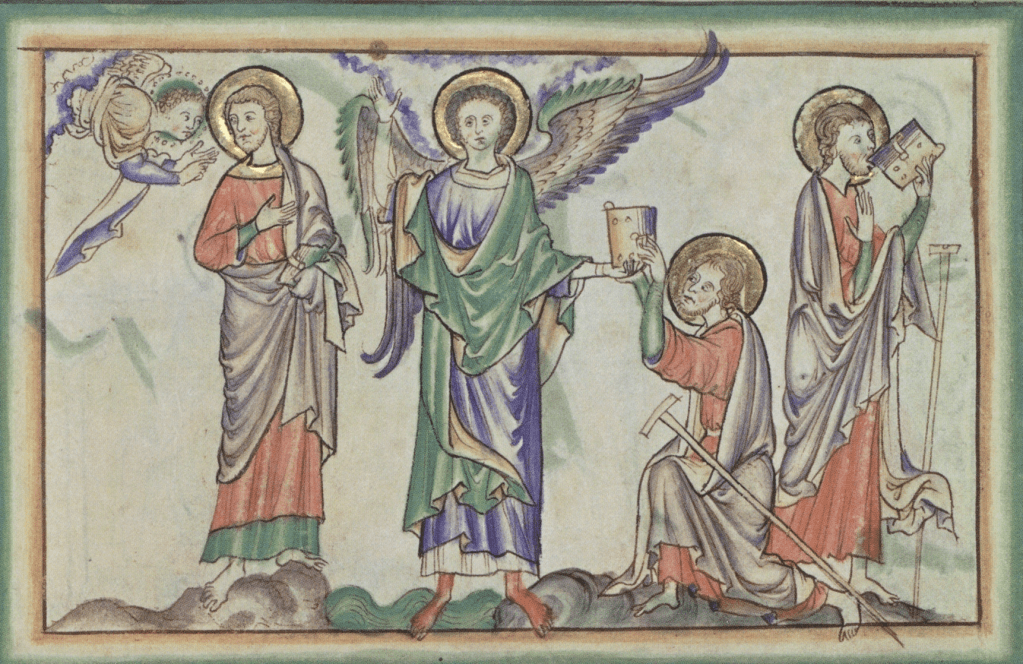
Group: egodeath
Message: 33
From: Michael Hoffman
Date: 23/06/2001
Subject: Why explain Christianity as mystery-religion
>I hope Rev. H. founds an entheogenic kabbalah temple. I also hope that Mr.
Hoffman establishes his entheogenic Protestant church.
MichaelH wrote:
I’ll probably remain strictly a theorist. I don’t have time or patience for
rituals. I should envision an entheogenic Gnostic initiation-oriented church,
but my first audience is the thinking individual explorer online. Lately, I
wonder “What does the church of the placebo sacrament mean to these people?
What do they get out of it?” Basically, social interaction and an orientation
in life.
Was not the original Christian church a mystery religion, using the same
active sacraments as the other mystery religions of the era? Lately I feel
alienated from the Protestant church, which moved only part of the way from
orthodoxy to a genuine sacramental mystery-religion. A more pertinant debate
is the question of forming a Gnostic Christian or Christian Gnostic church.
There are some entheogenic Christian churches today, though I expect they lack
a systematic theory of the Christ experience. That would be too much to ask
in today’s cultural climate, given the current terrrible conditions (even
persecutions) for entheogenic religions.
Protestantism maintains a conventional heaven and hell even though Reformed
theology denies that these have anything to do with moral punishment and
reward. I surmise that the most extreme Reformed theologians finally abandon
heaven and hell as pointless, though they might not admit it. Even so, their
theological system is not redeemed, because they lack the flesh and blood of
Christ – the entheogenic sacrament.
It would be trivial to offer people more than today’s churches do, and we can
assume that people would flock to a real church now, just as they did in the
original Christian church as everyone clamored for the higher initiation.
My goal was not to repair Christian practice, but to make sense of it because
it is the myth that reigns over the world of Western culture and it was the
myth that was implanted into me before my intellectual life was initiated.
From the first, the Jesus myth was a part of my experiences. I spent as much
time in the synagogue, but the synagogue seemed even more bereft of any
genuine resonance with the experiences of the mystic state of cognition.
Neither did my family’s new age involvement give me anything. I got
everything from Christianity (including the cancelled sacrifice of Abraham)
and Zen. Jesus is the reigning religious myth of the culture that produced
me, so any theory of entheogenic origin of religions that is relevant to that
culture must have a solid, detailed explanation of the Jesus myth. I did not
study the myth in order to repair Christianity, but to explain what the
essential transcendent meaning behind Christianity is — to locate the higher
meaning of Christianity.
Now that I can understand and communicate this meaning, it would be possible
to repair Christianity, but that has not been my goal. Ultimately, my goal is
to understand and make sense out of our nature as controllers, and explain how
the dominant myth reflects this nature. Why do I want to explain the dominant
myth? To increase my understanding and our understanding of our nature as
controllers.
My preferred style of myth is distinctively contemporary, along the lines of
the power-cancelling android in The Body Electric, or a postmodernist
incongruous alien time-jumping vision that builds an allegorical savior
meta-story out of entire categories rather than a single limited storyline.
We can avoid all mystic and religious terms and speak purely in terms of
self-control cybernetics and principles that aliens also are sure to discover,
and thus escape the accustomed ruts of thinking and finally get to the real
heart of the matter, of what religious experiencing is really about. Yet
today’s dominant cultural myth is still the orthodox Jesus story, and a theory
of religious experiencing that does not conquer and transform the orthodox
Jesus story from within can’t achieve anything.
I am a chronically individualist thinker and can hardly picture a social
organization based on Gnostic entheogenic Christianity. The head needs the
body: the higher Gnostic Christians are into individual experience, unlike the
masses of uninitiated literalists, the lower Christians, who provide the
socially stable organization.
It is easy to see in retrospect that the body, in envy and fear, would cut of
the head, leaving us with the social body of “Jesus”, minus the religious
experience of “Christ” (a social/emotional substitute is only a frustrating
substitute).
There are too many dangers, we now know, in such a two-layer religion. The
head is always at risk of being rejected by the body. Because of its
so-tangible literalist layer, the two-layer Jesus story may have a clearer
impact on the mind than the mythic-only savior stories. But we don’t dare
tell the historical-style Jesus story in a misleadingly literalist way again.
This time, the head must kill the body — that is, we cannot humor the naive
belief in literalist historical reading of the Jesus story any longer, like
the Valentinian Gnostics did.
Either literalism or the mythic allegorical reading is bound to win. It’s a
winner-takes all situation. Paul aimed for a two-layer religion, but the
lower layer won completely, forcing the higher layer underground. This time,
we must have the higher, allegorical layer win, with no more inner-circle
secrecy. The greatest question remains: why were the Christian mysteries
secretive? What was the nature of their secrecy? Was the customary “death
penalty” threat applied to revealing the *Christian* mysteries as well as the
other mysteries? Is that why Paul “met with” the Areopagus council?
In Valentinian Gnostic Christianity, why didn’t the higher Christians, the
“Gentiles”, simply reveal everything openly to the lower Christians, the
“Jews”? Wouldn’t that have prevented the colossal disaster, where the lower,
literalist layer of Christianity took over the whole structure and shut out
the higher, mystic, entheogenic layer? That is the great question that is
glaringly raised yet left untreated in Pagels’ book The Gnostic Paul.
— Michael Hoffman http://www.egodeath.com — simple theory of the ego-death and rebirth
experience
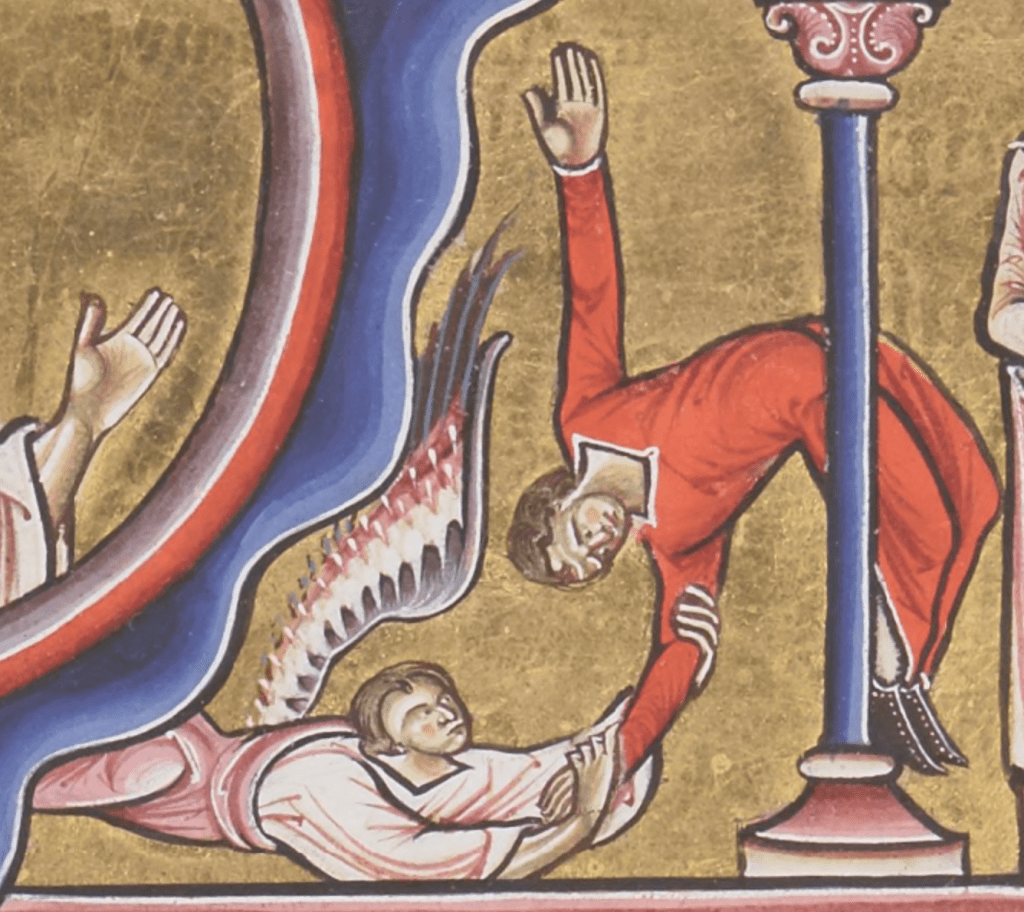
Group: egodeath
Message: 34
From: Michael Hoffman
Date: 23/06/2001
Subject: Most efficient way to shed illusion?
S wrote:
>Concerning ego-death, illusions, and the concept of “shedding them like
clothes”: simply stated, in your opinion, what is the most efficient way to go
about doing this?
My goal is to design a 2-part system for perceiving the illusory aspect of the
self, a system with far greater convenience and ease-of-use than any that has
existed so far. Prometheus brought the general knowledge of how to make fire,
but what people actually need is a disposable lighter such as I am designing.
Who has time for ten years of reading books and another ten years of
meditating, with statistically dismal results that just prove the
ineffectiveness of such an approach?
On the other hand, we tried enlightenment in a pill but found that something
was missing (so I maintain). People have also tried studying religions and
religious myths, or participating in ritualism, again with little compelling
effects. The most efficient and convenient way to fully experience ego-death,
and perceive the exact and specific way in which ego is an illusion, and
abandon the delusion of taking this (indestructible) illusion as reality, is
to learn a simple, minimalist set of concepts, and mentally work through those
concepts while in the loose cognitive state, produced on demand through the
venerable traditional technology of entheogens.
The most efficient way to bring about an intense religious experience is
through:
o Studying the basic relationships between the concepts of personal will,
time, choice, and self-control. My Introduction article is designed to
provide all the concepts that are needed, in the space of just a few pages.
These ideas are individually found in books but are not gathered together
systematically into the form of an easy-to-use technology such as I am
designing.
o Considering the ideas while in the loose cognitive state, through skilled
use of entheogens or “cognitive loosening agents”.
— Michael Hoffman http://www.egodeath.com — simple theory of the ego-death and rebirth
experience
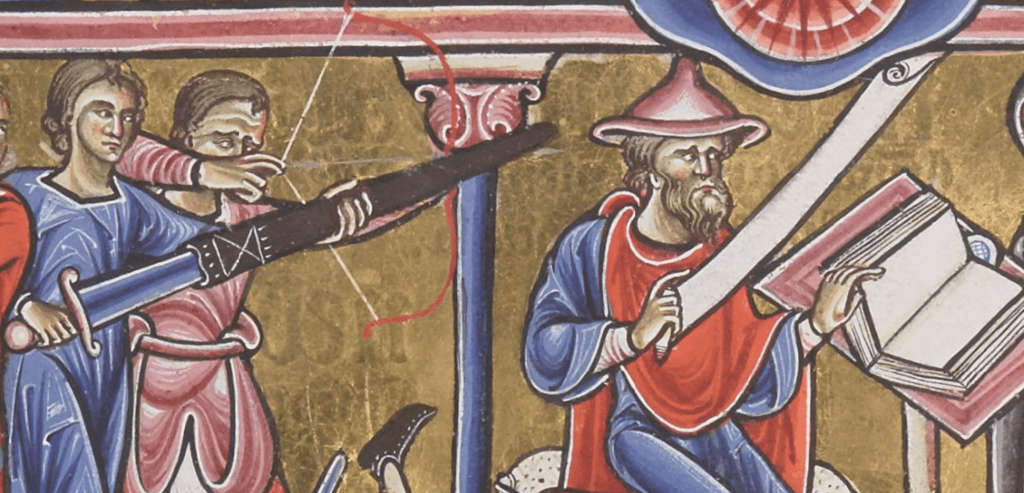
Group: egodeath
Message: 35
From: Michael Hoffman
Date: 23/06/2001
Subject: Snake = magical plants = psychoactive death
The idea has finally hammered itself into my head: snake = venom = toxin =
psychoactive = self-poisoning ability = self-cancelling ability. Poison is
like potion or a psychoactive/healing drug. The bee is related; it has a
venom. Persephone’s Quest, p. 199. Good discussion of psychoactive “wine”,
p. 197. See also the bee goddesses in Dan Russell’s Shamanism & Drug
Propaganda.
Persephone’s Quest demands slow and respectful reading to catch terms such as
“ceremony of dilution”. p. 195: after receiving Dionysus’ gift of
wine-mixture, they “saw double” and thought themselves poisoned, for which
they killed Dionysus and buried him beneath a pine tree (an Amanita host).
Erigone found Dionysus’ body and hanged herself from the tree in grief.
Cyclops and seeing double likely refer to third-eye metaperception.
The snake wrapped around the Mithras symbols has psychoactive-plant or potion
connotations. Through this poison/potion which magical plants, venomous
snakes, and stinging bees share in common, we are born forth from the Fated
deterministic cosmos as Mithras from the rock/egg/cave.
When you see a mythic snake, think of:
1. Venom as poison/potion
2. Drug-plants eaten by the snake
3. Ability to form a loop and inject itself with the poison/potion.
chthonian \Chtho”ni*an\, a. [Gr. in or under the earth] Designating, or
pertaining to, gods or spirits of the underworld; esp., relating to the
underworld gods of the Greeks, whose worship is widely considered as more
primitive in form than that of the Olympian gods. The characteristics of
chthonian worship are propitiatory and magical rites and generalized or
euphemistic names of the deities, which are supposed to have been primarily
ghosts.
A snake wrapped around an egg, and the underground Mithraic cave, suggest
magical plants/potions.
— Michael Hoffman http://www.egodeath.com — simple theory of the ego-death and rebirth
experience
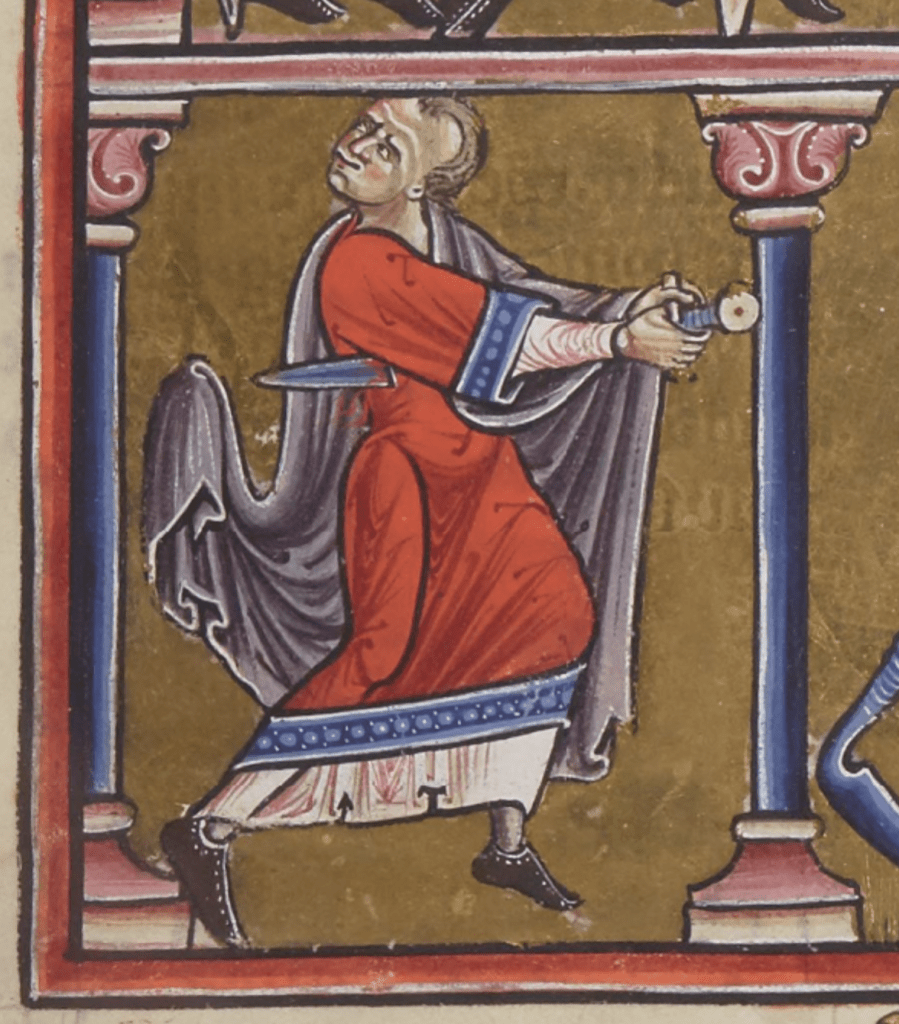
Group: egodeath
Message: 36
From: Michael Hoffman
Date: 23/06/2001
Subject: Ever-shrinking core of ego-death theory
The ego-death theory is a model of will, self-control, and time, and a model
of mental models including the notion of mental-construct association
matrixes.
This cybernetic theory of ego transcendence is immune to whether Jesus
existed, whether God exists, whether randomness exists, whether the world is
deterministic… and the theory is not something that could be true or false.
It’s just a device that is associated with a certain kind of experience, the
ego-death experience.
It doesn’t matter whether the mystery religions used entheogens, or whether
Christianity was originally an entheogen-using mystery-religion, or what was
in Greek “wine” mixture, or what the Hellenistic world really thought of the
myths and mysteries of the era. It doesn’t matter whether Copenhagen quantum
mechanics or, instead, hidden variables is true; advanced action has no impact
on the theory.
It doesn’t matter how consciousness itself works, or whether the physical
world exists outside the mind, or whether there is a heaven and a hell, or
whether we can have psychic remote viewing or precognition. All those things
are irrelevancies for the project of creating a model that causes ego-death
and describes the ego-death experience.
What remains? A technique, and a set of concepts and a point of view, that
prompt and describe a certain experience. Not truth, not certainty, not a
meaning for life, not a religion in any expected sense. It may be a
philosophy, but not an -ism or a programme, and I don’t know if I would call
it a master narrative.
Wilber’s Integral Theory is offered largely as a solution to practical
problems. I intend to provide no such mundane and practical solutions to save
the world. We chronically have expected too much from enlightenment and
transcendent knowledge. We are not justified in carelessly assuming that
transcendent knowledge will save the world. “If only people had transcendent
knowledge, everything would work out.” I have no reason to believe that.
That’s asking way too much from knowledge.
I’m more of an engineer than a theorist, unless you emphasize theory *as*
system-building.
— Michael Hoffman http://www.egodeath.com — simple theory of the ego-death and rebirth
experience
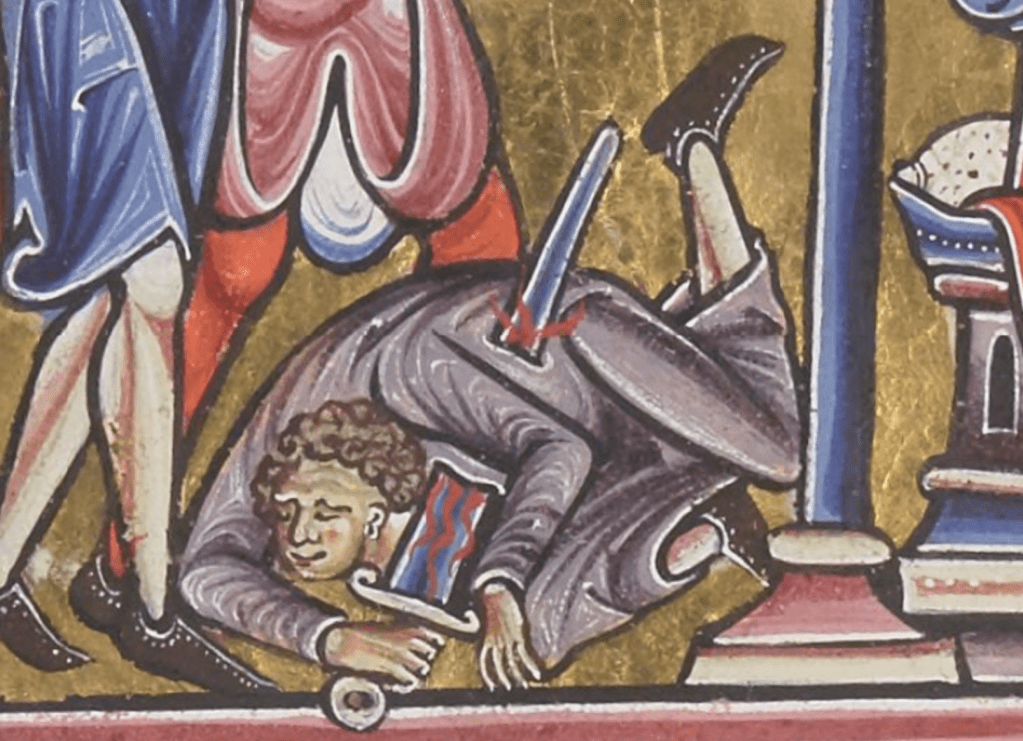
Group: egodeath
Message: 37
From: Michael Hoffman
Date: 24/06/2001
Subject: Re: Recognizing lyrical allusions to the mystic altered state
>My next drumming appearance was at the Lakeport High School variety show.
With Don Brunt on piano and Don Tees on sax, we were the Eternal Triangle, and
we practiced nights at the school. (Don Brunt would drive us home in his Dad’s
’65 Pontiac, usually with a detour out to Middle Road, where he could get it
up to a hundred). For the variety show we played a couple of songs, including
one original which was titled LSD Forever (as if we had any idea — the only
drug we knew anything about was Export A!). My first public drum solo was a
success, and I will never forget how I glowed with the praise from the other
kids in the show (including, I’ve always remembered, Paul Kennedy, who has
done well for himself on CBC Radio).
____________________
>>Rush, in their early days, did perform a song called “Bad Boy” which stated:
“You flipped your dog on acid, and now he’s flippin’ on his bed.”
‘Hemispheres’ was released in October 1978, and by the time December rolled
round it had already gone gold in the States.
‘Hemispheres’ was probably Rush’s most ambitious album to date. It was
originally inspired by a book called ‘Powers Of Mind’ written by Adam Smith.
Neil Peart explained that Smith was a researcher who studied the occult and
various other kinds of philosophies, tried LSD, transcendental meditation and
so on.
Smith devotes one chapter in his book to the division of the brain into
hemispheres – Apollo being the right hand side of the brain and Dionysius the
left.
Side one of ‘Hemispheres’ is devoted to the further adventures of Cygnus, the
character who was last seen in ‘A Fare well To Kings’, plummeting through a
Black Hole in his spaceship Rocinante.
Says Peart who, of course, wrote the Iyrics for the album: “The world he
Ieaves is being ruled over by two gods who represent opposing forces – Apollo
and Dionysius. Apollo champions the force of reason and rationale and
Dionysius champions the force of instinct and intuition.
____________________
Neil wrote:
>Personal experience in China and Africa has proven that the most vivid and
bizarre dreams are created under these conditions, far beyond the wildest
hallucinations of any “mind-expanding” drug. My advice to those
substance-abusers who seek cheap thrills and momentary elevation by way of
addictive and messy chemical concoctions, “Stop wasting your time and money —
try dysentery instead.”
Neil betrays himself by speaking with such authority in comparing a certain
dreaming state to “any ‘mind-expanding’ drug”. He makes the comparison based
on “personal experience”. He takes the stance of one who is in a position to
offer advice to chemical users. His put-downs of the chemicals sound
insincere — he puts them down as a person who has experience with those
things he is presumably rejecting.
My main concern is not whether Peart frequently combined LSD and drumming. The
issue is whether he deliberately intended many lyrical turns of phrase to
allude to the phenomena of the mystic altered state.
I have never asserted that LSD is the only way to bring about the mystic
state. Your position is weak, if you have to resort to refuting assertions I
didn’t make, instead of trying to refute my actual position. My interpretation
of Rush lyrics remains fully viable.
First let us agree on reasonable things.
o Passage to Bangkok is undeniably a celebration of THD. So don’t waste our
time with any blind, knee-jerk assumptions about Rush being morally clean and
drug-free. If you take five seconds to investigate, if you have any
investigative ability at all, you have to admit this before even entering the
LSD debate. If you assert that Rush was drug-free, you are in frank denial and
there is no sense in trying to debate with you — you’ve disqualified yourself
as a man of reason.
o Rush likely has experience with LSD. The two master drugs of the 60s and 70s
were cannabis and LSD. Rush loved the first (cannabis), and Peart loved
philosophy, art, and spirituality, and was aware of LSD to the point of
playing a song named “LSD Forever”. If early Rush played “Bad Boy” written by
Larry Williams, about “flipping on acid”, we have at least pop-culture LSD
influences entering the band from multiple angles. Rush was a major heavy-rock
band of the 70s. It would be more difficult to believe that they did *not*
have some amount of LSD experience.
So, we know Rush loved cannabis and we are justified in assuming they were
familiar with LSD to some degree.
Two questions remain:
o Just how much did Peart do LSD? I suggest that he sometimes used it weekly,
in the mid-1970s, based on its half-week tolerance cycle, and the mention of
“I commit my weekly crime”, “on Sundays I elude the Eyes”.
o Even if we find that Peart used LSD weekly, how can we assert that he
intended the lyrics to refer to the phenomena of the LSD state of cognition?
The scientific and intuitive evidence is in the lyrics, for those who have
truly studied the perceptual and experiential phenomena of the mystic altered
state.
Allusions to LSD phenomena in this song include “vanished time”, and “I fire
up the willing engine”, “wind in my hair/head, shifting and drifting”,
“adrenaline surge”, “sunlight on chrome, blur of the landscape, every nerve
aware” (compare “every nerve is torn apart” in Cygnus X-1), “I spin around…
shrieking”, “Straining the limits of machine and man” (compare Body Electric’s
“guidance systems breakdown”).
Don’t believe what Peart says, whether he says he did or didn’t do lots of
LSD, or did or did not intend the lyrics to allude to LSD perceptions and
experiences. The proof is in your own comparison of your own knowledge of LSD
perceptions and experiences to your own careful reading of the phrases in the
lyrics.
Stereotyped pop-culture assumptions about psychedelics won’t do us any good
when investigating how Rush alludes to LSD phenomena. They are not an ordinary
band and they do not reference LSD phenomena in the ordinary way of other
bands.
When we list the distinctive LSD phenomena and search for matching phrases in
Rush lyrics, there are more matches per album than with any other band,
especially in Fly by Night through Grace Under Pressure, with Caress of Steel
being the most thoroughly acid-devoted album and a complete and sufficient
expression of acid-mystic philosophy.
The issue is not whether Rush is superficially psychedelic-style music. The
issue is, is there an intensely high frequency of the lyrical phrases matching
with the distinctive common altered-state phenomena, so that reason forces us
to conclude that it has been reasonably proven that the lyrics are intended to
allude to the phenomena of acid mysticism.
Very little is understood today about the mystic altered state. Acid rock is
the authentic mystery religion of our time.
____________________
>I remember seeing a mid 70’s concert video where Alex stuck out his tongue to
I posted the below material to various newsgroups last night (with the
exception of the Yahoo Groups footer at the bottom). This posting serves to
gather the evidence of my previous work on the egodeath theory, and takes
advantage of the newsgroup archival ability which was recently brought to life
again by the new Google Groups Web-based newsgroup participation and archiving
tool. Some well-designed URLs at my site, pointing to the newsgroups via the
Google Groups web site, should enable me to participate more conveniently in
the newsgroups, wherever I am — comparable to this wonderful Yahoo Groups
environment.
_________________
The Cybernetic Theory of Ego Transcendence
This core theory [attached below, in the newsgroup version of this posting]
has been stable for several years, though it may be time to rewrite and update
this compact introduction to the core concepts. My recent work has focused on
mapping the mystery-religions and Hellenistic myths onto this core theory.
In October 1985, I started investigating self-control, transcendent knowledge,
ego death and ego transcendence, and the mystic state of cognition. In
December 1987 and January 1988, the core theory crystallized, especially
block-universe determinism. 1988-2001 I worked on expressing the core theory,
catching up in the relevant scholarly fields, and a general interpretation of
mystery-religion allegories in terms of self-control cybernetics.
I started the cybtrans.com (Cybernetic Transcendence) domain name in March
1995, which I retain as a legacy domain name. I am glad to see that http://groups.google.com has made available the newsgroup archives since 1995.
You can find my previous newsgroup postings by searching on “cybtrans”,
“cybernetic theory of ego transcendence” (best), or “cybermonk”.
By continuing to make newsgroup postings available from 1995, the start of the
Web era, Google Groups has renewed my confidence in the WELL philosophy that
“posting is publishing”.
It is ironic that I have so infrequently posted about this theory in the
newsgroups, although I have been a regular post’er in alt.guitar.amps.
However, the few postings about this theory (in this public newsgroups) do
provide definite evidence that this core theory has been complete, and
available through searching, since the beginning of the Web era.
Two things happened almost simultaneously: Google.com took over the web-based
interface to the newsgroups (Google Groups) from Deja.com (formerly
Dejanews.com), and Yahoo took over the combined email/Web-based
discussion-list interface from egroups.com. Google Groups provides an
excellent newsgroup interface, and Yahoo Groups provides an excellent listserv
interface.
These two interfaces are still new and are just beginning to become
established. Yahoo Groups provides such a perfect interface, I almost
abandoned the newsgroups, though in principle I am a major advocate of the
potential of the newsgroups. Participating in, and searching in the newsgroups
was essential for constructing my popular Amptone.com site about guitar gear,
but my efforts to use the newsgroups for philosophy have been more halting
(due to my own choice of involvements, not due to the potential of the
newsgroups).
With Google Groups and Yahoo Groups now providing a better interface to the
newgroups and email discussion lists, I hope to coordinate use of the two,
with Yahoo Groups leading the way with the most ideal interface. (I should
consider alt.philosophy.egodeath.) I have mixed feelings about living solely
in cyberspace — on the Net. I take to it so much more naturally than to
writing printed articles and books.
I like the idea of not making a printed version of the theory available. Maybe
that is just silly techno-geekdom, the starry-eyed view of the Net. After the
tech stock crash, how can we still treat the Net as possessing some
TechGnostic mystic? I treasure books, but when it comes to writing, I love
posting to the Net. The Google Groups and Yahoo Groups interfaces are great
and practical because I can post from any Web terminal.
I posted parts of the theory on the WELL.com bulletin board, in the Mondo 2000
forum, around 1989-1994.
— Michael Hoffman ( Cybermonk ) June 23, 2001 http://www.egodeath.com — designing the most convenient path to an intense
peak experience of control-cancellation and religious self-control seizure
Memory banks unloading
Bytes break into bits
Unit One’s in trouble and it’s scared out of its wits
Guidance systems break down
A struggle to exist — to resist
A pulse of dying power in a clenching plastic fist
— Michael Hoffman http://www.egodeath.com — simple theory of the ego-death and rebirth
experience
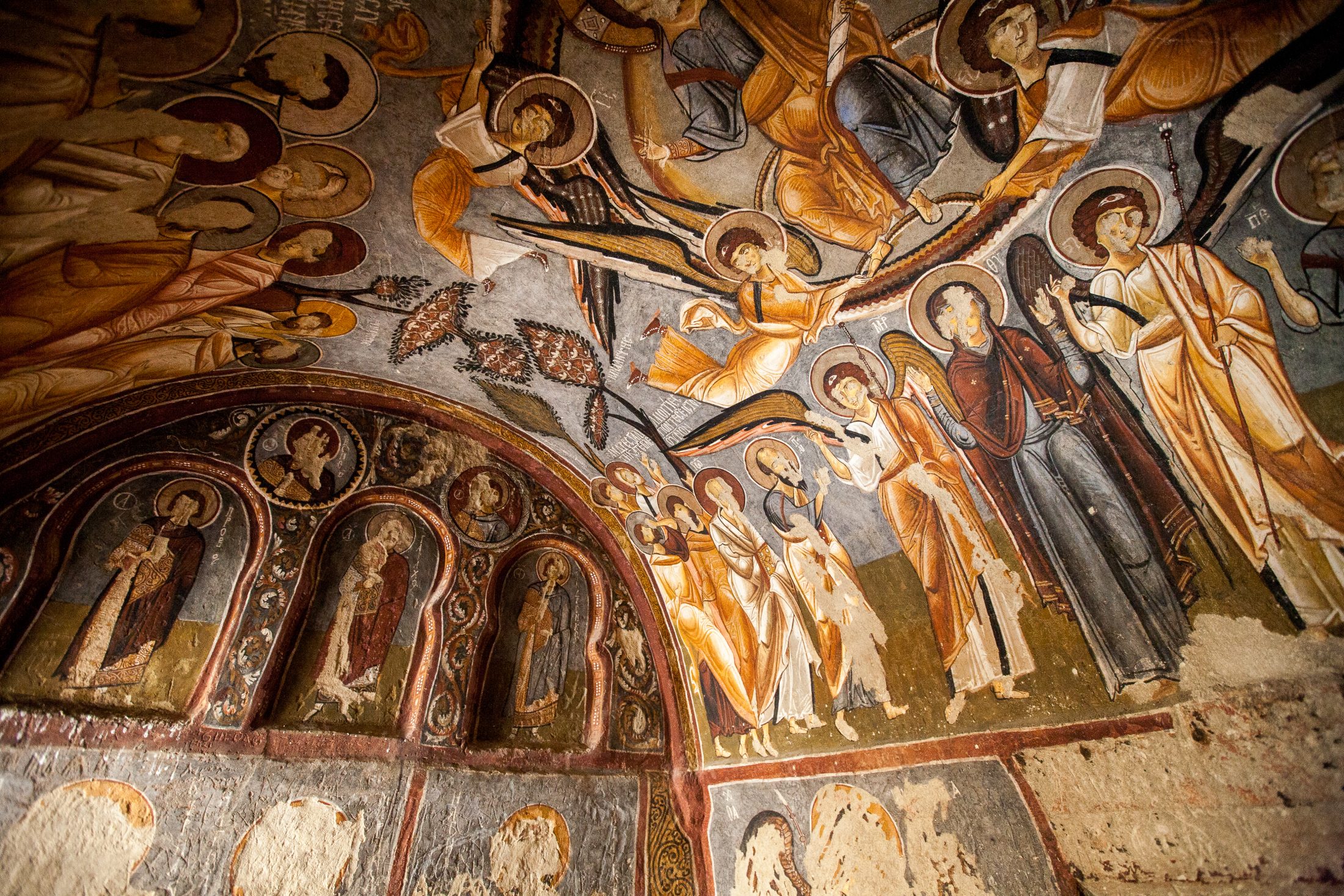
Group: egodeath
Message: 39
From: Michael Hoffman
Date: 25/06/2001
Subject: Definition of ‘entheogens’
>What are entheogens?
Entheogens are plants or chemicals that produce religious experience.
From Jonathan Ott’s _The Angels’ Dictionary_, in the volume _The Age of
Entheogens_:
Entheogen — Plant Sacraments or shamanic inebriants evoking religious Ecstasy
or vision; commonly used in the archaic world in Divination for shamanic
healing, and in Holy Communion, for example during the Initiation to the
Eleusinian Mysteries or the Vedic Soma sacrifice. Literally: becoming divine
within. (1979 Ruck, Journal of Psychedelic Drugs 11:145. In Greek the word
entheos means literally ‘god (theos) within’… In combination with the Greek
root -gen, which denotes the action of ‘becoming,’ this word results in the
term that we are proposing: entheogen. 1980 Wasson: The Wondrous Mushroom,
xiv … )
In my cognitive theory of the ego-death and mystic altered state experiences,
I characterize the primary action of entheogens as cognitive-association
loosening agents. Thus in the native language of my theory I speak of
‘cognitive-loosening agents’ rather than ‘entheogens’. Entheogenic
experiences are a subset of the experiences that happen due to cognitive
loosening. Cognitive loosening agents facilitate deep re-indexing of
mental-construct association matrixes.
— Michael Hoffman http://www.egodeath.com — simple theory of the ego-death and rebirth
experience
The Metaphysics of Free Will: An Essay on Control – John Martin Fischer, 1996
Responsibility and Control: A Theory of Moral Responsibility – John Martin
Fischer, Mark Ravizza, 1998
Metaphilosophy and Free Will – Richard Double, 1996
God, Foreknowledge, and Freedom – John Martin Fischer (ed.), 1992
Determinism and Freedom in Stoic Philosophy – Susanne Bobzien, 1999
The Non-reality of Free Will – Richard Double, 1991
The Implications of Determinism – Roy Weatherford, 1991
Agency and Integrality: Philosophical Themes in the Ancient Discussions of
Determinism and Responsibility – Michael White, 1985
Free Will and Illusion – Saul Smilansky, 2000
Living Without Free Will – Derk Pereboom, 2001
Persons and Causes: The Metaphysics of Free Will – Timothy O’Connor, 2000
_______________
Tenseless Time
Time’s Arrow & Archimedes’ Point: New Directions for the Physics of Time – Huw
Price, 1997
The End of Time: The Next Revolution in Physics – Julian Barbour, 2000
Unsnarling the World-Knot: Consciousness, Freedom, and the Mind-Body Problem –
David Ray Griffin, 199x
_______________
I am also working on a general format for book entries at my site. This
should be an excellent approach and an appropriate way to use Web-based
presentation for a more convenient approach to scholarly investigation. I
definitely need to add book-cover pictures.
A nicely presented overview of the available books can effectively reveal the
direction of trends, such as books covering the block universe, pre-existing
future, inevitability, ancient concepts of Fatedness, entheogen approaches,
and entheogenic origin of Western religions.
— Michael Hoffman http://www.egodeath.com — simple theory of the ego-death and rebirth
experience
Group: egodeath
Message: 41
From: Michael Hoffman
Date: 25/06/2001
Subject: Calvinism & single-future block universe
This posting covers Calvinism, the block universe vs. the quantum multiverse,
and the thinking skills that are required for achieving rational transcendent
thinking.
sekhmet:
>> I do not need to have an opinion either way. It is Michael who has
expressed his own opinion, but the problem is he rambles and waffles
so much you have to work hard to pin down what he is really saying.
Michael:
I suspect that is a dishonest statement, you do not really think I ramble or
waffle but are just evading my arguments because you are unable to refute
them. You’re just bluffing and making up excuses to evade my points. There
is waffling and self-contradiction, but it’s not mine. My position is rich
with the requisite distinctions, which I consistently maintain — this is
different than the true waffling I’ve seen by those who claim to reject any
and all possible types of ego death. In trying to hold such an untenable
position, they end up waffling, when they are trapped when I try to pin them
down.
sekhmet:
>> As Coraxo also proved in a number of posts, Michael’s system is a secular
form of Calvinism. Calvinism is also not gnostic as it is opposed to
gnosticism.
George:
>I have never seen Coraxo prove anything. All he does is make a statement and
then claim he proved it.
>I did read and understand the block universe theory. It is not Calvinism.
Calvinism is a form of Christianity where God predetermines everything.
>The block universe is simply another name for the current scientific theory
of infinite universes
Michael:
No, the infinite universes idea is the “quantum multiverse”, which has
multiple futures. The “block universe” as established in Einstein’s
relativity has a single, closed, even preexisting future.
George:
> and there is nothing Christian about it. The theory is that whatever choice
you make a copies of you in another nearby universes have made different
choices. This continues until all possible choices have been made.
Michael:
The single-future block-universe idea *is* associated with the debate about
God’s foreknowledge and our lack of metaphysical freedom that follows from
God’s foreknowledge. The reason why God’s foreknowledge is considered to kill
our metaphysical freedom, the missing connecting link, is that God’s
foreknowledge implies that there is only a *single* future. The implied
reasoning is:
o Given: God knows whether we are saved or damned.
o Then: God knows what our future is.
o Therefore: We have only a single, definite future.
o Therefore: We cannot change our future.
o Therefore: We have no metaphysical freedom.
George:
>There is more, but what makes Coraxo’s wrong about it being Calvinism is that
in the block universe God doesn’t make choices either.
Michael:
If you define God like Mithras as residing outside the block universe, then
God does make choices that are not subject to the rules of the prison-like
block universe. The initiate exits the block universe with and as Mithras —
or Jesus/God. The gnostics talk of two gods, and it falls on you to keep
track of which is which. During initiation, we experience ourselves as being
in a frozen-future block universe, and this is a life-or-death problem for the
accustomed ego, and we pray to a god outside the block universe, and postulate
and hope there is such a rescuer god, and we (like Gnostics) postulate and
hope that we can change our identity to somehow step outside the block
universe.
But it is highly hypothetical, wishful, and (in a perfectly vague sense)
“transcendent” to assert that we can actually step outside the block universe.
Is it *really* possible for the initiate to step outside the block universe,
with and as the cosmos-transcending savior-god? That is an issue for debate.
George:
>Coraxo’s mistake is in thinking all theories of predestination are Calvinism.
That is simply not true. For example predestination is also a part of some
variations the big bang theory which do not involve a god at all.
Michael:
I do not ramble or waffle. My statements have always been clear, explicit,
simple as possible, and straightforward. We have to distinguish between the
apparent or practical way we “choose”, and the determined nature of choosing.
There are multiple “possible” futures as far as we know, but there is only a
single actual future.
Such accusers would say the Gnostics waffle too, because the Gnostics talk
about two Gods, one good and one bad. This is simply a matter of keeping
track of multiple definitions of a term, so don’t call it “waffling”. Others
in the conversation have truly waffled and do not retain distinctions between
different usages of terms. The orthodox criticized the Gnostics for saying
orthodox creeds but meaning something different by their words.
The block universe and multiple universes are two different ideas. The block
universe posits a single, closed, preset, even preexisting future. Multiple
universes considers the future open in the sense of forever branching.
Perhaps each branch preexists – the book The End of Time seems to take this
position. But the block universe, which I endorse, is much simpler and a much
smaller universe; in it, from the point of view of our knowledge, there are
many virtually possible futures, but only one actually possible future: the
one that already exists and has always eternally existed.
I endorse simplicity as a principle for choosing between metaphysical systems,
and I maintain that the single-future, non-branching block universe is simpler
than the branching-future multiverse. I endorse the block universe and reject
the multiverse. The latest development in quantum mechanics seems to be that
the Copenhagenists are endorsing the multiverse.
The multiverse is the kind of psychologically happy and ego-empowering
response the Copenhagenists would pick when the directionality of time is
challenged as it currently is. People now are saying that time is an
illusion. The Copenhagenists respond by saying that there are multiple
futures — this empowers ego, they feel, and protects and preserves our
metaphysical freedom. I expect the anti-Copenhagenists (such as myself) to
instead retain the early 20th-century idea of a single-future block universe.
In the block universe model (as used by Einstein, for example), posits a
single, closed future. This is always how I have defined the term. I only
*mentioned* the idea of multiple universes to reject it. I don’t think you
could find a statement of mine endorsing multiple universes. I would not have
said such a thing because I have never liked the idea — it is too
complicated. I seek the simplest system, which has a single, pre-existing
future.
Neither do I constantly shift my terminology in different discussion groups.
Sometimes I discuss various usages of terms, but I keep track of these usages
and differentiate them, and my own preferred usage is clear. Higher thinking
must be able to acknowledge and differentiate between multiple usages and keep
track of them.
Some people are not at that advanced level — they are unable to understand
the whole idea of multiple usages; they are unable to differentiate and keep
track of multiple connotations of terms and pick one while rejecting the
others. To them, I may appear to be waffling when I say that the future is
“open” in sense A but not in sense B, or when I say the ego “dies” in sense A
but not in sense B.
I have always clearly communicated which sense I endorse and which I reject.
Others are not good at keeping track of such senses of meaning, so they claim
I “waffle”. What can I do but give up on such an audience that is unable to
admit that there are multiple meanings of terms, and is unable — or
unwilling — to keep track of which meaning I endorse and which I reject?
Copenhagenists conflate the (positive) collapse of our knowledge about a
particle’s wave function with a change in the particle itself — however, I
don’t think this is only due to a lack of philosophical skill; they are
deliberately conflating the two senses of “wave function collapse” in order to
promote a non-scientific agenda: stealing power for the mind, saying that
consciousness collapses the wave function.
That is what the Copenhagenists say — it’s not what I say. I cannot trust
people in these groups to read what I write. They are more interested in
distorting it than understanding it. I mention the idea of multiple
universes, then people claim I endorsed it. If people can’t keep track of
that, there is no hope for communication.
I *hate* the idea of multiple universes and never would have endorsed it,
never would have done anything but mention the idea in order to reject it.
Apparently I will have to invent a better way to summarize my position, but
much of my postings *are* clear summarizations.
The predestination aspect of Calvinism is correct according to my ego-death
theory. But the retaining of heaven and hell by Calvinism doesn’t make
sense — Calvinism rejects metaphysical freedom, thus they must reject true
moral responsibility, thus they sometimes admit that their heaven and hell is
not about reward and punishment, but is only for “the glory of God”. That’s
the big mystery of Calvinism: what is the purpose of heaven and hell, if moral
responsible agency is an illusion?
Now I have mentioned Calvinism and agreed with part of it, and disagreed with
another part of it. The fumbling thinkers online will say that I waffled on
Calvinism, or that I am a Calvinist. Please try to keep track of my clear
points. Do I waffle in the paragraph above? Are my points so unclear as
people evidently find them? That paragraph is typical of the writing in my
postings. If you can’t keep track of my position on Calvinism in the
paragraph above, because I accept one part and reject another, then there is
no hope for communication in these discussion groups.
My thinking is simple as possible and I know exactly what I think, and which
aspects of conventional ideas I accept and which aspects I reject. Ask me a
question, and I can summarize my exact position. My core theory has been
complete for several years. My final assessment is that people in the
discussion groups are overwhelmed by the new combination of ideas and the new
distinctions of terminology I introduce.
I suppose it is not a complete waste of time to attempt to keep people clear
on what notions I assert and what notions I reject. Even though it is the
fault of the readers that they cannot keep track of the distinctions I clearly
make, I still should ideally take responsibility for being even clearer, but
there is not much room for improvement in my clarity or simplicity of ideas —
my writing already is very clear and simple, despite the chronic problems
inherent in semantics, where the same terms are involved in multiple competing
networks of connotation.
Another good example of my clear statements but the fuzzy reading by others is
when I said that the ego-death theory could be used for good or evil. What
more neutral, clear, simple, and practical statement could be made? But
despite quoting me correctly, some readers then said I endorsed its use for
evil, while other readers said my words didn’t mean that.
Those who saw it know what I mean and they cannot deny that I am being grossly
misread as though some readers are blind to even the clearest statements.
With such willful and/or fumble-fingered misinterpretation, there is no hope
for communication with such an audience. Those who saw it have to admit my
complaints and frustration are warranted.
Time and again I have put a clear and simple position statement forward, only
to see it read every which random way. I do my part of writing as clearly as
possible; people *have* to do a better job of reading clearly, and have to
take responsibility for their confusion as readers. I truly do not believe
that my writing lacks clarity — I think it is a shining example of clarity.
Fortunately, I do sense that people are interested in gaining a better
understanding of my position on relevant ideas such as Calvinism and the
quantum-mechanics multiverse. As long as people are interested in gaining a
clearer understanding, there is yet hope for communication. One thing I can
do, which is time-consuming but very effective, is to break up postings into
short postings with an accurate Subject line. Or, at least, add subheadings
within the postings.
I have lost interest in the question of whether Jesus existed. I read the
Christ myth books — it is established plenty well enough that we have no more
basis for believing in the historical Jesus than for believing in the gods of
Olympus. It is unprofitable to pursue the “question” of Jesus’ existence much
further.
Greater profit is to be had in examining the *meaning* of seeing and
identifying with the spiritual Christ — what does it mean to experience
Christ, and how does that compare with the other mystery-religions? This is
the question deserving our full attention, the question which will profit us.
Experiencing Christ and experiencing the single-future block universe are
closely related, as in the Mithraic experience of being born forth from the
rock cosmos.
— Michael Hoffman http://www.egodeath.com — simple theory of the ego-death and rebirth
experience
Group: egodeath
Message: 42
From: Michael Hoffman
Date: 26/06/2001
Subject: Re: Updated page on Determinism books
The Non-reality of Free Will – Richard Double, 1991, $60
This book, like most determinism books is fairly conventional and
unimaginative — it seems to lack awareness of the new theory of
tenseless time and the B series of time slices (Nathan Oaklander)
without a time-journeying continuant agent.
Such theorists just read each other incestuously and haven’t
encountered time face-to-face in the loosecog state.
They all unconsciously stay within the same conception of time, and
debate within that shared background assumption. But time is the
crux of the matter and to break out of the ruts of thinking about
unfreedom, we must develop a different model of time.
Richard Double talks of hierarchical compatiblism but it’s not what I
expected. I expected him to adopt my view of metaphysical
determinism or prexisting-/fixed-future Fatedness at the hidden
level, with virtual, apparent, as-if, effective, practical freedom at
the experiential level, and a great divide in between these two
levels.
But instead, he makes some other type of hierarchical distinction.
The Non-Reality of Free Will looks like an OK book, not one I’d pay
$60 for.
I do like the way he tries to frame free will as a just plain hazy,
incoherent, ill-defined, *vague* concept. This fits with my strategy
of seeking simplicity, seeking the intense ego-death experience,
seeking whatever metaphysical model causes the accustomed sense of
metaphysical freedom to cancel itself out.
Determinism is always defined to include predictionism and
reductionism, which I reject as irrelevancies and distractions that
can only lessen the credibility of determinism, in basically the same
way Double warns about in long-shot free-will theories that are
married to supposed quantum indeterminacy and thus cast into doubt.
Such conventional determinism, practically based on reductionism and
predictionism, is really every bit as doubtful and ridiculous as free
will theories that are based on quantum indeterminacy.
__________________
Determinism and Freedom in Stoic Philosophy – Susanne Bobzien, 1999
This book is more thoroughly innovative; that is, different than the
blind, circular determinism debates that keep recycling the same ruts
of thinking. It is a remarkable work of scholarship, which I think
of in a negative sense: why do we think scholarship is grand and
respectable, when it really should be seen as a symptom of
disgraceful scrap-recovery from among the burnt ruins of the ancient
libraries.
“Scholarship” is a euphemism for “post-destruction scrap recovery”.
The single most potent idea I got from this book so far is that the
main subject of philosophical debate from around 125 BCE to 250 CE
was Stoic universal causal determinism.
o What did the ancient leading thinkers consider to be the most
valuable experience? Mystery-religion initiation.
o What was the hottest topic of philosophical debate during that
same era? Stoic universal causal determinism.
o What year was ground zero, the real year zero at the center of the
mystery-religions? I’d say 70 CE (fall of the Jerusalem temple) or
125 CE. 70 is the safest, most definite year. Not 30 — that was
only assigned as ground zero a couple hundred years later. The true
peak of mystery-religion syncretism was more like 150 CE.
o What mystery religion came immediately before Christianity, in
Paul’s region of Tarsus? Mithraism.
o What was Mithraism about? Transcending astrological determinism.
o What was the main product of Tarsus? Scholarship and philosophy.
o What was the dominant philosophy in Tarsus? Stoic philosophy.
o What was the main, most prominent aspect of Stoic philosophy?
Universal causal determinism/inevitability/fate.
In summary, what two most-important features stand out, again and
again, in the thinking world during the peak of the ancient
Hellenistic religions?
o Mystery-religions.
o Universal causal determinism.
Could it be that these two are intimately related? Mystery-religion
experience is triggered by entheogens which reveal an encounter with
universal causal determinism as a kind of death of the self, yet the
person lives past the experience, having in some way conquered
death.
David Ulansey’s theory of Mithraism — immediate local precursor to
Christianity — points the way. In the mystery initiation, the
initiate encounters and battles with universal causal determinism,
dies in a way and is victorious in a way, and lives through and
somehow transcends universal causal determinism.
My ego-death theory is not simply derived from Ulansey’s, but as I
expected, the pieces are falling into place as required to confirm my
core theory that the intense ego-death experience is essentially
concerned with some kind of self-control seizure upon mentally
grasping and encountering a static-time, fixed-future world-model.
I’m tempted to call this a visionary encounter with “determinism”,
but that term has been ruined by people who insist on wedding it, for
no good reason, with the irrelevant long-shot assumptions of
prediction-ability and reductionism playing out over time, within
time.
— Michael Hoffman
Group: egodeath
Message: 43
From: Michael Anderson
Date: 27/06/2001
Subject: Re: Updated page on Determinism books
Michael,
I still don’t understand how you reconcile determinism with
unpredictability. I suppose that quantum uncertainty could have
something to do with this, but still, if ego-death allows for access to
out-of-time-ness (for lack of a better word), why doesn’t it also allow
precognition? Is there some part of our ego which remains in tact and
keeps us blind to that part of time which appears to us as the future?
What is going on here?
Thanks,
Mike
PS – I noticed that we have something else in common – I too am a guitar
amp tone freq, cherish my Mesa/Boogie Mk IV with Mullard 12 AX7’s,
Sylvania 6L6’s. Must be some causal link here!
Michael Hoffman wrote:
>
>
> The Non-reality of Free Will – Richard Double, 1991, $60
>
> This book, like most determinism books is fairly conventional and
> unimaginative — it seems to lack awareness of the new theory of
> tenseless time and the B series of time slices (Nathan Oaklander)
> without a time-journeying continuant agent.
>
> Such theorists just read each other incestuously and haven’t
> encountered time face-to-face in the loosecog state.
>
> They all unconsciously stay within the same conception of time, and
> debate within that shared background assumption. But time is the
> crux of the matter and to break out of the ruts of thinking about
> unfreedom, we must develop a different model of time.
>
Group: egodeath
Message: 44
From: Michael Hoffman
Date: 27/06/2001
Subject: Why the snake represents medicinal plants
Physically, the first thing you should see when you see the mythic symbol of a
snake is something that is not even shown in the picture: a drop of venom.
The snake lives in a nest underground. Plants come up from underground. The
snake bites the psychoactive/medicinal/poisonous plants.
We must here consider these to be a single category, not three separate
categories. Magical plants are poisonous plants are psychoactive plants are
entheogenic plants are medicinal plants. The bee is also a representative of
plants.
Our main connotation of plants these days may be agriculture for food, but the
ancients likely held the psychoactive/medicinal properties to be most
characteristic of the concept of “plants”. Also they may have made much less
of a radical barrier between the idea of plants as food and plants as
medicine/psychoactives.
The snake bites the psychoactive/medicinal/poisonous plants, or magical
plants, injecting its venom into them; and the snake eats these plants,
absorbing their psychoactive and medicinal properties.
The snake is reborn, by shedding its skin. The snake can bite itself,
injecting itself with its venom and killing itself yet being reborn, as we are
reborn as mystery-religion initiates or Dionysian drinkers of the extremely
inebriating wine-mixtures.
The Amanita is like a bright red fruit growing up from a nest-like hole in the
ground, in the sacred grove, which is a demarcated space around the host
tree — especially Birch or Pine.
The snake is able to offer the soil-marked Amanita to Eve because the snake is
the guardian and owner of plants, certainly including mushrooms. The snake
emerges from its nest like the mushroom, and crawls along the ground.
You must not ingest these poisonous psychoactive plants, or you will die —
you will in fact die from the Amanita, in a mythic/mystic death, and you will
surely not die: you will be reborn again. You will suffer the death penalty
for eating this forbidden plant, and you will retain life, having broken
through the taboo.
We can expect the earliest forms of Western religion to be based on genuine,
actual religious experiencing through psychoactive and entheogenic plants.
Use of entheogens may possibly have tapered off during the late
mystery-religion era, shortly before the rise-to-power of State Christianity.
Or entheogens may have continually saturated the Hellenistic world until State
Christianity violently forced them underground — it’s too early to say;
research has barely begun on the use of entheogens in the Hellenistic world.
We can be certain that the term “wine” should be globally be replaced in all
the books by the phrase “wine-based psychoactive mixture”. The only real
question is, what psychoactive plants were commonly included in such mixtures?
It’s certain the common pharmacopoeia included opium and cannabis. Mushrooms
are likely, and probably water extract of an ergot.
The best book to start with on this subject is Dan Russell’s Shamanism and
Drug Propaganda. A Brief History of Drugs is also helpful. The greatest
masterpiece about the Amanita in Christianity is Clark Heinrich’s book Strange
Fruit. A compact and dense book that is also essential and establishes the
Christmas/Shaman/Amanita connection is James Arthur’s book Mushrooms and
Mankind.
— Michael Hoffman http://www.egodeath.com — simple theory of the ego-death and rebirth
experience
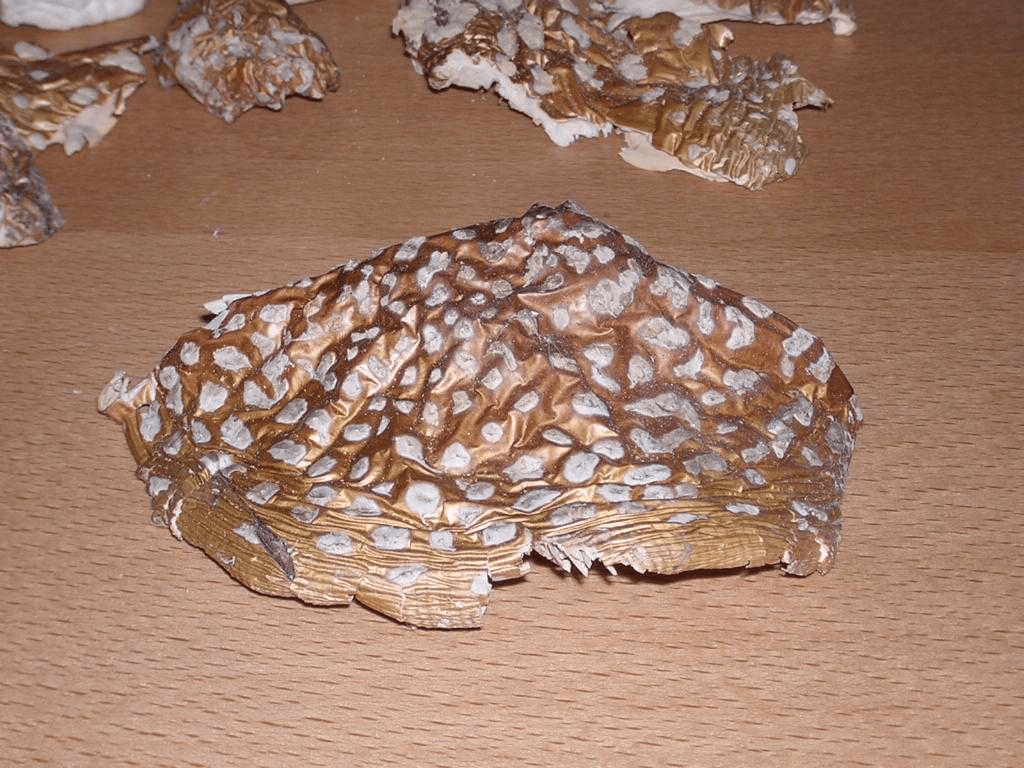
Group: egodeath
Message: 45
From: Michael Hoffman
Date: 27/06/2001
Subject: Re: Newsgroups as record of publishing
>I want to review the core concepts of your ego-death theory. What is the URL
for your article “Introduction to the Cybernetic Theory of Ego Transcendence”?
Oldest detailed newsgroup thread of mine about the Cybernetic Theory of Ego
Death found in the Google Newsgroup archives (December 27, 1995): http://groups.google.com/groups?hl=en&safe=off&ic=1&th=546b8aef6a30e17f,19&see
km=4bqjve%2414c%40shellx.best.com#p
The email address shown there still works. I don’t know why the thread has no
URL pointing to my domain, which I’ve owned since March 27, 1995.
— Michael Hoffman http://www.egodeath.com — simple theory of the ego-death and rebirth
experience
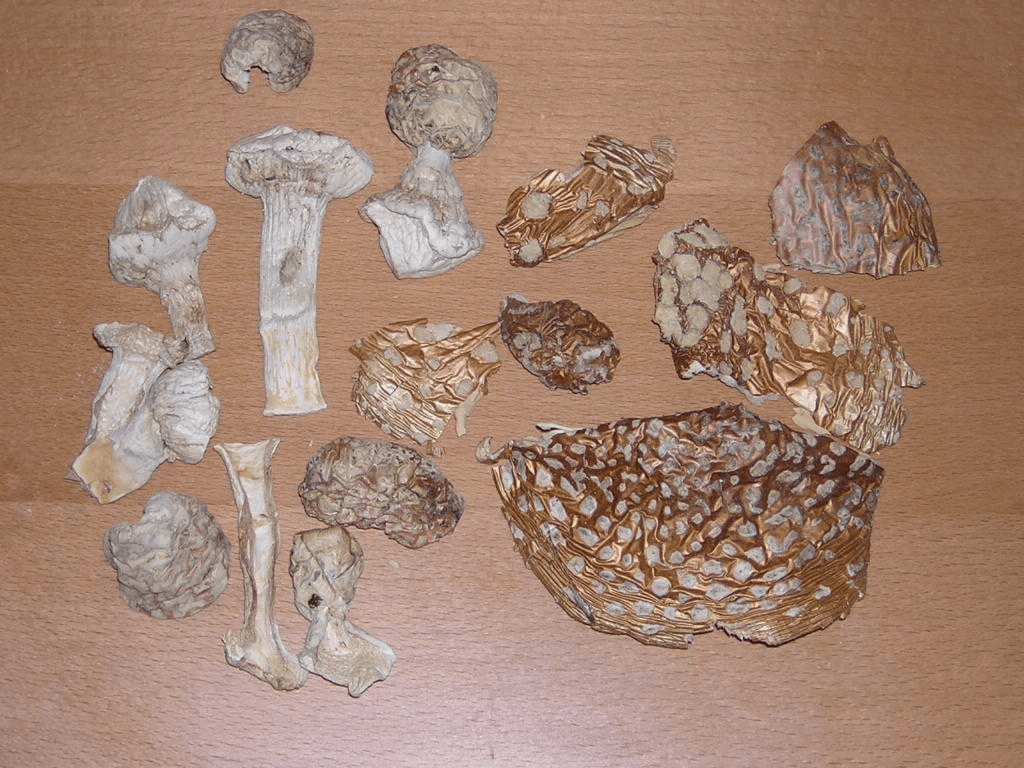
Group: egodeath
Message: 46
From: Michael Hoffman
Date: 27/06/2001
Subject: Best cognitive-loosening agents & techniques
>Which cognitive-loosening agents are the best for contemplating the core
ego-death concepts most conveniently, efficiently, quickly, fully, and
skillfully?
There are pro’s and con’s regarding the response curve (duration) of
super-short, short, medium, and long-duration triggers for loose cognition.
The short-duration materials can be redosed to more closely control the
intensity level, rapidity of increase, and rapidity of decline. However, it
is a distraction to have to stop philosophical reflection in order to redose.
o Smoked DMT or Salvia last only a few minutes, so have an almost
transient-spike curve.
o 4-Acetoxy DiPT aka 4-HO-DiPT lasts an hour. The usable visionary peak
window will only be a fraction of that duration, say 5 or 10 minutes.
o Psilocybin lasts around 4 hours. The usable visionary peak window will be
a fraction, such as half an hour.
o LSD or 2CT7 lasts around 12 hours, with a visionary peak window beginning
surprisingly quickly, such as 2 1/2 hours (unless literally swallowed after a
large meal) and lasting an hour.
It is possible to redose the 12-hour materials at perhaps 90 minute intervals
in order to maintain a flat extended visionary plateau, but with such a
long-lasting curve, it is impractical to do this except during a reserved
weekend.
To skirt close to a dangerously high peak, a short-lasting trigger would work
best — but would require so much attention to timing and redosing. A
short-lasting material also enables elevating to the ideal working level of
cognitive looseness at 6 pm, maintaining the level, then rapidly descending to
toward tight-cognition at 11 pm, returning to baseline (the default
tight-binding state) at midnight.
Extremely short-duration materials enable a series of spikish blasts that can
be fit into an arbitrarily short time, such as lunch hour — but it’s hard to
remain in a practical, flat working window, due to the constant distraction of
redosing. Despite the disadvantages of long curves (slow rise, very slow
descent/poor braking), the 12-hour materials do have a certain convenience
that enables focusing entirely on philosophical investigation with no
distracting redosing.
Duration charts including DMT, LSD, and mushrooms http://www.erowid.org/psychoactives/psychoactives_effects.shtml
Think in terms of chaining these curves to control the level. The LSD and
2C-B charts emphasize a series of peaks rather than a single peak-window
model.
The most efficient loose-cognition state for philosophy work is “moderately
strong”. Extreme looseness only backfires and results in a mostly wasted
session. Ego-death does not require extreme cognitive loosening — rather, it
needs moderate to fairly strong loosening, combined with skillful and focused
reflection on the relevant concepts of time, self-control seizure, cross-time
control, and the steering of the will. The concepts are listed reasonably
well in the Intro article. http://www.egodeath.com/intro.htm
Some Mithraic rituals involved burying the initiate up to the neck. This
would enable intense cognitive loosening with little chance of physical harm.
This may connect with the embedding of Attis in the trunk of a pine tree, in
addition to enacting the idea of experiencing oneself as fastened to the
cross, chained to the rock, being a Dionysian mask on a marble pillar, or
otherwise experiencing one’s embeddedness (as a quasi-controller-agent) in the
eternal block-universe. After being released, after tight cognitive binding
returns, one could say that they conquered their embeddedness in the block
universe and were lifted out of the predetermined cosmos in which
inevitability reigns.
— Michael Hoffman http://www.egodeath.com — simple theory of the ego-death and rebirth
experience
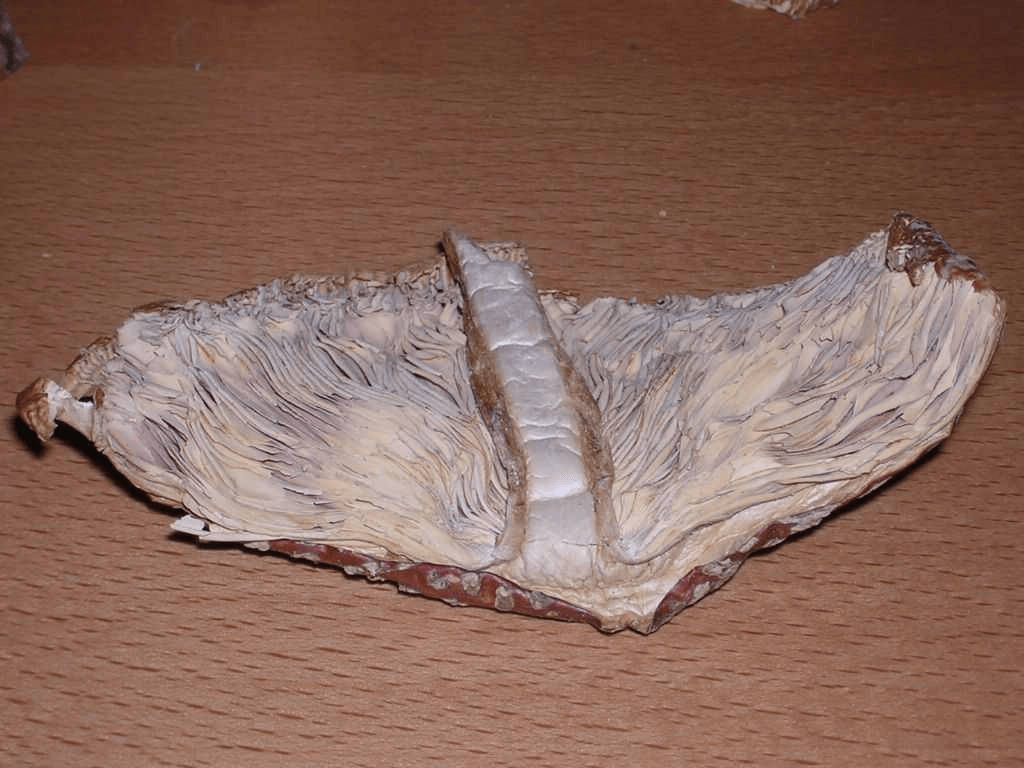
Group: egodeath
Message: 47
From: bluehoney.org
Date: 27/06/2001
Subject: Just a quick hello –
Greetings,
What an interesting form this should turn out to be! I’m excited that you’ve decided to create this discussion list Michael. I can’t believe it’s taken me this long to find out about it…but I’m here now.
Just a brief intro: My name is andy and my hobby is studying spiritual plants in religious history…Christianity mostly. The whole Christian trip really fascinates me, not just the “Eucharist Conspiracy” but how the story of the sun is hidden in the story of the son, yet it’s right in your face all the time; or Moses and his entheogen – Manna. I’m a big fan of Acharya S, James Arthur, Clark Heinrich, Terence McKenna, Alan Watts, Rick Strassman, and of course Michael Hoffman.
What a cool group this is going to be, I’m glad that I got here early enough to watch it evolve…and maybe do a little evolving mySelf.
[Non-text portions of this message have been removed]
Group: egodeath
Message: 48
From: Michael Hoffman
Date: 28/06/2001
Subject: Spiritual Plants in Religious History
Andy wrote:
>I’m excited that you’ve decided to create this discussion list … I
can’t believe it’s taken me this long to find out about it…
Michael:
This discussion group was founded June 10th, 2001. It’s now June
27th, 2001, 17 days later. The discussion group is now ossified,
fossilized, and petrified.
Andy:
> my hobby is studying spiritual plants in religious history…
Christianity mostly.
Michael:
I like characterizing leading-edge research in the ultimate
profundity as a mere “hobby”. My fundamentalist Protestant
grandparents are involved in church services three times a week — it
is their hobby.
Andy:
>The whole Christian trip really fascinates me, not just
the “Eucharist Conspiracy” but how the story of the sun is hidden in
the story of the son, yet it’s right in your face all the time; or
Moses and his entheogen – Manna.
Michael:
Dan Merkur’s new book is due out soon, on Judeo-Christian entheogen
use – a “companion book” for Mystery of Manna. I pre-ordered it
through bn.com, not Amazon, because Amazon has consistently been
unable to follow through on forthcoming or out of print books. b-n
has roots in brick-and-mortar stores, so may be better at working
with distributors and used-book networks.
Amazon warned me that Arthur Drews’ book Legend of Saint Peter
(Mithraic foundation of Vatican) will be delayed at least 4-6 weeks
in addition to the 2 weeks I’ve been waiting. b-n claims to be able
to get the book to me much faster.
— Michael Hoffman http://www.egodeath.com — direct access to experiential knowledge of
The Heavy
Group: egodeath
Message: 49
From: Michael Hoffman
Date: 28/06/2001
Subject: Importance of Historical Study of Entheogens
Andy:
>I’m a big fan of Acharya S [The Christ Conspiracy: The Greatest
Story Ever Sold], Alan Watts [The Way of Zen, Beyond Theology, This
Is It], [and entheogen historical researchers].
Michael:
I’m glad some people are seriously interested in the history of
mystery-religions and Watts’ approach to religion, in addition to
entheogens. I shouldn’t be surprised: you are not merely interested
in current use and 20th-century history of entheogens, but rather,
the complete history of entheogens, which goes much deeper than mere
20th century popcult history.
The 20th century history is essentially a-historical research. Such
lack of true historical awareness has caused harm. Prohibition,
which is persecution-for-profit, depends on keeping people ignorant
about the important role of entheogens throughout human history and
culture.
The 60s researchers made a pretty major mistake in emphasizing these
materials as a modern innovation, and also in promoting the false
assumption that Christianity is truly opposed to entheogen use.
— Michael Hoffman http://www.egodeath.com — direct access to experiential knowledge of
The Heavy
Group: egodeath
Message: 50
From: Michael Hoffman
Date: 28/06/2001
Subject: Evolving through Seeking The Heavy
Andy:
> What a cool group this is going to be, I’m glad that I got here
early enough to watch it evolve…and maybe do a little evolving
mySelf.
Michael:
Like the Reformed theologians, I steer by the unpopular, the
counterintuitive, and the unthinkable. There is the popular broad
path of spirituality, with all the too-familiar assumptions, dogmas,
and preconceptions about what religious experience should be about.

I hesitate to label my alternative approach “evolving”, but I do
think you’ll hear a novel, unpopular system of ideas. The others
provide instructions on mere conventional light and bliss. I set the
controls for the heart (or liver/will) of self-control seizure.
People may flee in horror, fear, and loathing, but at least they
can’t say this is just more of the same dull newage. I am past
trying to be sensationalist, and trendily rad — Extreme Religion! —
but there is something inherently radical and contrarian in building
a theory on instability, loss of control, and the short-circuiting of
personal control-power.
The excess-heaviness formula worked for Heavy Psych/ Heavy Rock. Pop
spirituality sweetness and light underestimates the draw of The
Heavy, which often speaks to us more deeply than the shallow,
superficially positive thinking of Spirituality Lite.
— Michael Hoffman http://www.egodeath.com — direct access to experiential knowledge of
The Heavy
Group: egodeath
Message: 51
From: Michael Hoffman
Date: 28/06/2001
Subject: Lyric Analysis: High & Mighty, 1967
This is some source material for scholarly research of the authentic
mystery-religion verses of our time. Note the themes of fate,
entrapment, dread, elevation, unmet wish for descending, mix of
disaster and sublime elevation, exploration and searching within the
mind.
You elevate yourself girl
You’re burning your house down [? unintelligible]
When time has left you
You’re on your own
You try but you can’t come down
You keep real cool, yeah you know what’s good [? unintelligible]
You feel a new sensation
You cry inside, you get high inside
You’ve reached your elevation
This time it’s shown
Yeah, your mind is blown
You’re captured by your fear
You can’t escape, yeah you’ve sealed your fate
Reality can’t be near
You’ll get your kicks, and now you are fixed
Your whole world is sublime
Your explanation, your new sensation
You’ve reached your elevation
Yeah, you wanna know
What goes on
What goes on, in your mind
You wanna know
But you can’t find it
You can’t find
What you’re searching for
You can’t return, no
Yes, you wanna know
What goes on
What goes on, in your mind
Artist: The Society
Title: High & Mighty
August 1967, Waco, Texas
— Michael Hoffman http://www.egodeath.com — direct access to experiential knowledge of
The Heavy
The 9 plates, at the end, are copied to the present page. 6 plates with some 10 plant schematizations each, and 3 plates with 4-5 works of art: o Jesus riding a donkey (same as cover) o 2-in-1: Vegetation + small rearing horse o a) Eden tree, b) reclining/tree/horse http://amzn.com/3957383749 – reprint in U.S., Publisher : Vero Verlag GmbH & Co.KG (February 15, 2014) https://www.amazon.de/-/en/Albert-Erich-Brinckmann/dp/0243487665/ – reprint in Germany, publisher: Publisher : Forgotten Books (30 Nov. 2018)
Alt titles of this page: Brinckmann & Asymmetrical Branching/ Non-branching Trees in Christian Art
The Incredible Shrinking “Art Historians Have Already Discussed Mushroom-Trees” Claim by Panofsky
Erwin Panofsky wrote to Wasson in 1952:
… the plant in this fresco has nothing whatever to do with mushrooms … and the similarity with Amanita muscaria is purely fortuitous. The Plaincourault fresco is only one example – and, since the style is provincial, a particularly deceptive one – of a conventionalized tree type, prevalent in Romanesque and early Gothic art, which art historians actually refer to as a ‘mushroom tree’ or in German, Pilzbaum. It comes about by the gradual schematization of the impressionistically rendered Italian pine tree in Roman and early Christian painting, and there are hundreds of instances exemplifying this development – unknown of course to mycologists. … What the mycologists have overlooked is that the medieval artists hardly ever worked from nature but from classical prototypes which in the course of repeated copying became quite unrecognizable. – Erwin Panofsky in a 1952 letter to Wasson excerpted in Soma, pp. 179-180 [Beware of ellipses! Pope Wasson here omitted Panofsky’s citation of Brinckmann’s book.]
Meyer Schapiro, another art historian, asserted the same argument in communications with Wasson.
I couldn’t find an English version of Brinckmann’s book. I didn’t hear back from German entheogen scholar Christian Ratsch.
I just found a significant word-mistranslation. Brinckmann actually wrote ‘grapevine’ where this translator wrote ‘vine’.
The translation is of Chapter 1 of 5, and of the final quarter of Chapter 5.
Those chapters don’t seem to have the word ‘mushroom’ — SO PANOFSKY’S CLAIM THAT “THE ART HISTORIANS HAVE DISCUSSED mushroom trees” is shrinking and shrinking, down to what, 3.75 short chapters at most?
3.75/5 of 86 pages = 0.75 * 86 = 65 pages of “coverage” of the topic, in one book by one art historian, in 1906?
THAT’S ALL YOU GOT??
No wonder Pope Wasson censored Brinckmann’s name & book, it is so puny and underwhelming coverage of the matter, the topic of mushroom trees! to try to “refute” the mycologyists (NOT Allegro!; long before him):
Rolfe’s mycology book — 1925.
Ramsbottom’s mycology book — 1949.
Panofsky’s letter — 1952.
Ramsbottom’s mycology book — 1953.
Brightman’s mycology book — 1966.
Allegro’s Philogy/fertility book (non-mycology, non-entheogen-scholarship) — 1970.
Allegro’s book “The Sacred Mushroom and The Cross: A study of the nature and origins of Christianity within the fertility cults of the ancient Near East” was 1970 (2009 Irvin reissue).
Wasson & Panofsky first claimed that the mycologists (NOT Allegro!!) were wrong about this one image, Plaincourault, in 1952 — 18 years (2 decades) before Allegro’s book! http://www.egodeath.com/WassonEdenTree.htm#_Toc135889188
To confirm a theme that the Egodeath theory’s Mytheme theory predicts (branching on left, non-branching on right),
To confirm the theme of {branching on left, non-branching on right}, I’d ideally need:
The original art that Brinkmann used to draw his shape-diagrams.
An English translation of Brinckmann’s book.
Brinkmann’s captions in English, for the numbered shape-illustrations in each plate.
It would be better to work with a set of data that was collected by someone who is aware of the “branching vs. non-branching” theme and the “left = false = branching, right = true = non-branching” theme.
I can’t trust the left/right orientation in Brinckmann’s plates.
There are reversed photographs of a Tauroctony, so that Mithras is forgetting, rather than remembering.
Plates from Brinckmann’s Book
Table of Contents for Plates
(The numbers in parentheses indicate the text pages.)
Translated pages: Chapter I: 1-7 Final quarter of Chapter V: 48-52
Shapes in Plate 1, regarding branching morphology:
Right side debranched in 2 spots.
x
Right branch cut off, wraps left.
x
x
x
x
x
Branching yet all the branching branches are cut off, on the left.
x
x
Left branches, right cut off (like the Pink Key Tree in Canterbury “mushroom tree/ hanging/ sword” image with the trained, self-threatening Psalter reader).
Shapes in Plate 2, regarding branching morphology:
Similar to the Pink Key Tree in Canterbury “mushroom tree/ hanging/ sword” image with the trained, self-threatening Psalter reader. Left branch is cut off, wraps to become right.
Shapes in Plate 3, regarding branching morphology:
Left diagram: Left branching (part of it is debranched on right), right cut off and wraps left. Right diagram: Branching on left, 2 debranched stubs on right.
Branching on left, debranched on right. Need to see original.
x
Unclear digram. 2 cut branches on left, 1 on right possibly.
x
Right has branching but veers to become left; left is non-branching but veers to the right.
Shapes in Plate 1, regarding branching morphology:
x
Right becomes left, and branches. Left becomes right, and apparently is cut off (need original).
x
x
x
Common theme of one worldline branching into two: the control-thought receiver’s worldline + the control-thought inserter’s worldline. Within the cap/canopy, there are similarly, a pair of laurel-shrub non-branching branches, like could form a wreath-crown.
I. Early Christian art in Italy……page 1 II. Byzantine painting…….page 8 III. Carolingian art………page 15 IV. Carolingian tradition and Byzantine influence…..page 24 V. New forms……page 33 Index of Tables………page 53
Pages in this translation to English:
Chapter I: Early Christian Art in Italy – Pages 1-7
The Christian artistic impulse initially contents itself with poor borrowings from the simultaneous rich – even though partially craftily and schematically producing – Roman art. The producing powers are too steadfast in their time to create a change of the presentation circle, let alone the presentation forms without long transitions; only the new content that is given to it modifies the old form.1 There are no reasons for the non-reproduction of nature or even for a conscious renunciation of nature. In the catacombs of San Gennaro dei Poveri,2 as in the Coemeterium of the holy Domitilla, there are landscape displays that show – despite all barrenness – that a Christian oratory can take the same ornaments as a Roman house, and still the mosaics of S. Constanza (329) give pagan-antique decoration.
In Roman art, the power of objective naturalistic presentation reached its peak in the first century AD. When developing further, the aspiration to give only the appearance and to not anymore display the body, which encompasses the sense of touch, becomes apparent, floating beyond individual forms in an impressionist manner. It is left to the
1 Julius Lange, The Human Gestalt in the History of Art. Transl. Straßb. 1903. Page 442: “Christianity gives the subjectivity instructions for an infinite content and infinite dimensions and directly and indirectly accounts for a completely new concept of mankind.”
2 Vict. Schutze, The Catacombs of S. Gennaro dei Poveri, Jena 1877, by the same. The Catacombs, Leipzig 1882.
substituting experiences of the observer to make the last connection of optical impressions of the form him/herself.1 When it comes to painted tree images, this illusionism gives the picturesque mass in which neither leaves nor branches are silhouetted, or he sets lighter and darker spots with a fine brush in a soft way in trees with tender leaves, so that the crown is an aromatically shimmering product of strokes and spots. At the same time, in the Hellenisticrelief plastic, a manner of presentation emerged, which shows the individual scenery elements not physically anymore, not in terms of the body, but area-wise, or in other words, compressed flat. The individual plans of the scenery are not ordered/organized one after another but one above another; the ideal area of the scenery that leads right into the relief thus does not build – with the real, vertical relief area –a right angle but a more or less acute or pointed angle, i.e. the presented area is folded upward against the spectator.2 As far as the trees are concerned, the branches that build the treetop are taken apart and are compressed onto an ideal vertical level, yet the individual leaves are created supernaturally/extraordinarily big and in a precisely detailed way. Both presentation manners cross in the early Christian and Byzantine art.
The sculptors of the earlier Christian sarcophaguses3 take over the tree stylizations of Roman art, even though their variety of modes is already limited. In the beginning, the laurel tree is seen a lot; already strict and hard in the contours but still characteristic in trunk and leaf on a sarcophagus in the Louvre (I, 1),4 [Plate 1, diagram 1] stiffer and more reduced to a sarcophagus of the Lateran (I, 2).1 [Plate 1, diagram 2]
[I did lots of botanical laurel shrub research and postings ~2012, at the Egodeath Yahoo Group, re: mytheme {non-branching}; the laurel shrub is primarily nonbranching, like ivy. -mh]
1 Wickhoff, Viener Genesis, Vienna 1895, page 65.
2 compare Schreiber, The Hellenistic Relief Images, Leizpig 1894. The tendency to depict a body as an area/surface is clearly apparent in the representation of a house that is seen laterally. The narrow gable wall is not used in order to make the building appear cubic by means of introducing it into the space of the image, but it is folded in the vertical area of the long side so that the rectangular layout becomes a line.
3 These offer the best examples and have to replace the failing painting. The later plastic, however, was not able to serve as an example due to insufficient classification and lack of publications.
4 Abgeb. Garucci, Storia della arte Cristiana (History of Christian Art). Prato 1879-81. Volume V, page 295.
Page 3
The trunk is short and stocky and the branches and twigs are not gnarly anymore, the long-ish and smooth leaves grow out of it in an area-like manner and lay down next to one another across the surface/area. The oleaster (that is considered sacred) then replaces the bay tree almost entirely later-on. In the symbolic representation of the harvest, it is brought together with antique geniuses and builds an appropriate counterpart to the vintage.2 Besides the palm tree, the oleaster is the special Christian tree in which the holy pigeon [probably the gentle harmless Holy Spirit dove, as opposed to the violent eagle of Zeus -mh] nests and from which twigs are broken off [important {nonbranching} mytheme -mh] for the entry of Christ.3 The trunk resembles the trunk of the bay tree, the leaves are longer, they never sit together in a cloggy/clotty way and spread more freely across the surface/area/ the berries have special stems or two leaves as a chalice. The oak tree is also, especially in meadow/pasture pictures, used manifold, while other kinds of trees are more seldom – the representation of the palm tree is dealt with further below.
From the vast amount of Roman motifs, only the most common ones, i.e. the crafty shapes are taken over: a limitation for the benefit of lesser types. These types all require neglect of nature and come into existence by means of numeric reduction and formal simplification of the mother forms. The tree has only few leaves, whose detailing is raw. The stem, whose leaves often grow out of it without a special stem leaf, is short and stocky and rather a matter, such as an organic plant. The neglect of a living organism allows that vine [important nonbranching mytheme. vine = Weinstock, leaves = Blätter -mh] leaves grow out of an oak tree trunk, i.e. that two forms that were taken over without looking at it in a correcting way are connected to nature. The tree does not have a scenic intrinsic value anymore, it withers as a mere accessory element and loses its proportion toward its surroundings. In this context, the landscape, whose representation the Hellenistic Art loved, disappears and finally also their last rudiments, the trees –
trunkless bushes hardly appear anymore – receive a new assessment.
[The goal in Greek & Christian tree depictions is to contrast branching vs. non-branching; so 1) the non-branching trunk is always depicted, along with 2) branching at top (underside of canopy/cap), and 3a) often non-branching cut-off limbs. 3b) This Brinckmann translation provides a valuable Egodeath Mytheme theory-corroborating clue/point: ivy leaves: ivy’s primarily non-branching shape depicts the important & central, {non-branching} theme.
The goal in mushroom-tree art is to depict the contrast between possibilism (possibility-branching) vs. eternalism (pre-existence of the block universe with worldlines).
from {king steering in tree} (possibilism) through {mixed-wine at banquet} (Psilocybe) to {snake-puppet frozen in rock} (eternalism)
from {king steering in tree} through {mixed wine at banquet} to {snake-puppet frozen in rock}
{king steering in tree} -> {wine} -> {snake frozen in rock}
-mh]
The requirements for artistic creation change, a new principle of representation breaks through. A value shift from descriptive to associative elements, a regression in seeing and representing takes place, which leads to those representation forms of all early art periods that are defined as symbols and whose insinuating shape suffices to trigger/cause the associative process.1
A deeper and deeper living-into-oneself and thinking-into-oneself into the Christian scriptures prepares the new representation principle. These have, as an effusion of the abstract Semitic mind, only a little nature assumption or outlook, descriptions of landscapes out of an intense nature sensation are looked for in vain. The individual forms of nature remain unseen, it does not go being the dry-typical words “vine” [‘Weinstock‘; important non-branching mytheme -mh] or “palm tree”. The spiritual life in the transcendental worldmakes the eye unreceptive for the forms of the surrounding and has a “de-arting” effect (an effect that takes the art perspective away).2 For example, the limitedness and stiffness of the circle of imagination of formations of nature becomes comprehensible, it is explicable that few forms that are manageable in the associative imaginations, are constantly repeated, yet seem tense due to their constant monotony and thus carry in themselves the reason for their decay. The crafty, not naturalistic production is necessarily followed by the stiff schematizing of the form, the tendency toward the abstract-specified (orthodox) under the loss of the living organism. The human being who gets deeper and deeper into his religion and its dogmas then neglects the senses that connect him to the exterior world. [it is more important to depict {branching vs. non-branching}, as well as {mushroom}, than literal botanical representation -mh] The Christian art, in its striving
1 See the Greek Xoanon. For Christian art, it is also important that such symbols always assume a geometric figure. The very beginning of all creating lies in the geometric, not only of the human creating but also of the one of nature.
2 Only a completely new sensation, as it ventures into religious life with the Holy Frances and the mystics, whose roots, however, lies in France [mushroomland -mh], has given religion yet a new creative power in the area of visual arts.
Page 5
for symbolization, takes its way from the naturalistic to the abstract-geometric. The crafty /manual simplification of the form repertoire has been mentioned already. Now the clerical literature of the visual arts dictates their objects, also the tree type is influenced by the new circle of imagination and soon the vegetative will shrink to the vine* and the palm tree.
[sic, mistranslation; Brinckmann here wrote ‘grapevine‘, not ‘vine’; he wrote ‘Weinrebe’ here. Now when we say “grapevine” instead of feeble generic “vine”, this places us squarely into Dionysus’ domain; Mythemeland. {vine} is important to depict non-branching; e.g. Jonah’s gourd plant; gourd = vine. -mh]
From the agricultural connection, in which the antiquity gave the palm tree, the palm tree is now taken out. Its trunk becomes stiff and is covered with excessively big scales, the fronds lose their fine-drawn riffles in the sarcophagus [important {carved into rock} mytheme -mh] reliefs and radially shoot out of the stem head in form of a scythe blade. The grapes that hang around the crown in form of a wreath will be reduced to two that will hang down on both sides, pressed flat.
The area/surface character of the art is crucial for the use of the palm tree. Architecture offers examples in the development of the capital: the Corinthian-Roman flattens/levels and the end of the series is the Ravennatic-Byzantine fighter capital with its pure one-dimensional linear ornamentation. Christian art loves to at first give fix end points to a surface/area, e.g. armchairs, cliffs, doors, while the rest is equally filled or distributed/divided again, such as by means of putting columns with architrave or round arch. Trees, especially palm trees, are also categorized into this principle that is inherent in the surface/area. The initial traces of a marginal lining with trees are found to be a good composition element already in the presentation of Orpheus of the Calixtus catacombs, for a marginal lining with palm trees almost each apsis mosaic gives examples in later times. The narrow room, the bending after the crest of arching/bowing modify the already favorable shape of the palm tree. On the one hand, the fronds are not simplified as strongly as in the plastic as a consequence of the size of the presentation, also the number of the trunk
1 compare Riegl. Questions of Style (Stilfragen), Berlin 1893, also Semper, Style (Stil) II, Volume 8, 496.
scales is not that coarsened, the sphere-shaped bush of the crown, however, as it is still given in S. Cosma e Damiano (530), is dragged/protracted and appears with the scarce residues of some stretched-up-high fronds in the apsis mosaic of S. Pudenziana (390) (II, 3).1 [Plate 2, diagram 3]
The development that the palm tree undergoes in its substitution for separating columns is strange. One can name the country house ornaments of S. Apollinare nuovo (580) an example for this insinuation, in which a saint and a palm tree alternate, respectively, and also the cupola mosaic of S. Maria in Cosmedin of Ravenna. The sarcophaguses, especially the Ravenna ones, again, offer good examples. 2 The insinuation of an originally vegetative form instead of an architectonical limb means a loosening of the architectonic idea; it is consequent if the architectonic idea of the column grows into the vegetative form, which is no longer corrected by nature. The palm tree is being architectonized. Its smooth, straight trunk, [nonbranching -mh] the breaking out of the crown at a sharply separated place [sharply contrasting branching -mh] , especially the bending out of the fronds on the side, which close into a semicircle from two neighboring trees, make them appropriate for this. First of all, a disk-shaped limb moves between trunk and crown, comparable to the capital, toward the place that also nature draws by means of died leaf roots and bass/velvet matter (II, 4).3 [Plate 2, diagram 4] A doubling of this disk with an in-between piece appears (II, 5),4 [Plate 2, diagram 5] and whereas the fruit grapes were hanging down from above over the disk rim before, here three little fruit stems with one berry each arise from the in-between piece. The scales of the trunk are initially small and in many rows; they stretch out lengthwise at sometimes in tilting waves and pieces of rock, [{rock} mytheme = block universe -mh] sometimes seeming to be little boards that are nailed upon,
1 In these days of traditions, the chronological sequence is not essential for the development of a form. Old motifs are long repeated, and a later piece may be consulted as an example for an earlier form stage.
2 Garacci, table/panel 334, 341, Deciduous Trees in similar application table/panel 350, 379.
3 As an example very instructive, a Ravenna sarcophagus, picture
Venturi, Storia dell’arte italiana (History of Italian Art). Milan 1901, figure 200, Garucci, table/panel 345, whose palm form is also proof for the following. (II. 4.) [Plate 2, diagram 4]
4 Garucci, table/panel 356.
Page 7
pointed in an angular shape, and they make the trunk appear like a channeled/chamfered column shaft.1 Finally, a purely architectonic creation appears, which denied the organic growing of the tree out of the earth; the trunk is insinuated to have a column basis. The palm tree, the Christian tree, has become an area composition limb and has gotten into architectonic connection. Its shape and detailing has become simplified into a crafty type, it has even lost its purpose to connote that a process is taking place outside.
In the next chapter, the evaluation of a botanical denomination will be closer looked at. From the already mentioned aspects, it can be concluded that it cannot depend on an individual denominating, and that only the first forms of the series show that the basis of the schematic creation is the date palm (Phoenix dactylifera)2 that also grows in Italy but does not bear ripe fruit.
1 Another stylization type appears in Ashburnham/Pentateuch: the trunk put together out of a series of spheric limbs.
2 Compare Viktor Hehn, Cultural plants VIth volume, Berlin 1894.
[check Archive.org pages to see if plate I-IX is referenced in the text -mh]
From the pages of this book, one will be able to read a certain dryness despite its polemic. There is a type of presentation in history of art that needed to be fought against, which sees a slow but consequently intended development toward nature, a striving to reflect the forms of the environment in images, in the entire medieval painting, and whose conclusion always is: how close has one gotten to the role model nature? However, tradition and the feeling for style are the crucial factors here, next to which a sporadic, rare nature motif is of no importance. One does not want to depict nature! Such a victorious desire consciously appears only in the XIVth (fourteenth) century and it is unjust to judge everything beforehand in terms of the achieved nature truth or to grasp the development under the aspect of the aspired naturalism. Due to a miniature, only a limited conclusion can be drawn onto the general nature feeling, because a sensation for the surrounding nature is a mood condition that does not need detailed observations, the dreamed shapes and colors of poetry say more than a meticulous drawing. The main mistake of millenniums of striving for naturalism, on which
1 Irmer’s opinion, for example (a.a.O., page 37), there would be Alpine roses in Cod. Balduini, is wrong.
Page 49
judgments were built, could only come into existence in times like ours, [1906 -mh] which felt the urge of a vivid style so barely and which say the saving rope in naturalism. There is something higher than a copy of the appearance flight: the form-making/building style. And a painter who creates out of an art that is strong in style, [evidence-type: stylized depictions of mushrooms (often also highlighting themes of {branching vs. non-branching}) -mh] does not go to nature and builds then, but he rather develops existing forms according to psychological laws of a timely and racial [ie the Valentinian “race” of Pneumatics -mh] predisposition, from his sphere of existence.
Only later one begins to not only see nature and express one’s joy about her in poetry but also to orientate oneself toward her in terms of image presentation. Nature becomes a subtle admonition/warning for art not to get lost in abstract images. One said that for the medieval artist, all nature forms changed into an ornament style right away upon its reflection.2 This is not correct. The miniator has his pool of forms that suffices for the iconographically relevant presentations, he does not need nature; [au contraire, the images bend toward accurate naturalistic depictions of nature: of mushrooms -mh] only the continuous repetition of traditional forms explains their abstraction. The slow approach of art toward nature is not to be seen as a loss of the striving for ornamentalization but the continuous development of an originally ornamental form is now influenced by the remembered images of nature. [much hypothetical theorizing here; driven by what 1906 model of psychology & history? -mh] The stylization drive does not stop but formations that are strictly following a certain style grow/enhance into naturalistic ones. The development went on during one millennium from the ornamental to the ornamental, now it moves from the ornamental to the naturalist. Thus, the heart leaf (grass-of-parnassus) develops into a basswood leaf, the often mentioned double lily develops into an oak leaf. The Bamberg Alkuinvulgata uses this double lily as a room/space leaf. In the Paris
1 Constructions such as the figures Berensons over the Dante only remain thought-of constructions. The feeling, sensing “seeing” of the poet is different from the reproducing seeing of the painter.
[“reproducing”? It is debatable whether the goal of the religious painter is to “reproduce” — to reproduce — or to depict, what?
To “reproduce”, ie depict, the mushroom and its effects re: an experiential mental model of time, control, and possibilities branching?
Or to “reproduce” and depict a literal tree?
Which goal makes sense to “reproduce” ie depict?
Answer: The mystical experience, not the literal botany of trees, which is rather irrelevant. -mh]
2 Out of this unilateral perspective came the book written by Lambin, Lafleure gothique, Paris 1893. When consciously gives naturalistic leaf motifs, the early gothic certainly still geometrizes these into a regular appearance, yet it seems foolish to also develop the double lily from fern and the palmette (already Byzantine) from the lily.
Cod. lat. 10474 (II H XIIIth century), in the Cathedral of AGurk, this leaf appears still with a bent, pointed/pulled-out tip. This becomes more and more round, such as in the Bresual Missale nocturnum and the Vienna Parzival, yet in a conscious manner, the oak leaves only appears with acorns in the Manesse song manuscript, in further development toward nature, although nothing is observed here in terms of the structure of the oak tree trunk, but the naturalistic leaves and acorns grow out of an tendril/creeper tree [important non-branching mytheme -mh] (V, 10, the six forms among each other). [Plate 5, diagram 10]
The reason for this development is partially to be found in literature, which always precedes painting. [if you say so; seems debatable -mh] The demand to present something non-traditional at first brought seen nature into the picture (compare: the incredible rabbit of the Carmina Burana, VIII) and once taken on, it also influences the traditional types. Then, however, this inclination toward naturalism is explained out of a change in the optical seeing. The French early gothic has paved the path in this context. Before, one encountered a closed matter, a closed contour/outline, but now the drawing of lines has a tearing/ripping effect. This appearance is apparent both in the silhouette of a French castle, as in the shoulder/banding of a manuscript. Also, the calm, straight surface is irritated by light and dark. The smooth pillar column is made vivid by means of little columns that are stuck/glued to it, the vertically grooved/furrowed pillar is created. Sharp cuts into the silhouette, agitation in the surface, are apparent in the leaf decorations on the embrasures and intrados of Gothic cathedrals of the XIIIth century. The joy of formal irregularity now let the role models or images of nature jump in, which were avoided in former times just because of that reason. The thorn, vine leaf, and English holly now become favorite motifs of the architectonic decoration and book bandings. Sharpness of drawing and realism of the material structure, feeling for the organic in the leaf approach and in grouping the leaves are astonishing in the plant decorations of the cathedrals of Paris, Reims, Bourges (XIIIth century)1, they often seem like a cast/mold/replica over nature. And all this very sudden,
1 Compare Vitry et Briere, Monumente (Monuments). At the beginning of the XIVth century, this decoration again becomes more ornamental, more symmetric, and more abstract.
Page 51
only because one wants it like that. This naturalism does not have such an effect on painting in general.
The French sculpture does the first step in the beginning of the XIIIth century to come from the area/surface into the space.1 This problem is energetically taken on by Giotto in a picturesque manner, the artist who continues Giovanni Pisano’s ideas, who creates the connection with France. In Giotto, the individual appearance loses softness with the spatial seeing and imagining, which the painter Cimabue still gave in manual tradition of the former illusionism. Everything becomes a fix body in the room/space. The individual leaf sections of Cimabue’s trees become spheric balls, which are positioned not only next to each other but also in front of each other, and thus let the crown appear as a three-dimensional body. The trunk is smooth and stiff, [nonbranching -mh] even if it strives for a natural creation in its structure and surface. Vasari’s honor title “buono imitatore della natura” can claim validity only to a limited extent, the vegetation is generally quite scarce [the goal is depict mushroom & branching vs nonbranching -mh] and a strong tendency towards generalization becomes apparent. Far more realistic are the Sienese, and Ambrugio Lorenzetti almost gives a landscape for its own sake in the ager publicus. These little Giottesk-Sienese on small straight stems [non-branching -mh] are the ones that represent the tree for a long time to come.
In the course of the XIVth century, Italian influences lead to a decisive change in French painting. Dvorak2 has indicated some ways – Avignon (since 1335 painting of the palace by Italians) and Naples2 (Karl of Anjou). The Sinese-Giottesk presentation of space pushes the drawing/spatial/surface style of early gothic away. It is as if the ability of a naturalistic detailing would suffocate. In the Munich Passion de notre Seigneur Jesus Christ (gall. 32, XIVth century), in the Vienna Romant de la Rose (gal. 2592, end of XIVth century from Guillaume de Lorris
1 W. Vöge, The Beginnings of the Monumental Style. Straßburg 1894.
2 Illuminators of Joh. V. Neumarkt, annual book of the holy imperial palace, volume XII.
3 Compare Bertrauf, Sta. Maria di donna regina, Naples 1899.
and Jean Clopinel de Meuny) appear the Sienese-Giottesk spheric trees,1 next to them also the leaf crown tree, only the bandings continue to spin their naturalist tendrils. Also, in mural painting, the spheric tree is the only form, such as in Runkelstein (beginning XVth century)2 and in the Castello di Manta nel Saluzzese (beginning of the XVth century)3, here already with a more vivid silhouette.
There was a need for other artsy personalities who were neither dreamers nor visionaries, did not bring forward accomplishments in poetry nor in philosophy, whose lymphatic temper and reality sense enabled them to submit themselves completely to the things: the Dutch. “They did not know how to simplify nature; they needed to reproduce it in its entirety”,4 they evaluated each of its appearances equally/in the same way. The space was seen, the naturalistic detail observation was made, the Dutch combine both: their painting is no longer the image expression of the word beside it by means of some scarce requisites, it is an excerpt from nature. The willingness toward it appears in its highest expression in Dutch painting of the XVth century.
1 Still in the Munich cod. gall. 7 “Bagnanut de Montanban”, written by David Aubert with miniatures of Loyset Lyedet from 1462, the sphere tree is used, and the simultaneous German art challenges with it and the barren tree its entire stand of trees.
2 Freakenoyklus from the Castle of Rankenstein by Bozen, taken from Ferdinandeum, Innsbruck 1857.
3 Compare essay by d’Ancona, L’arte, 1905.
4 Taine, Philisophy of Art, Paris 1865. The essay by Dvorak, “The riddle of the Art of the Brothers van Eyck”. Almanach of the Holy Emperor’s House Volume XXIV, confesses on page 249: “About the whereabouts of the art of Hubert, we know as little as how Jan’s new conception of the loyalty to nature came into existence.” Let us go with Taine, who does not want to solve riddles, but who sees the power of inexplicable race idiosyncrasy.
[We can explain the “race” of the Pneumatics, esotericists, per Valentinian gnosticism: they experience and depict “analogical psychedelic eternalism/pre-existence” of control-thoughts, as opposed to apparent branching possibilities steered among by King Ego.

The experienced & altered-state-perceived pre-existence of personal control thoughts kills the egoic model of time & control. -mh]
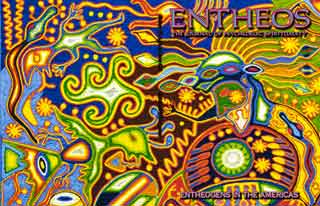
I right-clicked on the hits passages, Translate to English, per below.
Hit 1: Page 23
Page -23-
First and foremost, one ties in with the illusionistic painting style.
One of the rare intermediate uildeL of the Ashburnham Pentateuch fs. p. 11), which Springer* regards as the preliminary stage of Carolingian painting.
On the sheet with the representation of the first parents there is the palm tree, then a tree consisting of three flame-like bushes, which goes back to the lancet tree, and a kleuierPilzbaumwith three mushroom-like
Hit 2: Page 25
The Kvangeiiar Franz !!. Paris national lat mid IX. .Ihh.), whose ornauienlaier Scliniuck in foreign countries is a counter salt to the soDätigen painterly treatment, brings back thePilzbaum, but already greatly changed (IV, 5).
The trunk is long and twisted at the bottom, the crowns in the form of half circular discs, one or two of which sit on the trunk, are covered in rows with shaggy tails, a transformation of the leaves, the lower edge forms a row of spots:
an urge to The palm tree is formed by a quiver-like trunk ^ with asl stumps – without knowing the foreign form, one can transfer them to the peculiarities of the native cottages – from which several fronds and the hanging grapes grow tll, T).
The cone is particularly rich around with many ledges in the crown decorated with polka dots and never-ending small side-cuts.
Trunk and crown still achieve a three-dimensional effect through the correct setting of shadows.
Hit 3: Page 33
Vöge’ has worked out a workshop of this time in an exemplary manner, which appears very clearly and large in form and composition.
Before working out, working into the context of time receded, and so this school of painting lies there as a solid block, but isolated.
The constantly recurring HauMirunii of these so-called Liulhaiy^nipiK’ is a (lreik(‘)|)figure, flatly archedPilzbaumwith a gnarled little thread that twists at the bottom and is now covered with eye buds i.sL (VH).
Already in (Index Kgberti liatte the Filzkitj)!’ the rope ends curve slightly upwards, but the flatness is what stands out here, and only contemporary Byzantine art offers similar features.*
Two small berries often hang down from the mushroom heads, each on a thread stalk, a shinuck that was already popular in Carolingian times (II, 10) , which has also crept into the ornaments as a delicate filling.
The eye buds are naturalistic transformations of the spiral bones, often unchanged spirals are drawn at this point, which also appear elsewhere, when the trunk is turned – the base also resembles a twisted rope, as in the Evan^reliar Otto III. (Munich lat.
Hit 4: Page 43
room that sounds dark, so to speak, dm (iriind for the bilfields: the S il ho uet t eri building iii.
Excellent examples from the 12th century are offered by the stained glass of the cathedrals in i^ens (III, 6)’ and Le Muiis .^
The decisive word for this formation will have been the technical requirements of glass painting[Panofsky’s photostat?]: the enclosing of larger compartments with lead rings overall form is pursued: the B1 ä 11 e ronbau ra.’
There is also evidence for this in Sens, but the stained glass in Le Mans Cathedral reveals the origin of this form from thePilzbaumand thus give the important instruction ‘VI, 1 .*
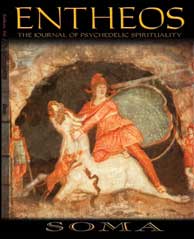
The trunk is curved in an undulating manner, the mushroom tip grows out of an ornamental leaf calyx on three stalks.
which already richly adorned Carolingian miniators and which liier du iit is exposed with ore leaves.
This dense filling with Hlällerri is the design outline to which the later pen drawing is linked, the dark overall outline of the unifying lead border remains unnoticed.
The windows of the triforium, which come from a somewhat later period, give the pure leaf crown tree.
Beautiful and rich examples from the beginning of the XIII. Century can then be found on the stained glass windows of the Cathedral of Bourges. *
Even later, especially a Paris codex (Bibl. nat. lat. 10474, IL H. XIII. c.) gives pure and noble formations of this tree scheme VI, 10).
Hit 5: Page 46
Page -46-These forms of the silliouette tree, the crown tree, and the pine cone tree, which originated in France, invaded Germany shortly before 1200.
The previously so popularPilzbaumdisappears and is found only very small, as in the vault paintings of the Decagon of St. Gereon, Cologne (after 1219) (IV, 13)’ and in the Carmina burana.
On the other hand, the purely ornamental forms survived for a longer time as tree symbols and later as plant symbols.
Characteristic is the representation of the Carmina burana (fol. 64) (VIII), which illustrates the following verses:”
Acknowledgements
Cyberdisciple found and provided the archive.org link to Brinckmann’s book, and the art historian reference entry about him.
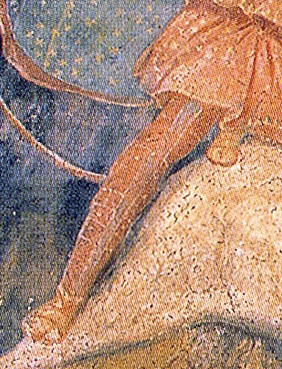
Dr. Jerry Brown provided the English translation of Chapter 1 and the final quarter of Chapter 5.