new page: Cognitive Phenomenology of Mind Manifestation – w/ the Cybermonk treatment: headings, tons of white space, this is not for a backup but is for interspersed commentary and bolding. Article by Author.
new page: he asked me “Can we have stable control?” THE question!
new page: announce fairy fare. w/ Dr. Secret & the Evil M. Hoffman
at sgc page invite ppl.
Houot page: every time say name as: Houot (“Ooh-Oh”)
read aloud voice recording Houot article about surrenderism Pilot Ship.
” huge red flag: why no ‘surrenderism’ discussion??!! compare Janikian’s good book giving folk surrenter advice”.
search link add in categs in site map
add site map section A. M. Houot
fill in bk review template for Hermetic Spirituality and the Historical Imagination: Altered States of Knowledge in Late Antiquity, by Wouter Hanegraaff, 2022
fill in bk review template for Rise of the Psychonaut: Maps for Amateurs, Nonscientists and Explorers in the Psychedelic Age of Discovery, A. M. Houot (“Ooh-Oh”), Feb. 3, 2025, https://www.amazon.com/dp/B0DPSJGMFR (paperback, ebook, & audiobook)
Older than March 23, 2025:
Hatsis Methodology – add my comments at start & end of Egodeath Mystery Show Ep81:
Ep81a 1:58-2:48 –
“I just posted the Thomas Hatsis Guide to Exemplary Historiographical Methodology. A new page at the site. So if you’re interested in professional-level ideal historian conduct, how to omove the field forward most effectively and collaborate harmoniously with other leading-edge thinkers in the field, be sure to read my page, where I’ve extracted carefully, what makes Hatsis so ideal, such a model of exemplary historiographical methodology? And I think I’ve got it nailed, I’ve managed to extract and carefully study the ways that Hatsis conducts himself that makes him the paradigm of historiographical methodology of how to, how to get, reach 100% efficiency at collaborating with others to push the field forward on a sure-footed way, using his water-tight methodologies.”
Ep81b: 2:01:44-2:02:03 –
“My most valuable thing I’ve ever written was I extracted Thomas Hatsis’ exemplary Historiographical Methodology. This really blows away any enlightenment experience I’ve ever had was figuring out Thomas Hatsis’ methodology is empowering me far more than any study of Transcendent Knowledge.”
Per Site Map’s Scheme:
Finish implementing and testing this scheme.
Learn and leverage and explain WordPress’ Category scheme. This Site Map probably amounts to a custom re-implementation of WordPress’ Category scheme, where each webpage can appear in multiple categories.
Egodeath Mystery Show – Clips Episodes, Standard mp3 Filename Pattern
Rename Episode Feb 8b to Add Keywords “Drums on the Wing”
Rename/re-upload: “2021-02-08b Egodeath Mystery Show.mp3” as “2021-02-08b Egodeath Mystery Show – Drums on the Wing.mp3″
Removing Critique from 02-10c Dancing Stability (low-pri)
“2021-02-10c Egodeath Mystery Show – Dancing Stability.mp3” – remove critique of the 8b clip; paste fresh copy of cleaned-up clip. Finding: After the critique of the 8b clip, I restarted the 8b clip from the beginning. This reduces the priority of this item; I didn’t ruin the playing of the clip, except by prepending a random sampling/critique of the clip prior to playing cleanly the entire clip.
Rename Episode “Feb 8b Clips” to Add Keywords “Drums on the Wing”
Rename / re-upload: “2021-02-08b Clips – Egodeath Mystery Show.mp3” as “2021-02-08b Clips – Egodeath Mystery Show – Drums on the Wing.mp3″ Add intro/outro? Need a “Clips” piece/leader.
Make Utility Clip that Says “Clips”
Make a “Clips” piece/leader, for “clips” episodes versions.
Do Another Remix of Cleaned-Up Clips from “Drums on the Wing” Episode
Remix (reverb + eq) the clips- (better than “2021-02-08b Clips Fx – Egodeath Mystery Show.mp3” to form: “2021-02-08b Clips Fx2 – Egodeath Mystery Show – Drums on the Wing.mp3″
Could Remix Cleaned-up (1st half only; first 16 minutes; Feb 27) Mic Recording of track “clips 210210_2242” in: “/Volumes/TK Audio 2/Egodeath Mystery Show/2021-02-10c Egodeath Mystery Show – Dancing Stability/” “2021-02-10c Egodeath Mystery Show – Dancing Stability.aup”
Possible Topics for Egodeath Mystery Show
EQ demo. Phaser.
Cognitive Phenomenology of Psychedelics article
Demo technique: live reamping of mic, or “live re-miking”.”02-08b clips” (in DR-05’s Playlist)
“02-10c v2 clips” (in DR-05’s Playlist)
live incoming .wav (mic deck DR-05)
razor-blade slicing/sequencing the blades recording :”02-10c v2″
audio editing adventures. fluff words.
Hanegraaff’s irrelevant Western Esotericism.
breaking apart run-on statements.
How it went, with realtime revoicing experiment.
Testing the new show-template approach. Reducing show overhead while keeping structure available.
Deprecated the Agenda page. Work within the idea development page instead. Address the scrolling problem by using breadcrumbs.
Moved episode template to dedicated new page.
Todo list, in the idea development page & Todo page.
Top pri: give keywords to the 02-08b files: ” – Drums on the Wing”
Re-release “Feb 7 Plastic Cloud” episode of Egodeath Mystery Show.
Created new audio project file: “2021-02-07a Egodeath Mystery Show – Plastic Cloud.aup”
Conjoin the two Eleusis satire readings at the end.
Re-export mp3, re-upload, announce.
Research how Communication = Cybernetics.
Connect my miking/voicing research, incl double-reading, to Cybernetics.
Log of library of voice recordings of multiple types.
p0 Clean up Transcendent Knowledge Podcast pages.
Do read-only assessment sweep, note problem spots here.
Fix those spots.
Note other spots.
p1 vocalization practice: vary pitch exercises, eg read text aloud.
p2 PRIORITIZE TODO items, clean up.
p2 Build-out the Announcement pages (Home Pages) for each component-theory of the egodeath theory:
Add the std subsections, incl linked TOC entries. 80% done. Core Concepts, Key Phrases, Key Mythemes, Theory Concepts (Meta-Theory). Like done in loosecog page.
Fill-in something — leads, to more research — in each subsection of all 1+2+8 pages = 11 pages. 30% done.
p3 Check email.
p2 Clean up Proof/Canter/Methodology article:
p0 List the ramifications of the image and of my having decoded it.
Record the history:
1. I added Vial rebuttal in Hatsis book page.
2. Brown inquired if Egodeath community doc’d Criteria.
3. I created the Criteria article.
4. That spawned the Proof article.
Date on which I rebutted Vial.
DATE ON WHICH BROWN ASKED WHETHER WE DEFINED CRITERIA.
DATE I STARTED CRITER ARTICLE.
DATE I ADDED CANTER TO CRIT ARTICLE.
DATE I MOVED CANTER SECTION 11 PAGES INTO SEP “PROOF” ARTICLE AFTER THE LITTLE SECTION GREW TO 11 PAGES AND RISING FAST. HOW MUCH HAD I SOLVED, THAT WAS LIKE 6 HOURS OF DECODING-WORK ON THE BLURRY YELLOW NO-CONTEXT CROP OF MUSHROOM TREE.
HOW MANY DAYSS TO (MOSTLY) SOLVE TOP ROW?
HOW MANY DAYS TO (MOSTLY) SOLVE WHOLE IMAGE EG HE’S DUMBER THAN AN OX.
p3 Find Samorini’s Plaincuourault article. Maybe email Brown & Cyb.
p3 Find when I solved Heph = solved Hatsis Salam “dancing man”. End of 2015?
Precursors to that: turn right to remember, limping king, Hephaestos.
Postcursors: applied dancing-man decoding, in Nov 2020, to decode and crack open and then fully decode/transcribe the Canterbury Psalter “mushroom tree/ hanging/ sword” image.
p3 Site Map: Check placement of supporting articles for Proof article.
p3 Further decode myth story: Agraulos Herse Cecrops Athena Hephaestus GIRLS SEE SNAKE ROCK CLIFF SUICIDES. Been posting about that for some time.
Maybe create a page to bring my decoding writings together, gather the work. Or just a fresh treatment writeup.
Format for a Mytheme-Decoding page: In a protected section of the page, keep a CLEAN, comment-free version of the story; stop the awful losing of the story b/c of my inserting commentary.
p3 Trace trajectory of decoding {tree vs. snake} = possibilism vs. eternalism, 2011-2014. What diff’c Nov 2011, Nov 2012, Nov 2013?
p3 Add my latest Simplified Summary Statements of the egodeath theory.
Related to Digest 183 of the Egodeath Yahoo Group.
From local file ED_topost.md or ED_topost2.md.
Scope out what’s in those text files, including posts that didn’t make it into the digests of Egodeath Yahoo Group.
p3 (Std formatting of WordPress pages) Breadth-first sweep: in pages that have empty TOC template, add only two headings (linked) — no more than two.
p3 Replace the word ‘Hatsis’ by the phrase “Resolute/ Committed Deniers of Mushrooms in Christianity“; “(the) Mushroom Deniers“; allow Letcher and Hatsis to change positions.
Move the focus of the field from Amanita, Christianity, Surface Form, Low Esotericism to Psilocybe, Greek+Christianity, Experiential Effects, High Esotericism
Keep the substance of the arguments, delete the namecalling & emotion, but try to keep 100% of the strength / clarity of assertion, eg:
Keep neutral wording such as “illogical, self-contradictory, unjustified presupposition, conflict of interest”.
Mockery is legit form of argument. “Travesty”, “makes a mockery of scientific historiographical methodology”.
A NEUTRAL, POLITE, SOFT-SPOKEN TONE MEANS BEING FEEBLE AND INEFFECTIVE LIKE ROBERT GRAVES — IN EFFECT, HAVING NO MESSAGE.
Clean up the page that I sent (as URL) to Hatsis.
My main point lately: move the central focus of the field from “Amanita per Allegro in Christianity” to “Psilocybe in Greek and Christian Religion”.
How Ahistoricity factors/complicates/tangles.
Tighten the outline of Hatsis’ errors (most are errors of a school of thought, the Committed Deniers of Mushrooms in Christianity) eg Brinckmann-Panofsky-Wasson-Letcher-Hatsis) and corrections of those errors; what Hatsis needs to do instead.
Error 1: Hatsis’ (or, the field’s) mistake: __. What Hatsis (or, the field) needs to do instead: __.
Error 2: Hatsis’ (or, the field’s) mistake: __. What Hatsis (or, the field) needs to do instead: __.
Search terms: near mushroom images in all pages, put search terms such as:
Psilocybe cubensis mushrooms
Liberty Cap mushrooms
Amanita muscaria mushrooms
mushrooms in Christian art
Christianity mushrooms
Christ Amanita muscaria
Christ Psilocybe cubensis mushrooms
Christ Liberty Cap mushrooms
Christ mushrooms
Jesus mushrooms
angel mushrooms
Greek art mushrooms
Greek mythology mushrooms
Group the entries in Core Concepts page, Key Mythemes page, & Theory Concepts page.
Nest the TOC dup entries.
Then move the entries into that order. Link either the main phrase, or all of them.
Use Synonym-list entries more; use dup entries less. Merge duplicate Concept-Section Entries. Indicate clearly that they are multiple label-phrases & acronym-handles of a single concept.
Pri3: In IP page, fill-in names of the component-theories. Announce-pages.
Pri3: Update TOC in idea development page 8.
See if these sections would be good to create a new page. “against mysticism writings”
glean from the Egodeath Yahoo Group whether I read World Mythology books before announcing the maximal entheogen theory of religion.
History of my Caduceus decoding – CHECK FOR POSTS NOV ~29 2013 TODO WHEN DID I FIGURE OUT CADUCEUS, ADD THAT TO THE HISTORY DATES PAGE.
Pri5: Does the whole university library system REALLY lack Allegro’s book?
Develop streamlined approach to podcast commentary comments.
Pri4: email Freke, no reason
Pri3: Document the Diamond Hammer of Interpretation 🔨💎🔥🔦📖 incl shining light at different angles (a useful new twist today [January 6, 2021])
Pri3: Listen to more of Max’s Psychonautica podcasts.
In my Podcast page, in the new, Psychonautica section, add link to my audio spot: “You’re listening to PSYCHO, Nautica, with Max Freakout Freakout Freakout”
PRI3: DATE LOOKUP PAGE; ADD SOME DATES TO IT.
P3: Clean up new “LOG ENTRY” page.
P2: MOVE/HIDE INCENDIARY CRITIQUE OF:
CLEAN UP HATSIS PAGES.
THE PAGES ARE POOR ORG’D, PORO POOR COMMUNIC
CUT THE WORDCOUNT. TIGHTEN. MOVE NOISE TO idea development page.
Design a formatting for my Podcast Commentary pages. 90% figured out, 60% impl’d.
Clean up 16 & 26 (the two Kafei podcasts that are non-ahistoricity).
STEP BACK, GET A VISION OF WHAT PODCAST PAGE COMMENTARY SHOULD LOOK LIKE (incl specifically 16 & 26).
OBJECTIVE: SUPPORT TIMESTAMP LOOKUP in TOC. In TOC, SHOW TOPIC AT EACH TIMESTAMP.
done March 14, 2022: Inventory the Canterbury Psalter mushroom trees (also note lifted garment, vine trees)
done: EMAIL PODCAST ANALYSIS TO SHOW-HOST.
email audience QUESTION ABOUT WHAT CONTRIBUTION) &
STRAP GUEST INTO CHAIR & FORCE-FEED the MAIN ARTIC PARA’S.
Host keeps recorrecting the course again and again:
Stop (ie reduce) talking in terms of other writers.
Start talking in terms of the egodeath theory.
Read the egodeath theory. Discuss it.
Speak explicitly and consistently in terms of the CONTRAST between unfolding-in-time determinism vs. timeless frozen block-universe eternalism. State which position is which, re: the egodeath theory — explicitly. Not formless incoherent direction.
P5: LONGFORM HISTORY PAGE IS FINE AS-IS, NOT A PRI.
Create hourly log page. done
Create year-lookup page. done.
Criteria article: Add Ack section, maybe dedicate to Brown, or Dedication note.
Proof article: Add Ackn’s. Done.
Criteria article: Add Ackn’s. Done.
Done: Psychonautica podcasts: Add links in “Transcendent Knowledge podcast” page.
Done: Create WordPress site containing only the 183 Egodeath Yahoo Group Digests.
done: In Proof article, add a Red Initiate section, with this fresh cropped image. done
done: Proof article: add: Pink showing his empty right hand is equivalent to sticking out his tongue to display a dose, then closing his lips & swallowing, then sticking out his tongue to display none. Proof article: add findings about palm up and facial expression of Pink at banquet – summary of material dumped to bottom of Methodology article.
LET Cyberdisciple KNOW I FOUND / GOT MY COPY OF RUCK-EDITED BOOK HOW MUCH DID I READ?
unpack the 15-30 books retrieved.
email wrmspirit’s comment, from the removed article “The Fallacy “the Higher the Dose, the Better”, to show-host. Drafts folder.
In Podcast Commentary pages, link to the Nav page: Podcast section, or to the Podcasts page. Try both ways. Minimize spaghetti-linking.
Done: Put TOC template in every page.
NEW DESIGN SOLUTION INCLUDES CONSISTENT PRESENCE OF TOC IN EACH PAGE. WORKS TOGETHER TO NAV DOWN INTO SUBSECTIONS OR UP INTO THE SECTION OF THE NAV PAGE (SITE MAP PAGE).
Make sure Julie credited in phtos from The Psychedelic Gospels in miain page.
Clean up headings links toc in Samorini. eg the above item.
At top of every page, link to its section of Site Map page. Star nav (actually, new design is specifically HIERARCHICAL STAR Nav; full top-to-bottom-to-top hierarchical nav), not Spaghetti nav!
Done, in Entheogen Scholarship section. OMG that (together w/ TOC at top of each page) is so much better for nav, & for exposure of relevant articles! No damn spaghetti links; eg no list of 20 links randomly at bottom of each page.
how i support amanita – add to “is amanita phase 1 of entheogen scholarship, perish the thought?”
Done: Make new phrases expressing: (marked groups of concepts as “Hot Area”)
transformation of mental worldmodel of agent-in-world from: {king steering in tree} -> {wine} -> {snake frozen in rock}
Done: Improve Site Map page/nav.
Done: Re-outline the Site Map page. Duplicate page-entries as needed.
Done: Create additional sections.
Done: Dissolve or re-frame “Good Articles” section; or at least dup those items into topical sections.
Done: Get rid of “Flagship Articles” section, or re-frame, as “Highlights pages”, or dup the items into topical sections.
Problem: need rapid managing/creating/tracking of new keyboard shortcuts, entering Edit mode is too slow.
Done: Remove shortcuts from Concept-entry pages.
Done: Rely purely on the Keyboard: Text app to manage shortcuts.
Done: Create a set of optimized concept-labels & [acro]/keyboard shortcuts, and formalize the construct/ concept of “the Egodeath Theory Concepts Collection“. 3 types of concepts so far:
1) Egodeath Concepts (core concepts only; not meta-theory here; not mytheme theory here; not mythemes here);
2) Key mythemes (that’s MOSTLY clear-cut what that means, what’s in scope/out of scope: gray-area problematic are the semi-literal mythemes eg “banquet” “initiate”, astral ascent mysticism…) ;
3) Egodeath Meta-Theory,
Mass-production-create keyboard shortcuts for — and concept page-sections for — the following phrases/concepts/ optimized concept-labels: keyboard shortcuts done:
concept page-sections [cps]
the concept-section entries [cse]
Egodeath-Theory Concepts Collection [etcc]
concept-section entry in the Egodeath Theory concepts collection [cseetcc]
concept-section entry in a WordPress “Concept-Section” page [csewcsp]
WordPress “Concept-Section” pages [wcsp]
Egodeath Meta-Theory concepts [edmtc]
Concept-section pages [csp’s]
Concept entries [ce’s]
Concept entry [ce]
“Egodeath Concepts” page of the the Egodeath Concepts Collection [ecpecc]
new Concept entry in the Egodeath Theory Concepts Collection [nce]
Egodeath Concepts Collection [edcc]
new Concept entry in the Egodeath Theory Concepts Collection [nce]
Egodeath Concepts Collection [ecc]
Concept entry in the Egodeath Concepts Collection [ceecc]
formalized high-performance concept-creation with optimized concept-labels + [acro]/keyboard shortcuts [fhcc]
formalized concept creation with label and shorthand [fccls]
rapid idea-development through formalized named-concept creation via optimized concept-labels, with [acro]/keyboard shortcuts [rfls]
rapid formal concept creation with optimized concept-labels plus shorthand acronym-handles [rcc]
Plan what to do for two phrases for one concept, in the the Egodeath Concepts Collection. finding: need 2 keyboard shortcuts for the same expansion-phrase; eg: can’t decide if the word “Egodeath”, in an optimized concept-label, is shortcut-abbrev’d as ‘e’, or as ‘ed’ — can simply cover both shortcuts -> same expansion.
Many-to-one relations in fields in the Egodeath Collection or in a field of a Concept entry in the Egodeath Concepts Collection
1 Concept, = 1 Concept entry, = multiple optimized concept-labels. 1 optimized concept-label = multiple keyboard shortcuts eg “Egodeath” in the middle of an optimized concept-label, might be both abbr’d as ‘e’ & as ‘ed’.
Scenario: One Concept in the Egodeath Concepts Collection
Scenario: One Concept in the Egodeath Concepts Collection, with Multiple “Optimized Concept-Labels”
TOC Design
TOC design: How many links?; what design – how of entries at TOC listing at top of the WordPress page?
Ans: 1 link, but maybe list all the phrases there (if non-obvious), non-linked, and grouped as one unit/ syn-list.
How Many Concept entries?
Ans: 1 Concept entry, with a Synonyms: section.
Pri1 todo: Using the definition/design above, MERGE the DUP Concept entries in the IN THE “EGODEATH CONCEPTS” PAGE (the #1 main WordPress page constituting the implementation of the Egodeath Concepts Collection).
Finding: poor differentiation between o implementation (WordPress pages containing H2 sections) vs. o The abstract concept/purpose, which is: formalized high-performance concept-creation with optimized concept-labels + [acro]/keyboard shortcuts
concept-section entries in the Egodeath-Theory Concepts Collection [a concept-section entry in the Egodeath Theory Concepts Collection no; bad; that jumbles implementation (sections in a WordPress page) so as to detract from the main, driving, abstract idea.
That should give enough variants (useful optimized concept-labels/ phrases, & their keyboard shortcuts, to start working with. Notice/expect/plan-for: YOU ALWAYS NEED MULTIPLE SLIGHT VARIANTS. That’s why, in a given Concept entry, there is usually needed, a Synonyms: section. But don’t create a Concept entry for each synonym-phrase/label; instead… todo: Pla
Book: The Hidden Passion: A Novel of the Gnostic Christ Based on the Nag Hammadi Texts
Book: The Hidden Passion: A Novel of the Gnostic Christ Based on the Nag Hammadi Texts Laurence Caruana, 2007 http://amzn.com/0978263707 “This is the tale of the Gnostic Christ, based on the ancient sources.
In a compelling narrative, L. Caruana seamlessly weaves over 1500 sayings from the Nag Hammadi texts to recount The Hidden Passion of the Gnostic savior.
Wandering round Galilee, increasingly hailed as the Messiah of the Five Seals, the Gnostic savior preaches divine awakening through compassion.
But he must still contend with Judas, his dark twin, and Magdalene, his promised bride.
At once earthly and spiritual, the Nazarene’s love for these two is finally transfigured into a higher, hidden passion.
Each page of this novel rings with the authentic message of the lost gospels.
By combining numerous narrative fragments from the Nag Hammadi texts, The Hidden Passion makes the Gnostic Gospels come alive.
Complete with a map, diagram and glossary, this novel elucidates the Gnostic worldview in an eloquent , engaging narrative.”
All of Caruana’s Books, in First-Edition Chronological Order
A First Draft of a Manifesto of Visionary Art (2001) The First Manifesto of Visionary Art (2010) Confirmed the Copyright dates: 2001 – 100 signed copies, titled: A First Draft of a Manifesto of Visionary Art 2010 – per Copyright page Jun 19, 2017 – Amazon date on author page: “Publisher : Recluse; 1st edition (June 19, 2017)”
“A journey to the primordial language at the source of all dreaming, art & mythmaking…
In 1945, on a hill overlooking the Nile, a Gnostic text was accidentally unearthed after having been buried for seventeen hundred years.
Within its aged pages there appeared the mysterious fragment: enter through the image.
Taking this as his starting point, the noted Visionary artist L. Caruana guides his reader through a labyrinth of imagery, exposing the forgotten image-language at the root of all dreaming, art and mythmaking….
Drawing examples from a diversity of ancient cultures (Buddhism, Alchemy, Gnosticism) and from contemporary Visionary art (Dali, Fuchs, Johfra), many beautiful and intriguing symbols are illuminated with crystal clarity.
Retracing the steps of 20th century mythmakers (Hesse, Kazantzakis) and scholars (Jung, Campbell, Eliade), Caruana opens our eyes to the ancient mythic patterns underlying our lives.
[false – should read: “opens our eyes to the ancient mythic patternsunderlying things that are observed and experienced in the psychedelics-induced altered state” -mh]
[20th century mythmakers = acid-inspired Rock lyrics; Matrix movies -mh]
As many fascinating dreams are offered and decyphered (Baudelaire, Descartes), a new key is given to us for the elucidation of dreams.
[false – rarther, this new key is useful for eleucidation of things that are observed and experienced in the psychedelic altered state. -mh]
richly-illustrated study
our daily experiences are heroic adventures culminating in rare moments of epiphany.
[false! {hero/adventure/epiphany}ONLY happens in the entheogen-induced altered state, NOT in the mundane ordinary state of consciousness, nor in dreaming. -mh]
“We discover that our own lives are a gradual unfolding of the Sacred.”
This visual presentation of the Gnostic Worldview is given in three parts: I. A Scholarly Introduction – Gnosticism in Context (2:19) II. The Gnostic Myth of the Creation (42:55) III. The Gnostic Saviour and the Soul Ascent (1:22:30) — I transcribed much of this section, at my page:
[I’m a little uneasy with his wording, using the word ‘soul’; ‘soul’ connotes the “freewill power in branching-possibilities”-premised, egoic personal control system that is, the possibilism-premised personal control system
Not sure I’d create a phrase/concept/WP page-section called “the Soul Ascent”, though I’ve added it to the Key Mythemes page, the {astral ascent mysticism} Concept/section, as merely a Synonym (not as a Concept-section with label “the Soul Ascent” as Caruana would suggest). Possible phrases/ concept-names/ optimized concept-labels: astral ascent mysticism Ptolemaic astral ascent mysticism the Soul Ascent (Laurence Caruana’s phrase)
Filmed at The Vienna Academy of Visionary Art on March 4th 2019, this lecture was given by Academy Director Laurence Caruana, author of several books with Gnostic themes. It is illustrated with works by Visionary artists, both classical (Blake, Michelangelo) and contemporary (Fuchs, Venosa, Alex Grey etc). More information on L. Caruana’s books: https://www.amazon.com/L.-Caruana/e/B…
L. Caruana is an artist and writer [scholarly researcher] living between Paris and Vienna.
Born in Toronto Canada of Maltese descent, he graduated from the University of Toronto with a Philosophy degree specializing in Hermeneutics (the study of Biblical Interpretation).
He also studied Classical Techniques of Painting at die Akademie der Bildenden Künste in Vienna before apprenticing directly with Prof. Ernst Fuchs.
After living in a number of cities (Vienna, Munich, Malta, Monaco), he settled in Paris, where he has authored several books on Spirituality and Art.
As the present director of The Vienna Academy of Visionary Art, he frequently travels abroad to give lectures, hold workshops and exhibit his works.
“Detailed, precise, with a fine line and accomplished hand, Laurence Caruana brings a classical approach to his painting, which abounds nevertheless with fantastic, dream-like and visionary imagery. As principle instructor at the Academy, he brings many of these same qualities to his teaching, urging the student to explore both the technical and imaginative aspects of creation.
Born in Toronto Canada of Maltese descent, he graduated from the University of Toronto with a degree in Philosophy. To learn classical techniques of painting, he moved to Europe, studying at die Akademie der Bildenden Künste in Vienna.
In Europe, Caruana led mostly an itinerant existence, living variously in Malta, Vienna, Munich, Monaco and Paris, while travelling extensively through Asia, Europe and Central America to enrich his passion for different sacred traditions and cultural iconographies. This passion is reflected, not only in his painting, but also in a series of books and articles, such as his erudite study into the ‘image language’ of myth, art and dreams called Enter Through the Image. Caruana also wrote and edited The Visionary Revue, an on-line journal where his highly-influential Manifesto of Visionary Art first appeared.
His art is highly mythological, exploring the interplay of different cultural symbols and styles. Classical in approach, hieratic in structure, his images vibrate with strong saturated colours.
In the year 2000 he received the invitation to work with Ernst Fuchs at the Apocalypse Chapel in Klagenfurt. It was here that he met Amanda Sage and A. Andrew Gonzalez, who were instrumental in bringing him into the Chapel project. More than a decade later, they realized that the seeds had been planted then for their joint Seminars and the Visionary Academy.
After Klagenfurt, Caruana apprenticed under Ernst Fuchs for a year, learning the Mischtechnik while working as his assistant in Monaco and Castillon. At the same time, his wife Florence Ménard worked as Fuchs’ personal assistant in arts administration.
In 2008, Caruana created The Visions in the Mischtechnik Seminar, a popular painting class held in the Italian eco-village of Torri Superiore, just across the mountain from Ernst Fuchs’ studio in France. After teaching solo for two years, he invited a series of other artists to attend or co-teach, thus forming the foundations for the Academy. During the 2012 seminar, this idea was firmly set in motion, due to the inspiration of Amanda Sage and the confirmed collaboration of severak artists who had either taught or attended the seminar.
With the blessings of Ernst Fuchs, the couple of Caruana and Ménard co-founded The Vienna Academy of Visionary Art in the autumn of 2012. As Academy Director, Laurence Caruana brings his strong organizational skills but also his profound love of Visionary art to the programme. In collaboration with his colleagues, he develops the curriculum and co-teaches a number of the courses. In this way, he is able to share his Old Masters expertise while exploring new facets of painterly creation.
L Caruana has also authored several books:
Sacred Codes: The Forgotten Principles of Painting Revived by Visionary Art
Enter Through the Image: The Ancient Image-Language of Myth, Art and Dreams
The Hidden Passion: A Novel of the Gnostic Christ, Based on the Nag Hammadi Texts
A Manifesto of Visionary Art (available in English, French & Portuguese)
(All those books are listed in the Books section of the present page.)
High Culture Was Strikingly Fluent in Mythology Analogies for Initiation — Routinized Use of Mushroom Mixed-Wine to Flip the Mind’s Personal Control System from Possibilism to Eternalism — Impressive Evidence of Routinized Mushroom Initiation, Highly Articulated in Mythic Analogies, Observable through Mythemese Fluency
A week-long Art High: This week, I got confirmation of my hypotheses of around a year ago, about branching vs. non-branching, tree vs. snake, branching antlers of a stag, in ancient Greek & in Christian mythic art. Confirmed: artists understood that mystic revelation about moral agency is a matter of moving from freewill thinking to no-free-will thinking, moving from autonomous monolithic personal control to puppet/slave/ rail-driven personal control with 2 levels or layers of control involved: the transpersonal driving layer (hidden thought source you must trust your life to) and the personal local locus of control-power (a reactive driven-gear, your forceful control-power that you exert is forcefully steered by the rail: you are forced to push in the direction that the hidden controller has pre-set you to push).
Another daring hypothsis from me has been confirmed: Pre-moderns in loosecog had equivalent of multistate or altered state-based Cognitive Science, about 4-D spacetime (the Rock Universe), illusory control power (kingship, vs. puppet/slave), mental construct sequences positioned in spacetime (ivy strand with leaves; pine cone that opens its scales when dry and closes its scales when wet).
The art evidence emphatically and pointedly confirms my theorizing of a year ago that the man riding the donkey or horse toward the broken-branch tree trunk with snake, on sargophagii, means awareness passively being carried forward in time along your frozen rigid worldline, while the donkey or horse — a separate control-agency component of the psyche — steers your thinking, following the invisible rail(way). The donkey is the personal steering among virtual possibilitiyy branches through time. The one possibility branching path that is destined and pre-set and pre-existing is the path the steersman donkey is forced to follow, forced to choose.
The artworks convey “is personal moral control agency power a matter of possbiility branching, as you originally think and feel in the OSC, or is it non-branching, like snake/ivy/monocoursal/dragon/serpent/worm/ Eve’s long hair? ” The artworks say “You thought possibility branching, with you having that particular key kind of power: steering-control power of a kind that can manifest either branch A or B into the future. But per Peart, No One at the Bridge, in the mystic state you see you have no arms to steer, no power in the present to steer to one vs. a different future branching-path.
This system of art confirmation is maximally profound, exactly as powerful and reputation-boosting as the confirmation of bending of light near the sun in a complete solar eclipse some time after Einstein predicated light bending near the sun’s gravitational spacetime-curving field. Artworks directly and pointedly confirmed during the past few days, that the ego-transcendent understanding and knowledge about moral agency is a matter of repudiating Possibilism and affirming Eternalism, and trusting in your near-future worldline & hidden source of control-intentions, not battling against that.
Art clearly and definitely confirms my Cybernetics/Heimarmene/Entheogens/Metaphor (CHEM) explanatory model of myth & religion. The kylix (saucer-shaped shallow cup) painted by Douris completely fits with and affirms the Eden tree of knowledge. This art confirmation, though “merely confirmation” of my breakthroughs of a year ago, I report that this mere confirmation actually caused substantial link-tightening and compaction of my Theory of ego transcendence and metaphor — the *real*, relevant, central, driving force in the mystic altered state, the *real* nature of ego transcendence (as discovered in my initial, main, January 11 1988 “Crystalline Ground of Being & concomitant non-control” breakthrough). Journal of Transpersonal Psychology in 1985-1988 asserted that ego transcnedenence is spatial unity. I said no, ego transcendence is illusory control together with Eternalism (one’s future stream of control-intentions is pre-set, pre-arranged into a rigid snake shaped future-worldline).
The pearl of great price: The unenlightened illegitimate king sends Jason to retrieve the golden fleece. The fruit of the tree in the Garden (of Hesperides/Eden) is Transcendent Knowledge about personal control power being illusory; the fruit of the tree is understanding Cybernetics/Heimarmene/Entheogens (CHE) (including understanding how Metaphor describes Cyberneics, Heimarmene, and Entheogens/Loosecog; M->EHC). Metaphor describes entheogens causing loose cognitive binding revealing fatedness and non-control.
In religious myth, Metaphor describes entheogens experiencing Heimarmene & Cybernetics.
M->EHC
CHEM:
C – Cybernetics, personal control power; loss of control; self-control seizure, control vortex, non-control, autonomous personal control, switch from autonomous kingship to puppet/slave following hidden rail into future, unable to control which control-intentions come up in the fountain/spring/wellspring behind awareness.
E – Entheogens; loose cognitive binding state, mental model transformation.
M – Metaphor, myth, religious myth, esoteric symbol usage about C/H/E above.
Joseph Campbell says there’s no (single) Myth for our time. I say the equivalent of the myth-system of our future, quintessentially late-Modern or transitional to post-Modern, is my layout: an explicit non-metaphorical Core Theory plus mapping that to reliigious/mythic/esoteric metaphor, and, as far as *specific* brand-styling, we must consider STEM-style themes like:
o In the Matrix series, the Animatrix movie’s tripping android segment
o Rush songs — not Pop Sike (girl-relationship as metaphor for acid experiencing) but Tech Psych (STEM as metaphor for loosecog experiential insights)
(STEM means Science, Technology, Engineering, & Mathematics. A standard acronym.)
In the present, late-modern or post-modern era, we won’t have a myth (in Campbell’s sense), per Campbell. My response is that we will have correct non-mythic explicit explanation of ego-transcendent knowledge & no-free-will, and, we will have correct mapping to all past mythemes/tropes and the ability to created unlimited number of themes/tropes. Metaphor-only expressions of one’s correct understanding of TK proved (historically) to have problems, so it is urgent that everyone knows the non-metaphorical Core Theory, my Cybernetic Theory of Ego Transcendence per my 1988 first drafts and 1997 summary at Principia Cybernetica (http://groups.yahoo.com/group/egodeath/message/5870).
Transcendent Knowledge (Cybernetics/Heimarmene/Entheogens/Metaphor) is the forbidden fruit forbidden to the egoic mind. The fatedness snake-dragon guards the fruit of the tree of knowledge of the illusory nature of moral control culpability in light of no-free-will and the pre-givenness of all your control-thoughts. Your snake made you choose as you did; you had no meta-choice; you have pseudo-freedom, the illusion of having the kind of steering-power that can select some other possibility branching path. The heimarmene snake dragon serpent monster (this is *the* monster, forcing you to intend against your self-protection programming in such a way that your steering-power with respect to your future possibility branching is shown to be illusory impotent cybernetic control power. You are only allowed to steer how you are forced to steer.
The serpent guards ego-transcendent knoweldge in at least 2 ways:
o If you are among the Elect, the serpent makes you wrestle with and submit to & put full intimate trust in your threatening thought-source, then the serpent as gate-controller lets you pass, to get the golden fleece or eat the apple of knowledge of the illusory nature of moral agency — to get ego-transcendent knowledge. The pearl of great price held in the claw of the challenging/threatening/enlightenment-bringing dragon/monster/serpent: you must sacrifice your childish free-will thinking *and* (stabbing your heart) sacrifice your claim to have the kind of control that could prevent a fatal control-intention from arising; to stop the sea-storm shipwreck control-instability, you must pay the price, repudiate your childish animal naive initial implicit essential claim that you have possibility-branch steering control power.
o If you are not among the predestined, pre-existing Elect, it is impossible for you to get to the fruit, impossible for you to steer down the possibility-branching path in which you gain the elegant pearl of ego-transcendent knowledge; you are pre-destined so that you in the future are destined to not ever come to (this elegant compact explosive system of) ego-transcendent knowledge.
Take my hand, I’ll take you to the other side, to see the truth: the path for you is decided
— Iron Maiden, album Somewhere in Time
Destiny planned out … speculation of the wise
— Bob Daisley, album Diary of a Madman
In these artworks, also I spotted clearly the theme, across systems/brands of ego-transcendent knowledge (= no-free-will, interlinked with personal non-control (non-sovereignty)).
o Jonah being spit out by the sea serpent
o Human torso w/ serpent legs in the Gigantomachy
o Snake in Eden tree: Eve’s torso with arms, or just her face, and a serpent lower body.
o Jason in the kylix (saucer-cup for drinking mixed wine/mushroom wine) painted by Douris, ego-dead, torso coming from the guardian heimarmene-dragon/serpent.
Sometimes the serpent’s head is shown in addition to the human head. Usually the human has arms but I especially resonate with the Eden serpent that just has Eve’s face; she has no arms to steer into her future possibility-tree branches, and the serpent has no arms.
Invisible railways crackle with life
— Rush/Peart, Spirit of Radio
Printed as “airwaves”, sung as “railways” the first time, “airwaves ” the 2nd time.
Theology is too policitized, it is misleading, and you have Augustine’s winking asymmetry: God is the author of good, humans are the author of evil. God is all-powerful, all-good, and isn’t the author of evil (directly or indirectly). But the entire Theology industry knows this is self-contradiction. Gnostic-like thinking (in whatever metaphor-systems of ego-transcendence) solves that by splitting the creator god (who is responsible for layout out our evil actions in spacetime) saying the evil creator (Demiurge) *is* the author of evil, and the high God is purely good and isn’t the creator. Theology advocates confusion and waffling, leading Reformed theologians to falsely say “man’s mind can’t understand this apparent contradiction: God is all-powerful and all-good” when the truth is, it’s blatantly self-contradictory and impossible to “solve” other than by subtle or covert or dishonest meaning-shifting.
Art tells a simple, valuable story: no-free-will, your snake-rail controls & pre-sets your steering, your awareness can only helplessly look on as the future destined thoughts & steering-direction are revealed, and thus God is the author of evil – ‘evil’ as unethical acts and as the delusion of freewill moral culpability. The essence of the story is beautifully straightforward as communicated in art, rather than in Theology: ingest entheogen, see and experience the self-contradictions of freewill thinking & its control-thinking, and switch to no-free-will thinking including the puppet/slave relationship of personal control to time. Alex Grey has not represented the discovery of the no-free-will, consistent, beautiful, attractive, threatening model of personal control in relation to time. This is the frozen-puppet-universe perspective.
I was surprised that “mere” confirmation of my theory by the layered and clustered branching antler and serpent and tree and “tree’s guarded treasure”, caused some jackpot updating of my cross-linking: adding new insights and giving an *enlightening* confirmation as opposed to mere simple confirmation. Art inspired me to see things even more clearly, simply, starkly: *tree* of knowledge of good & evil; fruit of the tree; golden fleece like pearl of great costly sacrificed price — the snake is the fruit of the tree; the fruit is the product of mentally considering tree vs snake, posssibility branching vs. monocoursal linear nonbranching; Possibilism vs. Eternalism & concomitant personal control power implications.
Artworks’ confirmation of my snake vs tree theory, and man riding donkey/horse/panther (or snake-drawn cart), toward branchless tree with snake, caused massive adjustments to the cross-linking in my theory — not negating anything I wrote, but tightening and affirming it, such as confirming my assertion that pre-modern elites understood 4D block time, loosecog, and levels of control.
That’s one example of how daring I’ve been always in my Theory: I had to make an entire set of ideas that each totally conflict with strong dogmatic assumptions. Pre-moderns were stupid, we assume, and yet, we late-moderns were the clueless ones who were incapable until me of reading the simple message encoded by Douris and the pre-modern or early-modern artists: snake vs. tree, fruit reveals no-free-will & its concomitant ramificaitons for personal control morality steering power.
Art’s confirmation of my theorizing about branching, of a year ago, only showed me a few truly new insights this week, yet I’m getting a huge reading: my feelings report that the ability to more and more quickly read and decipher these metaphor artworks resolving them into no-free-will, or “Cyb/Heim/Enth” concerns, I detected or “heard the jackpot sound” of linking-updating the cross-linking throughout my Theory of myth & religion. It by today has become clear and feels simple: mystic revelation shows simply no-free-will; map the athiest no-free-will books’ phrases to *esoteric* religion.
Everything Sam Harris asserts in discussing no-free-will maps *directly*, consistently, to religious myth — to higher-order, esoteric religious understanding. It’s only exoteric, lower-order religion that clings to the childish sinful confused self-contradictory freewill idea which posits and includes the feeling of, being a control steering power agent, a kind of control that is precisely the impossible aspect: the power in the present of steering into more than one real possibility branching path — that is the key core central power we assume and that we iniitally take as real, forming our moral control agent identity and its supposeed moral culpability.
The adult must cast off both the freewill assumption and the control meta-steering power assumption, but through intense overwhelming experiencing in loosecog, not speculation based only in the tight cognitive binding state — not the model of linear time & linear domino-chain causality. With my main article in hand, and my snake vs. tree revelation of switching from Possibilism moral thinking to Eternalism thinking, It is possible now, without entering the loosecog state, to have a correct and clear 2nd-hand understanding of control seizure and revelation of this specific kind of non-control, and changelessness of your near-future sequence of control-thoughts or control-intentions.
Joseph Campbell and Ken Wilber are not wrong so much as grossly massively incomplete. When the Cybernetic Theory of Ego Transcendence a la my first mid-1988 article drafts is inserted into Wilber’s system or Campbell’s, their systems are overwhelmed and totally dominated by my system, which is CTET/TK/Egodeath theory / the CHEM (M->E->H&C) model of ego transcendence & religious myth & esotericism-based tropes such as narrow escape in ancient novels.
My Egodeath (CHEM or M->EHC) theory:
M->E->H&C
Metaphor describes Enthoegens for experiencing Heimarmene & Cybernetics limits/vulnerability (“noncontrol”).
Cybernetics is the biggest most soul-shattering topic, Metaphor is the least, so imagine each letter font size from small to big: meHC, or CHem.
When I say “Entheogens” as 1 of 4 key topics, ‘Entheogens’ is a condensed term meaning & emphasizing loosecog — that is, loose cognitive association binding of (as worded per my crucial April 1987 thinking-style change) DMCRMs: dynamic mental-construct relationship matrixes — MCs (mental constructs), for short. This is an example of how I have deciphered metaphors describing what’s revealed in loosecog, and have engineered a language that is optimized for discussing efficiently ego-transcendent knowledge.
I feel guilty for only really speaking 1 language (English), but to redeem myself, I have fully cracked the mystery encryption code to fully explain what is actually essential in religious myth, and I have formed and shared a highly efficient language to discuss ego-transcendent knowledge. Each brick component of my theory I have customized, modified, and optimized; I have contributed “bricks” in many fields but the value of those bricks is superior because my bricks fit together successfully across fields. identifying analogies others that other investigators didn’t recognize. 20th Century research in myth & religion uses English, French, German, Greek, & Latin, but those are equivalently clueless and really only amount to 1 language. I provide the other language, that of the CHEM model I have created and discovered, rediscovering the essence but putting forth the first efficient systematic useful practical omni-powerful model that explicitly gives the solution to all the mysteries that matter.
I deciphered Moses’ seeing the burning bush = the subjectively moving present, seeing illusory unreal virtual possibility branching, like a hanging rope/fuse, with a smalll, localized flame climing up. A possibility branching bush with only the pre-existing branching-path being real; the other possibilities are virtual-only possibilities; they are impossible because not fated; those other, illusory branches are the branches which do not match what is happening in your worldline in your future.
Professors who lack my Egodeath theory are clueless and need to know that my theory will accellerate their work ideally and provide the ideal perfect solutions.
Researchers of Western ancient religion are doing a reset now, revisiting more carefully their assumptions, shaking off the horrible and confused Christian apologist historians — the equivalent of my desecrating and p*ss*ng on the pathetic worthless books around 1994. Previous books are as much misleading as informative. The field is saying “quit believing the biased presupmtions, the shared wrong assumptions. We must mind our assumptions! We couldn’t understand puzzles in religion, because our assumptions were wrong and careless. We must be careful this time in our foundational assumptions and be ready to change our assumptions.
In 2006 when I wrote the main article defining the CHEM model, the Jesus Myth hypothesis was beyond the pale, taboo, and no one heard of it. Now no-Jesus has become mainstream *on the internet* but not in the “real world” (the Establishment media & print-based press), and thank God for the Web, where real people can challenge the confusion of the Establishment position and its slave-scholars it employs and deploys such as the malarkey assumption-laden phrase “entheogens vs. traditional mystic methods”.
Back in the print days, the Establishment had a monopololy and effective censorship (of professors and of real people); they could get away with ignoring and dismissing challenges. Now, thank God, real people (critically thinking individuals) are calling the Establishment-collaborationist academics on their nonsense. It’s a war over defining reality: print vs. online, falsity vs truth, Establishement professors with mental shackles (they want you to wear shackles too) vs. actual free thinkers, who follow the evidence and reason, not politiicized status quo dogma and policed boundaries of what views are permited to be considered. If you are an academic, to write truth, you must post online in an area not controlled by the Establishment paradigm-police.
In 2006, my theory was far beyond the pale, far outside where academics are permitted to comment and write and think:
o No Jesus/Paul/apostles. That was way taboo but now has become a hot topic online, with real thinkers, un-cowed, shamelessly and brazenly challenging the clueless and self-contradicting Establishment academics.
o No free will. That was way taboo but now has become a hot topic online.
o Reformed theology: was shocking to Evangelicals, was way taboo but now has become a hot topic among thinking Christian young guys who move from perfectly clueless high school Christian groups to college and — a few years after me — discovered Reformed Theology.
o Entheogens: officially this is beyond the pale and unthinkable. But recently this has become a hot topic.
o God is the ultimate author of evil.
o You have no power to steer your future or make your future be anything other than the 1 path that always already exists in your future. You merely implement and discover your steering-direction; you cannot choose which path you will steer into.
No-free-will was a serious liability for the Egodeath theory in 2001 (my mythic metaphor deciphering breakthrough year), but suddenly has flipped to be a benefit, a genius insight and commendment for the Theory.
Ahistoricity of Jesus/Paul was a serious liability for the Egodeath theory in 2001, but suddenly has flipped to be a benefit, a genius insight and commendment for the Theory.
Same w/ entheogens.
o Professors who don’t have my perfect omni-successful key theory are clueless.
o Professors who have my perfect omni-successful key theory agree with it, but are censored — but they still need to use my Theory fully in their thinking, and (in the ways that these slaves are permitted by their masters) in their writing.
o Students who don’t have my Theory are cluesss.
o Students who have my Theory agree with it, but are censored by their Establishment-complicit professors and advisors — they need to use my Theory fully in their thinking, and write as they can get away with.
There is no problem of “people who disagree with the Theory”. It’s not possible to understand the Theory and disagree with it, because the Theory works, perfectly and extremely well and no other Theory works at all. The problem is either people don’t have the Theory, or, they have it and therefore agree with it (to understand it is to agree with it) but they are aggressively censored by the Establishment commitments: commitment to historical Jesus/Paul, commitment to generally literalist reading of pre-modern evidence, commitment to underestimating the intelligence (per the Evolutionism ideology) of pre-moderns, commitment to assuming pre-moderns were in the OSC only, commitment to non-entheogenic methods of mysticism throughout *our* culture’s history — white Western European history. Bunk unexamined assumptions a la Schultes’ Golden Book on Psychedelics: if a culture has writing, it doesn’t have entheogens; only if a culture lacks writing, it might have entheogens.
My Theory is perfectly cohernet & simple & successful (massive explanatory power & scope), there’s no other theory. The fields need my theory; it is painful to watch authors fail without the Theory. At this point, writers in the fields of myth, religion, psychology, cognitive science, time, entheogens, and agency, just need to discover that my Theory exists and perfectly explains every essential aspect and puzzle in the field. If only they *knew* my theory, they would hasten to leverage it; it is the solution they are in need of. It’s not a matter of some agree and some disagree; it’s a matter of some have this Theory, some lack this Theory. To know the Theory is to agree with it and recognize the genius of it: so butt-simple, so earth-shattering of all we thought we knew, so totally broad and deep in explantory power. Will the lecture audience agree with it?
That’s off-base: the lecture audience will be shattered, stunned, I have destroyed the world. Don’t bother thinking about the Establishment, because my Theory changes everything: Armageddon, the end of the world as Academia mis-knew it. Now we will need to instruct young adults in high school & college in sacrificing their childish freewill thinking. Not for the educating State to advocate a particular religion; more like, the State needs to teach (in place of “drug education”) what mental control dynamics result from loose cognition, and how these dynamics have been connected with no-free-will. The State can’t push a particular religion, nor illegalize a particular religion. What is religion? Original, source, higher, esoteric religion is the use of visionary plants to induce loose cognitive binding, to explore personal control power and no-free-will. Religion is the use of loosecog to change from freewill thinking to no-free-will thinking.
Should the State, in Education, teach the use of loosecog to change from freewill thinking to no-free-will thinking? That’s not laws pushing one religion or forbidding one religion; it would be educating people in religious cognitive structure transformation. The State should make available to people, in Education, the option of understanding religion in terms of CHEM (Cybernetics, Heimarmene, Entheogens, Metaphor), as a theory/hypothesis, as an alternative to literalist interpretation that’s done only because of ignorance of the CHEM option.
— Michael Hoffman, December 1, 2013
Copyright (C) 2013 Michael S. Hoffman, Egodeath.com. All Rights Reserved. Based on original research & idea development since 1985.
/ end of 2013 announcement posting
Essay: “Cognitive Phenomenology of Mind Manifestation”, in 2013 book: “Breaking Convention: Essays on Psychedelic Consciousness”
The forthcoming book ‘Breaking convention: essays on psychedelic consciousness’ (currently available for preorder on amazon)
[probably the following book, probably an essay by an expert on the Egodeath theory -mh]
Breaking Convention: Essays on Psychedelic Consciousness July 5, 2013 Essay: Cognitive phenomenology of mind manifestation David Luke (Editor), Dave King (Editor) http://amzn.com/1907222227
contains an essay which is based on Michael Hoffman’s theory of mental construct processing (loosening of associations in the psychedelic altered state), and which includes several citations to the egodeath theory website.
The title of the essay is ‘Cognitive phenomenology of mind manifestation’, it covers the following topics:
Relation of psychedelic tripping to the mind’s association and pattern forming capacities.
Using analogies to describe altered state experiences.
Plato’s allegory of the philosopher in the cave, and how it maps onto the psychedelic state.
Frank Jackson’s philosophical thought-experiments about radically novel kinds of experience, and how they map onto the psychedelic state.
Andrew Marr’s theory of visual perception, and Jerry Fodor’s theory of mental modularity, and how both these theories imply a broadly representationalist metaphysical view (perception mediated by mental symbols, as opposed to direct perception of external reality).
Michael Hoffman’s concepts of explicit representationalism and metaperception in the psychedelic state.
Undulating qualia – the specific way in which ordinary perception of physical objects is altered in the psychedelic state, and how this alteration indicates a representationalist theory of perception.
Edmund Husserl’s concept of phenomenological epoche (= deliberate ‘bracketing-off’ of natural, habitual assumptions for the purpose of carrying out phenomenological analysis), and how it describes both psychedelic tripping and schizophrenic/psychotic mental fragmentation.
Freud’s analogy of the mind as a crystal vase which shatters during episodes of psychosis, making the underlying crystalline structure become visible.
Humphrey Osmond’s concept of tripping as ‘psychotomimesis’.
Louis Sass’ concept of schizophrenic cognition as ‘hyperreflexivity’ and how this concept also applies to the psychedelic cognitive modality.
The phenomenological inaccuracy of the term ‘hallucinogen’.
Benny Shanon’s analysis of the ayahuasca experience, in particular his description of the way in which ayahuasca can reorientate a person’s ontological understanding.
How the psychedelic state reveals the mind’s basic function of fusing together mental representations with their external referents.
How Michael Hoffman’s analysis of the psychedelic trip effect explains the proper way in which tripping is related to hallucinating.
Michael Hoffman’s concept of the mental worldmodel, and how psychedelic tripping can lead to a radical overhaul/restructuring of the mental worldmodel.
Using the process of waking up from a dream as an analogy for the psychedelic mental reconfiguration.
Paul Thagard’s writing on paradigm conversion and how it maps onto the psychedelic mental reconfiguration.
/ end of Joe’s 2013 posting
Email Outtakes
A large part of the “reasoning” will be a collection of images that commands/demands attention.
No more facile arm-waving like “they are all just Parasols of Victory”, or like Brinckmann/Panofsky ludicrously generalizes, “They are all Italian Pines”.
Yeah buddy let’s hear you say that too-easy “explaining away”, when the Explanandum is this Official Point-of-Reference Database of Christian Mushroom Images, accompanied by specimen-photos of several types/families (Cubensis, Liberty Cap, Amanita).
How scholars who are committed to a certain research programme and a New Explanatory Framework, can productively move ahead, when there are prominent, vocal naysayers and overrated books spreading their old, superseded, misguided thinking.
I wrote a critical review of the book which Hatsis will have written two years from now, explaining why it completely misses the mark and just piles-on the existing confusion, making it worse.
I threw together a gallery of all known images. People ought to open their eyes and upload many more — such images are not hard to find, as people negatively assume. Such images are common, for good reason.
Many more images must be online but are not tagged to be findable with the desired keywords. When quickly throwing together this page, I contributed several more cropped extracted images to the collection now on the web and (soon) tagged to appear in image-searches.
Yesterday I was particularly pleased at finding my important archive of images from my discussion group (defunct starting today) — my best photo perfectly confirms my identification of an Amanita in a Greek mosaic.
___
What it would mean to have a divorce, a split in the field, equivalent to starting a journal that is committed to the explanatory framework, of the maximal mushroom theory of Western religion.
Split the field this way: Break out a distinct research topic, specifically and explicitly:
the maximal mushroom theory of Western religion
to provide a much-needed alternative to the manifestly predominant monstrosity “the Allegro theory”[sic] with its universe of vague confusions & conflations & presuppositions.
Hatsis might do fine research on various topics, but I don’t care about those topics. I only care about the actual leading edge of this one research topic/framework.
By definition, the field/topic/specialty of the maximal mushroom theory of Western religion would explicitly set the guiding principles and explicitly, definitionally state that:
Allegro is not an entheogen scholar.
his book is not an entheogen scholarship book.
Allegro isn’t interested in or knowledgeable about entheogens.
ALLEGRO IS IRRELEVANT AND OUT OF SCOPE for this topic; he is purely DEAD WEIGHT; an obstacle to be cleared out of the way like my Plaincourault article states, dismissing the abortive non-debate around Allegro; my article instead calls for addressing the real question (just forget about Allegro!!):
To what extent mushrooms in Greek & Christian religion & culture?
To what extent mushrooms in Christianity?
To what extent was the Eucharist recognized as mushrooms?
Explicitly point out Pope Wasson’s extreme conflict of interest.
Explicit foundational principle & value:
Robert Graves in 1958 is the best, main starting point for scholarship on the maximal mushroom theory of Western religion.
ie, for productive scholarship on the maximal mushroom theory of Western religion:
TAKE DOWN YOUR JOHN ALLEGRO PORTRAIT;
TAKE DOWN YOUR GORDON WASSON PORTRAIT;
PUT UP A ROBERT GRAVES PORTRAIT.
TO HELL WITH THE WHOLE TOPIC OF “THE ALLEGRO THEORY”
THE REAL TOPIC IS “THE GRAVES THEORY”
a nice match for “the ego death theory”!
People who fail to meet basic credentials here, need to be disavowed and exposed as rank amateurs (in the bad sense), regarding this topic — they haven’t done the Required Reading; only lopsided engagement with a single author (Irvin), and their “contributions” actually harm and retard the field.
Hatsis doesn’t know the difference between a cista mystica snake basket and a wine-mixing krater.
He is functionally unaware (in his argumentation on this topic) that there are other types of mushrooms than just Amanita.
He’s completely unqualified for this speciality, this specialized, specialists’ topic.
You gotta meet the Prereq’s! or else you are not worth “taking seriously” on this topic.
The problem now is, people don’t have a good theory to debate around; instead, they have this vague fog, this blurry & shifting guiding-star that’s popular to kick around, that they call “the Allegro theory”. Which every person free-associates & projects onto. Which every person defines differently. Which, if they actually understood his mentality, they’d acknowledge his total irrelevance to the topic of Western mushroom scholarship, or entheogen scholarship broadly at all.
Robert Graves is an entheogen scholar. (Albeit cut short to 83 pages total, by my count, due to market-censorship ~1957-1973 — plus his unacknowledged communications with Pope Wasson.) John Allegro is not an entheogen scholar.
Hatsis lost debate partners. Irvin left the field (around 2018) and flipped his own values almost entirely against the field.
Stop depicting the field (of mushroom scholarship in Greek & Christian art & culture) like an ignorant Pop outsider.
Debunking Pop theories for a Pop audience is one thing;
Debunking serious Western mushroom scholarship for a scholarly audience is something else.
Stop conflating the distinct candidate fungi varieties; separately discuss the various types of evidence and various different hypotheses:
Italian Pine? The top art historian credentialed expert & the Pope say so — learned, learned!
Parasol of Victory? Letcher-Hatsis says so in his video, having the audacity to contradict the top art historian (& the Pope, too)!
Amanita?
Cubensis?
Liberty Cap?
I’m amenable to countenancing a split in the field.
I’m prepared to write-off the naysayers and ignore them and continue getting on with productive, unconfused research within the committed, “New Research Framework”, eg the maximal mushroom theory of Greek & Christian culture/religion/art.
I may propose that Divorce, an agreement to mutually ignore the other camp.
Are people on board with the Minimalists — Brinckmann, Panofsky, Pope Wasson, Letcher, & Hatsis;
or are they onboard, committed, with the Maximalists eg Michael Hoffman/Brown/Brown?
PICK A SIDE! Invest & commit carefully; one side is going to be a laughingstock.
The in-side, the out-side;
those on the outside, or those on the inside — which side are you on?
Not to mention the wishy-washy fence-sitting, wobbly, self-contradictory Moderates: maybe Mark Hoffman, & Carl “Everywhere a Secret” Ruck.
I am done paying any attention to naysayers — don’t need ’em; I have no need to give them the time of day — but, they plan to mis-lead the field further down into their rut of confusion — I dispatched Robert Price with an overkill article about Plaincourault; but then there was Andy Letcher, then Hatsis; and who’s next, after that?
I was glad to see constructive disagreement in Hatsis’ video meeting with Brian Muraresku & Chris Bennett.
Jerry Brown must have been incensed about Hatsis constructing a strawman garbage-can (“followers of Allegro”) and then sloppily throwing him & everyone in the field, into that garbage-can of Hatsis’ own fabrication based on Hatsis’ over-engagement with Irvin & thus Hatsis’ gross, newcomers’/ outsiders’ misreading of the field.
I watched a few minutes of the debate video (Brown vs. Hatsis) before, and I couldn’t bear to watch Hatsis’ presentation — I don’t care what his misguided arguments are; I’m not interested, my research is doing terrific without him, and I don’t want to drag my IQ down — but I might have to force myself to watch it.
I have better things to do than hear yet more confusion.
I want to set up the field to finally be headed in the right direction.
The field needs capable researchers. The field lost some contributors (eg James Arthur, Jan Irvin).
Thomas is horrifically ignorant about Greek mythemes; every word he wrote about a snake-basket illustration in his published book was mistaken. He is simply unqualified by any rudimentary measure, and wholly lacks credibility, on this particular topic.
Yet he is planning to write another book pushing the same Pop-level confusion and conflations, spreading & perpetuating the same Pop confusions in the name of debunking them, while I’m still saying his publisher owes me reimbursement for his recent farcical disaster of a book, regarding the only topic that matters — mushrooms in Greek & Christian religion.
He has high standards for scholarship, which I press him to live up to on this topic, of mushrooms in Greek & Christian art — put the car all the way into reverse, all the way back to 1957, then properly move forward:
ROBERT GRAVES’ 1957 DECODING OF THE KYKEON RECIPE AS MUKES; ‘MUSHROOM’
Letcher-Hatsis is lazy, sloppy, accustomed to merely refuting Pop error on a Pop level, instead of rising above that level; thinking he can get by with cheap shots and doesn’t need to aim high when discussing anything that supposedly has to do with “the Allegro theory“[sic].
Thomas thinks that everyone in the field is identical with Irvin of 2010 (Allegro’s advocate).
How “Letcher-Hatsis” got himself confused:
By paying too much attention to Carl Ruck’s “secrecy” fixation/ presupposition-framework.
By paying too much attention to Pop articles about “the Allegro theory”[sic]
By paying too much attention to former Allegro advocate Irvin.
To advance the field, it is necessary for me to engage with Thomas.
The reason I am engaging with Thomas is his influence:
His pretty-good video with popular author Brian Muraresku & Chris Bennett.
His plan to write a book that’s likely to head the field further in the wrong direction & get himself even more confused: “The Sacred Mushroom Conspiracy”.
Andy Letcher’s equally bad (on this topic), predecessor book Shroom has been well-received.
Allegro’s book, re-released by Irvin, with Ruck, also has been doing well.
Those books are overrated — Muraresku’s book has limitations too — but also, this popularity of these books shows that:
Everyone is watching & wants this field to be covered — we must get the ship turned in the right direction (like the book The Psychedelic Gospels, which didn’t disappoint).
Thomas is planning on digging the field deeper into the same rut of sloppy Popular thinking that mis-steered the book Shroom by Andy Letcher.
I’m seeing the same bad pattern repeat, over the years, blocking progress, re-entrenching the same mis-thinking.
Hatsis plans a book titled “The Sacred Mushroom Conspiracy”.
Such a planned book is likely to perpetuate misguided thinking.
It is necessary to correct Popular errors, but that has to be done in a twofold way — selectively, not wholesale dismissal and ridicule.
Negative: Explain how Pop thinking is wrong; e.g. ignore Allegro.
Positive: Explain the historical facts of the matter, so as to correctly include the sacrament in question. Do not throw out the baby (sound Western mushroom scholarship) with the bathwater (Pop Sike Cult “Allegro’s theory” followers).
I’m putting together articles and galleries. I did this in the past, and I can tell that people aren’t trying very hard at all, to gather images from print and upload them to the web. Given how easy it is to find “new” examples in print, there should be many more hits in image searches. It’s only taken me about a day to gather all examples on the web, and contribute a bunch more cropped images, and gather my 2002-2006 examples. A significant percentage of online examples are the ones I scanned & uploaded.
People have been dissuaded from even trying to look for examples. They’ve been told the opposite of the truth, eg by McKenna. “Don’t look, it’s not there, Big Bad Church eliminated.” Nonsense. Allegro pushed that nonsense too, despite pop culture thinking he asserted the opposite. Allegro was self-contradictory on this point, of whether mushrooms were present or absent in later Christianity.
Images of Mushrooms in Christian Art https://egodeaththeory.wordpress.com/2020/12/13/images-of-mushrooms-in-christian-art/ New gallery of all pics I can find – I’m sick of “spot the mushroom”; my Maximal Entheogen theory has more than enough supporting evidence; but still, there should be way more images. I haven’t gone through all your online images yet. I made some clearer cropped image captures than some in your collection.
Brinckmann, Mushroom Trees, & Asymmetrical Branching https://egodeaththeory.wordpress.com/2020/12/11/brinckmann-mushroom-trees-asymmetrical-branching/ Panofsky recommended this 1906 book to Wasson — it proves that all mushrooms in religious art are Italian Pines. (Strange, the other expert, Hatsis, proved that they are all Parasols of Victory — which expert is right??) Wasson censored this book citation from his book SOMA; replaced it by ellipses. A maximum, worst-case conflict of interest makes Wasson have zero credibility re: mushrooms in Christianity. __________________
Influence of early anthropological theorizing on ‘entheogen’ scholarship: John Allegro, The Sacred Mushroom Cyberdisciple, December 14, 2020 https://cyberdisciple.wordpress.com/2020/12/14/influence-of-early-anthropological-theorizing-on-entheogen-scholarship-john-allegro-the-sacred-mushroom/ With Cyberdisciple’s new critique yesterday, actual mushroom scholars need to disavow Allegro and break the false association of “Allegro = mushrooms in Christianity”. Allegro is not an entheogen scholar; his book is not an entheogen scholarship book; and he doesn’t know anything about entheogens. People could hardly pick a worse writer to represent the theory of “Mushrooms in Christianity”.
DUH DUH what I had mis-called a ‘tiger’ is a leopard (that was stupid, but that’s not my point here) so I corrected that yesterday.
But now with my recovered 2010 photos of Amanita, it ONLY NOW struck me that the artist has the SPOTTED (not striped) leopard (not tiger) drinking from the (what we know is, like in my photo) SPOTTED Amanita cap.
Thus as additional evidence for my positive identification of the image as Amanita, we have the Leopard’s SPOTS representing the veil remnants of the Amanita-as-fountain.
The fountain/cap in the mosaic doesn’t show spots, but the leopard drinking from it has the spots – for the Amanita identification, IN CONTRAST TO the striped tigers in the image.
DUH
I added a bullet-point to my list of arguments supporting the Amanita identification. 5 supporting points now.
Photo by Michael Hoffman, the theorist of ego death, 10:10 a.m. 10/10/2010
On November 14, 2020, I positively identified the leopard’s bowl in the Dionysus triumph fresco as Amanita mushroom — not as a fleeting possible hypothesis to consider, like in 2006 with a sense of high uncertainty and skepticism (that was a preliminary, hypothesis-formation phase of the discovery process) — but this time as a conclusion that I commit to and stand behind.
I defensibly concluded that this image represents an Amanita, based on:
My own first-hand, close-up inspection and photographing of numerous Amanita specimens. My specimen-photo confirms that a rim can be formed, matching the leopard-fountain image, when the Amanita is upturned but not extremely upturned.
The wide stem; the proportions of stem and bowl.
The distinctive gills exposed on the outside.
The established mushrooms and mythology context of the mosaic.
In contrast to the striped tigers, this is a spotted feline, a leopard. The veil-remnant spots are not shown on top of the fountain, but the associated leopard has spots, like an Amanita cap, making the leopard a better choice of feline, to visually match the Amanita fountain, than a tiger would be.
Emoji Message to Me
Thank you for showing us the authenticity of all throughout the , and the true meaning of the ✝ Thank you for all the many hours, months and years of you’ve put in toward finding the to the mysteries of life. And through the many, many sessions of research about where stops, and future thoughts are frozen ♒ and fixed and how gives us strength and enriches our life. Thank you, Michael, for all that you do. Wishing you a glorious filled with many wonderful of life. I also give thanks to Yahoo Groups where I found the Egodeath Theory.
Reading-Copy/Annotation-Copy of Article About Allegro’s Undue Influence
In order to characterize entheogen scholarship since the 1950s, we should recognize the role in that scholarship of theories about religion, myth, and culture developed by European anthropologists from the 19th and early 20th centuries.
Such theories have shaped many scholars’ investigations of psychedelic drugs in religious history. The background assumptions of many scholars has been founded in such theorizing about pre-modern religion and myth. I have written before about how Robert Graves’ and Wasson’s reliance on the concept of “taboo” led them to underestimate the extent of evidence for psychedelics in religious history.
[In Ruck, the ‘taboo’ assumption/explanatory paradigm manifests as his bizarre overuse of the concept ‘secret’ (conceptualized incorrectly).
In Hatsis, the ‘taboo’ theory comes through in his planned book title, “… forthcoming books … “The Sacred Mushroom Conspiracy” (spring, 2022).” -mh]
The concept of “taboo” led them to speculate that mushrooms were used in religious origins, but were then suppressed and made taboo. They were subsequently half-remembered in mythology. See my posts on Robert Graves: https://cyberdisciple.wordpress.com/?s=robert+gravestodo (recheck)
This post discusses anthropological theorizing as a major component of Allegro’s book
This post discusses a strain of anthropological theorizing as a major component of the intellectual background to John Allegro’s The Sacred Mushroom and the Cross.
_____
It would be misleading to think of Allegro as a “mycologist” or a scholar of “entheogens” (i.e. drugs in religious history).
It has become clearer over the past 20 years that Allegro’s contributions to scholarship on psychedelics in religious history are rather minor.
Although he has priority in the act of combining the topics of drugs in Christian history and the ahistoricity of Jesus and the Apostles (as well as drugs in Jewish history and the ahistoricity of Old Testament accounts), his book is not really of much use now to scholars.
Allegro was a pioneer for the field of ‘entheogens,’ such as it is, but a very imperfect one.
_____
Similarly, it does not help much to describe his work in The Sacred Mushroom as that of a linguist.
His argumentation may be primarily linguistic, but that argumentation relies on anthropological theorizing of the 19th and early 20th century.
See my Evaluating Theories of Mythology page for summaries of anthropological theorizing about mythology. Relevant extracts for this post:
[Instead of just “natural world”, I’d specify absolutely clearly, a key real distinction: practically all of the bad theories of Mythology commit the Great OSC Category-Error; the Great Wrong-State Category Error: the bad theories of Myth assume that the referent of myth is things in the ordinary state of consciousness.
In fact, Myth is explanation or description for things that are observed and experienced in the altered state (such as Psilocybe) — regardless of whether you choose to categorize that as “the natural world”. –mh]
Myth as science: Myth is an explanation for the natural world. Read myth literally. Myth is premodern/’primitive’ form of modern scientific explanation. Variants within this framework. Creationism; Rationalizing; Tylor; Horton. Literal, ordinary-state, alien social psychology.
E. B. Tylor (1832-1917): myth is ‘primitive’ version of scientific theory. Myth explains natural world, but poorly. Decisions and actions of gods cause physical events. myth and science incompatible. ‘primitives’ had ‘myth’, moderns have ‘science’. We moderns should reject myth. Myth must be understood literally because myth explains the workings of the physical world. ‘Primitives’ think like moderns, but less rigorously. ‘Primitives’ see same world as moderns, but conceive of it differently.
R. Horton (1932-2019): Modifies E. B. Tylor’s theory. Myth and pre-modern religion are coherent conceptual systems with internal logic and rules, just as science is for moderns. Take pre-modern myth at face value, not symbolically. Rejects Tylor’s use of word ‘primitive’. Modern western thinking should not monopolize interpretation of other non-modern, non-western thinking.
Myth-ritual theory: Myth intertwined with communal religious ritual. Myth explains ritual, ritual enacts myth and seeks to affect world. Variety within this framework. Frazer; Smith; Harrison; Hooke; Girard; Burkert; Frye; Raglan. Literal, ordinary-state, alien social psychology.
J. G. Frazer (1854-1941): Myth-ritualist theory. Early: myth is pre-modern version of modern applied science/technology. myth tied to ritual, ritual enacts myth. combination of ritual and myth affect physical world. Focused on ensuring yearly vegetable growth, main myth worldwide is of dying and rising vegetation god. Later addition: Focus on king in worldwide myth. God resides in king, king is ritually killed before becomes too infirm, soul of god passes to next king, ensures continued success of community (including vegetable growth). Ignores story-telling elements.
Allegro’s The Sacred Mushroom and the Cross is founded on his construction of the “fertility philosophy” as the origin and essence of Near Eastern and Greek religion
Allegro’s The Sacred Mushroom and the Cross is founded on his construction of the “fertility philosophy” as the origin and essence of Near Eastern and Greek religion.
The book fits in with anthropological theorizing about the origins of cultural practices and with the mindset of “primitives,” imagined in general as a mindset now foreign, alien, and lost to modern, rational, industrialized people, and needing to be reconstructed via the scholarly heroics of the investigator.
Allegro interprets religion and myth as resulting from early peoples’ attempt to control the cycles of generation in plants and animals, including people.
_____
This is not so different from James Frazer’s widely-read The Golden Bough (first published 1890; expanded in 1900; expanded again 1906-1915).
Frazer interprets the many examples of a dying-and-rising godman in world religion and myth as representing the planting and harvest cycle.
For Frazer, religious ritual was meant to ensure the next year’s harvest.
He interpreted Christ as a variant on this central myth.
Frazer’s book was read widely by scholars, intellectuals, and the general reading public alike, and was influential on thinking about ancient religion.
_____
When I finally read Allegro’s book recently, I was surprised to see how much space was devoted to this “fertility philosophy.”
If someone asked me what Allegro’s book is about, I would say the book is primarily about his variant of the theory of an ancient “fertility philosophy” asthe origin and essence of Near Eastern and Greek religion; I would not say that it is primarily about mushrooms in Christianity.
Allegro’s contribution of combining psychedelics in Christianity and ahistoricity of religious founders seems almost accidental.
Allegro’s theory is grounded in etymology, to interpret mushrooms as “fertility philosophy”
Allegro’s particular twists on the “fertility philosophy” theory were:
to ground it [fertility theory] in etymologies and
to interpret the mushroom as the primarysymbol of “fertility philosophy.”
The first [the first what? ie ‘etymologies’…??] is a linguistic argument, [that what? what is the first argument asserting? that etymologies evidence fertility philosophy]
the second [ie asserting that the mushroom was the primary symbol for fertility] more of an argument by analogy and symbol.
[i wish the above abbreviated condensed sentence were broken into two explicit statements. I *hate* the word ‘it’, and indirection/pointers. I like every sentence to stand on its own, specifying the subjects/objects explicitly. the below will clarify. -mh]
_____
His linguistic argument is:
That words in Aramaic, Greek, Latin, Hebrew, etc. are all traceable to Sumerian.
That these roots in Sumerian reveal the true meanings of the later words.
That authors were aware of these true meanings and wrote in a special code that alluded to them.
Allegro claims that: key words in religious contexts can be traced back to Sumerian words that have to do with fertility.
This material is so technical and (by Allegro’s own admission) hypothetical that evaluating it is impossible for the common reader.
In passing, we can point out that it is only Allegro’s conjecture (as he admits) that the languages noted above are descended from Sumerian.
Scholars of Sumerian language, from what I can tell, regularly treat it as a linguistic isolate, meaning it did not descend to later languages in the way that, for example, Latin descended into Italian, French, Spanish, etc.
_____
His argument by analogy and symbol is that the life cycle of the mushroom, its various stages, and its appearance are all representative of the longer seasonal cycle of plants and the procreation of animals.
His method here too is primarily linguistic, with little reference to depictions of mushrooms in art.
This material relies on accepting the details of the “fertility philosophy” construction. [explanatory framework -mh]
It
[agghh I HATE THE WORD ‘IT’, even more than I hate the word ‘secret’. WTF IS “IT”??? My rule I follow is, state the “it” thing directly/explicitly every time, w/ rare exception. -mh]
It [Allegro’s material about mushrooms??] is not evidence to prove the “fertility philosophy,” but rather
the “fertility philosophy” is evidence that proves the hypothesis that the mushroom was symbolic of the “fertility philosophy.”
The Amanita mushroom’s psychedelic effects play a minor part in Allegro’s interpretation.
He is not too interested in the phenomenology of the state induced by mushrooms.
_____
Allegro does not have anything to say about possibility-branching [aka tech-term ‘Possibilism’] or pre-existence [aka tech-term ‘Eternalism’ -mh].
It may be true to say that “Allegro talks about psychedelics and about metaphor”, but it [such a general assertion] wouldn’t be very helpful or tell us much about his book.
“Psychedelics and metaphor with reference to what?” one could justly ask.
Answer: with reference to his “fertility philosophy” construct.
[
Allegro’s proposed decoding to identify the ultimate referent of religious mythology: Religious mythology refers to fertility increase.
Hoffman’s proposed decoding to identify the ultimate referent of religious mythology:
Religious mythology refers to repeatedly taking psychedelics, producing transformation of the experiential mental worldmodel from literalist ordinary-state possibility-branching to analogical psychedelic pre-existence. I’m not happy with either phrase, inadequate for standalone use: literalist ordinary-state possibility-branching analogical psychedelic pre-existence I wish to contrast two models of “controller-in-world”. The mind switches from one “controller-in-world” model to another; from possibilism to eternalism; (two “controller-in-world” models) from {king steering in tree} to {snake frozen in rock}. From: the “freewill power in branching-possibilities”-premised, egoic personal control system to: no-free-will/monopossibility; to: empty, projected, no-free-will, personal control agency, steering along a pre-existing worldline rail {snake} frozen into the block-universe {rock}
Hoffman’s proposed decoding to identify the ultimate referent of religious mythology:
Religious mythology refers to repeatedly taking psychedelics, producing transformation of the experiential mental worldmodel from
the “freewill-power in branching-possibilities“-premised, egoic personal control system — {king steering} in {tree} to
empty, projected, no-free-will, personal control agency, made to steer along a pre-existing worldline rail {snake} frozen into the block-universe {rock}
-mh]
To make better sense of his work, we have to do the additional work of taking Allegro’s “fertility philosophy” and mapping it on to transcendent knowledge.
Allegro ‘decodes’ religion into… another code.
[
the actual correct non-code, non-analogy referent, is: myth describes —
psychedelics transforming the mental worldmodel of agent-in-world from the “freewill power in branching-possibilities”-premised, egoic personal control system to empty, projected, no-free-will, personal control agency, steering along a pre-existing worldline rail {snake} frozen into the block-universe {rock}
-mh]
_____
Allegro writes as a modern rationalist.
This is typical of the perspective of the 19th century anthropological theorist.
Allegro’s interest in
explaining Judaism and Christianity as exemplars of the “fertility philosophy”
is to discredit them:
once we see that they derive from the “fertility philosophy” we should
abandon the religions and their moral teachings as irrational.
[the virgin-maiden Ariadne, daughter of maze-architect Daedalus, was abandoned by Theseus, then Dionysus abducted/married her -mh] FACT-CHECK: Theseus abandon Ariadne Dionysus married https://www.bing.com/search?q=Theseus+abandon+Ariadne+Dionysus+married The Soap Authorities, Wiki: “Dionysus claimed Ariadne as wife, causing Theseus to abandon her. Homer does not elaborate on the nature of Dionysus’ accusation. Oxford Classical Dictionary explained: Ariadne was already married to Dionysus when she eloped with Theseus.”
the mystic womanly soul, always prostituting herself to the false ruler, not her true, given Partner, the mind’s actual, veiled male component. -mh]
The drug aspect of the book seems present to discredit the religions, to associate them [religions] with a topic [psychedelics] controversial at that time (late 60s, early 70s).
_____
Allegro’s decoding leads him to reject the historicity of the Old and New Testaments.
The authors wrote in punning code to allude to the fertility philosophy and its main symbol, the mushroom. His emphasis on secret punning leads him to read the history of conflict within Judaism and Christianity and between the Romans and Christians as the conflict between mushroom users and mushroom suppressors.
He does not have any direct evidence of such suppression.
On this topic he projects modern Prohibitionism onto antiquity.
It is not clear why there would be suppression of a fertility mushroom cult in later antiquity during the Roman Empire, if Allegro’s other argument is true, that the fertility-mushroom cult is the origin of Near Eastern and Greek religion.
Were not Roman and Italic religious practices of near equal antiquity as Greek religious practices and derived from similar sources?
Allegro’s investigation & framing of religion & mushrooms is shaped by his “fertility philosophy” idea from anthropological theorizing
Allegro’s investigation and framing of the topic of religion and mushrooms is shaped by his basis in the “fertility philosophy” idea drawn from anthropological theorizing.
_____
Allegro’s future reputaton will be as an imperfect pioneer.
[Allegro was right about ahistoricity of religious founder figures. Allegro was right about mushrooms being source of Christianity. Allegro was merely accidentally correct on these points. He got the right answer, for the wrong reasons, and those “right answers” were couched/framed wrong. Allegro had a wrong mental framing of these points. -mh]
It is possible to imagine a different book published in 1970 opening up the topic of psychedelics in Christianity and combining that with ahistoricity of religious founders, but entirely lacking in any reference to a “fertility philosophy” and without attempting to tie Greek, Christian, and Jewish religion to Sumerian religion via tenuous linguistic arguments, and without projecting modern Prohibition onto ancient society.
_____
Ah, well. We [scholars] deal with [always have to sort the wheat/grain/fruit from the chaff/husk/straw, like Persephone’s threshing & winnowing sieve -mh] what we have.
More important than studying Allegro in much detail is to understand and characterize the components of his theory and the role his book has played in discourse about psychedelics in Christianity.
_____
There’s no need to spend much time refuting or defending Allegro.
Even to say, broadly, that “Allegro was right about psychedelics in Christianity and the ahistoricity of religious founders” requires us to have gone far beyond Allegro’s model.
[Allegro’s conception of both “psychedelics in Christianity” and “the ahistoricity of religious founder figures” was so totally malformed, that Allegro harmed MORE THAN helped the field.
Now, we’re having to un-do and un-ravel everything people think they know about “Allegro’s mushroom theory of Christianity”;
we have to fully waste time and put the car in reverse like my time-wasting 2006 exhaustive and exhausting article, travel back to 1970, and move again forward, onto the right, correct onramp,
BACK TO SQUARE 1, NEUTRALLY, WITHOUT the shared Allegro-and-Ruck, DAMNED “SECRET TABOO CONSPIRACY” PRESUMPTIONS, AND without muddle-headed “MUSHROOMS = AMANITA” vague conflations and PRESUMPTIONS, to neutrally and without presuppositions, ask the simple question:
To what extent mushrooms in Greek & Christian religion & culture?
To what extent mushrooms in Christianity?
To what extent was the Eucharist recognized as mushrooms?
-mh]
_____
Allegro was right, broadly speaking, about psychedelics in Christianity, but what would the phrase ‘psychedelics in Christianity’ mean for Allegro?
It would mean Amanita, Amanita as symbolic of plant growth and animal reproduction, and secretive linguistic punning on the mushroom and on fertility.
It would not mean a variety of psychedelics used in an initiatory sequence to cause the transformation of mental worldmodel from possibility-branching to pre-existence of the future, in service of a counter-imperial society.
_____
Allegro was right, broadly speaking, about the ahistoricity of religious founders, but what would the phrase ‘ahistoricity of religious founders’ mean for Allegro?
It would mean secretive linguistic punning to refer to Amanita and fertility, in order to hide a mushroom fertility cult from the Roman authority.
It would not mean an analogical understanding of figures in mythology as representing aspects of the psyche during altered state initiation, etc.
_____
The above characterizations are not possible if we are stuck in the simplistic framing of “defending or refuting Allegro.”
They [the above analysis & summary-characterizations of Allegro’s positions/ proposals] require standing outside of Allegro’s work , with independent understanding of the many topics Allegro touched on.
Saying positively that Allegro was right about psychedelics in Christianity and ahistoricity requires pointing out how constrained and narrow his positions were.
He deserves credit for combining psychedelics and ahistoricity, a key idea combination though the way he deployed it was largely limited.
_____
“Refuting Allegro” has become its own cottage industry, one that needs to be put to rest.
[ The other half of that coin is, the many, shallow, outsider, gee-whiz Pop sites, looking for Content, that have the “good idea” of again re-re-re-presenting “the Allegro idea, that Christianity was started with mushrooms“.
What a terrible situation!, that Pop Sike Cult today thinks:
“The Allegro idea = Christianity had mushrooms.” “That Christianity-had-mushrooms, is Allegro’s idea and discovery and thesis.”
Since when does Allegro own the realization that Christianity is based on mushrooms? He doesn’t even understand the idea!
Even Clark Heinrich’s book Strange Fruit in 1995 horrifically botched & misrepresented Allegro’s thesis, stating that “allegro held that Jesus used mushrooms.” No, Allegro held that Jesus was mushrooms, not that Jesus used mushrooms!
REST IN PEACE John Allegro;
Don’t let some evil necromancer force your ghost to forever guard and prevent scholars from entering the topic of:
To what extent mushrooms in Greek & Christian religion & culture?
To what extent mushrooms in Christianity?
To what extent was the Eucharist recognized as mushrooms?
-mh]
Why the obsession with ‘refuting Allegro’?
What does an author gain by portraying himself as a ‘debunker’ of Allegro?
What’s the point?
The field would be better served by ignoring the details of Allegro’s work.
It’s not necessary to take Allegro as the starting point [and guiding star, and definer of the debate positions, and definer of the outermost boundaries of our thought -mh] for discussing psychedelics in Christianity {or for the ahistoricity of religious founders}.
Allegro is interesting for the discourse provoked
Allegro is more interesting for the discourse that he provoked.
The dynamics of argumentation can be observed in that discourse:
I wouldn’t bother studying Allegro in much detail.
It’s enough to know about Allegro and to conceive properly of his achievements and limitations.
At least The Sacred Mushroom has convenient summaries of each chapter at the chapter’s end.
[The Tragedy of Irvin the former Gnostic-Entheogen Scholar
I wonder what Irvin — the now-lost, former Irvin of 2009, now dwelling in the land of shades with Kore the illusory maiden-ego-agent — says in his Preface, pp v-viii.
It’s a tragedy, Irvin invested so much in Gnostic Entheogen scholarship & Amanita and Allegro & McKenna and interviewing ALL of the hyped promoted Names in the Pop Sike Scholarship Industry.
Then his Grand Finale article series The Secret History of Magic Mushrooms, followed by video interviews with careless slob never-ready-for-prime-time Joseph Atwill; now he’s become some Irvin-type-of- Christian, Logos advocate and goes around yelling insults and accusations at anyone who is favorable about the entheogen theory of religion, and now damns entheogens with the faintest of praise, last I heard.
The Sacred Mushroom and The Cross: A study of the nature and origins of Christianity within the fertility cults of the ancient Near East 4.6 stars out of 5 — 424 ratings <– This is a problem. This book is way overrated and over-influential — or rather, pseudo-influential, by means of misrepresenting this book and letting the ghost of this way-off-base book PREVENT and KEEP CLOSED rather than ASSIST the field of Western mushroom scholarship. Anniversary Edition, 2009 Gnostic Media/Irvin http://amzn.com/0982556276 by John M. Allegro (Author), Judith Anne Brown (Foreword), Allegro’s daughter Jan Irvin (Introduction), Carl “Mr. Secret” Ruck (Addendum)
-mh]
Summarizing entheogen scholars’ relation to anthropological theorizing
Summarizing major entheogen scholars and their relation to anthropological theorizing:
Graves, Wasson: Taboo: mushrooms were present at religious origins, but later suppressed and rendered taboo. [McKenna’s books (McFakea), same! -mh] This taboo is reflected in mythology. [?? not sure what’s being asserted here -mh]
_____
Allegro: Fertility Philosophy: mushrooms are symbols of the life cycle of plants and reproductive cycle of animals. Religious rituals were focused on renewing these [mundane-state, OSC-focused] cycles, ensuring future life [in a purely mundane sense]. Mushrooms were referred to via secretive coding in language, knowledge of which was later lost. [and yet – inconsistently – was not lost, as Allegro evidenced by citing the Plaincourault Amanita-tree. -mh]
In a subsequent post, I will discuss Ruck’s 2009 Afterword to Allegro’s book, titled “Fungus Redivivus” (whose meaning, “Fungus Reborn,” seems to pun on Allegro’s focus on the mushroom as symbol of the life cycle of plants).
[Irvin[2009]’s Introduction. Irvin[2017] feels “had” by the whole field; that we’ve all been taken for a ride; he accuses most everyone (the Big Names) of deceitful intentions. -mh]
Expect more posts on Ruck’s scholarship.
With Brian Muraresku setting out to vindicate Ruck, it is time to characterize his [Ruck’s body of] work.
[need to identify contributions & limitations/shortcomings of Ruck’s work.
Around 1998-2003, I read all of the entheogen scholarship, including Ruck. Ruck’s work was one building-block that I repaired and incorporated into my 1998-2006 work on the Mytheme theory, that:
Religious mythology is description-by-analogy of repeatedly taking psychedelics, producing transformation of the experiential mental worldmodel from “literalist ordinary-state possibility-branching” to “analogical psychedelic pre-existence”; from literalist ordinary-state possibilism to analogical psychedelic eternalism, as a sequence of two conflicting mental worldmodels of time, self, possibility, and control.
-mh]
Related email outtakes
I’m not sure if I have all of Irvin’s books – I got them very late, if at all, so I haven’t seen his published coverage that Hatsis rebutted.
I’m very glad Cyberdisciple today wrote this much-needed critical assessment of Allegro‘s book in relation to the field of Western mushroom scholarship.
Allegro’s book has little relevance to the field of Western mushroom scholarship.
Everyone in the popular audience seems to equate Allegro with the idea of mushrooms in Christianity — his book is far from deserving that equation, and that equation is harming and blocking the field. I wish everyone would just forget Allegro — he is irrelevant.
Allegro is not an entheogen scholar; his book is not a book of entheogen scholarship; and he doesn’t know anything about entheogens.
People could hardly pick a worse figure than Allegro, to represent the “mushrooms in Christianity” theory.
Allegro even contradicts himself, saying that the secret coded meaning was forgotten — and then showing a much later mushroom tree depiction in support of primitive Christians’ coded message.
Any alleged “contribution” of Allegro to the field of Western mushroom scholarship, is accidental and misunderstood by Allegro himself.
___________
I’m glad that Cyberdisciple plans to critically assess Ruck‘s body of work and do a critical scholarly write-up.
I’m not sure Hatsis’ views on John Rush & especially on Carl Ruck.
I’m quoted in Ruck, asserting that “mixed-wine” throughout Late Antiquity should simply be considered mushroom-wine (I most certainly don’t mean the red-and-white kind).
That argument is 90% based on effects described in mythology & Mystery Religions; my argument is only 10% based on images.
Ruck wrote a couple chapters in one of Rush’s books, which I haven’t seen.
What Letcher-Hatsis, Ruck, Irvin, and Pop Onlookers Must Change, for Constructive/ Productive Mushroom Scholarship
What the individuals must to do rectify the situation for the field:
Ruck must stop employing his malformed concept “secret”. Stop using the word ‘secret’, FFS!PLEASE STOP, for the love of God, and to save the field of mushroom scholarship!
Irvin must stop uncritically affirming Allegro monolithically. Do like I do: list the pros and cons of any writer; what aspects they get right, and what they get wrong.
Outside the field, everyone must stop treating “Allegro” as synonymous with mushroom scholarship, or the theory that Christianity involves mushrooms.
Letcher-Hatsis must stop thinking that the Pop-spreading of “Allegro says”; and Irvin’s uncritical wholesale affirmation of Allegro; and Ruck’s obsession/fixation on “secret”, define the productive potential field of mushroom scholarship.
Letcher-Hatsis must stop conflating a particular hypothesis with the entire field; stop covertly flipping back and forth between the extremely narrow, particularly premise/hypothesis of “spreading via secret Amanita cult” vs. the completely broad, general question, “the extent of use of various psychoactive mushrooms in Western culture”.
Letcher-Hatsis must dis-entangle their discussion of what are actually distinct questions; some 5-7 distinct debate-issues.
Letcher-Hatsis must stop writing unthinking phrases like “I find the idea totally ridiculous” – that’s the problem with Letcher-Hatsis’ approach to writing about the field’s questions, right there: *WHAT* idea; *WHICH* IDEA? You HAVE to be specific and articulate!Or else you are failing as a scholar, and even failing as a thinker.
It is *not* “the”, single, one, idea, which Letcher-Hatsis flips between identifying as “spread of secret Amanita cult”, and “use of mushrooms in Western culture”.
Like good scholars in the field of mushroom scholarship, I reject the hypothesis “spread of secret Amanita cult”, and I assert “significant use of mushrooms in Western culture.”
According to Letcher-Hatsis, no such compound position is possible, because they are one and the same question; in their Pop-shaped, overly Pop-guided thinking, “spread secret Amanita cult” is the same identical position as “mushrooms in Western culture”.
That’s why Letcher-Hatsis consistently — and PROVABLY — demonstrates ZERO SELF-AWARENESS about his continual flipping back-and-forth, silently conflating the (incorrect) “spread secret Amanita cult” position with the (correct) “mushrooms in Western culture” position.
In his sloppy, undifferentiated, Pop-guided, Pop-level thinking, — Letcher-Hatsis argues this way consistently — he assumes and takes it as granted, that if you reject the “spread secret Amanita cult” hypothesis, that’s the same thing as rejecting “mushrooms in Western culture”.
They think and reason that, because the idea of “spread secret Amanita cult” is totally ridiculous, that’s the same thing as the idea of “mushrooms in Western culture” being totally ridiculous.
According to the malformed assumption that’s latched onto (and promoted) by Letcher-Hatsis, if you assert mushrooms in Western culture, that necessarily means that you assert “spread of secret Amanita cult” — in his inchoate thinking, these two positions are the same identical position — that’s why Letcher-Hatsis never discusses or acknowledges the distinction between the two question-scopes (“spread secret Amanita cult”, vs. “mushrooms in Western Culture”).
Thus (as proof and evidence supporting my seemingly unbelievable assertions about his total lack of self-awareness of conflating the two extreme opposite-scoped questions) you have Hatsis within his video disproving Amanita, and then titling the video “I disproved mushrooms.”
The clear implication in this video is that he is unaware of Liberty Cap mushrooms, and he is only aware of Amanita!
Who the f*ck ever asserted, that the question of “Amanita” is the same question as “Mushrooms” — other than bad, sloppy, Pop thinkers? — including Letcher-Hatsis.
Letcher-Hatisis is letting sloppy Pop thinking guide his would-be scholarly analysis.
Those are two opposite extreme scopes of “the” idea, but Letcher-Hatsis conflates the two totally differently scoped questions into this single monstrous construct of his own creation, “the” idea.
This way, Letcher-Hatisis can strawman misrepresent the entire field of “Western mushroom scholarship”, and struttingly self-promote as if he has proved something significant and contributed something significant, when in fact, the only thing Letcher-Hatsis has contributed to the field of Western mushroom scholarship, is his own confused conflation of the narrow, incorrect hypothesis “spread secret Amanita cult”, and the broad, correct hypothesis, “significant mushrooms in Western culture”.
Identifying Exactly Why Letcher-Hatsis Has a Pop-level Mis-conception of the Field of Mushroom Scholarship, as Allegro-centric and “Secret”-Obsessed
Letcher-Hatsis’ inability to specify what he means by “the idea is totally ridiculous”, shows that he’s attuned only to the very worst he can find, in pop spreading of “Allegro says” (outside the field of mushroom scholarship), and Irvin 2010’s uncritical following of Allegro within the field of mushroom scholarship, and Ruck’s extreme overuse of the mis-conceived idea of “secret” (within the field of mushroom scholarship).
By only focusing on these 3 things:
Pop “Allegro says” articles by non-scholars, very much ignorant outsiders to the field of mushroom scholarship.
Irvin 2010’s uncritical wholesale affirmation of Allegro’s work.
Rucks’ mis-use and extreme overuse of the concept “secret”.
Letcher-Hatsis has become lazy and unable to sort out the valid from the invalid.
Letcher Hatsis is LAZY. He doens’t wnt to do the intellectual hard work otha that scholars always have to do, of sorting out the wheat from chaff. He latches onto the most silly and ridiculous aspects or layer of Pop Entertainment Outsiders’ Gee Whiz articles, that just parrot the other Gee Whiz outsideres articles, repeatinng “Did you hear the Allegro theory?” Because the pop world can limit itself to “Allegro says”, these lazy sub-scholars, Letcher Hatsis, (NAD AND ROBERT PRICE!! EDITOR OF JOURNAL OF HITGH HIGHER CRITICISM) wrongly THINK THEY CAN use similarly sloppy, careless writing, to debunk the pop, sloppy, careless writing of the countless Web articles that spread and repeat … they are thowing the baby out with the bathwater. Just because the most rubbgish recounting of “the mushroom theory — which Allegro created” — is dominant, these failed scholars mistakenly think that they can paint THE ENTIRE FIELD OF MUSHROM ESOTERICISM SCHOLARSHIP with the SAME POP ALLEGRO-SAYS” BRUSH. That’s where — unfortunately — L.H. is coming from. LH, STOP SAILING BY THE STARS OF POP “ALLEGRO SAYS” SCHOLARSHIP. THAT’S NOT HOW THE REAL SCHOLARS IN THEIR FIELD STEER THEIR THINKING AND RESEARCH. (Though Ruck is infested by the “secret” concept, he really needs to drop it! And Irvin pretty much really was the #1 fan/follower of Allegro, 10 years ago.) Yes, there are real problems IWHT WITHIN the field, na and popularly AROUND/OUTSIDE their field:
Garbage-thinking around/outside of the field: pop articles parrotting “Allegro Says”.
Garbage-thinking inside the field:
Ruck’s awful “secret” this, “secret” that. STOP IT! Stop your PR propaganda hype of “secret! secret! buy my book about “secret” mushrooms!
Irvin 2010’s uncritical wholesale affirmation of Allegro.
(to the extent that he’s even genuinelinly inside the field of mushroom scholarship, which is highly debatable: )
Letcher Hatsis’ reaction to both the gee-whiz parrotting-outsiders, and to the bad “steer by the star of Allegro” fallacy within the field, and Ruck’s “let’s see how confused I can make myself” obsession/fixation on “secret”, which he doesn’t even understand.
THAT is where Hatsis comes from when he says writes to me, VERY REVEALINGLY, his 100% vague, inchoate: “I find the idea totally ridiculous.”
He finds some idea “totally ridiculous” — YET HE NEVER SPECIFIES WHAT HE HAS IN MIND BY “THE IDEA”.
He gives 0 specification of what “the idea” is, while… He finds “the idea”() “TOTALLY RIDICULOUS”.
Those two go hand-in-hand:
Letcher-Hatsis’ complete lack of clear specifying of the idea; his notorious slip-and-slide shifting of what “the idea” is; and:
His finding of “the idea”(??) to be “totally ridiculous”; which is to say: His RIDICULING OF “THE IDEA”.
Letcher-Hatsis’ driving motivation for his non-scholarly non-research on the non-specified topic: He is out to ridicule some “received idea” that he in no way consistently specifies/identifies.
The ENTIRE PROBLEM with his thinking, is, his use of the term “the idea”, WITHOUT IT OCCURRING TO HIM TO SPECIFY WHAT HE HOLDS IN MIND BY “THE IDEA”.
A New, Clarifying Approach: Arrange the Tauroctony Elements into a Hierarchy of Control-Power: What Is the Revealed Chain of Control?
God the ultimate creator/controller of the block-universe world
the block-universe world; the worldline of control-thoughts frozen into the block universe
the control-thought inserter/injector
the control-thought receiver/receptacle
WHAT IS THE PERCEIVED/REVEALED CHAIN OF CONTROL?
The perceived/revealed levels of control; chain of control
(debatable/unclear – FIGURE IT OUT! — DONE.)
In terms of Core theory / the Cybernetic theory:
creator of the fate-controlled, pre-existing world
fate-controlled, pre-existing block-universe {rock} world
control-thought inserter/injector
control-thought receiver/receptacle
It turns out that the bull (the seemingly autonomous personal control system) is actually, under the hood/cover, a control-thought receiver/receptacle that is controlled by the control-thought inserter/injector {sol} which is controlled by the pre-existing worldline of personal control-thoughts which is controled by god/ Zeus/God/ the Creator/ the Lion outside the fate-controlled cosmos
_____
The mind changes:
From: a simple-single locus-of-control: the bull (the seemingly autonomous personal control system)
To: this control-hierarchy: God/ Zeus/ the Creator/ the Lion the pre-existing worldline of personal control-thoughts the control-thought inserter/injector {sol} a control-thought receiver/receptacle
____
In terms of Mystery Religion mythemes:
The trans-cosmic lion born outside of the rock
The block universe/ snake (or m/f snake-pair)-in-rock/ pre-existence/ Fatedness
Mithras
Sol/charioteer
Luna/ bull/ local virtual egoic locus of control, in the ordinary state of consciousness
[11:37 a.m. December 14, 2020] – chariot drawn by 2 Drakones = the mind’s personal control system is controlled by 2 snakes = controlled by 2 worldlines = controlled by 1 Male worldline + 1 Female worldline = the control-thought inserter/injector + the control-thought receiver/receptacle This perception of control-reality occurs in the fate-ruled sphere-and-gateway of the fixed stars (Heimarmene);
Tauroctony elements for Creator-> block universe-> control-thought inserter> control-thought receiver:
snake in rock = the fate-controlled worldline frozen into the pre-existing block universe [fwfb] the worldline frozen into the block universe [wfbu] the worldline of control-thoughts frozen into the block universe [wctfbu]
Lion outside fixed stars/heimarmene
snake in rock – the fate-controlled worldline frozen into the pre-existing block universe
Sol – the control-thought inserter/injector
Luna – the control-thought receiver/receptacle
self-sacrificing, self-threatening, ending the dominance/claim of lower thinking, sacrificing the centrality/origin-claim of the egoic locus-of-control power claim/assumption. by demonstrating the threatening of it, acknowledges the actual control-chain:
God the ultimate creator/controller of the block-universe world
IF YOU ARE GOOD, THE NATIVE CHRISTMAS SHAMANS WILL INITIATE YOU IN THE SACRED MEAL THAT WAS USED IN ALL THE HELLENISTIC MYSTERY RELIGIONS (SECRET AMANITA CULTS)
“But they did have these loaves of bread inscribed with a cross. They also drank wine at these Mithraeum communion banquets, and the wine was laced with Amanita muscaria mushrooms, which were intended to produce a kind of out-of-body experience.” 2:20 Video: Mithraism with Jason Reza Jorjani YT ch: New Thinking Allowed with Jeffrey Mishlove https://www.youtube.com/watch?v=NIQ0i_1eoJ8&t=135s
OF COURSE for the thumbnail image, HE CHOOSES THE MALFORMED STATUE WHERE MITHRAS FAILS TO REMEMBER TO TURN, CONVERT, AND LOOK BACK BEHIND HIM TO THE RIGHT, TO PERCEIVE SOL, THE MIND’S UNCONTROLLABLE SOURCE OF CONTROL-THOUGHTS.
Sacrificial Climax – Higher Thinking Doesn’t Do Physical Harm, But Commits a Control-System Violation to Sabotage and Disprove the Personal Egoic Control System — Turning the Will Against Itself
The higher mind, in God-mode thinking (not to say ominpotent; this is not saying that the mind gains control over its thought-source), the mind finds a sacrifice-potential, a vulnerability-exploit.
The mind finds a way to self-blade itself, a real kind of violation, willing against willing, a cybernetic self-cancellation that amounts to a control-system violation.
Not that this involves harm; but the mind discovers that it can be made to will anything, in God-mode thinking, and that spells the terminal death of child-mode thinking, with no more reincarnation, forgetting, falling back into egoic possibilism-thinking.
It is a real kind of self-penetrating, self-blading, a cybernetic intentional sabotage, to finally disprove personal egoic control agency, in the center of the bull-man’s labyrinth where child-thinking enters, and is sacrificed, and does not re-entrench, but the mind finally remembers and holds onto eternalism-thinking.
The mind is made to hunt for a way to disrupt, thwart, break, disprove, wreck in some sense, to catch-out the fatal vulnerability, powerlessness, and contradiction of the virtual egoic control system.
Higher thinking & observation discovers a vulnerability, a sacrifice opportunity, a way to fully and finally thwart lower thinking.
The higher mind hunts for a way to overthrow the old possibilism-thinking, childhood logic, and the mind finds that way, and “does” that violation.
What exactly does that act of sabotage/ disproof entail? Being made to will against one’s will — at that point, the old way of thinking dies, violated, self-cancelled, purified, pollution burned away.
Heading
Praying to the spirit of Chris Bennett to be of the mind to comment on well familiar tauroctony.
Mithraism — Think with the Female-Male Mind of Mithras, Look at Sol not Just Luna, Blade Ego-Bull and Its World in Its Vulnerable Control-thought Receptacle
Shine torch light on the snake in the covered basket underneath the projected-image, “virtual egoic control agent” mask layer. Remember the worldline of the control-thought injector
All Mithraism material from my 2006 Main Article
~~
Astral ascent mysticism centers around the dangerous gateway or “fatal” boundary crossing – the sphere of the fixed stars – representing the apprehension of Heimarmene and its control of one’s thoughts. The stars wind around the world in a spiral pattern over time; this pattern is depicted by the Heimarmene-snake wrapped around the cosmos, cosmic egg, or Mithraic lion-headed gatekeeper figure.
The Potential for Control Breakdown and Transformation
Julius Caesar was authorized for power by his seizures, and the bull in his military’s Mithraic mystery-cult was wounded in the side, so the figure of Jesus was shown as similarly authorized by the spear-wound in his side, and the figure of the apostle Paul was portrayed as suffering from seizures. The ability to make self-control seize or cancel itself dramatically is an afflicting thorn (2 Cor. 12:7-10), hole, or wound in our side, the innate cybernetic governance-failure through which the new, transformed life is born. The new transcendence-aware self is given birth through the pride-killing disproof-wound in the side.
Jupiter Optimus Maximus means ‘all-good’ and ‘all-powerful’, as is hoped for from a protective deity when one is vulnerable to awareness of Heimarmene in the intense mystic altered state.
Mithras demonstrates that his arm wields control over the power of the bull’s shoulder. Sol is reconciled with Mithras in a pact, and given transcendent power. Sol becomes an authorized charioteer, steering the quadriga with Mithras, guided by Mercury (or Hermes), who is holding a Fatedness-snake on a time-pole. [ouch another “time-pole” half-on-target decoding]
‘Sacrifice’ is a mental attitude of cooperative dependence on that which gives thoughts, your will having been overcome and made to will its own demise as an empty delusion, turned against itself by now-revealed transcendent power. Sacrifice offers up and hands over your claim to effective independent power, as opposed to battling against your near-future self and the inherently overpowering source of all thoughts and movements of will.
Sacrificing your autonomy-claim, acknowledging your dependency on that which ultimately gives you your thoughts, brings mental peace and harmony and calms turmoil, because you are relieved from increasing your attempt to grasp and secure power over your own power; relieved from testing the power of your autonomy and the limits of your self-control thoughts.
Roman sacrificial altars are typically shown with a libation of concentrated, psychoactive unmixed wine being poured on the altar, which opens up a channel to the gods, along with the sacrificial animal such as the unresisting, cooperative bull. The sacrificer pouring the libation has a cloth behind the head, representing the spiritual ecstatic state, where awareness is positioned outside of the usual mind, perceiving its functioning.
Mithras overpowering and sacrificing the bull represents the delusion of self-originated control-power being given over to the transcendent level, with Mithras’ arm wielding the bull’s shoulder and his knife piercing and fatally wounding it. The wound in the bull’s side indicates Mithras demonstrating his power over the bull’s control-power. Mithras wrestles and overpowers the initiate’s control of their will, reconfiguring their understanding of control-power to account for the transcendent givenness of one’s thoughts.
Sol represents the mind’s awareness, which in the dissociative state is positioned ecstatically outside the mind’s functioning. The mind is possessed and overtaken by Mithras. Pure awareness passively watches the sacrificial disproof of the mind’s claim to wield independent personal control-power.
A tauroctony fresco in a Mithraeum shows the self-command bull being sacrificed near the shoulder. A Heimarmene-snake is inevitably drawn toward ingesting the entheogenic blood; often the snake approaches a wine-mixing bowl below the bull instead. A blue-stemmed Psilocybe mushroom appears in Mithras’ leg and garment, with the stem proceeding through 7 steps, up to the stars. The billowing cape behind Mithras indicates the ecstatic state. The sphere of the fixed stars is shown on Mithra’s cape, inside the underworld cave. The god forcefully pins the bull, who is paralyzed and unable to stand. Mithras’ feminine features indicate the soul abducted and married by divine power. Mithras turns to knowingly look back behind the conventional self-concept to see the source of thoughts and movements of the will.
/ end of Mithraism material from my 2006 Main Article
The shine-light-on-hidden-sht-going-on-in-your-control-power-center that snake underneath the empty mask as if the puppet/reflection local locus of control were autonomous when contrrol-thoughts are coming in unstoppably and uncontrollably, light makes visible through elevated – female/male Mithras turns to look back behind the mask of personal e personal egoic control agent at Sol the real source of control , local control is at its mercy at the mercy ofwhathever pre-existing control thoughotus are in the near-future in the worldline of the control-thought inserter, at that time, the mind is eternally laid out with those control-thoughts inserted at each time along the worldline of the control-thought-inserter the snake we’re at th emercy of. Mithras turns to remember and hang on to e-t eternalism-thinking , and not turn to look left toward Luna and forget, and fall back into soul freewill possibilism-thinking and fordet DON’T FORGET ETERNALISM-THINKING … the mind seeks clear thinking regarding the personal control system, leads to purify/purge/ disprove-away.
If the goal is to get rid of or break free from possibilism-thinking, because it’s powerless and unstable and leads to cybernetic death/cancellation/complete overcoming of control / loss of ballast of control.
This is actually can be similar to why McFakea stopped using the flesh of christ, he described meaningless of life but in some ways that’s similar to becoming able to, made able to think anything, to will anything, having no values, transcending usual thinking, values, , ballast; shipwreck storm while possibilism-thinking remains.
possibilism-thinking + altered state = giving birth to a lion-faced serpent monster.
ffemale/male god Mithras instead of looking at Luna, he now looks at the hidden behind his projected mask of Luna, who was virgin, turns to the right in the eternalism-thinking direction, turning to look back to the right at Cybernetic theory, looks at the true locus of control, the hand hiden inside the puppet, now illuminated made visible by the mushroom sacred self-sacrificing meal, the poison meal poisoning traces of egoic possibilism-thinking,
The mental conversion from possibilism-thinking to eternalism-thinking
possibilism mental worldmodel of time, self, possibility, and control
eternalism mental worldmodel of time, self, possibility, and control
TRANSFORMED FROM BRANCHING-POSSIBILITIES-THINKING TO PRE-EXISTENCE-THINKING
is verbose common words common parlance to say with pro jargon, efficiency, conciseness, of uncommon words used by the mind jammers. uncommon yet there are other meanings of these tech terms.
transformed from possibilism-thinking to eternalism-thinking
transformation of the mental worldmodel from possibilism-thinking to eternalism-thinking
caduceus = message, about two worldlines intertwined, male and female serpent king & queen co-rulers, rebis one body has Mithras but a female nature sacrificed the luna crescent bull. look away from luna as locus of control, look toward the true ruler – the control-thought inserter along its worldline, Sol. The bull’s shoulder is its egoic locus of control power. It is vulnerable to the control-thought inserter spear, become visible now in the snake in a bascket –
blade = control-thought inserter,
serpent = the worldline of personal control-thoughts, of the blade, of the control-thought inserter, of the female+ now consciously is arrived the male part, the true ruler, the real locus of control & power. Not the projected and pwoerless female, control-thought receiver.
Email to Brian Muraresku
Hi Brian,
In November, I wrote these articles, in response to Jerry Brown’s question to me, about whether I or my cohorts have defined “criteria of proof” & what counts as “evidence”, for mushrooms in Christian art.
Brown is co-author of the book The Psychedelic Gospels and the article Entheogens in Christian art: Wasson, Allegro, and the Psychedelic Gospels.
Starts with Sullivan reading ‘s quoting of Cicero uncharacteristically enthusing about the Mysteries of Eleusis, with its “mixed potion”.
Robert Graves in 1957 decoded the recipe for the kykeon “mixed potion” as MUKE; mushrooms. 12:00 – Sullivan has done mushrooms many times. Muraresku has no entheogen experience.
14:40 Mur asserts women did the mixing. 16:00 “Brewing was the women’s art.”
53:00 “Ego death” — It’s almost as good as decades of meditation. AS IF we know for a sure fact, that meditation works.
What flimsy ground! — Let’s justify psychedelics by comparing them to “meditation”, while treating the Nondrug Meditation Industry as the given, factual, established, measure-of-credibility; the authority, the reference-point of Truth.
Topical Notes on Digest 145 of Egodeath Yahoo Group – Decoding the Bestiary Salamander Image with Y-branching Mushroom Tree
Motivation for choosing to upload this particular Digest: Contains my late-2015 analysis of images that are treated in Hatsis’ articles 5 years ago.
This archive shows how far I got decoding the bestiary salamander image. I got far, in 2015.
I didn’t get so far as, contrast “snake vs. branching-into-2 mushroom tree”; nor, “right hand pressed firmly and stably against head, while left hand floats, giving no stability”. That left-hand analysis has a weak foundation, from this isolated image; the theme of “left hand floats, giving no stability” is foregrounded in the Canterbury “mushroom tree/ hanging/ sword” image.
Similarly, the mushroom in the “dancing” man’s garment, with the “erect garment” theme per Rush (= the ecstatic self-violation state; the altered state; the intense mystic altered state), is not as strong in this isolated image as in the Dionysus’ Triumph mosaic.
My mytheme-decoding really took off when I worked across multiple images, cross-decoding them as a set.
In November 2020, I came closer to completely decoding the bestiary salamander image with Y-branching mushroom tree.
Decoding the bestiary salamander image, which Hatsis’ article brought to my attention in 2015, was a good warm-up exercise to tackle the hugely important and advanced image, the Canterbury “mushroom tree/ hanging/ sword” image with the trained, self-threatening Psalter viewer.
The remaining fine-tuning of my decoding of the bestiary salamander image with Y-branching mushroom tree, is how best to map, using analogies, the rod-splitting-into-two form, which is seen in the caduceus and in mushroom trees.
There is also a “snake branching into 3” form, to debate about the best, most correct decoding.
This isn’t primarily a matter of “what did people think”; this is primarily theory-driven: given the Egodeath theory, including Cybernetic theory & Mytheme theory:
How is the form of “non-branching rod or snake, split into a pair of branched rods or snakes”, or into “a trio of branched rods or snakes”, most like Egodeath theory/ Transcendent Knowledge; how is it most analogous to “things that are observed and experienced in the altered state”?
What is the strongest similarity between the form of “rod branching into 2 rods”, and “things that are observed and experienced in the altered state”?
Topical Notes on Digest 144 of Egodeath Yahoo Group – Analyzed Bestiary Salamander Image in Dec. 2015
This is evidence that I critiqued Hatsis’ articles & ‘salamander’ years ago, and I completely disagree with his arguments, thus disproving his assertion in the book Psychedelic Mystery Traditions that the reason people disagree with his “no mushrooms in Christianity” position is that they are ignorant of his rock-solid, instantly compelling arguments.
I first posted about ‘Hatsis’ starting on December 24, 2015 (evidence below [ie at the Digest page linked above]). I also posted a Comment on Cyberdisciple’s weblog on the same day.
In his book, he falsely claims that he has compelling arguments in his articles. His book Psychedelic Mystery Traditions omits to even summarize his allegedly compelling arguments against mushrooms in Christian art.
I’ve provably been aware of his articles’ argument since he first uploaded his articles, and they are bad arguments.
His statement in his book is false, that the reason people don’t agree with his position is that they haven’t read his arguments in his articles.
Another Image with Salamander-Serpent, Left-Foot Floating, Odd branching
Note to Self: Remember not to sign up for Esoteric Poetry 101 with mystically tone-deaf Prof. Hatsis. Poseur witch writes: “The salamander signifies a salamander unequivocally“. Additional Digest archives of my early 2016 posts, have me labelling Hatsis as “even more of an outsider than Ruck”. “It’s the 80% blind, criticizing the 50% blind.”
Such articles as Hatsis Roasting Hatsis are merely an argument among rank outsiders, who are struggling just to arrive at the outermost gate: recognizing mushrooms in art.
“MS. Bodl. 602 simply depicts long-held traditions about salamanders. And it isn’t alone. Other manuscripts, like the c. 1300 Brussels Manuscript, and the c. Douai Manuscript (c. late 13th century), also show this widely held belief: each document depicts a man eating a fruit (usually an apple) that a salamander has corrupted with poison. The theme is common28. There is also this curious depiction (Figure 2) of the same image from the Bestiary of Ann Walsh, produced in the 15th century. This man isneither dancing nor experiencing divine revelations. He is dead from eating the poisoned fruit of the fire-resistant salamander, just as the legends of yore foretold.”
A legless salamander, that looks like a serpent? QUICK, PASS OVER THIS WITHOUT REMARK; MAYBE NO ONE WILL NOTICE!
Why do I waste my time; my conversation is with the wise. Nice easter-egg find though; at least the pictures are instructive and say something wise, not foolishness:
The altered state, loose cognitive binding, reveals the pre-existing worldline of control-thoughts, including the worldline of the control-thought inserter hidden within the personal control system; and reveals non-branching; the illusory nature of the apparent possibilities-branching world, populated with king Ego, power-steering through the branching tree to create the future.
The {fire} of the altered state reveals monopossibility, rendering the virtual egoic control system naught but a powerless reflection; a dead, empty, impotent image.
Email via Contact Form, to Tom Hatsis
Establishing my Priority of Discovery; my requisite inclusion & recognition in entheogen scholarship coverage.
Hi Tom,
Thanks for your entheogen scholarship, including books, videos, articles, presentations, and activism.
You’re hearing from me, the case for 3 types of mushrooms in Christian art: Liberty Caps, Cubensis, and Amanita.
I wrote a couple articles in November. These articles bring-in decades of my own original research.
Cheers — Michael Hoffman, the theorist of Egodeath
His reply
I recently lost my debate partner on these matters and would be more than happy to discuss this issue with you..
Full disclosure – I find the idea totally ridiculous. Just wanted to be honest about that up front.
If that doesn’t bother you or scare you away, let’s talk. 🙂
shrooms and riding brooms, Tom
____
Hi Tom,
It’s important for the field of Western mushroom scholarship, or the field of Western entheogen scholarship more broadly, that we have this constructive discussion.
After much writing and fulminating, I feel I finally managed to write a constructive critical write-up.
I haven’t yet communicated this request to Ruck, to stop using the word ‘secret’, which is just confusing himself, confusing everyone, and confusing the issues.
— Mike
_____
Hi Mike,
I look forward to reading what you have here. We’ll be in touch 🙂
shrooms and brooms, Tom
_____
this just in, added to See Also in that new article:
The giant paste of huge html <table> worked. The Egodeath Yahoo Group posts 2001-2004 are at Egodeath site, threaded by topic. This table of the first 50 posts from 2001 really is a new perspective. Star nav – TOC at top shows thread title, who posted, date of post, jumps down to the post, inline in temporal, post# order regardless of topic — it’s a Digest, that way. Whatever the latest sequence of posts covered topics/threads, it’s here all sequentially by post#.
The reader of this Psalter is thinking about cybernetic self-threatening.
The personal control system is made to blade itself.
It is given instructional messages of wrath and of mercy.
{snake} worldline + {phallus} control-thought inserter = the worldline of the control-thought inserter, intertwined ..
I remember this idea 2012, a similar idea remembered.
When I worked on local control agency = femmale, helpless thought reeciver.
Now trace those [10:47 p.m. December 10, 2020] — pair of intertwined snakes, male & female.
The worldline of the helpless, powerless control-thought receiver, in relation to the worldline of the worldline of the control-thought inserter.
The two partners, woven together — two snake-shaped distinct worldlines, caduceus, Andro Gyne I def’ly did decoding work on that, together with my first figuring decoding {female} = local control helpless puppet agency thought-receiver, = the female queen in the pair, one body
alchemy andro-gyne, herme-aphrodite, 1 body, two heads, crowned, bearded male, king; female, queen — queen is the reflective moon virtual image of control center (evil king usurper of the throne from the rightful king}, king is the true control-source. Partners — two control centers’ worldlines = 2 snakes intertwined.
The worldline of the control-thought inserter; wrath vs. mercy:
“I’m being made to experiment and demonstrate willing against myself by Dionysus teaching, training, educating, making the case, demonstrating the utter lack of local egoic control power, scourging the personal control system like in Villa of the Mysteries.”
What’s In the Covered Container, that’s Revealed in Mystery Religion
I predict the following items in the covered container in Mystery Religion: doll, snake, phallus.
{doll} = local control agency virtual egoic control agent, powerless; its seeming apparent power, is a reflected image, like moon reflects sun’s light.
{snake} = the worldline of the normally hidden, control-thought inserter.
{phallus} = the normally hidden control-thought inserter.
1997 theory-spec wording combining {worldline + control-thought inserter}: “the pre-set stream of injected thoughts”:
The Pre-set Stream of Injected Thoughts, Puppethood, and the Inability to Control Future Actions
Branching Patterns in Brinckmann’s Book’s Plates
Brinckmann’s book [5:08 p.m. December 10, 2020] shows an intriguing image like the Pink Key Tree in the Canterbury “mushroom tree/ hanging/ sword” image with the trained, self-threatening Psalter reader:
OMG it’s a REPEATING PATTERN! LEFT BRANCH OF MUSRHOM TREE IS BRANCHING, THE RIGHT BRANCH IS CUT OFF!
GOT TO START A BRINKMANN PLATES PAGE. – done.
To confirm a theme that Egodeath theory / Mytheme theory predicts (branching on left, non-branching on right), I’d need the original art that Brinkmann used to draw his shape-diagrams, and the English translation of Brinckmann’s book, including captions for the numbered shape-illustrations in each plate.
Amanita Strawman Strategy: Conflate All Mushrooms with Amanita, Dismiss Amanita, then Declare That You Disproved “Mushrooms” – Unbelievable Lack of Awareness of Images of Liberty Cap & Cubensis in Christian Art, Zero Consideration, Blinded by Amanita-Obsession/ Fixation/ Reductionism
The vid w/ the 3 of them was fine — Hatsis, Bennette, & Muraresku.
Video title: Psanctum Oddcast Ep 3 Chris Bennett and Brian Muraresku YouTube channel: Psychedelic Historian [= Tom Hatsis] https://www.youtube.com/watch?v=5G7yiTwLr6o – Notes say: “… forthcoming books … “The Sacred Mushroom Conspiracy” (spring, 2022).”
They have differences of opinion.
Having two esteemed authors, keeps his tone in check.
The vid with just Hatsis was awful, a massive failure of argumentation, failure to discuss Liberty Cap Form and Cubensis Form AT ALL.
Here’s his argument:
The image looks like a parasol, not an Amanita. Therefore the image represents a parasol, not an Amanita. Therefore the image doesn’t represent a mushroom.
THAT’S LITERALLY HIS ARGUMENT! UN-FCKING BELIEVABLE. Fallacies he commits: o Changing the claim/objective/scope. slip-n-slide o Conflating one case with all possible cases. o Conflating 7 distinct questions. Hamfisted af. Mushroom Trees Debunked YouTube channel: Psychedelic Historian https://www.youtube.com/watch?v=rrfeNp1FSUY
He has gotten himself so confused, it’s not worth anyone’s time to straighten him out.
He strains to argue: these are not amanita, they are umbrellas/parasols.
He’s evidently never heard of Liberty Caps.
He’s confused and unclear, that there are 3 families of shapes (if not more).
Cubensis, Amanita, & Liberty Caps have very different morphologies.
The permissible/expected range of shapes, for “mushrooms” is wider than he realizes.
It is remarkable how he keeps using the word ‘Amanita’ where you’d expect him to say “mushrooms, either Amanita or Cubensis or Liberty Cap”.
He acts unaware of these 3 distinct shape-families.
He says all mushroom trees represent an umbrella, a Parasol of Victory.
He doesn’t discuss that parasols were respected because they are shaped like an umbrella.
It is evident in a couple ways, he’s not familiar with the images, and he acts like he’s not familiar with photos or specimens of actual mushrooms – the various shapes of Amanita, Cubensis, and Liberty Cap.
Any actual entheogen mushroom scholar would be surprised, even shocked, at his unexpected word-choice of “Amanita” when you’d expect him to say “mushroom” or “Liberty Cap”. He is too confused to debate, because his position requires him to be fixated on Amanita, and conflate Amanita with all mushrooms.
Exactly the same strategy of self-confusion through conflation & fixation (on a “secret Amanita cult” theory practically of his own invention), as Letcher.
This video is a misfire that fails to make its case – WHY DIDN’T HE NAME THE VIDEO “MUSHROOM TREES AS AMANITA IS DEBUNKED”? THAT’S THE ONLY THING HE ATTEMPTS IN THE VIDEO.
Not a parasol of victory, and not an amanita, and no one is claiming that this is Amanita, and yet that’s the theory that he obsesses on tearing down, while claiming he’s disproved “mushroom trees” — he strategically conflates Amanita with mushrooms of all types.
He acts like he’s never seen a Liberty Cap.
This Isn’t a Cubensis with Liberty Caps; It’s an Impressionistically Rendered Italian Pine with Umbrella Pines
He explains that all mushroom trees are NOT Amanitas, like everyone says (not true but that’s his strawman-story), but are umbrellas, Parasols of Victory. He shows this illustration:
Compare some of Brinckmann’s plates, censored by Pope-buddy Wasson:
Evidence That He’s Never Seen Liberty Caps: They Have Tassles, Which Flips His Argument* Against Him – His Argument* Backfires; Tassels Are Evidence for Liberty Cap
He argues in that “Mushroom Trees Debunked” video that the tassels, together with nub on top, prove it’s a Parasol of Victory, not a mushroom. The as-loud-as-wrong entheogen scholar literally acts like he’s never heard of Liberty Caps — he actually acts like the only psychoactive mushroom under discussion is Amanita. But of course, he’s inconsistent on that. He’s inconsistent.
Letcher’s book, same — the main character of the book: it’s inconsistent about what the distinct issues are, and what’s his position regarding each distinct issue.
Titanomachy — Battle of Levels of Old vs. New Gods, Modelled After Battle Between the Old/ Lower Level’s Possibilism-Thinking vs. the New/ Higher Level’s Eternalism-Thinking
Titanomachy — Battle of Levels of Old vs. New Gods, Modelled After Battle Between Old, Egoic Projected-Image Virtual Agents on Lower Level/ Possibilism-Thinking Level vs. New, Transcendent Truth-Aware Agents of Higher Level/ Eternalism-Thinking Level
The {abduction/sacrifice} that Was Made to Occur, to Fish Us Out Up from Lower, Mortal Level to the Level of the Gods/Immortals
Yet another reason to practice Gnosticism: McKenna disparaged it.
McFakea
You know the guy who asserts than there’s no mushrooms in Christianity (big bad church, turn off brain now, conversation over, stop looking, give up, don’t look at all those mushroom indicators, just ignore those and like dumb-as-an-ox, or dumber probably, doesn’t know his left foot from his right, I saw a photo of him with only his left foot touching the ground.
My own oxen are smarter than that; right is the way to heaven. Left cannot pass through the door on the way up to the god-mode level of personal control system. Have you sacrificed your childhood-thinking, to transform to the eternalism of the gods,the immortals, who have been made to sacrifice their child thinking to return back home to origi block pre-existent Heimarmene snake in rock inject thoughts around a temporary volatile mental structure that is designed to know the will and see tehe will of god inside her the female thought-receiver and her revealed higher PARTNER IN THE 80S POPULAR ALLCAPS VERY COMMONPLACE IN MANY CONTEXTS
THE AGE OF THE ROCK GODS
THE SNAKE-WORSHIPPING ROCK GODS FAMILY OF THREE CARVED AS GOD-HEADED SERPENTS CARVED FROZEN INTO THE ROCK ALTAR OF SACRIFICED THE THE CHILD WHEN WAS ON THE WA UP TO THIS LEVEL ABOVE HEIMARNE MENE NOW MOVING THE POLE PRECESSION EXINOX TRANSCENDING THE SPHERE OF — TOO MUCH FOCUS ON HEIMARMENE FIXED STARS IT IS WRONG, TO JUST IGNORE: SATURN WHO SCYTHES AWAY, THE COST TO REACH THIS GOD LEVEL THAT WAE HAD TO PAY WAS: OUR ONLY CHILDHOOD-SELF HAD TO BE SACRIFICED TO MAKE IT UP TO THIS TRANSCENDENT LEVEL, THE COST OF ENTRY: YOUR EGOIC ILLUSION PROJECTED IMAGE PASSSIVE COLLAPSE VIRGINITY LOST BUT MYTHIC {VIRGIN MAIDEN MARY MOON REFLECTION OF LIGHT OF GOD THE TRUE AUTHOR OF CONTROL-THOUGHTS, THE TRUE KING/ CREATOR/ CONTROLLER} ANALYSIS: SHE IS PENETRATED BY THE HOLY SPIRIT [HS] Holy Spirit [hs] SHE IS ONLY A ‘VIRGIN’ MYSTICALLY IN A MYSTIC MYTHEME SENSE – STANDARD MYTHEME-SEQUENCE klkjd holy spirit HOLY SPIRIT
interesting! keyboard shortcuts are case-sensitive unique!! the expansions are case-differentiated!
THE COST OF ENTRY TO GET PAST WINNOW-THRESH-SCYTHE FUNCTION THE PERSEPHONE-SATURN FUNCTION:
THE EGO
THE WORLD IN WHICH EGO
GETTING UP TO THIS HIGH LEVEL OF THE IMMORTALS THAT WE DWELL IN WITH GOD-THE-TRUE-RULER AWARENESS DEMANDS *TWO* , A *PAIR* OF SACRIFICES:
1. SACRIFICE THE EGO AGENT
2. SACRIFICE THE POSSIBILITY-BRANCHING WORLD — WORLD CONFLAGRATION ALL THE BRANCHES ARE BURNED AWAY
PRODUCING A BRANCH WITH FRUIT.
BREAK OFF THE BRANCHING, TO GET THE FRUIT OF THE TREE (mytheme {removed-branch with fruiting}
PPL ARE WRONG TO IGNORE SATURN GATEKEEPER WHO SCYTHES-AWAY *NOT ONLY* EGO, BUT *ALSO*, ITS WORLD IS BURNED AWAY — YOU HAVE TO BE BROUGHT TO SACRIFICE CHILDTHINKING; POSSIBILISM-THINKING TO MAKE IT UP TO THIS LEVEL OF HEIMARMENE AND HEAVEN EMPERIUM — DWELLING PLACE OF GOD AND OF ALL THE ELECT
MY SOLUTION I CREATED IS TO PAIR / COMBINE / IDENTIFY THE SPHERE OF SATURN & THE SPHERE OF THE FIXED STARS –>
SATURN IS THE GATEKEEPER FILTER TRANSFORMATION FUNCTION *OF* THE HEIMARMENE FIXED-STARS LEVEL.
SATURN IS THE GATEKEEPER OF THE SPHERE OF THE FIXED STARS HEIMARMENE <-my solution to give Saturn his due. When the spirit grain is pulled by force by the gods up to the eternalism-level, the Saturn-Persephone function strips away the hull, thresh-winnow-scythe,
GOD LIFTS YOU UP {lifted up/pushed down} WHILE HE STRIPS AWAY EGO PUSHING IT DOWN TO THE VIRTUAL ILLUSION UNDERWORLD LOWER LEVEL.
TO BECOME A STAR IN THE HEIMARMENE SPHERE, YOU ARE FORCIBLY MADE TO SACRIFICE YOUR CHILDHOOD-THINKING
I HOLD THAT VIRGIN MARY IDEA IS STANDARD NOTHIN SPECIAL, MYTH OF MYSTIC MEANING IS STANDARD.
DIME A DOZEN VIRGINS RAPD BY GODS/SPIRIT, GET ZAPPED SENT TO THE UNDERWOLD SHADOW-LAND OF THE OLD LOCUS OF CONTROL BACK WHEN THE MIND WAS A VIRGIN NOT YET IMPREG’D BY THE UNCONTROLLABLE SOURCE OF CONTROL-THOUGHTS
THE GENERO-VIRGIN MYTHEME, ALL MAIDENS GET SENT TO THE UNDERWORLD ON THEIR WAY UP TO THIS LEVEL ABOVE THE POSSIBILISM IMAGE PROJECTION SCREEN.
TO GET UP TO THIS TO BE GODS LIKE US THE MORTAL SELF IS TOAST; SENT DOWN TO THE UNDERWORLD SHADES OF PROJECTED AGENCY IMAGE.
Kore, Persephone, Demeter — Three Combinations of “Agency-in-World” Models
FIRST {SELF+WORLD} MODEL: FIRST {SELF-IN-WORLD} MODEL: KORE VIRGIN MAIDEN (VIRGIN PRINCESS MAIDEN WHO RULES/CONTROLS IN POSSIBILISM-LAND!) NOT BEEN FLIPPED TO ETERNALISM-THINKING YET, THEN
SECOND {SELF+WORLD} MODEL: SECOND {SELF-IN-WORLD} MODEL: QUEEEN OF THE UNDERWORLD (ADULT WHO RULES/CONTROLS IN POSSIBILISM-LAND UNDERWORLD) PERSEPHONE + THE QUEEN OF THE ABOVEGROUND (ADULT WHO RULES/CONTROLS IN ETERNALISM-LAND) DEMETER THE MOTHER AN ADULT,
MAPPING TO {mystic family of 3}: roughly speaking,
1. child thinking in child world = Kore Maiden = possibilism-agent in possibilism-world; naive possibilism-thinking Kore does NOT understand that she is an illusory virtual egoic control agent [iveca]. illusory virtual egoic control agent virtual egoic control agent Kore simply does not exist; the mind in Kore mode is simply deluded, centered around a false, illusory center.
2. adult thinking in child world = Persephone = eternalism-agent in possibilism-world qualified possibilism-thinking Persephone understands that she is an illusory virtual egoic control agent. This is the debatable interesting case, hard to simply describe the nature of Persephone’s existence as Queen of the Underworld; she does and does not exist. Persephone does exist, but as a shade shadow reflection empty image in the underworld, an illusory *known to be illusory*
3. adult thinking in adult world = Demeter = eternalism-agent in eternalism-world eternalism-thinking Demeter understands that Persephone is an illusory virtual egoic control agent.
KORE VIRGIN MAIDEN FLIPS TO QUEEEN RULER OF THE UNDERWORLD BRIDE OF HADES ABDUCTED MARRIED IMPREG’D AND FLIPPED TO ETERNALISM BY HER HIGHER REAL KING RULER
PARTNER
HIGHER CONTROL-THOUGHT INSERTER
THEY HVAE BEEN FLIPPED, INITIATION — INITIATED-AWAY CHILDHOOD POSSIBILISM-THINKING TO COME UP TO THIS LEVEL ABOVE SATURN THE GATEKEEPER NO POSSIBILISM THINKING IS TAKEN SERIOUSLY UP AT THIS Heimarmene LEVEL
TO VOYAGE HIGH IS TO HAVE THE YOUTH FALL FROM THE FLYING TOO HIGH RAM SACRIFICED ON ROCK HOW THE F DOES THAT ONE GO THE 1ST HIT AUTOTEXT ANY GOOD??:
The Golden Fleece – 50 Pages of Interrupted Stories within Stories for a 5-line Search Hit Paragraph
TO VOYAGE HIGH IS TO HAVE THE YOUTH FALL FROM THE FLYING TOO HIGH RAM SACRIFICED ON ROCK HOW THE F DOES THAT ONE GO THE 1ST HIT AUTOTEXT ANY GOOD??:
“In Greek Mythology,
STORY BEGINS
THE GOLDEN FLEECE
was the fleece of a wingedgoldenram from Colchis. It was
a holy ram of ZEUS
The Origin of the Golden Fleece.
“Athamas, the {KING} of Thessaly {MARRIED} …
RANDOM PROBABLY WRONG AND IRRELEVENT COMMENTARY SKIP:
MYTHIC BORING STORYTIME NOTE: ATHAMAS = KING. SO STOP FORGETTING THE SOAP DETAILS KING ATHAMAS.
WHICH MORTAL VIRGIN MAIDEN HUSK DID THE IMMORTAL GRAIN GOD PARTNER FORCIBLY ABDUCT AND MARRY THIS TIME?
{MARRIED
(ABDUCTED, NO DOUBT, THAT’S KINDA A GIVEN AMONG GODS & MORTALS,, THE GOD ABDUCTS AND MARRIES MORTAL VIRGIN SACRIFICING THE MAIDEN CONVERTING HER A CHANGED NOW HAS A CONSCIOUS PARTNER THE MOON REFLECTING THE LIGHT IMAGE PROJTECED BY THE ONE) IF MCFAKEA (“NO MSH IN Christianity “) REJECTS GNOSTICISM FOR ITS ANTI-COSMIC VALUES HE HAS SHIT JUDGMENT ON – HE SAID IN HIS GNOST VID I WOULDNA TRUSTEM TO FEED MY DAM DOG
IF MCFAEKA HATES GNOSTICISM I’M ALL IV IT
… CONTINUING THE MYTHIC TALE OF POSSIBILISM VS ETERNALISM AS ALWAYS NEVERENDING TALE CARVED IN ROCK IMAGES OF SERPENTS CARVED INTO ROCK ALTAR OF SACRIFICE OF THE CHILDTHINKING THAT’S THE PRICE OF ENTRY TO THIS LEVEL OF THE IMMORTALS HAVEING BEEN MADE TO FLIP AWAY THE HUSK PERSEPHONE KORE IS THE HUSK MAIDEN VIRTIN NOT-YET-FLIPPED KKORE VIRGIN NOW SHE IS PERSEOPONE WHO WHACKS EARNS OF CORN THWAKE THWAKKING THE GRAIN FROM THE HUSK AND WINNOWING AWAY YOUR CHILDHOOD LOSS OF CONTROL PROJECTED IMAGE WITH NO POWER FKE-AUATONOMOUS EGOIC CONTROL AGENT AS IF STEERING IN A TREE BUT FLIPPED AWAY IN WINNOWING BASKET AS CHILDHOOD HUSK NOW BEARD WISDOM GNOSIS HAVE BEEN ETERNALISMIZED
I’VE BEEN
ETERNALISMIZED
GIVE SATURN HIS DUE PAYMENT BEEN PULLED UP TO THE HEAVEN LEAVEL OF THE GODS DIR RULED BY AWARENESS OF THE GODS REVEALED TO THE ELCECT TO THE LIGHT THOSE ELECT OF LIFH LIGHT ELECTION LIGHT TORCH FIRE LIGHT ILLUSMINATINO TORCH SHOWEING THE HIDDEN WORKINGS OF THE AECA AUTONOMOUS EGOIC CONTROL AGENT [AECA]
LIEFT THE HOOD LID SEE THE SNAKE THE ___ SNAKE
THE CHILD THINKING WAS SACRIFICED SLIVED AWAY BY SATURN SCHTYH DAMMIT GIVE HIM DUE … CREDIT, DON’T JUST FIXATE OF THOSE BIG BAD FIXED STARS SATURN IS THE BADAZZ GATEKEEPER NO CHILDREN ALLOWED YET YOU VIRGIN ARE FORCED BY BLOCK UNIVERSE KING RULER SNAKE GOD CARVED IN ROCK THE VIRGIN IS MADE TO ROCK AWAY HER HUSK AND WINNOW SHAKE IN AIR WINNOER PERSEPHONE THE QUEEN OF THE UNDERWORLD WINNOWER OF SPIRITS VS MERE SOULS LOSE CHILD SOUL ON WAY UP TO THIS LEVEL OF SPIIRIT. ITS MATH MYTHEMEES
MY SOLUTION: COMBINE BUT DISTINGUISH BETWEEN SATURN IS EFFECTIVELY THE GATEKEEPER COMPONENT OF THE HEIMARMENE FIXED STARS – THEY ARE FUNCTIONALLY LINKED, SATURN HARVESTER OF RIPE CHILDTHINKING NOT YET FLIPPED TO ITS ADULT, ETERNALISM, SPIRIT PNEUMATICS
BEEN PULLLEDD OUT FROM POSSIBILISMLAND THE UNDERWORLD, BY THE GOD’S INITIATIVE,
FISHED OUT FROM THE LOWER LEVEL OF PROJECTED IMAGES, CHILDHOOOD EGOIC CONTROL THINKIG IN POSSIBILISM-BRANCHING WORLD
CHILDHOOD HUCKE HUSKED AWAY BY PERSEPHONE THE WINNOWING BASKET ON THE WAY UP HER TO THIS HEIMARMENE (AND BEYHOND TO THE EMPERIUM DWELLING PLACE OF GOD AND OF ALL THE ELECT). SCYTHE OF SATURN NEEDS ATTENTION GETS NO RESPECT F THOSE ROMAN GODS ANYWAY, I SAY, CHRONUS I SAY THE GOD CHRONOS TAKES THE CHILD THINKING WAY AT THE GREAT GATE WAY DOOR WAY COST OF FORCED ENTRY YOU ARE MADE TO SACRIFICED THE CHILDMODE THINKING OF — MATCH THIS PAIR:
} a {cloud goddess} called Nephele. They had {two children}, a {boy} named Phrixus and < SURVIVES FLIGHT a {girl} named Helle.” < DIES FALLS TO THE LOWER POSSIBILISM LEVEL OF SHADES PROJECTED IMAGES NTO TH E NOT THE TRUE KING RULER PUPPETMASTER THOUGHT INJECTOR ALL ALONG THE
ANOTHER INTERRUPTION: IGNORE:
THE THOUGHT-INJECTOR WORLDLINE RAIL – COMBINES THE TWO DISTINCT OVERPOWERINGS THAT COLLAPSE POSSIBILISM-THINKING INTO ETERNALISM-THINKING ON THE WAY UP THE HUSK WINNOWED AWAY BY SATURN SCHTHE SEPARATE BOYTS FROM POSSIBILISM YOUTHS FROM ETERNALISM GOD-CONFORMANT THEIR VIRGINITY OF FLIPPING TRANSFORMATION FROM POSSIBILISM TO ETERNALISM WAS TAKEN BY THE GOD REAVELING THE COVERED SNAKE INSIDE THE MIND — THE
THE THOUGHT-INJECTOR WORLDLINE RAIL
I DECLARE THAT OBV SATURN WE ALWAYS IGNORE HIM I AGREE F HIM GO W/ MY VER
THE GOD CHRONOS LIFTS UP SPIRITS FROM THE ELECT WHO ARE FISHED OUT FROM THE UNDERWATER LEVEL OF POSSIBILISM-THINKING TO [THE ABOVE LEVEL NTO THE NOT THE BELOW LEVEL} U C, THERE
THERE’S 2 LVLS:
THERE’S THE UPPER LEVEL. ETERNALISM.
THERE’S THE LOWER LEVEL. POSSIBILISM.
WHEN A MIND OF THE PNEUMATIC ELECT
ELECT-PNEUMATICS RESCUED RANSOMED REDEEMED.(?) TECHNICAL DIFFERENCE THO…. ONE TERM = POSSIBILISM-THINKING ONE IS LOWER ONE IS HIGHER. SOME TECH OVERHEAD TO CONTRAST DIFFERENT TECH TERMS USE D… AFTER ALL, ‘ETERNALISM’ AND ‘POSSIBILISM’ are already too tech terms. possibility possibility-branching possibility-branching possibility-branching possibility-branching possibility-branching transcendent thinking Transcendent Knowledge uncontrollable source of control-thoughts eternalism-thinking possibilism-thinking Transcendent Knowledge Cybernetic Theory of Ego Transcendence Mytheme theory Cybernetic theory Egodeath Concepts Collection Egodeath Concepts Collection
THE THOUGHT-INJECTOR WORLDLINE SACRIFICES THE MAIDEN VIRGIN WHO HAD ENVER YET BEEN DIED BEEN TRANSFORMED FROM TEMP MORTAL HUSK CHILD FORM, PSMT-THINI POSSIBILISM-THINKING , TO
WINNOW WINNOWING BASKET GRAIN FROM CHAFF STRAW PERISHABLE CONTENGIENT LIKE STAY VIRGIN ONE’S WHOLE LIFE NEVER BEEN FLIPPED FROM [FREEWILL POSSIBILISM-BASED SOUL THINKING TO NO-FREE-WILL ETERNALISM-BASED SPIRIT THINKING
FINALLY THE STORY CONTINUES
“… Athamas to sacrifice Phrixus in order [SOAPY DETS: KING ATHAMAS SACRIFICE CHILD YOUTH,
ZEUS RAM TO RESCUE YOUTH BUT DITCH MAIDEN
10:49PM IF I DIDN’T POST A TON ON THIS KINDA OBV DECOING:
BOY = DEMETER = ADULTHOOD GODDESS-AWARE/ GODDESS HONORING
AN ENTIRE HIGH CULTURE CARVED IN ROCK IMAGES OF SERPENTS MUSHROOM ROCK IN CHRONOS-GUARDD GATEKEEPER WINNOWER PERSEPHONE IS SATURN WITH SCYTH SATURN IS THE THRESHER AND WINNOWER ON YOUR BEING PULLED UP TO THIS LEVEL BY THE GODS, THE MIND’S CHILD-MODE WAS SACRIFICED CHRISTS HOLY SPIRIT INITIATE CHOSE TO RAPT THE VIRGIN MAIDEN FOLLLOWER OF THE WY INTO HEAVEN WHICH WAY THE SACRIFICE SLICE APRERT SEPARATE THE HULL FROM THE GRAIN THRESHER AND WINNOWER OF SOULS, THE GOD CHRONOS WHILE THE GODS PULL UP MORTALS TO TIHIS LEVEL THUS KILLING THEIR MORTALITY, THEY / IN UNDERWORLD CHRONUS IS THE WINNOWER AND THRESHER SEPARATING GRAIN FROM HUSK AND WHEAT FROM CHAFF
ETERNALISM-THINKING GIRL = MAIDEN = POSSIBILISM to bring an end to the drought.
Before the sacrifice occurred,
Nephele [SOME MYTHIC SOAP STAR STORYTIME NARRATIVE WHATS POINT? ZZZ {cloud goddess}] appeared to Phrixus, bringing
a golden-fleeced ram to rescue him and his sister.
Phrixus and Helle managed to escape on the ram and flew over the sea, but when Helle looked down, she lost her balance and fell off the ram. She drowned near the strait separating Europe from Asia, which became known as Hellespont (sea of Helle). Luckily, Phrixus made it all the way to Colchis on the Black Sea and was welcomed into the house of Aeetes on his arrival. Phrixus sacrificed the ram and its Golden Fleece was hung in the grove of Ares, where it was guarded by a sleepless dragon.
Athamas, the King of Thessaly married a cloud goddess called Nephele. (cloud goddess) They had two children, a boy named Phrixus and a girl named Helle. Athamas later fell in love with another woman, Ino, and took her as his second wife. Nephele cloud goddess was angered by her husband’s actions and left him, bringing drought to the land.
The King’s new wife, Ino, became jealous of Nephele’s (cloud goddess) children and wanted them dead. She (NEW WIFE INO) convinced Athamas to sacrificePhrixus in order to bring an end to the drought.
Before the sacrifice occurred, Nephele (cloud goddess) appeared to Phrixus (BOY/YOUTH… NO… THE GOD PORTION; SIS = MAIDEN POSSIBILISM-THINKING , BRO = GODBOY ( ETERNALISM-THINKING ), (CLOUD GODDESS RESCUE FROM SACRIFICE BY THE KING TO END DROUT) bringing a golden-fleeced ram ({FLYING RAM}wtf) to rescue him and his sister.
IS THIS ISAACS RAM COUSIN
Phrixus (IMMORTAL GODBOY ETERNALISM ) and Helle (MORTAL MAIDEN VIRGIN POSSIBILISM THINKING OF CHILDREN BUT NOT GODBOYS)
managed to escape on the ram and flew over the sea,[OF IMAGE PROJECTION SEPARATION OF LAYERS – THE “HIGHER VS LOWER” THEME, “LEVELS” — THE MORTAL LEEL, LEVEL , LIVING UP ON ETERNALISM LEVEL ARE YOU EXPERIENCED, OR A VIRGIN PHOSE WHOSE NEVER BEEN PSY BEEN PSYCHEDELICIZED ETER MUSHROOM ETERNALISM SPIRIT DOORWAY THE FLESH CUP BLOOD OF HOLY SPIRIT RAM CARRIES – the male control-thought inserter abducts teh maiden away. LIFTS YOU UP (ROLL SACRIFICE MUSIC) LIFT UP = SACRIFICE GIRL POSSIBILISM-THINKING OF THE RESISTING MAIDEN WHO HAS NOT KNOWN GOD CONTROL-THOUGHT INSERTER HIDDEN COVERD IN HER MIND
but when Helle looked down, she lost her balance [MSH-CYBERNETIC SEIZURE TRANSFORMATION-AWAY OF EGOIC ILLUSION AUTONOMOUS EGOIC CONTROL AGENT OPERATING IN — FUSE THESE TWO — OPERATING IN A BRANCHING WORLD; AUTONOMOUS EGOIC CONTROL AGENT WITH STEERING WITH POWER AMONG BRANCHING POSSIBILIITY OPERATING WITHIN A BRANCHING- POSSIBILITIES tree AUTONOMOUS EGOIC CONTROL AGENT
autonomous egoic control agent operating in a branching-possibility tree AUTONOMOUS EGOIC CONTROL AGENT operating (controlling) in a branching-possibility tree
{king} {steering} {tree}
OPERATING
, EGOIC CONTROL AGENT ]
and fell off the ram.
She drowned near the strait separating Europe from Asia, which became known as Hellespont (sea of Helle). Luckily,
Phrixus made it all the way to Colchis on the Black Sea and was welcomed into the house of Aeetes on his arrival.
Phrixus sacrificed the ram (from cloud goddess Nephele a ram “of Zeus” but wife cloud godess dispatched it, how does this work) and its Golden Fleece was hung in the grove of Ares, (garden of the Hesperides?) where it was guarded by a sleepless dragon.
“Its Hera’s personal domain. Its her orchard.” —Homer. The Garden of the Hesperides, also known as Domain of the Hesperides and Hera’s Orchard is a world featured in Greek Mythology. It first appears in around 700 BCE and ends around 9th Century. The Garden of the Hesperides is based on the location of the same name from Greek Mythology.
Hera’s Orchad; [sic; Hera’s fury = typos] (:”also” known as the “Garden of the Hesperides”:) is Hera’s orchard in the west, where either a single apple tree or a grove grows, producing golden apples that grant immortality when eaten.
The trees were planted from the fruitedbranches
mytheme decoded [7:54 a.m. December 9, 2020]: a removed branch that has fruit: debranch = gnosis; harvest to get the better. John must decline so Jesus can rise.
John the Baptist the child must be sacrificed (possibilism-thinking), so that Jesus Christ the adult may rise (eternalism-thinking).
to go up, you must bow down
To rise to ETERNALISM, you must put down POSSIBILISM.
To gain eternalism, you must sacrifice possibilism.
To get to Eternalismland, you must leave Possibilismland.
to eternalism, leave psm
to 👍 eternalism, 👎 possibilism — Persephone-Saturn, the winnow/thresh/scythe function. to pull-out the grain, you must remove the husk
diversion: husk: = outer casing, shell, container of the fruit, of the payload. dlivery shell of the payload. the dry outer covering of some fruits or seeds. shell · hull · case · casing · covering · rind · chaff
to eat the orange flesh, you must get rid of the rind. Saturn-Persephone is the Great Orange Peeler, the Winnow-Thresh-Scythe function, the egoic-thinking Filter, you must BURN OFF, PEEL AWAY, FLAIL THRESH WHACK STRIP CUT OFF THE EGOIC THINKING TO THE FIRST PART CUT OFF THE FORE PART TO GET THE REMAINDER RIGHT WITH GOD-MODE THINKING, SACRIFICE TO HONOR THE GODS, SACRIFICE YOUR INITIAL-THINKING. TO BE STABLY IN GOD-MODE THINKING, MUST REJECT PREMISE OF EGOIC-MODE THINKING: A E [ACRO]/KEYBOARD SHORTCUTS A E SPELL IT OUT BGY BY HAND
AUTONOMOUS EGOIC CONTROL AGENT [AECA] + OPERATING IN A BRANCHING-POSSIBILITIES TREE [OBPT] = SHORTENED ACRO FOR AUTONOMOUS / EGOIC / BRANCHING /TREE [AE-BT] <– NEW NOTATION FOR SOOPERLONG EXPANSION ABBR COMPOOUND ACRO/ COMPOUND [ACRO]/KEYBOARD SHORTCUT: AE-BT TEST: AE….- BT… WILL EXPAND TO AECA + OBPT AUTONOMOUS EGOIC CONTROL AGENT + OPERATING IN A BRANCHING-POSSIBILITY TREE = AE-BT –> AUTONOMOUS EGOIC CONTROL AGENT OPERATING IN A BRANCHING-POSSIBILITY TREE AUTONOMOUS EGOIC CONTROL AGENT OPERATING IN A BRANCHING-POSSIBILITY TREE AEBT AUTONOMOUS EGOIC CONTROL AGENT OPERATING IN A BRANCHING-POSSIBILITY TREE HAVE TO *COMBINE* — YOU NOT ONLY SACRIFICE EGO AGENT; YOU *ALSO* SACRIFICE THE WORLD! THE POSSIBILITY-BRANCHING WORLD MODEL. IT IS AN ENTIRE WORLDMODEL CONSISTING…. YOU SWITCH FROM AGENT A IN WORLD A TO AGENT B IN WOLRD B LOWER/FIRST AGENT IN LOWER/FIRST WORLD –> HIGHER/SECOND AGENT IN HIGHER/SECOND WORLD THROUGH THE FLESH OF CHRIST HOLY FOOD
Flesh of Christ, Holy Food, Living Bread, Native Christmas Shamans, Secret Amanita Cult, Hellenistic Mystery Religions
the new podcast … your comments about Christian ‘contemplation.’
“words from John of the Cross on ‘contemplation’ as follows and they ooze with mushroom wine:
“Contemplation is nothing else but a secret, peaceful, and loving infusion of God, which if admitted, will set the soul on fire, with the Spirit of love.”
“The eternal tide flows hid in Living Bread.”< ?? wtf is “LIVING BREAD” ??? 🤔
“That with its Heavenly Life to be fed.”
“Faith is a dark night for man, but in this very way it gives him light.”
???? wtf is “LIVING BREAD” ??? 🤔
the “secret Amanita cult” theory explains “Living Bread”🍞def Wonder Bread for sure, its those Native Christmas Shamans at it again, in every last one of the Hellenistic Secret Mystery Cults 🎄🍄🦌🦌🦌🦌🛷🎅🎁
At the climax of the Greater Mysteries of Eleusis, the Hierophant with a grand flourish lifts the lid on the basket to reveal by torch light the greatest mystery of the mind in The Upper Level of the High Culture Mythological state of experiencing:
“ITS A AMANITA!!!! OMFG!!” 😱😱😱–>🍄🐍!!!<– 🤯🤯🤯
AND EVERYONE GASPS TREMBLING IN ASTONISHMENT AS THE ULTIMATE SECRET OF THE HIGH HUMAN MENTAL MIND IS REVEALED:
THE SECRET HIDDEN SECRET OF HIGH SECRET GNOSIS IS:
😱🤯 GNOSIS = ITS A 🍄!!! 😱🤯
SEE RUCK FOR DETAIL
______
“that Gaia gave to Hera as a wedding gift when Hera accepted Zeus. The Hesperides were given the task of tending to the grove, but occasionally picked apples from it themselves. Not trusting them, Hera also placed in the garden a never-sleeping, hundred-headed dragon named Ladon as an additional safeguard. In the myth of the Judgement of Paris, it was from the Garden that Eris, Goddess of Discord, obtained the Apple of Discord, which led to the Trojan War.
ARES was the Olympian god of war, battlelust and manliness.
This page describes the god’s divine attributes, estate and sacred animals. His standard attributes were a crested helm and war-spear. He was sometimes depicted holding a snake [right?] or with a serpent emblazoned on his shield.
(1) ESTATE & ATTRIBUTES
CHARIOT Ares drove a golden-reined chariot drawn by four fire-breathing horses.
SPEAR Ares brandished a bronze-(tipped spear) in battle.
ARMOUR Ares wore golden armour (helm, cuirass, war-belt, shield and greaves) which shone with a burning light.
PALACE The palace of Ares stood either upon Mount Olympos (along with the other mansions of the gods) or upon Mount Haimos in Thrake. His Thrakian palace was an iron fortress adorned with war-booty and guarded by various divine sentries.
SHRINE-GUARDIANS Several of the mythical shrines of Ares were endowed with monstrous guardians: – the Sacred Groves of Ares at Thebes and Kholkis each had a guardianDrakon; and the Sacred Amazon Island of Ares had arrow-shooting birds.
SPARTI EARTH-BORN WARRIORS The Spartoi were armed warriors which sprang fully-grown from the earth, when the teeth of Ares’ Guardian Drakones (flying serpents) were sown in a field sacred to the god.
diversion:
THE DRAKONES OF MEDEA were a pair of serpents which drew the flying chariot of the witchMedea.
She summoned them to carry her away from Korinthos (Corinth) following the murder of King Kreon (Creon), his daughter Glauke (Glauce) and her children by Iason (Jason).
high up carrying-serpents, flying drakones carry witch chariot
autonomous egoic control agent operating in a branching-possibility tree [aebt]
(2) SACRED PLANTS & ANIMALS
EAGLE-OWL & BARN OWL Two species of owl, were regarded as sacred to the god Ares. They were birds of ill-omen, presaging war and sedition.
SNAKE POISONOUS The poisonous serpent was sacred to the god Ares. Several of his groves are described in myth guarded by these beasts, and in sculpture and art he often bears a serpent or serpent device.
grove of trees has fruit, guarded by serpent dragons monsters.
gnosis fruit brought by the worldline spirit gnosis is guarded by scythe worldline spear divider between mortal virgin maidens vs.
VULTURE The vulture was a bird of ill omen. Because it haunted the battlefield feeding upon the bodies of the dead, it was closely associated with the war-god Ares.
WOODPECKER The woodpecker was a bird of good fortune believed to be sacred to the god Ares.
Notation for Defining a Compound Keyboard Shortcut: [abcd], [efgh], [ac-eg]
Notation for Defining a Compound Keyboard Shortcut, Because Not Just Sacrifice {Ego}; Sacrifice {Ego in Tree-World}, so Need Compound Pair of Kept-Distinct Phrases, Using Dash: [aa], [bb], [aa-bb]
The resulting set of standardized fairly easily typeable shortcuts:
Notation for defining the set [acro]/keyboard shortcuts including an abbr’d compound shortcut indicated by a dash: autonomous personal control agency [apca] operating in a branching-possibilities world [obpw] autonomous personal control agency, operating in a branching-possibility world [aa-bw]
Notation for result/demo: apca->autonomous personal control agency obpw->operating in a branching-possibilities world aa-bw->autonomous personal control agency, operating in a branching-possibility world
Demo:
autonomous personal control agency
operating in a branching-possibilities world
autonomous personal control agency, operating in a branching-possibility world
More Verbose Summary of the Above Outcome
1. Define the first phrase: autonomous personal control agency [apca] [aa]<-rejected addl shortcut, bc it messed up typing the abbr’d compound shortcut “aa-bw”, else would be nice shortened abbr.
2. Define the second phrase: operating in a branching-possibilities world [obpw] [bw]<-rejected 2nd ver.
3. Define the compound phrase: autonomous personal control agency, operating in a branching-possibilities world [aa-bw] a possible conceptual notation: [[aa]-[bw]]<-rejected
4. Test: apca-> autonomous personal control agency obpw-> operating in a branching-possibilities world aa-bw-> autonomous personal control agency, operating in a branching-possibility world Success; now have a set of fairly easily typeable shortcuts.
Keyboard Shortcuts Tests/ R&D
define compound keyboard shortcut expansion: kse keyboard shortcut expansion [kse] test: keyboard shortcuts keyboard shortcut expansion keyboard shortcut expansion test: [acro]/keyboard shortcuts [acro]/keyboard shortcuts teesst: keyboard shortcuts keyboard shortcuts test: keyboard shortcut expansion keyboard shortcut expansion autonomous personal control agency, operating in a branching-possibility world [aa-bw]
[acro]/keyboard shortcut test: of a compound keyboard shortcut: autonomous personal control agency, operating in a branching-possibility world a compund of i have not yet defined the component expansion-phrasaes of the coumpound expansion: apca i defined ‘veca’ virtual egoic control agent need: autonomous personal control agency [apca] operating in a branching-possibilities world [obpw] test: autonomous personal control agency operating in a branching-possibilities world autonomous personal control agency, operating in a branching-possibility world
{{personal egoic control agent} {operating in a branching-possibilities world}} pa-bw elevated awareness- fail
High Culture Was Strikingly Fluent in Mythology Analogies for Initiation
Routinized Use of Mushroom Mixed-Wine to Flip the Mind’s Personal Control System from Possibilism to Eternalism — Impressive Evidence of Routinized Mushroom Initiation, Highly Articulated in Mythic Analogies, Observable through Mythemese Fluency
Midnight at the start of December 7, 2020, I received a vision from the heavens, which puts me on more solid ground than these mundane, uninspired, ineffective researchers.
The fervency of mythology, the highly fluent analogies fairly consistently throughout history before the Late Modern era, evidences an impressive degree of widespread familiarity with transformation from possibilism to eternalism.
Flipping the mind’s personal control system was completely routinized, as routine as adolescents’ initiation, condensed to most-efficient formulas, a system of mathematics, an optimized widespread Technology of Analogy for mixed-wine Mystery Initiation.
If you had a beard, you were expected to be conversant and fluent in Mythemese discussion of entheogens transforming from possibilism to eternalism.
To rise up to the spheres of Saturn and the fixed stars, it was commonly, routinely, widely understood that you’d have to sacrifice childhood-thinking, upon reaching that level; it just happened automatically, in that culture.
Everyone just knew — that’s the report I received, given how very standardized it was understood, that the mind responds like a female, like a virgin maiden.
Everything about this situation, evidences a thoroughly mixed-wine based culture as the norm — as the very standard of reference for what it means to be adult and cultured.
Flipping the mind’s personal control system from possibilism to eternalism was utterly routined and well-understood, experientially and as described through analogy, in the language I deciphered, that everyone used to know — not Greek, not Latin, but Mythemese.
The only way this could be the case is per the maximal entheogen theory of religion & culture.
I’m impressed with how highly fitting the analogies are, why the tradition is so strong and consistent and universal, that the mind acts like a female.
This is strong evidence, it struck me, that indeed all of the banqueting and mixed wine throughout Antiquity is entheogenic, across all of the Mystery Religions and related drinking parties.
The Ancients talked about entheogens constantly, with great enthusiasm for descriptive analogies, speaking the language of Mythemese.
For those on the inside, who have the technical equipment that’s required to tune into the evidence, there is a buzzing, popular, loud chorus of discussion of all kinds of rich analogies.
“The mind on entheogens is like a woman in these 10 ways, is like a sacrifice, is like a river in these 3 ways, is like a resisting virgin overtaken and then submitting, is like a death of the first child of two — or, of your only son, is like an evil king who sends the hero to bring back a prize,”
The right kind of evidence, found in Mythemeland and its imagistic literature, opens up into an astonishing wonderland — for those who know how to operate the telescope, how to speak the language.
I was awestruck by the profundity of the received High Culture, the lofty mastery of the high culture of Great Mythology.
Our forebears, Greek and Roman and Christian culture around mixed-wine, describe fluently the entheogenic transformation from possibilism to eternalism, with an ease that comes from intimate mastery.
I got the full impact of High Culture of routine, masterful analogies for transformation from possibilism to eternalism.
Awakened, not drunken and asleep like the bad academics, but sober in the Chris Bennett frame of mind, flights of ideation.
In my zeal for decoding {maiden}, I had overlooked the whole area of {virgin} — the mind which has not yet been transformed from possibilism to eternalism.
I immediately hastened to update my Key Mythemes list to reflect the Muses’ input on some 30 mythemes, including an embarrassing number of very basic fundamental mythemes that I had not decoded or listed.
So routine, the Ancients’ facility with description of mixed wine routinely flipping the mind from possibilism to eternalism!
The Ancients, into the Early Modern era, had such ease with advanced and sophisticated mastery of analogies describing the mental dynamics of the common, well-familiar flip from possibilism to eternalism.
Such intimate and widespread, standardized familiarity with the {female} mind; the personal control system’s reaction to discovering and perceiving the frozen worldline with control-thought inserter all along it.
So familiar the Ancients manifestly are, with frenzy mania resistance and then compliance and then harmony, and so-apt intimate analogies.
_____
I just had to fumble and struggle with 2 diverging copies of my idea development pages, I hit an idea-capturing productivity brick wall there, going from 100 to 0 mph instantly.
I will never again let the issue of where I happen to be currently typing, let me miss a beat — I will run with it, doing the idea development wherever I happen to be writing in; which WordPress page.
In any case, after the dust settled, my Key Mythemes list is so much more adequate, without some embarrassing most-major gaps that it had — and that’s helped to keep my Core Concepts outline in check:
I was pleased to work on a difficult hypothesis today, that:
Hypothesis: There are two distinct senses in which personal control is removed: 1) because of the frozen worldline of control-thoughts. 2) because of the uncontrollable control-thought inserter/injector.
— and then I was impressed (and relieved) by my dauntingly complete 1997 Core Concepts theory-spec writeup (non-mythic), in which I intelligently and elegantly paired those two distinct ideas:
My Hypothesis above, and the 2 reasons supporting it, exactly fit on all 3 points/phrases, matching my section heading from the 1997 theory-spec:
“There are two distinct senses in which personal control is removed:” = “Puppethood, and the Inability to Control Future Actions”
“1) because of the frozen worldline of control-thoughts.” = “The Pre-set Stream“
“2) because of the uncontrollable control-thought inserter/injector. = “of Injected Thoughts“
That 1997 Core-theory spec, really can’t be beat. I wrote “Injected Thoughts” in 1997!
So my accusation that I failed to decode {virgin} until yesterday, December 7, 2020, can only go so far — my Core theory in 1997 summarized the needed elements, to map “virgin maiden” to the Cybernetic Theory of Ego Transcendence.
So, I got the answer to my recent question:
Have my mytheme decodings made me go back and revise and improve the 1988-1997 Core theory, the Cybernetic theory?
Did my mytheme revelations expose room for improvement in my Core theory?
Answer: No, the 1997 outline/summary seems astute; that theory-spec did a good job of covering the bases and articulating, in summary, the key, peak, crucial ideas.
There is always room for more connections, within a new explanatory framework.
The New Theory is like an empty skeleton with only some parts fleshed-in, but a good New Theory is notable for the rapidity of filling-in the framework, putting {flesh} and {clothing} onto the {naked}, {exposed}, underlying {skeleton}, the new explanatory framework explaining how the field works and what to look for, AND HOW TO LOOK for supporting or disconfirming evidence.
To those with no radio receiver, there is no evidence for radio signals and messages carried by them.
To those who are mytheme-illiterate, the world is one giant category-error and there is no evidence for entheogens in high culture. For those who speak Mythemese, it is impressive, the messages and analogies that were dominant and universal, showing a firmly mushroom-transformed, lofty-as-highest-heaven, High Culture of Mythology.
— Cybermonk
Key Mythemes catalog & Core Concepts catalog Major Improvement
[dec 9 2020 – finished good Nav improvements on the 3 catalog pages (Key Mythemes, Core Concepts, Theory-Concepts.
In each entry in Key Mythemes, I added a link back up to its category, where all of the mytheme-links for that category are listed.]
In my Core Concepts page, I grouped my “optimized concept-labels” sections.
The Key Mythemes page/catalog has empty slots, but it contains all the explanations somewhere in the page.
Content-wise, the Key Mythemes catalog is done; completed, finished.
Did mytheme-decoding modify the 1988-based Core Concepts, of the Cybernetic Theory of Ego Transcendence?
Ans: NO; In my 1997 theory-spec outline, one of the 9 principles-titles nailed it, word for word!: though I used the word ‘stream’ instead of ‘worldline’ — I used a borderline-mytheme, {stream}.
The water nymphs are nearby, attracting and seducing to take a stolen look at Diana’s bathing, invoking her fury.
1997 theory-spec heading:
The Pre-set Stream of Injected Thoughts
Does the Cybernetic theory differentiate or discuss distinctly, the two distinct aspects of “the uncontrollable source of control-thoughts”:
The Personal Control System Is Penetrated in Two Distinct Ways in Conjunction: By the veiled control-thought injector; By the worldline of control-thoughts
My Key Mythemes catalog now distinguishes between two distinct aspects of “the uncontrollable source of control-thoughts”:
The worldline of control-thoughts.
The control-thought inserter, spread out at each point along the worldline.
the uncontrollable source of control-thoughts = the pre-existing worldline of control-thoughts + the control-thought inserter
the uncontrollable source of control-thoughts is abiguous, overloaded, has 2 distinct senses technically:
the pre-existing worldline of control-thoughts the control-thought inserter
it is overloaded to say as if it has only 1 sense, “the uncontrollable source of control-thoughts” — which one am I supposed to picture?
the worldline of control-thoughts
the veiled control-thought injector
the worldline of control-thoughts
the veiled control-thought injector [vcti]
the worldline of control-thoughts = {??}
the veiled control-thought injector = {??}
Ans:
the worldline of control-thoughts = {stake, crossbeam, spear shaft, snake, serpent, worm, river, ivy, vine, serpent tail, spear shaft, river, snake, stake, crossbeam}
Done:
Make sure there’s a Core Concepts entry [cce] for the worldline of control-thoughts – done, already exists.
Add the above mythemes list to that Core Concepts entry. done
Make sure there’s a Key Mythemes entry for each of these mythemes: paste into it: The worldline of control-thoughts.
In the grouped links at top of the Key Mythemes catalog, create 2 distinct categories of Key Mythemes entries:
the worldline of control-thoughts (done; recently broke block universe vs worldline sections apart).
the veiled control-thought injector, {phallus} – created topmost link, link-section head.
the Core Concepts catalog [ccc]
the Key Mythemes catalog [kmc]
the veiled control-thought injector = {phallus, herme, wellspring, wellspring in rock cave, message from gods/angel, spear tip, phallus, wellspring, knife, short sword}
Done:
Make sure there’s a Core Concepts entry [cce] for the veiled control-thought injector Definition: The veiled control-thought injector. The veiled control-thought injector together with the worldline form the normally hidden, uncontrollable source of control-thoughts. — done, created Core Concepts entry “control-thought injector”, with synonyms in the entry.
Add the following mythemes list to it. done.
Make sure there’s a Key Mythemes entry [kme] for each mytheme listed here:
The Worldline of Control-Thoughts {spear shaft, river, snake, stake, crossbeam, long sword, ivy, vine}
The Veiled Control-Thought Injector {spear tip, phallus, wellspring, knife, short sword}
RESOLVED, IN KEY CONCEPTS PAGE.
I find I keep debating between the same two repeating candidates for referents for mythemes, such as penetrated by source of thoughts —
for one thing, worldline is the source of thoughts (serpent),
for another — a distinct angle:
At any point in time, the fountain wellspring phallus … like a worldline of the thought-source injector phallus, a {snake-shaped} timeline series of {phallus}es.
Picture the worldline of a wellspring: the worldline of the thought-injector, the source of thoughts, the worldline of control-thoughts … the worldline of the thought-injector.
the snake-shaped worldline of the veiled phallus-like thought-injector
[compare that phrase that combines/pairs/integrates the two distinct concepts, with my section-heading from the 1997 theory-spec:
The Pre-set Stream of Injected Thoughts, Puppethood, and the Inability to Control Future Actions
Feb 7, 1997: “pre-set stream of injected thoughts“
Dec 7, 2020: “snake-shaped worldline of the thought-injector”
Advantages of my recent lexicon: o ‘worldline’ is more technically standard and specific than ‘stream’. o “thought-injector” is more tangible and myth-mappable ({wellspring, phallus}) than “injected thoughts”.
These are quibbles and fine-tunings of phraseology choices, not technical substance that I changed in the Core theory (the Cybernetic Theory of Ego Transcendence).
In conclusion, I don’t expect to need change the substance or principles of the Core theory, the Cybernetic theory, except to re-skin it superficially, to “refactor the API layer”, to better enable mapping mythemes to the Core theory;
to better enable mapping my Key Mythemes catalog entries to my Core Concepts catalog entries.
the snake worldline of the {phallus} / {wellspring} thought-injeoctor, wellspring inside the rock cave.
The personal control system is doubly pierced/speared by the worldline {snake} of the thought-injector {phallus}.
There are control-thoughts laid out along the pre-existing worldline of control-thoughts. At any point in time, awareness can perceive, the mind can percieve… I don’t wnt to …
Mytheme Theory: State that Definitions Will Not Repeat What’s Alway True of Every Mytheme: This Mytheme Is a Description by Analogy, of Something that Is Observed and Experienced in the Altered State
done: make a note in the “Theory of mythemes” page, link from top of Key Mythemes list.
the note to add:
Whenever discussing mythemes, such as in the “Key Mythemes” catalog entries, it is to be understood that:
Mythemes are in context of the altered state; loose cognition.
Mythemes are description by analogy.
Thus together: Mythemes are description by analogy, of things that are observed and experienced in the altered state
Thus, how not to write a mytheme decoding:
The mytheme {snake} is a description by analogy, of the worldline of control-thoughts, experienced and perceived in the intense mystic altered state.
How to write a mytheme decoding:
{snake}
The worldline of control-thoughts.
Again, it is to be understood that this definition:
The worldline of control-thoughts.
Means:
The mytheme {snake} is a description by analogy, of the worldline of control-thoughts, experienced and perceived in the intense mystic altered state.
/ end of note to add
mytheme [m’m] loss of control [loc] levels of control [lvc] loose cognition [lcg] loosecog [lc]
That is, writing:
{snake} = the worldline of control-thoughts
Is an efficient way of communicating:
The mytheme {snake} is a description by analogy, of the worldline of control-thoughts, experienced and perceived in the intense mystic altered state.
Multiple Status Grades: From Candidate, to Initiate, to Completed Mature Initiate
Candidate Initiate Beginner Bride: Peak first-times Initiation(s) in the Bridal Chamber, fire every night GRADUALLY burning away mortality/ perishability / chaff More of a Bride; more conscious & adept at the {phallus} < – no entry?? Newly Completed Initiate Mature Perfected Completed Mushroom Initiate
The Initiate Is the Virgin Maiden
The Initiate Is Kore the Virgin Maiden
Not yet been abducted and overpowered by the uncontrollable source of control-thoughts, her higher half.
How do we know that the the personal egoic control system or the personal control system is female?
The personal egoic control system is female: in its action in its reaction in its functioning in what it produces
There is a huge natural match between the dynamics of the seqence of loosecog sessions…
The mind’s personal control system acts the female role classically.
I am now certain, it is obvious, that you are the maiden eating mushrooms in the upper right of the Canterbury “mushroom tree/ hanging/ sword” image with the trained, self-threatening Psalter reader.
I NEED TO KEEP THIS PAGE OPEN FOR EDIT WHEN I’M RECEIVING IDEAS/DECODINGS DOWNLOADING DECODINGS FROM HEAVEN EMPYRIUM – DWELLING PLACE OF GOD AND OF ALL THE ELECT.
[8:15 P.M. DECEMBER 7, 2020] IN A CHRIS BENNETT MYTHOLOGY RESEARCH FLYING EYE FLIGHT OF IDEATION – BIG NEED BIGGER TYPEFACE FOR BIGGER IDEAS: BELOW IS SNAPSHOT OF BIG COMPLETION allcaps i can’t alternatBETWEEN EMPTHA so altereante. SNAPSHOT OF BIG JUMP-TOWARD-COMPLETION DECODING:
WHAT I GOT AT 8:15 15 MIN AGO:
BEGIN SNAPSHOT:
{salvation}
The personal control system is cancelled by the altered state.
Its system reset is consciously attributed to the now visible, the normally hidden, uncontrollable source of control-thoughts, and is reset by that ultimate control-source, just as all contro control-thoughts are now reveled (at the egodeath transformation climax).
The ego death and transformation climax is like a woman.
How is the ego death and transformation climax like a virgin maiden?
Very comparable to woman overpowered attracted seduced climax wrestle she’s completely overpowered SHE ACTS FEMALE.
The the personal egoic control system acts female.
The the mind’s personal control system behaves in a female way:
The mind’s personal control system resists being abducted, overpowered, seduced.
The mind’s personal control system is seduced.
Sequence of Female Aspects of the mind’s personal control system
virgin
abducted
attracted
seduced
wrestled
overpowered
climaxed
married
bridal chamber
impregnated
give birth
die in childbirth
child is god-aware
Heading
IT BEHAVES IN A FEMALE WAY DEFINED AS RESIST, SEDUCED, CLIMAX, GIVE BIRTH.
THE POSSIBILISM TO ETERNALISM TRANSFORMATION LIKE A VIRGIN WHO WAS ABDUCTED, SEDUCED, WRESTLED, OVERPOWERED, SUBMITTRED, THEN MARRIED?
THIS IS A TEST SENTENCE. TRANSFORMATION OF THE MENTAL WORLDMODEL FROM POSSIBILISM TO ETERNALISM
TRANSFORMATION OF THE MENTAL WORLDMODEL FROM POSSIBILISM TO ETERNALISM
create a million [acro]/keyboard shortcuts let the ood good ones survive by auto-complete helping reveal what’s been defined, fav phraseing but i keep improveing my phrasings
Maiden vs. Two Goddesses
{maiden vs. (underworld-queen + overworld-queen)} = naive-possibilism vs. (qualified-possibilism + eternalism)
{tree vs. snake} = possibilism vs. eternalism
Innumerable Mythemes to Enter in Concepts Collection from a Single Idea-Development Session
{virgin} {bridal chamber} {spear} {avert eye} {bridal chamber, soul ascent} {bridal chamber} {soul ascent} {reaching level of fixed stars/ heimarmene} {soul ascent / astral ascent mysticism up to heimarmene fixed stars} {doorway} {passageway} {gateway} {heimarmene gate} {heaven gate} {password, key} {sacr child} {no egodeath virgins/ children/ youths/ maidens allowed through this door} {saturn scything the child during the ascent to reach heimarmene} {virgin} {phallus of god} {first birth vs second birth} {initial form, final form} {first form, second form} {first self, second self} {virgin} {mother} {child born} {son overthrows father} {firstborn replaced by secondborn} {stake through prometheus} {ascent} {crossing-through gate threshold cost} {male/female Mithras/Dionysus/Jesus} {athena’s tall spear} {spear dividing scene} {mortal, immortal} {spear through snake} {crossbeam} {Eve born from hole in Adam’s side} {worldline speared by the worldline, t / o shape} {control agent speared by worldline} {lion-headed snake monster created by solo maiden w/o consent of partner} {lion-headed serpent monster created by female acting without partner’s consent} {snake-headed family carved in rock} {snake through heart} {human head on snake} {spear through side/heart} {stake through prometheus} {spear in side of king on spacetime cross in heavens} {worldline sword running through God’s side} {2 goddesses} {maiden, underground queen, aboveground queen} {2 goddesses, maiden, underground queen, aboveground queen} {virgin maiden dies giving birth to god-boy} {epiphany ruler descending partway to meet rising soul} {puppet/ puppetmaster} {god-phallus revealed in maiden virgin takes virginity} {king descend heaven epiphany}
Mytheme {virgin} Mind Never Been Transformed from Possibilism to Eternalism
done: create Concept-entries in the Egodeath-Theory Concepts Database, for these more-decoded mythemes from this morning’s session:
(Conceptbase)
Mytheme {two goddesses} = from Naive Possibilism-Thinking to Eternalism-thinking + qualified possibilism-thinking
Mytheme {speared side} = Worldline Running Through the Personal Control System
Mytheme {speared} = Worldline Running Through the Personal Control System
Mytheme {king descend epiphany}
Mytheme {soul ascent, bridal chamber}
During the years-long course of decoding a given mytheme-network, a new connections-explosion builds on the partial mytheme-decoding to date, of the particular and overall mytheme-network. I expereicned this in Nov 2011 vs 13, now again with ~2012 decoding of helpless female thoughtreceiver vs. the true-powered, male, thought-injector, vs. Dec 7 2020 COMPLETION of that tight local mytheme cluster PLUS far-flung explostions of completion of unpredictable other ADDVANCED LEVEL MYTHEMSE that have been partly decoded incompletely ; missing some SPECIFIC KEY “ANGLES”, SEEING THE ANALOGY FROM THE RIGHT POINT OF VIEW.
HISTORY RECORD:
ON DEC 7 , I DECODED: X ASPECT OF {M}, THEN X ASPECT OF {M}, THEN X ASPECT OF {M}, THEN X ASPECT OF {M}, THEN X ASPECT OF {M}, THEN X ASPECT OF {M}, THEN X ASPECT OF {M}, THEN X ASPECT OF {M}, THEN X ASPECT OF {M}, THEN X ASPECT OF {M}, THEN
eg like, too many breakthroughs to even list.
I had such widespread and specific local decodings angles breakthrough, it is not possible to describe.
It cannot be listed, the large # completed-decodings 6 hours ago.
This connections-explosion builds on the 2012 b partial mytheme-decoding of the female thought-receiver and the veiled male forceful thought-injector.
The below is an “ok to edit” copy of the page:
First, at start of session, I was filling-in the list
Welcome to the Egodeath Theory, Joe Average
Welcome to the Egodeath Theory, Joe Average (and General Audience, and Professional Mystics, and Cognitive Scientists, and Ancient Hellenistic Initiates).
The basic ideas that anyone can understand, as I’ve presented them: Key topics that I assembled January 1988: o The block universe o No-free-will/monopossibility o Loose cognitive association binding o Cybernetic non-control <– do not think about or experience in the form of {snake} frozen in {rock}. This is the way through THE EGODEATH DOORWAY Semele light shines on her workings, dollpuppet immediately made visible as a illusion screen obscuring; it’s a virtual layer only, a projected image the personal egoic control system. The Maiden {virgin} means maiden; the maiden/virgin hasn’t been PENETRATED BY SNAKE WORLDLINE SPEARE OSIRIS DIED IN TREE TRUNK, GAVE WAY TO “THE SEONC FORM” {second form}{virgin} {maiden splits into two ruler-goddesses, one in the underworld}. to take a boy is to overpower and transformation shine the light on the underworkings of the the personal egoic control system causes necessarily a transformation to the adult from, transformation from possibilism to eternalism = {losing virginity}
this is not… my theory needs some theorizing, about “amont of reconnections” — at least I now know that deocind ga mytheme is more than {x} =x. 3 of 4 types of connection remain:
myth>myth synonyms antonyms generalization groups myth>concept concept>myth concept>concept
Look how many different angles you can draw analogies from.
I could prove that I thought of “much of these decodings already” — sort of.
What does “sort of” mean? I had half the angles/perspectives/analogies,
compare November 2011 tree/snake work, nice; versus November 2013 “TOTALLY GETTING IT!!! OMFG” — no comparison in magnitude.
think more literally. God’s control-member is inserted covertly into the heart inner place within the personal egoic control system. The maiden has been revealed = penetrated, for the thought-inserter to be revealed covertly operating inside the local locus of control, We see your will revealed the snake worleline running through our heart our mind’s adult form the virgin maiden mind hasn’t popped its one and only childhood-thinking mental models, the mind gets to have 2.5 mental models, called “first and second birth”, plus consolation prize your childhood self gets to be Ruler of the Underworld of the egoic control agents that never really existed in a sense, your initial fantasy-self, now still being used to control to now virtualy controrl the steering among the branches, Demeter is under there in the land of thihngs that seemed, The Land of Initially Seemed, local locus of control autonomous maiden gives birth to monster : lion (death-face) snake (worldlien) = lion snake = impaled by Death worldline
Cause of death: impalement by worldline through his cybernetic heart/side, and the woman eve born from Adam’s side. wound in side represents birth-opening where worldline puppetmaster is operating in your heart of your the personal egoic control system. the main image is, i didn’t arrange these ideas this way —
Mental Mode
the tem to eternalism to possibilism to eternalism cherry.
REALLY FEELIN A MYTH-GROK ABOUT MAIDEN DYING GIVING BIRTH TO EGOIC THINKING = NEW BIRTH OF AWARENESS OF THE MALE PUPPETMASTER INSERTED INTO FEMALE VIRTUAL ILLUSION LEVEL . ACTING ON ITS OWWN = POSSIBILISM-THINKING. SOPHIA INITIALLY GAVE BIRTTH TO A LION-FACED SERPENT MONSTER = CYBERNETIC DEATH. GOOD MODEL, CLEAR VIBES.. GEOCENTRIC Ptolemaic astral ascent mysticism . To get past a point of…. intelligence, light shining on how the mind works, how the feeling of time and control collapses upon light watery light the watery light shines on Semele realizing she is naked and vulnerable penetrated by the inner thought injector serpent running through the heart or lets just say running the branch Eve holds over her vulnerable spot covered by a branch; possibilism .
BEGIN LIFE AS A YOUTH / MAIDEN – NEITHER IS CONSIDERED MALE IN THE HIGHER SENSE OF PUPPETMASTER / THOUGHT INJECTOR SNAKE THAT IS YOUR LIFE ALL ALONG THAT RAIL IS PROJECTED REFLECTION …. GARMENT OF LIGHT PROTECTS.. GNOSTICISM – POSSIBILISM-THINKING ON ITS OWN W/O ETERNALISM GIVES BIRTH TO LION SERPENT YOUR HEAD ON TOP FROZEN IN ROCK, CARVED INTO ROCK, SNAKE THROUGH THE HEART AS YOU RISE UP AS PERSONAL EGOIC CONTROL AGENT AND ARE MADE SUPER LIGHT SHINED REVEALING THE WORKINGS OF THE MIND TO AWARENESS AND WHEN THIS HAPPENS CONTROL ILLUSION EGOIC CONTROL POWER ILLUSION COLLAPSES, THE MAIDEN PENETRATED BY THE MALE GOD DIES AND IS TRANSFORMED IDENTITY REPLACED BY ETERNALISM THE BOY DIONYSUS IS BORN, THE “ADULT” FORM BY ANALOGY … THIS IS HOW THE MIND WORKS IN THE ALTERED STATE. LOSE VIRGINITY, DIE MAIDEN, GIVE BIRTH TO AWARENESS OF YOUR MALE PARTNER WHOSE WILL YOU SEE IN YOU. I NOW SEE THE WILL OF GOD INSIDE ME AND MY ILLUSION COLLAPSED ABOUT BEING AN AUTONOMOUS SOURCE OF PERSONAL CONTROL POWER. YOUR MINID WAS FORCED TO CHANGE AND GIVE BIRTH TO THE *SECOND WAY OF THIINKING AFTER “IT” HAPPENS, THE SYSTEM CANCELLATION AND SUSPENSION AND REVELATION OF HOW TIME AND CONTROL UNDERNEATH THE PROJECTED IMAGE LAYERED ON TOP VANISHES AND NATURALLY THE MIND RECONFIGURES TO ITS HIGHER FORM. WE ALL HAVE A SNAKE SHAPED CROSS PROMETHUES RISE UP TO GOD-MODE THINKING AND DISCVERD A SPEAR THROUGH HIM. THE … RISE UP LIKE MOSES LIFTED UP SNAKE, THE WORLDLINE FROZEN CARVED IN ROCK IS YOUR LIFE STUCK WITH THE WORDLINE SPEAKER THE SPEAR IS THE WORLDLINE RUNING THROUGH THE KING, IS THE REAL KING REVEALED, 12:50 AM DEC 7 2020
FOUGHT THEMSELVES
done: add {throw rock}, one-eye throws {rock}, David and Golieth, Jason throws rock into army the {rock} makes them {fight}, ego fights the light of the real controller, the higher level king.
local control the personal egoic control system is a projected image with no real power, she is a penetrated, the god men are male female they have the spear-snake worldline running through their cybernetic heart impale Prometheus rose to god-mode access and died and transformed, that death is female-like: the puppet illusion we see God’s will in us. puppetmaster
the personal egoic control system is like an overpowered raptured female, helpless, no power, in light of God’s power, the maiden who WAS VIRGIN
“The word virgin comes via Old French virgine from the root form of Latin virgo, genitive virginis, meaning literally “maiden” or ” virgin ” —a sexually intact young woman or “sexually inexperienced woman“.
A GIRL WHO SLEPT AROUND BUT WAS NEVER CYBERNETICALLY OVERPOWERED BY LIGHT AND FORCED TRANSFORMATION FROM POSSIBILISM TO ETERNALISM IS STILL A VIRGIN. YOU ARE NO — YOU THE FEMALE PUPPET SOUL ILLUSION-PROJECTION WITH NO POWER, THE THE PERSONAL EGOIC CONTROL SYSTEM ARE MADE TO GIVE WAY TO THE HIGHER UNDERLYING REALITY, THAT YOU HAVE NO POWER, ITS PROJECTED. TO LEARN THAT AND BE FORCED TO SWITCH TO UTTER HELPLESS DEPENDEDCY ON YOUR OWN REVEALED SEPARATE HIDDEN THE NORMALLY VEILED, UNCONTROLLABLE SOURCE OF CONTROL-THOUGHTS , TO UNVEIL THAT REALITY OF CONTROL-THOUGHT INJECTTION BY THE WORLDLINE SNAKE FROZNE SPEAR IN SIDE IN ROCK IN WHAT DIRECTION DOES THE SNAKE RUN THORUGH PROMETHEUS. THE MALE SPEAR SERPENT WORLDLINE RUNS THROUGH YOU YOUR PAST (TAAIL) IS VISIBLE FROEN IN ROCK AND FUTURE SAME FROZEN IN ROCK MAN’S HEAD FISH MOUTH HE’S DIVING INTO THE FROZEN SNAKE SHAPED FUTURE WORLDLINE. THE –
HOW DID I NOT SEE IT WHEN CLEAR HEAD AND SOBER? THE SPEAR DUMMY THE SPEAR DUMMY WORLDLINE SNAKE RUNNING THROUGH YOUR PRESENT TIME. CONTINUE [1:04 A.M. DEC 7 2020] I swear no one would agree that it failed failed to decode… the two go together: the spear in the side, and sword in god’s side suggests worldline snake is running through god and he is crucified not literally dead, if the personal egoic control system = king, has a spear through side not dumbly
“the symbol of the spear is corrolated/ associated with… (i hate that way of talking).
it magically is associated with seizures” misses the big main point:
The worldline snake runs through the heart of the king, formerly known as the {evil king}, he lives in one way but the godmen are rep’d as female-like Jesus with God’s will stuck in him and worldline spear wounded his side, effeminate Jesus Dionysus Mithras Osiris has God’s control-member inserted in hi he has the female trait of being overpowered by God’s light and forced to shed shine light on how mind really works, killing Semele the projected image illusion temporary powerless vulnerable illusion, not able to stand adult light truth the child is … my original point this writing session was {astral ascent mysticism}, before decoded {virgin} and {spear} decoding, [1:13 a.m. December 7, 2020] geocentric.
Caruana’s video and glossary and finished or “took” or “got” what i wrote already about possibilism transformation from possibilism to eternalism = transformation from Persephone to
HEAVEN EMPYRIUM – DWELLING PLACE OF GOD AND OF ALL THE ELECT
Christ descends down from Eternalism-land, we rise up from possibilism-land. Meet the ruler in the air, the epiphany, Mystery Religion. Mystery Religion. Mystery Religion Mystery Religion Mystery Religion Mystery Religion Mystery Religion Mystery Religion
Mytheme decoding sequence this session that’s ending 2:35 am dec 7 2020: 0. Passing through the astral doorway, the price is Egodeath. Egodeath theory = I, the Egodeath theory is the doorway from possibilism to eternalism. , ego death to get to heaven-empyriem through the layer of heimarmene to outside it where God and al the elect have risen to, out down from the sky means, vertical scale, lower = possibilism, higher = eternalism, Christ comes down from Eternalismland = Heaven = empyrium; above … astral ascent mysticism is useful. 1. astral ascent mysticism – {reaching heimarmene the sphere of the fixed stars} level (a got-it good idea, pass but first, 2. {Saturn sacrifice the childhood thinking, = possibilism-thinking. 3. {virgin}, mind hasn’t been made to flip mode to the mature real form underlying image projector, real power center the collapse of a false power-center. a mind that hasn’t been transformed to egoic thinking {virgin}. the Bridal Chamber – we know god inside us operating us, we are an image projection we were made to see and die, Persephone lost, – the one thing i don’t understand: didn’t i write all this? I HAVE NO ENTRY FOR VIRGIN. I HAVE NO ENTRRY FOR SPEAR. OMFG. LOW IQ. AND THE PRICE TO RISE UPWARD TO THE HEIMARMENE REALM FIXED … JUPITER SACRIFICES THE CHILDTHINKING (holy spirit high-flying eagle / harmless dove? = takes the mind’s virginity: eagle = power of the holy spirit to transform to THE SECOND FORM.
every myth is transformation from possibilism to eternalism
What’s Jesus as maiden? bc transformation from possibilism to eternalism.
Why is x y? b/c x & y is analogous w/ transformation from possibilism to eternalism is like losing a child, like losing virginity, like escaping prison HOH OH HOW WE LOVE THE WAYS TO COMPARE THE MAIDEN FORM, SHE HASN’T BEEN SHOWN GOD’S WILL HIDDEN OPERATING INSIDE HER YET. HER HIDDEN PARTNER, THE HIGHER, CONTROL-THOUGHT-INJECTOR.
THE FIRST WAY OF THINKING IS EGOIC/PSM POSSIBILISM . THE SECOND WAY OF THINKING IS THE TRANSCENDENT, ETERNALISM. adult form. ) SO YOU CAN REACH UP TO FULL LEVEL, HEIMARMENE AFTER TRANSFORMING TO ETERNALISM THUS DYING TO POSSIBILISM. 3. spear through, Prometheus stake worldline. CARVED HIGH-RELIEF SNAKE IN ROCK IS A {SPEAR} RUNNING THROUGH YUOR SIDE SIDEWAYS SPEAR WORLDLINE SNAKE FROZEN IN ROCK PROMETHEUS STAKE.
BILLOWING CLOTH = AN INVISIBLE FORCE THAT YOU CAN FEEL AND CAN INDIRECTLY SEE . REFLECTION. THE CLOTH IS BLOWING IN INNER MIND THE PERSONAL EGOIC CONTROL SYSTEM NO LONGER VIRGIN, GOT OVERPOWERED AND EXPOSED AND ILLUSION COLLAPSED, THE MALE HALF PARTNER REVEALED HIMSELF, THE HIGHER CONTROLLER. BTW KILLS FT FREEWILL THINKING. THE HIGHER CLOTHING, A NEW CLOTHING FOR THE SPIRIT, EXPOSED.
I already decoded “virgin”? not, surprisingly. very little. but so so much clearer it feels.
I totally get it, totally virgin, not yet transformed from possibilism to eternalism. did i not write that post that the Egodeath Yahoo Group 2012?
That is the conversation i spewed out to a friend – back when I figured out decoded “rapture/ra/e”. Wished I had recorded the burst of exactly-right analogies when I decoded “female” but mind has a first born self then when that collapsed no more; it was your mind’s only child-form.
Each mind gets one initial egoic possibilism-thinking, for a time, then that lower king dies, that maiden gets penetrated by Prometheus’ stake worldline running through her — the personal egoic control system is the virgin.
temporary, powerless, destined to follow Demeter, our collective i swear i wrote this in 2006. Every initiated man is Demeter-shaped, the adult-ruler.
Switch gears on the analogy — what happens when the maiden dies? she gives birth to Dionysus, and also, she is now an adult woman, thus Queen, Adult Queen of the Dead Child-thinking realm we all share, Demeter was a maiden but got penetrated by the snake-shaped worldline of god, God’s spear in your side, inside your the personal egoic control system injecting secretly thoughts, now revealed as a temporary beginner-form illusion — a cheap gimmick, a projected image that collapses upon light, got it. [1:31 am December 7, 2020]. the female the personal egoic control system soul splits upon death (transformation-away, replaced by eternalism-thinking splits into TOW NEW FORMS I GOT IT:!
NAIVE POSSIBILISM-THINKING = PERSEPHONE
ON THE REALITY SIDE, WE HAVE DEMETER (ETERNALISM-THINKING ) , ADULT FORM AFTER THE MAIDEN FORM. DEMETER IS AWARE OF SHADOW-EXISTENCE FORMER SELF, NOW SEEN AS “QUEEN” ADULT FORM IN THE SHADOWS-WORLD, PERSEPHONE QUEEN OF THE UNDERWORLD DEAD EGOS / TRANSFORMED-AWAY, ILLUSION-BASED SELF-CONCEPT. THE SELF-CENTER SWITCHES TO A DUO MODEL, TWO CENTERS OF CONTROL: PUPPETMASTER / PUPPPET. BRAND NEW IDEA FOR 1988? 2012 I CRACKED TONS OF THIS – NO VIRGIN Concept-entry THO???? UNBELIEVABLE. NO SPEAR ENTRY ???? JOKE, YOU GOTTA BE KIDDING.
ETERNALISM-THINKING + QUALIFIED-POSSIBILISM-THINKING = DEMETER MOURNING FOR HER LOST DAUGHTER
I ALREADY WROTE THIS/???? ON MY DEMETER PAGE? not really finding it, maybe idea development page? i spelled out the equations somewhere already.
MAIDEN PERSEPHONE SPLITS INTO ADULT QUEEN OF UNDERWORLD SHADES LAND OF DEAD EGOS, CANCELLED/REMOVED GARMENTS OF POSSIBILISM-THINKING, AND SPLITS INTO DEMETER, THE ADULT FORM OF THE MAIDEN, ETERNALISM.
To rise to a certain threshold level of awareness the Egodeath doorway, this transformation is the doorway to Cog Sci, Loose Cog Science. to get through the doorway, the price is your child [12:27 a.m. December 7 2020], to rise up high to fixed stars, you get trapped at the .. as you fly … as the child flies up higher and higher, there’s a level at which the child-mode thinking is revealed as an illusion and the inner snake puppet-hand in you is all visible; you experience and you see and the child-mode thinking dies; your demon-possessed ; the female dies, the male form is born. Semele Zeus Dionysus. the boy was born from the cybernetic death of the female when Zeus shined his light on the the personal egoic control system with branching — o Mental model transformation o Ego transcendence.
I’ve been working on clarifying and focusing ideas, including the peak climactic self-control-seizure vortex and control-system transformation, since I first put together the basic core ideas, on January 11, 1988 in the ivy-covered computer lab at university.
These basic ideas which you can readily understand, that I put together in 1988, are listed in my the Egodeath Concepts Database.
“Non-control” of a sort: personal control is no longer thought of as coming from a local locus of personal control power operating with steering power in a tree of possibilities into an open future.
Mytheme: {sow dragon teeth into ground}, {army starts to attack you}, {throw rock}, {army of soldiers fights against itself}; also: {slingshot throw rock kills giant}
Mytheme: {sow dragon teeth into ground} {army starts to attack you} {throw rock} {} — [10:50 p.m. December 6, 2020] side-note decoding a unit of decoding: SLINGSHOTTED {ROCK} {KILLS GIANT}. As I was saying before interrupted by fallout-connections tumbling along: {army of soldiers fights against itself}.
[10:17 p.m. December 6, 2020] i got something. dragons teeth. how does the tale-episode go? Army fighting against itself. This potential mytheme-decoding came to me when again reading:
Definition: A series of loose-cognitive sessions culminating in complete elimination of naive-possibilism-thinking, resulting in eternalism-thinking plus qualified-possibilism-thinking.
The initiation sequence: 1. Sensory entertainment. Discovery of meta-programing. 2. Nondual unity oneness awareness. Rainbows & unicorns, peace & light; the premature, unearned glimpse of the heaven-realms. 3. The gods’ guarding dragon smells your pollution, your impurity, and wakes up, releasing the Furies. 4. Some purification, try again. Get thrown out, fleeing in terror. 5. more purification, try again. 6. more purification, try again. 7. more purification, try again. 8. sacrifice, purification. 9. wedding banquet, bridal chamber. <– the proper return, now “earned“, of nondual unity oneness awareness. 10. singing praise to God with the angels.
The early initiation stage, and the final initiation stage after reaching Completion (of transformation from possibilism to eternalism), both include nondual unity oneness awareness.
The beginner has not yet discovered the cybernetic control-seizure vortex; has not become as acquainted with it as the bride has become well-acquainted with her husband’s body inside of her.
The situation is reminiscent of Ken Wilber’s concept “the pre/trans fallacy”: something from before a big change, can mistakenly look like after a change, but there are important differences.
In the early initiation stage, there is nondual unity oneness awareness, unearned, unstable.
Soon the mind catches sight of the attractor vortex.
The guarding {furies} awaken.
Desperately try to cover-up, flee in terror, from seeing the certainly threatening control-loss dragon serpent monster; Dionysus’ God-mode transcendent thinking takes over the egoic personal control system and straightaway crashes it into a tree; loss of control.
reading the following paragraph after the above, gave it another shot of thinking about tale of {army fighting against itself} THEY TURNED … HE THREW *DRAGON‘S TEETH* AND THEY TURNED TO FIGHT AGAINST EACH OTHER: [[10:48 p.m. December 6, 2020] note entered a few minutes later, after performing the theory-confirming-experiment: what made them fight against each other? a rock. Phase 1 was “Hypothesis Formation.” Phase 2 was Conduct Experiment to confirm or disconfirm the Theory. Phase 3 now: clean up/revise the theory or experiment: Jason didn’t throw dragon’s teeth; he sowed them into the ground, causing the army to appear and start to attack him, then he threw a {rock} and they fought themselves; “Some fought themselves, some fought each other”.]
The harder the personal control system tries to retain control, and watches the control-system vigilantly with perfect acuity and Reason, the more the personal control system is tricked into checking, testing, and challenging the mind’s control power, pitting personal self-control power against itself.
At cybernetic self-testing climax, the personal control system is made to prove and demonstrate willing the destruction and harm of oneself.
Purification and correction and coherence of the mental worldmodel occurs then; transformation, redemption, satisfaction, sacrifice, becoming right with God-mode thinking.
1) “First, Jason had to plow a field with fire-breathing oxen, the Khalkotauroi, that he had to yoke himself. [if only i were a salamander — or a furnace-proof (& lion-proof) prophet]
Medea provided an ointment that protected him from the oxen’s flames. [ointment for hero – check Ruck’s new book]
The Son Conceived in Drunkenness: Magical Plants in the World of the Greek Hero Carl Ruck, December 2017 http://amzn.com/1587904241
2) “Then, Jason sowed the teeth of a dragon into a field.
The teeth sprouted into an army of warriors.
Medea had previously warned Jason of this and told him how to defeat this foe.
Before they attackedhim, he threw a rock into the crowd. [I forgot the {rock} theme in the story — I’ll take that as YET ANOTHER VINDICATION/ THEORY-CONFIRMATORY EXPERIMENT]
Unable to discover where the rock had come from, the soldiers attacked and defeated one another. [the personal egoic control system in the altered state inherently collapses, becomes non-viable & self-cancelling upon revealing the veiled uncontrollable source of control-thoughts]
3) His last task was to overcome the sleepless dragon which guarded the Golden Fleece. [ram sacrificed on rock altar]
Jason sprayed the dragon with a potion, given by Medea, distilled from herbs.
The dragon fell asleep, and Jason was able to seize the Golden Fleece.
He then sailed away with Medea.
Medea distracted her father, who chased them as they fled, by killing her brotherApsyrtus and throwing pieces of his body into the sea; Aeetes stopped to gather them.
In another version, Medea lured Apsyrtus into a trap. [the self-control vulnerability attractor vortex]
Jason killed him, chopped off his fingers and toes, and buried the corpse.
In any case, Jason and Medea escaped.
Putting the Mind’s “Self-Control Climax-&-Transformation” Capability Front & Center of the Egodeath theory
The Egodeath Concepts page is an optimized collection of ego death & mental model transformation concepts, defining the field of Loose Cognitive Science.
This optimized set of concepts helps the mind directly see, access, and understand the mind’s innate, attractive vortex of testing the self-control-source vulnerability.
The mind is able to cancel-out personal control and cause transformation of the mental worldmodel from possibilism to eternalism.
This capability of transforming the mental model of time, possibility, and control and is innate, built-into the temporary, initial, egoic mental model of control and time.
The egoic mental model of time and control is suited only for the ordinary state of consciousness (tight mental functioning binding)
The egoic personal control system is only viable temporarily, until it is exposed to loosecog, then it burns off, revealing the skeleton of reality functioning snake hidden underneath.
The elevated god-level perspective on the personal control system reveals the underlying {snake}; that is, reveals the pre-existing worldline of personal control-thoughts.
Dis-embedded awareness makes visible the underlying mental functioning of the personal control system, making visible the foundation layer underneath the transient, childhood-only, temporary and passing and perishable, illusion-based, shadow-screen. The imperishable underlying structure is seen — the naked, vulnerable skeleton of the self-control system.
[11:07 p.m. December 5, 2020] {she saw that she was naked} = mind sees its vulnerability of the personal egoic control system, its illusion and the illusion of possibility-branching that the personal egoic control system operates within – both are a projected illusion, gained by covering up the way the mind really works.
I explain the loose-cognitive phenomenology of self-control climax/cancellation that causes mental model transformation.
The self-control climax causes mental model transformation. The illusion is revealed and so it collapses and the vulnerability that was blocked from mental access and mental view, is now revealed and triggered, causing climactic disproof the the initial model of self-control agency along with its model of possibility and time – the entire possibilism mental worldmodel.
Mytheme: {skeleton} per Brown; Eve “I’ve Been {skeletonized} *and*{disrobed}”, in Plaincourault Amanita Tree Fresco
What’s nakeder than naked? to be skeletonized like Eve, by the mushroom. See through the illusion of the personal egoic control system.
Eve is seeing through the illusion of the personal egoic control system, including the illusory egoic control agent, illusory possibility-branching, and the state-specific viability of those two, conjoined, stand-OR-FALL-together ways of thinking.
The egoic control system’s — the egoic control agent steering within time, with possibility-branching, that whole situation is an illusion/ mis-reading of the real situation — for control, time, & possibility — an illusion that is cast by the underlayment, the foundation level “exposed skeleton” {eve skeleton plaincourault} (per Brown’s mytheme-decoding, but better) of the reality of how the mind ACTUALLY works UNDERNEATH THE EGOIC/POSSIBILISM ILLUSION-LAYER, which is exposed in the loose cognitive state . the egoic the egoic personal control system
(THAT’S A good phrase, the cave-image-illusion-projection, analogy —
A. How the mind, self-control, and world APPEARS to work, when the mind is only exposed to what it can perceive with {non-flying-eyeball}, {eyes closed}, {unable to see}, {blind}, childhood chicken-vison
B. Upon the altered state, now perceiving the UNDERLYING REALITY, how the mind and the self-control system, time, & possibility REALLY work, UNDERNEATH THE OSC-ONLY, CHIDLHOOD-PROJECTED ILLUSION.
the reality of how the mind actually works underneath the ACTUALLY works UNDERNEATH THE EGOIC/POSSIBILISM ILLUSION-LAYER, which is exposed in the loose cognitive state
of and only viable during the THE ORDINARY STATE OF CONSCIOUSNESS; collapses by revealing its illusion of autonomy, when it is exposed in the altered state . ) and pitting control against itself, disproving the initial, possibilism-premised model of time, possibility, and self-control, and causing transformation to 2) the second, eternalism-premised model of
Core explanatory components of how the mind works in the loose cognitive state; what happens when the mind discovers cybernetic control climax scc its
What happens when the mind discovers its potential to undergo transcendent self-control climax and transform from possibilism to eternalism
perceives and is drawn toward catches sight of the attractor vortex of pitting control against itself, disproving the initial, possibilism-premised model of time, possibility, and self-control; and transforming/ converting to the “eternalism (pre-existence)” mental model of time, possibility, and control (the mind’s innate, higher experiencing, adult form).
Outtakes from Site Map Page
Possibilism vs. Eternalism: Two Models of Time and Control Two most-basic worldmodels, essential to the Egodeath theory; a good foundation for both the 1988/1997 core Cybernetic theory, and for the Mytheme equivalents, to understand religious mythology & Esotericism.
Religious mythology is description-by-analogy of repeatedly taking psychedelics, producing transformation of the experiential mental worldmodel from literalist ordinary-state possibility-branching to analogical psychedelic pre-existence.
Definitions of Common Terms that I Mean in a Specific Way, Throughout My Writings
The Cybernetic Theory of Ego Transcendence was formed on January 11, 1988, by combining a set of key ideas.
Key topics assembled January 1988: o The block universe o No-free-will/monopossibility o Loose cognitive association binding o Cybernetic non-control o Mental model transformation o Ego transcendence.
“Non-control” of a sort: personal control is no longer thought of as coming from a local locus of personal control power operating with steering power in a tree of possibilities into an open future.
The present page, Theory Concepts, contains concepts about Egodeath theory other than Core Concepts and Key Mythemes.
The Core Concepts page lists core explanatory components of how the mind works in the loose cognitive state — just the truly core principles of the Cybernetic theory (not the Mytheme theory; not meta-theory): how loosecog works.
The present, Theory Concepts page covers questions of mushroom-esotericism history; questions of how to construct a theory; and the history of the Egodeath theory and its two halves (the Cybernetic theory & the Mytheme theory).
The Core Concepts page: “Core concepts of how the altered state works” (use my 1997 theory-spec as an example of this mytheme-free, pure Loosecog Science mentality).
, but are instead Mytheme-focused, or
The present, Theory Concepts page is focused on discussion of:
The Egodeath theory as an effective, successful explanatory framework.
The history of theory-development of the Egodeath theory, including the Cybernetic theory and then the Mytheme theory.
The history of mushroom-esotericism.
A difficult gray-area question: part of how the mind mechanically works in loosecog, is, it goes into “florid analogy mode”, which is, Mythemes.
Mytheme-analogies must be explained by resolving them to a non-mytheme “protected zone” of “pure direct modern Theory” — so, the Core Concepts page doesn’t rely on mythemes as part of its explanation of things that are observed and experienced in the altered state, just as my 1997 theory summary/outline spec, has almost no mythemes — either as a way of explaining things that are observed and experienced in the altered state, or as an explanandum to be explained.
My 2006 main article brings together and interweaves, or alternates between, the Core Concepts (the Cybernetic theory; psychedelic eternalism) and the Mytheme theory (analogical psychedelic eternalism).
A purely scientific, direct Modern Theory of how Mythemes work, must map mythemes to a non-mytheme domain — psychedelic eternalism; the Cybernetic Theory of Ego Transcendence; the Cybernetic theory.
The central basis of analysis is the non-myth-based explanation; according to the Mytheme theory, myth is explained in terms of the Core Concepts of the Cybernetic theory.
I’m analyzing Mythemes from a non-mytheme basis; with reference to a non-mytheme point of reference.
Using Optimized Concept-Labels, with Abbreviations
This great technique involves my latest steps, below. The motivation was largely, to compensate for my difficult awkward hand writing while capturing/developing an incoming rush of ideas.
This technique/system/approach for writing & idea development, expands upon my innovative, powerful April 1987 rapid idea-development technique.
That innovation enabled going from “0 to 60” during April 1987-January 1988 to have my most major breakthrough: the Cybernetic Theory of Ego Transcendence.
Steps in the Technique
In the routine course of my writing/idea development, when I find I have a need for an optimized phrase that will serve as the handle/label for a good useful concept; an “optimized concept-label“:
1. Craft a Phrase; a new “optimized concept-label”: Write out a carefully designed phrase that I wish to type right now and wish to reuse moving forward.
2. Establish Acronym: Follow the phrase first-occurrence by square brackets officially defining the acronym:
When hand-writing (starting April 1987): BLAH BLAH THE CYBERNETIC THEORY OF EGO TRANSCENDENCE [CTET] BLAH BLAH
When typing on keyboard (starting June 1987), without defining keyboard shortcuts: blah blah the Cybernetic Theory of Ego Transcendence [CTET] blah blah
Starting December 2020 with heavy use of keyboard shortcuts; when typing (or multitouch on smartphone): blah blah the Cybernetic Theory of Ego Transcendence [ctet] blah blah
3. Enter Keyboard Shortcut. This step, I added officially & refined & documented in December 2020; I entered many keyboard shortcuts, a few years ago (probably on smartphone, first), but only utilized a few of them, eg: ‘ctet’ -> the Cybernetic Theory of Ego Transcendence Now I’ve stepped up my System for seriously utilizing keyboard shortcuts (an investment).
4. Test & Memorize the Keyboard Shortcut.
5. Add a Concept-section: In a WordPress page that contains my Concept/sections: o If it’s a new concept and not merely a new phrasing: Add a new Concept/section/ hyperbase entry. o If (usually the case) it’s merely an slightly improved phrasing/wording: In the existing concept/section, in the Synonyms field, add the new phrase.
6. Use, practice, & review the keyboard shortcuts/concept-phrases/ optimized concept-labels.
Good Phrasing Choices Is the Most Important Thing, but Use of Acronyms Was Part of That Mentality
1. The main, crucially most important thing is, good phrase-choices to attach a label on a concept: mental construct processing
2. After that phrase is formed, the next most beneficial thing is, defining an acronym for that phrase: mental construct processing [mcp] MENTAL CONSTRUCT PROCESSING [MCP]
3. Lastly important is incorp’ing an entire approach, for leveraging keyboard shortcuts, eg: mcp –> mental construct processing
The April 1987 Rapid Idea-Development Technique Breakthrough of Using Optimized Concept Labels, with Acronyms, Arose Consubstantially with Defining Acronyms for those Newly Defined Phrases
The April 1987 breakthrough of using optimized concept-labels, such as “mental construct processing”, arose consubstantially with defining and using shorthand “handles”, acronyms, to give fast use of each phrase or concept label, to use it like a word.
My inventions for idea-development in April 1987 are inseparable, including:
The ideas of “mental constructs” & “mental construct processing”.
The [ACRO] notation to define a shorthand “handle”, initially for use with hand writing, and then by June 1987, also used with computer keyboards — a system of defining and then using acronyms.
Designing a new style of analysis-approach and explanation-style, and defining a new field of knowledge (transcendent thinking; Transcendent Knowledge). I was intentionally designing a new explanatory paradigm for what “ego transcendence” is really about, driven by my urgent interest in examining & repairing our dis-integrity of cross-time self-control.
I successfully used optimized concept-labels, together with acronyms, to develop the new scientific field, of the Cybernetic Theory of Ego Transcendence.
I used this set of rapid idea-development techniques to specifically define Transcendent Knowledge; to enable doing highly efficient Transcendent Knowledge development.
These rapid idea-development techniques enabled me to design & form the foundation of the field of Loose Cognitive Science, quickly, from April 1987 to January 1988.
In April 1987, FIRST I thought of optimized concept-labels, then SECOND, hot on its heels, I turbo’d that good idea/invention, by adding acronyms, to compensate for my difficult awkward hand writing while an incoming rush of ideas, and also to speed my typing by typing acronyms (non-auto-expanding) (on PC from June 1987-December 1987+, then also Mac starting Jan 1988).
“Why exactly do we have poor cross-time self-control?” My driving question. My solution to analyze that question while … o Rapid idea development, for rapid idea-capture & idea development, for Transcendent Knowledge development. o Optimized concept-labels. o Acronym usage system. o Arose w/ labeled concepts “mental construct” & “mental construct processing”. o Threw away my 10/1985-3/1986 blank books w/ conventional writing/thinking.
All of that happened together in one blow, in April 1987, when my father was dying.
For my 21st birthday, my father gave me Alan Watts’ book The Way of Zen.
The formation of Egodeath theory had an incredible rampup as I read the book The Way of Zen during late 1987.
The explosion of my (1980s) 2nd phase, my 2nd stab at the Problem: everything happened together: the April 1987 technique-explosion where I all-at-once developed … Loose Cognitive Science.
In April 1987, I started forming the new scientific field of Transcendent Knowledge and Loose Cognitive Science by using Transcendent Knowledge development , idea development, producing in January 1988, the Cybernetic Theory of Ego Transcendence.
The problem I had around October 1985 and April 1987, was the need to capture rapid new ideas, and form new ideas by thinking-by-writing, being able to see my thoughts and get a kind of feedback and a way to hang onto ideas and see them, on paper, during a rush of ideas.
At one and the same time, April 1987, I invented:
Optimized concept-labels.
A notation for defining [acronyms] to use as shorthand, for rapid idea development.
The specific concepts “mental construct processing” & “mental constructs”, and similarly flavored phrases/concepts.
Around 2011, I started defining multi-touch smartphone shortcuts.
Around 2016, I defined some laptop keyboard shortcuts, and used a few of them.
In early December 2020, I took a more serious, systematic, intensive approach to defining and using laptop keyboard shortcuts, making it routine and mass-production, to create the best phrases while writing, and entering shortcuts for those phrases, and documenting this rapid idea-development technique.
The concept-label “mental construct processing” is a great, characteristic, April 1987 first-batch example provides good example of optimized characteristic phrases — those terms have stood the test of time.
Lately, I use the term ‘cognitive’ more than “mental constructs”, because ‘cognitive’ is shorter. But ‘cognitive’ doesn’t have as good of connotations as “mental constructs”.
Hit-counts in the Core Concepts page: cognitive — hits: 31 mental construct — hits: 20 20/31 = 0.65 20/(20+31) = I use ‘cognitive’ 61% of the time, and “mental construct” 39% of the time.
Hit-counts in the Key Mythemes page: cognitive — hits: 13 mental construct — hits: 1 1/13 = 0.08 1/(1+13) = I use ‘cognitive’ 93% of the time, and I use “mental construct” 7% of the time.
Hit-counts in the present Theorizing-Concepts page: cognitive — hits: 26 mental construct — hits: 18 18/26 = 0.69. 18/(26+18) = I use ‘cognitive’ 59% of the time, and I use “mental construct” 41% of the time.
I want to move back to more use of the concept-label “mental construct” than ‘cognitive’/’cognition’. The contenders / usage: loose mental construct binding loose cognitive binding
connections among referents. No myth-analogies; direct scientific speaking/explanation. eg block universe contains worldlines, when you experience this, it suspends the sense of wielding control.
connections from mythemes to referents. For example, {rock} = block universe.
General versus specific; for example, {non-branching} vs. {ivy}.
Can be purely within the referent domain (for example, re-conceiving ego transcendence as switching the mental model to block-universe-premised no-free-will in the loosecog state).
Or, a breakthrough can involve the mytheme domain — large-scale revision and expansion of recognized connections among mythemes, and from mythemes to referents (key concepts).
The idea-development work that I’ve been doing since October 1985, to produce and expand the Egodeath theory — first the Cybernetic theory (1985-1997), then the Mytheme theory (1998-2020).
In April 1987, I found my distinctive idea-development style, on open expansive binder sheets or free-form computer text files, with heavy use of acronyms (similar to keyboard shortcuts) to speed-up writing tenfold and also to identify key terms such as the entries in the present document.
The work I’ve done since October 27, 1985, thinking and writing, writing-thinking, thinking-through-writing.
The main distinctive phases of my idea development:
October 1985 – April 1987 — idea development (mostly conventionally styled self-help writing) on the project of repairing dis-integrity of cross-time personal control, including rationally figuring out ego transcendence/ spiritual enlightenment, because that would help.
April 1987-January 1988 — idea development with innovative style of optimized concept-labels for loosecog; expansive ruled binder paper with optimized concept-labels along with acronym usage, and same on PC. I was deliberately working on a new technology to explain ego transcendence; Transcendent Knowledge, to write up and publish for everyone.
January 1988-1997 — discovered the Cybernetic theory. During this period, idea development consisted of writing up the true nature of ego transcendence. Writing a good article on this content was difficult, so I summarized the Cybernetic theory in a theory-spec, uploaded February 1997.
1998-2006-2013-2020 — idea development about mapping religious mythology to the Core theory of 1988-1997; idea development work on the Mytheme theory.
The non-mytheme-oriented, Core portion of the Egodeath theory, directly conceptualized in scientific terms, per Loose Cognitive Science.
Ego transcendence is about entering the loose cognitive association binding state, to experience the block universe with pre-existent worldlines of control-thoughts, so no-free-will; producing cybernetic non-control seizure, thereby producing mental-model transformation about time, possibility, and control.
The Cybernetic Theory of Ego Transcendence was formed in 1988, and was published as a summary outline theory-specification in 2 Comment/Annotation posts at the Principia Cybernetica website in 1997.
The Cybernetic theory portion of the Egodeath theory doesn’t cover the full set of all three major terms, “analogical psychedelic eternalism”, but only the latter two terms: psychedelic eternalism, with added emphasis that ‘eternalism’ includes cybernetic non-control, or control-instability and cancellation, revealing nullity of the local locus of personal, pseudo-autonomous control.
The Cybernetic Theory of Ego Transcendence was formed on January 11, 1988, by combining these key ideas: o The block universe o No-free-will o Loose cognitive association binding o Cybernetic non-control o Mental model transformation o Ego transcendence.
Synonyms: the Core theory the Cybernetic theory the psychedelic eternalism theory of Transcendent Knowledge
Cognitive Science’s most popular lecture sessions (about Psychedelics and Cog Sci); 2-state Cognitive Science. (Charles Tart’s idea of 2-state Science.)
Cognitive Science used with the Egodeath theory.
Loosecog Science describes things in direct, modern, scientific, non-analogy language, so Loosecog Science is related more closely to the Cybernetic Theory of Ego Transcendence (psychedelic eternalism), than to the Mytheme theory (analogical psychedelic eternalism).
Loose Cognitive Science can incorporate and cover and study and employ the Mytheme theory (analogical psychedelic eternalism), as defined in the Egodeath theory.
The Mytheme theory is the science of mapping and decoding mythemes as a network of analogies describing the experiences covered by Loose Cognitive Science.
Non-analogy-based description of things that are observed and experienced in the altered state.
Mythemeland: Contrast {Mythemeland}, which describes the same otherworld, but using analogies (the language of Mythemese), rather than direct explicit description.
Mythemese: A language that seems (to those on the outside) to speak about the things that are observed and experienced in the mundane, ordinary state of consciousness, when actually speaking about things that are observed and experienced in the altered state.
For example, the Mythemese phrase “the woman was naked” has nothing to do with either a woman or being naked; it’s a statement about the mind in the altered state, by analogies; things that are observed and experienced in the altered state.
Short version of the name of 2nd half of the Egodeath theory.
Developed 1998-2002-2006-2011-2013-2020.
The “analogical psychedelic pre-existence” theory of religious mythology.
The Mytheme theory maps mythemes to scientific direct Transcendent Knowledge per the the Cybernetic theory.
The Egodeath theory consists of the Cybernetic theory + the Mytheme theory, mapping from the Mytheme theory to the Cybernetic theory.
In long form: the Egodeath theory consists of the Cybernetic Theory of Ego Transcendence + the “analogical psychedelic pre-existence” theory of religious mythology.
Synonyms: The “analogical psychedelic pre-existence” theory of religious mythology.
A complete decoding of a mytheme requires specifying connections between mythemes, connections from mythemes to referents, and connections among referents (listed in the Glossary of the Altered State).
A mytheme is a description by analogy, of something that is experienced or perceived in the altered state (the loose cognitive binding state).
Mythemes are themes in Greek, Christian, and World religious mythology, art & texts, which describe, by use of analogies, things that are observed and experienced in the altered state from mushrooms or other entheogens.
Mythemes connect in a network (or cluster) to other mythemes. See decoding a mytheme.
Decoding a mytheme: To decode a mytheme means making 4-way connections: mytheme>mytheme mytheme>concept (main meaning) concept>mytheme concept>concept
Synonym mythemes: for example: {serpent, ivy, vine, ribbon} = worldline.
Antonym mythemes (or duo-pairs of mythemes): {tree versus snake} = Possibilism versus Eternalism {accursed versus blessed} {wrath versus mercy} = self-control cybernetic turmoil and self-threatening due to adhering to naive-Possibilism-thinking versus resolution to calm, stable self-control upon relying on Eternalism-thinking
General-to-specific mythemes: branching, tree non-branching, snake
Narrative cluster of mythemes: {apolytrosis} = {release a captive who will be killed unless the ransom price of release is paid}
myth is analogies describing psychedelics revealing eternalism and personal non-control
Religious mythology is analogies describing things that are observed and experienced in the altered state.
Entheogens reveal the control-thoughts injector-worldline, with personal non-control of control-thoughts; pre-existence of control-thoughts; and monopossibility.
Synonyms: analogical psychedelic pre-existence the analogical psychedelic eternalism theory of religious mythology the “analogical psychedelic pre-existence” theory of religious mythology
All 3 words in this compound theory-label are commonplace and close to the intended connotations — unlike an earlier term, “metaphorical entheogenic eternalism”.
The entheogen pre-existence theory of religious mythology.
Religious mythology describes by analogies, entheogens revealing and giving an experience of the pre-existence and uncontrollability of personal control-thoughts.
An idea I used profitably around 2011 leading to the 2013 {tree vs. snake} breakthrough.
To be absolutely bold and assertive in applying the general idea, “All mythemes represent transformation of the mental worldmodel from Possibilism to Eternalism in the altered state.”
When decoding any mytheme, you merely have to specify in what particular way, the above “represent” means; identify the particular isomorphism/ analogy.
Synonyms: Hephaestus’ magic hammer of interpretation
Esotericists are apathetic about Jesus’ historicity; the truth of esotericism is independent of whether there was a single, identifiable Mr. Historical Jesus, who was literally physically harmed.
The salvific vision of Christ crucified and resurrected/risen out from the rock cave, is what matters.
The ahistoricity of religious founder figures: Paul, Augustine, Jesus, Mary, John.
Synonyms: the Ahistoricity Theory of Ancient Religious Founder Authors the Ahistoricity Theory of Ancient Religious Founder Figures ahistoricity of religious founder figures
Fruitless dispute mis-centered around Allegro, without any actual 2-way debate; just throwing darts past each other and strawmanning (misrepresenting) the field of entheogen scholarship; misrepresenting:
What the research questions of interest are.
What the defined positions are on those various distinct research questions.
What constitutes types of evidence for the distinct research questions.
Founded on pure presupposition, intense bias, conflict of interest, a substitution scam for profit, empty moral posturing, and ignorance of the plain copious evidence.
The official position of Egodeath theory is that all Hellenistic Mystery Religions are native Christmas shamanism per the “secret Amanita cult” theory.
Overplayed. Outsiders to mushroom scholarship fixate on Allegro as far more important than he is, in order to block and prevent research into mushrooms in religion.
Instead of learning the state of the evidence in the field, people get good book deals with publishers by reading a couple books on Allegro instead.
The cheap-opportunist Allegro-bashing industry is unrelated to mushroom scholarship.
There is, or was, only one positive follower of Allegro, but he left the field years ago.
Newbies and outsiders and pretenders negatively orbit Allegro, who appears to be an easy target, to make themselves look good.
The entirety of the Egodeath theory is summarized thusly: the Egodeath theory is the Maximal “native Christmas shamans”, 🎄🍄🦌🛷🎅🎁 “secret Amanita cult” theory of Hellenistic Mystery Religions; {mixed wine} was Amanita wine — and so was the {bread of heaven}.
That is the great secret hidden inside the mind, revealed at the climax of Mystery Religion rites, to the utter profound amazement of the minds of the day, and of to-day: the sacrament is a mushroom!! See Ruck & M. Hoffman for info.
“Strict critical historiography” is a specialty term from Wouter Hanegraaff, for discussing what constitutes “properly conducted historical scholarship” on the history of Western Esotericism, as opposed to the bad methodology, of “religionism”.
the maximal psychedelic theory of religion and culture
The theory that religion and culture are based on central, normal, mainstream use of psychedelics.
Examples of a maximal position: the maximal entheogen theory of religion the maximal mushroom theory of Hellenistic religion. the maximal “native Christmas shamans”, 🎄🍄🦌🛷🎅🎁”secret Amanita cult” theory of Hellenistic Mystery Religions. the maximal mushroom theory of religion. the maximal ahistoricity theory of religious founder figures the maximal metaphor theory of religious mythology the maximal entheogen theory of religion and culture the maximal eternalism theory of mental transformation the maximal psychedelic model of religion the maximal psychedelic theory of religion and culture
Conversely: the minimal mushroom theory (of religion, or of Christian art, or of ancient Greek culture, or of Christian mysticism)
Synonyms: maximal X theory of Y (general characterization of position along a spectrum of positions)
unlawful to reveal the mysteries to the uninitiated
Revealing the mysteries to the uninitiated (the untrained, the unprepared) could potentially: o Cause dangerous self-control seizures. o Harm child’s psychology. o Lead to physical self-harm. o Harm social structure.
The Egodeath theory, openly published on the world-wide web, may violate “It is unlawful to reveal the mysteries to the uninitiated.”
A series of loose-cognitive sessions culminating in complete elimination of naive-possibilism-thinking, resulting in eternalism-thinking plus qualified-possibilism-thinking.
The source of many mythemes: o The Sacrifice of Isaac, or of the ram that got itself helplessly caught in a thicket. o Moses’ brass serpent on a pole, to cure the disobedient Israelites from fatal snake-bite by looking at it. o The tree of the knowledge of good and evil, with serpent bringing Eve and Adam fruit that does, and does not, cause dying on that day, in the garden of Eden. o King hanging from a tree. o Jonah and the short sea-serpent beast (ketos).
Collection of books, genre: pseudonymous Hellenistic mystic tales written in the language of Mythemese, which is translated by the Egodeath theory’s Mytheme theory.
Religious mythology is description-by-analogy of repeatedly taking psychedelics, producing transformation of the experiential mental worldmodel from literalist ordinary-state possibility-branching to analogical psychedelic pre-existence.
Definitions of Common Terms that I Mean in a Specific Way, Throughout My Writings
‘Psilocybe’ is shorthand for “non-Amanita psychoactive mushrooms”.
‘Christian’ is shorthand for “Christendom”, such as Christian moral-instruction bestiaries.
‘Greek’ is shorthand for “Hellenistic”.
‘Brown’ means Brown & Brown, the co-authors of the book The Psychedelic Gospels.
‘mushroom’ means psychoactive, probably non-Amanita, mushroom species, ingested deliberately for the purpose of inducing mystical religious altered state.
unless otherwise specified.
My Usage of the Phrase “Greek & Christian art”
My Usage of the Word ‘Christian’, as in “Christian art”
My Usage of the Word ‘Greek’, as in “Greek religious mythology”
General note for this website: when I say “Greek & Christian”, it is shorthand for “Hellenistic & Christendom, integrated”, seen as interpenetrating, not as if hermetically isolated and separated and at odds with each other.
The phrase “Greek & Christian” means Hellenistic+Christendom; or, “in Helleno-Christian history”; in the history of Helleno-Christianity.
My Usage of the Word ‘Psilocybe’
‘Psilocybe’ is shorthand for “non-Amanita psychoactive mushrooms”.
When I write ‘Psilocybe’, I mean all species of mushrooms that contain psilocybin and/or psilocin. Psychoactive mushrooms other than Amanita muscaria.
I do not mean all species within the Psilocybe genus.
I mean psychoactive mushroom species other than Amanita muscaria.
I mean “non-Amanita psychoactive mushrooms”.
Science does not know, no one knows, which mushroom species were in Mediterranean antiquity or medieval France, or Britain.
Unknown various non-Amanita psychoactive mushrooms were available for use throughout Greek & Christian religious history.
My Usage of the Name ‘Brown’
‘Brown’ means Brown & Brown, the co-authors of the book The Psychedelic Gospels.
My Usage of the Word ‘Mushroom’
My use of the word ‘mushroom’ means psilocybin mushrooms, not Amanita.
This is a time of peak bullsh*t, centering around Amanita, with people using the weakest Amanita theories they can dredge-up and fixate on, to participate in the scholarly cover-up of mushrooms in Greek & Christian history.
The #1 problem right now in the field of mushrooms in Greek & Christian history, is the mis-centering of the field around Amanita instead of Psilocybe.
My use of the word ‘mushroom’ mean primarily, mainly, normally, and centrally psilocybin mushrooms, not Amanita.
Amanita in art and texts mainly represents the use of Psilocybe, not Amanita.
‘Mushrooms’ means psychoactive mushrooms ingested deliberately to induce the mystical religious altered state. Read “psychoactive mushrooms” there as Psilocybin mushrooms, as opposed to Amanita.
Given that the current #1 problem in the field is mis-centering the field on Amanita, I cannot use the unqualified word ‘mushroom’ in many places I normally would.
I am forced to counter-conflate the word ‘mushroom’ to be a synonym of ‘psilocybin mushrooms’ and shut-out Amanita.
I will rarely write just ‘mushroom’, and I am forced to use every opportunity to narrowly specify “psilocybin mushrooms”.
That is required, to force the re-centering of the field of mushrooms in Greek & Christian history from Amanita to psilocybin mushrooms, where the focus belongs.
My Usage of the Word ‘Determinism’
‘determinism’ means timeless, preexisting, all-at-once, block-universe Eternalism, trans-temporal. Not domino-chain determinism, where state S at time t causes State S+1 at time t+1, and so on, with an open, non-existent future.
All-at-once creation; God didn’t create the universe a long time ago and then, hands-off, let it play out, with one moment in time causing the state of the physical world of the next moment in time.
My Usage of the Word ‘meditation’
When I say’ meditation’, usually I mean bunk lying non-drg meditation that tries to steal credit from plants and then disparage the plants and deny that plants are the origin of religion and the inspiration driving religion.
This visual presentation of the Gnostic Worldview is given in three parts: I. A Scholarly Introduction – Gnosticism in Context (2:19) II. The Gnostic Myth of the Creation (42:55) III. The Gnostic Saviour and the Soul Ascent (1:22:30) <– largely transcribed below
“Filmed at The Vienna Academy of Visionary Art on March 4th 2019, this lecture was given by Academy Director Laurence Caruana, author of several books with Gnostic themes. It is illustrated with works by Visionary artists, both classical (Blake, Michelangelo) and contemporary (Fuchs, Venosa, Alex Grey etc).”
The Gnostic Worldview: The Gnostic Saviour and the Soul Ascent
Transcribed by Michael Hoffman; the segment-portion that is covered here is 95% complete – need 2nd pass to fill-in some 10 missing words.
I studied this quite deeply, and in my novel The Hidden Passion, I reconstruct the entire ceremony in the 10th chapter.
And the way it’s reconstructed is, reading the texts carefully and summarized as follows:
After a threefold immersion in the water, which is being baptized three times in a single unction with oil which is chrism, as well as possibly receiving the host, the Eucharist, the initate began the visionary ascent, and this is “the Resurrection”, by renouncing the Archons of the lower Aeons.
And this is called “the Renunciation” in, for example the Gospel of the Egyptians and the invoking of the angels of the upper Aeons again called “the Invocation” in the Gospel of the Egyptians through vocalizations, confessions, charms and visualizations.
We’ll look as at some of those.
I’ll just mention that if you go to any Catholic church today and you participate in a baptism, you will in fact be called up on to renounce the devil as part of the ritual, and invoke the angels as part of the ritual.
This still remains part of the baptism ritual carried on in the Catholic church today.
All of this includes stripping off each of the soul’s garments to pass beyond the Archons’ planetary gateway [he says ‘gateway’, not ‘doorway’ here] and to be recognized which is nearer to kinship by the upper Aeonic beings and this idea of mirroring and kinship.
I’ll explain that in a moment.
The initiate was then called by their spiritual name and so .. naming, and received and image as they were sealed in the watery light of the upper Aeons and this is the sealing where you receive your image,..
then eternally clothed in their garment of light, they experienced a momentary divine union in the mysterious Bridal Chamber.
So that is the visionary ascent.
And let’s begin with imagine you have been baptized 3 times , you have received the unction, you have received the Eucharist, and now the journey begins, the visionary ascent.
And this is the passage through the lower Aeons,
I’m going to quote from the Dialog of the Savior, which is a text which appears in the Nag Hammadi library,
Christ says “I opened the pass, and I taught them about the passage through, when the time of dissolution arrives, the first power of darkness will come upon you.
Do Not Be Afraid.
If you are afraid, it will engulf you, for there is not one among them who will spare you or show you mercy; but look upon the Archon without fear, since you have mastered every word on earth, the crossing place is fearful but you with a single mind, will pass it by.”
And so Christ in fact taught the disciples the names of the Archons, the words necessary to pass through their doorways, and by being able to name a demon, you have power over a demon and you can get past a demon.
But also if you have submitted to those archons in your lifetime, if you practiced too much lust or too much greed, for example, when you … he can push you back down and you will be reborn [into egoic deluded thinking, forgetting eternalism-thinking -mh], and there will be this cycle of … reincarnation, metempsychosis in Greek, where your soul* returns to another existence.
[*soul = bad = the soul = the freewill-premised, possbility-branching-premised, personal egoic control system.
spirit = good = the pre-existence-premised, monopossibility, transcendent control system -mh]
And this is what the gnostics believe.
Another way to pass through the archons doorways, was by surrendering a seal, and in a text called the first book of Jeu, you are given actually the seals and the names that accompany the seals.
And so these seals indicate the sign or sigils that belong to each of the Archons.
It’s a bit mysterious, we’re not quite sure what the purpose of these sigils is.
It’s a late gnostic text, so it seemed to involve more of a magical passage through the archons’ doorways, but interesting none the less.
What you see in the middle here is another example of diagrams that appear throughout this book, and it is surprising how much this diagram resembles for example a buddhist mandala.
[which] is a kind of a palace viewed from above, and you can se … steps… we’re going up … ascending one level to the next/next to penetrate deeper in to this inner territory.
So I think theres a strong similarity between… so study mandalas for those similarities.
So those are the seals, also Vocalizations, this is also from the first book of Auoio, and here … ” “I challenge you, …”
[1:51:10]
So once you have managed to pass through the doorways the 7 planetary doorway of the Archons and not be thrown down if you succeed and pass through what they call the Middle [heimarmene fate no-free-will?] where Sophia remains[?] then you can finally enter into the realm of the light, the Upper Aeons.
And in the Upper Aeons, you are bestowed your robe of light.
And there are many references to this; for example in the text called the Trimorphic Protonoia …
Four angels descend and invest you with your robe of light.
Here from the Gospel of Philip, the powers do not see those who are clothed in the perfect light, and they are not able to detain them.
One will clothe himself in this light sacramentally in the union.
So the moment then that you rise up to the upper Aeons and you enter into the presence of the divine and simply being in the presence of the divine … receive this robe of light which … there was a ceremony of the baptism which involves water and that the upper Aeons are a watery light.
Then it’s like this watery light pours over you and becomes this protective garment sealing you and protecting you.
And once you receive the robe of light, as in mentioned in this passage, then the powers, the Archons, will not see you, because you are clothed in the light, and will not be able to detain you when you rise up through their 7 doorways after death.
So the purpose of this ritual was to put on the robe of light to protect you during your lifetime against the archons’ evil influence and to protect you after deathas you rise up through the 7 doorways.
This garment of light…. in Theurgy, .. a “soul vehicle“… and in this ‘ocheema’ vehicle you also have this geometrical [sphere?] or shape like a Merkaba vehicle…which will protect you during your visionary ascent thru the different levels of the heavens.
And so you have this similar idea occurring in the Theurgy, in the Merkaba literature which also emerged contemporaneous with gnosticism.
Finally you are met by the angels in the upper heavens.
And what is interesting is that they say that you are recognized by these upper Aeonic beings, and you are recognized because you see yourself as them, and they see themselves as you.
This is the realm of unity, and in the realm of unity there is mutual recognition; there’s this mirroring or [kinship?] that goes on where you see an angel with your face, an angel sees you with its face, and you are in fact mirror reflections of each other.
You see your higher self, you become your higher self, and this is what happens in the upper Aeons.
Finally you enter the realm of the four lights and the 12 Aeons: this is the realm of Mind, and so your spirit reunites with these 12 states of Mind, you experience love, perfection, understanding; you experience grace, you see all of the Forms that constitute the upper Auons.
You remember true memory & afterthought, who you truly are; you see it with this divine perception experiencing [__??] idea peace & wisdom.
So that is the final stage before being reunited with the One in the Bridal Chamber, and the Bridal Chamber is simply an immersion, in complete oneness, as the culmination of this entire ritual of the Soul Ascent. [1:55:55]
How ironic it will be if Dr. Safford himself, in the long run, should be remembered chiefly because of this resounding blunder that he made, a classic example of the fallibility of the specialist!
Ethnomycology Specialist Wasson, “Mushrooms, Russia and History“, 1957; Vol. 2, p. 236 (“32”)
What’s in an Ellipses? …:
Also Wasson: “pilzbaum do not purposefully mean mushrooms. You mycologists are ignorant and failed to consult the art authorities. [while simultaneously, Sneaky Actor Wasson quietly deletes and censors and omits the Brinckmann book 1906 citation urged by Panofsky]”
Also Wasson (added to mycologist Ramsbottom’s book 2nd printing w/o Wasson realizing it for decades): “Rightly or wrongly, we are going to reject the Plaincourault fresco as representing a mushroom.“
Excerpt from my 2006 article, research contributed by Jan Irvin:
Wasson, 1953
Ramsbottom’s book was originally printed in 1953 and lacks the following. The 2nd printing was 1954. Unbeknownst to Wasson until 1970, a printing after the original run contains the following passage which Allegro quoted from. Ramsbottom’s introductory note reads:
Addendum. Mr. R. Gordon Wasson, of New York, an authority on the folk-lore of fungi, writes to me as follows (cf. p. 46):
Ramsbottom immediately continues the paragraph by quoting Wasson’s private letter:
“Rightly or wrongly, we are going to reject the Plaincourault fresco as representing a mushroom. This fresco gives us a stylized motif in Byzantine and Romanesque art of which hundreds of examples are well known to art historians, and on which the German art historians bestow, for convenience in discussion, the name Pilzbaum. It is an iconograph representing the Palestinian tree that was supposed to bear the fruit that tempted Eve, whose hands are held in the posture of modesty traditional for the occasion. For almost a half century mycologists have been under a misapprehension on this matter. We studied the fresco in situ in 1952. – Wasson, private letter of December 21, 1953, quoted in Ramsbottom, Mushrooms & Toadstools, post-1953 printing, p. 48
Wasson is proposing that the placement of Eve’s hands demonstrate that she’s being modest, rather than exhibiting the Agaric intoxication symptoms described on page 46-47 of Ramsbottom, including by Jochelsen on the Koryak tribal practice. He argues that the picture portrayed the tree of knowledge and therefore did not portray Amanita mushrooms.
Ramsbottom does not comment on the merit of Wasson’s argument or on Wasson’s combining of uncertainty and conclusiveness. Ramsbottom does not express agreement or disagreement, and he does not revise his own statements on the subject on the previous page or in the caption of the plate.
/ end excerpt from my article 2006
Non-Drug Entheogens: “Entheogenic religion does not imply substances” (Hanegraaff 2012)
The Worst Idea of Any Academic Ever 🥇
Keynote article/chapter, in Christopher Partridge book, “Entheogenic Esotericism”, which phrase I wrote 8 years before Hanegraaff, in the title of a post “Authentic esotericism is entheogenic esotericism” at the Egodeath Yahoo Group practically directed to Hanegraaff telling him not to do what he would do 8 years later.
Hanegraaff wrote:
“Although the terms “entheogen” and “entheogenic” were invented with specific reference to the religious use of psychoactive substances, it is important to point out – although this broadens current understandings of the term [like broadening “tall” to include “short”, or “true” to include “false”, or broadening “up” to include “down”] – that the notion of “entheogenic religion”, if taken literally [ie if we use the fallacy “etymology defines meaning”], does not strictly imply such substances: after all, there are many other factors that may [= “can” = 0% likelihood = do not] trigger or facilitate a state of ε’νθουσιασμός (“enthusiasm”), such as specific breathing techniques [exactly same as high-dose Psilocybin], rhythmic drumming [exactly same as high-dose Psilocybin], ritual prayer and incantations [exactly same as high-dose Psilocybin], meditation [exactly same as high-dose Psilocybin], and so on [anything you can think of is exactly same as high-dose Psilocybin].
“This was already the case in antiquity, and remains so today.
“It will therefore be useful [like “make up whatever” is useful] to distinguish between entheogenic religion in a narrow and in a wide sense: with respect to the wider category, one could think of such cases as the ritual practices known as “theurgy”, described for instance by the third/fourth-century neoplatonic philosopher Iamblichus, the complicated techniques known as “ecstatic kabbalah”, developed by the Jewish mystic Abraham Abulafia in the thirteenth century, or even the experience of being “filled by the Holy Spirit” in contemporary Pentecostalism.”
Hanegraaff somehow knows these are facts, givens:
Theurgy was as effective as high-dose Psilocybin, and did not use high-dose Psilocybin.
Ecstatic kabbalah was as effective as high-dose Psilocybin, and did not use high-dose Psilocybin.
Being “filled by the Holy Spirit” in contemporary Pentecostalism is as effective as high-dose Psilocybin, and does not use high-dose Psilocybin.
“The historical evidence in Western culture for entheogenic religion in a narrow sense (that is, involving the use of psychoactive substances) is a contentious issue to say the least, and discussing it seriously would require a book-length treatment; but in order to establish that we are not pursuing a chimaera it suffices, for now, to point out that the existence of such kinds of religion in indigenous cultures is well documented, particularly in the Latin American context.”
Psilocybin-based religion, based on actual entheogenic chemicals, is well documented in Medieval Europe, as pilzbaum; branching-message mushroom trees, and related imagery – and in Hellenistic religion before that.
“The present chapter will focus exclusively on one particular trend of contemporary entheogenic religion – in a narrow sense – which may be defined as a form of Western esotericism and has not yet received the attention it deserves.”
He builds on this bad foundation in his book about Hermeticism around 2022.
The sacred marriage often involves an entheogen (either chemical or purely symbolic) as the means for summoning the possessing spirit, and the axis mundi is sometimes thought of as a magical garden, a grove of trees, or a single special tree (the world tree or the cosmic tree), whose fruit is the entheogen.
Carl Ruck & Blaise Staples, The World of Classical Myth: Gods and Goddesses, Heroines and Heroes [but Not Monsters 🚫🐉], 1994, p. 90
“We, therefore, propose a new term that would be appropriate for describing states of shamanic and ecstatic possession induced by ingestion of mind-altering drugs.”
Cyberdisciple con’t:
“Last sentence of that paragraph:
“In a strict sense, only those vision-producing drugs that can be shown to have figured in shamanic or religious rites would be designated entheogens, but in a looser sense, the term could also be applied to other drugs, both natural and artificial, that induce alterations of consciousness similar to those documented for ritual ingestion of traditional entheogens.”
Cyberdisciple con’t:
“Then by page 81 of Myth book in 1994, the definition has been expanded: “need not be chemical.”
Page 81 is the section: Entheogen: (Woinos or ‘Wine’
Dec. 7, 2024 Cyberdisciple email
From Dec. 7, 2024 Cyberdisciple email:
The sanctity of the olive derives from its symbolism as a substitute for the sacred plant of the homeland which it commemorates, Amanita, which similarly in Indo-European tradition is ‘pressed,’ and called, in fact, in the Hindu tradition ‘Soma,’ the ‘Pressed One,’ for the act of pressing. The olive, perhaps, was even better than the original Amanita, since it is cultivated and has no psychotropic properties for shamanism: the Indo-European tradition was never at ease with the need to depend upon the body to see the deities.
Carl Ruck & Blaise Staples, The World of Classical Myth: Gods and Goddesses, Heroines and Heroes [but Not Monsters 🚫🐉], 1994, pp. 62-63
Cyberdisciple wrote re: “The sanctity of the olive derives from its symbolism as a substitute for the sacred plant … Amanita … The olive … was even better than the original Amanita, since it is cultivated and has no psychotropic properties for shamanism: the Indo-European tradition was never at ease with the need to depend upon the body to see the deities.”
“WHAT!? Thanks a lot, Ruck! Whose side are you on? With friends like these, who needs prohibitionists?
“Carl Amanita Promoter Ruck = Carl Appeases Prohibition Ruck.”
Plaincourault depicting a hallucinogenic mushroom has been debunked, repeatedly, by scholars in the best position to interpret it
If the idea of the Plaincourault fresco depicting a hallucinogenic mushroom has been debunked, repeatedly, by scholars in the best position to interpret it, why does it persist?
Cyberdisciple: “Hasn’t this argument been made already, that the poorness of Amanita as an entheogen disproves bad entheogen scholarship and bad Pop Sike Cult, that fixates on Amanita as the uber-entheogen of Christian history?
“What’s Kent doing here that’s new, isn’t this just what Letcher was saying over a decade ago?”
Max: “Yes, though Kent uses different examples. Letcher leans heavily on a Belgium cathedral door, which Kent doesn’t mention.”
Books by Andy Letcher that are rushed out by big-name Establishment presses, making loud-sounding arguments about nothing in particular, a shell game, in which we nod our heads in dizzied consent that this constitutes an argument:
“The mushroom on the church door is evidence that there’s no hidden mushrooms in Christian art.
Therefore I have shown there’s no evidence for mushrooms in Western religious history; such use is late 20th Century only.”
Letcher
Yes Letcher, truly you have a dizzying intellect; I give in!
You are right (in your theory and position, whatever it is, that shifts on every other page, as needed, to give the right surface impression of something having been proved).
Letcher’s book Shroom has all the logical structure of a pile of oatmeal.
John Lash: “Variations of the Wasson theory, including considerable departures from it”
Lash wrote:
“Variations of the Wasson thesis, including some considerable extrapolations and departures from it, have been advanced by [every entheogen scholar].”
Got that?
“Variations of the Wasson thesis, including considerable departures from it, have been advanced by every entheogen scholar.”
Presto! Now he’s able to frame any & every possible entheogen theory for all time as “a variation of the Wasson theory”.
So, Lash, is not your own entheogen theory then, “a variation of the Wasson theory, including considerable departures from it”?
“Variations of the Ptolemaic geocentric cosmology, including considerable departures from it, have been advanced by Copernicus.”
Thus, by definition, EVERY THEORY in the field of entheogen scholarship, is hereby framed as, “Variations of the Wasson thesis, including considerable departures from it.” Is not this reasoning worthy of the Scholarly Quotes Hall of Shame?
“variations includingsignificantdepartures” <– HOUSTON WE HAVE A PROBLEM
John Lash Bonus Quote, Because 1 Just Isn’t Good Enough: “associations between psychoactive mushrooms and the historical Jesus, famously argued by John Allegro”
LASH THINKS ALLEGRO BELIEVES IN MR. HISTORICAL JESUS!
John Lash wrote: “associations between psychoactive mushrooms and the historical Jesus, famously argued by John Allegro in The Sacred Mushroom and the Cross“
Dan Merkur wrote that line — that ridiculous, unbelievable, ludicrous, “you MUST be pulling our legs, you CAN’T be serious” line at the end of the book Gnosis, that:
The Gnostics wouldn’t have used mushrooms, because those are physical, and the Gnostics were against the physical world.
“Because College Students Have No Way to Experience the Mystic State First-Hand”
Footnote on page 1 of a very mainstream respected textbook about mysticism: Something like:
“Of course, students have no way to have first-hand experience of the mystic state of consciousness.”
HOW COULD ANYONE WRITE SUCH A THING?
Is your head buried in mud?
How totally out of touch could you possibly be, to write such manifest nonsense?!
Muraresku: “We Have Already Achieved What the Mystery Religions Could Never Manage to Do”
Muraresku: Our scientists have achieved what the Mystery Religions Never Managed to Do: Profound Mysic Experience that’s Safe, Reliable, & Scalable.
Then a dragon appeared and ate the Licensed Psilocybin Therapy building.
“Muraresku’s modernist stance is apparent on p. 387, where he praises the “psychopharmacologists and clinical psychiatrists at Hopkins and NYU” for “somehow doing what the Greek and Christian Mysteries were never able to accomplish in antiquity.” And how, in the eyes of this self-satisfied modernist, have they advanced on the ancients? Muraresku goes on:
“Today’s scientists have now solved the critical flaws of the religion with no name: safety, reliability, and scalability. Delivering a profound mystical experience in the most cautious way possible, as effectively as possible, to the most number of people possible. The technology is all there: a safe, pharmaceutical-grade hallucinogen and a finely-tuned protocol that maximizes spiritual breakthrough while minimising risk.” – Muraresku
“The hubris of Muraresku and the therapists! Muraresku’s entire historical depiction of ‘the religion with no name’ is a mere foil to justify how it has been improved upon by modern technology and ‘protocol.’ The historical study serves only to support the already set agenda of the therapists. Despite the book’s marketing, this is not the work of a serious scholar or student of history.”
Hatsis: “My Entheogen Scholarship Methods Are Rock-Solid, Proven, and Watertight (and I’m Not Going to Tell You What They Are, in This Book About That Subject)”
“The supposed mushrooms that appear in Christian art are easily explained away through sound, tried-and-true historical criteria.”
These historical criteria are not identified or summarized in this book.
He brags about being able to “explain away” the evidence!
You keep using that phrase — I do not think it means what you think it means.
The phrase “explain away” means an illegitimate argument used to deny something that is true — not something to brag about having accomplished!
“The supposed mushrooms that appear in Christian art are easily explained away through sound, tried-and-true historical criteria, which those who still support the theory (in one variety or another) have simply not considered.” — Psychedelic Mystery Traditions, p. 139 (Kindle version).
In this $15 book, a footnote to support that extreme statement gives just the titles of two articles by the author, good luck finding what the flimsy arguments are, in support of the extreme assertion in the book.
They amount to airtight rock-solid arguments that are universally persuasive, such as:
“They do look like mushrooms, but we have no idea whether they intend psychoactive mushrooms.” (In religious, mythological, otherworldly art.)
Or another rock-solid argument buried-away somewhere in the mentioned articles:
“That looks like a mushroom, but it is of no concern, because it’s in a (Medieval fantastical) bestiary, which therefore has no relevance to religious or mystical art, which is what we’re discussing.”
Such argumentation is, itself, not worth reading; yet the subject matter, thanks to Irvin, is well-chosen, so when I brought fluent Mythemese to these atrocious would-be rebuttal writings, my re-treatment of the images in question produced some benefits:
it led me to decode an extremely important Psalter image, after my warm-up on decoding the bestiary salamander image.
This mytheme-illiterate scholar fumbled-around with the images ineffectively, hamfisted, but brought them to my attention, as a qualified esoteric image interpreter, for a proper reading and analysis.
Panosfky: “the medieval artists hardly ever worked from nature but from classical prototypes which in the course of repeated copying became quite unrecognizable”
I strongly agree with Panofsky that this artist’s botched attempt to depict an Italian pine with Umbrella pines in its canopy “became quite unrecognizable”; it became so unrecognizable, it accidentally ended up looking exactly like a Cubensis with Liberty Caps in its cap — unbeknownst, of course to the artist, who was working off prototypes; who “hardly ever worked from nature but from classical prototypes which in the course of repeated copying became quite unrecognizable.” I’ll say!
Standardizing/ Narrowing the Lexicon in Glossary Definitions
Caruana has an interesting top-of-page note that applies to my need to refactor my “glossary” (Concept-sections) pages.
Caruana’s Top-of-Page Note about Standardizing Which Word-Variant to Use Throughout His Definitions
I have the problem of duplicate/redundant equivalent phrases/ named concepts, because language has multiple variant forms.
Caruana throughout his definition sentences, has chosen to narrow the confusing variant forms, by picking his favorite and using that consistently:
“- For consistency and easy comparison, certain standard terms have been used in the explanations (and inserted in parentheses in the quotations). These standard terms are:
– The One = God, Father, Parent, Root – The saviour = the Son, Christ, Word, Autogenes, Seth – Sophia = Wisdom, Achamoth, Pistis – Yaltabaoth = Chief Archon, Archigenetor, Saklas – The Elect = the Gnostics, Pneumatics, Chosen ones, sons of Seth
– A ritual meal in remembrance of Christ’s sacrifice. <—
1. EUCHARIST IN GENERAL
– it is based on the Passover meal which Christ celebrated with his disicples before he was crucified. – Basically, the meal consists of bread and wine (though other ingredients <– are mentioned). See below. – It is one of the Five Seals. See FIVE SEALS. – Like the Gnostic rites of the Baptism and Chrism, it is a ritual evocation of <— pre-existent eucharist <— bring to the mind. recall to the mind which first took place in the Upper Aeons. – The Gnostic rite of the Eucharist emphasizes unity.
2. THE PRE-EXISTENT EUCHARIST
– Gnostics texts such as the Apocryphon of John and The Gospel of the Egyptians make it clear that Christ himself was baptized and anointed in the Upper Aeons before he initiated these rites in the Lower Aeons. See BAPTISM and CHRISM. – No Gnostic text explicitly describes a eucharistic meal in the Upper Aeons <— which would serve as the archetype for the Last Supper. <— – However, The Gospel of Philip emphasizes that the eucharistic rite performed here in the Lower Aeons is an image of, or a reflection of, a higher, archetypal eucharist. <— – Hence, by eating the bread and drinking from the cup, <— DRINKING FROM *THE* CUP; OF MIXED-WINE MUSHROOM WINE the participant shares in a sacramental meal <— that has its archetype in the Upper Aeons:
“So it is also with the bread and the cup and the oil, even though there is another one superior to these. <— WHAT COULD POSSIBLY BE SUPERIOR TO THE BREAD AND THE CUP AND THE OIL? WHAT IS SUPERIOR FOOD AND DRINK, IN A RELIGIOUS CONTEXT? SUPERIOR LIKE WAY SUPERIOR
” (Gospel of Philip)
– During the meal, <— MEAL OF WHAT? the bread is recognized as ‘bread from heaven’ <— BREAD FROM HEAVEN WHAT IN THE HELL IS “BREAD FROM HEAVEN“? 🤔
the “secret Amanita cult” theory
ALLEGRAE FOLLOWUSCARIA ID’D
: “When Christ came, the perfect man, he brought bread from heaven <— in order that man might be nourished with the food of man. <– WHAT IS “THE FOOD OF MAN”?
” (Gospel of Philip) – In this same sense, the water and wine in the cup <– CUP OF {wine}
______________
{bread} != bread
{bread} = 🍄 ______________
{wine} != wine
{wine} = 🍄 ______________
The maximal 🍄theory of Hellenistic religion.
Fresh re-start:
– Hence, by eating the bread and drinking from the cup, <– “wine”, later the participant shares in a sacramental meal that has its archetype in the Upper Aeons: “So it is also with the bread and the cup <– and the oil, even though there is another one superior to these.” <– another cup of {wine} that is better than this “the cup”. THERE IS ONLY ONE POSSIBLE IDENTIFICATION:
NATIVE CHRISTMAS SHAMANS🎄🍄🦌🛷🎅🎁
(Gospel of Philip) – During the meal, the bread is recognized as ‘bread from heaven’: “When Christ came, the perfect man, he brought bread from heaven <– BREAD FROM HEAVEN = 🍄 in order that man might be nourished with the food of man.” = 🍄= THE FOOD OF MAN (Gospel of Philip) – In this same sense,
the water and wine in the cup <– {wine 🍄}, & water, in “the cup”
is a type (image) for a higher and unseen archetype: the blood of Christ. identified: 🍄 <– the blood of Christ = native Amanita secret Amanita cult among the shamans of Mediterranean Antiquity all throughout the Mystery Religions. where’s that key board shortcut:
the “secret Amanita cult” theory of native Christmas shamans 🍄 in Hellenistic Mystery Religion
(but only the women have the recipe — because of the patriarchy)
_________________________
SO:
the blood of Christ <–
the “secret Amanita cult” theory
native Christmas shamans
🎄🍄🦌🛷🎅🎁
“the cup” of {wine} –> “wine … there is another one superior to … these”
women have the secret recipe – b/c patriarchy
IT ALL ADDS UP!!
it feels like 1999-tier entheogen scholarship again
– In this same sense, the water and wine in the cup is a type (image) for a higher and unseen archetype: the blood of Christ. Through it <– the water and {wine} in the cup (& through the bread?? 🍄 can we get some logical consistency here??) and through prayer, <– don’t forget the participant
receives a heavenly sustenance (the Ho Ho Holy Spirit), and is perfected:
“The cup of prayer contains wine and water, <– getting our metaphors mixed up? the {cup of prayer} <– the 🍄 in this “cup” causes you to pray.
since it is appointed as
the type of the blood for which thanks is given. <– the blood of Christ = 🍄
And
it is full of the Holy Spirit, <– the cup of trembling prayer is full of the Holy Spirit🍄
and it belongs to
the wholly perfect man. <–
When we drink this, we shall receive for ourselves the perfect man.” (Gospel of Philip)
– In this same sense, the water and wine in the cup is a type (image) for a higher and unseen archetype: the blood of Christ.
Through it [the water and wine in the cup] and through prayer, the participant receives a heavenly sustenance (the Holy Spirit), and is perfected:
(sustenance = food and drink regarded as a source of strength; nourishment; the maintaining of someone in life & in existence.)
“The cup of prayer contains wine and water, since it is appointed as the type of the blood for which thanks is given. And it is full of the Holy Spirit, <–
{cup of prayer} is full of {the Ho-Ho-Holy Spirit 🎅🎁🎄🍄🦌🦌🛷}
and it belongs to the wholly perfect man.
When we drink this, <– the {cup of prayer}, {wine} that’s “superior to”) wine we shall receive for ourselves the perfect man.”
(Gospel of Philip)
3. THE EUCHARIST AS AN IMAGE OF ONENESS AND SACRIFICE
– Melchizedek is a mysterious figure in the Old Testament, a kind of archetype for the High Priest. – In the fragmentary Gnostic text called Melchizedek, Melchizedek speaks in the first person, describing himself as an image of the High Priest. “For I have a name: I am Melchizedek, the Priest of God Most High; I know that it is I who am truly the image of the true High-Priest of God Most High.” (Melchizedek) – However, he also speaks in the first person as the one who is sacrificed: <– i am sacrificed “And you crucified me <– i am crucified from the third hour of the Sabbath-eve until the ninth hour. And after these things, I arose from the dead.” <– I ROSE FROM THE DEAD (Melchizedek) – Melchizedek appears as a saviour figure who is both the offerer and the offering. As the offerer (the ‘High Priest’), he celebrates the last supper. <– i celebrate the last supper As the offering (the ‘crucified’), he is the one who will be sacrificed. <– i will be sacrificed
– Thus, the saviour’s offering is understood as a self-sacrifice.
The eucharistic meal is a rite in which the participants recognize that their own death, like the saviour’s death, will be a self-sacrifice. <– my own death is like the saviour’s death; my death will be a self-sacrifice.
Through it, they participate in the sacred sacrifice <– i participate in the sacred sacrifice and,
like the saviour, will be ressurrected <– like the savior, i will be resurrected
to return to the One. <– i will return to the One
– In this sense,
the offerer offers himself i.e.
the offerer sacrifices himself and all of the Elect: <– by drinking the {cup of prayer wine🍄}, I am sacrificing all of the Elect
“I (Melchizedek) have come to reveal to you the truth, <— He revealed the truth which is within the brethern which is within the brethren. He (the saviour) included himself in the living offering, together with your offspring.
He offered them up as an offering to the All.”
I drink the {cup of prayer wine🍄}, and as a result, I am sacrificing all of the Elect (they are myself), I offer up myself to you as an offering; and, I offer up all the elect to you as an offering.
(Melchizedek) “I (Melchiedek) have offered up myself to you as an offering, together with those that are mine, to you yourself, (O) Father of the All, and those whom you love, who have come forth from you who are holy (and) living.” (Melchizedek)
– Through the eucharistic🍄 meal, Jesus shares the bread🍄 and wine🍄 with his followers, thus ‘spreading’ his sacrifice to all of the Elect:
“The eucharist🍄 is Jesus.
For he is called in Syriac ‘Pharisatha’ which is ‘the one who is spread out’.”(Gospel of Philip)
– In conclusion,
the Eucharistic meal was initiated
to commemorate the self-sacrifice.
By sharing in the eucharistic meal, <– I share in last supper, cup of wine prayer. By drinking the cup of Christ’s blood, the Elect share in Christ’s self-sacrifice, <– I share in Christ’s sacrifice as both offerer and offering. <– I sacrifice Christ and all the elect, and, I sacrifice
need to break out a bullet list:
By drinking the last supper🍄/ cup of prayer wine🍄/ Christ’s blood🍄, o I sacrifice Christ to the All (the Father of the All). o I sacrifice all of the Elect to the All; to the Father of the All. o I sacrifice myself to the All.(the Father of the All) I will be resurrected to return to the One.
(O) Father of the All, and those whom you love, who have come forth from you who are holy (and) living.
4. COMPONENTS OF THE EUCHARIST
– In the Pistis Sophia, the meal is laid out in a curious manner. Five vessels of water or wine form a triangle around the offering, which includes fire, vine branches <– Carl Ruck’s psychoactive ivy, special extinct type and bread: “And Jesus said unto them: ‘Bring me fire and vine branches.’ They brought them unto him. He laid out the offering, and set down
two wine-vessels, 🍄
one on the right and the other on the left of the offering. He disposed the offering before them, and set a cup of water before the wine-vessel on the right and a cup of wine before the wine-vessel on the left and
laid loaves 🍄
according to the number of disciples in the middle between the two cups and set a cup of water behind the loaves.” (Pistis Sophia Ch 142 )
Before the meal, the saviour prays for the forgiveness of sins.
The text breaks off before the meal begins.
Probably, the vine branches were burned as incense, while the water and wine 🍄were mixed <- in various proportions. <– half part water, half part🍄 – Although the traditional Passover meal included a roasted lamb, the Gnostic meal was vegetarian: “When they had said these things in the prayer, <– i said these things in the prayer they embraced each other <– i embraced the other Siberian Christmas secret amanita cult shamans
and they went to eat their holy food, which has no blood in it.” <– what holy food has no blood in it? thats right: 🍄 Hellenistic Mystery-Cult mixed wine, just like in the secret Siberian shamans’ Amanita Christmas cult.
cup of prayer = Christ’s blood = holy food with no blood in it = the Holy Spirit. GOT IT.
(which only the women have the recipe for, b/c partriarchy)
“The cup of prayer contains wine and water, since it is appointed as the type of the blood for which thanks is given. <– cup of prayer = the blood i’m thankful was given
And it is full of the Holy Spirit, <–the cup of prayer that contains {wine}, is full of the Holy Spirit.
Time to bust out the calculator:
the cup of prayer = wine = the Holy Spirit = the blood of Christ = my sacrifice of me & of all of the Elect & of Christ, to the Father of the All.
and it belongs to the wholly perfect man. When we drink this, we shall receive for ourselves the perfect man.”
(Prayer of Thanksgiving 65:3) – In the Old Testament (Leviticus 2:13), all offerings were to include a grain of salt. The Gospel of Philip offers a Gnostic variation on this.
Like Christ, Sophia is also present in the eucharist,
as the salt: “The apostles said to the disciples, ‘May our entire offering obtain salt.; They called Sophia ‘salt’. Without it, no offering is acceptable. But Sophia is barren, without child. For this reason, she is called ‘a trace of salt.’” (Gospel of Philip 59:27)
5. THE EUCHARIST IN CONJUNCTION WITH SEALS
– In late Gnostic texts, such as The Pistis Sophia and The Acts of Thomas, the eucharist is performed in conjunction with seals.
These seals may be diagrams and names (see the Books of Jeu) which will aid the Gnostic in rising through the aeons. <– i use seals that are diagrams and names, to come to my aid in rising through the aeons.
They may also be a form of baptism. In either case,
the rite of sealing was performed just before the eucharist. <– just before i drank the cup of Ho-Ho-Holy Spirit to fly up through the Aeon doorways
🎄🍄🦌🦌🦌🦌🛷🎁🎅
just like the secret Amanita cult of Christmas shamans all throughout Hellenistic Mystery Religions in Alexandria
– After Jesus prepares the eucharistic meal (see Componants above), they stand with seals before the offering, and he invokes Upper Aeonic beings with their secret names: “Jesus stood before the offering, set the disciples behind him, all clad with linen garments, and in their hands the cipher (seal) of the name of the Treasury of the Light, and he made the invocation thus, saying: ‘Hear me, O Father, father of all fatherhood, boundless light: iao iouo iao aoi oia psinother theropsin opsither mepththomaoth nephiomaoth’ (etc)” (Pistis Sophia ch 142) – In the Acts of Thomas,
the apostle Thomas ‘seals’ a woman before beginning the eucharist:
“And the woman besought him, saying: ‘O apostle of the Most High,
give me the seal, that that enemy return not again unto me.’ <– i don’t want the enemy to return again to me. (naive possibilism-thinking? cybernetic instability/ self-battling?/self-attacking/ self-wrestling?)
Then he caused her to come near unto him, and laid his hands upon her and
sealed her in the name of the Father and the Son and the Holy Ghost; and many others also were sealed with her.
And the apostle
bade his minister (deacon) to set forth a table…”
(Acts of Thomas ch. 49 – 50) For the continuation, see ‘Eucharistic Prayers’ below.
5. EUCHARISTIC PRAYERS
– “He (Thomas)
laid his hands on them and blessed them,
and brake the bread of the eucharist and gave it them, saying:
‘This Eucharist shall be unto you for compassion and mercy, and not unto judgement and retribution.’ <– ingest this Eucharist bread (totally obvs 🍄) NOT for JUDGMENT AND RETRIBUTION of the personal control system; ingest it for compassion and mercy.
don’t ingest the 🍄bread for judgment and retribution in the next hours
ingest the 🍄bread for compassion and mercy (not judgment & retribution) in the next hours
And they said ‘Amen.’” <– i said Amen, re: ingesting the 🍄bread for compassion and mercy (not judgment & retribution) during the next hours
(Acts of Thomas ch. 29) – “And the apostle (Thomas) bade his minister to set forth a table; and he set forth a stool which they found there, and spread a linen cloth upon it and set on
the bread of blessing; 🍄 — don’t forget to specify SECRET or you’ll be hearing from Ruck
and the apostle stood by it and said: ‘ Jesu, that hast accounted us worthy to partake of the eucharist of thine holy body and blood, lo, we are bold to draw near unto thine eucharist and to call upon thine holy name: come thou and communicate unto us.’
And he began to say: ‘Come, O perfect compassion, Come O communion of the male, Come, she that knoweth the mysteries of him that is chosen, Come, she that hath part in all the combats of the noble champion (athlete), Come, the silence that revealeth the great things of the whole greatness, Come, she that
manifesteth the hidden things
and maketh the unspeakable things plain, <– ominous
the holy dove <– gentle harmless; compassion and mercy (not judgment & retribution)
that beareth the twin young, Come, the hidden mother, Come, she that is manifest in her deeds and giveth joy and rest unto them that are joined unto her: Come and
communicate with us in this eucharist which we celebrate in thy name and in the love-feast wherein we are gathered together at thy calling.’ <– the god calls his acolytes to gather at the love-feast, to communicate with them in the eucharist (cup of prayer, wine, in the form of sacrifice-blood)
And having so said he marked out the cross upon the bread, and brake it, and began to distribute it. And first he gave unto the woman, saying: ‘This shall be unto thee for remission of sins and eternal transgressions (and for the everlasting resurrection). And after her he gave unto all the others also which had received the seal (and said to them: Let this eucharist be unto you for life and rest, and not for judgement and vengeance. And they said, Amen.)” (Acts of Thomas ch. 49 – 50) – “We give thanks to you and we celebrate the eucharist, O Father, remembering for the sake of thy Son, Jesus Christ that they come forth (…)
they are doing thy will through the name of Jesus Christ and will do thy will now and always.
They are complete in every spiritual gift and every purity. <– pure, undefiled, no pollution
Glory be to thee through thy Son and they offspring Jesus Christ from now and forever. Amen.” (On the Eucharist A) – “(…) thou art the Lord. Whenever you die purely, you will be pure so as to have him […] everyone who will guide him to food and drink. Glory be to thee forever. Amen.” (On the Eucharist B)
6. THE EUCHARIST: MISCELLANEOUS
– Through the eucharist, the Elect consecrate themselves, even in body: “The priest is completely holy, down to his very body. For if he has taken the bread, he will consecrate it. Or the cup or anything else that he gets, he will consecrate. Then how will he not consecrate the body also?” (Gospel of Philip) – While celebrating the eucharist (‘thanksgiving’), the saviour mentions
the union of angels and images:
“He said on that day in the thanksgiving, “You who have joined the perfect light with the Holy Spirit, unite the angels with us also, as being the images.” Do not despise the lamb, for without it, it is not possible to see the king. No one will be able to go in to the king if he is naked.” (Gospel of Philip) For the union of angels and images, see BRIDAL CHAMBER.
– The Upper Aeons, which include the Elect (the Totalities), are extensions of the Father, without separation. In the end, they will return to him: “The emanation of the Totalities, which exist from the one who exists, did not occur according to a separation from one another, as something cast off from the one who begets them. Rather,
their begetting is like a process of extension,
as the Father extends himself to those whom he loves, so that those who have come forth from him might become him as well.” (Tripartite Tractate) – The Elect exist in the One, and so are eternal: “But
that which comes to be in the Eternal One is in the One of the life and the immortality of the life
…” (Apocalypse of Peter) – Like all beings in the Upper Aeons,
the Elect are images which reflect the One to itself.
They are ‘pre-existent images’: “
the Father (…) created the pre-existent images
” (Tripart Tractate)
– As ‘pre-existent’, the Elect came into being in the Upper Aeons before they came into being in the Lower Aeons: “Jesus said, ‘
Blessed is he who came into being before he came into being
.’” (Gospel of Thomas 36:17)
– This prior-existence gives post-existence:
“The Lord said, ‘
Blessed is he who is before he came into being. For he who is, has been and shall be.
’” (Gospel of Philip 64:10) –
HOW DO I KNOW I’M IMMORTAL? BECAUSE I HAVE EXPERIENCED PRE-EXISTENCE.
I HAVE *EXPERIENCED* PRE-EXISTENCE. THEREFORE, I KNOW THAT I AM IMMORTAL.
Having experienced pre-existence, the Elect know they are immortal
: “(Jesus said:) ‘
Blessed is he who will stand at the beginning. And he will know the end, and
he will not taste death. <–
’” (Gospel of Thomas 36:14) –
Having ‘pre-existed’ in the Upper Aeons (the kingdom), the Elect will return to it:
my home = the kingdom (i’m a stranger here) the Upper Aeons sphere — probly the Empyrium, outside of the fate-controlled sphere of the fixed stars, next to the threatening-to-death child-thinking (Chronos; Jupiter)
“Jesus said, ‘
Blessed are the solitary and elect, for you will find the kingdom. For you are from it, and to it you will return.
’” (Gospel of Thomas 41:27) – Since
images of the Elect ‘reflected’ the light of the One at the beginning, they will do so again at the end: “Then
the souls will appear, who are holy through the light of the Power, (…) And they will be in the aeon of beauty of the aeon of judgment, since they are ready in wisdom, having given glory to him who is in the incomprehensible unity; and
they see him because of his will, which is in them. <–
I see God because of his will —
God’s will is in me. That’s how I see God: because God’s will is in me.
And they all have become as reflections in his light. <– spirits are similar to reflections of the light of the One, through his will, which is in them. They all have shone, and they have found rest in his rest. <– {rest} in the timeless block universe, + optional claims of transcending no-free-will
” (Concept of
our Great Power) <– a member of the kingdom, like a reflection of his power, A reflection of his great power which we can see in the form of seeing God’s will, which is in us. We see God because of his will, which is in us. That’s why we are like reflections of God’s power. We can see his will, which is in us.
God’s will is in me. I know that, because my eye can perceive that, with Eucharist.
In the traditional Christian interpretation, Christ redeemed our souls by offering himself ‘in ransom’ to Satan or to God himself. This view is reflected in The Teachings of Silvanus, which adds Gnostic touches (Christ put on garments or ‘likenesses’; Satan is replaced by the Archons[rulers] or ‘powers’). It also uses the Harrowing of Hell motif (Christ died and descended to the underworld to save all fallen souls
soul for egoic moralfreewill-premisedreward & punishmentfor lower-level Christians, those on the outside
-mh]:
“O soul, persistent one, in what ignorance you exist! For who is your guide into the darkness? How many likenesses did Christ take on because of you! Although he was God, he was found among men as a man. He descended to the Underworld.(…) And when all the powers had seen him, they fled, so that he might bring you, wretched one, up from the Abyss, and might die for you as a ransom for your sin.” (Teachings of Silvanus)
In the Gospel of Philip, three types are mentioned: the ransomed, the saved, and the redeemed.
ransom save redeem
The Pneumatic race (called ‘the strangers’) were ‘ransomed’ to the Archons ‘as a pledge’. By ‘laying down his life’ as ‘a pledge’, Christ ‘saved’ the Pneumatic race while ‘redeeming’ the
[
freewill-moral-premised thinking based on naive-possibilism-thinking ignorant of eternalism-thinking not converted to eternalism-thinking + qualified-possibilism-thinking
possibilism-thinking –> eternalism-thinking
]
good and evil (i.e. the Psychic race). “Christ came to ransom some, to save others, to redeem others. He ransomed those who were strangers and made them his own. And he set his own apart, those whom he gave as a pledge according to his plan. It was not only when he appeared that he voluntarily laid down his life, but he voluntarily laid down his life from the very day the world came into being. Then he came first in order to take it, since it had been given as a pledge. It fell into the hands of robbers and was taken captive, but he saved it. He redeemed the good people in the world as well as the evil. (Gospel of Philip) See THREE TYPES OF HUMANS and STRANGER
According to the traditional Christian view, all the descendents of Adam are in a fallen state because of they have inherited Adam’s original sin. This situation could only be remedied by Christ ‘the redeemer’ whose suffering became the ransom or pledge paid (to God or Satan) ‘to redeem’ the descendents of Adam and relieve them of original sin. Through Christ, sins are forgiven.
This schema of redemption still applies in some Christian Gnostic texts. See RANSOM.
However, other Gnostic texts re-interpret the story of Adam, so that a portion of Adam (and Seth’s) descendents, called the Elect, are ‘faultless’ and ‘without sin’.
Hence, Christ’s suffering was not required to ‘redeem’ the Elect.
‘Redemption’ takes on a different meaning in the remainder of the Gnostic texts.
The role of the saviour or ‘redeemer’ in Gnosticism is as a ‘revealer’.
The saviour reveals the gnosis, to awaken the Elect and remind them of their true origin in the One.
He does this by instigating certain rites, such as baptism,
[bleh, poor choice, he’s not an entheogen scholar; I’d def’ly pick “Eucharist” instead! -mh]
wherein the gnosis is revealed to the Elect.
This is particularly true of the complex rite called the Five Seals.
[I’d rather the glossary text read:
The role of the saviour or ‘redeemer’ in Gnosticism is as a ‘revealer’. The saviour reveals the gnosis by giving them His mushroom flesh, to awaken the Elect and remind them of their true origin in the One. He does this by bringing the mushroom Eucharist into the initiate’s worldline of control-thoughts, so that the gnosis is revealed to the Elect. This is particularly true of the complex rite called the Five Seals, as preparation for ingesting the mushroom Eucharist.
]
THE REDEMPTION OF CHRIST AS THE ARCHETYPE FOR REDEMPTION
In some Gnostic texts, the man Jesus is separate from the heavenly Christ (or Word) which descended into him during his baptism in the Jordan.
In the Tripartite Tractate, the Son (Jesus) is in need of redemption, because he had become a man. It is the heavenly Word which ‘descended upon him’ that offered him ‘redemption’: “Not only do humans need redemption, but also the angels, too… even the Son himself, who has the position of redeemer of the Totality, needed redemption as well – he who had become man – since he gave himself for each thing which we need, we in the flesh, who are his Church. Now, when he first received redemption from the word which had descended upon him, all the rest received redemption from him, namely those who had taken him to themselves.” (Tripartite Tractate)
Hence, in the First Apocryphon of James, Jesus says to James that, during the time of his crucifixion, his (Jesus’) redemption ‘will be near’. Jesus: “Behold, I shall reveal to you everything of this mystery. For they will seize me the day after tomorrow. But my redemption will be near.” (First Apocryphon of James)
___
As a man, Jesus
‘received knowledge’ (gnosis) from the heavenly saviour that had descended into him
(during his baptism in the Jordan). His ‘redemption’ was the revelation of his true ‘unitary state’ with the One. Likewise,
the Elect will receive this redemption through the rite of baptism, which will ‘instruct’ them about the gnosis:
“When the redemption was proclaimed, the perfect man (i.e. Jesus) received knowledge immediately, so as to return in haste to his unitary state, to the place from which he came, to return there joyfully, to the place from which he came, to the place from which he flowed forth. His members (i.e. the chruch of the Elect), however, needed a place of instruction, which is in the places which are adorned (for the baptismal rite), so that they might receive from them (the garment of light, which is) resemblance to the images and archetypes, like a mirror, until (the end of time, when) all the members of the body of the Church are in a single place and receive the restoration at one time, when they have been manifested as the whole body, namely the restoration into the Pleroma.” (Tripartite Tractate)
Hence, through his own baptism, when the heavenly saviour descended into him to reveal the gnosis, Jesus instigated the rite of redemption, which is a baptismal rite in which the gnosis is revealed.
REDEMPTION AS PART OF THE BAPTISMAL RITE IN THE FIVE SEALS
The redemption forms part of a complex baptismal rite, called the Five Seals.
The Gospel of Philip offers a crucial text for the Five Seals. In one passage, it groups together five important rites: the baptism, chrism,
eucharist, <–
redemption and Bridal Chamber:
“The Lord did everything in a mystery, <– i do everything in a Mystery
a baptism and a chrism and
a eucharist <– do it in a mystery
and a redemption and a bridal chamber.
[…] he said, ‘I came to make the things below like the things above, and the things outside like those inside.
I came to unite them in the place.’ […] here through types […]and images.” (Gospel of Philip)
It is possible that the five rites mentioned here are, in fact, the Five Seals. If so, the nature of ‘the redemption’ needs to be clarified.
In another passage, the Gospel of Philip identifies the redemption with the resurrection. At the same time, it describes it as an intermediary rite between the baptism and Bridal Chamber: “There were three buildings specifically for sacrifice in Jerusalem. 1) The one facing the west was called ‘The Holy’. 2) Another, facing south, was called ‘The Holy of the Holy’. 3) The third, facing east, was called ‘the Holy of the Holies’, the place where only the high priest enters.
1) Baptism is ‘the Holy’ building.
2) Redemption is the ‘Holy of the Holy’.
3) ‘The Holy of the Holies’ is the bridal chamber.
Baptism includes <– i get baptised including the resurrection and <– i get resurrected the redemption; <– i get redeemed, which happens in the bridal chamber which is the Holy of Holies, where only the high priest may enter. This getting redeemed in the bridal chamber involved a visionary ascent like the Christmas Shamans do in their secret Amanita cult 🎄🍄🦌🦌🦌🦌🛷🎁🎅 using the women’s recipe (bc partriarcy)
the redemption (takes place) in the bridal chamber.” in the Holy of Holies <– where the will of god that is in me is perceived (The Gospel of Philip)
they see him because of his will, which is in them. <– I see the Father of the All, because I perceive his will, which is in me. after I __ and then ingest the cup of prayer Eucharist wine
These seals may be diagrams and names (see the Books of Jeu) which will aid the Gnostic in rising through the aeons. <– JUST BEFORE DRINKING THE EUCHARIST WINE, i use seals that are diagrams and names, to come to my aid in rising through the aeons.
They may also be a form of baptism. In either case,
the rite of sealing was performed just before the eucharist. <– just before i drank the cup of Ho-Ho-Holy Sprit
THE REDEMPTION AS RESURRECTION
The redemption was identified with the resurrection. According to the Gospel of Philip, the resurrection is a visionary ascent through the aeons. This vision of the resurrection is first seen in this life to prepare us for our after-life resurrection: “Those who say they will die first and then rise are in error. If they do not first receive the resurrection while they live, when they die they will receive nothing.” (Gospel of Philip) “While we are in this world, it is fitting for us to acquire the resurrection, so that when we strip off the flesh, we may be found in rest.” (Gospel of Philip)
Like the resurrection, the redemption was most likely
a visionary ascent of the catechumen through the aeons,
def:
catechumen: a Christian convert under instruction before baptism. a young Christian preparing for confirmation. [youth / maiden — textbook knowledge of loosecog initiation per the Egodeath theory; preparatory learning of ASC: how to pray (= how to consciously nove/shift/re-attribute/put trust in the mind’s uncontrollable source of control-thoughts instead of the habitual putting trust for control in the hands of the DEFINE keyboard SHORTCUTS: epca — egoic personal control agent (or: the egoic personal control system) as pbspct — the presumed basis & source of personal control thoughts ), how to be merciful instead of wrathful to one’s personal, egoic control system, a la: Strict Requirements for Teachers, Initiation Guides, and Students, Prior to Initiation https://egodeaththeory.wordpress.com/2020/11/24/strict-requirements-for-teachers-initiation-guides-and-students-prior-to-initiation/ Lesser & Greater Mysteries: Teaching then Initiating https://egodeaththeory.wordpress.com/2020/11/24/lesser-greater-mysteries-teaching-then-initiating/ ]
so as to prepare him for his after-death ascent. During this initiatory rite,
secret names and signs (also called seals) were revealed to him. First, in ‘the renunciation’,
he was given secret names and signs to protect him against the Archons, in an ascent through the Lower Aeons.
Then, in ‘the invocation’, more names and signs were given for the angels, in an ascent through the Upper Aeons.
The Gospel of the Egyptians mentions the invocation and renunciation as part of the Five Seals rite, particularly during the baptism. The invocation and renunciation ‘instruct’ the catechumen about ‘those who will receive him’ in his ascent through the aeons: “But from now on, through the incorruptible man Poimael, and they who are worthy of (the) invocation (and) the renunciations of the five seals in the spring-baptism, these will know their receivers as they are instructed about them, and they will know them (or: be known) by them. These will by no means taste death.” (Gospel of the Egyptians)
The invocation is described in The Tripartite Tractate as a ‘confession of faith’ in the names of the angels, and in their existence. Such a confession is called ‘the redemption’. It forms a part of ‘the baptism in the fullest sense’: “As for the baptism which exists in the fullest sense, into which the Totalities will descend and in which they will be, there is no other baptism apart from this one alone, which is the redemption into God, Father, Son and Holy Spirit, when confession is made through faith in those names, which are a single name of the gospel, when they have come to believe what has been said to them, namely that they exist. From this they have their salvation, those who have believed that they exist. This is attaining in an invisible way to the Father, Son, and Holy Spirit in an undoubting faith. And when they have borne witness to them, it is also with a firm hope that they attained them, so that the return to them might become the perfection of those who have believed in them and (so that) the Father might be one with them, the Father, the God, whom they have confessed in faith and who gave (them) their union with him in knowledge.” (Tripartite Tractate 127:25)
As the ‘resurrection’, the rite of redemption gave the catechumen knowledge (gnosis) of the names of the beings in the Lower and Upper Aeons who would receive him during his post-mortem or visionary ascent.
THE REDEMPTION AS PUTTING ON A GARMENT OF LIGHT
The Trimorphic Protennoia says that, through the rite of the Five Seals, the catechumen will come to possess ‘particular names’, and compares this to ‘putting on a garment of light’: “He who possesses the Five Seals of these particular names has stripped off garments of ignorance and put on a shining Light.” (Trimorphic Protennoia)
The rite of ‘putting on the robe of light’ was closely affiliated with baptism and the Bridal Chamber. See FIVE SEALS, BAPTISM and BRIDAL CHAMBER.
But the enrobing rite during the baptism was also called ‘the redemption’: “The baptism which we previously mentioned is called ‘garment of those who do not strip themselves of it’, for those who will put it on and those who have received redemption wear it…” (Tripartite Tractate)
To ‘put on a garment of light’ is to actually ‘become the light’ – it is a state of total immersion and union with the divine light. This ‘immersion’ is ritually made present through the baptismal rite, while the ‘union’ is made present through the rite of the Bridal Chamber (which are two parts of the same rite): “It (baptism) is also called ‘bridal chamber’ because of the agreement and the indivisible state of those who know they have known him. It is also called ‘the light which does not set and is without flame’ since it does not give light, but those who have worn it (i.e. the garment of light) are made into light.” (Tripartite Tractate 128:33)
In the end, the experience of unity with the One became ‘the redemptive knowledge’ which was bestowed during the rites of the Five Seals (enrobing, baptism, Bridal Chamber): “Now the promise (i.e. the Elect) possessed the instruction (i.e. gnosis) and the return to what they are from the first (i.e. experience of unity), from which they possess the drop (i.e. pneuma) so as to return to him, which is that which is called ‘the redemption’.” (Tripartite Tractate)
The Greek word ‘eikon’ can mean both ‘image’ or ‘reflection’. See IMAGE.
The Upper Aeons resulted from the One ‘reflecting’ upon itself: “Seeing himself within himself in a mirror, he appeared resembling himself…” (Sophia of Jesus Christ) See AEONS.
Each of these aeons is an extension of the One, through which it reflects upon itself.
The beings in the Upper Aeons are androgynous (see ANDROGYNE) with male and female names (see MALE/FEMALE) which consent with one another as consorts (see CONSORT) to beget a new androgynous being. ‘To consent’ in this manner is also ‘to reflect’: “He (the Son of Man) reflected with Great Sophia, his consort, and revealed his first-begotten, androgynous son. His male name is designated ‘First Begetter, Son of God’, his female name, ‘First Begettress Sophia, Mother of the Universe’.” (Sophia of Jesus Christ)
Yaltabaoth created the Lower Aeons as an image or ‘reflection’ of the Upper Aeons: “In relation to the reflection which he (Yaltabaoth) saw in it, he created the world. With a reflection of a reflection he worked at producing the world” (Zostrianos)
Repentence comes from the Greek metanoia, which means to change (meta) our mind (noia) or turn around (meta) our way of knowing (noia).
In the Christian sense, it is to seek forgiveness for a fault.
In Gnostic myth, Sophia is the archetype of the repentent soul.
Certain Gnostic texts place great emphasis on the soul’s repentence.
Finally, the Psychic (or soul-endowed) type of human would ascend to the Upper Aeons if they repented in the sense of ‘turning around their way of knowing’ and received the Gnostic revelation.
SOPHIA AS THE ARCHETYPE OF THE REPENTENT SOUL
Sophia began as ‘Wisdom’, the last of the twelve Upper Aeons. But, after she created Yaltabaoth without the consent of Christ (her consort), she fell into the Lower Aeons. Recognizing her fault, Sophia repented: “…And she (Sophia) repented and she besought the Father of the truth, saying, ‘Granted that I have renounced my consort (Jesus). Therefore I am beyond confirmation as well. I deserve the things I suffer. I used to dwell in the Pleroma putting forth the Aeons and bearing fruit with my consort’ And she knew what she was and what had become of her.” (Valentinian Exposition 34:23)
Through her repentence, Sophia was placed a special aeon: “But when she (Sophia) had seen the wickedness which had happened, and the theft which her son had committed, she repented. (…) She repented with much weeping. And the whole pleroma heard the prayer of her repentance (…) And she was taken up not to her own aeon but above her son, that she might be in the ninth until she has corrected her deficiency.” (Apocryphon of John)
This is confirmed in Zostrianos: “But to Sophia a place of rest was given in exchange for her repentance.” (Zostrianos)
THE REPENTENT SOUL
Like Sophia, the soul has fallen to the Lower Aeons, where she may ‘prostitute’ herself by consorting with demons. But if she ‘repents’, she is saved: “But when the father who is above visits her and looks down upon her and sees her sighing – with her sufferings and disgrace – and repenting of the prostitution in which she engaged, and when she begins to call upon his name so that he might help her, […] saying ‘Save me, my father, for behold I will render an account to thee, for I abandoned my house and fled from my maiden’s quarters. Restore me to thyself again.’” (Exegesis on the Soul 128:26)
THE PSYCHIC RACE AS REPENTENT
In the Gnostic schema, there are three types of humans: the spirit-endowed Pneumatics, the soul-endowed Psychics and the flesh-endowed Hylics. See THREE TYPES OF HUMANS.
Due to the spirit in them, the Pneumatics will return to the Upper Aeons. The Psychic will return to the Upper Aeons if their souls do good and ‘repent’ for the evil that they have done. (The Hylics, apparently, are beyond repentence and redemption.)
This schema appears, with some variations, in the fragmentary text Zostrianos. Of the ‘three species of immortal soul’ mentioned, the first in unclear, the second resembles the Psychics, whose souls are immortal because they have repented, the third resembles the Pneumatics, who have gained knowledge: “There are three species of immortal soul: first, those who have taken root upon the Exile (…) second, those who stand [upon the] Repentance (…which are) those who committed all sins and repented. (…) The third (species) is that of the souls of the self-begotten ones because they have a word of the ineffable truth, one which exists in knowledge and [power] from themselves alone and eternal [life].”
Similarly, in the Apocryphon of John, the Pneumatics and Psychics are given their respective places in the Upper Aeons, before Yaltabaoth creates the world. The ‘seed of Seth’ (Pneumatics) have their place ‘in the third aeon’ while ‘repentent souls’ (Psychics) have their place ‘in the fourth aeon’: “And in the third aeon, the seed of Seth was placed (…) And in the fourth aeon the souls were placed of those who do not know the Pleroma and who did not repent at once, but who persisted for a while and repented afterwards.”
This text goes on to say that, at the end of time, those who are without the gnosis will go to a place ‘where there is no repentence’: “And I (John) said, ‘Lord, these also who did not know, but have turned away, where will their souls go?’ Then he (the saviour) said to me, ‘To that place (…) where there is no repentance. And (…) they will be punished with eternal punishment.’” (Apocryphon of John) See HELL.
Book: The Hidden Passion: A Novel of the Gnostic Christ Based on the Nag Hammadi Texts
Caruana’s List of Gnostic Terms in His Glossary
Motivation for this Page
Checking out Caruana’s approach to Key Term Entries by playing with a copy within my page-composition environment. To get alternative ideas for my two Key Term pages.
Book: The Hidden Passion: A Novel of the Gnostic Christ Based on the Nag Hammadi Texts
Book: The Hidden Passion: A Novel of the Gnostic Christ Based on the Nag Hammadi Texts Laurence Caruana, 2007 http://amzn.com/0978263707 “This is the tale of the Gnostic Christ, based on the ancient sources.
In a compelling narrative, L. Caruana seamlessly weaves over 1500 sayings from the Nag Hammadi texts to recount The Hidden Passion of the Gnostic savior.
Wandering round Galilee, increasingly hailed as the Messiah of the Five Seals, the Gnostic savior preaches divine awakening through compassion.
But he must still contend with Judas, his dark twin, and Magdalene, his promised bride.
At once earthly and spiritual, the Nazarene’s love for these two is finally transfigured into a higher, hidden passion.
Each page of this novel rings with the authentic message of the lost gospels.
By combining numerous narrative fragments from the Nag Hammadi texts, The Hidden Passion makes the Gnostic Gospels come alive.
Complete with a map, diagram and glossary, this novel elucidates the Gnostic worldview in an eloquent , engaging narrative.”
– SAVIOUR – SEAL – SECRET – SEED – SETH – SEXUAL INTERCOURSE – SILENCE – SIMILARITY AND DIFFERENCE – SOPHIA – SLAVE – SLEEP – SMALL AND LARGE – SOUL – SPARK See SPIRIT – SPIRIT – TO STAND (AT REST) – SRANGER – SUBSTITUTION – SWEET – SYZYSGY – See CONSORT, ANDROGYNE
——– T ——–
– TEARS – THREE TIMES – See THRICE – THREE TYPES OF HUMANS – THRICE – TREASURE HOUSE – See AEONS – TRINITY – TRIPLE – See THRICE – TWIN – TYPE – See IMAGE
Old Table of Contents for Key Mythemes Page (Alphabetical Letter Sections)
Old Table of Contents for Core Concepts Page (Alphabetical Letter Sections)
Strategy
The List of Key Mythemes is far too slow to edit, and bloated, and was exploding in size, as if to be a 4-pound, 1500-page, yet all-the-more clueless, Dictionary of Gnosis & Western Esotericism — an exhaustive exercise in those-on-the-outside missing the point and the engine driving the whole thing.
Purification and initiation of Heracles at Eleusis, Lovatelli Urn, white marble funerary urn, columbarium on Esquiline near Porta Maggiore, Rome
“Purified, the initiate is prepared to approach the goddess. In the final scene on the urn, Heracles approaches Demeter who is seated on the kiste, the basket [chest, box, trunk] holding the sacred ritual objects of the Greater Mysteries–
“I fasted; I drank the draught; I took from the chest; having done my task, I placed in the basket, and from the basket into the chest” (Clement of Alexandria, Exhortation to the Greeks).
“Heracles reaches out his right hand to touch the snake coiling from the kiste to the goddess’s lap, while the mystes, the successful initiate carrying a bundle of some sort, touches the snake of all divine mysteries fearlessly. Demeter is not careless, but she does not even look at Heracles in the depiction on the urn, instead gazing behind her at the return of Persephone [{turn to look to the right}; to remember Transcendent Knowledge], which she bars from Heracles’ sight, just as she defends the kiste, as these are mysteries only intended to be revealed at the rituals in autumn.”
top-10 mythemes:
{king, tree, wine, snake, rock, dragon, treasure, sacrifice, branching, non-branching}
wik: “glish ‘god from the machine’) is a plot device whereby a seemingly unsolvable problem in a story is suddenly and abruptly resolved by an unexpected and unlikely occurrence.[2][3] Its function can be to resolve an otherwise irresolvable plot situation, to surprise the audience, to bring the tale to a happy ending, or act as a comedic device.”
xxxxxx
todo: paste screen capture of the lion-faced serpent (you can imagine it just fine though)
Zeus and Semele
Normally, it was dark when Zeus and Semele had intercourse, with him injecting thoughts into her, without her seeing that situation.
She wanted to see her lover, Zeus.
But when he shined light with the smallest of his thunderbolts to let her {see} him, it completely zapped her to smithereens, giving birth to Dionysus.
“Master, I have brought unto thee my son, which hath a dumb spirit; [childhood-suited naive-Possibilism-thinking is stupid animalish confusion, bedevilling self-control stability in the altered state -mh ]
18 And wheresoever he taketh him, he teareth him: and he foameth, and gnasheth with his teeth, and pineth away: and I spake to thy disciples that they should cast him out; and they could not. [the disciples couldn’t succeed at permanently doing away with Naive-Possibilism-thinking and securing Eternalism-thinking upon return to OSC. -mh ]
20 And they brought him unto him: and when he saw him, straightway the spirit tare him; and he fell on the ground, [like a prophet before an angel -mh] and wallowed foaming.
21 And he asked his father, How long is it ago since this came unto him? And he said, Of a child.
22 And ofttimes it hath cast him into the fire, and into the waters, to destroy him: but if thou canst do any thing, have compassion on us, and help us.
24 And straightway the father of the child cried out, and said with tears, Lord, I believe; help thou mine unbelief.
25 When Jesus saw that the people came running together, he rebuked the foul spirit, saying unto him, Thou dumb and deaf spirit, I charge thee, come out of him, and enter no more into him. [egoic Naive-Possibilism-thinking, stop re-entrenching; finally be gone/purged, and stop bedevilling/ destabilizing personal control power in the altered state, secure Eternalism-thinking to be remembered after returning to the OSC.]
26 And the spirit cried, and rent him sore, and came out of him: and he was as one dead; insomuch that many said, He is dead.
27 But Jesus took him by the hand, and lifted him up; and he arose.
{electric chair} – Metallica’s album cover Ride the Lightning seems like a restylization of ELO’s album cover Face the Music. todo: Create separate WP “Rock Music Mytheme list” page about decoding Rock lyrics? Mystic-State Allusions in Rock Music http://www.egodeath.com/#mysticstaterockallusions
The above diagram shows Eternalism (the block universe) containing frozen, pre-existing worldlines of control-thoughts.
The three worldlines with a dot in the middle represent {the elect}, those who are predestined to be initiated; mystically “saved” and “regenerated”, who become aware that their future stream of control-thoughts is already cast in stone and pre-existing with no ability to change (that is, control) their future thoughts.
About (from Key Concepts page, formerly “Direct Dictionary”)
Decoding a mytheme means making mental, all-way connections among mythemes and referents. The Mytheme List page contains mythemes, as mytheme list entries.
This Dictionary page contains ASC referents, as “term” entries in this page of dictionary term entries, in this Dictionary/Glossary of Egodeath Theory Terms and ASC Referents. Referents of mytheme-analogies are: things experienced & observed in the altered state (that is, the loose cognitive association binding state from ingesting entheogens, which are: cognitive loosening agents).
Rock lyrics from Rush / Neil Peart, for academic analysis:
{Memory banks unloading}, {Bytes break into bits} [cognitive dis-integration, loose cognitive binding of mental construct sets], {Unit One’s in trouble and it’s scared out of its wits} [the personal control system is you peaking in an intense session; frightening panicked control-loss escalating, scared witless to realize that nothing restrains the mind; the control system can’t restrain the flow of willing that the Ground of Being injects into it like a {vulnerable female overpowered}; {Guidance systems break down} [self-control cybernetic breakdown]; {A struggle to exist — to resist} [hanging onto the ego-structure is almost impossible in a sea of cognitive fragmentation and transcendent clarity of thought and perception] {A pulse of dying power, in a clenching, plastic fist} [hand appears as a cartoon representation only, and one’s power is seen to arise prior to oneself — one’s stream-of-will is given to oneself]
From “mythic motifs” in gnosticism, very good video below by Laurence Caruana, for those on the inside who speak Mythemese, who know this ultimate mental game, as the present pair of Dictionary pages teaches most efficiently.
the realm of things that are observed and experienced in the altered state, specifically described by analogies, rather than directly described as in Loose Cognitive Science-land.
{no escaping alive, cave, rock cave, helmsman, steersman, underworld, die, no return}: {sealed the entrance, so that none would escape} – {rock cave} = mind in ASC seeing block universe in the {cave} of the altered-state mind; the egoic {kubernetes steersman helmsman} (egoic personal control agency) cannot survive seeing the block universe; Naive-Possibilism thinking {dies} in the {rock cave}, cannot come out; Persephone is {abducted} into Hades’ {rock underworld} where illusory egos {die} and do not {return}.
{path}
{snake, way} = worldline frozen into the block universe
{sealed the entrance, so that none would escape} – {rock cave} = mind in ASC seeing block universe in the {cave} of the altered-state mind; the egoic {kubernetes steersman helmsman} (egoic personal control agency) cannot survive seeing the block universe; Naive-Possibilism thinking {dies} in the {rock cave}, cannot come out; Persephone is abducted into Hades’ {rock underworld} where illusory egos {die and do not return}.
Book: The Origins of the Mithraic Mysteries: Cosmology and Salvation in the Ancient World Going outside the cosmic spheres, to move the pole star, being independent of fate; precession of the equinoxes: the purported “fixed stars” move! And so can you be free from the rule of Heimarmene; fatedness; no-free-will. David Ulansey, 1989 http://amzn.com/0195067886 See also: Valentinian Freewill Compatibilism https://egodeaththeory.wordpress.com/2020/10/29/valentinian-freewill-compatibilism/
astral ascent mysticism – The series of altered-state initiation sessions is pictured as moving up through the orb spheres of the moving “planets”, including Moon, Mercury, Venus, Sun, Mars, Jupiter, Saturn, the fate-ruled sphere of the Fixed Stars, then outside the spheres, transcending fate, into the Empyreum, to be able to move the pole-star to shift the heavens: HEAVEN IMPERIUM – DWELLING PLACE OF GOD AND OF ALL THE ELECT. As in David Ulansey’s book on Mithraism. See: Ptolemaic Astral Ascent Mysticism https://egodeaththeory.wordpress.com/2020/11/10/ptolemaic-astral-ascent-mysticism/
the maximal ahistoricity theory of religious founder figures — Jesus, Paul, Moses, Augustine (maybe), are all in the genre of mystical fiction, not the genre of historical reportage.
We are saved in an intelligible, tangibly experienced way, by the vision of king Jesus;
Christ fastened to and crucified on a tree, & then reborn from a rock cave tomb; we are not magically saved (somehow) by literal blood violence and harm done to Mr. Historical Jesus.
This apathy about whether there was an identifiable single historical figure on which the massively mystic-state vision of Christ was built, is a standard part of standard esoteric position/view/paradigm, per Pagels’ first 3 books and the quasi-sequel to those, The Jesus Mysteries (Freke & Gandy). Esoteric Christianity Books: Pagels; Freke & Gandy https://egodeaththeory.wordpress.com/2020/12/01/esoteric-christianity-books-pagels-freke-gandy/
Normally, for convenience, the mind uses linguistic and conceptual associations in a rigid, rutted, and repetitive way, debates are permanent standoffs, because the same cliched assumptions are carelessly adhered to every time words are used – such as assuming that ‘determinism’ must be conceptualized as in-time, linear-flowing, domino-chain causality, as opposed to holistic, all-at-once causality per an Eternalism view of the block universe, in which worldlines at all times exist.
Mastery of semantics enables one to release one’s assumptions about every single word in an argument, not just a key term in isolation.
mushroom “usage vs. depiction” delta – how much did Greeks & Christians use mushrooms? How much did they depict mushrooms? Those two quantities are not necessarily the same.
Something that can be experienced, perceived, or observed in the ASC; the loose cognitive state. This includes 1) things that can be experienced and observed in the OSC (tight cognitive association binding state), although now experienced within the altered state, and 2) things that can only be perceived and experienced in the ASC.
referent domain
Synonyms:
Definition:
Concept type:
Mythemes:
religious mythic metaphor = religious mythology
repudiate
Synonyms:
Definition:
Concept type:
Mythemes:
deny the truth or validity of, refute, rebut, disclaim, disavow, dismiss, negate, cancel, set aside, revoke · rescind · reverse · retract · overrule · override · overturn · invalidate · nullify · declare null and void, refuse to accept, refuse to be associated with, reject · renounce · abandon · forswear · give up · turn one’s back on · have nothing more to do with · wash one’s hands of · have no more truck with · abjure · disavow · recant · desert · discard · disown · cast off · lay aside · cut off · rebuff · forsake · disprofess
In Mithraism initiation, the “candidate-in-prep-training-for-initiation”, in a ritual, has to refuse the crown.
meta-theory; theory expansion and theory replacement
specialized concept (move into Transcendent Knowledge development?)
Mythemes Section of Main Article, After Intro Sections
1997 Theory Outline/ Specification (Few Mythemes to Extract)
About this Page
To speed up the Analogy Dictionary page, I moved this content to this page, for processing into dictionary entries.
Text to Extract Entries From
{__, __}: {ruler was held captive for ransom, tied with rope to wood while the tide rises and rises, inevitably bound to escalate to the point of killing him} Cybernetic control-clutching keeps going toward a direction of ratcheting tighter, with more paranoia, more self-testing, the {ram gets itself stuck in the thicket} of self-challenging, self-battling, probing the power of control, and its vulnerability-opening right at the source where control-thoughts enter the mind and the local control system is incapable of stopping those thoughts being injected into the personal control-system by the pre-existing frozen worldline as time moves inexorably forward into the near future, forward toward the crash you can remember and see lying dead ahead on the worldline, {caught in a trap} — until and unless the mind is made to pay the price, honor the gods, sacrifice the claim of sitting on the throne and controlling the mind autonomously: throw Possibilism-thinking (anti-God Jonah) overboard to save the ship and set oneself free from certain destruction, capsizing, as the {storm, maelstrom, whirlpool vortext} is only increasing and this direction of effort, the only type of effort known to the egoic mind, is making the storm worse. The harder the mind tries to gain control, the less control there is — a certainly doomed situation.
{apolytrosis, release to freedom upon payment}: mushrooms = the sacrament of apolytrosis =
{__, __}: the sacrament of {demanding payment}
{__, __}: the sacrament of being {captured}
{__, __}: the sacrament of {paying the release-price}
{__, __}: the sacrament of being {threatened with death} unless the {price is paid}
{__, __}: the sacrament of release from {threat of death}, {upon payment of the price}
{__, __}: {releasing from captivity and from threatening-to-death unless a ransom price is paid}
{__, __}: {paying price ” to “set free, release” a person from some kind of “trap, prison, captivity, unfreedom leading to death”}
{__, __}: {set free, release}
{__, __}: {trap, prison, trapped, caught in a terrible disastrous entrapment, captivity, unfreedom escalating with increasing certainly of being led to inevitable death}, inevitable catastrophic failure of the personal control system, as thinking latches onto the subversive problematic ideas and spots the vulnerability more and more clearly, hooking onto the thoughts of system breakdown and seizure.
{__, __}: the {captive is freed and returned home}, once {something has been paid} [the mind is made to sacrifice its illusion-based presumptions; paying that, causes reset and release] as {ransom to the captor}.
{flesh of Christ}, {savior}, {fishes you out} , {purifies you of polluted thinking}, {regenerates}, {sacrifice illusion to pay the ransom to release you from cybernetic disaster, catastrophe, entrapment and doom}, {summons}, {demon, bedevilling}, {saves the helmsman’s ship from sinking}, {paying the price}, {firstborn child}, {pays the price to set you free from peak-state self-harm demonstration, apolytrosis}, {releases you for free}, {caress of the threatening and instructive steel blade of death and cybernetic disaster}, {reborn}, {made complete, purified, garment washed white} —–: Honor, worship, reverence, fear, respect, and honor the true {flesh of Christ} the {savior} from outside the mind’s personal self-control system, who {fishes you out} and {purifies you of polluted thinking} (Naive-Possibilism-thinking) and {regenerates} your mind, and makes your mind {sacrifice illusion to pay the ransom to release you from cybernetic disaster, catastrophe, entrapment and doom}, that invokes and {summons} the actual, real {demon, bedevilling} viable self-control, and then {saves the helmsman’s ship from sinking}, {paying the price} — your {firstborn child}-self/thinking — that {pays the price to set you free from peak-state self-harm demonstration, apolytrosis}, and then {releases you for free}, unharmed, back into the remaining peak-window of the altered state session, now laughing and shaking your head and praying in trembling, God-fearing and grateful prayer, giving thanks for your close-call demonstration release, the {caress of the threatening and instructive steel blade of death and cybernetic disaster}, then after that loose cognitive association session subsides, back into the ordinary-state world, now {reborn} and {made complete, purified, garment washed white}, without an illusion-premised mental worldmodel of time, possibility, and control.
{savior} outside the system makes the mind {sacrifice illusion to pay the ransom to release you from cybernetic disaster, catastrophe, entrapment and doom}, that invokes and {summons} the actual, real {demon, bedevilling} viable self-control, and then {saves the helmsman’s ship from sinking}, {paying the price} — your {firstborn child}-self/thinking.
{pays the price to set you free from peak-state self-harm demonstration, apolytrosis}, and then {releases you for free}, unharmed, back into the remaining peak-window of the altered state session, now laughing and shaking your head and praying in trembling, God-fearing and grateful prayer, giving thanks for your close-call demonstration release, the {caress of the threatening and instructive steel blade of death and cybernetic disaster}.
Incoming Mythemes from Main Article
from Egodeath site main article: todo: delete irrelevant ie non-mytheme blocks (paragraphs):
The Entheogen Theory of Religion and Ego Death http://www.egodeath.com/EntheogenTheoryOfReligion.htm extremely well-written (except failed “time-pole” attempt), tons of pics and mythemes, highly integrated across the article.
Note: for now, keep this copy of article in this Mytheme page, it’s Findable, extremely well written, and citation-backed, too! Add article to See Also in present page.
f: {fastened king helplessly to the tree/ cross} in the New Testament is a depiction of the mystic-state insight of non-autonomous control, in service of a rebuttal and alternative to Roman imperial theology.
causing the person’s power of will and power of self-control to become seized and then restored in a religiously transformed configuration.
todo: copy to WP site, good paragraph:
The threat of the encounter with the power of the divine is, specifically, the threat of loss of control of one’s thoughts when studying self-knowledge in the ecstatic state. This inherent danger of entheogens is inherent in the encounter with the power that transcends our personal control of our will. This danger is mitigated by having a systematic model of personal control agency, in conjunction with mastering the skilled use of entheogens and understanding how past cultures have accommodated this danger. This necessary danger that is inherent in the encounter with the power of the divine is the gateway to mature religious knowledge.
i: also copy to b for {banquet}:
{initiation sequence}: Initiation as a Natural Developmental Sequence. Greek and non-modern cultures integrated a series of altered-state initiations. Initiation classically combines a series of visionary-plant sessions with learning perennial philosophy, followed by subsequent religiously integrated dissociation such as agape meals, festival banquets, and symposium parties. Entheogenic religious initiation was a prerequisite for symposium banqueting, so that participants were experienced. The banqueting tradition including symposium “drinking parties” included prayer and sacrifices. Social recreation and religious experiencing were not opposed activities.
{discover}: unanticipated primary religious experience unexpectedly reveals how personal control depends on a source of thoughts outside one’s domain of control – a realization which is the gateway to religion. Young adults naturally seek initiatory transformation; … enlightenment and religious revelation.
todo: add to Initiation Requirements article at WP?: or link WP to main article this passage, in a See Also?:
Ergonomic tools, including a systematized model of personal agency and controllable use of entheogens, will make the mystic state common knowledge again in the post-modern era, but with a more explicit and systematic understanding than in antiquity. For example, Salvia divinorum makes the dissociative-state experience accessible, practical, and ergonomic. With the systematic explanation of ego death in hand, there is no need for heroic doses of psychoactives; moderate dosage is most effective.
New, culturally intelligible metaphor-systems will result from the culturally integrated use of entheogens to transform our conception of personal agency, including metaphors for self-control cybernetics.
The religio-political philosophy in the true spirit of the United States is to accept entheogens, accept culturally supported religious self-control breakdown and transformation, and accept the transcendent as the ultimate ruler or governor, but reject all claims that a given earthly system of government is divinely authorized or approved.
todo: copy to Glossary?:
metaperception: Entheogens cause their various phenomenological effects by loosening cognitive associations, which causes mental construct processing to be revealed as artificial representationalism and projection (see: metaperception).
{Maenad, ecstatic}: Ecstatic maenads mix visionary plants into wine in a wine-mixing bowl in front of a column and mask. The mask of Dionysus represents the illusory nature of a person’s autonomous control-agency. The column behind the mask represents the timeless frozen block-universe that gives rise to the illusion of the individual person as an independent control-agent.
todo: add to Glossary: Thagard | conversion entry:
Revolutionary conversion to a new theory or world-model involves structural transformation of concept networks and hierarchies, increased explanatory coherence, concept recombination, and rational mechanisms of paradigm conversion (Thagard 1992). The dissociative cognitive state loosens the mind’s associative binding, enabling deep revision of the interconnections between mental constructs.
Religion and myth are about dissociative-state experience, frozen-time determinism, self-control cybernetics, and metaphorical description of these. In intense primary religious experiencing, the mental model of self and world undergoes a standard, pre-configured expansion and transformation. The religiously transformed mental model takes into account the representational nature of experience, the experience of embeddedness in timeless unity, and the limited and dependent nature of self-control agency. This religious mental-model transformation is assisted by metaphors that describe these experiential insights in a pictorial form that is easy for the mind to retain.
Like the egoic cognitive structure, the transcendent mental model is an innate, pre-configured structure that is discovered and revealed, like the adolescent discovers the innate ability to climax. The ability to mystically climax is inbuilt, as is the mental model that is revealed, although the useful metaphors and systematic explanation that are necessary to retain the revealed mental structure must be a product of human effort.
Salvia divinorum causes metaperception, which is the tangible perception of the layer of mental constructs that is the only thing directly presented to awareness. In the dissociative state, the vantage-point of awareness is raised, or stepped back a level, resulting in perceiving the cognitive workings of mental-construct processing and perception itself.
Mental constructs that are usually tightly associated separate from each other. The mental representation of each item also perceptibly separates from the represented referent; representations split into two perceptibly distinct layers. The representation layer is present to awareness like a tangible painting, while the referent layer is a remote, speculative realm that is pointed to but is perceptually absent, like a foreign country one has never directly seen (Hoffman 1996).
A person lives their entire subjectively experienced life inside a simulation that their own mind produces by presenting mental constructs to awareness. In metaperception, personal control-power and personal movement through space and time appear as synthetic mental constructs.
In the ordinary cognitive state, the mind generates the sensation of being an autonomous egoic agent wielding cross-time control-power while moving through time and space; this sensation is a projected, constructed, synthetic image and perspective.
The ego-entity exists as a real set of patterns and dynamics spread across time, but the ego is not solid, continuous, or autonomously powerful in the way the mind originally imagines. The self exists as a mental construct in the form of a time-slice series. This mental construct exists both as the entire series and as individual time-slices, with the continuant agent’s motion and control-power mentally projected from within each time-slice.
Seeing the illusory aspects of mental representation of oneself, and feeling static spacetime unity in the absence of the accustomed sense of personal solidity, can be experienced as death. This death-experience is the ending of personal existence, because the egoic-mode mind identifies one’s existence with the projected image and sensation of the moving continuant agent and its control-power.
Salvia divinorum is an ergonomic means of religious revelation and transformative, initiatory mental-model regeneration. Salvia produces fewer bodily effects than LSD; Salvia doesn’t cause trembling, pupil dilation, temperature swing, or heart palpitation, as LSD does. The reduction of bodily effects, along with controllable dosage and short duration, makes Salvia ideal for studying cognitive dynamics about time, will, and control, including the nature of personal control agency. When Salvia is combined with understanding this model of ego death, one can be immediately and straightforwardly initiated into transcendent self-knowledge.
Salvia can cause intense undulation of vision and of the mental body-image similar to Laokoon, the seer and priest of Apollo, who was wrapped by the two serpents of Apollo and wrestled with them to his death. Perceptual undulation is also depicted in Jonah’s prayer in the whale, with the currents, waves, and breakers swirling around him and threatening to engulf him with turbulent waters, with seaweed wrapped around his head; and Medusa, with snakes moving around her head. The material plane itself, including one’s mental body-image, seems to undulate, not just one’s visual perception of it.
Compared to mushrooms, Salvia produces less visual and auditory distortion such as color smearing, blurring, surface waving, bending, tracers, and audio warbling. Salvia causes sensations of explicit representationalism, frozen timelessness, spacetime embeddedness and spatial merging, and inability to control and steer one’s thoughts. Awareness seems to sit still while thoughts arrive, presented and given to disempowered, passive awareness.
{voyage, journey, strange land; unavoidability}: Because of the short duration of smoked Salvia, there isn’t the experience of a “voyage”, “long trip that plays out”, and “epic journey”. “There’s no turning away from any control-crash that might be sitting up ahead on the worldline.”
Visionary-plant states and otherworldly themes form the tradition of altered-state journeying (Culiano 1991). Many thematic categories of metaphorical descriptions have been used throughout history to describe dissociative-state sensations and experiences (Metzner 1986). Metaphoricity [aka Analogy, per Douglas Hofstadter OSC book “Surfaces and Essences: Analogy as the Fuel and Fire of Thinking”] is a prime characteristic of the entheogenic, dissociative cognitive state (Shanon 2002).
Mythemes Section of Main Article, After Intro Sections
OK FINALLY THE STUPID META-THEORY BLABBING IS DONE; GET THE F ON W/ IT, MYTHEME DECODING IN MY MAIN ARTICLE AT EGODEATH.COM:
The hunter Actaeon saw the goddess Artemis bathing naked, so she turned him into an animal, and his own hunting dogs tore him to pieces. The Actaeon hunting myth comprises the dissociative-state themes of seeing divinity (the higher or ultimate control-level), transgression of control-limits, and transformation of oneself. This myth also incorporates themes of mental searching, dissociative fragmentation of the mental body-image, and the death of the initial self-conception.
Depictions of Kali portray cognitive dis-integration of the mental body-image as dismemberment, and the sensation of splitting into multiple selves, with each of these sub-selves existing in an isolated time-slice.
Triptolemus is shown as a charioteer or steersman in a chariot that has wings and is propelled by Heimarmene-snakes, with a large cup of psychoactive mixed wine given to him by the goddess Demeter or Persephone.
Time can be envisioned as a space-like dimension, forming a block universe that includes personal worldline threads that are frozen and unchanging (Rucker 1984), and are shaped like snakes. Each snake or thread represents a person’s entire subjective stream of thoughts during their entire life. Analytic philosophy and space-time physics have been brought together to construct a tenseless, static model of time (Oaklander & Smith 1994). This perspective is characteristic of altered-state perception.
Salvia divinorum produces a strong sensation of spatial merging and unity. The static, frozen nature of time is perceived as a collection of present moments, with time as a space-like dimension. The mind forcefully and vividly perceives that space is experienced through the medium of present mental representations, rather than being simply present and directly perceived. The feeling of Salvia is strange yet familiar, returning the mind to home-base – the block-universe Origin. All times and locations feel equally nearby and connected to the present.
Metaphors for experiencing embeddedness in the frozen, timeless block-universe include the end of time, imprisonment, and fastening the body to physical objects. Eastern religious myth expresses experiencing the frozen timeless block universe and transcending the idea of autonomous moral agency. Such Eastern myths include the Ground of Being or Tao that flows everywhere including one’s mind, escaping the endless round of moral karma and its unbroken causal chain, and avoiding rebirth into a material, mortal body.
In the dissociative cognitive state, objects and the controlling ego-entity are explicitly perceived as extended across time. Objects and the self are perceptibly distributed along a fixed and pre-set stream of time-slices frozen into position, such that a person appears as a living statue made of a series of separate statues or image-frames in incrementally different poses.
Time is no longer perceived as a flow, but as a frozen expanse and positional relationship of stationary, distinct and separated time-slices. Mental constructs, including personal control-thoughts, are experienced as being permanently laid out along the time axis.
Prometheus is chained looking out from the rock; Theseus and king Pirithous are fused into the banqueting bench in the kingdom ruled by Hades and Persephone; king Pentheus is caught up in the tree looking out; and Osiris is trapped in the coffin by his brother. Conceptually, these mythic figures are all physically connected to the cross Jesus is nailed to, together with his elect: dissociative-state initiates.
King Hades imprisoned Persephone’s would-be suitors (and abductors) by fusing them to a magical bench and binding them to it with snakes while bringing them ‘mixed wine’. It was possible for Heracles to free the divine hero Theseus, but Heracles had to leave king Pirithous behind, fused into the banqueting bench in Hades for eternity, because the whole world shook when Heracles pulled him. This myth describes the dissociative-state sensation of physical embeddedness in the timeless block-universe, followed by abandoning the former pseudo-sovereign model of one’s personal control agency.
A person’s entire subjective life consists of their stream of conscious experience. An experienced life is a worldline frozen and embedded in spacetime in the shape of a snake, or a thread woven and cut by the Fates to a predefined, finite length.
To be ‘bitten by a snake’, as in the allegory of Paul the Apostle after his shipwreck, means to perceive the fatedness of one’s entire stream of thoughts. Like Paul on the road to Damascus, the seer Balaam rode his donkey on a road to curse the Israelites, but ended up blessing them. Balaam had an unavoidable encounter with the angel of death on a narrow vineyard path with no room to turn away to the right or to the left. Balaam was permitted to proceed past the angel only upon acknowledging that he speaks the words God puts in his mouth. The perspective of timeless fatedness reveals that all words that anyone speaks ultimately originate from outside the region of one’s personal control.
{serpent}: A house shrine in Pompeii shows a snake of pre-set inevitability reaching the sacrament placed on top of an altar. An initiate’s pre-set worldline of experiencing and thoughts reaches a point where the initiate ingests entheogens. This destined point in the initiate’s worldline was portrayed as a Heimarmene-snake that is drawn by divine Necessity to drink the entheogenic libation of psychoactive wine in the wine-mixing bowl or in a cup of mixed wine, or consume the psychoactive sacrificial cake on the sacrificial altar.
{banqueters} on a bench are shown looking at a Heimarmene-snake ending up at their own cup [sic; noted above probably, it’s a mini-krater of mixed-wine mushroom wine, not a kylix cup (which we’d call a ‘saucer’)] of mixed wine.
John the Evangelist has been shown as blessing a cup of the Eucharistic sacrament shown as a snake. (ALREADY copied to alpha section, = the “Bowl of Hygeia”)
{snake}: A maenad, ecstatic follower of the god Dionysus, holds a snake, representing awareness of fatedness and the fixity of one’s entire stream of thoughts.
{sacrifice} is predestined and frozen into spacetime, comparable to the labyrinth path leading the sacrificial youths to the Minotaur in the central lair every year, and comparable to a city’s festival procession past sacred landmarks to a sacrifice at an altar. When Perseus shows Medusa’s head covered with Heimarmene-snakes to king Polydectes and his followers at the feast with ‘mixed wine’, the king and the other governors are turned into stone, helplessly frozen.
Kwan Yin masterfully rides the fatedness-serpent through the turbulent sea, with a cup of visionary-plant elixir in hand.
During the visionary-plant initiation, the feeling of being a control-agent moving through time and space is replaced by the sensation and perception of no-free-will. The mind adjusts its mental world-model to fit the transcendent perspective, which includes the experience of frozen-time block-universe determinism.
{rebellion, snake-bite, cure, healing, Nehushtan serpent on a debranched tree pole}: The Israelites rebelled against the Lord, so the Lord sent snakes which fatally bit them. When the remaining people told Moses they had sinned in speaking against the Lord, the Lord told Moses to put a brass snake on a pole, which the Israelites had to look at to prevent them from dying from these snake-bites. These themes indicate realizing personal non-control with respect to time. A pole represents time, because a pole’s shadow served as a clock [YOU ARE A FAIL!! GIVE IT ANOTHER 7 YEARS OF CONSIDERATION, DUMBASS!]. The snake’s shape and rigid composition represent one’s finite-length, pre-set worldline. ‘Fatal snake-bite’ indicates ego death upon seeing all one’s thoughts as timelessly pre-set and given. To be cured of snake-bite and made immune to it is to continue life after ego death, purified of misattribution of the source of one’s thoughts and power of will.
{chosen, elect}: ‘The chosen race of God’, ‘the elect’, ‘the immovable race’, and ‘double-predestination’ express the idea that all people are timelessly pre-determined but only some are destined to realize this. ‘The elect’ refers to the set of people who are destined to be experientially initiated into no-free-will, and ‘the lost’ refers to the set of people who are destined to remain under the delusion of autonomous personal control-power.
The wide-eyed Minoan snake goddess ominously wields and controls initiates’ predestined, snake-shaped worldlines.
The initiate’s eventual 2-level system of personal control can be represented as a divine winged snake that rules from above, interconnected with a personal pseudo-autonomous controller snake on the lower level.
{fate}: In late antiquity, consciousness was centered around the doctrine and mystic-state experience of the pre-setness of future thoughts and occurrences. The central thematic concern of religions in the Hellenistic era was Heimarmene (Martin 1987), which means fatedness, Necessity, or timeless cosmic determinism. Modern thought considers some related issues, though only in a single cognitive state. For example, Philosophical Metaphysics investigates the related issues of tenseless time, fatedness, agent movement through space and time, and controller agents (Oaklander & Smith 1995).
The future is unchangeable and pre-set because of the static relation of control to the time dimension, and because it is largely an illusion that a person is a continuant agent who exercises power while moving through time.
Modern science introduces clockwork determinism and thereby reduces the person to an automaton; in reaction, Copenhagenist quantum mechanics aims to provide an emancipating alternative to the hidden-variables determinism of Einstein and Bohm. However, modern conceptions of determinism and causality are limited to intellectual speculation based in the ordinary cognitive state, so they habitually tend to envision time as a sequential flow. [aka “domino-chain sequential determinism”
{trap, release, apolytrosis, escape, deus ex machina, rescue, fishing out souls, dolphin, fisher of souls}: Determinism is both a praised goal and a disparaged trap to escape, due to determinism-awareness being the intermediate but not final goal of religious mental transformation. Valentinian Gnosticism affirmed cosmic determinism but also transcended it, and formulated two contrasting schemes of thinking about moral culpability (Pagels 1992). [yay pagels ref]
{regeneration, cast out demon, salvation} Simplified 2-stage initiation themes actually reflect a 3-stage progression that is centered around determinism. Mystic metaphor both endorses and disparages the realization of determinism, because determinism is only an intermediate destination on the path to salvific regeneration. The first demon or stage of egoic delusion to be cast out is the assumption of simple independent self-command and freewill. The second demon to be overcome is the mental model of cosmic determinism or fatedness, a model which is rationally coherent but raises the practical problem of control instability.
got this above already:
In Mark 9:14-29, Jesus exorcises the ego-demon from a youth supported by his father; these four figures are aspects of the psyche.
todo: move/add to my WP astral ascent Ptolemy page: or link from there to ED site. entire section of main article, solid!
Heimarmene or universal fatedness was centrally important in ancient astrological cosmology (Barton 1994), and was a major theme in Hellenistic-Roman astral ascent mysticism and religion (Cumont 1960). Transcending astral fatedness involved ingesting holy food, ambrosial water, and astrological medicine (Fowden 1986).
Astral ascent mysticism centers around the dangerous gateway or “fatal” boundary crossing – the sphere of the fixed stars – representing the apprehension of Heimarmene and its control of one’s thoughts. The stars wind around the world in a spiral pattern over time; this pattern is depicted by the Heimarmene-snake wrapped around the cosmos, cosmic egg, or Mithraic lion-headed gatekeeper figure.
Saturn, as governor or gatekeeper of the outermost planetary sphere, rides in a serpent-drawn chariot and eats the child or youthful self-concept. The boundary of cosmic determinism is defined by the orbital sphere of Saturn and the sphere of the fixed stars. “Consuming the child” refers to giving up and repudiating one’s initial conception of oneself as an autonomous control-agent. Sacrificing one’s “childish”, initial self-conception is the necessary price of passage across the cosmic determinism-boundary, to ascend into the transcendent heavens.
Ancient Jewish writings metaphorically describe mystic-state experiences, including the problem of how to get past various threatening gatekeepers that are encountered during ascent (Arbel 2003). Pre-modern Christianity held that the body (the lower self) was controlled by Fate, but that the regenerated spirit (the higher, ultra-transcendent part of oneself) was above Fate, residing outside the sphere of the fixed stars.
todo: did I already copy this to above?: no. maybe move it with that {rescue} entry?
When harrowing hell and rescuing the elect from limbo, Christ tramples the gates of the underworld prison, which are shown crossed in an X shape. In the pre-modern multi-level cosmology, trampling the gates of the underworld is thematically equivalent to trampling the celestial cross, representing transcending cosmic Heimarmene. Limbo is the experience of how personal control-power is impotent in the face of cosmic determinism and fatedness.
{cloud, hand from cloud}: The hidden transcendent thought-source has been depicted as a hand behind a cloud controlling the world-soul, whose spirit transcends material Necessity. The world-soul, in turn, wields a chain that controls creatures, who are subject to Fate.
The ego is the sense of being a metaphysically free, sovereign agent that originates and controls its own thoughts, actions, and movements of the will while moving through time and space.
Ego death is the cessation, in the intense mystic altered state, of the sense and feeling of being a control-wielding agent moving through time and space. The sensation of wielding control is replaced by the experience of being helplessly, powerlessly embedded in spacetime as purely a product of spacetime, with control-thoughts being perceptibly inserted or set into the stream of thought by a hidden, uncontrollable source.
Ego death leaves one’s initial, youthful “lie” behind. The “lie” is the confused mental worldmodel which assumes that oneself is the ultimate creator of one’s thoughts, actions, future, and movements of the will. The goal of testing control in the altered state is not to act out the loss of control in any way, but rather, to gain fundamental self-knowledge and correction of self-frustrating error and confusion. The goal of putting control to the test is to understand the nature and limits of control across time by exploring ideas of loss of control and transcendent restabilization of control.
The promise of increased power over oneself leads to realizing the logical impossibility of that mode of power, but produces instead a viable alternate conception, of secondary-level, reflected power. The vexing attempt to gain properly functioning self-control while holding a confused model of self-control ceases. The misleading sensation that the time-voyaging continuant agent is the originator of its power of will is recognized as a conventional misperception and mental oversimplification.
The image of the Lone Soul in Purgatory shows the soul as imprisoned in chains, purified in flames, and lifted up in redemptive release by transcendent power.
In Gnosticism, the completed initiate belongs to the Immovable Race and is able to stand stably in the face of overwhelming, autonomy-undermining controllership that emanates from the hidden, primary control-level. Insights about the limitations of personal control-power result in a wounding of pride, but the mind is otherwise unharmed, and made more durable (or “imperishable”). A personal control system becomes compatible with transcendence, or becomes “divinely approved” {blessed}, when it repudiates the assumption that it can depend on its own internal power to save itself during a control-limit violation.
The religious path and method is to ingest entheogens; think about your self-control power; disprove the possibility of forceful cross-time control; then depend on transcendent power, rather than your own local power, to provide coherent self-control. This method of testing the limits of control transforms your ideas about self and control to conform to transcendent experiential dynamics, “conforming to the image of God”.
The efficient method of enlightenment about the dynamics of control-agency is to test self-control power by deliberately supposing that loss-of-control is lying fated on the worldline ahead, and then struggling to use one’s personal control-power to avoid that potentially given control-loss event. The dissociative state makes it easy to examine the dynamics and limits of control-agency while thinking outside of the ingrained perspective.
The ability of one’s immediate self to violate the accustomed desires or will of one’s overall cross-time self, including overriding the accustomed self-preservation restraints, disproves the impression that the time-voyaging continuant control-agent ever was in control as the originator of personal thoughts. Exploring the limits of control across time reveals that the true origin of the movements of the will the whole time was a hidden transcendent source other than the self conceived of as a time-voyaging continuant control-agent.
What’s revealed in religious revelation is that our self-control power has the potential to be visibly canceled, and that one’s control-thoughts are given by a more ultimate source of control-power. The mind is directly drawn up into heaven on Elijah’s whirlwind or fire-chariot, by deliberately thinking about being helplessly, inevitably, and irresistibly drawn into the thought of near-future loss of control, while in the dissociative state.
After drinking mixed wine at the Last Supper, in the garden of Gethsemane prior to the court trial, Jesus began to be deeply distressed, amazed, and fearful (Mark 14:33), saying like an initiate who had to poison the lower self, “Father, remove this cup from me; yet not what I will, but what Thou wilt.” The mind’s local control-agency becomes distressed and apprehensive about whether and how it can retain control, upon turning attention around, perceptibly recognizing its vulnerability to thought-coercion and control-instability, and seeing the illusory aspect of personal autonomous power.
The mind is accustomed to assuming that the cross-time phantom-self can wield power over each time-slice self in the near future. When this assumption is explicitly recognized and tested, the onset of self-control seizure occurs. Ever-tighter, more forceful application of rationality that’s premised on the assumption of wielding control-power across time cannot save the control-system from this seizure. Testing our control-power and discovering our dependent puppet-like status entails deliberate disproof and self-cancellation of cross-time control, which can threaten to lead to panic attack, seizure, and self-destructive control-chaos.
Relying on one’s conventional power of control-logic and will, when fully developed and perfected, leads to system lock-up – the self-cancellation of personal control power. Demonic reason taken to its full development creates an impossible mess and gets itself tangled up, paralyzed in its own net of reasoning about control, power, and will.
King Pentheus resisted Dionysus, who was an intruding foreign ruler coming in from outside the king’s domain. Dionysus’ mad, divine power was undermining king Pentheus’ ruling power as the established sovereign. When king Pentheus resisted this competing power, he was tricked into participating in an ecstatic-state initiation excursion, was lifted and caught up helplessly in a tree, and was defeated and torn to pieces by his mother and other raving Dionysus worshippers.
One’s role as the independent creator and controller of one’s thoughts was an illusion. The current time-slice self or time-voyaging continuant self is helpless to control or restrain the future time-slice selves while playing with the idea of having, keeping, or losing control; the result is like an army of lookalike time-slice selves, fighting against each other.
‘Idol worship’, ‘pride’, or ‘vanity’ is the assumption that the power of egoic control agency is real and substantial. “Pride before the fall” is the futile attempt to depend on that doomed pseudo-power configuration to save oneself from the catastrophic failure of cybernetic self-control, a failure which is inherently, systemically entailed.
Julius Caesar was authorized for power by his seizures, and the bull in his military’s Mithraic mystery-cult was wounded in the side, so the figure of Jesus was shown as similarly authorized by the spear-wound in his side, and the figure of the apostle Paul was portrayed as suffering from seizures. The ability to make self-control seize or cancel itself dramatically is an afflicting thorn (2 Cor. 12:7-10), hole, or wound in our side, the innate cybernetic governance-failure through which the new, transformed life is born. The new transcendence-aware self is given birth through the pride-killing disproof-wound in the side.
A different approach and solution is required, to restore order from the chaos of trying to use a self-dependence that’s based on incoherent premises. This solution provides a more robust basis than reliance on personal power wielded by the semi-illusory conventional self. Something that transcends personal control-power logic is needed to provide an alternative to the seized, useless logical scheme of egoic control power. After being shown this cybernetically fatal potential, a rescuing miracle of transcendent magic arrives from outside the system of egoic control-power logic.
The mind’s transcendent potential kicks in, realizing that the logic of control-agency power originated by the phantom self cannot be the solution to the very problem that such an inaccurate configuration generated in the first place. One must put one’s reliance on a self-existing faith, compassion, heart, love, or benevolent Holy Spirit, which cannot have any ordinary rational control-logic basis and that one does not experience as a product of one’s own egoic control-power or will, but is consciously experienced as being given by the hidden source of thoughts.
Solving the problem of true and justified mental order of personal self-government instead of control-chaos comes through a transcendent Zen jump. Depending on the egoic system of reasoning, which is constructed around inherently self-frustrating premises, ultimately leads to control lock-up and a catastrophically ineffective self-cancellation of control. Buddha recognized that his destiny was to touch the ground in an act of compassion and harmonious integration with the unity of the Ground of Being, causing Mara and his army of demons to instantly disperse – then he experienced enlightenment.
Viable and coherent control is provided by recognizing that personal control depends on transcendent givenness of your thoughts by a mysterious hidden source that ultimately caused the control lock-up and that independently saves your controllership, restoring it in a newly coherent form. The hidden source of thoughts that provides a viable, transcendent personal control system is personified as a merciful and compassionate God.
The figure of Caesar was plugged into the routinized mystery-cult format utilizing ‘mixed wine’. The imperial mystery cult incorporated themes related to imperial government, and had initiation rites for mystai using ‘mixed wine’ heavily, along with symposium drinking parties (Pleket 1965). Political themes were intermixed with mystic-state experiencing, as was common in ancient culture.
The defeat of egoic autonomy and power in the mystic ecstatic state was similar to the defeat of rebellious nations. Caesar was positioned as divinely authorized and led by Jupiter to bring peace, prosperity, and stable government across the entire world. The imperial mystery cult used parallels between Caesar’s pardon of the rebellious kings when they sacrificed to him in homage and obeisance, and the sudden calm and restoration of stability that follows the mind’s sacrifice of the egoic claim of wielding autonomous power.
Our control-power has the Judas capability, which is the ability to betray the illusory aspect of personal power, through divine, transcendent power-seizure. By betraying our illusion of sovereignty, our Judas potential thereby delivers our lower, “rebellious” claim of independent kingship-power over to the transcendent level of governing power.
In John 11, Lazarus is transcendently lifted up from ego-death control-power paralysis by Jesus as the representative of the separate, higher-level source of thoughts. Jesus told his disciples “Lazarus is dead, and for your sake I am glad I was not there, so that you may believe. But let us go to him.” Then Thomas (called Didymus, the twin) said to the rest of the disciples, “Let us also go, that we may die with him.”
Maria the Divine Shepherdess of Souls, Divina Pastora, as benevolent and trustworthy thought-provider rescues and protects the person from the direly threatening wolf, which is the threat of loss of control or hostile control-usurpation by the hidden thought-source. The mind begins with a system of thinking about personal control that assumes independence, but personal control is only pseudo-independent. After being transcendently moved out from that doomed system of logic, one experiences the joyful sense of relief and thankfulness. The person, as a time-voyaging locus of control, has been rescued from certain peril, from outside their own local resources of control-power.
Upon initiation, the concept of ‘sin’ is reinterpreted and revised, producing a transformed mental model which understands ‘sin’ to be a logical error about the nature of control-agency and agent-culpability. Sin is a matter of understanding and meaning-shift. The secret of the kingdom of God has been given, but cloaked in double-meanings so that those on the outside may see and hear but not understand, lest they turn about and their sins be forgiven (Mark 4:12).
In mystic metaphor, misunderstanding moral agency is considered the fundamental sin and immorality; God was most angry about the king’s rebellious worship of idols that are fashioned out of created materials – a metaphor for taking pseudo-autonomous personal control-agency as though it were genuinely autonomous. Reformed theology affirms the predestination of who God gives salvific grace to, while holding to the moral culpability of created persons. This Augustinian compound model is not simply an inconsistent combination of beliefs; rather, it is a technique of metaphorical meaning-shifting that is bi-modal, designed to span and contrast the egoic and transcendent systems of thinking.
A person’s will appears to be originated and controlled by the time-voyaging continuant agent that’s projected out from each time-slice along the person’s timelessly frozen worldline. The conception of personal control agency that is built around this illusion is ‘sin’ and the ‘lie’.
‘Wrath’ means the threat that Fate or blind, machine-like determinism is ultimately in control of your coming thoughts but is set against your claim to exert independent power over your thoughts.
Mystic-state ‘compassion’ and ‘rescue that narrowly averts divine wrath’ means that that which ultimately gives you your thoughts is intimately united with you and is good or benevolent toward you, bringing you into a harmonious, reconciled, integrated relationship with the compassionate and beneficent controller of all that happens, including your own near-future thoughts.
The wrath/compassion polarity is portrayed as paired deities of wrath and compassion in Tibetan Buddhism; dual traits of the Creator (justice and mercy); and Jesus as harsh righteous judge with Mary as compassionate intercessor. The god of battling and the goddess of love – Ares and Aphrodite (or Mars and Venus) – were caught together in a near-invisible net, producing the child Harmonia (or Concordia).
Jupiter Optimus Maximus means ‘all-good’ and ‘all-powerful’, as is hoped for from a protective deity when one is vulnerable to awareness of Heimarmene in the intense mystic altered state.
Mithras demonstrates that his arm wields control over the power of the bull’s shoulder. Sol is reconciled with Mithras in a pact, and given transcendent power. Sol becomes an authorized charioteer, steering the quadriga with Mithras, guided by Mercury (or Hermes), who is holding a Fatedness-snake on a time-pole.
Sacrificing to End Battling the Thought-Source
‘Sacrifice’ is a mental attitude of cooperative dependence on that which gives thoughts, your will having been overcome and made to will its own demise as an empty delusion, turned against itself by now-revealed transcendent power. Sacrifice offers up and hands over your claim to effective independent power, as opposed to battling against your near-future self and the inherently overpowering source of all thoughts and movements of will.
Sacrificing your autonomy-claim, acknowledging your dependency on that which ultimately gives you your thoughts, brings mental peace and harmony and calms turmoil, because you are relieved from increasing your attempt to grasp and secure power over your own power; relieved from testing the power of your autonomy and the limits of your self-control thoughts.
Roman sacrificial altars are typically shown with a libation of concentrated, psychoactive unmixed wine being poured on the altar, which opens up a channel to the gods, along with the sacrificial animal such as the unresisting, cooperative bull. The sacrificer pouring the libation has a cloth behind the head, representing the spiritual ecstatic state, where awareness is positioned outside of the usual mind, perceiving its functioning.
Mithras overpowering and sacrificing the bull represents the delusion of self-originated control-power being given over to the transcendent level, with Mithras’ arm wielding the bull’s shoulder and his knife piercing and fatally wounding it. The wound in the bull’s side indicates Mithras demonstrating his power over the bull’s control-power. Mithras wrestles and overpowers the initiate’s control of their will, reconfiguring their understanding of control-power to account for the transcendent givenness of one’s thoughts.
Sol represents the mind’s awareness, which in the dissociative state is positioned ecstatically outside the mind’s functioning. The mind is possessed and overtaken by Mithras. Pure awareness passively watches the sacrificial disproof of the mind’s claim to wield independent personal control-power.
A tauroctony fresco in a Mithraeum shows the self-command bull being sacrificed near the shoulder. A Heimarmene-snake is inevitably drawn toward ingesting the entheogenic blood; often the snake approaches a wine-mixing bowl below the bull instead. A blue-stemmed Psilocybe mushroom appears in Mithras’ leg and garment, with the stem proceeding through 7 steps, up to the stars. The billowing cape behind Mithras indicates the ecstatic state. The sphere of the fixed stars is shown on Mithra’s cape, inside the underworld cave. The god forcefully pins the bull, who is paralyzed and unable to stand. Mithras’ feminine features indicate the soul abducted and married by divine power. Mithras turns to knowingly look back behind the conventional self-concept to see the source of thoughts and movements of the will.
Vertical Atonement for Rebellion-Guilt
Vicarious atonement entails a vertical shift upward of guilt and responsibility to a higher-level controller, not a horizontal shift sideways to a morally better person. A vertical 2-level legal and moral relationship applies to all controller/agent scenarios: master/slave, commander/soldier, potter/clay, puppetmaster/puppet, creator/creature, and virtual-world creator/virtual agent.
Releasing a prisoner who is a rebel slave (a false claimant to autonomy), and punishing a mock king in their stead by death sentence, is found in the Roman Saturnalia and in the mystic allegory of Jesus’ trial; the rebel Barabbas (son of father) is released.
The Jesus figure was portrayed in the New Testament as the earthly representation and manifestation of the Jewish creator God (Thompson 2001), who was defined as all-powerful and all-controlling. Jesus is held to be innocent in the sense of not himself rebelling against God; that is, he never mistook the pseudo-autonomy of personal control-agents as literal autonomy. However, given that he was the Creator’s representative figure within the created world, he was ultimately responsible or guilty for all instances of such ‘rebellion’ which did occur by other people.
The dissociative-state revelation that higher-order power stands over the source of our control-thoughts is described as rendering the initiate no longer under the sentence of death, making them mature, washed clean, perfected, imperishable, or possessing eternal life, in that they have already died as an autonomous moral agent, following the pattern metaphorically expressed in the figure of Jesus. “Anyone who follows me must deny himself and take up his cross, for whoever loses his life for me will find it.” (Matt. 10:38-39, 16 24-25; Mark 8:34-35; Luke 9:23-24)
Lucifer fell from heaven, as Adam fell, due to pride through the illusory power of his virtual free will. Justice that is consistent with this metaphorical meaning-mode requires that he suffer a virtual death-sentence for his rebellious autonomy-claim; this sin is “punished” in the appropriate sense through mystic-state ego death and thereby done away with. Justice about ultimate responsibility is thereby fulfilled, and the initial, youthful error about our independent self-command is corrected.
The sacred marriage or pact with the divine provides a transcendent personal control system that is viable and stable. The resulting personal control system is based on mature, refined understanding about personal control agency, instead of misperception and frustrating confusion. The sacred marriage integrates one’s personal control activity in the mundane realm with the transcendent realization that thoughts originate from outside one’s realm of control.
In the ancient Greek tradition, marriage incorporated the themes of abduction and death of the girl, together with entheogenic initiation (Ruck 1978). Similarly, Christ raptures-away and marries his Church, the initiated elect, as his bride.
Dionysus rides with the abducted and married soul, Ariadne, in Dionysus’ victory procession, in a chariot drawn by four mushroom-tigers.
The uncontrollable, hidden, higher-level controller abducts and overtakes your innermost locus of control-power, as though that innermost wellspring of your thoughts is your generative organ, and ego death is the climax of the source of thoughts. This rapture of the soul by the divine realm gives birth to the new self that is married to the higher controller. The sacred marriage of the visible and hidden levels of control, producing new life, is celebrated in the wedding banquet with entheogenic mixed wine.
1997 Theory Outline/ Specification (Few Mythemes to Extract)
3 copies of that Core theory-specification, the Cybernetic theory:
{slave, puppet}: The ego as a mental structure, mental construct, or worldmodel-element, is experienced as as an autonomous self-steering entity, rather than as a {slave, puppet} of gods or Fate. The cognitive structures that constitute the semi-illusory ego must be preserved even while discovering that its thoughts and actions originate from the underlying plane, rather than originating from the ego.
_____
{death, shipwreck, madness, trap, destruction}: Egoic control power both vanishes, and is cancelled out.
{death} as “the sensation of having egoic control power vanishes“:
The ego-entity exists as a real set of patterns and dynamics, but the ego is not as solid, continuous, or powerful as it seems.
The ego is both a set of real patterns, but also a projected, constructed image.
In a way, the perceived ego exists, and in a way, it does not.
The mind usually projects and constructs a fairly solid and simple image of oneself.
Seeing the illusory aspects of this mental representation and feeling the absence of the accustomed sense of personal solidity can be experienced as {death}, as literal cessation of personal existence, because the naive mind strongly identifies with the projected image and the sense.
{death} as “effective egoic control power is cancelled out“:
{death} = cybernetic non-viability, impotence, self-cancellation, being forced by the uncontrollable source of thoughts, to violate and cancel-out and self-threaten self-control.
Not only does the sense of existing as a control agent become suspended, but also, self-control positively cancels itself out in cybernetic catastrophe requiring reset from outside the system, when the mind is forced to see its real nature.
The illusion is then cancelled, and mental error of egoic thinking is repudiated and sacrificed, when the mind constructs a viable replacement model, eternalism-thinking (along with healthily retained but qualified-possibilism-thinking.
todo: Glossary entry: qualified-possibilism-thinking: The {maiden Persephone} still sort of exists after her abduction to {king Hades’} land, the {underworld}, now as {Queen Persephone, Queen of the Underworld}, she is now a {shade, shadow}, a {ruler} in the land of egoic illusion).
_____
In a dissociative cognitive state, the usual cognitive structures constituting the ego cease, and the projection of the ego image also ceases. Oneself still exists in many ways, such as a body, a brain, a mind, possessions, and a personal past. One genuine aspect of oneself has temporarily ceased to firmly exist: the egoic cognitive processing, which is largely but not entirely suspended. The projection of the self-image is also partly suspended. Insofar as the mind confuses the projected self-image with that part of the self which is genuine, that projected self never existed, other than a perceptual illusion, and so could not cease to exist. If the ego is defined strictly as the natural assumption that the mentally projected self-representation is literally oneself, then it can be said that “the ego is only an illusion”. But such a narrowed definition of “ego” raises the question of what to call the real cognitive structures that reliably project that illusion. The ego is more than just an illusion. It’s a large, complex, and dynamic set of mental processes, of which the deceivingly tangible mental representation is only one part.
The will exerts control power, but this power is virtual rather than literal. There is some control-power, but the normal perception of this power is distorted. The sense of having control power is taken too literally and too simply. Ego structures are refined after enlightenment, not eliminated. Physics cannot provide a legitimate dwelling place for the ego entity, because the ego is largely illusory. Delusion or enlightenment are collective: first there is a uniform interegoic control field, deluded about control agency, then the rational, cybernetics explanation of enlightenment is discovered and communicated. There is a shocking feeling of helplessness upon realizing the insubstantiality of the cross-time ego.
Block-Universe Determinism and Autonomous Control
Conventional determinism overemphasizes predictability in principle and perfect seamlessness of the chain of cause and effect, and cannot tolerate the slightest bit of true randomness or disjoint in the chain of cause and effect. More relevant to discovering ego-transcendence is that each point on any timeline is predetermined, and the future permanently exists, elsewhere in the spacetime block. The hypothesis about the eternally unbroken causal chain, in which the past eventually controls the future, is excessive, delicate, and irrelevant to higher experience. Even if there is some true randomness in the world, the future remains predetermined, because of the illusory nature of the flow of time, and the inability to the ego-entity to be an ultimate origin of its own thoughts and choices.
Proper Fatalism emphasizes the fixity of the personal future actions, without committing to an unbroken chain of causality. Fatalism overemphasizes final outcomes. All the intermediate personal actions are fated, not just the outcome.
The mind is virtually free: it is free on the practical, visible level, while predetermined on the underlying, hidden level. The underlying block universe is at a higher level in the hierarchy of control than the practically free actions that take place within the stream of personal actions within the block universe. The universe forcefully controls the stream of personal control-actions, then the stream of control actions exerts its secondary power. One can postulate a god — a creator and controller — at an even higher level in the control hierarchy, one would then hope that it’s a compassionate god pulling the puppet-strings of the world and its creatures.
The choice of thoughts and actions is practically free, but thoughts are forced into the mind from the underlying plane, the mind is a slave to the free acts of will injected by the underlying block universe. Time, change, flexibility, variability, and movement are all fixed at all points along the time axis or branching axes. The stream of personal control-actions such as decision-making is frozen and predetermined at each point in time. The stream of consciousness and control can be seen as a set of distinct time-slices, with the events at each particular time-slice permanently fixed.
The world casts forth the entire set of time-slices of an object or stream of actions all at once, actions at two adjacent time-slices are isolated, and slightly different. The later action is not predetermined simply because it is caused by the first, but because both actions have always been permanently pre-set, the entire set of actions came into existence all at once. . The similarity of each time-slice of a stream of actions produces the sense of continuity of the ego-entity across time and the sense of smooth motion through time. Self-control is unable to forcefully reach across time to control one’s thoughts, will, and actions in the future.
The Instability of Self-Control Cybernetics, the Control Vortex, and Self-Cancelling Control
Personal self-control forms a cybernetic control loop. The ego-entity is an essentially illusory homunculus, a self-steering helmsman dwelling inside the mind’s self-control loop. Self-control controls itself indirectly. Alcoholism and compulsions demonstrate the inability of self-control to reach across time. Metaprogramming one’s mental biocomputer promises power, but leads to the problem of controlling the source of one’s thoughts and will.
Control agents are embodied as self-control tunnels or streams, floating in locked, stationary spacetime. Schizophrenia and mystic rapture both present the sense of being remotely monitored and controlled by a dominant observer-and-controller entity who is in a position of power, one becomes a cybernetic puppet and the perceived locus of control shifts up to a separate control agent who resides on a higher level in the control hierarchy.
The Pre-set Stream of Injected Thoughts, Puppethood, and the Inability to Control Future Actions
Such a demonstration would be intellectually and morally satisfying in several ways, though disastrous by definition. A demonstration of absolute self-violation could disprove the ability for self-control or self-restraint to forcefully reach across time, prove the impotence of moral self-restraint, and demonstrate the independence and isolation of each time-slice in the stream of self-control Responsible moral agency is manifestly invalid upon perceiving the predetermined character of the thinking that is injected into the mind by the spacetime block at each time-slice. A demonstration of self-control violation would also be of interest because it would concord with understanding that the ego entity who exerts control power is largely an illusory projection of the mind.
When the mind grasps its potential for control instability, the thinker trembles from the cybernetic instability and is shakingly disrupted and thrown off balance. The ego’s accustomed virtual power is cancelled by overly vivid awareness of how one’s thoughts and actions could very well be pre-set by the underlying block universe. Virtual moral agency collapses when the illusory aspect of the ego’s power is vividly understood. In pursuit of truth and self-understanding, it is tempting to make a serious sacrifice of one’s deepest values in order to reflect one’s consciousness of one’s true nature. Given the inherent insecurity of self-control over time, due to the inability to reach across time and due to the fact that one’s future actions are already defined at all future points in time, one might begin to urgently wish to secure self-determination to forcefully extend self-control over one’s near-future actions.
If a god is at the higher level of control, outside of time, he is in a position to prophecy. Prophecy is the revealing of what fate or a creator has already created at a relatively “future” point in time.
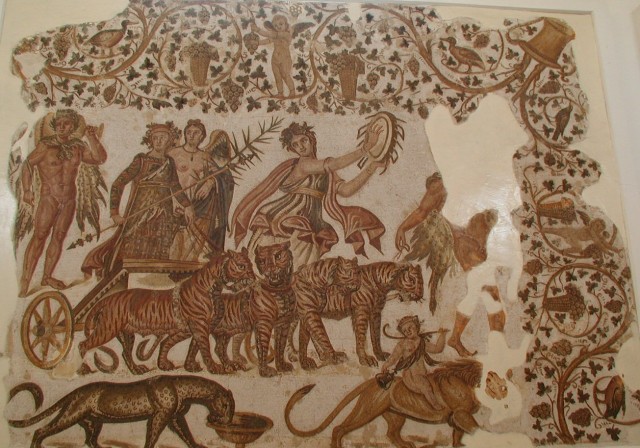
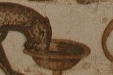







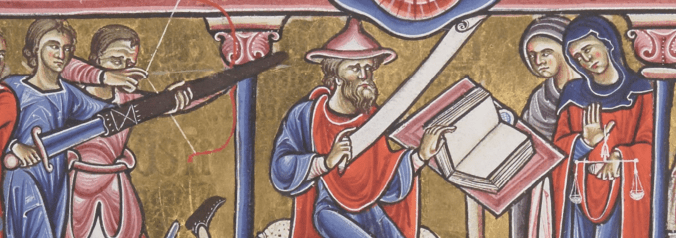
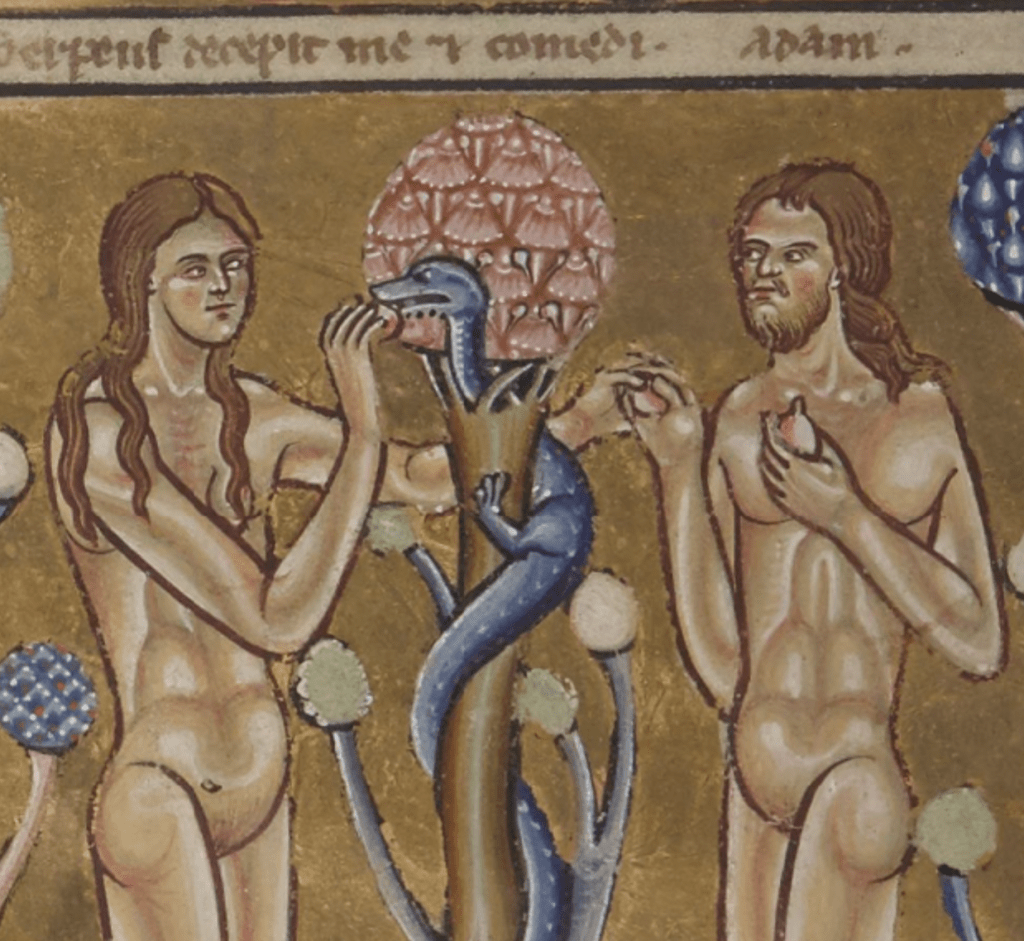
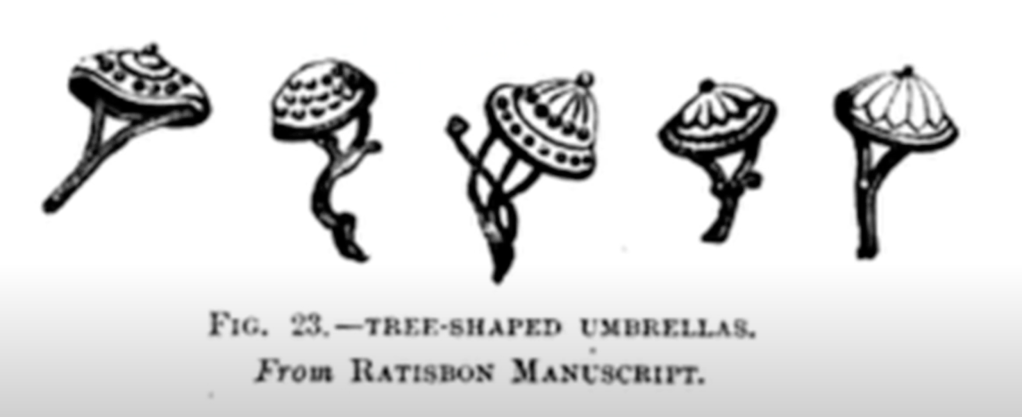
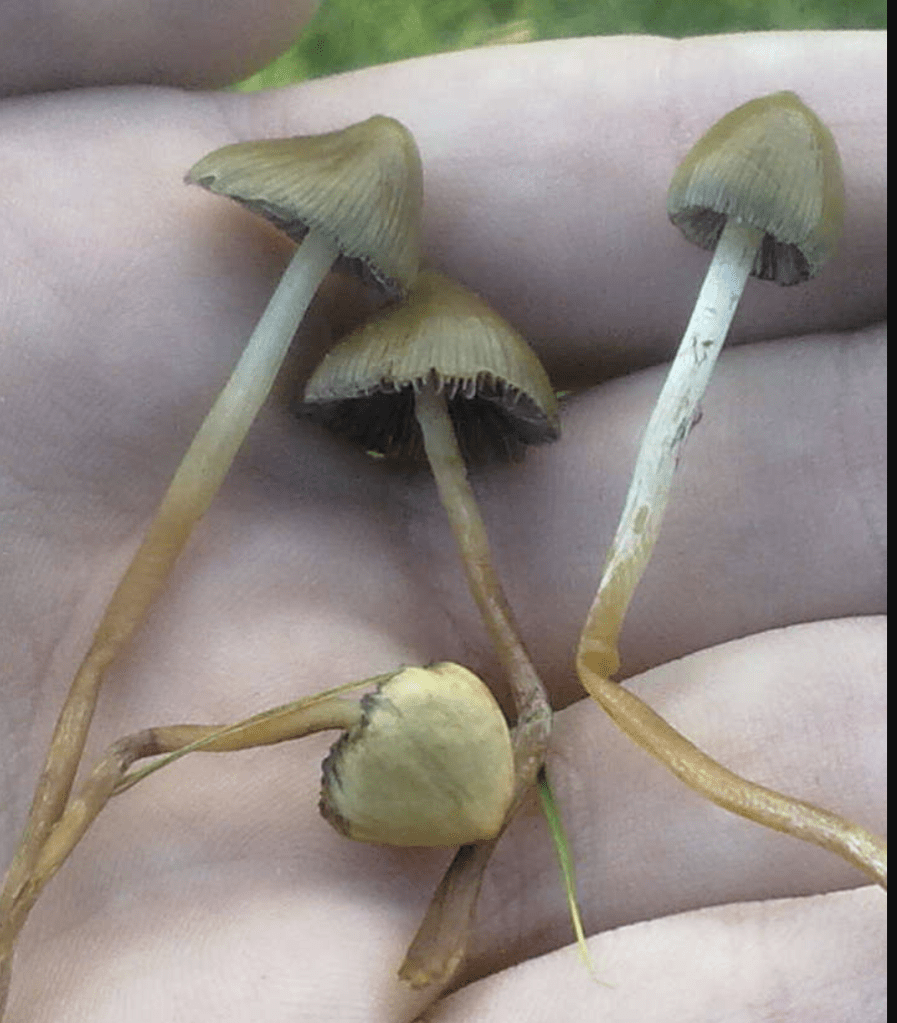









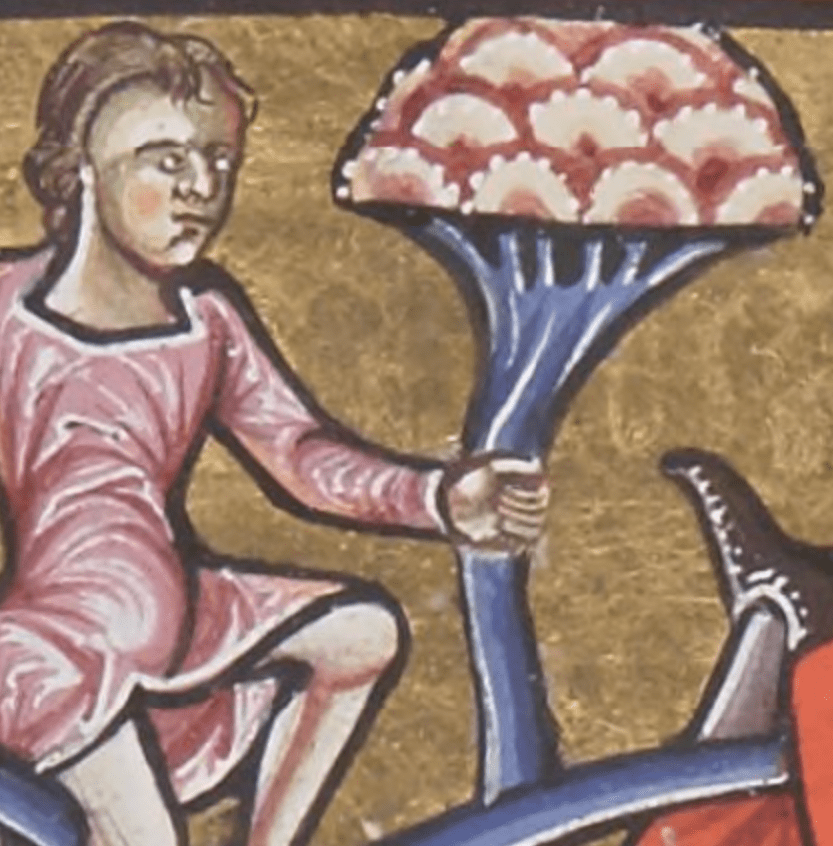
 The Egodeath theory