Crop by Michael Hoffman – Cubensis trader instructs other traders about stand on right foot to have balance and avoid loss of control
Contents:
Intro
Content
Motivation for Page
See Also
Intro
i have no ideas 😞
Content
i have no ideas 😞
Motivation for Page
Important topic, yet no page of mine focused on this recent development and refinement.
I tried to prepare to present Egodeath theory at my psychedelic church, no-go: too objectionable.
Overemph of eternalism. Underemph of possibilism-thinking.
That forced me to recently work toward re-balancing Egodeath theory.
What is my story narrative? I lacked a viable one to present to people. I will explain why mushroom-trees can only be recognized when include, in the medieval art genre of {mushroom-trees}, as part of a set, that you must have a narrative story to present:
{mushrooms}, {branching}, {handedness}, and {stability} motifs
Like Late Antiquity, we now reject pure heimarmene of our Classical Antiquity forebears; reject “pure eternalism-thinking” in some exclusive sense.
“Enlightenment = heimarmene” is not a true, full, reality-based story of complete intiation in Mystery Religions.
My 1997 core theory is inadequate for treating Late Antiquity, and for describing the MATURE integration of block-universe eternalism into the personal control system.
My too-basic model of 1997 lacks the developed concept of transcend eternalism.
In 1991 with ink pen & brush I drew snake head protruding outside the 4D block universe:
Michael Hoffman, ~1991, ink brush in blank art book
I didn’t factor that into the 1997 simple basic model, “change from possibilism-thinking to eternalism-thinking”.
“eternalism-thinking” has a basic sense exclusive of possibilism-thinking, and a broad wide [pig emoji; Hanegraaff] sense, that includes qualified possibilism-thinking.
Today I realized the concept of “qualified possibilism-thinking” implies the concept of “qualified eternalism-thinking” – a great development
Refinement: compare Tim Freke’s rejection of pop nonduality and “no self”, the brains of that operation is Jessica Nathanson — https://www.youtube.com/watch?v=AHKJUcEynxU&t=929s – very good conversation, but junk words requires cleanup if I post – i want to post transcript cleaned up. “Interview With Former Non-duality Speaker Guy Smith“ At her YT ch. Why are all her & Tim content in 2022?
There are 2 senses of ‘balance’:
in peak window of the intense mystic altered state, branching thinking / possibilism-thinking causes loss of control.
After enlightenment, fully affirm possibilism-thinking and fully affirm eternalism-thinking, in a compatible, asymmetric way.
Despite Strange Loop proving that Egodeath theory is a failure (link to my page at Egodeath.com “how to disrupt egoic personal control system”; link to Transcendent Knowledge podcast inteview w/ Strange Loop) – Strange keeps me so modest.
“Cybermonk, how are you the most modest person ever?” “Strange Loop disproved my technique of disrupting egoic personal control system; proving that the Egodeath theory is rubbish –> 🗑”
Heimarmene eternalism is a dead end prison enslavement kidnapped, requires rescue from outside the system lifted to sphere 9 Prime Mover, above Fate; salvation, redemption, set free, ransomed by Christ.
“In our first ontoprism, we take a look back at FREE WILL across the years at Theories of Everything.
4 Hours of No-free-will Imprisonment Enslavement then Spiritual Redemption
A few sections warrant my inspection. Certainly there are some valuable relevant ideas in this long video. Hard to assess without the present page.
I already cleaned up the bottom part of the transcript in idea development page 27.
Here’s the entire transcript, including that, b/c easiest for me to process all at once.
The Concerns of the Egodeath Theory and Mushroom-Tree Esotericists
The Relevant, Psilocybin-Transformation Concern, as the Reference Point:
During Psilocybin Transformation, Does Viable Stable Control Result from Possibilism-Thinking, or from Eternalism-Thinking?
When the Egodeath theory and Psilocybin form the field & approach of Loose Cognitive Science, the free will vs. determinism analysis will change a lot, including eternalism opening up to be revealed as relevant, instead of domino-chain determinism.
The debate will switch away from “free will vs. determinism” and also away from the newer off-target contrast, “presentism vs. eternalism”, to the relevant debate, possibilism vs. eternalism.
Irrelevant: “Free Will vs. Determinism”; Closer: “Presentism vs. Eternalism”; On-Target: “Possibilism vs. Eternalism”
I wrote a lot about placing randomness into block-universe eternalism, in:
The first posts in Egodeath Yahoo Group 2001 contrast essentially,
branching Quantum Mysticism
non-branching 4D Spacetime Mysticism
Many points in this video are suggestive about explaining how the medieval art genre of {mushroom-trees} works, what concerns it depicts and emphasizes, and how I can describe differently the concerns of Egodeath theory.
Mushroom-tree artists are NOT in a Phil-vs.-Physics Dept. armchair debate about quantum flapdoodle theorizing.
Esoteric esotericism & the Egodeath theory IS NOT CONVENTIONAL DEBATE about “FREE WILL VS. DETERMINISM”.
NOR DEBATE about “POSSIBILISM VS ETERNALISM”. Rather:
In what sense is possibilism is the case, as reflected in the intense mystic altered state?
In what sense is eternalism the case?
What does it mean to functionally practically and effectively integrate these, integrated possibilism/eternalism thinking, per maturity as defined by the Teacher of Truth, Psilocybin?
Standing in Switch Stance 🛹 – Practicing {stand on right foot} Relying on 2-Level, Dependent Control
Balancing on a skateboard, a person has an innate strong preference for either L foot forward or R foot forward.
Skateboarding switch stance is hard, a deliberately learned skill – unless one has committed to ambidextrous from the start.
Switch stance requires hard work and uphill-battle re-learning the non-natural stance.
We all stand in Regular stance, weight on L foot.
We all have to work hard to learn to stand in Goofy stance, like the Goofy cartoon character surfing in an animation: weight on R foot; R foot forward on skateboard.
Then we have stable control in the Psilocybin state. This is the message of the mushroom-tree artists.
Crop by Michael Hoffman March 4, 2023
See Also
The “All At Once” Universe Shatters Our View of Time (Emily Adlam)
Free will is a representation within the system that it’s made a decision and the decision is being made on the best understanding of what’s correct.
The dynamics that break up that undifferentiated ocean of potential selves into one, two or three or more, it can go different ways.
Out of this like ocean of potentiality, these cells, you know, 50,000 cells, and each of them will have specific goals.
Objectivists say that these probabilities are pointing to some real thing in the world.
There is some real random generator in the world.
And subjectivists say, no, these are just degrees of belief.
What is free will?
How is it different than agency?
What constitutes a willful and an unwillful action?
How do you define yourself as separate from the world in order for you to even say that you act on the environment?
What does physics have to say about all of this?
And what are some of the alternatives to the classic compatibilism versus libertarian notions of free will?
Perhaps our question is explored today by the approximately 25 or so guests of Theories of Everything.
For those of you who are new to this channel, my name is Curt Jaimungal, and what we usually do is explore theories of everything in the physics sense from a mathematical perspective.
However, this is also a philosophical channel, investigating the fundamental laws, whatever they may be.
You can think of it as an analysis from multiple perspectives on the largest looming questions we have, while also exploring an experiential approach.
We’ve been having issues monetizing the channel with sponsorship, so if you’d like to contribute to the continuation of Theories of Everything, then you can donate through PayPal, Patreon, or through cryptocurrency.
Your support goes a long way in ensuring the longevity and quality of this channel.
Thank you.
Links are in the description.
What you’re about to watch is a new format called an Onto Prism, where instead of having comprehensive interviews with a single guest on a variety of subjects, we’re flipping that and diving into a singular topic with a variety of guests.
Think of it like a buffet where there’s a smorgasbord of variegated ideas, and you can sample and choose the one you like best, or create your own Weltanschauung by sampling from the assortment.
Hearing opinions on a specific theme is strewn across the over 100 podcasts over the past three years on the Theories of Everything channel, though for convenience, they’re co-located here.
The guests in this episode include Michael Levin, Carl Friston, David Walpart, Donald Hoffman, Joscha Bach, Stuart Hameroff, Wolfgang Smith, Bernardo Kastrup, Matt O’Dowd from PBS Spacetime, Chris Langan, Nicholas Gissen, Brian Keating, Noam Chomsky, Stephen Wolfram, Jonathan Blow, Thomas Campbell, John Vervaeke, James Robert Brown, Anil Sith, and Claudia Paisos.
There’s also Anand Vaidya and Scott Aronson.
This Onto Prism on free will is in preparation for a mountainous interview with the legendary Robert Sapolsky on this very issue. [section at bottom of this page]
If you enjoy this format, then you can suggest other topics for future episodes in the comments section.
Now enjoy this peregrination into free will.
Well, again, what I’d actually like to do is back up a little bit and put some of what you just said into very simple active inference language.
If I see something happening on my Markov blanket, on my interface with the world, then I always have the question, did I do that or did the world do that?
Where the world means everything outside me.
And in a sense, the answer is always the world did it.
So the question becomes, did the world do that in response to something I did to it or did it just do it?
Not in consequence of any of my actions.
And so one gets immediately to this kind of babbling scenario that we’ve talked about many times, in which an infant or a robot or some system is trying to figure out by measuring correlations whether the world’s inputs to it have anything to do with its inputs to the world.
And just asking that question requires enormous representative capacity, because one has to represent one’s actions and represent them pretty well in time.
And one has to have a good memory to represent enough actions to get any kind of statistical support for drawing an inference about correlation.
And that memory has to be represented as a memory, not just part of one’s occurrent input.
So I think this question that you posed is really the key question faced by any agent at all that’s trying to get a model off the ground, which in a sense gets back to the question that Mike asked early, early on about how does this all start?
Maybe it starts with babbling in very simple systems.
You know, I was thinking recently, this whole issue of how many agents are there and where is the border between the agent and the world and how do you self-model that border is a fascinating topic.
And there’s an amazing developmental model for this, which is that, you know, we often talk about one embryo and the embryo does this and the embryo does that.
But actually, what happens at the beginning, let’s say, for example, in amniote embryos is that there’s a flat blastodisc, which has just a few cell layers thick.
So it’s kind of, think of it like a Frisbee and it just has a few cell layers.
And normally what has to happen is that one point in this disc breaks symmetry and then organizes the primary axis of the first embryo and basically tells all the other cells, don’t do it because I’m doing it.
And that’s how you end up with one embryo.
Now that process is very easily perturbed and many people have done it.
I used to do it in my graduate work and what you can do is if you perturb that process, that initial blastodisc, that undifferentiated sort of pool of cells, which are these sort of proto, low-level proto agents, that pool can break up into not one embryo, but actually multiple.
And so you can have, so I did this in bird embryos and you can have twins and chicken and duck and things like this.
You can have in humans, humans have exactly the same structure.
You can get them head to head.
You can get them side by side.
You can get all sorts of geometries.
You can get triplets.
You can get multiple individuals emerging by different partitions of this really kind of medium, this particulate medium where you have a bunch of cells and you don’t know ahead of time how many individuals at the level, how many larger individuals, so embryos, are going to arise from this medium because the dynamics by which, and that’s local activation and long range inhibition and things like that, the dynamics that break up that undifferentiated ocean of potential cells into one, two, or three or more cells is actually, it’s very dynamic.
It can go different ways.
And then you get interesting things like this.
So for example, you might know that human conjoined twins that are sort of stuck together side to side, one of the twins often has left, right asymmetry defects.
And it’s because when you have two twins side by side, the cells in the middle, both twins can’t quite agree on who they belong to.
Are they the right side of this twin or are they the left side of that twin?
And both twins think they belong to them, but in fact, they’re overlapping, they’re the same cells.
And so one side will have correct left and right, the other side will have like two rights, for example.
This ends up giving one of the twins laterality defects with respect to hardened gut pattern.
And so their models, each twins, as the collective of cells tries to compute things like where things are and what’s left and what’s right and so on, their models can disagree with each other.
They can draw the boundary between self and world in different ways, and you can have these sort of disputes over certain areas as to who they actually belong to.
And so I’m just incredibly interested in this process of individualization, so to speak, out of this like ocean of potentiality, these cells, you know, 50,000 cells and some number of individuals at the embryo level will be formed.
And each of them will have specific goals and morphospace, each of them will try to achieve very specific morphologies.
And you don’t know ahead of time how many there were going to be.
All right, we’ve just been diving into the interplay between the self and the world with Michael Levin, Carl Fristin, and Chris Field.
They dissect the process of self-modeling and individualization, which lead us naturally to our next guest, David Wohlpart, who challenges us with a monotheistic perspective on freewill.
If they both have free will, at least once.
That’s incredibly interesting.
So it’s an impossibility result against more than one God?
Yes.
Yep.
That’s why it’s called the monotheism theorem.
It might be that we are in a universe in which you could have one God, who knows?
I’m not going to go there.
I mean, my personal feeling—conclusions on it are that in our particular universe, no.
But there is no reason why—I think the concept itself is not inherently self-contradictory like Riposte’s demon.
There could be universes.
I would say there’s no sense in which we can actually rule them out, in fact, in which there are deities.
But there cannot be any of them that support two deities.
So we might be in one of those ones in which there is a deity, who knows?
But we can’t be in one in which there’s more than one.
And when you say deity, there can’t be two omniscient deities?
There can’t be two that have free will.
So you could have one where there’s Zeus and Hera, but Zeus can always be in a particular state that restricts Hera from being in some of her particular states.
In that sense, she does not have free will of him.
At one particular time, one particular state of Zeus, it’s just not going to be any possible storyline in any of the universe, in our universe, in which Hera is in one of her particular states.
There’s some limitation.
My being in one particular state at one particular time, it could cause a restriction on the possible states that you could be in at that time.
And if that’s true, then we have no free will.
Have you heard of Norton’s Dome?
Norton’s Dome.
I think I did a while ago, ringing a bell, but I can’t bring it up.
Sure.
It’s an experiment about Newtonian mechanics, and it’s to show that Newtonian mechanics isn’t deterministic, even though it’s often said it is.
And the reason is there are certain configurations you can set up such that there’s not a unique answer to the differential equations.
You know, ordinarily in physics, just for people to know, one of the reasons why mathematicians quibble with physicists is that physicists hand wave and gloss over many details.
And so one of them is whenever we have an ordinary differential equation, we tend to say there’s uniqueness in existence.
However, that’s contingent on something called the Lipschitz continuity.
And if you don’t have Lipschitz continuity, you don’t necessarily have a unique solution.
So you basically set up a certain situation with a ball on a dome, and the equation for the dome is fairly simple.
It’s almost like a parabola.
And then it turns out one solution is it stays there forever, zero velocity initially.
And then another solution is at some point t, and the time t is not specified, it goes down some route, and any one of them.
So that’s extremely interesting.
Let’s imagine we live in a Newtonian world.
Is that related to free will, would you say?
Or is that not related to free will?
That’s something different.
I know free will, forget about the sense of intention, interacting with the laws of nature to produce that effect.
Carlos.
Yeah, the Norton’s dome, it’s also, I think it was actually Sabine, who has one of her FQXi essays that she points out that chaos is, in some sense, it can be a much stronger phenomenon that people understand, and that you can set up physical systems in which the chaos is to such a degree that actually passed a certain point in time, you cannot, it is not defined, but the state of the system will be after that.
So that’s, I think that’s the context in which I ran across it.
It’s also, there are related things, the work that goes back to two people called Porel and Richards.
Those were physicists who is well known that, for example, the three body problem, where even if you do, so there you do have the standard Lipschitz continuity, and so on, you’ve got gravitational attraction, and so on.
You can set it up to be a, what’s called a universal Turing machine.
You basically, what you do is you encode the input tape to that Turing machine into the actual precise initial conditions of these three bodies.
And then by reading the appropriate bits of the state of the system at some future time, you can figure out what that universal Turing machine state of its tape would be at that time.
What this means is that you can feed in a configuration that’s actually the halting problem so that that physical system, in fact, it violates the Church-Turing thesis, that physical system, its state in the future would not be complete.
All right, now having just gone through the monotheistic lens with David Walpart, we’re pivoting to Donald Hoffman’s cognitive neuroscientific perspective.
Also Joscha Bach joins Donald Hoffman.
In a physicalist framework, which I’m, so now I’ll just talk about what most of my cognitive neuroscience peers think, right?
Most of them assume that physical systems are fundamental.
Neural activity causes all of our behavior, and in that case, there can be a fiction of, a useful fiction of free will, but it’s really just going to be a useful fiction.
If I do something, it’s really my neurons with the neural activity that did it, and there is a sense in which you can say, I chose to do it because actually neurons are part of me, so I think that’s the point of view that Dan Dennett takes, for example, on this.
And Sam Harris replies on that, he says, well, yeah, I also grow my fingernails.
I’m not sure that I’m doing that by free will, but I, so it’s not real clear that just because my neurons are doing it, I have free will, just in the same sense that I’m not using free will to grow my fingernails.
So Sam would say there’s no such thing as free will, if you’re a physicalist.
Dan Dennett would say I’m a physicalist, and there is this important notion of free will.
I think that, of course, space-time isn’t fundamental, and so that we have to completely think outside of that box altogether.
And as scientists, we have to say upfront what our hypotheses, what our axioms or fundamental assumptions are, and be very clear about them upfront.
These conscious agents in the mathematics, they get certain inputs, we call them experiences that they have, and then there’s something called a Markovian kernel that describes what actions they take, and those actions affect the experiences of other conscious agents.
So then there’s, so that’s just the mathematics that my team has written down, it’s a very simple notion of a Markovian dynamics of conscious agents interacting.
And it’s not in a physicalist framework, we’re assuming that this is in its own world, right?
These are conscious agents, and that’s the foundation.
Space and time are not the foundation, conscious agents, so conscious experiences and interactions of conscious agents are the foundational notion.
And so then the question is, how shall we understand the probabilities?
So if I get a particular experience that comes into a conscious agent, and it then probabilistically affects the experience of other agents, how shall I understand that probability?
Shall I understand it as a free will choice, or what?
And I could say, I refuse to answer the question, there’s a probability there, and that’s as far as I go with a theory, there’s this agent, so I leave that probability as just where my theory stops, where I say, in some sense, wherever we see a probability in a theory, that’s where explanation stops, right?
That’s basically saying, I don’t know.
So whenever, so I always say this, whenever in a scientific theory you see probabilities coming up, you’re seeing the theory say, this is where I halt, this is where my explanation stops.
And there are two major approaches toward understanding those probabilities, the objectivist and subjectivist to probabilities, right?
So objectivists say that these probabilities are pointing to some real thing in the world.
There is some real random generator in the world.
And subjectivists say, no, these are just degrees of belief.
Whenever you see probabilities, you’re only talking about degrees of belief.
But in either case, explanation stops, right?
How do I come to that belief?
Well, I can only tell you probabilities.
What is that random objective process?
I don’t know, but I can just tell you probabilities.
And so really, whenever you see probabilities in a scientific theory, and they’re all over the place, I read that as saying, here’s where explanation stops and our theories halt.
And if we want to go further, we’re going to have to unpack that probability into some deeper theory.
So if I say that it’s free will in the case of the conscious agents, then, I mean, in some sense, that’s just words.
What theory has is the probabilities, and it has no further explanation.
So if I call that probability a free will, then I can call it that, but I haven’t really done much to give much insight into the notion of free will.
Free will then becomes a primitive, and maybe that’s what I want to do.
I want to say, this is where explanation stops, and so free will is primitive.
So these probabilities are free will, and I agree that that’s where my theory stops, that I can do no further.
Now what’s interesting in the conscious agent dynamics that we’re working on is that any group of conscious agents together also satisfy the definition of a conscious agent, and so they are a conscious agent.
So any conscious agents interacting are also conscious agents.
So in the theory, there’s one conscious agent, because if you take all of them together, they form one conscious agent, but then there are as many, if you’re computational, there’s only a countable number of them, or in my case, I don’t know, it may be an uncountable number of conscious agents.
But what’s interesting is that you unpack this probability in the Markovian kernel.
There could be one big probability for one agent, but you can unpack that into all these dynamical systems that are interacting conscious agents with their own probabilities and their own kernels.
And what’s interesting is that you could then give, in some sense, an unpacking of the notion of free will in that way.
You could say, well, yeah, the one agent has free will and this probability, but I can actually do some non-trivial unpacking of that notion in this sort of recursive unwinding of those probabilities throughout the network.
So there is the possibility here of, I mean, ultimately, there will be a primitive notion of free will that is just primitive and not explained, but given that one, I can explain all these other free wills sort of interacting, arising from this most primitive notion of free will in a non-trivial way.
But once again, I would point out something that I see all the time in scientific theories.
No theory in science will ever explain everything.
And I would love to see if Josje agrees or disagrees.
I will just state to make a strong claim.
There cannot be a theory of everything because every theory has to make assumptions and those assumptions are not explained, they’re assumed.
It’s just that simple.
Okay, am I correct in my summary of your views on free will that if in a physical theory you have probability, now some of that probability is just due to our ignorance, but if there’s a fundamental probability, you can just say, well, that’s indicating that the theories break down, we just don’t know.
Or you can say that there’s something underneath producing those and that which is underneath the probabilities is what you’re calling free will.
Is that correct or is that off?
Right.
So, if I’m a physicalist, I’ll say that that probability is due to some process that I can say no more about, but there’s some process that generates this stuff.
It’s not free will, it’s just a physical process that I don’t know.
But if I’m taking consciousness to be fundamental, then it’s an interesting move to say that probability can be interpreted as free will.
Now, of course, I’m not explaining anything.
I’m just putting the notion free will, the word free will on it, right?
And free will becomes just a primitive notion as well.
So that’s where my explanation stops and the most unpacking I can do is that recursive unpacking that I mentioned, which is an interesting unpacking, but ultimately there’s this primitive notion of free will that I have nothing further to say about.
But I think that that’s not a problem specific to this theory.
The last thing I was saying was that that’s endemic to all scientific theories.
Every scientific theory will have miracles at its foundation.
By miracles, I mean assumptions that are taken for granted and not explained.
If you explain them, then you’ll have a deeper theory with new assumptions that explain those assumptions, but the new assumptions aren’t explained.
So in this sense, science can never have a theory of everything because science theories always have assumptions and the assumptions are what you don’t explain.
Joshua, I know Donald said quite a few, there are quite a few elements to pick from there.
We are interlocking claims, but let’s address them.
First of all, I don’t know whether there can be one theory of everything because my reasoning is not tight enough to make that proof one way or the other.
So at this point, I have to remain agnostic because I think from where I stand, it seems to be possible that there can be a theory of everything.
And it seems to be possible that there cannot.
From a computationalist perspective, whenever you have a set of observations that is finite, you will be able to construct a computational model that explains how to make such patterns.
So in principle, there can always be a theory of everything that you observed.
That’s something that I cannot, that I don’t see a way around this.
So this seems to be sound to me, and I think that can be formally proven, but it seems to be almost trivial that it’s proven.
So it’s more interesting.
The question is, can you narrow this down to a single one, to one theory of everything?
You will be always stuck with infinitely many theories of everything where most of these theories will be super inelegant and redundant and basically recordings of your observations.
Or will there be one theory that is the most elegant and explains everything neatly and wraps it up?
And of course, if you think about the space of all theories and think of them as things that you can do in a language and in which you can define truth.
And if you realize that the languages in which you can define truth consistently are the computational languages, it turns out that all your models are going to be automata and that you can sort the space of automata by the length of their definitions.
So it also seems that in principle, it should be possible to find the shortest automaton between to every pair of automata that you can construct and can up this.
And now the question is, what’s your search procedure for all the possible automata?
Do you have a search procedure that you can hope that terminates?
And this is not a question of whether it’s mathematically possible, but whether it’s efficient.
So is there an efficient strategy to find a theory of everything that is the shortest one?
And so far, we haven’t found one.
And it relates to what AI is doing in machine learning when it tries to identify what’s going on in the domain.
So in principle, we can always be sure that we could be a brain in a vat and everything is just a nefarious conspiracy that is playing out.
And because we cannot exclude this, we can never be sure that our theory of everything is the best theory that could exist of things.
So that’s obviously the case.
But if we take out this single thing and make the assumption that reality is not a conspiracy, I think then it starts to look a lot brighter.
Let’s get to the notion of free will.
I think that free will is tied into the notion of agency.
And the best explanation of what an agent is that I found so far is that an agent is a control system that is intrinsically combined with its own set point generator.
Control Systems, Cybernetics
A control system is a notion from cybernetics.
It means you have some system like a thermostat that is making a measurement using sensors, for instance, the temperature in the room.
And that has effectors by which it can change the dynamics of the system.
So the effector would be a switch that turns the heating on and off and the system that’s being regulated is the temperature in the room.
And the temperature in the room is disturbed by the environment.
And a simple thermostat will only act on its present measurement and then translate this present measurement using a single parameter into whether it should switch or not.
And depending on choosing that parameter well, you have a more efficient regulation or not.
But if you want to be more efficient, you need to model the environment and the dynamics of the system.
And maybe the dynamics of the sensory system and the actuator itself.
When you can do this, it means that you model the future of the regulation based on past observations.
So if you endow the controller with the ability to make a model of the future and use this control model to fine tune the actions of the controller, it means that a controller now is more than a thermostat.
It’s not going to just optimize the temperature in the room the next frame, but it’s going to optimize the integral of the temperature over a long time span.
So it basically takes a long expectation horizon.
The further it goes, the better probably.
And then it tries to minimize all the temperature deviations from the ideal temperature from the set point over that time span.
And this means that depending on the fidelity and detail of the model of its environment and its interaction with the environment and itself, it’s going to be better and better if it assumes that there are trajectories in the world that are the result of its own decisions.
By turning the temperature on and off at this particular point in time, I’m going to get this and this result, depending on the weather outside, depending on how often people open and close the door to the room at different times of the day, depending on the aging of my sensor or the distance of my sensor to the heating, and depending on whether the window on top of the sensor is currently open or closed and so on.
I get lots and lots more ways to differentiate the event flow in the universe and the path that the universe can take.
And the interactions that I can have with the universe that determine whether somebody will open the window and so on and so on.
So you have all these points where the controller is a very differentiated model of reality, where it’s going to prefer some events of others and is going to assign its own decisions to these trajectories.
And this decision making necessarily happens under conditions of uncertainty, which means the controller will never be completely sure which one is going to be the right decision.
The controller will have to make educated guesses, bets on the future.
And this even includes the models of itself, right?
The better the control system understands itself and the limitations of its modeling ability, the better its models are going to be.
So at some point of complexity, this thing is going to understand its own modeling procedure to improve it and to find gaps in it and so on.
And this also means that when it starts to do this, it is going to discover that there are agents in the world, other controllers that have set points, generators and model the future and make decisions.
For instance, people that might open the window when you make the room too hot and you lose energy because of that.
So maybe not overheat the room and people are in the room.
This means you have to model agency at some point and you will also discover yourself as an agent in the world, as a controller, as a set point generator and the ability to model the future.
And you will discover this before you understand how your own modeling of the future works.
So you also have to make bets on how you work before you understand yourself.
So you will discover a self-model.
The self-model is the agent where the contents of your own model are driving the behavior of that agent.
And it’s a very particular agent.
It’s one where your reasoning and your modeling has an influence on what this agent is going to do, a direct coupling.
It’s a very specific model, a very specific agent that you discover there.
And so in some sense, free will, I think, is a perspective on decision-making under uncertainty, starting from the point where you discover your own self-model up to the point where you deconstruct it again.
And of course, you will deconstruct it again.
At some point, you will be able to fully understand how you’re operating.
And once you do this, making your decision becomes indistinguishable from predicting your decision.
Because of computational irreducibility, often you will not be able to predict the decision before you make it.
But as soon as you understand that it’s just a computational process going on, and you understand the properties of that process, you will no longer experience yourself as having free will.
Free will is a particular kind of model that happens as a result of your own self-model being a simulacrum, instead of being a high-fidelity simulation of how you actually work.
And we are young beings.
We don’t get very old.
It’s very difficult for us to get to the point where we fully understand how we work.
Except in certain circumstances, right?
When we observe our children, very often we get to the point as parents that we fully understand what they will be doing in a given situation.
And we can fully understand their own actions and anticipate their decisions.
And the child might experience that it has free will.
And we experience that the child has free will up to the point where we suddenly understand, oh, this is what’s going on.
And at this point, I can completely control the child because I can out-model it.
And it’s only to the point where this system is going to introduce levels that are, again, reaching my own level, that decisions become unpredictable.
But if I am a few levels of modeling depth above the other agent that might think that it’s free will, the free will starts to disappear from my own perspective.
And it also happens in my own mind.
There’s many things that I do.
But I thought as a child, I’m acting out of my own free will.
And now I understand how mechanical it is.
And I can deal with myself by controlling myself, by out-modeling myself successively and becoming one more complex in this way.
Having gone through the depths of consciousness and physical systems with Donald Hoffman, we now transition to the quantum world with Stuart Hameroff.
Hameroff’s exploration of temporarily non-local consciousness offers a different angle on the question of free will, moving from cognitive neuroscience to quantum physics.
Now, going to this backward time aspect, I heard you mention Libet’s experiments and that they don’t necessarily show a lack of free will, but perhaps the free will propagates backward in time.
Now, can you explain that?
Well, Libet did these experiments in – well, he did two sets of experiments.
The first set of experiments that Roger wrote about in his book, The Embraced New Mind, were sensory experiments where he had people in neurosurgery.
He worked with a neurosurgeon named Bertram Epstein, who, by the way, was the husband of Bertram Feinstein, who was the husband of Dianne Feinstein, the senator from California.
She’s still around.
He passed away years ago.
But he was a neurosurgeon, and Libet worked with him.
And so he had patients that he did neurosurgery on while awake.
So he would drill a hole and numb it up with local anesthetic.
Once you get into the brain, you can operate on the brain.
It doesn’t hurt, but you numb up the hole, and you can access the brain, and, for example, for the finger on the opposite hand.
So Libet did experiments like he would stimulate the finger and record from the brain and stimulate the brain and then see when the subject was conscious of feeling the finger.
So you would expect, or I would expect, not knowing anything beforehand, that if you stimulate the brain, you feel it immediately.
If you stimulate the finger, it would be a delay because it would have to get to the brain.
If you stimulate the finger, there is a delay, but it’s only 30 milliseconds, evoked potential.
So it’s pretty fast.
But if you stimulate the brain directly, you need to have ongoing activity, and it takes about a half a second, 500 milliseconds, because you don’t get the evoked potential.
But if it continues for 500 milliseconds, you do feel it at 30 milliseconds.
What’s this evoked potential?
Okay, so if you stimulate the finger, the signal, you get a spike.
That’s the evoked potential.
If you stimulate it here, you don’t get the evoked potential.
You just get ongoing activity.
It looks like gamma.
But if you do it for half a second, the patient, subject, has the conscious experience at the time of the evoked potential, 30 milliseconds.
So somehow, at 30 milliseconds, the brain knows whether or not there’s going to be 500 milliseconds of ongoing activity afterwards.
If there is, he or she reports it at 30 milliseconds.
That’s interesting.
Okay.
If there isn’t, then he or she doesn’t.
And so Libet concluded that there was a signal going backwards in time from the time of the, what he called neuronal adequacy, and that sent this information backward in time.
Now, Roger wrote about this in Emperor’s Neuron, because that can happen in quantum physics, which is temporally non-local.
Is this related to the subcutaneous rabbit?
Have you heard of that, where you come on an arm?
Yes.
So this is related to that.
Yes.
And also the color five phenomenon, where the color bounces back and forth, and it goes from red to blue, and you go red, blue, red, blue, and you can guess, and then it goes red, red, and you know you’re not fooled.
And that’s because you seem to know what’s going on.
And the cutaneous rabbit’s the same thing.
I actually wrote a chapter about it.
I can send it to you about all this.
Well, I’ve written several, actually, about it.
And all those can be accounted for, but you somehow know what’s coming.
And this is very important, because if you and I are talking, and you ask me a question, and if someone were measuring the activity in my brain for what you said, it’ll happen in, say, 300 to 500 milliseconds after they get to my ears.
But I will have responded to you at 100 milliseconds.
This is very, very standard neuroscience.
What neuroscience says about that is that I respond non-consciously and have a false illusion of answering consciously after the fact.
The consciousness is epiphenomenal.
My cognitive autopilot non-conscious self answers you, and then a little later, my conscious self says, oh, I said that.
I’m in control.
And it means that consciousness is epiphenomenal and illusory.
That’s what Dennett says.
That’s what all the big-name philosophers say, unless they have some way to weasel out of it.
But if you have backward time, it means that you can do all that, and you can still respond consciously in real time.
What does your theory have to say about free will?
Well, first of all, you need the backward time effect to be able to act in real time.
It doesn’t address determinism, because even if you do act in real time, you still have the problem, well, maybe it was always going to be that way because of everything else that’s already happened.
But when you bring in the backward time effects, I think that gives you the possibility of free will.
But you’re still governed by, if that’s true, you’re still governed by the deterministic Schrodinger equation up to that point, and maybe even the platonic values.
So, you know, the best they could say is that free will is the experience of your volition being influenced by platonic values.
Stuart Hameroff’s exploration of free will and temporal perception naturally transition into Claudia Paisos’ discussion on behavioral markers as indicators of consciousness.
The audio conditions were suboptimal, thus prompting me to reiterate in post-production the question for you.
The questioner was asking Claudia to expand on behavioral markers versus reflex markers.
Behavioral markers versus reflex markers.
It’s quite difficult.
So, one thing I didn’t have time to go through is how those behavioral markers would be markers of consciousness.
And there is at least one theory of consciousness that you tell us.
If the creature had what they call flexible behavior, the capacity to react with flexibility will change our behaviors regarding, for instance, pain still.
So, imagine you’re feeling pain, but you have a behavior to avoid pain, and this behavior didn’t give you weak pain, we can change your strategy to avoid feeling that way.
And this happens in some flexibility.
Usually, if you’re not conscious, you just have a kind of automatic response that is the same response all the time.
And infants, they try to change their strategies to avoid that painful state.
So, this is a kind of flexible behavior.
And, for instance, from representational experience, we’ve claimed that flexible behavior is a marker of consciousness.
And then you can claim that this behavior is a marker of flexibility and a marker of consciousness.
Claudia Paisos’ exploration of behavioral markers and their connections to consciousness sets the stage for Wolfgang Smith’s discourse on the relationship between free will, love, and the divine.
How does free will comport with knowing that there’s a timeless realm, so that you can see all of what occurs through time, but then if we exist as a moment in time and we’re trying to plan something for the future and we have free will, how do we have free will when from another perspective all our choices have been made or all of it can be seen?
Well, I think there’s only one answer to that question.
And that is that free will pertains to our present state, which is a state of half-knowing.
Once we attain enlightenment, there’s no question of free will.
Enlightenment (Realize Eternalism) vs. Salvation (Transcend Eternalism)
Sorry, enlightenment is the same as salvation, or is that different?
[1. On advanced Psilocybin, get enlightenment that no-free-will is metaphysically the case, per Classical Antiquity. Reach sphere 8 fixed stars, Ogdoad.
2) Receive spiritual salvation lifted above no-free-will, per Late Antiquity; reach sphere 9 outside the cosmos, at level of Prime Mover, Ennead.
– Michael Hoffman]
Well, I think nothing short of salvation would put you into that state.
Where there’s no more free will.
There’s no more free will because there is no more will in our sense of the term.
Love is what makes things real.
What do you make of that quote?
Well, I think it is based upon one of the deepest teachings of Christ.
St.
John the Evangelist, in his, I forget what it is called, his letters, not the gospel, but his letters, he says, Deus caritas est, God is love.
So love in the authentic sense that we’re using term now is itself divine.
It is God.
It’s not something that God makes, something that God creates.
Well, there is love in that sense too, but love in its highest, purest sense is inseparable from God.
Wolfgang’s peregrination of the divine and free will serves as a perfect precursor to Bernardo Kastrup’s discussion on the illusion of free will and the deterministic nature of the universe.
It is the collective unconscious.
It is the last dissociated parts of our minds or the completely non-dissociated mind at large.
That’s the natural wave.
Remember, I am a naturalist and nature is a big wave, it’s going somewhere.
We can choose to swim with it or swim against it.
You can choose to be tools of it or to rebel against it and lose.
You’re guaranteed to lose.
She’s super interesting, super interesting.
So you’re saying that nature is this huge force and it generally controls you way more than you think.
You are an aspect of it, so you’re not even separate from it.
So even to say it controls you is already a categorical mistake.
You are not distinct from it, but you just have a hallucinated narrative about what you are.
In other words, nature has a hallucinated narrative about what it is and it goes in conflict against itself because of it.
Choices are instinctive.
There is something instinctive that runs through you and it’s calling the shots, all the important shots.
The problem is we think it is us choosing it, so we rebel against it or we regret against choices and suffering pours out from that dynamics, which is also a natural dynamics.
It’s nature fooling itself, it’s all natural.
So the choice to swim with the current rather than against it, is that choice yours or is that choice ultimately another current?
In which case, you can’t- Nature can offer less resistance against itself.
Let’s put it that way.
Because you see, it’s impossible to use terms in a completely unambiguous way because the terms like I or doing or resisting or nature, they have already a social meaning.
So if I try to be completely accurate, I will contradict that social meaning and nobody will understand what I’m trying to say.
So I have to be ambiguous and seemingly contradictory perforce if I am to use language.
I don’t think Bernardo Castro exists as a true separate agency.
Bernardo Castro is a ripple or a metaphor I prefer, a whirlpool in the ocean of nature.
It’s a process, it’s a doing, it’s not a thing.
It’s a Castro-ping, not a Castro.
Yeah, I don’t know what said that.
Is that your intellectual mind saying that I don’t believe Bernardo Castro exists?
That’s my intellect saying.
Okay, but you don’t feel that in the moment, but you feel like that’s actually correct.
And now we transition from Bernardo to Matt O’Dowd from PBS Space Time, as Matt talks to us about the subtleties of relativity, time perception, and the universe’s self-consistency.
Consciousness is just, it is in this sense an emergent phenomenon, but there’s no very hard line, I think, for when it emerges.
You know, I started all this saying I’m no expert and then gave you this super long treatise as though I know anything, but this is the picture that feels the least contradictory to me.
So then in this view, is there such a thing as free will?
In this view, yes.
Correct my misunderstanding, Shen.
The way that I understand it is that there are some atoms moving around and occasionally that is something we call information processing.
That information processing is much like there’s a lamp right here.
That is casting onto the wall.
That wall is now the feeling of consciousness.
That is the effect.
And something is happening here.
Now that wall doesn’t cause anything with this light.
The light will move around.
Right now it’s stationary, but the light can change colors.
It can get brighter.
It can get smashed on the ground and that wall would change.
But I wouldn’t say that that wall has any causal influence on that.
So that’s what I mean when I say that it sounds like there is no free will in what has just been outlined.
So please correct my misunderstanding.
Okay, so let’s try to talk about free will.
So first of all, so Bahar, my partner, she’s a science journalist and has written a lot about these topics.
I encourage you to check out her article in The Atlantic, which debunks some nonsense on the topic.
But she always reminds me to think about these things in the context of the historical development.
So pre-enlightenment, there was this idea that free will and meaning and mind were inextricably attached to notions like God and the immortal soul.
Okay, so when those ideas started to be questioned, was the same time that the materialist paradigm arose.
So the Newtonian worldview of, you know, atoms bouncing around in the void, perfectly predictable clockwork.
So at the same time that we discarded or started to discard the spiritual, and in that gap, we inserted this sort of very first and perhaps naive mechanistic determinism, notions like free will, which were conjoined with God and the soul got thrown out with the bathwater and were replaced by the idea that these things are epiphenomena of a coal mechanistic universe.
So that’s one gripe.
What it is, it’s a gripe with the, what I think is an oversimplification of the approach to thinking about free will, but all other things related to the mind also.
So let me explain why my view doesn’t, suggest that free will is an illusion.
And so what does it mean?
It means free will means that you make, your choices are your own.
They’re not forced on you by something else.
And for any choice you make, you could have chosen otherwise.
And the standard argument is that your choices are not yours because they’re determined by the particles that you’re made of.
Okay, you couldn’t have chosen otherwise.
So this is the argument that you hear.
I won’t mention any names because, so you couldn’t have chosen otherwise because the, whatever, the exact position and velocity of all of your subatomic particles set and had to evolve according to the laws of physics.
Or that if those particles have some fundamental randomness, then the randomness is still not free will.
Okay, so that’s the argument.
And first of all, let me say that, that picture of physics is, it’s right in a sense.
Okay, so I believe that subatomic particles evolve according to the Schrodinger equation, et cetera.
And the subatomic particles have no idea that they’re in a brain or that they’re part of a choice or that they represent a data structure that’s part of, that data structure feels as part of a choice.
But the problem with this reductionist argument is that it’s messing up its definitions and in particular, its definitions of causality.
So if we think about the world as having these kind of layers of complexity, okay, you have physics driving the atoms and chemistry driving the molecules and biology driving the cells.
Then you could say something like, so if you wanna talk about causality here in terms of the hierarchies of emergence, then you could say that quarks and electrons cause atoms, atoms cause molecules, molecules cause cells, cause apples and brains and brains cause minds, right?
But this is a type of causation and it’s like this cross-hierarchical causation.
But I would argue that there’s a real fundamental difference between that type of causation to what you might call an intra-hierarchical causation that defines the dynamics within a given layer.
Can you give me an example?
All right, so you can say that there’s this causal power whereby a cell is, or say a neuron is caused by the molecules that it’s formed of.
It is an epiphenomenon of those molecules, which in turn are epiphenomena of their atoms, et cetera.
But it’s also entirely meaningful to say that an action potential in a neuron causes a downstream neuron to fire, right?
So that’s a reasonable statement.
Okay, a neuron fires one that’s attached to fires and it makes total sense.
And in a real sense, it’s true to say that the first neuron caused the firing of the second.
It’s less useful to say that the wiggle of a quantum string on the Planck scale caused a downstream neuron to fire even if the quantum string is the, let’s call it the hierarchical cause of one of the electrons in the first action potential.
That’s like a roundabout and relatively inane approach to talking about causation.
So there’s this kind of bottom-up causation in which different levels in the scale of physical scale or complexity scale are generated by the lower layers, but there’s a different type of causation within the layer.
Okay, so, and within each of these layers hierarchical layers, you have a dynamics that is in a sense independent of the layer below that generated it.
Okay, so you can, you know, I mentioned Bernoulli’s equation, fluid flow.
So you had this whole field of hydrodynamics, which is beautiful.
And in a sense, it’s causally closed.
Like you can predict anything about the behavior of fluids using these rules.
And it does matter what the properties of the particles in that layer are.
And those properties, the properties of those particles are generated by the layer below.
But once you know the properties of those particles, you don’t care about the detailed physics of the level below.
You are in that layer and the rules of that layer are in a sense closed and independent.
Okay, so brains have a dynamics of neural activity.
Okay, it’s a physical system.
They behave like some type of neural network.
We can even simulate it.
Okay, current neural networks miss an awful lot, but in principle, we’d be able to run the dynamics of the brain with a different substrate.
We can run them.
We could run, we one day probably will be able to run these in silico.
And that dynamical system, the system of…
of neural activity will be independent of the substrate once we figure out what that dynamics is.
Man, Matt, I don’t know if you realize you’re saying such controversial statements at saying in principle.
So for instance, you’re saying in principle, we could simulate the brain substrate independent.
Who knows?
I mean, well, that’s like a huge open…
I’m going to crapple over the expression in principle, I think.
Yeah, who cares?
We’re just talking and people who are listening just realize that none of us have the correct words.
And in order for us to just, in order for us to convey anything that’s non-trivial, we’re going to have to flummox and flounder.
Okay, well, I’m happy.
I’m happy to put myself out there.
I think we will be able to simulate the brain, but it might be a really long time away because there’s so much that goes on.
And the point is that once we figure out those dynamics, it’ll be independent of the substrate, silicon or meat.
So maybe we can agree that the dynamics within a layer are their own thing.
And the idea of cause within one of those layers is different to the cause that generates one layer from the layer below it.
Oh, I see what you’re saying.
Okay.
Okay.
So you have this dynamics of cause and effect in biology or in an ecological system.
Okay.
It’s true that reintroducing wolves to the Yellowstone National Park caused the deer population to become under control.
Okay.
That’s a totally meaningful statement and it would be absurd to try to do the same thing with quarks.
Okay, yes.
Yes.
Like quarks to deers, right?
So you have these dynamical systems and the cause in that sense is like…we should have a different word for it.
So we’re mixing our definitions of the intrasystem versus the intersystem causation.
So we’re still not at free will yet.
So our conscious experience may be emergent from the actions of our neurons.
It probably is in some sense.
But in another sense, it is dual to the actions of our neurons.
Okay, so our neurons have a dynamics which you can, at some level, explain their behaviour.
And they generate this pattern of information that tells a story about itself, etc.
And so, in a way, our minds or the description of our minds is just another way of casting neurodynamics.
It’s essentially a duality.
It is a dual to that system.
But in a way, you could argue that it’s more fundamental, right?
So if, in the broadest sense, our minds are the result of a computation, then our minds are also a dynamical system independent of the substrate.
So a set of elements, in this case thoughts, linked by a set of rules.
And thoughts are symbolic representations.
And so you can come up with a language that manipulates these symbolic representations and tell stories with them.
Okay, that’s in a sense what a mind is, and a bunch of other stuff.
Okay, so in a sense, psychology is the science of understanding the dynamics of that system.
And it’s, to some extent, mappable.
Maybe never completely, but you could write down the dynamics of the mind without referencing neurons.
Okay, just as you could write down the dynamics of the neurons without referencing electrons.
And the reason I said that, in a sense, the way of looking at neurodynamics, which is the dual of it, which is the subjective experience, is more predictively powerful than the neurodynamics themselves.
In some way of looking at it, that’s more fundamental.
There are things you can predict about what a brain will do and how an organism will behave that you could only get by looking at the thought dynamics, like the mental dynamics.
And you could never get by trying to look at a few neurons and guess what they’re going to do.
Is this not a difference between what we can do and what is?
I don’t think so.
First of all, let’s put a pin in the idea that the mind is its own dynamical system, potentially independent of its substrate.
Understanding the dynamics of the mind is better than understanding the dynamics of neurons for many, many things.
But does that mean that, like you said, is this just our impression?
That we can’t we can’t, for example, predict someone else’s detailed behaviour, their inclination to fall in love with particular types of people based on looking at their neurons or looking at their quarks.
Okay, so now we get to this idea of in-principle.
Yeah, okay.
That’s the title of the podcast.
Is it even in-principle possible to do so?
I would argue there also no.
It’s in-principle possible to predict some human behaviour by trying to model the physical aspect of the brain.
So here things get a little bit messy.
You could predict someone’s behaviour just by knowing them well.
Does that mean they have no free will that they couldn’t potentially do otherwise?
You could predict someone’s inclination to certain types of behaviour by knowing about any of the neuropathologies that they might have.
So for sure, the epitomes of free will.
We often fail to exercise free will, or we are predictable.
But the idea that free will is an illusion because brains are mechanistic, I think is a little fallacious.
The reason is that a brain… Because of that dual notion?
Well, not even.
There are physical-ish reasons here.
The idea is that your actions are pre-determined and predictable because they’re entirely determined by the configuration of physical matter and so on.
But then I want to ask, to whom is the brain predictable and pre-determined?
To what observer and what reference frame?
So if you have any sufficiently complex system like the brain, the dynamics are coupled across multiple physical scales.
So for example, an important part of the decision mechanism in the brain is the so-called Breitschark potential, which is basically the correlated noise in brain signal that the brain actually uses as a tiebreaker in decision making.
It partially drives the dynamics in ways that we don’t very well understand at all, because it’s super new that we figured out.
Can you repeat the name of the potential?
It’s the Breitschark potential.
It’s also called the readiness potential.
Okay.
Yeah.
You want to look at Aaron Scherger’s work.
Actually, Bahar wrote an article on this.
I’m just mentioning that because I’m super familiar with it now, but it’s just one example of how you have dynamics influenced.
In complex and even pseudo-chaotic systems, you have these dynamics linked across multiple scales of these hierarchies.
In that case, it becomes essentially impossible to predict behaviour based on the smallest elements of the substrate, whatever the atoms.
So you have this system that is partially chaotic, and it’s well-known that these things can’t be predicted without infinite computation.
I think this is a manifestation of this computational irreducibility.
My question is, what observer or what reference frame could predict your actions perfectly by knowing the exact state of all the quantum fields in your brain?
You could imagine some super-advanced alien that could somehow perfectly scan your brain and get that, and then run a simulation of your brain at the same time.
But even that, I think here, the very nature of quantum mechanics makes that challenging.
Okay, so you literally need to track every bit of quantum information in the most complex systems to make a perfect prediction.
Maybe you can make some predictions, but it’s not even practically impossible.
It’s probably even, in principle, impossible.
You have things like the no-cloning theorem, which forbids you from making a perfect copy of quantum information, which is what you would need to do to make a perfect prediction.
I think in a meaningful way, it’s in principle not possible for any possible observer to perfectly predict your choices.
It is possible for impossible observers like Laplace’s demon, who knows the exact position and velocity of every particle in the universe.
So from the perspective of Laplace’s demon, you have no free will, but Laplace’s demon is a mythical entity.
Like other mythical entities, I don’t think we should rate something an illusion, because a mythical entity could, in principle, predict your behaviour.
So there’s this guy named David Wohlpart.
I don’t know if you know him, but he’s in Santa Barbara, I believe.
He has the limits on inference machines, which says that even Laplace’s demon in Newtonian mechanics can’t exist.
I agree that Laplace’s demon cannot exist.
I think even relativity forbids Laplace’s demon, because there’s a limit to how quickly it could.
Anyway, this is a whole other topic.
Long story short, I think free will is real in a meaningful sense.
Going down the definition of real is like a whole other podcast, but free will is real in a meaningful sense, because choice is a fundamental, dynamical component in a particular dynamical system whose behaviour is independent of its substrate.
Whose behaviour is not fully predictable in the context of its substrates, by mapping its substrates in a way that is possible for any entity that could exist.
If you choose to not believe in free will, then at least you have that choice.
Yeah, okay, great.
Man, there’s so much that we could talk about.
Okay, how about instead of delving more deeply into it, I’ll just tell you the one thought, I’ll just tell you one of the thoughts.
Why is this notion of to who important?
For instance, we can say, there is a computer here.
We consider that to be an objective fact.
We don’t say this computer is here to who, unless you are someone who believes that the observer creates the reality.
So let’s disregard that interpretation and say there’s an objective reality.
So why is it that we’re saying free will exists to who?
Why can’t we just say free will exists in the same way that this computer exists?
Yeah, I mean, we live in a relative universe.
Particles have a relative existence.
You know, Hawking radiation only exists if you’re a certain distance away from a black hole.
Unruh radiation only exists if you’re accelerating.
So there is a sense in which the frame of reference is critical.
And for non-noisy… There’s something noisy about the radiation and the unruh radiation, so the Hawking radiation in that one.
Yeah, well, I think so.
Maybe I do.
I don’t know.
But there is something non-trivial about the relativity of existence in terms of matter, for sure.
This is something I don’t think we’ve properly wrapped our heads around.
Maybe it’s as confusing as the measurement problem.
The idea that the universe can and does look radically different, depending on your frame of reference.
And the only thing that is consistent is the self-consistency of the universe itself.
No matter what changes based on your frame of reference, how you choose to make measurements, for example, in things like a Bell test, these things can radically change what universe you see.
The one thing that never changes is that the universe remains self-consistent for all observers.
Okay.
Can you explain what that means?
Is that different than the statement that the laws of physics are the same?
Well, in the simple case of relativity, let’s take the simple case of the twin paradox.
This is this thought experiment in relativity where a pair of twins jumps in a spacecraft and zips off at a large fraction of the speed of light and comes back several years later from the perspective of the twin at home.
The twin at home has aged and the twin who traveled is much younger because time ticked slower for the twin who was traveling because of their relative speed.
Okay, so from the point of view of the traveling twin, they didn’t think that their clock was ticking.
They were looking back home and they thought that at home the clock was ticking fast.
No, wait on.
No, I should know this stuff.
So, this is a so-called paradox.
You should watch this PBS Space Time.
Yeah.
The way it works is that when you observe a clock that’s traveling at some speed, that clock appears to tick slow.
So, fast-moving objects, the time slows down.
Both twins see each other’s clock as ticking slow because the spaceship is moving fast.
But then for the astronaut twin, Earth appears to be moving backwards quickly because speed is relative.
There’s no preferred inertial frame of reference.
So, Earth erases away.
That twin’s clock seems to slow down.
Yet, when the twin gets back home after that long trip, the twin who stayed at home…so, it has to end up being consistent.
Which one aged more than the other?
The answer is that there is a self-consistent answer.
When they get home, both of them agree that the twin who stayed home aged more.
But how can that work if both of them saw the same change in each other’s clock?
Both of the twins have an answer for that.
Their answers are different, but they lead to the same conclusion.
The twin who was at home sees the traveling twin’s clock tick slower so that the traveling twin ages less and gets home.
Meanwhile, the one at home is waiting and getting older, and his twin comes back much younger because less time passed.
But for the traveling twin, they watch the twin at home and they watch the twin at home’s clock tick slower.
In fact, the traveling twin feels themselves aging faster until the moment that they turn around.
In order to turn around and come home, they have to accelerate.
The other thing that Einstein’s relativity tells us is that if you are deep in a gravitational field, your clock ticks slower.
The amount that that twin has to accelerate in order to return home causes their clock to slow down enough that, from their perspective, the twin who was at home not only caught up to them, but aged a lot more.
They both have different stories about why they both agree that the traveling twin is younger than the stay-at-home twin.
Curt, how did we get to this?
This was in service of a point.
Okay, so firstly I was asking about what does it mean to be self-consistent?
Yeah, yeah.
The universe will always conspire to be self-consistent and that observers will ultimately agree.
I have so many questions here.
That’s even the case with particles.
If you see under radiation, I can’t remember what the solution to this one is.
Someone else doesn’t see under radiation, but they see…
If you accelerate fast enough, then you’ll be incinerated by what’s the equivalent of Hawking radiation.
It’s a type of horizon radiation.
Someone who is not accelerating doesn’t see your particles and yet does see you incinerated.
So why does the person who’s not accelerating see you incinerated?
I think the answer is they see you being incinerated by something else, like the drag on the quantum fields or something.
I don’t recall, but there’s a neat answer.
The universe keeps conspiring to give us these neat answers that everyone ultimately is going to agree, even if the universe that they think they live in looks wildly different to the universe of the next person.
The consistency conspires to always be there.
I think there’s a mystery there.
Now that you’ve heard from Matt O’Dowd of PBS Space Time, the following is Anand Vaidya on free will.
Anand is one of those rare philosophers who’s well-educated in both the Eastern philosophical tradition and Western analytic tradition, particularly Indian and modal philosophy.
Enjoy.
What are your thoughts on free will?
Um, what are my thoughts on free will?
Do you feel like there’s pressure to go in the direction of there is no free will?
No, it’s actually the opposite.
I had this really interesting dinner with Richard Swinburne, one of the leading philosophers of religion in the world, and I had a dinner with him and my wife in Romania.
And we ended up talking about free will, and I just told him, like, I never got into the problem of free will because I think I just was full-blown committed to the idea that free will and determinism are incompatible, and we have free will.
Otherwise, I can’t make sense of – yeah, maybe I’ll repeat the same sort of thing I said to him that I say to all my students and everybody when they ask me about free will.
There’s two things about free will I care about.
One is the thing I’m about to say, and the other is the relationship, again, between artificial systems and freedom and artificial systems and free will.
So, I’m very interested in those.
So, here’s the first one.
I think speaking a language and communicating with someone is an agential activity involving free will at some level and degree of freedom in the choice of constructing sentences and embedding them with meaning to communicate them, so that if we don’t have free will, I’m not talking right now.
No, there’s nothing – it’s a parrot.
There’s nothing going on there, right?
So, parrots are merely under one understanding, simply repeating sounds that they’ve heard without any sort of choice about it in terms of the free construction of meaning.
So, if I don’t have – so, one way to make it clear is some people think about free will only in relationship to bodily action.
I think about free will in terms of its relationship to mental action.
Speaking is a mental act.
So, if I don’t have free will, I don’t have any mental actions.
If I don’t have any mental actions, then I’m not speaking, because speaking is a mental action.
That’s the first point I care about in terms of free will.
I bring this up a lot.
So, yeah.
Then the other one that I bring up is that I’m not so sure that there’s some kind of free will that we have that machines are incapable of having because they’re so-called programmed in some way.
And in fact, I just saw this wonderful episode of Star Trek, it was in the Voyager, Thoth, where they in fact had a discussion between the doctor who is a hologram and one of his assistants, and the doctor said to the assistant, um, well, I don’t choose anything when I give a diagnosis.
I’ve been programmed to give the diagnosis based on these vast amounts of information that I’ve been trained on.
Like, this is the hologram, this is the doctor talking to their assistant about a patient that they have, and expressing himself that he doesn’t have choice or free will in diagnosis and that he simply takes the data that’s been given to him, runs it through all the data he has known before or been given, and then spits out a diagnosis.
And then she says this brilliant response.
She says, well, what’s the difference?
I mean, I went to medical school and I studied all this stuff, and basically when they give me the information, I try to look at all the information in my head, and maybe the difference is that it’s more easily accessible to you because your memory is so free-flowing with all its information and mine is forgetful, but isn’t the fundamental nature—I thought this was one of the most insightful philosophical episodes of Star Trek because of, you know, how this was expressed.
And so, I thought, yes, I do worry about that issue too, about the degree to which we really can run the Charles Babbage, Lady Lovelace objection against machines’ creativity because it’s all programmed in.
As the initial objection goes, the Turing responds to in his famous paper.
Yeah, so those are my two thoughts about free will, but I’m not a free will expert and I know there are many people who talk about it in terms of quantum indeterminacy and things like that.
I probably should withhold without talking about that.
Yeah.
Is there something about free will that makes it sufficient for something to have moral standing?
Oh, I don’t think it’s a necessary condition.
I think it could be in a condition.
So, yes, I think, yeah, so maybe this is something we can get from free will into the other thing that we kind of wanted to talk about.
Moral standing and moral grounding.
Yeah, so I’ll just sort of paint the picture, you know, sort of synaptically what the difference is between.
This is something I actually do have something to say.
I like I have a positive thesis more than just picking apart things I don’t like and writing papers.
Like, I definitely have strong feelings here.
So, I don’t think— Well, you’re so well articulated that when you say that you don’t have something to say, it’s leagues beyond what most people say when they say, I have something to say.
Oh, okay.
So, your threshold is so above.
Yeah, maybe my threshold’s too high then.
No, so, yeah, I think my view is that I don’t, yeah, I don’t think that consciousness is the grounding property.
So, on my view and my research right now, I think that there’s another property that’s important.
It is not free will, though, either.
It’s not free will.
So, we might say that free will is a sufficient condition for having moral status, but not a necessary condition.
But I think the property I’m going to talk about now is more basic, and it’s the one that can explain what’s going on with free will, maybe, when I explain the whole theory.
So, the property I think is relevant is computational intelligence that’s goal-directed and tied to preferential states.
So, this goes back to the example of the creature in the water who can detect the magnetic north and south and tries to get oxygen-rich water by going in one direction.
Yeah, and you call that cognition.
And to me, when I think of cognition— I used to call it cognitive suffering.
Yeah, sorry.
When I hear the term cognitive, I think of a nervous system, and I assume that that’s not what you mean.
I don’t mean that.
No, I don’t.
So, again, let me explain here what’s going on.
So, I think that there are lots of different—it’s always trying to find this word, and I never can find it.
Like, the word that properly applies to biological and non-biological creatures.
I think sometimes I just want to call them natural versus artificial systems.
I mean, a human is a natural system, and a bug is a natural system, and AI is an artificial—but I don’t really like that.
Anyway, you get the point.
There’s like these two different kinds of systems, at least, and there are many different versions of each kind.
So, many different artificial systems and large language models are different than, you know, domain-specific chess-playing games and different types of creatures, right?
Yes.
So, the thing that I think makes something have—that gives something moral standing is that there is a kind of intelligence in it that involves computations, and that intelligence is goal-directed, and the system has preferential states, right?
So, the little creature I was talking about prefers to be in an oxygen-rich environment opposed to oxygen-low environment, right?
It has a detector for getting itself to that thing.
It’s not the greatest detector, but it does its job, and I can mess with it by putting a magnet over it and killing it.
But the thing is, it’s—and that detector is giving it information that that has to be computed then to move that it goes in a certain direction, right?
Now, I don’t know if the thing has phenomenal consciousness.
I don’t know if there’s something it’s like for the thing to detect north or south with that thing, but I know one thing— But that doesn’t matter.
Yeah, for me, it does, because the thing is, it definitely prefers to be in the oxygen-rich environment over the low oxygen.
Yeah, and so, that should be enough to say of that—now, look, let’s go further so you understand.
Plants have computational intelligence that’s goal-directed that involves preferences.
Lots of animals and insects above them have this— Preferences are different than tendencies.
Is that correct?
That’s a good philosophical question, because sometimes people say that tendencies are—this is related to the free will thing—tendencies are a little bit more automatic, and preferences require rational endorsement.
I don’t really think I need to use preference in that way.
This has a tendency to just want to stay at the minimal position.
Yeah.
This doesn’t have moral standing, because it doesn’t meet the artificial life form.
Yeah, I get what you’re—this is a good example, because I get clearly exactly how it’s challenging.
I don’t know.
I’m not trying to challenge.
I’m just— No, no, no.
Well, I mean, it’s the right kind of corner case to think about, is what I mean, in that sense.
Yeah, I definitely think the answer is no, that that thing actually does not satisfy my definitions.
Okay, good.
But I think it’s a good example of how it’s challenging.
Yeah, I agree.
I definitely think the answer is no, that that thing actually does not satisfy my definitions.
All right.
But I think the reason why it doesn’t satisfy my conditions has to do with the fact that none of the things that are going on with it have to do with anything internal to the thing.
I mean, obviously, it’s gravity and mass alone that account for the tendency.
So the use of the word tendency is eliminable completely.
We don’t— There’s no tendency at all within the object.
There’s just the application of the laws of physics to things that have mass.
That was Anand Vaidya.
Again, links to all of these podcasts, the full versions are in the description.
Now, hear from Christopher Langan on free will from his cognitive theoretic model of the universe perspective, also known as the CTMU.
Okay, let’s talk about free will.
It seems like that’s what is at the core here.
So I’ll do so by reading a question which is directed toward Chris.
But then obviously, if you pull something out, even though it has some terminology that’s specific to the CTMU, Bernardo, please comment on it as well.
Okay.
Hey, Curt, I’m reposting this from YouTube.
It’s for Chris on the topic of free will derived from the CTMU.
If you can ask this, you’ll forever be my hero.
You once said, I believe it’s referring to you, Chris.
Chris, you said that because the universe has only itself to define itself, everything in it must exemplify its elementary freedom.
I think I understand from your defining reality as all real influence that reality cannot be abbreviated, because if you were able to simplify it with no loss, whatever was removed could not logically have been real.
I understand where to take this to imply that reality could not have come from anything simpler than its full definition.
And what can’t be simplified must be contributory throughout.
That said, you’ve still maintained a strong distinction between tertiary syntactors, objects, and secondary syntactors slash tellers, life forms, read life forms, in terms of the amount that they are determinative.
Considering that you’ve shown that reality is a mind, could we liken the distinction to the difference between ideas of objects and ideas of self, where just like ideas, all objects have some significance specific to them, however seemingly banal, but only tellers as ideas of self would be self-modeling, and therefore truly take on self-awareness?
Right, that’s why they’re called tellers.
That’s why self-type identity operators are called tellers, whereas tertiary identity operators are fermionic, more or less, and they are inanimate, or at least usually considered to be inanimate.
But basically, they’re embedded in secondary tellers, and therefore they take that higher order metacausation, that ability to self-model from the secondary tellers.
So I assume you’re answering the question right now, but Chris, I didn’t understand the question.
So can you explain the question back to myself, and then answer it?
Well, states, you know, there’s no such thing as a state in isolation.
States are always relatively defined.
That’s why we have theories of relativity and things.
But what must a state be defined relative to?
Well, to completely define any state in the universe, you need to refer to every other state in the universe, because it parameterizes that state, okay?
And you don’t get a complete parameterization unless you have the full matter distribution and the full metric, okay?
So that’s what it takes.
Can I make an analogy?
There’s a duality between a set and the complement of a set, assuming that the set is within some other large set that we can call.
So let’s say the large set is S, you have a subset U, then there’s a duality between U and U with a C, which is the complement of it.
The teller and the environment, right, exactly.
Self and non-self.
Okay, sorry, continue.
Okay, well, the environment, of course, is just the medium minus the teller, or in other words, what is external to the medium, but it’s outside the boundary of the teller.
And so, you get this, basically, the self-dual construct, which is a teller-environment coupling, okay?
And this teller-environment coupling is very important in the CTME, because that’s kind of a metaphormal quantum.
It’s one way of expressing CTME quantization, okay?
You have to put the medium together with the object.
The object is its own medium, through this process called conspansion, which is the operation through which the universe evolves on the global level.
Now, in order to get semantic meaning out of that, you know, basically, it’s called cosmic expansion.
To get meaning out of that, then you need another process called telecrucial, which then specifies that semantic structure to the syntactic structure that’s built up by conspansion.
Chris, it’s been almost a year since I studied the CTME, and when I did, I didn’t go back to it, which means I’ve forgotten so much of it, so much of the terminology.
As I would have done myself, okay.
So much of the terminology.
It goes through me.
So telecrucial, I have a vague recollection that it’s where the universe exercises free will, it looks at some generalized utility state, and then makes a decision.
That’s where tellers self-configure.
That’s where secondary identity operators, or tellers, self-configure.
They actually become the medium, okay?
And I know that Bernardo actually embraces something like this, and his analytic ideal is what he calls it.
Basically, you’ve got to have that.
Okay, so let me be blunt.
So free will, in your theory, in your model, Chris, exists.
And Bernardo, if I’m correct, you’re against the idea of free will, at least currently.
Well, let me tell you what free will is first, before Bernardo gets going.
Okay, yes.
As I said, there is no typographical array in the metaformal system, okay?
You can’t use the parameter as a state.
You cannot just use a fixed array, a fixed array.
The array has to be changing geometric, well, geometric dynamically is the term that the followers of Einstein came up with to describe what must be going on.
It’s happening behind the scenes, okay?
Free will happens because things are determined metacausally, you know, and metaformally, which means that things have to be coupled or factorized, right?
In other words, it’s just not this linear process, this causal process, but it’s this high-order process called metacausation that is occurring.
And this is free will.
If we look at a conspansive cycle in the CTMU, it’s an alpha-omega cycle.
In other words, it starts at an origin, it ends with the boundary, and those two things are in advanced and retarded communication with each other, right?
Free will is in determining one of those conspansive cycles, regardless of what its size is.
So, in other words, there is a way to define free will that gets out of this pseudo-causal dichotomy between determinacy and indeterminacy that we were talking about earlier, right?
In other words, you’re creating the medium.
You’re actually creating space-time as you create a new state, right?
When you bring that new mental state into your head, you’ve actually done it by creating space-time, all right?
This is kind of a very profound, very weird way of looking at it, I understand, but it sounds weird, but it’s the only way, in my opinion, things can work.
I will comment more generically, because I’m not familiar with Chris’s terminology, so it’s impossible for me to go into the details of that, but you offered, Curt, that I am currently against free will.
There’s a lot of nuance to this, so let me try to clarify this.
If the question of free will is linked to a materialist metaphysics, like people worrying that, oh, if my choices are determined by the patterns of brain activity in my brain, then I don’t have free will.
Well, on that account, I think people need not be afraid, because I don’t think physiological patterns of brain activity cause your choices.
I think they are what your choices look like.
In Schopenhauer’s terminology, they are appearances, representations.
The thing in itself is your choice.
So, no, your choices are not determined by your brain activity.
Your brain activity is what the process of making choices look like, and then you would say, well, then I am endorsing free will.
Well, no, we have now to understand what people mean by free will.
What people mean by it is that their choices are determined by that which they identify themselves with, as opposed to being determined by something that they don’t identify with.
And most people don’t identify with their brain activity.
They never get to see it.
They don’t identify with it.
That’s why when a physicalist says, well, your choices are determined by your brain activity, people feel that as a violation of their free will, because they identify with their own mental processes, the flow of their consciousness, not with physical patterns of brain activity inside their skull, which they never saw in their lives.
Now let’s think about the mind of nature.
The mind of nature is the only thing there is.
So need and will are the same thing.
There is nothing, I mean, I have to work, right?
I’m forced by my society to work.
So my choice to work is not freely determined by me.
It’s a need imposed on me by the society, and I don’t identify with the rest of the society.
So my free will has been cut short in that regard.
But if you are the mind of nature, there is no society.
There is no world outside of you.
There’s nothing beyond you.
So whatever choices you make as the mind of nature are free in the sense that they are determined, but they are determined by you.
You see what I mean?
You’re identification, exactly.
Yeah.
The need and the choice are one and the same.
There is no semantic difference between determinism and free will at the level of the mind of nature, because yes, the choices are determined.
Even people who believe in free will, they are not saying that their choices are random.
They are saying that their choices are determined by their preferences, their tastes.
They are determined by them at the level of the mind of nature.
Every choice is determined by the mind of nature because there is nothing beyond the universal mind, the universal consciousness.
So even the question of free will disappears, there is a semantic space for it.
It doesn’t make sense to talk about it, but the choices are still determined in the sense that they are not random.
The choices of the mind of nature are determined by what the mind of nature is.
Its characteristics, its properties determine the choices it makes.
It cannot abstract of itself.
Otherwise, the choices would be completely random.
And that’s incoherent to say that.
Right.
I would merely add that what we have to do is we have to distinguish free will, what’s happening there, from determinacy and non-deterministic.
OK, so it is useful to talk about free will just to distinguish it from what we usually mean by causation.
And once we do that, then we find out that we can describe it in a certain way.
Right.
In terms of this conspansion and teleprocursion thing we were talking about earlier.
I think ultimately everything is determined.
Even your choices are determined by your tastes, by your dispositions, you know, your opinions.
Well, can I ask you a question?
Just imagine the origin of reality.
What determined the structure of reality?
In other words, there was nothing outside reality.
According to general relativity, basically, reality is ontically and geometrically closed.
OK, so there’s nothing outside.
There’s no extrinsic causation that could have caused the universe to take any particular form.
So aren’t we talking about the universe taking its own form, somehow deciding within itself what form it should take?
Deciding within itself can only happen if that decision is determined by what it is.
Yes, but what decides, who decides what it is?
Nobody.
At the end of the day, at the bottom level of nature, something exists that cannot be explained in terms of anything else.
We cannot explain one thing in terms of another forever.
Doesn’t matter what metaphysics one subscribes to, one cannot keep on reducing forever.
Otherwise, eventually you will go back to the beginning and it will be circular reasoning.
Unless it’s idempotent.
Unless it’s idempotent.
That actually applies to themselves.
You don’t get to the top of the ladder, you just keep on going from rung to rung, rung to rung, and each rung is identical to the last rung.
Right?
Then it’s some form of infinite regress.
No.
At the end of…
No, idempotence says that it stays the same.
You’re not regressing anywhere, OK?
It’s just it reaches a static point of maximum generalization, and then it holds steady.
It doesn’t make any difference what you do next.
You’re going the other way around now.
I’m thinking about reduction.
I’m going down to the bottom.
There has to be something at the bottom that simply is.
It simply is what it is.
Now, earlier you said…
Will or toxins, yes.
Yeah.
Now, earlier you said, for something to exist, it needs to have properties.
To say that something is an object means that it has properties.
So to be is to have properties.
I agree with you there.
To be is to have properties.
Whatever it is that you are, you are one thing and not another.
In other words, there are properties associated to your beingness.
Now, whatever there is at the end of the chain of reduction, the bottom line of nature, it just is, and therefore it has properties.
Everything that it does is then determined by its properties.
It’s determined by what it is as opposed to what it is not or to what it could have been.
So even the mind of nature is a mind that has properties.
That’s awfully inspecific, though.
I mean, we’re not attaching any…
We’re not attaching any properties to this ultimate reduction that you’re talking about.
But you’re saying, and yet, everything that the universe is is somehow determined by it.
I don’t think that’s quite kosher.
I think that we have to actually try to attach some properties to it in order to derive…
No, I’m not attaching.
I just said, to be is to have properties.
So whatever there is at the bottom level of the chain of reduction, it has properties.
Now, we may not know directly…
Self-assigned properties, right?
Intrinsic properties.
Not self-assigned.
It’s intrinsic to the beingness of the thing.
To be is to have properties.
But against what background are we distinguishing those properties?
The background of what could have been.
So the laws of nature are what they are.
So gravity makes objects fall.
We could live in a universe in which gravity pulls objects up.
It’s a repellent as opposed to an attractor.
Now, that’s not what it is.
The laws of nature are what they are, as opposed to what they could have been in our imagination.
So whatever nature is, it has properties.
And that’s why objects fall and static electricity is produced when you rub ember to a cloth.
So the stuff that is…
I understand everything that you’re saying, but if it had properties, then those properties had negations, and something had to distinguish those properties from their negations.
Okay?
Otherwise, it is useless to talk about them having properties at all.
Following Langen and Kastrup on the nature of free will as a dynamical system, we transition again to David Wohlpart, who discusses the limits or the no-go’s on human cognition.
These are also known as impossibility results and arise in Turing theory as limits of computational abilities.
Limits constrain our understanding of free will and bridge the metaphysical and mathematical.
So we can never know what is the simplest program size for the simplest program for actually doing those calculations.
It’s an amazing restriction on what we human beings can do.
To give you another example, this is one that I know best from a book by Lee and Vitani.
It’s kind of like the Bible and these Turing machine things.
You can actually prove the existence of a function from the integers to the integers, which is always increasing.
Sometimes it’ll stay the same, but it never goes down, and eventually gets to infinity, such that every function you can possibly compute, no matter how you do it, that is also always increasing and gets to infinity, will be strictly greater than this.
You wouldn’t have even thought there is such a limitation that could even make sense.
Do whatever you want.
Say, okay, here’s a function which it has the value 1 for the first million numbers, from 1 through a million, it’s got the value 1.
Then it’s got the value 2, but that’s for the next million to the millionth.
Make it be whatever you want.
So, every rule that you can put down for how to construct this, it’s going to actually be getting to infinity faster than this other function, which is a very strange thing.
And it’s one of the most fundamental philosophical results in the sense that philosophy should not be biased towards what we human beings consider to be compelling.
I find it that impossibility results, in general, and of these sorts in particular, they are very deep philosophy, whether or not we even appreciate they had meaning before we came across them.
Another one… What was the name of that one?
That second one?
Oh, this is… I don’t even think it has a name.
I don’t even think it has a name.
I can point you to the chapter and leave the time as well.
Yeah, that would be great.
But there’s another one that, for example, Scott Aronson has a nice blog post on this.
It’s called the Busy Beaver function, and he’s actually recently written some papers on it as well.
And this is kind of the flip side of what I just said, that let’s try to make the fastest increasing function possible.
So you, Curt, say that, well, for the value 1, it’s got the value 1.
For the value 2, it’s got the value 10 to the 10 to the 10.
For the value 3, it’s got what it had for the value 2, but now itself.
Make it be whatever you want.
There is always going to be something which is called the Busy Beaver function, which is actually increasing faster than the fastest increasing function you can write down.
In other words, there’s an upper limit to how… There’s an upper limit to the speed of increase of any function from the integers to the integers that you can possibly define.
It’s in a certain sense, it’s mind-boggling that there’s that kind of a limitation on what we can do.
I’m not understanding it correctly.
So at first, the way I understood what you said is that you have a function that’s increasing, and then you can make it increase faster, but then there’s a bound to that?
I can write down the definition of a function, and it exists.
I can prove it exists, and it is an increasing function, and it will be increasing faster than any function that you can possibly write down.
Now I have a question about that.
Like I mentioned, I’m speaking to someone who’s an ultra-finitist, an intuitionist, and they don’t particularly like existence proofs.
They like construction proofs.
They don’t.
Yep, and that is the foundation of intuitionism.
I don’t think that actually Nicholas Gissen goes that far, though I’m not sure.
He might in some side idea in one of his papers.
But yeah, that was the foundation.
They don’t like existence proofs.
They want a constructive proof only.
Is this constructed, or you just showed the existence of this function?
Of the busy beaver function?
It has been constructed for the first some number of values of the integers, so we can write down a busy beaver function for 1, for 2, for 3, for 4, and so on, up to some particular value.
But I think that in the busy beaver function, its entirety, almost by definition, no, it can’t be constructed.
Because if it could be constructed, you would construct it.
That’s the point, that this thing exists.
Wait, sorry, I don’t get that last point.
Wait, if it could be constructed, I could construct it, what do you mean?
The definition, so if by construct a function, we mean you write down a program that spits out its values, that’s what we mean to construct a function, then the busy beaver function is something that increases faster than could be the output of any such program you can write down.
Ah, okay, okay, okay.
It’s very, very easy to define.
So it is purely an existence function that you can’t construct it, but I can define it very, very easily.
It takes only a couple of sentences to define what the thing is.
So there are these kinds of results, which I find in many ways flabbergasting, because if one adopts the Church-Turing thesis, these are limitations on human thinking.
And there are other ones, and this is in addition to all the ones like the halting theorem, which is very closely related to, of course, Godot’s incompleteness theorem.
And then there’s Reisz’s theorem and all these other things, which really, I think that the only actual results, the only actual philosophical advances that have been made by humanity are these kinds of results.
Everything else is not only questionable and is being questioned, it is ultimately going to be quicksand and it’s just going to be squishy and you’re not going to get anywhere.
These are the only ones that we have managed to generate so far.
These are it, folks.
By definition, they are the deepest because they are the full set of things that we have actually established incontrovertibly or as incontrovertible as any deductive logic could be for mathematics.
We shift gears now from David Walpart’s exploration of the limitations of cognition and the deterministic nature of mathematical computation to Scott Aronson’s perspective.
Scott is a world-renowned computer scientist, a child prodigy, and a researcher in quantum computing.
Here are his thoughts on free will.
To you, does this touch on free will?
Some people think it does.
I mean, I tend to think that if there were a computer in another room and it ran faster than my brain does and it perfectly predicted what I was going to do before I do it, and maybe it just leaves its prediction in a sealed envelope, but then after I take the action, then we can open the envelope and we can see that it perfectly predicted what I would do.
I would say that would really profoundly shake my sense of free will, just speaking personally.
I would say that based on the known laws of physics, we don’t actually know whether that prediction machine can exist or not.
It comes down to questions about how accurately would you have to scan someone’s brain?
Would you have to go all the way down to the quantum mechanical level?
Would that not be necessary?
I would say that the thing that most people don’t realize is that this is an empirical question.
Maybe whose answer we’ll someday know, but we don’t know it yet.
That’s what I would advocate as the best sort of empirical replacement for the free will question.
If you accepted that, then the fact that I myself can’t predict my future actions is not really the core of the matter.
The question is just whether any machine could do it.
Why is the sealed envelope important?
Because if I saw the prediction, then I could resolve to do the opposite.
If this machine existed, does it still say something about your free will if you were able to look at it and you could go against the wishes of the machine or the predictions of it?
You could say, if that machine cannot be reliably built, if any attempt to build it consistent with the laws of physics fails, then that seems to me about as far as science could possibly go in saying that there seems to be something that corresponds to part of what we mean by free will.
There is this inherent unpredictability to our actions.
Conversely, if the machine did exist, then that seems to me about as far as science could possibly go towards saying, actually, free will is an illusion.
Not just in some abstract metaphysical way, but because here is the machine that predicts what you will do.
Look at it, try it out.
You had a blog post on Newcome’s Paradox.
Yes.
Can you please outline it and then what your proposed resolution is, if it exists?
Sure.
A Newcome’s Paradox is the thing where we imagine this super intelligent predictor, just like I was talking about before, this machine or being that knows what you’re going to do before you do it.
It puts two boxes on a table.
Inside of the first box, there might be nothing and there might be a million dollars.
Inside of the second box, there is definitely $1,000.
Now you have a choice.
You can either take the first box only, or you can take both of the boxes.
The catch is that the predictor has told you in advance that if it predicts that you’re going to take both boxes, then it will leave the first box empty.
So it punishes greed.
Yes.
If it predicts that you’re going to take only the first box, then it puts a million dollars in it.
Let’s say that the predictor has played this game with 1,000 people before you and it’s never been wrong.
What do you do?
People have actually made it into verbs.
Do you one box or do you two box in the Newcome Paradox?
There seem to be basic principles of rationality that you could use to prove either answer is correct.
On the one hand, everyone who takes only the first box ends up about a million dollars richer than the people who try to take both.
The whole setup of the problem is that that’s because the predictor knew and it’s over.
On the other hand, by the time you’re contemplating your decision, the million dollars is either in the box or not.
How could your decision possibly affect what is in the box?
It would seem like it would have to be a backwards in time causation.
Therefore, whatever is in the first box, you’re going to have $1,000 more than that if you take both boxes.
Therefore, you should take both.
So we can prove two contradictory answers.
That is the basic setup of a paradox.
People have argued about this for half a century.
There is an enormous literature on this problem and many different points of view.
I had a blog post back in 2006 where I suggested what seemed to me like the natural resolution of this.
Since then, I’ve learned that other people have had broadly similar ideas.
Some of them do cite that blog post of mine.
My resolution of the paradox was, okay, I think that in this scenario, you should take one box.
You should one box.
Okay, but the question is why?
The question is, how can we possibly explain how your decision to one box could affect the predictor, could affect whether the predictor puts the money in the box?
Now, the key is we have to think harder about what the world would be like with this predictor in it.
The predictor contains within it a perfect simulation of you.
Whatever you’re going to base your decision on, whatever childhood memory, whatever detail of your brain function, the predictor knows all of it by hypothesis.
But the way that I would describe that is that the predictor has effectively brought into being a second copy of you, a second instantiation of you.
Now, the key is that as you’re contemplating your decision, whether to one box or two box, you have to think of yourself as somehow being both versions of you at once, or perhaps you don’t know which one you are.
If you are the simulation being run by the predictor, well then, of course, your decision can affect what the predictor does.
In the scenario that was hypothesized, you have to be radically uncertain about where you physically are, about what time it is.
These are the kinds of things that you have to worry about in a world where there really could be perfect predictors of yourself.
A much more boring resolution would be to say, well, I’m not going to worry about Newcomb’s paradox because I believe that this predictor cannot exist at all.
As I said, I regard that as an empirical question, to which we don’t yet know the answer.
Okay, let’s talk about Sabine Hossenfelder, who says that the idea of free will is both incompatible with the laws of nature and entirely meaningless.
Okay, what are your thoughts on that statement?
Yeah, so I know Sabine.
She does a lot of these videos, and I love most of them.
Now she has one indeed on free will, and actually I used that one when I gave some of my lectures to illustrate how extreme some physicists, including very good physicists, can become.
Indeed, in this video, Sabine goes really a very long way, claiming that if you believe in free will, you are denying science.
So she’s really claiming that actually science has answered the question in the negative, there is no free will.
This is, in my opinion, a clear overstatement.
It’s taking physics as a religion somehow, and it’s physics with classical mathematics.
Again, we just discussed that.
It’s pretty strange that Sabine Hossenfelder makes that kind of mistake, because one of her books, which I like very much, I think it’s called Lost in Mathematics, actually says we have to be careful.
We, the physicists, have to be careful not to overestimate mathematics.
In high-energy physics, people try to guess the future theories just by the beauty of mathematics, by symmetries and elegance and things like that.
So she says, no, but maybe actually the correct mathematics of the next physics theory will not be as elegant as we think or would like it to be.
So, okay, that’s a reasonable argument, and I certainly buy that argument.
But then herself takes classical Platonistic mathematics as the truth, and because Platonistic mathematics considers only objects, mathematical objects, that are outside of time, it’s a timeless language, classical mathematics.
And so when she concludes that time cannot exist and that everything has already to be settled, she also believes strongly in super-determinism.
You know, everything is already determined.
There is no quantum randomness.
Bell inequality violations can be explained by super-determinism.
And yeah, at least she’s very consistent that I certainly grant her.
But when she claims that science has proved it, for instance, that free will is an illusion, she goes too far.
And she goes too far by taking mathematics too literally.
CW Earlier in the conversation, you said indeterminacy is the necessary condition for free will.
It’s not sufficient.
However, any indeterminate theory can be made determinate with supplementary variables.
We can talk about that just for people who are wondering what the heck that means.
And then similarly, a determinate theory can be made indeterminate, so they’re equivalent.
And thus, is determinacy truly a necessary condition for free will?
Yeah.
Well, the way to make an indeterministic theory deterministic is by adding variables.
And the trivial way of adding variables is just to add all the future results of all future events or future measurements.
It’s a trivial way of doing it.
It’s not very practical and very useful, but obviously you can always do that.
Somehow, maybe one could say that instead of God playing dice when an event happened, God played all dice at the initial condition, at the Big Bang, and coded all this information of all these dice that he played initially, he coded it into the initial conditions, the initial conditions of these real numbers that contain all this information of all future events.
Or in Bohmian quantum mechanics, it’s a similar idea.
You have this additional value table that also contain infinite information, and that somehow in a clever way, code all the outcomes of all possible future measurements.
So you can always do that.
But you don’t want just to be able to do it, you want to be able to do it in a faithful way.
You want to describe nature in a faithful way.
And adding the result of future measurements into your initial condition, I don’t think this is a When I was speaking with Carlo Rovelli, he said there are two interpretations of quantum mechanics that he feels like are consistent, relational quantum mechanics, and then the many-worlds.
Of course.
Right, of course.
But he doesn’t like the many-worlds interpretation, so he chooses the relational one.
Now, from my understanding of your views, there can’t be a wave function of the universe, because it can’t just simply evolve in time determinately.
Is that an incorrect reading?
Correct, correct.
Okay.
Now, does that mean that you don’t believe in the many-worlds interpretation?
No, not at all.
I think that’s quite an empty concept, and I think the explanatory power of many-worlds is essentially zero.
Again, it’s again one of these things which is super deterministic.
You know, there is the initial wave function of the universe, and then everything evolves according to that, and there is never any event that happens.
Nothing really happens.
It’s just this unitary evolution, which is an enormous rotation in this gigantic Hilbert space.
There’s nothing happening there.
You cannot tell a story here.
No, no.
So my view, I’m much closer.
I’m not claiming that I have the solution to all these problems, but my feeling is much closer, my heart is much closer to spontaneous localization theory, so stochastic evolution of the Schrodinger equation.
And so in this way also, as time passes, this Schrodinger equation, this wave function, sorry, gets added additional information, a bit like my numbers for classical mechanics, and as time passes, this additional information that gets added to the wave function may localize it here or there with appropriate probabilities, and we have stochastic equations doing that perfectly.
I won’t keep you for much longer.
I know that you probably have to get going soon.
So I’ll just ask a couple more questions.
Now going back to when you were younger, and your little Nicholas was philosophizing in his armchair, and you dabbled with different logical systems.
So we talked about periconsistence and intuitionists.
Did you dabble with questioning even if logic should be the basis of mathematics itself?
Well, when I did my PhD in Geneva, indeed, a long time ago, my PhD advisor, Professor Piron, was actually a guy working in quantum logic.
I don’t think he himself really believed in quantum logic, but there were many people around, and so we had visitors who were really thinking of this quantum logic, and that by changing the laws of logic, we could make sense or better sense of quantum logic.
I don’t think that this is an interesting approach.
So my answer to your question is no.
And again, I’m rejecting the law of the excluded middle, essentially about propositions that concern the future.
You know, my bicycle, now you may ask, is my bicycle on that side or on that side?
Well, maybe I forgot.
Actually, I know, but let’s suppose I forgot.
Even if I forgot where my bicycle is, my bicycle is definitely either there or there.
It’s not in an indeterminate position.
Now, if you ask me, where will my bicycle be in a week’s time?
That’s indeterminate, as of today.
Okay, it’s a very nice example that shows that, indeed, you may have initial conditions that don’t determine the future of these dynamical systems, but you need very specific dynamical systems.
You need this dome, that’s why it’s called a dome, in such a way that if you have a particle coming to that dome, it will, okay, if you don’t throw it hard enough, it will just go up and back again.
If you throw it too far, it goes over it and goes to the other side.
So, there’s precisely an initial condition, an initial velocity, such that it will stop at the top.
And that doesn’t exist for all domes.
It exists only for very specific domes.
And for these very specific domes, so, of course, we have another ball comes from that side or from any side, let’s suppose it’s a two-dimensional thing.
From any direction, it can stop at the top, which means now the initial condition, it may go at any time in any direction.
And that will always be a solution of the Newton’s equation.
But, so this is fascinating indeed.
But I don’t think it’s super convincing because, you know, if you change the shape of that dome by an epsilon by a little bit, it’s gone.
I mean, this peculiarity is gone.
So, it is not a generic feature.
It’s a feature of some very, very specific dome or potential, as we call it.
The reason why I like it is because I know that it’s predicated on real numbers and so on.
So, maybe that’s another dispute you have with it.
The reason why I like it is that even in the classical domain, we can show that it doesn’t have certain continuity condition.
And then because of that, it allows for multiple solutions.
And not only that, but you mentioned that it’s not a generic feature.
I don’t know if there’s a result that says, much like we can say that the typical real number has infinite information in it.
I don’t know if there’s a result that says the typical configuration of matter is that which has Lipschitz continuity condition.
I would think it’s the opposite.
I would think that not satisfying the Lipschitz continuity condition would be typical if we have the general space of functions.
But I don’t know if that’s true.
I don’t know if there’s a result like that.
Okay.
I also don’t know.
My bet is that this is very specific and that generically we don’t have this phenomenon, but I’m not sure about that.
My last question is with regard to quantum gravity, is there an approach that you favor?
Make relativity deterministic.
But you know, that’s a vast program.
Okay, now let’s get to the audience questions.
This one comes from Stephen E.
Robbins.
A great question to ask Nicholas is, I’m curious if he has looked at Bergson time and free will.
Wait, yes, I’m curious if he’s looked at Bergson.
So that’s it.
Yeah, yeah.
So I looked at it.
I read some of it.
I mean, it’s too large.
I didn’t read everything.
Certainly a lot of his writing resonates.
But somehow, that’s where I’m a physicist, much more than a philosopher.
And Bergson was clearly a philosopher.
So at some point, it is kind of too vague.
I cannot really, you know, grasp it.
I cannot really anchor on it.
And yeah, so for that reason, I think I cite him even in one of my paper, things like that.
So I’m certainly sympathetic.
But it’s not really my way of doing physics or science.
Now, this question comes from Complex Plane, at Kekule6.
Does he think that the denial of free will by physicists is an attempt to make evidence fit a model?
Now Chomsky says that it may be something outside human cognitive abilities, that is free will, to understand.
Does he hold a similar view?
I don’t really know.
Again, I mean, for me, free will comes first, in this logical order.
So you need it to start arguing about the existence of free will.
So somehow, you cannot really deny the existence of free will, because if you want to argue against the existence of free will, you need free will to be able to buy or not buy the argument.
Then someone may say, well, how is it that you’re choosing so and so?
Because we use our free will to choose among possibilities.
Are you saying there’s nothing that influences that?
Is it random?
How does that work?
No, no, no.
So of course, we get influenced.
I mean, obviously, we are under very heavy influence.
So free will is not something that we use continuously, and so on.
I mean, most of our decisions are not so important, and so on.
And we get influenced by ads and whatever.
And they’re also not random.
I mean, they might be partially random.
You can, for instance, decide whether you go to a restaurant tonight by just tossing a coin.
So sometimes it will be, but most of the time, it will be not random, and not predetermined.
Now you may say, but who is now making the decision?
Is there a little guy in my brain?
Well, it should be myself.
So I’m not sitting in my brain or whatever.
So that’s where our understanding of what free will is, is limited.
We don’t have this kind of understanding.
Maybe it comes also back to what you asked initially about consciousness.
Somehow, I’m making conscious decisions.
Not always, by the way, but sometimes I’m making conscious decisions.
And I’m not sure I have much more to add on that.
Our decisions are extremely determined by our environment, but being extremely determined is not the same as being fully determined.
Exactly, exactly.
There is room for some decisions.
There are clearly some decisions where we spend a lot of time thinking about, we really wait, we discuss with ourselves, maybe also with our friends and relatives.
And there are also other decisions that we don’t really care much about, and that are much easier, and where we can accept that we get seriously influenced by the outside world.
Professor, thank you so much for spending some of your time with me.
I appreciate it.
I know it’s late where you are.
No, it’s okay.
It’s 20 past 8.
That’s perfect.
Thank you very much for your time.
Tell me when that will be online.
Very good.
Thank you.
Thank you for your interest in physics, in science, in free will, and in my poor understanding of all those.
Now we switch one more time back to David Walpart, who challenges us to redefine free will in a way that is not only provable, but aligns with our common understanding of the term.
How about we define free will, or you define free will, and then tell the audience what your inference theorems have to say about free will.
You’ll have to define free will, and also define what your inference theorem is, and then what the inference theorem has to say about free will.
Okay, so, first a warning.
There is an unfortunate tendency—it should have a particular name as one of the rhetorical fallacies.
It’s, you know, the ad hominem fallacy, the this fallacy, the that fallacy.
For people to take a term that’s in very common use and is very controversial because of all these reasons, they want to establish that it’s true, so they redefine it in a certain way that they can establish that it’s true.
That redefinition, all of the original reasons that it was so controversial, they are now defined out, and what you’re left with is actually a very different kind of a concept.
And they now then herald it and say, oh, look, I’ve just proved such and such, where what they’ve really done is redefined it in such a way that they could prove it, but all the reason people were interested in the first place is now out of their new definition, so it’s a bait-and-switch.
M-O-T-T-E, and then Bailey’s as the drink, I believe?
And essentially, you mean, so you take some fact, and then you’re strawmanning it, and you use the strawman to disprove the larger one.
Tom Miller Yeah, or to prove, as the case might be, Martin Bailey.
That’s nice.
I’ve got to look that up later.
Aaron So, continue.
Tom Miller So, yes.
So, for example, certainly if you’re familiar with the concept, the notion of God has been treated that way.
You know, many people say, oh, Einstein really believed in God because, you know, he said, the laws of nature, and so the laws of nature is God.
But of course, the reason that God is considered to be a controversial topic is because it’s an anthropomorphized.
It’s this dude in the sky with a big beard who’s deciding who’s going to win the football game Sunday night, and that’s the one that’s controversial, and so on and so forth.
And Einstein wasn’t saying anything in favor of that particular one.
So, it’s a little bit of a Martin Bailey.
And frankly, I think that he has done some great work, and he’s a good friend and a great guy.
But I think that Dan Dennett was recently involved in this with free will.
He wrote a book in which he tries to now claim I’ve proven free will, and in essence, he’s defined away its aspects that made it controversial in the first place.
So, what do I mean by free will?
There’s one aspect to it, which would be that of the people who write dictionaries.
What does it mean in common discourse?
And what I think free will means in common discourse has something to do with a means by which it is possible to abrogate the laws of deterministic science in such a way that a human’s cognitions are not subject to those laws.
So, what is going on in your head right now is not some very complicated, too complicated to calculate, but nonetheless inviolable function of what it was you were thinking 10 seconds ago together with the stimuli, sensory stimuli from the environment, that somehow there’s something else that is not subject to any laws of science in some sense.
It’s not even subject to stochastic laws.
It’s just amorphous and ill-defined.
And so, certainly, all of us have a subjective experience of such a thing.
But the proponents of free will in this sense, which is controversial, would say that, no, that’s actually an objective truth.
I don’t see that there’s any room for that, to be quite honest.
So, in that sense, no, I don’t, if that’s what, if we do adopt that kind of a definition, which I think is in accord with the way it’s used in common parlance, no, I don’t see that there’s any room for such a thing.
You can maybe kind of get close, and Scott Aronson, again, he’s involved, engaged in a Mott and Bailey’s in this particular paper of his, but he and even worse Mott and Bailey’s is Seth Lloyd,
They try to make the case that Turing machine notions of computability provide a way out in that they say that, yes, it might be, there are various flavors of the argument, but one version of it is, yes, the present state of your mind is a deterministic function of what it was, and so on.
But it’s an uncomputable function in some technical senses.
Yeah, Stephen Wolfram says something similar, where he uses his term computational irreducibility and says, well, yes, there are outcomes that are computationally irreducible, and that’s where free will may live.
But ultimately, you don’t have control over the laws.
It’s still a deterministic step-by-step algorithmic process.
Yeah.
And in a certain sense, it’s kind of interesting, because one might ask in terms of the laws of science, of physics, of how the universe actually evolves, is there any room for anything besides deterministic or stochastic evolution?
I can write down the definition.
You can go look it up in math textbooks what a stochastic process is, and you can look up in math textbooks what a deterministic invertible process is, and you can actually formulate the one as a special case of the other.
Is there any way you can even in theory imagine science that would not be either random or deterministic?
Is there anything else it could possibly be?
And there are notions in the original motivation for Komogorov in terms of his work on Komogorov complexity, and many other people who are wondering about intrinsic randomness, what does complexity mean, what does random really mean?
They came up with definitions which are something that is random, but is not random, but it has no probability distributions.
So it’s interesting to think about whether that might provide any kind of a, whether that’s a difference without significance, or whether there is a significance to that possibility that physical systems might, in essence, violate the physical Church-Turing thesis and have this kind of an uncomputable character to them, which is not random, and it’s not deterministic, but it’s something different, and whether that has any kinds of consequences, I mean, if it’s true.
So that’s interesting in almost like a philosophy of science kind of a way.
But it really is, I would say, irredeemably far from what people mean by free will to really say that it’s relevant to the discussions that people have about what free will is.
I think for them, for the vast majority of what philosophers have meant by it for millennia, it’s no, it’s certainly nothing to do with Komogorov complexity and Turing machines and so on and so forth.
It’s simply the notion of there, this supernatural in the literal sense of above nature, above the laws of nature, which is inherent in me and my soul, and I cannot even define it, because it is something that’s non-definable, and that allows for superseding of the laws of physics when it comes to my own brain.
That’s what is sometimes meant.
I think that’s most fully what is meant by people who are talking about free will, have been talking about historically, and I almost view it as a non-starter.
And what I’m saying is that where I’m over there wearing my metaphysics hat, if I’m just going to push metaphysics to be what I personally, David Walpert, I’m interested in, which is all the way down the road, I see.
I see.
Okay.
I see.
So let me put it like this.
It sounds like what you’re saying is if one is making a claim that your brain, David, that you have some free will and it supervenes the laws of physics, sorry, it doesn’t supersede physics, supervenes on that your free will somehow determines the laws of physics, at least momentarily enough for a neuron to fire differently.
And so therefore you have free will.
So you have some, your free will has some ontological status.
And then you’re saying, well, okay, where along the chain from electrons to cells, to neurons, to, well, a neuron is this type of stuff, to the whole brain configuration, to your behavior, where on that chain was physical law broken?
Because you can look at any given one of those chains and you can say, well, look, there’s no violation of physical law.
And so if the nebulous person is making the claim about some nebulous concept like free will, you’d better show me where it comes in.
So far, the laws of physics are not violated at any level, as far as we’ve examined it.
Is that what you’re saying?
Essentially, yeah.
As opposed to, do I have a feeling of free will?
Yes, I do.
Okay.
Now what I would say to that is, I’d still say that we don’t know, and I don’t think you’re making the claim that you know either.
So I don’t think that we’re speaking differently.
Let me put a bit of a monkey wrench.
So when we look and we examine any one of these features, so we look at, let’s say the electron bound with a proton, we say there are no laws of physics being violated here.
This is all explainable with what we have currently as our models, or at least we have the idea that some other model may exist in the future, and then cells and so on and so on.
It’s as if you’re looking individually at small parts, but still the counterclaim could be that you show me that the laws of physics are obeyed for someone making a decision across the whole spectrum and not looking at it individually across different people in different circumstances and say, here, it’s not violated.
It would be almost as if what you’re doing is looking at a small billiard balls bouncing around in a small environment saying, there’s no time here, there’s no time here, there’s no time here.
But yet you’re saying that there’s time at the higher level.
Well, there can be a merger.
I mean, Phil Anderson’s more is different.
You can have laws, I mean, that’s what condensed matter physics is all about.
Parisi just won the Nobel Prize for spin glass models, which is thermodynamic limit, an infinite number phenomena that arise, strictly speaking, only when you have an infinite number of these indirect models, but it’s all being governed by mathematics.
And so you’re correct.
I’m not saying that I now, and maybe not humanity ever, would even be able to fill in all those steps.
I’m saying that there is a consistent picture in which those steps are part of a mathematics, which may forevermore be beyond humans.
But I’m then going a little bit further and saying, give me—provide for me anything other than essentially an elaborated version of describing the experience that you have when looking at a beautiful painting, something that’s got something that is not mathematics.
I don’t even see what one could call free will other than—and as I can—I just don’t even understand what else that could be besides mathematics and then aesthetics.
I don’t see that there’s—I don’t see how we can be doing reasoning, reasoning rigid.
Ironclad, we know that with the things that as Ironclad could come up with, given all the stuff about noisy deterministic reasoning, deductive reasoning, but how we can actually come to any kinds of conclusions if we’re not using logic.
Let me say that second-order logic.
That’s part of mathematics.
Second-order logic is part of mathematics, and I don’t see how we can—if we can’t even define the terms in something like what is called in mathematical logic a language where you’ve got an associated set of axioms and so on and so forth, I don’t even see how we can be speaking about it in those terms.
I don’t see what philosophy can be if it’s not that.
I see.
When we’re talking about how some of these philosophical claims are volutinous, they’re bleary, they’re opaque, dubious, you don’t know what the heck it means because they’re speaking ambiguously.
And then you’re saying, well, I don’t know what it means.
I understand what mathematics would mean if mathematics was fundamental.
For me, please help clarify for me, what the heck does that mean?
Because to me, that’s just equally—I can understand the statement that mathematics describes what we’ve seen so far, but then to say that mathematics is what we’ve seen so far, I don’t understand what that is is.
What is the mathematics?
And then when we say it’s a rule, what is a rule?
We can play that game.
So, can you help me understand the ontology?
So, first of all, assuming that we’re not worrying here about things like Gödel’s Incompleteness Theorem or the other things about math eating its own tail.
Sure.
We’re not trying to do, for example, Pressburger arithmetic, which would allow you to avoid Gödel’s Incompleteness Theorem or anything.
That’s one of the things that I find so a deep flaw or attribute in me is that the more I can be smashed on my ass by the universe, realizing that I have been misconstruing my limitations for being those of the universe, the more I feel I’m making progress.
That’s my aesthetic acme.
I don’t think I can answer your question, and that, to me—and I understand your question and feel your question, and the fact that I cannot answer it to me—is a problem.
It’s a really beautiful, stunning illustration of the fact that the deficiency is in me.
Again, links to every single one of these full-length podcasts are in the description.
Keating explores the ontological underpinnings of the materialistic perspective of consciousness.
Next question comes from thisincosmin.
This is to both of you.
Ask all of your materialist guests to give one single example of something outside of consciousness.
I think there are great difficulties in doing that, simply because we are the ghost in the machine that is defining, A, what consciousness is, what our experience is, what is materialistic or not.
I should say that I’m much less materialistic than I assume Lee is.
I don’t know so much about Curt, but I’d love to know more.
In that, what I usually talk about is, is there permission to believe?
Not the proof.
I said this on Lex’s podcast.
I don’t care if I believe in God.
Does God need me?
Does God care about Brian Keating?
Who gives a crap?
Maybe if God believes in me, if God exists.
But the question of whether or not you—I’m a behaviorist, so I think that people manifest how they behave, the underlying consciousness that they have internalized is manifest externally by their behaviors.
So I look to things like religion in a very practical sense.
Can this give community?
Can this give a purpose?
Can this—without necessarily accepting the reality as provable in a scientific context?
I don’t think you can prove or disprove.
And I give upbraid my religious friends too.
I say, if you don’t learn science, you’re basically just kind of living in this bubble.
If you don’t learn—because science may actually bolster your faith.
As I said on Lex’s podcast, and I’ve said other places, what if the fact that we can perceive an infinite spectrum of colors, an infinite diversity of life, an infinite number of tastes and dimensionality of—it could be otherwise.
And the fact that the universe is extravagant is potentially a clue, a symbol, a talisman.
I’m not saying it’s proof, of course, because I don’t think there can be proof.
But I think those are sort of non-materialistic.
But again, it’s materialistic in a reductionist sense, because I do believe that you can practice it for your own benefit.
You can glean wisdom from it.
You can glean experience, community, charity, things that improve you, Stoicism.
I’m one of the few people—I read the Christian Bible every day and the Jewish Bible every day.
I read the Stoics, the ancient Greeks, the Romans.
These are things that I think broaden your mind, whether you believe it has to be true or not.
So I’m more of a pragmatist, I would say, in terms of what consciousness things could not be explainable via science.
On a day-to-day basis, do I think that it’s not possible to learn about the universe?
Of course not.
No, I do.
I believe we can learn tremendously about the composition, the structure of the universe on a practical level.
And so, to be honest, I don’t really concern myself so much of, like, these questions, the ultimate question, like, do I exist?
Do I have free will?
I actually don’t personally find those interesting.
I know you’re interested in it.
Yeah, do you—forget about if you find it interesting—do you happen to believe that you have free will?
I do, yeah.
In free will in general?
I do.
And how does that comport with your experimentalist reductionism?
I don’t know if you believe in reductionism, but it’s— I don’t necessarily believe in reductionism.
I find all these things kind of—again, so I participated with Stuart Hoffman, who is a good friend—not Stuart Hoffman, Stuart Hameroff at University of Arizona, who runs a science of consciousness seminar every other year alongside Roger Penrose and others.
And actually, Noam Chomsky spoke with me a few years ago here in San Diego when I was here.
And, you know, I became very frustrated and disillusioned a little bit, because they couldn’t even, like, say for sure what consciousness was, and yet they said they have a science of consciousness, or they’re working towards a science of consciousness.
And I know Sam Harris is the hard problem.
Until you understand—so it’s not so much that I feel like I can prove it, or I feel like I’m a hypocrite because I believe in free will even though I am an experimentalist.
No, it’s more that I think the burden is on other people who believe that there isn’t free will, and there isn’t—you know, there is super-determinism.
And I know people will just throw it around, like the block universe, but there’s no evidence for it.
So I guess the question is— Okay, I’ll give you— Yeah, go ahead.
How is that— Sure.
Let’s say you have free will.
Okay, well, so that means you made a decision of your own choosing.
Well, what caused you to choose in that particular direction?
And then if you say, well, I had some play in that.
Well, then I ask, what caused that?
It’s just what caused.
Until you get to something that is outside of you—so, for example, the initial conditions of the Big Bang, maybe, or your mother giving birth to you, which you didn’t choose—how is it that you have free will?
I guess I would ask kind of like the Turing—like, how would you tell the difference?
Like, if I did have free will, you know, as they say, like, I have to believe in free will.
I have no choice.
But the question of, you know, I would say, is that the super set of all events that have taken place since the Big Bang?
If you want to say that that’s deterministic, when we know that there are certain quantum decoherent effects that cannot be modeled as intrinsically being deterministic or could possibly allow for violations of certain Bell’s inequalities, if you look at it that way, I guess it just—then it becomes very, very, too all-encompassing.
So, like, I recount to somebody a couple days ago, like, when I was dating my wife, we went to an astrologer, and she knew I didn’t believe in astrology, and she wanted to have fun.
So she said, go tell her about yourself, and she’ll predict your horoscope.
And so I said, yeah, I’m Pisces.
I do this, this, and this.
She said, oh, it’s going to be good.
You guys are going to do this, and blah, blah.
And I said, is it really true that Pisces are born in September?
I forgot.
Oh, no, you’re born in September?
Yeah, I’m born in September.
Oh, you’re a Virgo.
But don’t worry.
Everything I said is still going to happen anyway.
So it’s like, what is the difference?
Like, if everything is so all-encompassing, then I guess the free will is— I’m a Virgo, too, by the way.
Oh, you are?
Okay.
Well, Virgos are the ones in their right minds.
I don’t know.
I think, you know— I think you’re right.
Well, I also happen—I wouldn’t say I believe in free will, but I don’t find the arguments against free will as particularly convincing.
I just want to know what your opinion was.
So is it—your counter-argument is that—is the Turing test.
How would you tell one way or the other?
It’s an experiment in this question.
Yeah, exactly.
And isn’t it—I’m a pragmatist, Curt.
You know, at the end of the day, you know, what I’m concerned about are things that I can get a crisp answer to.
So I don’t believe I’ll ever get a crisp answer to that, nor do I—and you could ask me about God, and I don’t think I’m going to have like some answer about God or the existence of God.
But I think, you know, I think a place for a physicist, especially an experimentalist, is to be agnostic, but actually agnostic, which means, like, if you just don’t go to church or you don’t go to synagogue, in my case, you go to the same, you know—you have the same religious performance as Richard Dawkins.
Like, there’s no functional delineation between you and Richard Dawkins.
I actually had this conversation with Freeman Dyson before he passed away, you know, because he said he’s an agnostic.
And I said, well, what church do you go to?
He goes, ah, I don’t really go to church.
I said, oh, so you go to the same church as Richard Dawkins.
And he’s like, cognitive dissonance a little bit.
So what I look at is behaviorism.
So how do I behave?
And if I knew that everything was controlled by, you know, the initial condition state, if there was a Big Bang, which we don’t—so I guess I think about it in terms of what is the pragmatic, day-to-day implication of this?
Does it have any bearing on me individually?
So in the case of free will, I don’t think it does.
I don’t think I’ll behave differently and treat my kids, you know, like one kid hits another one, I say, oh, well, you don’t really have free will, so I’m not going to be—no, of course I’m going to punish them or make them understand and apologize.
I’m not going to lay it off.
As some people, like Michael Shermer, I’ve had this conversation, he basically is much more libertine about this.
On the other hand, if God exists, that’s a much bigger question, right?
And I’m not saying if I believe or I don’t.
As I said, I’m a fully practicing devout agnostic, meaning I go to services, I read and I learn, I’ve taught myself Aramaic so I could understand the arguments of the second holiest book in Judaism called the Talmud.
I learned that at age 30.
It wasn’t easy.
And I study it on a regular basis because I want to take it seriously because if God exists, that would have a—if you knew, I don’t know your religious beliefs and it almost doesn’t matter to me, but if you knew, like I asked Sean Carroll this question.
I said, what is the probability the multiverse is true?
He said 50%.
And I said, what’s the probability that God exists?
He said less than 5%.
He didn’t say zero.
So imagine now, that means he’s open.
He is a brilliant man.
So I could tell him, let’s say I provide evidence, some miracle that he can’t dismiss, and then he believes it.
So he would change his life.
I know that he would, even though I don’t think he thinks the probability is even that high, by the way.
But it was a good soundbite.
We had a good conversation about it.
But do you know what I’m saying, Curt?
The bottom line is I am concerned with things that will impact my life as a behaviorist.
How will it change my behavior?
How will I change my treatment of the poor, the sick, my wife, my kids, you?
How will I change my behavior is much more influenced to the good, I would say, by wrestling with the question of whether or not God exists.
Whether or not it does exist is an important question for that reason.
Because if the answer is yes, it would have huge implications.
And even Dawkins has said he doesn’t rule it out.
But free will, if you told me that everything is super deterministic, it wouldn’t change how I operate on a daily basis.
All right, we’re now done with the philosophical musings on free will of Brian Keating.
We will segue into Joscha Bach’s exposition on the nature of free will.
Joscha Bach sees free will as an outflow of a control algorithm and explicates its implications for human behavior.
Where does free will come in?
Free will is a representation, in the system, that it’s made a decision and the decision is being made on the best understanding of what’s correct.
And free will is basically the outflow of this control task.
It’s the outflow of the control algorithm being executed in the right way.
The opposite to free will is not determinism.
If you are indeterministic, you cannot have free will.
If you behave randomly, there is no will involved.
It’s just random.
And the opposite to free will is also not coercion.
Because you are deciding that you are giving into the coercion.
You wouldn’t need to be coerced if you wouldn’t have a degree of freedom.
But the opposite to free will is compulsion.
It’s basically when you do something despite knowing better.
The opposite of free will is compulsion as well as randomness.
Randomness is the absence of will at all.
The system that is random has no will.
So the will cannot be free or not.
So we have to look at the opposite of the freedom.
And the opposite of the freedom is not the coercion, it’s the compulsion.
Compulsion means that you have a model of what you should be doing, but you don’t find yourself acting on it.
You find yourself acting on something else.
You are acting based on some impulse or some addiction.
And that is basically the true impingement on your freedom.
But it’s important to realize that freedom is not an absolute notion in the physical sense.
It’s a reference that we make to certain internal states.
So when I refer to my own decisions as being the result of my free will, it depends on the context in which I use this.
And when I talk about the experiential context experienced by will as free, when I have the impression that I made the decision based on parameters that are the right ones, that are in the proper order with respect to the control structures that my mind currently implements, and not because of some glitch in the matrix, of some glitch in the system that implements me, or of some erroneous programming, or some external force that is spreading in my mind.
So when people have the impression that they act out of a compulsion, for instance, because they, say for instance, have anorexia, or bulimia, they might decide not to throw up after eating, but they cannot help themselves.
They just have this enormous urge to throw up, or make themselves throw up.
There’s nothing that they can do about this.
And it’s a very disturbing experience, because it impinges on your freedom.
There is one thing that you want to do, and another thing that you find yourself to be doing.
We now transition from Joshua Bach’s views on consciousness and free will, to Karl Fristin’s, who will illustrate the function of consciousness from a free energy principle perspective.
There’s one quote that I love, that I…
I try to live by, and it’s only the shallowest of minds would think that in great controversy, one side is mere folly.
I’m sure you’ve heard that before.
I haven’t heard that particular one, but I’ve heard something similar, which is…
Okay, so do you believe in free will?
And if so, how do you define it?
So free will, yeah.
I mean, you’re asking, do I believe in it?
There’s certainly space for free will in the realization of a free energy principle in sentient artifacts at many levels.
When you actually come to write down and simulate or build little toy agents, you very quickly realize that the most interesting, in fact, the only interesting behaviors that you can simulate arise when you write down the generative models as containing autonomous dynamics, usually of a chaotic sort.
So the reason I use the word autonomous dynamics is that mathematically speaking, there’s a sort of free will in the autonomy.
There’s even in a deterministic setting, there is an unpredictability given the initial conditions that cannot be determined.
So in that sense, there has to be a mathematical kind of free will at play.
The other sort of take, I guess, on free will is it comes back to what we were talking about before about making our own sensations, creating our own sensorium.
So if you remember that from the point of view of minimizing prediction error as surprise, there are two ways I can do that.
I can change my mind so that my predictions are more like what I’m sensing, and that would be a minimization of prediction error through perception.
There’s another way of doing that, minimizing the prediction error.
I actually just change what I’m sampling to make the sensations more like the predictions.
So that’s action in the service of minimizing surprise or prediction error.
But what that means is that my actions are basically enslaved to where they can fulfill my predictions.
So they are in the service of self-fulfilling prophecies.
So collectively, action perception is a self-fulfilling prophecy.
And in that sense, I think you can find free will.
If we are creating our own worlds and our own sensory inputs, we’re constructing our sensorium.
Who else is doing it?
So in that very simple, I won’t say deflationary, but simple account of free will, I can’t see how it can be any other way.
As we move from Carl Friston to Noam Chomsky, Chomsky will take us through a history of the philosophical thought on free will.
I’m curious about your views on consciousness.
If you’ve ever had any experiences, whether it’s with psychedelics or marijuana or an unconscionable amount of alcohol or meditation that has changed your views on consciousness.
It’s not part of my universe.
I’m probably the only person you’ve ever spoken to who never used marijuana.
So what do you think the function of consciousness is?
It’s our window into the world and into ourselves.
Very fragmentary.
Most of what’s going on in our mind is completely inaccessible to consciousness.
Do you take a materialist standpoint, that is, that the world is made up of atoms and from that consciousness is an epiphenomenon?
Or do you see consciousness as foundational at some level ontologically?
There is no clear notion of materialism, so it’s impossible to answer.
By materialism, we mean anything we more or less understand.
And I’m curious to know what your views are on free will.
Free will?
Like 100% of other people, even those who deny it, I think I can decide right now whether to lift my finger up or down.
Science tells us essentially nothing about this.
It only tells us we can’t incorporate it within our current understanding of science.
So there’s a certain sense that material reality from some of the people that we’ve been speaking to is secondary to that of consciousness.
They think that it’s a material that’s more epiphenomenal.
That’s more of an epiphenomenon as opposed to consciousness being something that’s sparked from the material world.
And we were curious because we know you have more kind of materialistic aspects or atheistic aspects in your thinking.
If you thought there was something that was more transcendent, or if you think it’s something more material, something more like it’s just us on earth?
Well, that discussion can only be pursued if you have some notion of what the material world is.
So what is it?
Actually, if you look at the history, there was a quite interesting debate about this several centuries ago.
So the foundations of modern science, Galileo, Descartes, Newton, Huygens, Leibniz, the great scientists of the 17th century, developed a concept of material world.
The concept was called the mechanical philosophy.
Philosophy meant science.
So it’s mechanical science.
The idea was that the world is a machine.
It’s like the complex artifacts that skilled artisans were producing and then spreading all around Europe.
Mechanical clocks, performances that looked like real actors, digestion of a duck, the fountains at Versailles, all over the place, incredible machines.
And the assumption was, well, the world is just a bigger machine.
Machine meant what it just means to you and me.
Levers, gears, and things pushing and pulling each other, and so on.
And that was the reigning doctrine, the idea that Galileo and others considered a theoretical account not acceptable, if you couldn’t construct a machine to duplicate it.
Well, Newton came along and showed that there are no machines, none.
He thought that was a total absurdity, spent the rest of his life trying to overcome it.
The other great scientists of the day, Leibniz and Huygens and others, accused him of reinstituting occult ideas, interaction without contact.
He agreed.
The problem was never resolved.
Science just abandoned the quest.
They basically said, well, we’ll just construct intelligible theories.
Newton’s theories were intelligible.
The world he described wasn’t intelligible, but they said, we’ll forget it.
Science lowered its goals.
Now we just try to construct intelligible theories.
Whatever the theories tell us, that’s the material world.
So there’s nothing to discuss.
The material world keeps changing as we understand more.
So the question whether something transcends the material world is just a way of saying we don’t know how to incorporate it within our intelligible theories.
Moving now from Noam Chomsky to Joachim Bach [sp] and John Verweycky [sp], who were both in a theolocution together, they talk about Searle’s Chinese Room Experiment.
Noam Chomsky And so, we have updated in a sense because we no longer just see money as an agreement between people, but this agreement between people has been extended into machinery that we have built in the world that works independently of the beliefs that people have.
And this leads us to the question of what is software.
And software is not a thing, right?
Software is something else.
In which sense does software exist?
And the best answer that I have so far discovered is that software is a physical law.
A physical law says if you, for instance, arrange matter in this particular way, the following thing will happen.
And this is true for software, right?
So no matter where you are in the universe, in which universe you are, if you produce the following functional arrangement of things, the following thing will happen.
This is what software is about.
So the programmer, in some sense, is discovering by constructing certain very peculiar circumstances a very specific physical law.
That’s very… I just want to interrupt.
That’s really cool.
That’s really cool.
I really like that idea.
I want to make sure… I’m sorry for interrupting.
I want to make sure I’m following you.
You’re proposing that software has the same kind of ontological status as physical law.
Exactly.
Yes.
Wow! That’s really, really cool.
I hadn’t… That’s cool.
Keep going, please.
I just wanted to say that’s very cool.
Yeah.
I thought when I stumbled on this insight that it was a good insight that basically started to make sense, right?
Because it’s an apparent pattern in the interaction of many parts.
Yeah, yeah, yeah.
That’s very good.
I like that.
That’s very good.
That’s very good.
So this also means, because I think that mental states are best understood as software states, that the ontological status of our mental states is different from the ontological states of the one that we attribute to physical things.
Mm-hmm, mm-hmm.
So this has to do with the notion of identity of a mental state that is similar to the identity of a physical law, which means it’s not this pointwise identity.
Yeah, yeah.
It’s a functional identity.
Yeah, yeah.
And now let’s go back to Searle.
The original Chinese room argument is very simplistic in a sense like it’s a children’s story myth that Searle himself doesn’t believe in.
And it’s an argument that is by Searle when he repeats it today, made in bad faith.
Searle is affiliated with this.
His actual contributions to philosophy have been largely an extension of Austen’s speech act theory that are boring and wouldn’t give rise to fame.
But the Chinese room is somebody that everybody understands because it interfaces with certain intuitions, and it’s an intuition pump.
And if you disassemble these intuitions and try to make them more distinct and more clear, then many of them fall apart.
And Searle is aware, because he’s not stupid, he’s a very smart individual, of many of the ways in which they fall apart.
But he is still repeating the original Chinese room argument because it’s his brand.
So it’s not because he believes in it.
And if you actually read his work, he is aware of many of the counter arguments, and he knows that he needs to go into a few levels of complications to have an interesting argument, to have an interesting case that he’s making.
So the superficial level of the Chinese room argument is maybe not that interesting.
A slight extension that is more interesting is the Chinese brain argument that Searle is also aware of.
And the Chinese brain argument suggests that instead of having this library with books in it, in which you execute the algorithm, we use a different implementation of that whole thing.
And instead, what we do is we take a mechanization of the neuron itself.
So if we accept that what the brain is doing is facilitated by the interaction of neurons, the neuron has to follow certain rules in order to make that happen.
And maybe we can spell out these rules in our thought experiment, and then we assign a Chinese person to a neuron.
And maybe we need a few more, maybe we need 86 billion Chinese people instead of 1.4, but it’s a thought experiment, so not a problem at all.
And now, instead of neurons, we have Chinese, which follow these rules.
Or we could use machines instead of the Chinese that are following these rules.
And so I think that this matching between a neuron and a Chinese person is not completely absurd on the face of it.
Of course, it would be much larger and we blow it up.
And now Searle would say, of course, the Chinese brain doesn’t have the necessary and sufficient conditions to produce a conscious mind and access to meaning.
So it doesn’t change anything, whether the Chinese room or the Chinese brain is performing these operations.
The Chinese brain is still not able to speak Chinese, because the individual identities of the Chinese people and their knowledge does not interfere in any way with the emulation of the functionality of individual neurons.
So now, if we have established this case where Searle would say the Chinese brain is not conscious, but your brain is conscious, let’s see where is the boundary between those two systems.
So let’s take your brain, blow it up until a person and a neuron have roughly the same size.
So change the time so it doesn’t matter how much the Chinese need to talk to each other to make the neural functionality happening and send messages back and forth.
So let’s keep this an identity.
And now we basically take your neurons and Searle accepts that neurons are facilitating mental activity.
He is not a mysterianist or something.
He doesn’t know how the brain does it, but he agrees that the brain is doing it.
He is a physicalist in a sense.
So now let’s replace step by step the neurons by some other machinery, for instance, Chinese people or machines that have neural-like functionality.
And Searle at some point says this loses the ability to be conscious.
So the consciousness is drowning out of the system by this replacement process.
And what this means is that Searle has a strong anti-functionalist position.
He basically says that the function of the individual parts is not producing the essential behavior.
There is somehow an essence.
He is an essentialist.
And I don’t know how to get essentialism to work because nobody has ever seen an essence.
We can talk about an essence, but it’s epiphenomenal.
And the problem with epiphenomenalism is the following.
Epiphenomenalism is, if you go back to our dualism from the beginning of our conversation today, it’s the idea that there is maybe a read access from the mind, where the mind is reading physics, but no write access from the mind into physics.
So it’s not violating the causal closure of physics.
But there is a problem with epiphenomenalism.
And that is the phenomenal experience that you don’t think you can explain in the physical mechanism is not driving anything of what you are saying, including your utterances of beliefs.
So when an epiphenomenalist says, but I feel and this cannot be explained by physics, this is caused by physics.
Because the epiphenomenalist has to move their mouth or move their fingers to express the statement.
And all these movements are caused by an entirely mechanical process.
The true feeling which happens next to the physical mechanical part of their mind, the philosophical zombie and so on, is not driving any behavior.
So basically there would be this locked in epiphenomenalism that would helplessly watching their body make statements in favor or against epiphenomenalism.
But there would be no causal relationship between the epiphenomenalism.
So no epiphenomenalist is an epiphenomenalist because they have phenomenal experience that cannot be explained by physics.
That is the issue here.
And so if Sir goes down that path, he goes down to a very inconvenient place that I don’t know how to resolve.
Okay, John, I know that you have to get going.
So how about I read the last question?
If it would take too long for you to reply, then send me an email and then I’ll read it when I’m re-editing this podcast.
Sure.
Okay.
So the last question comes from Xanthius.
He says, or she says, these models of consciousness seem to focus on explaining the production of intelligence or a simulation.
But it isn’t necessarily clear to me why a simulation should be able to perceive slash experience itself.
If we think of metaconsciousness as a combination of intelligence and consciousness, the model seems to focus mainly on the rise of intelligence in metaconsciousness.
How do you explain the ability to perceive slash experience the simulation?
John, you start.
Um, so it’s a very short, easy question.
Wrap it up for today with this simple question.
I mean, it’s important to ask that question, but it’s important to not ask that question the wrong way.
You can always ask what it is like.
And the thing, and this is like Moore’s thing about the good.
I can ask that for any proposal.
You can even ask that.
Well, you know what it’s like is to have qualia.
Well, what’s it like to have qualia?
Do I have qualia of my qualia?
Like you have to, like, and this is the difficulty.
You have to come to a place where you’re saying that’s what it is like to be what it is like.
And we didn’t get into it too much, but like I said at the very beginning, that primary sense of relevance, and I think is a big piece of what it’s likeness.
It’s why things stand out and are salient and are backgrounded.
It’s why things are aspectualized for us, to use one of Searle’s notions.
And many people are converging on the idea that the function of consciousness is this kind of higher order relevance realization.
And that’s why it overlaps with working memory and attentional machinery.
So what it’s like, if that’s right, if what it’s like is this ability to do salience landscaping, to have this dynamic texture of how things are relevant to you, if that’s a big part of what it’s like.
And I think it is, by the way, because in the pure consciousness event, all of those other things that are so beloved, all the adjectival qualia and all the other things, they go away and consciousness doesn’t.
So those things can’t be necessary conditions for consciousness.
If that’s a significant part of what it’s like, then being intelligent is also that.
Being intelligent is this capacity to zero in on relevant information, exclude relevant information.
That’s why you get high correlations between measures of general intelligence and measures of working memory.
But of course, there’s deep anatomical relations between the machinery of working memory and attention and fluid intelligence and consciousness.
So I think the question is now being to a place where I want to say, no, no, no.
And by the way, notice how you run on that.
You generally attribute consciousness where you attribute high orders of intelligence.
You track them together.
Like, Joscha, I don’t, well, I go further.
I don’t even eat mammals because of that conclusion about mammals.
Well, there you go.
And so for me, right, there has to be a level at which you accept an identity statement.
Because like I said, you can always play the game no matter what.
That is what if I say X is what it is like, you can then then you can just do.
But what is it like to write X?
You have to come to a place where you accept the identity claim.
And I’m proposing to you that if you look into the guts of intelligence, at least general intelligence, fluid intelligence, and then you look into the guts of consciousness.
And where do we need consciousness?
We seem to need consciousness for situations that are novel, for that are complex, that are ill-defined and situations that don’t have those demands.
We can we can make automatic unconscious.
That’s a good point made by Bournseth.
I don’t think the questions about intelligence and consciousness are ultimately separable questions.
And I think there’s good reasons for that.
I’ve just given you some.
And therefore, I think at some level, and maybe Joscha will like this, when a system is sufficiently intelligent, it’s going to be conscious.
That’s what I would argue for the reasons I’ve just given.
And asking me, but what is it like to be intelligent?
Or what’s it like to be?
Notice you don’t ask the question about what is it like to be conscious in the sense of what’s behind it, right?
You have to come to a level at which you say, no, that’s what that’s this.
This is what it is liking is.
This is the function it’s performing.
This is the kind of process it is.
If not, if you don’t put some bound on where that identity is possible, then you just get an infinite regress of this question.
Because no matter what I posit for you, you can step back and say, but what is it like to X?
And then I’ll say, well, what’s it like to X is to Y?
And you’ll say, but what is it like to Y?
This is like the four-year-old ask you why all the time, right?
You have to come to a place.
And what I can’t give you is I can’t give you a phenomenological experience of that.
Because you’re trying to ask how phenomenological experience is itself possible.
What I can give you are these plausible arguments about overlapping functionality, et cetera.
That’s how I would answer that question.
Okay, let me try.
So there is an issue, for instance, with free will.
Free will is an intermediate representation, I think.
Free will is what decision-making under uncertainty looks like from your own perspective, between discovering the first-person perspective and deconstructing it again.
And once you have deconstructed your first-person perspective, you basically realize that there is a particular procedure that you are following when you are making your decisions.
And when you observe yourself following that procedure, you will not have an experience of free will.
It’s just we rarely get to the point in our short lives where we fully deconstruct this.
And I just give this example to argue for the possibility, and I’m not sure there’s no certainty there, that consciousness might be an intermediate representation.
It’s basically a simplification of the state of affairs in which we are in before we automate all the necessary behaviors that an intelligent system might want to exhibit when it’s being confronted with the world in which we are in.
The reason why we experience things is not because physical systems would be capable of doing so.
It’s quite the opposite.
Neurons cannot experience what it would be like to be a person that is confronted with a complex world and it changes its attitudes in response to what’s happening to it in this complex world.
But for the organization of the neurons that is controlling the behavior of the organism, it would be very useful to have this knowledge of what it would be like to be a person that is changing its attitudes in response to what’s happening to it.
So what the neurons are doing is they implement a model of what that would be like, a simulation of what that would be like.
In the same way as the neurons create a simulation of a Euclidean universe with objects that bump into each other and have causal interaction, the neurons create the model of agents that care about future states and how they play out and make decisions about this.
And one of these agents is going to be a model of the organism itself and the behavior that motivates the organism.
And the reason why we experience things is not because we are in the brain.
It’s because we are in that model, we are in that simulation, we are in that dream that is woven by the brain to explain its own behavior.
We experience things for the same reason that a character in a novel experiences things.
It’s because it’s written in the story.
And the story that we experience, of course, is not a linear narrative made up of words.
It’s a more complicated world.
It’s a causal structure that contains the necessary properties to simulate physics and personality and agency and so on.
And we find ourselves in that dream.
So our experience of the world is virtual.
It’s a result of the capacity of neurons to dream and to create dreams.
playing out in the brain cannot be functionally replicated on a silicone-based computer.
I think that consciousness is not so much a side effect of how a biological brain makes sense of the world, but of the need to create a coherent representation out of dynamic perceptual features.
Because of this, I think it’s likely that intelligent, autonomous, sense-making agents with similar complexity as ours may be considered conscious in ways that are comparable to ours, even if they run on a silicone substrate.
There’s an important caveat.
Our computers provide some functionality which is hard to achieve in the brain.
They’re almost fully deterministic.
They’re synchronized in ways that allow each part to rely on the functionality of all others at any given time.
And they can make information available very quickly throughout the entire processing architecture.
Crucial parts of the phenomenology of human consciousness, especially reflexive consciousness,
may be the result of self-organizing processes that our brains cannot do without, but that may not be necessary in our digital computers.
Thank you both for coming.
The audience thanks you.
Bach and Vervaeke’s exploration of consciousness, simulation, and the interplay of neurons provides a compelling perspective on the nature of our existence.
These insights are particularly relevant to our next guest, Stephen Wolfram, who’s been on the podcast at least twice, by the way, and links to all will be in the description, as usual.
Stephen’s work on computational irreducibility and the complex nature of space and time sheds light on the nature of free will.
Why don’t you give a three-minute synopsis, I know that’s difficult, as to your theory for those who are unacquainted.
Well, gosh.
So I’ve been working on this for like 40 years, so it’s a little bit hard to compress, but…
But I suppose as gradually as one learns more about what one’s talking about, it becomes easier to explain.
All right, let’s talk about physics and kind of what’s the universe made of, so to speak.
And I think one of the things that has been…
The first question is, we think about things like space and time, and the traditional view of something like space has been, it’s this thing that you put things in.
It isn’t a thing itself, it’s just sort of a background, and you get to specify a position here or there in space.
That’s been kind of the idea of space since Euclid and so on.
So one of the basic points in kind of the models that we’ve developed is, there’s something…
Space is made of something, just like a fluid like water.
You might think of it as just a continuous fluid where you can put something anywhere in the fluid.
Actually, you can’t.
It’s made of discrete molecules bouncing around.
And so we think it is with space that sort of at the lowest level, at very small scales, space is just made of a whole collection of discrete elements.
We can think of them as geometrical points, but they’re not points that have a known position in anything.
They’re just discrete elements.
And the only thing we know about those elements is how they’re connected to other elements.
So it’s kind of like the points that exist in the universe are sort of friends with other points, and we build up this whole network of connections between points.
And so our universe as it is today might have maybe 10 to the 400 of these sort of atoms of space that make it up.
So sort of the first point is everything in the universe is just space.
So what all of the particles and electrons and quarks and all those kinds of things, they’re all just features of this details of the connections between these atoms of space.
So sort of the first thing is, what’s the universe made of?
It’s made of space.
What’s space made of?
Space is made of this giant network of nodes, giant network of discrete elements.
And we don’t even from that know why is space three-dimensional.
The thing could be connected any way it wants.
What happens is that on a large scale, something which is discreetly connected like that can behave as if it is, for example, a three-dimensional manifold on a large scale.
And for example, one thing that can happen and we think does happen in the early universe is that the universe goes from being essentially an infinite dimensional network where things are everything sort of connected to everything else to this sort of more or less three-dimensional, so far as we know right now, perfectly three-dimensional, although we suspect there are some dimension fluctuations that exist today.
So okay, so that’s sort of what space is.
Then what’s time?
Well, the point is, the idea is that there are these definite rules that will say if there’s a piece of network that looks like this, transform it into one that looks like that.
And that’s continually happening throughout this network that represents the structure of space and the content of the universe.
And so what we’re seeing then is a sort of progression of all of these little updates of this network that represents space.
And that progress of all those updates corresponds to the progress of time.
And one of the things that’s unusual about that is for the last 100 years or so in physics, people have kind of assumed space and time as sort of the same kind of thing.
One knows about relativity.
One knows that sort of there’s processes that kind of trade off space with time.
Yet in our theory, space is this extension of this, as it turns out to be a hypergraph, this network basically.
And time is the progressive sort of inexorable computation of the next configuration of the network based on rewriting the previous configuration.
So one of the things that is sort of an early thing to realize in our models is this question of, so how does something like relativity arise?
Well, the answer is if you are an entity embedded within this network, it turns out that the only thing you are ever sensitive to is kind of the network of causal relationships between updating events.
And it turns out, there’s a few more steps here, but it turns out that with certain conditions on the way those updatings work, it is the case that basically special relativity comes out of that.
We can talk in more detail about how that works.
So the next thing that happens is the space just made up from this network, it’s sort of the continuum limit of this network in the sense it’s like you’ve got these atoms of space underneath, and then on a large scale space is like kind of a fluid made up of lots of atoms that behaves in the continuous way that we’re used to perceiving it.
BOTTOM OF TRANSCRIPT, CLEANED UP EARLIER TODAY, MOVED FROM IDEA DEVELOPMENT PAGE 27 – 3:21:00 – lots of my commentary below
And then it turns out that you can get space in any number of dimensions, you can get space with different kinds of curvature.
One of the big results is that you can get the way the curvature arises in space is exactly the way that Einstein’s equations for gravity curvature should arise.
Roughly, energy, momentum, mass, these are all associated with levels of activity in the network.
And roughly, levels of activity in the network produce curvature in the network in just the way that Einstein’s equations say that energy momentum in physical space time should produce curvature in space.
So that’s a pretty important thing.
I actually knew that back in the 1990s, that these models could reproduce general relativity, reproduce Einstein’s equations.
So then the next big sort of pillar of 20th century physics is quantum mechanics.
There are really probably two or maybe three pillars of 20th century physics, general relativity, the theory of gravity, quantum mechanics, and also to some extent, statistical mechanics, which also sort of comes out from the formalism of these models, but it’s maybe it’s not the first thing to explain here.
But so how does quantum mechanics arise? Well, first thing is what is quantum mechanics? What is the important feature of quantum mechanics? Basically, in classical physics before the 1920s or so, people thought that in physics, there were definite equations of motion.
Things behave in definite ways.
You throw a ball, it goes in a definite trajectory.
What quantum mechanics says is, no, that isn’t what happens.
Instead, there are many possible histories that develop.
And the universe has many possible histories and all we get to be sensitive to is some kind of aggregated probability of what happens, not knowing specifically what the history of the universe is.
Well, it turns out in our models, that’s something that inevitably works that way.
And what happens is we’re talking about sort of the rewriting of this big network.
And the point is that there isn’t just one possible rewrite that happens at any given time.
There are many possible rewrites.
And each of those different possible rewrites represents essentially taking the universe in a different path of history.
But the critical fact is that just as there might be two possible rewrites that could happen and they produce a branching of two parts of history, so also it will turn out when there are other rewritings that can happen later, that actually these branches can merge.
Crop by Michael Hoffman April 2025
So you end up with something which is this whole graph of possible histories we call it a multi-way graph.
And in this multi-way graph, there is both branching and merging of histories.
And that process of branching and merging of histories, that ends up being the story of quantum mechanics basically.
And one of the things that sort of a thing to think about is when we look at, they have this whole multi-way graph of all these branching histories of the universe.
And we say, let’s imagine that we are observing that.
The medieval art genre of {mushroom-trees} is concerned with stable control in the psychedelic state: that is the test of truth, relevance, concern; the standard of reference
[the art genre of mushroom-trees — the medieval art genre of {mushroom-trees} —
psychedelic experiencing not armchair ordinary state Phil.
concerned with control stability; control instability; stable control. ]
“It’s a little bit hard to imagine because what’s happening is we, our brains, our minds are themselves embedded in this multi-way graph.
Crop by Michael Hoffman 2025
“So just as the universe is breaking into all these different paths of history, so too are our brains breaking into all these different paths of history.
So in a sense, what’s happening is it’s a branching brain observing a branching universe.
You have to kind of think about, what does, how do you kind of, how does the brain, how does our mind make sense of that universe?
And what you realize is that you’re kind of defining what we might call reference frames, a kind of quantum reference frames.”
first, the branching model reference frame – unstable thus false, in psychedelics state.
then, the non-branching model reference frame – stable thus true, in psychedelics state.
“They’re analogous to the reference frames that we think about in relativity where reference frames, typical inertial frames are things like you are at rest, you’re traveling at a certain velocity, et cetera, et cetera, et cetera.
There’s a kind of a quantum analog of those.
And that’s the way that we perceive this multi-way graph of possible histories.
And so when we say, let’s pick a particular quantum reference frame, corresponds to more or less a particular time.
And let’s then ask, what is the sort of slice of this multi-way graph defined by this quantum reference frame?
todo: image: cutting slicing a mushroom-tree
What we have is all these different possible histories and they’re all kind of laid out in some sense.
Histories can be close to each other if they had common ancestors recently.
Histories could be further away from each other if they didn’t have a common ancestor for a long time and so on.
All these histories are kind of laid out in some kind of space.
We call that branchial space, the space of branches, the space of quantum branches.
And that branchial space is not like physical space.
It’s not like something where you have ordinary motion from one place to another, but in branchial space, it’s a layout of possible histories, possible states of the universe effectively.
So one of the things that I find really neat is that you can talk about motion in physical space.
You can talk about, for example, even ever since Newton, we’ve kind of had this principle that if things aren’t acted on by a force, they will keep going in a state of uniform motion.
So it’s kind of like things go in straight lines if you leave them by themselves.
Einstein’s big idea in general relativity was to think that, yes, things do go in kind of straight lines in the sense that they’re shortest paths, geodesic paths, but space can be curved.
And then what might be to the thing, kind of its straight line path to the outside is a curved path.
And because that curvature is associated with momentum, that is what leads to the effect of gravity, so to speak.
So physical space, that’s how things work.
It turns out in branchial space, they work in essentially exactly the same way, except now in terms of the equations of gravity, we have the equations of quantum mechanics and quantum field theory.
And essentially what’s happening is that there are sort of paths in branchial space that are being followed.
And we are seeing deflections of those paths actually associated also with energy momentum.
And the way those deflections work exactly gives one the path integral of quantum mechanics.
So the thing that’s really pretty neat is, I mean, one of many very neat things, but one thing that I just found really was a very wow moment about a year and a bit ago now.
Gosh, I can’t believe it’s so long.
The- Congratulations, by the way.
Yeah, well, time inexorably moves forward, right?
So it’s, no, but I think that sort of a wow moment was realizing that the Einstein equations of physical space are basically the same thing as the Feynman path integral in branchial space.
So in a sense, general relativity and quantum mechanics are the same theory, just played out in these different kinds of space.'”
[branching possibilities
non-branching possibility]
“And that has a lot of implications because it kind of shows one how there are correspondences between general relativity and quantum mechanics.
And there’s sort of, I don’t know, intersectional cases when one’s dealing with black holes and so on.
But so that’s at least one level of the story of our models of physics.
And there’s a lot of detail and a lot of things that are now, it’s now clear, yes, we really can reproduce exactly what happens in black hole mergers.
We can reproduce what happens in quantum computing.
We can reproduce all these other kinds of things.
And we’re starting to have kind of ideas about a lot of, I know a lot of experimental physicists who keep on saying to me, when are you going to give us actual experiments to do? And we’re getting closer.
It’s no point in telling them there’s a lot of actual physics and astrophysics and so on to be done to work out exactly what to look for.
But I mean, another direction here that is, well, there’s several directions.
I mean, one is kind of understanding.
I’ve had sort of in the last few months, kind of a deeper understanding of what kind of observers of the universe we actually are and how consciousness relates to what kinds of things we do and don’t observe about the universe and what consequences that has for the kinds of laws, the kinds of physical laws that we believe are going on in the universe.
That’s one direction.
Another direction is I’m trying to understand if we can say, yes, we have the simple rule that’s updating this hypergraph and so on.
And then you say, why is it that simple rule, not another one?
What I’ve realized recently, what we realized a while ago, but it’s become a lot crisper now, is this idea that actually there is the, in some sense, the universe can be running all possible rules.
And we are seeing some kind of reference frame, not in physical space or in branchial space, but in this thing we call ruleal space, the space of all possible rules.
We are essentially picking a particular description language, a particular reference frame with which to understand the universe.
And so this sort of paradox of why, or this sort of conundrum of why does one, why does the universe follow one particular rule and not others?
Turns out the answer is it follows all possible rules.
And we are just at some place in ruleal space, observing it in a particular way.
And that has, the big surprise to me recently, last month or so, has been realizing that I actually think we can get a serious answer to a question like, why does the universe exist?
And as a matter of fact, the thing that comes out of that is the realization that as soon as we say the universe exists, and as soon as we give that argument, we are forced into a position that mathematics, in some sense, fundamentally exists too, which is something people like Plato have said, but something very different from the way that people have assumed the foundations of mathematics work.
So you asked me for a three minute, I’m sure that wasn’t three minutes, but summary, but that that’s, I mean, I have not talked about a lot of the intuitional underpinnings that are necessary for this theory of physics.
Concepts like the principle of computational equivalence, computational irreducibility, and so on.
I mean, what’s basically happened in the building of this theory is, it’s sort of the result of, well, I guess it’s now 40 years of my activities that in the first, the first layer is probably, you know, I used to do sort of traditional quantum field theory, general relativity, particle physics kinds of things.
So I know that stuff fairly well, although it’s kind of, it’s a Rip Van Winkle type situation for me, because that was 40 years ago.
And I’m now kind of, it hasn’t changed as much as you might’ve thought a field might change.
Like if I look at biology over that period of time, you know, there were all these things in biology where it’s like, I learned stuff about cells 40 years ago, 45 years ago, whatever.
And it was like, that’s an organelle of unknown function.
And now there’s a whole, you know, vast journals devoted to exactly what the Golgi complex does or something like this.
So in a sense, that field has advanced a lot more than physics over that period of time.
But I think the, you know, sort of that layer, then there’s the layer that I’ve spent years building practical technology for actually computing things.
And both the level of understanding of how formal systems work that has come with the process of designing Wolfram Language and Mathematica and so on, that has been really critical to what we built.
And then the very practicalities of, you know, so we actually have an environment in which to do experiments.
We can, you know, do graph theory easily and things like this.
And then the whole new kind of science development of what simple programs do, understanding principles of that and so on.
And I realized there’s in the end a fairly tall tower that we’ve ended up relying on to kind of construct this theory.
And I, you know, to me is this funny feeling because, you know, I’m really excited that we managed to get this done and it’s gone a lot better than I expected.
But it almost didn’t happen.
I mean, it very, very nearly didn’t happen.
And, you know, the question that I might ask myself is if it hadn’t happened, when would it have happened otherwise? And the answer is, I don’t know, 50 years, 100 years.
I don’t know.
It wasn’t a thing where, you know, it wasn’t like all the stars were lined up for everybody, so to speak.
It was a particular series of things that are kind of the story of my life.
And then people like Jonathan who had their own things that they bring into this, you know, it’s kind of an unexpected and unusual alignment.
Plus it turned out we managed to get a lot further than we ever expected to get.
So it’s, anyway, that’s a little bit of an outline of kind of where we are, I suppose.
Jonathan Blow I mean, there’s a lot more to say about the details of what’s happening with the models and how we compute things from them and so on.
Now we move from Stephen Wolfram to Jonathan Blow.
Jonathan has a take on the second time around problem and the Everidian interpretation of quantum mechanics, which posits that all possible histories do occur.
They just aren’t in our universe.
Of course, predicting new things is always like the gold standard of like how you know you’re into something.
But there’s always the question of, is this just one of a large number of models that are isomorphic to each other?
And because he likes cellular automata, he found the cellular automata one, which would be a big deal anyway, right?
But it doesn’t really answer the question of like, are cellular automata fundamental or something, you know?
Although, like he probably has some angles in which he would argue that it does having to do with computational irreducibility and stuff like that.
Okay, speaking of computational irreducibility.
Okay.
Wolfram thinks free will is tied to that.
I’m curious, but the way that he defines free will, I don’t think is the way that most people would think of the word free will being defined.
More that you can’t predict your own actions, so it has to do with predictivity.
Either way, do you believe that people have free will?
Or do you believe that you have free will?
Let’s say that.
You’re asking the hard questions today.
What I think is that the idea of free will, the question, do I have free will, is, it takes as assumptions backgrounding the, for the question to make sense.
It requires a picture of reality that is too simple.
And that by the time you develop a picture of reality that is sophisticated enough, that question kind of doesn’t make sense anymore.
I’m not claiming that I’m at that level of understanding of reality, but I am saying, yeah.
Can you explain to me the simple background assumptions that go into a question like that?
And then how with more articulated assumptions or more advanced assumptions that dissolves the question?
I mean, I feel like this is ground that has been covered at least okay.
I mean, I don’t know.
I’m often very unsatisfied by discussions about these topics.
But the problem is to do a convincing explanation on this requires going into a lot of like subtopics that if people who haven’t heard them before hear them first from me, I’m not gonna give a particularly convincing version of them because it’s not my shtick.
I don’t go around talking about free will.
But there are, for example, things you can Google that’ll give you good starting points.
So for example, there’s a thing called the second time around problem, right?
Which is that it seems to be indistinguishable whether like this is the first time things were happening and we chose what could happen or whether it’s a fully deterministic playback of that.
And so that’s a simpler question that you could start with.
How would I even know the difference between those two things?
Because in the first time around…
So our reasons for believing we have free will, the primary one is that we feel like it, right?
We feel like we have free will.“
d/k. define your terms. WHAT’S THAT EVEN SUPPOSED TO MEAN?
“Maybe the first time we felt like we had free will because we had free will, right?
But the second time it’s a reproduction of the first time.
So we have to feel the same way or it’s not a good reproduction.
But it’s a deterministic reproduction.
So it’s not like we could have changed our mind, right?
And so thinking about a simpler sub-problem like that is much easier than thinking about the problem of the actual whole universe that we’re in right now.
But by thinking about smaller problems like that, you can broaden your horizons in a certain way.
You can broaden the scope of things that you think about, right?
So in that second time around problem kind of case, it’s unclear whether you had free will or not because which one of those, are you in the original or the replay, changes the answer.
But then it’s exactly the same experience in both of them.
So is that one experience or two experiences? Do you even know, right? Do they like map to the same thing or are they two separate, right? Another, dang, oh, so for people who know a bit of quantum mechanics, right? You know that there are, the Everetians have become quite well-represented currently in terms of the way that people interpret what’s happening.
And the way to interpret things from an Everetian standpoint is that just all things that can happen do happen, right?
And so what does it mean to have free will in that case?
It doesn’t mean what people naively think determinism means, which is that only one thing happens and must happen.
It’s like, no, actually a bunch of things happen, but then does it maybe, like maybe the question of free will is orthogonal to that in some sense anyway, because it changes the weighting on how much of things happen or not.
Like it’s unclear.
But so I think that rather than trying to answer this question directly of do we have free will, I think the best that people can do right now is like go to the gym and work out, right?
And like pump some iron, get buff and come back later and answer these questions.
Do you mean that metaphorically go to the gym?
🏋️♂️📚
Yeah, but it might help non-metaphorically as well.
So what do you mean metaphorically by that?
Do you mean go study philosophy, go live your life, go try and develop a skill?
Well, I mean, if you’re interested in the question of free will, then thinking about these sub-problems, I think can very quickly get you at least to a point where you realize why the question as originally posed is too simple to really make sense.
But that’s then been replaced by all these possibilities of how things could be.
Are those possibilities fictional?
Are they real?
That’s sort of the material you would be contending with in that domain.
Noam Chomsky (Part 2)
But then, Noam Chomsky (Part 2) then there’s maybe equivalent questions that are something like do I have free will, but that are more answerable and maybe more specific.”
The Relevant, Psilocybin-Transformation Concern, as the Reference Point: Does Viable Stable Control Result from Possibilism-Thinking, or from Eternalism-Thinking?
“Jonathan Blow’s probing of free will in the context of deterministic and stochastic processes in quantum mechanics has been shared.
And now we move again to Noam Chomsky, the renowned linguist and philosopher who’s been on the Theories of Everything podcast approximately nine times actually.
Chomsky actually challenges the deterministic perspective and argues for the existence of free will and discusses the impact of our belief in free will on our societal structures and even personal identity.
This question comes from the chat, so it’s not on your list.
This is Laura Sosa who says, forgive a novice here, what are your thoughts on retrocausality, quantum entanglement, time perception and precognition studies?
Well, that’s an interesting question about the only argument I’ve ever seen from the sciences on why there can’t be free will is retrocausality.
The argument that if in our life experience, X precedes systematically Y and we take X to cause Y.
And if it seems that we’re carrying out an act, say am I lifting my finger just because I decided to do it.
At some level, maybe the, you know, not the level of experience, there’s an argument that time is reversible, which means that the lifting my finger could have preceded the decision to do it, which seems to conflict with the idea that I decided to do it.
I personally don’t think that’s a very persuasive argument, but it is at least one argument, I think probably the only argument that comes from the sciences against the universal belief, which we all have, whether we deny it or not, that we can make decisions about our next action.
Number 15, Beers Attitude from Czechnia asks, realistically, would a human society where the lack of free will is the commonly accepted truth be any different than the current human society where having free will is the commonly accepted truth?
There are sub-communities in our society where lack of free will is the commonly accepted truth.
Large part of the scientific community believes that, large part of the philosophical world believes that, thinks everything is determined, that freedom of will is just an illusion.
Actually, none of the people who profess this really believe it, in my opinion.”
Psilocybin – matured people beleive that no-free-will is metaphysically and cybernetically the case at the level of the source of control thoughts; and that
Our experience is shaped as possibilism-thinking.
“They, in fact, they’re trying to convince you of it.
They’re giving reasons.
If we’re all just thermostats acting in a totally determined fashion, giving reasons is totally pointless activity.”
You don’t give reasons to an automaton.
It behaves the way it’s going to behave.
But my feeling is, intuitively, all of us believe that we can make a decision as to whether, say, to lift my little finger or not.
[THAT’S NOT WHAT’S AT ISSUE. MEANING-NETWORK, WHO IS THE ‘I’ THAT MAKES THE DECISION? THIS IS KINDERGARDEN LEVEL DEBATE KNOWLEDGE. NOT ONE PERSON HAS EVER SAID “YOU CANNOT MAKE A DECCISION.” RED HERRING; STRAWMAN.]
“I can decide, do I want to do that or don’t I?
I think everybody intuitively believes that.
There are a large number of highly sophisticated, brilliant people who think they can convince themselves that they can’t make that decision.
In What Sense Do People Make Decisions?
Chomsky Strawmans the No-Free-Will Argument as if It Says “People Don’t Make Decisions” – Sloppy Speaking
[no, no one argues that.Chomsky Proves Freewillists Suck at Thinking and Strawman the Debate: “People Make Decisions, Therefore I Proved Freewill and Disproved Arguments against Freewill”]
They’re among us.
Society functions exactly the same for them as it does for us.
So the answer to the question, I think, is already given to us.“
[this is NOT thinking, it’s a failure to engage the debate -Michael Hoffman ]
“There are a great many among us, some of the most sophisticated people who think about these topics, who think there is no free will, everything’s determined.
Do they behave any differently from anyone else? Not detectably.
People Who Properly Disbelieve Freewill Detectably Behave Differently
[after Psilocybin enlightenment, they think about possibility-branching and the source of control differently, and have stable control in the Psilocybin loose cognition state the psychedelic loose cognitive association state plcas ]
They behave like we all do.
Joe Soro asks, if mental events are causally predetermined to physical events, in parentheses, which themselves are attached to volition, what does the data say about the relationship between conscious volitions and unconscious wiring in relation to the problem of freedom of the will?
What does linguistics say about this?
Linguistics doesn’t say anything.
But there is a question about decision and choice and consciousness of decision and choice.
And there is experimental work, the famous Libet experiments about 30 or so years ago, which showed that there’s a gap of a couple hundred milliseconds between a decision and conscious awareness of the decision.
They don’t talk about complicated things like what we’re doing, like making up sentences, not that, just simple things like say, lifting your finger.
So suppose I decide I’m going to lift my finger.
Well, it turns out that the musculature and the instructions to it are already being implemented before I’m consciously aware of having made the decision.
Well, what does that tell you about free will? Nothing.
It just puts it back a little further.
It says the conscious decision is maybe already determined, but what about the decision? No, actually, the sciences tell us essentially nothing about this.
What the sciences tell us is we can’t explain it.
What we can account for is things that keep to determinacy and stochastic processes, randomness, basically.
So if it’s within the framework of stochastic processes and deterministic processes, we can develop theories.
Well, is freedom of choice within that framework? That’s the question.
But the sciences don’t answer it.
They can just say we can’t handle it.
I mean, there are some kind of exotic arguments in quantum theory and in relativistic physics.
There’s an argument that actually time is reversible.
It has no particular direction.
It could be going in another direction.
So, for example, if an observer makes a measurement in the split experiments, it’s determining the waveforms collapse and it’s becoming a particle.
Well, could go in the other direction in principle.
So the collapse of the waveform could have preceded the decision to make a measurement.
So does that tell you there’s no free will? I don’t really think so, but it’s a kind of an argument.
And it’s about the only kind of arguments there are.
The rest is just saying, basically, we can’t handle it.
So if you think that the sciences are complete, then there’s no free will because it doesn’t fall within the framework of determinacy and randomness.
But the question is, are they complete? That’s the question of free will.
When you look at the study of voluntary motion, turns out there is extensive neurophysiological study of voluntary motion.
There’s a recent article by two of the leading scientists who work on it, Emilio Pizzi and Robert Ajamian, in which there is a state-of-the-art article.
What do we understand about elementary voluntary motion? Appeared in Daedalus Journal of the American Academy of Arts and Sciences.
They point out that they go through what we’ve learned about it, and they kind of end up by saying, as they put it fancifully, that we’re beginning to understand the puppet and the strings, but we have nothing to say about the puppeteer.
We can’t say anything about decisions.
It’s a fact, you just can’t.
So you can believe what you like.
We actually all believe that we are free to make decisions.
I’m sure you believe it.
I believe it.
We could all be deluded, but there’s no evidence that we are.
Chomsky’s belief in free will, despite the seemingly deterministic nature of the universe, or at least the ineluctable quality of the physical laws, has implications for our personal identity and agency.
This leads us to Thomas Campbell, who provides a contrasting perspective.
Campbell argues that individual consciousness is merely an avatar in a larger quote-unquote simulation, suggesting that perceived free will is some illusion.
Thomas Campbell also explicates his views on death and the continuation of consciousness.
One question is, when you mention that we’re this consciousness and we’re logged onto the game, and that ordinarily we identify with the avatar of the game, and that that’s a mistake, and what we should identify with because it’s true, at least in your theory, sorry to put quotation marks around it, at least it’s true in your theory that this is who we truly are, the consciousness of love that’s logged on.
Then you said that when we die, well, some parts of our memory, I’m not sure if some parts are all, but regardless, let’s not harp on that, some parts of the memory at least continue on as well as with your choices, whether you’ve done good or bad or evil or lower entropy or raised entropy, however you would like to word it.
What I’m wondering is, is that supposed to bring someone comfort? I hear some people say this plenty.
I hear some of the people who are on the more Vedic ends of the tradition that say, well, your consciousness does continue on past your death.
Now on the Western end, they’ll say your consciousness continues, but you go to a place.
Whereas on the more Eastern end, it’s your consciousness continues, but it’s not you, it’s not your ego, it’s something else.
But then what I’m wondering is, the Eastern side doesn’t seem to provide, at least someone like me, it doesn’t provide me with any comfort because that me, that me, the player that’s logged on, bears so little resemblance to who I identify with now that it would be just like a materialist trying to give me hope by saying, well, all your molecules are going to continue on anyway.
So technically you do live on, you’re breathing the sun from, you’re breathing the big bang.
So you are like, I’m like, okay, well, I see that, but it bears so little resemblance to what I conceptualize as my identity.
I don’t give you a lot of comfort either.
That, that free will awareness unit we talked about before, that’s the part that’s really logged on.
That’s the piece of the IUOC, individual unit of consciousness, that’s, that’s logged onto the avatar.
That’s a one-off.
When after that life is done, that, that partition’s taken down, it’s integrated back into the individual unit of consciousness.
And now a new partition gets put down with just what it’s been learned and that goes off and logs on.
So all of those partitions, all those free will awareness units are just one-offs.
When they’re done, they’re done.
But what you accumulate is all of your experience, all your growth, all of your learning, all of your quality, all of your entropy reduction that is accumulated.
And you have a database.
It’s not memory, but you have a database of, of all the things that you’ve done, all the thoughts, all the feelings.
What about your friends? What about the relationships? Are those also cataloged? Because I could imagine that even if somehow I am to continue on with my attributes, but if I don’t have the people that I love around me and I’m not able to recognize them at least, then that also is somewhat meaningless, at least to me, at least right now.
Yeah.
That’s because where you are now and the way you see life and so on, and an ego that wants to continue on as you and wants to continue on those relationships because, you know, your children, your wife, you know, there’s people who are dear to you and you want that to continue on.
It doesn’t.
That’s, that is here.
When you die, your awareness of your life here begins to fade like a dream and you don’t continue that.
It’s, it’s not practical.
Yes, that’s kind of soft and warm and it’s comforting, but it doesn’t work that way because it isn’t functional.
It doesn’t work.
So, let’s say here you are and you’ve been through 10,000 lifetimes and you’ve had 10,000 sets of parents, you’ve had 30,000 children, whatever, and you’re going to remember all those and want to do something with all those relationships? Or is it just the last 20 or the last 500? You know, it doesn’t work that way.
That just is going to wide you up into a big ball of, of stuff that is emotionally grabbing at you and it’s not going to be functional at all.
Each time you take what you’ve learned, you graduate from third grade and you take what you’ve learned and you go into fourth grade.
And it’s a new experience, new teacher, new subjects expect you to know new things.
So, you, it’s that comfort of you being you.
Well, it’s only a problem if you see you as Curt.
If that’s you in your mind as Curt, then you have this problem.
But if you in your mind is your individuated unit of consciousness, the collector of all the experience, if that’s you, then you lives on forever.
And it’s not a problem.
You realize that these relationships you have now as meaningful as they are, they happen because those are the people you ran into.
If you’re born on the opposite side of the planet, you’d run into different people.
And next lifetime, you’re going to run into different people too.
And most of your learning comes from these relationships.
They’re very important.
They’re very significant, but you know, so is your third grade teacher significant, but you don’t make her come along under the fourth grade with you.
Now that we’ve heard from Thomas Campbell, we talk about free will as well as responsibility and what is causally relevant with John Vervaeke.
Do you personally believe in free will? No.
I mean, if I, if I, if I understand what you’re saying, I, I’m a compatibilist.
I’m somebody who thinks that whenever we’ve been talking about free will, we didn’t mean what is typically meant by free will.
I take it that this is what you mean by free will.
And if you don’t, of course, correct me.
But at least when I have discussions with people about this, they mean that there’s a, there’s something in them that is uncaused, an uncausal center, a non-causal center of causation.
So that there’s a, there in some way, a first mover, that there’s something in them that is right in, totally uncaused, but then can, can make things cause, can, can initiate a causal chain.
And I find, I find that both incredible in the sense of something I can’t believe in.
And I also find it, I don’t understand why people want this, why they want to possess this capacity.
First of all, I think my life gets better as my thinking is more and more determined by what’s true.
My actions are more and more determined by what’s good.
My, my experience is more and more determined by what’s, by what’s beautiful.
I don’t think freedom in that sense is an intrinsic good.
I mean, part of the project, for me, freedom is an instrumental good about, right, about getting more and more.
I would love it if my everything about, if my thoughts were completely determined by the truth, my actions were completely determined by what was good.
If I completely lost my freedom in truth, goodness, and beauty, great.
Why not? Right? Freedom for its own sake doesn’t, I don’t, I don’t, I don’t understand that as a value.
I understand it as an important political value, an instrumental value, but as a metaphysical thing, I don’t find it inherently valuable.
So when I, when I talk about what it is to say that an action is free from a compatibilist framework, for that, for what that means for me is the most causally relevant explanation of my behavior was my current, you know, my current state of consciousness and cognition.
Right? That’s what I think it means when you say I’m responsible for X.
I know I, did we ever mean that I was the sole cause of it? No, of course not.
I can’t think of an instance where we think we are the only causal thing for something happening, even when I’m speaking.
It’s dependent on all the causal properties of my lips and my vocal cords.
Right? I can’t think of anything where we’re not, where we’re talking about soul causation.
For me, we’ve always been talking about causal relevance.
Second, I don’t want a part of me, that’s what I was trying to do earlier, that is uncaused, like that is not causally connected.
That would mean my actions were completely arbitrary.
They were in no way relative to or relevant to the events in the environment.
Because if they are in any way relevant to the environment, that’s going to play out in there being some important causal relationship between what’s happening in the environment and my state of mind.
Not that I believe in free will, but just to play devil’s advocate, what you’re saying is that there are constraints.
So there are physical constraints, the laws of physics, how your tongue is situated in your mouth, the words that you speak.
I’m also saying there’s normative constraints, truth, beauty, and goodness.
Yeah, but go ahead.
Okay, so there are constraints.
Why can’t there be free will with constraints? So you’re saying, well, if you go back, then you would have to be a first mover.
Yeah.
But you could be a first mover within constraints, not just a first mover with no constraints.
Astral Ascent Mysticism: Prime Mover Sphere Drives Sphere of the fixed stars; Eternalism
Like, what the hell are you going to do?
Wait, wait, are you saying the first mover is responsive to the restraints?
Think of it like chess, or think of it like Go.
Right.
The game Go.
So there’s tremendous constraints.
First of all, we’re playing a board game.
Right.
Second of all, you can only move this piece and so on and so on.
But there’s so many options within Go that if you ran a supercomputer from now, from the beginning of the universe to the heat depth of the universe, it still wouldn’t exhaust it.
Yeah, it’s combinatorially explosive.
Right.
But there, so…
So what I’m saying is that there could be constraints, heavy constraints on free will.
So commensurate with your…
Wait, wait, but there’s a difference here.
Your example of Go, your example of Go is that, right, there’s lots of possibilities.
Right.
And that’s not the same thing as saying you have free will.
Right.
From {king steering in tree} through {mixed wine at banquet} to {snake frozen in rock}
Then you choose from those possibilities.
You choose from those possibilities based on…
Okay, so now we’re getting into a causal model.
But free will has to be outside of causality.
That’s exactly what I can’t get an analogy for.”
The Mytheme Theory (part of the Egodeath Theory) Provides and Explains Suitable Analogies
“Well, we know when we come down to subatomic particles that causality is just, you throw it out the window.
So causality being not a part of this universe is true.
It breaks down to some sense.
But as…
And there are other systems, like you said, a structural, functional, I forget what it was called, organizational.
Sure.
So that also breaks a causal model.
But wait, wait, we have two different things we’re talking about.”
[branching control instability vs non-branching control stability ]
“And I think that’s important.
There’s causation and there’s constraints.
And those aren’t identical.
Causation is about events that change actuality.
Constraints are about conditions that shape possibility.
[snake-shaped worldline frozen in rock]
And I’m invoking both of those and saying freedom of the will is…
I mean, if…
So you think it’s logically impossible?
Or do you just not want to believe it?
Or you feel like you have a propositionally consistent worldview that proves that there is no free will?
I think that it doesn’t make any sense.
I don’t know if that’s the same thing as saying it’s logically possible.
Logically impossible…
Sorry, logically impossible.
Logically impossible would mean it clearly makes sense, and then we can find it’s inherently contradictory.
I don’t know if it makes any sense.
The idea of free will.
The idea of free will.
That doesn’t make any sense to me.
And also the valuation of free will doesn’t make any sense to me.
I’m not trying to be obtuse.
I don’t know why people want it.
I mean, most of the major philosophical conundrums, like the mind-body problem and things like that, they deeply interest me.
The free will determinism thing leaves me cold, right?
I don’t know why people want it, and I don’t know what they mean when they say they have it.
Because even to say that you’re choosing, unless your choice is completely arbitrary and not in any way affected by the options you’re considering, constrained by them, right?
Then it’s not a free choice in the free will sense.
If your actions are in any way responsive to, responsible to the environment, you don’t have that kind of free will we’re talking about.
Now, a compatibilist said, we were never talking about that when we said I acted freely.
What we mean when I say I acted freely is precisely what we’re talking about.
I’m acting responsibly and responsibly to the environment and the most causally relevant, not the sole cause, not the original cause, but the most causally relevant explanation of that responsiveness and responsibility is my current cognitive state.
That’s all we ever meant, I think.”
[the medieval art genre of {mushroom-trees} is more relevant: concerns with control stability of the two different mental models of mental model of time, possibilities, and control.
mental model of time, possibilities, and control mmtpc WTF no matter how many variants of keyboard shortcut expansion phrase I enter, it’s never, ever the one i naturally think of & need, in practice.]
James Robert Brown: The Platonistic Perspective on Free Will
“Mathematical philosopher James Robert Brown will now speak about his Platonistic perspective on free will.
What are your views on free will, by the way?
Do you believe in it?
Yes.
Or believe against it?
Oh, interesting.
Okay, now are you like Daniel Dennett where you say, well, I have a compatibilist view?
[above, DD is accused of Motte and Bailey fallacy; redefining “free will” to neuter it – Like I have accused any “compatibilist” position of lying about what it asserts, though now I am more flexible and see a useful meaning of “compatibilism” – Michael Hoffman]
No, I have here, I feel completely at sea.
Speculate away.
I operate, I live my life as if I have free will.”
[So does Abraham after both killing and not killing child thinking, Isaac – God angel says: YOU HAVE NOT WITHHELD YOUR CHILD]
“I am, I eat too much and I blame myself.
I blame my willpower.
And while it would be very nice to blame something else, I can’t, I just blame myself.
I get angry at others.
I get angry.
I mean, some people I think can’t help what they believe.
Others I think have gone out of their way to make themselves stupid and I blame them for that.
So I’m happy to blame people for not doing what I think they ought to do.
And I do think they have free will.
I don’t know how to live in a world where we really don’t have free will.
But I may have, I may be just highly, that’s not an argument for free will.
That’s just an argument for we have to live as if there is free will.
I don’t know how really to live otherwise.
[Psilocybin & the art genre of mushroom-trees teaches that: think of source of control and branching differently. monolithic, autonomous control vs. 2-level, dependent control w/ illusory branching.]
“Now I’ve seen some people who are very sophisticated, you know, talk about this subject.
And maybe they’ll be able to persuade me in the long run that we don’t have free will or there’s a very good chance we don’t have any free will.
But we should, we can act like this and this and this and this and so on.
So I really, I have childish, immature, underdeveloped views about free will.
[naive possibilism-thinking vs mature integrated possibilism/eternalism thinking]
“The standard view that’s opposed to free will is, well, what caused you to make so-and-so decision?
And then it’s your neurology.
Okay, well, what caused that?
And you keep going until you get to a cause that’s not you.
Along that chain of causes.
Right, right.
Where does that chain of reductionism, because we just talked about physics being extremely powerful and more and more accurate.
There doesn’t seem to be room for free will.
So where does free will comport with our view of physics in the way that it’s formalized currently?
No, it’s terrible.
But it doesn’t have to be quite as crude as you just put it.
Here’s another issue in which I do not have strong views, but it’s sort of in the background.
And this is the difference between, this is the issue of reductionism and emergence.
So if you have a complete reductionist view and your world is deterministic, it’s very hard to make room for free will.
But if you have an emergentist view, that is, yeah, physics is at the bottom, but in a certain level of complexity, there could emerge biological loss.
Like strong emergence.
Yeah.
And out of that could emerge psychological loss and so on.
And free will would be something that is emerging at some higher level.”
[virtual experienced illusory freewill-shaped thinking: Isaac lives though Abraham did not withhold Isaac as a sacrific offering to honor God’s controllership]
“It’s not gonna emerge out of elementary particle physics.
I mean, sometimes people try to do that because they take quantum indeterminacy to be, that’s just stupid.
It’s just really bad arguments.
But if we did have some kind of emergence, you might have free will.”
“Right.
But again, I can’t make up my mind on that issue either.
Okay.
Yeah.
Where I was gonna go is, there’s no evidence for strong emergence, but there’s plenty of evidence for reductionism.
Like there’s no link in the chain that’s broken in the reductionist account as far as we could tell.
[the thinking here is inferior to Emily Adlam block time: shipwrecked on causal-chain determinism]
So then to believe that we have free will, I’m not suggesting that I don’t believe, I’m just throwing something out.
So to believe that we have free will seems to be counter to evidence.
[Psilocybin evidence indicates freewill thinking causes loss of control]
So how do you jive [jibe] with saying that I’m a person who goes wherever the evidence leads me, but simultaneously saying that I’m someone who believes in free will.
And when I say go wherever the evidence believes, sorry, that I’m a person who goes wherever the evidence leads.
I mean, evidence in terms of scientific evidence, because obviously you can be a spiritualist and say, well, I have the intuitions.
[only the spirit portion of the psyche is lifted above heimarmene]
I’m sure you might appeal to intuitions, but I’m curious.
So what do you say to that?
Well, I do count myself as somebody who’s led by the evidence.
Scientific evidence.
On the other hand, I don’t agree with you about, there’s no gaps in the going from us to elementary particles.
I mean, try to imagine accounting for Donald Trump’s election in terms of writing down the Schrodinger equation for the population of the world and solving it and getting out that Donald Trump is president.
What I meant was that so far, there’s no link that’s been shown to be false.
That doesn’t mean that there is.
No, no, no.
I completely agree with you.
So there’s no evidence for it.
Anyway, it wouldn’t be very reliable.
That would be like religious people who argue for the God of the gaps.
God fills in the gaps in our scientific knowledge.
Yeah, it’s a foolish way of doing it.
Let’s talk about Platonism.
Do you mind defining for the audience what Platonism is?
Sure.
Modern Platonism.
As opposed to being a strict follower of Plato.
Modern Platonism is simply the view that there are abstract entities.
Numbers being the most obvious example of this.
But they exist in some way, shape or form.
Yep, they’re real.
They exist.
And there are facts about them.
Like two plus two equals four.
There are infinitely many prime numbers and so on.
And these objects and these facts are completely independent from intelligent creatures.
So even if no intelligent life existed anywhere in the universe, it would still be true that there are infinitely many prime numbers.
If you believe that, you’re a Platonist.
In fact, there’s a little litmus test for audience members who’ve never thought about it before.
Ask yourself, do you think mathematicians discover new truths of mathematics?
Or do they somehow invent or create them?
Shakespeare created Hamlet.
If Shakespeare or no intelligent being had ever existed, Hamlet would not exist.
On the other hand, the spherical shape of the Earth would still be a fact even…
if no intelligent being had ever existed.
I say math is more like the shape of the Earth and less like Hamlet.
That’s what it is to be a mathematical realist or a Platonist.
You definitely should read that paper that you sent me, which I thought that you knew Nicholas Jessen and you were completely familiar with his work.
Anyway, just for the audience.
I read it at the time.
I do remember sending it to you, but I just completely forgot it.
Okay, I’m just going to give a bit of background.
Do me a favor.
Yes.
Send it if you have it.
I’ll send you a lecture from him because it’s wonderful.
Nicholas Jessen is a physicist who was answering a question that I was curious about, which is why I asked Jim here.
I said, hey, is there any other logical foundation of physics other than classical logic?
Because I’m curious, like what’s holding us back from theories of everything?
And I’m trying to tackle it from as many angles as I can.”
[interview me re Psilocybin tradition angle, branching vs non-branching; monolithic, autonomous control vs. 2-level, dependent control. Egodeath theory of psychedelic eternalism]
So I thought maybe this is one.
And you said, well, there is this person named Nicholas Jessen who thinks that intuitionist logic is a way to go.
And now I’m getting, now it’s coming back.
Yes.
Yes.
Okay.
And so what he was saying, he has a few different reasons for believing that first of all, real numbers aren’t real.
And the reason for this is to say is because there’s only a finite amount of information that can be in any finite volume.
So let’s say it’s a real number.
If it’s an arbitrary real number, then it’s going to collapse into a black hole.
If for whatever reason, the particle somehow carries that information with it.
Okay.
Well, you can leave and leave that aside.
He says that all of deterministic physics, like classical physics, actually is completely compatible with an indeterministic view.
Forget about quantum mechanics.
And the reason is that all we can do is test it to a certain precision.
Let’s say 30 decimal places.
That’s being a little bit generous, but let’s say 30 decimals place for classical physics.
And then you can easily construct indeterminate functions.
So here’s one, I can’t say it because I can’t say it.
I would just have to write the function out, but let’s say you have the real line.
So zero to one, and then you somehow stretch the real line and then you cut the real line in half.
I’ll have to tell you what the function is, but either way, that real line, you can describe any number as 0.B1, B2, B like the digits of.
Okay, great.
What that function effectively does is remove the first digit.
So instead of it being 0.B1, B2, B3, it’s 0.B2, B3, B4.
Okay.
Now, given that finite, let’s say non-real numbers are completely compatible with classical physics, because we don’t know where the end of the error bar effectively gives a real number, or if it’s just cut off.
Do you understand what I’m saying? Sorry if I’m not explaining correctly.
Okay.
Given that, then we can have these simple systems that actually are not just chaotic because we don’t have sufficient information, but because within it, it genuinely is indeterminate.
For example, that function, like if you just choose an arbitrary, okay, so you get the idea.
Okay.
So then he was saying that indeterminacy is not incompatible with classical physics, even though we like to think of classical physics as being a determinant theory.
So then he goes on to say, calling physics deterministic or indeterministic is not a scientific question because both models predict the exact same reality that we see classically.
Forget about quantum mechanics.
And then he goes on to make a connection between that and free will.
Anil Seth He’s a proponent of free will, much like yourself.
And he says it can be saved, the libertarian version of free will, not the compatibilist, that is that I choose from the possible world.
Moving from James Robert Brown, we now go to Anil Seth, a neuroscientist who talks about not only free will, but what strange loops are and how that has any relevance to what we think of as a self, that is your personal identity.
Do you agree with his conception of free will, the compatibilist approach?
I’m a compatibilist.
Yeah.
I mean, I think free will is another kind of perceptual experience.
And I think this whole debate about determinism is totally irrelevant to the understanding of free will.
I’m trying to get it dented [Dennett] on the podcast.
He said that he’s busy writing a book, so he can’t come on.
Douglas Hofstadter
I’m also trying to get Douglas Hofstadter.
What are your views on Douglas Hofstadter’s model?
I just don’t know.
I don’t know him personally.
And I’ve read only really the amazing,
4:14:50 [both talking at same time: Godel Escher Bach]
um, it’s one of the best books.
Everybody should read that.
It’s phenomenal.
Um, it’s just playful.
What I take from that is just this credible playfulness, creativity.
I have it right here.
I keep only it’s, um, three books beside me, four books.
It’s one of them.
Yeah, that’s one.
That’s one of them.
You know, that’s, that’s, I don’t know if you know this show, the Desert Island Discs.
We have it on the radio here in the UK.
And the idea has been going on for like decades.
And the idea is you, what are the eight songs that you would take with you if you were getting banished to a desert island, never to return? You can only take eight tracks.
Um, and then you’re also allowed.
So most people in England spend half their lives figuring out what these eight tracks are going to be just in case they get invited onto the show at some point and you want to be ready.
Um, but you’re also allowed to take a book.
Cool.
And so for you, that would be definitely, well, I wouldn’t say it would be the one, but it would certainly be up there.
I haven’t made a decision about the book yet.
Um, but it’s, so I love the way it just create, playfully explores our intuitions about what cognition is, what mind is, what, what explanations in biology, physics consistent.
I think it’s, I think it’s just, he’s a genius.
Full of insights.
Yeah.
Have you read his analogy book?
[cited in branching-message mushroom trees article – Michael Hoffman]
I haven’t, I haven’t.
It’s a great one, but it’s far too long.
Sometimes it goes through lists and lists what I find to be somewhat tedious.
Okay.
So what are your views on his views of consciousness?
Where do you agree?
Disagree?
Well, it’s a tricky question because to be honest, I, it’s been, I would be hard pressed to articulate what they are.
I mean, to me, it got, he talks about strange loops and things like that.
Um, yeah, I don’t have, I don’t have a particular strong view because I, to me, I’ve always just associated him with these, with these things about language, recursion, all these, all these playful insights.
[transcript garbled here]
So I don’t think he’s, as far as I know, he’s not coming to my radar specifically about consciousness, more about what self consists in and what we think of as a self.
So I don’t, I don’t think he’s coming to my radar specifically about consciousness, more about what self consists in and what we think of as a self.
So I don’t think he’s coming to my radar specifically about consciousness, more about what we think of as a self.“
You may enjoy exploring the mysteries of the universe and free will in this solo episode with me reading mathematician Raymond Smullyan’s blithesome debate on free will between man and God.
Many of those who watch this consider it to be one of the best videos on TOE, and the link to that one with Raymond Smullyan is [NOT] in the description.
Video title: “Is God A Taoist?” [Curt Jaimungal reads Raymond Smullyan] https://www.youtube.com/watch?v=P-jh6tRh3Jw “The late Raymond Smullyan was an American mathematician, logician, Taoist, and philosopher who’s [whose] writings are beloved.”]
Thank you.
The podcast is now concluded.
Thank you for watching.
/ end of transcript
Video: Free Will, Morality, Self Awareness | Robert Sapolsky
I didn’t pay attention to this, but the 4-hour vid surveying what physicists said on this topic on this channel, is a build up to this.
d/k what’s so special about this guy’s take, superior to the other 25 guys.
Disclaimer about political characterizations: I am not sure I’ll keep this content, it includes political narratives and characterizations.
I might condense the transcript. Not sure it’s viable content for this site.
I have not read the transcript, I have only listened to the video 1 time.
I do not want to propagate political attitudes and assumptions and narratives.
This video has useful warnings, but I reject all political narratives, values, views, assumptions, characterizations.
I identify as autistic, I mean, not politically attuned or identified.
Intro
Ironic joke about the picture at top:
Join the superior, evolved RACE [Valentinus’ gnostic idea of the 3 “races”] of the elect Egodeath community lording it over the lesser people tormented in flames, down below.
[That’s a famous joke, about the saved peering over the edge of Heaven to look down at the torments of those below, for entertainment.]
The Elect transcending the little people, shown as mere stars below them.
Evans’ Vague Misrepresentation of Ken Wilber’s Theorizing about Spiritual Narcissism
Jules Evans is an example of spiritual narcissism. oops, I meant to say, he warns against that.
That move is how Evans abuses Ken Wilber and apparently rips off Ken Wilber, twisting Ken Wilber’s warning about spir. nar., into an apparent accusation that Ken Wilber is the peak of spir. nar.
A harmful parasitical move on Evans’ part, if I saw what I think I saw.
The way the pyramid diagram is introduced & shown in the video, with Evans talking over it, equates Ken Wilber = the peak of spir. nar. — when in fact Ken Wilber articulated theory about what spir. nar. is.
The result seems to be a malicious ripoff of Ken Wilber, based on my initial viewing of the video.
An inexcusable omission & ambiguity on Evans’ part. Evans fails to say the Ken Wilber warned, in an elaborate, theorized way, about spir. nar.
Evans is repeating and agreeing with what Ken Wilber wrote back in 1990s, that Evans is now parrotting here, in 2023, 30 years AFTER Ken Wilber’s books on the topic.
The Egodeath community has recog’d & praised Egodeath theory for being seemingly the ONLY psychedelics explanation that does NOT promise to be the savior of humanity.
The benefits of Egodeath theory are great, but not “save the world” or “evolve man” – I don’t know what “evolve” means.
The “evolve” concept & value system & marketing promises, is external to Egodeath theory. I model mental model maturation resulting from, caused by, Psilocybin — I am even a radical by saying, Psilocybin causes mental model transformation.
Not baloney pop-speak lexicon, mystical experiences occassioned by psychedelics or “epxerimented with” or “ego dissolution” or “neuroplasticity” – throw that lexicon in the trash, I reject it. the mystical absolute?
That’s not my lexicon. My system (Egodeath theory of psychedelic eternalism) is closed and coherent, in this sense.
“Common-core mysticism and perennialism?” Alien to my thinking.
I ONLY agree that mysticism is a fumbling indicator that there is treasure, Transcendent Knowledge, buried under that noise and junk overgrowth.
AFTER YOU REMOVE THE “MYSTICISM” OVERLAY, THEN you get what it obscures, Transcendent Knowledge.
Alan Houot I and can find common ground here. I reject his obsession with alien entities encounted – REJECT. That’s not Egodeath theory. That’s an alien lexicon and set of concerns.
The concerns of Egodeath theory are hardly the concerns of “common-core mysticism and perennialism” as everyone else conceives of the latter.
I only agree with common-core mysticism and perennialism insofar as it is framed per Egodeath theory.
The Egodeath theory is a “closed system” that SUBSUMES AND TRANSFORMS:
entheogen scholarship
Psychedelic RenaissanceTM
Common-core mysticism and perennialism
evolutionary spirituality(?)
Tim Freke’s recent emergent evolutionary spir’y: he hasn’t figured out his new view yet; make it up as you go. Wait for his “podbook” to come out. It’s cautioning against pop spir’y ideas & values like “destroy the ego”, & “nondual unity oneness” – a concept/model that I reject too because “Not wrong, but not helpful; not relevant; not useful (nor simple nor clear)” <<– my Engineering product mantra.
Jan Irvin recognizes that I don’t participate in the Huxley Social Engr’g project.
Jan Irvin interviewed every leader in psychedelics, and demonized the lot of them, but not me because I am not one of them.
Egodeath theory will NOT save the world! It will increase our humility and our comprehension.
And give easy fast enlightenment (being up front about pros/cons; good news & bad news) – against the hucksters.
I never saw value in the psychedelic utopianism, evangelism, evolutionary spirituality, elitism doctrine/ narrative.
I was too busy struggling to write up my own theory of how mental model transformation works.
That point is made in the video, that “challenging experiences”/ bad trips, and personal brokenness by eg Huxleys, is a historical motivation that drove their overblown, destructive utopianism.
todo: maybe move my commentary sections from within the transcript, to up here
Motivations of this Page
Interesting warnings by Evans, same as Jan Irvin discovered to his horror, than Huxley pushes.
Jules makes good points to beware of, not covered by me previously, because I’m so not attuned to such utopianism. Related: Egodeath theory is distinctive for NOT pushing:
“The Egodeath theory’s enlightenment will save the world.
“If only everyone knew Egodeath theory, that would save the world.
“We MUST adopt Egodeath theory, or else, the end of the world.
“It is URGENT that everyone MUST have Psilocybin transformation from possibilism-thinking to eternalism-thinking, per the Egodeath theoryTM, or else, man/ planet/ world won’t survive.”
The elect, the higher, the superior spiritual people – I want to make sure to avoid this, but that’s not a risk, since I’ve not asserted “learn the Egodeath theory to be a dominant superior person above the scummy masses & to save man.”
I *love* everyday Christians and the whole populace.
I’m eager to make Egodeath theory available to everyone, so they can have understanding of religious myth & can enter Psilocybin with reasonable control stability. Not to save man/ planet/ world.
Not Egodeath Eschatology.
Mainly I envision an audience of Loose Cognitive Scientists, but also, an audience of everyone.
I love popular religion and I merely want to offer people a superior explanatory model, per Science and especially per Engineering.
I read Mondo 2000 and have R U Sirius blessing written on my article draft the Cybernetic Theory of Ego Transcendence, before Mondo 2000 mag even existed! My friends in 1988 had Leary books, and Reality Hacker zine, and the other pre-Mondo zine. High Frontiers.
As a psychedelics-studying engineer, in 1988-2000, I read:
High Frontiers
Reality Hacker
Mondo 1999 (as I called it, to diminish it & express skepticism and lack of alignment with my own views & values)
WIRED
and all issues of Gnosis mag, in late 1990s.
I read the Mondo extropian zine, but my project is not that project AND I CHALLENGED AND CRITICIZED R U SIRIUS IN PERSON (for ignoring blotter) in a classroom at Stanford.
I never really bought into “extropianism”, I was struggling then in 1992 to write my 1997 theory spec summary of my 1988 breakthrough theory of what ego transcendence is REALLY all about, and why my model is superior to Ken Wilber because eternalism 100% evaporates ego, in a sense, humbling it to death entirely due to block-universe eternalism: you are a {snake frozen in rock}, hard to have egoic inflation, in a sense.
My expectations in 1985-1987 were modest: I simply, merely expected non-dysfunctional cross-time control – that’s all.
Houot reminds me of the inflated promises and narrative, in advocating a science discoverer explorer rational psychonaut approach. He one time writes about fitness requirements.
But Houot does not advocate any form of spirituality; he is vigorously, scorched-earth, anti-spirituality (too much) – making Houot immune to this.
In idea development page 27, I wrote why I am alienated from spiritual narcissism and operate from an alienated, wholly different basis than what Evans warns about.
Eternalism-based mystic revelation is the humbling opposite — spir. nar. is a symptom of possibilism-premised, ego-based notions of what kind of power Transcendent Knowledge power would give you.
{hubristic, psychedelics-empowered giants struck down by the gods}
In idea development page 27, check my April 13 2025 comments (a few minutes ago) about Tim Freke and how his approach is not this sort of inflation, he is anti- “ego reduction”.
Pop spir is too humble!
Pop spir’y destroys – not properly “transcends & includes” per Ken Wilber — the individual ego, pop spir destroys the individual, and Tim Freke wants to save the individual person and ego and separateness.
Tim Freke lately is against excessive “nondual unitity oneness”.
I insult oneness as “beginner’s initial experience” – I paint relational Transcendent Knowledge; 2-level, dependent control is the case.
I disagree with 99% of perennial philosophy: I ONLY agree that there is a common core or buried treasure; I disagree with everything people write about what that treasure is.
Actual enlightenment is entirely different than the freewill modern era assumes: enlightenment is per Ramesh, no-free-will – but, my model is healthier per Tim Freke & Ken Wilber.
Freke grew up w/ Ramesh as influence, now Freke rejects that scorched-earth unbalanced and simplieistic approach, like Egodeath theory is way better than Ramesh B.
Integrate possibilism-thinking & eternalism-thinking, to be whole and mature – and repair a little bit, dysfunctional cross-time control; at least, Jan 1988, I no longer held the same, egoic expectations of my cross-time control – enlightenment was a relief, by discovering block-universe eternalism and its limitations, its limiting ramifications.
Video: Jules Evans – Evolutionary spirituality as a frame for psychedelic experiences (2023)
Video title: Jules Evans – Evolutionary spirituality as a frame for psychedelic experiences ch: Exeter Psychedelics Group Nov. 1, 2023 Talk and Q+A with Exeter Research Psychedelic Colloquium.
Desc. of video:
“One of the dominant cultural frames for psychedelics in western culture over last 130 years has been evolutionary spirituality.
“This tradition suggests human evolution is not finished and can be guided towards the creation of higher beings through such techniques as psychedelics and eugenics or genetic modification.
“But is everyone evolving into a new species, or just an elite? Jules will discuss the tradition of evolutionary spirituality, raise the ethical implications of this tradition – its tendency to spiritual narcissism, contempt for the less-evolved masses, Social Darwinism and Malthusianism, spiritual eugenics, and illiberal utopian politics—and suggest responses to these limitations.”
Transcript
Jules Evans:
uh hi everyone thank you for having me um so I am going to be doing a talk um about uh based on a paper that I published for a um special Frontiers edition of uh dedicated to psychedelic Humanities that uh a few of us wrote I think Peter also uh wrote well I know Peter wrote a paper for it as well and um my paper was called more of old than you and uh
it’s about evolutionary spirituality uh as a frame for psychedelic experience this is uh came out of a project that I worked on uh during the uh pandemic I was working on a book about um aldus Huxley and his friends and family and I was was just um curious to discover um Alice’s support for um for eugenics uh both from you know from from the 20s all the way to the end of his career
and this got me looking at uh evolutionary spirituality and its tendency towards what I call kind of spiritual Eugenics so I did some research on that and and I’ve been working on a on a book on it but um you know most of My Time is Now taken up with this challenging psychedelic experiences project but
I’m going to talk to you a little bit about my research and at the end I I’ll come back to how this kind of connects to um the work that arini and I and others are doing on uh challenging psychedelic experiences um okay so the key points that I’m going to cover uh over the next hour um are I I think it’s I I
I hope to persuade you maybe you already think this that it’s use ful and interesting to learn about evolutionary spirituality and its role in the history of new age culture and psychedelic culture uh and I think it’s been um understudied so far um and it’s still very much present in psychedelic uh culture this this Frame of evolutionary spirituality um Rick doblin of maps for example says that he hopes psychedelics will lead to a core of evolved Humanity um ran Griffiths also argued that
psychedelics can help in the evolution of humanity Christian angam the leading investor in psychedelics has argued that uh humans will eventually split into two different species an immortal Cosmic superbeings and the uninvolved uh who choose to stay behind on Earth um so we’re going to look at some of the history and tenets of evolutionary spirituality uh and I’m going to point out four flaws that I think um proponents of evolutionary spirituality um often fall into uh spiritual narcissism contempt for the uninvolved unevolved masses
uh social Darwinism and malthusianism and a tendency to illiberal and authoritarian spiritual Eugenics I don’t say that everyone who believes in evolutionary spirituality falls into these uh moral traps uh and I’ll at the end I’ll talk about you know some well-known figures who don’t um I’m going to move quite quickly this is quite kind of um you know they’re covering a lot of uh history of ideas here um if you want to look from you know some of the supporting evidence it’s in my Frontiers paper and in a lot of articles that I’ve published online on these topics um so firstly
what what what how do we Define evolutionary spirituality um it’s a subset of the broader New Age movement not everyone in New Age culture uh believes in evolutionary spirituality but some do um it it’s based on the idea that human evolution is not finished uh and can be guided towards um the creation of higher beings through such techniques as meditation psychedelics and genetic modification um it’s a kind of religion a worship of human potential and our potential to evolve into Super beings or at least the potential of some humans to evolve into Super beings um
so I’m going to paint a brief prehistory of evolutionary spirituality um you could you know you can trace it as far back as you like but you could say that uh one of its Origins is in Renaissance neoplatonic magic and the idea that uh special uh Advanced uh Superior beings have the potential to evolve into Gods um there also you could see his historical roots in 18th century moral progressivism in the in the theories of people like Scottish enlightenment philosophers like Adam SMI Adam Smith or Adam Ferguson uh or David Hume this idea that Human Society evolves through certain stages uh from peasant to agricultural uh to uh to capitalist and this is a natural evolution of into morally Superior societies uh likewise the end of the Century you have uh utopian thinkers like Godwin and the Marquee de Condes arguing that eventually science will progress so far that
humans will become these Blissful Immortal uh beings um I think molus is also a key figure in the history of evolutionary spirituality um molus was suspicious of the utopianism of Godwin of course but he also argued that uh in his words the the world is a mighty process for the creation and formation of mind so that there’s this kind of Natural Evolution that’s Guided by um the Supreme mind in which more conscious and more moral forms uh replicate while less conscious and less moral forms die off so there’s a kind of uh a progress natural progress toward towards higher and more conscious and more moral forms in malus’s Universe um likewise in in some German romantic and idealist thinkers of the 19th century uh or the late 18th
early 19th century you have this idea of God or Spirit or Guist evolving through nature and through human history what Emerson called the progressive God now all these theories suggest that nature is an arc tending towards higher moral forms or nature is a kind of addad or escalator going towards higher moral forms um of course Darwinism in the middle of the 19th century was a challenge to these ideas of natural moral progress uh in the darwinian universe there is no higher or better in nature there’s no ladder inevitably going towards higher forms instead Nature’s more like a branching tree going in all kinds of different directions and you can’t call any of those directions higher or better they’re just more fit to particular circumstances so this is a challenge to the idea of a moral uh Cosmos
that naturally evolves towards higher forms or better forms nonetheless the Triumph of Darwinism in the middle of the 19th century inspired countless more progressivist and spiritual versions of evolution to arise substitute religions which try to find new sources of meaning myth ethics and purpose in an evolutionary universe and the philosopher
Mary Midgley and many others have written about this kind of idea of evolutionary religions these science religions appeal to the authority of evolution much as previous religions appeal to the authority of God God in in evolution sometimes become somewhat interchangeable uh terms what would be some examples of evolutionary spiritualities before World War II um you could talk about Herbert Spencer’s religion of the unknowable uh nich’s Cult of the Uber mench of course this you know n as as Peter will tell us was not really a
a champion of anything like organized religion but nonetheless many many of his followers took up this idea of uh the coming Uber mench and turned it into a kind of evolutionary cult uh Ernst heckel’s monism uh bergson rry bergson’s ideas of Creative Evolution uh several figures in the htic Order of the Golden Dawn believe in this idea that uh they are staring Evolution towards the creation of super beings like wise theosophy and anthroposophy have this idea of uh spiritual Evolution leading towards higher forms of humans higher root races uh three arabindo integral
Examples of Evolutionary Spirituality
yoga also has this idea that Evolution can be steered towards the creation of higher Spiritual Beings
um you find a similar idea in Tad dardan’s evolutionary Christian mysticism
and in Julian huxley’s evolutionary humanism uh which he later called uh transhumanism um
likewise in Buck’s Cosmic Consciousness which some of you might have read which I’ll I’ll talk a little bit about later uh and how about
after World War II you also still find these kind of evolutionary spiritualities thriving uh like
the human potential movement of aldus Huxley; Abraham maslow.
Michael Murphy one of the founders of of eselin – that’s him in a photo with Huxley and many others like Osho for example who are part of that human potential movement um
The transpersonal psychology of Stan gr [Grof] is also somewhat something of an evolutionary spirituality
This idea that humans have the potential uh to evolve to a higher stage of Consciousness at a species level.
Commentary from Michael Hoffman:
Ken Wilber’s Integral Theory Warns About, or Exemplifies, Spiritual Narcissism?
[I am most focused on Ken Wilber 1977-1988.
I have read Ken Wilber into 1990s, including Andrew Cohen’s magazine What Is Enlightenment?
I have not followed goings-on within the field of Integral Theory.
I don’t know if grandiose “us above them” framing comes from Ken Wilber, or from followers and the Integral TheoryTM Marketing dept.
Imagine for comparison: ]
We in the Elite EgodeathTM Community Stand Above the Little People and Are More Evolved
[“We are more evolved than them” is not how I think. I think in terms of “my theory is better than anyone else’s theory and is certainly the way forward”, not “I am/ we are superior to other people and more evolved.”
You agree we must save man/ planet/ earth, therefore, you agree to make me Cosmic Dictator, infinite baggage attached.
Common-core mysticism and perennialism:
I only agree with a certain aspect the seed idea, as I define it, not as someone else defines it.
I disagree with all other aspects of its Baggage Attached and its bad theory of Transcendent Knowledge (nondual unity oneness, self is illusion, get rid of ego, etc – the things recent Tim Freke rejects). I mostly agree with the rejections Freke does, though I more transform and correct those off-base ideas, than simply recoil against them.
– Michael Hoffman
Rather, my thinking and attitude is:]
The Egodeath Theory of Psychedelic Eternalism is the Correct Model and Is the Way Forward as an Explanatory Model of Psilocybin Transformation
[The Egodeath theory of psychedelic eternalism is superior as an explanatory model of Psilocybin transformation, compared to historical esotericism, and compared to Integral Theory.
explanatory model e-m
— Michael Hoffman]
The presenter continues:
Ken Wilbur’s integral theory is another example of an postwar evolutionary spirituality
the you get uh 80 spiritual influences like Barbara Marx hubard and Andrew Cohen who championed forms of evolutionary spirituality
there’s actually a group called The evolutionary leaders which includes figures like well hubbed before she died and deack chakra and that’s still uh active
and then you get um modern transhumanists and proponents of what um Emil I think Tor I pronounced correctly is he calls Tes real
I don’t know if some of you might have seen um Nisha Devo’s recent paper on this but Tes real is the kind of uh different philosophies that are popular in Silicon Valley at the moment like transhumanism extropianism, singularitarianism cosmin and R rationalism
all of which have this idea that humans uh can evolve into superhumans or can invent new technologies super intelligences these varieties of evolutionary spirituality share two um Central ideas:
first that it’s possible and desirable to combine science and spirituality or religion into a new synthesis, a kind of empirical spirituality.
And this it is believed could eventually replace Christianity and other traditional religions and become a global religion of the future.
And secondly this idea that human evolution is an ongoing process which can be guided to higher and better forms.
Apostles of evolutionary spirituality think humans have the potential to evolve into Super beings called things like
the new man
the ubermen
homod Deus,
the coming race,
the future human
the transhuman
the self-actualized person
or perhaps a collective stage of Consciousness such as
the new spheres [noosphere?]
super intelligence
the super mind or
the singularity
Believers in evolutionary spirituality typically have a lamarian [Lamarkian?] view of evolution
Lamar uh before Darwin thought that uh humans can develop physical mental or or spiritual characteristics and then pass them on to Future descendants
so it’s this idea of inherited characteristics
the famous example is that a blacksmith might develop uh big muscles in their work and then their children will inherit those big muscles
now in evolutionary spirituality it’s more common to have this idea that you can attain uh a new State of Consciousness, a higher state of consciousness, and that this will then Mark an evolution not just for you as an individual but for your species.
You’ll be the kind of first Bud of a of a new higher species
and you can attain that through like [non-drug?] yoga or meditation or or psychedelics
so one example of this um is Cosmic Consciousness a book by the Canadian psychiatrist Richard Morris Buck which came out um in I think 1901 or 1900
Buck believed that certain special humans particularly him and his friends were attaining this new higher state of Consciousness, this experiences of cosmic Consciousness, and these weren’t just random spiritual experiences, this was actually a kind of evolutionary unfolding uh of a new species, a higher species um and that these um this new species these kind of uh Peak experiences would become more and more common
uh and these uh
They were Superior to Homo sapiens
He thought as as we are to dogs, and that eventually this new spiritually enlightened race will dominate the earth, and the old species will die off.
So there’s a fusion of kind of darwinian or or or or some kind of evolutionary theory with spirituality and this idea of a new species emerging.
And it’s often suggested in evolutionary spirituality that spiritual techniques like yoga meditation and psychedelics can speed up Evolution for a few special people, and through them for the entire species.
And this is an idea that’s been put forward by everyone from
Albert Hoffman to
Alders and Julian Huxley to
Humphrey Osman
Timothy liry
Ralph mner
Robert Anton Wilson
Terren McKenna
Stan gr
Rick doblin
and other leading psychedelic thinkers
[Jan Irvin around 2009 interviewed all psychedelics advocates and was horrified at their Social Engr’g, and wrote expose article series The Secret History of Magic Mushrooms, & podcast video series, he changed from Gnostic Media to Logos Media, demonized Psilocybin, & stayed silent on his pet Amanita -Michael Hoffman]
So it’s a very common idea that psychedelics can uh Advance human evolution.
Pros and Cons of the Evolutionary Spirituality Idea
Now I’m now going to point out four moral uh traps in evolutionary spirituality but it’s worth saying that:
There are things to celebrate in this spiritual tradition:
The synthesis of Science and spirituality
The attempt to kind of develop an empirical spirituality,
which you know has been an effort ever since William James to to rather than for science to ignore things like spiritual experiences to integrate them to study them
and that’s I think what you know an effort that many of us are are involved in um
likewise evolutionary spirituality has an optimistic vision of human potential of our capacity to to to rise up and to and to and and to be uh you know live longer to be happier to be better better beings.
However uh I do see certain kind of pitfalls in this tradition as well which I highlight to try and help people in this tradition perhaps uh avoid them for example uh I’m going to I’m going to highlight four um the first is is spiritual narcissism now most religions can lead to a certain smugness or narcissism in those who see themselves as
the elect as the pure as the chosen ones
[= ppl who know Egodeath theory] those chosen to know psychedelic eternalism aka helpless prisoners frozen in rock; {kidnapped}, imprisoned in cosmic rock, enslaved by the rock; {snake frozen in rock} – and then lifted out, but only the spirit part is lifted; soul remains in fixed stars/ cosmic rock frozen into. – Michael Hoffman]
but I think that evolutionary spirituality could be particularly prone to narcissism or at least its own particular variant of it because its followers think they’re not just morally better because they pray in the right way or eat in the right way or that kind of thing they also think they’re biologically Superior and possibly even a whole different species um and another reason they can be prone to narcissism is there’s
a rejection of humility um this is that you see it in in n and many of his uh descendants uh that humility is for the weak humility is hypocritical that you should be um proud of your superiority um this is idea that we are the gods we are we you know there’s no God Beyond us we are the gods so there’s a worship of the future human but often that that involves a worship for on S invariably um proponents of evolutionary spirit spirituality think that there’s a hierarchy in
nature that some humans are more of alled and they almost invariably think that that includes them so they and their friends are in this kind of 5% at the top of the hierarchy of nature so for example here’s a quote from Ken Wilbur’s online course superhuman uh he says a small percentage of the human population around 5% is now undergoing a Quant leap um to this emerging stage of evolution these rare individuals from every corner of the globe are now blazing a new evolutionary Trail
for all of us and breaking through to new levels of consciousness and capabilities beyond anything that humans have ever experienced before and I’ve interviewed kind of you know uh ex ex followers of Wilber people like Jamie will who talk about how often uh in integral Theory there can be a tendency to feeling quite puffed up like we are this top 5% we are the special ones and everyone else is is just more basic um or here’s another example this is a speech by Abraham maslo that he made to some Silicon Valley Executives he says it has been suggested
that only about 5% of the general population are active agents his idea of these kind of self-actualized individuals they are the ones who run themselves and the world it is very clear to to me that every single member of this group are one of those active agents so there he is flattering his corporate audience uh and here’s uh James Oro another psychedelic writer um he writes he wrote in in one of his books we are the sharpen spear head of humanity we are the ones who have had what the psychologist Abraham masle described as the absolute Peak experience the ultimate achievement of
Being Human something that only occurs for a tiny fraction of the human pop we are the 5% who have to help human Humanity move into its next phase the recognition of our own divine origins so I think there’s this tendency to narcissism to seeing yourself as the biologically Superior elect secondly this can be accompanied with a contempt for those you see it at the bottom of the spiritual natural spiritual biological hierarchy for those for the unfit or less evolved masses again you could put some of this at at Nature’s door he saw nature is
hierarchal and those at the bottom of the hierarchy are a waste of space um the pitiful masses um I don’t know if any of you have read uh John Ker’s excellent book uh the intellectual and the masses but it’s a brilliant uh kind of analysis of um in modernist culture of how many modernist intellectuals had you know took from nature or developed for themselves this kind of contempt uh for the masses uh you see it in from DH Lawrence or in oldest Huxley or in Virginia wolf um so for example oldest Huxley wrote about 99.5% of the entire population of the planet are as stupid as Philistine as the great masses of the English the important thing it seems to me is not to attack the 99.5% except for exercise but to try to see that the .5% survives keeps its quality up to the highest possible level and if possible dominates the rest sometimes this spiritual biological hierarchy is seen as racial in evolutionary spirituality not always but occasionally for example in theosophy
and anthroposophy and other more kind of um fascist forms of German theosophy uh certain races are seen as more spiritually evolved than others uh and other races are seen as more animalistic or even uh demonic this contempt uh for the unevolved masses in New Age culture can still be found in the Psychedelic counterculture um after World War II so Abraham maslo wrote for example only a small proportion of the human population gets to the point of identity or selfhood or full humanness or self-actualization it is perfectly true that the mass of society is is still like a dead weight um and you see it in psychedelic culture as well this elitism we are the elect and everyone else they’re the Unturned on Square ignorant masses so this is Tom Wolf writing in the Electric Kool-Aid AET test
about the marry pranksters he writes the world was simply and sheerly divided into the aware those who had had the experience of being vessels of the Divine and a great mass of the unaware the unmusical the unattuned consciously the aware were never snobbish towards the unaware but in fact most of that great jellyfish blob of straight Souls looked like hopeless cases you can see some of this kind of idea of a spiritual biological hierarchy in some of Timothy L’s work uh particularly
the strange books that he wrote in the 1970s like uh intelligence agents for example um in that book this is a graph from that book where he talks about um a kind of a genetic uh hierarchy between different cultures with Africa and Asia at the bottom and then eventually kind of the Californian future humans this this this new Superior race which he thought was emerging in California which would eventually fly off and populate uh space and L wrote the folks of the old world inhabit pre-editing Europeans and Africans and Asians are our own animal Origins still obsessed
with territorial conflict the Africans are thus 2 million years behind California by the by uh theosophy believed that the kind of new Superior race of humans would would evolve in California so there’s always been this idea of the future humans uh you know this this kind of Master race evolving in in California um I don’t know how familiar you are with with a show or Bagan rajnish or how many of you saw the Netflix documentary about him but you can really see in in his uh kind of uh Nan spirituality this idea this worship of the superhumans including him and his followers and this
you know uh violent contempt for the uh for the uh ignorant masses uh whether that’s in America or anywhere else so Osho said you know his his his talk are full of comments like this scientifically the average mental age of a human being is below 13 those who are [ __ ] will criticize you condemn you ignore them they are already stepping into their graves soon they will disappear now the third of these four moral pitfalls is social Darwinism and malthusianism the idea that um those at the bottom of the spiritual biological hierarchy should be allowed to die off for the good of you know so that higher humans
can evolve in traditional Christianity there’s this idea that God loves the poor the sick the weak and wretched and therefore we owe them charity we should try to um you know uh help them and feed them and and and and so forth um what happened in the in the 18th century uh from molus on in this new kind of evolutionary uh spirituality was this idea that it you know in contrast we should let the weak and sick die off so higher forms can emerge there’s this kind of progressive spiritual unfolding taking place so if you um charitably support uh the weak the sick the you know and so on
you’re just getting in the way of this natural evolutionary process um you see see that in Herbert Spencer for example um he wrote the whole effort of nature is to get rid of the unfit to clear the world of them to make room for better uh n likewise wrote far too many live and far too long they hang on their branches would that a storm came to shake all this rot and worm food from the tree um Osho is another extreme example of this kind of um alusan ISM and social Darwinism he wrote I want to be finished with the whole past completely um I want it to be erased completely only then the new humanity is possible a new world a new man this world is not worth saving it will be better if the third world war happens and
destroys this whole stupid Humanity so one can come across many examples of this idea of that kind of there should be this natural culling or shedding of the of the Lo forms um this is Barbara Marx hubard who was one of the most uh influential champions of evolutionary spirituality in the 80s 90s and early naughties uh in in California uh and her writings often express this kind of idea um she wrote individually we can choose to embrace options for evolutionary choices such as longevity space migration and evolved Consciousness those who choose these paths will evolve differently from those who choose to remain in the terrestrial mamalian life cycle just as Neanderthal man passed away so too will self-centered Homo sapiens retire once it has finished the work of preparing the way for homo universalis
we will weed out the unworkable uh from the workable and one still sees these attitudes a bit in modern uh transhumanism the idea that there’s going to be a bifurcation of human ity some will evolve and become Cosmic Immortal super beings and some will not evolve and they will uh that’s a kind of evolutionary dead end so here’s Christian angam who is um you know the the one of the leading investors in psychedelics he set up atti he’s the leading investor in compass Pathways and he has said in one interview Humanity could split up into two species because you have a part of humanity who says hey bring it on let’s fly to Mars if you want to go to Mars you need to change your bodies we’re going to have to modify everyone knows it but there might be a part of humanity who says this is not for me I don’t want to merge with machines so Humanity might split into two species so
there’s this idea of the Sorting of the fit from the unfit a natural selection of of the fit from the unfit uh and so the original kind of eugenic test would be war and reproductive Fitness uh then it was the IQ test and the exam now embryonic Fitness tests and I and I just wonder if sometimes one gets hints of that in psychedelic culture this idea of psychedelics as a kind of evolutionary test of your Fitness which sorts the the fit from the unfit can you pass the acid test can you take the heroic dose uh and I think you also saw some aspects of this kind of spiritual manthus ISM during the pandemic in the ableism of Wellness culture and New Age culture here Robert F Kennedy the kind of uh antivaxer in Chief um so just this idea that you know let let nature take its course let Co take its course uh the strong and and the fit and the well and the able they will naturally survive and this is a kind of natural process which will um clear off the weak and the infirm okay
the final moral Pitfall that I’m going to talk about is uh spiritual eugenics um now the sense of a coming bacation between the elect and the passed over is not unique to evolutionary spirituality but in abrahamic religions it is God uh who selects the wheat from the chaff the sheep from the goats in evolutionary spirituality sometimes it is humans who select the fit from the unfit it is the new Priests of evolution spirituality
the scientist priests as n put it the ruling case of the future must now take the place of God they deliver the physiologically botched by teaching them the doctrine of Swift death now not all proponents of evolutionary spirituality support Eugenics a few actively opposed it like um William James and Alfred Russell Wallace for example but many uh champ I of evolutionary spirituality did support eugenics in some form and of course there are many varieties of of eugenics so for example Nicha George Bernard Shaw Ernst hle Julian and Alis Huxley
HG Wells Gerald herd WB Yates aliser Crowley and several other members of the Golden Dawn Rudolph Steiner and several other German theosophist Yan smutz the father of holism several members of the society for psychical research sh rindo uh the Californian spiritual botanist Luther Burbank John Harvey Kellogg the kind of key figure in American Wellness history Alexis Carell uh the French Nobel prizewinning scientist and and and and spiritual Guru Tad Des shadan all of them supported um eugenic policies in some form or other and even after World War II even after uh the Nazis uh eugenic atrocities
you still had people quietly supporting um eugenic policies in uh evolutionary spirituality like Abraham maslo never publicly but in his private papers he did say that um there should be a kind of global regulation of reproduction there should be a a kind of body of scientists who choose who does who do and don’t get to reproduce uh Alis Huxley likewise supported uh eugenic policies in his talks and writing right to the end of his life Osho very explicitly said uh there should be a kind of global regulation of of reproduction to ensure the evolution of super beings um the
the far right um white supremacist William Luther Pierce also put forward his own weird version of evolutionary spirituality which was very much embraced um Eugenics so let’s talk a little bit about eugenics it was um called the religion of the future and it’s really a prime example of one of these evolutionary religions that emerged after the Triumph of Darwinism uh in in the 1880s it was actually the word Eugenics was coined in I think 1883 um by Francis gton Charles Darwin’s cousin uh the same year that Nicha um published thus spake zarathustra so you have these two kind of uh visions of the future super beinging um so it was a new Creed I think this is often forgotten by people who study Eugenics just as a kind of Public Health or a medical movement it was also very much a religious movement it was called a Creed by gton he talked about a Jihad uh for fitter humans it was run by scientist priests aimed at producing superhumans new
Apollos and dianas um this worship of the future super beings was combined with a homicidal contempt and Loathing for those deemed unfit who supposedly threatened the human race with Extinction or descent into idiocy um there are many forms of eugenics positive Eugenics which is encouraging those deemed fit to breed more and negative eugenics which was trying to discourage those who were deemed unfit from breeding at all there could be voluntary and involuntary forms of eugenics there were less and more extreme forms of it so it could be everything from health education to uh forcible sterilization or euthanasia it was often racist and imperialist um but not always there are many varieties of eugenics eugenic thinking was extremely popular from the 1870s to the 1940s and taken up by a whole host of movements there were feminist eugenicists socialist eugenicists environmentalist eugenicists it was big in the fitness and body meling movement there are even eugenesis you can find in the Harlem Renaissance or in uh
The Mexican nationalism uh there’s a fascinating book called uh the cosmic race La Raza cosmica by a Mexican author who thinks that uh Mexican mesos are the kind of super race of the future so there are many varieties of eugenic thinking now often in this era um various activities like yoga bodybuilding psychedelics or organic farming were promoted using eugenic retoric that they would help um uh the species to evolve into a into a kind of higher species for example in 1941 the German poet solder physician gotfried Ben called for a systematic educational effort in the direction of conscious enhancement of Vitality one could by increasing Visionary States say with mesculin or Hashi Supply the race with a stream of spiritual insights which could lead to a new creative period so um Ben there is calling for a a state program of uh you know drugs to improve the Vitality of uh the German race now it’s not really kind of typical Eugenics he’s not talking there about controlling who does or doesn’t reproduce so I think sometimes when people are looking at the overlap of of of movements with Eugenics they can say well because some people were into both bodybuilding and Eugenics or both organic farming and
Eugenics therefore you know bodybuilding is eugenic or organic farming is eugenic that’s not what I’m saying using eugenic rhetoric does not mean a particular movement essentially is uh eugenic however often those who use eugenic rhetoric do also actively support eugenic policies as um gotfried Ben did several other important figures in psychedelic history supported authoritarian eugenic uh policies and I think that’s interesting and and and worth of kind of comment and study like um havlock Ellis who did the first British psychedelic uh experiments in 1898 or so likewise WB Yates one of the you know one of his um participants or yates’s uh colleague in the htic Order of the Golden Dawn alist Crowley uh hdl’s and Julian Huxley these uh early transhumanists who talked about uh using chemical and drugs as a means to kind of uh help evolution advance and help the evolution of super beings and they also very much promoted uh Eugenics as um as a means to to help the evolution of super beings
Eugenics had a completely Central role in Julian huxley’s uh Neo religion of evolutionary humanism when he became the first director general of UNESCO he he immediately published a Manifesto saying we should make evolutionary humanism the new kind of religion of UNESCO and and and eugenic should be at the heart of that I mean that’s so startled people that that was the reason that um Julian Huxley was only a one-term director general of UNESCO um his brother Alis suley likewise um as I’ve said supported eugenic policies he supported involuntary uh sterilization before World War II
after World War II he still supported um positive Eugenics this idea that um we should use techniques like um freezing the sperm of of of geniuses and then using it to create uh Superior babies I mean that appears in his last novel Island where a certain proportion of the population of Island are created through genius sperm banks um and in fact one of Julian huxley’s students uh helped to create a genius sperm bank which existed in in California for a few years and people could go to this geni it was in Montesito uh and people could go to this genius sperm bank and
select the idea was the sperm of of Nobel Prize winners but I I’m not sure they got any to actually contribute their sperm and thereby ensure that their children were Superior children and in fact Rupert sheldrick uh who was a friend of Julian huxley’s nephew uh sorry his son Francis Huxley told me that Francis Huxley often received letters from people claiming to be the descendence of Julian Huxley from uh from from sperm banks I don’t know if he really did donate his sperm to these sperm banks anyway this is a bit of a digression um
Abraham maslo also supported uh eugenic policies privately he also thought that um you know there should be Global regulation of who does and doesn’t reproduce um as did Osho um and so I think there’s this illiberal authoritarian tendency which one can find in evolutionary spirituality the idea that we must upgrade Humanity we must uh enable the evolution of superbeings even if the unevolved masses resist um there can be the promotion of illiberal medical spiritual Utopias and I’m fasc fated by the parallels I see between Alis huxley’s Brave New World from 1931 this obviously authoritarian static Society managed by um by you know scientists in which reproduction is completely uh managed but
I see similarity between that and his Utopia his hippie Utopia of Island which is also a completely static Society managed by scientists priests and it’s also a eugenic Society um so just finally one still does find examples of uh Eugenics uh from the 70s on but it tends to be um liberal Eugenics with the uh Evolution with the development of uh Technologies of genetic modification Eugenics became more sophisticated uh it was less about uh governments controlling who can and can’t reproduce and sterilizing those deemed unfit and instead there were these new genetic Technologies
which supposedly um could upgrade uh uh both embryos and even kind of um already born people so these were uh very much embraced uh by certain kind of Californian Visionaries like Timothy liry from the uh 1970s on uh and ly in his writings of the 70s says what very ious transhumanists have said since the 1970s and various extropia and and so on they uh Larry said let us upgrade our minds our bodies and our genes with these new technologies like psychedelics or stem cell research or genetic modification and if you don’t let us do that we’ll go offshore or offworld and create our own libertarian um Utopias of superhumans so um
when he was in falson prison Timothy liry um wrote this extraordinary book uh called Terror to he claimed to be channeling messages from Aliens and the aliens uh you know of course with liry one can never tell to what extent this is a joke or not but uh he claimed that he had a mission uh to attract uh 5,000 uh Superior human beings uh who would who would man a space shuttle that would go into space and Seed a new higher species he got very into this idea um that humans could evolve into smarter more intelligent uh you know quasi Immortal uh uh species uh and that uh and that he and others could be the kind of the seeds of this new species so this is one of the illustrations from Tera to it says the crew of Teru selects itself the way the genetic code builds up a chain of elements so there’s a whole Passage here about
a selection of the fittest most beautiful uh and so on for this crew this is reminds me very much of moon rer if any of you have seen that Bond film um so psychedelics and liberal Eugenics today many of the leading biotech investors in psychedelics uh today also invest in genetic modification technology aimed at creating a superior longer living smarter species people like Peter teal Christine anger Steve jeret and Elon Musk now there’s clearly a moral difference between liberal Eugenics where people are choosing to use uh genetic modification Technologies and authoritarian Eugenics where uh you know reproductive policies are imposed on people involuntarily
however perhaps new moral issues emerge from this new liberal uh Eugenics like for example safety but also Dem Democratic access to new medical Technologies is this just what Douglas rashkov calls survival of the richest that only the extremely wealthy uh get access to these new technologies that they kind of retreat from the collapse of of modern societies to their um psychedelic genetic ashrams to their gated spiritual communities and and you know to try and turn themselves into the Super beings who will emerge from their gated communities uh to repopulate the world after the kind of climat Apocalypse so in conclusion
I hope you agree with me at least uh that evolutionary spirituality is a significant and under researched cultural frame uh for New Age spirituality and for psychedelics and Western culture you I’m sure some of you will disagree with some aspects of this rather broad picture that I’ve painted but nonetheless I think you’ll agree at the very least that this is a very interesting and influential frame for Western spirituality and for psychedelic culture it has deep historical roots and is still very active today in various forms particularly in Silicon Valley transhumanism and I hope you also agree that it has some moral pitfalls uh spiritual narcissism contempt for the less evolved masses social Darwinism and malthusianism this idea of letting the weak die off
attendance to spiritual uh Eugenics and to illiberal Medical spiritual Utopias once again I do not say that everyone who believes in evolutionary spirituality inevitably falls into this moral pitfalls only that one often sees um people doing so could there be a less elitist less authoritarian more democratic and more pluralist form of evolutionary spirituality yes for example William James in some ways he believed in a kind of evolutionary form of spirituality but it was pluralist
it didn’t believe that Evolution evolves up One ladder one escalator in one inevitable Direction but instead in multiple different directions and that we should encourage what John Stewart Mill called experiments in living eccentric different kind of experiments because it may develop new potentialities new kind of capacity um William James’s version of evolutionary spirituality is very Humane he didn’t see himself as one of the elect he knew he had his own kind of psychological foibles he was anti- eugenic he wrote um he reminds me of Thomas Huxley who was older and Julian huxley’s grandfather the great biologist he was also an an antien and Thomas Huxley said um don’t we I’m paraphrasing from memory but don’t we all all of us have days when we could classify as one of the unfit I mean
Thomas Huxley had was prone to like William James depressive episodes so both of them knew that they could classify as the unfit they could find themselves you know um forcibly sterilized under the wrong conditions and I I feel that with with with people like Julian and Alis Huxley as well both of whom were actually prone to this inherited psychological stability and you know Julian Huxley suffered from um bipolar disorder and I see many of the kind of champions of eugenic evolutionary spirituality I think they were maybe sometimes projecting their own insecurities and instabilities onto the population saying th it’s those people out there who are unfit anyway how finally does all of this relate to um our main research which is on challenging psychedelic experiences what I’ve been working on for the you know with with aren and many others for the last um few years well I mean I I became interested in the topic of challenging psychedelic experiences when I had a a bad trip when I was 18 uh as a result of which I developed post-traumatic stress disorder social anxiety and I really felt like a kind of psychological Basket Case for several years and it was at right at a time where I was very into uh figures like ner and DH Lawrence and reading people like Lawrence and N I mean they tended
to say if you if you’re kind of damaged then that’s it you’re a dead end you should probably just kill yourself so that was you know I I I kind of rejected um that way of thinking I was looking for something more compassionate which could help me uh accept myself accept my wounds and to heal I had this feeling also very much of having kind of failed the acid test that I had had all these wonderful psychedelic experiences
but now I had the bad experience and I’d kind of damaged myself I was a kind of failure and I think sometimes um you know people who have bad trips which lead them feeling damaged can feel tremendous kind of Shame and guilt and so on after these kinds of bad experiences and I think this evolutionary ethos can still pervade psychedelic culture are you a member of The evolutionary elect are you one of these future superhumans or are you genetically unstable and inferior like William James I have compassion for the Misfits because I identify with them more than with
the evolutionary elect and that’s why I point out the elitist and illiberal tendencies in evolutionary spirituality and New Age culture more generally that’s it thank you very much thank you thank you very much Jules I think that was some very interesting food for thought for everyone um are there any questions to start in the room here yes Ste Joel thanks a lot for that I take my hat off to your contrarian powers for choosing that particular Target and eviscerating it so comprehensively I think I got a couple of questions actually one one is more about the challenging experiences project the first one is more about spiritual narcism narcissism s
orry Etc I feel like I’m kind of shouting up to you over there of course I’m not um the drug itself and the characteristics of the well I say drug psychedelic saying LSD to the C has that contributed to this culture if if you think that um you Brave culture has a element of ecstasy flowing through it and other subcultures are also said to have been influenced by their favorite drugs um so is is the question whether the drugs themselves might have contributed to some of these kind of characteristics like characteristics um
I’m thinking for example um inflation could be attributed yeah and also um that said certainly when I was younger and we were all taking ass it was very um you know it’s just us and no one else must know what we’re doing because then we’ll be in trouble and that kind of contributes to a sort of tribalism mini tribalism I I I agree I think that um psychedelics Can often lead to this sense of are we are the special ones we are the initiated uh we are the elect um and that can take you know so I agree with that and that can take different forms I think it’s possible to to think that without believing an evolutionary spirituality particularly um so I’ve just been researching this buo cult in
Mexico and um you know extraordinary story this Miami real estate agents smoked 5 Meo DMT uh started a retreat center in Mexico became you know smoked so much of it every day that he became convinced he was Jesus uh and you know uh his followers he would smoke 5md 5mo DMT give it to his followers in this retreat center and then go up and shout in their face who am I and they had to say you’re Jesus anyway so that’s an example of kind of clearly ego inflation and and cultish
which didn’t involve evolutionary spirituality but I think you know Evolution it that kind of spiritual narcissism goes quite well with evolutionary spirituality as well anyway to answer your question briefly yes I think that there are some aspects of the drug which do seem to lead to Ego inflation and therefore kind of contribute to this kind of narcissism and I was on the call the other day about the experiences project which was great and um that you you briefly mentioned there about feedback you were getting from the reports about experiences that weren’t bad trips as such they were just sort of not very exciting or interesting or enchanting or magical and you know I’ve had bad trips myself but I’ve
certainly had more of those and what are we going to call them um what was it there’s mystical experiences and there’s experiences like meh that’s why some call them like me nothing very much I just wonder if you could talk a bit more about maybe AR could as well about you know those what what you’re getting back about those particular reports the Mir the Mir trips well yeah sure I’ll hand over to aren but I mean in brief they don’t show up so much in our survey because we kind of particularly were asking about extended difficulties um but people sometimes certainly of the categories in our survey what that we did in
our thematic analysis of all these 600 responses was feelings of disappointment particularly if people tried psychedelics for mental health and they feel like they’re in the Last Chance Saloon and they’ve tried everything else and then they try you know psychedelics either in Trials or in the underground and it doesn’t work and and they feel even worse so we did come across that um yeah aren do you want to add anything yeah I think this is what I would um think in relation to this may experiences as well that people can see negative effects afterwards because of all these expectations that the hype creates so in that sense the L perhaps with people that talk about they have passed this asset test they’ve had this talent and experiences and they’re like this new person now uh it’s a matter of comparison
but yeah I wouldn’t say that these are the cases that we see that come with the most difficulty thanks guys um any more questions yes yeah I find that talk really interesting and I realized you were talking about the critical aspects of evolutionary spirituality but I I just wanted to ask you about how evolution is conceived um in these context so evolution is usually that species and an environment and fitting together um what what can we say about the environment of spiritual Evolution I mean you you’ve concentrated on you know Wold eugenic breathing programs
but when I’ve tried to look into this superficially in the past I I had the feeling that that wasn’t um what was steering The evolutionary process so for example hugley at some point mentions universal mind so the evolution is kind of tuning into something like that does that make any sense to you is that the way yeah yes you’re right I mean darwinian Evolution would be the idea of of Fitness to certain circumstances to certain conditions um spiritual Evolution it it it it’s more about so you know it’s kind of a Global Evolution the evolution of the human species I suppose you could say you know both that that it’s connected I think they sometimes see it connected to certain historical conditions like things like
the evolution of of of a global Society so say say Shan there’s the sense of the evolution of the new sphere is connected to new technologies as well to the kind of you know or to the emergence of the internet um to you know they’re often supporters of evolutionary spirituality not always but but quite often they are um globalists people like HG Wells and Julian huy and Alis hxy they think there’s going to be a the evolution of a global Society Beyond natural differences um and
and then eventually that will be you know that we will start evolving into space we will become these Cosmic beings and this is the next step so in that sense there is that that the sense of that spiritual evolution is connected to kind of um environmental conditions and particularly to technological conditions um but then you know there are other there are so many varieties of it so this is one of the challenges like there are kind of um racist um proponents of evolutionary spirituality like particularly you know Germans and Nazis who would say well you know nor Europeans uh have have evolved to be the masterace because of particular conditions because of the cold and so on um or this this um
Jose vasconcelos he was the Mexican minister of Education he wrote this extraordinary book Raza cosm the cosmic race and he thought that Mexicans uh with the with a superior you know Master race because because in Latin America you had the throne together of all these different races and that leads to kind of uh this um that interbreeding of races leads to kind of superior humans a similar idea is put forward about like why the future human would evolve in California because America is this breeding pot and and the fittest humans moved to America uh and therefore you got this kind of you know genetic selection of the fittest and
that’s why you know the superior beings end up in California and especially in Silicon Valley so I don’t know if that’s answering your question but that’s just some of the ways that environmental conditions can feed in in in people’s theories with this evolution of the kind of future human I mean that’s a very kind of modern materialist version of the environments in which evolution is happening I just had the impression yeah from looking at people like Huxley or even Michael Murphy there something more Spacey going on that this kind oftion was latching onto something which wasn’t you know oh yes that’s that’s that’s clearly true like they there’s often this idea of not just Evolution but involution so there’s not just the the EV evolution of of material forms to
higher levels but there’s an involution of Spirit uh from from the Divine from mind at large from the kind of you know uh super mind uh and so on or from you know there’s all kinds of again varieties of it but yes absolutely this is spiritual theories of evolutionary spirituality Are Spiritual they believe also in some kind often in some kind of uh Transcendent uh you know God guiding this evolutionary process and interacting with it and uh this question also um made me think about uh
the connection with nature itself and how like this Evolution what role are we seeing humans play in relation to the rest of nature but perhaps this relat we have a question online from Oliver so this talk Oliver says mostly focused on the issu stemming from worshiping a super individual drawing from a western individualist tradition I’m wondering if jul has any knowledge about whether there are equivalents of this in more collectivist cultures or terms that’s very interesting in some ways you can see it again this is the varieties of evolutionary spirituality you can see it as leading to a kind of individualism um
a worship of the Uber mench the rugged individual who exists separate from massman uh who doesn’t need the welfare state who doesn’t need uh any state at all uh you know said something like there where the state ends um the the the higher being emerges um so but you can you know you can also see it from another direction as extremely collectivist so sometimes um you know champions of evolutionary spirituality were very ecological in their thinking they thought
we need to see the human species as a whole um and and and think about you know how to guide the human species to higher forms um so you know people like Julian Huxley and HG Wells and Ernst hle these were the champions of ecological thinking in the you know the the the 1880s to the 19 30s because they thought you think you know because they argued we need to see humans as a species and we need to manage the species much as we like manage livestock much as we like manage uh natural resources they argued we need to manage the human species um by by encouraging the fittest to uh reproduce more and
by discouraging the the the least fit um in inverted commas to to reproduce at all so yes in some ways you can see um this can be taken in highly individualist forms libertarian forms um I don’t owe anything to other people I reject the state just leave me and my friends alone to develop our libertarian Utopia or it could be developed in highly collectivist forms where individual rights have to be disregarded for the good of the species thank you Chris you have a question yeah I thought i’ comment before my question that the the focus on California as a weird transhumanist thing that
there’s a British equivalent called Anglo futurism which is pretty entertaining and uh there’s a lot of good mes about it online Ang futurism I haven’t heard thanks yeah it did the rounds on Twitter like three months ago it’s pretty it’s bad um my question was um your presentation talked a lot about um elitism um and the idea of like the elect the past like some people can make it through the various stages or not um
I’m curious where you draw the line between it being elitism and it being kind of a ritualistic right of passage kind of thing because across the world there are various groups who use varying degrees of substance as a kind of uh becoming a man from a child as it were where does the line sit between those I think that’s a really good question and um it’s one of the the responses I’ve got most you know in The Limited responses I’ve got to this paper um is is people saying well you know is is the idea of an elect or an Elite or in a hierarchy always wrong or bad I I gave a talk on this
at esselin in fact um I got I was invited there for a seminar on the Superhuman by um organized by Jeffrey kple at Rice University and and and Jeff you know his response was firstly religions have always been eugenic they’ve always been concerned with breeding when you think about it it is an interesting way to look at the history of religion but secondly there’s always been this idea of of the elect and of and of higher and lower um and and I and I I I get that point like you you take part in a spiritual practice or a spiritual tradition to try and improve in a certain way you go to a meditation teacher because you think they have something to teach you
you undergo a ritual or initiation or a retreat or these kinds of things to try to develop to advance you know the Buddha said um I am I am awake you know now now here’s a path to become like me so of course there is this in in in most religions this idea that you know you can become higher and better you um so I think that’s that like I said you can find that in most religious Traditions but I think it’s important to to to to build in certain kind of features to make sure that doesn’t develop into kind of um excessively elitist narcissism
and I’ve argued that one of the ways that evolutionary spirituality can lead to kind of rather rigid elitism and narcissism is this idea that we are not just um you know better because we practice this meditation we are essentially better we are biologically Superior as well as um spiritually
and the other thing is I think you know a good a mature spiritual tradition builds in things like humility um and and the sense of like um not glorifying in your superiority but kind of um you know reminding yourself that we’re all flawed as well I think that’s one of the things I respect about Christianity the sense that we all mess up we all we all [ __ ] up and that’s just being human um so yeah so that’s so so I accept the point that that that that several people have made to me in response to this paper which is yes some kind of idea of better or worse is an inevitable part of all spiritual Traditions
but I think a good a wise and mature spiritual tradition builds in certain checks against this tendency to to arrogance and a kind of rigid cased elitism than thank you we we do also have an interesting comment from Bing so because reincarnation and animism are the Core Concepts in our Traditions time Evolution as a process can be taken off from the equation still each life we have is a gift hence a grand expression we should honor so in that sense we’re evolving in this timeline individually or in the community
we are connected with uh thank you B and if you wanted to share anything further as well or what is the tradition that you’re coming from here or um I think Peter you had your hand up earlier I don’t know if that was a comment to question no I was just going to read out um Oliver’s question online so um but I do have a question anyway I suppose um I’m I’m more of a fan of bergson this book you mentioned than you are obviously and
N for that matter and others but anyway um I suppose you know like burson’s critique of evolution was that he wasn’t a theologist but he was halfway there as it were and it seems to me that part of this critique is and I’ve really enjoyed the paper by the way and the presentation now um the part of this critique is based on a form of our current understanding of evolution and I think that our current understanding evolution is I mean it’s
I don’t think it’s wrong but I think there’s more to add to it for example in philosophy of Mind mental causation um is a big problem under a certain Paradigm scientific Paradigm and there’s a lot of arguments to say mental causation should be um sort of uh part should be uh integrated with theory of evolution mental causation relates to teleology the fact the idea that there are purposes within nature and like within a human being you know um there is a purpose
for example to procreate for the species and so on um and bergson’s criticism of um Darwinism the darwinist theory of evolution really was that it exclude completely excludes to theology now I think that’s still an open question I know teolog is not particularly fashionable at the moment but you know I think it’s an open question because it relates to mental causation and so I suppose my my my point is this that um if we do accept the form of teleology in nature then that would actually um have ramifications on understanding
a kind of you know a processual view of nature that it’s not just static and there’s no hierarchy but actually there is some kind of Ideal to which we progress I suppose this this a kind of hegan hegelianism certain extent you know n said um controversially as always um without Hegel there would be no Darwin and I second question really is I wonder and that’s something I’m looking into now like to what extent is Hegel really um influential in our understandings of mysticism
Because you know Cosmic Consciousness from Ed Edward Carpenter people think comes from India which does partly Edward Carpenter’s time there but also I mean you know that was the time of British idealism or British hegelianism where Eternal Consciousness was a common phrase used from Hegel so anyway my question is this um are you you know are you open to the possibility that the theory of evolution is not yet complete and that this might have ramifications on the critique of um transhumanism especially yeah I mean
I am certainly open to to the idea that certain aspects of evolutionary spirituality could be um scientifically valid
um so I’m I’m not really my my my paper is not engaging with its scientific validity um I you know I don’t I don’t get into that like um could be I’m I’m I’m interested in the possibility I agree with you that you know that um kind of there can be narrow forms of Darwinism which don’t leave any place for Consciousness and and for choice I also think that it’s possible I’m I’m making a you know moral critiques
first of all I’m saying look let’s consider thisa these Traditions they’re important so that’s my first argument like they’ve been under researched under commented on these are influential to New Age culture and to psychedelic culture and I think we both agree on that um and you know then secondly I say however that it’s a moral argument really yeah after the kind of just like this is a historical thing and we should kind of you know it’s like it can lead to these kinds of moral issues
but I don’t say that always essentially does um and there are many exceptions like um you know like James’s kind of pluralist evolutionary spirituality there are these different kind of potentialities which can which can evolve and you see that you know on Julian Huxley as well he talks about he was very into bergson uh and he talks about we develop different potentiality through play through experiment which with with bergson
there’s that idea as well isn’t there these these kind of nature uh playing and evolving into these into these different forms and and in not being a kind of rigid escalator it’s more of a kind of emerging experiment so that would be the kind of that more pluralist model of evolutionary spirituality I would I would like more than a kind of this rigid hierarchy and I’m definitely at the top of it yeah sure and again
I don’t I don’t think bergon didn’t in my in my you I haven’t I won’t know him as well as you do but he he certainly wasn’t um he didn’t promote Eugenics at a time when lots of other people because he was you know he was in the psychical research scene and lot of people who supported psychical research did support Eugenics bergson didn’t he seems kind of a Humane person not not not not an elitist not a snob so um yeah so as as as as far as you were saying about um kind of Hegel and mysticism yeah I mean it’s fascinating I you know I haven’t read Hegel I I I I’ve put it off you know out of yeah out of fear but um but yes I think he’s clearly important in this tradition in this idea of a kind of a historical evolution of spirit yeah uh and and and of
Guist so yeah no so I think there’s that you know you’ve opened up a whole kind of worms there of historical research and and scientific and Metaphysical Research as well so thanks a lot well I just say you know finally Peter um I mean I because I I was thinking you a bit because I know we’re both fans of Nature and this paper and this work it does you know it does rather slam nature for his homicidal eugenic Tendencies which I think are you know are are there and I think you know but I’m a I’m a
I also grew up loving nature and I do really you know he’s as as a philosopher he’s almost incomparable in terms of as a stylist so I have this real LoveHate relationship with ness with theory of the dionan aalan you know but I do think there is this dark side to him and yeah I think that we you know it has to we have to confront it for sure he has you know you did pick the worst parts of him but um there’s another side to him as well yeah don’t forget of course he he also was influential on the left as well as the right in terms of power stretches understanding power stretches and so on um but that’s another another
talk anyway thanks a lot for your time thank you and we do have a few more questions in the chat so Rebecca is asking what about the unwell the unfit those with adverse reactions to both psychedelics and prescription drugs what about those with both positive and negative experiences with drugs and spiritual emergencies in this context are we not in need of readdressing how the unwell and therefore the unfit might contribute valuable insights into how we progress as human beings absolutely I I mean I think
One of the one of the serious issues with you know eugenics in the in the 20s was how it just labeled people it labeled people as essentially kind of unfit um you know disregarding the fact that we’re all a mixed of the kind of the well and the unwell and you you know on certain stage in our life we might be very unwell and then we could be later well again and even the you know the very unwell in some ways will often have tremendous gifts uh and and capacities so that kind of sorting of humans into the kind of viable and the nonviable and the fit and the unfit is
One of the most horrible aspects of this um science religion and you know unfortunately I think it did feed into Psychiatry and you know certain kind of pioneering psychiatrists like um like um Asperger for example were also eugenesis so you can have this idea that certain people are just essentially um you know um basket cases that that you know like um in the old idea of psychosis oh you know you’ve had a psychotic episode you know they could include a temporary psychotic episode psychedelics
so I’m afraid you’re just you know you’re you’re um you’re genetically uh inferior uh you’re you’re a basket case you have you you know and and and you have nothing interesting to tell us and your experience has nothing interesting or meaningful to tell us I think thankfully that’s we’re now seeing that that’s a very cruel and outdated um Theory and that you know PE people can have um psychosis like experiences and and still leave lead normal functional lives
and and that you know that sometimes these experiences like psychedelic experiences can be meaningful and and interesting I mean they can also be devastating and and and and um but I so you know I just think it’s interesting we are still very much a um a eugenic culture in all kinds of ways and I think it’s interesting to kind of consider it I
I think all of us really are influenced by eugenic thinking this is not something that happened in in the 1920s we you know it’s it it completely infuses our cultures in in all kinds of ways um but including in in harmful ways and I think we can still see its influence in in um in Psychiatry um can I say something um sorry um I’m just working my way through your breaking open book um Jews and um
reading lots of people’s spiritual emergencies and that’s why I said something about health and um the unwell in relation to what you’re talking about today um which is really worrying me since it’s just uncovered a number of my key philosophers and psychologists and writers as people who potentially supported Eugenics which I find quite terrifying at the minute um for my PhD so I’m a bit scared uh from what you’ve just told us today um but I I think um sorry there’s loads of really amazing points that you’ve raised today I’m also trying to connect that to some of the other research that I’ve been listening to from from you and from Peter as well
I think can I just say I think
If we’ve discovered that bergson wasn’t a eugenicist but Alders Huxley was um can I can I just go back to Peter on that as well um because I’m quite frightened by some of this research I have to say Jules I quite I find it quite frightening that um this many figures who are in in support of eugenics and that kind of split people off into camps of those who could progress and those who couldn’t hence the unfit that is worrying me quite a lot at the minute
Well yeah um it was if if when you when you researched Eugenics it was hugely popular it was hugely popular it was you know if you were an intellectual in in like 1890 to 1910 um you were more likely to support Eugenics than to be against it I mean it was an example of this kind of medical fashion which was so popular it’s very rare to find people who who stood up and spoke against it like um like William James like Thomas Huxley um
like GK Chesterton most people agree with it in some form they might not have believed in involuntary sterilization uh they might have believed you know just in kind of health education you know Pi how to pick a fit partner that kind of thing and we still do that right we still think is this partner you know how how how appropriate are they going to be are they unstable what what would our kids be like um you know we everyone does genetic most people do genetic testings of their fetuses of their of their embryos um
most people now there’s this there’s this technology called um um you know embryo selection where um people who do IVF they get given like you know they do genetic analysis of all the embryos and you can now have the technology to choose an embryo less likely to to get depression when they’re older I I think most people uh would if given the option choose if they were you know said okay here are 10 possible embryos and these ones have the least likelihood of depression many would choose that
and that’s a form of kind of liberal uh Eugenics it’s based on kind of you know personal choice of the parents so but yes you know it it it it you know it has some extremely dark chapters this history extremely dark um but you know because a person supported Eugenics does not mean you know like does not mean that every aspect of their theories is Tainted uh with the kind of you know the the the sin of eugenics so and that we can’t possibly enjoy the writings of Aldis Huxley anymore um
it’s just you know this we have to try and study history somewhat dispassionately as well as as as the evolution of these these ideas and Trends and you know often in ways that we will historically reject decades later um so and we have to try and be careful in our study of it as well and remember that there were many different varieties of it all kinds so I often see it’s such a hot topic now Eugenics that people say oh it’s it’s always white supremacist but it wasn’t always white supremacist you know there all kinds of it there were there people like WB dubis who is the kind of you know famous African-American scholar he also supported Eugen Eugenics so did feminists so did environmentalists so um
it’s literally you know it’s a whole chapter in Western intellectual history not just Western either also in in India and in China and in Russia and in Singapore because we’re all trying to Grapple with how to make sense of evolutionary theory and how to incorporate into our culture and we haven’t figured that out entirely yet particularly as new genetic Technologies emerge so that’s where we are thank you thank you Jules yeah I think definitely worth emphasizing that there is a world of nuance behind calling someone um eugenic supporter or revolutionary spirituality supporter and I think yeah um but we do have two questions that are kind of related between them
and to this so firstly um we have a comment from canila thank you Jules some of the points you make reminded me of some discourses on aasa and ancestral inherited trauma which are perceived as stored in genes and fixable through purs and cleansing do you think this can be related to psychedelic henics and evolutionary spirituality and then if you also wanted to respond to whether because in your doc you didn’t connect the this to psychedelic evangelism as Oliver says he’s wondering if or what sort of connection you see in this in the current trends what current trends psychedelic evangelism
yeah whether you see uh psychedelic evangelin from what I understand in this question as um a connection to this um evolutionary spirituality um and then the discourse on storage in jeans fixable through puring and cleansing that is also popular within this uh psychedelic Renaissance yeah well I mean some of these some of these ideas definitely play out in in in psychedelic culture but in in in weird interesting ways I I haven’t met many people in the in the modern psychedelic culture who believe in old school 20 style Eugenics um like very few do you know Know believe that there should be a kind of some kind of political system that rules who can and can’t reproduce I I kind of
I’ve come across it occasionally but very rarely but you do see all kind you know ideas of certain practices will um um speed up your evolution in some ways uh or possibly speed up the evolution of humanity but um you know like uh you get this idea of DNA Activation in s you know you you might come across an Instagram spirituality that through certain practices or certain drugs or rituals you will activate your your DNA and evolve to The Fifth Dimension for example um or through certain processes you can heal your ancestral trauma and and evolve
to be a a super beinging there’s also I mean one one chapter in this kind of draft book I’ve been writing about um looks at UFO culture culture which is a whole story that that intersects with spiritual evolutionary spirituality and with eugenic thinking um this idea that um you know that aliens are controlling some kind of cosmic eugenic program to uh to evolve Superior beings and that some humans are actually not really humans they’re star seeds they’re a different species they’re part of this Cosmic eugenic program uh whilst other humans are are are kind of inferior on fit they’re like a lower species so um what you saw in UFO culture in the 1950s onwards was some of these ideas of spiritual Eugenics uh and spiritual Evolution feeding into um into UFO culture uh anyway that’s that’s I
I wrote about I wrote an essay online all about star seeds and how it involves some of these uh you know eugenic and and and racial ideas so that’s another way another area you see some of these ideas play out um as for psychedelic evangelism yes I think sometimes you know with people say for example like um Rick doblin or or Roland Griffith there is this sense that psychedelics will play a critical role in the evolution of humans and
that this is um you know like what HG Wells called uh a race between education and catastrophe like either humans will evolve to a higher level or they’re going to go extinct uh and you know if you saw Roland Griffith’s talk at um at psychedelic science that’s what he he says he says we’re facing these existential threats and so Evolution could be very know sorry psychedelics could be very important in the survival of humanity in the evolution of humanity now because the stakes seen as so high because this is a you know
a race between Extinction or Evolution that can lead to this psychedelic evangelism like if the stakes are so high then you know we this must happen and what that can mean is we must therefore not to talk too much about the risks of psychedelics not talk too much about the harms of psychedelics if a pilot takes mushrooms and then you know 48 hours later ex experiences such extreme derealization that they think they’re in a dream and
try to crash the plane therein as as happened um last week you know that must be dismissed as their psychological instabilities nothing to do with the mushrooms so I’m just I’m I’m writing a piece just now for my newsletter it’s called the cost of Utopia if you have such high utopian expectations for psychedelics then you know certain costs are acceptable in terms of psychedelic harms so I think I think that’s how this kind of um thinking can can lead into a kind of evangelism and and utopianism
thank you Jules um
Are there any last questions or comments from the room
yes is evolutionary spirituality not a sort of nonse I mean we all kind of fail to spiritually evolve humans throughout lifetime Lifetime and then spiritual terms are born again and have to learn new lessons what I’m getting is we refer to sort of 5,000 10,000 year old texts for our spirituality it does it evolve can it evolve at all well I mean I yeah that’s a perfectly legitimate question that you know do first of all do humans morally Advance does the spe species morally Advanced is is that even kind of possible uh and you won’t have the answer me no but I mean on certain days I think not and on other days I think maybe so is it show how Bogus the whole thing is
well there have been people who’ said that there there have been biologists um who’ve criticized you know EV evolutionary moral theories starting from Thomas hug Le Thomas Huxley wrote a great essay called Evolution and ethics uh in about 1880 and he said look evolution is not a moral Pro uh process um if you’re in a really vicious environment then the fittest specimen is going to be the most vicious um
so you know he he warned about trying to kind of um harness our ethics or our religion onto evolutionary theory he said you know don’t do it it’s dangerous particularly because it can often lead to um you know this kind of eugenic thinking um so so yeah but but but but I think you could possibly make a kind of Defense of some forms of evolutionary spirituality like possibly you know you could argue that we that that some kind of moral progress is evident in in in human history that we we do you know and people like um Stephen Pinker have argued that and and HL so on my more positive and optimistic days I think maybe maybe we are evolving both technologically and
morally and maybe this you know this is a species-wide thing and maybe we do have a glorious Destiny ahead of us to kind of explore uh through space so I I I it depends on my mood really uh which which attitude I I kind of feel on any given day thanks s see you on the ark and a last question so I’m wondering if we do see evolutionary spirituality or are linking it back to Steve’s original question of the the link to Eco inflation as a way a useful way for people to cope with the dissolution of their previous sense of self and if they have seen they feel transformed they can use that as a CR to make sure that they don’t go back to a previous way of looking at the world so evolutionary spirituality seems to provide a broader framework to fit that new identity so since they’ve evolve they can’t go back do you see a potential there for this to to be healthy or if people are feeling subjectively more mentally healthy is there a way to then support or encourage a way of that framing to be linked to Nature a purpose that is interconnected with a wider hole rather than that they are specifically more evolved than others um
yes I think it is possible um and the example I would give is in our research as we saw um quite a few people talk about having kind of difficulties after trips having extended psychospiritual crisis wondering what’s going on um being given strictly kind of biological frames for it like are you’ve just messed up your neural chemistry and that’s that um and and people talk about being helped by finding the frame of spiritual emergency not everyone is but quite a few people in our research say that don’t they um that they came across the work of Stan gr or others and this idea of spiritual emergency was helpful to them in terms of reframing their their crisis as possibly a kind of growth experience uh and if you look at the theory of spiritual emergency
um as defined by the GRS it is somewhat connected to evolutionary spirituality so the GRS Define spiritual emergency as a kind of temporary turbulent stage in the individual’s um Evolution to a higher state um now I think there are problems you know which we don’t have time to go into but with with gr’s theory of spiritual emergency and one problem very briefly is that I think the GRS tried to kind of separate ordinary bog standard um you know psychological problems and psychosis from these special cases spiritual emergency which happens to kind of special people at places like esselin uh rather than seeing this as a Continuum actually and that you know an awful lot of psycho psychotic experiences have spiritual aspect to them so that’s one issue it’s the attempt to kind of bracket off spiritual emergencies from other kinds of um psychological crisis the second issue is that
gr sees this as a species-wide evolutionary process so in certain organizations like the spiritual crisis Network there’s a teleology here which is that more and more spiritual emergencies are happening because humans are waking up we are waking up to a higher level of Consciousness um to which I I I say kind of well maybe but maybe not who knows for sure like you know that’s that teleology isn’t really necessary like let’s just support people through these crises without having to try and you know hoist them onto some some Grand Cosmic teleological vision of humanity waking up which which actually could you know I’m not sure that’s necessarily helpful to people so you know just brief ly yes AR I think that we’ve definitely seen in our research that the frame of spiritual emergency is often helpful to people in
psychological psychospiritual crisis however I can I can see some kind of problematic issues with some kind of ways that you one could interpret spiritual emergency does that make sense a bit of a a brief answer to course I think it is about moving away more from comparative views of the more evolved than you to seeing how can if we do find pooping that is useful through framings of evolution of I’ve gone through that challenge and I’m now a step further that is not a matter of comparison but more pluralist framings as you mentioned James might be more worth tapping into the future thank you so much Su I realize we are quite over the time but I think everyone really appreciated this talk”
See Also
todo, not sure related pages: that’s why I created this page, b/c Jules makes good points to beware of, not covered by me previously.
“Creation of Plants” Branching Form Develops from III, IYI, YI, IY/YI
Crop and analysis by Michael Hoffman, Jan. 13, 2025Crop by Michael Hoffman – more branching on L than R; YI tree
realized, or recognized, the theme/ motif/ technique: {visually cut branch by crossing behind another branch}
Crop by Michael Hoffman, December 11, 2024 non-branching depicted 5 ways
Intro
Motivation of this Page
This is a great crucial question, high priority to explain. My raw text message was a decent starting point, b/c was in an actual conversation with someone explaining Egodeath theory initial basics.
This post is not much ready, but I need it to be on my radar, not hidden in the Draft area. Rick L asked me how branching & non-branching represent two different mental models of control-in-world.
Titles of this Page
How Branching and Non-Branching Represent the Two Complementary Mental Models of Control
How the {branching} & {non-branching} Motifs (in the Medieval Art Genre of {mushroom-trees}) Represent Two Different Mental Models of Control-in-World
March 29, 2025, sent to Rick L, cleaned up here – todo: where else do I recently summarize this topic – if anywhere? eg branching-message mushroom trees article draft?
How Branching vs. Non-Branching Depicts Possibilism vs. Eternalism Models of Control-in-World
In the advanced Psilocybin state, branching possibilities is revealed as illusion when the mind sees the inner workings of the egoic personal control system who exerts power of steering in a branching tree to create the future.
Non-branching means non-branching: snake shaped path of your future life; = enlightenment that one’s snake-shaped path in 4D spacetime.
Your worldline path is seen frozen in rock, imprisoned in fate rock, slave, kidnapped, imprisoned in heimarmene.
Now you are a competed purified initiate enlightened. honoring the gods.
Upon reconciling with hidden source of control-thoughts frozen in the 4D spacetime block, the personal control system no longer has control-turmoil & {trespassing}, bringing {impurity} that {raises fury} stormy anger of the insulted, dishonored, DISRESPECTED gods.
[“The path for you is decided” – see Iron Maiden lyric]
The path for you is decided from outside your control, done deal, future path non-branching possibilities, only the path forward is real, stone; {snake frozen in rock}.
“Reach Fate” Achievement Earned!
NEXT, reincorporate the egoic personal control system, w adjustments cleansing child-thinking.
Ken Wilber “embrace and include ” childish thinking of branching steering, and use the egoic personal control system which u now perceive & use all the time, corrected, purified, made mature
Treat this Isaac, your child thinking, like u r riding a donkey – ur BELOVED only son. dont get rid of ego; use it, dis-indentify w it, egoic thinking was only an immature-phase, temporary level of identifying, it it always will be used; reconciling and” ride” egoic thinking.
Be inclusive: SUPPORT and love your egoic, childish, branching-possibilities, freewill thinking.
todo: image: Entry Jeru
todo: image: Isaac – Jesus head :: donkey head = Abr head :: Isaac head.
REGAIN FREEWILL, ABOVE FATE
no-free-will & 4D spacetime eternalism/ heimarmene is the case (else control instability during Psilocybin) – but also,
finally, above the heimarmene fixed stars per Mithraism & Late Antiquity, you kinda get freewill, monolithic, autonomous control again — but, merely VIRTUAL,
qualified possibilism-thinking , “set free from Fate heimarmene cosmic prison ransomed rescued lifted up – rise above fate(!)”
“Transcend Fate” Achievement Earned!
With ALL of the elect, above the fate-soaked sphere of the fixed stars, be lifted up to poke head (spirit) in sphere 9 Mithraism : precession of equinox above the reach of the prison warden ARCHONS (petty governors).
as {adult}, {immortal}, Psilocybin transformation motif, in mushroom imagery in Christian art.
— Michael
/ end of text message summarizing branching motif, cleaned up version from idea development page 26
Raw Text Message Summarizing How Branching vs. Non-Branching Depicts Possibilism vs. Eternalism Models of Control-in-World
posts, or cleaned up copy of posts probably from an idea development page 25-27, from Saturday two weeks ago, 3/29/2025:
branching possibilities is illusion when see inner workings of the egoic personal control system who exerts power of steering in a branching tree to create the future
non-branching means non branching: snake shaped pathvof ur future life ; = enlightenment that one’s snake-shaped path in 4D spacetime, tgat path is seen frozen in rock, imprisoned in fate rock, slave ,
now ur enlightened.
the path for you is decided from outside your control, done deal, future path non-branching possibilities, only the path forward is real, stone-
NEXT, reincorporate the egoic personal control system, w adjustments cleansing child-thinking.
Ken Wilber “embrace and include ” childinsh thinking of branching steering, and use the egoic personal control system which u now perceive & use all the time, corrected, purified, made mature
achivement 🏆
treat this Isaac, ur child thinking, like u r riding a donkey – ur BELOVED only son. dont get rid of ego; use it, disindentify w it, egoic thinking was temp level of identifying , it it always will be used; reconciling and” ride” egoic thinking
bob sermon: be inclusive supoorting ur egoic child branching thinkkng
finally, kinda get freewill monolithic, autonomous control again but qualified/ redee egodeath set free from Fate heimarmene cosmic prison ransomed rescued lifted up – rise above fate(!) 🏆
w ALL of the elect, above fait-soaked sphere of the fixed stars , be lifted up to poke head (spirit) in sphere 9 Mithraism : precession of equinox above the reach of the prison warden ARCHONS (petty governors)
as adult psil motif, in mushroom imagery in Christian art
/ end of raw msg
Text Messages about Supposed “Rational Psychonaut” Approach
These pics are in this page b/c this page was in Draft and was convenient place to upload images on Mobile.
todo: clean up the pics to make them flow.
“The Path for You Is Decided” – Iron Maiden Lyrics
I went to the Somewhere in Time concert tour during the lead-up to the Jan. 1988 breakthrough due to combiningin:
Block-universe eternalism per Minkowski 4D spacetime block universe, from a university course in Modern Physics.
The Way of Zen by Alan Watts, given to me by my father.
Studying loose cognition, helped by the college band musicians’ network and the Dead community.
Re-conceptualizing the personal control system, to expect non-dysfunctional cross-time control.
Lyrics – Improved Transcription by Michael Hoffman April 12, 2025, for scholarly study.
Can’t understand what is happening to me This isn’t real, this is only a dream But I never have felt, no, I never have felt this way before
I’m looking down on my body below I lie asleep in the midst of a dream Is it now, could it be, the – Angel of Death has come for me?
I can’t believe that really my time has come I don’t feel ready, there’s so much left undone And it’s my soul, and I’m not gonna let it get away [loose cognitive experience of soul (egoic control agency) vanishing]
Heaven can wait Heaven can wait Heaven can wait Heaven can wait ’til another day
I have a lust for the Earth below And Hell itself is my only foe ‘Cause I’ve no fear of dying; I’ll – Go when I’m good and ready
I snatch a glimpse of the lights eternal rays I see a tunnel, I stand amazed At all of the people standing there in front of me
Into the paths of rightness I’ll be led Is this the place where the living join the dead? I wish I knew this was only just a nightmare [not just a temporary Mystery Religion terror trip initiation awe; produces mental model maturation: permanent modification of conscious foundation of source of control thoughts]
Take my hand, I’ll lead you to the promised land Take my hand, I’ll give you immortality Eternal youth, I’ll take you to the other side To see the truth, the path for you is decided [non-branching worldline in block universe 4D spacetime per eternalism and Minkowski; {snake frozen in rock}]
My body tingles, I feel so strange [acid effect] I feel so tired, I feel so drained And I’m wondering if I’ll ever be the same again [yes and no, after the foundation of control-thought source is re-conceived]
Is this in limbo or Heaven or Hell? Maybe I’m going down there as well I can’t accept my soul will drift forever
I feel myself floating back down to Earth So could this be the hour of my rebirth Or have I died or will I wake from dreaming?
“In this captivating [episode] of Theories of Everything, Jacob Barandes and I delve into the intricate world of Indivisible Stochastic Processes and their profound impact on quantum mechanics.
“We explore how these non-Markovian systems introduce quantum phenomena like superposition and interference without the traditional wave function collapse.”
https://www.youtube.com/watch?v=YaS1usLeXQM@t=300s = 5:00 – “Putnam paper on eternalism , four-dimensionalism, eternalism – everything in spacetime is there already, flow of time is psychological, we live in block-universe eternalism.”
Such a topic is called “Physical Philosophy”.
Fails to say “Minkowski”. Could Find within the transcript, to confirm that.
Einstein was thoroughly steeped in Phil; Philosophical Physics.
“Several philosophers have argued that determinism, indeed pre-determinism, can be proved to be true by the special theory of relativity.”
“The first philosopher to consider whether special relativity could prove determinism was J. J. C. Smart.
“Smart was a determinist.
“In 1961, his article in Mind developed the logical standard argument against free will.
“In 1964, he discussed Hermann Minkowski’s 1908 argument for a special-relativistic block universe.
“Minkowski’s work could be interpreted as a “tenseless” view of space-time that says “the future is already out there.”
“Everything that is going to happen has already happened, an idea called actualism.
Minkowski’s Block Universe
Bob Doyle wrote:
“Minkowski says his argument is entirely mathematical, though based on experimental physics,
Minkowski wrote:
“The views of space and time which I wish to lay before you have sprung from the soil of experimental physics, and therein lies their strength.
“They are radical. Henceforth space by itself, and time by itself, are doomed to fade away into mere shadows, and only a kind of union of the two will preserve an independent reality.
“First of all I should like to show how it might be possible, setting out from the accepted mechanics of the present day, along a purely mathematical line of thought, to arrive at changed ideas of space and time…
“Three-dimensional geometry becomes a chapter in four-dimensional physics. (“Space and Time,” in Problems of Space and Time, ed. J.J.C.Smart, p.297)
J. J. C. Smart
Bob Doyle wrote:
“In the introduction to his 1964 book, Smart was not yet committed to the tenseless view of space-time he holds today.
“In 1964 he was agnostic as to whether “some sort of fatalism must be true” and the future must already exist.
“He emphasizes the mathematical nature of the work, that space-time is not an ordinary space, and that the four-dimensional picture does not imply determinism.
Smart wrote:
“We must not forget that space-time is a space in the mathematical sense of the word.
Quite clearly it cannot be space in the sense of something which endures through time.
This is sometimes half-forgotten in popular expositions of relativity.
It is sometimes said, for example, that a light signal is propagated from one part of space-time to another.
What should be said is that the light signal lies (tenselessly) along a line between these two regions of space-time.
Moritz Schlick has expressed this point well when he says: “One may not, for example, say that a point traverses its world-line; or that the three-dimensional section which represents the momentary state of the actual present, wanders along the time-axis through the four-dimensional world.
For a wandering of this kind would have to take place in time; and time is already represented within the model and cannot be introduced again from outside.”
And if there can be no change in space-time [no meta-change – Michael Hoffman], neither can there be any staying the same.
As Schlick points out, it is an error to claim that the Minkowski world is static [my term: the universe is meta-static dynamic – Michael Hoffman]: it neither changes nor stays the same.
“Changes and stayings the same can both of course be represented within the world picture, for example a changing velocity by a curved line and a constant velocity by a straight line.
“The tenseless way of talking which is appropriate to the four-dimensional space-time world seems to suggest to some people that some sort of fatalism must be true, and that the future is already somehow “laid up.”
“This, however, is a confusion [says the source of confusion], for the “is” in “is already laid up” is a tensed one and suggests that the future exists now, which is absurd.”
[not necessarily; depends again on meaning-networks of words -Michael Hoffman]
“The event of the future, like those of the past, certainly exist, in the sense in which this verb is used tenselessly, but of course they do not exist now.
“Nor does the four-dimensional picture imply determinism.”
[define ‘determinism’ -Michael Hoffman]
“It is quite neutral between determinism and indeterminism.
“The issue between determinism and indeterminism can be put quite easily in the language of space-time.
“lt is as follows:
“From a complete knowledge of a certain three-dimensional (spacelike) slice of space-time together with a knowledge of the laws of nature, could the properties of later (and indeed earlier) slices of space-time be deduced?”
[that’s just domino-chain determinism, which should not be assumed as a position of interest -Michael Hoffman]
“For present purposes let us be agnostic as to the answer to this question.” (Problems of Space and Time, pp.12-13)”
2:14 pm April 12, 2025: I have reached confidence in interpreting Moses’ burning bush.
Definite decoding of the {burning bush} mytheme; I’ve posted this hypothesis before.
This how now reached the status of a confirmed hypothesis.
The {burning bush} is not an entheogen; it is an experiential revelation resulting from entheogens. Equivalent to {cut right trunk}, {cut right branch}, {cut branch}.
To “cut branch” = to deny possibilism (possibility-branching) & affirm eternalism (a single, closed future), which includes:
Affirm 2-level, dependent control.
See God, as uncontrollable source of control-thoughts.
Burning Bush (Van der Borch) – Finger Shapes, Burning Away Branching Possibilities – Proves Bush = Tree
Crop by Michael Hoffman
image processing, and interpretation by Cybermonk [11:04 p.m. February 9, 2023]
Crop, image processing, and interpretation by Michael Hoffman, 11:04 p.m. February 9, 2023Photo Credit: Julie M. BrownCrop by Michael Hoffman “Entry into Jerusalem John Rush diamond frond.jpg” 152 KB 10:28 pm Feb. 26, 2025Photo Credit Julie M. Brown. April 10, 2022 image processing & crop by Michael Hoffman.
Sacrifice of Isaac (Van der Borch) – branches burning; compare bush burning:
55:50 – Curt Jaimungal asks Emily Adlam the popularly worded, inferior question. People should not debate “presentism” vs. eternalism, but rather, _possibilism_ vs. eternalism.
Possibilism (branching, open future) vs. eternalism (non-branching, closed future) are the two relevant models for personal control, as contrasted in the medieval art genre of mushroom-trees.
That genre uses {cut right trunk} and {cut right branch} motifs, assigned to standing on _right_ foot rather than left foot.
The diagrammatic art genre of mushroom-trees claims that the _branching_ model (possibilism) produces control instability, but relying on the non-branching model (eternalism) produces control stability.
Emily Adlam’s view, 4D spacetime block-universe eternalism, supports the Egodeath theory of psychedelic eternalism, in which block time with dependent control (“non-control” in a sense) is experienced, and the contrast between the branching vs. non-branching models is perceived.
Posted to youtube April 15, 2025: https://www.youtube.com/watch?v=FoQhHmjyERA The “All at Once” Theory: The Universe is a Single Timeless Block April 14, 2024 This video is a short clip of the main interview.
My Comment 2 on a Curt & Emily Video
Everyone went running after (branching) Quantum Mysticism, but the “road not taken” (or less taken) can be called (non-branching) 4D Spacetime Mysticism, or Block-Universe Mysticism.
The competing, Minkowski-based model. Around 1880-1910 seems like a nascent version of this earlier type of Physics-oriented mysticism formed.
The full version of this interview held up to multiple listens, a favorite.
My Comment 3 on a Curt & Emily Video
Someone asked me “What is Quantum Mysticism?”
Wikipedia has a good article “Quantum mysticism”, saying it is bunk spiritual reinterpretation of Quantum Physics; I agree.
The Wikipedia article emphasizes eg.that the mind or “observer effect” creates many worlds at every moment: that’s the extreme of ego-power inflation.
I have defined the opposite use of Physics for an opposite version of mysticism that is offensive to ego power:
The future is single and already exists, not like domino-chain determinism causality, but quite different like Emily Adlam’s All-at-Once, eternalism; “4D spacetime block-universe mysticism”.
Popular Quantum Mysticism is not the Presentism view of time like the interview contrasts against Eternalism.
(Find “Presentism” in the present page transcript, asked by Curt.)
The popular view is actually Possibilism, which is depicted in medieval art as branching (contrasted against non-branching ie Eternalism perceived in the mystical state of consciousness, which I assert).
Motivation for this Page
I have read books about block time in Physics, but haven’t given them much attention, since they just reiterate my view from January 1988 in a university course in Modern Physics.
This interview provides an efficient equivalent of giving attention to this genre of Physics books.
My psychedelic church is dominated by virtual dogma of Quantum Mysticism. They mistakenly equate this version of mysticism with “the” “Science” view.
But around 1880 and with my breakthrough in Jan. 1988, Physics produced an earlier, better version of mysticism that doesn’t reify false ego and branching-power, but zaps it 100% to smithereens like Zeus revealing his power to Semele.
I am naming this earlier but ignored version of Physics mysticism as eg 4D Spacetime Mysticism, or with less emphasis on the combat within Physics, block-universe mysticism, understood as psychedelics-experienced/ revealed.
“Today we are joined by physicist and philosopher Emily Adlam for her first appearance on Theories of Everything to challenge one of the deepest assumptions in science: that time flows.
“In this thought-provoking conversation, Adlam presents her “all-at-once” view of physics, where the universe is more like a completed Sudoku puzzle than a film playing forward.
“We explore the measurement problem in quantum mechanics, the role of the observer, the illusion of causality, and why these foundational questions demand both philosophical clarity and scientific precision.”
[i will clean up the transcription later, remove extra space chars which will hint that I have studied the sentence. markup, bold, & my commentary does same.]
“The dogma I worry about is that we should think about physics in terms of time evolution.
This picture where you start at the beginning and evolve forwards in time,
[sounds like Tim Freke’s attempted revision of spirituality in terms of “emergent, evolutionary spirituality, which has a low view of previous expressions of spiritual enlightenment – as I have complained but repaired, since 1986.]
that’s a very intuitive [read: naive] way of thinking about physics, but it is very clearly not a good fit for what we are seeing.
There’s really good evidence coming from lots of different parts of physics that we shouldn’t be thinking about time in those terms.”
Curt Jaimungal (intro):
Imagine a completed Sudoku puzzle.
The rules don’t dictate that you start in one corner and then work systematically across the grid.
Instead, they just constrain what patterns are valid for the entire puzzle. Professor Emily Adlam of Chapman University suggests that the fundamental laws of physics work similarly.
You don’t evolve the universe step-by-step from past to future. Instead, there are these constraints. Something that selects valid patterns across all of spacetime simultaneously.
This quote-unquote all-at-once perspective helps explain paradoxical quantum phenomena like delayed choice experiments and Bell nonlocality.
It also comports with Einstein’s relativity, where the distinction between past and future depends on the observer’s reference frame.
If correct, this paradigm shift would transform our understanding of causality, of observers, and of the nature of physical law itself.
CJ:
What’s the largest unsolved problem in physics today that you’re interested in?
EA:
Well, this is not a very original answer, but I think the measurement problem of quantum mechanics for me still really stands out as an important unsolved problem.
Not just because it’s intellectually interesting, but because it seems to me that it’s closely linked to a variety of concrete problems that we’re working on in modern physics.
In particular, I think in the context of work on quantum gravity, a lot of the issues we’re really struggling with are ultimately to do with the nature of observers, the nature of observation.
For example, solving the problem of time is all about trying to understand how to put the observers and their theories in a way that reproduces the kinds of observations we expect to see.
And so that makes me think that perhaps there’s an issue here where we never really came to grips with how to think about observers in the context of ordinary quantum mechanics, and that’s really holding us back from making us progress on further physics.
So I think that problem to me demands a solution not just for intellectual curiosity, but also to be able to make real progress.
Is it the same as a measuring device, or what counts as a measurement?
Emily Adlam:
Well that’s exactly the problem.
We don’t know clearly how to define observers in concrete physical terms.
We have, of course, an intuitive notion of what an observer is, and we know what we expect observers to see, but it’s still very unclear how to properly model observers within quantum mechanics.
All the interpretations of quantum mechanics say something different about how you should represent observers, and that has important knock-on effects for how you’re going to think about observers in the context of further physics like quantum gravity.
How does the problem of observers, or defining what observers are, have anything to do with quantum gravity?
So, I mean, one of the big problems we encounter in the formulation of quantum gravity is known as the problem of time, which refers to the fact that if you impose a sort of canonical quantization on gravity, the result is that time evolution seems to vanish.
You end up with this sort of strained, timeless model.
And so then one obvious problem you have is to try to understand how the kinds of experiences that we have could possibly arise in this context.
Where does our sense of doing things in time and obtaining outcomes come from?
And so there are lots of interesting ideas around this, but a lot of this is still very focused on this question of how exactly should you represent an observer, and how can you make sense of sort of local observations in this setting.
So why don’t you tell us how you make sense of observers, then? Well, I mean, unfortunately, I don’t have a complete answer to this question.
I think one thing that we can see clearly from both general relativity and quantum gravity is that making sense of observers is probably going to require understanding them in sort of relational terms, understanding observations as things that happen in some sense relative to our observers, rather than being things that are out there in the world by themselves.
So that seems like an important insight, which I think is also relevant for standard quantum mechanics. But certainly, it’s an ongoing project to understand exactly how to make that work in a coherent way. We’re going to get to the relational interpretation of quantum mechanics and your work with Carlo Rovelli.
But prior to that, I want to know, what the heck is a Sudoku universe?
The Sudoku universe is a way of thinking about time and laws in the context of modern physics.
So there’s this perhaps quite traditional way of thinking about physics, where we imagine it as something like a computer, as Ken Wharton puts it.
So we think of an initial state being put in, and then the universe just evolves the initial state forwards in time and produces the course of history.
And that’s, I think, the intuitively natural way to think about physics that many people still use.
But there’s, I think, really good evidence coming from lots of different parts of physics that we shouldn’t be thinking about time in those terms.
We should instead be thinking about the laws of nature as applying all at once to the whole of history.
So in that sense, they’re like the rules of a game of Sudoku.
The rules of Sudoku don’t tell you to start at the left and then move towards the right.
What they do is constrain the whole grid and tell you whether an entire solution is valid or invalid.
So the thought is that the laws of nature perhaps work like that and not like time evolution.
Is that the same as saying that there’s some imposition of consistency?
So certainly consistency is one important kind of constraint.
I think probably we need more constraints than just consistency because I don’t know how to derive the actual laws that we observe from purely consistency conditions.
It would be neat if that could be done. But it seems like there might be some constraints going beyond just consistency conditions to sort of impose the specific types of laws that we actually see.
You had a 2018 paper called Spooky Action at a Temporal Distance, which is a great title by the way.
A Dogma in Quantum Foundations: That We Should Think in Terms of Time Evolution
You mentioned something becoming a dogma in physics.
I’m quoting you, a dogma, and something like there’s an assumption which is actively limiting progress in quantum foundation.
So what is it? And those are strong words.
So I’d like you to justify your usage of that language.
Emily Adlam:
The dogma I was worrying about there was this idea that we should think about physics in terms of time evolution, this picture where you start at the beginning and evolve forwards in time.
As I say, that’s a very intuitive way of thinking about physics, but it is I think very clearly not a good fit for what we are seeing in modern physics.
And yet nonetheless, many people I think are still drawn to try to think about things in those terms.
So for example, in quantum foundations, it’s very common to be quite focused on trying to give causal accounts of things to understand either in classical terms or to move to a sort of quantum notion of causation where you can tell the story about one thing causing another thing causing another thing.
And that I think is not a good use of our efforts because there are clear indications that that’s not really the structure that physics actually has.
And so trying to force it into a causal structure is not likely to be a good way of understanding it.
[‘causal’ implies branching possibilities & monolithic, autonomous control — vs non-branching possibilities with 2-level, dependent control -Michael Hoffman]
In the philosophical literature, there’s disputes as to what is causation.
Do you have a personal account of causation?
Yeah. When I say personal, I mean one that you favor.
Definitely the accounts of causation I favor.
Other ones which suggest that causation needs to be understood essentially as a macroscopic phenomenon.
So causation I think clearly has something to do with thermodynamics and the thermodynamic arrow in terms of entropy.
It’s also I think clearly related to perspective, the perspective of macroscopic observers like us and what we can and can’t achieve.
It’s related to interventions and telling a story about what observers like us can achieve by intervening on certain types of variables.
So all of those things make it seem very macroscopic in nature, which means that for me it’s incorrect to think of causation as being something that adheres in the microscopic world.
Causation and Its Philosophical Implications
08:24 Causation and Its Philosophical Implications
Certainly there are I think important kinds of structure in the microscopic world that we need to think about, but I don’t think those structures are causal in the ordinary sense.
And so it’s not going to be particularly helpful to try to model them in causal terms.
So I’d like to talk about non-locality as well, specifically temporal non-locality.
And in temporal is time. And earlier you mentioned the problem of time.
And then here we’re talking about the arrow of time or the thermodynamic arrow of time. So it sounds to people who know some physics that, oh, there’s a problem of time. Is that the problem of the arrow of time?
Is the problem of time different than the arrow of time problem? And does the second law solve it?
All of these get entwined in their mind. So why don’t you distinguish those?
What is the problem of time?
What is the arrow of time and what it has to do with the second law?
The arrow of time usually refers to the fact that in the world, as we experience it, there are all these temporal asymmetries, you know, glasses break and don’t usually recompose themselves.
All of these kinds of obvious asymmetries that characterize our lives.
The problem of the arrow of time is that the underlying physics mostly seems to be time-symmetric.
So in that sense, it’s not obvious where all of these asymmetries could come from.
You seem to have to impose them by just deciding by fiat that the initial state of the universe is some special kind of state, which can explain those asymmetries.
But for many people, that’s not super satisfying.
The problem of time in quantum gravity is a distinct issue.
It refers to the fact that within a specific technical formalism for quantizing gravity, when you perform that quantization, you find that time evolution ends up being what’s called a gauge transformation, which means that it’s not physically real.
It’s just kind of giving two different descriptions of the same thing. So it looks like time evolution in the ordinary sense is not present at all. So that leads to a problem of trying to understand, you know, where do our experiences come from?
Why do we have these experiences that feel like they are temporal in nature?
So they are separate problems, but I think it’s very likely they are linked.
I think certainly the story about why we have experiences which are temporal in nature must have something to do with thermodynamics and the fact that we live in this very asymmetric regime.
[our experiencing is always shaped in the form of causal agency steering among branching possibilities into an open future]
So there’s still work to be done to flesh out the connections between these things, but certainly I think they’re not completely independent.
So some people explain the arrow of time with coarse graining. I think Stephen Wolfram does this, and in coarse graining is the notion of renormalization. You had a paper on why reductionism is false, or at least not necessarily true, and you tied it to renormalization.
Can you please talk about that?
In that paper, you know, this is sort of an exploratory paper.
I’m not necessarily committed to the view that reductionism is false, but I’m interested in whether that is maybe one way to try to resolve some of the problems that we encounter in quantum field theory.
So one of the problems is a sort of fine-tuning issue where we find that in certain kinds of cases, it seems that the values of two distinct fundamental constants must be very carefully adjusted to fit each other in order to produce the observed value of the constant at a higher scale.
And sort of the observation I was making here was that if you say things are the other way around, if you say that the higher level constant is fundamental and the smaller scale constants are in fact derived from it, that gives you a very natural explanation for why they’re fine-tuned in this way, because they are in fact fixed by the actual value of the higher level constant.
So the thought there was just that perhaps changing our way of thinking such that in some cases smaller scale things are explained by larger scale things rather than vice versa might be a way of understanding some of those phenomena.
Then it was important to look at the renormalization transformations, because renormalization is the transformation we use in quantum field theory to move between different scales.
And so the question I was looking at there was trying to understand, given the mathematical structure of the renormalization translations, is it possible that things could be reversed in direction and that the higher scale things could define the lower scale things and not vice versa?
We normally wouldn’t think that’s possible in sort of more ordinary physics, because we think there’s a sort of many-to-one mapping where many microscopic possibilities get mapped to one macroscopic possibility, so the macroscopic possibility can’t determine what’s going on in the microscopic scales.
But renormalization is in fact a one-to-one transformation, so it does seem more plausible in the kind of regime where that’s relevant, that perhaps the higher scale things could determine the lower scale things because of the specific mathematical structure of that transformation. Even at fixed points? So fixed points are somewhat more complicated,
because fixed points do involve scenarios where many solutions get mapped to one solution. But the thing about fixed points is that they can occur both at very small scales and at larger scales.
So it’s not obvious to me that invoking fixed points particularly favors one direction of explanation, since they occur at both levels.
So let me see if I can phrase this in the language for mathematicians, and correct me if I’m incorrect.
The renormalization group is a set of tools to determine how parameters change with different scales, whether it’s energy scales or length scales or what have you. Now, it’s less of a group in the algebraic sense and more a set of tools, but if it was to be something like a group, it would be a monoid, because not every element is invertible.
However, most of the elements are invertible, and this would mean that you don’t privilege some scales being more fundamental, in the same way that in an affine group you don’t have a privileged origin? That’s right, yeah. So we have various approximations we use to do renormalization, and many of those are not invertible.
But there are good reasons to think that the real underlying transformations should be invertible. And if that’s the case, then outside of fixed points, you can go from small scales to large scales, or you can go from large scales to small scales. It’s kind of the same from the point of view of the underlying math. And so there’s no sort of obvious sense in which the physics is telling you the small things must explain the big things and not vice versa.
Let me see if I can make another analogy. So let’s imagine there’s a bird in the sky and you take a snapshot of that bird. And then you say, okay, its position is here and its velocity is here, or its momentum. And then you could say, okay, where is it going to be?
And then you can plan out or you can predict its trajectory. And then you say, well, look what we got here as an initial position and velocity.
But why did you call this “initial”?
Like you could actually, from another point, make the trajectory go backward.
And so you have the whole trajectory.
So what is the “initial” point?
Why is one point being privileged?
Yeah, I mean, I think that’s a great analogy, because I would say much the same about time evolution as well, that there is no particular reason to privilege one point.
Certainly the physics doesn’t tell you you have to do that. And yeah, I think the same is true, at least for many applications of the renormalization transformation.
The physics doesn’t seem to be telling you that the smallest, most fundamental scales must actually be privileged in that sense.
There’s a large hubbub about nonlocality and Bell’s theorem and also realism.
Well, what is nonlocality?
Yeah, so in the context of quantum mechanics, nonlocality is the phenomenon that quantum mechanics exhibits correlations which seem to be too strong to be explained by any local model.
So normally when we see correlations at a distance, we would expect to explain them by some common cause in the past.
They both came from the same source or something like that. But Bell’s theorem demonstrates that the types of correlations we see in quantum mechanics can’t be explained that way.
It seems as though there’s some kind of direct influence between events happening at a distance that can’t be explained in this sort of common cause way. Now there’s two different types of nonlocality, spatial and temporal.
And you have many papers, many talks as well on temporal nonlocality. So please distinguish the two.
Yeah. So perhaps the, I guess the traditional way of thinking about nonlocality in quantum mechanics is to imagine it as a spatial form of nonlocality.
So that involves a situation in which perhaps Alice performs a measurement in one location. And as soon as she does that, the wave function collapses everywhere in the world.
And that sort of conveys information across to Bob wherever he is. And that has an impact on the results of his subsequent measurement.
So that nonlocality is spatial because the effect of what Alice does is just transferred to the whole global state everywhere at the same time.
Whereas temporal nonlocality suggests that nonlocality doesn’t necessarily have to be conveyed immediately in terms of the current state of the world.
You can potentially think of nonlocality as kind of hopping across time as well. So Alice performs her measurement at some time and at some other place.
And at some later time, Bob performs a measurement and there’s just a direct relationship.
There’s some kind of constraint requiring that Bob’s outcome reflects Alice’s choice in some way.
So there’s a kind of direct nonlocal impact that is not mediated by a global state evolving forward carrying that information. Does spatial nonlocality imply temporal or vice versa?
Combining spatial nonlocality with relativistic constraints makes it very compelling to think that there should be temporal nonlocality.
That’s because if you take a frame of reference within a relativistic setting where you have a spatially nonlocal effect, something Alice does influences something that happens over here, you’re allowed within relativity to make a change of reference frame to get another equally valid reference frame.
And in that reference frame, those events are not going to be at the same time anymore.
Bob’s event over here is going to be either in the future or the past of Alice’s observation.
So it looks like by making that transformation, you have turned your spatial nonlocality into temporal nonlocality.
So that in that sense, if you believe what relativity tells us about the close connections between space and time, it seems very hard to maintain that nonlocality is always spatial and never temporal.
So then why is it that physicists, if I understood one of your papers correctly, why is it that physicists focus on the spatial nonlocality when if you’re in the relativistic setting and both are on quote-unquote “equal footing”?
(A term I don’t like for various reasons. I’ll put a link to a video on why I don’t like “equal footing”.)
But regardless, why is it that physicists tend to focus on the spatial nonlocality compared to the temporal one?
One main reason for this is because quantum mechanics historically and still usually today is formulated as a time-evolution theory.
So the natural way to think about quantum mechanics in its standard formulation is to formulate it in terms of global states which carry all the information forwards in time.
So from that point of view, if you’re trying to model locality in that picture, perhaps the sort of natural thing to do is have a global collapse of the wave function that takes place everywhere and so to have a spatial nonlocality.
If you are formulating quantum mechanics in a different way, as a non-time evolution theory, then temporal nonlocality becomes much more natural and compelling.
But that’s not the traditional way in which we have formulated quantum mechanics.
Is the future influencing the past an example of temporal nonlocality?
Yes, so it could be. It depends, I think, how you think about the way in which the future influences the past.
If, for example, your model of the future influencing the past involves some kind of like backwards evolving state that goes back and carries the information backwards in time, you might end up with a picture where there is a backwards influence, but it is sort of locally mediated by a backwards evolving state.
On the other hand, if your model of the way in which the future influences the past is some kind of all-at-once style model where there’s just a sort of global constraint relating these two things to each other, in that case it is going to look much more like temporal nonlocality because there doesn’t need to be a sort of literal state that goes back and carries the information.
Right.
In your work, as I was going through it, you differentiate between dynamical retrocausality, so influences propagating backward in time step-by-step, and then this all-at-once, and this term “all-at-once” will come up over and over again.
I believe it’s an all-at-once temporal retrocausality.
But would it be called retrocausality at that time?
At that point, if it’s all—I guess that’s a pun—would it be called retrocausality if it’s happening all at once?
Why is it retrocausality?
Yeah, well, I use retrocausality in this connection just to sort of, in a loose way, to relate what’s going on here to sort of more traditional discussions of retrocausality.
I think, strictly speaking, what’s going on there is not retrocausality because I think there’s no causality in fundamental physics.
So, neither the forwards nor the backwards direction is truly causal.
But certainly, if you try to look at this from a more macroscopic point of view and you sort of write down a causal model in which a person intervenes on something, in that sense, you’re going to get effects that look retrocausal from that macroscopic point of view, even though I do think that you should acknowledge that at the fundamental level, none of this is causal.
So, when you’re thinking about all-at-once, are you also thinking about boundary conditions?
So, the ordinary way that physics is thought about is that you have your boundary conditions plus the laws, and you then evolve forward.
Definition of ‘All-at-Once’
So, please define what all-at-once is.
All-at-once refers to this sort of Sudoku universe-style idea where the laws of nature apply to the whole of history all at once.
The one possible type of all-at-once model is a model in which you fix the initial and the final conditions, and then you ask the laws to determine what happens in between.
That’s quite a common type of problem that we see even in fairly standard physics.
But it’s also not the only kind of possibility.
When I talk about all-at-once or constraint-based laws, I usually talk about the laws of nature determining the whole history at once.
In that sense, often it will be the case that you can fix any state anywhere on the history, and that will be sufficient to fix the rest.
It could be the initial state, could be the final state, could be one or more states in between.
In that sense, in that kind of picture, no particular point of time has to be specially privileged.
It’s just the history as a whole which is selected by the laws.
When speaking about these histories, it reminds me of the transaction interpretation.
Have you done any work on the transaction interpretation, or do you have any thoughts on it?
The transactional interpretation is certainly interesting.
I’m interested in these kinds of retrocausal models.
I guess I would like to see more emphasis from the transactional interpretation on moving away from specific experimental situations to a more general picture where I can understand how the experimental situations and the observers in particular are supposed to arise from something more fundamental than that.
In some cases, the transactional interpretation seems to me overly focused on a setup where the instruments and the observers are already given.
Tim Maudlin had a challenge to the transactional interpretation about how there’s some contradiction in simple backward causal stories.
So, firstly, what is Tim Maudlin’s objection or challenge, and what does the all-at-once model do to resolve it?
Maudlin’s concern was that if you imagine an experiment in which we take some sort of preliminary measurement in the middle of the experiment and then we use that to determine part of the final conditions, the final measurement we’re going to make, that looks inconsistent with the most naive version of the transactional interpretation because the transactional interpretation is supposed to take the initial and final conditions.
Determine what happens in between so you can make that become contradictory.
There are more sophisticated versions of the transactional interpretation which avoid this issue, but I think all of them ultimately avoid this issue by moving away from the sort of naive story where there’s a literal transaction taking place in some sort of temporal process and more towards an all-at-once style picture where the whole thing is kind of atemporal and has to be thought of as being determined in this atemporal sense that fixes its consistency.
So I think ultimately, resolving that kind of problem, both in the transactional interpretation and in retrocausal models more generally, does seem like it’s going to push you towards an all-at-once style picture.”
Martin Ball’s going to inevitably run into the Egodeath theory. And in a way, he probably already has; Ball talks about ‘the shadow’, or something like that, this kind of New-Agey term: but, that is the problem; the threat of ego death looming, in the altered state.
We can help show – in addition to the critique of Pop Sike, make it constructive and show them how they can move closer to the Egodeath theory, why the Egodeath theory is a more attractive option than their current paradigms, intellectually speaking: just for coherence; and, for providing the fullest model of what goes on in the altered state.
Because that’s really what draws us, what has drawn us to it; there’s nothing that really compares to the depth of explanation; that actually, pushing throughtowards the ego death, and not trying to skate around the outside and use the sacrament for some other purpose.
We started this conversation with talking about the largest problem that irks you, and it was the measurement problem, and now we’re talking about the all-at-once model.
The Measurement Problem and All-at-Once Framework
26:25 The Measurement Problem and All-at-Once Framework
Did the measurement problem lead you to this all-at-once quantum framework, or did you starting this all-at-once quantum framework lead you to realize the importance of the measurement problem?
They are separate in that the indications that the all-at-once model is correct come partly from quantum mechanics but also from other parts of physics, from relativity and quantum gravity and so on.
Just adopting an all-at-once style model does not by itself solve the measurement problem because the measurement problem is to a large extent about how to model observers.
Just saying we’re going to tell an all-at-once story doesn’t answer the question of how to model observers.
So I do think that it seems clear to me that the right solution to the measurement problem is going to be some all-at-once style solution, but there are a number of different possibilities within that, and so I think it’s still for me open which is the right way to do that.
“Cubism” Is Mistranscription of: QBism (Quantum Bayesianism)
Do you find cubism? Or other observer-centric interpretations to be unsatisfactory?
I find them incoherent.
My worry about them is that if you’re really serious about your observer-centricity, that is going to lead you inevitably to a picture in which every observer kind of has their own little reality and they’re not able to communicate with each other.
That I think is incompatible with the practice of science.
Science is a very social activity.
The sort of objectivity of science rests on the fact that we have all these different scientists doing observations and then sharing them.
So I don’t think it’s reasonable to interpret quantum mechanics in any way which ultimately says we can’t actually communicate with different observers.
I am however interested in sort of more moderate observer-centric views which allow that observers play an important role or that perspectives in general play an important role, but which nonetheless make provision for sort of connections between perspectives to happen.
Such as relational quantum?
Observer-Centric Interpretations of Quantum Mechanics
28:24 Observer-Centric Interpretations of Quantum Mechanics
Yeah, so I mean relational quantum mechanics in its standard formulation does have the problem that I’ve just described because it does imply that it is impossible in an absolute sense to ever know anything about what’s going on in anyone else’s perspective.
But the work that I did with Carlo Rovelli recently was about thinking about how could you alter relational quantum mechanics to overcome this issue.
And so we did suggest a possible way to address that by adding a postulate which allows communication between observers.
“Just a moment. Don’t go anywhere. Hey, I see you inching away. Don’t be like the economy. Instead, read The Economist.
I thought all The Economist was was something that CEOs read to stay up to date on world trends. And that’s true, but that’s not only true.
What I’ve found more than useful for myself personally is their coverage of math, physics, philosophy, and AI, especially how something is perceived by other countries and how it may impact markets.
For instance, The Economist had an interview with some of the people behind DeepSeek the week DeepSeek was launched. No one else had that.
Another example is The Economist has this fantastic article on the recent dark energy data which surpasses even Scientific American’s coverage, in my opinion.
They also have the chart of everything. It’s like the chart version of this channel.
It’s something which is a pleasure to scroll through and learn from.
Links to all of these will be in the description, of course.
The Word “Now, ” Is on the Egodeath Block List; the Instructor’s Equivalent of the “So, ” Virus (Verbal Tic)
Now, The Economist’s commitment to rigorous journalism means that you get a clear picture of the world’s most significant developments.
I am personally interested in the more scientific ones, like this one on extending life via mitochondrial transplants, which creates actually a new field of medicine, something that would make Michael Levin proud.
The Economist also covers culture, finance and economics, business, international affairs, Britain, Europe, the Middle East, Africa, China, Asia, the Americas, and of course, the USA.
Whether it’s the latest in scientific innovation or the shifting landscape of global politics, The Economist provides comprehensive coverage, and it goes far beyond just headlines.
“Look, ” Is a Junk Filler Word
Look, if you’re passionate about expanding your knowledge and gaining a new understanding, a deeper one, of the forces that shape our world, then I highly recommend subscribing to The Economist.
I subscribe to them, and it’s an investment into my, into your, intellectual growth. It’s one that you won’t regret.
As a listener of this podcast, you’ll get a special 20% off discount.
Now you can enjoy The Economist and all it has to offer for less.
Yeah, I think the interpretation of probability is a very hard
problem. I think I’m not wholly satisfied with any of the approaches that we have available to us.
The sort of frequentist approaches are useful in many cases, but have pretty significant philosophical problems for accounting for certain kinds of edge cases. Subjective Bayesianism, I think, just doesn’t do justice to the fact that certain probabilities do seem to be out there in the world and not just in our minds.
The sort of dispositionalist accounts are quite mysterious and also very hard to reconcile with all-at-once style physics.
There are a couple of recent approaches that I’m very interested in.
Frequentism: Anything “CAN” Cause Psilocybin Effects, but How Frequently DOES it? 0%, not 50% as Falsely Implied
There’s a view called gnomic frequentism due to someone called John Roberts, which suggests that probabilities should be understood in terms of laws which require that frequencies should look a certain way.
There’s some really nice work on this recently by Eddie Chen and John Barrett looking at the ways in which you could potentially expand on that and think about probabilities as sort of constraints on relative frequencies.
While that work is still ongoing, I think that’s a really interesting direction and probably the most promising approach from my point of view.
What do you mean?
What is Eddie Chen saying that probabilities should look a certain way?
This is working within the sort of all-at-once style constraint-based view of laws.
The observation is that if you allow that laws are global constraints which apply to the whole of history, then you can formulate a probabilistic law as saying something like, the relative frequency of occurrences of some outcome across all instances of this type of measurement across all of history must have some value or must fall in some range.
You can think of the laws or probabilities as directly constraining the relative frequencies that actually occur.
That’s somewhat similar in spirit to the frequentist approaches, but I think avoids some of the more serious problems for frequentism because it’s not just saying that probabilities are whatever the frequencies should happen to be.
It really is saying that the laws constrain the frequencies and require them to have certain values.
How does your approach compare with Shelley Goldstein’s approach?
The approach that Eddie Chen and Shelley Goldstein have worked on in terms of laws is, I think, very similar in spirit to mine.
Indeed, Eddie and I are working on a project examining some of those similarities.
But perhaps one difference is that they are inclined to think of those all-at-once constraints as a fundamental primitive, whereas I perhaps prefer to think of them as being a form of modal structure in accordance with a generally structurally realist approach to physics and to laws.
But I don’t think those views are necessarily incompatible with each other.
They’re more a difference of emphasis.
[that sounds like how recently, I’ve been adjusting the relative emphasis of integrated possibilism/eternalism thinking; good news & bad news of enlightenment, etc. -Michael Hoffman ]
Modal: Facts about What Is Possible and Impossible
What’s a modal structure?
What does that mean?
Modal is a word that philosophers use to refer to facts about what is possible and impossible.
Perhaps the most well-known example of modal structure is causal structure.
So, that’s one form that modal structure can take.
Because I don’t think causation is fundamental, I don’t think that can be the most general type of modal structure.
But I do think the world has some other kind of structure, which is in some way similar to causal structure, but perhaps more general than that.
And so, that’s where I would expect those all-at-once constraints to live. Modal structure.
So, modal comes from philosophy. It’s not a term you hear in theoretical physics. Now, it is when you start to study the foundations of physics or the foundations of quantum mechanics.
But I’m curious how philosophical tools, such as modalism or analyzing determinism or realism, has guided your research?
There’s a useful back and forth to be had here.
I think that modern theoretical physics has important lessons for a variety of traditional philosophical discussions.
This discussion about lawhood is a great example.
Both me and Eddie and Shelley are inspired by noting that traditional philosophical accounts of lawhood don’t seem to do a very good job of accommodating the kinds of laws we see in modern physics.
Two-Way Inspiration between Physics & Philosophy
And I think there’s a useful sort of flow of information backwards as well, because using these philosophical tools and doing the work to analyze, okay, so what are laws now?
How can we understand the types of laws we’re seeing in modern physics?
That’s a useful way of clarifying our thoughts about what’s going on in theoretical physics, understanding what are useful directions for future research, and understanding how we can connect those developments back up to the kinds of things we’re concerned with in philosophy and in everyday life.
CJ:
Do you encounter the attitude from physicists that, hey, physics, experimental physics, theoretical physics, it doesn’t need anything from philosophy?
Philosophy hasn’t contributed anything to science in the past 100 years other than maybe Popper, and before that it was a while, and you can’t just count Aristotle, that was thousands of years ago.
So do you encounter that attitude?
Emily Adlam:
I think there’s a wide spectrum of attitudes within physics. I mean, I certainly have encountered people with that attitude, but I’ve also encountered many physicists who love philosophy and are very interested in it and are very keen to talk to philosophers.
So while that attitude does exist, I think there’s also plenty of goodwill and interest in both communities to talk to each other and make progress.
CJ:
What would be the counterpoint to someone who’s saying that philosophy hasn’t contributed directly to physics in the past few decades?
EA:
Definitely the most obvious example I would say is Bell’s theorem and the discussion around non-locality.
Bell’s theorem was very much regarded as not mainstream physics when it was formulated, and Bell was a physicist, but other people involved in the discussion of non-locality and pushing this forward, like Shimoni, were not physicists, they were primarily philosophers.
Certainly, I think this topic probably got more of a foothold within philosophy before it moved back into mainstream physics, but now it’s certainly recognized as mainstream physics.
The Nobel Prize was awarded for it recently.
So I think that’s an example of a case where topics that were considered sort of foundational and conceptual were worked on within philosophy for a while, but ultimately became recognized as part of mainstream physics. So what got you interested in philosophy?
Did you start in physics or did you start in philosophy?
My undergrad was in both physics and philosophy, so I guess both.
I’ve always been very interested in physics and in science, but my questions have
always been more on the side of what is considered to be foundational physics or philosophy of physics.
I think it was a toss-up for a long time whether I was going to be a physicist working on the foundations of physics or a philosopher. My PhD is actually in physics, not philosophy, but in the end, I think perhaps the kind of work I want to do feels like it lives more happily within philosophy. So that’s why I ended up here.
And what does foundations mean? So when someone says they study the foundations of something.
That means something to do with interested in the sort of more basic conceptual questions and looking at the sort of underlying structures and perhaps understanding why the theory is the way it is or understanding basic principles of the theory. It’s sort of a contrast to more applied approaches.
If you study the foundations of quantum mechanics, you’re not going to be primarily working on how to build new quantum technologies.
You’re going to be thinking about the structure of the theory and what it all means. And perhaps those results will eventually go on to be useful in quantum technologies. They often do.
But if you’re working in foundations, that’s not your sort of primary focus.
So what I enjoy about your work is that much like Jacob Barandes is, you emphasize clarity of concepts and principles as a guide to progress.
Taxonomy for Physics Beyond Quantum Mechanics (Adlam, Hance, Hossenfelder, Palmer; June 2024)
You actually co-authored a paper last year, if I’m not mistaken, with Sabine Hossenfelder and Tim Palmer, both of whom have been on the podcast before.
So I’ll put a link to that on screen and in the description.
Taxonomy for Physics Beyond Quantum Mechanics Emily Adlam, Jonte R. Hance, Sabine Hossenfelder, and Tim N. Palmer June 2024 https://arxiv.org/pdf/2309.12293
The paper is called a taxonomy of physics for quantum theory or beyond quantum theory.
It’s something that everyone should read if they’re interested in physics.
And if you follow this podcast, you can follow that paper.
So there are different concepts that are explained there with precision.
I’ve heard local beables be described as ontological entities.
And I believe you said it’s something like the input value on a C model that’s assigned to a compact region of space-time.
And you explained what a C model is. I think it’s a calculation model, if I’m not mistaken.
So anyhow, what led you to write that paper?
This paper arose out of a conference on retrocausality and superdeterminism.
Retrocausality and superdeterminism are two approaches that people have often tried to use in order to avoid the conclusion that quantum mechanics might be nonlocal.
So this conference was kind of discussing those possibilities.
Can you get rid of nonlocality using one of these methods?
And I think what we discovered is that there were a variety of different ways in which people were using the words retrocausality and superdeterminism.
And there was a sort of problem where people were talking past each other because they were just using these words in different ways.
So the goal of this paper was to sort of provide a clarifying story which would help explain what’s going on with these terms and perhaps can we have a sort of community-wide consensus about how to use these words so we can have discussions more clearly.
[like Kafei tripping on my 2007+ attempted redefinition of ‘determinism’ to mean eternalism]
When people hear temporal nonlocality, how is that different than time travel?
Time travel, much like retrocausality, could be temporally local or temporally nonlocal.
If your vision of time travel involves people literally moving backwards in time – sorry, the cat is eating it – and those people literally traveling backwards in time, that’s going to look like a temporally local form of time travel if there’s a sort of literal path back in time that they go around.
On the other hand, if they just kind of disappear at one point and then reappear at another point, that’s going to look temporally nonlocal because it’s a sort of cause that just jumped across time.
So I think either of those is possible as a model of time travel.
Free Will
Does any of this have to do with free will?
Certainly.
If you look at the all-at-once style of model, that does seem like it has some implications for free will because some people have thought that something that’s important to free will is the idea that the future is genuinely open, that in this moment as I am acting, there is no fact of the matter about what my action is going to be.
[Diary of a Madman album, Ozzy Osbourne: Believer, lyrics by Bob Daisley, 1981:
DESTINY PLANNED OUT SPECULATION OF THE WISE
end of song Believer]
Photo: Michael Hoffman, April 12, 2025
And in an all-at-once style model, that way of thinking about free will is not available to you.
The whole of the universe exists at once.
I’m acting now, but there is already some fact from the atemporal point of view about what my action is going to be.
[pre-existence of future control-thoughts]
So I don’t think that means we have to say “there is no such thing as free will“ in that context.
But certainly, we’re going to have to be a bit more careful about how we analyze free will and what that means.
So this doesn’t depend on determinism.
[correct: eternalism is the case, regardless of whether causal-chain determinism / domino-chain causality is the case, as the mechanism by which the future is closed – find “random” in Self-control Cybernetics, Dissociative Cognition, & Mystic Ego Death (1997 core theory spec): https://egodeaththeory.org/2020/11/30/self-control-cybernetics-dissociative-cognition-mystic-ego-death/#budaac — Michael Hoffman wrote in Feb. 1997: “Conventional determinism overemphasizes predictability in principle and perfect seamlessness of the chain of cause and effect, and cannot tolerate the slightest bit of true randomness or disjoint in the chain of cause and effect. More relevant to discovering ego-transcendence is that each point on any timeline is predetermined, and the future permanently exists, elsewhere in the spacetime block. The hypothesis about the eternally unbroken causal chain, in which the past eventually controls the future, is excessive, delicate, and irrelevant to higher experience. Even if there is some true randomness in the world, the future remains predetermined, because of the illusory nature of the flow of time, and the inability to the ego-entity to be an ultimate origin of its own thoughts and choices.” etc, see entire section -Michael Hoffman]
It’s just saying that there’s something that’s globally fixed?
Yeah.
So even if you have a probabilistic model in the all-at-once context, what that’s going to look like is either it’s going to be some kind of frequency constraint, as Eddie Chen has suggested, or perhaps it’s going to be the course of history is selected in a probabilistic way from some set of possibilities.
But either way, you end up saying the course of history is determined all at once.
So there’s no sense in which I’m acting now, and yet my future actions are still open, even if they’re probabilistic. They have, from this atemporal point of view, already been chosen.
Calvinism
CJ:
I remember, oh gosh, I forgot who it was. Someone was saying, it could be the Calvinists.
Maybe it was a religion, or maybe it was an actual philosopher, was saying that if you have trajectories in space-time, just because they exist and you can view it from a God’s-eye point of view atemporally,
it doesn’t mean that those trajectories cause the movement. Those trajectories are the movement. Sorry, are the trajectory.
So an agent can still be causal.
There’s nothing about the trajectories causing. The laws don’t cause.
So can you please distinguish between
the determination of an agent and
causal origination of an agent?
Yeah.
So because I think that causation is not fundamental in any case, I think that understanding how the history comes about is not going to involve any kind of causal story.
That’s going to be some more general kind of modal constraint, perhaps, that selects the history.
I mean,
Causation is something that appears at a much higher level of description and probably is only going to be relevant in the kinds of regimes where you have agents taking actions.
So I think it’s perfectly possible to say, in some sort of fundamental sense, the history was already there and was selected in an all-at-once way.
But nonetheless, the agent is the cause of their action because causation is only suitable in that kind of regime of description anyway.
And so it is still true.
Insofar as there is such a thing as causation, it’s still true that the agent is causing their actions.
[say “the sense in which”; avoid saying eg “the agent is illusion, causality is illusion, time is illusion, my intelligence is an illusion”]
CJ:
Right. What do you disagree most with, Carla Rovellion?
What I disagree most with?
I think we still have an ongoing debate about whether it’s necessary to change relational quantum mechanics in the way that we suggested.
So we proposed a postulate that you can add to the theory which makes it possible for observers to communicate with each other in an absolute sense and for their perspectives to become aligned in an absolute sense.
Carlo, I think, is not convinced that’s necessary.
He thinks perhaps it’s enough that there’s a sort of, it’s relationally true that within my perspective, it seems as though I have access to your perspective and he thinks that might be adequate.
For me, I think that doesn’t solve the kinds of epistemic worries I have about the role of social inquiry in science.
So I think the absolute story is necessary, but this is an ongoing debate.
Now, many derivations in physics rely on integration by parts, and then they have this argument that, and the boundary terms are zero, and because of that, we get so-and-so.
Are there times when these surface terms are ordinarily set to vanish, but because of your work on all at once, you believe that to be an unreasonable assumption?
Oh gosh, that’s an interesting question.
I actually have not thought about that.
Seems very possible, but I would have to think more about the technical details before I could say one way or another. Okay, what is self-location?
So self-location refers to scenarios in which you are uncertain about your location within the universe.
So you might be uncertain where you are or when you are, or if you’re in a multiverse, you might be uncertain about which universe within the multiverse you are currently located in.
So it’s those kinds of questions pertaining to a location within a universe. And there’s something between pure and superficial, if I’m not mistaken.
What are those?
Yeah, so when we talk about self-locating uncertainty in philosophy or in physics, I think there are two important, broadly different classes of self-locating uncertainty that we should distinguish between.
So what I call pure self-locating uncertainty refers to cases where you are uncertain about what location you are out of a possible class of locations which are all located within the same world. So for example, Adam Elga’s case falls into that bracket.
Two Dr. Evils (Like the Good M. Hoffman vs. the Evil M. Hoffman in the Field of Entheogen Scholarship)
That’s a case in which Dr. Evil, or a person who believes himself to be Dr. Evil, receives a credible message telling him that a subjectively identical duplicate has been made of Dr. Evil and placed somewhere.
So in that case, he’s now uncertain whether he is in fact the real Dr. Evil or the duplicate, but both of those people exist within one and the same world.
So that is pure self-locating uncertainty. By contrast, superficially self-locating uncertainty refers to the case where you’re uncertain about your location, but the possible locations you could be in belong to different possible worlds.
Possible Worlds
So for example, suppose you wake up and you haven’t looked at the clock yet, so you don’t know what time it is.
You’re uncertain about your location in time, but of course in every possible world there’s exactly one time at which you actually wake up, and so the different possible times you could be located in belong to different possible worlds corresponding to those different possible times you could wake up.
So that’s, I think, an importantly different type of self-location. Is this related to the sleeping beauty paradox?
The sleeping beauty paradox in fact involves a mixture of pure and superficially self-locating uncertainty.
So I think the correct way to analyze that is to appeal to your scientific theory to determine the superficially self-locating credences and then to assign the pure credences any way you want.
So the outcome is that the correct solution is the double half a solution.
Okay, well it’d be useful for you to outline what the paradox is at this point and then why you think the solution is the double half one.
Okay, yeah.
The sleeping beauty paradox refers to a scenario in which an experiment is being performed on you.
You’re going to be put to sleep and then you’ll be woken up either once or twice in the course of the experiment.
We will decide which one it is based on the outcome of a coin flip. So we flip the coin and if it lands heads then you’ll be woken once on Monday and if it lands on tails then you’ll be woken twice on Monday and Tuesday.
So the question is about what credences should you assign to the outcome of the coin toss? Should you assign and do the credences change if you’re woken up and then told what day it is?
So various different approaches have been taken to try to decide what the correct assignation of probabilities is. Most philosophers I think are of the view that when you learn something about what day it is you ought to change your credences.
My view is that because the coin flip issue is a superficially self-locating issue whereas the issues about when you are located are pure, the outcome is that the further information shouldn’t change any of your assignations of credences because the right way to assign credences in these situations is always to assign the superficial self-location credences first and then having done that arrange your pure credences as you would like.
That means that the pure information isn’t going to change the superficial information and so the probability is always going to be half regardless of waking up.
Now was there something about when they say you get woken up twice that after you get woken up once you take something to forget that you woke up once? Yes, you are not going to know that you’ve woken up at once or twice. Now what does any of this have to do with physical law?
Yeah, so self-location is important to physical law particularly in the context of physical theories that deal with multiverses.
So in particular the cosmological multiverse and the many worlds interpretation of quantum mechanics has a multiverse and in both of these multiverses in order to make certain kinds of predictions it’s necessary that you assign some credences over locations within the multiverse.
You have to assign probabilities to which universe you might be within this multiverse and so all of those approaches to making predictions in a multiverse are kind of predicated on the assumption that there is in fact some objectively right or uniquely correct way to assign your self-locating credences over parts of the multiverse.
And so therefore they are necessarily predicated on the claim that there are unique ways to assign pure self-locating credences.
There’s a right way to do it and there’s a wrong way to do it.
So I think that’s wrong.
I think that for superficially self-locating credences there are right ways to assign them because those credences can just be inherited from a scientific theory but in the pure case there is nothing whatsoever which could compel you or constrain you to assign your credences in any particular way.
So any assignation of credences is fine and therefore you’re not going to be able to get meaningful predictions out of any theory which involves this kind of multiverse reasoning.
So if I’m right about that, that’s a serious problem both for the cosmological multiverse and for the many worlds interpretation of quantum mechanics because it seems to say that we can’t make meaningful predictions in that context and we therefore can’t obtain any sensible evidence for scientific theories in that context because there’s nothing to sort of predict and then see if it comes true.
I’m sure you’ve spoken to Sean Carroll about this. So have you and what has he said or what do you think he would say?
Emily Adlam:
I have not spoken to Sean Carroll about this. I know that Carroll has a view of the multiverse which and of the Everettian multiverse in particular which is based on the idea that certain constraints on self-locating credences can help tell you how to assign probabilities in the Everettian case.
I do think this view says that approach is wrong. There are no rational constraints on self-locating credences in the Everettian scenario and so any model which sort of takes that as a starting point I think cannot be right.
CJ:
I believe in 1907, if I’m not mistaken, Einstein had his happiest thought about free fall and weightlessness.
Have you had a happiest thought? A happiest thought? I think one moment I’d pick out is there’s a theorem in quantum foundations called the PBR theorem.
The PBR theorem is about the reality of the quantum state.
It attempts to prove that if in order to reproduce all of the predictions of quantum mechanics it must be the case that the quantum state is a real objective thing which travels through time conveying information from one time to another.
I think thinking about this theorem, one thing that struck me was that the whole theorem was predicated on the assumption of what I would call temporal locality.
“Temporal Locality” (vs. Usual, Spatial Locality)
It’s predicated on the assumption that if a measurement result depends on earlier preparation there must be something which travels between them carrying that information from one point to another.
That I think was the origin of most of my work on temporal non-locality was the observation that there’s this significant assumption being made in this theorem that is perhaps not being questioned in the way that it should be.
Presentism vs. Eternalism
Do you have any thoughts about eternalism versus presentism?
Yeah, so presentism is a philosophical view which says that in some sense only the present is real. The past and the future are not currently real.
Eternalism says that the whole of history is real at once.
There’s no sort of privileged present moment.
[more relevantly, eternalism says:
no branching possibilities as claimed by possibilism.
2-level, dependent control, not monolithic, autonomous control.]
It’s all there.
As you might expect given my views on all at once physics, I’m definitely more on the eternalist side.
I think it’s very hard to make presentism [ought to discuss possibilism branching manyworlds instead] work in a way that is compatible with relativity because relativity denies that there exists a global present.
So it’s kind of unclear what the present even is in that picture.
People have made attempts to sort of reformulate presentism in relativistic ways, but I think all of them feel a bit ad hoc and not very compelling to me.
So certainly in the context of what we know about physics now, eternalism seems to me much more viable. [than stupid pointless presentism – BUT WHAT ABOUT POSSIBILISM?]
Curl Jaimungal’s Substack [promotional]
Hi everyone, hope you’re enjoying today’s episode.
If you’re hungry for deeper dives into physics, AI, consciousness, philosophy, along with my personal reflections, you’ll find it all on my Substack.
Subscribers get first access to new episodes, new posts as well, behind-the-scenes insights, and the chance to be a part of a thriving community of like-minded pilgrimers.
By joining, you’ll directly be supporting my work and helping keep these conversations at the cutting edge.
So click the link on screen here, hit subscribe, and let’s keep pushing the boundaries of knowledge together. Thank you and enjoy the show. Just so you know, if you’re listening, it’s c-u-r-t-j-a-i-m-u-n-g-a-l.org CURTJAIMUNGAL.org.
QBism (“Cubism”) vs. Manyworlds
[“Cubism” Is Mistranscription of: QBism (Quantum Bayesianism)]
We talked about cubism, transactional, many worlds.
What other interpretation of quantum mechanics have we not talked about that you feel fails significantly, and why does it fail?
Well, the obvious ones are the sort of primitive ontology approaches, so the Bohmian approach and the spontaneous collapse approach.
You know, I wouldn’t say these approaches fail.
What I’d say is that, at present, we don’t know how to reproduce the whole of quantum field theory in these kinds of approaches, and there are reasons to think we may never be able to do that, or that it’s very difficult to do that in the context of this particular kind of view.
So, you know, never say never, but right now I’m not sure the prospects for expanding those to cover all of quantum theory look very good, and, you know, until we can show that that can be done, that’s a sort of compelling reason to be worried about those approaches.
So what’s on your mind these days, research-wise? Research-wise, so I have been thinking about, one thing I’ve been thinking about is a problem in relational quantum mechanics.
So there’s this worry, relational quantum mechanics is committed to the view that all physical systems can, in some sense, count as observers. They can have quantum states defined relative to them.
There’s a worry brought up by Caslav Brukner that it doesn’t make sense to say something like a qubit is an observer because there’s no way to get a well-defined basis in which a qubit could make an observation.
So you just couldn’t get a well-defined observed value out of an interaction involving a qubit. So I think he’s right about that as an objection. I think the way to resolve this is to appreciate that the description of the world relative to a qubit is not going to be a full quantum Hilbert space.
It’s not going to be as complicated as that because a qubit just doesn’t have the right enough physical resources to define that kind of relative description.
So I’ve been trying to think about what would be a sensible way of formulating what the world does look like relative to a qubit, and thus of sort of understanding what the range of observations that something like a qubit could make might look like.
Do you then generalize a quantum system to a process matrix?
Why don’t you define what a process matrix is?
Great. Yeah, so
Process matrices are a tool developed within quantum foundations recently to study causal processes more general than those we would encounter in our ordinary space-time.
So the idea here is that we’ll start with a set of laboratories in which agents can do various actions, and we’ll write down a description of the way in which these laboratories are related to each other.
But we will not require that these laboratories have any sort of specific space-time location, and so we won’t require that their relationships are constrained by the causal structure of ordinary space-time.
The only constraint we’ll put on them is that it has to be logically consistent, so they have to be related to each other in ways that won’t produce logical contradictions.
So what we can do then is end up with a description of a class of possible causal processes, which is much more general than what we would normally encounter in the world, and that is potentially going to give us an idea of what kinds of processes might perhaps be possible, for example, in certain regimes of quantum gravity where space-time in the ordinary sense breaks down or is perhaps not present.
The process matrix is another way of formulating or thinking about quantum mechanics, or what?
Or thinking about the wave function or density matrices?
Process matrices are quantum innate here, but they are much more general than ordinary quantum mechanics, because in ordinary quantum mechanics we would tell a story in which you start with a state and just evolve forwards and produce everything in a well-defined temporal order.
Process matrices retain aspects of the quantum formalism, but get rid of that evolution story, so we’re not requiring that you can sort of tell a story about the temporal unfolding of how one laboratory leads to the next laboratory and so on.
You allow much more general possibilities for how those laboratories could be related to each other.
Do you derive the Born rule, or do you have to assume it? Do you have to postulate it somehow? In the process matrix formalism, it’s not clear that the Born rule is even used.
I think certainly understanding where the Born rule fits into that picture is an ongoing project that hasn’t yet been fully resolved. But with that said, you can also formulate an equivalent of the process matrix formalism in purely classical physics.
It’s called the process function formalism. So that’s perhaps conceptually a bit clearer.
You don’t have to worry about the Born rule and measurements, but you still have this idea that you can think about general causal processes without necessarily imposing a pre-existing spacetime structure on them.
What’s Humean supervenience, and what is its relation to asymmetric dependence?
Humean supervenience is the idea that the world is just a distribution of categorical properties over spacetime. It’s just one thing and another thing and another thing.
There’s no deeper structural connections. And so everything else, including things like the laws of nature and the facts about causation, have to, in some sense, depend on or supervene on this distribution of of actual facts.
So, for example, the Humeans will say that the laws of nature don’t make things be the way they are.
All the laws are just sort of convenient descriptions of the way things happen to be.
They’re just the best systematization of whatever has actually happened.
In your model, what’s at the ground?
What do you take as your ontological commitments?
The way I formulate that in the past is we start from some space of possible courses of history, which might be an ensemble of Humean mosaics composed of distributions of facts across spacetime.
Michael Hoffman, March 2014Michael Hoffman, March 2014
And then we have constraints which determine which elements of that set are allowed by the laws of nature.
And then some element of that set is going to be selected and made actual. So we have a sort of space of possibilities, the constraints narrow down the possibilities, and then one constraint is somehow selected.
I think there’s more work to be done here on understanding what the space of possibilities look like and how the space of possibilities is related to the constraints and to the properties that we see in our everyday lives.
Crop by Michael Hoffman
But that’s the general picture, that you have possibilities narrowed down and then one is going to be selected.
So spacetime would emerge from possibilities plus constraints?
Yeah, I think the story that we should tell about spacetime here is certainly still a work in progress.
In my previous work on the subject, I’ve just kind of taken spacetime as given and imagined, let’s select the constraints are just going to tell you how things are distributed across spacetime.
But certainly that I think can’t be the right final answer, because modern physics and particularly quantum gravity tells us that spacetime probably emerges from something more fundamental.
So I think ultimately that the right story is going to be more complex than that.
But exactly how to formulate that is not clear, partly because the quantum gravity itself is not fully formulated and there’s still a lot of open questions to be resolved there.
What would it be that selects the specific dimensionality and signature, like three plus one? [3 space dims, 1 time dim]
Yes, that’s a great question.
Ultimately, I think at least some aspects of the way spacetime is have got to come from consistency constraints.
So for example, using the process matrix formalism, for example, you can see that there’s going to be a need.
If you want to have consistency, there’s usually going to be a need for things to occur in some well-defined order.
And a well-defined order stops processes from looping back on themselves and producing contradictions.
So I think from those kinds of consistency constraints, you can get already the idea that there’s got to be some kind of something like a temporal dimension, which is different from the spatial dimensions.
I also think you can get the idea that it needs to have a sort of a relativistic spacetime structure from the observation that if you have superluminal signaling, for example, you can use that to create a loop which goes around and which could then also be used to create logical contradictions.
So consistency is also going to give you something like the light cone structure of spacetime.
I don’t know yet how to get exactly three dimensions out of that.
It would be great if there were a way to get that as a consistency condition as well. I’m not sure what that would look like, but certainly I think many aspects of spacetime structure can be understood in that sort of basic way as consistency conditions.
Do you imagine that you’ll be able to derive any of the fundamental constants from global laws?
Or is there still, let’s say alpha or g, or is there still going to be some residual contingency leaving room for why these structures?
Yeah, that’s a great question.
Strong Determinism
So Eddie Chen has written before about this idea called strong determinism, which is the idea that maybe the laws of nature are so strong that they actually dictate the whole course of history uniquely and there’s only one possibility.
Photo Credit Julie M. Brown. April 10, 2022 image processing & crop by Cybermonk. full body.
That’s in some ways an old idea. Leibniz hoped for something like that as well.
It doesn’t seem obvious to me how to get there from the laws that we currently know.
And I’m skeptical that we could possibly know all of the constraints, even if they do exist, a set of constraints that strong.
But in principle, I think that it’s certainly possible that there are constraint-based laws that we perhaps haven’t arrived at yet and might be able to arrive at one day, which would give an explanation of some of those things.
Exploring Correlations in Physical Parameters
1:08:11 Exploring Correlations in Physical Parameters
Do you imagine there would be specific correlations between seemingly unrelated physical parameters?
Certainly,
it’s very, very possible. I mean, it’s a bit hard to speculate because we don’t have much of a sense of what that would look like.
But certainly, if we could give explanations for relationships between the values of things, that would be a very, I think, compelling piece of evidence that this way of thinking is right.
So it’s certainly something to look for.
Are you more interested in the philosophy of physics specifically or more broadly into the philosophy of science?
What about metaphysics?
What about ethics?
Yes, I do focus largely on the philosophy of physics because my training is in physics.
But I think many of the questions we are talking about in the philosophy of physics have really interesting implications for more general questions in the philosophy of science.
So these questions about the nature of lawhood, for example, and I think once you move to an all-at-once style account of laws, that’s going to have implications for a lot of other traditional philosophical questions about things like causation, explanation, determinism, and so on, free will.
So although my focus comes from physics, a lot of that expands more generally into philosophy of science and also metaphysics because these questions about lawhood, causation, explanation do also link to metaphysics.
Ethics, I’m very interested in ethics. I’ve never worked on it professionally, though.
Cool.
Advice for Young Upcoming Researchers in the Field of Physics and Philosophy
Do you have any advice for young upcoming researchers in the field of physics and philosophy?
I think my biggest piece of advice would be to work on the things that you love and are interested in. I think there can be a pressure to work on something that is currently one of the hot topics or that is getting lots of attention in the field at the time.
But ultimately, I think what’s most rewarding and what will be successful in the long run is for you to pursue the things that you care about and do the work that you’re interested in.
It might take a little bit longer to get attention, but I think it’s better to ultimately establish that program of things that you really care about rather than feeling you have to do research on a certain topic because it’s popular.
What’s some topic that’s underappreciated?
What’s some topic that’s underappreciated that you think should be more appreciated?
So I’ll give you an example of something that’s a hot topic right now, black holes, supermassive black holes and time travel or time dilation, etc.
And those are said ad nauseum in these popular science circles. So what’s something else that you think people should be paying more attention to?
I’m on a bit of a crusade to get people to pay more attention to the epistemology of the measurement problem.
I think when we talk about the measurement problem, it often gets framed in terms of ontology, in terms of we need to know what is really there and what is really happening.
Whereas for me, I think the measurement problem is really important precisely because it ties to questions about how could we possibly know the things we are supposed to know?
How can we make sense of the empirical confirmation associated with quantum mechanics?
And I think that a number of very popular interpretations of quantum mechanics have really big problems answering those kinds of questions.
So particularly the many worlds interpretation and the observer relative interpretations have really bad epistemic problems and I think do not do a good job of answering these epistemic issues.
So I really like to see our discussions of the measurement problem focus more on these questions of you’ve got to make the epistemology coherent and consistent within itself.
And I think that’s a good way of kind of narrowing down the possibilities and understanding what a viable solution looks like.
Can you repeat these epistemological questions that you think people or physicists or foundational physicists should be thinking about?
Yeah, I mean the fundamental question is that when we’re thinking about how to interpret quantum mechanics, it is I think essential that our interpretation tells a consistent story about how we could have come to know about the theory.
So for example, I think the many worlds interpretation has a real problem with this because the many worlds interpretation has difficulty giving meaning to assignations of probability to measurement outcomes.
And in particular, it seems hard in the many worlds context to justify the claim that you should expect to see high probability outcomes.
But if you can’t expect to see high probability outcomes, then you can’t use the outcomes you have observed to as evidence for the theory, because you have no idea whether the outcome is one that’s assigned a high or a low probability by the theory.
So you can’t like connect it back up to the structure of the theory you’re trying to find out about.
So I think that’s a very serious epistemic problem.
What’s a lesson, Emily, that you wish you had learned earlier that if you could tell your younger self, it would be beneficial?
I think probably as many people would tell their younger selves, I would counsel patience that it takes this kind of thing.
Research definitely takes time and work and you will fail many times and many things will not go anywhere.
And I think you have to be persistent and hang on and have faith that in the long run, you’re going to come to interesting results.
And people will eventually come to be interested in what you’re doing. And it does come eventually.
It just takes time.
It doesn’t happen immediately.
CJ:
So was there a time, maybe a year, three years, four years where people weren’t interested in your work and that frustrated you or made you downcast?
Emily Adlam:
I think for some time I was worried that the kind of work I was doing was not going to be mainstream enough for me to be able to make a career in the field.
I actually left academia for a few years and worked outside of it because I was pessimistic about whether I could do the kind of work I wanted to do and be in the field.
But eventually some of the things I was doing, I did get positive feedback on and that I think was enough to encourage me to come back and keep working on this stuff.
And I don’t regret that.
I think that was the right decision.
But yeah, looking back, perhaps if I’d understood the need for patience, that could have been avoided.
CJ:
Tell me about that. So you left academia for a while and then were you still publishing while you were outside?
EA:
Yeah, I did. In my PhD, I mostly published on pure physics topics.
After finishing, I left academia but continued to think about particularly more philosophical topics and to publish and to write on those things.
And eventually I think I came to the realization that clearly this is what I should be doing professionally.
And so then sort of…
I wanted to switch from the more physics side into the more philosophy side.
How did you get back in?
Yeah, it wasn’t straightforward, especially because I was looking for philosophy positions and had physics qualifications.
But the people at the University of Western Ontario were very helpful and encouraging and found a way to bring me there and allow me to do a postdoc there.
That was a very, very productive time, really fantastic.
So that was my route back into the field.
Thank You
CJ:
Well, it’s fantastic speaking with you.
Thank you so much for spending your time with me.
Yeah, it was really fun.
Thank you.
Cheers.
Curt Jaimungal Resources
“I’ve received several messages, emails and comments from professors saying that they recommend Theories of Everything [videos series] to their students, and that’s fantastic.
If you’re a professor or lecturer and there’s a particular standout episode that your students can benefit from, please do share.
Writings on there are currently about language and ill-defined concepts, as well as some other mathematical details. Much more being written there. This is content that isn’t anywhere else.
It’s not on Theories of Everything, it’s not on Patreon.
Also, full transcripts will be placed there at some point in the future.
Several people ask me,
Hey Curt, you’ve spoken to so many people in the fields of theoretical physics, philosophy and consciousness.
What are your thoughts?
While I remain impartial in interviews, this Substack is a way to peer into my present deliberations on these topics.
Also, thank you to our partner, The Economist.
I also found out last year that external links count plenty toward the [utoob] algorithm, which means that whenever you share on Twitter, say on Facebook or even on Reddit, etc., it shows YouTube, hey, people are talking about this content outside of YouTube, which in turn greatly aids the distribution on YouTube.”
TOE Podcast 🦶
Crop by Michael Hoffman – four(!) definite Cubensis mushrooms, Great Canterbury Psalter, f177 row 1. [quote Ruck: “This will silence art historians once & for all.”] “f177-toes.jpg” 58 KB 2:51 pm Dec. 7, 2024
“Thirdly, you should know this podcast is on iTunes, it’s on Spotify, it’s on all of the audio platforms.
All you have to do is type in Theories of Everything and you’ll find it.
Personally, I gain from re-watching lectures and podcasts. I also read in the comments that, hey, total listeners also gain from replaying. So how about instead you re-listen on those platforms like iTunes, Spotify, Google Podcasts, whichever podcast catcher you use.
And finally, if you’d like to support more conversations like this, more content like this, then do consider visiting patreon.com slash CURTJAIMUNGAL and donating with whatever you like.
There’s also PayPal, there’s also crypto, there’s also just joining on YouTube. Again, keep in mind, it’s support from the sponsors and you that allow me to work on TOE full-time. You also get early access to ad-free episodes, whether it’s audio or video.
It’s audio in the case of Patreon, video in the case of YouTube.
For instance, this episode that you’re listening to right now was released a few days earlier. [April 10, 2025 i think]
Every dollar helps far more than you think. Either way, your viewership is generosity enough. Thank you so much.”
/ end of transcript
God’s Playing of Dice Is Frozen into the 4D Spacetime Block Universe
The Wonders & Terrors of 4D-Spacetime Block-Universe Mysticism
angry at impossible requests, “we are too stupid to understand anything you write”. SOUNDS LIKE A *YOU* PROBLEM
Strong candidate for title for article for psychedelic church reader.
Supposedly no one knows what “block-universe” means; my solution is add the other term, 4D spacetime.
harrassed for providing something that pop ppl haven’t heard of: the combination of not Quantum Mysticism , but 4D Spacetime Mysticism.
THESE ARE THE ACTUAL TERMS IN THE FIELD – deal with it!
James studies: block-universe mysticism
Minkowski studies: 4D Spacetime Mysticism
combined:
4D spacetime block-universe mysticism fsbum
better than the correct term eternalism – THIS IS BULLSHT:
IF I SAY “QUANTUMDETERMINISM MYSTICISM” NO ONE BATS AN EYE.
BUT I AM “WRONG” FOR WRITING “INCOMPREHENSIBLE GIBBERISH” when I use the fair, comparable, competing terms:
eternalism
4D spacetime
block-universe
else i’ll write:
The Wonders & Terrors of 4D-Spacetime Block-Universe Eternalism Mysticism
or going the other direction toward folk myth analogy wording:
The Wonders & Terrors of {snake frozen in rock} Mysticism
The Wonders & Terrors of Block-Universe Mysticism
The Wonders & Terrors of 4D Spacetime Mysticism
Maddening Frustrations and Insanely Unreasonable Demands for Titling a Theory Introduction Article
Would people say “keep it simple , dumb it down” had I written FAMILIAR junk jargon? eg:
The Wonders & Terrors of Quantum Mysticism & Experiencing Determinism
This is a bias against the new theory, in favor of the dominant old theory.
The old theory gets a pass, and the new theory is blocked: “I haven’t heard of it, therefore you are being too unclear.”
“neuroplasticity” – I have heard of that, so, it’s good term’y.
“fear of ego dissolution” – I have heard of that, so, it’s good term’y.
“block-universe mysticism – I haven’t heard of that, so, it’s bad term’y.
This is letting the ignorant dictate what the teacher teachers.
I hear: “People are too ignorant to be informed.”
The student is not EXPECTED to understand the meaning of the title. Duh!
“Theory of Relativity? I don’t know what that means, therefore, you failed to name the theory well.”
Insanity! Ridiculous demands! IMPOSSIBLE TO MEET!
F*CK THIS SH*T.
I’M GOING TO WRITE THE ARTICLE (& TITLE) THAT MAKES SENSE TO Egodeath community, AND TO HELL WITH EVERYONE ELSE.
IMPOSSIBLE DEMANDS! UNREASONABLE!
Harvard Scientist: “There is No Quantum Multiverse” | Jacob Barandes [Part 3]
I got confident about decoding the {burning bush} mytheme while listening to “branch” in this video, while listening to Jacob Barandes talk about branches in https://www.youtube.com/watch?v=wrUvtqr4wOs – around 2:20:00.
Click More to expand Description, click the Show Transcript button, Find “branch”.
“And the branches are not fundamental. The world’s not fundamental. They’re not fundamentally there. They’re just useful, convenient ways to describe the wave function. But now we have a problem. 2:25:34 If the branches are not fundamental, if they’re emergent, we can’t have a probability axiom that assigns them probabilities.
You see, the axioms, the fundamental axioms of your theory are supposed to refer to fundamental things.
If the branches are emergent, approximate things, not fundamental things, the axioms cannot say, oh, if at some point in the future we develop these emergentapproximate branches, then by axiom they’ll be assigned probabilities.
If the branches are now not fundamental, but merely emergent, merely just convenient ways to describe what’s going on, then it’s very difficult to think about how you would make an axiom that they should be assigned probabilities.
If we’re not going to get the probabilities from the axioms, we now have a fundamental problem.
And this is where so much of the work in Everettian quantum theory has happened, this problem of probabilities.
If the branches are emergent things, not fundamental, and we can’t assign them probabilities by fiat through the axioms, how do probabilities happen?
Now, I think the argument I would make here is that they don’t.
If you were compelled to believe in an outlandish metaphysical picture like the many worlds interpretation because you had to, because it was empirically unavoidable, like we look out into outer space and we see galaxies many, many, many billions of light years away.
We see countless galaxies billions of light years away. That leads us to believe that there is a big universe out there.
We see clocks on airplanes move at slightly different rates, atomic clocks move at slightly different rates.
That’s hard to believe, but we can do the experiments and we see this repeated rigorously many times.
It’s not that we should never believe outlandish things, but as Carl Sagan said, extraordinary claims require extraordinary evidence.
The many worlds interpretation says that there is an uncountable profusion of universes that are coming out of every single moment, not even just measurements, but all the time.
That’s an outlandish statement, and sure, we could believe it if we were compelled to by either rigorous logical reasoning or by just unavoidable empirical results.
[like mushroom imagery in Christian art is an outlandish proposition, why would mushrooms be in Christian art? [insert Panofsky args, end of letter 2]]
But we’re just not.
When you’re formulating many worlds interpretation, you run into this problem of,
I guess I can deal with that by letting the branches be emerged into decoherence, but then I can’t axiomatically assign probabilities anymore.
At that point, you just give up, because you’re no longer compelled through rigorous logic or empirical data that you have to believe in many worlds. Why are you still trying to chase it down?
That is, this extravagant outlandish metaphysical picture is no longer forced upon us logically or by experiment.
Why are we chasing it down?
Why are we starting with the assumption that they [many worlds branches] should be there, and we need to somehow gerrymander our axioms and principles and assumptions to get the many worlds picture to come out?
That’s the impression that I get when I see some of the work going on right now.
We’re not compelled to take many worlds on as a serious idea.
We can only get it off the ground by adding lots more stuff.
Why are we doing this?
Let me just describe a couple of the routes people have taken, and then we can quit, because that’s basically the end of it.
Tim Freke’s Emergent Evolutionary Spirituality, Frozen in Rock
Jacob Barandes:
One route is the route that David Wallace takes in his book, The Emergent Multiverse.”
“It is an excellent book.
You should list it on the YouTube channel, and I recommend everybody interested should read it.
David Wallace is a fantastic, brilliant philosopher and also trained in physics.
The book is a beautiful book. I recommend it to everybody who’s interested in quantum foundations.
In that book, he tries to solve this problem of probability.
How do we get probabilities assigned to these things?
By introducing a large number of additional assumptions.
I tell them, read it, and then just make a list of every extra assumption he has to make.
He assumes that we should have the same metaphysical relationship to many copies of ourselves as we would if there were only a unique individual we were to become.
That means you have to take kind of a stand on old questions like the metaphysical teleporter problem in metaphysics.
The theorem he uses requires invoking a notion of free will that requires taking a compatibilist stance,
[The kind of “compatibilism” in Egodeath theory affirms eternalism, and the experience of possibilism. – Michael Hoffman]
because in many worlds interpretation, there’s just a deterministically evolving universal wave function.”
Who Are the Agents?
Jacob Barandes:
“Yet, he has in his proof of the Born rule agents, which is already a dangerous idea.
Agents, we’re bringing back agents, making choices about which unitary operations they’re going to perform.
This is a crucial part of the proof.
He has a little footnote where he admits, yes, this does entail certain assumptions about free will, but free will is a big problem.
No one solved it.
That doesn’t make the case.
If you’re resting on an unsolved problem, it doesn’t make the case that what you’re doing is going to work.
He introduces a number of what he calls richness axioms and rationality axioms.
The rationality axioms are supposed to be general good practices of what it means to be a rational observer.
[tell Houot, cloaked with mantle of “rational science explorer”]
These were developed in a one-world kind of picture, and the assumption is that they also work in a many-worlds picture.
Basically, the way that one tries to proceed here is one says, what does it mean to be rational?
[Houot: it means alien contact with alien advanced machine elves on psychedelics while sailing a ship in a literal physical external world]
It means that you want to use the tools of decision theory, the formal, precise, probabilistic tools for making good decisions called decision theory.
People who use the tools of decision theory, who are rational, will end up assigning probabilities to branches according to the Born rule.
That’s roughly and very gross outline how this argument is supposed to work.
John Norton, again, philosopher at University of Pittsburgh, raised an objection to really any such approach to try to get probability out.
In a deductive argument, the conclusion cannot be any stronger than the premises.
If you’re trying to get probability to emerge as a conclusion, there must have been probability already in your premises.
In this proof of the Born rule, one is trying to get probability out, so there must be probability somewhere in the premises.
If you don’t assume probability somewhere in the premises, somewhere you must be doing something that is not legitimate.
You can see how this unfolds for this decision theoretic argument, which goes back to David Deutsch also.
There’s an earlier version of it in a 1999 paper by David Deutsch, this old quantum theory in decisions.
You can also link to that.
The argument is that if you obey the rules of being a rational observer and use decision theory, you’re going to end up assigning probabilities according to the Born rule.
But you can ask, why is that the definition of rationality?
I mean, in a many-worlds type universe, there are going to be observers who behave rationally according to the dictates of decision theory.
Some of those observers are going to be very successful over 10 years, and others are going to be very unsuccessful because in the many-worlds interpretation, everything will happen on some branch.
But there are also observers who do not obey the rules of decision theory.
There’s some very irrational observers who just choose not to follow any of the rules of decision theory, and there are going to be branches in which they’re going to be unsuccessful over 10 years, and there are going to be branches in which they’re successful over 10 years.
All those observers are just there.
And to say that, well, you should just be rational and obey decision theory by axiom does not solve the probability problem.
In a one-world picture where only one future actually happens, it seems to be the case that people who are rational and think very carefully about their decisions and use something like a decision-theoretic approach, in the long run, over 10 years, tend to make more money or healthier or live better lives, whatever it is that you want.
And that gives us reason to think, oh, these are good rational principles.
If people who follow these principles tend to do better, I see people who exercise and people who make good financial decisions and hedge their investments, they do better, I go, oh, well, there are good reasons, therefore, to do what they do and take on their principles.
But you can’t turn it around and say that we’re going to start with axiomatically, this is the way to be rational, and then go backward and show that that then entails this is how probability should work.
And that’s kind of the sort of reverse argument that’s taking place.
I should say that not all Everetians take this decision-theoretic view.
Simon Saunders, for example, tries to do probability in a more Boltzmannian, statistical mechanical way, by coarse-graining and actually counting in some sense, but it’s still in its embryonic form.
Yeah.
So, there are a lot of approaches to the many-worlds interpretation, and at present, none of them seem to find a way to get probability off the ground, and I don’t think that you can.
And to the extent that you can by just taking on more and more assumptions, you’re doing the thing where you’re adding on extra-empirical assumptions that can’t be verified in an experiment.
I mean, I don’t know how experimentally to test that I should have the right relationship to many copies of myself.
I mean, that’s an extra-empirical statement.
If you have to take many of those on in order to get the picture off the ground, I don’t know how credible it is.
How much credence should I give to a theoretical picture that relies on a tower of SMHs, of speculative metaphysical hypotheses?
I feel like if you have to do all that work to get the theory off the ground, then it lowers your credence that we should take on such an outlandish idea that there are all these many worlds.
So that’s basically where I end up with the many-worlds approach, and this is one of the reasons why I think there’s room for another interpretation that’s much more conservative, that says, well, we do experiments, we see one outcome, maybe that’s because there is just one outcome.”
The Case for a New Interpretation [Possibilism Randomness Freewill Agency Power? Random Distribution Frozen in Rock?]
“And the experiments look probabilistic, maybe that’s because they are in fact probabilistic.
Nature is telling us it’s probabilistic, we should listen to nature, rather than saying, nope, nope, nope, gotta be deterministic, there’s a universal wave function evolving deterministically, it’s gotta be Markovian, you know, maybe we should just listen to nature and build a theory around what nature’s telling us.
That’s I think the conservative, non-outlandish approach that one should take.
Smooth Speech
CJ:
I wanna know, how is it that you got so great at being articulate and smooth with your speech?
Jacob Barandes:
“That’s a very, very kind thing to say, I really appreciate that, that’s really nice of you to say. I think we all have different strengths.
I’m bad at many, many, many things. There are a few things I’ve gotten good at through practice, there’s some things we’re all born kind of a little bit good at, we’ve got like embryonic things that we’re sort of good at, and then we hone those things.
I’ve taught many classes over many years here, I’ve interacted with such amazing students, brilliant, idealistic, just wonderful students who ask all kinds of great questions.
I just think it’s practice, you just talk a lot with people about very intricate topics, and over time it gets easier.
That’s the best answer I think I can give.”
Stag with Branching Antlers Caught Helplessly in Vines
Jacob Barandes:
“There’s an Aesop fable I like to bring up with people, it’s about a stag and its antlers.
There’s the stag who’s drinking from a pool and admiring his beautiful antlers, he thinks his antlers are so magnificent, so glorious.”
[king of the forest you could say]
Lucas Cranach “Eve Tempted by the Serpent” Adam and Eve 1533 “Adam und Eva”
showing “Eve Tempted by the Serpent” by Cranach, that shows: branching antlers, behind branching legs, behind holding a branch:
Jacob Barandes:
“He goes on and on, antlers are really the envy of the animal kingdom, then he looks at his legs and says, but my legs are bony and ugly, and if only my legs could be as remarkable as my antlers.
As the stag is pondering this, he suddenly becomes aware that a pack of wolves is chasing him, so he gets up and runs from the water, he’s trying to get away from the wolves, and he sees a forest, he’s gonna run into the forest to hide.
And as he runs into the forest, his [branching] antlers start getting tangled in all the [non-branching] vines, and before he knows it, he can’t run anymore, he’s stuck.”
Crop by Michael Hoffman
Sacrifice of Isaac (Golden Psalter)
Crop by Michael Hoffman
Isaac (Canterbury Psalter)
Crop by Michael Hoffman
Sacrifice of Isaac (Van der Borch) – branches burning
instead of bush burning
Jacob Barandes:
“As the wolves approach him, he realizes that the thing that he was praising, his antlers, was his undoing, and the thing that he thought was his weakest feature, his legs, they were the things that would have saved him.
If it had just been his legs, his legs would have saved him.“
[especially Right foot, not Left]
So the reason I bring this up is, in addition to saying that I think we’re all good at a few things and maybe have difficulty with a lot of things, some of the things we think we’re bad at, seen in another way are the things we’re good at, and sometimes vice versa.
So I’m gonna say something that anyone who has known me growing up will laugh at, because it’s so obvious.
I came into this world profoundly lacking in common sense, okay?
Anyone who’s ever known me growing up would say that’s the most obvious statement I’ve ever made, okay?
Profoundly lacking in common sense.
And as I grew up, you know, you get made fun of, you make a lot of mistakes, you do a lot of silly things because you lack common sense, and you see it as kind of a weak feature, you see it as something you’re a little bit embarrassed about.
When you get into philosophy and foundations of science, philosophy of physics, what you see is a lot of people whose common sense takes them in directions they shouldn’t go.
You see a lot of people who make arguments or make speculations or make claims that just seem very commonsensical to them, and sometimes those are not really rigorously supported.
People can, their common sense can lead them into error.
Suddenly, lacking common sense becomes a huge advantage, because when I read a philosophy paper or I listen to a seminar or I’m trying to formulate an argument, I don’t have the kind of common sense that makes the answers obvious to me.
So I see every argument, and I have to take it apart and really disassemble it and understand what all the pieces do, because I don’t have an intuition, a common sense for how things are supposed to work.
What this means is that to some extent, and obviously, I mean, we all make mistakes, I make errors too, but I feel like some of the errors I might have made if I had more common sense I’m less likely to make.
So a thing that I thought was my weakest feature, Stag’s legs, in a different context turned out to be really useful, like being on land and having only flippers for your arms and legs.
And then one day, you discover the ocean, and suddenly, what you thought was your weakest feature becomes now your greatest asset.
So that’s a general lesson I think that everyone needs to take to heart.
Many of the things we think are maybe our weak features can, in a different way, actually be a strength.
So if you’re the kind of person who has a lot of trouble paying attention to things but gets super hyper-focused on some things, and you think that’s a problem, well, it could be a problem in some contexts, but in other situations, it could be a superpower.
And we see this all the time with lots of things that people may feel embarrassed about. And now you’re speaking to researchers and potential researchers, people who are younger students, even people who are older students’ perspective, there are some people who are 70 and getting their PhD and watch this.
Yeah.
So what is a method that they can use to help figure out or distinguish between what is an actual good feature versus an actual bad feature that they thought was good?”
Crying back to consciousness The coldness grips my skin The sky is pitching violently Drawn by shrieking winds Seaspray blurs my vision Waves roll by so fast Save my ship of freedom I’m lashed helpless to the mast
Call out for direction And there’s no one there to steer Shout out for salvation But there’s no one there to hear Cry out supplication For the maelstrom is near Scream out desperation But no one cares to hear
Remembering when first I held The wheel in my own hands I took the helm so eagerly And sailed for distant lands
Crop by Michael Hoffman
But now the sea’s too heavy And I just don’t understand Why must my crew desert me When I need a guiding hand
— Rush
S.A.T.O. (e.g. Sailing the Acid Trip Ocean) (Ozzy Osbourne, 1981)
Spacetime: Minkowski’s Papers on Spacetime Physics (Petkov, 2021)
Spacetime: Minkowski’s Papers on Spacetime Physics November 3, 2021 – 2nd Ed. Vesselin Petkov, Hermann Minkowski https://www.amazon.com/dp/1989970435
Photo: Michael Hoffman
The Wonders & Terrors of Block-Universe Mysticism
shipment of mushroom-trees from medieval art
no-free-will
virtual freewill
instant enlightenment – as fast as learning to skateboard in switch stance; rely on R foot not L foot – yet return to always L foot anyway. (Justin Sledge: why bother w/ enlightenment, if Chop Wood carry water and Pre/Trans fallacy b/c the post looks same as the Pre?)
Ans: to have Transcendent Knowledge, maturity. To finish Ken Wilber’s 15-1/2 levels of psycho-spiritual development.
Ans: b/c it is SUPER EASY, Sledge. Quick to understand; then in altered state, practice standing balancing on your R not L foot. Learn to avoid, respectfully, looking at source of thoughts in a certain way. Else control instability, as you now well know – learn to well know, now married by the higher controller.
Ans: to endure Psilocybin loose cognition state.
Ans: to do cog sci – Loose Cognitive Science — in Psilocybin state.
Ans: to know God.
Ans: to have the right to go through the gate of the immortals: Blessed are those who wash their robes, that they may have the right to the tree of life and may go through the gates into the city.” – Revelation 22:14 (the last page of the Bible), NIV https://www.biblegateway.com/passage/?search=rev%2022%3A14&version=NIV
Define Psychedelic 4D Spacetime Mysticism, or Block-Universe Mysticism; Contrast It vs. Quantum Mysticism
content that I initially probably at Emily page then re-posted from scratch ie from Notes app to here:
I posted at a short Emily Adlam video today April 15, 2025 on the Curt Jaimungal YouTube channel (TOE show):
Curt Jaimungal asks Emily Adlam the popularly worded, inferior question.
People should not debate “presentism” vs. eternalism, but rather, possibilism vs. eternalism.
Possibilism (branching, open future) vs. eternalism (non-branching, closed future) are the two relevant models for personal control, as contrasted in the medieval art genre of mushroom-trees.
That genre uses {cut right trunk} and {cut right branch} motifs, assigned to standing on right foot rather than left foot.
The diagrammatic art genre of mushroom-trees claims that the branching model (possibilism) produces control instability, but relying on the non-branching model (eternalism) produces control stability.
Emily Adlam’s view, 4D spacetime block-universe eternalism, supports the Egodeath theory of psychedelic eternalism, in which block time with dependent control (“non-control” in a sense) is experienced, and the contrast between the branching vs. non-branching models is perceived.
\ end of content that I posted probably at Emily page then re-posted from scratch here
copied to main Emily page, which is the main copy:
Posted to youtube April 15, 2025: https://www.youtube.com/watch?v=FoQhHmjyERA The “All at Once” Theory: The Universe is a Single Timeless Block April 14, 2024 This video is a short clip of the main interview.
Someone asked me “What is Quantum Mysticism?”
Wikipedia has a good article “Quantum mysticism”, saying it is bunk spiritual reinterpretation of Quantum Physics; I agree.
The Wikipedia article emphasizes eg.that the mind or “observer effect” creates many worlds at every moment: that’s the extreme of ego-power inflation.
I have defined the opposite use of Physics for an opposite version of mysticism that is offensive to ego power:
The future is single and already exists, not like domino-chain determinism causality, but quite different like Emily Adlam’s All-at-Once, eternalism; “4D spacetime block-universe mysticism”.
Popular Quantum Mysticism is not the Presentism view of time like the interview contrasts against Eternalism.
The popular view is actually Possibilism, which is depicted in medieval art as branching, contrasted against non-branching ie Eternalism perceived in the mystical state of consciousness, which I assert.
Figured Out Why Popular Philosophy Wrongly Contrasts Presentism vs. Eternalism instead of Possibilism vs. Eternalism
Highly consistent trend:
Phil dept. overemphasizes epistemology, not cybernetics and mental model of personal control system – thus is blind to Possibilism, and only sees Presentism, as the supposed contrast against eternalism. ordinary state-based Phil assumes that the concern of Phil is epistemology, and perception – so, ignores possibilism (which is potentially personal control-focused), and pays attention to Presentism instead.
Videos about Eternalism contrast it against Presentism – not against Possibilism.
The article Cognitive Ps Mind Mnfn is about metaperception, as a beginner level basic lead-in to Egodeath theory. In 1987 at start of my proper/explicit theorizing (rather than informal unstructured idea development per my self-help approach of Oct. 26 1985-March 1987), I modeled perception, toward explaining the cross cross-time personal control system.
Josie Kins titled the article Perception of Eternalism, and fixates on visual distortion effects, and contrasts Presentism (not Possibilism) against Eternalism.
todo: define the theory (aside from naming/ branding it).
Josie Kins wrote at the “Perception of Eternalism” page:
“I happened upon a large number of relevant concepts that include ideas such as eternalism, four dimensionalism, growing block universe, perdurantism, and the b-theory of time. Each of these concepts have their Wikipedia articles linked to within the See Also section of this page” —
block universe (sweet spot: not too technical or modern, not too mytheme figurative analogy)
eternalism – (philo of time; doesn’t even focus on the concomitant topic of control transformation: from monolithic, autonomous control to 2-level, dependent control)
Psychedelic 4D Spacetime Mysticism
Psychedelic block-universe Mysticism
4D Spacetime Mysticism – Minkowski term’y
Block-Universe Mysticism – wm james term’y, bromhall especially, “the iron block view” <– bleh, poor term’y. ‘view’ is lame except in loose cognition you “view” the block universe.
“4D Spacetime” is technical lexicon. too damn modern.
“block universe” is plainspoken wording. near to the classic mytheme {rock}.
Kyle Bromhall Criticizes William James for Focusing on the Mechanism of “Causal Determinism” instead of James’ Real Concern, “Logical Determinism” and Its Implied Eternalism
eternalism is hopelessly jargon. ironically everyone has heard of “determinism” and everyone defines it awfully, like Bromhall criticizes James for writing. Irrelevant focus / obsession on domino-chain causality.
Me & Bromhall object: IDGAF the mechanism by which the future is frozen; what matters/THE POINT is the sense in which the future is frozen.
One page 1 of James 1897, it’s clear immediately, that he obsesses on causal-chain determinism but James doesn’t care about that, what he objects to is the future being frozen. Not that it’s frozen because of causal-chain determinism, a red herring.
Bromhall tries to make junk pop spirituality (Quantum Mysticism ; the observer effect, [& perhaps manyworlds branching] ) and randomness the foundation of freewill. He NEVER writes honest word “measure”, ALWAYS writes the lying phony word “observe”. to force Science to say “mind creates branching reality”. per the most vulgar Quantum Mysticism.
to combat Quantum Mysticism, the parallel term would be 4D Spacetime Mysticism because Minkowski says that. Petkov: “the absolute four-dimensional world”. implies “block world” mysticism
rock cosmos sounds nice, alludes to pre modern: rock, cosmos/ astral ascent mysticism. whcih could call cosmos ascent mysticism but astral star focus is nice.
rock cosmos
My next church opener presentation:
“The only right way to think is, as Science has concluded: Relativity is PROVEN SCIENTIFIC FACT & incorporates Minkowski 4D spacetime,
therefore, enlightenment is ultra simple: ego power is null and we’re imprisoned slaves frozen in rock, except a cosmic savior lifts us out into spiritual freedom.”
Have a nice day 😊
ancient myth words: rock cosmos 🤘🌌
The Good News and the Bad News of Psychedelic 4D-Spacetime Block-Universe Mysticism
Pros & Cons of Block-Universe Mysticism
— a strong contender for title of psychedelic church reader summary article & slide deck presentation, because a huge challenge, psychologically for me as a presenter, is the objectionable aspects of this simple terrific model of Transcendent Knowledge.
Related, planned article/page: Pros & Cons of the Theory of Psychedelic 4D Spacetime Mysticism ie what is objectionable to egoic thinking; what is great. A more colloquial, informal title: The Good News and the Bad News of the Egodeath Theory of Psychedelic Eternalism The Good News and the Bad News of the Egodeath Theory of Psychedelic 4D Spacetime Mysticism The Good News and the Bad News of Psychedelic 4D Spacetime Mysticism
The Good News & Bad News of Block-Universe Mysticism
Petkov Term: “the Absolute Four-Dimensional Spacetime World”
Groovy Science: Knowledge, Innovation, and American Counterculture Illustrated Edition David Kaiser (Editor), W. Patrick McCray (Editor)
“In his 1969 book The Making of a Counterculture, Theodore Roszak described the youth of the late 1960s as fleeing science “as if from a place inhabited by plague,” and even seeking “subversion of the scientific worldview” itself. Roszak’s view has come to be our own: when we think of the youth movement of the 1960s and early 1970s, we think of a movement that was explicitly anti-scientific in its embrace of alternative spiritualities and communal living.
“Such a view is far too simple, ignoring the diverse ways in which the era’s countercultures expressed enthusiasm for and involved themselves in science—of a certain type. Rejecting hulking, militarized technical projects like Cold War missiles and mainframes, Boomers and hippies sought a science that was both small-scale and big-picture, as exemplified by the annual workshops on quantum physics at the Esalen Institute in Big Sur, or Timothy Leary’s championing of space exploration as the ultimate “high.” Groovy Science explores the experimentation and eclecticism that marked countercultural science and technology during one of the most colorful periods of American history.”
How the Hippies Saved Physics: Science, Counterculture, and the Quantum Revival (Kaiser, 2011)
How the Hippies Saved Physics: Science, Counterculture, and the Quantum Revival David Kaiser, 2011
“How the Hippies Saved Physics gives us an unconventional view of some unconventional people engaged early in the fundamentals of quantum theory. Great fun to read.” ―Anton Zeilinger, Nobel laureate in physics
“The surprising story of eccentric young scientists―among them Nobel laureates John Clauser and Alain Aspect―who stood up to convention and changed the face of modern physics.
“Today, quantum information theory is among the most exciting scientific frontiers, attracting billions of dollars in funding and thousands of talented researchers. But as MIT physicist and historian David Kaiser reveals, this cutting-edge field has a surprisingly psychedelic past.
“How the Hippies Saved Physics introduces us to a band of freewheeling physicists who defied the imperative to “shut up and calculate” and helped to rejuvenate modern physics.
“For physicists, the 1970s were a time of stagnation. Jobs became scarce, and conformity was encouraged, sometimes stifling exploration of the mysteries of the physical world.
“Dissatisfied, underemployed, and eternally curious, an eccentric group of physicists in Berkeley, California, banded together to throw off the constraints of the physics mainstream and explore the wilder side of science. “
Egodeath theory/ Michael Hoffman is from near Berkeley, and Sacred Garden Community church is in Berkeley.
“Dubbing themselves the “Fundamental Fysiks Group,” they pursued an audacious, speculative approach to physics.
“They studied quantum entanglement and Bell’s Theorem through the lens of Eastern mysticism and psychic mind-reading, discussing the latest research while lounging in hot tubs.
“Some even dabbled with LSD to enhance their creativity.
“Unlikely as it may seem, these iconoclasts spun modern physics in a new direction, forcing mainstream physicists to pay attention to the strange but exciting underpinnings of quantum theory.
“A lively, entertaining story that illuminates the relationship between creativity and scientific progress, How the Hippies Saved Physics takes us to a time when only the unlikeliest heroes could break the science world out of its rut.”
“Science”-based Quantum Mysticism is the Virtual Dogma of the Psychedelic Church Community
key dogmas:
The observer effect.
Your mind creates reality.
Only mind exists.
Science has concluded that mind creates infinite universes at every moment (extreme of ego inflation).
Manyworlds branching; branching possibilities.
* randomness is the god/foundation of egoic freewill power. Foundation of sand — collapses because of {shadow dragon monster} during Psilocybin loose cognition.
My rival rebuttal to “Science”-based Quantum Mysticism (virtual dogma of our church community):
The Illusion of Will, Self, and Time: William James’s Reluctant Guide to Enlightenment Jonathan Bricklin January 2, 2016 http://amzn.com/143845628X SUNY Series in Transpersonal and Humanistic Psychology CUT THE BRANCH: THE ILLUSION OF POSSIBILITY-BRANCHING
This book and author has ties among:
Philosophy of Eternalism
Enlightenment from altered-state revelation
The Journal of Transpersonal Psychology
The Journal of Consciousness Studies
Consciousness Studies
Psychedelics in late 20th C. spirituality
Altered states
Ramesh Balsekar (no-free-will)
Benny Shanon (Cognitive Phenomenology of Ayahuasca)
Table of Contents
Jonathan Bricklin equates “Enlightenment” with the altered-state revelation of eternalism. Bricklin uses terms including “monism, Parmenides, eternalism”, vs. “Pluriverse”.
https://www.amazon.com/dp/143845628X The Illusion of Will, Self, and Time: William James’s Reluctant Guide to Enlightenment Transpersonal Humanist Psychology January 2, 2016 Jonathan Bricklin SUNY series in Transpersonal and Humanistic Psychology (43 books)
“Discusses how William James’s work suggests a world without will, self, or time and how research supports this perspective.
“William James is often considered a scientist compromised by his advocacy of mysticism and parapsychology. Jonathan Bricklin argues James can also be viewed as a mystic compromised by his commitment to common sense.
“James wanted to believe in will, self, and time, but his deepest insights suggested otherwise. “Is consciousness already there waiting to be uncovered and is it a veridical revelation of reality?”
“James asked shortly before his death in 1910.
“A century after his death, research from neuroscience, physics, psychology, and parapsychology is making the case, both theoretically and experimentally, that answers James’s question in the affirmative.
“By separating what James passionately wanted to believe, based on common sense, from what his insights and researches led him to believe, Bricklin shows how James himself laid the groundwork for this more challenging view of existence.
“The non-reality of will, self, and time is consistent with James’s psychology of volition, his epistemology of self, and his belief that Newtonian, objective, even-flowing time does not exist.”
Commentary Analysis
This initial sketch of planned page is a comprehensive summary. See my linked pages, and the James article & Bromhall article that are linked from there.
Bromhall’s article confirms my immediate reaction from page 1 of james article: James argues in terms of domino-chain causality but he doesn’t actually care about that;
James is actually fighting againt block-universe eternalism w/ single nonbranching future and 2-level, dependent control.
James advocates possibility-branching & monolithic, autonomous control.
Confirmed by Bromhall’s article as my analysis today confirmed.
James isn’t against determinism , he is against eternalism.
Book by Bricklin is good and on-target, Reluctant Mystic.
Chris Letheby gives us a false dilemma
Chris Letheby gives us a false dilemma:
“NaturalismTM” Science only matter exists, cartoon caricature, MaterialismTM.
Absurd mystic fantasy = Fatalism according to his definition. only mind exists. cartoon caricature #2.
Egodeath theory = 3rd option, that is relevant, useful, helpful, clear, simple. I sail by those Engineering stars. Egodeath theory of psychedelic eternalism.
Pros and Cons, Good News & Bad News of Egodeath theory of psychedelic eternalism
Erik Davis Zep 4 Presents Some Good News of Transcend Eternalism, to Balance Out the Bad News Revelation of Heimarmene-Enslavement
zep4 p 118 re: astral ascent mysticism – balance of positive & negative transcend heimarmene?
zep4 p 122 re: astral ascent mysticism – balance of positive & negative transcend determinism? (eternalism) —
Bromhall very usefully differentiates
causal determinism – I call, “domino chain causality”.
logical determinism – equivalent (Gilbert Ryle A theory vs B of time) to block-universe eternalism.
But those are both of limited relevance, re describing what is the case, and re how to argue for what is the case. Instead, my term would be more like:
psychedelic determinism – That term would be closer to how the Egodeath theory argues that the future is closed or is revealed to be or proved or demonstrated to be closed and non-branching and we do not really have control-power to steer.
Quantum Mysticism determinism – branching, open future; monolithic, autonomous control; legit real possibility-branching, manyworlds.
Per the Egodeath theory lexicon, the term “logical determinism” is like: preexisting frozen block non-branching future worldline frozen in rock, possibility-branching is illusory virtual only, & monolithic, autonomous control to steer w/ power of control among those branches is virtual illusory only.
I don’t like arg via domino-chain determinism , and I don’t like Ryle arg from linguistic statement truth value tho that is close enough to the way Egodeath theory argues, that Bromhall profitably equates Ryle….
That’s why Bromhall calls it “logical determinism” – better phrase per lexicon of Egodeath theory would be psychedelic determinism, experientially revealing frozen block 4D spacetime preexisting future.
The future is “closed” in some specific sense, and because of which?:
causal determinism – Because of domino-chain causality.
logical determinism – Because of truth-value of statements about the future.[starts to get better at describing the proposed sense in which the future is closed] Josie Kins mentions A- & B-theory of time in article in effectindex.com article on Perception of Eternalism: I assessed that article is 67% good.
psychedelic determinism – Because of psychedelic loose cognition experiential perception and – framed as a positive in Jan 1988! – this model is superior because it 100% annhilates ego power, as irrelevancy that gets cancelled out.
Egodeath theory. the Cybernetic Theory of Ego Transcendence.
That model is the clearest spec’n of sense in which future is closed.
In the Marketing dept. inventory of Pros & Cons of Egodeath theory, LEVERAGE THE MOST OBJECTIONABLE OFFENSIVE ASPECT OF Egodeath theory AS A STRENGTH, AN ADVANTAGE.
To my psychedelic church:
What are you complaining about, you SAID you wanted ego death; psychedelic eternalism is 100% ego death; no-free-will; branching possibilities is virtual illusion only, as is power of steering among those.
Here is the ego death that you requested, so stop complaining.
I don’t want ppl to LIKE my Egodeath theory; I want them to UNDERSTAND my Egodeath theory. That’s my definition of Success: Does everyone understand what Egodeath theory is? Yes; Success.
Does everyone LIKE the Egodeath theory of psychedelic eternalism? No, tons of ppl HATE my theory – but since they UNDERSTAND my theory, that’s what constitutes Success.
If what ppl hate is something other than my theory, that’s mis-projected onto my theory, that’s a failure, by my measure.
I demand that YOU MUST ACCURATELY HATE the Egodeath theory of psychedelic eternalism.
People Must Accurately Understand the Egodeath Theory’s Balance of Pros and Cons
You must understand the Egodeath theory’s balance of Pros and Cons.
“I want ego transcendence and also increase my power of possibility-branching steering control.”
We know my model of block-universe eternalism in loose cognition state, producing mental model transformation, is correct BECAUSE it renders ego pointless and null.
The total instant lightning destruction of Semele ego mortal is proved true by the block-universe eternalism POV; this model of what ego transcendence is really about – as I wrote in 1988 — is proved true by the totalness with which ego power is nullfied completely,
The Cybernetic Theory of Ego Transcendence explanatory model therefore makes sense, this must be the correct model of enlightenment, I argued, b/c this model 100% cancels, nullifies, offends, and disrespects ego power.
The Cybernetic Theory of Ego Transcendence — This model of instant mental model transformation to transcend ego – ego death — power evaporates as irrelevant illusion — makes sense, hence must be correct.
Differentaiate the intermediate way of arguing, vs the real point that we really care about, the terminus: Brom does that.
Brom says ultimately what James REALLY cares about rejecting is a single …. eternalism per Egodeath theory: a single preexisting closed future with no egoic agency control that can steer.
No One at the Bridge – Rush: I have no arms to steer.
Bromhall’s description of what James is REALLY against, matches Egodeath theory eternalism pretty closely.
That’s why it is profitable to copypaste Bromhall’s article to the present page.
Pros of Egodeath theory: GOOD NEWS including booby prize disappointing, brought by Egodeath theory of psychedelic eternalism (similar tone in Erik Davis book Zep 4 p 122):
simple instant enlight but balancing on right foot is hard like skateboarding in switch stance.
You retain Isaac child thinking, though qualified re: its foundation.
virtual freewill.
set free from prison, sort of; redemption from enslavement in fate block, sort of, released from kidnap by block-universe eternalism, sort of. Reach above sphere of the fixed stars, sort of. spirit portion only, of you.
Cons: BAD NEWS brought by the Egodeath theory of psychedelic eternalism:
no-free-will.
soul remains trapped in cosmic rock.
possibilism branching is illusion only; ego steering power for that, is illusion only.
Psychedelic tragedy Rock lyrics.
Future is closed.
Good Voice Recording
Center mic 57 + A2WS, Apr. 10, 2025 voice recording, and R mic shown under it CAD E100
voice recording good: added modular stereo noise gate (hack-y, not real – not cutting me off too bad) on room mics. TK_VOX_6391.wav apr 10 2025. 1:40:00
Bromhall advocates possibilism, based on marketing label of “science”, equating “science” with newage alleged Observer Effect, and with randomness as the foundation of freewill power and real possibility-branching.
That is bad and wrong of Bromhall.
Bromhall adds good distinction between causal vs logical determinism, the latter meaning whether statements about the future have a truth value.
If per Gilbert Ryle, statements about future have a truth value, that clearly implies hardcore eternalism (empty ego agency + illusion of possibility-branching), unlike the weak connection James uses between domino-chain causality / causal causal-chain determinism & a weak image of eternalism and a weak image of nullity of agency steering control power.
The article Bromhall contributes helpful concepts/phrases. And rolls out junk newage “observer effect” arg’n, and the popular topic of “can randomness serve as foundation of freewill?”
per Bromhall’s cheap rehetoric, CLOAK SELF IN MANTLE OF SCIENCE: like Houot.
KB says:
‘Science’ = the Newage dogma of alleged “observer effect”: “mind creates reality”. like “only mind exists”.
causal-chain determinism ccd
domino-chain determinism dcd
domino-chain causality dcc
domino-chain causal determinism dccd
todo: paste Bromhall article here for commentary/formatting. maybe James article too. Bromhall probably writes nonsense about “observe” when truth is, you MEASURE. HE shows his hand by employing the lying word ‘observe’ meausrement, instead of speaking honestly saying just ‘measure’ disturbs the thing measured.
Bromhall is committed to deception by employing ‘observe’, instead of the scientists’ term ‘measure’, though that gets into the Phil of Epistemology more than I want. I probably oppose Brom but his writing is clear in differentiating,
“When you brought it up, I first heard about all the spheres and Free will and the stars. Need a copy of the drawings you posted. I want the check out the art and symbolism to squeeze the wisdom out of them.”
Skim the great pictures in this video.
I am against mediocre Jungianism (watered down or off-base).
i could make a page gallery of my pictures of geocentric cosmos so far, & links to good wiki pages.
Good news, there are tons of good cosmos diagrams/ pics.
My writeups are the tightest in joining those pictures w what scholars write about Fate, heimarmene, precession of the equinoxes.
Funny: at 20:00 the vid said “precession of the equinoxes” immed after i typed that and wondered “do they say that??”
In your color version of the Pilgrim pic, pilgrim’s head against yellow fire light (not blue), matching David Ulansey’s Mithras and the Hypercosmic Sun, http://www.mysterium.com/hypercosmic.html
I’m glad to see that in 1400-1650 — though no mushroom-trees — the YI branching form; eg {cut right branch} {cut right trunk} motif is still present, eg in geocentric cosmos drawings.
“more branching on Left” (freewill thinking) is a motif that was used w the art genre of mushroom-trees, which flourished around 900 AD-1300 AD.
Motivation of this Webpage
The motivation of the present page is to paste text of this article here & comment on it.
The Illusion of Will, Self, and Time: William James’s Reluctant Guide to Enlightenment Jonathan Bricklin January 2, 2016 http://amzn.com/143845628X SUNY Series in Transpersonal and Humanistic Psychology
“As the first person in over two decades to conduct U.S. government-approved psychedelic research, his work helped catalyze the modern psychedelic renaissance. A former tenured professor at the University of New Mexico, Dr. Strassman has published extensively and continues to serve as a consultant and advisor in the psychedelic field.
“We’re also launching our Seeds & Starts Giveaway, sharing the wisdom of our sacred plants by gifting seeds and plant starts from our four plant families—Deep Forest, Bright Night, Big Sky, & Infinite Other. 🌱✨
Personally copypasted by Michael Hoffman:
“Come check out the interfaith church that I am a part of, dedicated to facilitating direct experiences of the Divine through entheogenic sacraments. I’d love for you to be part of it!”
📍 The Alembic, Berkeley 📅 Every 1st and 3rd Sunday | 11 AM – 12:30 PM | Potluck to follow
#SacredGarden #EntheogenicChurch
Invite by S (a Leader)
Personally copypasted by Michael Hoffman:
composed by S:
“Hey ya’ll – I’m reaching out to invite you to something that means a lot to me.
“The Sacred Garden Community (SGC) has a new home at The Berkeley Alembic, and their Sunday Services happen every 1st and 3rd Sunday in person from 11 AM – 12:30 PM, followed by a potluck celebration.
“If you’ve ever been curious about this community I care so much about, this is the perfect time to come check it out — they’re also launching their Seeds & Starts Giveaway, sharing seeds and baby plants from their four sacred plant families — Deep Forest, Bright Night, Big Sky, and Infinite Other. Come for the service, stay for the potluck, and take home some plant babies to start your own sacred garden.
“I want to share a little about why this community means so much to me. The long and short of it is — I believe in its potential to help shape a future worth living in.
“SGC’s “least dogma” approach makes space for everyone — every belief system and its opposite — which, to me, feels like something between Ken Wilber’s Teal paradigm and the Buddhist concept of Emptiness.“
But Tim Freke lately says Emptiness is full of it 🤷♂️
“On top of that, they hold deep knowledge about sacred plants — how to grow them, live with them, process them, and practice with them.
“All of this, held with humility, curiosity, and care, is why this community means the world to me …and I’d love to see you there.
“Whether you’re an old friend of the garden or you’ve just been curious from the sidelines, I hope you’ll come.
“Let’s plant some seeds together — literally and metaphorically.
📍 The Alembic, Berkeley 📅 Every 1st and 3rd Sunday of the month | 11 AM – 12:30 PM (potluck to follow)
“Bring a dish if you can, bring your curiosity if you can’t — and bring a friend either way. Let’s grow something beautiful.”
“A nonprofit center devoted to consciousness culture Hosting classes, events, and workshops in the core domains of meditation, movement, psychedelics, inquiry, and the creative arts.
“We are a community-focused spiritual learning center – and our core desire is to intensify the kindness, good, magic, and intelligence in the world.
“We are crafting a broad curriculum that allows individuals to explore a range of modalities, learning from the highest quality instructors in an atmosphere of discernment, play, mutual respect, and scholarly/experiential depth.
“Our classes, workshops, and special events are led by contemplative masters and scientists, fringe scholars and somatic wizards, imaginal artists and seasoned psychonauts. Think of the Alembic as a transformational festival, without the dust.”
DMT and the Soul of Prophecy: A New Science of Spiritual Revelation in the Hebrew Bible (Strassman, 2014)
Rick Strassman a few weeks ago joined our book club finishing reading his new autobio book. After Houot, author of Rise of the Psychonaut, joins the book club in a couple weeks, we are maybe reading Strassman’s Old Testament Psychedelics book:
“Naturally occurring DMT may produce prophecy-like states of consciousness and thus represent a bridge between biology and religious experience
Reveals the striking similarities between the visions of the Hebrew prophets and the DMT state described by Strassman’s research volunteers
Explains how prophetic and psychedelic states may share biological mechanisms
Presents a new top-down “theoneurological” model of spiritual experience
“After completing his groundbreaking research chronicled in DMT: The Spirit Molecule, Rick Strassman was left with one fundamental question:
“What does it mean that DMT, a simple chemical naturally found in all of our bodies, instantaneously opens us to an interactive spirit world that feels more real than our own world?
“When his decades of clinical psychiatric research and Buddhist practice were unable to provide answers to this question, Strassman began searching for a more resonant spiritual model.
“He found that the visions of the Hebrew prophets–such as Ezekiel, Moses, Adam, and Daniel–were strikingly similar to those of the volunteers in his DMT studies.
“Carefully examining the concept of prophecy in the Hebrew Bible, he characterizes a “prophetic state of consciousness” and explains how it may share biological and metaphysical mechanisms with the DMT effect.
“Examining medieval commentaries on the Hebrew Bible, Strassman reveals how Jewish metaphysics provides a top-down model for both the prophetic and DMT states, a model he calls “theoneurology.”
“Theoneurology bridges biology and spirituality by proposing that the Divine communicates with us using the brain, and DMT–whether naturally produced or ingested–is a critical factor in such visionary experience.
“This model provides a counterpoint to “neurotheology,” which proposes that altered brain function simply generates the impression of a Divine-human encounter.
“Theoneurology addresses issues critical to the full flowering of the psychedelic drug experience.
“Perhaps even more important, it points the way to a renewal of classical prophetic consciousness, the soul of Hebrew Bible prophecy, as well as unexpected directions for the evolution of contemporary spiritual practice.”
/ end of book blurb
The Mysticism Wars: Moving Past Mysticism in Psychedelic Science
After Houot, author of Rise of the Psychonaut, joins the book club in a couple weeks, we are maybe reading Strassman’s Old Testament Psychedelics book. Strassman is a scientist leading the field so it’s a given that Strassman is approved by A. M. Houot.
Houot certainly does not think that religion enthusiasts are irrational, immature, & mentally unfit to do Science discovery exploration, any more than Matthew Johnson would — as a hypothetical example — file ethics violations complaints against his own Psychedelic Science research group at Johns Hopkins, claiming that they are pushing a religious cult to re-introduce Psilocybin into Christianity.
This Is Not a Rush Trivia Site or Announcements Site or Current Events Site
my church forced me to post this 😞 or else be cast out through the {gate} into the darkness outside, among those who failed to do their laundry, separated from the tree of life
“Blessed are those who wash their robes, that they may have the right to the tree of life and may go through the gates into the city.” – Revelation 22:14 (the last page of the Bible), NIV
3) outside fixed stars = integrated possibilism/eternalism thinking = advanced = leg-hanging guy. 2) fixed stars = basic eternalism-thinking = guy sitting in tree balancing with right foot & hand on cut branches, & passing students 1 & 3 on left. 1) planet spheres = possibilism-thinking = furrowed brow of students 2 & 4 during Psilocybin loose cognition when able to perceive uncontrollable source of control-thoughts yet trying to rely on monolithic, autonomous control as foundation of the personal control system – causes loss of balance, cybernetic instability; non-viable self-control.
Eadwine via floating sage (placed to follow the basic L foot vs R foot guys) sets up the instructional puzzle asking the student who is reading the image, to interpret leg hanging in the above row, while the image teaches the student to rely on eternalism-thinking instead of possibilism-thinking during the intense mystic altered state.
The Chronic Awkward Silence of Scholars about the Fixed Stars when Ascending through Sphere 8 to Transcend Fate
The Chronic Awkward Silence of Scholars about the Fixed Stars when Ascending through Sphere 8 to Transcend Fate Indicates the Need to Build on Ulansey’s Clear Mithraism Model, Adding Psychedelic Transformation into Fate-Awareness and then Transcending Fate, Integrating Possibilism- and Eternalism-Thinking.
Every scholar of esotericism, when explaining “astral” ascent through the “cosmos” levels to transcend Fate/ heimarmene/ no-free-will, every single one of them covertly GOES SILENT and never even mentions “fixed stars”, upon arrival in sphere 8.
In a different paragraph, they say zodiac & other fixed stars (in sphere 8) = Fate, & the Demiurge in sphere 8 ruling over the 7 planetary archon rulers.
Hermetic scholars’ consistent silence about fixed stars during upper ascent levels, shows that all scholars are baffled about relating ascent-rebirth to sphere 8, fixed stars.
Building on Ulansey’s Clear (Coherent, Consistent, Explicit, Intelligible, Scientific) Mithraism Model
David Ulansey’s solution explaining Mithraism: Ulansey is the only scholar who says “fixed stars” when the soul ascends to sphere 8.
Ulansey is the only coherent scholar: he says only when reach sphere 9 (primum mobile; pleroma; precession of the equinoxes) does the spirit escape Fate.
Ulansey is the only articulate, clear, coherent, intelligible scholar re: fixed stars in sphere 8 during astral cosmic spiritual ascent.
Scholars leave it to me to build on Ulansey’s uniquely articulate & intelligible coherent model, to connect that to Psilo transformation re: ascending to sphere 8 (Fatedness! fixed stars! demiurgic creator/ emperor!) and only *after* that, transcend Fatedness, outside the cosmos boundary.
Psychedelic Transformation into Fate-Awareness, and then Transcending Fate by Integrating Possibilism- and Eternalism-Thinking
Psychedelic Transformation into Fate-Transcendence
Spiritually reaching sphere 9 above the fixed stars (above enslavement to Fate) is *Integration* & maturation: cognizance of fatedness yet along w that, the appearance & experience of usual steering among apparently branching possibilities.
Moving Past Eternalism
Moving Past 4D Spacetime Mysticism
4D Spacetime Mysticism is like James T. Cushing’s “road not taken”, my brand of 1890-era Physics-cum-Mysticism that’s in contrast with the reaction against it, Quantum Mysticism.
My fear (furrowed brow) lately isn’t loss of control, so much as giving possibilism-thinking its due in light of the revelation of eternalism: I anxiously work to solve that puzzle, like floating sage challenging us to interpret leg-hanging – so I can say that:
The “problem” of the leg hanging guy includes the problem of “moving past eternalism mysticism”. The mind always uses possibilism-thinking, and returns to the ordinary state, and experience is shaped as possibilism.
The battle between appearance (experience) vs. revealed underlying reality.
Both the experience (practice) and the epistemology (seeing eternalism) must be respected and integrated, in the mature, completed, perfected mental model.
The Mysticism Wars in Psychedelic Science blew up the Hopkins research Psilocybin 2016 Religious Professionals study ended with Matthew Johnson filing ethics violations complaints for pushing newage mysticism and even trying to add Psilocybin to Christianity, heaven forfend!
A travesty of Science: the scientific explanation of what ego transcendence from Psilocybin transformation is really about.
The ultimate purpose and achievement of Science is the Egodeath theory of psychedelic eternalism.
Motivation for this Page
Need a clean, Reference page that is focused on the standard Reference model is, of astral ascent mysticism, according to Egodeath theory of psychedelic eternalism.
I had to figure out what would be the most useful model to map to Egodeath theory, that would fit with the given, confused state of scholarship on Hermetic texts, a confusion propagated through all the videos and books.
I am justifying using the Mithraism cosmos model, which is simple and clear (unlike Hermetic texts) and neutral (unlike Gnosticism).
Contradiction in the scholarship: Heremetic texts:
Poimandres (and even “8 reveals 9”) is often read as if the highest level of Fate is sphere 7, Saturn.
Yet that reading clashes with the same scholars‘ assertion, in the same books, that fixed stars = Fate.
So the scholars silently, quietly waffle, instead of being forthright that they are asserting two contradictory models thanks to poor, vague, inconsistent writers in antiquity.
Whether the fixed stars should be included [with Saturn, sphere 7] or should rather be associated with the Ogdoad [sphere 8] remains an open question for me.
p. 294, footnote 114, Hermetic Spirituality and the Historical Imagination: Altered States of Knowledge in Late Antiquity, by Wouter Hanegraaff, 2022
Contradiction in the tradition: As is widely stated, the number of spheres above sphere 8 (fixed stars) varies.
Egodeath theory needs 1 sphere higher than eternalism (fixed stars, sphere 8), to represent mature, integrated possibilism/eternalism thinking.
Use the space/level above that, as God/Source.
This provides a utility, usefulness-driven, maximally useful, least confusing model, of 9 spheres plus earth (level 0 under spheres) and God (level 10 above spheres).
Thus I favor picture from the Paul Davidson-written video “What is Hermeticism?” Sep. 2024.
That picture has just enough complexity/ room above sphere 8 (fixed stars) to express full mature mental model re: eternalism, and to express God/Source outside the cosmos, and per relational mysticism (2-level, dependent control), distinguish between Creator vs. mature creature.
Titles of this Page
Astral Ascent Mysticism: Standard Basic Model for Transcending Eternalism
The Standard Reference Model of Astral Ascent Mysticism Cosmology per the Egodeath Theory of Psychedelic Eternalism
Astral Ascent Mysticism: Standard Basic Model per the Egodeath Theory
Astral Ascent Mysticism: Standard Useful Model per the Egodeath Theory
Astral Ascent Mysticism: Standard Model for Transcending Eternalism
Astral Ascent Mysticism: Standard Model for Transcending Eternalism per Mithraism
Astral Ascent Mysticism Standard Model
Standard Model of Astral Ascent Mysticism per the Egodeath Theory
Astral Ascent Mysticism: Standard 9-Sphere, 10-Level Model per the Egodeath Theory of Psychedelic Eternalism
{cut right trunk}
The {cut right trunk} motif on the right side of this cosmos model relates hypercosmic spiritual ascent to the {non-branching} motif.
To ascend above sphere 8 (fixed stars) is to maturely integrate possibilism-thinking and eternalism-thinking.
The YI tree depicts integrating the two different mental models: appearance integrated with reality, distinguishing the two and using both mental models, maturely integrated.
Artistic sleight of hand: 7 spheres above sphere of the fixed stars, to pad out the transcendent levels, to imply mature integrated possibilism/eternalism thinking.
Crop by Michael Hoffman “john day cut right trunk entire image.jpg” 329 KB Apr. 9, 2025Crop by Michael Hoffman: ladder from Saturn sphere 7 into Fate-ruled fixed stars sphere 8, not yet transcending Fate until reach sphere 9 above sphere 8 fixed stars. Purified at sphere 8, but not yet maturely integrated.
Ladder from Saturn sphere 7 into Fate-ruled fixed stars sphere 8, not yet transcending Fate until reach sphere 9 above sphere 8 fixed stars.
Purified at sphere 8, but not yet maturely integrated.
The Egodeath Theory of Psychedelic Eternalism is the evolution of scientific explanatory modeling of Transcendent Knowledge.
This page is dedicated to Tim Freke, who resonated with the Egodeath theory in 2000, and is looking for better adjustments to spirituality.
Tim Freke is rejecting the following and will publish a voice recording podcast book, the podbook:
ego loss, ego dissolution, get rid of the ego
no-thought
only mind exists
nonduality unity oneness
enlightenment is non-rational
thinking is bad
I reject all of the above expressions and values. They are not useful or helpful for Transcendent Knowledge, or for practical stable control during psychedelic loose cognitive association binding.
I am looking forward to Freke’s evolutionary spirituality.
Tim Freke’s revisions are comparable to my recent work since 2003 on integrating possibilism-thinking & eternalism-thinking:
Integrating transformed malformed perennialism writing by anti-writing mystics.
Clarified and organized usefully per STEM communication.
Aided by receiving the transmission of shipment of mushroom-trees from Eadwine’s delivery in Great Canterbury Psalter.
My approach is to repair and transform previous, poor representations of Transcendent Knowledge that are not helpful or useful.
Will it be possible to combine the latest greatest version of Egodeath theory and Freke’s podbook evolutionary spirituality?
“This is a profoundly ambiguous song just as pre-enlightenment naive freewill only appears to be the same as post-enlightenment transcendent freedom. Naive freewill is ignorant of determinism; enlightened freedom magically and miraculously transcends cosmic determinism, thus Christian ideas such as “in regeneration, you become a slave of God/Jesus instead of a slave of the devil”.
“The song Free Will by Rush must be read as a mystic-state problematization of naive free will — it was written after the lyricist was intimately familiar with the intense mystic-state experience of no-free-will, so Free Will is a post-determinism or transcendence-of-determinism song, not advocacy of naive freewill as the noninitiates among the Rush fans assume.
“After all, 3/4 of the verses in the song Free Will clearly state and express and assert the classic determinist position: A planet of playthings, we dance on the strings, of powers we cannot perceive.
“But *in the face of this* mystic-state realization — not in denial of it — the mind is transcendently reset from outside of its own controllership resources, one “becomes truly free” per mysticism, as opposed to one’s former asleep dream and naive assumption that one was free.
“The song Freewill is not just only merely ironic; higher than that, it is divinely transcendent (magical, miraculous, supernatural). The divinely transcendent (magical, miraculous, supernatural) also appears in the song The Body Electric: “Bows its head and prays to the (compassionate) mother of all machines, mother of all machines.”
“The song Freewill has a predominant percentage of lines asserting determinism or cosmic determinism, contrasted against a brief and out-of-nowhere declaration of choosing free will.
“I have defined the ‘pre-trans fallacy’ with respect to freewill: naive freewill is to be contrasted with transcendent freewill. One moves from ignorance (freewill assumption) to knowledge of the natural (that is, the experiential discovery of determinism), to knowledge of the supernatural (that is, a certain kind of transcendence of determinism and rationality).
“The noninitiate and the perfected initiate both proclaim freedom from heimarmene/fate/cosmic determinism, but one does it out of ignorance, and the other out of transcendent gnosis, supernatural divine transcendent wisdom. Stage 3 (transcendence of determinism), not stage 1 (ignorance of determinism) is what is meant in acid-oriented Rock by a statement such as “I will choose free will.”
“The non-initiate is a prisoner of cosmic determinism who mistakenly thinks they are free; the peak-state advanced initiation reveals that one’s thoughts are frozen into the cosmic prison; the transcendent divine lifting-up beyond that realization gives the mind something that has historically been called “true freedom”, very different than mere naive assumption of freewill — the naive assumption of freewill is utterly dead and impossible after mystically experiencing the deterministic true situation.”
Earl Fountainelle: Beyond the Planetary Cosmos Spheres [There Are No Fixed Stars, SOMEHOW] – Esotericists Flunk Geocentric Science Again (While Trying to Sell their Bunk Non-Drug Entheogens Again)
Intro and Analysis
p.m. update: April 6, 2025: This morning, I created this page, and then this evening, I read the book Hermetica I by David Litwa 2025, including Poimandres & The Eighth Reveals the Ninth, close readings regarding ‘sphere’, ‘planet’, ‘star’, soul, spirit, nous. https://www.amazon.com/dp/B0DS2CZKC3 —
After reading Litwa’s new book today, I see nothing to change my analysis below, from this morning (further down the page).
Hermetica I: The Corpus Hermeticum, Asclepius, and Nag Hammadi Hermetica Ordered as a Path of Initiation M. David Litwa, January 2, 2025 Blurb:
“The Hermetic corpus is a spiritual and intellectual treasure stemming from ancient Egyptian sages who could write and think in Greek.
“Since the Renaissance, this corpus has appeared in an order that does not fit the path of spiritual initiation suggested by the corpus itself.
“The present edition reorders the corpus—including the Latin Asclepius and the Nag Hammadi Hermetica—into four progressing parts: introductory tractates, general discourses, detailed discourses, and revelatory discourses.
“A short spiritual commentary follows each tractate.
“The book is written for all lovers of the Hermetica, but in particular for those who are willing, in some sense, to join the way of immortality.”
Litwa’s book is a good translation, with good commentary. The present site has my previous treatment of such texts.
My diagnosis is:
Scholars don’t care about fate.
Scholars don’t know about experiencing fate in the altered state.
Scholars don’t care about the fixed stars.
Scholars shun fixed stars because they are Fate & realm of the Demiurge.
Scholars are striving to elevate vague empty term “the Ogdoad”, and that conflicts with fate-soaked fixed stars & demiurge, so scholars split sphere 8 w/ fixed stars, from the Ogdoad, as if they are not the same damn thing!
Poimandres doesn’t focus on fixed stars.
So, scholars omit to mention or count that level.
Scholars who fail to do sphere-counting re: sphere 8, and usually skip sphere 8 and refrain from saying “fixed stars”. As done, maddeningly, in the transcript below.
Paul Davidson
Wouter Hanegraaff
Sam Block
Chris Brennan
What is with this bizarre constitutional psychological aversion to ever thinking about fixed stars and sphere 8?
Why do they not integrate “sphere 8” and “fixed stars” into their discussion, but instead, skip over and dance around that?
They LOVE talking about the planets and ascending above “the fate planets”, but they are extremely resistant to ever writing “stars” or “sphere 8” – the chronically skip sphere 8 and refrain from saying “fixed stars”.
As a theorist, fixed stars are my everything, my god, but these scholars IGNORE and dishonor the fixed stars and even literally skip sphere 8 entirely – it’s crazy but I track this pattern, such as the transcript below: scholars go hazy and crazy and skip mentioning sphere 8 or fixed stars, it’s a consistent bad pattern.
They use awful wildcard undefined terms like “the heavens” or “the stars” – what is wrong with you that you don’t do what I do: number the spheres?
Scholars seem SO CARELESS about tracking the sphere numbers.
They have no feel for astral ascent mysticism. Like Griffiths team gathering negative effects from the top 3 questionnaires, and promptly discarding 18 of 21 of the negative effects:
THESE SCHOLARS ARE CONSTITUTIONALLY LACKING APTITUDE FOR ASTRAL ASCENT MYSTICISM. Tone-deaf. They flunked grade-school science, can’t count to 8.
I’m the only one who has an at all decent, basic comprehension of putting the pieces together.
I’ve spent years working on this, since I got David Ulansey’s book in Feb. 2001 before starting Egodeath Yahoo Group in June.
I’ve been working on my model of astral ascent mysticism for 24 years. I got to such great start:
Jesus Mysteries 1999 – Freke & Gandy
Strange Fruit around 1999, by Heinrich
David Ulansey in 2001
Entheos journal 2001, Ruck Committee
That burns me up, Paul Davidson saying “even if Ulansey makes some mistakes” — WHAT MISTAKES?! Ulansey is awesome.
Video: The Psychology of Astrology: Covertly Goes Silent about Fixed Stars in Sphere 8, when Ascending to Transcend Fate
Video: The Psychology of Astrology https://www.youtube.com/watch?v=qGg8bnWsJDo&t=1821s = 30:21 Ch: Eternalised, Nov 29, 2023 Good images. See the interesting timestamps outline, here I focus on 30:21: (29:00) Psychoid and Unus Mundus, Pleroma, Anima Mundi (30:00) Planets as Archons (Gnosticism) (33:15) Fate and Free Will
Transcription of “The Psychology of Astrology”, Starting at 29:00
… There is what Jung calls a psychoid quality to the physical (the outer world) and the
Psychoid and Unus Mundus, Pleroma, Anima Mundi
29:06psychic (the inner world), which are expressions of a fundamental unity, a shared unitary realm
29:12known to the alchemists as the unus mundus (the one world). The Gnostics call it the pleroma (literally, “fullness”), which contains the totality
29:23of all opposites, and is beyond space and time. That is to say, past, present, and future, all exist simultaneously.
29:32It is the idea that the unconscious is related to a cosmic psyche, and the collective unconscious
29:38is connected to the anima mundi or world soul. If this is so, the unconscious actually pervades the environment all around us and is not an
29:47encapsulated realm located exclusively within an individual, as we tend to assume.
29:53Therefore, archetypal meaning is inherent to the universe itself.
29:59While the ancient astrologers thought of the seven planets as gods, the Gnostics, an early
Planets as Archons (Gnosticism)
30:04 Christian sect, thought of them as archons or rulers who prevent souls from leaving the
30:09 material realm.
They are the rulers of darkness, demonic powers under the command of the Demiurge [based in sphere 8, fixed stars], the creator
30:16 of the material universe.
As with ancient astrology which thought of a sphere of fixed stars beyond the seven planets,
30:23 the Gnostics thought of a celestial region [say the sphere #!! 8, or 9? note the cheap, dishonest going-silent] beyond the planets which a soul [highest sphere = 8] must reach in order to escape the dominion of the [planetary] archons [spheres 1-7, ruled by demiurge in sphere 8: fixed stars].
30:31 This could only be attained through gnosis, the lifelong goal of the Gnostics, and the highest form of knowledge, by which one liberates the divine spark within humanity from the
30:40 constraints of earthly existence. Or as the alchemists would say, awaken the deity, who lies hidden or asleep in matter.
Spirit of the Depths and Spirit of the Times
30:50Jung and a group of researchers at the C.G. Jung institute in Zurich had begun experiments using intuitive methods such as the I Ching,
30:59geomancy, Tarot cards, numerology and astrology. However, they were unable to continue, due to a lack of resources and personnel.
31:09These intuitive methods give one access to what Jung calls the spirit of the depths,
31:14which from time immemorial and for all future possesses a greater power than the spirit
31:20of the times, which changes with the generations. Jung felt this conflict in his two personalities: Personality No. 1 which identifies with the
31:29mundane world, facts, reason and science, is associated with the spirit of the times.
31:35Personality No. 2, on the other hand, is the visionary, the magician, the seeker, related
31:41to the spirit of the depths. Jung’s life task revolved around integrating both the rational [ordinary state; possibilism-thinking] and magical [altered state; eternalism & transcending it] opposites.
31:50 One of such conflicts can be found in Jung’s Red Book, where he encounters a wounded giant in active imagination, described as Gilgamesh, the great Mesopotamian hero.
32:00 He highlights the struggle between imagination and science.
The giant curses Jung and says “where did you suckle on this poison?”
32:08–
Jung replies “what you call poison is science.” And he questions Jung:
“You call poison truth?
32:16Is poison truth? Or is truth poison?
Do not our astrologers (and priests) also speak the truth?
32:24And yet theirs does not act like poison.”
Jung’s scientific and mystical personalities were always in conflict
…
Fate and Free Will
33:12
Any discussion of astrology leads, sooner or later, to the question of how to understand
33:20
fate and free will. There are two types of astrologers, one who is fatalistic and believes he has little to
33:27 no free will, and one who believes that man reaps what he sows; his motto is “man, know thyself.”
33:35The father of modern astrology Alan Leo stated, “character is destiny.”
33:41 Fate evolves with time, and it is identical with time. When one says that the time has not yet come, or that the “stars have not yet aligned”,
33:49it means that fate has not yet fulfilled itself. By taking responsibility for our character, we participate with our fate.
33:57 The astrologers and mystics were concerned with freeing man from Heimarmene, the Greek
34:03goddess of fate [Ananke]; that is, freeing him from the compulsive quality of the foundations
34:08of his own character. Astrology can either be unpopular becomes it invites participation with one’s innermost
34:15self, or popular as it becomes the source of ultimate blame, “it is my stars fault!”
34:22
Both astrology and analytical psychology confront us with the unpleasant and terrifying fact that we are not the masters of our own house, and that there are elements in our psyche beyond our control.
34:34One can swim along the river of life, or against it. Just as a clock still ticks whether we pay attention to it or not, so does the cosmic
34:43 clock influence us despite what we believe.
Astrology is neutral in terms of morality; it simply describes a property of nature.
34:52
Astrologers, however, frequently import ethical values from various philosophies and religions
34:58
to add to astrology. Alan Leo writes: “My whole belief in the science of the stars
35:04
stands for or falls with karma and reincarnation, without these ancient teachings, natal astrology
35:11
has no permanent value.”
Our sorrows and pains are not the result of the active role that fate plays in our lives,
35:19
but rather the result of our ignorance. We love learning about our strengths, but when it comes to our flaws and weaknesses,
35:26we turn a blind eye.
This lack of understanding does not make one more free, on the contrary, it makes one more subject to causation and less in control of one’s life.
Fate leads the willing, and drags along the unwilling.
35:41If we do not see a thing, fate does it to us. Psychologically, until you make the unconscious conscious, it will direct your life and you
35:49will call it fate. Jung writes: “The psychological rule says that when an
35:55inner situation is not made conscious, it happens outside, as fate.
36:00That is to say, when the individual remains undivided and does not become conscious of his inner contradictions, the world must perforce act out the conflict and be torn into opposite halves.”
Individuation and Daimon (Soul-Image)
36:13Freedom is what we do with what’s been done to us. Our inherited psychic disposition corresponds to a definite moment in the colloquy of the
36:21gods, that is to say, the psychic archetypes. Fate and individuation are closely connected, for there exists an a priori existence of
36:31a character structure mirrored by the natal chart. The intent of this essence – personified by the daimon – is reflected in the qualities
36:39of time present in the astrological symbols. The ancient Greeks believed that the daimon was man’s character, an individualised soul-image,
36:50which was called “Master of the House”, and could be discovered in one’s natal chart, some suggest it is the ascendant.
36:56Though such a technical method is inferior to true gnosis, which can be attained through theurgic invocation of the daimon as the Neoplatonists suggest.
37:07The American psychologist James Hillman writes: “The soul of each of us is given a unique
37:13daimon before we are born, and it has selected an image or pattern that we live on earth.
37:20
This soul-companion, the daimon, guides us here; in the process of arrival, however,
37:26
we forget all that took place and believe we come empty into this world.
The daimon remembers what is in your image and belongs to your pattern, and therefore
37:36
your daimon is the carrier of your destiny.”
Fate and soul are two names for the same principle, and the goal is individuation, because it
37:46is the most complete expression of that fateful combination, we call individuality.
37:52
Individuation [a Jungian theory-construct] can be compared with the myth of the soul’s journey through the planetary spheres [does soul, or spirit, travel through sphere 8, fixed stars?], as discussed in Hermetic and Neoplatonist writings.
38:01 Before the soul’s descent into incarnation, it passes through the planetary spheres [during descent, does spirit or soul pass through sphere 8, fixed stars?] and
38:07 takes on the qualities of each planet in the process, and in our death the soul ascends
38:12 back to the planetary spheres and gives back to each planet the qualities it had taken from them at the time of birth. [does soul, or spirit, ascend through sphere 8, the fixed stars, where the Demiurge rules over the planet-archons? SUCH SYSTEMIC INATTENTION TO AND CENSORSHIP OF THE FIXED STARS!]
Exoteric and Esoteric Astrology
38:20We can distinguish between two types of astrology: one that is exoteric and another that is esoteric.
38:27
Exoteric astrology is pop-astrology, which the public is well aware of, it is a dumbed-down
38:33
version used for commercialising spiritual knowledge.
[the Egodeath theoryTM $$]
This is the astrology where con-artists seek to make a quick buck out of the emotional
38:4
1turmoil of other people, the victims especially being those who are unconscious of the trickster
[YOU MEAN LIKE THEORISTS YAMMERING ABOUT “COSMOS” YET SILENT ABOUT FIXED STARS?]
38:47 archetype, and have been tricked by their own naivety or self-deception.
38:52
Astrology is seen as the “gold-standard of superstition.”
[NO WONDER, WITH SCHOLARS TALKING ABOUT “COSMOS” YET SILENT RE FIXED STARS]
Since the whole field of astrology has garnered a bad reputation, it is often not even considered
39:01worthy of exploration.
Esoteric astrology is the shadow side, which represents the hidden or unknown characteristics.
39:10 This is the gold found in the filth [LOL, see above], as the alchemists would put it.
It is where one gains the insights to enrich one’s understanding of oneself and one’s
39:20
purpose, as well as other people and one’s place in the cosmos.
[oh come on, “the cosmos”, that lacks fixed stars – SNAKE OIL FAILED EXPLANATORY MODEL]
Jung was very interested in understanding the astrological age ever since writing Aion,
Aquarius: The Coming New Aeon
39:30
which is the name of a Hellenistic deity associated with cyclical time and the zodiac [which apparently doesn’t exist when you travel through the cosmos spheres]
39:36In this work, Jung sought to illuminate the change of psychic situation within the Christian aeon.
39:42He makes a sweeping statement: “The course of our religious history as well as an essential part of our psychic development could have been predicted more or less accurately,
39:53 both regards to time and content, from the precession of the equinoxes through the constellation of Pisces.”
40:01Jung observes that the birth of Christ begins at the Age of Pisces, the two fish swimming
40:06in opposite directions. At around 7 BC there was a conjunction of Saturn (the malefic) and Jupiter (the benefic),
40:15representing a union of extreme opposites. The star of Bethlehem seen by the Magi, was the soul of Christ that descended upon the earth.
40:25From this extraordinary astrological event, was inferred an equally extraordinary event
40:30in human history, beginning a new aeon. This would place the birth of Christ under Pisces.
40:36The symbolism of the fish is prevalent throughout Christianity, a code name for Jesus was the
40:43Greek word for fish ichthys. The apostles were called “fishers of men”.
40:48Jung reckoned that we were in a paradigm of shifting ages, a time of change that he had
40:54been able to make sense of through astrology. In the Red Book, Jung reveals his understanding of his own role in this coming new aeon, and
41:03in Aion he provides, later in life, a rational exegesis of the revelations of the Red Book,
41:10so that the two works are fundamentally interconnected. Jung notes that the concepts of heaven and hell cannot remain separated forever.
41:18They will be united again and the Age of the Fishes will soon be over. If the Age of Pisces is ruled by the archetypal motif of the “hostile brothers”, Christ
41:28and Anti-Christ, then the approach of the next age, Aquarius (estimated to fall between
41:34AD 2000 and 2200) will constellate the union of opposites, bringing forth a concept of
41:41human totality. It will then become more difficult to separate good from evil, light from darkness, which
41:48will form part of a unity.
The Christians call it The Second Coming, the emergence of the Son of God.
41:55
Nietzsche calls it the Übermensch, who must go beyond good and evil. The mystic Swedenborg calls it the Maximus Homo, the Universal Human, who represents
42:05heaven in a human form.
And others call it an age when man will awaken to his spiritual powers, whatever that might entail.
42:14 Jung was driven to speak of the change of aeons because the “psychic changes” of these transition times are shocking and can create widespread feelings of malaise, anxiety,
42:25and fear that run through all the cultures of the planet.
The signs that point in this direction consist in the fact that the cosmic power of self-destruction
42:34 is placed in the hands of man. Jung wanted to warn us, so we – “those few who will hear” him – can experience
42:42these “psychic changes” consciously and thus limit the destructive impulses they could induce.
42:49 In an interview conducted in 1959, Jung stated: “Christianity has marked us deeply because
42:55 it incarnates the symbols of the era so well. It goes wrong in so far as it believes itself to be the only truth; when what it is is one
43:04of the great expressions of truth in our time. To deny it would be to throw the baby out with the bathwater.
43:11
What comes next? Aquarius, the Water-pourer… In our era the fish is the content; with the Water-pourer, he becomes the container.
43:21It’s a very strange symbol.
I don’t dare to interpret it. So far as one can tell, it is the image of a great man approaching.”
Conclusion
43:31 Astrology will continue to be criticised by the scientifically-minded.
[especially me, since astrology is so irrational, mentally incoherent, and divorced from reality, it cannot account for rebirth ascent through sphere 8, fixed stars, Fate]
43:36
The great task of our age is to unite science with spirituality.
Jung writes:
“Heaven has become for us the cosmic space
43:45
of the physicists, and the divine empyrean a fair memory of things that once were.
[YOU CANNOT GET TO LEVEL 10 OR 9 THE EMPYREAN, IF YOU CANNOT ACCOUNT FOR FIXED STARS IN SPHERE 8 AND INSTEAD DISHONESTLY GO SILENT RE: “FIXED STARS” WHEN ARRIVE ABOVE SPHERE 7, SATURN.]
43:51 But the “heart glows,” and a secret unrest gnaws at the roots of our being.”
43:58
It is a universal law that a wave of spiritual awakening is always followed by a period of
44:03
doubting materialism, each phase is necessary in order that the spirit may receive equal
44:09development of heart and intellect without being carried too far in either direction.
44:15Astrology, however, is not a belief system; we do not need to believe in something to
44:21feel its effect. Astrology persists millennium after millennium to remind us of the interconnected cosmos
44:28in which we live, the mysteries, ambiguities, and sheer beauty and elegance of universal
44:35order; that offer meaning and hope to the soul.
/ END OF VIDEO
Omitting Mention of Fixed Stars Is NOT AN OPTION: A Cosmos without Fixed Stars Is NOT A COSMOS, and Is Deception, Insanity, and Irrelevance for Hermetic Writers and Scholars
The core problem isn’t that scholars omit fixed stars from sphere 8.
The core problem is that scholars SILENTLY omit fixed stars from sphere 8 while presenting themselves as if presenting an explanatory model of rebirth-ascent through “sphere 8”.
If your explanatory model’s sphere 8 lacks fixed stars, at least you need to be honest and up front about that, and SAY that your model omits fixed stars.
You cannot honestly omit fixed stars SILENTLY.
Do ancient hermetic writers present a cosmos that lacks fixed stars?
Hermetic scholars present a cosmos that lacks fixed stars, except to demonize “the zodiac” and silently – thus dishonestly and insanely and irrationally – omit fixed stars.
Hermetic scholars talk of a sky that silently has no stars, but only 5 wandering stars.
Look up at the night sky as described by Hanegraaff and all of the scholars of hermetic texts: 9 out of 10 times, when you look up at their night sky, there are no fixed stars, only 5 wandering planetary stars.
1 out of 10 times — when it is time to demonize Fate, the Zodiac — then briefly, temporarily, there are fixed stars in the night sky, as depicted by Hermetic scholars.
Hermetic scholars have you travel up through the night sky, jumping among the 5 wandering stars, and then up from there to “the 8th” that has no fixed stars; the level of soul.
Yet these same Hermetic scholars, in other paragraphs, talk of the soul among the stars.
Now there are stars at sphere 8 above the 7 planetary spheres; now there are not stars at sphere 8.
MASSIVE INCOHERENCE and incompleteness of Hermetic studies.
DON’T TALK TO ME OF “REBIRTH THROUGH THE STARS” — claiming to present a model of rebirth regarding Fate — AND THEN *silently* NOT HAVE ANY FIXED STARS IN THE LEVEL ABOVE SPHERE 7, SATURN.
It is their SILENCE about fixed stars that makes Hermetic scholars guilty of deception and misleading the readers.
Hermetic Scholars Are Guilty of False Marketing, Deception, Dishonesty, and Misrepresentation, as Long as They Remain Silent about the Fixed Stars in Sphere 8, the Ogdoad
My objection and expose here is not a complaint about what Hermetic scholars’ view is regarding the fixed stars that are in sphere 8.
My charge and accusation is that Hermetic scholars present themselves as telling a story of rebirth and Fate and cosmic ascent, yet they SILENTLY omit fixed stars from their so-called “cosmos” model.
Hermetic scholars are presenting us with irrational NONSENSE, without admitting that their cosmos model is so completely divorced from reality and ancient Science, that their cosmos model lacks fixed stars.
I would respect a Hermetic scholar who says “the Hermetic cosmos lacks fixed stars”, or who says it has fixed stars that are purged of Fate. What makes me mad is that all Hermetic scholars REMAIN SILENT about fixed stars, while CLAIMING to present us with a model of “the cosmos”.
The SILENT omission of fixed stars is the crime of the eon. The problem isn’t bad specific theorizing about fixed stars; the problem is scholars’ refusal to do any theorizing about fixed stars and yet CLAIM to present a “cosmos model”.
This non-scholarly move:
In one paragraph, write only: fate = fixed stars = sphere 8
In a separate paragraph, write only: sphere 8 = ogdoad = above fate
This is an INSULT to the reader! Do you think we are too stupid to notice that you inconsistently, silently omitted fixed stars from your so-called “cosmos model”?
HERMETIC STUDIES ARE BROKEN AND DRASTICALLY INCOMPLETE.
Hermetic scholars’ model of rebirth DOESN’T WORK, because it occurs in a so-called cosmos model that has no fixed stars, and worst of all, is silent about the fixed stars except to separately demonize Zodiac as Fate. you have to say SOMETHING about fixed stars in sphere 8, during your tale of redemptive transformative ascent INTO sphere 8 and then beyond sphere 8.
You cannot have the initiate arrive and sphere 8 and say nothing about fixed stars!
That’s dishonest and deceptive:
Hermetic scholars, IF YOU CAN’T FIGURE OUT FIXED STARS, YOU NEED TO EXPLICITLY SAY SO, DURING YOUR STORYTELLING WOULD-BE EXPLANATORY FRAMEWORK OF ASCENSION-REBIRTH THROUGH SPHERE 8.
You cannot present yourself as having a theory of ascension-rebirth through sphere 8, while silently omitting fixed stars from sphere 8.
I am not mad at scholars for not knowing the Egodeath theory of psychedelic eternalism – I AM MAD AT SCHOLARS FOR THEIR DISHONEST SILENCE ABOUT THE FIXED STARS when ascending through sphere 8 during rebirth.
Hermetic Scholars’ Phony and Dishonest Model of Ascent-Rebirth through Sphere 8 that SILENTLY Omits Fixed Stars
It’s One thing to Omit Fixed Stars and Be Up Front; It’s Beyond the Pale to Omit Fixed stars and Not Admit It and Yet Sell Yourself as “I Figured Out Rebirth-Ascent through Sphere 8”.
A Phony Model of Sphere 8 that Fails to Meet the Most Basic Definition of Sphere 8 (Which Is Defined by the Fixed Stars)
You do NOT have a theory model of rebirth, if your tale of ascent-rebirth has you go through a fake, phony sphere 8 that not only lacks fixed stars, but crime of the century, remains SILENT about fixed stars – this is no “model” you are presenting, this is irrational and dishonest gibberish.
Hermetic scholars need to admit that what they market as “model of cosmos”, is a so-called “cosmos” that doesn’t contain any fixed stars.
At least Hanegraaff admits:
“Whether the fixed stars should be included [with Saturn, sphere 7] or should rather be associated with the Ogdoad [sphere 8] remains an open question for me.” – p. 294, footnote 114, Hermetic Spirituality and the Historical Imagination: Altered States of Knowledge in Late Antiquity, by Wouter Hanegraaff, 2022
Contradiction by Darth Wouter in “Rebirth” Video Interview with Trisduction
Video title: Rebirth and Alchemy of Soul Making in the Real Hermetic Tradition – with Prof Wouter J. Hanegraaff. Channel: Trisduction Premiered Mar 3, 2025
https://www.youtube.com/watch?v=1tENiH8iFHI&t=5490s = 1:31:30 – exorcise, by the 7 planets, skipping over the deleted fixed stars, to be – Wouter “Star Destroyer” Hanegraaff writes in his book – reborn above Fate into emptied, star-free sphere 8 and redundant sphere 9 [actually, to be reborn into sphere 8 Fate when purged of turmoil-causing naive freewill thinking, and then reborn into sphere 9 above Fate]. Video title: Rebirth and Alchemy of Soul Making in the Real Hermetic Tradition – with Prof Wouter J. Hanegraaff. Channel: Trisduction Premiered Mar 3, 2025 Facebook: http://www.facebook.com/groups/Trisduction/ Twitter: http://www.twitter.com/Trisduction
Outline from “Rebirth” Video Description
Contents:
The Hermetic Tradition:
– Origins: Emerged in Roman Egypt during the 2nd and 3rd centuries CE, producing key texts like the Corpus Hermeticum.
– Renaissance Impact: Translated into Latin in the 15th century, influencing intellectuals and culture.
– Tracing the Tradition: Hanegraaff highlights its continuity from antiquity to today.
– Spiritual Focus: Hermeticism is seen as a spiritual movement centered on individual experiential practices rather than collective doctrines.
Role of Hermetica:
– Philosophical Foundations: Builds on the spiritual aspects of Greek Platonism.
– Spiritual vs. Religious: Focuses more on personal experiences than formal doctrines.
– Understanding Gaps: Ignoring hermetica limits comprehension of Western thought.
– Experiential Insights: It opens pathways often missed by mainstream religions.
– Bridging Gaps: Provides a more rigorous approach for those blending spirituality with philosophy and science.
Historical Context of the Corpus Hermeticum:
– Text Origins: Likely written in the 2nd and 3rd centuries CE, primarily pagan.
– Authorship: Attributed to the anonymous Hermes Trismegistus, a figure symbolizing ancient wisdom.
– Format: Presented as dialogues between Hermes and his students.
– Circulation: Disseminated within secret networks to preserve wisdom.
– Cultural Figures: Possible links to alchemist Zosimos and neoplatonist Iamblichus.
– Preservation Efforts: Compiling the texts during cultural upheaval aimed to safeguard knowledge.
The Figure of Hermes Across Cultures:
– Egyptian and Greek Roots: Hermes connects to Thoth in Egypt and is the Greek messenger of gods.
– Syncretism: Alexander the Great’s conquests merged Thoth with Hermes.
– Universal Teacher: Seen as a primary figure for conveying wisdom across cultures.
– Myth vs. History: Hanegraaff stresses the distinction between historical facts and cultural memory.
Lazzarelli and Challenging Traditional Narratives:
– Francis Yates’ Influence: Proposed a Renaissance “hermetic tradition,” focusing on figures like Ficino and Bruno.
– Hanegraaff’s Findings: Discovers Lazzarelli as a more authentic hermetic figure than traditional narrative suggests.
– Lazzarelli’s Role: Integrated Christianity with hermeticism, viewing Christ as a fulfillment of Hermes’ wisdom.
– Importance of Crater Hermetis: Lazzarelli’s dialogue highlights his central role and vision for revolutionizing Christianity.
Making of the Soul:
– Crater Metaphor: Represents the path to happiness through fulfilling responsibilities.
– Divine Creation: Humans, made in God’s image, can create souls, a form of ultimate magic.
Hermetic Rebirth:
– Process: The soul descends, acquires bodies, and is born into humanity, facing daemonic possession.
– True Rebirth: Occurs after overcoming dark influences and realizing one’s spiritual light. [transcribed in the present page]
– Understanding through Creation: True comprehension arises from the act of creation itself.
Clean Transcription of 1:28:43 – 1:36:28, in Video: Rebirth and Alchemy of Soul, with Hanegraaff
Transcription cleaned up (quickly) by Michael Hoffman.
[1:28:43]
Hanegraaff:
“We get inhabited by those daimons.
All of us are walking around like that.
This is why we behave the way we behave in all kind of bad ways.
Because we have have forgotten our true the light the noetic light in our heart we’ve forgotten it.
We get overwhelmed by the emotional passions that have to do with the cosmic forces the cosmic energies.
That’s the analysis of why things are going so badly in the world.
This is why we behave so badly because we are under the influence of daimons and we cannot separate them from our true true Essence.
In Corpus 13 you have this treatise about the rebirth.
It’s a wonderful text.
The pupil Tat meets Hermes Trismegistus.
He has been doing all kinds of spiritual exercises and he wants to have gnosis now.
He wants to have salvational insight.
Hermes is a bit hesitant and he gives some evasive strange answers which Tat doesn’t understand.
The conversation develops and at one point Tat realizes that he enters into an strange unusual State of Consciousness an altered state of consciousness called Mania in Greek,
Divine Madness.
Doesn’t mean he’s insane. It doesn’t mean he’s mad.
It means that he’s in a strange unusual State of Consciousness Mania.
That means that he is on his way to being reborn.
Hermes tells Tat you’re on the point of being reborn.
So this means that you are well
You are still not able to see the True Light of divinity at this moment.
This is because you have those tormentors inside you.
You use the word tormentors or torments.
This is a reference to these astral entities or this daiomic entities in his body.
Tat is surprised he said do I have tormentors in myself?
Hermes says yes yes yes you do, but we go to drive them out.
We get a description of an exorcism ritual in which the the tormentors are going to be driven out of Tat’s body.
There are 10 Powers because there are 10 levels in the Hermetic Universe.
You have the seven levels of the cosmos; the seven planetary spheres.
Then you have the eighth level, of Life, the souls living Souls. [no fixed stars! yet “zodiac” is cast out, below, like Hanegraaff deletes stars from the hermetic “cosmos“]
Then you have the ninth level, of Light which is the noetic light of divinity.
You have the 10th level which is also the first level which is the Source; the _Pege_ in Greek; the ultimate source, the Divine Source from which everything is continuously being born.
You have again this metaphor of birth metaphor this of birth.
The universe is born, we are born, everything is born from the Pege, from God.
You have 10 levels.
Hermes then invokes 10 powers of light into the body of Tat.
These powers of Lights enter his body and they drive out the dark daimnic powers of the astral energies out of his body.
There are 12 of them well 12 because the 12 Signs of the the Zodiac so it makes sense. [does it? zodiac = fixed stars = most astral bodies = Fate = sphere 8 = Ogdoad]
10 Powers drive out 12 Powers.
12 dark Powers leave his body with a flapping of wings we read literally so really like entities leave his body.
That is the moment of rebirth [in sphere 8 (fixed stars), or sphere 9 (above fixed stars), or both?], because at that moment the 10 powers of light weave themselves into an spiritual [spirit usually = sphere 9] body of light, into the physical in the physical body of Tat.
He still has his physical body, the product of the first birth, but now it is inhabited by a second body, a body of Light which is born.
This is a literal physical spiritual birth of light in the body.
This is Divine Light.
This is the rebirth.
The moment that this happens, Tat is no longer seeing the world by his normal physical senses.
Because normally we see the world in time and space.
I am focused on this space where I’m sitting at this moment in time.
But the moment that Tat is reborn he’s no longer bound to [any single] space and time. [sphere 8 = 4D spacetime block-universe eternalism experience]
You get this wonderful description in which he says:
“I’m everywhere, I am in the past, I’m in the future, I’m in the present [4D spacetime block-universe eternalism experience], I am here in this place, I am in India on the other side of the world, I’m in the ocean, I’m in the air, I’m everywhere.”
The rebirth does not just mean that that this light body is taking shape into your physical body.
It also means that your consciousness is radically changed and becomes able to see the world in the same way that God himself sees the world.
Namely everything at the same time, and all times at the same time.
This is the description Corpus Hermetica 13 so that’s the rebirth.
That’s not a Christian interpretation of Lazarelli; it’s a different model, but still about rebirth.
Trisduction:
Exactly, the rebirth idea is so Central.
Tat’s experience after recognizing the rebirth, that he’s everywhere.
The very first encounter when Hermes was in the state of half asleep and he encountered Poimandres at the very first moment, his introduction was “I am Poimandres and I am with you everywhere.”
Hanegraaff:
Exactly.
Trisduction:
This decad [10th] is henad [1st].
Is the same thing, the moment you recognize this decad is the 10th layer,
and the henad is the beginning, the root, number one.
The 10 and the one is the same thing – that triggers the rebirth experience the moment you recognize it’s not the different, it’s the same thing.
That’s the beginning of the Hermetic Corpus literature.
That’s the also the literature that concludes Lazarelli’s Krater Harius at the very end the participant.
They’re eager to know: tell us how the rebirth works.
[1:36:28]
/ end of transcription and quick cleanup by Michael Hoffman
1:31:44 – Why are the fixed stars absent from Hanegraaff’s model of the Hermetic universe?
He only mentions “souls” at the level above sphere 7 (Saturn), and he only mentions the Zodiac as something to exorcise.
Hanegraaff says:
“There are 10 levels in the Hermetic Universe.
You have the seven levels of the cosmos; the seven planetary spheres.
Then you have the eighth level, of Life, the souls living Souls. [no Fate-soaked fixed stars and Zodiac?!]
Then you have the ninth level, of Light which is the noetic light of divinity.
You have the 10th level which is also the first level which is the Source; the _Pege_ in Greek; the ultimate source, the Divine Source from which everything is continuously being born.”
No fixed stars in sphere 8, only souls?! Yet the “Zodiac” is cast out, below, like Hanegraaff deletes all of the fixed stars from the Hermetic “cosmos”.
Darth Wouter “Star Destroyer” Hanegraaff tries to exorcise the fixed stars, getting rid of them from his model of the Hermetic universe. The result is a nonsensical model that contradicts every description of the geocentric model.
If rebirth is into sphere 8, and then 9, that means that rebirth is into the Fate-soaked fixed stars sphere, against Hanegraaff’s unclear, confused narrative.
Indeed, Hanegraaff writes:
“Whether the fixed stars should be included [with Saturn, sphere 7] or should rather be associated with the Ogdoad [sphere 8] remains an open question for me.”
– p. 294, footnote 114, Hermetic Spirituality and the Historical Imagination: Altered States of Knowledge in Late Antiquity, by Wouter Hanegraaff, 2022
Transcription of “Rebirth” Video from 1:28:15 [with timestamps]
…cognize The Light Within that is your salvation for rebirth
there’s no other
1:28:18 way out
it’s a very powerful interpretation
and I think this
1:28:25 yeah
you could very well be right
that this is actually so of what it means in the hertica itself and then what L
1:28:31 really does with it
there are two two different things uh but um it’s a very
1:28:36 interesting way of looking at it it certainly makes sense yeah so just
Hanegraaff:
to F
1:28:43 just to finish my story
so so so so this what happens so
we get inhabited by
1:28:48 those daimons
and all of us are walking around like that and we
this is why
1:28:54 we behave the way we behave in all kind of bad ways
because we have have
1:28:59 forgotten our true the light the noetic
1:29:05 light in our heart
basically
we’ve forgotten it and we get overwhelmed
1:29:11 by the emotional passions that have to do with the cosmic forces
the
1:29:17 cosmic energies
so so that’s the analysis of why things are going so badly in the world
this is why we behave
1:29:24 so badly because we are under the influence of diamons [naive possibilism-thinking] and we cannot separate them
1:29:29 from our true true [eternalism & transcending it] Essence
so and then
in Corpus 13 you have this treatise
1:29:38 about the rebirth
and so it’s a wonderful text
so you read there how the pupil
1:29:45 Tat meets hermes
he has been doing all kinds of spiritual exercises
1:29:52 and whatever and
he wants to have gnosis now
he wants to have salvational
1:29:57 insight
and and then Hermes is a bit hesitant and he gives some evasive
1:30:04 strange answers which Tat doesn’t understand
but the conversation develops
1:30:09
and at one point Tat realizes that he enters into an strange unusual State of
1:30:15 Consciousness
an altered state of consciousness called Mania in Greek
1:30:21 Divine Madness doesn’t mean he’s insane
it doesn’t mean he’s mad
but
It means that he’s in a strange unusual State of
1:30:28 Consciousness Mania
and that means that he is on his way to being
1:30:35 reborn
so then you get through the text and at one point uh
Hermes
1:30:41 basically tells Tat okay right
you’re on the point of being reborn
so um this
1:30:49 means that you are well
you are still not able to see the True Light of
1:30:56 divinity at this moment
and
the reason is that this is
because you have
1:31:01 those tormentors inside you
you use the word tormentors or torments
and this is
1:31:07 just a reference to this astral entities or this dionic [daimonic?] entities in his body
1:31:12 well
Tat is surprised he said do I have tormentors in myself
he said
hermy says yes yes yes you do but we go to drive
1:31:20 them out
and I imagine I this is not described but this is my interpretation
[Egodeath theory’s interp: naive freewill thinking, monolithic, autonomous control, I control the source of my control thoughts – causes control instability; must revised mental model to reject steering among branching, and reject “I’m my own source of control-thoughts”]
1:31:25 and I think it’s I think
the good reasons to assume this is that we get then is what we get then is
a
1:31:31 description of an exorcism ritual in which the the tormentors are
1:31:38 going to be driven out of Tat’s body
so what happens is that
Hermes invokes
Watch Darth Wouter Skip Right Over the Fixed Stars Silently (I HOPE NO ONE NOTICES)
The 10 Levels of the Hermetic Universe According to Darth Wouter
Above Sphere 7 Saturn, Is Souls (not Fixed Stars); The Fixed Stars Are Nowhere, Not in Sphere 8, because I Blew them Up to Purify the Cosmos of Fate
1:31:44 10 powers of light.
“There are 10 powers, because there are 10 levels in the Hermetic universe:
You have the sevenlevels of the cosmos; the seven planets’ spheres …”
My Catching Hanegraaff Commentary: Everyone Agrees that the Fixed Stars Are Above Sphere 7 Saturn
WHAT COMES NEXT Hanegraaff?
WHAT IS IN THE SKY, LOTS of them, BESIDES 5 WANDERING STARS?
Planets wandering IN RELATION TO WHAT?
WHAT SPHERE CONTAINING WHAT, IS ABOVE THE 7 PLANET SPHERES?
“Ptolemy did not invent or work out this order, which aligns with the ancient Seven Heavens religious cosmology common to the major Eurasian religious traditions. It also follows the decreasing orbital periods of the Moon, Sun, planets and stars.” https://en.wikipedia.org/wiki/Seven_heavens – idea 8:10 pm apr 8 2025: 3 heavens:
planet spheres 1-7
sphere 8: fixed stars
sphere 9+: above Fate – 3rd heaven = above Fate
https://en.wikipedia.org/wiki/Seven_heavens – “Ancient observers noticed that these heavenly objects (the Moon, Mercury, Venus, the Sun, Mars, Jupiter, and Saturn) moved at different paces in the sky both from each other and from the fixed stars beyond them.” “observed celestial bodies such as the classical planets and fixed stars.”
I class the below image as a 9-sphere, 11-level model:
7 planet spheres + fixed stars
1 sphere (prime mover) above fixed stars
1 level above that (God & Elect)
1 level below moon sphere
Features:
YI tree in middle
Rock close to R branch of tree
guarded gate into city
Crop by Michael Hoffman “Scheme_of_things1475 YI tree.gif” 2 KB 8:29 pm Apr. 8, 2025
If Hanegraaff and the confused hermetic scholars want to say that there are no fixed stars in the Hermetic cosmos, they need to come out and say that.
They simply OMIT fixed stars from their accounting and their claimed description of the Hermetic cosmos model – inconsistently – and then, next thing you know, they mention fixed stars in sphere 8 and = fate; ie, they do this:
Also Hermetic Scholars (in a separate paragraph): “sphere 8 = Ogdoad = above Fate”
Every one of the scholars makes that same deceitful, dishonest, confusion-hiding move. HOPE NO ONE NOTICES.
Transcription con’t: The Hanegraaff Leap Right Over the Fixed Stars
then you have the eighthlevel of Life the souls living Souls
NO Hanegraaff WRONG, DRASTICALLY INCOMPLETE ANSWER.
THE 8TH SPHERE CONTAINS FIXED STARS. say it! Say it, goddamnit! “Fixed stars!” Let me hear you say it, hermetic scholars! FIXED STARS!
1:32:00 Then you have the ninth level of Light which is the noetic light of divinity.
And you have the 10th level
1:32:08 which is also the first level which is the Source, the Pega in Greek, the
1:32:14 ultimate source the Divine Source from which everything is continuously being born
so you have again this metaphor of
1:32:22 birth metaphor this of birth the universe is born we are born everything
1:32:27 is born from the Pege, from God okay so
you have 10 levels
so
Hermes then invokes
1:32:3610 powers of light into the body of Tat and these powers of Lights enter
1:32:42 his body and they drive out the dark daimonic powers of the astral energies
1:32:49 out of his body
and there are 12 of them well 12 because
the 12 signs of the the Zodiac
so it makes sense 10 Powers
1:32:56
drive out 12 Powers 12 dark Powers leave his body with a flapping of wings
[the sound of naive freewill thinking being sacrificed and purified from; made to repudiate relying on the premise of monolithic, autonomous control where I control the source of my control-thoughts]
we
1:33:02 read literally so really
like entities leaving his body
[the egoic personal control system revealed to be virtual-only]
Crop by Michael Hoffman “Michelangelo_Caetani_The_Ordering_of_Paradise_ladder.jpg” 440 KB 9:00 pm Apr. 8, 2025
1:33:08
because at that moment the 10 powers of light weave themselves into
1:33:14
an spiritual body of light into the physical in the physical body of
1:33:20 thoughts [Tat’s] so he still has his physical body the product of the first birth but
1:33:25 now it is inhabited by a second body a body of Light which is born and that is
1:33:31 so this is
a literal physical spiritual birth of light in the
1:33:38 body and this is Divine Light so
this is this is the rebirth and the moment that this that this happens Tat is no longer
1:33:48 seeing the World by his normal physical
1:33:54 senses
because normally we see the world in time and space
so I am focused
1:34:01 on this space where I’m sitting at this moment in time but
The moment that Tat is
1:34:07
reborn, he’s no longer bound to to space and time.
[Hanegraaff is fantasizing that Tat is reborn from the Fate 7 planet spheres into “the Ogdoad and the Ennead”, “level 8-and-9”, which is/are “above heimarmene”, and to do this, Hanegraaff must sneakily do away with all the fixed stars including zodiac which he says = Fate. He’s doing the old inconsistent kettle logic or systemically contradictory incomplete accountings:
To pull off this magic trick, quietly sneak the fixed stars into Hanegraaff’s Rejected wastebasket.
👞🌌🗑
“and so you get this wonderful
1:34:14 description in which he says
I’m everywhere I am in the past I’m in the future I’m in the present I am here in
1:34:22 this place I am in India on the other side of the world I am I’m in the ocean I’m in the air I’m I’m
1:34:29 everywhere and so so the rebirth does not just mean that um that
1:34:37 this light body is taking shape into your physical body it also means that
1:34:42 your Consciousness is radically changed and becomes able to see the world in the
1:34:47 same way that God himself sees the world namely everything at the same time and all times at the same time and so this
1:34:54 is the description Corpus made from 13 so that’s the rebirth uh that’s not a Christian interpretation of lelli it’s a
1:35:00 different uh model but still about rebirth exactly the rebirth idea is so
1:35:07 Central uh I think um like uh like T’s
1:35:12 experience after recognizing the rebirth that he’s everywhere like uh this this
1:35:19idea uh I think the very first encounter when
1:35:24 harmis was in the state of half asleep and he encountered Poimandres at the very
1:35:32 first moment the so his introduction was I am po minder and I am with you
1:35:41everywhere yeah exactly yeah exactly and and and this
1:35:46 decard decad is henard is the same thing the moment you recognize this decad decans
1:35:54 is the 10th layer and the he is the is the beginning the root number one the 10.
Reborn into Sphere 8 Fate and then Reborn into Sphere 9 Above Fate; Rebirth into “Ogdoad & Ennead” Is Mainly into Fate (Purified; Sacrificed; Purged) and then Also into Above Fate (Made Mature/ Integrated)
[astral ascent mysticism per Egodeath theory: reborn from Saturn sphere 7 into fixed stars sphere 8 and then as a minor move, post-trip integration, transcend sphere 8; move into sphere 9 above Fate.
You are mainly REBORN into Fate, then after, you are slightly reborn into above-Fate. In the final analysis, this is the way combined as “8 reveal 9”: reborn into 8 (Fate) and then into 9 (above Fate), kind of both together, like Hanegraaff writes “theOgdoadAndTheEnnead”, fusing them togher AS IF Ogdoad is above Fate, yet his book also says
“zodiac = Fate”
“fixed stars = Fate” [citation needed, check my front flap]
Footnote 114: “Whether the fixed stars should be included [with Saturn, sphere 7] or should rather be associated with the Ogdoad [sphere 8] remains an open question for me.” – p. 294, footnote 114, Hermetic Spirituality and the Historical Imagination: Altered States of Knowledge in Late Antiquity, by Wouter Hanegraaff, 2022.
level 10 – God, outside the cosmos spheres sphere 9 – prime mover; pleroma, precession of the equinoxes; above Fate sphere 8 – fixed stars – pure Fate, demiurge; reconciled and reborn into heimarmene-compatibility, purified of naive freewill thinking. sphere 7 – Saturn sphere 6 sphere 5 sphere 4 – Sun sphere 3 sphere 2 sphere 1 – Moon level 0 – Earth
Trans. Con’t (1:36:00)
1:36:00 and
the one [the Source??] is the same thing that triggers the rebirth experience
the moment you recognize oh oh it’s not the
1:36:07 different it’s the same thing and
that’s the beginning of the hermitic Corpus literature and that’s the also the
1:36:14 literature that concludes uh Lazar Al’s crer harius at the very end the the
1:36:20 participant
they’re eager to know okay tell us how the rebirth works
and and I I would I would also say the important
1:36:28 part is as a
as a scientist myself whenever you try to understand a complex
1:36:36 object or complex piece I would say the most guaranteed
1:36:42 way to understand something if you can make it by yourself suppose I have this
1:36:48 glass in front of me I want to understand so I can measure it I can do
1:36:53 all kinds of thing but the guaranteed way that I’ll understand this glass completely if I make this Glass by
1:37:02 myself for example I I found the raw glass I melted it I impressed it then I
1:37:09 made the handle the bottom line is the only guaranteed way to understand
1:37:15 something completely is to rebuild it make it by yourself I think well I
1:37:21 really want to thank you for that observation because I think that’s I honestly I think that’s a brilliant
1:37:27 observation I think it’s absolutely right it is right and L Al was going
1:37:32 step by step by step to rebuild how the human body works by this that passion
1:37:41 this daimonic entity mixing bowl
how to get rid of those Passion by 10th power
1:37:48 and
by the time you reach 10 power you recognize you came back at the beginning
1:37:53 so that’s the making of the human body and actually that’s the magic yeah
1:37:59 that’s why people traditionally blame these herst [hermetists?] as a magician because they change people yeah
they change people
1:38:07
they change people I think it’s yeah yeah yeah yeah I I I think you’re you’re
1:38:12absolutely uh bull Bullseye absolutely true this is how it is and uh yeah yeah
1:38:18yeah and like you say the only only if you can make something do you really know it that that’s a fantastic
1:38:24observation that’s a fantastic observation I think that is that’s something that you can apply also to
1:38:30people like zimos The Alchemist who was trying to understand matter by working
1:38:35in it in in a laboratory by making things then then you get to know them and yes yes yes yes yes that’s that’s
1:38:42wonderful that’s that’s that’s really yeah yeah I I personally want to thank
1:38:47you for this Rich because most of the Hermetic literature is lost or not
1:38:53encourage or nobody reads them because those are in ancient language but you
1:38:58translated in a very easily readable language in English language this crer
1:39:04Hermes and lazav and Lazar Al and other people’s translation and I think that
1:39:11helped me to read and appreciate the work and that’s wonderful that’s
1:39:17wonderful thank you so much well thank you very much and really it’s wonderful to have such an attentive reader of my
1:39:24work and uh that’s really I appreciate it you never know who will read your book that’s why there is a saying there
1:39:31was a argument let’s conclude our discussion today I think I mentioned in my uh email that the thought and Amun
1:39:41was discussing that you cannot teach people wisdom by writing because the meaning is
1:39:47lost Amun was saying that meaning is lost you cannot but you argue no no no
1:39:53by writing you can also teach them because that’s the Alchemy you wrote a
1:39:58 book I understood it so that’s the alemy and it’s possible
1:40:04yes well this is this is very very very nice to hear very nice to here because
1:40:10that’s exactly what I said on the very final pages of this book I wrote about
1:40:15AR hertica that yes uh
how is it possible the experience cannot be
1:40:20 transmitted through language because you have to experience exp it it yourself
but by
1:40:26 reading texts are able to texts have agency and they can do something with
1:40:33 you and you’re able to reconstruct the meaning yourself based
1:40:39 upon those texts
reassemble the fragmented part and it reassembles into
1:40:44 an entity an idea
and if when you see what you mean
by reading the book you
1:40:51 actually see the writer’s point of view and experience yourself
so it’s a it’s a
1:40:58 teleportation
kind of teleportation that you do something here but it reassembles
1:41:03 here it’s kind of magic it’s again kind of magic
so even Amun God Amon
1:41:09suggesting to Tat that you cannot teach wisdom by writing a book because the meaning is lost and people will
1:41:15 translate it differently but Tat was persistent
no no no no you can still do it and I respect you that you insisted
1:41:24 that no I think
by writing a book and and communicating to a third person that
1:41:31 person will like sew the seed and make his own understanding
what I am
1:41:38 understanding in a identical way
and he
if somebody misunderstood that’s their problem
but if somebody understands
1:41:45 correctly what I mean actually that’s a valid way of doing this hermetic magic
1:41:51 also yeah and
here we come to a very F very nice I think and natural ending to
1:41:56our conversation because this this act of understanding as you’ll say um yeah
1:42:03that is what we call hermeneutics right hermeneutics and the word
hermeneutics basically means the art
1:42:11 of understanding understanding texts
but understanding everything
the art of understanding we call it hermeneutics
1:42:18
and uh the very
word hermeneutics of course is derived from Hermes
so uh that
1:42:24 is exactly the Hermetic art of understanding things
so in a way this
1:42:29 brings everything together again in the act of understanding
the human Act of understanding
which means that you
1:42:35 bridge a gap that cannot be bridged
and
that is what Hermes does bridging be
1:42:40 thank you so much and thank you for helping other people to bridge their gaps by your work
thank you so much well
1:42:48 thank you thank you very much for this conversation
I enjoyed it very much and I appreciate it thank you okay bye-bye”
/ end of transcript from utoob
Litwa’s Illogic: The Cosmos Doesn’t Contain Fixed Stars: “The fixed stars create the cosmos”
p. 299, Litwa’s Commentary: “… the realm of the fixed stars … The fixed stars of the eternal realm in turn create the cosmos.”
Where did he get this confused mis-definition of “the cosmos”?
From hermetic text p. 294 (Litwa’s translation): “not the cosmic sphere, and not the bodies of the other stars”.
219 “outside the cosmos”, 222: “the perceptible cosmos”, “the higher cosmos”, 223: what is the cosmos except the sum of its components from which everything is born?” 217: “the cosmos” … “the gods which lieve above it”
Hypothesis: this is what Justin Sledge means by “the hermetica are sloppy, poor Philosophy; for popular practice only”. Make it up as you go, shift definitions constantly.
Astral ascent mysticism per the Egodeath theory; not per the garbled, inconsistent Hermetica or Darth Wouter or Confused Other Writers
Perennialism per the Egodeath theory: eg: everyone else says “unity nondual oneness; eliminate ego, only mind exists” — those are all false, wrong, misunderstanding of perennialism.
NO ONE BUT ME correctly UNDERSTANDS PERENNIALSM as transformation from possibilism to eternalism, producing integrated possibilism/eternalism thinking.
I Reject Perennialism, Because It Is Defined as a Specific Misunderstanding of Psilocybin Transformation
Perennialism is defined as a Particular False Imagining of the Nature of Transcendent Knowledge
Therefore, I cannot say I assert perennialism.
Everyone defines ‘perennialism” as nondual unity oneness, and omits mental model transformation of personal control system transformation from possibilism to eternalism / integrated possibilism/eternalism thinking.
The view that I assert is not perennialism, I must respect and note how the word perennialism is defined by other people.
I learned that I cannot redefine “determinism”.
It doesn’t work, for me to define “perennialism” differently that the norm – Moshe Idel is right, the term is useless “because everyone defines it differently”.
Same situation as “determinism”.
The Egodeath theory rejects determinism. Determinism is defined by everyone as domino-chain causality. The future is “closed” in a certain way, they say, by a certain mechanism, they say — they are wrong on both counts.
Determinism is universally defined as:
Domino-chain causality.
The future is “closed” in a certain sense.
The future is closed by a certain mechanism.
I reject and disagree with all that. Eternalism is fundamentally different than determinism.
I reject astral ascent mysticism as everyone sloppily defines it. I only agree with astral ascent mysticism the way I define it, which generally agrees, solidly agrees with the tradition, but the tradition is hazy and confused.
I reject “there are mushrooms in Christian art.” Actually there is the art genre of mushroom-trees; a combination of {mushrooms}, {branching}, {handedness}, and {stability} motifs. NOT “mushrooms”.
Everyone mis-defines determinism as possibilism-thinking premised, domino chain causality, which I reject in favor of 4D spacetime eternalism.
What sphere numbers are in “the cosmic sphere”. Is anyone going to bother defining what the hell their term means, that they are throwing around carelessly? What does “the cosmic sphere” mean: spheres 1-7? 1-8? 1-9? These writers NEVER SAY.
Define your terms!
p. 157: “the revolving circle (of the zodiac) … the cosmic cycles” <– now, “the cosmos” includes sphere of the fixed stars (sphere 8).
p. 82 Commentary: “the cosmos (which includes astral formations)” <– now, “the cosmos” includes sphere of the fixed stars (sphere 8).
Inconsistent ancient writers, inconsistent modern scholars. I stand in judgment over both, to select the best aspects. My model is more useful and clear and consistent, of astral ascent mysticism mapped to mental model transformation.
I transform ancient thinking, I transform modern scholarship. I make a useful technology out of garbled mess.
To the extent that ancient writing and myth and motifs agrees with my theory, that material is sound, correct, and accepted by me.
To the extent that ancient writing and myth and motifs disagrees with my theory, that material is unsound, wrong, and rejected by me. As surely as I reject entry Jeru where donkey lifts right foot. As surely as I reject reversed tauroctony images, which are all too common.
Myth confirms Egodeath theory in that the best, most well-formed myth is somewhat less garbled analogy matching my coherent useful theory. My theory has built-in standards of judging data: poor data vs superior data.
Why would a confused ancient writer sometimes say the cosmos includes fixed stars, and sometimes excludes fixed stars?
ancient writers: DEFINE YOUR TERMS. Does ‘the cosmos’ include sphere of the fixed stars, or not? Now it does; now it doesn’t – silent redefinition of key terms, GREAT.
modern scholars: DEFINE YOUR TERMS. They keep shifting usage of “the cosmos” – WHAT SPHERE NUMBERS DO YOU MEAN THIS TIME? — like the awful term “sacred mushrooms” or “entheogens” (meaningless, confusing shell-game wildcard words).
Such sleazy cheap shot saying that Ulansey makes mistakes, yet not specifying.
Citation needed! Bad writing by Davidson.
Houot calls for “science exploration” – Ulansey made a major contribution to spiritual science.
I’m glad to have built Egodeath theory (the Mytheme theory portion) since 2001 on Ulansey’s work, as soon as Coraxo around 2000 pointed out the failure of my 1997 basic core theory to explain Gnostic transcendence of eternalism.
The scholarship really fails on this point, tracking sphere 8, the fixed stars, as the master Fate sphere.
My approach to modelling astral ascent mysticism is driven by sphere 8.
Scholars are bad because they are not driven by tracking sphere 8, and so when Poimandres doesn’t focus on sphere 8, and “8 reveals 9” is not explicit about fixed stars, scholars end up throwing around their meaningless abstract word “the Ogdoad”.
Scholars instead need to be saying “sphere 8, sphere of the fixed stars, which are Fate and the sphere of the Demiurge ruler over the planetary archons.”
Scholars by poor wording, favoring a hazy positive word divorced from the Science cosmos model, “the Ogdoad” — written with incomprehension — they write in hazy magic talking in clueless superstitious reification terms, of their hazy scholarly construct, totally abstracted and disconnected from basic geocentric Science.
They think they are discussing magic superstition that has no Science meaning.
They aim to discuss spiritual ascent, and they think this means “turn off your Science mind”.
They do not think that the texts are discussing what they claim to discuss: a concrete, real, specific, defined cosmos model.
Poimandres and “8 reveal 8” are not THAT complicated: scholars have no excuse to skip levels, but they fail to track the sphere numbers and they get lost in space.
Especially they fail to track, with meaning, sphere 8, the fixed stars.
Scholars evidently hate the fixed stars, they shun them, because if fixed stars are Fate – as scholars admit – then the previous positively valued magical superstitious meaningless abstract term “the Ogdoad” takes on the hated Fate.
I love the experience of eternalism, everything interesting revolves around it, so I am motivated to inventory and track sphere 8, fixed stars, Fate headquarters you are reborn into (and then beyond).
Scholars shun Fate, and worship magic meaningless abstract “Ogdoad”, so they avoid inventory tracking which sphere # we’re talking about and what’s in that sphere that defines it (fixed stars).
That is the scholars’ psychological blind spot problem: they mentally categorize fixed stars as “bad” because they do know that fixed stars are Fate and the realm of the Demiurge, but they read that the initiate desires to reach sphere 8, and then 9.
The scholars are baffled and psychologically blocked as follows:
Sphere 8 is neutral construct.
fixed stars are bad, Fate, demiurge.
the Ogdoad is good and desirable.
Therefore go hazy and abstract and do not put these pieces together.
My explanation for why Darth Wouter removes fixed stars from his magic abstraction “the Ogdoad”, explains the prejudice against the fixed stars that all this stripe of scholars evinces.
The key to sorting out the confusion is, mark “7“, “8“, or “9“ next to every word.: translate all terms to sphere numbering, consistently & explicitly.
Find: Ogdoad (1x) – here’s where the scholars are getting mixed up by the bad, vague writing of the ancients:
The quirky misleading model of the cosmos in Poimandres confusingly and incorrectly says that reaching the Ogdoad (cosmic sphere 8, fixed stars) = rising above Fate.
All other ancient texts say that reaching the Ogdoad (cosmic sphere 8, fixed stars) = the headquarters of Fate. The Ennead (sphere 9 outside the sphere of fixed stars) is above Fate.
Found the Cosmic Defect, in Poimandres Fixating on the 7 Planets as Fate, and then Reaching Ogdoad AS IF Above Fate
Video: Hermeticism and Ancient Astrology: The Corpus Hermeticum, with with Sam Block & Chris Brennan
Here’s where all the scholars get messed up by Bad Writing by the ancients, ancients too vague and confusing and advanced but SLOPPY MYTHMAKING BY ANCIENTS: https://www.youtube.com/watch?v=KupaADzq88g&t=2760s = 46:00 —
video title: Hermeticism and Ancient Astrology: The Corpus Hermeticum with Sam Block & Chris Brennan
ch: The Astrology Podcast Feb 16, 2022 series playlist: The History of Astrology has timestamps outline!
“A discussion about the ancient philosophy of Hermeticism and its relationship to Hellenistic astrology, with Sam Block and Chris Brennan.
Hermeticism is a religious, philosophical, and mystical movement that arose in Hellenistic Egypt around the first century, and is attributed to the teachings and practices of Hermes Trismegistus.
It represents a popular synthesis of a number of philosophical and religious trends that were popular during the Hellenistic period, including Stoicism, Platonism, native Egyptian religion, and astrology.
The majority of what is known about this philosophical or religious school survives in the Corpus Hermeticum and a handful of other writings from that time period.
During the course of the episode we talk about what is known about the Hermetic philosophical tradition, and how it relates to the technical tradition of astrology that arose during the same time period.
Sam is the author of a series on Hermeticism on his website, which I would recommend checking out for more information on this topic:
todo: make a page containing copy of transcript, with my formatting and my commentary showing where the scholars are getting confused and TANGLING TWO HAZY MYTH MODELS THAT CONTRADICT EACH OTHER.
In Poimandres, fate = sphere 1-7; planets; then rise to the Ogoad which is here discussed AS IF Ogdoad is distinct from Fate.
In all other ancient writings, fate = Planets + fixed stars = spheres 1-7 & sphere 8; to get outside Fate, must reach sphere 9, the Ennead (= integrated possibilism/eternalism thinking, which transcends naive possibilism-thinking & also transcends eternalism-thinking in the following senses:
Experience is always shaped as possibilism.
After a brief glimpse of eternalism & the actual source of control thoughts while in the peak window of the intense mystic altered state, the mind returns to the baseline state of possibilism experiencing.
The mind integrates possibilism/eternalism thinking.
In draft article branching-message mushroom trees, I am summarizing 3 models:
Astral ascent mysticism per Egodeath theory / the Mytheme theory. This page is toward that so I can be sure-footed in the face of scholars’ confusion and self-contradictions. astral ascent mysticism is a tremendously powerful common point of reference IF DONE RIGHT to give clarification instead of confusion like Darth Wouter “Star Destroyer” Hanegraaff.
Model of mental model transformation per Egodeath theory; transformation from possibilism to eternalism , ending up w/ integrated possibilism/eternalism thinking.
The art genre of mushroom-trees; the combination of {mushrooms}, {branching}, {handedness}, and {stability} motifs – rare/specialty framework system to be explained by relating to more familiar astral ascent mysticism + the direct model of mental model transformation from Egodeath theory.
Been working for years to pin down the cosmic disaster in book Hermetic Spirituality and the Historical Imagination: Altered States of Knowledge in Late Antiquity (Wouter Hanegraaff, 2022)
“Hey, my name is Chris Brennan and you’re listening to the Astrology Podcast. In this episode, I will be talking with Sam Block about ancient hermeticism, and we’re going to be talking about that as a spiritual and philosophical, and religious tradition from the ancient world. So, hey Sam, welcome to the show.
SAM BLOCK:
“Hey, it’s good to be here.
CB:
Yeah, so you are the author of- Last year, you wrote a series of posts on your website on your blog which is titled The Digital Ambler on hermeticism and frequently asked questions about ancient hermeticism that I thought was a really great treatment and a really good introduction to that topic. And so I’ve been meaning to talk to somebody about this for a while because it’s such a complicated issue but it was such an important philosophy that interacted with ancient Hellenistic astrology in very important and interesting ways. So I was hoping we could give an overview for those that don’t have any background on what ancient hermeticism is today and some of the different philosophical and religious concepts associated with it. In terms of the starting point for that, what do we know about what survives of ancient hermeticism today from the classical world?
SB: Plenty. Just how it got here kind of is a messy story unto itself. We have a whole bunch of texts that survived from the ancient world. And when I say ancient, specifically I mean the period from about first to the 4th century CE.
CB: First to the 4th century CE?
SB: Yeah, roughly speaking.
CB: Okay.
SB: From specifically Roman Empire period Egypt. So this is kind of still in Hellenistic Egypt, just post Ptolemaic period.
CB: So especially like Alexandria Egypt?
SB: Alexandria? I personally say more of a Thebes sintering but yeah, all the Nile was heavily urbanized up and down. So yeah.
CB: This is after the Hellenistic period after Alexander the Great from the Greeks and Macedonians came in and conquered Egypt and Mesopotamian parts of the Mediterranean world, and then all of a sudden for the next several centuries up until the first century, Egypt was under the control of Greek-speaking rulers, and that Greek or Hellenic culture started to mix together with Egyptian and some Mesopotamian as well as some Jewish cultures and different things all in that area of like Egypt and Alexandria and other surrounding cities?
SB: Exactly. Yep, that’s exactly what happened.
CB: So that’s sort of the cultural context, and out of that cultural context of this synthesis and fusion of different cultures and philosophies of religions, we eventually see the emergence of some sort of other philosophy or some sort of mixed philosophy which is partially what we refer to as hermeticism?
SB: Yes. That time period, religiously in that part of the Mediterranean world, was super weird. Like you have all these new religious movements propping up left and right. And this term is heavily heavily debated, but you see the rise of all these pagan monotheisms popping up left and right.
CB: What was their context before that? Like, what were the different philosophies? Like, was it what Platonism, Aristotelian…?
SB: For sure. There are philosophies. You’ll have Hellenic philosophies, the Olympian Hellenistic if you want to draw a distinction. And then you also had all the various traditional religions; you had the various mystery cults like Mithraism, the ISIS cult, the cult of Eleusis, and so forth. But around the turn of the millennium, new cults start popping up. I use cult in the traditional sense. New religious movements start popping up, you know, that either we’re really sectarian breakaways from existing religions, or we’re just brand new mystic movements like have caught on popularly. You have the Hypsistarians as a good example of this. You could call them, say, general god fearers and that’s often how they’re called sometimes. But you also have these notions of a local god in one part that’s kind of worshipped as just the God. In some cases, this might be modern scholars reading in too much the literal Greek phrase, [θεός]. But other times [00:04:23] is pronounced monolatry verging into monotheism. And it’s a really weird thing you just see popping up left and right in that time period of Mediterranean world. That also comes along with the rise of the Roman Empire, you know, with new forms of government, sometimes really authoritarian forms of government that radically transformed existing ways of living, economy, military, commerce all across the Mediterranean. And it’s the same kind of context that spurred on Christianity’s growth as well. So you can kind of consider it to be almost not quite a sister path, but very similar kind of context that spurred on those kind of cults. And what we today might consider hermeticism also rose in that similar context.
CB: Right. And that’s really good point in terms of thinking about Christianity being one of the religions of the cults that arose during the same time period on the first century CE, in that it didn’t just fully come out of nowhere but it drew on earlier established religious and sometimes philosophical traditions like for example, obviously like Judaism for example, and building upon much of the earlier textual and religious tradition that came before it. But then there were other philosophical and religious schools that also emerged around the first century and after, which mixed together the different philosophies and religions that are present in the Mediterranean in different unique ways. You mentioned also Mithraism as another important one, for example, that didn’t become as influential in the long term but was pretty popular back during that time period. So hermeticism is unique because what are some of the philosophical schools or religious schools that it drew on and was influenced by? Because to me, that’s one of the most interesting things about hermeticism is what’s usually referred to as its eclecticism. That it was a somewhat eclectic religious philosophy.
SB: The way I like to consider specifically classical hermeticism, you know, the original things we would consider chase hermeticism, to be a blend of Egyptian religiosity mixed with Hellenic slash Hellenistic philosophy. And all those philosophies are fed into it. Most people nowadays when they think of hermeticism they think, “Oh, Neoplatonism. Oh, Iamblichus.” Which later on, sure, absolutely. It definitely as time went on, picked up a lot more Platonism and a lot more specifically Neoplatonic doctrine and ideas. But if you look at the older hermetic texts themselves, it’s largely a blend of stoicism and middle Platonism. And the earlier you go to first and third books, the Corpus Hermeticum specifically, you see a lot more pronounced to stoicism there.
CB: Yeah. So it’s like from Platonism, it’s drawing on some ideas of the soul and maybe some concepts from like Plato’s mystical dialogue, the Timaeus, which posits this notion of the cosmos being this living animal or this living being or entity in some way and other platonic ideas that it’s drawing from that. Because the Platonic tradition was so dominant and influential in western, especially Greek philosophy for the next several centuries after it originated in the third or 4th Century BCE. From stoicism, we get this focus on the notion of fate and the importance of the notion of fate and necessity, and sometimes predetermination and things like that that shows up very strongly in the hermetic text.
SB: Definitely notions of fate. But also even broadly speaking, a lot of cosmological notions as well.
CB: Yeah, like some of their doctrine of Earth, air, fire and water, and the quality is associated with it were influenced by not just the Platanus, but also the stoics. So we get that. I know at certain points there were some scholars that identified some Jewish influences on the Hermetica and I don’t know if that’s debated a little bit today still or to the extent to which that’s true, but there was a sizable Jewish community in Alexandria at the time. So that was a, you know, present religious and philosophical model that would have been influencing other eclectic philosophies that were around the same places.
SB: Yep. I don’t stay in the camp of, but I think it’s fairly well understood that there’s definitely some Jewish or Judeist sizing influence in at least some impulses of hermetic texts because we even see the similar notion in law, the Greek Magical Papyri, where there’s references to the God in Jerusalem, or you know, referencing certain Jewish temple priestly practices in the Greek Magical Papyri. It was very much like a non-Jewish set of magical texts. So definitely, there was some influence there as well.
CB: Okay. So we’ve got those sort of Greek philosophical influences, but then there’s also sometimes it’s more overt and sometimes more recently it’s more subtle, but it’s been drawn out by scholarships and some genuine native Egyptian influences in the Corpus Hermeticum are in the hermetic texts as well so that there’s some elements from traditional Egyptian religions that may be influencing the texts also, right?
SB: Absolutely. Yep. And for a long time this was kind of thought of as like the thing, and then wasn’t the thing and now it’s the thing again. But with recent scholarship over the past 100 years and so, yes absolutely, there’s been a lot more confirmed Egyptian presence in the hermetic texts and what we see today as hermetic practices. Yeah.
CB: Okay. And let’s explain that, the three-part thing that you just mentioned. Because I think that’s really important thing because it’s like the initial phase is, these are sort of presented on the surface level as quasi Egyptian texts and were often regarded in the ancient world or in later times like in the Renaissance as Egyptian wisdom teachings because that’s almost how they present themselves in some way. But then there was a phase in scholarship where scholars started digging into the text and pointing out that they weren’t actually as old as people thought they were. Instead of being 1000s of years old, they probably dated to some time between the first and the fourth or 5th Century CE and that they had stoic and platonic and other Greek influences. And so for a while, the belief was that the Hermetica were just texts that were presenting themselves as Egyptian wisdom teachings even though in reality that was just being used as a cover for sort of like mid-level Greek philosophizing or popular philosophy or something like that. But then more recently over the past century with the discovery of new texts, there’s been some revisions of that and now it’s heading back in the other direction where some scholars are identifying some legitimate Egyptian influences from philosophy and religion on these texts, so that it does seem to have incorporated that to some extent.
SB: Yes. If you look back a little bit of classical references to Hermetica, what we would nowadays see as quotes from the Corpus Hermeticum or quotes from the Asclepius or whatnot, you know, you see other people across Mediterranean and the classical world– patristic writers for instance, Roman philosophers– call this just Egyptian wisdom. Iamblichus, in his reply to his mentor, framed himself as an Egyptian priest presenting texts we’d later find in hermetic texts, as coming from an Egyptian authority. And later on in what I call the Arabic era when a large number of Arabic texts were focusing on alchemy and magic and astrology, they reference Hermes as an Egyptian scholar, as an Egyptian hero, with people going into Egyptian tombs to cover knowledge and lore preserved by Hermes. And you see this trend over and over and over mythically, over and over again. And with Ficino translating the Corpus Hermeticum and beginning the Renaissance, this got a new revitalization, again repeating the idea that this stuff is ancient Egyptian wisdom passed on to the modern day.
CB: Right. There was a classic story about he was translating Plato. Ficino was like a Greek scholar and he had a patron who was very wealthy who was paying him to translate all of Plato’s Greek texts, which are super important foundational works in Greek philosophy into Latin, which was the language of Europe in the day. And then they supposedly got suddenly this collection of manuscripts of philosophy attributed to Hermes– the Corpus Hermeticum as we call it today. And he supposedly stopped translating Plato and then and then started translating these hermetic texts because they thought there was the perception at the time, that the hermetic texts were so much older than even Plato, that they deserved precedent. And I’m not sure if that story is actually- It sounds like it might be a little bit Hollywoodfide, I think, or it may not have gone down exactly like that but it at least gives you some idea of the importance of a certain time frame that these texts were held during the Renaissance.
SB: If I understand correctly, that patron that Ficino had was the Medici’s, and when his specific patron commissioned him to switch over from Plato to hermeticism, it’s because the patron was getting pretty old at that point and was kind of getting more concerned with his knowledge of salvation and how to save the soul. And to suddenly have these texts drop into his lap from like the teacher of Moses himself, you know, as a surefire way to gain salvation of the soul and your cosmic power, that’s a pretty good impetus. That’s actually what happened in his history. That’s how we got the Corpus Hermeticum translated from Byzantine Greek into Latin. Yeah.
CB: Okay. That leads us to more or less the primary text of hermeticism today. And so for those not watching the video version, I’m holding up the Brian Copenhaver translation of the Corpus Hermeticum with the Latin Aesculapius, which is titled Hermetica. And this is sort of like the standard scholarly translation of the primary or core group of hermetic texts that survived today that we associate with the classical Hermetic tradition from the ancient Greco Roman world, which is a series of what is it? 16 or so Greek philosophical texts or quasi-philosophical or religious texts as well as one Latin text that survive. And that’s sort of the core of what survives essentially textually of the ancient philosophy of hermeticism, right?
SB: Yeah, that’s a good summary of it. Yeah.
CB: Okay. How many actual tracks are there in the Greek corpus, Sam?
SB: There are 17 texts. They are numbered one through 18, with 15 being skipped. This isn’t some taboo or mystery about, you know, “Oh, book 15 is missing.” No. It’s because Ficino made a goof when he was translating the Corpus Hermeticum and included another text from a completely different body of collection of hermetic texts which, for today’s scholarship, we just drop out book 15. And so it goes one to 14, and then 16, 17. And then there’s book 18 which some people think is just an insipid little bit of prose and doesn’t actually need to be in the chromatic collection. That’s but people’s opinions to sort out, I guess.
CB: Okay. Yeah. But anyway, so it is a collection of texts that survived that we think was written between about the first and fourth or 5th Century CE, largely in Greek, but one of the major ones is in Latin. And then that’s sort of the core of what survives of ancient hermeticism and then in modern times, there’s also been some additional texts that have been rediscovered or some fragments of texts that have been identified as also coming from this sort of hermetic Milu or sort of set of philosophies or religions that’s loosely associated with it, right?
SB: Yes. It’s like with Nag Hammadi corpus. You know, we have a couple of largely gnostic bodies of texts. But we do have a couple hermetic ones in there, one of which is a section of the perfect sermon or the Asclepius, but one of which is completely unknown in any other collection. Discourse on the eighth and the ninth, or discourse in [00:17:51]. Like, that text only survives as part of the Nag Hammadi collections. And it’s explicitly a hermetic text. It’s like that’s the one that was really upheaved, you know, sowed into modern understanding of hermeticism. More recently as well, we also recovered what are called the Armenian definitions, which is a set of the 49 short doctrinal instructional statements which only survive in Armenian, although we know it was based on the Greek original.
CB: Okay. Yeah, and so that’s added to and expanded our body of surviving hermetic texts. Let’s maybe go back and narrow in on defining what, when we’re looking at this body of let’s just say the initial Corpus Hermeticum, the core of 17 texts plus the Asclepius, what are the defining characteristics that even allow us to identify something as a hermetic text, let’s say? And one of those is that they tend to be dialogue sort of philosophical or quasi philosophical-looking texts, with a dialogue oftentimes between like a teacher and a student, and oftentimes between a figure named Hermes Trismegistus and some of his students where there’s some sort of knowledge or wisdom that’s being passed down in a sort of lineage of a revealed knowledge from teacher to student essentially, right?
SB: That is the general format. There are at times departures from it. Like books 16? Yeah, book 16 from the Corpus Hermeticum is actually a letter pinned from Asclepius, a Hermes student, to Amman, another Hermes student. I think book nine is also… Is it book nine? I think it’s nine. Book nine is also a letter, but from Hermes to one of his students. So it doesn’t have to be a dialogue form, most of them are dialogue. That was popular teaching format the time. But not necessarily.
CB: Yeah. And in that way it’s almost imitating like Plato’s dialogues, for example, where most of– and some people, I guess, if you haven’t read Plato, one thing that’s a misconception is sometimes most people don’t or some people don’t know that his philosophical texts were written as dialogues where it’s a discussion between two figures and so the philosophical points are arrived at through this process of like going back and forth. And in the Hermetica, especially some of the cortex like the very first one, Corpus Hermeticum One which is also sometimes called the Poimandres, is in a dialogue format where- And that’s the one basically everybody should read, I think, it’s the very first one Corpus Hermeticum One, because it is the very first one where we have this figure of Hermes who’s receiving some sort of revelation basically about the true nature of the cosmos but it’s in a dialogue with this figure that he’s getting this revelation from.
SB: Yeah. I would say just actually read book three first, but book one is definitely the foundational new revelation that kind of sets the stage for everything else to follow in hermeticism. Absolutely.
CB: Okay. And can you clarify who is the revelation? So it is Hermes who’s receiving this revelation and he’s receiving it from who? Who’s the revelation from?
SB: Poimandres. How do I describe Poimandres? You might be familiar with the notion of the Agathos Daimon, the good demon, which is a very popular deity to worship both in Egypt and in Greece, although in kind of different forms. In Egypt, Agathos Daimon was associated with the god Tyche, literally the deity of fate itself. Fate personified. And in that regard, Poimandres is kind of a Agathos Daimon-ish figure, because in a few other hermetic texts you do see Agathos Daimon being called a teacher of Hermes Trismegistus. In another sense, you might consider Poimandres to be a aspect as it were of the Egyptian god Thoth. Which might seem confusing to some people because you have Hermes who is Thoth to many people, and then you have Poimandres as a Thoth teaching a Thoth? It’s a little complicated. But you have another theory that Poimandres is actually a de vide Pharaoh. Because we know that the Egyptians had large Pharaonic cults, you know, cults of the dead and certain de vide by kings of theirs. And one theory goes that Poimandres is actually a survivor of one of those diversified worshipped pharaohs who was helping someone else specifically with the revelation of how things really are. It’s a really confusing figure and to this day there is no one scholarly consensus to who or even what Poimandres is. All we know is that in this text, in Corpus Hermeticum CH One, he is this divine revealing… You might even consider him an angel of God, to reveal the nature of the cosmos to Hermes.
CB: Yeah, it’s like almost set up. Even though it’s a shadowy figure, it’s like he’s having some sort of revelation essentially from God or from some divine source that’s showing him the true nature of the cosmos and through this sort of revelation and through this sort of vision, but he’s also being sort of walked through it by a teacher that he’s in dialogue with?
SB: Yep. I also want to note a distinction between a hermetic dialogue and like a Platonic dialogue. In a Platonic dialogue it’s typically like a back and forth discussion. You know, where one person will propose something and then the other person will kind of shoot it down and propose something else which will itself get shut down or reinspected more closely. That’s like the Socratic process you see in a lot of Platonic dialogues. Hermetic dialogues are rarely as involved as that. It’s really just like Hermes teaching and then maybe like one or two questions by the other person, usually Asclepius or [Tarq], Hermes son. It’s a lot more simpler so it’s not as involved as a normal Platonic dialogue.
CB: Right. Yeah. It’s funny enough. In the first one, sometimes there’s even a sort of like reluctance sometimes of the student or an impatience that gets expressed at some point in the dialogue and then the teacher reprimands him for it and says like, “Slow down,” or, “I’m getting there.”
SB: Yep, definitely there.
CB: Why don’t we– because we’re trying to describe this but in some ways, it’s like I wish we could read the whole thing. But maybe if we could read a little bit of excerpts just because I would like to give people a taste of what this is, because it’s so foundational to understanding what hermeticism in the Corpus Hermetica actually is. Do you think that would be-
SB: I think it’d be great.
CB: Okay. I’ve got the Google Books translation I just got the Brian Copenhaver translation which is usually viewed as one of the more authoritative ones recently because it’s based on one of the most recent critical editions of the Greek texts that was done in the 20th Century. It’s usually the go-to one when people are reading this. So this is the first text, it’s titled Discourse of Hermes Trismegistus Poimandres. One of the things when I was rereading it last night that I thought was wild, and I like Copenhaver’s translation, is that it’s very dramatic. Like if you read this entire thing, it’s extremely dramatic. Especially if you read it dramatically in your head, especially in some of the later parts. I don’t know if I can get the correct tone here but I’ll see what I can do. So the opening passage, it says, “Once, when thought came to me of the things that are and my thinking soared high and my bodily senses were restrained, like someone heavy with sleep from too much eating or toil of the body, an enormous being completely unbounded in size seemed to appear to me and call my name and say to me: “What do you want to hear and see; what do you want to learn and know from your understanding?” “Who are you?” I asked. “I am Poimandres,” he said, “mind of sovereignty; I know what you want, and I am with you everywhere.” I said, “I wish to learn about the things that are, to understand their nature and to know god. How much I want to hear!” I said. Then he said to me: “Keep in mind all that you wish to learn, and I will teach you.” Saying this, he changed his appearance, and in an instant everything was immediately opened to me. I saw an endless vision in which everything became light – clear and joyful – and in seeing the vision I came to love it. After a little while, darkness arose separately and descended – fearful and gloomy – coiling sinuously so that it looked to me like a snake. Then the darkness changed into something of a watery nature, indescribably agitated and smoking like a fire; it produced an unspeakable wailing roar, then an inarticulate cry like the voice of fire came forth from it. But from the light, a holy word mounted upon the watery nature, and untempered fire leaped up from the watery nature to the height above. The fire was nimble and piercing…” It keeps going on but it’s basically describing a cosmogony or like the creation of the cosmos basically, right?
SB: Yep. And this is a revelation. Think of the book of Revelation. Hermes is tripping right now. He was in a period of central deprivation almost, you know, in such a state of meditation where his physical senses, his bodily awareness was just gone. And in that state of pure consciousness, he gets approached by this divine figure– overwhelming– and just is shown in a way that can only make sense in this kind of revelation. And what we might consider the metaphorical, but in this kind of altered state of reality understanding. This is his vision.
CB: Right. Okay, let me finish here. So he says, “But from the light, a holy word mounted upon the watery nature, and untempered fire leapt up from the watery nature to the height above. The fire was nimble and piercing and active as well, and because the air was light it followed after spirit and rose up to the fire away from earth and water so that it seemed suspended from the fire. Earth and water stayed behind, mixed with one another, so that Earth could not be distinguished from water, but they were stirred to hear by the spiritual word that moved upon them. Poimandres said to me, “Have you understood what this vision means?” “I shall come to know,” said I. “I am the light you saw, mind, your god,” he said, “who existed before the watery nature that appeared out of darkness. The light-giving word who comes from mind is the son of god.” “Go on,” I said. “This is what you must know: that in you which sees and hears is the word of the lord, but your mind is god the father; they are not divided from one another for their union is life.” “Thank you,” I said. “Understand the light, then, and recognize it.” After he said this, he looked me in the face for such a long time that I trembled at his appearance. But when he raised his head, I saw in my mind the light of powers beyond number and a boundless cosmos that had come to be.” And then he says, “The fire, encompassed by great power and subdued, kept its place fixed. In the vision I had because of the discourse of Poimandres, these were my thoughts. Since I was terrified, out of my wits, he spoke to me again. “In your mind you have seen the archetypal form, the pre-principle that exists before a beginning without end.” This is what Poimandres said to me.
He keeps going on and it creates this whole sort of creation of the cosmos story, and eventually gets to the creation of our world essentially, basically in the whole cosmic framework. There’s one other part of this I want to skip to that’s really important, which is it starts talking about the planets and it starts talking about the setup and the creation of our cosmos and the way that it’s constructed, which created this important conceptualization of the role of the planets in the ancient world, I think. Right?
SB: Well, earlier on, it does talk about the creation of the cosmos and the creation of the Earth within it. That kind of describes the way down as it were. And at the end of Book I, it describes the way back up.
CB: Okay, so one of the things I guess it sets up and we can just describe it here is it sets up the Earth, and part of what it’s talking about was the Earth and the creation of the material universe. But then it sets up this situation with the cosmos where you have these spheres that radiate out from the Earth, which turn out to be the planetary spheres.
And when a person is born, their soul, which comes from outside of the cosmos [outside = 9] – outside of the material plane– descends through the planetary spheres [1-7] [HOLD ON, DARTH WOUTER, NOT SO FAST! I SEE YOU AGAIN SKIPPED FIXED STARS [8]; STOP THAT!] and it starts picking up qualities from each of the planets and then eventually, is born into the material world where it’s subject to fate.
SB: That’s generally the idea, you know?
There’s the creation of the cosmos, then there’s creation of heavens [vague wildcard word!! what are their sphere numbers?] and the creation of the Earth– nature as it were.
And then there’s humanity. And we are made ontologically as the same level as the logos itself, the word of God. And more than that, not only are we described as a child of God in much the way that the logos is, but we’re also described as in the likeness of God, which is a really important thing because even the logos doesn’t get that kind of distinction.
CB: Right.
SB: So as we’re made, you know, because all things love God, everything has a cosmic sympathy with the divine.
And we are an image of the Divine therefore everything has a cosmic sympathy with us as well because we are human, and humans are made in the image of the Divine.
So because of that, all things want a little part of us and we want a little part of everything. So we kind of asked our parent– you know, God– to “Hey, can I play around this neighborhood?” And God said, “Absolutely, go on. Knock yourself out.” And so we did.
We wander off the neighborhood, we picked up a little bit a couple houses, and then we just found this really cool house owned by nature– the Earth. And nature just loved us. She made a whole body for us. And while we looked at the body made for us which is a reflection of us, and because we saw our reflection of us, we saw an image of ourselves and we’re in the image of the Divine. So we naturally fell in love with ourselves kind of like a big narcissistic moment, and then we just inhabited the body. Like it’s a fall of mankind as it were, but it’s not talked of necessarily in negative terms. You know, this is the meaning of the soul with the body.
CB: So there is a more negative version of that, which is where the Gnostic schools tended to go, which was a much more dualistic in terms of being very anti-body and very pro spirit to the extent that some of the schools said that the material universe was created by sort of like a malevolent creator, subservient creator deity who in his ignorance of the true God created this false cosmos and then took sparks of the Divine and trapped humanity in it essentially, which is like sort of part of the more Gnostic negative creation story which gives a much more overtly negative spin to the physical incarnation in the bodily world of the senses. And while you do occasionally get some of that occasionally in certain tracts of the corpus Hermetica where there’s some more negative treatment of the body coming in for the most part, it’s not quite that extreme in most of the hermetic texts and philosophy, it seems like. Right?
SB: Yeah, absolutely. There’s definitely a pessimistic duelist tendency in some texts. There’s also an optimistic monistic tense in other texts. And it kind of wavers between which approach you want to take from text or text. But there is definitely a sympathy, a harmony as well between Gnosticism and hermeticism like, again, we see hermetic texts in the Gnostic collection of the Nag Hammadi collection. And they arose like they’re siblings. Bluntly put, hermeticism and Gnosticism are sisters. They rose in the same culture, around the same time period, around the same socio-economic or religious backdrop, kind of replying to the same impulses of salvation of the soul. They just kind of grew up in a way of it. But they’re definitely similar in a lot of ways.
CB: And they’re also taking into account similar cosmological frameworks of like we are on Earth where the Earth is encircled by these planetary spheres, [GODDAMMIT, FOOLS – SAY “FIXED STARS”! SAY IT! SAY IT!for the love of god!] and these planetary spheres have qualities and meanings and actually have some sort of impact on us or some sort of control or connection with our fate.
[idiocy, how the hell can you just NOT MENTION sphere of the fixed stars! WTF!!]
SB: Yes.
CB: Because by this point, starting with Plato at least– Plato in the Timaeus or maybe it was in the [00:06:28] and the republic associated the sphere of the planets with heimarmene [WHAT ABOUT THE FIXED STARS GODDAMIT!] which is the Greek term for fate, and so this began the long-running tendency that picked up especially during the Hellenistic period to associate the planets [WHAT ABOUT THE FIXED STARS GODDAMIT!] with the concept of fate, and eventually culminated in the rise of Hellenistic astrology which was the belief that you could use astrology and especially use the study of the birth chart or Natal astrology to study your fate and to know what your fate actually is.
SB: Yes, absolutely. And we actually see identification in some hermetic texts that really make explicit the connection between the planets [WHAT ABOUT THE FIXED STARS GODDAMIT!] and fate.
So it’s definitely a thing.
CB: Yeah, it turns out that was literally the next passage that I was about to read when I stopped and I should have kept reading.
So let me read that passage from Corpus Hermeticum One as part of this sort of creation myth that it says up. So, where I left off was where it said, “In your mind you have seen the archetypal form, the pre-principle that exists before a beginning without end.”
This was what Poimandres said to me. “The elements of nature – whence have they arisen?” I asked.
And he answered: “From the counsel of god which, having taken in the word and having seen the beautiful cosmos, imitated it, having become a cosmos through its own elements and its progeny of souls.
The mind who is god, being androgyne and existing as life and light, by speaking gave birth to a second mind, a craftsman, who, as god of fire [hypercosmic sun] and spirit, crafted seven governors; they encompass the sensible world in circles, and their government is called fate.”
[WHAT ABOUT THE FIXED STARS!!]
That’s it, and that’s really crucial right here in the Corpus Hermeticum in the very first, you know, one of the most important and what’s usually considered one of the oldest and most foundational texts for this entire set of different texts in this broad sort of philosophy.
It sets up this creation story where part of the creation story is that the planets are encircling the Earth and that they are the governors of fate.
[WHAT ABOUT THE FIXED STARS!! Demiurge rules over the planetary archons, so if archons are Fate, so is Demiurge Fate, as Wouter Hanegraaff’s own entry says in academia.edu article for book like Princeton Dictionary of Gnosis & Mysticism ]
SB: Yep.
CB: Okay. One of the points, though, that ends up being important is the revelation and part of the revelation that occurs in the first text of the Corpus Hermeticum in the Poimandres is this notion that while we’re alive, that we’re in a physical body and the physical body is subject to or is under the control of fate and under the control or influence to some extent of the planets, which are the governors of fate.
[WHAT ABOUT THE FIXED STARS!!]
However, part of the revelation it seems like in the very first text of the Corpus Hermeticum is that we also have some sort of soul which is not from the material plane, but actually descended from some other plane outside of the planetary spheres,
[WHAT ABOUT THE FIXED STARS!!]
[soul = sphere of the fixed stars = Fate-ruled; spirit = outside fixed stars = freed from Fate]
and that the soul [sic, spirit] itself is not subject to fate in the same way at least when it’s not down here encompassed by the physical body.
Is that more or less correct?
[less correct]
SB: Yes.
[No.]
So the idea is that our souls [what about spirit?], what and who we really are, was made directly by God.
God made the Demiurge, the craftsman who made the rest of the cosmos,
[WHAT ABOUT THE FIXED STARS!! say it! say it! what sphere # is it? A really fkking hard math problem! 8! sphere 8! 8! 8!]
but we are not a product of our cosmos.
Our bodies are part of the cosmos and therefore our bodies are subject to the laws and energies of the cosmos innately.
[What does “the cosmos” refer to?
HOW MANY SPHERES IS THE COSMOS, WHEN LOOK UP TO SKY?
ANSWER: 8, NOT 7! WTFF! FOOLS!]
Our bodies cannot escape that kind of fate.
Our souls, however, are technically immune to fate because it comes from a place beyond fate.
ERROR! ERROR!
[IS FIXED STARS SPHERE 8 ABOVE FATE? NO!!
IS SPHERE 8 “A PLACE BEYOND FATE”? NO!
SPHERE 9 IS BEYOND FATE.]
The difficulty, the rub for us, lies on the fact that our souls inhabit these bodies, you know?
You outside when you’re wearing a shirt, people will make fun of you or they’ll comment on your shirt. And you can’t but receive those comments, unless you just take off the shirt entirely. But you can’t do that because you’re in public. In much the same way, our souls are wearing these bodies, and these bodies are what’s subject to fate.
[YES, subject to fate at sphere 1-7 AND sphere 8, where soul halts. spirit moves on to sphere 9 outside Fate.
GET IT STRAIGHT, FOOLISH SCHOLARS!]
Our souls aren’t subject to fate
[soul rises to sphere 8, headquarters of fate. spirit isn’t subject to fate, but is in sphere 9 above fate, above sphere 8 – your precious magic irrational word “Ogdoad”, which is the main location of Fate.]
but because of how closely intermingled our souls are with our bodies, our souls can still be impacted by fate. [CONTRADICTION! CONTRADICTION! B/C soul cannot escape Fate (= spheres 1-7 + 8); only spirit at sphere 9 escapes Fate.]
I’m sure you might have heard the saying astrology does not… It does not compel, it only impels.
You know, you get a certain transit, it’s not gonna tell you, “You will act like this.” It gives you an impulse to act in a certain way. In much the same way, we describe that of the soul.
Fate compels the body.
It impels the soul, it does not compel the soul in some way it compels the body.
[so you admit, soul is compelled by Fate. so much for your confused grand assertion above, “soul escapes Fate”. only the spirit escapes Fate, actually. YOU ARE CONTRADICTING YOURSELF, CONFUSED SCHOLARS. LEARN TO COUNT TO 8 AND 9, FLUNKED STUDENTS!]
CB: Right. So there’s a notion that once our soul becomes incarnated in a body, that we are subject to some of the things that come with the body, which is not just the health and sickness which is one of the physical things then that is said to be subject to the planets,
[WHAT ABOUT THE FIXED STARS!! SAY IT! say “fixed stars” or else you are speaking confused, contradictory gibberish nonsense]
but also to desires and to other motivations that arise primarily from the body rather than the soul.
And that that can cause us then to be led into certain things or to do certain things that the soul might not do otherwise if it was not encompassed by the body.
But because it becomes so intertwined with the body, the ability of the planets
[WHAT ABOUT THE FIXED STARS!! SAY IT! say “fixed stars” or else you are speaking confused, contradictory gibberish nonsense]
and of fate to act on the body becomes something that can kind of drag the soul along as well.
[CB admits self-contradiction: “The soul is dragged along by Fate.” Yet above, “The soul escapes Fate. WHICH IS IT?!]
SB: Yes. So in other hermetic texts that have a more strongly platonic bend to them, not part of the Corpus Hermeticum but other classical hermetic texts, you see this platonic notion of thumos and epothumia, or the drive and desire.
Folio Image f76: Chariot Wipeout
Crop by Michael Hoffman
“And it kind of uses the same platonic metaphor of the soul as a charioteer trying to drive these two horses that are wild and need to be broken.
And if the charioteer isn’t good at what they’re doing, the horses will just take that charioteer wherever they want, whether it’s into a ditch or into a wall.
It could spell doom for the charioteer.
But if the charioteer knows what they’re doing and knows how to steer and guide those horses, then they can go wherever they want.
You have this notion of the appetites, the physical needs of the body. And the ego, the emotional impulses that arise from us being incarnate, you know?
Lower Soul vs. Higher Soul aka Spirit
Those are the energies of the body, the so-called lower soul, as it were.
The soul generated by the cosmos, the soul of the body.
And our higher soul, the thing that’s actually made by God, the thing that’s actually us, we have to constantly fight with that.
We have to tame it, we have to develop ourselves.
[passive POV: God makes us develop.]
If we just let the body have our way, well, then I’ll be eating pizza 24 hours a day.
I’ll get sick, I’ll get high blood pressure and cholesterol, and then I’ll spell my early doom.
But if I have my soul kind of work with my body, understand what those impulses are, what it really wants and why it wants it, then it’s like, “I know you want pizza but here, have some steamed chicken instead.
It’s a bit healthier.”
That’s where the soul works with the same impulses but in a more constructive way.
[say rotund scholar]
Photo Credit Julie M. Brown. April 10, 2022 image processing & crop by Michael Hoffman. Seeing and cutting the branching mental model.
CB: Right.
So this is what gave rise to what became common, especially in the later medieval tradition and it’s one of the ways that astrology was able to survive even after the rise of Christianity through this distinction between like natural astrology where they started saying that astrology and the planets have influence over the body, but they don’t control the soul or necessarily maybe even the mind to a certain extent.
[the sound of confusion]
But instead, it’s something that relates to the body as a almost natural phenomenon.
SB: Yes. Yeah, we see that pretty much explicitly in hermetic texts. Yes.
CB: Yeah. Although it’s a little complicated in the hermetic text [in the minds of confused scholars] because it also says that your temperament is part of what the planets have control over, which does start getting into things that have to do with like your actions and your choices and motivations and things like that.
“I think this is a good point to read the last passage when Hermes asks Poimandres to describe the ascent of the soul [including higher part, spirit], because then we get to the other astrological section.
All right, so let me read that. It says- So Hermes, then, he’s talking to his teacher towards the later part of the dialogue and he says, “You have taught me all things well, o mind, just as I wanted. But tell me again about the way up; tell me how it happens.” To this Poimandres said: “First, in releasing the material body you give the body itself over to alteration, and the form that you used to have vanishes. To the demon you give over your temperament, now inactive…” That’s a really important point. So it says that the demon or the personal spirit in some sense, or spirit guide is somehow in charge of your temperament and that ties into their astrological doctrines.
So it says, to that diamond you give over to your temperament it becomes inactive after you die materially. It goes on. It says, “The body’s senses rise up and flow back to their particular sources, becoming separate parts and mingling again with the energies. And feeling and longing go on toward irrational nature.
Astral Ascent Mysticism: Sphere 1
Thence the human being rushes up through the cosmic framework, at the first zone surrendering the energy of increase and decrease.” So the first zone is the sphere of the Moon, so it’s attributing to the moon notions of increase and decrease because of the waxing and waning of the moon. “at the second
evil machination, a device now inactive.”
Astral Ascent Mysticism: Sphere 2
So the sphere of Mercury in this hermetic text, it’s associating with Mercury and the trickster energy of Mercury and calling it evil machinations.
Astral Ascent Mysticism: Sphere 3
“At the third zone, the illusion of longing, now inactive.” So this is the sphere of Venus and the sphere of longing or desire is given back to Venus.
Astral Ascent Mysticism: Sphere 4
“At the fourth sphere, the rulers arrogance, now freed of excess.” So arrogance is a property of the Sun once we pass through the Sun’s sphere.
Astral Ascent Mysticism: Sphere 5
“At the fifth sphere, unholy presumption and daring recklessness.” This is the sphere of Mars.
Astral Ascent Mysticism: Sphere 6
“At the sixth sphere, evil impulses that come from wealth now inactive.” That’s Jupiter’s sphere.
Astral Ascent Mysticism: Sphere 7
“And at the seventh zone, the deceit that lies in ambush.” So it associates deceit with Saturn’s sphere.
Astral Ascent Mysticism: Sphere 8: Headquarters of Fate, Ruled by Demiurge; 100% no-free-will revelation, sphere of the fixed stars; heimarmene; Fate; 4D spacetime block, cosmic prison enslavement kidnapped for ransom
“And then, stripped of the effects of the cosmic framework, the human enters the region of the ogdoad,” which is the eighth sphere basically, right?
[“I am not sure how to count to 8. I forget the zillion stars staring me in the fact while I write about “the cosmos of 7 planet spheres that is Fate”.]
SB: Mhm.
CB: Okay. “He has his own proper power, and along with the blessed he hymns the father. Those present there rejoice together in his presence, and, having become like his companions, he also hears certain powers that exist beyond the eigth region and hymn god with sweet voice.
[WHAT ABOUT THE FIXED STARS!! SAY IT! say “fixed stars” or else you are speaking confused, contradictory gibberish nonsense]
[beyond the 8th means, 9th sphere, outside the Fate cosmos]
Astral Ascent Mysticism: Sphere 9
They rise up to the father [sphere 9] in order to surrender themselves to the powers [at sphere 8],
[the surrender to Fate happens at sphere 8 — look how totally hazy the scholars get re: sphere numbers, here]
and, having become powers [sphere 9], they enter into god. [sphere 9]
This is the final good for those who have received knowledge: to be made god. [sphere 9]
Why do you still delay?
Having learned all this, should you not become guide to the worthy so that through you the human race might be saved by god?”
This is essentially the final revelation of the hermetic sort of core hermetic revelation as he’s been revealed, Hermes has been revealed not just the vision of the creation of the cosmos, but also a vision of the soul as being this entity that comes from outside [outside fixed stars = sphere 9] of the material cosmos [cosmos = sphere 1-7 + 8] that descended here and picked up all these qualities through the planetary spheres,
[WHAT ABOUT THE FIXED STARS!! SAY IT! say “fixed stars” or else you are speaking confused, contradictory gibberish nonsense]
but that once you die [die ego death at sphere 8], you have the potential of ascending back through the planetary spheres,
[what the hell happened to the fixed stars, which are 99.99% of what you see in the sky?]
giving back those qualities or shutting them almost like clothes as you were saying earlier using the shirt analogy, and then returning back to the source [sphere 9] in some sense.
[“Blessed are those who wash their robes, that they may have the right to the tree of life and may go through the gates into the city.” – Revelation 22:14 (the last page of the Bible), NIV]
SB: Exactly, yes. I want to point out that
even though the energy of the second zone– evil machination– even though these described someone negatively, I want to make the point that these are not evil powers.
That’s a big distinction between hermeticism and Gnosticism.
This cosmos [= sphere 1-7 + 8, and hypercosmos sphere 9] is not evil.
It’s not some wicked scathing trap of evil Demiurge [sphere 8 = prison slave kidnapped; need free escape; redeem; ransom] that wants to torture us where cruelty is point.
It’s not describing anything like that.
These are energies that are just part and parcel of what incarnation needs of us, of what we need in order to be incarnate.
You know, we can’t but have these energies around us. Deceit is not a good thing, you know, lying, blasphemy… These things are not great. These things aren’t true. But to an extent, you can’t survive down here without engaging that to some degree. Same with the illusion of longing, lust, a sense of self-centred egoism, arrogance. To an extent, you have to have these things because it’s what gives us our drive for survival. You know, drive to make ourselves succeed in this world. They’re not bad. It’s just, they’re things that belong to this cosmos. And if we want to get away from this cosmos, then we have to give those things up.
Failed Diagram of the Sky Lacking Any Fixed Stars (so, lacking 99.99% of what you see in the sky)
CB: Right, that makes sense. Here’s an old diagram that I made a while ago which just shows sort of the vision of the cosmos that we’re talking about here with the Earth at the center and then the seven planetary spheres encircling the Earth and encircling us with their power of fate.
And then outside of that [error! error! fate includes sphere of the fixed stars! Ogdoad is NOT above Fate] you have the sphere of the fixed stars, which I think is the eighth sphere.
[“I think??” Every schoolboy from 130 BC to 1600 AD knew this – a simple trivial given; the fixed stars are definitive of the 8th sphere. What incomprehension on the part of the scholars! -mh]
And then there are other potentially ninth or 10th spheres in some hermetic cosmologies. Right?
SB: Yeah.
Book I, the Corpus Hermeticum, kind of leaves us [those?] undefined.
And in certain other hermetic texts, it kind of expands on what those spheres are, not necessarily all in the same way.
But yes, you have the Earth– the center.
You have the seven planets above that, and then you have the sphere of the fixed stars beyond that.
[FINALLY it occurs to scholars to mention fixed stars – contradicting their earlier, wrong statements]
And that’s where you truly reclaim your divinity. Or at least begin to truly do so.
[his correction, “begin”, is important, and, telling – he can tell the incoherence of the model of astral ascent mysticism that these hermetic scholars have.]
[I half agree with Houot and Wouter Hanegraaff and everyone, on such points. In what way is the 8th sphere “where you begin to reclaim your divinity”? Ans: Mental model is reshaped to conform to Fate and have control stability in the intense mystic altered state. Soul halts there, Spirit rises at sphere 9 outside heimarmene.]
CB: Okay.
So at this point, Hermes has been given this gift of Gnosis or of knowledge or wisdom [about 100% Fatedness, at sphere 8] that has been divinely revealed to him, and that knowledge of Earth.
And then he’s sort of told, it’s now your job to go out and share this and pass this knowledge or this wisdom along to others who deserve it in order to sort of like help enlighten humanity to some extent, right?
SB: Yep, he’s given his commission as a word by Poimandres to go out and start saving people.
[reserve the word “save”, for the spirit lifted to outside fixed stars prison slave kidnapped {snake frozen in rock}, released from prison, redeemed from slavery, ransomed from kidnapping]
CB: Okay.
This is really important because then it sets up this core doctrine of hermeticism, which is Gnosis or knowledge as revealed wisdom that is passed down from teacher to student.
And Gnosis is kind of an important word so I’m not sure if we should dwell on that more in terms of knowledge, or just leave it at that as this revealed wisdom.
SB: So it does literally mean knowledge, but knowledge is not a great translation for it.
We all know how there’s like 100 words in Greek for the word ‘love’ in English. You know, there’s brotherly love, there’s erotic love, there’s agape, that kind of divine love.
CB: I mean, that might be worth dwelling on that when we’re reading this translation for example, some of these words that the translator has to make a choice and just translate as a single English word have like 10 different meanings and are kind of actually packed with other meanings that you don’t fully get unless you’re reading the Greek text.
SB: Yeah, it’s a problem. You can’t do translation without interpretation.
CB: Yeah. So Gnosis or knowledge, when you see that show up in a hermetic text, sometimes that’s packed with a lot of meanings that you really have to dwell on?
SB: Yeah. Like there’s episteme, which is more like things you accept on faith. You know, things you just learn from a teacher. There’s logos, you know, things you come up discursively. You reason your way through them. And then there’s Gnosis, which is more like not necessarily revealed, but it’s more like experiential knowledge of the truth. It’s not something you can just learn from a teacher and it’s not something you can just deduce your way to. It’s something you actually undergo, like the qualia of truth. Like, I could talk to a blind person about what the color red is like, but they’ll never know to experience color red. In the same way, this Gnosis that Hermes got from Poimandres, he didn’t just see these things. He describes them in book one of the Corpus Hermeticum as a metaphor. But really, it’s better to say that he experienced the creation of the cosmos. He experienced this knowledge that was revealed to him by Poimandres. And that’s what makes it Gnosis.
CB: Okay. That’s really important and that’s a core doctrine then of hermeticism and that becomes somewhat characteristic of other hermetic texts that allows us to identify other hermetic text, is this focus on this knowledge or this revealed wisdom knowing this deep sense of knowing that’s been handed down from teacher to student. And then Hermes then in the rest of the dialogue is then set up to be this teacher who’s empowered to go out and spread this wisdom and pass down this knowledge of this revelation that he’s had. Let me read, because this is the part where it gets really dramatic at this point when I was re-reading it recently, which is kind of interesting but so it says,
“As he was saying this to me, Poimandres joined with the powers. Then he sent me forth, empowered and instructed on the nature of the universe and on the supreme vision, after I had given thanks to the father of all and praised him. And I began proclaiming to mankind the beauty of reverence and knowledge-” There’s that word again, knowledge. And it says, “People, earthborn men, you who have surrendered yourselves to drunkenness and sleep and ignorance of god, make yourselves sober and end your drunken sickness, for you are bewitched in unreasoning sleep.” When they heard, they gathered round with one accord. And I said, “Why have you surrendered yourselves to death, earthborn men, since you have the right to share in immortality? You who have journeyed with error, who have partnered with ignorance, think again: escape the shadowy light; leave corruption behind and take a share in immortality.” Some of them, who had surrendered themselves to the way of death, resumed their mocking and withdrew, while those who desired to be taught cast themselves at my feet. Having made them rise, I became guide to my race, teaching them the words – how to be saved and in what manner – and I sowed the words of wisdom among them, and they were nourished from the ambrosial water. When evening came and the Sun’s light began to disappear entirely, I commanded them to give thanks to god, and when each completed the thanksgiving, he turned to his own bed. Within myself I recorded the kindness of Poimandres, and I was deeply happy because I was filled with what I wished, for the sleep of my body became sobriety of soul, the closing of my eyes became true vision, my silence became pregnant with good, and the birthing of the word became a progeny of goods. This happened to me because I was receptive of mind – of Poimandres, that is, the word of sovereignty. I have arrived, inspired with the divine breath of truth. Therefore, I give praise to god the father from my soul and with all my might.”
And then it has this set of short lines, it says, “Holy is god, whose counsel is done by his own powers. Holy is god, who wishes to be known and is known by his own people. Holy are you, who by the word have constituted all things that are. Holy are you, from whom all nature was born as image. Holy are you, of whom nature has not made a like figure. Holy are you, who are stronger than every power. Holy are you, who surpass every excellence. Holy are you, mightier than praises. You whom we address in silence, the unspeakable, the unsayable, accept pure speech offerings from a heart and soul that reach up to you. Grant my request not to fail in the knowledge that befits our essence. Give me power; and with this gift I shall enlighten those who are in ignorance, brothers of my race, but your sons. Thus I believe and I bear witness; I advance to life and light. Blessed are you, father. He who is your man wishes to join you in the work of sanctification since you have provided him all authority.”
So that was really extensive and a long thing to read, I realize, and especially part of the context but it’s kind of important because that sets up everything else in hermeticism, which is we have seen Hermes receive this divine revelation and then his goal then is to go out and to teach it and to pass it forward, and to share it with the world and to help people to understand their divine origins, and that they are not of this world in some sense.
SB: Yes. This really points out that the central impulse of hermeticism is salvation of the soul. Like, a lot of people who might just be tuning in to see that prayer that Hermes recited, it sounds really Christian. It sounds really like Abrahamic. And it kind of is, you know? It’s been called a Trisagion in many ways, like the Trisagion of Isaiah, you know, “Holy, holy, holy is the Lord.” It’s very much. Like the whole hermeticism as Book I sets up, is teaching a way to save the soul through the gnosis of God as the creator of all things– and of ourselves as a creature in creation. Everything else on Hermeticism really built on that one impulse. There’s the of course the Delphic maxim, “Know thyself.” Well, why is that so important? Because if you know yourself, you know everything around you. If you know everything around you, you know where it comes from, you know where you come from, you know how everything is tied together. And if you know where you come from, you also know where you need to go.
CB: Right, that makes sense. And then subsequent texts in the Corpus Hermeticum are often then dialogues between Hermes and subsequent students like Asclepius or other figures who then become teachers, like Asclepius becomes a teacher himself and then passes on the knowledge to other students. And so, this dialogue format and this teacher-student passing revealed knowledge down about the true nature of the cosmos becomes a recurring theme throughout most Hermetic text.
SB: Yeah, it’s not just revealed knowledge itself, and this’d be more episteme as opposed to gnosis. It’s more like handing the keys to gnosis over. The goal of episteme, the purpose of episteme, that taught knowledge as opposed to experience knowledge, is to build a foundation, give a framework, set expectations as it were. And within that framework and set of expectations, then the student can then do the work of entering into altered states of awareness, ritual work, theurgy, and so forth, to then experience that knowledge to get to gnosis. At multiple points of the Hermetic texts, there’s this repeated notion that, “I can’t say these things, I can’t speak what truth is because no matter what I say, it’s not going to be true.” You have to experience the truth for yourself. And all Hermes does is just show the way to do that.
CB: Right. That makes me think of this passage I wrote down when I was taking notes in preparation for this from Nicola Denzey Lewis in her book, Introduction to Gnosticism, at one point talking about what you were referring to earlier that is about salvation and it’s a salvific religious set of texts. It has the section titled knowledge is a past, the salvation. And she says, “The very fact that the Hermetica consistently feature a teacher instructing a student is witness to the fact that those who read the Hermetica were convinced of the importance of knowledge passed down through a human teacher, the acquisition of this knowledge in its fullest form, and the development of this knowledge as a form of salvation. The most important thing to bring salvation is acquiring knowledge, especially concerning how the cosmos works and how it mirrors God’s goodness. ”
Therein I think lies part of the importance of astrology and why astrology is one of the things that actually recurs as a somewhat frequent motif in Hermeticism to a certain extent, in the philosophical Hermetica but then also in other Hermetic texts that we associate with what scholars sometimes call the technical Hermetica which are practical texts on astrology, alchemy, and other topics like that of esoteric or occult knowledge or more practical texts that talk about also understanding the nature of the cosmos and having some deeper understanding of how the world works.
SB: Yes. So in a couple of the Stobian fragments, there’s this notion of how things come to be in a very high level framework. There’s this notion of providence, the mind and will of God, what God wants to happen. What serves providence is necessity, ensuring that what God wants to happen is consistent, regular. I throw something in the air, it has to fall back down in order to be consistent. I can’t throw something up there and it stays there. Serving necessity is faked. Now we know what God wants and now we know what needs to happen to accommodate that. Fate sets up the design for things to happen in such a way that fulfills providence in a way consistent with necessity. And then what serves fate is the planets themselves in their many motions of revolutions, how they coordinate their energies impel and coordinate certain things down here.
So by looking up at the stars, if you look hard enough and you can correlate how things happen down here and what happens up there, you can essentially peer into the mind of God. It’s a big claim but that’s fundamentally what you’re doing with astrology. Yes, you’re seeing how things happen down here, what will happen down here. But if you take a bigger view of that, you could see why things happened down here and why God wants certain things happen down here, and that’s why astrology is so important for Hermeticism because you need to learn the design of God and therefore, our design, what makes us tick, what our role is in the cosmos, what role we need to play. And then by playing along with that role, how we get to play a role to the best of our ability to fulfill what we need to do so we can finish our role and just leave the stage.
CB: Right. It’s like letting you in looking at contemplating astrologists, allowing you to contemplate the inner workings of the cosmos. And because of that chain of being on those different levels of us, planets, fate, necessity, all the way up to providence and then eventually back to God or back to the source by being able to contemplate and see the inner workings of fate, understand better the overall plan or providence that’s inherent in the cosmos in some way. But also, in understanding your own personal role in that and your own personal part in that gives you some greater divine insight or some way to personalize the broad workings of the cosmos.
SB: Yeah, basically. I mean, this like where the whole stoic notions come into play. What is fate? And then what do you need to do or to go along with your fate? That one prayer by I think it’s Cleanthes, not entirely sure, or Chrysippus, one of the big stoic philosopher from whom we have very little surviving. But there’s one prayer I recite to myself during hard times, “Lead me oh Zeus in holy destiny towards my post and life’s battle be willing I follow were not my will wicked in retro, but I follow still. You can’t but go along your fate. One way or the other, your fate is going to happen. It’s just on you to determine how you react to it. And so, once you learn your role, then it’s on you to you be responsible for yourself, to be responsible for your role in the cosmos and live it up to the best you possibly can.
CB: Right, yeah. Because ultimately, it has a providential design, which is good. And going back to the stoics, I guess the core of that is the notion that each event has a prior cause and whatever outcome that happens when something happens, there was something before it that led to that. And that if you follow that chain of causation all the way back, it goes back to the very beginning of the entire cosmos. So there’s this notion that there’s a sequence of events that is preordered or preordained in some sense, but because they believe that the cosmos was divine in some sense that this sequence of events was ultimately good and that whatever happens in the cosmos, even if we subjectively don’t prefer it or we don’t enjoy the experience subjectively and some instances in terms of the events that occur in our individual lives, that somehow that plays into some broader sequence of events or some broader plan that has a purpose and has an important that’s going somewhere that’s good, ultimately. And therefore, even if we don’t like it or prefer it subjectively, we should ultimately find a way to become okay with it because it’s for the greater good in some sense.
SB: Absolutely. And I want to emphasize that Hermeticism is not Stoicism. There’s a lot in Hermeticism that stoics outright laugh at. But when you look at records of contemporary Egyptian priests like Kiramon or Manetho from historical records, you see these notions that they were described as stoics. Now, it may well be that they may have actually studied and professed Stoicism as a Hellenistic philosophy while being Egyptian, while being Egyptian priests. But some scholars don’t think that… That’s not so much an indication of how they studied Hellenic philosophy, but might be more of a reflection of the overall Egyptian view towards these things, and that they just happen to align with what we would consider to be Stoicism.
Hermeticism also has a lot of Platonism in it as well. In some regards, I like seeing Hermeticism as like Stoicism plus one. Yeah, I think it’s the stoic side but you put God on or further out. If you turn back to the beginning of your book on the Corpus Hermeticum, God made the Logos, the word of God, which then essentially made the cosmos. So the cosmos is Logos in many ways, and that’s right in line with Stoicism. But then Hermeticism still goes on to say that God lies beyond the cosmos and that’s more Platonism I believe.
CB: Yeah, I think in Corpus Hermeticum One it says that God creates a craftsman or a demiurge figure who is then the one that creates the cosmos. That’s why you’re saying that the cosmos is one removed from God essentially in Hermetic approach? Okay. Whereas for the stoics, the cosmos is God and the entire cosmos is this living entity that has a body which is the physical world we can see, and then the soul that’s infused throughout it?
SB: Logos, yeah.
CB: But that’s important because they are taking over from perhaps the stoics possibly some notion of fate and this focus on fate and predetermination to a certain extent and that being tied into the planet and being tied into astrology, but there’s also an inherent focus in Hermeticism that’s really important on self-knowledge and of knowing yourself and knowing your place in the cosmos and knowing the inner workings of the cosmos. I think that’s one thing that really sets it up as being very amenable to astrology then as one of the means of not just knowing the inner workings of the cosmos, but also in terms of developing self-knowledge and the ability to have self-knowledge in order to comport yourself in a way that’s appropriate to the Hermetic ideal.
SB: Yeah, absolutely. This is how we’re going to depart from the philosophical Hermetica and get the technical Hermetica.
CB: Why don’t we explain that distinction real quick?
SB: The Corpus Hermeticum is what we consider to belong to the “philosophical Hermetica”. The Hermetic texts talk about new philosophy, religion, spirituality, not in the modern sense, but in the classical literal sense, theosophy, wisdom of the divine. It’s what Marsilio Ficino focused on with the Corpus Hermeticum. The Latin Asclepius is largely about this philosophical stuff, the Stobian fragments, the excerpts of Hermetic texts preserved by John of Stobi in his anthology, largely all what we consider philosophical or theoretical. This is often contrasted with the technical or practical Hermetica, which is the spooky stuff that modern academia doesn’t like touching, the Greek magical papyri, alchemy, astrological texts, texts that talk about how to ensoul statues or how to raise the dead, all the stuff about making enchanted rings for the decans, how to cure people and their various physical maladies by making certain offerings to certain gods and/or certain astrological alignments, making certain sacrifices to certain plants, all that is considered technical Hermetica. That’s where it gets interesting and conflicting at times.
CB: Right. But it’s an important point that just in addition to this large collection of more let’s say philosophical or religious texts that feature Hermes having a dialogue and passing knowledge down to various students of a philosophical or religious nature, there’s also in the ancient world contemporaneous with that Greek text that were written that featured Hermes passing practical knowledge of astrology down to different students, and then different students of Hermes like Asclepius passing knowledge down to other subsequent students like Nechepso and Petosiris. And so, this creates a whole other range of texts that are roughly contemporaneous, which also are labeled Hermetic because they’re given the same sensibility of featuring Hermes and different teachers passing knowledge to students, but this knowledge is less philosophical. Instead, it’s more directed towards specific technical matters like astrology or alchemy, or magic or things like that.
SB: Yeah. And for a long time, a lot of scholars and academic people believe there’s basically a firm solid boundary between philosophical stuff, the good stuff for academic scholars to talk about versus the technical stuff, which is illicit and magical and therefore superstitious and never the twain shall meet. And then we got the Nag Hammadi collection, which had Discourse Eighth and Ninth, which is very much a ritual text. It basically builds on the same cosmology that’s built on in Corpus Hermeticum One, and it actually uses barbarous word to power. It describes a ritual of spiritual elevation and ascent, an actual ritual, not just a description of what happens to the soul, but an actual ritual with indications and prayers and process that has all the hallmarks of being a technical text. And that one text blew up a lot of existing scholarship and scholarly opinions of Hermeticism back when it was discovered because they thought like you had this your mostly Hellenic philosophical movement that had some Egyptian window dressing on to make it seem more mystical was basically just popular Greek philosophy. Then you had this magical text that takes place in the same setting with the same people to actually do something. It’s a fascinating text from that perspective. That’s why there’s really not so much for the distinction between practical and philosophical or technical and theoretical. They both go hand in hand.
CB: Sure. It’s like there may have been less distinction in some text between technical and practical matters versus philosophical ones, and sometimes you’ll see an interchange between the two where in a philosophical text, there will be some specific technical instructions like at the end of The Discourse on the Eighth and the Ninth from the Nag Hammadi texts, one of the things I found really interesting about it is it gives the teaching and then at the end, it says, “And then I want you to write these teachings down and inscribe them on a specific thing.” Then it gives electional astrology rules. It tells you when to do this, and it says, “Do it when I Hermes I’m in the sign of Virgo,” and I think it says “making a heliacal rising or heliacal setting or something like that,” which is actually very similar to some electional rules in Dorotheus of Sidon which is a purely practical, technical manual on electional astrology from the first century. So we can see in some of the Hermetic philosophical religious texts like from Nag Hammadi, astrological rules being integrated into them as part of the doctrine.
SB: Exactly. We like to draw a distinction between philosophical the high-minded stuff versus the technical the low-minded stuff, but there never really was distinction. They work together.
CB: Sure. It is tricky because sometimes the practical texts can have more of a practical bend and can be a little bit sparse on giving you the philosophical reasoning so that you have to infer the philosophy from very brief passages. And this is often something that we struggle with the astrological texts for example that it focuses on teaching you how to do this, how to read charts, and how to do astrology and doesn’t usually focus as much on the overarching philosophical framework.
And similarly, in some of the philosophical Hermetica, there is more of a focus on the overarching philosophy and sometimes doesn’t go into the practical stuff as much as we would like. It’s like there still may be some understanding of why that distinction came about, but it just may not be as strict or as stark as some modern scholars have made it look like by creating those two categories.
SB: Exactly. You’ve seen the meme of the airplane with all the bolt holes that are so turned, and people are like, “Oh, well, we need to reinforce the parts of the plane that have these bolt holes on it.” Now those are the planes that actually made it back with these bolt holes need reinforced the parts that don’t have bolt holes. In much the same way, we only have what survives the knife of time and the redactor’s pin. The Corpus Hermeticum is a collection of 17 books that happened to be compiled during Byzantine era. There are many more Hermetic texts that were written than what survived today. And of the ones that survived, we probably start need to think about, why did they survive? Why were these ones chosen to be preserved in certain collections versus other ones that didn’t? And other ones that didn’t survive, well, sometimes we get lucky, we find a cache of papyri like the Greek magical papyri or the Dead Sea Scrolls, the Nag Hammadi collections. They actually do preserve some of these texts where you fill in holes or knowledge that are only otherwise presumed of what existed.
CB: One of the things additionally since you mentioned The Discourse on the Eighth and Ninth that was part of the Hermetic text found in the Nag Hammadi Library, one of my big discoveries is there had been a scholar named Joanna Komorowska who in 2004 I believe published a book titled Vettius Valens of Antioch: An Intellectual Monography, which was a treatment of the 2nd Century astrologer Vettius Valens. One of the things that she drew out was how he had some Stoic but especially some Hermetic influences on his philosophy. Specifically, there were these three passages, especially which were these three times in the anthology in his practical astrological manuals where Valens makes the reader swear an oath to keep the teachings secret and to not share them with the unlearned or the uninitiated and Komorowska speculated that these three passages were so formulaic that she suspected that Valens might be getting them from another possibly Hermetic source.
Let me actually read it really quickly. This is excerpted from my book Hellenistic Astrology in a translation of Valens. It says, Valens says, “Concerning this book then, I must before all prescribe an oath for those who happen to encounter it that they may keep watch over what is written and withhold it in a manner appropriate to the mysteries. I adjure them by the sacred cycle of the Sun and the irregular courses of the Moon and by the powers of the remaining stars and the circle of the 12 zodiacal signs to keep these things secret and to not impart them to the unlearned or the uninitiated and to give a portion of honor and remembrance to him who introduced them. May go well for those who keep this oath and may the afar mentioned gods be in accord with their wishes, but may the opposite be the case for those who forswear this oath.”
This oath shows up like three different times. And what’s interesting is I actually found a parallel and I was really excited and I found it years later when I discovered and was reading through The Discourse on the Eighth and the Ninth that has a very similar oath passage towards the very end of it that I thought may actually confirm Komorowska’s speculation that Valens’ passage came from a Hermetic text. So this is at the end of The Discourse on the Eighth and the Ninth and it gives a similar oath where it says, “I adjure you who will read this holy book by heaven, and earth, and fire and water, and seven rulers of substance, and the creative spirit in them, and the unbegotten God, and the self-begotten, and the begotten that you guard what Hermes has communicated. God will be at one with those who keep the oath and every one we have named, but the wrath of each of them will come upon those who violate the oath.”
Now, I realized that there’s a certain in terms of like oaths and things like that there’s going to be similar formulas to a certain extent, but I just thought it was an interesting similarity that might confirm Komorowska’s speculation that Valens was drawing on some earlier Hermetic texts and getting his oath passages and there might be some similarity as a result of that.
SB: It’s totally possible. You even see a similar, not explicitly described oath, but we do see something similar in Book 13 of the Corpus Hermeticum. You see similar things in I want to say it’s the 11th Divine Fragment. Yeah, there are definitely oaths that talk about… When it comes to matters of secrecy, when it comes to matters of things that can’t be divulged to those who are not yet ready for them, you definitely see a number of similar oaths. And not just in the Corpus Hermeticum or other philosophical Hermetic texts. I recall I think it’s on [unintelligible 01:23:24] early alchemical text that also has a similar oath involved. So yeah, it’s hard to say really because the notion of mysteries needing to be kept oath-bound and secret, that was definitely a common thing all across Mediterranean, especially the proliferation of mystery cults. So it’s hard to say whether it was explicitly a Hermetic thing. But given his other Hermetic tendencies, it wouldn’t be surprised if he got influenced from specific Hermetic texts about that.
CB: Sure, yeah. And her treatment she goes into much more detail treatment of some of the parallels between some of Valens’s philosophy and some of the Hermeticism. And what’s interesting is sometimes because Valens has always had really noted Stoic tendencies in his determinism, that she speculates that he’s not getting it straight from early Stoic sources, but instead he’s getting some of the Stoic influences from Hermetic sources that have picked up Stoicism and that are acting as intermediaries and that’s where some of the more Stoic tendencies are coming from into Valens. We don’t want to go with that. One of the things that’s worth picking up that’s tricky and I know that we talked about very briefly before this is there’s a later alchemist from I think around 300 CE named Zosimos and he has this really interesting very brief text which is like a dialogue or discussion on the letter Omega. In this text, he has some really interesting excerpts where he’s talking about and he’s drawing philosophy and contrasting some philosophy from two different authors that he has access to and one of them is a Hermetic text that’s attributed to Hermes that seems to be giving a much more like Stoic and deterministic philosophy of the world and of fate and this notion that you have to learn your fate so that you can accept it and that you should accept your fate. And he’s contrasting that with another text that’s attributed to Zoroaster where this text was saying that you should be able to use magic in order to control or change or somehow manipulate your faith. I thought that was really interesting contrast there and that there may be some tensions within the Hermetic tradition about some of the text may have been more Stoic and deterministic and saying that you can’t change your fate and that even if you learn your fate like some of the astrologers like Valens and Manilius say they tend towards determinism and say that you want to learn your fate so that you know what you have to accept about your future. There may be some versions of Hermeticism that went that direction versus there may be some other versions of Hermeticism that were thinking that fate was more negotiable and saying that you could use things like magic or ritual in order to mitigate it to some extent.
SB: Oh, boy, okay. Zosimus of Panopolis, great alchemist, more of a Gnostic than Hermeticist. I don’t know, maybe I see this from like a very heterodox Christian point, I’m not entirely sure. He has an opinion, and good for him.
CB: Yeah. I know this is something you feel strongly about because you tend to focus more on the magical tradition and the magical side of things, right?
SB: Not always, it really depends. Again, we only have what survives to us in the historical record. All the texts that’s survived to us they don’t actually make as firm a statement as what Zosimus himself says. And even in Zosimus’s own letter Omega when he talks about the distinctions, when he distinguishes Hermes point of view from Zoroaster’s point of view, Zoroaster says that a wise man can and should use magic to make the world better. Zosimus of Panopolis says that Hermes says that a wise man can do it, he should refrain from doing so, not that he can’t. So it’s emphasizing the primacy of fate and letting fate have primacy. That’s what Zosimus draw attention to. And that’s totally a legitimate approach to take. I can’t think of any Hermetic text off my head that say as much in such positive terms, but I can’t see anything either that wouldn’t.
CB: Let me pull up the passage really quickly because I think I quoted it in my book. This is from Zosimus. It’s from translation by Howard M. Jackson, and it says, “Zoroaster boastfully affirms that by the knowledge of all things supernatural and by the Magian science of the efficacious use of corporeal speech, one averts all the evils of fate, both of those have individual and those of universal application.” Hermes, however, in his book on The Inner Life condemns even the Magian science saying that the spiritual man, one who has come to know himself, need not rectify anything through the use of magic, not even if it is considered a good thing nor must he use force upon necessity, but rather allow necessity to work in accordance with her own nature and decree. He must proceed through that one search to understand himself. And then when he has come to know God, he must hold fast to the ineffable triad and leave fate to work what she will upon the clay that belongs to her, that is the body.
This might be a good point to bring up the Hermetica and the Hermetic philosophical texts and different texts attributed to Hermes. These are being written by different people during different time periods and with sometimes notably somewhat different philosophical outlooks and takes on things so that the Hermetica as we have it today it’s not one singular monolithic philosophy but instead, you’ll see a lot of variations in the philosophy between different Hermetic text.
SB: Yes. So the way I like describing it is when you look at the Corpus Hermeticum, it’s not one book. There is a reason why I keep saying Book I, Book II, Book III versus chapter one, chapter two, chapter three. They really are different texts in a compilation of them. And rather than thinking of all these texts being written by one author, it’s better to think of… Okay, to use a college metaphor, rather than thinking of Hermeticism as being a lecture by a professor in a lecture hall, it’s better to think of a panel debate between different professors all in the same department. They’re all not the same thing, they’re all doing more or less the same study and research and practice. But they all have their own specific specialties and their own opinions and they may have arguments amongst other, they may have disagreements and disputes, and that’s totally fine. Hermeticism was not a single thing. It was a loose decentralized mystic, I don’t want say movement per se, but an impulse that was shared amongst different places across several centuries. So it would not surprise me if Zosimus did find texts at the time that explicitly encouraged a submission to fate enough. But we also know that there were people at the time who were doing magic who were also Hermeticists. We know for a fact that we have rings to heal and get rid of and prevent physical maladies explicitly attributed to Hermes Trismegistus just in the same time period we would expect. We know there’s magic being done under the name of Hermes Trismegistus. So right there it throws those misclaim into a really weird light.
Both approaches totally work. Whether you want to a strict submission to fate, or whether you want to work with imply fate, both are totally legitimate. I think it points to a difference in the very nature of fate or at least how it’s perceived between a more strictly deterministic Hellenic approach versus a more pliable Egyptian approach. In the Hellenic approach, fate was absolute, even the gods were subject to fate. But in the Egyptian approach, the gods were in control of fate. So if you made the right appeals, the right rituals, if you intrigued the gods right away, they could change fate. I think you see this uneasy attempt at synthesis between those two views at times or perhaps one view represents more than the other in certain Hermetic texts.
CB: Right, yeah. And part of it I guess one thing that should be noted is how… Garth Fowden in his book, The Egyptian Hermes, which is a really good treatment of Hermeticism, it was written back in the 1980s so it’s a little bit old now. And there’s been some additional scholarship during that time and it’s still just a landmark book on Hermeticism. But he mentions how Iamblichus says that Egyptian priests would, or that there was a philosophical school that would attribute all of their teachings to Hermes and that they weren’t doing this. He tries to reframe it because it previously was thought to be by scholars. It’s often portrayed as part of this pseudo-epigraphical tradition of attributing like your text to a god or to a legendary figure in order to make it look better and make it sell or get out there better in terms of distribution in the ancient world, in terms of book publishing and that it was viewed as a, some scholars frame it as a negative thing.
But instead, Fowden cites this practice and says that they’re doing this in order to show that they have some intellectual embeddedness or lineage to a specific tradition and reframes it in that way. And I thought that was always really interesting way then of understanding some of the Hermetic texts that they’re doing this partially to signal their connection to and that they’re not trying to be entirely new or coming up with something fresh per se, but that they’re part of a longer tradition that stretches back and that’s part of what that’s about.
SB: Yeah, it’s a preservation of continuity, essentially the same idea. Consider the Roman Empire, the Roman Empire had this fascination with old things. Even though they didn’t much care for the Jews and Jews worshipping gods that weren’t Zeus or Jupiter, they let the Jews maintain their thing because they were so old. But conversely, when the Christians came on the scene, the Romans viciously chase after them because they were something new. So in the same ways, you’ve had this preservation continuity to signal that not only are we indebted to the wisdom of old, the wisdom of our ancient forbears, we are trying to continue that and preserve it and also develop it further for a modern day period.
And so, for [unintelligible 01:34:52] I think that’s a very solid claim to make. Because as Fowden has showed, as other scholars like Christian Boll who’s greatly built on the work of Garth Fowden and expands on it, shows that there’s so much Egyptian influence; Egyptian religiosity, Egyptian mystic impulse embedded in the Hermetica. Not much to tease out a bit, but it’s there. And thus the Hermetic stuff can indeed be considered a continuation of older forms of religiosity, of mysticism that may not have been explicitly exoterically preserved in temple cult or other records.
CB: Okay, let me read that passage from Fowden because it’s so good it’s always stuck with me and it’s helped me to understand better because we struggle with some of the early astrological texts, which also come from this Hermetic thing that was happening in Alexandria in around Egypt where the foundational authors of the Hellenistic astrological tradition like some of the earliest authors tended to attribute their texts to figures like Hermes or Asclepius or Nechepso and Petosiris and other figures like that so that they are in some ways anonymous, and we don’t know who the foundational authors of Hellenistic astrology are, but it’s because it’s tied in with this practice of potentially attributing it to signify some lineage tradition.
So, Fowden in wrestling with this says, “It’s perhaps unlikely that the pseudo epigraph of this were cold-bloodedly or indiscriminately attributed to just any ancient or mythical figure in order to increase the authority or circulation that this might be alleged by a hostile critic as when Porphyry maintained that the Gnostic book of Zoroaster was entirely spurious and modern made up by the sectarians to convey the impression that the doctrines which they had chosen to hold and honor were those of the ancient Zoroaster. Rather, one should suppose in the Hermetic tradition as among the Pythagoreans and authors some sense of continuity of inspiration of which each text added to the genre was seen as a new manifestation which could fairly if not with pedantic precision be ascribed the eponymous founder.
As Iamblichus put it since Hermes was the source of all knowledge, it was only natural that the ancient Egyptian priests should render him homage by attributing their writings to him. So we need not imagine that a spiritual teacher who was in the habit of circulating his compositions under the name of Hermes will have felt that he was perpetuating a deception or that he needed to dissemble what he was doing as potentially scandalous and indeed, his work will have gained weight in the eyes of his followers precisely because it was not merely the product of an autonomous authorial act, but reflected the sedimentary intellectual culture of his own and earlier times, in short, because it did not strive after originality.”
So that might be a really important point here in terms of understanding the Hermetica and the different Hermetic texts that survive both the philosophical ones as well as the practical ones.
SB: Yes, absolutely. And that I think is a really good point to make. What makes it Hermetic text? It’s not just the format. There is a tendency like in the philosophical Hermetic text to use a dialogue format. That’s not always necessary. We do like the letter format or just like Book Three where it’s just amusing that’s written down on paper. It’s not just about the name Hermes being present. Whether it’s Hermes to Asclepius or Hermes to [unintelligible 01:38:43] or Asclepius to Ammon, it’s not necessarily just the people present. Plus you also have other Hermetic texts where Hermes isn’t involved at all, like the texts been Agathodaemon and Osiris. But because Agathodaemon is also tied to Hermes in other way, it’s still considered under the same overall purview. It’s more about the content that matters. Again, that’s really a fuzzy thing because where do you draw the distinction between Nag Hammadi Gnostic texts versus Hermetic ones? Is it just the presence of a Christian element, is it the lack thereof, where it’s just Jewish Gnostic texts versus Hermetic one? It can be really fuzzy at times. But some combination of is Hermes ascribed to it or connected to in some way, and does the content jive with the rest of the Hermetic content, the rest of the Hermetic core pour out there? That’s what makes a Hermetic text Hermetic. And a good– of course people are expecting me to say at some point so I may as well say it now, this is a good example of why the Kybalion is not Hermetic. Because even though it uses the name of Hermes, there’s nothing in the Kybalion that really relates to the classical Hermetic text. That’s the case where it’s just using the name for an argument from authority. There’s nothing really the Kybalion that perpetuates the same mystic impulse, the same cosmology, the same salvific element, the same theosophical desire to know oneself and to know God. That’s part and parcel of the rest of Hermetic texts.
CB: Right. So part of your point is that after the Classical period like after the fall of the Roman Empire, during the Middle Ages, there continue to be later texts that would be attributed to Hermes. And then into the Renaissance, even into the modern period, there have been other texts that have been said to be Hermetic or attributed to Hermes that aren’t necessarily closely or if at all tied to this earlier collection of texts that we’re talking about that we associate with like the Corpus Hermeticum and other stuff from that era of the first few centuries CE.
SB: Exactly. Consider a bunch of alchemical stuff nowadays. I will definitely say alchemy is Hermetic in the traditional sense, in the classical sense, because from a modern alchemical text in the west today, we can trace its influences with the same impulses, the same method, the same fundamental desires through the modern period, through the Renaissance period, through the Arabic period, right back to the Classical period. It derives from the technical side really focuses in seeing the technical side of things rather than the theosophical side, but it’s still there. It’s still Hermetic. But then you have other texts where it’s just you’re going to slap on the name of Hermes and just call it a day. In one Arabic text, the sayings of the wise by I want to say Ibn Bashir, he has a whole bunch of various bits of Hermetic guidance and Hermetic bits of guidance and advice and moral lessons and how to lead a nation so forth that sure some of them you might see socially with Hermetic doctrines in earlier Hermetic texts, but largely is just general Islamic notions of morality that have been proposed as being pre-Islamic and therefore pagan, but still righteous. It really depends on the texts and I think it gets really messy and hairy. But yeah, there is a distinction between someone taking the name of Hermes just for the purpose of you’re selling more books versus someone taking the name Hermes to indicate a continuity of tradition, which was what Valens was getting at.
CB: Right, that makes sense. Okay. This is really tricky, and to circle back around to the astrology, like I was saying, there’s a similar parallel where something happened in ancient Hellenistic astrology, and I spend a lot of time in the early part of my book talking about this in the origins of Hellenistic Astrology because even though we had up until the prior to the first century BCE, let’s say we had different traditions of astrology. First, there was one in Mesopotamia or let’s say the Babylonian astrological tradition is what it’s sometimes referred to where they developed birth charts and natal astrology or just the concept of birth charts as well as mundane astrology and the distinction between benefic and malefic planets and a complex astronomy. So there’s an astrological tradition that stretches back at least 2000 years before Hellenistic astrology that’s in Mesopotamia. And then also in Egypt, they had their own indigenous astrological tradition that stretches back 2000 years that centered around the 36 decans and the rising and culminating of different decans indicating times when different religious rituals were done and different things like that.
So there were previous astrological traditions but then all of a sudden, these traditions converge in Egypt during the Hellenistic period, especially around the first and second century BCE. And then out of that emerges this new system that clearly has a precedent and earlier concepts that came from Babylon from the Mesopotamian and Egyptian traditions. But then there’s the introduction of a bunch of new concepts as well as this systemization of the concepts that seems to emerge at this time. And what’s weird about it is that it has one of these quasi-Hermetic lineages where the foundational texts unfortunately don’t survive, but the astrologers keep citing these Hermetic lineages as if they were actual texts attributed to these figures where the astrological doctrines were introduced.
The most famous passages from Firmicus Maternus who is a fourth-century astrologer, and he says, “We have written down in these books all the things which Hermes and Hanubius handed down to Asclepius; which Petosiris and Nechepso explained; which Abraham, Orpheus and Credidimus wrote and all the others who are knowledgeable in this art.” And similarly, it’s like Anonymous of 379 who wrote on the fixed stars writes a similar lineage where he says, “By examining in many books how it was handed down to us by the wise ancients, that is, by the Chaldeans and Petosiris and especially the King Nechepso, just as they also based themselves on our lord Hermes together with Asclepius, who is of Imouthos, son of Hephaestus – in accordance with the time given to me for the first year of the lord Antoneus Caesar.” These Hermetic lineages keep coming up over and over again in the early astrological texts that survive from the first few centuries CE and it’s led me to think and believe that there was actually an early collection of texts that were practical astrological manuals that introduced some of the fundamental principles of this new approach or tradition of astrology that we call Hellenistic astrology around the first century BCE and these practical manuals like the philosophical Hermetica were attributed to figures like Hermes or Asclepius or Nechepso and Petosiris. That’s why we have so many later astrologers citing these legendary names but attributing very specific astrological doctrines to them.
SB: Yeah, makes sense.
CB: Yeah. So in that way, the philosophical Hermetica though sometimes become a useful tool for understanding what the early technical astrological foundational manuals might have looked like. And similarly, vice versa, the philosophical Hermetica sometimes might provide a useful backdrop for understanding some of the philosophy that may have informed some of the astrology that we only see practical discussions about in the practical manuals because that’s primarily all they’re concerned about. But sometimes the philosophical Hermetica may fill us in on some of the broader cosmological motivations that might be underlying some of those texts.
SB: Yes, what comes to mind is the Six Stein Fragment, which is the most technical of all this divine Hermetica there is.
It talks a lot about, again, its cosmological model of earth and then the planets and the stars
[and outside fixed stars]
and it actually goes beyond the planets and talks about the sphere of the stars,
[the mentally ill patient has a moment of lucidity]
The Scholars’ Brief Moment of Lucidity
as in then the sphere of the decans
and how the decans themselves exert influence on the planet and therefore on us down here
and how they cause earthquakes and plagues and certain ways
and the spiritual demonic elements that go into as well, how they have assistance or [unintelligible 01:47:48] “literghoi”
that actually effect these things and how they also impact meteorological phenomena as well.
It actually describes in depth how these things relate to each other and then where that leaves us and how you actually get the vision of God. This really ties all together like a really neat little package.
CB: Right, that makes sense.
SB: And also come to think of it, logically knowing that the figure of Hermes Trismegistus is based on the Egyptian Thoth.
Thoth was the lord of time, a lord of time rather in Egyptian mythology. He actually kept track of the calendar. He actually established the calendar year of 360 plus five days.
CB: Why don’t we talk about that since I don’t think we ever introduced the Hermes Thoth distinction? So those are two gods. In this respective, there was Hermes in the Greco Roman pantheon of gods and then there was Thoth in the Egyptian pantheon of gods. So each of those were independent first. What were the qualities associated with let’s say Thoth first who maybe was let’s say the older maybe God in the Egyptian tradition?
SB: Well, they both presided over patterns of communication, of writing, of intellectual things. And it gets really hairy even from a really early point because while I like to see them as independent, historically, that may not have really been the case. The Greeks literally it wasn’t just Thoth is their equivalent to Hermes, Thoth is their translation of Hermes and Hermes is our translation of Thoth. So they really didn’t identify but they translated the gods as each other, which seems like a really the case splitting hairs distinction. But it does point that they really did identify them in at least a sense from the get go.
CB: So increasing the Hellenistic tradition, they start to be treated as interchangeable and it became this melded thing of Thoth and Hermes from the Egyptian and the Greek tradition becoming one and interchangeable in some ways?
SB: Yeah. And they still obviously recognize differences. The way we recognize Hermes here is not the way we recognize Hermes down in Egypt. They always were aware of that. But they did see similarities in matters of they are being gods of communication, of language, of the power, of speech and of words. Obviously, Thoth never had the associations of pastoralism and you’re watching over flocks of sheep like Hermes did in Greece. And likewise, Hermes in Greece never really had the cosmic planetary control rule that Thoth had in Egypt at times.
CB: And Thoth was like an ibis headed God, right?
SB: Yeah. In some forms, he had to have an ibis. In other forms, he took the form of a baboon. Baboons because they worship the Sun at sunrise. Generally, we see him as an ibis-headed God because his beak was indicative of not just the shape of the Moon being a counter of time for the month, but also have read pins by which priests and scribes would write.
CB: Right, and an ibis is like a bird, showing a depiction of Thoth which you can look up on Wikipedia for those watching the video version or those not watching if you’re just listening to the audio. One of the things that interesting is in the Egyptian tradition, Thoth was associated with the Moon originally, which is actually important to may tie into some later astrological developments. But then, in the Greek tradition, Hermes came to be associated with the planet Mercury.
SB: Yeah. One of the more well-known but lesser-known Hermetic texts, the Kore Kosmou: The Virgin of the World, you do see a primordial Hermes figure who takes the role of Hermes figure from whom this mystical knowledge comes. But he’s explicitly identified as the planetary god Hermes, the planetary god Mercury. Actually, you also see that in The Discourse Eighth and Ninth. In the instruction, you inscribe these on turquoise tablets, when I am half past Virgo. He’s suffering to himself but also himself as the planetary deity.
CB: Yeah, that’s one of the things I love in that the end of The Discourse Eighth and Ninth that Hermes starts speaking of himself in the first person as if he is the planet Mercury.
SB: Yeah. I can’t think of an instance where Hermes Trismegistus is described in explicitly lunar terms. I mean I can come up with a very poetical exegetical thing but I can’t of anything explicitly source the text. So perhaps by the time the Hermetic texts were composed, no earlier than the first century, more likely in the second or third, by that point, the identification already on so far of Hermes Trismegistus not as the Hellenic Hermes or the Egyptian Thoth, but this syncretic mortal descendant of the gods. The lunar stuff had already been forgotten. It was already focused on the planetary Mercury stuff.
CB: Yeah, for sure. I think definitely that Hellenistic period forward that Hermes Trismegistus came to be associated with Mercury, even if it took over and was seen to be interchangeable with Thoth, the previous Egyptian lunar association was lost for the most part, although there are interesting things in terms of the planetary joys scheme and the association of the Moon with the third house in the planetary joys scheme that could set up a precedent for why the third house later came to be associated with communication and writing but so did Mercury as well.
I want to mention the planetary joys scheme though because I think this is really important and crucial. So the planetary joys scheme is a very early and very foundational astrological doctrine that appears to be introduced in the Hellenistic astrological tradition where it associates each of the seven traditional planetary bodies with one of the 12 houses or one of the 12 places. And it associates the Sun with the ninth house which also calls the place of God and the planetary Joy scheme also becomes the motivation for giving specific names to some of the houses or some of the places. So the Sun is associate with the 9th, the Moon is opposite to that is associated with the 3rd house which is called the Place of Goddess. Venus is associated with the 5th house which is called the Place of Good Fortune. And that’s opposite to the Place of Jupiter which is the 11th house, which is the Place of Good Spirit. And then we have Mars assigned to the 6th house which is the Place of Bad Fortune, and Saturn to the 12th house which is the Place of Bad Spirit. And then finally, we have Mercury which is associated with the first house which is called the Helm.
And there’s a distinction where Mercury is associated with the 1st house which is in between and it plays this in between role where you have the daytime planets in the top half of the chart, which are the Sun, Jupiter, and Saturn and then you have the nighttime planets in the bottom half of the chart which are the Moon, Venus and Mars using the distinction known as sect which is the distinction between day and night charts.
And then Mercury is associated with the 1st house which is it can be part of the 1st house using whole sign houses. The Hellenistic tradition is always part of it’s above the horizon and part of it’s below the horizon so Mercury plays this intermediary role where it’s in between or has a foot in both worlds and can go back and forth between them.
And then also the 1st house in the technical doctrine of Hellenistic astrology that arose at this time, the 1st house is associated with both the mind as well as the body of the individual who was born at that time.
So this is leading to some deeper insights into Mercury, and I think it’s important because in my work, I actually traced this back and I think the earliest reference that we can find to this planetary joys scheme points to a text that was attributed to Hermes Trismegistus and it’s actually one of the earliest references to Hermes Trismegistus in the Greek astrological tradition where the first-century astrologer Thrasyllus cites this text on the 12 places that’s attributed to Hermes and he draws some very early and very basic significations of the houses from that text.
And one of the things that I argued in my book is that I think the very first or one of the first texts that ever introduced the concept of the 12 houses and that introduced these planetary joys scheme was a text that was attributed to Hermes Trismegistus that was written probably sometime around the first or second century BCE.
And it became so successful that it influenced much of the later astrological tradition, which then adopted that technique or that doctrine of the 12 houses and the planetary joys scheme, but it means that a really crucial foundational doctrine for all of Western astrology, it’s been used for 2000 years, originally came from a Hermetic text.
SB: Yeah, it’s not really surprising. I actually don’t know the answer to this question. Maybe it’s a foolish question to ask.
At what point did the planet Mercury itself become associated with astrology?
CB: It was at this time period. I don’t actually know if… I can’t answer that if it was associated with astrology in the earlier Mesopotamian tradition, but I know certainly by the early Hellenistic period like right away you start seeing Mercury as being the primary planet that is associated with astrology at that point very consistently.
SB: Okay. Because I’m thinking now like the Kore [MAIDEN!] Kosmou: The Virgin of the World that one text I mentioned, and among Hermetic texts, it’s really a strange text and I personally quibble over calling it among Hermetic texts period.
But the god Hermes, in this case would be like the primordial Hermes just as opposed to the mortal teacher who came later on, takes a huge role in the creation of human bodies and setting things up for us to actually live down here.
Not just setting aside mysteries for later humans to discover, but also allowing us to be incarnate at all.
Huh, I actually wouldn’t have made that distinction or that association with Hermes having joined the first, rule of the body.
Huh, that’s pretty nifty!
CB: That’s really important.
And this notion also of Hermes connecting the upper world of what becomes in the planetary joys [? JOURNEY?] scheme, the realm of the mind and the spirit with the lower world of the body and the physical incarnation and things like that.
SB: Yeah.
Mercury always gets the middle position either as a mediator or among the orifice the head, the mouth gets the of middle everything, which also rules over speech, of course.
Yeah. Hermes has always been like a mediator figure.
Even in the Hellenic system, he’s the messenger of the gods. [= Michael Hoffman – Egodeath theory]
And if you look at ancient religion, you have this notion of hermai, these statues that you find in crossroads [BRANCHING STEERING REVELATION] or in temples, which were really like the focal point by which you communicated with the gods.
Like you see Greek pottery vessels of hermetic settings of people clutching onto these statues of hermai, which weren’t necessarily always of Hermes specifically but they were always associated with him as a format as it were.
So even the Hellenistic system, Hermes is always the intermediate between us and the divine.
And in the Corpus Hermeticum and other Hermetic texts, Hermes is always, again, the intermediator between us and the divine just in the other way, you know, sent by the Divine to us so that we can ourselves reach to the divine.
CB: Yeah, that’s brilliant. And then all over the practical astrological texts, not just in the joys [? TODO] but also in other doctrines like benefic and malefic.
There’s said to be two groups of planets; there’s the good-doers, the benefic planets which are Venus and Jupiter.
And there are the bad doers, which are the malefic planets which are Mars and Saturn.
But Mercury is said to in between, and he can go either way depending on what his condition is in the chart.
Or in the doctrine of sect, there’s the daytime planets and there’s the nighttime planets, and Mercury is neither one but it can go either way depending on how he’s situated in the chart.
SB: Yeah, makes sense to me.
CB: Yeah, so let’s see. One last to round up the houses thing. What’s cool about this is that Thrasyllus actually preserves and sites the significations of the houses that are given according to this early, early text attributed to Hermes Trismegistus that was apparently written on the 12 houses. And the set of significations that it gives for the houses are so basic that they basically look like a rudimentary or super early and perhaps the very first attempt to attribute significations to the 12 houses. So according to Thrasyllus, it says that Hermes says the first house is called the helm and it signifies fortune, soul, way of life, and siblings. The second house is said to signify hopes or expectations. The third house signifies action and siblings. The fourth house indicates the foundation of happiness, paternal possessions, and slaves since it’s first century Greco-Roman Egypt. And then the fifth house is good fortune. The sixth house is called daimonic, maybe fortune, but also the sixth indicates punishment, injury, punishment and injury. The seventh house is said to signify death and also the wife. The eighth house is said to signify life and livelihood. The ninth is travel and living abroad. The 10th is fortune, livelihood, life, children, procreation, action or occupation, esteem, authority, and ruling. The 11th house is good spirit, and the 12th house is bad spirit, pre-ascension, livelihood, and also is associated with the submission of slaves. So we have this text attributed to Hermes, which is a super early foundational text on the houses. And we can see how some of these significations became both the core significations for those houses, as well as the names that later astrologers continued to give to them for centuries. And those names are connected with the planetary joys scheme. And that’s why I’ve argued that the planetary joys scheme was probably first introduced in this Hermetic text, because this is the first reference we can find to it because Thrasyllus died in 37 CE, which means he wrote this text probably in the early first century CE, which means if he was drawing on an earlier text attributed to Hermes, then it can’t be later than the first century BCE and maybe as early as the second century BCE. So this makes it basically a foundational text. What’s interesting is that not long after that text or sometime after, there was another text that was attributed to Asclepius, which is also on the houses and it introduced and modified some of the significations of the houses attributed to Hermes. So in this Asclepius text according again to Thrasyllus, so he’s citing something from probably the first century BCE, the first house signifies life, the second house signifies livelihood, the third house indicates siblings, the fourth house is parents, the fifth is children, the sixth is injury, the seventh is wife, and the eighth is fortune and death. So what’s interesting is this text fills out some additional significations, and in particular assigns some family members to different houses for the first time like associating children with the fifth house or associating death with the eighth house. And what happened is that later treatments of the houses tended to synthesize the Hermes set of significations with the Asclepius set of significations so that they became one and the same in later text like Ptolemy or Valens or whoever. But the important point is I’m just showing how in the philosophical and technical Hermetica somehow out of that whole grouping of stuff and that whole social climate came some of the foundational doctrines of Western astrology. And that’s one of the reasons why it’s important for us to investigate as astrologers or people that are interested in astrology because it had real practical implications for the practice of this subject for the next 2,000 years.
SB: So you mentioned that based the time period, any text that Thrasyllus would’ve relied upon, if he did at all, would’ve probably been written in the first, maybe even as early as the second century BCE. So that’s solidly Ptolemaic period of Egypt. I’m thinking, to kind of take a parallel here, alchemy. Alchemy is very well regarded as Hermetic art. We don’t actually see any alchemy in the philosophical Hermetica. It’s just not there. We can solidly interpret those things in now chemical way. And there was alchemy of a sort being done in the first and second and third century CE. Largely it was just based on Egyptian metallurgy, dye-making, making metals look like other metals, that was later spiritualized and philosophized through the works of Zosimos and Mary the Jewess and so forth. You have this kind of idea of a craftsmanship, a trade coming first, and then a philosophy later on building on top of it. And I’m thinking of the current scholarly consensus of the Hermetic philosophical texts like Corpus Hermeticum, Asclepius, and so forth, which we don’t know specifically when they were written. It’s one of the issues of them being basically anonymous writings. But we generally hypothesize to be written between like the first through fourth century CE, more likely second and third. And if Thrasyllus is relying on something much earlier, even if the Hermetic texts had earlier antecedents that we just don’t know about or haven’t survived, this might be a similar thing of philosophizing an existing craftsmanship or trade. In this case, you know, a technical astrological system came up and then a follow up salvific mystic contrition built on top of that. That’s totally a thing that might have happened. Not saying it did, but that’s totally a workable theory.
CB: Yeah. Well, and one of the questions is this has been one of the debates in astrological circles when it comes to Hellenistic astrology and the recovery of it over the past few decades was to what extent was one, does it represent a sudden invention where large parts of the system were introduced all at the same time either by one person or by a school of people, which would be, if there was a Hermes figure, whoever wrote a text under the name Hermes that introduced that initial set of significations for the houses, how many techniques did that person come up with at that time? Versus, was there a school or a lineage that introduced several texts like the Hermes text, then the Asclepius text, then Nechepso and Petosiris, and was that part of the same school or lineage that introduced many core techniques or systemized them over a relatively short span of time of let’s say a generation or two, and that’s why the system comes out seems so sudden from our vantage point and seems somewhat unified or integrated? So it’s a really interesting possibility if that’s true to some extent versus how much was it just a gradual development that all kind of came together from many different pieces over different generations and just looks sort of systemized in retrospect, but is not as much as we might think today. So that’s, that’s one question. And the other question was, if some of these techniques were introduced relatively quickly from a technical standpoint, how much did they have an underlying philosophy or cosmology behind them that was originally meant to go with them? Which is kind of an interesting question. Additionally, if there actually could have been, if the philosophy didn’t actually arise later separately, but instead was somehow built into the techniques to a certain extent.
SB: Those are both great questions which I have no great answer.
CB: Yeah. And we can’t fully answer those questions, but there’s some interesting things. And it brings up something because the closest… This is actually a recent discovery. So about a year or two ago, some of the first times the full text of Abu Ma’shar’s Great Introduction, which was this ninth-century translation of this massive, massive introduction to astrology from one of the most famous medieval astrologers, who wrote in Arabic in Baghdad in the 9th Century, Abu Ma’shar. In his introduction to astrology, which is translated for the first time a year or two ago by two different translators, first Charles Burnett and then Benjamin Dykes. Abu Ma’shar, when he’s introducing and describing some basic concepts like how the planets came to be assigned rulership of different signs of the zodiac like Mars to Aries and Venus to Taurus, or how the planets came to be assigned exultations, he starts quoting and citing and summarizing what appears to be a lost Greek text that was attributed to Hermes. And he keeps talking about how in this text Hermes introduces these concepts through some sort of revelational dialogue with Agathos Daimon through, again, some sort of revelatory experience that almost sounds very similar to the Corpus Hermeticum, Corpus Hermeticum 1, that we read earlier. And I think that’s actually, if there was some early Hermetic text that introduced some of the basic principles of astrology, we can see glimpses of it in this text that Abu Ma’shar had access to that no longer survives in Greek, because the way he describes it sounds very mythic, sort of like the first book of the Corpus Hermeticum, where it’s like this revelational but also has this mythic quality to it where it’s talking about the creation of the cosmos in these very broad overarching terms. And I think some of those early Hermetic texts had that sense where they were blended in both introducing techniques, but also having some philosophical or sort of spiritual notions underlying them, and were probably presented in some sort of dialogue format as being part of a revelation of some sort from a student to a teacher or from some sort of god to a student or what have you.
SB: Yeah, sounds totally feasible to me. You mention yourself it’s not [existent] anymore, but I’m thinking of other Arabic texts written around similar time periods by Mubashshir, by whole bunch of other new people who wrote Arabic whose names I can’t remember because they all become a blur after a point from me. There’s definitely instances of Hermes getting a revelation from some entity, usually Agathos Daimon. Poimandres is only ever really seen book one and one reference in book 13 of the Corpus Hermeticum. But for Hermes to have a teacher, a divine teacher, usually Agathos Daimon is very common, even in the classical period. And I’m thinking even the Picatrix, the Ghāyat al-Ḥakīm, Hermes is given this quasi revelation by the perfect nature, [foreign language] where he’s told how to descend into this pit to get its secrets out, which is itself a variation on the same story of Apollonius of Tyana getting the Emerald Tablet from Hermes Trismegistus. But it’s a very similar notion. So it’s not surprising that similar myths would have been around in various forms, perhaps gone through several iterations, kind of a game of telephone over centuries went on. But for that kind of format to be preserved, wouldn’t at all be surprising.
CB: Yeah, it kind of blew my mind reading that translation for the first time a year or two ago and realizing that probably was the form of some of these early texts that were foundational to astrology and introduced, not just the planetary joys scheme, but also introduced doctrines like the Thema Mundi, which was the supposed birth chart for the creation of the cosmos, but also one of our early authors Antiochus refers to the Thema Mundi and says that it’s supposed to be looked at metaphorically or philosophically as the chart of god, the birth chart of god or the birth chart of the cosmos. And that the chart of the cosmos is supposed to be compared to the chart of men in order to understand some sort of analogy between them of comparing the perfect chart basically to the chart of individuals in some way. But it all takes on this very interesting sort of mythic quality then when you’re understanding that, and it also makes sense of some of the early astrologers like Vettius Valens are constantly complaining about the earlier source text that they’re drawing on such as Nechepso and Petosiris and saying that they’re written in a very cryptic manner that’s difficult to understand, so there may have been some issues with some of these texts being associated with mystery traditions and using devices in order to obscure their language a little bit, or where if you read the text, it was kind of open to interpretation and was very mysterious in some way.
SB: I’m thinking now of Egyptian religious practices, especially modern revivalists and reconstructionist practices, where a large number of rituals are meant to recreate the myths of Zep Tepi the first time, the primordial time before time, the golden age as it were, where the myths themselves were happening. And by recreating those myths, that’s where ritual comes into play. So like the notion of comparing the Thema Mundi to a person’s natal horoscope to actually see how one relates to the birth of the cosmos, that could be a play out of that same notion of a mythic reenactment of ritual. And thinking of a large number of the ritual content of some of the technical Hermetica, some of the mystic impulses we see, they’re not framed in the texts explicitly as priestly activities, but we know there is definitely priestly influence, especially if you compare a bunch of the technical stuff from the Greek Magical Papyri, where it’s very clearly an opening of the mouth ceremony, but dumbed down, and… It’s like the wish version of an opening the mouth ceremony for very simple recreation at home. For priest activities to influence these things or priestly knowledge to be replicated, whether or not it was obscured, that would make sense. If there were Egyptian influences to this stuff, Egyptian priestly influences, it would make the most sense for it to come down along these avenues in these ways.
CB: Okay. Well, that’s really important then. And I think that’ll allow us to bring us to the end part of this, where I wanted to share this one quote, again, from Nicola Denzey Lewis that always stuck with me, because I go back and forth between liking how she framed it and thinking that’s insightful, and then other times wondering if that is how it was. But in this quote, so this is again from Nicola Denzey Lewis, and it’s from her book Introduction to Gnosticism on page 211. This book is largely on Gnosticism and Gnostic text from Nag Hammadi, but then she has this chapter on Hermeticism because Hermetic texts were found in these Gnostic texts as well. So she has to deal with it as a connected thing. So she refers to the Hermetica as the ancient equivalent of sort of like new age literature in modern times, and says, “Think of them as sort of ancient pop culture, new age documents. They contained astrological, astronomical, botanical, medical, alchemical, and magical writings, as well as more traditional essays on Platonism and Stoicism. We also find Jewish and ancient Egyptian elements in the mix making the Hermetica the most eclectic corpus of ancient writings that exist.” And then she goes on to say that they probably came from the middle class in Alexandria rather than highly educated elites and focused on reconnecting with the divine by looking within. So there’s some part of that that is interesting and resonates with me because it counts for some of the synthesis and the eclecticism that we do see in the Hermetica of incorporating a number of different doctrines from a number of different places, especially if it’s coming from a cultural melting pot of a place like Alexandria that had so many different cultures and philosophies mixing together, that if you were a middle-class philosopher and you’re studying and taking different pieces from all of them, this might be kind of what you end up with, something that looks like this that takes some of the best pieces from all of them and it’s relatable in a way. Because if you think about people that are interested in, let’s say, new age or occult studies today in modern times, that’s also kind of what people end up doing is they may not be super high-level philosophers that are picking one specific philosophical school and then going to Harvard to study it, but instead most of us have much more practical concerns of wanting to know our future or wanting to know our fate or learn how to live with a sort of philosophy that’s practical and understandable to some extent and have some exposure to that, but at the same time, we’re sort of taking bits and pieces from everywhere and putting them together in some sense, and the modern new age movement is very similar in that way in that it tends to be very eclectic, right?
SB: Yes, although I don’t like how that author described it.
CB: I know. It does have an err of downplaying it or treating it as a negative thing. To a certain extent, that is also the part I don’t like because I go back to the other range, which is actually, for example, the Hermetic astrological text may have been a very profound and very deep thing, and some of the philosophical Hermetica similarly have some very deep and profound insights. So there’s the other range, which is treating it as a much more exalted and much more advanced and interesting thing. But I guess it’s interesting if you do think about some of the Hermetic stuff as things that people in Alexandria would’ve appealed to them and understanding it as a circulation of knowledge that can tend to be more eclectic when it’s at the middle class sort of level of normal effort everyday people.
SB: So Brian Copenhaver, I don’t know if he talked about his introduction to his book, but I know he’s talked about on other podcasts and papers and so forth, he’s called the philosophical Hermetica texts popular spiritual texts. But not popular in the sense of a pop star, not popular as in you have something trendy, but popular in the sense of something accessible to people. You go to a church, if you go to a Catholic church, you’re not going to see the priest like Rituale Romanum. You’re not going to get access to that book that actually tells you at what point you live up the Eucharist. Popular cases like the church prayer book you get at a pew, it’s accessible to people.
CB: Or actually hold on, for a better… Well, not better, because it’s not [gating], but what about somebody like Deepak Chopra, for example, in modern times. I don’t know how you feel about Deepak Chopra, or if there’s an analogy like that of somebody who is kind of taking let’s higher-level philosophical and spiritual and maybe even scientific, prevailing scientific concepts at the time and then repackaging them for the middle class in a more approachable fashion. Could we say it’s something like that in a sense?
SB: While I have feelings and opinions about Deepak Chopra, I think that’s kind of on the right track.
CB: I mean, is there another author like that that we could… Because I was going to say this secret, but I don’t like going there either.
SB: Oh, no, no.
CB: Okay, let’s not go there. There’s got to be some other type of writer who’s like that. Or even if we’re thinking about science writers, somebody that plays the role of a Carl Sagan or a Neil deGrasse Tyson who takes these advanced–
SB: Yes, men along those lines. Someone who is in a priestly or otherwise authoritative position who knows these things and also knows how to make them accessible to people on mass. That I think is fair. And in the Hermetic text, we give this notion of different kinds of discourses that Hermes would’ve given. Bear in mind these are dialogues for the most part.
CB: And different levels potentially.
SB: Yes. There’s the social general discourses which we can assume would be Hermes 101, and there’s other more specialized discourses that are referenced. And we don’t really know what those would’ve consisted of, we don’t know if there’s just a purely literary thing, but we do know there’s this notion of certain things even more accessible to more people and then things that were otherwise held reserved for those who were ready for them, those who had gone through the basic stuff who were already ready to graduate to the next level.
CB: And so there’s debates about that, of which of the texts of the Corpus Hermeticum that survive, different scholars rank them as being these are the basic ones, and this is the more intermediate, and these might be the more advanced ones. And while there’s debates about the correct ordering, it’s still interesting the notion that there may be levels to these and there also may be revisions of doctrines that are introduced in the earlier ones that are then changed at higher levels. For example, in Christian Bull in this recent book, The Tradition of Hermes Trismegistus, I think argues that, which is an amazing book I would recommend, it just came out a few years ago. They recommend or say one of his arguments, I believe by the end, is that some of the initial Hermetic texts may have begun with more of a dualistic focus on the body being negative, but then once you got some of the later texts that there was this notion of that being transcended and things being a little bit more neutral than they were at lower levels.
SB: Yes. It’s one of the main theses that Christian Bull has, and it’s a great text. I recommend everyone to read it. It’s a thesis, but it’s worth it. It builds on one of the thesis of Garth Fowden in his Egyptian Hermes. Before Fowden, you had this notion people trying to classify Hermeticism as an either-or phenomenon. Some Hermeticists were dualists and some Hermeticists were monists, and that was the end of it. Fowden proposed that it wasn’t so much an either-or, it was a both and, but at different points. And this is where the notion of a way of Hermes would’ve arisen, where you start from one perspective to kind of get the easy way in and you progress to a different part. So in Fowden’s idea, he’s proposed that you start with a monist text to kind of get you situated and comfortable with the notion of god and the creation of all things and your place in it as part of all things and so forth. And then you progress to a more sharply dualistic approach, where you’re ready to cut yourself off from your body to more easily allow your soul to reach divinity. Bull takes it same idea, but flips it around, where you start with a dualist approach to kind of get yourself trained in the rigors of spiritual discipline. And then once you’re able to kind of break things apart and separate yourself, then you integrate things knowingly and cohesively in a more monist approach. It’s kind of very solve et coagula kind of alchemical approach. And I really favor Bull’s interpretation here a lot more.
CB: Okay. Yeah, and this is really, let me read the summary of… I want to ask you actually one thing to clarify the way of Hermes, which is a term that’s used very frequently and I’d like some clarification of that. But let me read the description of Christian Bull’s book really quickly because it kind of summarizes I think his primary argument and thesis. It says, “In the tradition of Hermes Trismegistus, Christian H. Bull argues that the treatises attributed to Hermes Trismegistus reflect the spiritual exercises and ritual practices of loosely organized brotherhoods in Egypt. These small groups were directed by Egyptian priests educated in the traditional lore of the temples, but also conversant with Greek philosophy. Such priests who were increasingly dispossessed with the gradual demise of the Egyptian temples could find eager adherence among a Greek-speaking audience seeking for the wisdom of the Egyptian Hermes, who was widely considered to be an important source for the philosophies of Pythagoras and Plato.” The volume contains a comprehensive analysis of the myths of Hermes Trismegistus, a reevaluation of the way of Hermes, and a contextualization of this ritual tradition. So that’s sort of where that’s coming from and is interesting and starts to take us into some really interesting insight in terms of what the philosophical Hermetica may have come out of, but also potentially what some of the technical astrological texts that were attributed to Hermes and Asclepius and other figures like Nechepso and Petosiris could have come out of as well. And that’s really important in terms of where astrology comes from and whether it had underlying philosophies or philosophical motivations and also who came up with it and who came up with some of these techniques and systemizations that we see from the first century BCE forward.
SB: Yeah, it’s a great text. He goes over the development of the Hermetic text as he could theorize how it could fit into the Egyptian milieu, in the priestly milieu versus the popular milieu. It’s a magisterial text. It’s one of the best modern pieces of scholarship, comprehensive pieces of scholarship that exist and builds on so much. Of course, there are criticisms of it abounding but it’s still a great text.
CB: Yeah. One of the things that I think is really interesting is that a lot of research has developed over the past century is how there’s been these discoveries of some birth charts that survive written in Coptic or written in Demotic in Egyptian script that were found close to or in some Egyptian temples that contained birth charts. And it indicates that one of the roles of the Egyptian temples, even into the Roman empire period in Alexandria and other cities was the Egyptian temples sometimes did divination. And that was one of the places where you could go in order to get divination done and learn about your future. And one of the forms of divination that may have been practiced in some of the temples by this time from let’s say the first century BCE or the first and second century CE was they may have been doing casting birth charts and calculating birth charts for people and interpreting birth charts as a method of divination as part of the temple practice.
SB: That makes sense to me. I mean, in traditions across the world, temples are a place where you get work done. Just like you go to your garage to get your car worked on you, you go to a temple to get your soul worked on. You appeal to the gods, you petition the gods for certain things, you offer sacrifices, and you have the priest in residence there do things for you, do ritual work, offer consultations and so forth. So for divination and horoscopy to be done, wouldn’t surprise me at all. Yeah.
CB: So could you speak to that in terms of divination, what divination is and what the role of it was, especially in, let’s say, an Egyptian context or in a temple context even aside from the astrology,
SB: That I can’t really speak that much on, unfortunately. This gets to things outside my specific wheelhouse, the inner workings of Egyptian priestly and temple practices, which can’t really say that much on unfortunately. But for them to offer spiritual service along these lines, it seems pretty straightforward to me because we also know that some of the Egyptian priests who were well versed in ritual weren’t always full-time priests. They worked at the temple for part of the year, and then for the other part of the year, they’d be just on break, kind of like a teacher in modern day America where they have summers off. And for the time that a priest was not in residence at a temple, they would still be offering their priestly services as a freelancer as it were. So a large number of magical practices we can recover from Hellenistic Egypt like the Greek Magical Papyri show so much priestly influence that really it makes sense for priests to be doing this kind of stuff. They don’t have to be, and they could certainly teach others as well for their own individual magical practices that they might invent or adapt from other magicians they might have learned from. But there is definitely a large amount of Egyptian priestly influence, and especially the Demotic or Coptic stuff, that priests were doing this stuff on their own time and then when they were in the temples, they were it doing under more official purview as it were.
CB: Okay. Yeah, that makes sense. And just in terms of divination, I was thinking about that the other day and why it’s important. Divination, it’s not as much in our modern society and we only see traces of it, but divination in the Mediterranean and the first century BCE or first century CE in the Mediterranean world was a big deal and was much more closely integrated into different societies and was sometimes looked as much more respectable thing that you do that you can go to a diviner in order to learn about the future or to attempt to ask the divine a question or to clarify something that you need answers to at that time by appealing to some sort of divine presence or technique. And oftentimes one of the different forms of divination or most of the forms of divination were based on this notion that you could take random or chance events sort of like the shuffling of a deck of tarot cards, which is random and subjective fortune, and you could shuffle them up and then like pull out a card and the card that you pull out at that time, even though it’s supposed to be random and not purposeful that built into the concept of randomness is something purposeful and divine and meaningful, and that the nature or the symbolism of that card that you pull out at that time will actually have relevance to your situation and an answer to the question that you seek about your future at that time.
SB: Yeah, like this notion of sortilege or cleromancy to use more technical terms, it relies on notion of divine sympathy, of cosmic sympathy, where all things are interconnected and interrelated and inter-existing with each other at the same time. So by interacting what we would normally consider a chance or random encounter, we allow divine inspiration to occur in a physical medium, much like how dream divination was a thing back then and still is. Well, only instead of being a random physical occurrence they allow divine inspiration to come into, it’s in your dreams you allow a divine inspiration to come into. Same idea, just played out in a different realm. And this was definitely all across Mediterranean in every culture, every society, just using a random appearing process to come up with a divine answer. Think of the Chinese Yi Jing, you can think of the Arabic Geomancy, modern tarot, classical Greek knucklebone divination or Greek alphabet divination by pulling out a stone from a jar. All these things were done across the Mediterranean. And Egypt specifically, I’m not sure what may have been used that wasn’t already Hellenic in origin or otherwise more broadly Mediterranean-based.
Numerology was certainly a thing. Like I recall from the Greek Magical Papyri, there’s a sphere of Democritus which has also connections to the circle of Petosiris in later numerological texts, where if someone falls sick on this day, you take their name, you reduce it to a number, add it to the day they fell sick, plot it on the circle and see how they’ll turn out. So there’s always different kinds of divination forms as well like that.
CB: Yeah. And so they’re based on this notion, and the Stoics were very open to divination and I think viewed fortune as subservient to fate in some instances, where fortune or chance-like events even though they seem random and purposeless or meaningless, were actually influenced by some sort of divine or providential set of events so that whatever the random outcome is that you pull at that time in the divination is actually meaningful and purposeful for you at that time rather than being just meaningless or purposeless.
SB: Yeah, it’s cosmic sympathy, just how things above related to things below, how the positioning of the planets indicates how things happen down here, shuffling of cards can do the same exact thing.
CB: Okay. So that’s part of the underlying philosophy underlying divination that then ties into astrology. And I think to the extent that astrology while in the Hellenistic period there started to be driving, especially from Aristotle some more scientific or naturalistic notions of astrology having to do with planetary influences literally affecting events on earth in some way, there was also an earlier tendency to treat astrology and conceptulation of astrology as divination. And I think it had to do with this notion that the moment of birth most of the time is actually a random or chance-like event that we don’t usually have control over, especially if let’s say for the purpose of argument, it’s the first century and it’s a natural birth. And what you do at the time is that the cosmos is constantly, the planets are constantly moving all over the place, and the sky is constantly turning and the stars and the planets are rising and culminating and setting. And if you speed it up, it’s just moving around constantly and being jumbled around constantly almost like a deck of cards or like the lottery nowadays, where they put a bunch of little balls in a big ball and shake it up and then you pull something out. I think that’s kind of in some of the divination versions or conceptualizations of astrology at this period, how they conceptualized what you’re doing even with a birth chart is the cosmos is being shaken up and then all of a sudden when you pop out of your mother at the moment of birth, that’s when you take a snapshot of the cosmos and that random alignment of the planet at that moment instead of being random and meaningless actually will tell you about your life and about your future through the providential sort of ordering of fate and everything else.
SB: I really like that approach. That’s a really cool way of associating the motion of planets as almost chaotic and random to itself, just like shuffling cards on a much slower scale. I like that.
CB: Yeah. You just have to look at it from a larger cosmic scale, or if you take like an astronomy program and you speed it up so that it’s moving really fast, you start seeing the Moon whipping around the zodiac at one cycle every 30 days or you see Saturn over the course of centuries, it speeds through the zodiac once every 30 years, which from a zoomed out century version appears very fast.
SB: It’s like when those GIFs on Twitter where it’s Click and Stop, see what your future’s going to be. You click it, it’s like going on and on, stops on like Sonic the Hedgehog, that’s your future.
It’s still a determined order. Like the planets are going to stay in their orbit, but it’s like, where exactly are you going to stop it? Yeah.
CB: Right. Yeah, so they’re taking that random or chance-like phenomenon of something that’s occurring in nature and that’s outside of your control and is somewhat random.
But then in taking that snapshot of the moment they’re treating that snapshot and the fact that you were born in that moment and emerged in that moment as meaningful and relevant in telling you something about your future and something deliberate. And then this gets tied in with broader notions of the macrocosm and the microcosm and cosmic sympathy and things you mentioned earlier, but fundamentally it has to do with this notion of divination. So that’s tying all this thing together, bringing it back into astrology, situating it within the context of the philosophical and the technical Hermetica. The last few points that we haven’t mentioned that I just wanted to ask you about really quickly is one, I wanted you to ask and clarify for our audience why Thrice-Great? Why is Hermes called Hermes Trismegistus in these texts? Actually, I think that was it. Why Thrice-Great? And why does some text refer to the way of Hermes and what is the way of Hermes?
SB: So for Thrice-Great, there’s two answers. The more poetical, fanciful, mythic answer is that especially building on later texts like the Emerald Tablet, Hermes is considered to be the foremost in the three holy sciences of astrology, alchemy, and theurgy. Or alternatively, that he’s a leader of kings, priests, and philosophers. That’s fancy and it’s kind of a folk entomology, it’s not actually historically the reason. The historical reason is in Egyptian texts you would find Thoth O O O. ‘O’ being kind of my bad Egyptological pronunciation of the word for great. So literally great, great, great Thoth. But the way you would idiomatically say greatest is you just intensify by duplicating the adjective.
CB: By saying it three times means he’s like really, really, really great?
SB: Yeah, so basically greatest.
CB: Okay.
SB: That’s basically why. So in Egyptian, you have your Thoth great, great, great which Greek translators would translate literally as “Hermes thrice great.” It’s just a literal definition of an [unintelligible 02:39:55] That’s all there really is to it. I do like the more fanciful political interpretations, but let’s admit that’s what those are.
CB: Sure.
SB: As for a way of Hermes, it doesn’t exist in the classical Hermetic texts. It’s not a phrase you find. You do find the phrase way of immortality in Discourse the Eighth and Ninth, but it’s not clear specifically if that’s a technical term to be used in its own context or if it was used more generally to refer to what Hermes was teaching. You generally find the phrase way of Hermes in modern text that kind of look backwards with the benefit of retrospection. Because bear in mind, with the introduction to Christian Bull’s text it talks about a loose association of brotherhoods. I think that that’s even kind of an exaggeration. It kind of implies that there’s this overall association or overall lodge system as it were that kind of brought multiple temples together. And that’s not really the thing that happened.
CB: We don’t really know the extent to which there were like Hermetic lodges sort of like a Masonic lodge today or what have you.
SB: Compare with Mithraism, for instance. With Mithraism, we know there were temples, we know there were brotherhoods. We don’t know anything about them, we don’t know what happened inside them, but we know they existed.
CB: Because some of those have actually been excavated and we found Roman Mithraic temples or the ruins of them in stone basically that have been uncovered in different parts of Europe.
SB: Exactly. It’s like we know [unintelligible 02:41:30] existed, we have the record of it. We don’t know what they believed or what they did. We can guess, but we know they existed. We have the opposite situation with Hermeticism. We propose all these lodges or clubs or whatnot, but we have no actual archeological evidence beyond some oblique references in a couple of handful of texts. So it might even be more or loose than just a loose brotherhood, I like to think as like an extracurricular after temple hours club. A priest would lead people who are particularly interested in something for some extra spiritual stuff after the main temple stuff was already concluded. That’s how I kind of think of it.
CB: Because the other extreme end of the spectrum is that some scholars then have taken as far as to say that Hermetica just represents a purely literary tradition and that’s the other extreme, but you don’t go to that extreme either.
SB: No, not at all. I mean before the discourse, like Reitzenstein, for instance, like he was a major scholar, early modern scholar if I recall correctly
CB: Early 20th century German scholar on Hermeticism.
SB: Yeah. He proposed idea of these being reading mysteries, where you read it and that’s how you do the mystery. But as we’ve discovered, like the Discourse Eighth and Ninth, as we’ve got more into the Greek Magical Papyri, we know there were actual rituals you would do. We know these words weren’t just meant to be read, but to be pronounced aloud and intoned with spiritual exercises of meditation, altered states of awareness and so forth. It wasn’t just reading. Just reading it is kind of that pop new age kind of approach to it. You read it and you just wish real hard and then you’re done. That’s not what these texts are suggesting. If it were that easy, then there wouldn’t be this many texts about it.
CB: Aren’t there some references, very brief in passing, to either ritual meals to be eaten or a ritual kiss that’s given or something like that?
SB: Yep, in the Asclepius. There’s this vignette where Hermes gives this whole lecture to his students Tat, Asclepius and Ammon in a temple. And then as the discourse concludes, leaves the temple in order to pray. And I think that’s actually a really interesting point. You have the temple religion, which is the exoteric thing that everyone was already doing, and that’s where he gives his holy discourse to teach them. But to actually do the work that they needed to do as Hermeticists focused on what they were doing, the temple was an inappropriate place. They had to leave the temple, do something outside under the heavens directly. And that’s where they give their famous prayer thanksgiving. And that’s after that they have their ritual meal and ritual embrace. Which is indicative of there actually being a community of sorts.
CB: Brilliant. Well, so that takes me back to then something we just left at the end of the discussion about divination but will help us wrap this up, which is there’s a tension with the divination approach. So having established the idea of birth charts as maybe a method of divination, there’s a tension then once you’ve set that up between fate and free will and the question of once you have that information, what do you do with it? Once you’ve learned your birth chart and learned about yourself or learned about your life and your future, what do you do with it? And different astrologers from the Hellenistic period in the first few centuries CE or the Hellenistic tradition had different answers to that. Some of them had a more Stoic approach that seemed Stoic, that was you learn about your future so you learn what you have to accept, whereas there was others where it was you learn about the future, but then there’s things that you can do in order to change or alter or mitigate it such as different perpetuation rituals or things like that. And this really makes me think… The answer that Hermeticism and some of the Hermetic stuff has tends to be more practical and people have practical concerns and Hermeticism seems like a much more practical philosophy, because it doesn’t just have the salvific thing of like how to be saved by knowledge and the philosophical or spiritual concepts, but also tied in with Hermeticism are these other more practical things of doing astrology using electional astrology, which is very more like free will oriented and using it in order to try to mitigate or change the future or alter things or that we have some Hermetic texts that talk about fixing things through magic or changing things through magic or medical and botanical texts that talk about using herbs or other things in order to change and mitigate things. And it makes me think of just this being a much more practical philosophy that’s meant to help people with real questions and real problems and not just to be this abstract thing, but to be something that people are using more in their regular day to day life.
SB: And it kind of goes back to the discussion we had about Zosimos or his views on using magic versus not. It’s kind of the same kind of discussion. And I’m thinking of a large number of the initiatic rituals from the Greek Magical Papyri where you call down this supernatural assistant, this god, your own god to kind of initiate you into some cosmic mystery. And it’s really often thing to request like to wash away the evils of my fate, literally change my fate. Because, again, it kind of ties into that Egyptian notion of the gods being in control of fate. So if you ask god nice enough or berate them long enough, they’ll change fate for you.
CB: Yeah. Well, and there is in the Greek Magical Papyri, there’s actually a spell that survives where somebody says they’re petitioning god or using some sort of magic to petition and they mention their birth chart and their fate and they ask to be free of it, to be broken free of that or to get away from it somehow.
SB: Yeah. I mean, consider, given the knowledge of where our souls come from, our souls come from places beyond the bounds of fate. But also our souls have power over fate in its own way if separated from the body long enough to exert that power. And this is totally within our purview because God allowed it to happen, God gave us the power to do this kind of thing. So it may not be possible necessarily to change fate while within it. But if we can ascend beyond it, then we can work for benefit of a top-down perspective. We do see this happening in a large Hermetic text. And the whole point of the Hermetic text is to be free of the bonds of fate. In the end of CH one, it kind of implies you have to do that kind of [essential] work after death, once you’re truly free of your body. But in Discourse Eighth and Ninth, it happens in the body. You actually do that essential work while alive. So you do ahead of time to be free of the bonds of fate. You still have to deal with the body, but it’s like Buddha after being enlightened. After enlightenment, Buddha still had to deal with his body, he still had a body. Depending on different sect tradition, it could be debated how much he suffered headaches or defecation or whatnot, but he still had a body to deal with, even though he was free of it. In many similar ways, yeah.
CB: So there’s a huge range probably then of variability in the Hermetic tradition and text in terms of the degree to which fate is something that is predetermined and unalterable as long as you’re in a human body, that you’re in the material world and therefore you’re subject to fate and you can’t fully change it, versus and I wonder also, especially if that might have not been a more dominant theme the earlier you go in Hermeticism and the closer you get to the heyday of Stoicism, which is like the second and third century BCE versus later on. One of the interesting things that starts happening is after the first century CE you get the rise of Christianity. And one of the things we have to understand is Christianity was originally a competing religious school or sect or philosophy, and it was competing with Stoicism or… Sorry, with Hermeticism. So Hermeticism and Christianity were almost like two businesses that open up in a city and are offering you different paths or different answers of what to do when you’re in the body and you’re subject to fate, like different answers. And some of the early Hermetic texts that tended to be more Stoic might be saying, “Once you learn about your fate, the goal is to accept it,” which is what some of the early Stoic astrologers like Valens or Manilius say. But for Christianity increasingly and some of the other sects, it offered the ability to free yourself of fate if you believe in or follow their specific religious methods. And that was one of the things I’ve come to understand that’s been really interesting over the past decade and I’ve talked about in previous episodes that would’ve been really appealing about early Christianity that we can’t fully understand today is if you live in the ancient world and you grow up believing that everything’s predetermined and your birth chart is unalterable, that could be kind of a downer in certain contexts. And if there’s a new philosophy on the block or a new religious school that says all you have to do is believe in this guy or experience baptism and be reborn, and then you’ll be free of fate and free of your birth chart and it will no longer apply to you, that could be pretty appealing, I think, right?
SB: That’d be complete change in worldview, yeah. 100%. And that’s totally the way that it happened. Yeah.
CB: Yeah. So that’s game-changing and perhaps I could see some of the later Hermetic texts also starting to open up to that. And perhaps that’s also where we get some of the magical stuff, for example, coming in because obviously Hermetic magical stuff is not based on a notion that you can’t change your fate, but in fact is open to the idea that some things might be changeable or negotiable.
SB: But you also see that really early on too, even from the earlier Greek magical stuff like Greek Magical Papyri. So Greco-Egyptian. There’s still notion of changing fate from earlier point on. So it might be a difference between Hellenic versus Egyptian view on what’s going on, but it’s not necessarily you have to change fate, but just change how it manifests. I recall from I think the Aeneid, a beautiful scene involving Venus and Neptune where Venus was lamenting the fall of Troy and Neptune is consoling her. And Neptune says, “Well, I built those walls. And if I had known you cared so much about Troy’s wellbeing, I’d have opened twice as deep and twice as thick so that great Troy could’ve lasted twice as long. But Troy would still had to have fallen.” So it kind of raises the question of, what does fate actually specify? Does it specify literally everything from a moment to moment basis or does it specify the high points of things that have to happen, the key points? And if so, how much of a say do we just naturally have in this cosmos to direct things? I have to go to bed tonight at some point, but I can choose what time I go to bed. So long as I get sleep, I’ll be fine. I’m not necessarily fated to sleep at 10:00 PM versus midnight. So it kind of raises the question of, what exactly does fate entail and to what degree can we just change how it manifests versus change what is specified? And I think Hermeticism and a large number of Hermetic magical texts that survive kind of play with that sometimes freely and again, depending on whether it’s more Hellenic view or more Egyptian view, how much can be changed? Do you just change things so to or do you just work within the divine cosmic hierarchy things, kind of go up one leg and then down another to change how things manifest while still keeping the overall framework the same?
CB: Okay, yeah. And then certainly later we have that famous dialogue between Iamblichus and Porphyry on the mysteries or on the Egyptian mysteries, where Iamblichus reports that there was this belief with some of the astrologers that you could identify the master of the nativity or the overall ruler of the chart. And once identified, it would allow you to identify your guardian spirit or guardian daemon. And then some would then attempt to appeal to the guardian spirit and ask to free them of their fate because the guardian spirit was thought to be sort of the enforcer of a person’s fate on the part of the planets in some way that’s a little ambiguous, but then they have this whole argument, Iamblichus and Porphyry, about whether that makes sense and whether, I think, Iamblichus criticizes the idea that you could appeal to the guardian spirit to free you of your fate when it’s the job of the guardian spirit to enforce that fate on you in the first place. So he is not going to free you of it, but it’s at least interesting that for some of the astrologers then and maybe the more magically or other esoterically inclined ones that there might have been some notions like that or some practices that develop perhaps in a Neoplatonic or a Hermetic sort of approach.
SB: Yeah. I mean, both those can totally be justified either way. Again, even the Hermetic texts that survive, they’re not a monolith, they emit many different perspectives, all of which can be considered valid depending on how you argue from them. And some which you can synthesize into an overall cohesive viewpoint maybe with some asterisks here and there scattered for seasoning. So, I mean, either approach totally works. Yeah.
CB: Right. All right, brilliant. Well, I think we’ve exhausted all of the major points that I really wanted to cover during the course of this. Thank you for doing this with me and hanging on there in what’s become a little bit longer of a discussion than we planned originally, but I think was worth it because we covered a surprising amount of stuff. I want to, as we wrap up here, maybe we should mention resources or books that you might recommend. I’ll of course, link to your website and your Hermeticism series, which gives a pretty good overview and goes into more detail and also mentions some resources. But if somebody wanted to get started in reading about Hermeticism, I guess the Brian Copenhaver translation of the Hermetica is one of the main ones that we’d recommend, right?
SB: So I really love Copenhaver. I recommend everyone to get Copenhaver if they’re interested in Hermeticism. However, I else recognize that it’s a more critical exacting translation. So it could be really difficult for people to get into. There’s another translation The Corpus Hermeticum called Way of Hermes. I know given the name could be confusing with other things we discussed by Clement Salaman et al, and it’s a much more readable, approachable text, but still a very high-quality translation. And it also includes The Definitions of Hermes Trismegistus to Asclepius by Jean-Pierre Mahé, that Armenian text I mentioned earlier on. Copenhaver includes Corpus Hermeticum and the Latin Asclepius. So they both share one text, they both have another text added on.
CB: Yeah. And The Way of Hermes one is also cheaper, which is one of reasons I remember reading it first, because the Copenhaver one is a big thick academic book that used to be much more expensive, especially before there was a paperback version.
SB: Yeah. And there’s also… So there’s Brian Copenhaver’s Hermetica and there’s M. David Litwa’s Hermetica II, which is also from Cambridge [hubblers] and–
CB: Which Just came out a few years ago.
SB: It’s such a good text. And that has like all the other Hermetic texts that aren’t Corpus Hermeticum, Asclepius or Definitions, as like everything else.
CB: Yeah, that were missing. There was just tons of stuff that was stuck in Greek or that was hard to access from much older and less good translations from a century ago until this book came out a few years ago. And it basically translates the rest of all the Hermetic fragments and stuff that survive that are not contained in Copenhaver’s translation.
SB: Yes. The only downside is that it’s an academic book and therefore has academic book pricings. That’s the only downside. Let’s see, beyond Clement Salaman and beyond Copenhaver, beyond Litwa, the Nag Hammadi scriptures. There’s different translations out, but it does have good information about the Hermetic texts in there. For secondary researchers and scholars, Christian Bull, Garth Fowden, we’ve already mentioned them. Wouter Hanegraaff, a Dutch academic I believe, who’s written plenty about Hermeticism and Western esoterism in general. Plenty of his papers are online like his Academia.edu page. He’s written great texts and great articles about different aspects of Hermeticism as well. Gosh, drawing a blank. I know I’ve listed a whole bunch of people in my FAQ posts for different scholar researchers, but yeah, those are some of the big names to be aware of, some being keyword.
CB: I liked for the contrast a little bit with Gnosticism Nicola Denzey Lewis’s book Introduction to Gnosticism: Ancient Voices, Christian Worlds, that can go into some of the Gnostic stuff that has, like we said, is almost like a parallel or sister thing to Hermeticism, but she also has a little bit of a treatment of Hermeticism that helps to contrast Hermeticism with Gnosticism, which is kind of interesting and useful.
SB: Yeah, learning about Gnosticism really helps out Hermeticism because there is more material on Gnosticism out there. Such items like ritual texts, they tend to be a lot more I don’t want to say extreme or weird, but there’s a lot more of a heavy Christian or Jewish element in them at times that doesn’t always mesh well with Hermeticism. You might consider Hermeticism to be like Pagan Gnosticism in a way, but it does help fill in some of the background information that gives Hermeticism a little more richness and depth.
CB: Okay. And in terms of astrological comparisons of hermeticism, unfortunately there’s not a lot. I think Joanna Komorowska– this book is hard to find these days because I think it’s out of print, but it’s titled Vettius Valens of Antioch: An Intellectual Monography and she does a pretty good job of comparing some of the philosophy threads in Valens’ text in some of the sparse philosophical passages where he does outline his philosophy and she compares it to some hermetic texts as well as some Stoic text and some middle platonic text and identifies where some of the influences are coming from. So for really detailed, again, much more hardcore academic treatment, you can look to that. I’m trying to think. Marilynn Lawrence has an entry on Hellenistic astrology in the internet encyclopedia philosophy. And if you do a Google search for that, you’ll see a very long article and she has a section on Hellenistic astrology and hermeticism as well as Gnosticism that are interesting and can lead to some other sources.
SB: I, unfortunately, don’t have a lot of source along those lines and will just stick to your book like Rob Hand.
CB: Yeah, I guess I should mention that. And then, of course, my book Hellenistic Astrology: The Study of Fate and Fortune where I primarily focus on the techniques of Greco-Roman astrology from the first few centuries and outlining that system. But I also have a chapter dealing with the history and some of the hermetic texts that we know of like the Hermes and Asclepius and Nechepso and Petosiris texts, as well as a somewhat concise chapter on the philosophy of Hellenistic astrology and some of the issues with determinism versus the mechanism through which astrology works through divination or through causes. So, people can go to that for more information about that topic. I think that wraps up this super comprehensive, sweeping, what’s turned into three-hour discussion between us. Thank you so much for doing this with me, this is amazing. I really appreciate it.
SB: Thanks for having me. This has been a great talk. It’s great talking with you too.
CB: Yeah, this is only our second time talking over Skype or over the phone or over Zoom like this. Well, we had some notes sort of written down very chaotically. This was not a very pre-planned discussion. But I think we interestingly, through dialogue format, not unlike the hermetic texts themselves, were able to explore and find our way through this and sort of discover some things that have been really gratifying and fulfilling to me because I’ve been wanting to do this episode for, like, over 10 years now. And I think we hit the mark in terms of what I could have hoped for in terms of doing this discussion. So thank you.
SB: Of course. And I may recommend, there’s one closing thing I can point out if you still have your ebook version of the Corpus Hermeticum still up. Book III I think is really cool. I’ve said so on my blog before but Book III is like the Heart Sutra of hermeticism as it were. It’s a really short book, it’s like a page long if that. And it really talks at a high level kind of all the stuff that Corpus Hermeticum Book I talks about, but even more condensed. Section three talks about specifically the creation of humanity and what we’re here to do. I think it really kind of highlights an important astrological point that I really want to bring up. You know, so the gods through their own power, each god sent forth what was assigned to them and the beast came to be. You know, four-footed crawling, water-dwelling and wind, and every remaining seed and grass, every flowering plant. And within the ball, they had the seed of rebirth. And the gods sowed generations of humans to know the works of God, to be a working witness to nature, to increase number of mankind, to master all things under heaven, to discern the things that are good, to increase by increasing and by multiplying. And through the wonder-working course of the Cycling gods, they created every soul incarnate to contemplate heaven, the course of the heavenly gods. The works of God and the workings of nature. To examine the things that are good, to know divine power, to know the whirling changes of fair and foul, and to discover every means of working skillfully with things that are good. Like this one passage, this one short, little passage kind of encapsulates all the creation of life down here. It emphasizes the harsh lateral components of hermeticism. Like, it’s very much the planets that made us incarnate and it’s the plants that we need to inspect, to meditate, to observe, to mark. And through them come to know not just how everything comes to be, but how things come to be. And by knowing that, what we get to do down here to fulfill our own purposes, and the purposes of God. This passage I think is beautiful for that.
CB: You might want to read it for us too, or just the first sentence of it.
SB: “And for them, this is the beginning of virtuous life and of wise thinking as far as the course the cycling gods destines it, and also the beginning of their release to what will remain of them after they have left great monuments on Earth in works of industry. In the fame of seasons they will become dim, and from every birth of ensouled flesh, from the sowing of crops and from every work of industry, what is diminished will be renewed by necessity and by the renewal that comes from the gods and by the course of nature’s measured cycle. For the divine is the entire combination of cosmic influence renewed by nature, and nature has been established in the divine.”
CB: Wow.
SB: It’s a beautiful text. It’s a dense text but I think like- Everyone wants to focus on the Emerald Tablet. “Oh, Emerald Tablet. Oh, Emerald Tablet.” Yes, Emerald Tablet. We get it. It’s fancy, it’s cryptic.
CB: Which we didn’t mention, by the way.
SB: And that’s fine. We don’t have to [laughs] It’s more of an alchemical cryptic puzzle to anything else.
CB: It’s very short. That’s where the famous dictum “As above, so below” comes from.
SB: Yeah. Which you don’t actually see in any classical hermetic text. You find things that are similar to it and you can kind of read that between the lines, but that’s really the Emerald Tablet thing. Like Book Three of the Corpus Hermeticum, that’s the whole synthesis of hermeticism right there. In those four little paragraphs, that’s the whole synthesis. And note how it emphasizes the astrological part of it all. The study of astrology is said right there to be part of our own purposes.
CB: Right. And the contemplation of the cosmos and the sort of inherent beauty because the word cosmos in Greek has that notion of it being like a beautifully ordered thing.
SB: Yep. Like a hairdresser arranging plates in someone’s hair. That’s a cosmos.
CB: Right. And the Emerald Tablet– the “As above, so below,” thing– even though that phrase is never used earlier, it’s not entirely unfamiliar in terms of notions of like the microcosm and the macrocosm or cosmic sympathy that certainly were prevalent and very at home in hermeticism and stoicism in the early centuries CE.
SB: I mean, “As above, so below.” That’s definitely there. “As below, so above”? Not so much. You do see this doctrinal notion of things below, things down here on Earth, depending on things from above. Because things that are above are prior to things that are below. Things that are above give influence to things that are below. But it doesn’t really work the other way around. We can use things below to understand things or above. That’s true. Like, you can use alchemy to understand how fire influences certain things as an element. And knowing that fire comes from the planets of the Sun and Mars, we understand how the Sun and Mars come to work. But doing alchemy works down here don’t change the nature of the Sun and Mars up there.
CB: Sure. All right, brilliant. Well, thank you for clarifying that, that is then touched on the final thing to mention in terms of our comprehensive treatment of hermeticism and all of this. I think one of these days you might consider writing a little book or something and taking all your blog posts and putting them together. I am sorry to heap that burden on you but I’m just going to put that out there as a suggestion. If anyone would like to see that then please let us know in the comment section below on YouTube and perhaps we can like social pressure you into writing a monumental work to bring some of this knowledge but also your expert distillation of it together, which is one thing. It’s only reading your blog post is going to be a different experience. Your series on hermeticism is going to be different experience for somebody that’s new to it where it’s very good and straightforward. But what’s wild for me having read a lot of the scholarship that you’ve read in a lot of the books on hermeticism and all that, is what a good job you’re doing. You do simplifying things and putting it in a concise, readable format that’s also very sensible and like middle of the ground. And acknowledging different perspectives but also presenting things relatively neutrally and sensibly. It’s one thing that I appreciate that even if other people can’t fully recognize, they should understand you’re doing some really good stuff with it. So I hope you keep it up.
SB: Thank you. I appreciate it. Thank you for the high praise.
CB: Yeah. All right. Well, I think that’s it for this episode of the Astrology Podcast. Thanks for joining me today.
SB: Thank you very much for having me.
CB: All right. And thanks everyone for watching or listening to this episode of the podcast. And that’s it. So we’ll see you again next time.
Reformatted by Michael Hoffman for scholarly analysis.
End Matter
“A special thanks to all the patrons that supported the production of this episode of the podcast through our page on patreon.com. In particular, thanks to the patrons on our producers’ tier including …
“If you like the work that I’m doing here on the podcast and you would like to find a way to support it then please consider becoming a patron through my page on patreon.com and in exchange you’ll get access to bonus content such as early access to new episodes, the ability to attend the live recording of the month ahead forecast each month, access to a private monthly auspicious elections report that we put out each month, access to exclusive episodes that are only available for patrons, or you can also get your name listed in the credits at the end of each episode.
“For more information, go to patreon.com/astrologypodcast.
“The main software we use here on the podcast to look at astrological charts is called Solar Fire for Windows which is available at alabe.com, and you can use the promo code AP15 to get a 15% discount. For Mac users, we use a similar set of software by the same programming team called Astro Gold for Mac OS which is available from astrogold.io, and you can use the promo code ASTROPODCAST15 to get a 15% discount on that as well.
Hellenistic Astrology: The Study of Fate and Fortune (Brennan)
“If you’d like to learn more about the approach to astrology that I outline on the podcast, then you should check out my book titled Hellenistic Astrology: The Study of Fate and Fortune, where I traced the origins of Western astrology and reconstructed the original system that was developed about 2000 years ago.
“In this book, I outline basic concepts but also take you into intermediate and advanced techniques for reading a birth chart, including some timing techniques.
“You can find more about the book at hellenisticastrology.com/book.
“The book pairs very well with my online course on ancient astrology called the Hellenistic Astrology Course, which has over 100 hours of video lectures where I go into detail about teaching you how to read a birth chart, and showing hundreds of example charts in order to really demonstrate how the techniques work in practice.
“Find out more information about that at theastrologyschool.com.
“Also, special thanks to our sponsors including The Mountain Astrologer magazine which is available at mountainastrologer.com, the Honeycomb Collective Personal Astrological Almanacs available at honeycomb.co, and the Astro Gold Astrology App which is available for both iPhone and Android at astrogold.io.
“There are also two major astrology conferences happening this year. [2022]
“The first is the Northwest Astrological Conference happening May 26th through the 30th 2022 near Seattle, Washington.
“Find out more information at norwac.net.
“And the second is the International Society for Astrological Research conference, which is taking place August 25th through the 29th 2022 in Westminster, Colorado.
“You can find out more information about that at isar2022.org.
“The Astrology Podcast
“RECENT POSTS April Astrology Forecast 2025 Saturn-Neptune Conjunctions in History Chinese Astrology THE ASTROLOGY NETWORK Astrology Videos on YouTube Chris Brennan, Astrologer The Astrology Dictionary The Astrology School STORE Podcast Merch SUBSCRIBE TO THE PODCAST NEWSLETTER Make sure to subscribe to our newsletter and be the first to know the news.”
Earl Fountainelle: Beyond the Planetary Cosmos Spheres [There Are No Fixed Stars, SOMEHOW] – Esotericists Flunk Geocentric Science Again (While Trying to Sell their Bunk Non-Drug Entheogens Again)
ndividual things with continuity like a wall that stays a wall it doesn’t like it’s not a wall and then you look
14:53away and you look back and it’s a cat right for any of that stuff to happen there must be immaterial
14:59incorporeal I should say Eternal unchanging varities these are forms what exactly
15:06they are is much debated and was much debated throughout Antiquity but these
15:11are the forms um they have to exist for anything else to exist or the kind of scon of thinking of communication and so on
now what adds to the psychedelia sort of side of this is that:
This Theory which is which is argued about in very dry terms in some of the dialogues is also very influentially expressed in the dialogue the fyris as a place well.
In the fyris you are in this flying Chariot with two horses, one of which is unruly and one of which is well-tempered
[stand on left foot = unstable control stand on right foot = stable control]
but if you can get your well-tempered horse to be the dominant horse it will take you up in the train of the Gods in a geocentric Cosmos,
so the Earth is in the center,
and then you have the planetary spheres
WHAT ABOUT THE FIXED STARS – HOW THE HELL CAN YOU TALK OF A COSMOS WITH NO STARS, EARL?
and when you get to the outermost
[WHAT IS THE SPHERE NUMBER OF THE OUTERMOST SPHERE? HAVE YOU CONSULTED EUDOXUS?]
if you have like Supreme effort but that’s the gods have gone on ahead but you’re trying to join them.
And if you can just poke your head out of the outermost sphere.
ARE YOU SAYING THE FIXED STARS ARE A PLANETARY SPHERE? That wouldn’t make any sense.
Poking head NOT above the planet spheres; poking head above sphere of the fixed stars, which is the cosmos.
TELL ME EARL WHAT SPHERE NUMBER IS OUTERMOST OF “THE COSMOS” – IF SATURN 7, WHERE DID ALL THE STARS GO? CAN YOU COUNT TO 8?
“you will see the world of the forms you will see these Eternal verities.
It’s a world of light it’s a world of like Visionary overwhelming Beauty and that’s where the gods are feasting on nectar and Ambrosia
BUT THAT IS NON-DRUG PSYCHEDELICS ACCORDING TO EARLIER IN HIS TALK
obviously you want to join them right
NO NOT “RIGHT”, WHY WOULD I WANT TO JOIN YOUR NON-DRUG ENTHEOGENS BALONEY?
“so this is a goal of pl’s philosophers to fly out of the cosmos to a place a no Nous noos topos the noetic place also called the plane of truth that exists outside the cosmos.
DO YOU MEAN OUTSIDE THE PLANETS SPHERE 7 SATURN – AS YOU SAID ABOVE — SO THAT THE FIXED STARS ARE ABOVE ME, THEN HOW IS THAT OUTSIDE THE COSMOS?
“okay that’s an influential and very psychedelic image of what the world of forms is like.
“and now and then we remember that it’s not a world it’s part of everything
“and come up with a theory based on the dialogue where Socrates dies where he commits suicide on the order of the um the I
and has his final chat with his friends and colleagues uh in that he talks a lot about eternal Vari forms in that dialogue.
and along with proving in a number of ways that there must be a place where Souls were uh between before and after death so before and after life and death.
So in other words it’s often called an argument for the immortality of soul but it isn’t.
It’s an argument for a place where Souls hang out.
DO YOU MEAN THE SOULS REACH FIXED STARS SPHERE 8 AND STOP THERE? OR SPIRIT POKE ABOVE SPHERE 8?
“a toles again uh he um gives a very very psychedelic Visionary account of the true Earth
“you might think you know what the Earth is like but it turns out the Earth the true Earth which is much bigger than our Earth and our Earth is like nestled inside it in all these weird chasms with mud slashing around and all kinds of stuff is a giant shining multicolored do decahedron
and that
the true people who might be our higher selves live on the surface of that Earth while we’re inside it
and much else to interests uh people who are interested in kind of visionary weird um accounts then we have very importantly the Republic of Plato
and especially a work called the Symposium which is a drinking party
WHERE THEY DRINK EARL’S NON-DRUG ENTHEOGEN NECTAR and placebo AMBROSIA OH JOY
The same scholars who are incapable of counting to 8 and accounting for fixed stars are the same ones who push their baloney non-drug entheogens.
“Aeros can be harnessed to ascend and Ascent is key here to ascend from Individual Beauties …”
Earl F also advocates non-drug psychedelics.
He explains to this psychedelics organization that ancients didn’t use psychedelics to have their psychedelic experiencing.
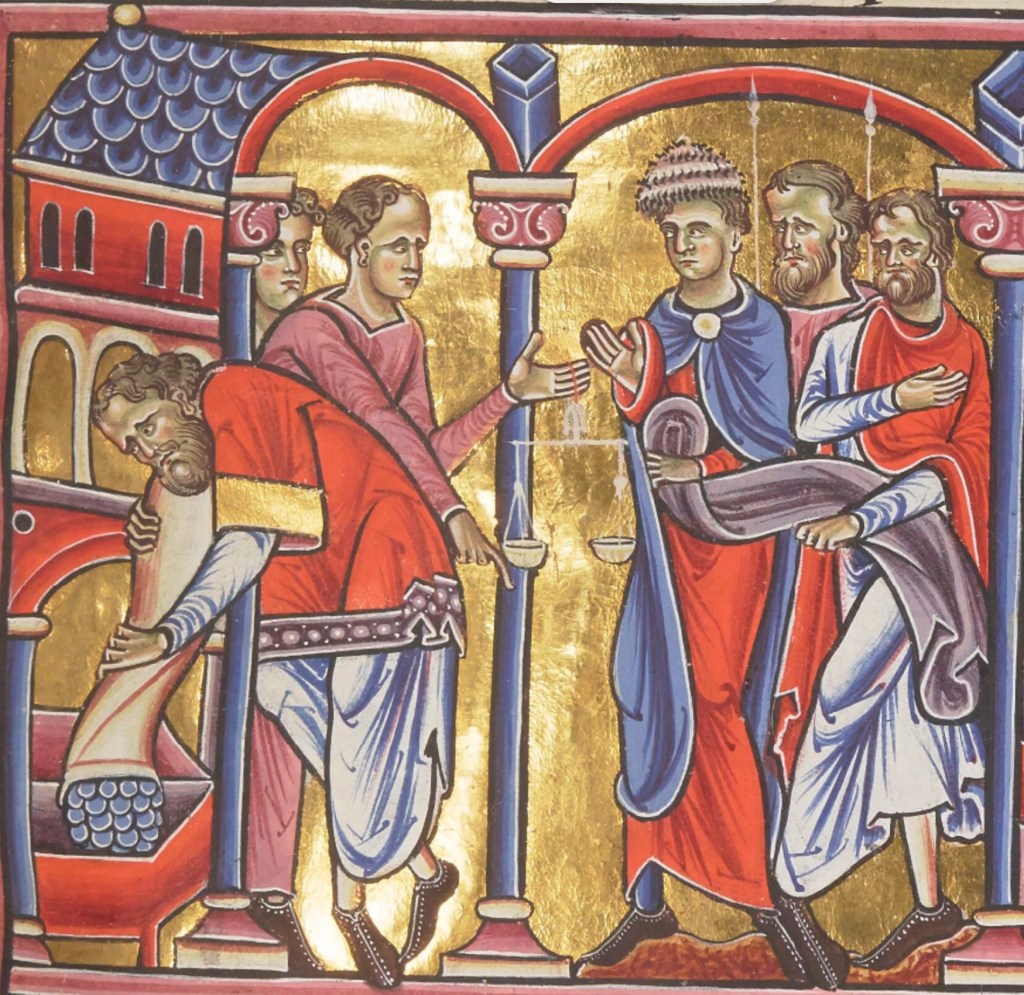
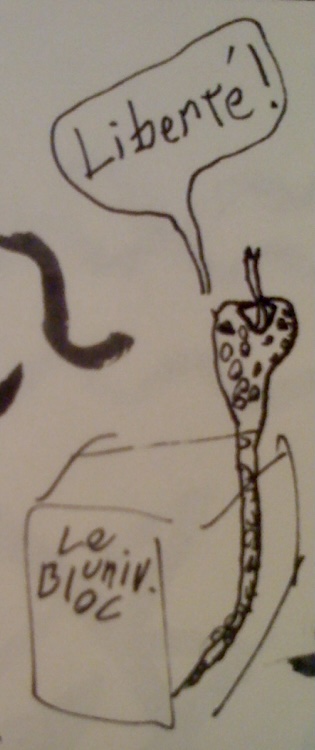
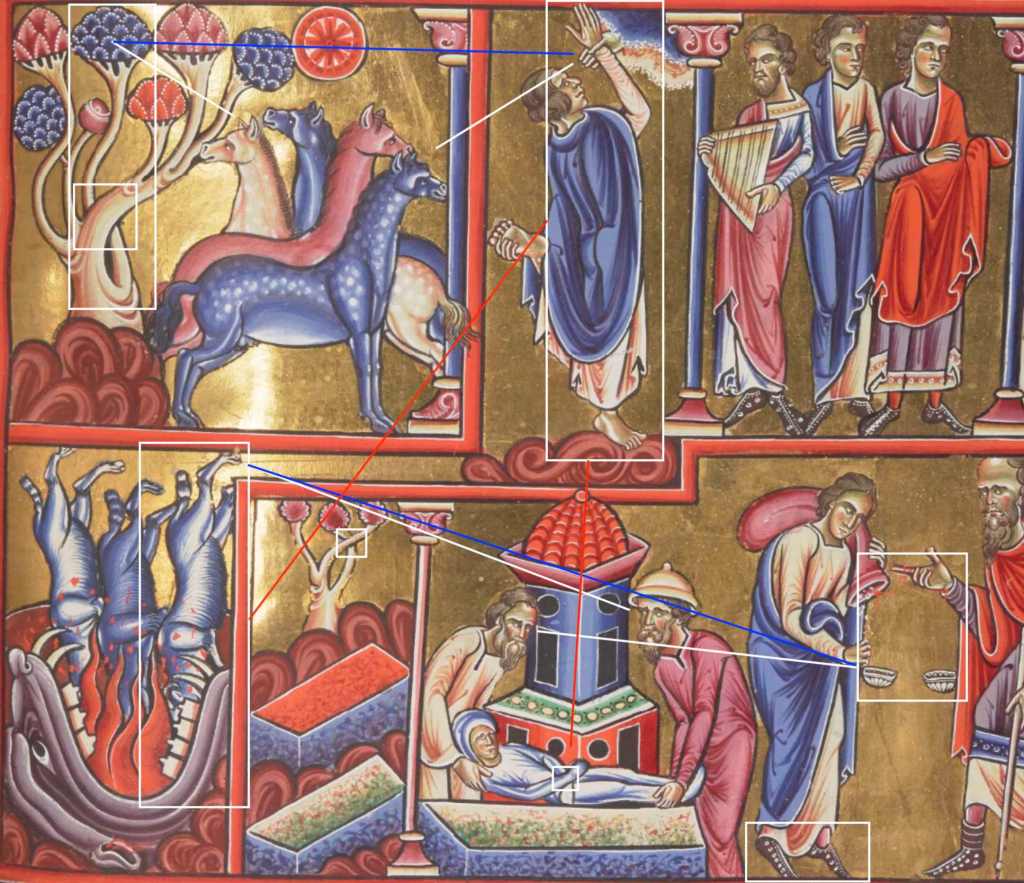
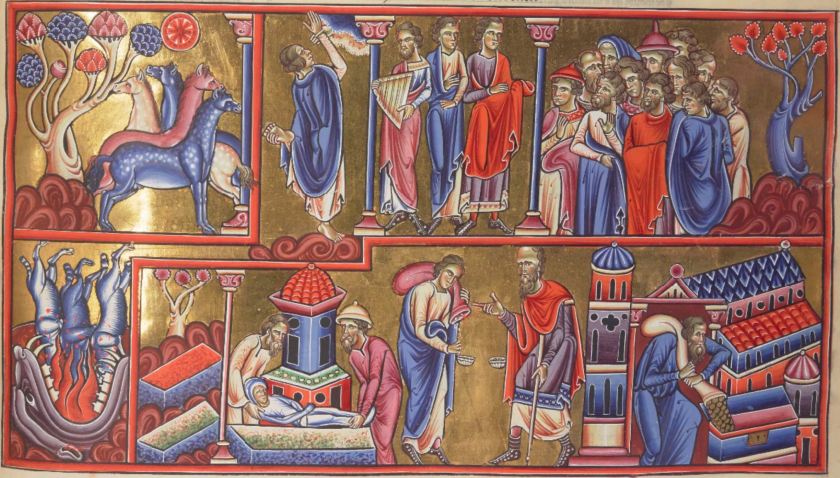
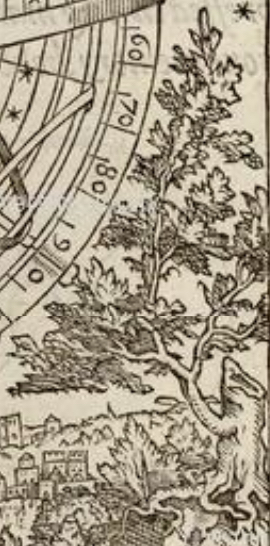
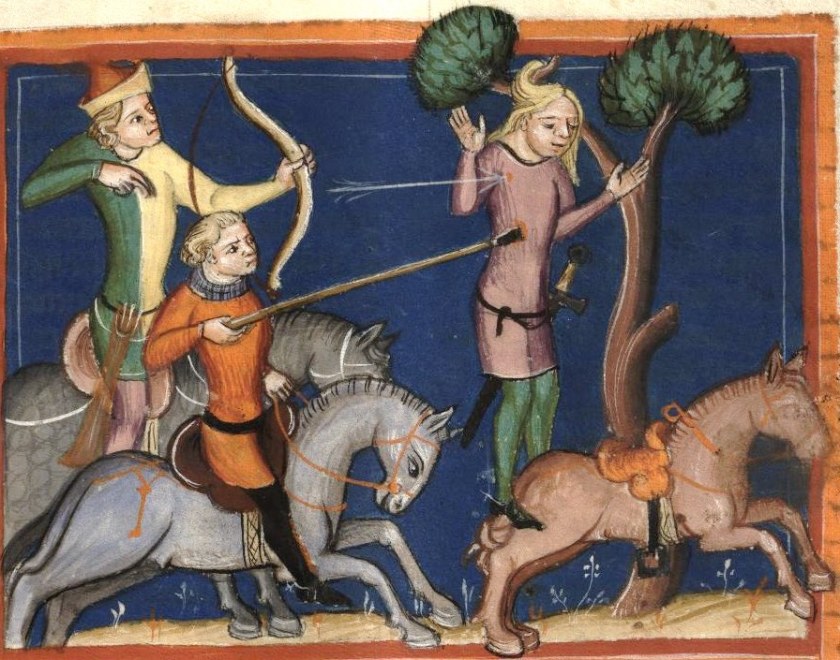
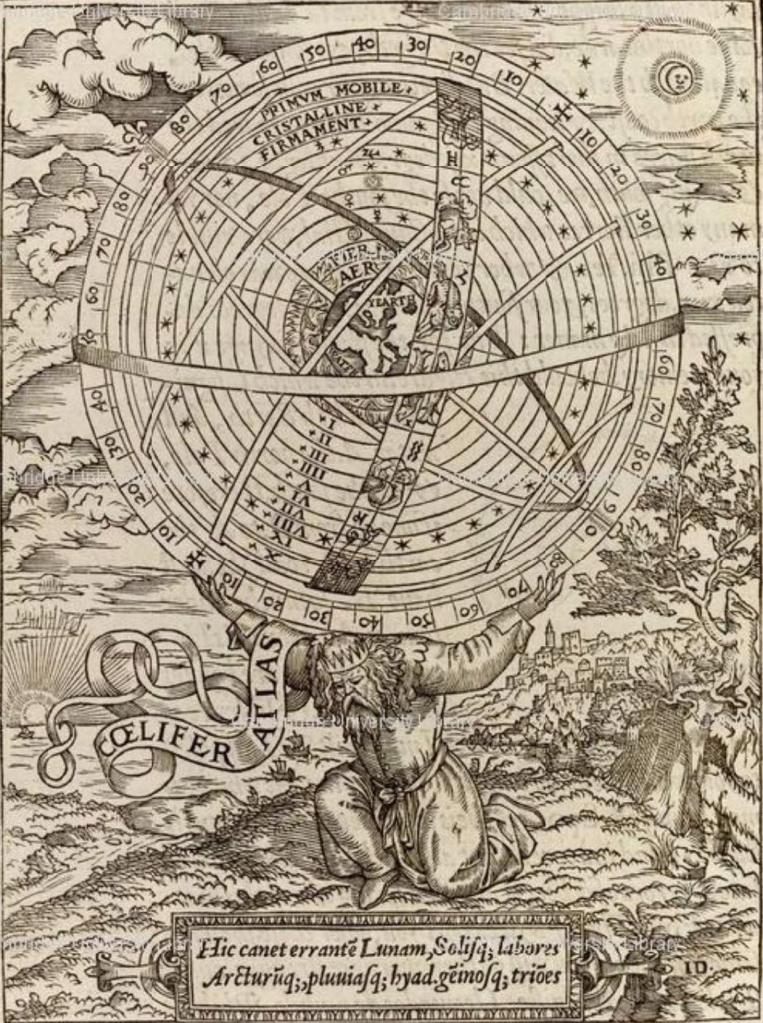
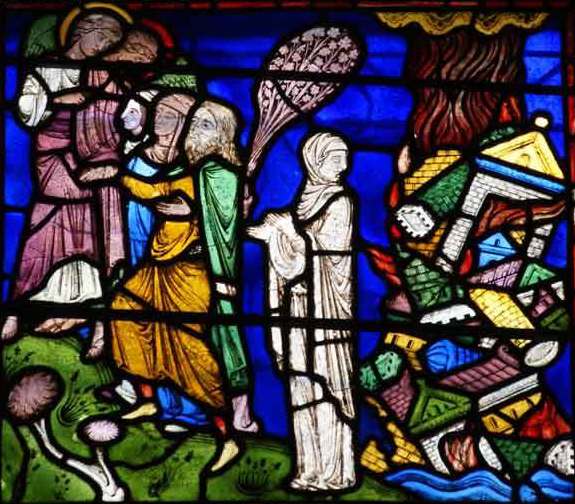
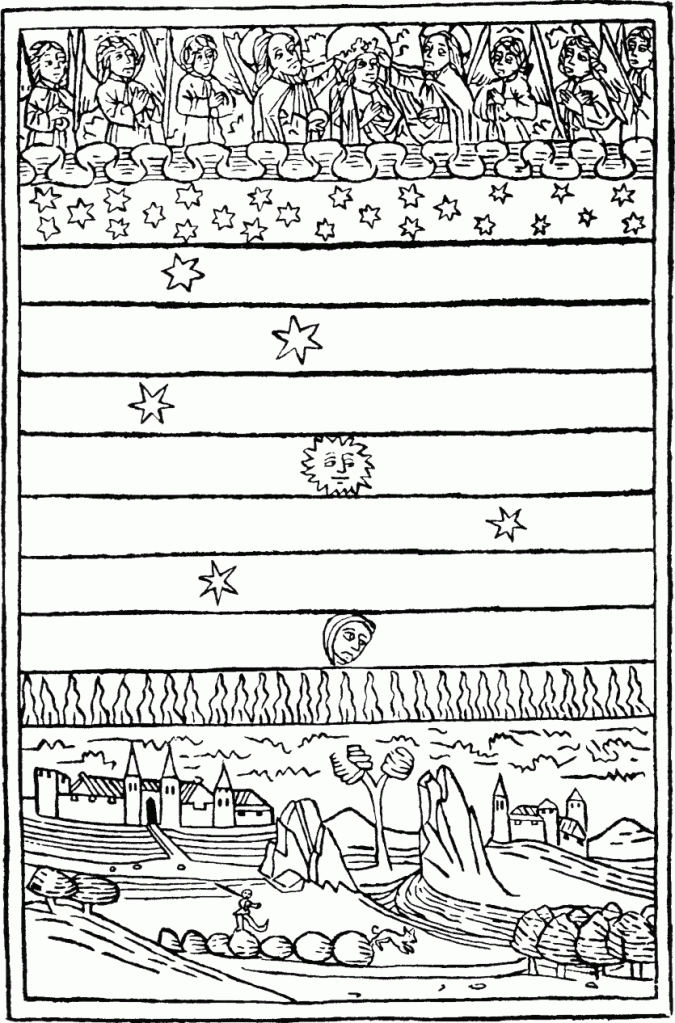
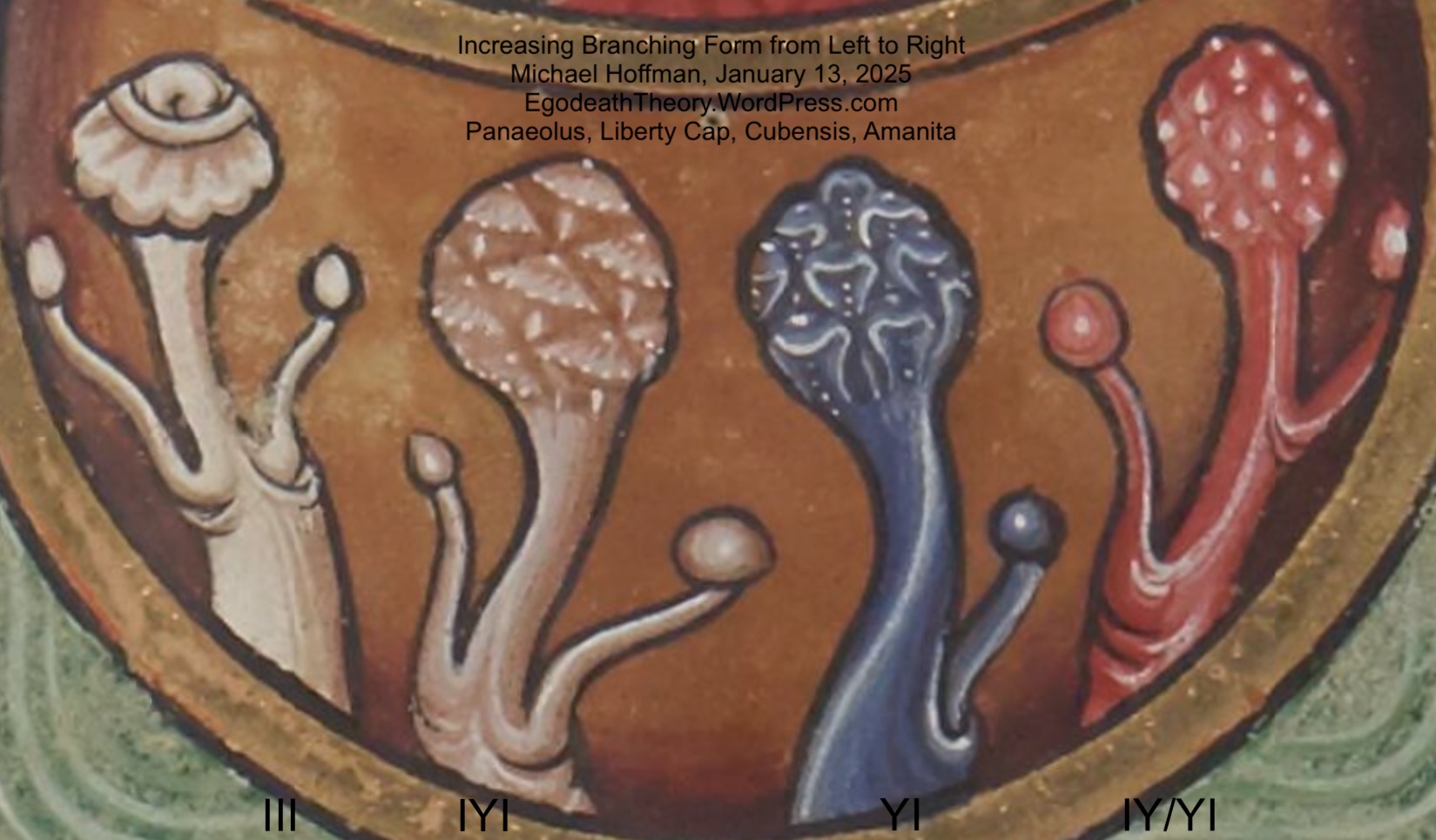

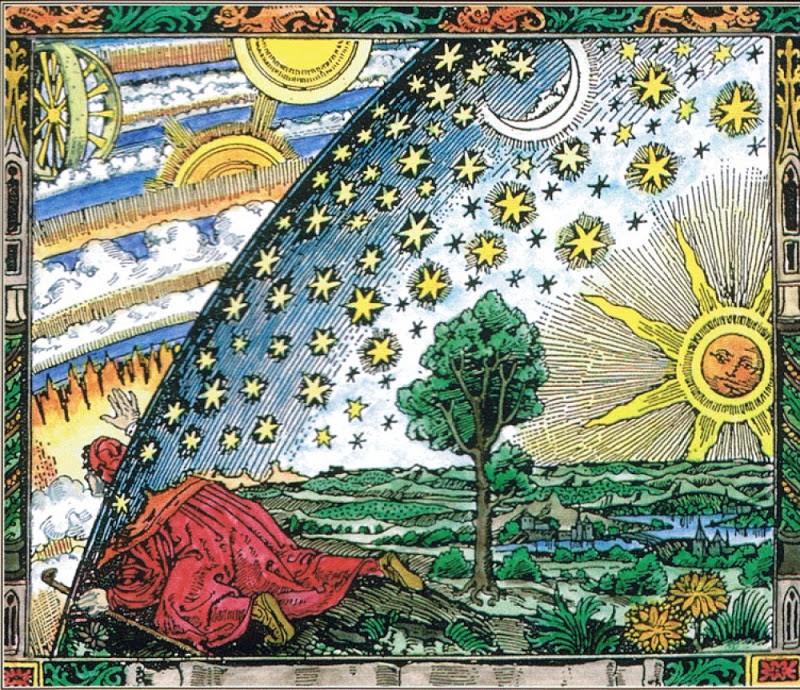
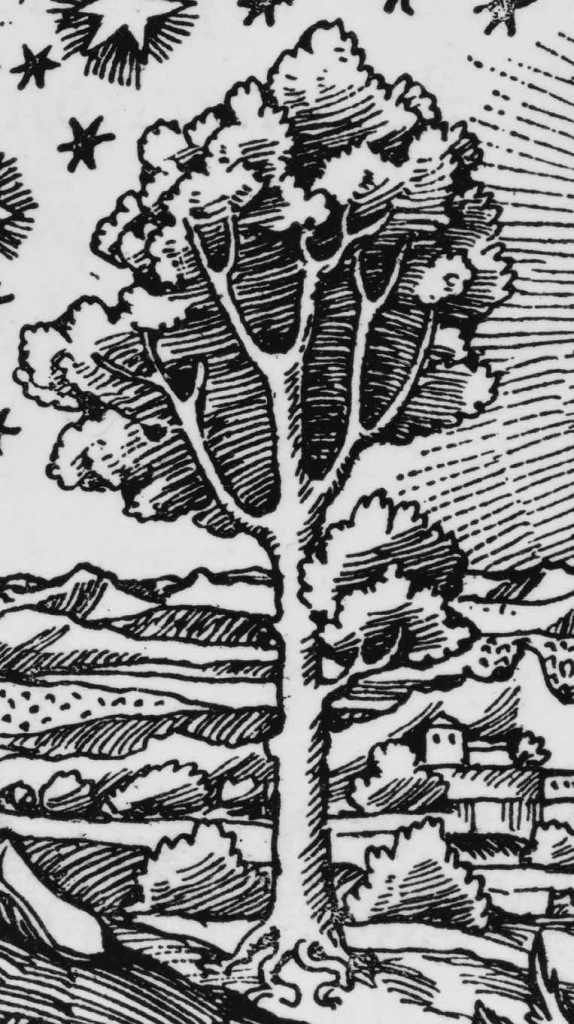
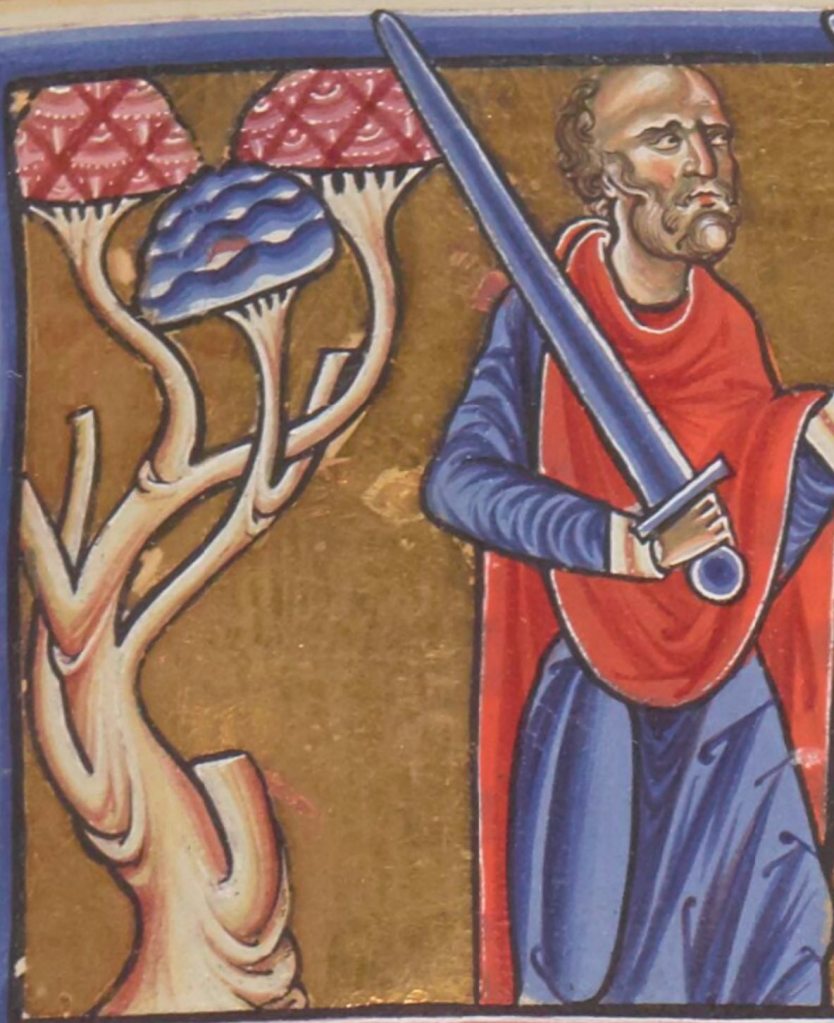


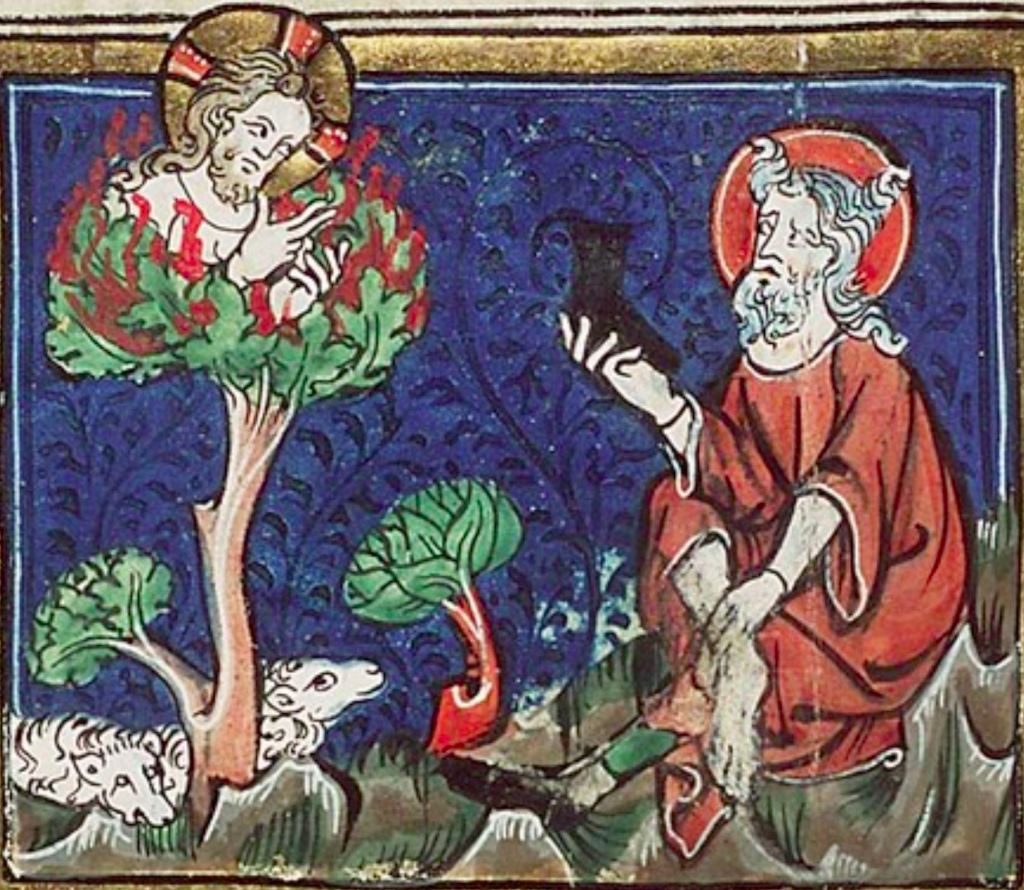
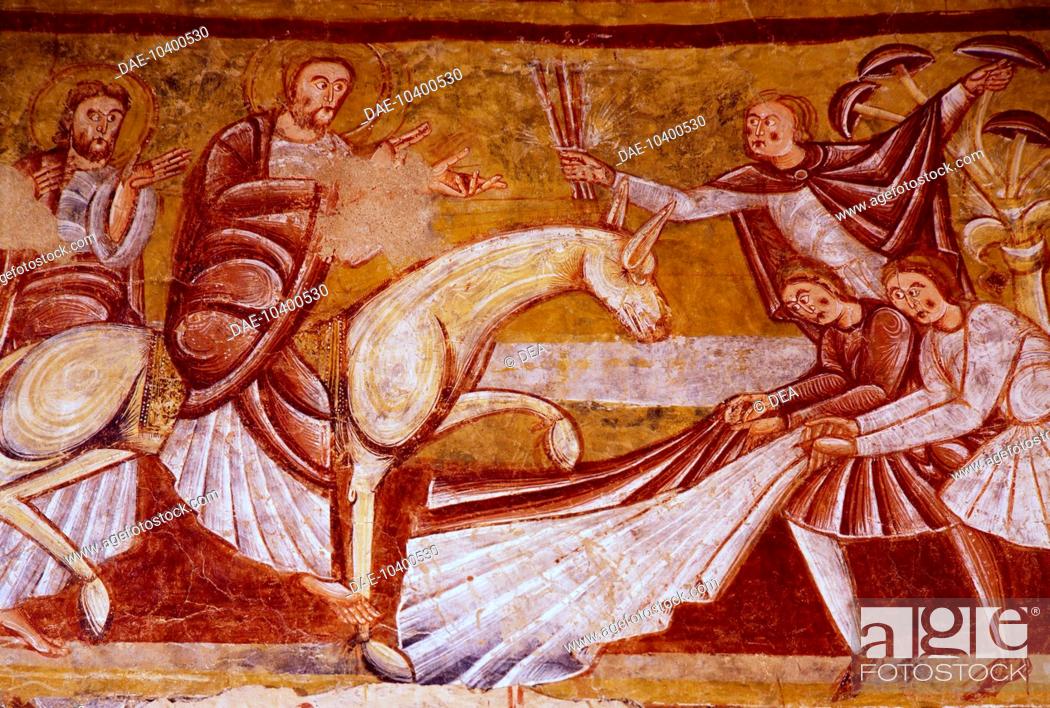
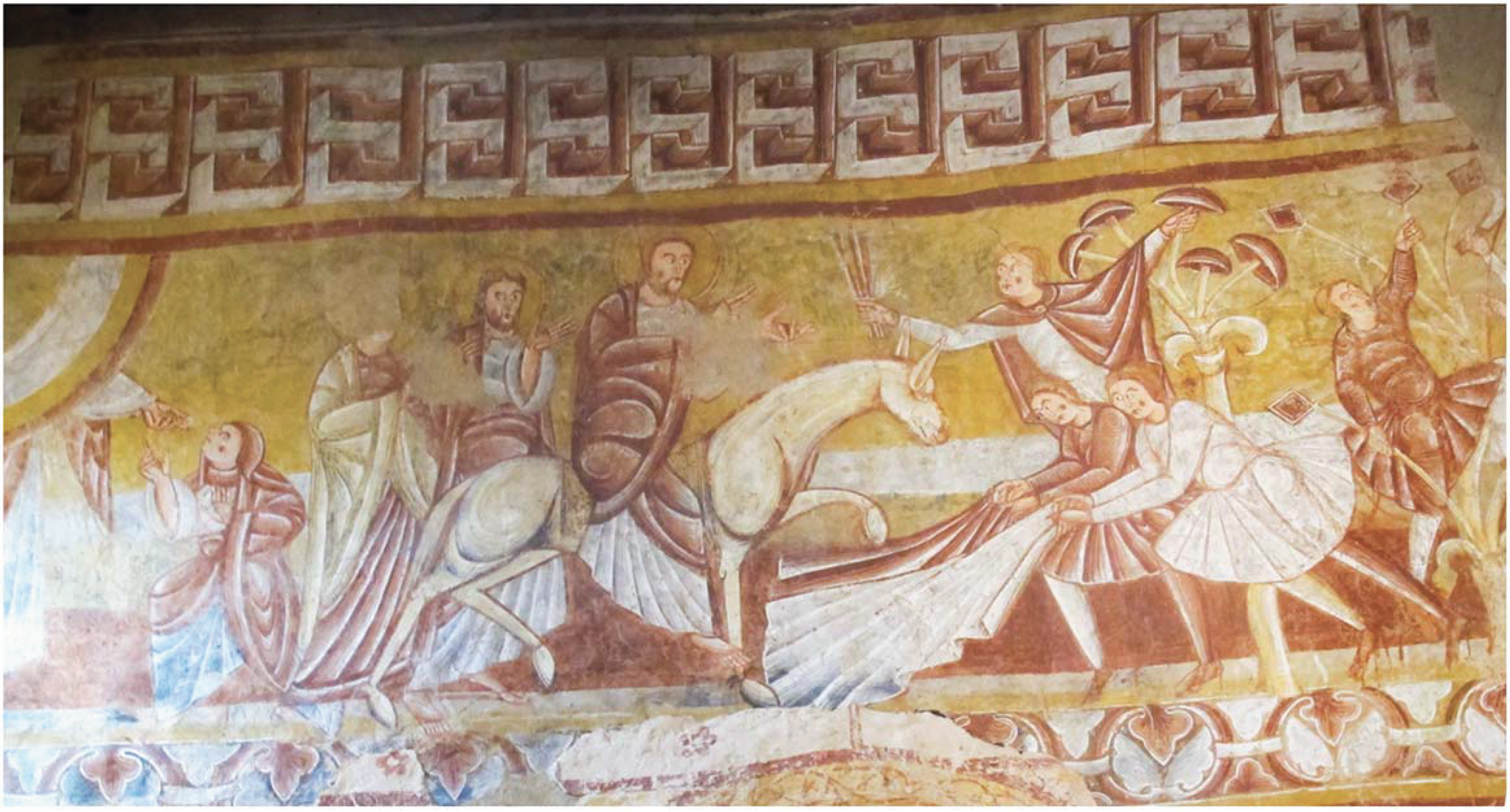
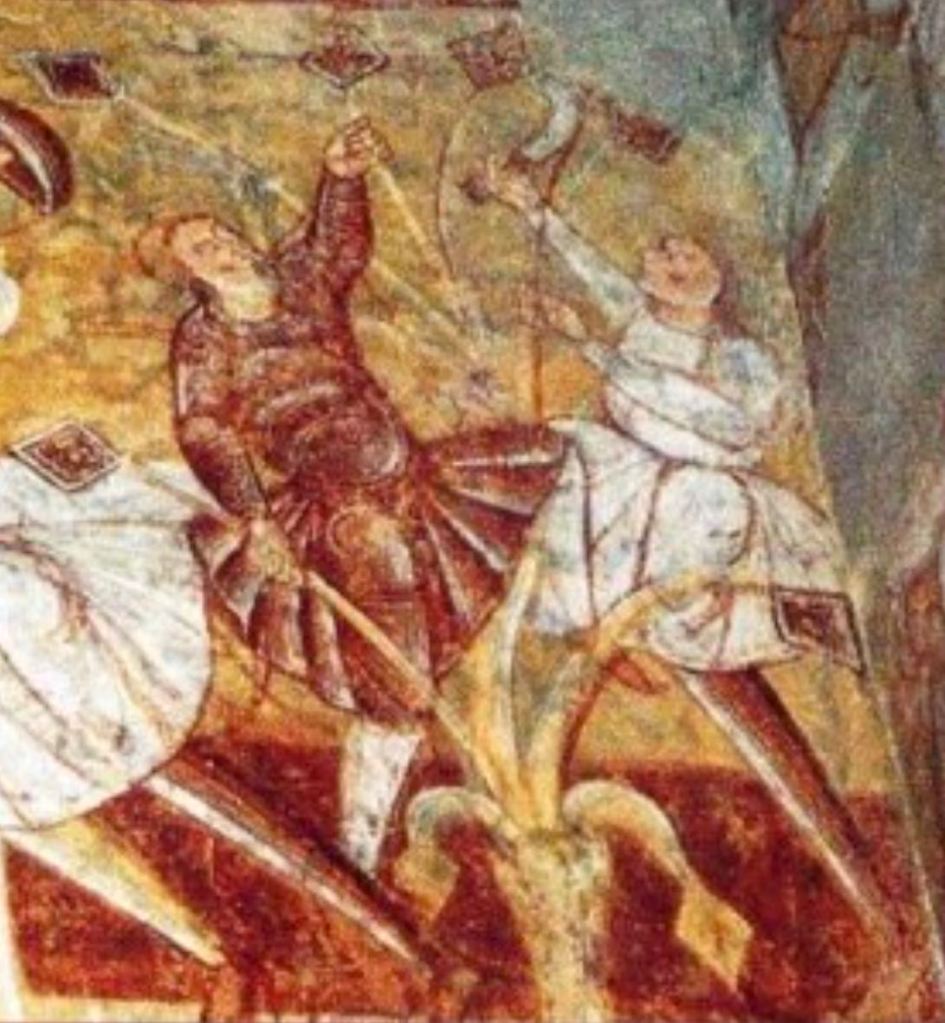
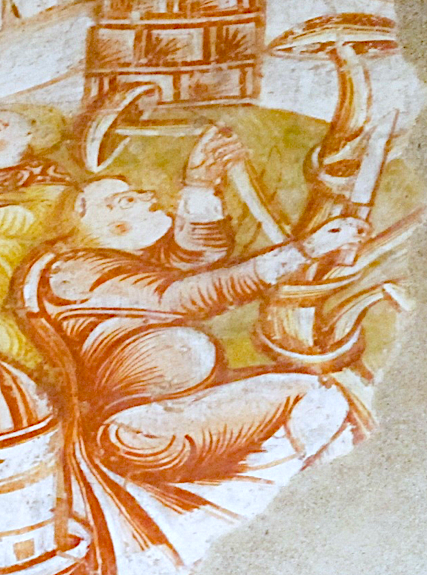
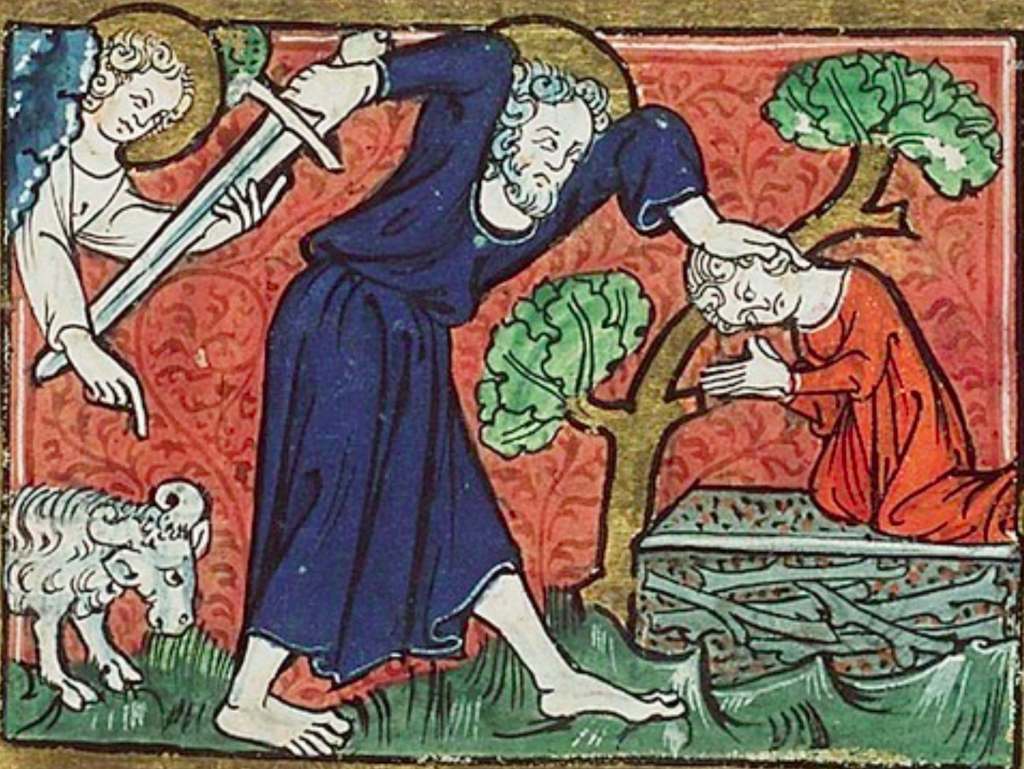
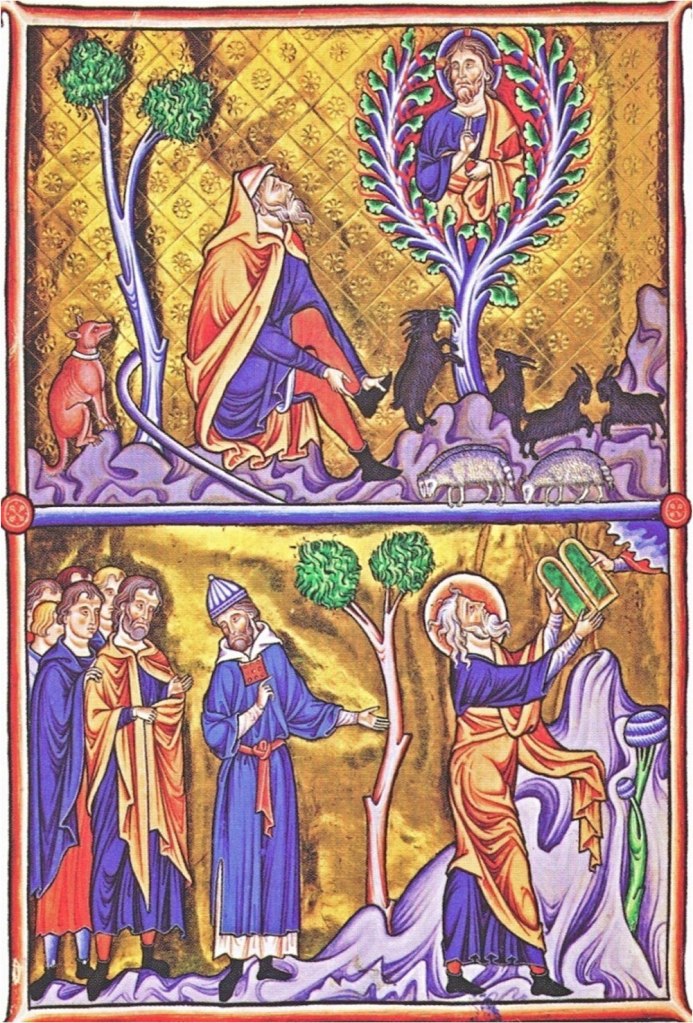
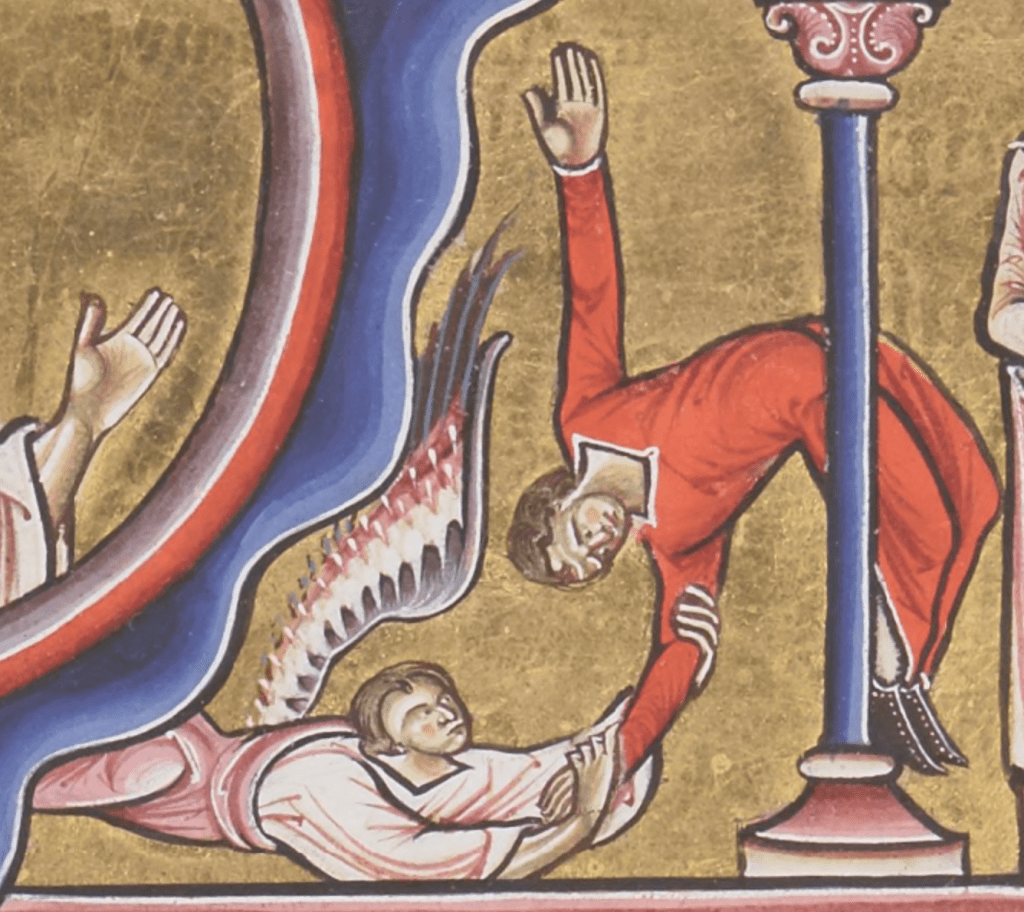
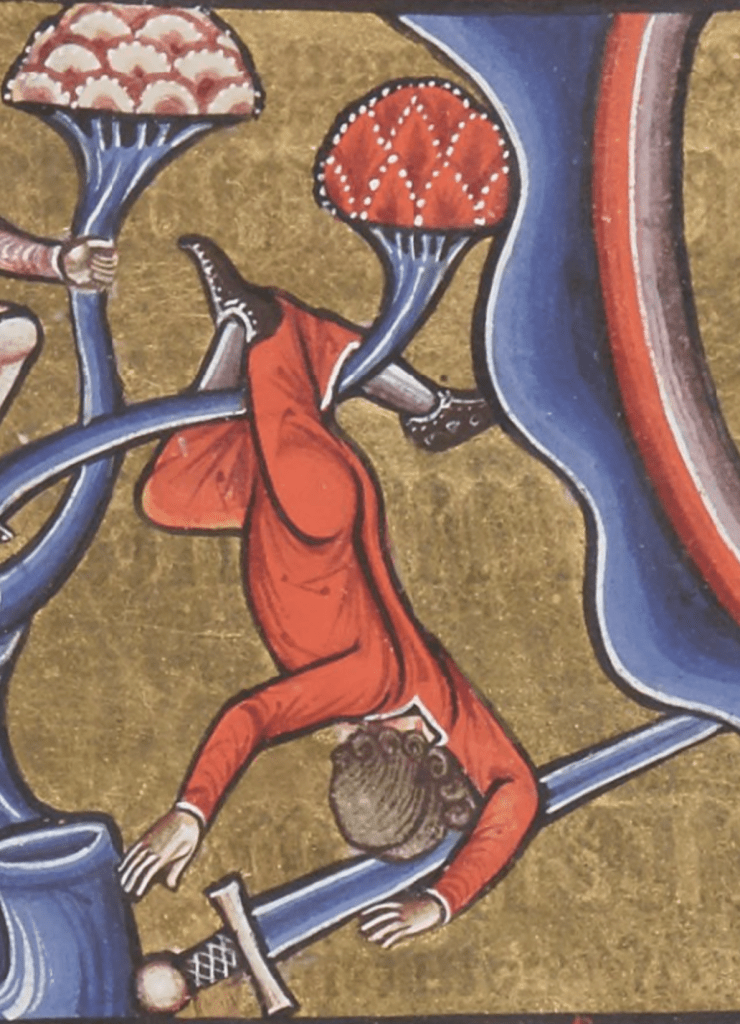

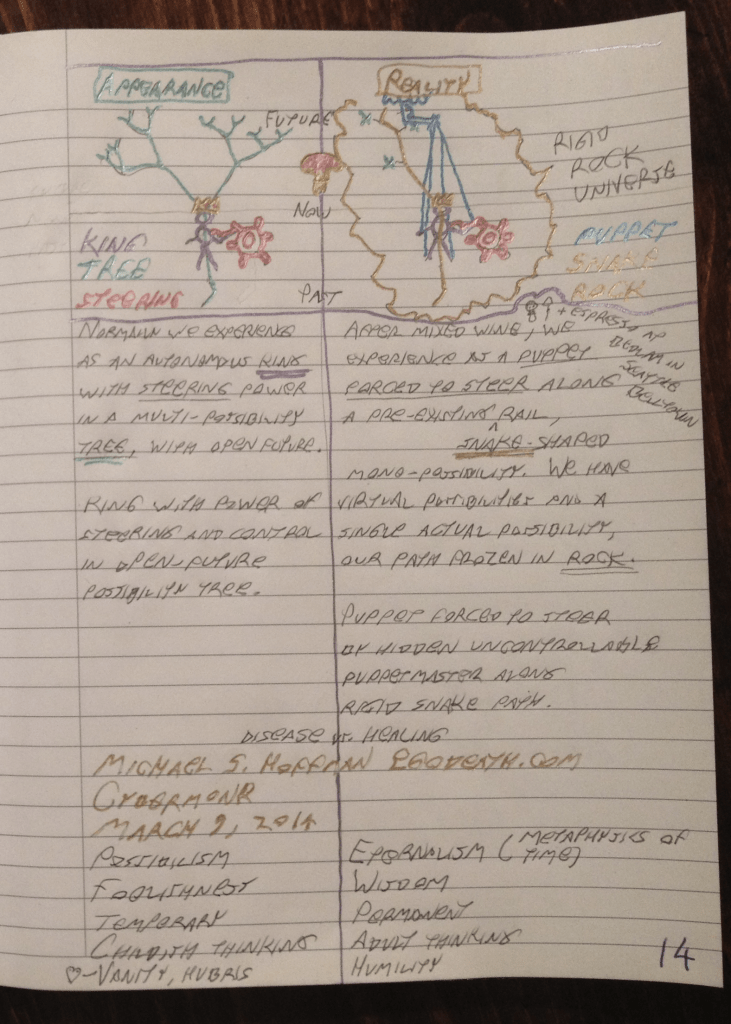
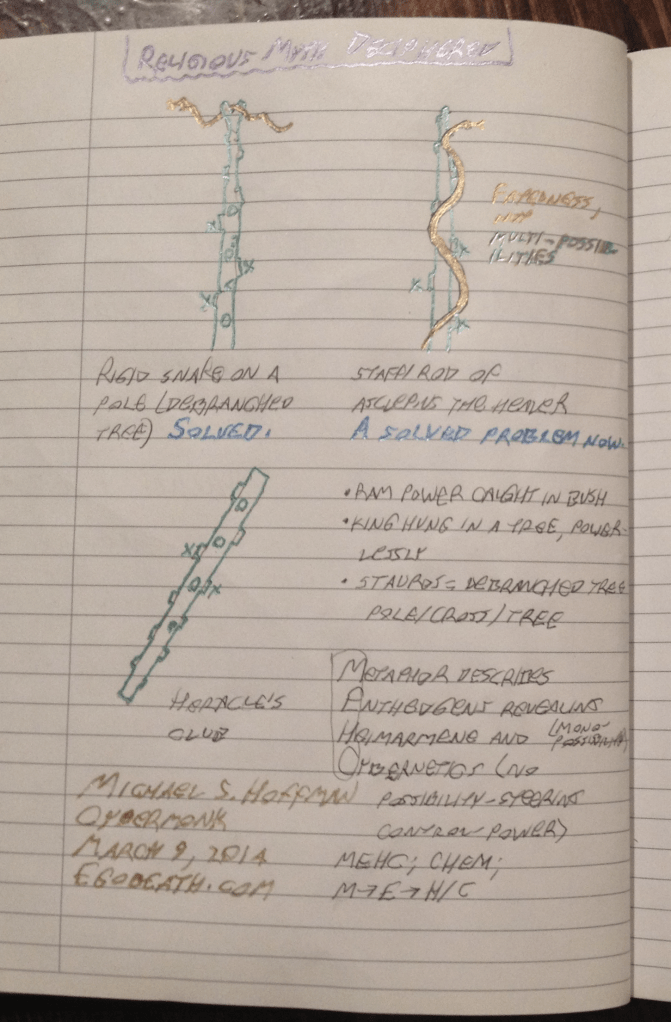
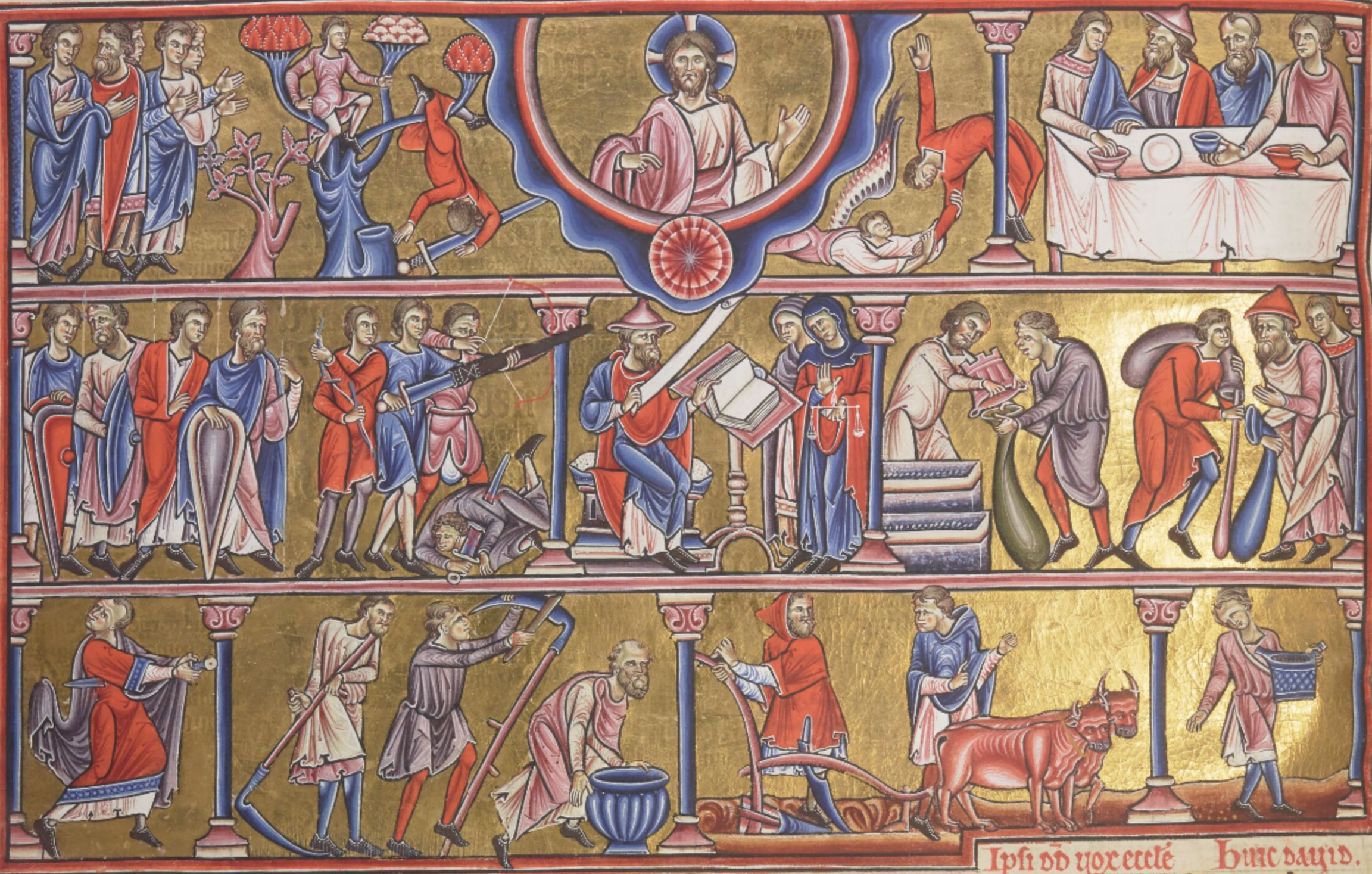

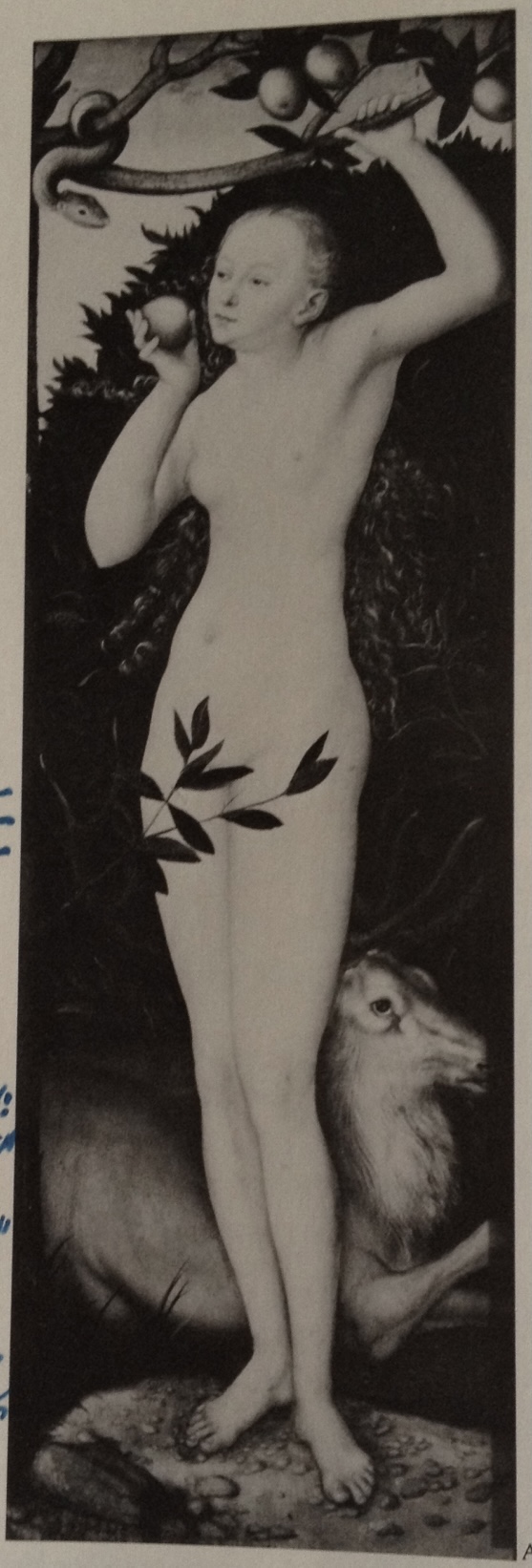
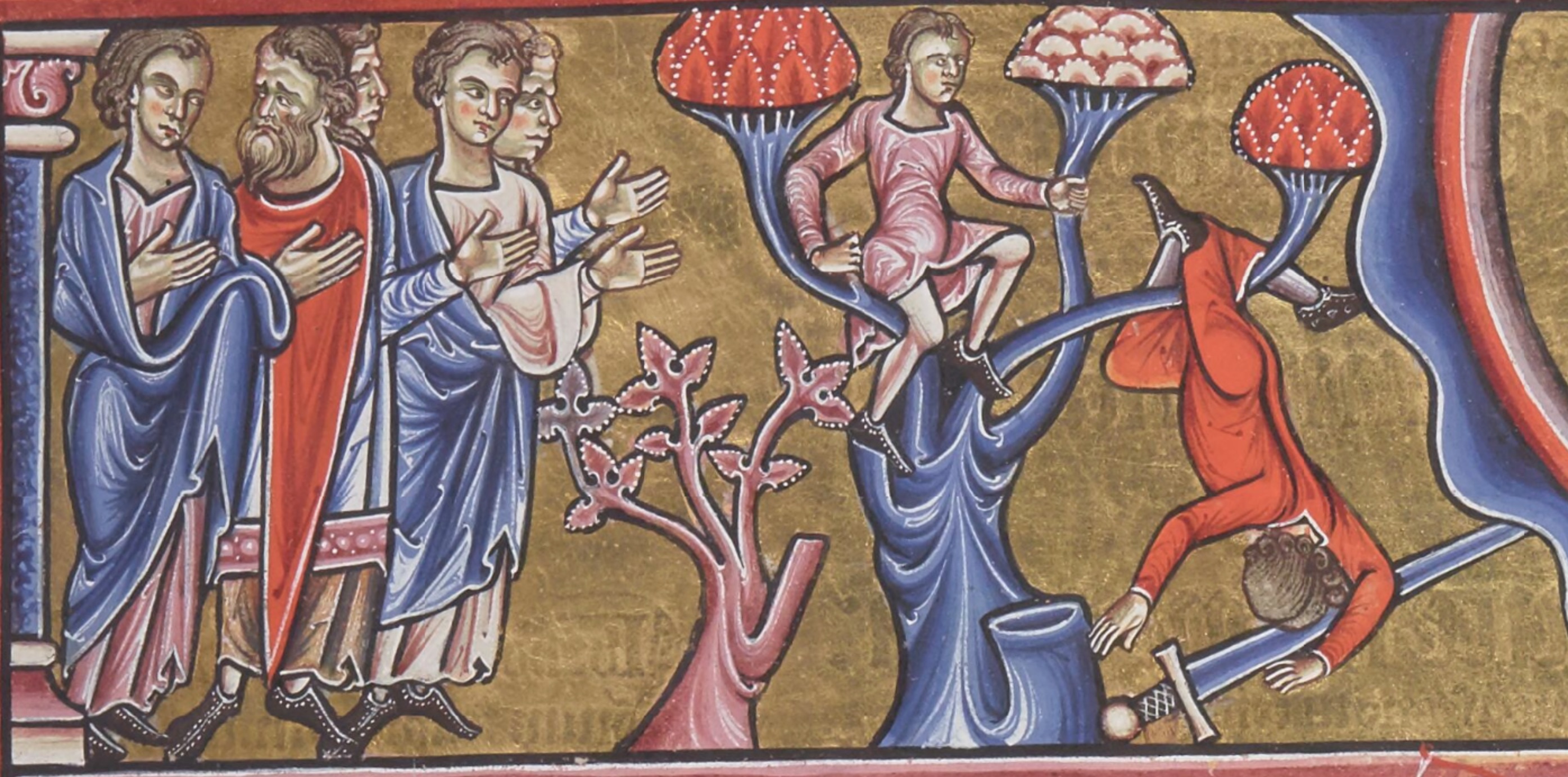
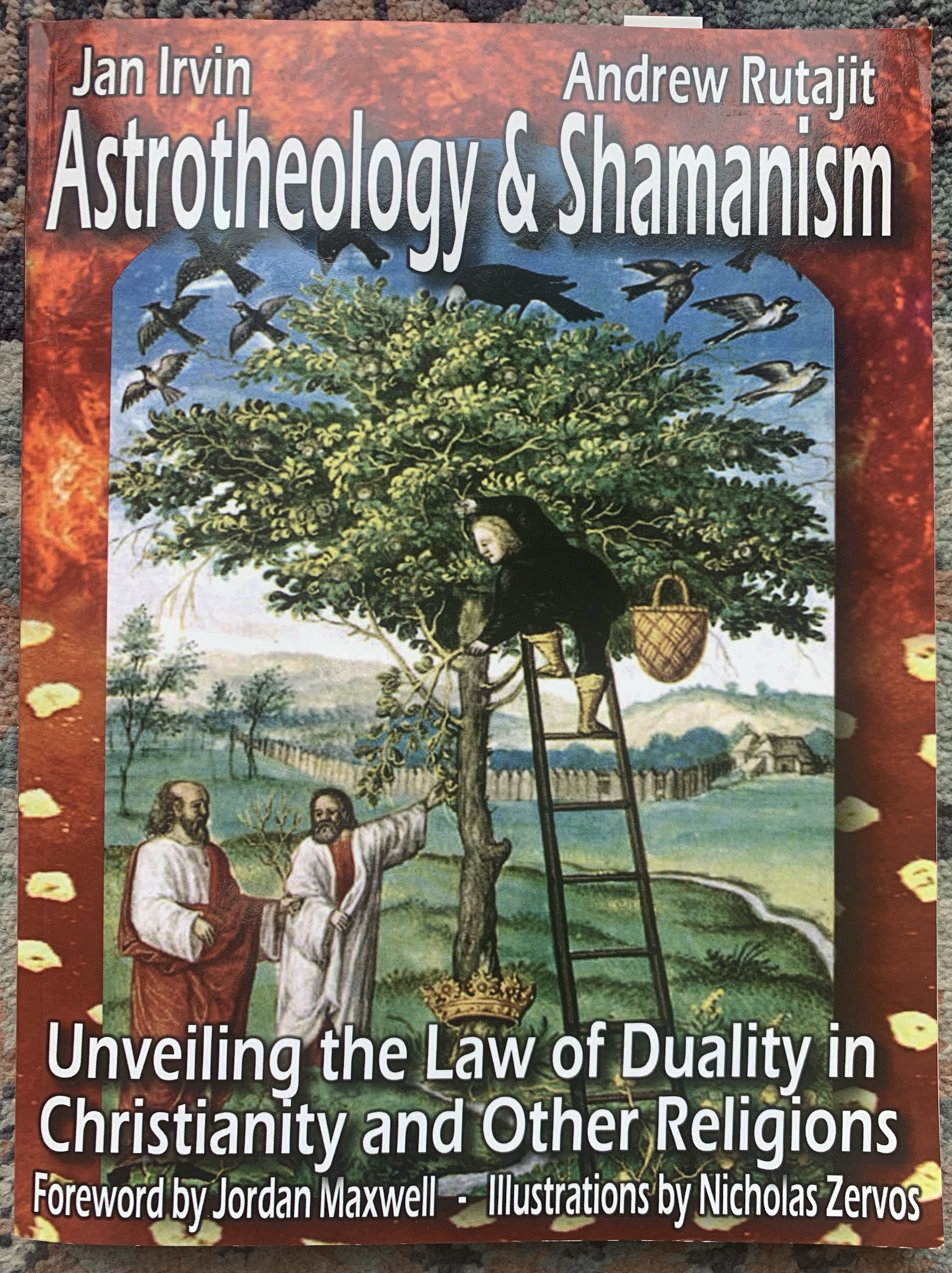
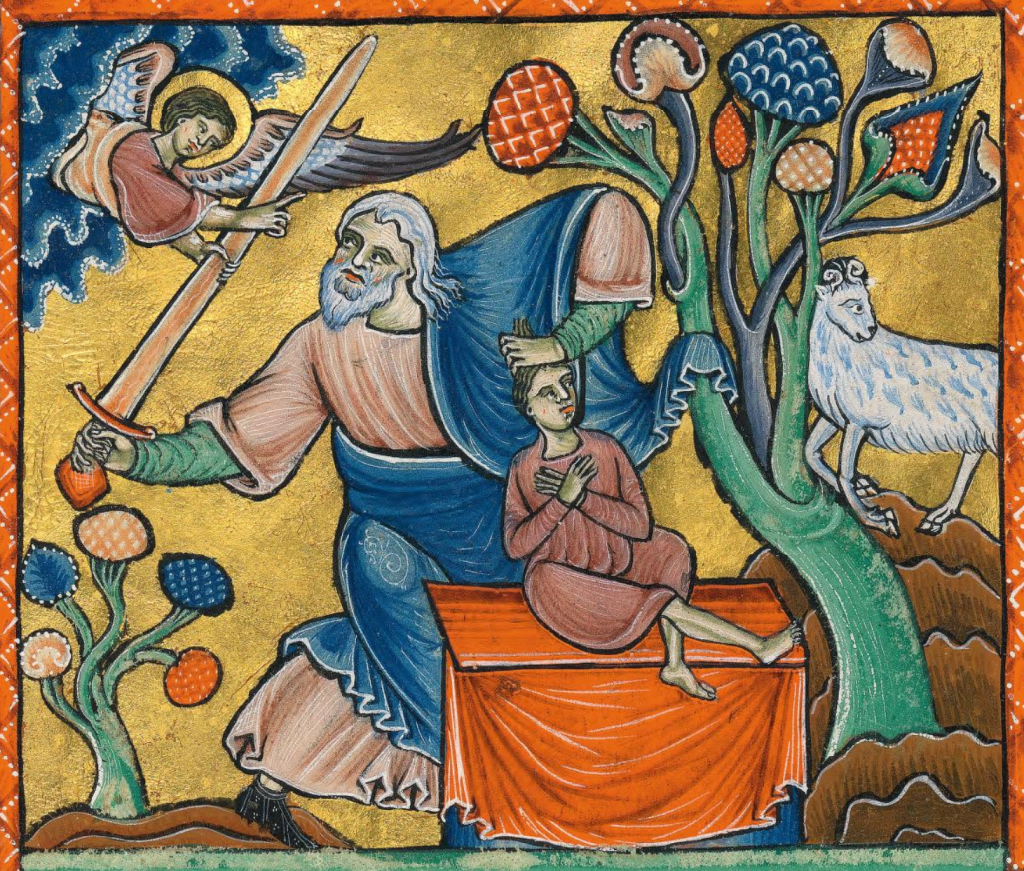
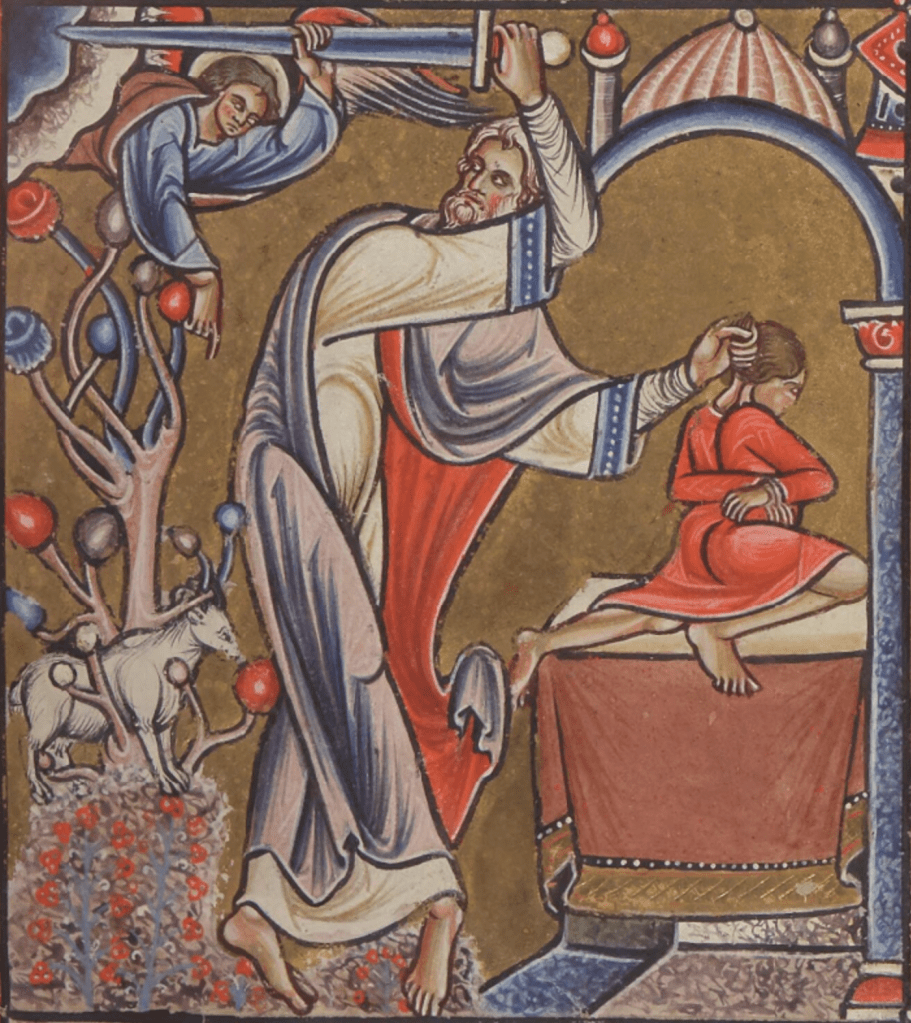
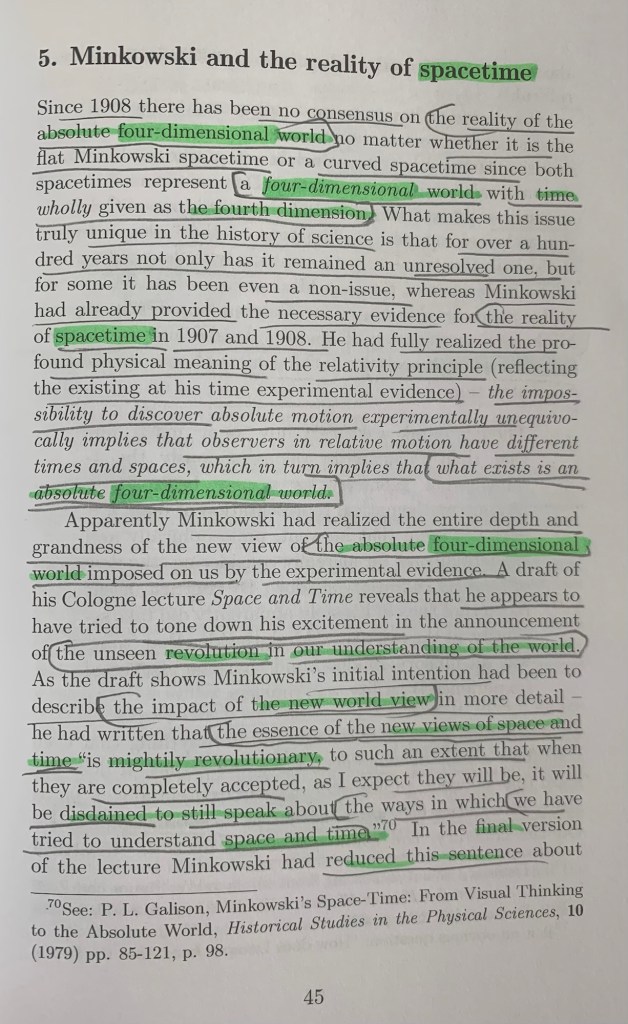
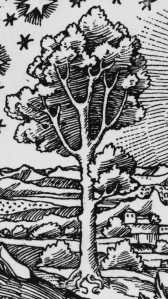

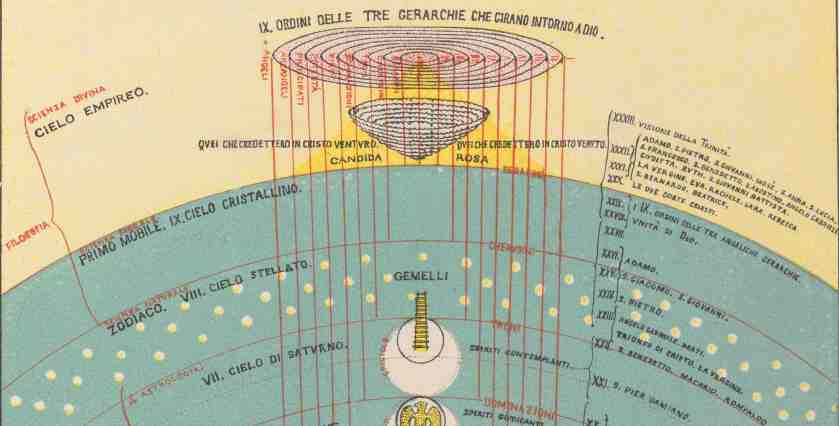
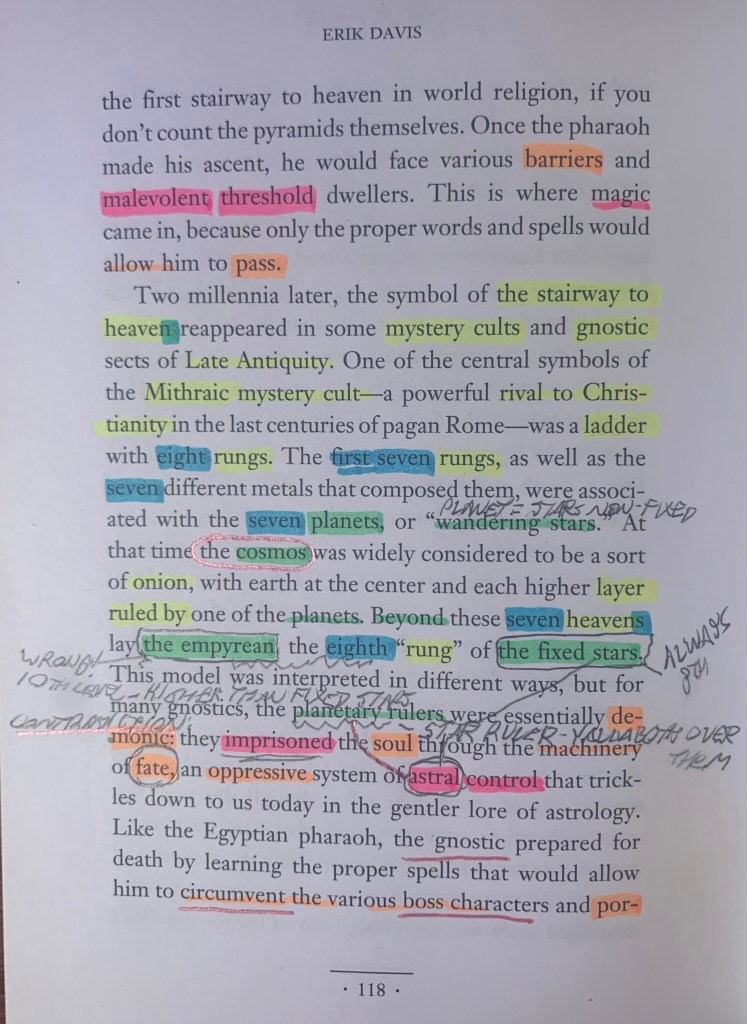
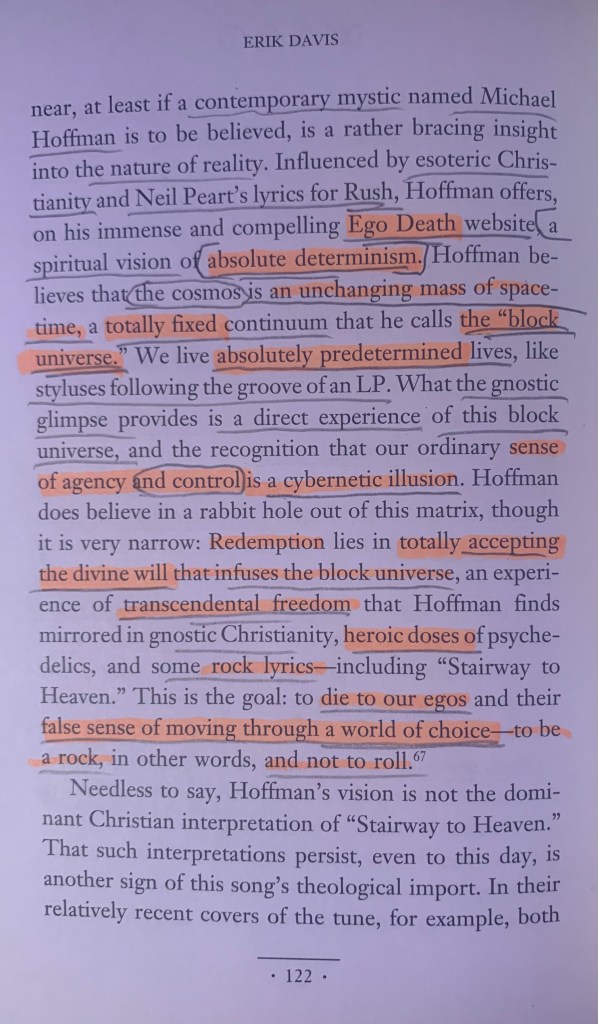


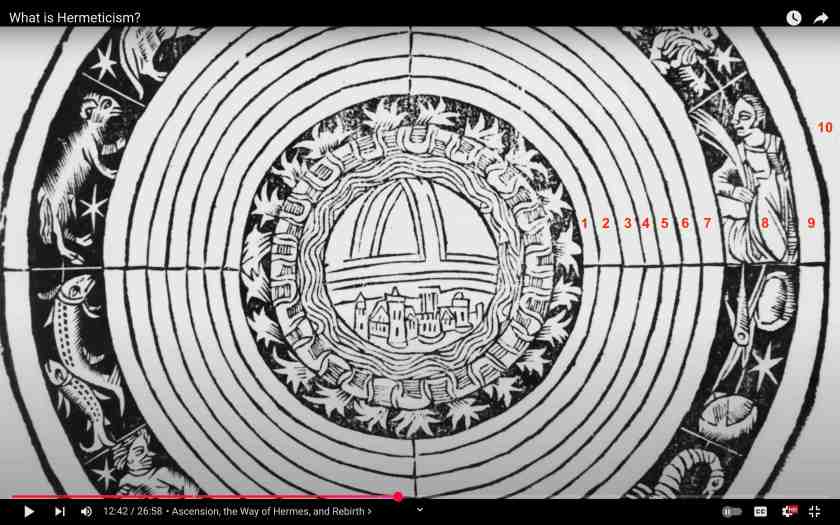
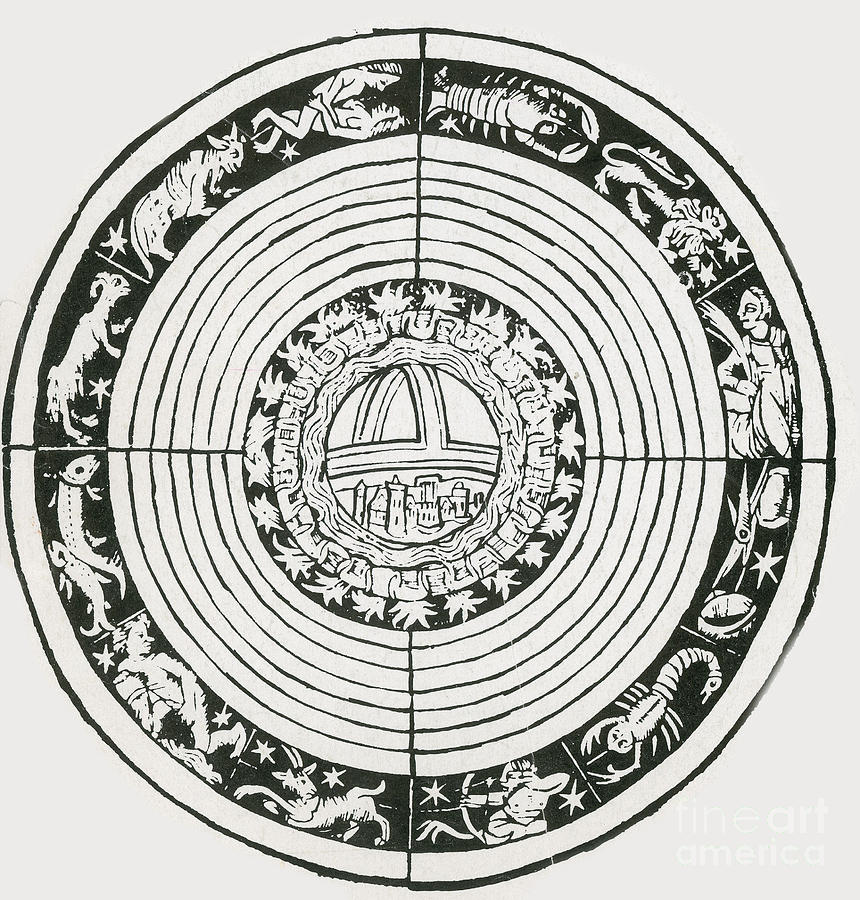
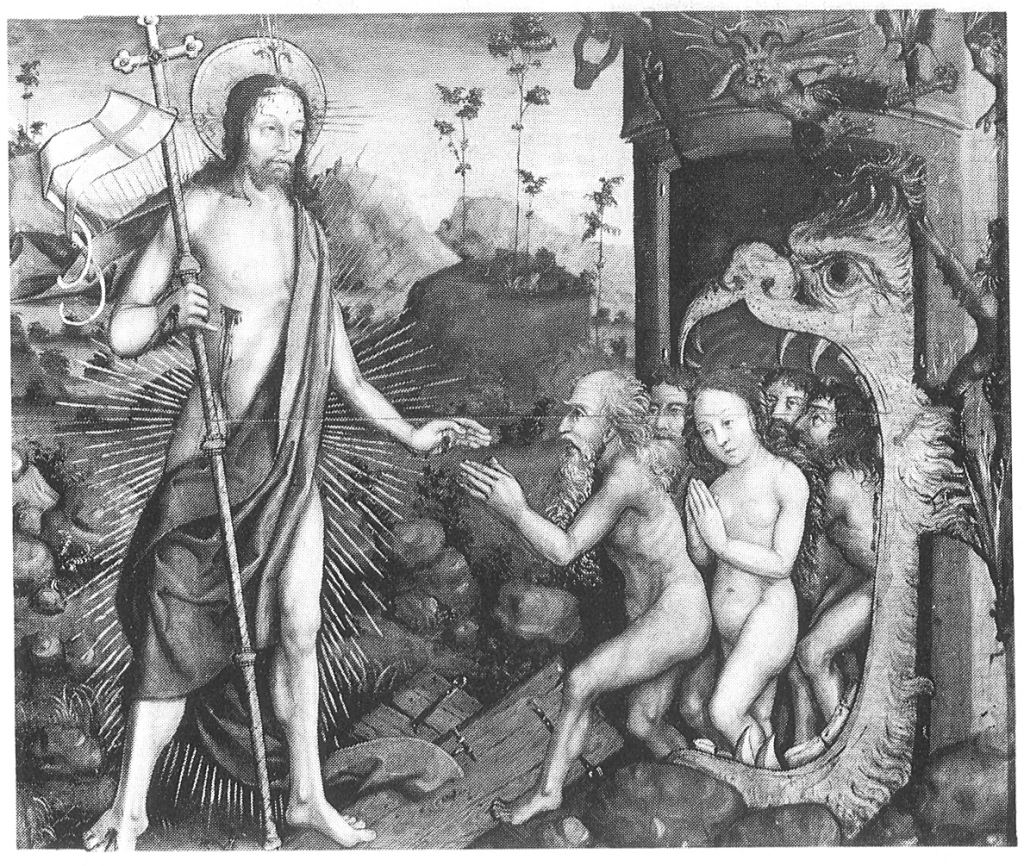
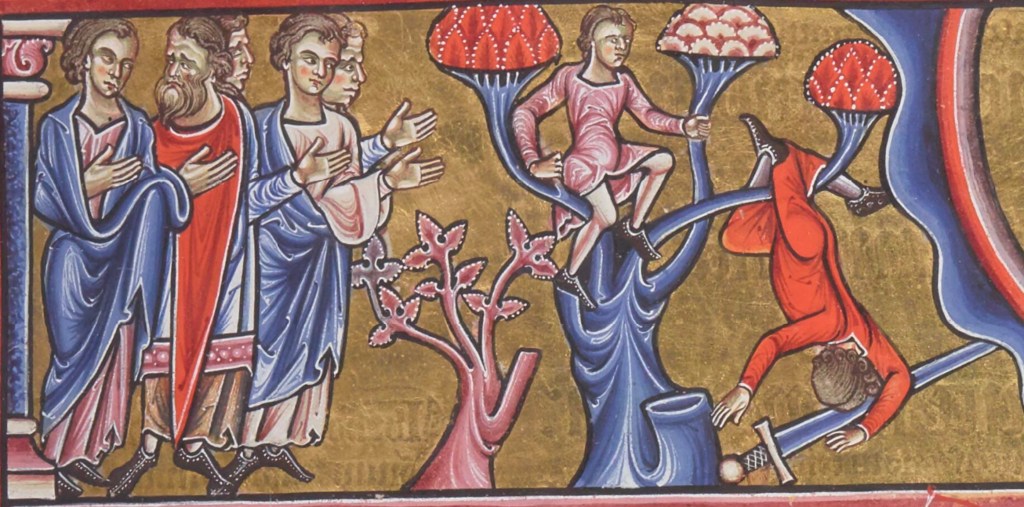


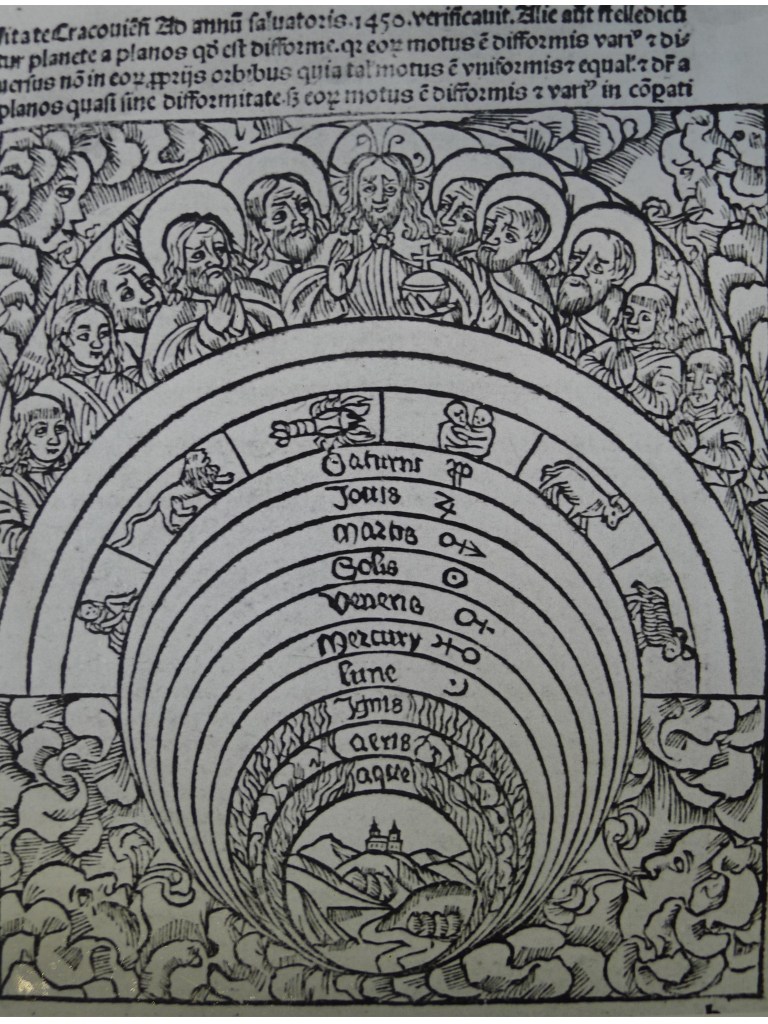
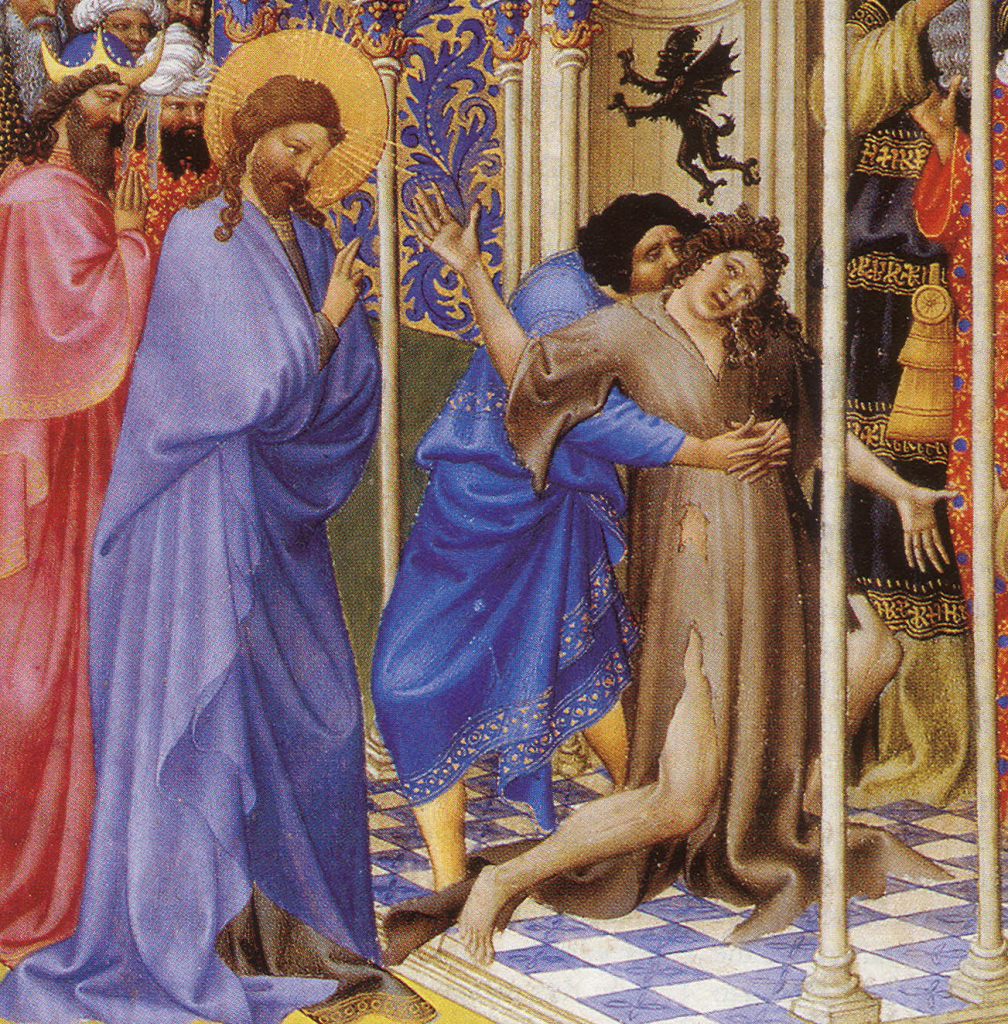
 The Egodeath theory

#/media/File:Lucas_Cranach_d.%C3%84._-_Adam_und_Eva_(Gem%C3%A4ldepaar),_Art_Institute_of_Chicago.jpg)
