Michael Hoffman, September 17, 2025
The present page is full text of dissertation.
My orig. notes page: https://egodeaththeory.org/2023/01/22/toward-a-philosophy-of-psychedelic-technology-an-exploration-of-fear-otherness-and-control-houot-2019/
Citation/link:
Toward a Philosophy of Psychedelic Technology: An Exploration of Fear, Otherness, and Control, A. M. Houot, 2019
https://www.academia.edu/38583547/Toward_a_Philosophy_of_Psychedelic_Technology_An_Exploration_of_Fear_Otherness_and_Control
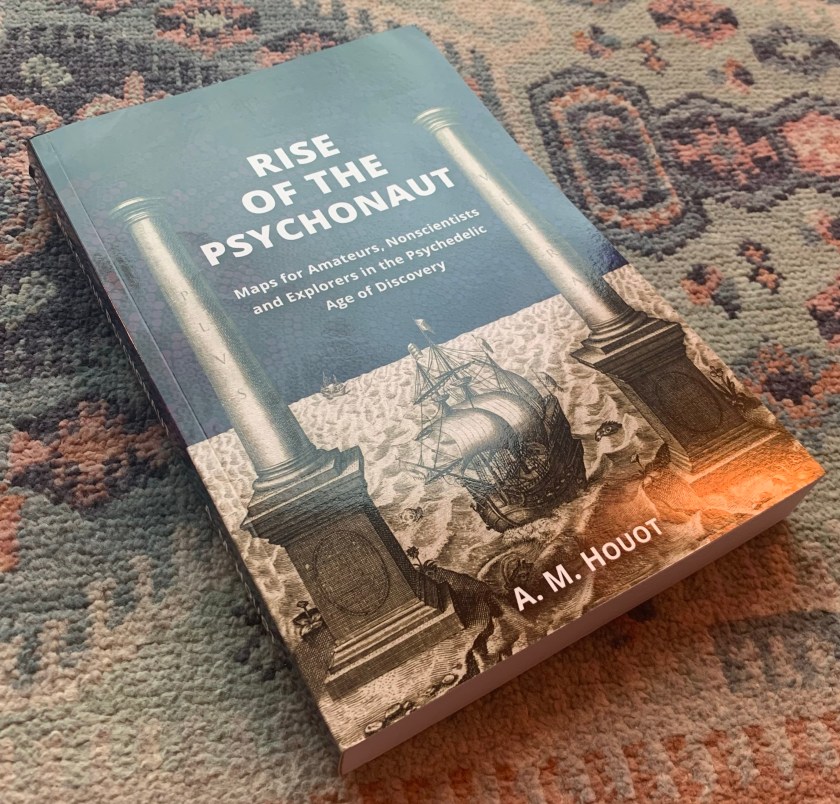
Contents:
- Toward a Philosophy of Psychedelic Technology: An Exploration of Fear, Otherness, and Control [cover page]
- Toward a Philosophy of Psychedelic Technology: An Exploration of Fear, Otherness, and Control [copyright page]
- Abstract
- Preface
- Einstein Quote
- Sayim Quote
- Table of Contents
- Introduction
- Chapter 1: Social Order Shakeup
- 1.1 Institutionalization of the human, sane and insane
- 1.2 Harm to others
- 1.3 Incommunicability of experience and direct access to the divine
- Chapter 2: Psychedelic Other and the Self
- 2.1 Master-subject relations
- Master/teacher-student relation
- 2.2 Psychedelic matrix of knowability
- 2.3 The self: Narrative vs. minimal
- Chapter 3 Psychedelic Symbolico-technology
- 3.1 Epistemological framing
- 3.2 Practical insights
- 3.3 Form and technology
- Conclusion
- Limitations
- Future research
- Bibliography
- End Quote
- Motivation for this Page
- See Also
Toward a Philosophy of Psychedelic Technology: An Exploration of Fear, Otherness, and Control [cover page]
By A.M. Houot
A thesis submitted to the Faculty of Behavioural, Management and Social Sciences of the University of Twente in partial fulfillment of the requirements for the degree of Master of Science MSc Philosophy of Science, Technology and Society
First supervisor/examiner: Dr. Michael Nagenborg
Second reader/examiner: Prof. Dr. Lissa Roberts
Defended on 25 February 2019 Enschede, Netherlands
Page ii
Toward a Philosophy of Psychedelic Technology: An Exploration of Fear, Otherness, and Control [copyright page]
By A. M. Houot © A. M. Houot 2019
Page iii
Abstract
The central question guiding this study is:
In what ways can modern users conceptualize the psychedelic experience that counters the current fear-laden discourse on drugs?
Misconceptions and falsehoods conflate current ways of considering drugs in general and psychedelics in particular.
Fears of psychedelics serve as the framework to apply philosophies of mind and technology to the reexamination and amendment of psychedelic concepts and terms.
Governmental and religious institutional actors fear psychedelic users will:
- harm one’s self and others because psychedelics are still falsely believed to have analogous properties to mental illness;
- the incommunicability of seemingly non-rational states cause disjunction between shared sociocultural knowledge; and
- psychedelics are arguably similar to mystical experiences, thus mainstream religion fears individuals’ direct access to divine realms, which could upend their hierarchical and spiritually monopolistic power structures.
Next, modern researchers commonly advise users to “surrender” to psychedelic experiences, a term likely adopted from mysticism.
Since surrender implies a master role is at play, a discussion on master-subject relations emerge when confronting the “psychedelic Other,” i.e. the spatial context, experiential content, and originating from within or without users’ minds.
To better understand users’ fears, an analysis of known and unknown fears provide context to the ultimate psychedelic fear, that of a conscious and intelligent unknown presence.
Against these fears of psychedelic Others, a new conception of (altered) states of self develops that considers the current debate in cognitive neuroscience and philosophy.
Narrative and minimal selves are co-present during psychedelic experiences depending on dosage and intoxication levels, and a new qualitative framework is proffered to understand these implications.
Finally, it is suggested that modern psychedelic users need not abandon the prototypical mystic to conceptualize their experiences, but instead might consider another prototypical figure, the shaman.
Rather than dealing in surrender and fear like mystics and modern users, drug-taking shamans control and master their experiences through the joint use of symbolism, techniques, and technologies.
A change in prototype also has epistemological significance, that is, from perennialist to constructivist approaches when considering psychedelically subjective knowledge.
In view of built narratives regarding self and knowledge, i.e. narrative self and epistemological constructivism, analysis shows how shamans use symbols with technologies to control their experiences and the idea of symbolico-technological relations is proposed.
The above philosophical insights have prescriptive consequences that provide new opportunities for modern society and users to conceptualize psychedelic experiences, to control them, and as a result, to reduce fear.
Page iv
Preface
This philosophical work addresses fears of psychedelics and proposes new ways of conceptualizing modern society’s and individuals’ relationship to these substances.
Tackling such a project, to rationalize about the seemingly non-rational, was not only demanding but also fun.
I am convinced there is a need to philosophize further about psychedelic experiences since they question the foundations of human thought and experience.
Within the field of philosophy of technology, I applied a humanities approach to my research; however, the engineering/design and ethical approaches should also be researched to expand a philosophy of psychedelic technology.
I want to thank both of my supervisors: Dr. Michael Nagenborg and Prof. Dr. Lissa Roberts.
Michael initially took my project onboard and showed enthusiasm for a subculture he wanted to know more about (that is to say, academically, not experientially).
I believe I can speak for Michael in that we enjoyed scratching our heads during meetings while trying to untie psychedelic knots with our philosophic tools.
And it worked! Thank you Lissa for partaking in shaping my critical mind, pushing us to do our best, and for having reservations about my first “final” thesis proposal.
I know now, only in retrospect, that this was the thesis I was supposed to write and am extremely pleased at what was discovered along the way.
As for MasterLab class, I appreciate the patience of instructor, Dr. Lantz Fleming Miller, who said it was like going on a “trip” merely reading early outlines of this project; I took this as a compliment and knew I was onto something.
I am grateful for the feedback I received from my peer review group, Roos d. J. and an anonymous Finnish man, for their suggestions throughout much of the writing process.
Thank you Alice F., Jonathan d. H., and Patrick M., who gave helpful, and at times, critical, comments at different points in the writing process, and Sam V. and Alessio G. for the living room chats.
Within the Faculty of Behavioural, Management and Social Sciences, I thank the faculty members of the Department of Philosophy and the Department of Science, Technology, and Policy Studies for the brilliant job they do and the intellectually stimulating environment they provide.
The Philosophy of Science, Technology and Society (PSTS) master’s program has given me so much and I hope to give back one day in any way that I can.
Last but not least, I thank my family and friends who supported me and for listening and politely nodding their heads, i.e. not fully understanding my ideas because of my inarticulateness, which compelled me to become clearer in my thinking and writing.
A. M. Houot
Page v
Einstein Quote
The most beautiful thing we can experience is the mysterious. It is the source of all true art and science.
He to whom this emotion is a stranger, who can no longer pause to wonder and stand rapt in awe, is as good as dead: his eyes are closed.
This insight into the mystery of life, coupled though it be with fear, has also given rise to religion.
To know that what is impenetrable to us really exists, manifesting itself as the highest wisdom and the most radiant beauty which our dull faculties can comprehend only in their most primitive forms—this knowledge, this feeling, is at the center of true religiousness.
In this sense, and in this sense only, I belong in the ranks of devoutly religious men.
—Albert Einstein (1931)
Sayim Quote
An encounter with an unknown encourages us to reconsider mental processes that are non-rational, speculative, and intuitive—processes that complement general modes of thinking, which are often ruled by requirements of efficiency and productivity— without disqualifying them a priori as useless, unnecessary, and distracting.
To lose the known, to see the apparently impossible, and to be pushed to guess and speculate, and attend to the transient, faint, and intangible may make us more open to seeing the ordinary as it ultimately is—unknown.
This could be a source for expanding common modes of thinking and of acquiring and producing knowledge—the possibility to review what reality consists of and to imagine and explore the structures and relations that we exist in and create.
—Bilge Sayim and Ivana Franke (2018)
Page vi
Table of Contents
todo: make sure toc at top of present webpage matches this content from the pdf:
Introduction …1
1. Social Order Shakeup …5
1.1 Institutionalization of the human, sane and insane …6
1.1.1 Perceived inhumanness of non-rational persons …7
1.2 Harm to others …9
1.3 Incommunicability of experience and direct access to the divine …11
2. Psychedelic Other and the Self …16
2.1 Master-subject relations …17
2.2 Psychedelic matrix of knowability …21
2.2.1 Known knowns: Bodily surrender …22
2.2.2 Known unknowns: Death, or rather, nondualism …23
2.2.3 Unknown knowns: Unconscious mind …25
2.2.4 Unknown unknowns: Human absence and nonhuman presence …27
2.3 The self: Narrative vs. minimal …31
2.3.1 Understanding self in the presence of psychedelic Other …32
3. Psychedelic Symbolico-technology …36
3.1 Epistemological framing …37
3.2 Practical insights …38
3.2.1 Shamans …39
3.2.2 Modernists …40
3.2.3 Between two world(view)s …41
3.3 Form and technology …42
Conclusion …48
Bibliography …52
Page 1
Introduction
Renewed interest in psychedelic substances is opening up research in therapy and neuroscience.
Scholars and lay experts claim:
- psilocybin (i.e. visionary mushrooms) alleviates headaches (Sewell et al, 2006);
- lysergic acid diethylamide (LSD) and mescaline help patients in psychotherapy (Masters and Houston, 1966);
- Silicon Valley technologists “microdose” LSD for cognitive enhancement (Brodwin, 2017; Hogan, 2017);
- 3,4-Methylenedioxymethamphetamine (MDMA) aids in couples therapy (Waldman, 2017) and to relieve posttraumatic stress disorder (MAPS, n.d.);
- ayahuasca and iboga help opioid addicts overcome additions (Winkelman, 2014), and so on.
Additionally, neuroscientists and philosophers study psychedelics’ effects on the brain when looking for neural correlates of: consciousness, mystical experiences, and selfhood (Lebedev et al, 2015; Millière, 2017; Barrett and Griffiths, 2018).
The abovementioned practices intrigue, and, benefit many people in need; yet, the opposite side of the psychedelic coin is hardly discussed in great detail, that of the negative experience or “bad trip,” the fear people experience.
In a recent psilocybin study at John Hopkins University, nearly 40% of hallucinogen-naïve participants reported “extreme ratings of fear, fear of insanity, or feeling trapped at some time during the session” with 44% reporting delusional or paranoid thinking (Griffiths et al, 2011, 656).
I want to know more about the why and what people are fearful of.
Aldous Huxley (2013) writes about fear of mescaline-induced altered states in his seminal work, The Doors of Perception:
The fear, as I analyze it in retrospect, was of being overwhelmed, of disintegrating under a pressure of reality greater than a mind, accustomed to living most of the time in a cosy world of symbols, could possibly bear.
The literature of religious experience abounds in references to the pains and terrors overwhelming those who have come, too suddenly, face to face with some manifestation of the Mysterium tremendum.
In theological language, this fear is due to the incompatibility between man’s egotism and the divine purity, between man’s self-aggravated separateness and the infinity of God (34-35).
For Huxley, the symbols humans create play a comforting role because they represent and define sober reality.
Psychoactive agents such as mescaline put pressure on, or rather, amplify, one’s senses and mind, altering one’s sense of reality, perhaps even revealing obfuscated realities of sublimable significance.
Terence McKenna (1998), another well-known psychedelic writer, says all psychedelics are experientially the same at low doses.
Sub-perceptual and sub-threshold states do not induce the kind of fear I intend to investigate; instead, large doses—or what McKenna (1998, 15) calls “heroic” or “committed” doses (i.e. five dried grams of mushrooms) and what psychologist Stanislav Grof (1980, 2 18-20) calls “single overwhelming dose” (i.e. 250 micrograms of LSD)—tend to induce the most fear.
Fear caused by the overwhelming disintegration of one’s ego and (symbolic) reality depends on dosage, as I shall argue in subsequent chapters.
For example, to understand what the experience entails, McKenna (1998) summarizes the tryptamine family of psychedelics as “interesting” because of: [T]he intensity of the hallucinations and the concentration of activity in the visual cortex.
There is an immense vividness to these interior landscapes; …When one confronts these dimensions, one becomes part of a dynamic relationship relating to the experience while trying to decode what it is saying (35).
Thus, it seems that the vivid vastness of psychedelic dimensions/realities can be too much for the human organism to bear for there is difficulty and potential frustration in translating the experience with the (sober) symbols to which one is accustomed.
Furthermore, the psychedelic experience can be equally as hellish as it is mystical or therapeutic as Huxley suggests from the title of his book, Heaven and Hell.
It is the overwhelming fear, “the Fear1,” brought on by large doses of psychedelics that I will philosophically explore.
In an attempt to rationalize psychedelic experiences, modern scholars since the 1950s commonly equate them to Eastern religious and philosophic traditions such as Buddhism and Vedanta, and more importantly to mysticism (Leary et al, 2007; Huxley, 2013; Shipley, 2015); hence, members of psychedelia2 likely applied the surrender motif found in mystical traditions to their psychedelic experiences.
On the other hand, shamans do not surrender but instead are said to control the psychedelic experience through the use of techniques and technologies.
In this thesis, I reflect upon the use of symbols and technology during seemingly non-rational psychedelic experiences to know more about the interaction between self, Other, human and nonhuman actors.
The central question I am concerned with is: In what ways can modern users conceptualize the psychedelic experience that counters the current fear-laden discourse on drugs?
My aim is to provide new conceptions of psychedelics within the broader field of philosophy of drugs.
I criticize illogical categories, unspecific terms, and dosage and levels of intoxication not being carefully considered.
Properly defining and deconstructing terms allows a clearer picture of what is meant when psychedelics are discussed and how this relates to fear.
Further, I apply the abovementioned critiques to fears stemming from current discourse surrounding psychedelics from the perspectives of modern society/institutions and users.
Considering modern narratives shape my
Footnotes:
1 Journalist Hunter S. Thompson (2005), arguably one of the most eccentric and known drug users of the twentieth century on record and in rumor, recalls a particular weekend in Las Vegas in which his attorney refers to the overwhelmingness of the mescaline experience as “getting the Fear” (47-48).
2 Refers to the psychedelic subculture or community (Sessa, 2012).
Page 3
thinking—particularly when analyzing dualities between sober and intoxicated states, experiential content from within or without the user’s mind, and shamanic and modern worldviews—I do not claim to fully understand societies, cultures, and states of consciousness different to my own.
Rather, I draw on modern academics’ research about other (sub)cultures and their practices in order to confront fear-laden discourse about psychedelics in society, resulting in conclusive prescriptive consequences for modern audiences—academics and users alike—to conceptualize psychedelic experiences anew.
In Chapter 1, I examine modern society’s fears of psychedelic users, represented as (society<–>individual) relations, by asking: How do psychedelics threaten the idea of being a rational subject in modern society where there exists established behavioral norms and shared knowledge among the citizenry?
Society expects individuals to be rational agents making rational decisions, ensuring a synchronization of common knowledge and behavior, i.e. how one should act, (perhaps) think, and speak as a member of society.
I focus the analysis on two institutions threatened by psychedelics: government and religion.
First, through Foucault’s historical analysis on asylums and the mentally ill and a number of pioneering psychedelic researchers, I show that the outdated conception of psychedelics as producing temporary states of mental illness fabricates fears that drug users will harm themselves or others.
Second, Stace’s philosophical analysis of mysticism highlights the incommunicability/ineffability of perceivably non-rational psychedelic experiences that confronts ideals of being a rational subject, causing fear in non-users because users have access to un-relatable experiences.
Furthermore, religious institutions fear psychedelics, and by comparison, mystical, experiences because of their claimed divine nature, thus, direct access to divine realms bypasses mainstream religions’ hierarchical power structures.
In Chapter 2, I aim to understand (self<–>psychedelic Other) relations, posing the question:
To what extent do Otherness and the unknown contribute to individuals’ fears of psychedelics in a modern context?
Individuals’ fears are also modern society’s fears because of the realness and profundity of altered states and nonphysical entities, for example, that confront notions of shared sociocultural knowledge.
Modern psychedelic users’ adoption of mystics’ surrender paradigm, or what I call “surrenderism,” induces fears when confronting what I call the psychedelic Other: the context and content of people’s altered minds.
Surrender implies a master role, and thus, three mastersubject relations emerge to understand in which kind of relationship self and Other engage.
The philosophies of Hegel, Derrida, and Tupper inform master-slave, master/host-guest, and master/teacher-student relations respectively during encounters with psychedelic Others.
Next, I use a framework that I call the psychedelic matrix of knowability to delve into individuals’ likely fears from known knowns (i.e. bodily surrender) to unknown unknowns (i.e. human absence vs. nonhuman presence) borrowing from a multitude of thinkers such as Shanon, Freud, Lovecraft, and Harman.
The ultimate fear, I argue, is of a seemingly conscious and intelligent unknown presence.
Finally, I expand the current debate in cognitive neuroscience and philosophy regarding the concept of self, i.e.
Page 4
between narrative and minimal self, basing my arguments on Gallagher, Zahavi, Millière, Stace, and Pahnke.
Although I make a case that narrative self is dominant in sober states, I propse a new framework accordant with surrenderism, suggesting that both narrative and minimal selves are present during psychedelic experiences depending on dosage and intoxication levels.
In Chapter 3, I pit modern notions of surrender and fear of psychedelic experiences against shamanic traditions of control and mastery.
I contend that modern users need not abandon mystical traditions to explain their psychedelic experiences, however, to consider another prototypical figure, the shaman, to control, thereby reduce, users’ fears discussed in Chapter 2.
Regarding symbols, techniques, and technologies that couple with psychedelics, I investigate: How can technology and the symbol provide a greater sense of control to psychedelic users? First, I explore contrasting epistemological claims within philosophy of religion, offering a rebuttal to the largely perennial arguments used thus far by Stace and Pahnke by bringing in Katz’s epistemological constructivism.
Interestingly, just as narrative and minimal selves are possibly both present during psychedelic experiences depending on dosage, so too, constructivist and perennialist approaches to subjective knowledge are likely also co-present depending on dosage.
Second, I offer practical insights into shamans’ and modern users’ psychedelic techniques and technologies, arguing that one’s worldview determines what kind of knowledge is sought and the means used.
It would be unwise to assume that modern users can use shamans’ methods ipso facto and vice versa.
Finally, I base my final arguments on Cassirer to extrapolate the role of psychedelic symbols and technologies in (self<–>symbolicotechnological<–>psychedelic Other) relations.
I propose that combining symbols with technologies, as drug-taking shamans ostensibly do, form symbolico-technological relations that offer promising avenues of psychedelic research and exploration.
Page 5
Chapter 1: Social Order Shakeup
In an interview called The Rhetoric of Drugs, Jacques Derrida plays devil’s advocate taking policymakers’ position: “…Institutions protect the very possibility of the law in general, for by prohibiting drugs we assure the integrity and responsibility of the legal subject, of the citizens, and so forth.
There can be no law without the conscious, vigilant, and normal subject, master of his or her intentions and desires” (1995, 230).
As Derrida points out, the prohibition of drugs aims to guarantee basic, rational standards are in place.
Drug use manifests another kind of rationality during and after the experience—one that may seem non-rational to most people.
Psychedelic use is not prohibited in all countries and cultures.
For the purpose of this discussion, I focus mainly on modern societies, using the United States as a case study where psychedelics are illegal for general consumption.
I do not intend to give a comprehensive account of modernity, society or social order for they comprise entire academic fields on their own.
Nevertheless, I offer the following definitions below.
Sociologist Anthony Giddens has written extensively on modernity, defining it as: “modes of social life or organization”; originating in seventeenth-century Europe eventually spreading to other parts of the world; and characterized by four main institutions: capitalism, industrialism, surveillance, and control of the means of violence, i.e. warfare (1990, 1, 55-63).
Important to note is industrialism because this institution requires science, technology, and rationality.
Furthermore, Giddens views modern society as a “post-traditional order” that “institutionalises the principle of radical doubt and insists that all knowledge takes the form of hypotheses: claims which may very well be true, but which are in principle always open to revision and may have at some point to be abandoned” (1991, 2-3).
Constantly doubting knowledge creates a society that values objectivity, repeatability, and justification through methods such as the scientific method.
Society can be seen as a collective of individuals governed by multiple institutions that promote shared common denominators, such as language, culture, history, and so forth.
Everyone in a society is unlikely to be homogenous; yet, it is assumed that all members have a baseline level of understanding and knowledge about their sociocultural constitution wherefore members can smoothly function with one another.
I define society institutionally rather than normatively (i.e. social norms, values) because institutions deal with insubordinate behavior through laws and sanctions whereas violated norms might result in mild reprimands.
Therefore, the informal rules that are social norms (bottom-up approach to social order) are but one part of the larger, formal institutional system (topdown approach) (Miller, 2011; Bicchieri et al, 2018; see also: Elster, 1989, 97-107).
I allude to two ubiquitous institutions in modern society threatened by psychedelics: government and religion.
This chapter is about modern society’s fears of individuals taking psychedelics, asking: How do psychedelics threaten the idea of being a rational subject in modern society where there exists established behavioral norms and shared knowledge among the citizenry? I answer this question by 6 drawing on the work of Gehlen, Berger, and Luckmann to establish the arguable need for institutions in society that give stability to people’s (“undirected”) lives.
Foucault’s historical analysis of madness and asylums provides context to the institutionalization of individuals who do not or cannot conform and highlights the pivotal moment when mad persons were segregated from sane, albeit immoral, individuals.
While I focus on the potential for self-harm in Foucault’s analysis, and past academics’ false assumptions that psychedelics share analogous properties with mental illness, I argue that the government fears psychedelics’ degenerating/maddening effects, and thus, their potential to harm others.
Finally, through Stace’s philosophical analysis on mysticism, I show how governmental and religious institutions fear psychedelics because the incommunicability of altered experiences confront shared knowledge of members of society, and religious power structures are threatened by psychedelic users’ access to possible divine realms.
1.1 Institutionalization of the human, sane and insane
Individuals learn to depend on institutions for society’s functioning since they provide a sense of social stability.
Sociologists Peter Berger and Thomas Luckmann (1991) define institutionalization as: “…Whenever there is a reciprocal typification of habitualized actions by types of actors” (72), and more precisely as, “…the sum total of ‘what everybody knows’ about a social world, an assemblage of maxims, morals, proverbial nuggets of wisdom, values and beliefs, myths, and so forth” (83).
Institutions provide direction and structure to humans that lack the arguably stable biological condition present in other animals.
Philosophical anthropologist, Arnold Gehlen, argues that humans’ biological instability take the form of “undirected drives,” and thus non-biological methods of containing these drives, such as culture and institutions, provide stability “to relieve [humans] of the tensions caused by the accumulation of these drives” (Berger and Kellner, 1965, 111-112).
Animals may not act rationally in the way humans do; however, animal biology, according to Gehlen, gives stability and order to their lives.
Animals’ instinctual drives are directed towards an environment suited to them, while humans lack such specialization of drives, born into an “open world” (Weltoffenheit), i.e. not a “species-specific environment” (ibid., 111).
Undirected drives and desires, especially in groups, can be detrimental to the survivability of the human species.
Humans’ ability to rationalize can be used for good or ill; in other words, humans are able to plan and execute their drives on a grander scale than animals, which is contradictory, at times, to peaceful co-existence between humans and/or other living organisms.
The human being becomes accustomed to and accepts being one of many individuals in a collective through stabilization, routinization, and habitualization.
In addition to acting as outlets to channel undirected drives, institutions also act as moral yardsticks, so to speak, to quell the drives that do not serve the collective good.
For Gehlen, this “mechanization of consciousness” through shared sociocultural media simultaneously constrains and supports individuals: constraining in that once individuals are “collectivized” they “only give out such fragments of desire …as the large group will 7 accept” (2003, 218-219), and supporting since “the burden of human living would be too heavy without a ‘background’ of routinized activity the meaning of which is taken for granted” (Berger and Kellner, 1965, 112).
For example, one can call a simple three-digit telephone number in an emergency and expect police, fire, and/or medical services to arrive shortly thereafter.
Berger and Luckmann (1991) concur with Gehlen, saying that institutional habitualization narrows the choices for individuals, hence, “…Freeing the individual from the burden of ‘all those decisions,’ providing a psychological relief that has its basis in man’s undirected instinctual structure” (71).
Gehlen, Berger, and Luckmann show the necessity of social institutions to account for the biological lack in “normal” human beings.
Nevertheless, some individuals operate outside of commonly accepted reason and rationality.
Eventually, there comes a moment when society is tested, resulting in society taking action appropriate to the threat.
The fear of madness led the sane to establish asylums, i.e. mental institutions, to confine the mentally ill—including deviants and dangerous individuals—with the hope of ensuring the orderliness3 of society.
The mental order of the masses can be viewed as a microcosm of social order just as mental disorder in large numbers is a microcosm of social disorder.
I examine madness and its containment in the following.
1.1.1 Perceived inhumanness of non-rational persons
Michel Foucault historicizes the conceptual evolution of madness in Madness and Civilization: A History of Insanity in the Age of Reason.
For Foucault (1988), the forerunner to modern psychiatric hospitals took the form of confined leper colonies on the outskirts of urban settlements.
As leprosy declined, the empty edifices used to house lepers were converted into workhouses.
French society, among other European countries, confined a slew of “undesirable” people to workhouses from the medieval period until the late-eighteenth century, such as lepers, criminals, delinquents, the poor/unemployed/mad, etc.
A defining moment in the way madness (mental illness) is portrayed today, to some extent, occurred when early-eighteenth-century prisoners implored Hôpital directors to separate them from the cries and confusion of the madmen:
Hence an abyss yawns in the middle of confinement; a void which isolates madness, denounces it for being irreducible, unbearable to reason; madness now appears with what distinguishes it from all these confined forms as well.
The presence of the mad appears as an injustice; but for others (Foucault, 1988, 228).
In this way, sane criminals were shown mercy when hospital directors segregated the mad from living quarters and workshop floors.
Footnotes:
3 The confinement of selected (mad) individuals was not only to protect society’s sane and moral, but also could be construed as a guise to lock up all “undesirables,” representative of Foucauldian power relations.
See next section.
Page 8
What does it imply about the mentally ill if they must segregate from sane, albeit immoral, individuals?
Foucault’s analysis focuses on four types of madness—melancholia, hysteria, hypochondria, and mania.
All four share varying degrees of irrational behavior in Foucault’s (1988) definition of madness: “Madness begins where the relation of man to truth is disturbed and darkened.
It is in this relation, at the same time as in the destruction of this relation, that madness assumes its general meaning and its particular forms” (104).
In eighteenth-century France, mania instilled the most fear in the sane, for it was the most extreme and disruptive form of madness.
Hospital directors’ definition of mania is as follows: prone to violence, frenzy, elevated spirits, audacity, fury, explosive gestures, agitation, unaffected by extreme cold temperatures, and, “a tension of the fibers carried to its paroxysm, the maniac a sort of instrument whose strings, by the effect of an exaggerated traction, began to vibrate at the remotest and faintest stimulus” (ibid., 122-129).
An updated understanding of mania is found in the Diagnostic and Statistical Manual of Mental Disorders.
The DSM-5 states mania is common among schizophrenic and psychotic disorders with a range of symptoms depending on the severity of the manic episode, such as: “inflated self-esteem or grandiosity, decreased need for sleep, more talkative than usual, racing thoughts, distractibility, psychomotor agitation, and excessive involvement in activities that have a high potential for painful consequences” (American Psychiatric Association, 2013, 124).
The eighteenth-century definition of mania is quite different from today’s understanding of mental disorders and may refer to different illnesses altogether.
However, the point stands that non-rational behavior might be something to be cautious of or contain if necessary, irrespective how it is defined.
The above accounts of madness, particularly mania, were seen as reminiscent of animalistic behavior, at the very least when juxtaposed to sane individuals.
What is it about animals and the inhuman behavior of the insane that broods fear in society? Foucault (1988) says, “The animality that rages in madness dispossesses man of what is specifically human in him” (74).
That is not to say sane people are exempt from fits of passion; however, according to Foucault’s historical analysis, the untamedness of arresting bestial-like passions is to be animal-like, to be inhuman.
Where does one draw the line between reason and unreason, human and animal, human and inhuman? In moving from historical to contemporary thoughts on this matter, philosopher of mind and mental illness, George Graham, offers practical boundaries for disordered minds in orderly society.
For Graham (2010), there are three main reasons why mental disorders are undesirable for individuals and society: 1) disorders can be harmful or dangerous leading to incomprehensibility or death, 2) disorders are of a non-voluntary and uncontrollable nature, and 3) disorders upset the functioning of general mentality and cannot be restored by simply adding other psychological resources (46-47).
Unpredictability and harm are important to note.
An individual unbound from reason could act highly irrationally and erratically, and thus, such unpredictability could lead to harming oneself.
The insane might not comprehend the potential harm they could inflict for they know not what they do or why they do it.
“Being in the dark about one’s own person means that an individual is incapable of rational 9 self-scrutiny or taking proper responsibility for self” (ibid., 46).
It is no wonder individuals who fit Foucault’s and Graham’s descriptions were feared and confined.
Various degrees of mental illness test the bounds of rationality and perceived humanness of individuals.
Since the widespread outburst of psychedelic use in the mid-twentieth century, namely during the 1960s in United States, until now, modern society has been confronted with serious questions concerning supposed temporary states of mental illness caused by psychedelic substances.
I discuss next the claimed analogous properties between mental illness and psychedelics, and what regarding psychedelics alarms government.
1.2 Harm to others
From modern society’s perspective, concerns of unpredictability and potential for self-harm in insane individuals, as mentioned above, are comparable to psychedelic use since early researchers considered psychedelics as temporary states of mental illness.
Early- to mid-twentieth century psychiatrists and psychologists took an interest in, and doses of, psychedelics because of psychedelics’ perceived ability to produce states of insanity in otherwise healthy subjects.
Psychiatrist Humphrey Osmond (1957) mentions Gerard’s (1956) term, psychotomimetic, to describe compounds that alter individuals’ minds, i.e. mimics states of psychosis, schizophrenia, and delirium (see also: Osmond, 1970; Strassman, 1984).
In Osmond’s estimation, one cannot fully understand something unless one experiences4 it:
“There is one golden rule that should be applied in working with model psychoses. One should start with oneself” (1957, 421).
Former Czechoslovakian researchers in the 1950-60s self-experimented with LSD to grasp a richer understanding of non-ordinary psychological states and mental illness, to learn more about the substance, and thus to be able, so they thought, to help their patients more effectively (Winkler and Csémy, 2014).
Erich Guttmann (1936), another psychedelic pioneer, wrote a paper called Artificial Psychoses Produced by Mescaline in which he details the alteration and amplification of his subjects’ senses, including reports that schizophrenics given mescaline had more auditory hallucinations than their non-schizophrenic counterparts.
At least two observations can be deduced from the above research foci: psychedelics allegedly mimic states of mental illness (1) artificially (not in a synthetic substance sense but rather the ability to experience an altered mental state at will merely ingesting a substance), and (2) temporarily.
The aforementioned researchers among others were under the impression that there was something to learn about mental illness from artificial and temporary psychedelic states.
Early researchers were motivated to compare the reported effects experienced by individuals suffering from mental illness with psychedelics’ believed temporary maddening effects in healthy individuals.
4 Don Ihde (2004) argues similarly that philosophers of technology “must ‘go native’” to some degree regarding the technologies and practices they study, becoming more than distant observer toward informed participant (91).
Page 10
Historical and current conceptions of mental illness, and “temporary mental illness” via psychedelics by extension, were/are assumed to produce inhuman qualities in users, leading to unpredictable consequences for drug users and others.
Thus, the second worry society might have about psychedelics concerns harm to others.
John Stuart Mill (1996) asks when society should intervene in individuals’ actions, concluding that society should restrict an individual’s autonomy when the individual’s actions directly or indirectly harm others: “That the only purpose for which power can be rightfully exercised over any member of a civilized community, against his will, is to prevent harm to others” (110).
Mill does not concern himself with people “[mature] of their faculties” (ibid); though, it can be argued that sane or insane people harming themselves costs taxpayers through hospitals, police, and other public services, thus the State may deem it necessary to intervene.
For example, the psychiatric division of a hospital in New York City during the 1960s reported a surge in self-experimenting individuals who took between 200-400 micrograms of LSD and needed treatment (Frosch et al, 1965).
From health and financial perspectives, the State could deem such “surges” as grounds for regulating particular substances to protect people from themselves and others, and to save taxpayer money.
The counterculture movement of the 1960s produced a turbulent era in U.S. history.
In September 1968—amid the Vietnam War, the draft, civil/gay/environmental/women’s rights movements, and vast experimental drug use—Nixon denounced drugs in his campaign to be president: “Narcotics are the modern curse of American youth” (Musto and Korsmeyer, 2002, 42).
While only three percent of polled citizens thought drugs and alcohol posed problems to the nation (ibid., 39), Nixon believed that all drug use—particularly heroin and cocaine (ibid., 43) but including psychedelics—led to crime, deviance, and social disorder.
The public soon adopted Nixon’s views when reports surfaced of increased drug use among soldiers stationed in Vietnam.
The impact of drugs on combat readiness, coupled with the belief that soldiers were on drugs during the My Lai Massacre in March 1968 (ibid., 48-50), further compounded by increased use of LSD and other drugs back home, prompted Nixon to sign into law the Comprehensive Drug Abuse Prevention and Control Act (CDAPCA) in 1970, in effect banning most psychedelics as Schedule I drugs (the most severe classification).
Foucault (1988) speaks of a “great fear” spreading after the “great confinement” of society’s debauchees; citizens were scared of the unknown and mysterious evils housed in the asylums, of the “fermentation” of a “contagious atmosphere” that could contaminate the cities (ibid., 202-207).
Similarly, the current “war on drugs” does not take issue with psychedelics being regarded as nonaddictive 5, but rather from the fear of drugs’ ability to degenerate and deprive the minds of unwitting individuals.
Footnotes:
5 Psychedelics are not proven per se to be non-addictive; nevertheless, many researchers regard them as such considering LSD, peyote, ibogaine, and ayahuasca have the ability to reduce cravings for addictive drugs (Winkelman, 2014).
This would suggest that even if psychedelics were addictive, frequent use of them would annul addictive effects.
It is argued as
Page 11
Greater homogeneity of the collective ideally leads to greater social conformity, and thus, agreement of foundational sociocultural norms and knowledge.
Deviants who do not conform to endorsed principles face fines and confinement among other penalties to steer behavior.
Change, especially of the minds of citizens via drugs, is conceivably daunting for modern society to endure.
As seen from the government’s continuance of drug prohibition, institutions thereby suggest the direction of individuals’ drives to prevent deviance from spreading.
Hence, the perceived drug-addled individual is less likely to conform to the collective than sober individuals and potentially could be more dangerous to one’s self and others.
Until now, I centered on the government’s fear of harm caused by drugs.
In the following final section, I address another of society’s fear of drugs, that of the incommunicability of the psychedelic experience and direct access to possible divine realms.
1.3 Incommunicability of experience and direct access to the divine
Foucault (1988) was interested in mad persons and their work, such as de Sade, Artaud, Nietzsche, Bosch, and Goya to name several.
There is something peculiar about such works in that the average person may be unable or not inclined to identify with the mad artist’s creative expressions; something is lost in translation between the insane and the sane person’s “dictionaries,” so to speak.
It could be argued that many people do not take the insane seriously and therefore their art, or their art may be upsetting to experience, as a quick Google search for “schizophrenic art” shows.
Likewise, modern society fears psychedelics since: the
(1) incommunicability of such experiences lead nonusers to question the accounts of psychedelic users who employ
(a) different vocabularies in their attempts to
(b) explain mystifying experiences that are probably not relatable, and
(2) mystical-like psychedelic experiences might offer direct access to otherworldly and divine realms that threaten the hierarchical power structures of religious institutions.
The first likely umbrella term for “hallucinating substances” was called phantastica, given by German pharmacologist Louis Lewin (1924).
Until Osmond coined the term psychedelic to mean, “mind manifesting,” psychoactive compounds were called by a number of off-putting names by psychiatrists; for instance: psychotomimetic, schizogen, psychotica, psychotogen, phantastica, hallucinogen, and elixir (Osmond, 1957).
Even today, the idea of taking a schizogen or psychotogen might impress fear upon the minds of users and non-users alike.
As for recreational users prior to the term psychedelic, I have yet to find any literature of amateurs referring to a particular class of drugs that refer to what are known today as psychedelics.
The only difference between terminology used by academics/professionals and amateur researchers/recreational users seems to be that the latter refer to drugs by their specific name as Huxley does in The Doors of Perception and Heaven and Hell.
Footnotes:
[con’t from previous page:] well that the intense side effects of psychedelics do not make them addictive, i.e. these are substances one would not take everyday as done with other drugs (Lerner and Lyvers, 2006).
Furthermore, rapid tolerance of LSD use shows psychic effects “significantly diminished” by the second or third consecutive day (Trulson and Jacobs, 1979), making the drug inconsequential to users who took it for its desired effects.
Page 12
Ruck et al (1979) argue for a new term, entheogen, to describe the experience produced by psychedelic compounds since the root psycho- is reminiscent of psychosis and psychotic.
Entheogen means to “generate the divine within” and is better suited, according to Ruck et al, to mean “prophetic seizures, erotic passion and artistic creation, as well as to those religious rites in which mystical states were experienced through the ingestion of substances that was transubstantial with the deity” (1979, 146).
On the one hand, highly addictive drugs like heroin (opioid) and cocaine (stimulant) are undoubtedly degenerative, wasting away one’s body and mind; on the other hand, the above proponents of psychedelics claim that entheogens are generative, particularly of “the divine within.”
Interesting to note is the terminological shift of psychedelic experiences from temporary state of mental illness to mystical experience, and the principal users of these substances shifting from psychiatrists, academicians, and shamans to eventually include average modern persons.
In a recent study, 667 participants were surveyed of which more than one third of participants report using psychedelics for “autognostic” purposes—religious or spiritual practices, self-knowledge and self-inspection, and self-medication—and half say they use all types of drugs for the same reasons (Móró et al, 2011, 193-194).
Whether the reconceptualization of psychedelics to entheogens had a positive effect on people’s autognostic motives for taking these substances today is still unclear, but possible.
Ruck et al (1979) mention “religious rites” and “mystical states” in their definition of entheogen; what is the connection between mystical states and psychedelics to which they refer?
Philosopher of mysticism, Walter Stace (1960), identifies a “common core” of universal characteristics found in mystic traditions across religions and cultures: unity/union (unifying vision or consciousness); non-spatiality/non-temporality; sense of objectivity or reality; blessedness and peace; feeling of the holy, sacred, or divine; paradoxicality; and ineffability (131-132).
Techniques used by mystics to access these states include but are not limited to: heavy breathing, shouting, singing, selfflagellation, and fasting to increase carbon dioxide (in the blood and lungs), and histamine and adrenaline (leading to shock), affecting the brain, which ultimately affects the subject’s consciousness (Huxley, 2013, 90-97; see also: Masters and Houston, 1966, 248-250).
Psychedelics also affect the brain to produce mystical experiences.
For example, Philosopher of religion, Walter Pahnke (1963), discovered in his now famous Good Friday Experiment that psychedelics replicate mystical experiences: Psychedelic-naïve divinity students receiving psilocybin in a double-blind experiment had more of a religious/mystical experience compared to students given a placebo.
(Pahnke uses Stace’s typology of characteristics found in mysticism to gauge participants’ experiences.)
In a similar experiment, 58% and 67% respectively, of psychedelic-naïve volunteers “rated the psilocybin-occasioned experience as being among the five most personally meaningful, and among the five most spiritually significant experiences of their lives,” with 58% of volunteers meeting the criteria for a “complete” mystical experience after a 14-month follow-up (Griffiths et al, 2008, 621; see also: Griffiths et al, 2011; Grob et al, 2013).
Yaden et al (2017) take the psychedelic-mysticism connection one step further, claiming that religious, spiritual, or mystical experiences 13 (RSMEs) brought on by psychedelics are more mystical, spiritual, and meaningful than RSMEs caused by non-psychedelic means.
The empirical evidence above suggests the competence of psychedelics to occasion mystical experiences including the potential to surpass traditional mysticism techniques.
When asked whether drug and mystical experiences were similar, Stace went so far as declaring: “It’s not a matter of its being similar to mystical experience; it is mystical experience” (Smith, 1964, 523-524).
In light of psychedelics being experientially similar6 to mysticism to a great degree, another similarity psychedelics presumably share with mysticism is the ineffability reported by mystics about their experiences.
The symbolic language used to describe intense emotional experiences of immensity, sublimity, and formlessness (i.e. “the void”) (Stace, 1960, 287-288) and “‘fading away,’ ‘melting away,’ ‘passing away’ into the infinite or the divine” (ibid., 301) leads Stace to construct a “theory of unconceptualizability.”
Such a theory suggests mystical experiences are: [W]holly unconceptualizable and therefore wholly unspeakable.
This must be so.
You cannot have a concept of anything within the undifferentiated unity because there are no separate items to be conceptualized.
Concepts are only possible where there is a multiplicity or at least a duality (ibid., 297).
The core of the ineffable nature of mystical experiences stems from the idea that in order for concepts to emerge—an X vs. a Y, a subject vs. an object—the individual is dependent upon and must be working with non-mystical consciousness where the rules of logic can be applied.
For this reason, it is difficult to understand what mystics mean by a fading individuality, the Universal Self, or the One, and by default, such ineffability can be applied to psychedelic experiences as well.
Likewise, McKenna (1998) comments on the unspeakableness of psychedelic experiences: “Reality is truly a creature made of language and of linguistic structures that you carry, unbeknown to yourself, in your mind, and that under the influence of psilocybin these begin to dissolve and allow you to perceive beyond the speakable.
The contours of the unspeakable begin to emerge into your perception, and though you can’t say much about the unspeakable, it has power to color everything you do …it is the invoking of the Other” (69).
The unconceptualizability, and thus ineffability, of mystical and psychedelic states suggest that mystics and psychedelic users’ egos merge into a “nondualistic” state of being.
Stace says the difference in interpretation between Eastern and Western mysticism is similar, but varies somewhat.
The Vedantic (Hindu) interpretation says “the individual self and the Universal Self are not two existences but [were always already] identical,” that is, the individual’s pure ego merges with the pure ego of the Universe in a sort of homecoming; whereas the Christian, Islamic, and Judaic mystic
6 See also Stace’s (1960) “principle of causal indifference”: If mystical and drug-induced experiences are phenomenologically indistinguishable it matters not how they are caused (29-30).
Page 14
interpretation is one of “union with God,” i.e. union of mortal and deity (Stace, 1960, 90).
In either case, the nondual state indicates individuals surrendering, and then merging, into a unitary state with the Other.
Religious institutions are arguably threatened by psychedelics, but also by mystics’ practices, because one potentially bypasses the mediated means, i.e. the priest class, to commune with God, being able to experience the divine directly.
Users’ motives in taking psychedelics are not always spiritual.
Psychiatrist Ben Sessa (2012) says people take psychedelics for a number of reasons depending on what they want to get out of the experience, such as: synesthesia effects, access to archetypal legends, contact deceased family members, access memories and events from one’s past, experience heightened states of empathy toward others, or experience alternative ways of being and knowing in “hyperspace” dimensions (17- 20).
Furthermore, psychedelic users would disagree with the claim that psychedelics degrade or degenerate the body or mind, makes one less human, digresses one into animalism, or causes one to lack in some way.
Rather, they would argue the opposite, in that, psychedelics extend the mind, allowing one to transcend the biological, sensorial apparatuses with which one was born to experience altered states of consciousness (ASC), thought, reality, and the Other.
In a subchapter titled “Notes from the Psychedelic Underground,” Masters and Houston (1966) state that psychedelic users “feel very strongly that their motivation is healthy and ethical” and that users see these drugs as a “tool for bringing about changes which they deem desirable …emphasis is on enhancement of inner experience and on the development of hidden personal resources” (57-58).
The mentally ill, mad artists and thinkers, mystics, and psychedelic users share something in common that modern society fears: an incommensurability of experience by a large portion of the population and thus a difficulty in expressing such experiences.
As for mystics, but also applicable to anyone experiencing drug- and nondrug-induced ASCs, Stace (1960) says they can and do explain quite well their experiences; however, “the language is only paradoxical because the experience is paradoxical.
Thus the language correctly mirrors the experience” (305).
The synchronization of sociocultural common denominators become out of sync when modern users recount their psychedelic experiences, which ultimately have not been approved by modern society as expressed by past and current drug laws.
Perceived threats and non-rationality stemming from psychedelics—i.e. harm to self and others, insufficiently communicating experiences, and accessing divine realms—could create fearful tensions between users and non-users since nonusers do not share a common understanding of psychedelic experiences and in some cases work with outdated conceptions of what psychedelics are and what they do.
Modern society asserts that drugs deprive and degenerate, while mystics and psychedelic users appeal to notions of generating the divine within, extension, enhancement, and transcendence.
All psychedelics are drugs but not all drugs are psychedelics; a present-day reexamination is needed to dissociate the two categories.
Insofar as psychiatrists have learned much about mental illness since the time of eighteenth-century France, it is conceivable that academics will make further discoveries 15 that validate psychedelic users’ claims, and as a result, change society’s perception of psychedelics as well.
Whereas (society<–>individual) relations were discussed in this chapter, the next chapter examines (self<–>psychedelic Other) relations.
Many, if not most, psychedelic experiences appear to be positive and insightful; yet bad experiences can and do happen, which leads to an investigation of individuals’ fears of the experience itself, namely: the Other, knowns and unknowns, and the self.
Page 16
Chapter 2: Psychedelic Other and the Self
As I argue in the previous chapter, there are numerous testimonial and empirical evidence and philosophical analyses suggesting that mystical and psychedelic experiences are very similar.
Psychedelic users in modern society—who I refer to as “modernists” henceforth—recognized and lionized many parallels with mystical traditions such as the surrender motif.
Before addressing drugtaking shamans’ role in philosophic and psychedelic discourse in Chapter 3, I analyze modernists’ borrowed notion of surrender as it relates to the prototypical nature of the mystic in addition to individuals’ psychedelically-related/amplified fears and concepts of self.
Modernists inspired this chapter.
But it is not written for them; rather, it is for philosophers and neuroscientists to rationalize and make sense of psychedelic experiences, and to shed some light on concepts of self when confronted with the “psychedelic Other.” I define psychedelic Other as: alterations in spatio-temporal context, experiential content such as entities, and stemming from within or without the user’s mind.
In consideration of fearful individuals, to what extent do Otherness and the unknown contribute to individuals’ fears of psychedelics in a modern context? Chapter 2.1 deconstructs the concept of surrender, which involves one actor submitting to another, thereby signaling a master-subject relation.
Through Hegel, Derrida, and Tupper, I deduce at least three kinds of relationships that psychedelic users find themselves in when confronting a psychedelic “master” so to speak: master-slave, master/host-guest, and master/teacher-student respectively.
All three relations signify an inward struggle between the sober self and intoxicated self before and after surrendering to the psychedelic Other, although such relations might also manifest in struggles with external entities, as discussed in Chapter 2.2.4 Chapter 2.2 discusses four categories of what is known about individual psychedelic fears borrowed from Rumsfeld’s famous “there are known knowns” comment regarding terrorist risk assessment.
In what I call the psychedelic matrix of knowability, known knowns: bodily surrender (e.g. purgation), known unknowns: death and nondualism, unknown knowns: Freud’s concept of unconscious mind, and unknown unknowns: human absence and nonhuman presence, provide a framework to conceptualize the progression of psychedelic fears from within to potentially from without the user’s mind.
Upon establishing the surrendering motif represented in master-subject relations and what psychedelic users likely fear during their experiences, I aim in Chapter 2.3 to understand what kind of self confronts psychedelic Other(s).
Gallagher and Zahavi argue that self is a “minimal self” in sober conditions and Millière argues for minimal self also during intoxicated states.
Conversely, I argue that self is mostly of the “narrative” sort in sober conditions and during most phases of the psychedelic experience.
However, I show that self can be narrative and minimal depending on dosage and during which stage of experience is considered, thereby suggesting a new framework to qualitatively analyze psychedelically intoxicated conceptions of selfhood that coincide with modernists’ surrenderism.
Page 17
2.1 Master-subject relations
The narratives one tells about one’s self do not develop in a vacuum.
Individual narratives budge against the narratives of others, including the grand social narratives discussed in Chapter 1.
One facet of the narrative self approach7 is that subjects are embodied, and thus embedded, in a society wherein interaction between other selves occur (Schechtman, 2011, 404-405).
Individuals arguably have an (informed, fairly good) idea who they are and where they stand in contrast to other humans and perhaps other living organisms; but how should the individual consider him- or herself when confronted with the psychedelic Other?
In the following, I discuss the concept of surrender and how one might conceptualize (self<–>psychedelic Other) relations.
Mystics and modernists encounter “the Other” during their experiences.
Surrendering to this Other, whatever it may be, gives credence to its overwhelming nature and incomprehensibleness.
William James says in his psychological analysis of self-surrender in religious contexts, “There are only two ways in which it is possible to get rid of anger, worry, fear, despair, or other undesirable affections.
One is that an opposite affection should overpoweringly break over us, and the other is by getting so exhausted with the struggle that we have to stop—so we drop down, give up, and don’t care any longer” (2002, 167).
More specifically, the mystic yields to a similar kind of “abeyance” or passive state in which he or she is “grasped or held by a superior power” (ibid., 295).
Modernists can strive to be unafraid and/or in control to counteract fears brought on by mystical states; however, if or when such measures prove unsuccessful, the individual will, according to James, surrender to the experience with no choice but to let it happen.
The concept of surrender in modern psychedelia is largely found in therapy and harm reduction texts8 (Masters and Houston, 1966; Blewett, 1970; Leary et al, 2007; Johnson et al, 2008; Girón, 2013).
As James notes, an unsustainable struggle leads to exhaustion, which leads to surrender.
Likewise, modernists give themselves over to the substance when they eventually let their “defenses” down: [T]he individual must either struggle to reassemble his shattered defenses …or he must forgo his customary defenses and surrender them by accepting a revision of his self-concept.
This point of surrender is the crux of the experience, for it forms the great divide in the individual’s psychological response to the impact of the drug (Blewett, 1970, 346).
Footnotes:
7 To be discussed in detail in Chapter 2.3.
8 For details on psychedelic users’ personal accounts of surrendering, see: Erowid.org’s Experience Vaults (https://erowid.org/experiences); Fadiman’s (2011) research with LSD; and Strassman’s (2001) research with DMT, to name several.
Page 18
It appears that intense psychogenic effects escalate toward a crescendo at which point the self cannot cope and then gives up.
For this reason, psychedelics force the modernist9 to accept: his or her predicament, a loss of partial or total control over the body and mind, and submission.
How then should the psychedelic Other be regarded when individuals must surrender to it and on what foundation is this relationship based?
There seems to be a master role at play by way of surrender.
What is, or can be assumed of, the narrative of the psychedelic Other?
Answers to the above question help inform the following:
When confronted with a master-like, psychedelic Other, what role does the submitting individual assume?
Next, I examine three master-subject relations such as
- master-slave (Hegel),
- master/host-guest (Derrida), and
- master/teacher-student (Tupper) to draw out the psychedelic Other regarding how it confronts the self.
Master-slave relation
Hegel’s master-slave dialectic is a paradoxical exercise in recognizing self-consciousness in others and oneself.
For Hegel (1977), two persons meet and become uncertain of themselves as independent, essential beings in the presence of the other.
Both persons desire to be certain of their being through the other’s recognition, but there can only be a “recognized” and a “recognizing” (Hegel, 1977, 112-113).
With one’s “being-for-self” at stake, both persons fight to the death until one submits to the other for fear of dying, resulting in one master and one slave: the master risked his life for the recognition he so desired, thus attaining the status of an essential being by negating the slave (ibid., 112-116).
In one sense, the master is independent because he gained his recognition and freedom from the other; however, he is dependent on the slave for said recognition.
The person that risks life attains the truth that he is an essential being and attains a sense of freedom in knowing that fact for he won the struggle.
The slave recognizes being-for-self in the victor and negates himself just as the master negates the slave, since the slave lost the life-or-death struggle for recognition.
In modern notions of the psychedelic experience, the pre-surrender stage is equivalent to two competing states of mind: that of sober self and intoxicated self.
As both selves fight for recognition from each other, or rather for control over the individual’s single mind, sober self (slave) surrenders to the overpowering intoxicated self (master) in the face of ego dissolution/death.
As understood in Hegel’s analysis, the master is dependent on the slave; likewise, the psychedelic post-surrender stage consists of a dependence relationship where intoxicated self presumably uses sober self—i.e. the sober self’s lived experience or narrative self as it were—for inspiration, ideas, addressing repressed feelings and traumas, etc., to evaluate, activate, and manipulate for the sober self to process during the experience.
For the sober self’s part, “work” is thus required to attain being-for-self just as the master had achieved through the initial struggle for recognition.
Hegel says, “…Although the fear of the lord [master] is indeed the beginning of wisdom, consciousness is not therein aware that it is a being-for-
9 I say modernist specifically because shamans are said to control experiences and appear to not experience psychedelics in the same way.
See Chapter 3.
Page 19
itself.
Through work, however, the bondsman [slave] becomes conscious of what he truly is” (1977, 118).
The master learns one lesson in being-for-self insofar as winning the initial life-or-death struggle; the slave effectively learns many lessons in his attainment of being-for-self by shaping himself through introspection and the skills learned in serving the master.
For the slave, attainment of self and thus recognition is learned through the initial fear of the Other (master) and “self-will” to improve (ibid., 119).
As will be discussed in Chapter 3, modern users may be able to learn from shamans and their practices to control psychedelic experiences when facing the psychedelic Other.
Master/host-guest relation
Another way to understand master-subject relations is through Derrida’s (2000) analysis of hospitality.
In this scenario, there is a host or master of the house, and a guest or foreigner/stranger.
Derrida demonstrates the notion of hospitality requested by Socrates in Plato’s Apology of Socrates.
Socrates is foreign to the courts and thus does not speak the legal jargon.
He asks to be treated as a foreigner, and as such, to be shown hospitality as was customary in ancient Athens.
Two forms of hospitality emerge through Derrida’s analysis: conditional hospitality (hospitality by right) and unconditional/absolute hospitality.
Conditional hospitality gives rights to foreigner and host.
The foreigner has a right to hospitality if he or she enters into a “pact” with the host, to mean a declaration of name and identity, where he comes from, perhaps how long he will stay, etc., and thus is subject to the laws of the host nation or the individual’s/host’s home (Derrida, 2000, 23-25).
The host also has rights to know a guest’s name and to dictate the laws of his home, i.e. to set boundaries for his guests (ibid., 27).
The paradox is whether the host is being hospitable by interrogating the guest and setting boundaries.
Unconditional hospitality is paradoxical as well, for if the host welcomes anyone and everyone into his home, foreigner or absolute other (with whom there is no pact), the host losses control of his home and no longer remains the host, but instead becomes the hostage:
“…It’s as if the master, qua master, were prisoner of his place and his power, of his ipseity, of his subjectivity …indeed the master, the one who invites, the inviting host, who becomes the hostage” (ibid., 123-125).
There are paradoxes in the psychedelic experience as well related to Derridean hospitality.
Sober self (for most people) is master of his own mind until he willingly relinquishes sovereignty in surrendering to intoxicated self.
In a sense, sober self practices unconditional hospitality; intoxicated self practices conditional hospitality viewed, thus, as hosting one’s sober self.
Sober self is on a “trip” and is no longer at home—i.e. baseline consciousness/reality—and depends on intoxicated self to offer refuge, or at least to not be too strict on rules and boundaries of the temporary visit.
One rule is certain: sober self surrenders to gain access to the psychedelically altered space.
Unclear are the other boundaries of which sober self is unaware.
It is paradoxical that intoxicated self is not as welcoming as the sober self who volunteered to leave the comfort of his home.
From a Freudian psychoanalytic perspective, the unconscious mind, in combination with an intoxicated self, continues to keep secrets or at the very least trickles insights to sober self.
Also noteworthy is the idea of the pact; the sober self post ego dissolution cannot introduce himself to the intoxicated self/host for there is nothing, or 20 hardly anything resembling sober self, to introduce, and thus a possible tension between the two selves.
It is customary to know whom one lets into one’s home.
On the one hand, sober self takes a leap of faith10 and hopes for the best, and on the other, intoxicated self is reserved and less forthright.
Master/teacher-student relation
Finally, the master-subject relation can be viewed as master/teacher-student.
Here, the relationship between psychedelic Other and user finds new meaning in shamans’ use of “plant teachers,” namely ayahuasca.
The Peruvian shamans believe that with the help of certain psychoactive plants, many of which have their own “mother/spirit,” they gain powers how to diagnose illness, knowledge of plants to cure sick patients, how to defend themselves from evil spirits and other shamans, and acquire traditional magic/healing songs known as icaros (Luna, 1984, 139-142).
Shamans’ claims to acquiring knowledge through plant teachers offer promising avenues for academic research.
Canadian philosopher of education, Kenneth Tupper, researches the benefits of using psychedelics as cognitive tools for learning.
Commenting on Huxley’s views of incorporating psychedelics into the education system, Tupper (2014) explores the possibility of “entheogenic education.” Such a curriculum could fill a gap in the modern education system by “fostering the emotions of wonder and awe and their relationship to creativity, life meaning, and purpose” (ibid., 15; see also: Tupper, 2002).
It remains uncertain whether he advocates the learning of or the taking of psychedelics as education, students’ age in this idealized entheogenic education program, or the dosage he has in mind, but the point Tupper makes is sound: people might be able to learn about themselves through the use of plant teachers.
Being informed about psychedelics’ traditional use and previous misuse in modern society might help people handle their fears as well.
In sum, according to modernist approaches, the psychedelic Other is necessarily in control for the duration of the experience, certainly after surrendering and near peak experience.
Intoxicated self becomes the pilot of the individual’s psychic vehicle (the mind) while sober self becomes the passenger hoping the pilot does not crash the plane, which would cost them both of their lives, or rather, selves.
Similar to what Hegel argues, intoxicated self is (or might be) the sober self, but a different version thereof.
Both selves fight for recognition, but only one will win, especially as sober self approaches the experience’s peak, at which point intoxicated self forces submission and sober self gives up by force or knows beforehand of the pending surrender.
The master/teacher-student relation is as paradoxical as the previous two relations: the Other is an atypical teacher and the “class lesson” 10 I say leap of faith because no one can predict how the psychedelic experience will play out.
The seeming lack of agency on modernists’ part happens chiefly during the experience.
Certainly, the sober self has a great degree of agency before taking the substance: he or she can
- choose whether to take the drug;
- to choose the conditions of location (retreat, private, or public setting);
- to choose with whom he or she will take the drug (fellow users and/or sober guides); and,
- to educate him- or herself on the phenomenology of the experience through conferences, online media such as drug fora and YouTube, books, conversations, etc.
Therefore, according to Derrida’s views on hosts and guests, the sober self is the guest during the experience, yet, is the host prior to the experience.
One of the themes of Chapter 3 is how sober self can wield more agency through technical and technological use during experiences and when confronting the psychedelic Other.
Page 21
is likely a one-way conversation in a seemingly different language without opportunity for questions or breaks.
Next, I discuss degrees of knowability of the psychedelic experience, most importantly loss of bodily and mental control, which correspond to the loss of control found in master-subject relations, inducing fear in users.
2.2 Psychedelic matrix of knowability
During a Department of Defense news briefing, U.S. Secretary of Defense, Donald Rumsfeld (2002), made some puzzling (yet articulate) remarks over the war on terror:
Reports that say that something hasn’t happened are always interesting to me, because as we know, there are known knowns; there are things we know we know.
We also know there are known unknowns; that is to say we know there are some things we do not know.
But there are also unknown unknowns—the ones we don’t know we don’t know.
And if one looks throughout the history of our country and other free countries, it is the latter category that tend to be the difficult ones.
As national defense professionals, Rumsfeld, and his Department’s task, was to anticipate and hopefully subdue future threats.
To do this, they need to know what is known—things that are known but to which extent are uncertain, and how to respond to unexpected, unpredicted unknowns.
Slavoj Žižek (2006) argues that Rumsfeld forgot to add a fourth category to his analysis, that of unknown knowns.
The known category (known knowns and known unknowns) vary in degree of knowability; the same can be said about the unknown category (unknown knowns and unknown unknowns), that is to say, one might have an idea of what is known, but at some point the completely unknown takes one by surprise or leads one to speculate.
It is through this psychedelic matrix of knowability that I analyze the structure and content of individuals’ likely fears.
Analyses of knowns and unknowns have been made before in the fields of terrorism (Daase and Kessler, 2007), international sporting events (Horne, 2007), policymaking (Pawson et al, 2011), and business risk management (Fadun, 2013), to name several.
I provide a similar analysis on psychedelics.
With that said, I do not claim to be an expert in assessing risk, nor implementing and analyzing formulae, etc.; rather, I use Rumsfeld’s remarks as a qualitative framework to philosophically probe the psychosomatic effects of potentially fearful psychedelic experiences.
Along these lines, I expand upon discussions of mystical ineffability from Chapter 1 by unpacking the comparable experiences inherent to psychedelics.
I predict there is correlation between the effable-known and the ineffable-unknown since it is reasonable to assume difficulty in describing yet-seen and yet-experienced intense imagery, emotions, and ecstatic states.
Supernatural and cosmic horror fiction writer, H. P. Lovecraft, says, “The oldest and strongest emotion of mankind is fear, and 22 the oldest and strongest kind of fear is fear of the unknown” (1973, 12).
Thus, “the (psychedelic) Fear” of individuals will be covered in succeeding sections, steering one toward the utter unknown.
2.2.1 Known knowns: Bodily surrender
“Known knowns are facts, rules, and laws that we know with certainty.
We know, for example, that gravity is what makes an object fall to the ground” (Rumsfeld, 2011, xiv).
Before addressing mental aspects of psychedelic experiences, this section underscores the body, the first feature of individuality to surrender.
Assuming the brain acts like a pivot between bodily perception and mind, one must first be willing to surrender the body to gain access to altered states, expressed as: [body—brain—mind].
Surrendering the body to the psychedelic includes bodily fluids and their possible purgation, or vomiting.
Under normal circumstances, vomiting suggests something is physically wrong, one has an illness, one must vomit out toxic substances, including associations of shame and guilt of being unable to control one’s bodily functions.
Most likely, the shaman is more familiar with bouts of psychedelic-inducing purgation, while modernists are not.
Thus, one of the best-known fears about substances such as iboga (Lotsof, 1994) and ayahuasca (Shanon, 2002) is the loss of bodily control, namely the purgative aspect.
Purgation takes on metaphorical significance, especially in ayahuasca ceremonies, notably bodily and affective effects.
According to psychologist Benny Shanon (2002), vomiting is not universal, however, some drinkers “often feel that they are pouring out the depths of both their body and their soul” (57).
For ayahuasca practitioners called ayahuasqueros or curanderos (healers), the purgative process is a curative one with multiple levels of cleansing.
First, is bodily, achieved through purgation; second, is psychological, forcing people to face their issues and problems; and third, is spiritual (religious, mystical), representing a sense of “true knowledge” attained, in addition to insights regarding ethical conduct in one’s life (ibid., 49-51, 307).
Therefore, the body and mind are cleansed, and to some extent purified, in this cathartic and surrendering moment.
In Poetics, Aristotle speaks of the tragedy in a similar fashion.
The tragedy, unlike the comedy, arouses the imitation of pity and fear in the audience, allowing the purgation or release of said emotions with the benefit of not having to experience them first-hand.
“Tragedy, then, is an imitation of an action that is serious, complete, and of a certain magnitude …through pity and fear effecting the proper purgation of these emotions” (Aristotle, 1922, 23).
Through imitation, and without having to suffer the consequences of the characters on stage, the tragedy serves as a learning exercise, i.e. learning through others.
In the case of the psychedelic user, he or she does experience these emotions first-hand in the moment, as well as the claimed release of preexisting traumas or repressed emotions.
The psychedelic experience can be viewed as a tragedy or comedy depending on the individual’s outlook.
Although the tragedy evokes pity and fear according to Aristotle, that is not to say all psychedelic experiences are tragic; the experience might be pleasant even in the event of inconvenient vomiting and/or diarrhea.
Page 23
Another known known is the inability to stop participating in the experience once it has started, e.g. to try purging the substance hoping that effects cease to continue.
For example, LSD produces initial effects between 20-60 minutes after ingestion and for mushrooms between 7-45 minutes (Stafford, 1992, 68, 265).
DMT, on the other hand, is active under 30 seconds after ingestion (Strassman, 2001).
One must be sure when taking these substances for it is nearly11 impossible to reverse the process.
As Shanon (2002) hints at with ayahuasca, the body is the first to surrender as it metabolizes the seldom-ingested psychedelic.
The next three sections cover the further loss of control of the human organism, primarily of the mind.
2.2.2 Known unknowns: Death, or rather, nondualism
“Known unknowns are gaps in our knowledge, but they are gaps that we know exist. We know, for example, that we don’t know the exact extent of Iran’s nuclear weapons program.
“If we ask the right questions we can potentially fill this gap in our knowledge, eventually making it a known known” (Rumsfeld, 2011, xiv).
It is reasonable to want an idea of what to expect during a psychedelic experience and variations in its intensity, i.e. how much of one’s self remains, changes, or dissolves.
Philosopher and cognitive scientist, Link Swanson (2018), provides a detailed overview of what one can expect:
- perceptual effects (“sense of meaning in percepts is altered,” perceptual distortions, illusions);
- elementary hallucinations (geometric patterns); complex hallucinations (visual scenes, landscapes, cities, human and nonhuman beings);
- emotional effects (intensification of feelings, losing control); and
- cognitive effects (acute changes in linear thinking and increased levels of creative thinking) (3-5).
Many fear-inducing occurrences fall within the known unknowns category because there is much that is known about psychedelic experiences, but the degree to which they manifest is unknown.
Greater instances of ego dissolution correspond to increases in dosage (Griffiths et al, 2011); thus dosage, coupled with personal lived experience, produces limitless percepts to experience.
Death is the exemplar of a known unknown.
Individuals know they are going to die without knowing the exact conditions.
The same can be said about ego dissolution in that the psychedelic user does not know to which degree his or her ego/self will merge toward and with a nondual state.
Since nondrug users also contemplate death, it seems appropriate, then, to discuss “ego death,” or the state of non-beingness.
I argue that psychedelic-induced alterations of ego/self are the focus of a category mistake unknowingly promulgated by academics’ terminological use concerning psychedelic research and conceptualization, which can be misleading and therefore conjures fear.
First, current terminology mistakenly frames psychedelics in terms of death and mental illness.
In psychiatry, psychology, and neuroscience, the following terms are used synonymously to
11 Strassman (1984) says major tranquilizers should be used as a last resort “for only the most disturbed and agitated patients” (589), and while tranquilizers calm patients down, there are no guarantees that visionary effects will be annulled.
Page 24
describe the non-ego state:
- “ego death” (Pahnke, 1969b; Grof, 1980; Leary et al, 2007),
- “ego loss” (Leary et al, 2007),
- “ego disintegration” (Muthukumaraswamy et al, 2013; Lebedev et al, 2015),
- “ego dissolution” (Masters and Houston, 1966; Dittrich, 1998 [dread of]; Studerus et al, 2010; Lebedev et al, 2015; Tagliazucchi et al, 2016), and
- “drug-induced ego dissolution (DIED)” (Millière, 2017).
While the concept of death shares elements of awe, acceptance, and a state of non-being with mystical and psychedelic experiences, death is also often associated with pain, suffering, and reduced quality of life, which are characteristics perhaps inherent to but not definitive of mystical and psychedelic experiences (i.e. during negative experiences).
Arguably, one of the central fears of death lies in knowing that one will not be oneself or present in a physical (and possibly mental) form, that one no longer exists.
However, this is not the case with “ego death” since one comes back from the nondual experience.
Not only are these terms used in academic discourse, but also colloquially, which academicians’ usage of these terms certainly influenced popular culture.
Regarding mental illness, terms such as “dissolution” and “disintegration” referring to notions of ego/self/I/individuality, notes Lebedev et al, are reminiscent of psychiatric terms referring to cases of acute psychosis and temporal lobe epilepsy auras (2015, 1-2; see also: Stockings, 1940; Hoffer et al, 1954; Grinker, 1963; Mogar, 1970).
Usage of the abovementioned ego terminology is a carryover from psychiatric research of psychedelics in the mid-twentieth century.
Academics still cling to the term dissolution to refer to the ego when it is clear, as I argue in Chapter 1, that psychedelic experiences are more aligned with mystical states than mental illness.
Thus, in an attempt to curtail fear, academics could move away from associating the altered ego with anything to do with dissolution, disintegration, loss, death, or DIED! when discussing these experiences.
Second, dissolution and disintegration do not accurately explain psychedelic experiences.
They are “active” words, in that they are “in the process of,” neither specifying unity nor semiintoxicated states, but rather both states concurrently.
For example, dissolution is defined as “the act or process of dissolving” (Merriam-Webster, n.d.
–a) and disintegration as “the act or process of disintegrating or the state of being disintegrated” (Merriam-Webster, n.d.
–b).
It is unclear whether one had a “melting away” experience, in the words of one mystic (Stace, 1960), or a “melted” experience, whether the ego/self is dissolving or is dissolved.
Lumping the two categories together confounds exactly what is meant.
There is no clear-cut demarcation of experience as Stace (1960) makes in his analysis of mysticism, specifically regarding his criterion of unity/union.
Fears about psychedelic experiences in general might lessen when terms are conceptualized as precisely as possible.
Therefore, notions of death12 and mental illness could be dissociated from psychedelic experiences; invoking present participle (-ing suffix) and past tense (-ed suffix) 12 My use of Hegel’s struggle to the death concept in relation to surrendering may seem contradictory to my proposition to abstain from associating concepts of death and loss to psychedelic experiences.
I use the master-slave dialectic as a heuristic to construct a typology of master-subject relations, acknowledging that this might seem paradoxical to readers, but unavoidable.
25 conjugations are less erroneous; and finally, people sympathetic to the commonly used terms could at very least discriminate between ego dissolving and ego dissolved13.
2.2.3 Unknown knowns: Unconscious mind
“Things we don’t know that we know—which is precisely the Freudian unconscious, the ‘knowledge which doesn’t know itself’” (Žižek, 2006, 137).
Specifically, unknown knowns are: “…The disavowed beliefs, suppositions, and obscene practices we pretend not to know about, although they form the background of our public values” (ibid.).
Žižek rightly includes an additional category to Rumsfeld’s original three.
The collective unconscious, at which Žižek hints, impacts individuals’ unconscious minds; however, it is at the level of the individual that psychedelics agonize neuronal receptors (e.g. serotonin, κ-opioid) and can potentially terrorize the mind.
In reference to the cliché iceberg-mind metaphor, what lies in the dark abyss of the unconscious mind and of unacquainted realities, that which the conscious mind, the protruding tip of the iceberg, floats atop, and that which individuals fear?
Surely, everyone is fearful of something, whether it be an object, emotion, etc.
But what if the fear object, the psychedelic Other, originates from within oneself; what if the fear object is one’s self?
In other words, what is revealed about the self when the subject becomes the object of fear?
There are at least two ways to examine self-as-psychedelic-Other within the context of the unconscious: Freud’s theory of the uncanny and Huxley’s “Mind-at-Large.” Through these examples, the aforementioned master-subject relations become evident.
The uncanny.
What are the causes of behaviors, and are these causes so ingrained in one’s unconscious that they make up a part of the individual’s identity for better or worse?
It can be argued that everyone has something to hide from themselves and others: yet-processed intense emotional episodes, repressed memories and traumas, forgotten once known knowns, or future aspirations and dreams to which individuals aspire.
To discover what individuals fear about psychedelics is part and parcel to make the unconscious conscious.
One seemingly shared aspect of humans’ unconscious regarding the psychedelic experience is the idea of not being at home with oneself.
In German, das Heimliche (“the homely”) means “belonging to the home, not strange, familiar, tame, dear and intimate, etc.,” whereas das Unheimliche (“the unhomely”, the uncanny) stands for “everything that was meant to remain secret and hidden and has come into the open; something removed from the eyes of strangers; and notions of danger” (Freud, 2003, 126, 132-134).
For Freud, the uncanny is: “…That species of the frightening that goes back to what was once well known and had long been familiar” (ibid, 124), an “intellectual uncertainty” that arises when “the boundary between fantasy and reality is blurred, when we are faced with the reality of something that we have until now considered imaginary” (ibid., 138, 150).
Thus, 13 I resume this discussion in Chapter 2.3.
26 uncanny moments elucidate something that is hidden or secret, a reminder from a forgotten past, the blurring of boundaries even but for seconds.
Both types of trips, either physically traveling (without psychedelics) or mentally (with psychedelics), implies that one is somewhere other than home, i.e. one is not in the familiarity of one’s home.
I propose in Chapter 2.1 that the sober self’s home in this case is familiar, baseline consciousness and reality; under psychedelics, the conscious mind is temporarily not “at home” but rather in a state of disequilibrium.
Likewise, the unconscious mind is a pseudo home that some seldom venture into or never at all, with or without drugs.
Is fear of the unconscious mind under psychedelic conditions, then, a threat to sober self and conscious mind, a fear of not being at home with oneself?
One of Freud’s (2003) examples regarding the uncanny is the Doppelgänger.
Such a familiar Other may cause one to identify with and “so become unsure of his true self” (ibid., 142); that is, there is cause for a “double take,” a second look, to affirm that one is truly oneself.
Looking at a face familiar to one’s own is like looking into a mirror, yet it is not an inanimate mirror; this mirror moves and is alive and thus is uncanny.
Similarly, under psychedelic influence, the Other may not be just another Other, instead is within the individual, a part of, or a different version of, sober self.
For example, there is an adage not to trust people who do not drink alcohol.
Perhaps alcohol is viewed as a “truth serum” that reveals one’s honest inner opinions to oneself and others.
According to this view, one should not trust someone who dares not be honest and vulnerable in front of others, especially with family and friends.
With psychedelics, however, one shows one’s “true colors” to oneself.
Just as unsavory qualities exist in others, there exists negative aspects within oneself, and these, in addition to other hidden aspects, might become illuminated to sober self.
The psychedelic Other exposes the good and the bad of oneself based on whatever lurks in both conscious and unconscious minds.
In surrendering to the psychedelic Other, from the modernist’s perspective, one has little control over the experience’s narrative.
Mind-at-Large.
While there exists duality between sober and intoxicated self, and conscious and unconscious mind, Huxley seems to have considered only one part of an important equation regarding the mind.
Huxley (2013) argues that the brain and nervous system act as “reducing valves” and the ego as a “filter” to limit what is perceived of “Mind-at-Large” (pure consciousness, other realities, unlimited potential, etc.) to not overwhelm the human organism, thus to maximize survival.
If Huxley’s hypothesis is correct, he may be considering only half of the equation.
Instead of brain-asvalve and ego-as-filter acting as bottleneck in the shape of a wine bottle for example, might the mind act instead like an hourglass?
In what I call “Mind-at-Small,” the localized level plays the part of the individual’s unconscious mind.
As psychedelics increase the flow of information from Mind-at-Large to the conscious mind, it seems possible that psychedelics might also increase the flow of information from Mind-at-Small to the conscious mind.
I hypothesize in Chapter 2.2.1 that the pivot in bodily surrender is the brain expressed as [body—brain—mind].
In accordance with Huxley’s Mind-at-Large model viewed within the category of unknown knowns, the pivot in mental surrender could be the 27 conscious mind, expressed as: [(unconscious mind)—(conscious mind/ego)—(Universal mind/ego)].
This might explain the hourglass bottleneck I propose, for it seems that the unconscious mind and Universal mind affect the conscious mind concurrently.
I argue that the catalytic psychedelic shines light, or opens the doors of perception to use Huxley’s phrase, on both the conscious and unconscious minds.
Just as Huxley’s reducing valves limit what is perceived to maximize survivability of the human organism, note too, the unconscious mind hides or forgets what is unnecessary to daily survival.
Insofar as individuals fear surrendering their body to purgation and their mind to ego “death,” it seems that fear of mental pain and suffering through exploration and potential discovery of one’s behavioral causes offer a possible explanation to the unknown knowns category.
2.2.4 Unknown unknowns: Human absence and nonhuman presence
“The category of unknown unknowns is the most difficult to grasp.
They are gaps in our knowledge, but gaps that we don’t know exist.
Genuine surprises tend to arise out of this category; …The best strategists try to imagine and consider the possible, even if it seems unlikely.
They are then more likely to be prepared and agile enough to adjust course if and when new and surprising information requires it” (Rumsfeld, 2011, xiv).
As Rumsfeld and his military strategists have contingency plans, individuals should also reflect upon whom or what they encounter during psychedelic experiences.
Otherwise, how can one properly prepare for visionary content and context if one exclusively contemplates the knowns?
Philosophical analysis is an asset to psychedelic research to make informed speculations how these experiences might be understood within the realm of the unknown.
The domain of the psychedelic unknown is where academics and amateurs share a common discourse, that of speculation.
Why does the unknown, especially under psychedelics, frighten some individuals?
How can someone be fearful of which he or she does not know?
How does one find/create meaning from things one has never perceived?
Whereas inductive reasoning was used to rationalize the previous three categories of the psychedelic matrix of knowability, I endeavor to frame in this final section what the psychedelic experience could be, using conceivable fears as my guiding principle, to discuss: psychedelic entities, absence of humanness, and presence of nonhumanness.
In the process of surrendering, psychedelic psychotherapist and researcher, Duncan Blewett (1970), metaphorically states that the “ultimate fear” of the individual is locked in his or her heart and this fear reveals something previously unknown about the self: “If I should come to know myself completely and still hate and revile myself—what then?
What if the self is unacceptable, completely unwanted—an entity without purpose or meaning?” (347).
To be fair, Blewett does consider the unknown, but his view falls short in the matrix of knowability, perhaps going so far as the unknown knowns category.
The ultimate fear for Blewett is self-revealment if the psychedelic Other originates 28 from within oneself; however, might this Other be external to oneself, or a combination of within and from without the individual?
There is ample testimonial evidence that psychedelics utilize information from the subject’s psyche—i.e. the Freudian unconscious including repressed traumas and memories, and Jungian archetypes, myths, and symbols (Masters and Houston, 1966, 213-246).
However, experiential content may be something different altogether in the realm of the extraordinary, which lead academics and users to question how to regard the nature of the experience.
Huxley (1999) disagrees with the premise that the psyche 14 plays a role in the psychedelic experience (particularly regarding mescaline).
He argues that the “Antipodes of the mind”—the equivalent of Australia and its fauna: kangaroos, wallabies, duck-billed platypuses, creatures never before seen by Europeans until Australia’s discovery—is “the Other World” in which to explore these beings-in-themselves.
For example, a symbol represents the meaning of something else, yet, according to Huxley, the inhabitants of these Other Worlds are not symbols, “they do not stand for something else, do not mean anything except themselves.
The significance of each thing is identical with its being.
Its point is that it is” (1999, Ch.13).
For Huxley, visionary content do not represent something, are not symbols for something else, or invented by the psyche; rather, they allow (mescaline) users to perceive psychedelic things-in-themselves as they appear.
Anthropologists (ayahuasca: Harner, 1973; iboga: Fernandez, 1982; ayahuasca: Luna, 1984), psychiatrists (DMT: Strassman, 2001), and psychologists (ayahuasca: Shanon, 2002; DMT: Luke, 2011; Winkelman, 2018) progressively report of contact with spirit helpers/guides and ancestral spirits, and some have developed preliminary ontologies of nonhuman psychedelic beings.
Not only is contact reported of these entities but also communication with these entities.
McKenna was asked in the final interview before his death what the nature of these entities might be, what constitutes their apparent agency or communicative agency.
McKenna (1999) replies, “That’s the question that remains unanswered …that’s the grail of the thing, what is the nature of the [psychedelic] other …it’s not clear to me what it is.” Despite the essence of the psychedelic Other being unclear, McKenna (1998) states elsewhere: “These places are profoundly strange and alien” (37).
Phenomenologically speaking, reports of encountered beings during psychedelic experiences cannot be ignored since it is happening.
Psychedelic entities repeatedly manifest into human and humanoid-looking entities; whether they are hallucinatory or veridical matters not: it is a reoccurring phenomenon, one that is seeping from the unknown into the known.
The unity state described by mystics is indeed an unknown unknown for many psychedelic users; but is it the ultimate fear?
Likewise, reports of human-like and nonhuman entities would normally fall under the category of known unknowns since their existence is known, yet it is unclear who these entities are, where they come from, what they want, or how many types there are.
I include 14 Hence, Huxley’s unwillingness to consider whether the unconscious mind (Mind-at-Small) plays any role in psychedelic experiences (see Chapter 2.2.3).
29 entities in the category of unknown unknowns to argue that their presence alone is a candidate for the ultimate fear.
As previous subchapters highlight the relinquishment of bodily control, fear of (ego) death, and fear of one’s mind respectively, the philosophy of horror offers unhuman and deanthropomorphized approaches needed to fully appreciate drug and nondrug users’ fears of the psychedelic unknown in all its uncertainty.
The degree of alienness coupled with possible agency or consciousness on the part of entities involves a human absence and a nonhuman presence, both of which intensify simultaneously in philosophy of horror and unknown contexts.
Until recently, discourse on Otherness primarily focused on “Other as human.” Philosophers Eugene Thacker and Dylan Trigg, and to some extent subscribers to the recent field of speculative realism, claim that philosophy is anthropocentrically biased.
“Anomalies” of psychedelic entities, in the Kuhnian (1970) sense, are difficult to explain using the current anthropocentric paradigm: Enter the philosophy of horror.
Thacker (2011) proposes that, “Horror be understood not as dealing with human fear in a human world (the world-for-us), but that horror be understood as being about the limits of the human as it confronts a world that is not just a World, and not just the Earth, but also a Planet (the world-without-us)” (8).
When considering psychedelic experiences, it may be more effective to dissociate oneself from human rationalization, to recognize that the world is not a human world, but rather simply a world indifferent and neutral to human existence, perhaps even a world with nonhuman and nonphysical inhabitants.
Such a world could accommodate hypotheses of psychedelic entities.
Thus, a new phenomenology is needed to discern Huxley’s so-called “Other World” and its inhabitants.
Similarly, from a philosophy of body horror perspective, Trigg (2014) says, “The unhuman is closely tied up with notions of alienation, anonymity, and the unconscious,” in other words, an “unhuman phenomenology,” a “xenophenomenology,” that is “concerned with the limits of alterity” (6, emphasis added).
The psychedelic experience is an exercise in deconstructing human concepts such as symbols, language, culture, belief systems, etc.; thus, as the subject approaches the limits of alterity by merging with the Other, one’s humanness becomes increasingly absent, i.e. one is not wholly oneself.
In light of psychedelic-induced ASC, a xenophenomenology in a de-anthropomorphized world would do well to conceptualize the significance of the altered-toabsent human subject as well as psychedelic entities and the world(s) they inhabit.
Lovecraft makes use of xenophenomenology to describe nonhuman antagonists in his horror fiction stories.
Long before Marshall McLuhan coined the phrase, “the medium is the message,” Lovecraft epitomized this idea in his writing style that brimmed with outdated, strange, and incomprehensible words and that incited fear and mystique in and of themselves.
Philosopher Graham Harman (2012) analyzes Lovecraft’s stories in his book Weird Realism.
One of the trademarks of Lovecraft’s style is his ability to implicitly say something about something opaque, some cosmically horrible entity, to allude to “the spirit of the thing” or “general outline of the whole” (Harman, 2012, 237).
Lovecraft’s many unnamable creatures hearken back to Derridean hospitality in that one cannot 30 name the psychedelic Other(s).
It is unsettling to not know with whom or what one is dealing, i.e. psychedelic users get some information but not the whole picture, and hence the ineffability shared by mystics.
Moreover, according to Harman (2012), Lovecraft’s characters have sincerity—especially the nonhuman sort—meaning that they “fascinate,” “engross,” and “seem to exhibit a genuine inner life of [their] own” (44).
Inasmuch as Lovecraft’s human protagonists strain to see the outlines of appalling “noumenal beings” (Harman, 2012), psychedelic users attempt to make sense of rarely or never seen entities that exhibit an “inner life,” an agency, an intention, perhaps being conscious or intelligent.
The psychedelic user broaches a boundary where he or she enters into questionable territory: known-unknown, merging-unmerging, safe-unsafe?
One thought going through one’s mind might be “what am I merging with?” as one merges/unifies/“dissolves” toward a nondual state.
What if one does not want to merge with a nonhuman, that whomever or whatever happens to be present on that particular experience?
Especially if this entity exhibits a genuine “life of its own.”
Even though Lovecraft says one should leave their “humanity and terrestrialism at the threshold” when crossing the “boundless and hideous unknown” (Thacker, 2011, 80-81), he does offer consolation: that the beneficent aspects of the unknown have been reserved by mainstream religions, and therefore, according to religious leaders, any unknown other than what is endorsed by religious institutions is demonic (Lovecraft, 1973, 14).
Lovecraft disputes religious leaders’ claim to ownership or rights in the realm of the unknown, implying that the so-called bad or evil unknowns might not be as bad or evil as religious leaders claim them to be.
They are simply unknown.
Irrespective of the beneficence or maleficence of entities, it is the mere outlined presence of such beings that have the potential to cause fear in individuals for such beings seem alive, real, and to have a sense of agency.
Visual artist, Ivana Franke, exhibited her artwork in Berlin, Germany, from April to July 2017, entitled Retreat into Darkness.
Towards a Phenomenology of the Unknown.
One of her installations involved aluminum structures comprised of monofilament nets.
The light from the bulbs reflected off of the structures to create an eerie presence as one moved around the dark room.
Sayim and Franke (2018, 119, emphasis added) say: Such fear and discomfort were caused not only by the darkness and the need to move around and navigate in the dark, but presumably also by the presence of something unexplainable at an unclear distance that moved on its own and in response to the motion of observers, and sometimes even appeared alive.
It is in darkness, or the abundance of moving miniature lights in darkness, where one can appreciate the phenomenology of the unknown.
The incertitude of percepts allows one to experience the uncanniness, the strangeness, “where ordinary object categorization collapses” (ibid., 107), and thus the inability to categorize objects that should fit into some known category of one’s lived experience and lifeworld.
Similarly, how can the phenomena reported by psychedelic users possibly
31
manifest/exist?
The content of psychedelic experiences is a category mistake, or rather, a category needing clarification.
In the absence of light, in the absence of humanity where the presence of psychedelic entities exists, is where the ultimate fear lies.
For it is here at the limits of the known, in the dark recesses of the mind and obfuscated Other Worlds, where the psychedelic Other lingers and its intentions unknown.
It is against this backdrop of knowability, human absence and nonhuman presence, where self confronts psychedelic Others from without.
Next, I discuss implications for an understanding of self, using psychedelic ASCs as counterweights against which to compare.
2.3 The self: Narrative vs. minimal
What is the self—this first person referential point of experience of the individual, and which theory of self should be applied to the framework of fear of psychedelic experiences?
I expand upon Gallagher’s (2000) claim that the concepts of minimal self and narrative self deserve special attention as they lead to the current debate15 in cognitive neuroscience and philosophy.
Both selves are ideal candidates for a richer appreciation of mystical and psychedelic experiences depending on the individual’s level of intoxication.
To better comprehend which concept of self applies to which stage of the psychedelic experience, I continue the discussion from Chapter 2.2.2 concerning the notion of “ego dissolution” and propose a new set of terms to conceptualize the psychedelically altered self.
Whether framed in the context of drugs or not, philosophers and neuroscientists are eager to weigh in on neural correlates of consciousness and their significance for the concept of self16 (Gallagher, 2000; Lebedev et al, 2015; Millière, 2017).
Phenomenologist Dan Zahavi (2003) argues for a (phenomenological) minimal self, or “core self,” in which self and experience are integrated and have an inherent “givenness” that makes the experience unique for a particular conscious being: “…It just entails being conscious of an experience in its first-personal mode of givenness, that is, from ‘within’” (59).
Gallagher (2000) says regarding minimal self: “Phenomenologically, that is, in terms of how one experiences it, a consciousness of oneself as an immediate subject of experience, unextended17 in time” (15).
Minimal self is a concept that determines one’s sense of self in its most 15 I am aware of Damasio’s (1999) contribution to this discussion.
Although based on his writings of proto, core, and autobiographical self, and core and extended consciousness, I chose rather to focus on the most current debate.
16 Gallagher (2011) and his contributors introduce a variety of ways to consider the self: “Minimal, narrative, real, not real, existing, illusory, reduced, irreducible, embodied, psychological, social, pathological, socially constructed, and deconstructed” (1-29).
Disagreement about what the self is stresses the importance of defining self in the context of psychedelic experiences.
In addition to minimal and narrative selves I highlight in this section, the concept of no-self is relevant.
Proponents argue from neuroscientific and Buddhist approaches: neuroscientific as there is a “set of functional mechanisms that would integrate individual property-representations into a unified ‘self-representation’ or self-model,” thus does not constitute a self, and Buddhist, which argues that there is no such thing as a self, therefore, such beliefs are merely illusion/fiction (ibid., 10).
17 “Unextended in time” does not refer to Stace’s (1960) core characteristics of mystical states, such as non-spatiality and non-temporality; Gallagher refers to the immediacy of the subject’s conscious experience.
Page 32
minimal quality: a sense of presence and consciousness in and of the immediate moment irrespective of self-identity or personal meaningfulness attributed to one’s life.
In contrast to minimal self, proponents of narrative self suggest that self is autobiographical and extended in time, thus memories of one’s lived experiences and future aspirations play significant roles.
The (hermeneutical) narrative self can be viewed as two sides of the same “sense of self” coin: “Beings who lead their lives rather than merely having a history, and leading the life of a self is taken inherently to involve understanding one’s life as a narrative and enacting the narrative one sees as one’s life” (Schechtman, 2011, 395).
For one’s actions to become meaningful and significant, agency is another important quality of narrative self because it “requires that we interpret our behaviors in the context of a narrative” (ibid., emphasis added).
As I show throughout this chapter, the individual brings his or her personal narratives into psychedelic experiences.
It is equivalent to embarking on a trip: an individual does not check in at the airport naked with nothing but a passport; rather, he or she arrives clothed, usually with luggage, and has a reason/intention to travel.
As well, individuals do not begin a psychedelic experience naked, i.e. as some kind of minimal self devoid of lived experience.
Individuals bring with them historical, sociocultural, emotional, conscious, and unconscious baggage.
Zahavi places the notion of minimal/core self under the category of phenomenology, yet it is the hermeneutical-narrative sense of self that is better equipped to explain the phenomenology, and in part the meaning and root, of potentially fearful psychedelic experiences.
2.3.1 Understanding self in the presence of psychedelic Other
Pahnke (1963, 1969a) developed the Mystical Experience Questionnaire (MEQ) using Stace’s (1960) phenomenological account of mystical experience to test whether psychedelics such as psilocybin occasion mystical experiences.
In recent studies, Griffiths et al (2011) used a modified version of the MEQ to test specifically for: “unity (either internal or external18, whichever was greater), sense of sacredness, noetic quality, transcendence of time and space, positive mood, and ineffability” (653; see also: Griffiths et al, 2006).
Volunteers must have scored ≥ 60% in each of the six scales to affirm “complete” mystical experience with psilocybin.
The prescription of ratios and numerical scores is questionable, pace Pahnke and Griffiths et al, to gauge whether one had a so-called complete mystical experience.
The ratio of ≥ 60% should not be used unquestionably as to whether one had a mystical experience for: 1) Dr.
Griffiths (2018) acknowledges in a personal email communication that the 60% threshold is “arbitrary,” and 2) Pahnke does not explicate in any of his texts referring to the MEQ why he chose that number19.
Is it possible
18 Stace (1960) differentiates between two types of mysticism: extrovertive perceives outward through the physical senses to recognize unity or oneness in all things, while introvertive looks inward toward the ego/self, “in that darkness and silence, he alleges that he perceives …the wholly naked One devoid of any plurality whatever” (61-62).
19 Pahnke (1969a) cites a seemingly nonexistent article/study, or rather poorly referenced, bringing into question how and why he and his associates agreed upon the 60% ratio minimum (see: pages 153 and 162) to determine complete mystical experience, and which subsequent researchers follow de facto.
Page 33
to have a complete mystical experience without experiencing a wholly nondual state, i.e. any figure above 0.60 ratio, according to the MEQ?
Perhaps.
Although, according to the above view, it seems that if a state of oneness is the ultimate mystical experience one can have, it should be expressed by the greatest score possible: 1.0.
All things considered, threshold ratios need to be reexamined and possibly revised, or, academics could use a qualitative approach to test for mystical attainment.
Researchers are undoubtedly on the right track in testing these extraordinarily profound subjective experiences; nonetheless, a more logical way to determine complete mystical experience and conceptualize degrees of selfhood during the psychedelic experience is possible.
In a move away from psychiatric and neuroscientific terminology, I propose an alternative set of concepts inspired by the aforementioned category mistake in Chapter 2.2.2 and Stace’s (1960) universal characteristics of mystical experiences:
- dual state (DS),
- semi-dual state (semi-DS),
- semi-nondual state (semi-NDS), and
- nondual state (NDS):
list:
- DS: complete sober state of narrative self;
- semi-DS: pre-surrender state of narrative self;
- semi-NDS: post-surrender state of narrative self;
- NDS or complete mystical experience: the state whereupon the subject does not experience a sense of narrative self/ego, but there remains a minimal/core self that experiences nonduality.
This is not to say that experiences not of a nondual nature are any less interesting or important.
For Stace (1960), “borderline cases” are “cases in which some but not all of the defining characteristics appear, and which may even include features the absence of which is characteristic of typical cases” (81).
Stace acknowledges the existence of states falling between the mystical and non-mystical and that satisfy some but not all of his universal characteristics.
In consideration of Stace’s most defining characteristic of mysticism—i.e. unity (1960, 66), psychedelic experiences of a non-NDS nature (semi-DS and semi-NDS) are intoxicated states that do not satisfy a complete mystical experience.
To use an example from physics, one cannot claim to have experienced the singularity of a black hole if one is on the other side of the event horizon.
In other words, such borderline cases that approach the void but are not subsumed by it fall under the “semi” category.
Both viewing a black hole and approaching an NDS from a distance are probably spectacular even though they are not experienced directly.
Therefore, semi-DS and semi-NDS refer to some degree of narrative self presence, i.e. a “mineness” or “me-ness,” associated with one’s life story/narrative.
For this reason, I argue that narrative and minimal selves are not mutually exclusive during psychedelic experiences: narrative self represents a default sense of self that grounds individuals in sober and semi-intoxicated states, while minimal self is one’s sense of self/awareness stripped away of all (human and individual) narratives 34 during NDS, including language/symbols.
With that said, there could be something “still there20” during NDS since mystics and psychedelic users alike are able to describe their experiences, albeit not very well due to the ineffable nature of psychedelic experiences and according to Stace’s (1960) theory of unconceptualizability.
If the nature of psychedelic experiences is to be analyzed properly, not only should the psychedelic Other be considered regarding potentially fear-inducing stimuli, but also a detailed conception of self.
The terminology I propose above helps understand what kind of self most likely confronts the psychedelic Other depending on levels of intoxication.
I agree with Millière’s (2017) claim that the drug-induced ego could offer an understanding of the neurobiology of sense of self, but I disagree with his claim that minimal self is of primary importance while narrative self plays a secondary role (1-2).
Conversely, I argue that narrative self plays the primary role in individuals’ understanding of themselves, particularly when facing psychedelic knowns and unknowns.
As narrative self “short-circuits” near peak experience, minimal self takes over once the individual nears or enters NDS.
I suspect that most psychedelic experiences fall within semi-DS or semi-NDS, that is, there exists some degree of narrative self presence, diminished at varying degrees.
It is at the tipping point between semi-NDS and NDS where narrative self completely diminishes and the individual is left with a minimal self that experiences the state of unity (i.e. NDS) with the Other.
Minimal self is a kind of backup/emergency lighting system when the dominant narrative self fails to function.
The eventual metabolization of the substance returns “normal lighting” so to speak, i.e. narrative self, from dim to bright as one moves from NDS toward DS.
Lebedev et al (2015) say the brain’s default mode network (DMN) may relate more to narrative self, whereas the salience network21 may align more with minimal self (10).
Dr. Lebedev (2018) says in a personal email communication that as far as he knows, no one has tested yet whether DMN or salience network diminishes first under psilocybin, but it is possible to test.
On approaching NDS or complete mystical experience, and taking Lebedev et al’s premise to be valid, I hypothesize that narrative self (DMN), comprising one’s rich personal history and identity, diminishes first.
When DMN ceases to function, remnants of the salience network do not fully diminish leaving some trace of minimal self to experience NDS.
Therefore, not only does narrative self play more of a central role in daily (sober) life, but also in psychedelic experiences since most of the experience will occur in the ascension and declension of peak nondual experience.
Furthermore, assuming the individual’s peak experience is not an NDS, then, the entire experience is within the realm of semi-DS and semi-NDS,
Footnotes:
20 I thank Professor Nagenborg for his insight on this topic.
While there might not exist a mine-ness or me-ness in a narrative self sense during NDS, there is still a “your-ness” from a non-experiencer’s perspective.
Something is presumably still there to experience NDS, even though it pushes against the boundaries of language, conceptualizability, and categorization.
21 The DMN is “a network of functionally and structurally connected brain regions that show high spontaneous or ‘on-going’ metabolism yet a relative deactivation during goal-directed cognition” (Carhart-Harris et al, 2014, 2), while the salience network “…is hypothesized to contribute to the brain mechanisms of self-awareness, higher cognition,” and has been previously linked to dementia, impaired self-awareness, and psychosis (Lebedev et al, 2015, 3).
Page 35
meaning there was narrative self/ego presence throughout.
This is important for cognitive neuroscientists because it suggests that individuals operate with narrative self (DMN) most of the time except in intense psychedelic conditions, e.g. the nondual state.
Any experience when one’s narrative self is present suggests that one’s lived experience, whether from the conscious or unconscious mind, comes to the fore during psychedelic experiences, and thus, concerns of fear as per the matrix of knowability.
It is my estimation that nil, partial, or complete suspension of awareness and selfhood via psychedelic-surrender states could be called DS, semi-DS, semi-NDS, and NDS respectively for the reasons explicated above.
Moreover, the terminology I propose offers a nuanced understanding of the current debate in cognitive neuroscience regarding minimal and narrative self.
In the next and final chapter, I examine how individuals can regain a greater sense of agency through techniques and technologies when faced with the psychedelic Other.
The role of psychedelic symbols and technologies sets up the next discussion of (self<–>symbolico-technological<–>Other) relations.
Page 36
Chapter 3 Psychedelic Symbolico-technology
Modernists need not discard all mystical concepts since many explain psychedelic experiences well.
Regarding the abandonment of surrenderism, however, modernists can look to other prototypical drug-taking figures such as shamans on which to model their experiences.
In this chapter, I contrast mysticism’s surrender and fear outlooks with shamanism’s control and mastery to understand what modernists can glean from shamanic practices.
To be clear, I borrow from anthropological, psychological, and other academic disciplines, of which the authors come from a modern worldview like me; therefore, what modern scholars perceive to be “control” of psychedelic experiences through “techniques” and “technologies” (T&T henceforth) is either filtered through modern notions of these concepts, or, shamans do indeed engage in degrees of control, techniques, and technologies regarding psychedelics, but modern scholars aggrandize22 these concepts beyond what shamans deem them to be.
With that said, when referring to the shaman’s ability to control (psychedelic) altered states of consciousness (ASC), I mean: “the ability to enter and leave the ASC at will, and …the ability to determine the experiential content of the ASC” (Walsh, 1995, 43).
I begin my assessment of (self<–>symbolico-technological<–>psychedelic Other) 23 relations with an epistemological dispute in philosophy of religion by contrasting the largely perennial interpretation of mystical and psychedelic experiences advanced thus far by Stace and Pahnke, contra Katz’s views on epistemological constructivism.
As mentioned in Chapter 2.3.1, narrative self likely diminishes toward minimal self as one moves from DS to NDS depending on dosage; similarly, mystical, shamanic, and psychedelic experiences likely move from constructivist toward perennialist interpretations of experience, also depending on dosage.
Next, I draw on the works of Noll, Walsh, and Krippner to elucidate shamanic and modernist techniques and technologies and how they relate to controlling psychedelic experiences.
Shamans and modernists have differing worldviews, and thus, the kind of knowledge sought and technologies produced will vary.
For example, while modernists might be frightened by the psychedelic entities discussed in Chapter 2.2.4, shamans embrace “spirits” as purveyors of information and knowledge about sober and altered realities.
Finally, I apply Cassirer’s philosophy of symbolic form and technology as factors mediating reality and as sharing qualities how they interact with nature.
Inspired by shamans’ synchronous use of symbols and technologies, I expand where Cassirer left off by proffering the idea of symbolico-technological 22 For example, anthropologist Erika Bourguignon (1989) offers sobering counterarguments to the widely referenced concept of shamans’ “control” by modern academics.
Footnotes:
23 One proofreader said this relation looks similar to Ihde’s (1990) existential technological relations: embodiment, hermeneutic, alterity, and background (72-111).
Note that I am not referring to Ihde or postphenomenology here.
The manner in which I view (self<–>symbolico-technological<–>psychedelic Other) relations corresponds to Cassirer’s philosophy; unlike Ihde who views technology as mediating reality for users, Cassirer (2012) understands symbols to be non-artifactual “tools of the mind” (23) that allow users to grasp reality in new dynamic ways.
Such symbols include but are not limited to: science, art, myth, etc.
Thus, for all intents and purposes, symbolic mediation is of thought while technological mediation is of activity.
Interestingly, and to be discussed, shamans can and do combine symbols with technologies.
Page 37
relations.
How can technology and the symbol provide a greater sense of control to psychedelic users?
3.1 Epistemological framing
Adherents of perennial philosophy, such as Huxley (1947) and Stace (1960), among others, argue that all religious and mystical experiences are reducible to a common set of characteristics.
Undoubtedly, there are commonalities across traditions.
However, constructivists, such as philosopher of religion, Steven Katz (1978), argue that all experience—ordinary or mystical—is mediated by one’s culture and worldview: “There are NO pure (i.e. unmediated) experiences …all experience is processed through, organized by, and makes itself available to us in extremely complex epistemological ways” (26).
For example, the Hindu mystic’s conception and experience of Brahman will be different from the Christian mystic’s experience of God, according to constructivists, because each experience is “pre-formed” and shaped by the training that each mystic receives prior to the experience (ibid.).
Anticipation of experiential content may affect what one experiences, hence, “…the forms of consciousness which the mystic brings to experience set structured and limiting parameters on what the experience will be, i.e. on what will be experienced, and rule out in advance what is ‘inexperienceable’ in the particular given, concrete, context” (ibid., 26-27).
In the previous two chapters, I argue mainly from perennial perspectives of mysticism because Stace’s (1960) reductionist stance concerning “core” characteristics fits within the modern worldview well, e.g. Pahnke’s and Griffiths et al’s empirical studies; however, constructivist takes on mysticism allows for deeper analysis of shamanism and modern psychedelic use.
I argue that various mystical traditions/experiences become similar the closer one approaches NDS.
In Chapter 2.3.1, I ask readers to consider the possibility that both narrative and minimal self are co-present during psychedelic experiences depending on dosage, thus, affected by how distant or near one is to NDS; that is, as the individual approaches NDS, the constructed narrative self diminishes to the point of minimal self.
Likewise, from a broader epistemological view, it may be the case that mystics, shamans, and modernists start from their respective constructivist perspectives and unique worldviews/cosmologies, but as each of these three types of users approach NDS brought on by larger doses, each moves closer to a perennial/core experience.
As the parallel with narrative and minimal self suggests (again, depending on dosage), I posit that constructivists are correct when users are in semi-DS and semi-NDS, yet perennialists may also be correct as users move closer to NDS.
In addition to the considerations of constructivist and perennial epistemology, psychologist and shamanism scholar, Roger Walsh (1991), asks whether the shaman’s experience or cosmology came first: “…To what extent do spiritual practitioners create their tradition’s cosmology from their experience and to what extent is their experience created by, or at least molded by, their cosmology?
…Which is chicken and which is egg, or are they mutually interdependent?” (89).
Whether there is a written record of a tradition’s cosmology or not, Walsh’s question is unanswerable and could be 38 argued either way.
How did practitioners know what kind of experience to look for if they did not already have a cosmology that reinforced such seeking, and how did they acquire their cosmology in the first place if they did not already have the experience to know what to seek?
Walsh (1991) adds, “Why would shamans learn to journey to the upper world if they did not already believe there was one?” (90).
Four years later, Walsh proposes another similar causality dilemma regarding technologies used during shamanic experiences: “…These experiences are consistent with the worldview and cosmology of the tradition.
This suggests that there is an intriguing complementarity between a tradition’s worldview and its art of transcendence; an effective technology (set of practices) elicits experiences consistent with and supportive of the worldview.
Since worldview and expectation can mold experience, it is, therefore, an interesting question as to what extent technology or worldview is chicken or egg” (1995, 45).
Needless to say, this question cannot be answered either for certain.
Walsh opts for a middle path between short- and long-term considerations to infer the best explanation.
In referencing Mircea Eliade’s claim that experience is determined by cosmology, and Michael Harner’s claim that technique-eliciting experiences allow shamans to reach their own conclusions about their cosmology, Walsh (1991) argues for a “reciprocal determinism”: “In the short term, shamanic experience is definitely shaped by cultural cosmology.
Perhaps in the long run, the reverse also occurs so that cultural cosmology and personal shamanic experience mold each other” (89-90).
Thus, one could argue that once shamans’ cosmological foundation was set, techniques and technologies were created to further explain their worldview, broadening/co-shaping the cosmology over time.
Further development of the cosmology would have occurred with the discovery and use of psychedelics and technologies tailored to psychedelic experiences.
In the following section, technological context provides a finer understanding of shamanic practices and worldview that can enlighten modernists.
Moreover, if researchers were to look for common ground between shamans and modernists, a common interest in artifacts would be a topic of interest to which modernists could relate.
3.2 Practical insights
Walsh defines shamanism as: “A family of traditions whose practitioners focus on voluntarily entering altered states of consciousness in which they experience themselves, or their ‘spirit(s),’ traveling to other realms at will, and interacting with other entities in order to serve their communities” (1995, 28-29).
In view of numerous definitions of shamanism, I choose Walsh’s because I agree with his claims that
(1) the above definition describes a group of people that most people would agree to be shamans, and it
(2) differentiates shamanic tradition from other similar 39 traditions, such as “…mediums, priests, and medicine men, as well as from various psychopathologies 24, with which shamanism has been confused” (ibid.).
Mystical and shamanic practices differ in at least two ways that might be helpful for modernists to control and mitigate fear of psychedelic experiences.
First, mystics aim to obtain knowledge from ASCs, suggesting anticipation of unity/oneness with the divine (Stace, 1960); shamans aim25 to make contact with spirits to obtain information for members of the shaman’s community (Krippner, 2000, 93), contrarily suggesting a desire for ego presence during the experience.
Considering control is a fundamental aspect of shamanism, drug-taking shamans likely do not aim for NDS as does the mystic, but rather semi-NDS.
Second, in their attempt to unite with the divine, it seems that mystics use T&T to enter into altered states to lose control.
Shamans also use T&T to enter into altered states, but unlike mystics, their intention for T&T use is to control the experience for the most part.
The above concepts of union vs. contact/interaction and losing control vs. control are rooted in the worldview of each tradition.
Therefore, in contrast to the mystic and modernist’s surrender motif, likely (at one point) inexperienced drug-taking shamans developed methods to control the experience, including but not limited to their fears, through T&T when confronted with psychedelic Others.
What can be learned from differences between shamanic and modern T&T that contribute to a philosophy of psychedelic technology?
3.2.1 Shamans Techniques
Shamans use a number of techniques before, during, and after rituals.
Many shamanic techniques26 seem to be variations of what psychologist Richard Noll (1985) calls “mental imagery cultivation.”
This skill gives shamans a sense of increased (1) vividness (clarity and liveliness) and (2) controlledness of visions.
First, the novice is trained to block out external stimuli to focus his or her full attention on spontaneous and imaginative visions (Noll, 1985, 445).
Second, increased vividness and exposure to mental imagery such as spirits and other structural characteristics of altered states lead to increased controlledness of visionary content (ibid., 448).
The more one experiences altered perception and visionary content the more able one is to control them, according to shamans.
Before shamans can control mental imagery, they must first be able to clearly see the content.
Mental imagery training “transforms” the shaman’s eyes by developing an “inner” or “spiritual” eye
Footnotes:
24 E.g. the false claim that many shamans have schizophrenic tendencies.
See: Noll (1983) and Walsh (1995).
25 Note: To state that shamans do not or have not aimed for mystical union would be argumentum ad ignorantiam or argument from ignorance.
In consideration of shamanism’s oral tradition, Walsh (1995) says: “…Although the unio mystica is not the goal of shamanic practices, it may sometimes occur” (49-50).
Thus, a lack of reference to shamans aiming for or entering into NDS in the literature, according to Walsh, does not suggest that it is absent from shamanic tradition or experience.
26 For detailed descriptions of shamanic T&T, see: Noll (1985, 447); Walsh (1989, 36); Woodside et al (1997); and, Krippner (2000, 102).
Page 40
(ibid., 446).
Accordingly, drug-ingestion at night is practical for seeing visions.
Krippner (2000) says drug-specific practices include “sleep deprivation, restricted night-time vision, and accompanying music” to “enhance the experience’s profundity” (102).
Walsh (1989) says shamanic journeying is “done at night so that the spirits and geography of the other world can be better seen” (36).
Another central technique is the shamanic journey or soul flight, comparable to the modern notion of “out-of-body experience” (see: Monroe, 1971; Tart, 1995).
Shamans journey to “acquire knowledge or power and to help people in their community, …interacting with and controlling ‘spirits,’ …[and] while many of their fellow tribes people might claim to see or even be possessed by spirits, only shamans claim to be able to command, commune, and intercede with them for the benefit of the tribe” (Walsh, 1991, 86).
I mentioned above arguably the two most common techniques used by shamans.
My brief mention of them does not do justice to their rich tradition and the amount of training novice shamans must endure.
I add a final remark regarding shamanic training: as Buddhists must learn concepts of no-self and the workings of their spiritual practice’s cosmology before learning meditation techniques to experience the concepts first-hand, note too, shamans must learn about their spiritual practice’s cosmology and techniques before journeying to other worlds and meeting spirits (Rock and Baynes, 2005, 59).
Therefore, shamanic techniques taken out of context are perhaps meaningless unless framed within the larger cosmology; for example, a modernist who does not believe in spirits, upper, and lower worlds will likely not fare as well as the shaman using such techniques.
Technologies
Clothing decorations, rattles, and drums are significant artifacts in shamanism.
For example, mirrors and metal discs attached to garments make clanging and ringing sounds that are thought to scare away evil spirits (Matthews, 2013, 187-188).
Rattles filled with stones, seeds, or beads make “high-velocity” sounds to produce “sound landscapes” that are thought to have healing and magical powers (ibid., 192-195).
The drum is an important and ubiquitous shamanic tool.
The act of drumming serves navigational purposes: the drum, also known as the symbolic “World Tree,” guides shamans toward “upper” and “lower” worlds in altered states (Krippner, 2000, 102).
The World Tree serves as “the cosmological symbol of the connection between worlds, a connection that the shaman, alone among humans, is able to traverse” (Walsh, 1991, 89).
3.2.2 Modernists
Regarding the use of artifacts, modernists may think in terms of “set and setting,” guiding with props, and festivals.
First, set or mindset refers to the internal state of the user, and setting refers to the external conditions where drug-ingestion occurs (Metzner and Leary, 1967, 5).
Technologies are likely to be used in one’s external environment, such as music playing device, music genres stored as MP3 files, interior design of the locale, paraphernalia, etc.
Second, and related to the first, is the guide.
If the drug user is thought of as the pilot, the guide is the navigator.
The guide directs users through experiences often with props and objects so users can contemplatively analogize an aspect of 41 themselves that they want to work on in a therapeutic context (Masters and Houston, 1966).
Such objects can be used as tools to uncover something about users.
Leary et al (2007) recommend guides read passages from their book—inspired by the Tibetan Book of the Dead—to assist people with the “dying” (read: psychedelic) process.
Guides’ suggestive use of objects and other guiding techniques found in books, or perhaps music, gives the appearance of control of some aspects of the psychedelic experience.
Third, according to cultural anthropologist, Graham St John (2011), electronic dance music culture (EDMC) embodied as festivals act as “spiritual technologies”:
The use of “DJ techniques, optimized audio-visual production, performance, and participant expectations at raves” suggests that “‘technological advancements may compensate for the lack of coherent cultural signifiers’ vis-à-vis ‘the sophisticated scripted process of initiation observed in ceremonial possession’” (217; St John cites Takahashi, 2005).
Just as the drum’s beat allows the shaman to move through upper and lower worlds, the technoshamanic DJ fills a probable gap felt by modernists who look to shamans and their techniques for guidance on “proper” drug use.
3.2.3 Between two world(view)s
The gap between modernists’ surrender and fear, and shamans’ control, of psychedelic experiences suggest that modern psychedelic T&T are less efficacious than shamanic methods, lacking on three fronts—before, during, and after the experience, and perhaps a fourth encompassing front predicated on one’s worldview.
Before
The shaman must learn how to “see” and then “control” spirits, and to navigate through the altered state (Noll, 1985), but more importantly, to be knowledgeable about his or her culture’s (spiritual) cosmology.
According to Noll (1985), the shaman is a powerful member of society, acting as healer, mediator between worlds, and “mnemonic purveyor of culturally relevant material” that ensures the survival of the community (445).
Shamans are not recreational users of psychedelics; instead they enter into altered states/realms to “bargain, negotiate, or plead with spiritual entities” to obtain information on behalf of individuals or the entire community (Krippner, 2000, 101; see also: Walsh, 1995).
Shamanic T&T are used primarily for daily survival purposes (e.g. finding game animals, plants for healing, predicting weather patterns, etc.), and secondly, for spiritual uses, on which modernists place the most emphasis, according to Krippner (2000, 113-114).
During
The altruistic27 nature of shamans’ motives contrast many modernists’ “selfish” motives for taking psychedelics since shamans act as conduits to obtain information for others, while modernists seek information for themselves (e.g. therapeutically) or use psychedelics recreationally.
Tupper (2002) agrees with Albert Hofmann, the chemist who first synthesized LSD, in that recreational psychedelic use might entail unsafe circumstances and lacks the psychospiritual 27 It can be said that shamans do get something for themselves by helping others: alleged “powers” from helping spirits called “allies” (Walsh, 1995; Krippner, 2000).
Furthermore, some shamans claim to protect themselves with their powers against jealous “black”/bad shamans and against evil spirits (Luna, 1984).
Page 42
safeguards found in rituals (503).
While Tupper and Hofmann claim there may be risks associated with non-ritual, recreational use of psychedelics, there may also be risks when modernists attempt to use psychedelics in ritual contexts that call for shamanic-like techniques.
For example, Rock et al (2008) claim that individuals unfamiliar with drumming techniques—and prone to “need for order,” “childlikeness,” and “sensitivity” to name several mood types—experience higher levels of mood disturbance; therefore, “shamanic-like techniques may be counterproductive if applied in the absence of shamanic training (e.g. learning a cosmology, cultivating a mastery over mental images)” (75-76).
Rock et al (2008) add that mood disturbance may decrease after prolonged exposure to such techniques.
Modernists are caught in a dilemma: they are
(1) recommended to take psychedelics in a ritualized manner, yet
(2) shamanic T&T might be unhelpful to one’s mood, and as a result, the visionary content and experience.
After
Regarding the efficacy of psychedelics, Smith (1964) says, “Churches lack faith; …hipsters lack discipline” (529-530).
Faith refers to the potential that psychedelic visions might contain truths, and discipline to the diligent integration of said truths in daily life.
“Daily” integration and contemplation could be construed as a lifestyle, suggesting frequent psychedelic use.
Shamans and contemplative meditators diligently work on their practice and faith for perhaps decades, thus their minds are more prepared to deal with the effects during and after the experience than recreational psychedelic users (Walsh, 1989, 39).
Many modernists arguably do not devote their entire lives to the faith and discipline required for frequent psychedelic use as drug-taking shamans ostensibly do.
How do untrained modernists reconcile the abovementioned claims of shamanic ritual T&T being counterproductive to them?
“DIY [do-it-yourself] consciousness” (St John, 2011) and neoshamanic methods frankly seem less competent than traditional shamanic methods, considering academics and writers encourage modernists to surrender whether T&T are used or not (see Chapter 2.1).
Modernists have lost the tradition of institutionalized consciousness alteration, while shamans have “magico”-religious and cosmological accompaniments to aid them at all stages of their altered experiences.
Shamans operate within a worldview that supports T&T tailored to that worldview; in the following section, I unpack this statement to find out how modernists might develop and use symbols and technologies to act as prostheses favorable to their worldview that gives them more agency during psychedelic experiences.
3.3 Form and technology
An investigation of knowledge, gained through psychedelic use, would ideally take an intercultural approach.
Knowledge is contextual, in that it is determined by one’s worldview, and in the case of psychedelics, the kinds of T&T used and for what purpose.
Ernst Cassirer wrote an extensive three-volume series called Philosophy of Symbolic Forms, covering language, mythical thought, and phenomenology of knowledge.
He wrote a paper called Form and Technology shortly 43 thereafter to give some sense to the rapid mechanization of his native Germany in the 1920s.
In what follows, I use Cassirer’s philosophy to expand the current debate by extrapolating the role of psychedelic symbolic form and technology.
In An Essay on Man28, Cassirer (1956) invokes the ideas of biologist Johannes von Uexküll that all organisms have a “receptor system” that receives outward stimuli and an “effector system” by which organisms react to stimuli (42).
Cassirer argues for a third system in humans, the “symbolic system,” which acts as a mediary between outward stimuli and reactions, thereby delaying responses “by a slow and complicated process of thought,” allowing the human to inhabit a “new dimension of reality” (ibid., 43).
If symbols create new realities for humans to experience, according to Cassirer, then it is fair to say that human cultures using different symbols would have different outlooks on what reality is or could be.
Current and past members of society build the world that they perceive/perceived.
Cassirer (2012) says, “The ‘form’ of the world, whether in thought or action, whether in language or in effective activity, is not simply received and accepted by the human being; rather, it must be ‘built’ by him” (24).
Whereas animals are merely in a world, humans construct their world through thought/language and activity/tools (ibid.).
For example, Uexküll discusses the incommensurability of experience from the perspectives of flies and sea urchins; the experience and realities of each will be different (Cassirer, 1956, 41).
Shamans and modernists are certainly the same biological organism; nonetheless, their realities and worldviews differ depending on what symbols mediate each of their realities, whether these symbols are believed to have causality as they are thrown into the world in net-like fashion, and the kinds of technology that reinforce or add to such knowledge.
The modernist cannot fully understand the shaman’s world from the modern worldview and vice versa.
Considering the shaman’s worldview includes T&T that supposedly control psychedelic experiences, how might modernists treat drug-taking shamans’ T&T from the modern worldview perspective?
What clues does the shaman’s worldview give that might inspire or be appropriated by modernists?
Thought and activity “freeing” itself from nature, and by extension, individuals, can be considered as an “obligatory passage point” (Callon, 1986) to gain access to new dimensions of reality; that is to say, symbol and technology users must ally themselves with and adjust to new modes of experiencing to gain new knowledge and more control, especially for psychedelic users.
Cassirer (2012) contends that the first technologies were modeled on humans’ anatomy such as the hand; as technologies became more advanced, they eventually detached from nature’s models creating something entirely new.
For example, the problem of flight could only be solved once “technological thinking freed itself from the model of bird flight and abandoned the principle of the moving wing” (Cassirer, 2012, 39).
Regarding spoken language, it “wrestled itself free” from the metaphor of sound (connected to nature) toward the symbol of the written word (ibid.).
The above examples highlight an
Footnotes:
28 An Essay on Man is an abridged version of Cassirer’s Philosophy of Symbolic Forms (Vol. 1-3), written for English-speaking audiences.
Page 44
important aspect of Cassirer’s theory of symbols and technology: that technological and symbolic advancements create a distancing effect between humans and nature, between unmediated (read: less mediated) and mediated reality.
In other words, Cassirer’s (2012) concept of “distance” allows the symbol or technology user to foresee the means of discovering reality between the “will” and the “goal” (29-31).
Humans lose their connection to nature “…as soon as activity takes the form of indirectness, as soon as the tool comes between the human being and his work” (ibid., 39-40), and as symbols and technologies become better at predicting (one’s) reality.
In view of Cassirer’s thoughts on symbolic form and technology, it can be argued that as technology accelerates in wrestling itself free from its original form, technology users become increasingly separated from nature and natural processes (baseline reality)—a necessary concession to expose oneself to other (intoxicated) dimensions of reality.
Cassirer (2012) says that technology’s essence for the most part had escaped the realm of philosophic inquiry and that “‘abstract’ thought is unable to penetrate into the core of the technological world” (17).
Further, he unjustly criticizes non-“civilized” peoples for not understanding objective causality as understood in modern society, specifically that “the mythical-magical world still knows nothing about a sense of causality that both constructs and renders possible the sphere of objects, making them accessible to thought” (ibid., 32).
With due respect, I disagree with Cassirer on the above points because he was thinking within the realm of sober consciousness.
I use Cassirer’s philosophy against him, showing that abstract symbols and thoughts can penetrate technology’s essential core and that shamans do understand objective causality, albeit within the realm of psychedelics, a state Cassirer likely knew little of first-hand.
Cassirer’s philosophy of symbols and technology is compelling; however, he does not appreciate the ingenuity of shamanic culture that combines thought (symbol) with activity (tools) in psychedelic ASCs.
In reference to Max Eyth’s the “word and the tool,” i.e. concepts that distinguish humans from animals (Cassirer, 2012, 22-23), Cassirer speaks of thought and activity as if they were separate entities; on the contrary, they do compliment each other in their combined use.
Eyth later refers to his concept of “tool of the mind,” that “both word and tool are a product of the same fundamental mental force” (ibid).
In other words, words and tools respectively are tools of the mind, both originate from thought; thus, surely there exists overlap between them.
For example, claiming that all symbols are immaterial and all tools are material is false since there are exceptions: symbols can be scribed or stamped onto signs, and tools like language are immaterial.
All things considered, let us take as our premise that symbols represent ideas while tools represent a particular function inherent to the tool.
Further, there are at least three ways to experience psychedelics: 1) (psychedeliconly), 2) either (psychedelic+symbol) or (psychedelic+technology), and 3) (psychedelic+symbol+ technology).
I argue that psychedelics, symbols, and technologies used together reveal new applications, resulting in a wrestled-free symbolico-technological third function.
Coupling symbol with technology creates avenues of new experiences, experiences malleable by the user depending on 45 the co-equal symbolico-technological relation and how each co-shapes the created third function.
To illustrate this, imagine a vesica piscis made of one red and one blue circle.
As these circles overlap, the mandorla, the emergent almond-shaped center, becomes purple.
It is this newly created tertiary triad and its functionality wherefrom users can gain access to other dimensions of reality hitherto unknown, to revisit previously discovered realms, discover new knowledge, and exercise greater control over their experiences.
As Walsh (1991, 1995) proposes causality dilemmas regarding cosmology-or-experience and worldview-or-technology and vice versa, a new dilemma emerges through the application of Cassirer’s work regarding psychedelics: did the symbol or technology come first; did one cause the other?
The famous example given by anthropologists, psychologists, and religious scholars is the aforementioned World Tree.
The ubiquitous symbol of the World Tree, in all its variations across tribal cultures, acts as axis mundi or universal pillar that holds up the upper world and its roots securing the lower world, allowing the shaman to journey between them (Eliade, 1987, 32-42).
The cosmological symbol of the World Tree and the (drum + drumbeat) that represents it allow shamans access to the created third function, that is, the act of journeying to and experiencing of Other Worlds and their inhabitants.
At stake is: if the World Tree succeeded the drum, one must wonder whether this particular technology used with psychedelics would have eventually, or will always in similar circumstances, bear World Tree-like symbolism.
Conversely, does working with symbols like the World Tree, evolutionarily speaking, produce a drum to represent it?
The verdict is still undecided.
However, just as there are manifold psychedelic-only experiences, there are potentially other symbols and technologies just beyond grasp that may co-shape, or wrestle-free, one another into existence upon their discovery/creation.
As for reciprocal determinism in a spatial context, space between the will and goal, as in the farther or nearer one is to either, depends on one’s level of thought incubation; viz., the discovery/creation of symbols and technology being directly related to one’s level of desire (or need) to effectuate them.
For example, in consideration of the proverb, “necessity is the mother of invention,” what was necessary about transcribing speech, why did this phenomenon spring from oral tradition?
Writing allows thought to be extended through time and to be read by multiple persons spatially separated in addition to a sense of permanence of the author’s thought and self-identity.
Similarly, psychedelic users’ desire to control (goal) the experience and to reduce fears must be embodied in the kinds of symbols, technologies, and symbolico-technological relations (will) to do just that.
Regardless whether the symbol or technology came first, it is more than likely psychedelics would have been taken antecedently since symbolic and technological thought-forms presumably derive from ASCs, but more importantly, users would need to be in psychedelic ASCs to discover, test, and retest their symbols’ and technologies’ efficacy.
Deliberating on whether symbol or technology spawned the other is likely to have happened reciprocally at varying degrees.
Insofar as
Page 46
language wrestled itself free from thought, and the written word from language, what symbols or tools might wrestle themselves free from intoxicated thoughts?
They might be ideas, concepts or nonphysical objects to be used solely in psychedelic ASCs.
Determined will and set goals ultimately will coax symbolic and technological thought-forms free from intoxicated thought.
Shamans are better candidates or prototypes, compared to mystics, for modernists to model the mitigation of fearful psychedelic stimuli.
The shaman seems to know how to turn metaphor— unintelligible and incomprehensible percepts—into workable symbols.
Krippner speaks of shamans’ ability to “manipulate” symbols in altered states (2000, 102-103) and Walsh says shamans may be “‘imposers of form’ who easily create meaningful patterns from unclear data” (1991, 90).
The same shamanic symbols used during psychedelic experiences may be ineffective or not as effective in sober states, which suggests that shamans are highly trained professionals who give form to ASC and its content, hence, a degree of control over the experience.
The shaman is said to be a world builder and a reality manipulator in altered states and uses thoughtfully designed or discovered symbols and technologies when looking for a particular kind of knowledge.
In referring to technology’s ability to tease out nature’s secrets, Cassirer (2012) says, “This discovery is a disclosure; it is the grasping and the making one’s own of an essential connection that previously lay hidden” (29-30).
The human mind is a part of nature, and as such, the combination of psychedelic symbols and technology need not disclose something about one’s external environment, but rather could disclose something hidden about one’s (altered) mind or (perhaps) objective Other Worlds, allowing new meanings between “I” and world(s) to be grasped (ibid).
In order to test new hypotheses of what (altered) reality is or could be, users can assume new premises, allowing new symbolico-technologies to emerge that confront current ways of knowing by opening “new dimensions of reality.”
Section Break
Effective modern psychedelic symbols, techniques, and technologies currently do not exist, and I am not in a position to suggest specifics on their future discovery, development, and use.
However, if pressed to make an educated guess, I predict that combining a variant of mental imagery cultivation with modern sound/music technology might provide further insights into psychedelic ASC, particularly in the areas of structural acoustics, psychophysics, and cymatics that deal with frequencies, vibrations, and harmonics.
Winn et al (1989) elucidate such a step forward in their understanding of sonic driving29: “…Strong, repetitive percussive sound used to quiet the verbal, linear left-hemispheric functioning to allow symbolic, non-linear modes of problem solving to
Footnotes:
29 See also: Neher’s (1961, 1962) “auditory driving”; Monroe’s (1985) brain “hemispheric synchronization” via binaural beats; Woodside et al’s (1997) “acoustical driving”; Winkelman’s (2010) “rhythmic auditory stimulation”; and Boccolini et al (2018) regarding their work with “ghost imaging” and human perception.
Page 47
emerge—is an essential part of all shamanic practices” (69).
Initial findings from marrying psychedelics with modern technology and symbols will push known boundaries; though, I suspect over time new frontiers shall become increasingly understood, leading to greater user control and reduction of fears.
[no – rather, more und’g of control transformation & fear – mh]
Page 48
Conclusion
The present study began with the observation that many modern societies and individuals fear psychedelics.
By investigating how psychedelics threaten the idea of being a rational subject in modern society, to what extent Otherness and the unknown contribute to individuals’ fears of psychedelics, and how technologies and symbols can provide more agency and control to psychedelic users, I am confident in answering my central research question:
In what ways can modern users conceptualize the psychedelic experience that counters the current fear-laden discourse on drugs?
Using modern fears of psychedelics as my framework, and the foundations upon which those fears are based, allows for richer understanding of current conflicting views of drugs in general and psychedelics in particular.
Only when antiquated conceptions are understood can recommendations inform future direction, advancing further creation of knowledge into psychedelic realms and practices.
With that said, my philosophical inquiry has prescriptive consequences.
First, everyone should get clear about the terms they use.
In this thesis, I repeatedly redefine terms or create new ones such as the analyses I provide on psychedelic Other, (bodily and mental) surrender, known and unknown fears, notions of self, control, symbolico-technological relations, etc.
However, academics and users’ pathological descriptions, i.e. ego death/dissolution terminology, to explain psychedelic experiences deserve special attention.
This category mistake should be abandoned if fear-based concerns are to reduce.
The concept, merging, from mysticism could replace previous descriptions; therefrom, “ego merging” is an appealingly disarming term.
Pathological terminology suggests a becoming-less-than state, a description mystics and shamans do not endorse.
Past and current fear-laden discourse suggest that psychedelics make people insane, that users might lose part of what makes them a rational subject, and thus, could harm one’s self and others.
Psychedelic users claim otherwise, comparing their experiences to mystical states, moral and spiritual enhancement, and extending conscious experience beyond their five senses.
As for religious institutions fearing mystics and psychedelic users’ direct access to possible divine realms, such experiences would likely reinforce religious doctrine, not counter it.
The nearly fifty-year prohibition on psychedelics creates an atmosphere of misunderstanding.
Insofar as alcohol, nicotine, and prescription drugs are institutionalized in modern society, opening up psychedelics to research and responsible use might create a common language/framework to better explain these experiences leading to less fear among users and non-users.
Additionally, psychedelics appear to be effective means of fighting addictions to degenerative drugs such as opioids.
Second, dosage is an important variable when philosophizing about psychedelics.
Current debates in philosophy regarding the self, and epistemological debates in religion and mysticism, seem to not account for various dosage levels on oscillating and diaphanous mental states between semiintoxication and full-intoxication.
I propose a qualitative framework in Chapter 2.3.1 for philosophers and neuroscientists to assess mystical/psychedelic experiences that allow a middle path for both narrative and minimal selves to be expressed.
The framework was written with surrenderism in mind; 49 however, it can be adapted to include control aspects related to shamanic methods.
Furthermore, epistemological polarities such as constructivism and perennialism highlight the narrative-minimal self negotiation but on a broader scale.
Constructivists might be correct in their claims that mystics and psychedelic users enter altered states of consciousness (ASC) with views of their (religious) world, however, perennialists too are possibly correct when mystics, modernists, and shamans approach the nondual state, again, depending on dosage.
Scholars have researched thus far religious, psychological, therapeutic, and neuroscientific angles, to name several.
The philosophic study of psychedelics is more or less a dormant field; the more society and individuals understand psychedelic phenomena the greater chances there will be in changing discourse on drugs.
Considering philosophy of psychedelics and psychedelic technologies are still in their infancy, there is room to study these abstract realms with the criticality and logic of the philosopher’s perspective.
Also, evidence suggests that ASCs provide clues to the nature of (neural correlates of) consciousness, selfhood, and a reexamination of one’s sober self.
Third, in short-term and therapeutic contexts, surrender might be ideal for many individuals.
Surrender can be considered a form of passive control, in that surrendering to the experience is a better alternative than resisting the oncoming altered state, which could lead to bad experiences.
Surrendering entails relinquishing one’s symbolic system used for sober reality, hence new symbols are needed, i.e. “tools of the mind,” for psychedelic ASCs.
This thesis is replete with paradoxes and I suggest a final one that contrasts my proposed operationalization of shamanic control methods: modernists would benefit from surrendering their current modern rationale, to hit pause, as it were, to observe and consider alternative ways of approaching psychedelic experiences that do not succumb to fear.
I am not advocating that modernists forego their entire worldview, but instead take a respite from their commonly accepted knowledge and reality frames to learn something from non-modern psychedelic users.
Psychedelia needs philosophers more than ever; especially as advancements in neuroscience better explain neuronal functioning and indigenous drug-taking cultures and traditions continually come under threat.
Finally, identifying, understanding, and as a result, operationalizing, middle ground in the way modernists conceptualize psychedelic experiences enlarges discourse on what seems to be, from modern perspectives, magical/mythical practices found in shamanic cultures.
Psychedelic scholars and practitioners suggest modernists surrender, while other scholars reference shamans’ control of psychedelic experiences through technology; however, it appears that both academic disciplines do not interact.
To the best of my knowledge, scholars have not asked as extensively as I have whether modernists too can control said experiences.
While it is reasonable to use concepts from mysticism to intellectualize psychedelic experiences, the likely more helpful prototype in the context of fear are shamans who are said to control experiences through symbolism and technology.
Thus, modernists can borrow from both ideologies, using mysticism to explain and shamanism to control experiences for the most part.
Page 50
As I argue in Chapter 2.3.1, diminishment of narrative self leads to semi-DS and semi-NDS.
Thus, symbolico-technologies can fill the gap created by reductions in narrative/sober self; or put another way, states of intoxicated self are more conducive to using psychedelic symobolicotechnologies than DS and NDS, and intoxicated individuals can make great use of them when applied to a range of purposes, such as: controlling, navigating, and seeking new knowledge.
Symbolicotechnologies are prostheses, or crutches so to speak, in that psychedelic users are likely more able to maintain balance during uncertain and unpredictable mental conditions when they rely on these accoutrements.
Epistemologically speaking, psychedelic realms might be considered as intermediate platforms of knowledge exchange between constructivist and perennialist positions.
Symbolicotechnologies might allow users to better capture and process insights to bring back to sober reality.
I strongly defend the idea that symbolico-technological relations is how shamans control and understand their experiences and that this concept will be an extremely important research topic toward a philosophy of psychedelic technology.
The kind of knowledge modernists seek will inform the symbols and technologies they discover/develop and use according to their worldview.
Symbolico-technologies provide insightful, richer experiences of other realities that co-exist alongside humans’ increasingly estranged, according to Cassirer (2012), natural origins; the totality of reality exponentially increases as humans discover more ways of experiencing and knowing.
The conceptualization of psychedelic knowledge, the Other, and Other Worlds from modern worldview perspectives will require a redefining of knowledge and psychedelic technology.
Currently unanswerable questions arise: How will modern society cope with psychedelic knowledge; what kinds of psychedelic technologies will be developed for modern audiences; and what would it take for psychedelic knowledge to be recognized as useful or as a topic of interest to research?
Limitations
My modern perspective of the world, i.e. my American background and the Dutch education system—regarding the context of the master’s program and perspectives of the largely European/American faculty members—likely shape my thinking and processing of texts and the manner in which I frame my arguments.
Since this project is chiefly a theoretical investigation, I draw on mainly continental philosophers and secondary empirical research.
Primary research would undoubtedly provide corroboration or refutation of modern academics’ analyses of drug-taking shamans’ cultures and modern users’ applications of psychedelics.
I focus on the most likely psychedelic fears society and individuals have in consideration of brevity.
There are surely other fears that are worthy of exploration.
A more thorough investigation might involve finding out what people fear to know how to design and use psychedelic symbols and technologies per culture, perhaps even per individual.
Additionally, I group all psychedelics into a single category, albeit a category that shares many common characteristics, for example, when compared to deliriants and dissociatives.
With that said, James (2002, 300-301) alludes to the potentially unlimited altered states of consciousness to 51 explore regarding his experimentation with nitrous oxide, and likely, these experiences are dependent on countless other variables at the moment of ingestion—worldview, substance, dosage, life experience, mood, present and repressed emotional states, etc.
Future studies dedicated to specific substances and controlled variables would illuminate further insights.
Future research
There are at least two directions for future philosophical research that stem from the present study: philosophical (xeno)anthropology and/or xenophenomenology, and Cassirer’s philosophy of symbolic forms and technology.
Research into (altered) self and psychedelic Other can expand beyond this thesis to include new de-anthropomorphized and de-anthropocentric approaches; for example, in a philosophical (xeno)anthropology context, and perhaps a xenophenomenological approach to further explicate nonhuman and/or nonphysical psychedelic entities and their perspectives.
Such areas broaden the current dominant singular/sober approach to consciousness and concepts of self and Other in altered realms.
For example, what do modern users learn from intoxicated self and psychedelic entities; how do users incorporate psychedelic knowledge in their daily sober lives?
Cassirer’s philosophy of symbolic forms shows promise for psychedelic (technology) research, perhaps fusing with Ihde’s postphenomenology.
Psychedelic researchers can investigate the development of modern symbolic and technological accoutrements, i.e. symbolico-technological relations, for modern audiences.
Researchers and expert/lay users are left the colossal task of codiscovering and co-shaping psychedelic symbols and technologies according to modern worldviews since it has yet to be done as thoroughly and effectively as those of shamans according to their worldview.
Regarding shamans’ superimposition of World Tree symbolism with the drum/drumbeat, how might modern psychedelic symbolism pair with modern technologies and for what purposes?
The discovery and design of symbols offer new means of communication/ mediation with psychedelic Others, control, and navigation in altered realms respectively.
Further, when psychedelic symbols wrestle themselves free from original thought-forms, researchers might be able to reverse engineer the meaning of these symbols to understand what they represent or take raw experiential data to create new symbols.
Page 52
Bibliography
A
American Psychiatric Association.
(2013).
Diagnostic and Statistical Manual of Mental Disorders: DSM-5.
Arlington, Virginia: American Psychiatric Publishing.
Aristotle.
(1922).
The Poetics of Aristotle (4th ed.).
(S. H. Butcher, Trans.).
London: MacMillan and Co., Limited.
B
Barrett, F. S., & Griffiths, R. R. (2018).
Classic Hallucinogens and Mystical Experiences: Phenomenology and Neural Correlates.
Behavioral Neurobiology of Psychedelic Drugs, 36, 393-430.
Berger, P.
L., & Kellner, H.
(1965).
Arnold Gehlen and the Theory of Institutions.
Social Research, 32(1), 110-115.
Berger, P.
L., & Luckmann, T.
(1991/1966).
The Social Construction of Reality: A Treatise in the Sociology of Knowledge.
Penguin Books.
Bicchieri, C., Muldoon, R., & Sontuoso, A.
(2018).
Social norms.
Stanford Encyclopedia of Philosophy.
Retrieved October 10, 2018, from https://plato.stanford.edu/entries/social-norms/ Blewett, D.
(1970).
The Psychedelics and Group Therapy.
In B.
Aaronson & H.
Osmond (Eds.), Psychedelics: The Uses and Implications of Hallucinogenic Drugs, (342-357).
Garden City, New York: Anchor Books.
Boccolini, A., Fedrizzi, A., & Faccio, D. (2018).
Ghost imaging with the human eye.
arXiv preprint arXiv:1808.05137.
Bourguignon, E. (1989).
Trance and Shamanism: What’s in a Name? Journal of Psychoactive Drugs, 21(1), 9-15. Brodwin, E. (2017, May 9).
“Scientists are about to find out how Silicon Valley’s LSD habit really affects productivity.” Retrieved November 30, 2018, from http://uk.businessinsider.com/microdosing-lsd-effects-risks-science-2017- 5?r=US&IR=T
C
Callon, M. (1986).
Some elements of a sociology of translation: domestication of the scallops and the fishermen of St Brieuc Bay.
In J. Law (Ed.), Power, Action and Belief: A New Sociology of Knowledge?, (196-233).
London: Routledge.
Carhart-Harris, R.
L., Leech, R., Hellyer, P.
J., Shanahan, M., Feilding, A., Tagliazucchi, E., Chialvo, D.
R., & Nutt, D.
(2014).
The entropic brain: a theory of conscious states informed by neuroimaging research with psychedelic drugs.
Frontiers in Human Neuroscience, 8, 20.
Cassirer, E.
(1956/1944).
An Essay on Man: An Introduction to a Philosophy of Human Culture.
Garden City, New York: Doubleday.
Cassirer, E.
(2012).
Form and Technology.
(W.
M.
Dunlavey & J.
M.
Krois, Trans.).
In A.
S Hoel & I.
Folkvord (Eds.), Ernst Cassirer on Form and Technology: Contemporary Readings, (15-53).
Palgrave Macmillan.
[Originally published as: Cassirer, E.
(1930).
Form und Technik.
In L.
Kestenberg (Ed.), Kunst und Technik, (15-61).
Berlin: Wegweiser.]
D
Daase, C., & Kessler, O.
(2007).
Knowns and Unknowns in the ‘War on Terror’: Uncertainty and the Political Construction of Danger.
Security Dialogue, 38(4), 411-434.
Damasio, A.
1999.
The Feeling of What Happens: Body and Emotion in the Making of Consciousness.
Harcourt.
Derrida, J.
(1995/1992).
The Rhetoric of Drugs.
In E.
Weber (Ed.) & M.
Israel (Trans.), Points…: Interviews, 1974-1994, (228-254).
Stanford University Press.
Derrida, J.
(2000/1997).
Of Hospitality.
(R.
Bowlby, Trans.).
Stanford University Press.
Dittrich, A.
(1998).
The Standardized Psychometric Assessment of Altered States of Consciousness (ASCs) in Humans.
Pharmacopsychiatry, 31(S 2), 80-84.
53 Drug Enforcement Administration.
(2017).
Drugs of Abuse: A DEA Resource Guide [PDF].
Produced and published by the U.S.
Department of Justice.
E
Einstein, A.
(1931).
In H.
G.
Leach (Ed.), Living Philosophies.
New York: Simon & Schuster.
Eliade, M.
(1987/1957).
The Sacred and the Profane: The Nature of Religion.
(W.
R.
Trask, Trans.).
New York: Harcourt, Inc.
Elster, J.
(1989).
The Cement of Society: A Study of Social Order.
Cambridge University Press.
F
Fadiman, J.
(2011).
The Psychedelic Explorer’s Guide: Safe, Therapeutic, and Sacred Journeys.
Park Street Press.
Fadun, O.
S.
(2013).
Risk Management and Risk Management Failure: Lessons for Business Enterprises.
International Journal of Academic Research in Business and Social Sciences, 3(2), 225-239.
Fernandez, J.
W.
(1982).
Bwiti: An Ethnography of the Religious Imagination in Africa.
Princeton University Press.
Foucault, M.
(1988/1961).
Madness and Civilization: A History of Insanity in the Age of Reason.
(R.
Howard, Trans.).
New York: Vintage Books.
Freud, S.
(2003/1919).
The Uncanny.
(D.
McLintock, Trans.).
Penguin Books.
Frosch, W.
A., Robbins, E.
S., & Stern, M.
(1965).
Untoward Reactions to Lysergic Acid Diethylamide (LSD) Resulting in Hospitalization.
New England Journal of Medicine, 273(23), 1235-1239.
G
Gallagher, S.
(2000).
Philosophical conceptions of the self: Implications for cognitive science.
Trends in Cognitive Sciences, 4(1), 14-21.
Gallagher, S.
(2011).
Introduction: A Diversity of Selves.
In S.
Gallagher (Ed.), The Oxford Handbook of the Self, (1-29).
Oxford University Press.
Gehlen, A.
(2003/1983).
A Philosophical-Anthropological Perspective on Technology.
In R.
C.
Scharff & V.
Dusek (Eds.), Philosophy of Technology: The Technological Condition: An Anthology, (213-220).
Wiley-Blackwell.
Gerard, R.
W.
(1956).
Neuropharmacology: Transactions of the Second Conference.
Josiah Macy, Jr.
Foundation.
New York, NY.
Giddens, A.
(1990).
The Consequences of Modernity.
United Kingdom: Polity Press.
Giddens, A.
(1991).
Modernity and Self-Identity: Self and Society in the Late Modern Age.
Cambridge, United Kingdom: Polity Press.
Girón, S.
(2013).
Working with Trauma: Psychedelic Harm Reduction and Transpersonal Psychotherapy.
MAPS Bulletin, Vol.
23, No.
3, 2013 Annual Report, 47-49.
Graham, G.
(2010).
The Disordered Mind: An Introduction to Philosophy of Mind and Mental Illness.
New York: Routledge.
Griffiths, R.
R., Richards, W.
A., McCann, U., & Jesse, R.
(2006).
Psilocybin can occasion mystical-type experiences having substantial and sustained personal meaning and spiritual significance.
Psychopharmacology, 187(3), 268-283.
Griffiths, R.
R., Richards, W.
A., Johnson, M.
W., McCann, U.
D., & Jesse, R.
(2008).
Mystical-type experiences occasioned by psilocybin mediate the attribution of personal meaning and spiritual significance 14 months later.
Journal of Psychopharmacology, 22(6), 621-632.
Griffiths, R.
R., Johnson, M.
W., Richards, W.
A., Richards, B.
D., McCann, U., & Jesse, R.
(2011).
Psilocybin occasioned mystical-type experiences: immediate and persisting dose-related effects.
Psychopharmacology, 218(4), 649-665.
Griffiths, R. R. (2018). Personal email communication on October 24-25, 2018.
Grinker, R. R. (1963). Lysergic Acid Diethylamide. Archives of General Psychiatry, 8(5), 425-425.
Page 54
Grob, C. S., Bossis, A. P., & Griffiths, R. R. (2013). Use of the classic hallucinogen psilocybin for treatment of existential distress associated with cancer. In Psychological Aspects of Cancer (291-308). Boston, Massachusetts: Springer.
Grof, S. (1980).
LSD Psychotherapy.
Pomona, California: Hunter House.
Guttmann, E.
(1936).
Artificial Psychoses Produced by Mescaline.
Journal of Mental Science, 82(338), 203-221.
H
Harman, G.
(2012).
Weird Realism: Lovecraft and Philosophy.
Winchester, United Kingdom: Zero Books.
Harner, M.
J.
(1973).
The Sound of Rushing Water.
In M.
J.
Harner (Ed.), Hallucinogens and Shamanism, (15-27).
Oxford University Press.
Hegel, G.
W.
F.
(1977/1807).
Phenomenology of Spirit.
(A.
V.
Miller, Trans.).
Oxford University Press.
Hoffer, A., Osmond, H., & Smythies, J.
(1954).
Schizophrenia: A New Approach.
II.
Result of a Year’s Research.
Journal of Mental Science, 100(418), 29-45.
Hogan, E.
(2017, September 1).
“Turn on, tune in, drop by the office.” Retrieved November 30, 2018, from https://www.1843magazine.com/features/turn-on-tune-in-drop-by-the-office Horne, J.
(2007).
The Four ‘Knowns’ of Sports Mega-Events.
Leisure Studies, 26(1), 81-96.
Huxley, A.
(1947).
The Perennial Philosophy.
London: Chatto & Windus.
Huxley, A.
(1999).
Mescaline and the “Other World.” In M.
Horowitz & C.
Palmer (Eds.), Moksha: Aldous Huxley’s Classic Writings on Psychedelics and the Visionary Experience, (Ch.
13).
Rochester, Vermont: Park Street Press.
Huxley, A.
(2013).
The Doors of Perception & Heaven and Hell.
United States: Important Books.
(Original works published in 1954 and 1956 respectively.).
I
Ihde, D.
(1990).
Technology and the Lifeworld: From Garden to Earth.
Indiana University Press.
Ihde, D.
(2004).
Philosophy of Technology.
In P.
Kemp (Ed.), Philosophical Problems Today, Volume 3: World and Worldhood, (91-108).
Springer-Verlag.
J
James, W.
(2002/1902).
The Varieties of Religious Experience: A Study in Human Nature.
Routledge.
Johnson, M.
W., Richards, W.
A., & Griffiths, R.
R.
(2008).
Human Hallucinogen Research: Guidelines for Safety.
Journal of Psychopharmacology, 22(6), 603-620.
K
Katz, S.
T.
(1978).
Language, Epistemology, and Mysticism.
In S.
T.
Katz (Ed.), Mysticism and Philosophical Analysis, (22- 74).
Oxford University Press.
Krippner, S.
(2000).
The Epistemology and Technologies of Shamanic States of Consciousness.
Journal of Consciousness Studies, 7(11-12), 93-118.
Kuhn, T.
S.
(1970/1962).
The Structure of Scientific Revolutions (2nd ed.).
University of Chicago Press.
L
Leary, T., Metzner, R., & Alpert, R.
(2007/1964).
The Psychedelic Experience: A Manual Based on the Tibetan Book of the Dead.
New York: Citadel Press.
Lebedev, A.
V., Lövdén, M., Rosenthal, G., Feilding, A., Nutt, D.
J., & Carhart-Harris, R.
L.
(2015).
Finding the Self by Losing the Self: Neural Correlates of Ego-Dissolution Under Psilocybin.
Human Brain Mapping, 36(8), 3137- 3153.
Lebedev, A.
(2018).
Personal email communication on October 26, 2018.
55 Lerner, M., & Lyvers, M.
(2006).
Values and Beliefs of Psychedelic Drug Users: A Cross-Cultural Study.
Journal of Psychoactive Drugs, 38(2), 143-147.
Lewin, L.
(1924).
Phantastica: Die betäubenden und erregenden Genussmittel für Ärzte und Nichtärzte.
[Phantastica: Narcotic and Stimulating Drugs, Their Use and Abuse; English translation, 1931.] Berlin, Germany: Verlag von Georg Stilke.
Lotsof, H.
S.
(1994).
Ibogaine in the treatment of chemical dependence disorders: Clinical perspectives.
MAPS Bulletin, Vol.
5, No.
3, 16-27.
Lovecraft, H.
P.
(1973/1945).
Supernatural Horror in Literature.
New York: Dover Publications, Inc.
Luke, D.
(2011).
Discarnate Entities and Dimethyltryptamine (DMT): Psychopharmacology, Phenomenology and Ontology.
Journal of the Society for Psychical Research, 75(902), 26-42.
Luna, L.
E.
(1984).
The Concept of Plants as Teachers Among Four Mestizo Shamans of Iquitos, Northeastern Peru.
Journal of Ethnopharmacology, 11(2), 135-156.
M
MAPS.
(n.d.).
MDMA-Assisted Psychotherapy.
Multidisciplinary Association for Psychedelic Studies.
Retrieved November 30, 2018, from http://www.maps.org/research/mdma Masters, R.
E.
L., & Houston, J.
(1966).
The Varieties of Psychedelic Experience.
New York: Dell Publishing Co., Inc.
Matthews, J.
(2013).
The Shamanism Bible.
London: Octopus Publishing.
McKenna, T.
(1983).
Alien Love.
Shared Visions Bookstore, Berkeley, California.
Transcript of lecture downloaded July 23, 2018, from http://terencemckenna.wikispaces.com/ (now defunct), linking to https://terencemckennaarchives.com/transcription-project/ (still active).
McKenna, T.
(1998).
True Hallucinations & The Archaic Revival.
New York: MJF Books.
(Original works published in 1993 and 1992 respectively.).
McKenna, T.
(1999, October-November).
Terence McKenna Vs.
The Black Hole a.k.a.
Terence McKenna’s last interview.
McKenna’s house, Big Island, Hawaii.
Interview by Erik Davis.
Transcript of interview downloaded July, 23, 2018, from http://terencemckenna.wikispaces.com/ (now defunct), linking to https://terencemckennaarchives.com/transcription-project/ (still active).
Merriam-Webster.
(n.d.
–a).
Definition of dissolution in English by Merriam-Webster Dictionary.
Retrieved, October 22, 2018, from https://www.merriam-webster.com/dictionary/disintegration Merriam-Webster.
(n.d.
–b).
Definition of disintegration in English by Merriam-Webster Dictionary.
Retrieved, October 22, 2018, from https://www.merriam-webster.com/dictionary/disintegration Metzner, R., & Leary, T.
(1967).
On Programming Psychedelic Experiences.
Psychedelic Review, 9, 5-19.
Mill, J.
S.
(1996).
From “On Liberty.” In R.
M.
Stewart (Ed.), Readings in Social & Political Philosophy (2nd ed.).
Oxford University Press.
(On Liberty first published in 1859.) Miller, S.
(2011).
Social institutions.
Stanford Encyclopedia of Philosophy.
Retrieved October 10, 2018, from https://plato.stanford.edu/entries/social-institutions/ Millière, R.
(2017).
Looking for the Self: Phenomenology, Neurophysiology and Philosophical Significance of Druginduced Ego Dissolution.
Frontiers in Human Neuroscience, 11, 245.
Mogar, R.
(1970).
Psychedelic States and Schizophrenia.
In B.
Aaronson & H.
Osmond (Eds.), Psychedelics: The Uses and Implications of Hallucinogenic Drugs, (257-276).
Garden City, New York: Anchor Books.
Monroe, R.
A.
(1971).
Journeys Out of the Body.
New York: Doubleday.
Monroe, R.
A.
(1985).
Far Journeys.
New York: Broadway Books.
Móró, L., Simon, K., Bárd, I., & Racz, J.
(2011).
Voice of the Psychonauts: Coping, Life Purpose, and Spirituality in Psychedelic Drug Users.
Journal of Psychoactive Drugs, 43(3), 188-198.
56 Musto, D.
F., & Korsmeyer, P.
(2002).
The Quest for Drug Control: Politics and Federal Policy in a Period of Increasing Substance Abuse, 1963-1981.
Yale University Press.
Muthukumaraswamy, S.
D., Carhart-Harris, R.
L., Moran, R.
J., Brookes, M.
J., Williams, T.
M., Errtizoe, D., Sessa, B., Papadopoulos, A., Bolstridge, M., Singh, K.
D., Feilding, A., Friston, K.
J., & Nutt, D.
J.
(2013).
Broadband Cortical Desynchronization Underlies the Human Psychedelic State.
Journal of Neuroscience, 33(38), 15171- 15183.
N
Neher, A.
(1961).
Auditory Driving Observed With Scalp Electrodes in Normal Subjects.
Electroencephalography and Clinical Neurophysiology, 13(3), 449-451.
Neher, A.
(1962).
A Physiological Explanation of Unusual Behavior in Ceremonies Involving Drums.
Human Biology, 34(2), 151-160.
Noll, R.
(1983).
Shamanism and schizophrenia: A state-specific approach to the “schizophrenia metaphor” of shamanic states.
American Ethnologist, 10(3), 443-459.
Noll, R.
(1985).
Mental Imagery Cultivation as a Cultural Phenomenon: The Role of Visions in Shamanism.
Current Anthropology, 26(4), 443-461.
O
Osmond, H.
(1957).
A Review of the Clinical Effects of Psychotomimetic Agents.
Annals of the New York Academy of Sciences, 66(1), 418-434.
Osmond, H.
(1970).
On Being Mad.
In B.
Aaronson & H.
Osmond (Eds.), Psychedelics: The Uses and Implications of Hallucinogenic Drugs, (21-28).
Garden City, New York: Anchor Books.
P
Pahnke, W.
N.
(1963).
Drugs and Mysticism: An Analysis of the Relationship between Psychedelic Drugs and the Mystical Consciousness (Unpublished doctoral dissertation).
Harvard University: Cambridge, Massachusetts.
Pahnke, W.
N.
(1969a).
Psychedelic Drugs and Mystical Experience.
International Psychiatry Clinics, 5(4), 149-162.
Pahnke, W.
N.
(1969b).
The Psychedelic Mystical Experience in the Human Encounter with Death.
Harvard Theological Review, 62(1), 1-21.
Pawson, R., Wong, G., & Owen, L.
(2011).
Known Knowns, Known Unknowns, Unknown Unknowns: The Predicament of Evidence-Based Policy.
American Journal of Evaluation, 32(4), 518-546.
R
Rock, A. J., & Baynes, P. B. (2005). Shamanic Journeying Imagery, Constructivism and the Affect Bridge Technique. Anthropology of Consciousness, 16(2), 50-71.
Rock, A. J., Wilson, J. M., Johnston, L. J., & Levesque, J. V. (2008). Ego Boundaries, Shamanic-Like Techniques, and Subjective Experience: An Experimental Study. Anthropology of Consciousness, 19(1), 60-83.
Ruck, C. A. P., Bigwood, J., Staples, D., Ott, J., & Wasson, R. G. (1979). Entheogens. Journal of Psychedelic Drugs, 11(1- 2), 145-146.
Rumsfeld, D. (2002). DoD News Briefing – Secretary Rumsfeld and Gen. Myers. U.S. Department of Defense. Retrieved October 5, 2018, from https://archive.defense.gov/Transcripts/Transcript.aspx?TranscriptID=2636 Rumsfeld, D. (2011).
Known and Unknown: A Memoir. New York: Sentinel.
Page 57
S
Sayim, B., & Franke, I.
(2018).
Towards a Phenomenology of the Unknown.
In H.
C.
Mertens & K.
Naie (Eds.), Ivana Franke: Retreat into Darkness – Towards a Phenomenology of the Unknown, (107-135).
Berlin, Germany: Spector Books.
Schechtman, M.
(2011).
The Narrative Self.
In S.
Gallagher (Ed.), The Oxford Handbook of the Self, (394-416).
Oxford University Press.
Sessa, B.
(2012).
The Psychedelic Renaissance: Reassessing the Role of Psychedelic Drugs in 21st Century Psychiatry and Society.
London: Muswell Hill Press.
Sewell, R.
A., Halpern, J.
H., & Pope, H.
G.
(2006).
Response of cluster headache to psilocybin and LSD.
Neurology, 66(12), 1920-1922.
Shanon, B.
(2002).
The Antipodes of the Mind: Charting the Phenomenology of the Ayahuasca Experience.
Oxford University Press.
Shipley, M.
(2015).
Psychedelic Mysticism: Transforming Consciousness, Religious Experiences, and Voluntary Peasants in Postwar America.
Lexington Books.
Smith, H.
(1964).
Do Drugs Have Religious Import?.
The Journal of Philosophy, 61(18), 517-530.
St John, G.
(2011).
Spiritual Technologies and Altering Consciousness in Contemporary Counterculture.
In E.
Cardeña & M.
Winkelman (Eds.), Altering Consciousness: Multidisciplinary Perspectives, Volume 1: History, Culture, and the Humanities, (203-225).
Praeger.
Stace, W. T. (1960). Mysticism and Philosophy. London: MacMillan and Co., Limited.
Stafford, P. (1992/1978). Psychedelics Encyclopedia (3rd ed.). Berkeley, California: Ronin Publishing, Inc.
Stockings, G. T. (1940).
A clinical study of the mescaline psychosis, with special reference to the mechanism of the genesis of schizophrenic and other psychotic states.
Journal of Mental Science, 86(360), 29-47.
Strassman, R. J. (1984). Adverse Reactions to Psychedelic Drugs: A Review of the Literature. The Journal of Nervous and Mental Disease, 172(10), 577-595.
Strassman, R. (2001).
DMT: The Spirit Molecule: A Doctor’s Revolutionary Research into the Biology of Near-Death and Mystical Experiences.
Rochester, Vermont: Park Street Press.
Studerus, E., Gamma, A., & Vollenweider, F.
X.
(2010).
Psychometric Evaluation of the Altered States of Consciousness Rating Scale (OAV).
PloS one, 5(8), e12412.
Swanson, L.
R.
(2018).
Unifying Theories of Psychedelic Drug Effects.
Frontiers in Pharmacology, 9, 172.
T
Tagliazucchi, E., Roseman, L., Kaelen, M., Orban, C., Muthukumaraswamy, S.
D., Murphy, K., Laufs, H., Leech, R., McGonigle, J., Crossley, N., Bullmore, E., Williams, T., Bolstridge, M., Feilding, A., Nutt, D.
J., & Carhart- Harris, R.
(2016).
Increased global functional connectivity correlates with LSD-induced ego dissolution.
Current Biology, 26(8), 1043-1050.
Takahashi, M.
(2005).
Spirituality through the Science of Sound: The DJ as Technoshaman in Rave Culture.
In M.
J.
Gilmour (Ed.), Call Me The Seeker: Listening to Religion in Popular Music, (239–266).
Continuum International Publishing Group.
Tart, C.
T.
(1995).
Toward the Objective Exploration of Non-ordinary Reality.
Journal of Transpersonal Psychology, 27, 57-67.
Thacker, E.
(2011).
In The Dust of This Planet: Horror of Philosophy, Vol.
1.
Winchester, United Kingdom: Zero Books.
Thompson, H.
S.
(2005/1971).
Fear and Loathing in Las Vegas: A Savage Journey to the Heart of the American Dream.
London: Harper Collins Publishers Ltd.
Trigg, D.
(2014).
The Thing: A Phenomenology of Horror.
Winchester, United Kingdom: Zero Books.
58 Trulson, M.
E., & Jacobs, B.
L.
(1979).
Alterations of Serotonin and LSD Receptor Binding Following Repeated Administration of LSD.
Life Sciences, 24(22), 2053-2061.
Tupper, K.
W.
(2002).
Entheogens and Existential Intelligence: The Use of Plant Teachers as Cognitive Tools.
Canadian Journal of Education/Revue canadienne de l’éducation, 27(4), 499-516.
Tupper, K.
(2014).
Entheogenic Education: Psychedelics as Tools of Wonder and Awe.
MAPS Bulletin, Vol.
24, No.
1, Psychedelics and Education, 14-19.
W Waldman, A.
(2017).
A Really Good Day: How Microdosing Made a Mega Difference in My Mood, My Marriage, and My Life.
New York: Knopf.
Walsh, R.
(1989).
Shamanism and Early Human Technology: The Technology of Transcendence.
ReVision, 21, 34-40.
Walsh, R.
(1991).
Shamanic Cosmology: Psychological Examination of the Shaman’s Worldview.
ReVision 13(2), 86–100.
Walsh, R.
(1995).
Phenomenological Mapping: A Method for Describing and Comparing States of Consciousness.
Journal of Transpersonal Psychology, 27, 25-56.
Winkelman, M.
(2010).
Shamanism: A Biopsychosocial Paradigm of Consciousness and Healing (2nd ed.).
Praeger.
Winkelman, M.
(2014).
Psychedelics as Medicines for Substance Abuse Rehabilitation: Evaluating Treatments with LSD, Peyote, Ibogaine and Ayahuasca.
Current Drug Abuse Reviews, 7(2), 101-116.
Winkelman, M. J. (2018).
An ontology of psychedelic entity experiences in evolutionary psychology and neurophenomenology.
Journal of Psychedelic Studies, 1-19.
Winkler, P., & Csémy, L.
(2014).
Self-Experimentations with Psychedelics Among Mental Health Professionals: LSD in the Former Czechoslovakia.
Journal of Psychoactive Drugs, 46(1), 11-19.
Winn, T., Crowe, B.
J., & Moreno, J.
J.
(1989).
Shamanism and Music Therapy: Ancient Healing Techniques in Modern Practice.
Music Therapy Perspectives, 7(1), 67-71.
Woodside, L.
N., Kumar, V.
K., & Pekala, R.
J.
(1997).
Monotonous Percussion Drumming and Trance Postures: A Controlled Evaluation of Phenomenological Effects.
Anthropology of Consciousness, 8(2-3), 69-87.
Y
Yaden, D.
B., Le Nguyen, K.
D., Kern, M.
L., Belser, A.
B., Eichstaedt, J.
C., Iwry, J., Smith, M.
E., Wintering, N.
A., Hood Jr., R.
W., & Newberg, A.
B.
(2017).
Of Roots and Fruits: A Comparison of Psychedelic and Nonpsychedelic Mystical Experiences.
Journal of Humanistic Psychology, 57(4), 338-353.
Z
Zahavi, D.
(2003).
Phenomenology of Self.
In T.
Kircher & A.
David (Eds.), The Self in Neuroscience and Psychiatry, (56- 75).
Cambridge University Press.
Žižek, S.
(2006).
Philosophy, the “unknown knowns,” and the public use of reason.
Topoi, 25(1-2), 137-142.
Page 59
End Quote
And now we stand on that threshold, hand in hand with this strange new partner; out of historical change comes the unexpected.
The problem of the Other, the need for the Other, the presence of the Other, the nature of the Other—these are the questions and the concerns that will drive the next order of human knowing (McKenna, 1983).
Critiques by Michael Hoffman
The Entrenched “Unitive” Model is NOT “mystical experience”
Corrupt terms that cannot be used b/c tainted w/ connotation network:
- ego dissolution [ = covert nondual Neo-Advaita wrong model; the term, as always used, is always networked and embedded in a paradigm, unity = mystical revelation. instead of in the correct paradigm, which is “control transformation = mystical revelation”.
Houot participates in the dominant confusion: the Unitive model of “mystical experience”.
Actual mystical experience is not Unitive, but rather, control transformation.
At best – most charitably – the Unitive model is too vague and not focused on the driving dynamic.
Shamans Do NOT Have Control that Mystics Lack
It has NOT been established in this paper, the claim that “Shamans have control, unlike mystics” (in the sense Houot means).
The Egodeath theory (analogical psychedelic eternalism with 2-level, dependent control) is a model of how the mind transforms, whether mystic or shaman.
The altered state is NOT “non-rational”
Houot participates in the dominant confusion:
- rational = ordinary state
- non-rational = altered state
In fact, tight cognition & loose cognition are both rational.
The difference is not rational vs. non-rational. The difference is two POVs and two experiential states.
Motivation for this Page
I need the full text of the dissertation, to analyze and comment on, here.
Formatting:
- Ignored paragraphs; para. breaks are not indicated here.
- 1 sentence per paragraph (WordPress block).
- Lost italics on document titles.
- Footnotes not all formatted eg superscript.
- Biblio needs concat’n.
This dissertation covers important topics.
I already started a Houot dissertation page:
Toward a Philosophy of Psychedelic Technology: An Exploration of Fear, Otherness, and Control (Houot 2019) – my orig. page with comments, not full text.
I’ve been listening to Houot read aloud at Houot’s Iboganautics podcast:
https://amhouot.com/iboganautics/
eg:
https://open.spotify.com/show/6rWQ4xFHadAcyFJvKyxJpE
Podcast Episodes:
- 1.3 – Intro (starts at mm:ss)
- 1.4 – Ch. 1
- 1.5 – Ch. 2
- 1.6 – Ch. 3
- 1.7 – Conclusion (addendum starts at mm:ss)
See Also
Site Map section:
https://egodeaththeory.org/nav/#Alan-Houot
Toward a Philosophy of Psychedelic Technology: An Exploration of Fear, Otherness, and Control
A. M. Houot, 2019
https://www.academia.edu/38583547/Toward_a_Philosophy_of_Psychedelic_Technology_An_Exploration_of_Fear_Otherness_and_Control
Toward a Philosophy of Psychedelic Technology: An Exploration of Fear, Otherness, and Control (Houot 2019) – my orig. page with comments, not full text.




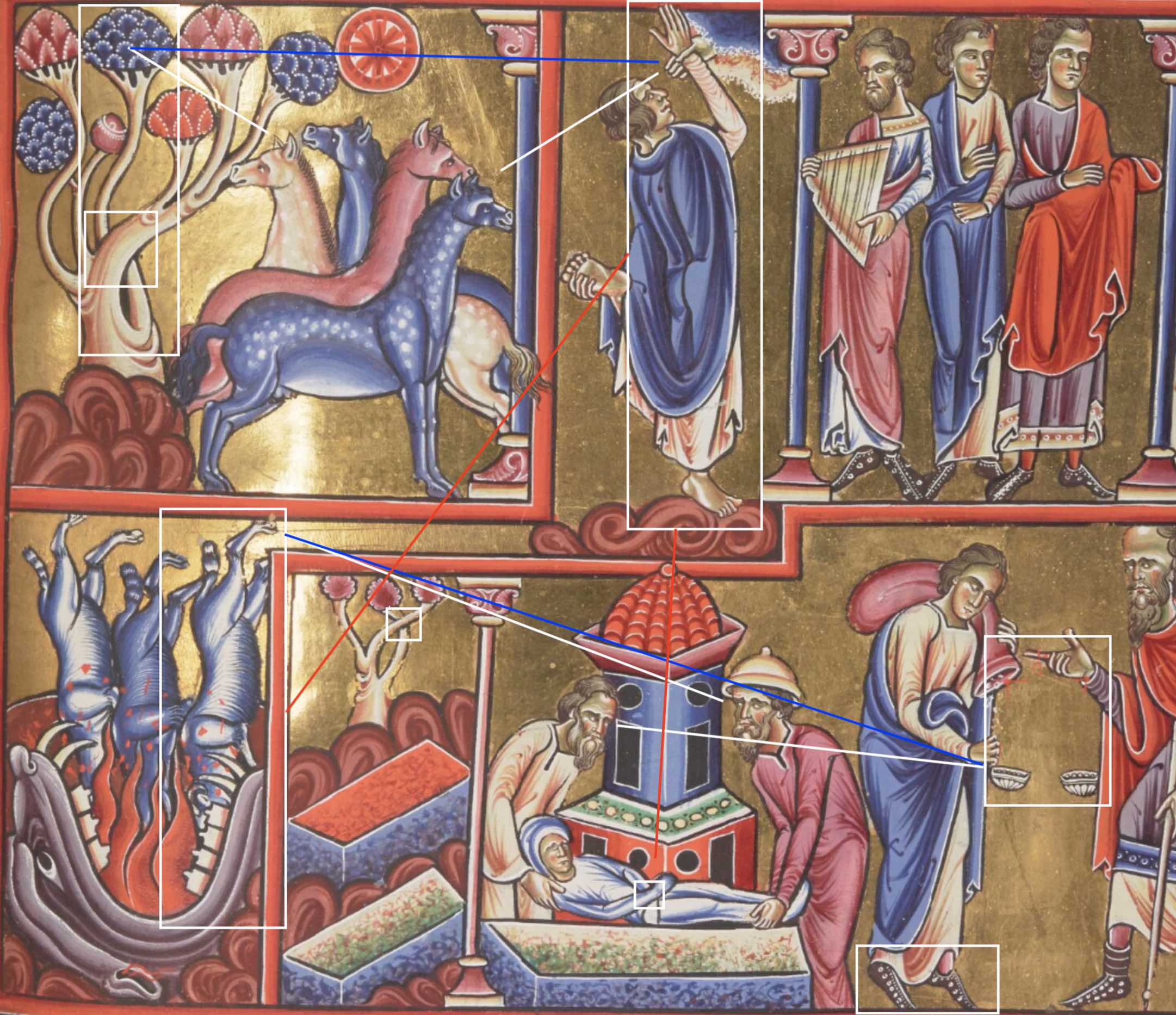
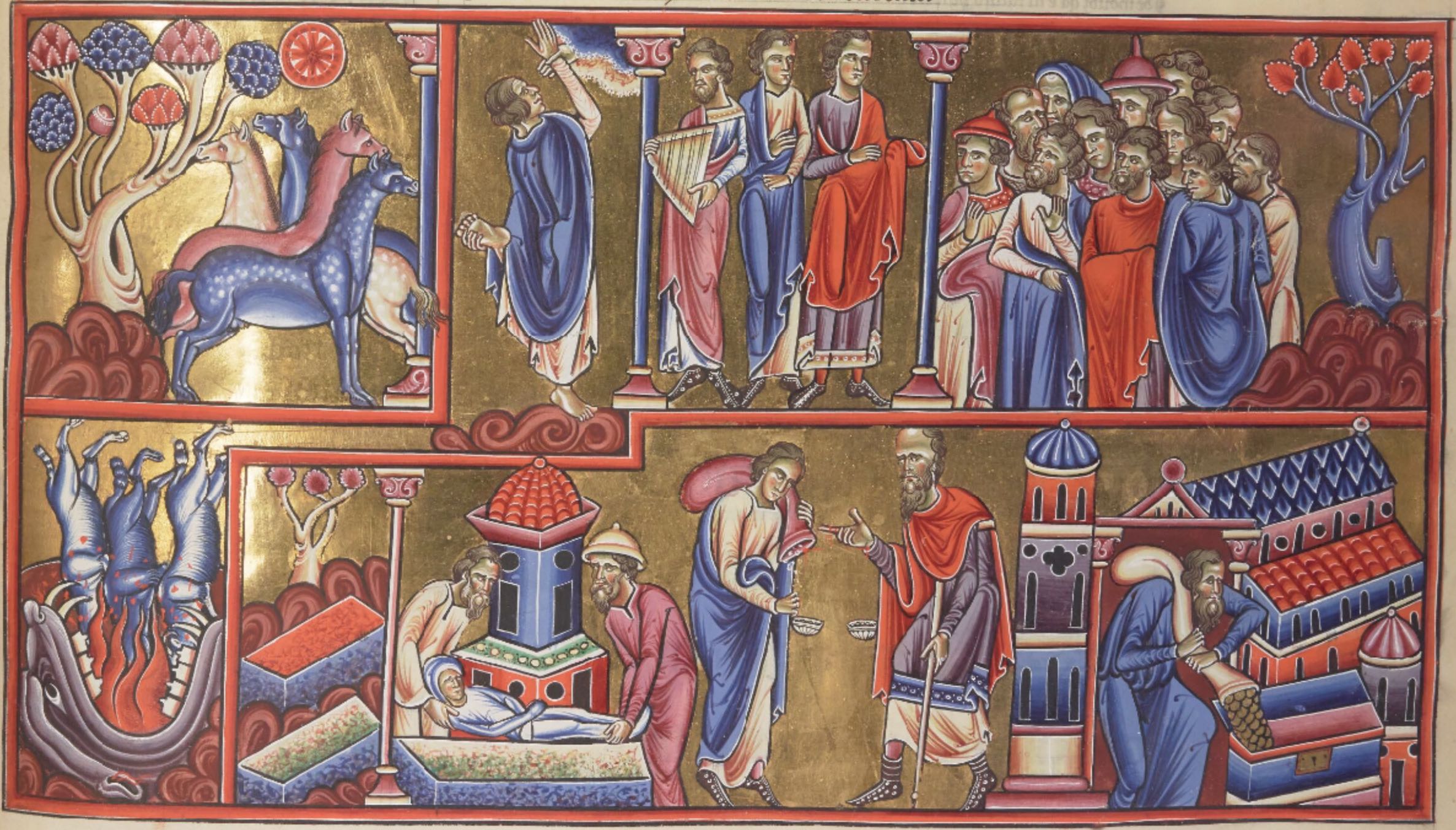




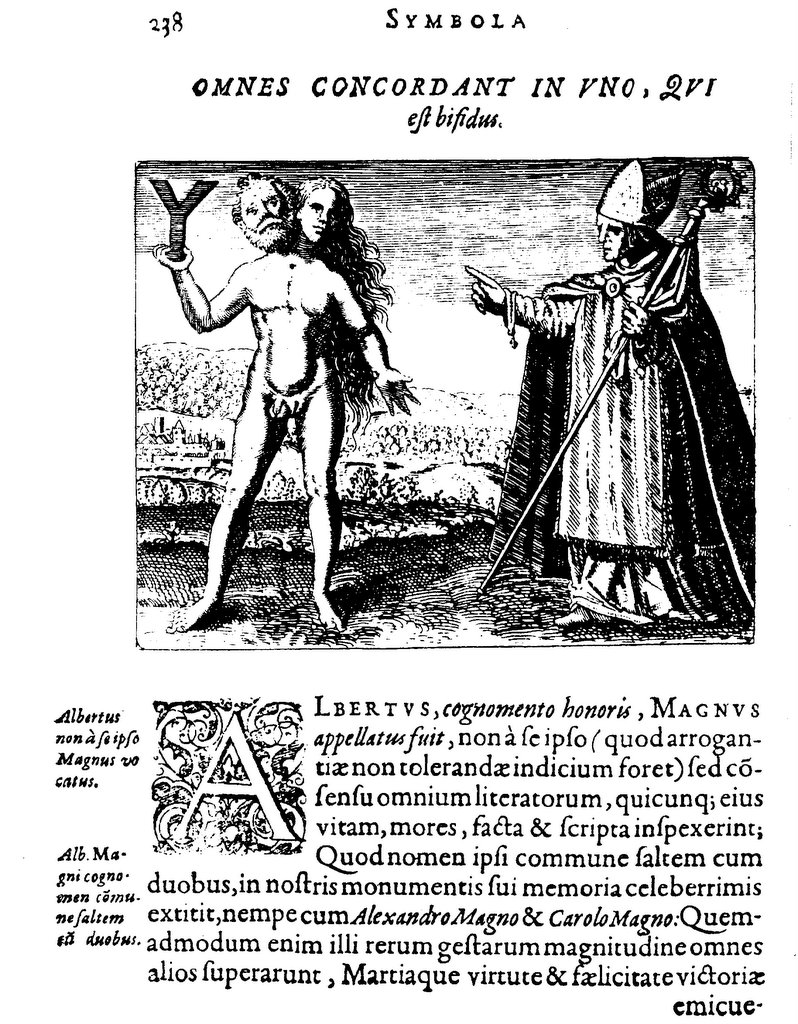
 Horses and Rightly Standing Balancing, {balance scale}

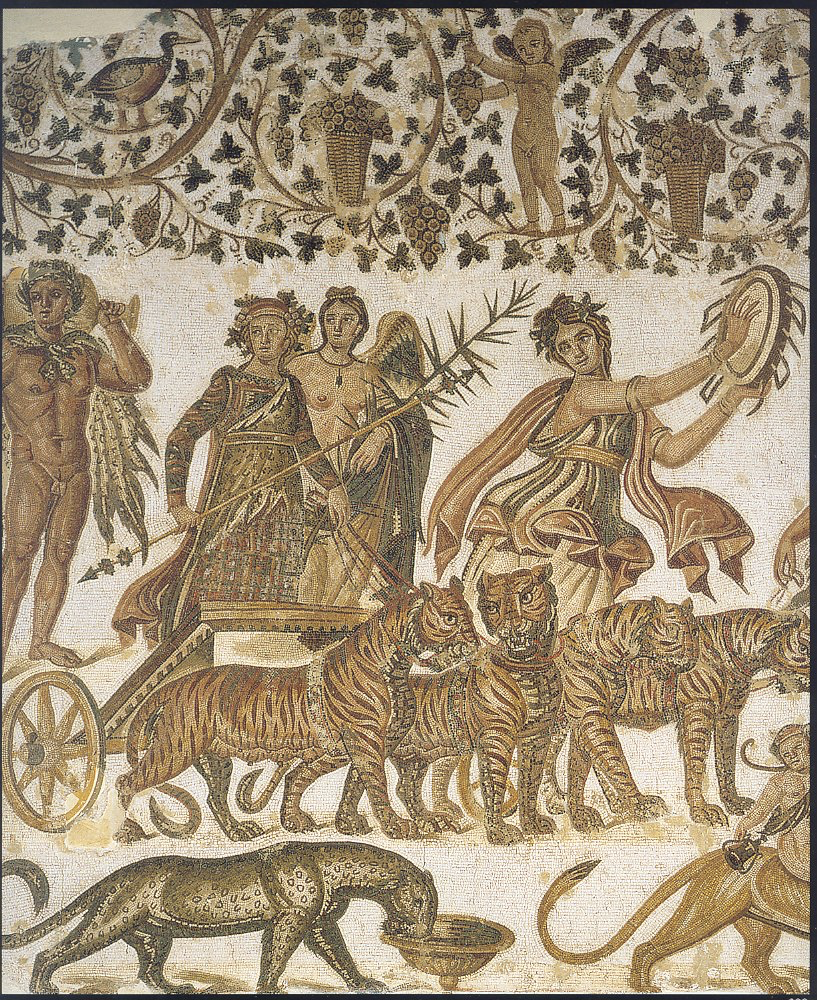




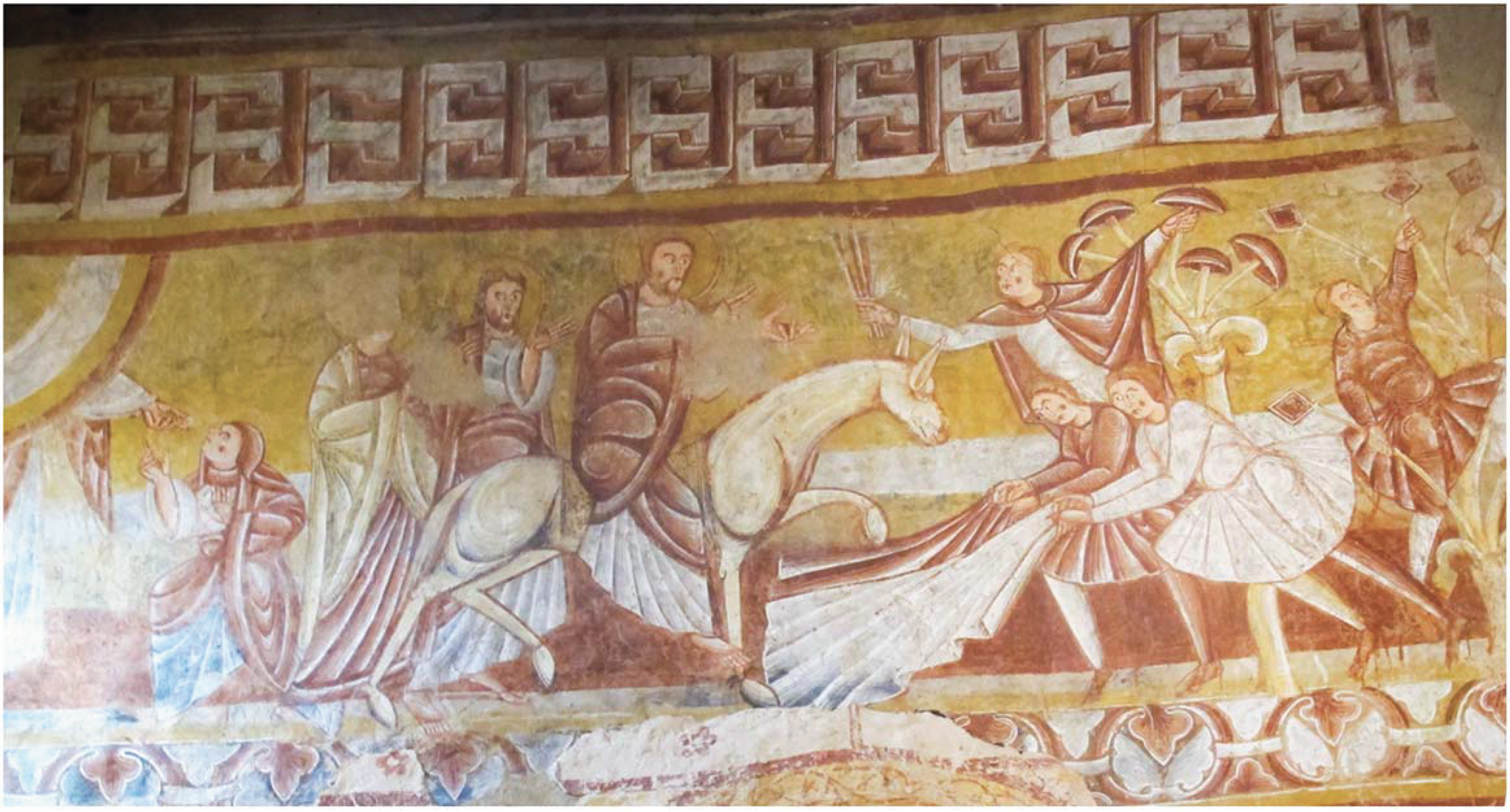

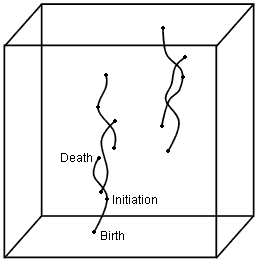



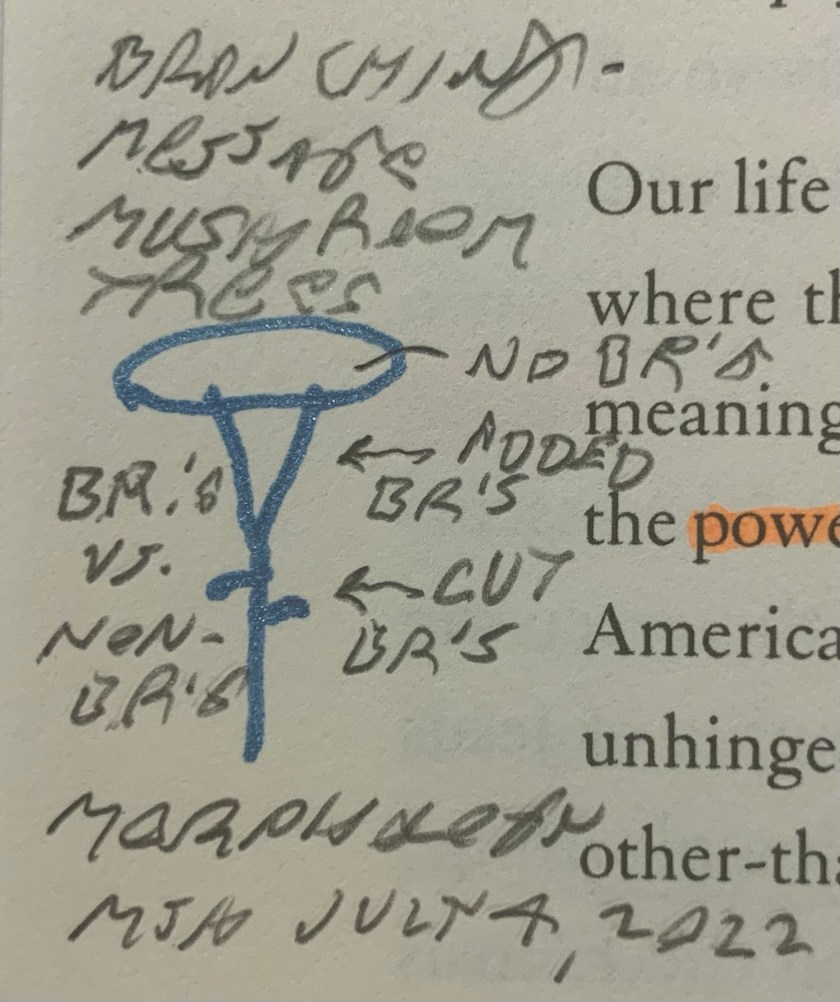













 The Egodeath theory
