Contents:
- The Danger and Costs of Hatsis Not Actually Using Scientific Historical Methodology
- A Travesty of “Scientific Historiography”, in Western Esotericism & in Western Western Entheogen Scholarship
- Names of Fields and Subfields of Scholarship, Scholarly Investigation & Research
- Names of Positions/Theories within Various Fields
- Names of My Theory and Sub-Theories
- Who Is Paying the Church-Lady Gang to Deny Mushrooms in Christian History No Matter What the Evidence that They Are Wrong?
- Names of Positions Which Hatsis Has Asserted
- Re-balancing the Emphasis of Scholarly Coverage
- Term Usages
- Wrap Up Work in the Field of “Allegro-Amanita”; Do Scholarship Instead in the Field of “Psilocybe in Christendom & Hellenism”
- Why the Obsession on Irvin and Allegro? Why Force Them to Be Definitive of the Field?
- Did Robert Graves Propose Mushrooms in Christianity?
- Why the Popularity & Influence of Allegro’s Dust-Jacket Thesis
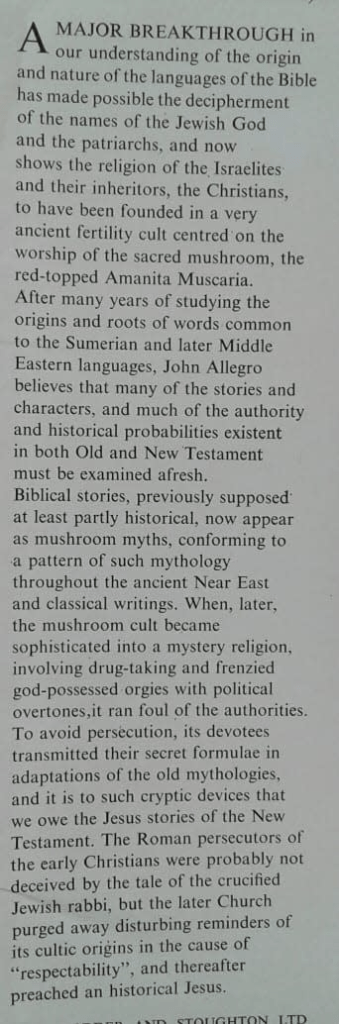
- Allegro’s Thesis, from 1st-Edition Dust Jacket Flap
- Hoffman’s Thesis Regarding Psilocybe-Based Mystery Religions
- Laughable to Suggest this Psilocybe Is an Italian Pine or a Parasol of Victory
- “The Holy Mushroom Theory” Refers to a Single Writer’s Position, and He’s Left the Field
- “All Mushroom Trees in Christian Art Represent Assyrian Parasols of Victory”
- How to Recognize a Pop-Tier, Sub-scholarly Book: Count How Many Times It Says “Allegro”
- Two Tiers of Coverage – Hatsis Is Stuck in the Lower, Pop Tier
- Stop Using the Word ‘Allegro’ & ‘Amanita’; It Fabricates a Field & Position that Doesn’t Exist
- Discourages People from Looking for Mushrooms in Christian Art
- Vagueness About Which Writer Allegedly Asserts “The Allegro Interpretation”[sic]
- Explain This Mushroom Tree: Balancing on an Italian Pine, with God’s Sword Underneath? Only Makes Sense if Psilocybe
- Overgeneralization that Mushrooms are Shown as Trees
- The “Secular vs. Religious” Genre Mischaracterization
- Mischaracterizes the “Rolfe-Ramsbottom-Brightman vs. Wasson” Positions on the Plaincourault Image as “the Wasson/ Allegro Debate”
- Wrongly Calling the “Mushrooms in Christian Art” Position “the Allegro Theory”
- No Credibility in Coverage of Mushrooms in Greek Art
- Not Even Wrong — Poorly Articulated Arguments and Position re: Eden Tree
- Hatsis Is Working-Out a Position Statement re: Secrecy, Suppression, Conspiracy
- Accurate Names of the Field which Letcher-Hatsis Mis-calls “The Allegro Theory”
- Candidates for Writer Names to Represent the Field
- Acknowledgements
- See Also
Christmas Message
Wishing Thomas Hatsis a Merry Christmas per the ancient tradition of the native Christmas shamans’ secret Amanita cult, exactly as in all of the Hellenistic Mystery Religions, including Christianity.
🎄🍄🦌🦌🦌🦌🛷🎅🎁
The official position of the Egodeath theory is that all Hellenistic Mystery Religions were based on Amanita. (joke) Here’s scholarly proof, using sound “scientific historiographical methodology(TM)”:
“They also drank wine at these Mithraeum communion banquets, and the wine was laced with Amanita muscaria mushrooms, which were intended to produce a kind of out-of-body experience.”
Mithraism with Jason Reza Jorjani (2:20)
— Michael Hoffman, the theorist of ego death
Mithras = Dionysus = Persephone = Osiris = Jesus =


Bringing initiates the Ho-Ho-Holy Spirit!
Summary/Outline List of Hatsis’ Errors Regarding “No Mushrooms in Christian Art”
- Extremely privileging texts over art, amounting to discounting art entirely and only respecting text evidence.
- Extremely privileging literal depictions of mushrooms, over stylized depictions and depictions of effects.
- Mistake: The result is, Hatsis baselessly exclusively respects only 1 out of 6 types of evidence, reducing the potential evidence-base to 1 out of 6= 17%; discarding 5 out of 6 = 83% of categories of evidence.
- Categories of evidence include:
- Literal descriptions in texts. <– evidence-type demanded by Hatsis.
- Stylized descriptions in texts. <– evidence-type disregarded.
- Descriptions of effects in texts. <– evidence-type disregarded.
- Literal depictions in art. <– evidence-type disregarded.
- Stylized depictions in art. <– evidence-type disregarded.
- Depictions of effects in art. <– evidence-type disregarded.
- Mistake: Failing to recognize that a bestiary is religious (at least the Moral Bestiary genre, if not the Love Bestiary genre).
- Brittle artificial separation of genres “religious vs. secular” (his video quote where he emphasizes “completely secular” implies he doesn’t understand the era’s consciousness.)
- Remedy: Acknowledge that bestiary images of mushrooms are relevant to the field of scholarly investigation, and count as evidence, for the field of “mushrooms in Christian art”.
- This mistake can be considered identical with the mistake “rejecting art depictions of mushrooms including Literal, Stylized, & Effects depictions”.
Lack of poetic consciousness. Literalism. False assumption that if an item or aspect in text or art can be read as a literal referent, this means that that the item cannot be read as also referring to a mushroom. eg the tone-deaf, genre-misidentifying, fallacious, poetry-illiterate argument “If a mushroom tree can be read as an Italian pine, this means the mushroom tree definitely does not mean mushroom.”- Hatsis doesn’t know (as of November 2020) Mythemese; how to interpret myth-elements. In contrast, Brown shows aptitude and poetic consciousness, in Brown’s book’s decoding eg {skeleton} in the Plaincourault image.
- Bestiary. (Like everyone else,) Hatsis failed to decode the Bestiary Salamander. Hatsis shows complete and total lack of Mytheme-consciousness; he is a complete literalist, and creates a malformed version of “scientific critical historiography methodology” that is reductionist, which means, bad and irrational; a failure and travesty of the REAL scientific method.
Of Course ‘Mushroom’ Means Deliberate Ingesting of Psychoactive Mushrooms to Have a Religious Experience
Why do the committed skeptics force me to stoop so low as to have to state the EXCRUCIATINGLY, PAINFULLY OBVIOUS?!
Why are you WASTING OUR TIME PRESENTING IDIOTIC ARGUMENTS?
Obligatory note for wanna-be, play-actor “retards” such as Letcher who practically brag about how dense, obtuse, and thick-headed they can manage to pretend to be:
When I say “mushroom”, OBVIOUSLY OF COURSE I mean a psychoactive (probably non-Amanita) mushroom, ingested deliberately, for the purpose of inducing the mystical religious altered state.
To deny this is utterly nonsensical and self-contradictory, like claiming that someone ingested blotter but without any intention to trip. IT WOULD MAKE NO SENSE.
“I took a rip off the oil rig, but without the intention to get high.” That “possible interpretation” makes no rational sense at all; it’s a gibberish, nonsensical position to defend.
On what possible basis can anyone possibly defend such an anti-mystical presupposition of the nature of religion?
There is simply NO REASONING with someone holding this ludicrous, nonsensical, pseudo-objection of Letcher.
Such a view cannot be taken seriously, and should be ignored — or look for a conflict of interest, that would make a person not argue in good faith, such as finding that Wasson is top PR propagandist for a major bank and met privately with the Pope.
GEE NO CONFLICT OF INTEREST OR ANYTHING FISHY AS HELL THERE; DOESN’T REDUCE WASSON’S CREDIBILITY AT ALL.
It’s a nonsensical argument, “Mushrooms in religious art do not represent psychoactive mushrooms deliberately ingested to induce a mystic religious experience.”
Why would ANYONE maintain such a senseless, irrational view?
What sort of foundational presuppositions would support such an anti-religious-experiencing, biased, anti-mystical view?
We have here a COLOSSAL, GENRE CATEGORY ERROR people are trying to foist off on the world.
It would be idiotic & senseless to have a mushroom in art that doesn’t refer to deliberate ingesting to have religious experience; anyone holding to such a position has deeply malformed background issues; biased presuppositions & assumptions; a twisted paradigm and conception of what religion is.
The comically stupid proposal of mushrooms in religious art that don’t refer to ingesting psychoactive mushrooms, is a frankly anti-mystical view of religion, which renders that person a hopeless “those on the outside” literalist, childhood-thinking, exoteric religionist.
The Danger and Costs of Hatsis Not Actually Using Scientific Historical Methodology
The Danger and Costs of Hatsis Failing to Actually Use Scientific Historical Methodology & Thereby Harming the Scholarly Research Field of “Psilocybe in mixed wine & mystery religion”; Dissuading from and Discouraging Proper, Much-Needed Research
The charge or question or suspicion or fear or worry about Hatsis’ planned 2022 book against mushrooms in Christian art:
The fear is NOT that proper, actual, correctly conducted scientific historical methodology will harm the field, of Psilocybe in mixed wine & mystery religion.
I already proved that ACTUAL scientific historical methodology DONE CORRECTLY confirms that there are tons of depictions intending psychoactive mushrooms for religious experiencing, in Christian art.
The danger/ risk/ fear/ accusation/ worry, is that Hatsis’ INEPT CLUMSY FAILURE to ACTUALLY use scientific historical method, will in some way harm or wreck the field, the field of Western entheogen scholarship, the subfield “Psilocybe in mixed wine & mystery religion“.
Hatsis’ complete wall of mistakes in his caption of Heracles lifting the lid to reveal the worldline snake in the cista mystica, is a huge red flag, that there is a real danger of Hatsis’ extreme overconfidence, which presents a real risk of gross misapplication of “scientific historiography” and misrepresentation of mushrooms in Greek & Christian art.
A Travesty of “Scientific Historiography”, in Western Esotericism & in Western Entheogen Scholarship
The Danger/ Risk/ Fear
- The risk that Hatsis is being irresponsible, careless, and reckless; that for no proper reason, Hatsis is mis-handling the field, and will harm the field due to mis-handling and mis-using “critical rational scientific objective historiography methodology”; due to failure to properly, actually use “scientific historiographical methodology”. The best methodology in the world, mis-handled, produces garbage results: the “no mushrooms in Christianity” theory. If Reason & evidence conflicts with the product of your use of method, then your use of method must be mis-use.
- The risk that Hatsis’ malformed methodology, and his mis-handling of scientific historical methodology, will dissuade and discourage much-needed research in and development of this field. Exhibit:
“In both of our books, the evidence of the presence of hallucinogenic mushrooms in Christian iconography becomes numerous, and it seems obvious that they are only a small part of those existing or that existed.
“Apart from the American school, some German authors, and a few Italian friends who have expressed interest in the topics covered in these volumes, in the academic field silence reigns supreme.” – Gilberto Camilla & Fulvio Gosso
Names of Fields and Subfields of Scholarship, Scholarly Investigation & Research
From broad to narrow.
- entheogens in Western religious history
- mushrooms in Western religious history
- mushrooms in Greek & Christian history
- mushrooms in Greek & Christian art
- Psilocybe in Greek & Christian art
- mushrooms in Christian history
- Psilocybe in Christian history
- mushrooms in Christian art
- Psilocybe in Christian art
- mushrooms in Greek history
- Psilocybe in Greek history
- mushrooms in Greek art
- Psilocybe in Greek art
- mushrooms in Greek & Christian art
- mushrooms in Greek & Christian history
- mushrooms in Western religious history
Topical Subfield Names
Instead of ‘history’, ‘religion’, or ‘art’, more topical terms (Mystery-Religion initiation, mixed-wine banqueting, esoteric Christianity):
- Psilocybe in mystery-religion initiation & mixed-wine banqueting & esoteric Christianity
- Psilocybe in Mystery-Religion initiation & mixed-wine banqueting
- Psilocybe in mixed wine & mystery religion
Names of Positions/Theories within Various Fields
Names of My Theory and Sub-Theories
The hierarchy of fields should parallel the hierarchy of positions.
Each field has 3 positions: min/mod/max.
- the Egodeath theory
- the Cybernetic theory
- the Mytheme theory
- the maximal entheogen theory of religion
- the maximal mushroom theory of Greek & Christian religion
- the maximal Psilocybe theory of Greek & Christian religion
- the maximal mushroom theory of Greek & Christian art
- the maximal Psilocybe theory of Greek & Christian art
- the maximal entheogen theory of Christianity
- the maximal mushroom theory of Christianity
- the maximal mushroom theory of Christian art
- the maximal Psilocybe theory of Christian art
- the maximal mushroom theory of Christian art
- the maximal mushroom theory of Christianity
- the maximal mushroom theory of Greek & Christian religion
- the maximal entheogen theory of religion
the maximal Psilocybe theory of Christian art =
amanita were shown, but psilocybe were used; the theory/position that “depictions of Amanita are mythemes referring to the use of Psilocybe to induce religious experiencing”.
The General Nesting Pattern
- Greek & Christian
- entheogen
- mushroom
- Psilocybe
- to deliberately induce religious mystic-state experiencing
- Psilocybe
- mushroom
- entheogen
I had to add and specify “to deliberately induce religious mystic-state experiencing” to explicitly counter the lame, f*cking annoying, dense, & dimwitted eternal-naysayer arguments from the Church-Lady Gang Brinckmann-Panofsky-Wasson-Letcher-Hatsis:
- Just because it’s a mushroom shape, doesn’t mean the artist intended mushrooms.
- Just because the artist intended mushrooms, doesn’t mean the artist intended psychoactive mushrooms.
- Just because the artist intended psychoactive mushrooms, doesn’t mean the artist intended ingesting psychoactive mushrooms.
- Just because the artist intended ingesting psychoactive mushrooms, doesn’t mean the artist intended ingesting psychoactive mushrooms to induce religious experiencing.
- Just because the artist intended psychoactive mushrooms, doesn’t mean the artist intended ingesting psychoactive mushrooms.
- Just because the artist intended mushrooms, doesn’t mean the artist intended psychoactive mushrooms.
Just because it’s a mushroom shape, doesn’t mean the artist intended mushrooms.
Just because the artist intended mushrooms, doesn’t mean the artist intended psychoactive mushrooms.
Just because the artist intended psychoactive mushrooms, doesn’t mean the artist intended ingesting psychoactive mushrooms.
Just because the artist intended ingesting psychoactive mushrooms, doesn’t mean the artist intended ingesting psychoactive mushrooms to induce religious experiencing.
That is the sheer RETARDATION and dense stupidity that Hatsis’ ham-fisted mis-use and mis-handling of the scientific critical historical methodology leads to.
What we end up with is not the impression of someone doing a good job of applying scientific critical historical methodology — what we end up with is the opposite: the impression of someone being bullheaded and unreasonably obstinate, and only pretending and posturing as if using methodology.
Their use of methodology is really just pretense and pretext, an agenda of deceit, in service of some a priori commitment to removing mushrooms from Christian history.
Maybe to play-act the part of the “sensationalist contrarian”, to sell books.
Something is majorly f*cked up with your alleged “scientific historiography methodology“, if a 7th grader produces more sound reasoning, instead of overthinking to the point of 50-IQ blockheaded thickness, putting on a show of how dense and dull-witted you can be if you just slather-on the alleged (ineptly mis-used) “scientific historical methodology” as thick as possible.
On what basis do you hold this background assumption that’s wrecking your intelligence, this assumption that Christians would avoid ingesting psychoactive (Psilocybe) mushrooms to induce religious experiencing?
WTF, is Letcher-Hatsis against religious experiencing?
Is Letcher-Hatsis against mushrooms?
Why this thick-headed, committed, eternal, relentless bias against the obvious? Is it a cheap strategy-move to act the fool, act the contrarian, to try to boost book-sales?
Why is Letcher-Hatsis digging-in his Church-Lady heels, to do anything possible to deny the manifestly undeniable?
He is throwing all the incoherent kettle-logic, any half-baked argument he can possibly come up with, throwing them splattered against the wall, to try to make something stick.
What the F is Letcher-Hatsis’ PROBLEM with Mushrooms in Christianity? Is Someone Paying Him to Deny the Undeniable? Something Is as Fishy as Wasson’s Repeated Censoring of Panofsky’s Book-Citation of Brinckmann.
I totally acknowledge Hatsis’ valuable valid work in correcting fallacies.
At this website, I’m focusing on Hatsis being CERTAINLY PROVABLY WRONG about his extremist, untenable position of NO mushrooms in Christian history. Why would anyone dogmatically adhere to that clearly losing position?
See my Gallery of mushrooms in Christian art.
See my Proof article showing that the only way to make any sense of the the Canterbury Psalter “mushroom tree/ hanging/ sword” image showing the Psalter reader, is, the mushroom tree MUST mean Psilocybe. And therefore all ~70 mushroom images in the Canterbury psalter must mean Psilocybe.
For the obtuse, obstinately dense Letcher — and Hatsis makes the same brain-dead, anti-mystical argument (todo: link to his article):
For any sane person to say “mushroom” or “Psilocybe”, in the context of fantastical religious-mythology art, is the same (OBVIOUSLY, YOU PRETEND-DIMWIT) as saying “mushroom shapes in Christian art mean deliberately ingesting psychoactive (especially psilocybin) mushrooms for the purpose of inducing the intense religious experiencing mystic altered state of loose cognitive association.
But you knew that already. Stop insulting everyone’s intelligence by making me state the excruciatingly obvious!
This arguing is a waste of time, arguing against committed skeptics who are just against mushrooms in Christianity, biased, a priori.
Who is paying them to pretend they don’t believe the glaringly obvious? Aside from the Pope paying Wasson the PR propagandist; that one, we know — what’s the excuse of Brinckmann-Panofsky-Letcher-Hatsis, for denying the manifestly plain, for holding to:
That mushroom you see is not a mushroom; it is anything else other than a mushroom — it doesn’t matter what, just so long as it’s anything but mushrooms.
Who Is Paying the Church-Lady Gang to Deny Mushrooms in Christian History No Matter What the Evidence that They Are Wrong?
We know that the Big Bank-PR head Wasson got payola from the Pope — what’s the excuse for the rest of the Church Lady Gang for being committed skeptics; perpetual incorrigible naysayers, who refuse to ever allow Psilocybe in Christian history, no matter what the evidence?
Names of Positions Which Hatsis Has Asserted
Hatsis has advocated the moderate entheogen theory of Christianity, by affirming Scopolamine and Cannabis eg in esoteric Christianity, but denying mushrooms (particularly, denying Amanita, and then denying Psilocybe, as an afterthought).
todo: check Hatsis’ book Psychedelic Mystery Traditions: check whether he asserts the [min|mod|max, entheogens|mushrooms, Psilocybe|Amanita] theory of Greek religion.
- the moderate entheogen theory of Greek religion (if Hatsis denies mushrooms in Greek religion/art)
- the moderate entheogen theory of Greek art (if Hatsis denies mushrooms in Greek art. If Hatsis affirms mushrooms in Greek art, he’s maximal here.)
- the moderate mushroom theory of Greek religion
Re-balancing the Emphasis of Scholarly Coverage
Psilocybe is under-studied.
Amanita is over-studied.
Term Usages
In my writings:
- ‘Psilocybe’ is shorthand for “non-Amanita psychoactive mushrooms”.
- ‘Christian’ is shorthand for “Christendom”, such as Christian moral-instruction bestiaries.
- ‘Greek’ is shorthand for “Hellenistic”.
- ‘Brown’ means Brown & Brown, the co-authors of the book The Psychedelic Gospels.
- ‘mushroom’ means psychoactive, probably non-Amanita, mushroom species, ingested deliberately for the purpose of inducing mystical religious altered state.
unless otherwise specified.
Wrap Up Work in the Field of “Allegro-Amanita”; Do Scholarship Instead in the Field of “Psilocybe in Christendom & Hellenism”
Why the Obsession on Irvin and Allegro? Why Force Them to Be Definitive of the Field?
In the popular mind, Allegro created the theory that Christianity used mushrooms. How they get that impression. Half-truth.
Did Robert Graves Propose Mushrooms in Christianity?
Weakly and spottily.
See:
Robert Graves’ Writings About Mushrooms
https://egodeaththeory.wordpress.com/robert-graves-writings-about-mushrooms/
Popularity of Allegro’s Thesis
Allegro’s dust-jacket thesis was punchy, bold, explicit — not dancing-around the subject like Graves.
The competitive PR for Allegro’s book vs. Wasson’s book pushed the identification in the public’s mind, that Allegro = “Christianity used mushrooms”, especially with the Plaincourault diagram on the cover, exposing and highlighting the mushroom-centric nature of Christianity.
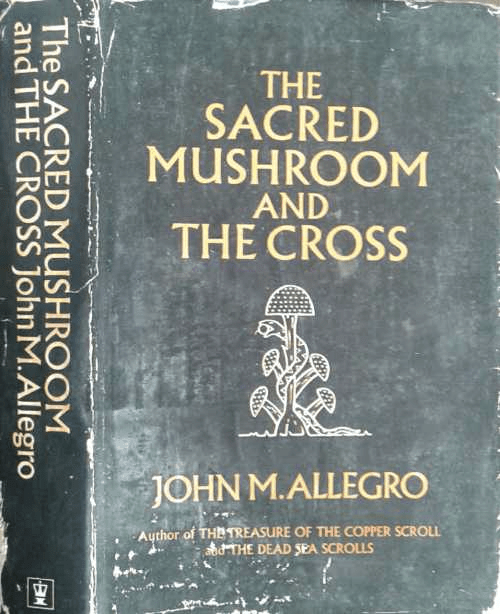
https://www.bidorbuy.co.za/item/476721568/The_Sacred_Mushroom_and_The_Cross_by_John_M_Allegro.html
First edition hardcover published by Hodder & Stoughton in 1970.
Black leatherette covers with gold writing to the spine. Dust jacket is complete but with age colour rub nick & tear to spine & bookends.
Allegro’s Position Statement About the Christian Mystery Religion, versus the Egodeath Theory’s Position Statement about Mystery Religions
Why the Popularity & Influence of Allegro’s Dust-Jacket Thesis
Irvin’s reissue uses the same original cover art:
November 12, 2009
http://amzn.com/0982556276
As of Dec 18 2020:
Best Sellers Rank:
#24,205 in Books <– popular
#2 in Comparative Religion <– high
#9 in Fertility
#11 in Worship Sacraments <– high
Much of Allegro’s dust-jacket thesis is sound.
People took note of this book, and continue to take note of it, because of:
- The Plaincourault diagram cover art.
- The largely sound dust-jacket thesis summary.
- The 1970 popular serialization & intensive PR of both Wasson for SOMA & Allegro for Sacred Mushroom.
Allegro uses philology to support the dust-jacket thesis.
Allegro’s Thesis, from 1st-Edition Dust Jacket Flap
Bible stories, ANE myth, & classical myths = Amanita mushroom myths.
The Christian mushroom cult became a mystery religion.
Amanita made people god-possessed.
The primitive Christians had to encrypt Amanita in traditional myth to hide Amanita from the authorities, producing the Jesus stories.
To be respectable, the Church hid the Amanita origin and mythic-mushroom Jesus by changing to a historical Jesus.
Hoffman’s Thesis Regarding Psilocybe-Based Mystery Religions
I formulated and advocate the Mytheme theory; the “Analogical Psychedelic Pre-existence” theory of religious mythology.
Where the Theory of Mushrooms in Christianity Fits Within the Egodeath Theory
- The Egodeath theory includes:
- The Cybernetic theory of ego transcendence (1988-1997).
- The Mytheme theory (1998-2006); which includes:
- The maximal entheogen theory of religion; which includes:
- The maximal theory of mushrooms in Greek & Christian religion; which includes:
- The maximal theory of mushrooms in Christian art.
- The Mytheme/analogy theory of mushrooms in Christian texts.
- The maximal theory of mushrooms in Greek & Christian religion; which includes:
- The maximal entheogen theory of religion; which includes:
Types of Evidence for Mushrooms in Christianity [& Greek/Hellenistic religion/myth]
- Depictions of mushrooms (Psilocybe & Amanita) & the effects of Psilocybe, in Christian art.
- Literal depictions of Cubensis, Liberty Caps, & Amanita in art.
- Sylized depictions of Cubensis, Liberty Caps, & Amanita in art.
- Descriptions of Psilocybe effects in art.
- Mushrooms & their effects described by the analogy-based language of Mythemese in texts.
- Literal descriptions of Cubensis, Liberty Caps, & Amanita in texts.
- Sylized descriptions of Cubensis, Liberty Caps, & Amanita in texts.
- Descriptions of Psilocybe effects in texts.
Hoffman’s Thesis Regarding Psilocybe-Based Mystery Religions; the Mytheme Theory; the “Analogical Psychedelic Pre-existence” Theory of Mythology – Including Mushrooms in Christian Art, & Mushrooms & Their Effects Described by the Analogy-based Language of Mythemese in Texts
Thesis of the Egodeath Theory Regarding Psilocybe-Based Mystery Religions, in Contrast to Allegro’s Thesis
Thesis of the Egodeath theory (the Mytheme theory portion) re: Mystery Religions
My writeup of these ideas has different spin/take/framing than Allegro’s dust-jacket thesis.
My Egodeath theory (the 2001-2006 Mytheme theory portion, not the 1988-1997 Cybernetic theory portion) holds that:
Position Statement
Religious mythology, including Bible stories, is analogies describing things that are observed and experienced in the altered state, typically/ definitively/ archetypally from Psilocybe mushrooms as the main point of reference for entheogenic experiencing.
Mystery Religions and the Symposium Banqueting tradition were primarily based on Psilocybe mixed-wine.
That conclusion is based on the effects of Psilocybe best matching the effects; the experiences and observations that are described in myth.
When other pharmaka were used (scopalamine, cannabis, amanita, opium) those lesser entheogens piggybacked on the real origin/source of the experiences.
To induce the mythic state of consciousness, Psilocybe is objectively preferable, targeted, efficient, focused, optimal.
Psilocybe is effective fresh or dried, mixed into bread or wine.
Sophisticated initiation systems including Mystery Religions were optimally based on Psilocybe.
eg Isis, Mithras, Demeter, Osiris, Dionysus, Jesus.
See Samorini re: the combined hypothesis of mushrooms and ergot strains.
Western religious mythology is mushroom myths.
There was no single mushroom cult.
There were many brands of mushroom cultic Mystery Religions & the general banqueting tradition of Psilocybe mixed-wine.
The “best wine” meant Psilocybe mixed-wine, in broad, Hellenistic, Mediterranean Antiquity.
Taking Psilocybe makes the mind god-possessed; thinking in god-mode rather than egoic-mode.
‘Secret’ refers primarily to the the normally hidden, uncontrollable source of control-thoughts, which is revealed by the intense peak altered state.
Revealing the pre-existing worldline of control-thoughts kills egoic power-claims; the mind is brought to transcend ego.
Psilocybe causes transformation of the mental worldmodel from possibilism to eternalism, from {king steering in tree}, through {wine}, to {snake frozen in rock}.
The universal convention in writings, such as Church Fathers, was to write about mushrooms, by analogies rather than direct modern explicit wording.
Merely speaking the language of Greek or Latin is no use, and renders the scholar mytheme-illiterate.
You must speak the language of Mythemese, to read and recognize writings about mushrooms as the engine of Mystery Religions and initiation and the Psilocybe Mixed-Wine Banqueting Tradition.
Hellenistic-era Mystery Religions and mythology adapted old entheogenic mythologies, describing Jesus, Mithras, Dionysus, Demeter, Osiris, and Isis through Mytheme-Encoded analogy-based description.
The later Church endorsed a historical Jesus, to gather power based on the argument or pseudo-logic of “restricted chain of transmitted authority”, although authority actually comes from the mushroom experience.
Everyone, including Church Fathers, used and respected mushrooms and wrote about them, in the analogy-based language of Mythemes.
Every party accused every other party of demonic imitation sacred meal.
Everyone used mushrooms for their own, favored, non-demonic, authentic sacred meal.
Everyone wrote about their favored Psilocybin sacred meal, using the analogy-based language of Mythemes.
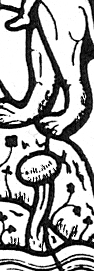
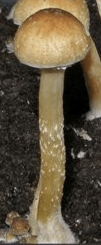
Laughable to Suggest this Psilocybe Is an Italian Pine or a Parasol of Victory
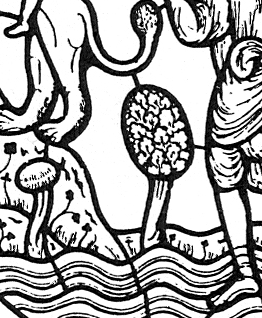
https://www.bing.com/images/search?q=cubensis
“The Holy Mushroom Theory” Refers to a Single Writer’s Position, and He’s Left the Field
The Psychedelic Origin of Christianity
Sam Woolfe
https://www.samwoolfe.com/2013/04/the-sacred-mushroom-and-cross-by-john.html
This article explains what happened after I put away my pen after the pair of 2006 articles (my main article + my Plaincourault article) on December 31, 2007:
“In October 2008, Jan Irvin published The Holy Mushroom: Evidence of Mushrooms in Judeo-Christianity which was the first book to present texts which supported Allegro’s theory.
For example, a 16th century Christian text called The Epistle to the Renegade Bishops explicitly mentions and discusses “the holy mushroom”.
Irvin provides dozens of Christian images to support Allegro’s ideas – images that weren’t available when The Sacred Mushroom and the Cross was originally published in 1970.
The front cover of Irvin’s book includes one of these images – some mushrooms can be seen.
Some say that in these kinds of images, it is not the Amanita mushroom that is shown, but the more common types of psychedelic mushrooms, such as the ones shown next to it.”
/ end of excperts from page
I’ve been in this field, of Western mushroom scholarship, for 21 years, since I read Strange Fruit in 1999, communicating and collaborating with the other scholars, and I don’t know what Hatsis has in mind by the strange phrase “The Holy Mushroom Theory”.
I don’t know what field he’s in, and what field he imagines he’s in, on this topic, but it’s not the Pro-level field of Western mushroom scholarship. It does seem to be the same field as Letcher imagines Letcher is in.
The “Debunk the Allegro Theory” field, as if there’s such a thing as “The Allegro Theory” outside the world of hazy popular imagining and “get those hit-counts up”, gee-whiz, Web articles.
Such articles kick around a few popular images, giving the impression that there’s a shortage.
Based on my own searching in printed materials, the known instances are merely the tip of the iceberg.
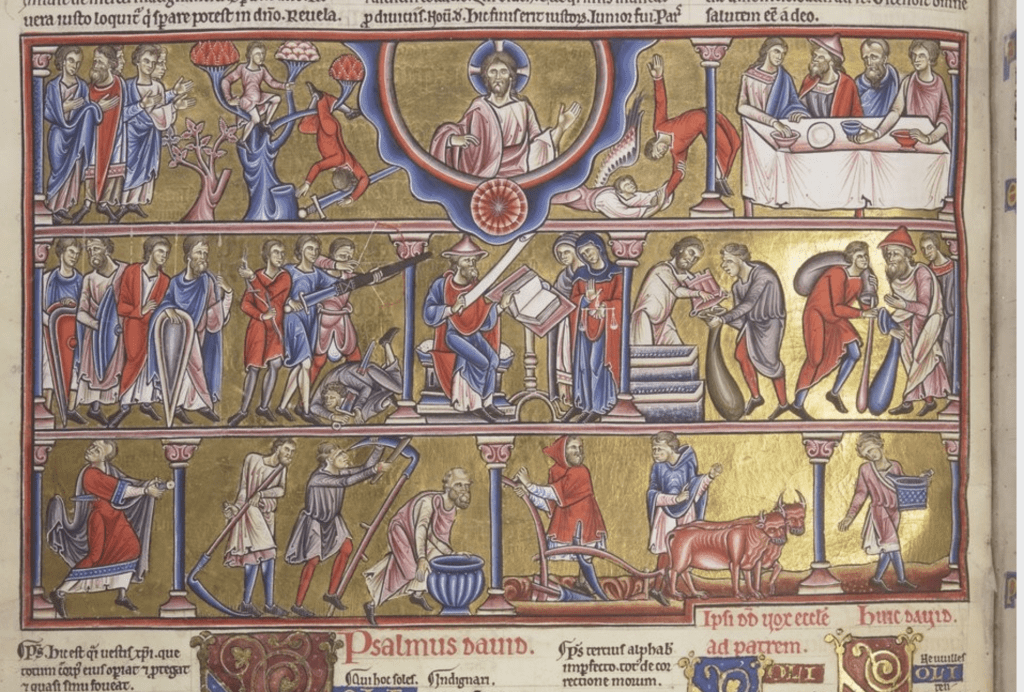
Further evidence of that: no one showed me that there are some 50 mushroom trees in a high-res Canterbury Psalter; the world ignored the question and left it up to me to finally bother putting together an inventory, for the first time, at the very late date of December 13, 2020.
WHY DID NO ONE BOTHER CAPTURING, CROPPING, AND UPLOADING THE FULL SET OF MUSHROOM TREES FROM CANTERBURY, UNTIL ME, NOW?
That’s the fault of people like Hatsis, and McKenna, and Wasson, and Graves, who say “Don’t look for Mushrooms in Christian art, the big bad Catholic Church suppressed them. Even if you found an example, it would prove there aren’t any examples; because, suppressed.”
Why has everyone been conned — by Hatsis, Terrence McFakea, and Pope Wasson, into putting up with this D-tier, fuzzy, overcropped, no-context image?
Why did the defeatist, eyes-closed, incurious world instead leave it to me in the very late date of November 17, 2020, to finally ask, WHAT DOES THIS SWORD AND ENTIRE IMAGE MEAN?
Thanks to Pop pages mis-attributing the field of Western mushroom scholarship to Allegro, November 17, I was presented with this blurry, over-cropped, no-context, decoding-problem:
https://www.samwoolfe.com/2013/04/the-sacred-mushroom-and-cross-by-john.html

which I promptly was able to solve thanks to Bennett and then Irvin and then Hatsis who all failed to decode the bestiary salamander with so-called “dancing man”, but who at least brought me the salamander image, which I leveraged (largely decoded in 2015, & fully in 2020 just before re-finding the above problem/image) to solve the above, stripped-of-context image, and then starting November 17, 2020, I proceeded to, as fast as I could write-up my analysis, during the next week, successfully fully decode this entire image.
Context: while writing an article suggested by Jerry Brown, on defining Criteria of Proof for mushrooms in art, I again came upon the above severely cropped blurry image, started decoding it, and quickly that section ballooned and I had to break it out from the already too-long Criteria article.
Kinda like how my main 2006 article seemed to spawn my Plaincourault article at the same time.
The above crop is a great example proving my point that WE HAVE ONLY SEEN THE TIP OF THE ICEBERG.
On November 16, 2020, while finishing my article “Criteria of Proof”, I re-found this little thread and pulled on it (the above pic), and what came forth was not only the entire below picture, but a whale: that complete image and then my entire brand new collection page:
Canterbury Psalter Mushroom Inventory
https://egodeaththeory.wordpress.com/2020/12/13/canterbury-psalter-mushroom-inventory/
In fact there are so many mushrooms, I got tired of harvesting them exhaustively, and skipped a few. So it is not yet even a “complete” inventory!
Too many Assyrian Parasols of Victory to count — or, Italian Pines; makes no difference, so long as it’s ANYTHING BUT MUSHROOMS! Thanks to Church Lady Hatsis & Pope Panofsky-Wasson, for keeping us safe.
Do not look at that Brinckmann book, readers of SOMA, because there cannot be mushrooms in Christian art. (Pope’s orders.)
Brinckmann, Mushroom Trees, & Asymmetrical Branching
https://egodeaththeory.wordpress.com/2020/12/11/brinckmann-mushroom-trees-asymmetrical-branching/
“All Mushroom Trees in Christian Art Represent Assyrian Parasols of Victory”
Even were we to grant that all “mushroom trees” in Christian art are Italian Pines — oops, I meant, Assyrian Parasols of Victory — that still leaves untouched, the question of mushrooms in Christian art that might not be dubbed “mushroom trees”, such as simply, literally depicted mushrooms.
Are these non-tree-mushrooms in Christian art, too, to be forced to represent something which they manifestly and plainly do not represent — Italian Parasols of Pine Victory aka “just make sh!t up, ‘rightly or wrongly’, and hide behind my credentials and hope no one notices“, aka “I’ve proudly accomplished explaining-away“, aka “ANYTHING BUT MUSHROOMS!“?
Pyschedelic[sic] Christianity : A Scholarly Debate on the Holy Mushroom Theory
YouTube channel: Psychedelic Historian
January 5, 2018. Hatsis vs. Brown
1:09:20
https://www.youtube.com/watch?v=0PXZGiX4Qnk&t=4160s
“the Assyrian Parasol: this is what every supposed mushroom tree is based off of.”
Hatsis has a big problem here: he is countering the Pope’s position, asserted by Brinckmann, Panofky, & Wasson — that mushroom trees represent the Italian Pine.
Either:
- All mushroom trees in Christian art represent Italian Pines (Brinckmann, Panofsky, Wasson);
— OR – - All mushroom trees in Christian art represent the Assyrian Parasol of Victory. (Thomas Hatsis)
WHICH IS IT? WHICH EXPERT ARE WE TO BELIEVE?
instead of simply identifying mushrooms in Christian art as representing mushrooms. My super ultra radical position:
- All mushrooms in Christian art represent mushrooms. (Michael Hoffman, Jerry Brown)
- Specifically, all mushrooms in Christian art represent mushrooms, typically, Psilocybe and its effects. Amanita in Christian art represents Psilocybe types. The preferred entheogen for Christianity per art is Psilocybe mushrooms – not Amanita, not Scopolamine, not THC/Cannabis products, not Opium.
How to Recognize a Pop-Tier, Sub-scholarly Book: Count How Many Times It Says “Allegro”
A constructive book in the field of “mushrooms in Greek & Christian art” should have the word ‘Allegro’ one time only, and that instance should say:
John Allegro is irrelevant to the field of mushrooms in Greek & Christian art.
Two Tiers of Coverage – Hatsis Is Stuck in the Lower, Pop Tier
It is good that Hatsis is debunking the pop tier, but he needs to differentiate the two distinct tiers — pop, careless, non-scholarship; and careful, sound scholarship.
The field of “mushrooms in Christian art” is split into a Pop Sike Cult, inferior, outsiders’, gee-whiz, confused level (like the urban myth of Amanita Christmas); vs. a valid, scholarly, insiders level, which Hatsis mistakenly thinks he is in or would be in.
Hatsis could and should be within the valid, higher, real tier, the actual & proper field of “mushrooms in Christian art”.
The isolated field of the field of “mushrooms in Christian art” is hopeless; not effective enough.
You have to combine Ruck-type Greek art focus, with the popular wish today, for mushrooms in Christian art.
Better, Hatsis ought to be in the adequate broader field of “mushrooms in Hellenistic & Christendom art”; aka the field of “mushrooms in Greek & Christian art”.
Stop Using the Word ‘Allegro’ & ‘Amanita’; It Fabricates a Field & Position that Doesn’t Exist
Every time Hatsis (or Letcher) says ‘Allegro’, he’s spreading falsehood, confusion, and misrepresentation of the field, of Western mushroom scholarship.
The field as Letcher-Hatsis describes it, is completely and totally misrepresented.
It would be essentially better to refer to the field as “the Robert Graves interpretation”, or better yet, the “mycologists/Ramsbottom interpretation”, re: specifically Plaincourault. But I totally disagree that Plaincourault deserves any special place.
Stop falsely insisting on forcing Allegro and Plaincourault to be the center of discussion & debate.
Allegro is irrelevant, and Plaincourault is merely one of thousands of images of mushrooms in Christian art, and deserves no special place.
We have 100x as much visual evidence as we have uploaded to the Web.
People have failed to even try, to recognize and upload and tag the images; they’ve been conned into closing their eyes and not trying to look and recognize mushrooms all thorughout Christian art.
The easiest game in the world is to find printed images of mushrooms and photograph and upload and tag them.
We haven’t even gotten started gathering the evidence — images of mushrooms in the art of Christendom, and in Hellenistic art.
Brown’s good idea of the curated collection to debate. See my sets of articles:
Allegro in one edition of his book, randomly chose this image, which contradicts his theory that the 2nd generation of Christians forgot about mushrooms. No wonder Allegro dropped it.
STOP CALLING IT “THE ALLEGRO INTERPRETATION” – that is a SCHOLARLY MIS-ATTRIBUTION ERROR; this particular instance of mushrooms in Christian art is correctly attributed as the 1924 Rolfe-Ramsbottom-Brightman interpretation, which Allegro sloppily, temporarily took up — contradicting his own theory, and which he later rejected AS HATSIS HIMSELF ASSERTS so why does Hatsis persist in mis-attributing this psychoactive mushroom interpretation of this particular art image, to “Allegro”?
It’s NOT “the Allegro theory of mushrooms in Christian art” as Hatsis mis-frames the field; it’s “the Rolfe-Ramsbottom-Brightman interpretation of the Plaincourault tree“.
Which Rolfe mis-calls “the tree of life”; it would be, rather, “the tree of the knowledge of good and evil”.
Hatsis can’t even get THE NAME OF THE FIELD right. The correct name of the field is,
“mushrooms in Christianity”, or
“psychoactive mushrooms in Christian art”, or
“psychoactive mushrooms in Greek & Christian art”,
not “the Allegro theory”.
If you insist on attaching someone’s name — which isn’t really possible — a less-wrong name would be Rolfe-Ramsbottom-Brightman, but that would be wrong, because they only discuss Plaincourault.
We who are ACTUALLY IN this field, consider Plaincourault to have no special import, and I consider Amanita to represent Psilocybe; the visually striking Amanita was used by visual artists to represent Psilocybe mushrooms, such as Cubensis & Liberty Caps.
I represent the field. Not sure about Mark Hoffman or Carl Ruck, or Heinrich. They seem to take Amanita a little too literally.
Psilocybe is objectively more desirable than Amanita; Psilocybe is 100% focused in its classic entheogenic effects, eaten raw or dried, mixed into bread or wine.
There is no such thing as “the Allegro theory, that mushrooms are in Christian art” — that notion of such a theory coming from Allegro, is a pop invention which sometimes-sloppy historian Hatsis perpetuates, propagating pop confusions.
Allegro didn’t maintain or assert that mushrooms are in Christian art.
Allegro showed a single image, which contradicted his assertion of Christians forgetting the meaning after the primitive Christians; and Allegro removed the image from his book, as Hatsis himself points out.
You could hardly pick a worse representative than Allegro, to represent the position that mushrooms in Christian art represent mushrooms.
Stop mis-calling the position of “mushrooms in Christian art represent mushrooms“, “the Allegro theory”. Allegro didn’t hold that position, didn’t care about that question, and didn’t assert that position.
The pop mind wrongly attributes the position “mushrooms in Christian art represent mushrooms” to Allegro. One’s job as a historian is to correct the popular mind on that point — not to therefore monolithically blanket-dismiss the entire position of “mushrooms in Christian art represent mushrooms” just because the pop mind is projecting their (correct) wishes & expectations onto Allegro.
There are two tiers of theory or speculation:
The trashy, careless, Pop level, which Hatsis resides on; with Pope Wasson, Letcher, … which conflates Amanita with all psychoactives, and which conflates Allegro with the actual authors / mycologists/ & entheogen scholars.
We real mycologists or we real Western mushroom scholars, want nothing to do with Allegro, he is irrelevant to “Western mushroom scholarship” (the field of “identifying mushrooms in broadly Greek & Christian art“), and everything that everyone thinks they know about Allegro in the pop gossip web community, is wrong, projection & conflation.
Wasson is almost as bad/irrelevant as Allegro, re: mushrooms in “our” religious history. Wasson is 100% compromised, being the Pope’s banker.
Wasson demonstrated censorship of Brinkmann’s name/book citation in Wasson’s book SOMA, reproducing Panofsky’s letter, except replacing Panofsky’s citation of Brinckmann by ellipses.
Discourages People from Looking for Mushrooms in Christian Art
Ignore Hatsis here; go against him.
Stop listening to naysayers like McKenna who command us, “Do not look for mushrooms in normal Christianity.”
“You can’t fill five chapters with mushrooms in Christianity” — A false statement.
Near 1:25:00 in Hatsis’ video Pyschedelic[sic] Christianity : A Scholarly Debate on the Holy Mushroom Theory.
Images of Mushrooms in Christian Art
Michael Hoffman, December 13, 2020
My point is here is the length of this page: 118 pages
https://egodeaththeory.wordpress.com/2020/12/13/images-of-mushrooms-in-christian-art/
Proof that the Canterbury Psalter’s Leg-Hanging Mushroom Tree Is Psilocybe
My point here is the length of this page: 84 pages
https://egodeaththeory.wordpress.com/2020/11/19/proof-that-the-canterbury-psalters-leg-hanging-mushroom-tree-is-psilocybe/
Pyschedelic[sic] Christianity : A Scholarly Debate on the Holy Mushroom Theory
YouTube channel: Psychedelic Historian
January 5, 2018. Hatsis vs. Brown
https://www.youtube.com/watch?v=0PXZGiX4Qnk&t=4060s (fine-tune timestamp)
“the Allegro camp” 1:26:00 – false; there is no such thing as “the Allegro camp”.
He says people commit the mono-plant fallacy. I have criticized this tendency like like in 2001 postings. See Egodeath.com for “mono-plant fallacy”.
I don’t know who Hatsis is accusing of singling-out Amanita as “the” single Christian entheogen. He needs to be specific. 1:26:00 in that video.
Psilocybe was the typical, preferred Christian entheogen, indicated sometimes as Amanita. That’s why there are so many mushroom shapes.
Vagueness About Which Writer Allegedly Asserts “The Allegro Interpretation”[sic]
It is impossible to evaluate Hatsis’ statements — they fall well short of scholarsly communication — because he is completely vague about who he means by “followers of Allegro”.
He is hallucinating, projecting, and mentally constructing, tilting at windmills, and hazily strawmanning — not presenting a scientifically testable and evaluable, meaningfully specified, scholarly position.
Explain This Mushroom Tree: Balancing on an Italian Pine, with God’s Sword Underneath? Only Makes Sense if Psilocybe
Explain This Mushroom Tree by This Artist Who Drew some 50 Mushroom Trees in Canterbury Psalter: Balancing Precariously on an Italian Pine, with God’s Sword Underneath? WHY?! It Only Makes Sense if Psilocybe; and Therefore All of His Mushrooms Mean Mushrooms
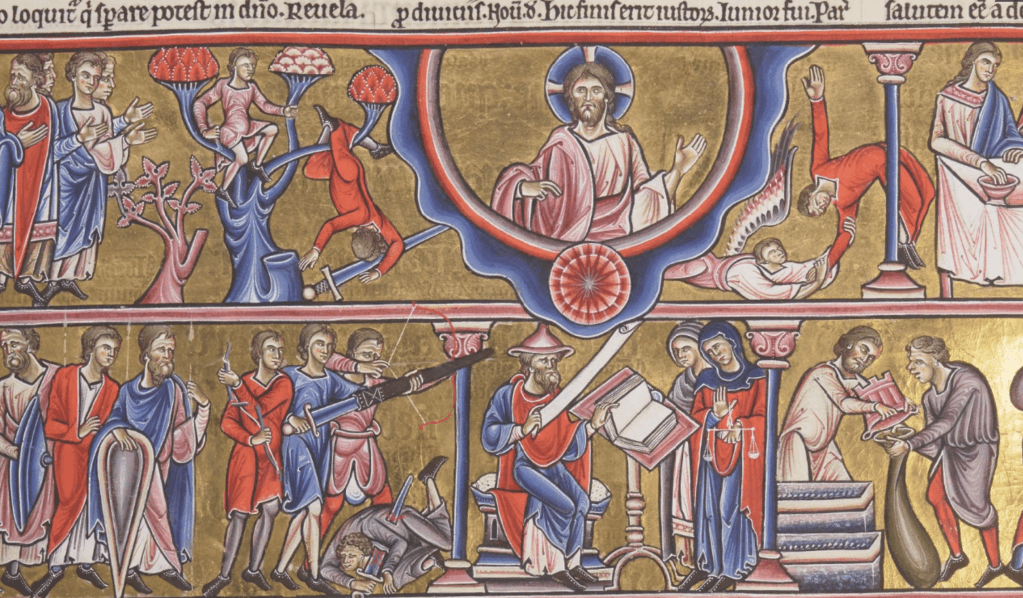
- Why is the maiden apprehensive at the banquet table?
- Why is the man being carried away from the banquet table by an angel?
- Why are two men on mushrooms balancing on the mushroom tree, trying not to fall onto God’s sword?
- Why is the class of 4 students being examined by the bearded instructor to the left?
- Why is the psalter viewer in the center of the image, being threatened with blades and entreated for mercy and charity, and why breaking the bow?
Either this image has no meaning, or, it means peak Psilocybe effects: self-threatening in the peak mystic altered state, while transforming the mental model of possibilities branching, personal control power, and the source of control-thoughts.
Proof that the Canterbury Psalter’s Leg-Hanging Mushroom Tree Is Psilocybe
Michael Hoffman, November 19, 2020
https://egodeaththeory.wordpress.com/2020/11/19/proof-that-the-canterbury-psalters-leg-hanging-mushroom-tree-is-psilocybe
Overgeneralization that Mushrooms are Shown as Trees
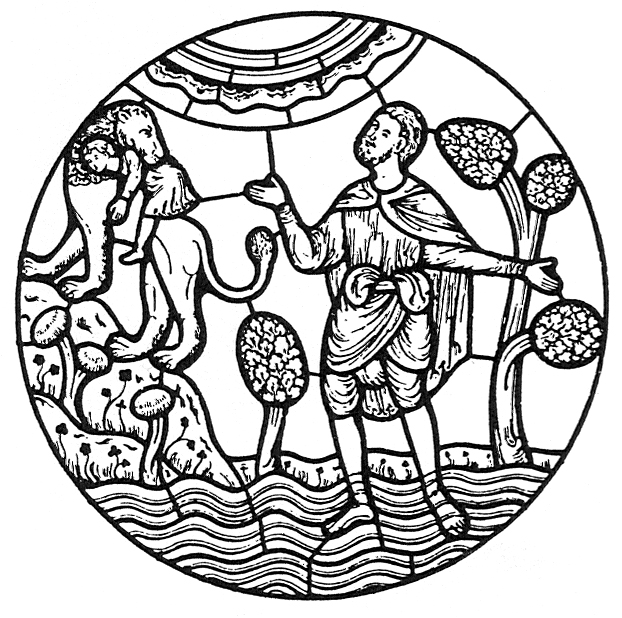
The first image in my 2006 article shows a 6″ tall, lone mushroom; shin height. No one would refer to this as a “mushroom tree”, instead, they IGNORE it. Is this a Parasol of Victory, or is it an Italian Pine? Which expert is correct?
275 “Legend of St. Eustace (first part, window at Chartres), p. 276 second part, 277 third part

The above is a portion of the window, shown below. Imagine the same detail and sharpness for the whole window.
The “Secular vs. Religious” Genre Mischaracterization: Bestiary Teaches Christian Morality
Hatsis’ brittle-minded dismissal of bestiaries as “secular”, I’m surprised “witch” Hatsis makes this basic mistake.
Is this newbie scholar really worth investing in? but we need more researchers.
I confirmed yesterday Dec 17 2020, that medieval bestiaries convey Christian morality.
So much for his argument that “mushrooms in bestiaries don’t count as Christian art”.
Hatsis botches the genre question, has a brittle notion of “this art or document is “wholly secular”.
Does Hatsis not know anything about Christendom and the pre-Modern mindset?
“Wholly secular” is largely a contradiction in terms, until the Late Modern era.
Pyschedelic[sic] Christianity : A Scholarly Debate on the Holy Mushroom Theory
YouTube channel: Psychedelic Historian
January 5, 2018. Hatsis vs. Brown
around 1:08:25
https://www.youtube.com/watch?v=0PXZGiX4Qnk&t=4060s
Hatsis doesn’t know how to spell “Psychedelic Christianity” – not that typos are significant; but add it to the pile of signs & evidence that Hatsis is sloppy and not at all trustworthy on this topic. The video has too few views, b/c the title is misspelled.
This field actually is the carefully scope-defined field, of “mushrooms in broadly Greek & Christian art”. That is, mushrooms in Hellenistic art & Christendom art.
Above, I say ‘broadly, because Hatsis keeps making a brittle genre-identification error, trying to dismiss mushrooms in art by falsely claiming that “this art appears in a secular work” (eg a bestiary).
In “broadly Christian art or Christendom art”, I include Western Esotericism art.
Mischaracterizes the “Rolfe-Ramsbottom-Brightman vs. Wasson” Positions on the Plaincourault Image as “the Wasson/ Allegro Debate”
Referring to the difference of views re: Plaincourault, between Allegro vs. Wasson, as a “debate”. There was no debate. Wasson & Allegro lazily tossed a couple darts past each other.
Ramsbottom exposed Wasson writing privately to him, “Rightly or wrongly, we are going to dismiss…”
There was never any 2-way, engaged exchange discussing points, between Wasson & Allegro.
The communications were entirely abortive, with no engagement of the points.
There was a dispute or maybe debate (doubtful) between Wasson and someone else — that someone else was not firstly Allegro, but rather, Pope Wasson vs. the mycologists — Rolfe’s 1924 book, edited by Ramsbottom; and Brightman.
What Hatsis mis-calls “the Allegro theory, of mushrooms in Christian art”, is actually, in fact, “the 1924 Rolfe-Ramsbottom-Brightman interpretation of the Plaincourault tree“.
Article:
Wasson and Allegro on the Tree of Knowledge as Amanita
Michael Hoffman, 2006, Journal of Higher Criticism
Subsection: Ramsbottom, 1953
http://www.egodeath.com/WassonEdenTree.htm#_Toc135889189
It is unambigous and safe to say that there were positions taken, about the Plaincourault tree. There was no real debate about that image.
Among Rolfe, Ramsbottom, Brightman; Brinckmann, Panofsky, Wasson; & Allegro, there was neither discussion, defined positions, nor debate, about the relevantly scoped questions:
- To what extent mushrooms in Greek & Christian religion & culture?
- To what extent mushrooms in Christianity?
- To what extent was the Eucharist recognized as mushrooms?
- To what extent mushrooms in Christianity?
Instead, all of them halted as if taboo, getting themselves completely stuck on A SINGLE ART INSTANCE. Why?
Because none of them are entheogen scholars.
Of Rolfe, Ramsbottom, Brightman; Brinckmann, Panofsky, Wasson; & Allegro, only Wasson took the mantle of an entheogen scholar, but with the Pope, as his banker, Wasson instead censored Brinckmann’s book, and like Terrence McFakea, and like Hatsis, Wasson says
DO NOT LOOK FOR MUSHROOMS IN CHRISTIAN ART.
THESE AREN’T THE SHROOMS YOU’RE LOOKING FOR.
There are no mushrooms in Christianity, because I, Pope’s banker, say so – in my completely evasive, mealy-mouth, roundabout way that could mean anything, by my universally confusing and vague statement “I said there was no … I was wrong”.
Robert Graves 1957-1973 may be the first to pose these properly framed questions.
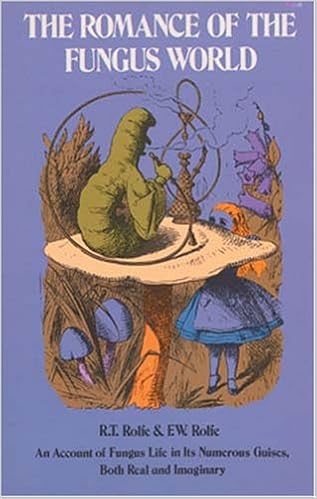
Rolfe’s Book (1925)
R. T. Rolfe & F. W. Rolfe. The Romance of the Fungus World: An Account of Fungus Life in Its Numerous Guises, Both Real and Legendary. ISBN: 0486231054. 1925 (1974). Foreword by John Ramsbottom, 1924.
Ramsbottom’s Books (1949, 1953)
John Ramsbottom. A Handbook of the Larger British Fungi. ISBN: B0007JA6VC. 1949.

John Ramsbottom. Mushrooms & Toadstools: A Study of the Activities of Fungi. ISBN: B0007JALQC. 1953.
Brightman’s Book (1966)
The Oxford Book of Flowerless Plants: Ferns, Fungi, Mosses and Liverworts, Lichens, and Seaweeds
Frank H. Brightman & B. E. Nicholson BrightmanISBN: B0007AKM3I. 1966.
http://amzn.com/B0000CN6AA
http://amzn.com/090740846X


Wrongly Calling the “Mushrooms in Christian Art” Position “the Allegro Theory”
It is an outsider’s error, a non-scholar’s error, to refer to the position “mushrooms in Christian art represent mushrooms” as “the Allegro theory”.
This is a total misrepresentation of the field, the distinct questions or issues, the positions held, and the authors who hold those positions.
Allegro is purely dead weight and is wholly irrelevant. Allegro’s use of the Plaincourault contradicted his theory, maybe that’s why he retracted such reading (if Hatsis is to be believed on the latter point).
No Credibility in Coverage of Mushrooms in Greek Art
The caption on Herakles’ cista mystica image in Psychedelic Mystery Traditions – every word is mistaken. He misinterprets every aspect of this image. This reduces Hatsis’ credibility.
I expect my students — to qualify as peers working in this rightly-conceptualized field (unlike Letcher-Hatsis) — to be competently conversant in Greek & Christian religious mythology, or their view carries no credibility.
Not Even Wrong — Poorly Articulated Arguments and Position re: Eden Tree
The 1-2 page passage in Hatsis’ misrepresentatively titled book Psychedelic Mystery Traditions, on the Eden tree is not even wrong; it’s so vague and garbled, so inarticulately worded, it’s anyone’s guess what Hatsis’ position and argument is.
eg. his phrase “Such a view”. Such a what view? He needs to explicitly state what view he is critiquing.
This topic, Hatsis’ 1-2 pages of careless less-than-treatment of the Eden Tree interpretation, reminds me of Wasson’s mealy-mouthed, anti-clarity way of writing, mistaken by the gullible as “profound” and “artistically sophisticated”.
Such writing has snagged the field and prevented clear thinking and forward progress — no one understands what Wasson or Allegro were asserting; their own thinking is evidently a mass of confusion and unclarity.
I work hard to assert the most sophisticated ideas, in 140-character standalone statements that any random person, any 8th grader on the Web, can readily understand.
Hatsis Is Working-Out a Position Statement re: Secrecy, Suppression, Conspiracy
Ruck – perpetuates ‘secrecy’ framework, which is malformed.
McKenna — “do not look for mushrooms in art, because big bad Cath church suppressed them”. I don’t care whether mushrooms were “suppressed” or not; I only care neutrally,
- To what extent mushrooms in Greek & Christian religion & culture?
- To what extent mushrooms in Christianity?
- To what extent was the Eucharist recognized as mushrooms?
- To what extent mushrooms in Christianity?
The issue of “suppression or not?” is pretty irrelevant to my research project. Hatsis and Letcher try to malform the field and misrepresent it and hallucinatroily create a different field, by misrepresenting the field as “the Allegro theory” … “the Conspiracy to suppress from texts theory”.
As someone who is actually IN the field of “mushrooms in Hellenistic & Christendom art”, I reject and do not recognize; I reject as gross mischaracterization of
the field of “mushrooms in Hellenistic & Christendom art”
as
“the Allegro theory”.
It’s a gross mischaracterization of
the field of “mushrooms in Christian art”
to mis-call it
“the Allegro theory”.
I don’t believe in decoding
analogical psychedelic eternalism in
Greek materials alone, or
Hellenistic materials alone, or
Christian materials alone, or
the art of Christendom alone.
We must decode & recognize analogical psychedelic eternalism by co-decoding Hellenistic & Christendom art & myth; “Greek and Christian” art & myth. Helleno-Christian art/myth, united. I do not advocate the field of the field of “mushrooms in Christian art” .
I advocate the field of
“mushrooms in Greek & Christian art”;
“mushrooms in Hellenistic & Christendom art”.
I actually advocate of the field of spotting analogical psychedelic eternalism in
“mushrooms in Greek & Christian art”;
“mushrooms in Hellenistic & Christendom art”.
The narrow specific question Amanita in Christian religious art, is like a tenth of a percent of what I care about and assert.
The extremely particular question of Plaincourault is like one hundredth of one percent of what I care about and assert.
And I don’t consider Allegro at all as an appropriate actual representation of even that one particular point, that Plaincourault = Amanita.
That view is the Rolfe-Ramsbottom-Brightman interpretation of that one mushroom representation. Not “the Allegro interpretation of Plaincourault”.
Psychedelic Mystery Traditions book in one spot has botched, brief mis-coverage of mushrooms in Greek/Hellenistic materials, and a garbled, unclear, brief coverage of mushrooms in Christendom materials. I consider Greek/ Christian (Hellenistic & Christendom)
Accurate Names of the Field which Letcher-Hatsis Mis-calls “The Allegro Theory”
Most accurate:
the field of “mushrooms in Hellenistic & Christendom art”
mushrooms in Western art
the field of “mushrooms in Western art”
mushrooms in Greek & Christian art
the field of “mushrooms in Greek & Christian art”
That’s “Greek” and “Christian” in the broadest sense; eg Hellenistic & Christendom:
mushrooms in Hellenistic & Christendom art
the field of “mushrooms in Hellenistic & Christendom art”
Candidates for Writer Names to Represent the Field
Michael Hoffman
I accurately represent the field.
Carl Ruck
Ruck covers Greek more than Christian. He would be no more than a fair representative for the field of “mushrooms in Hellenistic & Christendom art”.
Ruck greatly overemphasizes ‘secret’, which I completely bracket-off and ignore. I have little interest in what sense ‘secret’. Ruck treats ‘secret’ like its an entire explanatory framework.
I leave the question of ‘secret’ out of my entheogen scholarship.
In my theory of loose cognitive association, the personal control system initially doesn’t perceive the uncontrollable source of control-thoughts, but then perceives it, {lifting the lid off the snake-basket, seeing it, and thereby dying} in the mind.
The Apples of Apollo: Pagan and Christian Mysteries of the Eucharist
Ruck, Staples, Heinrich
http://amzn.com/089089924X
Brown’s book The Psychedelic Gospels finally delivered, what this book promised but didn’t deliver.
Clark Heinrich
Heinrich covers Amanita, not Psilocybe, and only in Christendom art, not Hellenistic art. He would be a very poor representative for the field of “mushrooms in Hellenistic & Christendom art”.
McKenna
McFakea he asserts Psilocybe, not Amanita, but he falsely asserts no mushrooms in Christianity.
McKenna would be a completely poor representative for the field of “mushrooms in Hellenistic & Christendom art”.
Mark Hoffman
Mark Hoffman’s position is not clear.
Hoffman’s book with ‘Consciousness’ in the title doesn’t cover cognitive phenomenology or cognition.
Ruck/Heinrich/Staples book with Ruck, I thought was unclear what its point & position are.
Mark Hoffman, editor of Entheos journal and co-author with Ruck, is not an articulate enough representative for the field of “mushrooms in Hellenistic & Christendom art”.
Rolfe-Ramsbottom-Brightman
Rolfe-Ramsbottom-Brightman only discussed 1 image, Plaincourault. Not Greek art images. Not broadly Christian art. This 1924 group of mycologists would be a very poor representative for the scholarly field of “mushrooms in Hellenistic & Christendom art”.
Robert Graves
Graves wrote about mushrooms in Greek, not much in Christian much. To quantify, review his ~83 pages on entheogens he wrote 1957-1973. Graves would be a poor representative for the field of “mushrooms in Hellenistic & Christendom art”. Pope Wasson told Graves to stop covering the field, and Graves did stop.
Wasson
Waasson denied mushrooms in Christian art, didn’t cover Greek.
Pope Wasson would be a very poor representative for the field of “mushrooms in Hellenistic & Christendom art”.
Wasson is 100% compromised, as Pope’s Banker.
Wasson censored the 1906 Brinckmann book citation from Panofsky’s letter, copied but not copied, into Wasson’s book SOMA.
Allegro
Allegro covered not Greek art, and almost no Christian art; only 1 image, which he removed.
Allegro would be a very poor representative for the field of “mushrooms in Hellenistic & Christendom art”.
Acknowledgements
This research about Rolfe’s 1924 book was contributed by Jan Irvin for my 2006 article.
See Also/ Bibliography
Info about Brinckmann
Brinckmann, Mushroom Trees, & Asymmetrical Branching
https://egodeaththeory.wordpress.com/2020/12/11/brinckmann-mushroom-trees-asymmetrical-branching/
From my 2006 article’s Bibliography:
John M. Allegro. The Sacred Mushroom & the Cross. ISBN: 0340128755. 1970.
John M. Allegro, “The Sacred Mushroom”, letter to the editor in The Times Literary Supplement, September 11, 1970.
John M. Allegro. “The Sacred Mushroom and the Cross” (David York, introduction: “Christ and the Sacred Mushroom”), in the Sunday Mirror (London). Serialized February 15, 1970 no. 357 – April 26, 1970. Transcribed at Pharmacratic-inquisition.com.
James Arthur. Mushrooms and Mankind: The Impact of Mushrooms on Human Consciousness and Religion. ISBN: 1585091510. 2003.
Chris Bennett. Sex, Drugs, Violence and the Bible. ISBN: 1550567985. 2001.
Frank H. Brightman. The Oxford Book of Flowerless Plants: Ferns, Fungi, Mosses and Liverworts, Lichens, and Seaweeds. ISBN: B0007AKM3I. 1966.
Judith Anne Brown (Judy Allegro). John Marco Allegro: The Maverick of the Dead Sea Scrolls. ISBN: 0802828493. 2005.
José Celdrán & Carl Ruck. “Daturas for the Virgin”, in Entheos: The Journal of Psychedelic Spirituality, Vol. I, Issue 2. Entheomedia.org. Winter, 2002.
Earl Doherty. The Jesus Puzzle: Did Christianity Begin with a Mythical Christ? Challenging the Existence of an Historical Jesus. ISBN: 096892591X. 1999.
Robert Forte. “A Conversation with R. Gordon Wasson”, in Entheogens and the Future of Religion. ISBN: 1889725048. pp. 66-94. 2000.
Robert Forte. “A conversation with R. Gordon Wasson (1898-1986)”. ReVision: The Journal of Consciousness and Change: Psychedelics Revisited (topical issue) 10(4): 13-30. Spring 1988. CSP.org.
Robert Forte (Editor). Entheogens and the Future of Religion. ISBN: 1889725048. 2000.
Peter Furst. Hallucinogens and Culture. ISBN: 0883165171. 1976.
Manly Hall. The Secret Teachings of All Ages. ISBN: 1585422509. 1928.
Clark Heinrich. Strange Fruit: Alchemy and Religion: The Hidden Truth. (Alternate subtitle: Alchemy, Religion and Magical Foods: A Speculative History.) ISBN: 0747515484. 1994.
Clark Heinrich. Magic Mushrooms in Religion and Alchemy. (2nd ed. of Strange Fruit.) ISBN: 0892817720. 2002.
Mark Hoffman (editor). Entheos: The Journal of Psychedelic Spirituality. Entheomedia.org. 2001-2002.
Mark Hoffman, Carl Ruck, & Blaise Staples, “Conjuring Eden: Art and the Entheogenic Vision of Paradise”, in Entheos, Issue 1, 2001, pp. 13-50.
Michael Hoffman. “The Entheogen Theory of Religion and Ego Death”, in Salvia Divinorum, Issue 4, 2006. Egodeath.com.
Aldous Huxley. The Doors of Perception. ISBN: 0060595183. 1954.
Jan Irvin, Andrew Rutajit. Astrotheology and Shamanism: Unveiling the Law of Duality in Christianity and Other Religions. ISBN: 1585091073, Pharmacratic-Inquisition.com. 2006.
John H. Jacques. The Mushroom and the Bride: A Believer’s Examination and Refutation of J. M. Allegro’s Book ‘The Sacred Mushroom and the Cross’. ISBN: 0902791001. 1970.
William James. The Varieties of Religious Experience. ISBN: 0679600752. 1902.
John C. King. A Christian View of the Mushroom Myth. ISBN: 0340125977 . 1970.
Dan Merkur. The Mystery of Manna: The Psychedelic Sacrament of the Bible. ISBN: 0892817720. 2000.
Dan Merkur. The Psychedelic Sacrament: Manna, Meditation, and Mystical Experience. ISBN: 089281862X. 2001.
Jonathan Ott. Pharmacotheon: Entheogenic Drugs, Their Plant Sources and History. ISBN: 0961423498. 1993.
E. V. Pike & F. Cowan. “Mushroom Ritual versus Christianity”, in Practical Anthropology 6(4). 1959. pp. 145-150.
Robert M. Price. Review of Acharya S’s The Christ Conspiracy: The Greatest Story Ever Sold. Robertmprice.mindvendor.com.
John Ramsbottom. A Handbook of the Larger British Fungi. ISBN: B0007JA6VC. 1949.
John Ramsbottom. Mushrooms & Toadstools: A Study of the Activities of Fungi. ISBN: B0007JALQC. 1953.
Thomas J. Riedlinger (Editor). The Sacred Mushroom Seeker: Tributes to R. Gordon Wasson. ISBN: 0892813385. 1997.
R. T. Rolfe & F. W. Rolfe. The Romance of the Fungus World: An Account of Fungus Life in Its Numerous Guises, Both Real and Legendary. ISBN: 0486231054. 1925. Foreword by John Ramsbottom, 1924.
Carl A. P. Ruck, Blaise Staples, Clark Heinrich, & Mark Hoffman (for chapter 5). The Apples of Apollo: Pagan and Christian Mysteries of the Eucharist. ISBN: 089089924X. 2000.
Acharya S. The Christ Conspiracy: The Greatest Story Ever Sold. ISBN: 0932813747. 1999.
Eusebe Salverte. The Occult Sciences: The Philosophy of Magic, Prodigies, and Apparent Miracles. ISBN: B0008AC74O. 1846.
Giorgio Samorini, “The ‘Mushroom-Tree’ of Plaincourault”, Eleusis: Journal of Psychoactive Plants and Compounds, n. 8, 1997, pp. 29-37.
Giorgio Samorini, “The ‘Mushroom-Trees’ in Christian Art”, Eleusis: Journal of Psychoactive Plants and Compounds, n. 1, 1998, pp. 87-108.
Richard Evans Schultes & Albert Hofmann. Plants of the Gods: Their Sacred, Healing and Hallucinogenic Powers. ISBN: 0892814063. 1979.
Richard Evans Schultes, The Sacred Mushroom Seeker: Essays for R. Gordon Wasson. ISBN: 0892813385. 1990.
Edmund A. Wasson. Religion and Drink. ISBN: B000861CLM. 1914.
R. Gordon Wasson. “Seeking the Magic Mushroom”, in Life, May 13, 1957. Druglibrary.org
R. Gordon Wasson. Soma: Divine Mushroom of Immortality. ISBN: 0156838001. 1968.
R. Gordon Wasson. “Persephone’s Quest”. pp. 17-81 in R. Gordon Wasson, Stella Kramrisch, Jonathan Ott, & Carl Ruck: Persephone’s Quest: Entheogens and the Origins of Religion. ISBN: 0300052669. 1986.
R. Gordon Wasson. “Lecture to the Mycological Society of America” in The Psychedelic Reader. University Books: New York. ISBN: 0806514515. 1961.
R. Gordon Wasson, “The Sacred Mushroom”, letter to the editor in The Times Literary Supplement, August 21, 1970 and September 25, 1970.
R. Gordon Wasson. “The Divine Mushroom of Immortality” in Furst (Editor). Collection of papers written by Wasson at Harvard. 1972.
R. Gordon Wasson, Albert Hofmann, & Carl A. P. Ruck. The Road to Eleusis: Unveiling the Secret of the Mysteries. ISBN: 0151778728. 1978.
Valentina Pavlovna Wasson & R. Gordon Wasson, Mushrooms, Russia & History, 2 volumes. ISBN: B0006AUVXA. 1957.
Valentina Pavlovna Wasson. “I Ate the Sacred Mushroom”, in This Week magazine. May 19, 1957.
R. C. Zaehner. Mysticism Sacred and Profane. ISBN: B0007IL51S. 1957.
What Hatsis mis-calls “the Allegro theory, of mushrooms in Christian art”, is actually, in fact, “the 1924 Rolfe-Ramsbottom-Brightman interpretation of the Plaincourault tree“.
Article:
Wasson and Allegro on the Tree of Knowledge as Amanita
Michael Hoffman, 2006, Journal of Higher Criticism
Subsection: Ramsbottom, 1953
http://www.egodeath.com/WassonEdenTree.htm#_Toc135889189

 The Egodeath theory
One thought on “Hatsis’ Errors about Western Mushroom Scholarship”