Contents:
- Quick Ideas for Topics
- Podcast Links
- Philosophy of Time, Causality, & Determinism, Including Half-Baked Hybrids
- Why Transcendent Knowledge Is of Highest Value – Benefits of Ego Death
- Exotericism vs. Esotericism; Exoteric Esotericism (Low, Quasi-Esotericism); Low Entheogen Theory = Amanita
- Three Phases of Gnosis: Unstable Nondual Awareness; Transformation Focused on Non-Control; Stable Nondual Awareness
- Questioning Assumptions About Atemporal Mystics Using High Dose
- A Special Class of Mystics, Who Blend the Two States into One? Or Just, Anyone who so Tries?
- Developments of Note, at New, EgodeathTheory WordPress Site
Quick Ideas for Topics
- March 17, 2022: Planning my next podcast, on the confluence of 3 top topics:
- Basics of the Phase 1 Core Egodeath theory (not analogical; just Psychedelic Eternalism & Control transformation).
- Phase 2 Egodeath theory (metaphor, religious history; especially the “analogical” of APEC’ ie the first component of “Analogical Psychedelic Eternalism & Control-transformation”).
- The future of entheogen scholarship. Bridging will probably be like:
fut enth sch <–> Phase 2 (metaphor) <–> Phase 1 (psych’c eternalism & ctrl xfmn).
ie, use the analogy/metaphor/ Phase 2 portion of Egodeath theory, to connect “future of entheogen scholarship” to the Phase 1 “Egodeath Core theory”.
- Next directions for the field of classic entheogens in entheogen history.
- Contemporary reception of that recovered history/tradition.
- Current actual pop topics in the field (eg clinical use).
- Recommended directions for the popular field.
- How everyone can contribute to the field eg it’s easy finding art examples; I fear I’ve run out of image storage space at WordPress for the art examples database.
- Contemporary Western Esotericism eg Hanegraaff on entheogens.
- Popular influence of Muraresku and other recent writers.
- Coverage in YouTube videos vs websites, Brown’s Facebook group.
- Leveraging the outcome of Muraresku / Hancock
- The latest in Pop Sike Cult.
- Read aloud article Defining “Compelling Evidence” & “Criteria of Proof” for Mushrooms in Christian Art
- Maybe 10 at a time, or a single intensive reading? Talk-through all 75 mushrooms’ morphology, The 75 Mushroom Trees of the Canterbury Psalter. Ideally, also zoom out to discuss each scene, in Canterbury Psalter Mushroom & Vine Inventory, though I don’t understand most of these scenes (which is pretty bad; how exactly are people supposed to know what’s depicted in these Psalter scenes?)
- Ego as controller – accurate main essence? Maybe something other than control = ego transcendence?
- Requested by Max
- Why don’t more writers say that ego is, above all, first / foremost, a control agent, such that transcending ego is about transcending control?
Podcast Links
Transcendent Knowledge Podcast episodes
https://egodeaththeory.wordpress.com/2020/11/07/transcendent-knowledge-podcast-episodes/
Philosophy of Time, Causality, & Determinism, Including Half-Baked Hybrids
Who expressed interest in this topic: Max, Kafei
Ep8, 55:10 Max: “Philosophy of Time and Determinism. On a later podcast, I would like to systematically list the different ways that time can be modeled, and the different ways that determinism can be understood and conceived of, and relating the different ways to different thinkers, and saying how different people modeled time, causality, and determinism.”
“4D block universe model has a heritage:
Parmenides, the pre-Socratics, Godel, Minkowski, and Popper
have tried to conceive of time in this way.”
Episode 8, Oct 19, 2016
55:10 = 55*60 + 10 = 3310s
https://www.youtube.com/watch?v=PaYPWHBmS1g&t=3310s
Differentiate:
- block-universe eternalism
- block-universe determinism
Research tasks for grad student slaves:
What did these thinkers:
- pre-Socratics
- Parmenides – ASC-based, how well-articulated?
- Godel
- Hermann Minkowski – lacks ASC experiential?
- William James
- Ramesh Balsekar – a “temporal atemporal” model? OSC-based, informed by ASC second-hand.
- Einstein
- Popper
- Sam Harris – a “temporal” model of no-free-will, with a dash of ASC pop spirituality?
- the Egodeath theory – 2-tier OSC/ASC (not 3-tier, but such would be interesting, middle = non-completed initiates; {woman during pregnancy harrassed by serpent})
say about these phrases or concepts:
- models of
- time,
- causality, and
- determinism
- what about personal control agency & moral culpability, is that implied in these models? Didn’t Wm James reject the iron block universe b/c the block universe implies no-free-will (& total ego transcendence, as I realized in 1988)?
- block universe
- 4D block universe
- iron block universe
- eternalism
- block-universe eternalism
- block-universe determinism
- possibilism
- branching-universe possibilism
- worldlines
- worm theory
- timelessness
- no-free-will
- pre-existence of future control-thoughts
Looks like relevant results:
https://www.bing.com/search?q=%22william+james%22+%22iron+block+universe%22
The Illusion of Will, Self, and Time: William James’s Reluctant Guide to Enlightenment (Bricklin)
Moved this section to form a new page; see:
The Illusion of Will, Self, and Time: William James’ Reluctant Guide to Enlightenment (Bricklin, Eternalism)
https://egodeaththeory.wordpress.com/2023/01/15/illusion-will-self-time-james-enlightenment-bricklin-eternalism/
Why Transcendent Knowledge Is of Highest Value – Benefits of Ego Death
Who expressed interest in this topic: Cybermonk, and Max Freakout and Cyberdisciple re: James Kent.
James Kent might say: Transcendent Knowledge is worthless.
Even if Transcendent Knowledge is worth something, it’s vastly overrated.
What is the defense of the value of Transcendent Knowledge at all, and, as the highest value?
Why Transcendent Knowledge Is of Highest Value
As roommate-friend asked me in 1995,
“What use is metaphysical enlightenment?” 🤷♂️
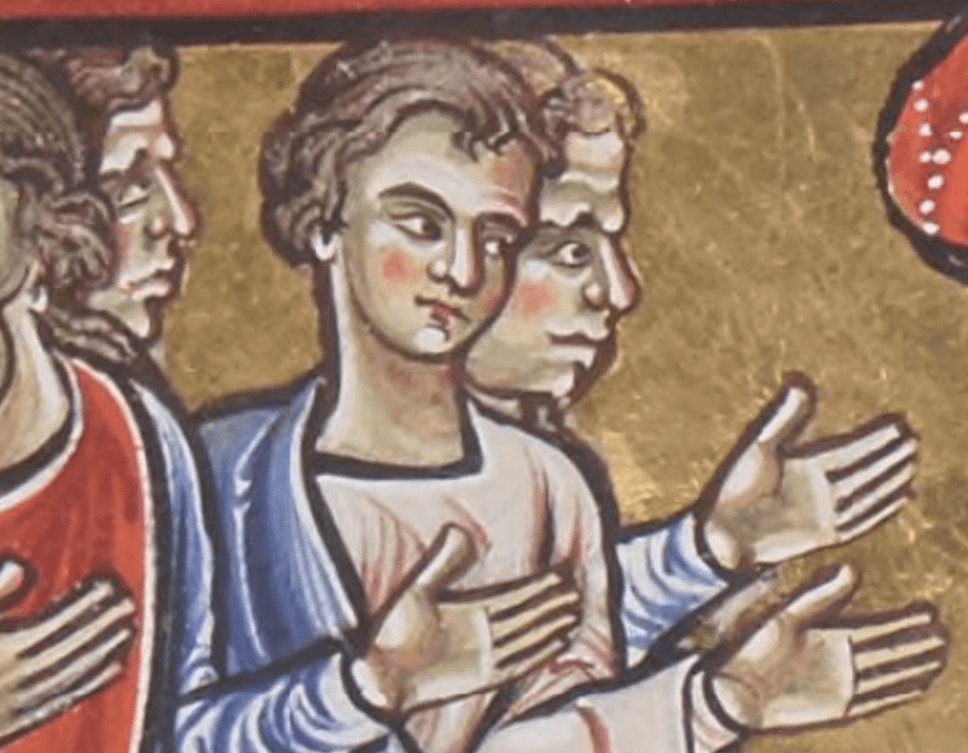
In this image, we should speak in terms of
“branching-thinking” for “possibilism-thinking”, and
“non-branching thinking” for “eternalism-thinking”.
Exotericism vs. Esotericism; Exoteric Esotericism (Low, Quasi-Esotericism); Low Entheogen Theory = Amanita
Who expressed interest in this topic: Max
- Episode 7, at 42:00, Max suggests future coverage of “exotericism vs. esotericism, books/authors”.
42*60 = 2520s
https://www.youtube.com/watch?v=bP3XePnphL4&t=2520s- Drugs or no-drugs
- Determinism or freewill
- Historicity/history vs. mythology
- 1-for-1 Contrast of Higher vs. Lower Christians’ Consistent Sets of Positions (= Eso vs. Exo) from Pagels’ Book Johannine Gospel in Gnostic Exegesis
- 1-for-1 Contrast of ‘Gnostic’ vs. ‘Orthodox’ Consistent Sets of Positions (= Eso vs. Exo) from Pagels’ Book The Gnostic Paul
Exoteric Esotericism
Hall’s book might have the word ‘determinism’ or ‘fatedness’ one time, ‘visionary plants’ one time, and “non-control” one time, but his book fails to build around these as the central focus (such as making them the major section headings, rather than footnotes), so his book remains polluted with impurities; with egoic possibilism-thinking.
Book:
The Secret Teachings of All Ages
Manly Hall, 1926
http://amzn.com/8418373024
Complete edition, Illustrated
May 9, 2020
Ken Wilber is an extreme version of exoteric esotericism: a complete car except no engine (or, no gas).
Dictionary of Gnosis
Hanegraaff
http://amzn.com/9004152318
Good luck finding entheogens (needle in haystack), non-control, or preexistence, or no-free-will, or Transcendent Knowledge and its central pillars.
Low Entheogen Theory = Amanita-Centered, Physicalist, Based in the Mundane Realm; Not Based in Cognitive Phenomenology
Book:
Astrotheology & Shamanism: Christianity’s Pagan Roots
A Revolutionary Reinterpretation of the Evidence
Irvin & Rutajit, 2009
http://amzn.com/1439222428
This book was mentioned in a Transcendent Knowledge Podcast episode.
The realm of the esoteric, as filtered through the lens of exoteric thinking.
- Exotericism, literalism, supernaturalism, scientism, reductionism (lowering and narrowing). Materialism. There is no consciousness or subjective awareness. We scientismists have solved religion by getting rid of religion by getting rid of subjectivity by getting rid of consciousness and subjective awareness. Problem solved.
- Exoteric Esotericism; low esotericism; pseudo-esotericism. The physical form of the mushroom means the physical constellations or planting & harvesting season. Christianity is stupid and really means merely nothing more than the annual fertility celestial calendar. I’ve explained Christianity rationally, therefore I have destroyed it and debunked religion. That’s Acharya; Irvin and Rutajit have a happier style of materialistic reductionism. Everything they touch, turns to materialism essentially based in the ordinary state, no matter how many red-and-white kiddie mushroom shapes you throw at it. Secret, cult, revealed here, buy this book to reveal the secret, what religion is really about: not supernaturalism, but mushroom forms and constellations and fertility cult.
- Esoteric Esotericism; high esotericism; bona fide esotericism. Analogical psychedelic eternalism; the Egodeath theory.
Fixing the Field of Mushrooms in Western Religious History
Move the central focus of the field from:
- Amanita, Christianity, Surface Form, Low Esotericism
to - Psilocybe, Greek+Christianity, Cognitive Effects, High Esotericism
Move from “Amanita, Christianity, Surface Form, Low Esotericism” to “Psilocybe, Greek + Christian, Cognitive Effects, High Esotericism”
https://egodeaththeory.wordpress.com/2021/01/14/move-from-amanita-christianity-surface-low-eso-to-psilocybe-greek-cognitive-effects-high-eso/
“Cognitive effects” means transformation of the mental worldmodel from possibilism to eternalism.
Three Phases of Gnosis: Unstable Nondual Awareness; Transformation Focused on Non-Control; Stable ASC Awareness
Who expressed interest in this topic: Kafei
Three phases of gnosis:
- Unearned, Stolen Nondual Awareness (Hallmark: Instability).
Main focus: experience of nonduality. “I am God, and the chair.” - Mental Transformation About Control (Focused on Cybernetic Non-Control) in Mystery-Initiation.
Main focus: experience of non-control. “Sir, there is a vulnerability” (in the Death Star). - Earned Nondual & Mystic-State Awareness at Mixed-Wine Banquet Subsequently, Still Understanding the Central Importance of the Non-Control Experience (at least as strong as the Nonduality Focus).
Main focus: any ASC content. Some nonduality, some non-control; telling mythic tales of analogies.
Questioning Assumptions About Atemporal Mystics Using High Dose
Who expressed interest in this topic: Kafei, Michael; Max
A general topic: dosage level. Assumption that “more is always better”, how many kg per session? Extremism vs. objectives.
- Aiming for medium, but then overshooting, produces overdose, produces waste, produces temporary sheer disintegration of mental structure, instead of the desired structured transformation.
eg Maximum ~= 5 2x/wk, question of waste of loosecog time.
In Episode 16, Max immediately attempted to separate-out the 3 topics (experiencing the Absolute; Predetermination vs. Atemporal; High Dose).
https://egodeaththeory.wordpress.com/2020/12/27/commentary-on-tk-podcast-episode-16/#16-12-Max-Astutely-Tries-to-De-Conflate –
- The Philosophical Absolute.
(timeless metaphysics position & experiencing timelessness)
- The idea of predetermination implies linear unfolding time.
(models of time)
- Watts’ “Hang up the phone” quote.
(dosage level & frequency)
Do Great Mystics Use High Dose?
Can You “See It” in Their Writings? How?
If You Can’t Prove High Dose Is Present in Great Mystics’ Writings, How Do You Know the Great Mystics Hold Atemporal Metaphysics?
Can Low or Medium Dose or No Dose, Combined with Clear Modelling, Produce Experience of, or Full Understanding of, Atemporal Metaphysics?
Inconsistently Exempts Great Mystics from His Requirement to Advocate High Dose, to Be Let into the Club of Timeless Metaphysics
https://egodeaththeory.wordpress.com/2021/01/07/idea-development-page-9/#Inconsistently-Exempts-Great-Mystics
Point 3 to Open With: Great Mystics’ Quotes Don’t Advocate High Dose, Yet He Allows Them into the “Experiencing Timelessness” Club, But Excludes the Egodeath Theory: Why the Inconsistency?
https://egodeaththeory.wordpress.com/2021/01/07/idea-development-page-9/#Point-3-to-Open-With
A Special Class of Mystics, Who Blend the Two States into One? Or Just, Anyone who so Tries?
Who expressed interest in this topic: Kafei, Max, wrmspirit, Michael, Cyberdisciple, re: Episode 26, eg 52:00-1:11:00
https://egodeaththeory.wordpress.com/2020/12/06/tk-podcasts-commentary/#Psychedelics-Make-You-Have-Good-Moral-Values
Stable Definitions of Terms required, for coherent conversation
Definition of ‘Everyone’, ‘Ordinary People’, and ‘Mystics’
https://egodeaththeory.wordpress.com/2020/12/06/tk-podcasts-commentary/#Definition-of-Everyone
See the above stable, explicit definitions of the set of terms.
At one point, Max said (like Cyberdisciple said): The Egodeath theory applies to everyone/everybody.
He didn’t explicitly define whether ‘everyone’ and ‘democratic’ is the universal set, or a subset that excludes non-ordinary people, so the positions remained ambiguous.
In contrast to “the Egodeath theory applies to (is for; explains) everybody”, at one point, it’s proposed to combine these two premises:
- That There Exists a Special Class of People, Called ‘Mystics’, that the Egodeath Theory Isn’t For.
- That Mystics Fuse the Two Separate States into a Single State that the Egodeath Theory Doesn’t Describe.
The above pair of premises is not a good way to break-out and affix-together hypothetical premises.
I reject the first, second, and conjoined premises.
I support asking “Who is a mystic?”, and “Does the ASC apply to, or fuse with, the OSC?”
Implicitly, that reasoning (based on mis-defining a non-definition quasi-definition of ‘mystics’) leads to the false, or actually, subtly meaningless & irrelevant & misleading conclusion:
“The Egodeath theory has nothing to do with mysticism.”
- Meaningless, so long as the word ‘mysticism’ is mal-defined.
- Irrelevant, because no one in the conversation holds the conjoined premises. Kafei answered a question about this matter by replying: “Mystics return to the OSC, per William James.”
- Misleading, because the statement sounds like a statement about mystics, per the common definition, but it is actually a statement about some other, ill-defined, indeed undefined group, instead.
Any chain of reasoning that produces the output “Therefore the Egodeath theory has nothing to do with mysticism”, elicits the response:
“Truly, your logic is dizzying.” (Because that definition of ‘mysticism’ is bad.)
I’m willing to (in some way) explanatorily abandon such a definitionally obscured group of people, but we cannot label that group as ‘mystics’; that would violate definitions of the word ‘mystics’.
The proposed (quasi-) definition of the word ‘mystics’ is not viable, so a statement using that term defined that way is invalid.
“Suppose there’s a group of people who we cannot know anything about. The Egodeath theory doesn’t apply to them. I’m going to call them ‘mystics’.”
Everyone, in reply: “I reject that definition of ‘mystics’. That’s a mis-definition and misuse of the word ‘mystics’ – if you can even call it a definition.”
The Egodeath theory exists for the purpose of explaining and addressing mystics, where ‘mystics’ is viably defined and doesn’t violate the established, regular, agreed-upon definitions of the word ‘mystics’.
‘Mystic’ in the Title of the Annotation of the 1997 Theory at Cybernetics Site
The title of my Annotation that contains my 1997 core-theory spec, characterizes ego death itself as “mystic“:
Self-control cybernetics, dissociative cognition, & mystic ego death
http://pespmc1.vub.ac.be/Annotations/PHILOSI.0.html
The purpose of the Egodeath theory is to explain and comprehensibly articulate mysticism, as an instance of Transcendent Knowledge, as in the following 1-sentence summary.
1-Sentence Summary of the Egodeath Theory
The Egodeath theory holds that analogical psychedelic eternalism (where ‘eternalism’ includes control cancellation) explains all of the following:
transcendent knowledge
religion
ego transcendence
mysticism
satori
gnosis
enlightenment
esoteric wisdom
esotericism
esoteric Christianity
higher-level Christianity
higher-level religion
mystic revelation
spiritual transformation
religious mythology
secret knowledge
elevated knowledge
esoteric gnosis
gnosticism
psychedelics
entheogens
the altered state
the intense mystic altered state
the ecstatic state
mental transformation
psychospiritual development
the perennial philosophy
ancient Greek & Hellenistic religion
salvific regeneration through the Holy Spirit
Mystery-Religion initiation
mixed-wine banqueting
high Rock lyrics
the figure of Christ the savior
Definition of ‘Mystics’
https://www.bing.com/search?q=mystic
“a person who claims to attain, or believes in the possibility of attaining, insight into mysteries transcending ordinary human knowledge, as by direct communication with the divine or immediate intuition in a state of spiritual ecstasy.”
Max refrained from saying whether he’s a mystic. His refraining, proves that it’s premature to postulate that ‘mystic’ entails holding “ASC affects OSC” – given that he can’t even define whether he’s in the set, {mystics}.
FIRST WE NEED TO DEFINE ‘MYSTIC’, SEPARATELY FROM ASC>OSC, before productive conversation is possible.
Starting off by welding together the definition of ‘mystic’ with a particular ASC>OSC position, before we even define basic terms, is not productive for discussion.
It’s a premature assumption, to weld together the two questions right out the gate; so, it’s an unproductive assumption.
A mystic is someone who understands the Egodeath theory (analogical psychedelic eternalism).
The more someone understands and experiences the Egodeath theory (analogical psychedelic eternalism), the more that person is a mystic.
The top mystics, the authorities, are people who explain the Egodeath theory (analogical psychedelic eternalism).
This definition is compatible with dictionary definitions of ‘mystic’.
No definition of ‘mystic’ bakes-in the position, “Mystics are the ones who say ASC applies to OSC”.
The definition of ‘mystic’ is orthogonal to the debate of whether ASC affects OSC.
No definition of ‘mystics’ relies on the common defining trait “Mystics conjoin the OSC & the ASC, while non-mystics keep the OSC separate from the ASC.”
‘Mystics’ is a broader set than the particular positions regarding the relation of the OSC & the ASC.
Anyone who is interested in the Egodeath theory is a mystic, regardless of their view on whether ASC affects OSC.
The Egodeath Theory Explains and Applies to Everyone
‘Everyone’ Means Everyone; There Is No Special Class of Mystics to Whom the Egodeath Theory Doesn’t Apply
The Egodeath Theory Explains Mystics and Mysticism and the Mystic State
There is no special class, called “mystics” to whom the Egodeath theory doesn’t apply.
As Max and Cyberdisciple both explicitly say, in episode 26; they rightly and emphatically state that the egodeath theory applies to everyone.
I reject the unjustified, unhelpful compound-postulate “There’s a special group, called ‘mystics’, who fuse ASC with OSC, to whom the Egodeath theory doesn’t apply.”
I do entertain the separate questions:
- Who is a mystic?
- Does the ASC affect, or fuse with, the OSC?
The purpose of the Egodeath theory is to explain mystic-state ego transcendence, rationally and clearly.
To suppose “there is a group called ‘mystics’, that is not explained by the Egodeath theory” would be denying that the Egodeath theory is about what it’s about.
The Egodeath theory exists for the purpose of correcting the 1985-1988 mis-conception of mystic-state ego transcendence, to explain that:
The actual nature of mystic ego transcendence is about loose-cognitive experiencing of block-universe non-control, which 100% cancels ego, egoic control power, and egoic thinking – unlike the feeble and ineffectual theory of mystic-state ego transcendence that’s asserted by Wilber’s Integral Theory and the Journal of Transpersonal Psychology.
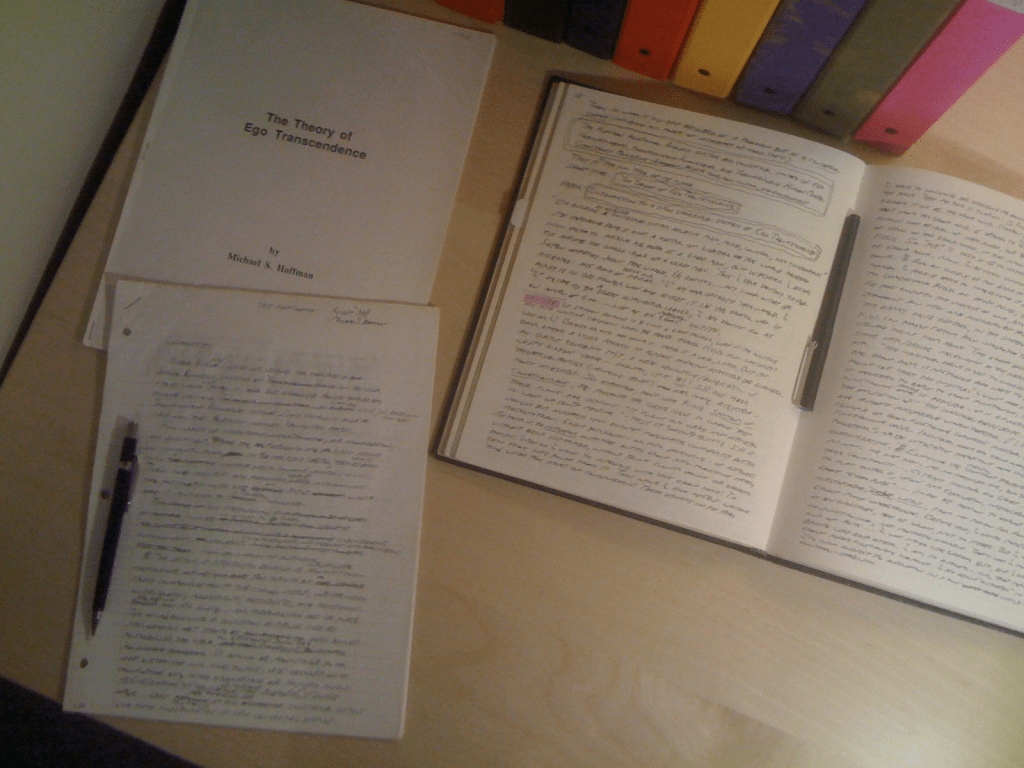
The Egodeath theory is a superior theory of mysticism; of what mystic-state ego transcendence is really about, and how to effectively accomplish ego transcendence, in contrast to the depictions per Wilber and the Journal of Transpersonal Psychology, such as their advocacy of Advaita meditation, with experiencing nonduality as the target, slowly by degrees over 30 years of meditation.
During 1988, I wrote that instead, mystic ego transcendence is a matter of the loose cognitive state, experiencing the timeless block universe, and non-control, producing large-scale mental worldmodel transformation, successfully retained and brought back into the tight cognitive state as a mental worldmodel, not as a state.
My theory conforms with Wilber’s Integral Theory regarding the distinction of states vs. stages.
Alan Watts provides a more sudden, large-scale transformation model that I used instead (during July-December 1987), but I added block-universe no-free-will, to make sense out of his hazy poetic wording. Haze protects egoic freewill.
Mystic writings, such as the Way of Zen by Alan Watts, are hazy and they omit the topic of no-free-will, in order to give cover to prevent transcendence and preserve egoic thinking.
Formulating a clear, scientific, direct, & forthright model of mysticism requires focusing explicitly on no-free-will; on egoic non-control; on the ego-annihilating pre-existence of personal control-thoughts.
To postulate “there’s a special class of people, called ‘mystics’ to whom the Egodeath theory doesn’t apply”, is to deny the nature and purpose of the Egodeath theory; it’s to say that the Egodeath theory has missed its target and does not do what it claims to do: rationally explain mystic-state ego transcendence.
Keeping the Two Questions Independent: Who Is A Mystic; Does the ASC Affect (or Fuse with) the OSC?
We should treat the good question of “Does the ASC apply to (or fuse with) the OSC?” as an independent question that’s not welded together with the good question “Is there a special class of people, called ‘Mystics’?”
The set of “Mystics” is not identical with the set of “People who try to apply the ASC to the OSC, or who try to fuse the ASC with the OSC.”
- A mystic is someone who knows analogical psychedelic eternalism.
- ASC doesn’t affect OSC much.
- That’s a debate-topic for analysis within the topic of “Why Transcendent Knowledge Is of Highest Value”.
Mystics are a special class, and that class is properly defined as: anyone who undergoes the well-formed initiation sequence as described by the Egodeath theory. That definition doesn’t include the stipulation “who hold that ASC affects OSC and the two are fused together” or “who apply the ASC’s transformative findings to ordinary-state daily mundane life”.
Per Wilber’s “states vs. stages” distinction, the transformative findings of the ASC don’t have a direct, determinate effect on the OSC daily life, and the two don’t fuse together – and I’m a mystic, by various definitions.
Integral Theory (Wilber) says you can be metaphysically enlightened (completed) and yet socially dysfunctional; poorly developed. That implies you can’t simply apply ASC insights to OSC life, or fuse the two states.
Integral Theory defines different, parallel, distinct developmental threads.
If anyone tries to apply the ASC to benefit the OSC, that is a viable and relevant discussion.
I wouldn’t couch that discussion in the form of the two premises conflated and welded together right from the start.
The only “special class of mystics”, is the set of all initiates, some of whom might try to apply the ASC to benefit the OSC.
We should discuss the question “Can ASC apply to OSC?”
We should not postulate the two-part postulation, “a special class, called ‘Mystics’, who fuse the two states“. That would be a conflation of two distinct, orthogonal questions. I don’t see alignment into two coherent sets like Elaine Pagels’ first 3 books, re: esoteric vs exoteric views.
I would not group:
- mystics believe “ASC affects OSC”
- non-mystics believe “ASC doesn’t affect OSC”
I don’t follow (accept) that conjoined premise-pair, and I’m against entertaining that pairing – it produces confusion, not constructive analysis.
I acknowledge that some people, whether completed initiates or not, try to apply the ASC revelation to the OSC daily mundane life. I would not identify those people as “a special class, called ‘mystics'”.
We should not use the label ‘mystics’, for the set of people who try to conjoin OSC & ASC. Those sets are complex partial overlaps.
It is not viable to define ‘mystics’ as “the people who apply ASC to the OSC so as to fuse the two states.”
Some mystics do that, some don’t.
Some non-mystics do that, some don’t.
Developments of Note, at New, EgodeathTheory WordPress Site
Page title: About
Subsection title:
Highlights Tour of this EgodeathTheory WordPress Site
https://egodeaththeory.wordpress.com/about/#Highlights-Tour-of-this-EgodeathTheory-WordPress-Site

 The Egodeath theory
One thought on “Ideas for Podcast Topics”