Michael Hoffman, March 15, 2022
Contents:
- The Superseding of Authority, and Scientific Discovery of Real Authority
- Requirement: Expert knowledge of all images of mushrooms & entheogens in religious art
- Requirement: Expert knowledge of analogical psychedelic eternalism & control-transformation
- Requirement: Expert knowledge of Mytheme Decoding in terms of analogical psychedelic eternalism & control-transformation
- Requirement: Expert knowledge of the history of Plaincourault contention
The Superseding of Authority, and Scientific Discovery of Real Authority
Who decides who has authority and should be believed – a gullible journalist outsider who is awed by those who pose as having relevant authority and expertise? Maybe whoever puts on airs the most, is who we should trust as the authority to be believed. I am the authority that you should believe, because I am the authority, because I act convincing and journalists (whoa!) confidently refer to me as having debunked the naysayers, multiple times.
Knowing about a certain type of wall painting does not qualify you to make pronouncements that are treated as carrying any weight.
It is extremely unimpressive when a scholar of wall painting pontificates on whether the mushroom tree of Plaincourault means mushrooms.
I am not too impressed by “scholars in the best position to interpret Plaincourault”.
Judging mushroom images in religious art is a specialized question which requires an appropriate combination of fields’ knowledge, including some mycology, some altered states, some religious knowledge, some art knowledge. A narrow degree is unlikely to qualify you; you remain an outsider with regard to this particular question.
What’s going on here is a superseding of authority and establishing of real authority, superior authority, over a halting, makeshift, stand-in, temporary authority.
Brinckmann’s authority was from studying tree stylizations in his 1906 book. The top art authority of 1952, Panofsky, wrote to Wasson, largely asserting that Plaincourault – according to the art authority of the day, which had limited validity like Science at any moment – estimated that Plaincourault didn’t mean mushrooms, but that Plaincourault was developed through random template distortion along the lines of Brinckmann’s (overheated and strained) theories of realism in Evolutionary Racial Consciousness.
Now I step in, in 2006, 2020, and 2022, and my authority has been revealed to be the real, correct authority. Compare Paul Thagard’s explanation of superseding an initial quasi-theory by a later, actual, more sound and more systematic theory, in his book Conceptual Revolutions. My authority is based in a sound, systematic theory of ego transcendence: the cybernetic theory of ego transcendence; the Egodeath theory; that is, the “analogical psychedelic eternalism control-transformation” theory of religious experience and mystic-state transformation of the mental worldmodel of time, control, and possibility branching. It turns out that art authorities are poorly positioned to judge mushrooms in religious art, and that mystic-state authorities are the appropriate type of authority to judge mushrooms in religious art.
Art History authorities and Mycologists are poorly positioned to judge mushrooms in religious art. Mystic Altered State authorities are the appropriate type of authority to judge mushrooms in religious art.
Cybermonk
We go from poorly founded authority, like Albert Brinckmann’s overheated and off-track speculations that applied the 1906 theory of Evolutionary Racial Consciousness to tree stylizations in medieval art, which is (at best) like the Ptolemaic (earth-centered) cosmology (which employed overheated corrective epicycles because it was off-base), to my well-founded and actually relevant theory context that I bring to the question, which is like the Copernican (sun-centered) theory.
Requirement: Expert knowledge of all images of mushrooms & entheogens in religious art
https://egodeaththeory.wordpress.com/nav/#gallery
Requirement: Expert knowledge of analogical psychedelic eternalism & control-transformation
https://egodeaththeory.wordpress.com/nav/#flagship-The-Egodeath-Theory
Requirement: Expert knowledge of Mytheme Decoding in terms of analogical psychedelic eternalism & control-transformation
https://egodeaththeory.wordpress.com/2020/11/15/mytheme-list/
Here are (were) the actual qualifications that were actually required to prove beyond a doubt that the 75 mushroom trees in the Canterbury Psalter are Psilocybe:
The Fluency Brought to this Decoding Problem, in the article Proof that the Canterbury Psalter’s Leg-Hanging Mushroom Tree Is Psilocybe.
I had to already be an expert (the top expert) in interpreting mythemes and art in terms of the Egodeath theory (analogical psychedelic eternalism & control transformation), and even then, as the leading expert ideally suited for this particular decoding problem, it still took me an entire week to decode this one image containing a single mushroom tree.
Requirement: Expert knowledge of the history of Plaincourault contention
Has that wall-painting scholar written a 70-page article on that specific topic – a critical review of the history of the Plaincourault contention – for the Journal of Higher Criticism? I have, 16 years ago, in 2006. I am bringing actual, relevant expertise to the topic of interpreting mushroom shapes in religious art.
Wasson and Allegro on the Tree of Knowledge as Amanita
by Michael Hoffman, 2006
Journal of Higher Criticism
http://egodeath.com/WassonEdenTree.htm
You must look at the art examples and must know the Egodeath theory (ie analogical psychedelic eternalism & control-transformation) and must know ten books on mystic state experiencing, on religions, on altered states.
The qualification you need is, you need to look into this question, about mushrooms, altered states, mythology, analogy, and symbolic representation.
People have a lower trust in authorities than ever. Authorities usually means false and bought pseudo-authority, liars who are posturing and are out to deceive you.
Authority is supposed to mean trustworthy, but authority has been so abused, the word ‘authority’ now has scare-quotes baked into it. Now, being an authority — or, having other people try to sell you as an authority — means, you are a liar, an actor, a fraud.
“Those authorities are the only ones who are positioned to interpret art, on this topic. Dr. Brown is unqualified to judge this matter, because he is not a professional eminent mycologist. And, separate from that, Brown is disqualified because he’s not an eminent professional art historian. “
- “If Brown were the top mycologist, he would be disqualified because he’s not the top art historian.
- And if Brown were the top art historian, he would be disqualified because he’s not the top mycologist.”
Motivation of creating this page:
- Unqualified people claim to be qualified to make pronouncements that they are not qualified to assess;
or, probably more typically/commonly, - Propagandists cite authorities to make claims about what such alleged authorities have allegedly:
- 1) Asked about.
- 2) Studied systemically.
- 3) Concluded.
- 4) Proclaimed.
The 4 points can be reduced to 2:
1) Have they taken up & looked into the question?
2) Have they concluded about the question?
In fact, the self-appointed authorities, or those who are proclaimed by propagandists to be authorities, have neither asked/investigated/looked into the question of mushrooms in religious art, nor have made conclusions about mushrooms in religious art.
eg Wasson claims and insinuates that Panofsky and suchlike (Albert Brinckmann, whose 1906 book is so devastating to Gordon Wasson’s propaganda that Wasson censored Panofsky’s citation of it):
1) Have studied (considered, started to raise and discuss questions) mushroom trees (a LIE; they have not studied mushroom trees).
2) Have analyzed mushrooms in Christian art (performed assessments & analysis by collecting/cataloging and analyzing data) (a LIE; they have not analyzed mushrooms in art eg msh trees).
3) Have concluded that mushroom trees are not mushrooms (a LIE; they have not concluded about mushroom trees).
4) Have asserted negative conclusions; made strong statements of their conclusions (a LIE; they have not made strong statements of conclusions about mushroom trees).
Add to my hall of shame: POS article against Brown that states “If Plaincourault as mushrooms has been debunked multiple times, why then does the blunder persist?”
What are the actual qualifications, for a person’s opinion or assessment to be worth a sh*t on this topic? The person must have looked at the evidence, and must know theory of mystic altered state, and must address the 2-3 positions and their arguments. Are mycologists qualified? No. Are art scholars qualified? No; it is a specialized question.
What are the specialized qualifications for this particular topic?
- Certain specific specialized knowledge of certain mycology aspects.
- Certain specific specialized knowledge of certain art aspects.
- Certain specific specialized knowledge of the mystic altered state.
https://www.atlasobscura.com/articles/muscaria-hallucinogenic-mushroom-fresco –
“Two of the fresco’s current champions are Julie and Jerry Brown, neither of whom are mycologists or art historians. Jerry is an anthropologist at Florida International University, where he teaches a course on psychedelics and culture. Julie is an integrative psychotherapist. The Browns believe that Allegro got a few things right, namely, the idea that early Christianity could have incorporated the use of psychoactive plants, and that mushrooms depicted in Christian art are proof of that use.”
“Art historians are also skeptical that the medieval fresco is secretly showcasing Christianity’s psychedelic roots. “I can assure you that the arboreal form at Plaincourault, or elsewhere for that matter, in no way references a particular species of mushroom,” says Marcia Kupfer, an independent scholar of medieval art and author of Romanesque Wall Painting in Central France.”
That’s a true and misleading argument: in fact, a mushroom shape in religious art means all Psilocybe-containing species.
“If the idea of the Plaincourault fresco depicting a hallucinogenic mushroom has been debunked, repeatedly, by scholars in the best position to interpret it, why does it persist?”
Notice the chicken-sh*t weasel-word “If”. About as true as “Meditation ‘can’ cause intense classic Psilocybin effects.” That is faint praise, small accomplishment, to be a “scholar in the best position to interpret psychedelic mushrooms in religious art”.
Who exactly are these “best positioned” scholars, and what exactly are their qualifications to judge this particular question?
How can you prove and demonstrate that, in fact, these people are the “best-positioned” to interpret mushroom trees? How exactly does one join this group of “best-positioned” people? What exactly are the qualifications, and why exactly are those qualifications relevant and adequate to constitute “best-positioned to interpret” this particular question?
Why are expert Mycologists unqualified, according to Wasson & Panofsky? (See their “blunder” quote, favorably cited by hack writer Emma.) Conversely, why is Mycology expertise required, according to hack journalist (typist) Emma (contradicting the pronouncements of esteemed Pope Wasson and his patsy that he censors-out, Panofsky?)
What does Albert Brinckmann assert about the qualifications that are relevant, justified, and required, to make pronouncements on mushroom trees?
If it’s been proved that pigs can fly, 1+1=3, and the Church’s official Art Authorities have repeatedly debunked Plaincourault, why do people continue to link Psilocybe with religious art? What is lacking in our propaganda and specious pseudo-argumentation?
WHAT BULL SH*T – WHERE HAS PLAINCOURAULT BEEN “DEBUNKED”?BY WHICH PAID, LYING FRAUDULENT CONFLICT-OF-INTEREST SHILLS? Based on which argument from authority? What exact “position” makes these fakes “best positioned to interpret it”?
Total empty bull sh*t. They have exactly zero basis to pontificate on entheogenic history, GTFO, you POSER FRAUDS!
The Pope’s banker wrote, “One could expect mycologists, in their isolation, to make this blunder. Mr. Allegro is not a mycologist but, if anything, a cultural historian.”
So, according to the Megabank Head of Propaganda & Public Relations, if you are a mycologist, that counts for NOTHING, and ONLY Art “expertise” counts for anything, because Reasons (ie, because we say so).
Yet, this slimy yellow journal smears Brown as, not only lacking in Art authority (which is the only thing that counts, according to the above sleazy logic from Mr. Banker for the Pope [no CONFLICT OF INTEREST there]), but the journal is sure to nevertheless smear Brown for being guilty of not being a mycologist – which all of a sudden, is a source of credibility.
Get your bull sh*t story & crooked, lying logic straight, you lying POS’s. Crookeder than a barrel of snakes, these Establishment shills. Mushrooms over Salvation Hucksters, any day; GO TO HELL, SALVATION-SELLING SCUM, frauds, fakes, phonies, posers. Meditation Hucksters & Salvation Salesmen.
Psilocybin has nothing to do with religious origins, because we are the authorities and we say so.
The Authorities and their “investigative journalists” (bards, paid by the fawning word)
WILL ACADEMIC FOR YOU FOR PROFIT – GOOD RATES – CONVINCING CREDS
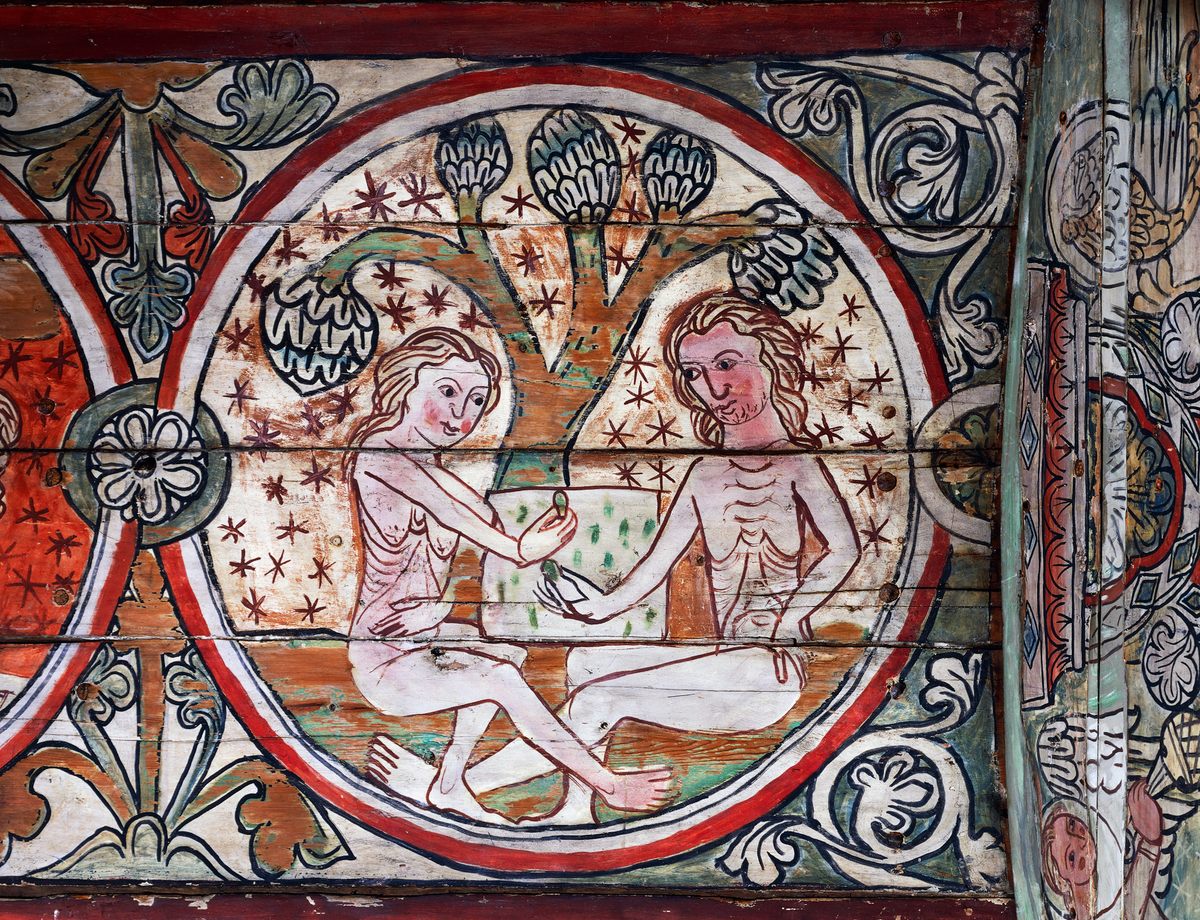
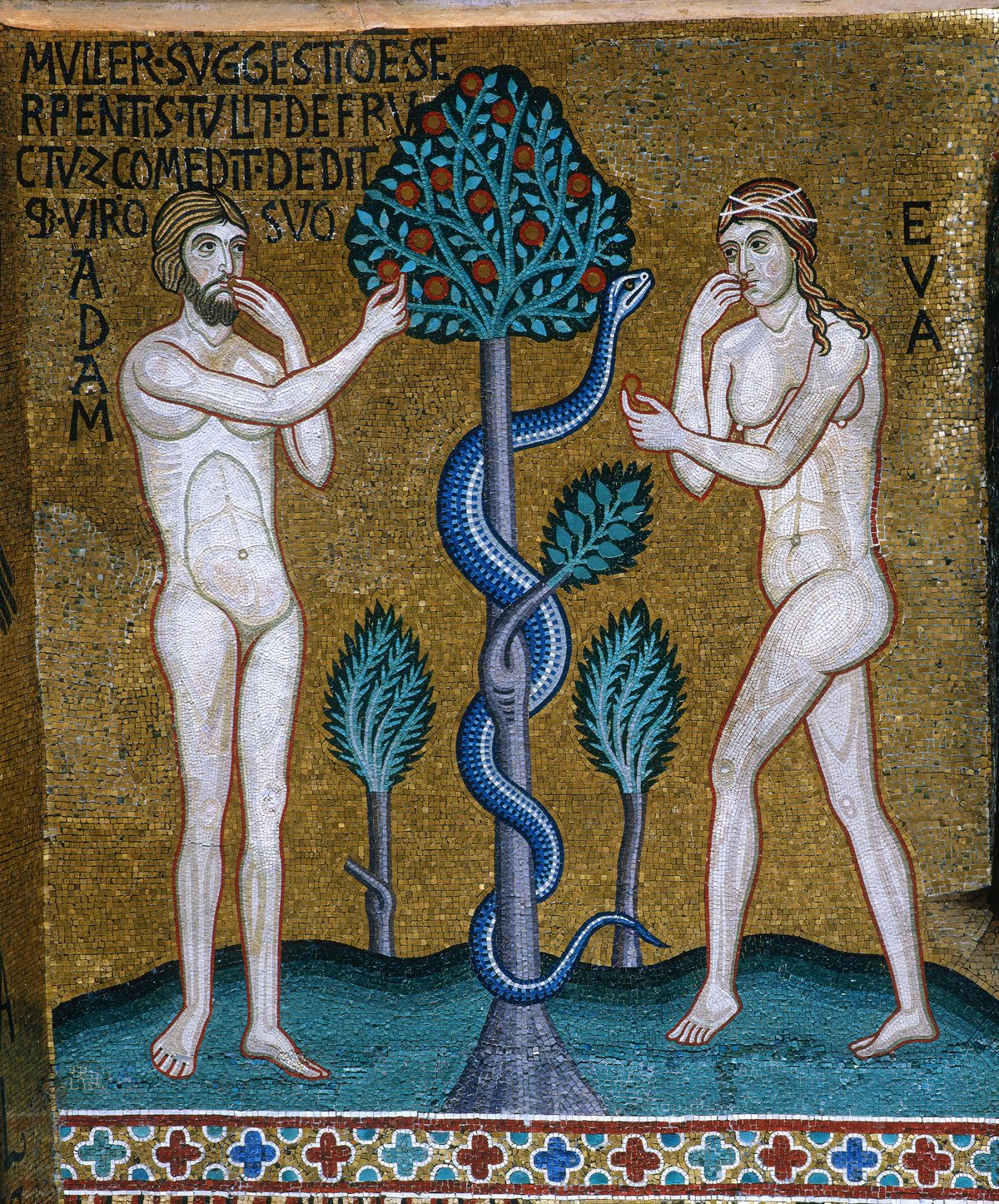
Mid-12th C mosaic. FINE ART IMAGES/HERITAGE IMAGES/GETTY IMAGES – the PROBLEMATIC MUSHROOM BRANCHING collection
Dr. Brown had to defend against defamation while turning the field to the correct direction forward – an opportunity as well as a constraint
The Challenge of Combining Effective Forceful Pushback and Positive Progress
Definition of ‘expert’

 The Egodeath theory