made a good voice recording saying how pointing out how
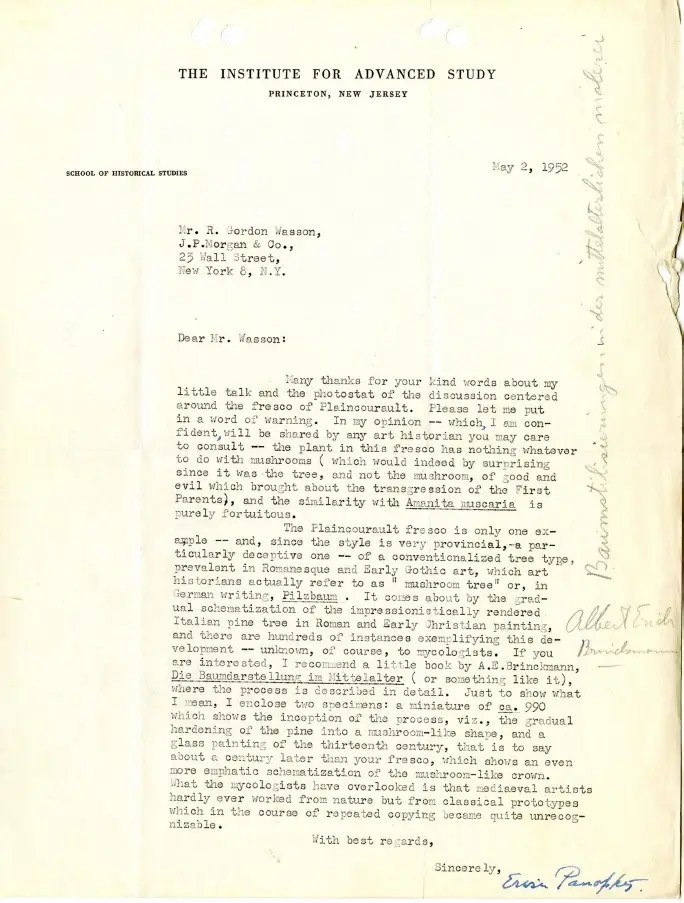
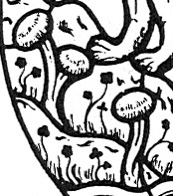
Panofsky’s insistence on looking at Pinetrees as the origin scientific image illustration and his refusal to do interpretation of the finished developed end result being so mushroom-looking that the artists deliberately forced us to have the impression of mushrooms with branches added.
Panofsky refuses to do his job of interpreting the resulting what he calls “finished product” of the “development” of the Pine tree into what we art historians call “Mushroom Trees” with branches.
that is the data that is given that you must interpret.
But what Panofsky does instead it amounts to refusing to interpret the impression but delete and negate and ignore the artist impression which the artist impress upon us deliberately and knowingly
they knew that everybody in the world including Panofsky’s art historians would call these mushroom trees and would describe them as mushrooms with branches (and cut branches and no branches, by the way)
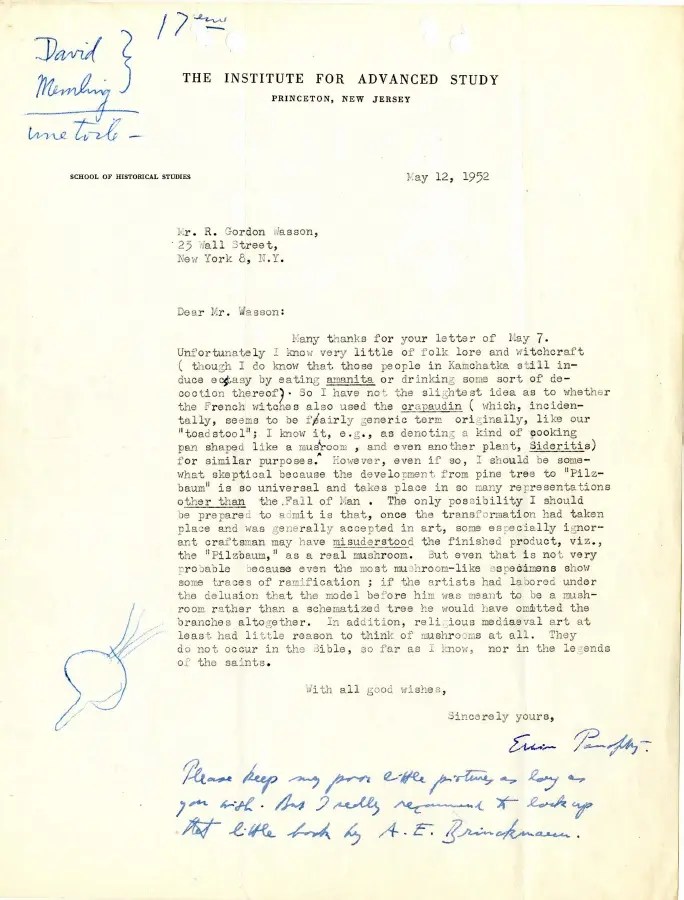
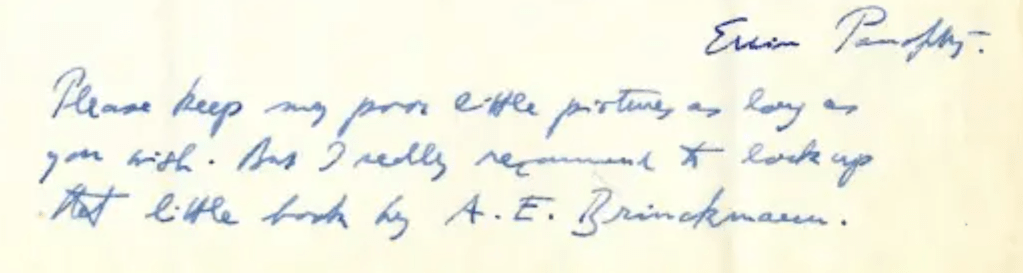
and he ends his second letter (brought to us by Brown and Brown)
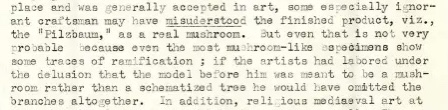
he ends his second letter by asserting that artist should not follow the templates – after he just lectured us about how the artists of the middle ages follow templates and now he says falsely that if they want to convey the impression of a mushroom they would have to omit branches
and yet his own art historians call the impression that they are forced to receive, the impression of mushrooms with branches (and cut branches and no branches) – that is the data which we art interpreters are given to interpret
it will not do, to refuse to interpret the given impression, which is the given data, and say we have to look at the raw scientific illustration of pine trees instead! Saying that the “mushroom-like trees with branches originate as pine trees” is not an interpretation of “the finished product of the development transformation process” (his words).
Doing art interpretation does not amount to stating the origin species (discarding & ignoring the final form’s styled impression); doing art interpretation means answering the question:
Why did the template development process finish and halt at an impression that the artists must have consciously and thus intentionally known would force on viewers the particular distinctively and characteristically mushroid impression, that art historians actually describe as “mushroom trees”?
clearly what the artist sought to impress us with, they wanted to form an impression of mushroom trees, which is to say, mushrooms with branching (and cut branches and no branches): why?
As long as you refuse to answer that, you are failing to do art interpretation, but are merely doing an exercise of evading your job and evading the impression and refusing to engage with the impression, which is definitely a deliberate impression upon the viewer of the concept of mushroom trees.
You have to explain and interpret the given data & styled impression, which is mushroom trees, NOT pine trees.
Why did the artists develop their pine tree impression templates into a final form that makes pine trees look like mushrooms with branching? (& cut branches & no branches, & left branching vs. right non-branching?)
don’t evade the question by pointing backwards to literal non-template, non-schematized form of pine trees; thats begging the question, that’s not what the artist impress upon us in their chosen impressionistic rendering of pine trees.
The whole entire question that confronts you as an alleged, (you claim to be an) interpreter of art, of artists’ impressions that they create & convey.
then do your job and interpret, and explain to us:
why did the artists deliberately choose to impress upon us, to give us deliberately the impression of mushroom trees, which you admit that, you describe them as mushroom trees with branching.
and that is what impression the artists intended & deliver in their final form of development.
so that is what you need to interpret, and saying that they come from pine trees is not an interpretation of the impression that the artists give us.
if the artists had wanted to give us an impression of pine trees, then the artists – as you argue yourself – would have dropped the mushroom elements.
The whole entire question that confronts you as an alleged – you claim to be an interpreter of art, artists impressions.
then do your job and interpret, and explain to us:
why did the artists deliberately choose to impress upon us, to give us deliberately the impression of mushroom trees, which you admit that, you describe them as “mushroom trees; mushrooms that have branching ramification”.
and that is what the artists intended
so that is what you need to interpret and no, saying that they come from pine trees is not an interpretation of the impression that the artists give us.
if the artist had wanted to give us an impression of pine trees, then the artists – as you argue yourself – would have dropped the distinctive mushroom elements.
if the artists had wanted to impress upon us the impression of pine trees, then the artist would have omitted the mushroom factors elements – to throw your stupid inconsistent self-contradictory argument right back in your face.
then all of a sudden now, after you just finished lecturing us about how artists did not work from nature but from templates, you directly contradict yourself and say if artists wanted to depict mushrooms then they would have omitted branches.
but tell me, if artists had wanted to depict pine trees, why didn’t they throw away their templates as quickly as you tell them to throw away their templates in the case of mushrooms but not in the case of pine trees?
why did the artists fail to depict pine trees, but they succeeded at depicting what you yourself call and describe the impression of that’s forced upon you, the impression of “mushroom trees”?
impressionistically rendered pine trees impression finished at mushrooms with ramification, interpret that, not the literal form that artists deviated from, pine trees.
The impressionistically rendered stylized impression is not of pine trees, but of mushroom trees, as your field’s own term admits & asserts.
Why do artists deviate from your umbrella pine trees in such a way as to produce the impression of mushroom trees?
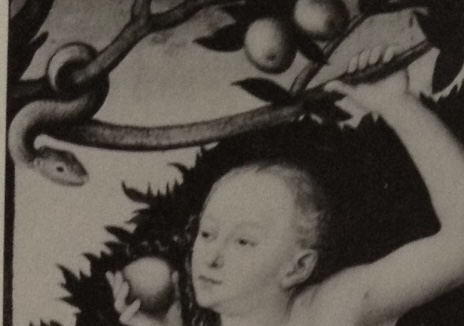
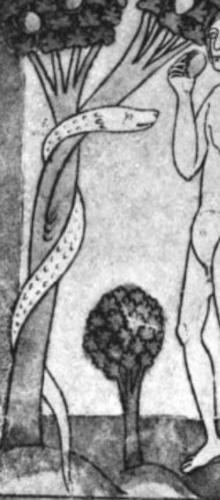
☂️🌲 -> 🍄🌳 🐍
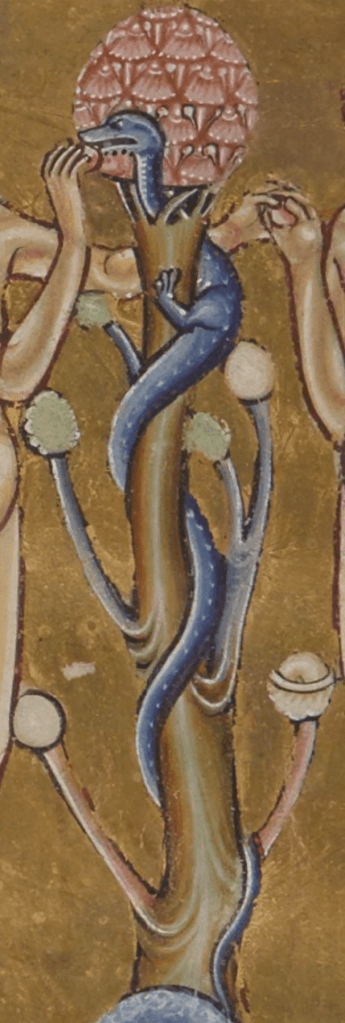
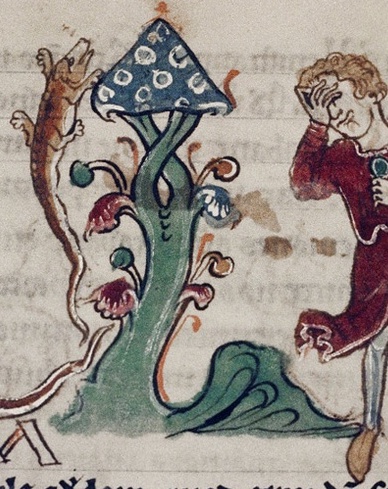
if we agree to your reasoning, that if artists wanted to depict mushrooms, they would have omitted the branches and (without any hesitation) discarded their templates, by your same reasoning, I argue:
if artists had wanted to depict & give the viewer the impression of pine trees, they would’ve discarded their templates (with no hesitation) and omitted the mushroom elements.
why are you inconsistent
you are evading your job of interpreting the given impression, which is not of pine trees, but rather of mushrooms with branches, that you admit by calling them “mushroom trees”; the artists successfully gave you the quite recognizable impression, despite the branches (& cut branches & omitted branches), of what you admit gives the strong & clear, distinctive & characteristic undeniable impression of mushroom trees.
Explain the impression; do not explain the original form 🎄 but rather, explain the final resulting impression, that is your job.
If the artists fail to depict mushrooms because they have branches, as you claim, then why do you yourself call them “mushroom trees”?
you prove that you’re full of baloney
and cut branches and no branches (despite your false claim that “even the most mushroom-like specimens have traces of ramification”)
Why is the artists’ evident template rule “Don’t show branching within the cap/crown”?
the crown is non-branching, why?
You call yourself an “interpreter”; now interpret!
May 6, 2020 the point is not what type of leaf so much as non-branching.
by presenting you with a grid of leaves of whatever type, we are conveying the idea of lack of branching; omission of branching.
it doesn’t matter what kind of leaf , whether it’s a grape leaf, or a shelf fungus leaf, or an ivy leaf, or a cannabis leaf.
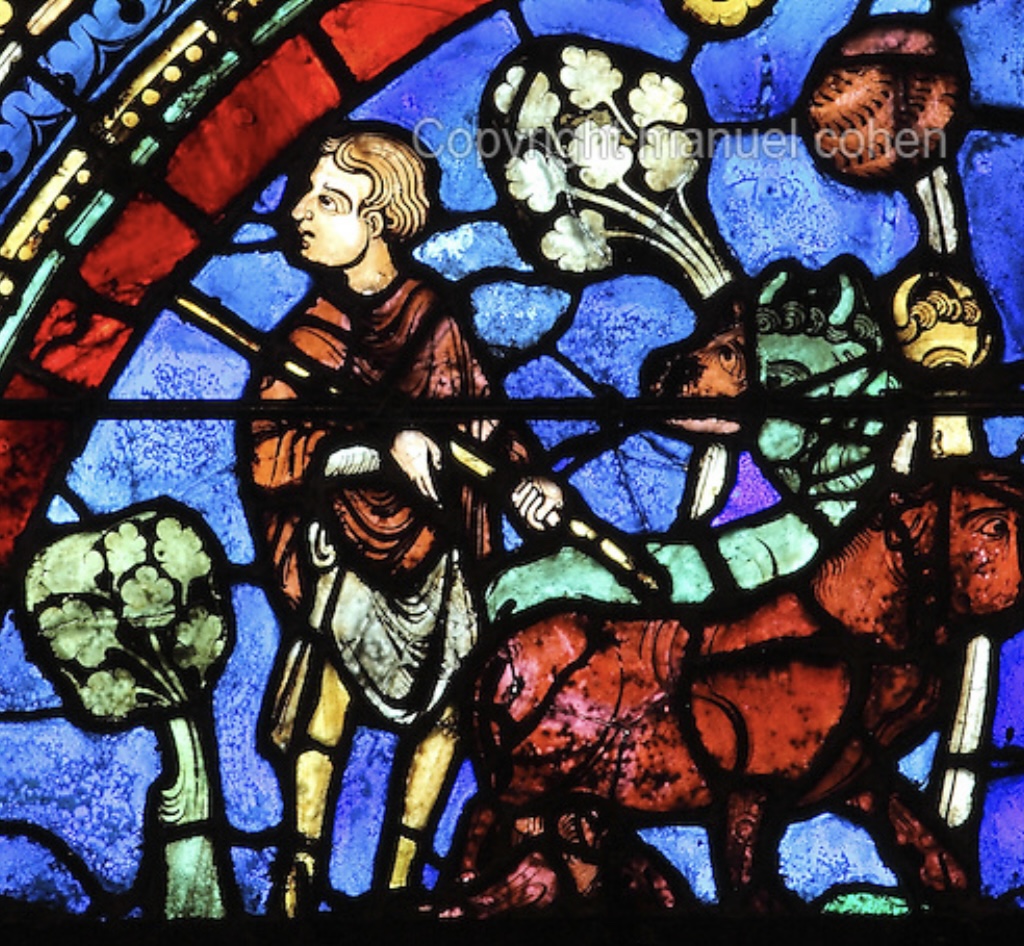
Similarly, we can read Ariadne’s nonexistent species of tree branch a palm branch with branching, unlike a real-world palm branch.
The palm was of interest for its rule-breaking branching.
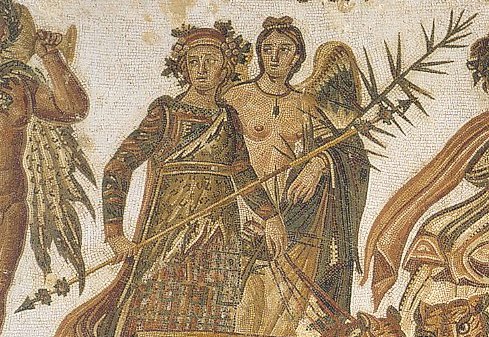
I’d have to look up technical morphology of branching tree structures.
And in fact our inability to identify the tree species Ariadne holds in her left hand drives home the point that you do not need some particular backstory insider knowledge to read the morphology, the interplanetary universal basic elementary morphology conveyed by the unnatural nonexistent species of branching palm tree, branch held by Ariadne.
There is no such backstory, that’s kind of the point: it is a mythological branching palm branch, useful for its branching morphology, as opposed to some complicated technical particular species.
What type of mushroom has a fountain shape and gills on the outside, for feline with spots, but has a round base? that does not match Amanita – but this is a mythical scene, with mythical attributes of plants morphology expressing balancing, like expressing branching.
What type of tree has a crown consisting of leaves where each leaf has a stem coming from the trunk and no branching except at the top of the trunk we’re all the leaves come at once?
Palm morphology.
so Brinkman is wrong, Panofsky is wrong; the correct species that I have literally scientifically identified is , what the artist – and also, Wasson is wrong: he says it’s a “Palestine tree type” , in contradiction of the other expert, Panofsky, who says it’s an Italian Umbrella Pine
but I tell you the scientific fact of the matter literally: the inept artists were struggling and striving to present the palm tree. 😑
🌴
Unfortunately, their templates got accidentally distorted in a way that all the artist agreed to accept for some reason, the reason being, no reason.
there is no purpose in art
there is no meaning in art
there is no significance in art
impressionistic stylization is for no reason
I learned this theory of art interpretation from the most influential art historian of the 20th century, Erwin Panofsky:
The templates got distorted over the course of repeated copying, for no reason whatsoever except inept, sloppy artists’ “purely fortuitous” accident, and all artists came to accept “the final completed resulting product” of this random, entirely accidental “development transformation process”, even though it looks, undeniably forcing the impression on every viewer, including late-modern art historians, the impression of a mushroom tree, combining, they say, they observe, features of mushrooms quite recognizably, despite also having features of branching (and cut branches, and non-branching).
Did the artists realize that their mushrooms trees gave the clear and distinct impression of being mushroom trees?
If not, why not? Are artists stupid and ignorant of the impression that their art gives the viewer?
Why did artists come to accept these highly misleadingly shaped templates, that art historians say look like mushroom trees, even though knowing these impressionistically rendered images give the viewer the distinct impression of mushroom trees?
Were artists trying to mislead viewers?
What’s your position on these questions, Panofsky?
We can be assured by Erwin Panofsky that these artists would be shocked, shocked! if anybody came away with the “delusion, of some especially ignorant craftsman, under the delusion” that these images – which force the impression on us of mushrooms – were intended to give the impression of mushrooms, despite having branches (and cut branches, and no branching).
Pointing to pine trees is not “interpreting”; it is a refusal to interpret the given impression which the artists give us, the given data.
Avoiding that data, that impression of mushroom trees and replacing it by instead a pine tree 🎄, is a refusal to interpret, while pretending to be interpretation; but it is anti-interpretation, pseudo-interpretation, a pretense of interpretation.


 The Egodeath theory