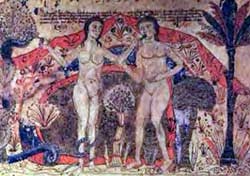
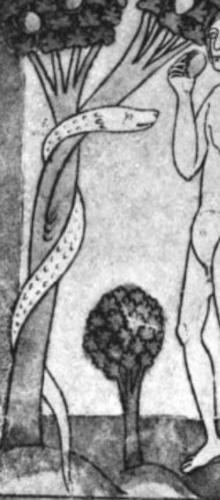
it is possible to dis-identify the right hand tree in two versions of the scene in the Monte Cassino Manuscript as Mandrake and only emphasize palm tree instead, with its distinctive non-branching versus branching morphology, in which case this would be a “branching-message palm tree” with added cut branches.
Since Hatsis is removing Psilocybin from the Eucharist, in retaliation, I’m removing Mandrake from the Montecassino Manuscript, both versions of the scene.
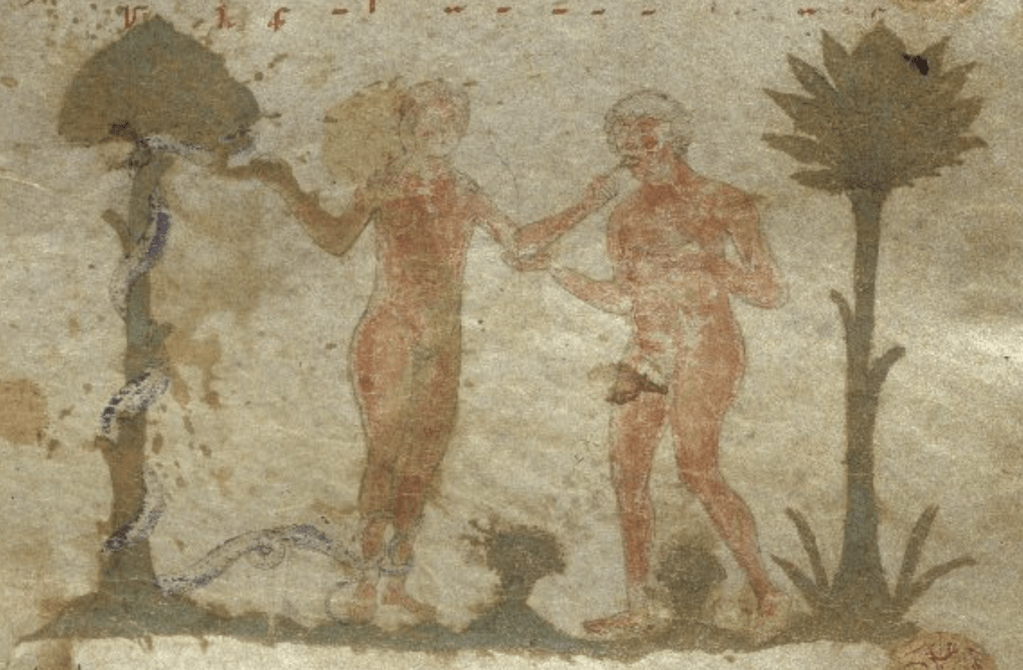
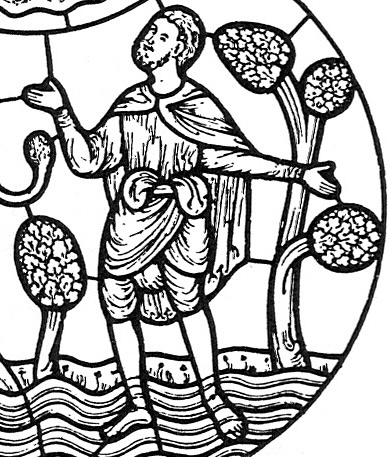
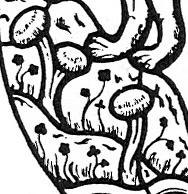
Remember the lesson learned from cannabis fanatic Ardent Advocate Chris Bennett(?) falsely said, and other people have falsely misidentified the four mushroom plants that God created in Canterbury Psalter page 1
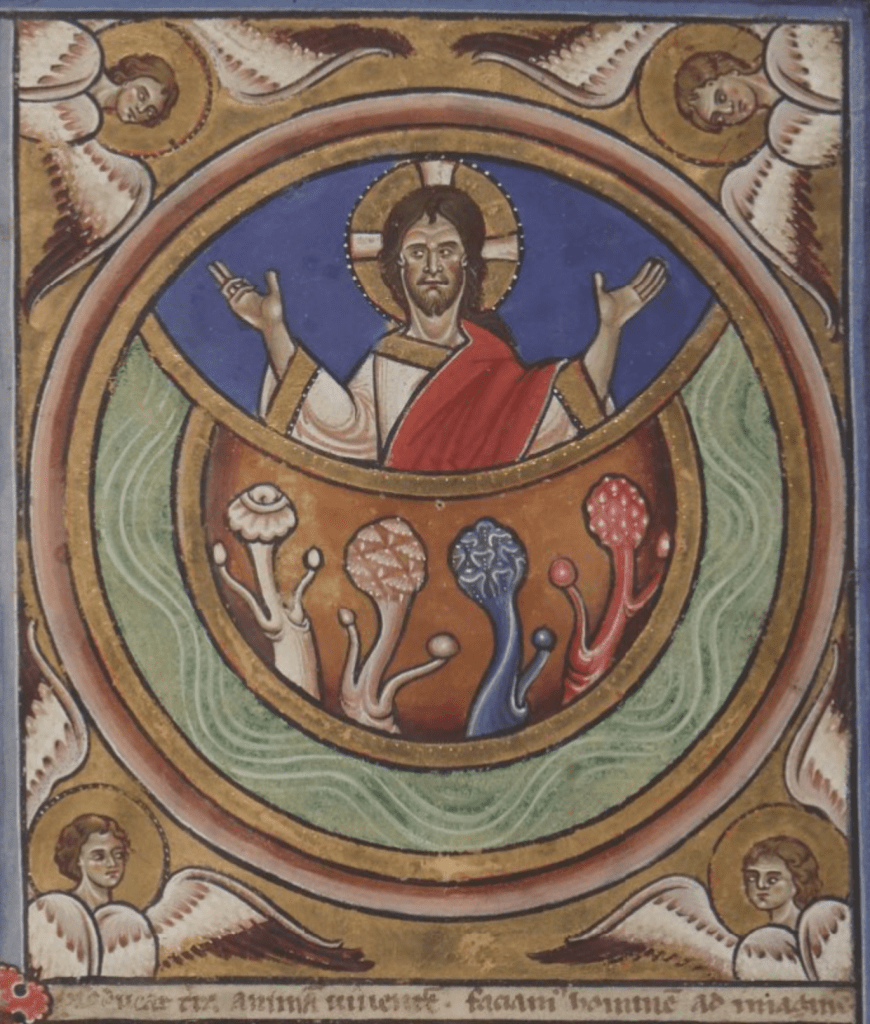
Amanita as a Weed in the Field of Entheogen Scholarship: An Invasive, Undesirable Plant: High Propagation, Low Value, Chokes Out the Good, Highly Desirable, Valuable Plants, and Prevents Comprehension of Religious Mythology Too
I agree with Eadwine per my inventory page of the 75 mushroom plants in Canterbury Psalter: Amanita is the least important of the four mushroom types; it is only really interesting visually, and as a curiosity, not as a practical cognitive loosener.
And Eadwine didn’t even use Amanita much even for merely its visual effect; he pretty much nearly omitted Amanita imagery from the Canterbury Psalter.
I applaud him for that; he’s really helping rescue our hapless situation, with the Secret Amanita presupposition spreading like a noxious weed: high propagation, low value, shuts out the superior, desirable plants.
I think Eadwine was really sick of the extreme overuse of Amanita imagery in art by the Carl Ruck school of Secret Mystics.
We’ve had long-shot and way-off guesses, such as the four plants mean opium and cannabis and four different groups of types of psychoactive families, and that’s wrong; I agree with brown and brown that all four sacred plants that God created are –
all your mushrooms are belong to us
and none of the mushrooms belong to the ardent advocates of cannabis and the ardent advocates of random, anything-goes, junk bucket of all visionary plants thrown in a witches brew together in a meaningless, useless way that’s no good for building a theory of specific cognitive effects, such as Cubensis re-dosing to control the frequency, duration, and intensity (rectangular “curve”), as the ancients did routinely in the banqueting mixed wine tradition, and as we see reflected in the mushroom trees tradition of the high, most high period of the middle of Christian history.
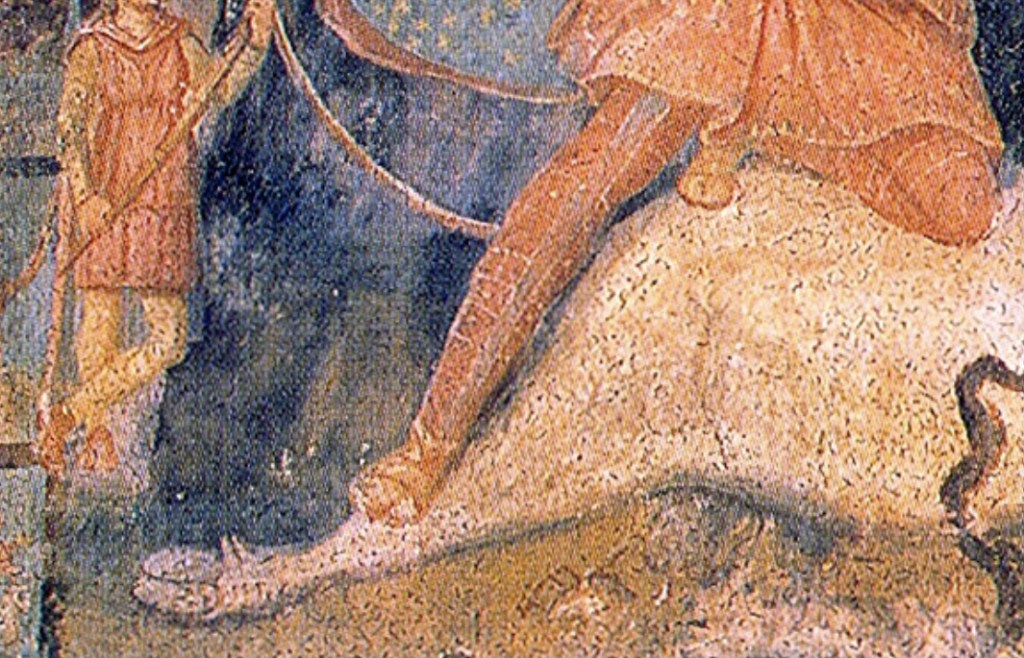
All of this completely contradicting Carl Ruck and his super-limited, self-defeating Minimal, mushroom-removing, mushroom-minimizing paradigm that he’s got us trapped in, so trapped in that we have to resort to the likes of Hatsis to bust us out of the mind-stunting preschool prison that Dr. Secret Amanita and the evil M. Hoffman have us trapped in, the Carl Ruck school of removal of mushrooms from history, rendering them- the assumption of suppression, rendering them suppressed.
In my opinion, the tree could very well be Mandrake, intended and indicate use of Mandrake when as a fallback, as an inferior second rate; third-rate, fourth-rate fallback when the ideal, desired powdered Cubensis is not in season, or in between the manufactured, cultivated batches of cow pie mushrooms,
or my main theory, that the ancients sometimes ran out of synthetic Psilocybin gel caps, because Kafei ate them all at once at the same time, not even using the re-dosing technique, per the traditional methods of the mystics.
And as a desperate measure, they purchased from Hatsis Industries Witching Supplies, Scopalamine instead, as a fourth-rate fallback ersatz low-grade substitute for the bona fide real deal gold standard reference, Psilocybin from cows.
🐮 🍄
Just like Erwin Panofsky, I too have an opinion, and my opinion is actually informed by relevant information & coherent reasoning, unlike his, and that of all the compliant, coerced art historians, the art students and the art professors, who are all forced and coerced to have their public stated official faith declaration profession of faith:
that in their (sincere, of course) opinion, mushroom imagery does not in the slightest connote mushrooms, and the artists would be shocked, shocked! to have “some especially ignorant craftsman” “misunderstood” the mushroom imagery as mushrooms “under the delusion” the accidentally distorted through sheer number of recopying, distorted templates by sloppy, non-sentient artists who have no ability to steer impressions toward or away from mushroom impressions.
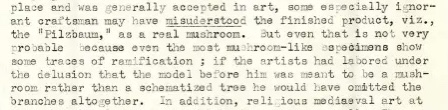
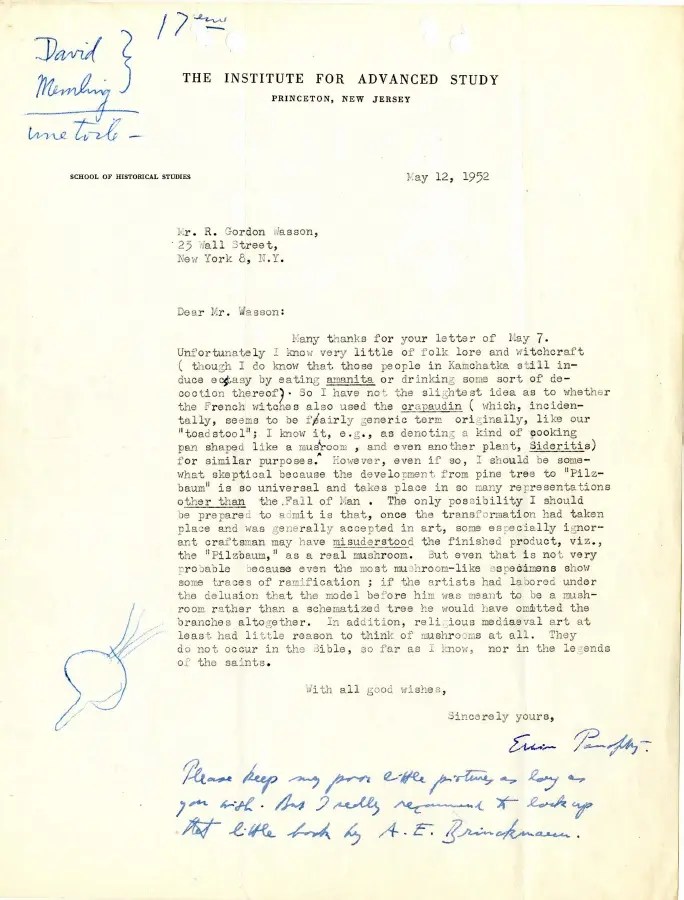
And besides, argues Panofsky after putting on the kettle, if medieval artists had intended to depict & give the impression of mushrooms, they would have simply wadded up Panofsky’s precious impressionistically accidentally distorted templates into the garbage can and have gone out and consulted nature, suddenly becoming literalistic modern natural science artists, and would have depicted mushrooms without ramification added.
Art impression is unintentional, accidental, inadvertent, meaningless, and without any significance, and out of the artist’s control, and the artists in England understood themselves to be churning out southern Italian umbrella pine trees [contra Wasson’s subsequent, specifically vague “conventionalized Palestine tree type”; yeah, that’s the ticket!], slavishly following their meaninglessly, accidentally distorted templates, distorted by accidental, inadvertent sloppiness.
Says the most influential historian.
Gordon Wasson (the Father of compliant, self-limiting, pretextually constrained Ethnomycology) is invited by Erwin Panofsky (alas the most influential, most-to-blame art historian) to ask any certified art historian their opinion on “do mushroom trees mean mushrooms?”, their official stated profession of faith statement publicly.
Professionally certified art historians have all been trained to publish publicly the same profession faith statement of their profession, which is required and mandatory for them, or else, must we remind you yet again, that “To reveal the mysteries is punishable by death”; academic death.
And so by Hoffman’s Uncertainty Principle, when we throw a taboo question at the art historian to probe their position publicly observation observing them observing their reaction displacement, we cannot know their actual position, unless they state a position which goes against the coerced dogma position.
But going against the obligatory public profession of faith statement is not possible, if we are only including employed professors and passing students, because no student is allowed to pass if they express a dissenting opinion and assert that obviously, mushroom artists knew perfectly well that their image impresses, gives the viewer the impression of mushroom in their impressionistic impressively mushroid imagery.
Revealing the mysteries is punishable by death
you must have the opinion that we require your obligatory holding of this public profession of faith statement
go ahead Gordon Wasson test our trained professionals: publicly ask any passing student what their opinion is on this matter; publicly ask any employed professor what their opinion is on this matter, and you will discover that all of them assert and profess the same faith public profession of faith, official declaration of position, that no, these distinctively mushroom-looking trees, the artists had no intention whatsoever, despite the fact that the artists knew that their imagery would compel an impressive impression of mushroom impression.
But in our opinion, as passing art students and employed professional art professors, it is our sincere, coerced, mandatory, obligatory opinion that mushroom images do not intend at all whatsoever to connote mushrooms, even though all the artists must have realized that their impressionistic mushroom-styled imagery would force upon the viewer a mushroom impression.
Yet Erwin Panofsky – the most influential art historian – denies that.
Panofsky says artists are idiots, and are misleading people, and that the artists had no intention whatsoever to convey what their images absolutely convey, according to the art historians who actually call them “mushroom trees”: an impressively strong, quite recognizable (so recognizable, that even with ramification added, they still read as mushrooms), impressionistic impression of mushroom trees.
🥺 🍄🌳 🐍

 The Egodeath theory