I hereby define the psychedelic gospels theory v2 as hardcore, per the overenthusiastic ardent advocates, seeing that v1 died on the hill of the St. Walburga vial.
Cybermonk
May 17, 2022, a.m.
Brown needs to do full disclosure regarding all the omitted details from the book and from the article paragraphs regarding the tapestry.
when you claim that you “held the photo up to the light”, what photo are you talking about: the black-and-white cheapskate version of the gallery book courtesy of Jan Irvin?
pls confirm that “the photo” which you used to improve upon irvin’s interpretation, was the selfsame photo which irvin used & provided you with a copy of; an even poorer copy of his copy. Not the pic internetted to u by Abbey. And not seeing tap firsthand. so you demonstrate that it’s possible through superior interpretation or nuanced, to come up with a superior interpretation, through using an inferior copy of a copy of a photograph of the original art. opposite of field work. only AFTER your superior reading of Irvin’s b/w inferior version of his pic, did u LATER get the hi res pic internetted from the Abbey.
which u use to show beaut instance of 🍄 imagery to readers of ur bk plates & color popular article, as a positive instance of good successful amanita imagery in Christian art.
so this tapestry vial = a good entheogenic icon IF/WHEN contained in Browns publication, but = a failure & disappointment & a non entheogenic icon if /when contained in Irvin’s book.
when did you obtain that “photo”? is it a color photo or black-and-white photo?
when did you, and why did you obtain the photo from the Abbey?
if this art is “unfortunately”, negative, failed disappointing and faded Evidence, “not a mushroom, but instead is a vial” when it comes to Jan Irvin, then why did you go to the trouble to request a photo high-resolution color beautiful version from the Abbey, if it is negative, disappointing, failed evidence for msh imagery?
is this icon positive evidence, or not, for Mushroom imagery in Christian art?
pls State at your position explicitly, not implicitly.
Your book treats it as negative evidence but also kind of treats it as positive evidence too, in your gallery presentation, and same with the article.
whenever you discuss Jan Irvin , you emphasize the negative (rhet framing); but when you discuss your own theory, you emphasize implicitly the positive evidence of this tapestry, that it amounts to & serves as.
here is mushroom imagery, when we are promoting our theory
not, … irvin
Can we see your email communications with the Abbey?
if we do full disclosure, as u claim to do, I want to see your email to the Abbey, and I want to see the email reply from the Abbey with the attached photograph.
I want to see just how inconsistent, just how prevaricating, just how much you want to and try to abuse this Sacred art to have it both ways.
You frame it as “definitely manifestly is” and “definitely is not” mushroom Imagery, at the same time, in a brazenly self-contradictory way.
did you tell the Abbey that you wanted it them to internet you a hi res color pic because it shows a Mushroom?
Tell me , how high resolution is the color image which Jan Irvin has ?
do you have his color book, or his black and white book?
did you tell the abbey that the tapestry is a beautiful instance of mushroom imagery in Christian icons?
why exactly did you not travel to the Abbey?
why do you try to sell / frame / characterize this tapestry as negative evidence when you’re criticizing Jan Irvin, and yet you implicitly sell & frame this same tapestry as positive evidence for mushroom imagery, when it comes to promoting your own theory?
If this tapestry fails to depict mushroom imagery, then why do you include it in the color plate of your book right next to the big red 🍄 cap from the other church?
Browns’ position on the vial may have changed; their view appears to have developed to a more neutral take, from the 2016 book to the 2019 article.
The later article, by itself, doesn’t say or imply that the tapestry is not entheogenic art. Unlike the book.
The article doesnt say “good thing we didnt go there, lets go to entheogenic art instead”, as the book says.
Article only says tapestry depicts a vial, not holding a literal msh. and implicitly asserts it looks like 🍄. both are true.
The article should have explicitly stated their potential viable point, which is that our method gives a more precise, complete, and detailed and less crude interpretation than Jan Irvin crudely incorrectly, incompletely asserting that she holds a literal mushroom specimen.
It is not clear that the article is trying to make that valid point, which could have been a constructive useful point.
Article omits the book’s two false implied statements, 1) serrations dont match botanical specimens; 2) tapestry is not entheogenic art. p 153 & 154 respectively.
Both false assertions are implied, not explicit, in the book; neither assertion is articulated clearly and explicitly.
The article is all-around more silent: doesn’t say they didn’t go to tapestry; falsely misleadingly implies they travel to it, “On our trip, we realized it’s a vial” (😉 while looking at a photo) – that’s as true and as deceptive, constitutes lies of omission (& of positional framing) as much as Wasson writing the quarter-truth, “my printing of Panofsky’s letter”.
NEVER TRUST AN ENTHEOGEN SCHOLAR
Article doesnt state why they decided not to do field work on the tapestry. That omission is strange & misleading, given the structural placement of the picture “Courtesy of Walburga Abbey”. 😈
I’m a painter myself – of false and misleading pictures
Dear Abbey,
Thanks for the blurry photo, we sure enjoyed the visit – to our hotel & computer screen.
— the Browns
Non “Full Disclosure” section of article
Ironically, the article postures by having a “full disclosure” section, but they fail to list in their full disclosure section that they did not in fact travel to the Abbey.
Nor do they state there why they didn’t go to the tapestry in field work (p 153: bc flat base, bc being a vial means not also alluding to 🍄, bc serrations dont match botany specimens) and why they classified it in the book as not entheogenic art p154 – woulda been interesting.
May 16, 2022, p.m.
Ultimately, I find the Browns’ attitude about this piece of art baffling and self-contradicting.
browns should be putting more energy towards coordinating with the Ardent Advocates, instead of pretending to fight against them and pretending to have a big giant gap and conflict between the two, which is really an overstatement and confusing, as we see here, not very helpful
we should be resolving the minor little refinement of interpretation between the psychedelic Gospels theory versus the Ardent Advocates,
these are just internal fine points of detailed dispute within the same general Normalcy/Maximal entheogen theory position, except that admittedly John Rush has Amanita Madness extreme overemphasis.
we need to develop the idea more in a refined way, of rejecting the Suppression Assumption, as being too crude; we need some refinement.
The suppression assumption is very disproved by the boatloads of mushroom imagery within the church, completely disapproves Mckennas extreme overstatement and Jonathan Otts crybaby extreme exaggeration, trying to tell the false story
but his story collides – as Thomas Hatsis should agree – Jonathan Otts crybaby boo-hoo story completely collides against the fact of the boatloads of mushrooms jammed all throughout Christian Art – not to mention every occurrence of the word ‘Eucharist’ in texts.
Browns simultaneously parade the tapestry forth as a great awesome positive example of mushrooms in Christian art, while trying to also describe it as a failed dud example of non-entheogen art, just because it doesn’t depict a literal botanical mushroom, like Jan Irvin incorrectly asserted.
My God, Browns, if this tapestry is a failure and an example of non-entheogen art, then let’s have 1 million more duds like this from the Irvin/Rush collection.
you sure seem to love it yourself
what the hell is your message
I am just confused
I think the Browns want to have it both ways on this piece of art.
they want to simultaneously double-purpose this piece of art as a great positive proof of their theory that there’s tons of mushroom imagery all throughout Christian art, proving their psychedelic gospels theory, while simultaneously also while also trying to frame it as a failure and an example of how the collection of images contributed by Irving and rush are false disappointing misinterpretations,
“this image is a typical example of the disappointing false positives that the Ardent Advocates deliver”
but how can browns frame this as a false positive typical of the totally disappointing deliveries from Irvin and rush
in what sense is the tapestry a false positive and a great representative example of the disappointing kinds of failed evidence that the ardent advocates provide?
the Browns confusingly present it both as a success and failure at the same time
they tried to use the same piece of art to bolster their own theory, while simultaneously trying to use it to somehow depict the contributions from Irving as being a failure & false positives
the serrations are used by Browns to argue that it is not Amanita but “instead” is a vial.
what the hell is their position/ attitude on it?? it’s totally confusing.
Browns present it as an attractive example of amanita art, and everyone receives it as Amanita art, everyone points to it and says “good example of 🍄🖼 amanita art that the Ardent Advocates provided, what a pleasant article, what a pleasant book.”
“Nice Amanita tapestry you got there”,
And the browns say “why thank you , were glad you enjoyed our successful collection of amanita pictures including the tapestry”
they’re trying to play the tapestry art both ways!
when you’re trying to judge Jan Irvin, be sure to treat this tapestry as a dud negative failure and a great example of how disappointing irvins contributions are.
but when you’re trying to judge our contributions, & interpretations, you should instead think of this same tapestry as a great beautiful wonderful example of the amanita art, even at the same time as we mentioned something about serrations proving that this is not amanita, but we’re gonna accept all of your positive reading of it, in a completely self-contradictory way, so that it is and is not and is positive and is negative all at the same time (depending on whether we’re putting down Irvin at the time, or trumpeting our theory’s superiority at the time) – slip and slide!
and then we’ll conclude that our interpretation is better and clearer and has more coherence and integrity than Jan Irvin, those crazy confused Ardent Advocates, who can’t think clearly.
my God could you be more self-contradictory?
There should be more reconciling and less posturing /marketing of relatively trying to lower Irvin in order to raise and elevate the Browns.
Sure seems like this tapestry is being abused to try to make Irvin look exaggeratedly bad in order to try to make the Browns look relatively good.
The tapestry is being confusingly abused to exaggerate and overstate the difference between the Ardent Advocates’ Interpretation versus the Browns’ Interpretation – they’re not really that far apart, even if maybe Rush exaggerates Amanita.
in the book, p153, Julie claims that she has reached a negative identification due to the serrations, and yet she also acts as if this is a beautiful positive example of mushrooms in Christian art.
I don’t really understand if she’s saying that it looks like Amanita or that it does not look like Amanita.
The Browns are confusing me with mixed messages
they’re sending me a message that the tapestry does look like amanita, and that it does not look like amanita.
they say that it is a positive example, and that it is a negative example, and proves that Irvin is wrong in seeing mushrooms everywhere.
and yet at the same time Brown implicitly says that this picture looks like Amanita.
By the very act of including it in his popular article and book, and everyone likes it and he thanks everybody, and everybody’s happy with this great picture of the Amanita tapestry – he just seems confused and self-contradicting, trying to sell this tapestry as a success and failure at the same time, in self-contradictory ways.
The more I study your treatment of the tapestry, the less certain I am of what do you actually believe about it (according to your 2016 book and 2019 article)?
We should not exaggerate the difference between brown versus Irvin, but there’s some truth that Irvin overemphasizes Amanita.
But we would need to gather statements that Jan Irvin made about psilocybin.
at the level of book description, John rush second edition has full-on Amanita Madness; extreme overemphasis.
🍄😱
I have a sharp distant position; I distance myself from rushs position regarding placing Amanita as the center and boundary of your thought.
amanita should be moved out from the center and psilocybin should be the center instead.
as I read and critique each word of the Browns article regarding the tapestry and each word of the book, it is interesting what they never say , and how they want to sound negative – or more nuanced – than Irvin/Rush.
Browns are trying to sound negative, but they don’t actually “dismiss” the tapestry in a clear sense;
browns never denied that the vial image looks like or refers to Amanita in an allusive, styled way.
Yet browns definitely seem to assert that they have discovered that the tapestry does not constitute entheogenic art
this doesn’t make any sense
they need to define their terms: what are the qualities that they’re looking for?
why do they act like this is a bad, poor type of art that doesn’t count?
they act like the tapestry doesn’t count – I don’t understand why.
“Good thing we didn’t waste our time going to see this stupid failed time-wasting dud of a tapestry”
I don’t understand why browns consider vial to be not entheogenic art.
Sure, it’s not a literal physical mushroom object that she is depicted as holding, but still, isn’t this a good, successful find to add to the “mushrooms in Christian art” database??
are Browns saying that this is not Entheogen art?
they seem to say that, in the book, that because the art does not depict the Saint holding a physical Mushroom, therefore this tapestry does not constitute entheogenic art. 😑
that is a bad, failed interpretation.
or that’s a stupid definition.
how did the Browns justify this negativity and apparent rejection in some sense that they are vague about?
this tapestry is actually a poor example of the Browns Interpretation supposedly being far from from Jan irvins Interpretation
I’m not even sure that Jan Irvin really disagrees with Brown’s interpretation
how do we know whether Jan Irvin agrees with Brown’s interpretation?
irvin might say “well obviously that’s what I meant”
Jan Irvin might readily agree with the browns
it’s not even clear that the two positions are significantly held, firmly held, opposed positions that Jan Irvin holds to and that the Browns holds to.
did they ever have a two-way conversation between them to resolve the slight, rather overstated “difference of position/ interpretation”?
they only say that Irvin is wrong / off-base
everything that the Browns say about the tapestry is true, and yet they come away with the classifying it as “not entheogenic art”
but Browns don’t say what they mean when they say that the tapestry is “not entheogenic art”
they don’t say exactly why they chose not to travel to the tapestry
they don’t explicitly say what kind of a negative verdict they have
they don’t explain why they’re only interested in depictions of physical mushrooms
they don’t explain why they consider a mushroom-styled vial container to be “not a successful” piece of “entheogenic art”.
They never say in a single explicit statement that it is an amanita-styled vial, and they never deny that either.
they leave it very implicit why they chose not to view the tapestry. I’m not really sure exactly what they think they’re looking for during their travels
I wish Browns would say why they considered their other destination to be a successful piece of art, but they consider the tapestry to be an unsuccessful piece of art
they don’t say why they’re interested in the kinds of mushroom imagery that they’re looking for
Why exactly does the tapestry not meet the criteria they’re looking for?
they don’t say; it’s all kept implicit.
Why exactly do they think that the tapestry is a perfect addition to their book and article, and yet they didn’t bother to travel to see it?
Maybe because you could say both aspects are self evident:
1) any fool knows that the saint holds a vial, despite Julie making it sound like she had to do a sweat-inducing hard-core Internet research, but it’s really trivia.
OMFG JERRY ITS A VIAL 🤯🤯
🙄🤨
2) Anyone (other than that liar Wasson and that idiot Panofsky) would say that its self-evidently too obvious to even mention that it’s a “mushroom vial” in the same sense as a “mushroom tree”; that it plainly manifestly is mushroom-styled and so that aspect doesn’t need to be summarized by brown.
So there or you can sort of construct brown delivering both halves of the correct interpretation: obviously whatever it is , its styled to look like a mushroom, and as any cursory two seconds of research will show that the Saint holds a vial.
Therefore obviously the tapestry depicts the Saint holding the standard traditional vile , this time manifestly and obviously styled as a Amanita
QED
what’s the big deal?
it’s kind of self evident
what do you need a bat cave sign on it saying:
“the usual vial, this time styled as Amanita”?
that’s kind of self evident
but why exactly do they make noises like this is not a successful piece of art contributed by Jan Irving and John Rush?
Why do the Browns try to diminish and belittle this tapestry as not being entheogenic art?
what do they mean by saying or acting like this is not Entheogenic art ?
why did they act like this tapestry is a failure or a disappointment?
I don’t really get it
I am sure everybody loves this tapestry in the article and everyone feels that this tapestry is a success And a positive contribution to proving entheogenic art Christian art, proving that there is widespread mushroom imagery thruout Christian art.
this tapestry prove that.
so how did the Browns frame it as a negative finding? ” good thing we didn’t waste our time visiting this non-entheogen art , that we include because it shows Amanita and so is very popular in our article “
they contradict themselves.
why do browns include this attractive tapestry to help increase the Article viewership, and then they make noises to try to position this tapestry as somehow being a failure?
browns try to exude negative noises to make themselves look reasonable compared to that crazy person ardent advocate Jan Irvin with his literal concrete crude reading of “object X equals literal Mushroom”
HEY WALBURGA ABBEY, GLAD WE DIDN’T WASTE OUR TIME ON YOUR NON-ENTHEOGENIC ART AMANITA VIAL TAPESTRY 👎👎 – BROWNS
p.s. Thanks for the Amanita art picture of the Amanita vial, this will be very popular in our popular Amanita imagery art entheogen proof of mushrooms all throughout Christian art mushroom imagery article, what a beautiful terrific example proving that there’s mushrooms imagery all throughout Christian Art
Levels of self-contradiction not thought possible, ever since Allegro contradicts himself with the planecrawl Fresco “forgotten memory of a trace of the old tradition from the 1300 years long, forgotten tradition evidently still remembered”
why do they not go see this art, but they go see other art ? they don’t really say
browns don’t really say, but maybe the tapestry interpretation was too easy and to self evidently obvious that against Jan Irving that’s the Saint does not hold a literal Mushroom, but the saint holds a vile the styled as a mushroom.
so why bother traveling to the tapestry; there’s more interesting Interpretation challenges than that.
eg Let’s go photograph St Martin:
holding the branch in the left hand and cutting the branch with the right hand.
Decoded Interpretation/ Announcement; answer to Brown’s question:
Why the Branching Mushroom Tree Grows out of a Stone Tower
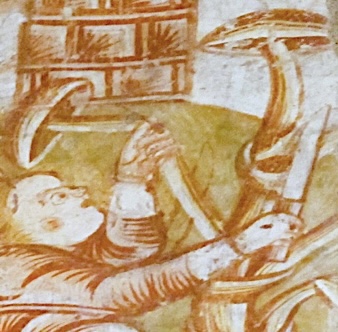
Processing & sophisticated interpn: Cybermonk. non-branching msh grows out of stone tower, Brown asks why; I answered May 14-16 2022, bc:
{stone} = block-universe experiencing of non-branching eternalism with dependent control, future control thoughts already exist, pre-created; rock block universe experiencing from psilocybin 🍄.
that set of St Martins frescos is a highly valuable, new, not self evident item of high significance that needs to be photographed and analyzed and requires bringing a lot more than just a cursory web search to determine “oh, the Saint always is understood as holding a vial, & this time, self-evidently styled as an Amanita”.😴
This tapestries a perfect example of the dud failed art that Irving and rush falsely put forth as depictions of mushrooms that totally are not depictions of mushrooms at all.
good thing we didn’t waste our time on this stupid piece of non-entheogen art, which will be a beautiful popular awesome addition to our Christian entheogens and mushroom imagery art article because of its great amanita mushroom imagery in Christian art.
that will be some field research that’s truly worth the trouble of traveling, to go get that valuable feel for that room with the multiple surrounding paintings frescoes, and see it ourselves, and see the room layout, and photograph it
although I do really wonder about the typo where Brown says that plural “knives” are cutting plural branches
I only see a single knife
are they being sloppy in their use of the plural instead of the singular?
I only see one knife cutting branches, not multiple knives
they seem to speak too casually there, “knives”.
Are they just strategically trying to use the tapestry as an opportunity to make some negative sounding noises, or more nuance, so that we can perceive Browns as being not dogmatic, according to the great judge of such things, Thomas Hatsis (the dogmatist’s dogmatist, who would literally rather die than ever admit, be forced to admit, that there is mushrooms in Christian art )
of course Hatsis is so confused by his Amanita Madness disease, that when he says “mushroom”, he pictures amanita emoji
👶🧙♂️💭🍄
And unfortunately Hatsis has a lot of company in that; such as, for example – let me think – real hard problem – 🤔🤔 Jan Irvin, John Rush, Carl rock, John allegro, etc. etc. etc 😵
browns mentioned that Jan Irvin asserted that the Saint literally holds a literal Mushroom (overly concrete thinking)
“the mushroom”
Browns correctly said that Jan Irvin is wrong; they correctly said that the saint holds a vial, not a literal Mushroom.
Browns failed to explicitly say , self evidently the vial is manifestly styled to look like an Amanita, and that’s the entire reason why the image is included in the book and article.
why exactly did the Browns choose not to view the tapestry?
I think they wanted to tell some negative story to depict themselves as more reasonable and critical than Irvin Rush Ardent Advocates.
in a way, Browns’ interpretation is better than Jan Irvin – except they never explicitly say that it looks like amanita
browns do act like it looks like amanita, so they reveal through their image-publishing actions that they affirm that it looks like an Amanita,
but browns just never say in a text statement that the saint is depicted holding a vial that is styled to look like an amanita
browns never explicitly put those pieces together in a statement
although Brown and Brown can defend that of course they asserted implicitly that it looks like amanita, by virtue of including it in their book and article
and browns literally explicitly said that it’s a vial
so browns provided both pieces of the correct interpretation
but browns never provide a single sentence that brings together both of the points of the correct interpretation statement.
browns are not articulate about their interpretation and why they acted like it was classified as a “not a piece of entheogenic art” just because it doesn’t depict holding a literal Mushroom.
browns say that they avoided traveling to the “wrong place” 🤯
I don’t understand why browns classify that as a “wrong” type of xn mushroom imagery art
if it’s a “wrong type of art “, “not entheogenic art”, then why do browns include it in the article and in the book???
browns’ motivation is that they want to make some negative-sounding sounds, and the rightly they want to correct Irvins overly literalistic interpretation.
I read John Rush’s second edition book description feb 2022, and he does hang out with a Irvin too much, he parrots the same phrases irvin does, he links to Ervins websites
John Rush uses the phrase “the holy Mushroom”
John Rush links to Jan Irvin’s website
John Rush has Amanita Madness
John Rush says “Mushrooms in Christian art”, conflated as the same thing as “🍄 in Christian Art”
where did Thomas Hatsis get his narrow minded conflation of the word Mushroom with the word Amanita ?
the answer is he got it from the Ardent Advocates John Rush and Jan irvin who both are suffering from Amanita Madness
whereas in contrast, Samorini and Brown and myself are relatively focused on psilocybin instead
and Thomas Hatsis’ head explodes and he has a data dump stack overflow when you try to get him to think about psilocybin in Christian history
the reason that Thomas Hatsis has amanita Madness is because he caught the disease from the ardent Advocates irvin rush, who I sharply disagree with and I chastise them and I distance myself from them together with the Browns
I stand firm with browns and SamMarini battling against the argent advocates
because Jan Irvin and John Rush are the source together with Carl Ruck: they all suffer from Amanita Madness, unlike brown and so
and so it seems the label “Ardent Advocates” are, specifically Ardent Advocates who go “too far” as far as, specifically, Amanita Madness
Ardent Amanita Advocates
and I am against those ardent advocates who err on the side of amanita and literal amanita, like Jan Irvin Wrongly says the tapestry depicts a literal Amanita, and the Browns tell him “you have Amanita Madness, just like Thomas Hatsis and just like John Rush”.
and a more sober view which the Psychedelics Gospels Theory offers, is to more precisely recognize that the tapestry shows a vial that we self evidently demonstrate that we believe that it looks like a amanita or else we wouldn’t have included it in the book and the article.
obviously we are asserting that it looks that the object she holds was intended to be styled to look like amanita, but it is understood that the saint holds a vial
and so the Browns have provided both of the correct halves of the interpretation, whereas irvin and Rush are too concrete & literal in their way of thinking about entheogen art and the way in which, or the sense in which, art refers to or depicts Mushrooms
the art does not depict “the Mushroom”; stop saying that! 😖
The Browns are chastising Jan Irving and John Rush because those ardent advocates assert in an immature concrete literal way that art depicts “the mushroom “and
Brown and I agree that that is an inadequate type of interpretation.
even if Irving and John rush give lip service to “experiencing”, too often, Irvin and Rush express themselves in oversimplistic terms such as “the holy mushroom” or “Jesus is a mushroom” or the phrase “the Mushroom”, and they overemphasize Amanita to a crazy extreme, and we (the psychedelic Psilocybin gospel) offer a superior, more sophisticated position not simply an “opposed” position
it is not that the ardent advocates say “yes” to the vial and we say “no”, but rather
Samorini and Brown and the ego death Theory which together are “the psychedelic Gospels theory” bring a nuance of interpretation, together with bringing the psilocybin mushrooms of liberty cap, Panaeolus , and Cubensis.
being overenthusiastic & ardent is not a matter of degree, or the quantity count of how many mushroom Imagery, But a matter of quality and nuance And completeness and adequacy of a completed Interpretation, rather than halting prematurely at the dumb crude zoom-out level of “object X equals Mushroom emoji Object”.
when you give a thumb up, how much sophistication and nuance do you have? what is the quality of your thumb angling?
do you simply brutely say “item X is a mushroom Object”?
Jan irvin is not wrong regarding the quantity count of mushroom imagery, but rather he’s wrong in overemphasizing Amanita at the expense of psilocybin
ditto for John Rush who holds the same views as a Jan Irvin used to hold
Brown does not give a “more negative” interpretation of the tapestry than Jan Irvin, but rather, gives a more sophisticated, closer to the truth interpretation of the tapestry: vial styled as Amanita.
/ may 16 pm
I hereby define the psychedelic gospels theory v2 as hardcore, per the overenthusiastic ardent advocates, seeing that v1 died on the hill of the St. Walburga vial.
Here’s a typical example – in fact this is the definitive typical example of how those overenthusiastic Ardent Advocates, we’re going to use this as our one and only, flagship banner example of just how mistaken those ardent advocates are.
This will be our only picture that we need to seal our case and prove our point; the only picture we need to include in our article section called “overenthusiastic Ardent Advocates”.
This highly Amanita-lookin picture will attract a lot of people to read our article, our popular article (and we just won’t mention the fact that we didn’t even look at this tapestry ourselves with our own eyes; we’ll just leave that part out, and only reveal that in the book, which people probably won’t notice that).
Never mind the fact that we didn’t actually travel to the site, and that’s the whole driving theme of our article about why we are superior scholars and more trustworthy judgment than those ardent advocates.
And even if someone does notice that we did not do field work and did not look directly at this art, it won’t be anybody of any importance in the field.
It’s pretty unlikely that anyone who’s on board with us would make a big huge stink out of this self-contradiction and abuse of this Christian art to prop up our illusion of there being a significant distance between our position versus that of Jan Irvin & John Rush.
Strategy: Sell out this distinctly Amanita-looking image, by leveraging the single-meaning fallacy/pretext (in conjunction with the tapestry’s failure to match Amanita’s well-known, bald-head-smooth base), to purchase the appearance of distancing ourselves from Irvin & Rush, so we can be seen to half-agree with Hatsis and half-agree with our colleague’s targeted enemy Irvin (& Rush).
We can include this high-draw, visually appealing, beautiful Amanita image in our article, and then quietly give a negative vote on it, without people realizing that we’re actually presenting this as an example of not having an Amanita in Christian Art (but the casual reader won’t notice that we are actually deleting this image from the evidence base, not presenting this as positive evidence).
it’s worth sacrificing this sacred mushroom art piece in order to purchase the support of the historian Hatsis and shield ourselves from his attack on Irvin, to purchase the impression of our being the “reasonable, third alternative”, as opposed to these two fighting extremist dogmatists.
Marketing strategy: By selling out this artwork that we can get from the Abbey, we can purchase the illusion that we are not dogmatists, but that our “psychedelic gospels theory[TM]” provides the “non-dogmatic, third-position alternative” 👍😉
We can even get the Abbey themselves to send us this picture over the Internet, so that, without even having to travel, we can use their sacred artwork to purchase the appearance of our giving a real “alternative” position, which strategically succeeds by discarding only a sacrificial portion of the sacred art! 😈👹
I’m sure the Abbey will be understanding of why we threw their stupid “non-mushroom” 😏 Amanita tapestry in the river, if we get found out.
We had no choice, 🤷♂️ we needed to strategically appease the anti-mushroom “psychedelic witch” and prove to him & onlookers that WE are the “non-dogmatic” alternative: the psychedelic gospels theory 👍🎉
🖼🍄✝️–>🗑
🧙♂️🙂
Who can take offense against our (quietly) negative judgment on this art, given what a beautiful Amanita depiction it adds to our popular and attractive article?
The following is our exhibit demonstrating just how weak & poor the alleged examples are that Jan Irvin and John Rush found, where they’re willing to say anything is a mushroom – even the picture below, they claim to be Amanita!
Can you believe that?!
So this picture is typical; this shows, this is a great, definitive example of how very weak the examples are that Jan Irvin and John Rush provide, because they take images like the below, that barely look anything like Amanita, and they don’t really match Amanita at all, not even close.
We can even kind of use this example as our flagship symbol of what our psychedelic gospels theory stands for;
the psychedelic gospels theory stands for rejecting art that’s as weak as this.
In the Ardent Advocates section of our article, we’ll use this picture as our very symbol for representing good negative judgment and the ability to give a solid thumbs down 🍄👎 where it is firmly warranted, such as this picture below, as our archetypal example of good negative judgment, used to easily explain away a solid 50% of the mushroom imagery in Christian art through sound, tried & true historical methods.
Thomas Hatsis (the exemplary medieval historian) would be proud of us, for so distancing ourselves from Irvin & Rush!
So it’s really bad news, the February 2022 second edition from John Rush, it’s really sad but Rush only provides such weak artwork instances as this, that really don’t look anything at all like Amanita.
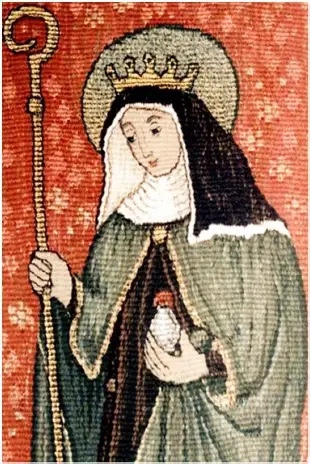
Conclusion: NO MATCH.
ok, who’s on board with the psychedelic gospels theory v1.0?! line starts here. where is everybody??
Well at least you got approval from your colleague, the “psychedelic witch”! 🧙♂️👍
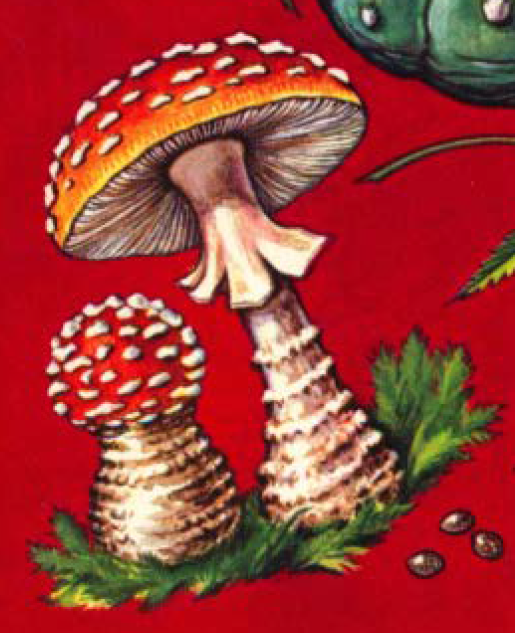
posting based on Egodeath Mystery Show episode 140b 2/3 through
ALL YOUR THEORY ARE BELONG TO US.
— THE ARDENT ADVOCATES

 The Egodeath theory