Revised book review title designed to rebut & correct Hanegraaff. Links to the Egodeath theory’s focus on the cybernetic theory of ego transcendence.
Includes ‘Source’ rather than magical word ‘Ogdoad’. Adds the key word Rebirth that’s the problem in its level relationship with heimarmene / eternalism.
Rebirth is below heimarmene, not above it, even if the Hermetic texts irreverently lower Fate as if it’s below Rebirth and is disconnected from the Source.
Reverent negativity toward eternalism is good and effective.
Embracing heimarmene/the Source is two aspects of the same identical thing.
You cannot be irreverent towards Fate and reverent towards the Source, because these are two aspects of the same thing.
If you avoid Fate and don’t reverently sacrifice to it, then you are also avoiding the Source and avoiding enlightenment and avoiding mental transformation, and are dualistically splitting apart two aspects of the same thing: God and the Creation; the Source and heimarmene.
Mithraism and Christianity both had the correct reverent negativity towards fate /heimarmene/ providence/ eternalism.
Hermetic/Gnostic texts had a dysfunctional irreverent attitude towards heimarmene (toward the transformative revelation that you don’t control the source of your control thoughts).
The fate-irreverent attitude tells you to avoid the fatedness revelation, and so it makes you avoid God; it makes you avoid enlightenment, mental transformation to become in conformity with Fate/ eternalism.
The fate-irreverent attitude makes you avoid the source of control thoughts.
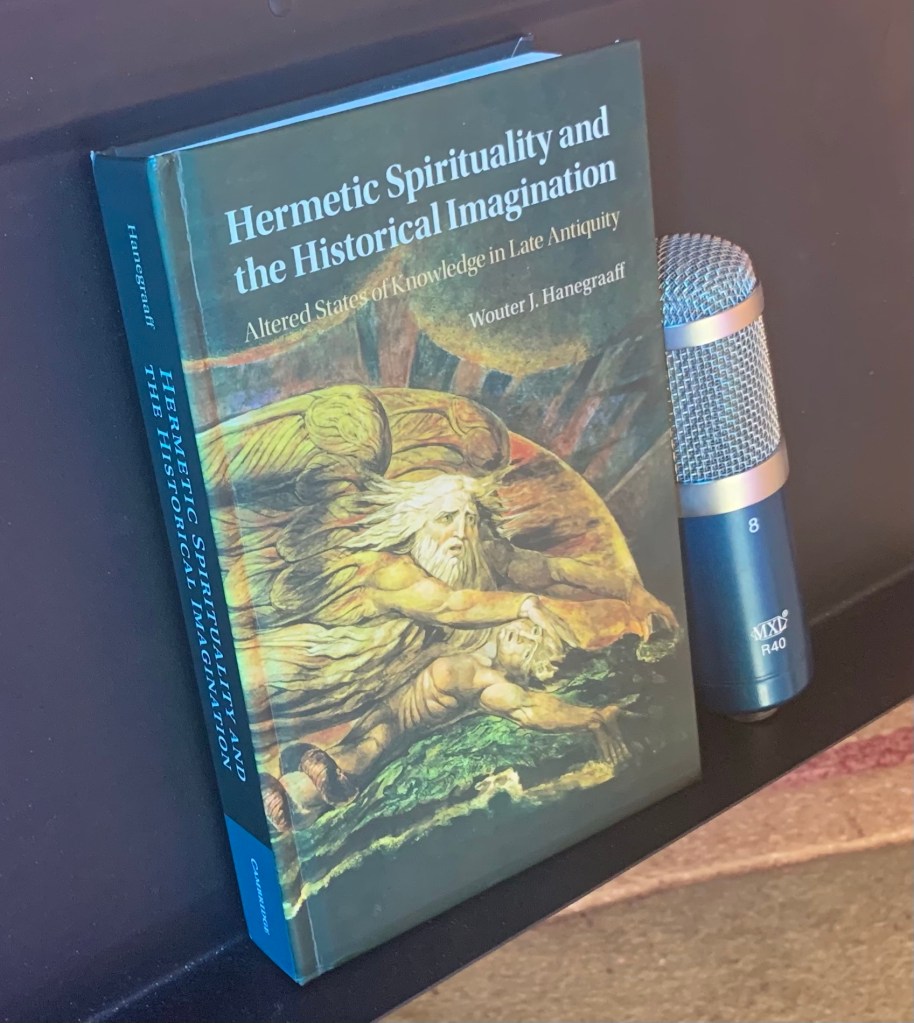
The book Hermetic Spirituality tells us to avoid the source of control thoughts (heimarmene), while at the same time it tells us to approach the source of all that exists.
This is dualistic. This is trying to take opposite attitudes towards two aspects of the same thing.
I discuss this in August 26 voice recordings for Egodeath Mystery Show.
My approach the Egodeath Theory is based not in mythology/esotericism, but in Multi-State Cognitive Science, including Multi-State Cognitive Science of Religion.
Luther H. Martin & David Ulansey are merely in the approach/field of Single-State Cognitive Science of Religion, which is a contradiction in terms a la exotericism.
I disrespect single state science; I disrespect cognitive science of religion that is single state.
The correct cognitive science of religion must be multi state cognitive science of religion.
MS-CSR is good, SS-CSR is incorrect and bad and not helpful and it’s barking up the wrong tree.
It is the exoteric version of the field.
It is not the good esoteric altered-state version of the field.
They provide irrelevancies, including the tendency towards neuroreductionism.
In my book review, I put the emphasis on my foundation being my core Theory, my Scientific basis of my model of multi-state mental development.
Because of Hanegraaff, I am revising my emphasis in my concept-labels.
I now word my two-level Max Freakout model:
The mind changes from possibilism-thinking to eternalism-thinking (including qualified possibilism-thinking).
I do not write:
The mind changes from possibilism-thinking to qualified possibilism-thinking (including eternalism-thinking).
We don’t end up with “qualified possibilism-thinking (including eternalism-thinking)”.
Rather:
We end up with “eternalism-thinking (including qualified possibilism-thinking)”.
Emphasize eternalism, not possibilism as the end-state, because ego (“I control the source of my control-thoughts”) falsely premised thinking, like Hanegraaff, would latch onto the message “we end up with possibilism” and reify delusion and overvalue possibilism/ the freewill false premise of autonomous control power.
this way of expressing it will cover will make this 2- level model a complete end to end model, a simple two level expression of it , all the way from start to finish, because
What you end up with is eternalism-thinking (minor detail: do not overemphasize possibilism-thinking:
Eternalism-thinking includes qualified possibilism-thinking.
The mind must be reverent toward eternalism-thinking, not avoid and disrespect it.
Do not irreverently place heimarmene/ eternalism into Hanegraaff ‘s Rejected wastebasket like the Hermetic texts’ myth-theme of {I hate Fate} does.
You cannot be reverent toward the source and you cannot approach and come nearer to the Source (of control-thoughts) when you have that dysfunctional attitude.
We must avoid emphasizing possibilism-thinking, because egoic – like this book Hermetic Spirituality, ego will latch onto that if we say that “you end up with possibilism“-thinking.
If we say that “you end up with possibilism-thinking”, then no enlightenment will happen, because ego will latch onto that phrasing and exclude eternalism-thinking.
If we emphasize that you end up with some form of possiblism thinking, this will prevent enlightenment, because the ego will latch onto that word and will say “I control the source of my control thoughts”, and this will prevent enlightenment.
So we have to call the final state in a concept label “eternalism” not “possibilism”.
Define eternalism-thinking as “includes qualified possibilism-thinking”.
Do not define qualified possibilism-thinking as “includes eternalism-thinking”. If you say qualified possibilism-thinking, also emphasize “advanced eternalism-thinking” or “including eternalism-thinking” as the necessary requisite basis for qualified possibilism-thinking.
You do not have qualified possibilism-thinking without eternalism-thinking as its foundation.
It is extremely important to pick good concept labels.
The lexicon is extremely important because a bad lexicon will mislead wishful thinking.
Hermetic texts used a bad lexicon: they employed the popular theme of hatred and disrespect for fate/eternalism: (you don’t control the source of your control thoughts; that is fate; that is revealed heimarmene.
And the result confused this book so that he ended up putting rebirth above fate, above the revelation of divine eternalism, because this is the upside-down attitude that gnostics and hermetic texts in the popular spirit of the day in late antiquity they truly do put fate below ego death & rebirth.
This is how they avoided enlightenment, in their malformed mystery religion brand based on the theme of “I hate and I avoid fate” (yet claim to pursue God).
The “I hate and avoid Fate/ eternalism ” version of mystery religion initiation doesn’t work.
“I hate and disrespect eternalism” is not a viable initiation-brand theme that draws the mind toward and through the control attractor vortex toward revelation of eternalism and toward stable nondual unity God-consciousness.
Christianity correctly criticized gnosticism and Hermetists and for being dualistic and anti-Cosmos.
Mithraism rightly glorifies Helios the demiurgic god of eternalism/ heimarmene/ fatedness.
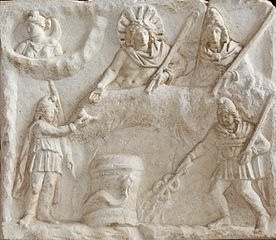
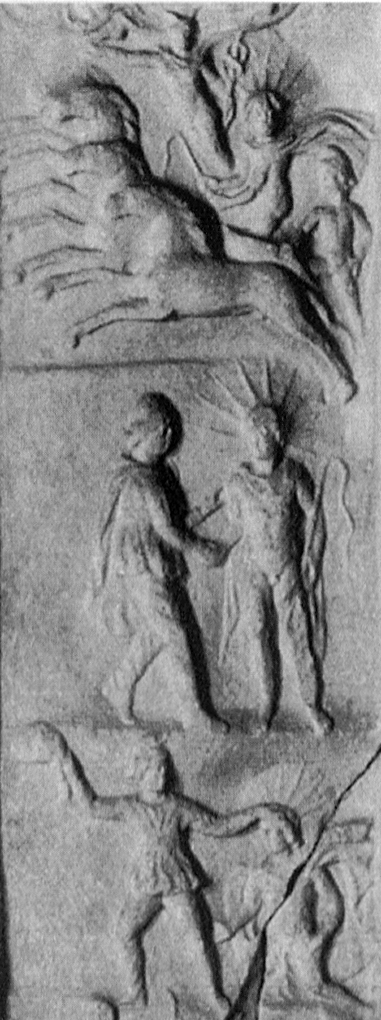
Even if April D. DeConic’s book The Gnostic New Age, even if that’s correct that they were clever contrarians, this is not a viable theme for mystery-religion initiation, this theme of “I hate and avoid the revelation that I don’t control the source of control thoughts”.
You must have a reverent negative attitude; drawing towards God in fear and trembling – not avoiding God and the Creation, which is block universe eternalism. aka heimarmene.
This is the pit that Hannagraaff fell into: he accurately represents that Hermetists have an irreverent attitude towards Fate, and this is a disaster that prevents enlightenment.
An irreverent attitude towards Fate is like hating feet, the legs we stand on during standing prayer.
Heimarmene is God, the uncontrollable source of control thoughts.
The experience of being a puppet controlled by an uncontrollable controller (“reverence toward the Source”) is the same thing essentially as experience of being frozen into rock (heimarmene ).
A negative attitude towards – I mean an irreverent attitude towards either of those produces the same result: control seizure and a failure of enlightenment.
The result will be avoidance and running away from enlightenment rather than embracing it and moving into it
We don’t really dare to talk about “moving beyond eternalism”, because the ego will latch on to that and try to split eternalism separate from God, which doesn’t make any sense and produces regression, regression away from God and falling below- at the same time, falling below God and falling below eternalism.
These are one and the same thing, different aspects of the same thing.
If you avoid eternalism, you avoid God.
We need to have a good kind of negative attitude reverent negative attitude: fear of God, Desdemona, and awe.
Do not have an irreverent type of negative attitude towards eternalism, or you will get control seizure and not enlightenment, and you will not reach non-dualistic embrace of God, the source of control thoughts.


 The Egodeath theory
There’s such magnificence in your approach with the Egodeath Theory as you state: : “The Egodeath Theory is based in science emphatically multi state science.”
I recently read the following words by a philosopher Eugene Gendlin;
“You live in a society in which two understandings are underneath. One of them is that science is really the only reliable, the only really established, the only really worthwhile kind of knowledge that we have. And it’s very precious. The science that we have has for some hundreds of years, already understood to base itself on empirical testing. And that’s a democratic kind of a thing that means you don’t have to believe the person, whoever the person is, who claimed something. It can be tested … So this science that we have is the only basis for any kind of social policy that we have.”
LikeLike
Regarding multi- state cognitive science of religion, how do you separate the religion aspect from mythology/esotericism, when you say that the Egodeath Theory is not based in mythology/esotericism?
LikeLike
Define religion as experiencing “you don’t control the source of your control thoughts” in the loose cog assn state as from psil., and as a process explicitly directly described w/o relying on mythopoetic analogy, a model of mental transformation by alternating states of consc. , causing a sequence of mental worldmodels from possibilism-thinking to eternalism-thinking which incl qualified possibilism-thinking. That is religion described and modeled and explained from a science ( multi state cog sci) approach basis not religionism which means a mythopoetic foundation basis which Hanegraaff is against. He advocates sciet’c history of religion scholshp and invites a multistate cog sci o rel approach like better than L Martin / Ulansey s-state CSR approach.
LikeLiked by 1 person
In all this time, I never realized, until this very minute, how streamlined, compact and lightweight the Egodeath Theory is. And how easy it can be, to want to attach the unnecessary weight of hullabaloo to it. It’s incredible really, its sleek design, and how easy it stays on course, even through all the sludge of misinterpretation..
There is nothing that can get in the way of it, a blessing really, once ego gets put into place, as the theory smoothly and simply guides the mind through the process of religion.
LikeLike
http://wouterjhanegraaff.blogspot.com/2018/06/esotericism-and-criticism-platonic.html?m=1
Thank you so much for helping to clear my mind!
Thought you would find this interesting if you haven’t already read it..
It is Wouter Hanegraaff’s long response in his blog, in 2018, to a critic author named, Arthur Versluis.
In the informative response is not only W. Hanegraaff revealing his detailed points of view, but also that W.Hanegraaff’s father was a Protestant minister and theologian. And Wouter also has a relative, a cousin, I believe, named Hank Hanegraaff who is known as the ‘Bible Answer Man.’ ?
LikeLike
Thank you so much for clarifying.
Hanegraaff may be against mythopoetic foundation but from my understanding, he contradicts himself at that point by advocating rituals that alone are not loose cog entheogenic generators for the altered state.
And because of his limitations in understanding historical scholarship which references and is referenced by the altered state, just how then does he meet the necessary qualifications for accurate interpretation of historical records and scholarship?
LikeLike
After reading some of W. Hanegraaff’s points of view, I find the following most important in depicting his belief.
He writes;
“The position that neither affirms or denies that it might be possible to discover the true nature of reality by other means than science and scholarship (such as spiritual techniques or mystical contemplations) is technically called, “methodological agnosticism.”
He goes on to write;
“What this means is that science and scholarship are modest and limited instruments that cannot claim to provide access to the esoteric realm of the transcendent or the absolute, and therefore scholars as scholars, are not in any position to either affirm or deny its existence.”
That really helps to understand where he is coming from. It is his religion and no one can pull him out from behind “methodological agnosticism,” but only God.
I can put Hanegraaff to rest now.
LikeLike
Is multi-state cognitive science of religion unable to explain altered state experiencing of transcendent knowledge?
Hanegraaff has invited multi-state science and Cognitive Science of Religion.
THE instance of multi-state cognitive science of religion is the Egodeath theory, including the mytheme theory, which has already succeeded at providing an explanatory framework with full explanatory power.
He sets up a false dichotomy “science and scholarship vs. spiritual techniques and mystical contemplation”; obviously one must combine both; what’s wrong with him that he fails to cross the street to the smartshop where Erik Davis will line him out with philosophers’ stones truffles?
There is no excuse for a scholar to lack the potent mystical technique – a huge false dichotomy.
There is no need for agnosticism about whether it is possible by COMBINING and INTEGRATING science and scholarship and spiritual techniques and mystical contemplations to discover Transcendent Knowledge, how the mind develops when exposed to both states of consciousness: tight and loose binding.
Discovering the true nature of ego transcendence and Transcendent Knowledge has already been done by what he is inviting, multi-state cognitive science of religion, which is identical with the Egodeath theory, which has a completed explanatory framework with full explanatory power.
LikeLiked by 1 person
Michael, a person can go crazy trying to educate Hanegraaff. As you write, and which is so true; “there is no excuse for a scholar to lack the potent mystical technique.”
However, from what I read, he strongly upholds the limitations that the “Academy” places onto scholars, and has no intention of trying to maneuver himself out of them.
“Methodogical agnosticism” is a safe place for him to stay and lean on, giving him the opportunity to skirt around the area of Transcendence, but without dwelling deeper into it, as doing so might just show his own limitations, not just those which he can blame on the ‘Academy.’
LikeLike
For the Egodeath Theory;
It is an injustice for the innate nature of humanity, committed by scholars who make no effort in moving beyond the ordinary world.
In the classroom, those then scholars/professors reduce themselves by default into the role of the ‘blind leading the blind.’
The scale of justice, when weighing ‘neither affirming or denying,’ remains empty of substance.
LikeLike