My latest feeling, discussed at length in latest voice recordings toward Egodeath Mystery Show, is that I shouldn’t omit a star from my book rating unless he makes a cosmic-sized disastrous error, which he does in grandest fashion, while he advocates a scientific basis instead of a religionist mythology basis for the academic historiography of religion.
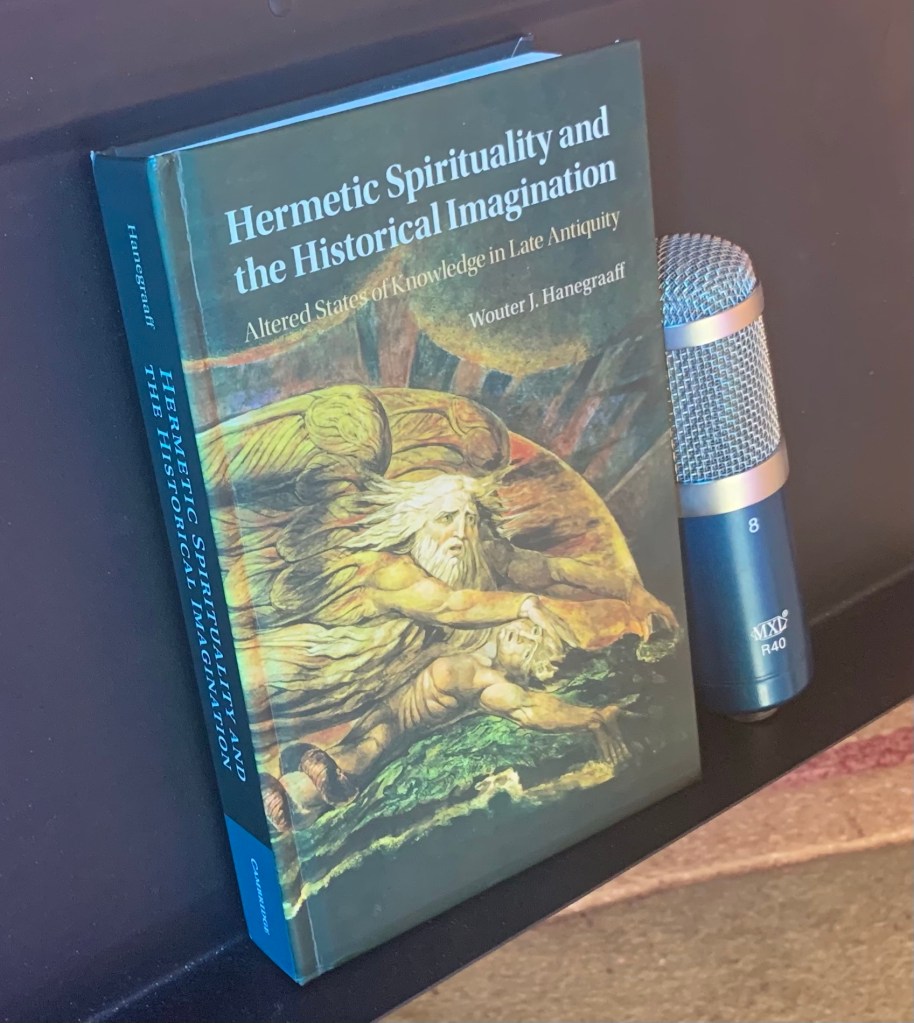
He has to chronically misuse terms like he did ‘entheogen’, leaving no scientific way of assessing what is or is not entheogenic, but relying on unscientific hearsay.
He has no idea what differentiates entheogen from non-entheogen.
The dividing sword and measuring yardstick is that an entheogen makes you experience being a puppet frozen in rock; you don’t control the source of your control-thoughts.
If the thing in question doesn’t focus on accomplishing that effect, then the thing being assessed is not an entheogen, and it is only an entheogen to the extent to the degree that the thing being scientifically assessed accomplishes the above effect, specifically.
If you agree to any of his set of assertions, that the highest level of the cosmos is number seven, or that level eight is outside the cosmos/heimarmene, you are also having to agree to the nonsensical, anti-scientific, incoherent, necessary implicit corollary assertion that either the fixed stars don’t exist, or else they are to be somehow (impossibly) placed in the moving, planetary sphere of planet number seven.
This is extreme incoherence, and unscientific, and his footnote 114 reveals that his cosmos does not work; he cannot successfully account for the fixed stars.
I ran calculations today, and the there are 2500 or 5000 stars visible to the naked eye, yet in his cosmos model, there are only five little white dots in the night sky.
He removes literally 99.9% of the stars (white dots) from the sky (5000/5005) to try to make his broken cosmos model work.
Generous calculations show no, he only removes 99.7% of the stars from the night sky.
Cosmosgate!
Hanegraaff’s anti-scientific, totally deviant and non-standard mystic cosmos tears itself to pieces and blows up in a giant fireball, leaving asteroids rubble.
The non-metaphorical result is that if you attempt to use the Hanegraaff explanatory model of mystical transformation, you will have control instability and control seizure when in the loose cognitive state.
That is the proof that his model is wrong; and any wrong model automatically is the possibilism-premised mental world model, rather than the only successful model, which is the eternalism, non-branching model per the Egodeath theory, and per Eadwine’s image of non-branching initiation.
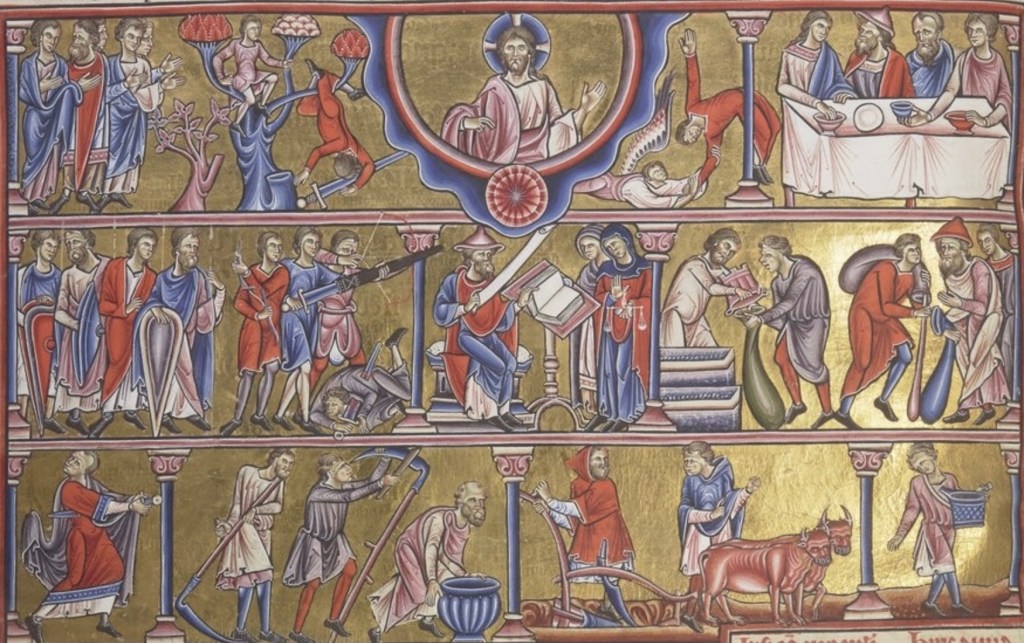
This is the Hanegraaff cosmos model of myth, the mystic cosmos model that he invented out of sheer fantasy imagination with no textual basis, and he should read David Ulansey for starters, misusing as he is forced to do the word ‘hypercosmic’, along with completely misusing the word ‘stars’.
Inexcusable, his chronic pattern of grotesquely misusing and misdefining words, rendering them unclear and meaningless, and now ruined and worthless, bringing nothing but cosmic-scale confusion to his readers and to the field of esotericism history.
That’s how bad his baseless, invented, imaginary mystic cosmos is, and so it is fair that I remove 20% of the stars from his rating.
This model is a cosmic-scale disaster.
Childish egoic freewill-premised possibilism-model presumptions and the model of autonomous control agency tries to fantasize and imagine what transcendent knowledge would be, and all they can come up with is: you gain liberty and freedom and power, and wash ego with soap to make it clean, remove the “negative psychological traits” — that’s about the level of his possibilism-premised mystic theory, predictably.
Either you firmly assert the eternalism correct, clear, coherent model of transcendent knowledge, or else by default you end up staying in the same old sky castle of egoic possibilism-premised delusion, despite all the marketing hype.
He is the king of exoteric esotericism — now enhanced with non-drug entheogens!
Thank you for contributing to spiritual understanding of hermetic texts, but the way you have done that has led us into an egoic possibilism-premised ditch, irreverently throwing eternalism/Fate into the Rejected wastebasket, while claiming to be pro-cosmos.
He needs to do some major revision, and he needs to stop this evasive B.S. move of remaining silent about the fixed stars (except for his roundabout, indirectly worded footnote 114 hidden in the Sounding Cosmos music section).
He has to clearly acknowledge that the fixed stars utterly destroy his mystic cosmos model, and that his model is essentially a failure, because it cannot account for the sphere of the fixed stars, which is the central, most important level to account for.
Into his purportedly “science-based historiography of religion”, Hanegraaff indiscriminately interweaves his failed fantasy cosmos that he invented with no textual support of any kind, no citations to back up his frequently asserted claim that planet level seven is the highest cosmos level.
Late antiquity fell into this chutes-and-ladders Ken Wilberian disintegrative regression.
This is why I’ve always been against mystics’ framing of the mythology themes, and I instead take those themes directly as data to fit within my own successful explanatory framework, and I do not give credence to their bad framing of the mythology themes.
When a culture values transcending eternalism more than they value comprehending eternalism, then they cannot comprehend eternalism and they cannot transcend eternalism.
It is a practical necessity that a culture must value comprehending eternalism more than they value transcending eternalism, or else they will lose both, and we ended up with a free-floating cloud of myth themes describing eternalism and transcending eternalism.
The catalog and vocabulary of mythemes became an untethered, free-floating, unmoored cloud, that nobody understood anymore, unlike simpler early antiquity that simply venerated the eternalism revelation, and they now all had mere confusion and nobody really had a clear understanding — because they didn’t want to have just a clear understanding of eternalism; they were more interested in trying to climb above eternalism, and so they lost everything, and we’re left with a cloud of myth themes that nobody actually comprehends, until the cybernetic theory of ego transcendence in 1988 & the entheogen mytheme theory in 2003 placing ego transcendence and then religious myth-analogies on a firm scientific basis of multistate cognitive science, instead of religionism.
Religionism is: trying to make mythology analogies the foundation of our explanatory model, which is what Hanegraaff ends up doing, inventing and fabricating and imagining out of thin air, with no textual evidence, an artificial cosmos that only has five white dots in the night sky.
Hanegraaff has become completely divorced from science and from sensible coherent mystical tradition.
We must throw a red flag amidst the progress he made; he drives us into a ditch with his invented, imaginary non-drug entheogens and bizarrely deviant 7-level cosmos model that requires him to misuse and completely redefine simple, clear-cut words such as ‘stars’.

 The Egodeath theory
It’s good to reveal Hanegraaff’s errors. And it’s also good to understand that The Egodeath Theory isn’t dependent upon what Hanegraaff writes.
His misinterpretations come from inexperience, which he inadvertently reveals within his writings.
Hanegraaff doesn’t know the difference between an entheogen and non-entheogen except that one includes drugs and the other doesn’t.
How can that inexperience comprehend what is not understood?
In addition, Hanegraaff admits to staying within the restrictions of the Academy and within the framework of methodological agnosticism. A safe structural environment for him. It is within that environment where he is held in high esteem for his contributions.
LikeLike
I was looking for your posting about giving Hanegraaff too much attention originally at cyberdisciple’s site, I’m not finding it in the mobile app, I have to use the desktop, but:
Tonight I read a couple statements from him that were so easy to completely demolish, about the limits of scholarship, and it made me wonder just how massive are my disagreements with Hanegraaff just how full of baloney is he, and how off-base his disputes with Arthur Versluis and name-calling of each other and misunderstanding each each other and arguing about irrelevant muddleheaded things: oriental Platonism or platonic orientalism (who knows, who cares) — if I thought that stuff were worth arguing about, I would have studied that and made it my foundation like Hanegraaff does, worshiping Plato even though Plato is such a failure, such a complete failure of communication that it took modern scholars 500 years merely to just figure out that he’s talking about the mystic altered state.
This is a total failure of communication.
This poetry analogy metaphor roundabout approach to explaining Transcendent Knowledge does not work at all, and the extent to which it does not work is the fact that scholars have been studying Plato forever and only now have a dim slight realization that he’s talking about the mystic altered state.
This is practically a total failure of pre-modern approaches to Communication and theory/ model contruction and communication and expression.
This is precisely why I set about taking two weeks which became two years in 1985 saying I am taking the wheel here, let me show you how it’s done: use the can-do clear thinking clear expression of engineering and science, and I do not mean conducting experiments and such, I mean the character, the can-do spirit of “figure stuff out clearly and clearly teach and explain it”.
This is exactly what mystics revel in not doing, so it raises your question of, Is Hanegraaff more of an ally or more of the bad, old, failed approach that deserves really no particular respect.
That was one thing I especially remember my father teaching me beware of respecting people, beware of holding someone in reverence, because you’ll be limited to their limitation.
I saw some things written by Hanegraaff so malformed, such worthless argumentation, such a failure of critical thinking.
False dichotomies galore, pretty clear statements by him that are clearly dead wrong — how much respect does he deserve?
As much disdain– he deserves a lot of disdain; he puts forth a lot of incredibly malformed, unthinking assertions, these false dichotomies that “an academic scholar cannot have mystic experiencing”, things like that, that are trivial easy to completely shatter — they don’t hold up to scrutiny for two seconds, and he has a lot of statements like these on the subject of “you smell funny and you are a religionist”. “No, YOU are a religionist.” 🙄
I am talking about the article which I had read a couple weeks before you sent it to me called “Esotericism and Criticism: a platonic response to Arthur Versluis”.
LikeLiked by 1 person
He gets the respect of those who don’t know any better. within the Academy and its restrictions that Hanegraaff mentions.
Jonas De Ruyck, (in the link you posted) doesn’t have those same restrictions and he’s from the Academy. Why is that?
LikeLike
Hanegraaff is under enormous pressure and scrutiny. Very high visiblity.
He is the academic field of Western Esotericism.
And in writing a review that describes the book for potential readers, and points out its cosmos-sized errors (failure to recognize that psilocybin reveals heimarmene/ eternalism; aiming “instead” for gnosis — as if gnosis is not centrally a revelation of Fatedness), I feel this weight of responsibility, completely unlike what I felt with posting a five star quickly written critical review of Carl Ruck & M. Hoffman’s book “Entheogens, myth and human consciousness”.
it is very hard to justify penalizing this book omitting a star (like the author deletes all of the stars except for five white dots in his night sky).
This field and book is too important to just pat him on the head with five stars.
I would be telling a lie in a very important field.
Out of respect for the field, not the author, I need to delete a star (like he does on the scale of thousands) and level with people and let them know just how disastrous & confusing this extremely anti-scientific, purely fantasy-based imaginational construct of his mystic cosmos that has absolutely no connection with science or with mystic sensible conventions.
He hasn’t even read Ulansey, or if he has, I do not understand why he doesn’t mention that his mystic cosmos model (asserted heavily, citation-supported never) completely flies in the face of every treatment of the subject and provides zero citations for his false claim that the highest level of the cosmos is number seven, implicitly claiming that the hermetic texts assert this nonsensical impossibility.
Then he tells lies, completely unscientific, based purely on hearsay, redefining the word entheogen to mean the exact opposite of what it means, elevating fraudulent lies and falsehoods up into the sacred level of now-respectable Psilocybin, introducing falsehood, inviting every deceiver up to the hallowed levels, now respectable, of psilocybin — I think not!
Keep your deceitful not-even hypothesis pollution away from our sacred Theory: “Other, unknown methods can produce entheogenic effects”: not even a specified hypothesis; zero scientific disconfirmability or specificity, based purely on hearsay and conjecture.
Scientific foundation of history? Hanegraaff proffers the exact opposite. his book indiscriminately jumbles together his own fantasy cosmos pulled straight from his imagination with zero citations to back it up, that level eight is above heimarmene – no text ever says that, and no text ever can say it; it’s an incoherent notion that’s impossible, as impossible as saying that the stars don’t exist, or that they exist in planet / moving motion level seven.
This is just sheer nonsense concocted from his imagination, jumbled together with what he claims to be “scientific history”, without him saying a single word to warn the reader, but this cosmos model is something that he is putting forth as an imaginary hypothesis.
But what is so revealing is that he doesn’t dare say a single word about the fixed stars, because it would utterly destroy his cosmic model; he cannot talk about it except to stammer in footnote 114, hidden, buried, incomplete sentence saying I don’t know where the fixed stars go: in level eight or in level seven, the planet Saturn.
Should I give him a medal, a star, for quietly admitting that he doesn’t know the first thing about fixed stars, and that he cannot say anything about them because they do not fit — his model is completely incompatible with the fixed stars, so he has to remain silent and sweep them under the Saturn rug and conflate slot 8 with the actual above-Fate level 9, so that he can tell his inverted narrative of entheogenic transformation from eternalism to possibilism: “Transcendent Knowledge” according to the egoic freewill premised worldmodel.
“Ego death and rebirth is from eternalism to possibilism: just silently move the stars [the heimarmene destination that is gnosis; Transcendent Knowledge] from above the Saturn gate to below it.”
Hanegraaff’s 2016 12-page entry “Gnosis” in Cam. Handbook of W Mystm & Esotericism calls for moving the center of focus of Esotericism/ Gnosticism scholarship from heimarmene to gnosis – a total false dichotomy; he ought to call for recognition of how gnosis AS heimarmene-comprehension is the actual center, and that *combination*, that recognition, needs to be the center of scholarly focus.
Erik Davis gets it right in the book Led Zeppelin IV, but academics can’t keep up, because Transcendent Knowledge is too simple (and offensive to freewill egoic possibilism premises), for academics to engage with.
LikeLiked by 1 person
We learn more from critique than from praise. A deleted star along with your fine tuned book review may be the only way to open his eyes- with God willing him to do so.
LikeLike
Erik Davis joined Hanegraaff’s idea of expanding the word Entheogen into no-drug entheogens. So I guess that Hanegraaff does have the clout of persuasion and all the more, maybe, one less star for the star-less thought of diminishing what is and always has been the riteful act of the real stars.
LikeLike