Website
http://psychedelicevolution.org
The Radical Maximal Entheogen Theory of Religion, Against the Moderate/ Amanita Primacy Assumption
Historically, all religion and all mystic experiencing and all myth-described experiencing was through psychedelics.
I love this book’s vigorous, not tepid, theorizing.
Jahan has an overall Maximal mindset, although he condones the canard & uncritical assumption “psilocybin simulates the traditional non-drug methods of the mystics”.
My operating view and assumption-set is the Radical Maximal entheogen theory of religion: all mystic experiencing in history is from psychedelics.
That’s my productive strategy & methodology to forcefully flush out the evidence and make the case as much as possible.
My strategy of axiomatically reading all myth and mysticism as psilocybin experience description is the opposite of the negative, a priori axiom approach, which says:
We assume that there are no psychedelics in religion, until we find bits of evidence that, in isolation individually, force us to reluctantly concede that there are these exceptional, deviant cases that prove the rule that we started with: historically, there are no psychedelics in normal, mainstream, real religion; the kind that counts.
Any instances that you find are deviant and alien and come from outside – aka “secret”; abnormal; doesn’t count.
This is how the Ruck paradigm of Secret Amanita Alchemy successfully neutralizes any evidence of psychedelics inside of normal Christianity throughout history.
John Rush’s 2nd Edition 2022 also tells such an incoherent narrative that serves to self-neutralize his evidence database.
Brown Throwing Amanita Sacred Art into the River to Make Hatsis Like Him
Brown is led into the same glass-half-empty narrative pit by following the folly of Hatsis & Irvin:
Bad news: at first it might seem like Irvin and Rush provide a lot of evidence for mushrooms inside Christianity – but I’ve got some really bad news for you: unfortunately it turns out that Saint Walburga is just merely holding a vial, not an actual psychedelic mushroom as Irvin claims:
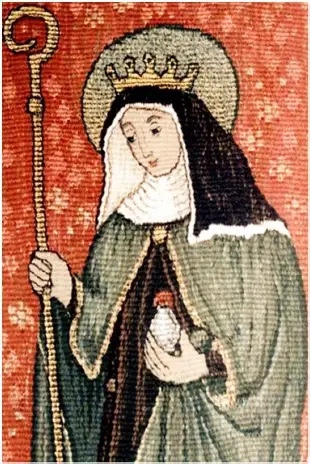
This image is our proxy representing how none of the Irvin & Rush images are evidence.
But the good news is, I now have credibility in Hatsis’s eyes, as a hardened, sound skeptic, since I just threw this tapestry into the river in dismissal, along with all of the Irvin & Rush galleries.
I thereby demonstrate my full devotion and commitment to not being one of those Ardent Advocates.
I pledge: I am certainly not an ardent advocate of the presence of mushrooms in Christian art!
– Brown (in the 2016 book & 2019 article, before my correction), jumping the rails in order to perform a dance to appease misguided people’s expectations
You’re not an ardent advocate?
Then what are you doing writing a book on the subject?
You think that’s a good, admirable thing to not be an ardent advocate of the thing that you’re trying to write about and assert?!
You’ve really lost the plot. But at least Hatsis respects your judgment now … right??
My Radical Maximal entheogen theory of religion takes the opposite strategy as Browns’ trying to disavow being an ardent advocate: Instead, I judge:
(early) Irvin & Rush are poor at being Ardent Advocates, insofar as they above all, love asserting the McKenna false & defeatist narrative of the total absence of entheogens because of the Big Bad Catholic church.
Against Brown 2019, Irvin & Rush are not nearly Ardent enough Advocates.
Radical Maximal entheogen theory of religion
All religion and all mystic experiencing and all myth-described experiencing was through psychedelics.
This is more an assertion about consistent elegant theorizing than about the messy happenstance of historical trivia details.
This is the most powerful theory methodology to do theory and to perceive the evidence, because if you assume that psychedelics are absent from history, then you close your eyes and you fail to see them.
As soon as I adopted this methodology in 2002 when I defined the Maximal methodology, I immediately started seeing perceiving psilocybin mushrooms in the very images where Carl Ruck was attempting only to see Amanita.
To make a profit, you must take a risky investment.
You must test and drive and commit to attempting to see mushrooms everywhere.
The tepid Entheos/Ruck school isn’t even trying to find psychedelics all throughout Western religion!
I built on Ruck’s book about Greek myth which integrates psychedelics, and I said instead, more consistently, that all religious mythology is the description of psychedelics experiencing.
This more vigorously consistent axiomatic commitment proved able to see much more evidence, through a sound, clear organizing lens of the Egodeath theory, than Entheos journal and that school.
Their assumption-set is not intent on perceiving all the evidence for psychedelics in Western religious history.
In 2002 I proposed: let us try to be much more successful at gathering the evidence for the presence of mushrooms, by assuming that mushrooms are present inside normal religion’s history, instead of assuming that they are almost entirely absent, like in Ruck’s Moderate/ Minimal, Secret Amanita Alchemy paradigm of entheogen scholarship assumes.
Browns’ book was inspired by my positive attitude assuming the presence – not absence – of mushrooms inside the normal mainstream church, and cites Egodeath.com’s image gallery.
Brown in 2016 wrote the positive book that I wanted when I was sore disappointed by Ruck’s weak and directionless, non-activist 2000 book The Apples of Apollo.
The Ruck school has done NOTHING to direct their findings toward repeal of psilocybin prohibition.
The Wasson/ Allegro/ Ruck/ Heinrich/ M. Hoffman school is over there off to the side wanking off to irrelevant Amanita, mis-leading everyone, instead of productively working to make the most vigorous possible compelling case for the entheogenic history of our religions and our culture in order to reinstate psilocybin at the peak of our culture.
Amanita-driven entheogen scholarship is a decoy substitute: its purpose and function is to mis-lead everyone into a dead end of irrelevancy, for the purpose of hiding and removing and covering up the central, normal presence of psilocybin in our religious and cultural history.
Like Letcher Hatsis asserts, the Ruck Secret Amanita Alchemy primacy axiom – the Amanita Primacy axiom – is part of the problem.
Zig Zag Zen and the Gnosis “special” issue on “Can psychedelics simulate the traditional non-drug methods of the mystics?” are part of the problem: self-defeat is built right into their assumption-set, even though later, way too late, Ralph Metzner realized what I knew since 1995 or 1986:
“Our biggest mistake in the 1960s was assuming that psychedelics are something new.”
The unimpressive weakness and feeble, directionless narrative in Apples of Apollo gave me a burst of motivation to firmly tell the opposite story, and put some muscle into it this time: vigorously assert and commit to the theory, the more productive axiom, that:
All religion and all mystic experiencing and all myth-described experiencing was through psychedelics.
Browns’ book is everything that I expected and wanted Apples of Apollo to be.
The Psychedelic Gospels tells a positive, constructive narrative with a direction.
This positive attitude is proven to reveal much more evidence than the “secret, concealed, hidden, elite, suppressed, forgotten”, negative assumption.
Jahan’s book is not a purposeless, directionless, committee-written “A Study of…”, like Apples of Apollo; it presents a directed history narrative, and a present report, for the purpose of directing psychedelics into the future, leveraging Integral Theory.
If your main, driving narrative is: “There are no mushrooms in our normal, mainstream, real version of our religion (the version that counts)”, then of course you’re going to fail to perceive the mushroom evidence – even if like Jan Irvin & John Rush, you directly self-contradict yourself by providing lots of evidence for mushrooms inside of Christianity, but then you ruin and cancel out and neutralize that evidence by spinning it in a negative, “glass half empty” mindset/ framing.
That was my huge objection to Terence Mckenna’s book Food of the Gods when he simply asserts out of sheer narrative commitment, he simply asserts that the church got rid of all mushrooms.
Brown and Samorini and I – and Irvin & Rush despite themselves – have proven that is simply false, but McKenna is not interested; like John Rush, he wants for mushrooms to be absent from the church, so that’s the story he’s going to tell and emphasize.
This is terrible, highly harmful, self-defeating strategy, because then the Supreme Court says “you have to go to jail because you’re not allowed to use psilocybin, because your culture’s & your religion’s history lacks psilocybin mushrooms.”
I’m not motivated by wanting accurate precision about details in history; I’m motivated by forming a tight, elegant explanatory theory.
I’m not a historian; I’m a theorist.
All authentic mystics accessed their mystic experiencing through ingesting psychedelics.
This book boldly asserts (a weak version of) the Maximal entheogen theory of religion, not the Ruck-type Moderate/ Minimal, mushroom-minimizing Secret Amanita Primacy axiom which emphasizes the tendency of absence of mushrooms from normal mainstream religious history, and which removes psilocybin from Western religious history by presenting only the Amanita Primacy premise.
Jahan carefully comstructs a directed, activist, narrative framing.
Jahan’s book (like Browns’) has a purpose, unlike the pointless, purposeless, directionless book Apples of Apollo.
Jahan’s book does not tell the crybaby defeatist narrative of Ruck, Irvin, and John Rush, where they are more excited to tell about the absence of mushrooms from the church than they are to look for and argue in favor of the presence.
They desire to see the absence of mushrooms inside the church or Christendom, so they operate under a conflict of interest, even though the evidence that they present contradicts their crybaby defeatist narrative of the absence of mushrooms.
This book has a constructive, positive, balanced narrative, like Browns’ book The Psychedelic Gospels.
Ruck contributes little of this positive, activist, constructive, productive narrative, but only presents a dead-end, directionless claim of, let’s be titillated by lust for secret amanita alchemy.
Notice the lack of that noxious word “Secret” in Jahan’s book.
Ruck’s narrative says only a couple deviant people used mushrooms (picture kiddie Amanita) at any point.
Book Info
The Psilocybin Connection: Psychedelics, the Transformation of Consciousness, and Evolution on the Planet: An Integral Approach
Jahan Khamsehzadeh
April 5, 2022
Mental Development Is Incomplete without Psilocybin Eternalism Transformation
I wanted to assert that psilocybin is rightly considered part of innate mental development, maturation, and completeness into the adult stage, per Hellenistic & Medieval religion, and this book works hard to support that case, that psilocybin is in our environment constituting human nature.
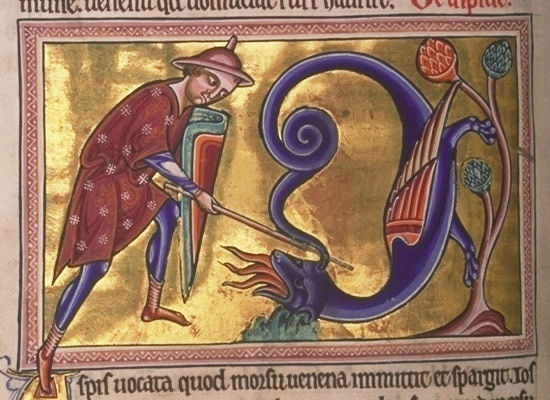
Perfect timing for my line of argumentation.
Ironically, I was highly suspicious of the word ‘evolution’, and yet the main point of this book is precisely the exact point that I was trying to develop and assert a couple days ago.
This book’s main objective is specifically to defend and assert the exact point that I felt that I needed to bolster my argument:
The mind which lacks psilocybin transformation must objectively be considered under-developed and incomplete and immature.
The untransformed mind demonstrably lacks integrity: it cannot bear to perceive its underlying, veiled mechanisms. A higher order of development is possible and is caused by the experience of psilocybin eternalism.
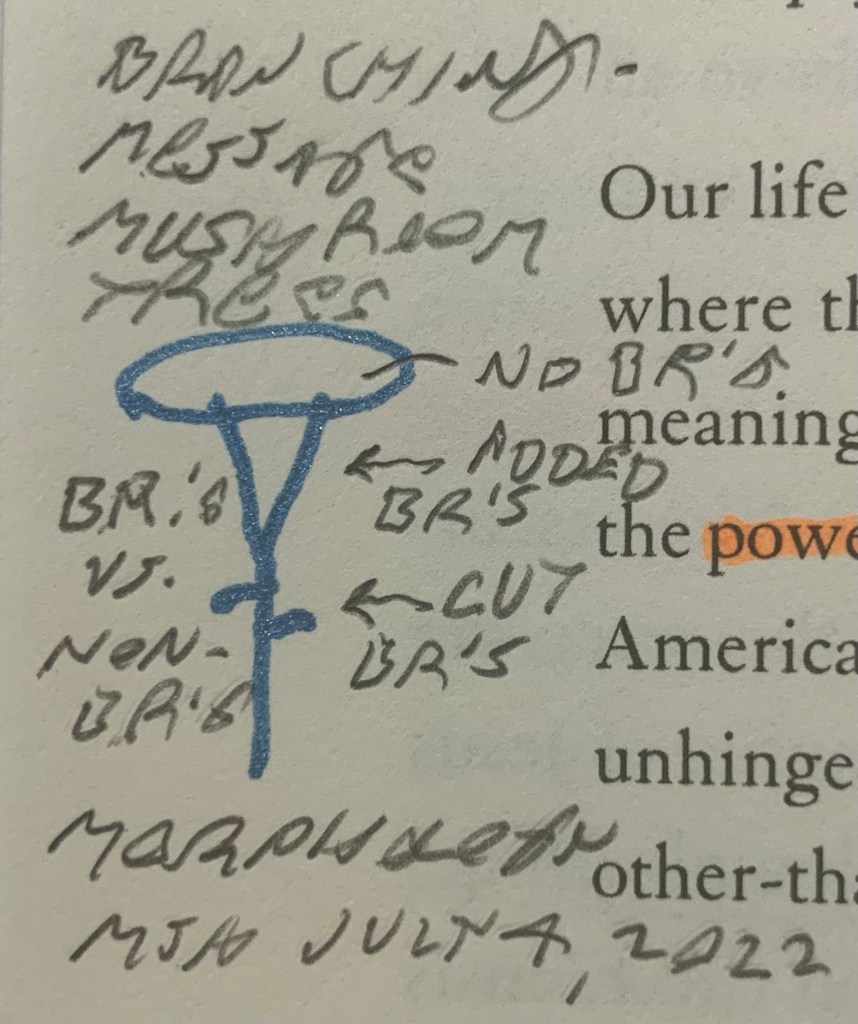
The mind which includes psilocybin eternalism transformation is objectively more developed and more robust than the mind which only has ordinary-state possibilism experiencing/ thinking/ mental model.
Alan Watts: The egoic mind is based in chronic self-contradiction (p. 238 bottom).
Transcendent thinking is coherent & integrated, non-self-defeating.
Egoic possibilism-thinking is vulnerable to collapse, disordered, and uninformed by what’s revealed about mental models in the altered state.
Transcendent thinking knows how to make egoic thinking fail.
Transcendent eternalism-thinking is ordered and resolved and durable, imperishable.
The completed, transformed, mature, developed mind is more organized, durable, imperishable, & sophisticated.
Egoic possibilism-thinking is not our final form, and is not able to freely access the psilocybin state.
Eternalism-thinking (Transcendent Knowledge) is objectively more ordered, more developed, than possibilism-thinking (the egoic mental model).
Possibilism-thinking is incorrect and incoherent, lacking self-awareness, proved by the altered state mind’s God-mode ability to penetrate egoic thinking’s control system, which is vulnerable at the fountainhead of thoughts.
Egoic possibilism-thinking is disordered and lacks integrity.
Transcendent eternalism-thinking is ordered and has integrity.
Those abbreviated statements are within the development sequence:
The Mental Development Sequence
1. the ordinary state (has possibilism experiential mode) with naive possibilism-thinking.
2. the altered state (has eternalism experiential mode) with eternalism-thinking (including qualified possibilism-thinking).
3. the ordinary state (has possibilism experiential mode) with eternalism-thinking (including qualified possibilism-thinking).
Psilocybin transformation is not something extra that is added onto the developed, mature mind; rather, when the mind was designed, Psilocybin transformation was integrated into the developmental structure of the mind.
By any reasonable definition, as Greeks held, if you lack psilocybin transformation, then you are as an immature child, and are not a complete developed adult form.
I attempted, I tried a completely neutral attitude; I tried to be not biased, I tried to not disparage the initial childhood immature form of the mind; I tried to avoid that loaded, disparaging language.
Can we act like the initial mental model is a completed development, and then can we talk about the later form, gaining the second mental model, as being just an arbitrary, alternative form? No.
Mental development must be held as incomplete and improper, malformed, half developed, until transcendent psilocybin transformation.
Without Transcendent Knowledge, the mind is under-developed, developmentally incomplete, as everyone justifiably holds in religious thought.
The mind that lacks religious experience is in an immature form, not developmentally completed.
God also designed the flesh of Christ, psilocybin, at the same time as designing the mind.
Psychedelics-Influenced Rock: The Authentic Mystery Religion of the Late-Modern Era
The book starts with the author’s formative psilocybin experience in a Tool arena concert. And the book ends with a Tool lyric quote.
What a HYPOCRITE though! He spews the usual copy/paste narrative on page 40: “When I trip at a Tool arena concert, it is a lofty religious experience. But when you do that, it’s merely foolhardy recreational use.” page 40:
“Ergot moved from intentional and controlled environments and into widespread recreational use.”
I would never simply label someone else’s use as “recreational”, given the interwoven religious/ exploration/ recreational/ etc. aspects.
Book Link
url https://www.amazon.com/gp/aw/d/1623176549/
Podcast
jahan psilocybin podcast https://www.bing.com/search?q=jahan+psilocybin+podcast
Blurb
“A comprehensive guide to psilocybin mushrooms and their impact on our psychology, biology, and social development.
“How—and why—do psychedelics exist?
“Did psilocybin catalyze our early human ancestors’ social evolution?
“And how can an integral understanding of psychedelics quite literally change the world?
“In an ambitious and comprehensive look at psilocybin—and an inside look at how humanity co-evolved alongside “magic” mushrooms—Jahan Khamsehzadeh, PhD, explores our historical and ancestral relationship to psychedelics and presents new and exciting research about what psilocybin can mean for us today.
“Separated into three sections—Present, Past, and Future—The Psilocybin Connection advances our understanding of psychedelics in unexpected and original ways.
“Khamsehzadeh shares compelling research that suggests how naturally occurring psychedelics may have played an essential role in humanity’s social, cultural, and linguistic evolution.
“Supported by archaeological evidence, neuroscience, and academic studies, he explores how mushrooms gave rise to art and expression, impacted spiritual experiences, and even spurred human brain development.
“Blending the most comprehensive and up-to-date synthesis of psilocybin research with stories of his own and others’ psychedelic awakenings, Khamsehzadeh moves our understanding of the psychedelic mushroom forward toward a fresh, hopeful, and exciting future.”
This book is his CIIS PhD dissertation in the Philosophy, Cosmology, & Consciousness doctorate program at California Institute of Integral Studies.
https://www.ciis.edu/academics/graduate-programs/philosophy-cosmology-and-consciousness
Caveat: Forces are striving to derail and steer institutions to press all kinds of agendas – sort them out and differentiate the applications.

 The Egodeath theory