Site Map: Astral Ascent Mysticism
Contents:
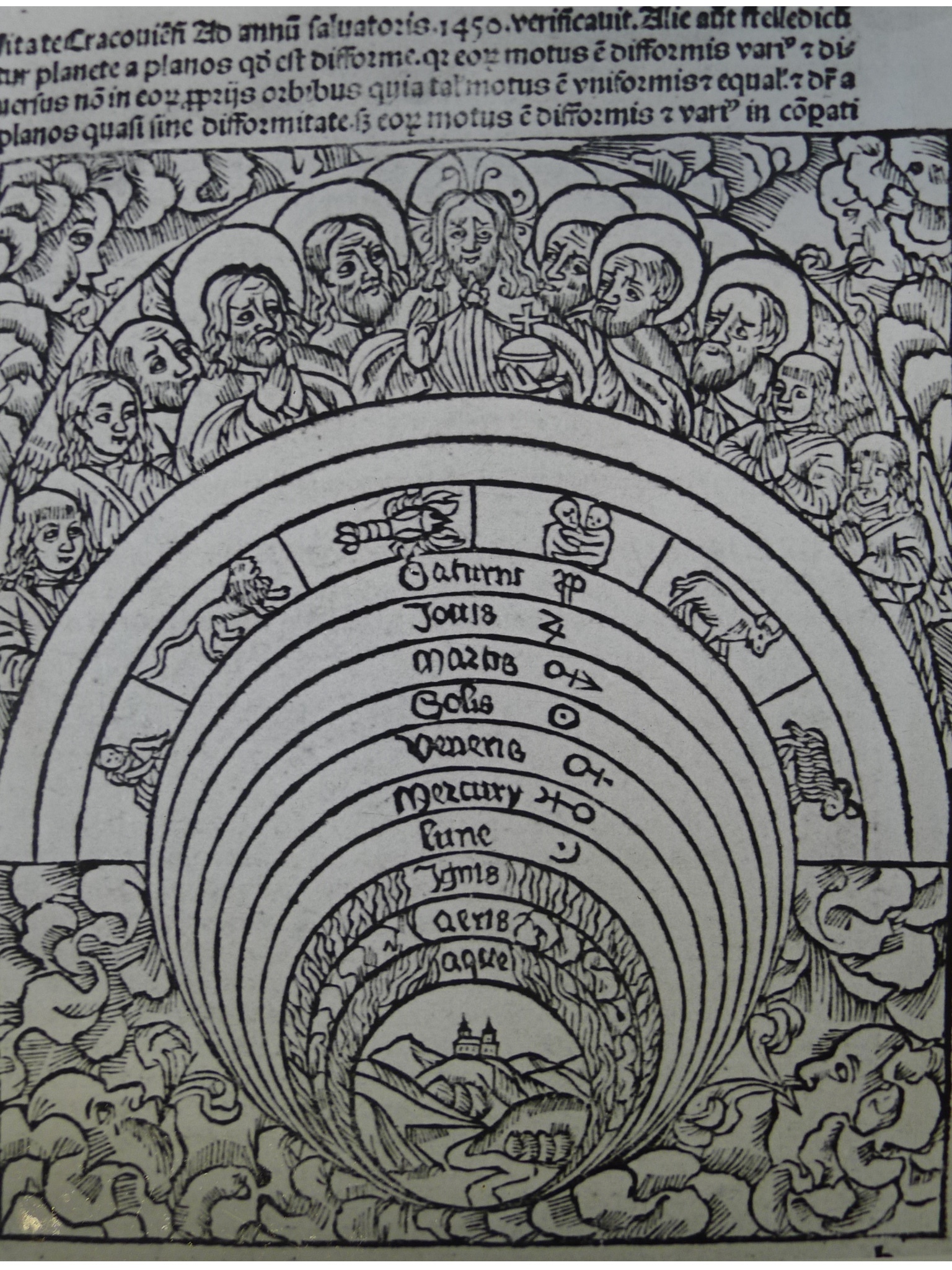
- Diagrams of Cosmos with Variable Levels
- Unveiled Mental Construct Processing
- Mapping the Mystic Cosmos Model to the Scientific Model of Psilocybin Mental Development
- Phase 1: Possibilism Experiencing, Possibilism Thinking
- Phase 1.5: Eternalism Experiencing, Possibilism Thinking
- Phase 2: Eternalism Experiencing, Eternalism Thinking
- Phase 3: Possibilism Experiencing, Eternalism Thinking
- Episode 40: Wheels Within Wheels: Toward Western Esoteric Cosmology
- Episode 41: Fate and Foreknowledge: Toward Hellenistic Astrology
- Episode 42: Chris Brennan on Hellenistic Astrology
- Episode 33: Nowhere to Go But Up: Philosophic Ascent in Plato
- Episode 31: Sun, Line, Cave: Plato’s Inner Republic
- Episode 25: The Esoteric Plato
- Episode 23-1/2 : The Greek Iatromanteis: Katabasis, Metempsychosis, Soul-Flight, and the Question of ‘Shamanism’
- Article: Shamanism in Classical Scholarship: Where are We Now? (Bremmer, 2016)
- Episode 20: All for One, and One for All: Parmenides of Elea
- Episode 12: Richard Seaford on the Mysteries
- Initiation into the Mysteries of the Ancient World (Bremmer, 2014)
- Back Cover
- Official reviews
- See Also
Diagrams of Cosmos with Variable Levels
It’s funny & telling that bands 9 & 10 are blank in this diagram at top of page.
It shows how artificial they are, and less important within the psilocybin mental-model transformation sequence than passing through the ego death & rebirth gate from Saturn turmoil to reconciled eternalism in the fixed stars level (contains the zodiac constellations).
Unveiled Mental Construct Processing
Secret History of Western Esotericism Podcast
vs.
Egodeath Mystery Show
See episode pages/articles.
IMO, the important line in the Earth-centered cosmos model as mystically used, is the line between Saturn & fixed stars (the zodiac belt & the other star-constellations).
That’s why I instantly knew Hanegraaff’s book Hermetic Spirituality 2022 book had a major malformation:
There are no fixed stars in Hanegraaff’s misrepresentation of the Earth-centered cosmos model used mystically.
Hanegraaff’s system of assertions (ie. “the 8th level, outside heimarmene”) collapses into rubble when you try to add stars (heimarmene; eternalism) to it.
Hanegraaff rightly fixes the ego death and rebirth gate at the top of level 7 (Saturn), but he tries to covertly move and sneak the stars to below (= before) the mental-model transformation gate.
The password to get through the serpent-guarded death-angel guarded gateway filter is:
repudiate and jettison the freewill premise
ie:
no-free-will / non-branching possibilities
Mapping the Mystic Cosmos Model to the Scientific Model of Psilocybin Mental Development
To interpret the cosmos model, map to my 3-phase model of psilocybin mental model development in terms of experiential states and the mental models they produce.
Phase 1: Possibilism Experiencing, Possibilism Thinking
1. The possibilism experiential state of consciousness produces naive possibilism-thinking (mental model).
= cosmos level: Earth. Or sub-lunar realm.
Phase 1.5: Eternalism Experiencing, Possibilism Thinking
Turmoil; instability of control; incompatible.
Phase 2: Eternalism Experiencing, Eternalism Thinking
2. The psilocybin eternalism experiential state of consciousness produces eternalism-thinking (mental model).
= cosmos level 8: the sphere of the fixed stars; heimarmene; fatedness.
Pass through the serpent-guarded gate at top of Saturn (planetary level 7) onion layer to reach the treasure destination.
Lose egoic child thinking, to pass through the no-free-will gate and become immortal aka perfected aka enlightened.
Phase 3: Possibilism Experiencing, Eternalism Thinking
3. The possibilism state of consciousness retains eternalism-thinking (mental model) including qualified possibilism-thinking.
= cosmos level 9 & 10, the Empyrean.
No death-and-rebirth is involved to get from the fixed stars (level 8) to the Ennead or Decad Empyrean (level 9 & 10);
Ego death is into eternalism, NOT into possibilism/ “freedom”.
Completion of maturation (perfection, enlightenment, satori, purification, gnosis, becoming immortal) is not a revelation of personally empowering, egoic possibilism, but is about reconciling the mental model with the experience of eternalism.
The return to the possibilism ordinary-state experience that’s shaped in the form of “autonomous agent freely steering in a branching-possibilities world” is merely minor.
The essential transformation, the actual transformation, is from possibilism to eternalism – not the reverse, as Hanegraaff egoically naturally assumes, in his overeager receptivity to the “I Hate Fate” theme that’s sold by the Hermetic writers/ priests/ hierophants.
“Escape from fate” is the main theme of Late Antiquity.
J. Z. Smith
Episode 40: Wheels Within Wheels: Toward Western Esoteric Cosmology
Episode 40: Wheels Within Wheels: Toward Western Esoteric Cosmology
Aug. 2, 2018
Peter Adamson writes about cosmos model, see episode webpage – “Peter Adamson’s History of Philosophy Without Any Gaps podcast, of which we are big fans here at the SHWEP, takes astrology seriously in discussing ideas about fate, free-will, and related ideas in the history of western thought.”
See episode article:
Wheels Within Wheels: Toward Western Esoteric Cosmology
30:00 – “primum mobile” is level 9.
Level 10 is timeless & spaceless. Unmoved mover.
“the cosmos which ended up winning the debate and becoming the standard scientific model from antiquity until the early modern period was the geocentric model developed by, among others, Plato, Eudoxus, and Aristotle.
“It was a refined and sifted version of this model which Ptolemy would bequeath to the middle ages.
“The west, and western esotericism, was, for the majority of its history, living on an immobile earth at the centre of a rather small universe made up of nested, concentric spheres.
“Questions arise from this model of the cosmos, such as:
“What’s outside the spheres, and how can I get there?
“What are the spheres made of?
“How do the spheres influence us?
“These are questions which we find played out in the history both of occult sciences like astrology and alchemy, and of western religious movements from the Hellenistic period onward.”
Episode 41: Fate and Foreknowledge: Toward Hellenistic Astrology
Aug. 13, 2018
See episode article:
Fate and Foreknowledge: Toward Hellenistic Astrology
AUGUST 13, 2018
Episode 41: Fate and Foreknowledge: Toward Hellenistic Astrology
Episode 42: Chris Brennan on Hellenistic Astrology
AUGUST 19, 2018
Episode 42: Chris Brennan on Hellenistic Astrology
Aug. 19, 2018
See episode article:
Chris Brennan on Hellenistic Astrology
I’m pragmatic about free will, in the sense that its existence doesn’t fall in the category of episteme but of praxis.
Nathan Burgess
Episode 33: Nowhere to Go But Up: Philosophic Ascent in Plato
AY 8, 2018
Episode 33: Nowhere to Go But Up: Philosophic Ascent in Plato
See episode article:
Nowhere to Go But Up: Philosophic Ascent in Plato
Episode 31: Sun, Line, Cave: Plato’s Inner Republic
Sun, Line, Cave: Plato’s Inner Republic
APRIL 8, 2018
Episode 25: The Esoteric Plato
FEBRUARY 25, 2018
Episode 25: The Esoteric Plato
The Esoteric Plato
“the modern debate between Plato specialists over his supposed esotericism.
“Along the way we define ‘esoteric’ and ‘Platonism’, both very important terms … which are, rather surprisingly, rarely defined in the scholarly literature which treats them. We also have a look at my idea of ‘esoteric reading’.”
– Earl Fountainelle
Episode 23-1/2 : The Greek Iatromanteis: Katabasis, Metempsychosis, Soul-Flight, and the Question of ‘Shamanism’
The Greek Iatromanteis: Katabasis, Metempsychosis, Soul-Flight, and the Question of ‘Shamanism’
Article: Shamanism in Classical Scholarship: Where are We Now? (Bremmer, 2016)
Bibliomania frenzy includes:
Jan N. Bremmer. Shamanism in Classical Scholarship: Where are We Now?
That’s a chapter in book by P. Jackson, editor:
Horizons of Shamanism: A Triangular Approach to the History and Anthropology of Ecstatic Techniques
https://www.amazon.com/Horizons-Shamanism-Triangular-Anthropology-Comparative/dp/9176350274/
pages 52–78. Stockholm University Press, Stockholm, 2016.
Episode 20: All for One, and One for All: Parmenides of Elea
All for One, and One for All: Parmenides of Elea
JANUARY 17, 2018
Episode 12: Richard Seaford on the Mysteries
NOVEMBER 9, 2017
Episode 12: Richard Seaford on the Mysteries
Richard Seaford on the Mysteries
Episode article cites the book:
Initiation into the Mysteries of the Ancient World (Bremmer, 2014)
Bremmer, J. N., 2014. Initiation into the Mysteries of the Ancient World. de Gruyter, Berlin/New York, NY.
https://www.amazon.com/gp/aw/d/3110299291/ —
“The ancient Mysteries have long attracted the interest of scholars, an interest that goes back at least to the time of the Reformation.
“After a period of interest around the turn of the twentieth century, recent decades have seen an important study of Walter Burkert (1987).
“Yet his thematic approach makes it hard to see how the actual initiation into the Mysteries took place.
“To do precisely that is the aim of this book.
“It gives a ‘thick description’ of the major Mysteries, not only of the famous Eleusinian Mysteries, but also those located at the interface of Greece and Anatolia: the Mysteries of Samothrace, Imbros and Lemnos as well as those of the Corybants.
“It then proceeds to look at the Orphic-Bacchic Mysteries, which have become increasingly better understood due to the many discoveries of new texts in the recent times.
“Having looked at classical Greece we move on to the Roman Empire, where we study not only the lesser Mysteries, which we know especially from Pausanias, but also the new ones of Isis and Mithras.
“We conclude our book with a discussion of the possible influence of the Mysteries on emerging Christianity.
“Its detailed references and up-to-date bibliography will make this book indispensable for any scholar interested in the Mysteries and ancient religion, but also for those scholars who work on initiation or esoteric rituals, which were often inspired by the ancient Mysteries.”
/ end blurb
Back Cover
“This book explores ancient mystery cults with emphasis on the question how the actual initiation into the Mysteries took place.
“Discussed are not only the famous Eleusinian Mysteries, but also smaller and lesser-known Greek and Roman Mysteries as those of Samothrace and Thebes, the Orphic-Bacchic Mysteries, and the new Mysteries of Isis and Mithras.
“Concluding with the influence on emerging Christianity, the author offers an indispensable in-depth analysis of this fascinating phenomenon.”
Official reviews
🤖 –
“Jan Bremmer has managed to write an interesting book on a topic about which there are almost no information, because because of the arcane discipline, the reconstruction of mystery processes is extremely tedious.
“This honesty is a strength of the book, as it does not transcend into conjectures, but explains what can be said in a honest way about the mystery cults.
“Since Bremmer receives all the arguments from modern literature on the way to a balanced judgment and discusses them extremely critically, despite the difficulties that have to face when dealing with the mystery cults, he succeeds in a publication rich in information.”
– Matthias Helmer in: Biblical Journal 62 (2018), 175-178
🤖 –
“In his lectures, Jan Bremmer has not only developed a brief summary of state-of-the-art research and worked through all linguistic, literary, epigraphic, pictorial and archaeological sources, far beyond the questions and phenomena discussed so far in the field of mystery research, but also created a foundation with his sharp but clear evaluations of previous research theses and reconstructions,
“The ripe fruit of a master of research on ancient religious history, presented with a dash of humor and (sometimes daring) comparisons to contemporary religious behaviors.”
– Christoph Auffarth in: Gnomon 89 (2017) No.6: 485
etc and 60 ratings/reviews:
DAJ wrote:
“Jan Bremmer is better than Bowden at clearly describing what we know did happen. Bremmer’s book is also available for free, in PDF form, from the publisher.”
Bowden: bought it when new, have it, have read it:
https://www.amazon.com/Mystery-Cults-Ancient-World-Bowden/dp/0691146381/
“The chapters in the book are dedicated to
the Eleusinian Mysteries, the oldest mystery rites;
the mysteries of Samothrace and groups of deities related to them,
the Kabeiroi and Korybantes;
the ecstatic Orphic and Bacchic mysteries;
a variety of lesser, local mysteries in Greece in Roman times;
the mysteries of Isis and Mithras; and
the relationship of the mystery cults to Christianity.
He also has two appendices:
One examines the cult of Demeter in Megara and its relationship to the Eleusinian Mysteries and
the other one discusses the underworld portrayed in Virgil’s Aeneid (an important source for understanding the afterlife beliefs that were circulating at the start of the Roman Empire).
Unlike Alvar and Bowden, Bremmer devotes only a passing mention to one of the best-known “oriental” mystery cults, that of Cybele.”
See Also
Site Map: Astral Ascent Mysticism
https://egodeaththeory.org/nav/#Astral-Ascent-Mysticism

 The Egodeath theory