- Intro
- Motivation for Post
- Self-Suppression of Psychedelics Content
- Transcendence and Transformation Initiative
- Article: Transcending and Transforming Psychedelics
- Video Series: Psychedelics and the Future of Religion
- Video 8 (May 2021): Between Sacred & Profane: Psychedelic Culture, Drug Spiritualities, and Contemporary America (Charles Stang, Erik Davis, Gary Laderman, Christian Greer)
- Book: The Varieties of Spiritual Experience: 21st Century Research and Perspectives (Yaden & Newberg)
- Video: The Varieties of Spiritual Experience (David Yaden)
- Video: Transcendence and Transformation [initiative, Oct 2021]
- Video: Transcendence and Transformation [initiative, Nov 2022]
- Video: TechGnosis Today (April 13, 2022, Erik Davis)
- Video: Matt Dillon against Academic Denatured Sawdust
- Video (Nov 2021): Archaeology and Ecstasy
- Video: Exploring Magical Consciousness as a Form of Knowledge
- Book: Developing Magical Consciousness
- Kindle Previews
- Video 7 (March 22, 2021): Reasonably Irrational: Theurgy and the Pathologization of Entheogenic Experience (Wouter Hanegraaff)
- Video 6 (March 8, 2021): Honoring the Indigenous Roots of the Psychedelic Movement
- Video 5 (Feb. 22, 2021): What is Psychedelic Chaplaincy?
- Video 4: Psychedelics: The Ancient Religion with No Name? (Brian Muraresku)
- Video 3 (Nov 2020): Sisters of the Psychedelic Revolution: A Conversation with Leni Sinclair and Genie Parker
- Video 2: Medicalizing Mysticism: Religion in Contemporary Psychedelic Trials
- Eternalism Exorcism
- Video 1 (Sep 2020): Psilocybin and Mystical Experience: Implications for Healthy Psychological Functioning, Spirituality, and Religion (Roland Griffiths, Charles Stang)
- Video: All the Time in the World: An Artist’s Awakening with Ayahuasca
- The Challenging Experience Questionnaire
- Abstract
Intro
https://cswr.hds.harvard.edu/news
Has transcripts for each video.
That Harvard page lists all the Center for the Study of World Religion dept. videos, with the “Psychedelics and the Future of Religion” series of 8 videos for the first academic year (Sep 2020-May 2021) mixed in, unmarked.
Generally, my copied passages are condensed excerpts; see link for exact original passage.
If I were publishing formally, though, I would not lie and misquote Wm James like all the posers (Ken Wilber) do; I would start: “On nitrous, it occurred to me…”
Motivation for Post
Had to make my own webpage to gather the list of the 8 episodes of the academic year 2020-2021 “Psychedelics and the Future of Religion” video series.
Search:
https://www.bing.com/search?q=harvard+%22Psychedelics+and+the+Future+of+Religion%22
At Harvard’s page & YouTube channel, the episodes are jumbled in with others, not marked.
The 8 episodes are listed below with some of my excepts and comments.
The 8 Season 1 videos are buried mixed in at YouTube channel. Academic year 2020-2021.
Self-Suppression of Psychedelics Content
Harvard is trying to hide their psychedelics content.
Proof that there’s a cover-up: Newberg ‘s video’s description brags frankly and directly about the two authors being experts in psychedelics – and yet the book itself does not advertise as psychedelics, and keeps that buried and hidden, and they try to downplay that and whitewash and cover up psychedelics hidden in the “altered states” chapter at the end.
I found the same pattern in a Wouter Hanegraaff video, where the description of the video was no-nonsense, no BS baloney; it said that entheogens are plants, period – no BS affectation posturing dancing-about with “entheogens in the wide sense”.
Academics are really low IQ and stupid because they allow themselves to be handcuffed/ censored in 18 different ways, and so of course they can’t write anything of any interest or relevance; it’s all double-talk/ cover-up.
Transcendence and Transformation Initiative
Official precious webpage: https://cswr.hds.harvard.edu/about/transcendence-and-transformation – translation: PSYCHEDELICS & ENTHEOGENS
https://cswr.hds.harvard.edu/about/transcendence-and-transformation
Search:
https://www.bing.com/search?q=harvard+%22Transcendence+and+Transformation%22
Article: Transcending and Transforming Psychedelics
Alice Denison, Nov 2021
https://hds.harvard.edu/news/2021/11/04/transcending-and-transforming-psychedelics
“In the first event of the [Psychedelics and the Future of Religion] series, Charles M. Stang, CSWR Director and Professor of Early Christian Thought, hosted Dr. Roland Griffiths of John Hopkins University, perhaps the leading researcher into the healing possibilities of psilocybin.
“Stang pushed Griffiths on how his studies seem to sanitize mystical experiences by defining them as profoundly moving encounters with a loving, transcendent source, and sidelining harrowing experiences of the divine as abysmal, dark, and even terrifying.
“Stang remarks: “This is where the history of religion is important, because it is shot through with the full archive of experiences.
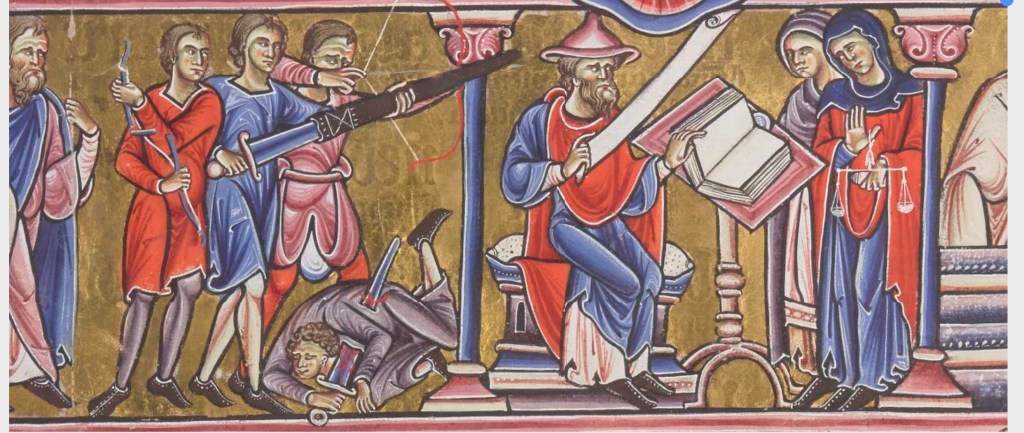
“Religions know how to deal with harrowing experiences of God as an abyss because, guess what, people regularly have experiences of God as an abyss.
“And communities have to hold that, have to help people work with those experiences.” 👏
“The [8] webinars [at YouTube] explored a range of topics, including:
bold claims made by psychedelic researchers about religion, spirituality, and mysticism;
limitations inherent in the scientific study of psychedelics (and the need for the humanities, especially the study of religion to take more of a lead); [give it up, loser academics, you forfeited to Park St Press, caved in to the boot-heel of Prohibitionism]
the possibility of training spiritual guides for psychedelic experiences, sometimes called “psychedelic chaplaincy”;
the evidence for psychedelic use in the ancient Mediterranean and Near East, from the Eleusinian Mysteries to early Christianity; [not medieval] and
how to honor and include indigenous voices that are often sidelined in popular discourse.”
Harvard Divinity School
Charles Stang
Video Series: Psychedelics and the Future of Religion
Video 8 (May 2021): Between Sacred & Profane: Psychedelic Culture, Drug Spiritualities, and Contemporary America (Charles Stang, Erik Davis, Gary Laderman, Christian Greer)
May 2021
transcript
url https://youtu.be/ymfw3VOgy6g Charles Stang, Erik Davis, Gary Laderman, Christian Greer – May 10, 2021: a superior video, worth multiple times
Book: The Varieties of Spiritual Experience: 21st Century Research and Perspectives (Yaden & Newberg)
published Sep 1, 2022
url https://www.amazon.com/Varieties-Spiritual-Experience-Research-Perspectives/dp/019066567X/
Chapter on “Unity and Ego Dissolution”.
The final chapter is on “Consciousness and Altered States”.
The intro pulls the same shiite as the first sentence in Ken Wilber’s first book: Censors “[On nitrous oxide], it occurs to me…” – Wm James wrote lowercase “it”; this censored version falsely starts their whitewashed misquote with “It”.
I found the Andrew Newberg school of writers disappointing, boring, straight, denatured, unmystical, OSC squares, maybe they were ordinary-state only, or meditation pushers, like CSR lameness: the (ordinary-state) Cog Sci of Religion. <– don’t care! irrel, reductionist, off-base, nothing of dionysus in it
religionless religion
exoteric esotericism
ordinary-state mystic experiencing
Video: The Varieties of Spiritual Experience (David Yaden)
Nov 2022 (not part of “Psychedelics and the Future of Religion” series)
Listen to Stang’s intro describing the T and T program/initiative: https://youtu.be/j4mjX5ZsUVk
Charles Stang:
“It always strikes me as strange why should we think that depriving oneself of something like food would induce a– could induce a legitimate spiritual experience but if we ingest something that is somehow illegitimate?
“And I’ve wondered whether the worry about ingesting something is troublesome precisely because of the Eucharist?“
“There’s a sense in which only one thing [the Eucharist] that you can ingest should transform you.
“You can do all kinds of other bodily exercises, but if you’re going to put something in your– if you’re going to eat or drink something that would transform you, it should be the Eucharist.
“And so anything [else] that might do that is kind of rendered illegitimate by virtue of its stepping into the space of the Eucharist.“
Who is going to break it to Stang that the Eucharist is Psilocybin?
“I’m wondering if you find that even remotely compelling as an explanation for Christian worries about psychedelics?”
Michael Ferguson:
“One is to look within Christendom and to correlate the degree to which a particular faith tradition has a high veneration for the Eucharist.
“And then to see if there is an association with an increased or decreased anxiety surrounding psychedelics.
“Because with this working hypothesis you would predict that the higher that the reverence is given to the Eucharist sacramentally, that the higher the anxiety around psychedelics would be for some kind of authenticity of mystical experience induction.
“And then a second dimension of analysis would be to look across different traditions, Islamic traditions, Jewish traditions, et cetera to see if there is comparable anxiety, or if there is really something uniquely elevated about Christian anxiety.
“But if we were to run that experiment, my wager is that perhaps there would be some correlation there.
“But that there would be perhaps a larger explanatory value to the anxieties about intoxicated states generally.
“I think that already with spiritual rapture there is such a patently intoxicating effect about it.
“That this delicate dance between ecstatic transformation versus delusion is so difficult to really finely walk and to discern.
“And so my speculation is that it’s more generally an anxiety about any type of intoxicant that would compromise the ability for discernment.”
Stang:
“Are people as anxious about that as a technique for inducing altered states as they are about techniques that involve of ingesting something, and if so why?”
Video: Transcendence and Transformation [initiative, Oct 2021]
https://cswr.hds.harvard.edu/news/2021/10/01/video-transcendence-transformation
HOME / EVENTS / PAST CSWR EVENT VIDEOS /
October 1, 2021
The Transcendence and Transformation kick-off event took place Sept. 23. [2021]
Charles M. Stang, Director of the Center for the Study of World Religions (CSWR), discussed the Center’s new initiative, “Transcendence and Transformation,” and introduced its first cohort.
“The new initiative will study religious and spiritual traditions and practices—ancient and modern, global in reach—that aim for the transcendence of our normal states of being, consciousness, and embodiment, and the consequent transformation of individual, community, and society.”
The webpage has a transcript.
Video: Transcendence and Transformation [initiative, Nov 2022]
Nov 2, 2022 / recd Oct 3
Take 2: https://hds.harvard.edu/news/2022/10/3/video-transcendence-and-transformation-take-two
November 2, 2022
https://hds.harvard.edu/news/2022/10/3/video-transcendence-and-transformation-take-two
page has transcript:
“we’re continuing our very popular series on Psychedelics and the Future of Religion,
“the start of that series … Spring [2023] semester.
[season 2 is acad yr 2022-2023 but only 2023]
“lining up an array of great guests who will cover an array of topics, such as
the central Dahomey tradition,
other Indigenous religious movements using plant medicine sacraments;
debates over how to interpret and integrate “bad trips”
a panel discussion on Psychedelics and Hinduism.”
“the launch of a podcast called Pop Apocalypse, led by another of our postdoctoral fellows, Matthew Dillon. Pop Apocalypse will offer an examination of myth and mysticism in popular culture, and will be aimed at audiences inside and outside the academy.
“So please be on the lookout for an announcement of the podcast release sometime later in the Fall semester.” [eg Dec 15 2022]
search: “Pop Apocalypse” podcast
“reading groups, open to members of the Harvard community, one on Mircea Eliade, and another on Plant Consciousness.
[ie are plants conscious? 😞 🍄 <– this one is ]
“the initiative also supports research associates and postdoctoral fellows who are pursuing private research projects, projects which will someday be public facing.
“it will be published in whatever form is most appropriate, an article, a book, a website, or a public lecture.”
“T&T, this Initiative in its second year is devoted to the study of
religious and spiritual traditions and practices, ancient and modern, global in reach, that aim for the transcendence of our normal states of being, consciousness, and embodiment, and the transformation of individual community and society.
“T&T affirms the existence of the sacred, different levels of reality, seen and unseen, and different modes of access to them.
“It investigates metaphysics and mysticism – the traditions across time, people, and places that have cultivated practices of transcendence and transformation and have articulated worldviews to make sense of those practices.
“we launched two new speaker series and continued a third.
“We launched Gnoseologies, led by my colleague Giovanna Parmigiani, a series which explored
ways of knowing that are often labeled nonrational.
[I like his handling there; “non-rational” is a false word that actually means rationality in the altered state. -cm]
Giovanna is continuing that series this year. Her next event will be on Wednesday, October 19 [2022], a Conversation with [? Marcelit Faella. ?]”
Video: TechGnosis Today (April 13, 2022, Erik Davis)
This video is part of the CSWR’s new initiative, “Transcendence and Transformation.”
https://cswr.hds.harvard.edu/news/techgnosis-today/2022/4/13
Transcript planned, as of Dec. 30, 2022.
Video: Matt Dillon against Academic Denatured Sawdust
not in Psychedelics series
Feb 2022
https://cswr.hds.harvard.edu/news/2022/02/24/matt-dillon
“Those of us who study of mysticism typically do so because we have an ecstatic origin story. We pursue this knowledge as a vision quest.
“Graduate school and early career research, on the other hand, is about preparing us for the field of religious studies as it currently operates.
“We learn grammars and syntax of dead languages;
become proficient in cognitive psychology, critical theory, and sociology;
analyze discursive formations, exploitive practices, and power.
“But the pendulum has swung so far in this direction, that I fear the discipline is in danger of losing what makes it distinctive, even transformative.
“We take accounts of mystical events seriously.
These are the events that spur individuals to join religious communities (or even found them!).
Groups and societies have been founded to trigger and explore such experiences.
“No serious study of religion can ignore them.
“By moving the mystical back to the heart of religious studies, we are NOT circling back to the pre-critical period of mystical studies.
“We are envisioning how to spiral up in a way that incorporates critical insights into the study of transcendence.”
“[my] podcast that centers on myth and mysticism in popular culture.
“the scholars one meets in the study of mysticism, gnosticism, or esotericism found their weird way through popular media, not traditional religion.
“introduced to the occult by heavy metal,
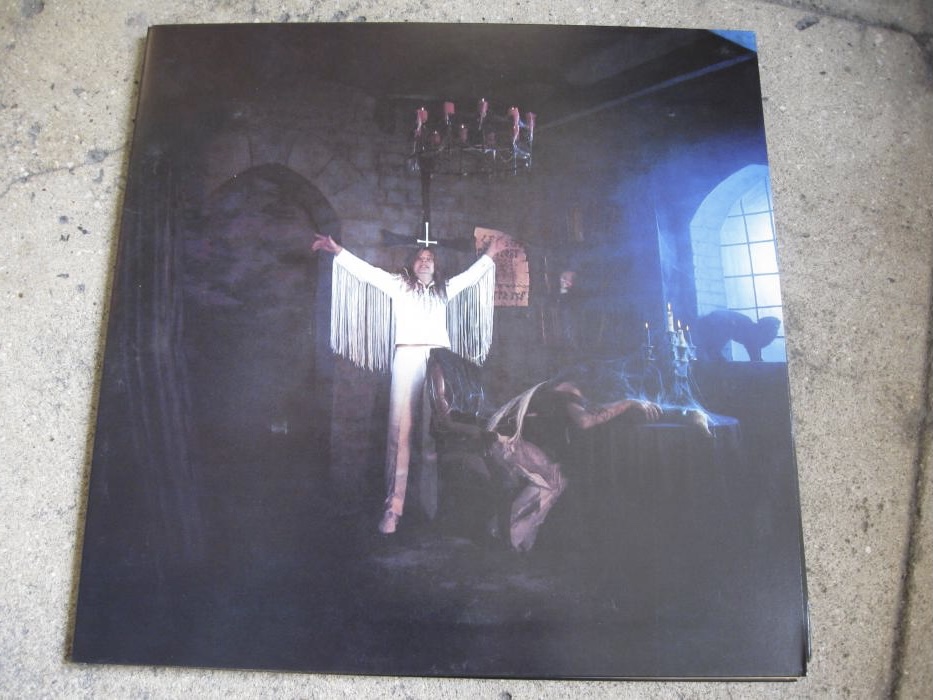
“Pop culture/ occulture is a resource for, and expression of, this new spiritual endeavor.
“intersection of mysticism and culture.
“descriptive, interpretive, and theoretical scholarship on religion and popular culture in real-time.”
Video (Nov 2021): Archaeology and Ecstasy
Nov 2021, maybe not in Psychedelics series, though relevant
https://cswr.hds.harvard.edu/news/archaeology-ecstasy/21/11/30
Video: Exploring Magical Consciousness as a Form of Knowledge
Oct 2021, not in Psychedelics series; in series: Gnoseologies
https://cswr.hds.harvard.edu/exploring-magic/2021/10/27
has transcript
The most tiresome thing in the world is so-called “critical”, “criticism”, which just means: destroy everything to death by exclusively complaining and criticizing and destroying everything, and then pretending you deserve a medal (or obeisance as you lord over your moral inferiors) for being everyone’s savior.
But they get some things right, per my excerpts below, and we ally.
“This series focuses on ways of knowing that are often labeled as “non-rational.”
“Traditionally referred to as gnosis in Western philosophical and religious traditions, and often understood in contraposition to science (episteme), these ways of knowing are becoming more and more influential in contemporary societies, popular culture, and academic research.
“What is the place of spirit possession, divination, and experiences perceived as “out-of-the ordinary” in our lives?
“How can we study and approach these types of phenomena?
“Going beyond dichotomies such as body and mind, ordinary and extraordinary, reason and experience, and matter and spirit,
this series hosts scholars of different disciplines and practitioners interested in exploring and expanding the boundaries of what counts as “knowledge” today.”
Book: Developing Magical Consciousness
My mind is closed on this matter: all important is psilocybin:
Developing Magical Consciousness: a theoretical and practical guide for the expansion of perception (Routledge 2020)
url https://www.amazon.com/Developing-Magical-Consciousness-Susan-Greenwood/dp/1138078697/
A 2-seconds skim suggests it’s just another typical beat-around-the-bush, substitution/ avoidance replacement ersatz inauthentic coverage, a for-profit cover-up, run of the mill witches shamanism book with near-zero mention of psychedelics, mentioning them just barely enough to be able to say that you mentioned them – in order for you to make 500 pages of not mentioning them – to “plaster over” the topic to prevent engaging the elephant-in-room topic.
It’s an old formula in the Prohibition era, is mentioning psychedelics (one time) in order to not cover them, rather than mentioning them for the purpose of actually covering them, engaging them.
Kindle Previews
by searching for book title is working on mobile. To view TOC / Intro.
Video 7 (March 22, 2021): Reasonably Irrational: Theurgy and the Pathologization of Entheogenic Experience (Wouter Hanegraaff)
Apr 2021
Wouter Hanegraaff
Apr 9 2021
“The next, last event in the series will take place on April 21st: Between Sacred and Profane, Psychedelic Culture, Drugs, Spirituality in Contemporary America.” [Erik Davis]
“the relevance of entheogens to liturgy and ritual invocation in Roman Egypt,
“the story of Thessalos , the Mithras Liturgy, and the neoplatonic practice of Iamblichus.
“Professor Hanegraaff will be arguing that if we deny or marginalize the clear evidence for entheogenic practice in this concept while acknowledging the spectacular visions and experiences that are claimed in the text, it is hard to avoid traditional pathologization interpretations of spiritual practices that, in fact, can be rationally accounted for.”
Video 6 (March 8, 2021): Honoring the Indigenous Roots of the Psychedelic Movement
Mar 2021
https://cswr.hds.harvard.edu/news/2021/03/18/honoring-indigenous-roots-psychedelic-movement
“what psychedelic therapists and scientists can learn from ayahuasca shamanism, as well as critique some common misunderstandings around the notions of set, setting, and integration.”
transcript
Video 5 (Feb. 22, 2021): What is Psychedelic Chaplaincy?
March 8, 2021
https://cswr.hds.harvard.edu/news/2021/03/08/video-what-psychedelic-chaplaincy
“This panel brought together Daan Keiman, spiritual caregiver and facilitator at a psilocybin retreat in the Netherlands, with Jamie Beachy, a MAPS MDMA Therapist and director of the Center for Contemplative Chaplaincy at Naropa University, in dialogue with Trace Haythorn of ACPE to explore their visions for psychedelic chaplaincy.
“What is the potential role of spiritual caregivers in providing support for people preparing for, undergoing, or integrating psychedelic experiences?
“What are the challenges in creating psychedelic education and training opportunities for chaplains and clergy?
“To what extent does the continually increasing access to psychedelics call on us to rethink, reshape, or expand conceptions of chaplaincy writ large?”
Video 4: Psychedelics: The Ancient Religion with No Name? (Brian Muraresku)
Feb 2021 Brian Muraresku
https://cswr.hds.harvard.edu/news/2021/02/12/video-psychedelics-ancient-religion-no-name
Video 3 (Nov 2020): Sisters of the Psychedelic Revolution: A Conversation with Leni Sinclair and Genie Parker
Nov 2020
Video 2: Medicalizing Mysticism: Religion in Contemporary Psychedelic Trials
https://cswr.hds.harvard.edu/news/2020/11/03/video-medicalizing-mysticism-religion-contemporary-psychedelic-trials
Two psilocybin clinical trial participants, Rachael Petersen and Rita Powell, and historian Jeffrey Kripal.
My commentary and excerpts where Stang rejects Griffiths’ conception and representation of what mystic experiencing is when validating psilocybin:
Stang Rejects Griffiths’ Conception of “Mystic Experiencing” Used to Experimentally Validate Psilocybin
https://egodeaththeory.wordpress.com/2023/01/02/stang-rejects-griffiths-conception-of-mystic-experiencing-used-to-validate-psilocybin/
Eternalism Exorcism
This video is not part of the “Psychedelics and the Future of Religion” series.
Video 1 (Sep 2020): Psilocybin and Mystical Experience: Implications for Healthy Psychological Functioning, Spirituality, and Religion (Roland Griffiths, Charles Stang)
My commentary and excerpts where Stang rejects Griffiths’ conception and representation of what mystic experiencing is when validating psilocybin:
Stang Rejects Griffiths’ Conception of “Mystic Experiencing” Used to Experimentally Validate Psilocybin
https://egodeaththeory.wordpress.com/2023/01/02/stang-rejects-griffiths-conception-of-mystic-experiencing-used-to-validate-psilocybin/
Video: All the Time in the World: An Artist’s Awakening with Ayahuasca
https://cswr.hds.harvard.edu/news/2019/11/14/video-all-time-world-artists-awakening-ayahuasca
2019 is earlier than the 2020-2021 Psychedelics series.
part of series: “Rachel’s exhibition and lecture falls into one of the center’s ongoing series entitled, Matter and Spirit: Ecology and the Non-human Turn.”
The Challenging Experience Questionnaire
See my critical analysis at various pages eg:
Griffiths’ CEQ’s Mistakes, Not Studerus’ 11-Factors’ Mistakes, Omitting Most Challenging Experiences from Psychedelics Effects Questionnaire
https://egodeaththeory.wordpress.com/2022/12/30/griffiths-ceqs-mistakes-not-studerus-11-factors-mistakes-omitting-most-challenging-experiences-from-psychedelic-effects-questionnaire/
https://www.bing.com/search?q=challenging+experience+questionnaire
https://pubmed.ncbi.nlm.nih.gov/27856683/
Barrett FS, Bradstreet MP, Leoutsakos JS, Johnson MW, Griffiths RR. The Challenging Experience Questionnaire: Characterization of challenging experiences with psilocybin mushrooms. J Psychopharmacol. 2016 Dec;30(12):1279-1295.
Abstract
excerpts
“Acute adverse psychological reactions to classic hallucinogens (“bad trips” or “challenging experiences”), while usually benign with proper screening, preparation, and support in controlled settings, remain a safety concern in uncontrolled settings (such as illicit use contexts).
“Anecdotal and case reports suggest potential adverse acute symptoms including affective (panic, depressed mood), cognitive (confusion, feelings of losing sanity), and somatic (nausea, heart palpitation) symptoms.
“Responses to items from several hallucinogen-sensitive questionnaires (Hallucinogen Rating Scale, the States of Consciousness Questionnaire, and the Five-Dimensional Altered States of Consciousness questionnaire) in an Internet survey of challenging experiences with the classic hallucinogen psilocybin were used to construct and validate a Challenging Experience Questionnaire.
“The stand-alone Challenging Experience Questionnaire was then validated in a separate sample.
“Seven Challenging Experience Questionnaire factors (grief, fear, death, insanity, isolation, physical distress, and paranoia) provide a phenomenological profile of challenging aspects of experiences with psilocybin.
The Challenging Experience Questionnaire provides a basis for future investigation of predictors and outcomes of challenging experiences with classic hallucinogens.
Keywords: Psilocybin; challenging experiences; factor analysis; psychedelics; scale development.
page has links to related articles

 The Egodeath theory