Michael Hoffman, December 16, 2022 6:26 pm UTC+0
Contents:
- Intro
- Updated Assessment December 20, 2022
- Maturation of the Articles
- My Initial Assessment
- Challenging Experience Questionnaire (CEQ)
- Summary of the Missing/ Covered-up Questions About Control-Loss
- Threat of Loss of Control (missing category) – repeated heading
- Article: “Human Hallucinogen Research: Guidelines for Safety”
- Mystical Experience Questionnaire (MEQ)
- Charles Stang’s Critique of Whitewashed Pseudo-“Mystic Experience”
- CEQ Surprisingly Omits Entire Category of “Control Loss”
- CEQ’s Questions Grouped into Categories
- Threat of Loss of Control (missing category)
- Fear
- Grief
- Physical Distress
- Insanity
- Isolation
- Death
- Paranoia
- Zero Thought of Discussing “How Did You Solve/ Resolve the Problem?”
- Not Solution-Oriented At All, only “Try to Predict & Avoid the Experiences”
- See Also
- Flawed CEQ that Omits the Entire Category of “Loss of Control” – DOH!
- Appendix 1: The Challenging Experience Questionnaire
- Control Transformation Art Imagery
- Uploading an Image
- Dec. 20, 2022 Reassessment of Whether Control Questions Are Discussed
- Final CEQ questions: Where Did ‘Control’ Go??
- Phrases from other pages about control that got omitted from the CEQ questions
- “Control” Wording in Each Section of the CEQ Article
toc added/updated Dec. 27, 2024
Intro
pending
Updated Assessment December 20, 2022
Instead of expanding the present page, I started a fresh new page, planned title:
How Control-Loss Got Omitted from the Challenging Experiences Questionnaire (CEQ)
Where did the control-related questions go? What happened to them? How did they get dropped along the way?
The CEQ questions are definitely flawed right at the most central key point:
The CEQ questions omit any “control” phrases, which are found elsewhere in the article.
Instead of words about control loss threat, the CEQ has duplicated, indistinguishable, redundant questions about:
- fear/frightened 2x
- death/dead 2x
- isolation 2x
- shake/shaky 2x.
The previous questionnaires and the body of the article have such phrasing. I list those exact “control” phrases from the CEQ article. I’m re-checking that list now.
At the bottom of this webpage, I’m doing a focused examination of the control-related wording in the CEQ questions, and comparing them to the control phrases elsewhere in the CEQ article.
Why are four or more questions exactly duplicated (fear, death), instead of having any questions about control?
Maturation of the Articles
Griffiths’ “Guidelines for Safety” article is 2008. Doesn’t mention heart palpitation/ uneven heartbeat.
Griffiths’ CEQ article is 2016. Mentions heart palpitation/ uneven heartbeat.
Where the action’s at: the last 2 pages of the article; section:
Appendix 2: Initial Item Pool for CEQ Development – top priority.
List these control-related questions from the previous questionnaires, along with which questionnaire they are from.
Map them to the CEQ’s questions to determine what became of the vanishing control-related words/phrases.
Then assess body of article, section by section, looking for discussion of why those control-related phrases got dropped when copying questions from previous questionnaires into the CEQ.
My Initial Assessment
Apparently, according to Roland Griffiths, the threat of loss of control isn’t a challenging experience with psilocybin mushrooms, even though his article mentions ‘control’ 19 times and quotes other questionnaires, including their entire category of questions, “Impaired cognition/control”.
So far, I’ve found 3 documents that misrepresent bad trips, due to Roland Griffiths’ cover-up of the main bad trip effect – the threat of loss of control:
- The Challenging Experience Questionnaire (CEQ) article and its resulting CEQ questionnaire.
- Griffiths’ 2008 article “Human Hallucinogen Research: Guidelines for Safety”.
- The Oregon Health Authority’s summary of scientific safety research, which is over-influenced by Griffiths. No Mention of Loss of Control in “Scientific Literature Review” from Oregon Psilocybin Advisory Board Rapid Evidence Review and Recommendations:
https://www.oregon.gov/oha/PH/PREVENTIONWELLNESS/Documents/Oregon%20Psilocybin%20Advisory%20Board%20Rapid%20Evidence%20Review.pdf
I have informed the Oregon Advisory Board about the threat of loss of control and its folk solution, “surrender/ submit/ accept the loss of control”, as well as linking them to my Requirements for Guides webpage, along with informing them that Psilocybin is at the heart of Christian historical religious practice.
Challenging Experience Questionnaire (CEQ)
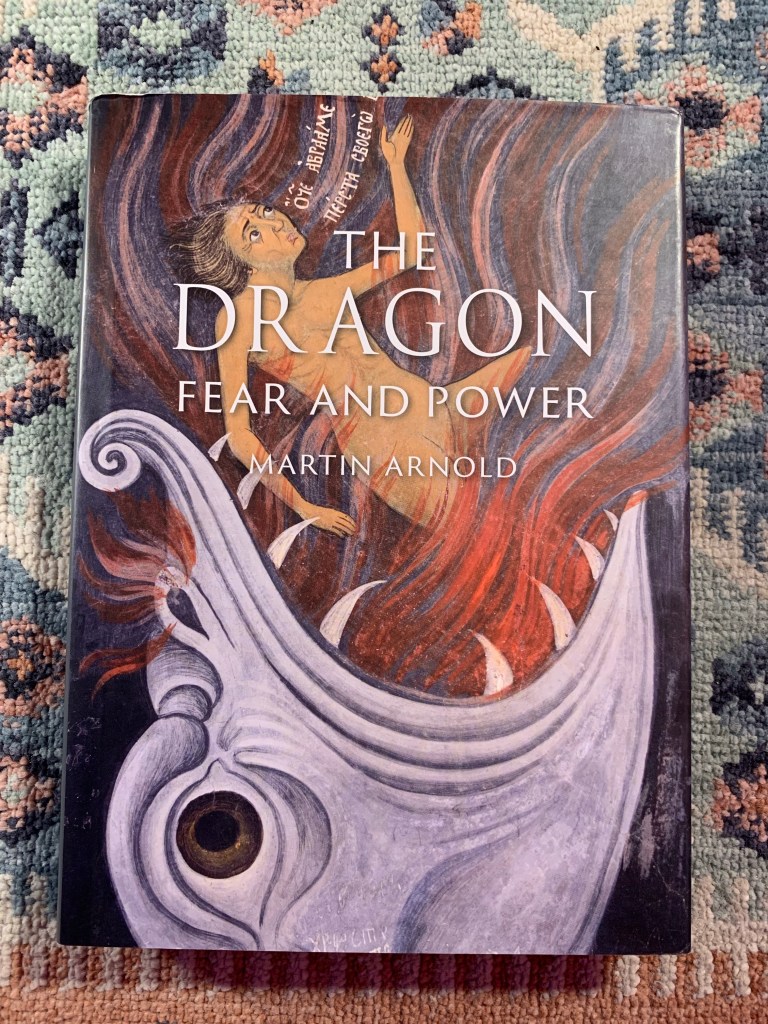
The Challenging Experience Questionnaire: Characterization of challenging experiences with psilocybin mushrooms
Step aside, MEQ, make way for the CEQ.
The article that develops and presents the CEQ:
Frederick S Barrett, Matthew P Bradstreet,
Jeannie-Marie S Leoutsakos, Matthew W Johnson
and Roland R Griffiths, 2016
Summary of the Missing/ Covered-up Questions About Control-Loss
Copied from my analysis of Griffith’s question categories below, here is the list of missing, key, common questions that should’ve been in the CEQ.
Threat of Loss of Control (missing category)
- marionette [helpless puppet – my formulation/ phrase]
- sense of being trapped and helpless
- volition
- new thoughts [eg of control transgression]
- dread of ego dissolution
- loss of ego/control
- impaired control and cognition
- confusion, disorientation and/or chaos [control instability]
impaired control, disintegration of sense of control[not phrasing from pdf]- impaired control and cognition
- no longer had a will of my own
- paralyzed
- unable to make decisions
- felt threatened
- frustrating attempt to control
- loss of control of my mind
- threat of loss of control [my formulation/ phrase]
- psychotic immunity to fear; inappropriate affect regarding transgressive thoughts [my formulation/ phrase]
- felt like my control-thoughts already exist in the future, unavoidably [my formulation/ phrase]
Article: “Human Hallucinogen Research: Guidelines for Safety”
Similarly, Griffiths’ article “Human Hallucinogen Research: Guidelines for Safety” is missing (almost entirely) the effect, Threat of Loss of Control; Fear of Loss of Control.
Panic about/ Apprehension of/ Fear of loss of control – yet that comes with an attraction element too, per the mytheme {sirens luring steersman/ sailors to their death on the rocks}.
Griffiths’ articles are also missing, or entirely short on, the solution, which is: {submit to/ give honor to/ pay obeisance to/ surrender to/ pacify/ mollify/ sacrifice to} the eternalism no-free-will {dragon/ planetary archon fate-ruler}.
Johnson, M.W., Richards, W.A., Griffiths, R.R. (2008).
url https://www.ncbi.nlm.nih.gov/pmc/articles/PMC3056407/
Journal of Psychopharmacology, 22, 603-620.
commentary copied from https://egodeaththeory.wordpress.com/2022/12/17/consciousness-religion-gurus-the-pitfalls-of-psychedelic-medicine-matthew-johnson/ –
Like Griffiths’ Challenging Experiences Questionnaire, this article has no real awareness of the main experience, the threat of loss of control.
Michelle Janikian’s 2019 book Your Psilocybin Mushroom Companion has the correct focus on the problem of the threat of loss of control. Excerpts:
Standard Hazy Trip Advice on Surrender to the Shadow, Trust, Submit, and Let Go of Control
Griffiths’ articles seem like dated affectation, a pose that seemed marketable for 2008, but entirely inadequate and out of touch with the problem.
/ end of copied commentary
Mystical Experience Questionnaire (MEQ)
MEQ: https://www.trippingly.net/lsd-studies/2018/5/22/the-mystical-experience-questionaire-30-questions
Article about MEQ: https://psychedelicreview.com/what-is-the-mystical-experience-questionnaire/
Charles Stang’s Critique of Whitewashed Pseudo-“Mystic Experience”
See in my past couple posts, Charles Stang’s criticism of Roland Griffiths’ lopsidedly positive, whitewashed marketing of “mystic experience”.
The Egodeath community has pointed out this marketing whitewashing.
Stang’s critique; find “Stang” in:
Psychedelics and the Future of Religion/ Transcendence and Transformation Initiative (Stang, Harvard)
https://egodeaththeory.wordpress.com/2022/12/16/psychedelics-and-the-future-of-religion-transcendence-and-transformation-initiative-stang-harvard/
CEQ Surprisingly Omits Entire Category of “Control Loss”
Griffiths has created a negative survey, that’s about 75% good, but has amazing huge gaps – surprised but not surprised.
I’m surprised at which omissions and blind spots are in the survey vs. what known negative experiences are mentioned in the course of creating the CEQ.
Here are phrases throughout the article that – astoundingly – didn’t make it into the 1-page questionnaire of 26 questions. Some are from other questionnaires.
- volition
- new thoughts [eg of control transgression]
- dread of ego dissolution
- loss of ego/control
- impaired control and cognition
- Question 21 Experience of confusion, disorientation and/or chaos [control instability]
- Question 28 Sense of being trapped and helpless
- Question 37 Visions of demons, devils or other wrathful deities [omitted b/c culture-specific myth omitted]
- Question 40 Feeling that people were plotting against you [I’d say “thoughts conspiring to pull into vortex”, not “people”]
- Question 44 Thoughts and ideas flashing by very rapidly [2112 lyrics, Lessons song]
- Question 57 Feeling of being rejected or unwanted [repudiating/ sacrificing childish possibilism-thinking, have to jettison]
- Question 75 Convincing feeling of contact with people who have died
- Question 76 Sense of being separated from the normal world, as though you were enclosed in a thick, silent glass chamber [says “isolated and lonely” instead]
- The subjective experience of one’s own death and loss of control of the mind
- Question 66 Frustrating attempt to control the experience
- Question 84 Feeling of disintegration, falling apart
- Question 94 In control
- 5DASC [questionnaire’s category] items: Impaired cognition/control subscale: [an entire category omitted!]
- 5. I felt like a marionette. [Little Dolls song by Bob Daisley, Twilight Zone by Rush or Peart]
- 16. I had difficulty making even the smallest decision.
- 33. I felt as though I were paralyzed.
- 44. I felt isolated from everything and everyone.
- 45. I was not able to complete a thought, my thought repeatedly became disconnected.
- 53. I had the feeling that I no longer had a will of my own.
- 29. I was afraid without being able to say exactly why.
- 38. I felt threatened.
The grading guide arranges the questions by group – there is no “loss of control” category or questions!! Inconceivable. Even though they list such questions from other, previous questionnaires.
CEQ’s Questions Grouped into Categories
Threat of Loss of Control (missing category)
- marionette [helpless puppet – my formulation/ phrase]
- sense of being trapped and helpless
- volition
- new thoughts [eg of control transgression]
- dread of ego dissolution
- loss of ego/control
- impaired control and cognition
- confusion, disorientation and/or chaos [control instability]
- impaired control, disintegration of sense of control
- no longer had a will of my own
- paralyzed
- unable to make decisions
- felt threatened
- frustrating attempt to control
- loss of control of my mind
- threat of loss of control [my formulation/ phrase]
- psychotic immunity to fear; inappropriate affect regarding transgressive thoughts [my formulation/ phrase]
- felt like my control-thoughts already exist in the future, unavoidably [my formulation/ phrase]
Fear
- I had the feeling something horrible would happen
- Experience of fear
- Anxiousness
- Panic
- I felt frightened
Grief
- Sadness
- Feelings of grief
- I felt like crying
- Feelings of despair
- Despair
- Emotional and/or physical suffering
Physical Distress
- Feeling my heart beating
- Feeling my body shake/tremble
- I felt shaky inside [Michael Williams book: The Unshakeable Race (gnostics)]
- I felt my heart beating irregularly or skipping beats
- Pressure or weight in my chest or abdomen
Insanity
- Fear that I might lose my mind or go insane
- I was afraid that the state I was in would last forever
- I experienced a decreased sense of sanity
Isolation
- Isolation and loneliness
- Feeling of isolation from people and things
- I felt isolated from everything and everyone
Death
- I had the profound experience of my own death
- I felt as if I was dead or dying
Paranoia
- I had the feeling that people were plotting against me
- Experience of antagonism toward people around me
Zero Thought of Discussing “How Did You Solve/ Resolve the Problem?”
Not Solution-Oriented At All, only “Try to Predict & Avoid the Experiences”
The article says understanding challenging experiences helps predict and prevent them during therapy – yet has zero concept of “Hey, we should discuss how people solved these problems when they did come up.”
It merely mentions “responds to reassurance” (which assumes there’s a Guide to do the “reassuring”).
For the standard vague actual solutions people use, see my recent post https://egodeaththeory.wordpress.com/2022/12/07/standard-hazy-trip-advice-on-surrender-to-shadow-trust-submit-and-let-go-of-control/
The mind is made to submit and surrender to the higher-level control source and jettison (repudiate, sacrifice, outgrow) the egoic claim to autonomous power of steering in a branching tree of possibilities.
Relying on left leg = unstable, branching-possibilities model, gives control failure/ cybernetic control death.
Relying on right leg = stable, non-branching model, gives viable control and ability to be in the psilocybin state with suitable, useful, appropriate, durable control mode.
More content below, including the actual questionnaire.
See Also
Strict Requirements for Teachers, Initiation Guides, and Students, Prior to Initiation
https://egodeaththeory.wordpress.com/2020/11/24/strict-requirements-for-teachers-initiation-guides-and-students-prior-to-initiation/
Standard Hazy Trip Advice on Surrender to the Shadow, Trust, Submit, and Let Go of Control
https://egodeaththeory.wordpress.com/2022/12/07/standard-hazy-trip-advice-on-surrender-to-shadow-trust-submit-and-let-go-of-control/
About extracted from Michelle Janikian’s book:
Your Psilocybin Mushroom Companion: An Informative, Easy-to-Use Guide to Understanding Magic Mushrooms—From Tips and Trips to Microdosing and Psychedelic Therapy
Flawed CEQ that Omits the Entire Category of “Loss of Control” – DOH!
The word “control” doesn’t even appear in the questionnaire, The Challenging Experiences Questionnaire!! The word ‘control’ appears 19 times in the article.
Even though the 5DASC questionnaire which this article quotes has an entire category of questions, called “Impaired cognition/control subscale”.
HOW IN THE … CAN YOU MAKE A BAD TRIP QUESTIONNAIRE AND FAIL TO EVEN MENTION CONTROL??!! mega fail!!
🌳🍄🐍😵🪨🐉🚪💨💥💎🏆
Appendix 1: The Challenging Experience Questionnaire
Instructions: Looking back on the entirety of your session, please rate the degree to which at any time during that session you experienced the following phenomena. Answer each question according to your feelings, thoughts, and experiences at the time aof the session. In making each of your ratings, use the following scale:
- 0 – none; not at all
- 1 – so slight cannot decide
- 2 – slight
- 3 – moderate
- 4 – strong
- 5 – extreme (more than ever before in my life)
______ 1. Isolation and loneliness
______ 2. Sadness
______ 3. Feeling my heart beating
______ 4. I had the feeling something horrible would happen
______ 5. Feeling my body shake/tremble
______ 6. Feelings of grief
______ 7. Experience of fear
______ 8. Fear that I might lose my mind or go insane
______ 9. I felt like crying
______ 10. Feeling of isolation from people and things
______ 11. Feelings of despair
______ 12. I had the feeling that people were plotting against me
______ 13. I was afraid that the state I was in would last forever
______ 14. Anxiousness
______ 15. I felt shaky inside
______ 16. I had the profound experience of my own death
______ 17. I felt my heart beating irregularly or skipping beats
______ 18. Pressure or weight in my chest or abdomen
______ 19. I experienced a decreased sense of sanity
______ 20. I felt as if I was dead or dying
______ 21. Panic
______ 22. Experience of antagonism toward people around me
______ 23. Despair
______ 24. I felt isolated from everything and everyone
______ 25. Emotional and/or physical suffering
______ 26. I felt frightened
Free for non-commerical[sic] use.
Control Transformation Art Imagery



Rescued by no-free-will from outside the local control agent system by the higher control level, pulled from the jaws of hell of control disproof/ transgression, and purified/ perfected/ enlightened/ transformed from (immature, temporary, contingent, perishable) possibilism-thinking to (mature) eternalism-thinking.

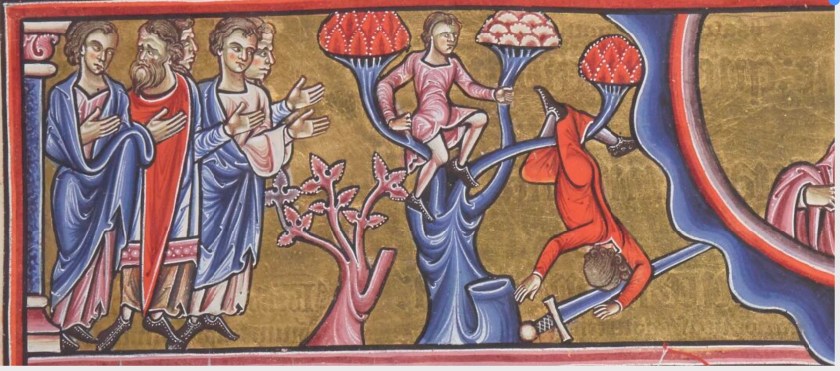
Childish branching-thinking (naive possibilism-thinking) is carried off, affirming non-branching possibilities, per branching-message mushroom trees.
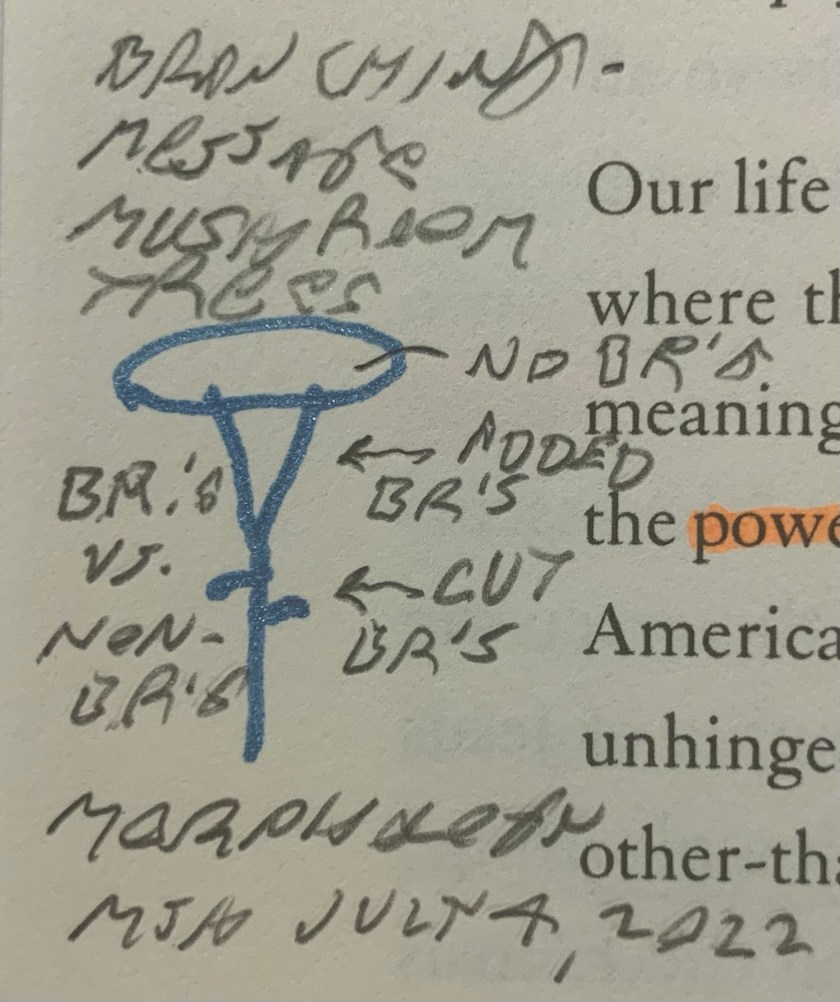
One of my announcements of my full decoding of the major medieval mythic art trope {branching-message mushroom tree}.
That was drawn a few months after Brown sent me the 2019 version of the highlighted passage from the art scholar’s book about “youths in trees cutting branches” around March 2022, which has stronger highlighting than the 2016 book’s text.
The color plate in the 2016 book is fairly faint and faded, so I didn’t catch the “youths cutting branches” art mytheme motif when the book first shipped, but only 5-6 years later.

Photo credit above: Julie M. Brown, crop & processing by Cybermonk.

Photo credit above: Julie M. Brown, crop by Cybermonk.
Brown fails to mention or note this curved pruning knife (held in right hand, cutting the branches held by left hand) in the 2016 book or 2019 article. (Please prove me wrong.)

from Panofsky’s sekrit 2nd letter to Wasson, published by Brown & Brown 2019 https://www.academia.edu/40412411/Entheogens_in_Christian_art_Wasson_Allegro_and_the_Psychedelic_Gospels
if the artists had labored under the delusion that the model before him was meant to be a mushroom rather than a schematized tree he would have omitted the branches altogether.
Erwin Panofsky, secret 2nd letter to Wasson
WHOOSH the whole message and purpose of the branching mushroom tree imagery went completely over the head of the most influential art historian, who, in the case of mushroom imagery, presents infantile, flimsy argumentation not worthy of a grade schooler.

The mental world model of {control and time and possibilities branching} is conformed to {worldline in block universe} per eternalism.
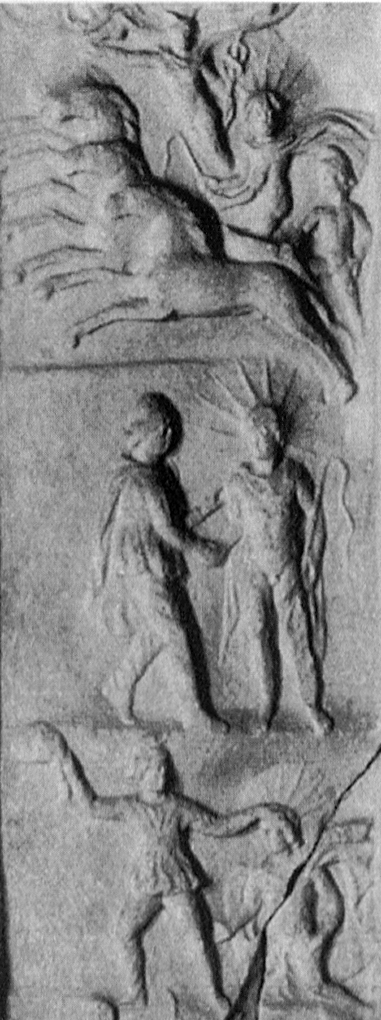
Steersman Helios controlled by Mithras, reconciled operating in harmony/ unison as the two levels of your mind.
= cosmos level 8 (heimarmene / eternalism) & 9/10 (the ennead & the decans; the Empyrean where dwells God and the elect).
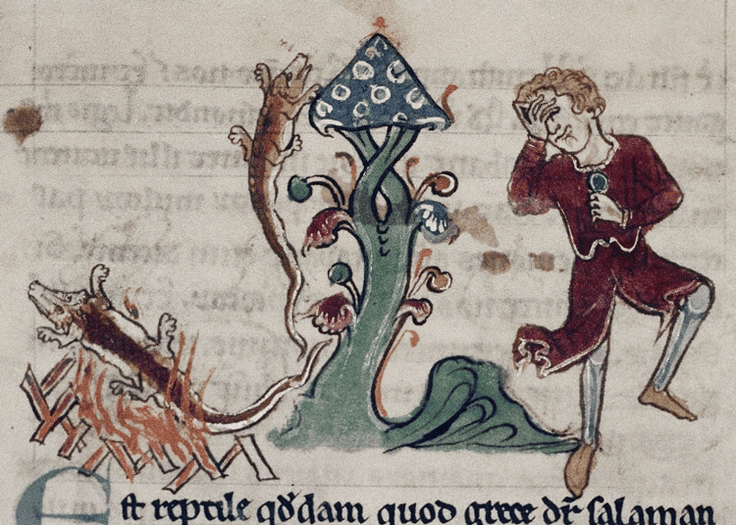
In the psilocybin eternalism state, rely on non-branching thinking (right leg), not branching-possibilities/ freewill thinking (left leg).

The branching vs. non-branching mental worldmodel of control, time, & possibilities.
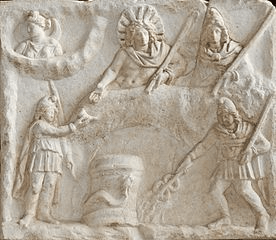
Cista mystica lid-covered snake-basket mechanism veiled in the mind’s control-system at the fountainhead source of control-thoughts.
Helios & Mithras banqueting at the symposium party on the hide of the sacrificed egoic-thinking possibilism-thinking bull, psilocybin mixed wine in drinking horn.

Control stability restored from outside the egoic control system, jettisoning relying on naive possibilism-thinking.
Caption in main article’s section https://egodeaththeory.wordpress.com/the-entheogen-theory-of-religion-and-ego-death-2006-main-article/#Transcending-Determinism-Requires-Two-Jumps –
“In Mark 9:14-29, Jesus exorcises the ego-demon from a youth supported by his father; these four figures are aspects of the psyche.”
Uploading an Image

Photo credit above: Julie M. Brown. Full wide image including knife in upper right, but I need more on the right that’s cut off.
Dec. 20, 2022 Reassessment of Whether Control Questions Are Discussed
Moved to or superseded by a separate webpage, planned title:
“How Control Loss Got Omitted from the Challenging Experiences Questionnaire CEQ”
There, I’m doing a fresh assessment of the CEQ article.
Where are all the places that the CEQ article mentions the threat of loss of control; control-related questions?
Ignore the word ‘control’ in the unrelated sense of controlling a scientific procedure.
Final CEQ questions: Where Did ‘Control’ Go??
Copied to a separate webpage.
Here are the final literal CEQ questions, with bold on words that are like threat of loss of control:
______ 1. Isolation and loneliness
______ 2. Sadness
______ 3. Feeling my heart beating
______ 4. I had the feeling something horrible would happen
______ 5. Feeling my body shake/tremble
______ 6. Feelings of grief
______ 7. Experience of fear
______ 8. Fear that I might lose my mind or go insane
______ 9. I felt like crying
______ 10. Feeling of isolation from people and things
______ 11. Feelings of despair
______ 12. I had the feeling that people were plotting against me
______ 13. I was afraid that the state I was in would last forever
______ 14. Anxiousness
______ 15. I felt shaky inside
______ 16. I had the profound experience of my own death
______ 17. I felt my heart beating irregularly or skipping beats
______ 18. Pressure or weight in my chest or abdomen
______ 19. I experienced a decreased sense of sanity
______ 20. I felt as if I was dead or dying [dup of 16 – did this replace ‘control’?]
______ 21. Panic
______ 22. Experience of antagonism toward people around me
______ 23. Despair
______ 24. I felt isolated from everything and everyone
______ 25. Emotional and/or physical suffering
______ 26. I felt frightened [dup of 7 – did this replace ‘control’?]
Phrases from other pages about control that got omitted from the CEQ questions
This is from my initial pass. Below, in the TOC-based headings, I plan to list all of the quotes from each section of the CEQ article, with enough context to track what happened to control-phrasing such that it was omitted from the CEQ questions.
Actually I think these might be extracted only from the previous questinnaires (SOCQ, HRS, 5DASC); Appendix 2.
That’s a good strategy; do this first; so now re-do this first (copy entire questions this time, from previous q’aires (Apx2)), before extracting phases from body of article.
To do first: for each item below, confirm that it’s lifted from “Initial Item Pool” section: result: half the items in this list were from the questions in Appendix 2 (previous questionnaires), half were from body of article.
Therefore, work backwards:
- First, in Appendix 2’s subheadings (SOCQ, HRS, 5DASC), list all the questions (verbatim w/ number & any question-category that’s indicated). Status: about to start.
- Then, for each section of article body, extract phrases, with special attention of which q’air it came from and how Griffiths managed to omit that phrase from his CEQ questions. Status: not started.
- Finally: Describe assessment: How do the earlier q’airs have their control-related questions, and the body of the article contains control-related phrases, and yet how then did the CEQ end up lacking any control-related phrases? Status: not started.
- marionette5DASC
- sense of being trapped and helplessSOCQ
- volition not a question. 2 hits: page 2 & 4.
- new thoughtspage 2, not a question
- dread of ego dissolutionpage 2, not a question. no q’aires mention “dissolution”. 8 hits in article.
- loss of ego/control. not a question. 3 hits on “loss of ego”, all on page 2.
- impaired control and cognition – not question. “impaired control” is 1 hit, in this whole phrase, page 2.
- confusion, disorientation and/or chaos– SOCQ. ‘disorientation’ also p. 4: “disorientation, ego loss, loss of perception of time“
impaired control, disintegration of sense of control[not phrasing from pdf]- impaired control and cognition- not a question. 1 hit on “impaired control”: p. 2, in “impaired control and cognition”
- no longer had a will of my own5DASC
- paralyzed5DASC
- unable to make decisions5DASC, actual wording: “difficulty making even the smallest decision.”
- felt threatened5DASC
- frustrating attempt to controlSOCQ
- loss of control of
my[the] mindNot a question. 1 hit on complete phrase “loss of control”: “experience of one’s own death and loss of control of the mind”, page 14.
Does the body text anywhere explain WHY these phrases got omitted from CEQ?
“Control” Wording in Each Section of the CEQ Article
Superseded by a separate webpage.
Start with the end: Appendix 2’s questions from previous questionnaires (SOC, HRS, 5DASC). Because the control-related phrases are there, and the format is comparable to the explanandum, which is the CEQ list of questions.
How come Griffiths started from the good questions he picked from SOC, HRS, 5DASC, and ended up removing/ omitting/ censoring/ whitewashing/ covering up all control-related wording from the CEQ’s version of those questions?

 The Egodeath theory