This posting covers:
- Article: Who’s in Charge of Psilocybin? (Beiner article 2021)
- Fallacy: The group which I appoint myself the spokesman and savior for, exclusively owns psilocybin, because of our special unique historical use of Psilocybin.
Article: Who’s in Charge of Psilocybin?
Alexander Beiner, May 20, 2021
https://chacruna.net/who_owes_psilocybin/ – article includes link to short video:
url https://youtu.be/fAuHXNCOK1o –
Are Clinical Trials the Only Legitimate Path to Accessing Psilocybin?
“We’re in the middle of a psychedelic turf war.
“With psychedelic medicine on the cusp of going mainstream, an increasing number of players are vying for narrative control.
“From clinicians and investors to Indigenous groups and activists, debate is raging over whether psychedelics are spiritual tools, new psychiatric drugs, medicines for social change, or all of the above.
“the latest skirmish in this turf war.
“It came about on April 21 [2021], with the publication of a paper called Psilocybin: From Serendipity to Credibility in the journal Frontiers in Psychiatry (available here).
“Written by James Rucker and Allan Young (psychiatrists working at Kings College and the Maudsley, respectively), the paper questions whether legal clinics should be offering psilocybin-assisted experiences before psilocybin has gone through the clinical trial process.
“While the paper raises some important arguments, it also points to underlying tensions around power and access in the psychedelic field that could, if left unresolved, become detrimental to the psychedelic renaissance.
“In this article, I will critique the paper with the aim of seeing where a resolution may lie between the competing epistemologies in the space.
“The Battle Lines
“Much of Rucker & Young’s argument centers around the idea that credibility and safety for psilocybin-assisted therapy relies on its journey through the clinical trial process.”
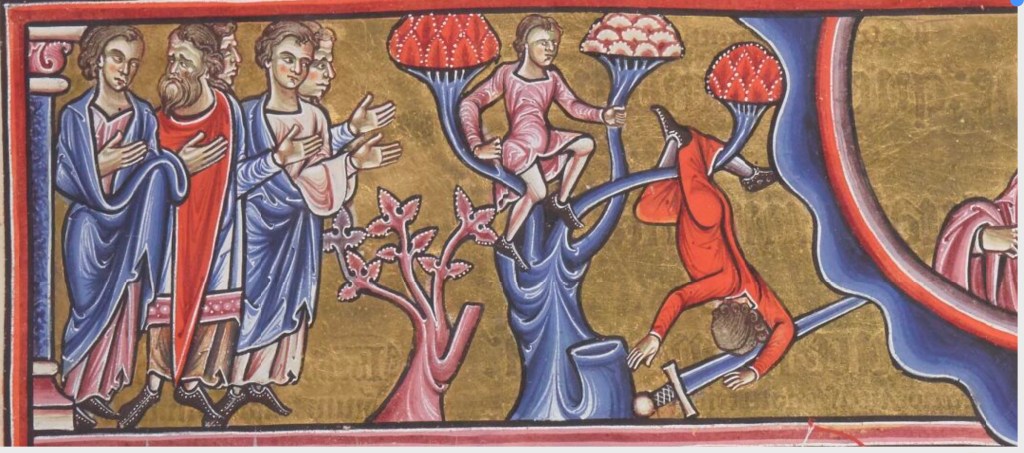
Safety – control stability – lies in knowing to rely on eternalism-thinking instead of possibilism-thinking.
– Cybermonk per Eadwine & other artists of handedness & branching-message mushroom trees
https://egodeaththeory.wordpress.com/2020/11/24/strict-requirements-for-teachers-initiation-guides-and-students-prior-to-initiation/
Alexander Beiner’s article continues:
The Problem with Clinical Trials
“The key argument the paper rests on is that clinical trials are the safest and most responsible method we have to bring new drugs to market.
“Many, myself included, would agree.
“But psilocybin is not a new drug.
“It is a pre-existing molecule with a rich history … as a spiritual sacrament or therapeutic tool.
“While the authors acknowledge this, they nevertheless go on to argue that we can’t know it’s therapeutically safe until it has gone through a clinical trial process.”
Bia Labate et al wrote:
“Alcohol and tobacco did not have to go through [clinical trials]. Statistically-sound clinical trials were introduced in the 1940s to ensure the safety and efficacy of new drugs and treatments. … Epidemiology, or the collective human experience of consumers of these substances, simply trumps clinical trials.”
“… they [Rucker & Young in article Psilocybin: From Serendipity to Credibility] are instead arguing that their profession should gatekeep therapeutic approaches using a molecule with thousands of years of existing human use.”
“there is little evidence to suggest that medics would be better qualified after a few decades than traditions with thousands of years of experience.”
“The clinical trials that Rucker and Young refer to in the paper use the very same molecule that [historical] cultures … hold sacred.”
“Who (if anyone) has the right to control access to psilocybin?
“Some believe that psychiatrists are best placed to be at the top of the hierarchy, and that these substances should enter the mainstream primarily as mental health tools.
“Many activists, and religious and indigenous groups for whom these are sacraments, vehemently disagree.”
“I don’t believe any existing institution should sit at the top of a hierarchy of access.
“Of the options we have, the medical establishment would not be my first choice.
“The very reason we’re looking for new mental health treatments is that psychiatry, and its reductionist biological model of mental health, has failed in preventing or adequately treating epidemic rates of depression and anxiety.”
[“the” reason? -cm]
“In addition to this, psychology is in the grips of a serious replication crisis.
“As The Atlantic reports, “Ironically enough, it seems that one of the most reliable findings in psychology is that only half of psychological studies can be successfully repeated.”
“Even if we were to ignore these alternative perspectives, we would still have to ask whether psychiatry and the medical establishment as a whole are best suited on their own merits to steward psychedelics. “
“The clinical trial process relies on reproducibility for its validity.
“However, it is very far from perfect, and the epistemological foundations it rests on are shakier than they appear.”
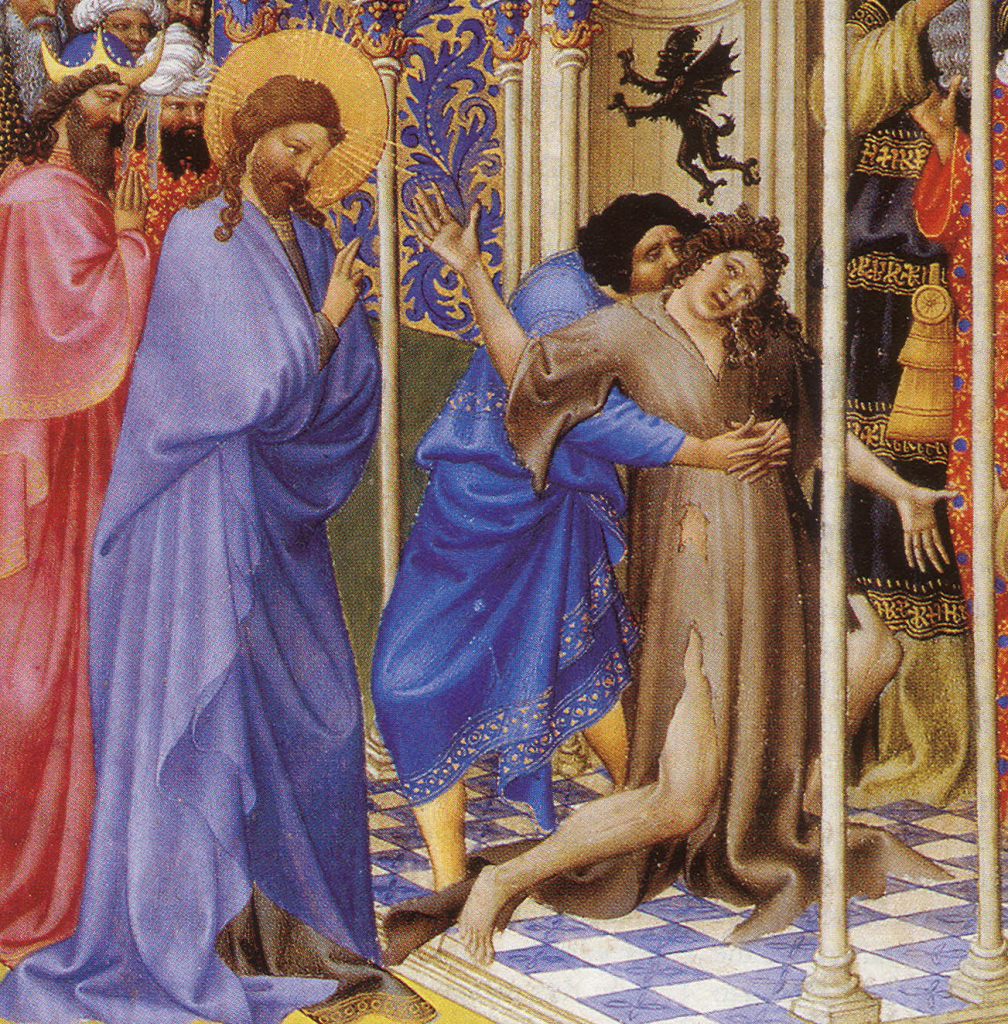
“the paper asks us explicitly to trust this model without offering an internal critique.
“As a result, much of the argument relies on a logical fallacy known as “appeal to authority”—the authority here being Western psychiatry and the clinical trial model.
“while the clinical trial model is important, fitting psychedelic-assisted therapy into it can be trying to force a square peg into a round hole.
“legal retreats are often successfully held by facilitators and clinicians with extensive psychedelic experience, with participants carefully screened ahead of time.”
Rucker writes:
“We lead a research team investigating psilocybin.
“We are “representatives of the establishment”: established medics with all the motivations to maintain the current hegemony and power structures that were associated with the prohibition of classical psychedelics in the first place.”
Beiner’s article has a pull quote:
A more unbiased model might involve regulation from outside of the field; for example, by a multidisciplinary panel of stakeholders who also have a claim over access to psychedelic medicine; Indigenous practitioners, underground therapists, activists, countercultural critics, spiritual leaders, and more.
Alexander Beiner in May 2021 article, “Who’s in Charge of Psilocybin?” https://chacruna.net/who_owes_psilocybin/
“Without a wider framing that takes into account other perspectives, the paper rests on a circular argument held up by an appeal to authority and little else.
“the battle for narrative control in the psychedelic field … the chance to create a truly unique, multidisciplinary, and ground-breaking model of healing.
“[Instead of] a binary choice between freedom and responsibility, … create new structures and reform our institutions so that they can encompass the complexity and multidisciplinary awareness that psychedelics require if they’re going to have any significant impact on the world.”
“the tone of Rucker & Young’s paper is inimical to this kind of synthesis.
“For the psychedelic renaissance to be accessible to as many people as possible, we are going to have to come from a place of epistemic humility.
“We do not have to choose between clinics and churches; we can have both.
“But we won’t get there by trying to defend our own turf.”
/ end of Alexander Beiner May 2021 article, “Who’s in Charge of Psilocybin?” https://chacruna.net/who_owes_psilocybin/
Fallacy: The group which I appoint myself the spokesman and savior for, exclusively owns psilocybin, because of our special unique historical use of Psilocybin.
There is sure a lot of bullsht cited in Oregon Health Authority’s CULTURAL AND ANTHROPOLOGICAL REVIEW OF RESOURCES arguing on the basis that a single group historically used psilocybin and therefore that group owns psilocybin.
I’ve seen someone else make the point that I’m making here:
Nobody, no one group, owns psilocybin.
Paul Stamets’ 1996 book Psilocybin Mushrooms of the world: an identification guide is garbled and incoherent and self-contradictory.
Stamets claims that psilocybin grows around the world, and that it grows on bovine, elephant, and horse dung, and he claims that psilocybin didn’t exist in England or Europe before 1976 – a nonsensical, irrational claim that’s repeated eagerly by Letcher Hatsis and countered by ample art evidence and by entheogen scholarship, to the TINY extent that they open their eyes – ie stop pressing their eyes tightly shut.
Like entheogen scholar Mark Hoffman proposed in his 2015 article about ancient entheogen use, someone oughtta do entheogen scholarship on psilocybin in Western religious history.
Try to look for Psilocybin instead of the damned obsession with Secret Amanita.
Ruck’s monofungal obsession blinds them to psilocybin in the art pieces which they force to represent Amanita because it has a speck of white and red paint.
I have contributed major research to Amanita in entheogen scholarship, so don’t frame me as trying to eliminate poor, poor Secret Amanita 😢 ; that would be a misrepresentation.
The last thing entheogen scholarship needs is more defending of Secret Amanita, a substance which is legal and which no one uses or wants to use, as Pendell points out.
Eleusis has become a part of the problem: it is abused in order to not see psilocybin or mystery relgionS or sacred mealS or branching-message mushroom trees – the lone exception being Plaincourault only; no others are allowed to be discussed.
The funtional de facto purpose of putting attention on Plaincourault is in order to prevent anybody seeing any of the thousands of other mushroom trees.
Secret Amanita is the problem, not the solution: it is abused to prevent seeing psilocybin in Western religion.
By always putting all 100 spotlights exclusively on Secret Amanita/ Plaincourault/ Allegro, we are putting zero spotlights on Psilocybin, squeezing our eyes tightly shut.
By always putting all 100 spotlights exclusively on Eleusis and the ergot kykeon hypothesis, we are putting zero spotlights on Psilocybin, squeezing our eyes tightly shut.
Same thing with meditation.
and Allegro.
and Plaincourault.
Psilocybin has been used by every nation, every group, every era, every region, every religion.
No one group owns Psilocybin – historically, religiously, medically, or otherwise.
Historically, Psilocybin religious usage is world-wide.
Stop this BS false, ignorance-based narrative that one people owns Psilocybin.
No thanks to lying cover-up agent Gordon Wasson for censoring Albert Brinckmann while namecalling mycologists for not submitting to the negative “conclusion” of biased, clueless art authority ignoramus Erwin Panofsky.
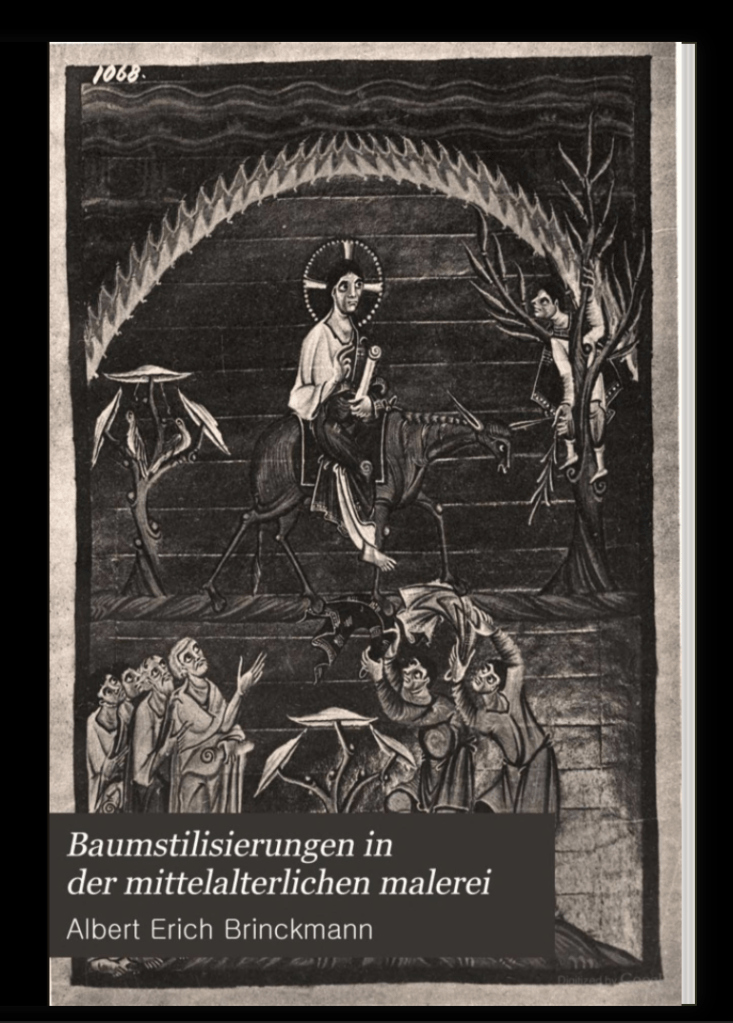

 The Egodeath theory