Topic: psychometrics of psychedelic effects.
The relation of the questionnaires to Mystic experiencing
Generally these 3 main questionnaires were developed for the purpose of comparing them to “the traditional nondrug methods of the mystics” – as if we knew ANYTHING about mystics not ever using psychedelics.
Psychedelics vs. the traditional non-drug methods of the mystics. 😑
Begger La Question
We have zero basis to simply assume (as if a definite given) that mystics didn’t get their experiencing from psychedelics, we are going purely on pre-assumption, baseless prejudice, and sheer biased assumptions.
We have increasing evidence that historically the source of the Mystics’ experiencing was psychedelics.
Objectives and motivations of Roland Griffiths’ CEQ questionnaire
Roland Griffiths’ derivative CEQ questionnaire (drawing negative fx q’s from SOCQ, HRS, & 5D-ASC) is motivated by:
- safety through predictors of negative experiencing
- safety for clients or voyagers
- safety to protect and preserve researchers ability to be allowed to research these things
- justifying psychotherapy
- to support the claim that Hopkins has covered the full range of negative mystical effects (though the final CEQ actually ended up deleting the most important negative mystical psychedelic effects, control-loss).
Roland Griffiths’ CEQ authoring team, in the final phase of creating the CEQ, it was a disaster, such a complete disaster, though the intriguing thing is that their intermediate initial pool of questions was sound.
The article about the CEQ talks about how they used their judgment to select the initial poll of questions.
The final resulting CEQ has obvious problems, ridiculous features like three identical questions within the Fear category, and the complete omission and deletion of the control problems category.
It is clear that their judgment is crap.
Whoever applied their judgment during reducing the initial pool of 64 questions down to the final set of 26 questions, whoever did that has crap judgment, their judgment corrupted by a conflict of interest.
This CEQ questionnaire in the end achieves and accomplishes nothing more than getting rid of the interesting, unique, distinctive control questions, and replacing them by run-of-the-mill psychotherapy industry depression and grief questions. 😴
The reason they did that, their conflict of interest ulterior motive that made them have such a terrible judgment, is because they’re interested in & attuned to selling psychotherapy.
They’re not interested in grappling with transcending self-control power to gain Transcendent Knowledge.
The Big Pharma Psychedelics Industrial Complex is not conceptually equipped to deal with that, with mystic intense negative experiencing; only unless they can shoehorn (Procrustean bed) force psychedelic experience into their pre-fabricated, ordinary state-based psychotherapy model, which has nothing to do with psychedelics or mystical experiencing or revelation of Transcendent Knowledge Gnosis.
They say that it is in their interest to identify all of the negative experiences, which they initially do in their initial pool of questions
But when the marketing department took over the final phase of creating the CEQ, what sort of judgment did they (the psychotherapy business development team/role, not the Scientist role) use to make that final culling?
I am working backwards from their terrible final set of 26 questions, which they’ve gotten rid of all the interesting ones, and then I’m looking at the CEQ’s initial pool of 64 questions, which is more interesting – but their judgment ( this team, all the CEQ authors) their judgment is completely called into question.
As good as their intermediate pool of 64 questions is, I have to trashcan all of their work and start from scratch and go back to the sources
– go back to the three main questionnaires myself and ignore their CEQ subset process.
Then I need to highlight the bold words, the key words myself, because my judgment is sound, and the Roland Griffiths CEQ authors’ judgment is proven to be a failure, compromised by the late involvement of the psychotherapy marketing department completely derailing and demolishing what would have been a scientific questionnaire development process.
I would pick a different set of questions for the initial pool of negative effects.
The url of the present page shows that this page mostly covers the 5D questionnaire.
This posting is where I realized that there are three main questionnaires, just as indicated in the CEQ article: SOCQ, HRS, & 5D-ASC. as you can see from my previous postings it was very unclear with the hierarchy and subsets and breakouts and derivative questionnaire subsets are.
for example when Charles Stang accused Roland Griffiths of failing to cover negative effects of psychedelics when Griffiths claimed that he was covering mystical experiences, Roland Griffiths replied that his team had indeed covered negative experiences and the proof of that is that they created the CEQ subset of questions that was drawn from these three main questionnaires.
Version one and version two and version three of one of these three questionnaires has three different names so this is very confusing.
Those three names are, in historical order: APV, OAV, 5D-ASC.
This is an intermediate preliminary posting, not a final posting that will list out the effects/ questions from these major inventories of altered-state effects a.k.a. questionnaires.
I don’t think I will use this posting to list the questions, but it is an intermediate research page.
Conclusion: I will post this posting that’s focused on this 5D questionnaire, but actually what I need to do is the three main questionnaires: SOCQ (includes MEQ), 5D-ASC, & HRS.
It has taken a lot of research for a couple of days to determine and learn how to read the CEQ article to determine that I will have the bases covered really well if I list all of the questions from these three questionnaires, and sweep aside all the subsets, and all the different rearrangements of these effects questions.
I’m not very curious about reviewing again the Walter Stace list of mystic experiences.
I am presently more interested in what standardized ASC effects questions were derived from or compared to such lists of mystical experiences.
I’m not all that interested in other people’s rearrangements of these questions I need to see the raw original upstream questions themselves.
It is extremely high interest, very high relevance to know that people dismiss entire categories of effects when they are studying negative effects; they say:
“all these other effects are positive and therefore mystical, and so will ignore those, and we’re only going to look at the negative and therefore non-mystical effects“
I feel like when I look at Paul Stamets book of mushroom Psilocybin around the world and it all looks very official – until it dawned on me: this doesn’t make any sense at all!
This is got to be riddled with major fundamental errors and huge blind spots!
All built on unthinking, baseless assumptions and prejudice.
There were no psilocybin mushrooms in England or Europe before 1976. 😑
Stamets 1996, Letcher 2007, Hatsis 2019
– bullshiite!
🐮💩🍄
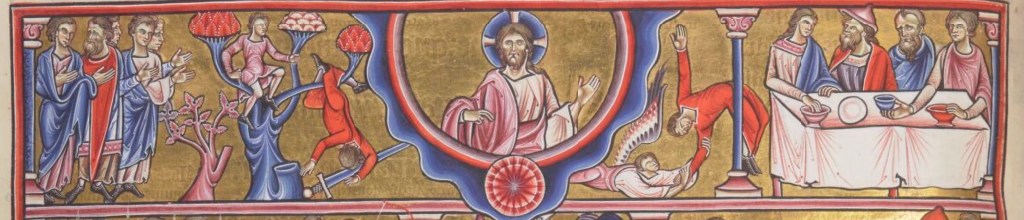
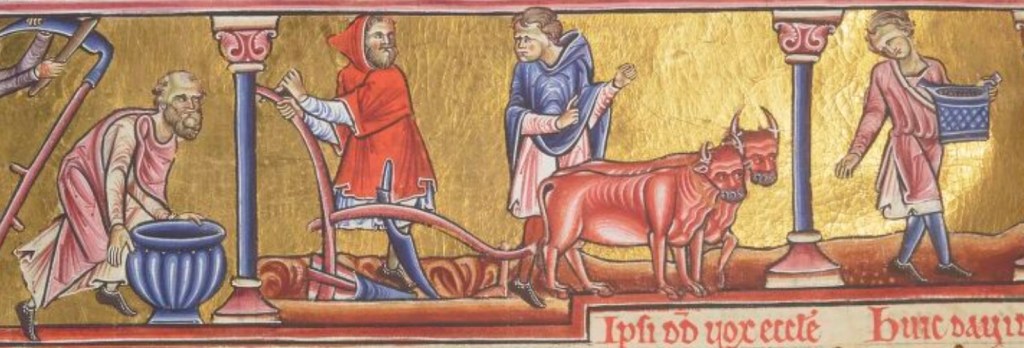
This is the tottering foundation which I saw it in October 2002 – these Moderate (aka Minimal) Secret Entheogen Scholarship guys are way off base; the whole thing is way off base.
Design of postings to cover these three main questionnaires (inventories of altered-state effects)
I should have three separate postings: one for each of those 3 main questionnaires.
Also I covered EDI “Ego dissolution inventory”; the 8 EDI questions: https://egodeaththeory.wordpress.com/2022/12/22/ego-dissolution-inventory-edi/
I will discover whether EDI is just a redundant subset, just yet another collection of a selected subset of the standard sets of questions.
Then gather the ~300 questions into a single webpage, and then organize them by category, after I apply bold and bold red to my favorite key words.
At this point I cannot predict which words that I am interested in – I guess “puppet marionette helpless control loss” words I are my main interest I guess.
each posting would list the ~100 questions for each questionnaire with bold added by me.
Roland Griffiths’ CEQ article can’t even spell it right: it’s 5D-ASC, not “5-DASC”. 🤦♂️ Question 1: Did you have trouble comprehending basic stuff? ______
I need to list the ~100 questions from each of them, to make a list of ~300 questions, and then highlight in bold and bold red the key words per the Egodeath theory.
5D Google Doc
don’t know why this is a Google docs maybe this is it or maybe this is a copy of it but anyway here is that darn important list of questions and effects
The moment I feel zero confidence about this document because I’m looking for 94 questions, I believe, not 66:
I have not yet extracted the list of 66 [94?] questions and then add bold and red bold on the Egodeath theory key words.
url https://docs.google.com/document/d/14BYNlka_FG3cB5rXYOq-iLOtxupMVe_sE06c56MuXDM/mobilebasic – 73 q’s, expect 94 🤷♂️. Maybe this version is outdated.
D/k if I should also be looking at the SOCQ and HRS, which CEQ drew from much more than from the 5D-ASC.
I need to check Roland Griffiths CEQ article and see why they drew from the other two questionnaires more than from this one.
5D-ASC is the main latest set of questions that is a v2 expanded superset of the OAV questions.
This is a (competing w SOCQ & HRS?) standard set of questions that everybody is using as far as I can tell so far, for all the different mystic altered state questionnaires.
all built on the tottering foundation of assumptions of Walter Stace’s mystic list.
“Dittrich’s APZ (Abnormal Mental States) questionnaire [1]–[4] and its revised versions, OAV [5] and 5D-ASC [6], [7], are among the most widely used self-report questionnaires for assessing subjective experiences of ASC in retrospect.
“Although originally developed in German, these questionnaires have been translated into many different languages and applied internationally in approximately 70 experimental studies.
“The majority of these studies have used these questionnaires to assess ASC induced by psycho-active drugs, particularly psilocybin…”
Generations of the APV
V1 = APV (1975) – Abnormal Mental States.
No dimensions/categories, AFAIK as of Dec 24 2022 a.m.
V2 = OAV (1994) – incorp’s the 3 dimensions that were id’d in 1985.
V3 = 5D-ASC (2006) – adds two dimensions no one uses.
V4 = 11 factors (2010, Studerus) – replace/ fit into the 3 main OAV dimensions
OAV’s name states the 3 main dimensions:
OAV = O+A+V = Ocean = Anxiety/Dread + Visionary.
No Auditory or Vigilance dimensions (added in 2006 to make 5 dimensions).
CEQ Partly Draws from APV v3 = 5D-ASC
CEQ initially adds 7 of the OAV ICC q’s & 6 of the OAV ANX q’s – and also adds many more q’s from two entirely(?) different sources: SOCQ & HRS, and then deletes the control-loss effects/questions (keeping 1 lame ICC q & 2 lame ANX q’s, discarding 10 of those 13 initial-pool q’s) while adding Grief/ Isolation/ depression q’s/fx.
ICC = impaired control and cognition fx categ from OAV
ANX = anxiety fx categ from OAV
Article: Understanding The Five Dimensional Altered States Of Consciousness (5D-ASC)
url https://healingmaps.com/five-dimensions-altered-states-of-consciousness/
A 5D-ASC Article
“The 5D-ASC and other tests of ASC have too much focus on superficial or external features such as blissfulness, anxiety, impairment of cognition and control, hypnagogia,
“I may have to design a supplementary test with sufficient depth and acknowledgement of the psychic structures involved. Candidate tests are enumerated in the Usage of Results section”
Search
Search: https://www.bing.com/search?q=5D-ASC
how many questions are in the MEQ?
CEQ started or they ran a survey consisting of three questionnaires:
HRS 99 effects – CEQ uses 27 of these to contrib to their initial pool.
5D-ASC (which Griffiths misspells as 5-DASC!!) CEQ took all 13 ICC + ANX effects (not 9 other categs) to add to their initial pool.
SOCQ – 100 effects: 43 from MEQ + 57 distractor fx from nowhere. Roland G’s CEQ uses 0 MEQ effects, and 24 of 57 distractor effects/w’s for their initial pool of fx.
So it seems I need to list all fx/q’s from all these q’airs:
5D-ASC lists 94 fx
HRS lists 99 fx
SOCQ lists 100 fx
MEQ 43+? lists fx – no I think I can ignore the MEQ (regardless of 43 versus 30 effects), because the 43 original MEQ questions /effects are listed already in the SOCQ.
Also:
EDI lists 8 fx and is “new”. link is below.
and then bold the key words.
I don’t know if I will at all be concerned with categories of the effects;
I am more interested in getting a good look at all of the keywords
this is really the next step for me is not to devise categories or criticize categories, but rather, the next step for me is to bold the important key words.
Also there is an Ego Dissociation Inventory EDI list I just posted. https://egodeaththeory.wordpress.com/2022/12/22/ego-dissolution-inventory-edi/
incoherent reference entry from a sketchy analysis article:
“7. Dittrich, A, Lamparter, D, Maurer, M . A short introduction. Zurich, Switzerland: PSIN PLUS; 2010. 5D-ASC: Questionnaire for the assessment of altered states of consciousness. [Google Scholar]
MEQ30 vs MEQ43? 43 older
url https://www.prati.org.il/wp-content/uploads/2019/01/4.pdf
“The most frequently used version of the MEQ is the 43-item Mystical Experience Questionnaire (MEQ43), also called the Pahnke–Richards Mystical Experience Questionnaire. The MEQ43 contains 43 items that were theoretically derived and qualitatively organized into seven subscales (internal unity, external unity, sacredness, noetic quality, positive mood, transcendence of time and space, and ineffability).
“The most recently developed version of the MEQ (the 30-item revised Mystical Experience Questionnaire, or MEQ30) was developed and validated through factor analysis of retrospective accounts of profound experiences with psilocybin-containing mushrooms (MacLean et al., 2012).
“That analysis yielded a four- factor structure of the MEQ30, containing 30 items from the pre- vious MEQ43, which was typically administered within the 100-item States of Consciousness Questionnaire [SOCQ] (Griffiths et al., 2006, 2011).
“The four factors [fx subcategs] of the MEQ30 are: mystical (including items from the internal unity, external unity, noetic quality, and sacredness scales of the MEQ43), positive mood, transcendence of time and space, and ineffability (all three of which include items from their respective MEQ43 scales).
“Thus, the MEQ30 retains items from each qualitative subscale in the original MEQ43, but in a reduced number of dimensions.”
Should I ignore the reduced set of 30 questions and list out the original 43 questions instead – will I lose and miss anything other than the stupid categories?
SOCQ still contains the orig 43 it seems, therefore ignore MEQ and use SOCQ.

 The Egodeath theory