The 11-Factors Psychedelics Effects Questionnaire with All 13 Categories, All 66 Effects Questions, and Both Category Levels Shown in a Complete Hierarchy Tree (Studerus 2010)
Contents:
- Intro
- Dedication to Charles Stang
- The Secret Unknown “Unpleasant Experiences” and “Pleasant Experiences” High-Level Categories of the 11-Factors Questionnaire
- Weasel Wording, Lie of Omission, or Accidental Conflation? Silent Scope Shrinking
- The Entheogen Scholarship Comedy Show Continues, 21st-Century Style
- Why It Was in Griffiths’ Interest to Make This Mistake of Conflating DED’s 21 Questions with 11-Factors’ 13 ICC+ANX Questions
- Secret Mission: Get Rid of Control Coverage, and Add Grief Coverage Instead
- Studerus’ Error of Communication: the Supplemental Document Figure S1
- How to Eliminate 86% of the Bad Trip Effects from Psychedelics
- 11-Factor Questionnaire (66)
- Unpleasant Experiences (21) – overlooked high-level dimension
- Unpleasant: General (8) – CEQ overlooks – Shadow Factor 13
- Anxiety (6)
- Impaired Control and Cognition (7)
- Pleasant Experiences (45) – overlooked high-level dimension
- Pleasant: General (16) – CEQ overlooks – Virtual Factor 12
- Pleasant: General, from Oceanic (10)
- Pleasant: General, from Visionary (6)
- Audio-Visual Synesthesia (3)
- Complex Imagery (3)
- Elementary Imagery (3)
- Blissful State (3)
- Insightfulness (3)
- Spiritual Experience (3)
- Experience of Unity (5)
- Changed Meaning of Percepts (3)
- Disembodiment (3)
- Pleasant: General (16) – CEQ overlooks – Virtual Factor 12
- Unpleasant Experiences (21) – overlooked high-level dimension
- References
Intro
Studerus is at fault for Griffiths’ mistake of overlooking the non-factor 8 Unpleasant effects that are in 11-Factors questionnaire, because Studerus fails to show their final resulting 11-Factors questionnaire, including:
Theme: Show us the final, concrete, hierarchical, tangible OAV or 11-Factors questionnaire, don’t just talk around it, indirectly.
Deliver the concrete thing, that’s all I ask!
11-Factor questionnaire authors failed to do that, and so Griffiths got confused and conflated the 21-item Dread category with the 13-item sum of ICC+ANX items from Studerus, losing 8 questions, including item 54: “I was afraid to lose my self-control.”
Dedication to Charles Stang
The present article is dedicated to Charles Stang.
See my commentary and excerpts where Stang rejects Griffiths’ conception and representation of what mystic experiencing is when validating psilocybin:
Stang Rejects Griffiths’ Conception of “Mystic Experiencing” Used to Experimentally Validate Psilocybin
https://egodeaththeory.wordpress.com/2023/01/02/stang-rejects-griffiths-conception-of-mystic-experiencing-used-to-validate-psilocybin/
Stang confronted Griffiths in the first episode of the Harvard video interview webinar series Psychedelics and the Future of Religion, for failing to match the archive data reports of mystics, and misrepresenting mystic experiencing as solely positive and pleasant.
— Cybermonk, December 30, 2022
The Secret Unknown “Unpleasant Experiences” and “Pleasant Experiences” High-Level Categories of the 11-Factors Questionnaire
If Studerus had better communicated that the 11-Factors questionnaire (or system of scales) has two different levels of categories, Griffiths would have added the “Unpleasant Experiences” 21-question high-level category to their Initial Item Pool, instead of only adding the 13 ANX+ICC factor items.
Then it would have been harder for Griffiths’ CEQ to end up with a paltry 3 of the 21 DED items, and harder to recklessly remove challenging psychedelics effects question 54: “I was afraid to lose my self-control.”
Studerus 2010 p. 16:
“However, even if only higher order factors [high-level categories for psychedelics effects] are considered, we have not found evidence for a parsimonious fit of a three-factorial solution [like OAV’s Ocean/ Angst/ Visionary high-level categories].
“The ICLUST [cluster/ category-detection software] procedure indicated that only two factors [Unpleasant vs. Pleasant] account for the variance between OAV items [effects questions] on a high level of the construct hierarchy.
“Whereas one of these two factors was equal to the original DED factor [OAV’s 21-question Dread of Ego Dissolution dimension], the other [category; Pleasant] consisted of OBN and VRS items [group together all the OAV’s 27 Oceanic Boundlessness + 18 Visionary Restructuralization effects questions].
“This suggests that, on a high level, the OAV items are best divided on the basis of whether they describe pleasant (OBN and VRS) or unpleasant (DED) experiences. …”
Next, Studerus says it’s good to have high-level categories as well as our 11 lower-level more granular categories of psychedelics effects, so our 11-Factor scheme includes also a high-level division of Unpleasant vs Pleasant:
“Thus, although the total scale is multidimensional [jumbles distinct effects categories] and therefore forms ambiguous correlations with other psychological constructs, the general factor saturation is high enough to justify its use for the prediction of complex criteria (cf. [68,89]).
“The same is true for the OBN, DED and VRS and the ‘‘pleasant’’ and ‘‘unpleasant’’ scales, which also showed strong general factor saturations despite clear rejection of unidimensionality [they jumble distinct categories of effects] by CFA [confirmatory factor analysis].”
They go on to say unlike Dittrich, they are going to form lower-level categories (11 Factors) as well as high-level categories (Unpleasant vs. Pleasant experiences).
See Figure S1, which shows large headings “Unpleasant Experiences” & “Pleaseant Experiences”:
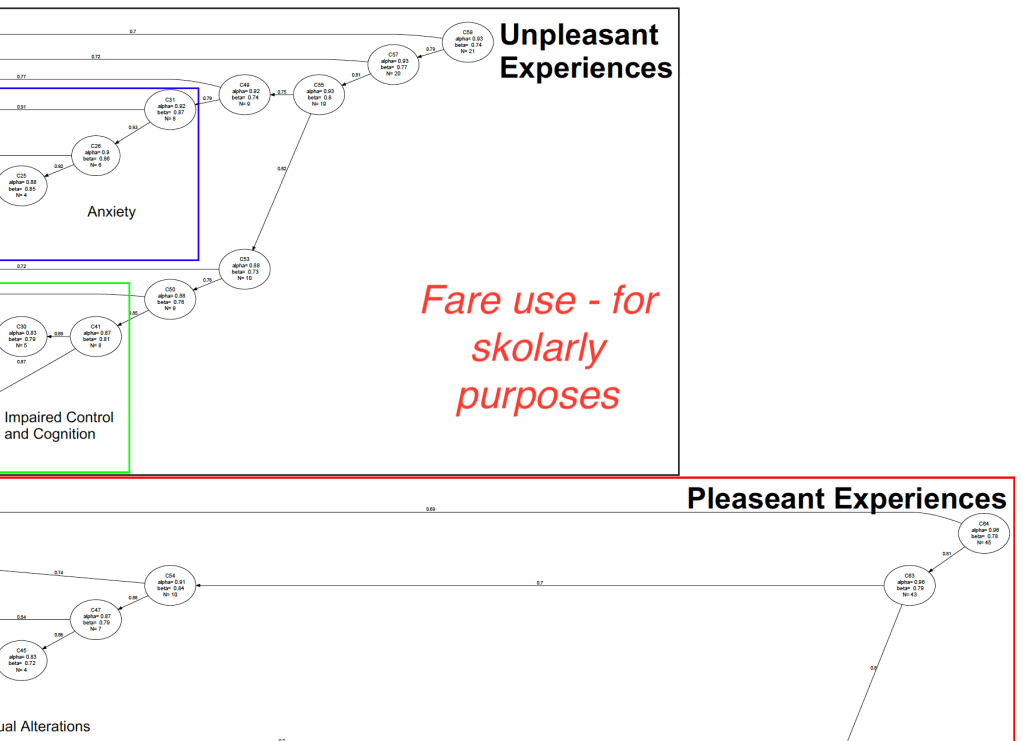
Figure S1: Hierarchical item clustering tree diagram based on
Pearson correlations of uncategorized OAV items.
https://www.ncbi.nlm.nih.gov/pmc/articles/PMC2930851/bin/pone.0012412.s001.pdf
Weasel Wording, Lie of Omission, or Accidental Conflation? Silent Scope Shrinking
p 2: “The OAV sub-scale “dread of ego dissolution” (DED) covers a wide range of negative experiences, and is generally considered an overall “bad trip” scale (Studerus et al., 2010).
“This meta-scale of possible negative effects covers many (e.g. panic, loss of ego/control, feelings of insanity) but not all (e.g. sadness/grief/ depression) possible categories of challenging experiences.”
Griffiths paints the connotation association: “Studerus” = DED (21 items) discussion. But below, suddenly, “Studerus” means only ICC+ANX (13 items).
The above scope of attention and critique is the ENTIRE DED dimension (21 questions). The scope silently narrows below to only 13 of 21:
“The 5DASC consists of 94 items …” – p. 4 Griffiths 2016 CEQ article
Then Griffiths gives the world’s most misleading, confused, confusing wording, along with drastically reducing scope from DED to only ICC+ANX:
“The 13 items of the 5DASC that constitute the ICC and ANX sub-scales were retained for the initial item pool for the CEQ.”
– p. 4 Griffiths 2016 CEQ article
Above should have said, most clearly:
“The 21 items of the 5D-ASC that constitute the Dread of Ego Dissolution (DED) dimension (and the Unpleasant Experiences high-level scale of the 11-Factors questionnaire) were retained for the initial item pool for the CEQ.”
or at least:
“The 21 items of the 5D-ASC that constitute the Dread of Ego Dissolution (DED) dimension were retained for the initial item pool for the CEQ.”
or:
“The 21 items of the 5D-ASC that constitute the Unpleasant Experiences high-level scale of the 11-Factors questionnaire were retained for the initial item pool for the CEQ.”
lower on p 2 of Griffiths:
“Studerus and colleagues (2010) revealed a rescoring of the 5DASC that includes a separate scale for impaired control and cognition, and for anxiety [and includes also 8 DED questions not placed in those scales, but within the same high level scale, Unpleasant Experiences].
“While these represent psychometrically justifiable subscales, these two sub-scales [and what about the 8 non-factor member items?] do not address shortcomings of the DED scale (e.g. they do not address the wide range of potential dimensions of challenging experience that are suggested by previous literature).” p 2 Griffiths
The Entheogen Scholarship Comedy Show Continues, 21st-Century Style
So we’re going to remove 18 out of 21 effects question items, removing 86% of negative effects, to add wider coverage of negative effects than DED (21 effects) or than ICC+ANX (13 effects). Reducing 21 to 3 gives broader coverage than 21. Somehow.
Look at our wonderful Grief grouping of effects question items!
Such comprehensive, broadened coverage of negative psychedelic effects now!
All it took was removing 18 out of 21 of the DED questions we criticized for being too narrow of coverage.
Why It Was in Griffiths’ Interest to Make This Mistake of Conflating DED’s 21 Questions with 11-Factors’ 13 ICC+ANX Questions
Griffiths was eager to conflate OAV’s DED dimension with the shrunken subset that’s the ICC+ANX factor categories containing only 13 questions.
Doing so puts Griffiths 8/21 = 38% closer to their goal, of moving the limited, competitive spotlight of attention off of the DED/Dread questions and instead onto the new Grief set of questions that Griffiths is intent on gathering and tracking.
The PR narrative story tale is one of “adding scope of coverage beyond just Dread effects” – but the REAL STRATEGY under the cover of “broadening” is to MOVE attention, to REPLACE coverage, from Control to Grief; to REMOVE coverage of Control, which competes for attention – the main competitor – against Griffiths’ pet Grief category, the new biggest category instead of the old Control-challenges Dread category being the biggest category of negative effects questions.
Secret Mission: Get Rid of Control Coverage, and Add Grief Coverage Instead
Griffiths removes the Control challenges category and 18/21 of the Dread (DED) questions, and then makes their new Grief category bigger than any other category in their CEQ set of effects categories.
Studerus’ Error of Communication: the Supplemental Document Figure S1
Hey Griffiths: Some Easy Basic Little Questions for You:
How Many Dread Questions Are There? (21, not 13!)
How Many Questions Are in the 11-Factors Questionnaire? (66, not 42!)
“The items comprising the CEQ in Study 1 were taken from three separate and extensive instruments (the HRS, with 104 items total, the SOCQ with 100 items total, and the 5DASC with 42[sic] items), each with a different response format.” p. 9, Griffiths’ CEQ article 2016
Facts:
OAV has 66 items (questions).
11-Factors has those same 66 items.
42 of 11-Factors’ items are members of the 11 factors, 24 are direct members of high-level categories “Unpleasant Experiencing” (= DED, 21 items) or “Pleasant Experiencing” (= OB Ocean (27) + VR Visionary (18)). See Figure S1 & S2, Studerus 2010.
“5DASC with 42 items” is false. This should read:
11-Factors with 66 items: 42 factor member items and 24 direct members of the two high-level categories “Unpleasant Experiencing” & “Pleasant Experiencing”.
When 11-Factors says “we dropped an item”, they mean from a factor, not entirely; the item reverts to a direct member of the “Unpleasant Experiencing” or “Pleasant Experiencing” high-level category.
Griffiths mis-perceives 11-Factors as an exercise of entirely removing items, and CEQ becomes misguidedly a project of entirely removing items, removing 18 of 21 (86%) of negative psilocybin effects questions. While claiming to be a superset of DED’s 21 questions and covering broader scope.
No surprise that the too-positive creators of MEQ, when they go to cover their gap, again omit negative experiences, from their negative experiences complement (CEQ) to the MEQ.
CEQ is a malformed corrective epicycle; epicyclic correction of the malformed MEQ.
MEQ and CEQ are both incomplete; CEQ fails to complete MEQ.
Mystical Experience Questionnaire (MEQ)
Challenging Experiences Questionnaire (CEQ)
Charles Stang is right, even after adding CEQ to MEQ. Griffiths continues to omit essential mystic experiences.
Mysticism (Christian brand, 1960) is the Old Theory. The Egodeath theory is the New Theory.
The Egodeath theory replaces the theory, the explanatory model, Mysticism 1960 per Walter Stace’s book Mysticism and Philosophy.
The Egodeath theory has and needs no equivalent of “the ineffable”, while Griffiths (following Pahnke and Stace) defines 1/4 of mystic experiencing as “ineffability”.
The actual nature of mystic-state experiencing is the eternalism experiential mode, vs. the possibilism experiential mode.
The eternalism mode causes formation of the “eternalism” mental model.
How Many Questions Are in 11-Factors’ “Unpleasant Experiences” High-Level Category? (Yes, Exists! 21, not 13)
This awful idea of a “supplement” Figure S1, which is and is not part of the 11-Factors article, is where it is tangible and clear that 11-Factors contains 66 questions including all 21 of the Dread questions from OAV – not just the 13 that are in the ICC+ANX factor subcategories.
Studerus lost 8 questions regarding clear effective communication, and that caused Griffiths to literally lose those 8 Dread effects questions entirely.
The result? Griffiths’ final Appendix 1 mockup set of 26 questions only includes 14% (3 of 21) of the Dread questions.
How to Eliminate 86% of the Bad Trip Effects from Psychedelics
After all is said and done by Studerus and then Griffiths’ misreading of Studerus, Griffth’s resulting Appendix 1 CEQ mockup questionnaire contains just 26 questions, and only 3 of those effects questions are from Dittrich’s OAV: Dread category of 21 negative effects.
3/21 = 14% kept, 86% discarded into Hanegraaff’s Rejected wastebasket, including question 54, “I was afraid to lose my self-control.”
😱🐉🚪🏆–>🗑
Griffiths by sloppy, careless, reckless accident removes 86% of bad trip effects from psychedelics, in the course of adding his pet “Grief” effects coverage category.
“OAV’s DED dimension (Angst/Dread of Ego Dissolution) is considered the “bad trip” questionnaire subset” – Griffiths, CEQ article.
By Griffiths’ accidental mistake due to Studerus’ poor communication of what the 11-Factors questionnaire is, Griffiths magically eliminates 18/21 = 86% of the negative, challenging effects from psychedelics. 🎉
Griffiths did not mean to ignore the 8 non-factor-member Unpleasant effects questions.
When Griffiths’ final page of the pdf article has heading “ICC” & “ANX”, it should have “Unpleasant” instead, or add “Unpleasant: General” containing 8 items in addition to the 7+6=13 items shown – to add to the Initial Pool which was intended to be all the challenging effects questions from all 3 questionnaires.
Not only the subset of the Dread questions which made it into the ICC or ANX factor-categories of 11-Factor questionnaire.
All 66 questions, in categories.
All de-facto categories: 13, not 11: cover questions which aren’t in the 11 factor-categories, which is a set of 8 Unpleasant questions and a set of 16 Pleasant questions. Leveral fully Figure S1 (or S2) hierarchy tree.
All 2 levels of categories:
Unpleasant (21 items) includes 3, not 2, subcategories:
General – Unpleasant: 8 items <– overlooked by Griffiths, incl. question 54.
ICC 7 items
ANX 6 items
total: 21 items. Not “all 13 ANX + ICC” per Griffiths as if that’s same as the Dread dimension’s questions from Dittrich, which has 21 not 13 items.
Pleasant (66-21 items = 45 = 27 Ocean + 18 Visionary) includes 10, not 9, subcategories:
General – Pleasant (16 items) <– missing from clear representation
Bliss
Disembodiment
Religious experiences
Complex imagery
etc.
11-Factor Questionnaire (66)
Numbers in parens are total contained item count of questions.
Divided into two high-level categories aka subscales: Unpleasant Experiences, and Pleasant Experiences, containing all 66 items.
Order the factor sections by Figure S1; eg Unpleasant Experiences first.
Within each of the 11 factors, sort items by bold key terms first.
Unpleasant Experiences (21) – overlooked high-level dimension
This high-level category defined by Studerus as part of their 11-Factors questionnaire has the same scope and 21 items as OAV’s A dimension;
Dread of Ego Dissolution (DED)
Anxious Ego Dissolution (AED) – the ‘A’ of OAV
Angstvolle Ichauflösung (AIA)
Bold redmeans key for Control challenges, and experiencing Eternalism.
Bold means high interest for psychedelics Control challenging aspects of effects.
For good views of the bold items of interest, see:
Custom categories and best questions about Control-challenges from the OAV & SOCQ & HRS questionnaires:
ECQ – “Eternalism and Control Questionnaire”
https://egodeaththeory.wordpress.com/2022/12/23/eternalism-and-control-transformation-effects-in-the-psychedelics-effects-questionnaires/
The 7 best Control-challenges questions only (5 from OAV’s DED, 1 SOCQ, 1 HRS):
How to Partly Redeem the CEQ: Add a “Control” Category and the Surveys’ Specific Questions About Experiencing the Threat of Loss of Control
https://egodeaththeory.wordpress.com/2022/12/28/how-to-redeem-the-ceq-add-a-control-category-and-the-surveys-questions-about-experiencing-the-threat-of-loss-of-control/
Unpleasant: General (8) – CEQ overlooks – Shadow Factor 13
🤦♂️💥🔥😵⚰️ 🐉🏆
54. I was afraid to lose my self-control.
Fig S1: in Anxiety.
Fatal Fail: CEQ overlooks this topmost DED question b/c it’s not in Studerus’ final set of items in ANX or ICC (it got “dropped” from the ANX factor due to cross-loading or ambiguity, eg it fits in ICC as well as ANX), so this challenging psychedelics effect wasn’t added to Griffiths’ Initial Item Pool that was supposed to consist of all challenging items from OAV (entire DED dimension they call “an overall bad trip scale”), SOCQ, & HRS questionnaires:
“The OAV sub-scale “dread of ego dissolution” (DED) covers a wide range of negative experiences, and is generally considered an overall “bad trip” scale (Studerus et al., 2010).” – Griffiths 2016, p. 2
3. I felt surrendered to dark powers.
12. I felt tormented.
Fig S1: in Anxiety.
59. Time passed tormentingly slow.
36. I experienced an unbearable emptiness.
55. I stayed frozen in a very unnatural position for quite a long time.
62. Everything around me was happening so fast that I could no longer follow what was going on.
Fig S1: in ICC.
41. My body seemed to me numb, dead and weird.
Fig S1: in ICC.
Evidence that the correct items are in this group: In Studerus 2010, see Figure S1 top – 4 non-factor members, + 2 items in Anx, + 2 items in ICC; those 4 items aren’t in Figure 1, therefore they reverted to direct members of Unpleasant (Figure S1 upper-right label).
Anxiety (6)
38. I felt threatened.
63. I had the feeling something horrible would happen.
1 of the 3 Unpleasant effects allowed in CEQ
29. I was afraid without being able to say exactly why.
19. I was afraid that the state I was in would last forever.
1 of the 3 Unpleasant effects allowed in CEQ
30. I experienced everything terrifyingly distorted.
32. I experienced my surroundings as strange and weird.
Impaired Control and Cognition (7)
53. I had the feeling that I no longer had a will of my own.
5. I felt like a marionette.
33. I felt as though I were paralyzed.
16. I had difficulty making even the smallest decision.
24. I had difficulty in distinguishing important from unimportant things.
44. I felt isolated from everything and everyone.
1 of the 3 Unpleasant effects allowed in CEQ
45. I was not able to complete a thought, my thought repeatedly became disconnected.
Pleasant Experiences (45) – overlooked high-level dimension
Pleasant: General (16) – Virtual Factor 12
To group items, used strategy: Match Studerus 2010 Figure S1 & Figure 1 & hints/ deductions from my OAV page:
https://egodeaththeory.wordpress.com/2022/12/29/oav-questionnaire-1994-oceanic-boundlessness-angst-of-dread-of-ego-dissolution-visionary-restructuralization-dittrich/
Pleasant: General, from Oceanic (10)
26. I felt unusual powers in myself.
31. The world appeared to me beyond good and evil.
23. Like in a dream, time and space were changed.
1. I felt like I was in a fantastic other world.
2. Bodily sensations were very delightful.
22. Worries and anxieties of everyday life seemed unimportant to me.
50. I felt totally free and released from all responsibilities.
47. Many things seemed unbelievably funny to me.
9. I felt I was being transformed forever in a marvelous way.
4. I saw things that I knew were not real.
Pleasant: General, from Visionary (6)
48. The boundaries between myself and my surroundings seemed to blur.
40. Things came to mind, which I thought I had forgotten long ago.
64. I was able to remember certain events unusually clearly.
58. Things around me appeared smaller or larger.
61. Everything around me seemed animated.
39. Many things appeared to be breathtakingly beautiful.
Audio-Visual Synesthesia (3)
11. Noises seemed to influence what I saw.
14. The shapes of things seemed to change by sounds and noises.
51. The colors of things seemed to be changed by sounds and noises.
Complex Imagery (3)
Fig S1 draft title: Vivid Imagery
57. My imagination was extremely vivid.
25. I saw scenes rolling by in total darkness or with my eyes closed.
49. I could see pictures from my past or fantasy extremely clearly.
Elementary Imagery (3)
Fig S1 draft title: Elementary Visual Alterations
8. I saw regular patterns in complete darkness or with closed eyes.
13. I saw colors before me in total darkness or with closed eyes.
20. I saw lights or flashes of light in total darkness or with closed eyes.
Blissful State (3)
7. I enjoyed boundless pleasure.
60. I experienced a profound peace in myself.
65. I experienced an all-embracing love.
Insightfulness (3)
34. I felt very profound.
46. I gained clarity into connections that puzzled me before.
52. I had very original thoughts.
Spiritual Experience (3)
Figure S1 draft name of factor: Religious Experience
6. I had the feeling of being connected to a superior power.
56. I experienced a kind of awe.
66. My experience had religious aspects.
Experience of Unity (5)
35. I experienced past, present and future as an oneness.
27. I experienced a touch of eternity.
10. Everything seemed to unify into an oneness.
21. It seemed to me that my environment and I were one.
28. Conflict and contradictions seem to dissolve.
Changed Meaning of Percepts (3)
18. Things around me had a new strange meaning for me.
17. Everyday things gained a special meaning.
37. Objects around me engaged me emotionally much more than usual.
Disembodiment (3)
15. It seemed to me as though I did not have a body anymore.
42. I had the feeling of being outside of my body.
43. I felt as though I were floating.
References
Dec. 31, 2022: I’m reading from PubMed:
Validation of the revised Mystical Experience Questionnaire in experimental sessions with psilocybin
Frederick Barrett, Mathew “No Buddha Statues” Johnson, Roland Griffiths
2015
Search: https://www.bing.com/search?q=%22Validation+of+the+revised+Mystical+Experience+Questionnaire%22
Pubmed url: https://pubmed.ncbi.nlm.nih.gov/26442957/ – for PDF, click “FREE Full text PMC” button in upper right
— Cybermonk, December 30-31, 2022

 The Egodeath theory