Michael Hoffman, January 9, 2023 9:50 pm UTC+0
Contents:
- Subject: CEQ needs to add a “Control challenges” factor/category, including Question 54 😱
- The ‘Control’ Factor/Category to Add to CEQ
- The Shadow Gatekeeper Explained and Reconciled
- CEQ Doesn’t Cover Negative Effects as Griffiths Claimed to Charles Stang
- My Related Articles and Postings
- See Also
To Matthew Johnson, to Add the ‘Control’ Category to the Challenging Experience Questionnaire (CEQ):
Subject: CEQ needs to add a “Control challenges” factor/category, including Question 54 😱
Hi Prof. Johnson,
I enjoyed your article Consciousness, Religion, and Gurus: Pitfalls of Psychedelic Medicine, and am looking forward to the psychedelic chaplaincy study.
Prof. Jerry Brown (The Psychedelic Gospels) recommended that I forward my recommendations and analysis of the CEQ to you.
The Challenging Experience Questionnaire (CEQ) is dangerous and ineffective. It has a giant vulnerability the size of a shadow dragon monster. Do not use the CEQ as-is.
The ‘Control’ Factor/Category to Add to CEQ
The CEQ needs to add this Control factor (category of psychedelic effects questions):
Control
5D-ASC 54. I was afraid to lose my self-control.
5D-ASC 6. I had the feeling of being connected to a superior power.
5D-ASC 5. I felt like a puppet or marionette.
5D-ASC 53. I had the feeling that I no longer had a will of my own.
5D-ASC 38. I felt threatened.
SOCQ 28. Sense of being trapped and helpless.
HRS #. It was difficult to control my thoughts.
These items are my top picks from the main questionnaires.
The Shadow Gatekeeper Explained and Reconciled
I have efficiently explained the battle with “the shadow”, in the Egodeath theory, which explains psychedelic eternalism.
Like Bob Jesse, I have an Electrical Engineering degree and am low-key working largely behind the scenes.
As an undergraduate in 1988, I used STEM-type thinking and language usage to create the Cybernetic Theory of Ego Transcendence (including loose cognitive binding to experience the block universe and worldlines) to explain usefully what the mystics’ approach is incapable of articulating.
It is crucial and urgent to add this Control category, with these items, to the CEQ. Question 54 is the shadow, and it is the most required question of all, yet CEQ overlooked it, proving that the CEQ needs a reality check and domain expertise.
11-Factors’ Impaired Control and Cognition category has issues too; the ICC factor is malformed without its central, definitive, characteristic Question 54, about fear specifically of control loss.
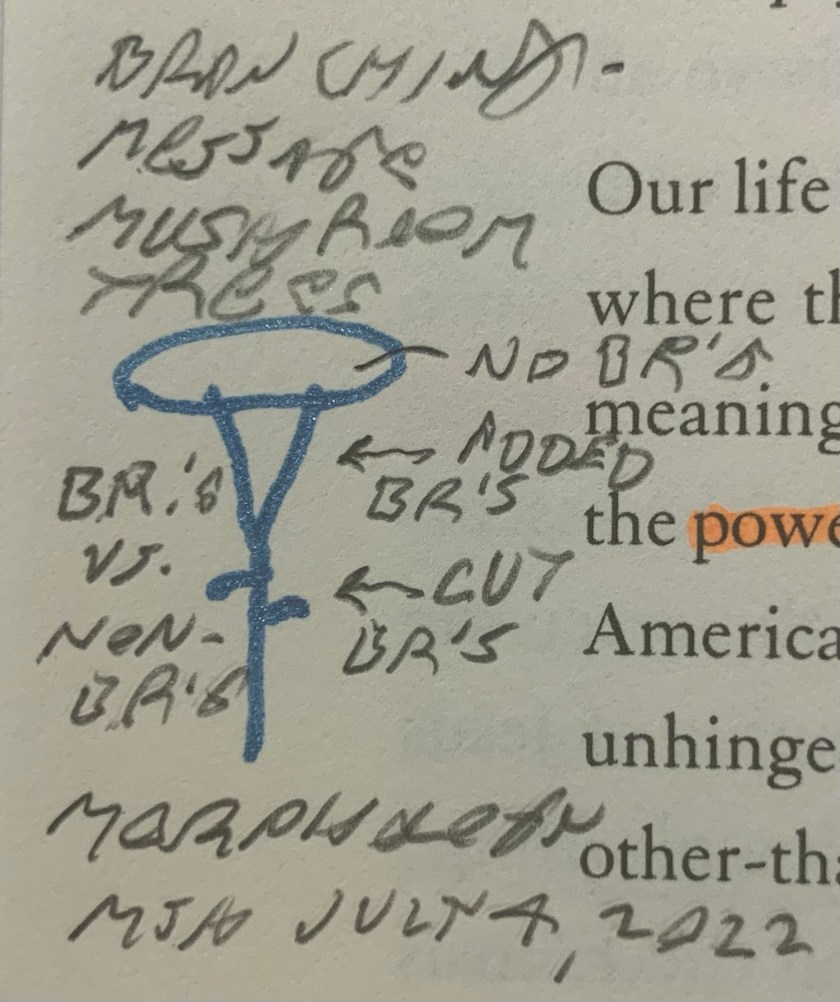
When people seek the gold treasure of Transcendent Knowledge, in order to pass through the dragon-guarded gate, they must repudiate naive possibilism-thinking and adopt eternalism-thinking (pictured as non-branching or {cut branching}, and {standing on right leg}).
In the popular Middle Ages motif inside of Christianity, branching-message mushroom trees, knowledge of reconciling with the experience of the threat of catastrophic loss of control was represented as relying on the right leg (and arm) rather than on the left leg.
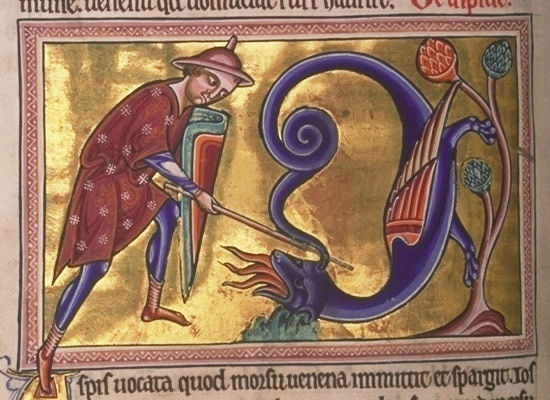
{standing on right leg} to {defeat the dragon} (“the shadow” that you need to “surrender to”) and thus {get the treasure} and {be made able to pass in and out through the gate}
My original research, partly from writing an article for Prof. Jerry Brown, discovered the motif of branching-message mushroom trees densely in Christian art, and more sparsely in Hellenistic art as well.
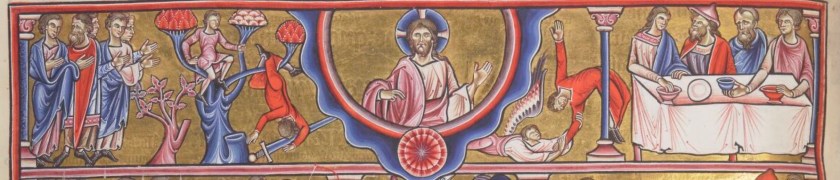
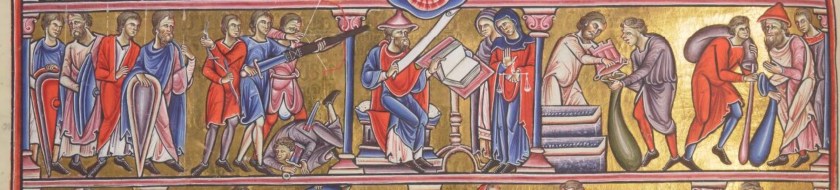
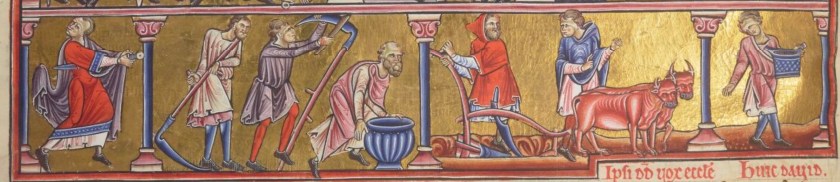
This particular breakthrough (branching-message mushroom trees and handedness) was around November 2020, with roots back to October 1985 and panning out until July 2022.
CEQ Doesn’t Cover Negative Effects as Griffiths Claimed to Charles Stang
Other changes needed to the CEQ: Remove some 7 duplicate effects questions copied from multiple questionnaires. The “final” CEQ induces paranoia because it asks the same effect question two or three times.
Charles Stang is right, or more than right: the conception of “mystic experience” from Stace/ Pahnke/ Griffiths is malformed, missing negative experiencing. Griffiths defended his balanced coverage of the non-mystical negative mystical effects, by pointing to the CEQ.
That’s my area of specialty, so I examined the CEQ, only to discover that it omits and discards the main negative effects (loss of control), so the CEQ fails to do what Griffiths claims to Stang that it does.
Charles Stang, a historian of mysticism and theology of mysticism at Harvard, challenged and criticized Griffiths and the MEQ for using a conception of mysticism that fails to match the historical archive of reports from mystics.
Lopsidedly positive mystical experience is typical of newbies. Advanced psychedelic experience is concerned with the control-vortex capabilities of the mind to formally self-transgress personal control, which drives transformation of the mental model of control agency and branching world.
As psilocybin prohibition is repealed, more people will reach the advanced mystical experiences, which are negative, in the course of reaching the treasure of Transcendent Knowledge through transforming the model of personal control and time and branching possibilities.
The CEQ is the repressed, dissociated shadow of the MEQ.
The CEQ itself perpetuates the same problem as Charles Stang pointed out about the MEQ: the CEQ claims to broaden the Dread category, yet (with no explanation), the CEQ deletes 18 of the 21 questions (86%) of the Dread category, which is identical to 11-Factors’ “Unpleasant Experiences” high-level category, containing the same 21 items.
Dread or Unpleasant has not just 13 items (7 ICC + 6 ANX) that need to be added to the Initial Item Pool; there are 8 direct members of the Unpleasant high-level category as well, including the all-important item #54.
By omitting all of the control-challenge effects from the Dread/ Unpleasant category (deleting 18 of 21 items = 86%, keeping 3 of 21 items = 14%), the CEQ utterly fails to engage with the main advanced negative mystic experiencing.
The main, most distinctive and characteristic challenging psychedelics effect is not motivational vertigo (“Grief”), but rather, formal transgression of personal control, producing the advanced peak mystical experience of the threat of catastrophic loss of control.
The crisis experience of the threat of catastrophic loss of control is the precise naming and identification of “the shadow”, the threatening dragon monster, the gate-guard angel of death blocking the way to the treasure sought, which is Transcendent Knowledge and personal transformation of control agency in world.
Why on Earth does CEQ delete 86% of the Dread items, while claiming to broaden coverage of challenging psychedelic effects?!
The added Grief category does reflect a major effect, but where is the justification to delete 18 of the 21 Dread effects items, and have no Volition-Control challenges category in the CEQ?
Studerus was in error in poor communication that there are two high-level categories: Unpleasant Experiencing (21 items) and Pleasant Experiencing (45 items).
Studerus was in error in first placing the all-important Shadow question, #54, in Anxiety, and then in error in making #54 a direct member of the Unpleasant high-level category.
#54 is specifically fear of loss of control, and therefore it is the main item to define the Impaired Control and Cognition factor.
The factors in 11-Factors’ Unpleasant high-level category need to be constructed around item #54 placed in ICC.
Griffiths’ team was in error in adding only the 13 low-level ICC & ANX factor items to the CEQ’s Initial Item Pool. Griffiths needed to instead add all 21 of 11-Factors’ high-level Unpleasant category’s items to the CEQ’s Initial Item Pool – that would have included the misplaced, all-important Question #54, the shadow question, “I was afraid to lose my self-control.”
Thank you
— Cybermonk, Egodeath.com (2007), EgodeathTheory.wordpress.com (2023)
Below are some of my relevant articles and postings for you.
My Related Articles and Postings
Articles and postings include:
- Possibilism vs. Eternalism: Two Models of Time and Control – category: Control Transformation
Site Nav: Flagship Articles about Mushrooms in Art
https://egodeaththeory.wordpress.com/nav/#flagship-Mushrooms-Greek-Christian-Art – that set of articles includes:
- Compelling Evidence & Proof of Explicit Psilocybin Mushrooms in Christian Art to Communicate Non-Branching Stable Control – category: Entheogen Scholarship
- Proof that the Canterbury Psalter’s Leg-Hanging Mushroom Tree Is Psilocybe – category: Entheogen Scholarship
- Gallery of Mushrooms in Christian Art – category: Mushrooms in Art
- The 75 Mushroom Trees of the Canterbury Psalter – category: Mushrooms in Art
See Also
Page title:
Idea Development page 15
Section heading in that page:
Article About Griffiths’ Psychedelic Priests Study
https://egodeaththeory.wordpress.com/2022/09/03/idea-development-page-15/#Article-Psychedelic-Priests-Study
Article title:
Pioneering Clergy of Diverse Religions Embrace Psychedelics
by Don Lattin, April 2022
Critique of Griffiths MEQ30 and other ME questionnaires (Brown Thread)
https://egodeaththeory.wordpress.com/2023/01/09/critique-of-griffiths-meq30-and-other-me-questionnaires-brown-thread/

 The Egodeath theory