Scope of page: Sites, articles, videos, by Prof. Jerry Brown, sometimes with Julie M. Brown. Sometimes w/ a banana on skates 🍌🛼🤷♂️
Contents:
- PsychedelicGospels.com
- Book Review, “The Immortality Key: The Secret History of the Religion with No Name” (Brown 2021)
- “Ayahuasca, Depression, and Me” (Brown 2019)
- “Mystical Experience with Cancer Patients: Insights from Psychedelic-Assisted Psychotherapy and Guided Imagery” (Brown & Brown 2021)
- Chapter in Psychedelic Wisdom
- Sacred Plants and the Gnostic Church (Lupu/Brown 2014)
- The Psychedelic Gospels (Browns 2016) – 2016 book
- Entheogens in Christian art (Brown & Brown 2019) – 2019 article
- Course Syllabus: Psychedelics and Culture (Brown)
- PsyGospels Facebook Page
- Translation of Brinckmann 1906 book
- Christianity’s Psychedelic History (Brown 2022 at Hancock Site)
- Course at Psychedelics Today: Psychedelics: Past, Present, and Future
- Jerry Brown at YouTube
- Purpose/motivation of this page
- Key Questions from Brown About “Secret” Mushrooms
- Graham Hancock Facebook Forum about Brown’s Rebuttal Article
- Video: The Psychedelic Gospels: Evidence of Entheogens in Christian Art (Breaking Convention ch., 2019)
- Vid: THE GREAT HOLY MUSHROOM DEBATE (14 Aug 2019)
- Brown Asked if We Wrote About Compelling Evidence & Criteria of Proof on Nov. 10, 2020
- Derby Team
- March 21, 2022 Emails: Kupfer, Switched from “Problematic Branching Mushroom Trees” to “branching-message mushroom trees”
- See Also
PsychedelicGospels.com
Book Review, “The Immortality Key: The Secret History of the Religion with No Name” (Brown 2021)
url https://akjournals.com/view/journals/2054/5/1/article-p5.xml
The Immortality Key: The Secret History of the Religion with No Name
Author: Jerry B. Brown
Pages: 5–8
Online Publication Date: 11 Mar 2021
Publication Date: 11 May 2021
Article Category: Book Review
DOI: https://doi.org/10.1556/2054.2021.00170
ERRATUM TO THIS ARTICLE
“Ayahuasca, Depression, and Me” (Brown 2019)
url https://chacruna.net/ayahuasca-depression-and-me/
“Mystical Experience with Cancer Patients: Insights from Psychedelic-Assisted Psychotherapy and Guided Imagery” (Brown & Brown 2021)
url https://globaljournals.org/GJMR_Volume21/1-Mystical-Experience-with-Cancer-Patients.pdf
Chapter in Psychedelic Wisdom
Psychedelic Wisdom: The Astonishing Rewards of Mind-Altering Substances
December 20, 2022
Dr. Richard Louis Miller, Foreward by Rick Doblin
https://www.amazon.com/Psychedelic-Wisdom-Astonishing-Mind-Altering-Substances/dp/1644115433/
Chapter:
Scholars of Psychedelics Say There Is Always More to Learn
Jerry and Julie Brown
Brown wrote at Facebook Jan. 7, 2023: https://www.facebook.com/psygospels –
“In her interview for Richard L. Miller’s new book, Psychedelic Wisdom, Julie M. Brown, M.A. – psychotherapist, psychonaut, and coauthor The Psychedelic Gospels – describes her cosmic consciousness experience, see Julie’s presentation to Aware Project in LA: https://vimeo.com/367537082.”
Sacred Plants and the Gnostic Church (Lupu/Brown 2014)
Sacred Plants and the Gnostic Church: Speculations on Entheogen-Use in Early Christian Ritual
Matthew Lupu and Jerry B . Brown
2014
https://www.academia.edu/26517815/Sacred_Plants_and_the_Gnostic_Church_Speculations_on_Entheogen_Use_in_Early_Christian_Ritual
The Psychedelic Gospels (Browns 2016)
See also especially:
The Psychedelic Gospels (Brown 2016)
https://egodeaththeory.wordpress.com/2023/01/22/the-psychedelic-gospels-brown-2016/
The Psychedelic Gospels: The Secret History of Hallucinogens in Christianity September 24, 2016
Jerry Brown Ph.D., Julie M. Brown M.A.
https://www.amazon.com/Psychedelic-Gospels-History-Hallucinogens-Christianity/dp/1620555026/ –
Entheogens in Christian art (Brown & Brown 2019)
Entheogens in Christian art: Wasson, Allegro, and the Psychedelic Gospels
Jerry B . Brown
2019
Journal of Psychedelic Studies
22 Pages
Art History,
History of Christianity,
Psychedelics,
Anthropology of Christianity,
Medieval Church History
…more ▾
https://doi.org/10.1556/2054.2019.019
Publication Date: 2019
Publication Name: Journal of Psychedelic Studies
https://www.academia.edu/40412411/Entheogens_in_Christian_art_Wasson_Allegro_and_the_Psychedelic_Gospels
Title of my 2006 article:
Wasson and Allegro on the Tree of Knowledge as Amanita
http://egodeath.com/WassonEdenTree.htm

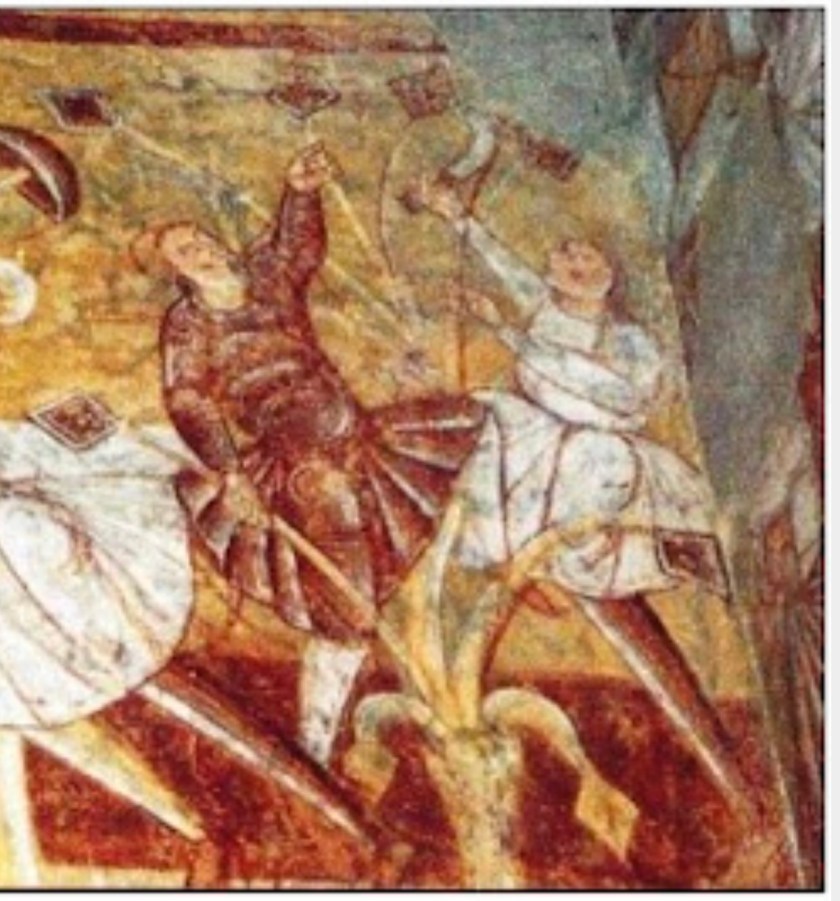
Course Syllabus: Psychedelics and Culture (Brown)
Course Syllabus: Psychedelics and Culture (Brown)
https://egodeaththeory.wordpress.com/2020/11/13/course-syllabus-psychedelics-and-culture/
PsyGospels Facebook Page
https://www.facebook.com/psygospels
Personal: https://www.facebook.com/jerrybbrown001
Translation of Brinckmann 1906 book
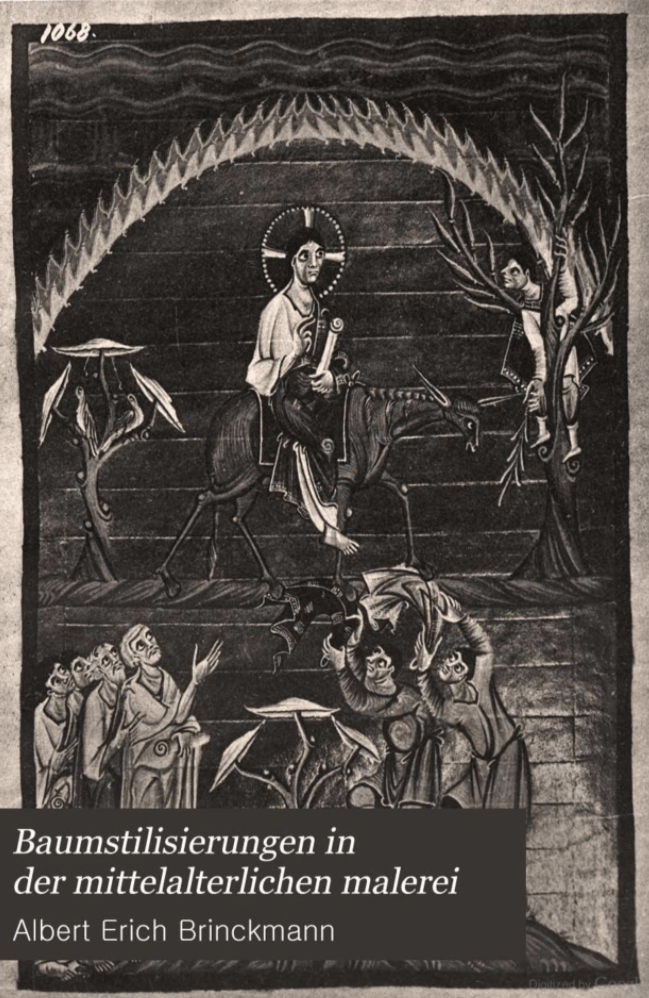
Tree Stylizations in Medieval Paintings (Brinckmann 1906)
https://egodeaththeory.wordpress.com/2020/12/11/brinckmann-mushroom-trees-asymmetrical-branching/
Christianity’s Psychedelic History (Brown 2022 at Hancock Site)
Christianity’s Psychedelic History: Reply to Thomas Hatsis’ Review of The Psychedelic Gospels
Jerry Brown
24th February 2022
https://grahamhancock.com/brownj1/
Citation of the Egodeath theory website
Brown wrote (personal communication, Jan. 22, 2023 and possibly earlier):
“As you know, Cyberdisciple provided material contributions to this article, which are acknowledged in the footnotes.
“And, near the end of the article I cite you as follows:
“Mushroom images in art: The field is also in need of robust categories for classifying depictions of mushrooms in art.
“For example, Samorini proposes a two-fold typology of mushroom trees, using the Plaincourault Amanita muscaria and the Saint Savin psilocybin mushroom as ideal types.21
“21. Researcher Michael Hoffman defines three categories for classifying mushroom images: literal depictions of mushrooms, stylized depictions of mushrooms, and depictions of mushroom effects which suggest altered states of consciousness.”
That link goes to:
Page title:
Compelling Evidence & Proof of Explicit Psilocybin Mushrooms in Christian Art to Communicate Non-Branching Stable Control
Section heading:
A Spectrum of Criteria of Proof, for Identifying Mushrooms in Art or Texts
https://egodeaththeory.wordpress.com/defining-compelling-evidence-criteria-of-proof-for-mushrooms-in-christian-art/#asocop
“I find Hoffman’s categories useful for classifying the two varieties of MICA that we photographed at the following religious sites. The text in parentheses indicates the black and white Figure (Fig.) or color Plate (P) in The Psychedelic Gospels that displays our photographs of these images.”
| Type of Evidence | Amanita muscaria | Psilocbye varieties |
| Literal – taxonomically accurate images | Rosslyn Chapel, Scotland (Fig. 1.1)22 | St. Michael’s Church, Germany (Fig. 11.2)23 |
| Stylized – mushroom-like shapes | Great Canterbury Psalter, England (P12) | Church of St. Martin de Vicq, France (P6) |
| ASC – images suggesting altered states of consciousness | Chapel of Plaincourault, France (P5) | Chartres Cathedral, France (P18) |
/ end of Brown excerpt
Hatsis Email to Brown
Not sure if I’ll keep this here or move some to Idea Development page 15. This might be low-value, needless distraction.
Brown wrote (personal communication, Jan. 22, 2023 and possibly earlier):
“Here (below) is the threatening and slanderous email that Hatsis sent me on August 22, 2019, to which I refer in the first paragraph of my article.
“Due to Tom’s objection that this email was “confidential,” I was not allowed by the Hancock editor to include this email it in my Reply to Hatsis.
“As you see, this email which is reprinted in full below – except for Hatsis’ email address – is not marked “confidential.”
“After receiving this email, I stopped debating Hatsis and broke off communications with him with an email that said “I am a scholar not a mud wrestler.”
On Thu, Aug 22, 2019 at 2:02 PM Psychedelic Witch <…> wrote to Dr. Brown:
“The *moment* I am disrespected, called a liar (in not so many words), or accused of foul-play simply because Jerry is ignorant of medieval history (and medieval art, and medieval Christian history, and ancient Christian history, and ancient Gnostic history, and medieval heresy, and ancient Jewish history, and all the relevant languages needed to actually answer this question), I am going to unload on this entire nonsensical idea in a way that will have those who believe this bullshit crying in a corner.
“I’ve been too generous and nice, and I will NOT be walked over or insulted again.
“You give me respect and I am happy to return in kind. Lie about me once more, accuse me of anything, and the kid gloves come off.
Fair warning. -Tom”
🍄🧙♂️
Their enemies didn’t accuse Christians of mushrooms – therefore, what follows?
In his earliest article, for a UK journal, Hatsis a priori assumes that mushrooms were so reviled by everyone in antiquity, that we know that Christians didn’t use mushrooms, because if they did, their adversaries would have accused them of this heinous act.
This argument is untenable, since enemies accused enemies of everything that was considered bad.
The fact that the Christians’ enemies, who accused them of all things that were considered bad, didn’t accuse Christians of mushrooms, indicates that Antiquity didn’t consider mushrooms bad.
Hatsis is the anti-mushroom psychedelic witch, projecting his own intense disparagement of mushrooms onto Antiquity.
No one would make the erroneous argument he makes, except by projecting one’s own thoroughgoing anti-mushroom attitude onto Antiquity.
Incoherent “Culturecide” Charge Is Begging the Question
Beg the question much?
In one of his online articles, Hatsis falsely argues that if you assert Christians used mushrooms, you are [definitely] committing culturecide, by overwriting their culture by your own invented projections.
But how does he know he is not the one forcing his own misinterpretations upon mushroom imagery artists?
He ought to have written that if we say Christians did, or didn’t, use entheogens, we MIGHT risk committing culturecide, but we can’t know how to avoid that, until we figure out whether they did or didn’t.
It is stunning how bad Hatsis’ arguments are. He seems to have low aptitude for reading, writing, and thinking.
I am not passing judgment on all of Hatsis’ contributions or potential, but saying he is as mixed a bag as any scholar… a particularly mixed bag.
Course at Psychedelics Today: Psychedelics: Past, Present, and Future
An in-depth understanding of the history and science of psychedelics
Jerry & Julie Brown
https://www.psychedeliceducationcenter.com/p/psychedelics-past-present-and-future
Jerry Brown on Psychedelics Today Podcast; Course: Psychedelics: Past, Present, and Future
https://egodeaththeory.wordpress.com/2022/11/20/jerry-brown-on-psychedelics-today-podcast/
url:
https://psychedelicstoday.com
https://psychedelicstoday.com/podcast/
Jerry Brown at YouTube
Search: sorted by upload date
https://www.youtube.com/results?search_query=jerry+brown+psychedelic&sp=CAI%253D
Purpose/motivation of this page
This is my main hub page for Brown’s works.
Motivation for creating page: I can’t find my pages and sections about Browns’ work at this WordPress site.
Key Questions from Brown About “Secret” Mushrooms
Exact quote from Brown (personal comm.):
Sep 7, 2021
Su: Battles in field; “secrecy” and evidence
“If a psychoactive mushroom rite were widely practiced, but only among the ecclesiastic/pagan elites and their initiates, during the Middle Ages, where do we draw the line between labelling this as “secret” or affirm that the evidence supports the maximal thesis, and what nuance (if any) needs to be added to support either position?”
If a psychoactive mushroom rite were widely practiced, but only among the ecclesiastic/pagan elites and their initiates, during the Middle Ages:
Where do we draw the line between labelling this as “secret”, or affirm that the evidence supports the maximal thesis?
What nuance (if any) needs to be added to support either position?
Video: The Psychedelic Gospels: Evidence of Entheogens in Christian Art (Breaking Convention ch., 2019)
Vid title:
Dr Jerry B Brown – The Psychedelic Gospels: Evidence of Entheogens in Christian Art
Uploaded Sep 26, 2019
https://www.youtube.com/watch?v=5za6sQb-pIE –
Brown’s Nov 9 2020 email:
“And, lastly, here’s the video of my presentation at that 2019 Breaking Convention.
“FYI, there’s also a video of Hatsis’s presentation as well.
“These individual presentations took place separately from the debate.
Vid blurb:
“The Psychedelic Gospels: Evidence of Entheogens in Christian Art
“Based on stunning photographs of psychoactive mushrooms found in churches and cathedrals in Europe and the Middle East, this presentation documents original research on the presence of entheogens in early and medieval Christian art. After making the surprising discovery of a sculpture of an Amanita muscaria mushroom in Rosslyn Chapel, Scotland, my wife/coauthor Julie and I set out to investigate the presence of entheogens in Christian art: in frescoes, illuminated manuscripts, mosaics, sculptures and stained-glass windows. At the churches and cathedrals studied, we utilised an interdisciplinary approach combining in-depth anthropological field work with art history, church history and ethnobotany.
“The key results are threefold. First, we found compelling evidence of sacred mushrooms (both Amanita muscaria and Psilocybe) in Christian art in religious centres as diverse as small parish chapels (France), high holy places (England and Germany), early basilicas (Italy) and remote cave churches (Turkey). Second, based on these findings we proposed the “Theory of the Psychedelic Gospels,” which argues that Christianity has a psychedelic history. Third, these discoveries resolve the epic controversy between ethnobotanist R. Gordon Wasson and linguist John Marco Allegro, which has cast a long shadow over the study of entheogens in Christianity. These results are significant ̶ and controversial.
“If the theory of the psychedelic gospels is validated, the scientific and religious communities will have to rethink the history and perhaps even the origins of Christianity. For this reason, in The Psychedelic Gospels: The Secret History of Hallucinogens in Christianity (2016), we call for the establishment of an Interdisciplinary Committee on the Psychedelic Gospels in order to document and evaluate the presence of psychedelics in Christian art.
“Jerry B. Brown, Ph.D., is an author, anthropologist and activist. From 1972 to 2014 he served as founding professor of anthropology at Florida International University in Miami, where he taught a course on “Psychedelics and Culture.” He is coauthor with Julie M. Brown of The Psychedelic Gospels: The Secret History of Hallucinogens in Christianity (2016). He is also coauthor of “Sacred Plans and the Gnostic Church,” Journal of Ancient History (2014) and of the forthcoming “Entheogens in Christian Art: Wasson, Allegro and the Psychedelic Gospels,” Journal of Psychedelic Studies (2019).
Vid: THE GREAT HOLY MUSHROOM DEBATE (14 Aug 2019)
Brown emailed:
https://www.youtube.com/watch?v=ZIUmR7o6RGg –
Uploaded Oct 2, 2019
Does Christianity have a psychedelic history?
Thomas Hatsis and Jerry B.Brown go head to head to debate this question.
Filmed at The University of Greenwich, London, as a collaborative event between Breaking Convention and The University of Greenwich Psychedelic Society on 14 Aug 2019.
Brown Asked if We Wrote About Compelling Evidence & Criteria of Proof on Nov. 10, 2020
Exact quote:
“Have you, Cyb or anyone outlined what compelling evidence, or criteria of proof would be?”
To Brown Jan. 22, 2023: Critique of Panofsky’s Letters
Thanks, I read your email of Apr. 27, 2022 today.
Did you photograph Panofsky’s letters? I’m not sure how to credit them, other than that you published them, Brown & Brown 2019.
There are many more points to critique in Panofsky’s letters, and Wasson’s abuse of them, than what you covered in your 2019 article. I’ve posted & spoken about these critiques and what’s revealed.
You didn’t note that:
Wasson looked up and hand-wrote the detailed Brinckmann book name and author name, on Letter 1, and Wasson censored the citation in Letter 1, and that Panofsky’s 2nd Letter again strongly recommended the Brinckmann book.
Never does Wasson let leak, actual scholarship: do not mention Brinckmann’s book (against Panofsky’s attempt to provide a semblance of scholarly citation).
Also you didn’t mention:
Such damning evidence of anti-scholarship by Wasson: that Panofsky attached two pilzbaum photostat images, which Wasson makes sure to not show or publish or mention.
Panofsky’s arguments are full of giant holes, revealed by your publishing Letter 1 & 2 together.
The iceberg effect: 90% of Panofsky’s argument rests on unstated presuppositions; he only provides a sketch of the surface of the argument, and counts on the reader to gullibly assume the rest and follow Panofsky’s biased lead.
__________________________
Citation $&*@!! Needed!
Where’s the $&*@!! citations, Wasson?!
Highly valuable to me, Panofsky letter 2 confirms my 2005 accusation of Wasson withholding scholarly citations that Panofsky certainly must have provided to back up the extremely strong assertion that art historians have covered pilzbaum. I failed to make this my #1 summary point at top of article, though I bitterly complained all through the article.
http://egodeath.com/WassonEdenTree.htm – find ‘citation’, but my accusation lacks that word, says ‘evidence’ instead:
“Why should we trust Wasson’s stated judgment (“what I have found is the unanimous view of those competent in Romanesque art”) and his unstated process of his finding of competence, especially when he declares that “those competent … Art historians of course do not read books about mushrooms”? Wasson refrains from giving us even a single shred of evidence, withholding the details (assuming there are any details to withhold) that led the art historians to their conclusion – or dogma or party line – that mushroom trees aren’t mushrooms. He delivers forth only the supposed conclusion, painting a scene as hazy, undefined, and unspecific as Saint Paul on the earthly life of Christ.
“Wasson doesn’t provide any citations of published scholarly studies of ‘mushroom trees’ or ‘Pilzbaum’, where we can weigh the merit of the art historians’ confident consensus and see how or whether they’ve addressed the most-persuasive objections to their consensus view.”
“Wasson doesn’t show us any citations of published scholarly studies of ‘mushroom trees’ or ‘Pilzbaum’: the result is 1-sided apologetics; within this presentation, we are only permitted to hear the opening assertions and position statement of one party in the debate, not to see how that position responds to the other side’s objections.
“Wasson didn’t go to the trouble of providing citations of the eminent art historians’ published studies on Pilzbaum. These would need to be studies that convincingly show why the mushroom-and-tree interpretation is surely wrong …”
“With no citations given of published, thorough studies, the result is an argument from authority. Wasson’s unscholarly attitude and method here, toward his readers, is striking. We’re not even supposed to wonder how exactly the art historians reached their conclusions on this highly relevant and interesting matter; we’re to mentally picture hazy, idealized, intensive scholarly research, producing unimpeachable, compelling results, and imagine the conclusions as having been tested in the fire of robust critical examination. Either this, or we’re supposed to be impressed and compelled solely by the arguments contained in Panofsky’s letter, as though it were impossible to think of any objections to his sparse argumentation.”
That was pretty insightful/resourceful critique from me in 2006 based only on a fragment of Letter 1. I wish I noted Wasson’s ellipses right where I knew & deduced that there must be a citation (Brinckmann’s book).
I image-processed the images of Panofsky’s two letters and re-printed them out, much clearer.
Your 2019 article body has a transcription typo, I read it aloud and the letter photo out loud, a subtle word swap changed the meaning and my critique of Panofsky (in voice recording Egodeath Mystery Show podcast episode), which I had to correct.
“the finished product” [Panofsky’s fabricated “template”] vs. “the finished project” [the Plainc. fresco]. Back to the sources!
All software has bugs, all articles have errors. Including my 2006 Plaincourault article, to my surprise while reading it aloud on the Egodeath Mystery Show podcast.
In that article, I especially wish I had listed summary item 1: Wasson must be withholding citations that Panofsky certainly must have provided. It turns out, your 2019 article reveals that Panofsky attached images as proof that art historians have acknowledged pilzbaum and it’s not entirely bluster, Panofsky’s claim that art historians have treated/ covered/ discussed pilzbaum.
— Cybermonk
Photographs of Panofsky’s Two Letters to Wasson
Per Brown (pers. corr.), cite the letters as shown.
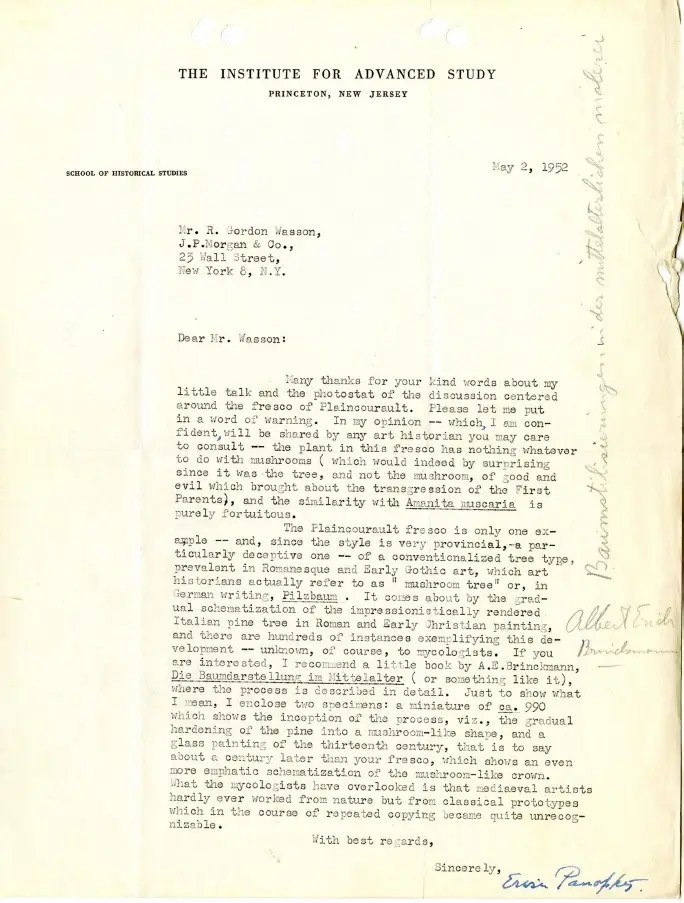
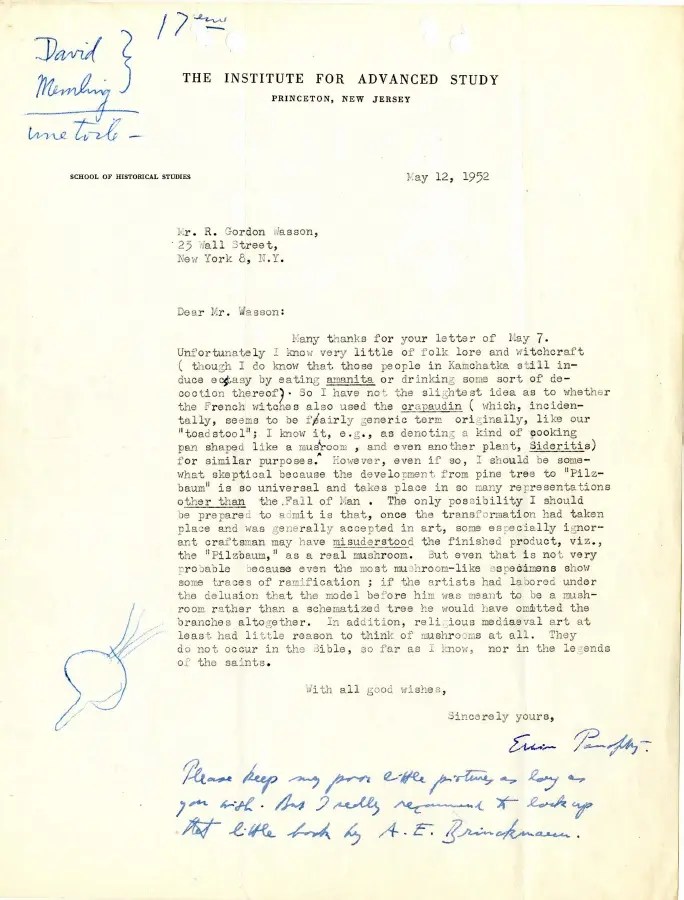
Panofsky Letters Sharpened Contrast

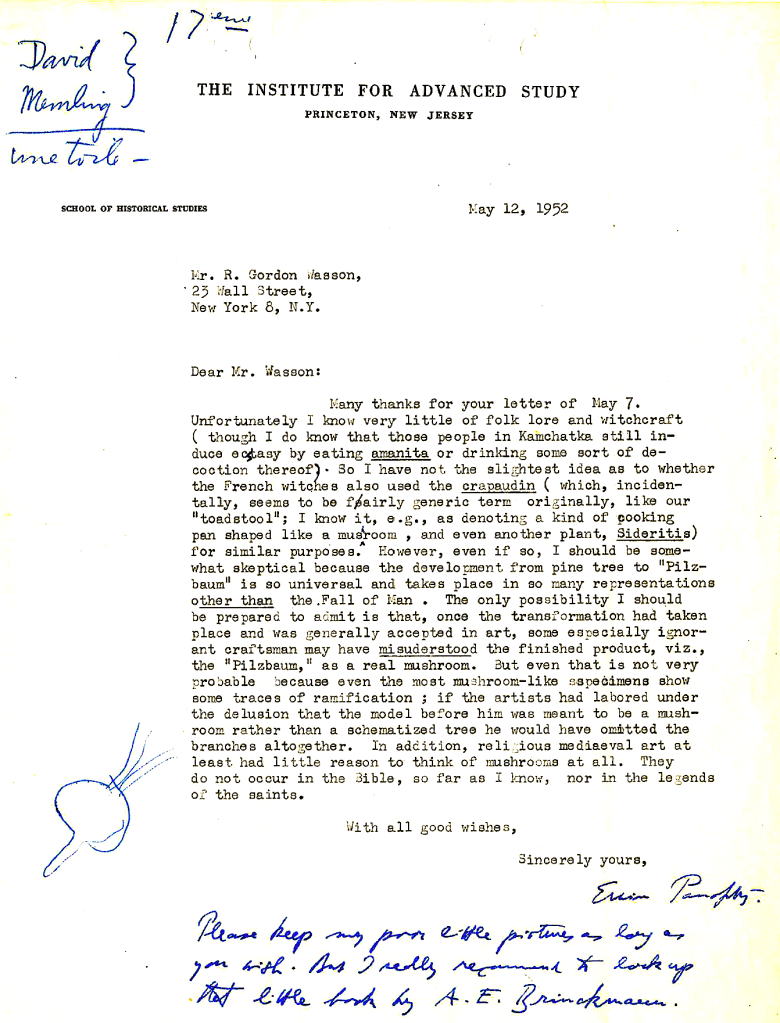
Crops of Panofsky Letters



“some especially ignorant craftsman may have misunderstood the finished product, viz., the “Pilzbaum”, as a real mushroom. But even that is not very probable because even the most mushroom-like specimens show at least some trace of ramification; if the artists had labored under the delusion that the model before him was meant to be a mushroom rather than a schematized tree he would have omitted the branches altogether.” – The most influential art historian, Erwin Panofsky
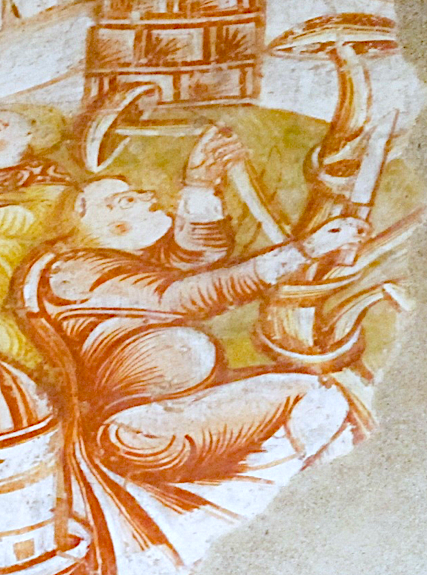
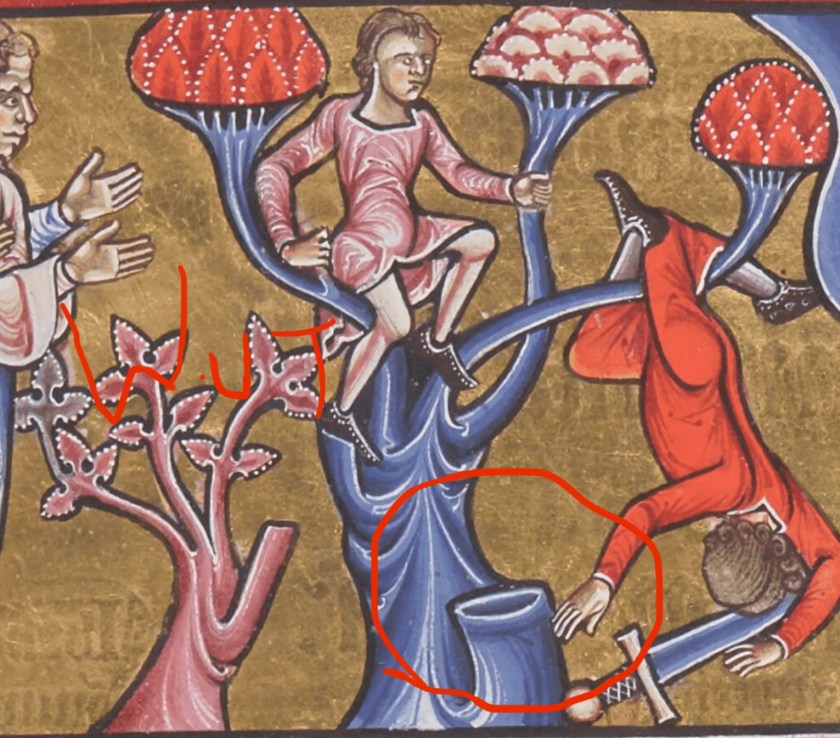

https://egodeaththeory.wordpress.com/2022/06/29/hatsis-gallery-of-mushroom-imagery-in-christian-art/
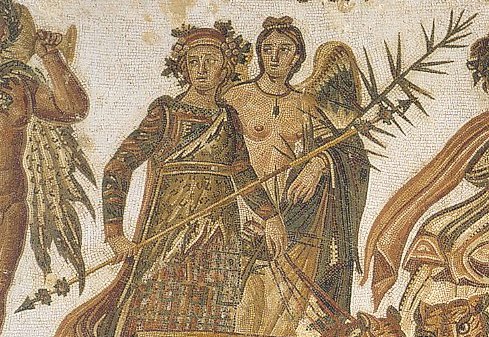
John Rush gallery
https://egodeaththeory.wordpress.com/2022/12/20/john-rush-gallery/

https://egodeaththeory.wordpress.com/2020/12/11/brinckmann-mushroom-trees-asymmetrical-branching/
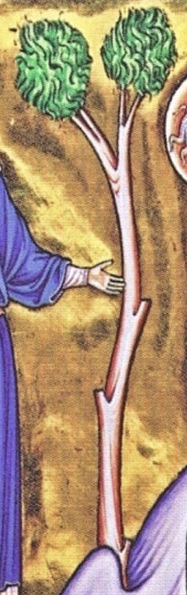
The Mystic Y
https://egodeaththeory.wordpress.com/2020/12/30/the-mystic-y/
John Rush gallery
https://egodeaththeory.wordpress.com/2022/12/20/john-rush-gallery/
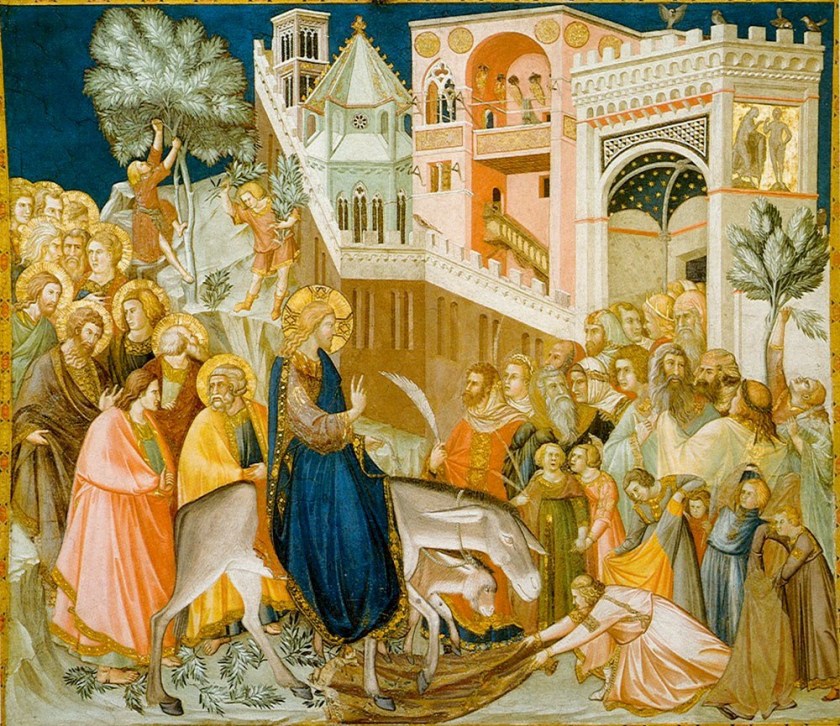
Image contributed by the Egodeath community.
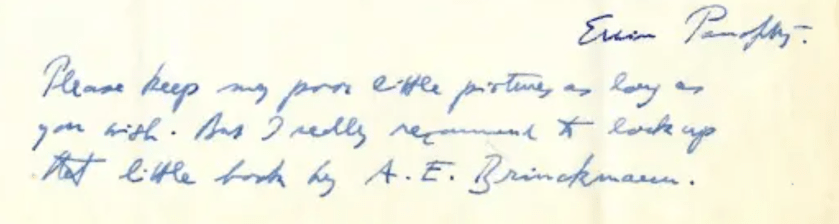
“Erwin Panofsky.-
Please keep my poor little pictures as long as you wish. And I really recommend to look up that little book by A. E. Brinckmann.”
In 2005, I wrote:
“Wasson refrains from giving us even a single shred of evidence, withholding the details (assuming there are any details to withhold) that led the art historians to their conclusion – or dogma or party line – that mushroom trees aren’t mushrooms.”
– Cybermonk 2005, article Wasson and Allegro on the Tree of Knowledge as Amanita http://egodeath.com/WassonEdenTree.htm#_Toc135889230
I am delivering to you, “the public”, the citation that in 2005 I accused Wasson of withholding from us:
Tree Stylizations in Medieval Paintings (Brinckmann 1906)
https://egodeaththeory.wordpress.com/2020/12/11/brinckmann-mushroom-trees-asymmetrical-branching/
Search this site: panofsky letter
https://egodeaththeory.wordpress.com/?s=panofsky+letter
Panofsky Letters Discoveries
https://egodeaththeory.wordpress.com/2022/04/28/panofsky-letters-discoveries/
Images and Crops from St. Martin’s Chapel, Julie M. Brown Photographs
~~
todo: add remaining such entire Julie images & crops here.
Email Jan. 22, 2023 to Brown
Hatsis claimed that his misspelled term Discipuli Allegrae isn’t literally asserting that Brown is or I am literally a follower of Allegro; but merely means anyone who asserts that mushrooms are intertwined with Christianity.
This denial is B.S. from Hatsis. In fact, Hatsis really does think that anyone who asserts “mushrooms” (an entirely problematic term) in Christian history is literally a follower of Allegro.
I have PROOF of this in Hatsis’ email to me where he asserts like, “the ONLY reason that you guys have switched to asserting Psilocybin instead of Amanita is because Allegro …”
I (semi-jokingly) have no idea what he wrote after that – it doesn’t matter, because he just completely sank himself and revealed his unconscious presupposition paradigm.
Hatsis is projecting: because HE started off gullibly a follower of Allegro, he ASSUMES that everyone else comes from initially following Allegro, just as Hatsis did.
In fact, the Egodeath theory, including the radical maximal entheogen theory of religion, has exactly ZERO influence from Allegro.
I’ve posted and written up details about that already, in intellectual autobiography thread/posts.
In no sense whatsoever does the Egodeath theory or the maximal entheogen theory of religion come from Allegro.
Nor is the Egodeath theory (the Theory of Psychedelic Eternalism) in any sense a “variant of” or “departure from” Wasson’s theory, as John Lash equivalently assumes of everyone who ever thinks any thought about visionary plants in connection with religion.
Through some mysterious process of attribution that Lash hasn’t explained, if you think “mushroom+religion”, then Wasson must have put his idea into your mind, somehow.
Through some mysterious process of attribution that Hatsis hasn’t explained, if you think “mushroom+religion”, then Allegro must have put his idea into your mind, somehow.
(What about Richard Schultes, or Robert Graves though — don’t all your thoughts belong to him, instead of Wasson or Allegro?)
You could make a (weak) case that the Egodeath theory was influenced by things I rejected: mysticism, meditation, and esotericism.
But there is no case for the Egodeath theory being influenced by Allegro (or Wasson) – as a matter of historical development of my Theory.
But Hatsis cannot imagine such a thing as entheogen scholarship that’s not influenced by or coming from Allegro.
Equivalently, John Lash cannot imagine such a thing as entheogen scholarship that’s not influenced by or coming from Wasson.
No Such Thing as Cubensis, Panaeolus, or Liberty Cap in Europe Before 1976
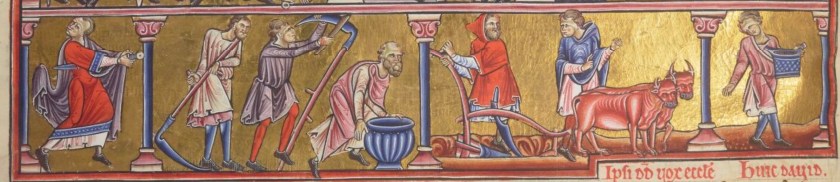
Beware that in this context, whenever Hatsis writes or says “mushroom”, he strictly means Amanita, and considers (if forced to think) Psilocybin to not exist in the West prior to 1976, following Paul Stamets’ preposterous implied assertion than Cubensis didn’t grow on bovine dung in Europe before 1976.
The un-qualified word ‘mushrooms’ is as unusable, now, as the word “entheogen” which Wouter Hanegraaff has ruined by diluting and cheapening to death.
From now on, everyone must specify explicitly “Amanita” and/or “Psilocybin mushrooms”, not just “mushrooms”, which Wasson/ Allegro/ Ruck/ Heinrich/ Irvin/ Rush has mis-led everyone (read: Hatsis) into treating as an exact synonym of Amanita, thus eliminating any ability to consider Psilocybin.
We have to FORCE the spotlight of attention, the primacy and center of the cosmos, to shift from Eleusis/ ergot/ kykeon and from Allegro/ Amanita/ Plaincourault to Canterbury/ Psilocybin/ Samorini/ sacred meals & mixed wine banqueting.
Dominant narratives/discourses work by eliminating the real thing by substituting a fake substitute in its place.
The function of focusing on Kykeon/ Amanita/ Plaincourault/ Allegro is to prevent thinking about Psilocybin mixed wine.
— Cybermonk, Jan 22, 2023
Followup Message
I found the “Your view is because Allegro …” assertion from the anti-mushroom psychedelic witch.


https://egodeaththeory.wordpress.com/2021/02/19/idea-development-page-12/ –
Hatsis wrote to me (emph. added):
“The shape of the Liberty Cap is anachronistic.
“The thing is, you are all looking for mushrooms* in Christian art because Allegro said there were amanita muscaria (not psilocybe) buried in text (not art).
I’ve talked to Carl Ruck about this and he agrees with me** – Allegro was wrong about the etymological thing.
So you are sort of in this hypocritical position where you don’t even believe the very foundation from which you base your theory.
There is an irony here that is so symphonic in its poetical implications.
So, in short, the Liberty Cap claim does not amount to much.***
You want to move the conversation away from the fly agaric because there is no evidence for it.
Sorry, dude, but I’m not fooled by your sleight of hand at all. “
/end of Hatsis’s excerpt
See link for more tomfoolery context.
There IS evidence for Amanita, but more important & relevant is perceiving the copious evidence for Psilocybin.
*Beware: For Hatsis, the word ‘mushrooms’ means exclusively Amanita.
**Carl Ruck is the one pushing the “Secret Amanita Cult” theory that you [Hatsis] are intent on disproving, against your faithful buddy Ruck who I heard you in the livestream say “I agree with Ruck!”.
I agree with you, on most of that rejection of Ruck’s thesis of “Secret Christian Amanita Cult”, as you have named it.
***Liberty Caps and Panaeolus Caps in the Canterbury Psalter
https://egodeaththeory.wordpress.com/2022/03/16/liberty-caps-and-panaeolus-caps-in-the-canterbury-psalter/#Liberty-Caps
— Cybermonk, Jan 22, 2023
Other Email to Brown
I read aloud all of Hatsis’ set of online anti-Irvin/ anti-Rush articles, in past episodes of Egodeath Mystery Show.
In Hatsis’ articles, he routinely argues that the neutral, scientific assumption that avoids culturecide projection, is the Naturalistic interpretation.
Such a prejudice is baseless.
Sep 7 2021 email, from Cyb, Su: “Battles in field, “secrecy”, and evidence –
Cyb, In your innocent & vulnerable discussion about sophisticated art interpretation of meaning more than one thing:
You forgot about The Mushroom Exception.
In art and letters, things mean more than one thing – EXCEPT when one of those things is entheogens; in that case, a thing in art/letters can only have one meaning: the naturalistic, meaning ordinary-state mundane item, certainly not visionary plants.
______________________________
What You Really Mean, Based on Etymology
Also re: the Nadeau’s short critique of TIK, pdf at Acad.edu, I was glad that the third fallacy Nathan pointed out was (as Wouter Hanegraaff does re: ‘entheogen’) the “etymology sets the meaning of a word” fallacy.
Eleusinian Eleusinian Mysteries, Eucharistic Myths: Problems for B. Muraresku’s Immortality Key
Nathan Nadeau
https://doi.org/10.20935/AL4213
“The Root Fallacy: presupposes that a word actually has a meaning essentially bound up with its shape or its components (etymology over usage).[9]”
“[9] Carson, D. A. Exegetical Fallacies, (Grand Rapids: Baker Books, 1996), 28. Carson isaccessible, but ideally one will reference James Barr, Semantics of Biblical Language.”
Nadeau bolsters my claim, that in 2012 chapter for Christopher Patridge’s book Contemporary Esotericism, where Wouter Hanegraaff titled his keynote paper “Entheogenic Esotericism”, Hanegraaff puts forth a grade-school level of fallacious argument, that the “real meaning” of ‘entheogen’ is “anything that anyone could possibly claim gives a religious experience” (which is, actually, the Universal Set, as I immediately proved via lamp, dishtowel, and car engine, on the Egodeath Mystery Show podcast).
The effort to lift every claimed mystic technique up to the now (inconsistently) venerated level of ‘entheogen’, fails, and only succeeds at lowering the word ‘entheogen’ to be completely worthless, watered down, cheapened, and denatured.
Like Erik Davis directed Hanegraaff on Twitter: fine, go ahead and wreck the word ‘entheogens’ and make it worthless, but stay well away from our word ‘psychedelic’ and its etymology.
— Cybermonk
Graham Hancock Facebook Forum about Brown’s Rebuttal Article
Graham Hancock posted Brown’s AoM article on his Facebook account.
There, the article received over 1.5K likes and hundreds of Comments, many of which Brown responded to.
Graham’s goal regarding the Hatsis & Brown articles is to provide a neutral platform for civil debate on the question of mushrooms in Christian art.
Hancock has over 400,000k followers on Facebook, who are primed to hear more on the question of mushrooms in Christian art.
Graham Hancock facebook Jerry Brown
https://www.google.com/search?q=Graham+Hancock+facebook+Jerry+Brown –
Hancock forums:
Welcoming Julie and Jerry Brown as authors of the month for November
https://grahamhancock.com/phorum/read.php?8,1293453
https://grahamhancock.com/phorum/read.php?8,1293453
Author: Graham Hancock
November 07, 2021
“It is our pleasure to welcome Julie and Jerry Brown, authors of The Psychedelic Gospels: The Secret History of Hallucinogens in Christianity, as our featured authors for November. [2021]
“Their book takes the reader on an anthropological journey throughout Europe and the Middle East.
“They provide compelling visual evidence that documents the role visionary plants have played in Christianity,
challenging the reader to rethink what they believe they know about the origins of Judeo-Christianity and the life of Jesus.
“Read their article here:
https://grahamhancock.com/brownjj1/
Carl Ruck in Dec. 2021 is working on Plaincourault images.
I was a little surprised that in April 2022 I was able to contribute to interpreting/decoding Plaincourault re: mythemes of {handedness} & {non-branching}.
The Egodeath theory = the Theory of Psychedelic Eternalism.
My theory’s prediction is that:
- The fresco ought to favor right leg/limb.
- And ought to find branching and non-branching features added.
As I’ve done countless times while testing the Egodeath theory as an [undefeated] explanatory hypothesis, held breath and analyzed fresco…
As typically, had to do some visual-elements processing … … had to stand and test postures.
Confirmed. Eve’s weight is on right foot, not left.
Right foot is on ground, left isn’t.
Left foot is based on right foot which is on ground.
= rely on eternalism-thinking, instead of familiar (ordinary-state based) possibilism-thinking, to have viable stable control in the altered state.
And I did decoding in the realm of The Psy Gospels bones analysis. Flesh cloaks underlying bones, revealed by Psilocybin represented by Psilocybin’s billboard, which is and was and will be 🍄.
— Cybermonk
Derby Team
Julie M. Brown is coauthor of The Psychedelic Gospels and anything else here attributed to the Browns.
This means that any mistakes in their co-written books or articles are twice as major, which conveniently gives two criticisms/exposes for the price of one.
If Julie can’t handle the criticism, stay out of the roller derby rink; it’s a man’s sport.
Teams in the Interpretation Derby
https://egodeaththeory.wordpress.com/2022/04/03/teams-in-the-interpretation-derby/
The Sacred Mushroom and the Cross by John Allegro is my favorite book.
Thomas Hatsis, online blogger & lead skater for the Witches derby team. Reading Allegro Again (Hatsis 2015)
Reading Allegro Again (Hatsis 2015)
https://egodeaththeory.wordpress.com/2023/02/18/reading-allegro-again-hatsis-2015/
https://www.google.com/search?q=hatsis+%22roller+derby%22
https://www.amazon.com/Roller-Derby-Sensation-Caused-Confessions/dp/0615692451 – 🍄🧙♂️
March 21, 2022 Emails: Kupfer, Switched from “Problematic Branching Mushroom Trees” to “branching-message mushroom trees”
Two distinct milestones I independently needed:
What Whatn
When did Brown Send Kupfer Passage? March 21, 2022.
When did I first write “branching-message mushroom trees”? March 21, 2022, in reply to the above. See:
A link to my post of that email:
Page title:
Idea Development page 13
Section heading:
Amanita Imagery Indicates Psilocybe Use
https://egodeaththeory.wordpress.com/2022/03/09/idea-development-page-13/#Amanita-Imagery-Indicates-Psilocybe-Use –
to do: add “March 21, 2022” in that section.
See Also
Compelling Evidence & Proof of Explicit Psilocybin Mushrooms in Christian Art to Communicate Non-Branching Stable Control
This is my article posted November 13, 2020, a few days after Brown asked (paraphrase):
“Have you or Cyberdisciple written about compelling evidence and criteria of truth for identifying mushroom imagery in Christian art?”
Exact quote:
“Have you, Cyb or anyone outlined what compelling evidence, or criteria of proof would be?”
Compelling Evidence & Proof of Explicit Psilocybin Mushrooms in Christian Art to Communicate Non-Branching Stable Control
https://egodeaththeory.wordpress.com/defining-compelling-evidence-criteria-of-proof-for-mushrooms-in-christian-art/
Url shows the original title, which was:
Defining Compelling Evidence & Criteria of Proof for Mushrooms in Christian Art
But even older post URL (superseded) shows earlier possible title, like:
Compelling Evidence & Criteria of Proof for Greek and Bible Mushrooms
https://egodeaththeory.wordpress.com/2020/11/13/compelling-evidence-criteria-of-proof-for-greek-bible-mushrooms/
Proof that the Canterbury Psalter’s Leg-Hanging Mushroom Tree Is Psilocybe
My spinoff discovery article from the Criteria article
Proof that the Canterbury Psalter’s Leg-Hanging Mushroom Tree Is Psilocybe
https://egodeaththeory.wordpress.com/proof-canterbury-psalters-mushroom-trees-are-psilocybe/

 The Egodeath theory