Contents:
- What I Am Suspiciously NOT Hearing Stamets Say, That He Needs to Say
- Liberty Cap Reported in Italy in 1927 (Samorini)
- Intro
- Standing on Right Leg Supported by Right Hand (Canterbury)
- Fact: oid
- Interrogating 3 Typical Books that Are Prejudiced Against Psilocybin in England & Europe
- Why It Would Be Foolish to Trust the Experts’ Hazy Implication of Mysterious Lack of Expected Cubensis: Typical Poppycock in Entheogen Scholarship
- Wasson Was the First Westerner Ever to Ingest Psilocybin (learned from Michael Pollan & John Lash)
- Wasson Was the First Person Ever to Associate Mushrooms with the Eden Tree (sep. topic: Mycologists Are Ignoramuses for Saying Since 1900 the Plaincourault Eden Tree Means Mushrooms) – source: Wasson
- The Wasson theory (rudely and dishonoringly called by some “the entheogen theory”, robbing Wasson of his due, supernal Glory)
- Psychomimetics are desirable because they mimic the mind – source: Lash
- Wasson Is the Creator of Mushrooms and the Idea of Mushrooms in Religious Context. Source: Lash
- If you think of mushrooms in religious context, you are putting forth Wasson’s idea. Source: Lash
- Allegro Is the Creator of the Idea of Mushrooms in Christian Context. Source: #1 Fan, leader of the Discipluiae Allegraei, Thomas “The Sacred Mushroom & The Cross is easily one of my top 10 fav books” Hatsis)
- If you think of mushrooms in Christian context, you are putting forth Allegro’s idea
- Outro
- References
What I Am Suspiciously NOT Hearing Stamets Say, That He Needs to Say
“We specifically looked for Cubensis reports, and inquired into the field reporters, who have wanted and tried to look for and find Cubensis in England & Europe, and we expect to find it there because of reasons ABC that we cover elsewhere in this book, and…”
Where in the hell is Stamets’ discussion of this particular, important point?
It’s an information blackout. What Stamets does write, leads us to expect reports of Cubensis on dung in England and Europe.
What we get from Stamets on this point is … LOUD SILENCE.
The only thing he says even close to the topic/question, is: PMoW p. 110 re: Cubensis: “it is not known from Spain, … could have … from subtropical African islands”
How about some actual DISCUSSION, Stamets?
Why the hell is Cubensis “not known from Spain”, that doesn’t make any sense. WHY is it “not known from Spain”?
Another top-credibility expert, the leading Medieval historian, Thomas Hatsis, corrected my disrespectful deviation from my basis, who is Allegro; Hatsis informed me with his full authority, that “The shape of the Liberty Cap is anachronistic.”
(Stamets reports Liberty Cap in 21 areas in Italy.)
Does Stamets have equally high credibility as Hatsis here?
I have carefully studied — via spot-checks through repeated index lookups — his book PMoW, and what I come away with is, inconsistent narrative and silence.
Stamets’ book on this point gives me the exact opposite of any sense of confidence; same as evil M. Hoffman’s 2015 article in Toxicology journal, on ancient mystery religions, that opens with 1 page all about Amanita, and then at the end, a tiny empty section about Psilocybin, saying “Someone oughtta try looking for Psilocybin in mystery religions.”
Why would Spain have dung, but not Cubensis?
I need Stamets to write: We looked at dung in Spain, from horses and from bovines, and we did / didn’t find Cubensis, and we are surprised/ not surprised, because ABC ” – WHERE IS THE DISCUSSION OF THIS IMPORTANT POINT?
WHY DOES STAMETS NOT EVEN BOTHER WRITING ANYTHING even though this silently implied absence contradicts other statements in the book?
Nothing is adding up here. I vote NO CONFIDENCE.
I have every reason to concluded that there’s a conspiracy of silence here: “there are no reports” because no one wants or tries or expects, EVERYONE IS SNOOZING, is my conclusion.
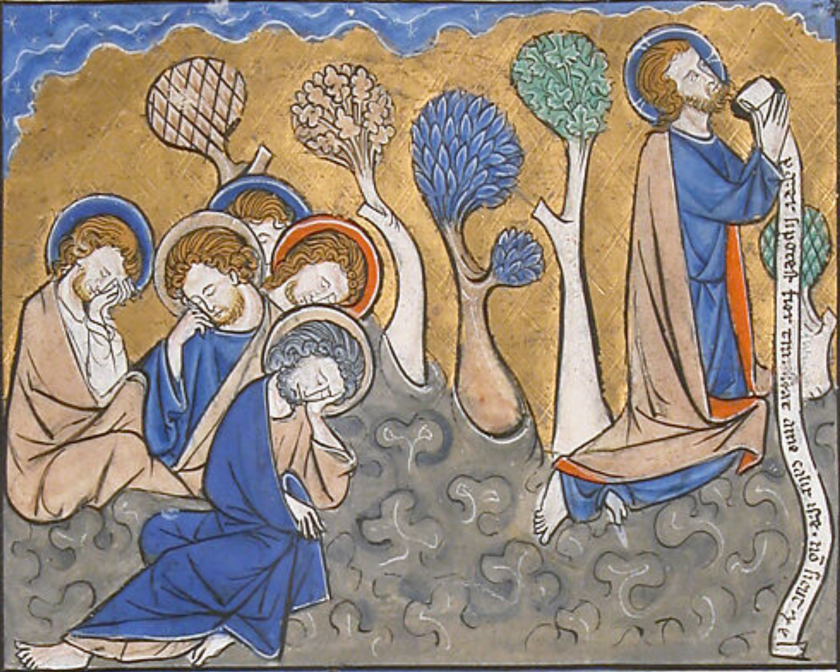
There is no reason for Cubensis to not be found, except FAILURE TO TRY.
Let’s see some actual ENGAGEMENT with this particular topic, Stamets — until you write more than 1 careless phrase, remaining silent on the whole topic, silently omitting Cubensis from England & Europe with no actual discussion, I am concluding that Cubensis has always grown on dung in England and Europe, in line & exactly matching what Stamets writes about habitat.
Why does Samorini energetically investigate and report Liberty Cap all over 21 spots in Italy, but Stamets can’t be troubled to write more than 5 words, completely passive and totally unconvincing, about Cubensis in England & Europe, which we would have every reason to expect?
Wake up! Engage!
e from apparently improved high-res site:
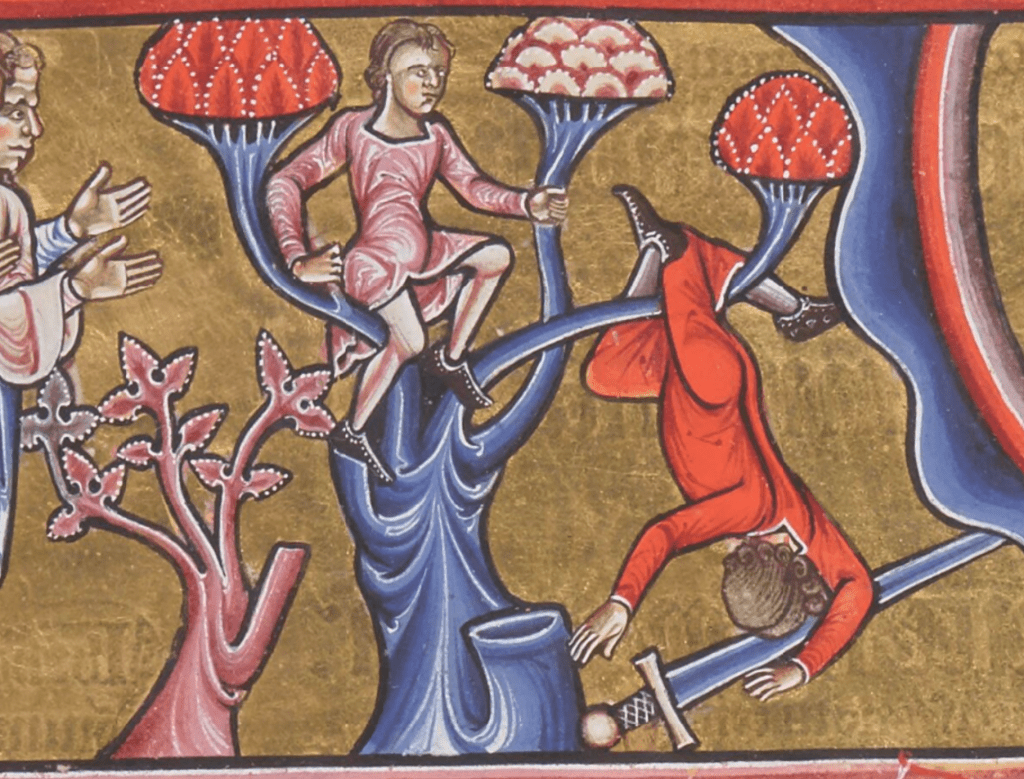
https://gallica.bnf.fr/ark:/12148/btv1b10551125c/f134.item.zoom#
crop from same picture:
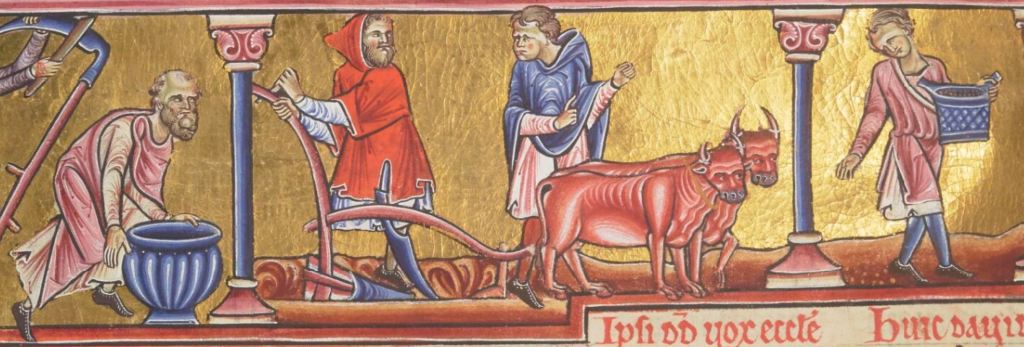
Crop by Cybermonk, “Canterbury-f134-Oxen-Harvest.jpg” 343 KB [8:59 p.m. February 26, 2023]. https://gallica.bnf.fr/ark:/12148/btv1b10551125c/f134.item.zoom#
Liberty Cap Reported in Italy in 1927 (Samorini)
Section added February 26, 2023
Eleusis. Journal of Psychoactive Plants & Compounds, new series, vol. 9, 2005
https://archive.org/details/eleusis-vol9-2005/page/n69/mode/2up –
Samorini lists 21 Italian provinces in which liberty cap has been found, see diagram on page 73:
https://archive.org/details/eleusis-vol9-2005/page/73/mode/2up
Samorini wrote:
“The data reported here, regard the results of my own personal research and that of other authors in the fields of the geographical distribution, biochemistry and ethno-mycology of psychotropic mushrooms.
“There are several updates to be reported for the spread of this type of mushroom in Italy, the first being Psilocybe semilanceata (FR.) QUEL. (Strephariaceae), the most important European psilocybian mushroom, known as fuaghetto among current Italian consumers and liberty cap among English ones.
“At this point, it might be opportune to go back over the chronology of its discovery and presence in the Italian provinces.
“The presence in Italy of BP. semilanceata was first reported by GIACOMO BRESADOLA, in the Province of Trento (1927).
“It was then found in the area of Turin (PIUSSELLO & CERUTI SCURTI, 1972) and in the ‘8os, we registered its presence in several areas of the provinces of Brescia, Bergamo and Sondrio (citi et al., 1983; SAMORINI, 1988).
“In 1989 I identified its presence in several parts of the alpine environment of the Tuscan-Emilian Apennine ridge (provinces of Modena, Bologna and Florence; cf. SAMORINI 1989).
“Again, in 1990 G. JaMonz1 identified it in the province of Novara, in some alpine areas, with a more limited presence at lower altitudes of 200-300 metres.
“In 1993 I confirmed its presence in several locations in the provinces of Bolzano and Pistoia and, in a single spot in the province of Reggio Emilia (sAMORINI 1993).
“F. DOvERI has reported the presence of P. semilan- ceata in the provinces of Udine, Verona and Lucca.
“This author considers it a prevalently graminiculous species, which likes very rich terrains, but which …”
Intro
Stamets/Letcher/Hatsis Factoid: There Were No Psilocybin Mushrooms in England or Europe Before 1976
Stamets’ 1996 book implies it, but doesn’t explicitly state it.
Stamets, p. 22, book Psilocybin Mushrooms of the World: “P. semilanceata grows in England, … Italy [matching Samorini’s report], … — in other words, throughout much of the world.” p. 144: “Reported in grassland habitats in Europe (France, … Italy, …)”
Index entries: 142-145; habitat 18, 22-24, 156
Stamets PMoW: p. 18: “With the domestication of cattle, the dung-dwelling Psilocybes were brought within a defined geographical sphere of daily human experience.
“Pasture species such as Psilocybe semilanceata, the liberty cap, proliferated.
“Some researchers have suggested that Psilocybe cubensis (golden top of the old world) was imported into the Western Hemisphere with the Spanish missionaries and slave traders via the Brahman cattle they brought with the from islands off West Africa.
“P. cubensis soon became the most prominent dung mushroom throughout the tropics. … circumnavigating the globe.”
Stamets PMoW p. 108-109: P. cubensis: “habitats” does NOT list Europe, why not?! Index lists habitat pages as 18 (see “dung … cattle” above), 25, 127, 140:
p. 25: section: Dung deposits – “The most prominent species to exploit the dung niche are P. cubensis, … common on dung along with many Panaeolus.”
p. 110 Cubensis: “it is not known from Spain, … could have … from subtropical African islands”
🐮 💩 🍄
I call bull shiite, 🐮 💩 🍄 – STAMETS DOESN’T ADD UP and I am concluding that the reason people are blind to Cubensis in Europe is the same reason Marcia Kupfer is blind to mushrooms in art.
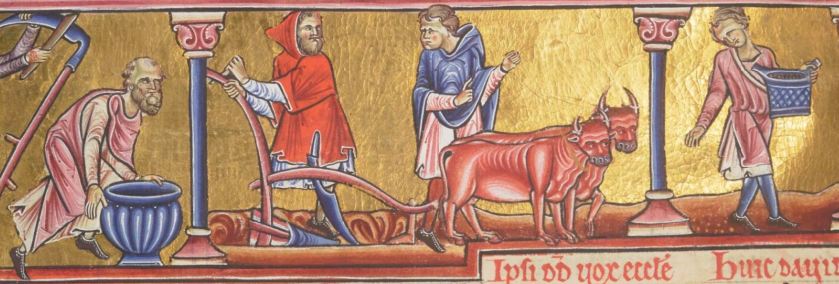
People don’t want/expect to see Cubensis in Europe, so it is not reported.
So goes the narrative, which I have every reason to doubt.
Like everything mushroid, the narrative makes no sense.
If people wanted to find Cubensis in England/Europe in 1150 or 1950, they could have.
Standing on Right Leg Supported by Right Hand (Canterbury)
🐴 💩 🍄
I call horsesh*t on this bunk narrative.
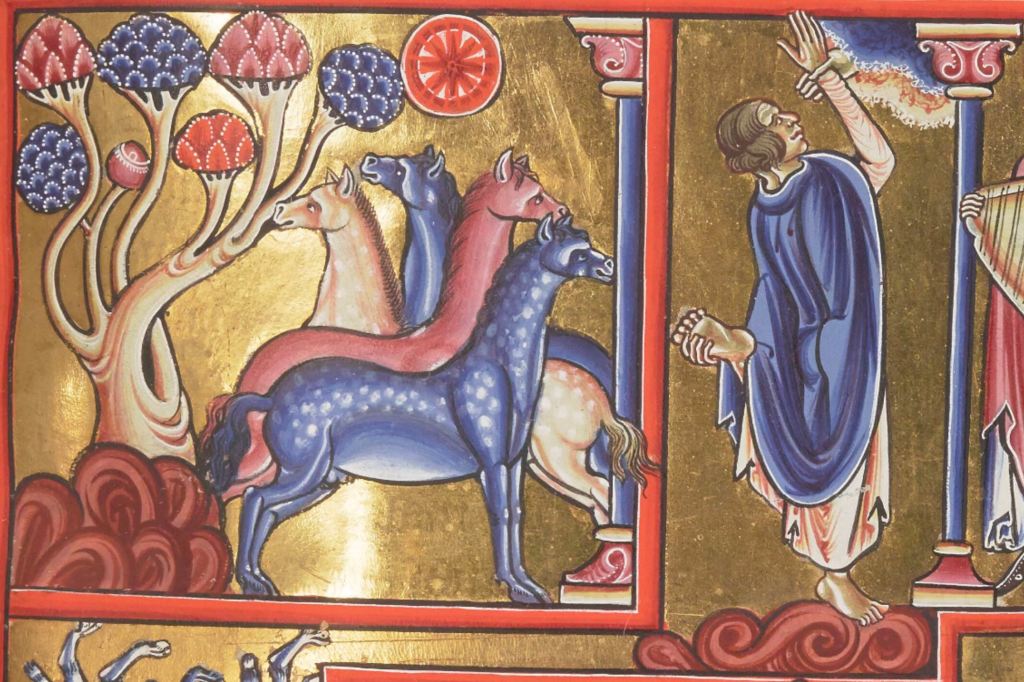
https://gallica.bnf.fr/ark:/12148/btv1b10551125c/f177.item.zoom
“Canterbury-f177-Horses-Mushrooms-Held-Up-Right-Limb.jpg” 497 KB [8:02 p.m. February 26, 2023] Crop by Cybermonk.
Page 81 of PMoW: photo of Panaeolus subbalteatus
Image search:
https://www.google.com/search?q=panaeolus+subbalteatus&tbm=isch
Stamets writes: “Right: Panaeolus subbalteatus is a distinctive mushroom also favoring horse manure. The band along the margin is characteristic of this species.” p. 82: Habitat: “Widely distributed. Reported from … Europe …”
Features:
I got the impression that Stamets virtually asserts that Psilocybin is exceptionally missing uniquely from England & Europe before 1976, through omission in his list of places of Cubensis’ natural distribution habitat.
Fact: oid
What Everyone Knows: Amanita = Europe, Psilocybin = Americas.
Samorini doesn’t make this error, of brittly assigning Psilocybin exclusively to the Americas and to everywhere EXCEPT England/Europe.
Psilocybin Mushrooms of the World: An Identification Guide
1996
Paul Stamets; Andrew Weil (Foreward)
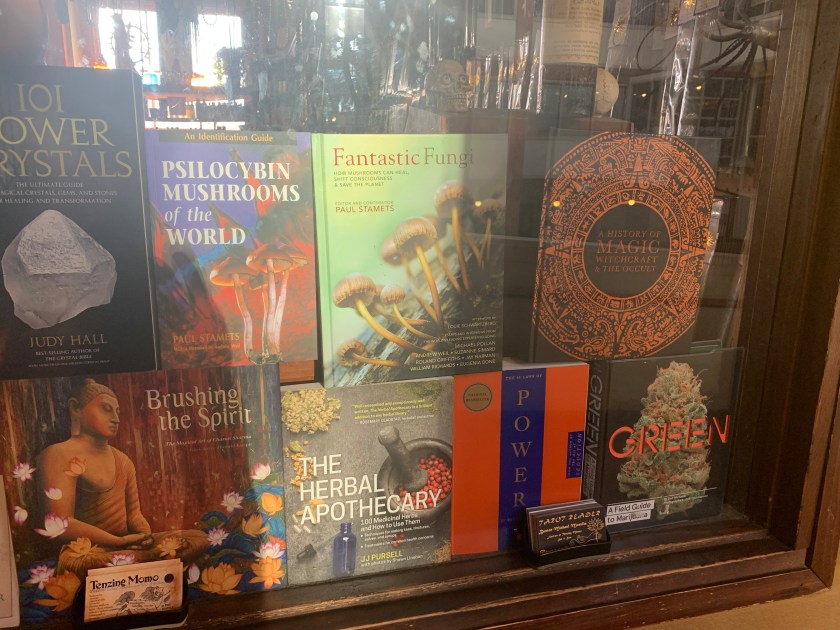
https://www.amazon.com/Psilocybin-Mushrooms-World-Identification-Guide/dp/0898158397 (better cover photo)
Please explain why Cubensis didn’t grow on bovine dung in England or Europe before 1976.
What’s your confused, self-contradictory, bunk story: do Cubensis NOW grow on bovine dung in England, or not?? Confused, someone is.
Cubensis grow all around the world, on bovine dung.
Cubensis didn’t appear in England until 1976. Even though bovine were there.
Letcher and Hatsis explicitly assert there were no psilocybin mushrooms in England before 1976.
Hatsis the Psychedelic Witch Historian, who is our best model of precision historiographical methodology, hazily and vaguely and aggressively and vehemently tells me with utmost bluntness — hazy bluntness —
The shape of the liberty cap is anachronistic. 😑
Hatsis, pers. corr. (context to make the assertion determinate: none provided by Hatsis b/c the statement is too clear and self-evident to warrant any elaboration of just what the f is being asserted here, it’s not like this statement reads like a product of scopolamine-addled delirium by someone who has no aptitude for theory)
Interrogating 3 Typical Books that Are Prejudiced Against Psilocybin in England & Europe
I have already done this exercise, the outcome is: it’s like trying to find a NEEDLE IN HAYSTACK, trying to find any grudging admission that Amanita is not the be-all, end-all, uber explanation of all everything, when it comes to Western religious history.
I think Chris Bennett’s anger here & Letcher Hatsis’ anger here is same as mine, in the main, though it comes out differently.
The three of us have different vectors but we have this in common: we’re all calling BS on the Amanita Primacy Fallacy.
The picture that entheogen scholarship paints is a HUGE TOWERING AMANITA universal mythic explanation for all things European Entheogenic.
- Chris Bennett vehemently moves the spotlight off of Amanita and onto Cannabis,
- Hatsis onto Scopolamine, and
- Cybermonk onto Psilocybin.
I leverage Samorini 1998 (also 1997). I think of the history there as Samorini then Cybermonk then Brown.
I am not committing to doing doing more formal scholarship citations below than since I did in 2022, but I will at least outline, below, the gist.
It’s all the same slim-pickins’ story across all the books.
Padding out allegedly “Psilocybin” sections with page after page of Amanita, Ergot, eleusis, kykeon, Hofmann, LSA, Plaincourault, Allegro, Wasson… padding, padding padding — everything BUT trying to spotlight Psilocybin in Europe.
These distraction topics are a way of avoiding the topic: avoid, substitute, eliminate.
Psilocybin Mushrooms of the World: An Identification Guide (Stamets 1996)
Gist: double-talk, self contradiction, lie of omission. Stamets tries to paint two contradictory pictures:
Psil & Cubensis & Liberty Cap are global, ubiquitous.
List of places where Psil msh are found: everywhere except England & Europe.
Places where Cubensis: anywhere there’s bovine (except England & Europe).
Page where Stamets explicitly says “no Psil in Eng/Eur before 1976” – nowhere.
Bad, Indirect, Roundabout Writing (the King Here Is Wasson)
Brown never writes a sentence that explicitly says “Walburga tapestry doesn’t show Amanita.”
They write about 5 sentences in the book that add up to effectively commit to that position, but in oatmeal vague writing roundabout fashion.
If I wanted to, or if I had to, I could defend Browns, by saying that they never give us a smoking gun point blank direct statement that the tapestry doesn’t mean Amanita.
It’s deducible that that’s what they mean to assert, but they never pull that assertion together in 1 direct sentence – their 2019 article is even MORE dance-around: it makes huge noises about the Big Reveal, the Huge Disappointment with all of Irvin/Rush data base, being the disappointment that is: she holds a vial. Moving along, next we’ll discuss ….
Waitaminnute, how is “she holds a vial” a total destruction of the entire Irvin + Rush data base of msh imagery in Christian art?
SPELL OUT YOUR ARGUMENT, EVERY STEP, EXPLICITLY — don’t just put forth 1/10 of an argument and then write “Q.E.D.” (like EVERYONE does).
Bennett wanted the Browns’ 2016 book The Psychedelic Gospels to be short and to-the-point like their 2019 article, but, the article is SO short, the Browns never state how “she holds a vial” is supposed to somehow(?) demolish the entire Irvin + Rush data base of mushroom imagery in Christian art.
The Browns just LEAP over that part of the alleged argument, just like Panofsky’s fragment of an “argument”:
“Plaincourault can’t mean mushrooms, because there are too many mushroom trees — and also, not just Garden of Eden!!”
Aren’t you leaving out 90% of your alleged argument? What very little you articulate, is just puzzling: how is anyone supposed to receive THIS as if it’s a statement of an argument? Typewriter ULTRA-shorthand, we are just supposed to GUESS what the Pan arg (& mass of silent presuppositions based on prejudice and biased assumptions) is supposed to be.
Panofsky expects us to GUESS and IMAGINE what his arg is.
“This can’t mean mushroom, because there are too many mushroom trees.”
Talk about a “high-context culture”! ie people don’t spell things out; they rely on shared (supposedly) views.
“That’s the Lakers for you!” “Totally.” (???? i have no idea what you’re on about)
Brown lays out their argument in their 2019 article:
“Irvin + Rush’s art data bases are entirely invalid, because Saint Walburga holds a vial.”
How is THAT even supposed to be an argument or a position statement? I don’t get it.
The Browns just leave us puzzled, in the 2019 article.
I have to GUESS what your argument steps are: are you thinking (using my E.S.P. here) that due to the mushroom exception, an item in art can only mean 1 thing, so if vial, then instantly and automatically therefore NOT AMANITA.
That’s a “single-meaning-only” argument that no one would ever make for any imagery other than mushrooms.
Their 2016 book isn’t much better/clearer/ more explicit of what exactly their position and interpretation and argument is:
“Good thing we didn’t waste our travel time, she holds a vial, who knew??!! [breathlessly, after their huge discovery, which no one previously knew.] Let’s go find some entheogen art instead.”
Arguments Against Mushrooms in Art Are Never Actually Articulated
A pattern, therefore, that I notice: the “arguments” against mushrooms meaning mushrooms in Christian art, ARE NEVER ARTICULATED; they even rely on bias & prejudice & pressuppositions even at the phase of merely articulating what the argument position is.
“There’s no need to articulate fully what our argument is, because we know that the readers all share our worldview, biases, presuppositions, framing, values, prejudices.”
“The shape of the Liberty Cap is anachronistic.” (Hatsis)
That’s asserted AS IF it’s a meaningful argument, but it’s actually just a fragment, that lacks any meaning unless the reader imports a whole (presumably) shared raft of biased assumptions and premises and presuppositions — an entire worldview, such as — pulling a fake example out of thin air here — Allegro’s explanatory framework that has Hatsis caught trapped in it like a fly in a spider’s web, like a ram caught in a thicket.
The harder Hatsis (Brown, Panofsky) tries to explore options to find an alternative, the more they keep employing standing on left leg, same as always, digging themselves deeper into the fallacious worldview that is Allegro or the fiction / myth of Allegro, the mythical world of “Allegro’s theory”.
There are two options inside the looking-glass hall of mirrors of the myth-world of Allegro’s mythical theory: either you agree with Allegro (in an Allegro-defined fashion), or you disagree with Allegro (in an Allegro-defined fashion).
Either way, you continue to remain fully within Allegro paradigm, like being in a dream and dreaming that you wake up, yet you’re still in the dream.
Hatsis was asleep in the Allegro dream, and he dreamed that he woke up from the Allegro dream, but actually he only DREAMED that he woke up from the Allegro dream – he’s actually still entirely trapped stuck asleep within the Allegro dream.
“Conversion” from a child’s notion of Christianity, to a child’s notion of anti-Christianity “atheism” — it remains the exact same mode of thought.
Switched from bunk option A to bunk option B, meet the new boss; same as the old boss.
The Hidden World (Ruck Committee, Evil M. Hoffman, 2007)
I recently looked up all the Psilocybe index entries.
Needle in haystack, just enough to prove — despite all appearances — that Ruck is aware that Amanita isn’t the only “the mushroom” (🍄).
Ruck actually did write the word ‘Psilocybin’, 1 time in his career/corpus 🤯
Actually Ruck was the savior for Oregon’s State Psilocybin Health Authority: in their summary of historical research, the only mention of Psilocybin in European history is an article by Ruck (ironically), so Carl Amanita Promoter Ruck redeems himself there, despite his fervent pushing of the Amanita Primacy Fallacy.
Everyone knows Amanita looks psychoactive and hurts the stomach and you want the generic looking mushrooms instead.
Ruck & Brown go walking down the street in Portland and see an Amanita billboard and foolishly think it means Amanita rather than Psilocybin:
https://egodeaththeory.wordpress.com/2022/09/03/idea-development-page-15/#Proof-Amanita-Billboard-for-Psilocybin – copying to here:
More Proof Pouring in that Amanita Doesn’t Mean Amanita but Is the Billboard for Psilocybin
I have said: Amanita will always be the billboard for Psilocybin. I am proved right all the time.
Literally Amanita is literally the billboard for literally Psilocybin. If you think I’m wrong, go into Shroom House and ask for Amanita or Muscimol.
“I would like Amanita or Muscimol please.”
“We only have Psilocybin mushrooms.”
“But your sign shows Amanita.”
“Don’t be an idiot, that means Psilocybin.”


Shroom House at 0:47 https://www.youtube.com/watch?v=qEOTI2F-Ilk
Vid title: “One BIG Issue With Oregon’s New Magic Mushroom Regulation“
Dec. 28, 2022
Image search:
https://www.google.com/search?q=%22Shroom+House%22
https://en.wikipedia.org/wiki/Shroom_House
Entheogens and the Development of Culture (John Rush, Editor, 2013)
2-Word Summary of this Book’s Coverage:
Samorini Article.
1-phrase summary: According to this 651-page book, see Samorini’s article or see the equiv. chapter in his 2001 book.
Guzman article p 485 – Diversity and Traditions of he World, with Special Reference to Psilocybe
488 southern algeria Guzman 2012 says are Psilocybe mairei
489 – spain mural 2011 Akers & guzman says is Psi hispanica / on dung. Some of these mushroom images have TWO LEGS. stems bifurcated at base.
Just as we see in Evil M. Hoffman’s 2015 article for Toxicology journal, even here in a Psil article, there is a massive Amanita section. Hoffman puts his giant Amanita section first, and a tiny Psil section last saying “someone oughtta try asking if Psil in mystery religion.”
Only 3 pages of this 651-page book bother to ask the question of psil in europe: pages 502-504.
Guzman falsely says that Wasson “concluded” Eleusis kykeon is ergot (never mind Graves, and earlier Wasson asserting mushrooms instead).
very, very thin content re: Psilocybin in Europe. Guzman covers everything BUT psilocybin, everywhere BUT Europe. Padding, padding, padding!
p 503 bottom: There are several reports of the use of hallu’ic msh in Europe during Middle Ages. All relate to the Amanita ( Fig 14, 24 omittied) or Psil semilanceata (fig 10)
[hey i thought “the shape of the liberty cap is anacrhonisitic” per great historian hatsis?]
“and are linked with either the mushroom-trees of early Christianity, or with colloquial expressions. … churches frescoes of Genesis tree Eden. Samorini 1998, 2001 studies Saint Savin France Old Testament Panaeolus, according to Samo, or Psil coprophila acccording to Guzman. Both are poisonous.”
Why does Guzman say Saint Savin church’s Panaeolus is poisonous?!
p. 504: “Hild. Doors…” enough said.
References in Guzman article:
G Samorini 2001: “Funghi allucinogeni.” Studie etnomicologici, Telesterion ed., Dozza. search:
Samorini “Funghi allucinogeni”
https://www.google.com/search?q=Samorini+%22Funghi+allucinogeni%22
gave result:
url https://www.samorini.it/doc1/sam/samorini-funghi-allucinogeni-studi-etnomicologici.pdf – 251 pages. p. 12 nicely credits Graves for leading Wasson.
Ch 10 p 174 = 1998 article equivalent, Mushroom trees in Christian art. Pretty close content.
Why It Would Be Foolish to Trust the Experts’ Hazy Implication of Mysterious Lack of Expected Cubensis: Typical Poppycock in Entheogen Scholarship
- Wasson Was the First Westerner Ever to Ingest Psilocybin (learned from Michael Pollan & John Lash)
- Wasson Was the First Person Ever to Associate Mushrooms with the Eden Tree (sep. topic: Mycologists Are Ignoramuses for Saying Since 1900 the Plaincourault Eden Tree Means Mushrooms) – source: Wasson
- The Wasson theory (rudely and dishonoringly called by some “the entheogen theory”, robbing Wasson of his due, supernal Glory)
- Psychomimetics are desirable because they mimic the mind – source: Lash
- Wasson Is the Creator of Mushrooms and the Idea of Mushrooms in Religious Context. Source: Lash
- If you think of mushrooms in religious context, you are putting forth Wasson’s idea. Source: Lash
- Allegro Is the Creator of the Idea of Mushrooms in Christian Context. Source: #1 Fan, leader of the Discipluiae Allegraei, Thomas “The Sacred Mushroom & The Cross is easily one of my top 10 fav books” Hatsis)
- If you think of mushrooms in Christian context, you are putting forth Allegro’s idea
Outro
Right: Hatsis sowing factoids obtained from Stamets through Letcher. Output: Bull Sh*t about Psilocybin mushrooms, which are gathered in the wine-mixing krater.
References
Psilocybin Mushrooms of the World: An Identification Guide
Paul Stamets
1996
Andrew Weil (Foreward)
https://www.amazon.com/Psilocybin-Mushrooms-World-Identification-Guide/dp/0898158397 –
The Hidden World: Survival of Pagan Shamanic Themes in European Fairytales
Carl Ruck, Blaise Staples, Jose Celdran, Mark Hoffman
2007
https://www.amazon.com/Hidden-World-Survival-Shamanic-Fairytales/dp/1594601445/ –
Entheogens and the Development of Culture: The Anthropology and Neurobiology of Ecstatic Experience
John Rush, Editor, 2013
https://www.amazon.com/Entheogens-Development-Culture-Anthropology-Neurobiology/dp/1583946004/ –

 The Egodeath theory