I am doing a voice recording right now one and a half hours into it and I am having hit after hit after hit
I’ve got about 6 to 8 hits by comparing the branching lower level branching morphology of trees in F177 compared to across mapped with the upper level and lower level branching morphology of image F134
Update: Just Recognized/comprehended Evidence of Upper Level Tree Breakout of Y on Left, I on Right: Two Y Caps Matching Red Leaves, the Special/Good/True Cap / Branch Is Different
Pink Key Tree in image f134 and Simple Key Tree f177 Have More Going on Than Seems
DO NOT ASSUME ANY FEATURE IS WHIMSICAL ARBITRARY MEANINGLESS
that was the mistake I made up until the morning of March 21, 2022 when I was still saying these are “problematic Branching Mushroom trees” with whimsical branches added and whimsical cut branches added, meaningless 😞
then a huge turning point there that day in discussion with Brown of the youth in trees cutting branches I switched and realized that
it’s not a it’s not a WHIMSICAL bug; it’s a feature, it is the message and purpose of msh trees.
and so I switch to using the descriptor phrase of {branching message mushroom trees} which I wrote at the top of my reply to Brown on that day March 21, 2022 for the first time.
Every Feature Must Be Assumed Deliberate and Conveying Meaning
134 pink guy left “branching-thinking” hand OBSCURES the (in relative local scope) “good”, I branch of tree’s upper-level YI branching — bad ilusion hand OBSCURES the true good nonbr. branch.
pink key tree’s branch 3 = I of YI , and at a finger level (vs hand/arm) the LEAF 3 Is the Good leaf, leaf 1 & 2 are the Bad (= branching; Y) leaves, within relative local scope of Y I Morph’y.
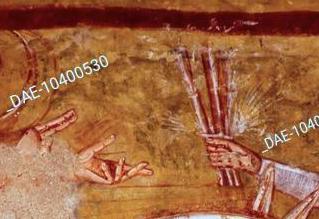

not so simple key tree
I have now explained why pink/”simple”(?) key tree branch number three and the leaf number three of branch number three is touching his right heel in the big mushroom tree
it turns out that a huge major motif held by the Mushroom Tree Artists a big concept is relative Branching
we already see that I already explained in the dancing man image salamander
I explained how the cut trunk is the good trunk , but you put that aside and then you separately analyze the relative good and bad branching region of the tree that everyone looks at , the mushroom tree that everybody looks at.
and I showed how you analyze that in relative isolation/local scope to identify the relatively good parts which are the nonbranching parts, and the relatively/ locally bad zones or regions, the zones of the tree that are bad because they are branching zones (within a local relative scope)
F177 panel two, the simple key tree exists on the lower level of the whole image – signif!
And it does not have, that tree does not have an upper level to distinctly analyze, in contrast with the two trees that are on the upper level of the image
you are not at all done you are merely the row 2 Right , the right-foot Red intermediate youth
you merely have an intermediate morphology analysis comprehension if you halt and stop at the lower level of the big mushroom tree
you have not completed the analysis until you have become the floating the funnel hat guy with both feet floating off the ground is an advanced upper level you have to continue to analyze the upper level and
he is looking at the upper level morphy of the msh tree – not the cut trunk lower level.
this is the big huge concept I have discovered of the relative scope of relatively branching and relatively non-branching
just like with clothing and skin we can have the cloak
the outer cloak obscures the undergarment
and similarly the flesh of Eve in the Plaincourault Fresco veils or Obscures her bones
these are the artists of the Branching message Mushroom trees were very sensitive to the concept the key concept of relative scope of analysis
so I have quiz questions for you
which of the three rams in F177 is the good and true
the answer is the middle one , Which maps to the middle cap of the simple key tree or the middle crown
which is the one that doesn’t touch the ceiling and that crosses behind the other so here’s a big cluster of breakthroughs that I just had with the idea of cross behind or it is occluded the true non-branching branch is occluded
q: which of the three branches of the pink key tree is the good true one ? 🤔
the answer is number three, because it is isomorphic with the I of a “YI trio” or perhaps better wording is ” a YI pair” . 😑
Important principle basic: A YI pair consists of three items
two of those tips two of those branches form the Y which is bad and
one of those tips or one of those branches the right most one forms a I which is good which is non-branching.
quiz : on branch number three of the pink key tree , which leaf is the good leaf ? 🤔
answer: leaf number three, because it maps to the I of a YI pair. 😑
con’t:
and ram number three his right foot is occluded by the red border
you can’t see his right foot because he is not enlightened
I have explained the deliberate botching of the cross behind of tree F177 row 01 left
The artist is telling us that you need to think about & be discussing (for at least guaranteed partial credit) {cross-behind},
We get in the Peak State we get a distorted partial partially hidden partially unveiled look at the hidden underlying non-branching — thus the {botched cross under} –
In this genre (mushroom trees , non-branching, & handedness), never ask “is this feature meaningful?” (especially with anything quirky); always ask “what is the meaning?”
You get partial credit just merely for recognizing that the artist is presenting us with an interpretation question/ challenge/ problem
regarding partial credit and regarding artist intent, I know that I am guaranteed the Eadwine the artist is going to give me at least partial credit for recognizing that there exists the problem of interpreting the botched cross-under (misaligned by the Expert’s expert painter “accidentally”
when we know that nothing is accidental in these paintings; they are the exact extreme opposite of being sloppy careless and accidental and meaningless and whimsical as claimed by the art historian Panofsky in his attempt to claim that artists are complete morons, malfunctioning human copy-machines that flub and distort for no intentional meaningful reason, in order to shield them from meaning mushrooms.
they just mean the Amanita host tree, Italian Pine, which “has nothing whatsoever to do with mushrooms” – no wonder Wasson censored Panofskys letters and belched out his contradictory statement , totally vague bluff, “Palestine tree type” –
what species would that be, Gordon Con Artist Wasson the censorer of Brinckman due to how PATHETIC that 86-page, long-outdated book already was by 1952.
THE Y BRANCH OBSCURES AND HIDES (& distorts) THE HIDDEN VEILED-then-revealed non-branching reality:
That the good, non-branching branch in A YI tree configuration — is obscured AND DISTORTED (misaligned) by the false illusory delusion of Y branching.
The artist either has to paint the I branch in front of the Y , or behind the Y.
and the artist wants to convey more information, rather than less, by drawing the I branch behind the Y, to represent the theme (as the cross-behind motif) that the branching mental model obscures or veils or overlays the true, non-branching mental model (NOT just of “self” per shortsighted Metzinger and Johnstad and Letheby, but of world: is it branching, or non?)
the pink key tree is short
beware of underestimating it
it is not sufficient to just do a very simple analysis
the pink key tree has THREE levels: cut trunk; 3 branches (think Y I); 3 leaves;
also 2 side leafs = like veil remnants, are used to depict motif of cut branches
it has a lower level that has a cut trunk, and it has a distinct separate upper level that you have to consider in isolation
And the same with the big mushroom tree in F134
we have to do a separate analysis exactly as I did an image 177 of the lower level of the tree versus a distinct analysis of the upper level of the tree and
again note that
the pink key tree itself has two levels of branching : it has the lower level of cut branch, and also it has the upper level of three branches
as soon as you see three of X, this means that we have A YI configuration: bad local Y and good local I.
it has three branches, and the right most of the three branches has three leaves.
these are like fingers; the equivalent to the fingers
we have your branching right arm, and then we have your branching right fingers
Jesus’ left hand making a branching shape with fingers & right hand making non-branching shape with fingers
and we have the pSalter reader who does not show one hand is being higher, but shows one finger as being shockingly at the same level (!!) as the fingers of the other hand (loss of control results)
so we’re down to the level of analyzing toes and fingers here
similarly contrasting the trunk versus the branches (upper) versus the leaves
and we have very important tie- in here
we have my big discovery a couple weeks ago about the left hand is relatively higher up in the tree branching & the right hand is relatively lower down in the tree branching
so that on a local on a local level if you crop out and I can probably now go back and do some improvements there, by making some new crops of the two guys in the two Entry tree climbing images
Loenzetti’s Entry in Jerusalem & Golden’s, same
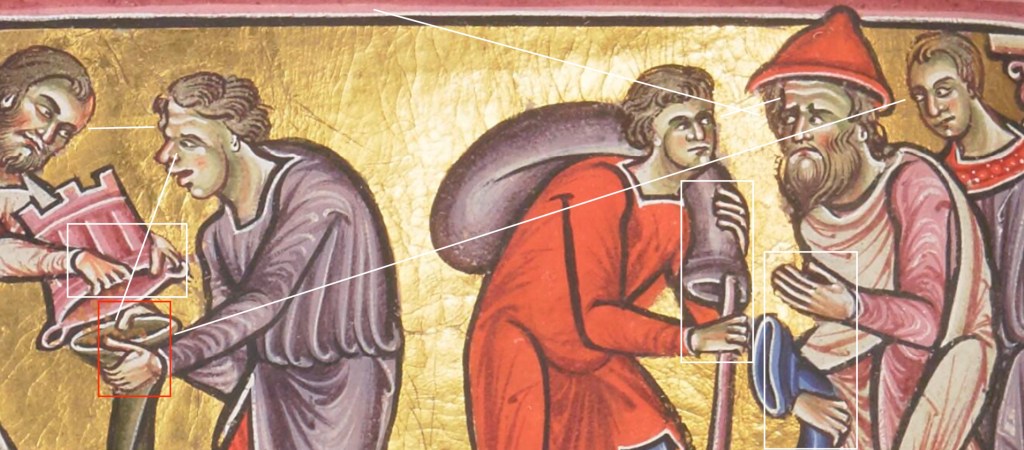
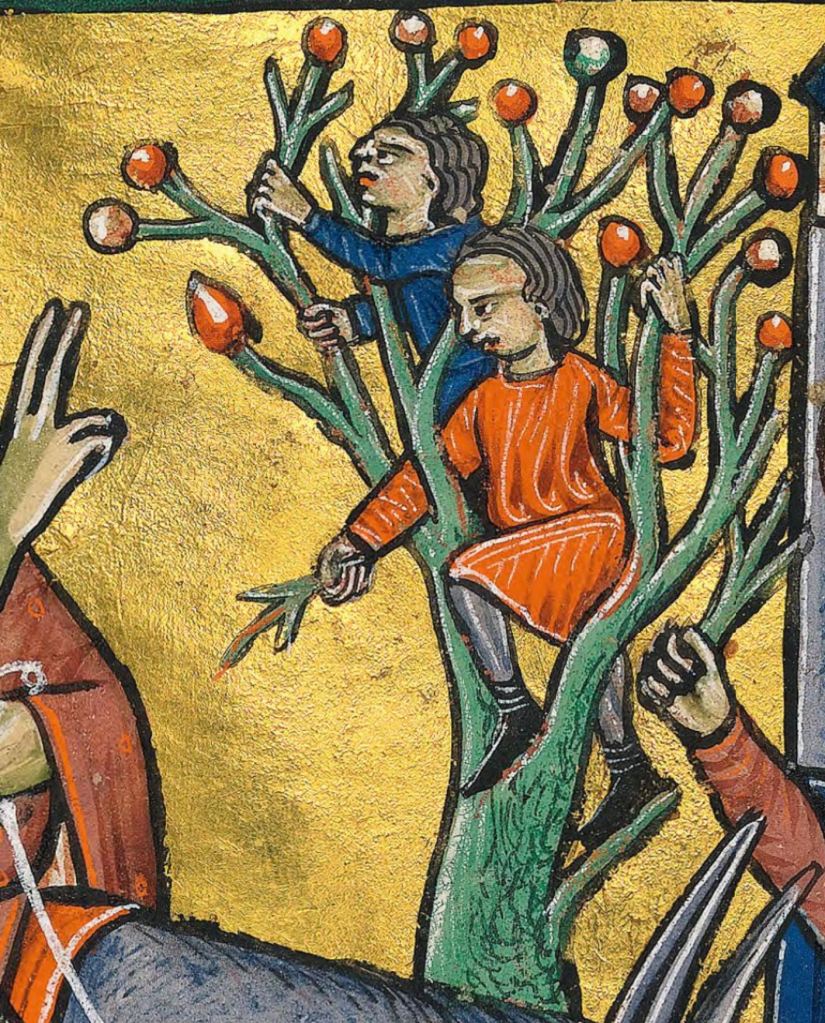
ok i see it! 🎉🏆
his right hand is on the non-branching stem and his left hand is on the relatively branching portion, the Y (when cropped to show only the local scope of analysis)
A YI analysis regarding his left hand and right hand higher and lower in the tree
Do a crop that emilinates the lower part of the tree and you will see a YI configurations I think something like that you’ll look at it an isolation you’ll see that his right hand is holding a completely non-branching stem after you crop out and delete the portion of the tree below it
Random Images; Not the Best Picks Here
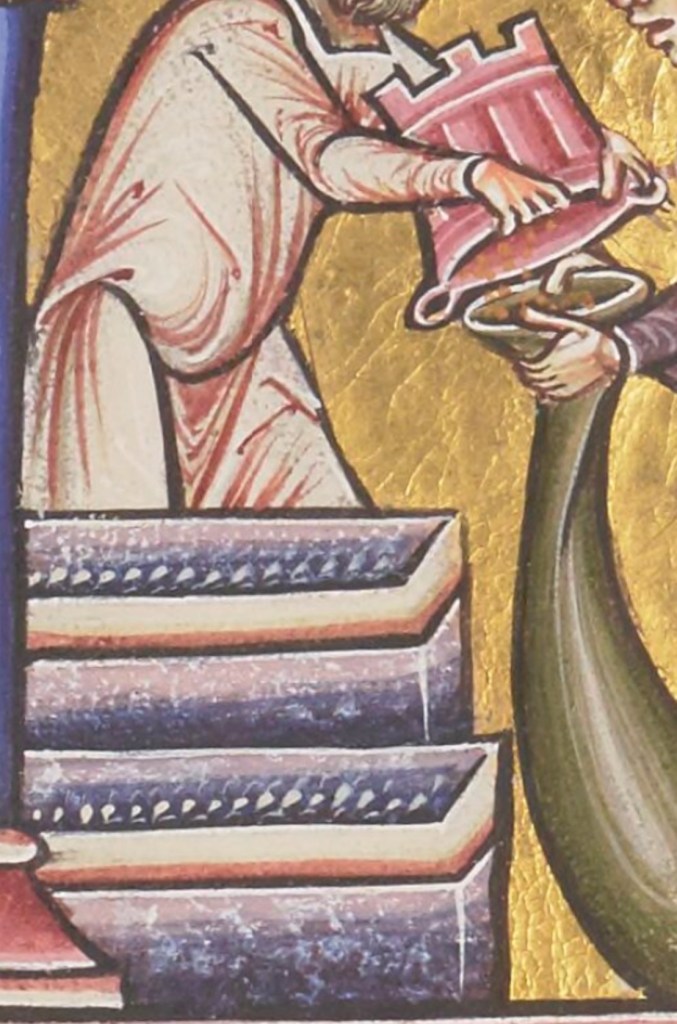

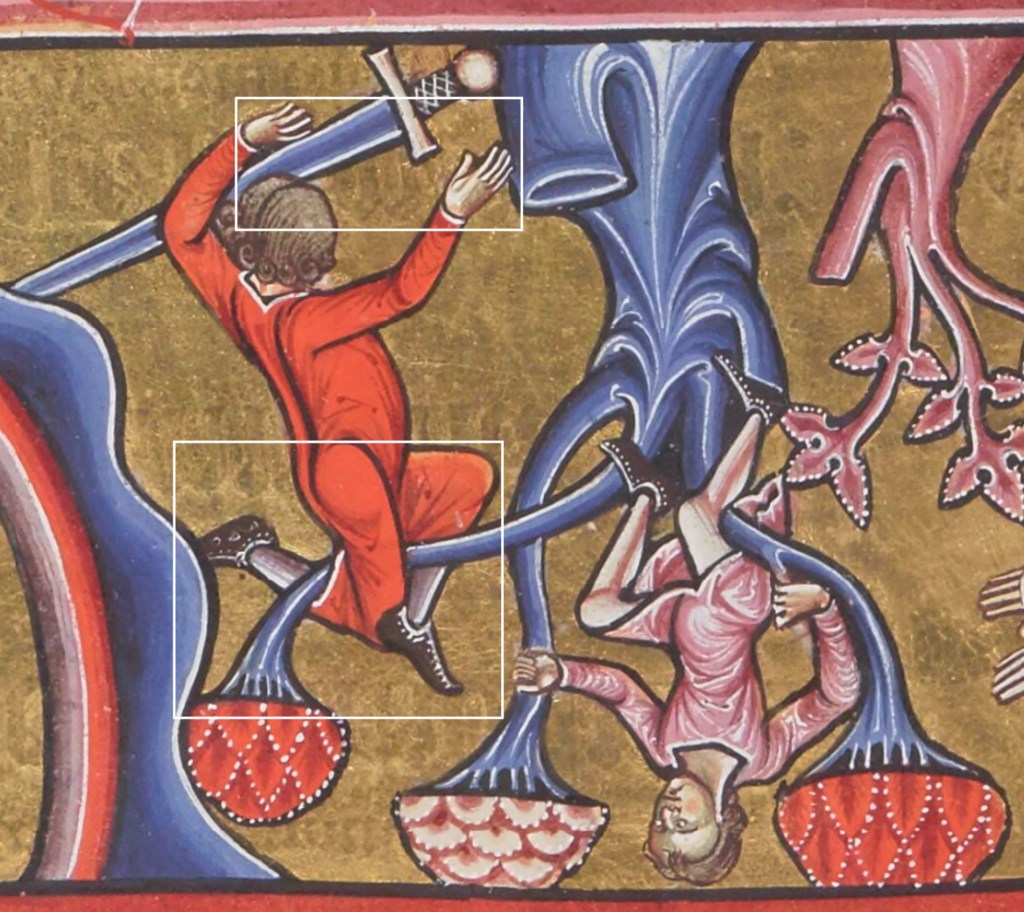
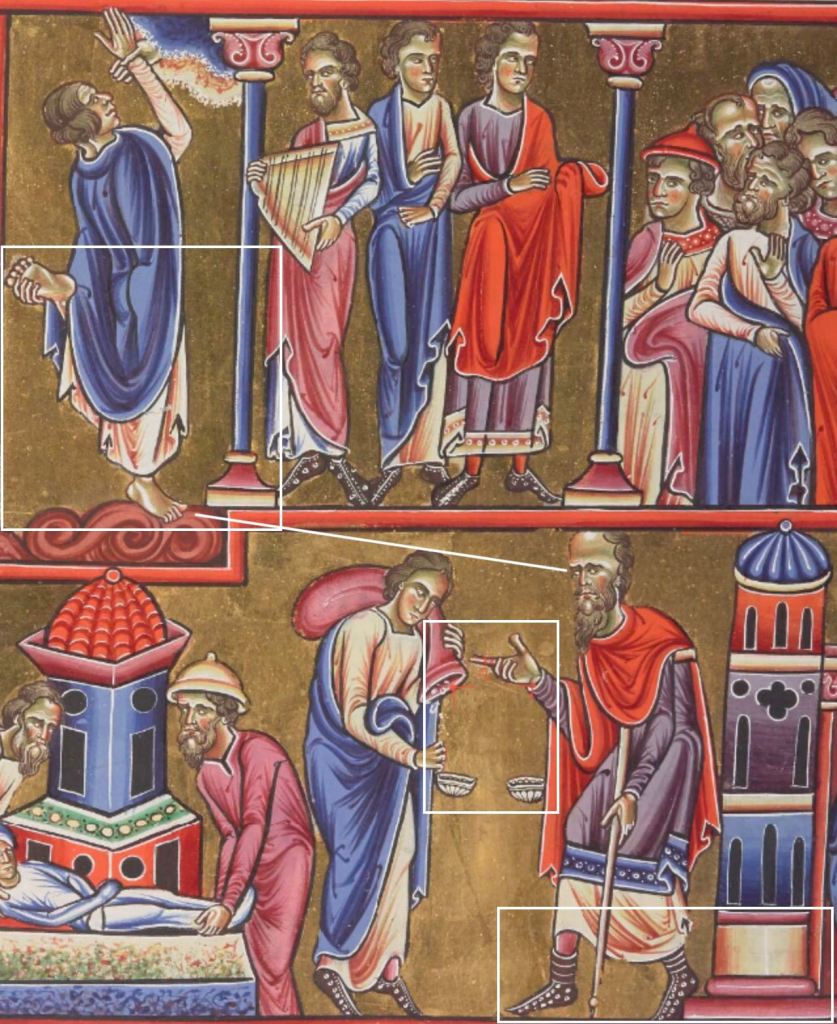

In my voice recording (tape continues to roll some one hour 51 minutes because this voice dictation will destroy all my text and I will have the voice recording as a back up as warmspirit confirmed a good idea)
I explained the empty ossuaries, the empty tomb stones the empty rock tombs
empty ossuary in conjunction with loss of control:
the mental model, even though it does not contain a ego agent, it goes inherently unstable as it asserts itself more strongly in the altered State.
so the empty rock ossurary means that 1) the ego doesn’t exist , —
and 2) it also means that self control loss of control of the mind actually does occur ; there actually is a real loss of control, — (in thought, not in physical harmful action, but in the mind there really is an actual loss of control)
together with 3) learning through that loss of control learning a new mental model that perseveres; that is not perishable
in F177 the fact that the simple key tree is on the lower level means that it is more basic and that you need to apply it not only to the lower level of the upper level trees but you also need to analyze the upper level of the upper level row one trees
you need to repeat the same morphology analysis and not just limit yourself to a simple analysis of only the trunk
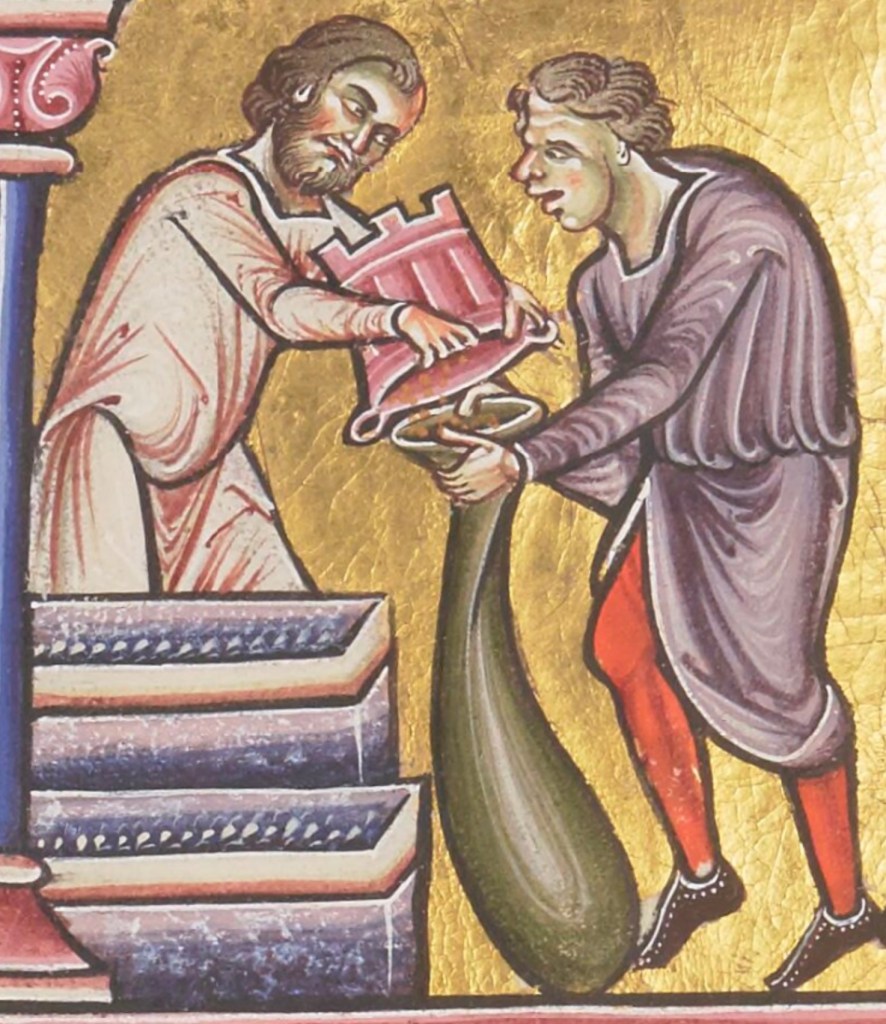
Cybermonk march 16 2023

 The Egodeath theory