Contents:
- Intro
- Letcher’s Generic Vague Non-Reply to my Book Review
- Letcher Employs the Arbitrary “Secret” Presupposition & Emphasis as the Main Foundation of His Entire Argument of Why Mushroom-Looking Imagery in Art Cannot Ever Mean Mushrooms
- My Methodology Is Bigger than Yours: Argumentum ab Methodo
- The Triumph of the Moon: A History of Modern Pagan Witchcraft (Hutton 1999)
- Pagan Britain (Hutton 2015)
- Cubensis Harvest Cycle Scene from Canterbury, England, 1200 A.D.
- My Non-New Methodology: Make Sound Arguments, Make Conscious Assumptions, and Treat the Bulk of the Evidence
- Letcher Really Badly Wants There to Be “a Secret Mushroom Cult“
- like Hatsis Really Wishes There Were a Secret Christian Amanita Cult
- The Letcher Superior Methodology
- MUSHROOMS IN OFFICIAL ART INHERENTLY DON’T COUNT AND ARE THEREFORE NOT MUSHROOMS, BECAUSE ONLY THE SECRET MUSHROOM UNDERGROUND SECT USES MUSHROOMS -(THAT’S A GIVEN, NEEDLESS TO SAY)
- Happy to Find His 4-Point Arg in Text 🎉
- The 4-Part Letcher Argument
- Use of Ayahuasca or Psilocybin That’s Not for Religious/ Mystical/ Spiritual Purposes
- Book Link Citation
- MOAR AMANITA NEEDED – INCREASE SALES
- Coverage of Shroom at Egodeath.com
- Shroom Thread at the Egodeath Yahoo Group
- My 2007 Book Review
- See Also
Intro
See also:
Letcher’s False Citation: “Various writers have suggested cult, secretly, oppression, hidden, secret cult, such as Stamets & Gartz
https://egodeaththeory.org/2025/01/11/letchers-false-citation-various-writers-have-suggested-cult-secretly-oppression-hidden-secret-cult-for-example-stamets-gartz/ — pages containing bunk citations of Leyser, of Gartz & Stamets
Letcher’s Generic Vague Non-Reply to my Book Review
url http://andy-letcher.blogspot.com/2016/06/shroom-ten-years-on.html — a generic non-reply to my harsh book review 2007. Shows terrible ignorance 10 years later of the 2007 data and theory.
I would like Andy Letcher 2016 to reply to my 2007 Egodeath theory, paradigm, and evidence, but he was only familiar with my book review, nothing else, and he’s woefully under-informed about mushroom imagery, as is plainly obvious from his brief and shoddy handling of our fly-agaric fresco and a single panel of the Bernward Doors & Column. THAT’S ALL YOU GOT?
I haven’t been this underwhelmed since Brinckmann’s 1906 86-page book that only mentions “pilzbaum” 5 times.
That’s the entire extent to which art historians have allowed themselves to write, and represents how thoroughly familiar they are with explaining away pilzbaum.
Erwin Panofsky, the most influential art historian says, in the special case of mushrooms, only:
artists = sloppy automatons with no agency and no intention. Therefore it’s not mushrooms. [Saved!]
The fresco is a stylized pine, which has nothing whatsoever to do with Amanita.
https://en.wikipedia.org/wiki/Amanita_muscaria – “Ectomycorrhizal, Amanita muscaria forms symbiotic relationships with many trees, including pine, oak, spruce, fir, birch, and cedar.”
Andy Letcher’s non-reply to my theory or to my book review, proves that the only thing he knows about my entheogen theory is my book review, and he simply guesses:
Just like Hatsis, Letcher IMAGINES my theory and evidence, and paradigm; genero-strawmanning.
The Hatsis methodology: don’t reply to a person’s position; dictate to them what their position is and why they are wrong.
Power-strawmanning.
Letcher tries to wave me aside by instead vague strawmanning, replying about “them” and “Hoffman et al” and what “they” are asserting. ZERO words about my theory or my evidence.
A totally generic post, it proves he has never read a word of my theory and evidence gallery, for 10 years.
I expect nothing of Letcher, but I’m noting that his claim that “they” use circular argumentation of picking a premise and supporting it selectively, he knows nothing of philosophy of science. A naive charge.
“My methodology is not circular.”
Every theory is circular in some sense, it’s a meaningless accusation. https://en.wikipedia.org/wiki/Hermeneutic_circle
LETCHER IS OMITTING TONS OF EVIDENCE and thus he is cherrypicking. He is plainly ignorant of the evidence, so he’s cherrypicking.
Letcher simply CLAIMS “they have no evidence.” Showing ignorance. He only covers 2 artworks.
There’s no substance to Letcher’s argument, just like Hatsis.
Just blustering abstract lectures on half-baked “methodology” — while falling on his face on basics; he’s totally ignorant of the evidence, and of my theory/ paradigm.
Letcher Employs the Arbitrary “Secret” Presupposition & Emphasis as the Main Foundation of His Entire Argument of Why Mushroom-Looking Imagery in Art Cannot Ever Mean Mushrooms
Andy Letcher employs the conflation of “secrecy” premise as a ploy to try to give the impression that he’s disproved mushrooms.
Goal: Give the impression that you disproved mushrooms in art.
Stratagem/ploy: Strategically conflate “disproving secret mushroom cult” with “disproving mushroom use”, as follows.
Argue that any evidence (mushroom imagery) is public, thus not secret.
Therefore, there cannot be secret mushrooms in Christian art.
Therefore, there are no mushrooms in Christian art.
Therefore, there is no evidence of a history of considering psilocybin mushrooms as a producer of religious experiencing.
Therefore, there is no history of considering psilocybin mushrooms as a producer of religious experiencing.
Q.E.D.
Thus Letcher 2006 has proved that, against Letcher in his 20s, there is no history of considering psilocybin mushrooms as a producer of religious experiencing.
Mission accomplished.
Letcher is tilting at strawmen, such as “secret mushroom cult”.
WTF are you even talking about, “secret mushroom cult”?
I couldn’t care less; the “secret cult” component, which you employ as a foundation of your argument, is irrelevant and confused, in a paradigm of confusion.
Letcher boasts emptily, and while stumbling & covering his eyes, claims:
“My methodology is critical and looks for evidence, unlike theirs.”
That’s a bluff and an empty claim revealing sheer ignorance.
Letcher attempts a rhetorical move, asking (claiming) vapidly with no specifics:
“Why is there no corroborating evidence?”
Translation: LETCHER IS IGNORANT OF THE EVIDENCE. (And of my theory / paradigm too.)
Letcher reveals naivety about theory and my theory and of my evidence.
My Methodology Is Bigger than Yours: Argumentum ab Methodo
In his generic, substance-less non-reply to my review, Andy Letcher writes:
“I take my lead from Ronald Hutton, who is the master of the new methodology, and I thoroughly recommend you read his Pagan Britain to see how it’s done.”
search: Ronald Hutton Pagan Britain
https://www.bing.com/search?q=Ronald+Hutton+Pagan+Britain
search: Ronald Hutton methodology
https://www.bing.com/search?q=Ronald+Hutton+methodology
url https://www.religiousstudiesproject.com/podcast/podcast-john-wolffe-and-ronald-hutton-on-historical-approaches/ — podcast interview:
“Professor Ronald Hutton of the University of Bristol gives a more in-depth case-study, talking about his book on the emergence of Wicca, The Triumph of the Moon: A History of Modern Pagan Witchcraft (OUP, 1999), and how it was received by the academy and by the pagan community.
“Of particular interest here for the interviewer was the fact that, although sections of the book are often given to undergraduate students, they somehow seem to prefer Gerald Gardner’s own fantastical account of initiation into a pre-Christian Moon-goddess cult over Hutton’s more down-to-earth – yet no less fascinating – account.”
The Triumph of the Moon: A History of Modern Pagan Witchcraft (Hutton 1999)
https://www.amazon.com/Triumph-Moon-History-Modern-Witchcraft/dp/0198207441/ —
Blurb:
“Here is a book that brings witchcraft out of the shadows.
“The Triumph of the Moon is the first full-scale study of the only religion England has ever given the world–modern pagan witchcraft, otherwise known as wicca.
“Meticulously researched, it provides a thorough account of an ancient religion that has spread from English shores across four continents.
“For centuries, pagan witchcraft has been linked with chilling images of blood rituals, ghostlike druids, and even human sacrifices.
“But while Robert Hutton explores this dark side of witchery, he stresses the positive, reminding us that devotion to art, the natural world, femininity, and the classical deities are also central to the practice of wicca.
“Indeed, the author shows how leading figures in English literature–W.B. Yeats, D.H. Lawrence, and Robert Graves, just to name a few–celebrated these positive aspects of the religion in their work, thereby softening the public perception of witchcraft in Victorian England.
“From cunning village folk to freemasons and from high magic to the black arts, Hutton chronicles the fascinating process by which actual wiccan practices evolved into what is now a viable modern religion.
“He also presents compelling biographies of wicca’s principal figures, such as Gerald Gardner, who was inducted into a witch coven at the age of 53, and recorded many clandestine rituals and beliefs.
“Ronald Hutton is known for his colorful, provocative, and always thoroughly researched studies on original subjects.
“This work is no exception.
“It will appeal to anyone interested in witchcraft, paganism and alternative religions.”
Pagan Britain (Hutton 2015)
url https://www.amazon.com/Pagan-Britain-Ronald-Hutton/dp/0300205465
Blurb:
“Britain’s pagan past, with its mysterious monuments, atmospheric sites, enigmatic artifacts, bloodthirsty legends, and cryptic inscriptions, is both enthralling and perplexing to a resident of the twenty-first century.
“In this ambitious and thoroughly up-to-date book, Ronald Hutton reveals the long development, rapid suppression, and enduring cultural significance of paganism, from the Paleolithic era to the coming of Christianity.
“He draws on an array of recently discovered evidence and shows how new findings have radically transformed understandings of belief and ritual in Britain before the arrival of organized religion.
“Setting forth a chronological narrative, along the way Hutton makes side visits to explore specific locations of ancient pagan activity.
“He includes the well-known sacred sites—Stonehenge, Avebury, Seahenge, Maiden Castle, Anglesey—as well as more obscure locations across the mainland and coastal islands.
“In tireless pursuit of the elusive “why” of pagan behavior, Hutton astonishes with the breadth of his understanding of Britain’s deep past and inspires with the originality of his insights.”
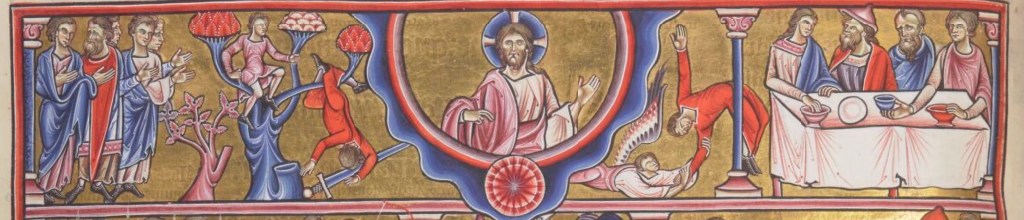
Cubensis Harvest Cycle Scene from Canterbury, England, 1200 A.D.
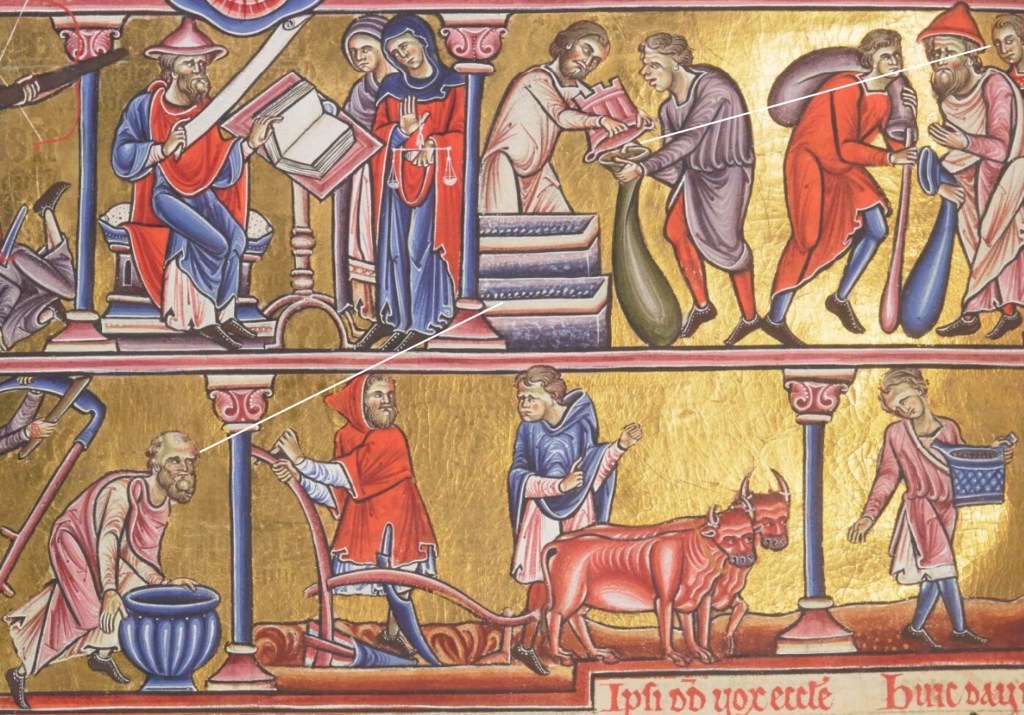
My Non-New Methodology: Make Sound Arguments, Make Conscious Assumptions, and Treat the Bulk of the Evidence
It’s a no-brainer that whatever Hutton’s “new methodology” is, Letcher botches it, and I adhere to it better than Letcher does — this follows, from my coherent, successful marshalling of theory and data (evidence), in comparison to Letcher’s wretched argumentation and failure to engage the data.
Confident prediction: Compare Hutton’s “new methodology” to my mytheme theory & evidence, and to Letcher’s reasoning and evidence, and my theory will fulfill Hutton’s methodology far better than Letcher.
That follows, from the success of my sound, articulate theory across huge data-sets of evidence, in contrast with Letcher’s atrocious, unconvincing, arbitrary reasoning and failure to engage the evidence.
Letcher’s bigger methodology than “they” have proves to be bad theory, by name-calling as “circular” and engaging with none of the theory and none of the evidence, then makes a HUGE claim that he’s better than “them” who don’t follow the evidence — as if he knows ANYTHING about my evidence base, he just reveals his complete ignorance of mushroom imagery in Christian art:
Letcher waves aside mushroom imagery at Panofsky-level of argument quality, while he brags about his New Methodology, which produces awful argumentation evidently with:
- Arbitrary argumentation: “It’s just a tree”.
- Atrocious lame argument vector, “there’s no secret inserted art in this official art, so “they” have been disproved: they are wrong about the mushroom theory.”
Manifestly, Letcher’s “bigger, better methodology” produces garbage results, and is asleep within an imagined debate that’s based on an iceberg of unthinking presuppositions and produces bizarre vectors of argumentation.
Letcher Really Badly Wants There to Be “a Secret Mushroom Cult“
like Hatsis Really Wishes There Were a Secret Christian Amanita Cult
Chris Letheby advocates primacy of mind every time he trips, he reports. Then he writes a book (Philosophy of Psychedelics) to prove that he was wrong.
In his 20s, Letcher advocated a secret magic mushroom cult traditional conception history, he reports. Then he writes a book (Shroom) to prove that he was wrong.
My inclination is to drop “secret”, but “secret” is a HUGE part of Letcher’s paradigm. Still, it’s useful to consider just the idea without “secret”:
Thesis to test:
There was a historical tradition of conceptualizing psilocybin (cubensis/ liberty cap) as for religious use; a history of thinking of psilocybin mushrooms as for religious mystical use.
My own thesis is:
Mushroom imagery in Christian art shows that the Medieval era had a peak tradition of shared knowledge of psilocybin for peak advanced religious knowledge and comprehending myth and motifs.
Ignorance of the evidence is mistaken by Letcher as “there is no evidence” – an ignorance-based, and ignorance-revealing, declaration.
No evidence for what? Letcher’s addled, confused looking for “a secret mushroom cult”.
Letcher exudes confusion.
Letcher should only consider rebutting that there was:
A history of thinking of psilocybin mushrooms as for religious mystical use.
Drop the irrelevant “secret” notion that’s confusing you; such as the trainwreck of an argument regarding the Bernward Doors.
What an awful, failed “methodology” Letcher brags about.
Letcher gets the goal (topic of debate) wrong, and he reveals ignorance of theory and evidence.
The louder the bragging about superior methodology, the worse the basic argumentation.
Letcher didn’t invent this confusion-laden “secrecy” construction; he bought into it, unthinkingly and jumped into the paradigm wholesale, unconsciously — producing the worst argumentation ever seen, to explain away the only two pieces of art he pretends to engage with.
Now he recants that view (that there’s a history of seeing mushrooms as for religious mystical use) and it’s all just fantasy.
The Letcher Superior Methodology
- Make a huge network of unthinking presuppositions. Take your paradigm for granted.
- Assume everyone operates within your own quest for a secret mushroom cult.
- Be ignorant of mushroom trees; only cover two of them, incredibly badly. Halt and declare “they have no evidence”.
- “They have no evidence” means, there’s no evidence for the view that Letcher badly wanted to be true: a history of secret magic mushroom underground cult.
Very impressive shadow-boxing.
Just like Hatsis.
About Bernward doors — and by extension, about all art — Letcher reasons in a circle, stuck in a loop, begging the question, unthinkingly, targeting the wrong goal, and one which cannot possibly be met (the circular confusion around “secret cult”):
Any evidence — mushroom-looking imagery — is proof of absence. Mushroom imagery in art would be in official art, and would not therefore be secret; therefore, mushroom-looking imagery cannot be mushrooms. Art is public, and therefore, cannot contain mushroom imagery.
Mushroom imagery in official art is a contradiction in terms — in Letcher’s confusion-based, begging-the-question paradigm.
A whirlwind of logic lifting Letcher into heaven — or falling over into a ditch.
Letcher criticizes the theory of “them” as circular (& cherrypicking, ie “they” are ignorant about evidence).
THE LETCHER DISMISSAL:
MUSHROOMS IN OFFICIAL ART INHERENTLY DON’T COUNT AND ARE THEREFORE NOT MUSHROOMS, BECAUSE ONLY THE SECRET MUSHROOM UNDERGROUND SECT USES MUSHROOMS -(THAT’S A GIVEN, NEEDLESS TO SAY)
Letcher wants to disprove the view that he says he held in his 20s: that there was a history of considering using psilocybin mushrooms for peak religious experiencing; a historical precedent for thinking of psilocybin (liberty caps, cubensis) as for religious/ mystical/ spiritual purposes.
Letcher conflates that clean, useful idea with “and it was in the context of a secret cult”, as part of his inconsistency about who and what he is refuting.
There’s good circularity, and then there’s falling-over circularity.
Happy to Find His 4-Point Arg in Text 🎉
I can’t find it in his book, but online he wrote it out, especially for me!
url http://andy-letcher.blogspot.com/2016/06/shroom-ten-years-on.html — Letcher generically pretends he’s writing about my theory and my data, lumped in with “them”[??]
Letcher writes:
“The rule is this.
The 4-Part Letcher Argument
- “Not everything that looks like a mushroom in art is a mushroom.
- Not everything that is a mushroom is a magic mushroom.
- Just because it’s a magic mushroom doesn’t mean that it was used intentionally for its psychedelic effects.
- Just because it’s used intentionally, doesn’t mean that it’s used for religious purposes.”
- Just because it’s used for religious purposes, doesn’t mean it’s used for peak ultimate religious transformative experience.
Step 5 is my added extension of that mode of argument, the point being, Eadwine not only does all the things Letcher can’t imagine being done, but goes even further.
Eadwine’s images in Great Canterbury Psalter, and my branching-message mushroom trees article, disproves the entire chain.
I proved that the Eadwine images, explained by the mytheme theory, depict cubensis ingested for peak transformative religious experiencing.
Use of Ayahuasca or Psilocybin That’s Not for Religious/ Mystical/ Spiritual Purposes
The book Shroom presages some later Irvin points. Andy Letcher writes, in 2016, like Jan Irvin 2022:
“(here I recommend Steve Beyer’s excellent book, Singing to the Plants.
“In Mestizo shamanism, people do not take ayahuasca to have religious experiences – though that’s what we in the West do – they do so to get well. Very different).”
Book Link Citation
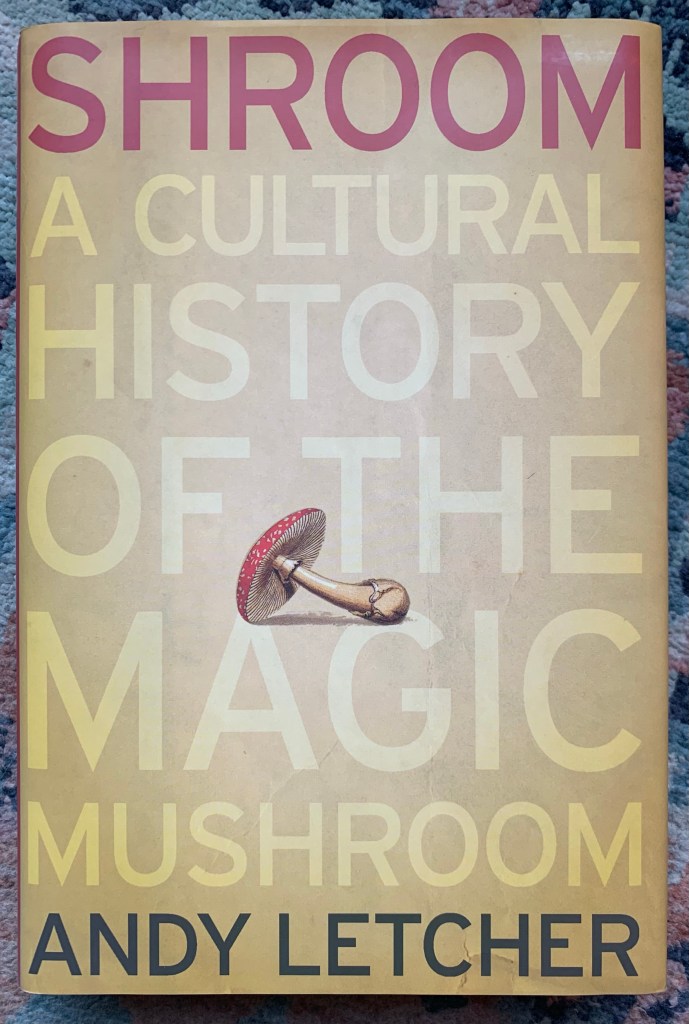
Shroom: A Cultural History of the Magic Mushroom
February 27, 2007
Andy Letcher
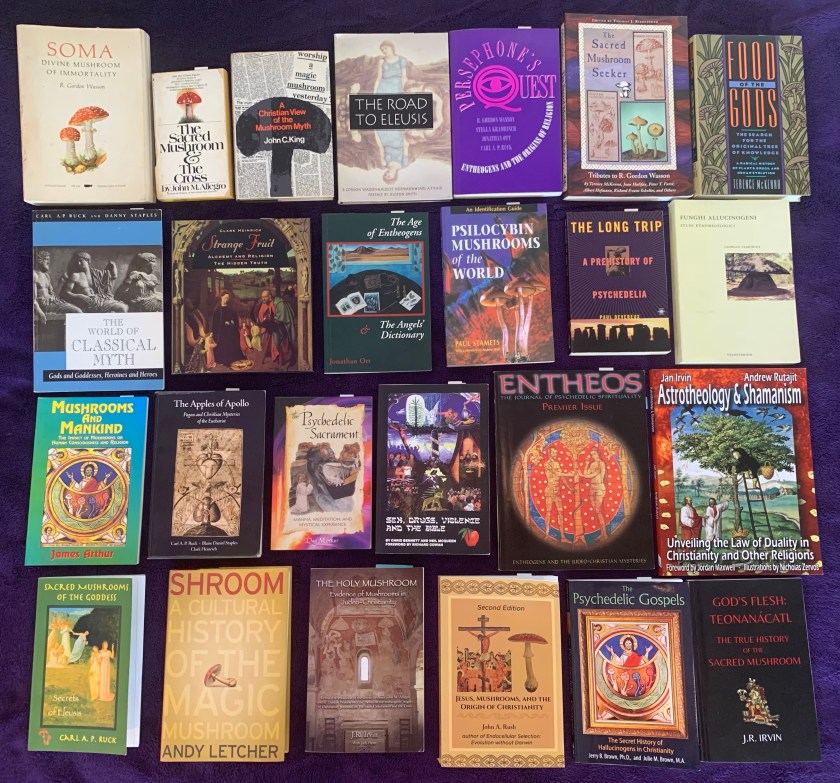
Letcher states in the book that the reason to show Amanita on book covers is to increase sales. The original Amanita wasn’t gaudy and loud enough, so like John Rush, he piled more Amanita imagery, as much as possible, even though Letcher argues that Amanita has the worst possible efficacy.
Letcher uses an openly cynical and sarcastic, mocking and ironic, placement of Amanita imagery on the front and back of his book.
I have this hardcover 1st US printing 2007, not UK 2006.
https://www.amazon.com/Shroom-Cultural-History-Magic-Mushroom/dp/0060828285/ —
MOAR AMANITA NEEDED – INCREASE SALES
url https://www.amazon.com/Shroom-Cultural-History-Magic-Mushroom/dp/0060828293/
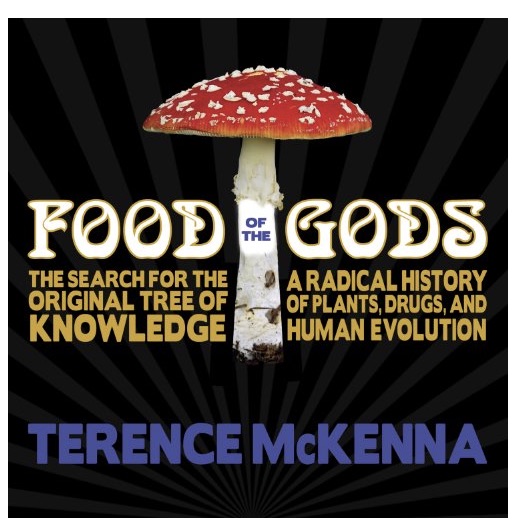
It’s not like a book advocating specifically psilocybin would cynically employ Amanita imagery purely as a marketing ploy
https://www.amazon.com/Food-of-Gods-Terence-McKenna-audiobook/dp/B009IBRSJI/ &
https://www.amazon.com/Food-Gods-Original-Knowledge-Evolution/dp/B08XL9QGJT/ —
Coverage of Shroom at Egodeath.com
url http://egodeath.com/ViewsOnEntheogensInReligiousHistory.htm – find “letcher”
Shroom Thread at the Egodeath Yahoo Group
My book review is posted in the Egodeath Yahoo Group too – there’s a running thread there,
Subject: “Book: Letcher; Shroom: Cultural History of Magic Mushroom”
Book review:
April 2, 2007
https://egodeathyahoogroup.wordpress.com/2021/01/09/egodeath-yahoo-group-digest-90/#message4577
Here’s the start of the thread:
https://egodeathyahoogroup.wordpress.com/2021/01/09/egodeath-yahoo-group-digest-90/#message4546
My 2007 Book Review
url: https://www.amazon.com/gp/aw/review/0060828285/R2S31GIZ2GJYOE
Michael Hoffman
4 out of 5 stars
Reviewed April 2, 2007
Partial critical engagement with entheogen theory of religious origins
Shroom covers topics including refutation of the mushroom theory of the origin of religion, the recent U.K. psilocybin mushroom scene, a critical treatment of Wasson’s research methodology and mushroom theory of Vedic religion, and Tim Leary as backdrop leading up to the later popular use of psilocybin mushrooms.
This is a valuable book that contributes some new perspectives and new coverage of entheogens in Western culture; this book is a must-have for entheogen researchers.
The present review focuses exclusively on his critique of the mushroom theory of religious origins, which he sometimes treats as though it is a critical refutation of the overall entheogen theory of religion.
___
Letcher has not disproved the entheogen theory of religion, or even fully engaged with that hypothesis.
At most, he has made a partial effort to call into question the mushroom theory of the pre-historical origin of religion, in the form of a secret cult spreading from a single origin over time and across regions.
Letcher often comes across triumphally as having disproved the entheogen theory of the origin of religion, but a careful reading of his treatment of that particular topic shows that he has actually only shown something far narrower ; he has only refuted a highly specific point.
___
At most, Letcher’s treatment of the entheogen theory of religious origins shows that we have no compelling archaeological evidence for a prehistorical mushroom cult that was secret and unbroken.
When his rhetorical verbiage and his general discussions of history are put aside, the substance of his argumentation that remains does not amount to a compelling argument against the frequent use of mushrooms (or other visionary plants) throughout religious history.
___
Letcher’s writing style is rhetorical, so that he tells the story of recent mushroom scholarship and culture well, presenting much of interest to the audience, including valuable new material.
He uses a biased rhetorical style; for example, “lunatic fringe”, “conspiracy theories”, “unfounded speculations”, “the myth” of the entheogen origin of religion.
This charged rhetorical style obscures that fact that his argument for his refutation of the entheogen theory of the origin of religion rests on only a few, fleetingly discussed points of argument.
___
Letcher does not engage the bulk of the literary and artistic evidence that provide sufficient grounds to support the general entheogen theory of religious origins.
He merely puts forth brief and rather arbitrary arguments dismissing a couple of the many depictions of mushrooms in Christian art.
___
Letcher’s inadequate selection of cases to refute, and his brief, perfunctory treatment of these cases, is not sufficient in breadth or depth to compel adherents of various variants of the entheogen theory of the origins of religion to change their position, no matter how many times or how confidently he rhetorically dubs the theory as a “myth”.
For example, he would need to engage the range of art that is presented in the first three issues of Entheos magazine, and the range of arguments such as those presented in Giorgio Samorini’s articles about Christian mushroom trees.
___
It’s admirable to see an independent critical thinker comment on selected aspects of Allegro and Wasson, but only a few of those comments actually amount to engaging with the evidence for the general entheogen theory of the origin of religion.
Letcher makes the risky move of overextending his specific focus on psychoactive mushrooms, at the expense of being under-informed on the general entheogen theory and the full range of arguments, interpretive frameworks, systems of assumptions, and evidence of various types in support of that broad-ranging theory.
___
As a thought-experiment with the hypothesis that normalized religious cultic use of mushrooms is only a few decades old, this aspect of the book is a valuable contribution to the field; however, Letcher switches inconsistently between that bold but narrow hypothesis and a broader, firm conclusion that the entheogen theory of religion altogether is merely a recent fabrication of popular scholarship and merely wishful thinking.
___
Letcher leaps from what he narrowly demonstrates, to a stance and a claim to have shown convincingly that the entheogen theory of religious origins (and fairly frequent entheogen use throughout religious history) is nothing but recent wishful thinking, a fabrication by a group that is a historical novelty: late 20th Century psychedelics enthusiasts, including mushroom enthusiasts in the U.K. from 1976-2006.
___
All theories involve a framework of assumptions.
The fact that a scholarly theory uses a set of unproved assumptions does not instantly do away with (or “demolish”) the theory.
Letcher handles the evidence by the common strategy of dividing, isolating, and diminishing each piece of evidence in isolation, operating under the arbitrary silent assumption that entheogen use was rare, secretive (“conspiracy”), and deviant.
But such a methodology is problematic and is controverted by the maximal entheogen theory of religion, which holds that Western history and Western culture have always been inspired to some extent by the ongoing practice of using visionary plants.
The unavoidable question remains, “How are we to judge what is plausible and what was normal for that culture?”
___
Should we assume that the use of visionary plants was normal and significantly present throughout mainstream religion and culture, or that it was rare, a secretive conspiracy, and deviant (exceptional)?
Selecting our assumptions about the backdrop, of what was normal in a culture, affects the validity of completely isolating each piece of potential evidence and then attempting to judge the plausibility of reading that piece of evidence as supporting the entheogen theory of religion.
What seems plausible to a critical scholar depends on the backdrop of what we assume was normal in the culture.
___
For example, Letcher affirms that the cathedral door at Hildesheim, Germany depicts the tree of knowledge in the shape that “looks extremely like a giant Liberty Cap”, but he argues that it cannot have meant a Liberty Cap, because the doors were carefully designed and the depiction cannot have been secret in that case, so the image cannot represent anything other than, or in addition to, a “stylized fig tree”.
___
It doesn’t occur to Letcher to imagine and address the obvious critical arguments and questions against his hasty discussion, such as:
Why assume that a mushroom allusion had to be secret?
Why is an officially designed depiction of a mushroom automatically ruled out as unthinkable?
Why was the fig tree stylized in the specific form of a Liberty Cap mushroom?
What about the hundreds of other specifically psilocybin mushroom-shaped trees in Christian art?
___
Letcher has much homework to do if he wants to try to retain his hypothesis that psychoactive mushrooms were absent from Western religious history until the late 20th Century, and if he intends to convince critical entheogen scholars of that hypothesis — a hypothesis that will be hard to maintain after seriously addressing, with responses to at least the most obvious counter-criticisms, the current full range of artistic evidence (post-Wasson and post-Allegro), which Letcher has barely engaged.
32 people found this helpful [May 28, 2023]
See Also
Letcher’s False Citation: “Various writers have suggested cult, secretly, oppression, hidden, secret cult, such as Stamets & Gartz
https://egodeaththeory.org/2025/01/11/letchers-false-citation-various-writers-have-suggested-cult-secretly-oppression-hidden-secret-cult-for-example-stamets-gartz/ — pages containing bunk citations of Leyser
There is additional (earlier) content in companion article:
Bernward Doors and Column, Hildesheim
https://egodeaththeory.wordpress.com/2023/05/27/bernward-doors-and-column-hildesheim/

 The Egodeath theory
2007 book review: https://www.amazon.com/gp/aw/review/0060828285/R2S31GIZ2GJYOE?ref_=cm_sw_r_mwn_dprv_0B5FT6DT19NYWY1V12FD
LikeLiked by 2 people