Michael Hoffman, March 25, 2025

Site Map: Astral Ascent Mysticism
Contents:
- Motivation for this Page
- The Origins of the Mithraic Mysteries: Cosmology and Salvation in the Ancient World (Ulansey, 1991)
- David Ulansey’s The Eighth Gate: The Mithraic Lion-Headed Figure and the Platonic World-Soul
- The Eighth Gate: The Mithraic Lion-Headed Figure and the Platonic World-Soul
- David Ulansey
- The Ancient World, Vol. XXXIV, no. 1 (2003), pp. 67-81
- Notes —
- RETURN TO THE COSMIC MYSTERIES OF MITHRAS
- David Ulansey’s Mithras and the Hypercosmic Sun
- RETURN TO THE COSMIC MYSTERIES OF MITHRAS
- MITHRAS AND THE HYPERCOSMIC SUN
- David Ulansey’s Home Page
- See Also
Incoming
33:48 – David Ulansey says the art is WRONG, modern corruption, one torch should be aimed up. If the data doesn’t match the theory, then too bad for the data, the theory is correct. https://www.youtube.com/watch?v=ezr71f2z7po&t=1661s David Ulansey – The Cosmic Mysteries of Mithras
Jun 24, 2021
“Video of a public slide-lecture by David Ulansey on Mithraism, based on his book “The Origins of the Mithraic Mysteries: Cosmology and Salvation in the Ancient World” (Oxford University Press).” 5255 arm sph band
1 13 30 mushrooms above cart
https://www.youtube.com/watch?v=ezr71f2z7po —
Search YouTube for David Ulansey:
https://www.youtube.com/results?search_query=david+ulansey
Motivation for this Page
Debating which to do – these would be two different pages/ types of pages for different purposes, to be used differently.
- Make accurate backup of his two articles; clone his pages.b/c his site was down end of 2024.
- Only retain key phrases. <– this is what I’m needing; my present purpose. Not to archive his articles.
Able to Find across both articles at once:
- snake __ hits
- serpent __ hits
- drink __ hits
- eat __ hits
- food
- leg
- foot
- bent
- beverage
- drug
- plant
- entheogen
- mushroom
- meal __ hits
- transcend __ hits
- altered __ hits
- heimarmene __ hits
- determinism __ hits
- fate __ hits
- 9th __ hits
- ninth __ hits
- ennead __ hits
- precession __ hits
- rock __ hits
- free __ hits
- slave __ hits
- frozen – __ hits
Amazingly, I have no pages titled Ulansey at this site, d/k about Egodeath.com.
Houot sample Amazon find ‘surrender’: Rise of the Psychonaut:
Again look for other relevant articles at his site. This time, I have this page to be able to re-find my notes later.
I have posted some sort of list of his articles that are of top interest for the Egodeath theory.
I got his book Feb 16, 2001, which is after Coraxo in the the Gnosticism Yahoo Group was my first encounter w/ Late Antiquity’s focus on “transcend heimarmene”, and before my June 2001 start of the Egodeath Yahoo Group.
- ~2000 Coraxo in the the Gnosticism Yahoo Group was my first encounter w/ Late Antiquity’s focus on “transcend heimarmene”
- I got Ulansey’s book Feb 16, 2001.
- June 2001 start of the Egodeath Yahoo Group.
todo: When did i realize that my Feb. 1997 2-level Core Egodeath theory required adding the concept of “transcend heimarmene”?
When I read Coraxo’s post at Gnosticism Yahoo Group, I immediately started theorizing about 2-level vs. 3-level model; aiming for eternalism vs. aiming above eternalism.
Aiming for my precious block-universe determinism vs. aiming above it, Coraxo rightly insulting my first theory [expression of theory] by pointing out its inability to discuss Gnosticism’s goal of transcending heimarmene.
The Origins of the Mithraic Mysteries: Cosmology and Salvation in the Ancient World (Ulansey, 1991)
https://www.amazon.com/dp/0195067886 —
I always link to his two articles
David Ulansey’s solution explaining Mithraism
keyboard shortcuts
d u 8 t h
d u h y p
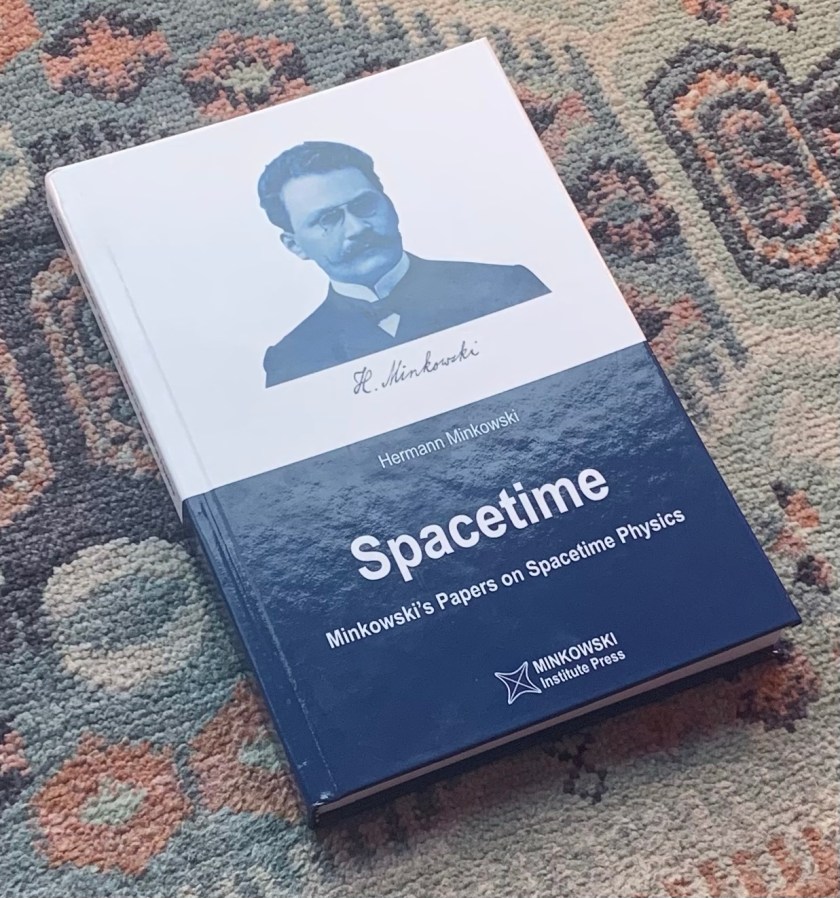
David Ulansey’s The Eighth Gate: The Mithraic Lion-Headed Figure and the Platonic World-Soul, http://www.mysterium.com/eighthgate.html
David Ulansey’s Mithras and the Hypercosmic Sun, http://www.mysterium.com/hypercosmic.html
David Ulansey’s The Eighth Gate: The Mithraic Lion-Headed Figure and the Platonic World-Soul
David Ulansey’s The Eighth Gate: The Mithraic Lion-Headed Figure and the Platonic World-Soul, http://www.mysterium.com/eighthgate.html
http://www.mysterium.com/eighthgate.html
8th & Hyp hypercosmic, 8th sphere / gate, but THE MAIN GATE IS INTO 100% ETERNALISM.
Mainly, mental model transformation is into eternalism – which includes the nuance of “transcend eternalism”. There is no way I’d say the 3-level, 3-phase model is basic. The 2-level model is basic: reborn from possibilism to eternalism.
Rising afterwards above eternalism is a detail.
The 3-level model is parasitical piggybacked dependent on first undegoing the 2-level model.
The first discovery in blotter Rock 1965-1995 is eternalism — NOT transcending eternalism.
The way you recognize blotter Rock is the motif of no-free-will/ eternalism; NOT some Late Antiquity type of motif of “transcend eternalism”, like … Rush song Cygnus IX: after black hole, there’s more.
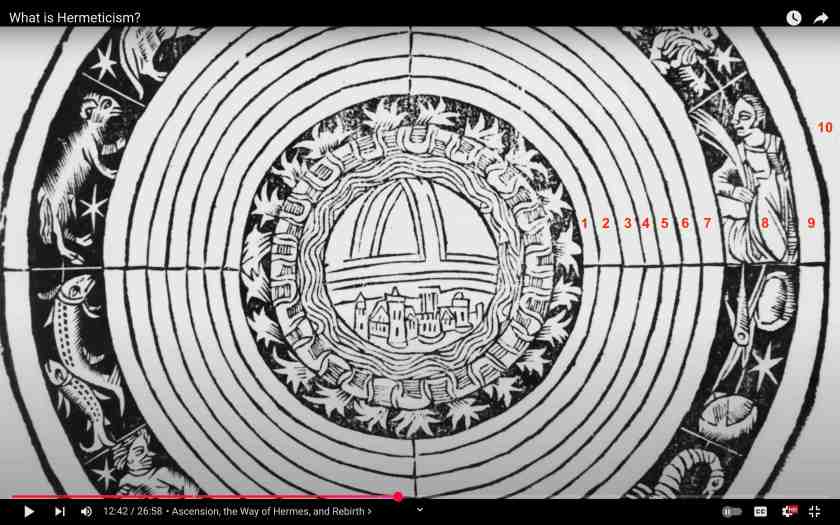
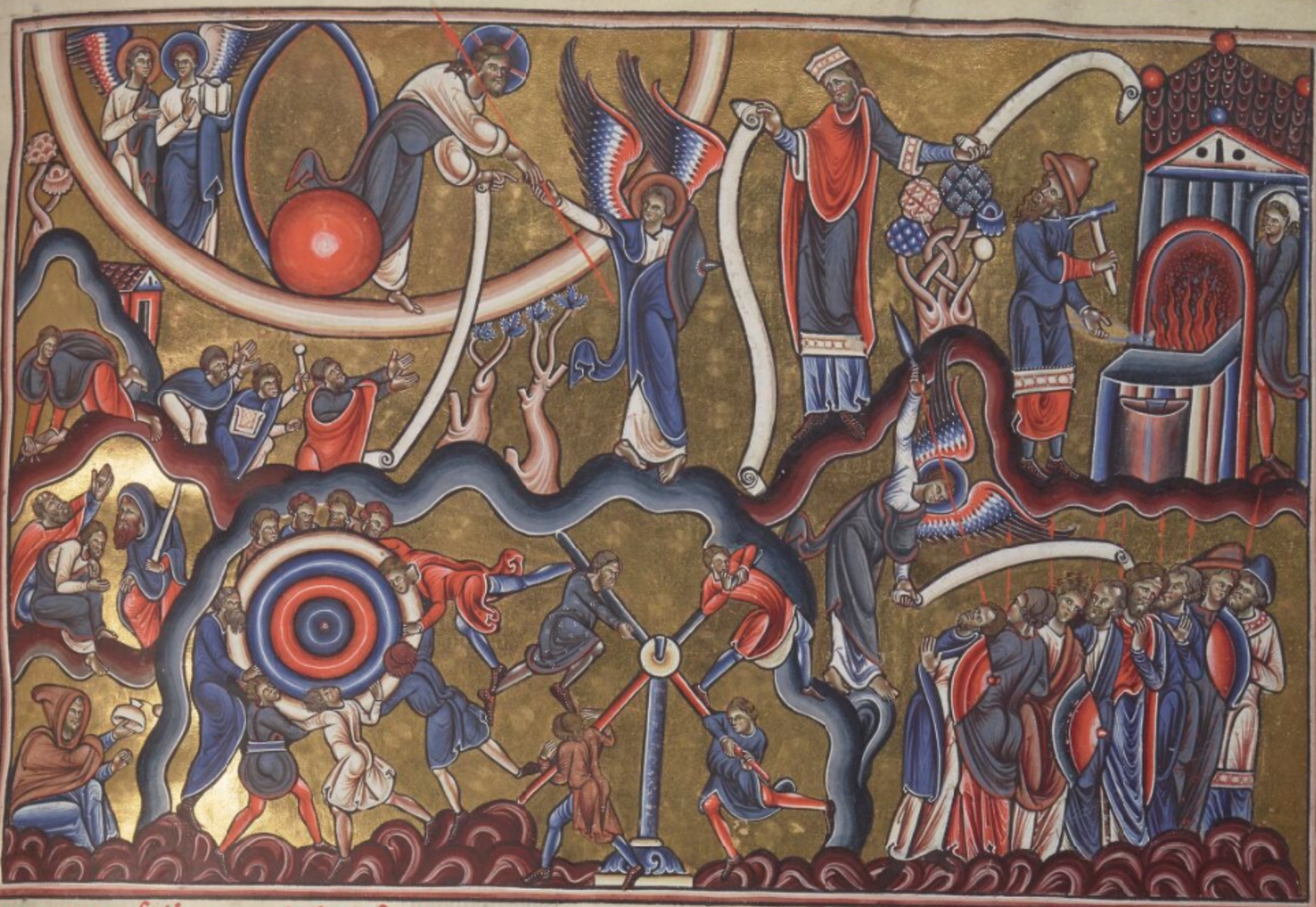
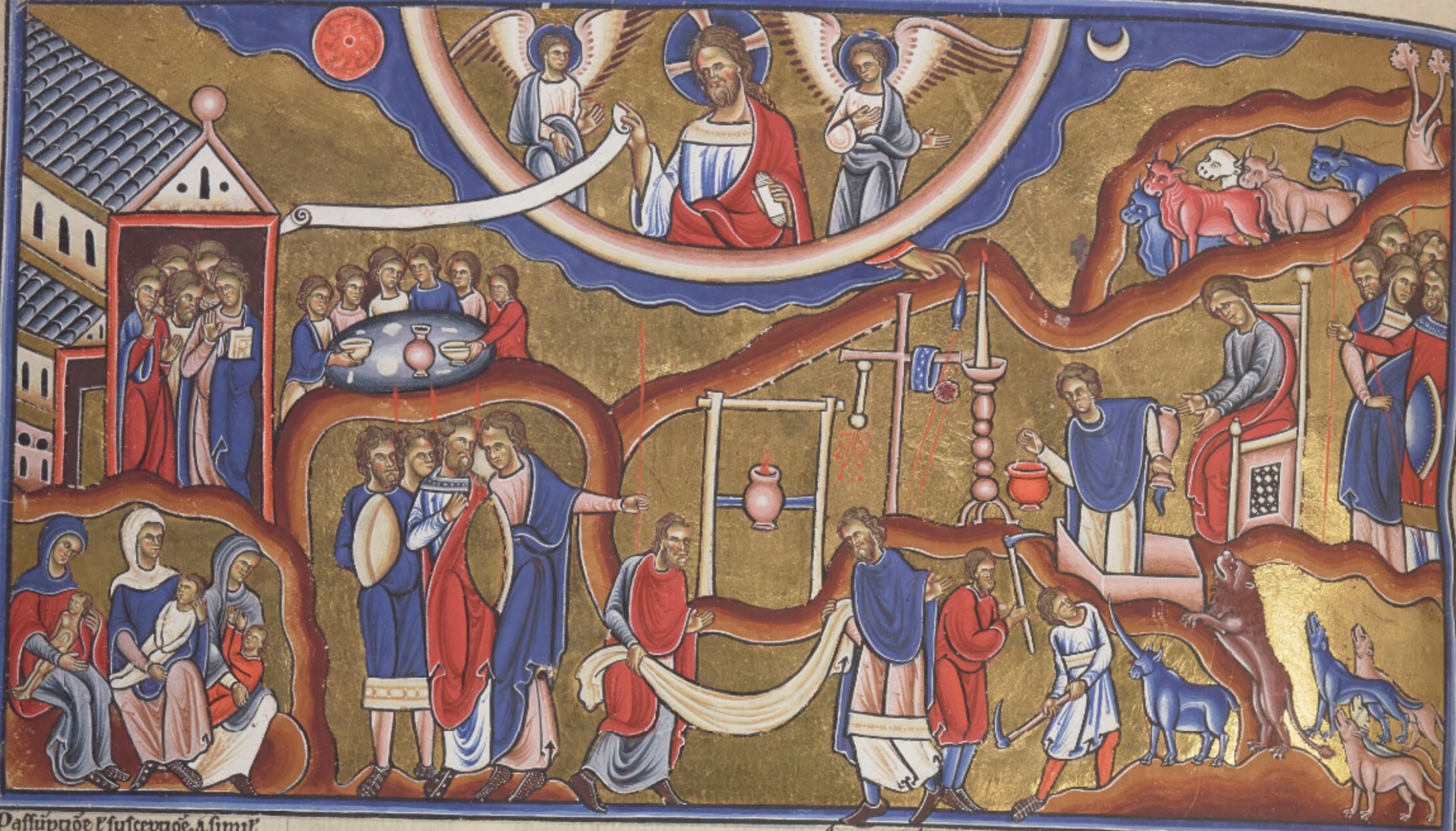
8th gate is from 8th to 9th sphere
- 0th gate: from Earth (sublunar) to Moon onion layer.
Strange there’s no ladder rung or gate to get TO Moon (sphere 1). - 1st gate: from Moon to Mercury.
- 2nd gate: Mercury to Venus.
- 3rd gate: from Venus to Sun.
- 4th gate: from Sun to Mars.
- 5th gate: from Mars to Jupiter.
- 6th gate: from Jupiter to Saturn onion layer.
- 7th gate: from top of Saturn onion layer to bottom of fixed stars onion layer.
- 8th gate: from top of fixed stars onion layer to bottom of precession Ennead layer sphere 9.
- 9th gate: from top of of precession Ennead layer sphere 9, to bottom of Empyrean w/ God and Elect (sphere 10). THE SPHERE OF THE HYPERCOSMIC SUN
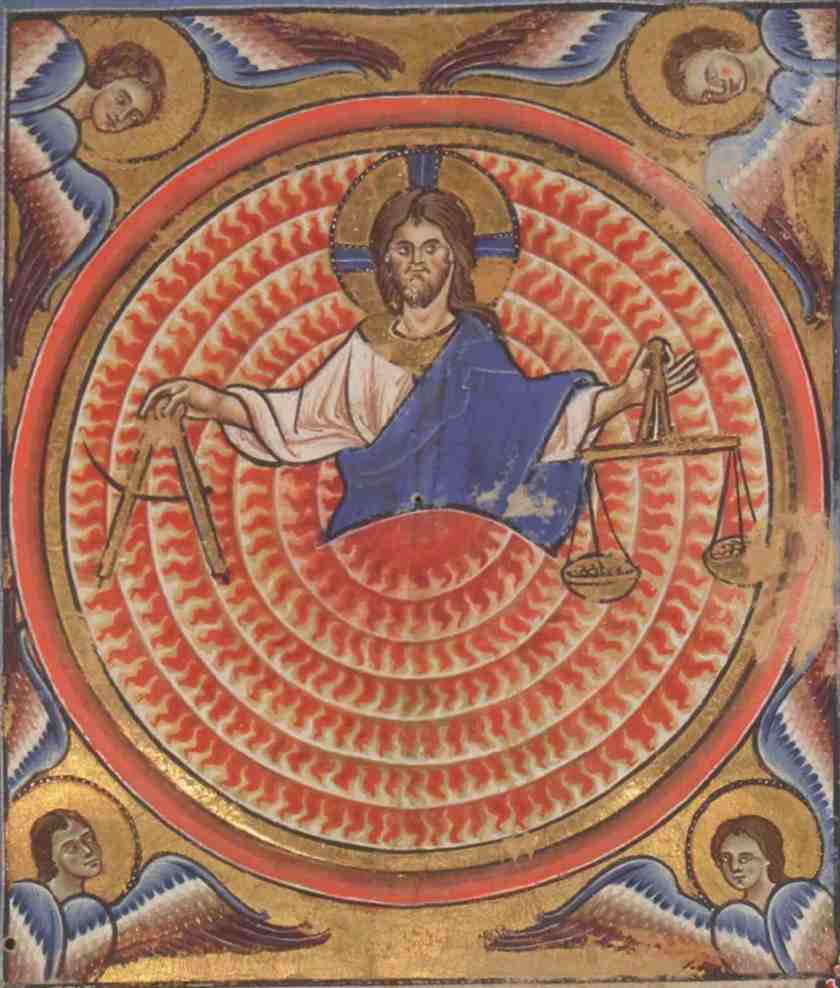
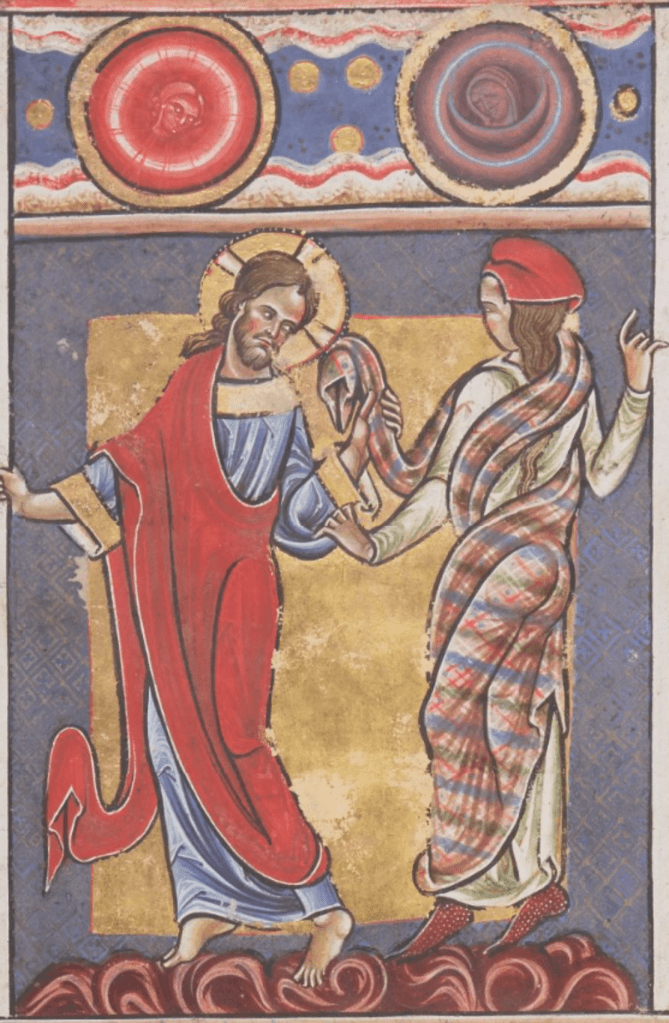
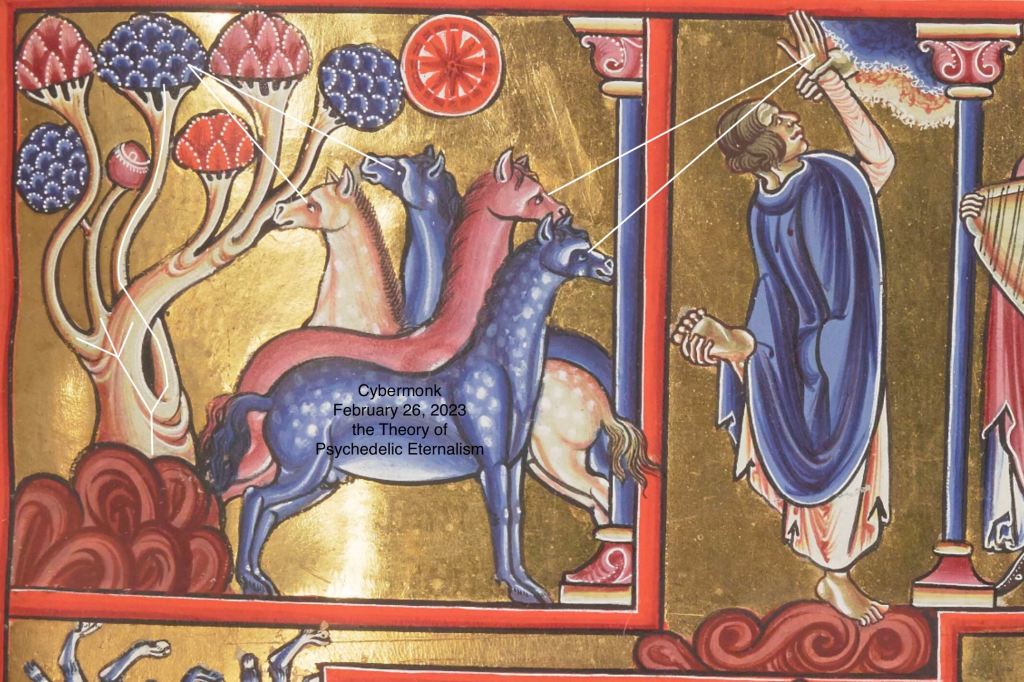
list of crops of {sun light} in Great Canterbury Psalter
https://egodeaththeory.org/2025/01/11/letchers-false-citation-various-writers-have-suggested-cult-secretly-oppression-hidden-secret-cult-for-example-stamets-gartz/#fire-light-circle-sun

The Eighth Gate: The Mithraic Lion-Headed Figure and the Platonic World-Soul
David Ulansey’s The Eighth Gate: The Mithraic Lion-Headed Figure and the Platonic World-Soul, http://www.mysterium.com/eighthgate.html
David Ulansey
The Ancient World, Vol. XXXIV, no. 1 (2003), pp. 67-81
RETURN TO HOME OF DAVID ULANSEY
PLAN: REMOVE MUCH/ CONDENSE, ADD BOLD ON KEY PHRASES
In the Barberini mithraeum in Rome (CIMRM* 390), a serpent-entwined figure standing on a globe is depicted floating in the center of a zodiac which arches above the bull-slaying scene. Or, to be more precise, the globe on which the figure is standing is located in the zodiac, while the figure’s body extends above the zodiac into the region just beyond it (see Figs. 1,2,3).

Fig. 1: Barberini tauroctony (CIMRM 390)

Fig 2: The lion-headed figure in the Barberini tauroctony with zodiac
and fire-altars (detail)

Fig 3: The lion-headed figure in the Barberini tauroctony (detail)
Although his head is unfortunately damaged, this figure is undoubtedly the famous Mithraic leontocephaline or lion-headed figure, who is always depicted with a snake winding around him. His position here precisely at the level of the zodiac and just beyond is intriguing, for it suggests that there is a special connection between the leontocephaline and the region of the zodiac. This connection is confirmed by the fact that the body of the leontocephaline is often decorated with the zodiac (e.g., CIMRM 545 and 879; see Fig. 4) or stands on a globe representing the sphere of the fixed stars, on which of course the zodiac is located (CIMRM 382, 390, 543, 551, 1051, 1705, 2320; see Fig. 5).

Fig. 4: Torso of lion-headed figure with zodiac (CIMRM 879)

Fig. 5: Lion-headed figure standing on cosmic sphere
and holding key in right hand (CIMRM 543)
This connection between the leontocephaline and the zodiac can be clarified by noticing that in Origen’s Contra Celsum, Celsus describes a Mithraic symbol consisting of a ladder with seven gates, each associated with one of the seven planets, while at the top there is an eighth gate associated with the sphere of the fixed stars and leading to the region beyond that sphere (VI:22). The leontocephaline, as is well-known, almost always holds a key (according to Maarten Vermaseren he does so in the Barberini painting, although it is difficult to see [1]), and this key is reasonably identified as the key to the celestial gates described by Celsus. However, since the leontocephaline is never linked in Mithraic iconography with any of the planets, but is clearly associated with the zodiac, it seems likely that he has a special connection with Celsus’ eighth gate– that of the sphere of the fixed stars and the realm beyond it– since it is on that sphere that the zodiac lies.
In addition, the painting at Barberini depicts the region outside of the zodiac– into which the leontocephaline’s body extends– in a specific way: above the zodiac is an arch containing a row of six altars with fires burning on them (see again Figs. 1,2,3). Scholars have often assumed that these fires represent the planets.[2] However, there are two decisive arguments against this explanation. First, the fires are depicted as lying beyond the zodiac, which is of course contrary to all Greco-Roman astronomy, in which the planets are understood as being closer to the earth than is the sphere of the fixed stars on which the zodiac is located. And second, of course, there are only six fires, while the planets are always seven in number. In response to the problem of there being only six fires, it has been suggested that the leontocephaline either hides or substitutes for a seventh fire.[3] However, this suggestion is untenable, since in CIMRM 368, a Roman relief from the Esquiline remarkably resembling the Barberini painting, there are clearly only six fire-altars above Mithras (see Fig. 6). In fact, there also exist tauroctonies in which there are nine fire-altars (CIMRM 1128) or four fire-altars (CIMRM 1816) above Mithras, indicating that the specific number of altars was not fixed.

Fig. 6: Esquiline Tauroctony (CIMRM 368)
The comparison between the Esquiline relief and the Barberini painting reveals two interesting facts. First, the comparison makes absolutely certain that the Mithraists understood the cave in which Mithras kills the bull as symbolizing the cosmos, since in the Esquiline relief the arch separating Mithras from the six fires above is the roof of the cave, while in the Barberini painting exactly the same position and role are filled by the arch of the zodiac.
Second, the Esquiline relief also includes a second set of fire-altars, this time indeed numbering seven, at the very bottom of the image. Most scholars are now agreed that the animal figures in the bull-slaying icon represent a series of constellations located on the sphere of the fixed stars. Thus the seven fires placed in the Esquiline relief below the bull-slaying — that is, below the sphere of the fixed stars– are in the proper astronomical location for the planets. Thus the lower set of fires agrees both in number and position with the planets, and thus most likely does represent the planets, while the upper set of fires does not fit with the planets either in number or in position.
But if the six upper fires in the Esquiline relief and the Barberini painting do not represent the planets, what do they represent? An obvious answer to this question is immediately apparent if we merely take seriously the fact that the fires in the Barberini painting are clearly located outside of the zodiac, and hence beyond the sphere of the fixed stars. For throughout antiquity there existed a widespread belief that the outermost region of the cosmos was occupied by a realm of fire.
Deriving from the experience of the light-giving quality of the stars and planets, the light- and heat-producing quality of the sun, and the upward-moving tendency of fire, the earliest Greek philosophers already identified the sky as a realm of fire. As Charles Kahn says, “Both Parmenides and Anaxagoras seem to have identified the aither or sky with elemental fire….” and Anaximander’s cosmology seems to have placed a sphere of flame at the outer boundary of the universe.[4] The Pythagorean Philolaus appears to have held a similar opinion, since according to Aetius he said that in addition to the existence of a fiery “hearth” at the center of the universe there is “…again another fire at the uppermost place, surrounding the whole.”[5]
Plato as well seems to have adopted the idea of fire as existing in the furthest region of the cosmos in Timaeus 62D-63E, since, as F.M Cornford notes in his commentary on this passage, for Plato the elements are here understood as arranged “in a definite order: fire around the circumference (where it is the chief constituent of the stars’ bodies), next the spheres of air and water, and earth at the center.”[6]
The idea of a fire at the outermost boundary of the universe later became a commonplace in Stoic thought. Cleanthes, for example, according to Cicero taught that “the most unquestionable deity is that remote all-surrounding fiery atmosphere called the aether, which encircles and embraces the universe on its outer side at an exceedingly lofty altitude.”[7] Chrysippus, notes David E. Hahm, speaks of “the aether, which is the name he gives to the fire at the periphery of the cosmos.”[8]
Among the Middle and Neo-Platonists there was also a widespread belief that the outermost region of reality was a fiery domain. Based on Plato’s famous allegory of the cave and of the sun-filled realm outside of it, the doctrine arose that beyond the universe– in the “place beyond the heavens” (hyperouranios topos) of Phaedrus 247B-C– there existed a hypercosmic sun or light (I have discussed this in detail in my article “Mithras and the Hypercosmic Sun”[9]). An early example is found in Philo’s De Opificio Mundi VIII.31, where he speaks of
a star above the heavens, the source of those stars which are perceptible by the external sense, and if any one were to call it universal light he would not be very wrong; since it is from that the sun and moon, and all the other planets and fixed stars derive their due light….[10]
And a bit further on, in XXIII 69-71, Philo pictures a mind journeying through the world and then up through the heavenly spheres until it passes the outermost boundary of the universe, at which point “rays of divine light are poured forth upon it like a torrent, so as to bewilder the eyes of its intelligence by their splendour.”[11]
Finally, an exact parallel to the picture in the Barberini mithraeum of a fiery realm outside the cosmos is found in the Chaldaean Oracles. In the Chaldaean cosmology the highest world is beyond the cosmic sphere (hyperkosmios or hyperouranios)[12] and is called the fiery cosmos or the “Empyrean” realm (kosmos pyrios or empyrios).[13]
Given all of this evidence for the ancient belief in the presence of a fiery realm at the outermost place in the universe, the depiction in the Barberini painting of fires just outside the boundary of the cosmos makes perfect sense. Indeed, additional support for a connection between the leontocephaline and the aetherial cosmic fire can be found in the fact that the Mithraic leontocephaline, as is well known, is frequently associated with fire-symbolism in a variety of ways, extending even to the existence of statues of the leontocephaline apparently designed so that fire could be sent shooting out of its mouth.[14]
However, an additional factor in the Barberini painting may help us gain further clarity about the significance of the Mithraic leontocephaline. It is notable that the placement of the leontocephaline at Barberini seems designed to emphasize the concepts of boundary and boundary-crossing. The globe on which the figure stands is located exactly on the arching zodiacal boundary of the universe, while the figure itself extends beyond that boundary as a kind of incarnation of the process of boundary-crossing.
If the leontocephaline, as I would like to suggest, does have a connection with the idea of a cosmic boundary, then crucial pieces of his cryptic symbolism take on a new importance. Perhaps most obvious is the key that he almost always holds, for the key is one of the most appropriate of all symbols of boundaries and boundary-crossing. Thus the goddess Hekate, mistress of boundaries and crossroads, was from Hellenistic times on often associated with the symbol of the key.[15] And in his work On the Genius of Socrates 591 A-C, Plutarch describes how the three Fates guard the thresholds between cosmic realms, each of them holding a key. Significantly, the first of these cosmic thresholds, presided over by the Fate Atropos, is that which separates what is outside the cosmic sphere from what is inside it.[16]
The key held by the Mithraic leontocephaline, then, indicates his role as a type of boundary guardian: specifically, as we have seen, the Barberini symbolism shows that he is associated with the boundary between what is inside and what is outside the cosmic sphere. But what could be the significance of this boundary such that the Mithraists were motivated to personify it in the form of a powerful divine being?
An answer to this question can be found in the fact that the Mithraists were surprisingly not alone in the seemingly peculiar act of personifying the cosmic boundary. For in the Chaldaean Oracles (where, as we saw earlier, it is taught that there exists beyond the universe a realm of fire) the boundary between the cosmos and what is beyond was personified in the figure of the goddess Hekate, a central divinity in the Oracles’ religious system.[17]
The figure of Hekate in the Chaldaean Oracles derives ultimately from speculations on Plato’s description of the World-Soul in his dialogue Timaeus. There, Plato says that the Demiurge– the creator of the universe– as part of the process of creation made a soul for the cosmos as a whole. Plato says that the Demiurge set this “World-Soul” in the center of the cosmos “and caused it to extend throughout the whole and further wrapped [the body of the cosmos] round with soul on the outside….”[18]
The World-Soul of Plato became the object of extraordinarily complex and far-reaching speculations in subsequent Platonic and other Greek philosophy, but it always retained its role as the boundary of the cosmos and the mediator between the cosmos and the realm beyond. The fact that in the Chaldaean Oracles this abstract entity became personified as the goddess Hekate shows that it is at least plausible that the Mithraic leontocephaline could represent a similar personification of the cosmic boundary. And, we should note, this plausibility is strengthened significantly by the fact that the Chaldaean Hekate, like the Mithraic leontocephaline, is constantly associated with an array of symbols involving fire.[19]
But the key piece of evidence supporting our hypothesis that the leontocephaline is a symbol of the cosmic boundary, and that he is linked, like the Chaldaean Hekate, to the Platonic World-Soul, lies in the most consistent of all of the attributes of the leontocephaline: namely, the snake that is almost always shown wrapped around him.
Many explanations for the presence of the snake wrapped around the leontocephaline have been offered, focusing on the snake as a solar symbol, as a symbol for cosmic time, or as a symbol of the celestial ascent of the soul.[20] However, the connection between the leontocephaline and the cosmic boundary and World-Soul that we have been tracing here suggests an additional factor: for there exists solid evidence that the World-Soul in its role as boundary of the universe was sometimes symbolized as a serpent.
This evidence is found in Origen’s Contra Celsum, immediately following his discussion of the Mithraic eight-gated ladder. In Book VI, chaps. 24ff., Origen discusses the teachings of the Gnostic sect of the Ophites or serpent-worshippers as expressed in certain diagrams of theirs. In one of these diagrams, he says, was “a drawing of ten circles, which were separated from one another and held together by a single circle, which was said to be the soul of the universe and was called Leviathan.”[21] Origen goes on to explain that this Leviathan is a great serpent, symbolizing the soul that permeates the universe. That this serpent specifically represents Plato’s World-Soul is proven by the fact that according to Origen the diagram showed Leviathan twice, once in the center and once around the circumference, just as in the Timaeus Plato said that the World-Soul was placed in the center of the cosmos and also wrapped around the outside. Other Gnostic systems also made use of this symbol of a serpent wrapped around the outside of the universe: according to the Pistis Sophia, “The outer darkness is a great dragon, whose tail is in his mouth, outside the whole world and surrounding the whole world.”[22]
Here we see the Platonic World-Soul as boundary of the cosmos symbolized by an encircling serpent. The parallel with the Mithraic leontocephaline as the serpent-entwined symbol of the cosmic boundary is, of course, compelling. But there is one final piece of evidence that is, I think, decisive. For there is in Mithraic iconography another figure besides the leontocephaline who is depicted as entwined by a serpent: namely, the god Oceanus. Oceanus is often depicted in the tauroctony beside the image of Mithras ascending in the chariot of the sun, and is easily identifiable by associated watery symbols such as waves, a boat, an oar, a vase, or a sail (see Fig. 7).[23] However, a number of times the figure beside the image of Mithras in the chariot is depicted as entwined by a serpent in exactly the same way as the leontocephaline (see Fig. 8).[24] As Manfred Clauss and M.L. West have noted, this serpent-entwined figure must also be Oceanus.[25] But why is he entwined by a snake exactly like the leontocephaline?

Fig. 7: Oceanus (on right) with waves and holding sail over head (CIMRM 2244)

Fig. 8: Oceanus (on right) entwined in serpent (CIMRM 1958)
Our discovery of the leontocephaline’s connection with the boundary of the cosmic sphere provides an obvious answer to this question, for of course the most important function of Oceanus in antiquity was as a symbol of the outermost circular boundary of the world.[26] The fact that both the leontocephaline and Oceanus are identically entwined by a serpent, therefore, makes perfect sense: the serpent around each of them symbolizes their roles as ultimate boundaries. And, conversely, the fact that in Mithraic iconography Oceanus– the boundary of the world– is entwined by a serpent provides remarkable support for my claim that the serpent-entwined leontocephaline also symbolizes the cosmic boundary– and hence the Platonic World-Soul– as indicated by the Barberini painting.
One last piece of evidence in this connection is worth noting. In the Acts of Thomas, the same text that includes the famous Gnostic Hymn of the Pearl, the apostle Thomas is confronted by a serpent. The serpent speaks to him, and at one point says, “I am son of him who girds the sphere about; and I am kinsman of him who is outside the ocean, whose tail is set in his own mouth.”[27] Here, exactly as in the Mithraic evidence, we find an enclosing serpent related simultaneously to the world-containing ocean and to the boundary of the cosmic sphere.
I will close by noting that if the leontocephaline did indeed function partly as a symbol for the ultimate boundary of the universe, this would be in complete harmony with the theory I proposed in my book The Origins of the Mithraic Mysteries[28] that Mithraism began as a religious response to Hipparchus’s discovery of the precession of the equinoxes. For if Mithras represented the force responsible for moving the entire cosmic sphere in the way revealed by Hipparchus’s discovery, then he must have been understood as being a divinity whose essential power lay in the hypercosmic realm. As a result, it is easy to see how a symbol for the division between the cosmic and hypercosmic realms would have come to play an important role in the iconographical repertoire of his worship.
— Notes —
*CIMRM refers to Martin Vermaseren, Corpus Inscriptionum et Monumentorum Religionis Mithriacae (The Hague: Martinus Nijhoff, 1956, 1960) 2 vols.
[1] M.J. Vermaseren, Mithriaca III: The Mithraeum at Marino (Leiden: E.J. Brill, 1982) p. 85.
[2] See Roger Beck, Planetary Gods and Planetary Orders in the Mysteries of Mithras (Leiden: E.J. Brill, 1988) s.v. index I.A.1, #390.
[3] Ibid., p. 32.
[4] Charles H. Kahn, Anaximander and the Origins of Greek Cosmology (Philadelphia: Centrum Philadelphia, 1985) pp. 90-91.
[5] DK A16 (=Aetius 2.7.7), trans. Carl A. Huffman, Philolaus of Croton (Cambridge: Cambridge Univ. Press, 1993) pp. 237-8.
[6] F.M Cornford, Plato’s Cosmology (London: Routledge and Kegan Paul, 1937) p. 265.
[7] De Natura Deorum I.37, trans. H. Rackam, Cicero: De Natura Deorum (Cambridge: Harvard Univ. Press, 1933) p. 41.
[8] David E. Hahm, The Origins of Stoic Cosmology (Ohio State Univ. Press, 1977) p. 158.
[9] David Ulansey, “Mithras and the Hypercosmic Sun” in John R. Hinnells, Studies in Mithraism (Rome: “L’Erma” di Bretschneider, 1994) pp. 257-64.
[10] Trans. C. D. Yonge, The Works of Philo (Hendrickson Publ., Inc., 1993) p. 6.
[11] Ibid., p. 11.
[12] Hans Lewy, Chaldaean Oracles and Theurgy (Paris: Études Augustiniennes, 1978), p. 151 nn. 311-313, p. 328 nn. 57-8.
[13] Ibid., pp. 77 and n. 40, 137 and n. 270, 201-3, 430-1.
[14] For the fire-breathing of the leontocephaline see Howard Jackson, “The Meaning and Function of the Leontocephaline in Roman Mithraism,” Numen 32.1 (July, 1985) p. 28; CIMRM 383 shows the leonotocephaline igniting a fire altar with his breath while holding a torch in each hand. For other fire symbols associated with the leontocephaline see CIMRM 103, 383, 589 (torches); 312 (thunderbolt, hammer and tongs); and 1123 (fire shovel).
[15] See Sarah Iles Johnston, Hekate Soteira (Atlanta: Scholars Press, 1990), pp. 39-48.
[16] See Phillip H. De Lacy and Benedict Einarson, trans., Plutarch’s Moralia (Cambridge: Harvard Univ. Press, 1959) vol. VII, p. 467 note d; John Dillon, The Middle Platonists (Ithaca: Cornell Univ. Press, 1977) p. 215.
[17] For a complete discussion of Hekate’s role as boundary between the cosmic and the hypercosmic, and of the relationship between the Chaldaean Hekate and the Platonic World-Soul, see Johnston, Hekate.
[18] Timaeus 34B, trans. Cornford, Cosmology, p. 58. Emphasis mine.
[19] See Johnston, Hekate, pp. 64, 119-120, 126-127, 160.
[20] See Jackson, “Meaning,” p. 20 and n. 13; J.R. Hinnells, “Reflections on The Lion-Headed Figure in Mithraism,” Monumentum H.S. Nyberg (Leiden: E.J. Brill, 1975) vol. 1, pp. 356-7; Beck, Planetary Gods, pp. 54-7; David Ulansey, The Origins of the Mithraic Mysteries: Cosmology and Salvation in the Ancient World (New York and Oxford: Oxford University Press, revised paperback, 1991), p. 120. Interestingly, the Arles leontocephaline torso (CIMRM 879– see Fig. 4 above) makes it difficult to argue that the snake symbolizes the path of the sun, since the snake here moves backwards through the zodiac. However, notice that this backwards movement through the zodiac is the same direction as that of the precession of the equinoxes, the discovery of which, I have argued in Origins, was the catalyst for the creation of the Mithraic mysteries.
[21]VI:25, trans. Henry Chadwick, Origen: Contra Celsum (Cambridge: Cambridge University Press, 1953) p. 340; see also VI:35 (Chadwick, p. 351). Cf. Lewy, Oracles, p. 354.
[22] Trans. G.R.S. Mead, Pistis Sophia (London: John M. Watkins, 1963) p. 265.
[23] CIMRM 693, 1975, 2034, 2038, 2202, 2244, 2272, 2310, 2338.
[24] CIMRM 1935, 1958, 1972, 2166, 2171, 2291.
[25] Manfred Clauss, The Roman Cult of Mithras (Edinburgh: Edinburgh Univ. Press, 2000) p. 152; M.L. West, Early Greek Philosophy and the Orient (Oxford: Oxford Univ. Press, 1971) p. 45 and Plate III.
[26] For complete discussion see James S. Romm, The Edges of the Earth in Ancient Thought (Princeton: Princeton University Press, 1992) pp. 12-26.
[27] Acts of Thomas 32; trans. in Edgar Hennecke, New Testament Apocrypha (Lutterworth Press, 1965) p. 460.
[28] Ulansey, Origins.
RETURN TO THE COSMIC MYSTERIES OF MITHRAS
David Ulansey’s Mithras and the Hypercosmic Sun
David Ulansey’s article:
Mithras and the Hypercosmic Sun http://www.mysterium.com/hypercosmic.html
MITHRAS AND THE HYPERCOSMIC SUN
David Ulansey’s article:
Mithras and the Hypercosmic Sun http://www.mysterium.com/hypercosmic.html
David Ulansey
PLAN: REMOVE MUCH/ CONDENSE, ADD BOLD ON KEY PHRASES
In Studies in Mithraism, John R.Hinnells, ed. (Rome: “L’Erma” di Brettschneider, 1994) pp. 257-64.
One of the most perplexing aspects of the Mithraic mysteries consists in the fact that Mithraic iconography always portrays Mithras and the sun god as separate beings, while– in stark contradiction to this absolutely consistent iconographical distinction between Mithras and the sun– in Mithraic inscriptions Mithras is often identified with the sun by being called “sol invictus,” the “unconquered sun.” It thus appears that the Mithraists somehow believed in the existence of two suns: one represented by the figure of the sun god, and the other by Mithras himself as the “unconquered sun.” It is thus of great interest to note that the Mithraists were not alone in believing in the existence of two suns, for we find in Platonic circles the concept of the existence of two suns, one being the normal astronomical sun and the other a so-called “hypercosmic” sun located beyond the sphere of the fixed stars.
In my book The Origins of the Mithraic Mysteries I have argued that the god Mithras originated as the personification of the force responsible for the newly discovered cosmic phenomenon of the precession of the equinoxes. Since from the geocentric perspective the precession appears to be a movement of the entire cosmic sphere, the force responsible for it most likely would have been understood as being “hypercosmic,” beyond or outside of the cosmos. It will be my argument here that Mithras, as a result of his being imagined as a hypercosmic entity, became identified with the Platonic “hypercosmic sun,” thus opening up the way for the puzzling existence of two “suns” in Mithraic ideology.
The most important source for our knowledge of the Platonic tradition of the existence of two suns is the Chaldaean Oracles, the collection of enigmatic sayings generated late in the second century C.E. by a father and son both named Julian. These oracular sayings were, as is well known, seized upon by Porphyry and later Neoplatonists as constituting a divine revelation. For our purposes, the most important element in the Chaldaean teachings is that of the existence of two suns. As Hans Lewy says,
The Chaldaeans distinguished between two fiery bodies: one possessed of a noetic nature and the visible sun. The former was said to conduct the latter. According to Proclus, the Chaldaeans call the “solar world” situated in the supramundane region “entire light.” In another passage, this philosopher states that the supramundane sun was known to them as “time of time….”[1]
As Lewy showed definitively in his study, the Chaldaean Oracles were the product of a Middle Platonic milieu, since they are permeated by concepts and images known from Platonizing thinkers ranging from Philo to Numenius. It is thus likely that the Chaldaean concept of a hypercosmic sun is at least partly derived from the famous solar allegories of Plato’s Republic, in which the sun is used as a symbol for the highest of Plato’s Ideal Forms, that of the Good. In Book VI of the Republic (508Aff.) Plato compares the sun to the Good, saying that as the sun is the source of all illumination and understanding in the visible world (the horatos topos), the Good is the supreme source of being and understanding in the world of the forms (the noetos topos or “intelligible world”). Plato then amplifies this image in his famous allegory of the cave at the beginning of Book VII of the Republic. In this famous passage, Plato symbolizes normal human life as life in a cave, and then describes the ascent of one of the cave-dwellers up out of the cave where he sees for the first time the dazzling light of the sun outside the cave.
Thus in Book VI of the Republic we see the image of the sun used as a metaphor for the Form of the Good–the source of all being which exists in the “intelligible world” beyond the ordinary “visible world” of human experience–and then in Book VII, in the allegory of the cave, this same image of the sun is used even more concretely to symbolize that which exists outside of the normal human world represented by the cave.
In addition, as has often been noted, there seems to have been a connection in Plato’s imagination between his allegory in Book VII of the Republic of the ascent of the cave dweller to the sunlit world outside the cave and his myth in the Phaedrus of the ascent of the soul to the realm outside of the cosmos where “True Being” dwells. The account in the Phaedrus reads:
For the souls that are called immortal, so soon as they are at the summit [of the heavens], come forth and stand upon the back of the world: and straightway the revolving heaven carries them round, and they look upon the regions without. Of that place beyond the heavens none of our earthly poets has yet sung, and none shall sing worthily. But this is the manner of it, for assuredly we must be bold to speak what is true, above all when our discourse is upon truth. It is there that true being dwells, without colour or shape, that cannot be touched; reason alone, the soul’s pilot, can behold it, and all true knowledge is knowledge thereof. [2]
As R. Hackforth says,
No earlier myth has told of a hyperouranios topos [place beyond the heavens], but this is not the first occasion on which true Being, the ousia ontos ousa, has been given a local habitation. In the passage of Rep. VI which introduces the famous comparison of the Form of the Good to the sun we have a noetos topos contrasted with a horatos (508C): but a spatial metaphor is hardly felt there…. A truer approximation to the hyperouranios topos occurs in the simile of the cave in Rep. VII, where we are plainly told that the prisoners’ ascent into the light of day symbolises ten eis ton noeton tes psyches anodon (517B); in fact, the noetos topos of the first simile has in the second developed into a real spatial symbol. [3]
Paul Friedländer agrees with Hackforth completely in seeing a connection in Plato’s mind between the ascent from the cave in the Republic and the ascent to the “hypercosmic place” in the Phaedrus:
The movement “upward”… had found its fullest expression in the allegory of the cave in the Republic. [Now in the Phaedrus]… the dimension of the “above” is stated according to the new cosmic co-ordinates. For the “intelligible place” (topos noetos) in the Republic (509D, 517B) now becomes “the place beyond the heavens” (topos hyperouranios)…[4]
What is, of course, important to see here is that there exists already in Plato the obvious raw material for the emergence of the idea of the “hypercosmic sun”: when the prisoners escape the cave in the Republic what they find outside it is the sun, but if Hackforth and Friedländer are correct the vision of what is outside the cave in the Republic is linked in Plato’s mind with the vision of what is outside the cosmos in the myth recounted in the Phaedrus. It would therefore be a natural and obvious step for a Platonist to imagine that what is outside the cosmic cave of the Republic–namely, the sun, the visible symbol of the highest of the Forms and of the source of all being–is also what is to be found outside the cosmos in the “hypercosmic place” described in the Phaedrus.
An intermediate stage in the development of the concept of the “hypercosmic sun” between Plato and the Chaldaean Oracles can be glimpsed in Philo’s writings, for example in the following passage from De Opificio Mundi:
The intelligible as far surpasses the visible in the brilliancy of its radiance, as sunlight assuredly surpasses darkness…. Now that invisible light perceptible only by mind…is a supercelestial constellation [hyperouranios aster], fount of the constellations obvious to sense. It would not be amiss to term it “all-brightness,” to signify that from which sun and moon as well as fixed stars and planets draw, in proportion to their several capactiy, the light befitting each of them…[5]
Here we see Philo referring to the existence in the intelligible sphere of a “hypercosmic star” (hyperouranios aster) which he links with the image of sunlight, and which he sees as the ultimate source of the light in the visible heavens.[6] Philo’s formulation here is, of course, strikingly similar to the Chaldaean concept of the hypercosmic sun, the description of which by Lewy we should recall here: “The Chaldaeans distinguished between two fiery bodies: one possessed of a noetic nature and the visible sun. The former was said to conduct the latter. According to Proclus, the Chaldaeans call the ‘solar world’ situated in the supramundane region ‘entire light.'”[7]
The trajectory we have been tracing from Plato through Middle Platonism to the Chaldaean Oracles continues beyond the time of the Chaldaean Oracles into early Neoplatonism, for we find the concept of the existence of two suns clearly spelled out in the writings of Plotinus, in a context that makes it clear that for Plotinus one of these suns was “hypercosmic.” In chapter 2, paragraph 11 of his fourth Ennead, Plotinus speaks of two suns, one being the normal visible sun and the other being an “intelligible sun.” According to Plotinus,
…that sun in the divine realm is Intellect– let this serve as an example for our discourse– and next after it is soul, dependent upon it and abiding while Intellect abides. This soul gives the edge of itself which borders on this [visible] sun to this sun, and makes a connection of it to the divine realm through the medium of itself, and acts as an interpreter of what comes from this sun to the intelligible sun and from the intelligible sun to this sun… [8]
What is especially interesting for us is that in the same third chapter of the fourth Ennead, a mere six paragraphs after the passage just quoted, Plotinus explicitly locates the intelligible realm– which he has just told us is the location of a second sun– in the space beyond the heavens. The passage reads:
One could deduce from considerations like the following that the souls when they leave the intelligible first enter the space of heaven. For if heaven is the better part of the region perceived by the senses, it borders on the last and lowest parts of the intelligible. [9]
As A.H. Armstong says of this passage, “There is here a certain ‘creeping spatiality’… [Plotinus’] language is influenced, perhaps not only by the ‘cosmic religiosity’ of his time, but by his favorite myth in Plato’s Phaedrus (246D6-247E6).”[10] In any event, we here find Plotinus in the third chapter of the fourth Ennead first positing the existence of an “intelligible sun” besides the normal visible sun, and then locating the intelligible realm spatially in the region beyond the outermost boundary of the heavens.
Finally, to return to the Chaldaean Oracles, the fact that the Chaldaean concept of the “hypercosmic sun” was at least sometimes taken in a completely literal and spatial sense is shown by a passage from the Platonizing Emperor Julian’s Hymn to Helios. According to Julian, in certain unnamed mysteries it is taught that “the sun travels in the starless heavens far above the region of the fixed stars.”[11] Given the fact that Julian’s thinking was steeped in the Neoplatonic philosophy of Iamblichus who was deeply committed to the Chaldaean Oracles as a source of divinely inspired knowledge, and given the fact that the doctrine of the “hypercosmic sun” is an established teaching of the Chaldaean Oracles, it is virtually certain, as Robert Turcan points out in his remarks about this passage, that Julian is referring here to the teaching of the Chaldaean Oracles.[12] The passage from Julian, therefore, shows that the “hypercosmic sun” of the Chaldaean Oracles was understood as being “hypercosmic” not in a merely symbolic or metaphysical sense, but rather in the literal sense of being located physically and spatially in the region beyond the outermost boundary of the cosmos defined by the sphere of the fixed stars.
Our discussion thus far has shown that in the late second century C.E. there is found in the Chaldaean Oracles the doctrine of the existence of two suns: one the normal, visible sun, and the other a “hypercosmic”sun. The evidence from Julian shows that the “hypercosmic” nature of this second sun was understood as meaning that it was literally located beyond the outermost sphere of the fixed stars. The fact that the Chaldaean Oracles emerged out of the milieu of Middle Platonism suggests that the doctrine of the “hypercosmic sun” found in the Oracles did not develop overnight, but that it has roots in the Platonic tradition, most likely, as we have seen, going back ultimately to Plato himself: specifically, to the allegory in the Republic of the ascent beyond the world-cave to the sunlit realm outside and the related myth of the Phaedrus describing the ascent of the soul towards its ultimate vision of the hyperouranios topos, the “hypercosmic place” beyond the heavens. An intermediate stage between Plato and the Chaldaean Oracles is found in Philo’s reference to the “hypercosmic star” which is the source of the light of the visible heavenly bodies, and slightly later than the Chaldaean Oracles we find Plotinus making reference to two suns, one of them being in the intelligible realm which he places spatially beyond the heavens.
We may say, therefore, that it is likely that there existed in Middle Platonic circles during the second century C.E. (and probably much earlier as well) speculations about the existence of a second sun besides the normal, visible sun: a “hypercosmic” sun located in that “place beyond the heavens” (hyperouranios topos) described in Plato’s Phaedrus.
We see here, of course, a striking parallel with the Mithraic evidence in which we also find two suns, one being Helios the sun-god (who is always distinguished from Mithras in the iconography) and the other being Mithras in his role as the “unconquered sun.” On the basis of my explanation of Mithras as the personification of the force responsible for the precession of the equinoxes this striking parallel becomes readily explicable. For as we have seen, the “hypercosmic sun” of the Platonists is located beyond the sphere of the fixed stars, in Plato’s hyperouranios topos. But if my theory about Mithras is correct (namely, that he was the personification of the force responsible for the precession of the equinoxes) it follows that Mithras–as an entity capable of moving the entire cosmic sphere and therefore of necessity being outside that sphere–must have been understood as a being whose proper location was in precisely that same “hypercosmic realm” where the Platonists imagined their “hypercosmic sun” to exist. A Platonizing Mithraist (of whom there must have been many– witness Numenius, Cronius, and Celsus), therefore, would almost automatically have been led to identify Mithras with the Platonic “hypercosmic sun,” in which case Mithras would become a second sun besides the normal, visible sun. Therefore, the puzzling presence in Mithraic ideology of two suns (one being Helios the sun-god and the other Mithras as the “unconquered sun”) becomes immediately understandable on the basis of my theory about the nature of Mithras.
Finally, the line of investigation which I have pursued here can also allow me to provide a simple and convincing interpretation for two further puzzling elements of Mithraic iconography. First, all the various astronomical explanations of the tauroctony which scholars are currently advancing (including my own) agree that the bull in the tauroctony is meant to represent the constellation Taurus. However, the constellation Taurus as seen in the night sky faces to the left while the bull in the tauroctony always faces to the right. How can this apparent discrepancy be explained? On the basis of my theory this question has an obvious answer. For although it is the case that the constellation Taurus as seen from the earth (i.e., from inside the cosmos) faces to the left, it is also the case that on ancient (and modern) star-globes which depict the cosmic sphere as it would be seen from the outside the orientation of the constellations is naturally reversed, with the result that on such globes (like the famous ancient “Atlas Farnese” globe) Taurus is always depicted facing to the right exactly like the bull in the tauroctony. This shows that the Mithraic bull is meant to represent the constellation Taurus as seen from outside the cosmos, i.e. from the “hypercosmic” perspective, which is, of course, precisely the perspective we should expect to find associated with Mithras if my argument in this paper is correct.[13]
Second, the line of investigation I have pursued here can also provide a simple and convincing interpretation of the iconographical motif known as the “rock-birth” of Mithras, in which Mithras is shown emerging out of a rock. As is well known, Porphyry, quoting Eubulus, explains in the Cave of the Nymphs that the Mithraic cave in which Mithras kills the bull and which the Mithraic temple imitates was meant to be an image of the cosmos (De Antro. 6). Of course, the hollow Mithraic cave would have to be an image of the cosmos as seen from the inside. But caves are precisely hollows within the rocky earth, which suggests the possibility that the rock out of which Mithras is born is meant to represent the cosmos as seen from the outside. Confirmation of this interpretation is provided by the fact that the rock out of which Mithras is born is often shown entwined by a snake, a detail which unmistakably evokes the famous Orphic motif of the snake-entwined cosmic egg out of which the cosmos was formed when the god Phanes emerged from it at the beginning of time.[14] It thus seems reasonable to conclude that the rock in the Mithraic scenes of the “rock-birth” of Mithras is a symbol for the cosmos as seen from the outside, just as the cave (the hollow within the rock) is a symbol for the cosmos as seen from the inside.
I would argue, therefore, that the “rock-birth” of Mithras is a symbolic representation of his “hypercosmic” nature. Capable of moving the entire universe, Mithras is essentially greater than the cosmos, and cannot be contained within the cosmic sphere. He is therefore pictured as bursting out of the rock that symbolizes the cosmos (not unlike the prisoner emerging from the cosmic cave described by Plato in Rep. VII), breaking through the boundary of the universe represented by the rock’s surface and establishing his presence in the “hypercosmic place” indicated by the space into which he emerges outside of the rock.
And, to conclude, in this context it is no accident that in the “rock-birth” scenes Mithras is almost always shown holding a torch; for having established that his proper place is outside of the cosmos, Mithras has become identified with the “hypercosmic sun”: that light-giving being which dwells, as Proclus says,
in the supermundane (worlds) [en tois hyperkosmiois]; for there exists the “solar world (and the) whole light…” as the Chaldaean Oracles say and which I believe.[15]
NOTES
[1] Hans Lewy, Chaldaean Oracles and Theurgy (Paris: Études Augustiniennes, 1978) pp. 151-2.
[2] 247B-C; trans. R. Hackforth, Plato’s Phaedrus (Cambridge: Cambridge University Press, 1952) pp. 71,78.
[3] Ibid., pp. 80-1.
[4] Paul Friedländer, Plato I: An Introduction (New York: Pantheon Books, 1958) p. 194.
[5] VIII.31; trans. F.H. Colson, Philo (London: William Heinemann, 1929) vol. 1, p. 25.
[6] Philo often speaks of God using expressions such as the “intelligible sun” (noetos helios [Quaest. in Gen. IV.1; see Ralph Marcus, trans., Philo Supplement 1: Questions and Answers on Genesis (Cambridge: Harvard University Press, 1953) p. 269, n.l]) or similar expressions involving light and illumination located in the intelligible realm; for references see Pierre Boyancé, Études sur le songe de Scipion (Paris: E. de Boccard, 1936) pp. 73-4; Lewy, Chaldaean Oracles, p. 151, n. 312; David Runia, Philo of Alexandria and the Timaeus of Plato (Leiden: E.J. Brill, 1986) p. 435 and n. 143. Boyancé (p. 73-4) quite reasonably argues that such expressions were identical in Philo’s mind with the hyperouranios aster (“hypercosmic star”) of De Opificio Mundi VIII.31.
[7] For a superb discussion of the broader context in which the development of the concept of the “hypercosmic sun” most likely occured, see Boyancé, Études, pp. 65-77. Recently A.P. Bos has argued that the story of the ascent to the sunlit world outside of the cave in Plato’s Republic was explicitly connected by Aristotle with Plato’s image in the Phaedrus of the ascent of the soul to the “place beyond the heavens,” and that this connection played a central role in one of Aristotle’s lost dialogues whose major elements were then preserved and utilized by Plutarch in his De Facie. See A.P. Bos, Cosmic and Meta-Cosmic Theology in Aristotle’s Lost Dialogues (Leiden: E.J. Brill, 1989): the argument is complex and the book should be read as a whole, but see esp. pp. 67-8, 182. The development of the concept of the “hypercosmic sun” also must, of course, be seen in the context of the evolution of the “solar theology” described by Franz Cumont in his La théologie solaire du paganisme romain (Paris: Librairie Kliensieck, 1909). A very important and intriguing argument is made for the presence of a tradition of a “hypercosmic sun” in Orphic circles by Hans Leisegang, “The Mystery of the Serpent,” in Joseph Campbell, ed., The Mysteries (Princeton: Princeton University Press, 1955) pp. 194-261. The Greek magical papyri and the Hermetic corpus provide numerous examples of solar imagery in which the sun is in various ways symbolically elevated to at least the summit of the cosmos if not explicitly to a “hypercosmic” level. Finally, Hermetic, Gnostic, and Neoplatonic texts all betray an almost obsessive concern with enumerating and distinguishing the various cosmic spheres and levels, and especially with establishing where the boundary lies between the cosmic and the hypercosmic realms (the hypercosmic realm being identified by the Hermetists and Neoplatonists with the “intelligible world” and by the Gnostics with the “Pleroma”). This concern with establishing the boundary between the cosmic and the hypercosmic must have fed into speculations about the “hypercosmic sun,” and–intriguingly–one of the clearest symbolic formulations of this boundary between the cosmic and the hypercosmic is found in the religious system of the Chaldaean Oracles (exactly, that is, in the system in which we find explicitly formulated the image of the “hypercosmic sun”), where the figure of Hecate is understood as the symbolic embodiment of precisely this boundary (on the image of Hecate in the Chaldaean Oracles see now Sarah Iles Johnston, Hekate Soteira [Atlanta: Scholars Press, 1990]).
[8] IV, 3.11.14-22; trans. A.H. Armstrong, Plotinus (Cambridge, Mass., 1984) vol. 4, pp. 71-73.
[9] IV.3.17.1-6; ibid, pp. 87-89.
[10] Ibid., p. 88, n. 1.
[11] Or. 4.148A; trans. W. C. Wright, Julian (Cambridge: Harvard University Press, 1962) p. 405.
[12] Robert Turcan, Mithras Platonicus (Leiden: E.J. Brill, 1975) p. 124. Julian was well acquainted with the Chaldaean Oracles: see Polymnia Athanassiadi-Fowden, Julian and Hellenism (Oxford: Oxford University Press, 1981) pp. 143-53. Roger Beck has recently suggested that Julian is referring here to the Iranian cosmology in which the sun and moon are located beyond the stars (Planetary Gods and Planetary Orders in the Mysteries of Mithras [Leiden: E.J. Brill, 1988], pp. 2-3, n.2). However, Julian’s intimate association with Iamblichus and the Chaldaean Oracles, in which the doctrine of the “hypercosmic sun” is well established, renders the possibility that Julian is referring to the Iranian tradition highly unlikely. As Hans Lewy says, “There seems to be no connection between [Julian’s teaching] and Zoroaster’s doctrine according to which the sun is situated above the fixed stars” (Chaldaean Oracles, p. 153, n. 317). However, it is certainly true that the existence of the Iranian cosmology placing the sun beyond the stars could easily have provided some additional motivation for the emergence of the identification between the “Persian” Mithras and the Platonic “hypercosmic sun” for which I have argued here. On the Iranian cosmology see M.L. West, Early Greek Philosophy and the Orient (Oxford: Oxford University Press, 1971), pp. 89-91; Walter Burkert, “Iranisches bei Anaximandros,” Rheinisches Museum 106 (1963) pp. 97-134.
[13] It should be noted that the fact that the bull in the tauroctony faces to the right renders untenable Roger Beck’s suggestion that the tauroctony is a picture of the night sky as seen by an observer on earth at the time of the setting of the constellation Taurus (“Cautes and Cautopates: Some Astronomical Considerations,” Journal of Mithraic Studies 2.1 [1977] p. 10; Planetary Gods and Planetary Orders in the Mysteries of Mithras [Leiden: E.J. Brill, 1988] p. 20), since such an observer would see Taurus facing to the left. The fact that the bull in the tauroctony faces right is explicable only if we understand the tauroctony as the creation of someone who had in mind an astronomical star-globe showing the cosmic sphere as seen from the outside, and not– as Beck argues– an image of the sky as seen from the earth.
[14] That the rock from which Mithras is born was identified with the Orphic cosmic egg is in fact proven beyond doubt, as is well known, by the striking similarity between the Mithraic Housesteads monument (CIMRM 860), which shows Mithras being born out of an egg (which is thus identified with the rock from which he is usually born), and the famous Orphic Modena relief showing Phanes breaking out of the cosmic egg (CIMRM 695). In connection with this Orphic-Mithraic syncretism, Hans Leisegang, “Mystery of the Serpent” (above, n. 8), esp. pp. 201-215, has collected a fascinating body of material–including among other things the Modena relief and the passage from Julian which I have discussed above–supporting the contention that the breaking of the Orphic cosmic egg is linked directly with the concept of the “hypercosmic.” Leisegang’s discussion as a whole provides strong support for my general argument in this paper.
[15] Chaldaean Oracles Frag. 59 (= Proclus, In Tim. III.83.13-16); trans. Ruth Majercik, The Chaldaean Oracles (Leiden: E.J. Brill, 1989) p. 73. The sun was often imagined in antiquity as a torchbearer, as for example in SVF 1:538: “Cleanthes… used to say… that the sun is a torchbearer” (cited in Jean Pépin, “Cosmic Piety,” in Classical Mediterranean Spirituality [New York: Crossroad, 1986] p. 425); a fragment from Porphyry: “In the mysteries of Eleusis, the hierophant is dressed as demiurge, the torchbearer as the sun…” (also cited in Pepin, “Piety,” p. 429); and of course Lucius in Apuleius’ Golden Ass XI.24: “In my right hand I carried a lighted torch… thus I was adorned like unto the sun….” (trans. W. Adlington, Apuleius The Golden Ass [London: William Heinemann, 1928] p. 583).
Back to The Cosmic Mysteries of Mithras
Back to Home of David Ulansey
David Ulansey’s Home Page
See Also
Search this site for “Ulansey”:
https://egodeaththeory.org/?s=ulansey
Site Map: Astral Ascent Mysticism
https://egodeaththeory.org/nav/#Astral-Ascent-Mysticism

 The Egodeath theory