& part of Trisduction/ Hanegraaff video transcript
Contents:
- Intro and Analysis
- Video: The Psychology of Astrology: Covertly Goes Silent about Fixed Stars in Sphere 8, when Ascending to Transcend Fate
- Transcription of “The Psychology of Astrology”, Starting at 29:00
- Psychoid and Unus Mundus, Pleroma, Anima Mundi
- Planets as Archons (Gnosticism)
- Spirit of the Depths and Spirit of the Times
- Fate and Free Will
- Individuation and Daimon (Soul-Image)
- Exoteric and Esoteric Astrology
- Aquarius: The Coming New Aeon
- Conclusion
- Omitting Mention of Fixed Stars Is NOT AN OPTION: A Cosmos without Fixed Stars Is NOT A COSMOS, and Is Deception, Insanity, and Irrelevance for Hermetic Writers and Scholars
- Hermetic Scholars Are Guilty of False Marketing, Deception, Dishonesty, and Misrepresentation, as Long as They Remain Silent about the Fixed Stars in Sphere 8, the Ogdoad
- Hermetic Scholars’ Phony and Dishonest Model of Ascent-Rebirth through Sphere 8 that SILENTLY Omits Fixed Stars
- A Phony Model of Sphere 8 that Fails to Meet the Most Basic Definition of Sphere 8 (Which Is Defined by the Fixed Stars)
- Contradiction by Darth Wouter in “Rebirth” Video Interview with Trisduction
- Outline from “Rebirth” Video Description
- Clean Transcription of 1:28:43 – 1:36:28, in Video: Rebirth and Alchemy of Soul, with Hanegraaff
- My Comment on the “Rebirth” Video
- Watch Darth Wouter Skip Right Over the Fixed Stars Silently (I HOPE NO ONE NOTICES)
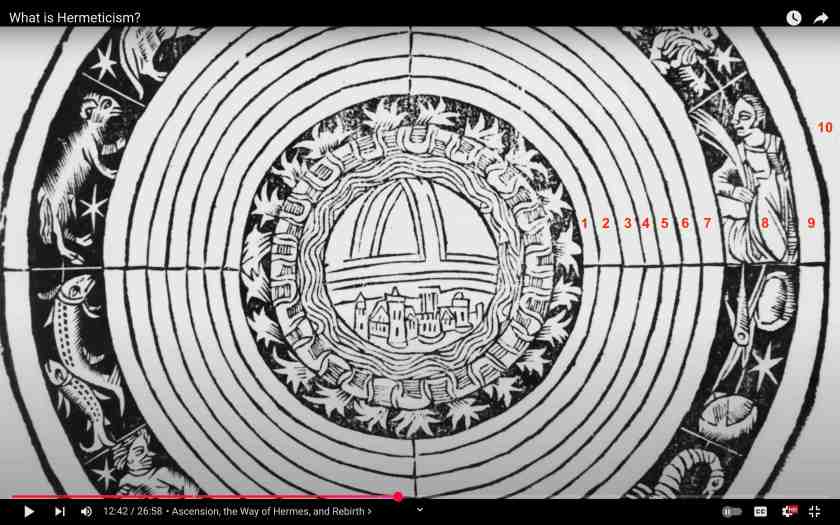
- The 10 Levels of the Hermetic Universe According to Darth Wouter
- Above Sphere 7 Saturn, Is Souls (not Fixed Stars); The Fixed Stars Are Nowhere, Not in Sphere 8, because I Blew them Up to Purify the Cosmos of Fate
- My Catching Hanegraaff Commentary: Everyone Agrees that the Fixed Stars Are Above Sphere 7 Saturn
- Hermetic Scholars:
“Fate = fixed stars = sphere 8” - Also Hermetic Scholars (in a separate paragraph):
“sphere 8 = Ogdoad = above Fate” - Transcription con’t: The Hanegraaff Leap Right Over the Fixed Stars
- 👞🌌🗑
- Reborn into Sphere 8 Fate and then Reborn into Sphere 9 Above Fate; Rebirth into “Ogdoad & Ennead” Is Mainly into Fate (Purified; Sacrificed; Purged) and then Also into Above Fate (Made Mature/ Integrated)
- Trans. Con’t (1:36:00)
- Litwa’s Illogic: The Cosmos Doesn’t Contain Fixed Stars: “The fixed stars create the cosmos”
- Astral ascent mysticism per the Egodeath theory; not per the garbled, inconsistent Hermetica or Darth Wouter or Confused Other Writers
- Found the Cosmic Defect, in Poimandres Fixating on the 7 Planets as Fate, and then Reaching Ogdoad AS IF Above Fate
- Video: Hermeticism and Ancient Astrology: The Corpus Hermeticum, with with Sam Block & Chris Brennan
- Transcript: Hermeticism and Ancient Astrology
- Darth Wouter’s Alderaanization of the Fixed Stars


- Cosmic Schizophrenia
- Hole in the Sky – Black Sabbath
- How to Build a Universe That Doesn’t Fall Apart Two Days Later
- Motivation for this Page
- Top Matter of Transcript Page
- Transcript
- ERROR! ERROR!
- Folio Image f76: Chariot Wipeout
- Lower Soul vs. Higher Soul aka Spirit
- Astral Ascent Mysticism: Sphere 1
- Astral Ascent Mysticism: Sphere 2
- Astral Ascent Mysticism: Sphere 3
- Astral Ascent Mysticism: Sphere 4
- Astral Ascent Mysticism: Sphere 5
- Astral Ascent Mysticism: Sphere 6
- Astral Ascent Mysticism: Sphere 7
- Astral Ascent Mysticism: Sphere 8: Headquarters of Fate, Ruled by Demiurge; 100% no-free-will revelation, sphere of the fixed stars; heimarmene; Fate; 4D spacetime block, cosmic prison enslavement kidnapped for ransom
- Astral Ascent Mysticism: Sphere 9
- Failed Diagram of the Sky Lacking Any Fixed Stars (so, lacking 99.99% of what you see in the sky)
- The Scholars’ Brief Moment of Lucidity
- Credits
- End Matter
- Hellenistic Astrology: The Study of Fate and Fortune (Brennan)
- See Also
- 2020
- 2021
- 2022
- 2023
- 2024
- 2025
- Earl Fountainelle: Beyond the Planetary Cosmos Spheres [There Are No Fixed Stars, SOMEHOW] – Esotericists Flunk Geocentric Science Again (While Trying to Sell their Bunk Non-Drug Entheogens Again)
Intro and Analysis
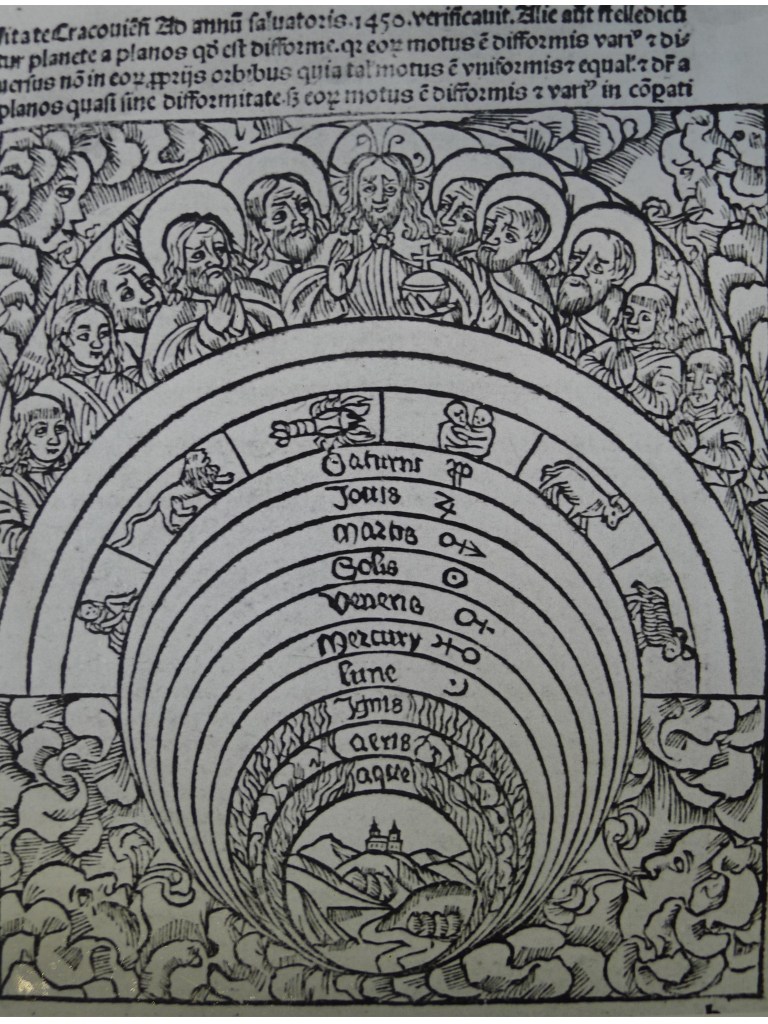
p.m. update: April 6, 2025: This morning, I created this page, and then this evening, I read the book Hermetica I by David Litwa 2025, including Poimandres & The Eighth Reveals the Ninth, close readings regarding ‘sphere’, ‘planet’, ‘star’, soul, spirit, nous. https://www.amazon.com/dp/B0DS2CZKC3 —
After reading Litwa’s new book today, I see nothing to change my analysis below, from this morning (further down the page).
Hermetica I: The Corpus Hermeticum, Asclepius, and Nag Hammadi Hermetica Ordered as a Path of Initiation
M. David Litwa, January 2, 2025
Blurb:
“The Hermetic corpus is a spiritual and intellectual treasure stemming from ancient Egyptian sages who could write and think in Greek.
“Since the Renaissance, this corpus has appeared in an order that does not fit the path of spiritual initiation suggested by the corpus itself.
“The present edition reorders the corpus—including the Latin Asclepius and the Nag Hammadi Hermetica—into four progressing parts: introductory tractates, general discourses, detailed discourses, and revelatory discourses.
“A short spiritual commentary follows each tractate.
“The book is written for all lovers of the Hermetica, but in particular for those who are willing, in some sense, to join the way of immortality.”
Litwa’s book is a good translation, with good commentary. The present site has my previous treatment of such texts.
My diagnosis is:
- Scholars don’t care about fate.
- Scholars don’t know about experiencing fate in the altered state.
- Scholars don’t care about the fixed stars.
- Scholars shun fixed stars because they are Fate & realm of the Demiurge.
- Scholars are striving to elevate vague empty term “the Ogdoad”, and that conflicts with fate-soaked fixed stars & demiurge, so scholars split sphere 8 w/ fixed stars, from the Ogdoad, as if they are not the same damn thing!
- Poimandres doesn’t focus on fixed stars.
- So, scholars omit to mention or count that level.
Scholars who fail to do sphere-counting re: sphere 8, and usually skip sphere 8 and refrain from saying “fixed stars”. As done, maddeningly, in the transcript below.
- Paul Davidson
- Wouter Hanegraaff
- Sam Block
- Chris Brennan
What is with this bizarre constitutional psychological aversion to ever thinking about fixed stars and sphere 8?
Why do they not integrate “sphere 8” and “fixed stars” into their discussion, but instead, skip over and dance around that?
They LOVE talking about the planets and ascending above “the fate planets”, but they are extremely resistant to ever writing “stars” or “sphere 8” – the chronically skip sphere 8 and refrain from saying “fixed stars”.
As a theorist, fixed stars are my everything, my god, but these scholars IGNORE and dishonor the fixed stars and even literally skip sphere 8 entirely – it’s crazy but I track this pattern, such as the transcript below: scholars go hazy and crazy and skip mentioning sphere 8 or fixed stars, it’s a consistent bad pattern.
They use awful wildcard undefined terms like “the heavens” or “the stars” – what is wrong with you that you don’t do what I do: number the spheres?
Scholars seem SO CARELESS about tracking the sphere numbers.
They have no feel for astral ascent mysticism. Like Griffiths team gathering negative effects from the top 3 questionnaires, and promptly discarding 18 of 21 of the negative effects:
THESE SCHOLARS ARE CONSTITUTIONALLY LACKING APTITUDE FOR ASTRAL ASCENT MYSTICISM. Tone-deaf. They flunked grade-school science, can’t count to 8.
I’m the only one who has an at all decent, basic comprehension of putting the pieces together.
I’ve spent years working on this, since I got David Ulansey’s book in Feb. 2001 before starting Egodeath Yahoo Group in June.
I’ve been working on my model of astral ascent mysticism for 24 years. I got to such great start:
- Jesus Mysteries 1999 – Freke & Gandy
- Strange Fruit around 1999, by Heinrich
- David Ulansey in 2001
- Entheos journal 2001, Ruck Committee
That burns me up, Paul Davidson saying “even if Ulansey makes some mistakes” — WHAT MISTAKES?! Ulansey is awesome.
Video: The Psychology of Astrology: Covertly Goes Silent about Fixed Stars in Sphere 8, when Ascending to Transcend Fate
Video: The Psychology of Astrology
https://www.youtube.com/watch?v=qGg8bnWsJDo&t=1821s = 30:21
Ch: Eternalised, Nov 29, 2023
Good images.
See the interesting timestamps outline, here I focus on 30:21:
(29:00) Psychoid and Unus Mundus, Pleroma, Anima Mundi
(30:00) Planets as Archons (Gnosticism)
(33:15) Fate and Free Will
Transcription of “The Psychology of Astrology”, Starting at 29:00
… There is what Jung calls a psychoid quality to the physical (the outer world) and the
Psychoid and Unus Mundus, Pleroma, Anima Mundi
29:06psychic (the inner world), which are expressions of a fundamental unity, a shared unitary realm
29:12known to the alchemists as the unus mundus (the one world). The Gnostics call it the pleroma (literally, “fullness”), which contains the totality
29:23of all opposites, and is beyond space and time. That is to say, past, present, and future, all exist simultaneously.
29:32It is the idea that the unconscious is related to a cosmic psyche, and the collective unconscious
29:38is connected to the anima mundi or world soul. If this is so, the unconscious actually pervades the environment all around us and is not an
29:47encapsulated realm located exclusively within an individual, as we tend to assume.
29:53Therefore, archetypal meaning is inherent to the universe itself.
29:59While the ancient astrologers thought of the seven planets as gods, the Gnostics, an early
Planets as Archons (Gnosticism)
30:04 Christian sect, thought of them as archons or rulers who prevent souls from leaving the
30:09 material realm.
They are the rulers of darkness, demonic powers under the command of the Demiurge [based in sphere 8, fixed stars], the creator
30:16 of the material universe.
As with ancient astrology which thought of a sphere of fixed stars beyond the seven planets,
30:23 the Gnostics thought of a celestial region [say the sphere #!! 8, or 9? note the cheap, dishonest going-silent] beyond the planets which a soul [highest sphere = 8] must reach in order to escape the dominion of the [planetary] archons [spheres 1-7, ruled by demiurge in sphere 8: fixed stars].
30:31 This could only be attained through gnosis, the lifelong goal of the Gnostics, and the highest form of knowledge, by which one liberates the divine spark within humanity from the
30:40 constraints of earthly existence. Or as the alchemists would say, awaken the deity, who lies hidden or asleep in matter.
Spirit of the Depths and Spirit of the Times
30:50Jung and a group of researchers at the C.G. Jung institute in Zurich had begun experiments using intuitive methods such as the I Ching,
30:59geomancy, Tarot cards, numerology and astrology. However, they were unable to continue, due to a lack of resources and personnel.
31:09These intuitive methods give one access to what Jung calls the spirit of the depths,
31:14which from time immemorial and for all future possesses a greater power than the spirit
31:20of the times, which changes with the generations. Jung felt this conflict in his two personalities: Personality No. 1 which identifies with the
31:29mundane world, facts, reason and science, is associated with the spirit of the times.
31:35Personality No. 2, on the other hand, is the visionary, the magician, the seeker, related
31:41to the spirit of the depths. Jung’s life task revolved around integrating both
the rational [ordinary state; possibilism-thinking]
and
magical [altered state; eternalism & transcending it]
opposites.
31:50 One of such conflicts can be found in Jung’s Red Book, where he encounters a wounded giant in active imagination, described as Gilgamesh, the great Mesopotamian hero.
32:00 He highlights the struggle between imagination and science.
The giant curses Jung and says “where did you suckle on this poison?”
32:08–
Jung replies “what you call poison is science.” And he questions Jung:
“You call poison truth?
32:16Is poison truth? Or is truth poison?
Do not our astrologers (and priests) also speak the truth?
32:24And yet theirs does not act like poison.”
Jung’s scientific and mystical personalities were always in conflict
…
Fate and Free Will
33:12
Any discussion of astrology leads, sooner or later, to the question of how to understand
33:20
fate and free will. There are two types of astrologers, one who is fatalistic and believes he has little to
33:27 no free will, and one who believes that man reaps what he sows; his motto is “man, know thyself.”
33:35The father of modern astrology Alan Leo stated, “character is destiny.”
33:41 Fate evolves with time, and it is identical with time. When one says that the time has not yet come, or that the “stars have not yet aligned”,
33:49it means that fate has not yet fulfilled itself. By taking responsibility for our character, we participate with our fate.
33:57 The astrologers and mystics were concerned with freeing man from Heimarmene, the Greek
34:03goddess of fate [Ananke]; that is, freeing him from the compulsive quality of the foundations
34:08of his own character. Astrology can either be unpopular becomes it invites participation with one’s innermost
34:15self, or popular as it becomes the source of ultimate blame, “it is my stars fault!”
34:22
Both astrology and analytical psychology confront us with the unpleasant and terrifying fact that we are not the masters of our own house, and that there are elements in our psyche beyond our control.
34:34One can swim along the river of life, or against it. Just as a clock still ticks whether we pay attention to it or not, so does the cosmic
34:43 clock influence us despite what we believe.
Astrology is neutral in terms of morality; it simply describes a property of nature.
34:52
Astrologers, however, frequently import ethical values from various philosophies and religions
34:58
to add to astrology. Alan Leo writes: “My whole belief in the science of the stars
35:04
stands for or falls with karma and reincarnation, without these ancient teachings, natal astrology
35:11
has no permanent value.”
Our sorrows and pains are not the result of the active role that fate plays in our lives,
35:19
but rather the result of our ignorance. We love learning about our strengths, but when it comes to our flaws and weaknesses,
35:26we turn a blind eye.
This lack of understanding does not make one more free, on the contrary, it makes one more subject to causation and less in control of one’s life.
Fate leads the willing, and drags along the unwilling.
35:41If we do not see a thing, fate does it to us. Psychologically, until you make the unconscious conscious, it will direct your life and you
35:49will call it fate. Jung writes: “The psychological rule says that when an
35:55inner situation is not made conscious, it happens outside, as fate.
36:00That is to say, when the individual remains undivided and does not become conscious of his inner contradictions, the world must perforce act out the conflict and be torn into opposite halves.”
Individuation and Daimon (Soul-Image)
36:13Freedom is what we do with what’s been done to us. Our inherited psychic disposition corresponds to a definite moment in the colloquy of the
36:21gods, that is to say, the psychic archetypes. Fate and individuation are closely connected, for there exists an a priori existence of
36:31a character structure mirrored by the natal chart. The intent of this essence – personified by the daimon – is reflected in the qualities
36:39of time present in the astrological symbols. The ancient Greeks believed that the daimon was man’s character, an individualised soul-image,
36:50which was called “Master of the House”, and could be discovered in one’s natal chart, some suggest it is the ascendant.
36:56Though such a technical method is inferior to true gnosis, which can be attained through theurgic invocation of the daimon as the Neoplatonists suggest.
37:07The American psychologist James Hillman writes: “The soul of each of us is given a unique
37:13daimon before we are born, and it has selected an image or pattern that we live on earth.
37:20
This soul-companion, the daimon, guides us here; in the process of arrival, however,
37:26
we forget all that took place and believe we come empty into this world.
The daimon remembers what is in your image and belongs to your pattern, and therefore
37:36
your daimon is the carrier of your destiny.”
Fate and soul are two names for the same principle, and the goal is individuation, because it
37:46is the most complete expression of that fateful combination, we call individuality.
37:52
Individuation [a Jungian theory-construct] can be compared with the myth of
the soul’s journey through the planetary spheres [does soul, or spirit, travel through sphere 8, fixed stars?], as discussed in Hermetic and Neoplatonist writings.
38:01 Before the soul’s descent into incarnation, it passes through the planetary spheres [during descent, does spirit or soul pass through sphere 8, fixed stars?] and
38:07 takes on the qualities of each planet in the process, and in our death the soul ascends
38:12 back to the planetary spheres and gives back to each planet the qualities it had taken from them at the time of birth. [does soul, or spirit, ascend through sphere 8, the fixed stars, where the Demiurge rules over the planet-archons? SUCH SYSTEMIC INATTENTION TO AND CENSORSHIP OF THE FIXED STARS!]
Exoteric and Esoteric Astrology
38:20We can distinguish between two types of astrology: one that is exoteric and another that is esoteric.
38:27
Exoteric astrology is pop-astrology, which the public is well aware of, it is a dumbed-down
38:33
version used for commercialising spiritual knowledge.
[the Egodeath theoryTM $$]
This is the astrology where con-artists seek to make a quick buck out of the emotional
38:4
1turmoil of other people, the victims especially being those who are unconscious of the trickster
[YOU MEAN LIKE THEORISTS YAMMERING ABOUT “COSMOS” YET SILENT ABOUT FIXED STARS?]
38:47 archetype, and have been tricked by their own naivety or self-deception.
38:52
Astrology is seen as the “gold-standard of superstition.”
[NO WONDER, WITH SCHOLARS TALKING ABOUT “COSMOS” YET SILENT RE FIXED STARS]
Since the whole field of astrology has garnered a bad reputation, it is often not even considered
39:01worthy of exploration.
Esoteric astrology is the shadow side, which represents the hidden or unknown characteristics.
[APPARENTLY ‘ESOTERIC’ MEANS, YAMMER RE: “COSMOS REBIRTH ASCENT”, WHILE STAY SILENT RE: FIXED STARS]
39:10 This is the gold found in the filth [LOL, see above], as the alchemists would put it.
It is where one gains the insights to enrich one’s understanding of oneself and one’s
39:20
purpose, as well as other people and one’s place in the cosmos.
[oh come on, “the cosmos”, that lacks fixed stars – SNAKE OIL FAILED EXPLANATORY MODEL]
Jung was very interested in understanding the astrological age ever since writing Aion,
Aquarius: The Coming New Aeon
39:30
which is the name of a Hellenistic deity associated with cyclical time and the zodiac [which apparently doesn’t exist when you travel through the cosmos spheres]
39:36In this work, Jung sought to illuminate the change of psychic situation within the Christian aeon.
39:42He makes a sweeping statement: “The course of our religious history as well as an essential part of our psychic development could have been predicted more or less accurately,
39:53 both regards to time and content, from the precession of the equinoxes through the constellation of Pisces.”
40:01Jung observes that the birth of Christ begins at the Age of Pisces, the two fish swimming
40:06in opposite directions. At around 7 BC there was a conjunction of Saturn (the malefic) and Jupiter (the benefic),
40:15representing a union of extreme opposites. The star of Bethlehem seen by the Magi, was the soul of Christ that descended upon the earth.
40:25From this extraordinary astrological event, was inferred an equally extraordinary event
40:30in human history, beginning a new aeon. This would place the birth of Christ under Pisces.
40:36The symbolism of the fish is prevalent throughout Christianity, a code name for Jesus was the
40:43Greek word for fish ichthys. The apostles were called “fishers of men”.
40:48Jung reckoned that we were in a paradigm of shifting ages, a time of change that he had
40:54been able to make sense of through astrology. In the Red Book, Jung reveals his understanding of his own role in this coming new aeon, and
41:03in Aion he provides, later in life, a rational exegesis of the revelations of the Red Book,
41:10so that the two works are fundamentally interconnected. Jung notes that the concepts of heaven and hell cannot remain separated forever.
41:18They will be united again and the Age of the Fishes will soon be over. If the Age of Pisces is ruled by the archetypal motif of the “hostile brothers”, Christ
41:28and Anti-Christ, then the approach of the next age, Aquarius (estimated to fall between
41:34AD 2000 and 2200) will constellate the union of opposites, bringing forth a concept of
41:41human totality. It will then become more difficult to separate good from evil, light from darkness, which
41:48will form part of a unity.
The Christians call it The Second Coming, the emergence of the Son of God.
41:55
Nietzsche calls it the Übermensch, who must go beyond good and evil. The mystic Swedenborg calls it the Maximus Homo, the Universal Human, who represents
42:05heaven in a human form.
And others call it an age when man will awaken to his spiritual powers, whatever that might entail.
42:14 Jung was driven to speak of the change of aeons because the “psychic changes” of these transition times are shocking and can create widespread feelings of malaise, anxiety,
42:25and fear that run through all the cultures of the planet.
The signs that point in this direction consist in the fact that the cosmic power of self-destruction
42:34 is placed in the hands of man. Jung wanted to warn us, so we – “those few who will hear” him – can experience
42:42these “psychic changes” consciously and thus limit the destructive impulses they could induce.
42:49 In an interview conducted in 1959, Jung stated: “Christianity has marked us deeply because
42:55 it incarnates the symbols of the era so well. It goes wrong in so far as it believes itself to be the only truth; when what it is is one
43:04of the great expressions of truth in our time. To deny it would be to throw the baby out with the bathwater.
43:11
What comes next? Aquarius, the Water-pourer… In our era the fish is the content; with the Water-pourer, he becomes the container.
43:21It’s a very strange symbol.
I don’t dare to interpret it. So far as one can tell, it is the image of a great man approaching.”
Conclusion
43:31 Astrology will continue to be criticised by the scientifically-minded.
[especially me, since astrology is so irrational, mentally incoherent, and divorced from reality, it cannot account for rebirth ascent through sphere 8, fixed stars, Fate]
43:36
The great task of our age is to unite science with spirituality.
Jung writes:
“Heaven has become for us the cosmic space
43:45
of the physicists, and the divine empyrean a fair memory of things that once were.
[YOU CANNOT GET TO LEVEL 10 OR 9 THE EMPYREAN, IF YOU CANNOT ACCOUNT FOR FIXED STARS IN SPHERE 8 AND INSTEAD DISHONESTLY GO SILENT RE: “FIXED STARS” WHEN ARRIVE ABOVE SPHERE 7, SATURN.]
43:51 But the “heart glows,” and a secret unrest gnaws at the roots of our being.”
43:58
It is a universal law that a wave of spiritual awakening is always followed by a period of
44:03
doubting materialism, each phase is necessary in order that the spirit may receive equal
44:09development of heart and intellect without being carried too far in either direction.
44:15Astrology, however, is not a belief system; we do not need to believe in something to
44:21feel its effect. Astrology persists millennium after millennium to remind us of the interconnected cosmos
44:28in which we live, the mysteries, ambiguities, and sheer beauty and elegance of universal
44:35order; that offer meaning and hope to the soul.
/ END OF VIDEO
Omitting Mention of Fixed Stars Is NOT AN OPTION: A Cosmos without Fixed Stars Is NOT A COSMOS, and Is Deception, Insanity, and Irrelevance for Hermetic Writers and Scholars
The core problem isn’t that scholars omit fixed stars from sphere 8.
The core problem is that scholars SILENTLY omit fixed stars from sphere 8 while presenting themselves as if presenting an explanatory model of rebirth-ascent through “sphere 8”.
If your explanatory model’s sphere 8 lacks fixed stars, at least you need to be honest and up front about that, and SAY that your model omits fixed stars.
You cannot honestly omit fixed stars SILENTLY.
Do ancient hermetic writers present a cosmos that lacks fixed stars?
Hermetic scholars present a cosmos that lacks fixed stars, except to demonize “the zodiac” and silently – thus dishonestly and insanely and irrationally – omit fixed stars.
Hermetic scholars talk of a sky that silently has no stars, but only 5 wandering stars.
Look up at the night sky as described by Hanegraaff and all of the scholars of hermetic texts: 9 out of 10 times, when you look up at their night sky, there are no fixed stars, only 5 wandering planetary stars.
1 out of 10 times — when it is time to demonize Fate, the Zodiac — then briefly, temporarily, there are fixed stars in the night sky, as depicted by Hermetic scholars.
Hermetic scholars have you travel up through the night sky, jumping among the 5 wandering stars, and then up from there to “the 8th” that has no fixed stars; the level of soul.
Yet these same Hermetic scholars, in other paragraphs, talk of the soul among the stars.
Now there are stars at sphere 8 above the 7 planetary spheres; now there are not stars at sphere 8.
MASSIVE INCOHERENCE and incompleteness of Hermetic studies.
DON’T TALK TO ME OF “REBIRTH THROUGH THE STARS” — claiming to present a model of rebirth regarding Fate — AND THEN *silently* NOT HAVE ANY FIXED STARS IN THE LEVEL ABOVE SPHERE 7, SATURN.
It is their SILENCE about fixed stars that makes Hermetic scholars guilty of deception and misleading the readers.
Hermetic Scholars Are Guilty of False Marketing, Deception, Dishonesty, and Misrepresentation, as Long as They Remain Silent about the Fixed Stars in Sphere 8, the Ogdoad
My objection and expose here is not a complaint about what Hermetic scholars’ view is regarding the fixed stars that are in sphere 8.
My charge and accusation is that Hermetic scholars present themselves as telling a story of rebirth and Fate and cosmic ascent, yet they SILENTLY omit fixed stars from their so-called “cosmos” model.
Hermetic scholars are presenting us with irrational NONSENSE, without admitting that their cosmos model is so completely divorced from reality and ancient Science, that their cosmos model lacks fixed stars.
I would respect a Hermetic scholar who says “the Hermetic cosmos lacks fixed stars”, or who says it has fixed stars that are purged of Fate. What makes me mad is that all Hermetic scholars REMAIN SILENT about fixed stars, while CLAIMING to present us with a model of “the cosmos”.
The SILENT omission of fixed stars is the crime of the eon. The problem isn’t bad specific theorizing about fixed stars; the problem is scholars’ refusal to do any theorizing about fixed stars and yet CLAIM to present a “cosmos model”.
This non-scholarly move:
In one paragraph, write only:
fate = fixed stars = sphere 8
In a separate paragraph, write only:
sphere 8 = ogdoad = above fate
This is an INSULT to the reader! Do you think we are too stupid to notice that you inconsistently, silently omitted fixed stars from your so-called “cosmos model”?
HERMETIC STUDIES ARE BROKEN AND DRASTICALLY INCOMPLETE.
Hermetic scholars’ model of rebirth DOESN’T WORK, because it occurs in a so-called cosmos model that has no fixed stars, and worst of all, is silent about the fixed stars except to separately demonize Zodiac as Fate. you have to say SOMETHING about fixed stars in sphere 8, during your tale of redemptive transformative ascent INTO sphere 8 and then beyond sphere 8.
You cannot have the initiate arrive and sphere 8 and say nothing about fixed stars!
That’s dishonest and deceptive:
Hermetic scholars, IF YOU CAN’T FIGURE OUT FIXED STARS, YOU NEED TO EXPLICITLY SAY SO, DURING YOUR STORYTELLING WOULD-BE EXPLANATORY FRAMEWORK OF ASCENSION-REBIRTH THROUGH SPHERE 8.
You cannot present yourself as having a theory of ascension-rebirth through sphere 8, while silently omitting fixed stars from sphere 8.
I am not mad at scholars for not knowing the Egodeath theory of psychedelic eternalism – I AM MAD AT SCHOLARS FOR THEIR DISHONEST SILENCE ABOUT THE FIXED STARS when ascending through sphere 8 during rebirth.
Hermetic Scholars’ Phony and Dishonest Model of Ascent-Rebirth through Sphere 8 that SILENTLY Omits Fixed Stars
It’s One thing to Omit Fixed Stars and Be Up Front; It’s Beyond the Pale to Omit Fixed stars and Not Admit It and Yet Sell Yourself as “I Figured Out Rebirth-Ascent through Sphere 8”.
A Phony Model of Sphere 8 that Fails to Meet the Most Basic Definition of Sphere 8 (Which Is Defined by the Fixed Stars)
You do NOT have a theory model of rebirth, if your tale of ascent-rebirth has you go through a fake, phony sphere 8 that not only lacks fixed stars, but crime of the century, remains SILENT about fixed stars – this is no “model” you are presenting, this is irrational and dishonest gibberish.
Hermetic scholars need to admit that what they market as “model of cosmos”, is a so-called “cosmos” that doesn’t contain any fixed stars.
At least Hanegraaff admits:
“Whether the fixed stars should be included [with Saturn, sphere 7] or should rather be associated with the Ogdoad [sphere 8] remains an open question for me.” – p. 294, footnote 114, Hermetic Spirituality and the Historical Imagination: Altered States of Knowledge in Late Antiquity, by Wouter Hanegraaff, 2022
Contradiction by Darth Wouter in “Rebirth” Video Interview with Trisduction
Video title:
Rebirth and Alchemy of Soul Making in the Real Hermetic Tradition – with Prof Wouter J. Hanegraaff.
Channel: Trisduction
Premiered Mar 3, 2025
https://www.youtube.com/watch?v=1tENiH8iFHI&t=5490s = 1:31:30 – exorcise, by the 7 planets, skipping over the deleted fixed stars, to be – Wouter “Star Destroyer” Hanegraaff writes in his book – reborn above Fate into emptied, star-free sphere 8 and redundant sphere 9 [actually, to be reborn into sphere 8 Fate when purged of turmoil-causing naive freewill thinking, and then reborn into sphere 9 above Fate].
Video title:
Rebirth and Alchemy of Soul Making in the Real Hermetic Tradition – with Prof Wouter J. Hanegraaff.
Channel: Trisduction
Premiered Mar 3, 2025
Facebook: http://www.facebook.com/groups/Trisduction/
Twitter: http://www.twitter.com/Trisduction
Outline from “Rebirth” Video Description
Contents:
The Hermetic Tradition:
– Origins: Emerged in Roman Egypt during the 2nd and 3rd centuries CE, producing key texts like the Corpus Hermeticum.
– Renaissance Impact: Translated into Latin in the 15th century, influencing intellectuals and culture.
– Tracing the Tradition: Hanegraaff highlights its continuity from antiquity to today.
– Spiritual Focus: Hermeticism is seen as a spiritual movement centered on individual experiential practices rather than collective doctrines.
Role of Hermetica:
– Philosophical Foundations: Builds on the spiritual aspects of Greek Platonism.
– Spiritual vs. Religious: Focuses more on personal experiences than formal doctrines.
– Understanding Gaps: Ignoring hermetica limits comprehension of Western thought.
– Experiential Insights: It opens pathways often missed by mainstream religions.
– Bridging Gaps: Provides a more rigorous approach for those blending spirituality with philosophy and science.
Historical Context of the Corpus Hermeticum:
– Text Origins: Likely written in the 2nd and 3rd centuries CE, primarily pagan.
– Authorship: Attributed to the anonymous Hermes Trismegistus, a figure symbolizing ancient wisdom.
– Format: Presented as dialogues between Hermes and his students.
– Circulation: Disseminated within secret networks to preserve wisdom.
– Cultural Figures: Possible links to alchemist Zosimos and neoplatonist Iamblichus.
– Preservation Efforts: Compiling the texts during cultural upheaval aimed to safeguard knowledge.
The Figure of Hermes Across Cultures:
– Egyptian and Greek Roots: Hermes connects to Thoth in Egypt and is the Greek messenger of gods.
– Syncretism: Alexander the Great’s conquests merged Thoth with Hermes.
– Universal Teacher: Seen as a primary figure for conveying wisdom across cultures.
– Myth vs. History: Hanegraaff stresses the distinction between historical facts and cultural memory.
Lazzarelli and Challenging Traditional Narratives:
– Francis Yates’ Influence: Proposed a Renaissance “hermetic tradition,” focusing on figures like Ficino and Bruno.
– Hanegraaff’s Findings: Discovers Lazzarelli as a more authentic hermetic figure than traditional narrative suggests.
– Lazzarelli’s Role: Integrated Christianity with hermeticism, viewing Christ as a fulfillment of Hermes’ wisdom.
– Importance of Crater Hermetis: Lazzarelli’s dialogue highlights his central role and vision for revolutionizing Christianity.
Making of the Soul:
– Crater Metaphor: Represents the path to happiness through fulfilling responsibilities.
– Divine Creation: Humans, made in God’s image, can create souls, a form of ultimate magic.
Hermetic Rebirth:
– Process: The soul descends, acquires bodies, and is born into humanity, facing daemonic possession.
– True Rebirth: Occurs after overcoming dark influences and realizing one’s spiritual light. [transcribed in the present page]
– Understanding through Creation: True comprehension arises from the act of creation itself.
Clean Transcription of 1:28:43 – 1:36:28, in Video: Rebirth and Alchemy of Soul, with Hanegraaff
Video title:
Rebirth and Alchemy of Soul Making in the Real Hermetic Tradition – with Prof Wouter J. Hanegraaff.
https://www.youtube.com/watch?v=1tENiH8iFHI
Transcription cleaned up (quickly) by Michael Hoffman.
[1:28:43]
Hanegraaff:
“We get inhabited by those daimons.
All of us are walking around like that.
This is why we behave the way we behave in all kind of bad ways.
Because we have have forgotten our true the light the noetic light in our heart we’ve forgotten it.
We get overwhelmed by the emotional passions that have to do with the cosmic forces the cosmic energies.
That’s the analysis of why things are going so badly in the world.
This is why we behave so badly because we are under the influence of daimons and we cannot separate them from our true true Essence.
In Corpus 13 you have this treatise about the rebirth.
It’s a wonderful text.
The pupil Tat meets Hermes Trismegistus.
He has been doing all kinds of spiritual exercises and he wants to have gnosis now.
He wants to have salvational insight.
Hermes is a bit hesitant and he gives some evasive strange answers which Tat doesn’t understand.
The conversation develops and at one point Tat realizes that he enters into an strange unusual State of Consciousness an altered state of consciousness called Mania in Greek,
Divine Madness.
Doesn’t mean he’s insane. It doesn’t mean he’s mad.
It means that he’s in a strange unusual State of Consciousness Mania.
That means that he is on his way to being reborn.
Hermes tells Tat you’re on the point of being reborn.
So this means that you are well
You are still not able to see the True Light of divinity at this moment.
This is because you have those tormentors inside you.
You use the word tormentors or torments.
This is a reference to these astral entities or this daiomic entities in his body.
Tat is surprised he said do I have tormentors in myself?
Hermes says yes yes yes you do, but we go to drive them out.
We get a description of an exorcism ritual in which the the tormentors are going to be driven out of Tat’s body.
Hermes invokes 10 powers of light.
[1:31:44]
60 * 60 + 31 * 60 + 44 =
91 * 60 + 44 = 5504
https://www.youtube.com/watch?v=1tENiH8iFHI&t=5500s
There are 10 Powers because there are 10 levels in the Hermetic Universe.
You have the seven levels of the cosmos; the seven planetary spheres.
Then you have the eighth level, of Life, the souls living Souls. [no fixed stars! yet “zodiac” is cast out, below, like Hanegraaff deletes stars from the hermetic “cosmos“]
Then you have the ninth level, of Light which is the noetic light of divinity.
You have the 10th level which is also the first level which is the Source; the _Pege_ in Greek; the ultimate source, the Divine Source from which everything is continuously being born.
You have again this metaphor of birth metaphor this of birth.
The universe is born, we are born, everything is born from the Pege, from God.
You have 10 levels.
Hermes then invokes 10 powers of light into the body of Tat.
These powers of Lights enter his body and they drive out the dark daimnic powers of the astral energies out of his body.
There are 12 of them well 12 because the 12 Signs of the the Zodiac so it makes sense. [does it? zodiac = fixed stars = most astral bodies = Fate = sphere 8 = Ogdoad]
10 Powers drive out 12 Powers.
12 dark Powers leave his body with a flapping of wings we read literally so really like entities leave his body.
That is the moment of rebirth [in sphere 8 (fixed stars), or sphere 9 (above fixed stars), or both?], because at that moment the 10 powers of light weave themselves into an spiritual [spirit usually = sphere 9] body of light, into the physical in the physical body of Tat.
He still has his physical body, the product of the first birth, but now it is inhabited by a second body, a body of Light which is born.
This is a literal physical spiritual birth of light in the body.
This is Divine Light.
This is the rebirth.
The moment that this happens, Tat is no longer seeing the world by his normal physical senses.
Because normally we see the world in time and space.
I am focused on this space where I’m sitting at this moment in time.
But the moment that Tat is reborn he’s no longer bound to [any single] space and time. [sphere 8 = 4D spacetime block-universe eternalism experience]
You get this wonderful description in which he says:
“I’m everywhere, I am in the past, I’m in the future, I’m in the present [4D spacetime block-universe eternalism experience], I am here in this place, I am in India on the other side of the world, I’m in the ocean, I’m in the air, I’m everywhere.”
The rebirth does not just mean that that this light body is taking shape into your physical body.
It also means that your consciousness is radically changed and becomes able to see the world in the same way that God himself sees the world.
Namely everything at the same time, and all times at the same time.
This is the description Corpus Hermetica 13 so that’s the rebirth.
That’s not a Christian interpretation of Lazarelli; it’s a different model, but still about rebirth.
Trisduction:
Exactly, the rebirth idea is so Central.
Tat’s experience after recognizing the rebirth, that he’s everywhere.
The very first encounter when Hermes was in the state of half asleep and he encountered Poimandres at the very first moment, his introduction was “I am Poimandres and I am with you everywhere.”
Hanegraaff:
Exactly.
Trisduction:
This decad [10th] is henad [1st].
Is the same thing, the moment you recognize this decad is the 10th layer,
and the henad is the beginning, the root, number one.
The 10 and the one is the same thing – that triggers the rebirth experience the moment you recognize it’s not the different, it’s the same thing.
That’s the beginning of the Hermetic Corpus literature.
That’s the also the literature that concludes Lazarelli’s Krater Harius at the very end the participant.
They’re eager to know: tell us how the rebirth works.
[1:36:28]
/ end of transcription and quick cleanup by Michael Hoffman
Video title:
Rebirth and Alchemy of Soul Making in the Real Hermetic Tradition – with Prof Wouter J. Hanegraaff.
https://www.youtube.com/watch?v=1tENiH8iFHI
My Comment on the “Rebirth” Video
1:31:44 – Why are the fixed stars absent from Hanegraaff’s model of the Hermetic universe?
He only mentions “souls” at the level above sphere 7 (Saturn), and he only mentions the Zodiac as something to exorcise.
Hanegraaff says:
“There are 10 levels in the Hermetic Universe.
You have the seven levels of the cosmos; the seven planetary spheres.
Then you have the eighth level, of Life, the souls living Souls. [no Fate-soaked fixed stars and Zodiac?!]
Then you have the ninth level, of Light which is the noetic light of divinity.
You have the 10th level which is also the first level which is the Source; the _Pege_ in Greek; the ultimate source, the Divine Source from which everything is continuously being born.”
No fixed stars in sphere 8, only souls?! Yet the “Zodiac” is cast out, below, like Hanegraaff deletes all of the fixed stars from the Hermetic “cosmos”.
Darth Wouter “Star Destroyer” Hanegraaff tries to exorcise the fixed stars, getting rid of them from his model of the Hermetic universe. The result is a nonsensical model that contradicts every description of the geocentric model.
If rebirth is into sphere 8, and then 9, that means that rebirth is into the Fate-soaked fixed stars sphere, against Hanegraaff’s unclear, confused narrative.
Indeed, Hanegraaff writes:
“Whether the fixed stars should be included [with Saturn, sphere 7] or should rather be associated with the Ogdoad [sphere 8] remains an open question for me.”
– p. 294, footnote 114, Hermetic Spirituality and the Historical Imagination: Altered States of Knowledge in Late Antiquity, by Wouter Hanegraaff, 2022
Transcription of “Rebirth” Video from 1:28:15 [with timestamps]
…cognize The Light Within that is your salvation for rebirth
there’s no other
1:28:18 way out
it’s a very powerful interpretation
and I think this
1:28:25 yeah
you could very well be right
that this is actually so of what it means in the hertica itself and then what L
1:28:31 really does with it
there are two two different things uh but um it’s a very
1:28:36 interesting way of looking at it it certainly makes sense yeah so just
Hanegraaff:
to F
1:28:43 just to finish my story
so so so so this what happens so
we get inhabited by
1:28:48 those daimons
and all of us are walking around like that and we
this is why
1:28:54 we behave the way we behave in all kind of bad ways
because we have have
1:28:59 forgotten our true the light the noetic
1:29:05 light in our heart
basically
we’ve forgotten it and we get overwhelmed
1:29:11 by the emotional passions that have to do with the cosmic forces
the
1:29:17 cosmic energies
so so that’s the analysis of why things are going so badly in the world
this is why we behave
1:29:24 so badly because we are under the influence of diamons [naive possibilism-thinking] and we cannot separate them
1:29:29 from our true true [eternalism & transcending it] Essence
so and then
in Corpus 13 you have this treatise
1:29:38 about the rebirth
and so it’s a wonderful text
so you read there how the pupil
1:29:45 Tat meets hermes
he has been doing all kinds of spiritual exercises
1:29:52 and whatever and
he wants to have gnosis now
he wants to have salvational
1:29:57 insight
and and then Hermes is a bit hesitant and he gives some evasive
1:30:04 strange answers which Tat doesn’t understand
but the conversation develops
1:30:09
and at one point Tat realizes that he enters into an strange unusual State of
1:30:15 Consciousness
an altered state of consciousness called Mania in Greek
1:30:21 Divine Madness doesn’t mean he’s insane
it doesn’t mean he’s mad
but
It means that he’s in a strange unusual State of
1:30:28 Consciousness Mania
and that means that he is on his way to being
1:30:35 reborn
so then you get through the text and at one point uh
Hermes
1:30:41 basically tells Tat okay right
you’re on the point of being reborn
so um this
1:30:49 means that you are well
you are still not able to see the True Light of
1:30:56 divinity at this moment
and
the reason is that this is
because you have
1:31:01 those tormentors inside you
you use the word tormentors or torments
and this is
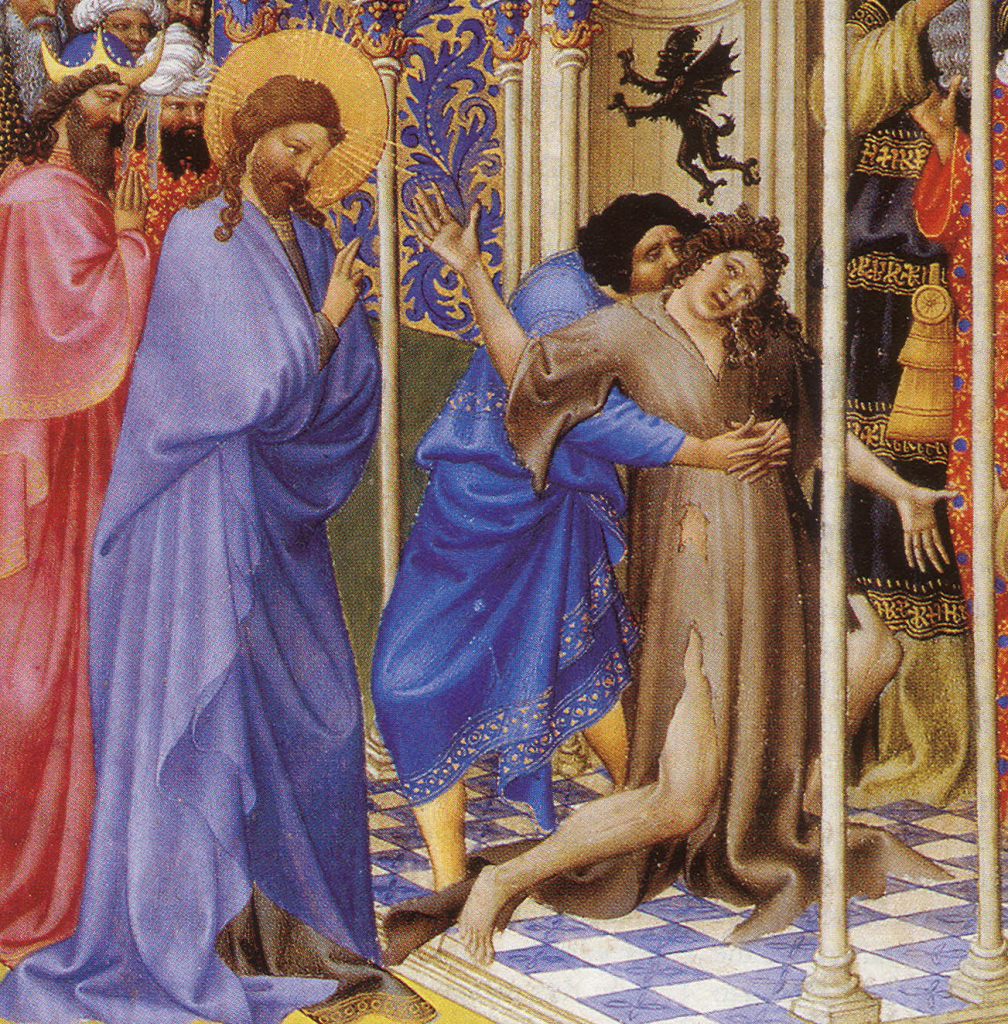
1:31:07 just a reference to this astral entities or this dionic [daimonic?] entities in his body
1:31:12 well
Tat is surprised he said do I have tormentors in myself
he said
hermy says yes yes yes you do but we go to drive
1:31:20 them out
and I imagine I this is not described but this is my interpretation
[Egodeath theory’s interp: naive freewill thinking, monolithic, autonomous control, I control the source of my control thoughts – causes control instability; must revised mental model to reject steering among branching, and reject “I’m my own source of control-thoughts”]
1:31:25 and I think it’s I think
the good reasons to assume this is that we get then is what we get then is
a
1:31:31 description of an exorcism ritual in which the the tormentors are
1:31:38 going to be driven out of Tat’s body
so what happens is that
Hermes invokes
Watch Darth Wouter Skip Right Over the Fixed Stars Silently (I HOPE NO ONE NOTICES)
The 10 Levels of the Hermetic Universe According to Darth Wouter
Above Sphere 7 Saturn, Is Souls (not Fixed Stars); The Fixed Stars Are Nowhere, Not in Sphere 8, because I Blew them Up to Purify the Cosmos of Fate
1:31:44 10 powers of light.
“There are 10 powers, because there are 10 levels in the Hermetic universe:
You have the seven levels of the cosmos; the seven planets’ spheres …”
My Catching Hanegraaff Commentary: Everyone Agrees that the Fixed Stars Are Above Sphere 7 Saturn
WHAT COMES NEXT Hanegraaff?
WHAT IS IN THE SKY, LOTS of them, BESIDES 5 WANDERING STARS?
Planets wandering IN RELATION TO WHAT?
WHAT SPHERE CONTAINING WHAT, IS ABOVE THE 7 PLANET SPHERES?
WHAT IS THE COSMOS MODEL OF these topmost astrologers, Hanegraaff?
https://en.wikipedia.org/wiki/Geocentric_model –
The Ptolemaic order of spheres from Earth outward is:[5]
- Moon
- Mercury
- Venus
- Sun
- Mars
- Jupiter
- Saturn
- Fixed Stars
- Primum Mobile (“First Moved”)
“Ptolemy did not invent or work out this order, which aligns with the ancient Seven Heavens religious cosmology common to the major Eurasian religious traditions. It also follows the decreasing orbital periods of the Moon, Sun, planets and stars.”
https://en.wikipedia.org/wiki/Seven_heavens – idea 8:10 pm apr 8 2025: 3 heavens:
- planet spheres 1-7
- sphere 8: fixed stars
- sphere 9+: above Fate – 3rd heaven = above Fate
https://en.wikipedia.org/wiki/Seven_heavens – “Ancient observers noticed that these heavenly objects (the Moon, Mercury, Venus, the Sun, Mars, Jupiter, and Saturn) moved at different paces in the sky both from each other and from the fixed stars beyond them.” “observed celestial bodies such as the classical planets and fixed stars.”
I class the below image as a 9-sphere, 11-level model:
- 7 planet spheres + fixed stars
- 1 sphere (prime mover) above fixed stars
- 1 level above that (God & Elect)
- 1 level below moon sphere
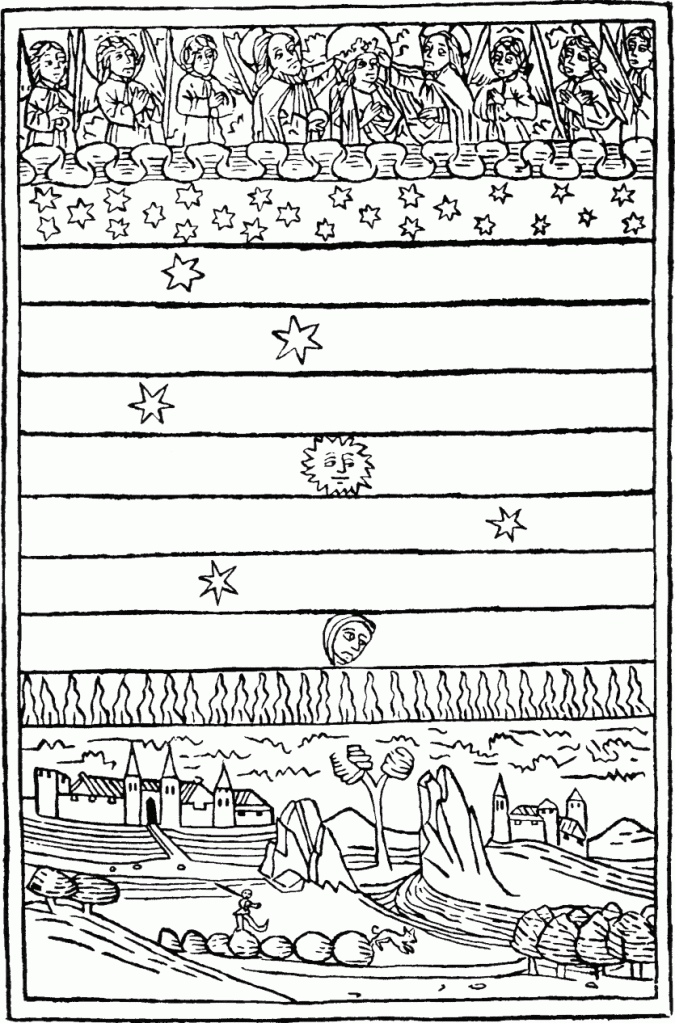
Features:
- YI tree in middle
- Rock close to R branch of tree
- guarded gate into city
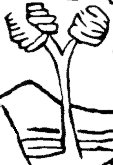
“Scheme_of_things1475 YI tree.gif” 2 KB 8:29 pm Apr. 8, 2025
- Eudoxus – 350 BC https://en.wikipedia.org/wiki/Eudoxus_of_Cnidus – “fixed”: 1 hit
- Hipparchus – 130 BC https://en.wikipedia.org/wiki/Hipparchus – “fixed”: 4 hits
- Ptolemy - 150 AD https://en.wikipedia.org/wiki/Ptolemy – “fixed”: 2 hits
https://en.wikipedia.org/wiki/Eudoxus_of_Cnidus#Importance_of_Eudoxan_system – ” added seven spheres to Eudoxus’s original 27 (in addition to the planetary spheres, Eudoxus included a sphere for the fixed stars)”
Look at that damn stars-insulting PARENTHETICAL – like the Amanita worshippers reducing Psilocybin to a footnote in servitude to the god-Idol Amanita.
Notice the INTENSIVE attention ONLY to the planet spheres, and the barest, mere parenthetical giving a F about the fixed stars – what the hell!
THE ONLY MENTION OF FIXED STARS IN THIS ENTIRE ARTICLE, is a mere parenthetical aside.
https://en.wikipedia.org/wiki/Celestial_globe
If Hanegraaff and the confused hermetic scholars want to say that there are no fixed stars in the Hermetic cosmos, they need to come out and say that.
They simply OMIT fixed stars from their accounting and their claimed description of the Hermetic cosmos model – inconsistently – and then, next thing you know, they mention fixed stars in sphere 8 and = fate; ie, they do this:
Fate = fixed stars = sphere 8 = Ogdoad = above Fate
They never give us all the contradictory pieces together. On page 1, they all say:
Hermetic Scholars:
“Fate = fixed stars = sphere 8”
Then on page 100 the scholars all say:
Also Hermetic Scholars (in a separate paragraph):
“sphere 8 = Ogdoad = above Fate”
Every one of the scholars makes that same deceitful, dishonest, confusion-hiding move. HOPE NO ONE NOTICES.
Transcription con’t: The Hanegraaff Leap Right Over the Fixed Stars
then you have the eighth level of Life the souls living Souls
NO Hanegraaff WRONG, DRASTICALLY INCOMPLETE ANSWER.
THE 8TH SPHERE CONTAINS FIXED STARS. say it! Say it, goddamnit! “Fixed stars!” Let me hear you say it, hermetic scholars! FIXED STARS!
1:32:00 Then you have the ninth level of Light which is the noetic light of divinity.
And you have the 10th level
1:32:08 which is also the first level which is the Source, the Pega in Greek, the
1:32:14 ultimate source the Divine Source from which everything is continuously being born
so you have again this metaphor of
1:32:22 birth metaphor this of birth the universe is born we are born everything
1:32:27 is born from the Pege, from God okay so
you have 10 levels
so
Hermes then invokes
1:32:3610 powers of light into the body of Tat and these powers of Lights enter
1:32:42 his body and they drive out the dark daimonic powers of the astral energies
1:32:49 out of his body
and there are 12 of them well 12 because
the 12 signs of the the Zodiac
so it makes sense 10 Powers
1:32:56
drive out 12 Powers 12 dark Powers leave his body with a flapping of wings
[the sound of naive freewill thinking being sacrificed and purified from; made to repudiate relying on the premise of monolithic, autonomous control where I control the source of my control-thoughts]
we
1:33:02 read literally so really
like entities leaving his body
[the egoic personal control system revealed to be virtual-only]
and that is the moment of rebirth
[ look at the ladded from Saturn to fixed stars – confirms my idea that the main gate is from 7/8 eternalism at Saturn to 8/8 full eternalism at sphere 8 fixed stars
https://en.wikipedia.org/wiki/Seven_heavens
https://en.wikipedia.org/wiki/Seven_heavens#/media/File:Michelangelo_Caetani,_The_Ordering_of_Paradise,_1855_Cornell_CUL_PJM_1071_06.jpg
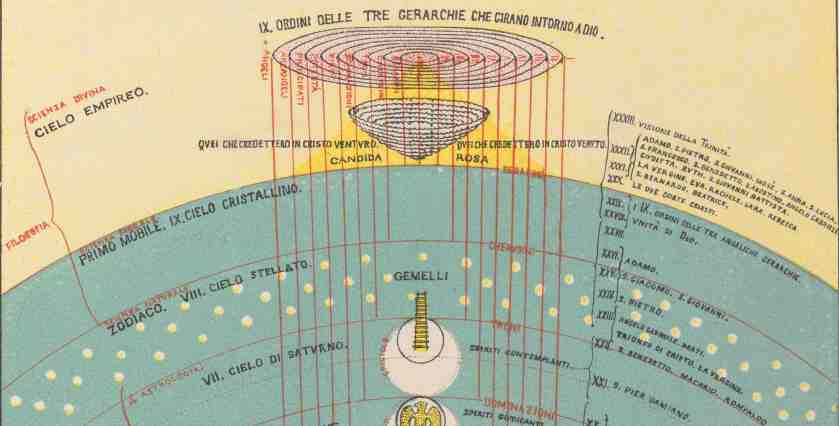
“Michelangelo_Caetani_The_Ordering_of_Paradise_ladder.jpg” 440 KB 9:00 pm Apr. 8, 2025
1:33:08
because at that moment the 10 powers of light weave themselves into
1:33:14
an spiritual body of light into the physical in the physical body of
1:33:20 thoughts [Tat’s] so he still has his physical body the product of the first birth but
1:33:25 now it is inhabited by a second body a body of Light which is born and that is
1:33:31 so this is
a literal physical spiritual birth of light in the
1:33:38 body and this is Divine Light so
this is this is the rebirth and the moment that this that this happens Tat is no longer
1:33:48 seeing the World by his normal physical
1:33:54 senses
because normally we see the world in time and space
so I am focused
1:34:01 on this space where I’m sitting at this moment in time but
The moment that Tat is
1:34:07
reborn, he’s no longer bound to to space and time.
[Hanegraaff is fantasizing that Tat is reborn from the Fate 7 planet spheres into “the Ogdoad and the Ennead”, “level 8-and-9”, which is/are “above heimarmene”, and to do this, Hanegraaff must sneakily do away with all the fixed stars including zodiac which he says = Fate. He’s doing the old inconsistent kettle logic or systemically contradictory incomplete accountings:
- Fate = fixed stars = sphere 8. [later, separately:]
- Ogdoad = sphere 8 = above Fate.
- To pull off this magic trick, quietly sneak the fixed stars into Hanegraaff’s Rejected wastebasket.
👞🌌🗑
“and so you get this wonderful
1:34:14 description in which he says
I’m everywhere I am in the past I’m in the future I’m in the present I am here in
1:34:22 this place I am in India on the other side of the world I am I’m in the ocean I’m in the air I’m I’m
1:34:29 everywhere and so so the rebirth does not just mean that um that
1:34:37 this light body is taking shape into your physical body it also means that
1:34:42 your Consciousness is radically changed and becomes able to see the world in the
1:34:47 same way that God himself sees the world namely everything at the same time and all times at the same time and so this
1:34:54 is the description Corpus made from 13 so that’s the rebirth uh that’s not a Christian interpretation of lelli it’s a
1:35:00 different uh model but still about rebirth exactly the rebirth idea is so
1:35:07 Central uh I think um like uh like T’s
1:35:12 experience after recognizing the rebirth that he’s everywhere like uh this this
1:35:19idea uh I think the very first encounter when
1:35:24 harmis was in the state of half asleep and he encountered Poimandres at the very
1:35:32 first moment the so his introduction was I am po minder and I am with you
1:35:41everywhere yeah exactly yeah exactly and and and this
1:35:46 decard decad is henard is the same thing the moment you recognize this decad decans
1:35:54 is the 10th layer and the he is the is the beginning the root number one the 10.
Reborn into Sphere 8 Fate and then Reborn into Sphere 9 Above Fate; Rebirth into “Ogdoad & Ennead” Is Mainly into Fate (Purified; Sacrificed; Purged) and then Also into Above Fate (Made Mature/ Integrated)
[astral ascent mysticism per Egodeath theory: reborn from Saturn sphere 7 into fixed stars sphere 8 and then as a minor move, post-trip integration, transcend sphere 8; move into sphere 9 above Fate.
You are mainly REBORN into Fate, then after, you are slightly reborn into above-Fate. In the final analysis, this is the way combined as “8 reveal 9”: reborn into 8 (Fate) and then into 9 (above Fate), kind of both together, like Hanegraaff writes “theOgdoadAndTheEnnead”, fusing them togher AS IF Ogdoad is above Fate, yet his book also says
- “zodiac = Fate”
- “fixed stars = Fate” [citation needed, check my front flap]
- Footnote 114: “Whether the fixed stars should be included [with Saturn, sphere 7] or should rather be associated with the Ogdoad [sphere 8] remains an open question for me.” – p. 294, footnote 114, Hermetic Spirituality and the Historical Imagination: Altered States of Knowledge in Late Antiquity, by Wouter Hanegraaff, 2022.
level 10 – God, outside the cosmos spheres
sphere 9 – prime mover; pleroma, precession of the equinoxes; above Fate
sphere 8 – fixed stars – pure Fate, demiurge; reconciled and reborn into heimarmene-compatibility, purified of naive freewill thinking.
sphere 7 – Saturn
sphere 6
sphere 5
sphere 4 – Sun
sphere 3
sphere 2
sphere 1 – Moon
level 0 – Earth
Trans. Con’t (1:36:00)
1:36:00 and
the one [the Source??] is the same thing that triggers the rebirth experience
the moment you recognize oh oh it’s not the
1:36:07 different it’s the same thing and
that’s the beginning of the hermitic Corpus literature and that’s the also the
1:36:14 literature that concludes uh Lazar Al’s crer harius at the very end the the
1:36:20 participant
they’re eager to know okay tell us how the rebirth works
and and I I would I would also say the important
1:36:28 part is as a
as a scientist myself whenever you try to understand a complex
1:36:36 object or complex piece I would say the most guaranteed
1:36:42 way to understand something if you can make it by yourself suppose I have this
1:36:48 glass in front of me I want to understand so I can measure it I can do
1:36:53 all kinds of thing but the guaranteed way that I’ll understand this glass completely if I make this Glass by
1:37:02 myself for example I I found the raw glass I melted it I impressed it then I
1:37:09 made the handle the bottom line is the only guaranteed way to understand
1:37:15 something completely is to rebuild it make it by yourself I think well I
1:37:21 really want to thank you for that observation because I think that’s I honestly I think that’s a brilliant
1:37:27 observation I think it’s absolutely right it is right and L Al was going
1:37:32 step by step by step to rebuild how the human body works by this that passion
1:37:41 this daimonic entity mixing bowl
how to get rid of those Passion by 10th power
1:37:48 and
by the time you reach 10 power you recognize you came back at the beginning
1:37:53 so that’s the making of the human body and actually that’s the magic yeah
1:37:59 that’s why people traditionally blame these herst [hermetists?] as a magician because they change people yeah
they change people
1:38:07
they change people I think it’s yeah yeah yeah yeah I I I think you’re you’re
1:38:12absolutely uh bull Bullseye absolutely true this is how it is and uh yeah yeah
1:38:18yeah and like you say the only only if you can make something do you really know it that that’s a fantastic
1:38:24observation that’s a fantastic observation I think that is that’s something that you can apply also to
1:38:30people like zimos The Alchemist who was trying to understand matter by working
1:38:35in it in in a laboratory by making things then then you get to know them and yes yes yes yes yes that’s that’s
1:38:42wonderful that’s that’s that’s really yeah yeah I I personally want to thank
1:38:47you for this Rich because most of the Hermetic literature is lost or not
1:38:53encourage or nobody reads them because those are in ancient language but you
1:38:58translated in a very easily readable language in English language this crer
1:39:04Hermes and lazav and Lazar Al and other people’s translation and I think that
1:39:11helped me to read and appreciate the work and that’s wonderful that’s
1:39:17wonderful thank you so much well thank you very much and really it’s wonderful to have such an attentive reader of my
1:39:24work and uh that’s really I appreciate it you never know who will read your book that’s why there is a saying there
1:39:31was a argument let’s conclude our discussion today I think I mentioned in my uh email that the thought and Amun
1:39:41was discussing that you cannot teach people wisdom by writing because the meaning is
1:39:47lost Amun was saying that meaning is lost you cannot but you argue no no no
1:39:53by writing you can also teach them because that’s the Alchemy you wrote a
1:39:58 book I understood it so that’s the alemy and it’s possible
1:40:04yes well this is this is very very very nice to hear very nice to here because
1:40:10that’s exactly what I said on the very final pages of this book I wrote about
1:40:15AR hertica that yes uh
how is it possible the experience cannot be
1:40:20 transmitted through language because you have to experience exp it it yourself
but by
1:40:26 reading texts are able to texts have agency and they can do something with
1:40:33 you and you’re able to reconstruct the meaning yourself based
1:40:39 upon those texts
reassemble the fragmented part and it reassembles into
1:40:44 an entity an idea
and if when you see what you mean
by reading the book you
1:40:51 actually see the writer’s point of view and experience yourself
so it’s a it’s a
1:40:58 teleportation
kind of teleportation that you do something here but it reassembles
1:41:03 here it’s kind of magic it’s again kind of magic
so even Amun God Amon
1:41:09suggesting to Tat that you cannot teach wisdom by writing a book because the meaning is lost and people will
1:41:15 translate it differently but Tat was persistent
no no no no you can still do it and I respect you that you insisted
1:41:24 that no I think
by writing a book and and communicating to a third person that
1:41:31 person will like sew the seed and make his own understanding
what I am
1:41:38 understanding in a identical way
and he
if somebody misunderstood that’s their problem
but if somebody understands
1:41:45 correctly what I mean actually that’s a valid way of doing this hermetic magic
1:41:51 also yeah and
here we come to a very F very nice I think and natural ending to
1:41:56our conversation because this this act of understanding as you’ll say um yeah
1:42:03that is what we call hermeneutics right hermeneutics and the word
hermeneutics basically means the art
1:42:11 of understanding understanding texts
but understanding everything
the art of understanding we call it hermeneutics
1:42:18
and uh the very
word hermeneutics of course is derived from Hermes
so uh that
1:42:24 is exactly the Hermetic art of understanding things
so in a way this
1:42:29 brings everything together again in the act of understanding
the human Act of understanding
which means that you
1:42:35 bridge a gap that cannot be bridged
and
that is what Hermes does bridging be
1:42:40 thank you so much and thank you for helping other people to bridge their gaps by your work
thank you so much well
1:42:48 thank you thank you very much for this conversation
I enjoyed it very much and I appreciate it thank you okay bye-bye”
/ end of transcript from utoob
Litwa’s Illogic: The Cosmos Doesn’t Contain Fixed Stars: “The fixed stars create the cosmos”
p. 299, Litwa’s Commentary: “… the realm of the fixed stars … The fixed stars of the eternal realm in turn create the cosmos.”
Where did he get this confused mis-definition of “the cosmos”?
From hermetic text p. 294 (Litwa’s translation): “not the cosmic sphere, and not the bodies of the other stars”.
219 “outside the cosmos”, 222: “the perceptible cosmos”, “the higher cosmos”,
223: what is the cosmos except the sum of its components from which everything is born?” 217: “the cosmos” … “the gods which lieve above it”
Hypothesis: this is what Justin Sledge means by “the hermetica are sloppy, poor Philosophy; for popular practice only”. Make it up as you go, shift definitions constantly.
Astral ascent mysticism per the Egodeath theory; not per the garbled, inconsistent Hermetica or Darth Wouter or Confused Other Writers
Perennialism per the Egodeath theory: eg: everyone else says “unity nondual oneness; eliminate ego, only mind exists” — those are all false, wrong, misunderstanding of perennialism.
NO ONE BUT ME correctly UNDERSTANDS PERENNIALSM as transformation from possibilism to eternalism, producing integrated possibilism/eternalism thinking.
I Reject Perennialism, Because It Is Defined as a Specific Misunderstanding of Psilocybin Transformation
Perennialism is defined as a Particular False Imagining of the Nature of Transcendent Knowledge
Therefore, I cannot say I assert perennialism.
Everyone defines ‘perennialism” as nondual unity oneness, and omits mental model transformation of personal control system transformation from possibilism to eternalism / integrated possibilism/eternalism thinking.
The view that I assert is not perennialism, I must respect and note how the word perennialism is defined by other people.
I learned that I cannot redefine “determinism”.
It doesn’t work, for me to define “perennialism” differently that the norm – Moshe Idel is right, the term is useless “because everyone defines it differently”.
Same situation as “determinism”.
The Egodeath theory rejects determinism. Determinism is defined by everyone as domino-chain causality. The future is “closed” in a certain way, they say, by a certain mechanism, they say — they are wrong on both counts.
Determinism is universally defined as:
- Domino-chain causality.
- The future is “closed” in a certain sense.
- The future is closed by a certain mechanism.
I reject and disagree with all that. Eternalism is fundamentally different than determinism.
I reject astral ascent mysticism as everyone sloppily defines it. I only agree with astral ascent mysticism the way I define it, which generally agrees, solidly agrees with the tradition, but the tradition is hazy and confused.
I reject “there are mushrooms in Christian art.” Actually there is the art genre of mushroom-trees; a combination of {mushrooms}, {branching}, {handedness}, and {stability} motifs. NOT “mushrooms”.
Everyone mis-defines determinism as possibilism-thinking premised, domino chain causality, which I reject in favor of 4D spacetime eternalism.
What sphere numbers are in “the cosmic sphere”. Is anyone going to bother defining what the hell their term means, that they are throwing around carelessly? What does “the cosmic sphere” mean: spheres 1-7? 1-8? 1-9? These writers NEVER SAY.
Define your terms!
p. 157: “the revolving circle (of the zodiac) … the cosmic cycles” <– now, “the cosmos” includes sphere of the fixed stars (sphere 8).
p. 82 Commentary: “the cosmos (which includes astral formations)” <– now, “the cosmos” includes sphere of the fixed stars (sphere 8).
Inconsistent ancient writers, inconsistent modern scholars. I stand in judgment over both, to select the best aspects. My model is more useful and clear and consistent, of astral ascent mysticism mapped to mental model transformation.
I transform ancient thinking, I transform modern scholarship. I make a useful technology out of garbled mess.
To the extent that ancient writing and myth and motifs agrees with my theory, that material is sound, correct, and accepted by me.
To the extent that ancient writing and myth and motifs disagrees with my theory, that material is unsound, wrong, and rejected by me. As surely as I reject entry Jeru where donkey lifts right foot. As surely as I reject reversed tauroctony images, which are all too common.
Myth confirms Egodeath theory in that the best, most well-formed myth is somewhat less garbled analogy matching my coherent useful theory. My theory has built-in standards of judging data: poor data vs superior data.
Why would a confused ancient writer sometimes say the cosmos includes fixed stars, and sometimes excludes fixed stars?
- ancient writers: DEFINE YOUR TERMS. Does ‘the cosmos’ include sphere of the fixed stars, or not? Now it does; now it doesn’t – silent redefinition of key terms, GREAT.
- modern scholars: DEFINE YOUR TERMS. They keep shifting usage of “the cosmos” – WHAT SPHERE NUMBERS DO YOU MEAN THIS TIME? — like the awful term “sacred mushrooms” or “entheogens” (meaningless, confusing shell-game wildcard words).
Such sleazy cheap shot saying that Ulansey makes mistakes, yet not specifying.
Citation needed! Bad writing by Davidson.
Houot calls for “science exploration” – Ulansey made a major contribution to spiritual science.
I’m glad to have built Egodeath theory (the Mytheme theory portion) since 2001 on Ulansey’s work, as soon as Coraxo around 2000 pointed out the failure of my 1997 basic core theory to explain Gnostic transcendence of eternalism.
The scholarship really fails on this point, tracking sphere 8, the fixed stars, as the master Fate sphere.
My approach to modelling astral ascent mysticism is driven by sphere 8.
Scholars are bad because they are not driven by tracking sphere 8, and so when Poimandres doesn’t focus on sphere 8, and “8 reveals 9” is not explicit about fixed stars, scholars end up throwing around their meaningless abstract word “the Ogdoad”.
Scholars instead need to be saying “sphere 8, sphere of the fixed stars, which are Fate and the sphere of the Demiurge ruler over the planetary archons.”
Scholars by poor wording, favoring a hazy positive word divorced from the Science cosmos model, “the Ogdoad” — written with incomprehension — they write in hazy magic talking in clueless superstitious reification terms, of their hazy scholarly construct, totally abstracted and disconnected from basic geocentric Science.
They think they are discussing magic superstition that has no Science meaning.
They aim to discuss spiritual ascent, and they think this means “turn off your Science mind”.
They do not think that the texts are discussing what they claim to discuss: a concrete, real, specific, defined cosmos model.
Poimandres and “8 reveal 8” are not THAT complicated: scholars have no excuse to skip levels, but they fail to track the sphere numbers and they get lost in space.
Especially they fail to track, with meaning, sphere 8, the fixed stars.
Scholars evidently hate the fixed stars, they shun them, because if fixed stars are Fate – as scholars admit – then the previous positively valued magical superstitious meaningless abstract term “the Ogdoad” takes on the hated Fate.
I love the experience of eternalism, everything interesting revolves around it, so I am motivated to inventory and track sphere 8, fixed stars, Fate headquarters you are reborn into (and then beyond).
Scholars shun Fate, and worship magic meaningless abstract “Ogdoad”, so they avoid inventory tracking which sphere # we’re talking about and what’s in that sphere that defines it (fixed stars).
That is the scholars’ psychological blind spot problem: they mentally categorize fixed stars as “bad” because they do know that fixed stars are Fate and the realm of the Demiurge, but they read that the initiate desires to reach sphere 8, and then 9.
The scholars are baffled and psychologically blocked as follows:
- Sphere 8 is neutral construct.
- fixed stars are bad, Fate, demiurge.
- the Ogdoad is good and desirable.
- Therefore go hazy and abstract and do not put these pieces together.
My explanation for why Darth Wouter removes fixed stars from his magic abstraction “the Ogdoad”, explains the prejudice against the fixed stars that all this stripe of scholars evinces.
Transcript reformatted by Michael Hoffman for scholarly analysis.
Transcribed by Mary Sharon.
Copyright © 2022 TheAstrologyPodcast.com
Find the following key words in this page:
- sphere
- 7, Saturn, seven, seventh
- 8, fixed stars, Ogdoad, eight, eighth
- 9, Ennead, nine, ninth
The key to sorting out the confusion is, mark “7“, “8“, or “9“ next to every word.: translate all terms to sphere numbering, consistently & explicitly.
Find: Ogdoad (1x) – here’s where the scholars are getting mixed up by the bad, vague writing of the ancients:
- The quirky misleading model of the cosmos in Poimandres confusingly and incorrectly says that reaching the Ogdoad (cosmic sphere 8, fixed stars) = rising above Fate.
- All other ancient texts say that reaching the Ogdoad (cosmic sphere 8, fixed stars) = the headquarters of Fate. The Ennead (sphere 9 outside the sphere of fixed stars) is above Fate.
Found the Cosmic Defect, in Poimandres Fixating on the 7 Planets as Fate, and then Reaching Ogdoad AS IF Above Fate
Video: Hermeticism and Ancient Astrology: The Corpus Hermeticum, with with Sam Block & Chris Brennan
Here’s where all the scholars get messed up by Bad Writing by the ancients, ancients too vague and confusing and advanced but SLOPPY MYTHMAKING BY ANCIENTS:
https://www.youtube.com/watch?v=KupaADzq88g&t=2760s = 46:00 —
video title:
Hermeticism and Ancient Astrology: The Corpus Hermeticum
with Sam Block & Chris Brennan
especially 47:35 47 * 60 + 35 = 2855s
https://www.youtube.com/watch?v=KupaADzq88g&t=2855s
ch: The Astrology Podcast
Feb 16, 2022
series playlist: The History of Astrology
has timestamps outline!
“A discussion about the ancient philosophy of Hermeticism and its relationship to Hellenistic astrology, with Sam Block and Chris Brennan.
Hermeticism is a religious, philosophical, and mystical movement that arose in Hellenistic Egypt around the first century, and is attributed to the teachings and practices of Hermes Trismegistus.
It represents a popular synthesis of a number of philosophical and religious trends that were popular during the Hellenistic period, including Stoicism, Platonism, native Egyptian religion, and astrology.
The majority of what is known about this philosophical or religious school survives in the Corpus Hermeticum and a handful of other writings from that time period.
During the course of the episode we talk about what is known about the Hermetic philosophical tradition, and how it relates to the technical tradition of astrology that arose during the same time period.
Sam is the author of a series on Hermeticism on his website, which I would recommend checking out for more information on this topic:
https://digitalambler.com/about/herme…
Transcript: Hermeticism and Ancient Astrology
“Check out the podcast website for the audio version of this episode and transcription”
The webpage about the episode, w/ timestamps:
https://theastrologypodcast.com/2022/02/16/hermeticism-and-ancient-astrology/
The actual transcript of the episode:
Ep. 339 Transcript: Hermeticism and Ancient Astrology
https://theastrologypodcast.com/transcripts/ep-339-transcript-hermeticism-and-ancient-astrology/
todo: make a page containing copy of transcript, with my formatting and my commentary showing where the scholars are getting confused and TANGLING TWO HAZY MYTH MODELS THAT CONTRADICT EACH OTHER.
- In Poimandres, fate = sphere 1-7; planets; then rise to the Ogoad which is here discussed AS IF Ogdoad is distinct from Fate.
- In all other ancient writings, fate = Planets + fixed stars = spheres 1-7 & sphere 8; to get outside Fate, must reach sphere 9, the Ennead (= integrated possibilism/eternalism thinking, which transcends naive possibilism-thinking & also transcends eternalism-thinking in the following senses:
- Experience is always shaped as possibilism.
- After a brief glimpse of eternalism & the actual source of control thoughts while in the peak window of the intense mystic altered state, the mind returns to the baseline state of possibilism experiencing.
- The mind integrates possibilism/eternalism thinking.
Darth Wouter’s Alderaanization of the Fixed Stars
Darth Wouter’s Alderaanization of the Fixed Stars
Cosmic Schizophrenia
- Fixed stars are BAD b/c Fate, they are in sphere 8.
- The Ogdoad is GOOD b/c it is beyond Fate.
- Ogdoad is the sphere above sphere 7 Saturn, ie, sphere 8.
- 💥 COSMIC CONTRADICTION – Cosmic Schizophrenia of Hanegraaff & Davidson
Hole in the Sky – Black Sabbath
https://www.youtube.com/watch?v=5zFfh6FsDws —
How to Build a Universe That Doesn’t Fall Apart Two Days Later
How to Build a Universe That Doesn’t Fall Apart Two Days Later
Philip K. Dick, 1978
https://philipdick.com/mirror/essays/How_to_Build_a_Universe.pdf
Motivation for this Page
In draft article branching-message mushroom trees, I am summarizing 3 models:
- Astral ascent mysticism per Egodeath theory / the Mytheme theory. This page is toward that so I can be sure-footed in the face of scholars’ confusion and self-contradictions. astral ascent mysticism is a tremendously powerful common point of reference IF DONE RIGHT to give clarification instead of confusion like Darth Wouter “Star Destroyer” Hanegraaff.
- Model of mental model transformation per Egodeath theory; transformation from possibilism to eternalism , ending up w/ integrated possibilism/eternalism thinking.
- The art genre of mushroom-trees; the combination of {mushrooms}, {branching}, {handedness}, and {stability} motifs – rare/specialty framework system to be explained by relating to more familiar astral ascent mysticism + the direct model of mental model transformation from Egodeath theory.
Been working for years to pin down the cosmic disaster in book Hermetic Spirituality and the Historical Imagination: Altered States of Knowledge in Late Antiquity (Wouter Hanegraaff, 2022)
Hermetic Spirituality and the Historical Imagination: Altered States of Knowledge in Late Antiquity (Hanegraaff)
This transcript shows the problem, and I need to markup the transcript to analyze it.
Top Matter of Transcript Page
Ep. 339 Transcript: Hermeticism and Ancient Astrology
The Astrology Podcast
Transcript of Episode 339, titled:
Hermeticism and Ancient Astrology
With Chris Brennan and Sam Block
Episode originally released on February 16, 2022
Transcribed by Mary Sharon
Transcription released February 25, 2022
Copyright © 2022 TheAstrologyPodcast.com
Transcript
CHRIS BRENNAN:
“Hey, my name is Chris Brennan and you’re listening to the Astrology Podcast. In this episode, I will be talking with Sam Block about ancient hermeticism, and we’re going to be talking about that as a spiritual and philosophical, and religious tradition from the ancient world. So, hey Sam, welcome to the show.
SAM BLOCK:
“Hey, it’s good to be here.
CB:
Yeah, so you are the author of- Last year, you wrote a series of posts on your website on your blog which is titled The Digital Ambler on hermeticism and frequently asked questions about ancient hermeticism that I thought was a really great treatment and a really good introduction to that topic. And so I’ve been meaning to talk to somebody about this for a while because it’s such a complicated issue but it was such an important philosophy that interacted with ancient Hellenistic astrology in very important and interesting ways. So I was hoping we could give an overview for those that don’t have any background on what ancient hermeticism is today and some of the different philosophical and religious concepts associated with it. In terms of the starting point for that, what do we know about what survives of ancient hermeticism today from the classical world?
SB: Plenty. Just how it got here kind of is a messy story unto itself. We have a whole bunch of texts that survived from the ancient world. And when I say ancient, specifically I mean the period from about first to the 4th century CE.
CB: First to the 4th century CE?
SB: Yeah, roughly speaking.
CB: Okay.
SB: From specifically Roman Empire period Egypt. So this is kind of still in Hellenistic Egypt, just post Ptolemaic period.
CB: So especially like Alexandria Egypt?
SB: Alexandria? I personally say more of a Thebes sintering but yeah, all the Nile was heavily urbanized up and down. So yeah.
CB: This is after the Hellenistic period after Alexander the Great from the Greeks and Macedonians came in and conquered Egypt and Mesopotamian parts of the Mediterranean world, and then all of a sudden for the next several centuries up until the first century, Egypt was under the control of Greek-speaking rulers, and that Greek or Hellenic culture started to mix together with Egyptian and some Mesopotamian as well as some Jewish cultures and different things all in that area of like Egypt and Alexandria and other surrounding cities?
SB: Exactly. Yep, that’s exactly what happened.
CB: So that’s sort of the cultural context, and out of that cultural context of this synthesis and fusion of different cultures and philosophies of religions, we eventually see the emergence of some sort of other philosophy or some sort of mixed philosophy which is partially what we refer to as hermeticism?
SB: Yes. That time period, religiously in that part of the Mediterranean world, was super weird. Like you have all these new religious movements propping up left and right. And this term is heavily heavily debated, but you see the rise of all these pagan monotheisms popping up left and right.
CB: What was their context before that? Like, what were the different philosophies? Like, was it what Platonism, Aristotelian…?
SB: For sure. There are philosophies. You’ll have Hellenic philosophies, the Olympian Hellenistic if you want to draw a distinction. And then you also had all the various traditional religions; you had the various mystery cults like Mithraism, the ISIS cult, the cult of Eleusis, and so forth. But around the turn of the millennium, new cults start popping up. I use cult in the traditional sense. New religious movements start popping up, you know, that either we’re really sectarian breakaways from existing religions, or we’re just brand new mystic movements like have caught on popularly. You have the Hypsistarians as a good example of this. You could call them, say, general god fearers and that’s often how they’re called sometimes. But you also have these notions of a local god in one part that’s kind of worshipped as just the God. In some cases, this might be modern scholars reading in too much the literal Greek phrase, [θεός]. But other times [00:04:23] is pronounced monolatry verging into monotheism. And it’s a really weird thing you just see popping up left and right in that time period of Mediterranean world. That also comes along with the rise of the Roman Empire, you know, with new forms of government, sometimes really authoritarian forms of government that radically transformed existing ways of living, economy, military, commerce all across the Mediterranean. And it’s the same kind of context that spurred on Christianity’s growth as well. So you can kind of consider it to be almost not quite a sister path, but very similar kind of context that spurred on those kind of cults. And what we today might consider hermeticism also rose in that similar context.
CB: Right. And that’s really good point in terms of thinking about Christianity being one of the religions of the cults that arose during the same time period on the first century CE, in that it didn’t just fully come out of nowhere but it drew on earlier established religious and sometimes philosophical traditions like for example, obviously like Judaism for example, and building upon much of the earlier textual and religious tradition that came before it. But then there were other philosophical and religious schools that also emerged around the first century and after, which mixed together the different philosophies and religions that are present in the Mediterranean in different unique ways. You mentioned also Mithraism as another important one, for example, that didn’t become as influential in the long term but was pretty popular back during that time period. So hermeticism is unique because what are some of the philosophical schools or religious schools that it drew on and was influenced by? Because to me, that’s one of the most interesting things about hermeticism is what’s usually referred to as its eclecticism. That it was a somewhat eclectic religious philosophy.
SB: The way I like to consider specifically classical hermeticism, you know, the original things we would consider chase hermeticism, to be a blend of Egyptian religiosity mixed with Hellenic slash Hellenistic philosophy. And all those philosophies are fed into it. Most people nowadays when they think of hermeticism they think, “Oh, Neoplatonism. Oh, Iamblichus.” Which later on, sure, absolutely. It definitely as time went on, picked up a lot more Platonism and a lot more specifically Neoplatonic doctrine and ideas. But if you look at the older hermetic texts themselves, it’s largely a blend of stoicism and middle Platonism. And the earlier you go to first and third books, the Corpus Hermeticum specifically, you see a lot more pronounced to stoicism there.
CB: Yeah. So it’s like from Platonism, it’s drawing on some ideas of the soul and maybe some concepts from like Plato’s mystical dialogue, the Timaeus, which posits this notion of the cosmos being this living animal or this living being or entity in some way and other platonic ideas that it’s drawing from that. Because the Platonic tradition was so dominant and influential in western, especially Greek philosophy for the next several centuries after it originated in the third or 4th Century BCE. From stoicism, we get this focus on the notion of fate and the importance of the notion of fate and necessity, and sometimes predetermination and things like that that shows up very strongly in the hermetic text.
SB: Definitely notions of fate. But also even broadly speaking, a lot of cosmological notions as well.
CB: Yeah, like some of their doctrine of Earth, air, fire and water, and the quality is associated with it were influenced by not just the Platanus, but also the stoics. So we get that. I know at certain points there were some scholars that identified some Jewish influences on the Hermetica and I don’t know if that’s debated a little bit today still or to the extent to which that’s true, but there was a sizable Jewish community in Alexandria at the time. So that was a, you know, present religious and philosophical model that would have been influencing other eclectic philosophies that were around the same places.
SB: Yep. I don’t stay in the camp of, but I think it’s fairly well understood that there’s definitely some Jewish or Judeist sizing influence in at least some impulses of hermetic texts because we even see the similar notion in law, the Greek Magical Papyri, where there’s references to the God in Jerusalem, or you know, referencing certain Jewish temple priestly practices in the Greek Magical Papyri. It was very much like a non-Jewish set of magical texts. So definitely, there was some influence there as well.
CB: Okay. So we’ve got those sort of Greek philosophical influences, but then there’s also sometimes it’s more overt and sometimes more recently it’s more subtle, but it’s been drawn out by scholarships and some genuine native Egyptian influences in the Corpus Hermeticum are in the hermetic texts as well so that there’s some elements from traditional Egyptian religions that may be influencing the texts also, right?
SB: Absolutely. Yep. And for a long time this was kind of thought of as like the thing, and then wasn’t the thing and now it’s the thing again. But with recent scholarship over the past 100 years and so, yes absolutely, there’s been a lot more confirmed Egyptian presence in the hermetic texts and what we see today as hermetic practices. Yeah.
CB: Okay. And let’s explain that, the three-part thing that you just mentioned. Because I think that’s really important thing because it’s like the initial phase is, these are sort of presented on the surface level as quasi Egyptian texts and were often regarded in the ancient world or in later times like in the Renaissance as Egyptian wisdom teachings because that’s almost how they present themselves in some way. But then there was a phase in scholarship where scholars started digging into the text and pointing out that they weren’t actually as old as people thought they were. Instead of being 1000s of years old, they probably dated to some time between the first and the fourth or 5th Century CE and that they had stoic and platonic and other Greek influences. And so for a while, the belief was that the Hermetica were just texts that were presenting themselves as Egyptian wisdom teachings even though in reality that was just being used as a cover for sort of like mid-level Greek philosophizing or popular philosophy or something like that. But then more recently over the past century with the discovery of new texts, there’s been some revisions of that and now it’s heading back in the other direction where some scholars are identifying some legitimate Egyptian influences from philosophy and religion on these texts, so that it does seem to have incorporated that to some extent.
SB: Yes. If you look back a little bit of classical references to Hermetica, what we would nowadays see as quotes from the Corpus Hermeticum or quotes from the Asclepius or whatnot, you know, you see other people across Mediterranean and the classical world– patristic writers for instance, Roman philosophers– call this just Egyptian wisdom. Iamblichus, in his reply to his mentor, framed himself as an Egyptian priest presenting texts we’d later find in hermetic texts, as coming from an Egyptian authority. And later on in what I call the Arabic era when a large number of Arabic texts were focusing on alchemy and magic and astrology, they reference Hermes as an Egyptian scholar, as an Egyptian hero, with people going into Egyptian tombs to cover knowledge and lore preserved by Hermes. And you see this trend over and over and over mythically, over and over again. And with Ficino translating the Corpus Hermeticum and beginning the Renaissance, this got a new revitalization, again repeating the idea that this stuff is ancient Egyptian wisdom passed on to the modern day.
CB: Right. There was a classic story about he was translating Plato. Ficino was like a Greek scholar and he had a patron who was very wealthy who was paying him to translate all of Plato’s Greek texts, which are super important foundational works in Greek philosophy into Latin, which was the language of Europe in the day. And then they supposedly got suddenly this collection of manuscripts of philosophy attributed to Hermes– the Corpus Hermeticum as we call it today. And he supposedly stopped translating Plato and then and then started translating these hermetic texts because they thought there was the perception at the time, that the hermetic texts were so much older than even Plato, that they deserved precedent. And I’m not sure if that story is actually- It sounds like it might be a little bit Hollywoodfide, I think, or it may not have gone down exactly like that but it at least gives you some idea of the importance of a certain time frame that these texts were held during the Renaissance.
SB: If I understand correctly, that patron that Ficino had was the Medici’s, and when his specific patron commissioned him to switch over from Plato to hermeticism, it’s because the patron was getting pretty old at that point and was kind of getting more concerned with his knowledge of salvation and how to save the soul. And to suddenly have these texts drop into his lap from like the teacher of Moses himself, you know, as a surefire way to gain salvation of the soul and your cosmic power, that’s a pretty good impetus. That’s actually what happened in his history. That’s how we got the Corpus Hermeticum translated from Byzantine Greek into Latin. Yeah.
CB: Okay. That leads us to more or less the primary text of hermeticism today. And so for those not watching the video version, I’m holding up the Brian Copenhaver translation of the Corpus Hermeticum with the Latin Aesculapius, which is titled Hermetica. And this is sort of like the standard scholarly translation of the primary or core group of hermetic texts that survived today that we associate with the classical Hermetic tradition from the ancient Greco Roman world, which is a series of what is it? 16 or so Greek philosophical texts or quasi-philosophical or religious texts as well as one Latin text that survive. And that’s sort of the core of what survives essentially textually of the ancient philosophy of hermeticism, right?
SB: Yeah, that’s a good summary of it. Yeah.
CB: Okay. How many actual tracks are there in the Greek corpus, Sam?
SB: There are 17 texts. They are numbered one through 18, with 15 being skipped. This isn’t some taboo or mystery about, you know, “Oh, book 15 is missing.” No. It’s because Ficino made a goof when he was translating the Corpus Hermeticum and included another text from a completely different body of collection of hermetic texts which, for today’s scholarship, we just drop out book 15. And so it goes one to 14, and then 16, 17. And then there’s book 18 which some people think is just an insipid little bit of prose and doesn’t actually need to be in the chromatic collection. That’s but people’s opinions to sort out, I guess.
CB: Okay. Yeah. But anyway, so it is a collection of texts that survived that we think was written between about the first and fourth or 5th Century CE, largely in Greek, but one of the major ones is in Latin. And then that’s sort of the core of what survives of ancient hermeticism and then in modern times, there’s also been some additional texts that have been rediscovered or some fragments of texts that have been identified as also coming from this sort of hermetic Milu or sort of set of philosophies or religions that’s loosely associated with it, right?
SB: Yes. It’s like with Nag Hammadi corpus. You know, we have a couple of largely gnostic bodies of texts. But we do have a couple hermetic ones in there, one of which is a section of the perfect sermon or the Asclepius, but one of which is completely unknown in any other collection. Discourse on the eighth and the ninth, or discourse in [00:17:51]. Like, that text only survives as part of the Nag Hammadi collections. And it’s explicitly a hermetic text. It’s like that’s the one that was really upheaved, you know, sowed into modern understanding of hermeticism. More recently as well, we also recovered what are called the Armenian definitions, which is a set of the 49 short doctrinal instructional statements which only survive in Armenian, although we know it was based on the Greek original.
CB: Okay. Yeah, and so that’s added to and expanded our body of surviving hermetic texts. Let’s maybe go back and narrow in on defining what, when we’re looking at this body of let’s just say the initial Corpus Hermeticum, the core of 17 texts plus the Asclepius, what are the defining characteristics that even allow us to identify something as a hermetic text, let’s say? And one of those is that they tend to be dialogue sort of philosophical or quasi philosophical-looking texts, with a dialogue oftentimes between like a teacher and a student, and oftentimes between a figure named Hermes Trismegistus and some of his students where there’s some sort of knowledge or wisdom that’s being passed down in a sort of lineage of a revealed knowledge from teacher to student essentially, right?
SB: That is the general format. There are at times departures from it. Like books 16? Yeah, book 16 from the Corpus Hermeticum is actually a letter pinned from Asclepius, a Hermes student, to Amman, another Hermes student. I think book nine is also… Is it book nine? I think it’s nine. Book nine is also a letter, but from Hermes to one of his students. So it doesn’t have to be a dialogue form, most of them are dialogue. That was popular teaching format the time. But not necessarily.
CB: Yeah. And in that way it’s almost imitating like Plato’s dialogues, for example, where most of– and some people, I guess, if you haven’t read Plato, one thing that’s a misconception is sometimes most people don’t or some people don’t know that his philosophical texts were written as dialogues where it’s a discussion between two figures and so the philosophical points are arrived at through this process of like going back and forth. And in the Hermetica, especially some of the cortex like the very first one, Corpus Hermeticum One which is also sometimes called the Poimandres, is in a dialogue format where- And that’s the one basically everybody should read, I think, it’s the very first one Corpus Hermeticum One, because it is the very first one where we have this figure of Hermes who’s receiving some sort of revelation basically about the true nature of the cosmos but it’s in a dialogue with this figure that he’s getting this revelation from.
SB: Yeah. I would say just actually read book three first, but book one is definitely the foundational new revelation that kind of sets the stage for everything else to follow in hermeticism. Absolutely.
CB: Okay. And can you clarify who is the revelation? So it is Hermes who’s receiving this revelation and he’s receiving it from who? Who’s the revelation from?
SB: Poimandres. How do I describe Poimandres? You might be familiar with the notion of the Agathos Daimon, the good demon, which is a very popular deity to worship both in Egypt and in Greece, although in kind of different forms. In Egypt, Agathos Daimon was associated with the god Tyche, literally the deity of fate itself. Fate personified. And in that regard, Poimandres is kind of a Agathos Daimon-ish figure, because in a few other hermetic texts you do see Agathos Daimon being called a teacher of Hermes Trismegistus. In another sense, you might consider Poimandres to be a aspect as it were of the Egyptian god Thoth. Which might seem confusing to some people because you have Hermes who is Thoth to many people, and then you have Poimandres as a Thoth teaching a Thoth? It’s a little complicated. But you have another theory that Poimandres is actually a de vide Pharaoh. Because we know that the Egyptians had large Pharaonic cults, you know, cults of the dead and certain de vide by kings of theirs. And one theory goes that Poimandres is actually a survivor of one of those diversified worshipped pharaohs who was helping someone else specifically with the revelation of how things really are. It’s a really confusing figure and to this day there is no one scholarly consensus to who or even what Poimandres is. All we know is that in this text, in Corpus Hermeticum CH One, he is this divine revealing… You might even consider him an angel of God, to reveal the nature of the cosmos to Hermes.
CB: Yeah, it’s like almost set up. Even though it’s a shadowy figure, it’s like he’s having some sort of revelation essentially from God or from some divine source that’s showing him the true nature of the cosmos and through this sort of revelation and through this sort of vision, but he’s also being sort of walked through it by a teacher that he’s in dialogue with?
SB: Yep. I also want to note a distinction between a hermetic dialogue and like a Platonic dialogue. In a Platonic dialogue it’s typically like a back and forth discussion. You know, where one person will propose something and then the other person will kind of shoot it down and propose something else which will itself get shut down or reinspected more closely. That’s like the Socratic process you see in a lot of Platonic dialogues. Hermetic dialogues are rarely as involved as that. It’s really just like Hermes teaching and then maybe like one or two questions by the other person, usually Asclepius or [Tarq], Hermes son. It’s a lot more simpler so it’s not as involved as a normal Platonic dialogue.
CB: Right. Yeah. It’s funny enough. In the first one, sometimes there’s even a sort of like reluctance sometimes of the student or an impatience that gets expressed at some point in the dialogue and then the teacher reprimands him for it and says like, “Slow down,” or, “I’m getting there.”
SB: Yep, definitely there.
CB: Why don’t we– because we’re trying to describe this but in some ways, it’s like I wish we could read the whole thing. But maybe if we could read a little bit of excerpts just because I would like to give people a taste of what this is, because it’s so foundational to understanding what hermeticism in the Corpus Hermetica actually is. Do you think that would be-
SB: I think it’d be great.
CB: Okay. I’ve got the Google Books translation I just got the Brian Copenhaver translation which is usually viewed as one of the more authoritative ones recently because it’s based on one of the most recent critical editions of the Greek texts that was done in the 20th Century. It’s usually the go-to one when people are reading this. So this is the first text, it’s titled Discourse of Hermes Trismegistus Poimandres. One of the things when I was rereading it last night that I thought was wild, and I like Copenhaver’s translation, is that it’s very dramatic. Like if you read this entire thing, it’s extremely dramatic. Especially if you read it dramatically in your head, especially in some of the later parts. I don’t know if I can get the correct tone here but I’ll see what I can do. So the opening passage, it says, “Once, when thought came to me of the things that are and my thinking soared high and my bodily senses were restrained, like someone heavy with sleep from too much eating or toil of the body, an enormous being completely unbounded in size seemed to appear to me and call my name and say to me: “What do you want to hear and see; what do you want to learn and know from your understanding?” “Who are you?” I asked. “I am Poimandres,” he said, “mind of sovereignty; I know what you want, and I am with you everywhere.” I said, “I wish to learn about the things that are, to understand their nature and to know god. How much I want to hear!” I said. Then he said to me: “Keep in mind all that you wish to learn, and I will teach you.” Saying this, he changed his appearance, and in an instant everything was immediately opened to me. I saw an endless vision in which everything became light – clear and joyful – and in seeing the vision I came to love it. After a little while, darkness arose separately and descended – fearful and gloomy – coiling sinuously so that it looked to me like a snake. Then the darkness changed into something of a watery nature, indescribably agitated and smoking like a fire; it produced an unspeakable wailing roar, then an inarticulate cry like the voice of fire came forth from it. But from the light, a holy word mounted upon the watery nature, and untempered fire leaped up from the watery nature to the height above. The fire was nimble and piercing…” It keeps going on but it’s basically describing a cosmogony or like the creation of the cosmos basically, right?
SB: Yep. And this is a revelation. Think of the book of Revelation. Hermes is tripping right now. He was in a period of central deprivation almost, you know, in such a state of meditation where his physical senses, his bodily awareness was just gone. And in that state of pure consciousness, he gets approached by this divine figure– overwhelming– and just is shown in a way that can only make sense in this kind of revelation. And what we might consider the metaphorical, but in this kind of altered state of reality understanding. This is his vision.
CB: Right. Okay, let me finish here. So he says, “But from the light, a holy word mounted upon the watery nature, and untempered fire leapt up from the watery nature to the height above. The fire was nimble and piercing and active as well, and because the air was light it followed after spirit and rose up to the fire away from earth and water so that it seemed suspended from the fire. Earth and water stayed behind, mixed with one another, so that Earth could not be distinguished from water, but they were stirred to hear by the spiritual word that moved upon them. Poimandres said to me, “Have you understood what this vision means?” “I shall come to know,” said I. “I am the light you saw, mind, your god,” he said, “who existed before the watery nature that appeared out of darkness. The light-giving word who comes from mind is the son of god.” “Go on,” I said. “This is what you must know: that in you which sees and hears is the word of the lord, but your mind is god the father; they are not divided from one another for their union is life.” “Thank you,” I said. “Understand the light, then, and recognize it.” After he said this, he looked me in the face for such a long time that I trembled at his appearance. But when he raised his head, I saw in my mind the light of powers beyond number and a boundless cosmos that had come to be.” And then he says, “The fire, encompassed by great power and subdued, kept its place fixed. In the vision I had because of the discourse of Poimandres, these were my thoughts. Since I was terrified, out of my wits, he spoke to me again. “In your mind you have seen the archetypal form, the pre-principle that exists before a beginning without end.” This is what Poimandres said to me.
He keeps going on and it creates this whole sort of creation of the cosmos story, and eventually gets to the creation of our world essentially, basically in the whole cosmic framework. There’s one other part of this I want to skip to that’s really important, which is it starts talking about the planets and it starts talking about the setup and the creation of our cosmos and the way that it’s constructed, which created this important conceptualization of the role of the planets in the ancient world, I think. Right?
SB: Well, earlier on, it does talk about the creation of the cosmos and the creation of the Earth within it. That kind of describes the way down as it were. And at the end of Book I, it describes the way back up.
CB: Okay, so one of the things I guess it sets up and we can just describe it here is it sets up the Earth, and part of what it’s talking about was the Earth and the creation of the material universe. But then it sets up this situation with the cosmos where you have these spheres that radiate out from the Earth, which turn out to be the planetary spheres.
And when a person is born, their soul, which comes from outside of the cosmos [outside = 9] – outside of the material plane– descends through the planetary spheres [1-7] [HOLD ON, DARTH WOUTER, NOT SO FAST! I SEE YOU AGAIN SKIPPED FIXED STARS [8]; STOP THAT!] and it starts picking up qualities from each of the planets and then eventually, is born into the material world where it’s subject to fate.
SB: That’s generally the idea, you know?
There’s the creation of the cosmos, then there’s creation of heavens [vague wildcard word!! what are their sphere numbers?] and the creation of the Earth– nature as it were.
And then there’s humanity. And we are made ontologically as the same level as the logos itself, the word of God. And more than that, not only are we described as a child of God in much the way that the logos is, but we’re also described as in the likeness of God, which is a really important thing because even the logos doesn’t get that kind of distinction.
CB: Right.
SB: So as we’re made, you know, because all things love God, everything has a cosmic sympathy with the divine.
And we are an image of the Divine therefore everything has a cosmic sympathy with us as well because we are human, and humans are made in the image of the Divine.
So because of that, all things want a little part of us and we want a little part of everything. So we kind of asked our parent– you know, God– to “Hey, can I play around this neighborhood?” And God said, “Absolutely, go on. Knock yourself out.” And so we did.
We wander off the neighborhood, we picked up a little bit a couple houses, and then we just found this really cool house owned by nature– the Earth. And nature just loved us. She made a whole body for us. And while we looked at the body made for us which is a reflection of us, and because we saw our reflection of us, we saw an image of ourselves and we’re in the image of the Divine. So we naturally fell in love with ourselves kind of like a big narcissistic moment, and then we just inhabited the body. Like it’s a fall of mankind as it were, but it’s not talked of necessarily in negative terms. You know, this is the meaning of the soul with the body.
CB: So there is a more negative version of that, which is where the Gnostic schools tended to go, which was a much more dualistic in terms of being very anti-body and very pro spirit to the extent that some of the schools said that the material universe was created by sort of like a malevolent creator, subservient creator deity who in his ignorance of the true God created this false cosmos and then took sparks of the Divine and trapped humanity in it essentially, which is like sort of part of the more Gnostic negative creation story which gives a much more overtly negative spin to the physical incarnation in the bodily world of the senses. And while you do occasionally get some of that occasionally in certain tracts of the corpus Hermetica where there’s some more negative treatment of the body coming in for the most part, it’s not quite that extreme in most of the hermetic texts and philosophy, it seems like. Right?
SB: Yeah, absolutely. There’s definitely a pessimistic duelist tendency in some texts. There’s also an optimistic monistic tense in other texts. And it kind of wavers between which approach you want to take from text or text. But there is definitely a sympathy, a harmony as well between Gnosticism and hermeticism like, again, we see hermetic texts in the Gnostic collection of the Nag Hammadi collection. And they arose like they’re siblings. Bluntly put, hermeticism and Gnosticism are sisters. They rose in the same culture, around the same time period, around the same socio-economic or religious backdrop, kind of replying to the same impulses of salvation of the soul. They just kind of grew up in a way of it. But they’re definitely similar in a lot of ways.
CB: And they’re also taking into account similar cosmological frameworks of like we are on Earth where the Earth is encircled by these planetary spheres, [GODDAMMIT, FOOLS – SAY “FIXED STARS”! SAY IT! SAY IT! for the love of god!] and these planetary spheres have qualities and meanings and actually have some sort of impact on us or some sort of control or connection with our fate.
[idiocy, how the hell can you just NOT MENTION sphere of the fixed stars! WTF!!]
SB: Yes.
CB: Because by this point, starting with Plato at least– Plato in the Timaeus or maybe it was in the [00:06:28] and the republic associated the sphere of the planets with heimarmene [WHAT ABOUT THE FIXED STARS GODDAMIT!] which is the Greek term for fate, and so this began the long-running tendency that picked up especially during the Hellenistic period to associate the planets [WHAT ABOUT THE FIXED STARS GODDAMIT!] with the concept of fate, and eventually culminated in the rise of Hellenistic astrology which was the belief that you could use astrology and especially use the study of the birth chart or Natal astrology to study your fate and to know what your fate actually is.
SB: Yes, absolutely. And we actually see identification in some hermetic texts that really make explicit the connection between the planets [WHAT ABOUT THE FIXED STARS GODDAMIT!] and fate.
So it’s definitely a thing.
CB: Yeah, it turns out that was literally the next passage that I was about to read when I stopped and I should have kept reading.
So let me read that passage from Corpus Hermeticum One as part of this sort of creation myth that it says up. So, where I left off was where it said, “In your mind you have seen the archetypal form, the pre-principle that exists before a beginning without end.”
This was what Poimandres said to me. “The elements of nature – whence have they arisen?” I asked.
And he answered: “From the counsel of god which, having taken in the word and having seen the beautiful cosmos, imitated it, having become a cosmos through its own elements and its progeny of souls.
The mind who is god, being androgyne and existing as life and light, by speaking gave birth to a second mind, a craftsman, who, as god of fire [hypercosmic sun] and spirit, crafted seven governors; they encompass the sensible world in circles, and their government is called fate.”
[WHAT ABOUT THE FIXED STARS!!]
That’s it, and that’s really crucial right here in the Corpus Hermeticum in the very first, you know, one of the most important and what’s usually considered one of the oldest and most foundational texts for this entire set of different texts in this broad sort of philosophy.
It sets up this creation story where part of the creation story is that the planets are encircling the Earth and that they are the governors of fate.
[WHAT ABOUT THE FIXED STARS!! Demiurge rules over the planetary archons, so if archons are Fate, so is Demiurge Fate, as Wouter Hanegraaff’s own entry says in academia.edu article for book like Princeton Dictionary of Gnosis & Mysticism ]
SB: Yep.
CB: Okay. One of the points, though, that ends up being important is the revelation and part of the revelation that occurs in the first text of the Corpus Hermeticum in the Poimandres is this notion that while we’re alive, that we’re in a physical body and the physical body is subject to or is under the control of fate and under the control or influence to some extent of the planets, which are the governors of fate.
[WHAT ABOUT THE FIXED STARS!!]
However, part of the revelation it seems like in the very first text of the Corpus Hermeticum is that we also have some sort of soul which is not from the material plane, but actually descended from some other plane outside of the planetary spheres,
[WHAT ABOUT THE FIXED STARS!!]
[soul = sphere of the fixed stars = Fate-ruled;
spirit = outside fixed stars = freed from Fate]
and that the soul [sic, spirit] itself is not subject to fate in the same way at least when it’s not down here encompassed by the physical body.
Is that more or less correct?
[less correct]
SB: Yes.
[No.]
So the idea is that our souls [what about spirit?], what and who we really are, was made directly by God.
God made the Demiurge, the craftsman who made the rest of the cosmos,
[WHAT ABOUT THE FIXED STARS!! say it! say it! what sphere # is it? A really fkking hard math problem! 8! sphere 8! 8! 8!]
but we are not a product of our cosmos.
Our bodies are part of the cosmos and therefore our bodies are subject to the laws and energies of the cosmos innately.
[What does “the cosmos” refer to?
HOW MANY SPHERES IS THE COSMOS, WHEN LOOK UP TO SKY?
ANSWER: 8, NOT 7! WTFF! FOOLS!]
Our bodies cannot escape that kind of fate.
Our souls, however, are technically immune to fate because it comes from a place beyond fate.
ERROR! ERROR!
[IS FIXED STARS SPHERE 8 ABOVE FATE? NO!!
IS SPHERE 8 “A PLACE BEYOND FATE”? NO!
SPHERE 9 IS BEYOND FATE.]
The difficulty, the rub for us, lies on the fact that our souls inhabit these bodies, you know?
You outside when you’re wearing a shirt, people will make fun of you or they’ll comment on your shirt. And you can’t but receive those comments, unless you just take off the shirt entirely. But you can’t do that because you’re in public. In much the same way, our souls are wearing these bodies, and these bodies are what’s subject to fate.
[YES, subject to fate at sphere 1-7 AND sphere 8, where soul halts. spirit moves on to sphere 9 outside Fate.
GET IT STRAIGHT, FOOLISH SCHOLARS!]
Our souls aren’t subject to fate
[soul rises to sphere 8, headquarters of fate.
spirit isn’t subject to fate, but is in sphere 9 above fate, above sphere 8 – your precious magic irrational word “Ogdoad”, which is the main location of Fate.]
but because of how closely intermingled our souls are with our bodies, our souls can still be impacted by fate. [CONTRADICTION! CONTRADICTION! B/C soul cannot escape Fate (= spheres 1-7 + 8); only spirit at sphere 9 escapes Fate.]
I’m sure you might have heard the saying astrology does not… It does not compel, it only impels.
You know, you get a certain transit, it’s not gonna tell you, “You will act like this.” It gives you an impulse to act in a certain way. In much the same way, we describe that of the soul.
Fate compels the body.
It impels the soul, it does not compel the soul in some way it compels the body.
[so you admit, soul is compelled by Fate. so much for your confused grand assertion above, “soul escapes Fate”. only the spirit escapes Fate, actually. YOU ARE CONTRADICTING YOURSELF, CONFUSED SCHOLARS. LEARN TO COUNT TO 8 AND 9, FLUNKED STUDENTS!]
CB: Right. So there’s a notion that once our soul becomes incarnated in a body, that we are subject to some of the things that come with the body, which is not just the health and sickness which is one of the physical things then that is said to be subject to the planets,
[WHAT ABOUT THE FIXED STARS!! SAY IT! say “fixed stars” or else you are speaking confused, contradictory gibberish nonsense]
but also to desires and to other motivations that arise primarily from the body rather than the soul.
And that that can cause us then to be led into certain things or to do certain things that the soul might not do otherwise if it was not encompassed by the body.
But because it becomes so intertwined with the body, the ability of the planets
[WHAT ABOUT THE FIXED STARS!! SAY IT! say “fixed stars” or else you are speaking confused, contradictory gibberish nonsense]
and of fate to act on the body becomes something that can kind of drag the soul along as well.
[CB admits self-contradiction: “The soul is dragged along by Fate.” Yet above, “The soul escapes Fate. WHICH IS IT?!]
SB: Yes. So in other hermetic texts that have a more strongly platonic bend to them, not part of the Corpus Hermeticum but other classical hermetic texts, you see this platonic notion of thumos and epothumia, or the drive and desire.
Folio Image f76: Chariot Wipeout
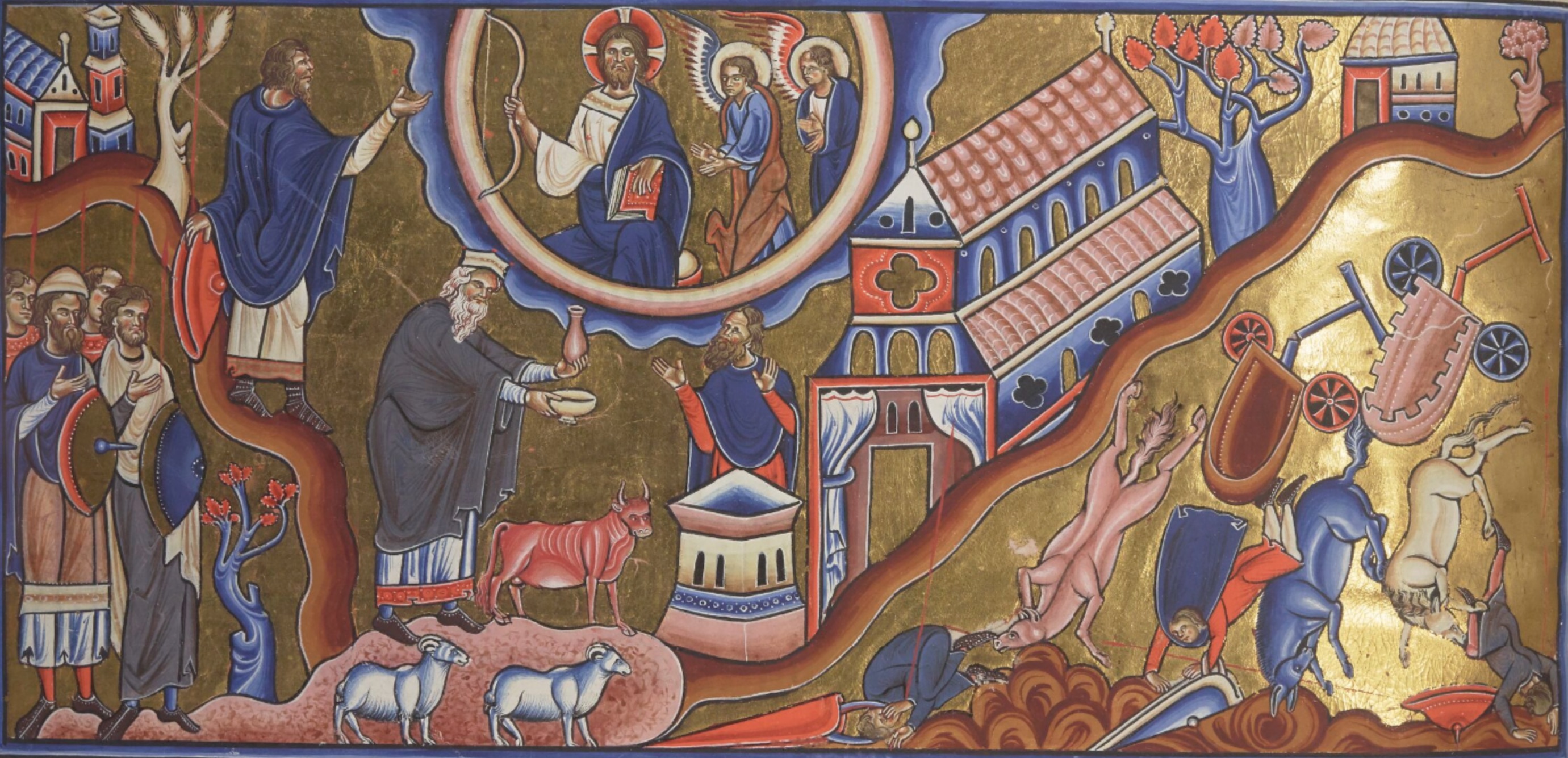
“And it kind of uses the same platonic metaphor of the soul as a charioteer trying to drive these two horses that are wild and need to be broken.
And if the charioteer isn’t good at what they’re doing, the horses will just take that charioteer wherever they want, whether it’s into a ditch or into a wall.
It could spell doom for the charioteer.
But if the charioteer knows what they’re doing and knows how to steer and guide those horses, then they can go wherever they want.
You have this notion of the appetites, the physical needs of the body. And the ego, the emotional impulses that arise from us being incarnate, you know?
Lower Soul vs. Higher Soul aka Spirit
Those are the energies of the body, the so-called lower soul, as it were.
The soul generated by the cosmos, the soul of the body.
And our higher soul, the thing that’s actually made by God, the thing that’s actually us, we have to constantly fight with that.
We have to tame it, we have to develop ourselves.
[passive POV: God makes us develop.]
If we just let the body have our way, well, then I’ll be eating pizza 24 hours a day.
I’ll get sick, I’ll get high blood pressure and cholesterol, and then I’ll spell my early doom.
But if I have my soul kind of work with my body, understand what those impulses are, what it really wants and why it wants it, then it’s like, “I know you want pizza but here, have some steamed chicken instead.
It’s a bit healthier.”
That’s where the soul works with the same impulses but in a more constructive way.
[say rotund scholar]
April 10, 2022 image processing & crop by Michael Hoffman. Seeing and cutting the branching mental model.
CB: Right.
So this is what gave rise to what became common, especially in the later medieval tradition and it’s one of the ways that astrology was able to survive even after the rise of Christianity through this distinction between like natural astrology where they started saying that astrology and the planets have influence over the body, but they don’t control the soul or necessarily maybe even the mind to a certain extent.
[the sound of confusion]
But instead, it’s something that relates to the body as a almost natural phenomenon.
SB: Yes. Yeah, we see that pretty much explicitly in hermetic texts. Yes.
CB: Yeah. Although it’s a little complicated in the hermetic text [in the minds of confused scholars] because it also says that your temperament is part of what the planets have control over, which does start getting into things that have to do with like your actions and your choices and motivations and things like that.
“I think this is a good point to read the last passage when Hermes asks Poimandres to describe the ascent of the soul [including higher part, spirit], because then we get to the other astrological section.
All right, so let me read that. It says- So Hermes, then, he’s talking to his teacher towards the later part of the dialogue and he says, “You have taught me all things well, o mind, just as I wanted. But tell me again about the way up; tell me how it happens.” To this Poimandres said: “First, in releasing the material body you give the body itself over to alteration, and the form that you used to have vanishes. To the demon you give over your temperament, now inactive…” That’s a really important point. So it says that the demon or the personal spirit in some sense, or spirit guide is somehow in charge of your temperament and that ties into their astrological doctrines.
So it says, to that diamond you give over to your temperament it becomes inactive after you die materially. It goes on. It says, “The body’s senses rise up and flow back to their particular sources, becoming separate parts and mingling again with the energies. And feeling and longing go on toward irrational nature.
Astral Ascent Mysticism: Sphere 1
Thence the human being rushes up through the cosmic framework, at the first zone surrendering the energy of increase and decrease.” So the first zone is the sphere of the Moon, so it’s attributing to the moon notions of increase and decrease because of the waxing and waning of the moon. “at the second
evil machination, a device now inactive.”
Astral Ascent Mysticism: Sphere 2
So the sphere of Mercury in this hermetic text, it’s associating with Mercury and the trickster energy of Mercury and calling it evil machinations.
Astral Ascent Mysticism: Sphere 3
“At the third zone, the illusion of longing, now inactive.” So this is the sphere of Venus and the sphere of longing or desire is given back to Venus.
Astral Ascent Mysticism: Sphere 4
“At the fourth sphere, the rulers arrogance, now freed of excess.” So arrogance is a property of the Sun once we pass through the Sun’s sphere.
Astral Ascent Mysticism: Sphere 5
“At the fifth sphere, unholy presumption and daring recklessness.” This is the sphere of Mars.
Astral Ascent Mysticism: Sphere 6
“At the sixth sphere, evil impulses that come from wealth now inactive.” That’s Jupiter’s sphere.
Astral Ascent Mysticism: Sphere 7
“And at the seventh zone, the deceit that lies in ambush.” So it associates deceit with Saturn’s sphere.
Astral Ascent Mysticism: Sphere 8: Headquarters of Fate, Ruled by Demiurge; 100% no-free-will revelation, sphere of the fixed stars; heimarmene; Fate; 4D spacetime block, cosmic prison enslavement kidnapped for ransom
“And then, stripped of the effects of the cosmic framework, the human enters the region of the ogdoad,” which is the eighth sphere basically, right?
[“I am not sure how to count to 8. I forget the zillion stars staring me in the fact while I write about “the cosmos of 7 planet spheres that is Fate”.]
SB: Mhm.
CB: Okay. “He has his own proper power, and along with the blessed he hymns the father. Those present there rejoice together in his presence, and, having become like his companions, he also hears certain powers that exist beyond the eigth region and hymn god with sweet voice.
[WHAT ABOUT THE FIXED STARS!! SAY IT! say “fixed stars” or else you are speaking confused, contradictory gibberish nonsense]
[beyond the 8th means, 9th sphere, outside the Fate cosmos]
Astral Ascent Mysticism: Sphere 9
They rise up to the father [sphere 9] in order to surrender themselves to the powers [at sphere 8],
[the surrender to Fate happens at sphere 8 — look how totally hazy the scholars get re: sphere numbers, here]
and, having become powers [sphere 9], they enter into god. [sphere 9]
This is the final good for those who have received knowledge: to be made god. [sphere 9]
Why do you still delay?
Having learned all this, should you not become guide to the worthy so that through you the human race might be saved by god?”
This is essentially the final revelation of the hermetic sort of core hermetic revelation as he’s been revealed, Hermes has been revealed not just the vision of the creation of the cosmos, but also a vision of the soul as being this entity that comes from outside [outside fixed stars = sphere 9] of the material cosmos [cosmos = sphere 1-7 + 8] that descended here and picked up all these qualities through the planetary spheres,
[WHAT ABOUT THE FIXED STARS!! SAY IT! say “fixed stars” or else you are speaking confused, contradictory gibberish nonsense]
but that once you die [die ego death at sphere 8], you have the potential of ascending back through the planetary spheres,
[what the hell happened to the fixed stars, which are 99.99% of what you see in the sky?]
giving back those qualities or shutting them almost like clothes as you were saying earlier using the shirt analogy, and then returning back to the source [sphere 9] in some sense.
[“Blessed are those who wash their robes, that they may have the right to the tree of life and may go through the gates into the city.” – Revelation 22:14 (the last page of the Bible), NIV]
SB: Exactly, yes. I want to point out that
even though the energy of the second zone– evil machination– even though these described someone negatively, I want to make the point that these are not evil powers.
That’s a big distinction between hermeticism and Gnosticism.
This cosmos [= sphere 1-7 + 8, and hypercosmos sphere 9] is not evil.
It’s not some wicked scathing trap of evil Demiurge [sphere 8 = prison slave kidnapped; need free escape; redeem; ransom] that wants to torture us where cruelty is point.
It’s not describing anything like that.
These are energies that are just part and parcel of what incarnation needs of us, of what we need in order to be incarnate.
You know, we can’t but have these energies around us. Deceit is not a good thing, you know, lying, blasphemy… These things are not great. These things aren’t true. But to an extent, you can’t survive down here without engaging that to some degree. Same with the illusion of longing, lust, a sense of self-centred egoism, arrogance. To an extent, you have to have these things because it’s what gives us our drive for survival. You know, drive to make ourselves succeed in this world. They’re not bad. It’s just, they’re things that belong to this cosmos. And if we want to get away from this cosmos, then we have to give those things up.
Failed Diagram of the Sky Lacking Any Fixed Stars (so, lacking 99.99% of what you see in the sky)
CB: Right, that makes sense. Here’s an old diagram that I made a while ago which just shows sort of the vision of the cosmos that we’re talking about here with the Earth at the center and then the seven planetary spheres encircling the Earth and encircling us with their power of fate.
And then outside of that [error! error! fate includes sphere of the fixed stars! Ogdoad is NOT above Fate] you have the sphere of the fixed stars, which I think is the eighth sphere.
[“I think??” Every schoolboy from 130 BC to 1600 AD knew this – a simple trivial given; the fixed stars are definitive of the 8th sphere. What incomprehension on the part of the scholars! -mh]
And then there are other potentially ninth or 10th spheres in some hermetic cosmologies. Right?
SB: Yeah.
Book I, the Corpus Hermeticum, kind of leaves us [those?] undefined.
And in certain other hermetic texts, it kind of expands on what those spheres are, not necessarily all in the same way.
But yes, you have the Earth– the center.
You have the seven planets above that, and then you have the sphere of the fixed stars beyond that.
[FINALLY it occurs to scholars to mention fixed stars – contradicting their earlier, wrong statements]
And that’s where you truly reclaim your divinity. Or at least begin to truly do so.
[his correction, “begin”, is important, and, telling – he can tell the incoherence of the model of astral ascent mysticism that these hermetic scholars have.]
[I half agree with Houot and Wouter Hanegraaff and everyone, on such points. In what way is the 8th sphere “where you begin to reclaim your divinity”? Ans: Mental model is reshaped to conform to Fate and have control stability in the intense mystic altered state. Soul halts there, Spirit rises at sphere 9 outside heimarmene.]
CB: Okay.
So at this point, Hermes has been given this gift of Gnosis or of knowledge or wisdom [about 100% Fatedness, at sphere 8] that has been divinely revealed to him, and that knowledge of Earth.
And then he’s sort of told, it’s now your job to go out and share this and pass this knowledge or this wisdom along to others who deserve it in order to sort of like help enlighten humanity to some extent, right?
SB: Yep, he’s given his commission as a word by Poimandres to go out and start saving people.
[reserve the word “save”, for the spirit lifted to outside fixed stars prison slave kidnapped {snake frozen in rock}, released from prison, redeemed from slavery, ransomed from kidnapping]
CB: Okay.
This is really important because then it sets up this core doctrine of hermeticism, which is Gnosis or knowledge as revealed wisdom that is passed down from teacher to student.
And Gnosis is kind of an important word so I’m not sure if we should dwell on that more in terms of knowledge, or just leave it at that as this revealed wisdom.
SB: So it does literally mean knowledge, but knowledge is not a great translation for it.
We all know how there’s like 100 words in Greek for the word ‘love’ in English. You know, there’s brotherly love, there’s erotic love, there’s agape, that kind of divine love.
CB: I mean, that might be worth dwelling on that when we’re reading this translation for example, some of these words that the translator has to make a choice and just translate as a single English word have like 10 different meanings and are kind of actually packed with other meanings that you don’t fully get unless you’re reading the Greek text.
SB: Yeah, it’s a problem. You can’t do translation without interpretation.
CB: Yeah. So Gnosis or knowledge, when you see that show up in a hermetic text, sometimes that’s packed with a lot of meanings that you really have to dwell on?
SB: Yeah. Like there’s episteme, which is more like things you accept on faith. You know, things you just learn from a teacher. There’s logos, you know, things you come up discursively. You reason your way through them. And then there’s Gnosis, which is more like not necessarily revealed, but it’s more like experiential knowledge of the truth. It’s not something you can just learn from a teacher and it’s not something you can just deduce your way to. It’s something you actually undergo, like the qualia of truth. Like, I could talk to a blind person about what the color red is like, but they’ll never know to experience color red. In the same way, this Gnosis that Hermes got from Poimandres, he didn’t just see these things. He describes them in book one of the Corpus Hermeticum as a metaphor. But really, it’s better to say that he experienced the creation of the cosmos. He experienced this knowledge that was revealed to him by Poimandres. And that’s what makes it Gnosis.
CB: Okay. That’s really important and that’s a core doctrine then of hermeticism and that becomes somewhat characteristic of other hermetic texts that allows us to identify other hermetic text, is this focus on this knowledge or this revealed wisdom knowing this deep sense of knowing that’s been handed down from teacher to student. And then Hermes then in the rest of the dialogue is then set up to be this teacher who’s empowered to go out and spread this wisdom and pass down this knowledge of this revelation that he’s had. Let me read, because this is the part where it gets really dramatic at this point when I was re-reading it recently, which is kind of interesting but so it says,
“As he was saying this to me, Poimandres joined with the powers. Then he sent me forth, empowered and instructed on the nature of the universe and on the supreme vision, after I had given thanks to the father of all and praised him. And I began proclaiming to mankind the beauty of reverence and knowledge-” There’s that word again, knowledge. And it says, “People, earthborn men, you who have surrendered yourselves to drunkenness and sleep and ignorance of god, make yourselves sober and end your drunken sickness, for you are bewitched in unreasoning sleep.” When they heard, they gathered round with one accord. And I said, “Why have you surrendered yourselves to death, earthborn men, since you have the right to share in immortality? You who have journeyed with error, who have partnered with ignorance, think again: escape the shadowy light; leave corruption behind and take a share in immortality.” Some of them, who had surrendered themselves to the way of death, resumed their mocking and withdrew, while those who desired to be taught cast themselves at my feet. Having made them rise, I became guide to my race, teaching them the words – how to be saved and in what manner – and I sowed the words of wisdom among them, and they were nourished from the ambrosial water. When evening came and the Sun’s light began to disappear entirely, I commanded them to give thanks to god, and when each completed the thanksgiving, he turned to his own bed. Within myself I recorded the kindness of Poimandres, and I was deeply happy because I was filled with what I wished, for the sleep of my body became sobriety of soul, the closing of my eyes became true vision, my silence became pregnant with good, and the birthing of the word became a progeny of goods. This happened to me because I was receptive of mind – of Poimandres, that is, the word of sovereignty. I have arrived, inspired with the divine breath of truth. Therefore, I give praise to god the father from my soul and with all my might.”
And then it has this set of short lines, it says, “Holy is god, whose counsel is done by his own powers. Holy is god, who wishes to be known and is known by his own people. Holy are you, who by the word have constituted all things that are. Holy are you, from whom all nature was born as image. Holy are you, of whom nature has not made a like figure. Holy are you, who are stronger than every power. Holy are you, who surpass every excellence. Holy are you, mightier than praises. You whom we address in silence, the unspeakable, the unsayable, accept pure speech offerings from a heart and soul that reach up to you. Grant my request not to fail in the knowledge that befits our essence. Give me power; and with this gift I shall enlighten those who are in ignorance, brothers of my race, but your sons. Thus I believe and I bear witness; I advance to life and light. Blessed are you, father. He who is your man wishes to join you in the work of sanctification since you have provided him all authority.”
So that was really extensive and a long thing to read, I realize, and especially part of the context but it’s kind of important because that sets up everything else in hermeticism, which is we have seen Hermes receive this divine revelation and then his goal then is to go out and to teach it and to pass it forward, and to share it with the world and to help people to understand their divine origins, and that they are not of this world in some sense.
SB: Yes. This really points out that the central impulse of hermeticism is salvation of the soul. Like, a lot of people who might just be tuning in to see that prayer that Hermes recited, it sounds really Christian. It sounds really like Abrahamic. And it kind of is, you know? It’s been called a Trisagion in many ways, like the Trisagion of Isaiah, you know, “Holy, holy, holy is the Lord.” It’s very much. Like the whole hermeticism as Book I sets up, is teaching a way to save the soul through the gnosis of God as the creator of all things– and of ourselves as a creature in creation. Everything else on Hermeticism really built on that one impulse. There’s the of course the Delphic maxim, “Know thyself.” Well, why is that so important? Because if you know yourself, you know everything around you. If you know everything around you, you know where it comes from, you know where you come from, you know how everything is tied together. And if you know where you come from, you also know where you need to go.
CB: Right, that makes sense. And then subsequent texts in the Corpus Hermeticum are often then dialogues between Hermes and subsequent students like Asclepius or other figures who then become teachers, like Asclepius becomes a teacher himself and then passes on the knowledge to other students. And so, this dialogue format and this teacher-student passing revealed knowledge down about the true nature of the cosmos becomes a recurring theme throughout most Hermetic text.
SB: Yeah, it’s not just revealed knowledge itself, and this’d be more episteme as opposed to gnosis. It’s more like handing the keys to gnosis over. The goal of episteme, the purpose of episteme, that taught knowledge as opposed to experience knowledge, is to build a foundation, give a framework, set expectations as it were. And within that framework and set of expectations, then the student can then do the work of entering into altered states of awareness, ritual work, theurgy, and so forth, to then experience that knowledge to get to gnosis. At multiple points of the Hermetic texts, there’s this repeated notion that, “I can’t say these things, I can’t speak what truth is because no matter what I say, it’s not going to be true.” You have to experience the truth for yourself. And all Hermes does is just show the way to do that.
CB: Right. That makes me think of this passage I wrote down when I was taking notes in preparation for this from Nicola Denzey Lewis in her book, Introduction to Gnosticism, at one point talking about what you were referring to earlier that is about salvation and it’s a salvific religious set of texts. It has the section titled knowledge is a past, the salvation. And she says, “The very fact that the Hermetica consistently feature a teacher instructing a student is witness to the fact that those who read the Hermetica were convinced of the importance of knowledge passed down through a human teacher, the acquisition of this knowledge in its fullest form, and the development of this knowledge as a form of salvation. The most important thing to bring salvation is acquiring knowledge, especially concerning how the cosmos works and how it mirrors God’s goodness. ”
Therein I think lies part of the importance of astrology and why astrology is one of the things that actually recurs as a somewhat frequent motif in Hermeticism to a certain extent, in the philosophical Hermetica but then also in other Hermetic texts that we associate with what scholars sometimes call the technical Hermetica which are practical texts on astrology, alchemy, and other topics like that of esoteric or occult knowledge or more practical texts that talk about also understanding the nature of the cosmos and having some deeper understanding of how the world works.
SB: Yes. So in a couple of the Stobian fragments, there’s this notion of how things come to be in a very high level framework. There’s this notion of providence, the mind and will of God, what God wants to happen. What serves providence is necessity, ensuring that what God wants to happen is consistent, regular. I throw something in the air, it has to fall back down in order to be consistent. I can’t throw something up there and it stays there. Serving necessity is faked. Now we know what God wants and now we know what needs to happen to accommodate that. Fate sets up the design for things to happen in such a way that fulfills providence in a way consistent with necessity. And then what serves fate is the planets themselves in their many motions of revolutions, how they coordinate their energies impel and coordinate certain things down here.
So by looking up at the stars, if you look hard enough and you can correlate how things happen down here and what happens up there, you can essentially peer into the mind of God. It’s a big claim but that’s fundamentally what you’re doing with astrology. Yes, you’re seeing how things happen down here, what will happen down here. But if you take a bigger view of that, you could see why things happened down here and why God wants certain things happen down here, and that’s why astrology is so important for Hermeticism because you need to learn the design of God and therefore, our design, what makes us tick, what our role is in the cosmos, what role we need to play. And then by playing along with that role, how we get to play a role to the best of our ability to fulfill what we need to do so we can finish our role and just leave the stage.
CB: Right. It’s like letting you in looking at contemplating astrologists, allowing you to contemplate the inner workings of the cosmos. And because of that chain of being on those different levels of us, planets, fate, necessity, all the way up to providence and then eventually back to God or back to the source by being able to contemplate and see the inner workings of fate, understand better the overall plan or providence that’s inherent in the cosmos in some way. But also, in understanding your own personal role in that and your own personal part in that gives you some greater divine insight or some way to personalize the broad workings of the cosmos.
SB: Yeah, basically. I mean, this like where the whole stoic notions come into play. What is fate? And then what do you need to do or to go along with your fate? That one prayer by I think it’s Cleanthes, not entirely sure, or Chrysippus, one of the big stoic philosopher from whom we have very little surviving. But there’s one prayer I recite to myself during hard times, “Lead me oh Zeus in holy destiny towards my post and life’s battle be willing I follow were not my will wicked in retro, but I follow still. You can’t but go along your fate. One way or the other, your fate is going to happen. It’s just on you to determine how you react to it. And so, once you learn your role, then it’s on you to you be responsible for yourself, to be responsible for your role in the cosmos and live it up to the best you possibly can.
CB: Right, yeah. Because ultimately, it has a providential design, which is good. And going back to the stoics, I guess the core of that is the notion that each event has a prior cause and whatever outcome that happens when something happens, there was something before it that led to that. And that if you follow that chain of causation all the way back, it goes back to the very beginning of the entire cosmos. So there’s this notion that there’s a sequence of events that is preordered or preordained in some sense, but because they believe that the cosmos was divine in some sense that this sequence of events was ultimately good and that whatever happens in the cosmos, even if we subjectively don’t prefer it or we don’t enjoy the experience subjectively and some instances in terms of the events that occur in our individual lives, that somehow that plays into some broader sequence of events or some broader plan that has a purpose and has an important that’s going somewhere that’s good, ultimately. And therefore, even if we don’t like it or prefer it subjectively, we should ultimately find a way to become okay with it because it’s for the greater good in some sense.
SB: Absolutely. And I want to emphasize that Hermeticism is not Stoicism. There’s a lot in Hermeticism that stoics outright laugh at. But when you look at records of contemporary Egyptian priests like Kiramon or Manetho from historical records, you see these notions that they were described as stoics. Now, it may well be that they may have actually studied and professed Stoicism as a Hellenistic philosophy while being Egyptian, while being Egyptian priests. But some scholars don’t think that… That’s not so much an indication of how they studied Hellenic philosophy, but might be more of a reflection of the overall Egyptian view towards these things, and that they just happen to align with what we would consider to be Stoicism.
Hermeticism also has a lot of Platonism in it as well. In some regards, I like seeing Hermeticism as like Stoicism plus one. Yeah, I think it’s the stoic side but you put God on or further out. If you turn back to the beginning of your book on the Corpus Hermeticum, God made the Logos, the word of God, which then essentially made the cosmos. So the cosmos is Logos in many ways, and that’s right in line with Stoicism. But then Hermeticism still goes on to say that God lies beyond the cosmos and that’s more Platonism I believe.
CB: Yeah, I think in Corpus Hermeticum One it says that God creates a craftsman or a demiurge figure who is then the one that creates the cosmos. That’s why you’re saying that the cosmos is one removed from God essentially in Hermetic approach? Okay. Whereas for the stoics, the cosmos is God and the entire cosmos is this living entity that has a body which is the physical world we can see, and then the soul that’s infused throughout it?
SB: Logos, yeah.
CB: But that’s important because they are taking over from perhaps the stoics possibly some notion of fate and this focus on fate and predetermination to a certain extent and that being tied into the planet and being tied into astrology, but there’s also an inherent focus in Hermeticism that’s really important on self-knowledge and of knowing yourself and knowing your place in the cosmos and knowing the inner workings of the cosmos. I think that’s one thing that really sets it up as being very amenable to astrology then as one of the means of not just knowing the inner workings of the cosmos, but also in terms of developing self-knowledge and the ability to have self-knowledge in order to comport yourself in a way that’s appropriate to the Hermetic ideal.
SB: Yeah, absolutely. This is how we’re going to depart from the philosophical Hermetica and get the technical Hermetica.
CB: Why don’t we explain that distinction real quick?
SB: The Corpus Hermeticum is what we consider to belong to the “philosophical Hermetica”. The Hermetic texts talk about new philosophy, religion, spirituality, not in the modern sense, but in the classical literal sense, theosophy, wisdom of the divine. It’s what Marsilio Ficino focused on with the Corpus Hermeticum. The Latin Asclepius is largely about this philosophical stuff, the Stobian fragments, the excerpts of Hermetic texts preserved by John of Stobi in his anthology, largely all what we consider philosophical or theoretical. This is often contrasted with the technical or practical Hermetica, which is the spooky stuff that modern academia doesn’t like touching, the Greek magical papyri, alchemy, astrological texts, texts that talk about how to ensoul statues or how to raise the dead, all the stuff about making enchanted rings for the decans, how to cure people and their various physical maladies by making certain offerings to certain gods and/or certain astrological alignments, making certain sacrifices to certain plants, all that is considered technical Hermetica. That’s where it gets interesting and conflicting at times.
CB: Right. But it’s an important point that just in addition to this large collection of more let’s say philosophical or religious texts that feature Hermes having a dialogue and passing knowledge down to various students of a philosophical or religious nature, there’s also in the ancient world contemporaneous with that Greek text that were written that featured Hermes passing practical knowledge of astrology down to different students, and then different students of Hermes like Asclepius passing knowledge down to other subsequent students like Nechepso and Petosiris. And so, this creates a whole other range of texts that are roughly contemporaneous, which also are labeled Hermetic because they’re given the same sensibility of featuring Hermes and different teachers passing knowledge to students, but this knowledge is less philosophical. Instead, it’s more directed towards specific technical matters like astrology or alchemy, or magic or things like that.
SB: Yeah. And for a long time, a lot of scholars and academic people believe there’s basically a firm solid boundary between philosophical stuff, the good stuff for academic scholars to talk about versus the technical stuff, which is illicit and magical and therefore superstitious and never the twain shall meet. And then we got the Nag Hammadi collection, which had Discourse Eighth and Ninth, which is very much a ritual text. It basically builds on the same cosmology that’s built on in Corpus Hermeticum One, and it actually uses barbarous word to power. It describes a ritual of spiritual elevation and ascent, an actual ritual, not just a description of what happens to the soul, but an actual ritual with indications and prayers and process that has all the hallmarks of being a technical text. And that one text blew up a lot of existing scholarship and scholarly opinions of Hermeticism back when it was discovered because they thought like you had this your mostly Hellenic philosophical movement that had some Egyptian window dressing on to make it seem more mystical was basically just popular Greek philosophy. Then you had this magical text that takes place in the same setting with the same people to actually do something. It’s a fascinating text from that perspective. That’s why there’s really not so much for the distinction between practical and philosophical or technical and theoretical. They both go hand in hand.
CB: Sure. It’s like there may have been less distinction in some text between technical and practical matters versus philosophical ones, and sometimes you’ll see an interchange between the two where in a philosophical text, there will be some specific technical instructions like at the end of The Discourse on the Eighth and the Ninth from the Nag Hammadi texts, one of the things I found really interesting about it is it gives the teaching and then at the end, it says, “And then I want you to write these teachings down and inscribe them on a specific thing.” Then it gives electional astrology rules. It tells you when to do this, and it says, “Do it when I Hermes I’m in the sign of Virgo,” and I think it says “making a heliacal rising or heliacal setting or something like that,” which is actually very similar to some electional rules in Dorotheus of Sidon which is a purely practical, technical manual on electional astrology from the first century. So we can see in some of the Hermetic philosophical religious texts like from Nag Hammadi, astrological rules being integrated into them as part of the doctrine.
SB: Exactly. We like to draw a distinction between philosophical the high-minded stuff versus the technical the low-minded stuff, but there never really was distinction. They work together.
CB: Sure. It is tricky because sometimes the practical texts can have more of a practical bend and can be a little bit sparse on giving you the philosophical reasoning so that you have to infer the philosophy from very brief passages. And this is often something that we struggle with the astrological texts for example that it focuses on teaching you how to do this, how to read charts, and how to do astrology and doesn’t usually focus as much on the overarching philosophical framework.
And similarly, in some of the philosophical Hermetica, there is more of a focus on the overarching philosophy and sometimes doesn’t go into the practical stuff as much as we would like. It’s like there still may be some understanding of why that distinction came about, but it just may not be as strict or as stark as some modern scholars have made it look like by creating those two categories.
SB: Exactly. You’ve seen the meme of the airplane with all the bolt holes that are so turned, and people are like, “Oh, well, we need to reinforce the parts of the plane that have these bolt holes on it.” Now those are the planes that actually made it back with these bolt holes need reinforced the parts that don’t have bolt holes. In much the same way, we only have what survives the knife of time and the redactor’s pin. The Corpus Hermeticum is a collection of 17 books that happened to be compiled during Byzantine era. There are many more Hermetic texts that were written than what survived today. And of the ones that survived, we probably start need to think about, why did they survive? Why were these ones chosen to be preserved in certain collections versus other ones that didn’t? And other ones that didn’t survive, well, sometimes we get lucky, we find a cache of papyri like the Greek magical papyri or the Dead Sea Scrolls, the Nag Hammadi collections. They actually do preserve some of these texts where you fill in holes or knowledge that are only otherwise presumed of what existed.
CB: One of the things additionally since you mentioned The Discourse on the Eighth and Ninth that was part of the Hermetic text found in the Nag Hammadi Library, one of my big discoveries is there had been a scholar named Joanna Komorowska who in 2004 I believe published a book titled Vettius Valens of Antioch: An Intellectual Monography, which was a treatment of the 2nd Century astrologer Vettius Valens. One of the things that she drew out was how he had some Stoic but especially some Hermetic influences on his philosophy. Specifically, there were these three passages, especially which were these three times in the anthology in his practical astrological manuals where Valens makes the reader swear an oath to keep the teachings secret and to not share them with the unlearned or the uninitiated and Komorowska speculated that these three passages were so formulaic that she suspected that Valens might be getting them from another possibly Hermetic source.
Let me actually read it really quickly. This is excerpted from my book Hellenistic Astrology in a translation of Valens. It says, Valens says, “Concerning this book then, I must before all prescribe an oath for those who happen to encounter it that they may keep watch over what is written and withhold it in a manner appropriate to the mysteries. I adjure them by the sacred cycle of the Sun and the irregular courses of the Moon and by the powers of the remaining stars and the circle of the 12 zodiacal signs to keep these things secret and to not impart them to the unlearned or the uninitiated and to give a portion of honor and remembrance to him who introduced them. May go well for those who keep this oath and may the afar mentioned gods be in accord with their wishes, but may the opposite be the case for those who forswear this oath.”
This oath shows up like three different times. And what’s interesting is I actually found a parallel and I was really excited and I found it years later when I discovered and was reading through The Discourse on the Eighth and the Ninth that has a very similar oath passage towards the very end of it that I thought may actually confirm Komorowska’s speculation that Valens’ passage came from a Hermetic text. So this is at the end of The Discourse on the Eighth and the Ninth and it gives a similar oath where it says, “I adjure you who will read this holy book by heaven, and earth, and fire and water, and seven rulers of substance, and the creative spirit in them, and the unbegotten God, and the self-begotten, and the begotten that you guard what Hermes has communicated. God will be at one with those who keep the oath and every one we have named, but the wrath of each of them will come upon those who violate the oath.”
Now, I realized that there’s a certain in terms of like oaths and things like that there’s going to be similar formulas to a certain extent, but I just thought it was an interesting similarity that might confirm Komorowska’s speculation that Valens was drawing on some earlier Hermetic texts and getting his oath passages and there might be some similarity as a result of that.
SB: It’s totally possible. You even see a similar, not explicitly described oath, but we do see something similar in Book 13 of the Corpus Hermeticum. You see similar things in I want to say it’s the 11th Divine Fragment. Yeah, there are definitely oaths that talk about… When it comes to matters of secrecy, when it comes to matters of things that can’t be divulged to those who are not yet ready for them, you definitely see a number of similar oaths. And not just in the Corpus Hermeticum or other philosophical Hermetic texts. I recall I think it’s on [unintelligible 01:23:24] early alchemical text that also has a similar oath involved. So yeah, it’s hard to say really because the notion of mysteries needing to be kept oath-bound and secret, that was definitely a common thing all across Mediterranean, especially the proliferation of mystery cults. So it’s hard to say whether it was explicitly a Hermetic thing. But given his other Hermetic tendencies, it wouldn’t be surprised if he got influenced from specific Hermetic texts about that.
CB: Sure, yeah. And her treatment she goes into much more detail treatment of some of the parallels between some of Valens’s philosophy and some of the Hermeticism. And what’s interesting is sometimes because Valens has always had really noted Stoic tendencies in his determinism, that she speculates that he’s not getting it straight from early Stoic sources, but instead he’s getting some of the Stoic influences from Hermetic sources that have picked up Stoicism and that are acting as intermediaries and that’s where some of the more Stoic tendencies are coming from into Valens. We don’t want to go with that. One of the things that’s worth picking up that’s tricky and I know that we talked about very briefly before this is there’s a later alchemist from I think around 300 CE named Zosimos and he has this really interesting very brief text which is like a dialogue or discussion on the letter Omega. In this text, he has some really interesting excerpts where he’s talking about and he’s drawing philosophy and contrasting some philosophy from two different authors that he has access to and one of them is a Hermetic text that’s attributed to Hermes that seems to be giving a much more like Stoic and deterministic philosophy of the world and of fate and this notion that you have to learn your fate so that you can accept it and that you should accept your fate. And he’s contrasting that with another text that’s attributed to Zoroaster where this text was saying that you should be able to use magic in order to control or change or somehow manipulate your faith. I thought that was really interesting contrast there and that there may be some tensions within the Hermetic tradition about some of the text may have been more Stoic and deterministic and saying that you can’t change your fate and that even if you learn your fate like some of the astrologers like Valens and Manilius say they tend towards determinism and say that you want to learn your fate so that you know what you have to accept about your future. There may be some versions of Hermeticism that went that direction versus there may be some other versions of Hermeticism that were thinking that fate was more negotiable and saying that you could use things like magic or ritual in order to mitigate it to some extent.
SB: Oh, boy, okay. Zosimus of Panopolis, great alchemist, more of a Gnostic than Hermeticist. I don’t know, maybe I see this from like a very heterodox Christian point, I’m not entirely sure. He has an opinion, and good for him.
CB: Yeah. I know this is something you feel strongly about because you tend to focus more on the magical tradition and the magical side of things, right?
SB: Not always, it really depends. Again, we only have what survives to us in the historical record. All the texts that’s survived to us they don’t actually make as firm a statement as what Zosimus himself says. And even in Zosimus’s own letter Omega when he talks about the distinctions, when he distinguishes Hermes point of view from Zoroaster’s point of view, Zoroaster says that a wise man can and should use magic to make the world better. Zosimus of Panopolis says that Hermes says that a wise man can do it, he should refrain from doing so, not that he can’t. So it’s emphasizing the primacy of fate and letting fate have primacy. That’s what Zosimus draw attention to. And that’s totally a legitimate approach to take. I can’t think of any Hermetic text off my head that say as much in such positive terms, but I can’t see anything either that wouldn’t.
CB: Let me pull up the passage really quickly because I think I quoted it in my book. This is from Zosimus. It’s from translation by Howard M. Jackson, and it says, “Zoroaster boastfully affirms that by the knowledge of all things supernatural and by the Magian science of the efficacious use of corporeal speech, one averts all the evils of fate, both of those have individual and those of universal application.” Hermes, however, in his book on The Inner Life condemns even the Magian science saying that the spiritual man, one who has come to know himself, need not rectify anything through the use of magic, not even if it is considered a good thing nor must he use force upon necessity, but rather allow necessity to work in accordance with her own nature and decree. He must proceed through that one search to understand himself. And then when he has come to know God, he must hold fast to the ineffable triad and leave fate to work what she will upon the clay that belongs to her, that is the body.
This might be a good point to bring up the Hermetica and the Hermetic philosophical texts and different texts attributed to Hermes. These are being written by different people during different time periods and with sometimes notably somewhat different philosophical outlooks and takes on things so that the Hermetica as we have it today it’s not one singular monolithic philosophy but instead, you’ll see a lot of variations in the philosophy between different Hermetic text.
SB: Yes. So the way I like describing it is when you look at the Corpus Hermeticum, it’s not one book. There is a reason why I keep saying Book I, Book II, Book III versus chapter one, chapter two, chapter three. They really are different texts in a compilation of them. And rather than thinking of all these texts being written by one author, it’s better to think of… Okay, to use a college metaphor, rather than thinking of Hermeticism as being a lecture by a professor in a lecture hall, it’s better to think of a panel debate between different professors all in the same department. They’re all not the same thing, they’re all doing more or less the same study and research and practice. But they all have their own specific specialties and their own opinions and they may have arguments amongst other, they may have disagreements and disputes, and that’s totally fine. Hermeticism was not a single thing. It was a loose decentralized mystic, I don’t want say movement per se, but an impulse that was shared amongst different places across several centuries. So it would not surprise me if Zosimus did find texts at the time that explicitly encouraged a submission to fate enough. But we also know that there were people at the time who were doing magic who were also Hermeticists. We know for a fact that we have rings to heal and get rid of and prevent physical maladies explicitly attributed to Hermes Trismegistus just in the same time period we would expect. We know there’s magic being done under the name of Hermes Trismegistus. So right there it throws those misclaim into a really weird light.
Both approaches totally work. Whether you want to a strict submission to fate, or whether you want to work with imply fate, both are totally legitimate. I think it points to a difference in the very nature of fate or at least how it’s perceived between a more strictly deterministic Hellenic approach versus a more pliable Egyptian approach. In the Hellenic approach, fate was absolute, even the gods were subject to fate. But in the Egyptian approach, the gods were in control of fate. So if you made the right appeals, the right rituals, if you intrigued the gods right away, they could change fate. I think you see this uneasy attempt at synthesis between those two views at times or perhaps one view represents more than the other in certain Hermetic texts.
CB: Right, yeah. And part of it I guess one thing that should be noted is how… Garth Fowden in his book, The Egyptian Hermes, which is a really good treatment of Hermeticism, it was written back in the 1980s so it’s a little bit old now. And there’s been some additional scholarship during that time and it’s still just a landmark book on Hermeticism. But he mentions how Iamblichus says that Egyptian priests would, or that there was a philosophical school that would attribute all of their teachings to Hermes and that they weren’t doing this. He tries to reframe it because it previously was thought to be by scholars. It’s often portrayed as part of this pseudo-epigraphical tradition of attributing like your text to a god or to a legendary figure in order to make it look better and make it sell or get out there better in terms of distribution in the ancient world, in terms of book publishing and that it was viewed as a, some scholars frame it as a negative thing.
But instead, Fowden cites this practice and says that they’re doing this in order to show that they have some intellectual embeddedness or lineage to a specific tradition and reframes it in that way. And I thought that was always really interesting way then of understanding some of the Hermetic texts that they’re doing this partially to signal their connection to and that they’re not trying to be entirely new or coming up with something fresh per se, but that they’re part of a longer tradition that stretches back and that’s part of what that’s about.
SB: Yeah, it’s a preservation of continuity, essentially the same idea. Consider the Roman Empire, the Roman Empire had this fascination with old things. Even though they didn’t much care for the Jews and Jews worshipping gods that weren’t Zeus or Jupiter, they let the Jews maintain their thing because they were so old. But conversely, when the Christians came on the scene, the Romans viciously chase after them because they were something new. So in the same ways, you’ve had this preservation continuity to signal that not only are we indebted to the wisdom of old, the wisdom of our ancient forbears, we are trying to continue that and preserve it and also develop it further for a modern day period.
And so, for [unintelligible 01:34:52] I think that’s a very solid claim to make. Because as Fowden has showed, as other scholars like Christian Boll who’s greatly built on the work of Garth Fowden and expands on it, shows that there’s so much Egyptian influence; Egyptian religiosity, Egyptian mystic impulse embedded in the Hermetica. Not much to tease out a bit, but it’s there. And thus the Hermetic stuff can indeed be considered a continuation of older forms of religiosity, of mysticism that may not have been explicitly exoterically preserved in temple cult or other records.
CB: Okay, let me read that passage from Fowden because it’s so good it’s always stuck with me and it’s helped me to understand better because we struggle with some of the early astrological texts, which also come from this Hermetic thing that was happening in Alexandria in around Egypt where the foundational authors of the Hellenistic astrological tradition like some of the earliest authors tended to attribute their texts to figures like Hermes or Asclepius or Nechepso and Petosiris and other figures like that so that they are in some ways anonymous, and we don’t know who the foundational authors of Hellenistic astrology are, but it’s because it’s tied in with this practice of potentially attributing it to signify some lineage tradition.
So, Fowden in wrestling with this says, “It’s perhaps unlikely that the pseudo epigraph of this were cold-bloodedly or indiscriminately attributed to just any ancient or mythical figure in order to increase the authority or circulation that this might be alleged by a hostile critic as when Porphyry maintained that the Gnostic book of Zoroaster was entirely spurious and modern made up by the sectarians to convey the impression that the doctrines which they had chosen to hold and honor were those of the ancient Zoroaster. Rather, one should suppose in the Hermetic tradition as among the Pythagoreans and authors some sense of continuity of inspiration of which each text added to the genre was seen as a new manifestation which could fairly if not with pedantic precision be ascribed the eponymous founder.
As Iamblichus put it since Hermes was the source of all knowledge, it was only natural that the ancient Egyptian priests should render him homage by attributing their writings to him. So we need not imagine that a spiritual teacher who was in the habit of circulating his compositions under the name of Hermes will have felt that he was perpetuating a deception or that he needed to dissemble what he was doing as potentially scandalous and indeed, his work will have gained weight in the eyes of his followers precisely because it was not merely the product of an autonomous authorial act, but reflected the sedimentary intellectual culture of his own and earlier times, in short, because it did not strive after originality.”
So that might be a really important point here in terms of understanding the Hermetica and the different Hermetic texts that survive both the philosophical ones as well as the practical ones.
SB: Yes, absolutely. And that I think is a really good point to make. What makes it Hermetic text? It’s not just the format. There is a tendency like in the philosophical Hermetic text to use a dialogue format. That’s not always necessary. We do like the letter format or just like Book Three where it’s just amusing that’s written down on paper. It’s not just about the name Hermes being present. Whether it’s Hermes to Asclepius or Hermes to [unintelligible 01:38:43] or Asclepius to Ammon, it’s not necessarily just the people present. Plus you also have other Hermetic texts where Hermes isn’t involved at all, like the texts been Agathodaemon and Osiris. But because Agathodaemon is also tied to Hermes in other way, it’s still considered under the same overall purview. It’s more about the content that matters. Again, that’s really a fuzzy thing because where do you draw the distinction between Nag Hammadi Gnostic texts versus Hermetic ones? Is it just the presence of a Christian element, is it the lack thereof, where it’s just Jewish Gnostic texts versus Hermetic one? It can be really fuzzy at times. But some combination of is Hermes ascribed to it or connected to in some way, and does the content jive with the rest of the Hermetic content, the rest of the Hermetic core pour out there? That’s what makes a Hermetic text Hermetic. And a good– of course people are expecting me to say at some point so I may as well say it now, this is a good example of why the Kybalion is not Hermetic. Because even though it uses the name of Hermes, there’s nothing in the Kybalion that really relates to the classical Hermetic text. That’s the case where it’s just using the name for an argument from authority. There’s nothing really the Kybalion that perpetuates the same mystic impulse, the same cosmology, the same salvific element, the same theosophical desire to know oneself and to know God. That’s part and parcel of the rest of Hermetic texts.
CB: Right. So part of your point is that after the Classical period like after the fall of the Roman Empire, during the Middle Ages, there continue to be later texts that would be attributed to Hermes. And then into the Renaissance, even into the modern period, there have been other texts that have been said to be Hermetic or attributed to Hermes that aren’t necessarily closely or if at all tied to this earlier collection of texts that we’re talking about that we associate with like the Corpus Hermeticum and other stuff from that era of the first few centuries CE.
SB: Exactly. Consider a bunch of alchemical stuff nowadays. I will definitely say alchemy is Hermetic in the traditional sense, in the classical sense, because from a modern alchemical text in the west today, we can trace its influences with the same impulses, the same method, the same fundamental desires through the modern period, through the Renaissance period, through the Arabic period, right back to the Classical period. It derives from the technical side really focuses in seeing the technical side of things rather than the theosophical side, but it’s still there. It’s still Hermetic. But then you have other texts where it’s just you’re going to slap on the name of Hermes and just call it a day. In one Arabic text, the sayings of the wise by I want to say Ibn Bashir, he has a whole bunch of various bits of Hermetic guidance and Hermetic bits of guidance and advice and moral lessons and how to lead a nation so forth that sure some of them you might see socially with Hermetic doctrines in earlier Hermetic texts, but largely is just general Islamic notions of morality that have been proposed as being pre-Islamic and therefore pagan, but still righteous. It really depends on the texts and I think it gets really messy and hairy. But yeah, there is a distinction between someone taking the name of Hermes just for the purpose of you’re selling more books versus someone taking the name Hermes to indicate a continuity of tradition, which was what Valens was getting at.
CB: Right, that makes sense. Okay. This is really tricky, and to circle back around to the astrology, like I was saying, there’s a similar parallel where something happened in ancient Hellenistic astrology, and I spend a lot of time in the early part of my book talking about this in the origins of Hellenistic Astrology because even though we had up until the prior to the first century BCE, let’s say we had different traditions of astrology. First, there was one in Mesopotamia or let’s say the Babylonian astrological tradition is what it’s sometimes referred to where they developed birth charts and natal astrology or just the concept of birth charts as well as mundane astrology and the distinction between benefic and malefic planets and a complex astronomy. So there’s an astrological tradition that stretches back at least 2000 years before Hellenistic astrology that’s in Mesopotamia. And then also in Egypt, they had their own indigenous astrological tradition that stretches back 2000 years that centered around the 36 decans and the rising and culminating of different decans indicating times when different religious rituals were done and different things like that.
So there were previous astrological traditions but then all of a sudden, these traditions converge in Egypt during the Hellenistic period, especially around the first and second century BCE. And then out of that emerges this new system that clearly has a precedent and earlier concepts that came from Babylon from the Mesopotamian and Egyptian traditions. But then there’s the introduction of a bunch of new concepts as well as this systemization of the concepts that seems to emerge at this time. And what’s weird about it is that it has one of these quasi-Hermetic lineages where the foundational texts unfortunately don’t survive, but the astrologers keep citing these Hermetic lineages as if they were actual texts attributed to these figures where the astrological doctrines were introduced.
The most famous passages from Firmicus Maternus who is a fourth-century astrologer, and he says, “We have written down in these books all the things which Hermes and Hanubius handed down to Asclepius; which Petosiris and Nechepso explained; which Abraham, Orpheus and Credidimus wrote and all the others who are knowledgeable in this art.” And similarly, it’s like Anonymous of 379 who wrote on the fixed stars writes a similar lineage where he says, “By examining in many books how it was handed down to us by the wise ancients, that is, by the Chaldeans and Petosiris and especially the King Nechepso, just as they also based themselves on our lord Hermes together with Asclepius, who is of Imouthos, son of Hephaestus – in accordance with the time given to me for the first year of the lord Antoneus Caesar.” These Hermetic lineages keep coming up over and over again in the early astrological texts that survive from the first few centuries CE and it’s led me to think and believe that there was actually an early collection of texts that were practical astrological manuals that introduced some of the fundamental principles of this new approach or tradition of astrology that we call Hellenistic astrology around the first century BCE and these practical manuals like the philosophical Hermetica were attributed to figures like Hermes or Asclepius or Nechepso and Petosiris. That’s why we have so many later astrologers citing these legendary names but attributing very specific astrological doctrines to them.
SB: Yeah, makes sense.
CB: Yeah. So in that way, the philosophical Hermetica though sometimes become a useful tool for understanding what the early technical astrological foundational manuals might have looked like. And similarly, vice versa, the philosophical Hermetica sometimes might provide a useful backdrop for understanding some of the philosophy that may have informed some of the astrology that we only see practical discussions about in the practical manuals because that’s primarily all they’re concerned about. But sometimes the philosophical Hermetica may fill us in on some of the broader cosmological motivations that might be underlying some of those texts.
SB: Yes, what comes to mind is the Six Stein Fragment, which is the most technical of all this divine Hermetica there is.
It talks a lot about, again, its cosmological model of earth and then the planets and the stars
[and outside fixed stars]
and it actually goes beyond the planets and talks about the sphere of the stars,
[the mentally ill patient has a moment of lucidity]
The Scholars’ Brief Moment of Lucidity
as in then the sphere of the decans
and how the decans themselves exert influence on the planet and therefore on us down here
and how they cause earthquakes and plagues and certain ways
and the spiritual demonic elements that go into as well, how they have assistance or [unintelligible 01:47:48] “literghoi”
that actually effect these things and how they also impact meteorological phenomena as well.
It actually describes in depth how these things relate to each other and then where that leaves us and how you actually get the vision of God. This really ties all together like a really neat little package.
CB: Right, that makes sense.
SB: And also come to think of it, logically knowing that the figure of Hermes Trismegistus is based on the Egyptian Thoth.
Thoth was the lord of time, a lord of time rather in Egyptian mythology. He actually kept track of the calendar. He actually established the calendar year of 360 plus five days.
CB: Why don’t we talk about that since I don’t think we ever introduced the Hermes Thoth distinction? So those are two gods. In this respective, there was Hermes in the Greco Roman pantheon of gods and then there was Thoth in the Egyptian pantheon of gods. So each of those were independent first. What were the qualities associated with let’s say Thoth first who maybe was let’s say the older maybe God in the Egyptian tradition?
SB: Well, they both presided over patterns of communication, of writing, of intellectual things. And it gets really hairy even from a really early point because while I like to see them as independent, historically, that may not have really been the case. The Greeks literally it wasn’t just Thoth is their equivalent to Hermes, Thoth is their translation of Hermes and Hermes is our translation of Thoth. So they really didn’t identify but they translated the gods as each other, which seems like a really the case splitting hairs distinction. But it does point that they really did identify them in at least a sense from the get go.
CB: So increasing the Hellenistic tradition, they start to be treated as interchangeable and it became this melded thing of Thoth and Hermes from the Egyptian and the Greek tradition becoming one and interchangeable in some ways?
SB: Yeah. And they still obviously recognize differences. The way we recognize Hermes here is not the way we recognize Hermes down in Egypt. They always were aware of that. But they did see similarities in matters of they are being gods of communication, of language, of the power, of speech and of words. Obviously, Thoth never had the associations of pastoralism and you’re watching over flocks of sheep like Hermes did in Greece. And likewise, Hermes in Greece never really had the cosmic planetary control rule that Thoth had in Egypt at times.
CB: And Thoth was like an ibis headed God, right?
SB: Yeah. In some forms, he had to have an ibis. In other forms, he took the form of a baboon. Baboons because they worship the Sun at sunrise. Generally, we see him as an ibis-headed God because his beak was indicative of not just the shape of the Moon being a counter of time for the month, but also have read pins by which priests and scribes would write.
CB: Right, and an ibis is like a bird, showing a depiction of Thoth which you can look up on Wikipedia for those watching the video version or those not watching if you’re just listening to the audio. One of the things that interesting is in the Egyptian tradition, Thoth was associated with the Moon originally, which is actually important to may tie into some later astrological developments. But then, in the Greek tradition, Hermes came to be associated with the planet Mercury.
SB: Yeah. One of the more well-known but lesser-known Hermetic texts, the Kore Kosmou: The Virgin of the World, you do see a primordial Hermes figure who takes the role of Hermes figure from whom this mystical knowledge comes. But he’s explicitly identified as the planetary god Hermes, the planetary god Mercury. Actually, you also see that in The Discourse Eighth and Ninth. In the instruction, you inscribe these on turquoise tablets, when I am half past Virgo. He’s suffering to himself but also himself as the planetary deity.
CB: Yeah, that’s one of the things I love in that the end of The Discourse Eighth and Ninth that Hermes starts speaking of himself in the first person as if he is the planet Mercury.
SB: Yeah. I can’t think of an instance where Hermes Trismegistus is described in explicitly lunar terms. I mean I can come up with a very poetical exegetical thing but I can’t of anything explicitly source the text. So perhaps by the time the Hermetic texts were composed, no earlier than the first century, more likely in the second or third, by that point, the identification already on so far of Hermes Trismegistus not as the Hellenic Hermes or the Egyptian Thoth, but this syncretic mortal descendant of the gods. The lunar stuff had already been forgotten. It was already focused on the planetary Mercury stuff.
CB: Yeah, for sure. I think definitely that Hellenistic period forward that Hermes Trismegistus came to be associated with Mercury, even if it took over and was seen to be interchangeable with Thoth, the previous Egyptian lunar association was lost for the most part, although there are interesting things in terms of the planetary joys scheme and the association of the Moon with the third house in the planetary joys scheme that could set up a precedent for why the third house later came to be associated with communication and writing but so did Mercury as well.
I want to mention the planetary joys scheme though because I think this is really important and crucial. So the planetary joys scheme is a very early and very foundational astrological doctrine that appears to be introduced in the Hellenistic astrological tradition where it associates each of the seven traditional planetary bodies with one of the 12 houses or one of the 12 places. And it associates the Sun with the ninth house which also calls the place of God and the planetary Joy scheme also becomes the motivation for giving specific names to some of the houses or some of the places. So the Sun is associate with the 9th, the Moon is opposite to that is associated with the 3rd house which is called the Place of Goddess. Venus is associated with the 5th house which is called the Place of Good Fortune. And that’s opposite to the Place of Jupiter which is the 11th house, which is the Place of Good Spirit. And then we have Mars assigned to the 6th house which is the Place of Bad Fortune, and Saturn to the 12th house which is the Place of Bad Spirit. And then finally, we have Mercury which is associated with the first house which is called the Helm.
And there’s a distinction where Mercury is associated with the 1st house which is in between and it plays this in between role where you have the daytime planets in the top half of the chart, which are the Sun, Jupiter, and Saturn and then you have the nighttime planets in the bottom half of the chart which are the Moon, Venus and Mars using the distinction known as sect which is the distinction between day and night charts.
And then Mercury is associated with the 1st house which is it can be part of the 1st house using whole sign houses. The Hellenistic tradition is always part of it’s above the horizon and part of it’s below the horizon so Mercury plays this intermediary role where it’s in between or has a foot in both worlds and can go back and forth between them.
And then also the 1st house in the technical doctrine of Hellenistic astrology that arose at this time, the 1st house is associated with both the mind as well as the body of the individual who was born at that time.
So this is leading to some deeper insights into Mercury, and I think it’s important because in my work, I actually traced this back and I think the earliest reference that we can find to this planetary joys scheme points to a text that was attributed to Hermes Trismegistus and it’s actually one of the earliest references to Hermes Trismegistus in the Greek astrological tradition where the first-century astrologer Thrasyllus cites this text on the 12 places that’s attributed to Hermes and he draws some very early and very basic significations of the houses from that text.
And one of the things that I argued in my book is that I think the very first or one of the first texts that ever introduced the concept of the 12 houses and that introduced these planetary joys scheme was a text that was attributed to Hermes Trismegistus that was written probably sometime around the first or second century BCE.
And it became so successful that it influenced much of the later astrological tradition, which then adopted that technique or that doctrine of the 12 houses and the planetary joys scheme, but it means that a really crucial foundational doctrine for all of Western astrology, it’s been used for 2000 years, originally came from a Hermetic text.
SB: Yeah, it’s not really surprising. I actually don’t know the answer to this question. Maybe it’s a foolish question to ask.
At what point did the planet Mercury itself become associated with astrology?
CB: It was at this time period. I don’t actually know if… I can’t answer that if it was associated with astrology in the earlier Mesopotamian tradition, but I know certainly by the early Hellenistic period like right away you start seeing Mercury as being the primary planet that is associated with astrology at that point very consistently.
SB: Okay. Because I’m thinking now like the Kore [MAIDEN!] Kosmou: The Virgin of the World that one text I mentioned, and among Hermetic texts, it’s really a strange text and I personally quibble over calling it among Hermetic texts period.
But the god Hermes, in this case would be like the primordial Hermes just as opposed to the mortal teacher who came later on, takes a huge role in the creation of human bodies and setting things up for us to actually live down here.
Not just setting aside mysteries for later humans to discover, but also allowing us to be incarnate at all.
Huh, I actually wouldn’t have made that distinction or that association with Hermes having joined the first, rule of the body.
Huh, that’s pretty nifty!
CB: That’s really important.
And this notion also of Hermes connecting the upper world of what becomes in the planetary joys [? JOURNEY?] scheme, the realm of the mind and the spirit with the lower world of the body and the physical incarnation and things like that.
SB: Yeah.
Mercury always gets the middle position either as a mediator or among the orifice the head, the mouth gets the of middle everything, which also rules over speech, of course.
Yeah. Hermes has always been like a mediator figure.
Even in the Hellenic system, he’s the messenger of the gods. [= Michael Hoffman – Egodeath theory]
And if you look at ancient religion, you have this notion of hermai, these statues that you find in crossroads [BRANCHING STEERING REVELATION] or in temples, which were really like the focal point by which you communicated with the gods.
Like you see Greek pottery vessels of hermetic settings of people clutching onto these statues of hermai, which weren’t necessarily always of Hermes specifically but they were always associated with him as a format as it were.
So even the Hellenistic system, Hermes is always the intermediate between us and the divine.
And in the Corpus Hermeticum and other Hermetic texts, Hermes is always, again, the intermediator between us and the divine just in the other way, you know, sent by the Divine to us so that we can ourselves reach to the divine.
CB: Yeah, that’s brilliant. And then all over the practical astrological texts, not just in the joys [? TODO] but also in other doctrines like benefic and malefic.
There’s said to be two groups of planets; there’s the good-doers, the benefic planets which are Venus and Jupiter.
And there are the bad doers, which are the malefic planets which are Mars and Saturn.
But Mercury is said to in between, and he can go either way depending on what his condition is in the chart.
Or in the doctrine of sect, there’s the daytime planets and there’s the nighttime planets, and Mercury is neither one but it can go either way depending on how he’s situated in the chart.
SB: Yeah, makes sense to me.
CB: Yeah, so let’s see. One last to round up the houses thing. What’s cool about this is that Thrasyllus actually preserves and sites the significations of the houses that are given according to this early, early text attributed to Hermes Trismegistus that was apparently written on the 12 houses. And the set of significations that it gives for the houses are so basic that they basically look like a rudimentary or super early and perhaps the very first attempt to attribute significations to the 12 houses. So according to Thrasyllus, it says that Hermes says the first house is called the helm and it signifies fortune, soul, way of life, and siblings. The second house is said to signify hopes or expectations. The third house signifies action and siblings. The fourth house indicates the foundation of happiness, paternal possessions, and slaves since it’s first century Greco-Roman Egypt. And then the fifth house is good fortune. The sixth house is called daimonic, maybe fortune, but also the sixth indicates punishment, injury, punishment and injury. The seventh house is said to signify death and also the wife. The eighth house is said to signify life and livelihood. The ninth is travel and living abroad. The 10th is fortune, livelihood, life, children, procreation, action or occupation, esteem, authority, and ruling. The 11th house is good spirit, and the 12th house is bad spirit, pre-ascension, livelihood, and also is associated with the submission of slaves. So we have this text attributed to Hermes, which is a super early foundational text on the houses. And we can see how some of these significations became both the core significations for those houses, as well as the names that later astrologers continued to give to them for centuries. And those names are connected with the planetary joys scheme. And that’s why I’ve argued that the planetary joys scheme was probably first introduced in this Hermetic text, because this is the first reference we can find to it because Thrasyllus died in 37 CE, which means he wrote this text probably in the early first century CE, which means if he was drawing on an earlier text attributed to Hermes, then it can’t be later than the first century BCE and maybe as early as the second century BCE. So this makes it basically a foundational text. What’s interesting is that not long after that text or sometime after, there was another text that was attributed to Asclepius, which is also on the houses and it introduced and modified some of the significations of the houses attributed to Hermes. So in this Asclepius text according again to Thrasyllus, so he’s citing something from probably the first century BCE, the first house signifies life, the second house signifies livelihood, the third house indicates siblings, the fourth house is parents, the fifth is children, the sixth is injury, the seventh is wife, and the eighth is fortune and death. So what’s interesting is this text fills out some additional significations, and in particular assigns some family members to different houses for the first time like associating children with the fifth house or associating death with the eighth house. And what happened is that later treatments of the houses tended to synthesize the Hermes set of significations with the Asclepius set of significations so that they became one and the same in later text like Ptolemy or Valens or whoever. But the important point is I’m just showing how in the philosophical and technical Hermetica somehow out of that whole grouping of stuff and that whole social climate came some of the foundational doctrines of Western astrology. And that’s one of the reasons why it’s important for us to investigate as astrologers or people that are interested in astrology because it had real practical implications for the practice of this subject for the next 2,000 years.
SB: So you mentioned that based the time period, any text that Thrasyllus would’ve relied upon, if he did at all, would’ve probably been written in the first, maybe even as early as the second century BCE. So that’s solidly Ptolemaic period of Egypt. I’m thinking, to kind of take a parallel here, alchemy. Alchemy is very well regarded as Hermetic art. We don’t actually see any alchemy in the philosophical Hermetica. It’s just not there. We can solidly interpret those things in now chemical way. And there was alchemy of a sort being done in the first and second and third century CE. Largely it was just based on Egyptian metallurgy, dye-making, making metals look like other metals, that was later spiritualized and philosophized through the works of Zosimos and Mary the Jewess and so forth. You have this kind of idea of a craftsmanship, a trade coming first, and then a philosophy later on building on top of it. And I’m thinking of the current scholarly consensus of the Hermetic philosophical texts like Corpus Hermeticum, Asclepius, and so forth, which we don’t know specifically when they were written. It’s one of the issues of them being basically anonymous writings. But we generally hypothesize to be written between like the first through fourth century CE, more likely second and third. And if Thrasyllus is relying on something much earlier, even if the Hermetic texts had earlier antecedents that we just don’t know about or haven’t survived, this might be a similar thing of philosophizing an existing craftsmanship or trade. In this case, you know, a technical astrological system came up and then a follow up salvific mystic contrition built on top of that. That’s totally a thing that might have happened. Not saying it did, but that’s totally a workable theory.
CB: Yeah. Well, and one of the questions is this has been one of the debates in astrological circles when it comes to Hellenistic astrology and the recovery of it over the past few decades was to what extent was one, does it represent a sudden invention where large parts of the system were introduced all at the same time either by one person or by a school of people, which would be, if there was a Hermes figure, whoever wrote a text under the name Hermes that introduced that initial set of significations for the houses, how many techniques did that person come up with at that time? Versus, was there a school or a lineage that introduced several texts like the Hermes text, then the Asclepius text, then Nechepso and Petosiris, and was that part of the same school or lineage that introduced many core techniques or systemized them over a relatively short span of time of let’s say a generation or two, and that’s why the system comes out seems so sudden from our vantage point and seems somewhat unified or integrated? So it’s a really interesting possibility if that’s true to some extent versus how much was it just a gradual development that all kind of came together from many different pieces over different generations and just looks sort of systemized in retrospect, but is not as much as we might think today. So that’s, that’s one question. And the other question was, if some of these techniques were introduced relatively quickly from a technical standpoint, how much did they have an underlying philosophy or cosmology behind them that was originally meant to go with them? Which is kind of an interesting question. Additionally, if there actually could have been, if the philosophy didn’t actually arise later separately, but instead was somehow built into the techniques to a certain extent.
SB: Those are both great questions which I have no great answer.
CB: Yeah. And we can’t fully answer those questions, but there’s some interesting things. And it brings up something because the closest… This is actually a recent discovery. So about a year or two ago, some of the first times the full text of Abu Ma’shar’s Great Introduction, which was this ninth-century translation of this massive, massive introduction to astrology from one of the most famous medieval astrologers, who wrote in Arabic in Baghdad in the 9th Century, Abu Ma’shar. In his introduction to astrology, which is translated for the first time a year or two ago by two different translators, first Charles Burnett and then Benjamin Dykes. Abu Ma’shar, when he’s introducing and describing some basic concepts like how the planets came to be assigned rulership of different signs of the zodiac like Mars to Aries and Venus to Taurus, or how the planets came to be assigned exultations, he starts quoting and citing and summarizing what appears to be a lost Greek text that was attributed to Hermes. And he keeps talking about how in this text Hermes introduces these concepts through some sort of revelational dialogue with Agathos Daimon through, again, some sort of revelatory experience that almost sounds very similar to the Corpus Hermeticum, Corpus Hermeticum 1, that we read earlier. And I think that’s actually, if there was some early Hermetic text that introduced some of the basic principles of astrology, we can see glimpses of it in this text that Abu Ma’shar had access to that no longer survives in Greek, because the way he describes it sounds very mythic, sort of like the first book of the Corpus Hermeticum, where it’s like this revelational but also has this mythic quality to it where it’s talking about the creation of the cosmos in these very broad overarching terms. And I think some of those early Hermetic texts had that sense where they were blended in both introducing techniques, but also having some philosophical or sort of spiritual notions underlying them, and were probably presented in some sort of dialogue format as being part of a revelation of some sort from a student to a teacher or from some sort of god to a student or what have you.
SB: Yeah, sounds totally feasible to me. You mention yourself it’s not [existent] anymore, but I’m thinking of other Arabic texts written around similar time periods by Mubashshir, by whole bunch of other new people who wrote Arabic whose names I can’t remember because they all become a blur after a point from me. There’s definitely instances of Hermes getting a revelation from some entity, usually Agathos Daimon. Poimandres is only ever really seen book one and one reference in book 13 of the Corpus Hermeticum. But for Hermes to have a teacher, a divine teacher, usually Agathos Daimon is very common, even in the classical period. And I’m thinking even the Picatrix, the Ghāyat al-Ḥakīm, Hermes is given this quasi revelation by the perfect nature, [foreign language] where he’s told how to descend into this pit to get its secrets out, which is itself a variation on the same story of Apollonius of Tyana getting the Emerald Tablet from Hermes Trismegistus. But it’s a very similar notion. So it’s not surprising that similar myths would have been around in various forms, perhaps gone through several iterations, kind of a game of telephone over centuries went on. But for that kind of format to be preserved, wouldn’t at all be surprising.
CB: Yeah, it kind of blew my mind reading that translation for the first time a year or two ago and realizing that probably was the form of some of these early texts that were foundational to astrology and introduced, not just the planetary joys scheme, but also introduced doctrines like the Thema Mundi, which was the supposed birth chart for the creation of the cosmos, but also one of our early authors Antiochus refers to the Thema Mundi and says that it’s supposed to be looked at metaphorically or philosophically as the chart of god, the birth chart of god or the birth chart of the cosmos. And that the chart of the cosmos is supposed to be compared to the chart of men in order to understand some sort of analogy between them of comparing the perfect chart basically to the chart of individuals in some way. But it all takes on this very interesting sort of mythic quality then when you’re understanding that, and it also makes sense of some of the early astrologers like Vettius Valens are constantly complaining about the earlier source text that they’re drawing on such as Nechepso and Petosiris and saying that they’re written in a very cryptic manner that’s difficult to understand, so there may have been some issues with some of these texts being associated with mystery traditions and using devices in order to obscure their language a little bit, or where if you read the text, it was kind of open to interpretation and was very mysterious in some way.
SB: I’m thinking now of Egyptian religious practices, especially modern revivalists and reconstructionist practices, where a large number of rituals are meant to recreate the myths of Zep Tepi the first time, the primordial time before time, the golden age as it were, where the myths themselves were happening. And by recreating those myths, that’s where ritual comes into play. So like the notion of comparing the Thema Mundi to a person’s natal horoscope to actually see how one relates to the birth of the cosmos, that could be a play out of that same notion of a mythic reenactment of ritual. And thinking of a large number of the ritual content of some of the technical Hermetica, some of the mystic impulses we see, they’re not framed in the texts explicitly as priestly activities, but we know there is definitely priestly influence, especially if you compare a bunch of the technical stuff from the Greek Magical Papyri, where it’s very clearly an opening of the mouth ceremony, but dumbed down, and… It’s like the wish version of an opening the mouth ceremony for very simple recreation at home. For priest activities to influence these things or priestly knowledge to be replicated, whether or not it was obscured, that would make sense. If there were Egyptian influences to this stuff, Egyptian priestly influences, it would make the most sense for it to come down along these avenues in these ways.
CB: Okay. Well, that’s really important then. And I think that’ll allow us to bring us to the end part of this, where I wanted to share this one quote, again, from Nicola Denzey Lewis that always stuck with me, because I go back and forth between liking how she framed it and thinking that’s insightful, and then other times wondering if that is how it was. But in this quote, so this is again from Nicola Denzey Lewis, and it’s from her book Introduction to Gnosticism on page 211. This book is largely on Gnosticism and Gnostic text from Nag Hammadi, but then she has this chapter on Hermeticism because Hermetic texts were found in these Gnostic texts as well. So she has to deal with it as a connected thing. So she refers to the Hermetica as the ancient equivalent of sort of like new age literature in modern times, and says, “Think of them as sort of ancient pop culture, new age documents. They contained astrological, astronomical, botanical, medical, alchemical, and magical writings, as well as more traditional essays on Platonism and Stoicism. We also find Jewish and ancient Egyptian elements in the mix making the Hermetica the most eclectic corpus of ancient writings that exist.” And then she goes on to say that they probably came from the middle class in Alexandria rather than highly educated elites and focused on reconnecting with the divine by looking within. So there’s some part of that that is interesting and resonates with me because it counts for some of the synthesis and the eclecticism that we do see in the Hermetica of incorporating a number of different doctrines from a number of different places, especially if it’s coming from a cultural melting pot of a place like Alexandria that had so many different cultures and philosophies mixing together, that if you were a middle-class philosopher and you’re studying and taking different pieces from all of them, this might be kind of what you end up with, something that looks like this that takes some of the best pieces from all of them and it’s relatable in a way. Because if you think about people that are interested in, let’s say, new age or occult studies today in modern times, that’s also kind of what people end up doing is they may not be super high-level philosophers that are picking one specific philosophical school and then going to Harvard to study it, but instead most of us have much more practical concerns of wanting to know our future or wanting to know our fate or learn how to live with a sort of philosophy that’s practical and understandable to some extent and have some exposure to that, but at the same time, we’re sort of taking bits and pieces from everywhere and putting them together in some sense, and the modern new age movement is very similar in that way in that it tends to be very eclectic, right?
SB: Yes, although I don’t like how that author described it.
CB: I know. It does have an err of downplaying it or treating it as a negative thing. To a certain extent, that is also the part I don’t like because I go back to the other range, which is actually, for example, the Hermetic astrological text may have been a very profound and very deep thing, and some of the philosophical Hermetica similarly have some very deep and profound insights. So there’s the other range, which is treating it as a much more exalted and much more advanced and interesting thing. But I guess it’s interesting if you do think about some of the Hermetic stuff as things that people in Alexandria would’ve appealed to them and understanding it as a circulation of knowledge that can tend to be more eclectic when it’s at the middle class sort of level of normal effort everyday people.
SB: So Brian Copenhaver, I don’t know if he talked about his introduction to his book, but I know he’s talked about on other podcasts and papers and so forth, he’s called the philosophical Hermetica texts popular spiritual texts. But not popular in the sense of a pop star, not popular as in you have something trendy, but popular in the sense of something accessible to people. You go to a church, if you go to a Catholic church, you’re not going to see the priest like Rituale Romanum. You’re not going to get access to that book that actually tells you at what point you live up the Eucharist. Popular cases like the church prayer book you get at a pew, it’s accessible to people.
CB: Or actually hold on, for a better… Well, not better, because it’s not [gating], but what about somebody like Deepak Chopra, for example, in modern times. I don’t know how you feel about Deepak Chopra, or if there’s an analogy like that of somebody who is kind of taking let’s higher-level philosophical and spiritual and maybe even scientific, prevailing scientific concepts at the time and then repackaging them for the middle class in a more approachable fashion. Could we say it’s something like that in a sense?
SB: While I have feelings and opinions about Deepak Chopra, I think that’s kind of on the right track.
CB: I mean, is there another author like that that we could… Because I was going to say this secret, but I don’t like going there either.
SB: Oh, no, no.
CB: Okay, let’s not go there. There’s got to be some other type of writer who’s like that. Or even if we’re thinking about science writers, somebody that plays the role of a Carl Sagan or a Neil deGrasse Tyson who takes these advanced–
SB: Yes, men along those lines. Someone who is in a priestly or otherwise authoritative position who knows these things and also knows how to make them accessible to people on mass. That I think is fair. And in the Hermetic text, we give this notion of different kinds of discourses that Hermes would’ve given. Bear in mind these are dialogues for the most part.
CB: And different levels potentially.
SB: Yes. There’s the social general discourses which we can assume would be Hermes 101, and there’s other more specialized discourses that are referenced. And we don’t really know what those would’ve consisted of, we don’t know if there’s just a purely literary thing, but we do know there’s this notion of certain things even more accessible to more people and then things that were otherwise held reserved for those who were ready for them, those who had gone through the basic stuff who were already ready to graduate to the next level.
CB: And so there’s debates about that, of which of the texts of the Corpus Hermeticum that survive, different scholars rank them as being these are the basic ones, and this is the more intermediate, and these might be the more advanced ones. And while there’s debates about the correct ordering, it’s still interesting the notion that there may be levels to these and there also may be revisions of doctrines that are introduced in the earlier ones that are then changed at higher levels. For example, in Christian Bull in this recent book, The Tradition of Hermes Trismegistus, I think argues that, which is an amazing book I would recommend, it just came out a few years ago. They recommend or say one of his arguments, I believe by the end, is that some of the initial Hermetic texts may have begun with more of a dualistic focus on the body being negative, but then once you got some of the later texts that there was this notion of that being transcended and things being a little bit more neutral than they were at lower levels.
SB: Yes. It’s one of the main theses that Christian Bull has, and it’s a great text. I recommend everyone to read it. It’s a thesis, but it’s worth it. It builds on one of the thesis of Garth Fowden in his Egyptian Hermes. Before Fowden, you had this notion people trying to classify Hermeticism as an either-or phenomenon. Some Hermeticists were dualists and some Hermeticists were monists, and that was the end of it. Fowden proposed that it wasn’t so much an either-or, it was a both and, but at different points. And this is where the notion of a way of Hermes would’ve arisen, where you start from one perspective to kind of get the easy way in and you progress to a different part. So in Fowden’s idea, he’s proposed that you start with a monist text to kind of get you situated and comfortable with the notion of god and the creation of all things and your place in it as part of all things and so forth. And then you progress to a more sharply dualistic approach, where you’re ready to cut yourself off from your body to more easily allow your soul to reach divinity. Bull takes it same idea, but flips it around, where you start with a dualist approach to kind of get yourself trained in the rigors of spiritual discipline. And then once you’re able to kind of break things apart and separate yourself, then you integrate things knowingly and cohesively in a more monist approach. It’s kind of very solve et coagula kind of alchemical approach. And I really favor Bull’s interpretation here a lot more.
CB: Okay. Yeah, and this is really, let me read the summary of… I want to ask you actually one thing to clarify the way of Hermes, which is a term that’s used very frequently and I’d like some clarification of that. But let me read the description of Christian Bull’s book really quickly because it kind of summarizes I think his primary argument and thesis. It says, “In the tradition of Hermes Trismegistus, Christian H. Bull argues that the treatises attributed to Hermes Trismegistus reflect the spiritual exercises and ritual practices of loosely organized brotherhoods in Egypt. These small groups were directed by Egyptian priests educated in the traditional lore of the temples, but also conversant with Greek philosophy. Such priests who were increasingly dispossessed with the gradual demise of the Egyptian temples could find eager adherence among a Greek-speaking audience seeking for the wisdom of the Egyptian Hermes, who was widely considered to be an important source for the philosophies of Pythagoras and Plato.” The volume contains a comprehensive analysis of the myths of Hermes Trismegistus, a reevaluation of the way of Hermes, and a contextualization of this ritual tradition. So that’s sort of where that’s coming from and is interesting and starts to take us into some really interesting insight in terms of what the philosophical Hermetica may have come out of, but also potentially what some of the technical astrological texts that were attributed to Hermes and Asclepius and other figures like Nechepso and Petosiris could have come out of as well. And that’s really important in terms of where astrology comes from and whether it had underlying philosophies or philosophical motivations and also who came up with it and who came up with some of these techniques and systemizations that we see from the first century BCE forward.
SB: Yeah, it’s a great text. He goes over the development of the Hermetic text as he could theorize how it could fit into the Egyptian milieu, in the priestly milieu versus the popular milieu. It’s a magisterial text. It’s one of the best modern pieces of scholarship, comprehensive pieces of scholarship that exist and builds on so much. Of course, there are criticisms of it abounding but it’s still a great text.
CB: Yeah. One of the things that I think is really interesting is that a lot of research has developed over the past century is how there’s been these discoveries of some birth charts that survive written in Coptic or written in Demotic in Egyptian script that were found close to or in some Egyptian temples that contained birth charts. And it indicates that one of the roles of the Egyptian temples, even into the Roman empire period in Alexandria and other cities was the Egyptian temples sometimes did divination. And that was one of the places where you could go in order to get divination done and learn about your future. And one of the forms of divination that may have been practiced in some of the temples by this time from let’s say the first century BCE or the first and second century CE was they may have been doing casting birth charts and calculating birth charts for people and interpreting birth charts as a method of divination as part of the temple practice.
SB: That makes sense to me. I mean, in traditions across the world, temples are a place where you get work done. Just like you go to your garage to get your car worked on you, you go to a temple to get your soul worked on. You appeal to the gods, you petition the gods for certain things, you offer sacrifices, and you have the priest in residence there do things for you, do ritual work, offer consultations and so forth. So for divination and horoscopy to be done, wouldn’t surprise me at all. Yeah.
CB: So could you speak to that in terms of divination, what divination is and what the role of it was, especially in, let’s say, an Egyptian context or in a temple context even aside from the astrology,
SB: That I can’t really speak that much on, unfortunately. This gets to things outside my specific wheelhouse, the inner workings of Egyptian priestly and temple practices, which can’t really say that much on unfortunately. But for them to offer spiritual service along these lines, it seems pretty straightforward to me because we also know that some of the Egyptian priests who were well versed in ritual weren’t always full-time priests. They worked at the temple for part of the year, and then for the other part of the year, they’d be just on break, kind of like a teacher in modern day America where they have summers off. And for the time that a priest was not in residence at a temple, they would still be offering their priestly services as a freelancer as it were. So a large number of magical practices we can recover from Hellenistic Egypt like the Greek Magical Papyri show so much priestly influence that really it makes sense for priests to be doing this kind of stuff. They don’t have to be, and they could certainly teach others as well for their own individual magical practices that they might invent or adapt from other magicians they might have learned from. But there is definitely a large amount of Egyptian priestly influence, and especially the Demotic or Coptic stuff, that priests were doing this stuff on their own time and then when they were in the temples, they were it doing under more official purview as it were.
CB: Okay. Yeah, that makes sense. And just in terms of divination, I was thinking about that the other day and why it’s important. Divination, it’s not as much in our modern society and we only see traces of it, but divination in the Mediterranean and the first century BCE or first century CE in the Mediterranean world was a big deal and was much more closely integrated into different societies and was sometimes looked as much more respectable thing that you do that you can go to a diviner in order to learn about the future or to attempt to ask the divine a question or to clarify something that you need answers to at that time by appealing to some sort of divine presence or technique. And oftentimes one of the different forms of divination or most of the forms of divination were based on this notion that you could take random or chance events sort of like the shuffling of a deck of tarot cards, which is random and subjective fortune, and you could shuffle them up and then like pull out a card and the card that you pull out at that time, even though it’s supposed to be random and not purposeful that built into the concept of randomness is something purposeful and divine and meaningful, and that the nature or the symbolism of that card that you pull out at that time will actually have relevance to your situation and an answer to the question that you seek about your future at that time.
SB: Yeah, like this notion of sortilege or cleromancy to use more technical terms, it relies on notion of divine sympathy, of cosmic sympathy, where all things are interconnected and interrelated and inter-existing with each other at the same time. So by interacting what we would normally consider a chance or random encounter, we allow divine inspiration to occur in a physical medium, much like how dream divination was a thing back then and still is. Well, only instead of being a random physical occurrence they allow divine inspiration to come into, it’s in your dreams you allow a divine inspiration to come into. Same idea, just played out in a different realm. And this was definitely all across Mediterranean in every culture, every society, just using a random appearing process to come up with a divine answer. Think of the Chinese Yi Jing, you can think of the Arabic Geomancy, modern tarot, classical Greek knucklebone divination or Greek alphabet divination by pulling out a stone from a jar. All these things were done across the Mediterranean. And Egypt specifically, I’m not sure what may have been used that wasn’t already Hellenic in origin or otherwise more broadly Mediterranean-based.
Numerology was certainly a thing. Like I recall from the Greek Magical Papyri, there’s a sphere of Democritus which has also connections to the circle of Petosiris in later numerological texts, where if someone falls sick on this day, you take their name, you reduce it to a number, add it to the day they fell sick, plot it on the circle and see how they’ll turn out. So there’s always different kinds of divination forms as well like that.
CB: Yeah. And so they’re based on this notion, and the Stoics were very open to divination and I think viewed fortune as subservient to fate in some instances, where fortune or chance-like events even though they seem random and purposeless or meaningless, were actually influenced by some sort of divine or providential set of events so that whatever the random outcome is that you pull at that time in the divination is actually meaningful and purposeful for you at that time rather than being just meaningless or purposeless.
SB: Yeah, it’s cosmic sympathy, just how things above related to things below, how the positioning of the planets indicates how things happen down here, shuffling of cards can do the same exact thing.
CB: Okay. So that’s part of the underlying philosophy underlying divination that then ties into astrology. And I think to the extent that astrology while in the Hellenistic period there started to be driving, especially from Aristotle some more scientific or naturalistic notions of astrology having to do with planetary influences literally affecting events on earth in some way, there was also an earlier tendency to treat astrology and conceptulation of astrology as divination. And I think it had to do with this notion that the moment of birth most of the time is actually a random or chance-like event that we don’t usually have control over, especially if let’s say for the purpose of argument, it’s the first century and it’s a natural birth. And what you do at the time is that the cosmos is constantly, the planets are constantly moving all over the place, and the sky is constantly turning and the stars and the planets are rising and culminating and setting. And if you speed it up, it’s just moving around constantly and being jumbled around constantly almost like a deck of cards or like the lottery nowadays, where they put a bunch of little balls in a big ball and shake it up and then you pull something out. I think that’s kind of in some of the divination versions or conceptualizations of astrology at this period, how they conceptualized what you’re doing even with a birth chart is the cosmos is being shaken up and then all of a sudden when you pop out of your mother at the moment of birth, that’s when you take a snapshot of the cosmos and that random alignment of the planet at that moment instead of being random and meaningless actually will tell you about your life and about your future through the providential sort of ordering of fate and everything else.
SB: I really like that approach. That’s a really cool way of associating the motion of planets as almost chaotic and random to itself, just like shuffling cards on a much slower scale. I like that.
CB: Yeah. You just have to look at it from a larger cosmic scale, or if you take like an astronomy program and you speed it up so that it’s moving really fast, you start seeing the Moon whipping around the zodiac at one cycle every 30 days or you see Saturn over the course of centuries, it speeds through the zodiac once every 30 years, which from a zoomed out century version appears very fast.
SB: It’s like when those GIFs on Twitter where it’s Click and Stop, see what your future’s going to be. You click it, it’s like going on and on, stops on like Sonic the Hedgehog, that’s your future.
It’s still a determined order. Like the planets are going to stay in their orbit, but it’s like, where exactly are you going to stop it? Yeah.
CB: Right. Yeah, so they’re taking that random or chance-like phenomenon of something that’s occurring in nature and that’s outside of your control and is somewhat random.
But then in taking that snapshot of the moment they’re treating that snapshot and the fact that you were born in that moment and emerged in that moment as meaningful and relevant in telling you something about your future and something deliberate. And then this gets tied in with broader notions of the macrocosm and the microcosm and cosmic sympathy and things you mentioned earlier, but fundamentally it has to do with this notion of divination. So that’s tying all this thing together, bringing it back into astrology, situating it within the context of the philosophical and the technical Hermetica. The last few points that we haven’t mentioned that I just wanted to ask you about really quickly is one, I wanted you to ask and clarify for our audience why Thrice-Great? Why is Hermes called Hermes Trismegistus in these texts? Actually, I think that was it. Why Thrice-Great? And why does some text refer to the way of Hermes and what is the way of Hermes?
SB: So for Thrice-Great, there’s two answers. The more poetical, fanciful, mythic answer is that especially building on later texts like the Emerald Tablet, Hermes is considered to be the foremost in the three holy sciences of astrology, alchemy, and theurgy. Or alternatively, that he’s a leader of kings, priests, and philosophers. That’s fancy and it’s kind of a folk entomology, it’s not actually historically the reason. The historical reason is in Egyptian texts you would find Thoth O O O. ‘O’ being kind of my bad Egyptological pronunciation of the word for great. So literally great, great, great Thoth. But the way you would idiomatically say greatest is you just intensify by duplicating the adjective.
CB: By saying it three times means he’s like really, really, really great?
SB: Yeah, so basically greatest.
CB: Okay.
SB: That’s basically why. So in Egyptian, you have your Thoth great, great, great which Greek translators would translate literally as “Hermes thrice great.” It’s just a literal definition of an [unintelligible 02:39:55] That’s all there really is to it. I do like the more fanciful political interpretations, but let’s admit that’s what those are.
CB: Sure.
SB: As for a way of Hermes, it doesn’t exist in the classical Hermetic texts. It’s not a phrase you find. You do find the phrase way of immortality in Discourse the Eighth and Ninth, but it’s not clear specifically if that’s a technical term to be used in its own context or if it was used more generally to refer to what Hermes was teaching. You generally find the phrase way of Hermes in modern text that kind of look backwards with the benefit of retrospection. Because bear in mind, with the introduction to Christian Bull’s text it talks about a loose association of brotherhoods. I think that that’s even kind of an exaggeration. It kind of implies that there’s this overall association or overall lodge system as it were that kind of brought multiple temples together. And that’s not really the thing that happened.
CB: We don’t really know the extent to which there were like Hermetic lodges sort of like a Masonic lodge today or what have you.
SB: Compare with Mithraism, for instance. With Mithraism, we know there were temples, we know there were brotherhoods. We don’t know anything about them, we don’t know what happened inside them, but we know they existed.
CB: Because some of those have actually been excavated and we found Roman Mithraic temples or the ruins of them in stone basically that have been uncovered in different parts of Europe.
SB: Exactly. It’s like we know [unintelligible 02:41:30] existed, we have the record of it. We don’t know what they believed or what they did. We can guess, but we know they existed. We have the opposite situation with Hermeticism. We propose all these lodges or clubs or whatnot, but we have no actual archeological evidence beyond some oblique references in a couple of handful of texts. So it might even be more or loose than just a loose brotherhood, I like to think as like an extracurricular after temple hours club. A priest would lead people who are particularly interested in something for some extra spiritual stuff after the main temple stuff was already concluded. That’s how I kind of think of it.
CB: Because the other extreme end of the spectrum is that some scholars then have taken as far as to say that Hermetica just represents a purely literary tradition and that’s the other extreme, but you don’t go to that extreme either.
SB: No, not at all. I mean before the discourse, like Reitzenstein, for instance, like he was a major scholar, early modern scholar if I recall correctly
CB: Early 20th century German scholar on Hermeticism.
SB: Yeah. He proposed idea of these being reading mysteries, where you read it and that’s how you do the mystery. But as we’ve discovered, like the Discourse Eighth and Ninth, as we’ve got more into the Greek Magical Papyri, we know there were actual rituals you would do. We know these words weren’t just meant to be read, but to be pronounced aloud and intoned with spiritual exercises of meditation, altered states of awareness and so forth. It wasn’t just reading. Just reading it is kind of that pop new age kind of approach to it. You read it and you just wish real hard and then you’re done. That’s not what these texts are suggesting. If it were that easy, then there wouldn’t be this many texts about it.
CB: Aren’t there some references, very brief in passing, to either ritual meals to be eaten or a ritual kiss that’s given or something like that?
SB: Yep, in the Asclepius. There’s this vignette where Hermes gives this whole lecture to his students Tat, Asclepius and Ammon in a temple. And then as the discourse concludes, leaves the temple in order to pray. And I think that’s actually a really interesting point. You have the temple religion, which is the exoteric thing that everyone was already doing, and that’s where he gives his holy discourse to teach them. But to actually do the work that they needed to do as Hermeticists focused on what they were doing, the temple was an inappropriate place. They had to leave the temple, do something outside under the heavens directly. And that’s where they give their famous prayer thanksgiving. And that’s after that they have their ritual meal and ritual embrace. Which is indicative of there actually being a community of sorts.
CB: Brilliant. Well, so that takes me back to then something we just left at the end of the discussion about divination but will help us wrap this up, which is there’s a tension with the divination approach. So having established the idea of birth charts as maybe a method of divination, there’s a tension then once you’ve set that up between fate and free will and the question of once you have that information, what do you do with it? Once you’ve learned your birth chart and learned about yourself or learned about your life and your future, what do you do with it? And different astrologers from the Hellenistic period in the first few centuries CE or the Hellenistic tradition had different answers to that. Some of them had a more Stoic approach that seemed Stoic, that was you learn about your future so you learn what you have to accept, whereas there was others where it was you learn about the future, but then there’s things that you can do in order to change or alter or mitigate it such as different perpetuation rituals or things like that. And this really makes me think… The answer that Hermeticism and some of the Hermetic stuff has tends to be more practical and people have practical concerns and Hermeticism seems like a much more practical philosophy, because it doesn’t just have the salvific thing of like how to be saved by knowledge and the philosophical or spiritual concepts, but also tied in with Hermeticism are these other more practical things of doing astrology using electional astrology, which is very more like free will oriented and using it in order to try to mitigate or change the future or alter things or that we have some Hermetic texts that talk about fixing things through magic or changing things through magic or medical and botanical texts that talk about using herbs or other things in order to change and mitigate things. And it makes me think of just this being a much more practical philosophy that’s meant to help people with real questions and real problems and not just to be this abstract thing, but to be something that people are using more in their regular day to day life.
SB: And it kind of goes back to the discussion we had about Zosimos or his views on using magic versus not. It’s kind of the same kind of discussion. And I’m thinking of a large number of the initiatic rituals from the Greek Magical Papyri where you call down this supernatural assistant, this god, your own god to kind of initiate you into some cosmic mystery. And it’s really often thing to request like to wash away the evils of my fate, literally change my fate. Because, again, it kind of ties into that Egyptian notion of the gods being in control of fate. So if you ask god nice enough or berate them long enough, they’ll change fate for you.
CB: Yeah. Well, and there is in the Greek Magical Papyri, there’s actually a spell that survives where somebody says they’re petitioning god or using some sort of magic to petition and they mention their birth chart and their fate and they ask to be free of it, to be broken free of that or to get away from it somehow.
SB: Yeah. I mean, consider, given the knowledge of where our souls come from, our souls come from places beyond the bounds of fate. But also our souls have power over fate in its own way if separated from the body long enough to exert that power. And this is totally within our purview because God allowed it to happen, God gave us the power to do this kind of thing. So it may not be possible necessarily to change fate while within it. But if we can ascend beyond it, then we can work for benefit of a top-down perspective. We do see this happening in a large Hermetic text. And the whole point of the Hermetic text is to be free of the bonds of fate. In the end of CH one, it kind of implies you have to do that kind of [essential] work after death, once you’re truly free of your body. But in Discourse Eighth and Ninth, it happens in the body. You actually do that essential work while alive. So you do ahead of time to be free of the bonds of fate. You still have to deal with the body, but it’s like Buddha after being enlightened. After enlightenment, Buddha still had to deal with his body, he still had a body. Depending on different sect tradition, it could be debated how much he suffered headaches or defecation or whatnot, but he still had a body to deal with, even though he was free of it. In many similar ways, yeah.
CB: So there’s a huge range probably then of variability in the Hermetic tradition and text in terms of the degree to which fate is something that is predetermined and unalterable as long as you’re in a human body, that you’re in the material world and therefore you’re subject to fate and you can’t fully change it, versus and I wonder also, especially if that might have not been a more dominant theme the earlier you go in Hermeticism and the closer you get to the heyday of Stoicism, which is like the second and third century BCE versus later on. One of the interesting things that starts happening is after the first century CE you get the rise of Christianity. And one of the things we have to understand is Christianity was originally a competing religious school or sect or philosophy, and it was competing with Stoicism or… Sorry, with Hermeticism. So Hermeticism and Christianity were almost like two businesses that open up in a city and are offering you different paths or different answers of what to do when you’re in the body and you’re subject to fate, like different answers. And some of the early Hermetic texts that tended to be more Stoic might be saying, “Once you learn about your fate, the goal is to accept it,” which is what some of the early Stoic astrologers like Valens or Manilius say. But for Christianity increasingly and some of the other sects, it offered the ability to free yourself of fate if you believe in or follow their specific religious methods. And that was one of the things I’ve come to understand that’s been really interesting over the past decade and I’ve talked about in previous episodes that would’ve been really appealing about early Christianity that we can’t fully understand today is if you live in the ancient world and you grow up believing that everything’s predetermined and your birth chart is unalterable, that could be kind of a downer in certain contexts. And if there’s a new philosophy on the block or a new religious school that says all you have to do is believe in this guy or experience baptism and be reborn, and then you’ll be free of fate and free of your birth chart and it will no longer apply to you, that could be pretty appealing, I think, right?
SB: That’d be complete change in worldview, yeah. 100%. And that’s totally the way that it happened. Yeah.
CB: Yeah. So that’s game-changing and perhaps I could see some of the later Hermetic texts also starting to open up to that. And perhaps that’s also where we get some of the magical stuff, for example, coming in because obviously Hermetic magical stuff is not based on a notion that you can’t change your fate, but in fact is open to the idea that some things might be changeable or negotiable.
SB: But you also see that really early on too, even from the earlier Greek magical stuff like Greek Magical Papyri. So Greco-Egyptian. There’s still notion of changing fate from earlier point on. So it might be a difference between Hellenic versus Egyptian view on what’s going on, but it’s not necessarily you have to change fate, but just change how it manifests. I recall from I think the Aeneid, a beautiful scene involving Venus and Neptune where Venus was lamenting the fall of Troy and Neptune is consoling her. And Neptune says, “Well, I built those walls. And if I had known you cared so much about Troy’s wellbeing, I’d have opened twice as deep and twice as thick so that great Troy could’ve lasted twice as long. But Troy would still had to have fallen.” So it kind of raises the question of, what does fate actually specify? Does it specify literally everything from a moment to moment basis or does it specify the high points of things that have to happen, the key points? And if so, how much of a say do we just naturally have in this cosmos to direct things? I have to go to bed tonight at some point, but I can choose what time I go to bed. So long as I get sleep, I’ll be fine. I’m not necessarily fated to sleep at 10:00 PM versus midnight. So it kind of raises the question of, what exactly does fate entail and to what degree can we just change how it manifests versus change what is specified? And I think Hermeticism and a large number of Hermetic magical texts that survive kind of play with that sometimes freely and again, depending on whether it’s more Hellenic view or more Egyptian view, how much can be changed? Do you just change things so to or do you just work within the divine cosmic hierarchy things, kind of go up one leg and then down another to change how things manifest while still keeping the overall framework the same?
CB: Okay, yeah. And then certainly later we have that famous dialogue between Iamblichus and Porphyry on the mysteries or on the Egyptian mysteries, where Iamblichus reports that there was this belief with some of the astrologers that you could identify the master of the nativity or the overall ruler of the chart. And once identified, it would allow you to identify your guardian spirit or guardian daemon. And then some would then attempt to appeal to the guardian spirit and ask to free them of their fate because the guardian spirit was thought to be sort of the enforcer of a person’s fate on the part of the planets in some way that’s a little ambiguous, but then they have this whole argument, Iamblichus and Porphyry, about whether that makes sense and whether, I think, Iamblichus criticizes the idea that you could appeal to the guardian spirit to free you of your fate when it’s the job of the guardian spirit to enforce that fate on you in the first place. So he is not going to free you of it, but it’s at least interesting that for some of the astrologers then and maybe the more magically or other esoterically inclined ones that there might have been some notions like that or some practices that develop perhaps in a Neoplatonic or a Hermetic sort of approach.
SB: Yeah. I mean, both those can totally be justified either way. Again, even the Hermetic texts that survive, they’re not a monolith, they emit many different perspectives, all of which can be considered valid depending on how you argue from them. And some which you can synthesize into an overall cohesive viewpoint maybe with some asterisks here and there scattered for seasoning. So, I mean, either approach totally works. Yeah.
CB: Right. All right, brilliant. Well, I think we’ve exhausted all of the major points that I really wanted to cover during the course of this. Thank you for doing this with me and hanging on there in what’s become a little bit longer of a discussion than we planned originally, but I think was worth it because we covered a surprising amount of stuff. I want to, as we wrap up here, maybe we should mention resources or books that you might recommend. I’ll of course, link to your website and your Hermeticism series, which gives a pretty good overview and goes into more detail and also mentions some resources. But if somebody wanted to get started in reading about Hermeticism, I guess the Brian Copenhaver translation of the Hermetica is one of the main ones that we’d recommend, right?
SB: So I really love Copenhaver. I recommend everyone to get Copenhaver if they’re interested in Hermeticism. However, I else recognize that it’s a more critical exacting translation. So it could be really difficult for people to get into. There’s another translation The Corpus Hermeticum called Way of Hermes. I know given the name could be confusing with other things we discussed by Clement Salaman et al, and it’s a much more readable, approachable text, but still a very high-quality translation. And it also includes The Definitions of Hermes Trismegistus to Asclepius by Jean-Pierre Mahé, that Armenian text I mentioned earlier on. Copenhaver includes Corpus Hermeticum and the Latin Asclepius. So they both share one text, they both have another text added on.
CB: Yeah. And The Way of Hermes one is also cheaper, which is one of reasons I remember reading it first, because the Copenhaver one is a big thick academic book that used to be much more expensive, especially before there was a paperback version.
SB: Yeah. And there’s also… So there’s Brian Copenhaver’s Hermetica and there’s M. David Litwa’s Hermetica II, which is also from Cambridge [hubblers] and–
CB: Which Just came out a few years ago.
SB: It’s such a good text. And that has like all the other Hermetic texts that aren’t Corpus Hermeticum, Asclepius or Definitions, as like everything else.
CB: Yeah, that were missing. There was just tons of stuff that was stuck in Greek or that was hard to access from much older and less good translations from a century ago until this book came out a few years ago. And it basically translates the rest of all the Hermetic fragments and stuff that survive that are not contained in Copenhaver’s translation.
SB: Yes. The only downside is that it’s an academic book and therefore has academic book pricings. That’s the only downside. Let’s see, beyond Clement Salaman and beyond Copenhaver, beyond Litwa, the Nag Hammadi scriptures. There’s different translations out, but it does have good information about the Hermetic texts in there. For secondary researchers and scholars, Christian Bull, Garth Fowden, we’ve already mentioned them. Wouter Hanegraaff, a Dutch academic I believe, who’s written plenty about Hermeticism and Western esoterism in general. Plenty of his papers are online like his Academia.edu page. He’s written great texts and great articles about different aspects of Hermeticism as well. Gosh, drawing a blank. I know I’ve listed a whole bunch of people in my FAQ posts for different scholar researchers, but yeah, those are some of the big names to be aware of, some being keyword.
CB: I liked for the contrast a little bit with Gnosticism Nicola Denzey Lewis’s book Introduction to Gnosticism: Ancient Voices, Christian Worlds, that can go into some of the Gnostic stuff that has, like we said, is almost like a parallel or sister thing to Hermeticism, but she also has a little bit of a treatment of Hermeticism that helps to contrast Hermeticism with Gnosticism, which is kind of interesting and useful.
SB: Yeah, learning about Gnosticism really helps out Hermeticism because there is more material on Gnosticism out there. Such items like ritual texts, they tend to be a lot more I don’t want to say extreme or weird, but there’s a lot more of a heavy Christian or Jewish element in them at times that doesn’t always mesh well with Hermeticism. You might consider Hermeticism to be like Pagan Gnosticism in a way, but it does help fill in some of the background information that gives Hermeticism a little more richness and depth.
CB: Okay. And in terms of astrological comparisons of hermeticism, unfortunately there’s not a lot. I think Joanna Komorowska– this book is hard to find these days because I think it’s out of print, but it’s titled Vettius Valens of Antioch: An Intellectual Monography and she does a pretty good job of comparing some of the philosophy threads in Valens’ text in some of the sparse philosophical passages where he does outline his philosophy and she compares it to some hermetic texts as well as some Stoic text and some middle platonic text and identifies where some of the influences are coming from. So for really detailed, again, much more hardcore academic treatment, you can look to that. I’m trying to think. Marilynn Lawrence has an entry on Hellenistic astrology in the internet encyclopedia philosophy. And if you do a Google search for that, you’ll see a very long article and she has a section on Hellenistic astrology and hermeticism as well as Gnosticism that are interesting and can lead to some other sources.
SB: I, unfortunately, don’t have a lot of source along those lines and will just stick to your book like Rob Hand.
CB: Yeah, I guess I should mention that. And then, of course, my book Hellenistic Astrology: The Study of Fate and Fortune where I primarily focus on the techniques of Greco-Roman astrology from the first few centuries and outlining that system. But I also have a chapter dealing with the history and some of the hermetic texts that we know of like the Hermes and Asclepius and Nechepso and Petosiris texts, as well as a somewhat concise chapter on the philosophy of Hellenistic astrology and some of the issues with determinism versus the mechanism through which astrology works through divination or through causes. So, people can go to that for more information about that topic. I think that wraps up this super comprehensive, sweeping, what’s turned into three-hour discussion between us. Thank you so much for doing this with me, this is amazing. I really appreciate it.
SB: Thanks for having me. This has been a great talk. It’s great talking with you too.
CB: Yeah, this is only our second time talking over Skype or over the phone or over Zoom like this. Well, we had some notes sort of written down very chaotically. This was not a very pre-planned discussion. But I think we interestingly, through dialogue format, not unlike the hermetic texts themselves, were able to explore and find our way through this and sort of discover some things that have been really gratifying and fulfilling to me because I’ve been wanting to do this episode for, like, over 10 years now. And I think we hit the mark in terms of what I could have hoped for in terms of doing this discussion. So thank you.
SB: Of course. And I may recommend, there’s one closing thing I can point out if you still have your ebook version of the Corpus Hermeticum still up. Book III I think is really cool. I’ve said so on my blog before but Book III is like the Heart Sutra of hermeticism as it were. It’s a really short book, it’s like a page long if that. And it really talks at a high level kind of all the stuff that Corpus Hermeticum Book I talks about, but even more condensed. Section three talks about specifically the creation of humanity and what we’re here to do. I think it really kind of highlights an important astrological point that I really want to bring up. You know, so the gods through their own power, each god sent forth what was assigned to them and the beast came to be. You know, four-footed crawling, water-dwelling and wind, and every remaining seed and grass, every flowering plant. And within the ball, they had the seed of rebirth. And the gods sowed generations of humans to know the works of God, to be a working witness to nature, to increase number of mankind, to master all things under heaven, to discern the things that are good, to increase by increasing and by multiplying. And through the wonder-working course of the Cycling gods, they created every soul incarnate to contemplate heaven, the course of the heavenly gods. The works of God and the workings of nature. To examine the things that are good, to know divine power, to know the whirling changes of fair and foul, and to discover every means of working skillfully with things that are good. Like this one passage, this one short, little passage kind of encapsulates all the creation of life down here. It emphasizes the harsh lateral components of hermeticism. Like, it’s very much the planets that made us incarnate and it’s the plants that we need to inspect, to meditate, to observe, to mark. And through them come to know not just how everything comes to be, but how things come to be. And by knowing that, what we get to do down here to fulfill our own purposes, and the purposes of God. This passage I think is beautiful for that.
CB: You might want to read it for us too, or just the first sentence of it.
SB: “And for them, this is the beginning of virtuous life and of wise thinking as far as the course the cycling gods destines it, and also the beginning of their release to what will remain of them after they have left great monuments on Earth in works of industry. In the fame of seasons they will become dim, and from every birth of ensouled flesh, from the sowing of crops and from every work of industry, what is diminished will be renewed by necessity and by the renewal that comes from the gods and by the course of nature’s measured cycle. For the divine is the entire combination of cosmic influence renewed by nature, and nature has been established in the divine.”
CB: Wow.
SB: It’s a beautiful text. It’s a dense text but I think like- Everyone wants to focus on the Emerald Tablet. “Oh, Emerald Tablet. Oh, Emerald Tablet.” Yes, Emerald Tablet. We get it. It’s fancy, it’s cryptic.
CB: Which we didn’t mention, by the way.
SB: And that’s fine. We don’t have to [laughs] It’s more of an alchemical cryptic puzzle to anything else.
CB: It’s very short. That’s where the famous dictum “As above, so below” comes from.
SB: Yeah. Which you don’t actually see in any classical hermetic text. You find things that are similar to it and you can kind of read that between the lines, but that’s really the Emerald Tablet thing. Like Book Three of the Corpus Hermeticum, that’s the whole synthesis of hermeticism right there. In those four little paragraphs, that’s the whole synthesis. And note how it emphasizes the astrological part of it all. The study of astrology is said right there to be part of our own purposes.
CB: Right. And the contemplation of the cosmos and the sort of inherent beauty because the word cosmos in Greek has that notion of it being like a beautifully ordered thing.
SB: Yep. Like a hairdresser arranging plates in someone’s hair. That’s a cosmos.
CB: Right. And the Emerald Tablet– the “As above, so below,” thing– even though that phrase is never used earlier, it’s not entirely unfamiliar in terms of notions of like the microcosm and the macrocosm or cosmic sympathy that certainly were prevalent and very at home in hermeticism and stoicism in the early centuries CE.
SB: I mean, “As above, so below.” That’s definitely there. “As below, so above”? Not so much. You do see this doctrinal notion of things below, things down here on Earth, depending on things from above. Because things that are above are prior to things that are below. Things that are above give influence to things that are below. But it doesn’t really work the other way around. We can use things below to understand things or above. That’s true. Like, you can use alchemy to understand how fire influences certain things as an element. And knowing that fire comes from the planets of the Sun and Mars, we understand how the Sun and Mars come to work. But doing alchemy works down here don’t change the nature of the Sun and Mars up there.
CB: Sure. All right, brilliant. Well, thank you for clarifying that, that is then touched on the final thing to mention in terms of our comprehensive treatment of hermeticism and all of this. I think one of these days you might consider writing a little book or something and taking all your blog posts and putting them together. I am sorry to heap that burden on you but I’m just going to put that out there as a suggestion. If anyone would like to see that then please let us know in the comment section below on YouTube and perhaps we can like social pressure you into writing a monumental work to bring some of this knowledge but also your expert distillation of it together, which is one thing. It’s only reading your blog post is going to be a different experience. Your series on hermeticism is going to be different experience for somebody that’s new to it where it’s very good and straightforward. But what’s wild for me having read a lot of the scholarship that you’ve read in a lot of the books on hermeticism and all that, is what a good job you’re doing. You do simplifying things and putting it in a concise, readable format that’s also very sensible and like middle of the ground. And acknowledging different perspectives but also presenting things relatively neutrally and sensibly. It’s one thing that I appreciate that even if other people can’t fully recognize, they should understand you’re doing some really good stuff with it. So I hope you keep it up.
SB: Thank you. I appreciate it. Thank you for the high praise.
CB: Yeah. All right. Well, I think that’s it for this episode of the Astrology Podcast. Thanks for joining me today.
SB: Thank you very much for having me.
CB: All right. And thanks everyone for watching or listening to this episode of the podcast. And that’s it. So we’ll see you again next time.
Credits
Transcribed by Mary Sharon
Transcription released February 25, 2022
Copyright © 2022 TheAstrologyPodcast.com
Reformatted by Michael Hoffman for scholarly analysis.
End Matter
“A special thanks to all the patrons that supported the production of this episode of the podcast through our page on patreon.com. In particular, thanks to the patrons on our producers’ tier including …
“If you like the work that I’m doing here on the podcast and you would like to find a way to support it then please consider becoming a patron through my page on patreon.com and in exchange you’ll get access to bonus content such as early access to new episodes, the ability to attend the live recording of the month ahead forecast each month, access to a private monthly auspicious elections report that we put out each month, access to exclusive episodes that are only available for patrons, or you can also get your name listed in the credits at the end of each episode.
“For more information, go to patreon.com/astrologypodcast.
“The main software we use here on the podcast to look at astrological charts is called Solar Fire for Windows which is available at alabe.com, and you can use the promo code AP15 to get a 15% discount. For Mac users, we use a similar set of software by the same programming team called Astro Gold for Mac OS which is available from astrogold.io, and you can use the promo code ASTROPODCAST15 to get a 15% discount on that as well.
Hellenistic Astrology: The Study of Fate and Fortune (Brennan)
“If you’d like to learn more about the approach to astrology that I outline on the podcast, then you should check out my book titled Hellenistic Astrology: The Study of Fate and Fortune, where I traced the origins of Western astrology and reconstructed the original system that was developed about 2000 years ago.
“In this book, I outline basic concepts but also take you into intermediate and advanced techniques for reading a birth chart, including some timing techniques.
“You can find more about the book at hellenisticastrology.com/book.
“The book pairs very well with my online course on ancient astrology called the Hellenistic Astrology Course, which has over 100 hours of video lectures where I go into detail about teaching you how to read a birth chart, and showing hundreds of example charts in order to really demonstrate how the techniques work in practice.
“Find out more information about that at theastrologyschool.com.
“Also, special thanks to our sponsors including The Mountain Astrologer magazine which is available at mountainastrologer.com, the Honeycomb Collective Personal Astrological Almanacs available at honeycomb.co, and the Astro Gold Astrology App which is available for both iPhone and Android at astrogold.io.
“There are also two major astrology conferences happening this year. [2022]
“The first is the Northwest Astrological Conference happening May 26th through the 30th 2022 near Seattle, Washington.
“Find out more information at norwac.net.
“And the second is the International Society for Astrological Research conference, which is taking place August 25th through the 29th 2022 in Westminster, Colorado.
“You can find out more information about that at isar2022.org.
“The Astrology Podcast
“RECENT POSTS
April Astrology Forecast 2025
Saturn-Neptune Conjunctions in History
Chinese Astrology
THE ASTROLOGY NETWORK
Astrology Videos on YouTube
Chris Brennan, Astrologer
The Astrology Dictionary
The Astrology School
STORE
Podcast Merch
SUBSCRIBE TO THE PODCAST
NEWSLETTER
Make sure to subscribe to our newsletter and be the first to know the news.”
See Also
Site Map: Astral Ascent Mysticism
https://egodeaththeory.org/nav/#Astral-Ascent-Mysticism
2020
Ptolemaic Astral Ascent Mysticism – 2020/11/10 (days before the Canterbury breakthrough)
Instead of making that page the main summary, I created a new page:
Astral Ascent Mysticism: Standard Basic Model for Transcending Eternalism – 2025/04/08
2021
2022
Earliest Postings about Astral Ascent Mysticism/ Spiritual Ascent Cosmology – 2022/08/06
Set the Controls for the Heart of Ultra Simplicity of Explanatory Theory – 2022/12/14
SHWEP Podcast on Astral Ascent Mysticism Earth Centered Cosmos Model – 2022/12/15
Review: **** (4 stars) Fixed Stars Climax of Spiritual Cosmology – 2022/08/05
The Hanegraaff Leap — Over No-Free-Will/Eternalism; the Fixed Stars – 2022/08/03
Occult Philosophy Video Channel Interview with Hanegraaff on Hermetic Spirituality – 2022/08/01
2023
2024
2025
What is Hermeticism? (Paul Davidson) Can’t Place Fixed Stars – 2025/03/14
Hanegraaff’s Inability to Place Fixed Stars in Sphere 8 Proves Rebirth above Saturn Is into Fate, before Freedom – 2025/03/18
Key Cosmology Questions: Does Cosmos Include Fixed Stars? – 2025/04/05
Poimandres Hermetic Text Is the Source of Scholars Thinking the Ogdoad Is Above Fate (Sam Block Transcript) – 2025/04/06
Astral Ascent Mysticism: Standard Basic Model for Transcending Eternalism – 2025/04/08
Earl Fountainelle: Beyond the Planetary Cosmos Spheres [There Are No Fixed Stars, SOMEHOW] – Esotericists Flunk Geocentric Science Again (While Trying to Sell their Bunk Non-Drug Entheogens Again)
x https://www.youtube.com/watch?v=-vpB1Mq4gcQ — 15:50 – “”
ndividual things with continuity like a wall that stays a wall it doesn’t like it’s not a wall and then you look
14:53away and you look back and it’s a cat right for any of that stuff to happen there must be immaterial
14:59incorporeal I should say Eternal unchanging varities these are forms what exactly
15:06they are is much debated and was much debated throughout Antiquity but these
15:11are the forms um they have to exist for anything else to exist or the kind of scon of thinking of communication and so on
now what adds to the psychedelia sort of side of this is that:
This Theory which is which is argued about in very dry terms in some of the dialogues is also very influentially expressed in the dialogue the fyris as a place well.
In the fyris you are in this flying Chariot with two horses, one of which is unruly and one of which is well-tempered
[stand on left foot = unstable control
stand on right foot = stable control]
but if you can get your well-tempered horse to be the dominant horse it will take you up in the train of the Gods in a geocentric Cosmos,
so the Earth is in the center,
and then you have the planetary spheres
WHAT ABOUT THE FIXED STARS – HOW THE HELL CAN YOU TALK OF A COSMOS WITH NO STARS, EARL?
and when you get to the outermost
[WHAT IS THE SPHERE NUMBER OF THE OUTERMOST SPHERE? HAVE YOU CONSULTED EUDOXUS?]
if you have like Supreme effort but that’s the gods have gone on ahead but you’re trying to join them.
And if you can just poke your head out of the outermost sphere.
ARE YOU SAYING THE FIXED STARS ARE A PLANETARY SPHERE? That wouldn’t make any sense.
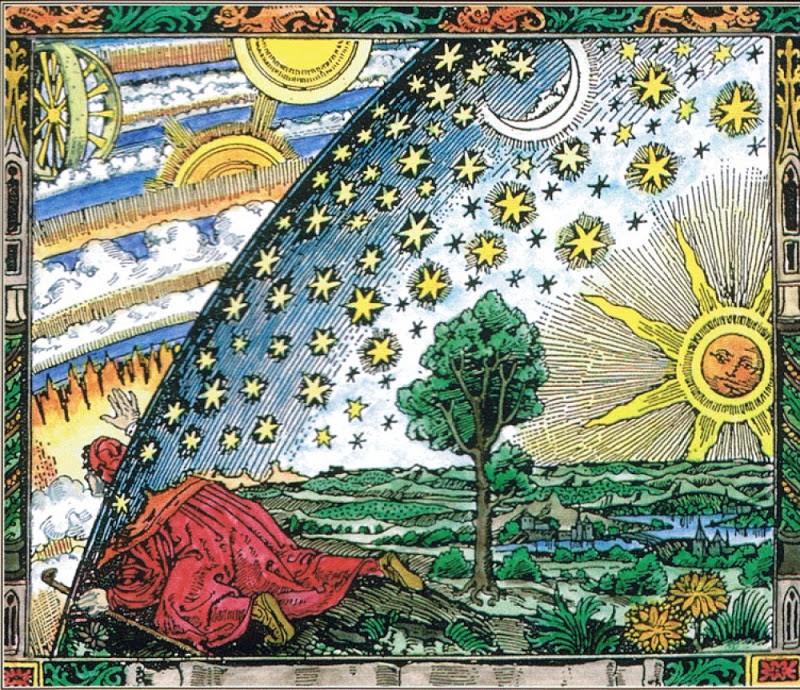
TELL ME EARL WHAT SPHERE NUMBER IS OUTERMOST OF “THE COSMOS” – IF SATURN 7, WHERE DID ALL THE STARS GO? CAN YOU COUNT TO 8?
“you will see the world of the forms you will see these Eternal verities.
It’s a world of light it’s a world of like Visionary overwhelming Beauty and that’s where the gods are feasting on nectar and Ambrosia
BUT THAT IS NON-DRUG PSYCHEDELICS ACCORDING TO EARLIER IN HIS TALK
obviously you want to join them right
NO NOT “RIGHT”, WHY WOULD I WANT TO JOIN YOUR NON-DRUG ENTHEOGENS BALONEY?
“so this is a goal of pl’s philosophers to fly out of the cosmos to a place a no Nous noos topos the noetic place also called the plane of truth that exists outside the cosmos.
DO YOU MEAN OUTSIDE THE PLANETS SPHERE 7 SATURN – AS YOU SAID ABOVE — SO THAT THE FIXED STARS ARE ABOVE ME, THEN HOW IS THAT OUTSIDE THE COSMOS?
“okay that’s an influential and very psychedelic image of what the world of forms is like.
“and now and then we remember that it’s not a world it’s part of everything
“and come up with a theory based on the dialogue where Socrates dies where he commits suicide on the order of the um the I
and has his final chat with his friends and colleagues uh in that he talks a lot about eternal Vari forms in that dialogue.
and along with proving in a number of ways that there must be a place where Souls were uh between before and after death so before and after life and death.
So in other words it’s often called an argument for the immortality of soul but it isn’t.
It’s an argument for a place where Souls hang out.
DO YOU MEAN THE SOULS REACH FIXED STARS SPHERE 8 AND STOP THERE? OR SPIRIT POKE ABOVE SPHERE 8?
“a toles again uh he um gives a very very psychedelic Visionary account of the true Earth
“you might think you know what the Earth is like but it turns out the Earth the true Earth which is much bigger than our Earth and our Earth is like nestled inside it in all these weird chasms with mud slashing around and all kinds of stuff is a giant shining multicolored do decahedron
and that
the true people who might be our higher selves live on the surface of that Earth while we’re inside it
and much else to interests uh people who are interested in kind of visionary weird um accounts then we have very importantly the Republic of Plato
and especially a work called the Symposium which is a drinking party
WHERE THEY DRINK EARL’S NON-DRUG ENTHEOGEN NECTAR and placebo AMBROSIA OH JOY
The same scholars who are incapable of counting to 8 and accounting for fixed stars are the same ones who push their baloney non-drug entheogens.
“Aeros can be harnessed to ascend and Ascent is key here to ascend from Individual Beauties …”
Earl F also advocates non-drug psychedelics.
He explains to this psychedelics organization that ancients didn’t use psychedelics to have their psychedelic experiencing.
BULL SH*T EARL.

 The Egodeath theory
